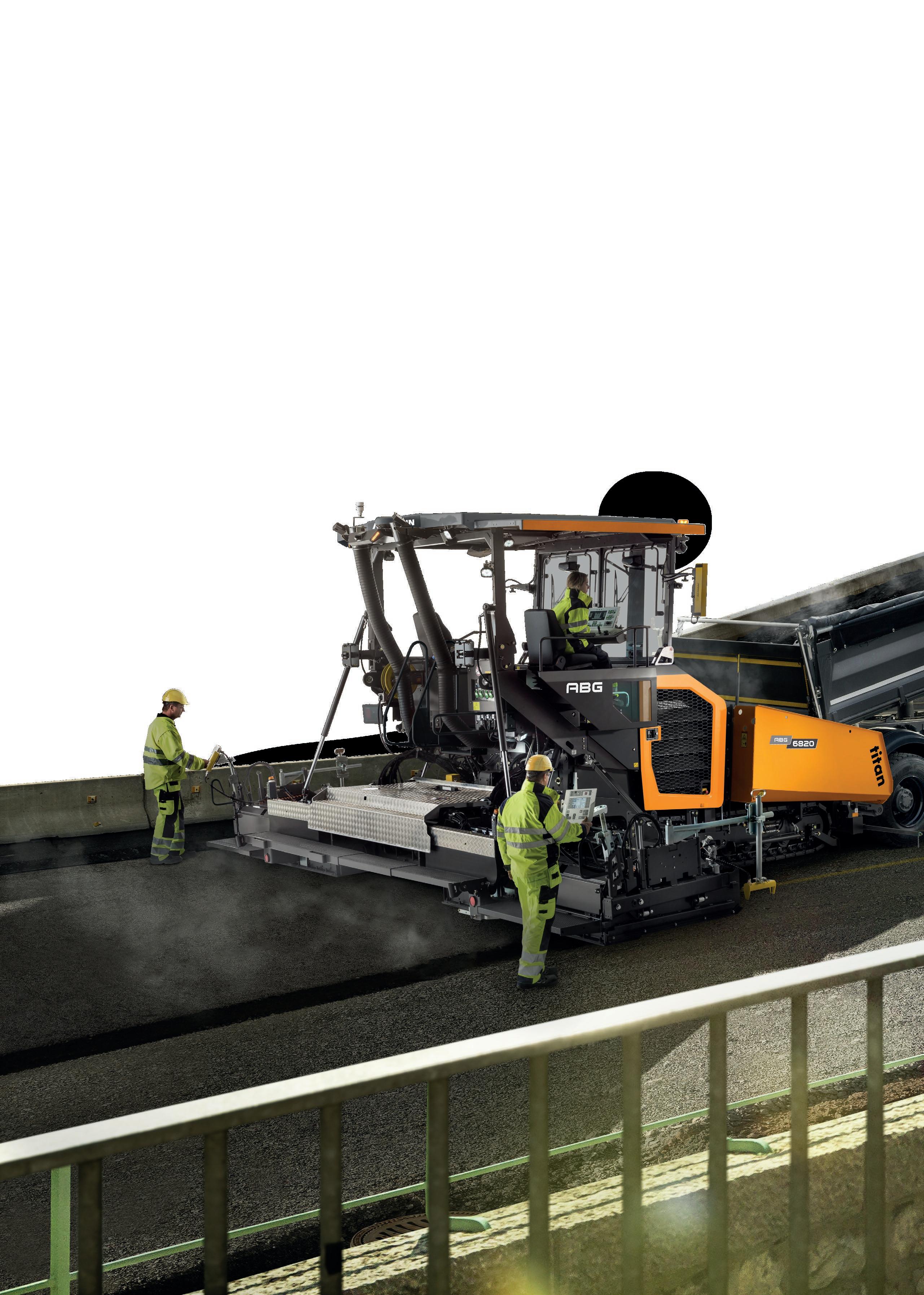



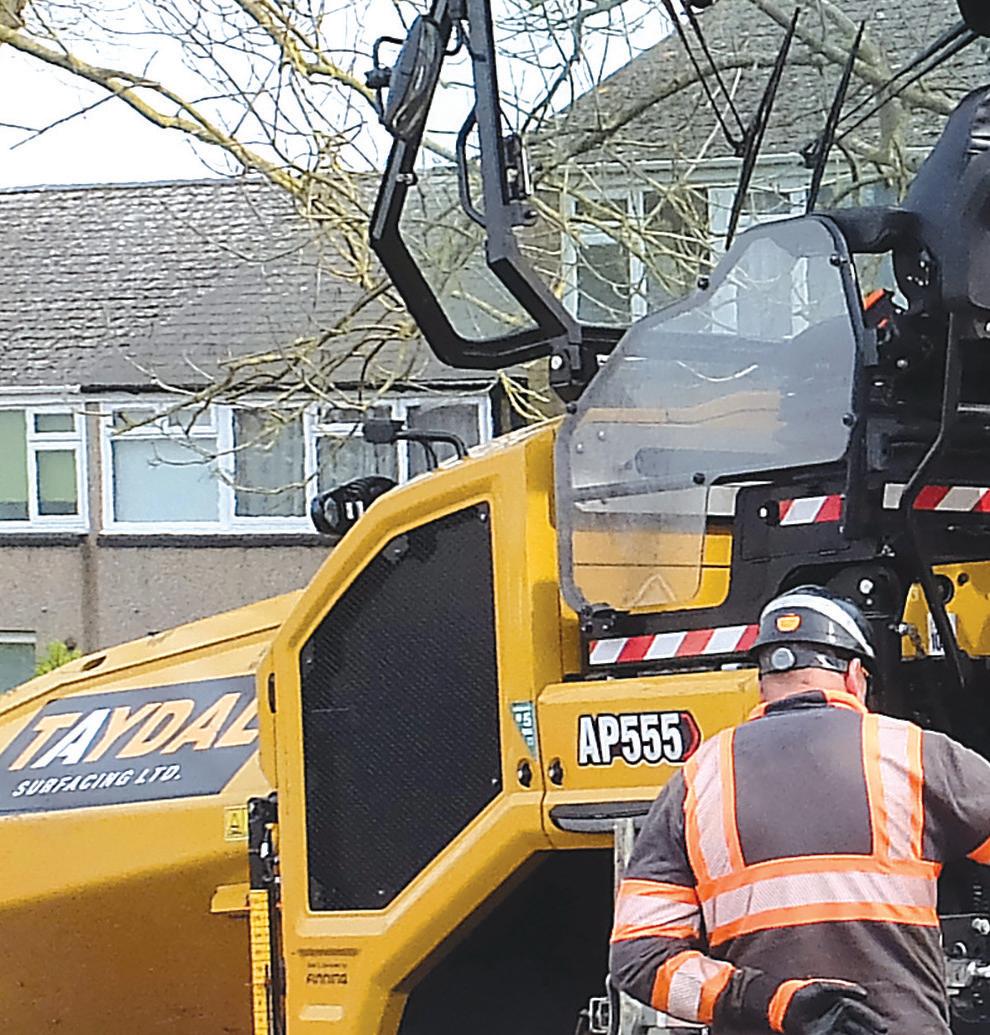





CAT® ASPHALT PAVER AP555

CAT® ASPHALT COMPACTOR CB10
CAT® UTILITY COMPACTOR CB2.7 GC

MEET THE CAT® PAVING PRODUCTS TEAM




5. Contra ow
The tragic collapse of the Francis Scott Key Bridge in Baltimore following a ship collision is generating concern over the safety of other bridges
6. News
Lives saved on roads due to iRAP; Ammann concludes ABG deal; record for Liebherr; Nigeria’s coastal highway; mega bridge for the Philippines; Ohio-Kentucky bridge plan
10. Construction technology
Trimble’s machine control tools; Wacker Neuson’s digital tools; Leica Geosystems/ Hexagon deliver site safety; Topcon’s new facility; Liebherr’s maintenance tool
14. IRF
IRF Global introducing the Green Roads Toolkit in collaboration with MetaMeta and the Asian Development Bank (ADB)


26. Asphalt paving
Onsite with Caterpillar; new US pavers from Astec, BOMAG, Caterpillar, Dynapac and LeeBoy; Vögele’s latest European paver; electric paver from Volvo CE for Ammann
35. Compaction
The latest innovations in compaction from Ammann, BOMAG, Caterpillar, Dynapac and Hamm
38. Milling
New milling machines from Astec, Caterpillar and Wirtgen; new milling attachments from FAE and Simex
41. Bitumen technology
New bitumen technology will help deliver decarbonisation; warm and cold mix solutions; bio-bitumen from algae?
44. Bridges and tunnels
Double bridge lift by Sarens in Duisburg, Germany; Simex’s tunnelling solution


47. Engines
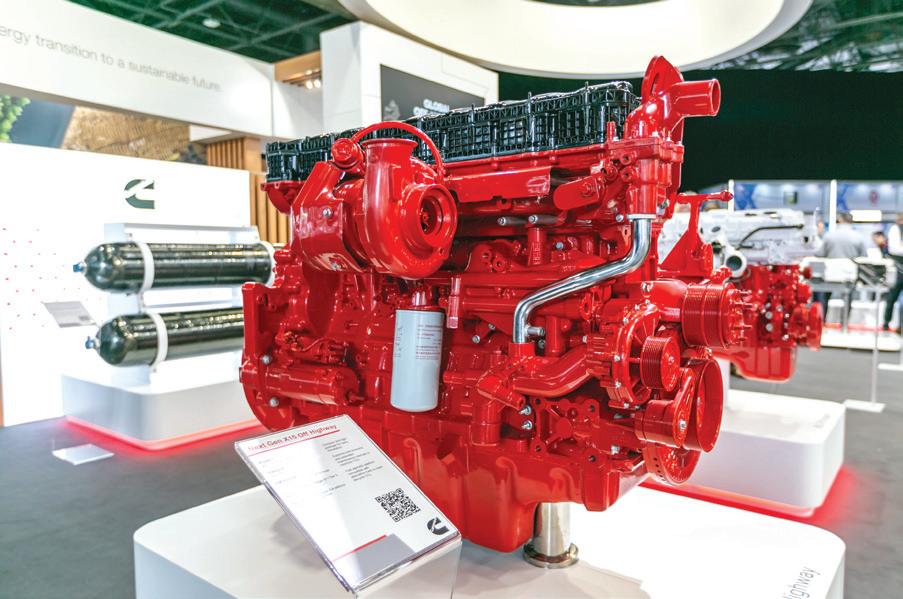
Decarbonisation in power systems from Cummins, Deutz, John Deere, Moog and Volvo Penta
49. Equipment
Hamm’s productive soil compactor; Develon’s long reach excavator
50. Onsite
BKT’s tough tyres perform onsite; Ammann compactor for pathways; QMS crushing equipment for quarry facility
51. Skidmarks
Further humorous roadrelated stories from around the world

























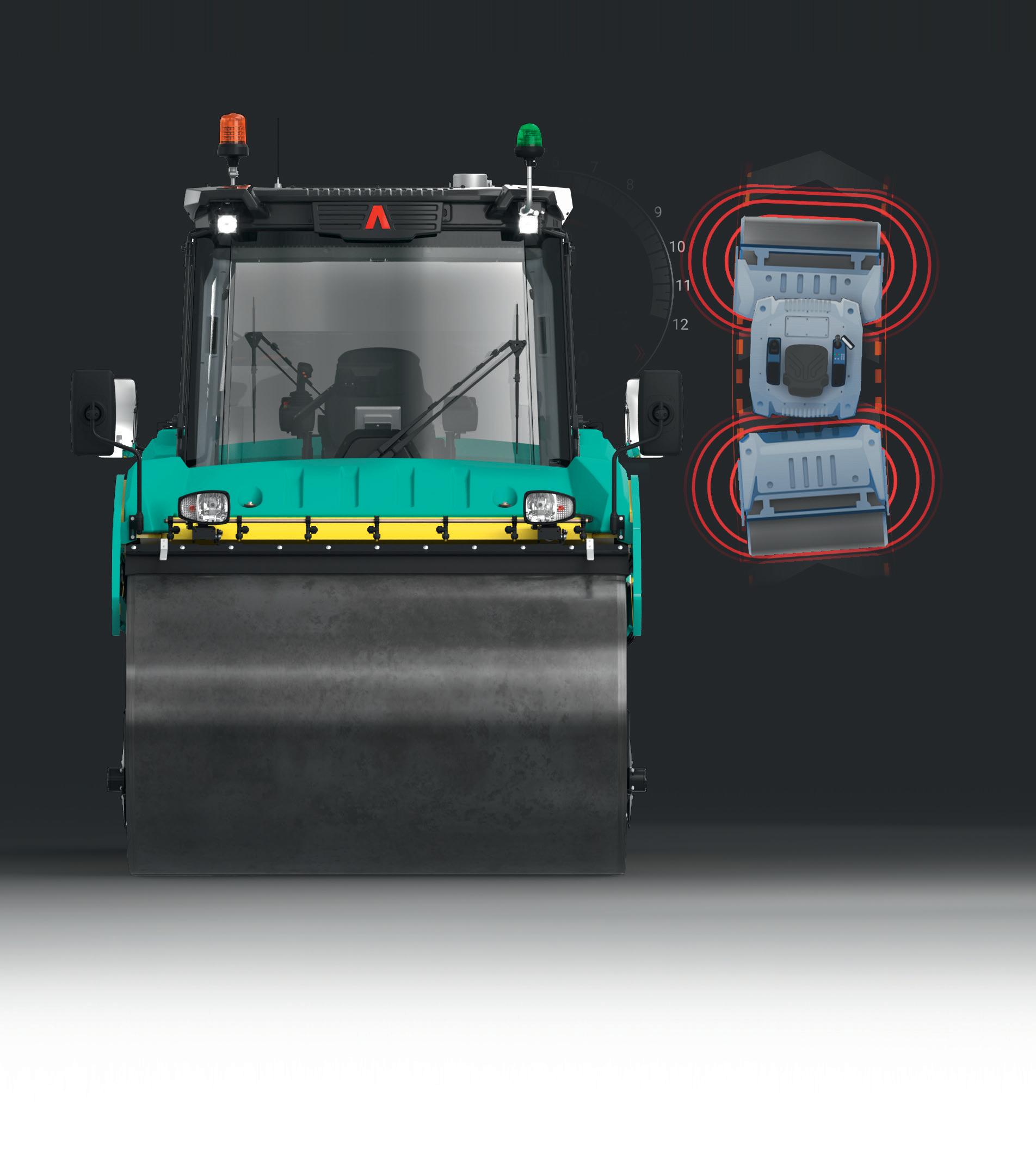
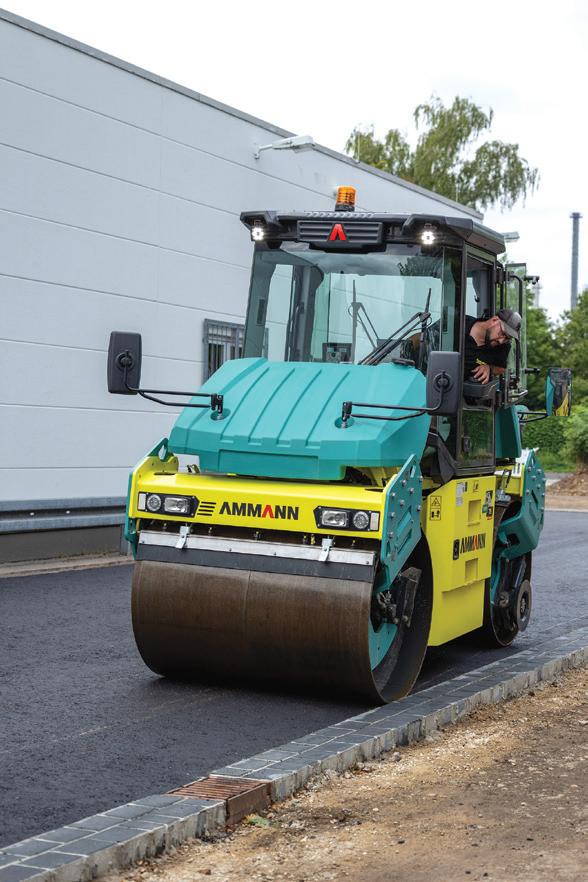
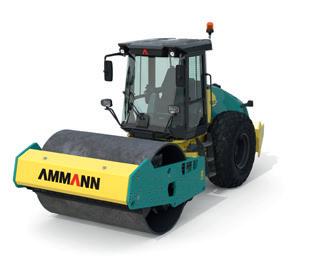
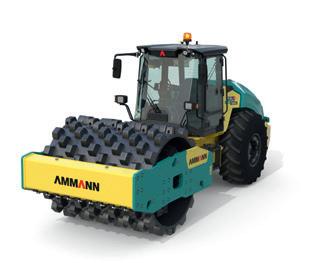
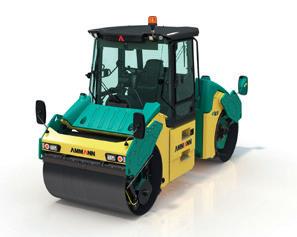
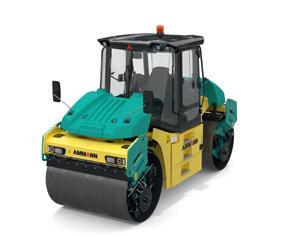
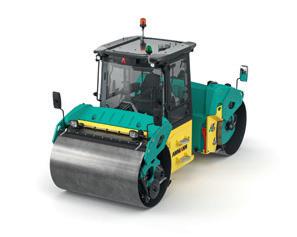
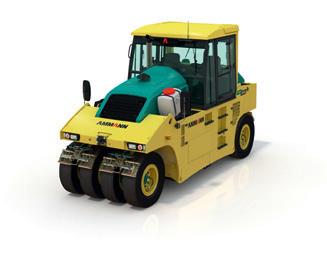
Ammann’s new articulated tandem rollers are heavy machines. Throw in their vibratory system and adjustable frequencies and you’re really rolling.
SOUND LIKE A LOT FOR AN OPERATOR TO HANDLE? IT’S NOT. These machines are controlled by Ammann’s innovative new fingertip steering system. Yes, the steering wheel is gone. So are obstacles that lessen sight lines – another big improvement.
Ready to see the Ammann ARX 140 and ARX 160 for yourself? Head to your local Ammann Dealer. And don’t forget your fingertips.

Editor: Mike Woof
Deputy Editor: David Arminas
Sub-Editor: Kevin O'Shea
Contributing Editor: Guy Woodford
Editorial Contributors:
Shem Oirere, Kristina Smith, Mauro Nogarin, Eugene Gerden, Partha Basistha, Lucio Garofolo
Designers: Simon Ward, Andy Taylder
Production Manager: Nick Bond
O ce Manager: Kelly Thompson
Internet, IT and Data Services Director: James Howard
Data & Marketing Manager: Alan Cansick
Web Manager: Sarah Biswell
Social Media Manager: Tatyana Mechkarova
Managing Director: Andrew Barriball
Chairman: Roger Adshead
Publishing Director: Geo Hadwick
ADDRESS: Route One Publishing Limited, Second oor, West Hill House, West Hill, Dartford Kent DA1 2EU, UK
Tel: +44 1322 612055 Fax: +44 1322 788063
Email: [initialsurname]@ropl.com
(eg: radshead@ropl.com)
ADVERTISEMENT SALES
Head of Construction Sales: Graeme McQueen
Tel: +44 1322 612069 Email: gmcqueen@ropl.com
Sales Director: Philip Woodgate
Tel: +44 1322 612067 Email: pwoodgate@ropl.com
Sales Director: Dan Emmerson
Tel: +44 1322 612068 Email: demmerson@ropl.com
UK / CLASSIFIED, NORTH AMERICA: Dan Emmerson
Tel: +44 1322 612068 Email: demmerson@ropl.com
ITALY: Fulvio Bon glietti
Tel: +39 339 1010833 Fax: +39 02 700446321
Email: bon glietti@tiscali.it
JAPAN: Akiyoshi Ojima
Tel: +81 3 3263 5065 Fax: +81 3 3234 2064
Email: ojima@echo-Japan.co.jp
ASIA / AUSTRALASIA: Roger Adshead
Tel: +44 7768 178163 Email: radshead@ropl.com
SUBSCRIPTION RATES & ENQUIRIES: World Highways/Routes
du Monde is available on subscription at the rate of: £142/US$246/€186 per annum. Single copies £20 / US$35 / €26
Subscription enquiries to: Tel: +44 1322 612061 Fax: +44 1322 788063 Email: subs@ropl.com

No part of this publication may be reproduced in any form whatsoever without the express written permission of the publisher. Contributors are encouraged to express their personal and professional opinions in this publication, and accordingly views expressed herein are not necessarily the views of Route One Publishing Ltd, or the International Road Federation. From time to time statements and claims are made by the manufacturers and their representatives in respect of their products and services. While reasonable steps are taken to check their accuracy at the time of going to press, the publisher cannot be held liable for their validity and accuracy
WORLD HIGHWAYS/ROUTES DU MONDE, USPS 8757, is published 6 times a year by Route One Publishing Limited, Second oor, West Hill House, West Hill, Dartford Kent DA1 2EU, UK.
The US annual subscription price is US$246.00 Airfreight and mailing in the USA by agent named World Container Inc, 150-15, 183rd Street, Jamaica, NY 11413, USA.
Periodicals postage paid at: Brooklyn, NY 11256
US Postmaster: Send address changes to WORLD HIGHWAYS/ ROUTES DU MONDE, Air Business Ltd, c/o World Container INC 150-15, 183rd St, Jamaica, NY 11413, USA. Subscription records are maintained at Route One Publishing Limited, Second oor, West Hill House, West Hill, Dartford Kent DA1 2EU, UK. Air Business Ltd is acting as our mailing agent.
Printed by: Warners Midlands PLC’



Mike Woof, EDITOR mwoof@ropl.com
The recent collapse of the Francis Scott Key Bridge spanning the Patapsco River in Baltimore has thrown into light the risk posed to transport infrastructure by ship impacts.
Completed in 1977, the bridge carried around 30,000 vehicles/day as part of I-695. The 2.6km steel truss-type bridge had a central main span of 266m and a clearance of 56m, allowing access to the busy port of Baltimore. Having been inspected recently, the bridge had been declared safe and in reasonably good shape considering its age and the volume of traf c it was carrying.
Although the American Road & Transportation Builders Association (ARTBA) has highlighted the 42,400 or so US bridges in a poor state of repair, the Francis Scott Key Bridge was in an acceptable condition and did meet safety requirements. However, like around half of the 621,581 bridges in the US measuring 6m or more that were erected before protection measures became a requirement in the 1980s, it was vulnerable to an impact by a large vessel. As soon as one of the supports was hit by the ship, it collapsed, pulling the entire central section of the bridge with it. Installing the protection cells to prevent such a collapse following a ship impact would have cost just $3 million according to estimates.
There are no mysteries about what happened. The 290m container vessel that hit the bridge lost power and its crew were quick to alert the authorities that the ship was drifting out of control.
Although travelling at low speed, the vessel weighs over 100,000tonnes and its kinetic energy was enormous. The alert did allow the bridge authorities to halt traf c, reducing the death toll. Six construction workers are known to have died in the incident, which occurred at 1.30am, but had the impact happened during the day the death toll would have been massive.
It is worth noting that ships have increased in size signi cantly since the bridge was rst constructed. The builders of the bridge had no way of knowing just how large vessels would become. While new bridges tend to be built with supports out of the central waterway or with signi cant protection, many older bridges are vulnerable to impacts from large vessels, and not just in the US. Bear in mind too that there have been similar disasters following bridge strikes before. Between 1960 and 2015, there were no less than 35 collapses of important bridges following impacts from ships or barges around the world.
In 2002 for example, a 152m section of the I-40 bridge spanning the Arkansas River collapsed after being struck by a barge, which resulted in 14 fatalities.
Replacing the Francis Scott Key Bridge is likely to cost at least US$1 billion and may take some years to complete. However, the nancial cost of making all important road and rail bridges around the world safe from potential impacts from large vessels may be too large to comprehend. MW










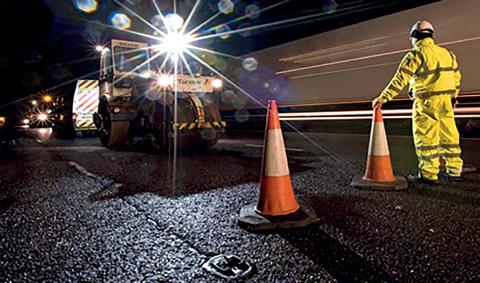

Using the International Road Assessment Programme (iRAP) methodology, road safety infrastructure changes and safer speeds have prevented almost 700,000 deaths and serious injuries in 74 countries since 2016, according to a new paper with Johns Hopkins University published in the respected journal PLOS One.
The paper estimates the likely impact of road improvements in 1,039 infrastructure projects where the iRAP methodology and tools have been used.
Key ndings of the report show the application of the iRAP model will have prevented a cumulative and estimated 699,768 deaths and serious injuries between January 2016 and the end of 2024. The paper projects that by 2044, the existing road treatments will prevent almost 3.2 million fatalities and serious injuries, given the average effective lifespan of 20 years.
The study is the rst to measure the impact of road projects nanced and implemented by governments, development


banks, NGOs, and private-sector road operators around the world using the iRAP methodology and tools.
The iRAP Star Rating Methodology provides an objective measure of road safety levels ‘built in’ to the road for vehicle occupants, motorcyclists, bicyclists, and pedestrians. It presents an evidence-based measure of the likelihood of a crash occurring and its severity.
A 1-star rated road is the least safe while a 5-star road is the safest.




A US$2 billion highway is planned for Nigeria, connecting Lagos with Calabar. The project is expected to take eight years to complete. The route will link Lagos, in the South West of Nigeria and close to its border with Benin, with Calabar in the South East of the country, close to its border with Cameroon.
The project will improve connectivity between Nigeria and its neighbours, boosting transport and trade internally and internationally. Both Lagos and Calabar are former capital cities of Nigeria, although that title was passed from the former to Abuja some years ago.


Funding worth US$1.14 billion has been secured for the Bataan-Cavite Interlink Bridge (BCIB) project planned for the Philippines. This mega-project involves the construction of a link measuring over 32km in length.

This funding tranche is being approved by the Asian Infrastructure Investment Bank (AIIB). This package has been agreed in conjunction with the Department of Public Works and Highways (DPWH) and the Asian Development Bank (ADB).
Bidding is opening for BCIB Project and the tender process will be handled by the Department of Public Works and Highway (DPWH).
Four of the six sections are opening for tenders. Bids for two sections of the project on land will open shortly. Bids for the 900m section of the cable-stayed

bridge and another stretch of the project will open in the second half of 2024. The BCIB is also called the Manila Bay Bridge. This will connect Bataan Province and Cavite Province and cross Manila Bay.


According to the Asian Development Bank, the BCIB will be around 32km long, featuring two cable-stayed bridges that span navigation channels. It will have 24km of marine viaducts, and 8km of approach roads. It will also include a U-Turn facility near the Corregidor Island for a future connection.
Because of the location, the new BCIB will be equipped with the latest Climate Resilient Bridge Alert Systems. Construction of the link will improve journey times for drivers, reducing the travelling time between Mariveles and Naic from 5 hours at present to just 90 minutes.
US$5.5 billion India road
India’s Uttar Pradesh State is planning to invest US$5.5 billion in road development works for the 2024-2025 nancial year. The budget will be directed towards the development of tertiary roads, district roads and state highways.
The Uttar Pradesh Expressway Industrial Development Authority will manage the expressway projects. Projects will be carried out under the Dharmarth religious tourist circuit programme in 2024. Road works for logistics and industrial park corridors will be carried out in the state. And
road works will be carried out for Dharmarth project, improving links in industrial areas and sugar mill areas, interstate border roads, international border roads, block headquarters and villages. The public works department will invest close to INR 340bn in road and highway projects.
Building the new road will reduce journey times between Lagos and Calabar considerably and the route will include some existing highway stretches. The new highway will likely connect with the large city of Onitsha, another major centre for trade in Nigeria. The route will also improve transport connections to the city of Port Harcourt in South East Nigeria, which is the focus for the country's oil industry.

In addition, a new 1,000km highway is planned to connect the North West with the South West of the country. A pricetag has yet to be announced for the project but will likely top $1 billion. The route will connect the city of Sokoto in the North West of Nigeria, and close to the border with Niger, with Badagry in the South West, close to the border with Benin and also Nigeria’s mega city, Lagos. Approval for the design of the road has been given by the Nigerian Government.












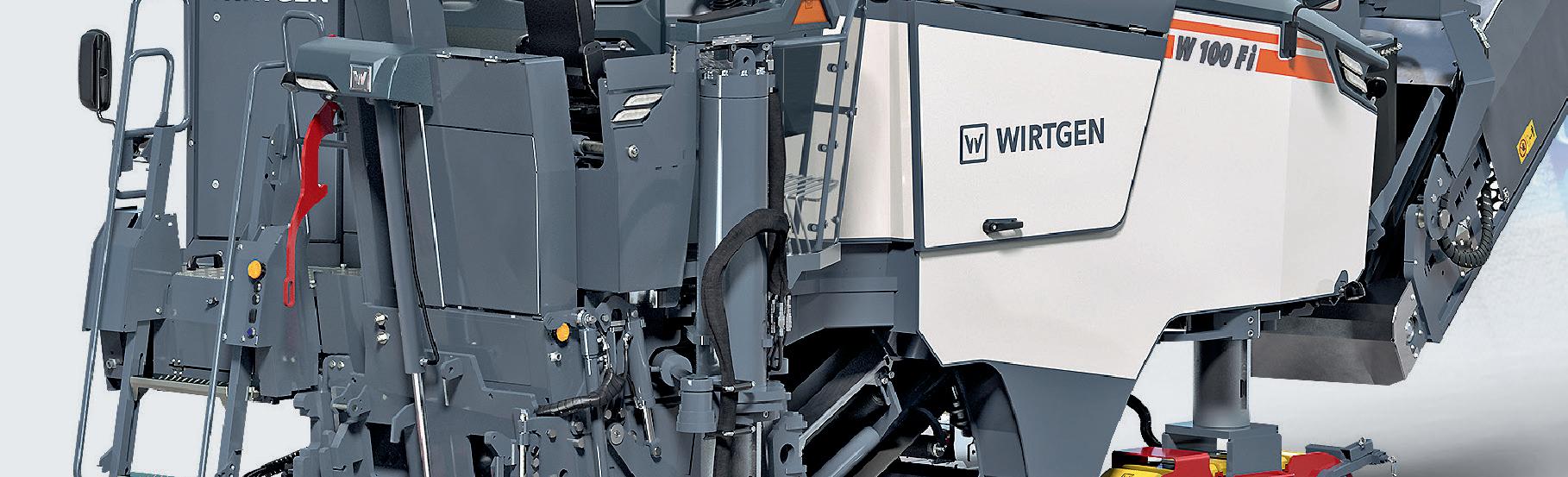






W 100 F(i) / W 120 F(i) / W 130 F(i): The top-of-the-line technology of the F-series large milling machines, now THIS INTELLIGENT SYMBIOSIS OF BRAWNS AND BRAIN PROVIDES PERFECT RESULTS AT A HIGH LEVEL OF SUSTAINABILITY.

integrated into a compact milling machine. This new generation of machines is especially budget- and ecofriendly. WIRTGEN and John Deere have tuned the torque speed curve of the engine to meet the specific needs of the cold milling process. This means the machine can work harder while using significantly less fuel. Thanks to MILL ASSIST, WIRTGEN PERFORMANCE TRACKER, and the LEVEL PRO ACTIVE leveling system, we’re setting new standards – of course also in ergonomics and operation comfort.
> www.wirtgen.com

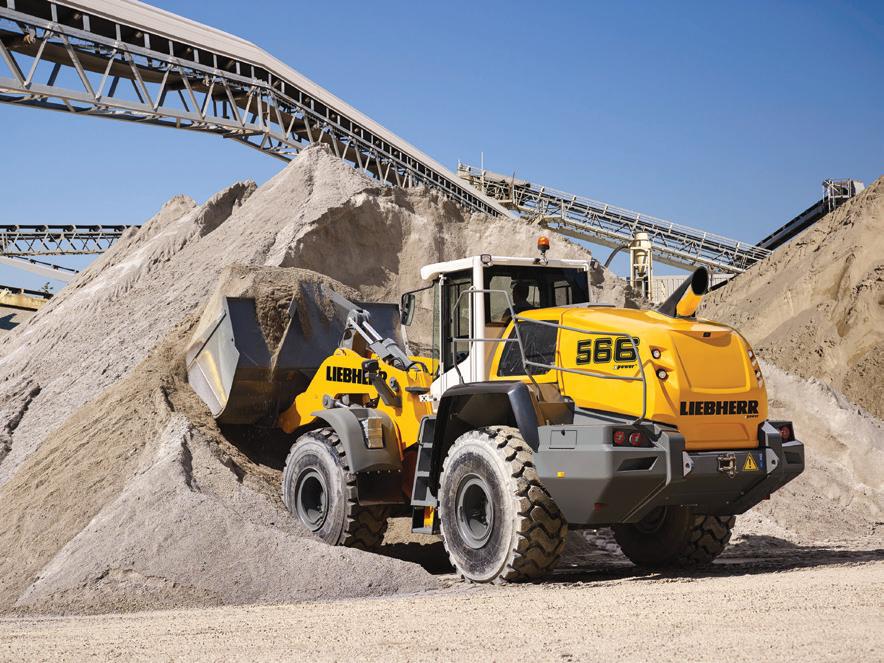
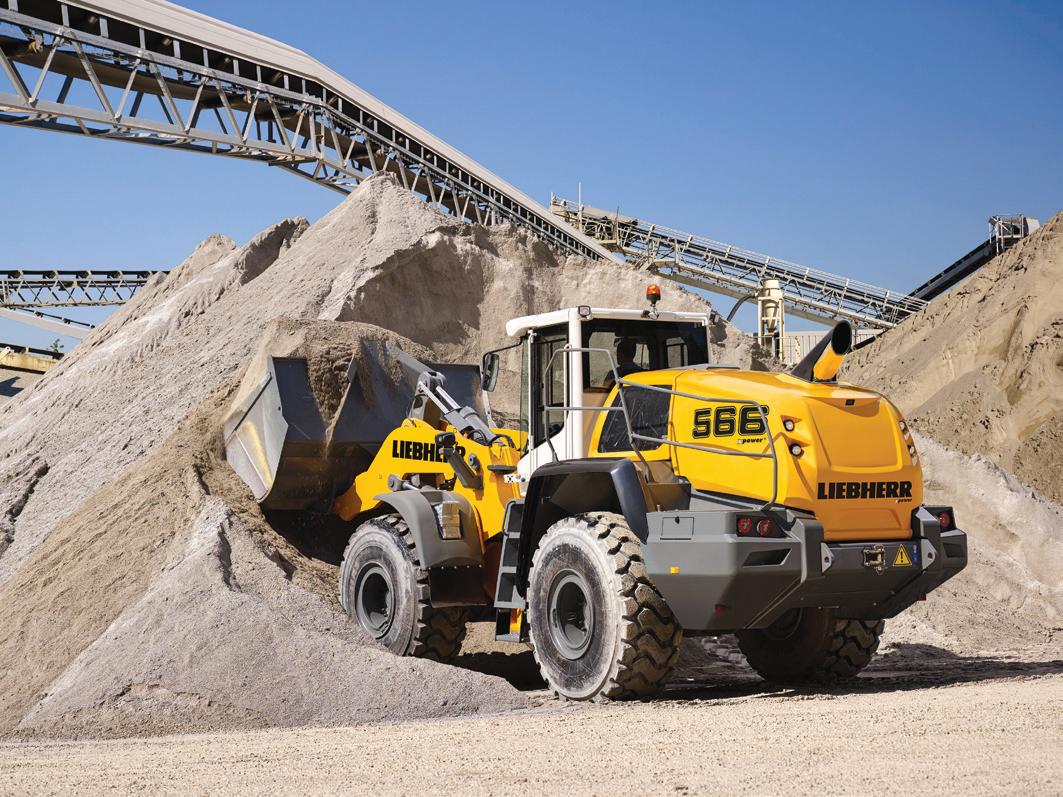
The Liebherr Group achieved record revenue of €14 billion in 2023. This represents an increase of €1.45 billion, or 11.5%, compared with the previous year.
The results are of note given the economic situation worldwide. According to the International Monetary Fund, global economic growth slowed to 3.1% in 2023.
The ongoing impacts of the coronavirus pandemic, the war in Ukraine and the rising cost of living have continued to have a negative impact on the global economy. There was, however, some slow recovery from these challenges. The economy was more resilient than presumed in the face of war-related market disruption and tightened monetary policy.
Although global economic growth slowed and has not yet returned to pre-pandemic levels, it did not become stagnant. Having

reached a peak in 2022, in ation fell again in the business year. This decline was propelled by more moderate energy and food prices and the recovery of supply chains.
Overall, there continued to be slight growth in the global economy. This was evident, in particular, in emerging market

Liebherr claimed record results for sales of its equipment in 2023
and developing economies, which grew by 4.1%, whereas industrialised countries only recorded growth of 1.6%.
Particularly striking here is the small increase of 0.5% in the eurozone – compared to 2.5% growth in the US economy.
In construction machines and mining, Liebherr achieved revenue
of €9.56 billion, which represents an increase of 11.6% on the previous year. This includes the product segments of earthmoving, material handling technology, deep foundation machines, mining, mobile and crawler cranes, tower cranes and concrete technology.
The release of the nancial results comes shortly after Liebherr’s announcement of additional factory space being commissioned at its wheeled loader facility at Bischofshofen.
This new assembly hall is for the manufacture of batteryelectric wheeled loaders and is now making the group’s rst electric wheeled loader, the L 507 E. In total, Liebherr has invested over €2.2 million in the new manufacturing facilities.
The nearly 1,000m² production area is designed for a maximum yearly output of up to 500 batteryelectric wheeled loaders.
US$3.6 billion Ohio-Kentucky bridge
The US$3.6 billion project to build a new bridge spanning the Ohio River and rebuild a 13km stretch of the I-71/I-75 corridor has passed its environmental review. This has been announced by the US Department of Transportation (DOT).

The Ammann Group has nalised its acquisition of the ABG paving product line from Volvo Construction Equipment. This signi cant move provides Ammann with an extensive and well-proven range of asphalt pavers that will sit in-between its comprehensive lines of asphalt plant solutions and asphalt compaction equipment.
The transaction includes the transfer of Volvo CE’s paving businesses in Linyi (China) and Bangalore (India) as well as Volvo CE´s ABG facility in Hameln


(Germany). ABG pavers and screeds will continue to be produced at the facility in Hameln.
Ammann will retain the ABG name. “The ABG brand is synonymous with quality in the industry and aligns perfectly with Ammann’s history in asphalt compaction,” said Bernd Holz, executive vice president at Ammann.
The pavers, along with a wide range of light and heavy compaction equipment, are being made available through Ammann’s dealer network.


The Brent Spence Bridge Corridor Project involves upgrading the highway and building a parallel bridge to the existing steel truss structure. This will improve transport between Ohio and Kentucky and is due for completion in 2032. Jacob Solutions is heading the design work on the 1.6km stretch of the corridor in Ohio. AECOM will lead the design and engineering team for the new bridge itself.































Trimble is introducing an array of technology solutions for machine control as well as surveying.
The rm is offering the sophisticated Roadworks Paving Control Platform for Mills and Cold Planers. This package runs on an Android operating system and allows operators to control cutting depth of the milling drum, to project design speci cations.
The rm says that the software is highly intuitive to use. The system allows operators to meet demanding speci cations on complex projects, minimising over-cutting and delivering a smoother surface for airport runways, highways, racetracks and other projects requiring optimum smoothness.
“Complex paving projects such as airport runways and highways have some of the tightest speci cations in construction,” said Kevin Garcia, general manager of Civil Specialty Solutions at Trimble. “Trimble Roadworks for milling and cold planing takes both the guesswork
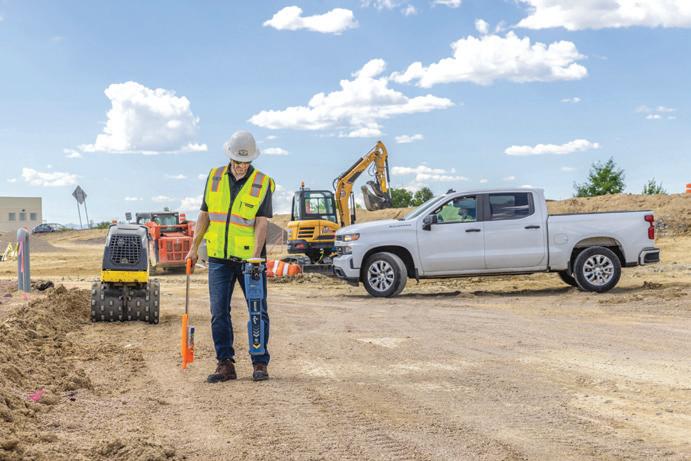
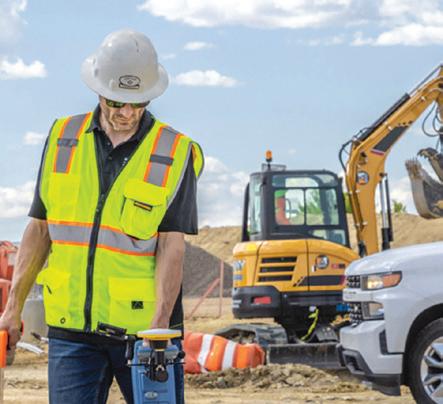
Trimble and Radiodetection have established a collaboration to develop better digital maps of underground utilities
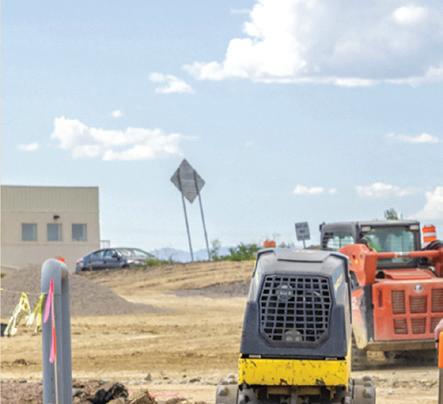
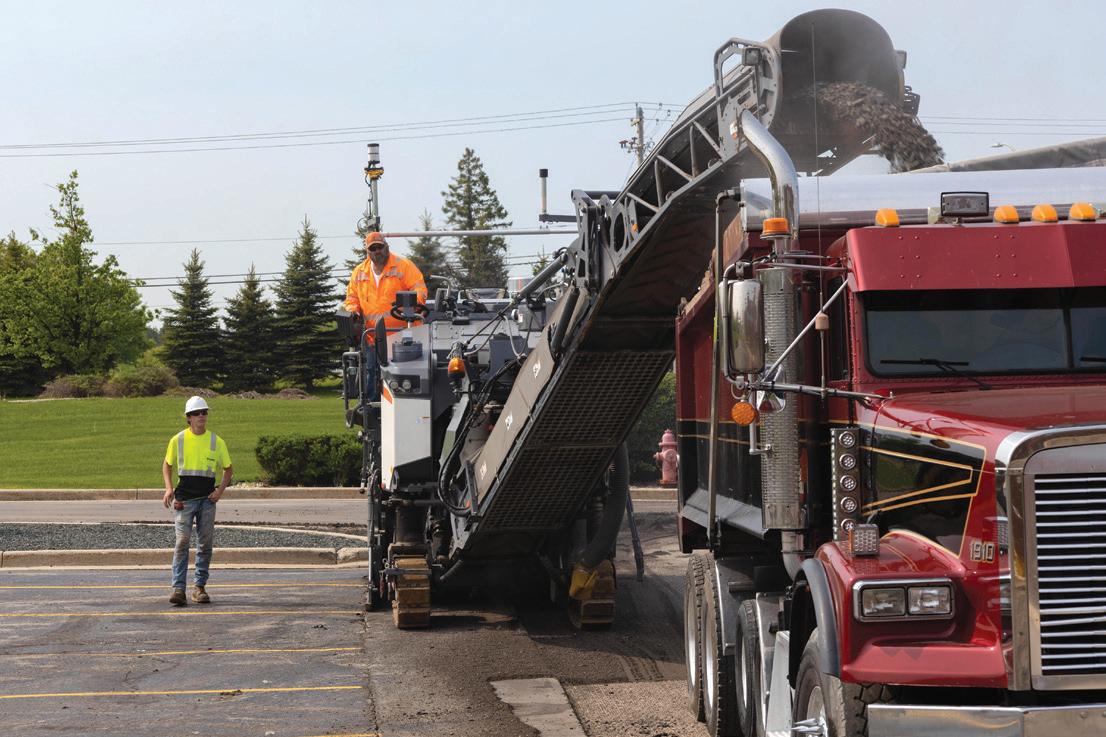
Utilising the new Roadworks Paving Control Platform for Mills and Cold Planers from Trimble allows contractors to meet more precise speci cations quickly
and the re-work out of milling, making it easy for operators to mill precisely to a 3D design elevation. The bene ts of this extend throughout the entire paving process, creating less work for pavers, decreasing asphalt usage, and increasing overall surface smoothness.”
The milling and cold planing software features the same user interface as existing Trimble Roadworks applications. The
system is compatible with Trimble WorksManager software, which manages data transfer and tracks construction technology equipment across jobsites, and with Trimble Business Center software, which is used to generate 3D milling plans and comprehensive production reports.
The company has also developed a cost-effective machine control package aimed
collaboration to improve the technology used in the utility measurement and mapping process.
Through the integration of the Trimble Catalyst DA2 GNSS system and Radiodetection’s RD MapTM+ application and precision locator products, the software and hardware integration streamlines utility-locating work ows. This can provide highaccuracy measurement capabilities for the generation of underground utilities maps in a single eld operation.
Traditionally, eld technicians mark their measurements onsite manually or rely on data entries to provide to o ce sta for map creation after a site visit. Data collected with the Trimble Catalyst DA2 GNSS system can now be synced with Radiodetection



RD Map+ and precision locators that nd and mark buried utilities. By streamlining this connection, workers can digitise utility line locations and reduce costly reporting errors.
This integration advances utility measurement work ows by giving personnel the capability to accurately represent the utility asset in a digital format. This streamlines the operation, maintenance and construction process whenever utilities are involved.
Radiodetection www.radiodetection.com
Trimble www.trimble.com
at rms looking to use technology without spending heavily. This system uses the rm’s BX992 receiver and is designed for use with excavators.
The BX992 receiver can be tted to the machine and costs less than other systems on the market.
With the BX992 cab-mount receiver and the small and lightweight Trimble Zephyr 3 Rugged antennas, designed to withstand high shock and vibration environments, this con guration costs less than the Trimble Earthworks Grade Control Platform systems, without compromising functionality.
And a novel system from Trimble offers the basic capabilities for both surveying and machine control. This is a solution aimed at use on compact machines weighing no more than 15tonnes. The rm says that the system is aimed at smaller rms looking to start using machine control technology, but without wanting to invest in costly packages. The multitool approach offers basic surveying and machine control capabilities in a simple package that is said to be easy to use.
Trimble www.trimble.com
Trimble is o ering a simple survey system as a subscription package only. The new tool is aimed at use by site managers or small contractors wanting to carry out their own basic surveying work for small projects. The package is o ered with a monthly fee and comprises the DA2 antenna and TDC6 controller. The DA2 unit is simple and rugged and a spokesperson for the rm said, “It’s a very basic antenna.” Meanwhile, the TDC6 controller is the size of a smart- phone and the spokesperson commented, “It’s really handy.”
Civil engineering software specialist
Softree Technical Systems is offering a new version of its RoadEng Version 11 Software.
This latest version includes AI-based technologies to nd low-cost, constructable road and corridor locations and is suited to use for green eld road projects.
Research and development for Path Explorer has been ongoing for years, guided by collaboration and dialogue with clients. “We continually engage with our customers to better understand their challenges, this helps us focus our R&D effort on features that matter to them.” said Matt Dickie, Applications Specialist & Training Manager Softree Technical Systems.
For green eld road projects. Path Explorer AI enables users to explore multiple route options from Point A to Point B within
minutes, offering optimised alignment solutions while considering various constraints such as grade limits, side slopes, and environmental factors. This innovation accelerates decision-making and optimises costs.
This is especially pertinent in wind farm development, where swift planning and analysis of proposed roads and road networks are required. The placement of roads is often in uenced by project factors like turbine locations.
The ability to account for those factors and quickly determine lower-cost, feasible road locations accelerates project initiation, reducing capital expenses and the project timeline.
"Path Explorer integrates into our established earthwork optimisation work ow within RoadEng, where the potential for
savings is substantial," explains Erin Wasney, Business Development Manager at Softree. "Minor adjustments to the vertical alignment, aimed at minimising cuts and lls, yield rapid and signi cant results.
"Just recently, one of our Australian clients shared an impressive success story from one of their windfarm projects, US$1.9 million in savings. That's a 19% reduction in subgrade costs."
Version 11 introduces additional features aimed at reducing environmental impact and increasing user ef ciency, including a hydrology toolkit, improvements in lidar processing and corridor design, automated horizontal and vertical curve generation and drafting and output improvements.
Softree Technical Systems www.softree.com
The Wacker Neuson Group has expanded its digital strategy to develop new business models.
Technologies such as the Internet of Things (IoT) are being used in the Wacker Neuson Group to offer customers the construction solutions that deliver real added value. “We use digital technologies strategically to make our customers' dayto-day work easier and more ef cient,” said Alexander Greschner, chief sales of cer of the Wacker Neuson Group. “In order to be able to offer the best solution for our customers, we have positioned ourselves in such a way that we can develop and operate digital products based on our own IoT backend. We have built up the relevant expertise in-house. In addition, we work with partners who are established on the market and can quickly develop suitable solutions together with us.”
An important partner is Trackunit which has been supporting the Wacker Neuson Group for several years in offering EquipCare, the customer-focused platform for eet and data management. The cooperation has now been extended for another ve years. In this

context, the Wacker Neuson Group is using Trackunit's Kin technology to integrate non-powered equipment and attachments into the ecosystem via Bluetooth and gain a better overview of their usage. “Trackunit is an important partner for us who understands the direction in which our industries and customers are developing,” said Greschner. “As another strategic partner, we have entered into a long-term cooperation agreement with OneStop Pro.”

OneStop Pro helps the Wacker Neuson Group in developing additional solutions for its digital product portfolio, connecting with customers more directly and thus responding even more exibly to market needs. One of the rst integrated products is the cloud-based EquipCare Pro software solution. It enables the management, scheduling and evaluation of all machines, equipment and bulk items, regardless of manufacturer or brand. EquipCare Pro helps customers to signi cantly increase the productivity of their machinery.

Wacker Neuson www.wackerneuson.com


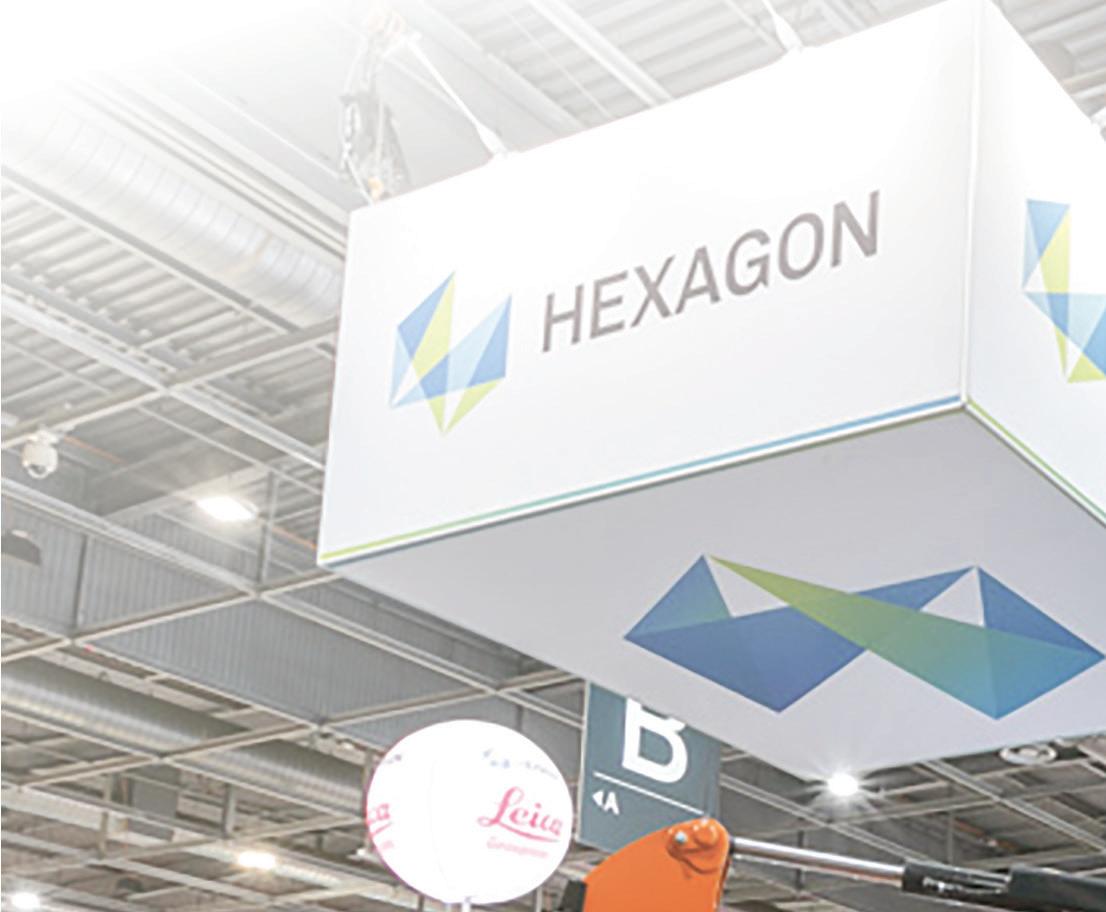
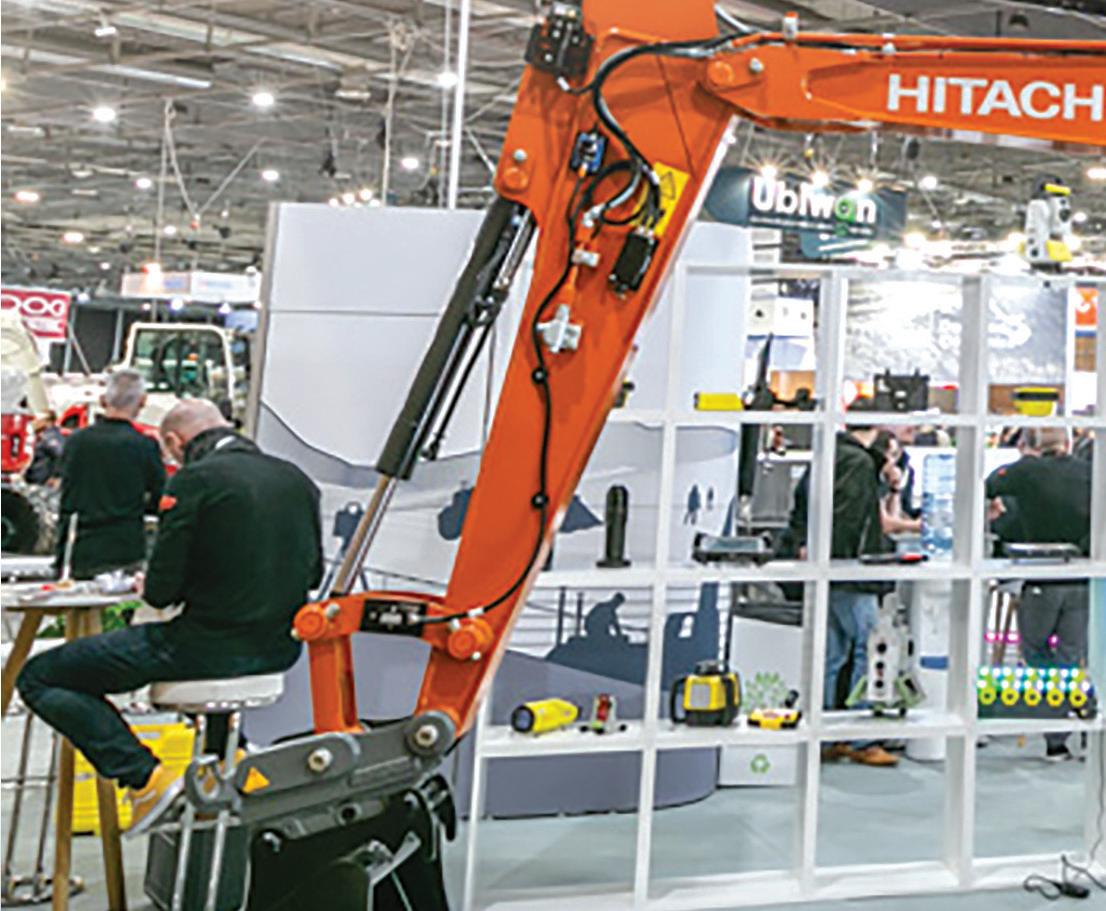

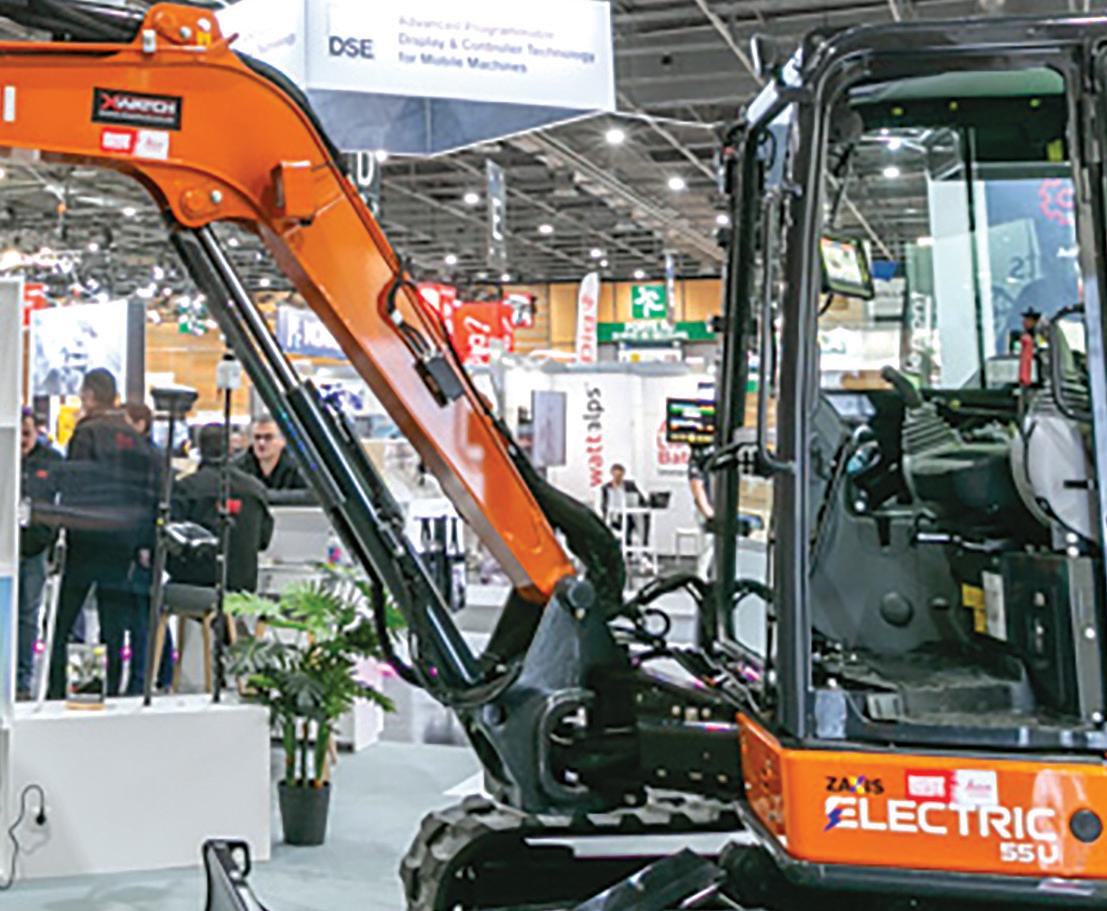

Leica Geosystems is cementing its position in the market for machine control technology with a series of key product introductions and business moves.
Perhaps the rm’s most signi cant development has been the move by its parent, Hexagon, to purchase UK company Xwatch Safety Solutions. This strategic move that expands Hexagon’s portfolio and sits neatly alongside Leica Geosystems. Xwatch has been a pioneer in the eld of construction machine safety systems with its XW series, which has features such as height control, slew control, and rated capacity indication (RCI).
The XW Series units help operators set up safe virtual working zones, boosting safety measures around equipment. The strategic move for Hexagon is that it follows the collaboration between Xwatch and Leica Geosystems, already part of Hexagon. This has resulted in the innovative 3D Avoidance Zone system.
Coupling the Xwatch XW Series with the 3D machine control systems from Leica Geosystems means that machine operators can now set out safe zones right across a worksite, without having to reset the technology every time the machine is moved. For example, when a wheeled excavator is being used on a highway job alongside live traf c, the operator can carry out the job at each area then move the machine and begin working again immediately. The system ensures that the machine only operates within the limits of the safe zone and the boom or counterweight cannot overhang the live traf c
lanes. The Xwatch system works with the 3D control from Leica Geosystems to generate a safe working corridor within the restrictions of the highway. And the system disables the machine hydraulics if the operator accidentally moves beyond the safe working zone.
This is a signi cant step as it integrates the safety solutions from Xwatch within Hexagon’s range of construction tools to improve risk management and decision-making processes, delivering safer construction environments.
Dan Leaney, director of Sales and Operations at Xwatch Safety Solutions commented: "Joining Hexagon represents a transformative opportunity for us to push the boundaries of safety technology in the construction industry. It allows us to leverage Hexagon's global expertise and reach, bringing our cutting-edge safety solutions to a wider audience and signi cantly impacting worker safety worldwide.
Meanwhile, Leica Geosystems is widening its array of 3D machine control solutions with the introduction of its Leica iCON gps 120. This smart antenna offers customers a versatile machine control solution.
The new Leica iCON 120 Machine Smart Antenna is integrated into the existing Leica MC1 solution platform and extends the machine control solution to more applications and machine types.
Construction machines such as compaction rollers, which usually require only lower levels of accuracy without heading, can now be equipped with a tailor-made Leica MC1 machine control solution. This allows streamlined operations and consistent


work ows between heavy construction equipment that vary in application requirements. Using the Leica MC1 machine control solution allows operators to carry out jobs more quickly and accurately, boosting eet ef ciency and reducing waste.
Construction customers can start with a single GNSS solution using a satellitebased augmentation system (SBAS) or HxGN SmartNet PPP service. If they need higher speci cations, they can upgrade to an RTK solution with low or high accuracy by adding the communication unit Leica CR50. With a second iCON gps 120 Machine Smart Antenna, customers get a full high-accuracy dual GNSS solution with heading.
A key feature of the design is that the antennas can be switched easily between Leica MC1 prepared machines due to the simple quick disconnect system.
“This solution is more versatile than our previous solution. You can take it from one machine to another and it’s perfect for rental machines. It’s an addition to our range, not a replacement for an existing unit,” according to Tommi Kauppinen, vice president, Heavy Construction, Machine Control Field Solutions at Leica Geosystems.
www.hexagon.com
JCB
www.jcb.com
Leica Geosystems www.leica-geosystems.com
Liebherr says that its new MyAssistant for Earthmoving app provides all relevant information about earthmoving and material handling machines in a digital format.
Bundled in a mobile application, the app combines numerous features that offer added value, especially for machine operators. The MyAssistant for Earthmoving app provides contextual data from various databases around the world relating to the operation and maintenance of machines – simply, quickly and intelligently.
The app is said to provide signi cant support for construction machinery operators in their daily work. The mobile application is available for wheeled excavators, material handling machines and wheeled loaders of generation 6.0 and higher as well as for crawler excavators, graders and crawler loaders, pipelayers and articulated trucks of generation 8.0 and higher. The new mobile app can be downloaded now free of charge from the Apple App Store and the Google
Play Store. After successful authentication via the MyLiebherr portal, the full range of features is available to the user. Once logged in, MyLiebherr makes all Liebherr earthmoving and material handling machines in the company's eet available to the user via a drop-down menu. The machines can then be selected via the model designation and serial number.

The resulting menu tiles "Operating instructions", "Spare parts catalogue" and "Scan operating symbol" that are displayed in the app refer exclusively to the machine selected by the user.


In addition, the entire Liebherr operator's manual is available to the user digitally via the app. Required spare parts can be selected in the menu tile of the same name and placed in the shopping cart. Depending on the user's authorisation level in MyLiebherr, a corresponding order can then be triggered.
Liebherr www.liebherr.com
Topcon Positioning Systems is building a new manufacturing facility at Geisenheim, near Frankfurt in Germany.
The facility will be part of the company’s Topcon Electronics operation. The company has an existing production facility at Geisenham, where in-cab displays are made for Topcon’s construction solutions portfolios as well as for global OEM customers.
The new facility represents a substantial investment, expanding manufacturing capabilities and strengthening its presence in Europe.

Unlike the existing location, this facility will be owned by Topcon, allowing for increased production capacities to triple the

number of units produced annually. The new facility consolidates all operational buildings under one roof, expanding the footprint to approximately 8.30m2, boosting production e ciency and streamlining operations.
“The current operation is one of the company’s highest-rated manufacturing facilities, with ISO 14001 and ISO 45001, as well as an IATF automotive certi cation. The testing lab has become a standard for us worldwide,” said Mathias Kühn, senior vice president of Global Operations for Topcon. “The new facility is designed to support enhanced manufacturing automation, which is key to accelerating production and growth.”


An integral aspect of the new building is its sustainability features. Topcon prioritises environmental responsibility, and the new facility is designed with cutting-edge sustainability practices, including the use of solar panels, greywater drainage systems, installation of electric vehicle charging points, and nature-based solutions for ventilation and drainage.
“Sustainability is an important part of the architecture for the new building,” said Simone DoldererHeinitz, with Ries+Ries Architekten Ingenieure GmbH, architect on the project. “We use new technologies in our engineering that allow us to completely dispense with heating fuel. For example, the heating and




cooling supply is provided by two hot air pumps and photovoltaics on the roof, which are used to partly supply our own electricity. We have green roofs that retain and disperse rainwater.”
Ewout Korpershoek, executive vice president, Topcon Positioning Systems, said, “The environmentally sound architectural design marks our rst building investment with sustainability in mind from the ground up. The investment underscores our long-term vision for growth and success, re ecting the Topcon values of innovation, quality, and sustainability.”

Topcon Positioning Systems www.topconpositioningsystems.com













As projections indicate that global road construction will extend by 25 million kilometres by 2050, predominantly in developing economies, the necessity for sustainable transport infrastructure becomes more apparent
Addressing this need, the International Road Federation (IRF Global), in collaboration with MetaMeta and supported by the Asian Development Bank (ADB), has introduced the Green Roads Toolkit. This innovative resource aims to guide the development of environmentally friendly roads, providing comprehensive solutions for sustainable planning, construction, and maintenance of road infrastructure.
A Practical Approach to Sustainable Road Systems
Highlighting the signi cance of the toolkit, Patrick Sankey, the president and CEO of IRF Global, remarked, "The Green Roads Toolkit represents a pivotal advancement in our pursuit of safer, more sustainable road systems. It offers practical, actionable solutions to the environmental and social challenges facing road infrastructure today."
Comprehensive Solutions Across Nine Dimensions
The toolkit delineates interventions and good practices across nine crucial
dimensions, including decarbonisation, climate resilience, effective water and land management, pollution reduction, quality of life enhancements, ecosystem protection, disaster preparedness, responsible material sourcing, and fostering inclusive growth. These guidelines serve as a roadmap for stakeholders to design and manage green roads effectively.
Essential Resource for Infrastructure Development
Developed under the ADB’s initiative TA-6756 - Improving Infrastructure
Sustainability Through Better Asset Management, the toolkit has been described as a vital resource. Michael Anyala, senior transport specialist at the Asian Development Bank, stated, "This extensive resource provides critical guidance for engineers, planners, and policymakers involved in planning, designing, operating, and managing inclusive, low-carbon, and resilient road infrastructures."
The Green Roads Toolkit is available for download and promises to be an invaluable asset for those engaged in the global challenge of transforming road infrastructure.
•For more details on the toolkit or to learn more about IRF Global, please visit www.IRF.global or contact Magid Elabyad at melabyad@irf.global.


Themes:
www.IRF.global/r2t
DECEMBER 10-13, 2024
DECEMBER 10-13, 2024
FL USA www.IRF.global/r2t

IRF Global R2T Conference & Exhibition
The IRF Global R2T Conference, a pinnacle event for global leaders in roads and mobility, offers a vibrant forum for innovators, decision-makers, and industry professionals. Discover cutting-edge advancements and forge pivotal connections in an environment dedicated to shaping the future of transportation.
The IRF Global R2T Conference, a pinnacle event for global leaders in roads and mobility, offers a vibrant forum for innovators, decision-makers, and industry professionals. Discover cutting-edge advancements and forge pivotal connections in an environment dedicated to shaping the future of transportation.
Who Will Attend?
• Construction Contractors, Engineers, and Managers
• Equipment Manufacturers, Suppliers, and Distributors
• Asset Management & Pavement Preservation
Themes:
Themes:
Themes:
The IRF Global R2T Conference, a pinnacle event for global leaders in roads and mobility, offers a vibrant forum for innovators, decision-makers, and industry professionals. Discover cutting-edge advancements and forge pivotal connections in an environment dedicated to shaping the future of transportation.
The IRF Global R2T Conference, a pinnacle event for global leaders in roads and mobility, offers a vibrant forum for innovators, decision-makers, and industry professionals. Discover cutting-edge advancements and forge pivotal connections in an environment dedicated to shaping the future of transportation.
Who Will Attend?
• Highway & Municipal Agencies, Transportation Officials
Who Will Attend?
Who Will Attend?
• Design Consultants and Engineering Professionals
• Construction Contractors, Engineers, and Managers
• Emerging Trends in Road and Bridge Construction
• Innovations in Materials and Technologies for Durable Pavements
• Asset Management & Pavement Preservation
• Construction Contractors, Engineers, and Managers
• Transport Research Institutes & University Academics
• Construction Contractors, Engineers, and Managers
• Equipment Manufacturers, Suppliers, and Distributors
• Highway & Municipal Agencies, Transportation Officials
• Equipment Manufacturers, Suppliers, and Distributors
• Equipment Manufacturers, Suppliers, and Distributors
• Traffic Technology and ITS Specialists
• Highway & Municipal Agencies, Transportation Officials
• Design Consultants and Engineering Professionals
• Design Consultants and Engineering Professionals
• Highway & Municipal Agencies, Transportation Officials
• Design Consultants and Engineering Professionals
• Transport Research Institutes & University Academics
• Transport Research Institutes & University Academics
• Traffic Technology and ITS Specialists
• Traffic Technology and ITS Specialists
• Transport Research Institutes & University Academics
• Traffic Technology and ITS Specialists


For Exhibition & Sponsorship



• New Mobility and Social Acceptance IRF Global R2T
• Emerging Trends in Road and Bridge Construction
• Asset Management & Pavement Preservation
• Asset Management & Pavement Preservation
• ITS & Smart Mobility Technologies
• Road User Charging & Connected Vehicles
• Innovations in Materials and Technologies for Durable Pavements
• Emerging Trends in Road and Bridge Construction
• Emerging Trends in Road and Bridge Construction
• Preparing Infrastructure for Autonomous Vehicles
• Innovations in Materials and Technologies for Durable Pavements
• ITS & Smart Mobility Technologies
• Innovations in Materials and Technologies for Durable Pavements
• Strategies for Decarbonizing Road Transport
• ITS & Smart Mobility Technologies
• ITS & Smart Mobility Technologies
• Road User Charging & Connected Vehicles
• Vision Zero: Aiming for Zero Road Fatalities
• Road User Charging & Connected Vehicles
• AI & Big Data in Transportation
• Preparing Infrastructure for Autonomous Vehicles
• Road User Charging & Connected Vehicles
• Preparing Infrastructure for Autonomous Vehicles
• New Mobility and Social Acceptance
• Strategies for Decarbonizing Road Transport
• Preparing Infrastructure for Autonomous Vehicles
• Strategies for Decarbonizing Road Transport
• Vision Zero: Aiming for Zero Road Fatalities
• Strategies for Decarbonizing Road Transport
• Vision Zero: Aiming for Zero Road Fatalities
• AI & Big Data in Transportation
• Vision Zero: Aiming for Zero Road Fatalities
• AI & Big Data in Transportation
• New Mobility and Social Acceptance
• AI & Big Data in Transportation
• New Mobility and Social Acceptance

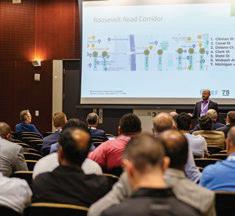
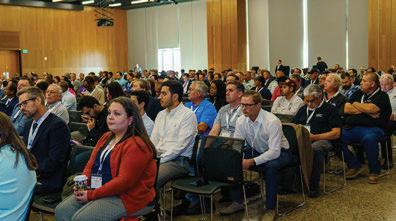



The International Road Federation (IRF) has announced the launch of the of cial website of the congress and the opening of registration for its upcoming IRF World Congress to be held in Istanbul on 15-18 October 2024
With over 2,000 participants from 130 countries, the event is set to be a crucial meeting point to discuss the future of mobility on a global scale. Under the theme "Connecting to Empower Sustainable Mobility for All," the congress will focus on the importance of creating networks and collaborations that promote sustainable solutions for current and future challenges in the transport sector.
Registration for the Congress is now open, with early bird rates available until 15 July and special discounts for groups. This is a unique
opportunity for participants to secure a place at this important event, which promises to provide deep insights, valuable connections, and a clear vision of the future of transport and infrastructure.
The Congress boasts a rich and diverse programme, including technical sessions (6 in parallel) and special high-level sessions; technical visits to Türkiye’s infrastructure landmarks such as the Eurasia Tunnel and the Çanakkale 1915 Bridge. A highlight of the Congress will be the ministerial meeting on the theme "Decarbonised and Resilient Transport for Resilient Societies and Economies", offering world leaders the opportunity to discuss strategies and initiatives to address the crucial challenges of sustainability and resilience in the transport sector.
In an exhibition space covering 5,000m2, companies will have the opportunity to showcase their products and services through various exhibition space options and activities. The Open Stage Café will offer them the possibility to present their work and products in a convivial atmosphere.
Additionally, sponsorship opportunities offer a range of exclusive bene ts such as tailormade meetings with decision-makers, extensive promotional visibility across all congress materials, free passes, exhibition space, and VIP tickets for the Gala Dinner among many others.
For more information on exhibition, sponsorship and registration opportunities, visit the Congress webpage at irf2024.irfof cial.org or contact the IRF directly via email at irf2024@irfnet.ch.




























The IRF Awards offer an unparalleled opportunity to recognise and celebrate Road Safety, Climate Resilience and Adaptation, Infrastructure Management and
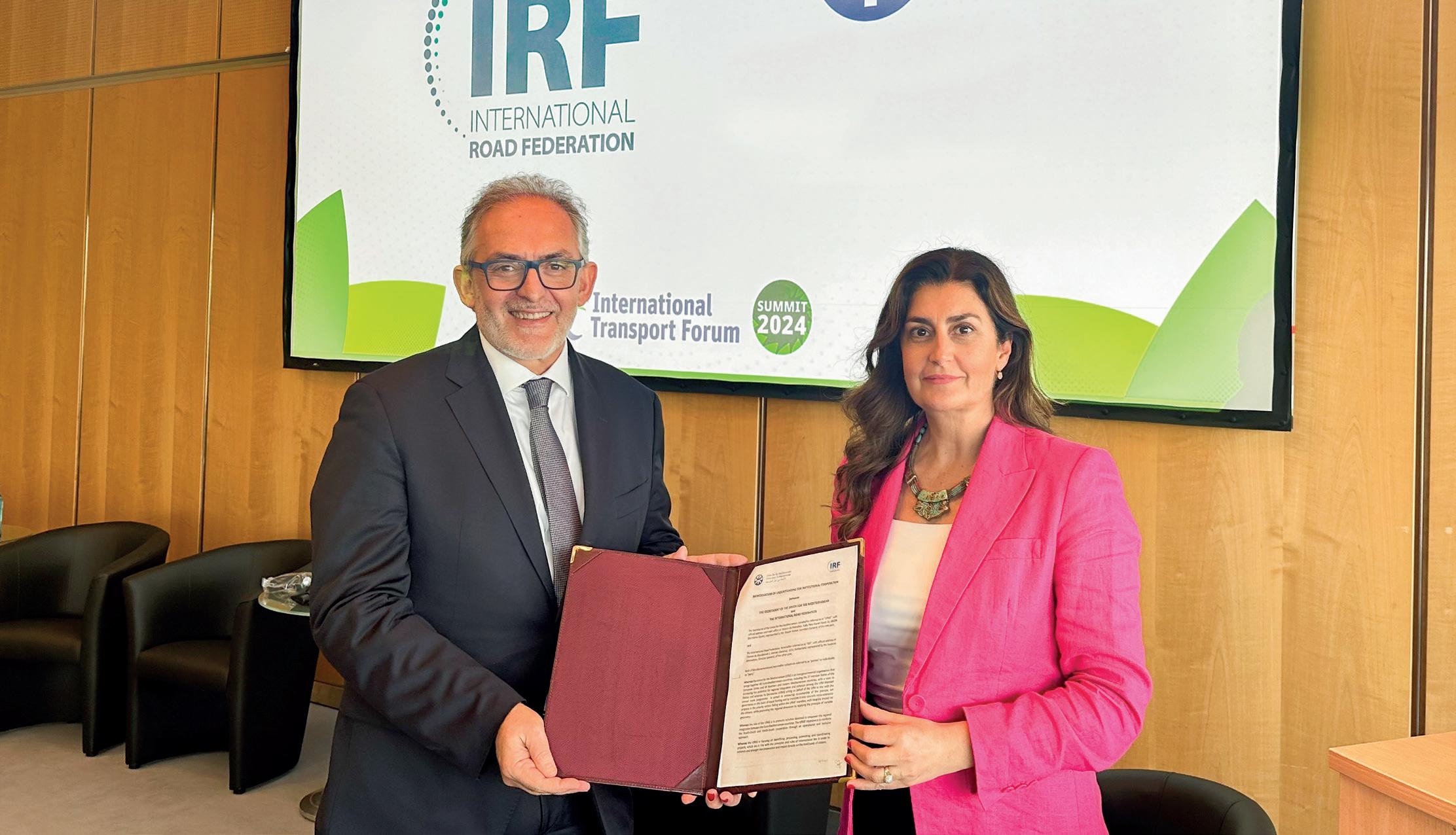
The 2024 ITF Summit in Leipzig offered a unique stage for the International Road Federation (IRF) to sign new and important partnerships in line with its commitment to promoting global solutions for the road mobility sector.
The IRF used the ITF Summit as an opportunity to consolidate strategic alliances through the signing of institutional partnerships with the Union for the Mediterranean (UfM) and the International Transport Forum (ITF). These alliances aim to facilitate the exchange of knowledge, promote best practices, and undertake joint initiatives globally, focusing on key areas such as road safety, decarbonisation, digitalisation and innovation. The collaboration will result in, among other things in
the realisation of capacity-building workshops, the organisation of conferences and events and the development of joint projects. By leveraging their respective expertise in these critical areas, the IRF and its partners aspire to
promote positive change in the global transportation landscape.
The first significant stop where these agreements will turn
into action, is indeed the IRF World Congress 2024. The event will provide an opportunity to bring together other sector organisations, fostering new partnerships and collaborations.

"Collaboration is at the heart of the IRF's mission. Through strategic partnerships, the IRF is ready to lead transformative change in the road sector globally. By combining our expertise and resources with those of our partners, we can address the multifaceted challenges the sector faces and pave the way for a more sustainable and inclusive future for global transportation," commented IRF Director General Susanna Zammataro at the signing of these new agreements.
"All the transport community is invited to join us in Istanbul to celebrate our sector and to design a new path for development and growth together," she added.
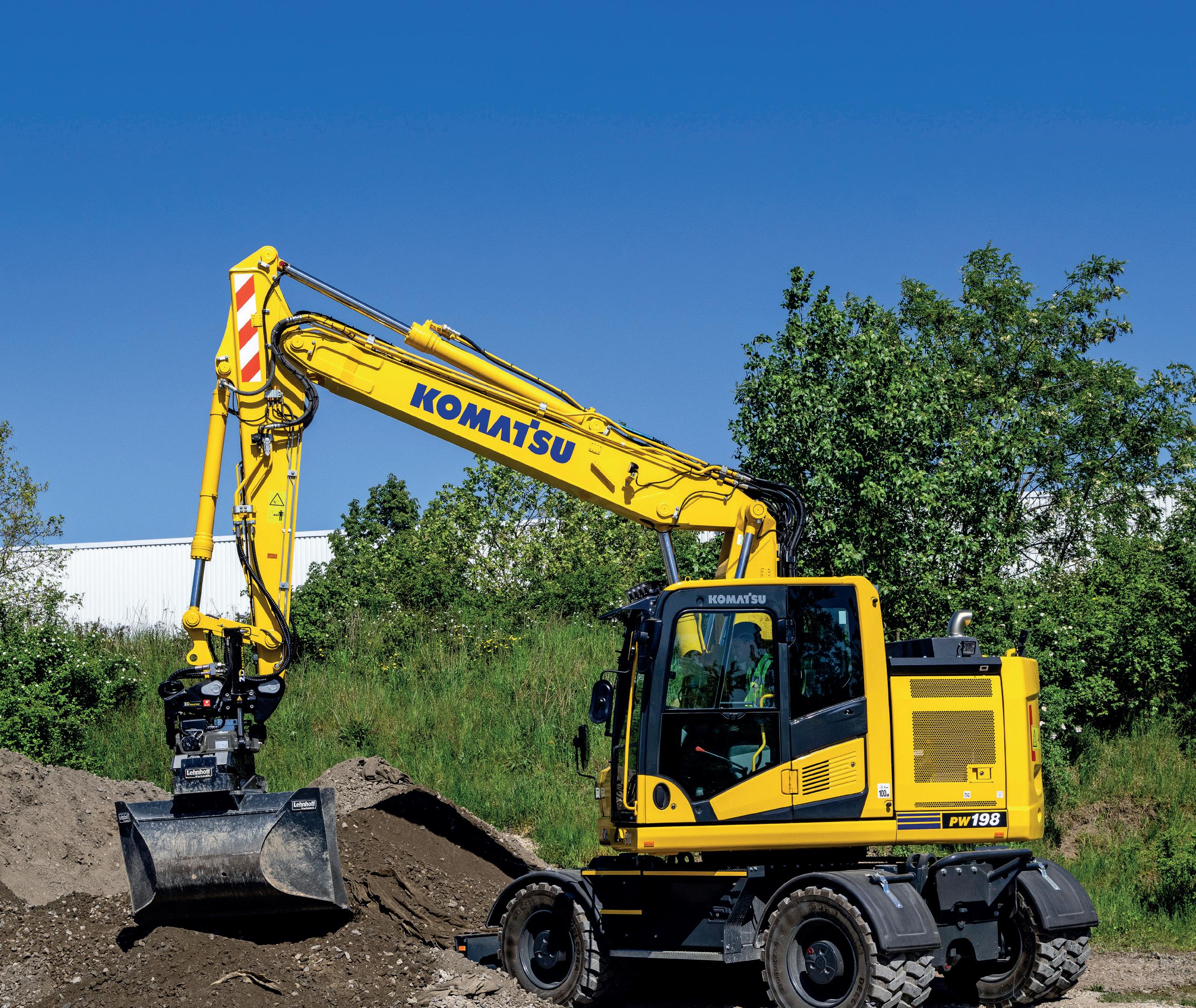






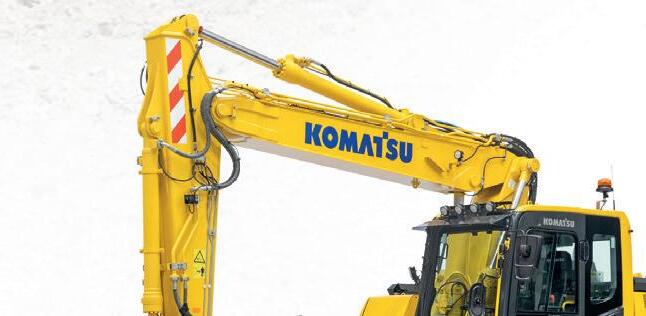
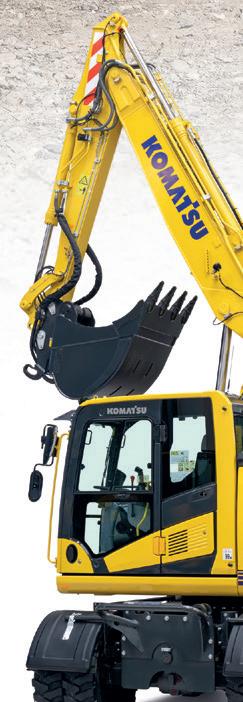
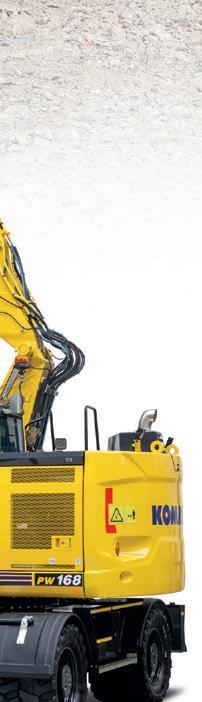
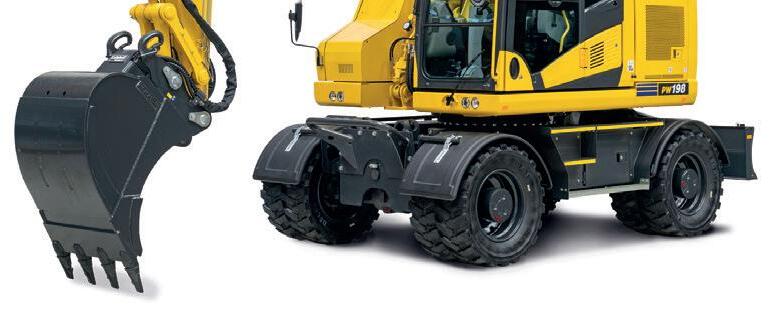
Our Dash 11 wheeled excavators are compact, powerful and versatile. Short tail swing radii allow safe working even in confined spaces. The two new models, PW168 and PW198, come factory-prepared for use with tilt rotators and 3D machine guidance retrofit systems. Additionally, their low transport height makes them easier to transport.














Wasuwat Bunwit, managing director of Tanattorn, re ects on how the Ripple Delineator is spearheading the Thai manufacturer’s drive into the European road safety market
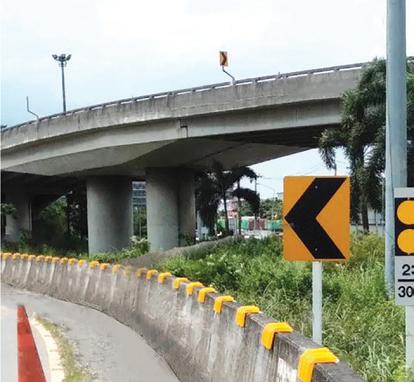
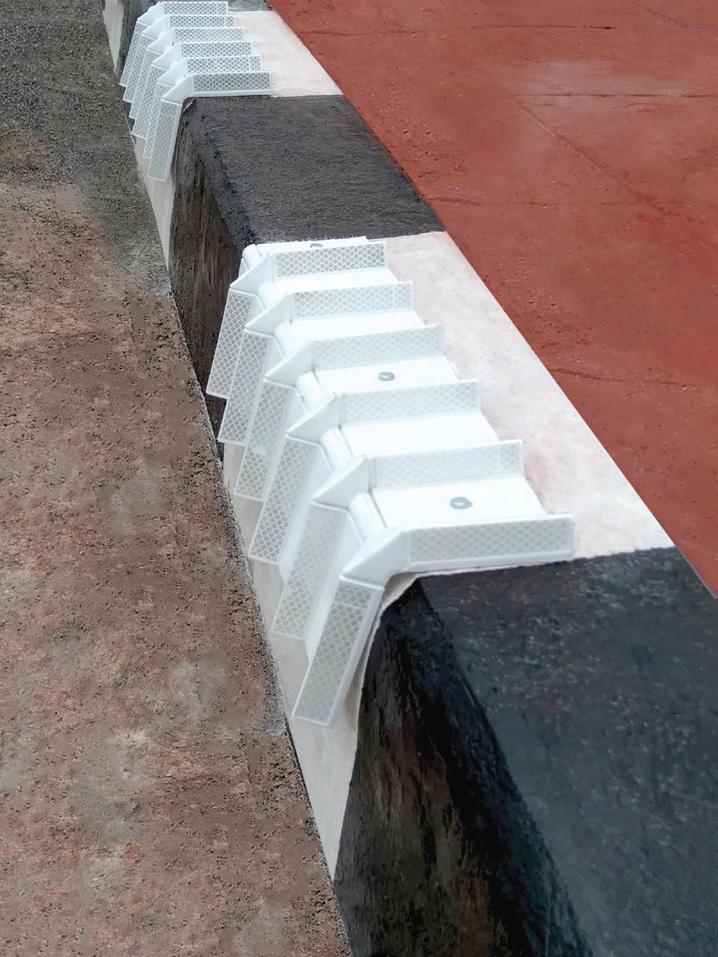
Europe is the next target for Tanattorn, a major traf c safety product manufacturer and retailer, as it expands outward from its home market, Thailand. And the product spearheading this expansion is the company’s Ripple Delineator, an innovative re ective device that af xes to barriers to alert approaching drivers of road layout.
The Ripple Delineator is highly regarded in Thailand with sales to all government transport of ces in the country. Tanattorn has been supplying samples to the Chilean and Japanese markets and recently Hungary. Meanwhile, it has been well received in Europe by visitors to the company’s stand at the recent Intertraf c exhibition in Amsterdam.
“Now European road authorities and highways contractors are the focus as part of Tanattorn’s drive for a global presence in the road safety market,” says Wasuwat Bunwit, managing director of Tanattorn, based in Pathum Than on the outskirts of Thailand’s capital Bangkok. “Negotiations are continuing with a major distributor in Europe.”
For more than 30 years, Tanattorn has had the safety of the travelling public and highway workers as its top priority. The Ripple Delineator is yet another example of this, explains Bunwit. “Our experienced staff specialise in all product areas, from design work to fabrication with a focus on innovation and high standards. To this end, the Ripple Delineator marks a signi cant leap in road safety,” he says.
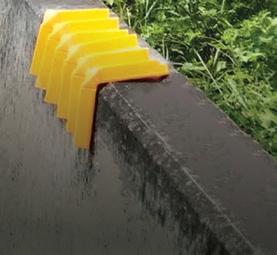
“We designed this product to replace the re ective targets, which were cumbersome and unattractive. Ripple Delineators have a at horizontal shape while maintaining maximum re ectivity to not obstruct the driver's view,” he says. “They also provide safety in case of a collision, as they do not protrude from the barrier. Maintenance is also easy - just a simple wipe and it will be as clean as new.”
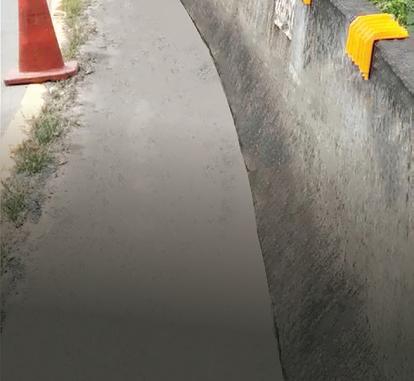
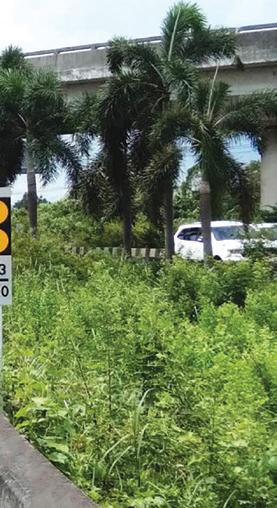
Ripple Delineators are installed on the upper edges of road barriers, permanent or temporary, along major roads or around road works. They can also be xed along the length of kerbs, all in order to guide vehicles along a curve, away from the edge of a road, or to warn
Ripple
The long and short of it
- Length is 50cm
- 3M Diamond Grade DG³ re ective sheeting
- Re ector size is 9cm x 2.4cm
- Comes in white, yellow, red and black
- Made from high-quality durable plastic
- Installed on a kerb or along a barrier
- Easy to clean, simply by wiping
- Can be cut to any length
of a work site. Importantly, the approaching driver sees the re ectors in a continuous line along the barrier. This ampli es the overall re ection, thereby boosting the alert to the driver that the road is curving.
As well, traditional steel delineators have sharp edges. Ripple Delineators are crafted from premium plastic to eliminate the bladelike characteristic of steel delineators. This reduces the risk of harm in the event of an accident during which property and people may come in swift contact with a delineator’s edge.
A Ripple Delineator comes in a 50cm length, but can be cut to any lesser length and also be cut down the middle for use on at surfaces. It is highly visible, especially at night, thanks to the 3M Diamond Grade DG³ re ective sheeting.
As noted, Tanattorn has been in the business of road safety and saving lives for more than 30 years. It is a proud carrier of ISO 9001 : 2015, the most recent version
continual improvements to its products and services, driven by its customers’ needs. This leads to cost savings, improved ef ciencies and greater consistency of service deliverables.
There are no plans at the moment to manufacture outside Thailand, says Bunwit. But because Tanattorn has ISO 9001 : 2015 accreditation, European customers can be assured of the highest standards and product quality to which they are accustomed. “Here in Thailand, with our production already maintained to European standards, we can keep a close watch on continued quality control for export to the European market.”
Tanattorn
www.tanattorn.com

an electronics engineering degree from the Thai-German Technical College, King Mongkut’s University of Technology, in Bangkok. He has been with the company since its founding 30 years ago. Tanattorn, with 120 employees, has annual sales of around US$15 million.





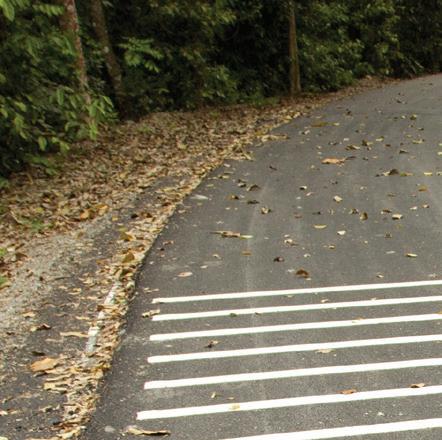
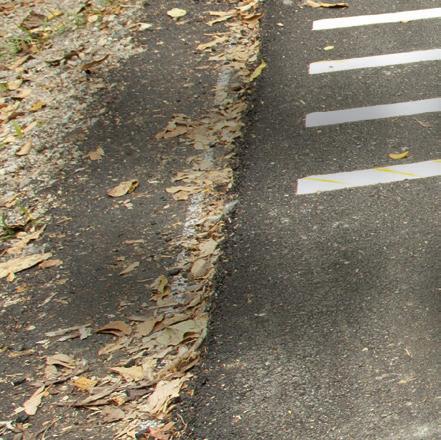

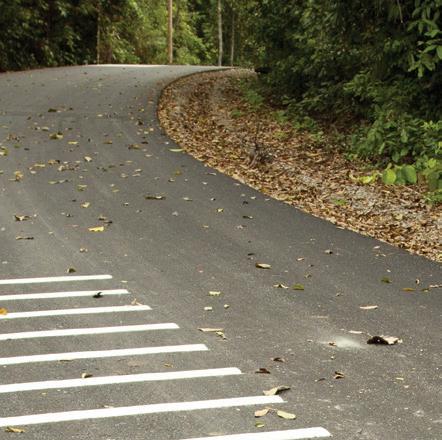
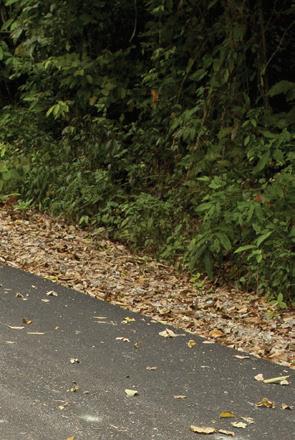


Road infrastructure and furniture are saving lives, according to the report from John Hopkins University


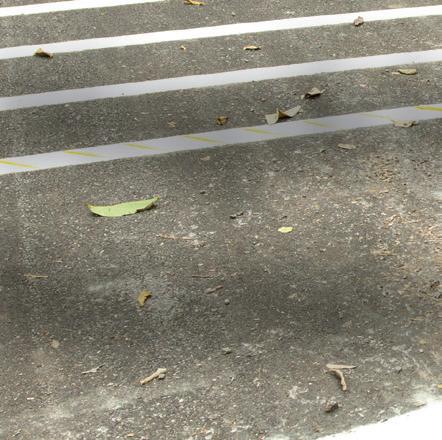


Changes to road infrastructure and implementing safer vehicle speeds have prevented almost 700,000 deaths and serious injuries in 74 countries, according to a new report.
The report – based on a paper from John Hopkins University in the US city of Baltimore - modelled the year-by-year impact of the changes since 2016. The paper ‘Statistical estimation of fatal and serious injuries saved by iRAP protocols in 74 countries’ estimates the likely impact of road improvements in 1,039 infrastructure projects where the iRAP methodology and tools were used. It shows the application of the iRAP model will have prevented an estimated 699,768 deaths and serious injuries between January 2016 and the end of 2024.
Further, the paper projects that by 2044, the existing road treatments will prevent almost 3.2 million fatalities and serious injuries, given the average effective lifespan of 20 years.
The authors say this is the rst study to measure the impact of road projects nanced and implemented by governments, development banks, non-government organisations and private-sector road operators using the iRAP methodology and tools.
The International Road Assessment Programme (iRAP) is a registered charity dedicated to saving lives by eliminating high-risk roads throughout the world. It ueses a robust, evidence-based approach to prevent unnecessary deaths and suffering. Importantly, iRAP works in partnership with governments, road authorities, mobility clubs, development banks, NGOs and research organisations to inspect high-risk roads and develop Star Ratings, Risk Maps and Safer Roads Investment Plans. It provides training, technology and support that will build and sustain national, regional and local capability.
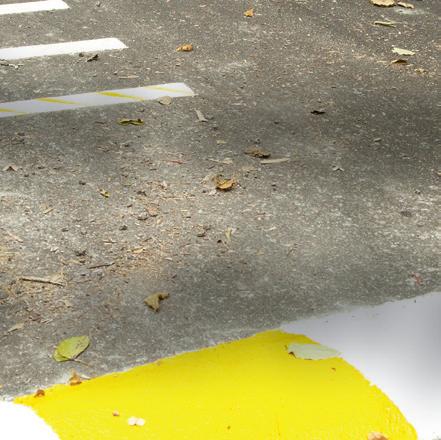
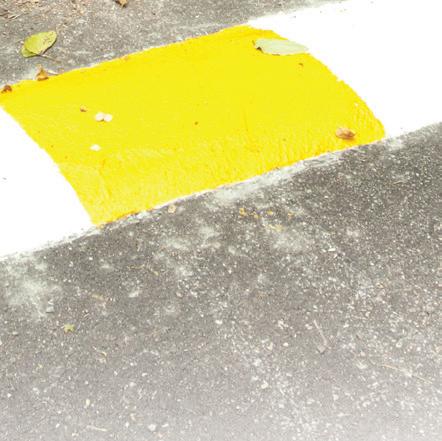


The iRAP Star Rating Methodology provides an objective measure of road safety levels built into the road for vehicle occupants, motorcyclists, bicyclists and pedestrians. It presents an evidence-based measure of the likelihood of a crash occurring and its severity. A 1-star-rated road is the least safe while a 5-star road is the safest.

Examples of projects where the iRAP methodology has been used include Karnataka state in India. Deaths were reduced by 54% and injuries by 42% on a 62km section of the Belagavi-to-Yaragatti highway.
In Victoria, Australia, deaths fell by 77% and hospital bed days were reduced by 74% on 1,730km of key highways. On a section of Highway 4028 in Thailand, zero fatalities and an 89% fall in injuries were noted. In Shaanxi, China, road deaths fell 33% and injuries more than halved on 850km of roads.
Meanwhile, in Albania, road deaths fell 23% following treatment on 1,335km of the nation’s busiest primary and secondary roads. England recorded a 54% drop in deaths on more than 7,000km of strategic network roads. In Bogotá, the Colombian capital, speed limit reductions informed by iRAP assessments resulted in a 22% reduction in fatalities.
“We are so proud and thankful for each and every life saved by our partners around the world,” said Rob McInerney, chief executive of iRAP. “What this research shows is that countries and organisations that are making use of the iRAP methodology and tools to inform investment in safer roads – such as sidewalks and crossings, bicycle lanes, safety barriers and traf c calming – are having a real and measurable impact."
The iRAP partnerships now extend across more than 125 countries assessing 1.8 million kilometres of Star Ratings of roads and designs and 1.8 million kilometres of Risk Mapping.
Globally, road deaths and injuries have declined for the rst time on record, according to the latest data from the World Health
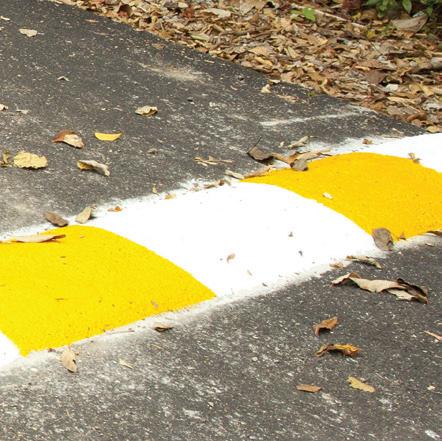



Organization, which identi ed improving standards of roads as an important factor. The Global Plan for the Decade of Action for Road Safety 2021-2030 set targets for most journeys to be made on 3-star or better roads by 2030 and all new roads to be built to those standards.


“The Safe System approach emphasises safe road infrastructure as an essential component of its framework, said Abdulgafoor Bachani, report co-author and director of Johns Hopkins International Injury Research Unit. “Consequently, prioritising its integration into urban planning and development initiatives should become imperative in every city, country and region. We are optimistic that this study will serve to amplify the importance of safe infrastructure and inject renewed vigour into global road safety efforts.”
Saul Billingsley of the FIA Foundation said: "The FIA Foundation is incredibly proud to be a core donor to iRAP’s work, creating the tools and methodology to make roads safer for all.
“This analysis demonstrates the profound impact that iRAP is having around the world, saving hundreds of thousands of deaths and serious injuries through safe road assessment, design, and upgrades of roads,” said Billingsley, executive director of the FIA Foundation, a UK-based international charity and donor to iRAP. “Now we need to see greater government investment and support from development banks to deliver safer road infrastructure over the next ve years so that we can do everything we can to achieve the global goal to halve road deaths by 2030.”
The FIA Foundation was set up in 2001 by the Fédération Internationale de l'Automobile (FIA). It works closely with international agencies, expert technical partners, civil society organisations and member FIA clubs to help make road journeys and road sports safer for all, be they Formula One drivers or children on bicycles going to school.
iRAP - International Road Assessment Programme https://irap.org

BIG THANKS TO ALL THOSE THAT SUPPORTED / CONTRIBUTED TO THE SUCCESS OF THE E&E CONGRESS 2024!
WE LOOK FORWARD TO SEEING EVERYONE AT E&E EVENT 2026 IN VIENNA!








Emovis, part of Abertis Mobility Services, has implemented a roadside solution for Puerto Rico’s Teodoro Moscoso Bridge, operated by Autopistas Metropolitanas de Puerto Rico.
The Emovis solution is maximising toll compliance through improved vehicle detection and identi cation systems. Emovis said that the deployment is part of a continued partnership with Autopistas Metropolitanas de Puerto Rico (Metropistas).
Since opening in 1994, the 2.25km low-level trestle girder Teodoro Moscoso Bridge has
been operated by Abertis. It is an extension of PR-17, also known as the Jesus T. Piñero Expressway, and connects with the Román Baldorioty de Castro Expressway (PR-26). It crosses the San José Lagoon to link the district of Rio Piedras in San Juan to Isla Verde Carolina. It is an entrance to the Luis Muñoz Marín International Airport and processes over eight million transactions annually. A current upgrading project has added two lanes and improved the four existing lanes.
As part of the solution, cameras with external illuminators have been deployed and that can read even dirty license plates




at night. All of the equipment previously in the lane has been moved, reducing the risk of equipment damage from vehicles.
The legacy equipment had more than 10 cabinets of networking and equipment servers supporting four lanes. All the equipment is now in a single server rack.
“This latest Teodoro Moscoso Bridge project will reduce tolling incidents and congestion, thus providing greater reliability and safety for drivers,” said Fernández Rodes, chief executive of Metropistas.
Metropistas, which has been collaborating with Abertis since 2011 through a public-private



partnership, operates several major highways throughout Puerto Rico. “Metropistas has been a terri c partner over the years, demonstrating a strong commitment to continuous improvement while investing in the best technology available,” said Christian Barrientos, chief executive of Abertis Mobility Services.
“Our latest solution for the Teodoro Moscoso Bridge will enable us to create even greater impact for the many stakeholders that connect to this project.”
Emovis www.emovis.com



The Ecuadorian National Traf c Commission has selected Jenoptik for a 12-year project to make its national class roads safer.
Together with its local Ecuadorian partner, Jenoptik, a manufacturer of smart mobility solutions, is delivering around 120 non-invasive digital VECTOR SR cameras. They will enforce speed infringements day and night with the use of an infrared ash.
Installations began in January and the rst cameras are now in operation, said Finbarr O'Carroll, president of Jenoptik’s Smart Mobility Solutions division in the Americas. “Ecuador is taking a signi cant step to tackle speeding and to making its roads safer. The project reinforces Jenoptik’s dedication to driving positive change through technological innovation and strategic partnerships.”
The remaining cameras will gradually follow until mid-2024. Within the rst 20 days of operation, speeding drivers will receive a warning ticket without a monetary fee. After that period, people caught not adhering to the speed limit will be issued a speeding ticket by the government.
The non-invasive VECTOR SR requires only a power connection. Light changes are detected optically by the system. Measurements from Jenoptik's radar technology are validated
by secondary independent and image-based evidence. At less than 8kg, the VECTOR SR is easy to install, such as on existing roadside masts.
The VECTOR is also versatile. The automatic number plate recognition enables VECTOR SR to be used for many different applications, such as civil security or statistical operations, traf c volume information, travel times, origins and destinations.

Jenoptik, a global photonics group, comprises the two divisions - Advanced Photonic Solutions and Smart Mobility Solutions. Sensor-based road safety cameras and automatic number (licence) plate recognition (ANPR/ALPR) technology is at the core of the business. The company’s solutions cover a wide range of stationary and mobile applications such as vehicle monitoring and classi cation, average and spot speed, redlight enforcement including additional features, civil security, as well as road user charging and emission control, using video analytics and arti cial intelligence.


The company says it has over 4,000 cameras installed across the US and tens of thousands of cameras worldwide.
Jenoptik www.jenoptik.com


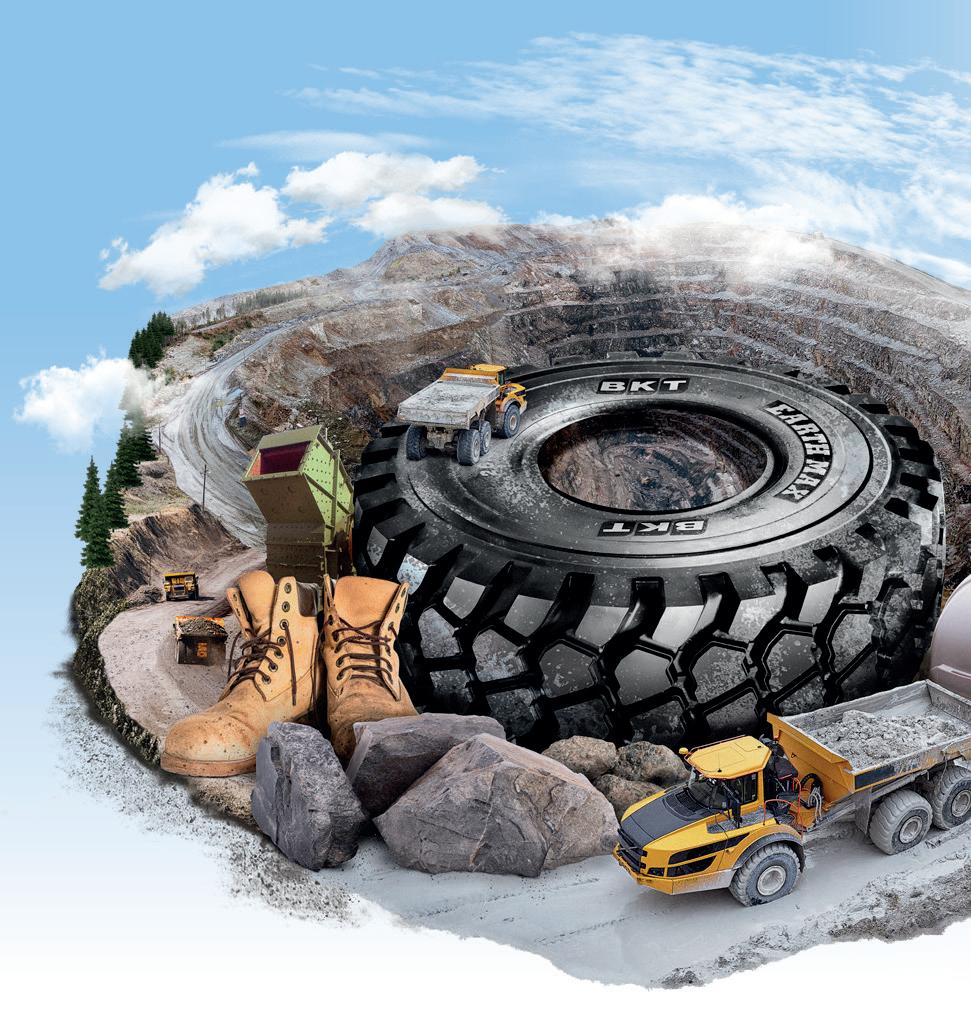




No matter how challenging your needs, EARTHMAX SR 41 is your best ally when it comes to operations that require extraordinary traction. Thanks to its All Steel radial structure and the special block pattern, EARTHMAX SR 41 provides excellent resistance against punctures and an extended service life. In addition to long working hours without downtime, the tyre ensures extraordinary comfort.
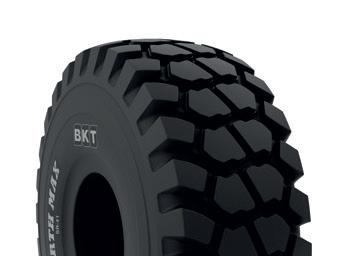











EARTHMAX SR 41 is BKT’s response to withstand the toughest operating conditions in haulage, loading and dozing applications. For info: europe@bkt-tires.com




Ageing road bridges are leading road authorities to consider the case for using weigh-in-motion - WiM - solutions to monitor the health of such infrastructure, writes Adam Hill
The use of weigh-in-motion - WiM - systems to monitor the punishing weight of overladen vehicles that can quickly deteriorate road surfaces is an acceptable means of law and regulation enforcement. But the use of WiM systems to monitor the health of bridges is increasingly seen as essential as road agencies strive to maintain what is often quickly ageing infrastructure.
“Road operators are facing increasing challenges related to the ageing of the infrastructure, especially when looking into bridge infrastructure,” says David Cornu, head of business unit traf c solutions at Swiss rm Kistler. “More and more bridges are showing increased structural de ciencies and approaching at a fast pace their end of service life. WiM has proved to be a strong means in identifying overloaded vehicles. For the upcoming years we expect a further push into the deployment of automatic WiM enforcement sites, where trucks are automatically ned in case of overloading.”
Cornu believes this will enable ef cient protection of the bridge infrastructure and at
the same time an increase in traf c safety. “In combination with our bridge structural health monitoring systems, the health and strength of a bridge structure can be fully assessed and monitored over time, to ensure a safe operation 24/7 and to allow a safe extension of its service life.”
Direct enforcement is one area of WiM that could provide impetus for companies in the sector – but some are still waiting for its promise to be realised. “I had high hopes that direct enforcement would move WiM forward,” admits Florian Weiss, chief executive and owner of WiM specialist Traf c Data Systems, a family-run business in Germany. “We haven’t seen that yet.”
However, Weiss has certainly seen the rise in importance of WiM in terms of bridge maintenance. “In particular customers are recognising that there are problems on bridges caused by overloaded vehicles,” he says. “WiM is a way of monitoring real weights on bridges. I see a shift in 2024 from statistics - the simple vehicle-counting approach - to actual monitoring.”
The extra data this gives you is vital, he says, “In order to nd a solution, you need to
International Road Dynamics has been awarded a contract by the Tennessee Department of Transportation to install weigh-inmotion systems at 28 sites on interstate and state routes.
The state-wide WiM programme will capture and record axle weights and gross vehicle weights as well as data on commercial vehicle characteristics in certain transit corridors for asset management and design improvements. Some of the WIM sites are co-located with enforcement sites operated by the Tennessee Highway Patrol which will integrate their commercial
vehicle inspection programme with the WiM data.
IRD, a wholly-owned subsidiary of Toronto-based Quaterhill, says there is also the potential for future upgrades of the sites with e-screening technology to automate the evaluation of driver and trucking company safety ratings, resulting in enhanced enforcement capabilities and further improvements to highway safety.
IRD expects to complete the US$3.9 million installation - its rst in the state - in May 2025, said Chuck Myers, chief executive of Quarterhill. "The deployment of
know how a bridge is really used. In many countries they have a suf cient amount of traf c counters – but is a tractor with a trailer empty? Half-loaded? Overloaded? This is the information you can get only from WiM, not a traf c counter.”
In much the same way, authorities are realising that the costs of not doing anything are out of proportion with the alternative, he says. “If you take the cost of replacing 300m of a six-lane motorway with the cost of implementing a WiM system, it’s nothing.”
Leonardo Guerson, WiM product manager and application engineer at US-based Intercomp, is seeing high-quality WiM data increasingly used for traf c input in road asset management, particularly in pavement design and maintenance. “This development is propelled by the availability of cost-effective, high-accuracy WiM sensors now on the market, allowing for the establishment of an adequate number of WiM sites to collect representative data.”
Guerson says that access to precise traf c load data reduces the need for estimations, signi cantly enhancing the accuracy of infrastructure designs and maintenance actions aligned with infrastructure demands. “By using

advanced WiM systems will provide vital data to facilitate e ective enforcement, enhance asset management and signi cantly improve the safety of Tennessee's highways."

IRD, based in Saskatoon, Canada, develops components and advanced systems for transportation networks.
Together with subsidiaries PAT Tra c and IRD Europe (ICOMS detections, sensor line and VDS), IRD supplies intelligent transportation systems to private corporations, transportation agencies and highway authorities around the world.











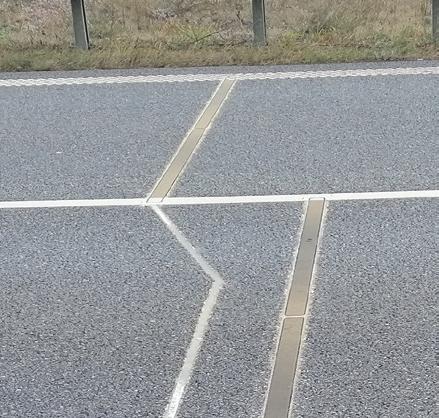
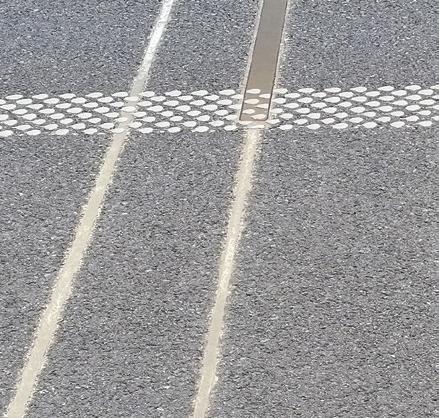
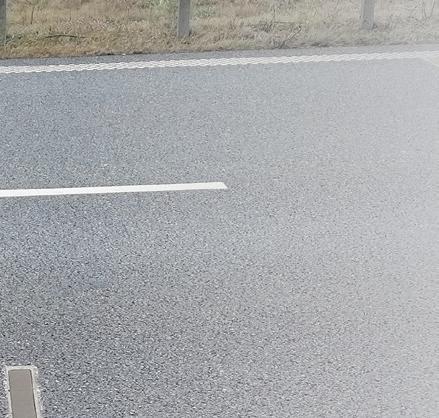
Ensuring compliance with weight regulations is paramount and high-speed weigh-in-motion (HS-WIM) systems for direct enforcement have gained prominence as a sophisticated solution.


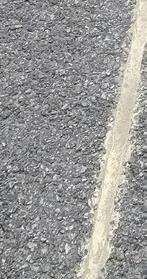
When used for direct enforcement e orts, HS-WIM sites minimise physical infrastructure investments while strengthening weight compliance strategies (image courtesy Intercomp/APM)



“The appeal of direct enforcement with HS-WIM for road authorities lies in its capability to operate automatically 24/7 and collect data from every vehicle presents a powerful proposition,” explains Leonardo Guerson, Intercomp’s WIM product manager and application engineer. “Moreover, as these systems incur lower operational costs compared to traditional weigh stations, it becomes feasible to establish more sites. This expansion allows for comprehensive insights into the weight characteristics of every vehicle on the road.”


ITS solutions globally. APM’s HS-WIM solution, APM Pro, is built around Intercomp’s Strain Gauge Strip Sensors. It is designed to ensure that all measurements meet stringent tolerances. Speci c software algorithms validate each vehicle weighing record to con rm reliability, preventing unwarranted overloading penalties.
APM conducted a thorough study into the long-term stability of various HS-WIM sites and technologies. Sensors employing Strain Gauge Strip Sensors displayed exceptional stability, holding calibration over time and delivering consistent results across varying temperature conditions. APM chose Intercomp Strain Gauge Strip Sensors for their HS-WIM system with the goal of ensuring consistent operation year-round, regardless of environmental factors.
APM PRO deployed 44 lanes equipped with HS-WIM systems based on these sensors for road transport compliance. They monitor overloading and preselect overloaded vehicles for further weighing, using a combination of ANPR, CCTV and 3D scanning to understand each passing vehicle’s characteristics.

APM, based in Bielsko-Biała, in the vicinity of Katowice and Krakow in Poland, provides comprehensive
high-accuracy data-collection sensors, end users not only enhance the reliability of their datasets but reduce ownership costs, thanks to less frequent recalibrations and sensor replacements.”
Václav Blahník, product manager of WiM at Czech company Cross Zlín, points to what the company sees as a “probably very turbulent” year ahead. He believes this turbulence might open the door for WiM companies which are happy to embrace complication on behalf of their customers. “For this reason, we will get more complex implementations, including additional technologies like laser scanning, pro ling, RFID vehicle detection etc,“ he says. “Due to this, we expect further requirements to integrate WiM systems into superior ITS systems.“
Pivotal role
Meanwhile, Canadian company International Road Dynamics – IRD - sees a growing need to enhance road safety by identifying tyre types and tyre anomalies. “We believe that, in 2024, the requirements for tyre anomaly detection will continue to grow and play a pivotal role in the industry,” insists IRD chief executive Rish Malhotra.
IRD’s Tire Anomaly and Classi cation System measures tyre width and detects problems, as well as classifying vehicles based on their tyre properties. “From a law enforcement perspective, this well-adopted technology provides signi cant advantages, enabling authorities to identify and manage safety risks more effectively, thereby predicting

Poland’s Overload Control programme is a good example of the impact of Strain Gauge Strip Sensors.
and preventing road accidents,” explains Malhotra.
Given the growing demand from commercial vehicle enforcement agencies, he says, this outlook, when coupled with the power of AI will deliver innovative solutions to improve truck safety. “These will continue to align with IRD’s mission to champion safer and more ef cient roadways worldwide.
The combination of machine learning, deep neural networks and computer vision provides opportunities to address in new ways an increasing range of functions that are a part of commercial vehicle operations.”
The International Society for Weigh in Motion (ISWiM) represents researchers, vendors and end-users of WiM technology, both infrastructure- and vehicle-based. In November it held a conference in Brisbane, Australia, with the International Forum for Heavy Vehicle Transport & Technology. The HVTT Forum promotes and supports development of road freight transport technology, safety and policy and facilitates information exchange between researchers, policymakers, regulators, road agencies and the transport industry.
Andy Lees, Q-Free independent consultant on WiM and information of cer for ISWiM, was at the event and points to another trend which is opening up. “The improvement in vehicle classi cation for WiM has long been a goal and the recent introduction of loop pro ling is starting to make inroads into this issue,” he says. “In fact, a paper was presented at the recent Technology Convergence conference in Brisbane on this very topic,” says Lees.
As vehicles traverse the HS-WIM site, a collaboration of technologies comes into play, with variable message signs conveying speed limits and tra c rules. ANPR and CCTV cameras capture license plates and vehicle images, while a 3D scanner measures vehicle dimensions. Non-compliance prompts alerts on VMS signs, directing drivers to pull over for administrative weighing. This innovative approach has made a global impact, particularly in Europe and the Middle East, where over 100 lanes of high-performance HS-WIM systems have recently been installed.
But it is the newest of technologies which will really start to make this sing. “The application of arti cial intelligence is now enhancing this process by using neural networks to help improve the complex algorithms used to determine vehicle types,” says Lees. “The advantages of adopting machine learning techniques for this process are numerous and varied. The end user is provided with enhanced identi cation and categorisation methods which would otherwise be unobtainable, such as electric vehicle identi cation, vehicles with raised axles, low platform versus box trailers versus tanker trailers to name but a few.”
https://www.tra c-data-systems.net/en
Q-Free
https://www.q-free.com
IRD – International Road Dynamics
https://irdinc.com
Intercomp www.intercompcompany.com
APM
https://apm.pl/en/solutions/wim-pro/ Cross Zlin
https://www.cross-tra c.com/en
Kistler
https://www.kistler.com/INT/en
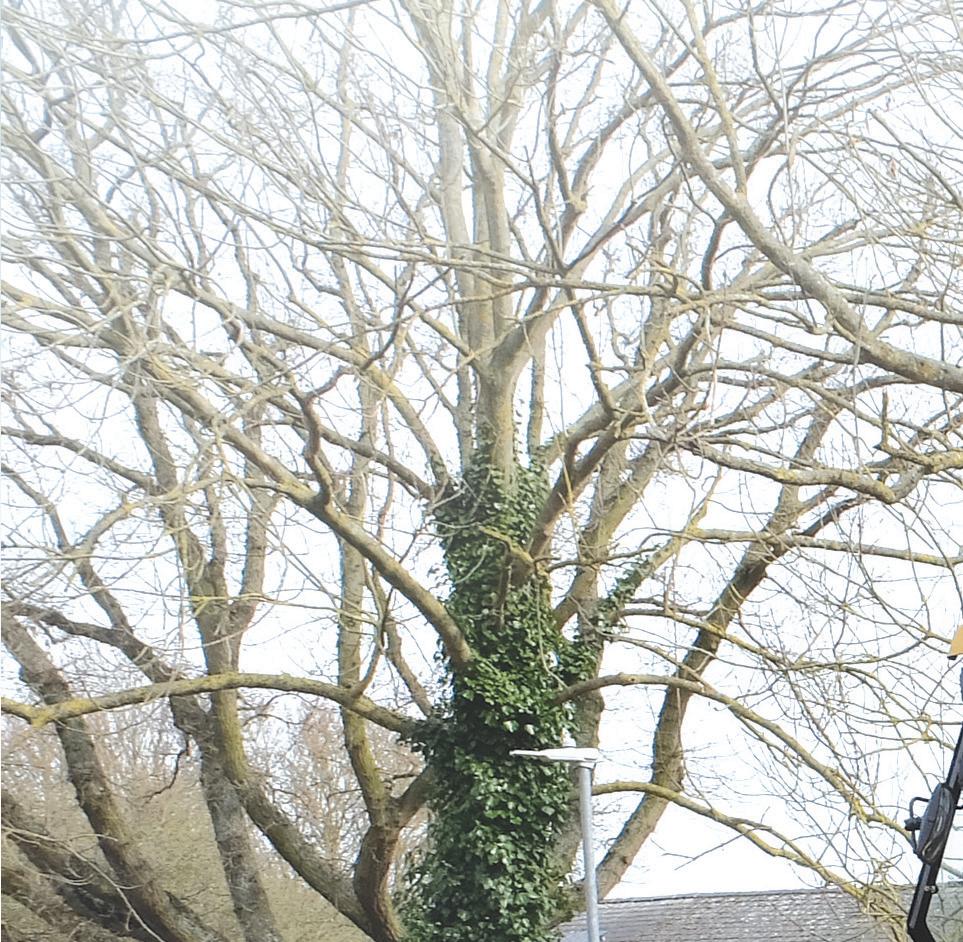
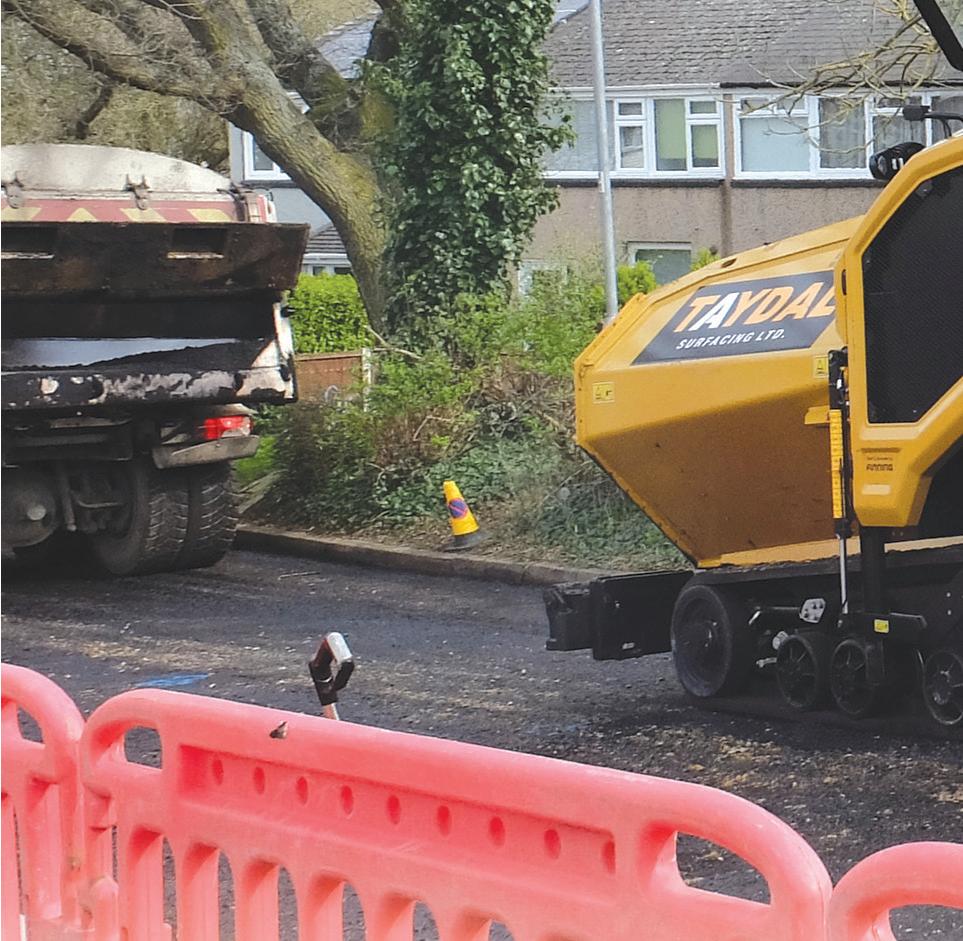

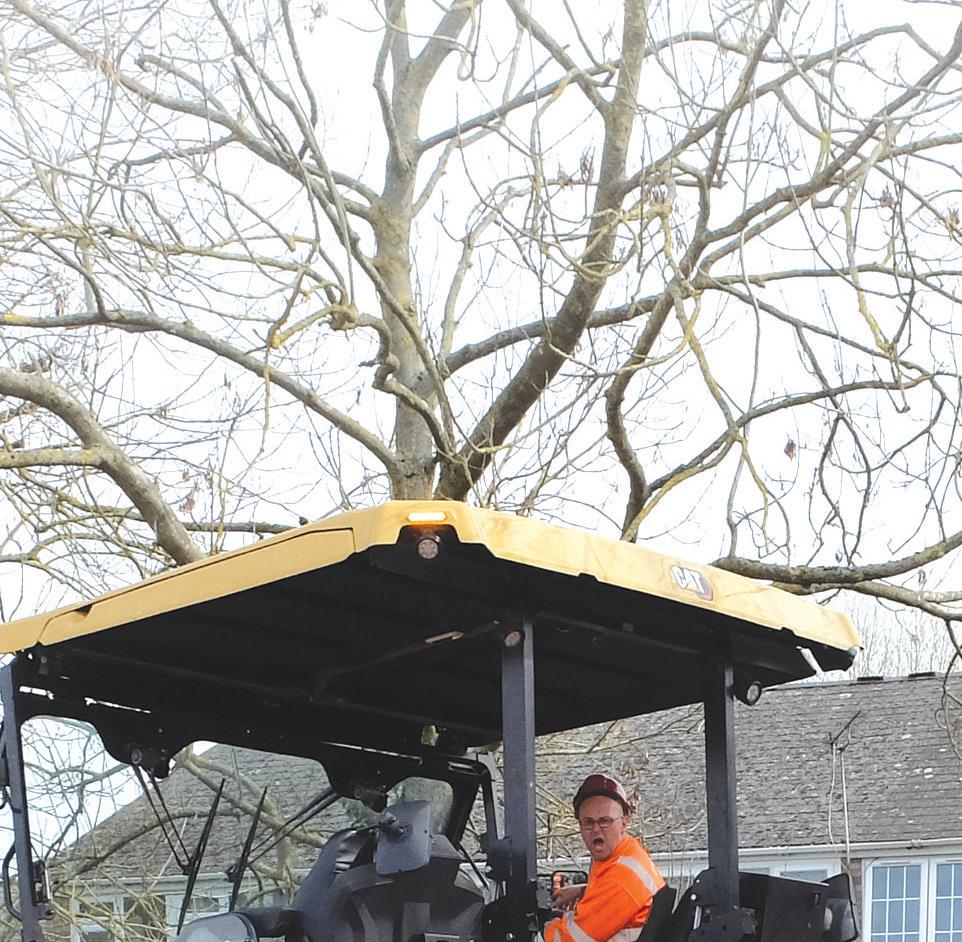
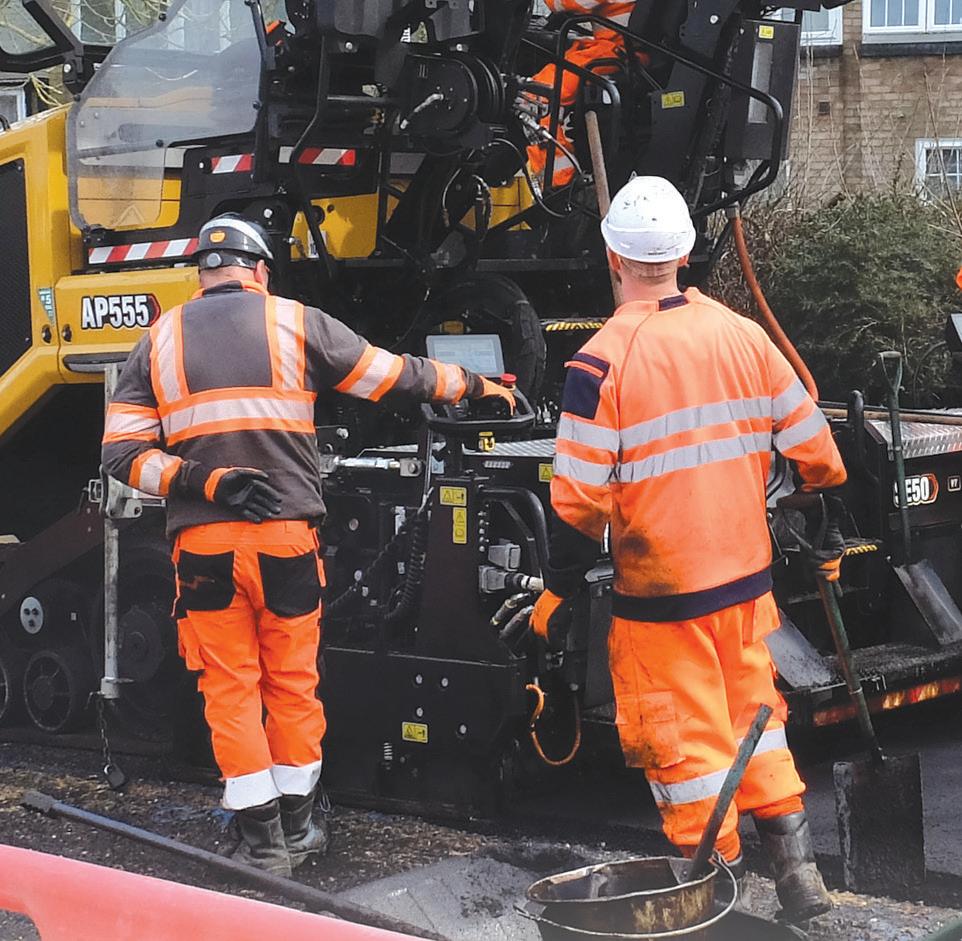
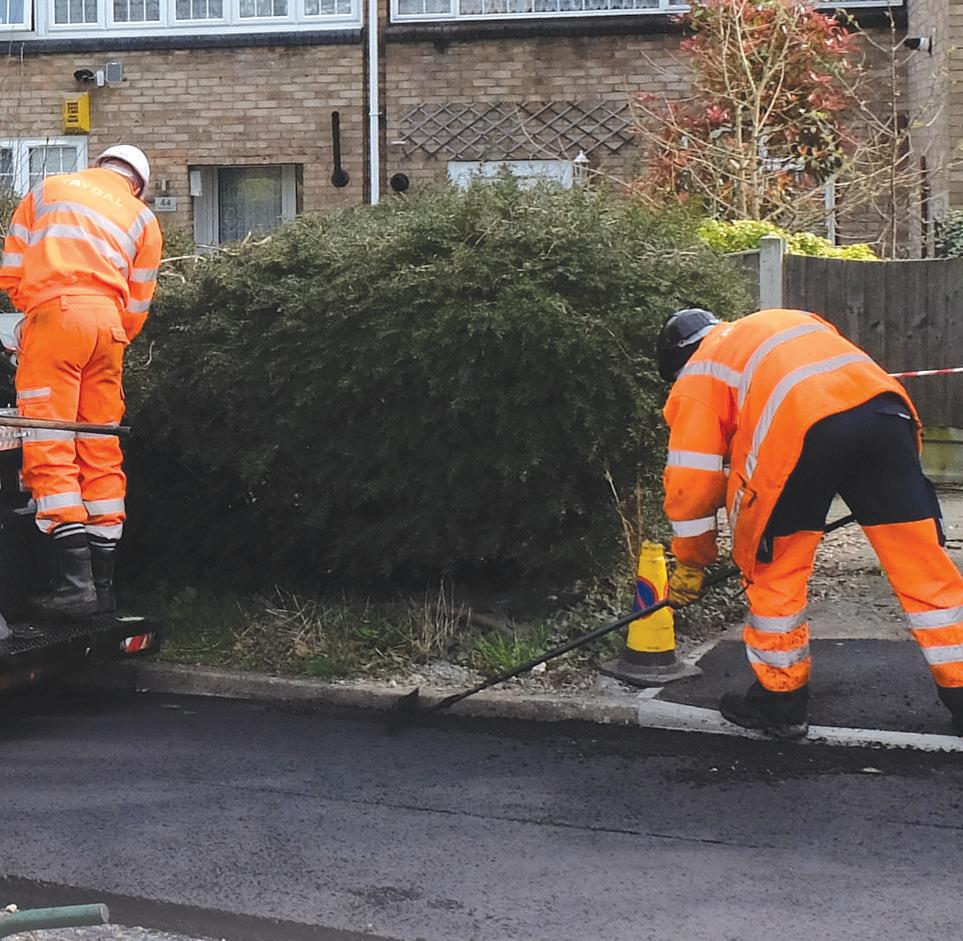
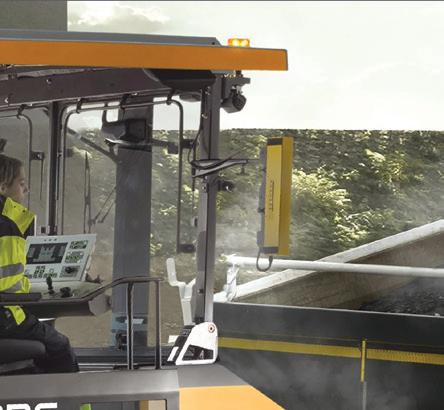
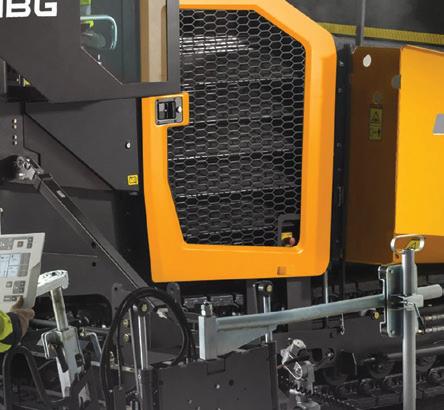
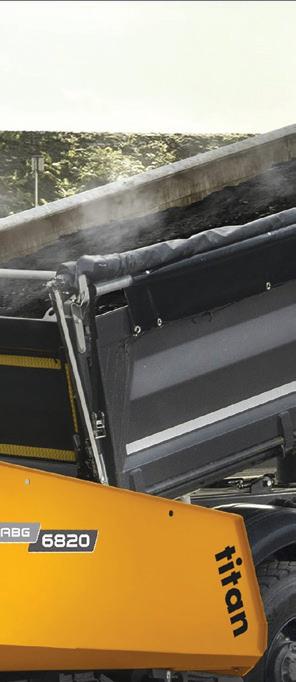
A UK contractor is making good use of its latest Cat Mobil-trac paver for urban resurfacing works – Mike Woof reports

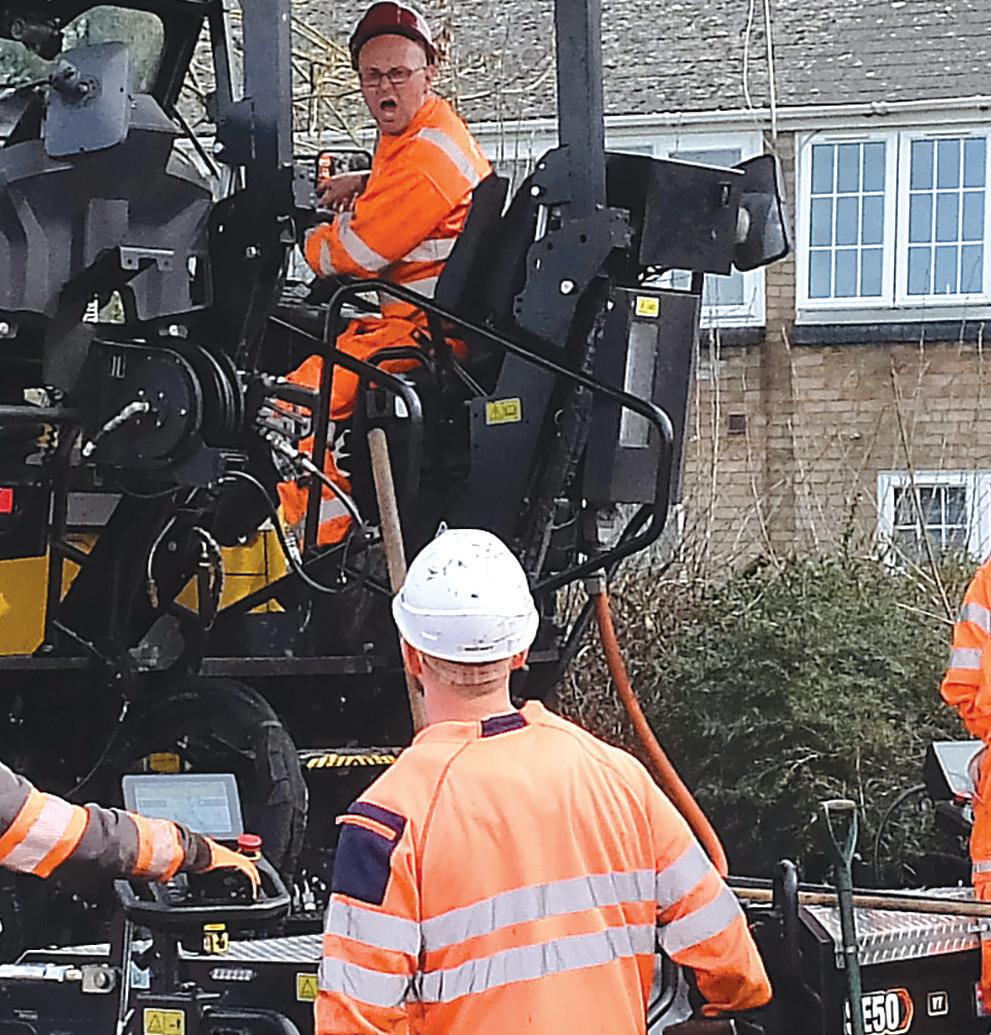
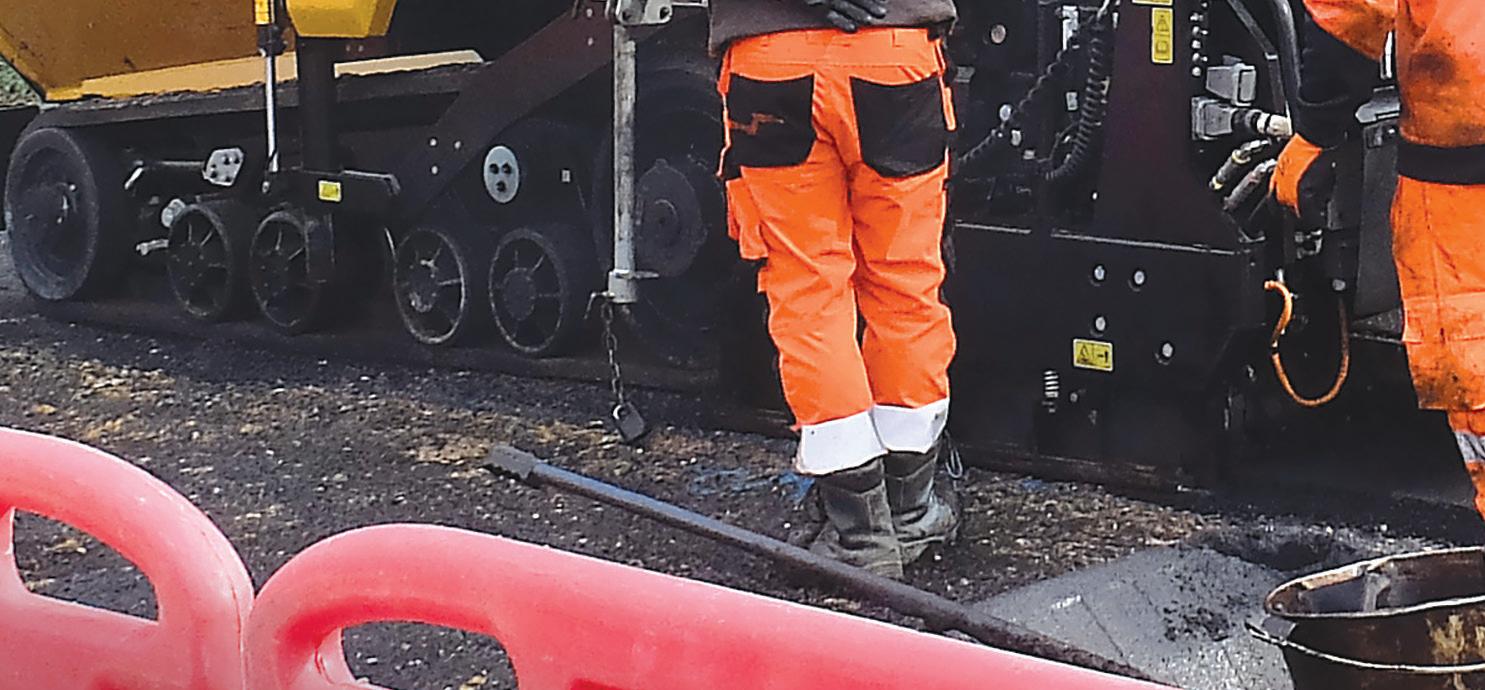
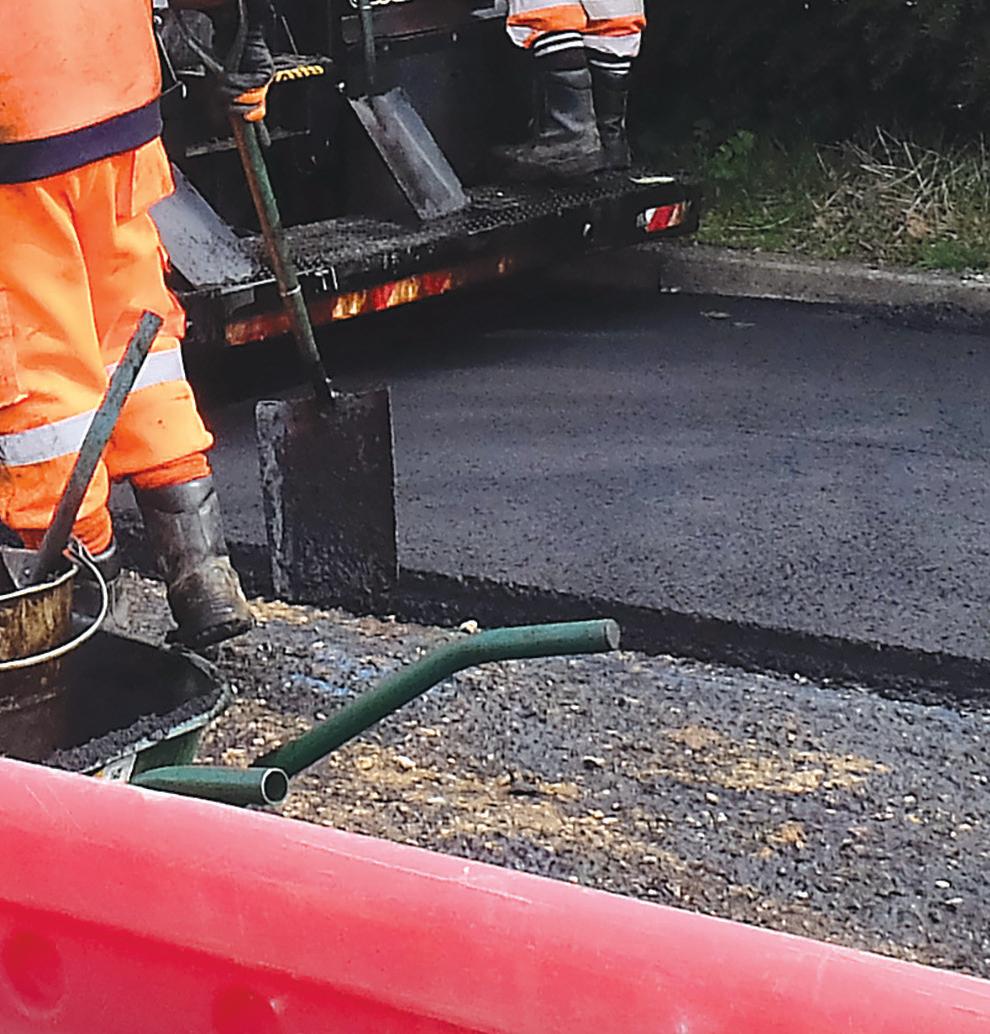
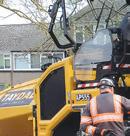
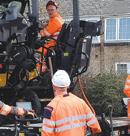
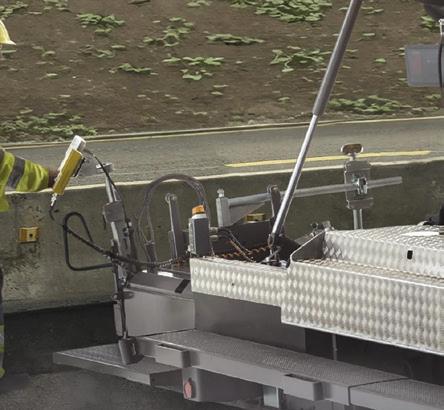
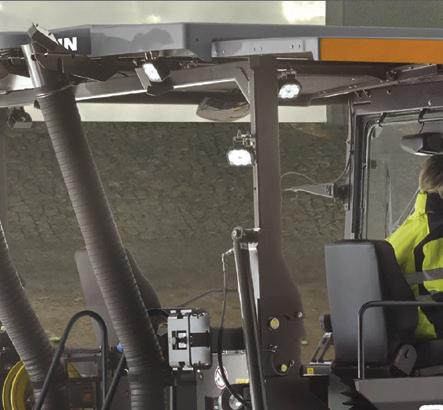
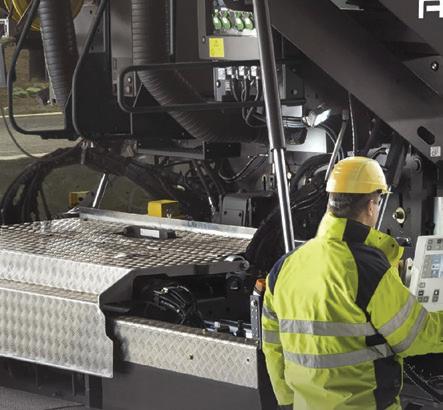
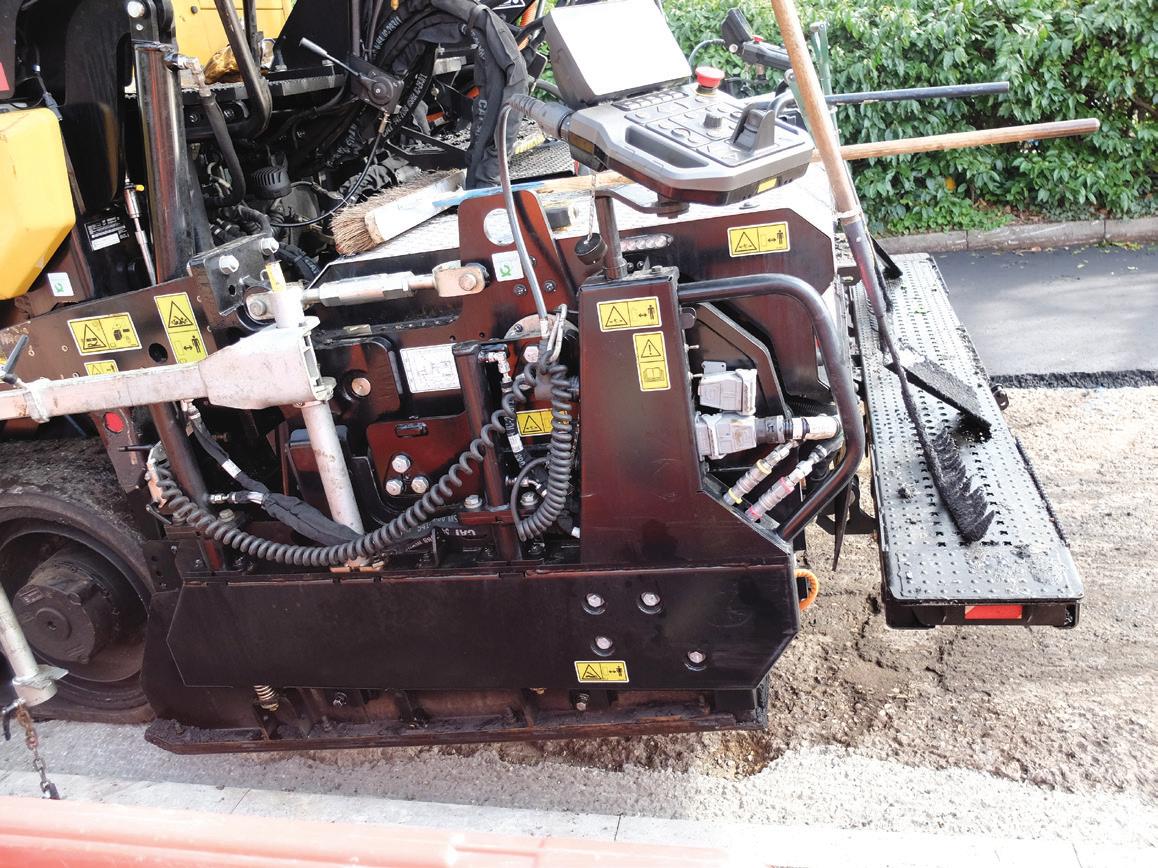
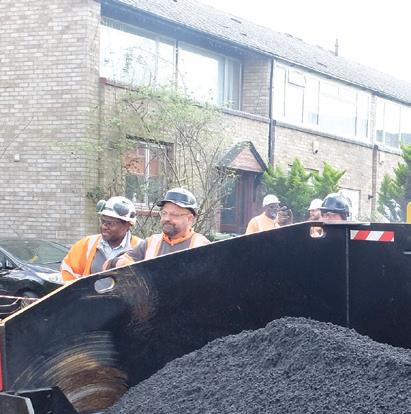
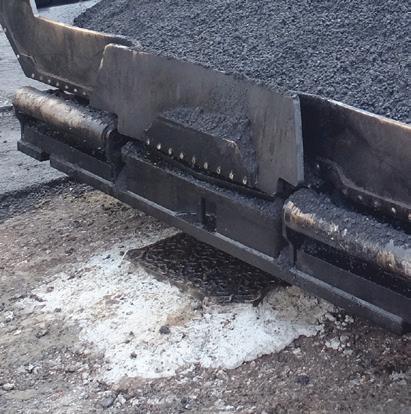
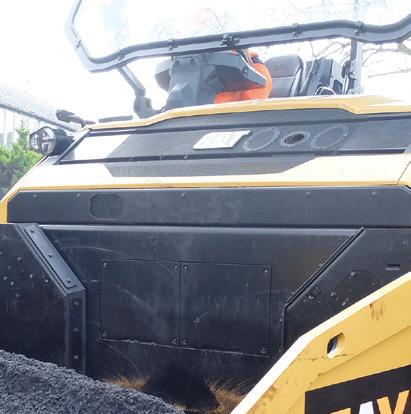
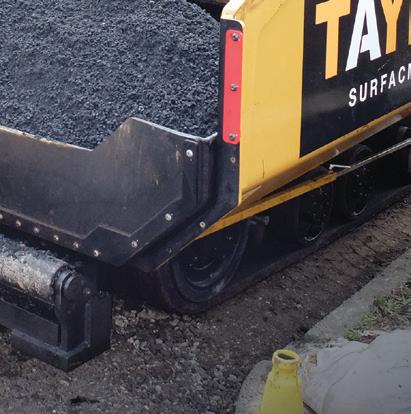
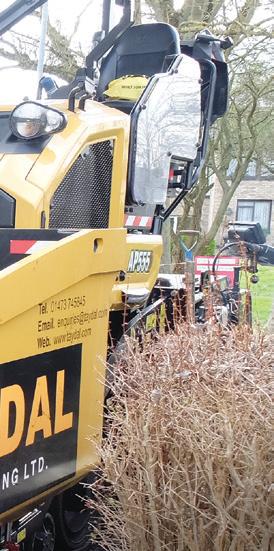
UK paving contractor Taydal Surfacing is making extensive use of its new Cat AP555 asphalt paver for works in Essex, to the east of London. The machine is the rst of the new generation AP555 models supplied in the UK and is equipped with the latest Cat SE50 VT screed as well as the Mobil-Trac undercarriage.
Taydal Surfacing has been using its new Cat paver to carry out paving work as a subcontractor for Ringway Jacobs on work for Essex Highways. The Ipswich-based rm mostly carries out paving work in the counties of Essex, Suffolk, Norfolk and Cambridgeshire.
The paver has been used for repaving
local roads that connect housing areas in the commuter town of Basildon. The residents had to contend with road closures to allow the construction crew to work during a seven-hour stretch in the daytime, with paving starting after the morning commute and ending before people returned in the evening. But with the severely potholed roads being repaired, the residents no doubt appreciate that a short-term inconvenience is being totally outweighed by the bene t of having freshly surfaced asphalt instead.
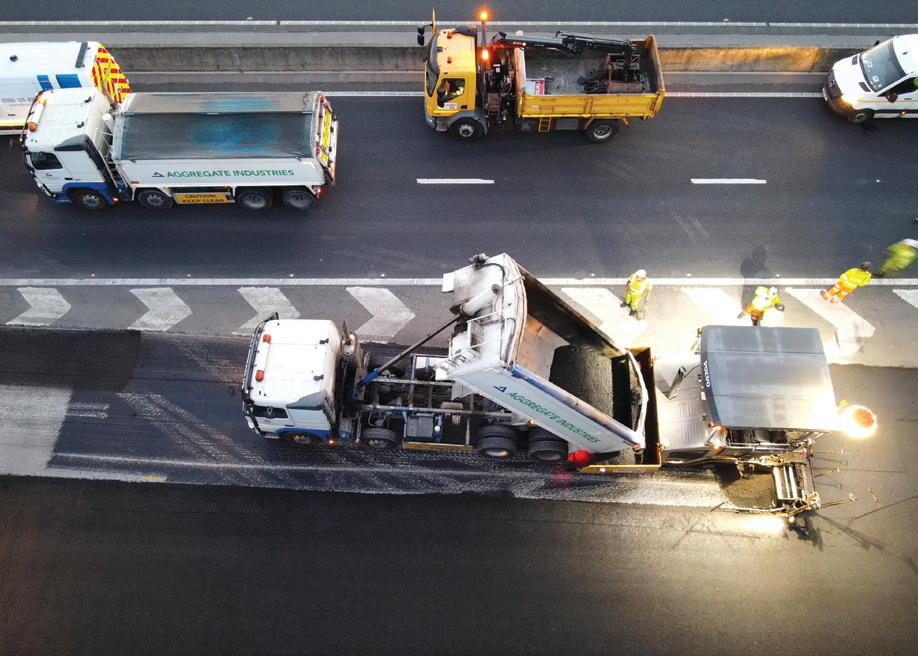
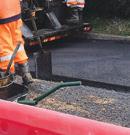
A specialist sub-contractor brought in a milling machine to plane off the degraded road surface initially, with Taydal Surfacing then using its paving and compaction equipment. The jobsite was small, just 3,500m2 in all and was carried out in three stages. The SMA mix

with 55% of 10mm aggregate as well as nes used for the paving work has been supplied by Eurovia from its nearby plant and carried in tipper trucks to the site. Taydal paved the new binder and wearing courses, both with thicknesses of 30mm for a total of 60mm.
Compaction has been carried out to the required density using two machines from Taydal Surfacing’s eet of BOMAG asphalt rollers.
Although the job is in an urban area, it has provided its challenges. Michael Kirby of Ringway Jacobs commented, “We’ve had tree stumps in here and had to pull them out.”
Kirby explained that the roads through the housing development had also suffered some subsidence over the decades since it was built, adding to the challenges for the repaving work
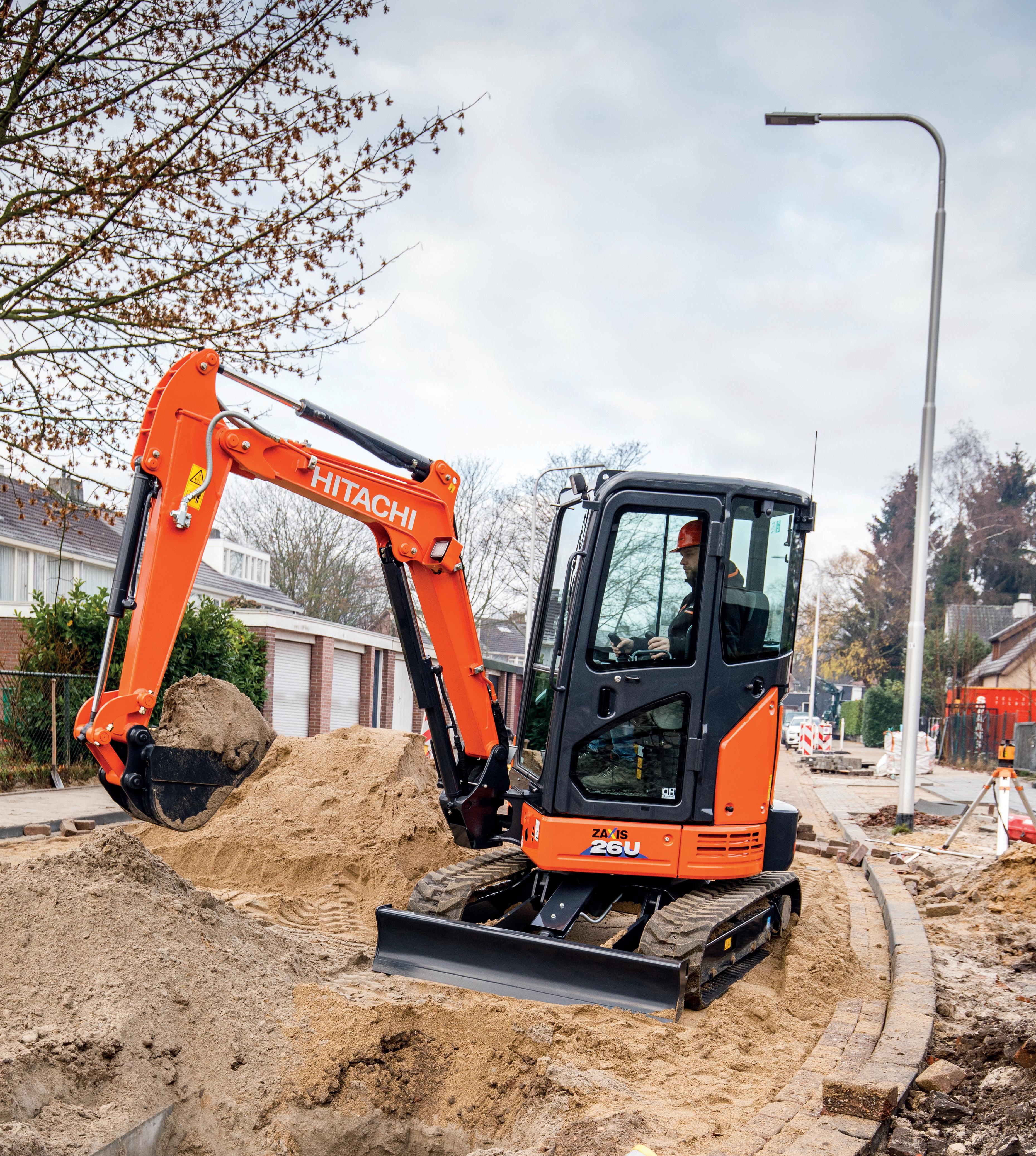
Exceptionally versatile and ideal for working in small spaces, Hitachi Zaxis-6 mini excavators deliver high levels of performance and excellent fuel efficiency. They are user-friendly, easy to maintain, highly durable, and make light work of demanding tasks. Zaxis-6: designed and engineered for your needs.
Learn more at www.hitachicm.com/eu/en/
and explained, “This was built on marshland.”
This job in Basildon has been carried out without the use of machine control technology, but Taydal does have experience of these systems. The rm has used grade control systems for paving jobs on major roads and was planning to use the AP555 on resurfacing work for a section on the A13 dual carriageway.
Taydal Surfacing is no stranger to Cat pavers, now running four of the yellow machines in the eet and having had six of the F-Series machines in all. And in addition to its new AP555, the company also has a new AP355F. Owner Wayne Dale explained that the rm originally used the Italianmade Bitelli pavers and when the business (located in Minerbio, close to Bologna) was bought by Caterpillar around 20 years ago, continued using the rebranded models because the designs were well-proven. It is worth noting that the Bitelli brand did establish a strong foothold in the UK road construction sector through the success of its then dealer, Finnpave. Dale bought the rst tracked Cat paver for the rm’s machine eet in 2014 and he added that one of the old Bitelli BB660 models is still in the yard, though only rarely used these days.
Dale was very complimentary about the Mobil-Trac undercarriage on the new AP555, saying that this was a key bene t for the model. He commented, “The UK is mostly a wheeled paver market,” adding that the machines are versatile and suit local works as they can be driven from site to site at speeds of up to 11km/h, without needing to be transported on the back of a truck. He explained that the trade-off is that wheeled pavers do not offer the same level of stability as a tracked paver and cannot match the same paving widths, while also offering less traction if the surface conditions are uneven or slippery. Steel tracked pavers, though stable and much better able to work on poor ground, are limited to speeds of just 6km/h when being moved between sites and, while able to offer good stability for wider paving, are less versatile than wheeled machines. He continued, “But Cat’s Mobil-
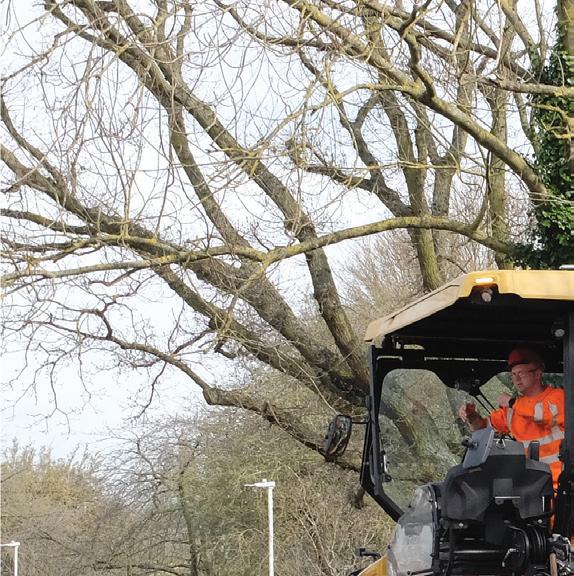
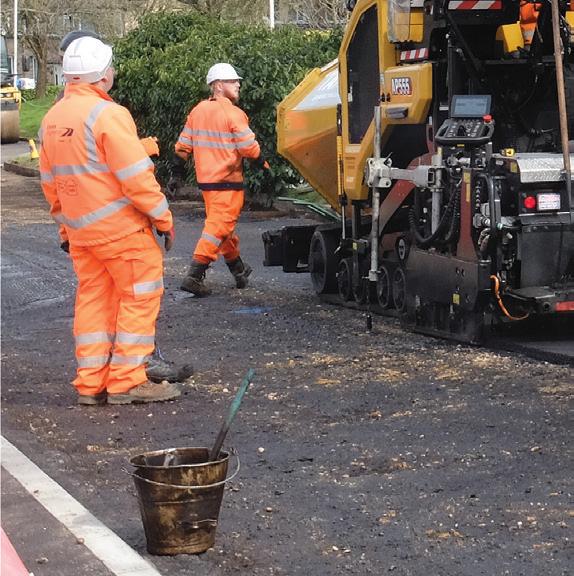
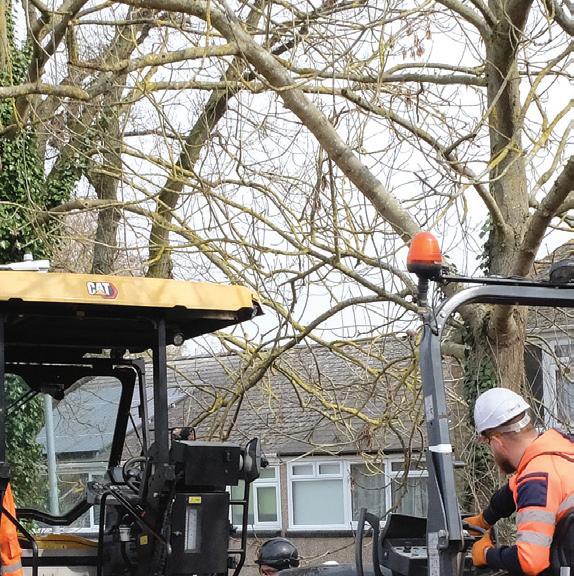
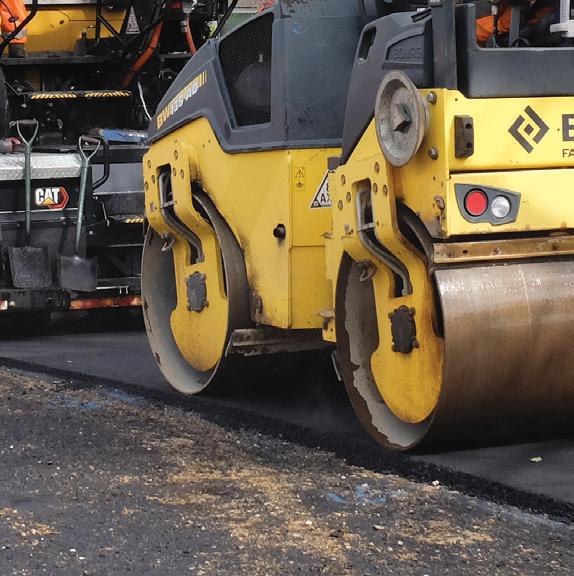
compromise between the steel tracks and the wheeled paver.”
The Caterpillar pavers with their rubber tracks can match the stability and paving widths of conventional steel tracked machines. He added that because of the bogie system used on the Mobil-Trac undercarriage, this even offers bene ts in comparison to conventional steel tracks and said, “It absorbs the irregularities of the ground.”
Having run F-Series pavers with the MobilTrac system for some years Dale was quick to point out that the rubber tracks last well in use, with good working life. Another advantage is that the rubber tracks allow the machine to be driven over recently paved surfaces, without the risk of damaging the asphalt or leaving
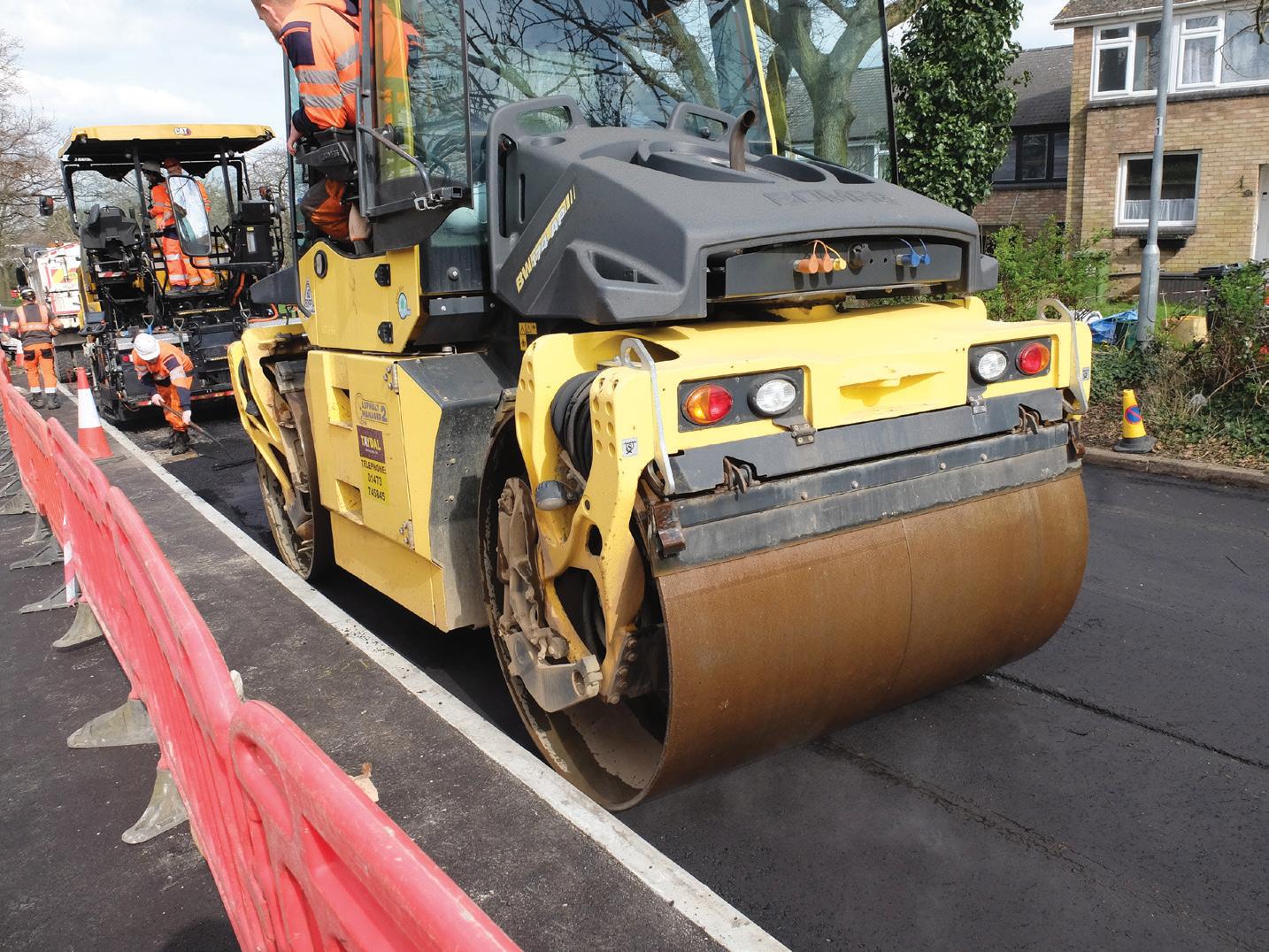
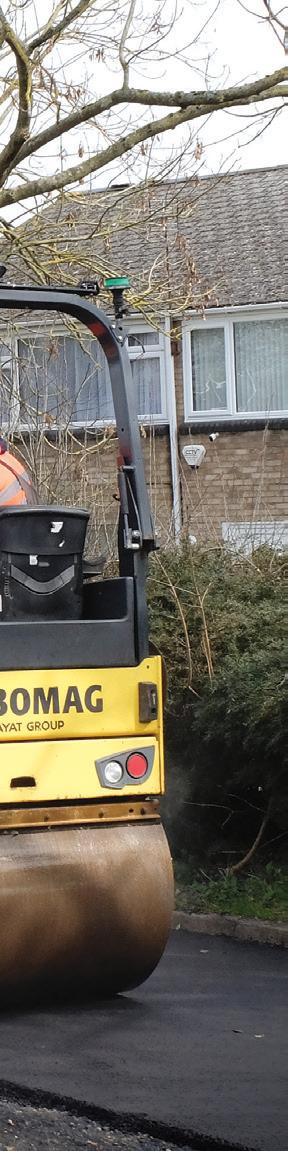
turning in cramped working areas through the ability to counter-rotate if necessary. Although this machine offers a high throughput for its size class, it is also comparatively compact in design and can be operated in more restricted spaces than many competing machines according to Dale.
Taydal’s paver operator, Tom Beckett, was also complimentary about the new AP555 and said, “Up top, not a lot’s changed but the control pads for the screeds are better.” He said that the new SE50 VT screed design is also stiffer and commented that it holds levels better.
The improved tamper bar type screed allows fast heating times and paving widths from 2.55-5m, although this can be increased to 7.6m with the use of bolt-on extensions. Another bene t of the new AP555 is the improved fumes removal system. This extracts fumes from the conveyor, hopper and screed and then vents them out over the hopper, away from the operator and crew.
The pre-delivery inspection was completed by Cat dealer Finning UK and Ireland before the machine was supplied. Finning also provided training for Taydal’s operators and the rm’s service technicians who will maintain the machine.
www.cat.com
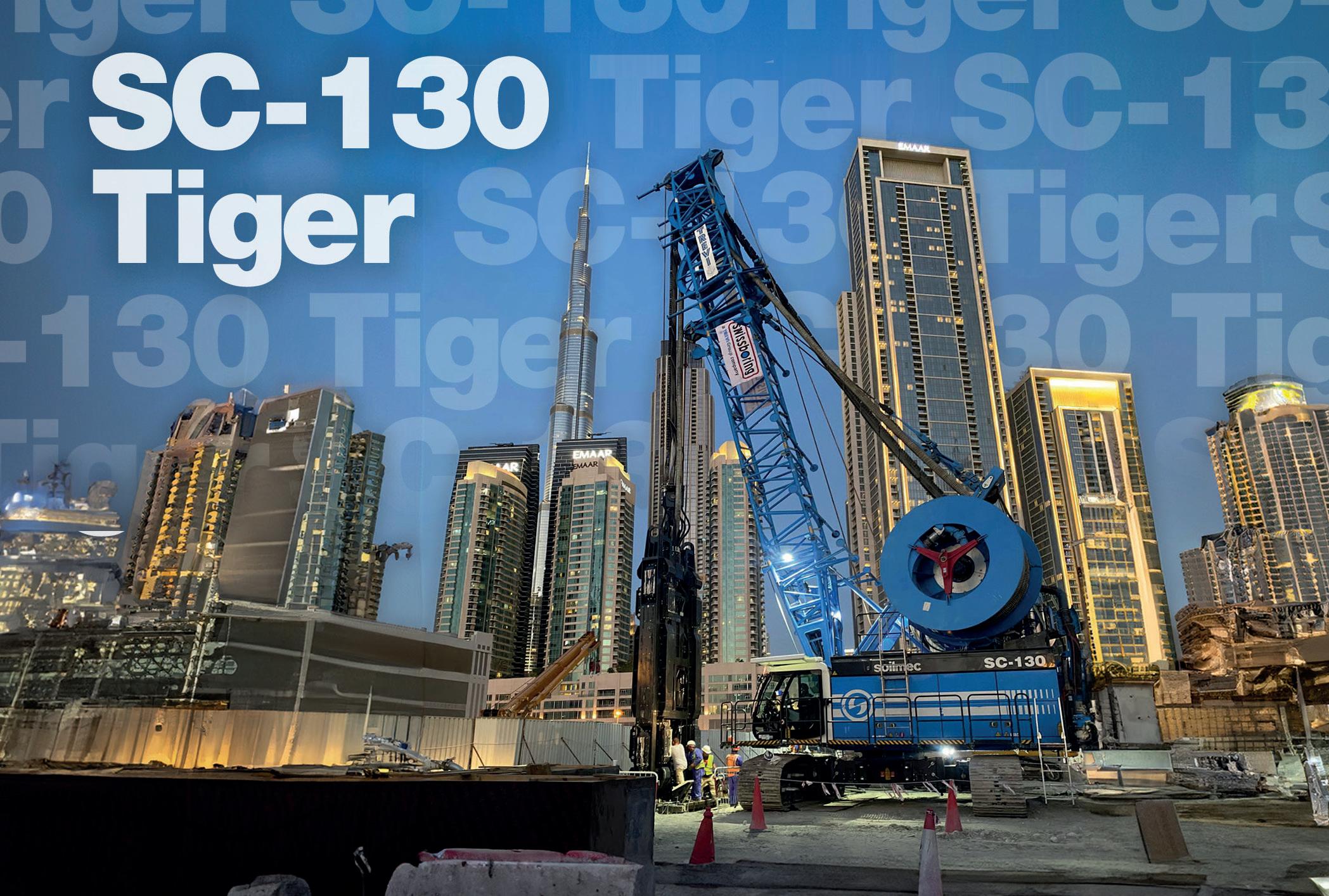

























































Anumber of new asphalt pavers for the North American market have been unveiled recently at the World of Asphalt event held in Nashville, TN. Organised by the US Association of Equipment Manufacturers (AEM), the show proved a major draw for the North American road construction industry.
Astec has upgraded its asphalt pavers, offering improved performance and servicability. The new F-Series version of the highway-class RP-175 bene ts from a new frame and a simpli ed design. Power is from a Cummins B4.5 diesel that meets Tier 4 Final emissions requirements and delivers 130kW, with a revised cooling system that redirects heat away from the operator. The machine also has upgrades to its rubber track undercarriage that boost component life.
However, the key development is that the rm’s RP-175 and larger RP-195 are being made available with the sophisticated Smartedge technology, which can monitor the edge of the asphalt mat and move the screed edge automatically. The paver operator can set the overlap and the system will then track the edge of the paving mat, whether the machine is being driven in a straight line or round corners. The system uses a 600X laser that is said to be more accurate than other technologies and this package will be available at the end of 2024 once eld testing is complete. It will only be for use on the F-Series machines however, and cannot be retro tted to earlier generation pavers from Astec or machines from other manufacturers.
This package is designed is for use in mainline paving operations and means that the screed operator can concentrate on ensuring the material supply is consistent, without having to keep adjusting the screed. The system was developed in-house and has been patented, while it can be used with machine control packages from all the major suppliers.
BOMAG’s CR1030T paver features a new front mount screed as well as an independent material supply system that allows the operator to run the augers or conveyor separately. The Versa 20 screed offers paving widths from 3-5.8m using hydraulic extension but allows up to 7m using bolt-on extensions. Bermtype screed extensions can also be tted if required. The screed has three tubes to ensure stiffness, a feature taken from the rm’s proven European style screeds.
Operation is said to be easier due to the new HMI touchscreen console although dial controls have been retained for operators using gloves and the machine has Moba controls integrated into its systems. Power comes from a Cummins QSB6.7 diesel rated at 166kW and the machine runs on rubber tracks, with an automatic tensioning system to optimise wear life. .
Caterpillar is now offering an innovative three-dimensional screed plate system
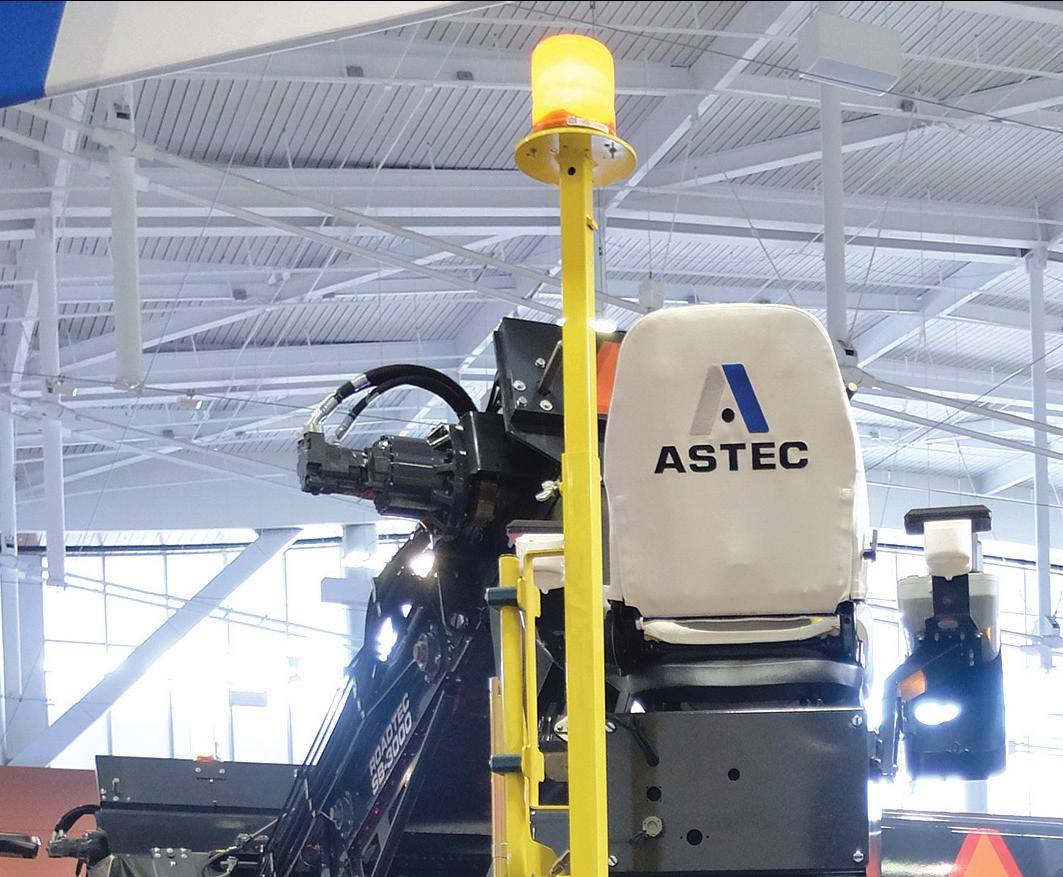
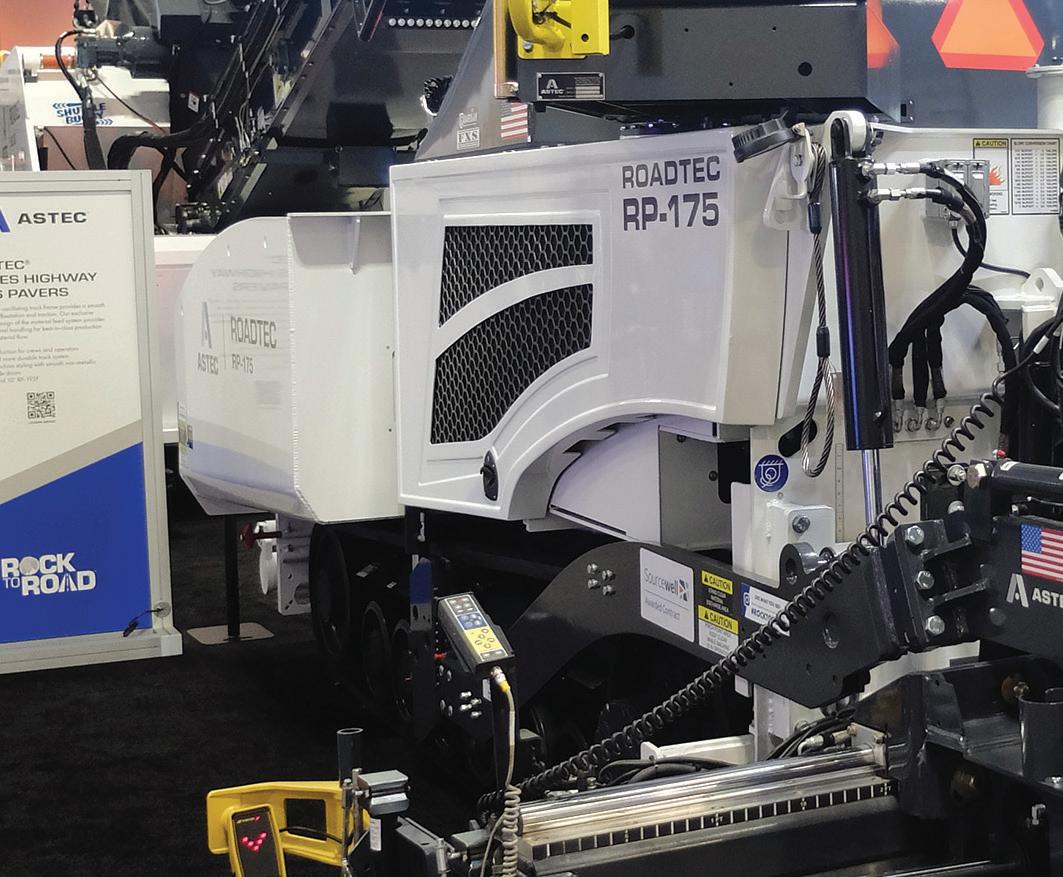



Several of the key manufacturers are introducing new developments for the US asphalt paving market with vibration only screeds. – Mike Woof writes
originally developed by Axenox. This follows a move by Caterpillar to buy the rights to the Axenox three-dimensional screed plates and the modular screed plate fastening system.
According to Nate Just, marketing manager for Cat Paving Products. “The innovative threedimensional screed plate design improves mat density and smoothness as well as density at the joint to reduce compaction expense and improve the chances of achieving bonus. The modular fastening system reduces the time required to replace screed plates by more than 80% to lower costs and maximise paver uptime availability.”
Brothers Michael and Stuart Frost, longtime paving contractors and owners of Axenox developed this novel screed system to improve paving ef ciency and quality. “Basic screed design had never changed in our lifetime or
our father’s, so my brother and I developed our own screed. We knew we had something special with this technology,” said Stuart Frost.
The Axenox screed plate design has a three-dimensional, angular design instead of the conventional at plates. This feature is said to deliver lateral compaction con nement to asphalt material. The kneading action helps aggregate to interlock ef ciently, increasing mat and joint density along with improving mat smoothness.
Densities reaching 91% have been measured behind pavers equipped with the three-dimensional screed plates according to Caterpillar. These high densities can reduce the number of passes, lowering compaction cost. At the longitudinal joint, higher densities result in improved material containment during compaction to increase nal density. Uniform
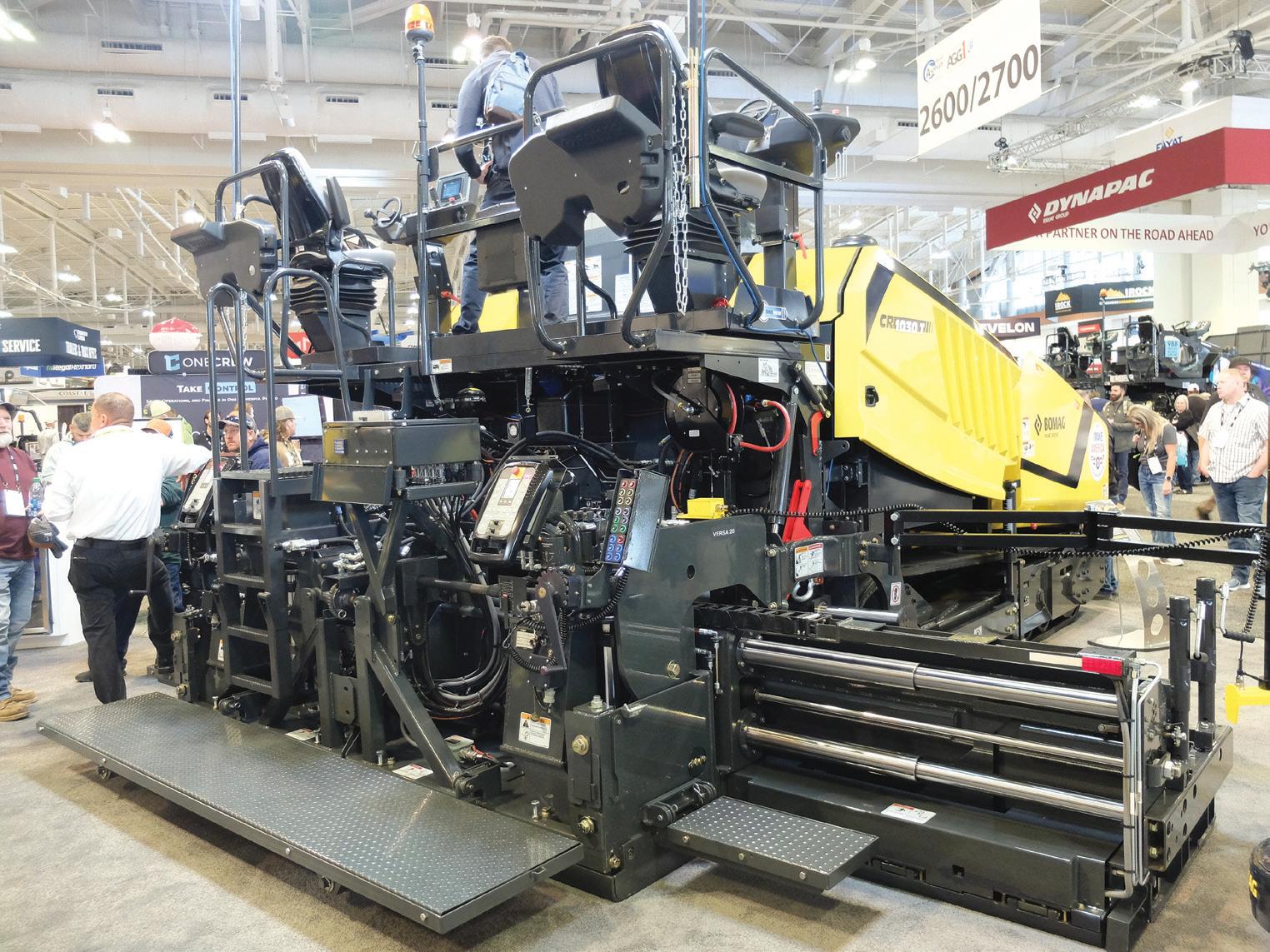
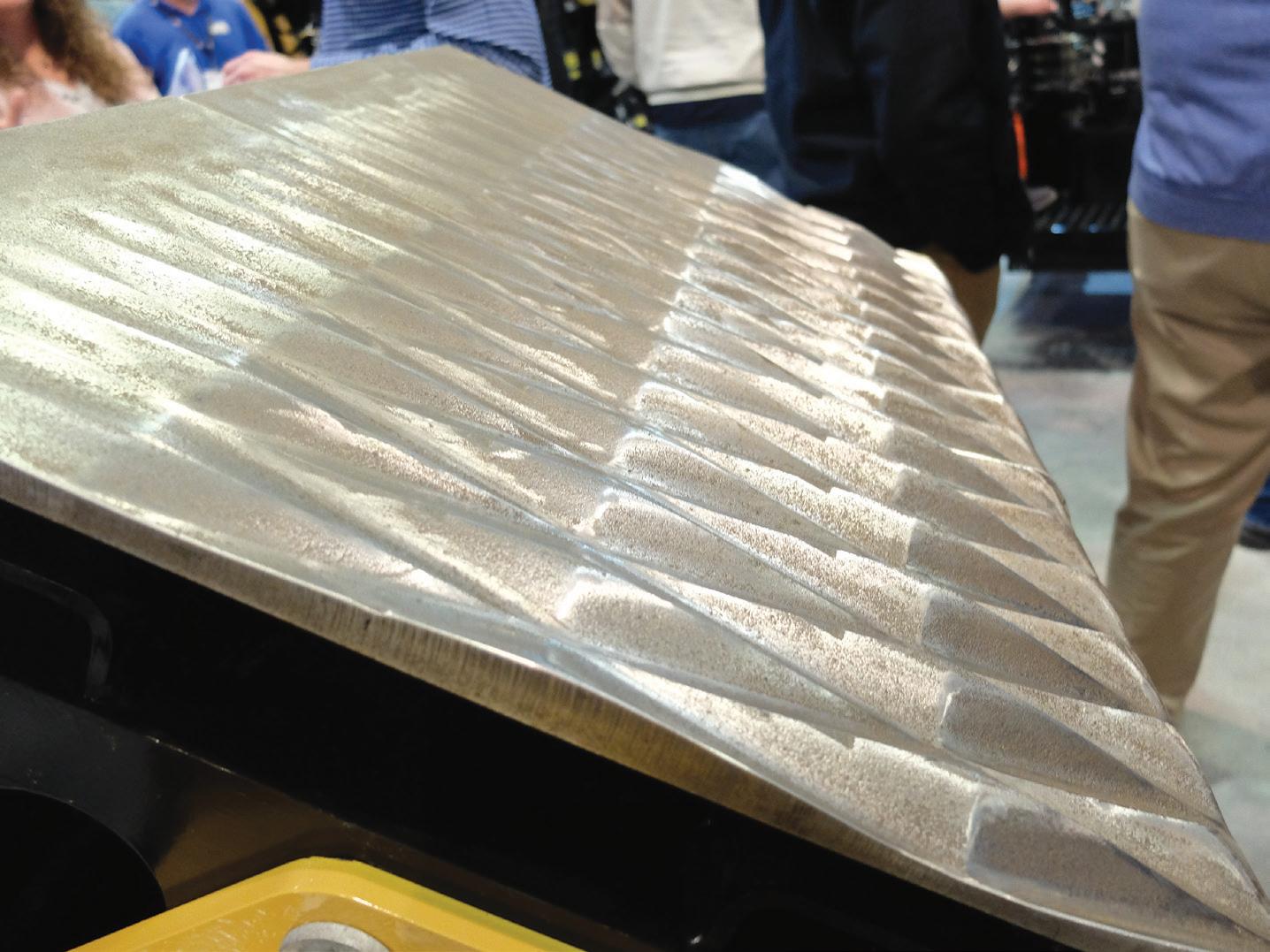
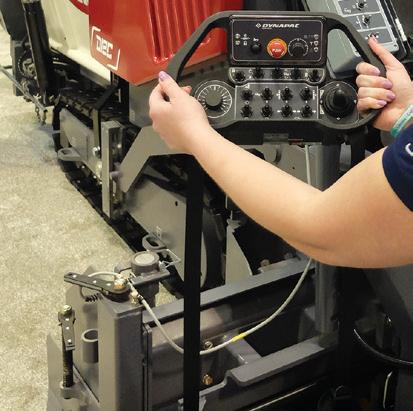



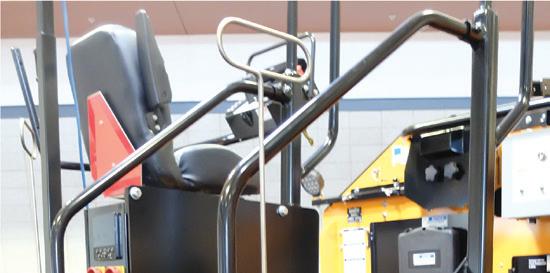
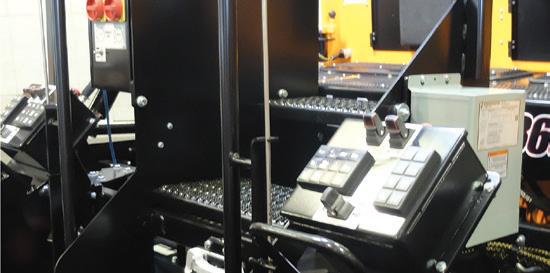
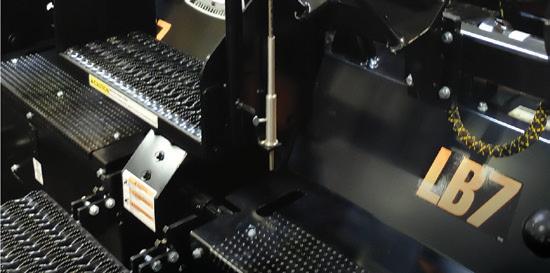

mat temperatures gained by using the angular plates also help to reach speci ed densities more easily, helping contractors to meet bonuslevel work.
The stiffer asphalt mat left behind the three-dimensional plates allows the breakdown roller to achieve higher densities before the mat reaches the tender zone. It produces a more stable uncon ned edge that resists pushing and shoving by the breakdown roller, so consistent density readings are achieved across the entire mat width.
The three-dimensional cast plates are made with high strength chromium carbide, delivering high wear resistance. Whereas traditional screed plates are run with an elevated front angle of attack, increasing wear, grooves at the front of these plates act as the angle of attack, so they run at to wear more uniformly and reduce cost.
A novel modular fastening system is also used to secure the plate to the screed, cutting plate change to less than four hours. After a one-time installation of the insulated conductor plate, simple screed plate changes are completed using a novel lock-and-go system. This eliminates the time-consuming process of removing asphalt material from the screed to access the nuts and bolts holding the plates in place. Once normal screed set-up and adjustments are completed on the conductor plate, minimal adjustments are required on future screed plate changes.

Dynapac has redesigned its D12C compact paver, boosting its performance and capabilites. A key development is the new remote control system that allows an operator to stand in the best position to view the paving process. The machine is optimised for use with Moba machine control technology and can also use the rm’s telematics package if required by a customer. Just 1m wide, the machine can operate in restricted space areas such as trenches and suits duties for reinstatement after utilities works, pavements, cycleways or driveways. A novel feature is that it can start paving from a 150mm milling cut. The machine offers paving widths from 1.2-3.5m and thicknesses of 200mm with its vibratory type screed. Power comes from a Tier 4 Final compliant Deutz diesel rated at 55kW but despite the machine’s compact size, its wide tracks help give it the traction to be able to push a truck with a 30tonne GVW. The hopper wings can also unfold wide enough for the machine to be loaded by a larger tipper truck if necessary.
For the US market, the rm is also offering the D30W highway paver, a wheeled machine that can pave widths from 3.05-9.14m and thicknesses of 305mm. Power comes from an emissions-compliant Cummins QSB6.7 diesel rated at 168kW and the tractor weighs in at 15.3tonnes and 18.9tonnes when tted with the Mat Master screed.
LeeBoy is still developing its electric paver although it is supplying one to a customer. Chris Broome, senior product manager for pavers at LeeBoy said, “The electric paver is
out and putting down asphalt. The package is proven.”
The firm has built one of the units to order from a dealer and the spokesperson said, “We’re making some enhancements that should help the run time.”
The machine is aimed at use with local authorities and the spokesperson said, “Our target is with customers doing less than 300tonnes/day as they can do it on one charge.”
Unlike other electric pavers coming to market, the LeeBoy unit is said to be close in price to the standard diesel machine. Meanwhile it is also easy to charge and Broome said, “The machine can be charged at a conventional EV charging station. I had
it charged up in 35-40 minutes and we’re compatible with all electric chargers.”
Meanwhile, the firm is also offering its 8680 paver with the option of the firm’s new LB7 screed, which weighs 3.2tonnes, in addition to the 2.3tonne LB5 screed available earlier. The heavy-duty LB7 offers paving widths from 2.44-4.7m and bolt-on options will be available in the future. The screed benefits from a new control unit, with powered extension height and powered angle of attack as well as a powered crown setting. A 14kW heating system is fitted to the main screed, with 3kW heating for the extensions, plus 1kW heating on each of the end gates. Power for the machine comes from a Kubota diesel rated at 156kW, while the machine has a 34kW generator with sufficient
Vögele has launched a new model for its Dash 5 range, offering paving widths of 2.55-10m, high performance, compact dimensions and versatility.
The compact SUPER 1800-5(i) is 6.15m long and offers a laydown rate of 700tonnes/hour. The machine new assistance and automatic functions, improved material management, a sustainable drive concept, additional comfort features and a new lighting system. According to Bastian Fleischer, Product Manager at Vögele. “We have considerably improved the user-friendliness, sustainability, economic viability and automation in this new generation of pavers.”
At the heart of this new generation machine is a new ErgoPlus 5 operating system where, the manufacturer says, “The focus is on the users: Compared to the ‘Dash 3’ version, the paver operator’s console offers improved visibility and better comfort and ergonomics.
“Vögele has simplified the operation of individual functions, improved the design, reduced the construction height to increase legroom and integrated additional storage options for mobile phones or similar. The SUPER 1800-5(i) also offers more precision steering than its predecessor due to the Smartwheel. And the optional ‘Premium Touch’ display screen
allows users to easily monitor and control existing and future digital solutions.
The SUPER 1800-5(i) also has additional assistance and automatic functions to support users. For example, Niveltronic Plus Assist automates the laying of both crown and transverse profiles.
The operator sets the incline of a target point, and the machine takes over by gradually approaching this value. An operator no longer needs to adjust the incline by hand, improving performance
power to run the screed heating as well as units such as lighting balloons for night working.
Astec www.astecindustries.com
BOMAG www.bomag.com
Caterpillar www.cat.com
Dynapac www.dynapac.com
LeeBoy www.leeboy.com
and especially for changing profiles. The screed width can be automatically controlled along a tensioned wire with the new Edge Control system.
The automatic screed width function ensures that the edge and pave width of the screed remain constant when there is no tensioned wire at an exit or entrance.
The optimised drive tech is said to lower fuel consumption and CO2 emissions. The firm says that the new four-cylinder motor uses less fuel but delivers the same power, due to the optimised
Vögele EcoPlus low emissions package. In particular, the speedcontrolled fan calculates rpm more accurately and helps lower noise emissions.
The reworked control of the material transport system allows the auger and conveyors to communicate with one another, ensuring that material feed is more consistent. The optional Power Tunnel also ensures an optimum material height in front of the screed plate.
Vögele www.voegele.info
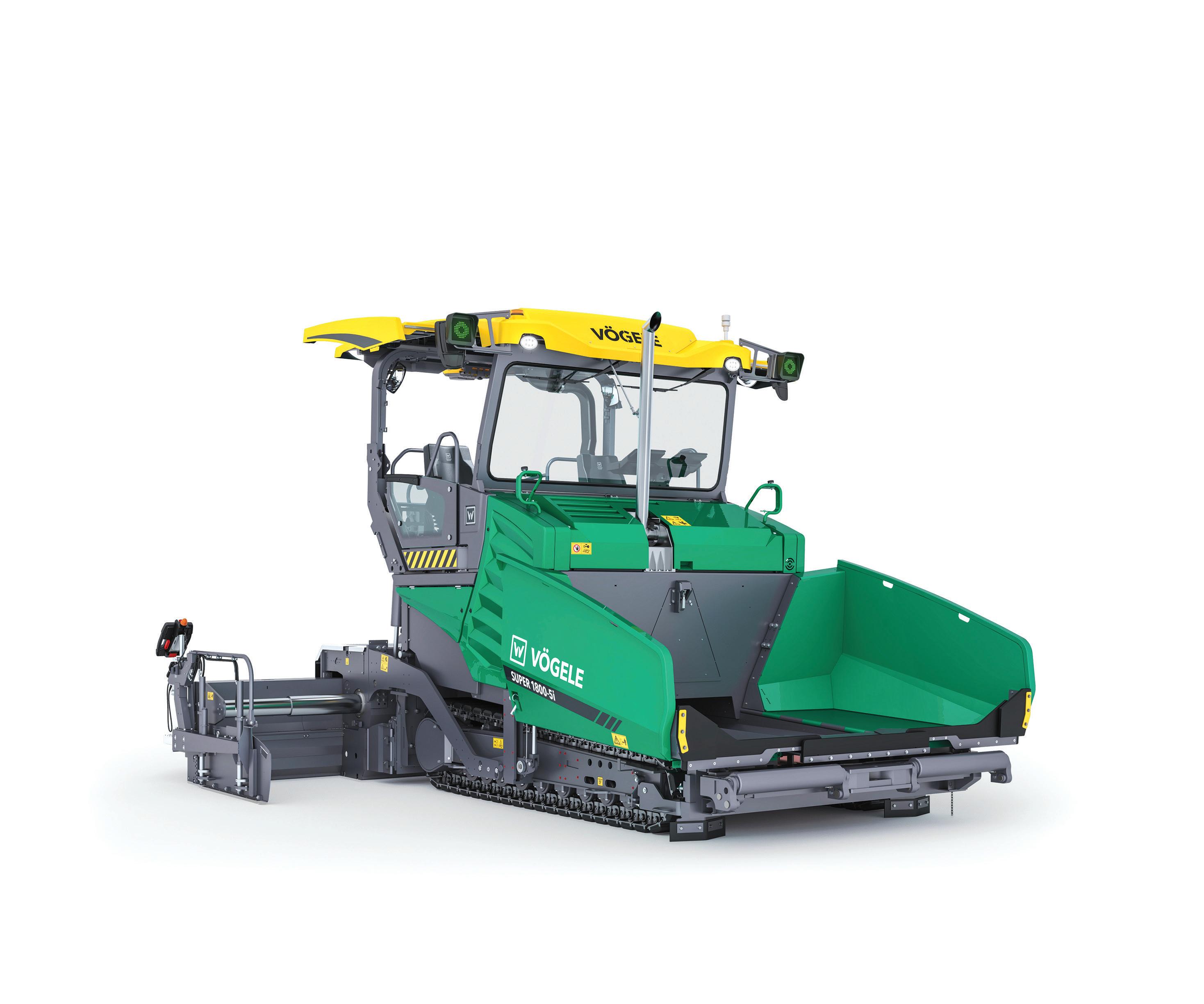
Vögele says its new generation SUPER 1800 asphalt paver delivers high performance














A highly innovative asphalt paver prototype has been developed by Volvo CE, featuring electric power.
The machine is based on the conventional P4820 and offers the same tamper bar screed (with a maximum width of 6.5m) and hopper dimensions as the standard machine. However, power comes from a battery allowing a running time of 6-9 hours, depending on the application. Recharging takes from 60-90 minutes, depending on the supply. The rm says that the electric machine is more ef cient than a diesel as it only uses power when in use, whereas a diesel will typically be idling while waiting for another tipper load of asphalt. The electric drive is also 95% ef cient, unlike the lower ef ciency of an internal combustion engine (typically around 35%).

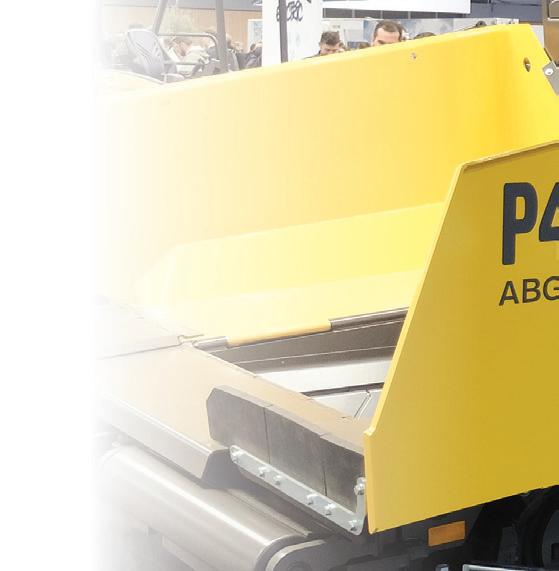
The machine has been developed as part of Volvo CE’s drive towards new green construction technologies. However, with the rights to the ABG machines being transferred to Ammann it remains to be seen what will happen with the project. It is worth noting though that Ammann is also keen to introduce greener construction technologies.
Ammann Volvo CE www.ammann.com www.volvoce.com

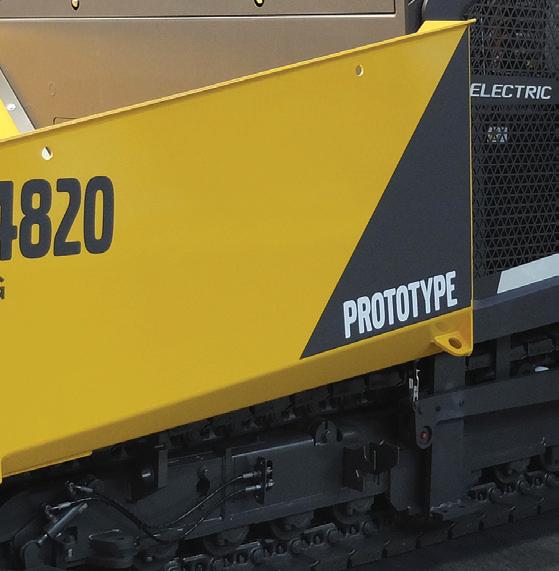

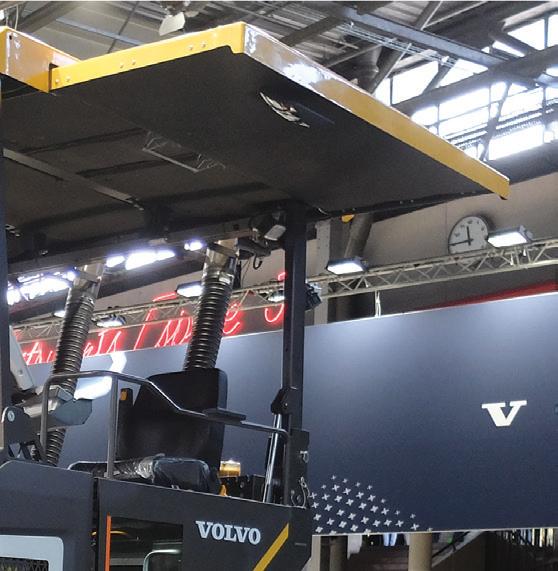
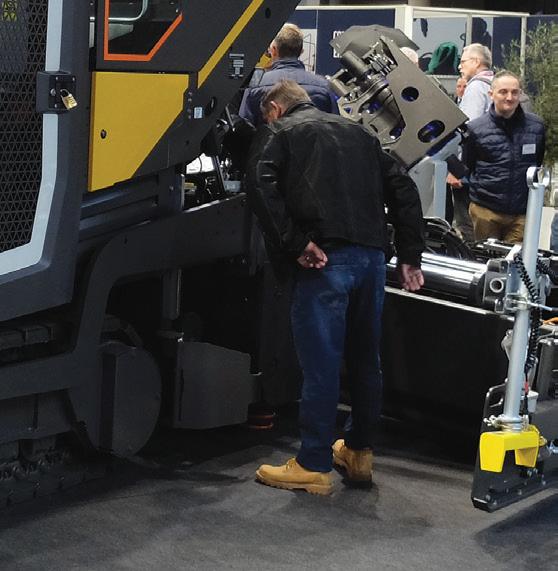

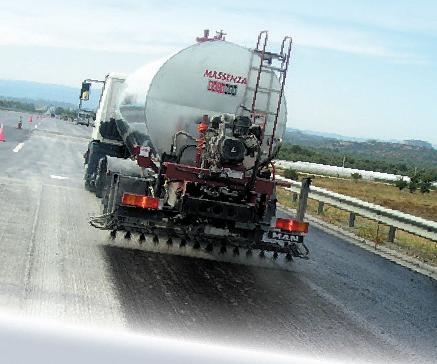
















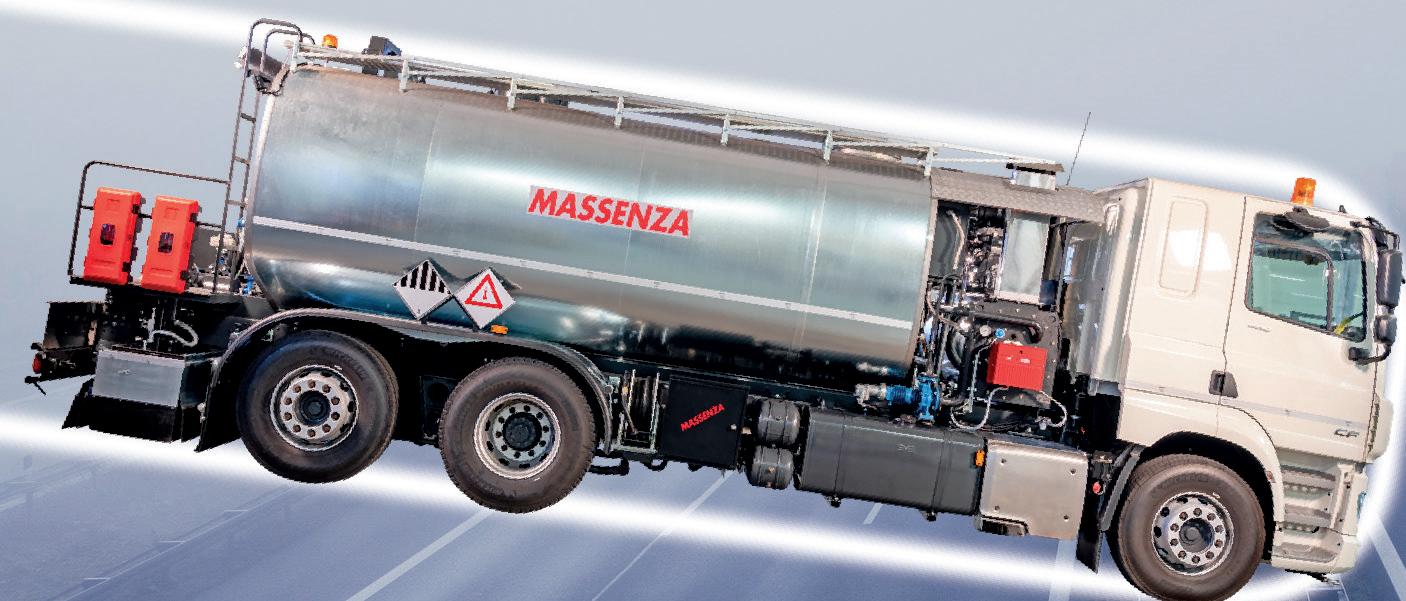
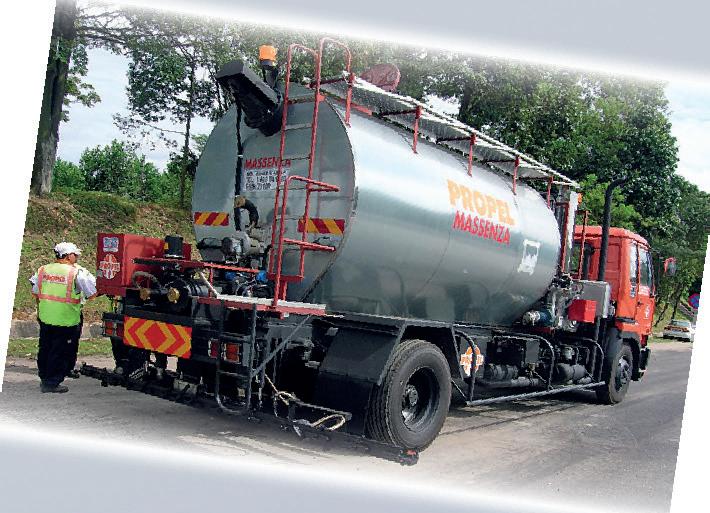
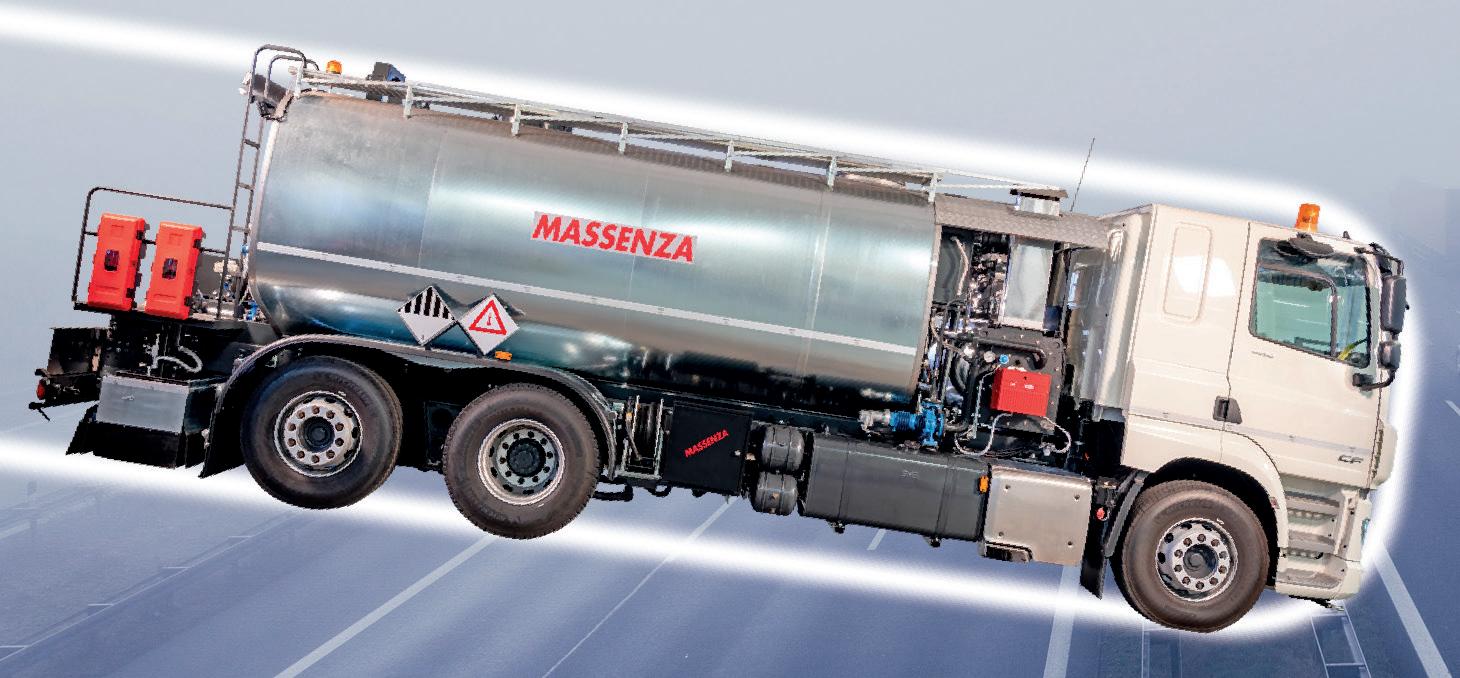
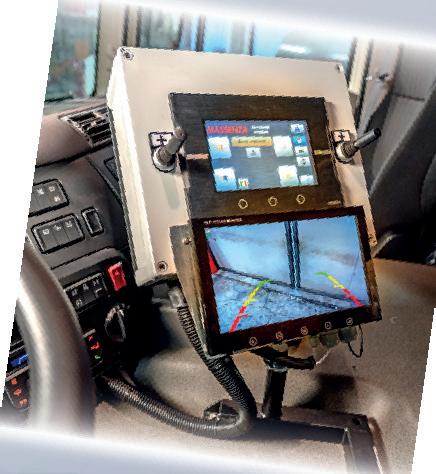



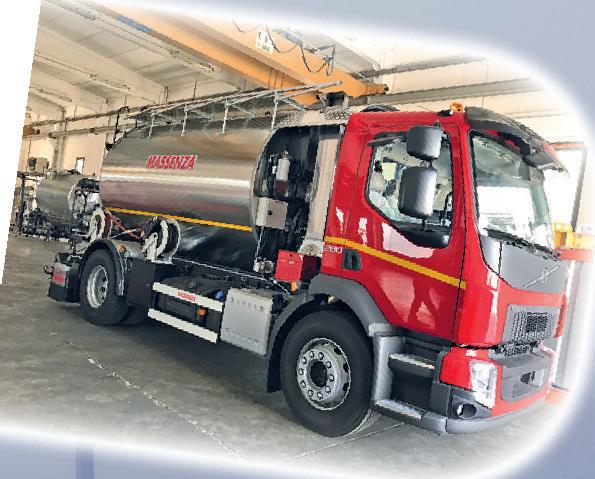











Dynapac’s innovative Seismic resonant frequency compaction system is now available on the CO2200 VI-CO6200 VI articulated rollers and CX 8C and CX 9C drum steer machines also




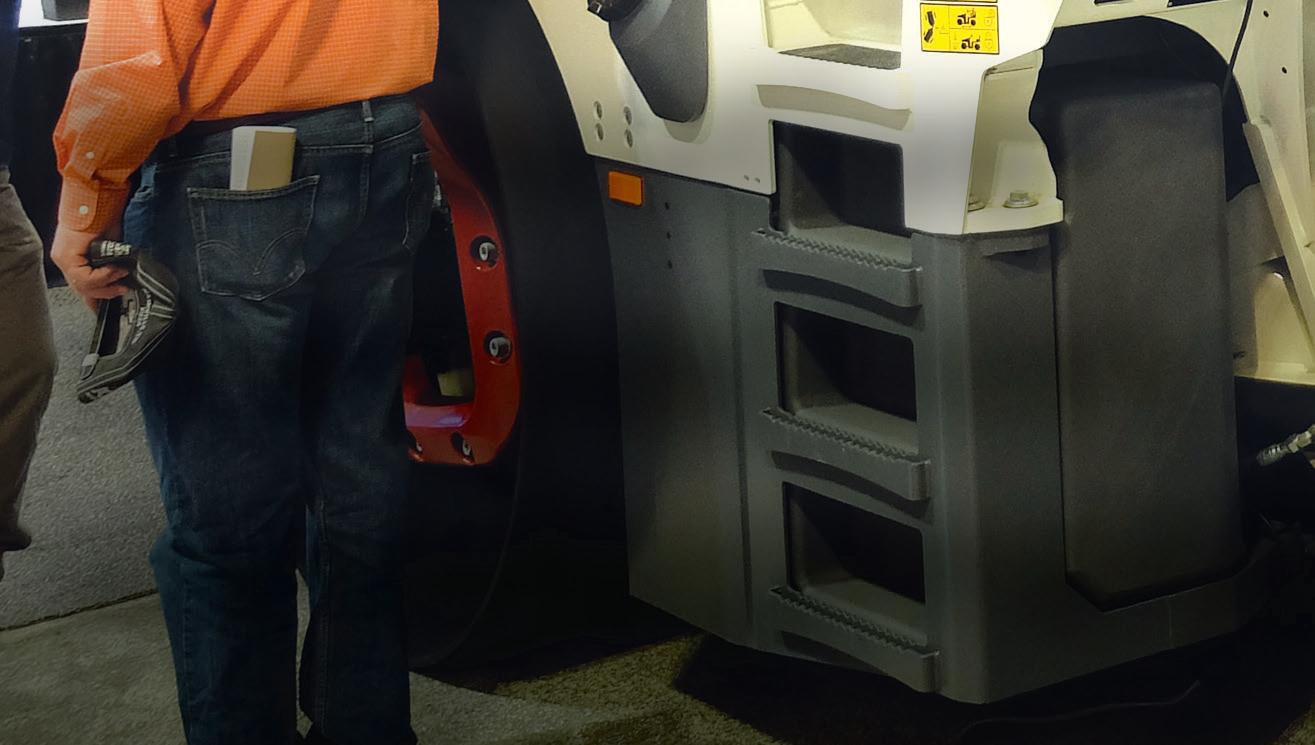

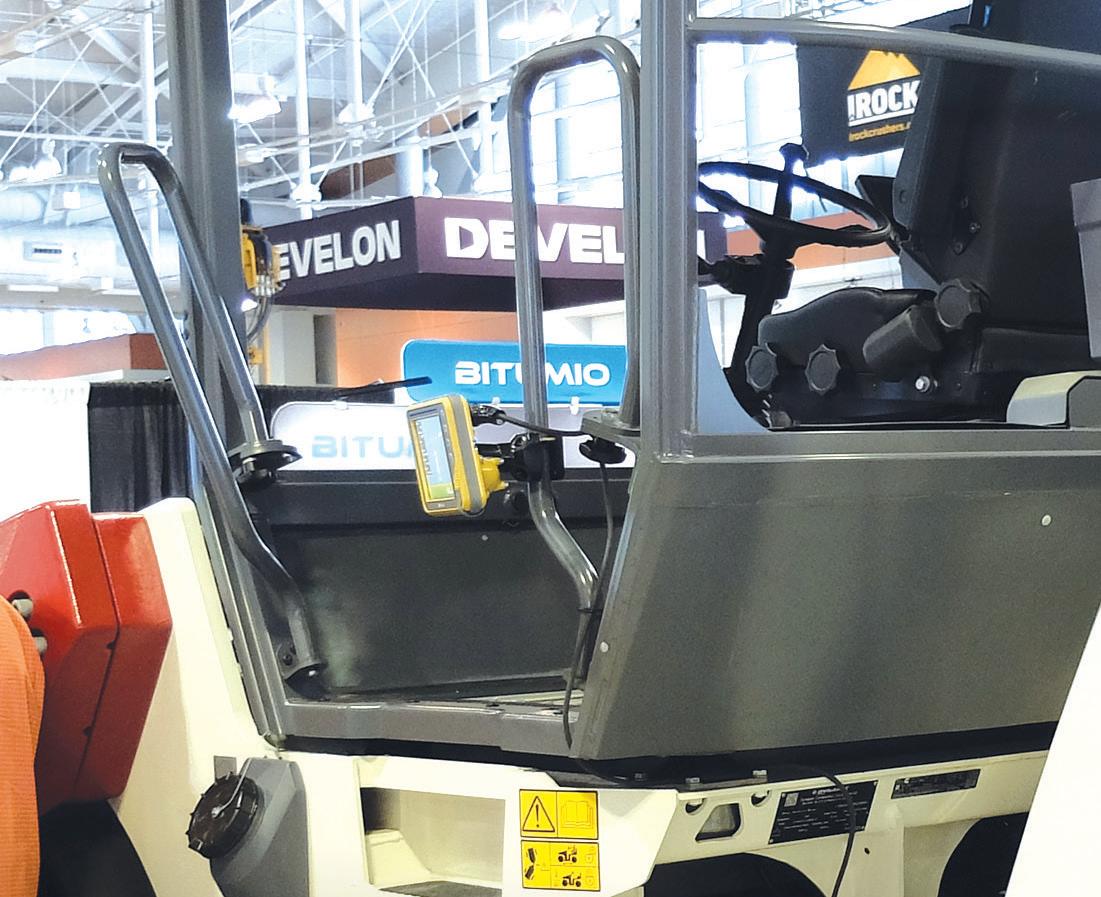

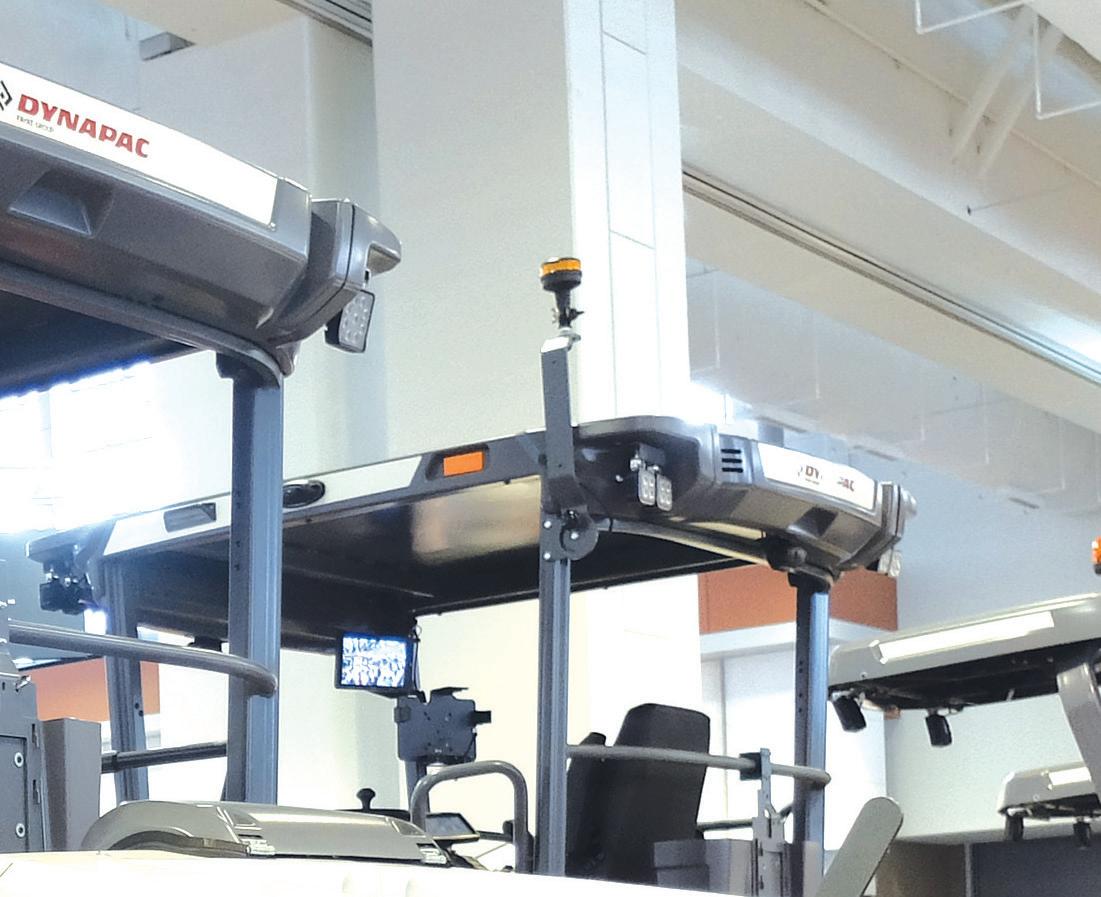
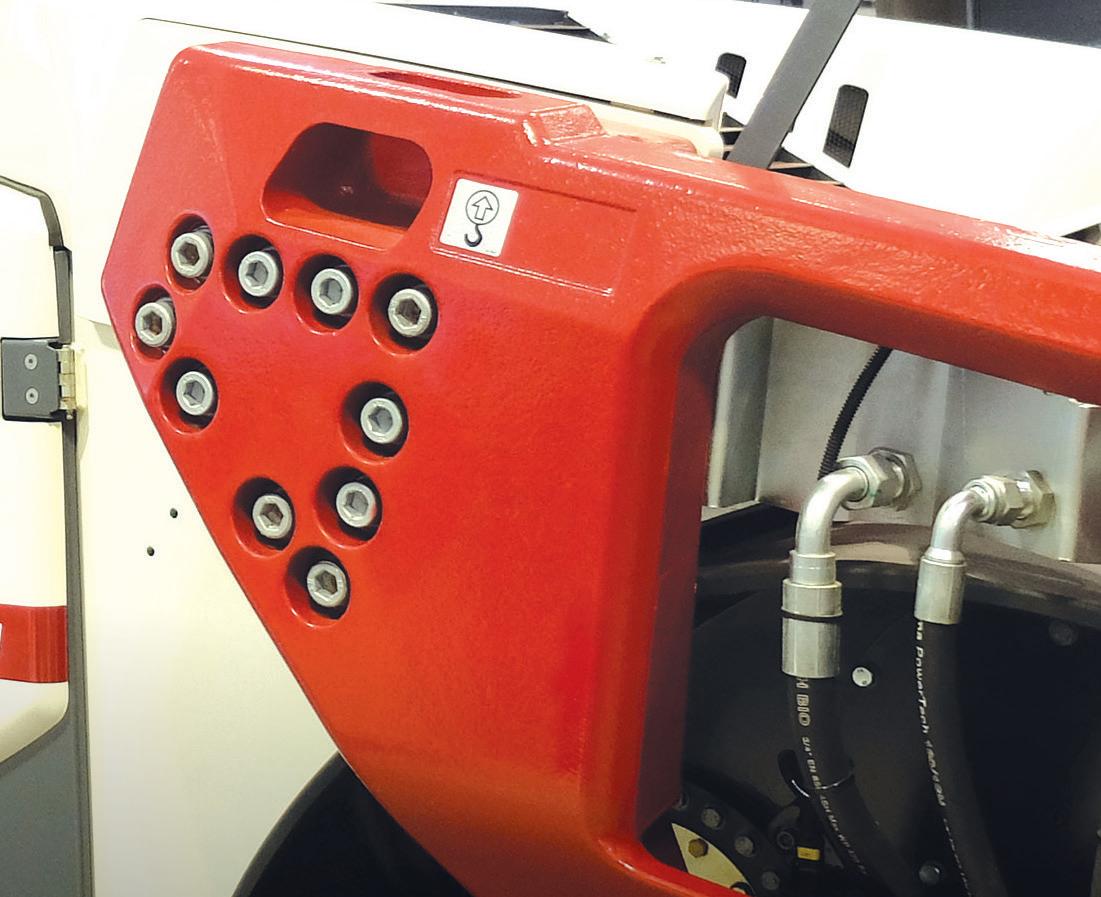

Innovative asphalt compaction machines are now being introduced by several of the major manufacturers, with solutions offering improved working ef ciency and performance. Three of the most innovative developments for asphalt rollers come from Dynapac, BOMAG and Hamm, although new asphalt compactors are also being introduced by other rms such as Ammann and Caterpillar.
For Dynapac, the key advance is the introduction of its Seismic technology to the asphalt compactor range. This system was rst developed for its single drum rollers for use in earthmoving applications. The technology uses sensors that determine the resonant frequency of the material underneath the drum and then adjust the compaction forces accordingly. The bene t of the system is that it ensures more ef cient compaction as the dynamic forces are optimised to suit the working conditions. The system ensures that the work is carried out to speci cation, without risking over-compaction. This reduces fuel consumption as well as the number of passes the machine makes.
Developing this system to meet the needs of asphalt compaction has required more development given that the asphalt behaves differently depending on the temperature. A spokesperson for Dynapac said, “It was more complicated and took ve years of R&D and needed a lot of testing.”

An array of innovative asphalt compaction machines are now coming to market from several of the major manufacturers - Mike Woof writes
As temperature is a critical factor for stiffness in asphalt compaction and because the material is in layers, the system required heat sensors to be installed and more complex algorithms to be developed. As with the system for soil compaction, the technology allows drum vibration to match the resonant frequency of the asphalt course to provide optimum compaction.
Because the system matches the compaction forces required to the characteristics for a speci c section of surface, it also offers a key advantage for the asphalt application as the spokesperson said, “We’re matching the mat frequency with the drum and you’re not going to over-compact so you’re not whitecapping. You get your density numbers a different way by automatically adjusting the frequency.” This avoids the risk of aggregate being cracked or crushed by compaction forces. He added, “The seismic system adjusts the frequency every 0.2 seconds.”
The system is now offered as an option on the new rigid frame CX 8C and CX 9C models, which have drum widths of 1.5m and 1.7m and weights of 8tonnes and 9tonnes respectively. These models have also now been upgraded to the Generation 6 level seen earlier on the 6, 10 and 13tonne class machine. Meanwhile, it is being made standard on the articulated CO2200 VI-CO6200 VI asphalt compactors also.
Note that to meet French requirements, the CX 8C and CX 9C drum steer machines deliver
0.8mm of amplitude and bene t from larger eccentric weights and reinforced bearings. This French market requirement is now the standard for the CX models. The vibration system itself is conventional though and does not require any special maintenance as the core of the technology is in the control unit, while it is said to be simple for the operator to use.
Dynapac says that other key bene ts of the seismic option include reduced operating noise, less vibration for the machine (in turn reducing wear and tear and fatigue for the operator) and lower fuel consumption. The spokesperson said, “We estimate around 10% fuel savings.”
The package is only available for vibration type compactors and Dynapac says that the bene ts of the Seismic technology are less applicable to oscillation type machines in any case. This is because the latter are not able to cover-compact an asphalt mat.
Coming to the market soon from BOMAG will be a novel braking system, which will be available on the ROBOMAG BW 154 asphalt roller (as well as the ROBOMAG BW 177 soil compactor). The Emergency Brake Assist system scans the construction working environment in real time and identi es moving and static obstacles and objects. Objects that could be put at risk by the machine's movement are detected by the system. If a collision is imminent, the system slows the machine down to a complete stop. By averting potential hazards, the technology marks a
signi cant milestone in enhancing onsite safety. Recognising its added value, the jury at the INTERMAT Awards in Paris honoured the technology with the prestigious Gold Award in the "Roads, Materials and Foundations Industries" category.
In cooperation with selected customers, BOMAG plans to test the Emergency Brake Assist on various construction sites this year. The company's service organisation is also involved in re ning the technology for series production, ensuring that customers receive the same rst-class service for digital systems as they do for mechanical components.
Emergency Brake Assist is compatible with BOMAG's fth-generation tandem rollers and therefore independent of use beyond just a fully autonomous asphalt roller. As the technology nears production readiness, the nal certi cation is being worked on in cooperation with experts, which is critical when safetyrelated innovations are involved.
From Hamm comes a new development in the shape of its HD+ 120i V-VIO-2 HF. This innovative compactor offers the bene ts of compaction by vibration and oscillation. While other machines (from Hamm and some competitors) have been able to offer this combination previously, they have been restricted to having one drum for vibration and the other for oscillation. However, the new HD+120i V-VIO-2 offers both vibration and oscillation on both drums. This allows the operator to combine the compaction types, depending on the application.
Tim Kowalski, product specialist for Hamm at Wirtgen Americas commented, “We can run dual oscillation or you can have vibration and oscillation.” He said that the operator can set the machine so that it delivers vibration at the front and oscillation at the rear and then switches automatically when it reverses direction. He explained that this better suits the machine to use with new mix types, which can prove more challenging to compact with conventional equipment. The operator can switch easily between vibration and oscillation, removing the need to switch machines or deploy an additional machine and another


operator on the construction site.
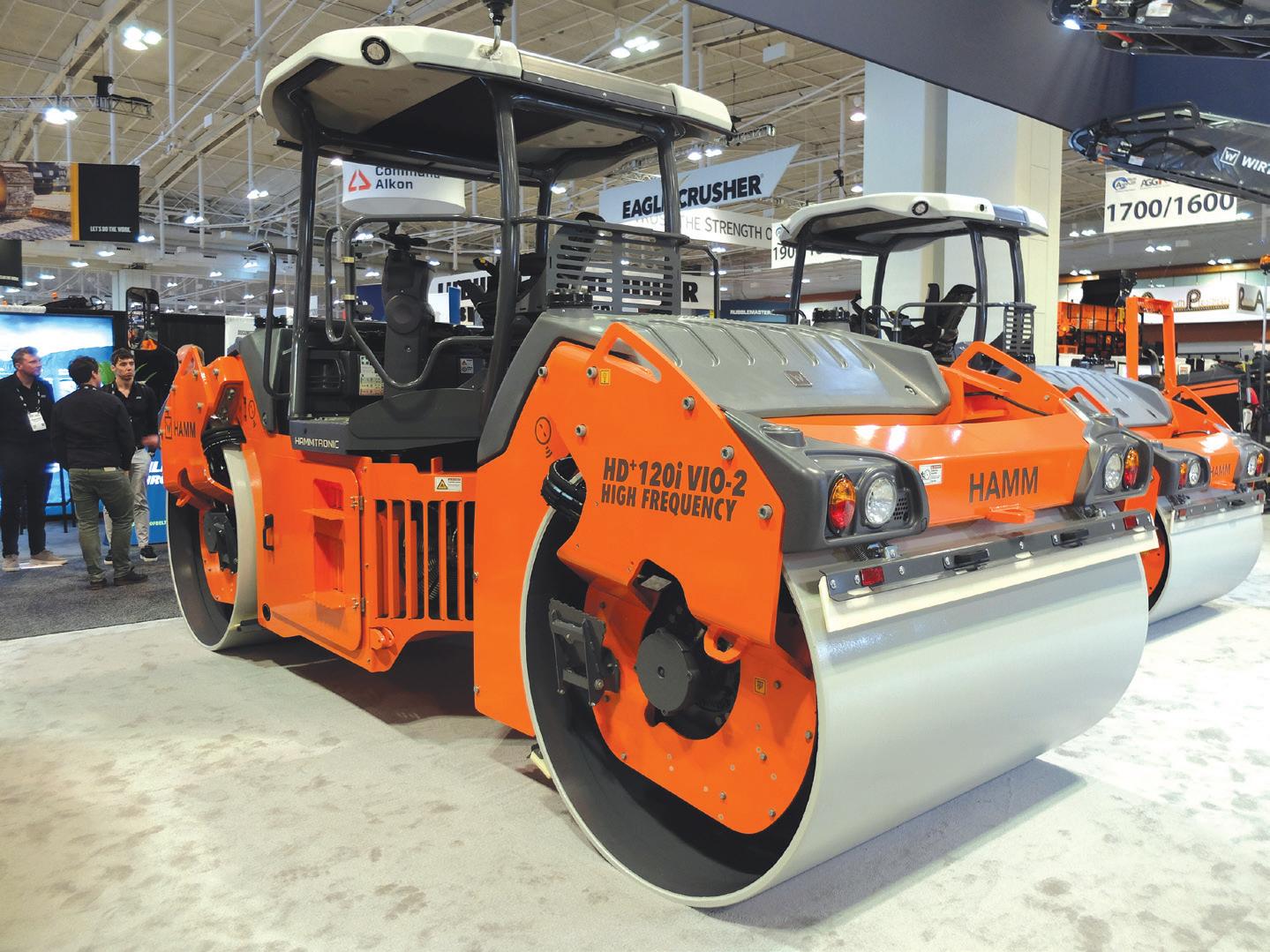
The 12tonne-class machine is powered by a 115kW diesel that meets Tier 4 Final/ Stage 5 emissions requirements and features the rm’s ef cient Easy Drive operating concept. Featuring 2m-wide drums, high compaction forces are claimed, along with reliability, durability, productivity and ease of maintenance.
A key feature is the versatility as it offers static compaction, oscillation and vibration. This versatility means that the same machine can be used for different asphalt mixes. The combination of vibration and oscillation delivers fast compaction in fewer double passes, suiting it to nal compaction. High compaction quality is claimed even at increased working speeds.
The machine has the latest Hamm cab, offering good all-round visibility as well as various interfaces to connect telematics systems, eet management systems and digital applications for controlling and documenting compaction.

Operators can make use of the bene ts of oscillation for the compaction of joints or compaction in vibration-sensitive areas such as on bridges. Oscillation also allows compaction at low outside temperatures, since a wider temperature range can be used. The system is
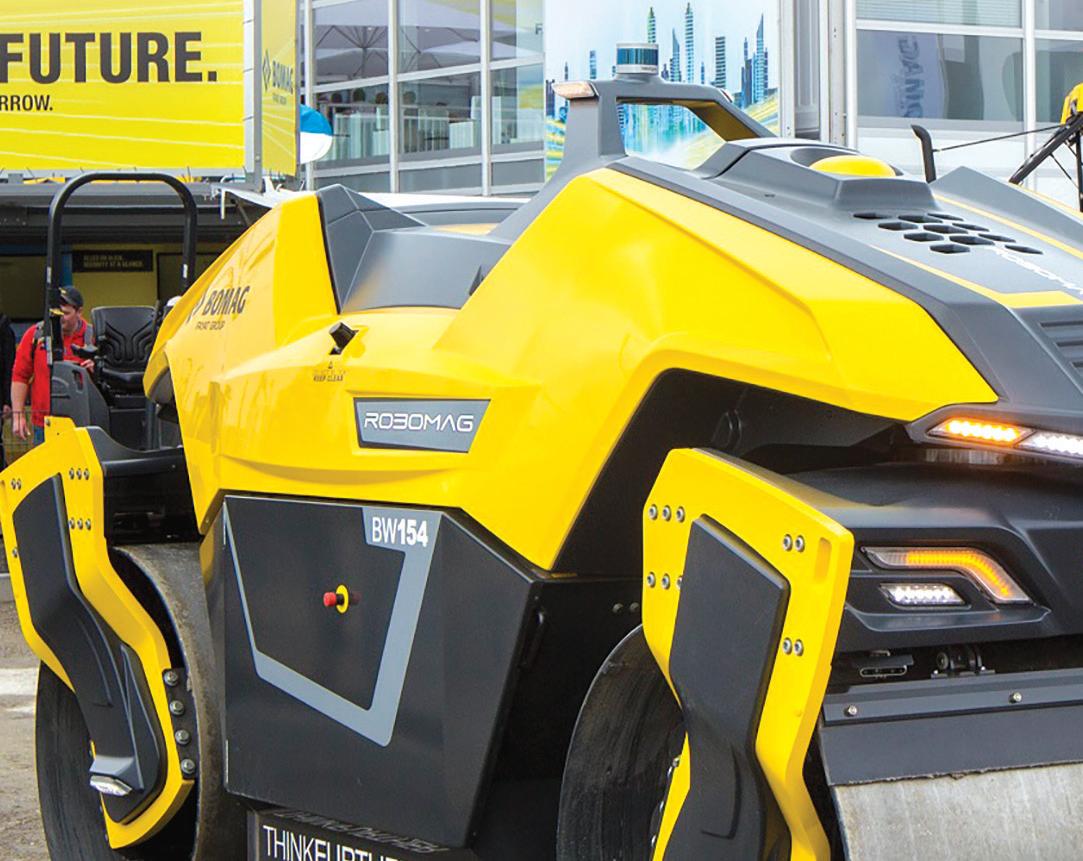
effective in preventing particle crushing and over-compaction. It also has bene ts when compacting distortion-sensitive materials and reduces noise emissions and vibrations experienced on and around the construction site.
Aimed at the rental market, Ammann’s new light tandem roller is petrol-powered and features side-free drums that enable compaction in the tight jobsites. The Ammann ARX 10.1 StV features the Honda GX630 petrol engine rated at 15.5kW. This reduces ownership costs and meets the latest Stage V/EPA Phase III emissions regulations.
The engine is more compact than the diesel machine, allowing cooling from all sides and helping performance in high ambient temperatures. Petrol is also less expensive than diesel, while there is no need for a diesel particulate lter (DPF) and maintenance of a petrol engine is also less costly than for a diesel engine.

The Ammann ARX10.1 StV has its drum consoles installed from a single side. The drums are support-free on the right side. This allows compaction work on tight jobsites. Drum working widths are 900mm and drums are installed inline.
Despite the compact size it has powerful hydraulics and both drums have robust
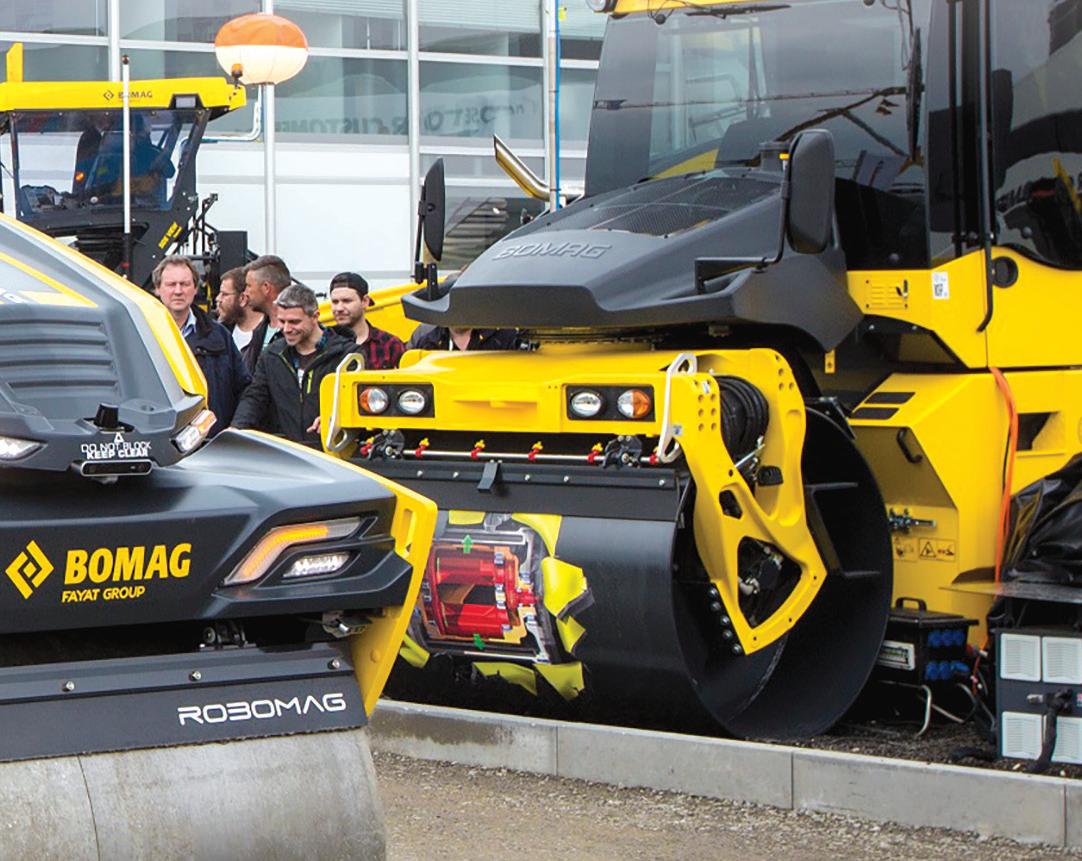



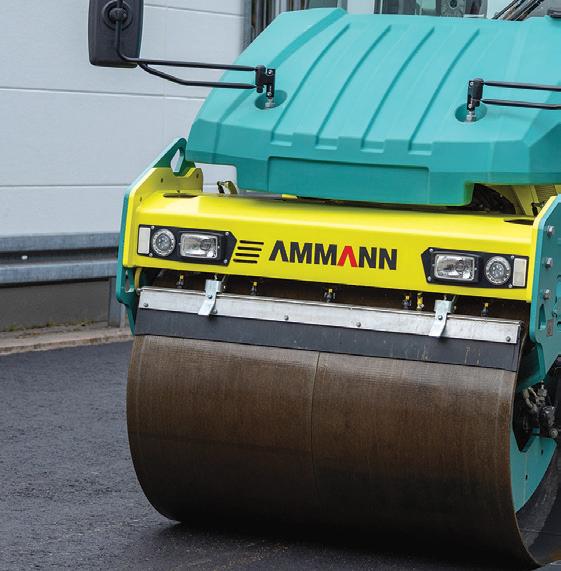
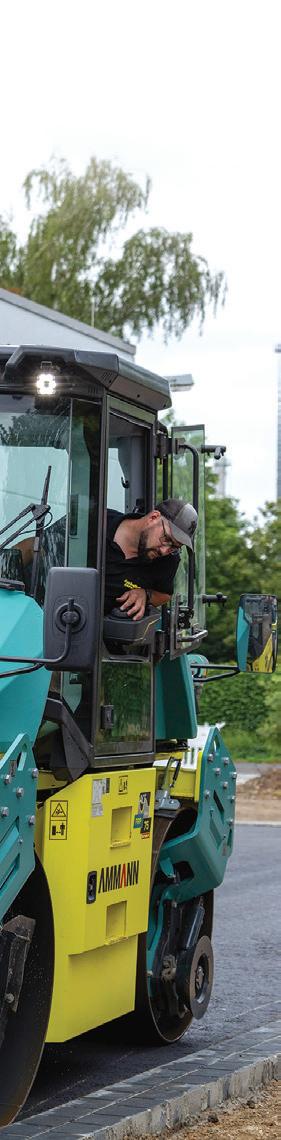
drive motors and a negative parking brake mechanism for safe parking when the engine is switched off.
The vibratory system in the front drum can deliver 16.4kN at 76Hz, suf cient for a range of duties. The rear drum is static and has no vibratory unit. The pressurised water sprinkling system has a tank capacity of 110litres.
Also new from Ammann is the ARP 75 twin drum roller, which offers pivot or crab steer functions and is also available as a combi machine with one steel drum and four rubber tyres.
This model is said to be versatile and productive, suiting jobsites where precise steering is a priority. The new cab is said to offer good visibility and low working noise. Other bene ts include well-designed and positioned water tanks that improve sight lines to all drum surfaces and edges.
The ARP 75 operator station extends beyond the 1x1m rule in both directions, boosting safety.
The machine features the novel Fingertip Steering (FTS) system, which replaces a steering wheel and allows operators to keep both hands on the armrests. A new touchscreen helps operators control machine functions and allows easy adjustment of vibration, lights, and the rm’s sophisticated ACEforce package that provides Continuous Compaction Control.
The standard operating width of the ARP 75 is 1.5m, although using crab mode can increase working width and enables compaction close to kerbs and obstacles.
Machine working width can be increased slightly to enable compaction around obstacles – or it can be expanded by up to 1.22m to a total machine working width of 2.72m. This improves productivity on long, straight jobsites.
The two-stage vibratory system offers multiple frequencies to optimise compaction. The ARP 75 has adjustable frequencies ranging from 38-55Hz. It is able deliver compaction output in the range of 47-92kN/drum.
Power comes from a Kubota V3307-CR-T diesel rated at 54.4kW and that meets Tier 4 Final and Stage 5 emissions requirements, with EGR+DOC+DPF aftertreatment.
Available on the ARP 75 are ACEpro or ACEforce Intelligent Compaction systems. The ACEforce system uses absolute measurement (kB value in MN/m) of compaction results, making it easy to correlate with laboratory tests.
ACEpro is an automated measurement and regulation system. Parameter adjustment is based on continuous measurement of compacted material. Core parameters – such as amplitude and frequency – utilise automatic, stepless regulation.
Both compaction systems are compatible with all major GPS manufacturer´s products to provide mapping and operator guidance.
And Caterpillar is updating its mid-sized CB7, CB8, and CB10 asphalt compactors, with new edge-management options, optional cab, optional split drums, and a sophisticated mapping display.
Management of uncon ned edges can help optimise density and deliver better road quality. The vertical edge created by the cut-off wheel helps provide a stable vertical face for joint matching on the next paving pass. The bevel edge options provide sloped pro les for smoother transitions on and off the paved surface. Three versions are available to meet requirements.
The new mapping display provides a new visual for easier recognition and touchscreen capability for simpli ed setup. Cat Compact helps operators visualise the mat while
recording pass-count and temperature data. The system uses infrared temperature sensors and GPS mapping to keep the operator informed of mat temperatures, machine position, pass-count and pass coverage. This system enhances night-time performance, while also capturing data for future process analysis and quality control documentation. A spokesperson for the rm said, “These are the rst compactors from Cat with the latest intelligent compaction system.”
The new dual split-drum option on the front drum can help eliminate tears when manoeuvring around obstacles or when compacting tight turns by reducing the speed of the inner drum half. The split drum option bene ts applications that require frequent turning.
The machine also has Caterpillar’s VisionLink system, a cloud-based software application that provides data to a desktop or mobile device, for more ef cient eet management. The system shows maintenance needs, machine hours, location, fuel usage, idle time, diagnostic codes and other machine data to a mobile device, desktop or through an API to other software applications.
Ammann
www.ammann.com
BOMAG
www.bomag.com
Caterpillar www.cat.com
Dynapac www.dynapac.com
Hamm www.hamm.eu
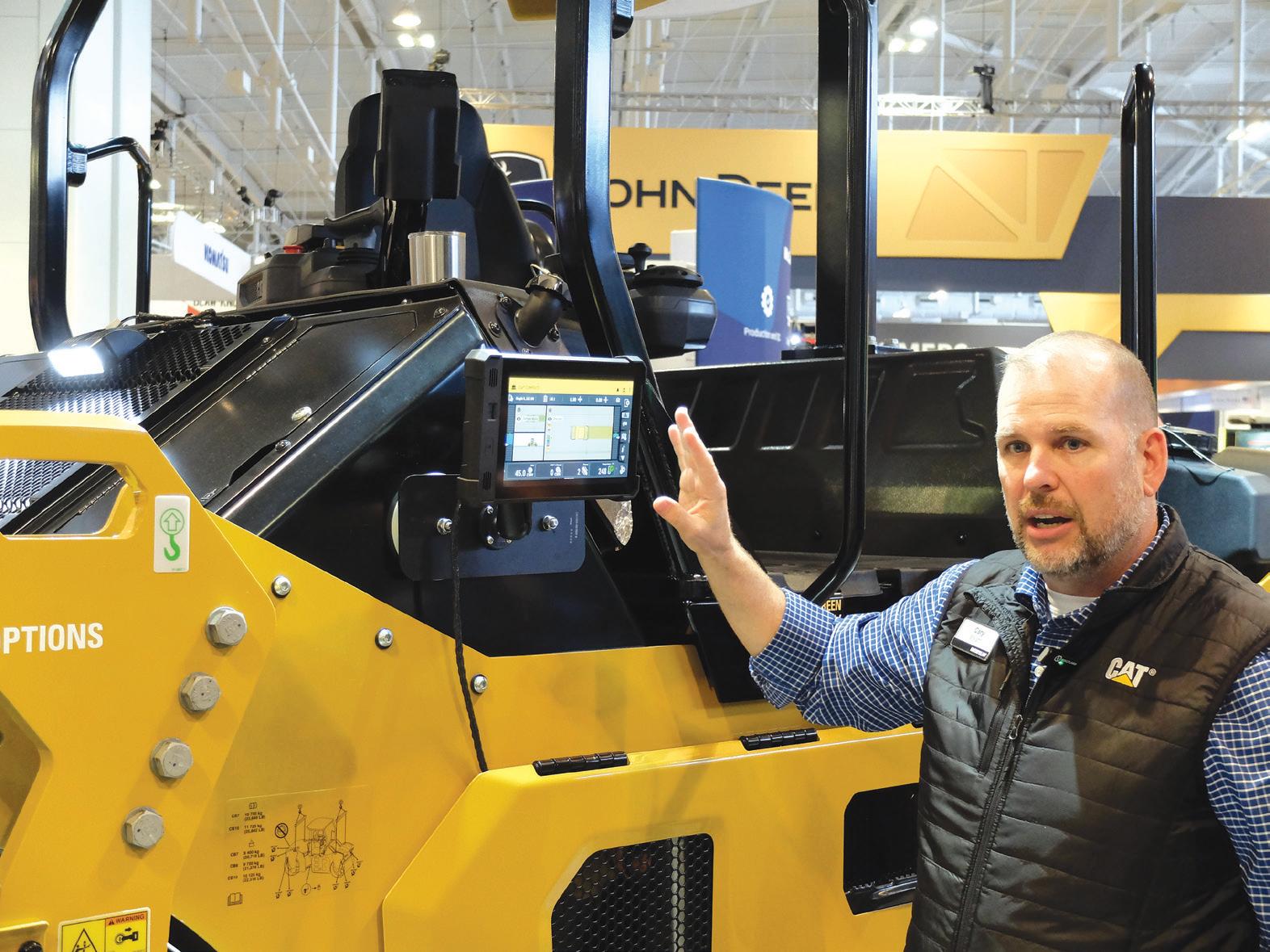
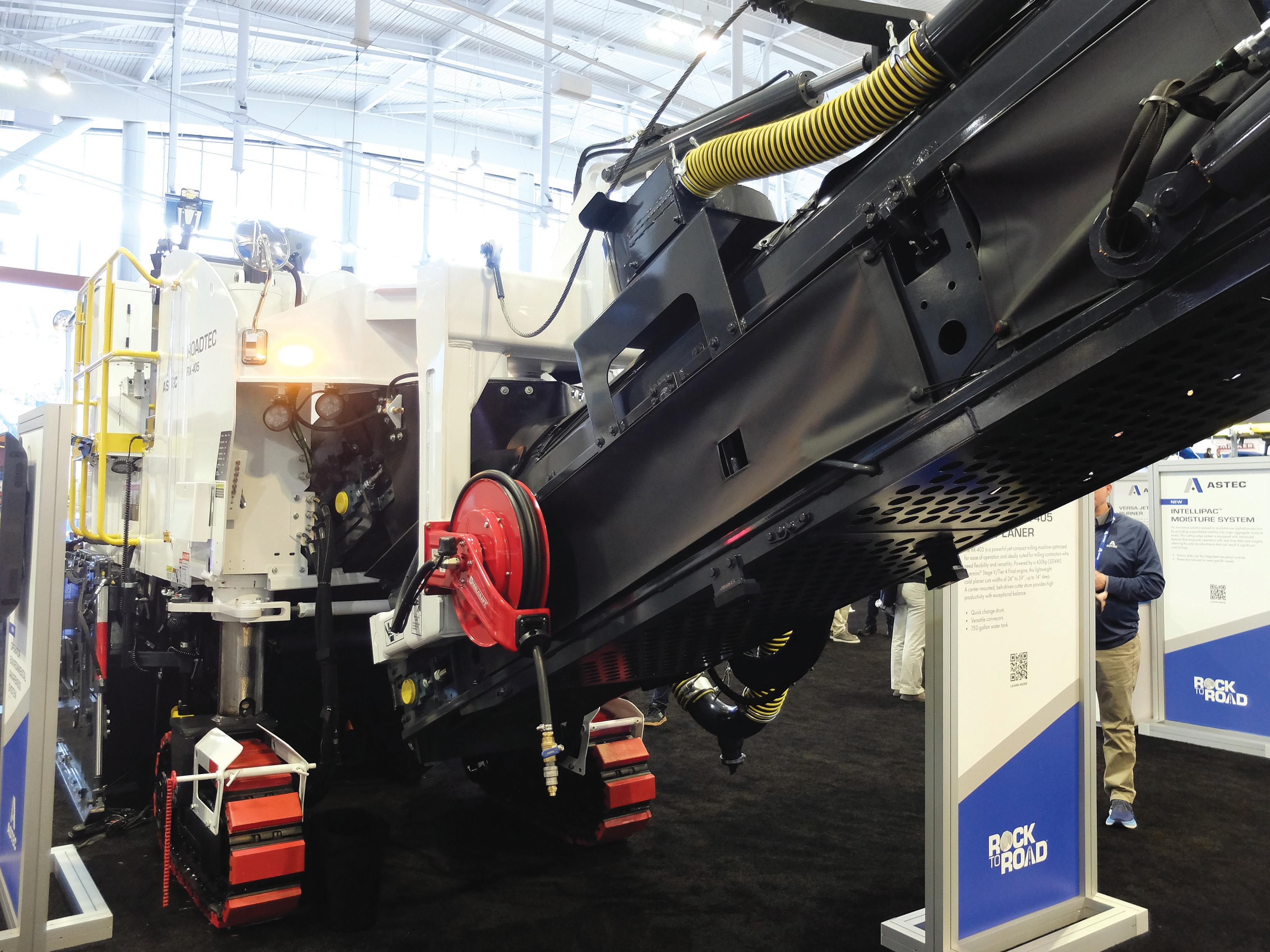
Some major machine manufacturers have introduced improved milling equipment to the market - Mike Woof reports
Sophisticated new technologies for the road milling market are now coming to market from a number of the key manufacturers in the sector.
Astec, Caterpillar and Wirtgen are introducing updated machines, while Italian attachment specialists FAE and Simex are offering innovations for their respective ranges.
Astec’s updated RX-405 machine is the latest version of this 21tonne class milling machine. Power now comes from a Cummins L9 diesel rated at 321kW that meets stage V/ Tier 4 Final emissions requirements. The firm says that key benefits are the improved visibility of the working edges as well as safety due to the CCTV cameras placed in key areas around the machine. These allow the operator to ensure that no personnel are in the working zones, while also allowing more accurate working. The machine can handle cutting widths from 610-1,500mm and to depths of 330mm.
Caterpillar is updating its smaller PM310, PM312 and PM313 mills as well as the topof-the-range PM600 and PM800 models. The firm says that its PM300 Series machines are
aimed at small-medium applications and are designed to be manoeuvrable and versatile, with high production output for their size.
The PM300 models are powered by the Cat C9.3B diesel, which delivers 256kW, an increase in power and torque, while meeting the Tier 4 Final/Stage V emissions requirements. The engine is simpler, also benefiting from improved electronic, fuel and air systems.
A new CCTV system allows the operator to monitor to check the position of the cutting edge while better LED lighting improves working in low light conditions. The redesigned conveyor system is said to reduce material spillage and build-up on the frame, while dust control has been improved.
The larger PM600 and PM800 meanwhile benefit from the addition of Caterpillar’s sophisticated VisionLink Productivity system, which provides near real-time asset and jobsite data.
The system is available for the PM620, PM622, PM820, PM822 and PM825 milling machines. The system collates, analyses and summarises data such as time spent waiting for trucks, cutting and travel at the jobsite as well as distance cut, fuel burn, location and cycle mapping. This gives contractors
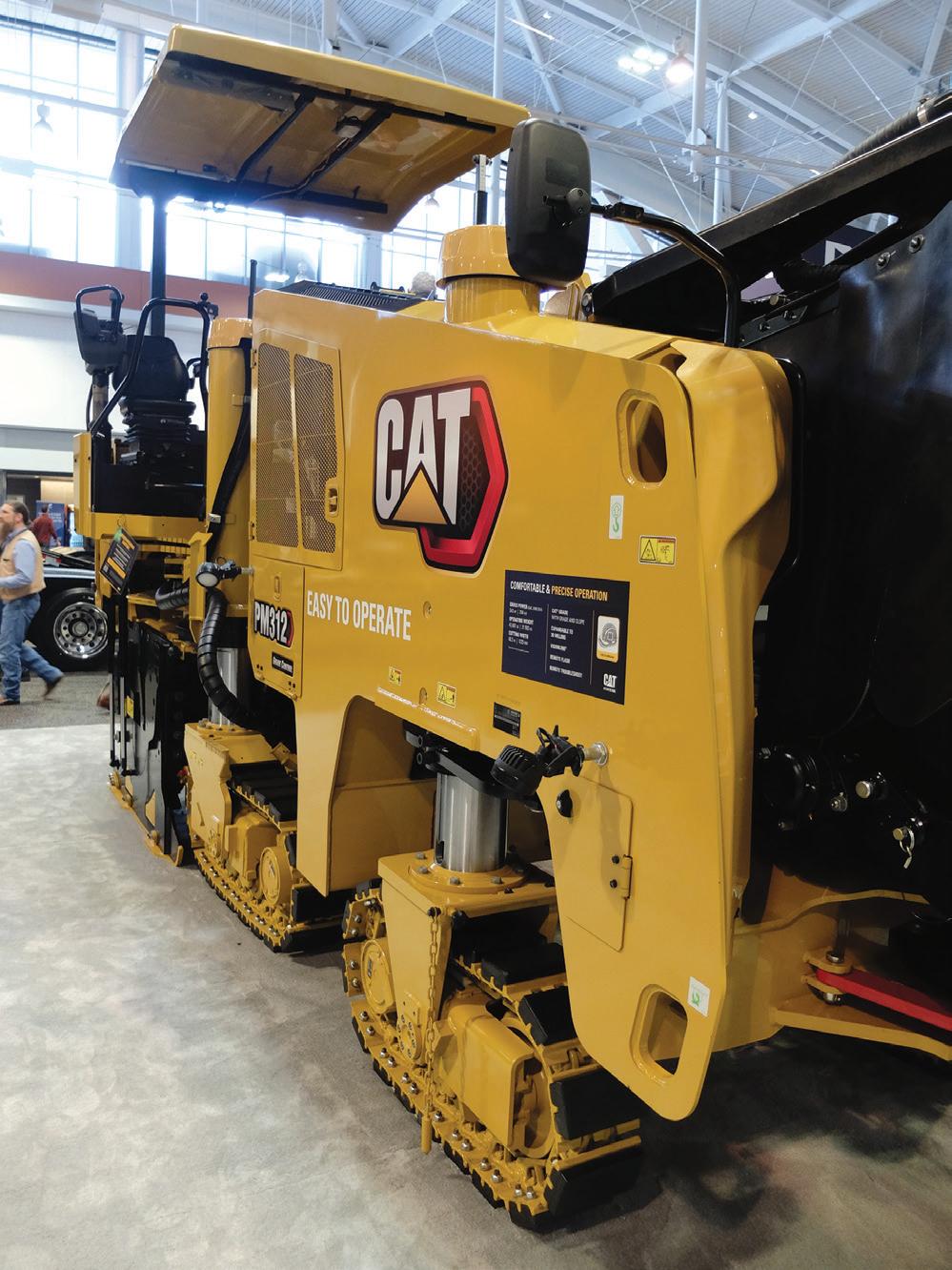
insights into jobsite productivity and equipment utilisation.
Contractors have access to key data and can track the hours and distance milled/day. Details such as excess travel, slow milling speeds and stoppages can be highlighted. The system removes the need for manual data gathering and provides reports in PDF, Excel and CSV formats for email delivery.
Customers can measure performance, reduce fuel consumption and compare operations between shifts, machines and projects. By reducing downtime, users can achieve more productive milling, improved estimating for future projects, and increased ef ciency.
Cloud-based, the VisionLink Productivity platform collates machine telematics and jobsite data from the jobsite. This can be accessed by a smartphone, tablet or desktop device. And eets with mixed OEM equipment brands can be incorporated into VisionLink Productivity.
From Wirtgen comes the upgraded W 150 Fi planer, a mid-sized machine that bene ts from technology rst seen in the rm’s larger mills. Power comes from a 9litre John Deere diesel delivering 313kW that meets the Tier 4 Final/Stage V emissions requirements.
The machine is designed to cut a 1.5m width to a depth of 330mm, though it can be tted with different width drums as well as a range of tooth patterns to suit the needs of the application.
Key features of this mill are the enclosed cab option and sophisticated Mill Assist package, both of which are proven on the larger planers in the range. The advanced Mill Assist system is of particular bene t as it help

to optimise performance. A spokesperson for the rm said, “Now we’ve put it into the compact machine too.
The spokesperson explained that the new performance tracker capabilities allow the user to monitor the area being cut, tonnage of material being removed and the quantity of material going into each truck. He said, “The performance tracker takes care of all that job data. We can see live data from the machine at the site and its performance on our smartphones.”
The W 150 Fi planer is said to be versatile and with its new John Deere engine, offers better integration of power and torque to performance, delivering a 30% gain in ef ciency. Meanwhile, dual fans ensure ef cient cooling and make it quieter in operation, while improved cutter drum ef ciency means it uses less water, allowing paving to be carried out closer afterwards.
Also from Wirtgen is the versatile new W 220 XFi cold milling machine, which can handle a range of duties from surface layer rehabilitation to asphalt removal. The advanced Mill Assist system helps to optimise performance by selecting the operating parameters with the most favourable balance between milling performance and operating costs. The W 220 XFi uses a Multiple Cutting System for milling widths from 2.2-3.8m, while the design allows users to switch milling drums and milling drum assemblies quickly.
Using the latest engine technology from John Deere and the group’s DualShift powershift transmission, the machine meets the latest Stage 5/Tier 4 Final exhaust emissions standards, without requiring DEF. The 18litre John Deere JD18L diesel has high
torque and provides 627kW even at engine speeds of only 1,500rpm.
The Dual-Shift transmission allows high torque to be used at low rpm for optimal milling performance. Even at low engine speeds, high milling drum rotation speeds can be achieved. The unit also features the Mill Assist machine control system, which increases milling performance while reducing diesel and water consumption as well as pick wear.
At the upper speed range, an optimum milling pattern can be attained. The operator can also select one of three operating strategies: ‘ECO’, ‘performance-optimised’, or ‘milling pattern quality’.
The Mill Assist machine control system and Wirtgen’s Group Performance Tracker Milling (WPT Milling) system have already been used in the other F-Series cold milling machines. These systems have been further developed to include a CO2 emissions display.
The carbon emissions in relation to milling can be viewed on the control screen. The automatically-generated WPT report can also include the CO2 emissions of the entire project in addition to other construction-relevant data. Different construction projects can be compared in terms of carbon emissions, allowing conclusions to be drawn for optimising the next project.
Astec
www.astecindustries.com
Caterpillar www.cat.com
Wirtgen www.wirtgen-group.com
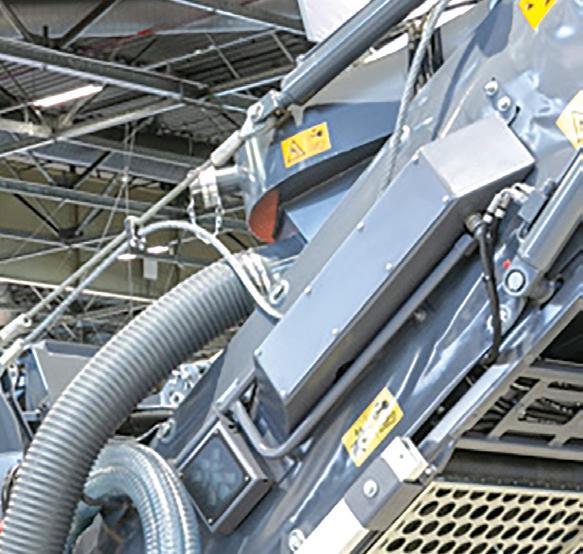
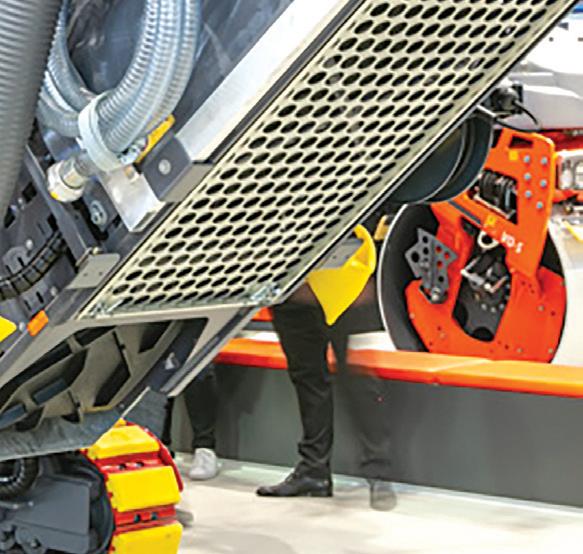
From FAE come highly versatile machines in the shape of the RCU55 and RCU75 remote control carriers. Developed initially for land clearance, these can be used for a wide array of tasks, including operation in hazardous areas. Where ground conditions may be too hazardous for personnel, the RCU55 and RCU75 are heavy-duty, remote control units that can handle many of FAE’s specialist attachments such as planers and cutters. The heavy weight means that they retain good stability, even in hard cutting or planing duties.
Meanwhile, the rm’s latest EX unit is designed for use on excavators in the 8-14tonne class and weighs 700kg, without including the attachment plate. This unit can cut a slot 460mm wide to a depth of 140mm.
The new ART1000 unit from Simex o ers fast and e ective road repairs. The unit is suited to use on urban roads and o ers a cost-e ective solution for repairs and maintenance works. This sophisticated unit is designed for use on a highperformance skid steer loader with high ow hydraulics but is more sophisticated than a basic milling unit. Alessandro Ferrin from the rm commented, “It’s the most advanced attachment we have and we spent ve or six years developing it. This is not a common milling attachment.”
He said that the unit o ers users the option of cold-in-place recycling, allowing speedy,
low-cost road repairs. Additional training is required for users of the machine operator to ensure that repair works are carried out properly. Apart from the skid steer carrying the attachment, the only other piece of equipment required onsite is a small twin drum compactor. The milling drum at the front of the unit breaks out the old surface, with a second revolving cutter then reducing the material to the 0-15mm size. Ferrin said, "’Everything is controlled by the system that maintains a constant percentage of additive." The unit can be used for repairing local roads quickly and as almost all of the material is from the surface, with only a small percentage of additives, it reduces repair costs. Repairs can also be carried out repeatedly on the same stretch of road.
The machine has a working width of 1m and can cut to a maximum depth of 100mm, although Ferrin said that in use, 30-70mm is more typical. Ferrin added that the rm will broaden the range with smaller and larger versions, although customers may have to wait two years for them to be available.
FAE
www.fae-group.com
Simex www.simex.i



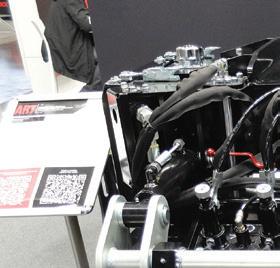
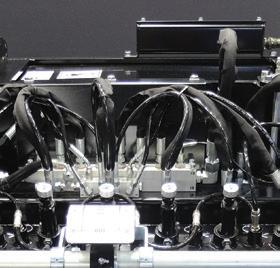


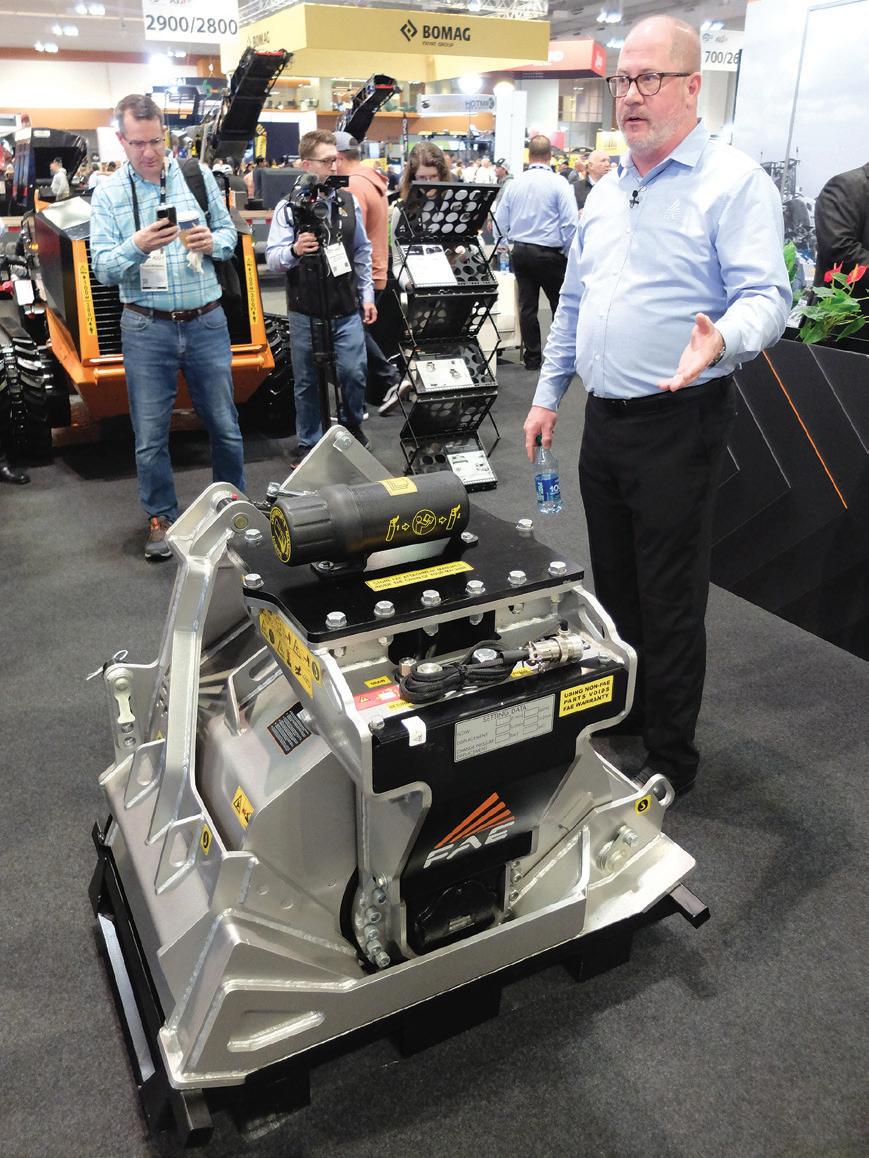
Highways UK 16-17 October NEC Birmingham Stand 114
Patented graphene-enhanced polymeric supermodifier containing recycled plastics for recyclable, safe and sustainable roads
gipave® is a polymeric supermodifier composed of graphene, specific additives and hard plastics, which are reinserted into the production cycle through a new patented selection and recycling process. Thanks to the properties of graphene, gipave® modifies and improves the mechanical performance of all types of bituminous mixes, decreases the deformations due to the repetition of loads and improves the fatigue behaviour. This solution contributes to a substantial increase in the service life of the asphalt pavement compared to both traditional PmB technology (Polymer-modified Bitumen) and PmA technologies with “dry” method.
roads towards sustainability www.iterchimica.it
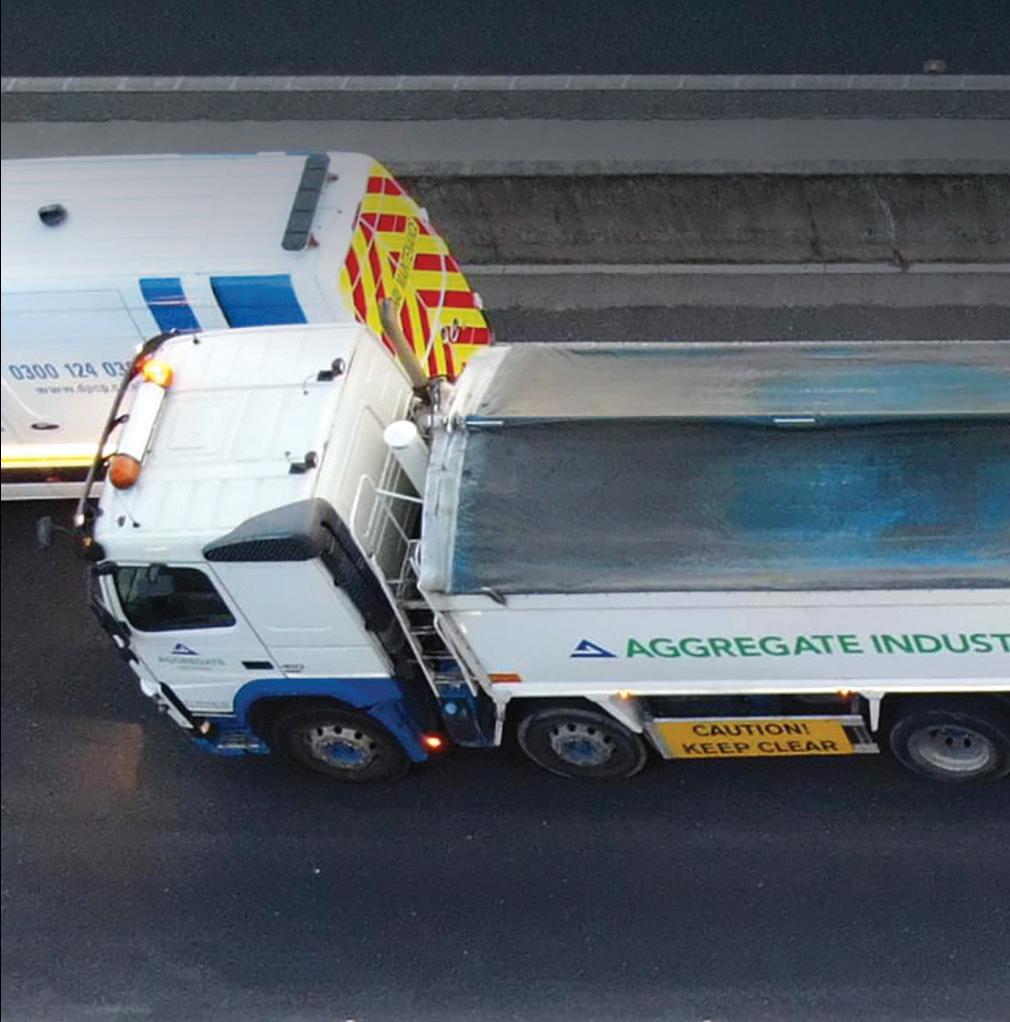
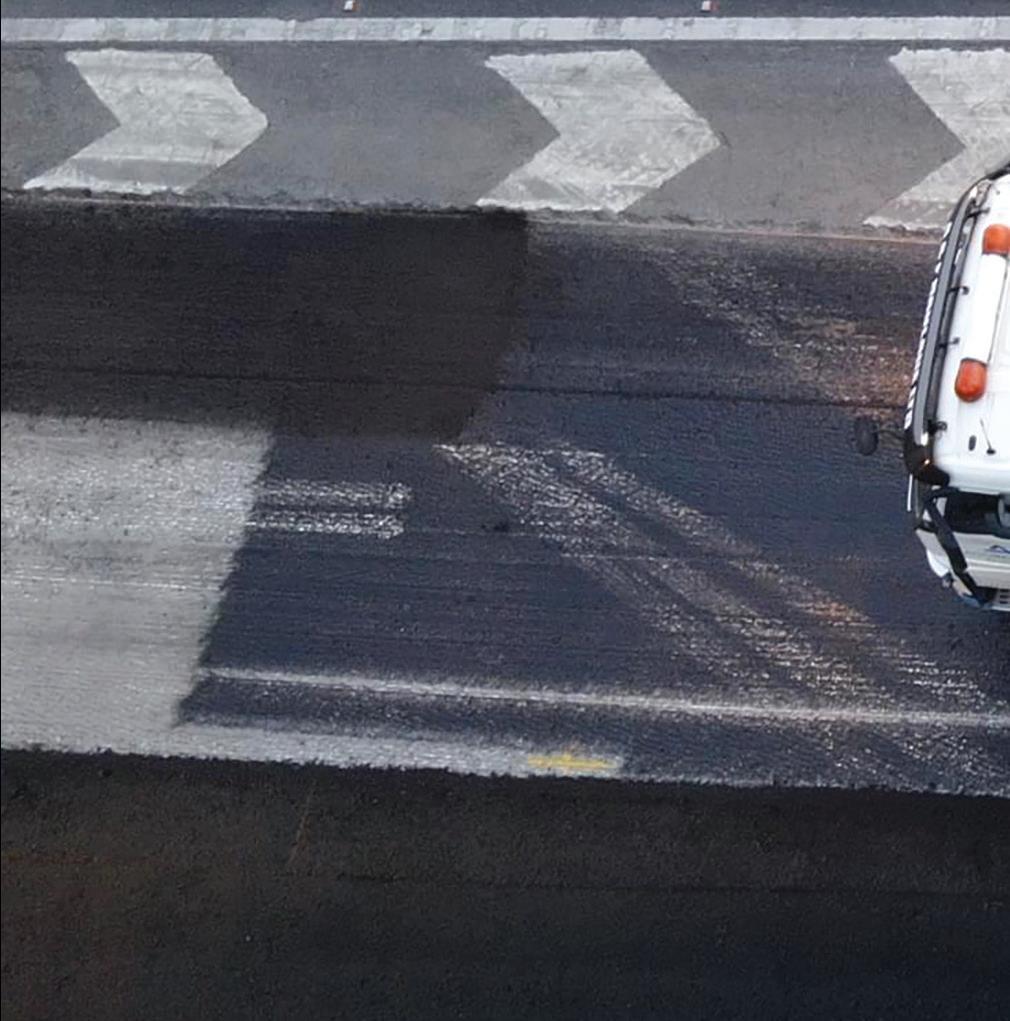
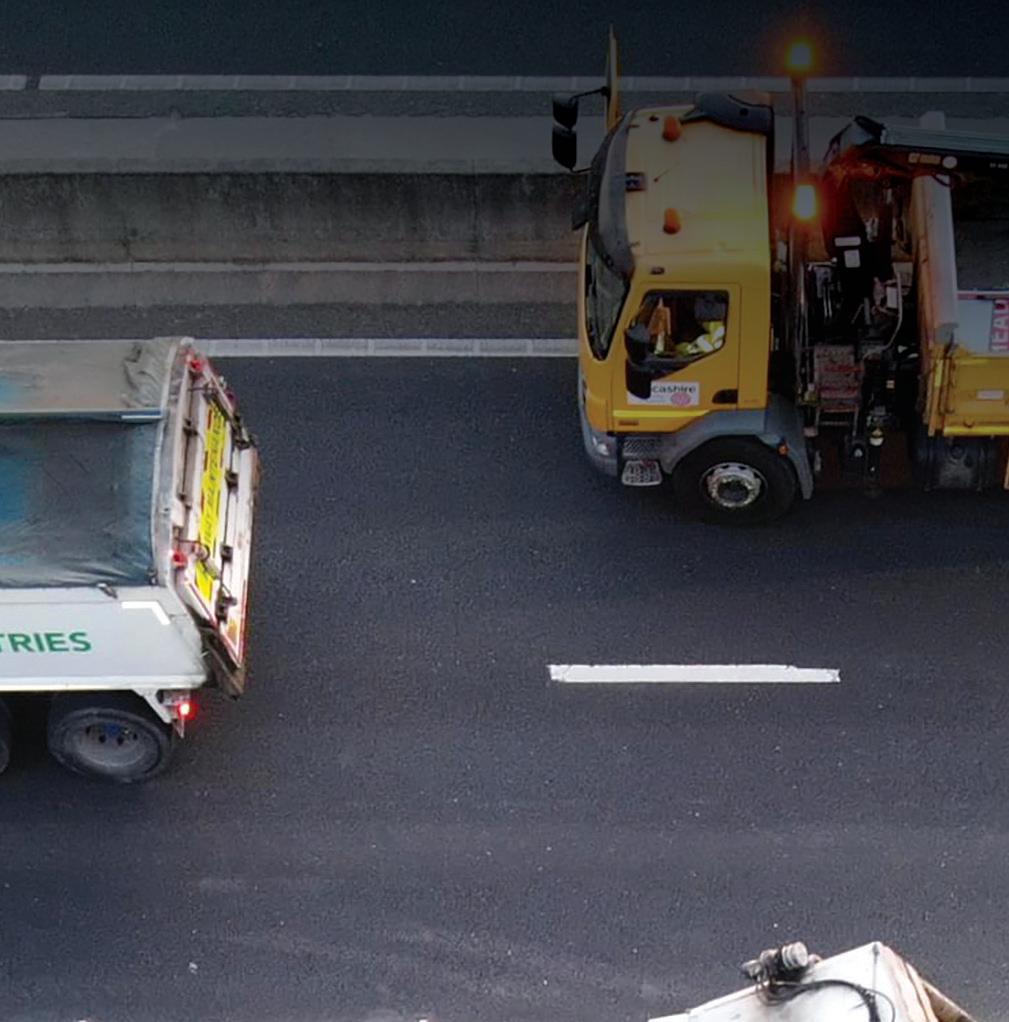
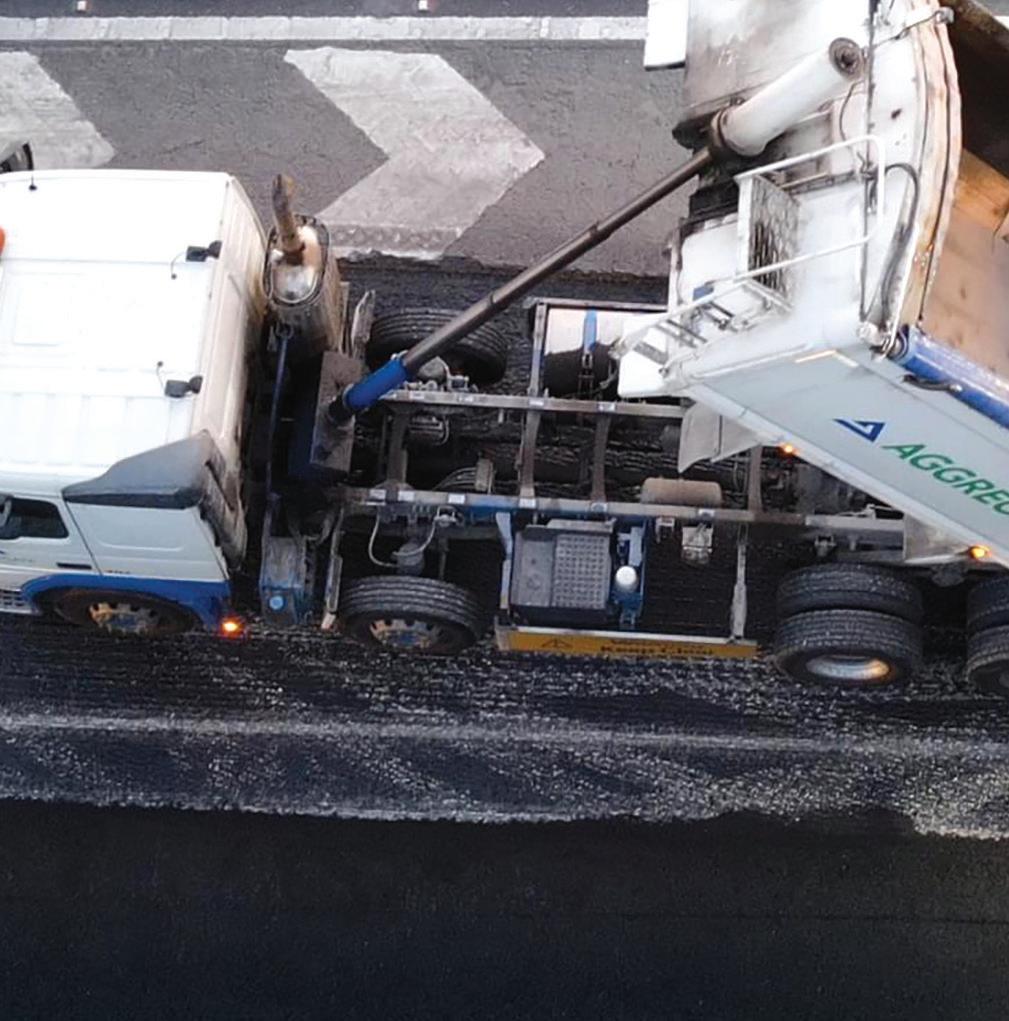
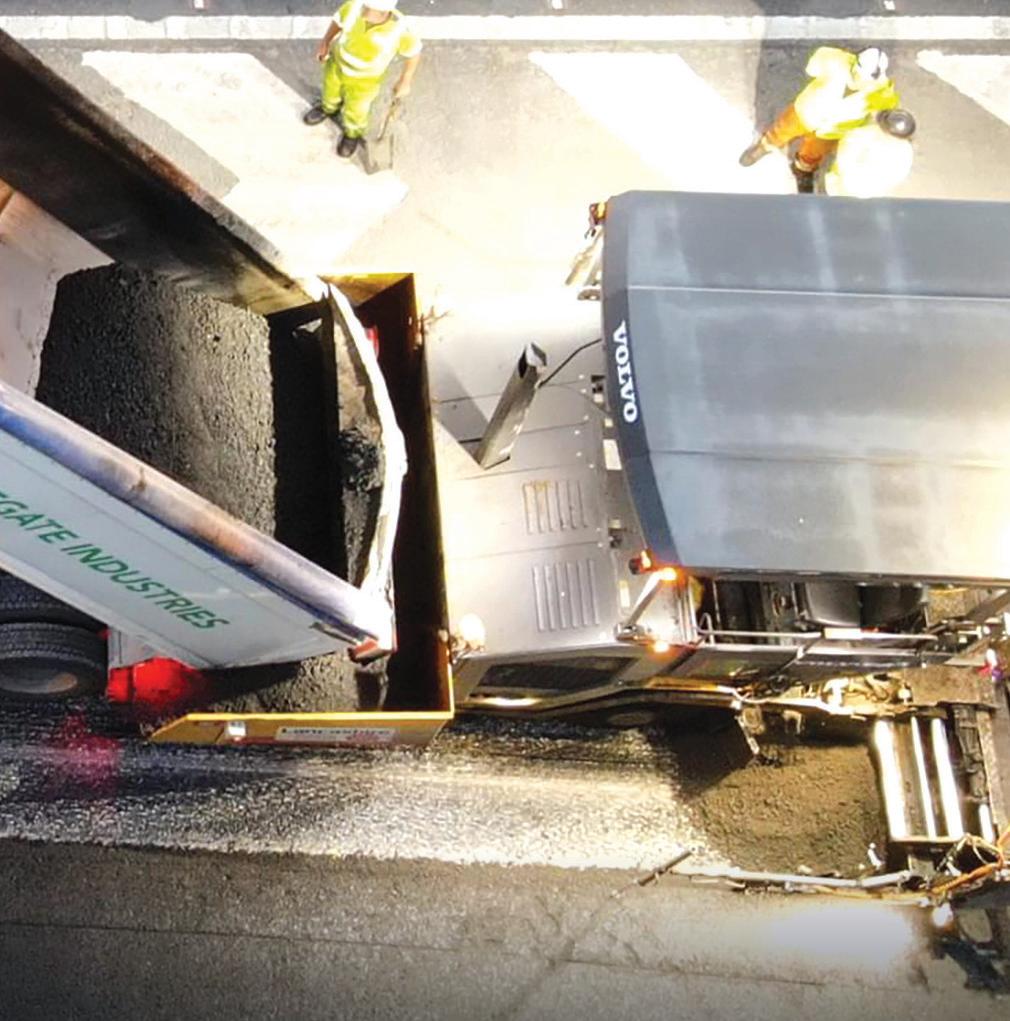



Aggregate Industries has launched Foamix Eco, a cold mix asphalt which can combine cold mix technology, a polymer modi ed bitumen (PMB) containing biogenic components, aggregate made from waste and recycled asphalt planings (RAP).
According to Aggregate Industries, this can lead to net zero or even negative carbon emissions – without offsetting –across stages A1 to A5 of the construction life cycle; that is, up to when the road has been laid.
The technology builds on Aggregate Industries’ existing Foamix technology. The binder is Nynas’ Nyfoam RE, which contains biogenic material – from plants –and gives it the same carbon footprint as an unmodi ed bitumen binder, but with the additional performance bene ts of a PMB.
The aggregates come from OCO Technology, using its Accelerated Carbon Technology to treat byproducts which come predominantly from Energy from Waste plants with carbon dioxide gas.
OCO Technology won a King’s Award for Enterprise in May 2024 in recognition of its carbon capture technology which creates carbon-negative manufactured limestone aggregate.
Aggregate Industries completed a trial of Foamix Eco earlier this year when it was laid on a slip road to the M65 motorway in Lancashire, UK. The trial involved the use of OCO Technology’s carbon-negative aggregate, RAP and recycled ller which Aggregate Industries says delivered net zero carbon emissions for stages A1 to A3 without carbon offsetting. All in all, the mix had over 90% recycled content.
Foamix is already a lower carbon solution, since it allows the use of RAP. Using both RAP and the carbon-negative aggregate could lead to negative carbon emissions.
The Foamix Eco for the Lancashire trial was produced using Aggregate Industries’ mobile mixing plant, Sitebatch Technologies. This can be situated on or near a site, using planings from the road being surfaced or from RAP stockpiles.
According to Aggregate Industries, Foamix Eco can be laid in a single lift up to 150mm thick using conventional
surfacing equipment. Extensive pre- and post-testing ensures that compaction can be achieved with traditional plant and equipment. Cold mix asphalt is generally made from three components: aggregate, an emulsion of bitumen binder and water, and additives such as polymers and rejuvenators. Some of the factors required for achieving good performance include tight control of material properties and conditions – such as water content – and adequate compaction, as it can be more dif cult to achieve the desired amounts of compaction when compared to a standard hot mix asphalt. Another consideration is that cold mix asphalt can take longer to set than hot mix asphalt. However, Aggregate Industries says that Foamix Eco can be traf cked in the same way as hot asphalt, after compaction.
Aggregate Industries www.aggregate.com
Nynas www.nynas.com
OCO Technology www.oco.co.uk
Sripath Technologies has expanded its range of environmentally conscious asphalt additives with the addition of warm mix technology KoolTEQ. Launched in Australia early this year, KoolTEQ has been designed to give excellent performance at lower compaction temperatures.
According to Sripath’s chief marketing and business development of cer Deepak Madan, the development of KoolTEQ, which began in the fourth quarter of 2022, came in response to demand from its Australian customers who were already using the company’s existing additives, such as its biobased ReLIXIR rejuvenator and rut resisting PGXpand polymer.
“When we develop our products, we aim to make sure we have something that's more environmentally friendly than competitor’s products and gives the right performance. But it has to deliver cost savings or at least neutral costs,” said Madan. “In Australia – and in Europe toocustomers are very conscious about the carbon footprint but, at the same time, nobody wants to pay more.”
In early May, the City of Brisbane was preparing to conduct a trial using KoolTEQ. “It has been evaluated at RMTI (Royal Melbourne Technical Institute) and by the City of Brisbane. Based on this, the City
Technologies has added KoolTEQ warm mix to its range of additives
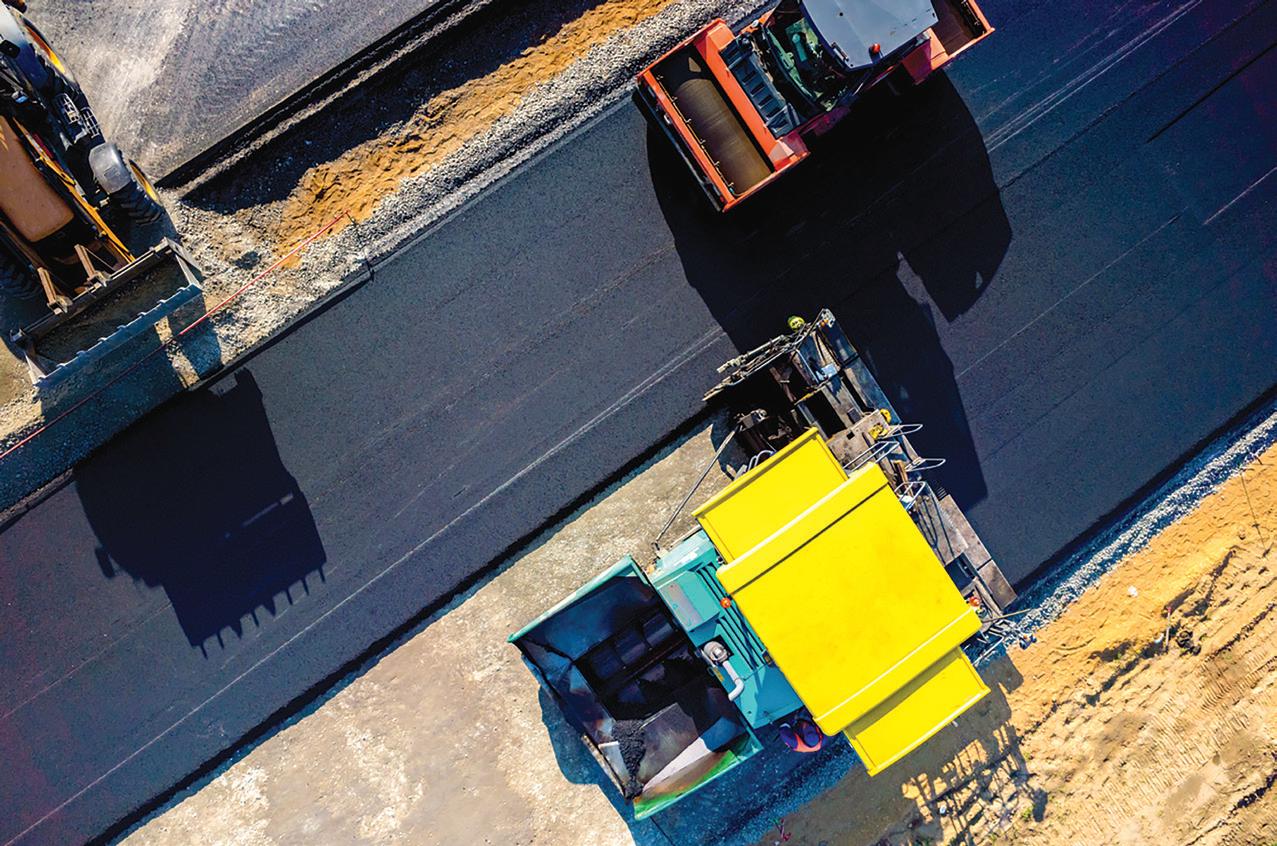
trial,” said Madan. “They started with half a dozen products and then narrowed it down.”
Tests by RMTI involving an M1000 multigrade binder with 0.25% KoolTEQ compacted at 130oC showed that it achieved a comparable compaction to a control mix, without the additive, compacted at 155°C. And tests on a polymer modi ed bitumen (PMB) A15E with 0.25% KoolTEQ showed superior compactability at both 155°C and 115°C, compared to a control mix.
Sripath is also preparing for UK trials of its PGXpand polymer, designed to improve the rutting resistance of roads. A contractor working on night-time repairs on one of the UK’s most heavily traf cked motorways has been conducting laboratory tests and
Sika company Colorbiotics has introduced a colourant solution for its cold mix asphalt Easy Pave, which it says it is a rst-of-a-kind product. Rather than the colour being applied to the top of the asphalt, the pigment comes in liquid form which means that the colour runs all the way through the pavement, retaining the same intensity even if the surface of the path or driveway wears away.
Easy Pave is a cold mix asphalt, combining 100% RAP with Colorbiotic’s Invigorate Plus rejuvenator, designed for use on low-volume roads, pedestrian and bike lanes, car parks and driveways. The Colorbiotics pigment solution is added to the pugmill during the mixing process. Currently available in 11
plans to trial it in the coming months, according to Ranjeet Sandhu, head of sales, Europe at Sripath Innovations, the UK af liate of Sripath Technologies.
PGXpand can be used to create a PMB or used to substitute some of the SBS (Styrenebutadiene-styrene) polymer in a PMB to give improved rutting resistance – and a lower carbon footprint.
“Its carbon footprint is signi cantly lower than that of an SBS molecule,” said Madan. “And, in addition, you need to use less compared to a traditional polymer which further reduces the contribution to carbon dioxide generation.”
Environmental credentials are becoming an increasing priority for highways authorities in many regions, says Madan.

di erent colours, Colorbiotics plans to be able to o er custom colours, as required, in the future.
“We’re addressing a need in the marketplace, and we’re adding value,” said Ryan Lynch, national sales manager at Colorbiotics. “It’s easy to put down, it’s environmentally friendly because it’s all RAP, uses bio-based ingredients and it looks great.”
All Sripath’s additives have environmental product declarations (EPDs), which have been audited.
“Transportation agencies are looking at EPDs and sustainability reports because they are looking for ways to meet their carbon reduction goals,” said Madan. “Europe, UK, Australia, and more of the US have started to focus on EPDs and sustainability goals. Countries like India are further behind, but they will get there.”
PGXPand also has practical bene ts when compared to traditional polymers, said Sandhu. “Its storage stability is very good and mixing it is substantially easier, you don't need a shear mixer,” he says. “For instance, we are talking to one customer who does not have the mixing capability to produce PMB. If he were to put the PGXpand into the bitumen tanker and drive to site one hour away, that would help to mix it. This is a signi cant plus point.”
PGXpand has been used in the US for around a decade and has been more recently introduced into Australia. Following on from the UK, Sripath will be introducing it into other European countries following REACH (Registration, Evaluation, Authorisation and restriction of chemicals) accreditation for the EU.
Sripath Technologies www.sripath.com
Added to the mix as a liquid solution, Colorbiotics' range of colourants for Easy Pave cold mix asphalt give colour all the way through

The new Colorbiotics solution for Easy Pave is currently o ered in the US and Canada but could be launched in other regions if there is demand, according to a spokesperson.
Colorbiotics www.colorbiotics.com








CO2CO, a start-up company founded by academics from Imperial College, has developed a way to grow algae, which sequesters carbon as it grows.
The research team is developing a method that transforms algae biomass into a black, viscous, waterrepellent material which resembles bitumen.
Tim Smith, regional technical manager, South East, at Tarmac, says: “It provides the same properties but offers signi cant carbon savings when compared to petroleum-derived bitumen. However, to maximise the environmental bene ts, we also need to complete thorough testing and development to ensure these new bio-bitumens are as durable and recyclable as possible, and do not affect the performance of the nished asphalt material.”
Bio-bitumens, produced from plants and used to replace a proportion of standard bitumen to reduce the carbon footprint of the binder and mix, are often produced
from plants such as pine or soybean oil. This technology, if it can be scaled up, would produce bio-bitumen from algae.
The research is at an early stage and, according to Dr Imad Ahmed, CEO at Nanolyse Technologies, a clean tech innovations company, there could be many other applications for the algae-based material: “We’ve only scratched the surface with the potential applications of our biobitumen material. Our ability to netune this material's chemical structure and viscoelastic properties provides sustainable solutions for various industrial applications, including construction, waste management, catalysis, and agriculture.”
Tarmac
www.tarmac.com
CO2CO


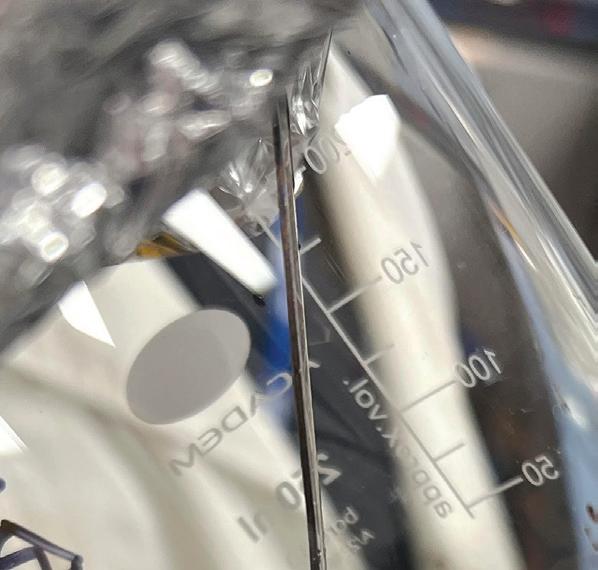

http://www.co2co.earth
Nanolyse Technologies www.nanolyse.com



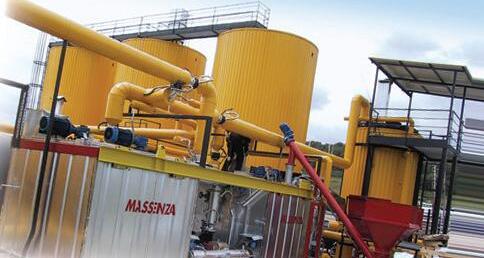
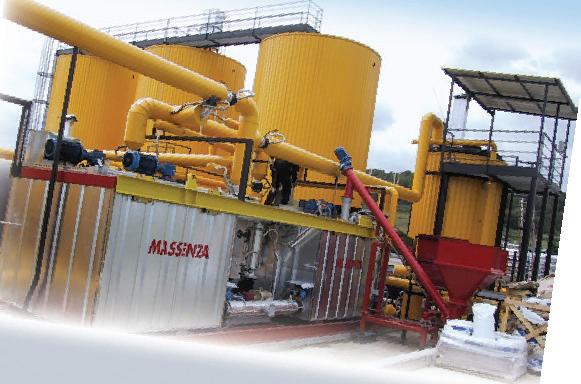




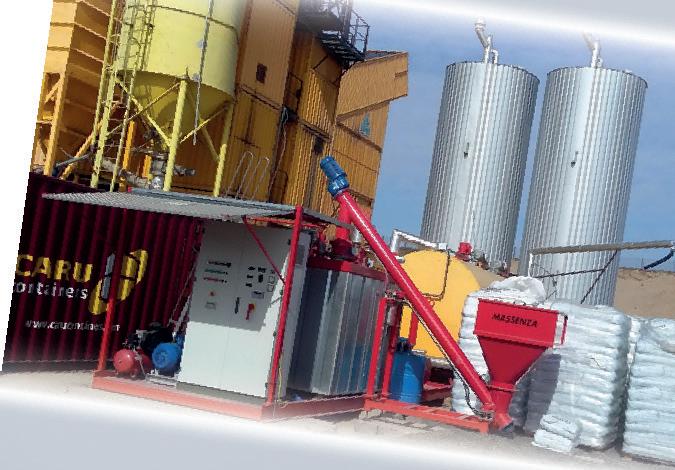

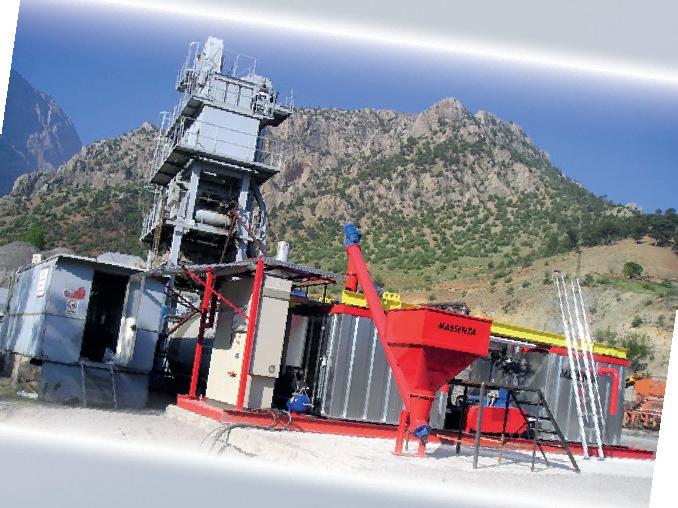




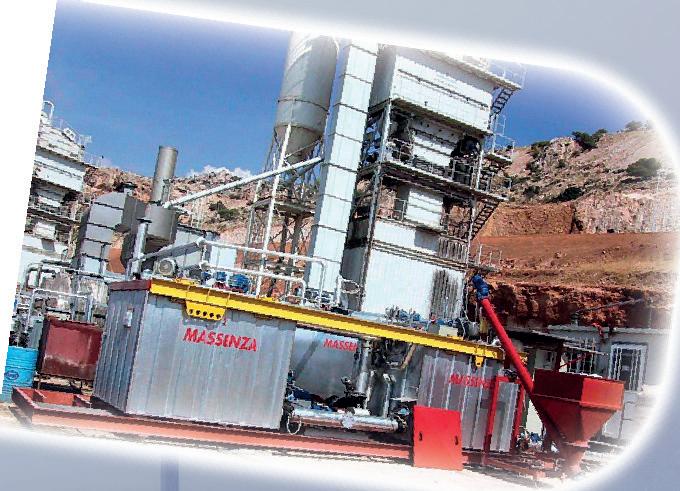


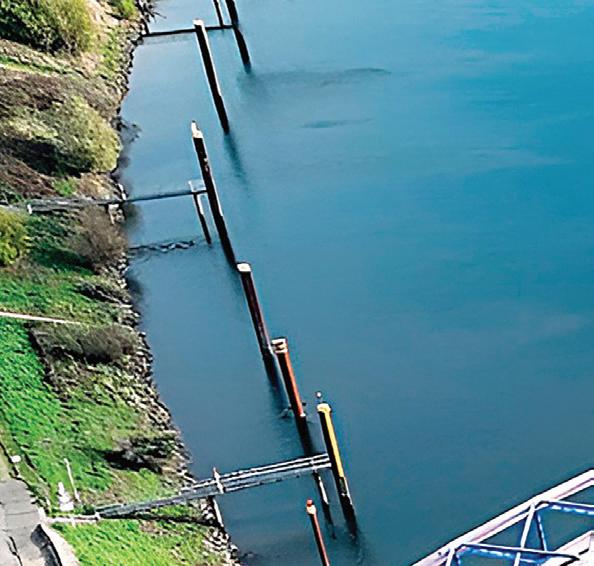
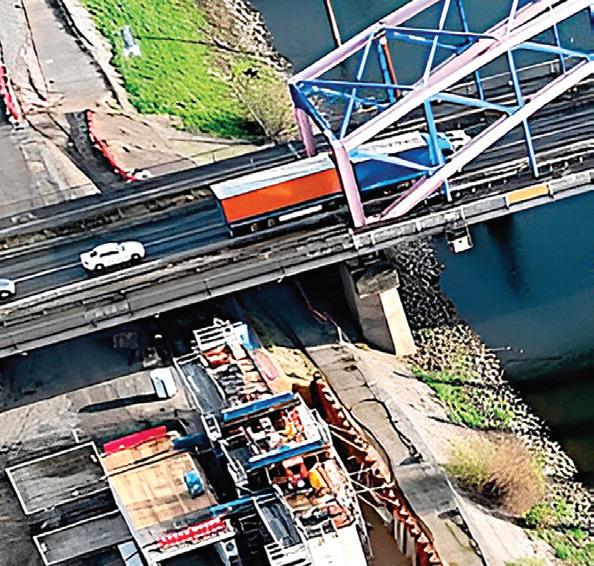







Even with years of innovative engineering experience, Belgian heavy lift specialist Sarens acknowledged the challenges it faced on a bridge project in Duisburg, Germany
The client was Max Bögl, a multinational construction company based in Sengenthal, Germany. During the autumn and winter of 2022, Max Bögl asked Sarens to install the Oberbürgermeister Karl Lehr Brücke (OBKL - Mayor Karl Lehr Bridge) over the Ruhr River and the Hafenkanalbrücke which was to span the canal that leads to the Port of Duisburg.
Mayor Karl Lehr made outstanding contributions to the expansion of the Duisburg-Ruhrort ports, turning them into world-class inland logistical infrastructure. The old OBKL bridge, which opened in 1949, was one of only three inner-city north-south connections across the Ruhr River. It was an important axis for traf c and the main artery for the port of Duisburg and associated logistical traf c.
The old bridge was so vital to the city’s daily functioning that without it, city of cials said, traf c would be gridlocked, the port
would be deprived of its primary road access and normal traf c ow - as well as local public transport - would come to a standstill.
For these reasons, the new OBKL bridge is of particular importance. But it is a massive 4,400tonne structure of steel measuring 25m high, 34m wide and 180m long and included the approach bridges. It was to replace the old structure connecting the Kaßlerfelder roundabout with the Pontwert.
The other steel bridge Sarens was tasked with installing was the new Hafenkanalbrücke, weighing around 3,650tonnes. It measures 25m high, 34m wide and 126m long. It was to replace an old structure connecting the Pontwert to Mercator Island.
Installation posed signi cant challenges, not the least of which was skidding heavy bridge sections within a limited operational window that left no room for error. There was also limited space to set up equipment for the operation. Furthermore, the crew had to adjust to wind restrictions and very low water levels.
Sarens decided to use a combination of techniques and equipment, deploying a barge, SPMTs (self-propelled modular transporters), strand jacks, skidding systems and various climbing systems to safely install both bridges. The engineering team worked out all the calculations and drawings to skid the heavy bridge sections into place, despite the low water levels.
After numerous calculations and meticulous planning, the team shortlisted the following equipment:
• Barge Paula (100m x 33m x 7.6m)
• 68 axle lines SPMTs
• 12 x SJ200T strand jacks
• 8 x CS450 jacking system
• 16 x CS250T jacking system
• Modular beam system, 1,500mm x 1,000mm
• Bracing systems
• Skidding system
All equipment was set up within six weeks. Everything, except the barge, was transported via 75 truckloads from Sarens headquarters and various yards in Europe. The



barge Paula was transported by tugboats over the North Sea and the River Rhine. The team also had to nd solutions for bringing the strand jack cables over the water, using 12km of strands for the job.
Sarens rst conducted preparation and testing before transporting the bridges into position.
The steel bridge parts were delivered by ship by client Max Bögl, and then assembled into bridge structures on the pre-assembly area next to the distribution circuit. When the assembly of both bridge superstructures was complete, they were then partially loaded onto Sarens SPMTs and skidded over the oating barge Paula.
The Hafenkanalbrücke was the rst bridge to be installed. The crew carefully skidded the bridge section, using strandjacks and skidshoes, onto Paula. Next, the loaded barge was moved about 100m ahead with winch cables so that the bridge could be skidded over the barge on skidshoes installed on the island.
The crew skidded the whole bridge over the island and parked it there, between the Rhine and the port canal.
In the meantime, the barge sailed around to the port canal, where the crew skidded the bridge back onto the barge via strandjacks and a skidding system. Once it was completely loaded, winch cables moved it into its nal position. The bridge was then

lowered onto the abutments by means of a jacking system.
Next, Paula moved back to the Rhine to skid the OBKL bridge onboard in a similar manner. The bridge was then positioned by means of winch cables and lowered onto the abutments with a jacking system.
The team had to skid both bridges into place within a limited timeframe, in a very complex and dif cult operation. To ensure safety throughout, the crew handled the extremely heavy bridge sections in a very slow and precise manner.
Wind and water level restrictions further compounded this challenge. This meant that the crew had to closely monitor the barge Paula to ensure stability of the entire setup, given the low water levels and bridge sections to be installed.
The two bridges are currently oating in their temporary bypass position and will replace the old bridges once they are dismantled.
The new Oberbürgermeister Karl Lehr Brücke was opened to trams, motor vehicles, cyclists and pedestrians in December last year. A tram has a separate track between the two lanes in each direction and there is a separate pedestrian and cycle paths on both sides.
Sarens www.sarens.com
For any bridge construction worldwide –you can at all times rely on PERI.
For over 50 years, PERI has been a competent partner of numerous construction companies and contractors all over the world. In the field of bridge construction, PERI’s Formwork and Scaffolding Systems as well as PERI’s Engineering Expertise point the way ahead in the today’s construction industry.
Learn more about the PERI Solutions on our website.
www.peri.com

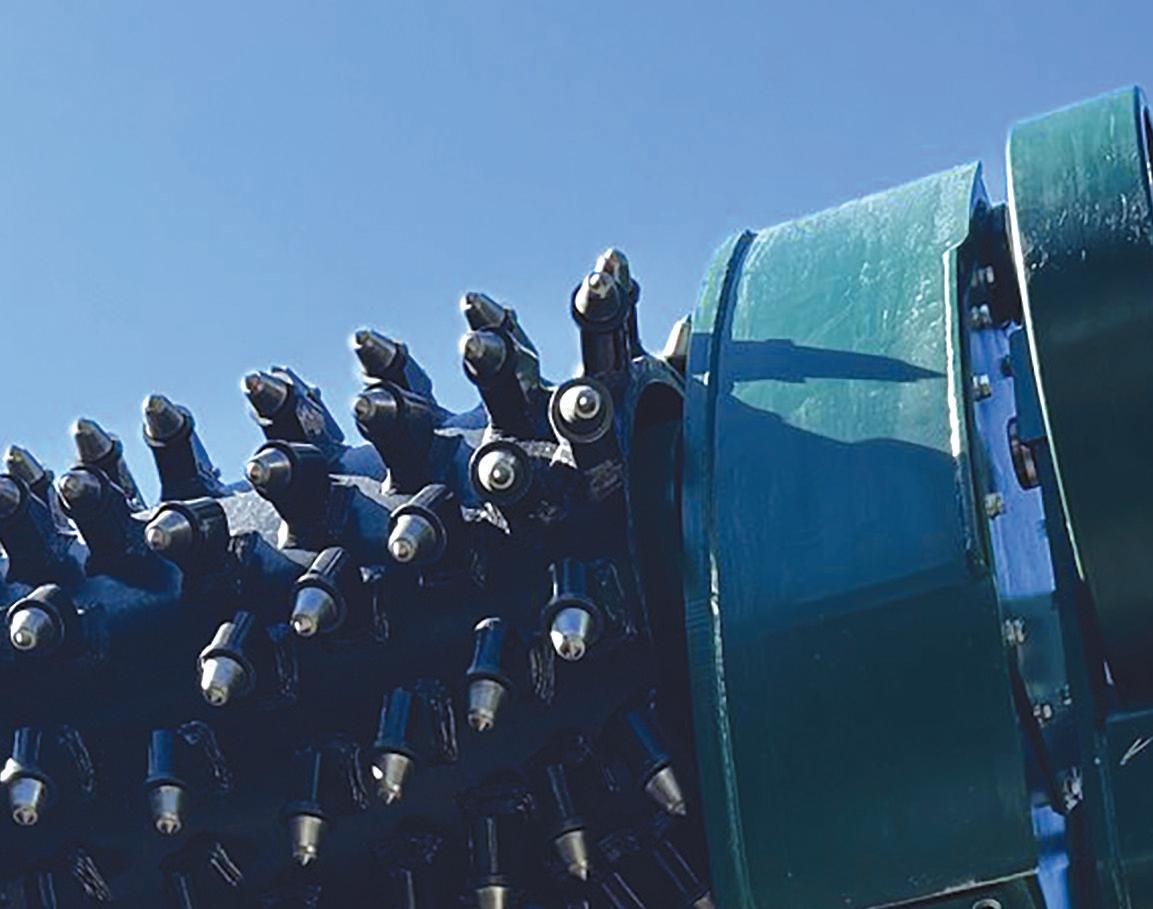



Simex has strengthened its range of MP cutter heads for pro ling with the MP 1000HD for removing damaged surfaces in tunnels.
It was created for Amplia Infrastructures, formerly Pavimental, a subsidiary of Autostrade per l'Italia, a company specialised in construction and maintenance of motorway civil works and plant engineering.
Designed for excavators from 35-60tonnes customised for tunneling, the heavy-duty HD version differs from the MP model of the same width in several ways. Piston motors in direct drive with the drum release a hydraulic power of 200kW and a cutting force of 65kN. Hydraulic depth adjustment is up to 150mm via side wheels. There is also independent depth adjustment on both right and left wheels to easily make side-by-side passes.The cutter has a 360° hydraulic rotation and a nebuliser kit for enhanced dust suppression.
Because the operating weight of the MP 1000HD is over 4,000kg, it requires a dedicated excavator with enough high-capacity hydraulics for performance in tunnel vaults.
For the construction site commissioned by Amplia Infrastructures, a remote control

arm – called the
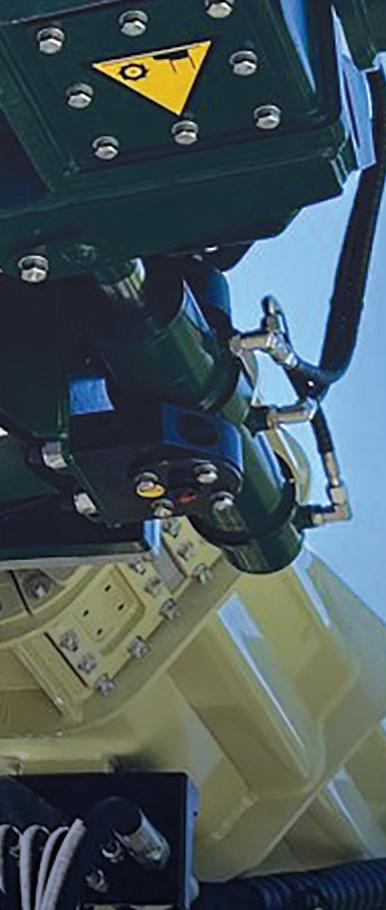
- was created by Laurini Of cine Meccaniche of Busseto, Italy. The Jocker allows the entire pro le of the tunnel to be milled in a single pass, for a width of 240°. The next pass, in the opposite direction to reposition the prime mover, is made by advancing only with the tracks, without interrupting the work.
The Simex MP 1000HD cutter head for pro ling was used to remove the deteriorated layers of concrete inside several tunnels along the stretch of the A1 motorway, towards Florence. The depth and uniformity of the scari cations are hydraulically achieved thanks to the independently controlled side wheels and by the hydraulically adjustable attachment. Both are controlled remotely by the operator –for pro ling the tunnel lining from the ground, along the side walls, up to the crown, with controlled descent on the other side.
There was widespread deterioration of the lining concrete, with cracks and gravel pockets that arise due to in ltration of water. These required immediate remediation and refurbishment. In the driest points, where the problem was linked only to concrete deterioration, the scari cation was 5cm.




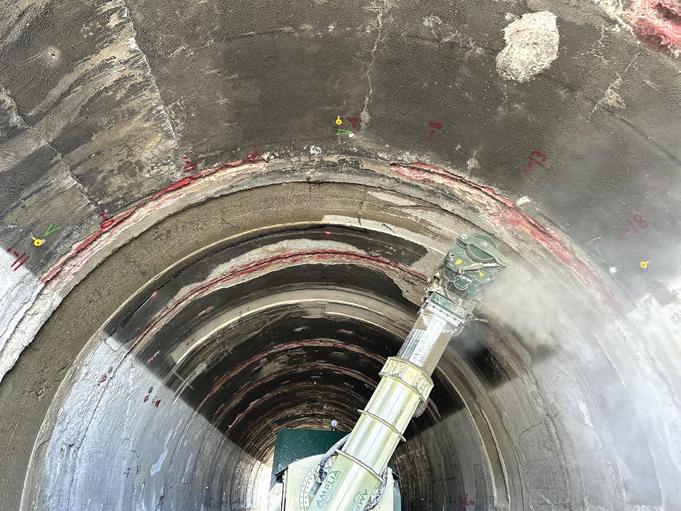
Scari cation was up to 10cm in areas where water in ltration was evident.The restoration took into account the previous damage: after scarifying dry surfaces it was enough to proceed with grout restoration. However, in the presence of in ltration, it was necessary to install draining membranes to convey excess water into special channels.
Simex says that because the MP 1000 - a completely new piece of equipment - simpli es the operation, the work takes less time to complete, crucial for the pro tability on the industry. Concluding the milling activities earlier not only allows the avoidance of penalties but provides an earlier start to the next phases of tunnel work - restoration with grout, installation of ribs and nally the placement of drainage membranes, cables and pipes.
Simex www.simex.it/en-us






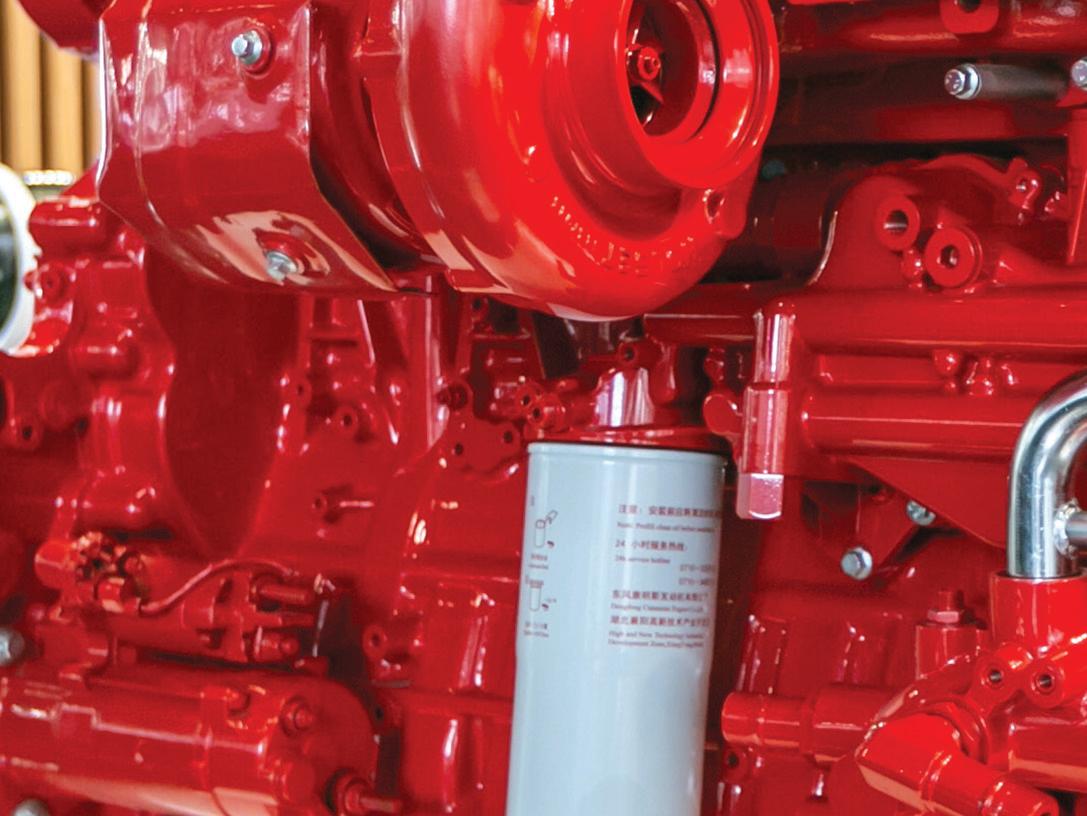
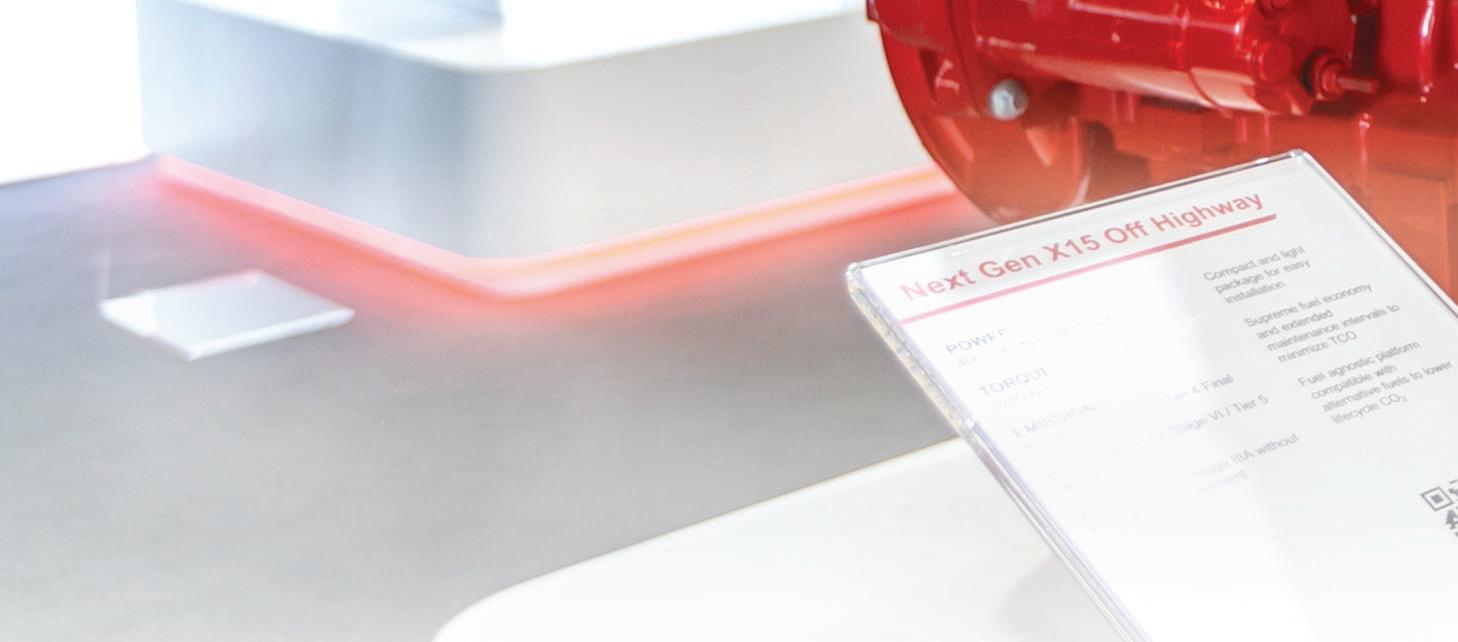

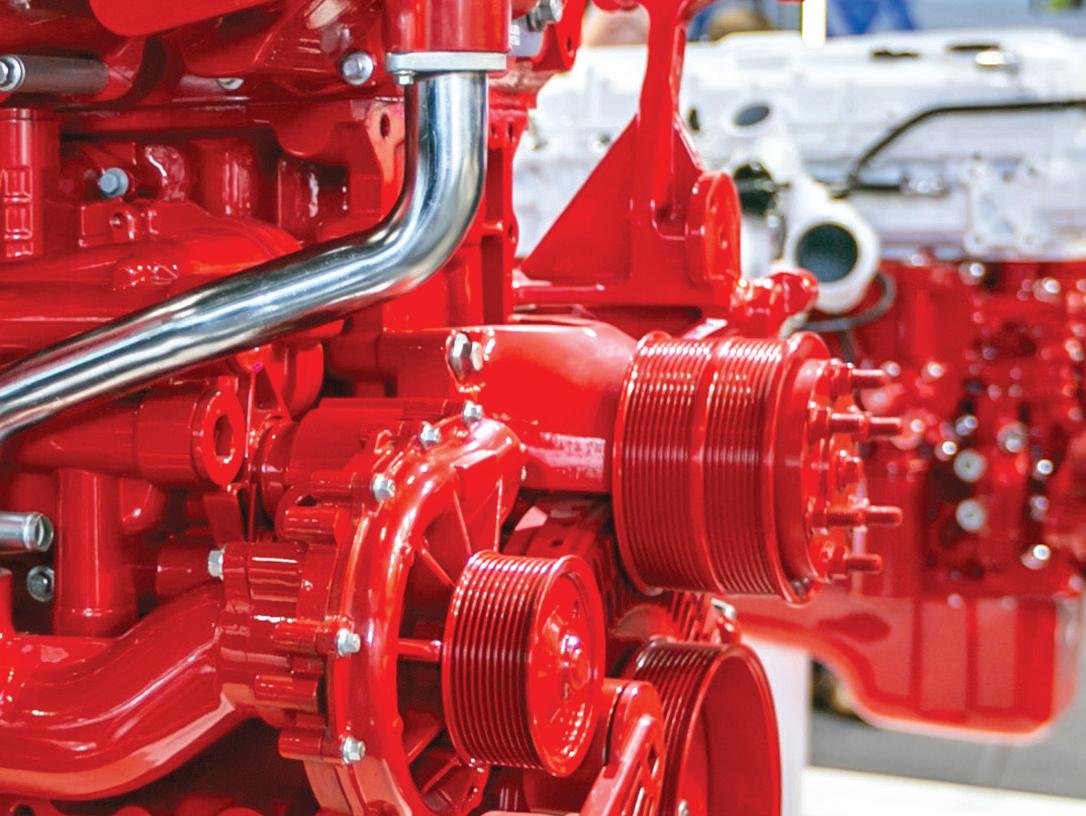

As the need for decarbonisation becomes more pressing, engine rms are looking ahead to the next step for power systems, writes Mike Woof
New fuels are a top priority for the engine sector, with key companies developing innovative power units. These are designed to be fuel agnostic, able to run on different fuels with minimal technical changes.
Cummins is expanding its range of fuel agnostic engines further with the introduction of its new X15 unit. The rm says that this advanced 15litre engine offers reliability and lower operating costs as well as reduced emissions and improved fuel ef ciency.
The engine is part of the CUMMINS HELM platform and offers customers the option to choose the fuel that best suits their needs. The common base can have cylinder heads and fuel systems speci cally tailored for a single fueladvanced diesel, natural gas or hydrogen.
The X15 for off-highway offers ratings up to 522kW and a peak torque of 3200Nm, meeting Stage V emissions and stricter requirements to come. The X15 engine offers fuel consumption as low as 180g/kWh, reducing TCO and lifetime CO2 emissions. It has extended maintenance intervals up to 1,000 hours, reducing service costs and downtime.
The rm is also introducing its novel hydrogen storage system. This allows hydrogen to be stored at high pressure for use in the new engine models.
Meanwhile, Deutz is also introducing an engine that will run on hydrogen as well as electric power retro t options for offhighway machines. These form part of the rm’s programme aimed at reducing carbon emissions.
This programme represents a substantial investment in research & development for Deutz. Bert van Hasselt, head of Sales and Service for Deutz’s BU Green division said, “We are investing €100 million until the end of next year.”
The new hydrogen engine in testing is the TCG7.8H2 unit, a 7.8litre engine that will deliver 228kW. The rst production units will be manufactured in the third quarter of 2024 and will be aimed at genset or rail applications initially, with an order of 100 units being supplied to China. However, once the units have been proven in these applications further duties will be available, including installations into construction machines. According to van Hasselt, the continuing high price of


hydrogen as a fuel means that the unit sales will remain low until a better hydrogen supply infrastructure (and more reasonable fuel prices) becomes available.
In the meantime, Deutz believes its electri cation retro t package will be of interest for customers with existing eets of equipment that is still comparatively new. These can be tailored to a wide range of equipment applications. According to van Hasselt, “We can retro t equipment with diesel engines with an electric system. It’s part of the transition into the new world.”
To further expand the electri cation range, Deutz is offering its onsite PowerTree package, which can provide electric power onsite with ratings from 30kW/h up to 2MW/h.
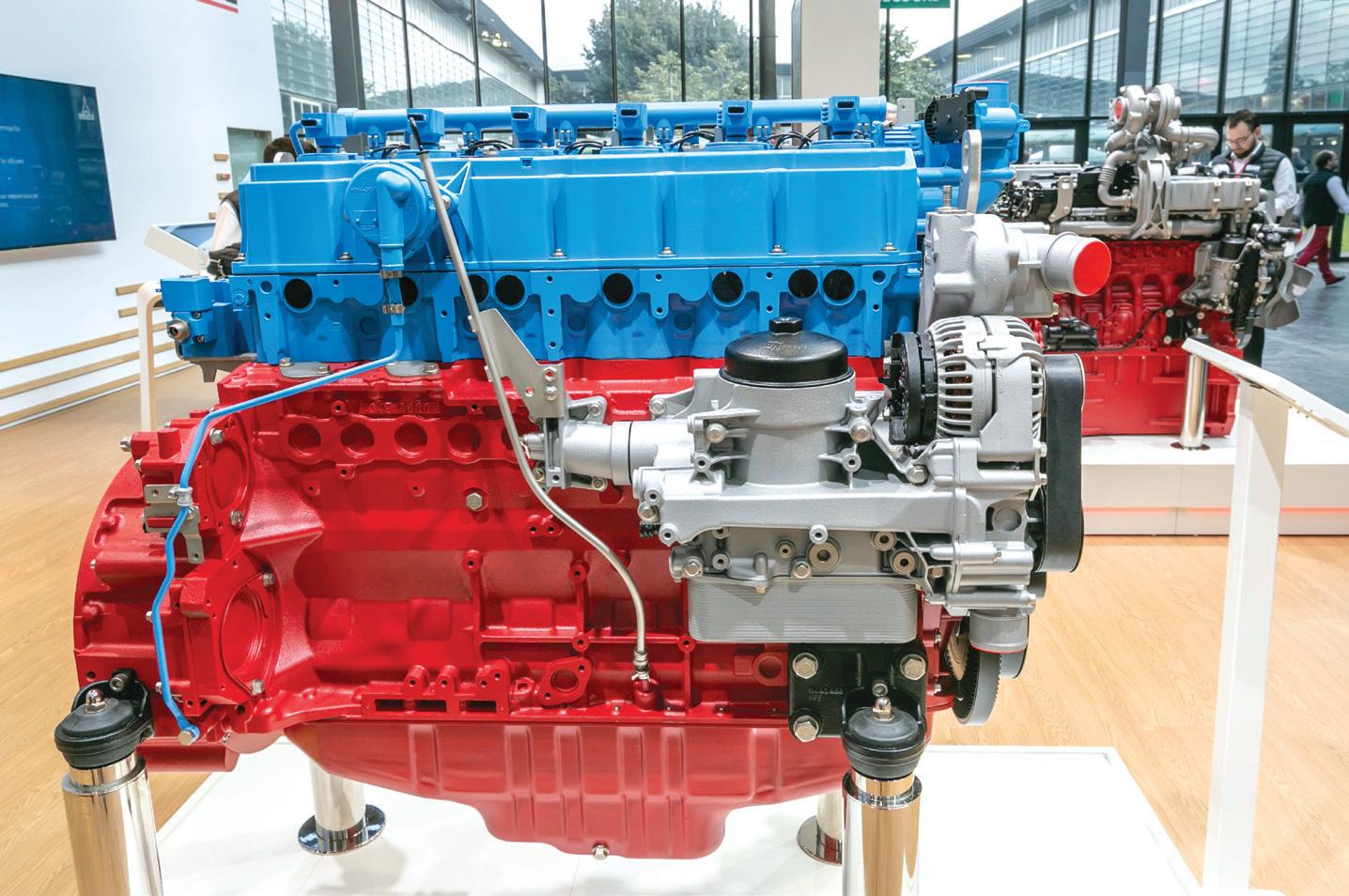

In addition however, Deutz still believes there is demand for conventional diesels and is introducing the TCD2.9 unit, a 2.9litre engine which meets Stage 5/Tier 4 Final emissions requirements has been developed jointly with John Deere. Coming later will be the TCD3.9 unit, also developed jointly with John Deere and due to enter eld testing in mid-2024, offering ratings from 75-130kW.
And Volvo Penta is also offering a new fuel agnostic engine in the shape of its D17 units, which takes over from the D16 as the rm’s top-of-the-range unit. Compared to the D16 model, the new D17 offers up to 5% less fuel consumption due to developments in combustion technology, such as the commonrail fuel-injection system.
Volvo Penta is investigating alternative fuels and various technologies and all Volvo Penta engines can run on hydro-treated vegetable oil (HVO). The D17, together with the rest of the Volvo Penta power generation line-up, will be developed to allow customers to transition to lower well-to-wheel emissions


using renewable fuels according to the rm.
The new cooling package has the option of a viscous fan and air lter to suit a variety of installations and further reduce fuel consumption and noise emissions.
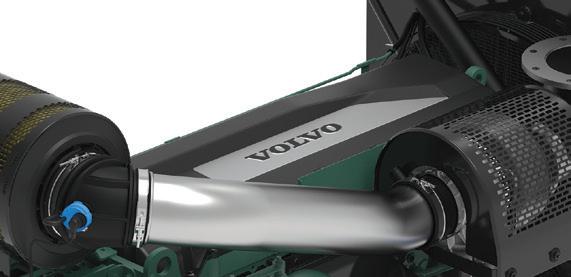
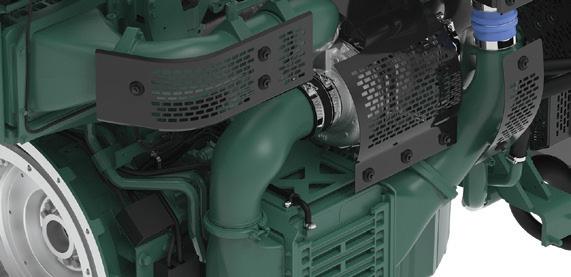
Power density is high and the 17litre engine uses dual-stage turbochargers and heavyduty steel pistons. It has a compact and lowweight design said to offer smooth operation with low noise and vibration and an overall easy installation, service and transport.
The D17’s sister engine, the D16, has an inline six-cylinder block and provided the starting block for the new design, ensuring the D17’s basic footprint would remain the same.
Moog Construction is offering the novel electri cation retro t kit from subsidiary Zquip for repowering machines in the construction, rental and quarry markets. This modular system can be installed in machines such as excavators and wheeled loaders in the 5-50tonne range and from any manufacturers.
The company is also offering its modular batteries as a suitable solution for onsite power at remote locations.
Scott Schef er, marketing director of ZQuip commented that repowering existing machines provides a suitable solution for some customers. He said, “We’re trying to make it easy for people to get into electri cation in a more cost-effective way. With our solution, the batteries are swappable and fast charging. The machine hydraulics do not change at all.”
The package consists of the ZQuip batteries, an electric motor, a smart controller and a thermal unit to optimise battery temperature. Customers can select either 70kW/h batteries or 140kW/h batteries, depending on the application. These have the same footprint to ease installation and use the same base although the 70kW/h units are shorter and weigh 700kg while the 140kW/h units are taller and weigh 1,250kg. Depending on the installation and machine type, customers can select the optimum number of batteries as required.
Fast charging allows recharging within one hour and the system comes with standard plugs and connectors. Batteries can be exchanged in just ve minutes using a forklift truck or handling equipment if more power is needed for the machine to keep on working. Rental rms can leave machines onsite and
deliver freshly charged batteries if required or customers can use a charging station at the worksite. The smart controller draws power from one battery at a time and a display in the machine cab shows how much charge remains. Schef er said, “You’re able to keep machines running all day either by exchanging batteries or recharging. “We’re making it easy for customers to adopt electri cation.”
The system can be used in a wide array of applications and is of bene t to rms running mixed eets of machines as it allows them to use the same modular battery technology. The power units can be exchanged between different pieces of equipment if required.
According to the rm, the system is already being accepted by equipment dealers and
Cummins www.cummins.com
Deutz www.deutz.com
John Deere www.deere.com
Volvo Penta www.volvopenta.com



comes with warranties.
Meanwhile, the remote power solution allows rental rms to deliver the batteries to customers for operating site of ce lighting, computers, heating or air conditioning as required. The rental rm will be able to monitor power levels remotely and deliver freshly charged batteries when needed. Customers can choose from 70kW or 140kW batteries and these use a common base unit. The package also includes a smart controller, thermal kit and energy management app providing, “…an intelligent energy module…” according to the company.
Moog
www.moog.com
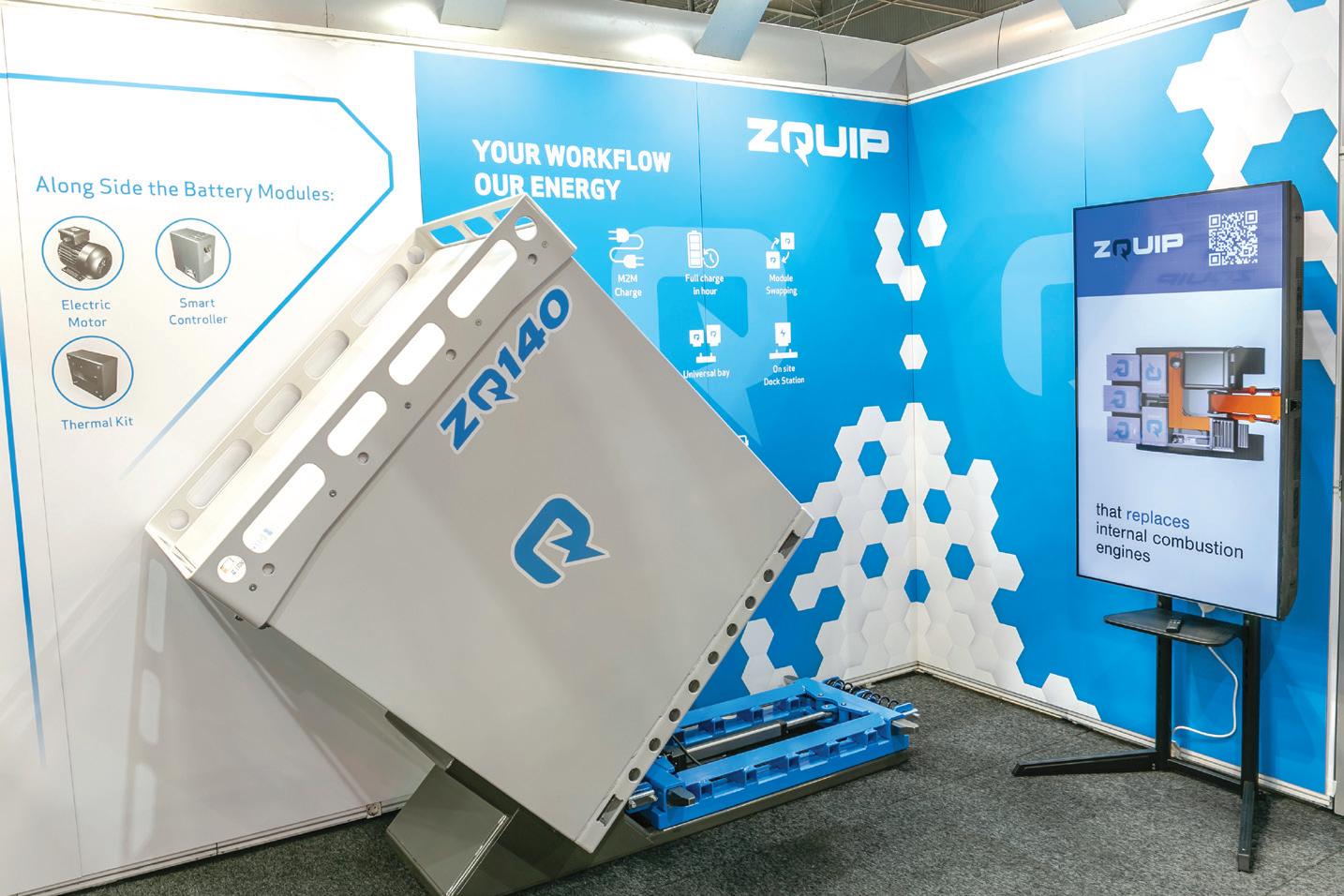
Hamm has added two new machines to its range of HC series compactors: the HC 110 and HC 130. These 11tonne and 13tonne units are available with a choice of either smooth or padfoot drums.
“Both models meet the MAR-I and UN ECE R96 (Tier 3) exhaust emissions standards,” but will only go on sale in Brazil at this stage. However, they will be available on other markets in due course.
According to the rm: “The HC 110 and HC 130 compactors are characterised by high centrifugal forces and static line loads and, in combination with a drum width of 2,140mm, deliver high area performance. An e cient ECO mode enables diesel fuel savings without any negative e ects on compaction performance.
“The frequency and compaction forces in ECO-mode remain consistently high, even at the reduced engine speed. A positive side-e ect of this is a corresponding reduction of CO2 emissions. These machines impress with gradeability of up to 58%.”
Key features include: Fieldproven three-point articulation, which ensures excellent directional stability; outstanding stability when cornering; and high resistance to tipping (and) automatic frequency setting. This function allows the driver to select the desired vibration frequency of 30 or 35Hz via the display, while the drive computer continuously regulates the volume ow in order to achieve the speci ed value.
The compactors are powered by a 101kW John Deere engine
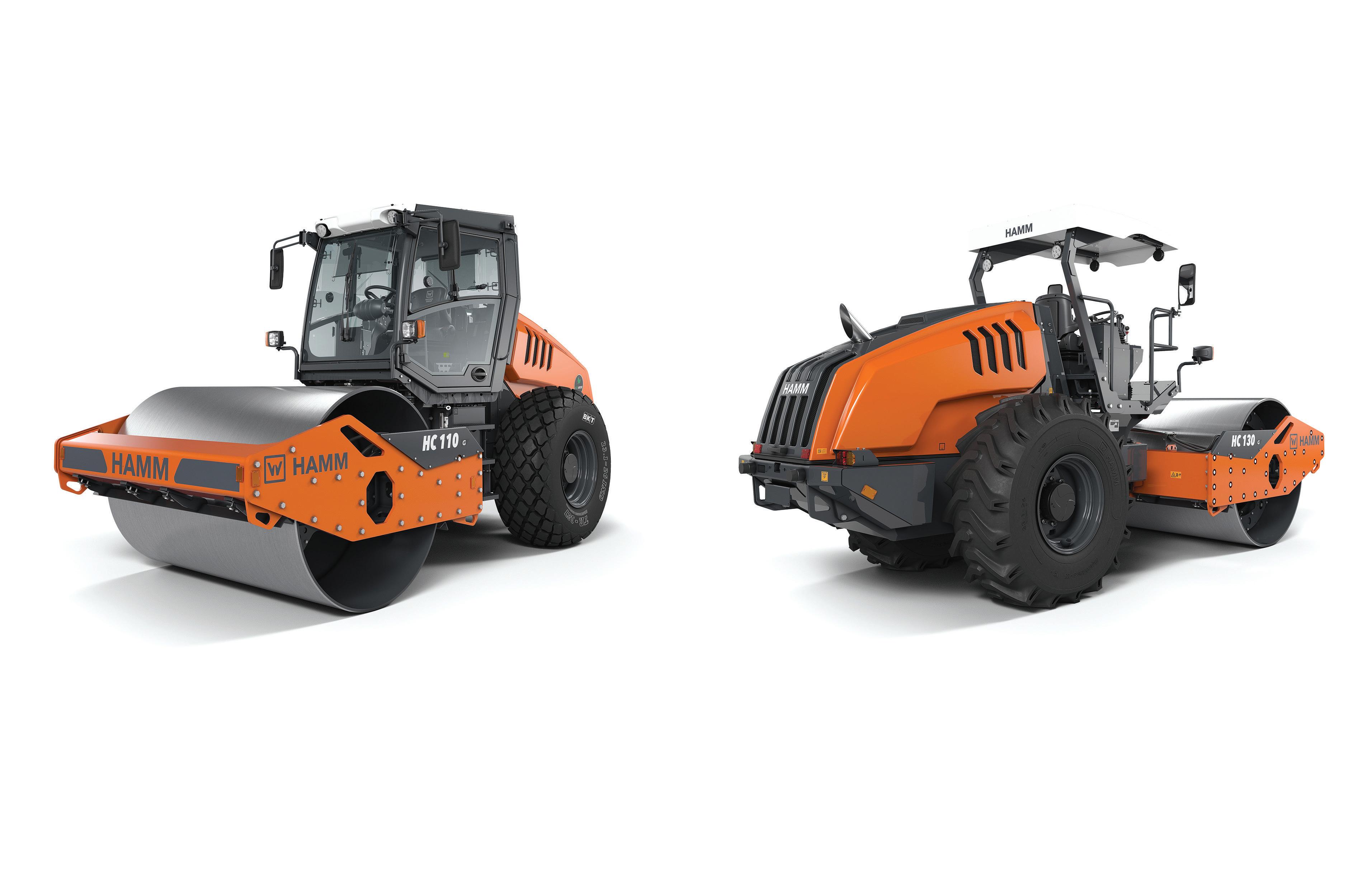
Develon now o ers a range of four di erent Stage V Super Long Reach excavators from 24.6-52.2tonnes, comprising the DX225LC-7 SLR, DX300LC-7 SLR and DX530LC-7 SemiSLR and SLR models.

The DX225LC-7 SLR features 8.5m boom and 6.2m arm components, with a maximum digging reach of 15.37m, a maximum digging depth of 11.66m and a maximum digging height of 13.05m. Moving up the range, the DX300LC-7 SLR provides a maximum digging reach of 17.51m, a maximum digging depth of 13.78m and a maximum digging height of 14.2m. This excavator has 10m boom and 7m arm components.
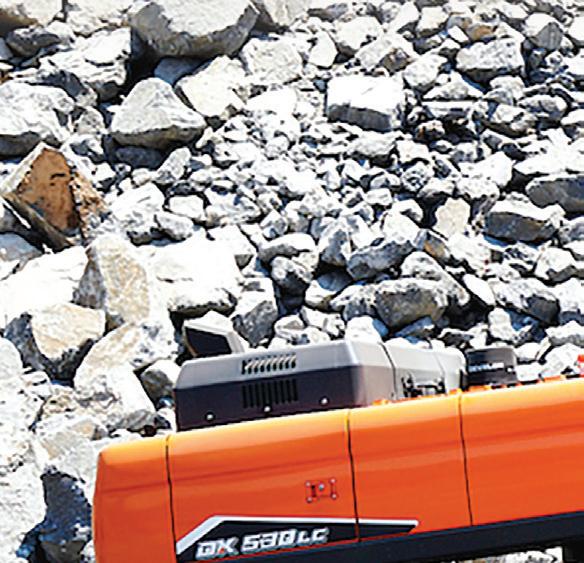
(and) all models o er options such as compaction measurement with the Hamm Compaction Meter, a process-data gateway, padfoot shells, LED lighting or an automatic vibration system. Other equipment options including the new ROPS driver's cab with an optional heating and air conditioning system, a collapsible weather
Completing the range, the DX530LC-7 Semi-SLR/SLR features 9.0/11m boom and 6/8m arm components, respectively. The DX530LC-7 Semi-SLR excavator provides a maximum digging reach of 16.06m, a maximum digging depth of 11.8m and a maximum digging height of 12.8m.

The DX530LC-7 SLR excavator provides a maximum digging reach of 19.62m, a maximum digging depth of 15.13m and a maximum digging height of 14.44m.
The DX225LC-7 SLR and DX300LC-7 SLR are powered by the well-proven 6-cylinder, turbocharged DL06V and DL08V water-cooled Stage V diesel engines, providing high power
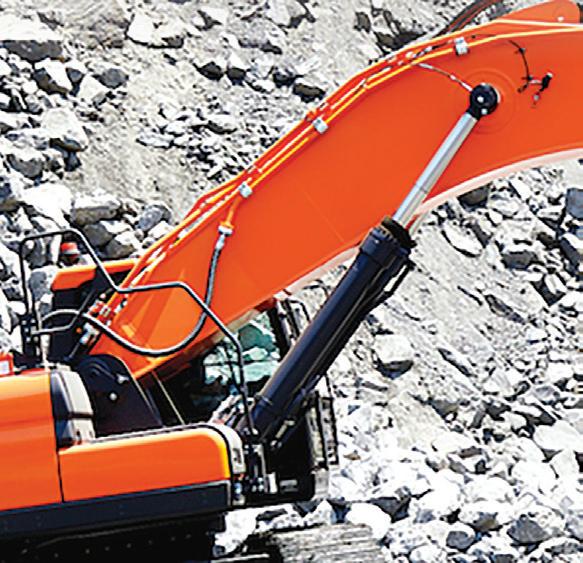
canopy or ROPS/FOPS (Level 1) enable users to customise the compactors to meet their speci c needs. All service and maintenance points are easily accessible at any time and thus ensure constant operational readiness.
Hamm www.hamm.eu
outputs of 129kW and 202kW at 1800 RPM, respectively.
The DX530LC-7 Semi-SLR and SLR models are powered by the Scania DC13 engine, with an output of 294kW at 1800 RPM.

All models are factory-installed with the Develon Fleet Management wireless asset management system.
The system o ers a web-based eet management solution for monitoring the performance and security of machines and promoting preventative maintenance.
Develon www.eu.develon-ce.com
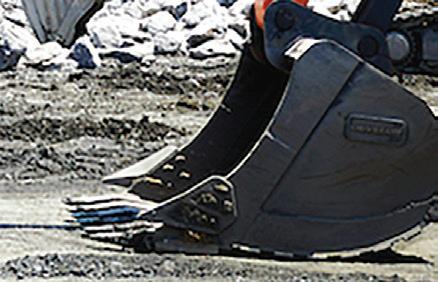
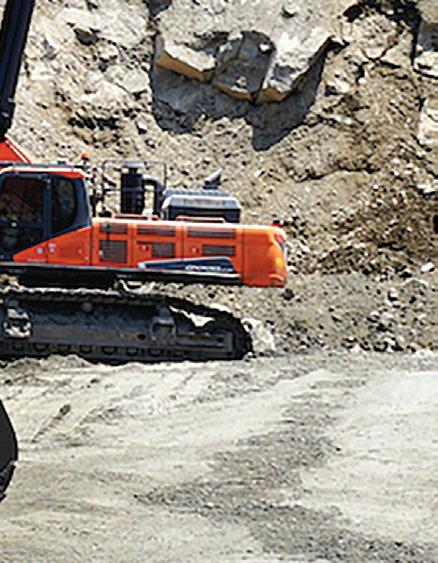
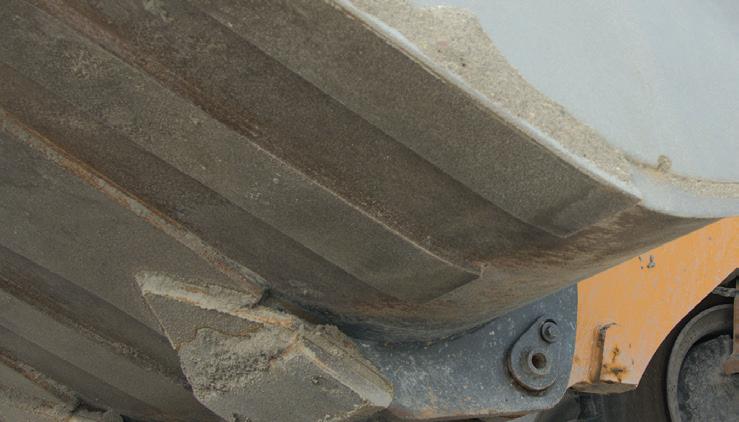
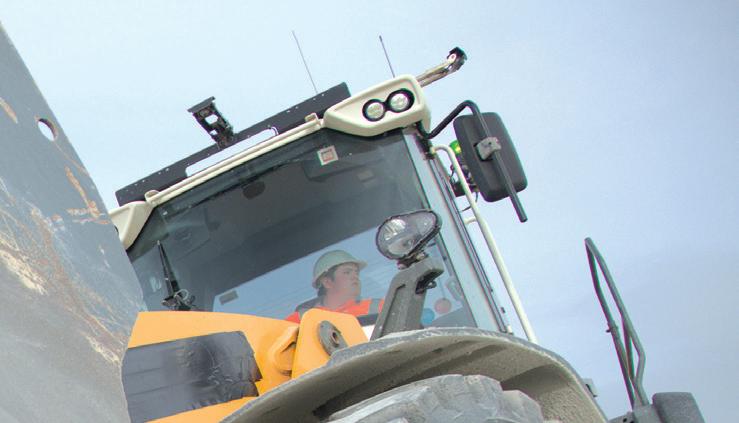
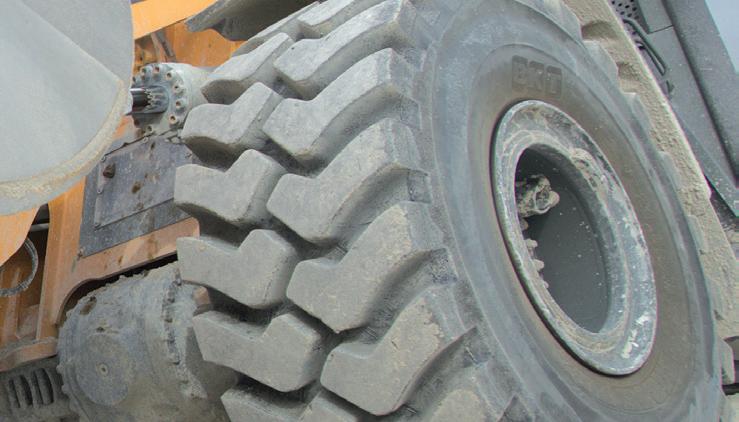

Tough tyres from BKT are proving their worth on a di cult extraction site in the UK. The Littlejohns Pit is being worked by Brookland Sand & Aggregates Ltd of Saint Austell. The rm has sold over 2.3 million tons of sand and aggregates to both local and national customers since March 2010, showing a reach beyond Cornwall's borders. With one-third of its business
run outside the county and a substantial sales volume in the London market as well, Brookland Sand & Aggregates Ltd has established itself as a key producer.
The company is using tyres from BKT on its heavy machines, which play key roles in the processing of Stent, a by-product of kaolin extraction, into secondary sand, and aggregates. This process helps to
German rm Andreas Kortendiek has built multiple stone walkways over the years using conventional hand tools.
However, the rm recently started placing gravel with an Ammann AFT 300-2 Compact Paver, followed by an Ammann ARX 26-2 Light Tandem Roller for compaction.
Using the machines meant that the job was nished in just three hours. Placing the material by hand and compacting with plates would have taken at least a full day, and likely longer. Better still, quality was improved also as the materials are evenly distributed by the auger and levelled by the screed.

GaLaBau A Kortendiek was hired to place a natural stone path in Fresenburg, Germany. The Ammann AFT 300-2 tracked paver was small enough to work on the 1.6m-wide walkway. The machine overcame inclines without a problem.
The material was placed at a depth of 7cm and compacted to 6cm. The AFT 300-2 laid the gravel for the length of the 250m path. Compacting the gravel behind the paver was an Ammann ARX 26-2 Light Tandem Roller. The machine replaced the vibratory plates the company previously used on the walkways.
The machine compacted in static mode. Compaction was simple, as there were no speci cations for the job. The machine proved e ective and manoeuvrable on the tight trail and left behind a smooth path.
Ammann
www.ammann.com


preserve natural resources and reduce environmental impact.

The BKT tyres are used on the rm’s wheeled loaders and dump trucks and have proven hard wearing in the di cult application. Wear life for the tyres is said to be good, while the units also ensure good traction.
BKT Tires www.bkt-tires.com
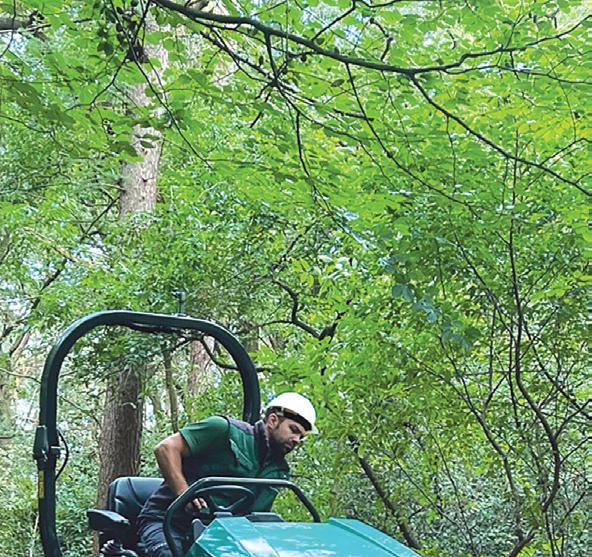
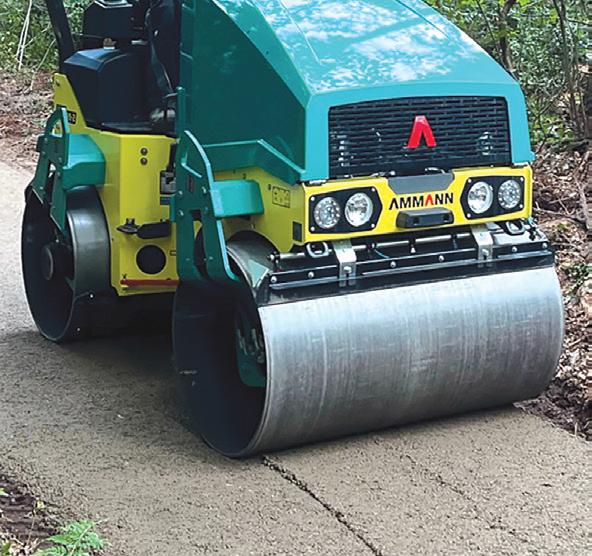


Breedon’s Cement Hope Works has been relying on Quarry Manufacturing and Supplies for regular servicing, spare parts and aftermarket care for its two large stationary cone crushers for some years.
The dependable service delivered and the quality of the parts has led to the quarry replacing two of the crushers with QMS’s own B-Series cone crushers.
The quarry had found that spare and wear parts and consumables were becoming more expensive. When it was realised that QMS could supply, t and support its own range of cone crusher consumables and parts, Breedon decided to purchase these. And when it came to upgrading the plant and replacing the old cone crushers with new, Breedon Cement Hope Works had asked QMS if it could o er suitable replacements.
QMS initially provided one, then another B-Series cone crusher, as well as providing parts, consumables, and aftermarket care for both the crushers and most of the quarry operation.
These crushers are said to deliver high productivity with reduced operating costs. Designed, developed and manufactured in the UK, the B-Series’ robust design is manufactured with highquality cast steel components and premium spherical roller bearings that contribute to reliability and high performance.
Quarry Manufacturing and Supplies www.qmsupplies.com

Our Skidmarks page is highly rated by readers. Your input could help make this page even more entertaining. If you come across any amusing road-related stories or pictures email me at mwoof@ropl.com
Five MTB riders in Washington State in the US had an unnerving experience recently. One of the party was attacked by a cougar that had been following the riders. Her head was trapped in the jaws of the big cat for 15 minutes until the other riders were able to help free the unfortunate woman. The others managed to wrestle the big cat from the person being attacked and then used their bicycles to hold it until reserve wardens could come to their aid. The woman who was attacked su ered minor injuries and had to go to hospital for treatment but was released soon afterwards. Unfortunately, the cougar had to be shot by the reserve wardens.
A string of drivers following directions from their GPS in Scotland’s capital, Edinburgh, have had embarrassing incidents. The drivers have been directed to use a set of steps. The road system in the area was redesigned recently, with the stairs being installed to replace a narrow lane, which was recon gured for pedestrian access only. However, the GPS mapping systems have not kept up with the changes so the local council has now had to install a barrier to prevent drivers from trying to use the ight of steps.
A drunk cyclist with limited sight was caught pedalling along a dual carriageway by o cers in Ireland. The cyclist had been reported by a number of people after being seen on the road and had at one point collided with a parked car. Subsequent tests for the presence of alcohol showed that the man was indeed intoxicated. The incident was made further complicated by the fact that the man had only a limited grasp of English and even less of Gaelic, despite having moved from Lithuania to Ireland nearly 20 years ago. He is registered as blind, having very limited vision, and a bicycle is his only transport.
A 200m section of road in an English village is causing consternation amongst the inhabitants due to its poor condition. There are 174 potholes in the stretch of road, with motorists having su ered extensive damage to their vehicles on repeated occasions. Cyclists and motorcyclists also have been thrown from their two-wheelers due to the terrible condition of the road. The section of road connects Wrenbury with the local railway station and is well used, but the local council has not so far made a move to repair the link in the ve years since the problems rst emerged.
Police in Italy were alerted to a suspect vehicle recently and got a surprise when they found out who was driving. A caller had spotted the car being driven erratically, so the o cers tracked the vehicle and stopped it. They found that the driver was a 103-year-old woman, whose licence had expired. She had been visiting friends but had lost her way at night and had become alarmed, so the o cers took her home. Italian drivers aged over 80 are required to undergo a medical exam as part of the renewal of their driving licences periodically, but the woman had neglected to do so. She said afterwards that she would buy a Vespa scooter as soon as she can, but for the present will use a bicycle to get around.
A man in the southern English city of Brighton is making a pro table sideline from his property. When he bought his home it came with a parking space but as he has no car, he rents this out to visitors. This earns him a healthy £6,000/year. With parking spaces at a premium in Brighton, the man has found he does not even need to advertise his space, which is used regularly by local tradespeople or visitors staying at a nearby hotel.



A car owner in India recently spent around £2,000 modifying his Maruti Suzuki car so that it resembled a helicopter. The man had a mock helicopter tail and imitation rotor blades tted to the roof of the vehicle. He had hoped to be able to rent the car out for weddings as a special vehicle. However, as soon as he took to the road, he was stopped and had the vehicle seized by local police as they considered the modi cations made the car unsafe for other road users. Despite being ned £2,000, the man is determined to try to nd a way to keep his car with its helicopter tail unit and rotor blades. However, the police have said that they will only return the car to him if he agrees to remove the modi cations.
A man in the UK called police recently to warn of a drink-driver on the road: himself. He told the surprised call handlers that he was not sure what he was doing in his van. The man was traced within 15 minutes by o cers and when tested, was found to be three times over the limit for alcohol. He explained that he had experienced a somewhat heavy weekend. The incident is unusual in that the man voluntarily made the call, although it is not the rst time a drink-driver has called o cers. In 2022, a driver in the US rang police to warn of someone else driving on the wrong side of the road. When o cers traced the complainant, they discovered he was driving under the in uence and he was the one on the wrong side of the road.
An elephant escaped from a circus in Butte, Montana. The animal had been alarmed at the sound of a car back ring and escaped its handler, then trotted up and down the streets of the city. It was caught after a period and returned unharmed to the circus. The elephant was not available for comment on the incident.
Two luckless drivers have been soundly mocked for leaving their vehicles parked on the beach at Blackpool in the UK. The cars became stuck and the tide came in before the vehicles could be removed and both were washed out from close to shore by the waves. When the tide receded, both were able to be removed from the beach. However, one of the cars ended up on its roof, and both had su ered extensive damage and will likely have to be scrapped as repairs from the exposure to seawater will be uneconomic. How the respective insurance companies will respond to claims remains to be seen.
Two women drivers in Tameside in the UK took out their grievances with each other in a dispute about driving. One of the drivers had managed to skip a queue at a set of tra c lights, which the other driver took o ence to. The two women were lmed getting out of their cars and having a ght in the road. One of the women had her children in the car, setting a somewhat less than perfect example for her o spring.