
















CAT® ASPHALT PAVER AP555

CAT® ASPHALT COMPACTOR CB10
CAT® UTILITY COMPACTOR CB2.7 GC

MEET THE CAT® PAVING PRODUCTS TEAM





5. Contra ow
Voters in the UK and the US should think about the state of their roads when they enter a voting booth
6. News
US bridge repair data; IraqTurkey highway discussions; Highway widening in Taiwan; design deal awarded to replace collapsed Francis Scott Bridge
10. Construction technology
Leica Geosystems’ DD300 CONNECT utility locator; Trimble and Radiodetection collaborate to improve mapping; Bilanciai and Topcon Positioning Systems team up for Europe
14. IRF
The 61st edition of the IRF World Road Statistics; 2nd IRF Europe & Central Asia Regional Congress in Plovdiv







26. Asphalt paving
BOMAG Innovation Days; UK’s National Highways trials a graphene-enhanced asphalt
32. Asphalt plants
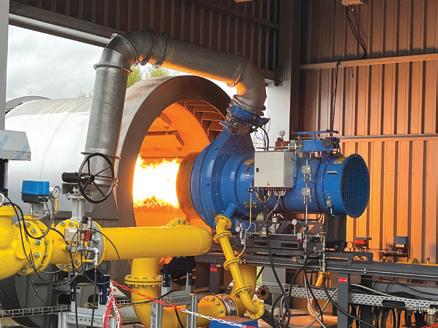
Benninghoven’s hydrogen burner; Volvo CE’s prototype fuel cell ADT
36. Bitumen technology
North American trade bodies push members to cut carbon; Skanska uses a PMB containing biogenic binder material for Stockholm Arlanda Airport
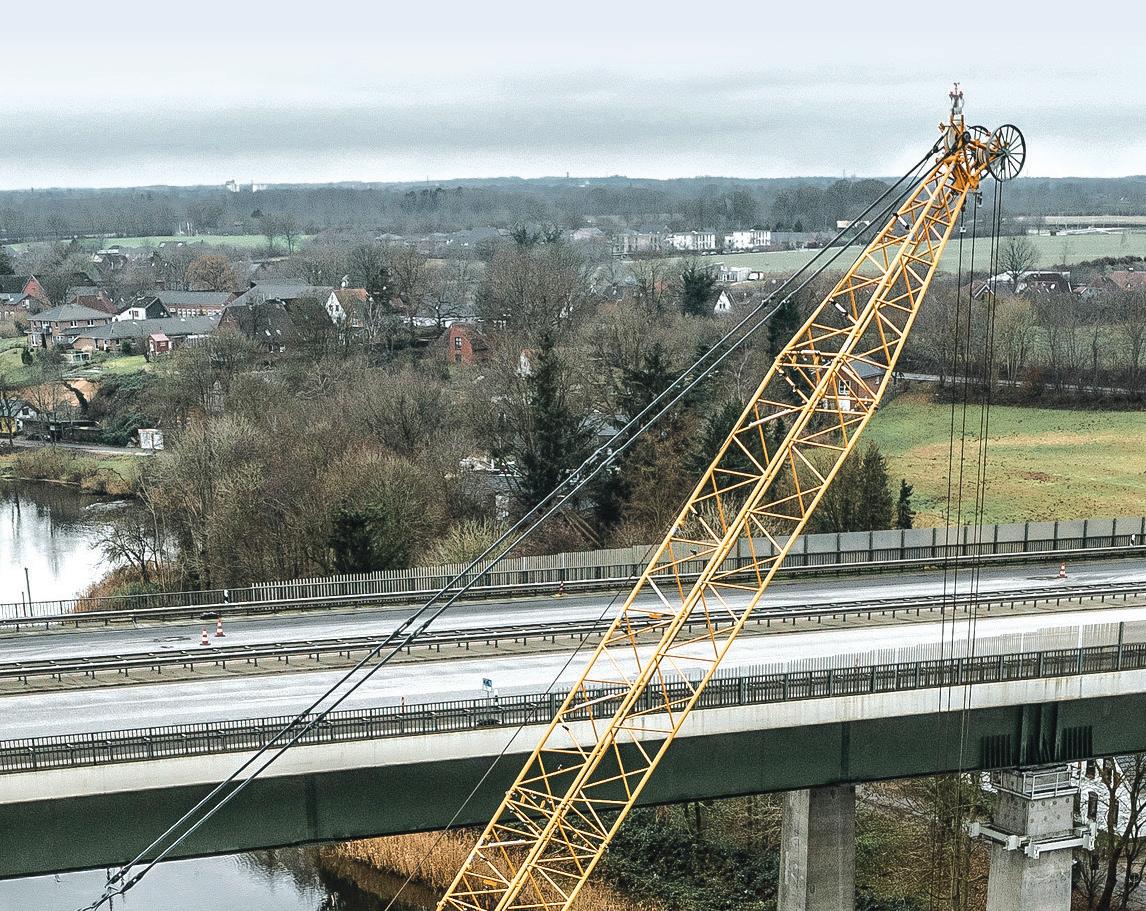
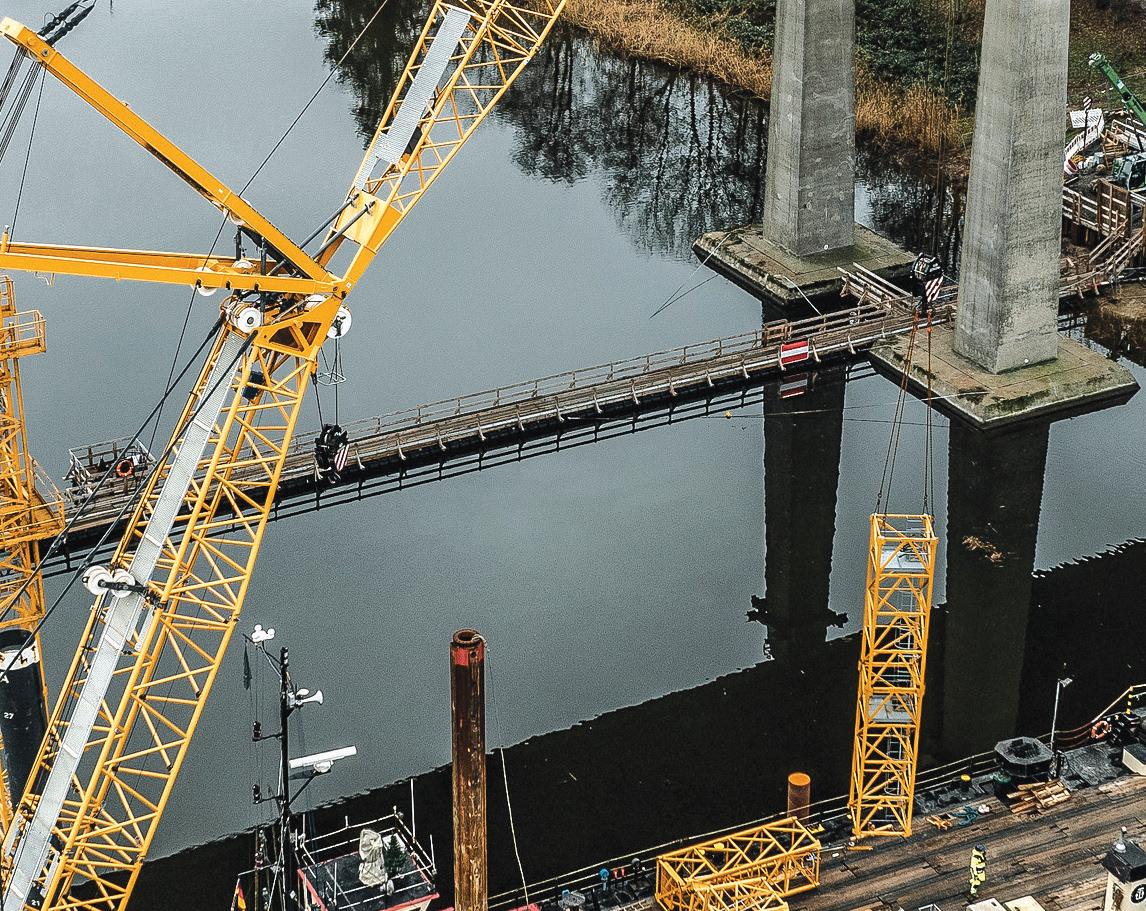
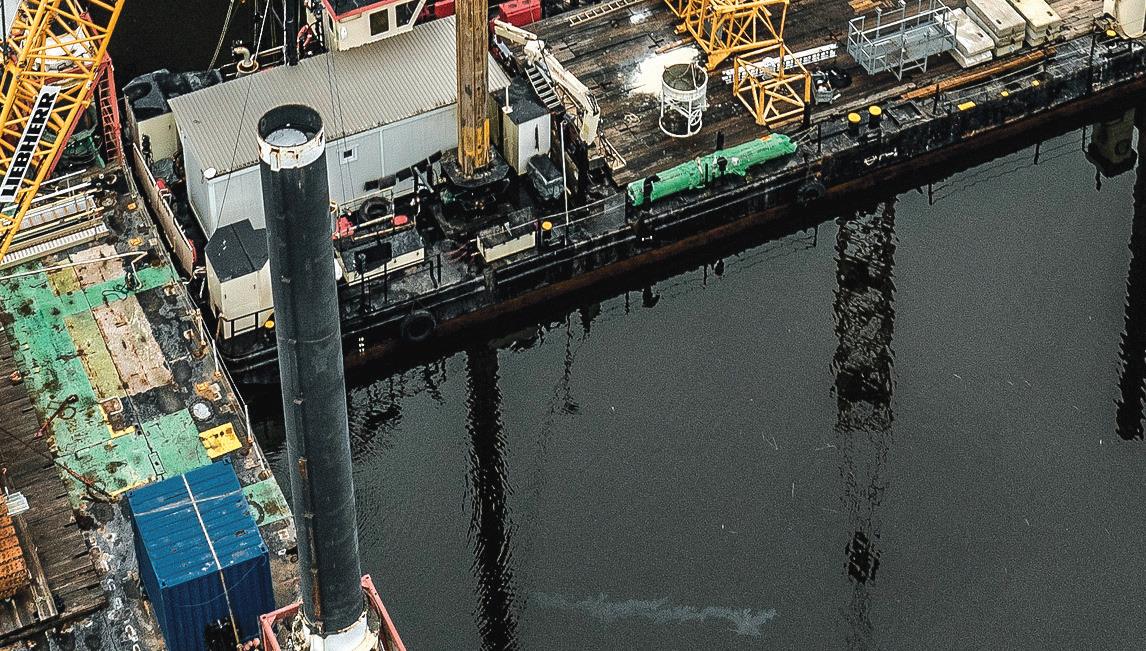
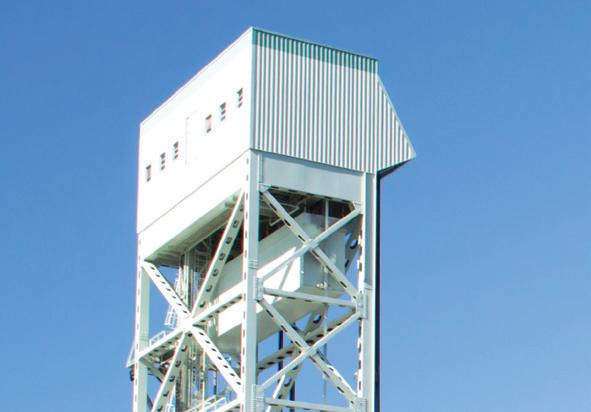
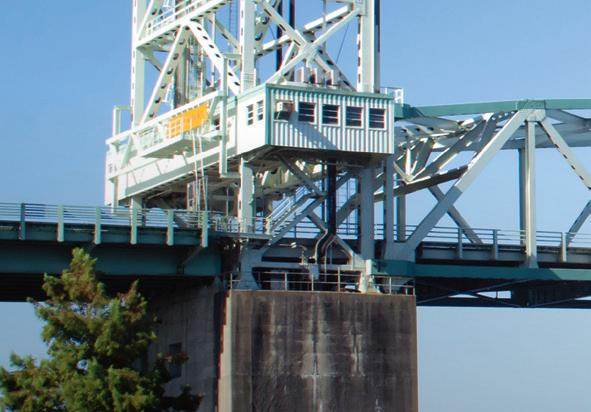
39. Bridges & Tunnels Liebherr lift over Kiel Canal; Tubeshor Active Thermal Compensator from RMD Kwikform; WOLFF 7534.16 Clear Cranes near Horb, Germany
44. Demolition
45. Engines
Zero-carbon fuels including ammonia; Cummins invests in its Master Rebuild Centre in Krakow
47. Aggregate production
Kleeman’s intuitive SPECTIVE mobile app; the FLEX-MAT Sensor App from Major; Screencore’s latest version of its tracked hybrid XJ Dual-Power jaw crusher
49. Equipment
Caterpillar offers the Cat Track Wear Sensor; Piling power from Sunward; Hyundai’s new mini excavator between 1.7-5.5tonnes
50. Skidmarks

Develon’s new DX140RDM-7 22.5tonne demolition excavator; Epiroc widens its Pulveriser range


Further humorous roadrelated stories from around the world 18-25






























Editor: Mike Woof
Deputy Editor: David Arminas
Sub-Editor: Kevin O'Shea
Contributing Editor: Guy Woodford
Editorial Contributors:
Shem Oirere, Kristina Smith, Mauro Nogarin, Eugene Gerden, Partha Basistha, Lucio Garofolo
Designers: Simon Ward, Andy Taylder
O
Production Manager: Nick Bond
ce Manager: Kelly Thompson
Internet, IT and Data Services Director: James Howard
Data & Marketing Manager: Alan Cansick
Web Manager: Sarah Biswell
Managing Director: Andrew Barriball
Chairman: Roger Adshead
Publishing Director: Geo Hadwick
ADDRESS: Route One Publishing Limited, Second oor, West Hill House, West Hill, Dartford Kent DA1 2EU, UK
Tel: +44 1322 612055 Fax: +44 1322 788063
Email: [initialsurname]@ropl.com
(eg: radshead@ropl.com)
ADVERTISEMENT SALES
Head of Construction Sales: Graeme McQueen
Tel: +44 1322 612069 Email: gmcqueen@ropl.com
Sales Director: Philip Woodgate
Tel: +44 1322 612067 Email: pwoodgate@ropl.com
Sales Director: Dan Emmerson
Tel: +44 1322 612068 Email: demmerson@ropl.com
UK / CLASSIFIED, NORTH AMERICA: Dan Emmerson
Tel: +44 1322 612068 Email: demmerson@ropl.com
ITALY: Fulvio Bon glietti
Tel: +39 339 1010833 Fax: +39 02 700446321
Email: bon glietti@tiscali.it
JAPAN: Akiyoshi Ojima
Tel: +81 3 3263 5065 Fax: +81 3 3234 2064
Email: ojima@echo-Japan.co.jp
ASIA / AUSTRALASIA: Roger Adshead
Tel: +44 7768 178163 Email: radshead@ropl.com
SUBSCRIPTION RATES & ENQUIRIES: World Highways/Routes
du Monde is available on subscription at the rate of: £142/US$246/€186 per annum. Single copies £20 / US$35 / €26
Subscription enquiries to: Tel: +44 1322 612061 Fax: +44 1322 788063 Email: subs@ropl.com

No part of this publication may be reproduced in any form whatsoever without the express written permission of the publisher. Contributors are encouraged to express their personal and professional opinions in this publication, and accordingly views expressed herein are not necessarily the views of Route One Publishing Ltd, or the International Road Federation. From time to time statements and claims are made by the manufacturers and their representatives in respect of their products and services. While reasonable steps are taken to check their accuracy at the time of going to press, the publisher cannot be held liable for their validity and accuracy
WORLD HIGHWAYS/ROUTES DU MONDE, USPS 8757, is published 6 times a year by Route One Publishing Limited, Second oor, West Hill House, West Hill, Dartford Kent DA1 2EU, UK.
The US annual subscription price is US$246.00 Airfreight and mailing in the USA by agent named World Container Inc, 150-15, 183rd Street, Jamaica, NY 11413, USA.
Periodicals postage paid at: Brooklyn, NY 11256
US Postmaster: Send address changes to WORLD HIGHWAYS/ ROUTES DU MONDE, Air Business Ltd, c/o World Container INC 150-15, 183rd St, Jamaica, NY 11413, USA. Subscription records are maintained at Route One Publishing Limited, Second oor, West Hill House, West Hill, Dartford Kent DA1 2EU, UK. Air Business Ltd is acting as our mailing agent.
Printed by: Warners Midlands PLC’



After 14 years of skimping on maintenance, the UK’s roads are falling apart.
Mike Woof, EDITOR mwoof@ropl.com
Transport is crucial for the effective functioning of any economy but the UK has been hamstrung in this respect by bungling politicians in recent years, which other countries should take note of.
One of the commonly heard complaints in the UK at present comes from road users, whether drivers, motorcyclists or cyclists, who are worried about the dilapidated state of the network. A recent survey by the RAC motoring body shows that 56% of drivers are concerned about the poor state of roads that are the responsibility of local councils.
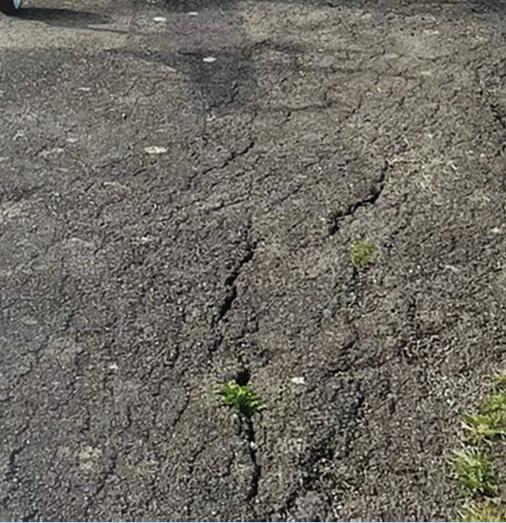
But it should come as no surprise to many UK citizens as to why the country’s road network is in such a shockingly poor state of repair. The reason for this is very clear. Local councils were forced to cut road maintenance and repair works having seen their budgets slashed by central government. Between 2010 and 2020, central government cut the funding for council budgets by 40% and this has impacted on 98% of the UK’s road network. After 14 years of skimping on maintenance, the UK’s roads are falling apart.
Data from the Asphalt Industry Alliance (AIA) suggests that the UK now has a growing backlog of road repairs that will cost as much as £16 billion to put right.
While this situation is causing problems for road users in the UK, it is of global importance. It spells out the dangers of short-sighted government policy for transport and the longer term issues this can cause.
It is plain common sense that saving small amounts of money by skimping on repairs over the
short term will result in far greater costs for the future. But that was the policy of austerity measures used by the UK Government between 2010 and 2024.
Having wrecked the UK economy and infrastructure through 14 years of incompetence, surely it would be logical these people would be held responsible? But no, many are now bene ting from lucrative directorships or managed to win generous supply contracts for goods without tender processes or proper scrutiny during the COVID-19 pandemic. And worse than that, many of the those people responsible for the dreadful state of the UK road network will not even contribute to its repair, employing tax loopholes to shield their wealth and avoiding paying their fair share.
Investing in infrastructure is good common sense and should not be favoured by one political side or other. Perhaps no better example of this is from the US Governments headed by presidents Franklin Delano Roosevelt or Dwight Eisenhower. While they represented different sides of the political spectrum, both well understood the importance of spending on infrastructure to deliver long term economic gain for all.
For the UK, repairing the damage to the road system (not to mention other important public services) will take years.
And for those in the US considering which candidate to vote for this coming November, ignore side issues like taxes. Ask which candidate is more likely to set up funding programmes for transport infrastructure works that will deliver tens of thousands of construction jobs. MW





US$15 billion Nigeria-Ivory Coast road connection
A new highway costing up to US$15 billion is planned to connect Nigeria and Ivory Coast. The highway would link Nigeria’s economic centre, Lagos, with the capital of Ivory Coast, Abidjan.



Nearly 221,800 bridges in the US need major repairs or replacement. This is the nding of analysis of the latest federal government data by the American Road & Transportation Builders Association (ARTBA).
Of the bridges needing repair, 42,067 are rated in poor condition and classi ed as “structurally de cient.” That is 324 fewer than in 2023.
States with the biggest decline in the number of bridges in poor condition: Pennsylvania (down 90), Louisiana (down 87), Florida (down 85), West Virginia (down 74), and California (down 64).
Bridges in poor condition represent 6.8% of the 2024 US bridge inventory compared to 7.3% in 2020.

"Over the last ve years we have seen signi cant progress in states like Oklahoma, Pennsylvania, Mississippi, Louisiana, and West Virginiareducing the number of bridges in poor condition," said Dr Alison Premo Black, ARTBA’s chief economist, who conducted the analysis. "While improvements can take time, every bridge repair increases the safety and ef ciency of our network for the travelling public."
States have received US$15.9 billion in the rst three years of the IIJA’s new $27.5 billion formula bridge programme and, to date, have committed 46% ($7.3 billion) of these resources to over 4,170 bridge projects.
The remaining 54% ($8.5 billion) of already released bridge funds - plus the $10.6 billion

that will be provided in the next two years - will support needed bridge improvements well into the future.
So far 23 states have committed at least half of their available bridge formula funds, with the top 10 being: Georgia (100%), North Dakota (99%), Indiana (98%), Florida (96%), Oklahoma (95%), Nebraska (91.5%), Idaho (91.5%), Arkansas (88%), West Virginia (85%) and Alabama (85%).
Based on average cost data submitted by states to the US Department of Transportation, ARTBA estimates it would cost over $400 billion to make all needed repairs to the 221,800 structures. The data in the report is from the Federal Highway Administration’s National Bridge Inventory (NBI).
The route will also pass through Benin, Togo and Ghana, connecting their respective capitals, Porto Novo, Lome and Accra. Because of the importance of the project for the economic development of the region, this project has been approved by the Economic Community of West Africa States (ECOWAS).
The 1,068km Lagos-Abidjan Corridor Highway Development Project is being managed jointly by the ve ECOWAS nations, Nigeria, Benin Republic, Togo, Ghana, and Côte d'Ivoire.





Costing an estimated US$13 billion, the 1,390km Delhi-Mumbai Expressway should be ready for traf c in the third quarter of 2025. In addition, work is now underway on the Shinkun Tunnel, which will be the world’s highest once complete.
Some stretches of the Delhi-Mumbai Expressway route are already in use, with over 1,100km of the route having been completed. The new expressway will reduce the distance between the cities by around 180km and will cut journey times by an estimated 50%, from 24 hours to just 12 hours. The expressway will feature four lanes in either direction although some stretches will have more lanes as required.

The expressway runs from the elevated highway on the southern side of Delhi and passes through the states of Haryana, Rajasthan, Madhya Pradesh, Gujarat and Maharashtra. The route is being managed and maintained by National Highways Authority of India (NHAI).
Construction has now commenced for the Shinkun La Tunnel in India. At an altitude of around 4,800m, this twin tube link will be the world’s highest road tunnel when it is complete, measuring around 4.3km in length.


The new tunnel is being built as part of the Nimu-Padum-Darcha Road and will allow transport even in poor weather as the current Shinkun Pass is often blocked to traf c.











The new 1,200km highway connecting Iraq and Turkey will revitalise transport for the region.
The respective transport ministers of Turkey, Iraq and also the United Arab Emirates and Qatar have been involved in discussions over the planned highway project. Building a new highway between the port of Basra in Iraq with Mersin in Southern Turkey will provide an important trade route for the region.
This would provide an overland transport route that
would potentially rival the Suez Canal in Egypt, linking the Persian Gulf with the Mediterranean.
Financing for the project has yet to be revealed but the highway will cost US$ billions to construct. The rst phase will be completed in 2028, the second in 2033 and the third in 2050, according to a statement from Qatar’s Ministry of Transport. It will create a land route and railway extending from Iraq to Turkey and its ports in order to export and import from Europe.

Kiewit Construction has been awarded the rst contract for the replacement of the



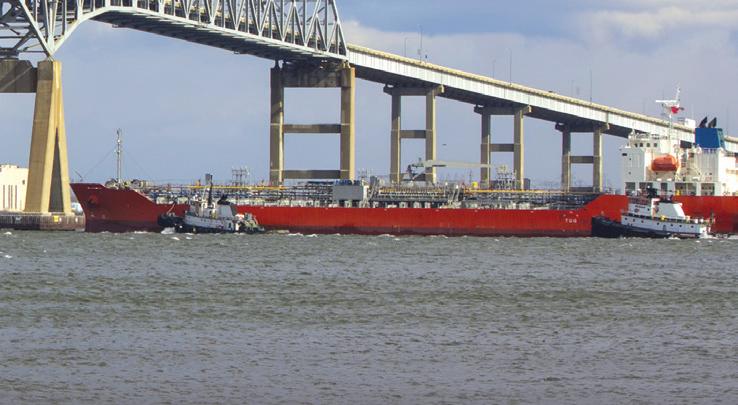


Kiewit Infrastructure has been awarded a US$73 million contract for the design of the collapsed Francis Scott Bridge replacement project. The contract was awarded to the rm by the Maryland Transportation Authority (MDTA) Board.
Kiewit will act as the Progressive Design-Builder to undertake the complete design and construction of the I-695 Francis Scott Key Bridge replacement. Proposals were evaluated by the MDTA selection committee. The rebuild project is slated to begin in 2025 and the replacement bridge is expected to open in the third quarter of 2028.

Carrying the I-695 Baltimore Beltway, the Francis Scott Bridge opened to tra c in 1977 and although it had recently passed inspection, the design made it vulnerable to impacts from ships using the waterway. Replacing the bridge is expected to cost up to US$1.7 billion in total and should be complete by 2028.
The new bridge will bene t from extra protection around its piers to prevent damage from potential ship collisions. The new bridge will also be higher than the previous structure to account for the larger vessels now in use.
A new research hub will lead the use of digital twins in determining how transport systems can be decarbonised quickly, safely and cheaply.
The TransiT Hub, led by Heriot-Watt University in Edinburgh and the University of Glasgow, is supported by a £46 million investment from the UKRI Engineering and Physical Sciences Research Council (EPSRC) and 67 partners. Employing digital twins means
real-world data can be analysed to test and improve different scenarios.
The digital twin can then send back its solution for an improved process to the physical world in near real time.
US$4.3 billion Taiwan highway widening work
A highway widening project worth US$4.3 billion is planned for northern Taiwan. The 44km stretch of National Freeway No1 from Yangmei to Toufen will be improved with the addition of extra lanes. Included in the work will be the construction of a tunnel section.
The project is being overseen by the Ministry of Transportation and Communications. The feasibility study into the project was approved in May 2020, with the environmental impact assessment having been completed in mid-2023 and construction approved in December 2023. The work should be ready for use in 2033.






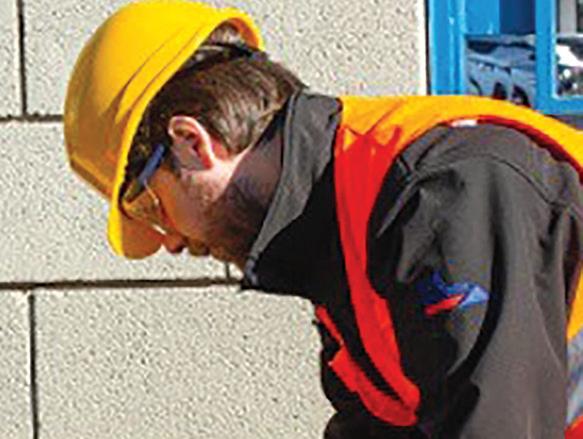
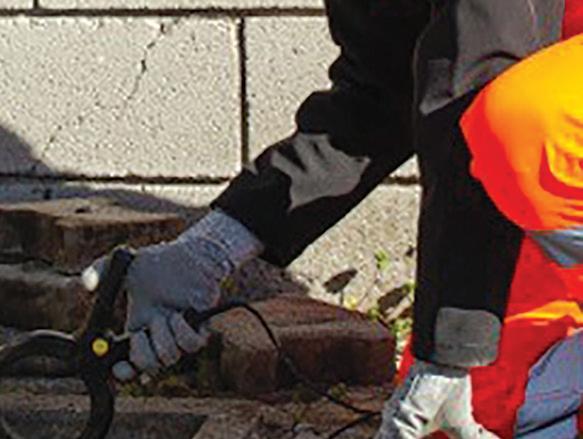

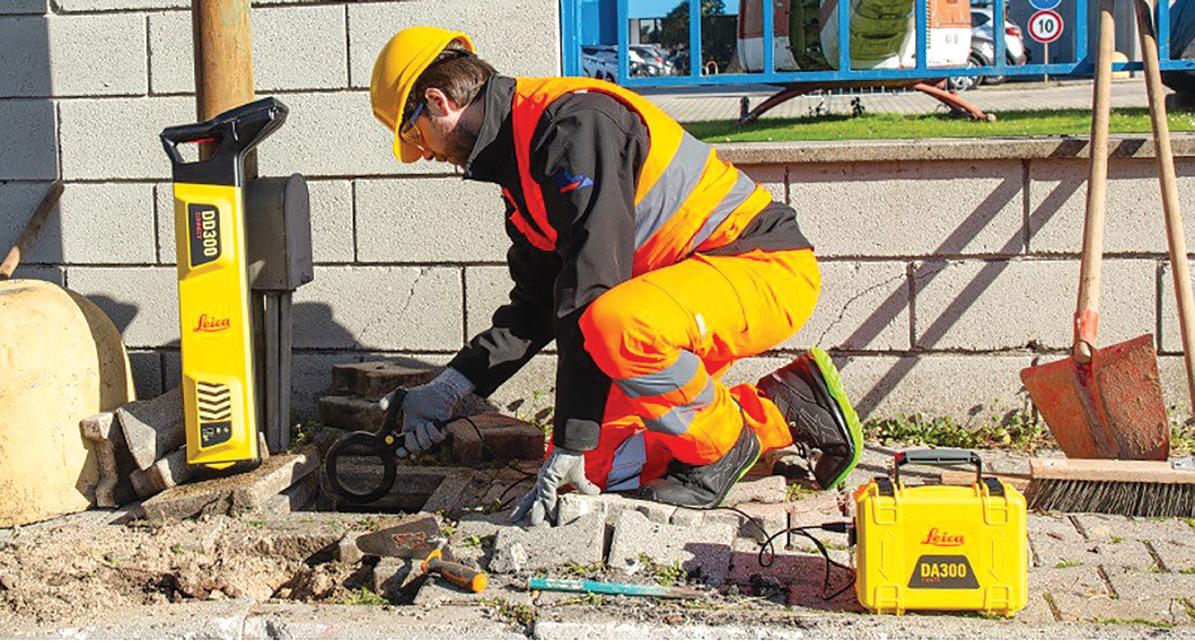
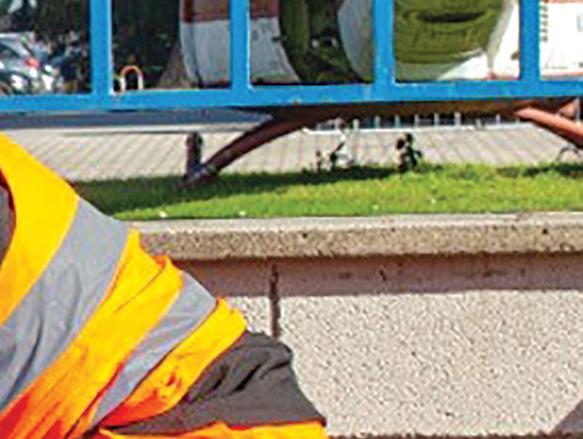
Leica Geosystems is now offering the Leica DD300 CONNECT utility locator and Leica DA300 signal transmitter, a combined solution for utility detection. The rm says that this technology will boost site safety and reduce the risk of utilities being damaged during construction works.
The solution allows for accurate and reliable underground investigations and can deliver on-the-spot information for the underground network. Novice users can access video tutorials on the LCD display for a step-by-step approach to successful surveys. Meanwhile, expert users have access to a comprehensive range of advanced features. The digital trim enables manual management of the gain bar to adjust device sensitivity,

assisting the operator in pinpointing the target in complex situations with multiple underground utilities. In addition, the device offers a wider range of acquisition frequencies between 33kHz and 131kHz, including a 83kHz frequency for longdistance tracing.
The new utility locator integrates with the Leica DX Shield software, providing easy-to-use tracking tools and a centralised hub for managing onsite activities and multiple devices. Operators can also connect the hardware to the DX Field Shield app, enabling real-time remote data transfer of cable locator information to the of ce.
Additionally, the USB connection offers convenient data download, analysis and product maintenance with self-calibration


functionalities through DX Shield Of ce software.
"Our portfolio of avoidance solutions ranges from novice, entrylevel utility locators to sophisticated, high-end, fully featured locators,” said Federico Bertolucci, product manager of the detection portfolio at Hexagon’s Geosystems division. “The new Leica DD300 boasts an unmatched versatility, empowering an extended range of users to safely locate and avoid underground utilities. This adaptability signi cantly enhances both productivity and safety across the different levels of users’ expertise."
Leica Geosystems www.leica-geosystems.com
Trimble and Radiodetection are collaborating to improve the technology used in the utility measurement and mapping process.
Integrating the Trimble Catalyst DA2 GNSS system and Radiodetection’s RD MapTM+ application and precision locator products helps to streamline utilitylocating work ows to provide accurate measurement capabilities and generate underground utilities maps in a single eld operation.
When using conventional technology, eld technicians mark their measurements onsite or rely on data entries to provide to of ce staff for map creation after a site visit. However, data collected with the Trimble Catalyst DA2 GNSS system can now be simultaneously synchronised with Radiodetection RD Map+ and precision locators that nd and mark buried utilities. By streamlining this connection, workers
can digitise utility line locations and reduce reporting errors.
“Accurate geolocation is critical to the operation and maintenance of underground utilities and public infrastructure,” said Stephanie Michaud, strategic marketing manager, Trimble Surveying & Mapping Field Solutions. “By adding survey grade capabilities to existing utility work ows, this collaboration creates a connected solution that provides con dence and reliability during the data capture process.”
The combined technologies provide accurate data for construction rms to work from, assisting with the establishment of dependable digital twins.
Radiodetection www.radiodetection.com
Trimble www.trimble.com
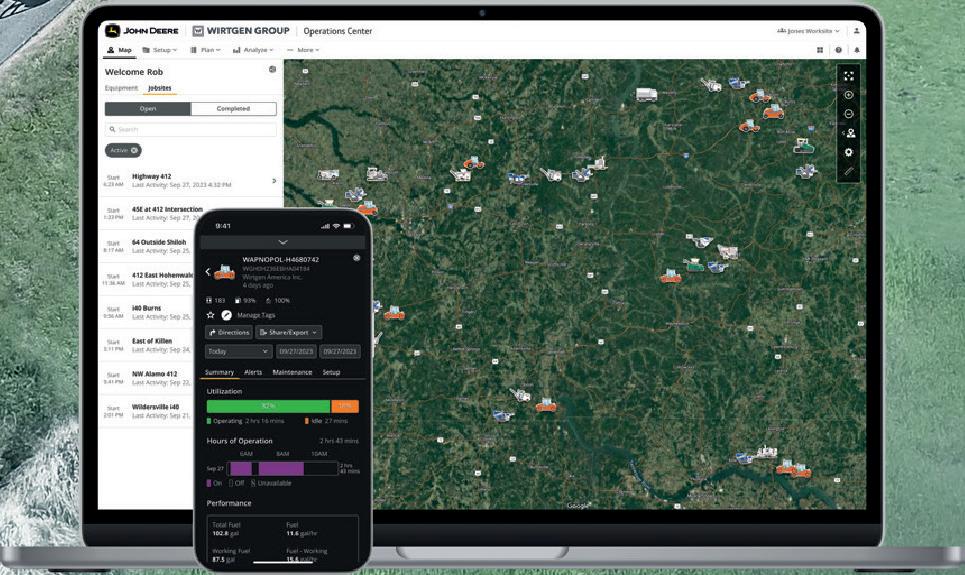
New data from solutions expert Komatsu Smart Construction indicates that the adoption of digital tools across the construction sector is on the rise, highlighting a behaviour shift across the industry.
The rm is celebrating a signi cant increase in global uptake of its range of digital solutions as it expands its portfolio to new territories including Poland, Belgium and further into Germany.
The brand, from Komatsu, says that it continues its commitment to deliver key technology that works to reduce costs and time on the construction site. This is being achieved by deploying mixed software and hardware solutions across earthmoving and construction. Smart Construction says it has enabled site managers to unlock accuracy through the use of its full product suite.
The engagement in equipment such as 3D Machine Guidance has doubled since the
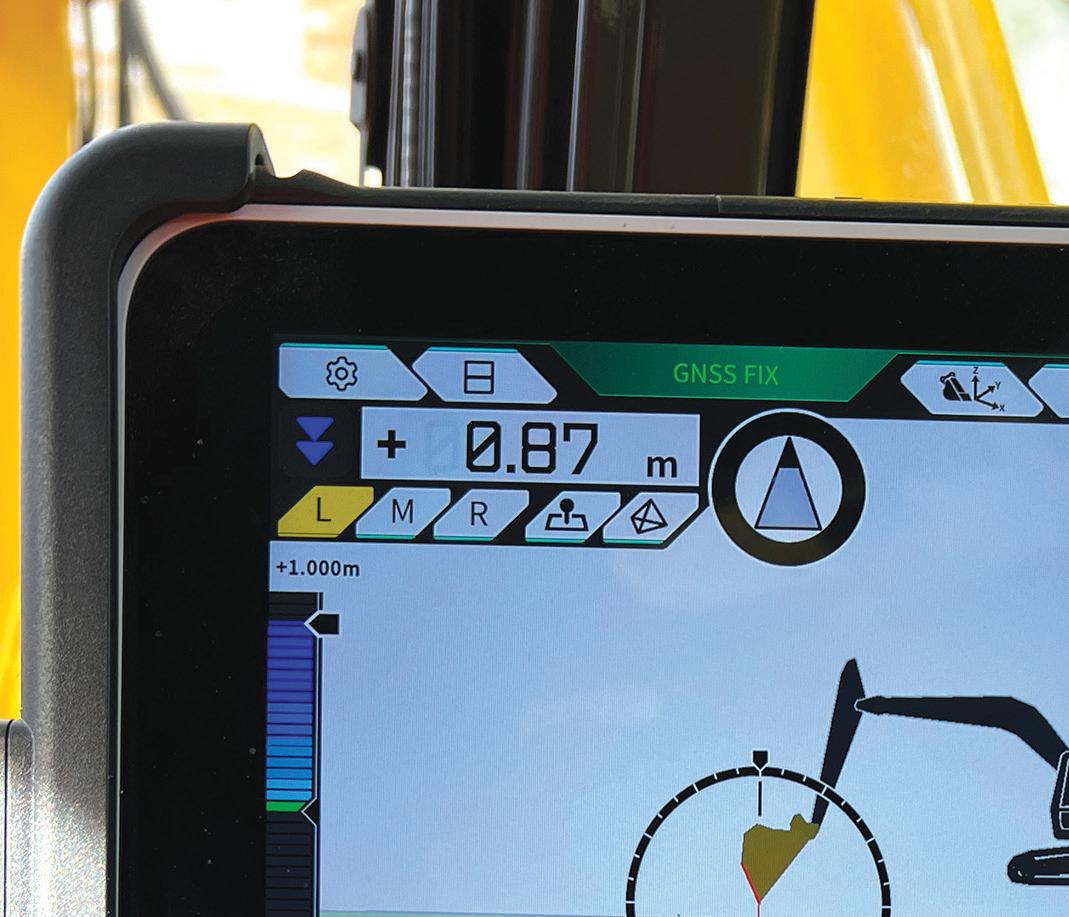
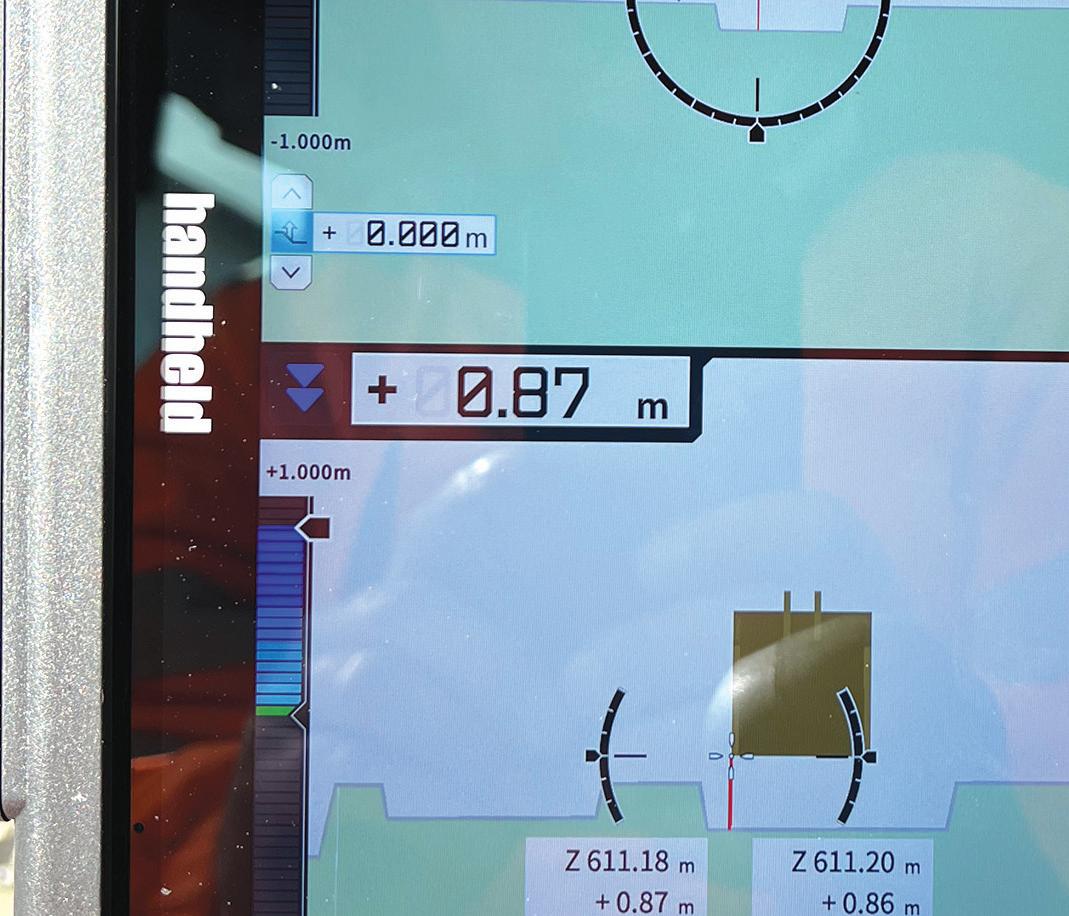

launch in 2023. Other solutions that have seen annual growth include Dashboard, a data collection tool that combines the 3D design data with aerial mapping and intelligent machine data. This can be used to generate a digital twin that allows stakeholders to gain instant access to critical data, enabling them to track progress, identify bottlenecks and make informed decisions.
As organisations strive to meet heightened objectives in the fast-moving construction market, these sales suggest that the sector, which has historically been slow on the takeup of digital technology, is now implementing available solutions.
Sina Motsch, a dedicated jobsite manager from HEITKAMP Corporate Group, shares insights into her mission overseeing a project that involves the delivery of two million m3 of soil across 27ha, over the entire duration of 10 years.
She explains: “As a site manager, the daily challenge lies in grasping the latest jobsite development. Materials are being delivered, machines are constantly running and I’m confronted with a ood of data every day. It’s crucial for me to nd an easy way to make sense of it and make use of this information effectively. By using tools from Smart Construction I can transform my sites and deliver work in less time at a smaller cost.”
Richard Clement, deputy general manager at Komatsu Smart Construction adds: “We’re thrilled to see this uplift in take-up of our range of digital solutions. We’ve worked tirelessly to create technology that equips site teams with the solutions they need, without incurring high costs or requiring machines to be idle.
“A recent study found that more than 13% of construction teams’ working hours are spent looking for project data and information— equating to more than ve hours a week per person. The Smart Construction suite provides solutions to improve communication and coordination and reduce errors.”
Smart Construction has revealed that customers engaged with the remote solution, which allows users to send new design data to machines in the eld or remotely support operators, without travelling to the jobsite, saving on average 511 hours of time and 3,063litres of fuel/year.
Clement adds: “Our goal is to continue to create solutions that bring construction professionals closer to the digital transformation, empowering them to take up available technologies that improve output and productivity whilst not breaking the bank. Digital solutions are the future of this industry, and it’s extremely encouraging to see technology being adopted across multiple disciplines.”
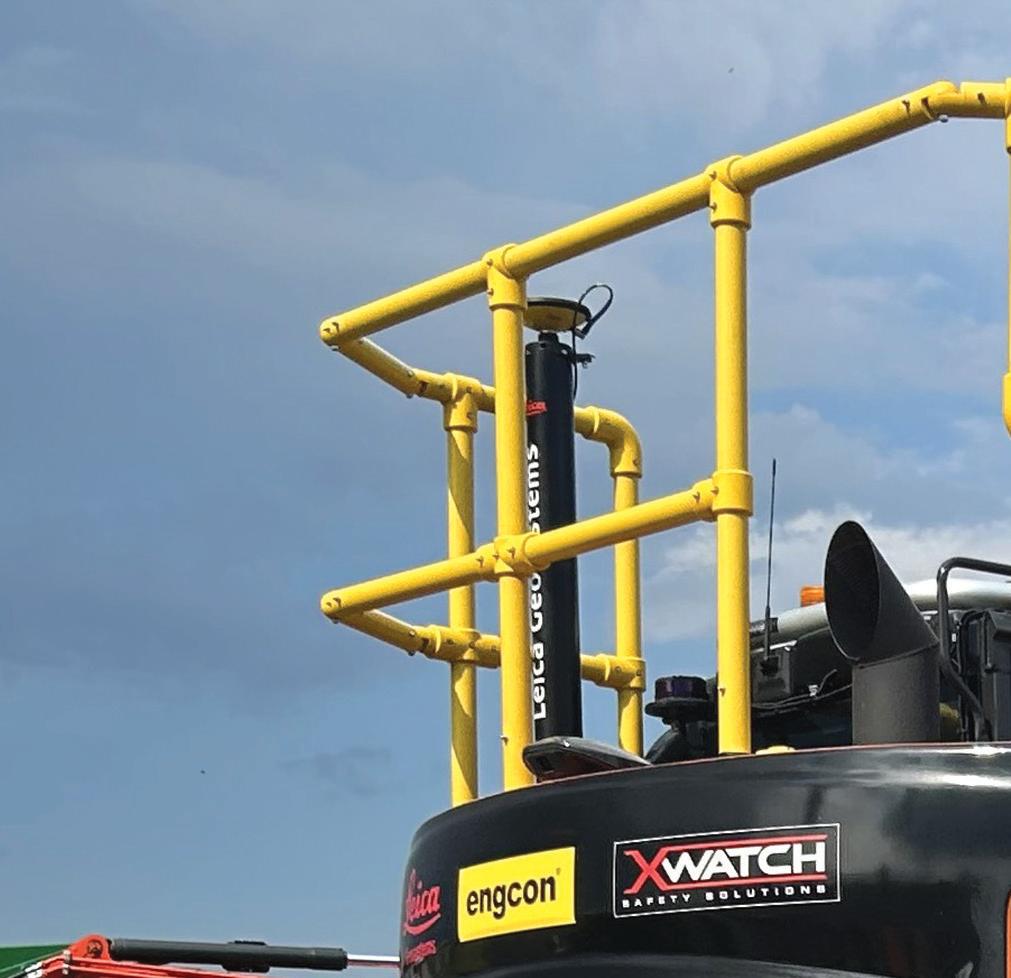

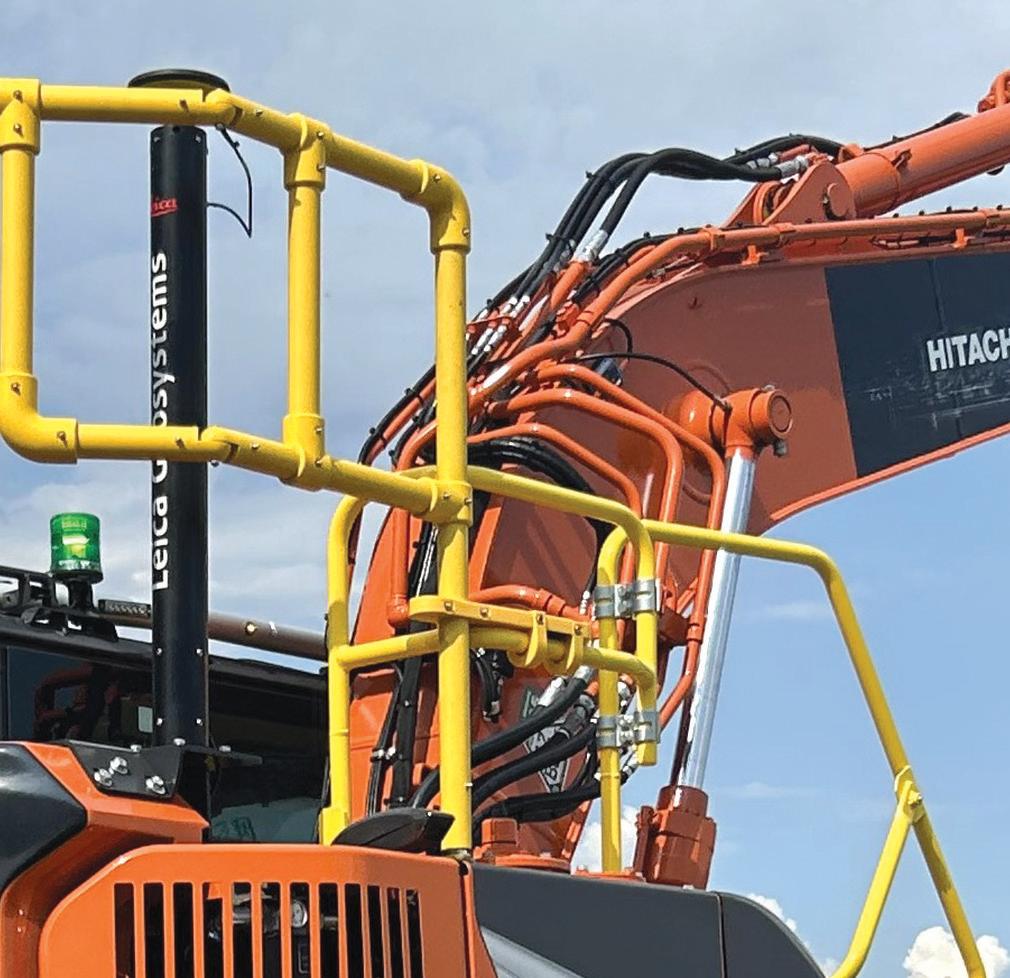
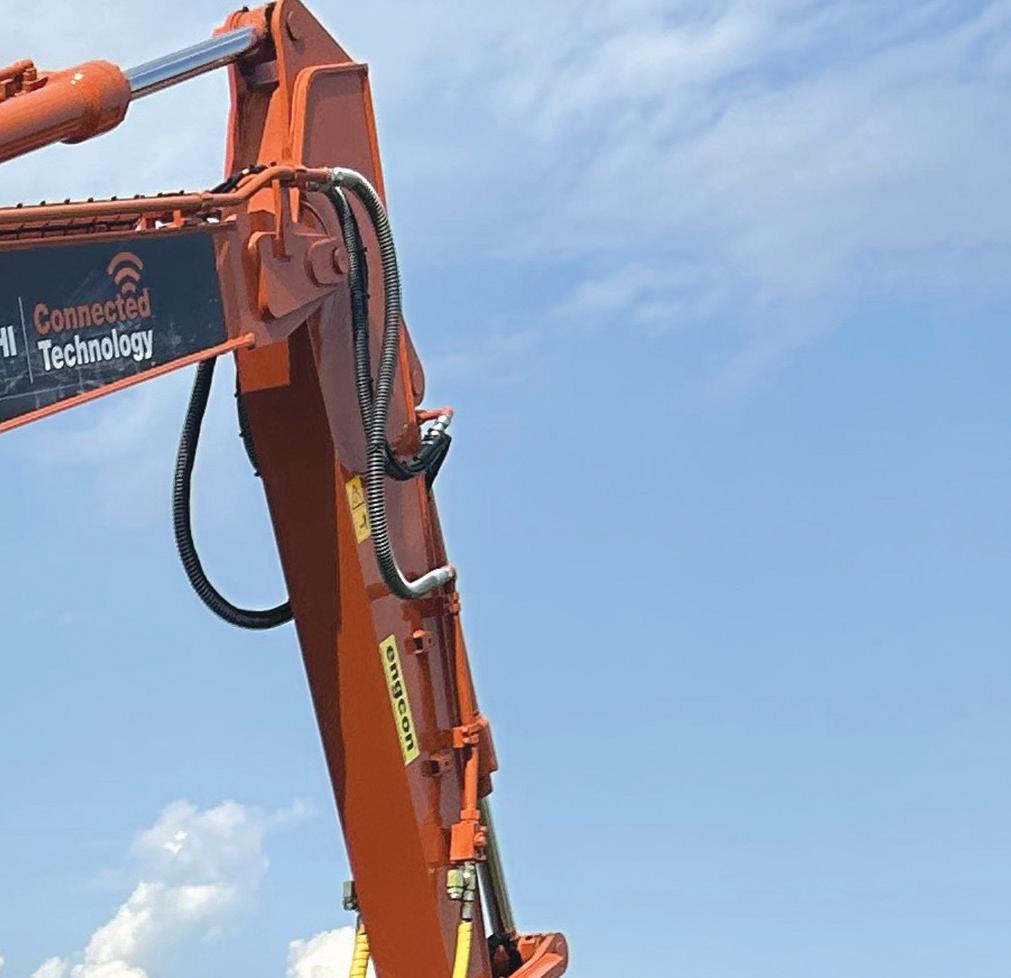
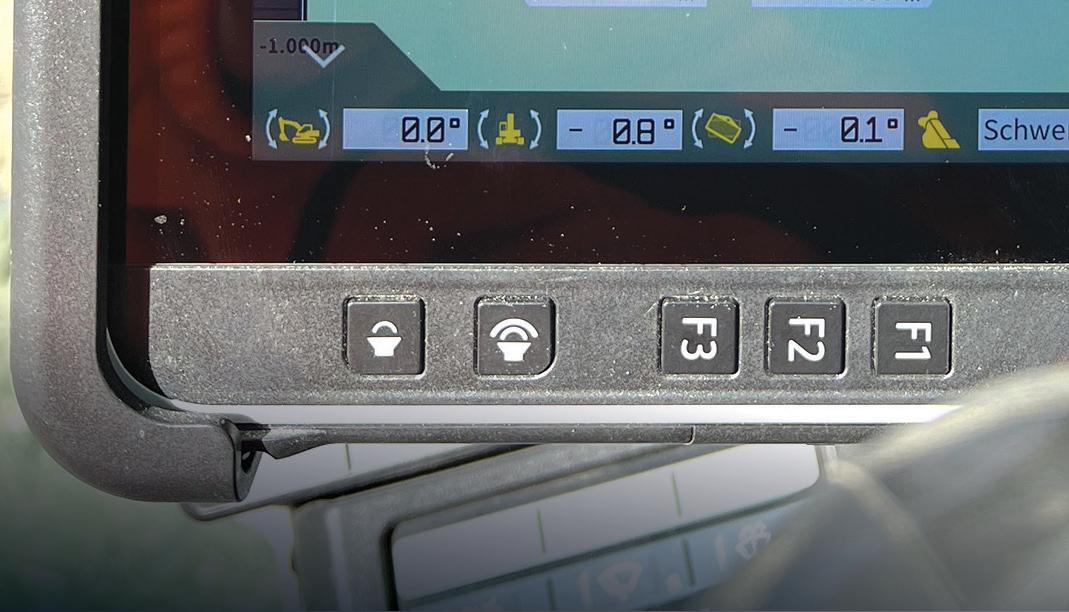
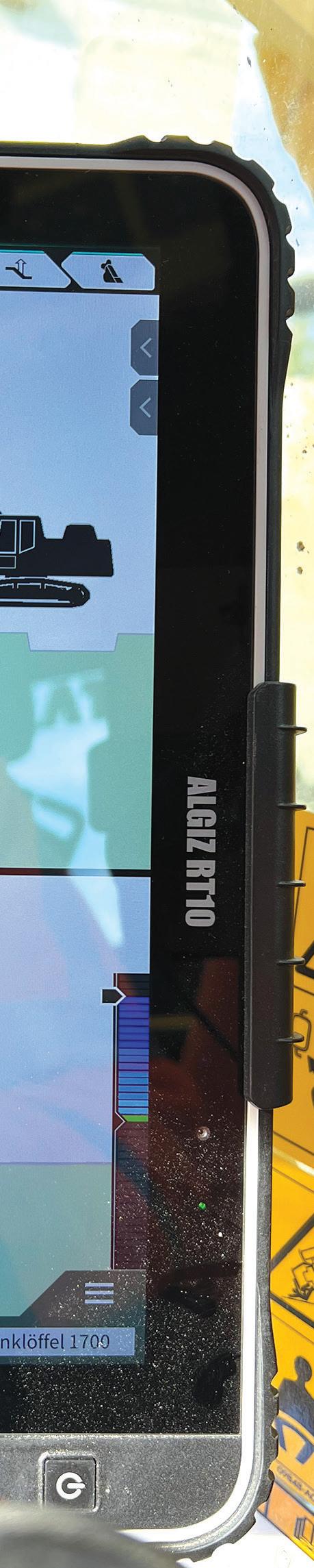
XWatch technology for its machines
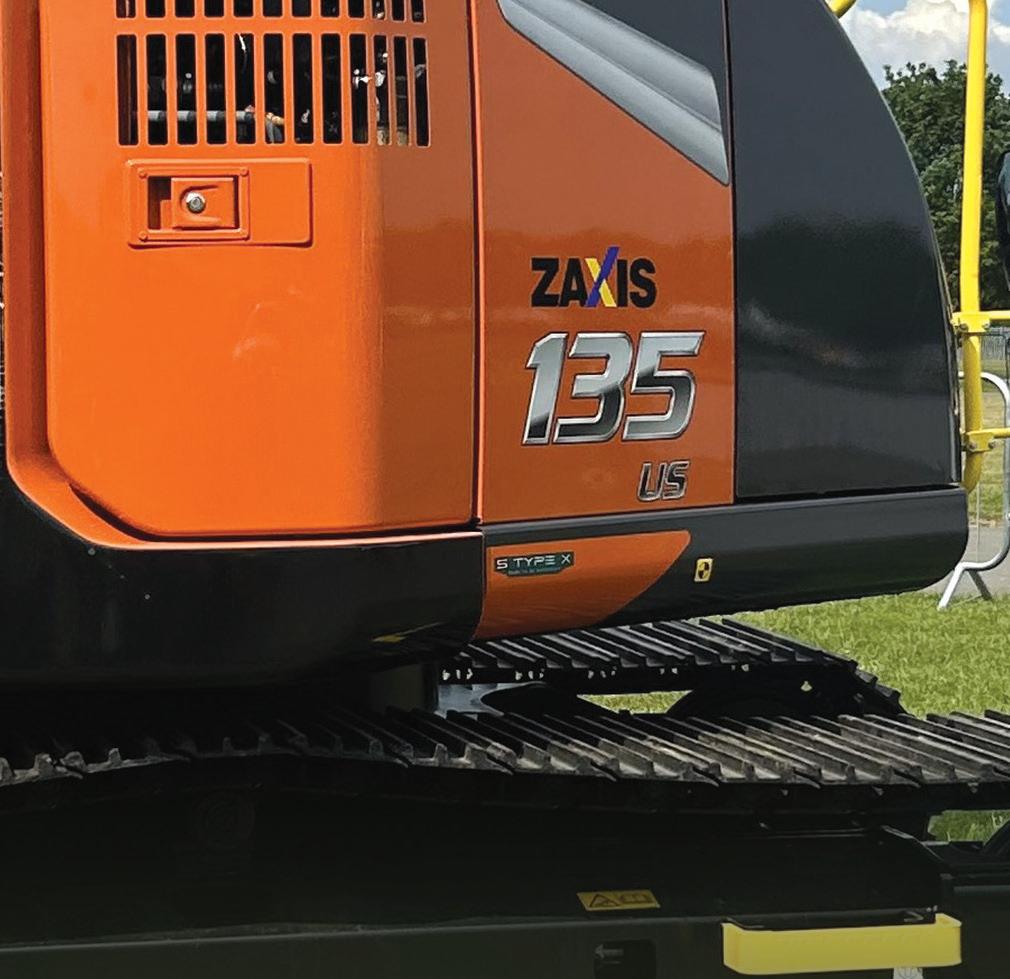
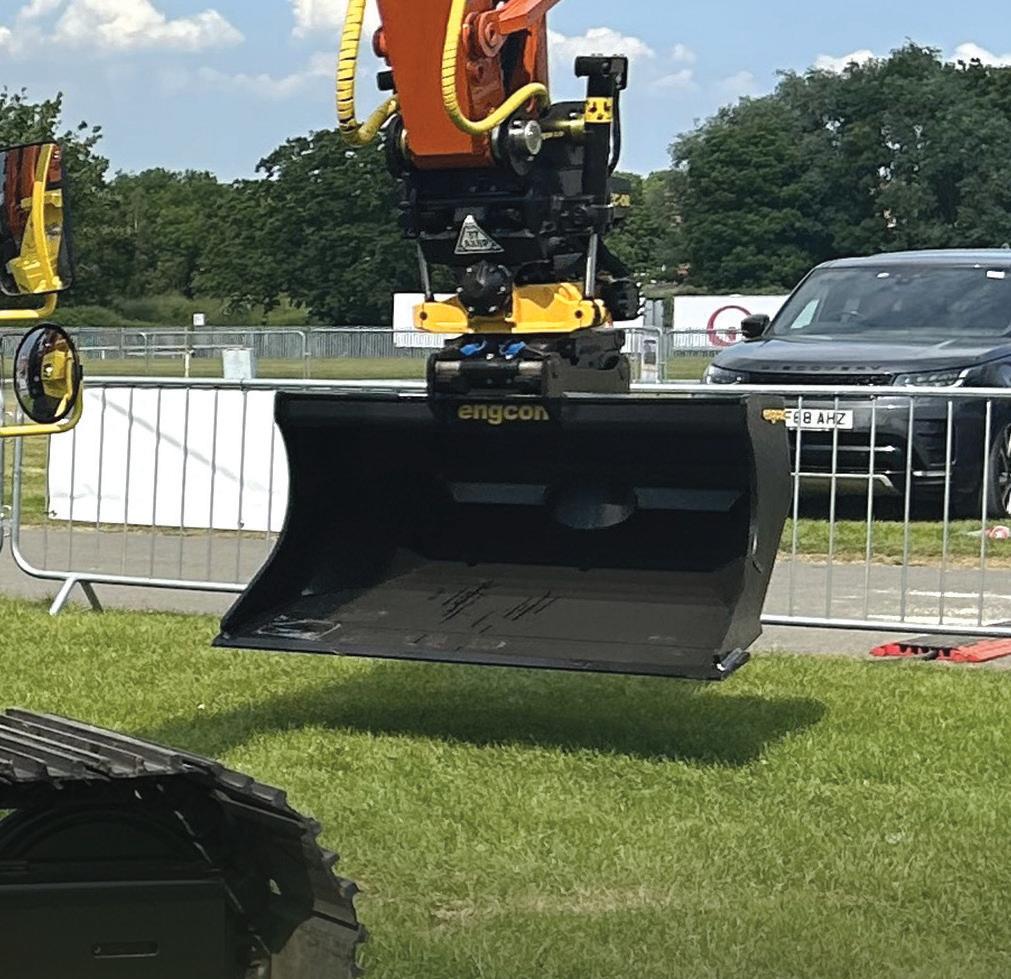

Hitachi Construction Machinery UK (HCMUK) is now o ering sophisticated technology from Xwatch Safety Solutions to customers for its construction machines.
The rm says that this option can deliver advanced safety systems across the construction industry. The partnership is part of a new emphasis on integrating safety technologies in response to the growing complexity of construction projects.
Stephen Creaser, Hitachi director of product support, said, “Hitachi Construction Machinery
UK (HCMUK) is installing the market-leading XW4 and XW5 systems at our Hitachi Connected Technology (HCT) facility in Newcastle.
The market demand for Xwatch Safety Solutions is growing as key clients and construction organisations are starting to mandate Xwatch for height, slew and RCI control solution on hydraulic excavators.
HCMUK is also o ering real time telematics by providing remote real-time monitoring of the Xwatch system, via our CTFleet Link mixed eet management
solution. CTFleet Link allows live direct access to key Xwatch safety metrics alongside the machine’s operation data while the machine is in operation."
Jemma Dycer Hopkins, Xwatch Sales and Operations Manager, highlighted the signi cance of this partnership in the company's growth: "We are approaching the milestone of 5,000 Xwatch systems installed since our start-up in 2019, a testament to the industry's trust in our solutions. The support of major OEMs like Hitachi has been crucial in helping us reach this point. Their con dence in
Bilanciai Group and Topcon Positioning Systems have established a collaboration for the European market. Both companies will allow customers to bene t from their respective weighing and precision measurement solutions.
This marks a signi cant step for boosting technological capabilities and expanding market presence across Europe.
The rms say that this arrangement will leverage Bilanciai Group's experience in delivering cutting-edge weighing
and automation solutions with Topcon Positioning Systems. By combining strengths, the companies aim to provide comprehensive solutions that meet the evolving needs of industries such as construction and logistics.
"We are excited to join forces with Topcon, a renowned name in precision technology. This collaboration underscores our commitment to delivering unparalleled quality and technological advancements in the eld of weighing and automation solutions," said
Topcon Positioning Systems is enthusiastic about the collaboration. "Aligning with Bilanciai Group allows us to strengthen our presence in the EMEA market and offer integrated solutions that blend precision measurement and advanced weighing capabilities," commented Luc Le Maire, senior vice president at Topcon Positioning Systems. “The arrangement will provide European paving contractors with signi cantly more productivity
Xwatch has enabled us to expand rapidly and set new standards for safety across construction sites."
Xwatch was acquired recently by Hexagon, which also owns Leica Geosystems.

This will allow greater integration of the Xwatch safety technology with machine control systems from Leica Geosystems.
Hitachi Construction Machinery UK www.hitachicm.co.uk
Xwatch Safety Solutions www.xwatch.co.uk
possibilities, extending the ef ciency bene ts of the Topcon Pavelink solution to more applications.”
Customers can expect to bene t from the synergy of these two leading industry players, delivering a broader range of solutions that boost ef ciency, accuracy, and productivity across a range of sectors.
Bilanciai Group www.coopbilanciai.com
Topcon Positioning Systems www.topconpositioning.com
German rm ConRoad is offering a new app for road construction that is free for its clients. The rm has developed the app to meet the growing demand for digital tools in road construction.
ConRoad made a rst step by programming an interface in order to ensure uniform access to process data even across different systems. The rm then developed its Asphalt Connect app, which gives system providers, construction companies and clients standardised access to relevant process data in road construction. Clients can now expand the existing functions according to their own wishes. With the Asphalt Connect app, construction site data is displayed for clients and construction companies and is also free of charge.
In addition, ConRoad says that its Asphalt Connect tool is safe to use for construction rms. The company says that it is a neutral service provider; sensitive information such as performance data, working hours or prices sales can be protected.
Central data storage is a threat to competition, and ConRoad is independent and has no customer-supplier relationships with construction companies, ensuring necessary con dentiality and independence. A central data storage facility on which all data from construction companies is stored is not technically necessary for a temporary data display.

To address these concerns, a system architecture without central data storage was chosen for the Asphalt Connect app. The app only gives the user the option of displaying selected data from the relevant previous systems on the tablet PC for the duration of the



asphalt paving, provided that the construction company has activated system access to the Asphalt Connect app from its own software systems. The data cannot be released by chance or by mistake.
The interface implemented in the Asphalt Connect app makes it possible to integrate data from relevant system providers. The app is open to all system suppliers. Customer-supplier relationships between construction companies and their software suppliers are not disclosed by the Asphalt Connect app. This creates a high level of acceptance and the necessary

The new ConRoad app allows users to store and
neutrality to achieve the intended success in implementation. Bundling of data streams and temporary access to the data means that construction companies can activate access for themselves or for their clients in their respective software systems. Regardless of which systems and manufacturers that the construction companies use, the Asphalt Connect app bundles all information in a clear interface.
ConRoad www.conroad.de
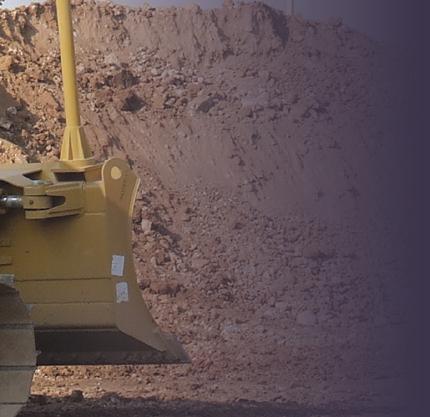

Caterpillar says that its online web platform, VisionLink Productivity, has been upgraded with the introduction of three new features – Cat Grade and Compact, Operator Coaching, and E-Ticketing.
This scalable cloud-based application collects and summarises data from any subscribed machine equipped with a Cat Product Link device, ensuring that eets with mixed OEM equipment can be incorporated into one platform. VisionLink Productivity simpli es data management with its dashboards; these include a jobsite summary and insights with key performance indicators (KPIs).
Cat Grade and Compact VisionLink Productivity now incorporates Cat Grade 3D and Cat Compact data into its reporting platform. It enables 3D design

les and updates to be distributed to all machines at the jobsite, eliminating the need for USB uploads.
Coaching empowers operators of all experience levels to boost their skills, e ciency, and productivity. Two categories of operator coaching tips – Operating E ciency and Machine Health – are tracked.
The new E-Ticketing feature brings convenience, eliminating the need for manual or printed tickets generated by onboard Cat Payload systems. Key personnel can now receive an electronic copy of the tickets via email, including information on total payload, truck and material type.
Caterpillar www.cat.com

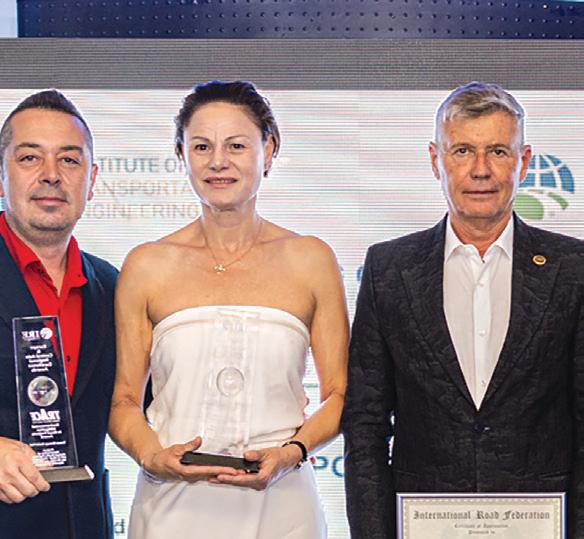







The 2nd IRF Europe & Central Asia Regional Congress, held in Plovdiv, Bulgaria, from September 24-27, 2024, underscored the essential role of regional connectivity in fostering sustainable growth and enhancing road infrastructure. As countries in Europe and Central Asia face the need to modernise their transportation networks, improving regional connectivity is crucial for economic development, trade, and mobility.
Emphasising connectivity and integration
The Congress, themed "Future roads: innovate, invest, achieve zero," highlighted how robust, interconnected road networks can drive economic progress by facilitating trade and movement across borders. Regional connectivity not only strengthens ties between neighbouring countries but also reduces transportation costs and accelerates supply chain ef ciency. Attendees delved into projects aimed at integrating transport systems to improve connectivity across Europe and Central Asia.
In the opening plenary, key speakers emphasised the strategic importance of seamless connectivity. As Europe and Central Asia aim to increase regional trade, ef cient road networks are vital. Experts discussed how investments in infrastructure could bridge existing gaps, enhancing economic cooperation and resilience across regions.
The Congress continued with sessions on technological advancements that can improve connectivity. From AI-enhanced traf c management to blockchain for supply chain transparency, participants explored how these innovations could be leveraged to develop an interconnected road network that meets both current and future demands. Connectivity projects focusing on the expansion of crossborder transportation corridors were also featured.
Day three emphasised the need for sustainable infrastructure to support connectivity while reducing environmental impacts. Presentations


covered how eco-friendly materials and practices can contribute to durable roads that withstand regional climate challenges. Road safety, especially in cross-border corridors, was also discussed, highlighting collaborative approaches to ensure consistent safety standards across the region.
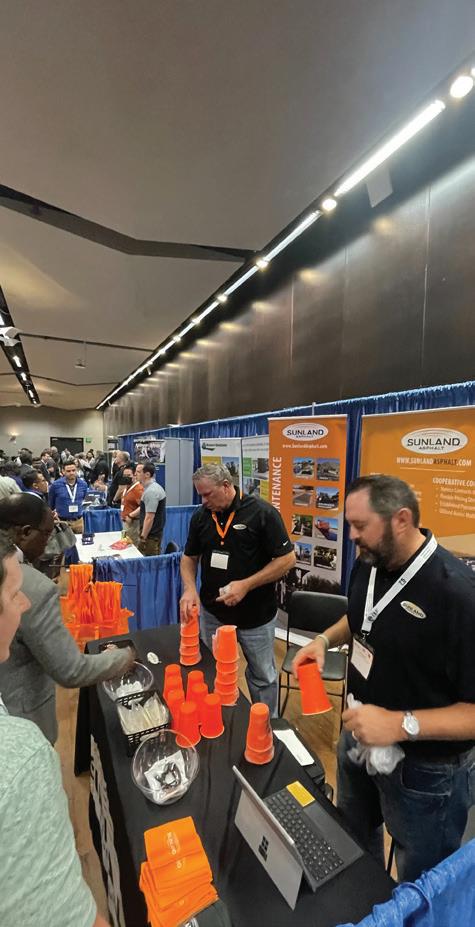
The Congress’s exhibition allowed participants to explore technologies that support regional connectivity. Companies showcased solutions tailored for infrastructure integration across different countries, with a focus on resilience, sustainability, and ef cient cross-border transport.
The 2nd IRF Europe & Central Asia
Regional Congress demonstrated the vital role of regional connectivity in fostering sustainable and resilient road networks. By addressing both technological and environmental challenges, the Congress provided a platform for stakeholders to explore strategies that will enhance transportation infrastructure and promote economic growth across Europe and Central Asia. This collaborative approach will be pivotal as the region looks to build a future of interconnected, ef cient, and safe road networks.




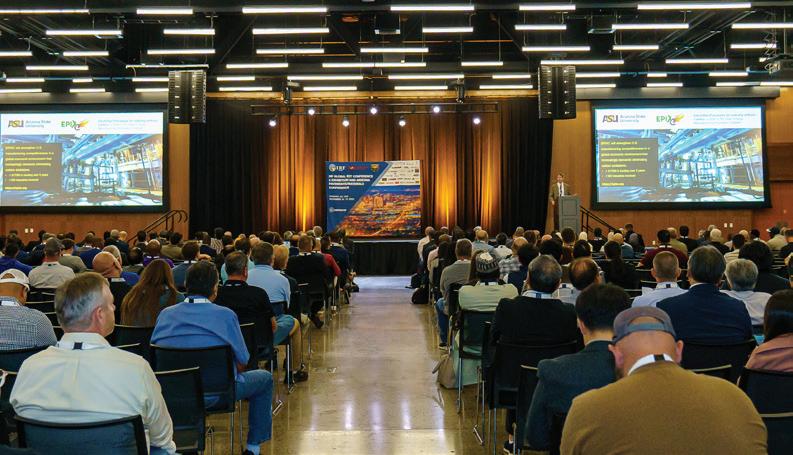
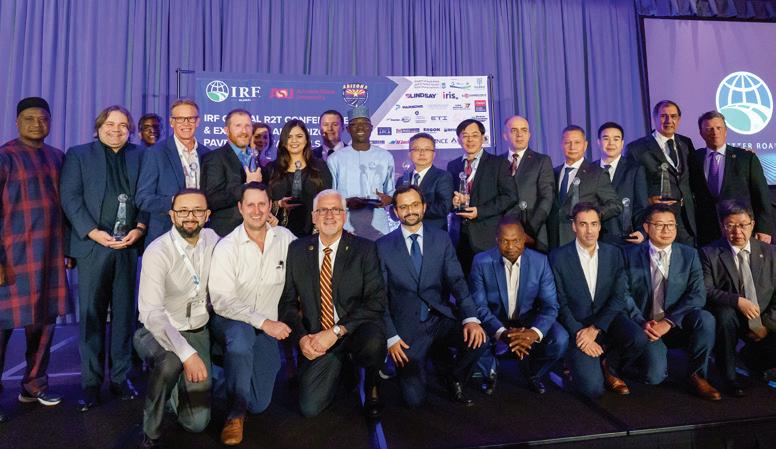
The IRF Global R2T Conference, a pinnacle event for global leaders in roads and mobility, offers a vibrant forum for innovators, decision-makers, and industry professionals. Discover cutting-edge advancements and forge pivotal connections in an environment dedicated to shaping the future of transportation.
Who Will Attend?
• Construction Contractors, Engineers, and Managers
• Equipment Manufacturers, Suppliers, and Distributors
• Highway & Municipal Agencies, Transportation Officials
• Design Consultants and Engineering Professionals
• Transport Research Institutes & University Academics
• Traffic Technology and ITS Specialists


Themes:
• Asset Management & Pavement Preservation
• Emerging Trends in Road and Bridge Construction
• Innovations in Materials and Technologies for Durable Pavements
• ITS & Smart Mobility Technologies
• Road User Charging & Connected Vehicles
• Preparing Infrastructure for Autonomous Vehicles
• Strategies for Decarbonizing Road Transport
• Vision Zero: Aiming for Zero Road Fatalities
• AI & Big Data in Transportation
• New Mobility and Social Acceptance







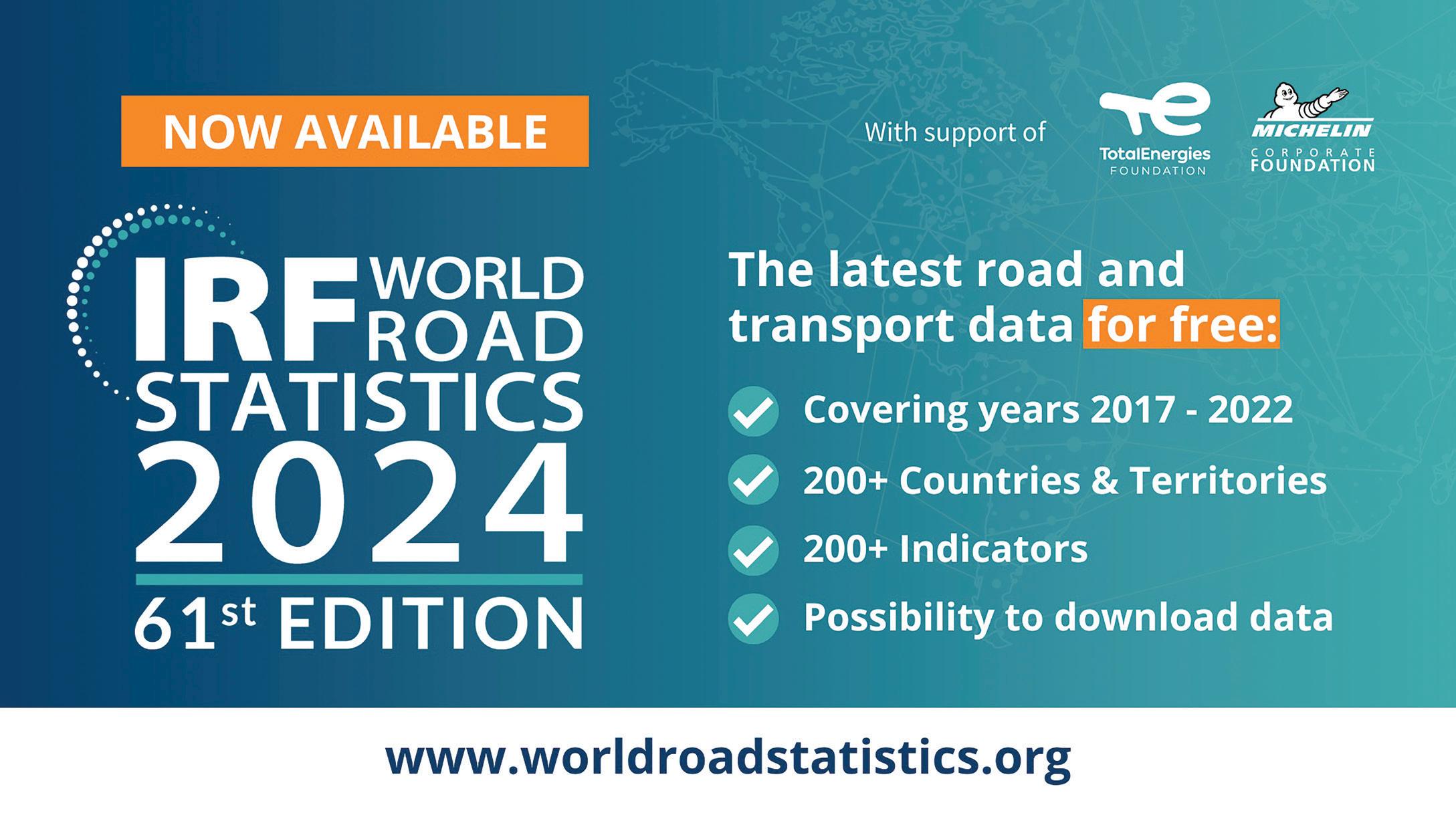
The International Road Federation (IRF) is proud to release the 61st edition of the IRF World Road Statistics (WRS), arguably the most complete and latest source of data for road transport. This edition encompasses data for the years 2017 – 2022, for over 200 countries and territories, and over 200 indicators
The IRF World Road Statistics are available for free through the IRF WRS Data Warehouse online platform, thanks to the generous support of the TotalEnergies Foundation and the Michelin Corporate Foundation.
Through the IRF WRS Data Warehouse, users can seamlessly explore and analyse data, aiding evidence-based decision-making at
every level. Users can, for instance, compare data across countries and time periods, analyse multiple metrics for a single country, access interactive road safety dashboards, and download data in various formats, among many other features.
With the transport sector facing increasing challenges such as climate resilience and road safety, access to reliable and current data has never been more essential. The WRS equips policymakers, researchers, and industry leaders with the critical insights necessary for
informed decision-making, effective policy design, and sustainable innovation globally.
The 2024 edition features comprehensive data on road networks, vehicle eets, motorisation trends, and traf c volumes, as well as insights into investment trends in road infrastructure and maintenance.
Additionally, it includes road safety data and dashboards that highlight both global and regional trends, along with much more information.
When two market leaders join forces, the results can be transformative. Umovity is a prime example of this synergy. By uniting the two industryleading brands PTV Group and Econolite, Umovity offers a comprehensive approach to managing the entire mobility value chain, encompassing both software and hardware.
The International Road Federation (IRF) sits down with Christian U Haas, CEO of both companies, to discuss how they are revolutionising traf c management and what they will showcase at the IRF Congress in Istanbul.
Mr Haas, in January 2023 PTV Group and Econolite joined forces under the new umbrella brand Umovity. How have things evolved since then?
Since launching Umovity, we’ve been on an exciting journey lled with new opportunities. Econolite is the leading provider of traf c management solutions in the US, while PTV’s traf c modeling and simulation software is globally recognised. The synergy between our two companies is vast. By harnessing the strengths of both companies, Umovity takes a holistic approach, providing the right solutions, hardware and software, needed to address the challenges and unlock the potential of the mobility and ITS sector.
Some of our key offerings include Econolite's adaptive traf c control systems, real-time traf c management software, controllers, cabinets, and sensor products. PTV Group, on its side, brings advanced simulation and predictive modeling tools, including PTV Optima, our real-time traf c management software used in cities around the world, and PTV Model2Go, an innovative solution for rapid traf c model creation.

and new product integrations within the Umovity Tech Suite. Many of these updates focus on how data and AI can drive traf c management and mobility. We’re also advancing our cloud strategy, ensuring scalability and seamless collaboration across our product portfolio.
For those who missed the Mobility Tech Update Keynote live, the recording is available on our website (www.umovity.com).
The tech update isn’t just about showcasing the latest innovations from PTV Group and Econolite - it is also a celebration of our global community. That’s why we chose the theme “Guardians of Mobility.”
Our customers and partners, who work tirelessly to improve transportation, cities, and communities, are the real superheroes, and we are proud to recognise their contributions.
Umovity’s slogan, "Mobility for Humanity," is quite inspiring. What motivates you personally in this eld?
What are some of the key technology-driven solutions Umovity is working on at the moment?
At Umovity we aim to provide our customers with the best technology to shape mobility for the better. This is why we
are committed to constantly advancing our technologies to unlock new opportunities. Currently we are for example developing a Dynamic Multimodal Network Management concept – an integrated management, operational planning, and decision support system that will empower cities and organisations to shape and organise mobility in the best way possible across all modes of transportation. By leveraging data from diverse sources and incorporating innovative technologies, such as AI and model-based methodologies, we will build a unique and connected ecosystem, enabling dynamic mobility planning and
control – real-time, and longterm. It’s a holistic approach that will signi cantly enhance the way cities organise and manage transportation.
Umovity recently unveiled its latest technology developments at the Mobility Tech Update 2024. What new features and advancements can users look forward to?
Historically, PTV has unveiled its software updates in October, and this year, for the second time, we presented the latest innovations from both PTV and Econolite at the Mobility Tech Update. Users can look forward to cutting-edge advancements
Before I joined PTV Group ve years ago, I didn’t fully grasp the profound impact mobility has on our daily lives. We often take it for granted, but ensuring that everyone has access to safe, ef cient, and smooth mobility is a signi cant challenge. Mobility is a fundamental human need - it allows us to work, meet with others, and access essential services like education and healthcare.
What excites me is the role technology plays in simplifying mobility’s complexities and adapting it to the diverse needs of people around the world. The idea that our solutions can increase ef ciency, accessibility, safety, and sustainability - by reducing congestion, accidents, and pollution - is a powerful motivator for me.
At Umovity, our global teams share a common mission: to improve mobility for humanity through innovative technologies that make transportation safer, more sustainable, and more ef cient.






















Results from a project by the UK’s department of transport and AECOM –using Heads Up technology from Acusensus, has underlined the scale of distracted driving and lack of seatbelt use
England’s National Highways agency will trial six winning technologies that entered a recent competition to nd solutions to hazards on motorways and major A roads.
The six winners in the competition, called the Hazard Protection on Roads Accelerator, are Esitu Solutions, Vesos, VivaCity, Roadside Technologies, CrossTech and Valerann.
The agency, working with Connected Places Catapult - a government agency to promote research and development to exploit marketing opportunities - targeted small to medium-size enterprises that may not have worked with National Highways before.
The agency said that it and Catapult had sifted through around 50 applications to create a shortlist of nine organisations that eventually received up to £30,000 (€35,600) to design trials for their ideas. Judges then whittled the shortlist to ve organisations which will receive up to £60,000 (€71,000) additional funding to deliver the planned trials.
However, competition was so erce, according to National Highways, that the agency eventually decided to go forward with six of the projects rather than ve.
Between now and November, the six nalists will deliver their ideas in trials working with National Highways and its supply chain partners.
James Gibson, the technology programme portfolio manager with National Highways, said it was dif cult trying to choose the nal products to take forward to trial. “Ultimately, we decided to add one more to the list. We
are con dent that through these trials we can nd better ways of identifying, analysing and responding to hazards, that could ultimately help to prevent road accidents and people coming to harm on our roads.”
Esitu Solutions, based in Nottingham, will be developing a virtual reality training course as a downloadable app for the Meta Quest headset to promote safer and more considerate driving. The trial will include testing with road users to assess its impact on con dence and intended driving behaviours.
Vesos, based in the English county of Devon, has developed TeCall to harvest eCall data automatically sent after collisions or breakdowns. During the trial TeCall will fuse eCall data with other hazard alerts producing detailed and validated incident data and adding greater context. These will be compared with corresponding data to measure its effectiveness and potential improvements in response times.
Meanwhile, sensors from London-based VivaCity, will provide data on hazardous interactions between road users – such as near misses – that will enable safety teams to understand what causes con icts and collisions. This will allow for better and more timely interventions to be planned. The trial will assess and compare the viability of collecting near miss data from VivaCity’s sensor and National Highways’ CCTV.
Roadside Technologies, in Chester eld, England, is developing an automated hazardous object detection solution using the latest in sensing technology. It should improve road user safety and enable smoother journeys through temporary work zones on roads. This will be tested across a 1.4km (1 mile) stretch of a live work zone to detect hazards.
CrossTech, in the southern English county of Wiltshire, has developed a stopped vehicle detection veri cation system. The platform builds on the successful automated computer vision inspection platform from the rail industry, called Hubble. The trial will test the performance of this system by applying its computer vision analysis to over 100 hours of CCTV footage and comparing the outputs with event data from National Highways' own systems.
Valerann, based in London, has a realtime road data analytics platform that fuses data from a broad range of sources to deliver road traf c situation insights and accidents risk modelling. This enables proactive management of incidents and risks on the road. The product will be trialled by traf c of cers in the West Midlands.
All nalists will be offered coaching and mentoring, business development opportunities and technical and procurement support.
Esitu Solutions
https://esitusolutions.com
Vesos
https://vesos.co.uk
VivaCity
https://vivacitylabs.com
Roadside Technologies
www.roadside-technologies.co.uk
CrossTech
https://crosstech.co.uk
Valerann
www.valerann.com

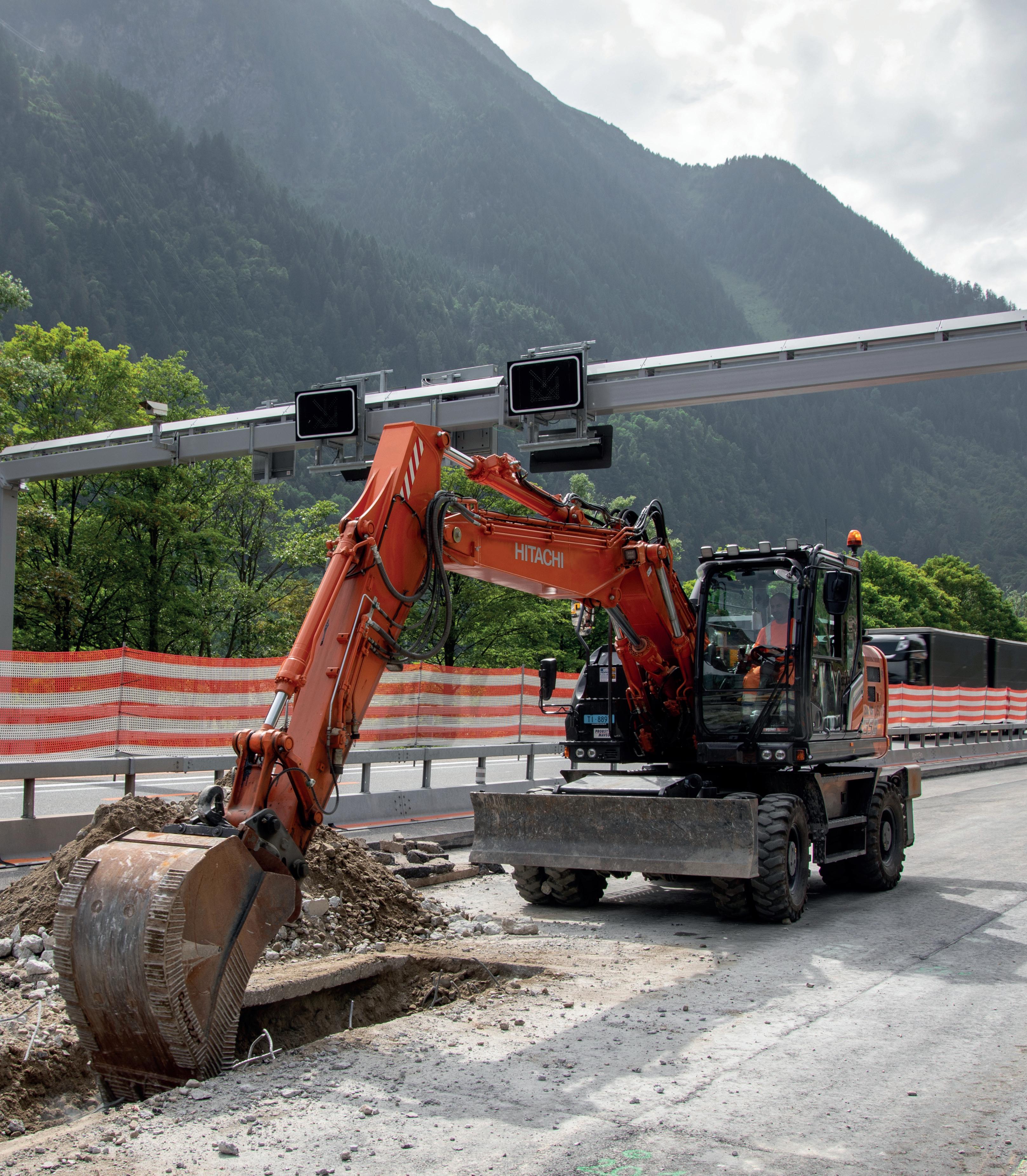
You’re in control of your safety with the range of Hitachi short-tail swing wheeled excavators. Exceptional visibility from the cab and a 270-degree view from the Aerial Angle camera system helps you to work safely and efficiently. Make your vision a reality with Zaxis-7.
Learn more at www.hitachicm.com/eu/en/

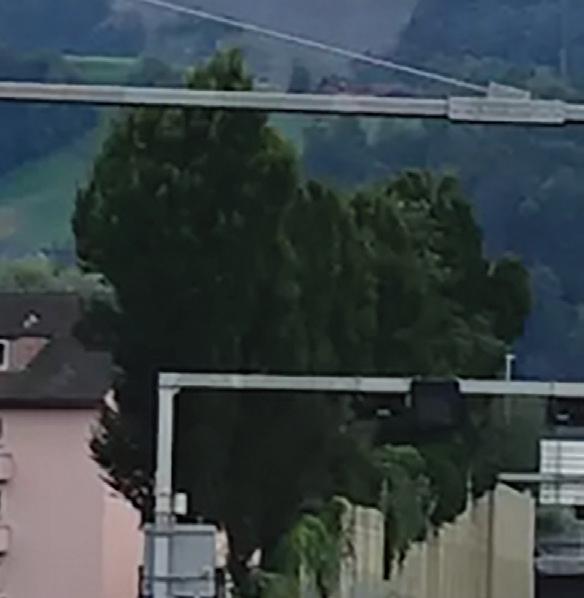
Should the power supply be interrupted, DynaGate can be operated in emergency mode with a cordless screwdriver or via an external power source (image courtesy DynaRoads)


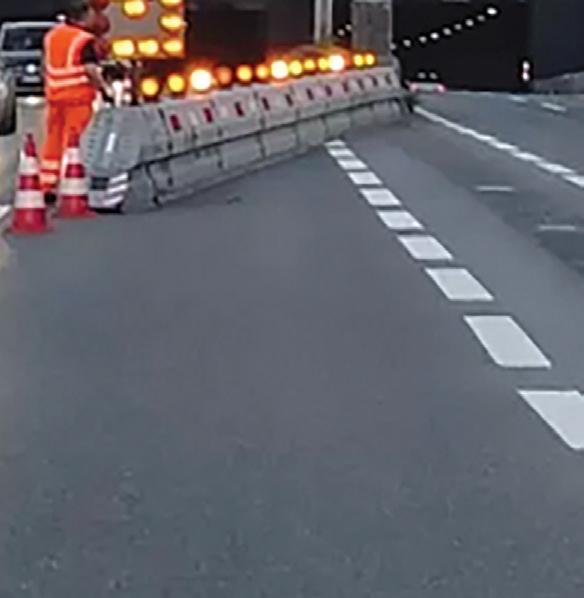
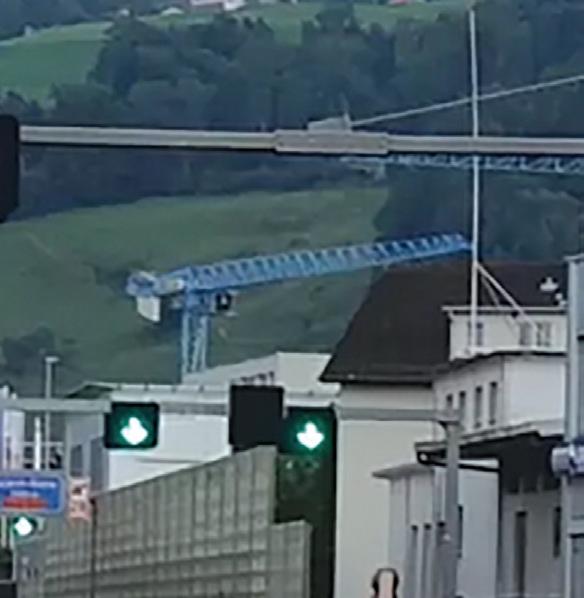
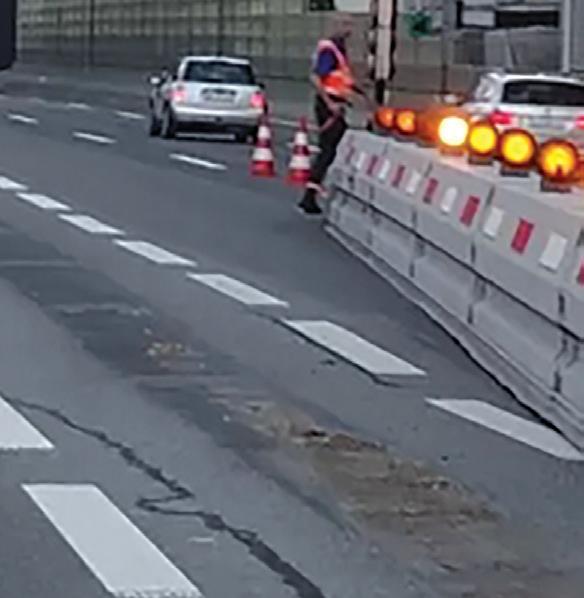


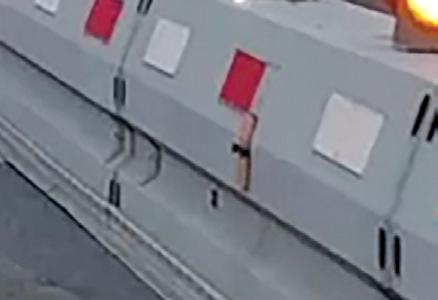
Road maintenance in or around the entrance to tunnels and on bridges has speci c risks due to the close proximity of workers to live traf c. Even if vehicle speeds are low around worksites, effective lane management is essential for greatly reducing the risk of injury to maintenance staff.
This is also why the moveable DynaGate system, manufactured to containment level H2, was developed by Swiss road safety manufacturer DynaRoads. It literally swings into action to enable traf c to cross over the centre strip, for
example in or near tunnels or bridges. The system comes with a choice of one or two movable barriers. Its modular construction allows the length to be determined by project speci cations and also allows for easy maintenance, expansion and replacement of component parts.
The system can be operated in situ from a roadside control cabinet or by onsite workers from a control panel on the system itself. For added convenience, it can be operated also remotely from a traf c control centre.
It has a manual or automatic operating mode.

Should the power supply be interrupted, DynaGate can be operated in emergency mode with a cordless screwdriver or via an external power source. Time for complete lane alteration is around three minutes.
The solution consists of two central reservation crossings with “wing” barrier sections that open to a length of 94m. The width is 60cm and the height is 84cm while the length can be up to 200m, depending on the client requirements.
Only a normal uninterruptible power source, 3 x 240V, is needed for swing
The German city of Hamburg has opted for Citilog’s AID vehicle detection software to equip 177 tunnel cameras with the market leading incident management solution.
Citilog’s solution provides incident detection for accident, debris on road, pedestrian noti cation, traf c congestion, slow moving vehicles and wrong-way driving. The cameras are in the 580m-long Schnelsen Tunnel, part of the A7 through the northern
port city. Siemens Hamburg, acting as the integrator, and the City of Hamburg’s traf c department, chose the Citilog solution after thorough side-by-side evaluations with competing video detection providers.
Citilog says its AID Incident Management software solution has demonstrated its operationability reliability and scalability during the entire evaluation period.
Siemens Hamburg was willing to engage with Citilog because it could rely on the
operation which can be controlled via the internet.

For added safety, there are mounted onto the gates dimmable LED running lights located at 3m intervals and there is a dimmable LED arrow sign on twistable safety-end of the swinging gate section. Re ector strips, red and white, can run the length of the gate.
•For a video of the DynaGate system from DynaRoads, visit: https://dynaroads.com/en/ products/dynagate
DynaRoads www.dynaroads.com
ongoing regular support by Citilog’s sales, project management and service interfaces. Citilog’s software also offers the option for future upgrades in regular intervals.
This project is one of the biggest Citilog incident management projects within its Middle Europe region and believes it will trigger other tunnel projects in Hamburg.
Citilog www.citilog.com













US pedestrian traf c fatalities fell 5% last year but remain 14% above the pre-pandemic level, according to data from the Governors Highway Safety Association, GHSA
The data analysis also reveals just how much more dangerous it now is to walk in the US, says the association in its report, Pedestrian Traf c Fatalities by State: 2023 Preliminary Data. Pedestrian deaths have increased 77% since 2010, compared to 22% for all other traf c deaths.
In 2022, light trucks accounted for 52% of all pedestrian deaths where the vehicle type was known, up from 44% in 2012. Also in 2022, 78% of pedestrian fatalities occur at night and the share of night-time deaths has risen even more in recent years.
The report also highlights trends regarding when, where and how drivers strike and kill people who are walking. The ve-year death toll surpasses 35,000 as dangerous driving, infrastructure shortfalls, and larger vehicles contribute to perilous conditions for pedestrians.
Analysis found that drivers struck and killed 7,318 people in 2023 – down 5.4% from the year before but 14.1% above the 2019 pre-pandemic level (see graph). The association says that while this modest year-over-year decrease is welcome news, pedestrian fatalities have been surging in recent years and reached a 40-year high in 2022.
The GHSA’s report is based on preliminary data reported by the State Highway Safety Of ces (SHSOs) in all 50 states and the District of Columbia (DC) and builds upon a report the association issued earlier this year. The new report also includes an in-depth analysis of 2022 data from the National Highway Traf c Safety Administration (NHTSA) that reaf rms some troubling trends regarding deaths of people on foot happening at night, where there are

no sidewalks and in crashes with SUVs and pickups. The data analysis was conducted by the research rm Westat.
“A decline in pedestrian deaths offers hope that after years of rising fatalities a new trend is starting,” said Jonathan Adkins, chief executive of the GHSA. “We know how to improve safety for people walking – more infrastructure, vehicles designed to protect people walking, lower speeds and equitable traf c enforcement. It will take all this and more, to keep the numbers going in the right direction.”
In addition to providing a rst look at statelevel fatality gures, the GHSA report examines 2022 data from NHTSA’s Fatality Analysis Reporting System (FARS) that examines when, where and how drivers strike and kill people on foot. According to this analysis, pedestrian

deaths are increasing at a rate far faster than overall traf c fatalities.
Between 2010 and 2022, pedestrian deaths rose 77%, while all other traf c fatalities increased 22%. There were 135 more pedestrian deaths in 2022 compared to the year before, while there were 628 fewer fatalities from all other traf c crashes.
The number of pedestrian deaths involving passenger cars and light trucks - which include SUVs, pickups and vans - were largely similar for much of the 2010s. Beginning in 2020, however, light trucks accounted for a much larger share of pedestrian fatalities as their proportion of US new vehicle sales continued to climb. In 2022, light trucks accounted for 52% of all pedestrian deaths where the vehicle type was known, up from 44% in 2012.



The vast majority - 78% in 2022 - of pedestrian fatalities occur at night and the share of night-time deaths has risen even more in recent years.
Night-time fatal pedestrian crashes nearly doubled from 3,030 in 2010 to 5,798 in 2022. This is a 92% increase, compared to a 28% increase in daylight fatalities - from 1,092 in 2010 to 1,401 in 2022.
Multiple studies have documented that people of colour are overrepresented in pedestrian fatalities. Race and ethnicity data for 2022 pedestrian deaths were not available in NHTSA’s Fatality Analysis Reporting System due to delays in processing death certi cates. But researchers looked at changes between 2019 and 2021 and found that deaths involving pedestrians whose race was reported as white non-Hispanic fell from 43% to 40%, while they rose from 19% to 21% for Black non-Hispanic pedestrians. In 2022, two-thirds (66%) of pedestrian fatalities occurred in
locations where no sidewalk was noted in the crash report, up from 59% in 2017. Sidewalks (pavements, in the UK) can help protect people walking by providing a physical separation between them and motor vehicle traf c. But they are missing or in poor condition in many parts of the country. More than three-quarters (76%) of pedestrian deaths in 2022 were not at an intersection.
Non-freeway (motorway) arterial roads, which typically carry large volumes of traf c at high speeds, are the most dangerous for people on foot, accounting for 60% of all fatalities in 2022.
More than 1,300 deaths (18%) were on freeways. Stranded motorists exiting their vehicles, rst responders and tow truck drivers are all examples of pedestrians who have been killed on freeways.
All states have Move Over laws, but they are dif cult to enforce. Digital alerting
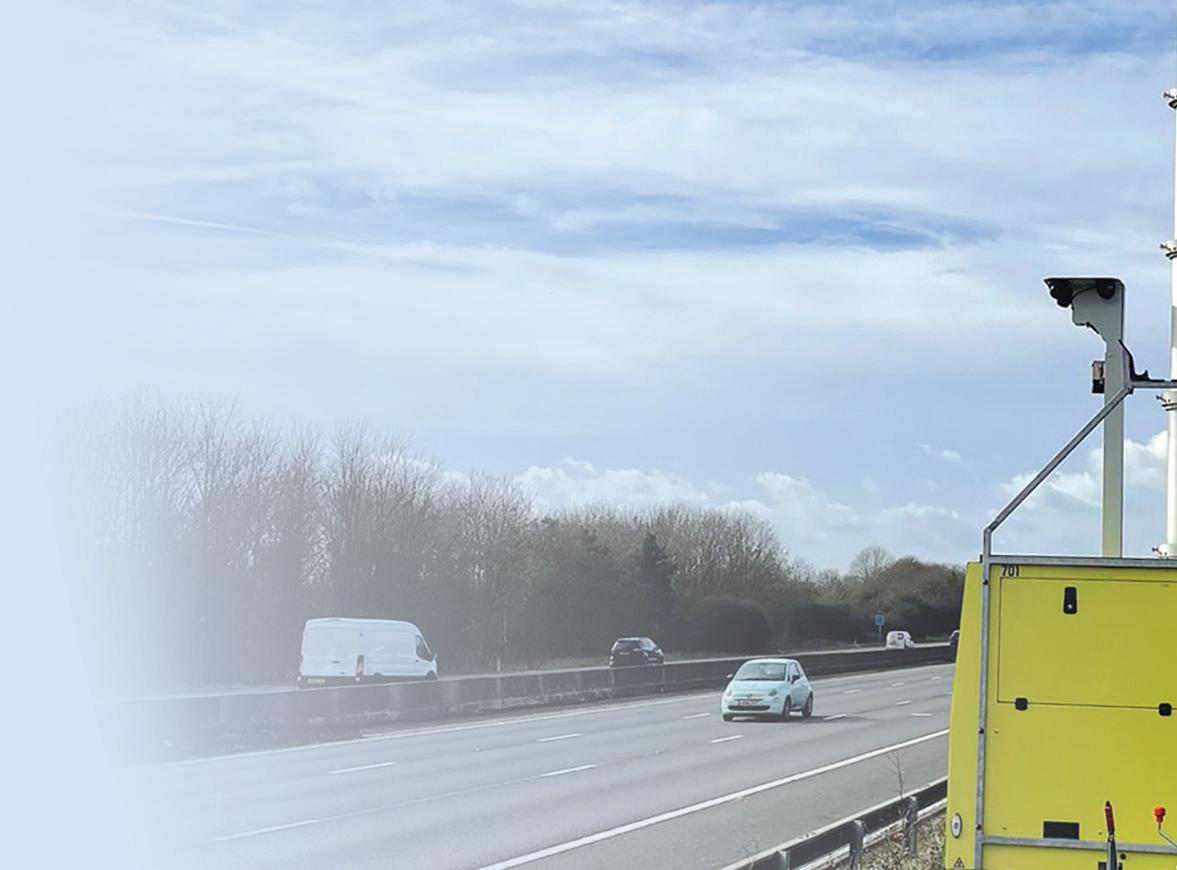
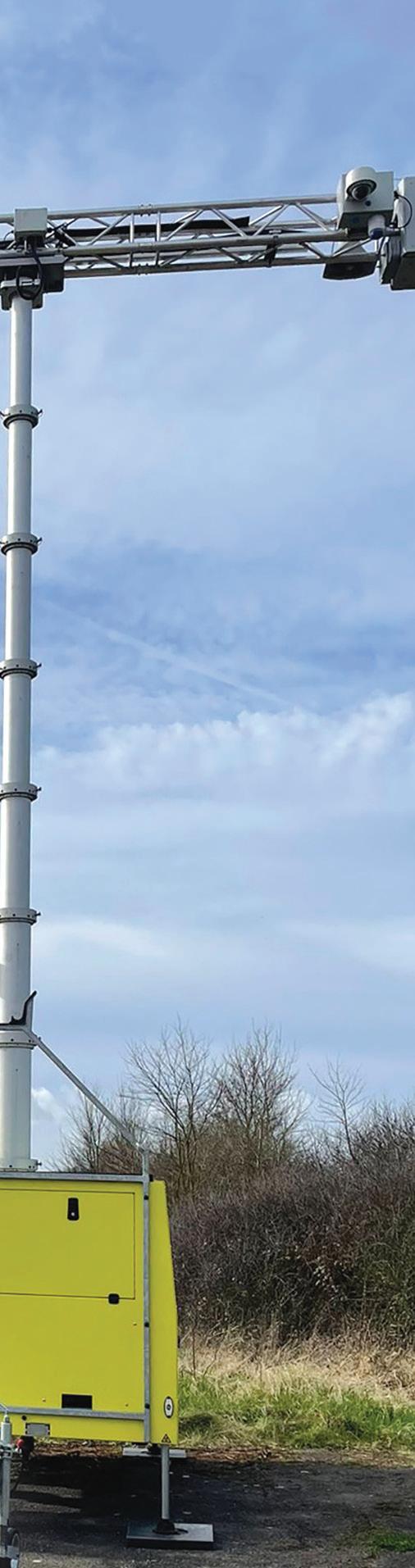
Greater Manchester region in England will trial Acusensus camera technology that detects distracted drivers, those using phones, as well as those not wearing a seatbelt. The new Heads Up technology from Acusensus captures footage of passing vehicles before the images are processed using arti cial intelligence (AI) to detect potential o ending drivers. Footage deemed to contain evidence of an o ence is sent for a secondary but human check to con rm that an o ence has occurred.
If an image shows that no o ence has been committed, it is deleted immediately by the software and no further action will be taken.
Heads Up, which can be mounted to a vehicle or a trailer, will soon be deployed at several locations across Greater Manchester. This trial will be used by Safer Roads Greater Manchester as a tra c survey so the agency can understand how many drivers choose to break the law. This will be used to re ne future road safety campaigns that aim to improve compliance of mobile phone and seat belt use by drivers.
Research shows that you are four times more likely to be in a crash if you use your phone while driving and twice as likely to die in a crash if you don’t wear a seat belt.
Peter Boulton, Transport for Greater Manchester’s network director for highways, said distractions and not wearing seat belts are key factors in a number of road tra c collisions in the region. Between 2014 and 2023 there were 138 people killed or seriously injured
following road tra c collisions in Greater Manchester where driver distraction was a contributing factor. Of those deaths, 23 people lost their lives in a road tra c collision where the driver was using a mobile phone.
“By using this state-of-the-art technology provided by Acusensus, we hope to gain a better understanding of how many drivers break the law in this way, while also helping reduce dangerous driving practices and make our roads safer for everyone,” said Boulton.
technology that warns drivers of vehicles on the roadside can help reduce these types of crashes.
In 2022, 30% of pedestrians 16 and older killed in motor vehicle crashes had a blood alcohol concentration (BAC) of 0.08 or higher. Looking at driver impairment, around 19% of fatal pedestrian crashes involved a driver with a BAC over 0.08.
Alcohol and/or drug impairment by pedestrians can put them at risk while walking near vehicle traf c, but drivers bear the brunt of responsibility as the operators of multi-ton machines with the kinetic potential to kill or injure someone.
The Governors Highway Safety Association is a nonpro t association representing the highway safety of ces of states, territories, the District of Columbia and Puerto Rico.
Governors Highway Safety Association, GHSA
www.ghsa.org
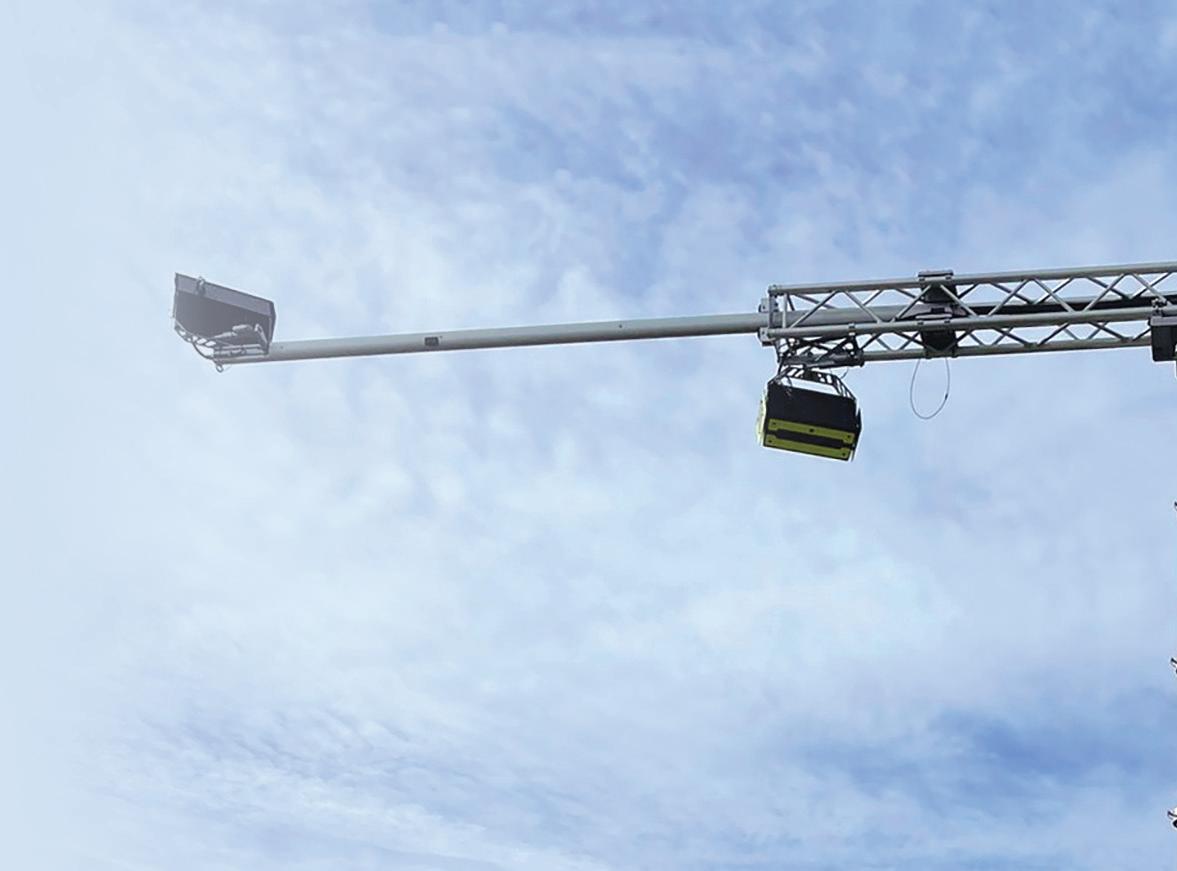
Geo Collins, general manager at Acusensus, said the Heads Up technology will allow Safer Roads Greater Manchester to better understand the levels of distracted driving and seat belt wearing on their roads. “The vast majority of drivers set out to be safe on every journey, but bad habits can creep in, resulting in a safety risk for everyone,” he said. “This approach is the rst step in encouraging better behaviour, ensuring safety for all road users.”
Earlier this year Safer Roads Greater Manchester launched the ‘Touch.Screen’ campaign to raise awareness of the dangers of drivers becoming distracted while using a mobile phone. Touch.Screen was supported by the husband of a woman who - along with their unborn child - died after a driver was lming himself reaching 123mph (nearly 200kph) on the M66 motorway and crashed into her car which was stopped on the hard shoulder. Acusensus www.acusensus.com






















Transportation
n
n
n
n


New Zealand transport minister Simeon Brown is considering tolling seven new “Roads of National Signi cance” if that would speed their completion.
Media reports noted that NZ Transport Agency Waka Kotahi (NZTA) said procurement and construction of the roads could start within the next three years.
The projects are Belfastto-Pegasus, the Hawke’s Bay Expressway, SH1 Cambridgeto-Piarere, State Highway 29 Tauriko, Takitimu North Link Stage 2, Mill Road and Warkworth-to-Wellsford.
Brown reportedly said more information about completion times and costs would be known by the end of September. He noted that tolling is a good method for ensuring the roads get suf cient funding for completion. “So where NZTA recommends a toll, we will support tolling of that infrastructure to pay for it. It is a user-pays approach,” he said.






The government recently announced that it had prioritised 17 Roads of National Signi cance that it wants to be completed as soon as possible. They were noted in the government's recent Policy Statement on


Land Transport but the cost of completion remains uncertain, according to media reports. The government has repeatedly said it would aim to use alternative revenue options where possible, including public-private
partnerships, and user-pays options like road tolling, equity nance schemes, and value capture.
NZTA already operates three toll roads: the Northern Gateway Toll Road north of Auckland; the Tauranga Eastern Link Toll Road; and the Takitimu Drive Toll Road, both in Tauranga.
Nick Leggett, chief executive of Infrastructure New Zealand –a membership organisation for the transport sector - has come out in favour of tolling. He said Roads of National Signi cance are much needed for the country’s economic and social development.
“Safe and ef cient four-lane and grade-separated highways are not cheap, yet they are a critical piece of the puzzle when it comes to improving New Zealand’s land transport network,” said Leggett. “Tolling is the way to go to help deliver these new highway projects… We cannot kick the can down the road any longer.”

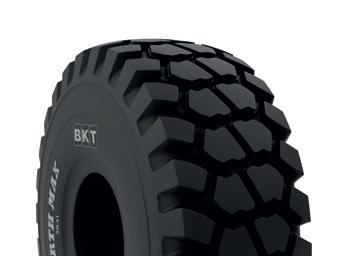
No matter how challenging your needs, EARTHMAX SR 41 is your best ally when it comes to operations that require extraordinary traction. Thanks to its All Steel radial structure and the special block pattern, EARTHMAX SR 41 provides excellent resistance against punctures and an extended service life. In addition to long working hours without downtime, the tyre ensures extraordinary comfort.
EARTHMAX SR 41 is BKT’s response to withstand the toughest operating conditions in haulage, loading and dozing applications.













Flir has launched the closed circuit Tra Bot Dual AI multispectral camera system speci cally to improve safety in tunnels and on bridges.
Flir, part of Teledyne Technologies, noted that it is in tunnels and on bridges where drivers are most at risk of hitting unseen objects or being trapped by fast-growing vehicle res.
The Tra Bot Dual AI offers a fast thermal core, the most reliable 14-bit early re detection for road tunnels and robust arti cial intelligence (AI) for the highest detection performance. Flir says that it has the most dependable traf c data collection along interurban roadways, without sacri cing imaging resolution or data loss due to bandwidth restrictions.
Tra Bot Dual AI uses three Flir proprietary AI models simultaneously, developed and trained from millions of Flir-captured images collected across the world. One model identi es and classi es fallen objects while the other two models classify vehicles on thermal and on the visual stream, including unusual objects such as e-scooters and vulnerable road users like pedestrians and bicyclists.
Combined with Flir’s 3D world tracker, Tra Bot Dual AI features a greater capacity to detect incidents within a scene. As vehicles enter its eld of view, the camera anticipates vehicle speed and trajectory, even if tracked objects become occluded or obscured by other vehicles, objects or road infrastructure. Tra Bot Dual AI can also detect sudden lane changes and wrong-way drivers. This is all critical data for traf c managers to better manage safety incidents while reducing false alarms.

Tra Bot Dual AI analyses the 14-bit thermal information directly on the camera. This gives the camera algorithm 64-times more information which guarantees unparalleled re detection, speed and reliability while dramatically reducing the potential for false alarms.
"Today, traf c management teams require more immediate, accurate traf c data to alert rst responders, save lives, and get vehicles moving again,” said Stefaan Pinck, vice president for business development at


Flir. “Tra Bot Dual AI provides that capability through a combination of proprietary AI models 3D world tracker and its early re detection capabilities.”
Tra Bot Dual AI has a three-axis rotational design that provides greater installation exibility for mounting on unique roadway infrastructure including the sloped walls of tunnels and within tight spaces. The three-axis camera swivels, pans, tilts and rolls sideways. This eliminates the need for custom adapter plates that take a lot of time to install. The tilt sensor inside also calibrates the camera automatically, further reducing installation time and any ensuing traf c disruption.

Tra Bot Dual AI is housed within an IP 66/67-rated non-corrosive, marine grade, stainless-steel casing built to withstand all types of weather, including salt air and humidity, along with high-pressure water blasts from road-and-tunnel cleaning operations. The 4K camera features an optical zoom of 6mm to 22mm with a detection range of up to 300m. Flir says that this provides greater coverage per camera compared to previous Flir intelligent traf c cameras.


The camera is designed to integrate with Flir Cascade, the recently launched software that collects and organises data from Tra Bot Dual AI. It also provides intelligent incident ltering to ensure only the relevant incidents are shown to the traf c operator. If an incident is detected, a short 4K-resolution colour and/or a thermal video clip of the scene is agged up for the traf c management team to immediate review.
Flir says that Tra Bot Dual AI can also further integrate with video management systems to provide live footage.
Meanwhile, Teledyne has launched a website dedicated to the Teledyne Vision Solutions group to focus on imaging technology. The website includes comprehensive product and support information from Teledyne DALSA, e2v CMOS image sensors, Flir IIS, Lumenera and Photometrics and Princeton Instruments. To be included in the near future will be Teledyne Judson Technologies, Acton Optics and Adimec.
www. ir.com/tra c/ ir.com/tra bot-dual-ai
Teledyne Vision Solutions www.teledynevisionsolutions.com






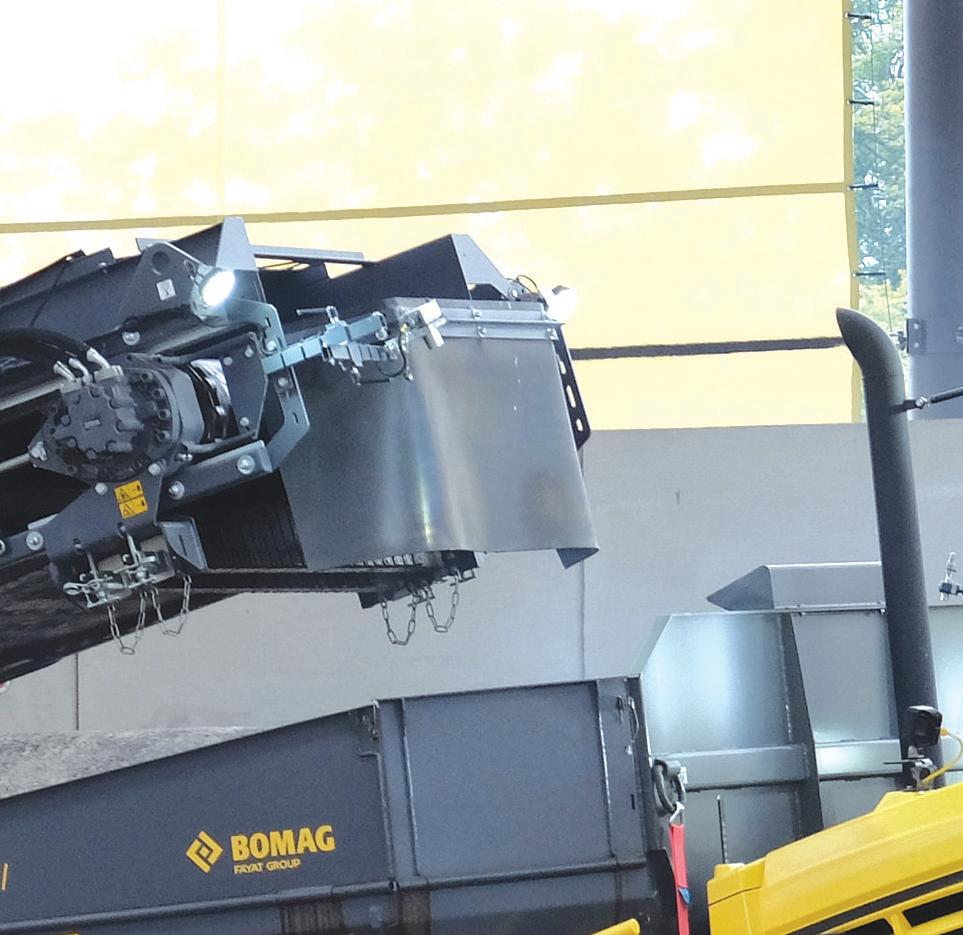

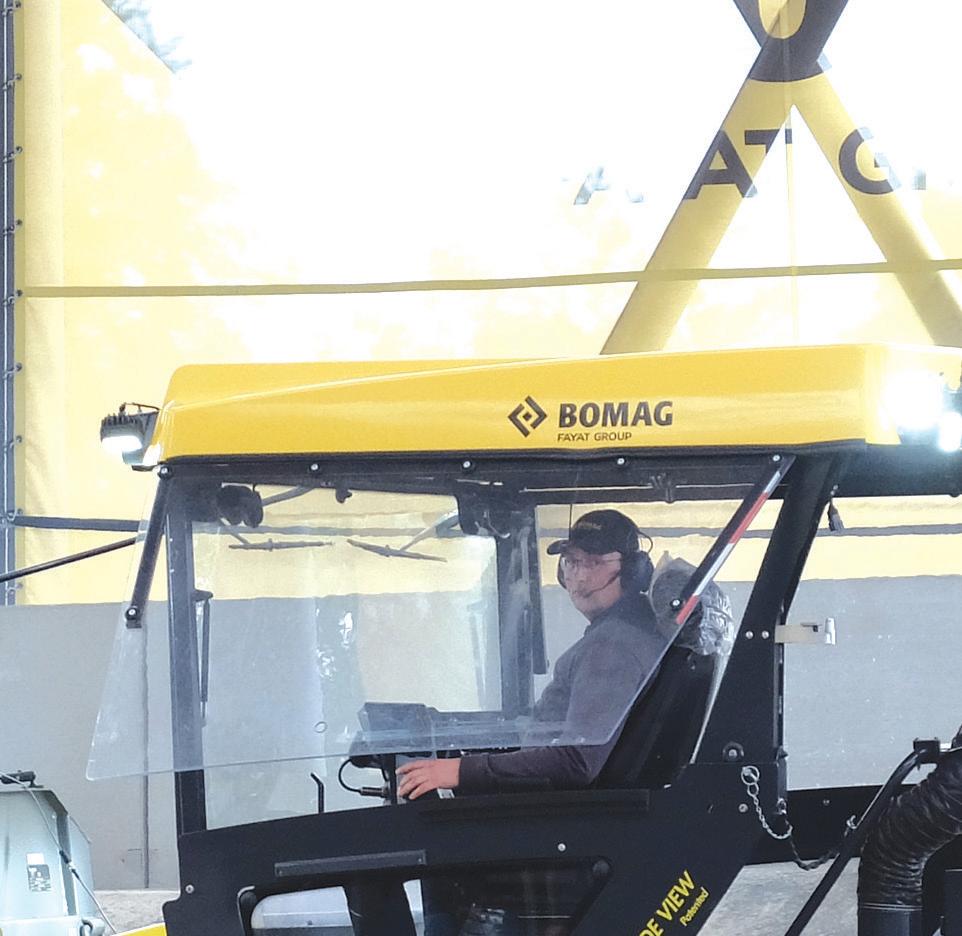
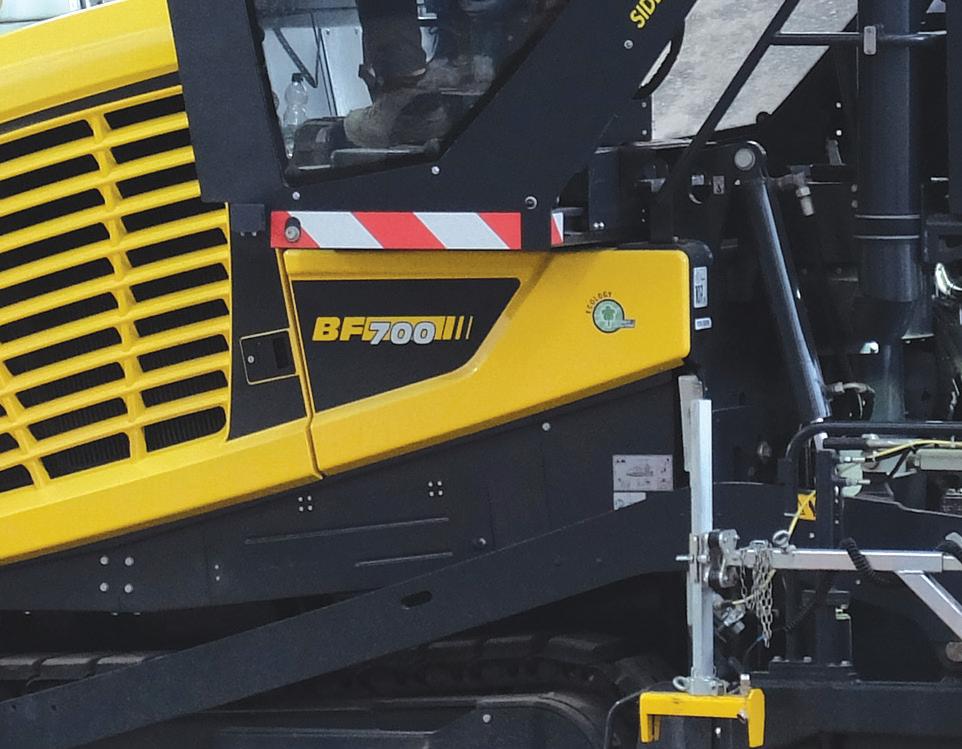
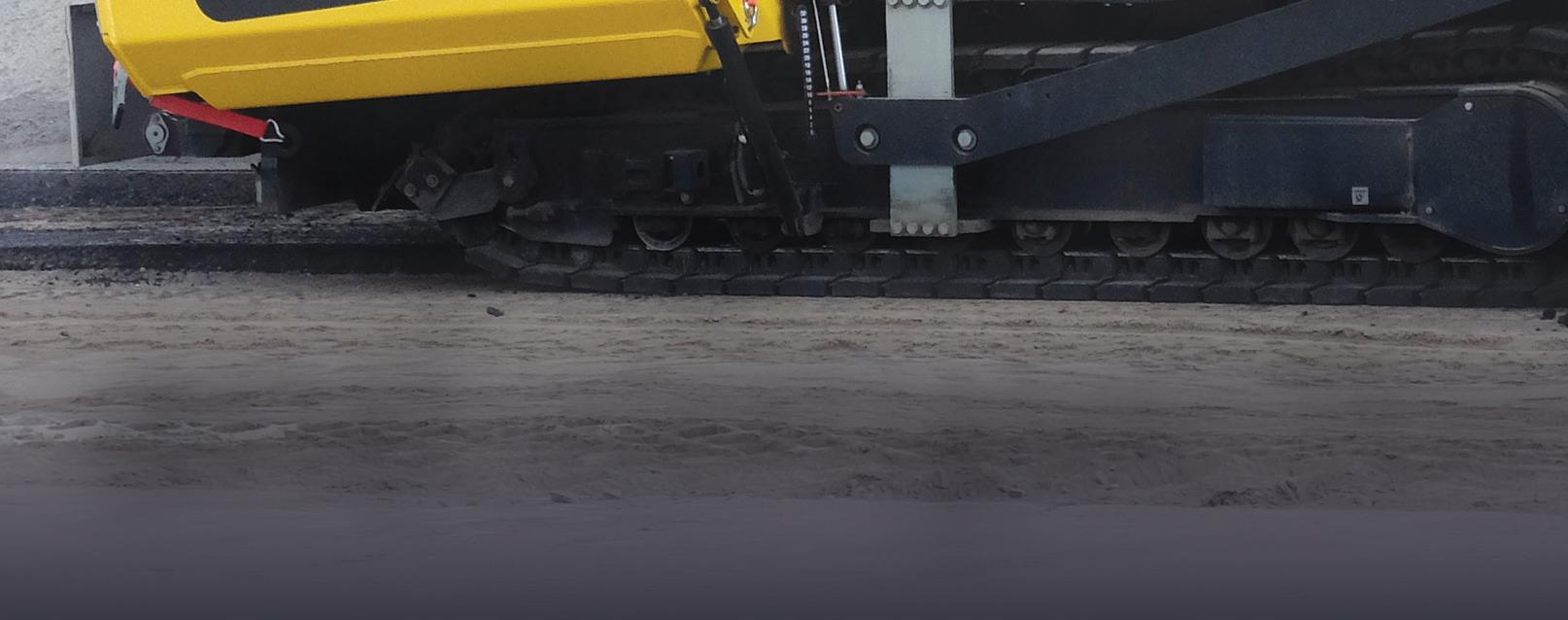


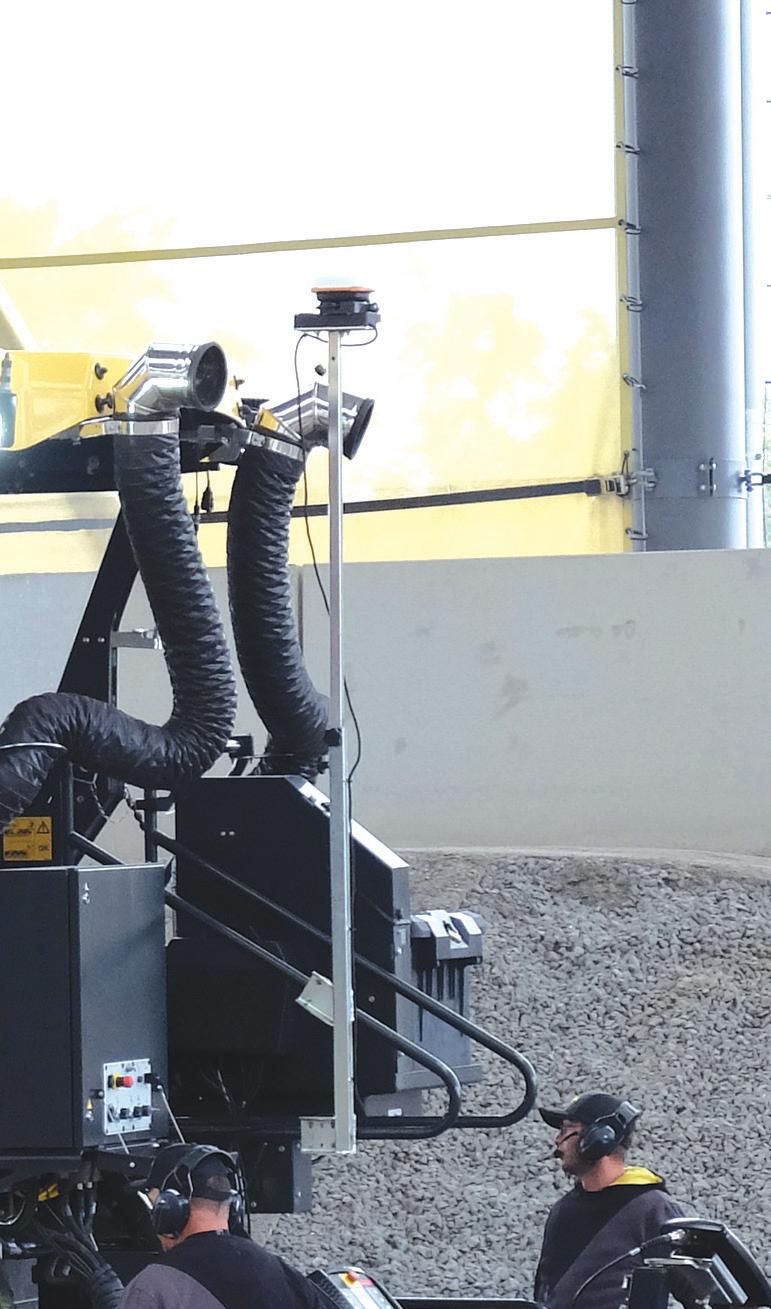


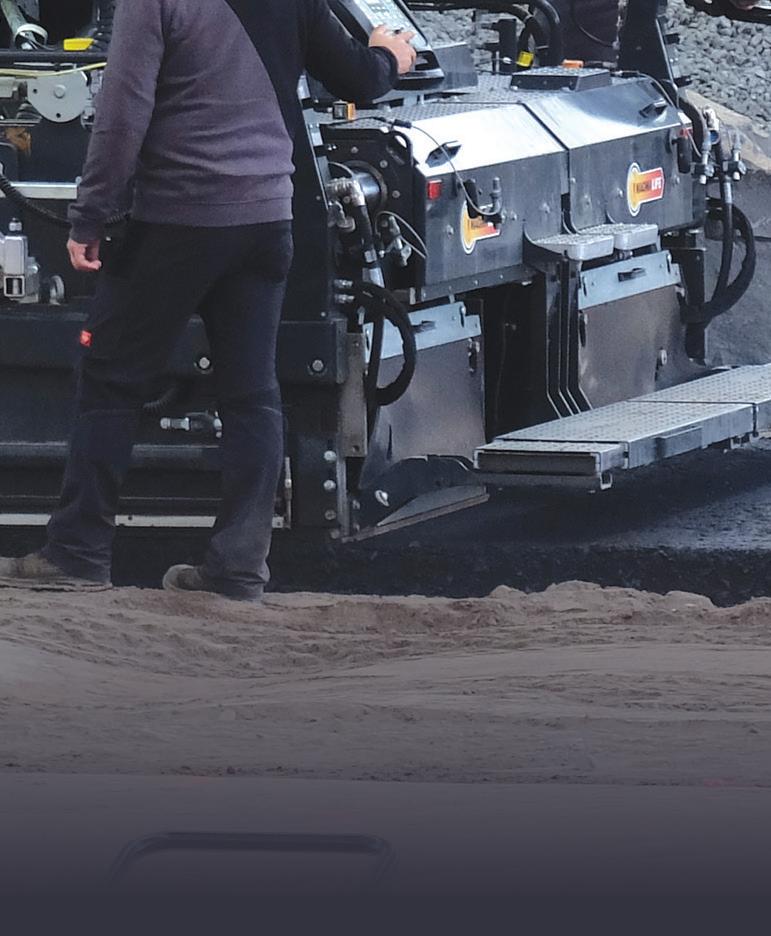
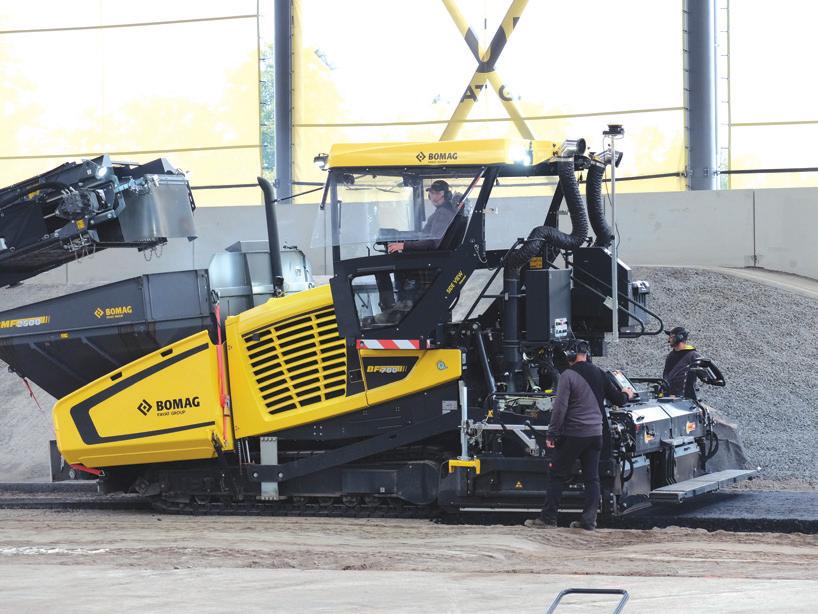
Intelligent paving and compaction holds the key to more ef cient road construction according to BOMAG – Mike Woof writes
At the BOMAG innovation Days event in the rm’s headquarters at Boppard in Germany, advanced technology was a central focus.
The company has introduced several new compaction machine models during this year already, with the majority having been unveiled at the Intermat 2024 exhibition in Paris in April. The company has added to its range with new reclaimer/stabiliser models also.
However, the focus for the rm’s innovations is now on its new technology solutions such as its Bomap, Asphalt Manager and Asphalt Pro systems.
Jonathan Stringham is vice president of sales and marketing at BOMAG said, “The next big step onsite is not going to come from machines. It’s going to come from digitalisation.”
He said that gains in road building performance will come from integrating functions and operations.
The Bomap system allows greater compaction ef ciency with fewer passes as it monitors progress and ensures that there is no under- or over-compaction. The package can be linked between different machines onsite, so that all the compactor
operators can see what work has been done and what remains to be carried out.
The Asphalt Pro system offers intuitive site planning and control, allowing a contractor to pre-plan logistics. Realtime changes can be made if the situation changes onsite, and after a job is complete, the system provides a full record of work carried out, allowing analysis of the data to optimise future works.
A plan of the job can be uploaded to the asphalt paver and any changes can be added when received.
The system calculates the truck delivery cycle and informs the asphalt plant of material demand. It also monitors the tonnages of asphalt uused, so discrepancies between quantities used and those estimated can highlight issues with the paving process.
One of the key innovations has been the intelligent braking system BOMAG has developed for its compactors. Some competing systems will simply detect whether there is an obstruction in fromt of the machine and then sound an alarm for the operator, or even stop the machine before it gets too close.
But the BOMAG system is more sophisticated as it is able to determine the size and direction of any object in the machine’s path. The system can calculate

whether stopping the machine is necessary, or if slowing it down will provide suf cient time for a moving object to be clear of the path. The system won a Gold Award at this year's Intermat in Paris. Following the completion of all certi cations, this new safety technology for pivot-steered BOMAG tandem rollers is now available to customers worldwide in full and without restrictions.
The Emergency Brake Assist package was designed for use on the AP-5 generation of pivot-steered BOMAG tandem rollers. It continuously scans the machine's surroundings, allowing it to recognise potential hazards early and respond appropriately and automatically.
The advanced multilevel lidar technology allows the machine to assess its surroundings and project its travel path based on speed and steering angle. Other operational parameters are also automatically factored in, such as whether the roller is in crab steering mode. The package can identify both stationary and moving obstacles. This allows the localisation of objects and persons that are potentially at risk when the machine is in motion.
In the event of a potential collision, the emergency brake assistant automatically intervenes, applying different braking

surface from damage caused by abrupt braking. The early anticipation and braking strategies minimise the risk of damage to the asphalt layer and increase the service life of the road surface.
The assist system is displayed and operated using the touchscreen, which is tted as standard on pivot-steered BOMAG tandem rollers. Emergency Brake Assist can be adapted to the driving style of the operator and the speci c site conditions. Drivers can adjust the braking intensity in three stages at any time. The system helps boost safety, especially when site conditions are challenging or visibility is
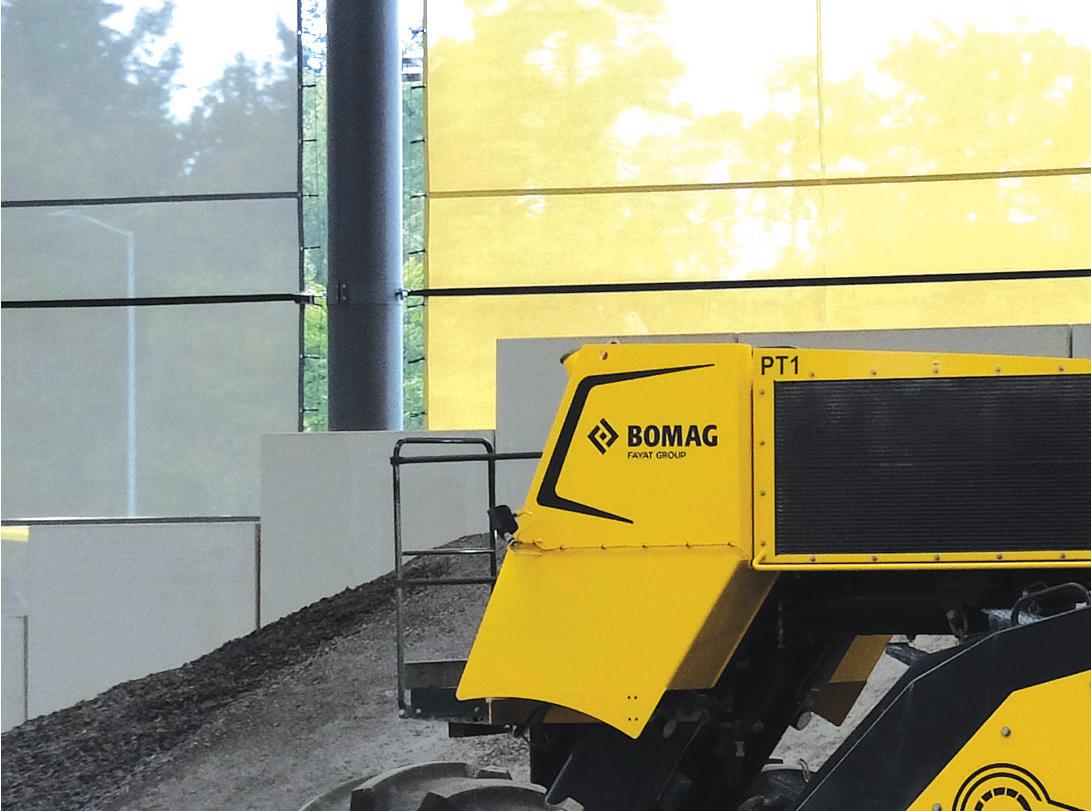

meet Tier 4/Stage V requirements for use in Europe and North America.
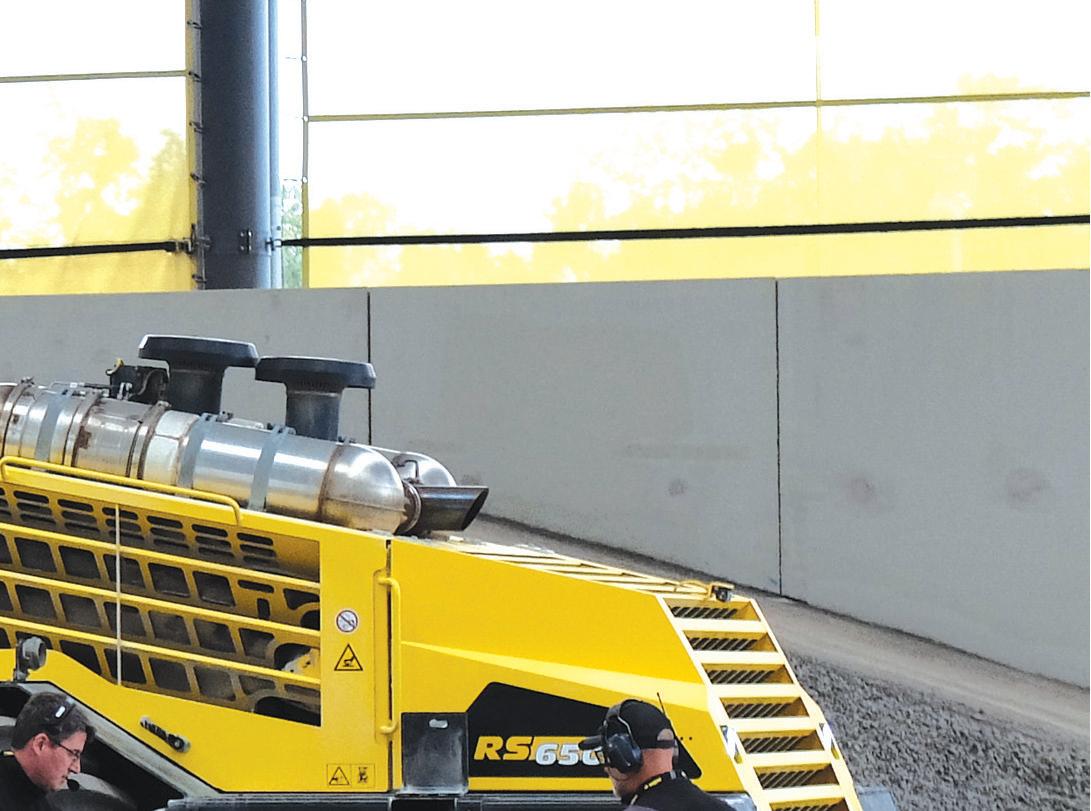
The rm says that both machines offer high output, reliability and effective ergonomic design of the operator area. Theses models are said to be highly versatile in use and can be deployed for cold recycling as well as base stabilisation and subsoil improvement projects.
The RS 600-2 and RS 650-2 differ only in the engine variant used, with both being powered by Deutz units but with different exhaust aftertreatment systems. This powerful engine enables the RS 600-2 or RS 650-2 to push a bitumen emulsion tanker of up to
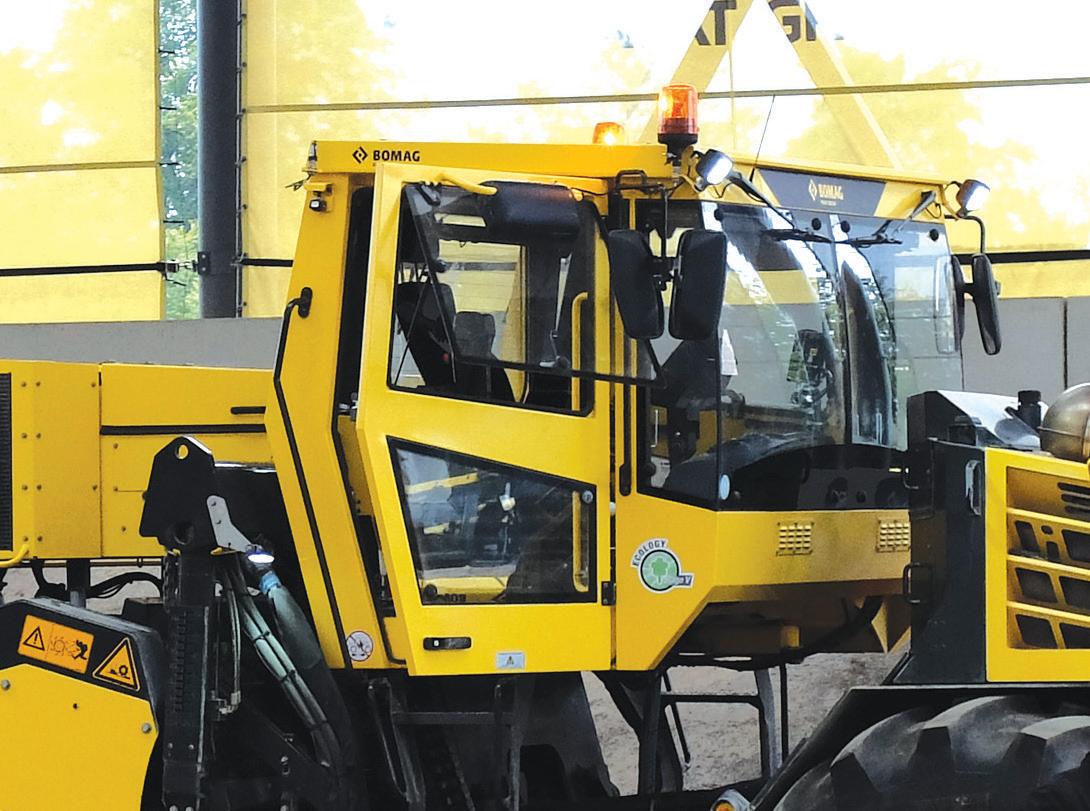
40tonnes during the mixing process while also towing a water tanker of around 30tonnes. The rm says that this allows even challenging projects to be completed in a short time.
The machines can operate both forwards and backwards, for additional versatility.
A state-of-the-art camera system supports this, offering the operator a 360° view of the working environment. Two additional cameras can optionally be installed to give a better view of the area in front of the rotor and the current mixing result.
The machines are said to be manoeuvrable, with four different steering modes as well as the option of two rotor variants. The 2.4m-wide rotor is standard but a 2.6m unit is also available.
The machines are designed for use in all climate zones from -15° to +50oC. The smart cooling system ensures ef cient cooling and also reduces fuel consumption.
The new machines have hydrostatic drive to the wheels as well as to the rotor drive, which is in nitely adjustable from 104–140rpm for milling and mixing in tough conditions. The 4x4 drive, anti-slip control (ASC) and the nonspin rear axle ensure performance on tough terrain.
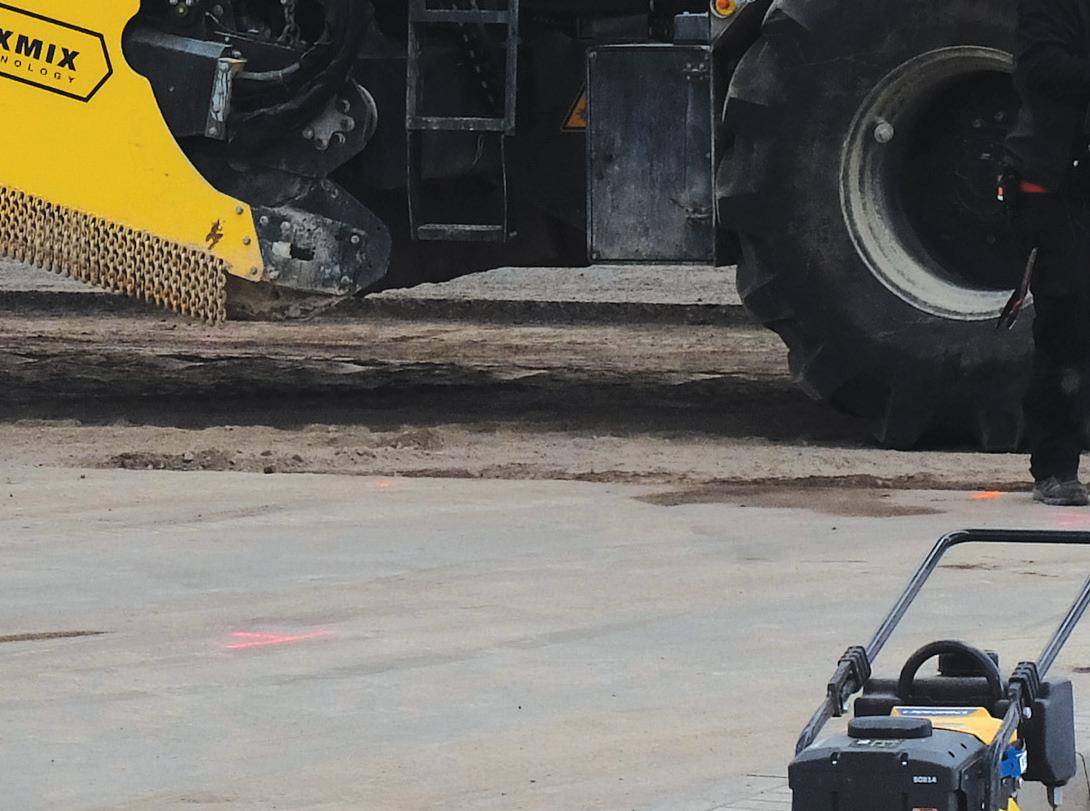
The machines also have ergonomic working areas for the operator as well as the company’s sophisticated FLEXMIX technology to deliver optimum mixing results in forward and reverse travel. The required mixing pattern can be achieved with the additional mixing and crushing gate in the rotor hood, delivering high quality for material processing while optimising costs.
BOMAG www.bomag.com
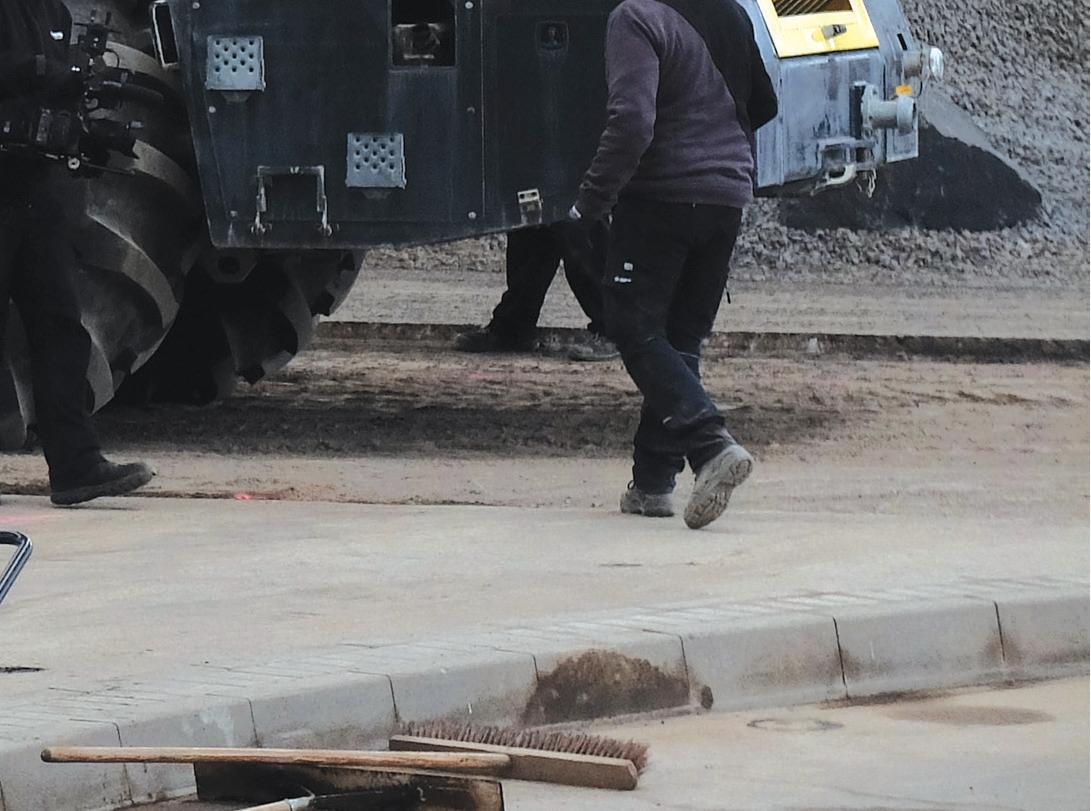


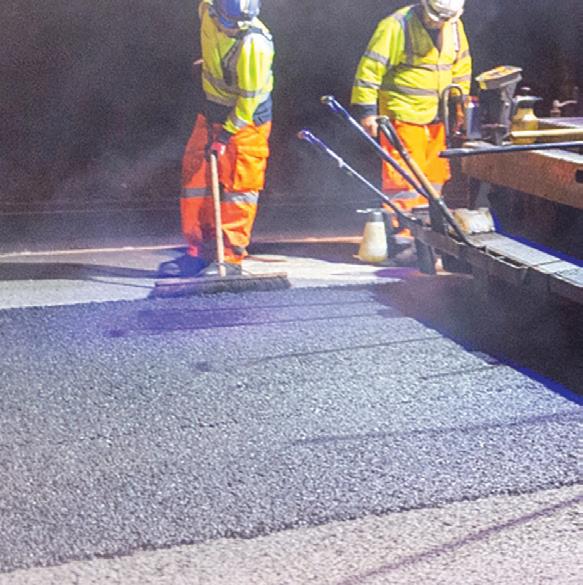
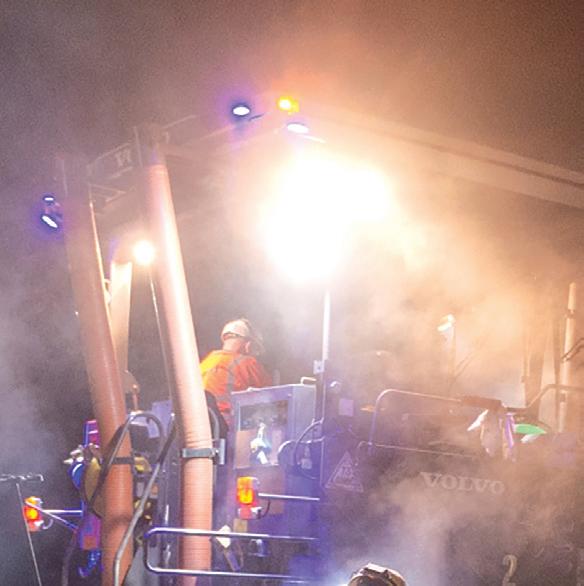
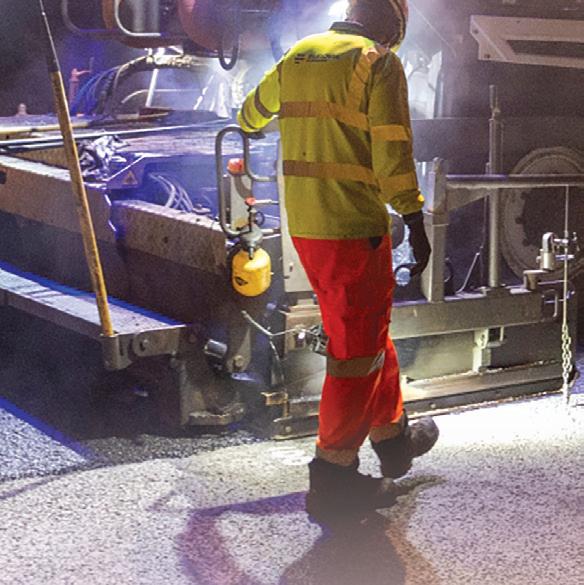

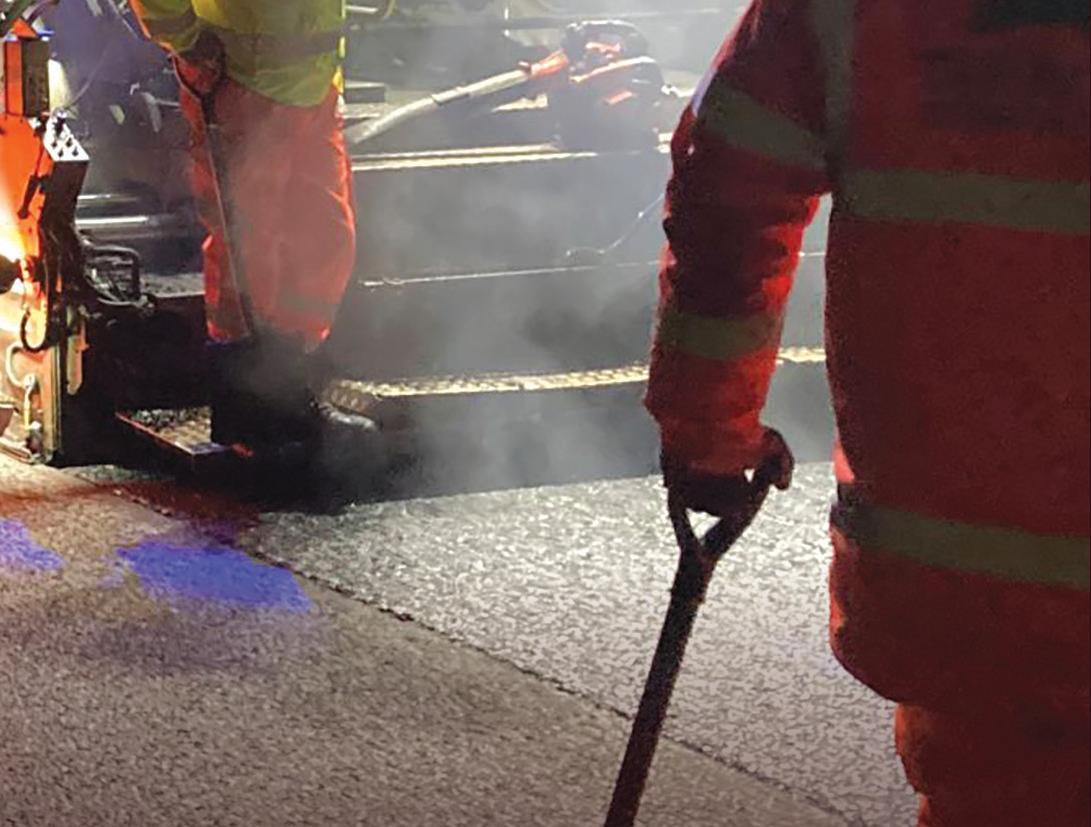
National Highways in the UK is trialling a groundbreaking graphene-enhanced asphalt, which could extend the lifespan of pavement on the strategic road network while reducing the carbon footprint.
The innovative surface incorporates a proprietary graphene-enhanced polymeric additive, called Gipave. Graphene is the strongest compound discovered and acts as a reinforcement to the bitumen lm surrounding aggregates in asphalt.
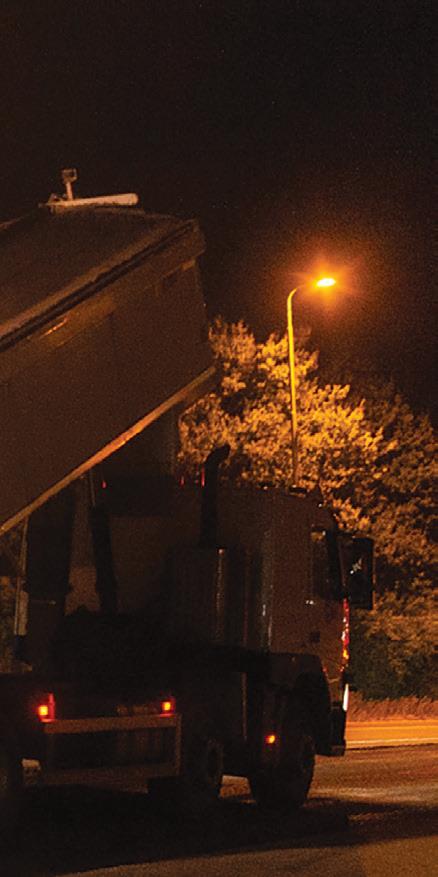
The surface was laid on the A12 northbound between Hat eld Peverel and Witham in mid-August 2024. It contained 40% reclaimed asphalt - the highest level ever used in the UK for asphalt with grapheneenhanced polymeric modi er. Previous studies have shown Gipave improves stiffness and resistance to rutting compared to conventional asphalt, while boosting fatigue endurance. The performance of the material on the A12 will be monitored over several years. This trial is part of a National Highways research project under SPaTS 2 which is testing several emerging, low carbon asphalt products. The trial is adopting both hot and warm mix technologies for comparison studies. It is being conducted with the help of industry partners Eurovia, Jean Lefebvre (UK), AtkinsRéalis, Iterchimica and Directa Plus.
This is the rst time Gipave has been applied on the strategic road network and follows trials in Oxfordshire, Kent, Staffordshire and Essex. This technology has been adopted internationally including at the new San Giorgio bridge in Genova, the Treviso Airport runway, Edinburgh and Rome Fiumicino Airport taxiways, the main motorways in northern Italy – the A4 TurinMilan and the A4 Brescia-Padua - and the F1 Imola circuit in Italy.
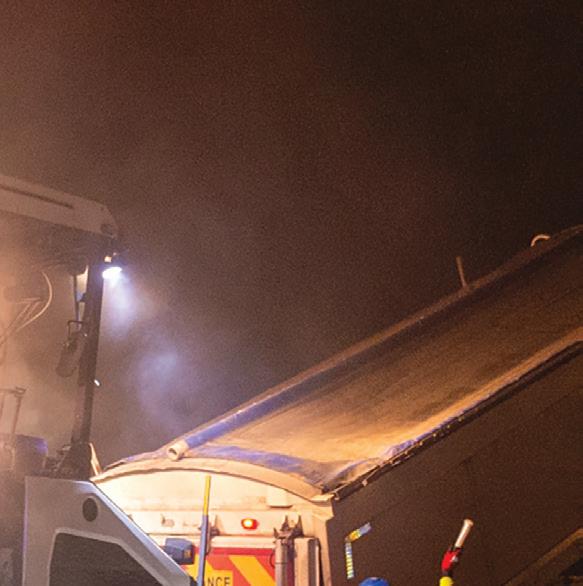
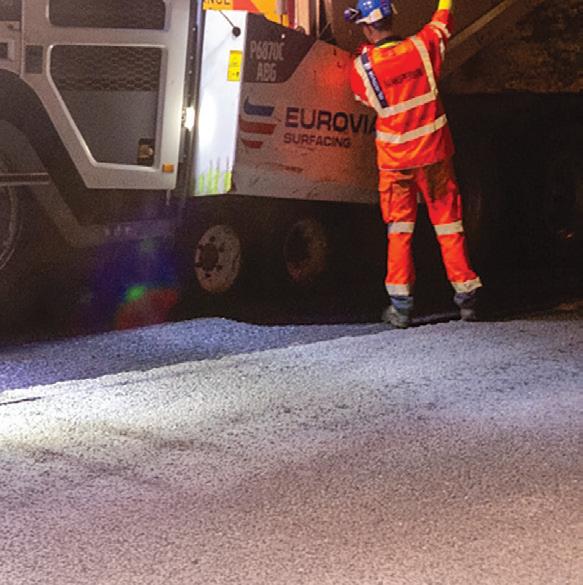
Gipave has been developed by Iterchimica, which Eurovia UK produced and installed on the A12 surfacing with support from specialist Jean Lefebvre UK for the mix design. AtkinsRéalis will analyse the performance of the trial section including its carbon footprint and whole-life bene ts, measuring it against a control section of standard polymer-modi ed asphalt.
The trial is being coordinated by an AtkinsRéalis-Jacobs joint venture as part of a National Highways research project which University of Nottingham and Jean Lefebvre UK will support with the lab testing.
Umesh Parajuli, Project Sponsor and Senior Pavement Advisor at National Highways said: "We are exploring new ways to improve our road network with a focus on three imperatives: safety; the customer; and delivery. This trial of graphene-enhanced asphalt supports our 2040 net zero target for construction and maintenance and could provide signi cant whole-life bene ts, improving the service life of both local and national networks.”
Michael Wright, Technical Director, Transportation UK, at AtkinsRéalis, said: “The trial of graphene-enhanced asphalt marks a step towards more advanced road construction in the UK and builds on our work with National Highways to trial emerging technologies. We will analyse the performance of this innovative product, which could lead to signi cant improvements in road durability and reduce environmental impact through a new, sustainable circular economy.”
Lorenzo Sangalli, Gipave Product Manager at Iterchimica, said: “The combination of Gipave with high percentages of recycled asphalt has already demonstrated higher performances in similar contexts, extending the service life of asphalt pavements and

resulting in greater bene ts in terms of sustainability and circular economy.”
Jonathan Core, Technical Director at Jean Lefebvre (UK) said: “Eurovia are committed to limiting our carbon impact by moving towards a circular economy. This includes the implementation of professional recycling processes, implementing ef cient techniques, adopting effective behaviour patterns, as well as looking at enhancing the durability of our products through the Research and Development of innovative materials and processes, such as Gipave. Collaboration and close coordination with industry experts such as Iterchimica and AtkinsRealis is an essential component in us achieving our objectives.”
Giulio Cesareo, Directa Plus CEO, said: “The continued use of Gipave demonstrates the growing recognition of its ability to improve road durability and sustainability, aligning with our mission to deliver cutting-edge, eco-friendly solutions to the infrastructure sector.”
AtkinsRéalis www.atkinsrealis.com
Directa Plus www.directa-plus.com
Eurovia www.eurovia.co.uk
Iterchimica www.iterchimica.it
Jean Lefebvre (UK) www.jlk.co.uk
National Highways www.nationalhighways.co.uk












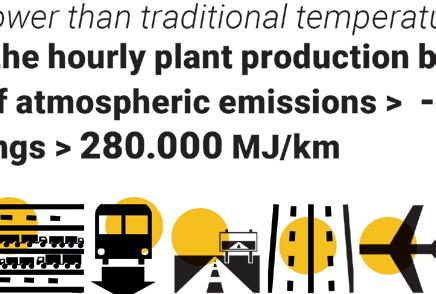














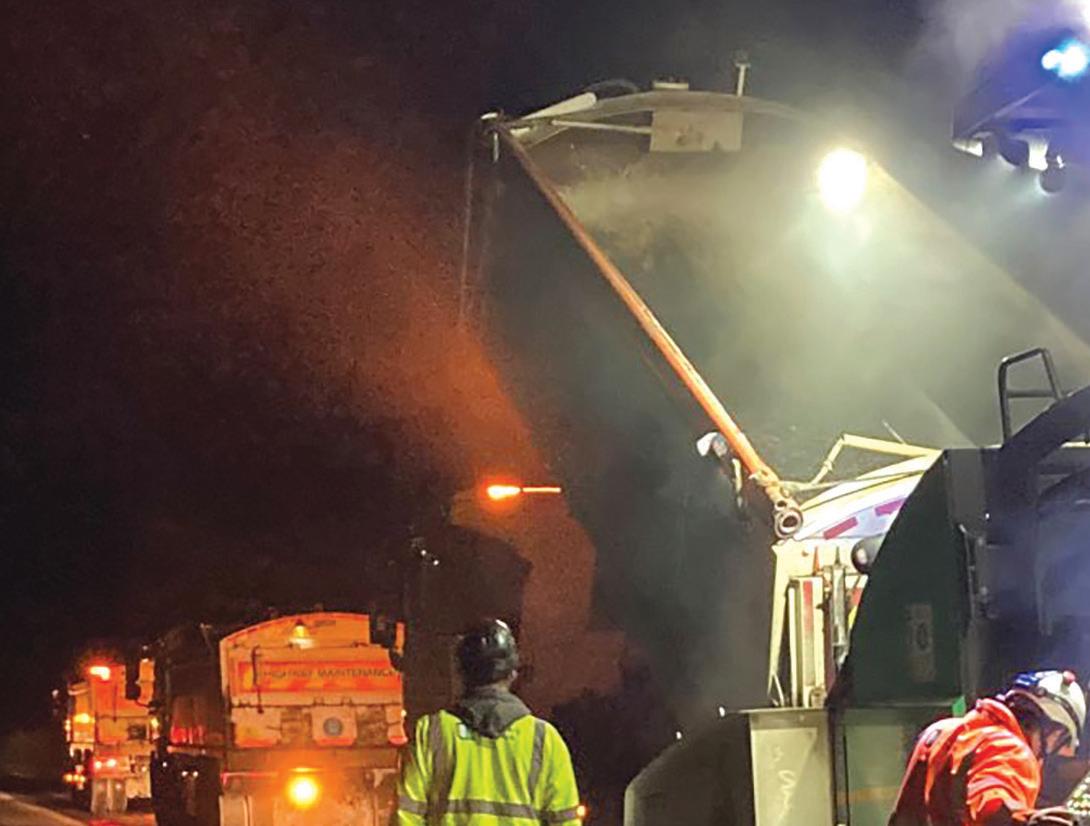
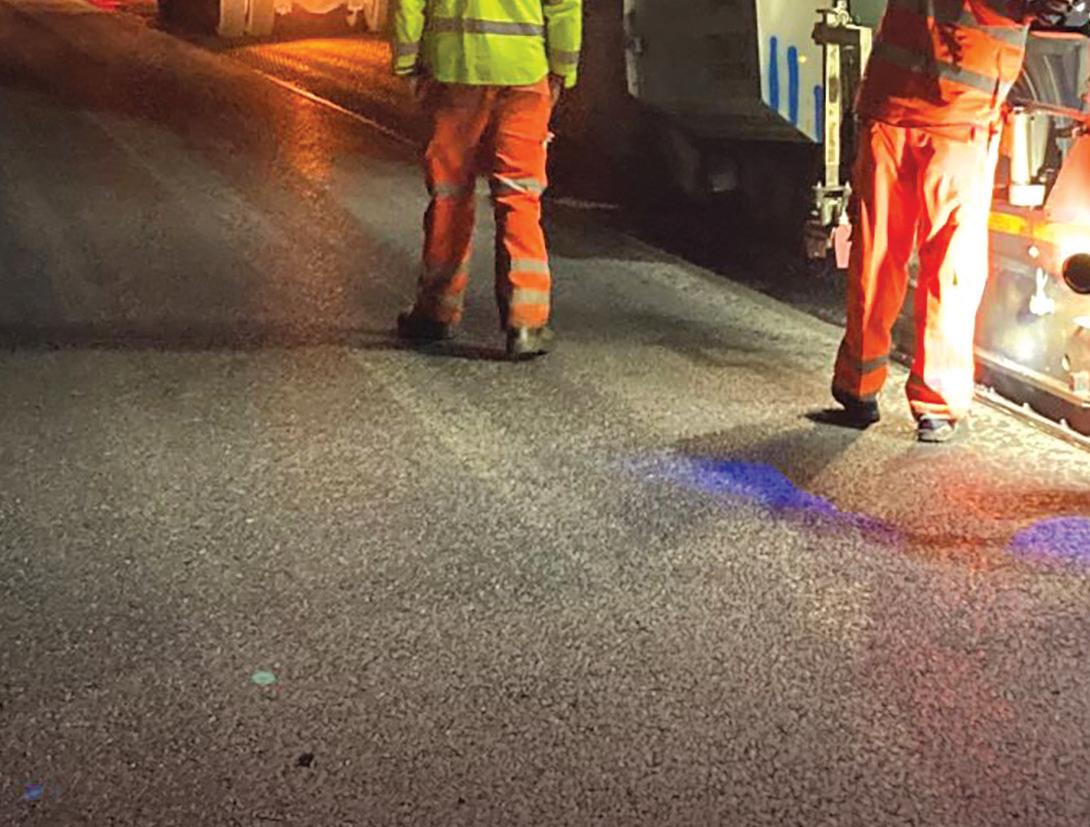
In the UK, Redbridge is the rst borough in London to trial a new asphalt mix that can reduce the carbon footprint in road resurfacing works. The project has been led by Redbridge Council, in partnership with Kensons Highways, using the asphalt for road resurfacing at Lodge Hill, in Ilford.
The asphalt mix, supplied by Tarmac, lowered the carbon footprint from road resurfacing by incorporating a carbon negative product into the mix, called ACLA. Results showed that using ACLA, Tarmac’s asphalt reduced the project’s carbon footprint by 68%.
ACLA was designed and manufactured by Earthshot Prize nalist climate tech company

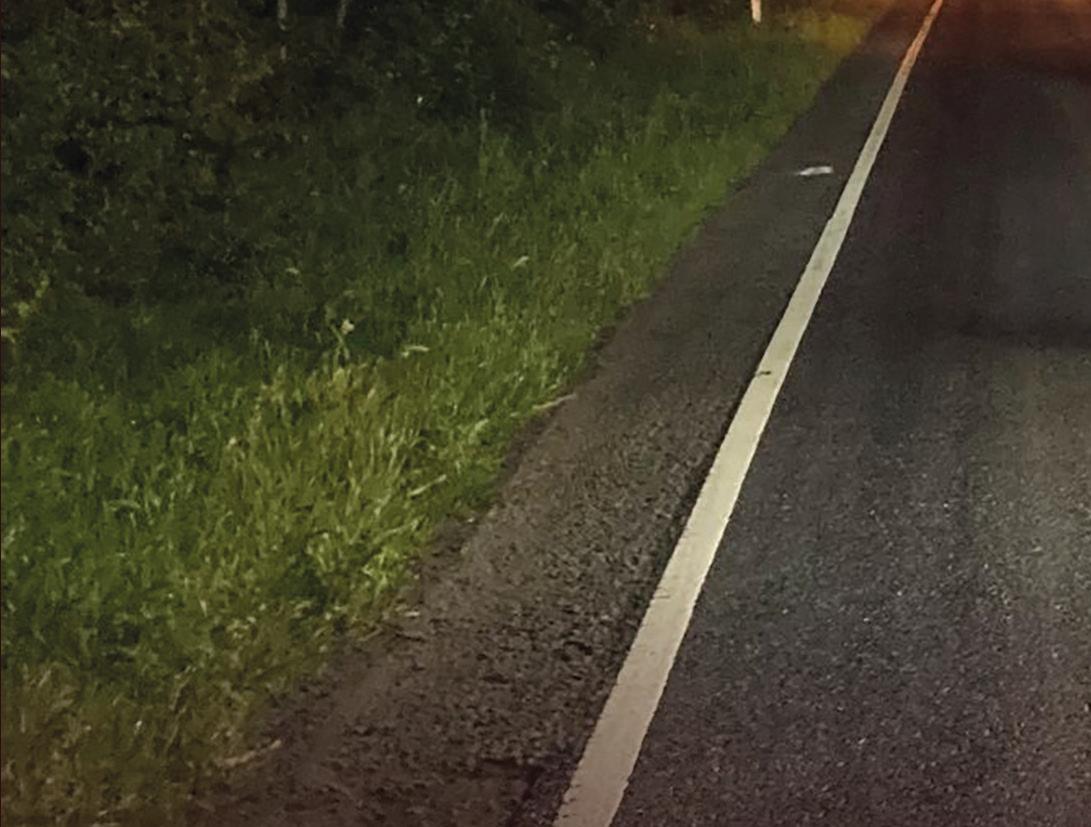
Low Carbon Materials (LCM). It can capture and store carbon dioxide from the atmosphere, locking it into the resurfaced road. For the trial ACLA was used in the middle (binder) asphalt layer of the three laid. This helped to lower the project's carbon footprint.
David Shelley, Director for Kenson Highways, said: “We initially encountered Low Carbon Materials at the Highways UK show. Upon investigating the product, we quickly realised its potential interest for Redbridge.”
Tim Smith, Senior Technical Manager (South East) at Tarmac added: “There has never been a more important time to explore innovative, carbon-saving solutions and materials. By collaborating with supply chain
and industry partners on this project we have demonstrated what's possible in delivering greener roads. It’s crucial that the learnings from this project help to inform further decarbonisation of the road network.”
Natasha Boulding, CEO of LCM, said: “I’m proud to have collaborated with pioneers Redbridge Council, Kensons Highways and Tarmac on this rst-of-its-kind scheme in London to see ACLA used to unlock net zero asphalt. This project offers a blueprint for bestpractice and a clear roadmap for dramatically reducing the environmental impact of road construction and maintenance.”
Tarmac
www.tarmac.com
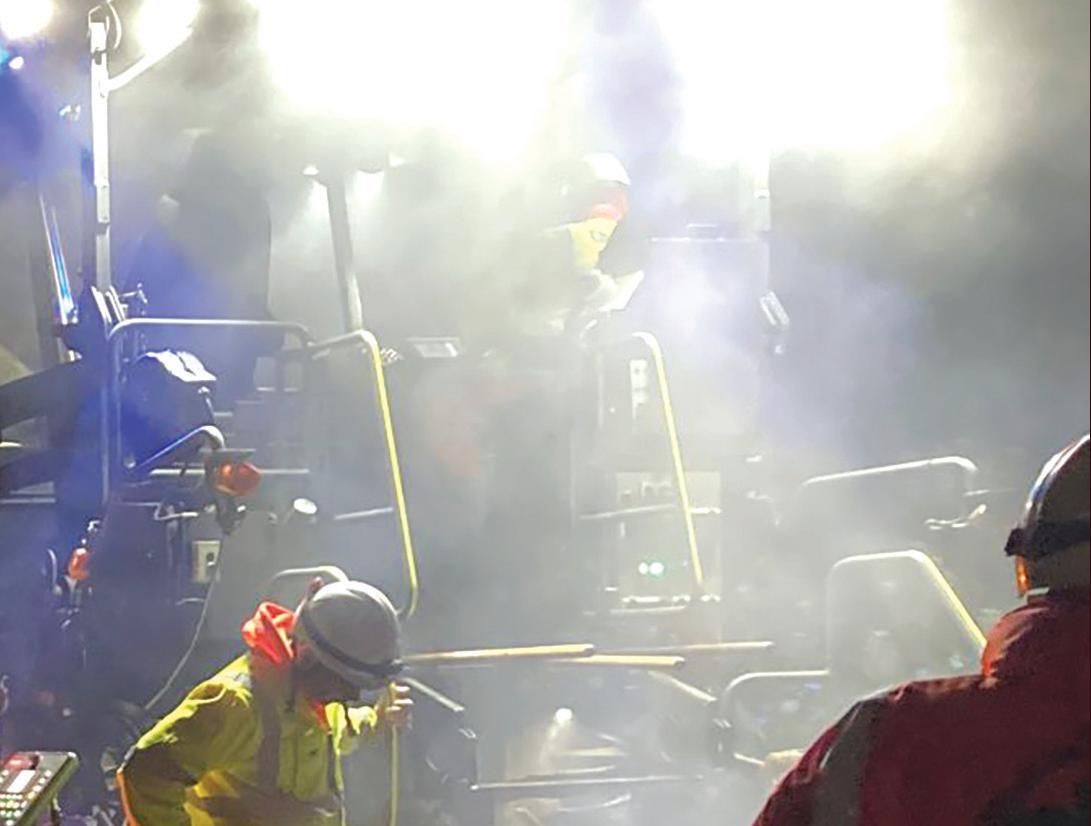

In England, National Highways has extended trials of biogenic binders to include warm mix asphalt and up to 30% reclaimed asphalt.
Heidelberg Materials and the AtkinsRéalis Jacobs Joint Venture have partnered with National Highways for the trials carried out on the A2 and A34 highways. The companies said that the trial sections will be monitored to review performance and whole-life carbon reduction.
The trials of bio-binders, warm mix asphalt (WMA) and recycled material will help ensure compliance with National Highways’ Works Clause 942
speci cation for thin surface courses.
Heidelberg Materials has used its CarbonLock asphalt containing polymer modi ed bitumen (PMB) bio-binders, produced as both hot mix and warm mix asphalts. They contain up to 30% reclaimed asphalt to test the feasibility of various con gurations.
Bio-binders contain natural biogenic material, which absorbs and stores CO2, even when the asphalt is recycled. In addition, the PMB binder used in the trials is expected to boost durability and extend the life of the asphalt, reducing maintenance frequency.
The latest trials are on the A2 near Canterbury in Kent, and the A34 near Newbury in Berkshire. On the A2, four sections were carried out as part of the National Highways – A2 Kingston Scheme. The A2 trials used more than 1,500tonnes – and the A34 around 500tonnes – of CarbonLock asphalt, reducing the carbon emissions associated with the asphalt by around 26%.
The A34 trials, carried out as part of the National Highways A34 SB South Isley to Beedon Scheme, replicated the A2 section works but added a fth trial section: CarbonLock PMB asphalt

containing 30% reclaimed asphalt produced as WMA. The work was coordinated by the AtkinsRéalis Jacobs joint venture as part of the National Highways research project Future Asphalt Surface Course Linking to NH Net Zero under SPaTS 2.
The trial sections are undergoing laboratory testing and are being monitored to see how they compare with standard PMB asphalt used in the control sections in terms of performance and whole-life carbon reduction.
Heidelberg Materials www.heidelbergmaterials.com
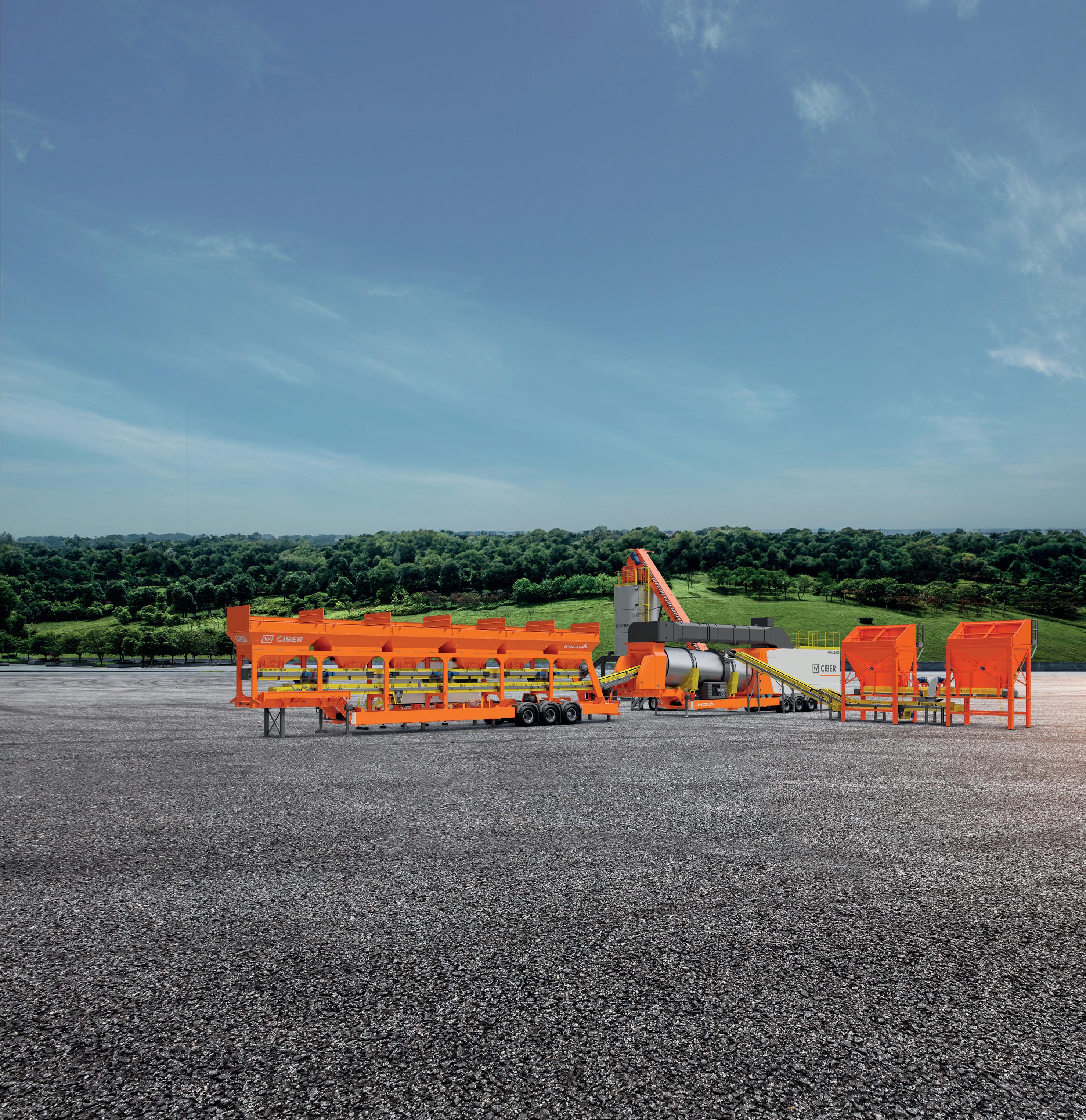
Fuel efficiency. Reduced emissions.
Exceptionally sustainable performance.

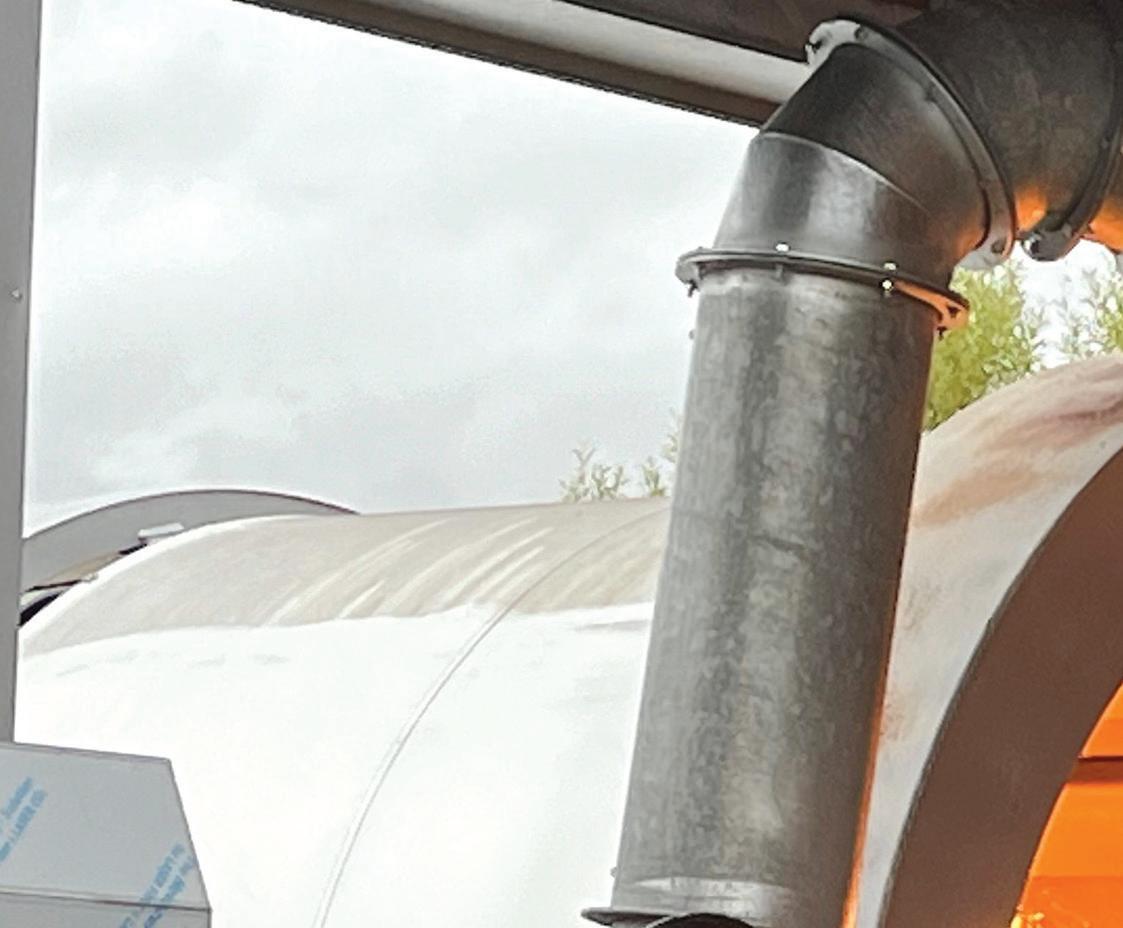
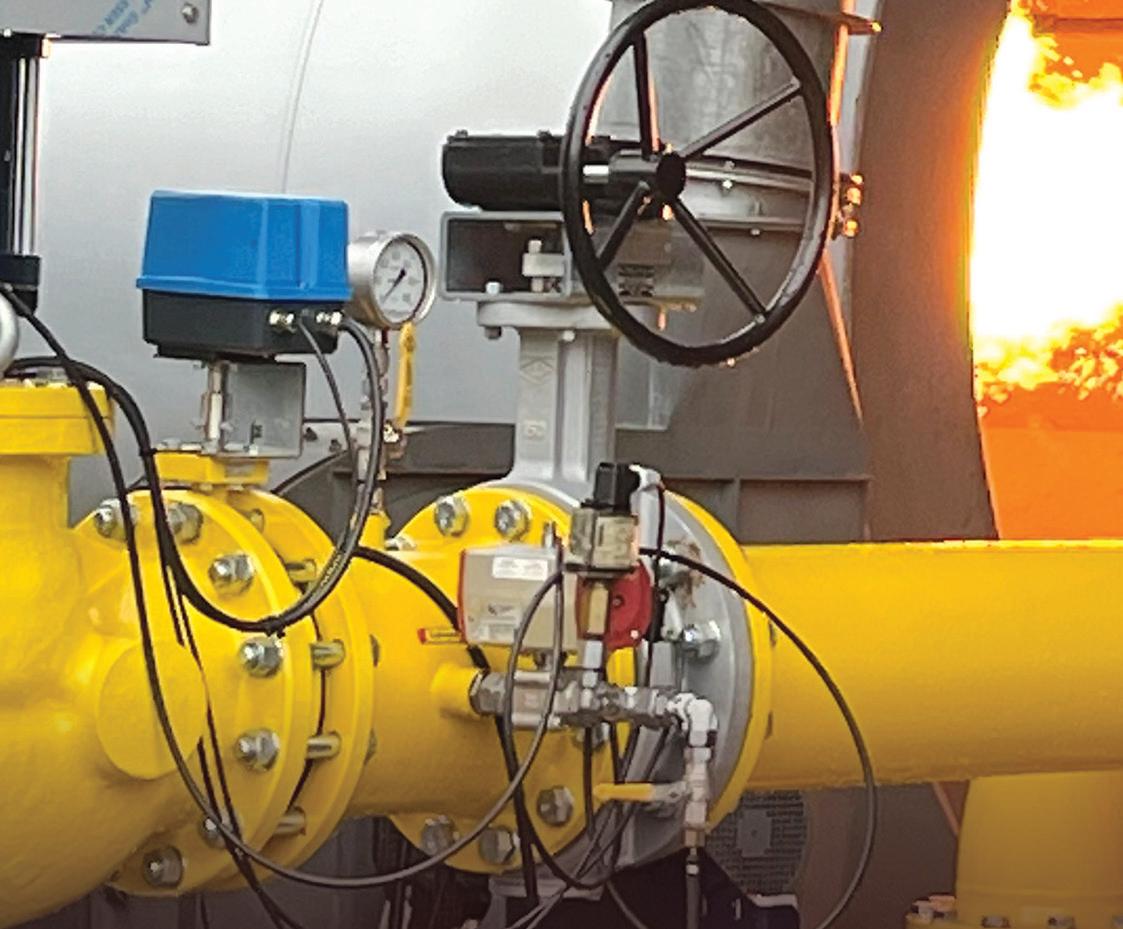
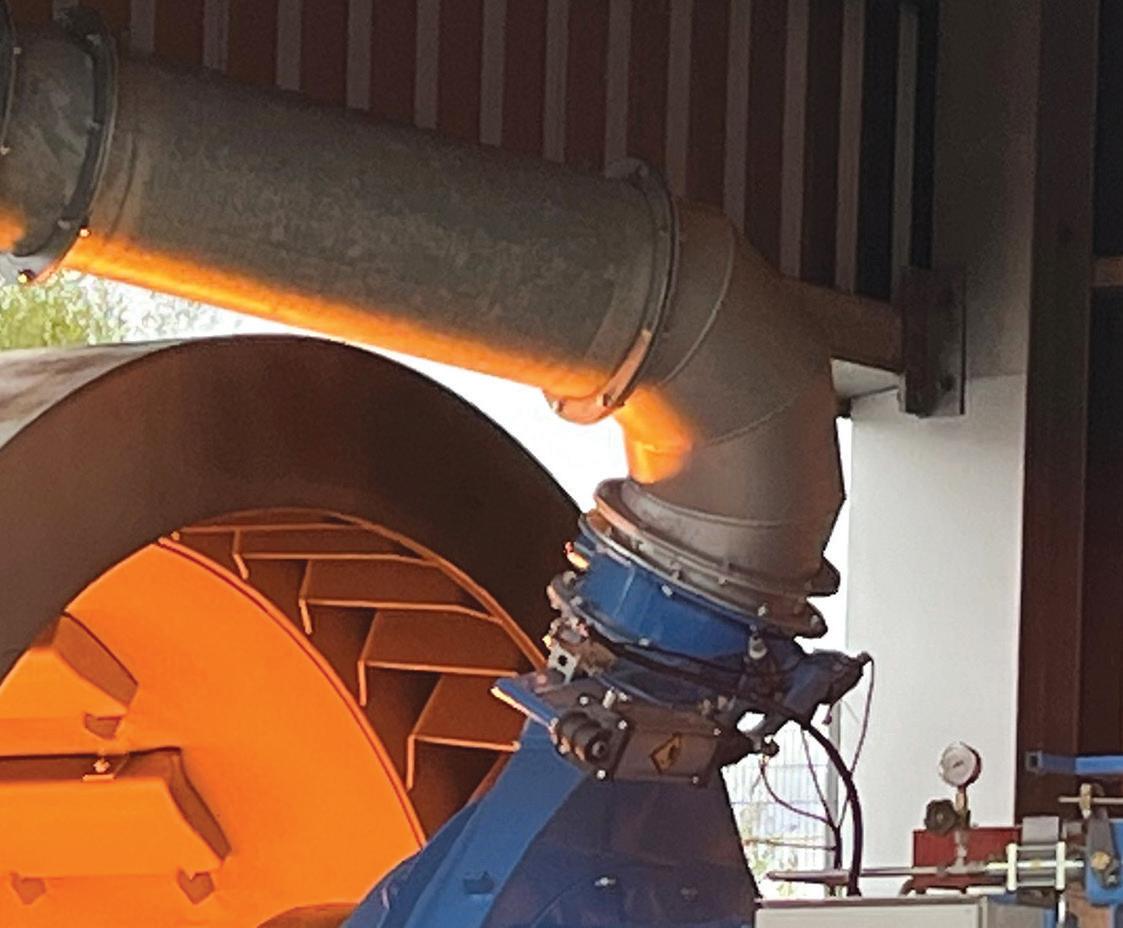
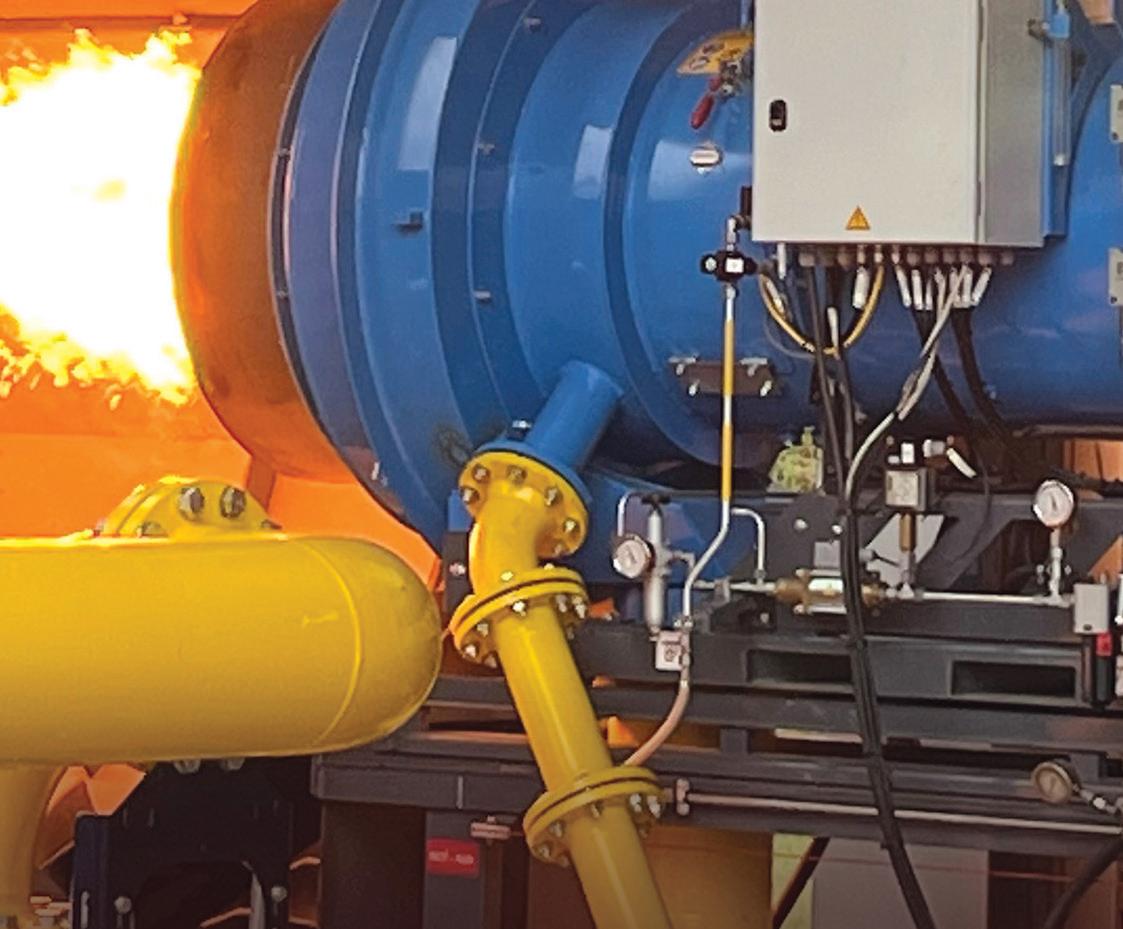

For industrial purposes such as asphalt production or mobile off-highway machines, hydrogen offers the option of a green fuel that helps cuts CO2 emissions - Mike Woof writes
Hydrogen is the most plentiful element in the universe and offers the huge potential of a clean fuel as its emissions consist mostly of water vapour.
However,producing hydrogen is energy intensive and industrial scale operations will require major investments in sustainable energy to become cost-ef cient. All the same, many industries including the construction sector are now looking ahead to a time when hydrogen can play a key role in powering the world, while also helping reduce climate change.
Benninghoven, part of the Wirtgen Group, has used its innovative new hydrogen burner system to produce asphalt for construction work at a facility in Norway. This represents a major step forward for the construction industry in addressing net zero targets and reducing the effects of climate change. Jean-Luc Didier is head of sales at Benninghoven and said, “We really believe hydrogen will be the fuel of the future.”
It is worth noting that Benninghoven’s two biggest rivals in the asphalt plant market in Europe, Ammann and Marini, have parallel development programmes for hydrogen burners. While Benninghoven may have been rst to provide asphalt
produced by a plant using hydrogen as fuel for a construction project, Ammann and Marini are close with their hydrogen burner solutions for the construction market.
The need to reduce carbon emissions from industry is clear. Didier explained that many customers are waiting to see the outcome of coming regulations with regard to reducing CO2 emissions from asphalt
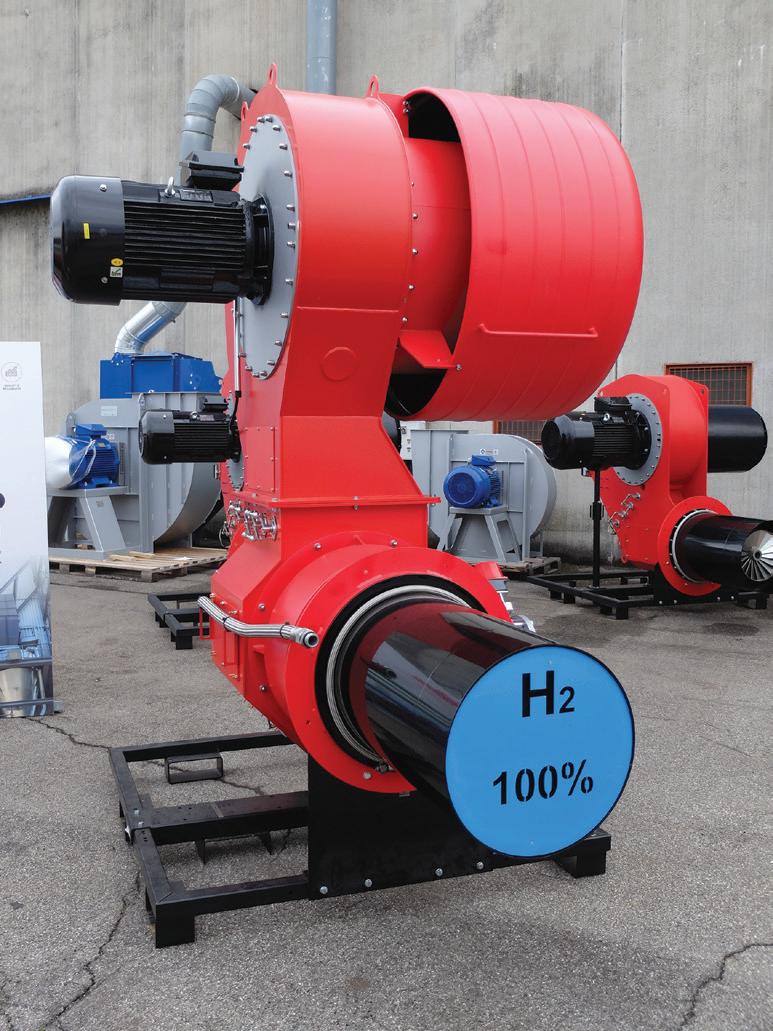
plants. The cost of purchasing a plant is high, so this reluctance to invest now is understandable. However, Didier pointed out that with over 1,800 asphalt plants in Europe, waiting may not be the best option. Benninghoven’s managing director, Heinrich Steins said that there is overcapacity for asphalt production in the European market and that some of the smaller and older
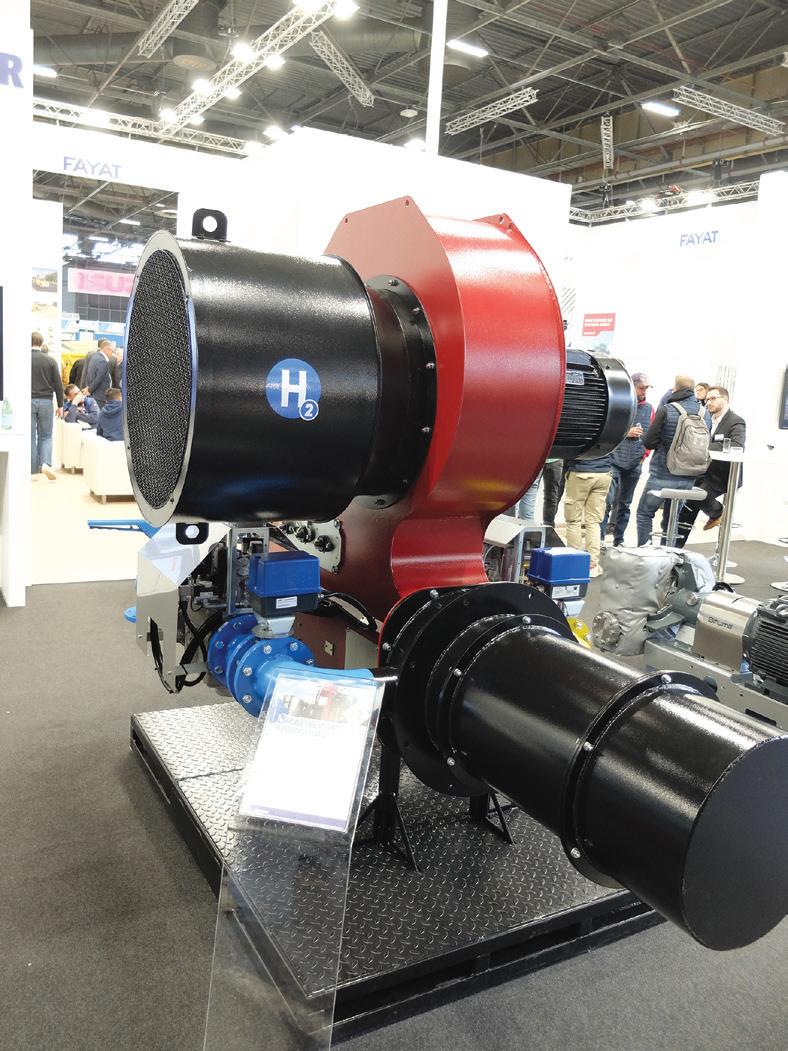


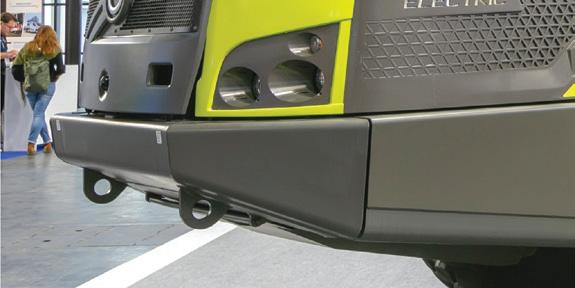

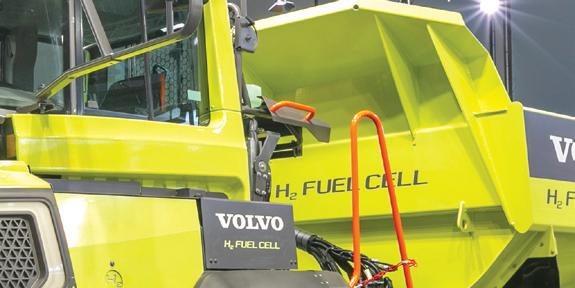


plants will close. But Steins and Didier agree that around 1,400-1,500 will remain by 2030. These will have to be replaced or upgraded with new low emission technologies. And with just three major asphalt plant manufacturers able to supply hydrogen burners in volume (and some smaller manufacturers perhaps developing their own burners), any customers waiting too long to place orders would be

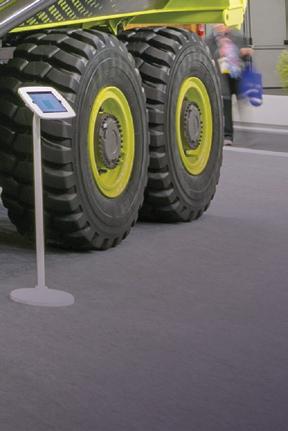
taking risks. Many of the existing asphalt plants that will remain use recent technology and could easily be retro tted with new burners and other systems to reduce smoke emissions. Didier said, “About half of our turnover today comes from retro ts. We have lots of solutions to upgrade mix plants.”
Addressing CO2 emissions from asphalt plants is crucial. According to Benninghoven’s
gures, around 45% of the CO2 emissions for an asphalt road construction project are produced at the asphalt plant, with the burner itself accounting for the lion’s share at 41% of emissions.
Steven McNally is head of research and development at Benninghoven and said, “The biggest potential for saving CO2 as the asphalt plant is the choice of fuel. Hydrogen could be the solution.”
At the moment, plants in Germany for example are able to use fuel oil or lignite dust in burners but that will have to cease by 2028. While the use of natural gas or LPG will be able to continue for a period, this will also be phased out in time.
Benninghoven is well aware that zero carbon emissions will come and also that fuel versatility will be crucial. McNally said, “To be as exible as we can for the future we have developed our variable burner technology.”
This allows up to four different fuel types to be used at the same time. And a key point is that the fuel mix for the burner can be switched at any time without having to shut down the plant. McNally commented that while fossil fuels are comparatively cheap at present, this price will rise over time. He said, “Hydrogen is expensive now but the price will decrease in the future.”
Of note too is that in Switzerland, industries are already being taxed for their CO2 emissions at €100/tonne of CO2, charges that
will only increase in the future. And similar taxes are likely to be rolled out elsewhere in Europe in coming years, followed by other parts of the world in due course. There will come a point when the cost of hydrogen will fall suf ciently against the CO2 taxes for it to be commercially viable as a fuel.
As Didier pointed out, waiting for the point in time when hydrogen is cheap could be a costly error. With just three manufacturers able to offer hydrogen burners, waiting lists could be very long indeed.
In addition, a further 30% of CO2 emissions for road construction comes from production of the bitumen needed for the asphalt. By using an asphalt featuring up to 60% RAP in the mix, the emissions from bitumen production can be lowered to 15%.
Didier commented, “We have lots of solutions for RAP from 25%-100%.” And it is worth noting too that all of Benninghoven’s major competitors in the asphalt plant segment also have numerous solutions for using RAP in the feed.
Utilising warm asphalt instead of hotmix offers further bene ts. Didier said, “If you reduce the temperature by 30°C you can save 18kWh of energy/day, about 1,800litres/day of fuel savings.” And he added that saving such a substantial quantity of fuel will also lower CO2 emissions signi cantly.
Didier continued, “If you stay under 130°C you have low CO2 emissions.” At the same time, the lower temperature will cut emissions from the bitumen by 87.5%, reducing the smell from the plant, an important factor for

facilities located close to urban areas. This is an important factor for countries or regions with strict regulations covering emissions from asphalt plants, such as Switzerland and Northern Italy.
It is worth noting that such strict emissions requirements will become more widespread in Europe and will also be likely in US states such as California, with the rest of the world to follow in due course.
Introducing this low carbon technology requires a change in mindset, not to mention a signi cant nancial investment. But there is no other option and making a move now could save costs signi cantly in the medium-long term. Most countries have already subscribed to science-based targets on reducing CO2. If governments were to adopt a carrot and stick

A Lintec CSD2500B containerised asphalt mixing plant has been used to provide hot mix asphalt for surfacing work on a 14.2km highway construction project in Abidjan, Côte d’Ivoire. The African Development Bank awarded this critical highway project to Energy China, following its winning tender of around US$78 million.
Since commissioning of the project concluded at the end of September 2022, Lintec says the CSD2500B plant continues in use for other works.
Energy China carried out a fact- nding mission, touring African countries to assess suitable construction equipment based on the local conditions. Côte d’Ivoire’s economic capital sits directly on the Gulf of Guinea, resulting in high average humidity of over 80% and two distinct wet seasons, with average rainfall reaching nearly 562mm in some months.
“Energy China visited many Lintec asphalt mixing plants at jobsites of local
customers across Africa as they undertook the selection process,” explained Tony Liu, CEO of Lintec & Linnhoff China. He added that the mobility and production capacity of the Lintec CSD2500B Containerised Asphalt Mixing Plant were key factors in the rm’s decision to buy the unit.
To date, asphalt production has now passed the 50,000tonnes mark, connecting Route d’Alépé in Abobo, one of the country’s most populated communes, with Boulevard de France in the commune of Cocody. The two-way, four-lane project will help reduce congestion, a result of the city’s fast-growing population.
The modular design, tting in standard containers, eases transportation, and suits the plant to both short- and long-term projects. The at, rigid design speeds up installation by eliminating the need for concrete foundations. The design also allows simple installation and dismantling, with the box construction ensuring stability on compacted soil, removing the need for costly concrete foundations. The
Lintec CSD2500B Containerised Asphalt Mixing Plant also allows for a single lockable main access point for improved onsite security, as well as reducing dust and noise emissions.
In addition, Lintec’s unique double screen drum technology eliminates the need for hot elevator and vibrating screens while reducing the need for maintenance. Combining the heating and screening of the minerals in a single process unit, this offers energy savings.
“After research into the needs of this project it was clear that the Lintec CSD Containerised Asphalt Mixing Plant range was the right choice for us,” said a project manager at Energy China. “With its ef cient performance and low cost of ownership, our new Lintec CSD2500B with an output of 160tonnes/hour is ideal for both large and small project requirements.”
Lintec & Linnho www.lintec-linnho .com
maker Cummins
developed
systems approach, offering subsidies for construction rms utilising low carbon technologies and taxation for carbon emissions, take-up would be faster.
Right now, green hydrogen from sustainable sources is not available in the large quantities required to meet industry needs. That will change; the infrastructure has to be built. There are commercial producers of hydrogen expanding operations in Europe as well as in North Africa. Morocco is already building large solar arrays and has plans to install electrolysis plants for hydrogen production, with Algeria looking to follow suit for example.
This rather begs the question though as to why Saudi Arabia is not using its massive nancial strength to make its vast desert expanses bloom with solar arrays.
Numerous engine makers such as Cummins and Deutz or off-highway machine manufacturers, Hyundai, JCB, Komatsu, Liebherr and Volvo CE to name but a few, are also investigating the potential for hydrogen as a fuel. That so many leading manufacturers have seen the need to dedicate the time and investment required to develop this technology makes it clear just how important it is for the construction industry to deliver low carbon solutions.
Similar moves towards a low carbon future are also being made in parallel in the cement/concrete sector, most notably from






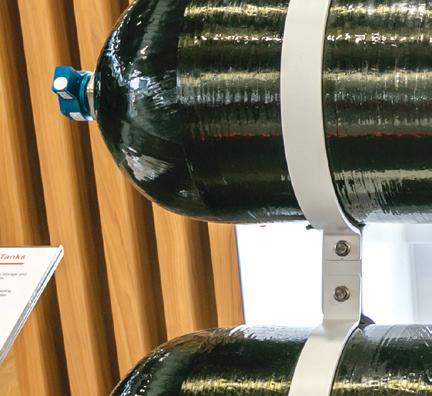

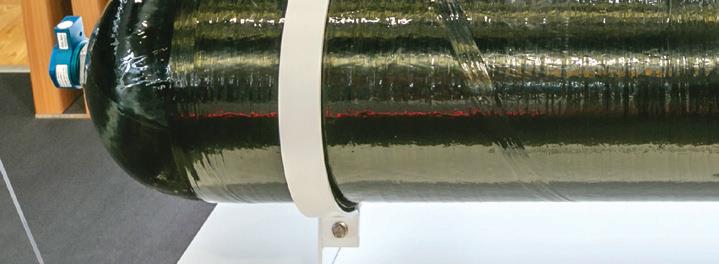
Cemex, Heidelberg Cement and LafargeHolcim. And it is encouraging that major players in the construction industry are investing for the future and helping ensure that human life on this planet will have a future.
www.ammann.com
Benninghoven
www.wirtgen-group.com/en-us/company/benninghoven/








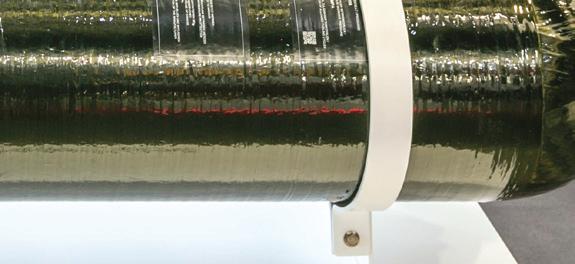
Cemex www.cemex.com
Heidelberg Cement www.heildelbergmaterials.com
LafargeHolcim www.holcim.com
Marini-Fayat www.marini.fayat.com
















On either side of the Atlantic, trade bodies are pushing their members to cut more carbon associated with their paving activities - Kristina Smith reports


Highways agencies around the world are under pressure to reduce the carbon emissions associated with road construction and maintenance operations.
But one of the most challenging aspects is working out the best way to do that, with a multitude of parameters to consider – as well as the many new ‘lower carbon’ technologies which are appearing on the market. In the US, agencies have the additional motivation of increased funding to draw on if they choose solutions with lower carbon footprints. The National Asphalt Pavement Association (NAPA) has come to their aid with a comprehensive guide on ways
to do that. It would make useful reading for any highways agency looking to create a carbon reduction roadmap.
In the UK, local authority highways departments are working towards particular goals which map out their council’s pathway to net zero, many of them very ambitious. The Mineral Products Association (MPA) has produced a set of benchmark environmental product declarations (EPDs) so that decisionmakers can compare products from different suppliers and get a clearer picture of how the technology they choose could cut carbon emissions.
Meanwhile, Swedish airport operator Swedavia is trialling asphalt containing both polymer modi ed bitumen (PMB) and a biogenic binder from Nynas in a bid to produce

pavements that have a lower carbon footprint when laid, whilst requiring lower maintenance in operation.
NAPA, the trade association for asphalt producers and contractors in the US, has published a guide on cutting carbon emissions associated with asphalt roads. The document helps to identify where the industry should be concentrating its efforts, and what strategies can give the biggest carbon reduction impact.
‘The Carbon Footprint of Asphalt Pavements: A Reference Document for Decarbonization (SIP 109)’ is a 62-page guide which breaks down the sources of carbon emissions throughout the life cycle of a road and sets out opportunities for asphalt suppliers, contractors and highways agencies to reduce carbon emissions.
MPA’s reference EPDs
GWP = global warming potential
The full EPDs, including product composition assumptions, and the full range of environmental impact categories across further life cycle stages are available to download at https://www.mineralproducts.org/Mineral-Products/Asphalt/Sustainability-EPDs.aspx
Reducing carbon emissions is not only necessary to reduce the rate of global warming; it is an opportunity for the industry and agencies to leverage more federal funding, says NAPA. For instance, 13 states are signed up to the Federal-State Buy Clean Partnership, launched in March 2023, which sees states agreeing to prioritise the procurement of low-carbon infrastructure materials for state-funded projects.
A further incentive came in March 2024 when the Federal Highways Administration (FHWA) launched the Low Carbon Transportation Materials Program. The programme will make $2 billion available to state departments of transport and other agencies to buy lower carbon materials, including steel, concrete and asphalt.
Breaking down the proportion of carbon emissions associated with a typical asphalt mix from cradle to gate, the guide illustrates that 57% of emissions are due to materials, 38% due to plant and 5% to transportation. Looking at the asphalt mix itself, the binder accounts for 94% of carbon emissions, whilst aggregates are responsible for 6% even though they account for 95% of the mix by mass.
Among the carbon-reducing measures explained in the guide, NAPA identifies the use of higher proportions of recycled asphalt planings (RAP) in asphalt mixes as being perhaps the biggest and easiest win. The average proportion of RAP deployed in asphalt mixes in the US is 20% which gives a reduction in cradle-to-gate emissions of 12%; by boosting that to 50%, carbon savings rise to 29%.
Other industry-driven opportunities to cut carbon include the consideration of biobased materials in the binder, use of warmmix asphalt or cold central plant recycling technologies and switching to lower carbon fuels at mixing plants. Laying roads with higher densities and improved smoothness will reduce carbon emissions during a road’s lifetime by extending the life of the asphalt, says the guide.
For highways agencies, the NAPA guide points out that for roads with low volumes of traffic, it makes sense to focus on lower carbon materials as a means of reducing emissions. For highly trafficked roads that need frequent maintenance and resurfacing, efforts should be focused on reducing carbon by choosing mixes that deliver better performance and increased longevity.
Agencies should consider the Perpetual Pavement design approach, which the guide says offers the biggest opportunity to reduce carbon emissions over the entire life cycle. By ensuring that every layer of a pavement is optimised so that it does not fail structurally, Perpetual Pavement design can lead to a 20% reduction in lifetime carbon emissions.
Specifications should be adapted to allow contractors the flexibility to use lower carbon materials and practices, says the guide, such as adoption of balanced mix design (BMD). This approach deploys performance testing to optimise an asphalt mix performance in terms of rutting and cracking and could, for instance, allow higher proportions of RAP to be used and hence more carbon to be saved.
Among the areas identified by NAPA as requiring more research in the bid to cut carbon is the potential impact of using biobased materials, the impact of work zone congestion on carbon emissions, and how pavement smoothness and texture affects vehicle fuel consumption.
The UK’s MPA has published EPDs for four generic asphalt mixes. The aim of these reference EPDs is to allow highway authorities to take decisions at the scoping stage of projects and to make comparisons between different products based on their environmental performance.
EPDs are a way of expressing global warming potential, expressed in carbon dioxide equivalent emissions (CO2e). Also known as the carbon footprint, the environmental product declarations (EPDs) produced by the MPA cover cradle-to-gate emissions associated with the mixes, stages
A1 to A3 in life cycle analysis terms.
The four types of asphalt mix represent the most commonly used product types for the UK: asphalt concrete for base and binder layers; hot rolled asphalt; stone mastic asphalt (SMA) type surface course; and thin surface course, asphalt concrete (AC) type with polymer modified bitumen (PMB).
The MPA has used a combination of data from MPA members and generic information to calculate the EPD figures, using the OneClick Life Cycle Assessment (LCA) tool, in accordance with BS EN 15804:2012+A2:2019 which sets out rules for construction EPDs. Each of the MPA’s reference EPD explains how many manufacturers contributed to the data, and how much of the UK’s production their output covers.
Brian Kent, Chairman of MPA Asphalt, commented: “MPA members are increasingly asked for published and verified EPDs relating to the supply of asphalts. But, while we have been able to generate carbon calculations and verified EPDs, the burden of doing so for numerous individual product types from specific plants on a site-specific basis incurs significant additional expenditure. The introduction and adoption of these industry EPDs will mean costs won’t be passed on, benefiting all stakeholders.”
While MPA members and other asphalt producers will be able to use these generic EPDs, they will also act as a benchmark for companies that want to show they can do better. MPA members will soon be able to log on to an online tool where they can calculate their own EPDs and compare these against the reference figures.
“With more user data we will also be able to further refine our calculation assumptions and embedded datasets to be even more representative,” said MPA’s director of asphalt, Malcolm Simms. “Plus, members can consistently assess and compare their own progress at site or project level using their primary data” www.mineralproducts.org
Skanska has used a PMB containing biogenic binder material for the resurfacing of a taxiway at Stockholm Arlanda Airport in Sweden. Working for state-owned airport operator Swedavia, Skanska replaced around 20,000m2 of wearing course between the runways and the terminal building in May this year. Skanska paved the taxiway in two sections, one containing an asphalt mix with Nypol RE 73 and a reference section made with a conventional binder, Nypol 76-28.
Nypol RE contains a biogenic component which replaces part of the oil-derived bitumen binder. The biogenic component, because it is derived from plants or trees that sequester carbon as they grow, lowers the binder’s carbon footprint. Nynas has engineered Nypol RE so that 1tonne of Nypol RE has the same carbon footprint as
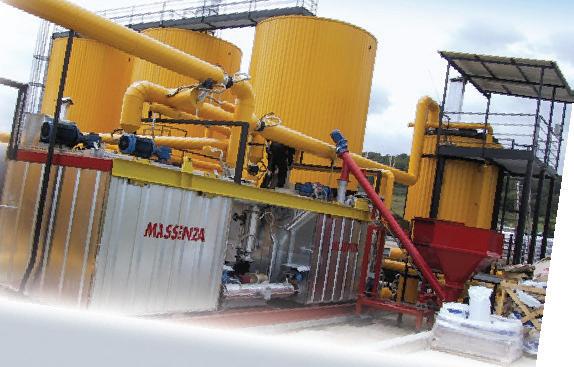
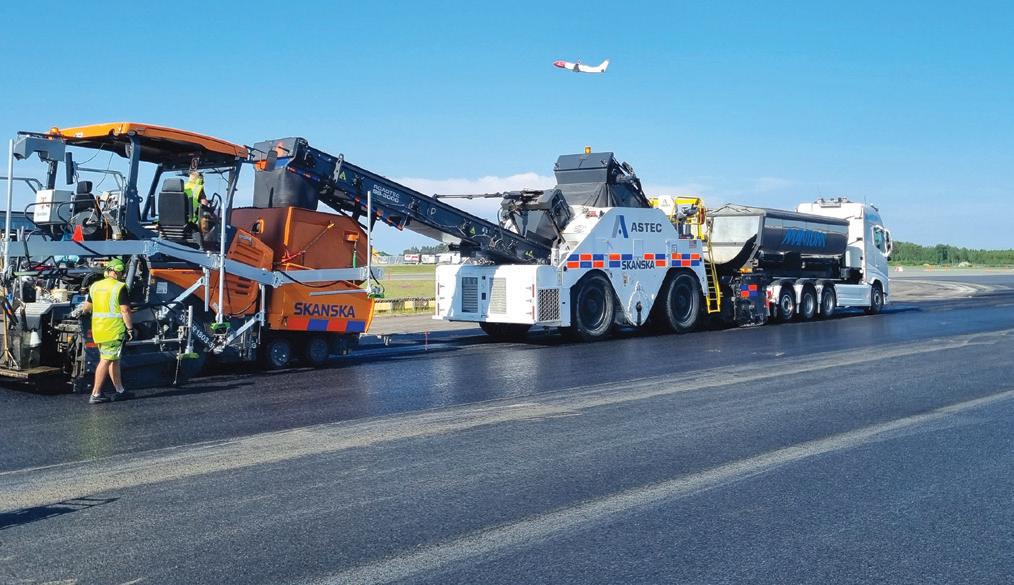
1tonne of unmodi ed standard paving grade bitumen, with the added performance bene ts of a PMB.
The asphalt for the taxiway must be able to withstand various substances such as potassium formate, a de-icing chemical. Skanksa carried out tests to compare the performance of
wearing course asphalt made using Nypol RE against the standard PMB. “Our tests show that Nypol RE is at least as good as the reference binder," said Skanska’s bitumen and asphalt specialist Kenneth Olsson.
Swedavia was willing to deploy the lower carbon solution at Arlanda Airport because it has set itself the goal of next-zero
greenhouse gas emissions by 2040. Longevity is important too, said Sandra Säfström, environmental specialist at Swedavia.
"We need to test alternatives with reduced climate impact in order to achieve our environmental ambitions in the long run while maintaining today's high standards of functionality and aviation safety," she said. “Our vision for 2030 includes a zero-waste goal and a focus on circular business models, which Nypol RE can contribute to through the expected increased maintenance intervals.”
Nynas
www.nynas.com
Skanska www.skanska.se
Swedavia www.swevadia.com



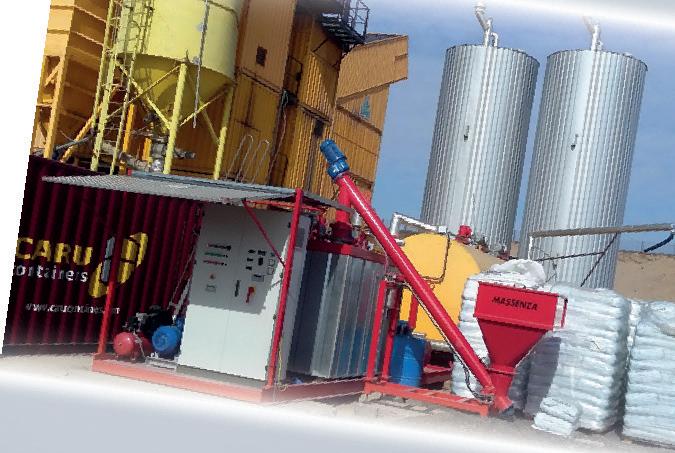




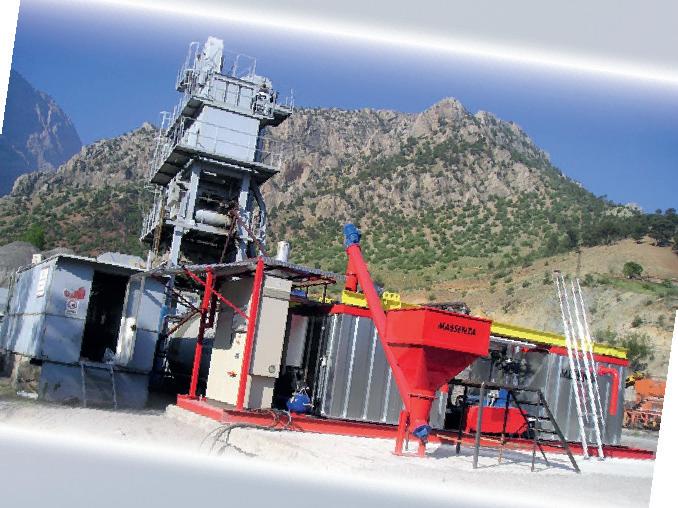









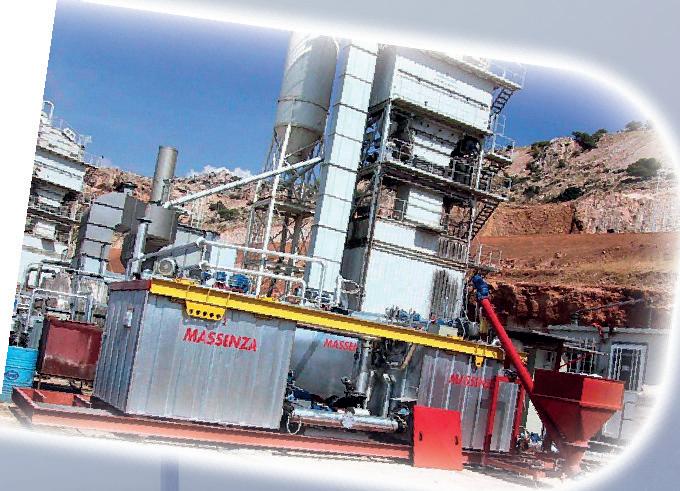


















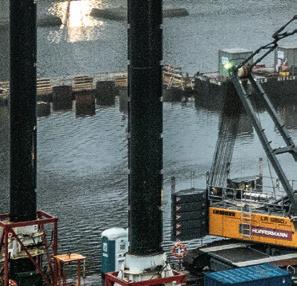



































Germany’s Rader High Bridge spanning the Kiel Canal along the A7 motorway is to be replaced and widened over the next few years. Eighteen Liebherr cranes are handling the lifting
The replacement of the Rader High Bridge in Schleswig-Holstein, near the Danish border, is one of the largest bridge modernisation projects underway in Germany. The bridge, built in 1972, spans the Kiel Canal and is part of the A7 motorway.
Measuring just under 1.5km in length, it is Germany's second-longest steel road bridge and plays an important role in the ow of traf c to and from Denmark and the Scandinavian peninsula. But the bridge is approaching the end of its useful life as a result of high traf c volumes; a rebuild and simultaneous widening of lanes has become necessary as result of increased vehicle usage.
Strong support for this major construction project is being provided by 18 Liebherr cranes from the rental eet of the contractor Friedrich Niemann, based in Kronshagen near Kiel. Five fast-erecting cranes, two 65 K.1s and three 81 K.1s, are onsite to assist with the foundations. The new bridge piers are being built with the help of six 125 EC-B and seven 150 EC-B attop cranes.
Conditions onsite are responsible for some spectacular crane assemblies. The rst crane to arrive on the construction site, a 125 EC-B, was assembled at the end of 2023. Assembly
took place in the waters of Lake Borgstedt, where the crane stood on the rst pier’s pile cap secured by foundation anchors. This involved working with a Liebherr crawler crane from Nenzing (Austria).
The 250tonne LR 1250 crawler crane required for the assembly was positioned on a oating platform between the crane site and the ferry that was used for transporting parts. The at-top crane reached a hook height of 44m. Three 125 EC-B cranes were also assembled using the 250tonne crawler crane, from its oating platform on the water.
The cranes were initially assembled at a height of 30m and then climbed to their nal hook height of 50m using hydraulic climbing equipment. This allowed them to work some 15m above the height of the roadway.
A 150 EC-B 8 Litronic started by working on the bridge pier on land. But the progression of the site required the crane to be moved to a new location. At the end of June, it was time: the at-top crane was moved from the north side of the bridge to the next bridge column and reassembled in the water. The disassembled crane was transported to its new location on a ferry and put back together again with the help of a 220tonne crawler crane on a oating platform.
Once assembled, it climbed to a hook height of around 50m and reached a jib length of 40m. The crane has the capacity to lift up to eight tonnes.


Liebherr
Precise planning was required in advance for the use of the cranes and Liebherr’s own project department for large and special projects (Tower Crane Solutions, TCS) provided valuable support. A major challenge lay in the cranes being assembled by the crawler crane on the oating platform.
As the permissible hook height of the crawler crane on the oating platform was restricted, the assembly height had to be kept as low as possible. However, a certain tower height was also necessary so that the cranes could be climbed. Various options and tower systems were therefore investigated in the run-up to the project in order to nd the best solution.The con guration of the tower combinations was another major issue prior to planning crane operations; it was essential to prevent the towers from colliding with the newly erected bridge piers and any potential tower deformations.
Consequently, the fast-erecting cranes are only partly using their maximum hook height. The two 65 K.1 cranes are in use with their tower retracted as they slew under the bridge and the three 81 K.1 cranes are also assigned to work under the bridge as well as at maximum height above it.
The 13 at-top cranes are assembled in a free-standing position on crosses and foundation anchors; some of them are set in concrete in the water. They are working
with a hook height of between 49m and 68m. The hydraulic climbing equipment has been provided by the Liebherr Tower Crane Center, the Liebherr partner for special crane hire, crane components and used machines direct from the manufacturer.
Weather conditions present an extra challenge during construction work. The Rader High Bridge is closed to empty lorries and cars with trailers from wind force 9 onwards (storms with wind speeds of 75-88km/h). If the wind picks up further, it can be closed to all vehicles over 7.5tonnes. In the event of a hurricane (wind force 12) the bridge is closed completely. The wind conditions therefore had to be taken into account in the cranes’ static calculations.
The Rader High Bridge is located east of the town of Rensburg, around 30km from the city of Kiel and around 65km from Flensburg. Traffic currently flows across the Kiel Canal, Rader Island and Borgstedter Enge (part of Borgstedt Lake) on four lanes and two hard shoulders. The bridge's piers stand both on land and in the water. Three piers are being erected in the water and require a foundation of 40m-deep bored piles. The new build is happening in two stages with traffic flowing along the existing bridge as well as the Kiel Canal, the world's busiest manmade waterway. The eastern half of the bridge is being built first, next to the existing bridge, and is expected to be opened to traffic in 2026.
Following this, the original bridge will close and be demolished, with the western bridge section being built in its place. The new structure is being widened to six lanes and
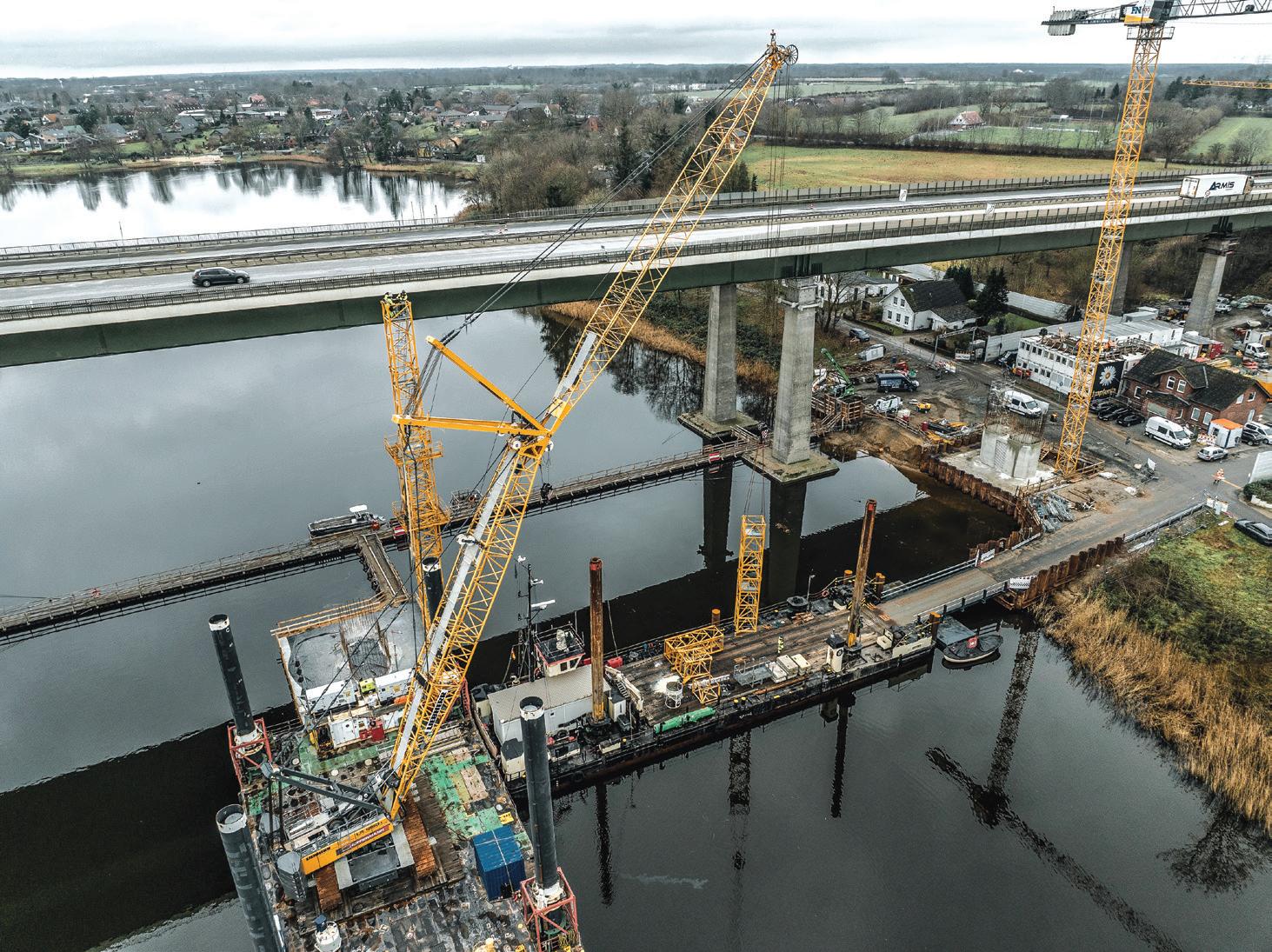
should be finished in 2031. The bridge piers for the eastern replacement structure are being erected first. Steel parts for the substructure arrive as 4m-long components and are welded together on land to create elements up to 80m in length. These are then pushed along towards the next pier using the incremental launching method, with one increment being one bridge segment. To do this, the piers have to be erected well in advance of the launching process.
Work has started north of the bridge and is progressing southwards towards Lake Borgstedt and across Rader Island in the direction of the Kiel Canal. There is also work underway to the south of the bridge, on the banks of the canal. The construction project is being carried out by
Altrad RMD Kwikform has launched a solution to reduce the effects of thermal loading -the Tubeshor Active Thermal Compensator, ATC.
The Tubeshor hybrid hydraulic shoring system is used for propping waler beams or capping beams of large excavations. Altrad RMD Kwikform, an above and below ground temporary works specialist, said it comes in a range of diameters to cater for all duties of shoring requirement.
An evolution of Tubeshor, the ATC Tubeshor accessory can reduce thermal loading by up to 90% compared to a mechanically locked-off prop, explained Ian Fryer, global product innovation director at Altrad RMD Kwikform.
Prop installation and preloading onsite is carried out in the same way as for any standard proprietary prop; no special skills required. As Tubeshor ATC units are assembled directly into the
a consortium headed by the Swiss construction company Implenia together with two Saxonybased companies, Plauen Stahl Technologie and ZSB Zwickauer Sonderstahlbau.
On June 28, the first bridge segment reached the first pier. This particular segment is 56m long, 14m wide and 6m high. Hydraulic presses moved the segment, which weighs several tonnes, at a speed of nine to ten metres per hour southwards towards the first pier. The replacement structure will consist of a total of 14 sections, with one advancement planned for every six to seven weeks.
Liebherr Tower Cranes Division www.liebherr.com/en
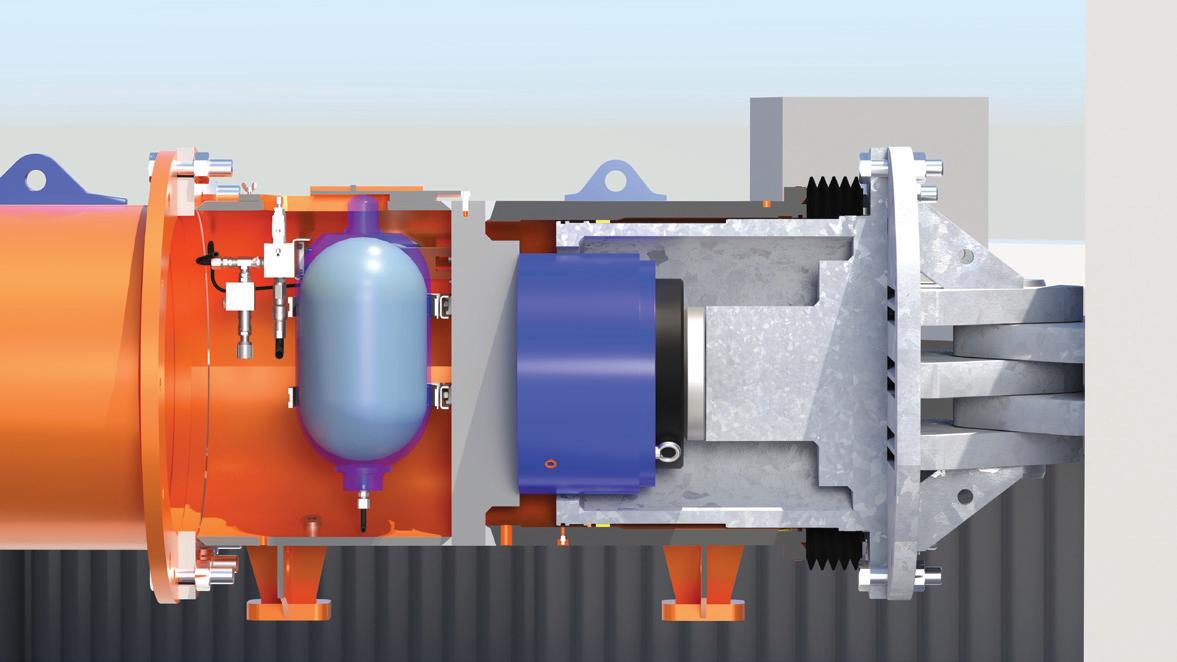
prop makeup, standard prop endfittings such as swivel units and spherical bearers can be used. Props can be installed into the excavation in the usual manner.
The Tubeshor ATC contains a 450tonne hydraulic cylinder coupled to a bladder accumulator which is pressurised to suit the individual prop design geo-load before dispatch. Most of the time, the pressure in the accumulator
exceeds that in the hydraulic system and normal prop stiffness results.
When higher temperature forces excessive prop thermal expansion, the compressed nitrogen in the accumulator comes into play and results in a phase of reduced prop stiffness.
This means that a further increase in prop length resulting from thermal expansion does not
result in the usual increase in prop load. With less space taken up within the excavation, savings can be made on equipment, labour, transport and plant cost, as smaller plant can be used to install and remove the equipment. Loads imposed on the permanent wall from the temporary props are reduced. This enables a lower cost wall design using less material and potentially reduces the volume of excavated soil, reducing project cost and further decreasing the carbon footprint.
The prop load can be read by direct inspection onsite. There is also an option to use e-pins and wireless nodes to provide continuous prop load monitoring and data logging via a smartphone, tablet or laptop.
Altrad RMD Kwikform www.rmdkwikform.com/gb/products/ tubeshoratc
The Fehmarn Belt Tunnel could open by mid-2029, partly due to two robotic welding machines that have accelerated production of reinforcement steel for tunnel elements.
Around 1,500tonnes of reinforcement for casting the concrete tunnel elements are produced weekly for the 17.6kmlong structure. The individual elements will eventually be lowered into place and connected together on the bottom of the Baltic Sea, according to the client Femern, part of the 100% state-owned company Sund & Bælt. Femern is tasked with planning, building and operating the xed link across the Fehmarnbelt between Denmark and Germany.
The steel work is so critical that a separate steel production hall was set up in 2023 on the main construction site in Rødbyhavn on the Danish island of Lolland. The hall, called the Panel Factory, covers about 13,000m² of the construction site and employs around 120 workers working in two shifts. This allows the team behind the Panel Factory to deliver about 1,500tonnes of processed steel to the rest of the construction site each week.
The steel processing hall has the great advantage of allowing steel to be cut to the precise sizes needed. This reduces waste and simultaneously strengthens the supply security for the project by producing steel grids to size and on demand.
Welding steel is traditionally hard physical work, but in the Panel Factory all manual heavy lifting has been completely eliminated. The heaviest lifts are performed by large overhead cranes, while small lifts make it easy for individual workers to move smaller steel parts between machines. Additionally, welding work emits toxic fumes meaning that all welding takes place in special areas with strong extraction systems.
However, most of the work is done by the two robotic welding machines, which handle over 70% of the production. The robots are fed by a magnetic crane that can lift up to ve
tonnes of steel at a time. The steel comes in rods up to 15m long and 32mm in diameter.
The robotic welding machine is a prototype made by the Spanish company DCMWire. Normally, these machines are used to make thin panels for fences, and the Fehmarn project is the rst place in the world where robotic welding machines are being used to weld reinforcement steel of this thickness.
The tunnel will comprise 79 large 217m-long tunnel elements and 10 special 24m-long concrete elements, all built at the facility on Rødbyhavn - the largest construction site in northern Europe. A 217m-long element - composed of nine segments 24m long - weighs 73,500tonnes.
Casting of the rst element took about 10 months, whereas it is expected that the elements can be produced in nine weeks going forward. "Nowhere else in the world does serial production of concrete elements of this size take place, but this is precisely what we have to master over the years ahead. Our goal is to transform the exceptional into routine practice,” said Sébastien Bliaut, director of Fermen Link Contractors.
On June 17, King Frederick of Denmark inaugurated the rst 217m-long element to be submerged on the Danish side later this year. A time capsule containing the thoughts and items of people who helped build and design the rst tunnel element was sealed and placed in the Fehmarnbelt project’s exhibition centre before being buried near the tunnel portal as a greeting to future generations.

The nished tunnel element was left to cure for three weeks before the next stage began – installation of steel bulkheads and ballast tanks to ensure the element’s stability during immersion for placement in the tunnel’s trench on the bottom of the sea.
Henrik Vincentsen, chief executive of Femern, said at the time of the rst casting, that the work had been long and complicated but the technology and methods have proved to work well.
Production on Lolland of the remaining 78 standard elements continues on ve production lines, while a separate line produces the 10 special elements. At the opposite end of the construction site on Lolland, the contractor consortium, FBC, is currently excavating the portal and the tunnel trench where the rst tunnel element will be immersed later this year.
The two contractor consortia, Fehmarn Belt Contractors (FBC) and Fehmarn Link Contractors (FLC), are responsible for the construction of the tunnel that will run between Rødbyhavn on Lolland and Puttgarden, a ferry harbour and a village on the German island of Fehmarn. The contract with the Dutch contractor consortium, FBC, came into force in November 2019. The task includes the dredging work at sea, the establishment of the two work harbours and land reclamation for the new nature areas. Femern entered into the conditional contracts for the construction of the tunnel itself, portals and ramps in May 2020. The contracts are with the FLC contractor consortium and were effective from 1 January 2021. In May 2022, Femern and the contractor consortium Femern Systems Contractors (FSC) signed the contract for equipping the tunnel with electro-mechanical installations and technology. Then in December 2022, Femern and Elecnor signed the contract for building a large transformer station that will supply green power to the Fehmarnbelt tunnel’s installations and the railway between Denmark and Germany, as well as on Lolland.
When the tunnel is nished, crossing the Fehmarnbelt will take just seven minutes by train and 10 minutes by car.


• Fermen Link Contractors includes, among others:
Vinci Construction – Grands Projets www.vinci-construction-projets.com/en
Bam Infrastructure www.baminfra.nl


When completed, an impressive 667m-long and up to 90m-high bridge will span the Neckar Valley near the small town of Horb in Baden-Württemberg state, Germany. Thanks to this new bypass, traf c in the centre of Horb will be reduced and the region's transport infrastructure will be upgraded.
But until then, there will be plenty to do for the contractor Porr and ve WOLFF cranes that are in use at the enormous construction site. Their gures are also impressive: two freestanding WOLFF cranes are operating on towers 96m and 101m high.
At present, the two WOLFF 7534.16 Clear cranes are drawing a lot of attention in the Neckar Valley. Both are around 100m high and tower over the rst 70m elements of the new viaduct. Since the fall of 2023, they have been moving heavy freestanding steel components, formwork, reinforcements and concrete buckets. With their 75m jibs, they can lift a maximum of 16.5tonnes and 3.4tonnes at the top (4-strand operation).
“This is normally not possible with a freestanding crane,” explains Wolfgang Kavelius, sales manager at Wolffkran. “But the special design of the bridge piers meant that no tie-ins could be used or they would have been disproportionately complex and expensive.”
The WOLFF technical team
For this reason, Porr turned to the technical support team at Wolffkran, which not only developed a suitable crane concept, but also a special structural solution for the two Porr-owned WOLFF cranes. “To ensure the necessary stability, the towers were assembled using three different tower elements,” explains Peter Hegenbart, head of sales project engineering at Wolffkran.
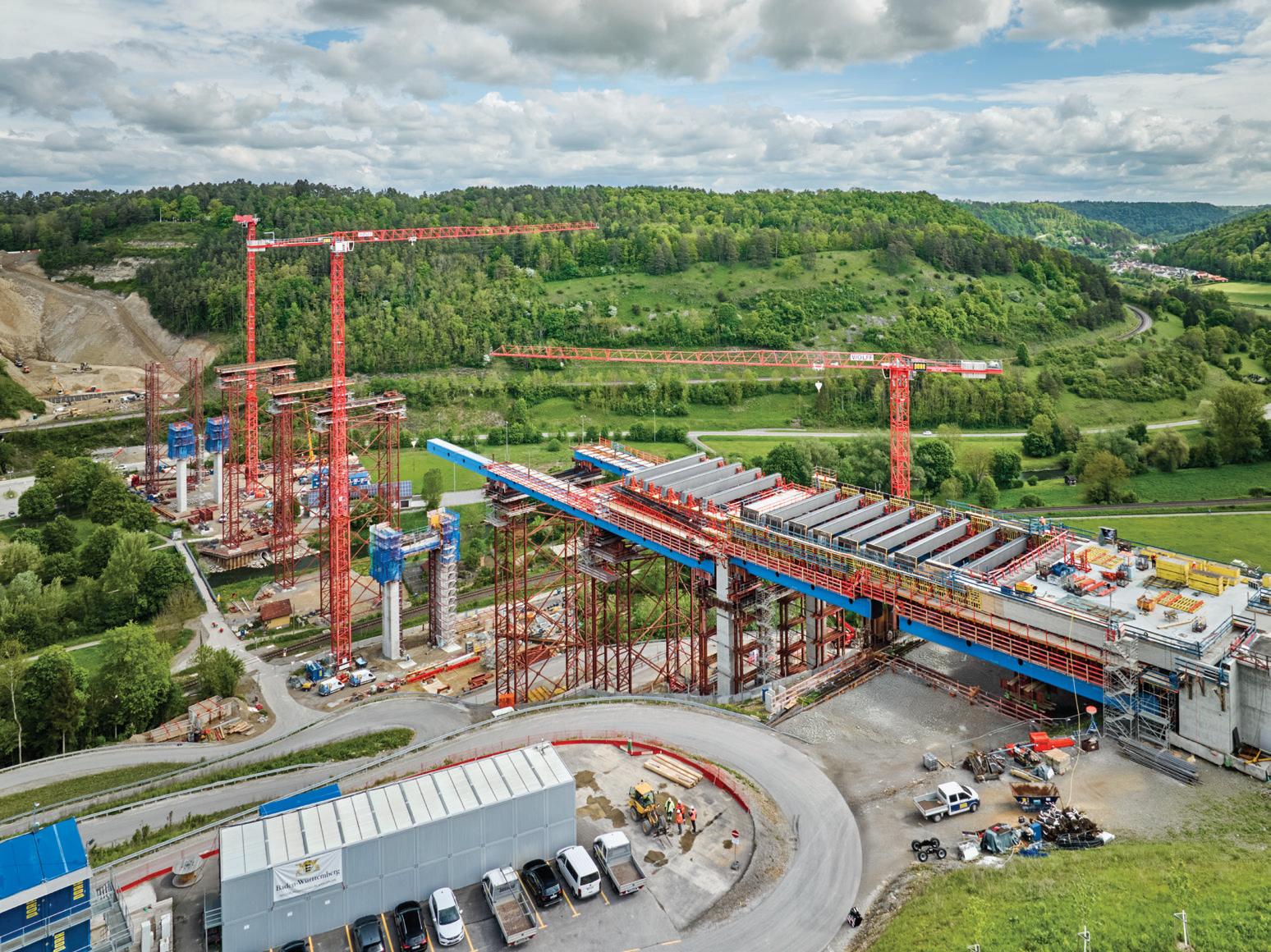
The lower third of the towers is formed by the TV 33 tower element with a side length of 3.3m. Above this is a transition area composed of tower sections with a side length of 2.5m, which leads into the upper half of the tower made of 2m x 2m tower sections (TV 20). “This specialised structure makes it possible to limit the maximum tower deformation to well under 2m, thus allowing the cranes to be operated safely as freestanding units,” says Hegenbart.
“Thanks to Wolffkran’s experience and technical expertise, we can use our own WOLFF 7534 Clear cranes as planned. This also allowed us to simply rent the additional
3.3m tower elements we needed for the project. We appreciate this exibility, which goes above and beyond the normal standard, from our long-standing partner Wolffkran,” says Markus Jahn, project manager at Porr.
In the inaccessible terrain of the Neckar Valley, which is also traversed by an intercity express railway line and a cycle path, the available space is very limited. This makes the construction site logistics particularly challenging.



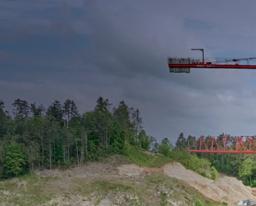
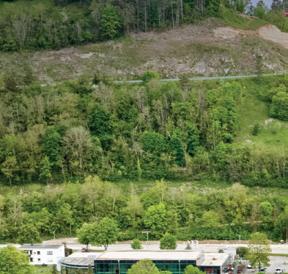
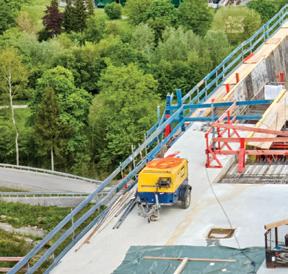


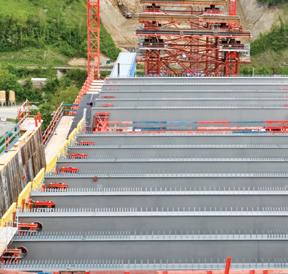
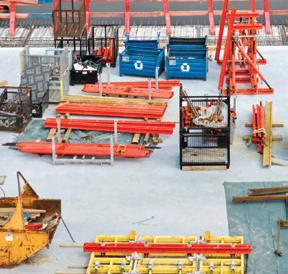
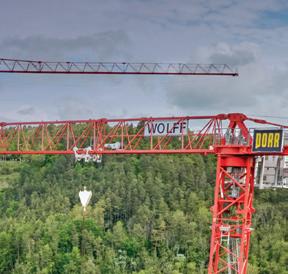
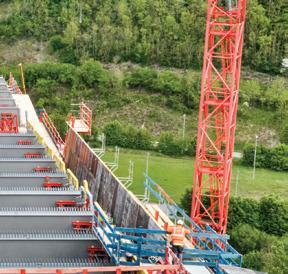
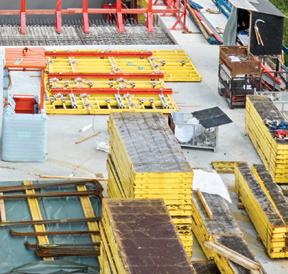

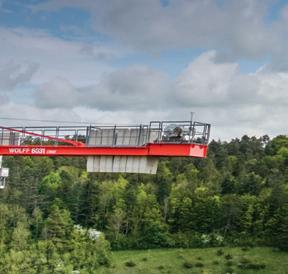

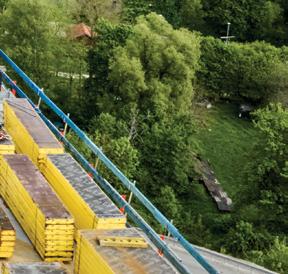
Because it was not possible to use a suf ciently large mobile crane to erect the two WOLFF 7534.16 Clear cranes to their ultimate height, the assembly was carried out in two stages. After the mobile crane had assembled the tower to a height of around 60m, the cranes climbed the remaining 40m to the top using an external climbing mechanism.
For space reasons, both cranes were placed on foundation anchors. As construction progresses, the complex assembly process, which takes two days for each crane, will have to be repeated, as one of the two cranes will be moved to follow the progress of the expanding bridge.
The WOLFF 7534.16 Clear cranes are currently being supported by a WOLFF 6031.12 Clear with a 65m jib and a 47.3m hook height. As the construction process moves forward, a WOLFF 7534.16 Clear and a WOLFF 6031.12 Clear from the Porr crane eet will support the pack.
Wol kran www.wol kran.com
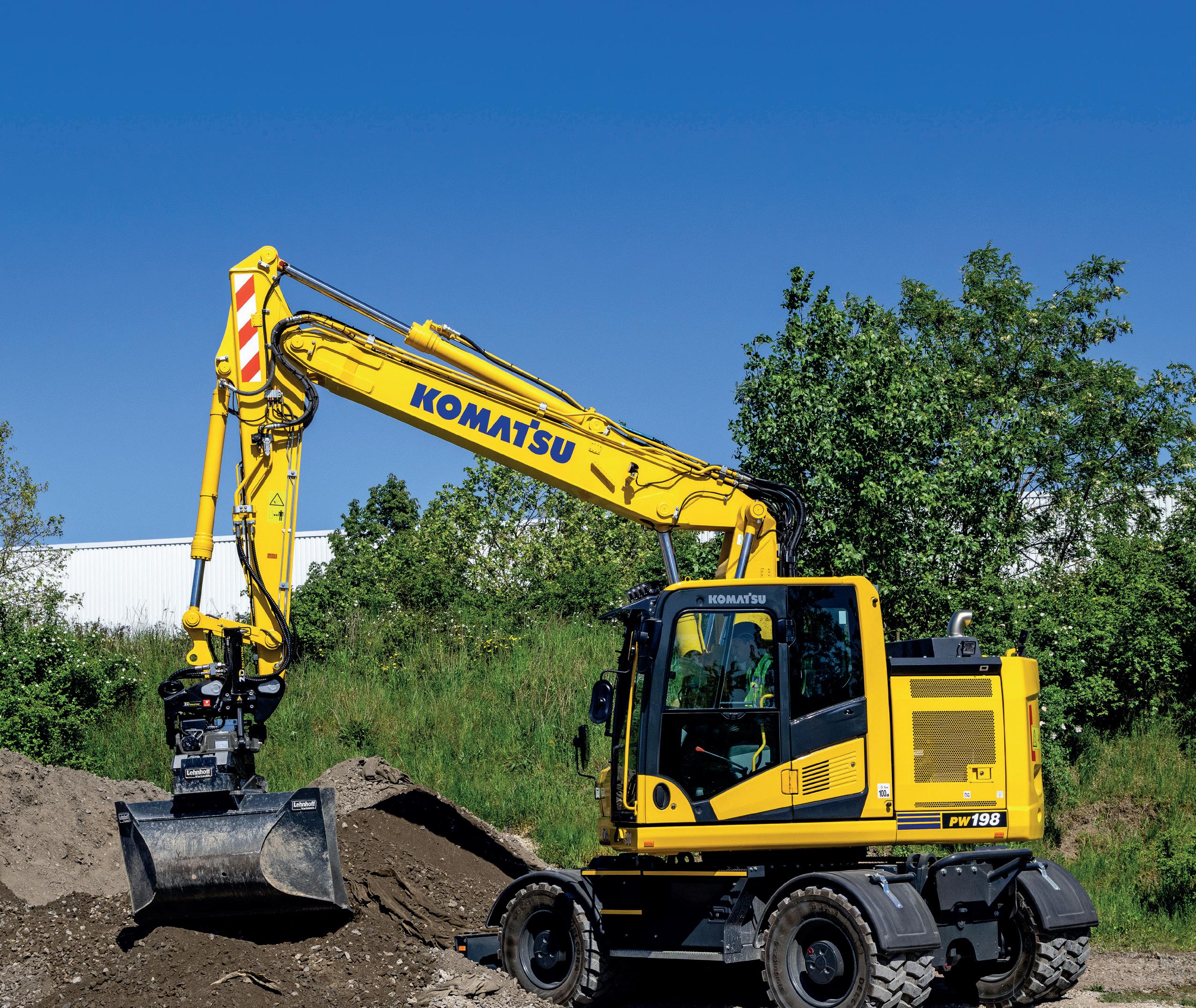






Our Dash 11 wheeled excavators are compact, powerful and versatile. Short tail swing radii allow safe working even in confined spaces. The two new models, PW168 and PW198, come factory-prepared for use with tilt rotators and 3D machine guidance retrofit systems. Additionally, their low transport height makes them easier to transport.


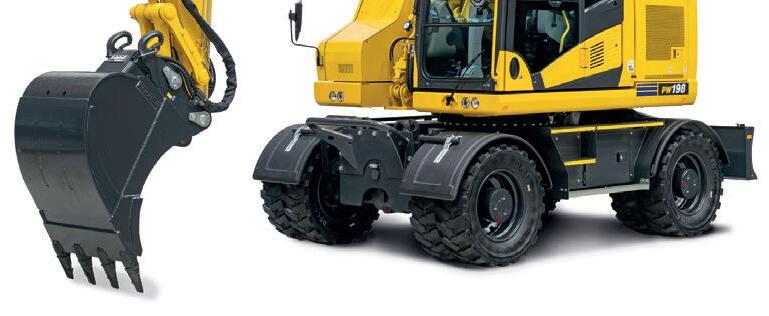





As with the rm’s three larger models from 31-61tonnes, the new DX140RDM-7 22.5tonne demolition excavator offers different con gurations for the customer with a range of solutions to suit a variety of projects. There is also a multipurpose version that can be used for other applications onsite as well as demolition. One option for the DX140RDM-7 is a Monolithic variant that features a demolition arm and without any interchangeability. As with the larger machines, the DX140RDM-7 is available in a dual format utilising a modular boom design and hydraulic lock mechanism, allowing the user to change between different arms for demolition and digging using the same machine.
For the xed Monolithic version of the new DX140RDM-7, the working range allows the machine to work with a demolition attachment to a maximum height of 16m. The recommended maximum tool weight in this mode is 1.45tonnes. In common with the other models in the demolition excavator range, the DX140RDM-7 offers high visibility and a tiltable cab, particularly suited to high reach demolition applications and providing a 30° tilting angle. In the dual purpose version of the DX140RDM-7, the pin height and maximum tool weight are 14m and 1.45tonnes respectively (with a 2m extension as an option). All the components such as the undercarriage, the tilting cab and the shoes remain the same as in the xed version, only the modular boom design and hydraulic lock mechanism are different, allowing the user to swap between demolition and digging arms. The design
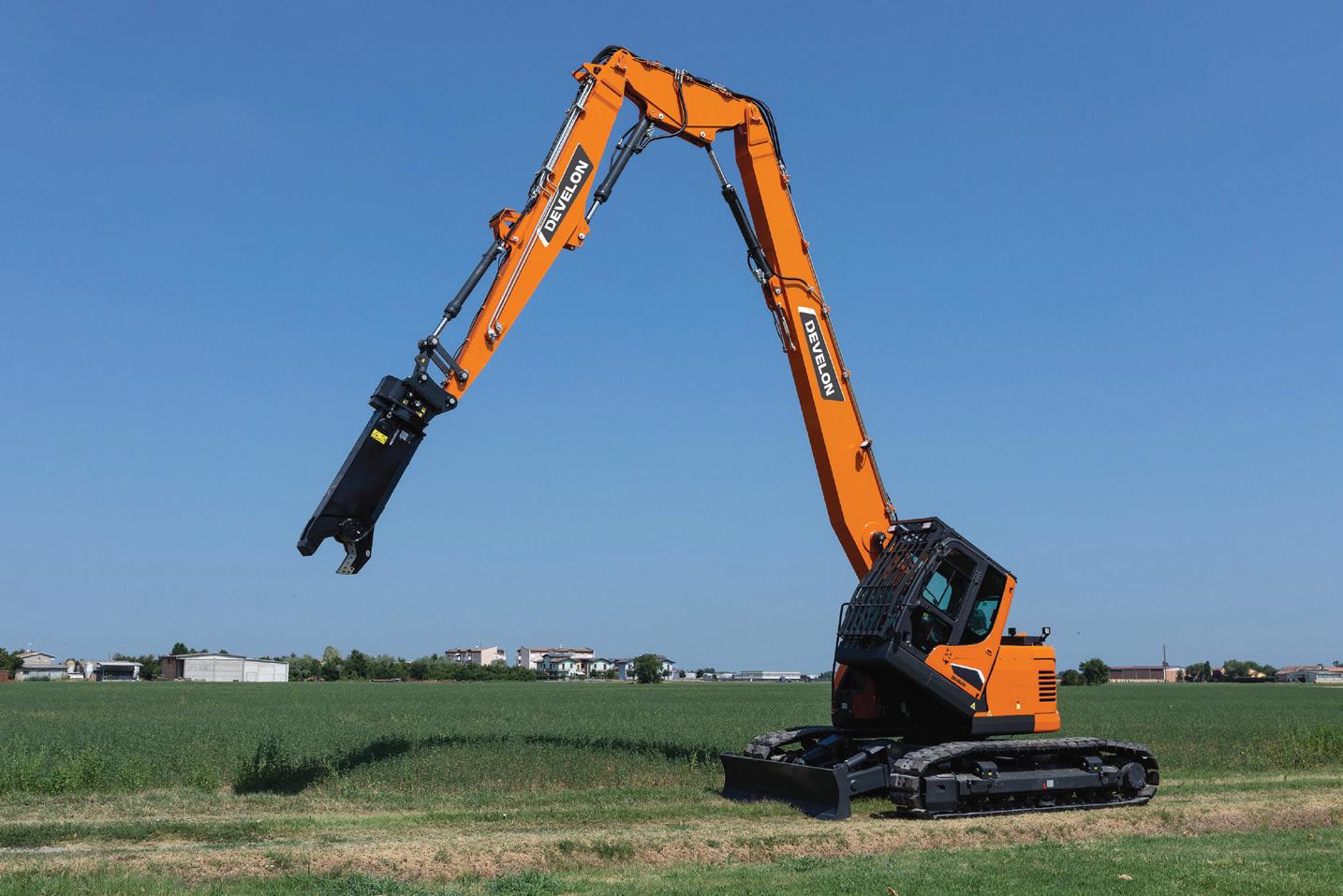
makes it a simple process to change between demolition boom and earthmoving boom for different types of work on the same project. A special stand is provided for the boom changing operation, which is based on quick-change hydraulic and mechanical coupler connections. A cylinder-based system pushes the locking pins into place to complete the procedure.
The multiboom design allows the earthmoving boom to be mounted in two different ways for further versatility with three different con gurations for the dual purpose base machine. The DX140RDM-7 has a hydraulically adjustable undercarriage, which extends to a maximum width of 3.7m to provide optimum stability when working on demolition sites. The width of the undercarriage can be
Epiroc is widening its Demolition Pulveriser range with its new DP 2320 and DP 4220 with Performance Booster. The DP 2320 is suitable for carries of 18-29tonnes and comes with a service weight of 2.35tonnes. The larger DP 4220 ts the 38-57tonnes carrier class and has a service weight of 4.22tonnes.
The Epiroc Demolition Pulveriser range bene ts from the Performance Booster, which can be retro tted onto existing attachments. Unlike other
pulverisers on the market that require di erent bodies to withstand the load of a Performance Booster, the slim, modular design can cope with the additional power.
The Epiroc Performance Booster boosts Demolition Pulveriser performance by up to 20%, ensuring jobs are completed faster and more e ciently. This feature also minimises jaw cycle time by up to 25%, contributing to increased productivity on the jobsite. The
rm claims a signi cant reduction in carrier fuel consumption of up to 35%. Both new models deliver precise handling and an impressive crushing force.
retracted hydraulically to 2.5m in the narrow width position, which is ideal for transporting the machine. The mechanism is based on a permanently lubricated internal cylinder design which minimises resistance during the movement and helps prevent damage to components.
Standard safety features on the DX140RDM-7 include a FOGS cab guard, safety valves for the boom, intermediate boom and arm cylinders and a stability warning system. Power for the machine comes from a diesel delivering 86kW that meets Stage V/Tier 4 Final emissions requirements.
Develon eu.develon-ce.com/en/


The modular design eliminates the need for cylinder rod protection, and the 360° endless hydraulic rotation ensures optimal positioning and precise handling on the jobsite.
Epiroc www.epiroc.com



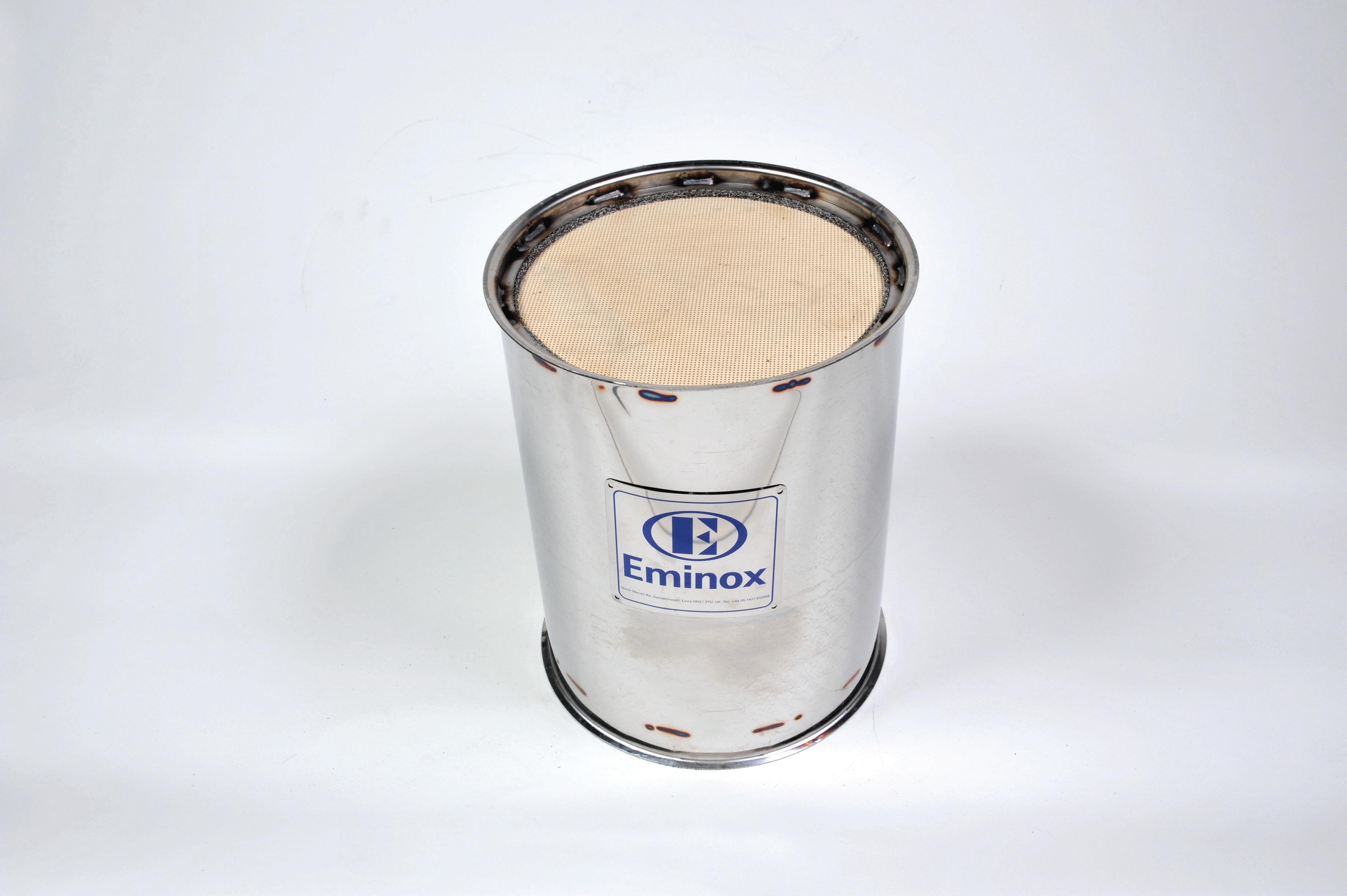
Aftertreatment systems will need to be adapted to suit the use of ammonia as fuel
Researchers at the University of Shef eld are exploring new exhaust aftertreatment systems for heavy-duty engines capable of running on clean, zero-carbon fuels such as ammonia
This four-year project is funded by an Engineering and Physical Sciences Research Council (EPSRC) grant and supported by the industrial partner Eminox. The project is led by Bill Nimmo, Professor of Energy Engineering and Sustainability, with PhD student Madhumitha Rajendran.
The rst stage involves modelling dual fuel combustion and emissions characteristics of ammonia with a carbon-based promoter. Ammonia requires a combustion promoter because of its higher absolute minimum ignition energy than conventional fuels. The second stage of the work will evaluate the NOx reduction ef ciencies of commercial catalysts for the ammonia-based dual fuel, using Signal Group gas analysers donated to the project by Eminox.
Ammonia is considered a clean fuel because its (complete) combustion products are nitrogen and water. However, NOx gases are a by-product of ammonia combustion. Nevertheless, ammonia represents a good energy source, and global infrastructure for industrial production and transportation already exists because ammonia is used in the production of fertiliser. There are several types of ammonia, each attributed a colour according to its production method. Traditional ammonia is known as ‘grey’ because it uses natural gas, but if carbon capture is used to remove carbon dioxide emissions, the ammonia is labelled ‘blue’. ‘Green’ ammonia is made using green hydrogen, produced by electrolysis from renewable energy.
In contrast with hydrogen, ammonia does not require cryogenic conditions for transportation as a liquid. Ammonia can also be produced from hydrogen, and ammonia can be ‘cracked’ back to hydrogen after transportation, resolving the transport issues associated with hydrogen.
Ammonia presents challenges as a fuel for engine combustion. In addition to the requirement for a promoter fuel, these include NOx in the exhaust as well as ammonia slip, which is important because ammonia is both corrosive and toxic, and because unburned fuel represents inef ciency.
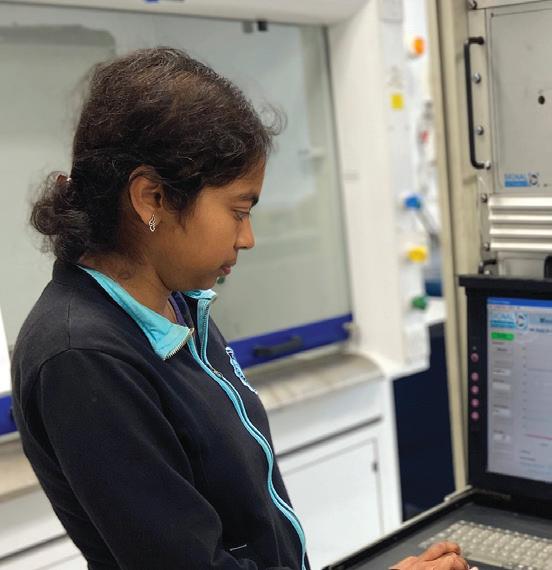

Initial work is being undertaken with ‘Ansys Chemkin-Pro’ a chemical kinetics simulator program that models idealised reacting ows and provides insight into results. Rajendran has been using the modelling program to investigate predicted effects on engine ef ciency and emissions pro le, by adjusting a number of different variables, such as stoichiometry, fuel energy shares, and fuel injection parameters.
The second phase of the research, due to commence at the end of 2024, will evaluate the NOx reduction ef ciencies of existing selective catalytic reduction (SCR) materials under different conditions. Three different SCR catalysts will be trialled, based on zeolite, vanadium oxide and titanium.
The research laboratory in Shef eld contains a controlled temperature furnace reactor using simulated exhaust gases. Catalyst studies will be performed at Shef eld while Brunel University in London will be conducting similar work with a diesel engine test bed. This will primarily be to investigate combustion and fuel injection issues relating to ammonia fuel, but also to verify exhaust gas composition under a range of conditions. Combined with the kinetic simulation work at Shef eld, realistic exhaust gas composition will be fed to the experimental reactor.
The post catalyst exhaust gases will be analysed by the Signal Group analyser rack, after treatment by the catalysts. This instrumentation includes a heated vacuum chemiluminescence gas analyser for the measurement of NOx, NO and NO2. A ame ionisation detector to analyse hydrocarbon levels; and a non-dispersive infrared multi-
gas analyser for continuous measurements of carbon monoxide and carbon dioxide.
So far, modelling work has indicated that the use of an ammonia dual fuel could increase N2O emissions under certain operating conditions, particularly in cold starts. Exhaust gas temperature will reduce, while moisture and hydrogen levels can be expected to increase, and the effects of this on SCR catalyst deNOx efficiency will be studied further.
The model also showed that the utilisation of ammonia dual fuel has a number of implications for prospective SCR catalysts. For example, ammonia in the exhaust can help reduce NOx, and both hydrogen and hydrocarbons in the exhaust can enhance NOx conversion at moderate temperatures. However, N2O will be difficult to decompose at low temperatures. By identifying regimes of operation and emissions, recommendations can be made on catalyst specification to mitigate operational issues.
The development of clean fuel technology will be critically important to the decarbonisation of heavy vehicles. For example, the International Maritime Organisation (IMO) has a GHG emissions reduction strategy to reach net-zero by 2050, including a 20% reduction by 2030 and a 70% reduction by 2040, compared to 2008 levels. To reach these ambitions, the IMO will implement regulatory measures to be adopted in 2025 and enter into force around mid-2027. The achievement of these decarbonisation goals will depend heavily on the use of carbon-neutral fuels. This means that new engine technology will be
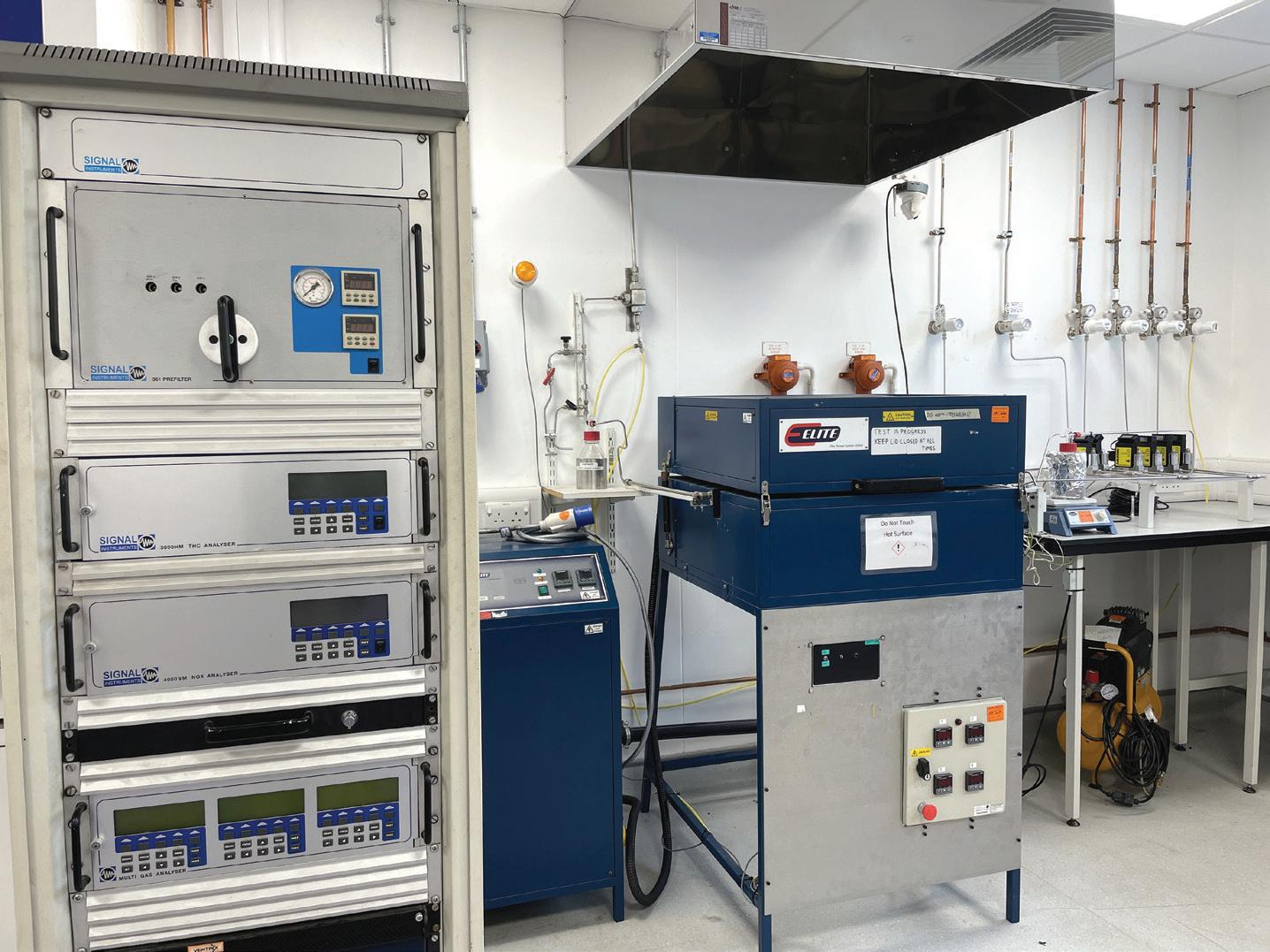
necessary, operating efficiently under known stoichiometric conditions, combined with effective aftertreatment systems to ensure the release of non-toxic, climate-friendly emissions.
Rajendran explained, "The challenge for the project is to consider the minimisation of all potentially harmful emissions from new fuels, and we will be keeping a close eye on any N2O, NOx and ammonia when developing the new SCR systems. However, the successful achievement of our goals will play an important role in helping the heavy vehicle sector to
Cummins has invested US$10 million in its Master Rebuild Centre in Krakow, Poland. This now allows European customers to arrange a rebuild or full-scale remanufacture of a high-power Cummins engine to original equipment standards, supported by the firm’s warranties. The remanufacturing option is available in three packages and is for engines with capacities from 19-78litres that require more than a conventional in-chassis rebuild. “We now have a solution in Europe for every situation in the life cycle of a high horsepower Cummins engine,” said Alan Routledge, Manager –New Business Start-up Leader. Taking a proactive approach to engine maintenance can save customers on repair costs. At Krakow, Cummins offers three remanufacturing packages –Advanced, Ultimate and Ultimate SE (Service Exchange). Advanced has a standard bill of materials and warranty coverage to help keep the costs down for customers. The next
level up is Ultimate, which is a zero hour remanufacture where the life-to-overhaul expectation is the same as a brand new engine and the work is backed by a 12-month unlimited or two-year/2,000 hours warranty which may also include Cummins pro-rata policy coverage beyond warranty. With Ultimate, the engine is completely dismantled and individual parts are cleaned with advanced tools, techniques and solvents to remove debris without degrading metal surfaces. All parts are inspected and replaced if necessary. Following reassembly, the engine is dyno-tested to ensure expected power and torque performances are met, along with in-test spectrum oil analysis.
Remanufacturing takes around 35 days and Routledge said, “It’s less expensive, and there’s an environmental benefit because remanufacturing requires around 85% less energy than
reduce its GHG emissions, so we are hugely excited about the prospects for this important project.”
Brunel University
www.brunel.ac.uk
Eminox
www.eminox.com
Sheffield University www.sheffield.ac.uk
manufacturing new engines.”
Attached to the Ultimate package, providing it is planned with at least four months’ notice, there is the option of a service exchange (SE) engine unit. There is a fixed price on the Ultimate and Ultimate SE
packages on condition of the returned engine core being complete with no evidence of misuse.
Cummins www.cummins.com
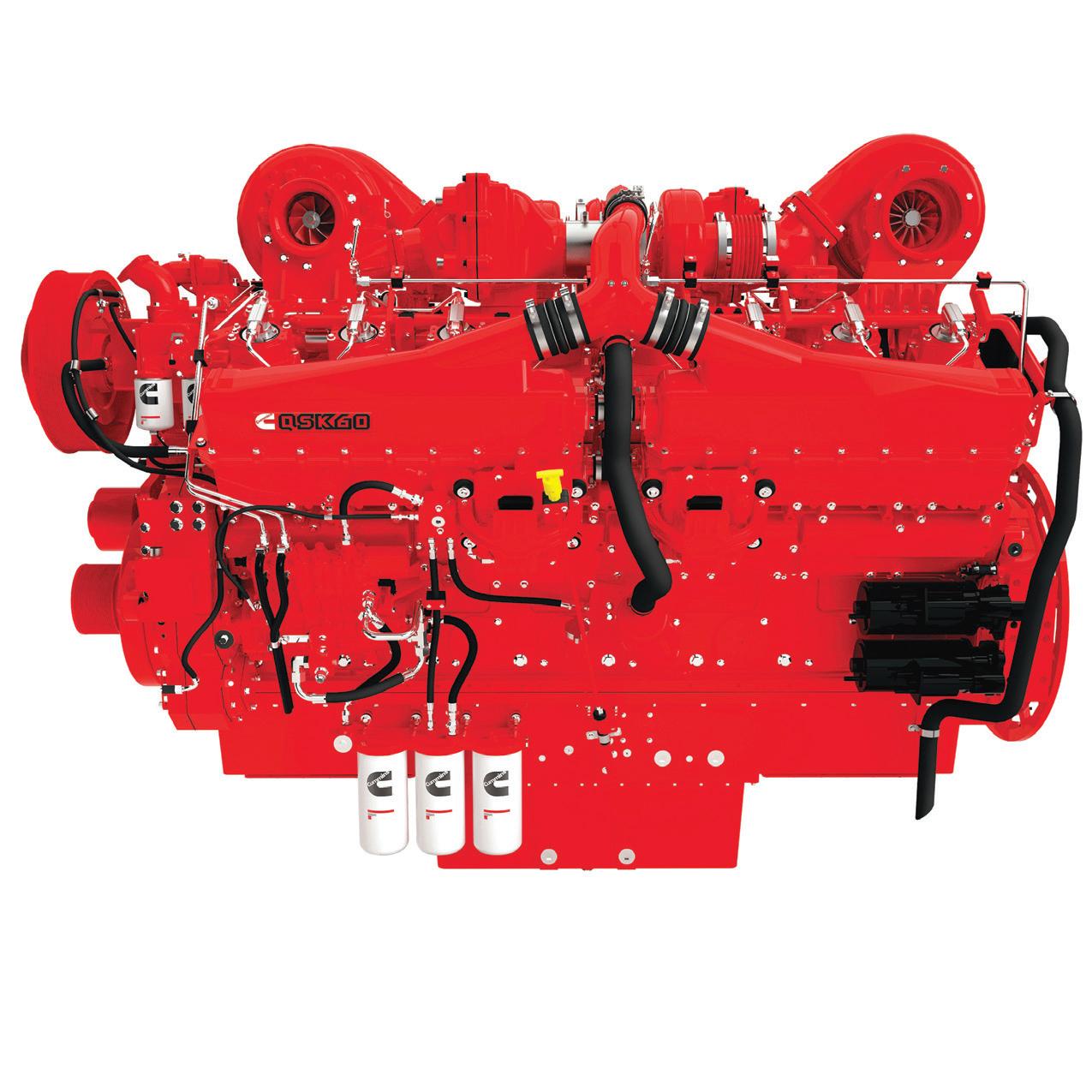


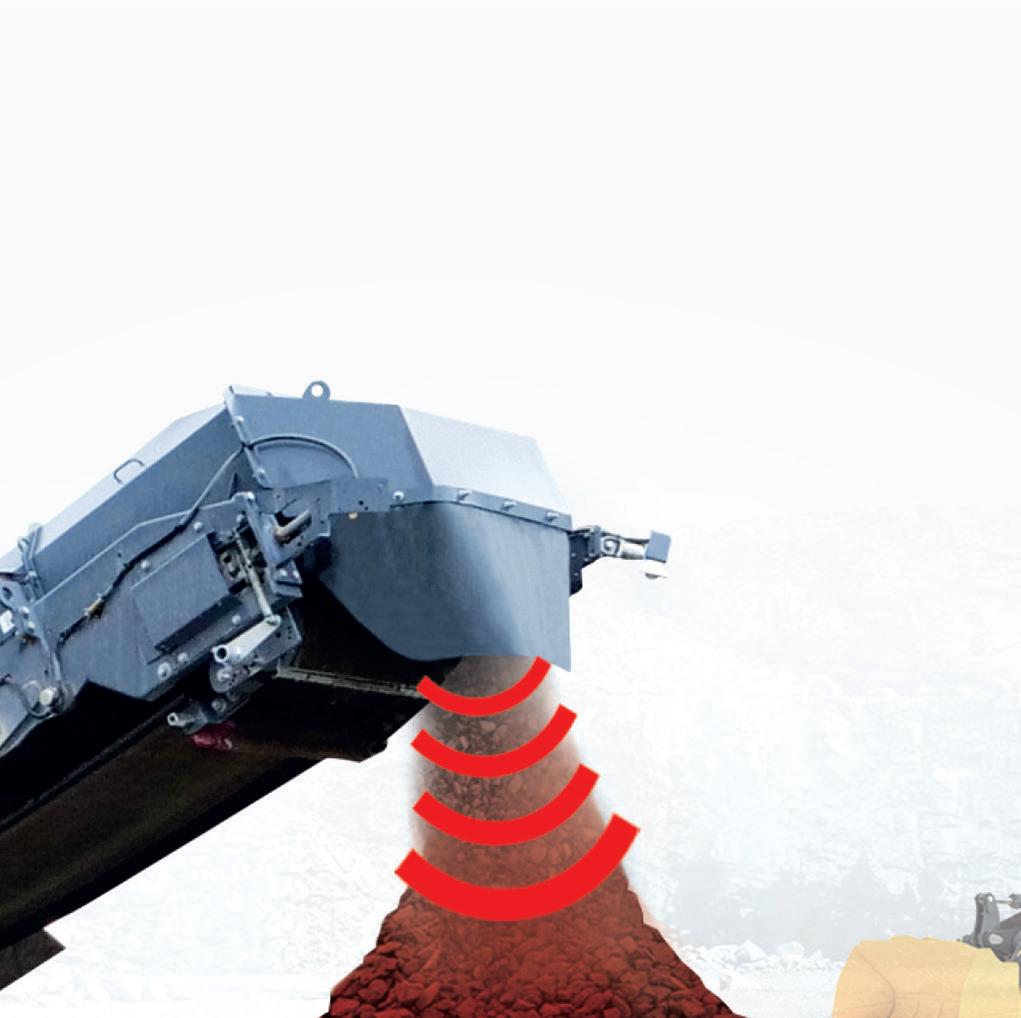

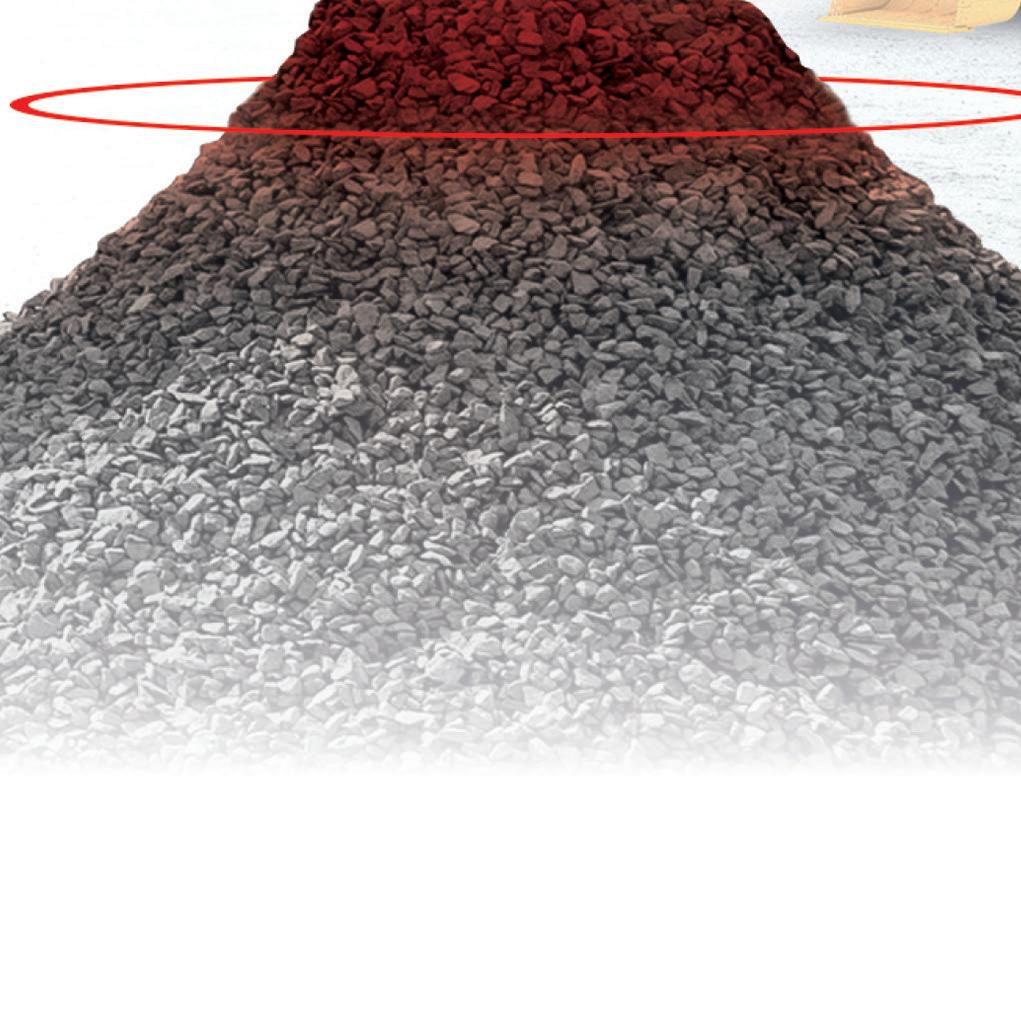
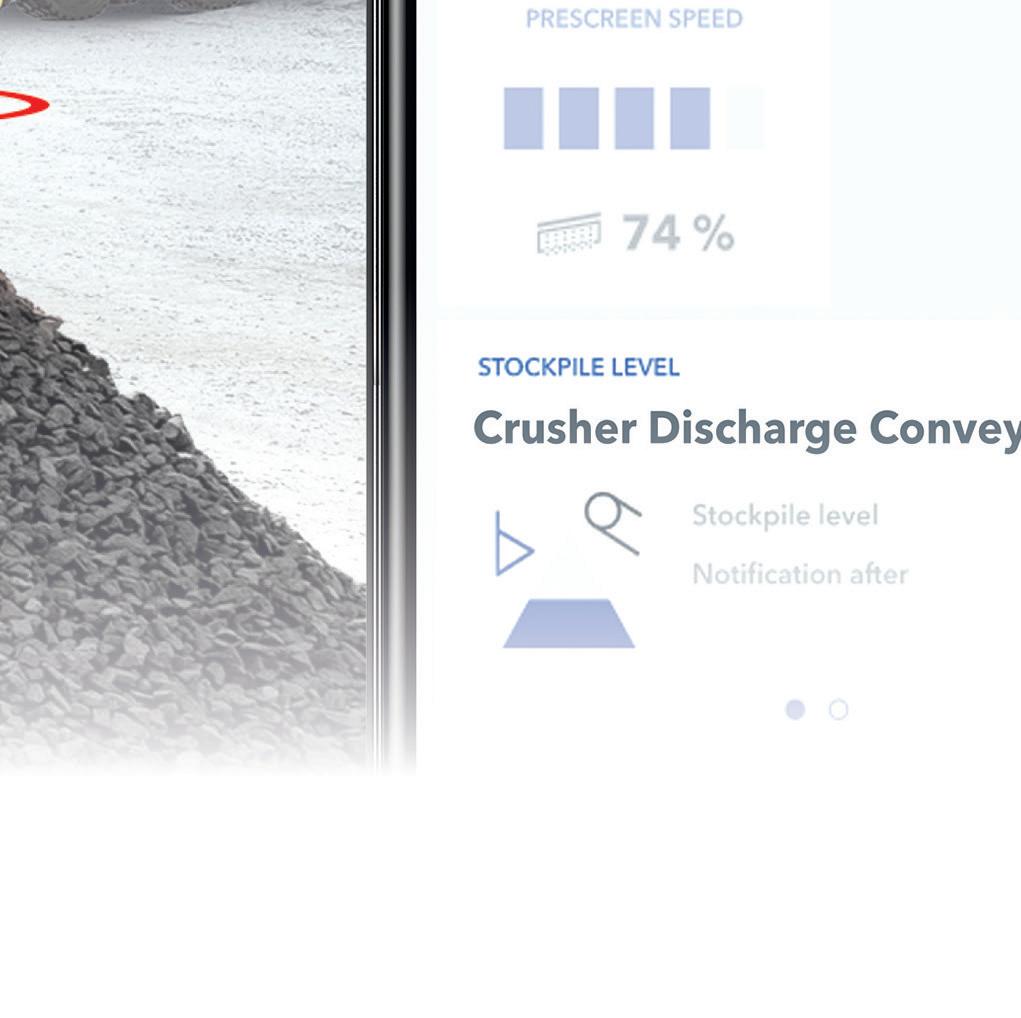

Kleeman reports that its intuitive SPECTIVE mobile app operating concept contributes signi cantly to ef cient operability of its crushing machines. The material discharge and, therefore, associated material stockpiles can now be better monitored and organised thanks to the “stockpile monitoring” function.
Meanwhile, Kleeman says that SPECTIVE CONNECT now also makes work easier for the wheeled loader operator whose tasks include clearing stockpiles. Stockpile monitoring allows SPECTIVE CONNECT to display the current status of material stockpiles at all times. Users can de ne from what stockpile height they wish to be informed; for example, at 90% of the total height.
Stockpile monitoring is particularly helpful on extensive terrain and with larger machine trains. Not all material stockpiles are always in the excavator operator's eld of vision. Wheeled loader operators often have other tasks as well.
SPECTIVE CONNECT sends a push noti cation to enable operators to go to the full material stockpile at the right time to clear it, enabling them to concentrate on their other jobs. This saves unnecessary trips, prevents switch-off when the stockpile is full and increases productivity.
The system, says Kleeman, also learns for the future. All data on the material stockpiles is recorded and used to build up an algorithm that calculates the time remaining until the
stockpile is full. The stockpile monitoring function then allows processes on the worksite to be optimised and prevents downtimes.
To further boost crushing ef ciency, Kleeman says that its electric crushing and screening plant lineup raises the environmental credentials of its owners and operators by omitting CO2 emissions on site. Kleeman acknowledges that initial investment costs are higher, but says that the higher costs are quickly amortised due to savings on diesel fuel.
A sample calculation for the German market shows that this is possible after around six years, according to Kleeman. If the system can be supplied with energy via the customer's own photovoltaic system, Kleeman says that return on investment can be as low four years.
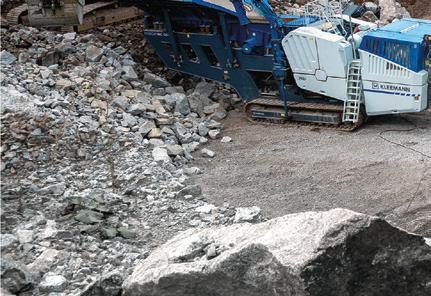

The use of apps for more productive screening operations and the dual use of diesel and electric power have helped boost quarry ef ciencies, according to Kleeman, Major and Screenscore

“Our mobile plant train in the sample calculation consists of a jaw crusher MOBICAT MC 120 PRO, cone crusher MOBICONE MCO 110 PRO as a secondary crusher and a downstream screen machine MOBISCREEN MSC 953 EVO,” said Tobias Böckle, head of product management at Kleemann. “The plant train consumes an average of around 77litres of diesel per operating hour. In the electri ed version, it has an average current consumption of 302kW per operating hour. The maximum power requirement is 542kW.
“The energy requirement must rst be provided by the infrastructure and is ideally met by electricity from renewable sources,” noted Böckle. “A sustainable and quickly cost-ef cient solution is to use an in-house photovoltaic power supply.”
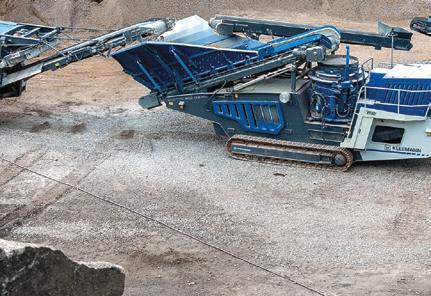
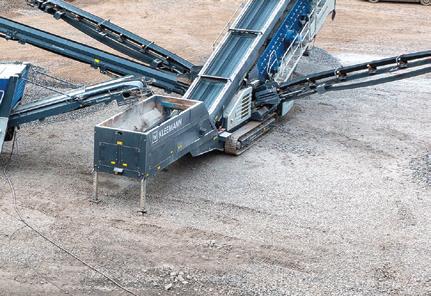


RFID technology
Major, a Canadian global manufacturer of wire screen media, has updated it app offering with the addition of the FLEX-MAT Sensor App. It includes marketing materials, expert documents and a newsroom with articles and announcements as well as RFID reader technology and the FLEX-MAT Sensor.
“Simplifying The MAJOR App allows customers to access all their screen media data in one place, saving time and virtually eliminating room for measurement errors,” said Kevin Laporte, R&D manager for Major.
The app streamlines customer and dealer processes by digitalising relevant product information. Customers and dealers can track and store screen media data such as screen dimensions and customer-de ned details to simplify the ordering process through FLEXMAT ID-Enabled.
Meanwhile, RFID technology allows customers and dealers to easily access product information through without needing an additional reading device. Simply scan the FLEX-MAT screen with The Major App to access product information. This makes the reordering process easier by minimising the need to climb onto the screen deck to measure the screen. Fewer physical measurements also reduce the potential for mistakenly ordering the wrong size, which can result in producing outof-spec products.
For screen media without ID-enabled features, the app includes an augmented measurement tool where customers and dealers can use their phone camera for approximate measurements.
The app also features the FLEX-MAT Sensor, a vibration data measurement tool where operators can ne-tune their screen machine without shutting down the equipment. Operators connect to a single sensor, which is placed on one corner of the machine at a






time. The sensor is moved to each corner of the machine to get a full view of the vibrational data. Once the measurement process is complete, the data is delivered to the Major App, where it is stored locally for ease of use and viewing in areas with cellular limitations.
Once a signal is available, the information is uploaded into Major’s cloud storage, where it is viewable from a web browser. By providing accessible, real-time data immediately following a vibration analysis, the Major App supports quick and easy maintenance for maximum production.
The app also includes an ef ciency calculator, open area calculator and a warehouse function that compiles a list of screen media in storage along with their speci cations. These features help operations closely monitor production as well as inventory for improved ef ciency. The free app is available for iOS and Android phones.
Screencore says that the latest version of its hybrid tracked jaw crusher, the hybrid XJ DualPower, is more fuel-ef cient and more accurate than its predecessors.
The hybrid XJ Dual-Power is a development of Screencore’s bestselling diesel-electric 1000mm x 650mm jaw crusher. Features include an updated jaw-level sensor, re ned electric plug-in (genset or mains), push-button hydraulic CSS wedge adjustment and a bolted mainframe jaw construction.
In addition, for inner city material recycling operations, the compact crusher is equipped with an updated dust suppression system, overband magnet and an optional de ector plate.
The XJ is able to use mains electricity as power, as well as providing the power for other attached screens or stockpilers, explained Ciarán Ryan, a director of Screencore, based in Ireland. “With its low transport height and length and rapid setup time, under 10 minutes, the XJ is easily moved between sites for maximised operational exibility. This makes it ideal for rental companies and businesses with a number of production sites.”
introduced the rst model of its range of the Dual-Drive series of stockpiling conveyors. These are manufactured with a conveyor drive that can easily switch from an electric drive motor on one side of the conveyor to a hydraulic drive motor on the opposite side. This empowers operators to choose the most suitable and readily available power source, all the while enjoying the convenience of a fully tracked mobile unit.
Through re ning the operation, the DualDrive now enables stockpilers - and other members of the Screencore range - to be connected to the electrical outlet of the DualPower XJ jaw crusher. This enables the attached machine to run ef ciently at virtually zero additional cost, offering a cost-effective solution for materials handling.
“The intelligent integration on our new Dual-Drive stockpilers and Dual-Power crushers, can be extended to other crushers or screens with spare electrical capacity, eliminating the need for an extra engine and signi cantly contributing to carbon reduction,” said Ryan. “As well as providing an environmentally focused and a exible ef cient solution for customers, it also ensures that crushing, screening and stockpiling operations are more cost-effective and ef cient.”
A major feature of the XJ Dual-Power is its miserly fuel consumption, which, said Ryan, even when powered by diesel is in single digits for litres per hour. This is even lower when running on electric power while powering other screens or stockpilers.
“This means that environmentally, as well as production-wise, the XJ checks all the boxes including both the ‘Zero Emissions’ box with its plug-in ability, and the ‘Low Noise’ box,” said Ryan. “We believe that the XJ Dual-Power yet again raises the productivity bar substantially for mid-sized crushers.”
Kleeman
www.wirtgen-group.com/en-de/company/kleemann
Major





Recently Screencore

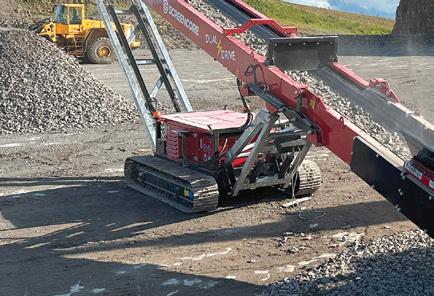
www.major exmat.com/product/major-app
Screencore
www.screencore.ie

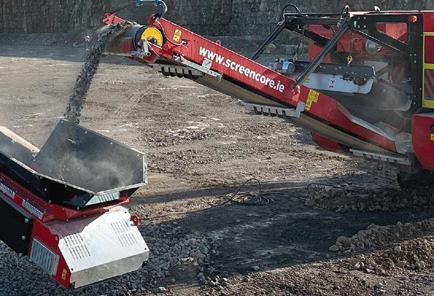

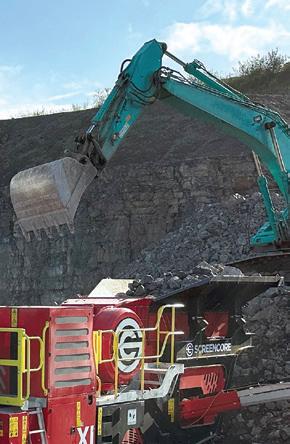
Caterpillar is now o ering its proprietary Cat Track Wear Sensor (CTWS), which can remotely monitor undercarriage wear to predict wear out, plan maintenance and increase machine uptime.
The system is exclusive to Caterpillar machines and is monitored within the Cat Wear Management System. The new CTWS communicates wirelessly to provide critical track link wear information from the machine to the dealer. Timed alert intervals – a 40% wear alert for possible bushing turns, 70% to signal for measuring and replacement part ordering, and 100% for required replacement – improve inspection scheduling and streamline ordering of replacement parts. The real-time track wear status enables no-touch track link measurements, increases eet coverage by automating inspections, provides visibility to track wear when operating in remote locations and allows for prioritised timing of service visits by helping optimise manual inspections.
The wear sensor is standard on new Cat D5, D6 and D8 dozers, and 953 and 963 track loader models in select regions with planned expansion to models in the dozer line in the future. It can be retro tted on eligible dozer undercarriages.
Caterpillar www.cat.com





HD Hyundai is o ering eight new mini excavator models, which weigh from 1.7-5.5tonnes.
Features include low emission EU Stage V diesel engines, load-sensing hydraulic systems on heavier models and proportional joystick controls with quick-coupler piping and safety valves on boom, arm and dozer blade cylinders.
The new compact excavators join existing HD Hyundai mini and midi crawler machines, to form a 12-model range, from the 1tonne HX10A micro, through to the 9tonne class HX85A. All of the models feature compact dimensions but those with a ‘z’ su x have a zero-tailswing design, allowing the machines to work up against walls and which can be supplied with additional counterweight to increase

stability. Variable-width undercarriages on the smaller models also improve stability for heavy digging and lifting.

HX-A Series mini and midi excavators can be supplied with HD Hyundai’s Hi MATE remote management system. This uses GPS satellite technology to provide realtime telematic operating data to machine owners and service departments. A new mobile app provides machine owners and eet managers with information that they require to run machinery more economically and e ciently. Hi MATE can also be used to set geofence alerts that warns the eet manager if the machine is moved outside of a predetermined area.
HD Hyundai www.hyundai-ce.eu
Sunward is now o ering its SWDM80SW piling rig for the European market.
Although well-proven in Sunward’s Chinese home market, the machines have not been available in Europe until now. This 27tonne machine features an 8m-high boom and is powered by a Stage 5/Tier 4 Final emissions compliant engine. An array of options is available to suit the needs of di erent applications.
Because these machines compete in di erent markets from the compact machine segments in which Sunward is well-established in Europe, the rm has set up a separate sales and service team for the piling rigs.
Sunward
www.sunward.com
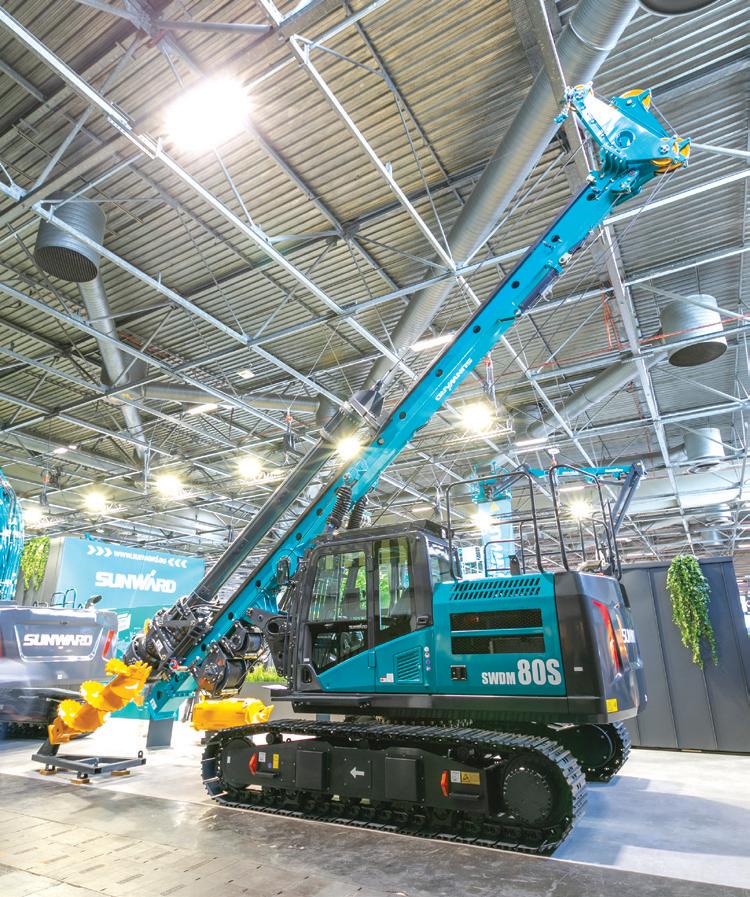

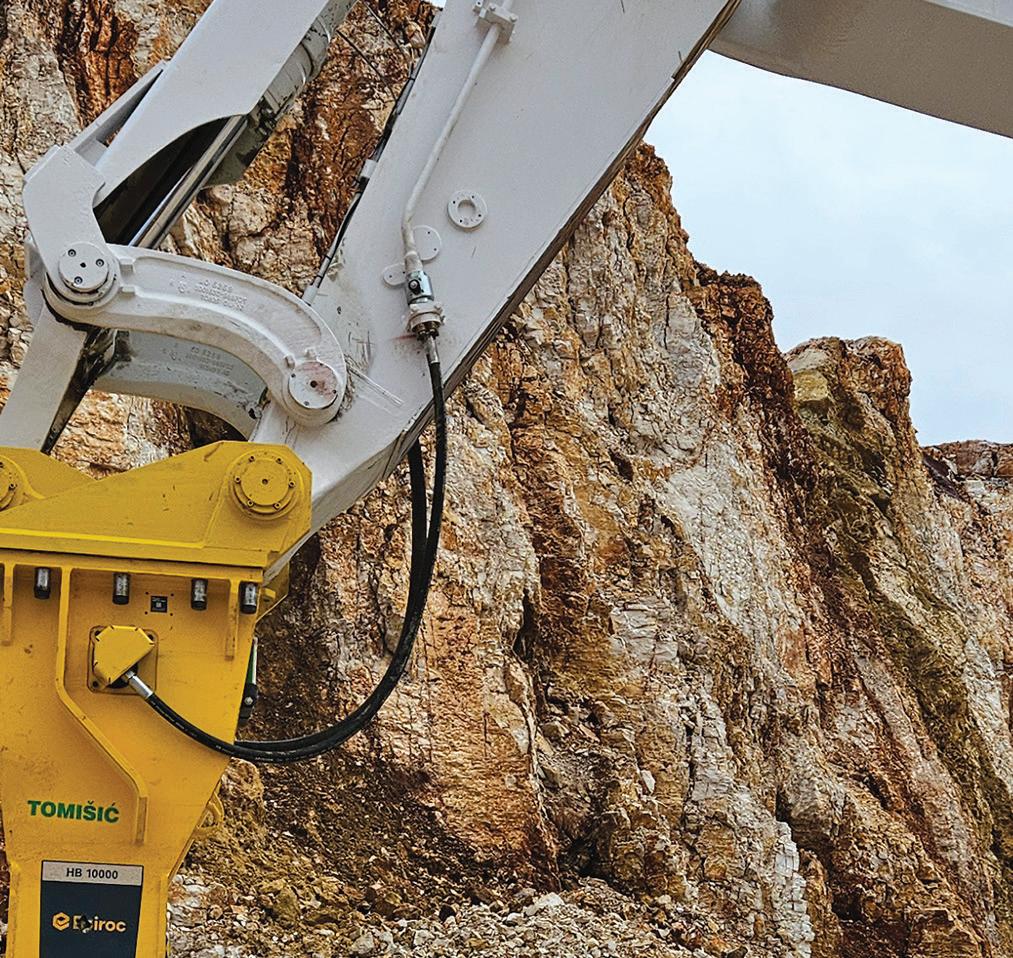

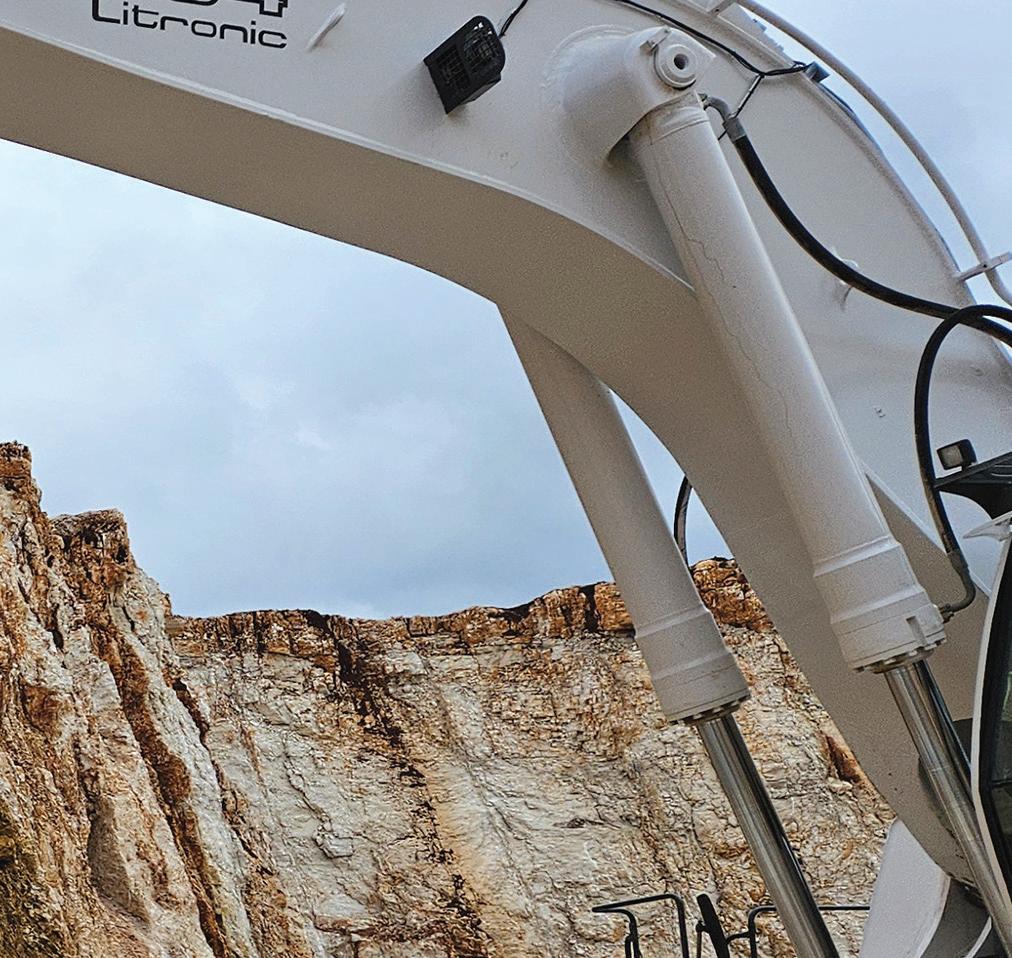
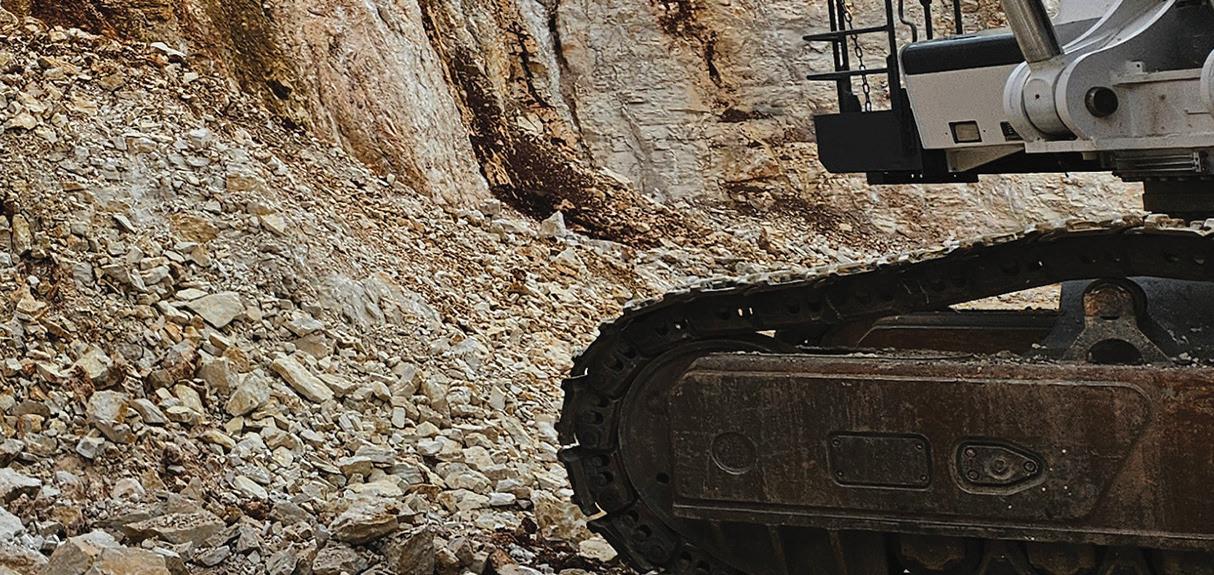


Epiroc has supplied the rst HB 10000 hydraulic breaker to the Croatian market. This unit is the biggest hydraulic breaker in the country and is now being used by Beton Tomišić in Gradišće.
The 10tonne HB 10000 is said to o er a single impact blow energy of 16,000Joules, at a rate of up to 380 blows/minute.
Beton Tomišić is using the breaker in its limestone quarry for bench pro ling processes

following drilling and blasting.
Beton Tomišić's quarry has earlier models in the shape of an HB 7000 from Atlas Copco and Krupp units.
Igor Tomišić, CEO of Beton Tomišić said, "The productivity and reliability of our Atlas Copco HB 7000 have been exceptional, making the decision to transition to the Epiroc HB 10000 a logical progression for our operations.
"The support of Epiroc´s business partner in Croatia,

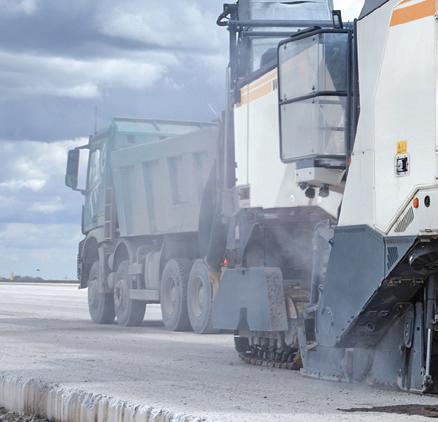
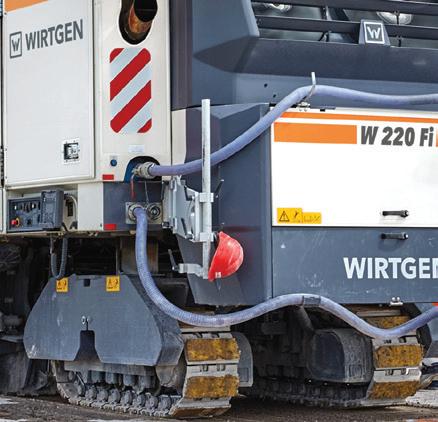


Matkovic94, is a great addition to the good direct relationship that we have with Epiroc." Transitioning from limestone to dolomite extraction, Beton Tomišić's evolving quarry demands robust equipment capable of withstanding varying material strengths. “Uniaxial compressive strengths of 120 up to 220MPa in Dolomite are a challenge that the HB 10000 can cope with,” added Tomišić.

with DustProtector II and ContiLube II systems as standard, ensures optimal performance and longevity in challenging operating environments.
Moreover, Epiroc's Intelligent Protection System (IPS) o ers intelligent safeguards, preventing blank ring and enhancing operational e ciency through automated control mechanisms.
The HB 10000, equipped
Epiroc www.epiroc.com
A milling machine from Wirtgen has been used successfully for rural road rehabilitation work in Sicily.

Despite the narrow, twisty roads, the local contractor decided on a large W 210 Fi milling machine that could mill the entire roadway in 2-3 passes. The lengths of the individual sections of the rehabilitation project varied from 50-500m. For rehabilitation measures of this kind, the milling machine is repositioned several times a day and moves from one section to the next partly under its own power. “I’ve been working with Wirtgen equipment for a long time, including milling machines of this size. And I must say that I’m really impressed by the new features of the F-Series,” said Roberto Prainito, owner of contractor Sicilstrade.
Wirtgen says that the Mill Assist system monitors milling quality and delivers a high quality surface. The results are consistent on

each individual section. This lets the driver focus entirely on the loading process and on keeping the cut in line. The individual sections could therefore be milled o in record time, enabling the completion of several sections per day.
An experienced paving team from Sicilstrade was always onsite, ready to ll in each new patch directly behind the machine. A range of automated functions, like positioning in a second cut or automatic tracking of the discharge conveyor, sped up the process and improved the results produced on the construction site. In addition, the ability to save and store milling depths and the auto-start feature in combination with Mill Assist made milling work on these di erently-sized patches easier.
Wirtgen www.wirtgen-group.com

•Network with industry leaders, policymakers, and innovators from across the Americas.
•Discover the latest technologies and strategies to address pressing urban mobility challenges.


•Learn how cities have successfully implemented sustainable transportation systems.
•Participate in discussions to influence future transportation policies and regulations.
•Position your organization as a leader in sustainable transportation and urban development.