























4. Contra ow
The US still has to address its serious issues over worn out bridges, with 222,000 estimated to need major repairs or replacement
6. News
24. Highway & Safety

Caterpillar’s strong results; Trapped Indian tunnel workers rescued; Malaysia’s focus on transport infrastructure development
10. Construction technology
Advanced technologies for construction from Bentley Systems, Leica Geosystems, Topcon Positioning and Trimble can boost working ef ciency for contractors
16. IRF
Innovation for better mobility in focus at the IRF annual conference 2023; IRF Global R2T conference & exhibition
20. Key project
Corruption and instability around the world present major challenges to contractors looking to work in certain countries

Crash barrier technology has improved over the years and effective testing has ensured that new systems deliver greater levels of safety for road users
28. Intermat
The Intermat 2024 construction machinery exhibition in Paris will be a vital launch venue for major equipment manufacturers
29. ASECAP report
Utilising the data road rms collate effectively was a key focus for discussion at the recent ASECAP conference in Istanbul
32. Asphalt paving, compaction
Electric construction machinery from the Fayat Group is ensuring roads can be built using zero emissions equipment for a more sustainable construction. New developments in asphalt paving and compaction equipment
37. Asphalt plants
39. Concrete technology
Accurate concrete paving with Wirtgen; Liebherr’s latest concrete pump; new generation concrete plants in the UK and Germany
42. Bridges & tunnels
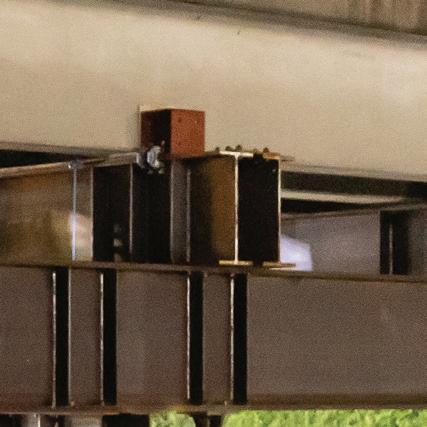
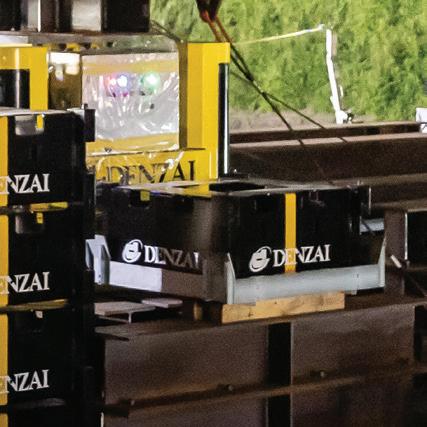
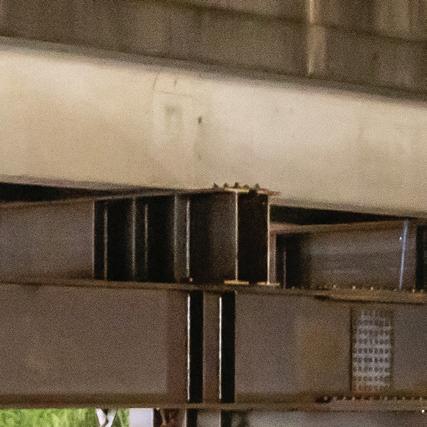
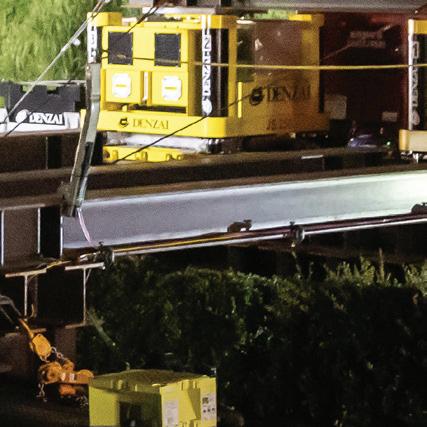
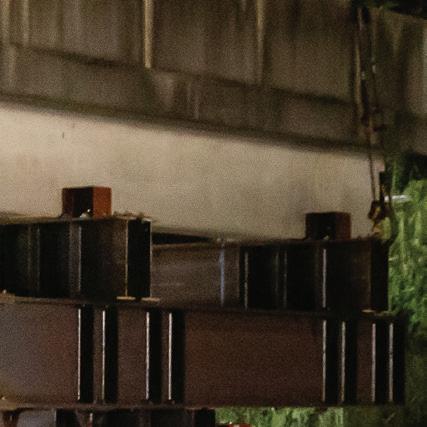
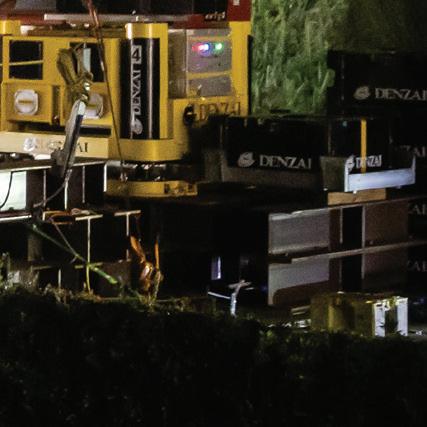
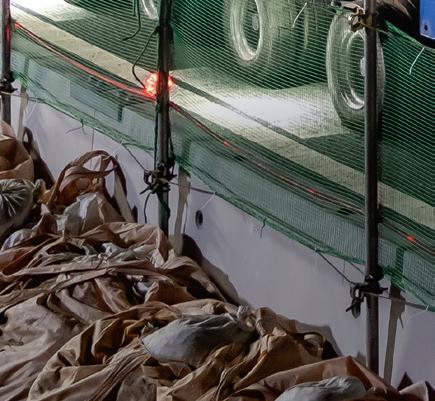
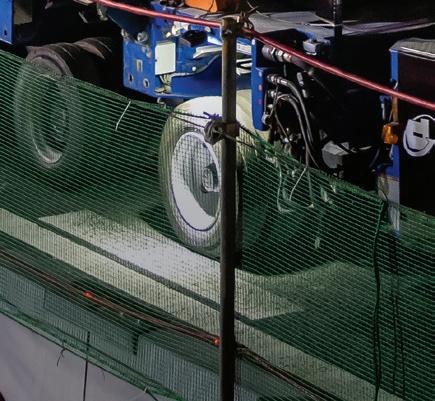
A new tolled link is the longest bridge in the Philippines; a temporary bridge for historic Vicenza in Italy; a tricky bridge lift in Japan
45. Engines
Key engine manufacturers are developing new units that can use hydrogen as fuel, while new battery and hybrid options are coming to market
48. Equipment
Caterpillar’s high performance compact tracked loader; Yanmar’s versatile compact wheeled loader; Komatsu offers smart 3D controls



New generation burner technology will allow for cleaner production of asphalt; a modern asphalt plant in Guatemala is proving bene cial
Between pages 10 and 11
50. Onsite Hyundai excavators show versatility; Develon loaders are productive at aggregates facility; Volvo CE electric machines build racetrack for electric cars







DE1. Road Recycling
Wirtgen is introducing an innovative concept for road construction in the shape of its new WRC 240(i) rock crusher
DE4. Earthmoving
A eet of Liebherr ADTs is helping with the construction of a major project at Lake Reschen in Northern Italy
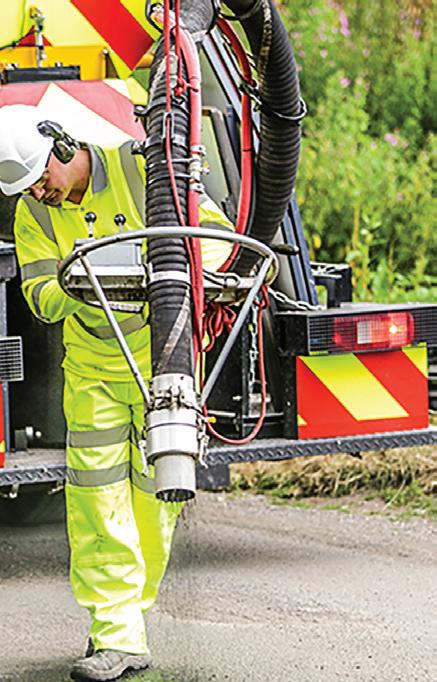
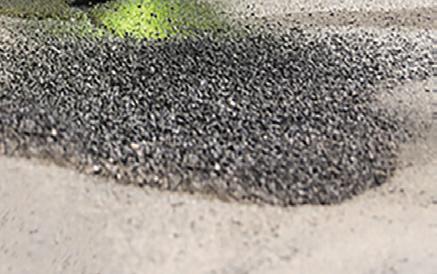
DE2. Road Repairs
Nuphalt is well-prepared to meet the growing challenge for road repairs















DE5. Skidmarks
Further humorous road-related stories from around the world









A solution has to be found for those 222,000 aged US bridges however and the situation is critical
Mike Woof, EDITOR mwoof@ropl.com
A new report in Bob Poole’s Transportation Newsletter #241 highlights the problem that the US still faces with bridge infrastructure. According to the latest data, the US still has 75,000 bridges in dire need of replacement because they are at the end of their design life, or have even passed beyond it.
Poole refers to the National Bridge Inventory data from the US Department of Transportation, which shows a worrying 222,000 bridges in all that require either major repairs or have to be replaced. The American Road & Transportation Builders Association (ARTBA) has estimated that repairing or replacing all these de cient or aged bridges in the US will cost a shocking US$300 billion.
Clearly, this work is not going to happen soon. A solution has to be found for those 222,000 aged US bridges however and the situation is critical.
There have been bridge collapses in the US such as in Pittsburgh in early 2022, when the Fern Hollow Bridge gave way. The bridge was replaced quickly due to highly effective working by Pennsylvania Department of Transportation, the City of Pittsburgh authorities, the engineering rm HDR and the contractor Swank Construction. Luckily, nobody was killed and the few people injured were able to recover. But the old bridge was known to have issues and it should have been repaired or replaced earlier. More funding from the US Federal Government is






needed to tackle the issue of defective bridges as Poole highlights. One such is the Blatnik Bridge that connects Minnesota and Wisconsin, the replacement project for which comes with an estimated pricetag of over $1.7 billion. The existing bridge is over 60 years old and is no longer able to cope with current traf c demands. The Department of Transports (DOTs) for the respective states can manage to contribute around $400 million apiece for the work and are working together for the project but are looking to the US Federal Government to provide the rest.
Another important US bridge Poole highlighted is the Calcasieu River Bridge on I-10 in Lake Charles, Louisiana. As with the Blaski Bridge this is no longer able to cope with traf c needs and is more than 70 years old.
Replacing this bridge would cost $2.1 billion but Louisiana legislature’s Joint Transportation Committee voted recently against a plan for its replacement. The aim was to use a PPP, with tolling paying for a signi cant portion of the costs. Federal funding and state funding would have paid for the remainder of the costs. But haulage rms and residents were less than happy about the proposed bridge tolling model, so the plan was stopped. Unfortunately, this leaves Louisiana with an aged bridge unable to cope with traf c needs, with just two lanes in either direction and subject to frequent congestion and delays at peak periods. MW


Editor: Mike Woof
Deputy Editor: David Arminas
Sub-Editor: Kevin O'Shea
Contributing Editor: Guy Woodford
Editorial Contributors: Shem Oirere, Kristina Smith, Mauro Nogarin, Eugene Gerden, Partha Basistha, Lucio Garofolo
Designers: Simon Ward, Andy Taylder
Production Manager: Nick Bond
O ce Manager: Kelly Thompson
Internet, IT and Data Services Director: James Howard
Web Manager: Sarah Biswell
Social Media Manager: Tatyana Mechkarova
Managing Director: Andrew Barriball
Chairman: Roger Adshead
Publishing Director: Geo Hadwick
ADDRESS: Route One Publishing Limited, Second oor, West Hill House, West Hill, Dartford Kent DA1 2EU, UK Tel: +44 1322 612055 Fax: +44 1322 788063
Email: [initialsurname]@ropl.com (eg: radshead@ropl.com)
ADVERTISEMENT SALES
Head of Construction Sales: Graeme McQueen
Tel: +44 1322 612069 Email: gmcqueen@ropl.com
Sales Director: Philip Woodgate
Tel: +44 1322 612067 Email: pwoodgate@ropl.com
Sales Director: Dan Emmerson Tel: +44 1322 612068 Email: demmerson@ropl.com
UK / CLASSIFIED, NORTH AMERICA: Dan Emmerson Tel: +44 1322 612068 Email: demmerson@ropl.com
ITALY: Fulvio Bon glietti
Tel: +39 339 1010833 Fax: +39 02 700446321 Email: bon glietti@tiscali.it
JAPAN: Akiyoshi Ojima
Tel: +81 3 3263 5065 Fax: +81 3 3234 2064 Email: ojima@echo-Japan.co.jp
ASIA / AUSTRALASIA: Roger Adshead Tel: +44 7768 178163 Email: radshead@ropl.com


















































has seen 12% growth in revenues for Q3 2023 compared with the same period in 2022, with
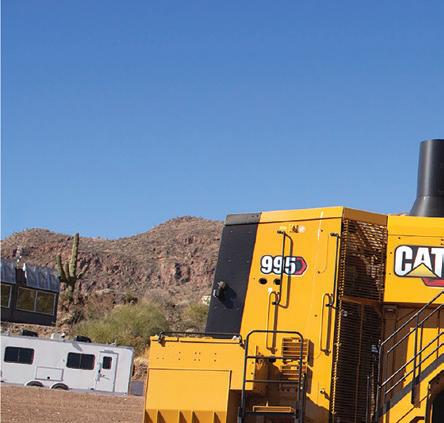
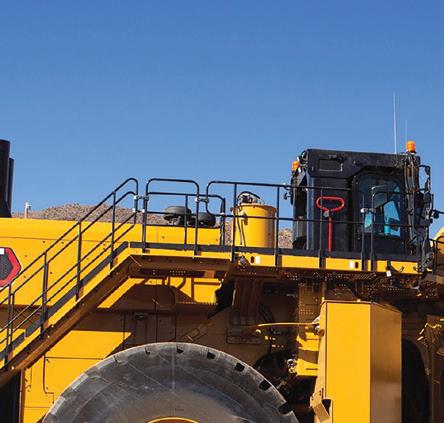
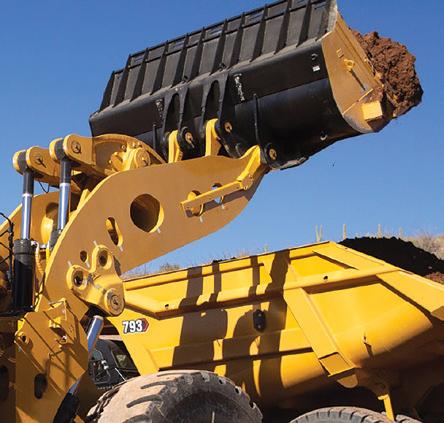

Caterpillar has seen a 12% boost for its third-quarter 2023 sales and revenues. These hit US$16.8 billion for 2023 compared with $15.0 billion for the third quarter of 2022.
The rm said that the increase was primarily due to favourable price realisation as well as higher sales volumes.
Operating pro t margin was 20.5% for the third quarter of

2023, compared with 16.2% for the third quarter of 2022. Adjusted operating pro t margin was 20.8% for the third quarter of 2023, compared with 16.5% for the third quarter of 2022.
Third-quarter 2023 pro t/ share was $5.45, compared with third-quarter 2022 pro t/share of $3.87. Adjusted pro t/share in the third quarter of 2023 was $5.52, compared with third-quarter 2022 adjusted pro t/share of $3.95.



Adjusted operating pro t margin and adjusted pro t/share for both quarters excluded restructuring costs.
For the nine months ended September 30, 2023, enterprise operating cash ow was $8.9 billion, and the company ended the third quarter with $6.5 billion of enterprise cash. In the quarter, the company paid dividends of $0.7 billion and repurchased $0.4 billion of Caterpillar common stock.

Construction workers in India were rescued from a collapsed tunnel after enduring 17 days underground. The 41 workers were trapped in the 5km tunnel, which was under construction at the time. Miners were able to construct a passage through the debris from the collapse to reach the stranded workers. Food and water had been passed through a narrow steel tube to the trapped workers from soon after the collapse, but attempts to reach the men had been hampered by the poor ground conditions.
The area is known for its di cult geological conditions and is prone to earthquakes, landslides and ooding, which delayed the rescue further.
The tunnel was being constructed through a fault zone at the time of the collapse. Located in Uttarakhand, the new tunnel is intended to form part of the Brahmakhal-Yamunotri National Highway. The reasons for the collapse are now being investigated.


A joint venture between China State Construction Engineering Corporation (CSCEC) and Spectra Engineers will build a 1.1km-long steel arch bridge over the Brahmaputra River in Bangladesh.

The objective is to reduce congestion and improve mobility between Mymensingh city and Shambhugonj on the opposite river bank and on the Dhaka-Mymensingh-India corridor, according to the Asian Infrastructure Investment Bank which is helping fund the work. Mymensingh is around 110km north of the capital Dhaka.
The project for the steel arch bridge – called the Kewatkhali Bridge after the market through which it will pass - includes a 6.2km four-lane approach road, three road overpasses, two rail overpasses, a toll plaza and a rest area next to the bridge. It will be built next to a small existing bridge.
The Kewatkhali Bridge will be the country’s largest steel arch bridge and be similar to Australia's Sydney Harbour Bridge. It’s main span of 320m will stretch completely across the river allowing for the uninterrupted passage of ships, according to a Bangladeshi media report.

The US$292.5 million project will be funded through a $171 million loan from the Asian Infrastructure Investment Bank, based in Beijing. The joint venture includes LEA Associates South Asia (India), the Korea-based Yongma Engineering, along with subcontractors DeshUpodesh and Kranti Associates (Bangladesh).

When completed in 2025, it should improve connectivity for Mymensingh's land port and Chinesestyle special economic zones. The client is Bangladesh's Roads and Highways Department.
Meanwhile, two new highway concession packages have been awarded in India. The two packages are worth a total of US$803 million and were awarded by the National Highways Authority of India (NHAI).
The packages will be managed under the toll, operate, and transfer (TOT) model. IRB Infrastructure Trust will operate TOT bundle 12 for the 316km Allahabad Bypass. Cube Highways and Infrastructure has the TOT package 11 for an 84km bypass.
The deals allow the rms to collect tolls for these routes for 20 years. Maintenance of the roads also forms part of the deal.
And the $540.3 million concession package has been agreed and signed for India’s Lakhnadon-Lalitpur highway. The deal has been agreed between IRB Lalitpur Tollway (IRB) and the National Highways Authority of India (NHAI). The 20-year operation and maintenance concession is for a 316km section of the NH44 route in in Madhya Pradesh State.















A massive road tunnel project worth as much as US$1.43 billion is being proposed in Malaysia. The tunnel would form part of the even larger Penang Transport Master Plan (PTMP), which is expected to cost up to $10.4 billion.
The tunnel link would measure 6.5km and provide a connection for three new key road sections. Building the tunnel will help improve transport for the area and also to and from the port, which is also seeing an expansion. The PTMP is intended to cover various transportation systems and services such as an elevated light rail transit (LRT),
bus rapid transit (BRT), tram, taxi and also trucks and private vehicles. This will improve transport for Penang.
One of the roads will be the Tanjung Bungah-Teluk Bahang route. Another will be the Tun Dr Lim Chong Eu Highway-Bandar Baru Farlim route. And the third will be the Pankor Road-Tun Dr Lim Chong Eu Highway. Meanwhile, the North Butterworth Container Terminal (NBCT) has an Expansion Master Plan that is being reviewed by the Penang Port Commission (SPPP).
The project forms part of a wider plan in Malaysia, with its government prioritising


spending on transport infrastructure development. Malaysia’s massive infrastructure spending is being distributed across different transport modes including road, air, rail and public transit.
One of the key projects underway in Malaysia is for the construction of the Pan Borneo Highway. Tendering will open for 19 stretches of the Pan Borneo Highway in Sabah during November 2023.
Construction of this 336km stretch, Phase 1B, is expected to cost $3.5 billion. Meanwhile, the stretch of the Pan Borneo Highway in Sarawak is due for completion in 2024.
A loan worth US$141 million will help pay for a portion of the Hampton Roads Express Lanes Project.
The loan is being provided by the Build America Bureau to the Hampton Roads Transportation Accountability Commission (HRTAC), for the Virginia Department of Transportation (VDOT).
The Hampton Roads Express Lanes Project involves the construction of a network of 72km of express lanes for I-64. This particular loan will be used to address the heavy peak time congestion on a 4km stretch of I-64 with the addition of two open lanes in either direction as well as two express lanes in either direction.

River will be replaced while four other bridges will be revamped.
The work on this stretch of I-64 is being carried out by a joint venture that comprises Shirley Contracting and Branch Civil and is due for completion by the
A major new road project to improve transport connections between Ivory Coast and Nigeria will boost economic development for West Africa. Some of the necessary funding is already being secured for the project from the African Development Bank (AfDB).
The new road link will measure some 1,081km, linking major ports and cities ports through Nigeria, Benin, Togo, Ghana and Ivory Coast. The AfDB has so far managed to source US$15.6 billion for the project.
Protecting 10 vulnerable stretches of road in Norway from avalanches could cost as much as €1.22 billion. That is the nding of research by Norway’s motoring body NAF, based on data from the Norwegian Public Roads Administration (Statens Vegvesen). Norway’s Ministry of Transport and Communications has established a new National Transport Plan intended to make journeys safer and more e cient.
Vestland county has a particular issue with regard to avalanche risks and most of the sections of road at risk are in this area. However, the NAF research shows that protecting all of the Norwegian roads at high or medium risk from avalanches or rockslides could cost as much as €21.86 billion.

Protecting Norwegian roads from avalanches will be very costly according to a recent study

This project forms part of a much wider series of works being carried out in Virginia at present.
The project to expand Virginia’s Hampton Roads Bridge-Tunnel (HRBT) link is the largest series of road works in Virginia’s history.







Software specialist Bentley Systems believes using new technology will deliver greater e ciencies for infrastructure development and maintenance

Construction software specialist Bentley Systems says that infrastructure intelligence is now playing a key role in the industry
According to CEO Greg Bentley, 2023 has been a “groundbreaking year” for the employment of infrastructure intelligence strategies by major rms.
Bentley explained that infrastructure organisations are using technology to overcome the engineering resource capacity gap. A survey of the nalists in the 2023 Going Digital Awards run by Bentley Systems highlighted median savings of 18% to engineering hours saved through the use of digital advancements. Such a saving could help address the challenges stemming from the skills shortage, with fewer engineers entering the industry at present.
According to Greg Bentley, engineering data provides the foundation while digital twins act as the building blocks for infrastructure intelligence. With iTwin Platform, engineering data in Bentley Infrastructure Cloud (ProjectWise for project delivery, SYNCHRO for construction, and AssetWise for asset operations) can increase infrastructure intelligence over the life cycle of projects and assets. Bentley Systems estimates that the company’s engineering users accumulate at least 100 million new digital components/ month within ProjectWise environments. This can deliver infrastructure intelligence bene ts across construction, operations, and maintenance.
Greg Bentley highlighted infrastructure intelligence strategies that organisations are employing to compound the value of their data. This includes reusing digital components, integrating subsurface modelling, and incorporating operational data from IoT
sensors, drones, and even crowdsourcing. He also explained how Going Digital Awards nalists and organisations in Singapore are accelerating their infrastructure intelligence through the use of AI.
In Singapore, digital twins are used to optimise decision-making and operations. These include Singapore’s Land Transport Authority (LTA) utilising EMME and DYNAMEQ mobility digital twin software from Bentley Systems for long-term and short-term planning, including operational traf c models for traf c impact and scheme analysis.
Meanwhile, Mike Campbell, chief product of cer said, “Bentley Infrastructure Cloud, including ProjectWise, leverages infrastructure digital twins to unlock data in order to apply AI and accelerate infrastructure intelligence.”
Henry Okraglik, global director of Digital, WSP Australia, explained the bene ts of becoming data-centric through Bentley Infrastructure Cloud. He said, “As we’ve digitally matured, we’ve been able to embrace capabilities from Bentley Infrastructure Cloud to improve construction staging and planning, track and export quantity data across project phases, reduce the need for physical site visits, and more.”
For example, using ProjectWise, SYNCHRO, iTwin, and other Bentley products, WSP was able to reduce modeling time by 60%, increase productivity by 25%, and reduce the carbon footprint by 30% on a rail project in Melbourne.
To introduce the bene ts of digital twins in the design phase, Campbell announced the addition of iTwin capabilities in Bentley Open Applications, for modeling and simulation, starting with MicroStation. With iTwin capabilities and work ows integrated, Bentley Open Applications will be able to generate digital twins during the design process,
enabling users to collaborate in real time, evaluate the impact of changes, reduce rework, and allow infrastructure intelligence.
“Today, digital twins are critical enablers of how infrastructure assets are built and operated. With iTwin-powered capabilities coming to Bentley Open Applications, all our users will also be able to leverage digital twin technology to improve their ef ciency and effectiveness during design,” said Campbell.
Utilising the potential of AI to accelerate infrastructure intelligence, the company highlighted existing analytical AI capabilities, powered by iTwin, for asset monitoring, as well as for generative AI for design. The company says it is committed to help users gain value from engineering data secured in Bentley Infrastructure Cloud. At the same time, users will retain access and control for the data used in AI.
Julien Moutte, chief technology of cer, provided examples of generative AI for infrastructure engineering, beginning with an AI agent assisting engineers in optimising site layouts by leveraging designs and data from previous projects. He also showed how generative AI can be applied to minimise time spent on project documentation by automating drawing production.
“We believe iTwin-powered generative AI capabilities will support engineers by augmenting the work they’re already doing. We see iTwin becoming a copilot to support better decisionmaking, reduce repetitive tasks, and increase design quality. It can help close the engineering resource capacity gap – not only by empowering current engineers to produce more, but also by enabling a more rewarding work experience,” said Moutte.
Bentley Systems www.bentley.com


















Hexagon has expanded its portfolio with the acquisition of digital twin content creation specialist, LocLab. The technology allows speedy generation of digital twins due to a high degree of automation, using proven work ows and AI.

Hexagon's president, Ola Rollén said, “We continue to advance the utility and potential of the digital twin. We call it the Smart Digital Reality. Like any digital twin, it provides an intuitive 3D hub for data management and information. But it has traits not always associated with digital twins: it’s data-rich, kept up to date in real time, and work ow-driven, making it seamlessly accessible. And most importantly, it’s autonomously intelligent, meaning it can implement physical world actions independent of

human intervention.”



LocLab’s toolchain can use several data input formats to balance speed, cost and accuracy, such as terrestrial videogrammetry, survey data and point clouds. As a minimum, it can use just photographs or videos. Videogrammetry is a scalable method that comes in handy when survey accuracy is not needed and speed is preferred. Whether creating 3D models of large-scale areas such as transportation networks or entire cities, the AI software compares detected objects with LocLab’s object library of 3D elements to semi-automate the generation of an enriched 3D model.
“The foundation of any smart digital reality is the underlying 3D model. If not already part of one of our solutions or readily available via our content program,




it can be time and resource-intensive to create,” Rollén added.
The acquisition strengthens Hexagon’s ability to make Smart Digital Reality accessible to new and existing customers while providing LocLab’s customers with a proven platform for hosting, sharing and keeping 3D digital twins up to date.

“The integration of LocLab’s 3D digital content with HxDR, our cloudbased storage, visualisation, and collaboration platform, will drive HxDR’s expansion as a leading digital reality platform within transportation, construction, urban planning, and many other industries,” continued Rollén. Hexagon
www.hexagon.com
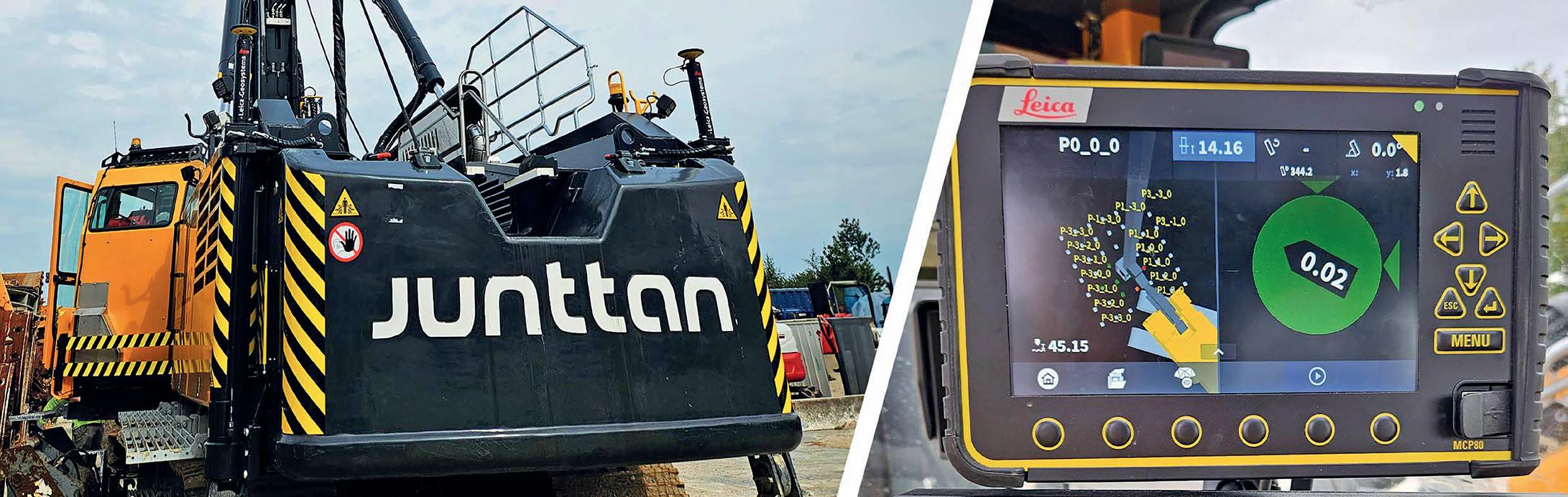
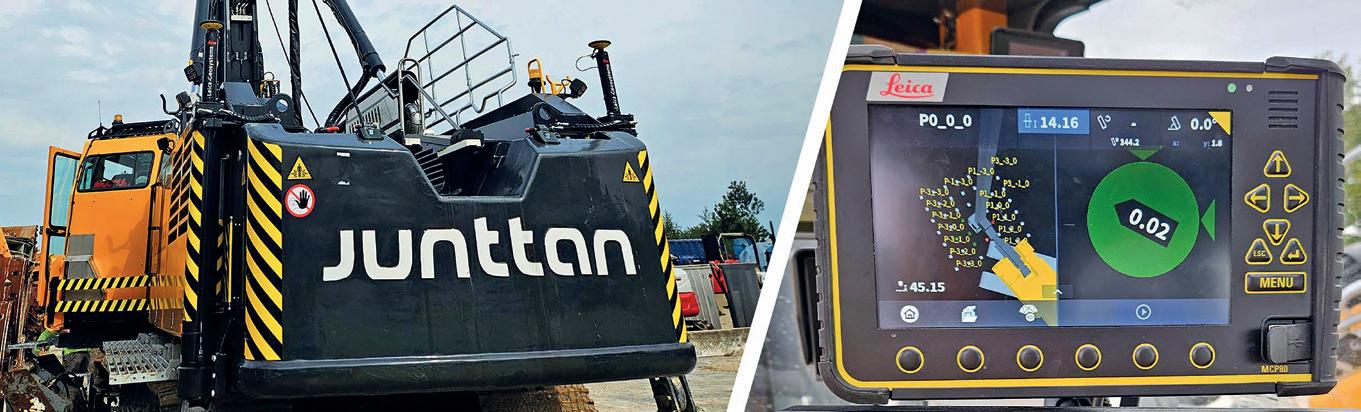
Leica Geosystems has established a partnership with Junttan, the Finnish manufacturer of hydraulic piling equipment. The two rms are now working to accelerate the digital transformation of the piling sector.
To meet increasing demand for digital solutions in construction, Leica Geosystems and Junttan are working to boost the productivity,
precision, and safety of piling equipment. The collaboration will leverage advanced technology and industry expertise to achieve higher levels of productivity and accuracy, resulting in more sustainable and safe work ows.
"We are excited to join forces with Junttan to deliver easy-to-use and reliable solutions to the piling
construction industry," said Tommi Kauppinen, vice president Heavy Construction, Leica Geosystems. "This partnership represents a signi cant step forward in our shared mission to drive digital innovation."
Karoliina Pesola, head of Digital and Measuring Solutions, Junttan added, "By combining our experience in manufacturing piling
equipment with Leica Geosystems' positioning technology, we are enabling our customers to achieve precision and e ciency in their projects."
Junttan www.junntan.com
Leica Geosystems www.leica-geosystems.com
Topcon Positioning’s Yassir Shanshal, senior vice president of Global Quality, Service and Kris Cowles, executive vice president & CIO spoke with Mike Woof of World Highways on Topcon’s view for the future
As a technology rm, it is no surprise that Topcon Positioning is utilising some of the latest technology in delivering solutions for customers in construction (and agriculture). Nor is it a surprise that the rm is ahead of the curve when it comes to research and development, looking at how emerging technologies will impact on future advancements.
The rm uses AI to leverage trends and analyse eld data to prevent quality issues. Shanshal said, “We’ve put a lot of emphasis on AI to identify what our customers are looking for. With AI there has been an easier way of looking at trends and seeing issues before they happen.”
The rm leverages AI to understand these issues so as to address them and also use the information for new product development. Shanshal continued, “With AI you have a lot more knowledge of things you’d spend time looking for. AI does that search for you.”
Cowles commented, “In the last 12 months there has been a massive explosion of AI.” She added that areas such as professional services and support will change fast through the use of AI, adding that there will be new roles for people to create the information that the necessary algorithms will utilise. “We are going to make major moves in technical support,” she said and added, “The value is being able to change how we do things.”
Shanshal continued, “As we automate the world of construction equipment, we also automate the manufacture of our equipment. We’re working on two elements. The rst step we’re looking at is designing our product for automation.”
He said that the units have been complex in the past, with many internal wires. The newest models are instead being designed with snap together components, making them easier and quicker to assemble as well as to service and maintain. “It’s also a great way to reduce the number of parts and increase durability,” he added.
Shanshal said that the rm is developing robotic cells for the manufacture of its units, while AI has been used to help determine how best to manufacture the products. Testing of the products once they are assembled is also carried out using AI systems and stereo vision cameras. This learning technology has helped to boost quality and is more reliable than conventional testing by personnel.
The changes to manufacturing and testing are not intended to reduce the payroll at the Topcon facility and instead the aim is to retain personnel levels while increasing output and productivity.
Demand is growing for products and Shanshal said, “The biggest growth the industry is seeing is on compact loaders and mini excavators.”



But she cautioned that when someone asks a question of an AI tool (such as Chat GPT), will it give a good answer and who will decide what is a good answer versus what is the best answer?
Meanwhile, Shanshal explained that a new generation of operators is coming that is more aware of technology than in previous times. However, there is also a shortage of machine operators, which is why there is a growing need for machine control systems. “Automating the industry is a gamechanger. The next step is autonomous operation,” he said.


Cowles agreed and added, “There is a shortage of workers and that is going to get worse.”

He explained that demand is particularly strong for the MC Mobile package, which is used on smaller machines. For contractors, this technology goes part of the way to addressing the challenge in nding people to operate equipment. Technology is going through a step change and rather than the old ways of doing things, rms are using new types of tools.
This change has been seen at Topcon, which has moved from being a hardware supplier to offering a whole suite of software solutions and services. But Cowles cautioned, “A large part of the industry is not aware what technology is available.”


Topcon Positioning www.topconpositioning.com


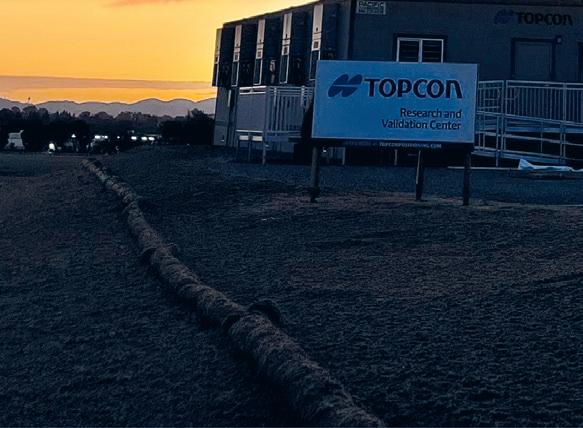
The new research and development area for Topcon will o er increased space for testing of new systems for the construction (and agriculture) segment



An autonomous Dynapac soil compactor equipped with Trimble control technology has been used on a working construction site in Canada
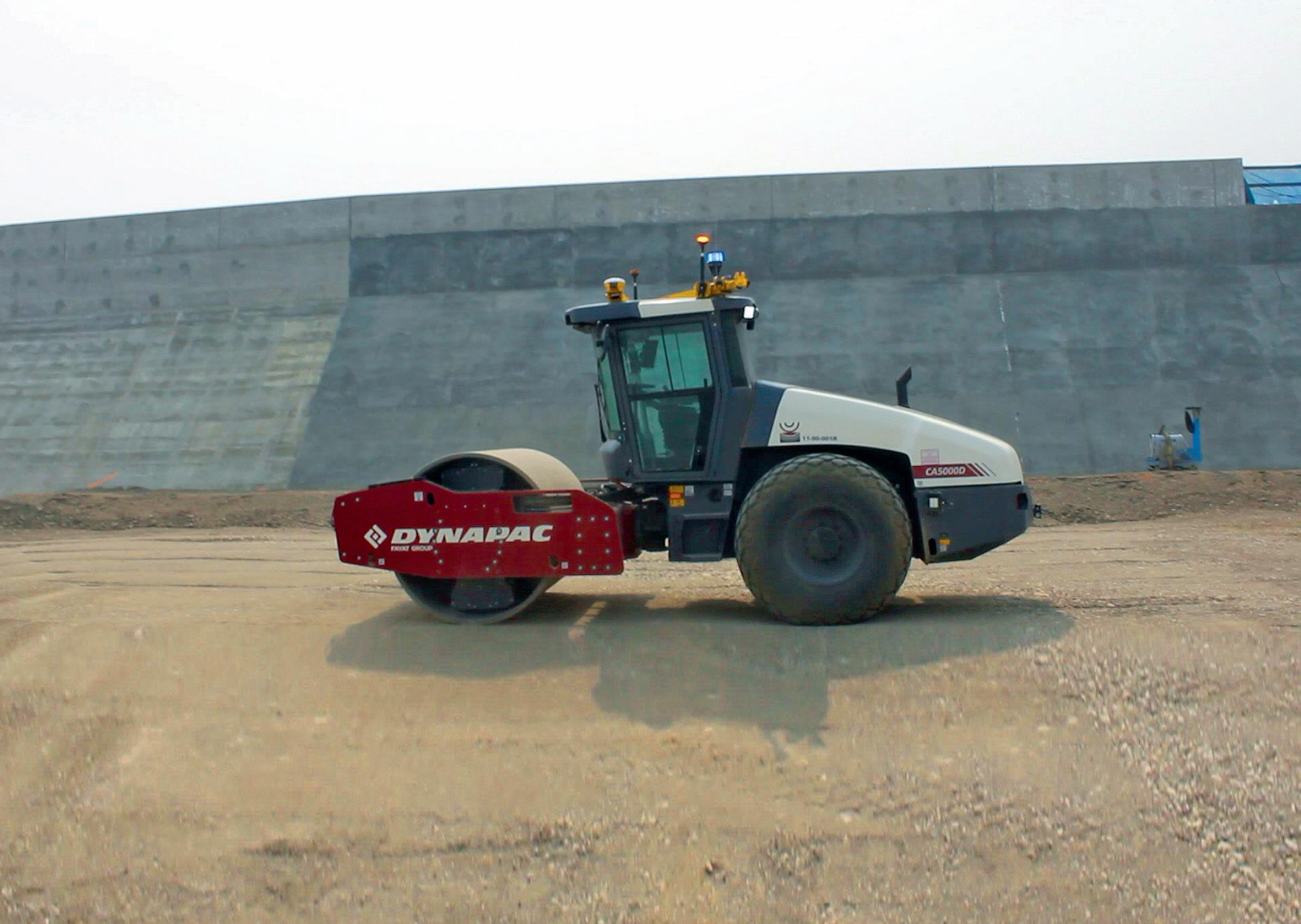
Trimble technology has provided the autonomous controls for a Dynapac soil compactor working on a jobsite in Canada
This is one of the industry’s first public tests of a fully autonomous compactor on a live construction site, rather than under test at specially prepared areas.
The job is for the construction of an earth covered dam and the Dynapac compactor was used alongside conventional machines guided by operators to carry out the work. Trimble technology was used in all of the soil compactors ensuring they worked as a team, covering the entire area efficiently.
The Trimble Earthworks Grade Control Platform for Autonomous Compactors was used to guide the Dynapac CA 5000 soil compactor. The project is for the Site C Clean Energy Project on the Peace River in northeast British Columbia.
For some of the time, an operator did sit in the machine to oversee its working while the compactor was under autonomous control. At other times the machine was used without a person in the cab when handling work close to an edge that would have posed risks for an operator. To optimise safety, the machine operated in geofenced areas on the site and was also fitted with safety systems to detect the presence of personnel.
According to Trimble, the fully autonomous machine completed 37 hours of real compaction work, operating alongside a mixed fleet of compactors, the rest of which were running the Trimble CCS900 Compaction Control System. Data from
all machines – both with and without an operator – was delivered using Trimble WorksOS Software, which is being used as the system of record for all compaction data on the jobsite.
“The Site C project was the perfect place to begin live testing of the fully autonomous soil compactor because of the cost and safety benefits autonomy will bring to large infrastructure projects like this in the future, and because of the willingness of the project owner and contractor to use new technology on their jobsite,” said Cameron Clark, earthmoving industry director for Trimble’s civil infrastructure solutions. “We are pleased that this initial testing reinforces our philosophy that autonomous technology will play an important role in delivering a cheaper, faster, safer and greener future for the construction industry.”
Clark said that operating data from the machines has also been used in the model of record for the project.
The Site C Clean Energy Project is a BC Hydro hydroelectric dam being built in north-east British Columbia. When complete, it will provide 1,100MW of electricity each year, enough to power 450,000 homes or 1.7 million electric vehicles. Prime contractors include ACCIONA Infrastructure Canada Inc. and Samsung C&T Canada, among others. The role of ACCIONA and Samsung includes construction of an earthfill dam, two diversion
tunnels and a roller-compacted concrete foundation for the generating station and spillways.
While the mining sector has been running autonomous haul trucks on sites for over 20 years, these have been in controlled working areas and on large machines. Using autonomous machines in construction operations poses more challenges as the sites are more dynamic. This new development is a significant step for the construction sector and will be followed by other applications of autonomous machine technology. According to Clark, the highly repetitive soil compactor working cycle is particularly well suited to the use of autonomous machines, although the firm is developing autonomy solutions for other types of machines that could be used in certain duties. The firm has previously demonstrated an excavator working autonomously for trenching work. But Clark explained that excavators are so versatile that only certain repetitive tasks, such as trenching, suit autonomous operation.
Clark continued, “Our compactor is our launch machine and [provides] a lot of the building blocks we can add to other machines.” He added, “We’ve got other sites we’re lining up for next year. We need to validate it on real jobsites.”
Dynapac www.dynapac.com
The IRF Annual Conference 2023 proved to be once again an enlightening experience for the road and transport community, welcoming participants from 105 countries and 40 distinguished speakers from leading organisations including the IDB, UNECA, the World Bank, ERTICO, ASECAP and many more
In celebration of World Sustainable Transport Day and under the theme “Innovation for Better Mobility Systems” the conference explored ground-breaking ideas around ve thematic sessions, addressing road assets management, road pricing, safety, ITS and big data, and CCAM. Completing the strong programme, the conference hosted a parallel session in Spanish in collaboration with the Inter-American Development Bank (IDB) and a special session for the Start-Up Label, where nalists of the 2023 Edition pitched their solutions.
The high-level opening session of the conference welcomed leading gures from the transport industry to sketch the salient features of innovation that can help us deliver better
mobility systems that leave no one behind. This included Anouar Benazzouz, president of the International Road Federation (IRF) and general manager of the National Highway Company of Morocco; Joost Vantomme, CEO of ERTICO-ITS Europe; Arianna Legovini, director of Development Impact (DIME) at the World Bank; Ana María Pinto, transport division chief, Inter-American Development Bank (IDB); and Robert Lisinge, chief of the Energy, Infrastructure & Services Section in the Private Sector Development & Finance Division at UNECA.
“We need to leverage digital systems to support and drive innovation. Governments need to create the right conditions for that to happen,” said the IRF president

in his opening speech. “As we continue our journey into the future of transportation, let us remember that each revolution in transportation has not only shaped the way we move but has also transformed the world around us,” Benazzouz added.
The dialogue extended to the Latin American audience through a parallel session hosted in collaboration with the Inter-American Development Bank (IDB) and conducted in Spanish. Titled "Towards Resilient and Sustainable Mobility: Latin America in Perspective", the session offered insights into the recently-launched IDB report, "Transportation 2050: Pathways to Decarbonization and Climate Resilience in Latin America and the Caribbean" and welcomed distinguished speakers from the

Argentina Road Association, the National Infrastructure Agency (ANI) of Colombia, and ASIMOB. The panel discussion examined the current landscape of sustainable transport in Latin America and the role of innovation.
Through an interactive poll that delved into the crucial question, "Where is innovation most needed?" The audience also actively provided useful food-for-thought for the conversation. The poll results were further discussed with a distinguished guest - Magali Anderson, former chief sustainability and innovation of cer of Holcim. Infrastructure planning and design, along with policy and regulation emerged as the critical areas most in need of innovative interventions.
“Whether it's procurement, policy and
regulation, or the workforce, a change of mindset is crucial. Innovation does not just mean embracing technology, it’s about changing the process. This will not happen if people continue to think the same way,” stated Anderson.
Recognising the pivotal role that start-ups play in driving innovation, particularly within the road transport sector, on the second day of the conference the IRF welcomed the nalists of the 2023 edition of the IRF Start-up Label: Lane Patrol, Svarmi, BANF and Measure. Each pitched their solutions before the South Korean-based start-up, BANF, was announced as the winner of this third edition.
In closing the event, Hamdi Aydin, board member of the Turkish Road Association (TRA)
and of IRF, introduced the landmark event of 2024: the IRF World Congress 2024 to be hosted in Istanbul on 15-18 October.
The IRF would like to extend its gratitude to all the speakers, its sponsors Northern Marmara Motorway and Road Trace by Aisin, and its partners, the Inter-American Development Bank (IDB) and the China Highway and Transportation Society (CHTS), for their invaluable support in making the IRF Annual Conference 2023 a resounding success.
• For a rst-hand look at the event, featuring the recordings and insightful speaker presentations, please visit www.irfnet.ch or contact the IRF at info@irfnet.ch.


In a landmark announcement during the IRF Annual Conference 2023 on 21-22 November, the International Road Federation (IRF) announced BANF as the winner of the third edition of the IRF Start-up Label. As a South Korean start-up, BANF has emerged as a beacon of innovation in the transportation sector, o ering a ground-breaking solution to address tyre-related issues and enhance eet e ciency.
In its third iteration, the IRF Start-up Label continues to be a driving force in supporting and propelling prominent start-ups within the transportation sector. Launched by the IRF in 2021, this initiative is committed to providing a much-needed boost for innovation and change in the transport industry. The label grants winners exclusive access to the IRF's invaluable assets for a year, including unique knowledge and expertise, broad networking capabilities, and extensive exposure.
Learn more at www.irfnet.ch/startup-label/
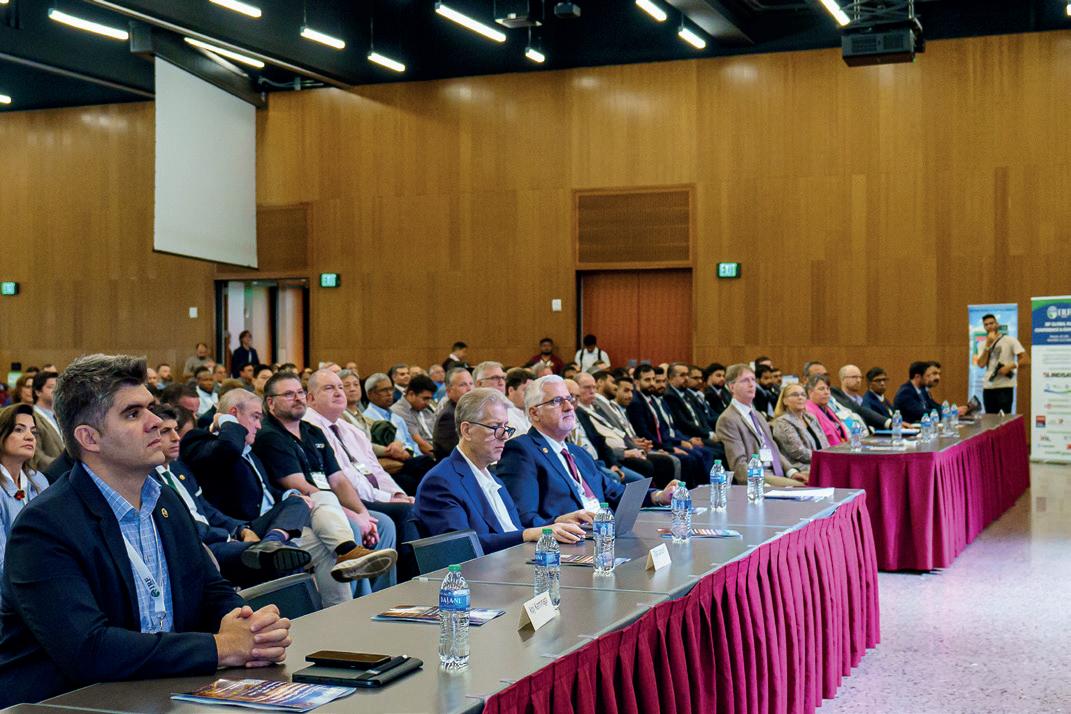
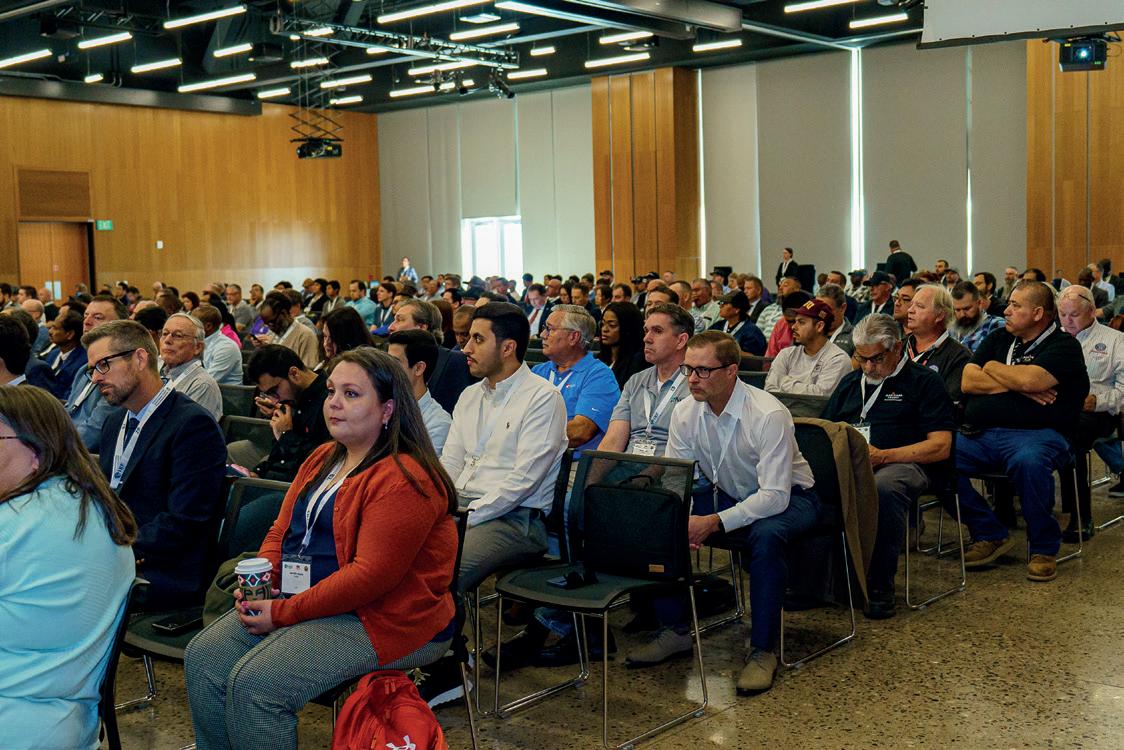

In a groundbreaking assembly of international road industry professionals, the International Road Federation (IRF Global) successfully hosted the Global R2T Conference in Phoenix, Arizona, from November 14 to 17
This premier global transportation event brought together nearly international transportation community. of Phoenix, served as a nexus for discussions and presentations on the latest advancements in road infrastructure and solutions. With over
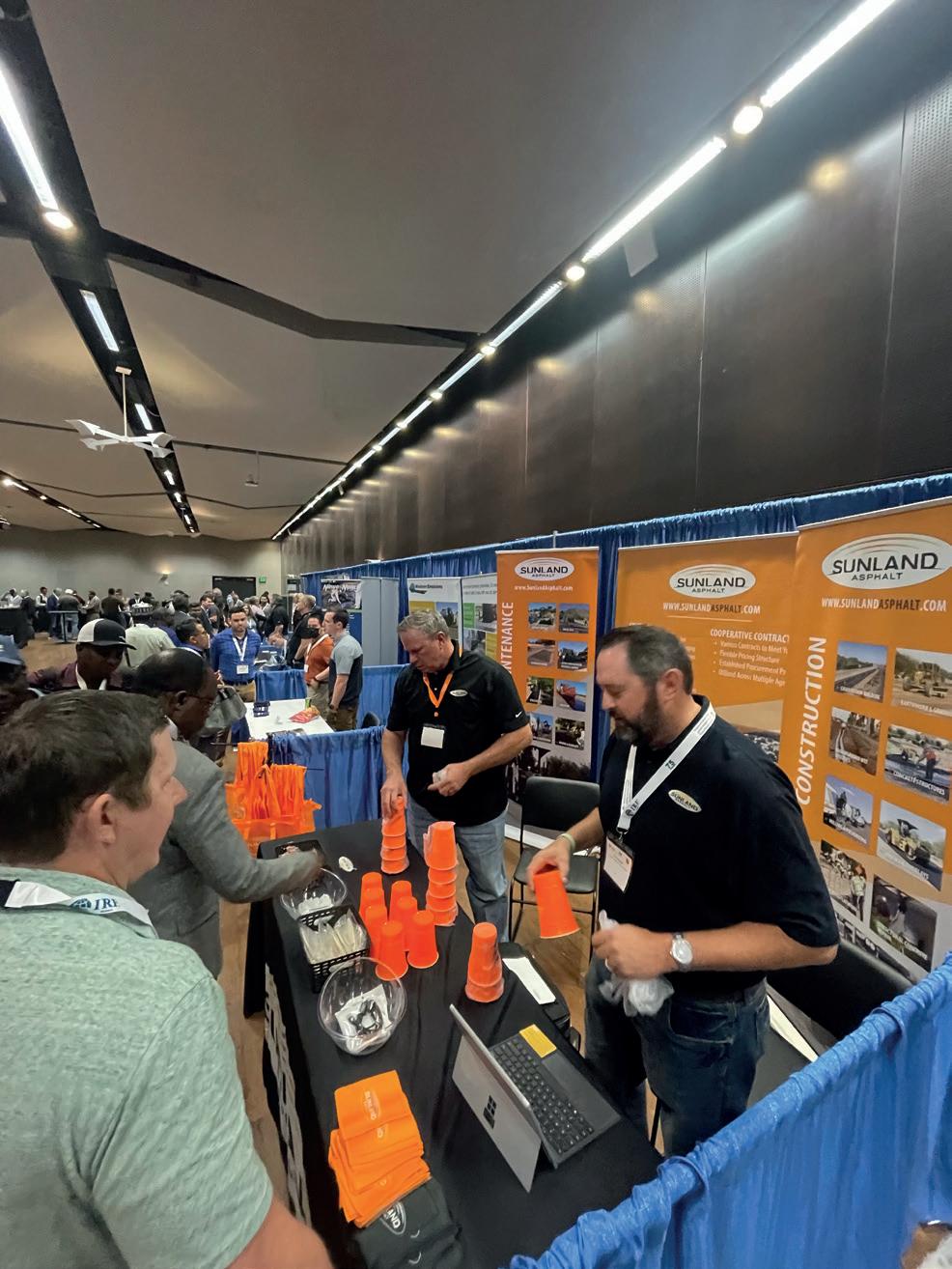
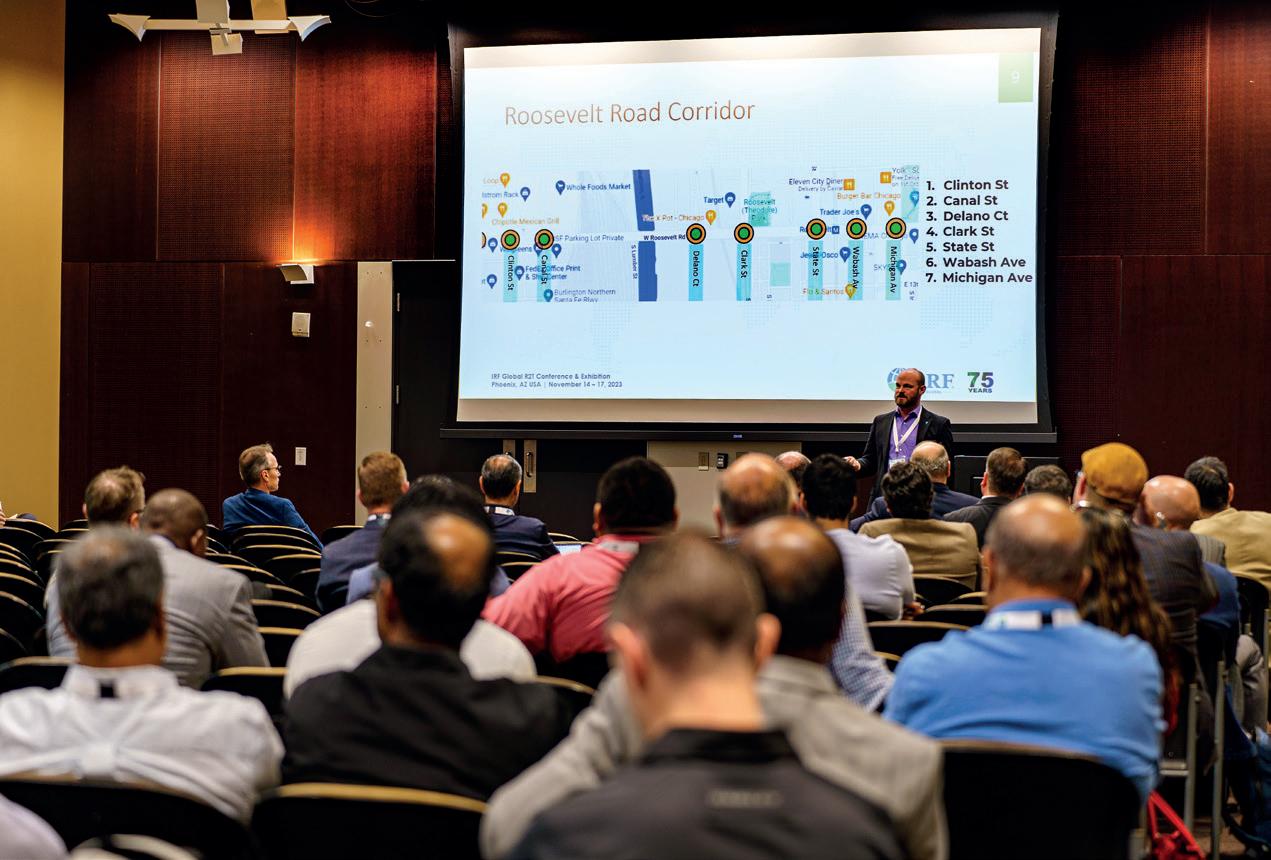
50 sessions covering a diverse range of topics, attendees had the opportunity to explore the future of transportation and share insights on navigating the evolving landscape of the
The IRF Global R2T Conference has quickly established itself as a top destination for global innovators and decision-makers in the roads and mobility sector.
For road and transport authorities the IRF R2T Conference is the ideal place to learn and share best practices about the latest technologies and solutions.
For researchers, it is an ideal platform to share their research with their peers and the sector as a whole.
For the private sector, it is an opportunity to make the right business contacts and to showcase their innovations and services. For everyone in the sector, it is a place to learn and network with professionals and decision-makers. n
l Mark your calendar for the 2024 IRF Global R2T Conference in November 2024, Orlando, USA. For more information, please contact: r2t@irf.global
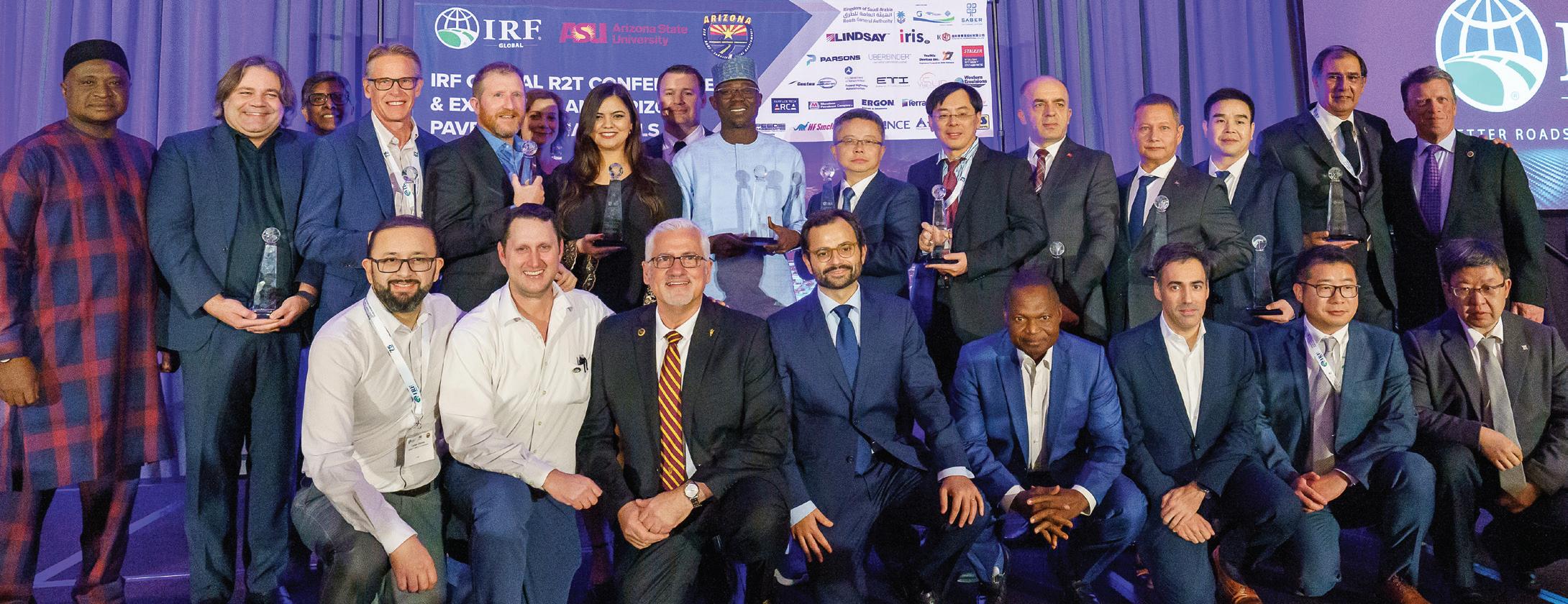


Asset Preservation and Maintenance
Management
Innovative Pavement Management System and Sustainable Roads in the City of Dubai. Roads & Transport Authority (RTA) of Dubai
Traf c Management and Intelligent Transportation Systems
Expansion and Reconstruction Project of the Taian-Zaozhuang Section of the Beijing-Taiwan Expressway. Shandong Hi-Speed Construction Management Group Co., Ltd
Design
Nanjing Jiangxinzhou Yangtze River Bridge. Nanjing Public Project Construction Center
Environmental Mitigation
Xingyi Ring Expressway In Guizhou. Guizhou Highway Engineering Group Co., Ltd
Program Management
The Milford Road Alliance Downer New Zealand and Waka Kotahi. NZ Transport Agency
Project Finance and Economics
Construction of 2nd Niger Bridge Linking Anambra and Delta States and Access Road from Existing Benin-Asaba Expressway to Approach Link Road to 2nd Niger Bridge in Delta State. Federal Ministry of Works and Housing, Nigeria
Construction Methodology
Zigana Tunnel Project. Ministry of Transport and Infrastructure, Republic of Turkiye
Quality Management
Egiste Hadimi Viaduct. Ministry of Transport and Infrastructure, Republic of Turkiye
Research
Aerogel Modi ed Bituminous Materials (aMBx). Arizona State University
Safety
Ascendi’s Road Safety Action Plan 2020-2023. ASCENDI
Technology, Equipment & Manufacturing
Development, Deployment and Testing of A Motorcycle Collision Alert System (Mcas) To Improve Safety for Riders In Malaysia. Malaysian Institute of Road Safety Research (MIROS)
Urban Planning and Mobility Saadiyat Lagoons Project. Aldar Projects
For more information, please contact us at r2t@irf.global
JANUARY
January 30-Feb 22: Practical Data Science for Roadway Professionals (Online).
FEBRUARY
12-22: Bridge Management & Inspection (Online)
12-16: Public-Private Partnerships - Foundations
CP3P Certi cation (Online)
19-23: Pavements, Climate Change & Resilience Singapore
MARCH
4-14: Superpave Mix Design 101 (Online)
APRIL
9-12: 4th IRF Africa Regional Congress Rwanda
15-19: Safe Roads by Design Washington DC, USA
Conference
Vision Zero Middle East Conference Abu Dhabi, UAE
Climate Resilient Roads Workshop Papua New Guinea
25-29: Road Infrastructure Asset Management (Online)
MAY 6-10: Supply Chain Mngmt. in Construction Dubai, UAE
6-15: IRF Performance-based Contracts Executive Seminar Washington DC, USA
13-23: Road Safety Audits (Online)
JUNE 17-24: Pavement Management (Online)
JULY
22-26: Construction Supervision for Road Projects Washington DC, USA
IRF
July 29-August 2: IRF Caribbean Regional Conference San Juan, Puerto Rico
AUGUST
6-30: Advances in Flexible Pavement Design & Construction (Online)
3-7:
SEPTEMBER 3-7: Sustainable PublicPrivate Partnerships (SP3D Certi cation) Washington DC, USA
3-26: Practical Data Science for Roadway Professionals (Online)
IRF Asia Regional Congress & Exhibition Bangkok, Thailand
OCTOBER 7-11: Fundamentals of Mechanistic Pavement Design Washington DC, USA
8-11: IRF Europe & Central Asia Regional Congress & Exhibition So a, Bulgaria
Bulgaria
21-25: IRF Executive Seminar Climate Resilient Rural Roads Orlando, FL USA
NOVEMBER
IRF Global R2T Conference & Exhibition Orlando, FL USA
10-20: Performance-based Contracts for Preserving Road Assets Executive Seminar Orlando, FL US
For more information, please visit www.IRF.global/events
















Contracting rms carrying out road construction works in developing nations can face extra challenges - Gordon Feller reports


reductions, while another 24 countries recorded increases. Terrorism is dynamic and, although the overall change in the last three years has been minimal, there have been sharp rises and falls in terrorism in many countries during this period, notably Niger, Myanmar and Iraq.
Terrorist attacks became deadlier in 2022, killing on average 1.7 people/attack in 2022 compared to 1.3 deaths/attack in 2021. This is the first increase in lethality rate in five years.

Violent conflict remains the primary driver of terrorism, with over 88% of attacks and 98% of terrorism deaths in 2022 taking place in countries in conflict. All 10 countries most impacted by terrorism in 2022 were also involved in an armed conflict. Attacks in countries involved in conflict are seven times deadlier than attacks in peaceful countries.
The Sahel region in sub-Saharan Africa is now the epicentre of terrorism, with the Sahel accounting for more terrorism deaths in 2022 than both South Asia and the Middle East and North Africa (MENA) combined. Deaths in the Sahel constituted 43% of the global total in 2022, compared to just 1% in 2007. Of particular concern are two countries, Burkina Faso and Mali, which accounted for 73% of terrorism deaths in the Sahel in 2022 and 52% of all deaths from terrorism in sub-Saharan Africa. Both countries recorded substantial increases in terrorism, with deaths in Burkina Faso increasing by 50% to 1,135 and in Mali by 56% to 944. Attacks in these countries are also becoming deadlier, with the number of people killed per attack increasing by 48% from 2021. Most attacks in these countries are attributed to unknown jihadists though both IS and JNIM operate in these countries. The escalation in violence in Burkina Faso has also spread to neighbouring countries, with Togo and Benin recording their worst GTI scores on record.
The increase in terrorism in the Sahel has been dramatic, rising by over 2,000% in the last 15 years. The political situation in the Sahel compounds this increase, with six coup attempts since 2021, of which four were successful. The underlying drivers are complex and systemic

Most of the terrorist activity occurs along borders where government control is weakest. Significantly, of the 830 million people facing food insecurity globally, 58% live in the 20 countries most affected by terrorism. Adding to the complexity, many criminal organisations increasingly represent themselves as Islamic insurgents, which partly accounts for attacks attributed to unknown jihadists.
North America had the largest regional improvement in score, while sub-Saharan Africa recorded the largest deterioration. North America consists of two countries, the US and Canada, with neither country having a high score; however, the region is the only region

the 10 countries with the largest deteriorations in GTI score are located in sub-Saharan Africa: Togo, Djibouti, Central African Republic and Benin. Terrorism deaths in sub-Saharan Africa increased by 8%, reversing the small improvement recorded in 2021.
The MENA region recorded only 791 deaths in 2022, a fall of 32% and the lowest number in the region since 2013. Attacks almost halved in the last year, from 1,331 in 2021 to 695 in 2022. Underscoring the changing dynamics in terrorism, the region has dropped from 57% of global terrorism deaths in 2016 to just 12% in 2022. There has also been a substantial drop in suicide bombings in MENA. In 2016, suicide bombings resulted in 1,947 deaths; while in 2022, MENA recorded only six suicide bombings that killed eight people.
South Asia remains the region with the worst average GTI score in 2022. The region recorded 1,354 deaths from terrorism in 2022, a decrease of 30% when compared to the previous year; however, if the improvement in Afghanistan was excluded, then terrorism deaths would have increased by 71%. In Afghanistan, both the Khorasan chapter of IS and the emerging National Resistance Front (NRF) pose a serious threat. Afghanistan and Pakistan remain amongst the ten countries most affected by terrorism in 2022, with deaths in Pakistan rising significantly to 643, a 120% increase from 292 deaths in 2021. The BLA were responsible for a third of these deaths in Pakistan, a nine-fold increase from the prior year, making it the fastest growing terrorist group in the world.
The total number of attacks In the West continues to fall, with successive falls each year since 2017. Forty attacks were recorded in 2022, a decrease of 27% when compared to the 55 attacks in 2021. However, the number of deaths more than doubled, albeit from a low base; from nine deaths in 2021 to 19 in 2022, with 11 of these occurring in the US. This was the first increase in terrorism deaths in the West since 2019. In Europe, Islamist extremists carried out two attacks in 2022. Attacks in the US remained low, with only eight attacks recorded in 2022. None were attributed to any known terrorist group. The UK recorded only four attacks and no deaths this year, the first year since 2014 that no deaths have been recorded; while Germany recorded the lowest number of attacks since 2015.
Ideologically motivated terrorism continues to be the most common type of terrorism in the West, with religiously-motivated terrorism declining by 95% since its peak in 2016. All 14 ideologically-motivated deaths can be attributed to far-right terrorism. n



When it comes to vehicle restraint systems, just how safe is safe? Attendees at the 3rd International Conference on Road Safety, held by the ERF - European Union Road Federation – found out, reports David Arminas
Conferences about road barriers, while always informative about innovation from manufacturers, also have some sobering moments. The recent two-day ERF conference in Rome was no exception.
During the opening proceedings, Stefano Calamani, chief executive of the barrier test site AISICO, said the social cost of lost lives due to road crashes runs into billions of euros each year. In fact, Italy, where his business is based near Rome, has one of Europe’s worst records. Traf c deaths are the number one killer of young people.
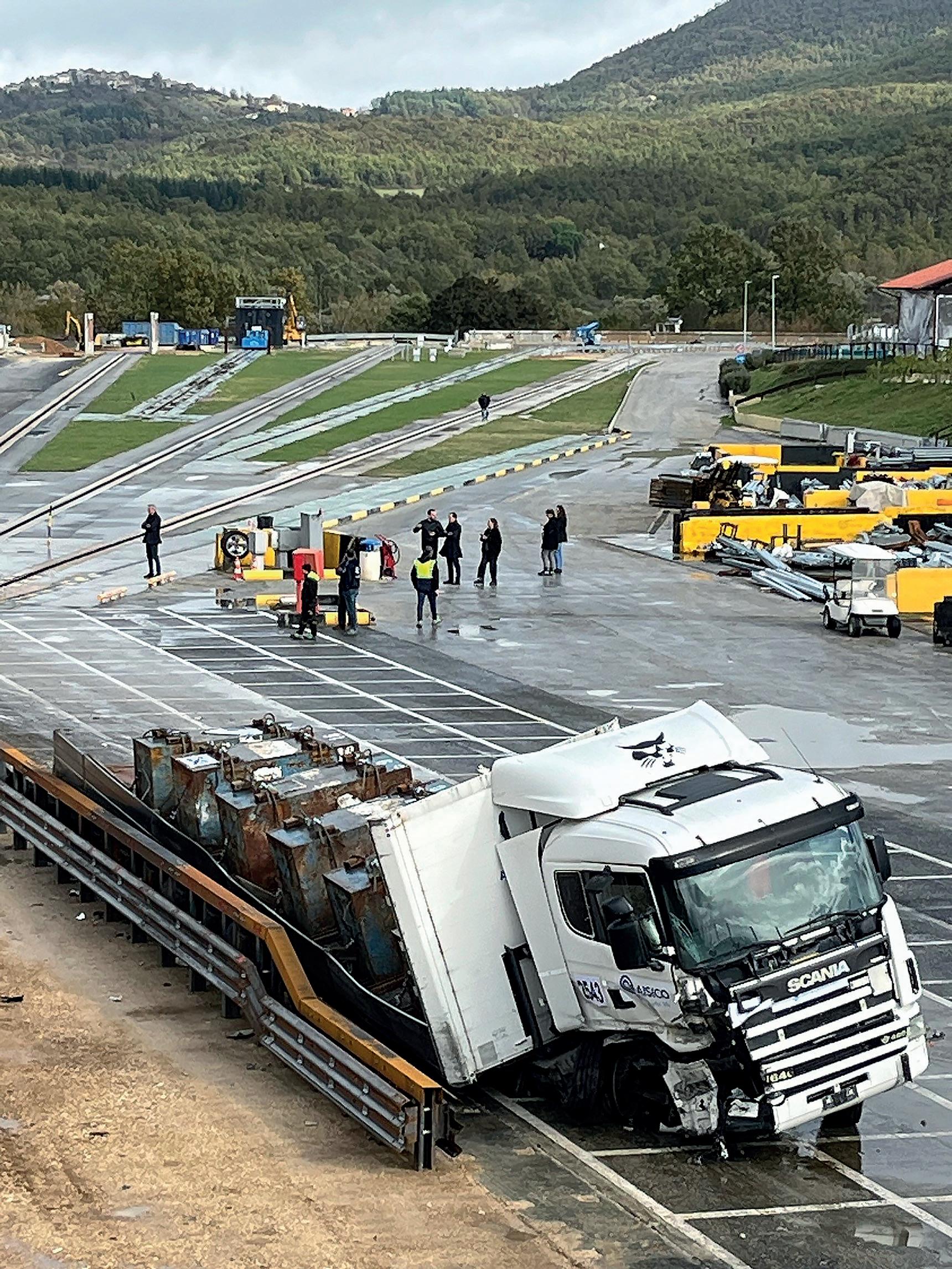
However, this need not be the case, he said. Poland has managed to cut deaths by around 40% in recent years. A visit to the AISICO test centre would show just how much effort goes into testing barriers to ensure that their construction and their performance are up to the job of saving lives in the event of a crash (see box). Attendees witnessed a 38tonne heavy goods vehicle slam into an H4b barrier at a speed of 68km/h and at a 20o angle.
Saving lives is also about driver education, said Edoardo Valente, president of ANAS, Italy’s public agency for managing roads, and Italy must raise its game when it comes to education.
Nonetheless, Italy has an inherent problem with its road infrastructure when it comes to making roads safer, noted Valente, who this past summer was appointed president of the Italian National Committee of PIARC Italy - PIARC being the World Road Association. Around 56% of Italy’s roads were built before the 1960s; most of the guardrails would not meet today’s standards. This issue is exacerbated by the advent of much different design of present-day vehicles, as well as alternative fuels. The effect is to make standardisation of barrier designs very dif cult, although essential, he said.
As vehicle volumes grow on Italian roads, so has the number of heavy goods vehicles, said Diego Cattoni, president of
AISCAT, the Association of Italian Motorway concessionaires. There has been good innovation of more durable asphalt that is more easily maintained in a safer condition. Also, speed detection has got markedly better, which helps slow down some traf c; this could stop an accident before it has the chance to happen. Yet Cattoni was upbeat about the increasing use of sensors that are essential for the future of autonomous driving. This, too, might stop accidents by maintaining safer ‘driving’ practices.
Konstantinos Andreopoulos, the action plan coordination of cer with CEDR, the Conference of European Directors of Roads, noted the increasing use of small threewheeled vehicles and e-mobility choices such as electric scooters and even e-skateboards across Europe. This poses a big a challenge for highway authorities to design safer roads and barrier manufacturers to design safer products and systems.
A further concern about e-mobility is the young age of the ‘drivers’ of e-scooters, said Antonio Datri, president of UNASCA, Italy’s Union of Driving Schools and Automotive Consultancy Firms. He said that, in Naples, there are many drivers who are 14 years old, need no driving licence to operate the machinery and know nothing about road signs. Yet they are whizzing through traf c.
Datri’s theme was picked up by Ezio Bressan, vice president of the Italian association of the European Federation of Road Traf c Victims. More driver training needs to be done, he said, adding that there should be refresher courses and tests to update drivers about changes to road signs and general driving regulations. In Italy, he said, all the training a person is required to obtain is six





Many people talk about the ef ciency of passive safety barriers but few get to see them doing what they are designed to do – save lives. For this reason, the second day of the ERF event was held about 50km outside Rome at the AISICO Crash Test Center.
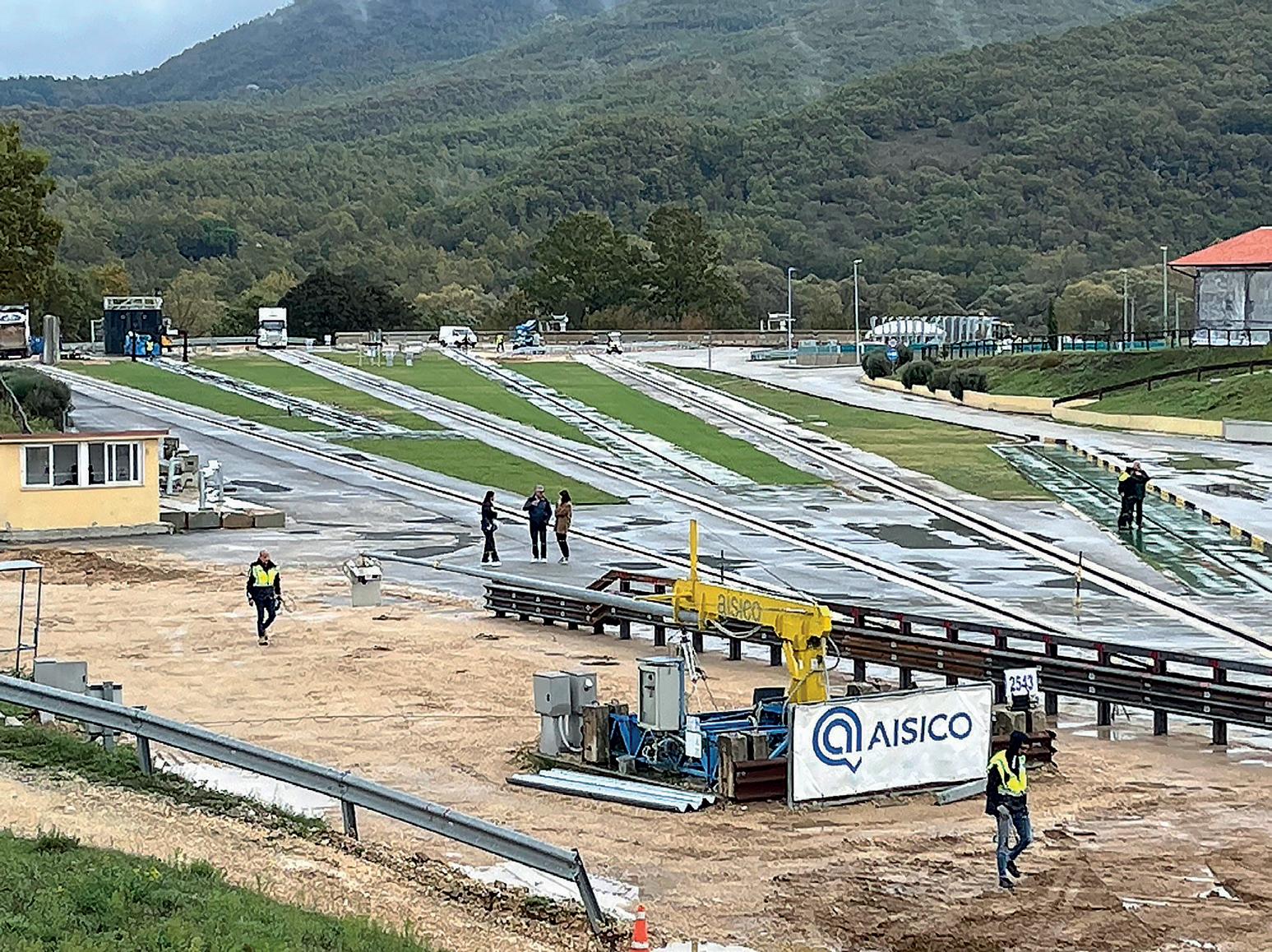
This sprawling 80,000m² facility is located deep in the Abruzzo countryside. According to AISICO, the decision to create a totally autonomous and isolated centre with its own equipment and where only AISICO personnel operate, guarantees clients the greatest ef ciency and maximum con dentiality.
Impact tests are done according to the most important European and
hours. After that, no further training is needed. Current barrier design standards – up to 25 years old in some cases - need to be updated, said Marco Anghileri, a lecturer at the Politecnico di Milano. For example, 25 years ago there were few 10tonne coaches (buses) but now can weigh up to 19tonnes. Anghileri also suggested there should be more testing of large SUVs – sports utility vehicles – and with vehicles that approximate the weight distribution and physical dimensions of electric vehicles. The sector needs, too, much more data on deformable barriers.
Part of a barrier’s deformation characteristics is the reaction of the posts that support the system with the earth or material into which they are positioned. More data is needed in this area too, noted Roberto Cudmani, chair of the soil and rock mechanics department at the Munich Technical University.


After the rst day, attendees were left with no doubt that questions are mounting concerning just how safe is safe when it comes to modern vehicle restraint systems. But the second day at the AISICO test centre near Rome was a reassurance that answers to these questions are being sought by some very highly skilled and dedicated engineers and data scientists.
The ERF, the European Union Road Federation, is a membership organisation that coordinates the views of Europe’s road sector and acts as a platform for dialogue and research on mobility issues. Members are active in the construction, equipment and operation of Europe’s roads and membership is open to national road associations, industry associations and individual organisations. Visit the website: https://erf.be.
American standards, including the American standards MASH2016 and NCHRP350. The AISICO notes that its centre is the only one in Europe entirely designed, built and operated to perform all types of crash tests. There is also a track dedicated to crash tests on road devices for the protection of motorcyclists.
However, the facility does more than just crash tests. In 2018, AISICO became the rst company in Europe to obtain UNI CEI EN ISO/IEC 17025 accreditation for numerical simulations. The centre performs sophisticated data analysis of many other highway structures and events, such as bridge inspections where the resulting images can be used in the creation of digital twins. It handles laboratory and acoustic tests of building materials and weathering response, fatigue tests on components and products as well as acoustic and mechanical tests of anti-noise systems.
For road structures, the objects tested include roadside safety barriers (vehicle
restraint systems), terminals, shock absorbers, motorcyclist protection devices, transitions, intrusion barriers, lighting poles and support structures, traf c control devices in work areas, longitudinal channelisers and truck and trailer attenuators.
AISICO issues certi cations demonstrating the outcome of the real-life crash tests, which are necessary for the product to be put on the market. In 2005 the centre conducted its rst crash test on safety barrier EN13172. In 2014 the rst crash test according to the AASTHO (MASH) standard was performed.
The centre is accredited even for testing crash barriers for Formula One tracks. For these tests, an F1 vehicle is not used. Instead, a sled carrying a structure of similar weight and design, in particular a similarly shaped nose to that of an F1 car, is hurled at the barriers.
On the day of the ERF visit, attendees had a guided tour around the site to inspect the four track-lanes into which a small sled runs on rails beneath the road surface. The sled is attached
to the underside of the test vehicle and steel cables winch it down the track, gradually increasing in speed. It releases its payload just before the barrier, after having reached the vehicle’s correct test speed.
For the ERF event, a 38tonne loaded articulated Volvo truck was launched at the barriers at around a a 20o angle and at a mere 68km/h – even though to the onlookers it appeared to be going faster. The moment of impact on the barriers was more like an explosion with a load bang, with smoke shooting out and vehicle parts ying through the air. The truck, however, continued sliding along the barrier, eventually coming to rest in an eery silence some metres down the barrier length.
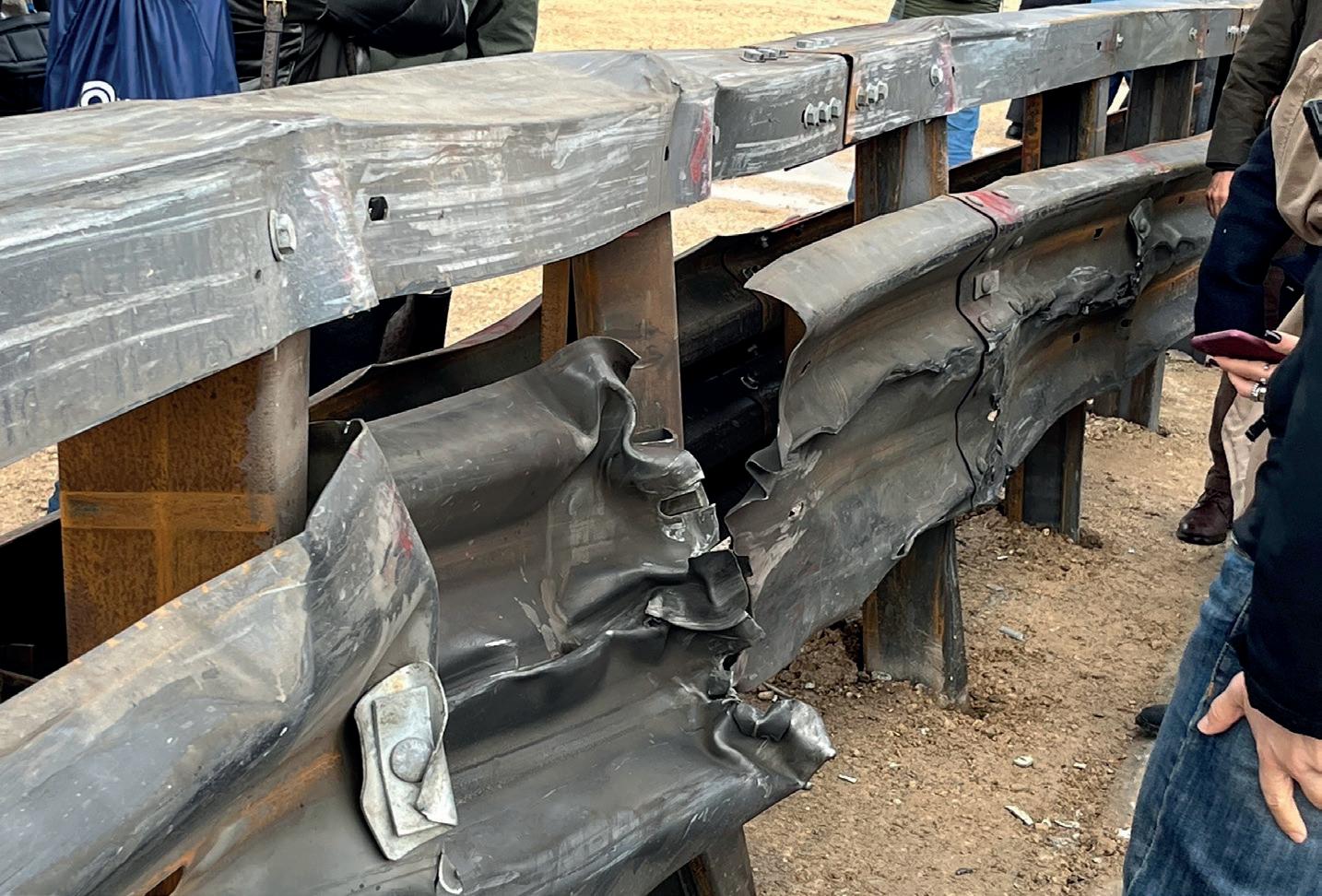
The barriers appeared to perform well, according to onlookers who were allowed to inspect the site. The uprights for the barriers remained intact, although some were bent backwards. This backwards movement is called the dynamic de ection - the maximum lateral displacement of the traf c-face,
or impact-face, of the restraint system during the impact.
The barriers railings also appeared intact, albeit twisted and ripped in some areas. The truck did not jump over the barriers, nor did it break through them.
Importantly, the vehicle also was not hurled away from the barriers to re-enter free- owing traf c. Instead, it remained a captive object riding along the barriers until it nally came to rest against them, hopefully within the so-called CEN Box.
One of the goals for restraint system safety approval is to have the vehicle remain within the CEN Box. The European Committee for Normalisation (CEN) has set a physical zone around a crash test event; the vehicle may not leave this zone during its exit trajectory after impact against the restraint system. The restraint system will be certi ed only if the test ends with the vehicle inside the CEN Box. In other words, it did not bounce back into traf c.
AISICO
www.aisico.com/en
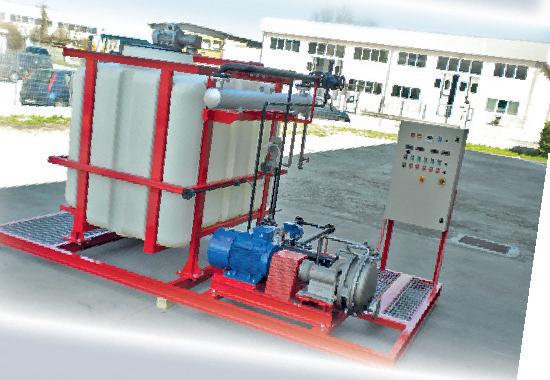






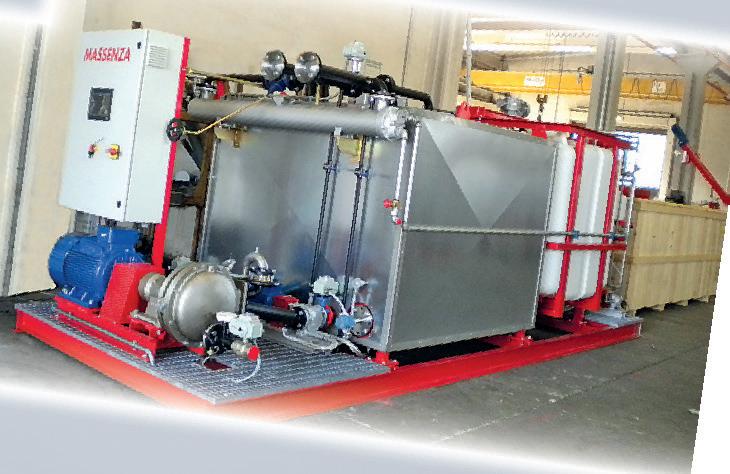



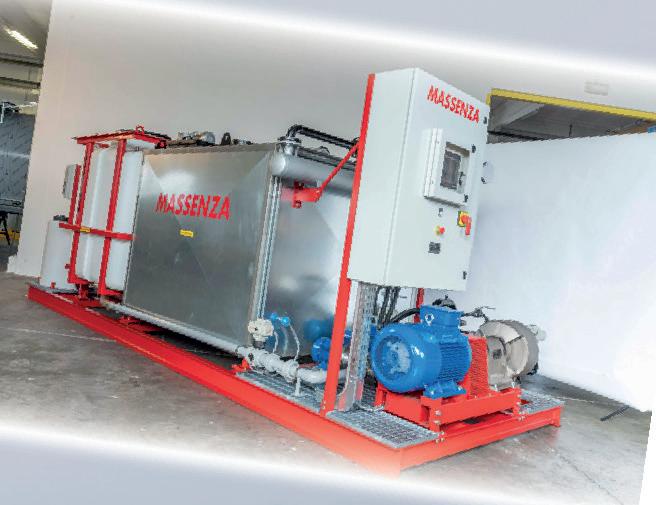





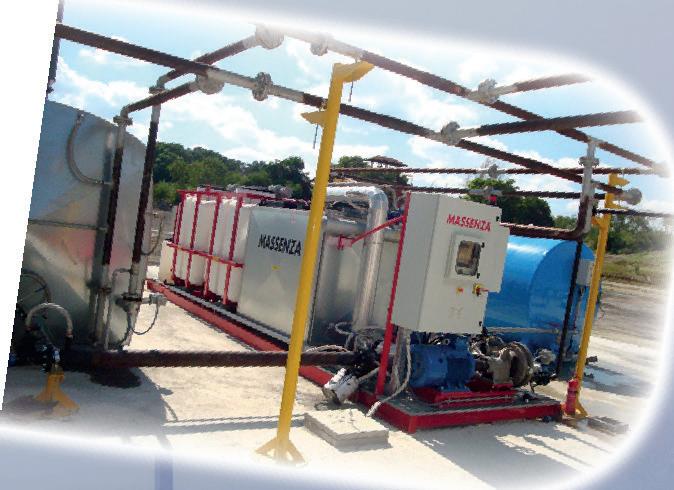








According to IntOroadS – the International Organisation for Road Safety - over the past 30 years, the automotive sector has substantially improved the safety of their vehicles.
The passive safety testing criteria is veri ed according to the protocol Euro NCAP (European New Car Assessment Programme). Although voluntary, these criteria are now the benchmark for manufacturers to exalt the safety of the passenger car to the market.
Unfortunately, these vehicle safety improvements have has not been matched by an equal evolution of safety for vehicle restraint systems, commonly called road restraint systems or simply barriers. The norms that regulate the criteria with which road equipment must be designed are now outdated and not in line with technological progress. The standard for safety in these systems “remains anchored” to the criteria known at the time of the drafting of Community Standard EN 1317, dating back to the 1990s.
Since January 1, 2011 it has been mandatory that all vehicle restraint systems installed permanently on the roads of the European Community have the EN 1317 marking. To obtain the certi cation, the
restraint system must pass certain physical criteria during accredited full-scale crash tests. These criteria surround a system’s vehicle containment level, the working width, the dynamic de ection and the impact severity.
For 30 years, the standards and criteria within EN1317 have not been updated in line with the evolution undergone by the traf c present on European roads and with the performance and characteristics of the vehicles currently on the highways.

Given the current situation, IntOroadS is
urging voluntary action by industry players to ll the gaps by gaining a greater awareness of the critical issues to be addressed to facilitate a necessary technological development.
For a full discussion on the issues surrounding EN 1317, visit the website of IntOroadS or contact them by e-mail at: info@intoroads.org
IntOroadS - International Organisation for Road Safety
www.intoroads.org







Scan QR code with your mobile phone camera and tap the link to see how Harald Mosböck of Swarco explains safer road markings in the age of autonomous driving.























INTERMAT - a must-attend event for the building and civil engineering sector – runs from April 24 -27, 2024 at Paris Nord Villepinte exhibition centre
The days are getting shorter and darker as 2023 draws to a close but there is a light on the horizon:
INTERMAT Paris 2024 - a must-attend event for the building and civil engineering sector – runs from April 24 - 27, 2024 at Paris Nord Villepinte exhibition centre, only 30 minutes from central Paris by rail and ve minutes from ParisCharles de Gaulle Airport.
Decarbonisation will be the key topic of next year's event which has four key themes: innovation, energy, new equations and CSR - corporate social responsibility. There will be a greater emphasis on innovation. INTERMAT is highlighting ve sector activities: new technologies & energies; earthmoving, demolition & transportation; roads, minerals & foundations; the buildings & concrete sector; and lifting & handling.
Attendees can expect around 1,400 exhibitors. The last event, in 2018, attracted 73,300 professionals from the construction sector – in fact, one visitor in two worked for a building contractor. Visitors came from 160 countries, including 48 countries in Africa and the Middle East. Importantly, a poll of visitors to the last event showed that eight out of 10 would attend the next event. And to spread the word about the event, there were more than 400 journalists.
Exciting demonstrations will be held each day in the ‘Demo Zone’. Equipment manufacturers will highlight their speci c know-how and the way plant and equipment is being developing for even better safety and


be on show.Visitors will also get real value for special forum a series of conferences will be
productivity. The Demo Zone programmes will include excavators, loaders, graders, screeners, crushers and machines and equipment for demolition work. Next-generation equipment, including hybrid and electric engines will also be on show.Visitors will also get real value for their money; the World of Concrete Europe is running alongside INTERMAT! At the WoCE’s special forum a series of conferences will be








devoted entirely to the concrete industry, the material and its various applications – from manufacture to application.
As with INTERMAT, decarbonisation of the concrete industry will be the focus. What are the challenges thrown up by decarbonisation and what are the solutions and prospects for concrete materials? The sessions will be led by renowned experts and speakers from the construction, public works and masonry communities as well as members of European construction federations and the major companies in the sector.









Global event organiser Comexposium, based near Paris, annually connects around 48,000 exhibitors with more than 3.5 million visitors. INTERMAT in April 2024 is one of Comexposium’s agship events and Christophe Lecarpentier - heading up marketing for the event - is bringing his own passion and communication experience for the construction sector towards spreading the word that Paris is best in springtime.
As with INTERMAT, a demo area at WoCE will host non-stop animations dedicated to the applications of concrete products, in particular decorative, polished, bush-hammered and printed concrete. Also highlighted will be methods for layering and the demonstrations of tools and equipment used by experts in the concrete sector.
The INTERMAT Innovation Awards will once again distinguish equipment, techniques, services and products that contribute to progress in the construction and materials industry. Announcement of the nominees will be made at the INTERMAT Press Days on January 18 and 19 and the winners will be announced and trophies awarded at a prestigious evening event on April 24, the rst day of the show.
For more information and to be kept up to date on when and how to register for INTERMAT Paris 2024, visit the event website: www.intermatconstruction.com
See you in Paris in the spring time!
The “vast lakes of data” collected daily by global highway operators are going to waste, meaning opportunities to improve services and boost revenue are continually lost. This must change, reports Geoff Hadwick from the ASECAP Days 2023 conference in Istanbul
Delegates at this year’s Asecap Days conference were told that the sector is collecting vast amounts of valuable data, but not doing anything valuable with it. “There must be a better way,” said Emil Sylvester Ramos, chief executive and co-founder of the IRIS R&D Group, based in Canada.
Speaker after speaker returned to the theme of getting more out of the data. Ramos talked about his company’s irisGO software, a platform that has the ability to collect data automatically then transmit the captured data to administrators using the irisCITY cloud reporting platform. The resulting data flow includes integration with existing customer
decisions, "whether. it’s building better roads, finding preventive maintenance opportunities or creating asset inventories”.
Emiliano Di Marino, IT project manager of Autostrade per l’italia, told the 350 delegates that because they represent most of Europe’s biggest toll-road operators, they are sitting on “data lakes [that can] drive insights and predictions” to investigate threats, monitor systems and improve performance.
He recommended creating digital inventories and the full digitisation of inspection processes, based on a modular and scalable platform, to enable better and more efficient health monitoring of infrastructure. In other words, a centralised asset management and infrastructure monitoring platform to make timely and business-critical decisions.
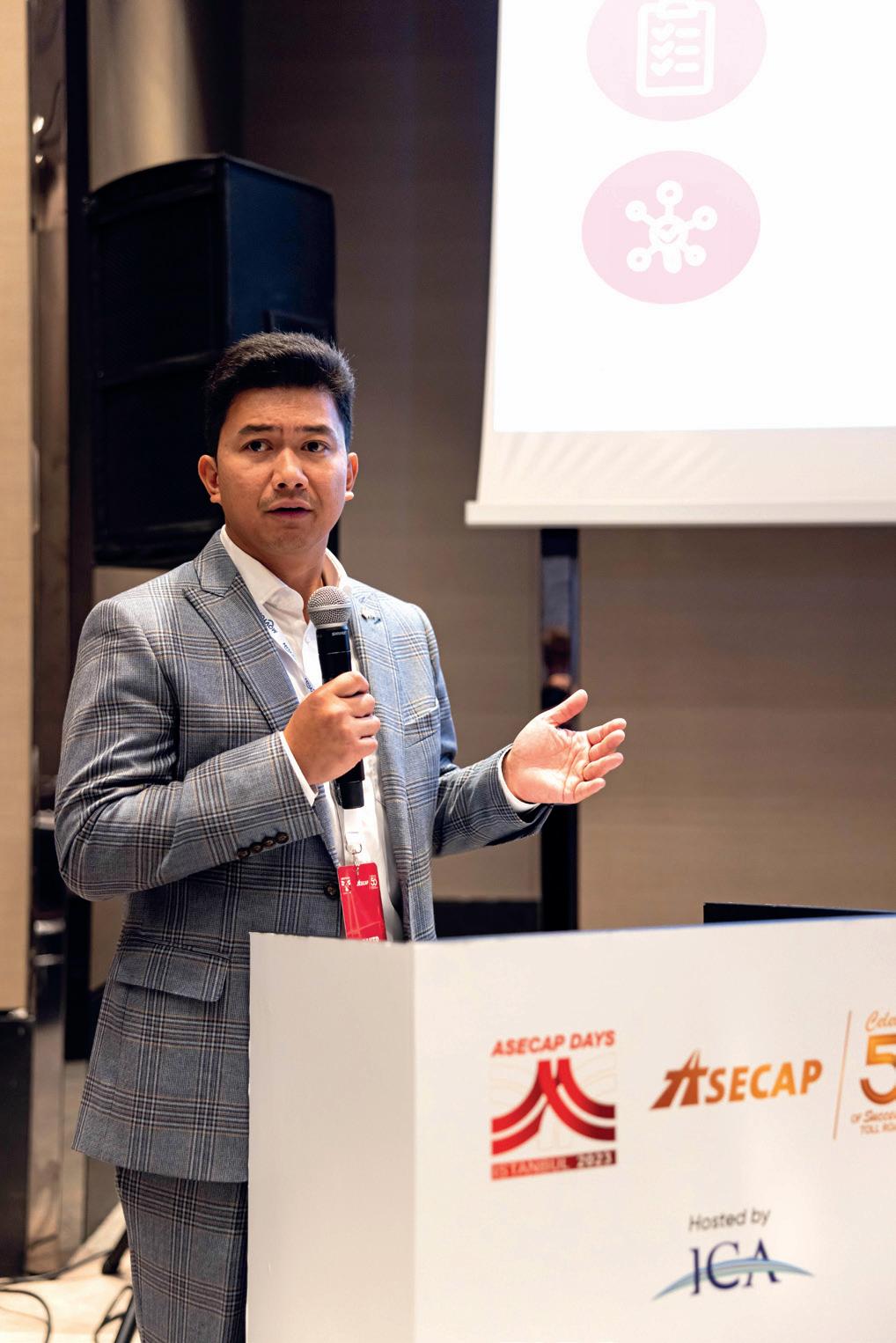
Marzia Malavisi, head of structural monitoring at MOVYON, agreed, adding that digital twins and AI (artificial intelligence) are the way forward. “Create a highresolution digital twin [of the bridge] using multi-resolution technology,” she said. Then “perform linear and aerial measurements, insert notes directly on the 3D structure and visualise an initial set of defects suggested by an artificial intelligence system”.
She urged the use of the resulting data to reimagine bridge inspections to bring the bridge into the office in order to carry out inspections on screen including hard-to-reach bridge components. Is possible to apply AI to support inspectors and observe and measure the evolution of defects over time. This will mean a limited impact on highway traffic flow and a higher level of security.

lead for data fusion, added that the company’s Lanternn platform can help road operators use AI-driven risk prediction to improve road safety. The technology predicts risk, Rainbow told the conference, drawing “immediate insights from millions of historical incidents” and fusing it together in “plain English”.
There are also huge strategic and operational wins if big data and AI are used to speed up emergency response times and reduce fatalities, said Michael Vardi, co-founder and chief business officer of Valerann. He said that his company’s Real-time Fusion Engine consumes, analyses and organises data from integrated sources by harnessing AI, machine learning and big data technologies. The result is a rich, accurate picture of the road, its traffic, infrastructure and conditions, including the most relevant disruptions and safety incidents.
Jacob Rainbow, Valerann's technology
Lanternn then puts these feeds into context, using traffic flow and weather reports and roadside cameras before “reducing the noise” that big data and information overload can impose. The system uses feedback from apps like Waze, for instance, and aims for 93% compression to mitigate alert fatigue, he added. There is also a “fuzzy logic fusion engine” which allows infinite customisation.
The end result, according to one of the company’s customers, has been an 88% improvement in response relevance, a 25% improvement in response times and a 40% reduction in the number of accidents. Also, 95% incident alerts on Lanternn are raised with the operator within five minutes of happening.
How tomorrow’s road infrastructure will be financed was a major topic at the event.
Expect road user charging – RUC - and toll collection revenues to be merged into one platform, but with differentiated billing, said Lubor Lancos, solution consultant at Kapsch TrafficCom. RUC will be collected from all vehicles [with an alternative propulsion] for any road they use, he said. This will be a fuel excise duty replacement and “tolls will be collected on strategic roads determined by the road authorities”.
More clean air zones, low emission zones and congestion charging are coming and will be delivered on the same technology platform. But government’s will need to take the people with them. Lubor said that RUC collection should be revenue-neutral and not increase the tax burden on individual citizens. “All fees must be acceptable and thoroughly explained to the public,” otherwise we should get ready for rejection and protest.
It will also be important to keep your revenue streams separate, said Christophe Boutin, executive director of ASFA, the French Association of Toll Motorway Companies. We need to decide if the Eurovignette is our friend or our foe, he told the conference.
According to the European Environment Agency, the Eurovignette is “a fixed annual charge for heavy vehicles calculated in accordance with the damage caused to the environment and road infrastructure, necessary for using the roads in European Union countries that do not levy tolls on motorways”. Vignettes are also “a form of road pricing imposed on vehicles, usually in addition to their compulsory road tax fees, based on a period of time the vehicle may use
A recent report from consultancy McKinsey outlines how properly managing, controlling and analysing data is essential to survival. Only a fraction of data from connected devices is ingested, processed, queried and analysed in real time due to the limits of legacy technology structures, the challenges of adopting more modern architectural elements and the high computational demands of intensive, real-time processing. Companies often must choose between speed and computational intensity, which can delay more sophisticated analyses and inhibit the implementation of real-time use cases.
How data is generated, processed, analysed and visualised for end users is dramatically transformed by new and more ubiquitous technologies. These include kappa or lambda architectures for real-time analysis, leading to faster and more powerful insights. Even the most sophisticated advanced analytics are reasonably available to all organisations as the cost of cloud computing continues to decline
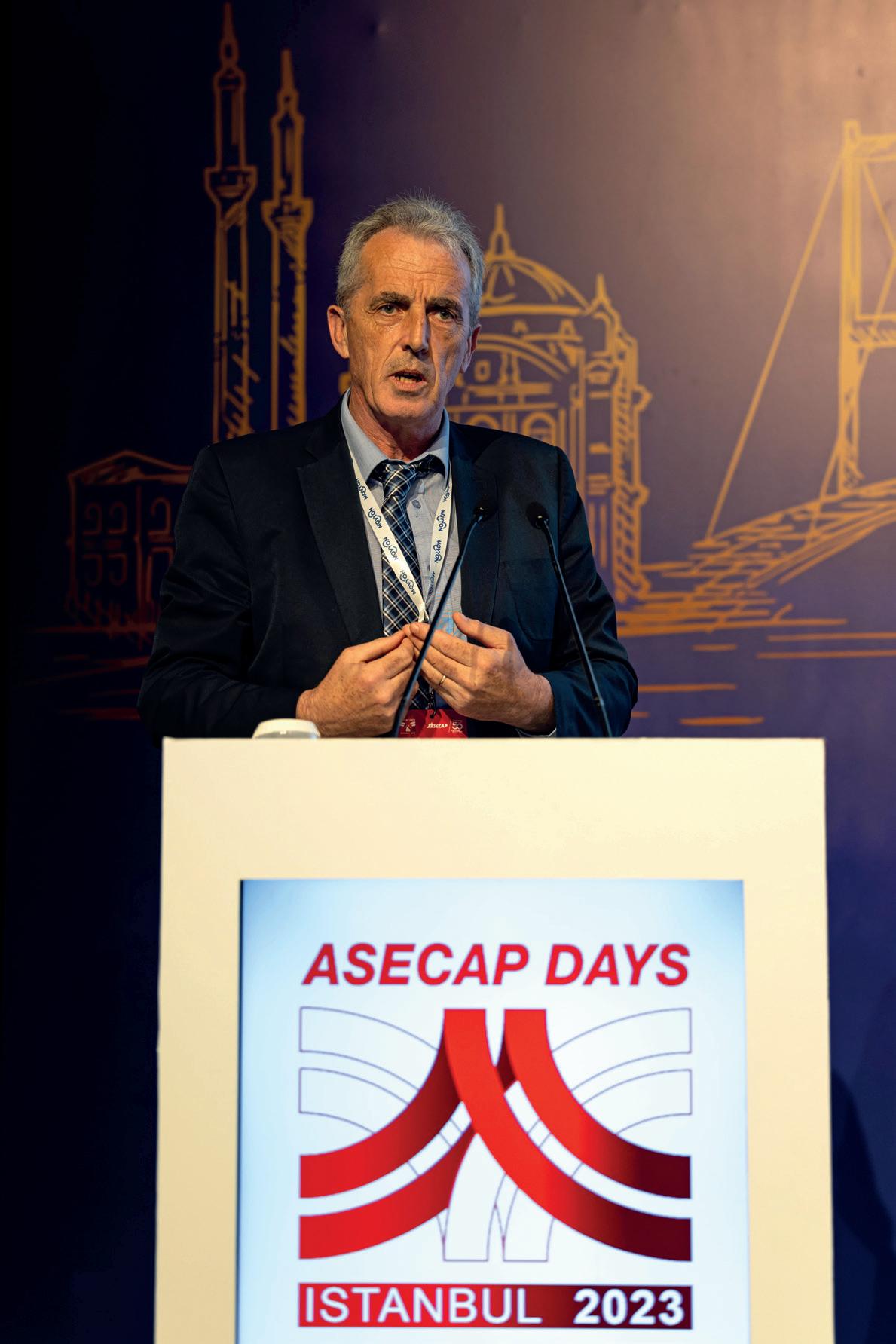
Boutin is also worried about road users being hit with a double whammy, generating anger and disobedience. Directive 2022/362, on toll tariffs, says that the infrastructure charge for heavy-duty vehicles is based on the principle of the recovery of infrastructure
The weighted average infrastructure charge for heavy-duty vehicles shall be related to the construction costs and the costs of operating, maintaining and developing the infrastructure network concerned. The weighted average infrastructure charge may also include a return on capital and/or a profit margin based on market conditions.
However, the reality, noted Boutin, is that external cost charges may be introduced on top of tariffs but [they] must not fund infrastructure. A combination of road user charging and toll fees seems unlikely when both are needed, but road user charging should compensate for the disappearance of the gas/fuel tax and tolls should be used for infrastructure funding.
and more powerful ‘in-memory’ data tools come online, for example, Redis and Memcached.
An organisation’s data function, if one exists outside of IT, manages data using top-down standards, rules, and controls. Data often has no true ‘owner’ ensuring it’s updated and ready for use in various ways. Data sets are also storedsometimes in duplication - across sprawling, siloed and often costly environments. This makes it difficult for users within an organisation, such as data scientists who are looking for data to build analytics models, to quickly find, access and integrate the data they need.
But by 2025, data assets will be organised and supported as products, regardless of whether they’re used by internal teams or external customers. These data products have dedicated teams, or ‘squads’, aligned against them to embed data security, evolve data engineering (for example, to transform data or continuously integrate new sources of data), and implement self-service access and analytics tools.
The bottom line
“Toll systems have evolved from manual, to mechanical and electrical, to digital and now to the smart IoTT [Internet of Transport Things],” explained John Davis, commercial director at ViaPlus Europe, a Vinci Highways company which specialises in revenue and service management solutions for the transport sector. “But their core function remains unchanged: to optimise traffic and assure revenues.”
It remains all about the customer. “There has to be a proven correlation between compliance and quality customer service,” said Davis. “Customer experience levels are crucial to both traffic and revenue.”
In the early phases of tolling evolution there was a “user-pays” focus, with the monies raised used to finance infrastructure, according to Davis. “The concept of ‘customers’ was not on the radar. Then there was a recognition that quality customer service is crucial to revenue realisation. Now it is about who owns the customer.
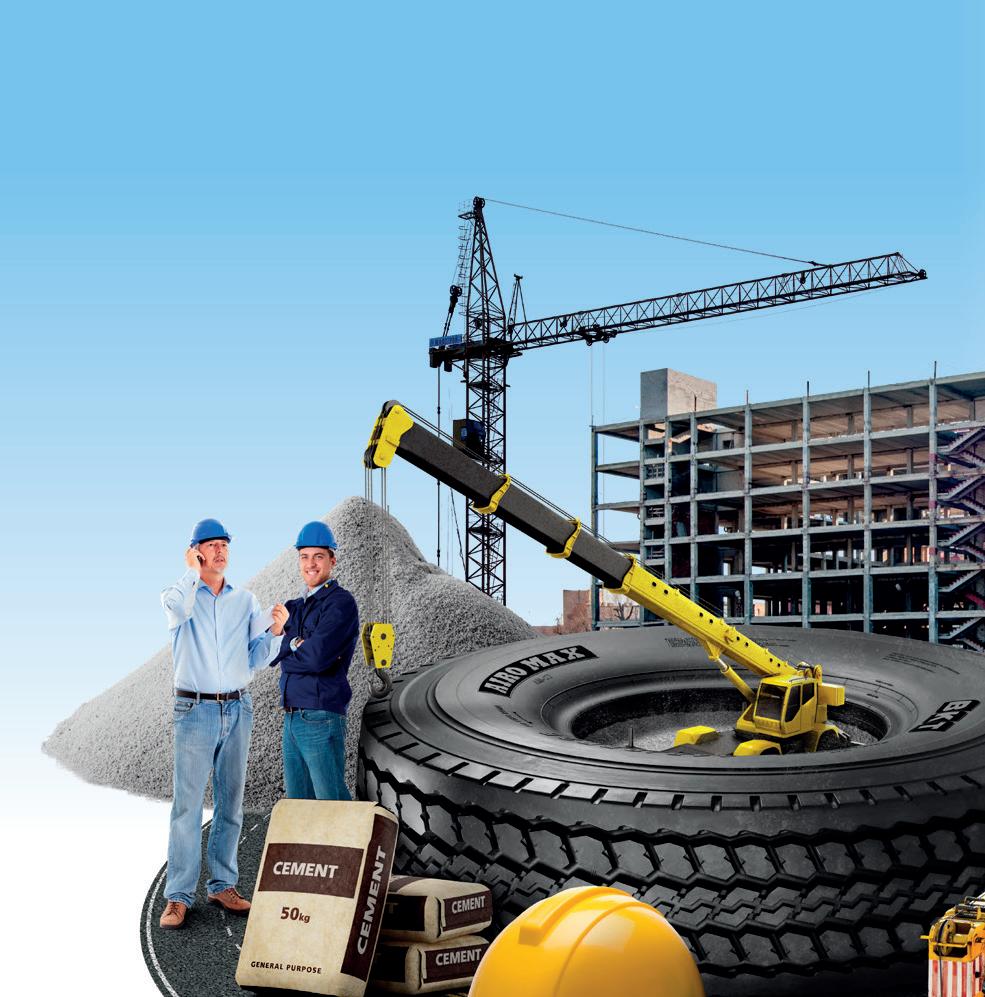





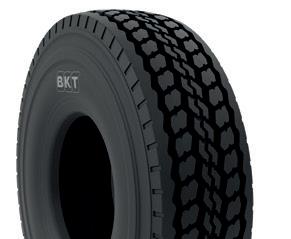
No matter how challenging your needs, AIROMAX AM 27 is your best ally for mobile cranes in industrial applications. The tyre is particularly suitable for road usage. Thanks to its All Steel casing and the special tread design, AIROMAX AM 27 provides extraordinary traction along with high load capacity.
AIROMAX AM 27 is BKT’s response to withstand the toughest conditions in the construction industry.





For info: europe@bkt-tires.com






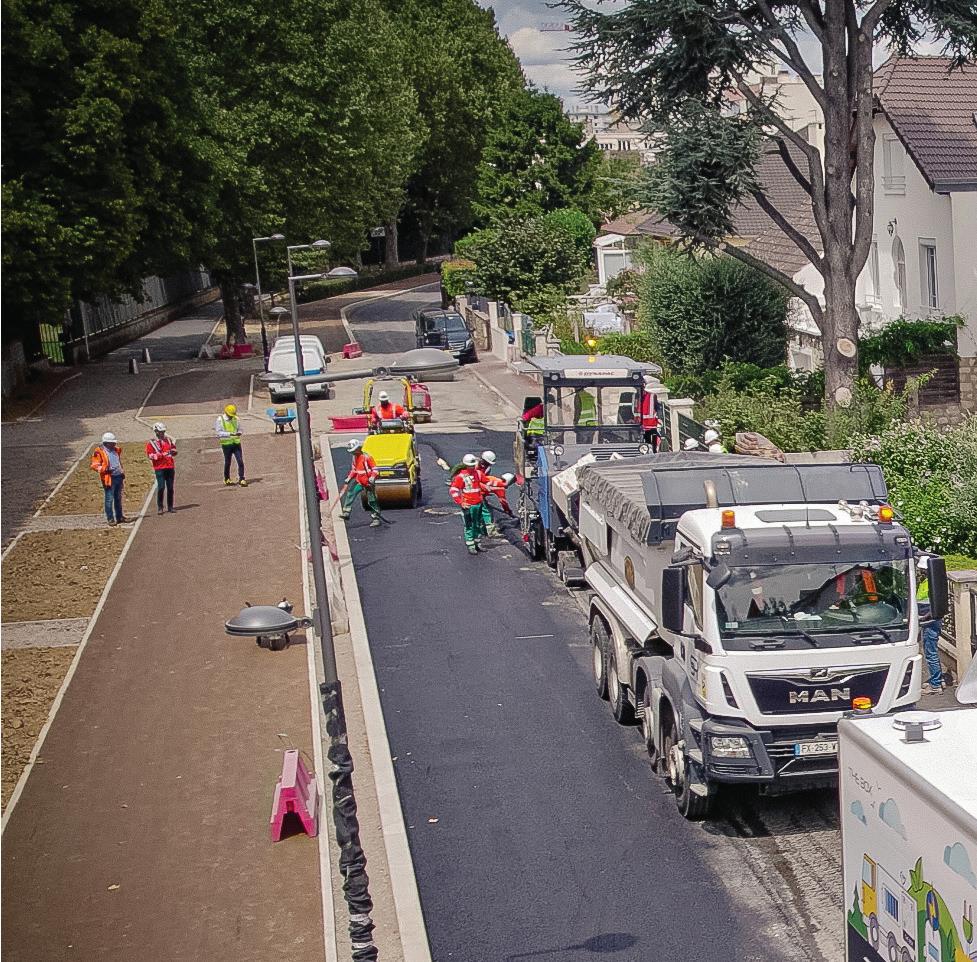
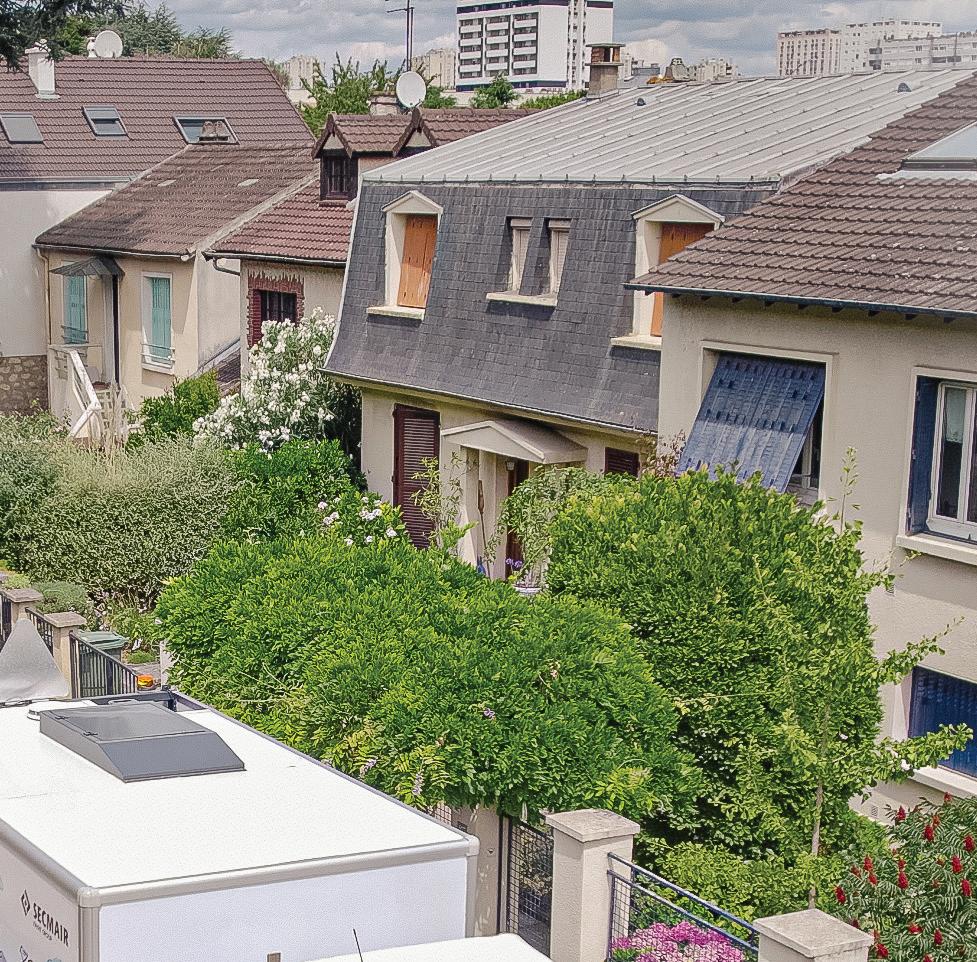


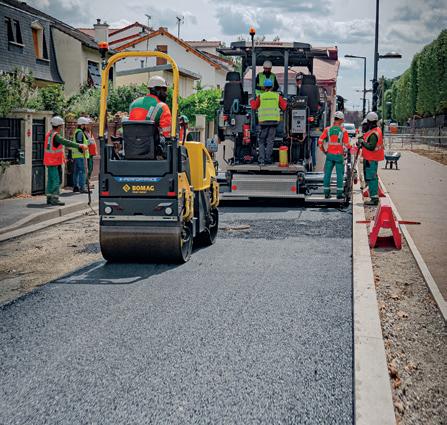
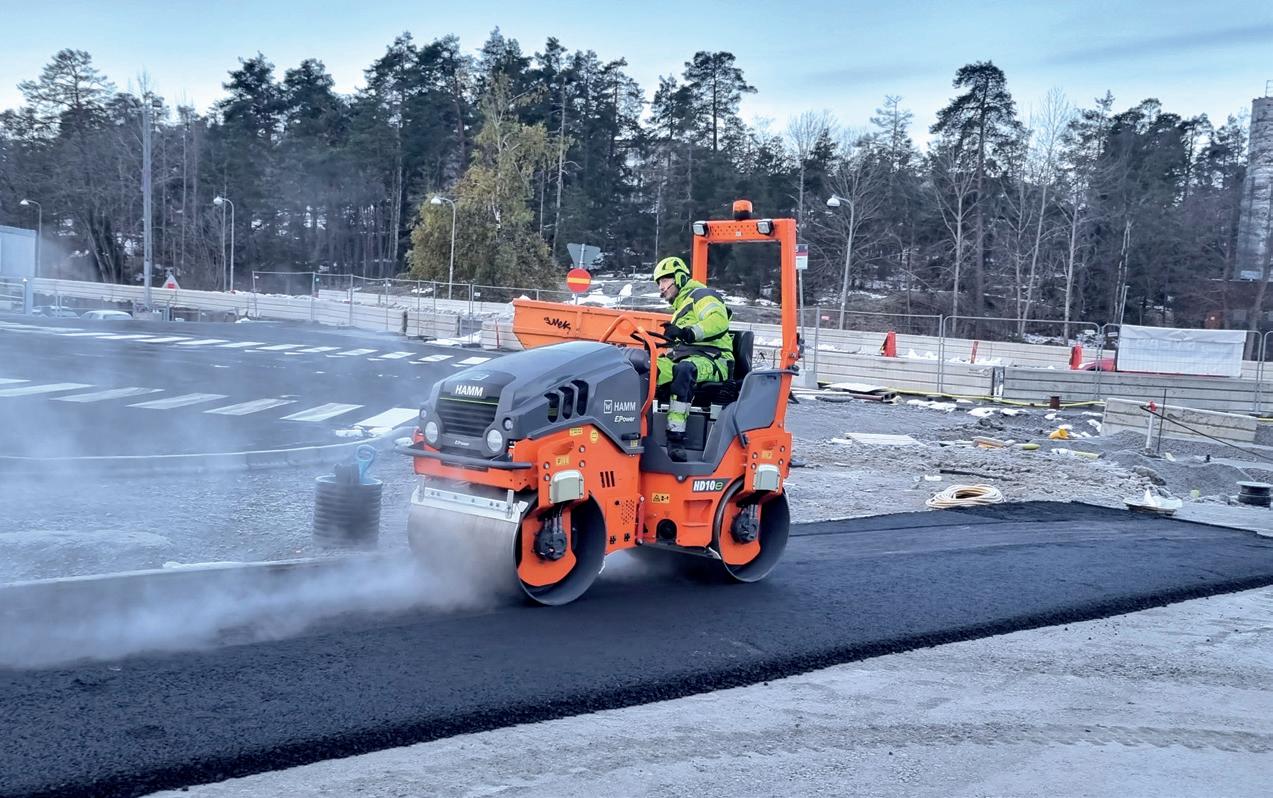
French contractor VINCI Construction has used construction machines from the FAYAT Group to deliver a low-carbon roadworks project using 100% electric equipment.
Both VINCI and Fayat believe this to be a world rst for a roadworks site. VINCI Construction subsidiary Emulithe carried out the project using 100% electric equipment as part of the works to resurface Rue du Lieutenant-Petit-Le-Roy in Chevilly-Larue (Val-de-Marne). The project involved making the street one-way and building a cycle path.
Following two days of familiarisation and training, Emulithe’s teams used – a 100%
electric, rechargeable and silent sprayer, paver and roller, reducing greenhouse gas emissions and noise pollution compared with those produced by conventional worksite equipment. This was the rst time that all-electric models of these three essential roadworks machines had been used on a single worksite.
THE BOX, from Secmair, is a sprayer designed with decarbonisation in mind. It boasts good range and insulation, usability and simple operation – all designed, engineered and manufactured in France.
The SD1800W e is the rst mass-produced electric urban paver and is manufactured by Dynapac. Its 98kWh battery provides long range and fast recharging. Its low noise level, zero ne-particle emissions and zero smoke
The Secmair sprayer is 100% electric, with no auxiliary engine and no power from the truck engine. Its double thermal insulation allows twice the performance of other solutions according to the rm. This reinforced insulation and suppression of thermal bridges suppress the need to heat the bitumen emulsion which is the main source of CO2 emission on Sprayer . Combined with an electric truck THE BOX can work on jobsites in low emission zones or in urban areas in silence.
Only the onboard computer uses the truck’s battery and the machine o ers 8 hours of working. A solar panel located on the top of the Box adds even more autonomy. The batteries power both the spraybar and the pump.
This versatile machine can be used for surface dressing and prime coat jobsites and users can spray with a hand lance (15m with automatic reel) or a telescopic spraybar.
The system is said to be simple and fully independent from the truck, while it is also compatible with a standard container and can be
mounted on a local truck wherever in the world. As the system is removable, the truck can also be used for other applications.
The operator bene ts from in-cab controls with a joystick system for nozzle selection, spraybar position and spraying activation. The dosing is controlled by computer to always apply the right quantities. An ergonomic screen gives access to the di erent information: dosing, spraybar width, working speed and jobsite history. There is also a hand lance with controls at the rear.
The binder circuit features pneumaticallycontrolled, modular valves that are computer controlled from the cab. Mixing of the binder is in the tank and the immersed pump is in permanent contact with emulsion, optimising circulation. Draining the binder circuit allows material to return to the tank and the units features external suction and discharging coupling. The automatic cleaning system cleans out the binder circuit and spray bar after spraying, returning material to the tank. The user can also carry out complete cleaning of the system using pressurised air.



emissions make it ideal for urban use and mean it has a much lower carbon footprint.
The BOMAG BW 100 ADe-5 electric roller is rechargeable and equipped with sophisticated battery, motor and inverter technology. The manufacturer has integrated all these components to give the user a smooth and quiet driving experience, with performance matching those of conventional diesel models. Its silent operation and simple information display on the dashboard give drivers visibility and control, making the working day effective and stress-free.
The job provided a suitable opportunity to trial the performance of these new electric machines and see how their batteries would last during a working day. It also con rmed the signi cant reduction in CO2 emissions, with this low-carbon worksite saving 0.25 tonnes of CO2-eq/day compared with a worksite using conventional machines.
VINCI Construction has been working for a number of years on implementing measures and developing management tools aimed at reducing CO2 emissions by 40% by 2030. The use of electricpowered vehicles, light equipment, excavators and even lorries on worksites is growing.
VINCI Construction’s trial on a roadworks site of 100% electric versions of three key roadworks vehicles is a further step in its ongoing search for solutions to improve the energy and environmental performance of its operations, with the aim of gradually integrating low-carbon vehicles into its eet.
BOMAG www.bomag.com
Dynapac www.dynapac.com
Fayat Group www.fayat.com
Secmair www.secmair.fayat.com
VINCI Construction www.vinci-construction.com
French contractor VINCI Construction has used construction machines from the FAYAT Group to deliver a low-carbon roadworks project using 100% electric equipment.
Both VINCI and Fayat believe this to be a world rst for a roadworks site. VINCI Construction subsidiary Emulithe carried out the project using 100% electric equipment as part of the works to resurface Rue du Lieutenant-Petit-Le-Roy in Chevilly-Larue (Val-de-Marne). The project involved making the street one-way and building a cycle path.
Following two days of familiarisation and training, Emulithe’s teams used – a 100%
electric, rechargeable and silent sprayer, paver and roller, reducing greenhouse gas emissions and noise pollution compared with those produced by conventional worksite equipment. This was the rst time that all-electric models of these three essential roadworks machines had been used on a single worksite.
THE BOX, from Secmair, is a sprayer designed with decarbonisation in mind. It boasts good range and insulation, usability and simple operation – all designed, engineered and manufactured in France.
The SD1800W e is the rst mass-produced electric urban paver and is manufactured by Dynapac. Its 98kWh battery provides long range and fast recharging. Its low noise level, zero ne-particle emissions and zero smoke
The Secmair sprayer is 100% electric, with no auxiliary engine and no power from the truck engine. Its double thermal insulation allows twice the performance of other solutions according to the rm. This reinforced insulation and suppression of thermal bridges suppress the need to heat the bitumen emulsion which is the main source of CO2 emission on Sprayer . Combined with an electric truck THE BOX can work on jobsites in low emission zones or in urban areas in silence.
Only the on-board computer uses the truck’s battery and the machine o ers 8 hours of working. A solar panel located on the top of the Box adds even more autonomy. The batteries power both the spraybar and the pump.
This versatile machine can be used for surface dressing and prime coat jobsites and users can spray with a hand lance (15m with automatic reel) or a telescopic spraybar.
The system is said to be simple and fully independent from the truck, while it is also compatible with a standard container and can be
mounted on a local truck wherever in the world. As the system is removable, the truck can also be used for other applications.
The operator bene ts from in-cab controls with a joystick system for nozzle selection, spraybar position and spraying activation. The dosing is controlled by computer to always apply the right quantities. An ergonomic screen gives access to the di erent information: dosing, spraybar width, working speed and jobsite history. There is also a hand lance with controls at the rear.
The binder circuit features pneumaticallycontrolled, modular valves that are computer controlled from the cab. Mixing of the binder is in the tank and the immersed pump is in permanent contact with emulsion, optimising circulation. Draining the binder circuit allows material to return to the tank and the units features external suction and discharging coupling. The automatic cleaning system cleans out the binder circuit and spray bar after spraying, returning material to the tank. The user can also carry out complete cleaning of the system using pressurised air.
emissions make it ideal for urban use and mean it has a much lower carbon footprint.
The BOMAG BW 100 ADe-5 electric roller is rechargeable and equipped with sophisticated battery, motor and inverter technology. The manufacturer has integrated all these components to give the user a smooth and quiet driving experience, with performance matching those of conventional diesel models. Its silent operation and simple information display on the dashboard give drivers visibility and control, making the working day effective and stress-free.
The job provided a suitable opportunity to trial the performance of these new electric machines and see how their batteries would last during a working day. It also con rmed the signi cant reduction in CO2 emissions, with this low-carbon worksite saving 0.25 tonnes of CO2-eq/day compared with a worksite using conventional machines.
VINCI Construction has been working for a number of years on implementing measures and developing management tools aimed at reducing CO2 emissions by 40% by 2030. The use of electricpowered vehicles, light equipment, excavators and even lorries on worksites is growing.
VINCI Construction’s trial on a roadworks site of 100% electric versions of three key roadworks vehicles is a further step in its ongoing search for solutions to improve the energy and environmental performance of its operations, with the aim of gradually integrating low-carbon vehicles into its eet.
BOMAG www.bomag.com
Dynapac www.dynapac.com
Fayat Group www.fayat.com
Secmair www.secmair.fayat.com
VINCI Construction www.vinci-construction.com
The Dynapac electric paver features a 98kWh lithium-ion battery, and 55kW three-phase permanent magnet synchronous motor (PMSM) that supplies the power and e ciency.
Depending on the type of job, application, and intensity of the work cycle, the SD1800W e o ers up to four hours of performance with one charge. A standard 22kW onboard charger will get the machine up to capacity at 400V 32A AC in approximately four hours with a Type 2 charger. Due to its high
The electric BOMAG compactor worked directly behind the

voltage architecture, the SD1800W e is capable of handling charging speeds of up to 80kW, charging the battery from 5% to 80% in less than one hour with a CCS2 charger.
The high voltage electric components: battery; inverter; DC/DC converter; and electric motor are connected to a high e ciency cooling system. This consists of a bi-directional heat pump with high voltage compressor.
The electric model delivers a
paving capacity of up-to 350tonnes/ hour and can pave widths of up to 4.1m with the screed extended. It is possible to preheat the screed while connected to an external power source to save the machine’s battery for prolonged paving operation.
The SD1800W e o ers comfort, spaciousness, and ergonomics while reducing noise, heat, and vibration. The absence of exhaust fumes is a plus for the operator, crew, and environment, suiting it to use for
urban areas.
The electric motor drives a highly e cient hydraulic system, while the machine features integrated advanced levelling systems and a stable screed. Low servicing costs are claimed as the SD1800W e has maintenance-free electric drive, needs minimal daily checks, and requires less servicing, saving time and money. Meanwhile high quality is achieved by the V3500-Series screed with its stable and smooth operation.

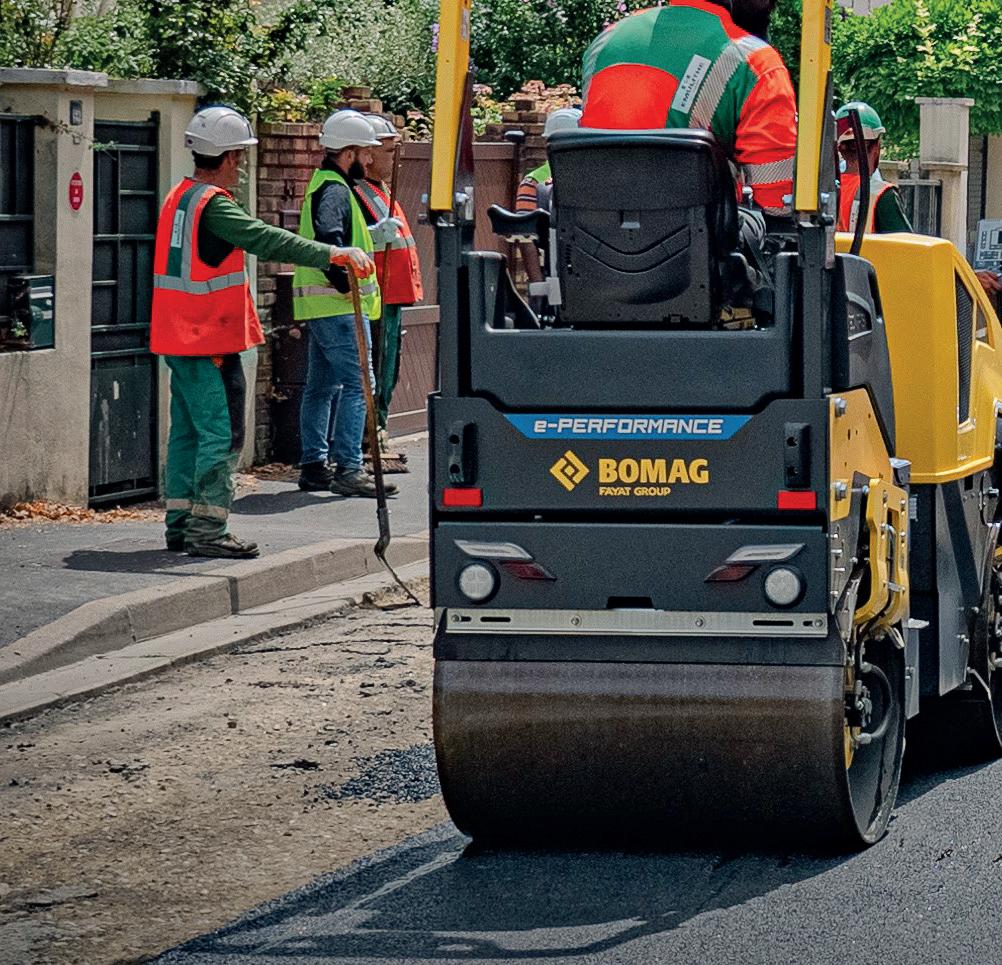
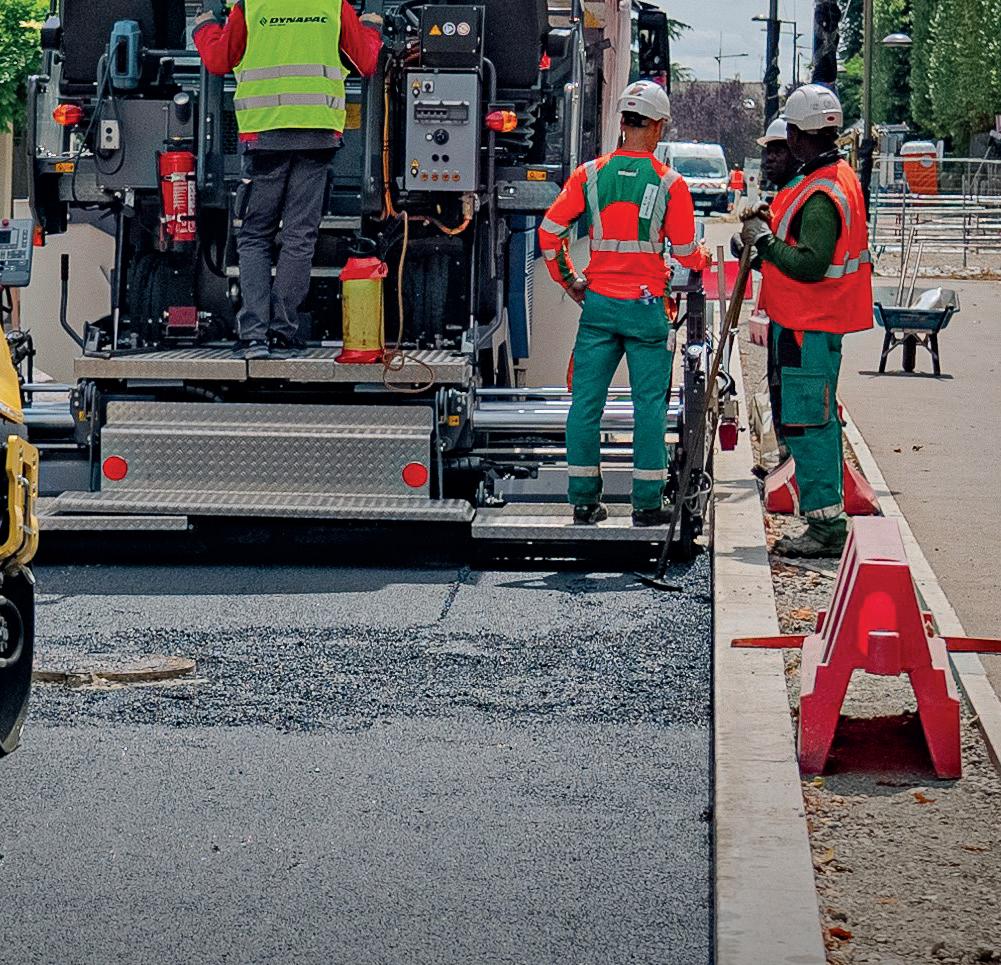


The new light electric tandem roller from BOMAG is designed for compaction and repair work in earthwork and asphalt construction. However, BOMAG says that it is just as powerful as its conventional diesel counterpart.
A major plus is that the electri ed tandem roller produces no ne dust pollution from exhaust gases and emits no CO2. This protects personnel and the environment during operation, factors that are becoming increasingly important when it comes to awarding contracts. At the same time, the new machine stands out for its lower noise emissions.
With the BOMAG BW 100 AD e-5 and BW 120 AD e-5 tandem rollers, a user no longer has to choose between performance and sustainability. The machines deliver the same power as their conventional counterparts and are completely
emissions-free. The compact electric tandem rollers suit pavement laying, repair or follow-up work in road construction and landscaping.
The use of electric construction machines makes particular sense on urban construction sites, as well as in sensitive areas such as around kindergartens and hospitals.





Operation is simple as a user simply turns on the ignition to start. The system is self-explanatory, straightforward, uncomplicated and independent of temperature, with no warm-up necessary, A digital colour display with touchscreen is tted that provides useful additional information. The machine is operated as normal using rotary pushbutton switches. The all-important machine parameters can be seen at a glance. These include speed, energy requirement, asphalt temperature, compaction progress, operating hours, battery charging capacity, duration and power.
at night and in sensitive areas.
The soft-response travel lever and compact steering wheel allow relaxed working, while the operator has a good overview of the work area. The machine also o ers high comfort due to the spacious operator platform.

The machine o ers reduced service costs due to maintenance-free electric motors. The tandem roller also recovers valuable energy using regenerative braking.
The tandem roller is equipped with bright LED headlights, while its low noise emissions enable use


The machine is almost silent when driving and much quieter than conventional diesel drives. There is no issue of environmental impact from exhaust fumes and zero ne dust pollution. The machine is said to suit working in emissionsrestricted areas such as city centres and conservation areas, as well as being ideal for use in enclosed spaces such as tunnels or underground garages.
There are longer intervals between hydraulic oil changes than with diesel machines and the electric motor and battery are maintenance-free. High availability is claimed along with minimal service costs as there are no oil or lter changes for the electric motor


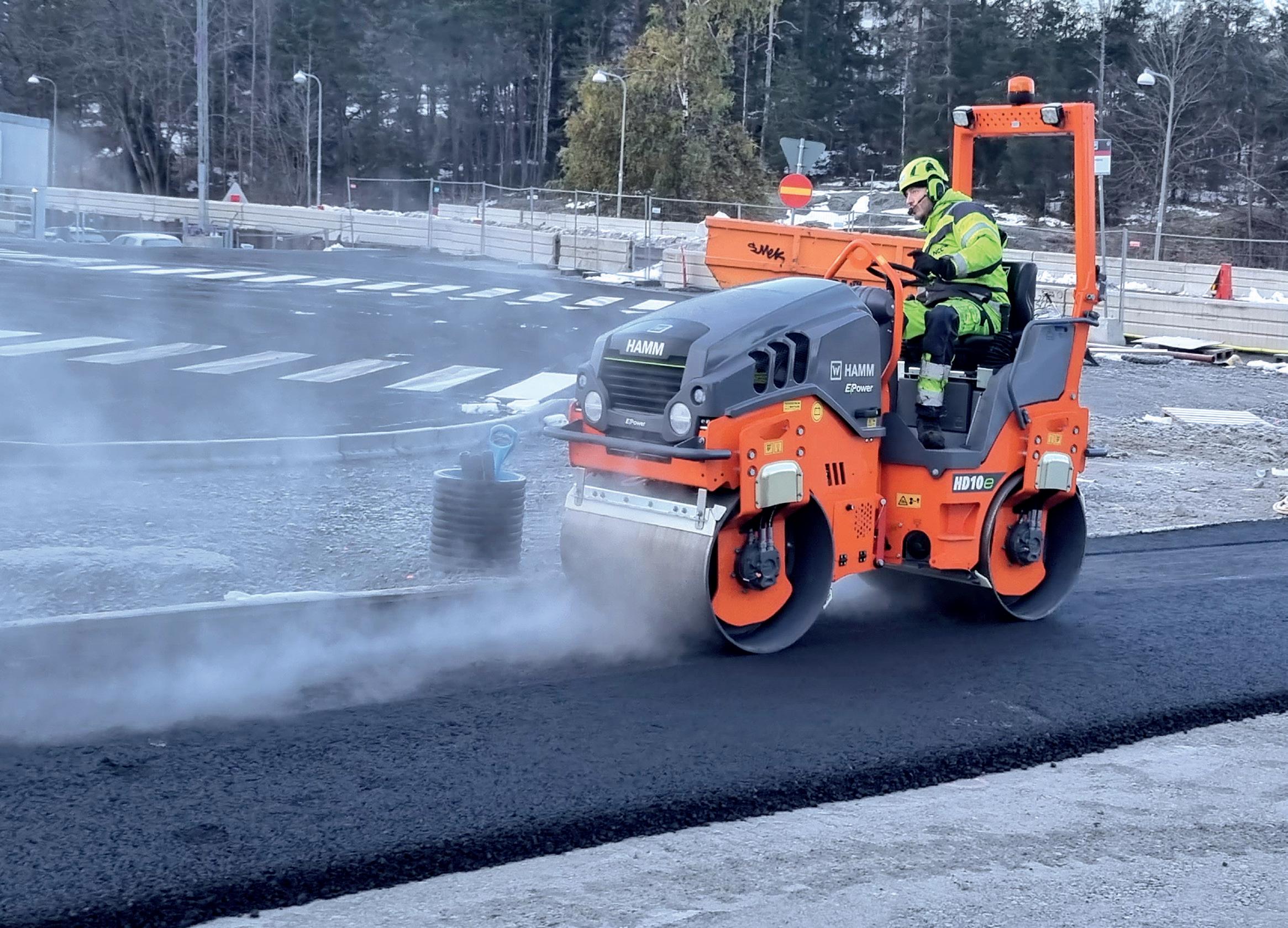




The latest zero-emission battery-powered electric tandem rollers from Hamm have proven their worth in a series of working applications
According to the trials on a range of construction sites, the units have shown themselves able to match the performance of conventional diesel machines, while working more quietly and with zero emissions.
The rollers with electric drive are now available in the DACH region, Central Europe and Scandinavia. The compact models have the same compaction power as their sister models with combustion engines, yet they produce zero local emissions. The electric rollers are operated in exactly the same way as the other models in the HD CompactLine series from Hamm. In the electri ed variant, customers can choose from eight different tandem rollers, some with oscillation drums.
With the fully electric rollers, Hamm says it has addressed the issue of energy ef ciency and energy availability. The low-voltage system supplies the energy for operation, in ambient
temperatures of up to 45°C. At temperatures below 0°C, the battery is heated. This allows a typical workday to be handled easily. To be ready for use again the next day, the battery can be charged overnight. Charging the battery from 0% to 100% at 400V using a rapidcharging plug requires around four hours.
Four of the electric models from Hamm are equipped with oscillation drums, including two combination rollers. This is where the already quiet oscillation meets the quiet electric drive. The result of this is quiet compaction machines that produce zero local emissions and cause very few vibrations in the surrounding area. They are ideal for compacting in noisesensitive and vibration-sensitive areas, such as near hospitals or historical buildings. The oscillation models also suit use on bridge deck compaction work as the drum resonance is directed locally and not transmitted to the rest of the structure.
The vibration or oscillation unit is driven by electric means only via specially designed, compact synchronous motors. As a result,
the ef ciency rating more than doubles and the energy demand reduces accordingly. The extensive electri cation decreases the hydraulic oil volume by 70%. In addition, a high percentage of the braking energy is fed back into the system by regeneration. Overall, the roller has signi cantly fewer wear parts on board. All electric components, such as the battery, electric motors, inverter or DC-DC converter are completely maintenance-free.
The standard automatic electric motor-off function preserves precious battery capacity, just like the control of the working speed in ECO mode. No energy is consumed in park position. The steering motor is only activated once the electric driving lever is actuated. The high power is continuously available and peak power can be called up at any time. HAMMTRONIC monitors and controls all components. The driver can work comfortably and achieve high working precision.
Hamm www.hamm.eu
Jetpatcher Corporation has just shipped another four Jetpatcher kits to its partner in Mexico, making a total 110 shipped to date.
The kits include all the proprietary control systems as well as the novel spreader box attachment for localised sheet patching. The units are made entirely in Jetpatcher’s newly-built factory in Rugby, UK where heavy investment in laser technology, fabrication and self-suf cient energy from a solar bank has ensured a smoother, faster and greener process. Jetpatcher offer a range of machines in various size from 1-8m2 that can be operated from trailers, from 7.5tonne GVW vehicles up to 26tonne chassis.
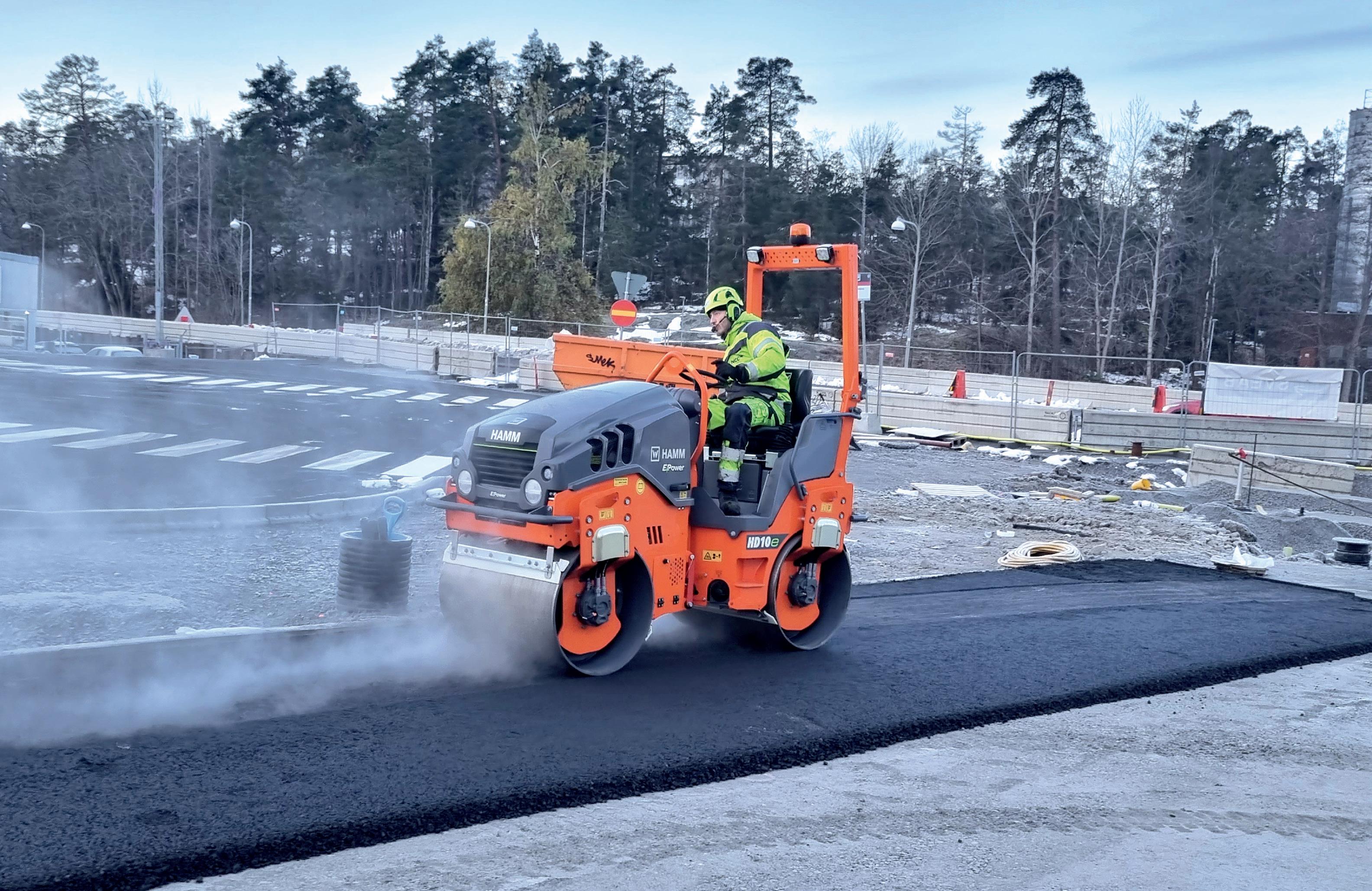
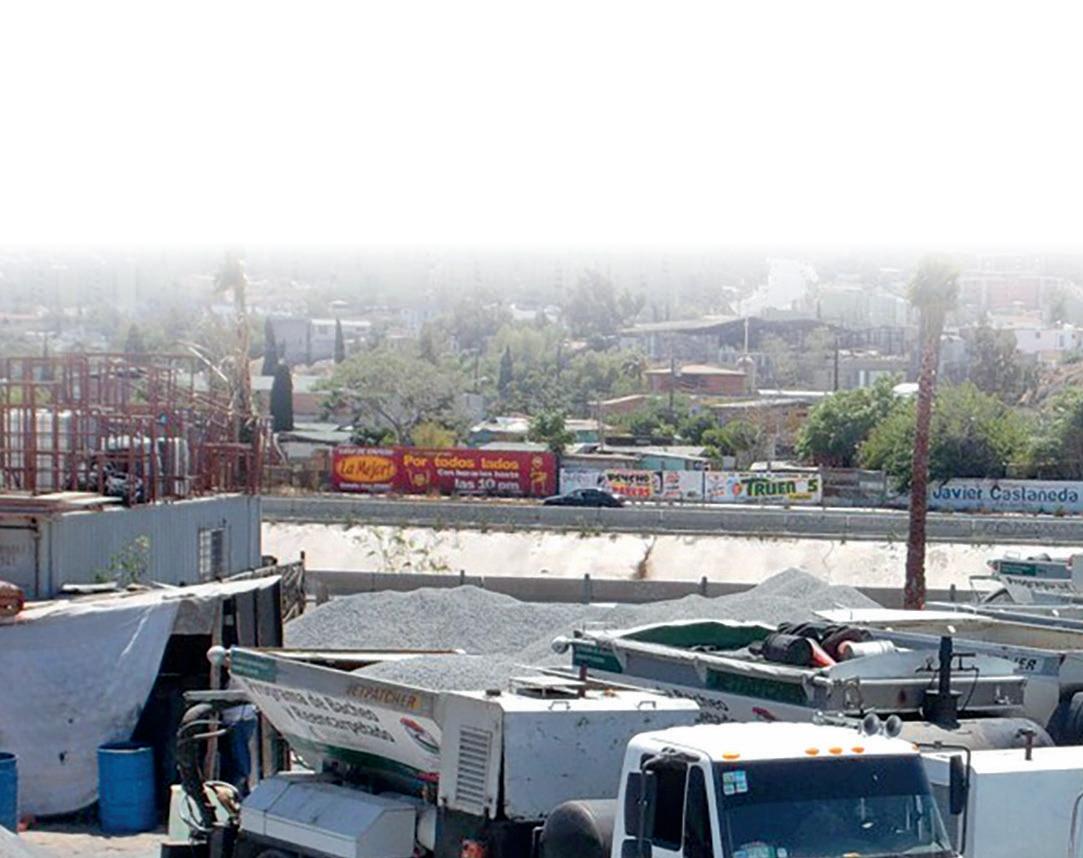
Jetpatcher Mexico is one of several global, strategic manufacturing hubs for Jetpatcher, along with India, South Africa and Europe. Saúl Arauzo, managing director and owner of Jetpatcher Mexico said, ‘‘Most of the equipment has been sold to municipal and state governments. There are government entities that have up to six Jetpatchers in operation, however, interest has been given by private sector companies, some with up to 12 Jetpatcher units for the solution in the maintenance of asphalt roads.”
Jetpatcher www.jetpatcher.com
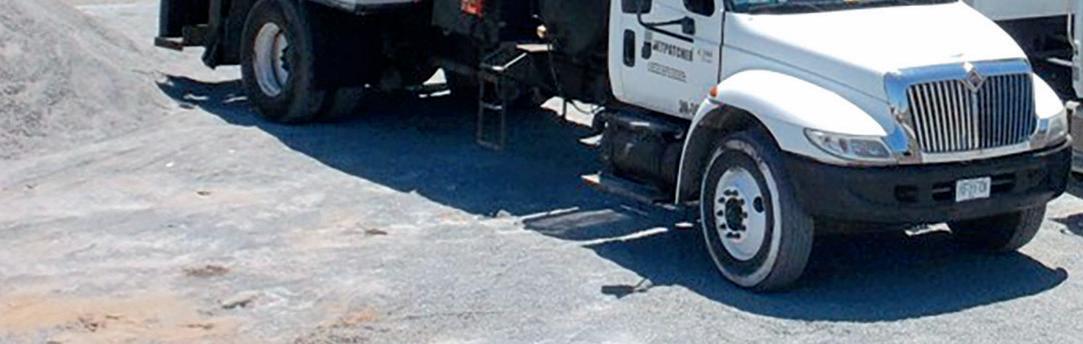
Jetpatcher’s Mexican partner has taken delivery of a further four of the units
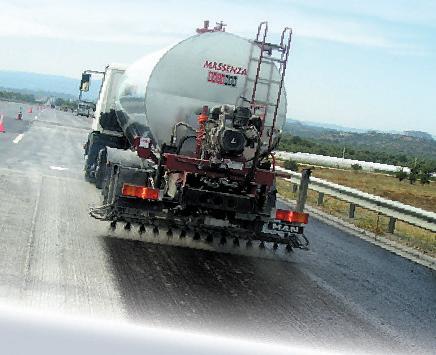



An Ammann twin drum roller has been used to carry out a tricky compaction job in a supermarket carpark
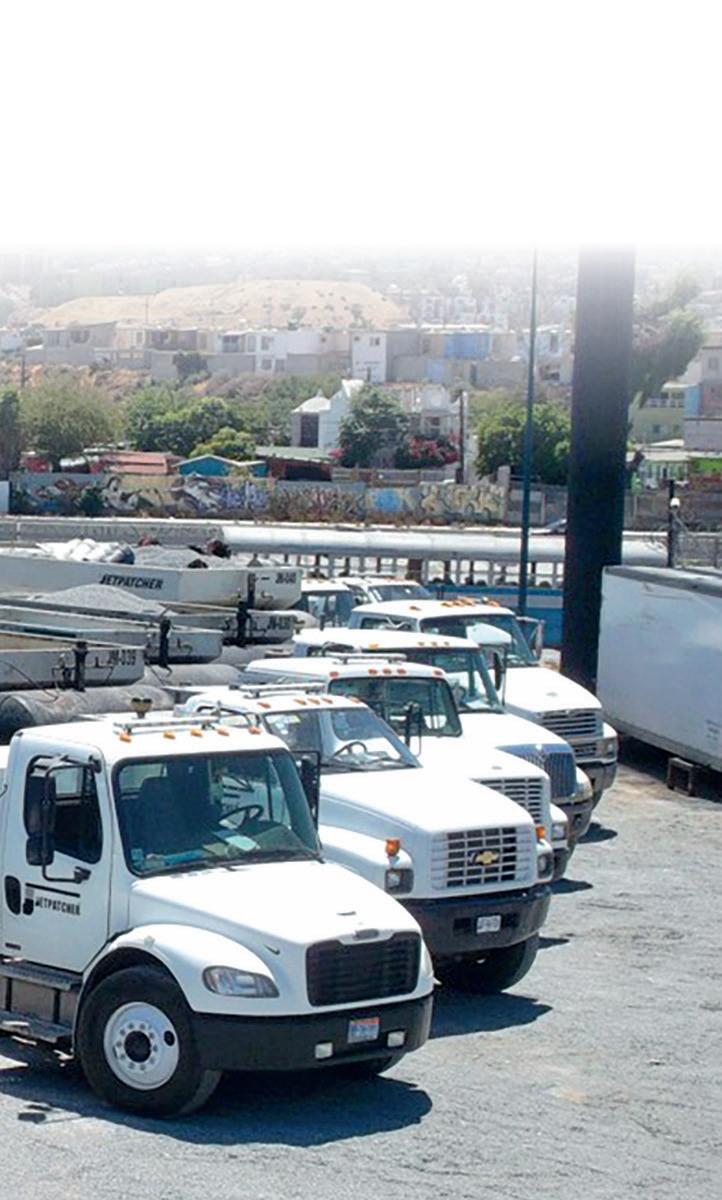






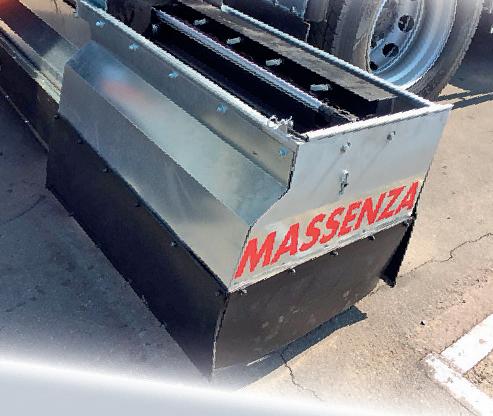






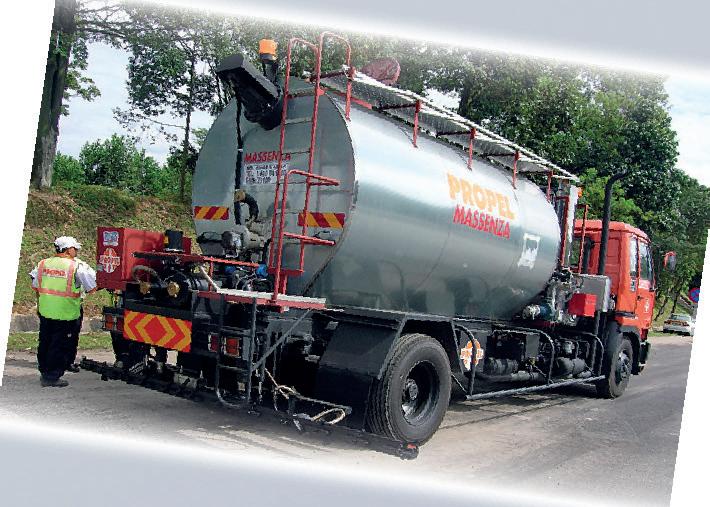
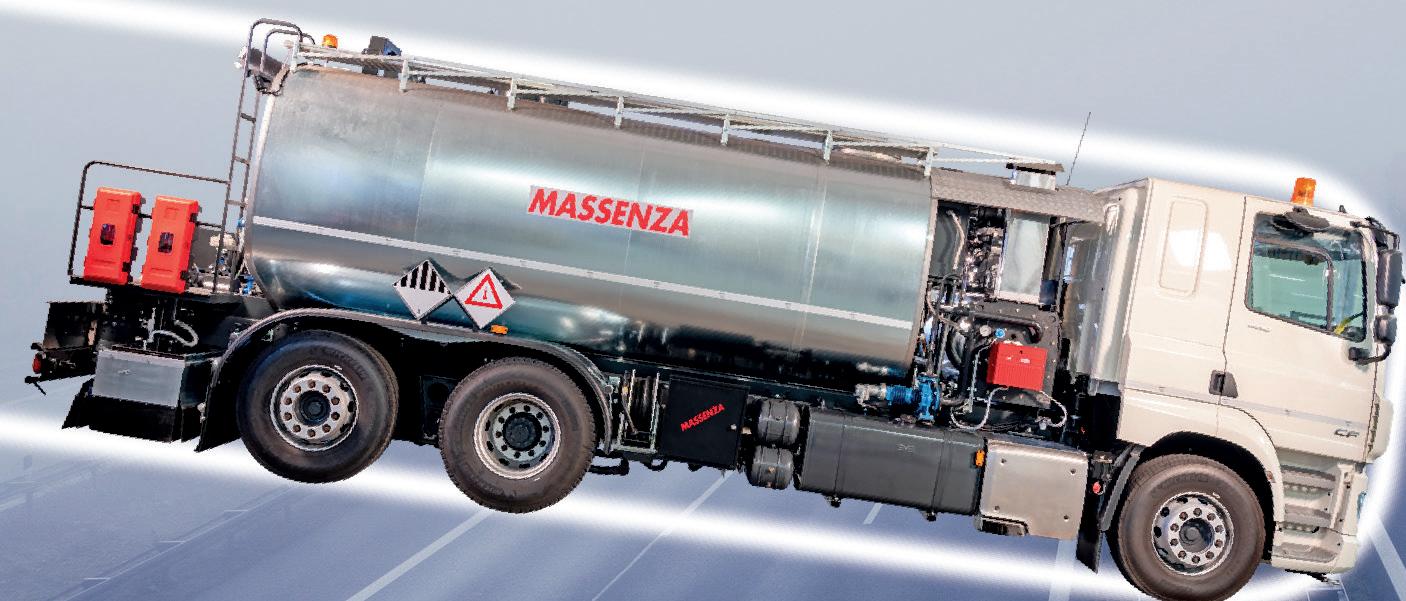
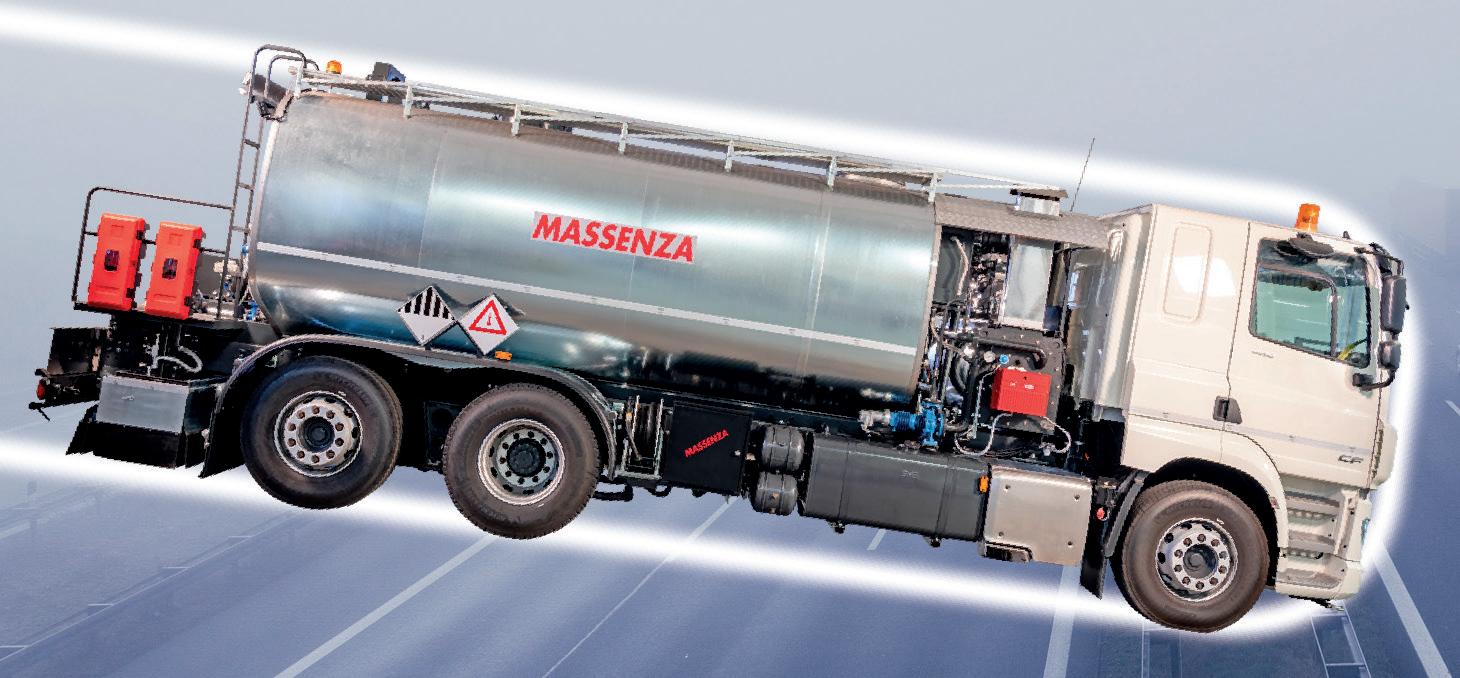

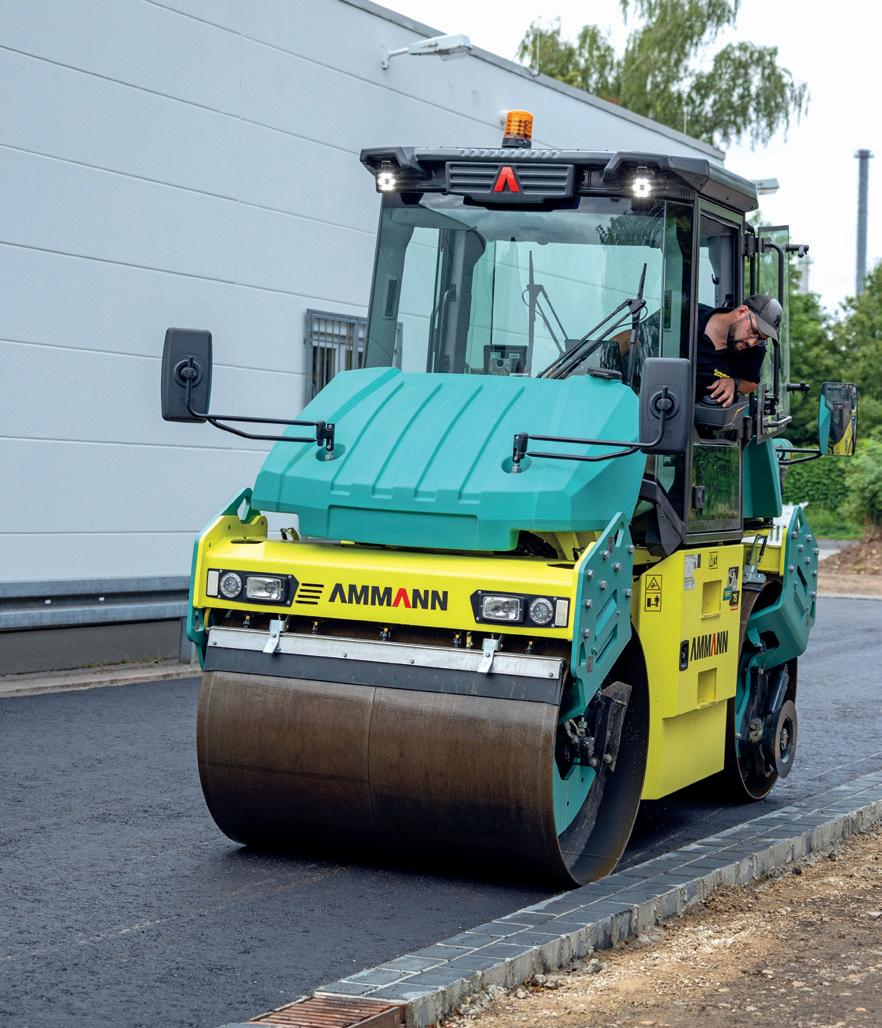
A compaction job for a parking area in Germany posed challenges for the contractor. The work was being carried out for a supermarket carpark in Niederkassel, Germany.
Much of the project required compaction in open spaces where productivity was needed. However, compaction was also needed near the supermarket’s entrance, close to obstacles. That meant the compaction machine had to be to versatile enough to be productive in open spaces as well as being manoeuvrable enough to operate in tight spots.

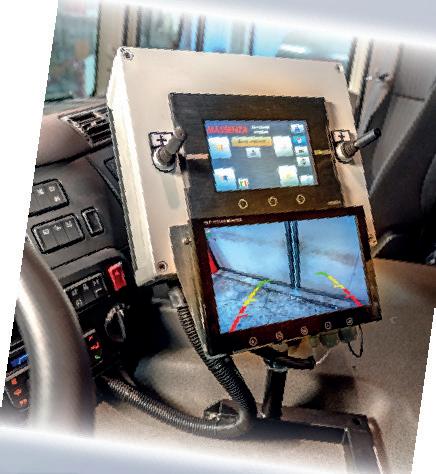







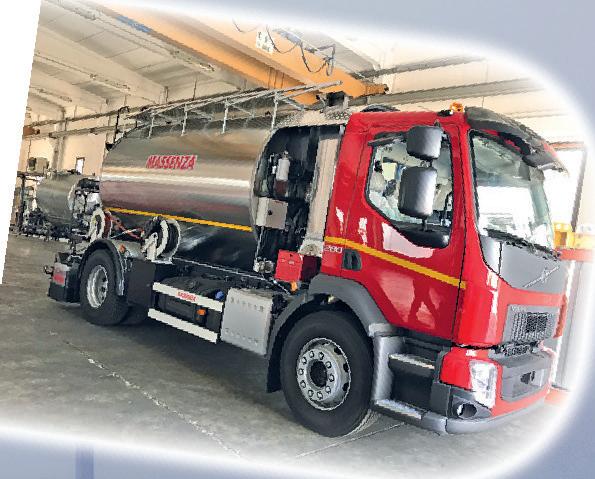







The base layer of 120mm necessitated deep compaction output – all while negotiating the close spaces. The base layer consisted of warm mix (AC32 TS), so the compaction window was also tight.
The Ammann ARP 75 Pivot-Steer twin drum compactor was able to meet all the requirements of the job however. The machine has an operating weight of 7.4tonnes, as well as the output needed. A two-stage vibratory system is standard, with a multiple range of frequencies that helps operators adjust compaction output.
It o ers two frequencies (38-48Hz and 45-55Hz), two amplitude choices (0.68mm and 0.39mm) and two centrifugal options (58-92kN and 47-70kN). These settings ensured the roller brought the output necessary to reach the 120mm depth, yet also could be adjusted when working close to the building.
The Ammann ARP 75 has pivot steering with split drums, enabling precise compaction as well as reducing shear forces. The roller also o ers advanced steer-by-wire machine control, which is said to be responsive.
Another handling feature is machine ngertip steering (FTS). This replaces the traditional steering wheel and allows operators to keep both hands on the armrests for improved comfort. An advanced drive lever with smart functions ensured the smooth starts and stops that were useful when paving the parking lot.
Ammann
www.ammann.com


Equipment from Dynapac is allowing contractor Skanska to carry out compaction without emissions. The contractor has been trialling Z.ERA CC900 e tandem vibratory rollers from Dynapac. The performance of the electric machines was put to the test during its deployment with Skanska. Charging was said to be easy and quick in public and easy-to-reach locations such as lling stations and local charging ports.
Skanska personnel also said that the electric compactors matched the performance of conventional diesel units, with no differences in compaction results.
“The battery lasts longer than expected. We didn't think it would perform that long before it ran out. And we really pushed it to its

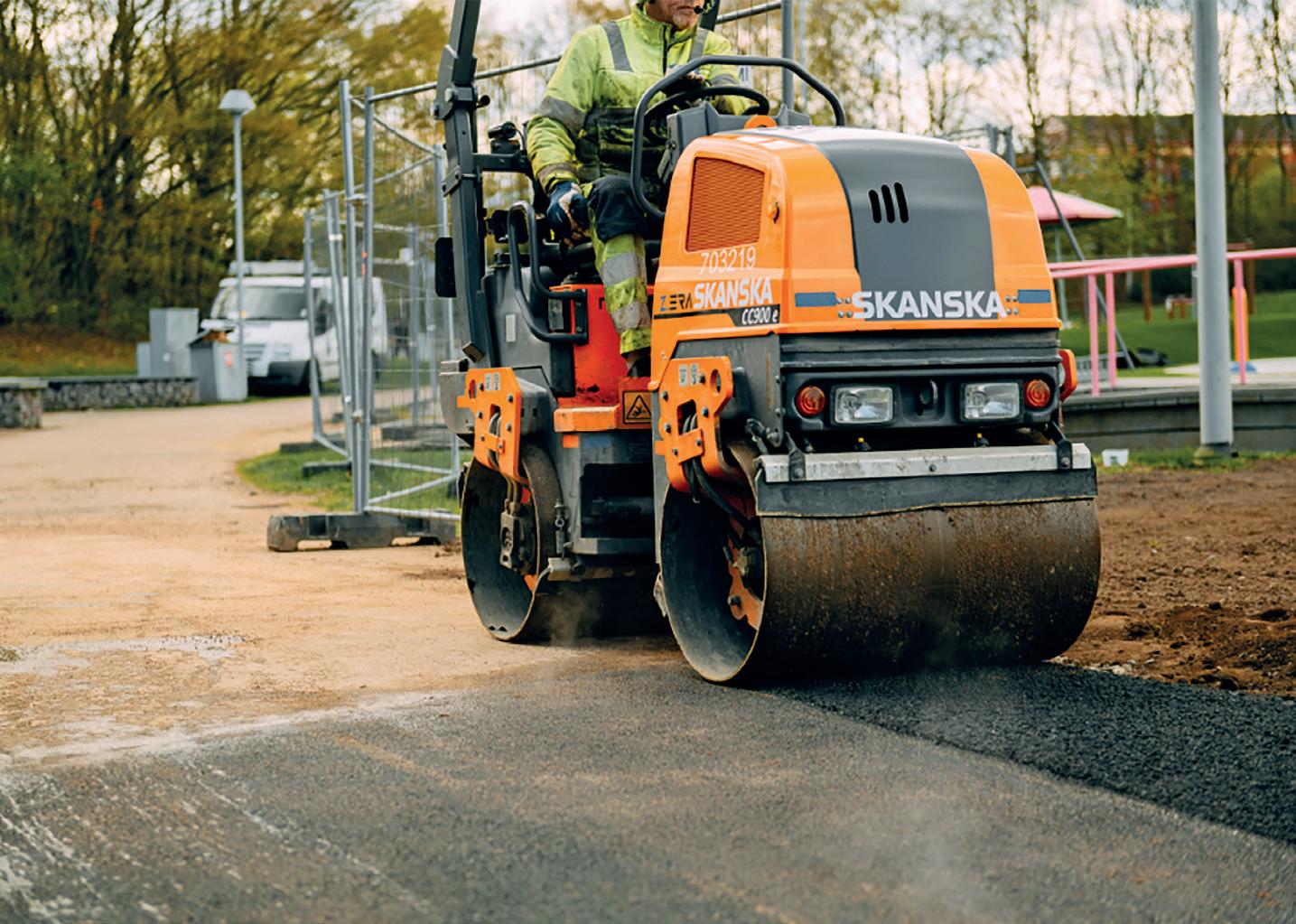
limits last winter. Then we compacted almost 100tonnes but only needed to charge it while having lunch,” said a Skanska operator.
The Z.ERA CC900 e weighs in at 1.7tonnes and has an operating width of 0.9m. The double-drum vibratory roller has been designed to meet the needs of utility contractors and rental eet operators while delivering the same linear load, amplitude, frequency, and travel speed as Dynapac’s comparable dieselpowered model. Aside from zero emissions, the Z.ERA CC900 e offers reduced noise levels and maintenance checks due to battery power.
Dynapac
www.dynapac.com

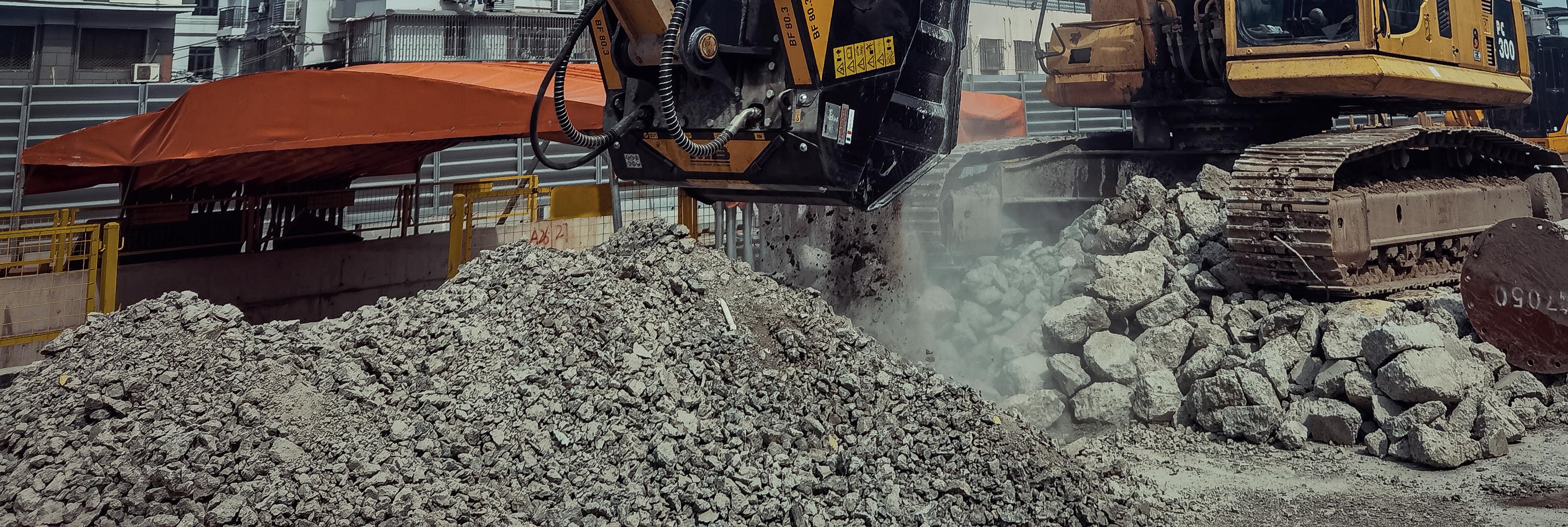


A revolutionary new asphalt plant burner from Ammann is claimed to be a world’s rst as it can use hydrogen as fuel. This novel development forms part of the rm’s drive to develop green, sustainable solutions for the global construction industry
It is the rst on the market. None of our competitors have it,” said Marzio Ferrini from Ammann and he added, “the hydrogen burner is available today.”
The new burner delivers precise control of the ame shape and an optimised air/fuel mix to increase combustion ef ciency. It has redesigned electronics and mechanical components to ensure ease of maintenance. Using a fuel supply of 100% hydrogen, the burner operates cleanly.
The system is available as a retro t and can also be used to burn a combination of hydrogen and natural gas to meet available supplies. The company says that its existing asphalt plant gas burners meanwhile can use a combination of 28% hydrogen mixed with natural gas without any need for special changes. If Ammann carries out some modi cations, the rm’s conventional burners can use a combination of up to 60% hydrogen and 40% natural gas.
Hydrogen is the world’s most common element and is non-toxic. “After combustion we have only water vapour,” Ferrini said.
The new hydrogen burner is said to be easy to maintain and has been developed with a view to the future. Industrial operations are being taxed for CO2 emissions in Europe and this is coming for China also, with similar moves likely elsewhere in the world in due course.
Ferrini said, “We are working to reduce the environmental impact of asphalt plants to zero.”
Other developments from Ammann for making asphalt plants cleaner include innovative technologies to minimise smoke and particle emissions, as well as proven burner designs able to use wood dust that are aimed at customers in the Nordic nations.
Ammann says that its reduced smoke technology uses a combination of ltration and recirculation to remove up to 70% of emissions. Smoke is captured, rerouted and fed back into the burner while the oily particles are ltered from the stream at a number of stages. The oil is then condensed and can also be reused, while the lters are said to be self-cleaning with minimal maintenance needs.
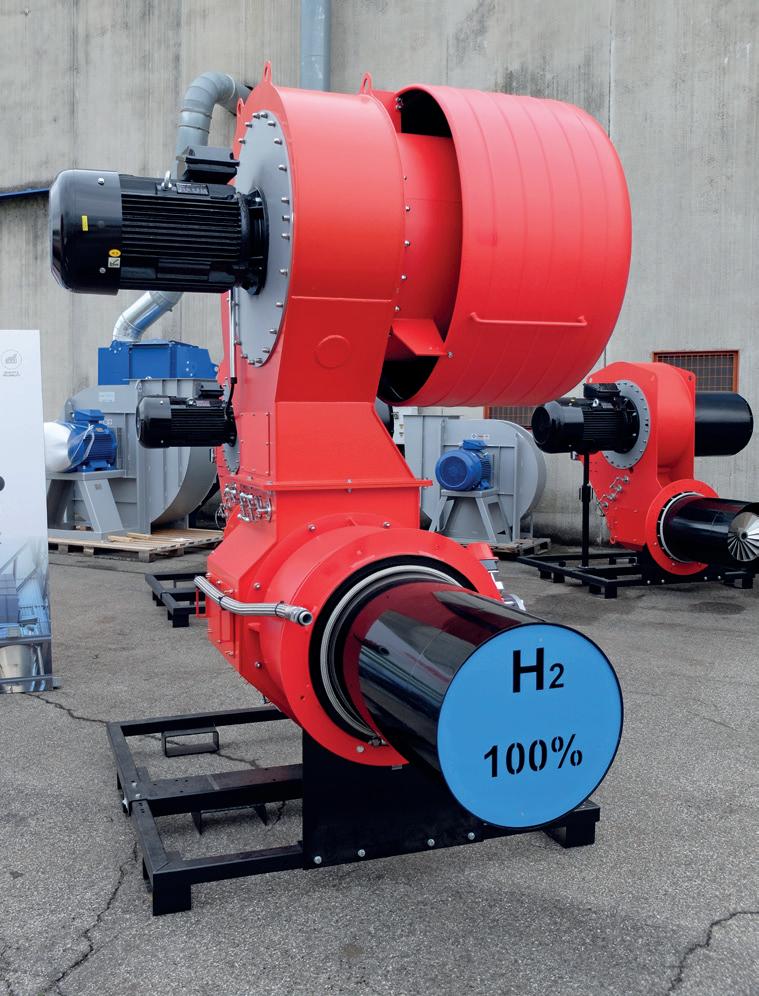
organic compound reduction device) removes 70% of the volatile organic compounds (VOCs) from the plant emissions.According to the rm, this VRD package can be retro tted to any asphalt plant, not solely Ammann machines. The technology helps to increase plant ef ciency also as heat is retained within the system, reducing the need for additional heating. Ferrini commented, “We are saving
energy because we are reusing the hot air.”
Combined with the new hydrogen burner, these reduced emission systems will help to reduce the environmental impact of an asphalt plant signi cantly. Ammann says that it has already had strong interest in the hydrogen burner from its customers, including one client from South East Asia. Ammann’s innovative hydrogen burner has completed its testing and is available now while Ferrini added, “The VRD system will be available for sale in the second half of 2024.”
One of the biggest challenges to the use of the hydrogen burner at present is the availability of ‘green’ hydrogen derived from electrolysis using sustainable energy sources. Ferrini said that this is a restriction on the industrial use of hydrogen at the moment.
However, this sector is growing, especially as a number of engine rms such as Cummins, Kohler and Perkins (Caterpillar) are actively developing power units running on hydrogen. Construction machinery rms including Caterpillar, Hyundai, JCB, Komatsu and Liebherr are already well down the path to offering equipment fuelled by hydrogen. Cummins in particular has expanded its operations into the electrolysis technology segment through key acquisitions and is now constructing plants for the production of green hydrogen.


ABOVE: Ammann’s revolutionary hydrogen burner can deliver cleaner asphalt production for the construction industry BELOW: New technology can deliver e ective emissions reduction for Ammann’s asphalt drums by ltering and recirculating air

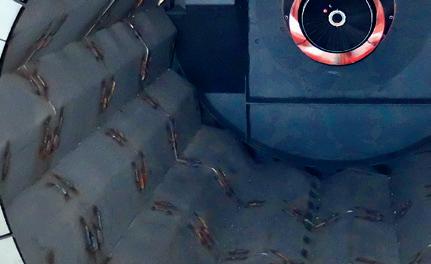

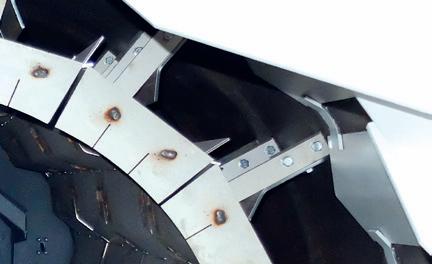
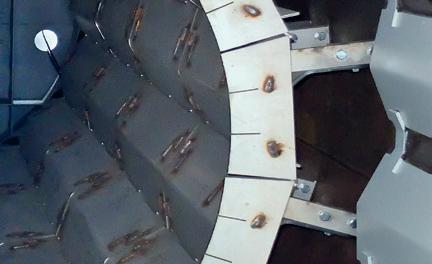


The Lintec CDP14001M plant is providing materials to repair a 5km section of the Oce-003-2022 road network, despite the region's humid and rainy climate
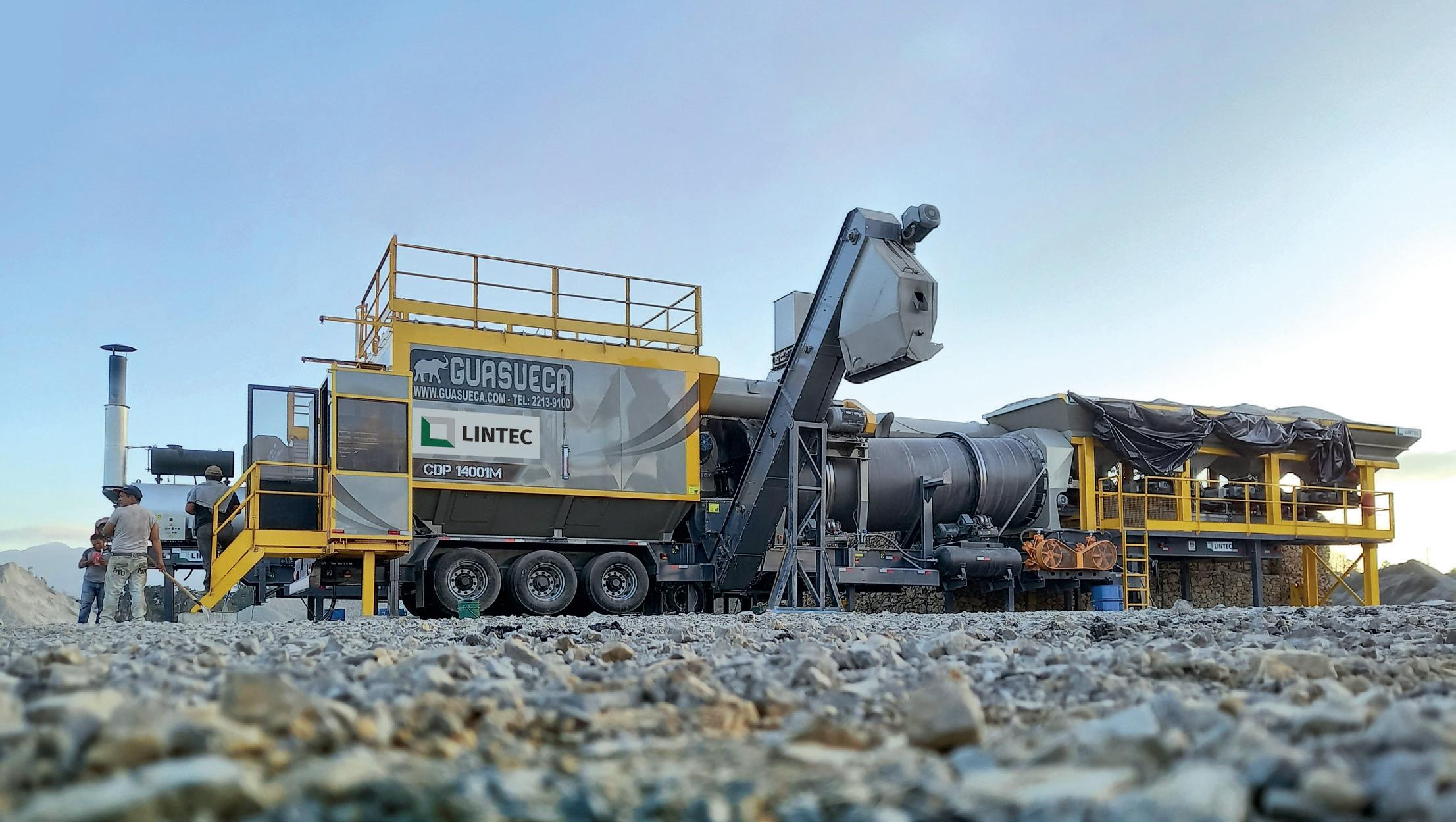
A customer in Guatemala has bought a second Lintec & Linnhoff continuous asphalt mixing plant from equipment dealer Guasueca.
The new Lintec CDP14001M plant joins the customer’s existing Lintec CDP5001M, the smallest in this range. As soon as the new plant had been delivered to the customer, it was sent to support road improvement projects in Cobán, central Guatemala, over 200km from Guasueca’s HQ in Guatemala City.
Cobán is Guatemala’s fourth largest city and a popular ecotourism and coffee-growing area,
has a high chance of rainfall on any given day, making working conditions variable and uncertain.
For the coming months, the Lintec CDP14001M will supply material for road rehabilitation work to a 5km section of the Oce-003-2022 road network in the centre of the busy city.
The customer’s experience with the Lintec CDP5001M gave it confidence in the mobility and productivity of the plants according to Guaseca. With this in mind, the firm selected the larger Lintec CDP14001M for the project to improve traffic flow in Cobán’s urban areas. A key benefit was
well as its production capacity of up to 140tonnes of asphalt/hour.
The Lintec CDP14001M plant is designed for quick set-up and dismantling, including the ability to be assembled on compacted ground without the need for concrete foundations. It is claimed to suit use on short-term projects or mobilisation from one project to another. As the second-largest model in Lintec’s mobile CDP range, it can also be employed for stationary use, with the possibility of integrating either three 6m3 or four 7.5m aggregate bins to tailor the configuration to local conditions. A 40,000litre
sufficiently.
The firm says that the plant can produce high quality hotmix asphalt due to its advanced automatic control system software with manual override, along with the robust and durable twin-shaft mixer that enables precise, repeatable output.
With an area of 370m2, the Lintec CDP14001M’s baghouse filter ensures a low rate of particulate emissions. A further environmental benefit comes with the option of a cold recycling system that can use up to 15% of RAP in the feed.
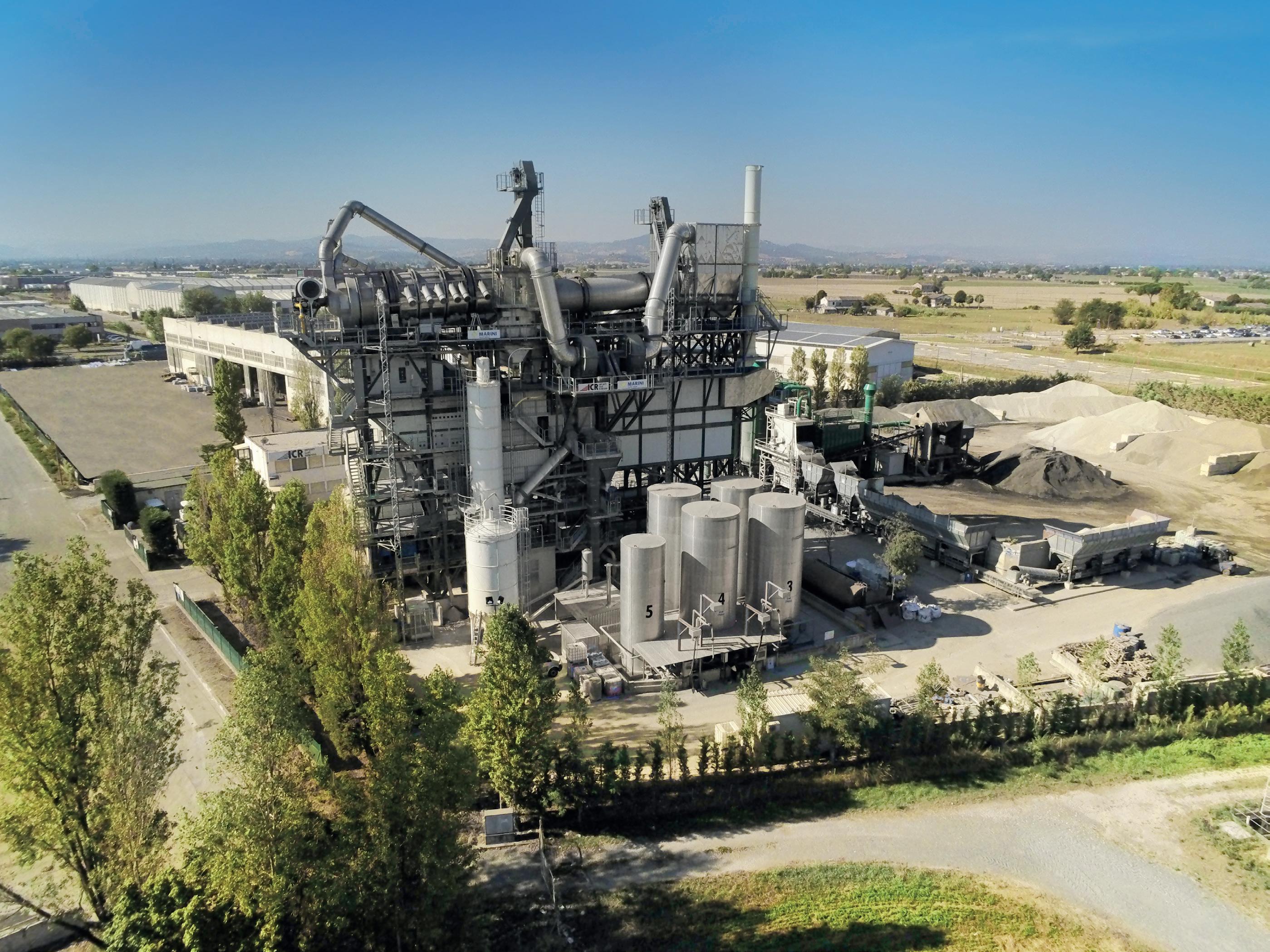


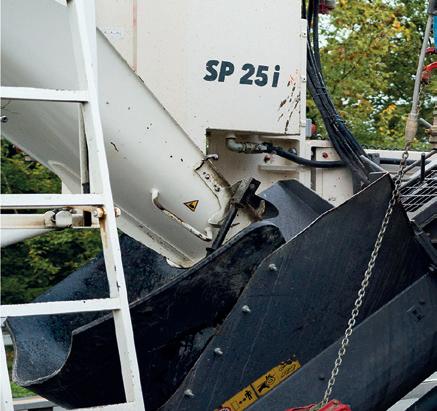
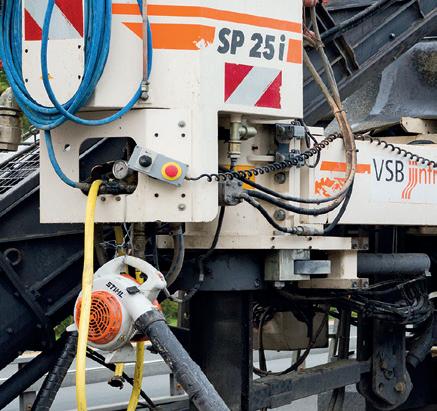
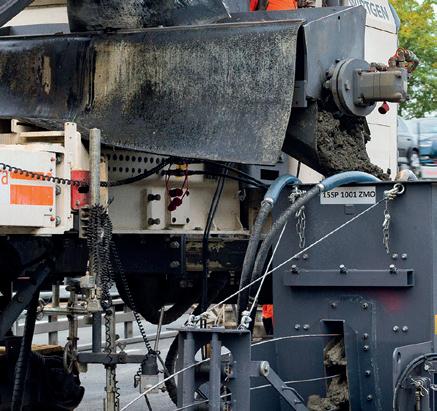
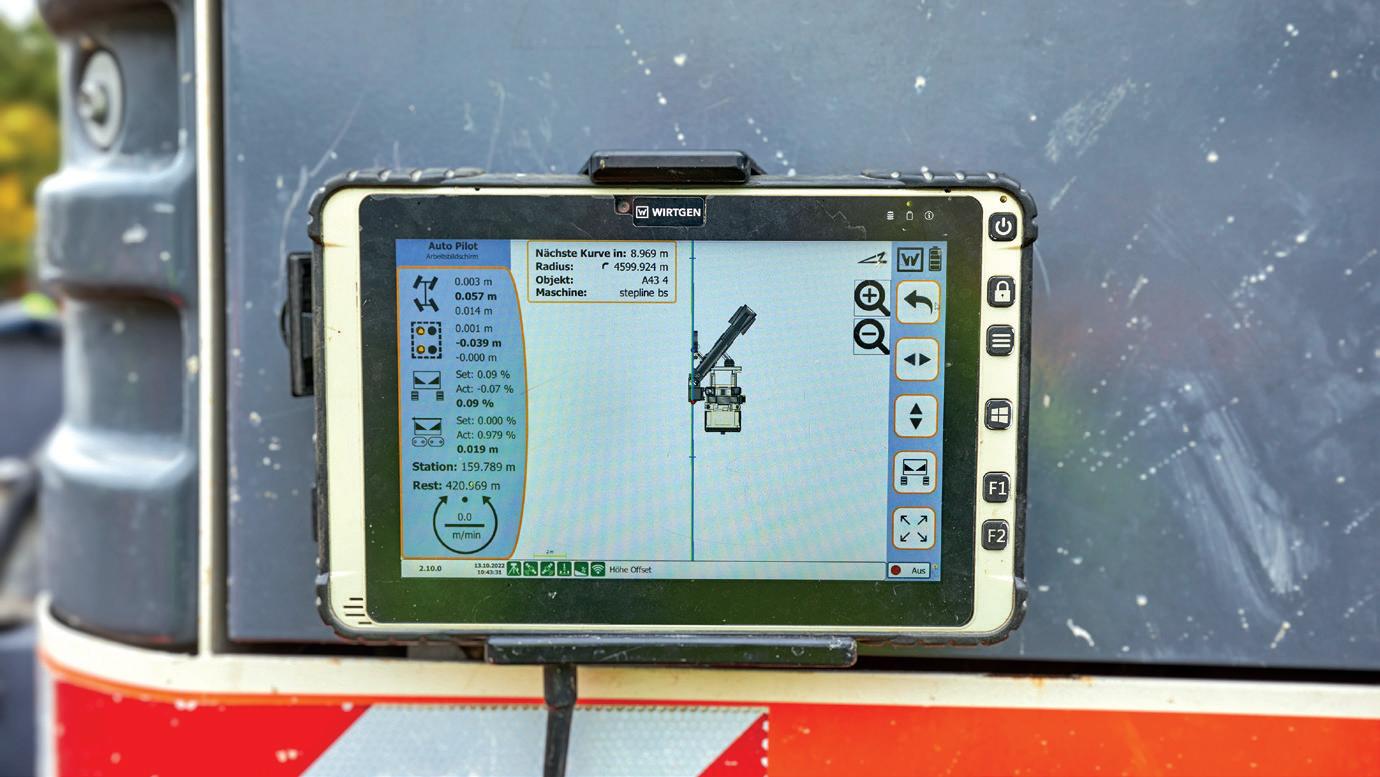
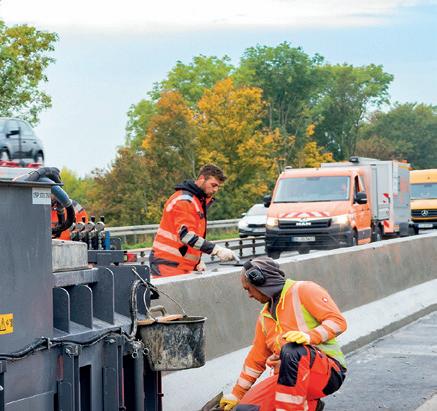
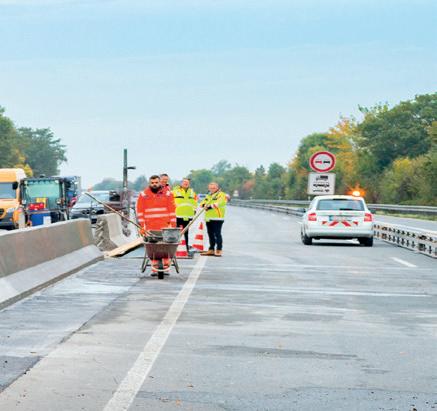
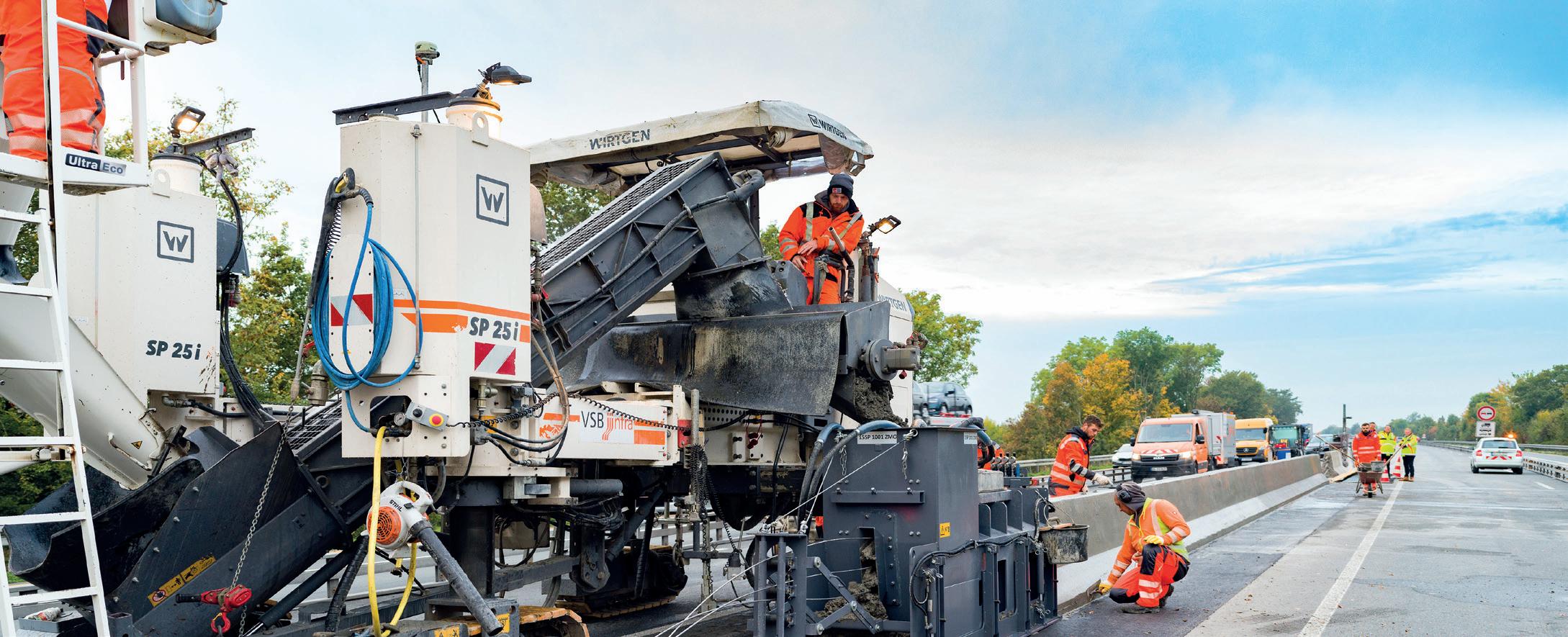
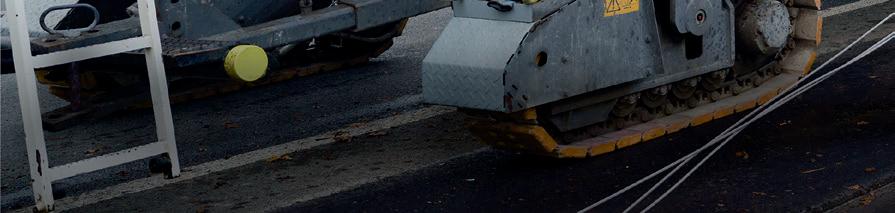


Wirtgen’s improved stringless concrete paving system is being used on the A43 highway near Münster in Germany
The AutoPilot 2.0 is a 3D control system that helps increase ef ciency and safety. The system is being used to deliver a new poured in-place concrete safety barrier that will separate the eastbound and westbound lanes of the A43 Autobahn.
Reinforced concrete barriers offer effective vehicle restraint for road sections carrying heavy traf c and the barrier pro le was paved by an SP 25i using slipform paving. The use of AutoPilot 2.0 eliminated the need for the paving crew from VSB infra to set up a stringline for controlling the machine.
The automatic 3D control system can optimise slipform paving, allowing accurate stringless control of slipform pavers. It consists of a control system integrated in the machine, a base station and a tablet computer that can be used together with the Field Rover survey pole and on the slipform paver. The system eliminates the need to set up and
remove a stringline for conventional machine control, it also reduces project times and costs. The machine is guided by satelliteaided navigation, speeding the work ow and making the operation more ef cient, while also allowing tight turns or more complex geometries to be slipformed.
"This is another project on which we are using stringless paving. We have been using the AutoPilot system since it came onto the market. It saves us so much time that we use it on both of our machines whenever we can." said Kay Petersen, CEO of VSB infra.
The working area on this job offers little room for the paving crew and using a stringline would limit this space more. Having more space in front of the slipformer allows mixer trucks to manoeuvre right up to the paver to deliver each load. The absence of the vulnerable stringline also removes the risk of tripping and injuries as a result of falls.
The screen of the AutoPilot tablet displays the course of the virtual stringline and provides information to the operator as the machine
Heidelberg Materials has a new concrete plant in the UK. The ready-mixed concrete plant is located in Sutton Courtenay in Oxfordshire and is said to be able to supply low carbon, high volume and specialist mixes.
The facility has several features that boost its sustainability including a water harvesting system and an energy-e cient mixer. The site has a large storage capacity, minimising the frequency with which raw materials need to be brought in and is also rail
connected. This keeps more than 3,000 lorry journeys/year o the roads, which equates to over 554,000km, reducing congestion and carbon emissions.
Other features boosting sustainability include its waste management system for concrete washout and the ability to store and incorporate reclaimed and lower carbon materials into the concrete mix.
Heidelberg Materials www.heidelbergmaterials.com

moves along the prede ned track. The AutoPilot 2.0 3D control system can be used to produce an array of offset and inset pro les. There is no longer a need for a surveyor to generate a geodetic data model in advance. If a 3D data model already exists, it can be uploaded from the tablet and integrated into the system.
The AutoPilot comes into play before the actual paving work begins. Relevant points on the project site are recorded with the Field Rover survey pole and are used for the digital data model that generates the virtual stringline on the tablet computer. This eliminates the need for an additional surveyor onsite.
The existing sub-base of the A43 was sampled by an ultrasonic sensor and also used as a reference datum by the machine control system, delivering precise paving of the concrete pro le.
Wirtgen
www.wirtgen.com
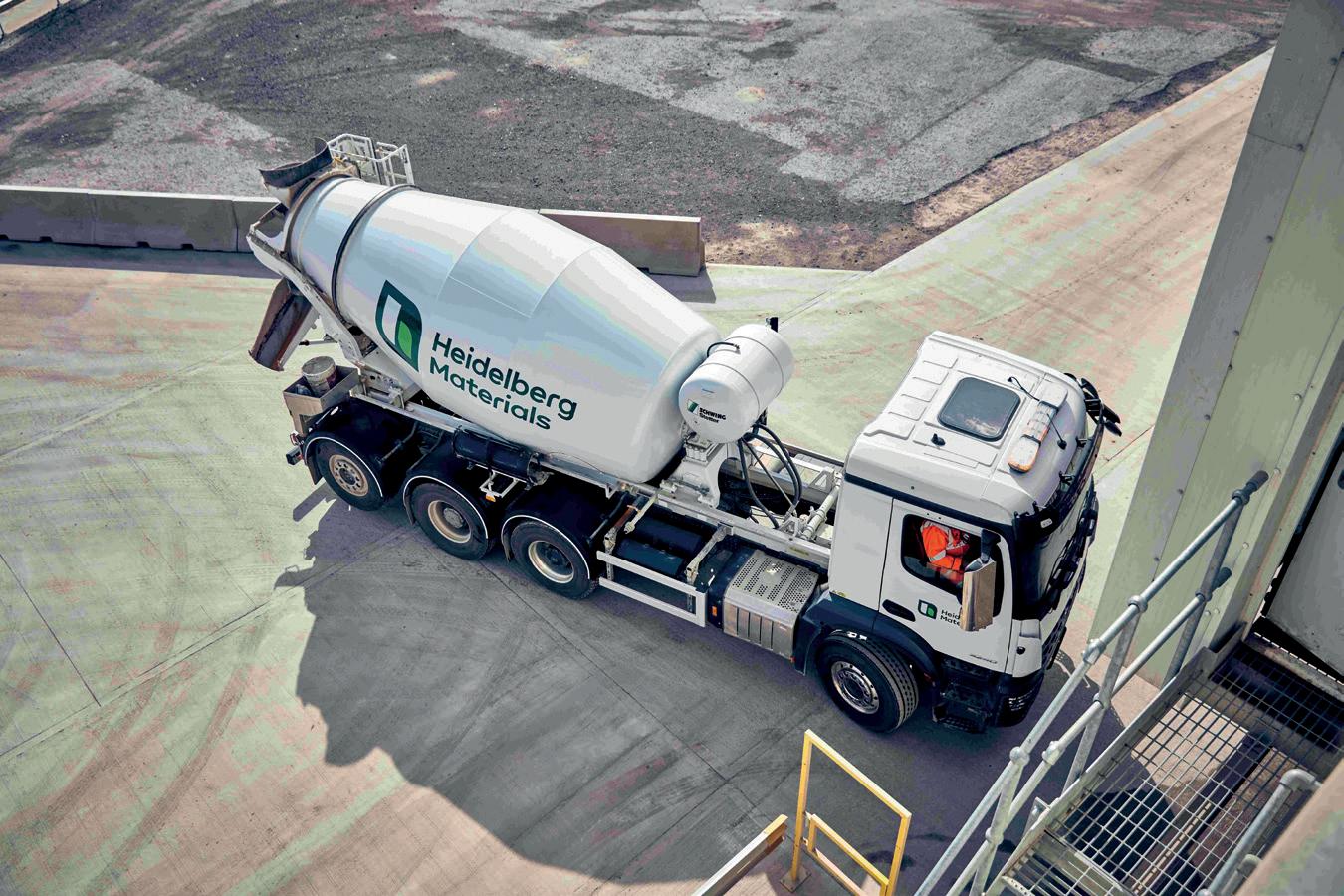
The rst of the new generation Liebherr concrete batching plants is going into operation at a+b Asphalt- und Betonmischwerke in Germany. The novel Betomix and Mobilmix batching plants from Liebherr bene t from a modular design. Plug-in modules are said to allow greater mobility when relocating the plant. The modular design means that customers bene t from a range of con guration options, short lead times, fast assembly and high parts availability. The new plants are said to be energy e cient and o er customers cost savings in operation, as well as a high cement weighing accuracy.
The customer has bought a Mobilmix 3.0 concrete batching plant for its Bad Waldsee site in southern Germany. The plant delivers up to 130m³/hour and is equipped with a Liebherr DW 3.0 twin-shaft mixer. Up to 210m³ of aggregates can be held
in its six storage areas. Four types of cement or binder weighing up to 400tonnes are stored in the cement section.
The new plant requires up to 30% less energy than previous versions. The use of frequency converters for the drives on the mixer and feeder elevator also reduces the issue of peak power levels. The soft start and soft stop of the drives reduces wear and tear on the mechanical parts. The frequency converter allows the speed of the twin-shaft mixer to be changed during mixing to suit the mix design.
The frequency converters enable accuracy when metering cement. With a recipe using 300kg of cement/ m3 of concrete, up to 7.5kg of cement can be saved. For an annual output of 50,000m³ of concrete, this corresponds to savings of 375tonnes of cement/year. Production results in a greenhouse potential of 587kg/
tonne. According to this, Liebherr says that the new generation of batching plants can save up to 220tonnes of CO2/year.
The modular design allows separate units to be manufactured independently and these are wired and assembled at Liebherr. After testing, the modules are delivered as complete transport units to the construction site.
optimised and are a maximum three metres wide. This makes special transport super uous for almost all plant variants and therefore reduces transport costs. Due to their folding system and plug connections, the modules can be quickly and e ciently assembled and put into operation at the construction site.
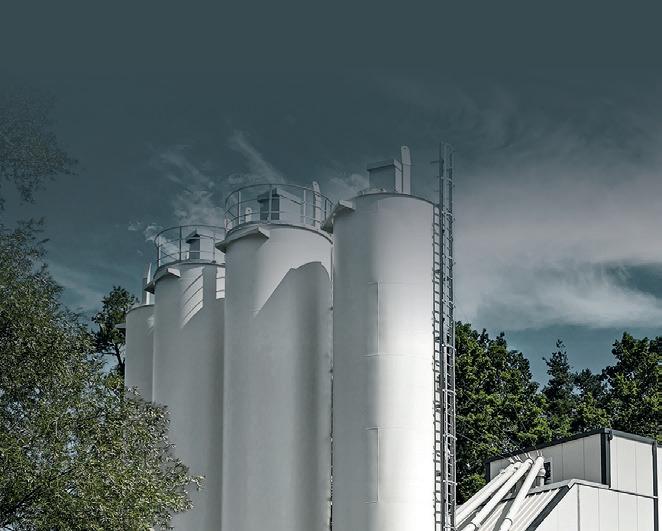

Liebherr www.liebherr.com
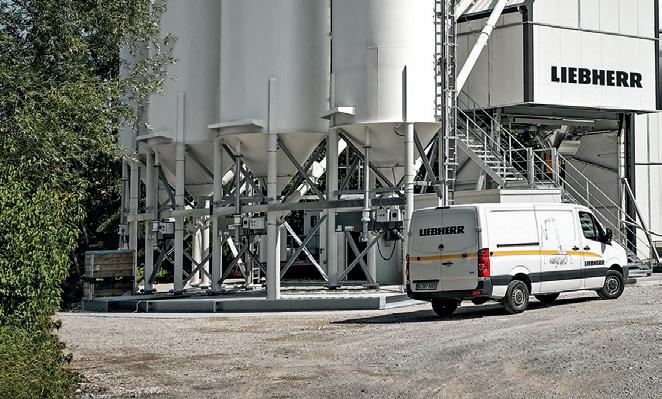
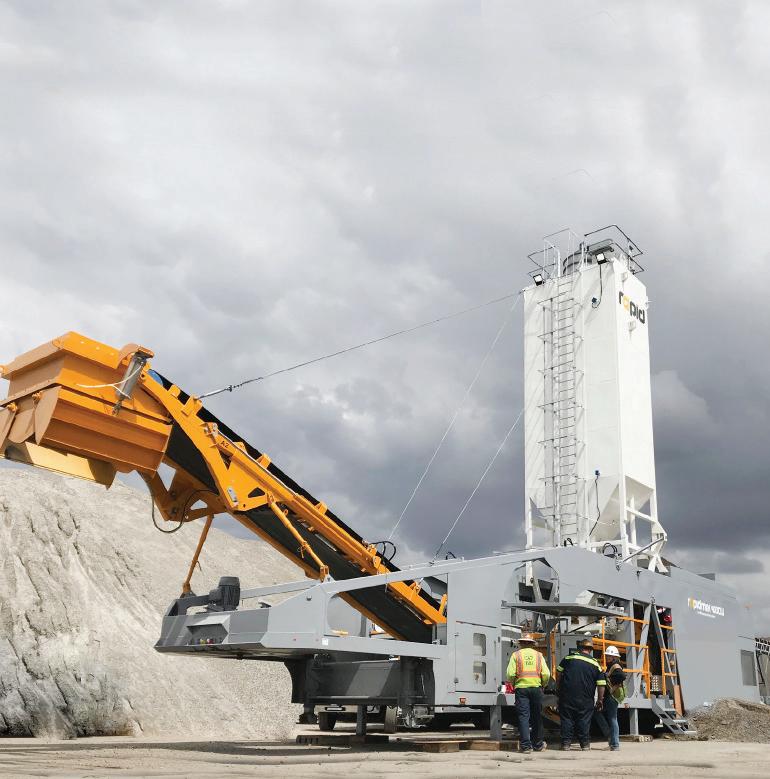



Producing up to 600 tonnes per hour, Rapidmix delivers speed and cost e ciency. Fully mobile and selfcontained, Rapidmix travels from site to site with ease. O ering full weighing of all materials, Rapidmix provides accuracy you can depend on.
rapidinternational.com/rapidmix
The new 31 XXT truck- mounted concrete pump from Liebherr is said to offer high performance and versatility. A low unfolding height and the LiDriveIn function allow it to be used in low headroom areas.
The machine has been launched following extensive testing and is the smallest pump type from the 30m series. The 31 XXT has a compact ve-part distribution boom and a low unfolding height of only 5.4m. This ensures versatility on smaller and cramped construction sites.
Due to the LiDriveIn system, the 31 XXT can enter a low height area in standard operation with the arm package folded in front of the cab. To bring the arm package forward, it is not necessary to swing out the outrigger legs, it is only necessary to move the cylinders downwards. The machine operator lifts the cylinders again and can enter the low height area with the arm package in front of the cab. Support can be provided as required, whether full, partial or single-sided.
In the low height area, the boom can be made ready for use in front of the cab due to the short arm segments and the low unfolding height. For load reasons, the LiDriveIn function is only quoted in combination with a four-axle chassis.
Novel storage systems for hoses and pipes allow around 90m of conveyor lines to be carried. After swinging out the outrigger legs, all bearing magazines are very well accessible. Due to the design of the magazine with individual pipes, each cable segment carried can be removed individually.
A major highlight of the new 31 XXT is Liebherr's proven Powerbloc pump drive unit, with integrated hydraulic switching and measuring elements. This eliminates the need for numerous hydraulic hoses and other components previously required. Features of the new system are said to be its robustness, high performance and quiet operation.
The new drive unit is combined with the ef cient
semi-closed oil circuit, which supplies all drives. As a result, the oil volume could be reduced. The new Liebherr system combines the advantages of proven open and closed circuits, without their respective disadvantages, while being quiet in operation.
Options include LED lighting designs for working in the dark, storage boxes for materials and tools as well as shelves for hoses and pipelines.
Liebherr
www.liebherr.com
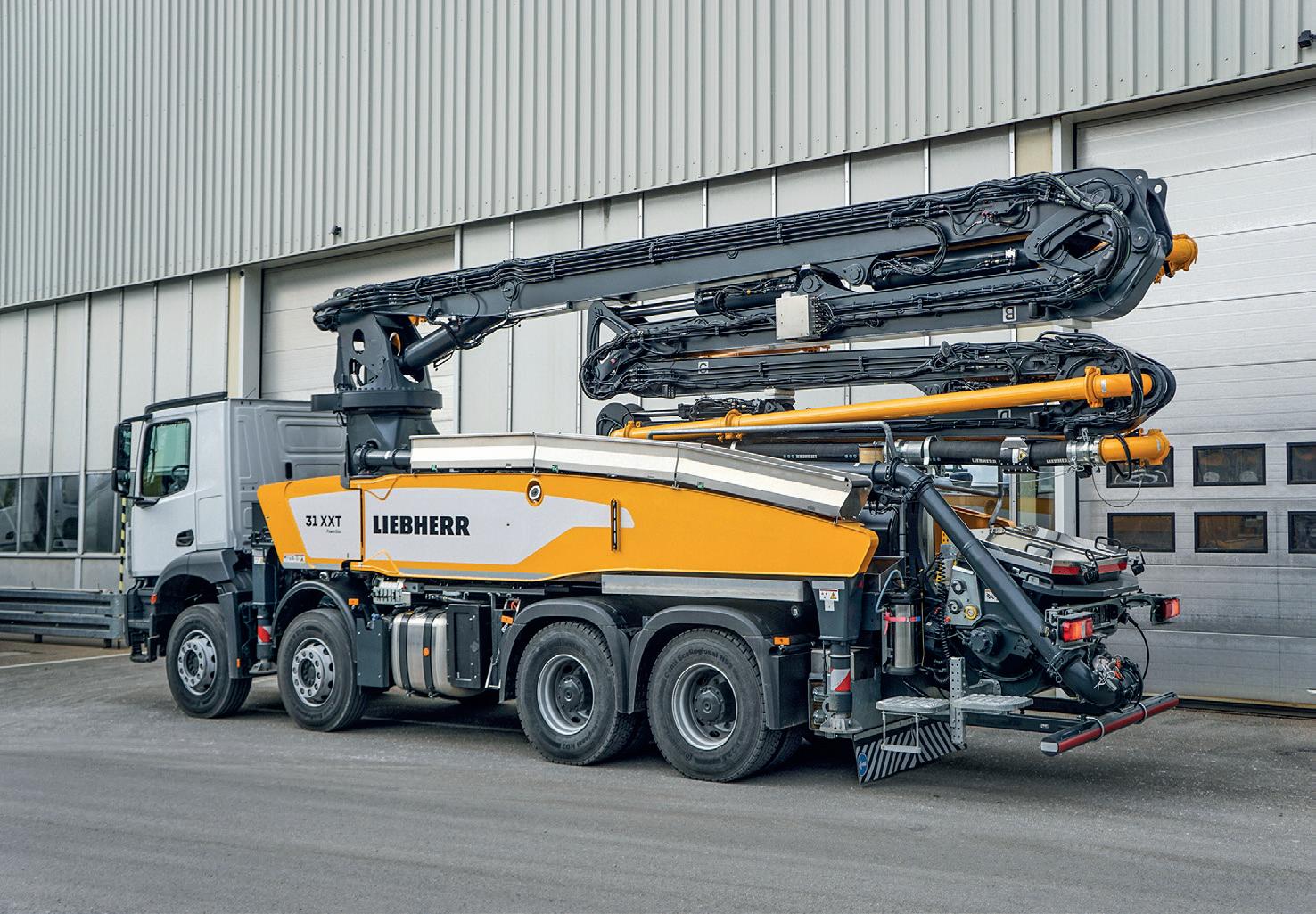





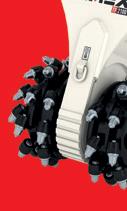




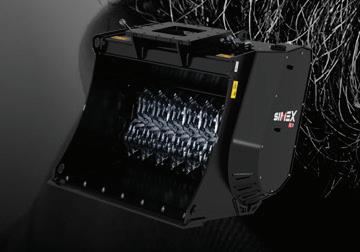

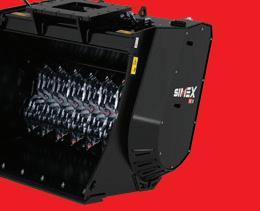



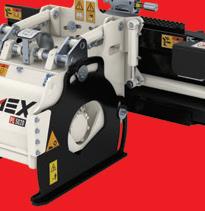



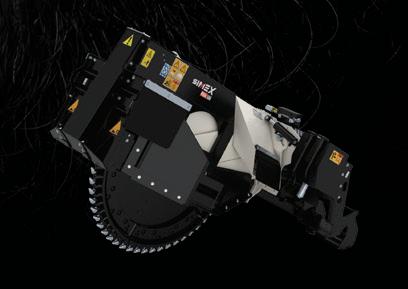


The tolled Cebu-Cordova Link Expressway is a bridge and causeway stretching almost 9km across the Mactan Channel, making it the Philippines’ longest and tallest bridge
The tolled Cebu-Cordova Link Expressway connects the city of Cebu, which has nearly one million inhabitants within the greater Central Visayas area, to the smaller municipality of Cordova, with around 75,000 people on the island of Mactan.
Before the four-lane, 27m-wide expressway opened in 2022, Cebu was connected to Mactan by only two bridges to the north. This third inter-island connection to the south is relieving traf c congestion on the two original bridges and improving regional tourism and the economy. Importantly, the expressway has reduced travel time between Mactan Island and Cebu International Airport by 40 minutes.
As part of a temporary design joint venture, SENER, a private engineering and technology group founded in Spain in 1956, led detailed engineering design, managed the multi-

organisational design teams and provided technical assistance during construction. The overall project features several bridges and access viaducts connecting to the main cablestayed bridge, explained Jordi Revoltós, bridges and viaducts discipline head at SENER. The project presented several challenges, including extreme seismic conditions and an extremely sensitive marine environment. The area is prone to typhoons with winds as strong as 250km/h. On top of this, with design teams across multiple organisations working on the project, SENER faced design compatibility issues when connecting the viaducts to the main bridge structure.
“Since the approach viaducts connect with support at the mid-span of the bridge, special coordination [needed to be] developed to ensure a joint and compatible design,” said Revoltós. Effective interaction was a key factor in obtaining a balanced design.

Another challenge was that the project needed to be constructed entirely over water on a tight timeline. This complex construction sequence required software that could integrate with all design parameters to develop models that incorporated modi cations from the construction site. SENER realised that they needed exible, interoperable bridge modeling software. “An [unsuitable] choice of calculation software [would lead to] increased time and costs during the design phase, while jeopardising nal approvals needed before construction,” said Revoltós.
SENER selected Bentley’s OpenBridge solution because of its exibility, collaborative design capabilities and automated calculation features. “The high exibility of OpenBridge to develop models with modi cations requested from the construction site, together with the short time required to adapt previous bridge models to new structures, led us to choose this software to design all bridges and viaducts,” said Revoltós.



Using Bentley’s application, they performed coordinated multidiscipline modeling and analysis that enabled the geometry adjustments that would ensure design compatibility between the structures.
Working in an open digital environment allowed the geotechnical and bridge design and construction teams to share information and determine the optimal bored pile diameters for the main bridge and viaducts. They also ensured that the structural solutions could withstand the seismic conditions and extreme winds.
SENER also used OpenBridge to conduct detailed structural checks to ensure that each structural element was correctly developed and veri ed. Meanwhile, automating post-processes allowed the team to completely control the design schedule and to adjust resources and tasks as necessary. The software’s versatility, interoperability and intelligent modeling and analysis facilitated a fast-track design process and model-based construction work ows to address the complex construction sequence and constrained project schedule.
Implementing collaborative digital modeling and analysis processes using OpenBridge streamlined work ows, enabled SENER to timely develop the models and meet the project schedule. OpenBridge’s exibility to update models simpli ed the geometry adjustments required for design compatibility. This capability reduced coordination time between design teams and allowed them to achieve high-quality digital designs.
Based on the detailed calculations, the design teams reduced the dimensions of the foundations and minimised the impact on the coral seabed. Having highly accurate models in an open digital platform facilitated collaboration with the construction team, optimising time on site.
Furthermore, Bentley’s application automated post-processes, allowing SENER to generate calculation reports exibly and ef ciently, saving additional time and costs by almost 30%, explained Revoltós. Working in Bentley’s connected digital environment also improved review and approval ef ciencies, accelerating approvals of different parts of the project, enabling construction to begin in the shortest possible time.
The intermediate control steps enabled by the software, together with the quality control sheets, made internal veri cation ef cient and traceable. “The use of OpenBridge, in conjunction with internal quality control processes, minimised potential errors in the nal product,” said Revoltós.
Bentley Systems is an American software development company that manufactures, licenses, sells and supports computer software and services for the design, construction and operation of infrastructure.
Material was supplied by Amy Heffner, director of product marketing at Bentley Systems.
Bentley Systems www.bentley.com
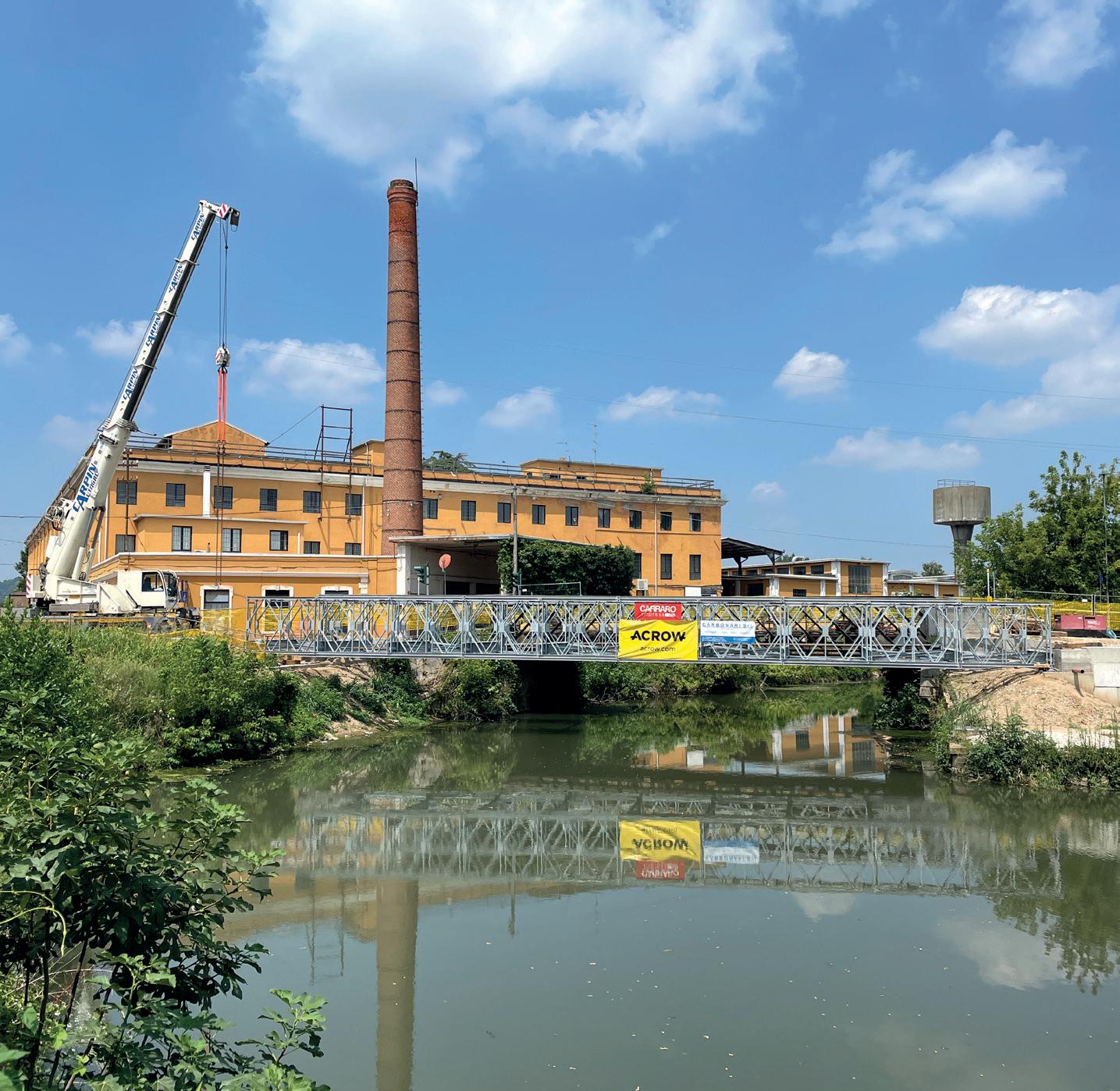

An Acrow modular steel temporary bridge has been installed as a longterm detour solution during a bridge renovation in a suburb of Vicenza, Italy.
Prior to the opening of the Acrow 700XS bridge, motorists had been required to detour 12–15km around the site of the Ponte di Debba, a historic cast iron structure built in 1885. It carries traf c over the Bacchiglione River in the village of Debba.
During an inspection last summer, the bridge was found to have structural problems and was immediately closed to motor vehicles. In addition to the length of the required detour, the route closure caused other concerns such as an increase in the volume of detoured traf c entering Vicenza.
There was also the need to preserve access to the A4 motorway toll gate and maintain ef cient and fast travel for emergency responders. For these reasons, the Municipality of Vicenza, owner of the structure, opted to install an Acrow panel bridge to restore the route safely and reliably during the complete rehabilitation of the old structure.
The 30.5m-long Acrow bridge is a singlelane structure with a width of nearly 3.7m. It has an epoxy aggregate deck surface and a design load of 44 tonnes as per the Eurocode/ Italian standard.
Acrow components arrived at the site on July 10 and installation started three days later. The fully decked bridge was dropped into place using a 70tonne crane and after testing and installation of traf c lights and signage, the bridge was commissioned and opened to traf c on August 2 – around a three-week job.

Acrow provided technical assistance during the assembly and supported live load testing activities prior to the bridge commissioning.
Despite the speed and success of the installation, undertaken by project contractor Carraro Impresa, the project posed numerous complexities. The assembly area was extremely tight and situated between the main roadway, a bank of the river and a protected pedestrian path which had to remain open during bridge installation. The site also contained high-voltage utility wires which needed to be avoided.
Because of the heavy traf c, the adjacent roadway could not be closed. This meant that temporary works to increase the rigging area for the crane had to be carried out in a single weekend.
Preliminary feasibility studies including digital renderings to support the project planning process were provided by Acrow to illustrate placement of the temporary modular bridge near to the existing one. At the end of the old bridge restoration, the Acrow bridge will be dismantled by Carraro Impresa and stored for future use, said Marco Mazzucato, business development and project manager for Acrow Italy.
“Our bridges are designed and manufactured with high-strength galvanised US steel for a service life of 75 to100 years,” said Paul Sullivan, president of international business at Acrow. “But they are also an ideal solution for emergency and temporary detour applications.”
Acrow
www.acrow.com
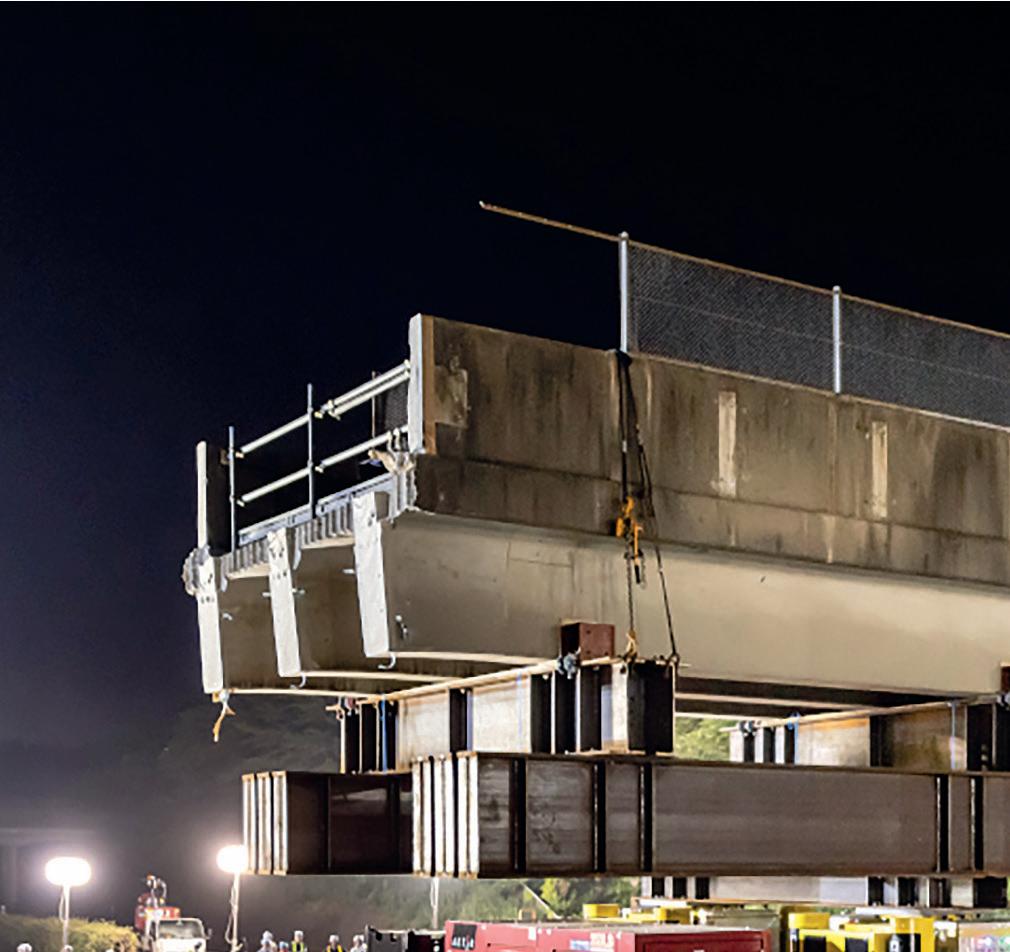
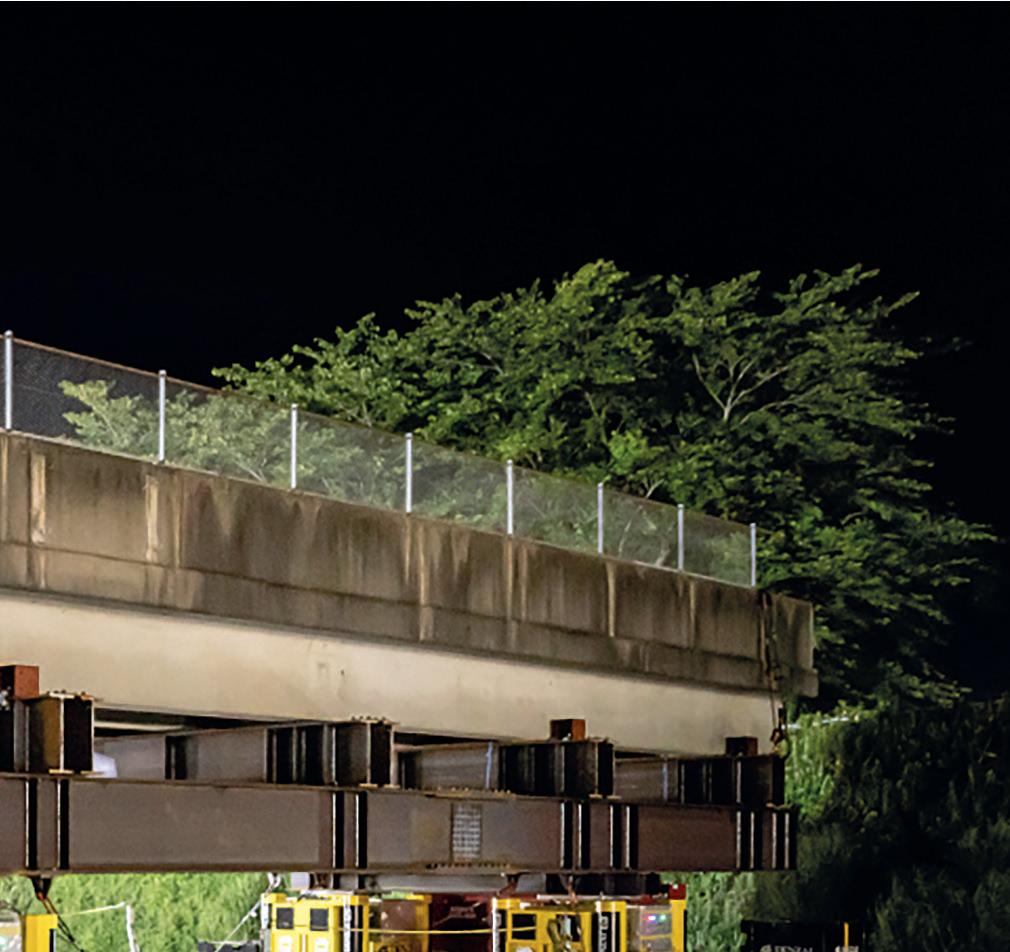
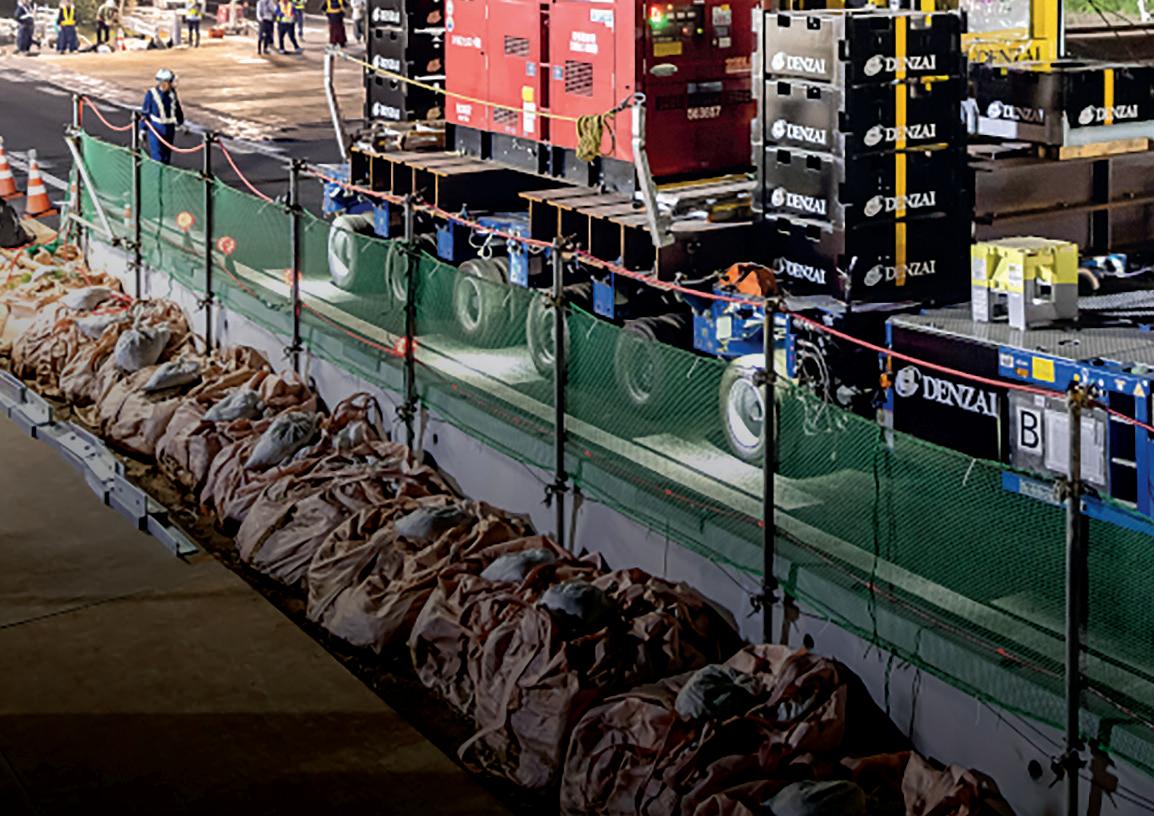

Denzai Engineering has used an Enerpac JS250 jack-up system for a bridge removal at Narita City near Tokyo. The 150tonne overpass road bridge was removed as part of preliminary work ahead of a planned runway extension at Narita International Airport.
Using the JS250 towers mounted on SPMTs (self-propelled modular trailers) allowed for removal of the bridge overnight. This minimised traf c disruption on the busy Higashi-Kanto Expressway.
The extension of Runway B at Narita Airport requires the creation of a gradeseparated intersection between the HigashiKanto Expressway and the extended section of Runway B. Removal of the bridge will
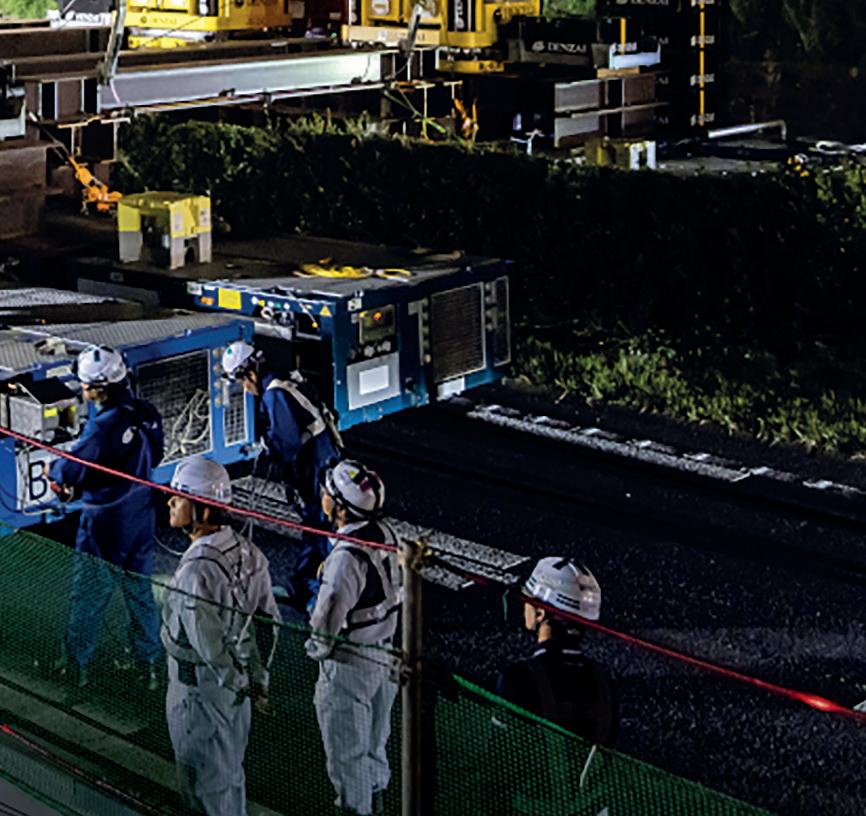
allow the Higashi-Kanto Expressway to be temporarily rerouted during the intersection construction.
Because lack of space prevented the use of a crane for the bridge removal, Denzai chose the JS250 jack-up system for its lifting capacity, stability and compactness. Two JS250 towers were mounted on each of two SPMTs and a steel support platform placed on top. The platform was used to support the 21m-long x 5m-wide bridge deck as it was lifted and transported to a rigging location near the expressway.
The Enerpac JS-Series jack-up system is a multipoint lifting system comprising four jackup towers, one positioned under each corner of a load. The lifting frame of each jack-up
tower contains four hydraulic cylinders, which lift and stack steel barrels.
The load is lifted in increments as barrels are inserted via an automated system and stacked, forming the lifting towers. Managed by a single operator, each tower’s lifting and lowering operations occur simultaneously, while the jack-up’s synchronous technology maintains balance of the load.
Enerpac, established 110 years ago, is a global provider of high-pressure hydraulic tools, controlled force products, portable machining, onsite services and solutions for precise positioning of heavy loads.
www.enerpac.com

Beginning in the rst quarter of 2024, Caterpillar will develop a transient-capable system for off-highway applications
The project will demonstrate how state-of-the-art control systems and electric-hybrid components can help hydrogen-fueled engines meet or exceed traditional diesel engines' power density and transient performance.
Caterpillar will serve as the prime contractor on the project, providing engine research and development and system integration. As the project progresses, other industry and academic collaborators will be brought into the project to provide additional expertise. The initiative will be delivered at Caterpillar facilities in Chillicothe, Ill. and San Antonio, Texas.
With research commencing in 2024, the project is supported and partially funded by the US Department of Energy’s (DOE) Vehicle Technologies Of ce (VTO) through the Of ce of Energy Ef ciency and Renewable Energy (EERE). It is included among 45 projects across 18 states and Washington, DC, receiving funding to advance research, development, demonstration, and deployment in several areas critical to reducing greenhouse gas (GHG) emissions in the transportation sector.
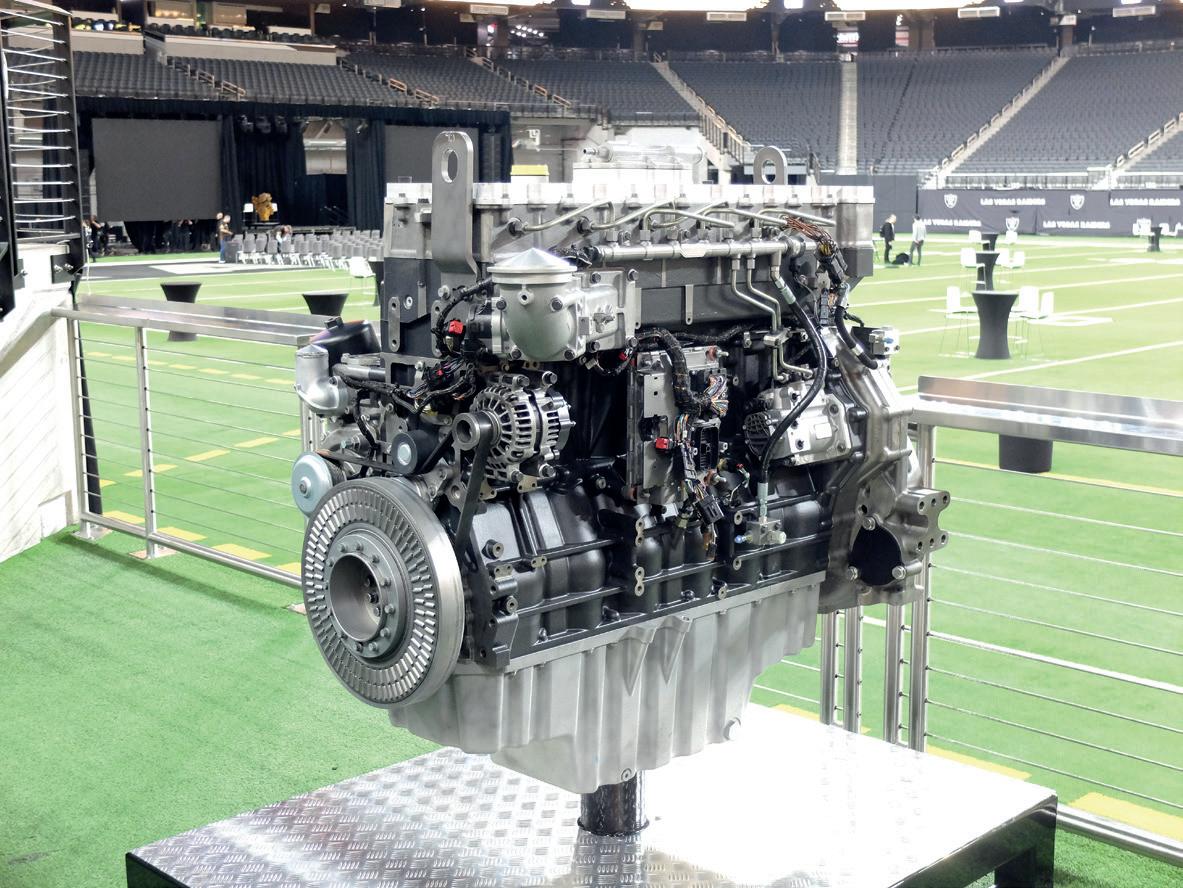
built upon Caterpillar’s 35 years of enterprise experience in hydrogen fuels.
exibility into the C13D engine to serve as our platform of the future.
Caterpillar’s hydrogen-hybrid demonstration project leverages the performance, packaging, and fuel exibility engineered into the new 13litre Cat C13D engine platform.
Diesel-powered versions of the Cat C13D engine offer eight power ratings from 340515kW with up to 3,200Nm of peak torque. It provides up to a 20% increase in power and up to 25% more low-speed torque than the previous generation of Cat diesel engines in its power class.
The inline, six-cylinder Cat C13D enables the use of renewable liquid fuels such as 100% HVO, B100 Distilled Biodiesel, and even up to B100 Standard Biodiesel by working with the local Cat dealer. In addition to using hydrogen, its core architecture is designed for the future development of spark-ignited natural gas capabilities.
The hydrogen-hybrid power demonstration project is the latest in a series of initiatives
“Every off-highway application has its own unique duty cycles, life cycle demands and performance expectations, and this complexity is driving the development of a wide range of power solutions for the energy transition,” said Steve Ferguson, senior vice president of Caterpillar Industrial Power Systems. “One size does not t all, which is why we’ve engineered
Kohler Engines is unveiling its new Kohler Direct Injection Hydrogen (KDH) engine, an internal combustion engine that can run on hydrogen.
The new hydrogen engine technology is being used in the KDI 2504 TCR unit. This takes advantage of conventional combustion engine architecture and maintains the same dimensions, PTOs and performance as conventional diesel engines, while using zero-carbon hydrogen as fuel.
Kohler Engines is investing in a range of innovative technologies to meet diverse machinery requirements. Hydrogen has emerged as a versatile fuel with rapidly evolving technology. Renowned for its wide ammability range, high ame speed, low ignition energy, and high di usivity, hydrogen holds promise as a cleaner alternate fuel for internal
combustion engines.
Using direct injection (DI) technology, as opposed to port fuel injection (PFI), ensures performance, by avoiding back ring. The hydrogen unit aims to provide the same performance as the diesel engine, such as max power, peak and low-end torque, as well as transient response and drivability.
Hydrogen plays a pivotal role in emissions and GHG reduction as it o ers clean and e cient energy, without generating carbon dioxide (CO2).
The combustion of a hydrogen engine is cleaner than a standard diesel engine and with an aftertreatment system (ATS), the environmental bene ts of using hydrogen are increased. Using the ATS ensures the reduction of exhaust emissions to low values, making the engine near to zero-emissions. The
Available for early OEM pilots in 2025 and scheduled for production in 2026, the Cat C13D engine is targeted for a wide range of offhighway equipment, including rock crushers, screeners, and grinders; and large industrial pumps.
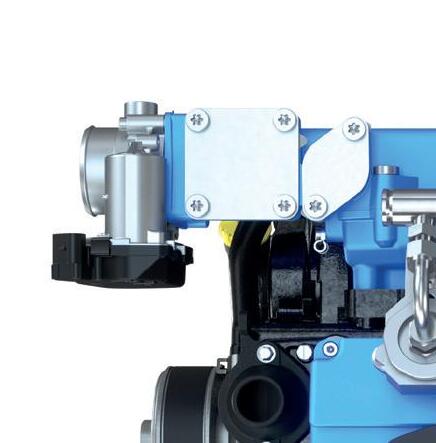
Caterpillar www.cat.com


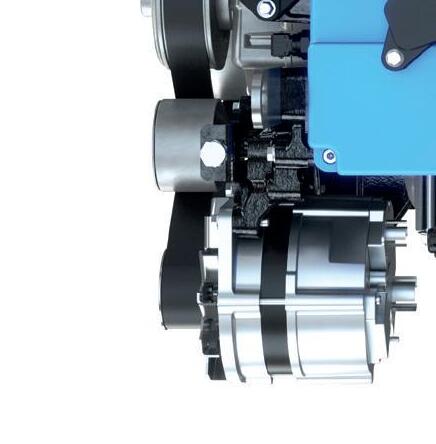
Kohler’s new
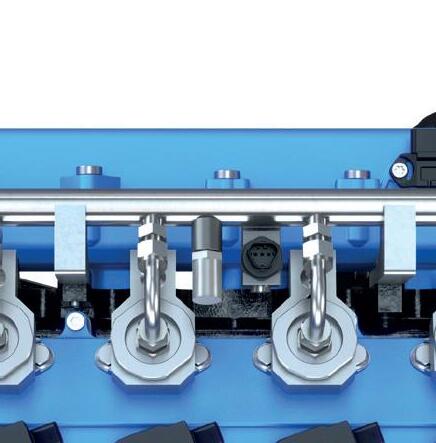
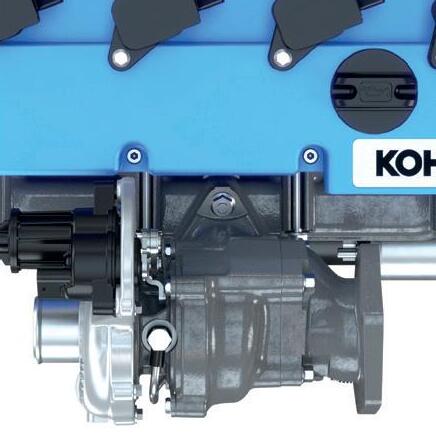
will o er clean power and comparable performance with conventional diesel units
ATS reduces particulate matter (PM), nitrogen oxides (NOx) and hydrocarbons (HC) to minimal levels.
The hydrogen internal combustion engine is designed to be a drop-in solution, and no major changes to the engine compartment will be required. The engine platform of the machine
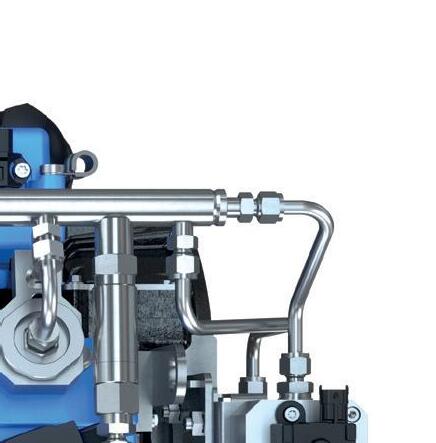

will keep the same cooling circuit, power take-o and ywheel, engine mounting points, and intake line; in addition, the exhaust line does not need ATS in Stage 5.
Kohler Engines www.engines.kohlerenergy.com
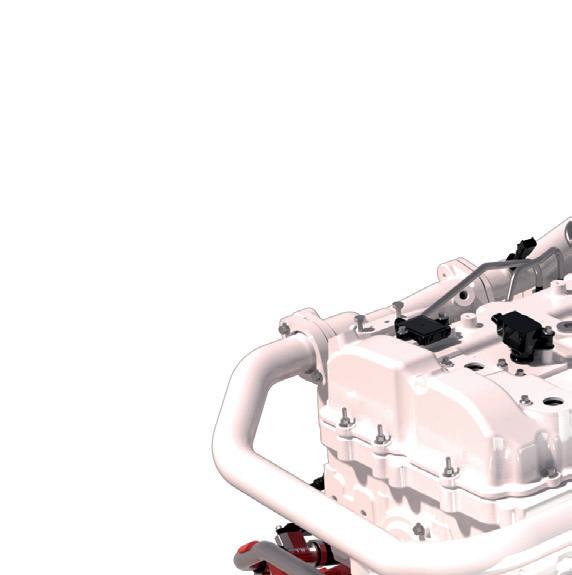
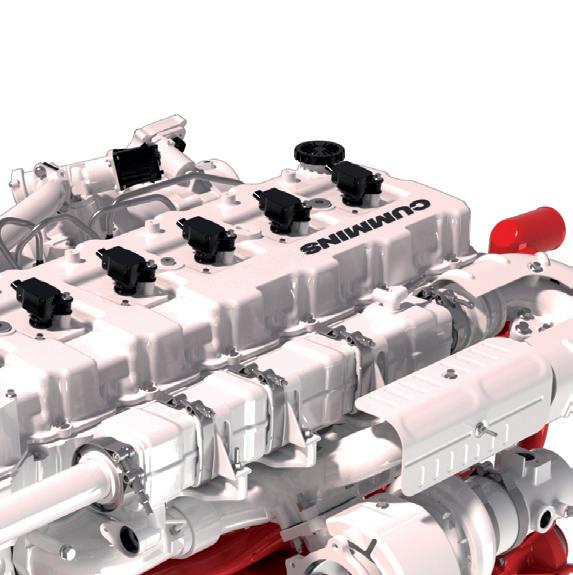
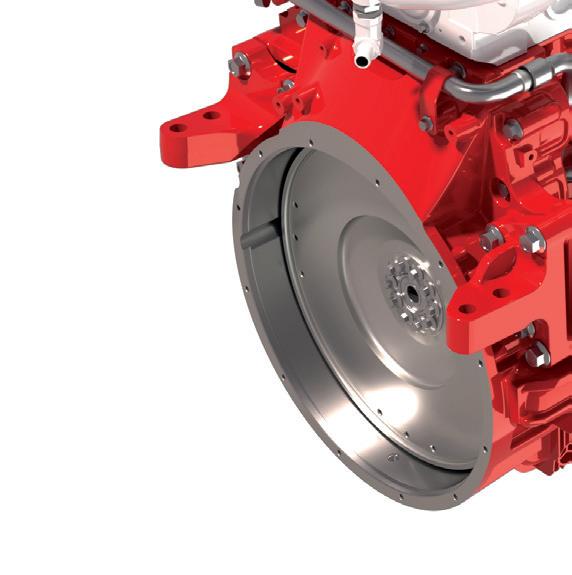

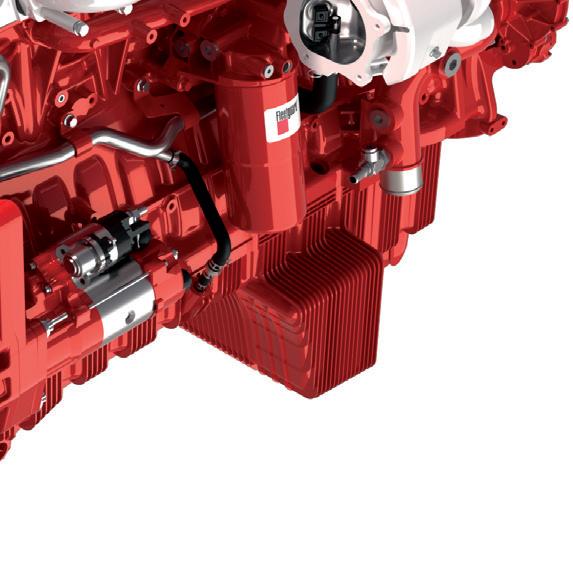


Cummins has signed an agreement with Terex Advance Mixer, (a subsidiary of Terex Corporation), Edge Materials and PCC Hydrogen to develop hydrogen-fuelled internal combustion engines for use in concrete mixer trucks.
The project aims to develop a full hydrogen ecosystem with a hydrogen producer, vehicle manufacturer and end user. It is the rst agreement of its kind signed by Cummins. The four companies will unite their e orts to see Cummins' X15H hydrogen internal combustion engines integrated into the Terex Advance Commander Series of front-discharge concrete mixer trucks.
Edge Materials, a ready-mix concrete provider and Terex Advance customer, will operate the hydrogenpowered trucks at operations including construction sites and infrastructure projects. PCC Hydrogen, a low carbon intensity hydrogen producer in Kentucky, will supply the hydrogen fuel, stationary storage and dispensing services.
"While Cummins is investing in a range of power options to support decarbonisation, hydrogen internal combustion engines are emerging as a key technology to eliminate carbon emissions from heavy-duty sectors while retaining the power density and operational range typical of diesel engines," said Jim Nebergall, general manager - Hydrogen Engines at Cummins.
Aligned with Destination ZeroCummins' strategy to reduce its products' greenhouse gas and air quality impacts - the collaboration will
Equipmake, the UK-based engineering specialist, is collaborating with engine rm Perkins on a new off-highway hybrid system project.





power the Terex mixer truck using hydrogen as fuel


spearhead decarbonising mixer trucks without impacting vehicle performance.
David Grabner, general manager at Terex Advance Mixer, added: "Customers expect Terex Advance concrete mixer trucks to deliver consistent and high-quality concrete e ciently and reliably while minimising environmental impact through reduced emissions and fuel consumption. Decarbonising concrete mixer trucks, however, can be di cult due to the energy demands and long operational hours. This project marks a signi cant milestone in our decarbonisation journey, as Cummins' X15H engines introduce an alternative, zero-carbon emissions option for our customers while providing the performance our trucks need to get the job done."
Cummins' hydrogen engines use proven internal combustion engine technology to use zero-carbon hydrogen fuel rather than traditional diesel. They are similar in architecture to today's diesel and natural gas-powered engines, o ering heavier-duty, longer-range applications a route to decarbonise without major changes to vehicle designs and at a lower upfront cost than current zero-carbon alternatives.
Cummins www.cummins.com
www.pcchydrogen.com
www.terex.com
Awarded a total of £11.14 million in government funding through the Advanced Propulsion Centre (APC), with Equipmake awarded £3.24 million, the project’s objective is to support the development and demonstration of an electri ed, lower carbon hybrid powertrain for the global off-highway market, enabling vehicle and machinery OEMs to accelerate their transition from fossil fuels.
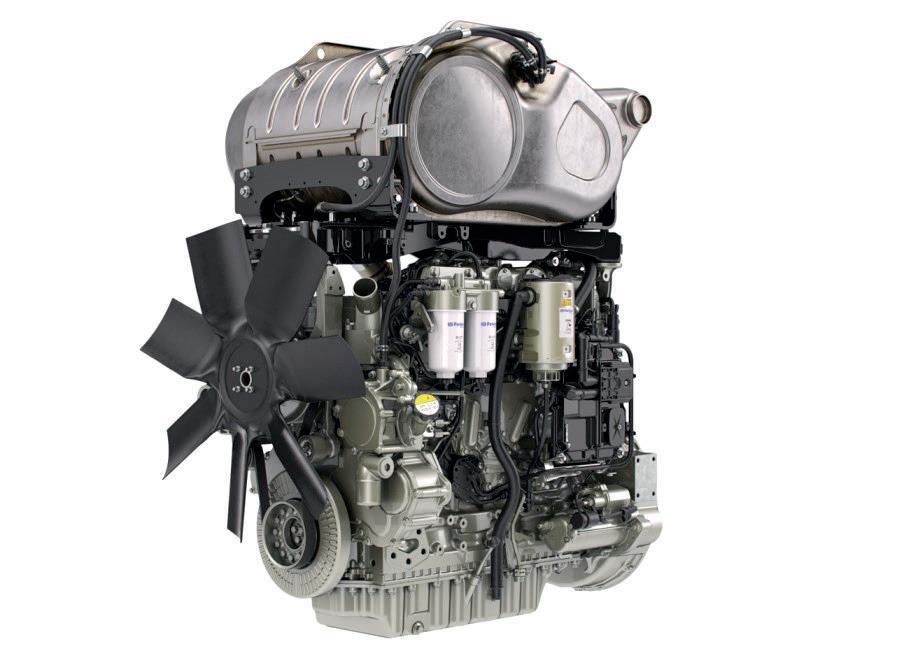
Led by Perkins, a wholly owned subsidiary of Caterpillar, with Equipmake providing e-powertrain technology and Loughborough University supporting advanced engine analytics and emissions control, the project will see the design, development and demonstration of a ‘multi-fuel drop-in’ hybrid powertrain. This will be an alternative to existing diesel solutions in off-highway vehicles and will support the UK and global off-highway industries to deliver net zero objectives.
Equipmake Perkins
www.equipmake.co.uk www.perkins.com




























Volvo Penta will collaborate with TecnoGen on its BESS (Battery Energy Storage System) to support charging infrastructure for electric heavy-duty vehicles. Battery energy storage bridge the gap between critical energy needs and backup power with renewable energy sources. Robust charging is essential for the widespread adoption of electric vehicles and industrial applications, ultimately contributing to a more sustainable future. This aligns with Volvo Penta’s multi-tenet industrial net-zero strategy, which spans the adoption of alternative fuels, electri cation of o -highway applications, battery energy storage subsystems and fuel cell technology development. Volvo Penta will collaborate with TecnoGen on its BESS to support charging infrastructure for electric heavy-duty vehicles. Renato Bruno, CEO BGG said, “Our combined expertise will complement charging infrastructure, a critical step towards industrial electri cation and bolstering clean energy integration in the long run.”
Volvo Penta www.volvopenta.com
Yanmar Compact Equipment (Yanmar CE) is expanding its wheeled loader portfolio with the launch of a brand-new pair of machines. These are the V7 and V7-HW (Heavy Weight) models, the smallest wheeled loaders in Yanmar CE’s range.
With a total height less than 2.5m, a width of 1,850mm (with bucket) and an overall length of just 5,238mm, the V7/V7-HW can t inside a standard container.
The all-wheel drive V7/V7HW both have an electronically controlled drivetrain, and a top speed of 20km/h; a 30km/h max speed version is available as an option. Customers can further tailor their machines by choosing between a premium range of tyre brands and sizes.
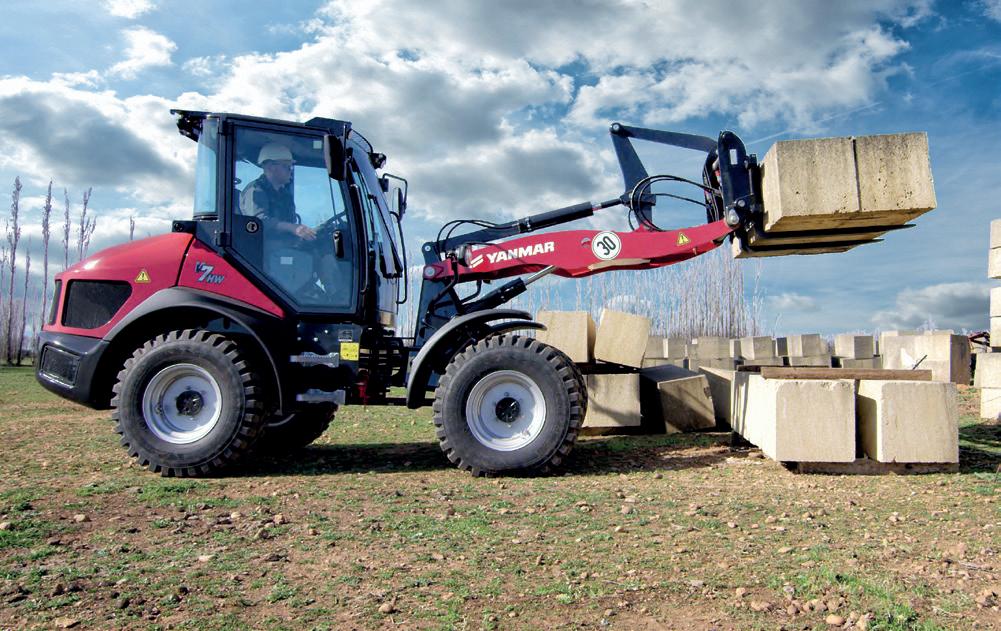
The new V7/V7-HW also do away with exterior oscillation and instead feature a joint that combines articulation with oscillation, enabling the height of the machine to be lowered. The units weigh 4.25tonnes and 4.45tonnes respectively.
Using a new platform that can support both diesel and electric power trains, they ll a gap at the smaller end of the company’s compact wheeled loader range.
The V7/V7-HW have bucket capacities of 0.7m3 and 0.8m3, respectively, and the V7-HW has a higher payload forks of 1.9tonnes compared to the V7’s 1.75tonnes. The V7 has a maximum tipping
load of 3tonnes, while the V7-HW has a tipping load of 3.25tonnes.
Both models feature a new cab, with two robust steel-framed doors. Large, glazed areas a ord a good all-round view, with a an operator display tted on the A-post, rather than on the steering column, improving the view of the front attachment.
Yanmar www.yanmar.com
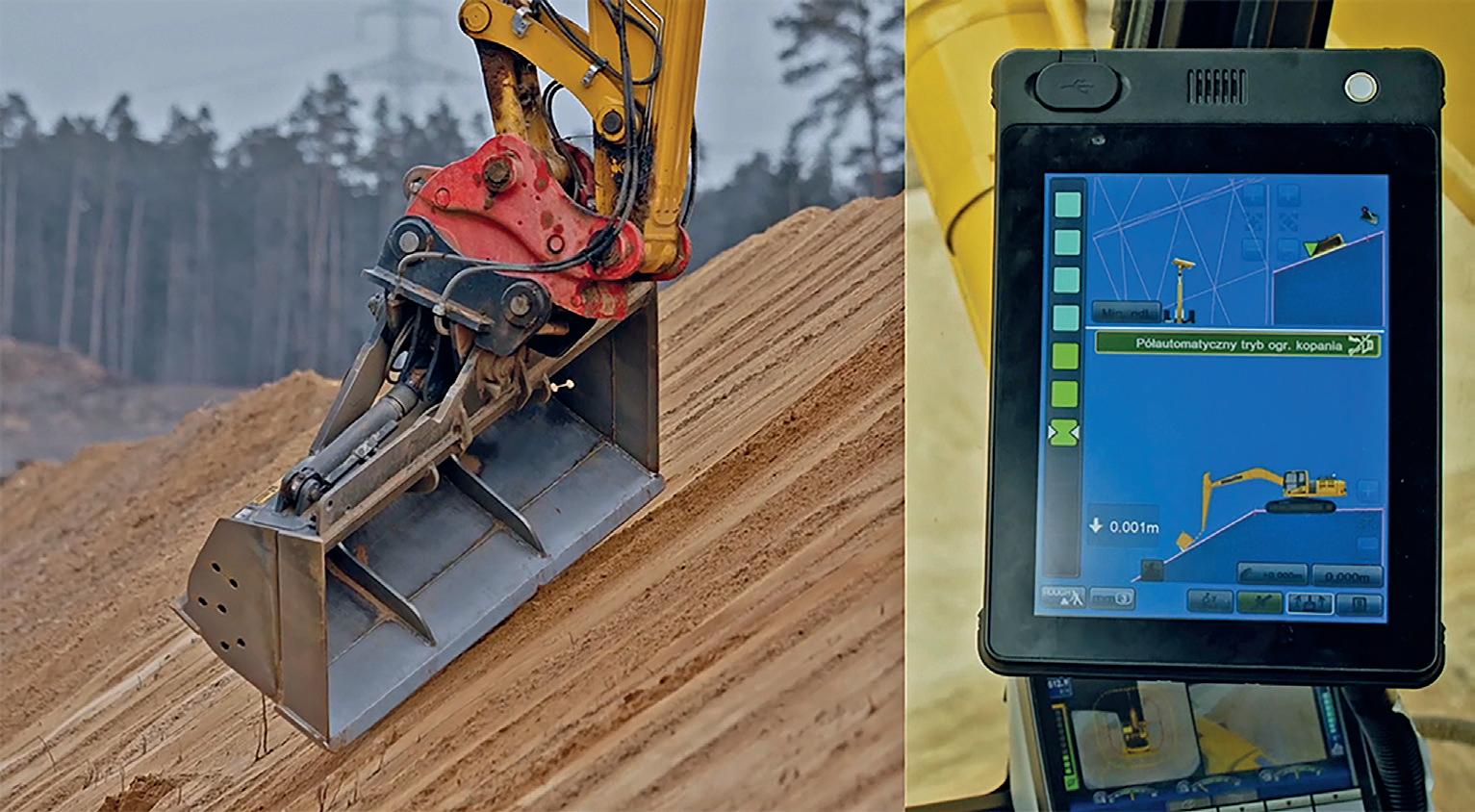
Komatsu is now o ering 3D machine guidance and payload metering across its excavator range. The technology is available for crawler and wheeled excavators, with features including dynamic payload metering.
The 3D Machine Guidance Kit technology will be an available add-on for crawler and wheeled excavators of any brand from 13-120tonnes. The kit also o ers a wide range of con gurations for machines across all generations.
By purchasing an excavator with the 3D Machine Guidance Kit, customers will be able to operate their machines with 2D and 3D machine guidance. The 3D package can be customised with various optional additions such as a tilt bucket and
kit, and SATEL radio kit. These options allow the kit to better accommodate each customer's machine con gurations and operating conditions.
Developed by Komatsu for Smart Construction to the same strict standards as the machines, the 3D Machine Guidance Kit hardware components provide customers with guaranteed reliable quality and performance.
Komatsu says that a key bene t of the 3D Machine Guidance Kit is its ability to digitally transform any excavator of any generation.
Komatsu www.komatsu.eu/en/
The new Cat 255 and 265 Compact Track Loaders are said to deliver high lift and tilt breakout forces. Both models increase lift height, tilt and lift breakout forces, and rated operating capacity. The all-new wider cab boasts more overall volume, foot space, height and width between joysticks. The new Cat 255 replaces the 259D3, while the 265 replaces both the 279D3 and 289D3 machines.
New engines increase torque for improved working performance. The new 255 and 265 loaders are powered by Cat C2.8T and Cat C2.8TA engines respectively, which o er 55.4kW. The new engines maintain power across a wider RPM range as well as torque increases, gains of 13% for the 255 and 43% for the 265.
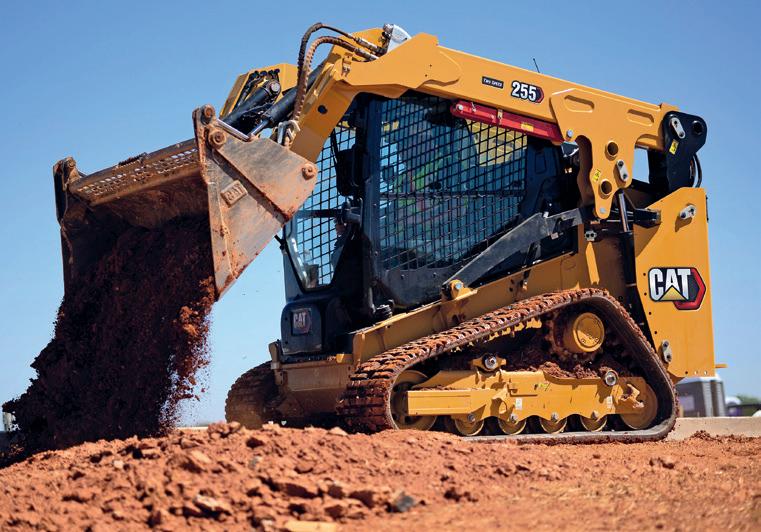

The new 255 delivers greater lift height, and compared to the 259D3, delivers 36% more tilt breakout, 26% higher lift breakout force and a 24% increase in rated operating capacity (ROC). New for these next generation machines, the closed-centre auxiliary hydraulic system allows the 255 and 265 to operate Cat Smart Attachments. Both the standard and advanced monitors o er the ability to run Cat Smart Attachments. These attachments are tied into the joysticks, and the machine recognises the type of attachment and the joystick pattern for controlling it.
The available Cat Product Link Elite system tracks machine hours, location, provides fault code details and delivers advanced monitoring and machine health remotely accessible via VisionLink. In addition, Product Link Elite provides remote ash and troubleshooting capabilities and enables the remote activation of the SEA High Flow feature.
Caterpillar www.cat.com

Civil engineering and drainage expert Hugh Pearl has updated its excavator eet, upgrading the older models to Hyundai A new series equivalent, the HX140AL.
The rm is putting these versatile excavators to use on a wide range of projects, from path digging and pond drainage, through to larger civil projects, including car parks.
Adrian Rowell, contracts director at Hugh Pearl Land Drainage, explained: “When the time came to look at replacing our old Hyundais, it made sense to look at the next generation machines and put those to the test.
Supplied by Hyundai dealer, Ernest Doe, the HX140AL o ers a robust exterior design, with added
safety features and improved serviceability, allowing it to perform in the toughest conditions on large construction sites and infrastructure projects. From its upgraded, eco-friendly engine, to its carefully chosen control technologies, the HX140AL excavator helps operators to achieve new heights of productivity. Hyundai’s EPIC (Electric Pump Independent Control) hydraulic system, in connection with automatic engine shutdown, eco gauge and lifting mode, allow the machine to deliver performance and e ciency.
Hyundai www.hyundai-ce.eu
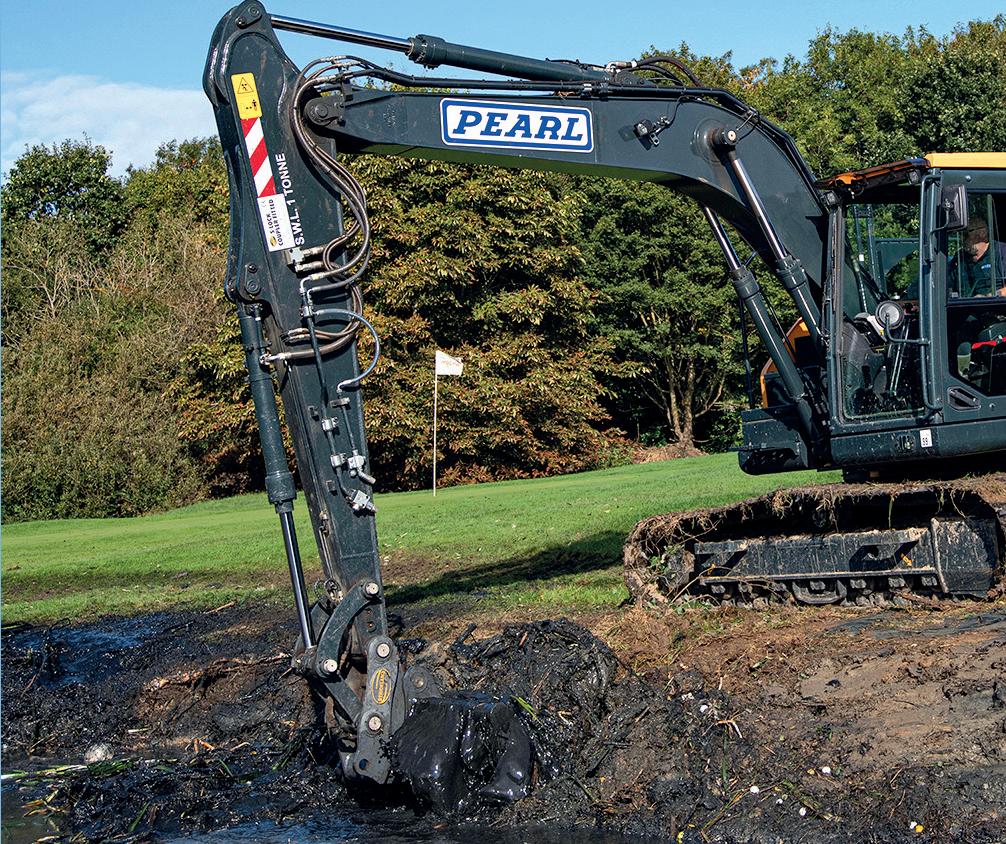

Electric construction machines from Volvo CE helped to build the FIA World Rallycross (World RX) racetrack in Hong Kong in just eight days.
The new L120 Electric wheeled loader built and maintained the racetrack, which was designed by Volvo CE’s own team of experts using a combination of digital solutions and sustainable machines.
A 23tonne EC230 electric excavator was employed, using the Dig Assist digital solution and an Engcon tiltrotator. Also working to both build and maintain the tracks were two new L120 Electric wheeled loaders.


Two new Develon DL420CVT-7 wheeled loaders have been purchased by ASH Group for use at the company’s Aggregates Wash Plant in Ellesmere Port in Cheshire in the UK.
The units are said to be delivering signi cant fuel savings and increased safety. The wheeled loaders were supplied by Blue Machinery Central (Blue Central), based in Northwich in Cheshire, the Authorised Develon Dealer for North-West England and North Wales. Compared to the machines they have replaced, the new wheeled loaders are using 4litres/ hour less fuel (11litres/hour instead of 15litres/hour) mainly due to their sophisticated continuously variable transmissions (CVTs). They are also the rst in the UK to be equipped with Develon’s novel Transparent Bucket safety system. This system allows the wheeled loader driver to see blind spots in front of the bucket on the machine, using the
monitor in the cab.
According to the ASH Group, using the new Transparent Bucket system on the machines is helping to boost safety for both the drivers and the rest of the workforce at the wash plant. The operation is designed to produce up to 600,000tonnes/year, ensuring maximum resource recovery and diverting more waste from land ll.
The CVT system provides a smooth and continuous speed variation. It allows the DL420CVT-7
to transition from hydrostatic power at low speed to the mechanical system to operate at higher speeds. Low engine speeds ensure a high e ciency and the highest driving comfort irrespective of the traction speed. The power splitting continuously variable technology allows moving o softly and hydraulically, as well as fuel savings of up to 25%.
Develon
eu.develon-ce.com/en/
Develon

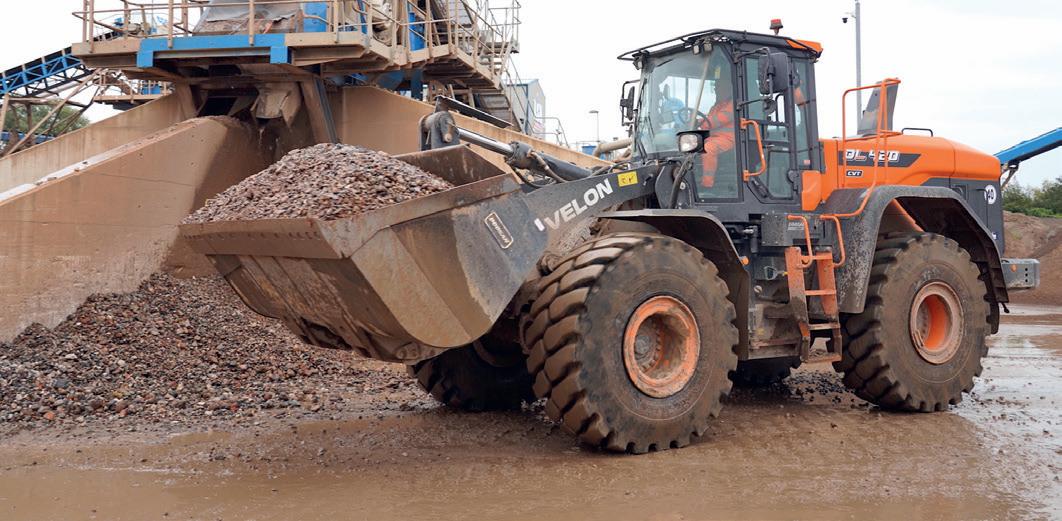
Part of the track was a replica of a design devised by Volvo CE at its test track in Eskilstuna, Sweden and built to encourage overtaking and a greater spectacle for racegoers. The design of the track has been perfected using build data captured in 3D on Volvo CE’s Dig Assist in-cab machine control application. The data was then programmed into the Volvo CE machines, reducing the build time for the track.