No part of this publication may be reproduced in any form whatsoever without the express written permission of the publisher. Contributors are encouraged to express their personal and professional opinions in this publication, and accordingly views expressed herein are not necessarily the views of Route One Publishing Ltd, or the International Road Federation. From time to time statements and claims are made by the manufacturers and their representatives in respect of their products and services. While reasonable steps are taken to check their accuracy at the time of going to press, the publisher cannot be held liable for their validity and accuracy WORLD HIGHWAYS/ROUTES DU MONDE, USPS 8757, is published 6 times a year by Route One Publishing Limited, Second floor, West Hill House, West Hill, Dartford Kent DA1 2EU, UK.
The US annual subscription price is US$246.00 Airfreight and mailing in the USA by agent named World Container Inc, 150-15, 183rd Street, Jamaica, NY 11413, USA.
Periodicals postage paid at: Brooklyn, NY 11256
US Postmaster: Send address changes to WORLD HIGHWAYS/ ROUTES DU MONDE, Air Business Ltd, c/o World Container INC 150-15, 183rd St, Jamaica, NY 11413, USA. Subscription records are maintained at Route One Publishing Limited, Second floor, West Hill House, West Hill, Dartford Kent DA1 2EU, UK. Air Business Ltd is acting as our mailing agent.
Printed by: Warners Midlands PLC’
If the Messina Strait bridgeisbuilt,it will be a landmark constructionproject
Mike Woof, EDITOR mwoof@ropl.com
Landmark bridge for Italy?
The news that the Italian Government is once again considering building a bridge spanning the Messina Strait is of major significance for the construction sector, as well as for the country.
Linking the tip of Calabria with the island of Sicily, the bridge would replace the current ferry service and would also deliver major economic benefits to trade and tourism for two of Italy’s poorest areas. If the Messina Strait bridge is built, it will be a landmark construction project.
To build such a structure, the bridge will have to meet major technical challenges and will be recordsetting in terms of its scale.
The project will face challenges. The proposed design calls for a suspension bridge, which would be able to cope with the massive quakes that the area experiences. However, it will be a record-breaking design as it will feature the widest central span of any suspension bridge ever built. And this will require enormous towers to support the structure.
Italian contractor Webuild believes it has the expertise to construct such a bridge. According to Webuild engineering director Michele Longo, “The Bridge over the Strait of Messina is a project that can break ground immediately. As soon as the contract is reinstated and updated, the project can start. The executive design is expected to take eight months, while the time needed to build the bridge will be a little more than six years. Webuild, as leader of the Eurolink Consortium, is interested in building the project and it makes itself available to the country to get to work as soon as possible."
Longo continued, “The cost of the construction of the bridge, just the structure, is approximately €4.5 billion, which is about 40% of the total value of the infrastructure network that would include
the bridge and all the related works. The remaining 60% is in fact related to a series of works related to the crossing as well as the upgrading of the road and rail networks in Sicily and Calabria. It also includes a considerable amount of work to prepare the terrain and reduce hydrogeological risks. The bridge represents only 4% of the €110 billion of total investments in road and rail infrastructure currently foreseen for the Alps-Sicily route, the Italian part of the Scandinavian-Mediterranean, the strategic European corridor.”
From a technical point of view, “…the studies that have been conducted over time have led to the development of a type of stable aerodynamic deck (the Messina Type Deck) that has been deployed with success abroad in the construction of bridges with large spans such as the Chanakkale in Turkey, which is today the longest suspension bridge in the world,” Longo said.
“The span would support three vehicle lanes in each direction and one for a rail. It would support 6,000 cars/hour, and the passage of up to 200 trains/day.
“The mid-point of the bridge would have a maximum height of approximately 74m above sea level. That would guarantee a navigation channel 600m wide with a clearing of 65.5m compared with the world standard of 65m. So, it would allow for the safe passage of all ships that cross the Mediterranean today. As it is designed, the bridge is stable and secure. The span’s aerodynamic stability is guaranteed for winds of up to 300km/h. The bridge would be accessible with winds of up to 150km/h. As regards seismic activity, the bridge would have a structural integrity compatible for a quake measuring 7.5 on the Richter Scale, which is greater that the Messina earthquake of 1908.” MW
New Chinese expressway projects planned
Indian road projects underway
China’s road network continues to expand and improve, with further works being planned.
One project will see the construction of a new expressway connecting Jiangjin with Luzhou and Yibin. The 134km expressway will cost US$2.83 billion to construct and the work has been awarded to a consortium headed by China Railway Construction Kunlun Investment Group. The route will be built with design speeds of 120km/h, featuring four lanes in either direction.
Meanwhile, upgrading work for the 70km expressway between Ningbo and Jinhua will cost an estimated $2.82 billion. A new interchange will be added to the route while 12 existing interchanges will benefit from major improvement works. A new 2km section will be added to the route.
A contract for a new expressway project in Sichuan Province will be handled by a
consortium headed by Sichuan Expressway Construction & Development Group Corp. The 140.5km expressway will link Panzhihua and Yanyuan and the work will cost $5.14 billion.
YCIC Highway Construction Co is heading a consortium that will build the Yunlong-Lushui Expressway in Yunnan Province. The project will cost an estimated $2.74 billion and is a concession package.
The tender process is underway for the 20.5km Wencheng stretch of expressway that is expected to cost $780.3 million to build. The tender is being handled by the Wenzhou Public Resources Trading Network. The stretch of road will form part of the expressway linking Wencheng and Qingtian.
The contract has been awarded in Guangdong Province for a 30.6km expressway linking Huizhou Huicheng with Shengzhen Pingshan. The work will cost $1.64 billion and will
take 42 months. Construction will be carried out by a consortium composed of five contractors. The route will link No.1 Road with the Longgang District in Shenzhen City.
Official approval has been given for the new expressway that will connect Panzhihua and Yanyuan in Sichuan Province. Meanwhile, in Yunnan Province bidding is now underway for the survey and design package for a new expressway planned to link Jinghong with Jingha, Guanlei and Mengla.
The expressway linking Panzhihua and Yanyuan in Sichuan Province will be 141km in length and is expected to cost $5.15 billion. Work on the project is expected to commence later in 2023 and will take five years to complete.
Building the 145km expressway in Yunnan Province is expected to cost $4.22 billion. The route will feature a design speed of 80km/h.
India’s road network continues to develop with a number of key projects being carried out. Construction work is underway for the NH-88 project. Costing US$1.22 billion, the route will feature two lanes in either direction and will provide a new link between Shimla and Mataur. The project is being carried out in six sections under the supervision of the National Highways Authority of India (NHAI) and should be complete by late 2024. The $1.47 billion expressway linking Delhi with Dehradun should be ready by the end of 2023 and will measure 212km. Key features of the project include a 12km elevated stretch, two large bridges, 13 small bridges and two underpasses for elephant Meanwhile, around 6km of the 13km Zojila Tunnel route has been driven so far. The project is due for completion in late 2026. The new tunnel will link Ladakh with Kashmir. Construction is being carried out by Megha Engineering and Infrastructure (MEIL). The project will deliver a safer and faster route for drivers.
Major road auctions are planned in Brazil during 2023. The road links will be worth a total of US$13 billion.
One of the auctions will be work for 473km of roads in Parana State. Another of the projects auctioned will be for the 605km Rodovias do Parana road.
Auctions will be held for the BR-381 highway and Rota dos Cristais stretch of the BR-040 highway, both in in Minas Gerais State. Another will be for the stretch of the BR-040 highway linking Rio de Janeiro with Belo Horizonte.
Brazil road auctions for 2023
New freeway works for Taiwan
Freeway improvement works are being planned for Taiwan. New on and off ramps will be constructed for National Freeway No 1 at the Wugu Interchange. National Freeway No 1 will also benefit from improvements to the Linkou Interchange.
A budget of US$228.5 million has been set for the work. The new ramps for the Wugu Interchange should be complete by February 2027 while the improvements for the Linkou Interchange should be ready by April 2027.
Old Delhi, India
Luzhou, China
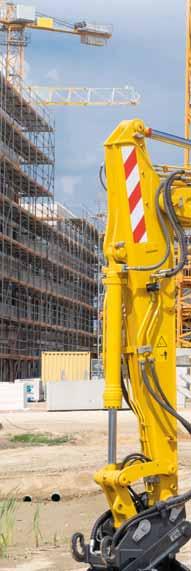
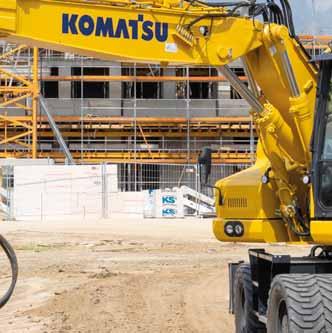
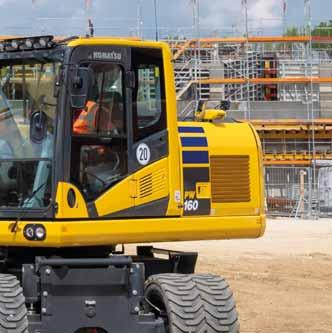
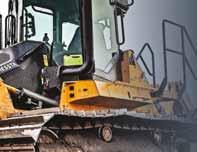
Komatsu PW160-11
For road construction, digging, trenching, landscaping or site preparation, the PW160-11 is equipped to Features such as integrated attachment control (KIAC)
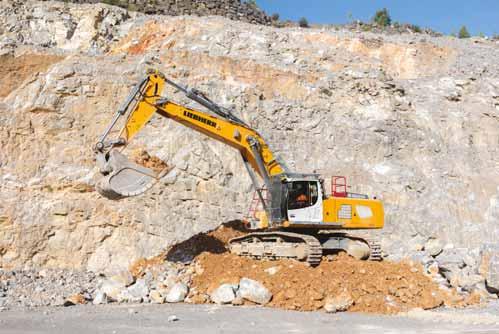
Liebherr’s record year – 2022
The Liebherr Group claims record performance for 2022. Turnover hit €12.589 billion, an increase of 8.2% (€950 million) over the performance seen in 2021.
This came in spite of difficult general conditions, rapidly rising prices, as well as the ongoing coronavirus pandemic and lockdowns, which slowed economic growth. Nevertheless, the group achieved increased turnovers in 10 of its 13 product segments, some of them significant. It surpassed its previous turnover record from 2021 by €950 million.
Turnover in the seven product segments of earthmoving, material handling technology, deep foundation machines, mobile and crawler cranes, tower cranes, concrete technology and mining totalled €8.561 billion, 6.9% above the previous year’s level.
Liebherr developed extremely positively in North America and in Central and South America, with strong growth coming from the US and Canada, and again from Brazil.
Turnover increased slightly in the EU. Growth rates in the EU markets varied, with business developing positively in the
The Group also recorded an increase in Africa as well as in the Near and Middle East. Turnover in Asia and Oceania was slightly above the previous year’s level.
Paraguay bridge project completion is due
Completion of Paraguay’s Heroes del Chaco bridge project is due shortly.
The cable-stayed bridge will provide a more direct connection between Paraguay’s capital Asunción and the town of Chaco'I, carrying an expected 10,000 vehicles/day. The opening of the bridge will help to reduce congestion on an existing bridge that lies around 8km to the north.
The 450m bridge was expected to cost $115 million originally but will now cost considerably more. There were a number of issues with the
development. The bulk of this was used in the development of new products. Alternative drive technologies continue to be a focal point of the research projects at
a net income of €2 million in 2022. Operating results and the financial result decreased compared to the previous year. The number of employees grew again in 2022. At the end of the year, the Liebherr Group had a total of 51,321 employees worldwide, an increase of 1,710.
Last year, the Group invested €588 million in research and
project, including the design, which led to an investigation being carried out. The bridge is being built by the Union Consortium, which is comprised of the contractors CDD Construcciones and Constructora Heisecke, with much of the funding also being supplied by the IADB.
This new bridge is a key infrastructure project for Paraguay, improving road connections with Argentina and Brazil, linking Puerto Falcón to the Botanical Road Corridor, Ñu Guasu Highway, Luque – San Bernardino Route and Route 2.
As part of its technology neutral approach, which takes into account the most diverse areas of application and product requirements of customers worldwide, the Group is working, among other things, on the increased use of hydrogenated vegetable oils (HVO). eld of electric drives, Liebherr has added six new models to its Unplugged range. Another new development is the mobile energy storage system for supplying power to hybrid or fully electric construction machinery and equipment on construction sites.
The Group invested €863 million in its production sites and its global distribution and service networks. Investments thus increased by €121 million compared to last year.
Delay for New Zealand road link
opening
An important new road link in New Zealand will open later than originally planned. The highway linking Hawke’s Bay and Manawatu was expected to open at the end of 2024 but will now be delayed until mid-2025.
The project is costing nearly US$388 million (NZ$620 million). The COVID-19 pandemic has been a major factor in the delay although the project has also been affected by cost increases.
Meanwhile, work is underway for the last section of Auckland’s Eastern Busway. Costing nearly $876 million (NZ$1.4 billion), this stretch will run between Pakuranga and Botany. The route will carry electric buses when complete.
New Zealand is making further extensions to its transport development programme. A boost of $154.4 million (NZ$252 million) has been made for the budget by the Transport Ministry.
Paraguay River near Asunción, capital of Paraguay
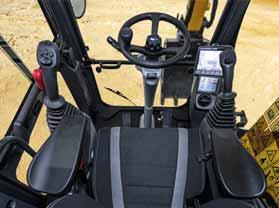
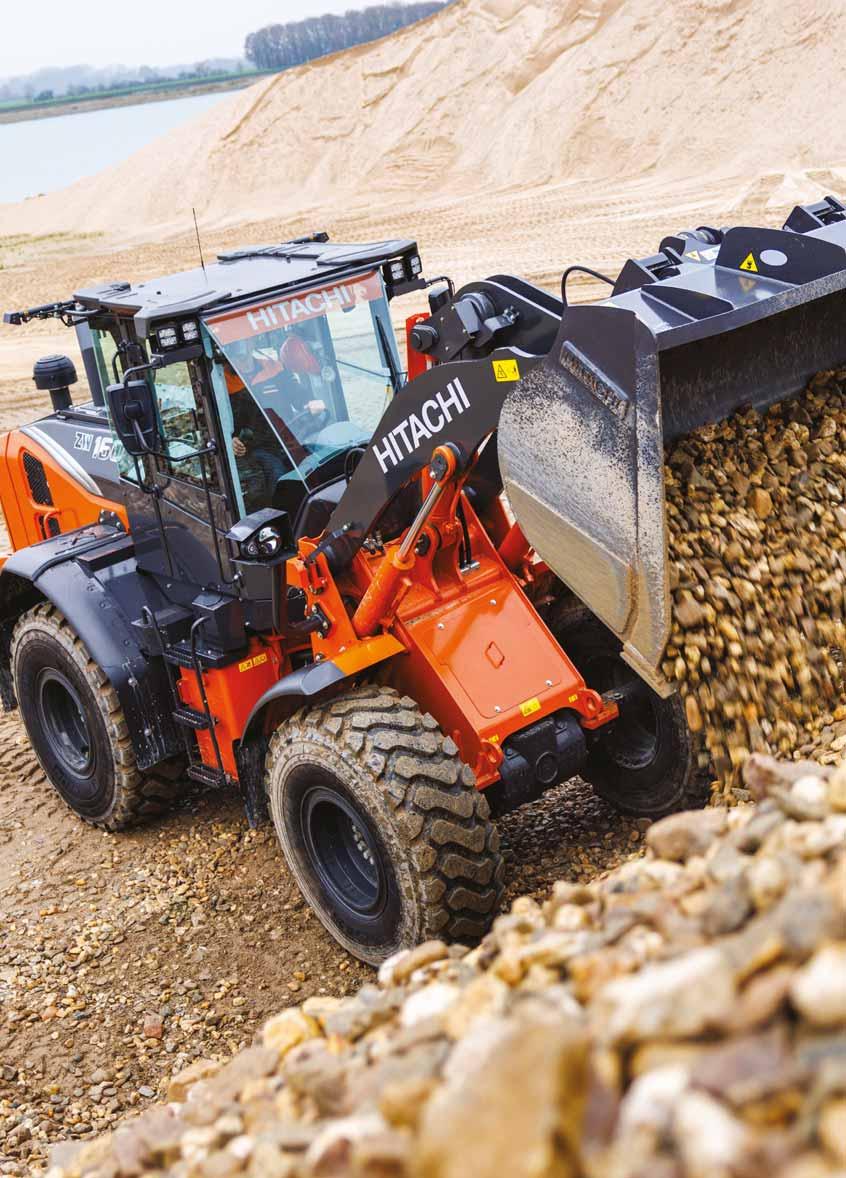
Get ready to experience the ultimate working environment with Hitachi’s newly redesigned ZW-7 cab, ultra-spacious and equipped with top-of-the-line features!
Say goodbye to noisy and uncomfortable workspaces, as the ZW160-7 offers some of the lowest noise and vibration levels in the market. With this machine, you’ll be able to work in style and comfort, making your job easier and more enjoyable than ever before.
Don’t settle for less - upgrade to the ZW160-7 and experience the best!
New road project underway in Austin, Texas
Construction work has started for the Interstate 35 Capital Express North project in Austin, Texas. The project is being managed by the Texas Department of Transportation (TxDOT) and should take five years to carry out. The aim of the project is to boost traffic flow and cut congestion.
Costing US$606 million, the project will help lower congestion. This section runs through the centre of Austin. The area currently experiences regular traffic delays for drivers. The work includes a new high-occupancy vehicle lane
in each direction along I-35 from SH 45 North to US 290 East, as well as upgrade works for six bridges along the route. Ramps and intersections will also be improved, including a diverging diamond interchange at Wells Branch Parkway. In addition, pedestrian and bicycle paths will be built and there will be additional safety and mobility improvements within the project limits.
Work to upgrade an 8.5km section of toll road is underway to the north of Austin. Improvements for the 183A toll road involve
building two additional lanes in either direction. The $259 million project is around 55% complete at present and is due to be finished in 2025.
The project is intended to cut congestion for the stretch of the route between Leander and Liberty Hill and is being managed by the Central Texas Regional Mobility Authority. One of the most challenging aspects of the project is tunnelling underneath Highway 29. The improvement work will include facilities for vulnerable road users.
Volvo CE Task Manager keeps projects on track
Zimbabwe highway bidding underway
The bidding process is underway in Zimbabwe for a major highway project. The US$2.7 billion project will see the construction of a new highway link connecting Beitbridge, Harare and Chirundu. Work has been carried out on the A4 route previously but has stalled due to a number of reasons, including lack of funds. The aim is to widen and improve the route so as to boost its capacity and also improve safety for drivers. When complete it will feature two lanes in either direction as well as a central reservation, minimising the risk of head-on collisions.
Beitbridge lies on the border with neighbouring South Africa, while Chirundu is in the north of the country, on the border with Zambia.
The new tolled highway will provide a key connection for Zimbabwe, improving traffic to and from the capital Harare and providing a key international link that will help trade and boost the country’s struggling economy.The section between Beitbridge and Harare will measure around 570km and will feature eight toll plazas.
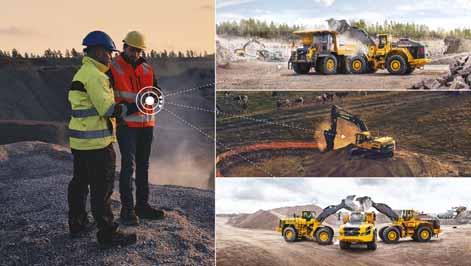
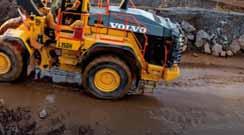
Managing a busy worksite can be time consuming and challenging, with many different and interdependent tasks and numerous contractors, sub-contractors, sites and machines at play. Volvo Construction Equipment (Volvo CE) makes it easier to connect the pieces of the puzzle with a new digital solution, Task Manager.
An easy-to-use web application, Task Manager is a worksite management tool that connects people, machines and projects, providing real-time visibility of the many tasks taking place onsite and helping ensure activities are delivered on target, on time and to budget. It is available as a monthly subscription though local Volvo dealers.
Robert Nilsson, Service Offer Owner at Volvo CE, says: “We understand the challenges facing our customers. By making it easy to see the status in real time of the activities onsite either from your mobile or desktop, Task Manager helps everyone stay on track.”
•For further information, please contact: Sandra Jansen sandra.jansen@volvo.com or Daisy Jestico daisyjestico@oliver.agency
Bentley Systems claims improved capabilities for its new digital twins technology
New software innovation
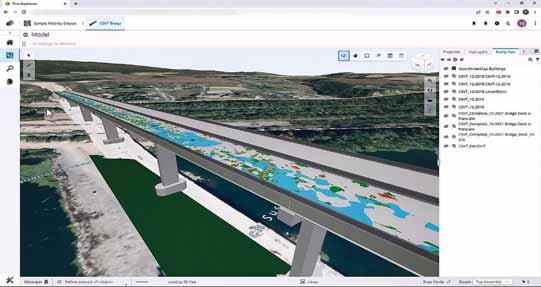
Bentley Systems says that its latest iTwin Platform offers additional capabilities for the use of digital twins in design, construction and operations workflows.
Improvements to the iTwin platform boost the use of infrastructure data. The iTwin technology provides digital integration capabilities for generating and managing digital twins, incorporating proprietary
machine learning, analytics and asset performance algorithms. This technology overlays engineering technology (ET), operations technology (OT) and information technology (IT) so that users can visualise, query and analyse infrastructure digital twins.
Bentley Systems www.bentley.com
Improving workflows with Softree
Softree Technical Systems says that its new RoadEng Civil Engineer software focuses on simplifying workflows and improving visualisation.
The firm says that the new version of RoadEng includes 3D functionality and handling of corridor surfaces that will help users to improve their workflows, without
adding complexity. It has been developed with input from the firm’s customers.
The new RoadEng Civil Engineer package includes an array of improved features. The 3D interactivity and visualisation tools mean that users are now able to design and edit directly in the 3D window. Improvements also include
the ability to work with 3D objects and facets, and to set 3D symbols. Users can work with multiple alignments and surfaces and can create individual surfaces from multiple alignments, or multiple layers within those corridors.
Softree Technical Systems www.softree.com
Effective sealant from Sika
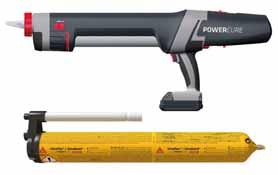
A new sealant product from Sika is said to offer high performance in a range of construction applications. The Sikaflex-423 Powercure product is a rapid-cure, high-performance sealant and booster for vertical and horizontal joints. Said to be quick to prepare, apply and producing minimal waste, Sikaflex-423 Powercure is fast curing even when applied at low temperatures.
Sika has developed Sikaflex-423 Powercure for use with its Sika Powercure Dispenser which mixes the correct ratios of sealant and booster for a quick and convenient direct application. This offers a considerable time saving when compared to the traditional two-part products available on the market, and also reduces the risk of mixing errors. Being premixed, this reduces waste.
Manufactured using Sika’s new polyurethane technology, Purform, it is both EU REACH and UK REACH compliant which means users will not need
to undertake specific training in the future to use the product safely. The innovative new Purform technology used to formulate Sikaflex-423 Powercure provides exceptional product application and performance properties.
Sika www.gbr.sika.com
Efficient structural scanning
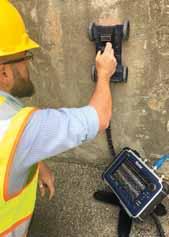
GSSI says that its new StructureScan Pro is an efficient tool for scanning concrete structures. The StructureScan Pro is a versatile concrete inspection system, based on the SIR 4000 controller. It benefits from two highfrequency antenna options, boosting its versatility.
StructureScan Pro locates rebar, post-tension cables, or conduits in concrete prior to concrete cutting or other destructive procedures. The SIR 4000 offers greater versatility for using the controller in concrete construction industry applications, allowing 2D and 3D data collection. The data visualisation on the 3D module includes the ability to slice through each data layer. Additional features include multiple colour themes and save image functionality.
The SIR 4000 enables the option of on-the-fly automatic gain, improving the data display while saving the file in the original raw format for post processing. Fully integrated, the SIR 4000 provides a highdefinition LED display, a simple user interface, and plug-andplay GPS integration. The SIR 4000 is designed with a number of features, including a cast aluminum chassis that offers superior temperature stability, and an impact-resistant design that is fully IP 65 rated and can withstand tough jobsite conditions.
GSSI
www.geophysical.com
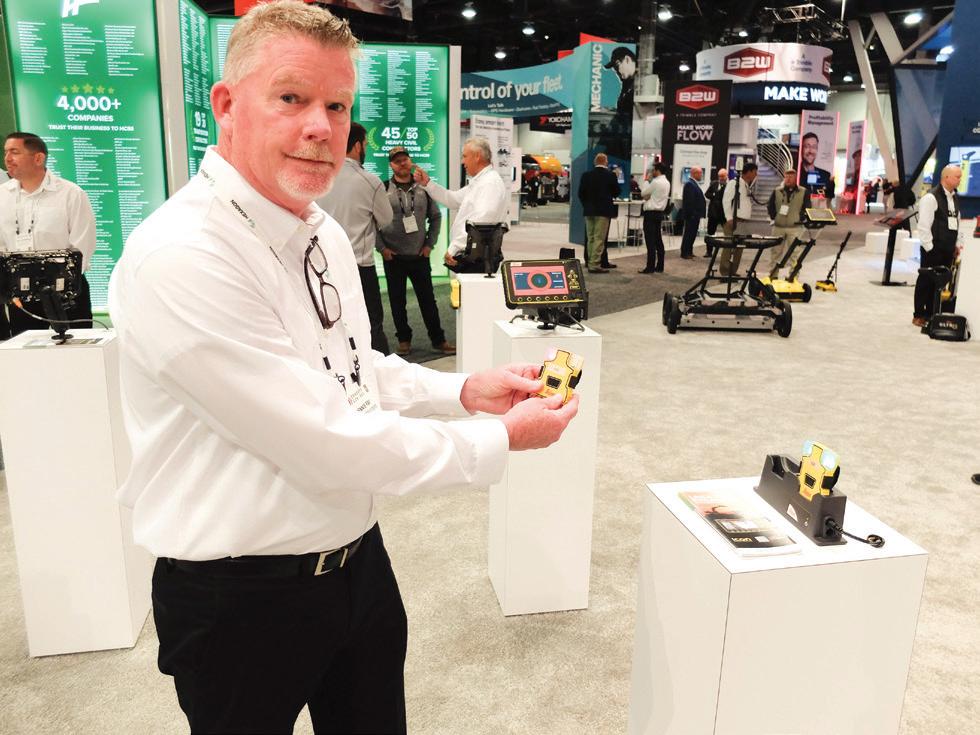
Effective concrete scanning can be achieved with the new tool from GSSI
A new sealant product can be used in a range of construction applications
Climate resiliency: beyond design and construction
By Zeev Halber, CEO of AnyWay Solutions
When it comes to climate resiliency, there is much more to consider than design and construction.
It is a complex, multifaceted issue that requires careful planning and thoughtful solutions. From identifying vulnerable areas to developing emergency response plans, there are many factors to consider for a truly resilient community. Yet, it is possible to build a stronger, more sustainable future for all with the right approach and resources.
Transport infrastructure is essential to modern society, enabling people to access goods, services, and opportunities otherwise out of reach. However, as the effects of climate change continue to intensify, it is becoming increasingly clear that traditional transport infrastructure designs are not always up to the task of withstanding extreme weather events. As a result, there is a growing need for transport infrastructure rehabilitation projects that take a climate resiliency approach, incorporating strategies such as using durable materials and elevating critical infrastructure.
While such measures are undoubtedly important, it is also crucial to recognise the importance of community involvement in the transport infrastructure rehabilitation process. Involving communities has a range of benefits, from improving the effectiveness of these projects to building trust and promoting social cohesion.
Community involvement can take many forms, from consultation meetings to participatory workshops where community members can contribute their ideas and suggestions. One key benefit is that it can help to ensure that projects are more effective and
better aligned with local needs. Infrastructure designers and planners can gain valuable insights to develop more targeted and effective solutions tailored to meet their needs and priorities, increasing their likelihood of success. Communities are often the most knowledgeable about their environments and pain points and are best placed to identify the most pressing transportation challenges facing their areas.
By involving communities in the decisionmaking processes, infrastructure planners and designers can demonstrate that they value the input and perspectives of residents. This helps to build trust and promote a sense of ownership among community members, who may feel more invested in the project's success. Additionally, it is mentioned how community involvement helps to promote social cohesion by bringing together people from diverse backgrounds and creating opportunities for collaboration and cooperation. By working together on infrastructure projects, communities can build social connections and strengthen their sense of shared purpose, which will have a positive spillover effect in other areas of community life.
Perhaps most importantly, involving communities in transport infrastructure rehabilitation projects ensures these projects are sustainable over the long term. This can be especially important in the context of climate resiliency, where the durability and resilience of infrastructure are essential for ensuring that it can withstand the effects of extreme weather events. This can create a culture of shared responsibility for infrastructure, where everyone has a stake in ensuring that it remains functional and resilient over the long term.
In conclusion, community involvement is essential to transport infrastructure
rehabilitation projects that take a climate resiliency approach. By involving communities in the design and implementation of these projects, infrastructure planners and designers can:
1. gain valuable insights into local needs and concerns;
2. build trust and promote social cohesion; 3. and ensure that infrastructure projects are sustainable over the long term.
By working with communities to create more resilient infrastructure, it is possible help build a more sustainable and resilient future for all. Industry can design well, monitor construction, administer quality control measures and invest in best practices and technologies in infrastructure assets.
However, if the local communities do not have this sense of ownership that these assets are their own, they will not protect them. Eventually, their actions would lead to the premature deterioration of these assets, calling for another round of investment by governments.
The author is the CEO of AnyWay Solutions, a consulting firm specialising in climateresilient engineering designs and solutions to transport infrastructure for over two decades. In his most recent presentation during the IRF 3rd African regional conference in Accra, Ghana, Halber encouraged governments to implement programmes that include local communities in the process of rehabilitation and upgrading of transport infrastructure projects. He emphasised the importance of such for the longevity of these projects.
Featured Panels:
NOVEMBER 14-17, 2023
ARIZONA STATE UNIVERSITY
PHOENIX, ARIZONA w
THE FUTURE OF ROADWAYS: GREEN, EQUITABLE, INTELLIGENT & INTEGRATED
Share: R2T is the international meeting point where leading industry innovators, researchers, and stakeholders acquire essential engineering & business insights, and help build tomorrow’s transportation infrastructure today.
Engage: R2T will push the boundaries of 21st century roads & mobility. Meet global thought leaders and discover pioneering concepts through our program of live demonstrations and applied knowledge sessions.
Grow: Place your company’s brand, technologies and services at center stage during R2T and gain exposure in front of top
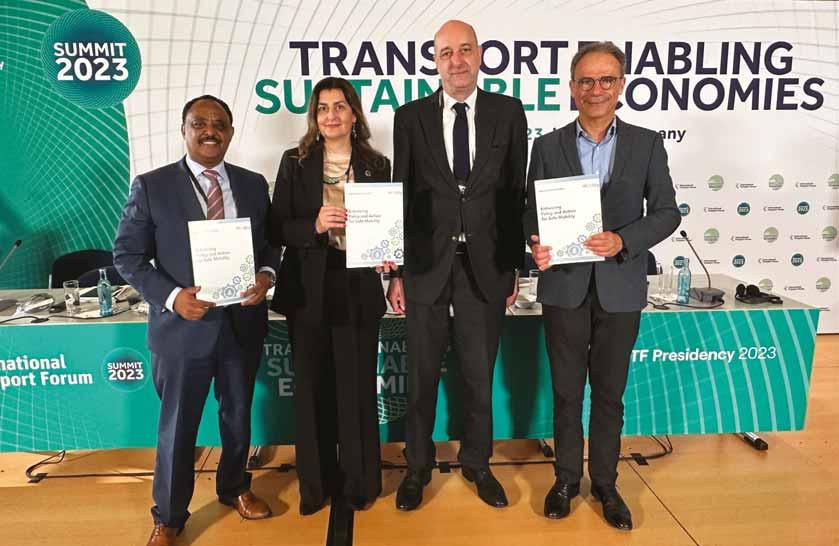
Countries can reduce deaths and injuries from road traffic crashes by flipping the traditional mobility hierarchy and adopting the Safe System approach. That is the finding of a new report from the Sustainable Mobility for All Initiative (SuM4All) presented at a press event of the ITF Summit held in Leipzig.
This approach acknowledges that people make errors and that the human body has a biomechanical threshold for kinetic energy, both of which need to be adapted by Safe System designers in order to minimise the severity of crashes. It advocates for several key steps towards safer roads: managing speeds more effectively, rethinking the design of streets and highways, leveraging vehicle technology, improving post-crash care, strengthening traffic law enforcement, reforming licensing systems, and promoting alternatives to private car use.
The new report from SuM4All, Enhancing Policy and Action for Safe Mobility provides practical guidance, case studies, and resources to help countries implement the Safe System approach. This is a pragmatic model that calls for a proactive and coordinated approach to
New report lays out concrete steps toward safer roads
road safety among all relevant stakeholders, with the objective of creating transport systems that are safer by nature and account for human error.
“The report rightly recognises that the overarching priority for the coming decade is to address the operational requirements of road safety delivery at national, subnational, and city
levels. There is a pressing need for adequate financing and institutional strengthening efforts to support this," said Said Dahdah, head of the Global Road Safety Facility and Global Lead for Road Safety at the World Bank.
At the global level, road safety remains a serious global health and development concern, with more than 1.35 million people killed and 50 million people injured on roads every year. Over 90% of road fatalities occur in low- and middle-income countries, which account for only 50% of the world’s vehicle fleet.
Broader adoption of the Safe System approach could go a long way in tackling the global road safety crisis. To make this happen, the new SuM4All report provides detailed recommendations on how the approach can be mainstreamed into road safety, sustainable mobility, and urban development.
“This work exemplifies the invaluable convening power of SuM4All and the impact that it can generate. Road safety needs more than ever coordinated approaches and handson guidance that can help drastically reduce deaths and injuries on our roads. In line with IRF’s mission and work aiming at enhancing partnerships to deliver better mobility systems for all, we have been delighted to coordinate this work. By flipping the hierarchy and putting
people first, we are able to deliver not only safe but also more sustainable journeys to all," commented Susanna Zammataro, director general of the International Road Federation (IRF).
The report provides multiple entry points on how countries can implement a systemic and integrated approach to road safety in a way that will have positive spillover effects for other important dimensions of sustainable mobility, such as universal access, efficiency, and green mobility.
The main recommendations include:
• Embedding the Safe System approach to road safety into transport policies, strategies, and programmes at national,
sub-national, and local levels to ensure alignment in design, regulatory and legislative instruments, and projects.
• Building capacity on the Safe System approach among decision-makers, government agencies, experts, and specialists in safe and sustainable mobility.
• Increasing awareness, public support, and value for implementing the Safe System approach by connecting and communicating the importance of road safety in climate action, individual and public health, and clarifying sustainable mobility.
“Safety is at the heart of everything we do at Michelin. But beyond this, safe mobility is a global commitment for the Group.
Michelin believes it has a responsibility to make mobility safer all over the world and is therefore involved in multiple collaborations with public and private-sector partners to meet the challenge. As a co-leader together with IRF of the SuM4All workstream, Michelin has experienced the power of dedicated stakeholders joining forces to streamline the multitude of bottom-up approaches and scattered projects, and to shape upstream a systemic framework and process, from high level statements to consistent safety action on the ground,” said Nicolas Beaumont, Senior VP Sustainable Development and Impact at Michelin during the launch of the report.
• More information and access to the report can be found at www.sum4all.org.
Accelerating stakeholder collaboration with modern traffic management systems and strategies
The demand for resilient, equitable, sustainable, and secure mobility solutions is on the rise due to megatrends such as urban demographic growth, digitalisation, and climate change. The United Nation’s forecasts expect that more than 80% of Europe’s population will live in urban areas by 2050.
Congested networks cost hundreds of billions of euros per year to the EU Member States affecting the economic, social, and environmental prosperity of the regions.
Additionally, recent surveys have shown that approximately 38% of network and traffic management stakeholders in Europe operate in silos, not interacting with other related parties, and only 31% collaborate with other actors without an official contract agreement and operational strategy.
This current pattern of isolated operations with occasional impromptu cooperation leads to slow decision-making processes, duplicated efforts, inefficient allocation of resources, lack of accountability and responsibility, and ultimately, incompetent response plans and increased cost of operations. Overall, the network remains congested and unsafe for commuters.
To address these challenges, the mobility ecosystem requires modern traffic management solutions and strategies that efficiently manage networks, streamline transport links, minimise emissions, support integrated (across-stakeholder) operations, and enhance safety.
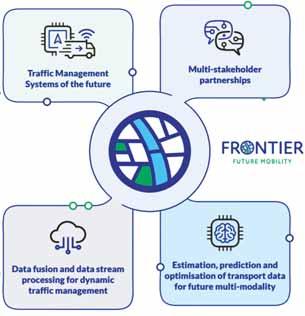
In light of this, FRONTIER,
an EU-funded project, brings 19 high-profile partners across Europe with the goals of 1) accelerating the transition towards resilient multimodal autonomous mobility by providing advanced corridor-wide traffic management solutions, and 2) establishing the processes of collaboration and arbitration among stakeholders.
Arcadis IBI Group, a global leader in planning, design, deployment, and operation of Intelligent Transportation Systems (ITS), is leading the development and integration of FRONTIER’s Autonomous Network and Traffic Management Engine (ANTME).
ANTME empowers operators at the corridor level to devise and deploy traffic management response plans through varying levels of automation, facilitating complex decision-making. It offers an array of functionalities, including event detection, response plan generation and propagation, as well as network monitoring and assessment through an advanced simulation framework.
Stakeholders benefit from increased common situational awareness of corridor conditions and disruptions, seamless communication across entities for better response times, as well as efficient incident response and management, based on actionable intelligence for decision-making. ANTME has been designed to continuously collect and analyse data, allowing the platform to re-adjust the proposed response plans and strategies as they enfold.
• For more information visit www.frontier-project.eu
A NEW HIGHWAY FOR COLOMBIA
COLOMBIA’S CHALLENGING HIGHWAY PROJECT
The Pamplona-Cúcuta highway is playing an important role for the development of northern Colombia
The construction of the new Pamplona-Cúcuta highway in Colombia is delivering an important economic boost for the north of the country. With this project, the Ministry of Public Works of Colombia intends to solve traffic problems in the border area between Colombia and Venezuela, as well as for the northeast of the country.
The new Pamplona-Cúcuta highway is one of the most important infrastructure projects that Colombia’s National Infrastructure Agency (ANI) put out to tender in recent years. The project was awarded to the Unión Vial Río Pamplonita Concessionaire, a company that belongs to the Spanish group Sacyr. At present the work is around 86% complete.
– Mauro Nogarin reports
The project forms part of Colombia’s massive infrastructure programme, which is known as the Fourth Generation Concessions. The main objective of this particular project is to improve the road connection between the city of Pamplona and Cúcuta.
A further aspect to the project is that it will connect with the Bucaramanga-Pamplona highway, which will improve connectivity between central Colombia and the neighbouring nation, Venezuela.
The aim of the work will be to rehabilitate the existing highway as well as to carry out the construction of a second carriageway. The project will provide a total of 50km of new road (between dual carriageway and single carriageway) and the rehabilitation of 72km of the existing route between Pamplona and Betania (Los Patios).
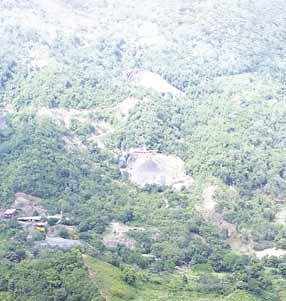
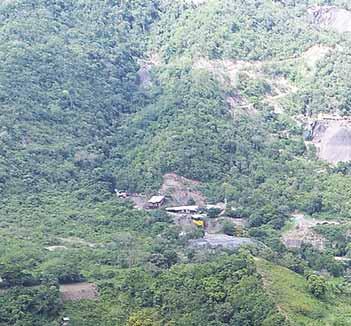
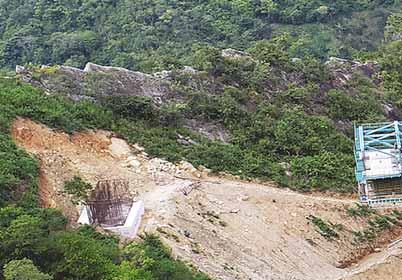
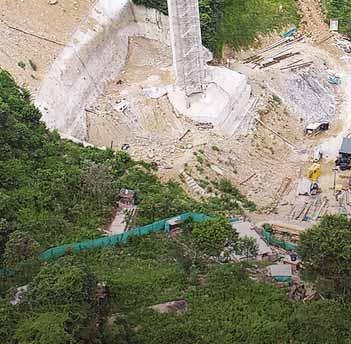
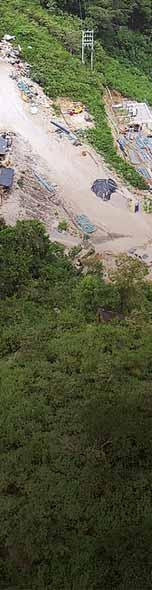
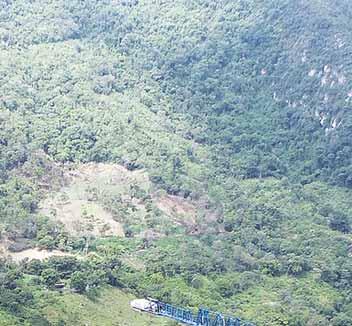
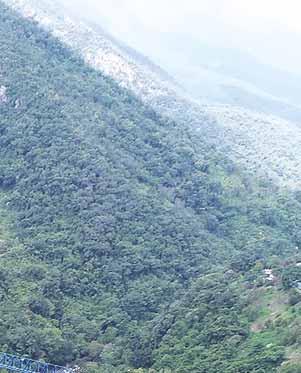
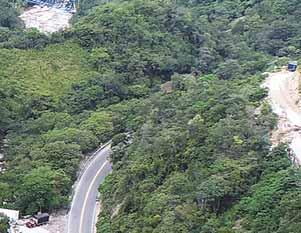
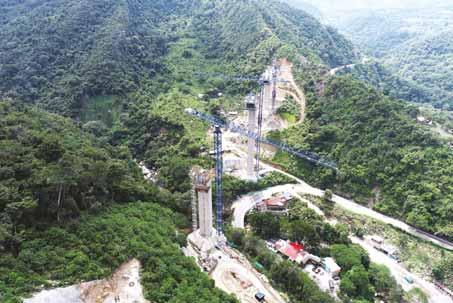
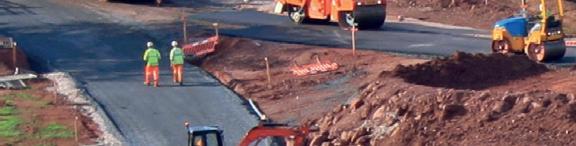
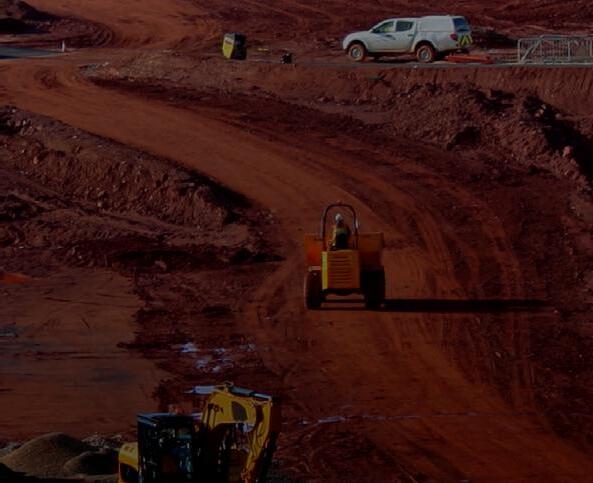
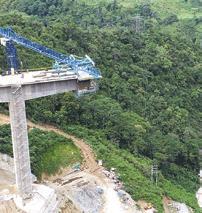
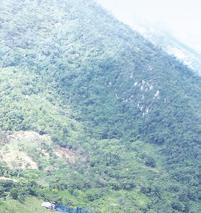
The topography of the route posed challenges for the construction work - image courtesy of ANI
The project requires extensive work due to the terrain and will include the construction of 23 vehicular bridges as well as three tunnels.
The highway begins at an altitude of 2,586m above sea level, in the city of Pamplona, until it reaches an altitude of 410m. Once complete, the new road infrastructure will benefit five municipalities: Pamplona, Pamplonita, Bochalema, Chinácota and Los Patios.
This area covers a population of approximately one million inhabitants and will bring a huge boost to the region, saving travel time for users travelling through the area. The journey time will be lowered by approximately 20 minutes for heavy vehicles and 35 minutes for light vehicles, which will help to boost trade in terms of efficiency, functionality and productivity.
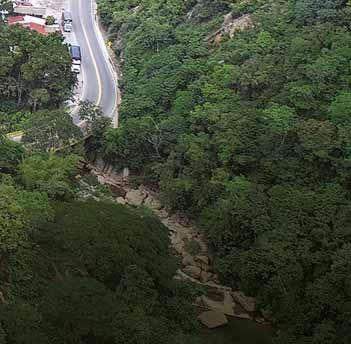
The Pamplona - Cúcuta corridor is located in the middle of the eastern mountain range of Colombia, mainly in the valley of the Pamplonita river. The alignment runs through an area of complex geological conditions that have required extremely large excavations, cuts and fills.
According to the reports of the National Infrastructure Agency (ANI), during the different
community, as more than 70% of the direct and indirect workers came from this region of the country.
This project was carried out through the award of a concession contract based on the scheme of Public Private Associations (PPP) between the State and the company with an investment of €590 million.
The bridges
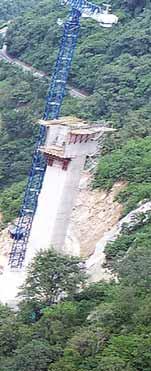
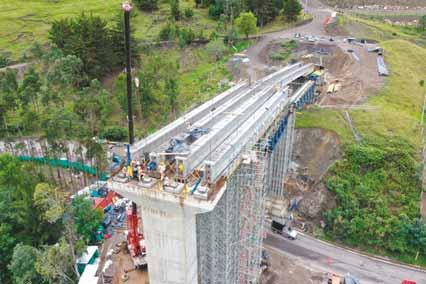
In total, 23 bridges with a total length of 1,900m were built. However, two of these structures posed greater engineering challenges due to the topographical complexity of the location in which each was constructed.
The first is a bridge that features a curved geometric design and situated in the Los Adioses sector, itself located in the municipality of Pamplona. This bridge crosses the Pamplonita river.
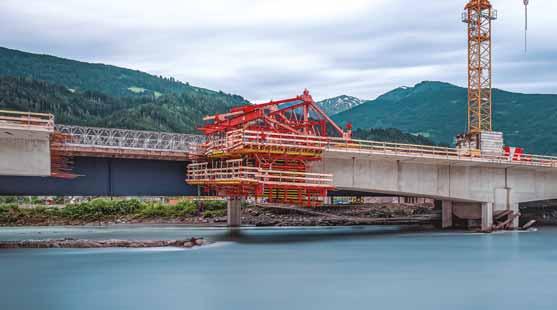
With a length of 170m and a deck width of 10.3m, it has been erected using the successive cantilevers method. The contractor made use of three advance trolleys that worked simultaneously. The bridge’s highest point was 33m.
A total of 3,700m3 of concrete and 840tonnes of steel were used in the construction of the bridge.
The second, named bridge 501, features
a total length of 224m. This is a structure made up of seven spans, measuring 22, 41, 28, 41, 31, 31 and 30m respectively. These are connected by reinforced concrete slabs that rest on four precast concrete beams.
This structure is located on the Iscalá ravine and provides access to the municipality of Chinácota. The structure sits on six intermediate piles that are sunk to depths varying between 13m and 27m.
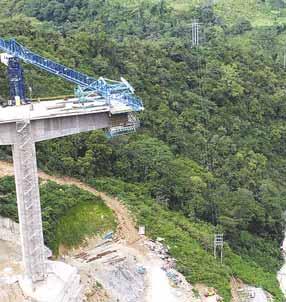
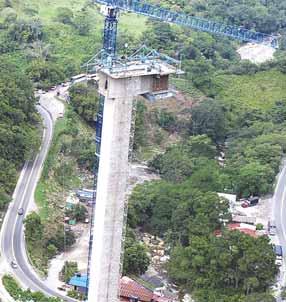
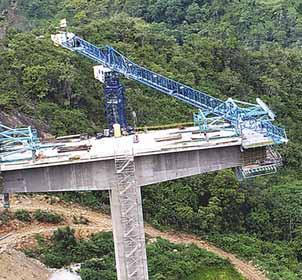
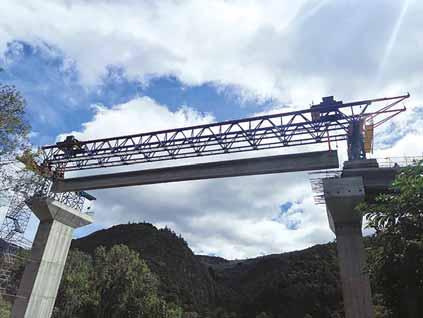
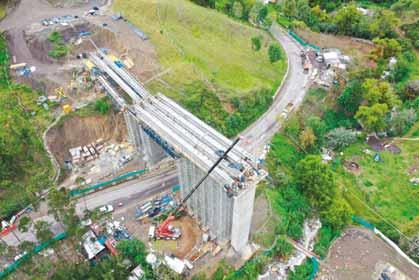
For the construction of the bridges where it was more convenient to use precast beams, Sacyr developed the RPGC-21 launching gantry to solve their assembly problems.
It it worth considering that this project included the construction of 22 continuous beam bridges featuring from 1-5 individual spans, each of which was located in a steep valley.
To cope with the requirements of the bridge erection work, the launching gantry has a 90tonne capacity and a maximum 48m length between spans, which allows it to install beams up to 43m long.
The use of this launching gantry presented a quick and effective solution for bridge erection. Conventional launcher devices would not have been as effective in terms of cost or time.
As the launching gantry is not selflaunching, the assembly and disassembly process had to be carried out with the use of auxiliary cranes. This reduced the assembly times from two weeks to just two days. By assembling all the beams, the construction company was able to offset the entire cost of the equipment, which also allowed the launching gantry to be used for other projects. This has considerably reduced the cost and time required for the assembly of the beams.
Loading and transporting the bridge components from one site to another was also easier. The various structural elements are lightweight and modular and do not require special manoeuvring to cope with the radius or slope of the access road.
The tunnels
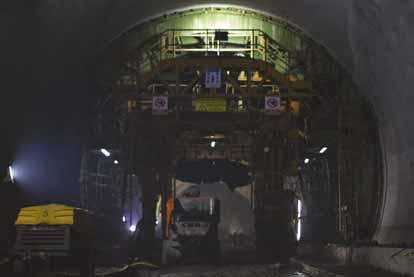
In total, 2,877m of tunnel bores were excavated for the three tunnel stretches planned in the original project for the construction of the Pamplona-Cúcuta highway.
One of the main challenges faced by the construction company has been for the construction of the Pamplona Bypass. For this stretch the projected required the construction of a bi-directional tunnel measuring 1.4km in length. This section serves as an interconnection for the Bucaramanga-
Pamplona road, substantially improving mobility conditions in the city of Pamplona. With the construction of this new tunnel stretch, traffic travelling between Bucaramanga and Cúcuta no longer has to cross the city of Pamplona. The tunnel has been a major benefit for Pamplona as it has reduced traffic levels in the city. Previously, vehicles travelling between Bucaramanga and Cúcuta had to use Pamplona’s urban roads, many of which are narrow and have a significant number of pedestrians.
1: The RPGC-21 launching gantry developed by Sacyr has been used for the project - image courtesy of Sacyr
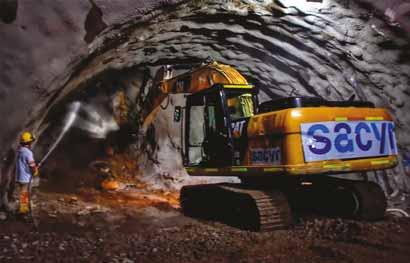
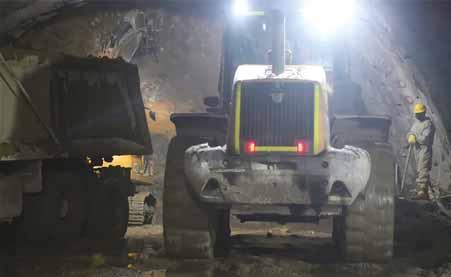
2: Wheeled loaders and excavators have carried out excavation duties for the tunnel bore excavation - image courtesy of Sacyr 3: Water spraying has been employed while using the hydraulic breaker to minimise dust levels - image courtesy of Sacyr/Unión Vial Río Pamplonita
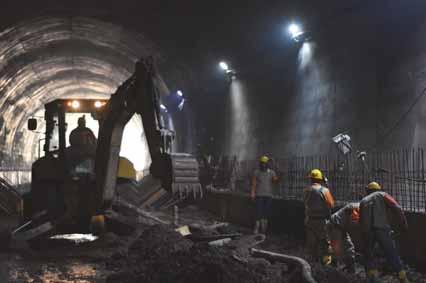
4: A backhoe loader has been used to prepare the tunnel bed for paving - image courtesy of ANI
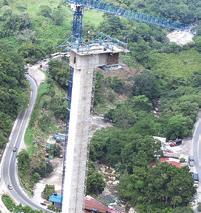
5: Four precast beams were used between each set of supports to support the width of the deck on viaduct 205 with a length of 200m located in the Naranjo sector –image courtesy of Unión Vial Río Pamplonita
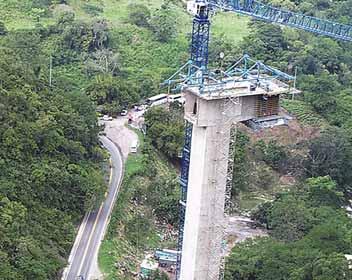
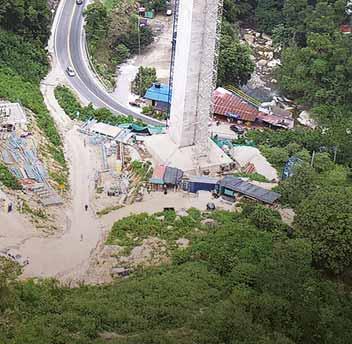
6: Tower cranes had to be used for some of the bridge erection work - image courtesy of ANI 7: Panoramic view of the assembly of the precast beams on viaduct 205 with a length of 200m located in the Naranjo sector – image courtesy of Unión Vial Río Pamplonita
8: CIFA equipment has been utilised for the shotcreting operation in the tunnels - image courtesy of ANI
For the construction of the Pamplona tunnel, 1,700 hours were needed in day and night shifts. This portion of the Pamplona-Cúcuta highway project required the excavation of 160,500m3 of material as well as the installation of 923 metal arches to support the bore. The tunnel workers have been able to achieve an average advance/ day of 2.8m. So far, 31,700m3 of concrete has been used for the tunnel stretch.
A combination of conventional drill and blast and New Austrian Tunnelling Method (NATM) excavation processes have been used for the excavation of the tunnel.
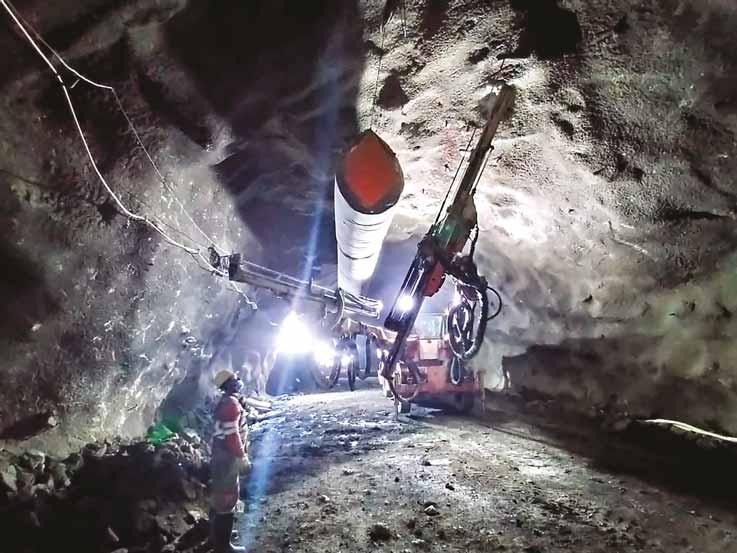
A jumbo has been used to drill the holes for the explosives, while for the NATM work, a Cat 320 GC excavator equipped with a hydraulic hammer has been used for the scaling process. Excavators and compact Sandvik wheeled loaders have been used to remove material from the drive.
Once the excavation work has been carried out, this has been followed by phases for shotcrete lining, waterproofing, the placement of granular bases and filters, concrete paving and finally electromechanical installation.
Once it is complete, this two-way tunnel will allow vehicles to travel at maximum speeds of 60km/h. It has a total width of 8.3m, with lanes measuring 3.65m wide, as well as 50cm berms on both sides, at a height of 5m at the centre.
The tunnel is being equipped with stateof-the-art longitudinal ventilation systems, an information system for users, lighting, fire detection, speed monitoring, surveillance cameras and a 924m emergency gallery that has access points.
This tunnel will be the 12th longest in Colombia and will also be the first road tunnel in the country’s Norte de Santander region.
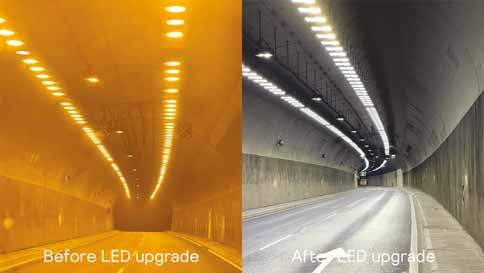
The tunnel is also being equipped with a novel continuous LED lighting system that features IOHNIC technology. This system has been designed and patented by Sacyr and will reduce the changes in light intensity for users entering and exiting the tunnel.
All the control systems will be connected to the Tunnel Control Centre (CCT), located at the entrance portal. A platform at this point integrates the various control systems. This configuration means that any alerts can be handled effectively, especially in the case of any emergency situation.
The Operations Control Centre is located in Los Acacios and will be able to monitor any events that happen in the tunnel in real time.
The second unidirectional tunnel for the Pamplona-Cúcuta project is located in the Pamplonita area. This is a structure featuring a length of 1,060m.
The construction of this tunnel presented a major technical challenge due to the difficult topography of the area. The engineers had to cope with the high slopes, the sharp curves
Full speed ahead for 4G
Colombia’s 4G Infrastructure programme forms part of the much wider Intermodal Transportation Master Plan (PMTI). This is a massive infrastructure initiative intended to connect Colombia through a series of multimodal transportation projects. The aim of this extensive series of works is to develop Colombia’s connectivity and boost the country’s economic development by linking the various industrial regions with its ports. The 4G Infrastructure programme includes 29 road projects and involves building a total of 7,952km of dual carriageways, repairing
of Pamplonita and El Diamante.
The 1,060m tunnel is the 14th longest in the country and the second longest for the Norte de Santander project. The NATM method was used for its construction. Once the excavation was completed, waterproofing, drainage and lining were carried out.
And for the construction of the third tunnel, the NATM method was also utilised. This stretch has a length of 406m and is located in the La Honda sector.
This stretch is located between the sectors of Don Juana-Los Acacios and has a unidirectional design. It will provide
6,958km of roads, driving 141 tunnels and constructing 1,300 viaducts. These projects are being carried out under the PPP model.
This has been followed by the more recent 5G Infrastructure programme, initially for 14 intermodal transport projects including road, airport, river and rail works.
So far the work to develop Colombia’s infrastructure has been carried out by a range of international firms from Spain, France, Italy, Portugal, Brazil, and Mexico. Local companies have also been involved in the bidding as part of joint ventures with international contractors.
MAIN DATA
NEW ROAD LENGTH: 52km
EXISTING ROAD REHABILITATION: 72km
NUMBER OF BRIDGES: 23 (total length 1,900m)
NUMBER OF TUNNELS: 3 (length 2877m)
INVESTMENT: €590 million
WORK PROGRESS: 86%
(Source: ANI)
A drill jumbo was used to bore the blastholes for the Pamplona tunnel drive - image courtesy of Area Cucuta
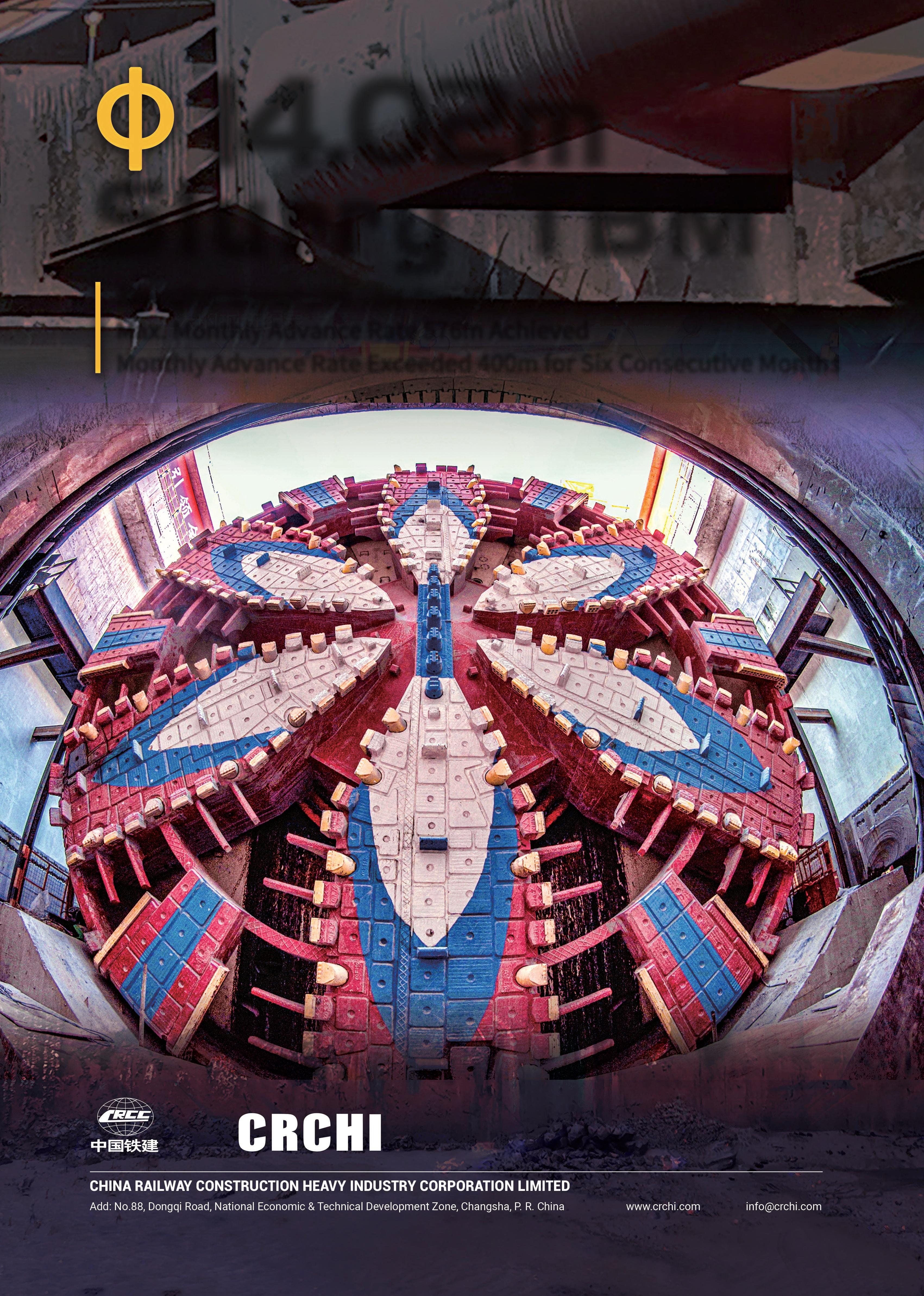
Max. Monthly Advance Rate 576m Achieved Monthly Advance Rate Exceeded 400m for Six Consecutive Months
PTV software for CycleRAP pilot
The latest technology of PTV’s Model2Go and PTV Visum will be used to create a model of the city generated by using OpenStreetMap data for a detailed urban bicycle network configuration.
Mobility software from PTV Group will be used by CycleRAP in projects to map cycling safety that will be run in five cities this autumn.
PTV said it is working with the International Road Assessment Programme (iRAP), the non-profit institution Fundación Mapfre and the Union Cyclist Internationale to run the CycleRAP risk assessment model.
CycleRAP, an evidence-based infrastructure risk evaluation model, has been designed to help cities better address the safety of their street and bicycle routes specifically for
improving light mobility. In order to showcase best practices, the application of this model will be tested in Madrid and Barcelona in Spain, the Colombian capital Bogotá, São Paulo in Brazil and in Fayetteville in the US state of Arkansas.
The project works with local partners to identify network risks and produce maps showing how safe the infrastructure is for use by cyclists and users of other types of mobility vehicles. It will also be the first application of the model in Spain and outside Europe.
The model uses data about the features of a road, street or path to evaluate the risk of crashes for bicyclists and light mobility usersirrespective of the type of facility. It pinpoints and maps where crashes are likely to occur, offering suggestions for treatments to reduce
this risk. PTV will work with one of the pilot cities on the visualisation of the CycleRAP model results and evaluate infrastructure improvements. Based on the latest technology of PTV’s Model2Go, a model of the city will be generated using OpenStreetMap data for a detailed urban bicycle network configuration.
The CycleRAP analysis will then be applied in the multimodal network and analysis platform, PTV Visum, which the company says is well-suited for managing, calculating and visualising bicycling corridor safety analysis.
The project results, due in October 2023, will give cities a clear understanding of how safe their infrastructure is, and provide key safety recommendations to help reduce risks. The project also aims to create a knowledge base to help cities replicate the approaches and improve safety of their cycling infrastructure. All the outputs will be launched publicly at the UCI Mobility and Bike City Forum, which take place on 25-26 October in Bruges, Belgium.
CycleRAP was launched globally in 2022 at the Velo-city conference in Ljubljana, Slovenia, and the ITF Safer City Streets Network in Guadalajara, Mexico. It aims to reduce crashes and improve safety specifically for bicyclists and other light mobility users by identifying high risk locations without the need for crash data.
The high risks associated with urban cycling are holding people back from cycling as an alternative transport, said Sofia Salek de Braun, road safety ambassador at PTV Group. “The infrastructure must change, because we will not succeed in changing mobility behaviours if streets continue to be dangerous, and people are killed or seriously injured. This is why we at PTV Group warmly embrace this cooperation [within CycleRAP].”
PTV Group
www.ptvgroup.com
CycleRAP
https://irap.org/cyclerap
High visibility low-profile studs
Sernis has launched two solar road studs, the SR-i19 and SR-i25, that use microcontroller technology. The SR-i19 rises only 9mm from the road surface while the SR-i25 rises 10mm. According to the company, they are "ideal for road delineation, bends/curves and crosswalks, among other applications".
They have constant brightness during all functioning periods and can be seen up to 1km away. The SR-i19 has a high light output due to three LEDs for each side, with an aluminium base giving it strong mechanical resistance.
Meanwhile, the SR-i25 has a stainless steel cap that protects if from snowploughing and its built-in GPS technology allows flashing synchronisation. It is also available in aluminium.
Sernis - a Portuguese company that
manufactures and supplies a wide range of road safety solutions - highlights the products’ high-performance photovoltaic solar module, with silicone-free junction sealing technology allowing better, faster and cleaner maintenance.
The company said the technology applied to both models "increases the performance of solar power studs with energy storage by battery or capacitors and protects the road stud against the deep discharge of the batteries/capacitors".
'Sleep' mode prevents discharge during storage or transport. Sernis also said that they are easily installed and require "virtually no maintenance".
Sernis - Soluções Tecnológicas www.sernis.com
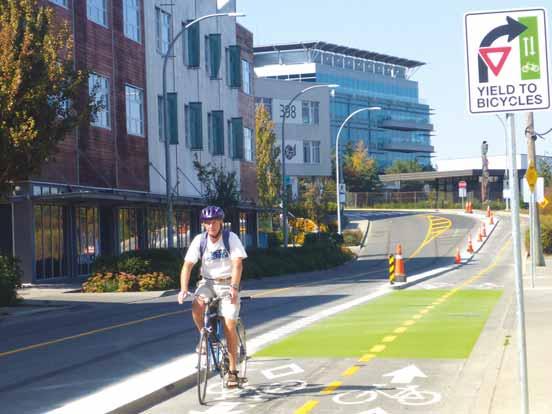
Some cyclists are open to less risk than others
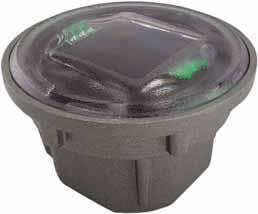
The SR-i19 solar stud from Sernis: visible up to 1km away
The Arizona Department of Transportation (ADoT) has selected Teledyne Flir to help stop an increase in accidents and fatalities caused by wrong-way drivers on freeways.
The new wrong-way detection system, based on Flir's Cameleon ITS and TrafiSense video-analytic thermal cameras, is being operated on a 24km corridor in the city of Phoenix on I-17 between I-10 and Loop 101.
ADoT has also adopted the wrong-way detection technology as part of its standard ITS cabinet design. The agency says that this is the first such system to go beyond detection; it also automates countermeasures to protect oncoming traffic.
The agency says current practices typically rely on drivers calling 911, often with inaccurate location information.
The US state’s new wrong-way detection system is based on Flir's Cameleon ITS and TrafiSense video-analytic thermal cameras
Following field tests, ADoT believes that thermal video analytics sensors are the most effective technology for detecting wrong-way drivers, compared to loops, visible-spectrum analytics and radar.
In addition to incident detection, the system includes flashing wrong-way signs, public warnings via dynamic message sign messages to oncoming drivers, ramp closures and traffic signal pre-empts. There are also
alerts to police and other agencies, including arrival times at intercept points.
When a vehicle passes through the detection zone of a Flir TrafiSense camera, video analytics determine its direction and speed. Wrong-way events are confirmed by Cameleon - first by an operator using Cameleon’s automated video call-up and then by a fully-automated confirmation by Cameleon when an adjacent detection occurs.
The countermeasures - such as warning lights - are then deployed by Flir's system.
Cameleon sounds an audible alarm and displays looping and live video of the event on all operator workstations and on the video wall in the traffic operations centre.
Teledyne Flir www.flir.com
Tampa Hillsborough Expressway Authority (THEA) Taps one.network to digitise roadway and work zone management
Tampa picks one.network
In the US, the Tampa Hillsborough Expressway Authority (THEA) has chosen one.network to provide traffic management, work zone notification and construction planning software solutions.
The collaboration will provide Tampa and Hillsborough County residents with real-time information on work zones, planned events and road disruptions, according to one.network, a road management and work zone data technology provider.
Transportation. THEA will deploy the one. network platform in two phases to address a number of scenarios. The initial phase will provide immediate benefits from modules including one.network’s Traffic Management platform, a real-time digital mapping solution and Live Link. It allows authorised workers to update lane closures and schedules while in a work zone.
residents with continuous regional information streams across jurisdictions.
According to one.network, the agency was looking for a holistic solution and this agreement delivers on its goal to constantly improve its connected vehicle and communications strategies as new technologies emerge.
The company equips road agencies, utility companies and all organisations that rely on clear roads with tools to plan, communicate and analyse activities affecting road users.
THEA is one of only 10 organisations designated as a connected and an autonomous vehicle test bed by the US Department of
In phase two, THEA will deploy Plan Share, allowing construction firms to streamline and simplify the permitting process, explained James Harris, one.network’s founder and chief executive.
THEA manages the Selmon Expressway in Tampa. But because one.network is already ingesting data from the city of Tampa and Hillsborough County, the project will provide
As part of the agreement, one.network will build a Work Zone Data Exchange (WZDx) feed for THEA, to deliver work zone data to the Federal Highway Administration’s national repository of work zone data. It will be shared with other agencies and third parties across the nation.
one.network https://us.one.network
TRL to support Bangladesh safety drive
TRL has won a major project with Bangladesh Roads and Highways Department (RHD) funded by Asian Development Bank (ADB), to help Bangladesh solve its crash data collection and analysis challenge, as part of its commitment to improve road safety for its citizens.
Through the project, TRL will identify the key challenges for RHD and other agencies in Bangladesh, to fulfill a mandate to ensure a safer roads network by identifying safety interventions derived from crash data and an improved road safety audit process. The project aims to achieve the following broader outcomes: an institutional framework for RHD in crash data collection and management; rollout of a crash data collection and management system for RHD; a roadmap to institutionalise road safety audit in RHD’s business process; and an updated road safety audit manual.
As with many countries, Bangladesh faces a challenge in collecting crash data. A large number of crashes occur in the country, but the estimates vary between international bodies, local NGO's, the police and the general public about the actual number of deaths and serious injuries happening on the network. TRL will use its expertise, from leading projects throughout the world, to identify opportunities to improve data collection, allowing appropriate evidence to be taken into consideration when planning and designing the road network. Additionally, TRL will support the roll-out of a crash data management system to provide evidence-based
planning and design of the road network.
"TRL has a long history of researching the causes of crashes and the factors that contribute to them, that has saved lives the world over, says TRL’s CEO Paul Campion.
“Coupled with our long experience of developing manuals for many countries, taking into consideration the local conditions, our work in Bangladesh will help authorities to identify key risks on the network from the crash data, and through an improved audit process support the RHD team on solutions to increase road safety,” he concludes.
“Our work with TRL will improve our understanding of the causes of crashes
Update for Synchro Studio
and enable more effective measures to be put in place to prevent them,” says RHD Project Director Fazlul Karim. “We know the project will make a significant contribution to reducing the number of crashes and casualties on our roads. Amongst other needs, identifying bottlenecks and roadblocks in various areas of road safety in Bangladesh will help us determine the crash rates and their severity, calculate the fatality rate, and as a consequence, design the required safety measures."
• More information can be found at https://www.adb.org/
Cubic Transportation Systems has released the 12th version of its traffic signal timing platform Synchro Studio that includes an enhanced Scenario Manager.
Synchro Studio supports the US’s Highway Capacity Manual 7th Edition methodology and features a "simplified, more intuitive" user interface.
The Highway Capacity Manual is a publication of the Transportation Research Board (TRB) of the National Academies of Sciences, Engineering, and Medicine in the US. It contains concepts, guidelines and procedures for computing the capacity and quality of service of various highway facilities. These include freeways, highways, arterial roads, roundabouts, signalised and unsignalised intersections, interchanges, rural highways and pedestrian crossings/ cycle paths.
The latest version of Synchro Studio will "continue enhancing our customers’ workflows," said Geoff Scalf, director of product management at Cubic Transportation Systems.
Synchro Studio v12 combines modelling tools (Synchro) with microscopic simulation (SimTraffic) to provide a comprehensive design package.
Customers can analyse traffic operations in days rather than weeks. They will be able "to model complex traffic networks and support multiple scenarios in a single file, better aligning with their community’s mobility needs".
The updates also support integration among products, including SimTraffic, ATMS Central Management System, Warrants and 3D Viewer.
Cubic Transportation Systems www.cubic.com
TRL’s work will help to improve understanding of the causes of crashes and enable more effective measures of prevention
STOP BURNING PROFITS
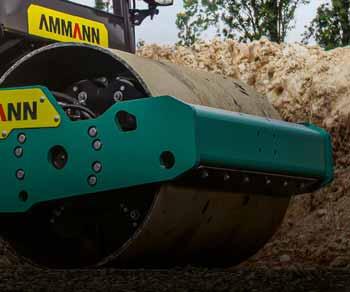
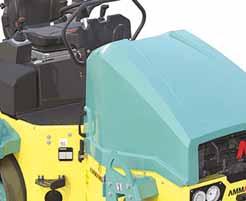
Fuel economy matters, now more than ever. You’ll get it with the new Ammann ARS 30 and ARS 50 Single Drum Rollers. These machines maximise fuel efficiency through advanced engine technology, integrated ECOmode and an innovative, fully hydrostatic drive system.
THEY ALSO PROVIDE COST-SAVINGS AND SUSTAINABILITY THROUGH THE ECODROP CONCEPT:
•Maintenance-free vibratory system
•Maintenance-free steering joint
•Gear boxes have been eliminated, along with the oil they require
What about performance? These machines – the most compact in the Ammann single-drum roller lineup – deliver a powerful punch that will help your crews reach compaction goals in a hurry. Power. Manoeuvrability. Fuel efficiency. You can have it all.
Econ e-truck for Ringway trials in UK
Ringway and its long-term strategic fleet partner Econ Engineering, have successfully trialled the first electric multipurpose highway maintenance truck in the UK.
Econ has developed a new Electric Quick Change Body (E-QCB) system, built on the newly-launched 19tonne Volvo FE Electric 4×2 chassis. The trial by highway maintenance contractors Ringway was the first of its kind for an E-QCB system in the UK and ran in the East Midlands region of England.
The vehicle is the product of a collaboration between Econ’s R&D team and product specialists from Volvo Trucks UK & Ireland, as well as the supplying dealer, Crossroads Truck & Bus.
The Econ E-QCB can be supplied with three demount
bodies to get all-year utilisation of the electric Volvo chassis. It has a winter 6m3 spreader body, an insulated end tipper body specifically designed for highway maintenance works or a caged tipper body for street scene activities, such as street refuse collection, fly tip removal and recycling operations.
The E-QCB system uses hydraulic rams and locking systems that enable the bodies to be switched in 15 minutes - all controlled by a single operator. Volvo’s FE Electric has a recharging time of 2.3 hours with a high-powered 150kW DC charger to give it a range of up to 240km. It features two electric motors as well as a two-speed gearbox. The trial was part of Ringway’s efforts to reduce carbon emissions within the company’s fleet. It was also
done to prove where depots, with sufficient substations, can charge such an HGV EV fleet in downtime to avoid operational constraints, explained Mitesh Solanki, managing director of Ringway.
Last autumn, Ringway took delivery of a zero emission electric-powered recyclable plastic-bodied 7.2tonne commercial vehicle for light highway maintenance duties such as supplying traffic cones. It is the UK’s first electric traffic management vehicle of this size, according to the manufacturer, traffic management vehicle specialist Acklea.
It was specially created for Ringway’s use in London’s Ultra Low Emission Zone. The vehicle operates from Ringway’s three strategically-located London depots, all of which have EV
charging facilities. The new electric truck retains the totally recyclable copolymer plastic body that makes Acklea’s family of 7.2tonne vehicles exceptionally lightweight and has a modular design capable of reducing whole-life costs by up to 30%.
The vehicle bodies can be reused with a new chassis and cab to increase the lifespan of the reusable parts into a second or potentially third life, as the vehicles are upgraded with new, more sustainable chassis and battery technology.
Econ Engineering
https://econ.uk.com
Volvo Trucks
www.volvotrucks.co.uk
Acklea
www.acklea.com
All systems go for Endurance
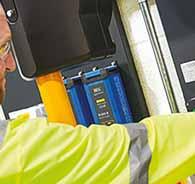
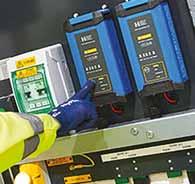
Traffic Group Signals is set to launch its Endurance Rapid Charging System for 12V batteries in the company’s portable traffic lights in under 16 hours.
The Endurance system – for the Evo1 and Metro traffic lights - incorporates a seven-stage smart charge algorithm. This not only helps to keep battery plates clean but also improves performance and increases battery life.
Traffic group says the Endurance is “kinder to batteries and the environment” by automatically shutting down when batteries are fully charged, preventing damage from overcharging. For added battery protection, the Endurance Rapid Charging System also allows fully discharged batteries to be recovered, further increasing longevity and reducing the need for costly replacements.
performance and asset protection while ensuring the utmost safety,” said Adam Brazier, operations manager at Traffic Group Signals. “Offering a range of charging panel solutions to charge up multiple 12V 15A batteries simultaneously, Endurance system customers will be safe in the knowledge that the system will take any guesswork out of optimum charging times and conditions.”
The new system, to be safely installed by a certified electrician, also has in-built circuit protection and temperature compensation.
This industry-first feature, according to Traffic Group, ensures the system will operate in low temperatures (to 0°c) and protects batteries by moderating the charging speed when the depot or warehouse environment is too hot or cold.
Because Endurance is 95% efficient when charging, it can help reduce bills through low power use and sleep modes, which also support safe operation. The fully contained charging system includes a kill switch, RCD, 115V hook-up and parking slots for connectors when not in use. It is also water, dust and chemical resistant.
“Our new Endurance Rapid Charging System is designed to address the balance between fleet
Endurance Rapid Charging System options include a 2-Up 12V 20A charging panel for use with Evo1 and a similar 8-Up 12V 15A panel for use with the Metro system. There is also a 6-Up 12V 20A charging panel for use with both the Evo1 and Metro systems.
Traffic Groups Signals www.trafficgroupsignals.com
SWARCO SOLIDPLUS
THE NEXT GENERATION OF GLASS BEADS
SWARCO SOLIDPLUS premium reflective glass beads are particularly durable and ensure increased road safety thanks to their exceptional retroreflection.
The unique glass formulation combined with a state-of-the-art beading process enable a long service life reduced costs and lower material consumption for remarking optimised price / performance ratio www.swarco.com/rms
Himoinsa sheds light on emissions
Himoinsa has developed a hybrid lighting tower with a smart control system that considerably reduces emissions, noise and operating costs - the HBOX+ Hybrid.
It combines an LFP battery and Yanmar Stage V diesel engine, an ideal solution for work areas requiring low sound emissions and reduced CO2 emissions, according to the manufacturer.
The unit offers the advantages of a hybrid system in terms of carbon footprint reduction, without having to sacrifice the benefits of the 100% diesel version, including its ample wide lighting footprint, among other aspects.
It retains all the performance of the HBOX+ diesel version (6,400m2 at 20 lux on average) while adding the competitive advantages of a battery-powered hybrid system, according to Miguel Ángel Ruiz, head of global engineering and development for Himoinsa. “This is a versatile lighting tower that can operate in four different working modes, as required by the client at any given time, either in electric 100% battery or 100% diesel operating mode, as well as in hybrid diesel-battery mode or even powered by the grid or any other external power source such as a generator set.”
Key to this new development is that in none of the selected working modes is there a reduction in lighting capacity, even when the hybrid option is selected. The company said the system can reduce up to 2,600kg/year of CO2, operating eight hours per day in hybrid mode.
The CET8 smart controller, developed by Himoinsa, incorporates an assistant that guides the user for easy setup and operation. With only four clicks the system will be running at the point of maximum efficiency in each application.
The connectivity and remote control of the equipment is guaranteed through the CET8
Stop n’ go with Rosgo
SRL Traffic Systems has launched the Remotely Operated Stop Go (Rosgo) System, the company’s first remotely-operated stop/go sign for temporary road works.
SRL says the portable wireless Rosgo can be easily and costeffectively deployed and operated by a single person from a location of safety up to 200m away. Its 24kg base is the lightest available, the company said, and means one person can lift it.
The 900mm-diameter signs may be used as part of an integrated system comprising up to four units; it is capable of managing four-way stop/go sites. It has lithium batteries that can be recharged using an in-vehicle charger. A single button enables the user to coordinate multiple signs - automatically precluding green conflicts.
SRL has also launched a hand-held device for long-distance
control of its Eurolight portable traffic signals. The Euro Remote Control can also facilitate more unusual scenarios - such as railway crossings or slow-moving vehicles – that standard traffic
Hybrid APP. With this, users can control the equipment from a smartphone, tablet or PC and consult key indicators like battery status, fuel level, and service time, or even manage the equipment’s performance. They can decide, among other things, whether they want more running time or more lighting capacity in a very intuitive way by using the assistant.
This equipment has been designed to offer the user the possibility of maximising battery operating time and minimising engine use, therefore guaranteeing as much zero noise operation as possible. This period can be programmed: the smart control system of the HBOX+ Hybrid will automatically manage the equipment’s best performance based on the ned by the user for this zero noise period. An easy and intuitive management process that is carried out through the assistant integrated in the CET8 Hybrid controller.
The HBOX+ Hybrid provides a continuous running time of up to sixteen hours with zero emissions and zero noise. This hybrid lighting tower has an integrated dimming system that can automatically regulate the different variables (light intensity, battery running time, etc.) and select, in a flexible way, the best working mode according to each case.
Himoinsa www.himoinsa.com
light settings would not be able to accommodate. It features feedback LEDs, confirming phase settings from a 300m distance, allowing the user "an unparalleled degree of control". The unit facilitates the
management of manual mode and all-red setting and is rechargeable via USB-C connectivity.
SRL also says its existing Urban64 temporary traffic control system has been enhanced with the introduction of an extendable pole on which the signals are mounted.
Previously constructed onsite, lights incorporating the new structure are built offsite before being transported to their destination, where the poles are swiftly extended to full height, the firm says. It estimates that the new units "may be cost-effectively installed up to 30% more quickly than the originals".
This reduces the time for which customers are required to manage traffic while the solution is established, minimising road user disruption. SRL
www.srl.co.uk
Construction is well underway in Colombia for the important Ruta al Mar road project, with around 90% of the work having been completed.
However, the project is facing a number of challenges for the remaining sections of the project. Not all of the necessary approvals and licences have yet been gained for certain stretches of the route. There are also issues with tolling on the sections that are already open, so that the planned revenues are not being achieved. The costs of materials and personnel have also increased.
The builders say that the project,
which commenced in 2015, should still be complete by the end of 2024. The project is being managed by Concesion Ruta al Mar.
Colombian road construction project well underway
And funding has been secured to pay for construction of the Transversal del Sisga road connection, which is expected to cost around $208.5 million. The package will include financing from funds that are managed by Ashmore, Blackrock and CAF. It will also include funding from the Colombian business Financiera de Desarrollo Nacional (FDN).
Once the highway section has been completed it will improve transport and cut journey times from Sisga to Aguaclara.
Strong financial performance for Wacker Neuson
The Wacker Neuson Group is claiming a strong financial performance for the start of 2023. The firm says that it is benefiting from significant growth, with group revenue up 27.9% in the first quarter to €667.2 million and the EBIT having increased disproportionately by 124.6% to €87.8 million. This last has been due to a one-time effect from the sale of fixed assets.
The firm’s EBIT margin of 13.2% at the beginning of the year is still well above the target corridor, as expected while the net working capital ratio of 30% is within the strategic target range.
"As anticipated in our annual guidance, we have carried the full momentum from previous quarters into the new fiscal year and continued to grow significantly. At the same time, we continue to expect the first quarter to also be the strongest of 2023," reminds Dr Karl Tragl, chairman of the Executive Board and CEO of the Wacker Neuson Group.
As in previous quarters, all three reporting regions contributed to growth in the first quarter with high increases. In the Europe (EMEA) region, revenue rose by 22.4% to €504 million. This growth was driven
by consistently good demand in all submarkets, with the home market of Germany showing particularly positive growth. On the product side, demand for excavators, wheeled loaders and telehandlers in particular increased noticeably.
As in the previous year, the Americas region was characterised by particularly significant growth of 57% to revenue of €142.6 million. The US market in particular saw a sharp year-on-year increase in demand, but demand also developed very positively overall in Canada and the South American markets. Wacker Neuson continues to increase the number of affiliated dealers in North America, thus laying the foundation for further growth in the region.
The Asia-Pacific region also increased its sales. Revenues increased by 7.3% to €20.6 million. Growth in the region continued to be driven primarily by the Australian market.
Products adapted to the needs of the local market and the focus on independent rental companies continued to generate strong demand. By contrast, the Chinese market continued to prove difficult and declined in the first quarter.
Funding sought for Iraq’s massive proposed road project
A huge road and rail project is being proposed for Iraq to link the country with Turkey. Financing is being sought for the project, which would result in the construction of a 1,200km link.
The Iraqi Government has described building the parallel road and rail routes as one of the most important infrastructure projects for the country in its history. International funding will be required for the project, which could cost as much as US$17 billion.
The combined road and rail link would connect Iraq’s key cities, Mosul, Baghdad and Basra, with Turkey. The route would extend as far as the port of Al-Faw, in the south of the country and located close to the mouth of the Shatt al Arab River on the Persian Gulf.
McCloskey eyes electric power
After record sales in 2022, McCloskey International believes that widening its electric-powered plant range will help the company build on its very strong start to 2023.
“Last year was a really busy year for us and a record-breaking year, both for McCloskey International and the wider group [of brands] and we are growing again this year,” said Toni Laaksonen, senior vice president of McCloskey International, which was acquired by Metso Outotec in 2019. “The acquisition of Tesab last year helped grow our revenues. We have also expanded organically, recruiting more dealers.
For example, in Africa, we have grown our dealer networks significantly.”
Laaksonen said customers globally are looking for more and more sustainable products, including more electric-powered equipment.
“There are certain markets that are very demanding on the electric plant side, such as the European market. We are also seeing this trend in certain American states.”
This has led McCloskey International to introduce solutions such as electric-power options for its cone crushers. “We are also electrifying our heavy-duty jaw crushers,
Komatsu’s powerful excavator increases productivity by 40%
Komatsu says that it’s powerful new 628kW PC900LC-11 excavator stands tall among the Japanese company’s other quarrying products.
The PC900LC-11 offers major design enhancements compared to the earlier PC800LC-8 model that add up to a 40% increase in productivity with 25% more arm crowd force and 12% more swing torque. This means that the PC900LC-11 is a versatile machine for heavy construction, demolition and large mass excavation as well as mining and quarrying.
A new removable counterweight system makes transportation easier and the boom configuration reduces transport height. A new service pass-through area allows easier access to filters, oil level checks and sample ports.
To boost situational awareness for operators, tools such as the 360o KomVision six-camera monitoring system is standard on the PC900LC-11. Smart Construction 3D guidance and payload monitoring are available as options.
The PC900LC-11 also offers users “Smart Construction Retrofit”, what
Komatsu describes as an affordable guidance kit. It gives operators in the field and managers in the site office access to both 2D and 3D design and payload data to help drive accuracy, control load volumes and improve operations.
Komatsu www.komatsu.com
including the J6. Our screeners are already available as dual-power plants.”
Among the company’s new machines are the ultra-efficient S190 dual-power portable vibratory screener, and the ST100TVR stacker. The ST100TVR reaches new heights in sustainability, efficiency and fuel savings. Its dual power option and lift axle option allow the unit to switch from track mode to radial mode in seconds.
McCloskey International www.mccloskeyinternational.com
Versatile screening
Kleemann says that its new Mobiscreen MSS 802i EVO mobile screen benefits from versatile conversion options. It can deliver optimum material flow in natural stone and recycling applications. The large range of screen surfaces and the simple setting of screening parameters make it possible to adapt the MSS 802i EVO to different conditions. If a fine final product is to be screened from particularly coarse feed material, the plant can be converted speedily from three to two final grain sizes. There is ease of operation due to its intuitive control and ease of access to machine components. The machine also benefits from the H-DRIVE system with the option of an external power supply for emissions-free working.
Wirtgen Group
www.wirtgen-group.com
Komatsu’s powerful PC900LC-11 excavator
Sustainable crushing with Metso Ouotec’s HP200e
Metso Outotec says its new HP200e cone crusher for the global market offers better performance and improved uptime levels in a more sustainable way.
The model’s new liners are fitted into the crushers without backing material, making maintenance breaks shorter. Liner replacement is faster, safer and less hazardous for the environment.
“The evolution of Metso Outotec’s cone crusher technology brings multiple benefits and presents a true evolution for aggregates producers in terms of performance, uptime, serviceability and application coverage,” says Ilkka Somero, product manager, Nordberg HP Cone Crushers in Metso Outotec. Benefits include enhanced performance, 10% more head motion, 20% more kW power, 20% more force, new and more efficient chambers, an anti-spin brake for higher uptime and a feed cone lifting tool.
“Environmentally, the new HP200e crushers are also a more friendly solution, as they do not require backing material,” he said.
The majority of spare parts in the current HP200 and the new HP200e are common to enable continued global spare-part support for
new units. The Finnish crushing and screening plant giant has also established a start-up inventory for HP200e parts in Europe and North America.
Metso Outotec www.mogroup.com
New Matec factory
Matec Industries is opening a new factory in Italy this month to produce its massive Twin Freccia Rossa, the world’s biggest filter press. The new factory in Mulazzo, in the Italian region of Tuscany, will be the sole production facility for the 50m-long, 600tonne/hour Twin Freccia Rossa. The filter press is designed to combine the efficiency of two machines into a single product, offering faster sludge feeding and cake discharge time.
Matec Industries marketing manager Tatiana Bini said the company is taking on 60-70 new employees at the new factory because of “a lot of new orders and [the] need to increase production". Matec will now have three manufacturing bases. Matec also recently acquired the Alfa Pompe factory in Verona and has a manufacturing facility for small and medium machines at its headquarters in the town of Massa.
Matec Industries www. matecindustries.com
Keestrack’s B7H crusher for US market
Keestrack is launching a B7H heavy-duty hydraulic jaw crusher specially for the US market, some of the toughest rock conditions in quarrying applications. The 70tonne B7H hydraulic jaw crusher with a 30tonne jaw is adapted from Keestrack’s existing B7 electric jaw crusher which was launched in 2018. It has a vibrating feeder with two-step grizzly of 2,200mm x 1,080mm (LxW) and a bottom deck in wire mesh of 1,450mm x 870mm
(LxW) to optimise crushing results and to reduce wear. The feed size of the material is up to 700mm, the feed opening is 1,200mm x 830mm and the outlet adjustment CSS ranges between 75mm-250mm.
The jaw crusher is also equipped with the NSS - non-stop system - which protects the crusher from uncrushable feed and resets the CSS automatically during operations.
Keestrack sales director Frederik
Hoogendoorn said the mobile crushing and screening equipment company is a pioneer in electric quarrying and mining machinery. It launched its first electric machine in 2006 and 90% of Keestrack machines are available in three versions: hydraulic, electric and zeroemissions plug-in.
Keestrack www.keestrack.com
Keestrack’s new B7H hydraulic jaw crusher
Metso Outotec has unveiled its new high-performance HP200e cone crusher for more uptime and less maintenance time
Aye-aye for AI at SBM
SBM Mineral Processing says it has secured the first 10 orders for the company’s new 600tonnes/hour REMAX 600 impact crusher that incorporates artificial intelligence (AI).
“We have made three REMAX 600 plants so far. The first has already done 1,500 hours of testing with an Austrian quarry customer,” said Erwin Schneller, SBM managing director. “The first sold machine will be delivered to a customer this year, with the others being delivered by mid-next year.”
Extensive sensor technology including cameras records and evaluates the REMAX 600’s feed material as well as intermediate- and end-products. In real time, these values reach centralised digital labs at SBM where they are further analysed. Necessary adjustments are then made on the digital twin of the working machine and re-transmitted directly to the REMAX 600 in the field.
By using AI, the REMAX 600 clears the way for autonomous crushing, notes the firm, based in Oberweis, Austria.
Known as Crusher 4.0, the REMAX 600
Lone Star for Rubble Master
Rubble Master is introducing a pay-per-use rental system for North America customers and will soon be moving into a purposebuilt parts distribution centre in Texas.
The Linz, Austriaheadquartered crushing and
was developed together with the University of Leoben, Austria's specialist mining, metallurgy and materials educational institute. It can offer up to five fractions in one cycle. With a feed capacity of 600t/h, the new machine can accommodate material feed sizes up to 900mm and a maximum total weight of 75tonnes, depending on the equipment.
Triple wind sifting and an ultra-efficient overbelt magnetic separator with longitudinal discharge as an option (a novel feature in highly mobile impact crushers) are said by SBM
screening plant maker said the Texas centre will also be a teaching hub for dealer technicians.
All of the functions that are available at Rubble Master’s European headquarters will soon be available in North America, according to Jackson McAdam,
to ensure high purity of final products, even in recycling applications.
Another big machine for SBM is the JAWMAX 400 jaw crusher, said to feature one of the most advanced diesel-electric drive concepts on the market. A combination of a fuel-efficient onboard diesel and a performance-tuned generator powers the plant’s materials processing.
SBM
www.sbm-mp.at
managing director of Rubble Master Americas.
“Our North American dealer network has grown rapidly, and we are working with some major dealers,” said McAdam, who joined Rubble Master Americas in 2020.
“We are working with more and
Prep less and crush more
Crushing and screening equipment manufacturer Eagle Crusher has introduced two plants as well as a new, modern look for the company’s line of heavy-duty machines. The new UltraMax 1600X-OC Portable Impactor Plant has been designed for larger-size aggregate operations and quarries, says the manufacturer. It features Eagle’s UltraMax 69X Impactor with a 175.26cm x 129.54cm feed opening to allow larger material into the impactor to increase throughput - up to 1,000tonnes/ hour. The idea is to help producers “prep less and crush more”, says the company. Also new from Eagle Crusher is an 8×20 screening plant with an integrated feed conveyor and blending gates for producers that demand multi-product screening. It can produce up to four products simultaneously - three with absolute sizing - or return the oversized product for further reduction.
As for the company’s new look and feel, after decades of manufacturing its equipment in orange, Eagle Crusher is going for more black detail, but it won’t be dropping its signature orange paint scheme altogether. The company said that the addition of black to things such as frame rails, handrails and flywheels will exemplify rugged durability.
more American companies to get as many of the services and parts we need from a localised supply chain. Our parts business grew 33% in 2022 compared to 2021.”
Rubble Master www.rubblemaster.com
The first REMAX 600 impact crusher that incorporates artificial intelligence should be delivered this year
Eagle Crusher’s new 8×20 screening plant with an integrated feed conveyor and blending gates is for producers that demand multi-product screening
Turning industry green
Green is good for industry – delivering sustainability can also help reduce costs for construction firms, ensuring better financial performance – Mike Woof writes
The construction industry is a highly conservative sector and has been slow to adopt many new technologies. But with greater understanding that climate change is a key issue facing humanity, the sector is now waking up to its need to adopt new processes and strategies. A conference on delivering sustainability to meet the need for climate change emissions reductions, has been held by compressor maker Atlas Copco in Antwerp, Belgium.
Convincing construction companies such as rental firms and contractors to make their operations more environmentally friendly is something of an uphill task. However, new legislation is emerging on the horizon in some countries that will make this a requirement for contracts to be awarded. For the construction sector, making the move to a green business model with a focus on fewer carbon emissions does not have to be a painful exercise, and it can even be a profitable move.
Kevin Schoeters, vice president communications at the Portable Air Division of Atlas Copco commented, “You can be sustainable and look after the growth of your business as well. Sustainability can drive innovation but by embracing sustainability, businesses can thrive.”
A key speaker at the Atlas Copco sustainability conference was environmental specialist Dr Gabrielle Walker. She commented that concern over climate change has become mainstream, instead of being the preserve of people perceived as tree huggers as it was previously. Dr Walker said, “You used to be on the side and that has changed. Climate change has become a central focus in business.”
The need to address global CO2 emissions is now recognised as being critical. Dr Walker said that according to Mark Carney, former head of the Bank of England, “Climate changes presents a significant risk for the global financial sector.”
The effects of climate change are enormous and have already resulted in increasing average temperatures, disappearing
glaciers, forest fires and more intense storms as well as extensive flooding. Dr Walker said that the floods seen in Pakistan during 2022 were massive. “Pakistan is not a small country. Last year 1/3rd of the entire country was flooded.”
She added, “Storms are not getting more frequent but they are getting more intense.”
Flooding and fires will also cause increased pressure on flood supplies, with massive effects on the more vulnerable areas of the world.
Factors such as the civil war in Syria or the Russian invasion of Ukraine have triggered major shifts in migration patterns (there are around 1 million Ukrainians in Germany alone, and more in Poland too for example). Dr Walker commented, “Migration is happening now but will accelerate if climate change continues.”
Investing in fossil fuels however represents a dead end according to Dr Walker. These stranded assets will become financially negative in a comparatively short period and will become a poor long-term investment. Dr Walker quoted a comment from Larry Fink, CEO of Blackrock, “Climate change has become a defining factor in companies’ long-term target.”
Atlas Copco is rolling out a new range of zero emission compressors to help the firm meet sustainability targets
SUSTAINABILITY
She pointed out the crucial need for change and said, “Carbon emissions have to reduced by 45% from 2010 levels. By 2030 we need to be removing about 20 billion tonnes/year of CO2”
Dr Walker also said that the COVID-19 epidemic has changed the way many people think and commented, “The pandemic sped up action on climate change.”
However, electrification does not have to mean adopting worse technologies and she said for example that motor vehicles such as the Tesla range show EVs can offer high performance With nearly 40% of cars on the road in Norway’s capital Oslo now being electric models, this highlights how such vehicles are already supplanting internal combustion engine versions. And she also said how aiming for reduced emissions can be highly profitable. Using data to improve efficiency will reduce waste for construction, while improving profitability and addressing climate change with CO2 reductions. Although the hotel sector is very different from construction, moves in the sector show how firms can improve the bottom line while ensuring they improve their environmental profile. For example, Dr Walker said that Hilton Hotels set out a plan to reduce CO2 emissions, achieving a reduction of 30% and also cut waste by 50%. This brought cost savings of $1 billion.
Green technologies are already providing benefits according to Dr Walker. A new CO2 removal plant in Texas is now removing 500,000tonnes/year of CO2 and this will increase to 1 million tonnes/year. The CO2 is then sequestered in spent oil wells. Her figures show that steel production is responsible for 8% of global CO2 emissions, but she commented that many major car firms are aiming for all cars to be made from fossil free steel by 2030.
The cement industry accounts for 7% of global CO2 emissions but major cement producers such as CEMEX, Heidelberg Cement and LafargeHolcim are already introducing low carbon cement processes and are even working on carbon sequestration technologies. Using precast components for many civils works can make a substantial reduction in cost. Precast components made at specialist facilities use less concrete and steel and are lighter, making them easier to transport. Using low carbon concrete materials now coming to market can deliver benefits also, although low CO2 concrete often features longer curing times.
Construction firms have also noted the benefits for the bottom line of adopting green policies. One such is US construction machine rental firm Equipment Share. Jabbok Schlocks, CEO of Equipment Share commented, “Mckinsey says we lose about $1 trillion due to inefficiencies in construction.”
He said that effective data recovery is a key to efficiency, “The next step is to make sure all machines are connected.”
Schlocks said that the construction industry remains highly inefficient. Firms focus on getting the job done, but often at tremendous cost with regard to having surplus equipment
onsite for example. He commented that a large jobsite might have 1,000 machines onsite. However, with greater efficiency employed, just 300 machines might be able to do the job.
Construction machinery makers are already seeing the need for reducing emissions, with a series of major firms such as Caterpillar, Hyundai, JCB, Komatsu, Liebherr and Volvo CE all having made major advances in low emissions technologies for the future. Bert Derom, president of the Portable Air Division at Atlas Copco said, “Industry is changing faster and faster. Sustainability is good for industry.”
Electrification does offer benefits and Derom said, “The electric motor is so much more efficient than the diesel engine.” He said that even if the power generated is not green, using electric machines delivers savings and added, “We have a responsibility to drive this transition.”
Switching to electric equipment could offer other advantages also and Derom said, “One advantage of an electric compressor over a diesel machine is that it lasts longer and needs less maintenance.”
Saïd el Khadraoui is European Green Deal Advisor and European Green Deal Insitiutional Expert and said, “We need to act now or we will reach a tipping point and change will become irreversible. It’s happening now.”
Southern Spain has seen record high temperatures of 40°C in May, which has never been seen before. El Khadraoui said, “This will trigger extreme weather events more often.”
Extremes of weather will affect water supplies which will hit food production, increasing migration from the worst affected areas in the developing worlds and also potentially triggering wars. Physical assets can
be at risk from climate change. In Germany low water levels in the River Rhine have hit water traffic and impacted on transportation costs.
He commented, “There are many opportunities if we manage this process well. We need a faster way of introducing the changes in the technical regulations.”
Although he said that there will still be some emissions by 2050, these will be offset by emissions reduction from other areas.
Edith Guedella is head of sustainability at the Spanish construction firm Acciona, a company that adopted more environmentally friendly policies some years ago. Using recycled materials in construction has helped lower waste, improve the bottom line and delivered necessary cuts in CO2 emissions. She said , “The minimum requirement for recycled aggregate is 20% but we need to increase that by 10%.”
She continued, “More sustainable machines use less energy. There are possibilities for machines of less than 15tonnes running on electricity.”
However, she said that for larger machines, the use of electric power remains less feasible around the world. “That is why we are aiming for this transitional process.”
In addition, recharging facilities do have to improve for EVs and electric machines to become more prevalent. This is a key challenge that remains to be met. Delivering a greener profile can be achieved by industries such as construction and can improve cost-effectiveness at the same time. But Dr Walker commented, “You’ve got to reduce your emissions and you’ve got to have a plan.”
Atlas Copco www.atlascopco.com
Keynote speakers at the Atlas Copco sustainability event discussed how emissions reduction is crucial for humanity
LEAD WITH DATA-DRIVEN DECISIONS
Today’s transportation professionals face bigger challenges than ever. Planning and building for the future require us to rethink how aging infrastructure can respond to a changing climate and meet the needs of our evolving mobility patterns and more diverse communities. You need tools that help you
Design and plan resilient and sustainable infrastructure.
Analyze traffic and mobility needs to reduce congestion and increase access.
Plan capital improvement projects based on data and communicate the value to residents.
Integrate with real-time data.
Esri’s geographic information system (GIS) technology provides the software and solutions that allow you to address your current needs and move toward a sustainable future. Explore Esri, the partner in building more livable communities. Read more at go.esri.com/highways-june-2023.
Asphalt paving innovation
Several asphalt pavers are now under development that use electric drive instead of diesel power, with the potential to reduce localised emissions.
A number of asphalt paver firms are working on prototypes at present, with trial sections of road having already been paved in some areas, such as in the Netherlands.
For use in urban areas, electric asphalt pavers offer the benefits of reduced noise and exhaust emissions. With regulations becoming particularly tough in Europe and California for example, the paver firms are looking ahead to offer solutions to contractors who will face restrictions on the use of diesel machines. In addition, these new machines would offer advantages for contracting firms carrying out underground car park works or for paving road tunnels.
For tunnelling projects, providing sufficient ventilation is expensive and using zero emissions equipment will reduce costs significantly. Contractors working on projects such as the upcoming Silvertown Tunnel project in London will be required to use zero emissions machines for construction of the cross passages as well as fitting out work, and electric asphalt pavers would fit requirements for the road surfacing portion of the project.
Although battery life means that electric pavers would work best for small road works and not suit long highway
jobs requiring continuous operation, this could still be achieved in underground applications. With electric power available in tunnel projects for other equipment, an electric paver could operate from a cable. It would only need to run on the battery when the cable would be moved from one power point to the next as the machine advances. As with other electric construction machines, the cost of the battery will be a key factor in the purchase price of any production model but will be offset by much low running and maintenance costs over the paver’s working life.
One of the most recent electric pavers to be unveiled is the prototype model being worked on by LeeBoy in the US, shown at the CONEXPO-CON/AGG exhibition in March 2023. The electric 8520C is powered by a 150kW drive and features a 48kWh battery pack, while charging can be from 120V or 240V supplies, depending on what is available. The machine is equipped with the firm’s proven vibratory Legend HD screed and can pave widths of up to 4.6m, as with the conventional 8520 paver model. Many of the electric components are proven units from the automotive sector and supplied by GM, while PCS provided the powertrain integrator. The automotive components suit this duty and do not have to be specially ruggedised as the paver application features comparatively smooth and continuous operation with fewer shock loads than for other construction machine types.
LeeBoy stresses that the electric paver is a prototype that is still in development. Chris Brown is senior product manager at the firm and said, “We’re not ready to put out prices or sell it yet.”
Innovative new machines are coming to market that will boost efficiency for the asphalt paving segment - Mike Woof writes
He said that the machine offers the same paving performance as the conventional diesel model. The machine is now commencing full testing, which will also provide useful information on how long the battery will last in a working application.
However, Dynapac’s SD1800We cityclass paver is now available commercially and was shown at the bauma construction machinery exhibition in October 2022. The first units are already being supplied to customers in Europe. The SD1800We features a tamper bar type screed and has the same paving specifications as the comparable SD1880W diesel machine, with both offering paving widths from 1.84.7m and laying up to 350tonnes/hour.
The SD1800W e is built in collaboration with SUNCAR HK. SUNCAR, a leader in the electrification of construction machines based in Switzerland.
Dynapac says that its electric drive comes with an efficient three-phase permanent magnet synchronous motor (PMSM) that provides 55kW to the hydraulics for the screed and undercarriage. Depending on the type of job, application, and intensity of the work cycle, the SD1800We offers up to four hours of rugged performance with one charge. Charging is through a CE-compliant Type 2 plug for
LeeBoy’s prototype electric paver is under test as part of its development
400V, 6-32A, 1.4-22kW AC and through a wall box or a charging station. Depending on battery condition, charging takes around 3 hours to go from 5% to 80% @ 400V 22kW (AC) and 40 min to go from 5% to 80% @ 80kW (DC). Although charging while working is not possible, a user can pre-heat the screed with the charger (with Type 2 AC or CCS2 DC) while waiting for material to arrive.
Also shown at the bauma 2022 exhibition were the diminutive MINI 500e and 502e pavers from Vögele and these are also being made available in certain markets, rather than being prototypes under development. The tracked MINI 500e and wheeled MINI 502e pavers have battery electric drive, although more conventional diesel versions are also offered. The machines are aimed at use in small-scale construction projects that include constructing cycle and pedestrian paths, paving between railroad tracks as well as repair work in small inner-city sites. Compact pavers generally work for short periods only and suit the use of battery power, although charging times for the MINI 500e and MINI 502e are said to be short.
These machines have standard screed working widths of 0.8m and can be enlarged up to 1.35m hydraulically. The minimum paving width can be reduced down to 0.25m, while the width can be built up to a maximum of 1.8m using bolt-on extensions. The new Vögele MINI series has been developed in partnership with CM,, an Italian company that will also build the machines for Vögele.
Diesel power
More conventional diesel powered asphalt pavers are still being introduced to the market though. From Astec come improved versions of the proven RP-175 and RP-195 highwayclass asphalt pavers for North American customers. Both machines now benefit from the installation of Cummins diesels that are Tier 4 Final/Stage V emissions compliant, with power ratings of 130kW for the B4.5 in the RP-175 and 172kW for the QSB6.7 in the RP-195. The engine covers have also been redesigned for both machines, providing better visibility for the operator and improving working safety.
bar screeds.
The SE47 VT standard paving range is 2.4-4.7m with a maximum width of 6m using extensions, while the SE50 VT standard paving range is 2.55-5m with a maximum width of 7.64m. The SE47 VT screed and SE50 VT are tamper bar models for the international market. Meanwhile, the SE47 V and SE50 V screeds are vibration only units aimed at customers in North America and Latin America.
The machines also benefit from the firm’s PaveStart system, which retains the screed settings used for a job and allows the machine to be restarted with the same settings after
improved screed heating system offers a fast heating up time, having the machine ready for use in just 20-25 minutes according to the firm.
Compact and manoeuvrable, the machines are said to be easy to transport. With lengths of less than 5.6m and widths of 2.55m, these 14-16tonne class machines can be transported on a variety of trailer types without special permits.
The front-loading angle of 17° and high bumper clearance simplify loading without the need for additional blocking materials. These models combine a low truck entry height with smaller 355mm diameter augers that efficiently
Both machines have Carlson EZIV screeds offering paving widths from 2.43-4.72m for the RP-175 and 3.04-5.94m for the RP-195. Maximum paving width using bolt-on sections is 7.32m for the RP-175 and 9.14m for the RP-195.
The RP-175 weighs in at around 14.7tonnes while the larger RP-195 weighs 17.8tonnes. Both machines benefit from redesigned tracks with oscillating track frames for better traction and stability. Other improvements include better cooling systems and a relocated generator for the RP-195.
From Caterpillar comes a range of new asphalt paver variants for the 14-16tonne class. These include the AP400, AP455 Mobil-trac, AP455 Steel Track, AP500, AP555 Mobil-trac, and AP555 Steel Track asphalt pavers. The new models for the asphalt paving market from Cat also include the SE47 VT and SE50 VT tamper
An electric version of Dynapac’s SD1800W paver is now available
Vögele is offering electric versions of its tracked MINI 500 and wheeled MINI 502 compact pavers
four-year warranty and have a four-bogie system with self-tensioning accumulators and centre guide blocks. This design helps prevent slippage and reduces wear, while the oscillating bogie wheels help deliver smooth transitions when exiting the cut over transverse joints of mill and fill applications.
The AP455 and AP555 steel track models provide many of the same features with lower travel speeds and have an auto-tensioning system to ensure tractive performance while minimising wear.
For contractors that prefer a simple wheel undercarriage design, the AP400 can be equipped with a front-wheel assist option, while the AP500 can be equipped with frontwheel assist or the all-wheel drive option for increased performance on soft base materials or when pushing heavy loads.
The AP400 and AP455 pavers are equipped with a Cat C3.6 engine, while the AP500 and
AP555 use the Cat C4.4 engine. The engines are available in configurations that meet Tier 4 Final, EU Stage V, and ECE R96 Stage IIIA emission standards, equivalent to Tier 3 and Stage IIIA.
Designed for the North American market, the new D17 C commercial paver from Dynapac suits use in medium to large parking lots and county roads, says the company. It comes with a standard paving width of 2.5-4.7m, while optional bolt-on extensions allow the unit to pave up to nearly 5.5m in width.
Key improvements over the earlier FC1700 C include a fail-safe heat management system for increased efficiency and reliability. The newly designed proportional auger conveyor system controls the material flow to the screed. Dynapac’s D17 C is paired with the VF0816 front extension screed, which weighs over 2tonnes and is the heaviest in its class, boosting paving quality. Screed heating is
powered by a newly designed, three-phase 16kW generator that increases efficiency and reduces heat-up time. And the heating system includes multi-zone monitoring, allowing even temperatures across the width of the screed.
Bolted-on conveyor floor plates, segmented auger flights and screed plates mean that the wear parts can be replaced and rebuilt several times. The quad auger system includes screedmounted augers on both main and extension sections. This allows a smooth material feed whatever the pavement width. The independent conveyor system, along with reversible conveyor, allows for ease of operation while paving and eliminates spillage when transporting the paver. The proportional feed system offers precise control of the material in front the screed. Operators can also personalise material pile-height settings according to job requirements.
Aimed at utilities works, Dynapac’s F1250CS compact paver now benefits from the option of the RC360 remote control unit, which is said to offer additional versatility. The compact Dynapac F1250CS suits use where paving is required with widths of 0.5-3.5m. Using the remote unit, an operator can control the paver from a point that offers the lowest asphalt fumes while providing maximum visibility. Should the operator be more than 10m from the paver, the machine stops automatically for safety. The paver also stops automatically when the remote is tilted higher than a 45° angle. The remote comes with a case and charging devices with a mechanical connector for external supply.
Meanwhile, the F1250CS’s V2400 screed is available with gas and electric heating, offering the same quality and performance as its larger stablemates and has an extension box allowing greater widths. The Dynapac F1250CS can pave below zero for refurbishment work, as the paver can drive out of the milling cut and allow the screed to pave a smooth finish.
Multiple adjustments such as for angle of attack and the deep bottom plates allow high pre-compaction and a smooth surface, even with thick layers. The quick coupling eases setup and operation.
The F1250C comes with a 54kW Deutz engine in either Tier 3/Stage III or Tier 4/Stage V versions to local emissions requirements.
LeeBoy is offering a new addition to its conventional asphalt paver range also. The new 8508 paver is a compact, low maintenance machine with a narrow conveyor aimed at repair works in the North American market. It shares many features with the existing 8616, but is around 300mm shorter to allow it to operate in tighter sites. Power comes from a Tier 4 Final compliant Kubota diesel delivering 125kW, while the machine features oscillating bogies for the undercarriage, allowing smoother operation. The machine can be fitted with the HD or HD Pro screeds offering paving widths of 4.6m or 4.72m.
And German firm Vögele says that its SUPER 1703-3i Universal Class paver is being offered with the VF 500 screed to meet the
Caterpillar is offering a versatile range of new paver models to meet differing applications
Astec is now offering two upgraded, highway-class asphalt pavers
needs of the North American market. The VF 500 front-mounted screed offers paving widths from 2.44m up to 4.72m using hydraulic extension and a maximum 5.94m using bolt-on extensions.
The wheeled paver benefits from compact dimensions and Pivot Steer braking, allowing good manoeuvrability. High paving speeds can be achieved, along with laydown rates of up to 695tonnes/hour. The firm says that its Universal Class paver suits duties in large commercial applications.
The paver and screed are equipped with the user-friendly ErgoPlus 3 operating system. It makes controlling the machine, including the Niveltronic Plus system for automated grade and slope control, easy and convenient. The Vögele EcoPlus low-emissions package cuts fuel consumption by up to 25%, depending on the application and workload, and reduces noise. When equipped with Vögele RoadScan, the non-contacting temperature measurement system, checking and documenting the paving temperature is easy. Temperature monitoring across the entire surface makes quality measurable.
The firm is also offering two improved asphalt pavers aimed at the highway class for European customers. The new SUPER 1900-5(i) and SUPER 2100-5(i) Highway Class pavers are the first models in the firm’s new Dash 5 generation and are equipped with the latest-generation AB 500 and AB 600 Extending Screeds. The firm says that these new pavers benefit from the latest technology so as to meet the increasing need for digitalisation in construction.
User requirements have been a key focus during the development of these machines according to the firm. For the paving crew, this allows simple machine handling, maximum operating convenience and safety on the job site.
Reduced setup times, improved logistics and greater machine availability are said to deliver and ensure fuel economy and reduce material wastage, helping address increasing fuel and materials costs. New automation and control technology provides operator assistance and has been optimised to prevent errors and to increase efficiency and paving quality according to Vögele.
Reducing the noise emissions and fuel consumption of Dash 5 pavers while maintaining the same performance helps meet sustainability targets for contractors, while also lowering fuel costs and CO2 emissions.
And Chinese firm XCMG is introducing its RP705 asphalt paver into the European and North American markets. The firm says that the machine offers reliability and productivity with a throughput of 600tonnes/hour, suiting it for urban road repairs. The machine is said to
An array of new solutions is available from key manufacturers for binder and chipsealing applications.
New from LeeBoy is an updated version of its Maximizer, which now features a 13kW electric generator and 6kW electric heating elements. This allows heating to take place while the machine is being driven to site. It can also be plugged into an electric supply overnight, allowing material to be kept warm when not in use. The machine retains the proven extending spraybar of the previous model.
An innovative and versatile machine for binder and chipsealing applications is now
Astec www.astecindustries.com
Caterpillar www.cat.com
Dynapac www.dynapac.com
LeeBoy www.leeboy.com
Vögele www.voegele.info
XCMG www.xcmg.com
Binding and sealing options
available from Secmair called the CHIPSEALER CT. According to Secmair, the machine can be adapted to a range of jobsites and for duties such as surface dressing, tack coating before the hot asphalt mix, coating and priming and localised treatments. The chip application rate is optimised to ensure that there is no waste and the system is said to ensure accuracy and quality during application, providing the same level of quality as for conventional surface dressing equipment.
A single operator sits in the cab, with high visibility of the worksite and optimised safety. A camera at the front of the vehicle provides visibility of the working
area. The cab features joystick controls with a screen showing all key parameters, while the unit has automatically controlled application and ensures that the unit applies the correct quantities of materials..
The CHIPSEALER CT is equipped with a proven conveyor belt discharge system while the telescopic spraybar allows maximum spreading widths of up to 4.4m. Tank capacities can range from 4,000-9,000litres, depending on customer requirements.
Key features include an exclusive valve block to manage the binder, precise dosing and transversal distribution. Other important features include thermal
be easy to operate and has its screed options, tracks and its feeder system modified to suit the needs of customers in developed markets.
insulation and heating, a system that minimises fuel consumption and an automatic purging control that ensures there is no waste left on the ground.
The CHIPSEALER CT can be equipped with the firm’s new pilot system, which allows a more precise patch application without overconsumption of materials. For patching, the DUOSPRAY option is said to ensure optimal dosage on all the application width, while enriching jets ensure that the chips adhere to the sides of the area being repaired.
And VSS Macropaver says that its Macropaver-CR model is able to deliver slurry and polymer-modified micro surfacing
XCMG says that its RP 705 asphalt paver is a reliable machine suited for developed markets
efficiently. The machine features a Patent Pending ground drive that uses a variable displacement hydrostatic pump driving two bent axis motors. The Macropaver-CR is capable of 40km/h for forward and reverse.
The loading conveyor has a 5.6tonne/min capacity with a 508mm cleated belt, fully
enclosed with return idlers and lift cylinders for quick access. The Patent Pending hydraulic system features three variable displacement, pressure-compensated pumps for paving and loading circuits. There is one variable displacement hydrostatic pump for the closed loop
A LONG WAY TOGETHER
ground drive circuit, while there is one gear pump for the steering and cooling circuit.
The Macropaver is said to be equipped with high-quality components and no chain or sprocket drives, allowing rugged and dependable performance, while the unit offers reliability, ease of operation, and productivity.
And in the UK, contractor Tarmac is introducing an electrically powered bond coat sprayer for road works. Tarmac supplier and highways equipment specialist, DE Plant, part of the Thriplow Group, developed the all-electric vehicle.
WHEREVER YOU ARE, BKT IS WITH YOU
No matter how challenging your needs, BKT is with you offering a wide range of OTR tyres specifically designed for the toughest operating conditions: from mining to construction sites. Sturdy and resistant, reliable and safe, able to combine comfort and high performance.
BKT is with you, even when work gets tough.
For info: europe@bkt-tires.com
LeeBoy’s Maximizer offers improved performance over the earlier generation model
VSS Macropaver now offers an upgraded version of its Macropaver
Tarmac and DE Plant partnered with Volvo and Schäfer-technic to develop an all-electric, zero-emission sprayer, which offers carbon savings of 1.12kg CO2e/km. The first time on the A120 in Essex. Once fully operational, the sprayer is set to service the area surrounding the M25 London orbital motorway. DE Plant worked with Volvo to develop tting from
product to replace traditional bitumen. With no diesel generator to keep the bitumen warm for spraying, Bondcoat Duo is used as a cool product so that battery power can be conserved. England's road authority National Highways has approved the use of Bondcoat Duo on the strategic road network, which has the potential to offer further carbon savings if used by existing bond coat sprayers.
The electric bond coat sprayer has a 200kW battery pack installed which can be fully charged in 2-4 hours depending on the charge connection, and has a range of almost 160km/charge.
LeeBoy www.leeboy.com
Secmair www.secmair.fayat.com
VSS Macropaver www.slurry.com
the automotive manufacturer’s expertise in developing EVs. Specialist firm Schäfer-technic has developed the specialist tanker, sprayer and nozzles. Tarmac also worked with BituChem to develop a new
Tarmac www.tarmac.com
An electric bond coat sprayer is in use in the UK by Tarmac
An electric bond coat sprayer is in use in the UK by Tarmac
Electric compaction
Several
asphalt compactor makers now offer compact machines featuring electric drives
– Mike Woof writes
Anumber of the major asphalt compactor manufacturers now offer compact machines that feature electric power. These machines are all compact units that are aimed at customers in segments such as the rental sector. Compact ride-on twin drum compactors are used widely in road construction operations, particularly for smaller works and for repairs following utilities works. Rental machines typically may spend a lot of time standing waiting to be used rather than operating continuously, as with larger pieces of equipment.
power offers a practical alternative for this equipment segment over conventional diesel engines.
Diesel machines are typically left idling while the asphalt is raked into position. After compaction, the machines travel to the next repair site where they may also be left idling for extended periods, wasting costly fuel. But battery equipment does not have to idle and
While the purchase prices of electric machines are typically higher than for diesel units due to the cost of the batteries, running costs and maintenance needs are much lower. For the rental firms, eliminating the need for regular checks of engine oil and coolant levels or for the replacement of filters can simplify fleet management significantly.
In addition, electric compactor models are quieter than conventional diesel units, which is of extra benefit for use in urban areas or for
over noise levels. Electric machines also have no tailpipe emissions, a key factor for their use in towns and cities in Europe, California or China where restrictions are becoming increasingly stringent. These units also suit duties for use in enclosed parking areas or tunnelling applications where diesel exhaust would require costly ventilation.
Ammann is now offering an electric drive version of its 2.6tonne class twin drum roller, the ARX26e. This features the same compaction forces and drum dimensions as the standard ARX26 model, as well as the same control systems and operator station.
The machine can operate for a full shift on a single charge. It can be fast-charged using a three-phase supply or by a standard single-phase, 16A supply although the latter takes longer. The electric drive to the drum is direct and without hydrostatics, unlike some competing designs, optimising efficiency. The steering is conventional, using a hydraulic ram.
It is now some years since BOMAG first unveiled a prototype electric compactor aimed at the rental segment and the firm has subsequently introduced models to its range. rm now offers two electric compactor models, the BW 100 AD E-5 and BW 120 AD E-5, for the 1m-wide and 1.2m-wide drum classes. The BW 100 AD E-5 weighs 2.5tonnes while the BW 120 AD E-5 weighs 2.6tonnes. Both have Li-Ion battery technology rated at 48V and 25kWh, with two high-efficiency electric motors that control the drum vibration and travel/steering independently, so only one motor is needed for travel mode to conserve power. the BW 120 AD e-5 offers a 65/60Hz drum frequency and 0.5mm amplitude. Compaction performance for both BOMAG models is said to be comparable with the equivalent diesel variants.
Dynapac’s new electric compactors have low working noise and zero emissions
Electric versions of Ammann’s small, twin drum asphalt compactors are available
COMPACTION
From Dynapac come the twin drum CC900 e and CC1000 e models, which are said to deliver the same power and performance as the conventional diesel machines. Both are said to offer savings on running costs, featuring fewer moving parts and low maintenance needs. The batteries are said to be able to manage a full day of operation without the need for recharging. The CC900 e and CC1000 e deliver the same static linear load, amplitude, gradeability, and travel speed as the dieselpowered models on which they are based, with no compromise on productivity or jobsite performance.
In a typical working day, a 1.6tonne roller will be used for repairs and compaction of around 70–80tonnes of asphalt/day at a layer thickness of 40–50mm, covering an area of around 700m2. According to Dynapac, this allows the battery to last for a full shift. In 90% of the cases in trials, about 20-30% of the battery level was left at the end of a shift.
With the fast charger, 400V/three-phase system it takes 1.3 hours to reach 80% charging level. The 230V/single-phase charger needs 6 hours to reach 80% of capacity. Dynapac is planning to provide adapters allowing the use of automotive charging stations.
Hamm is introducing a range of eight compact tandem rollers featuring electric drives. The firm’s new HD CompactLine models will all be offered with the option of electric power instead of the conventional diesel engines.
offering emissions-free electric variants of the most popular units.
Electric compact excavator and L25 Electric compact wheeled loader.
There are 24 models in the conventional CompactLine at present, with weights ranging from 1.6tonnes up to 4.8tonnes as well as drum widths from 800-1,380mm and an array of specifications and features. Hamm is now
The new electric models feature Li-ion batteries with 23kWh capacity, allowing operation for a full working day without the need to recharge. Included in the electric range is a model featuring both oscillation and vibration, the first such model available on the market. This unit will be of particular benefit for working in urban areas as it is quiet in operation while the oscillation system means it does not transmit vibration to the surrounding area.
The zero emissions performance suits the machine for use in sensitive or urban environments with strict emission regulations.
Volvo CE is introducing its 0025 Electric compactor, the first of the firm’s new electric machines designed specifically for the asphalt industry.
The electric driveline of the 0025 Electric is based upon the same proven architecture and components found on Volvo CE's ECR25
Hamm is offering electric compactors for most of its popular model sizes
Expected to operate for a full shift on a single charge depending upon the type of job and intensity of the work cycle, the 0025 Electric has the same charging solutions as its forerunners the ECR25 Electric and L25 Electric. Customers can choose the right solution depending on operational requirements. The machine comes with an integrated onboard charger which enables charging from 0 to 100% in as little as three hours depending on AC power level. With an optional offboard DC fast charger this can be achieved in little over an hour.
Combining the proven Volvo Asphalt Compactor platform with battery power, the 0025 Electric offers 24kW of available power, 30% more than the conventional Volvo 0025B. The result is a more responsive machine in terms of speed and vibrations, which performs better on grade. It also works better at high altitudes compared to a diesel machine
www.ammann.com
www.bomag.com
www.dynapac.com Hamm www.hamm.eu Volvo CE www.volvoce.com
Volvo CE says the battery in its electric compactor is fast to charge
Improved asphalt compaction
Several of the major compaction machine manufacturers are introducing new models for the asphalt segment that utilise the latest technology
– Mike Woof
reports
New asphalt compaction machines are now being offered by several of the key manufacturers. Many of these are equipped with the latest technology to offer a combination of high productivity and quality while there are also additions to the markets for compact twin drum rollers and rubber tyred machines.
From Ammann comes the new diesel ARX26, which is powered by a choice of two Kubota engines, both of which meet Stage V/Tier 4 Final emissions requirements. The version with the 26kW Kubota engine is the top-of-the-range diesel model offering high performance, although there is also a variant with a 19kW Kubota unit. This last unit comes under the power limit for a machine to be fitted with a diesel particulate filter (DPF), offering a considerable cost saving for maintenance and suits use by rental firms. Versions meeting Tier 3 requirements are offered also. In addition, a low-cost version of the ARX26 is offered with power from a Honda petrol engine. While the
build quality is the same as for the other units, Ammann says that it has fewer operating features, suiting it to purchase by customers wanting a simple machine.
From BOMAG comes the BW 161 ADO-5 tandem roller, which is now equipped with the BOMAP Connect digital compaction control system. BOMAP Connect offers networked control and documentation of all machines involved in the compaction process across a site, regardless of make. This can save up to 30% on roller passes, cutting costs and boosting productivity.
In addition to BOMAP Connect, the highway-class BW 174 AP-5 AM and BW 206 AD-5 AM tandem rollers now feature ASPHALT MANAGER.
This sophisticated system is said to vector drum vibration from true vertical to horizontal, helping a novice operator to achieve the same results as a seasoned veteran. Requiring only the asphalt lift thickness to be entered, compaction force is adjusted relative to material thickness and temperature, and vibration direction is matched to the travel direction to prevent ripples in the mat.
Improved asphalt compaction offering
The innovative HP 100i articulated pneumatic tyre roller is said to offer high performance and productivity. The base weight of the roller is 6tonnes and can be increased to up to 10tonnes using different ballast kits. With five wheels on the front axle and four wheels on the rear axle, the new pneumatic tyre roller has a working width of 1725mm. The overlap of the tyre tracks is said to result in homogeneous compaction. At the same time, the three-point articulated joint is said to deliver high manoeuvrability. The roller can be used for chipseal and asphalt compaction on smaller construction sites. A water sprinkling system and various scrapers can be integrated on request. Working speed can be adjusted directly at the driving lever. A novel speed control system depending on the steering angle means that the roller can always be manoeuvred accurately through curves despite the high final speed.
Hamm’s new HD+ 120i VIO-2 HF articulated tandem roller is equipped with two maintenance-free VIO drums. Both drums can work with vibration or with oscillation, which can be selected from the driver's seat. Hamm has also developed a special automatic vibration system for this machine. The front drum in the direction of travel always operates in vibration mode, while the rear drum operates in oscillation mode; when reversing, the drums are switched automatically. This results in high compaction power – but operation always remains simple. These 12tonne class machines compact at a high frequency and can produce homogeneous asphalt surface courses even at high driving speeds, while achieving high surface outputs.
Ammann www.ammann.com
BOMAG
www.bomag.com
Hamm www.hamm.eu
Hamm is now offering a versatile rubber tyred roller for asphalt finishing purposes
Beca Uses 3D Design and a Collaborative Environment on Takitimu North Link
The Takitimu North Link project is being constructed in two stages by Waka Kotahi (New Zealand Transport Agency) and upon completion will offer more varied public transport and improved safety in the Western Bay of Plenty, supporting economic development
and population growth. Stage one is a 6.8km expressway, including 10 bridges and a separated pedestrian path, being built by a Fulton Hogan/HEB Joint Venture, in a challenging natural environment constrained by existing infrastructure and
residents. Beca is the lead design consultant and wanted to implement an integrated, model-based digital approach to address the site complexities and coordinate the large, multidiscipline project team. Watch the video and read the full
New Bocimi Toll Road Aims to Reduce Travel Time and Boost Indonesia’s Economy
story to discover how Beca Ltd. leveraged Bentley’s open modeling applications to establish a connected data environment and digital twin, reducing modeling time by 15% and improving design efficiencies by 20%.
www.bentley.com/beca
Connect the Physical and Virtual World
The new Bocimi toll road is expected to relieve congestion along the Bogor-Sukabumi national road, reducing travel time from two hours to 30 minutes, as well as improving economic conditions in the surrounding Sukabumi area.
PT Waskita Karya (Waskita) is the main contractor for section 2 of the toll road, spanning 11.9km.
The high risk for potential landslides at the construction site presented earthworks challenges that current manual survey measurement methods could not timely accommodate. To address these issues and ensure precise construction sequencing,
Waskita needed to establish digital construction processes. Leveraging ContextCapture, OpenRoads, and PLAXIS, Waskita developed 3D BIM workflows, shortening earthworks calculations and reporting times from two weeks to five days. They combined the 3D model with the work schedule data to simulate the construction plan using SYNCHRO.
Working in a connected digital environment provided clear visualisation of overall design and construction progress, identifying and resolving clashes prior to work onsite to avoid costly rework. www.bentley.com/BocimiTollRoad
Many bridges and roads around the world are in poor condition due to age, wear and tear, and environmental factors, requiring repair or even replacement. To make our roads and bridges safer, transportation agencies must prioritise strategic investments to improve and preserve roadway conditions, as well as plan for constructing new roadways. To do their job better and faster, transportation agencies need innovative technologies and processes, including digital twins. Digital delivery incorporates streamlined processes to manage asset information changes throughout the project. With this delivery method, it’s easier to review design intent and develop highresolution 3D design visuals, providing improved design quality. Digital delivery also improves design efficiency and enables contractors to benefit from a more complete representation of the design intent delivered in a more directly usable format.
• Read our e-Book to learn how users in Europe are leveraging digital twins to synchronise work, gain greater visibility, and make sense of the right data at the right time across the life cycle of assets.
THE WORLD’S LEADING PLATFORM FOR MOBILITY SOLUTIONS & KNOWLEDGE SHARING
ACCELERATING TOWARDS SMART, SAFE AND SUSTAINABLE MOBILITY FOR ALL
INTERTRAFFIC EVENTS & SUMMITS
SHANGHAI / CN 24 - 26 JUL 2023
MEXICO CITY / MX 14 - 16 NOV 2023
AMSTERDAM / NL 16 - 19 APR 2024
24/7 NEWS, VIEWS & INSIGHTS
INTERTRAFFIC WORLD MAGAZINE INTERTRAFFIC NEWSLETTER
Signify’s LEDs for Dublin tunnel
Lighting specialist Signify has equipped the 9km-long Dublin Port Tunnel in Ireland with energy efficient LED lighting for all the route’s 1,800 light points. The quality of lighting for drivers in the tunnel improved from CRI25 to CRI70
Since the end of 2006, Dublin Port Tunnel has provided a link to the wider motorway network between Dublin Port and the M50 motorway, routing heavy goods transport quickly, quietly and safely away from city and residential areas. Contractors replaced the existing Philips WRTL SON-T lighting –installed 17 years ago - with LED lights which dramatically reduced the energy needed to keep the lights on. Installers made use of the existing high-quality housings which were all retested and CE marked to current standards.
Philips METIS 2816 LED insert trays were fitted. As the new lights were made to perfectly fit the existing fittings, installation could be completed with minimal disruption to road users. Installers worked during late night and early morning hours over five weeks. Each lantern took just five minutes to strip out and replace. Reusing materials also kept the project’s capital expense to a minimum, saving an estimated €3 million compared to a new installation.
Signify says that the upgrade has achieved up to 60% reduction in electricity use, based on 2022 rates - the equivalent of the electricity consumed by up to 300 Irish households. Over the coming five years, the project is expected to save upwards of €4 million in electricity costs. The project is part of the Irish government’s
energy efficiency plans and was partially funded through the European Green Deal. Tunnel maintenance operator ERTO was instructed by Transport Infrastructure Ireland to find a solution that would reduce energy costs and improve the quality of light in the tunnel. Signify says that its LED retrofit solution was selected for its ease of replacement and impressive cost savings, which are especially significant in the context of the current energy crisis.
“The replacement of the original SON lamps with LED inserts is a huge step towards reducing the carbon emissions, energy consumption and future maintenance of the Dublin Port Tunnel,” said Patrick O’Hanlon, senior engineer at Transport Infrastructure Ireland.
“With public lighting accounting for 24% of Dublin Council’s energy expenditure, energy efficiency projects like this one can make an enormous positive impact,” said Dermot Deely, managing director at Signify Ireland. “Through a relatively simple upgrade, we’ve been able to improve light quality, cost, maintenance, and sustainability for Dublin Port Tunnel. We are particularly proud to have supported these environmental goals while giving a second life to many of the materials that were already in place.”
Signify www.signify.com
Chinese TBMs breakthroughs
Two large tunnel boring machines (TBMs) have now made breakthroughs on a major project in China. The TBMs feature diameters of 15m and have been manufactured by China Railway Construction Heavy Industry Corporation Limited (CRCHI).
The TBM named Xingsheng has been used for the Xiangya Road crossing under the Xian Jiang River in Changsha City in Hunan Province. Meanwhile, the TBM named Zhenxing has completed its drive for the left lanes of Hengqin Mangzhou Tunnel in Zhuhai City, some 800km away from Changsha.
In Changsha the twin tubes measure 1,429m in length for the left lanes and 1,425m in length for the right lanes. Boring work for these drives commenced in March 2021. This will be the largest river-crossing tunnel in Hunan Province when complete. The Xiangya Road river-crossing tunnel is a key infrastructure project of Hunan Province, as well as for Changsha City, the provincial capital.
The project mainly crosses through moderately weathered rock and slightly weathered slate. The maximum strength extends to 86.6MPa. There are multiple fracture zones in this section, of which maximum depth reaches to 46.3m. At the same time, the Changsha Metro Line 6 was under construction in parallel, bringing more challenges and risks to construction.
CRCHI customised the Xingsheng TBM for the project. The cutters were designed to reduce impact during tunnelling in the rock and composite strata under the river. This reduced the frequency of cutter replacement and improved the excavation efficiency.
Just a few days earlier, the TBM Zhenxing had completed its drive for the Hengqin Mangzhou Tunnel, having started work in mid-2022. This project is located in Guangdong-Macao Deep Cooperation Zone.
China Railway Construction Heavy Industry Corporation
Before LED upgradeAfter
LED upgrade
Learn more about PERI systems and solutions on our website. For any bridge construction worldwide –you can at all times rely on PERI.
For 50 years, PERI has been a competent partner of numerous construction companies and contractors all over the world. In the field of bridge construction, PERI’s formwork and scaffolding systems as well as PERI’s engineering expertise point the way ahead in the today’s construction industry. These solutions positively influence construction procedures and thereby improve the results on the building site. PERI engineers constantly strive to optimise construction procedures and to take advantage of remaining efficiency potential.
BRIDGES AND TUNNELS
Denmark reconsiders Kattegat link
The Danish government is again considering the feasability of a Kattegat link to connect the country’s main Jutland peninsula with the Island of Zealand. Such a combined road and rail bridge would cross the 35km Kattegat Strait between the Jutland city of Aarhus, with a population of around 540,000 – Denmark’s second largest city after the capital Copenhagen - and Kalundborg, a small city of 17,000 on the western shore of Zealand.
billion (US$16.24 billion).
In 2014, the transport ministry estimated that traffic volumes between Zealand and Jutland would not be enough to warrant a Kattegat Bridge – costing around €11.8 billion - until about 2050.
Zealand as well as studying technical solutions between the coasts of Zealand and Jutland including corridors via Sjællands Odde.
The economic driver for such a link is that it would create a direct route between Copenhagen on Zealand’s eastern coast to Aarhus, running westerly across Zealand to Kalundborg. From there it would be a bridge what would be constructed via Samsø , a small island in the Kattegat Sea. In effect, there would be two sections of the link: - Kalundborg to Samsø; and Samsø to Aarhus.
According to a recent report in the Danish newspaper Dagbladet Licitationen the estimated cost of the project is around €14.68
Thomas Danielsen, Denmark’s minister of transport, recently said that before any announcement about the feasability of such a project is made, there would have to be cross-party support in the Danish Parliament for building the link. The issue is part of a transportation debate in the country’s parliament this week The previous government announced last summer that there a link’s environmental impact could mean that it would never be built. In March 2020, COWI submitted studies for a combined road and rail connection across Kattegat, applying different corridors from central Zealand to Aarhus via Samsø. According to COWI, further work has assessed road and rail infrastructure in Jutland and on
Doka takes over AT-PAC
Global formwork specialist
Doka has completed its 100% acquisition of the US-based scaffolding manufacturer and rental business AT-PAC.
Both companies initially partnered in 2020 to provide comprehensive global construction site solutions. Doka, which was recently appointed formwork supplier for the Fehmarnbelt Tunnel project between Denmark and Germany, says that the AT-PAC acquisition positions Doka as a single source for formwork and scaffolding for the global construction industry. It strengthens the company’s new global business segment called Industrial Scaffolding.
"I am very enthusiastic about the opportunities that will be offered to existing and future customers, providing them
“The purpose is to weigh up the pros and cons of the different corridors,” says a note on the company’s website, “and to prepare a solid basis for further political discussion about the next steps, including whether to proceed with an environmental impact assessment for the Kattegat project.”
The project involving onshore infrastructure is carried out for the Danish Road Directorate along with the Danish Transport, Construction and Housing Authority. The study on the offshore technical solutions is carried out for Sund & Bælt. For the project, COWI has been working with the architectural firms Dissing+Weitling and Hasløv & Kjærsgaard as subconsultants.
Cowi
www.cowi.com
with a wealth of knowledge, integrated products and turnkey solutions for formwork, shoring and scaffolding from a single source,” said Robert Hauser, chief executive of Doka.
For AT-PAC, headquartered in Roswell, in the US state of Georgia, the acquisition means full access to Doka’s global market. Josh Dundon, previously chief operating officer of AT-PAC,
is now chief executive of the business which has 250 employees worldwide, 17 branches and 25 years of experience. "It further strengthens and demonstrates the success of our partnership since its inception three years ago,” he said.
Doka, based in Amstetten, Austria, will be supplying formwork for the Fehmarnbelt Tunnel which will be the world's largest immersed tunnel for road and rail traffic. The link will be an 18km immersed tunnel between Rødbyhavn on Lolland island in Denmark and Puttgarden on Fehmarn island in Germany. It will essentially be another link connecting Scandinavia with the rest of Europe. Doka
www.doka.com
A proposed Kattegat road and rail bridge would connect the Jutland peninsula and the island of Zealand (image courtesy Vejdirektoratet/Sund Baelt)
Doka – formwork supplier for the Fehmarnbelt Tunnel – has finalised the purchase of AT-PAC, based in Roswell, Georgia (image courtesy AT-PAC/Doka)
Total tunnel management with Yunex Yutraffic Varia
Yunex Traffic says its new Yutraffic Varia software enables integrated, automated and scalable management of all key tunnel management processes in an intuitive application.
YuTraffic Varia is, the company says, one of the first controllers on the market that has already achieved SIL-2 certification in projects. It was shown recently at the World Tunnel Congress 2023 in Athens.
Currently, functions - from ventilation to lighting to traffic flow - are managed typically by a number of applications, leaving the operator with the major challenge of deriving necessary information and coordinating actions across them. With Yutraffic Varia, one single integrated application controls all tunnel processes including traffic management activities.
They can now be monitored and managed in an integrated manner, which both simplifies control and increases safety, explains Holger Erhardt, Yunex Traffic’s senior vice president interurban and tolling. Being modular and scalable, Yutraffic Varia can be flexibly adapted to the needs and requirements of the user. Yet, despite this capability, it remains intuitive and easy to use, he says. Automatic response plans and strategies enable an immediate reaction to unpredictable traffic situations and incidents, such as a blocked lane, a stationary vehicle or even a fire in a tunnel. In this way, the software contributes to greater safety in tunnels.
Also at the World Tunnel Congress in Athens, Yunex Traffic showcased developments of the digital twin – a visualisation of tunnels in virtual reality. It is the result of a combination
of building information modelling (BIM), traffic and asset management system, traffic simulation and asset management. It represents a virtual image of the real infrastructure, systems and processes of tunnels.
The digital twin can replace real systems in many process steps and enables testing and
simulation that would not be possible in the real world. This can increase project quality, accelerate implementation, reduce project costs and optimise operations
Yunex Traffic www.yunextraffic.com
With Yutraffic Varia, one single integrated application controls all tunnel processes including traffic management activities
Metrostav consortium in E8 deal
A consortium of Metrostav Norway and Bertelsen & Garpestad have won the main contract for a section of the E8 highway between Sørbotn and Laukslett.
The Norwegian project includes 10km of new road, an 870m-long bridge across the Ram Fjord as well as several smaller bridges. Construction is expected to start at the beginning of next year and end in July 2026.
The Metrostav Norway consortium’s bid was chosen over those from NCC Norway and the consortium of Hæhre and PNC. The E8 is a 1,410km European route that goes from Tromsø,
Norway to Turku, Finland and includes five tunnels – and is notable for difficult winter conditions.
Tromsø, with a population of just under 80,000, is Norway’s largest northern city – and 355km north of the Arctic Circle. Turku, a city of 200,000, is located at the mouth of the Aura river in the south-west corner of Finland.
Both Indre Laukslett and Sørbotn are villages on the edge of Ram Fiord, with Laukslett being north of Sørbotn and about 22km south of Tromsø. The E8 project between Indre Laukslett and Sørbotn will cost around
€195 million, according to Nordisk Tillväxt, a strategic planning and pre-construction consultancy operating across the Nordics. It provides support throughout pre-qualification, tender and bid processes.
The 10m-wide highway will have avalanche protection at critical points and a reindeer crossing near Sørbotn will be constructed.Seafill work for bridge pilings has already been tendered.
Metrostav Norway www.metrostav.cz/en
An 870m-long bridge will run across the Ram Fjord (image courtesy Statens vegvesen)
Software and control innovation
New developments in construction machine control systems and construction software are helping to change the face of the industry - Mike Woof writes
The construction industry is seeing the rapid development of new software and machine control solutions that can help deliver projects faster and more effi well as more safely.
New developments in machine control systems will help deliver high-quality results in less time for a range of construction applications. A key innovation is the availability of new systems aimed at the compact machine segment. Both Topcon and Trimble now have systems for this section of the market.
Mark Contino is vice-president of North American Retail Distribution at Topcon Positioning Systems and commented that machine control technology is now wellaccepted on larger projects, “We’ve been doing GPS since the late 1990s. It’s not new anymore. Everyone uses it now.”
Contino said that while many fi Topcon machine control tools on large items of construction equipment, there has been a pentup demand for simpler units to use on compact machines.
The company says that its MC-Mobile system is designed to meet the needs of users of compact equipment, many of which are much smaller contractors. The system has been tailored for use with customers such as owner-operators. Contino said, “A lot of these companies don’t even have an offi office is the cab of their truck.” He continued, “We’ve taken machine control and entered into the compact machine space.”
A laser can be used to take points onsite,
a task taking 25-30 minutes, and the customer can then use the data to build a model using a tablet device. The same tablet then can be mounted on the item of compact equipment for the operator to follow the design. A GNSS capable option is also being made available for
right onsite, expanding their capabilities. Now, this new GNSS option allows fleet managers to easily integrate compact machines into much larger, more complex, workflows. Both the local positioning system (LPS) and GNSS versions are made possible thanks to the MC-X platform.”
Meanwhile, a new package from Trimble is aimed at delivering machine control technology for the compact equipment market segment. The same tool used for the surveying task can then be put on the machine as a guidance package. Casey Cyrus, business area manager for surveying from the firm explained, “You can tell you’re on grade with a light bar.”
The Siteworks Machine Guidance system is suited for use with compact machines such as skid steer loads or mini excavators and offers a lower cost than the more sophisticated packages for larger machines. Cyrus said that the system will meet the needs of smaller contractors, “Lots of folks are looking for their rst steps in machine control.”
The receiver system can be bolted onto a machine boom quickly and is held in place by a single, heavy-duty screw. An IMU device is fitted to the machine and provides the movement data wirelessly to the system.
Jack Young is product manager for the system and commented, “There’s a lot of excitement from having an entry point into the machine control market.”
Topcon Positioning www.topconpositioning.com
Trimble www.trimble.com
A new Topcon package is aimed at use with compact machines
The Trimble package for compact equipment can be installed easily and quickly
Safer working
Firms are now offering technologies that will boost safety levels around working machines. These can alert operators to the vicinity of personnel to a working machine and even shut down a piece of equipment in the event of someone being in too close a proximity.
Caterpillar is now offering a smart safety system called Cat Detect that is intended to reduce risks on working sites. The package can be installed on new machines in the factory or by dealers, and it can also be retrofitted to existing equipment.
Featuring a new smart camera, the system is designed to warn the operator when personnel are in the working area behind a machine.
While the system can be fitted to all types of machines, it is of particular use on wheeled loaders as they spend so much of their working time reversing, according to product specialist Maryn Grigsby. “It’s looking for people shapes,” she said. “It’ll work on any machine.”
The package has different detection zones, and these provide different levels of alerts to the machine operator. For the moment at least, the system will not stop a machine should there be an obstacle, but this is a possible development for the future for certain applications.
Customers for the system will also be able to benefit from new developments to
the package as and when these are available. Grigsby commented, “We’re going to continue to offer updates.”
Meanwhile, Leica Geosystems has added further functionality to its site safety package. The firm has partnered with Xwatch to offer a new collision avoidance package that can boost working safety on construction sites.
The package is able to identify personnel in proximity to a working machine, warning an operator and preventing collisions.
Special badges that site personnel wear can be detected by the system, helping ensure their safety on a busy working construction site. The system provides degrees of alert to the machine operator, depending on the proximity of the piece of equipment to the obstruction.
Meanwhile, the system can help reduce risks of an excavator bucket striking buried utilities or overhead cables.
A spokesperson for the firm said, “We can keep adding functions to it.” The package will also track any site incidents and the spokesperson added, “It’ll record all events: near misses and hits and things like that.”
Caterpillar www.cat.com
Leica Geosystems www.leica-geosystems.com
Factory fitting
Leica Geosystems has established new agreements with key OEMs including LiuGong Dressta Machinery and Caterpillar. The agreement with LiuGong Dressta is for a new Leica Ready kit for factory fitting on the TD-15M and TD-16N dozers. According to Leica Geosystems, this will offer contractors the benefit of sophisticated tools for digitalisation. Using machine control technology helps to optimise costs and enables more efficient and sustainable operations, reducing the need for manual stakeouts, optimising fuel usage and minimising the amount of materials and transportation required.
The companies now offer the TD-15M and TD16N dozers preinstalled with the ready kit for Leica Geosystems’ 2D and 3D machine control systems at the LiuGong Dressta Machinery factory in Poland.
Rainer Bippen, OEM director at Leica Geosystems commented that the partnership allows customers to benefit from a ready to use upgrade to 3D machine control for Dressta’s dozers. The factory kit includes the main brackets, cables, junction
box, radio modem, 4G antennas and sensors required to ensure the dozer is ready to install the Leica MC1 grading solution directly upon machine delivery. Meanwhile, the new option for Caterpillar Next Gen Hydraulic (NGH) excavator customers is the option of a 3D machine control package from Leica Geosystems. This can be combined with Cat Assist features. Contractors have the option of a simplified installation of the Leica MC1 3D machine control technology into the Caterpillar Next Gen 2D excavators. This is available as an aftermarket system on existing Caterpillar’s standard NGH. The Leica MC1 machine control system is designed to assist the operator to achieve planned design. Information and real-time cut/fill indications are displayed in the cab on the Leica MCP80 control panel. The solution ensures higher accuracy and operator satisfaction while increasing productivity and sustainability.
Leica Geosystems www.leica-geosystems.com
Extra functions have been added to the machine safety package from Leica Geosystems
Caterpillar’s new safety system can reduce risks for personnel onsite
Leica Geosystems offers its machine control packages as factory-fitted options for certain machines from LiuGong and Caterpillar
That machine control packages improve working ef ciency is understood. A new report from Trimble highlights just how much the boost in ef ciency its autosteering package can deliver when used on soil compaction equipment.
Trimble has published a new report highlighting the increased ef ciency of soil compaction machines employing the new autosteering function. This system steers the soil compactor onto each pass with an optimised overlap, which maximises ef ciency.
The report has been produced for Trimble by Michael Granruth and he said that the technology has highlighted a number of bene ts. “A lot of products are focused on
gains for users
productivity. We created a study to manage the overlap in horizontal steering. Typically, there’s around 30% more overlap with manual steering.”
He continued, “What we saw was a 26% saving in fuel, in addition to production savings. If you’re doing the same work in less time, you’re achieving better ef ciency.”
He said that for the tests, two operators were selected at random to compare the manual steering with the autosteer function and to gather the relevant data. However, Trimble says that since the study has been released, it has had feedback from customers that the estimate of 30% more overlap using manual steering is conservative and that it can actually reach 50% in many instances.
For the contractor, the package helps ensure an inexperienced operator can achieve the same working quality as someone with many operating hours.
In addition, the system can help reduce running costs by lowering fuel consumption and issues such as tyre wear or general service needs for equipment.
Trimble says that the system can even allow its clients to meet sustainability targets. Granruth said, “Technology like this autosteering solution is something contractors can use on existing eets and achieve sustainability gains.”
Trimble
www.trimble.com
Trimble’s sophisticated autosteer package o ers signi cant e ciency
Engine innovations
The recent CONEXPO-CON/Agg exhibition in Las Vegas saw major engine firms unveiling innovative new technologies - Mike Woof writes
The major engine makers are now working on a range of solutions to provide customers with cleaner power options for the future. The need to reduce global carbon emissions is driving the engine manufacturers to invest in new technologies. Internal combustion engines do have a future with various fuels offering options and the diesel is being transformed, while other power sources, most notably electric, are being made available. Many of the newest internal combustion engines from the key engine firms are designed to be fuel-agnostic. This will allow the use of different fuels as required.
Caterpillar claims that its new C13D diesel offers the highest power density for its class, replacing the previous C13B engine. Because of its high power output, the new C13D unit will be able to replace the firm’s own 15litre engine and even the 18litre diesel for some installations.
Development of the engine has utilised some of the latest digital technology, with the firm assessing assembly and servicing to optimise these processes, even before the unit was in the metal. Designed to meet future requirements, the engine is already able to use
HVO and is being tested on B100 biofuels. It has the potential also to be modified to run on propane or even hydrogen.
There are eight power ratings for the sixcylinder engine, which meets the current Tier 4 Final and Stage V emissions requirements. However, the unit has also been designed with the capacity to be able to meet the Tier 5 and Stage VI requirements, if and when these are introduced.
The new engine platform is 10% more efficient and offers an increase in power of up to 20% and up to 25% more low-speed torque than the previous generation Cat engines in its class. It is designed to perform at altitudes of up to 3,700m and in extremes of ambient temperatures as high as 60°C and as low as -40°C. Engine oil and service schedules have been extended due to the engine’s high efficiency and clean running. Engine life is likely to be long, with key components able to be reworked for reuse.
So far, Caterpillar has carried out around 12,000hours of engine testing, with the C13D now being used in the field to further prove the design. And Caterpillar is confident that the unit will meet customer demands when it is ready for market. Scheduled for production in 2026, the Cat C13D will be equipped with Cat Digital Services, an integrated suite of software and
hardware solutions supplying the information equipment owners need to secure the health of equipment and minimise downtime
Cummins is introducing a fuel-agnostic engine platform able to run on hydrogen, biogas and diesel. This innovative 15litre engine is said to offer OEMs the opportunity to accelerate the decarbonisation of heavy-duty off-highway applications.
The new platform is designed for the next level of emissions controls and offers a significant increase in power density with a compact installation envelope. This allows OEMs to increase machine capability and productivity with no impact on running cost.
The fuel-agnostic architecture of the engine uses a common base engine with cylinder heads and fuel systems specifically tailored for hydrogen, natural gas, diesel and biofuels including HVO.
The 15litre hydrogen engine will be available with ratings from 300-400kW and a peak torque of 2,600Nm. For applications powered by renewable biogas, this engine will offer slightly lower power ratings with a peak torque of 2,500Nm available. The diesel version will offer a broad power range of 335-485kW, with a 3,200Nm peak torque.
The firm has also invested in developing its portfolio of electric power solutions, buying
Caterpillar’s latest 13litre engine offers a high power density and fuel options
POWER TO MAXIMIZE PRODUCTIVITY
Offering more power with less complexity and less weight. This engine delivers the productivity you need to keep your equipment running. Proven in a wide range of industrial applications, its power increases to 326 hp/243 kW enabling replacement of engines with higher displacement with no impact on productivity.
cummins.com/construction
a number of specialist motor and battery businesses. In addition, the company has extended its range of hydrogen solutions with technologies for producing green hydrogen as a fuel and for fuel cell systems.
Deutz believes electric motors will become more common in the future but is extending its range of internal combustion units. The firm believes 100kW is the threshold for electric power and says that electric motors provide an effective solution for smaller machines requiring less power.
The new Deutz TCD 3.9 engine has been developed in partnership with John Deere and can be fuelled by diesel or lower-emission alternatives such as hydrogen and HVO. It provides 130kW. Deutz has also developed the TCG 7.8 H2 hydrogen engine, a six-cylinder unit based on an existing design that can produce 220kW.
FPT Industrial has released two compact engines, which benefit from its research in SCR technology and the firm holds a number of patents on the technology. The company’s engines require only 7% EGR, reducing the size of the radiator and this has resulted in the new F34 and F36 Tier 4 Final/Stage V engines being compact and light.
The F34 powerpack offers low operating costs and easy maintenance in a compact layout, making it easy to install on machines for OEMs. The Tier 4 Final compliant unit has no DPF, minimising engine downtime and operating costs with a 600-hour service interval. Engine displacement of the F34 is 3.4litres. Maximum power is 55kW and torque is 318Nm.
cells, combustible hydrogen, e-axles and e-transmissions.
Hyundai Doosan Infracore (HDI) is aiming to mass produce internal combustion engines (ICE). The firm will start full-scale testing of its prototype ICE unit that runs on hydrogen in 2024, to be followed by mass production in 2025.
However, FPT is also exploring hybrid, battery, biodiesel, methane, hydrogen fuel
The firm has completed the design of its hydrogen ICE unit, an 11litre class engine that produces a power output of 300kW and a torque of 1700Nm at 2000RPM. It meets the Tier
5/Stage 5/Euro 7 regulations which require the emissions to be 90% reduced to the current level to meet Zero CO2 (below 1g/kWh) and Zero Impact Emission (Zero Emission in EU). Refuelling takes 10 minutes and enables a distance of up to 500km, and HDI says that the units are 25-30% more economical than fuel cells or battery packs when vehicle price and maintenance costs are considered. HDI is also introducing EV battery packs and plug-in full hybrid powertrains so that customers will have power options.
Cummins says its 15litre engine is fuel-agnostic
H
John Deere Power Systems (JDPS) has a Next Generation engine line-up that includes the JD4, JD14 and JD18. The engines are said to provide maximum power for a compact size and enable the use of diesel or alternative fuels. The 3.9litre JD4 provides up to 120kW and fills a gap in the range beneath the current 4.5litre model. All the JDPS Next Generation engines can integrate alternative fuels such as renewable options, a key future benefit in moving toward a low-carbon future. The company is also offering a portfolio of electric power options, with its sister firm John Deere already unveiling compact construction machines featuring all-electric power.
The Kohler Small Displacement (KSD) engine is a state-of-the-art unit for the under 19kW class. Benefiting from an innovative electronically-controlled indirect injection combustion system, performance is said to be maximised in every operating condition. High low-end torque values allow operation at low engine speeds, saving fuel. The electronic injection system results in no visible black smoke, while noise and vibrations are minimised.
Kubota is introducing a new 3.8litre internal combustion (IC) engine that runs on hydrogen. This four-cylinder power unit features a similar design to petrol/gasoline
engines and uses spark ignition, delivering 85kW. The power output suits a number of duties such as a 45kVA generator.
The firm also says that it offers diesel engines able to run on gas to liquid (GTL) and hydrotreated vegetable oil (HVO) fuels complying with the appropriate quality standards, enabling a reduction in CO2 emissions of up to 90% with no engine modifications needed. Kubota believes that a hybrid system combining engine and electrical power is effective for reducing CO2 from industrial engines.
The D1803 P1 Hybrid engine is compact and robust with an integrated motor generator embedded within the flywheel housing. With the P1 Hybrid engine, the motor only assists for the brief periods in which high output is required.
The switch between engine and electric motor drive will be offered with the D1105 P2 Hybrid engine, which offers a rated output of 18.5kW at 3000 rpm. This D1105 P2 Hybrid model also offers the ability to transition between diesel engine drive and electric motor drive while in operation. The advantage here is that in areas where emissions or noise are a concern, the engine can be stopped and switched to the electric motor. Production of the new D1105 P2 Hybrid is scheduled to start in 2025.
In another development, Kubota says that its V3307 Micro-Hybrid engine offers a straightforward design with three main components: a DC converter, a lithium-ion battery and a motor generator attached to the existing engine model. Kubota’s electronically-controlled diesel engine is a three-cylinder diesel engine with a displacement of 0.898litres and an output of 18.5kW at a rated speed of 3600 rpm. Because of the new TVCR combustion system, black smoke emissions have been reduced to an invisible level during startup, acceleration and sudden load.
Caterpillar www.cat.com
Cummins www.cummins.com
Deutz www.deutz.com
FPT www.fptindustrial.com
Hyundai Doosan Infracore www.hd-infracore.com
John Deere Power Systems
www.deere.com/en/engines-and-drivetrain
Kohler www.kohlerpower.com
Kubota www.kubota.com
JDPS says fuel options are available for its Next Generation engines
Kubota is working on a novel hydrogen unit
Wonderful ways with rubber
This month we look at two novel technologies that take circularity to the next level – transforming waste tyre rubber into a valuable asphalt constituent - Kristina Smith reports
Italian bitumen plant specialist
Menestrina has invented a new process which turns crumb rubber from waste tyres into a binder that can be used to replace some of the bitumen in an asphalt mix.
The Oxyboost process is based on air blowing technology which passes a stream of air through bitumen causing a chemical reaction which is part oxidisation and part dehydrogenation. Menestrina has been supplying air blowing plants for roofing industry bitumen for many decades and, in the last 20 years, for the road industry to create multigrade bitumen. Oxyboost, which has a patent pending, adds temperature and pressure into the process in a closed loop reactor.
There are many possible applications for the technology, according to Menestrina CEO
Massimo Menestrina. Breaking down waste tyre rubber is one the first applications that the company is investigating using Oxyboost, working in partnership with bitumen laboratory MOPI.
“The Oxyboost process breaks the bonds of the molecules that form the rubber in the same way as when pyrolysis happens, but at a much lower temperature,” said Menestrina. Initial trials have worked at around 300°C but it may be possible to lower that to 250°C for industrial production, said Menestrina.
This way of using recycled rubber in roads is energy efficient, expanding the ways recycled tyre rubber can be used in asphalt. Traditional approaches see crumb rubber added straight to the mixer - the ‘dry process or blended earlier with the bitumen at high temperatures - the ‘wet process’. Menestrina’s
process is different: it changes the rubber into a different material by end-of-life rubber into oil-extended bitumen whose final hardness can be adjusted up or down.
Menestrina and MOPI have been working on the new process for around three years. Initial phases saw the creation and testing of a laboratory scale unit. Now Menestrina
undergone some initial tests and will now be upgraded for the next round of testing.
Another benefit of the Oxyboost process, said Menestrina, is that it reduces the smell of sulphur which is sometimes present in rubber-modified bitumen. The sulphur is mostly transformed into sulphates which have no smell.
commercial unit ready to market in one to two years. The company’s vision is that one of these plants could be placed at every asphalt manufacturing facility, using waste rubber to create a binder, reducing the use of virgin bitumen.
Menestrina
Menestrina is aiming to have a
www.menestrina.com
Menestrina uses crumb rubber from waste tyres to replace bitumen
BITUMEN TECHNOLOGY
Bespoke emulsion plant delivers added flexibility
In developing a specialist bitumen emulsion plant for one of its major multinational customers, Italian manufacturer Massenza has developed a raft of additional features aimed to deliver maximum flexibility and production capacity.
Adaptations to its biggest and most advanced emulsion plant, MATIC 3500 AA TS, allow fast and efficient switches between different emulsion types.
“We started from the basis of our MATIC 3500 plant and then worked in close cooperation with our customer’s engineering department to add several features so that it met their requirements,” said Massenza commercial director Andrea Menetti.
The MATIC 3500 is already designed for high production, up to 20tonnes/ hour. It has two water tanks which means that tank two can be heating up ready for action while tank one is being used for emulsion production. To allow quick and clean switching between cationic and anionic grades of emulsion, the bespoke plant was equipped with two fully separated lines for additives dosage, ensuring that the different chemicals used in the two different productions never come in contact with each other. Additionally, an automatic cleaning procedure which sprays pure water round both water phase tanks has been incorporated. This must take place before the plant
allows a different emulsion grade to be manufactured.
Polymer modified bitumen emulsion can be created via two different processes in this plant: conventionally with polymer modified bitumen; or with the polymer added in latex form.
Since the plant will be used to produce polymer modified bitumen emulsions, which require higher production temperatures, Massenza also developed a new, more efficient cooling system. The cooler can lower the heat of the emulsion by 40°C, rather than the standard 20°C, in one pass so that the emulsion exits at the right
temperature. Additionally, a heating system in the lower part of the tank ensures that no residues of cold, hard bitumen build up.
Massenza’s customer, which has been buying emulsion plants, PMB plants and other equipment from the manufacturer for over 20 years, required other modifications too. To ensure clean and green operation, the plant uses electrical power rather than fossil fuel to heat the oil – a system which Massenza developed within a month.
Because the plant will be located in a desert in the Middle East, it had to fit within a container to protect it from both sandstorms and the possibility of theft.
“Some of the challenges related to that were ensuring that there was enough space for maintenance and also creating openings so that the fumes, especially the steam, could escape,” said Menetti. “We also had to ensure that the container would still receive accreditation for shipping, with someone coming to inspect it before and after the modifications.” A further modification saw the control plant board – usually located close to the plant itself – moved to its own room within the container, which could not be accessed via the plant area.
The controls were located specially for this installation
Although Massenza often creates bespoke plants for its customers, Menetti said he believes this is the most complex set of modifications it has made for an emulsion plant – and all in less than six months. However, all the hard work on design and fabrication means that future customers could also benefit from a wider choice of modifications, should they need them.
Massenza www.massenza.it
Special features were installed in the plant to allow it to work in the tough Middle Eastern environment
Graphene-enhanced Gipave additive, developed by Italian specialist Iterchimica, has been used in the binder layers of Italy’s A4 motorway in a rehabilitation intervention designed to last for 28 years. The goal is lower maintenance costs and carbon emissions, and to conserve resources.
Motorway operator
Autostrada Brescia-VeronaVicenza-Padova (Bs-Vr-ViPd) is responsible for the A4 motorway which runs between Brescia and Padova in Italy. This is a route carrying very heavy traffic, with an average of 95,000 vehicles/day using it, 25% of which are heavy goods vehicles.
On a 5.5km-long section of the Eastbound motorway towards Padova, the operator is trialling an approach that aims to deliver a higher performance highway, with different materials and interventions used on the different lanes. For the slow lane, the contractor milled and removed the entire depth of asphalt, stabilised the ground beneath to a depth of 300mm and then laid a 120mm modified bitumen base, a 70mm-thick binder layer modified with Gipave and a 50mm layer of soundabsorbing porous asphalt. For the middle lane, only the asphalt layers were replaced
and for the third one, only the surfacing layer.
Gipave technology was selected due to its superior performance compared to mixes made with standard polymer modified bitumens. Gipave combines graphene with polymers extracted from carefully selected waste
Motorway rehabilitation with Gipave promises 28-year life
hard plastics, which would not normally be recycled. Iterchimica developed Gipave over a six-year research and development programme, working with graphene supplier Directa Plus, G.Eco and the University of Milan Bicocca, with the first trial section laid in Italy in 2018 and
further trial sections laid in the UK and Brazil.
To plan repairs and other interventions on the motorway, Autostrada Bs-Vr-Vi-Pd uses a pavement management system into which survey information and other data can be fed. The software then uses algorithms and models to forecast what interventions will be needed when. The main parameters that are monitored and entered into the system are the Sideways Force Coefficient, Roughness Index of Roads, Wearing Course Permeability, layer thickness using a GPR georadar and deflection analysis.
For the rehabilitation project, a software design package was used to determine the layer thicknesses needed. Using inputs including traffic volumes, climate and the properties of various materials, the pavement design was produced to give a design life of 28 years with a reliability index of 99%. Should the life expectancy of the reconstructed pavement be as designed, the operator has calculated that the savings due to reduced maintenance will result in 42% fewer carbon emissions per km, 33% less bitumen and 34% less energy consumption.
Iterchimica www.iterchimica.it
Improved excavation
Caterpillar says that its new 340 hydraulic excavator features a more powerful engine, wider track and increased productivity of 10% over the 2020 model year Cat 336.
In combination with the wider tracks, the new 7.5tonne counterweight helps boost stability and with the increased power and Next Generation electrohydraulic system efficiency, make it highly efficient for the 40tonne class.
The new excavator’s reinforced structures ensure long-term durability in harsh digging, truck loading, and hammer applications. The Cat C9.3B engine offers three modes that match excavator power to the demands of the job while saving fuel: Power mode delivers maximum power to meet the most demanding tasks; Smart mode automatically matches engine and hydraulic power to digging conditions to lower fuel consumption; Reducing engine speed to a constant 1500 rpm, Eco mode minimises fuel consumption.
Synchronised 1,000-hour oil and fuel filter service intervals reduce downtime. The extended intervals also eliminate labour cost for nine oil and fuel filter changes and parts costs.
High-ambient temperature capability of 52˚C cold-start capability at -18˚C and the ability to work at up to 4500m above sea level make the 340 suitable for
High haulage capacity from Volvo CE
Volvo CE claims that its all-new E-generation R60 rigid hauler suits duties in heavy-duty quarrying applications. Aimed at markets with Tier 2-compliant engines and based on the R100E model, the R60 offers a higher payload than the D-generation model it replaces, along with a durable design and new safety-enhancing features.
The R60 offers a 55tonne payload and body volume of 36m3, enabled by a V-shaped body ensuring optimum load retention and minimal material carry-back. It can be pass matched with a 90tonne class excavator and an optional onboard weighing system is offered that helps
virtually any environment. Auto hydraulic warmup in cold temperatures gets the machine to work faster and prolongs the life of machine components. The air intake filter with pre-cleaner features high dust capacity, and a high-efficiency hydraulic fan offers optional automatic reverse to keep cores free from debris.
The Product Link system collects data automatically, allowing the customer to view information such as location, hours, fuel usage, idle time, maintenance alerts, diagnostic codes, and machine health online through web and mobile applications.
A range of standard technologies including Cat Payload onboard weighing, Grade Assist for maintaining grade, and 2D Grade with depth and slope indication are offered. These boost operator efficiency and machine productivity. All Cat Grade systems are compatible with radios and base stations from top third-party technology suppliers. Operators can store up to four depth and slope offsets to quickly cut to grade without a grade checker. Auto Hammer Stop warns operators after 15 seconds of continuous firing and then shuts off the hammer after 30 seconds to prevent wear and tear.
Caterpillar www.cat.com
optimise payloads.
The drivetrain delivers high torque and high traction force to cope with steep gradients. The Volvo Dynamic Shift Control is said to adapt gear selection to varying conditions, while ECO mode allows the truck to use efficient gear shifting schedules. In addition, auto engineidle shutdown eliminates unnecessary fuel consumption and engine wear. The rigid hauler is available with the Volvo CareTrack telematics system to allow remote machine monitoring and boost efficiency. Important features include a low centre of gravity and balanced weight distribution for stability and spread the impact
of loads and stresses across the machine, a highstrength chassis and a responsive MacPherson strut with lower wishbone connection for the front suspension.
Servicing of the R60 is required every 500 hours and benefits from grouped maintenance points located within easy reach either from the ground or the service platform. Onboard diagnostics provide insights into system pressures and temperatures, and fault reporting to facilitate and speed up troubleshooting.
Volvo CE www.volvoce.com
Volvo CE says that its new R60 truck offers productivity, durability and safety for quarrying
Caterpillar’s new 340 model offers increased performance over earlier generation models for its class
Clean fuel option with Komatsu
decision to switch to hydrotreated vegetable oil (HVO) as factory-fill fuel for Komatsu equipment produced in Europe.
This is in line with Komatsu’s long-term goal of achieving carbon neutrality by 2050. Komatsu is commencing this switch at its Komatsu Germany, Construction Division (KGC) plant in Hannover, Germany, and at the Komatsu UK plant in Birtley, England, with other Komatsu Europe
The combustion engines in Komatsu machines can be operated with HVO with no modifications required. The switch to this renewable, paraffinic fuel as a sustainable alternative to traditional diesel fuel is a major step that Komatsu is taking towards reducing its environmental impact. It shows that the company's machines can run on a cleaner and more sustainable fuel, helping to reduce
Tough excavator for demolition
Hitachi is now off ruggedised excavators aimed at duties in the demolition market.
The firm says that these are specially equipped to off improved performance and safety in the tough demolition application.
The firm says that its ZX390TC-7 tool-carrier model has been specially adapted to work with larger working tools, and can be used for secondary demolition works. There are two multicarrier models, the ZX400MC-7 and ZX600MC-7, which are supplied with up to four front attachments and are built to meet the requirements of all demolition projects. They can complete the tasks of several machines onsite, which reduces the need for transport and personnel costs. The ruggedised machines are also said to improve performance and safety for operators.
greenhouse gas emissions, and improving air quality.
HVO is produced from renewable raw material such as cooking oil and animal fats wastes. It is a simple drop-in replacement for fossil diesel, but with high cetane, no oxygen and no aromatics. It can lower the amount of greenhouse gas emitted by Komatsu equipment by up to 90%, if the machine is fuelled with Neste MY Renewable Diesel (= HVO 100) from Neste, one of Komatsu’s main suppliers of HVO.
"HVO not only grants lower emissions during operation by superior chemical composition. said Ingo Büscher, managing director of KGC. “Komatsu’s HVO first fill product (Neste MY Renewable Diesel) is mainly made of waste material limiting consumption renewable resources such as vegetable oils." He added: "We are committed to support our customers in achieving their long-term sustainability goals as a one team approach. We believe that HVO is an effective and economical option to both reduce emissions and save limited resources.”
Komatsu’s switch to HVO factory-fill fuel is just one of the many steps that the company is taking towards sustainability, along with the research and development of new technologies and solutions such as electric and hydrogenpowered machines, to reduce its reliance on fossil fuels and achieve its zero-emission goal.
Komatsu Europe
www.komatsu/eu
The machines are based on standard Hitachi Zaxis-7 models and feature Zaxis-7 technology and
for the demolition working cycle in partnership with specialist firm Kenki Technology Group (KTEG).
The cabs feature extra
guards over the windscreen for example. Special booms and sticks are fitted and able to cope with the high shocks generated by hydraulic
attachments while protection is tted to the excavator’s components to minimise the risk of damage.
The two-piece boom system allows the user to change the excavator’s configuration to best suit the working application. The system is said to allow quick changes, with a choice of front ends for long reach or excavating duties. This system means that one excavator can be used instead of multiple machines, increasing utilisation and reducing equipment rental costs for demolition firms.
The hydraulics are modified to ensure that there is sufficient power for a range of demolition attachments. The machines also have cooling systems configured to cope with the high dust levels encountered in the demolition environment.
Hitachi Construction Equipment (Europe) www.hcme.com
Komatsu machines can now run on HVO fuels
Hitachi is now offering special ruggedised excavators to cope with the tough demolition application
Eurotec plant for port development
A Japanese contractor bought its second Eurotec ECO60 concrete batching plant, which has been used for a port development project in Madagascar.
The contractor is a long-time customer of Lintec & Linnhoff and had been very satisfied with the performance of its Eurotec ECO60 concrete batching plant, as well as the aftersales support from the supplier. So when the firm won a contract for the Toamasina project on Madagascar’s east coast, it ordered the second unit to support its work on the Toamasina Port Development Project (Phase 2).
“This customer always has a
need for high productivity and reliable plant, which is why they took advantage of the ECO60 plant’s performance and reliability. In order to meet the new project’s requirements for more complex concrete mix designs, they upgraded that first ECO60 model from three aggregate bins to five bins,” explained R Sakthi, CEO, Lintec & Linnhoff Concrete. “So after they witnessed it could deliver the high performance they wanted, they ordered another ECO60 plant with five aggregate bins.”
The ECO60’s modularised structure allows fast installation and easy maintenance. It started
producing a consistent mix of concrete volume for a range of tasks on the Toamasina Port Development Project.
The new quay and container storage area, already the largest commercial port in Madagascar, is expected to increase Toamasina’s port handling capacity. On top of that, the deepened berths allow more and larger cargo and container ships to dock.
The stationary Eurotec ECO60 provides an affordable and reliable solution for customers requiring an economical concrete batching plant with high-quality concrete. The customer can also customise
the number of aggregate bins (three-six inline bins) according to a project’s mix requirements.
The model produces up to 60m3/hour of ready-mix concrete in batches of 1m3. The consistency of the mix is ensured by the weighing and batching systems that are metered using load cells. This is managed with Eurotec’s own inhouse ECS process-control system software that runs on Windows OS for fully automatic operations.
A twin-shaft mixer allows high-volume production and rigorous mixing intensity. Its robust steel structure and thick interior abrasion-proof linings ensure longlasting durability. Located at 90° intervals, the double-mixing spiral paddle structure delivers abrasionresistance and high-performance production than conventional mixers.
The long-running Toamasina Port redevelopment program has already witnessed major improvements, with port handling capacity rising from just 60tonnes/ day to 2,500tonnes/day. In addition, bottlenecks that would see full containers waiting for an average of 20 days have been eliminated.
Toamasina now handles 90% of Madagascar’s container traffic and more than 80% of all the country’s trade traffic, making it a leading regional hub. The latest phase of the project will make a significant contribution to Madagascar’s economic development.
Lintec & Linnhoff www.lintec-linnhoff.com
Versatile excavator
A construction firm in Germany is making effective use of a 21tonne wheeled excavator from Atlas. This highly versatile 180 WSR machine is being used for a wide range of tasks by the firm, Stefan Gockeln based in Waltrop.
The ATLAS wheeled excavator has been equipped with a tilt rotator, which extends its capabilities. The quick release features a novel hydraulic system that is said to make changing tools simple and quick. A wide range of hydraulic attachments can be used on the machine and the firm has an array of equipment that widens its range of duties. To further expand the wheeled excavator’s capabilities for the contractor,
it was also equipped with an adjustable hydraulic boom.
The firm has been using the machine successfully in Datteln on a stretch of road where the drainage system had to be rebuilt and a new pedestrian walkway constructed. Because the machine was working in an urban environment, its low operating noise and low exhaust emissions were important features. Using the wheeled excavator, the contractor was able to carry out the work speedily and efficiently, with the machine carrying out an array of tasks.
Atlas www.atlasgmbh.com
Equipped with a hydraulic quick release, tilt rotator and Rotobox, the ATLAS 180 WSR short tail wheeled excavator has proven itself highly versatile on construction sites
A Eurotec batching plant has played an important role in development of a port facility in Madagascar