Keep your drivers and fleets safe with AI-powered video telematics
Act on the most urgent risks in seconds.
Geotab’s all-in-one AI-powered video telematics solution provides the ultimate safety net for your team. Our smart detection identifies risks like tailgating or drowsiness in near real time, delivering instant in-cab alerts that help drivers stay sharp and get home safely.
For managers, the guesswork is over. Our connected workflow prioritises the highest risks first, turning hours of video into actionable coaching moments. Protect your drivers, exonerate your fleet, and elevate your safety standards with the power of AI.
Prevent accidents
Move from reviewing accidents after they’ve happened, to preventing them via near real-time alerts to mitigate distracted driving, tailgating and drowsiness
Unified Safety
Access both video and vehicle data in one integrated platform through MyGeotab. Plus, hand-pick the best tools to reach your operational goals through the Geotab Marketplace.
Ready to transform your fleet?
Visit geotab.com/au/ to learn how our video telematics solution can drive your business forward.
Video Evidence
Turn uncertainty into proof. Secure the visual evidence needed to shield your drivers from wrongful liability and reduce insurance premiums.
REGULARS
4 Welcome from the editor
28 A word from ENA
67 A word from WSAA
PROJECT DELIVERY
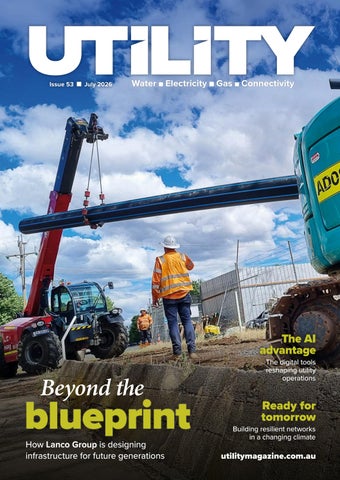
6 Future-proofing infrastructure with Lanco Group
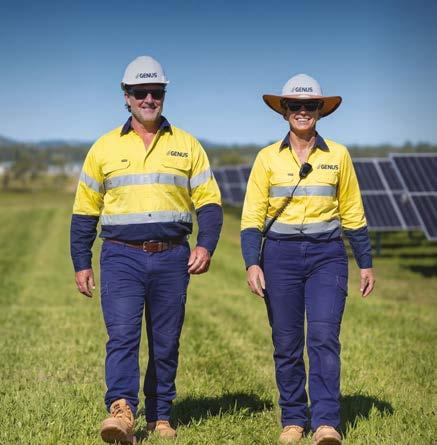
40 How Genus and ACCIONA Energía delivered under pressure
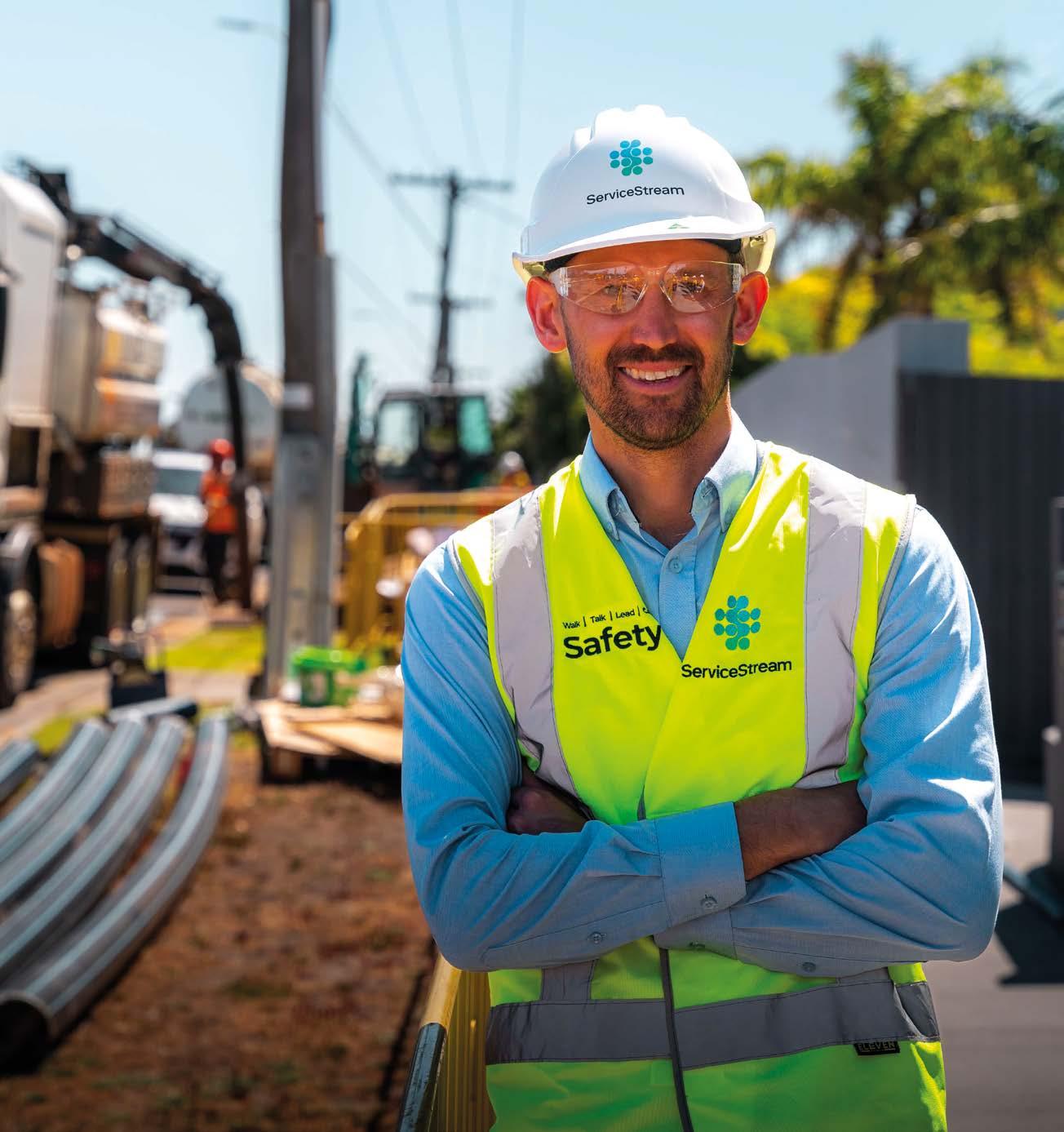
54 Inside Service Stream’s project delivery framework
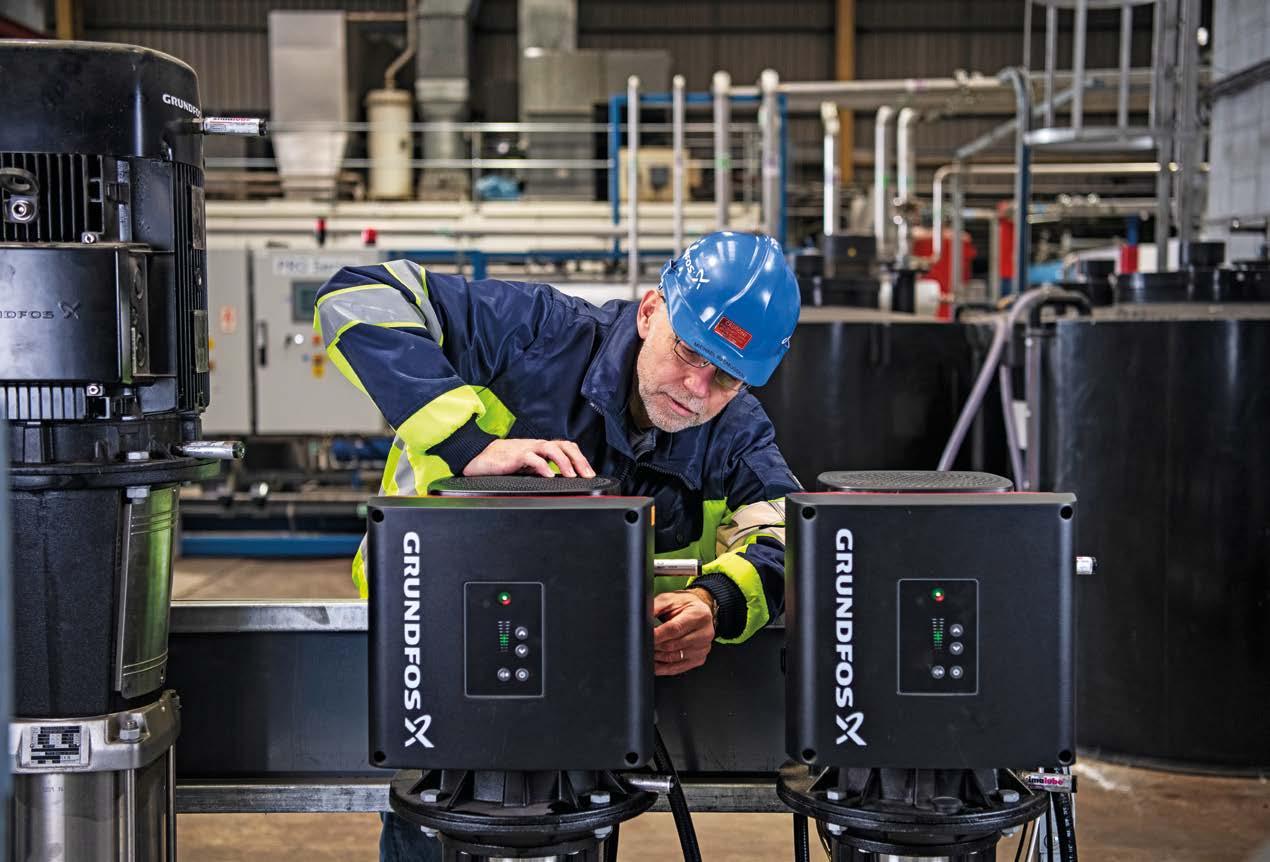
48 Grundfos simplifies digital monitoring for water utilities
EVENTS
12 A recap of Ozwater’26
24 WIOA celebrates QLD water industry excellence
ASSET PERFORMANCE
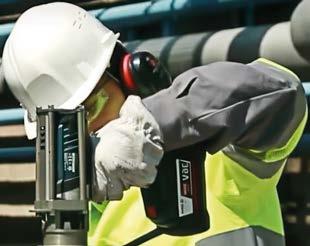
15 FMT enables precision repairs on-site
36 SAVECO improves wastewater receiving e ciency
51 New standard strengthens critical battery charging systems
FLEET MANAGEMENT
31 Geotab explores AI’s next fleet management frontier
46 Simplifying vehicle procurement, fit-outs and management
PIPELINE CONSTRUCTION
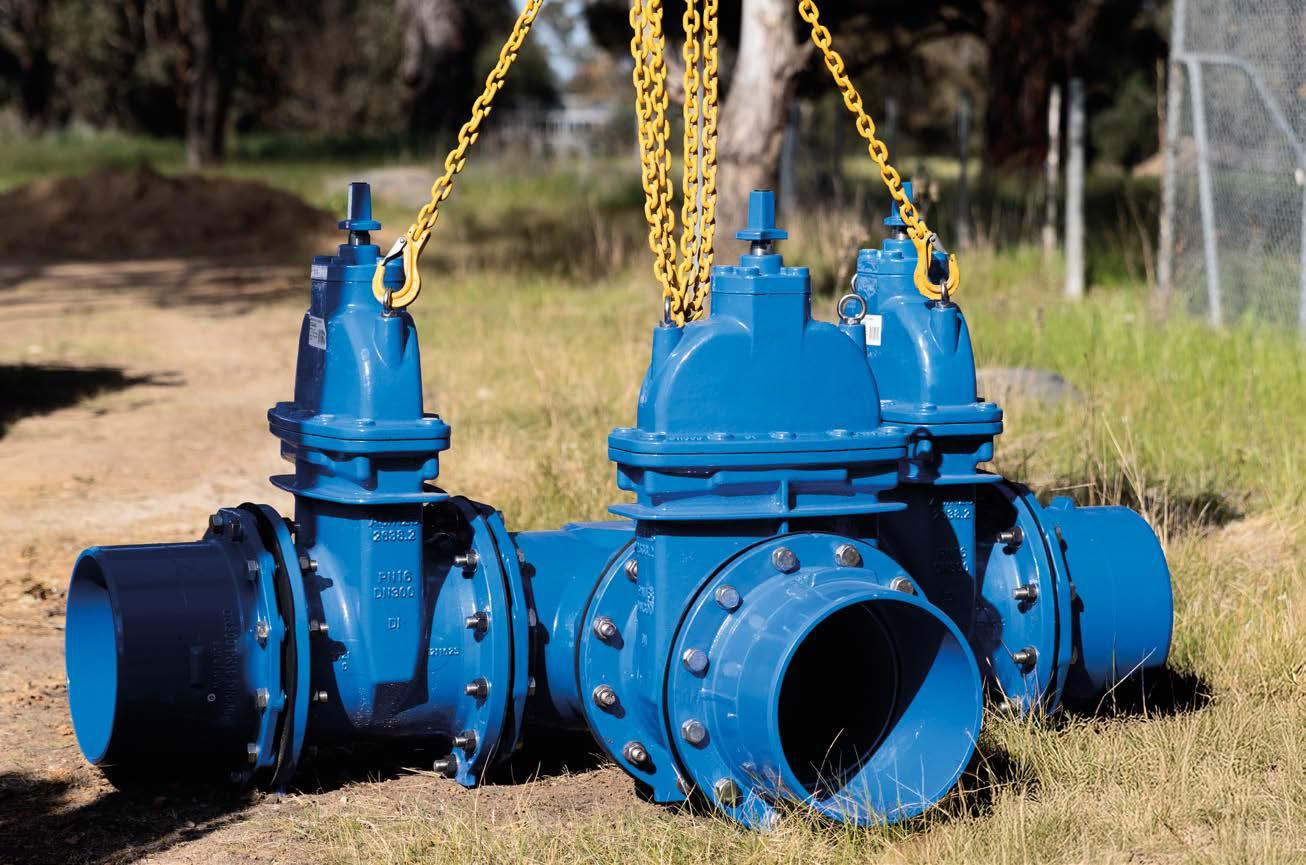
38 DIMAX helps contractors build with confidence
59 GPE talks vacuum lifting technology
62 Supporting safer pipeline installations with kwik-ZIP
INDUSTRY INSIGHTS
70 Industry movements
From insight to action
Winter has arrived, but across Australia’s utility sector there is little sign of things slowing down.
From major infrastructure upgrades and digital transformation initiatives to new approaches to asset management and operational resilience, the pace of change continues to accelerate. Yet what stands out in this edition isn’t simply the scale of that change, it’s the industry’s growing focus on turning ideas into action.
Across the country, utilities are moving beyond discussing the future and are actively implementing the technologies, partnerships and processes needed to support it. Whether improving the performance of ageing assets, strengthening cybersecurity, expanding digital capabilities or delivering increasingly complex infrastructure projects, the emphasis is rmly on practical outcomes.
is edition of Utility explores how organisations are responding to those challenges.
Digital innovation continues to reshape the sector, but the conversation has matured. Rather than pursuing technology for its own sake, utilities are increasingly looking for solutions that deliver meaningful operational value. From dynamic network modelling and real-time monitoring to accessible asset intelligence and secure digital communications, the focus is on providing better information to support better decisions.
Alongside this digital evolution is a renewed focus on the physical assets that underpin essential services.
Many of this edition’s features examine how incremental improvements – whether through smarter maintenance strategies, more e cient equipment, improved vegetation management or enhanced component performance – can collectively strengthen reliability, extend asset life and reduce operational risk.
Project delivery also remains front of mind. As investment in critical infrastructure continues, successful projects depend on more than technical capability alone. ey require careful planning, trusted partnerships and a shared commitment to safety and quality. Several stories throughout this issue demonstrate how collaboration between utilities, contractors and suppliers is helping deliver better outcomes under increasingly demanding conditions. e importance of industry collaboration was equally evident at Ozwater’26, where thousands of water professionals came together to share knowledge, showcase innovation and discuss the opportunities and challenges shaping the future of the sector. e conversations throughout the event reinforced something that is re ected across this edition: the best outcomes are rarely achieved in isolation.
Whether the focus is digital transformation, asset performance, project delivery or workforce innovation, one theme connects every story in this issue; progress happens when good ideas are supported by practical action.
We hope this edition provides useful insights into the technologies, projects and people helping shape Australia’s utility sector, and inspires new conversations about what’s possible as the industry continues to evolve.
Hayley Ralph, Editor
hayley.ralph@primecreative.com.au
Don’t forget to follow Utility on social media – find us on LinkedIn, Facebook, X and YouTube.
Scan to subscribe to Utility’s weekly newsletter –delivered to your inbox every Thursday morning.
Shaping the future
Long-term thinking, early collaboration and practical innovation are helping Lanco Group deliver infrastructure that stands the test of time.
Australia’s infrastructure decisions don’t just shape the next project, they shape the next generation. Every water main, rail corridor, utility network and critical facility built today must be ready to serve communities for decades, adapting to population growth, technological change and rising expectations around sustainability and resilience.
For engineering consultancy Lanco Group, that’s the challenge driving every project: designing infrastructure that doesn’t simply meet today’s needs but continues delivering value long into the future.
Lanco Group Business Unit Manager Michael Ostrowsky said future-proo ng infrastructure begins well before construction starts.
“Every project is an opportunity to think beyond today’s requirements,” Ostrowsky said.
“We’re always asking how we can deliver infrastructure that won’t need unnecessary changes in the future. If you can get the planning and design right from the beginning, you’re creating assets that provide value for communities for many years to come.”
at philosophy has seen Lanco Group contribute to some of Australia’s most signi cant infrastructure
projects, including the early stages of the Inland Rail Beveridge to Albury Tranche 2 project and Melbourne’s Level Crossing Removal Projects, which aim to remove 110 dangerous and congested level crossings across the city by 2032. e company has also participated in major water authority upgrades and the growing number of data centre developments across the country.
While every project presents unique technical challenges, they all share a common goal: ensuring infrastructure continues to perform as communities grow and demands evolve.
Looking beyond today’s needs
Utilities are under increasing pressure to deliver reliable services while accommodating population growth, urban expansion and changing environmental expectations.
For designers, that means considering not only how infrastructure performs today, but how it will operate decades into the future.
Ostrowsky said one of the most important considerations is reducing the need for future asset relocations and upgrades.
“When we’re relocating utility assets as part of major
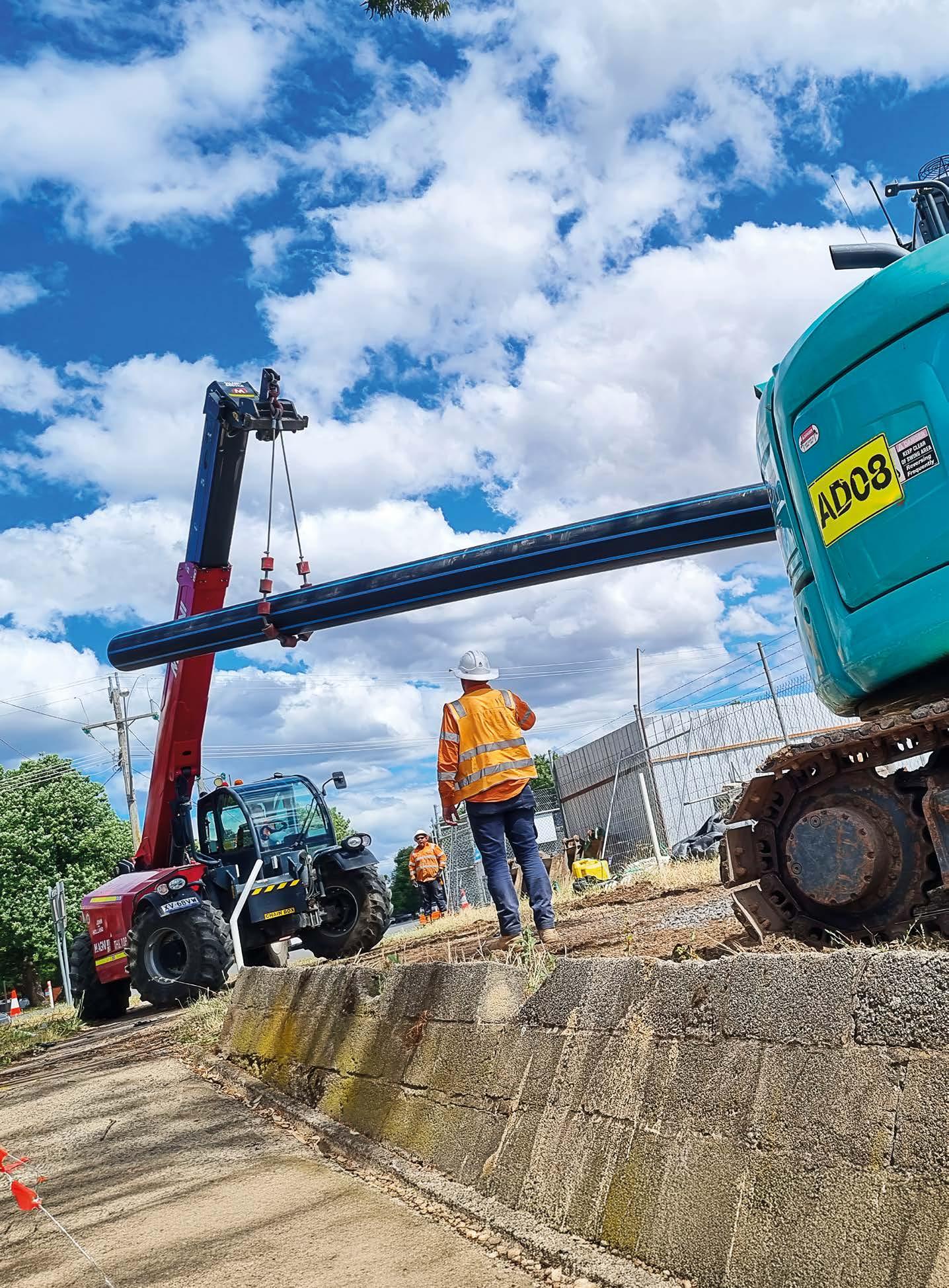
Lanco Group believes futureproofi ng infrastructure begins well before construction starts.
Images: Lanco Group
infrastructure projects, the aim is to position them so they don’t need to be moved again when future developments happen,” he said.
“Every time infrastructure has to be relocated, it creates additional cost, additional disruption and additional complexity. Good planning helps avoid that.” at long-term thinking extends to the way utilities are approaching sustainability.
Ostrowsky said many clients are increasingly investigating opportunities to incorporate water recycling and closed-loop systems into new developments, particularly as demand for critical infrastructure such as data centres continues to grow.
“We’re seeing a stronger focus on making infrastructure more e cient, whether that’s reducing water consumption or nding better ways to use existing resources,” he said.
“It’s about creating systems that are more sustainable while continuing to meet growing demand.”
Innovation through practical engineering
Innovation doesn’t always mean developing entirely new technology.
O en, it involves nding smarter ways to solve familiar engineering challenges.
For Lanco Group, this can include identifying alternative products and construction methods that deliver better environmental and nancial outcomes without compromising quality.
Ostrowsky said looking beyond conventional solutions can provide signi cant long-term bene ts.
“Sometimes there are products that have already proven themselves overseas but haven’t yet been widely adopted here,” he said.
Every project is an opportunity to think beyond today’s requirements.”
“We’ll research those options, work with the relevant authorities and demonstrate how they can deliver cost savings, improve sustainability and still meet the required standards.”
By combining practical engineering experience with a willingness to explore new approaches, Lanco Group helps clients achieve solutions that balance performance, constructability and whole-of-life value.
Collaboration from day one
While technical capability is essential, successful infrastructure projects also rely on strong collaboration.
Ostrowsky believes early engagement between consultants, clients and project partners is one of the biggest contributors to successful outcomes.
“ e earlier everyone comes together, the better the result,” he said.
“If you head down the wrong path at the start of a project, it becomes much harder to correct later on. Getting involved early allows everyone to identify challenges, explore options and make informed decisions before construction begins.”
is collaborative approach helps minimise risk, improve project e ciency and ensure infrastructure is designed with operational requirements, stakeholder expectations and future growth rmly in mind.
Preparing for the next generation
As digital technologies continue to reshape the engineering industry, Lanco Group sees signi cant opportunities to further improve infrastructure planning and design.
Ostrowsky said arti cial intelligence and digital engineering tools are expected to become increasingly important in the years ahead.
“We’ll continue incorporating AI and smarter digital systems into the way we work,” he said.
“ ese technologies have enormous potential to improve e ciency, support better decision-making and help deliver even stronger outcomes for our clients.”
Ultimately, however, the objective remains unchanged.
Future-proo ng infrastructure is about delivering assets that serve communities reliably for generations while reducing maintenance costs, minimising disruption and making the best possible use of public investment.
“Good infrastructure should have a long service life,” Ostrowsky said.
“It should reduce costs over time, minimise disruption to customers and communities, and continue delivering value well into the future. at’s what we’re focused on every day.” U
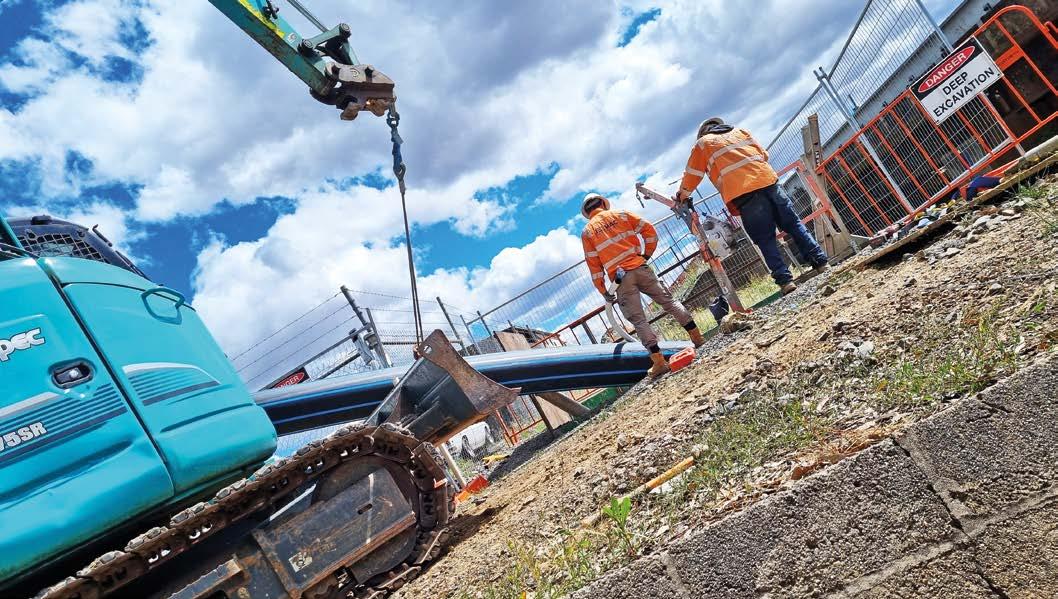
Lanco Group has contributed to many significant infrastructure projects, including Melbourne’s Level Crossing Removal Project.
Performance under pressure
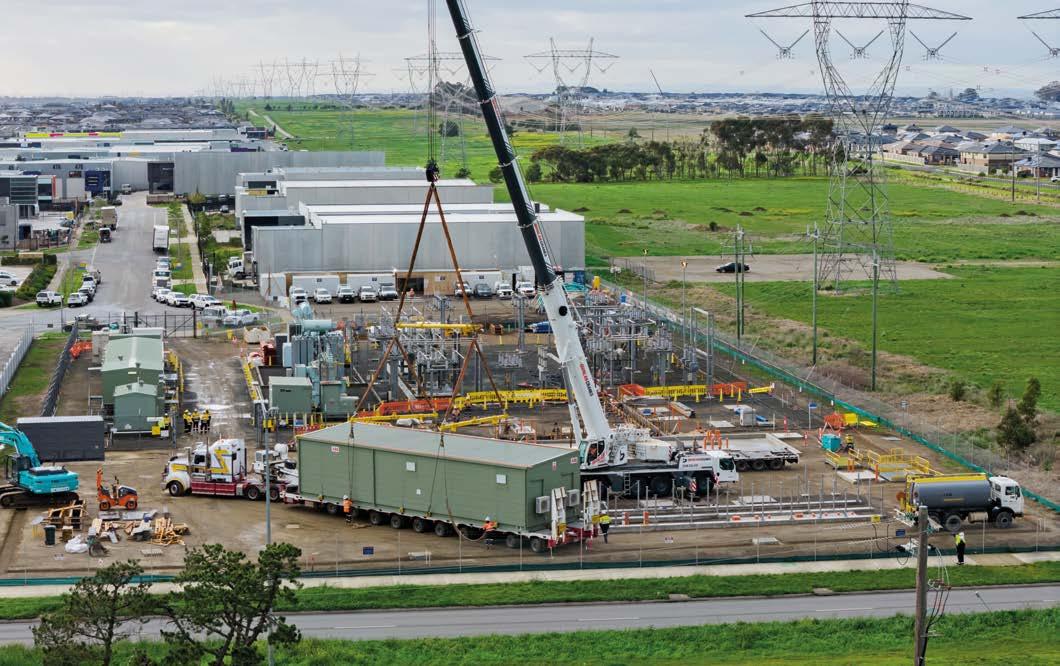
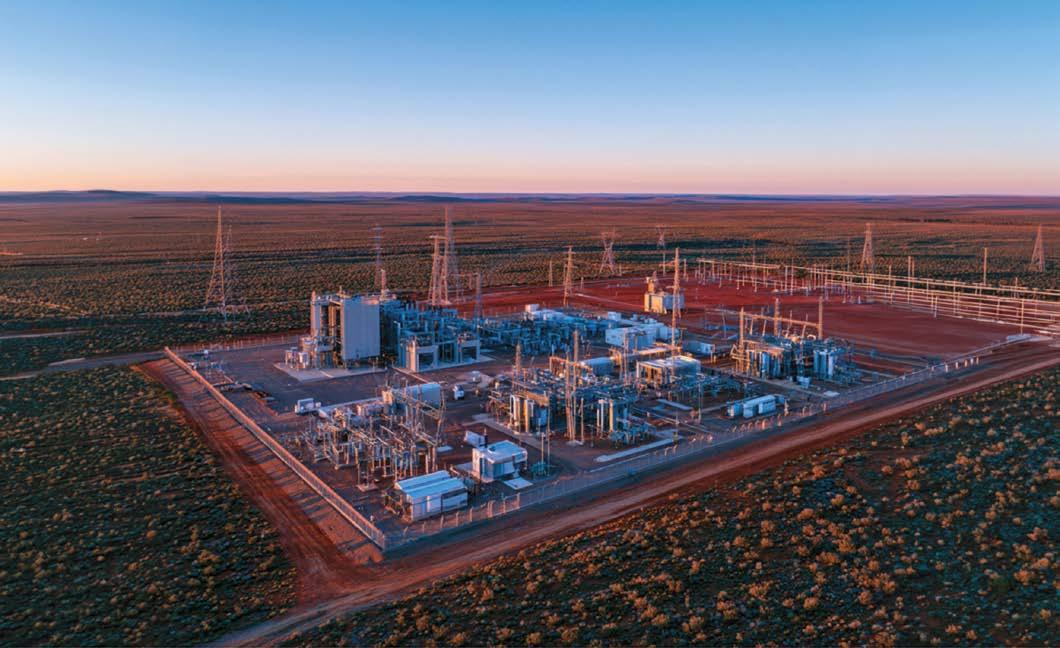
Strong collaboration between Zinfra and Quinlan Cranes helped deliver AusNet’s Clyde North Zone Substation upgrade safely and e ciently under a tight schedule.
Substation projects are rarely straightforward undertakings.
ey involve the coordination of multiple contractors, strict safety requirements, constrained work sites and critical infrastructure that must continue operating throughout construction. Add an accelerated delivery schedule and the challenge becomes even greater.
at was the reality facing the team responsible for the Clyde North Zone Substation upgrade, a project that involved the installation of new high-voltage feeders, a power transformer and a new switchroom to increase AusNet’s distribution network capacity and support future growth in Melbourne’s south-east.
For Zinfra Senior Project Manager Ronil Chand, the project represented one of the most rewarding experiences of his career.
“Clyde North was a particularly interesting project, given the signi cant growth happening across the area”, Chand said.
“Our scope was to add another transformer and bay to improve power supply and reliability. We mobilised to site in late May 2025 with a requirement to have power on by Christmas.”
From mobilisation to energisation, the project was delivered in approximately seven months – a timeframe Chand described as “incredibly quick” for a project of this scale.
“It was intense,” he said.
“ ere were design challenges and construction challenges, but everyone pulled together and worked towards a common goal.”
Planning every step
e compressed schedule presented one of the project’s greatest challenges.
e worksite itself added another layer of complexity. Multiple crews, including electricians, civil contractors, testing and commissioning personnel, cranes and heavy equipment, were all required to operate within a relatively small footprint.
According to Chand, the only way to successfully manage the project was through relentless planning.
“ e planning started and never stopped. We tracked everything in half-day increments, reviewing what had happened, what needed to move forward, and what needed to change,” he said.
“If one piece of the puzzle fell over, the whole thing fell over.”
is planning process extended beyond Zinfra’s internal team and included subcontractors, suppliers and key project partners.
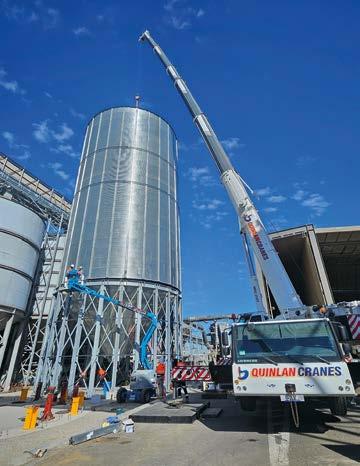
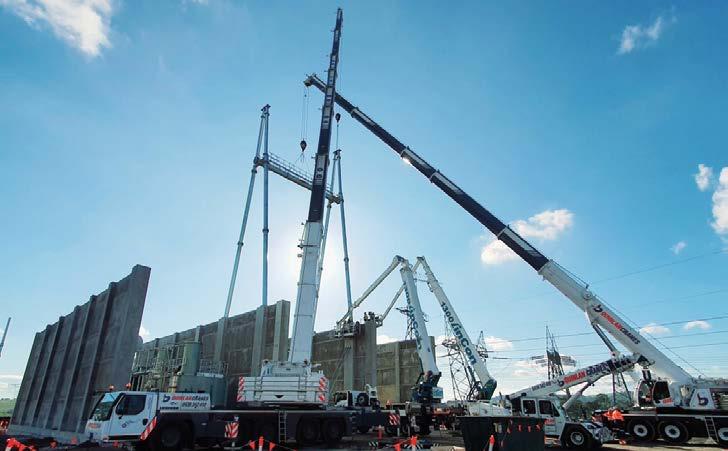
Among those partners was Quinlan Cranes, which was responsible for providing craneage, rigging services, li planning and specialist li ing support throughout the project.
Quinlan Cranes Managing Director Sacha Sikka said the company became involved in all critical li ing activities on site.
“We were involved in all the critical li ing, including the switch room installation and other major components,” Sikka said.
While the accelerated schedule created pressure, Sikka said the project re ected the type of work Quinlan Cranes performs regularly across Australia’s utility sector.
“Utilities is our space,” he said.
“We do a lot of this work in switchyards and terminal stations. Our teams are backed by detailed planning and have the experience to get things done within tight timelines, without compromising on quality and safety.”
The Clyde North Zone Substation upgrade was completed in just seven months.
Image: Matt Krumins
Critical lifts, critical decisions
One of the most signi cant milestones of the project was the installation of the new switch room – a large structure measuring approximately 14m long, 3m wide and 3m high.
For Chand, the li represented one of the project’s most critical activities.
“Quinlan Cranes was responsible for li ing the switch room into position, a major li requiring extensive planning and coordination,” he said.
“Everything was planned in detail – from crane set up, truck positioning to the rigging con guration.” e operation was made more challenging by weather conditions, with forecast wind gusts creating uncertainty on the day of the li .
“It took several hours just to get the truck into position due to the size of the structure and the limited footprint we had,” Chand said.
“ ere was a lot of pressure, but safety always came rst.”
Sikka said the project reinforced the importance of adhering to established procedures regardless of external pressures.
“Crane li ing and utility work are both high-risk activities,” he said.
“When you put them together, you’re operating in a very unforgiving environment.
“No matter what the pressure is, you still follow your procedures and your processes. at’s important.” at commitment to safety remained central throughout the project.
According to Chand, Quinlan Cranes’ extensive experience working in live utility environments played a major role in the successful execution of the li program.
“We were working around live 66kV infrastructure,” Chand said.
“One small mistake could have resulted in a major incident.
“Every time I’ve worked with Quinlan Cranes, they’ve understood exactly what they’re dealing with. ey know the risks and manage them well.”
One team, one objective
While the technical complexity of the project was signi cant, both organisations point to collaboration as the factor that ultimately enabled success.
Sikka said the working relationship between Quinlan Cranes and Zinfra was built on shared priorities.
“Zinfra is one of our best clients to work with,” he said.
“ ey care about quality and safety and doing the job properly. We have a lot of common values, and everyone is looking out for each other.”
Chand shared a similar perspective, noting that traditional contractor-client boundaries quickly disappeared once construction commenced.
“ e best part was that people forgot what shirts they were wearing,” he said.
“We all forgot whether we were from Zinfra, Quinlan Cranes or another contractor. It became about what was best for the project.
“ ere was never any debate about whose work took priority. We simply worked together and made decisions that supported the project’s success.” is collaborative way of working ensured Zinfra and Quinlan Cranes could deliver e ciently for the client and Clyde North Zone Substation asset owner, AusNet.
“ is project was completed well ahead of time and highlights AusNet’s commitment to meeting the energy needs of our growing communities. It shows what we can achieve as a collaborated team,” said Paul Kurzman, AusNet’s Head of Project Delivery. is collaborative culture extended beyond formal planning meetings.
Shared lunchrooms, daily interactions and a collective commitment to project outcomes helped foster a strong team environment despite the demanding schedule.
“ ere was banter, there was laughter and there was support,” Chand said.
“When people were under pressure, everyone helped each other. at added to the success of the project.”
Turning plans into reality
As key milestones were achieved, the project team began to see the bene ts of the planning and collaboration that had underpinned the project from day one.
For Quinlan Cranes, several critical li s represented major turning points.
“ ere are always key li s where you feel like you’ve broken the back of the project once they’re completed,” Sikka said.
“ e switch room installation was de nitely one of those moments.”
Looking back, both organisations view the project as an example of what can be achieved when planning, technical expertise and collaboration align.
“What I’m most proud of isn’t necessarily the construction work itself,” Chand said.
“It was how everybody came together as one team. It shows that when everyone gets on the same page and works towards the same outcome, you can achieve a lot in a very short period of time.”
For Sikka, the project reinforced a lesson that remains consistent across every major utility project.
“Good planning is everything,” he said.
“If you rush things, that’s when problems start. is project showed what can be achieved when everyone commits to working safely, doing the job properly and pulling together.” U
For more information, visit www.quinlancranes.com.au and www.zinfra.com.au
WHEN NAVIGATING COMPLEXITY MATTERS, TRUST GENUS
Every major infrastructure project comes with complexity. The difference lies in how you respond to it.
At Genus, we combine proven engineering capability with an agile, collaborative way of working, helping clients solve problems early, reduce risk and keep projects moving. Our integrated delivery model brings together design, engineering, construction and commissioning, giving clients one accountable partner from concept to completion.
It’s why some of Australia’s largest infrastructure owners choose Genus as their delivery partner.
United by water
From digital transformation and climate resilience to workforce development and industry collaboration, AWA’s Ozwater’26 brought the water sector together to explore the challenges and opportunities shaping the future of water.
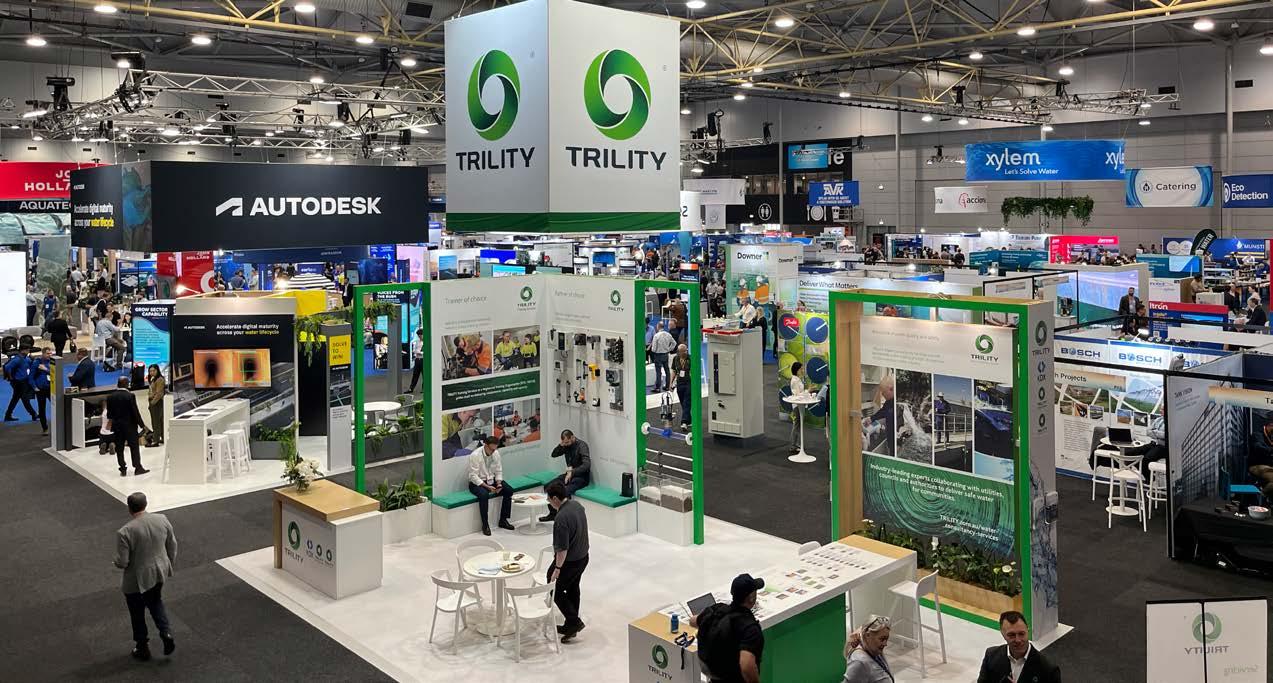
As thousands of delegates gathered in Brisbane from May 26 to 28 for the Australian Water Association’s Ozwater’26, one message resonated throughout the conference halls, exhibition oor and networking events: the future of water will be built through collaboration.
Held under the theme ‘Our Water, Our Tomorrow’, the three-day event brought together utilities, technology providers, researchers, government representatives and industry leaders to discuss how the sector can respond to growing pressures, including population growth, climate uncertainty, ageing infrastructure and rising customer expectations.
Across keynote presentations, technical sessions and exhibition showcases, delegates explored how innovation, digitalisation and partnership will play a critical role in ensuring Australia’s water services remain resilient and sustainable for decades to come.
Collaboration takes centre stage
e conference opened with a strong focus on the importance of teamwork in addressing increasingly complex water challenges.
One of the opening keynote presentations highlighted the value of Traditional Knowledge and place-based decision-making in strengthening water management outcomes. Delegates heard how integrating cultural perspectives into planning and governance can help create more resilient and sustainable approaches to water stewardship.
e opening day also set the tone for broader discussions around partnership and collective action. As utilities
face growing pressures from climate change, urban growth and infrastructure renewal, speakers repeatedly emphasised that no single organisation can solve these challenges alone.
Instead, success will depend on bringing together expertise from across utilities, government, research institutions and the private sector to develop practical solutions and share lessons learned.
is collaborative spirit was evident throughout the event, with busy networking sessions, packed exhibition halls and strong engagement across technical presentations and workshops.
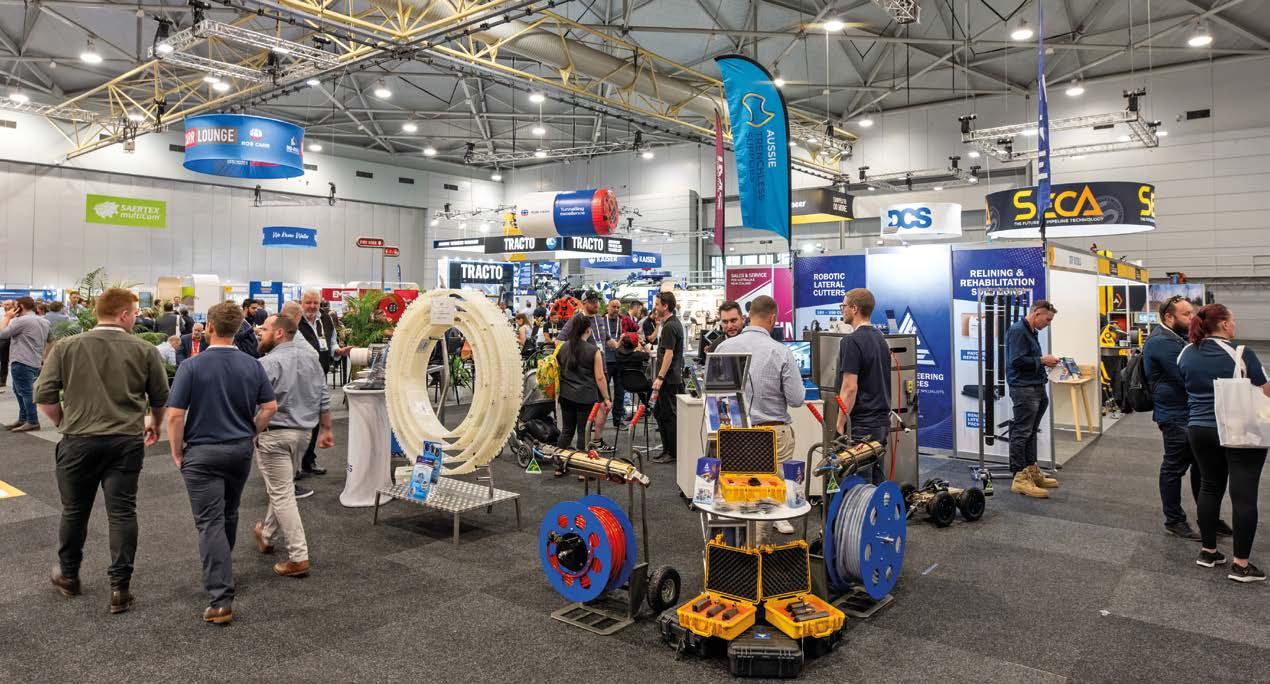
e exhibition oor gave suppliers and technology providers an opportunity to showcase new solutions and engage directly with utilities about the challenges facing the sector.
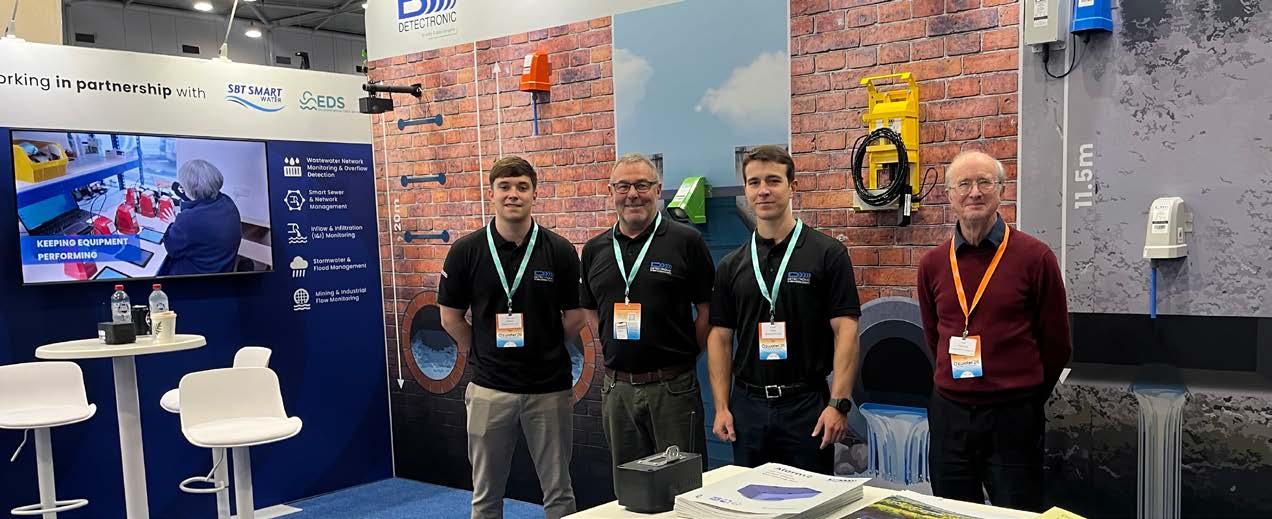
“It was a great rst show for Detectronic at Ozwater. ere was a huge amount of interest in our leading ow and level monitoring technology, and we had some excellent conversations – with plenty more to follow. e response to Detectronic has been incredibly positive,” said Mark Pritchard, Detectronic’s Commercial Director.
From concept to reality
By day two, conversations had shi ed towards one of the industry’s most signi cant areas of change: digital transformation.
Arti cial intelligence, advanced analytics and datadriven decision-making emerged as recurring themes across the conference program, re ecting the sector’s growing interest in using technology to improve operational performance and long-term planning.
Delegates explored how digital tools are helping utilities improve network visibility, asset management and operational performance. Many presentations focused on real-world implementations already delivering bene ts across Australian utilities.
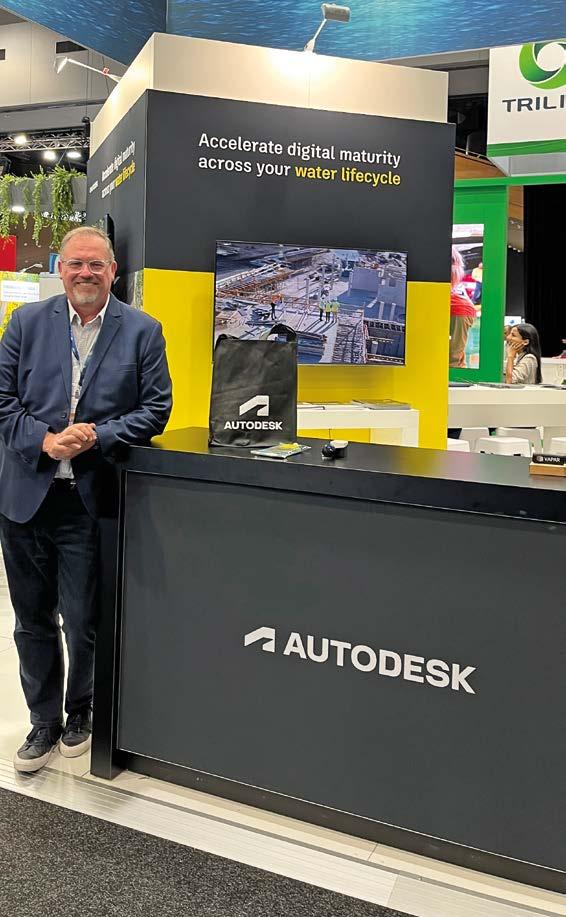
Autodesk Head of Water Infrastructure APJC Chris Ryan said events such as Ozwater provide an important forum for organisations to share ideas and explore how di erent technologies can work together.
“One of the things I’m most excited about at Ozwater is seeing how the industry communicates and collaborates. Utilities, suppliers and technology providers are all having open conversations about where their strengths lie and how they can work together to deliver better outcomes for customers,” he said.
Alongside digital transformation, discussions also examined procurement innovation, puri ed recycled water, catchment management and strategies for improving infrastructure resilience in the face of climaterelated risks.
Workforce capability also remained a key focus, with discussions centred on attracting and developing the talent needed to support the sector’s transformation.
Celebrating industry excellence
While Ozwater is known for its technical content and industry discussions, the event also provides an opportunity to recognise the people driving progress across the sector.
One of the highlights of the week was the 2026 Australian Water Awards, which celebrated outstanding achievements in innovation, leadership, research and project delivery across the Australian water industry.
Corinne Cheeseman, Chief Executive of the Australian Water Association, said the awards highlighted the breadth of innovation and leadership across the sector.
“ is year’s winners and nalists demonstrate the depth of talent across Australia’s water sector and the incredible impact that can be achieved when industry, government, researchers and communities work together,” she said. roughout the awards program, a common thread emerged: innovation is not solely about technology. Many of the recognised achievements demonstrated the value of collaboration, knowledge sharing and community engagement in delivering meaningful outcomes. e awards served as a reminder that the sector’s greatest asset remains its people and their commitment to solving increasingly complex challenges.
Conversations shaping the future
As Ozwater’26 entered its nal day, discussions increasingly focused on the long-term future of the industry.
Across conference sessions and exhibition stands, delegates continued exploring how utilities can
balance a ordability, sustainability and resilience while responding to growing demand and changing community expectations.
e exhibition oor remained a hub of activity, with more than 200 exhibitors showcasing technologies, products and services designed to support the next generation of water infrastructure and operations.
Among those exhibitors was SAVECO, which used the event to connect with utilities and discuss emerging opportunities across the water and wastewater sector.
“It was a fantastic opportunity to connect with industry professionals, share insights and discuss the future of sustainable water and wastewater solutions. We truly appreciated the engaging conversations and interest in our technologies and services,” SAVECO Sales Manager Bhrigu Sharma said.
Final-day discussions focused on turning innovation into action, with speakers emphasising the importance of implementation, integration and long-term planning.
e event concluded with a sense of optimism about the sector’s ability to navigate future challenges. Although utilities face a complex operating environment, the conversations throughout the week reinforced the industry’s willingness to collaborate, innovate and learn from one another.
Turning ideas into action
If there was a de ning takeaway from Ozwater’26, it was that the future of water depends on collaboration, innovation and a willingness to work towards common goals.
As delegates le Brisbane and returned to utilities, consultancies, research institutions and government agencies across the country, they took with them new insights, new partnerships and a shared commitment to building a more resilient and sustainable water future.
Re ecting on the broader signi cance of the event, Autodesk’s Chris said Australia’s water sector is well positioned to lead on the global stage.
“ e Australian water industry is already recognised as one of the most advanced in the world, but I think we’re on the cusp of becoming a global leader. e next step is thinking di erently about collaboration, intergenerational planning and how we solve challenges together.” U
For more information, visit www.awa.asn.au
Ozwater’26 allowed attendees to connect with global leaders, explore innovations, and help shape the future of water.
Image: Australian Water Association
The workshop without walls
Field Machine Tools brings precision machining capabilities directly to critical utility infrastructure, reducing downtime and eliminating the need to transport large assets for repair.
When a critical component fails, getting it back into service is o en a race against time. But for utilities operating vast networks of pipelines, pumping stations, treatment plants and energy infrastructure, simply removing an asset and transporting it to a workshop can be a complex, costly and time-consuming exercise.
Instead, the workshop is coming to the asset.
For more than 25 years, Field Machine Tools (FMT) has been helping the Australian industry complete highprecision repairs wherever they are needed.
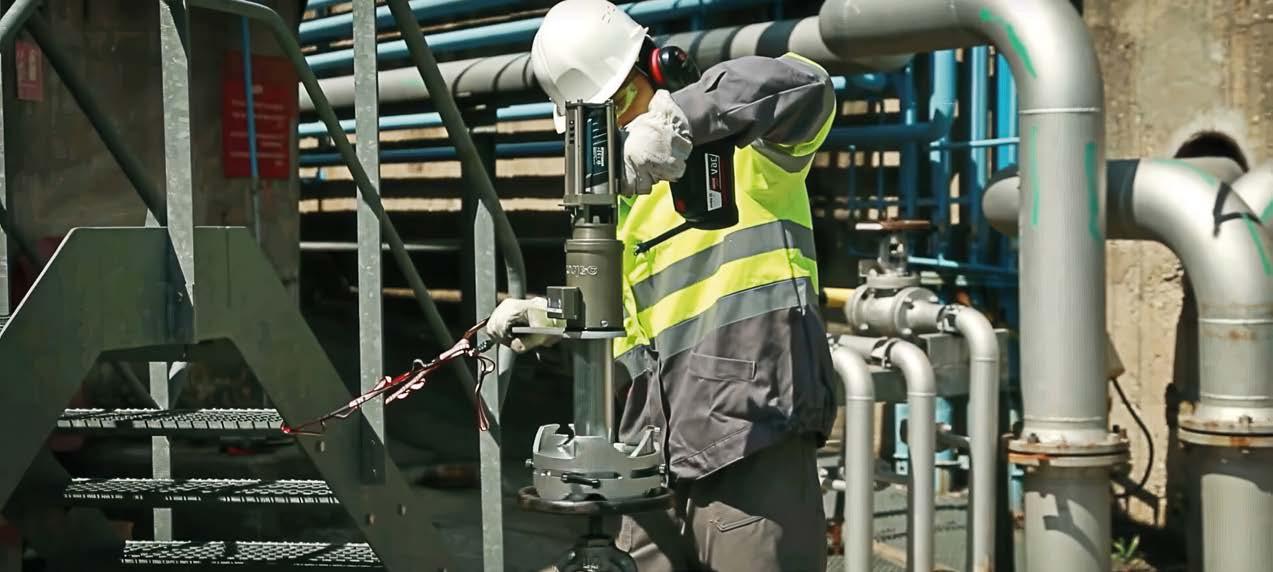
signi cant operational impacts. FMT provides a range of valve maintenance solutions, including portable valve actuators, testing equipment and repair systems that allow operators to service valves safely and e ciently in the eld. e company’s partnership with leading global manufacturers ensures Australian utilities have access to some of the most advanced portable maintenance technologies available. is includes CLIMAX portable machining systems, TAG Pipe Equipment, AXXAIR orbital cutting and welding solutions, and Modec’s range of portable valve actuators.
By delivering portable machining, fabrication and maintenance solutions directly to the eld, FMT enables utility operators to restore critical equipment in place, minimising disruption and keeping essential services operating.
From regional water infrastructure to major energy facilities, many assets are located in environments where access is di cult and downtime is expensive. Portable machining technology allows maintenance teams to carry out workshop-quality repairs on-site, avoiding the challenges associated with dismantling and transporting large components.
As one of Australia’s largest suppliers of specialised portable machining and maintenance equipment, FMT provides a comprehensive range of solutions designed to tackle these challenges.
Its portfolio includes equipment for pipe cutting, bevelling and fabrication, as well as portable milling machines, line boring systems, ange facers and portable lathes. ese tools enable utility teams to machine components to precise speci cations, helping to restore performance and extend the service life of critical infrastructure.
FMT’s capabilities also extend to one of the utility sector’s most important assets: valves.
Reliable valve operation is essential across water and energy networks, where even minor issues can have
Modern valve technology is also opening the door to greater visibility in the eld. Modec’s Connect module provides real-time data and monitoring capabilities, allowing operators to capture insights into valve operation and maintenance activities.
Beyond valves and pipelines, FMT supports the maintenance of heat exchangers, condensers and boilers with specialised tube cleaning, tube pulling and rolling equipment. With one of Australia’s largest ranges of tube expanders and consumables, FMT helps utilities maintain the performance of critical thermal assets.
Recognising that every maintenance challenge is di erent, FMT also o ers custom equipment, providing exibility for routine maintenance programs, shutdowns and unexpected repairs.
Backed by technical expertise and branches across Queensland, Victoria and Western Australia, the company works closely with customers to identify the right solution for each application.
For utilities managing critical infrastructure, the ability to bring precision engineering directly to the eld can mean the di erence between a prolonged outage and a swi return to operation.
By removing the limits of the traditional workshop, FMT is ensuring utility operators have the tools, technology and expertise needed to maintain critical assets wherever the job takes them. U
FMT helps complete high-precision repairs wherever they are needed.
Image: FMT
Connecting the dots
As utilities navigate an increasingly complex operating environment, Autodesk is helping transform network data into more informed operational and infrastructure decisions.
Every water utility has a picture of its network. ere are hydraulic models used by planners, SCADA systems used by operators, asset registers maintained by infrastructure teams and countless other sources of information spread across the organisation. e challenge is not creating that picture. e challenge is bringing the pieces together.
As utilities seek to improve resilience, manage ageing assets and prepare for future demand, there is growing interest in technologies that can connect planning, operations and asset management into a more uni ed view of network performance.
For Autodesk, that shi represents an opportunity to move beyond traditional modelling and towards
something more dynamic: live operational intelligence.
According to Autodesk Head of Water Infrastructure APJC Chris Ryan, utilities are increasingly recognising that digital maturity is less about adopting individual technologies and more about understanding how information can move across planning, operations and asset management.
“Utilities are all at di erent stages of their digital journey,” Chris said. “Some have jumped into the deep end and are working it out, while others are still dipping their toe in the water.”
To support those conversations, Autodesk is developing a digital maturity framework designed to help utilities assess where they are today and identify opportunities to strengthen decision-making across the asset lifecycle.
“It’s about understanding where you are today, where you need to be, and then opening discussions about where technology can help,” Chris said.
“We know that we don’t have the answers for everything in that space, but when it comes to planning, operations and asset management of networks, that’s where we’re focusing.”
Historically, hydraulic models have primarily been used as planning tools. Engineers could use them to test future scenarios, assess network upgrades and support capital investment decisions. However, those models o en existed independently from the operational systems generating data across the network every day.
Chris believes that distinction is beginning to disappear.
“One of the most interesting things we’re seeing is how di erent technologies are becoming increasingly interconnected,” he said.
A key focus for Autodesk is helping utilities integrate operational data directly into their modelling environments. Information from SCADA systems and other monitoring technologies can be incorporated into hydraulic models, creating a more dynamic representation of network performance.
“We’re looking at how operational data, such as SCADA information, can be integrated to transform what was once a static model into a dynamic one,” Chris said. is evolution allows utilities to move beyond understanding what may happen in the future and begin responding more e ectively to what is happening across their networks today.
“You can incorporate that data and understand how factors such as pipe ows or culvert levels are changing over time in response to rainfall, climate conditions and other operational factors,” Chris said.
As utilities contend with changing rainfall patterns, population growth and evolving service expectations, dynamic models can help support both immediate operational decisions and longer-term planning.
“We know we need to prepare for the challenges of the next ve, 10 or 20 years, but we also have to manage our networks today,” Chris said.
Chris Ryan is Autodesk’s Head of Water Infrastructure APJC.
Image: Prime Creative Media
“ is is the data that’s here now, and it can help drive operational decisions, while ensuring those decisions take future requirements into account.”
Another important part of Autodesk’s approach is connecting planning, design and delivery work ows.
Traditionally, information can become fragmented as projects move between modelling, engineering design and construction phases. Di erent teams o en operate within di erent systems, creating ine ciencies and increasing the potential for information loss.
Within Autodesk’s modelling environment, design changes can be tested through simulation and then exported directly into engineering design platforms such as AutoCAD and Civil 3D.
“ at means you can make a change, run a simulation and generate a design outcome within the same work ow,” Chris said.
e resulting design can then be exported into platforms such as AutoCAD and Civil 3D, supporting engineers as they develop detailed designs and tender documentation.
By improving the ow of information between disciplines, utilities can reduce duplication, improve consistency and accelerate project delivery.
Yet for Chris, the real value of better information extends beyond operational e ciency and project delivery. e industry’s biggest challenge is not technology. It is time.
e pipes, reservoirs, treatment plants and pump stations currently operating across Australia are the result of decisions made by previous generations of engineers, planners and utility leaders. e challenge facing the industry now is ensuring the infrastructure being
planned today remains t for purpose in a future that is becoming increasingly di cult to predict.
“At its core, we’re talking about intergenerational equity,” Chris said.
“Some of the people who will inherit, operate and maintain these networks haven’t even been born yet.”
For Chris, that reality fundamentally changes how utilities should think about planning and investment.
Population growth, climate variability, changing rainfall patterns, emerging technologies and evolving customer expectations all introduce uncertainty into long-term decision-making. While utilities cannot predict exactly what Australia’s water sector will look like in 2050 or 2060, they can improve the quality of the decisions being made today.
Chris refers to this concept as considering “the vacant seat at the table” – the future generations who will ultimately inherit the infrastructure being designed now. is is where connected data and dynamic modelling become particularly valuable. Rather than relying solely on historical assumptions or static planning scenarios, utilities can build a more comprehensive understanding of how networks are performing today and how they may respond to future pressures.
e objective is not simply to make better engineering decisions. It is to create greater con dence that today’s investments will continue delivering value decades into the future.
Chris acknowledges that technology cannot solve every challenge facing the water sector.
“What we can do is provide the technology foundation for more informed conversations by putting the right data at your ngertips.” U
For more information, visit www.autodesk.com/au/industry/water
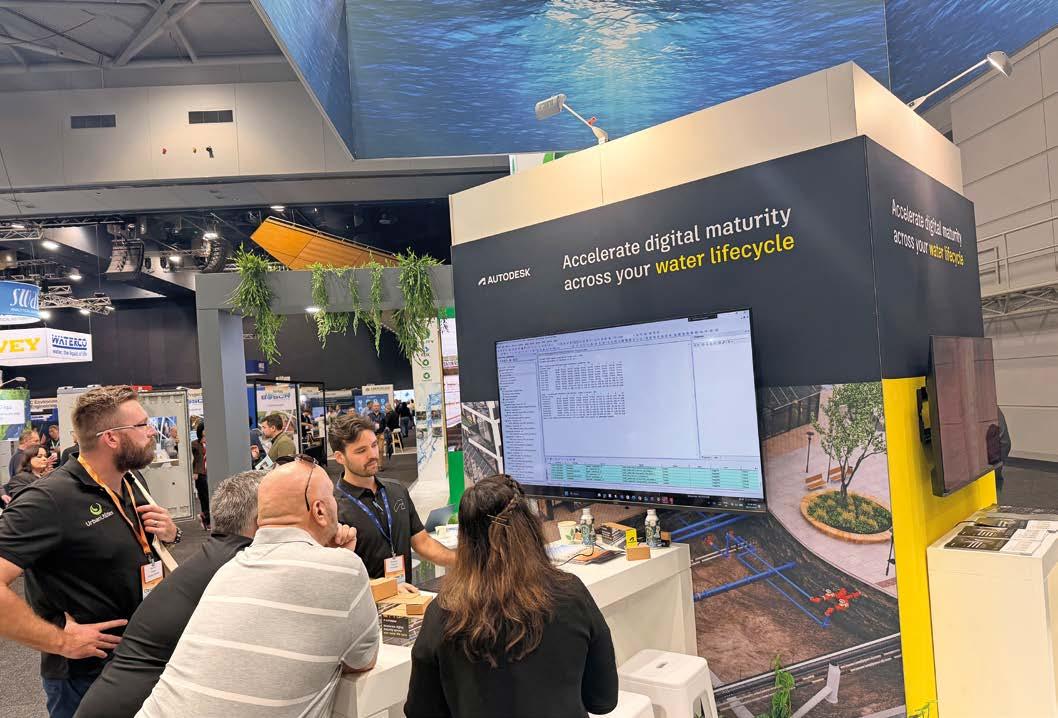
Autodesk helps water utilities accelerate digital maturity across the entire water cycle.
Image: Autodesk
Essential work. Extraordinary impact.
Join an organisation at the heart of our communities, where your skills help maintain the critical infrastructure networks we all depend on.
Browse available roles and apply now!
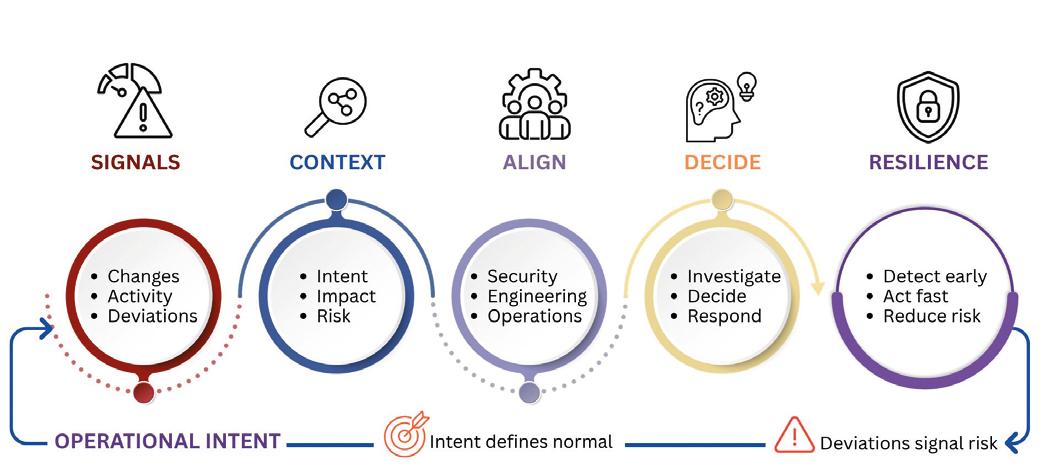
Understanding operational intent
OMICRON Cybersecurity Lead Amro Mohamed explores a new approach to strengthening operational resilience in Australia’s electricity sector.
Australia’s critical infrastructure operators are facing a new challenge.
For years, cybersecurity programs have focused on improving asset visibility, monitoring network activity and detecting threats. Signi cant progress has been made across the electricity sector, particularly within operational technology (OT) environments such as substations, control centres and transmission networks.
Yet an important question remains: do we understand whether our operational systems are continuing to behave as intended?
is question sits at the heart of operational resilience and has become increasingly important following the Australian Government’s June 2026 enhancements to the Security of Critical Infrastructure (SOCI) framework. While the updated Critical Infrastructure Risk Management Program requirements do not prescribe speci c technologies, they reinforce a broader expectation: organisations must be able to understand, manage and respond to risks that may a ect the delivery of essential services.
For utility operators, this represents more than a regulatory adjustment. It re ects a broader shi in how resilience is de ned and measured.
In practice, utilities and critical infrastructure operators have made signi cant progress in improving asset visibility and cybersecurity monitoring. However, understanding whether operational systems continue to behave as intended remains a growing challenge as operational environments become increasingly interconnected.
Resilience starts with understanding behaviour
Historically, organisations have focused on three key questions: what assets do we have, what systems are communicating, and what cybersecurity events are occurring?
ese capabilities remain essential. Asset inventories, network visibility platforms and threat detection technologies provide the foundation of modern OT security programs. However, they do not always answer a fourth –and increasingly important – question: is the system still behaving as intended? is gap between visibility and understanding is becoming more signi cant as utility environments evolve.
Detecting the signals that matter most Australia’s electricity sector is undergoing rapid transformation. Utilities are managing ageing infrastructure while integrating renewable generation, modernising substations, adopting IEC 61850-based architectures, and operating increasingly distributed networks. Remote sites, complex communication pathways, and growing operational dependencies all contribute to a more dynamic operating environment.
In these environments, operational risk does not always begin with a major cyber incident or equipment failure. Sometimes, the earliest indicators are subtle: a communication relationship changes unexpectedly, a protection relay stops participating in a critical work ow, an engineering workstation begins interacting with systems
From subtle indicators to operational resilience
In practice, utilities and critical infrastructure operators have made signi cant progress in improving asset visibility and cybersecurity monitoring. However, understanding whether operational systems continue to behave as intended remains a growing challenge as operational environments become increasingly interconnected.”
outside established operational patterns, or a con guration change introduces unintended operational consequences.
Individually, these observations may appear insigni cant. Collectively, they may indicate increasing operational risk and potential impact on critical services.
Identifying these conditions early can signi cantly improve an organisation’s ability to investigate potential issues before they a ect critical services. In many operational environments, the challenge is not a lack of data, but recognising when a change has operational signi cance.
Functional monitoring: a new layer of operational assurance
Operational context also helps bridge the gap between security, engineering and operations teams. By providing a shared understanding of system behaviour, operational impact and potential risk, organisations can support more e ective investigation, decision-making and incident response. is is where the concept of operational intent becomes important.
Every OT environment is engineered to support speci c operational outcomes. Protection systems, control systems, automation platforms and engineering workstations all perform de ned roles within a broader operational design. Together, these relationships establish what can be described as operational intent—the expected behaviour of systems and functions as they are designed, con gured and maintained over time.
When operational intent changes unexpectedly, the implications may not be immediately visible through traditional cybersecurity monitoring.
Understanding those changes requires more than knowing what systems exist and how they communicate. It also requires understanding how those systems contribute to critical operational functions and depend on one another. It requires understanding not only what systems exist and what communications occur, but also how those systems contribute to critical operational functions and how they depend on one another.
is is driving increased interest in what many organisations are beginning to describe as operational assurance.
Operational assurance extends beyond asset visibility and threat detection. It focuses on understanding whether critical systems, communications, dependencies and operational functions continue to perform as intended, and recognising when deviations may introduce risk.
A key enabler of this approach is functional monitoring. Traditional monitoring focuses on devices, network tra c and security alerts. Functional Monitoring shi s the focus to operational outcomes. Rather than asking whether systems are communicating, it asks whether operational functions are continuing to perform their intended role.
is distinction is particularly important in IEC 61850-based environments, where operational impact is de ned less by individual data packets than by the behaviour of protection, control and automation functions. Functional Monitoring bridges the gap between network visibility and operational understanding by helping organisations determine whether critical functions continue to operate as intended.
Importantly, this approach does not replace cybersecurity controls. Instead, it provides additional context, helping operators determine whether observed activity has operational signi cance.
e future of resilience will not be de ned by the number of alerts generated or the volume of monitoring data collected. Instead, it will be de ned by how e ectively organisations transform that information into operational understanding.
For utilities, this means moving beyond visibility alone to develop a clearer understanding of operational dependencies, behavioural changes and their potential impact on critical services.
Australia’s evolving SOCI framework re ects this reality. Resilience is no longer demonstrated solely through the existence of controls. Increasingly, it is demonstrated through an organisation’s ability to understand system behaviour, recognise meaningful change, assess operational impact and respond appropriately when conditions begin to diverge from intended operation.
Ultimately, resilience is not just about keeping systems online. It is about ensuring essential services continue to operate safely, reliably and as intended. U
For more information about OMICRON’s ICS/OT cybersecurity services across security assessments, asset management and threat & vulnerability management, visit www.omicroncybersecurity.com/en/services/consulting
THE RIGHT PRODUCT BELOW GROUND
Visibility beneath the surface
To keep pace with evolving technology and growing operational demands, utilities are being challenged to identify problems before they become incidents. Detectronic believes the answer lies in giving operators greater visibility into what is happening beneath the surface.
Most wastewater failures do not occur without warning.
A blockage begins to form. Levels start to rise. Capacity becomes constrained. During a storm event, a network may begin to surcharge long before an over ow occurs.
e challenge for utilities is not that these warning signs do not exist. It is that many remain hidden until the consequences become impossible to ignore.
For Detectronic Commercial Director Mark Pritchard, that lack of visibility represents one of the biggest operational risks facing wastewater operators today.
“When something goes wrong in a network, the question is o en whether there were signs beforehand,” Pritchard said.
“ e reality is that you can’t manage what you can’t see.”
Detectronic designs and manufactures monitoring technology for stormwater, wastewater and sewer networks. Its range of battery-powered monitoring solutions is designed to provide utilities with real-time information about network conditions, helping operators identify emerging issues before they develop into environmental incidents or service disruptions.
While the company has established itself as a major player in Europe, Detectronic is now strengthening its presence across Australia and New Zealand as utilities seek greater insight into the performance of increasingly complex networks.
Pritchard said the company’s growth in the region re ects a broader shi occurring across the water industry.
“We’re seeing strong growth in the Australian and New Zealand markets, and a lot of interest in the products and technologies we’re bringing to the sector,” he said.
A key driver of that interest is the growing focus on environmental performance and network resilience.
According to Pritchard, the United Kingdom provides a glimpse into what that future could look like.
“ e UK leads the world in wastewater and sewer network monitoring, largely driven by the strength of its regulatory framework,” he said.
“If there are spills or pollution events, utilities are held accountable. Public awareness has also driven utilities and municipalities to be more responsive and responsible for what is happening within their networks.”
ose regulatory pressures have transformed monitoring from a niche operational tool into a critical component of wastewater management.
Today, UK utilities deploy extensive monitoring networks to provide continuous visibility of ow conditions, rising levels and potential over ow risks. Rather than waiting for incidents to occur, operators can identify changing conditions earlier and respond proactively.
Pritchard believes similar trends are beginning to emerge elsewhere.
In New Zealand, legislation requiring greater wastewater monitoring is expected to come into e ect in the coming years, while Australian utilities are increasingly looking for technologies that can help reduce environmental risk and improve operational performance.
“ e uptake is de nitely growing,” Pritchard said.
“We’re seeing increasing interest from utilities, local councils and water authorities that want to better understand what’s happening across their networks.”
For many operators, the challenge is scale.
Wastewater networks o en extend across thousands of kilometres of underground infrastructure, making continuous visibility di cult to achieve using traditional inspection methods alone.
Detectronic’s monitoring portfolio has been developed to address exactly that challenge.
e company o ers a broad range of technologies, including radar, ultrasonic, pressure and area velocity monitoring solutions, each designed to suit di erent network conditions and operational requirements. Several of the company’s patented technologies continue operating even when fully submerged during surcharging events, ensuring utilities can maintain visibility when conditions are at their most critical.
“We’re not just a level sensor company, and we’re not just a
ow sensor company,” said Pritchard.
“We have a full suite of monitoring technologies designed to meet the diverse requirements our customers face and help utilities understand what is happening in their networks and respond accordingly.”
e value of monitoring also extends beyond responding to incidents.
Continuous network intelligence can support maintenance planning, improve hydraulic modelling, identify recurring problem areas and provide a clearer understanding of how assets perform during wet weather events.
For utilities under pressure to do more with existing infrastructure, that information can play a critical role in improving operational e ciency and prioritising investment decisions.
Detectronic’s experience in delivering monitoring at scale also provides valuable insight.
e company has supported some of the world’s largest sewer monitoring deployments, including a project involving approximately 92,000 sensors across a single network. ose deployments have helped utilities move beyond isolated monitoring projects and towards a more
comprehensive understanding of network performance.
As the industry continues to evolve, Detectronic is also looking beyond ow and level monitoring.
e company is currently developing a new water quality monitoring platform in collaboration with two of the UK’s leading universities. e technology aims to continuously monitor key water quality indicators, including dissolved oxygen, pH, turbidity, temperature and ammonia, providing operators with an even deeper understanding of environmental conditions.
For Pritchard, however, the industry’s biggest opportunity remains surprisingly simple.
It starts with understanding what is happening inside the network.
“When we speak with utilities, the conversation always comes back to the same thing; ‘What are their concerns? What keeps them up at night? How can we help?’,” he said.
“At the end of the day, better decisions come from better information, and we believe our sensors provide the best data. If you can see what’s happening in your network, you have a far greater chance of preventing problems before they become incidents.” U
For more information, contact Jonah Petrie at jonah.petrie@detectronic.org or visit detectronic.org
Tapped in
Queensland’s water industry gathered on the Gold Coast for WIOA’s annual conference, celebrating innovation, operational excellence and the people behind essential water services.
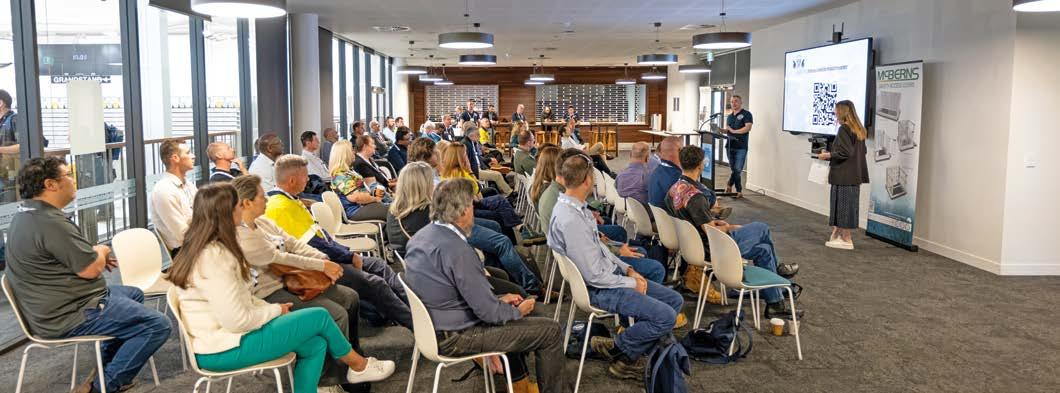
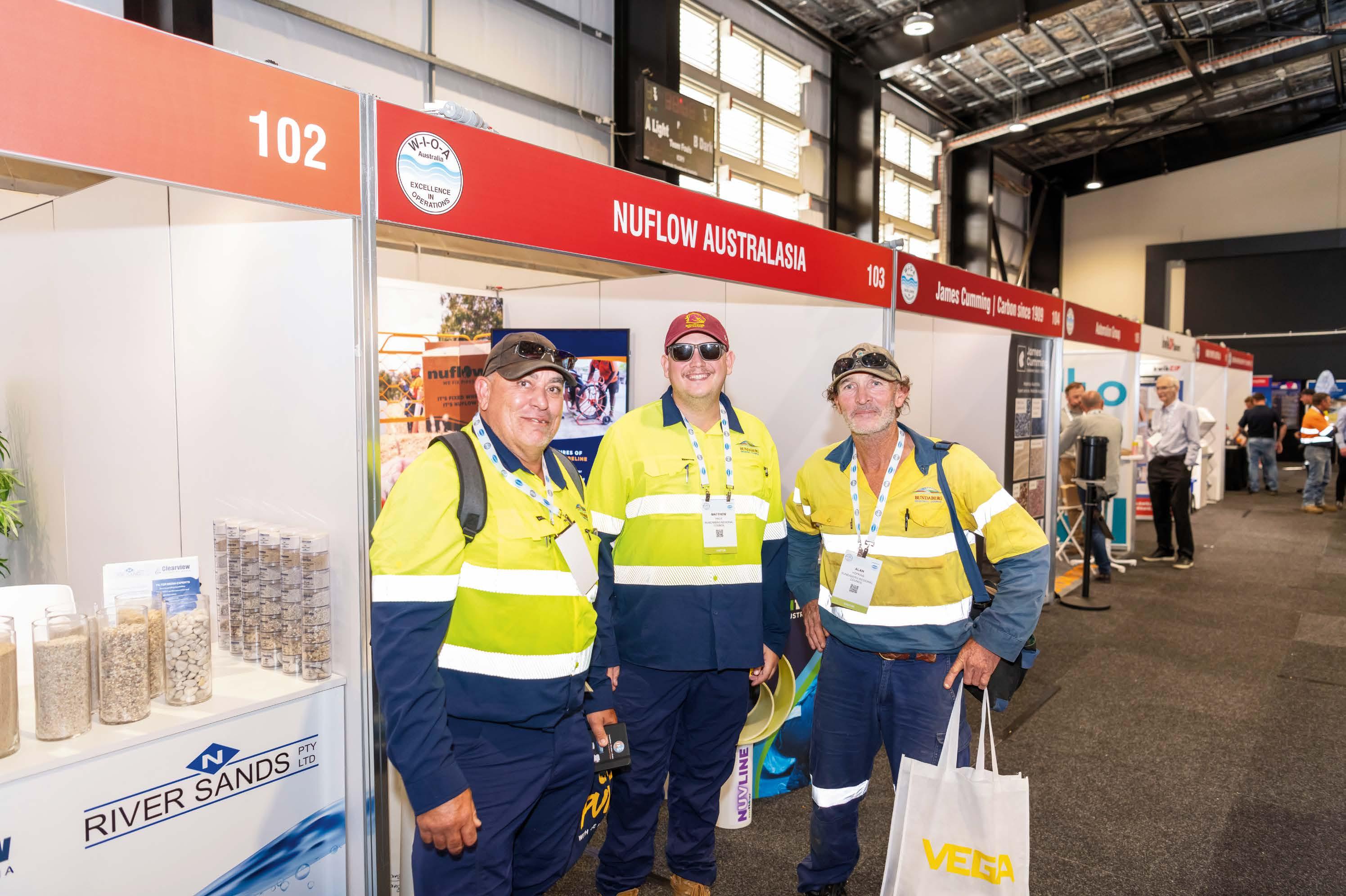
The Water Industry Operations Association of Australia (WIOA) welcomed more than 815 water professionals from across Queensland and beyond to the Gold Coast for its 2026 Queensland Water Industry Operations Conference and Exhibition from June 24 to 25.
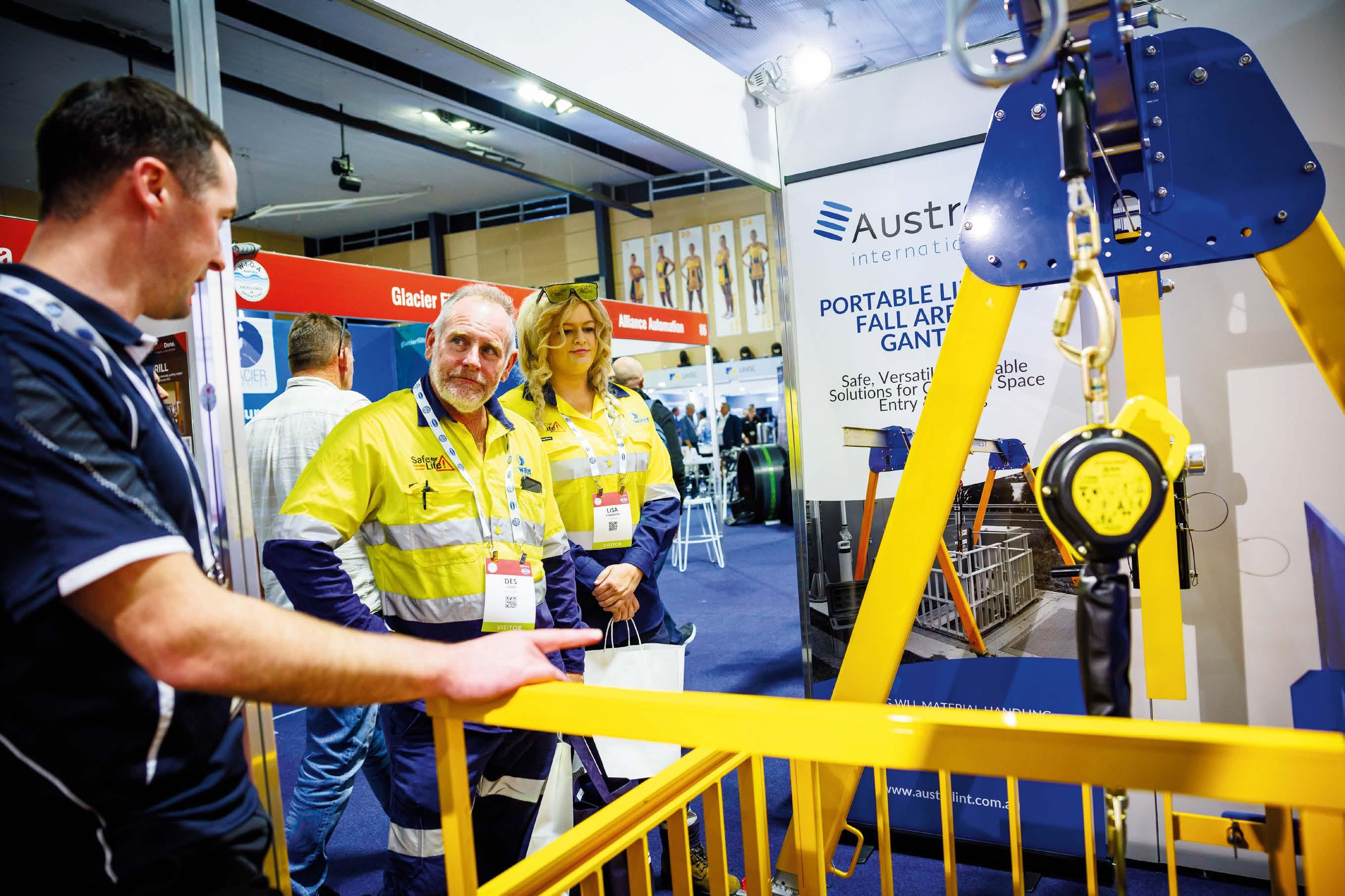
e annual event provided a meeting place for water operators, utilities, suppliers and manufacturers, with exhibitors showcasing the latest products and technologies spanning pumps, motors, instrumentation, water treatment solutions and operational equipment.
Alongside the exhibition oor, delegates had the opportunity to reconnect with colleagues, exchange operational knowledge and explore the latest innovations supporting the delivery of safe, reliable and e cient water services.
As always, some of the conference’s biggest highlights came through WIOA’s industry competitions, which recognise operational excellence while celebrating the skills of water professionals working behind the scenes to keep communities supplied with essential services.
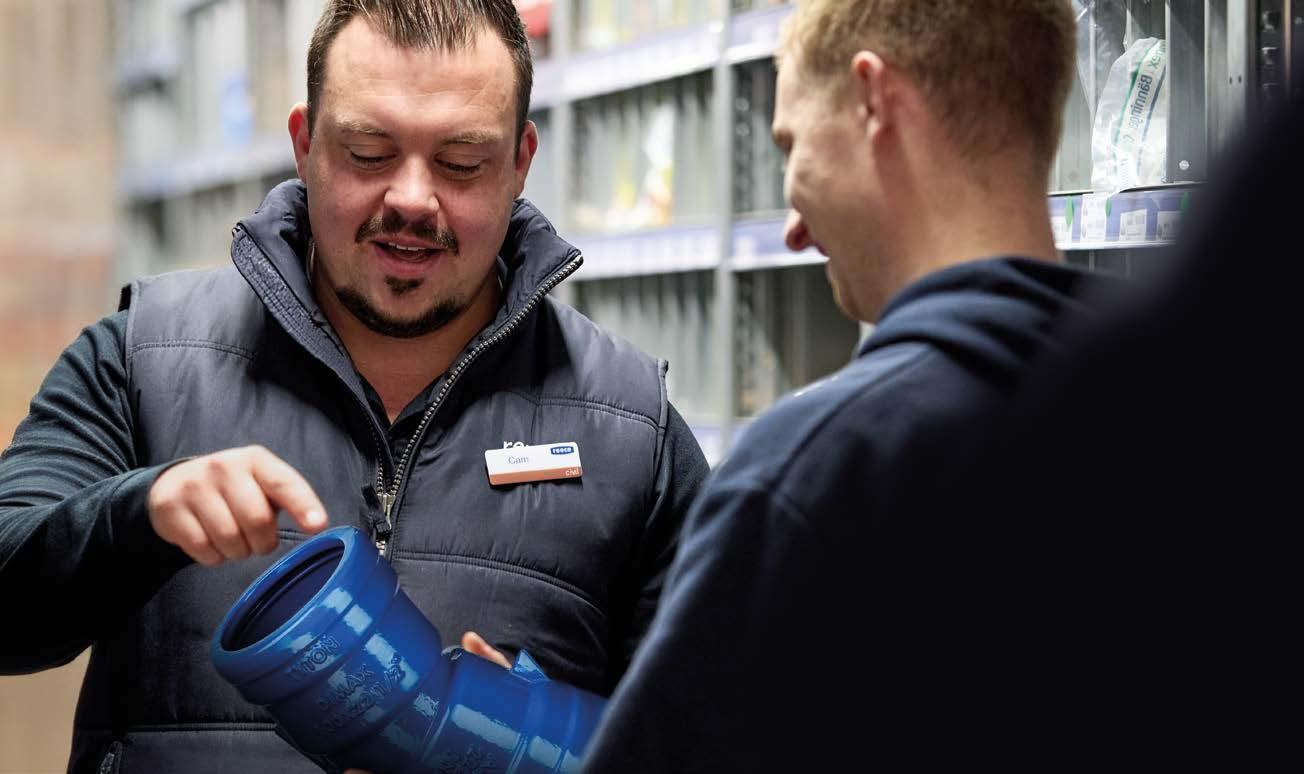
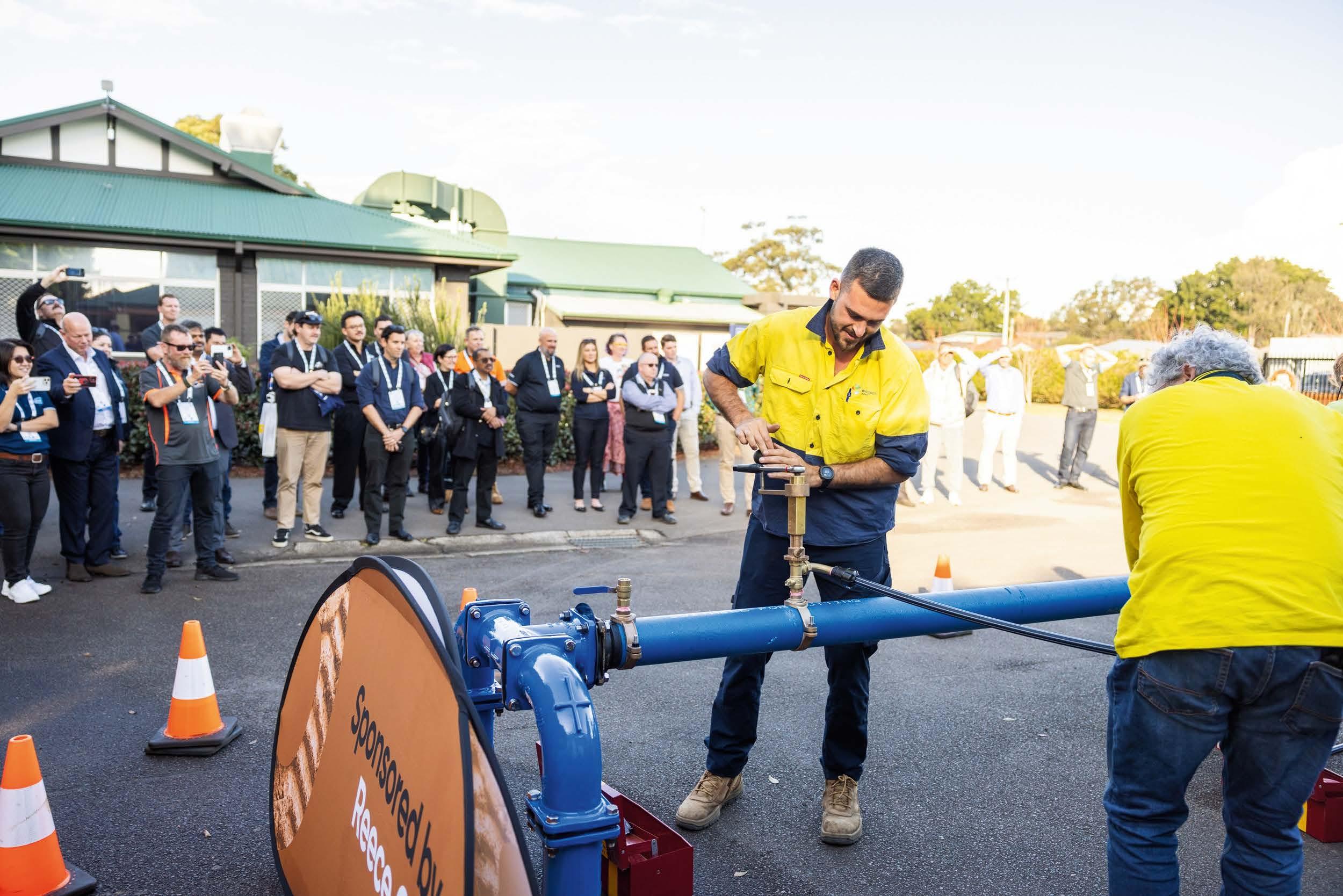
One of the most anticipated events on the conference program, the Reece Group Civil + Viadux Water Main Tapping Competition, saw operational crews go head-tohead in a test of speed, precision and technical expertise. is year’s Queensland title was claimed by Gympie Regional Council, with Ross Watt and Nick Niedermeyer completing the challenge in one minute and 33 seconds.
e pair secured victory over Gold Coast City Council a er the runners-up, despite initially recording a faster time of one minute and 27 seconds, incurred a 10-second penalty following a minimal leak.
e competition recreates one of the industry’s most critical operational tasks: connecting new services to a live water main without interrupting water supply to customers.
Teams of two are required to safely complete a live tap on a pressurised 100mm pipe, installing all ttings to industry standards while working within strict safety requirements.
Accuracy is just as important as speed, with penalties applied for leaks, faults or incomplete installations.
First introduced in the late 1980s, the WIOA Water Main Tapping Competition has grown into a respected national and international event. State champions progress to the Australian nal before the ultimate winners compete against New Zealand in the international competition.
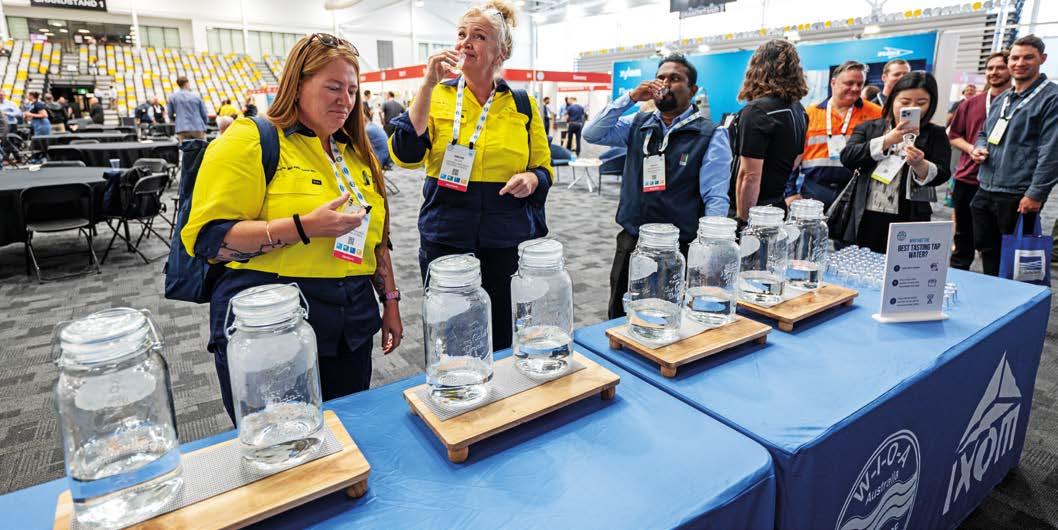
Another longstanding feature of the conference, the IXOM Best Tasting Tap Water competition, once again shone a spotlight on the operational excellence that underpins drinking water quality across the state.
is year, Isaac Regional Council’s Clermont Water Treatment Plant was named Queensland’s Best Tasting Tap Water for 2026.
e competition sees water utilities from across Queensland submit drinking water samples that are assessed through a blind tasting process, with judging based on clarity, odour and taste.
While the event o ers a light-hearted addition to the conference program, it also serves as an important benchmark for water quality and highlights the expertise required to consistently deliver high-quality drinking water.
Accepting the award, Isaac Regional Council Manager of Water and Wastewater Maintenance and Operations, Stephen Wagner, acknowledged the team’s collective e ort.
“I’d like to say thanks to the team. You can’t win the Best Tasting Tap Water competition without a great team behind you,” he said.
Behind every entry is a combination of source water management, treatment optimisation and distribution network performance, with operators working every day to maintain compliance while delivering safe, reliable drinking water to their communities.
e competition provides a rare opportunity to recognise an essential service that is o en taken for granted, while celebrating the operational sta responsible for maintaining water quality across utilities of all sizes.
The IXOM Best Tasting Tap Water competition highlights the best drinking water quality across the state.
WIOA Chief Executive O cer Dean Barnett said the competition highlights the commitment of water operators across Queensland.
“ is competition highlights the dedication and commitment of the operations sta and their water companies that work tirelessly – o en in challenging conditions – to provide their communities with safe, highquality drinking water every day,” Barnett said.
“It also shines a spotlight on the vital behind-the-scenes work of this discreet industry, which supports communities every hour of every day.”
While compliance and public health remain the primary priorities of drinking water treatment, taste also plays an
important role in building customer con dence and trust in local water supplies.
With its Queensland title secured, Isaac Regional Council will now represent the state at the Australian Best Tasting Tap Water competition later this year.
From showcasing emerging technologies on the exhibition oor to recognising the expertise of frontline operators, the event reinforced the critical role water professionals play in delivering essential services to communities across the state.
WIOA’s conference calendar continues with the 2026 NSW Water Industry Operations Conference and Exhibition, taking place at Newcastle Racecourse from September 9 to 10. U
For a complete list of the 2026 Queensland Water Industry Operations Conference award winners and recognitions, visit www.wioa.org.au
The conference brought together those who are passionate about delivering safe, sustainable and innovative water services.
Images:
WIOA
The pressure to perform
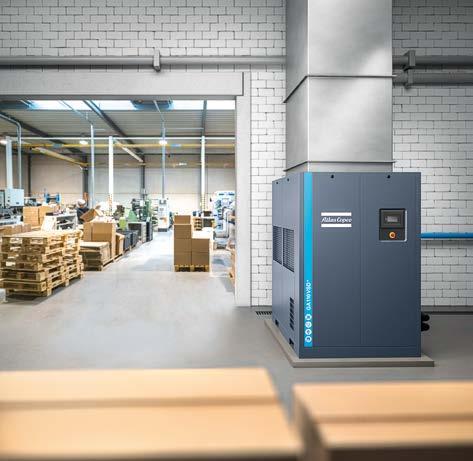
Atlas Copco explains how smarter compressed air upgrades can help utilities improve reliability, e ciency and long-term asset performance.
Across Australia’s utility sector, maintaining reliability while managing ageing assets is an ongoing challenge. From water treatment facilities to energy infrastructure and council-operated systems, essential services depend on equipment that must perform reliably under demanding conditions.
Compressed air systems are o en a hidden but critical part of this infrastructure. When they fail or begin to operate ine ciently, the consequences can include rising costs, unplanned downtime and operational risk.
Ageing systems and increasing pressure
Many operators continue to rely on legacy compressed air systems that were not designed for current demand pro les. Over time, these systems can su er from overheating, unstable supply and increasing maintenance requirements, issues that are o en addressed reactively rather than strategically.
A recent Melbourne-based compressed air upgrade highlights a common scenario. An ageing compressed air system was experiencing reliability issues, including overheating and uctuating output, placing strain on production processes and increasing maintenance costs.
Although this example comes from manufacturing, the same challenges are common across utilities, where compressed air plays a critical role in processes such as aeration, instrumentation, control systems and pneumatic operations.
The value of data-driven assessment
A key lesson from the project was the importance of detailed system analysis before implementing any upgrade. By undertaking performance monitoring and data logging, engineers were able to identify ine ciencies and better understand actual demand.
Energy e ciency is particularly critical as utilities face increasing pressure to reduce emissions and manage rising power costs. Even incremental improvements in compressed air systems can deliver signi cant longterm savings.
Minimising downtime during upgrades
One of the biggest barriers to infrastructure upgrades is the perceived risk of operational disruption. For utilities, where service continuity is essential, planned works must be carefully managed.
e Melbourne project demonstrated that even complex upgrades can be delivered with no interruption to operations through detailed planning and staged implementation.
For utilities, this type of assessment can reveal mismatched equipment sizing, energy ine ciencies, capacity constraints during peak demand and opportunities for system optimisation.
Rather than replacing equipment on a like-for-like basis, a data-driven approach enables more informed decision-making by balancing reliability, e ciency and lifecycle costs.
Right-sizing for e ciency and resilience
One of the most e ective ways to improve compressed air performance is to ensure systems are correctly sized and con gured for real-world conditions. In the Melbourne case study, moving to a modern variable speed drive compressor with integrated air treatment improved both energy performance and operational stability.
For utility operators, similar upgrades can reduce energy consumption during uctuating demand, improve pressure stability across networks, enhance system redundancy and resilience, and lower total cost of ownership.
Strategies included maintaining continuous air supply during changeover, coordinating installation with operational requirements and integrating new equipment seamlessly with existing systems. is approach is directly applicable to utility environments, where downtime can impact communities, compliance and safety outcomes.
From reactive to proactive
e transition from ageing systems to optimised compressed air solutions re ects a broader shi in how utilities approach asset management.
Rather than responding to failures, leading organisations are investing in monitoring and analytics, prioritising lifecycle performance over upfront costs, and aligning upgrades with broader e ciency and sustainability goals. While compressed air systems may represent only one part of a broader asset base, ensuring they are correctly sized, monitored and maintained can deliver measurable improvements in reliability, e ciency and operating costs.
As utilities continue to modernise ageing infrastructure, taking a proactive approach to compressed air performance will become an increasingly important part of long-term asset management. U
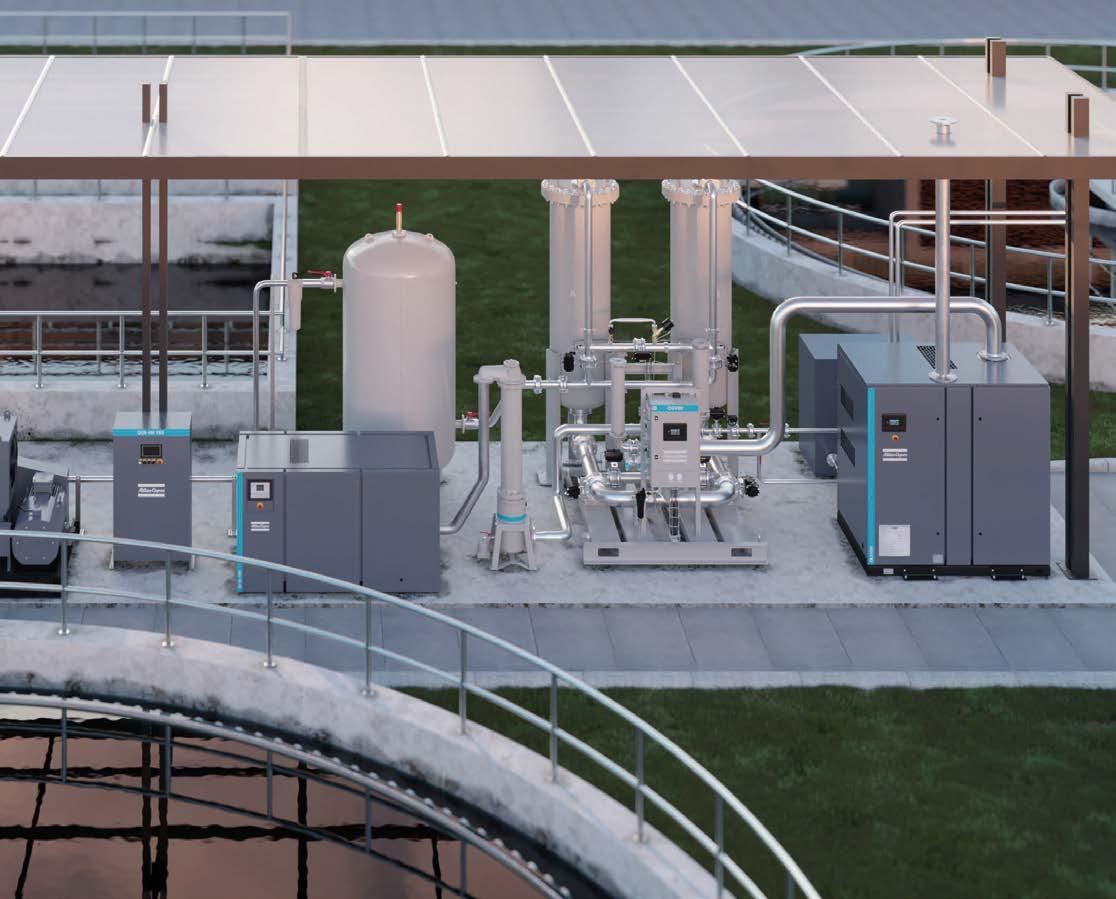
Atlas Copco provides innovative compressed air solutions.
Image: Atlas Copco
Securing the future grid
NEPKI CEO Naomi Wynn highlights how the project is delivering a world-first national energy cybersecurity platform.
Australia’s energy transition is entering a new phase –one where cybersecurity infrastructure is becoming as critical as the physical grid itself.
e launch of the National Energy Public Key Infrastructure (NEPKI) marks a signi cant step in building that digital backbone, providing a national framework for secure communications across millions of distributed energy devices, from roo op solar systems to household batteries.
As the system decentralises, the challenge is no longer simply connecting new capacity, but coordinating it.
Consumer energy resources are growing rapidly, and without trusted, interoperable communications, the risk to system cybersecurity and integrity increases in parallel.
NEPKI is designed to address that gap, enabling networks and manufacturers to securely exchange data and manage devices in real time.
Now, the platform has moved from concept to operational deployment, with distribution networks including Ausgrid, Endeavour Energy, Essential Energy and SA Power Networks already onboarded alongside manufacturers such as KStar, Mondo, Fronius, Village Energy and Sungrow. ese participants have been issued digital certi cates that allow them to communicate securely across the system, representing a foundational step in scaling a more dynamic grid.
Further onboarding is expected in the coming weeks, extending participation across multiple jurisdictions and a broader range of global manufacturers. e pace re ects the urgency of the task: Australia is integrating distributed energy at a scale few other markets have matched, and
secure communications are becoming just as important as generation capacity.
NEPKI sits at the centre of that shi . Its role is to underpin emerging operating models such as dynamic operating envelopes, where networks actively manage export limits based on local conditions, and emergency backstop mechanisms that protect system security during periods of stress. It authenticates systems and devices, protects the con dentiality of exchanged data, maintains ecosystem integrity and supports emergency controls.
e commercial implications are signi cant. A secure, standardised communications layer reduces integration risk, lowers barriers to entry for manufacturers and provides greater certainty for investment across the value chain. In e ect, it creates the conditions for distributed energy to be treated not as a collection of individual devices, but as a coordinated system resource.
It also points to the next frontier: electric vehicles. As EV uptake accelerates, drivers will expect secure, seamless charging experiences, with many also wanting to use their vehicles as batteries. e cybersecurity services NEPKI was established to provide the energy sector can also support these emerging needs. Work is already underway to consult with industry on how NEPKI can support secure, interoperable EV communications, drawing on international developments to inform a local model.
Underpinning NEPKI is an unusually broad coalition of networks, manufacturers and public funding support, re ecting a shared recognition that cybersecurity is now a core system requirement. e traditional model, where
NEPKI is a new initiative helping to secure Australia’s clean energy future.
security sits at the edges, is no longer t for purpose in a highly distributed, digitally connected grid. e challenge now is scale. As more participants are onboarded and additional use cases are developed, NEPKI’s success will ultimately be measured by how e ectively it enables seamless, secure communications across millions of active devices and hundreds of energy organisations, without compromising reliability or consumer trust.
Endeavour Energy General Manager of Future Grid and Asset Management Colin Crisafulli said the challenge now is to unlock more capability from the existing grid so customers continue to see increasing value from investments in roo op solar, batteries, electric vehicles and other emerging technologies.
“NEPKI is an important part of that future. It provides secure, trusted connections that give networks and industry the con dence to integrate customer energy resources at scale, while maintaining the security and reliability of the power system,” Crisafulli said. at con dence is equally important for technology providers helping connect and manage millions of customer energy resources.
Enphase Energy Senior Vice President of Cloud, Security and HEMS Ravi Pervela said secure interoperability would be critical to the next phase of Australia’s energy transition.
“Secure interoperability is fundamental to the future of distributed energy resources,” Pervela said.
“NEPKI marks an important step towards a nationally consistent cybersecurity framework under CSIP-AUS, giving industry participants greater con dence in trusted communications. Enphase is pleased to be among the early participants supporting a more secure, reliable and interoperable Australian energy system.”
What is clear is that the energy transition is no longer just an infrastructure build – it is an integration challenge. Increasingly, that integration will depend on systems like NEPKI operating in the background, securing communications and enabling the ow of data that makes a modern, decentralised grid possible. U
For more information, visit www.nepki.com.au
Naomi Wynn is the CEO of NEPKI.
Turning telematics into next-gen e ciency
From AI and video telematics to fuel e ciency and safety, Geotab says fleet operators are focused on taking digital oversight and performance to the next level.
Fleet management is no longer just about keeping vehicles on the road.
As arti cial intelligence, video telematics and advanced analytics become more accessible, eet operators are looking beyond traditional tracking and reporting to uncover new opportunities for safety, e ciency and operational performance.
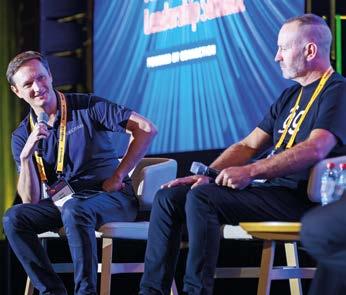
ose themes were front and centre at the Australasian Fleet Management Association’s 2026 Australasian Fleet Education and Leadership (AFMA) Summit, where industry leaders gathered to discuss the future of eet management and the technologies driving it.
For Geotab, the summit provided more than an opportunity to showcase technology. It was a chance to listen, learn and engage directly with eet operators navigating an increasingly complex operating environment.
According to Geotab APAC Senior Manager of Solutions Engineering, Chris Martin, the event highlighted an industry that is eager to embrace new technologies while remaining focused on solving practical, day-today challenges.
“ e AFMA Summit is a really important event for us on the calendar each year,” Martin said.
“One of the great things about the summit is the knowledge that comes from getting the industry together.
It’s partly about learning what eet managers are facing day to day, where the challenges are and whether there are new challenges or bene ts they’re encountering compared to previous years.
“But it’s also an opportunity to share some of the lessons we’ve learned and contribute to the education of the industry. It’s really bi-directional learning.” at spirit of collaboration was evident throughout the event, with conversations spanning everything from fuel costs and vehicle utilisation through to AI and video telematics.
For Martin, one of the strongest themes to emerge was the industry’s desire to build on the digital foundations it has already established. Telematics is now a wellestablished part of many eet operations, delivering visibility, accountability and measurable returns on investment. e challenge facing many operators is determining what comes next.
“I think a theme across the board was that eet managers want to level up,” Martin said.
“Telematics is an essential part of businesses and eets now. Everyone sees the value, but now they’re asking what’s next. How can they get more from the technology they’re already using?”
For many organisations, AI is emerging as a key part of that next stage of eet optimisation.
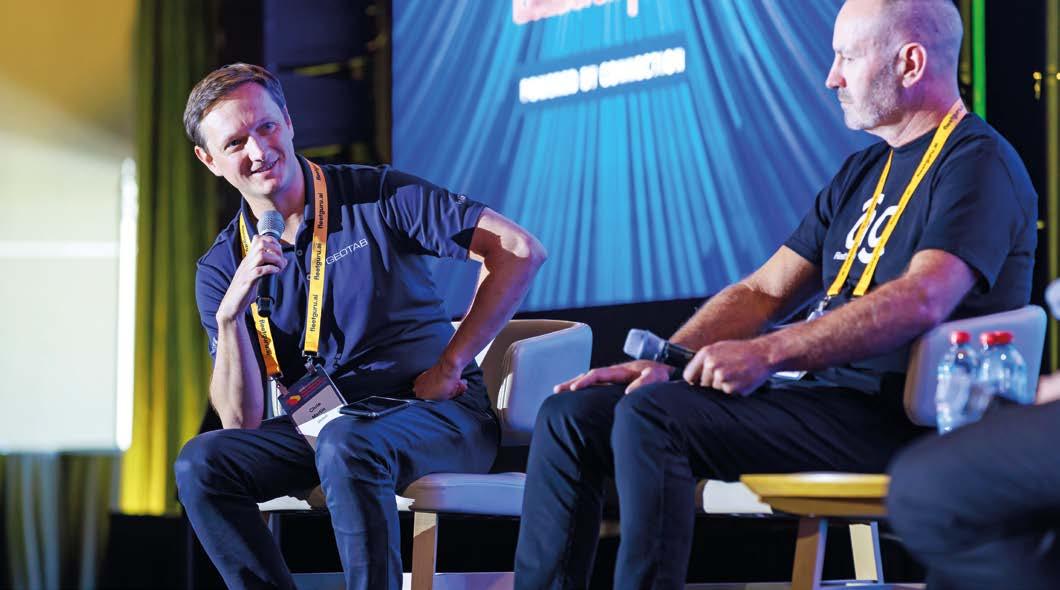
The AFMA Summit took place from May 19 to 20 in NSW.
Safety isn’t necessarily a new theme, but it’s de nitely a persistent one.”
AI featured heavily throughout the summit, re ecting the growing interest in how advanced analytics can help eet operators uncover insights that were previously di cult, if not impossible, to identify.
Martin said eet operators are increasingly looking beyond traditional reporting and exploring how AI can support more proactive decision-making.
“ ere’s a lot of interest in how we’re able to use data in new ways to identify safety trends ahead of time, rather than in a more reactive manner,” he said.
“We’re very privileged to have such a big data set. One hundred billion data points a day across six million vehicles globally is immensely powerful, allowing us to identify patterns of driving and safety incidents in a way that we couldn’t previously.”
Rather than simply reviewing incidents a er they occur, operators are now exploring how technology can help identify risks before they develop into larger problems. is shi towards proactive management was particularly evident in conversations around safety.
While safety has long been a priority across the eet sector, Martin said operators are continuing to look for new ways to improve outcomes and reduce incidents.
“Safety isn’t necessarily a new theme, but it’s de nitely a persistent one. ere’s always more to do with safety,” he said.
“What can we do to get ahead of it and reduce the rate of safety incidents?”
Geotab believes AI and predictive analytics will play an increasingly important role in answering those questions.
By combining eet-speci c information with broader industry data, operators can gain a deeper understanding of risk factors and emerging behavioural trends.
“We’re nding a lot of eets are very interested in how data can help them tackle safety a little more proactively,”
Martin said.
Beyond safety, operational e ciency remained another major focus of discussion.
Rising fuel costs continue to place pressure on eets across a wide range of industries, making e ciency improvements an ongoing priority.
While operators have little control over fuel prices themselves, Martin said many are focused on improving how fuel is consumed and identifying opportunities to reduce waste.
“Fuel is topical across all industry segments,” he said.
“Fleet operators are feeling the pressure of rising costs, but they’re asking how they can become more resilient when fuel prices are outside their control.”
Another area generating signi cant interest was video telematics.
e technology continues to gain momentum across
the industry, providing additional context around incidents, supporting coaching programs and helping organisations strengthen safety outcomes.
What surprised Martin most, however, was a noticeable shi in how drivers themselves are viewing the technology.
Historically, video telematics has o en been met with some hesitation from drivers concerned about monitoring and privacy. At this year’s summit, Martin heard a very di erent story.
“I had two separate people at AFMA this year tell me, from quite large eets, that they’ve actually got drivers coming to them and asking for video telematics to be introduced into the eet,” he said.
“ at was a really fascinating change.”
Martin believes that shi re ects a growing understanding of the value the technology can provide, both for organisations and for drivers themselves.
“Video brings an extra layer of context that changes the way you can manage and react to events happening throughout your eet,” he said.
“It also allows you to detect a whole new range of situations that we couldn’t before, things like tailgating or distracted driving. ere’s so much power and value in being able to identify these behaviours and ultimately reduce incidents on the road.”
Beyond the technology discussions, the summit reinforced the ongoing importance of industry collaboration.
While AI and automation continue to transform eet operations, Martin believes there remains a critical role for people sharing experiences, challenges and ideas.
“ e way we’re working today is changing rapidly,” he said.
“But despite how exciting these new tools are, there’s still such an important role for people and interaction.
“Events like this pull together people with similar challenges and operations. e ability to collaborate, share stories and understand how other people are doing things is incredibly powerful.”
Martin said the strongest takeaway from the summit was the enthusiasm eet managers continue to show for improvement and innovation.
“Fleet managers do an incredible job. ey wear so many hats and they’re incredibly busy people, but there’s still this willingness to ask, ‘How do we do it better?’,” he said.
As the eet industry continues to navigate evolving technologies and growing expectations around safety and e ciency, one thing is clear: the appetite for innovation remains strong.
If the conversations at this year’s AFMA Summit are any indication, eet operators are not just adapting to change, they are actively looking for ways to stay ahead of it. U
For more information, visit www.geotab.com/au
Sealing smarter
Sealing systems may be one of the smallest components in a pump, but their impact on energy use, reliability and operating costs can be significant.
When organisations look to improve pump e ciency, attention is o en directed towards motors, drives and hydraulic performance. Yet another critical contributor to system e ciency is frequently overlooked: the sealing system.
While mechanical seals and compression packing account for only a small portion of the overall pump assembly, they can have a substantial in uence on energy consumption, water use and long-term asset reliability.
In many applications, the true energy impact of sealing systems extends far beyond simple friction losses.
Cooling requirements, ush water usage, and thermal ine ciencies can all contribute to substantial hidden energy consumption.
Beyond friction losses
Sealing systems have traditionally been evaluated primarily on their frictional characteristics. However, in most industrial pumping applications, the friction generated by a seal accounts for only a small percentage of the pump’s total energy consumption.
“Larger energy losses o en come from cooling and ushing systems, reheating process uids, product dilution, water treatment requirements and heat losses from the pump itself,” said Jorge Mellado, Chesterton Sales and Business Development Manager – Australia and New Zealand.
“ is is particularly the case in high-temperature applications such as condensate systems, boiler feed pumps, hot-water circulation and many chemicalprocessing operations.”
In these environments, support systems designed to protect seals can unintentionally create energy penalties if they are not properly optimised.
Advances in sealing technology are helping industries reduce these hidden ine ciencies. Mechanical seals are designed to operate with minimal support requirements while maintaining reliability in demanding operating conditions.
Chesterton’s mechanical seal portfolio, including the Chesterton 1810 single cartridge seal, 2810 dual cartridge seal, and 442 split mechanical seal, is engineered to help facilities improve reliability while reducing unnecessary cooling and ush water consumption.
For high-temperature and demanding process applications, advanced seal face materials and hydraulic designs can reduce thermal losses and minimise the need for external support systems. is lowers the amount of cooling and reheating required, signi cantly reducing overall energy consumption.
“Making these improvements can immediately lower energy usage, reduce water consumption and lower the total cost of ownership of many industrial pump systems,” Mellado said.
“ e bene ts become even more signi cant in continuous-duty services where pumps operate around the clock and small e ciency improvements accumulate into major annual savings.”
Why compression packing is key
Compression packing plays an equally important role across industry, complementing mechanical seals in applications where maintenance demands need to be minimised.
Modern packing technologies such as Chesterton’s 1400R carbon-reinforced packing and 1600 low-emission carbon packing are designed to reduce sha wear, minimise leakage and operate with lower friction than conventional packing materials.
Advanced bre construction and lubrication systems help reduce gland loading requirements, underpinning a practical, energy- and water-e cient option that further
boosts the lifespan and reliability of pumping equipment.
“As industries pursue lower operating costs and greater sustainability outcomes, pump e ciency strategies are evolving beyond motors and hydraulics alone,” Mellado said.
“By taking a broader view of energy consumption, including the impact of cooling, ushing and thermal losses, facilities can uncover opportunities for substantial cost savings while reducing their environmental footprint.”
For operators seeking long-term e ciency gains, combining the right sealing technology, proper application engineering, and proactive reliability practices can deliver substantial reductions in energy usage and lifecycle costs, making it a strategic way to optimise plant performance. U
Chesterton o ers high-performance cartridge seals engineered to meet various application demands.
Chesterton 1400R is a unique, reinforced, braided, graphite tape packing with a corrosion inhibitor.
Chesterton 1622 Emissions
Packing is designed to minimise valve emissions.
Images: Chesterton
Waste not, want not
Integrated septage receiving solutions can help utilities streamline operations, protect critical infrastructure and improve treatment outcomes.
Every day, tanker trucks arrive at wastewater treatment plants carrying a complex mix of septage, sludge, fats, oils and grease (FOG). While these loads are a routine part of operations, what arrives at the plant gate can have a signi cant impact on everything that happens downstream.
From rags and plastics to grit and other debris, unwanted solids can create maintenance headaches, accelerate equipment wear and reduce process e ciency. As utilities look to do more with existing infrastructure, many are turning their attention to an o en-overlooked part of the treatment journey: waste reception.
is is where integrated solutions such as SAVECO’s VFA DM Septage Receiving Stations (commonly referred to as ‘ e Beast’) help utilities get ahead of operational challenges before they reach the treatment process.
Rather than relying on multiple standalone pieces of equipment, the VFA DM combines several key functions within a single compact unit. As septic waste is discharged from tanker trucks, the system screens incoming material to remove solids and debris that could otherwise interfere with downstream processes.
Captured screenings are then washed, conveyed, dewatered and compacted within the unit. is helps reduce the volume of waste requiring disposal while minimising handling requirements for plant operators.
For utilities, one advantage of an integrated receiving station is improved operational reliability. By removing problematic solids at the point of entry, treatment plants can reduce the risk of blockages, equipment damage and process disruptions further downstream.
e system can also support more e cient maintenance practices. With screenings automatically processed and compacted, operators spend less time on waste handling activities and can instead focus on higher-value operational tasks. e VFA DM does not require a rock trap or
grinders, resulting in lower capital and maintenance costs, as well as simpler and safer servicing. Its two-stage tank and dual-motor con guration design are engineered to minimise solids accumulation and quick processing of higher ow rates of septic waste.
As utilities continue to optimise the performance of existing infrastructure, space constraints are another important consideration. Many treatment facilities must balance increasing demand with limited room for expansion. Compact, multifunctional equipment can help maximise available space while delivering multiple process bene ts from a single installation.
e VFA DM is designed with this need in mind, integrating reception, screening and dewatering within a streamlined footprint. is can be particularly valuable for regional facilities that receive septic waste, treatment plant upgrades and sites seeking to improve performance without extensive civil works.
Beyond operational e ciencies, e ective septage management also supports broader environmental outcomes. By ensuring solids and contaminants are removed before entering the treatment process, utilities can help improve overall plant performance and support more consistent treatment results.
As wastewater infrastructure faces growing demands from population growth, changing waste streams and ageing assets, utilities are increasingly looking for solutions that deliver both e ciency and reliability. Integrated technologies such as the SAVECO VFA DM Septage Receiving Station demonstrate how smart design can simplify operations while helping protect critical treatment infrastructure.
For utilities focused on improving performance, reducing maintenance burdens and future-proo ng wastewater operations, optimising the receiving stage may be one of the most e ective places to start. U
FAST TURNAROUND END-TO-END FITOUT AND TRADE
Supporting confidence in water infrastructure
DIMAX, backed by Reece’s national network and technical expertise, is helping water infrastructure contractors deliver ductile iron projects with greater confidence, e ciency and long-term performance.
Across Australia, infrastructure delivery is under increasing pressure to meet demanding standards for reliability, installation e ciency and long-term network performance. Whether upgrading existing assets or delivering new watermain networks, the selection of products – and the service behind them – can have a direct impact on installation con dence and project timelines.
For contractors working with ductile iron, the value of a dependable supply partner extends well beyond product speci cation. Stock availability, technical expertise, installation support and high-quality products all play an important role in ensuring projects run smoothly, from planning and delivery to post-installation support.
is is where DIMAX comes in. More than a standalone ductile iron range, DIMAX aims to provide con dence and continuous support while introducing new ways to service contractors. It focuses on helping customers access the right product when they need it.
“ e support that Reece provides is utilised to ensure that all levels of the civil infrastructure networks that we work alongside feel con dent when they come to us and that they are dealing with industry experts, not just a supplier,” said Jason Hall, Product Engineer at Reece. is support is re ected across the Reece network.
“Our internal expertise is able to be utilised to help come up with solutions that not only meet expectations
but give ongoing con dence,” Hall said.
For customers delivering watermain projects, this con dence is tested on site. Adam Smith from Mullane Plumbers Newcastle said the business has used DIMAX across kilometres of pipe and hundreds, if not thousands, of ttings without experiencing product issues.
Practical installation experience is also supported by the relationship behind the product. Lloyd Williams of Mullane Plumbers Newcastle said the company has a long-standing relationship with Reece because of its service, stock availability and product range, adding that the DIMAX range is an integral part of its watermain project installations, with stock readily available through Reece.
e result of focusing on high-quality products, stock availability and end-to-end support is a ductile iron o ering designed to meet the practical needs of Australian civil infrastructure projects. For contractors, this combination means less risk, fewer delays and greater con dence throughout project delivery.
As water utilities, councils and contractors continue to deliver essential infrastructure across Australia, dependable product support remains a critical part of successful project delivery. Backed by the expertise and support of Reece, DIMAX aims to provide installation con dence on every project. U
Find a local Reece Civil or Viadux at www.reece.com.au/storefinder
DIMAX provides ductile iron fi ttings, valves and pipes built for Australian conditions.
Image:
Reece
Manufactured, configured and factory-
As Australia accelerates its transition towards renewable energy, projects such as the Aldoga Solar Farm are becoming increasingly important.
Located near Gladstone in Queensland, the 380MW development is one of the state’s largest solar projects and will play a signi cant role in supporting Queensland’s renewable energy ambitions. Connecting that energy to the grid, however, requires sophisticated infrastructure capable of ensuring reliability, security and longterm performance.
To make that connection possible, ACCIONA Energía engaged Genus to design and construct the 33/275kV Aldoga Substation, delivering the critical infrastructure needed to connect the solar farm into Powerlink’s transmission network.
Jahanzeb Rahman, General Manager Construction at ACCIONA Energía, said Genus brought both the technical capability and exibility required to operate within a complex grid connection environment.
“Genus maintained a proactive and solutions-oriented approach throughout delivery,” said Rahman.
“ ey worked e ectively with our team, adapting to challenges while aligning with established processes and expectations.”
For Genus, the project represented more than another major contract.
“It was the rst project on the east coast for our renewables business,” said Damon Olufson, General Manager Projects at Genus.
“We assembled a very strong and collaborative team and ensured we held the Genus company values at the forefront of our approach. is is the team we have continued to build and now serves as the core team for our renewables work down the east coast.”
A complex project with little room for error
Large-scale renewable infrastructure projects bring together multiple stakeholders, complex interfaces and tightly managed commissioning requirements. e project required the integration of design,
procurement, construction and commissioning activities, alongside close coordination between Genus, ACCIONA Energía, Powerlink and numerous specialist partners.
Managing those interfaces while maintaining critical energisation milestones demanded constant communication, careful planning and a disciplined approach to delivery. e challenge was not simply to build the substation, but to simplify complexity for the client and ensure the wider solar farm program remained on track.
“We do what we say we’re going to do,” said Olufson.
“We invested in the ECI process to shape the project and program. We explored design and program optimisation which resulted in a solid plan for delivering the project in a very short duration, even while dealing with weather issues and other delays.”
A partnership built around solutions
For ACCIONA Energía, creating the right working relationship was just as important as selecting the right delivery partner.
“ACCIONA Energía played a key role in fostering strong interpersonal relationships at all levels, enabling teams to work closely together, communicate openly and resolve challenges e ciently and professionally,” said Rahman. Olufson said Genus set out from the start to ensure a collaborative and transparent approach with ACCIONA, to work as a team.
“ is was particularly important as the substation moved towards commissioning and back energisation. Collaboration between all parties ensured the project was commissioned and energised as planned,” he said.
When complexity arrived
Large infrastructure projects rarely follow a straight line and Aldoga faced its share of challenges.
Weather delayed access to site. Transformer deliveries slipped. Additional scope emerged and redesigns became necessary. Yet the project’s critical energisation milestones remained unchanged.
For Rahman, Genus’ response to those disruptions was
one of the de ning features of the project.
“Genus contributed positively to maintaining momentum despite challenges. eir responsiveness and willingness to collaborate stood out,” he said.
According to Olufson, that response was built on identifying issues early and moving quickly.
“Key to managing the impact of setbacks is early identi cation and moving quickly internally to deep dive into the problem, nd solutions and run scenarios to nd the best approach,” he said.
The advantage of agility
For Genus, Aldoga highlighted one of the strengths of its culture.
“While Genus continues to grow, it still holds the ‘cando, will-do’ culture as key to success,” said Olufson.
“We are able to make fast decisions, escalate issues internally and resolve them quickly if required. is is most important to keep the project on track.” at approach was put to the test early when delays to the main access road threatened to postpone mobilisation by several weeks.
“When we were informed the site access road to the substation area was not ready and not likely to be for a number of weeks, we immediately set to work with ACCIONA to look at options and how we could help overcome the issue,” said Olufson.
“ e result was we took the lead working with ACCIONA and upgraded a rough two-wheel bush track to allow mobilisation and commencement of the bulk civil works.”
Rahman said Genus demonstrated a more agile and adaptable approach than some traditional contractors.
“ is complemented ACCIONA Energía’s mature framework by focusing on solving the challenges worth solving and not getting distracted by noise or opportunism,” he said.
Smarter ways of working
Innovation on Aldoga wasn’t about reinventing the wheel. It was about nding better ways to deliver.
rough design optimisation, Genus reduced the footprint of the switchyard by approximately 40 per cent, creating signi cant savings in civil works while maintaining performance requirements.
e team also reused excavated material and introduced o site fabrication and improved li ing methodologies to enhance safety and e ciency.
Powering Queensland’s future
Beyond the project itself, Aldoga represents something much larger.
“Aldoga is a signi cant project in the renewable energy transition,” said Olufson.
“At 380MW it is one of the largest Queensland solar farms and a very important contributor to the state’s energy targets.”
As Australia’s energy system evolves, projects like Aldoga will play a critical role in ensuring renewable generation can be integrated safely and reliably into the grid.
Increasingly, success will depend on delivery partners that combine technical expertise with the ability to solve problems and work collaboratively when conditions change.
Proof of the Genus way
Looking back, Olufson sees the success of Aldoga in the relationships and culture that underpinned the project.
“We are extremely proud of this project,” he said.
“We built a good team, a strong relationship with ACCIONA, and our quick delivery helped bring the solar farm online and commissioned many months earlier than planned.”
Even today, the project remains a benchmark inside the business.
Ultimately, Aldoga demonstrated that even in the most complex environments, success comes from staying close to the problem, working together and remaining focused on the outcome.
And in doing so, it became proof of the Genus way. U
For more information, visit www.genus.com.au
The Aldoga Solar Farm is about 20km north-west of Gladstone, Queensland.
The missing link beneath Australia’s streets
The systems and data standards managing Australia’s underground infrastructure haven’t kept pace with the networks they support – but a new digital utility tool could point the way forward.
Australia’s expanding energy, water and telecommunications networks are increasing the complexity of the infrastructure hidden beneath roads and footpaths. Yet the systems used to manage this critical underground infrastructure have not kept pace, according to Before You Dig Australia (BYDA).
e organisation is calling for national reforms to improve how underground utility asset information is captured, shared and managed, saying stronger digital data standards are essential to improving safety, infrastructure resilience and project productivity.
According to BYDA, more than 15,000 reported utility strikes occur across Australia each year, where excavation works damage underground power, water, gas or telecommunications assets. e incidents are estimated to cost the Australian economy $4.6 billion annually through project delays, service disruption and productivity losses, while also creating signi cant safety risks.
BYDA argues the issue extends beyond excavation practices alone.
“ e problem in Australia is systemic rather than behavioural,” BYDA CEO Mell Greenall said.
“While responsibility for preventing utility strikes o en sits with frontline workers, the power to improve the underlying conditions rests with governments, regulators and asset owners.”
Greenall said Australia’s underground infrastructure had evolved rapidly, while the information systems used to manage it remained static and fragmented.
“ e footpaths and roads that Australians walk, cycle and drive on hide an extensive network of cables, pipes and services that underpin our electricity, water and telecommunications networks,” she said.
To help address this challenge, BYDA has begun piloting a secure digital utility portal across areas including Brisbane’s Olympic infrastructure precinct, western Sydney,Perth and northwest WA.
e portal is designed to improve the way underground asset information is shared between utilities, contractors and infrastructure owners, creating a more consistent, accessible and reliable source of underground asset information before excavation begins.
A proof-of-concept trial conducted last year attracted participation from more than 1000 industry stakeholders and demonstrated potential infrastructure productivity gains of approximately $330 million annually.
Backed by major telecommunications and energy companies, the initiative aims to improve project planning, reduce accidental asset damage and strengthen collaboration across the utilities sector. However, BYDA says its success will depend on widespread participation from utility asset owners and local authorities, supported by consistent national data standards.
BYDA’s research has identi ed several opportunities to strengthen underground asset management, including improving digital data quality, establishing minimum data standards and encouraging greater data sharing across the sector.
“What we’re talking about is a fragmented information ecosystem that remains largely document-based, despite the increasing complexity of modern infrastructure networks,” Greenall said.
BYDA estimates that improving the quality and accessibility of underground utility data could save up to $782 million each year, while complementary reforms including more consistent legislation, mandatory BYDA enquiries before any excavation works and the use of national data insights to support regulatory enforcement and industry education could deliver a further $322 million in annual bene ts.
Rather than creating an entirely new system, BYDA says the focus should be on strengthening the existing framework through better collaboration, improved regulation and digital data sharing.
As investment in Australia’s utility infrastructure accelerates, BYDA believes improving the quality and accessibility of underground asset information will be essential to reducing utility strikes, supporting more e cient project delivery and strengthening the resilience of the nation’s critical infrastructure. U
Over 15,000 reported utility strikes occur in Australia each year.
Image: Jens Lambert/shutterstock.com
The hidden infrastructure risk
Envu explains why proactive herbicide resistance management is critical to protecting infrastructure assets, reducing risk and maintaining e ective vegetation control.
Vegetation managers responsible for maintaining roadsides, rail corridors, utility networks, substations, airports, industrial sites and other critical infrastructure face an increasing range of challenges. While issues such as re risk, access restrictions and compliance requirements are o en front of mind, one longterm threat is frequently overlooked: herbicide resistance.
Herbicides remain one of the most e ective and economical tools available for controlling unwanted vegetation. However, their long-term e ectiveness cannot be taken for granted. Across the globe, weeds are continuing to evolve resistance to herbicides, making control more di cult, increasing management costs and reducing the e ectiveness of existing weed management programs.
According to the International Herbicide-Resistant Weed Database, there are 548 unique cases of herbicideresistant weeds globally, spanning 275 species (156 dicots and 119 monocots). Weeds have evolved resistance to 21 of the 31 known herbicide sites of action and to 168 di erent herbicides. Herbicide-resistant weeds have been reported in 102 crops in 76 countries.
e rate at which resistance develops depends on several factors, including the weed species, the herbicide used, and the overall herbicide program. Repeated reliance on the same herbicide or herbicide mode of action places signi cant selection pressure on weed populations, accelerating the development of resistant individuals. Over time, these resistant weeds survive treatment, reproduce and become increasingly dominant within a site.
Importantly, herbicide-resistant weeds do not recognise
property boundaries. e movement of resistant weed seed or plant material from neighbouring agricultural, horticultural or industrial areas can introduce resistance into previously una ected sites. is means resistance management is not only an individual site responsibility but also a broader industry-wide concern. Maintaining the e ectiveness of current herbicides requires proactive stewardship and the adoption of sound weed management practices across all sectors.
Strategies for managing herbicide resistance
1. Mix and rotate herbicides
Understanding the mode of action of herbicides is fundamental to resistance management. Herbicide labels identify their mode of action through a group number, indicating how the product a ects the target weed.
Repeated applications from the same mode of action group increase the likelihood of resistance developing. Rotating between di erent herbicide groups from one application to the next can help reduce this selection pressure and delay resistance development.
An even more e ective strategy is the use of tank mixes containing two or more herbicides with di erent modes of action. By exposing weeds to multiple control mechanisms simultaneously, the likelihood of resistant individuals surviving treatment is signi cantly reduced.
2. Optimise spray e cacy
Even the most e ective herbicide can underperform if it is not applied correctly. Maximising spray e cacy
is essential to achieving consistent weed control and minimising the risk of survivors that may contribute to resistance development.
Key considerations include using properly calibrated application equipment, selecting the correct spray nozzles, applying the appropriate water volume, and incorporating suitable adjuvants where recommended. Environmental conditions such as temperature, humidity and wind speed should also be considered to ensure optimum herbicide performance.
Achieving high levels of weed control with every application reduces the number of plants that survive treatment and helps maintain the long-term e ectiveness of herbicide programs.
3. Prevent weed seed set
Any weeds that survive a herbicide application should be controlled before they have the opportunity to ower and produce seed.
At the heart of every successful weed management program is management of the soil seed bank. e soil seed bank represents the reserve of viable weed seeds present in the soil, o en accumulated over many years. Le unmanaged, this seed bank can continually replenish weed populations and undermine control e orts. e long-term objective should be to progressively reduce the size of the soil seed bank while preventing the addition of new seed. By stopping weed seed set, vegetation managers can signi cantly reduce future weed pressure and improve overall control outcomes.
4. Use non-herbicide weed control techniques
E ective resistance management requires an Integrated Weed Management (IWM) approach. No single control method should be relied upon in isolation.
Combining chemical, mechanical and, where appropriate, biological control techniques can help reduce weed populations while minimising dependence on herbicides alone. Techniques such as slashing, mowing, cultivation and strategic vegetation management can all contribute to a more resilient weed control program.
Good site hygiene is equally important. Cleaning machinery, equipment and vehicles before moving between sites can help prevent the spread of weed seed and vegetative material, reducing the risk of introducing resistant populations into new areas.
Supporting long-term resistance management
Long-term residual herbicides can also play an important role in reducing weed pressure and supporting resistance management strategies.
Esplanade Herbicide is a broad-spectrum residual herbicide designed to help reduce the soil seed bank by controlling emerging weeds before they can establish.
By preventing successful establishment, it reduces the number of weeds that reach maturity and contribute new seed to the soil.
Esplanade inhibits root development in emerging seedlings, providing long-lasting residual control across more than 30 key weed species commonly found in utility and industrial vegetation management environments.
Importantly, Esplanade o ers a di erent mode of action to many traditional vegetation management programs. Incorporating alternative modes of action into weed control programs is a key principle of resistance management, helping reduce reliance on existing chemistry and supporting the long-term sustainability of herbicide tools.
As resistance continues to emerge globally, vegetation managers cannot a ord to take a reactive approach.
Phil Logan, Key Account Manager – IVM, said the cost of doing nothing is not simply reduced weed control.
“Over time, it can result in higher maintenance costs, greater operational disruption, increased safety risks and fewer e ective control options available to vegetation managers,” he said.
“By implementing integrated resistance management strategies today, infrastructure managers can help protect the long-term performance of herbicides and maintain safe, compliant and operational assets into the future.”
Drawing on expertise in herbicide technologies, vegetation management solutions and integrated vegetation management strategies, Envu works closely with customers to address evolving operational challenges, regulatory requirements and asset management objectives.
Whether assessing current vegetation management practices, identifying opportunities to optimise maintenance programs, or evaluating the long-term economic impacts of vegetation control decisions, Envu works with organisations to support more sustainable vegetation management outcomes. U
For more information, visit the Envu Esplanade Resource Centre.
Envu’s herbicides are an e ective tool for controlling unwanted vegetation.
When a new eet vehicle hits the road, there is o en far more happening behind the scenes than many people realise. Vehicle sourcing, body building, accessories, signwriting, nance and delivery can all involve di erent suppliers, creating a complex process that consumes valuable time and resources.
For eet operators already juggling growing workloads and operational demands, managing that process can quickly become a challenge.
Enviroline is aiming to remove that complexity through a turnkey eet solution that brings every stage of the process under one roof.
While the company has long been recognised for its work in water jetting and utility equipment, Enviroline has steadily expanded its eet o ering to provide customers with a true one-stop shop for vehicle procurement, t-outs, accessories, branding and nance.
According to Enviroline Business Development Director Heath Wiggins, the concept was born from listening to customers who were struggling to manage multiple suppliers while running their businesses.
“Traditionally, they’d have to go to the dealer and source the vehicle, then nd a body builder, organise signwriting, arrange accessories and work through the nance process,”
Wiggins said.
“ e feedback we got was, ‘Can’t you just do everything for me?’ So that’s essentially what we did.”
Rather than coordinating multiple suppliers, customers work with a single provider that manages the process from procurement through to delivery, reducing administrative burden and helping vehicles get on the road sooner.
For eet operators, particularly those in utilities, facilities maintenance and trade services, the approach helps simplify sourcing and save valuable time.
“Basically, it’s an end-to-end solution,” Wiggins said. “We source the vehicle, build it, signwrite it, nance it and deliver it to the customer.”
As eets grow, consistency becomes increasingly important for operational e ciency, workforce mobility and brand presentation.
Wiggins said standardised vehicle layouts help technicians work more e ectively, particularly when vehicles need to be shared across teams.
“If someone is o sick or they have to swap vehicles, they’re not getting into something that looks completely di erent,” he said.
“ e tools are in the same place, the vehicle is set up the same way and it helps improve operational e ciency.”
Consistency also supports a more professional appearance in the eld, ensuring customers and stakeholders see a cohesive eet that re ects the organisation’s brand. at approach has seen Enviroline work with a broad range of organisations, including utilities, facilities management providers, contractors and trade-based businesses. Customers include major water authorities as well as growing service organisations looking to streamline eet procurement and management.
Beyond simplifying the t-out process, speed is another key advantage.
“A lot of body builders haven’t streamlined their processes, so there can be up to six months’ wait on a vehicle,” Wiggins said.
“We can generally turn that around within eight to 10 weeks, or even less depending on the setup.”
Enviroline’s o ering also extends beyond vehicle procurement and t-outs. e company works with telematics providers to help customers gain greater visibility over vehicle usage, driver behaviour and eet performance.
According to Wiggins, even small changes driven by telematics data can deliver measurable operational bene ts.
“Just by having telematics, we’ve seen people save 10 per cent in fuel costs because drivers know the vehicle is being monitored, so they drive with more care and attention and use less fuel,” he said.
Enviroline is also preparing for emerging eet trends, including hybrid and electric vehicles. e company is actively developing lightweight service body solutions designed to maximise payload while supporting the transition to lower-emission vehicle platforms.
For Wiggins, however, the company’s success ultimately comes back to customer relationships.
“What we’re o ering may seem almost a little unbelievable until customers try it,” he said.
“But once they work with us and see the process in action, we’re really building relationships for a lifetime.” U
For more information, visit www.enviroline.net.au
The PL1500 is a gamechanger for pipeline construction. The unique, quick-hitch, vacuum lifter attaches to your existing excavator, reducing your machine hire cost and getting things moving fast. Capable of safely lifting 15,000kg, the heavy-duty, self-contained unit can handle all types and lengths of pipe. It integrates seamlessly with the host excavator, using the main controls and hydraulics to operate the vacuum lifter. Plus, built-in smart tech ensures it’ll only pick up or put down a pipe on a solid surface. That’s safer than many other vacuum lifters on the market. To find out more, speak to the Pipeline Plant Hire team today.
The water sector is no stranger to digital transformation.
Across Australia and around the world, utilities are investing in connected technologies to improve visibility, strengthen resilience and optimise the performance of infrastructure. Yet for many operators, particularly smaller utilities, regional councils and private asset owners, the path to digitalisation can feel out of reach.
Historically, accessing detailed operational data has required signi cant investment in supervisory control and data acquisition (SCADA) systems, specialist programming and ongoing maintenance. While these systems deliver valuable insights, they are not always practical for every organisation.
According to Grundfos Technical Sales Development Manager Etienne Minnaar, this is one of the biggest barriers preventing broader digital adoption across the water sector.
“We wanted to give our customers a solution where they didn’t have to spend thousands on a SCADA system to access meaningful data and improve operations,” Minnaar said.
For Grundfos, the challenge is not simply about generating more data.
It is about making operational intelligence accessible, practical and relevant for the people responsible for keeping critical infrastructure running. is philosophy underpins solutions such as Grundfos Connect Asset Monitor, which helps operators access realtime asset data, alerts and performance insights without the complexity traditionally associated with digital monitoring systems.
A changing operating environment Utilities today are under increasing pressure to do more with less.
Ageing infrastructure, workforce constraints, climate variability and rising customer expectations are forcing operators to rethink how they manage their networks. At the same time, the volume of information available through connected devices continues to grow.
“One of the biggest shi s we’ve seen is utilities and councils moving away from reactive asset-based operations to a more connected, data-driven and proactive way of operating,” Minnaar said.
“I feel that councils and utilities aren’t just operating infrastructure anymore. ey’re looking at all these dynamic factors in real time.”
While large metropolitan utilities o en have dedicated teams and signi cant budgets to support digital initiatives, smaller operators frequently face the same operational risks with far fewer resources.
is is particularly evident in regional communities, where operators may be responsible for extensive networks spread across large geographic areas.
“Your bigger councils generally have more operational and capital expenditure to put towards ageing infrastructure,” said Minnaar.
Breaking down barriers
For Grundfos, democratising digital water means ensuring organisations of all sizes can bene t from operational visibility.
Minnaar points to farmers as a clear example.
“If I think of a farmer outside Toowoomba with a few hundred head of cattle, they have the same reliance on
their pumping assets as a utility would,” he said.
“ ey may not necessarily have the same level of money and funds that they can put towards it, so having an a ordable digital o ering that gives them visibility over those assets is incredibly important.”
e same principle applies across the water sector.
Whether managing a wastewater pumping station, a stormwater network or a remote water supply system, operators need con dence that critical assets are performing as expected. When issues arise, early visibility can prevent small problems from escalating into costly failures.
In stormwater applications, for example, a pump failure during heavy rainfall can have signi cant consequences.
“ e risk is that if those systems don’t kick in when they’re needed, you can potentially have ooding that causes damage to surrounding infrastructure,” Minnaar said.
By providing operators with real-time monitoring, alerts and performance insights, digital technologies can help reduce downtime, improve responsiveness and support more informed decision-making.
Keeping it simple
While digitalisation o ers signi cant bene ts, utilities are o en cautious about introducing new technologies into critical infrastructure environments.
For many organisations, ease of implementation can be just as important as functionality.
“Our products are designed for ease of integration, so existing infrastructure doesn’t necessarily need to be taken o ine for long periods of time,” Minnaar said. Rather than requiring extensive programming or complex commissioning processes, Grundfos Connect Asset Monitor is designed to simplify deployment and minimise disruption through a secure, cloud-based platform that delivers real-time operational visibility. By enabling real-time monitoring, alerts and performance insights, Grundfos Connect Asset Monitor gives operators’ greater visibility of their assets without the need for a full SCADA system.
e company has also placed a strong focus on cybersecurity, recognising that connectivity and security must go hand in hand.
“Connectivity should go hand in hand with security,” Minnaar said.
“We’ve designed a digital solution with a secure architecture that allows customers to use it reliably and safely 24/7.”
Importantly, Grundfos’ digital solutions are designed to work alongside existing infrastructure rather than requiring a complete overhaul, allowing operators to progress along their digital maturity journey at a pace that suits their organisation.
Turning information into action
Grundfos’ digital journey is not a recent development. e company has spent decades integrating digital capabilities into its products, continuously re ning how operational data is collected, analysed and presented. at experience has reinforced an important lesson: more data does not automatically lead to better decisions.
“With all these years of experience, we’ve been able to ne-tune our o ering to the information that matters,” Minnaar said.
“A lot of digital o erings have what I’d call information overload. Any information is important information, but whether that information is relevant is key.”
By focusing on actionable insights rather than overwhelming users with data, utilities can more e ectively identify ine ciencies, reduce energy consumption and improve overall asset performance.
Intelligence within reach
As digital adoption continues to accelerate, technologies such as arti cial intelligence are expected to play an increasingly important role in water operations.
Grundfos sees opportunities for AI to strengthen predictive maintenance capabilities, improve operational e ciency and provide greater visibility into asset performance.
However, Minnaar believes the industry’s immediate priority is ensuring digital tools are accessible to the people who need them most.
As utilities navigate growing operational challenges, making digital intelligence simpler, more a ordable and easier to implement could prove just as important as the technology itself.
“Grundfos has always been at the forefront of sustainable and e cient solutions, and I believe we’ll continue on that trajectory,” said Minnaar.
“As the industry evolves, we’ll continue bringing not only our pumping technology into the future, but our digital capabilities as well.” U
For more information, visit www.grundfos.com/au
Etienne Minnaar is Grundfos’ Technical Sales Development Manager.
Images: Grundfos
BYDA
#Get involved
Charging ahead
Batteries will play a critical part of the power future and new standards will shape how they work. Understanding AS4044:2024 will help strengthen the reliability, resilience and performance of vital systems.
Battery chargers have traditionally been viewed as supporting equipment within critical power systems. In reality, charger performance directly in uences battery life, DC system availability, and the reliability of the protection, control and communications systems that critical infrastructure depends on.
As utilities and infrastructure operators place greater emphasis on resilience, asset performance and operational continuity, charger systems are increasingly recognised as critical infrastructure assets in their own right. e introduction of AS4044:2024 re ects this shi , providing a contemporary framework for the design and operation of battery chargers used in stationary applications.
More than support equipment
Across Australia’s utility, transport, telecommunications and industrial sectors, stationary battery systems provide essential backup power for protection relays, SCADA networks, communications equipment and switchgear control systems.
While batteries are o en considered the cornerstone of these installations, their performance fundamentally depends on the charger responsible for maintaining battery readiness while supporting the DC load. A charger that consistently delivers stable voltage and current helps maximise battery performance and lifespan
while reducing the risk of premature battery degradation. As infrastructure operators modernise ageing assets and invest in greater levels of automation and digital monitoring, charger performance now extends well beyond maintaining battery charge. It directly in uences battery longevity, DC bus stability and system availability during planned maintenance and unplanned outage events.
Battery chargers have traditionally been viewed as support equipment. Increasingly, they are becoming critical infrastructure assets in their own right.
Engineering reliability
AS4044:2024 re ects the evolving requirements of modern DC power systems by recognising advances in switch mode recti ers and contemporary charging technologies, while introducing measures that improve safety, reliability and long-term performance. Integrated charge control helps prevent overcharging, extending battery service life while reducing maintenance requirements. Neutral current limitation supports safer three-phase operation by reducing electrical imbalance, thermal stress and the potential for equipment damage. Updated cable identi cation requirements also improve installation consistency, simplify maintenance activities and reduce the likelihood of wiring errors.
Images: Century Yuasa
Intelepower is a premium product label from Century Yuasa.
Battery chargers have traditionally been viewed as support equipment. Increasingly, they are becoming critical infrastructure assets in their own right.”
e standard also strengthens electromagnetic compatibility (EMC) requirements. As substations, telecommunications facilities and industrial sites become increasingly reliant on interconnected digital systems, charging equipment must operate without generating interference that could a ect sensitive protection, communications or control equipment.
Collectively, these requirements reinforce an important engineering principle: reliability is engineered throughout the entire charging system, not achieved through batteries alone.
Beyond compliance
AS4044:2024 is more than a technical update. It signals a broader industry shi towards recognising charger performance as a key contributor to infrastructure reliability, lifecycle performance and operational resilience.
For asset owners, the standard provides an opportunity to review existing charger installations, update equipment speci cations and ensure charging infrastructure aligns with today’s operational expectations. is is particularly relevant where ageing charger assets may no longer provide the monitoring capability, performance or exibility required in modern infrastructure environments.
Adopting equipment designed to meet current standards can improve system visibility, reduce maintenance risk and support more informed asset management decisions throughout the life of an installation.
AS4044:2024 re ects a broader shi in how the industry views reliability, risk and long-term asset performance. As expectations around service continuity and asset visibility continue to evolve, the focus is no longer simply on maintaining battery charge. It is about ensuring the systems supporting critical operations are designed, monitored and maintained to deliver reliable performance throughout their operational life. U
For more information, scan the QR code.
AS4044:2024 refl ects the growing importance of battery chargers in supporting reliable, resilient critical infrastructure.
Reduce Spray Applications
Esplanade® Herbicide delivers exceptional long-lasting residual weed control, helping utilities and infrastructure managers reduce maintenance cycles, lower operational costs and keep critical assets weed free for longer.
UP TO 8 MONTHS CONTROL
Long residual performance keeps sites weed free for longer.
REDUCE SPRAY FREQUENCY
Fewer applications can reduce labour, fuel and maintenance costs.
CONTROLS 30+ TOUGH WEEDS
Pre-emergent control stops weeds before they emerge.
WHOLE-OF-LIFE COST SAVINGS
Reduce the total cost of vegetation management programs.
IDEAL FOR INFRASTRUCTURE
Roads, rail, utilities, substations, fence lines and industrial sites.
UNIQUE GROUP 29 MODE OF ACTION
An important tool for resistance management programs.
Delivering with confidence
With utilities delivering increasingly complex projects, Service Stream has developed a standardised framework that combines governance, data insights and best practice to improve project performance from start to finish.
Australia’s population is growing, the climate is changing, and the energy sector is undergoing one of the biggest transformations in its history. Essential services are the backbone of just about everything we do, and our water, energy, transport and telecommunications networks need to be able to support Australia through this change and into the future.
To do just that, utilities are working around the clock to build the critical infrastructure we need – and Service Stream recognised the need for a consistent approach to navigating the fast-paced world of project delivery.
A new era of standardisation
Service Stream’s Project Execution Framework (PEx) is a comprehensive tool designed to enhance the company’s project management and service delivery capabilities. is innovative tool is not just a guideline; it establishes a consistent approach to service delivery, governance and continuous improvement.
It sets clear expectations for how Service Stream’s projects should be planned, executed, monitored, and controlled. rough this standardisation, the PEx Framework ensures that all projects, regardless of their complexity, adhere to the same high standards of quality, safety and sustainability.
e framework includes detailed processes for risk management, quality management, and health, safety, and environmental management.
Streamlining governance
e PEx Framework includes a streamlined governance process, which outlines a series of mandatory gates, known as PEx Gates, that serve as internal hold points and must be passed before progressing to the next phase of a project.
ese gates enable leadership intervention to ensure that all reviews, approvals, and quality checks are completed, reducing the overall risk to delivery.
e framework is not just about maintaining standards; it’s about continuous improvement, turning best practice into common practice.
By embedding these processes into the delivery lifecycle, Service Stream can identify areas for improvement and implement changes that drive better outcomes for clients and stakeholders.
Harnessing the power of data
e PEx Framework’s improved data capture methods allow Service Stream to leverage advanced data collection and analysis tools to gather real-time insights into project performance.
is data-driven approach means the company’s leaders can make informed decisions, identify risks before they a ect delivery, and optimise resource allocation.
Improved data capture methods also enhance transparency, enabling stakeholders to track progress and outcomes with greater accuracy and con dence.
By standardising its project and service delivery processes, Service Stream can ensure that projects are completed on time, within budget, and to the highest quality standards.
is consistency builds trust and con dence with clients, proving that they can rely on Service Stream to deliver consistent, high-quality outcomes.
A benchmark for excellence
e PEx Framework’s emphasis on data-driven decision making, streamlined governance and continuous improvement ensures that projects are executed e ciently and e ectively. By optimising delivery, Service Stream can reduce costs, minimise risks, and enhance overall project performance.
By standardising processes, streamlining governance, harnessing the power of data, and fostering continuous improvement, the framework sets a new benchmark for excellence in project management and service delivery.
As Service Stream continues to innovate and evolve its delivery management capabilities, the PEx Framework will remain at the forefront. e framework aims to drive sustainable and successful outcomes across vital industry projects, while providing the foundation for a broader suite of delivery methodologies in development, including frameworks for large-scale industrial shutdowns, maintenance, and other complex operational environments. U
Service Stream has created a comprehensive tool to enhance its project management and service delivery capabilities.
Service Stream
Generate your own oxygen—reliably, efficiently, on site. With Atlas Copco PSA and VPSA systems, you get a complete, turnkey solution designed for nonstop performance - without relying on cylinders or bulk liquid deliveries.
Our solutions deliver:
24/7 reliable oxygen supply
Plug-and-play installation
Lower operating co
Ideas to action
A structured approach to innovation at Interflow, one that involves everybody in the business, is being designed to harness powerful ideas and turn them into reality.
Innovation has always been a part of the Inter ow way of doing business. It is critical to delivering its purpose of ‘improving the lives of the people we work with, the communities we serve and the environment we work in, for generations to come’. According to Inter ow, many advances in trenchless technologies have come from people within the company – from crews, engineers and support teams.
As the pace of change accelerates, the time has come for the development of a more structured way of capturing, assessing and scaling ideas.
e new innovation program will bring visibility and momentum to ideas from across Inter ow. e goal is to ensure that great thinking doesn’t get lost, that ideas can travel and grow, and that people responsible for those ideas receive the feedback and recognition they deserve.
Inter ow Innovation Manager, Joseph Curkovic, said the program signals a shi from informal innovation to a more disciplined, organisation-wide approach.
“In truth, the innovation team can’t innovate in isolation,” Curkovic said. “As a team, we support our people to deliver innovation. We create the tools, manage the framework and bring the business along the journey to support the initiatives.”
So, how does that work?
Creating a clear pathway for ideas
Historically within Inter ow, ideas have been actioned at team level. As teams have sought to solve problems locally, they have developed new processes and sometimes products that potentially were not visible beyond their immediate environment.
Curkovic said this has led to good outcomes. And some of those ideas have eventually spread across the organisation. At the same time, the process has o en been slow and disjointed, and some ideas have not been captured or developed.
e new innovation program has a goal of changing that, with a structured funnel through which ideas can freely and transparently ow.
“ ere will be steps and stage gates in that funnel,” Curkovic said. “ rough the assessment of those ideas, the highest priorities will be identi ed.”
Importantly, those priorities will not be determined by nancial return alone, he said. Each will be assessed across multiple factors, including environmental impact, safety, quality and cost.
is means the business can respond to changing priorities throughout the years – whether they relate to improving the environment, improving the lives of its people or enabling more e cient ways of working – while still maintaining a consistent evaluation process.
Interfl ow is creating a new innovation program that will bring visibility and momentum to ideas across the company.
Images: Interfl
Innovation involves everybody
It’s no secret that innovation can only succeed if a diverse range of people from across a business are deeply engaged in the process. at’s why the Inter ow innovation program is being designed to involve everybody.
Rather than focusing only on large, disruptive ideas that require massive budgets and deep engagement from senior leaders, the program recognises that the majority of innovation happens in small, practical improvements that a ect everyday work.
“ ere is bottom-up, continuous improvement and there is top-down innovation,” Curkovic said. “Both are of great value, meaning everybody should be involved.”
Crews and local teams will be empowered to identify and implement improvements that make their work safer, faster or more e cient.
ese ideas will be assessed and approved locally, allowing them to gain traction quickly without getting lost in a centralised system. en, they will be promoted throughout the system so other teams can learn from them, copy them and customise and improve upon them.
“What we want to do is keep those local initiatives local,” Curkovic saids. “Incremental initiatives should be assessed, prioritised, funded and executed near the source.”
At the same time, the program also o ers a pathway for larger, more complex ideas to be escalated and developed at a national or strategic level.
At the very top of the funnel, there is also room for a focus on longer-term, transformational innovation.
“ at’s where we’re scanning globally, looking for disruptive technologies, partners, research, new markets, and more,” Curkovic said.
e result is a layered approach that supports everything from a simple idea on a site to multi-million dollar, business-wide initiatives.
Momentum, recognition and long-term impact
By cutting across silos and bringing people together from di erent disciplines, the program o ers strength through diversity.
Ideas are tested, re ned and strengthened in an environment of support and with input and expertise from numerous levels.
“You’ll be able to see who’s driving the idea forward,” Curkovic said. “And the people that are following it can and say, ‘ at’s a great idea. Let’s copy that.’”
Beyond processes and platforms, the Inter ow innovation program is primarily about culture and about reinforcing a more professional, data and meritdriven approach to improvement.
“What we want to do is give people the tools to become professional innovators,” Curkovic said.
to improvement.
“ e KPIs in the business case tool will get them thinking at their local level about how they can save time, resources, distance, energy, wastes, and deliver on our purpose.”
By promoting the link between the original ideas and the eventual, measurable outcomes, the program will help individuals and teams understand the broader impact of their work.
At the same time, it also supports Inter ow’s longterm strategy.
“We’ve been around for 90 years,” Curkovic said. “ e whole point of this is to be relevant for another 90 years.”
What happens next?
e Inter ow innovation program is in development now, with a target rollout next nancial year. A key component will be a central input system where ideas can be submitted, tracked and progressed.
e team is also exploring ways to make that process simple and accessible for the future, including the use of voice input and AI to help submissions.
In the meantime, Curkovic said the best next step is for people to start paying attention to their own ideas.
“What we really want is to build that culture of innovation where people think deeply about their daily activities,” he says. “How can I save time? How can I reduce e ort? How can I improve safety? How can I improve the environment?”
For those working across Inter ow, that might mean taking note of small ine ciencies, opportunities for improvement or ideas for doing things di erently and capturing them somewhere simple.
When the formal system goes live, those ideas will have a place to go and a pathway to becoming something much bigger. U
For more information, visit www.interflow.com.au
The innovation program is about reinforcing a more professional, data and merit-driven approach
From the ground up
For more than a decade, Global Pipeline Equipment has refined vacuum lifting technology to help pipeline contractors improve safety, increase e ciency and tackle challenging projects with confidence.
Msaid. “You had guys chasing diggers in the desert, slinging pipes in the dust and danger, and dragging them to the poly welders.”
oving large sections of pipe has long been one of pipeline construction’s most demanding tasks, o en requiring crews to work in close proximity to heavy equipment, suspended loads and challenging site conditions.
Global Pipeline Equipment (GPE) was established to change that. Born from the demands of Australia’s coal seam gas boom, the company developed vacuum li ing systems designed speci cally to improve safety, reliability and productivity in the eld.
e company’s early designs came directly from conversations with operators working on-site. By making use of an excavator’s available hydraulic power, GPE developed li ing systems that eliminated the need for separate diesel engines and expanded the capability of vacuum li ing technology.
Managing Director Matt Dridan said the need for a better approach became clear when large volumes of pipe began arriving at remote construction sites with little specialised equipment available to manage them.
“Earlier engine-driven imported vacli machines were noisy and unreliable,” Dridan said. “ e guys on the ground couldn’t hear each other because they would rattle all day.”
“ ere was no equipment there to handle it,” Dridan
By integrating the vacuum system into the excavator’s auxiliary hydraulics, GPE reduced maintenance requirements, eliminated a common failure point and improved weight distribution. e result is a simpler, more e cient li ing solution that can operate reliably in remote environments.
Vacuum lifting technology enables a single operator to position large-diameter pipe sections with precision.
Australian conditions have also played a signi cant role in shaping the company’s engineering approach. From extreme heat and heavy dust to wet, humid and corrosive environments, GPE equipment is designed to withstand the harsh realities of pipeline construction.
Dridan said durability begins long before the equipment reaches a worksite.
“ ese devices do not just get damaged on projects. ey can get damaged in transport and handling, so from the moment it leaves our factory, it needs to be robust,” he said.
e company’s fully galvanised designs, protected electronics and advanced ltration systems help keep equipment operating reliably in harsh environments.
Safety remains the driving force behind vacuum li ing technology. By creating exclusion zones and removing workers from the immediate li ing area, vacuum systems signi cantly reduce exposure to suspended loads and many of the risks traditionally associated with pipe handling.
“Everyone knows someone who has been injured in the traditional handling of pipes,” Dridan said. “I do not know anyone with so much as a paper cut from handling loads with a vacuum li because they have an exclusion zone.”
Alongside improved safety, vacuum li ing also delivers e ciency bene ts. GPE’s systems can be tted to excavators, wheel loaders, forkli s and other material handling equipment, allowing contractors to use existing machinery and avoid unnecessary transport costs.
With more than a decade of experience in Australia’s demanding conditions, GPE is now preparing to take its technology to international markets.
“Australia has been a fantastic proving ground for us,” Dridan said. “Our equipment has been on the ground for more than 10 years. It has done the hard yards here, and it is ready to be taken to the rest of the world.” U
Precision that powers the grid
As Australia’s energy infrastructure continues to evolve, high-quality electrical connection technology and purpose-built installation tools are helping utilities and contractors deliver safe, reliable and e cient network outcomes.
As Australia accelerates investment in electricity networks, renewable energy and critical infrastructure, the demand for reliable electrical connections has never been greater. Every connection within the network – from substations and switchgear to renewable energy installations and major infrastructure projects – plays a vital role in ensuring long-term system performance and safety.
For contractors and utilities alike, achieving consistent, high-quality electrical connections depends on more than selecting the right connector. It also requires tools that are purpose-built to deliver accurate, repeatable results in demanding eld conditions.
Klauke has built its reputation on this philosophy. Rather than simply manufacturing cable lugs, connectors and terminals, the company also engineers the hydraulic and battery-powered tools used to install them. is integrated approach helps ensure compatibility between components and installation equipment, providing greater con dence that every connection is completed to speci cation.
Innovation has long been central to Klauke’s product development. Working closely with professional tradespeople, the company continuously re nes its solutions based on real-world applications and on-site challenges. e result is a portfolio designed with end users in mind, combining durability, precision and ease of use across a wide range of installation environments.
Today, Klauke’s portfolio spans more than 10,000 products, supporting applications across electrical contracting, power utilities, construction and infrastructure, transport, manufacturing, and the rapidly expanding renewable energy sector. From cable
connection quality can contribute to improved project outcomes and lower lifecycle costs.
With Australia’s energy transition continuing to gather pace, dependable electrical connections will remain fundamental to the performance of the nation’s infrastructure. By combining specialist connection technology with purpose-designed installation tools and ongoing product innovation, Klauke continues to support the professionals responsible for building and maintaining Australia’s evolving electricity network. U
Klauke is a German-based manufacturer of hand tools and accessories for the electrical cabling industry.
Klauke’s product range comprises more than 10,000 products.
Multi-Purpose Packing
442C
Split Mechanical Seal
Chesterton® sealing solutions help improve equipment re reduce maintenance, and support efficient plant operation. The 442C and DualPac® 2212 deliver dependable sealing performance for a wide range of rotating equipment applications.
Reduces Downtime and Maintenance
Improves Equipment Reliability
Reduced Operating Costs Scan
chesterton.com
chestertoncustomseal.com.au
Pipe rehabilitation and installation are major investments by utilities.
Partnering with contractors across Australia, kwik-ZIP actively assists these projects are undertaken with the best available spacer systems.
For more than two decades, kwik-ZIP has built a reputation as a trusted supplier of spacer systems for civil, trenchless and utility infrastructure applications.
Designed in Australia, the company’s products are used in a wide range of applications, from water and wastewater networks to energy, telecommunications, drilling and ground engineering projects.
While o en working behind the scenes, kwik-ZIP’s spacer systems play an important role in protecting pipelines during installation, helping contractors achieve e cient and reliable outcomes in challenging environments. e company’s ongoing engagement with customers and industry events ensures its products continue to evolve alongside the needs of the sector.
One recent example is the South Street Gravity Sewer project in south-east Queensland, where kwik-ZIP’s HDXT 43 spacers were selected to support a critical sliplining installation.
e project involved the installation of a DN600 SewerMax carrier pipe, with an outside diameter of 682mm, into a DN800 mild steel casing pipe with a 794mm internal diameter. e crossing extended approximately 64m and required a solution capable of accommodating the corrugated pro le of the carrier pipe while ensuring smooth installation and long-term protection.
According to kwik-ZIP General Manager Paul Je reys, the company’s products are designed to provide practical support throughout the installation process.
“Our products are supportive products,” Je reys said.
“In terms of slip-lining and the installation process, pipe protection and centralisation are two main features our products provide. ey help support the pipe as it’s installed, protect it and make the installation process more e cient for the contractor.”
For the South Street Gravity Sewer project, kwikZIP’s HDXT spacers were particularly well suited to the corrugated SewerMax carrier pipe. e at base of the HDXT runners bridges the pitch of the corrugations, allowing installation loads to be transferred along the full
length of the runners and onto the casing pipe. e system can also accommodate corrugated casing pipes, with at wear pads designed to bridge corrugations and facilitate smooth slip-lining along the invert.
in the sector, Utility is the title of choice for decision makers at all levels of water and energy utilities.
Every day, millions of Australians rely on essential services without giving them a second thought. ey turn on a tap and expect clean drinking water.
ey ick a switch and expect power. Behind these everyday moments sits one of Australia’s most important industries, and one undergoing a period of signi cant transformation.
Utilities are navigating the energy transition, modernising infrastructure, embracing digital technologies and responding to growing customer expectations, all while maintaining the reliability and resilience communities depend on.
Yet despite the critical role utilities play in supporting Australia’s economy and quality of life, many of the industry’s greatest achievements happen behind the scenes.
e Utility Awards have been created to change that.
Backed by leading organisations across the utilities sector, the 2026 Utility Awards are a new national awards program dedicated to celebrating excellence across the country’s essential services sector.
Supported by principal partner Autodesk, the Utility Awards will celebrate the achievements driving the sector forward while providing a platform to share success stories and highlight industry best practice. Gold partners Zinfra and Lanco Group also support the program, re ecting a shared commitment to recognising excellence across Australia’s utilities sector.
A defining moment for the industry
As utilities navigate unprecedented transformation, the need to share knowledge and recognise achievement has become increasingly important.
Autodesk Head of Water Infrastructure APJC Chris Ryan said the awards provide an opportunity to showcase an industry whose achievements o en go unseen.
“As a major supplier of so ware tools that help with the planning, design and operations of utilities, Autodesk has decided to support the awards to help showcase the skills and capabilities of this industry,” he said.
He said recognising excellence was particularly important as utilities continue to manage ageing assets while responding to increasing demands.
“ e way this industry innovates and the excellence that drives this are typically behind the scenes, and these people and projects need to be showcased and applauded,” he said.
Celebrating excellence across the sector
e awards feature 15 categories spanning leadership, project delivery, customer service, safety, sustainability and innovation, including Utility of the Year, Utility Project of the Year, Digital Transformation Project of the Year and Rising Star in Utilities.
e program has been designed to celebrate not only major organisations and landmark projects, but also
the individuals and teams whose contributions o en go unrecognised.
From frontline eld crews to emerging leaders and experienced industry veterans, the awards acknowledge the people who keep Australia’s essential services running every day.
Putting people in the spotlight
For gold partner Zinfra, supporting the Utility Awards re ects a shared commitment to recognising the people and partnerships that underpin the sector’s success.
Zinfra Managing Director Peter Iancov said the awards provide an important opportunity to celebrate the achievements that make a real di erence to customers, communities and the industry as a whole.
“As a trusted delivery partner in Australia’s energy sector, we recognise the critical role utilities play in keeping communities connected and essential services operating every day,” Iancov said.
“Supporting the inaugural Utility Awards is a natural extension of our commitment to the industry we are proud to be part of. ese awards provide an opportunity to recognise the people, projects, service providers and partnerships that deliver real outcomes for customers, communities and our industry.”
Iancov said recognition programs play an important role in highlighting excellence and encouraging continuous improvement across the sector.
“Recognising excellence and innovation is critical in an industry that underpins the daily lives of millions of Australians,” he said.
“By celebrating leading practice, we help li standards across the sector and drive continuous improvement in how essential services are delivered.”
He believes the awards also o er an opportunity to
acknowledge the people behind the infrastructure.
“As a company with more than 2800 team members delivering essential services, we know our strength lies in our people,” Iancov said.
“ ese inaugural Utility Awards shine a spotlight on the very best of the utilities industry, from the long-standing professionals setting the standard to the rising stars already making an impact.”
More than a celebration
While the winners will be announced in Melbourne on October 27, 2026, the impact of the Utility Awards extends far beyond a single night of celebration.
Autodesk’s Chris Ryan said awards programs also play an important role in recognising the people behind Australia’s critical infrastructure.
“Water utilities are responsible for one of the most di cult and most critical deliverables to the public as well as industry and, as their assets are virtually invisible, we need to celebrate the people that make this industry successful,” he said.
“Awards from a key publication to the industry reinforce the focus and attention the industry is receiving, and supporting innovation and excellence is positive for the industry as a whole.”
e Utility Awards represent an opportunity for the industry to celebrate its innovators, champion its leaders and showcase the projects and partnerships delivering essential services to millions of Australians every day.
Nominations are now open and will close on August 7, 2026, with nalists to be announced on September 7 ahead of the awards presentation evening.
Organisations, teams and individuals making a meaningful contribution to Australia’s utilities sector are encouraged to nominate and share their achievements. U
The new awards program is dedicated to celebrating excellence across the essential services sector.
2026 NSW WATER Industry
Operations Conference & ExhibitioN
Join us for a day filled with insightful discussions, networking opportunities, explore cutting-edge products and services, plus water operations sector competitions.
Whether you’re an experienced operator, emerging professional, or passionate about innovation in the water and wastewater sector, this event is your opportunity to connect, learn and grow with the best in the industry.
Register for this free event to access the exhibition hall and experience the excitement of the IXOM
Best asting ap Water contest and the Reece Civil + iadux Mains apping Competitions, showcasing the best technical skill from utilities across New South Wales.
9 & 10
SEPTEMBER, NEWCASTLE
wioa.org
The Water Services Association of Australia has launched a new Family and Domestic Violence Support Framework for water utilities, marking a significant step forward in the sector’s collective commitment to one of Australia’s most pressing social issues.
FA water sector united
amily and domestic violence is a national crisis that touches every part of society. According to WSAA, one in four women in Australia have experienced violence by an intimate partner or family member. It a ects the safety, wellbeing and dignity of individuals, families and communities, and it intersects directly with the services and workplaces that people rely on every day. For the water sector, this creates both a responsibility and an opportunity to play a meaningful role in preventing harm, responding with care, and supporting recovery.
A coordinated, sector-wide approach
Developed through collaboration with water businesses and in consultation with family and domestic violence sector experts, WSAA’s framework brings together existing knowledge, better practice literature and regulatory requirements into a shared, practical resource. e framework is complemented by a comprehensive toolkit and resources, which includes water sector case studies. e case studies demonstrate how water businesses are translating intent into action, and addressing risks such as nancial abuse, privacy breaches, technology facilitated harm, and workforce wellbeing.
Across the sector, variations in regulatory requirements, combined with di ering levels of organisational maturity, has led to inconsistent approaches and customer experiences. e framework addresses this by providing a shared foundation to support water utilities to assess risks, identify gaps, and strengthen their responses in ways that re ect their speci c operating context.
Two streams
Central to the framework is the recognition that family and domestic violence a ects water utilities in two interconnected ways.
Customers may experience harm through nancial abuse, privacy breaches, or the deliberate misuse of essential services as a tool of control. As monopoly providers of an essential service, water utilities are uniquely positioned to design safe systems, protect privacy, and respond with appropriate care.
Employees may be personally a ected by family and domestic violence, respond to disclosures from customers or colleagues, or support impacted colleagues. Water utilities have a responsibility to ensure their workplaces are safe, supportive, and equipped with trauma informed approaches. e customer and employee streams are underpinned by nine shared objectives across four nationally recognised family and domestic violence action domains, providing a pathway for utilities to respond e ectively.
Centring the voices of victim-survivors
roughout the development of the framework, the safety, dignity and lived experience of victim-survivors have been central. e framework acknowledges the intersectional nature of family and domestic violence and recognises the additional barriers faced by many communities, including First Nations peoples, people with disability, LGBTIQA+ communities and those from culturally diverse or rural backgrounds. To ensure responses are inclusive, safe, and e ective, the framework encourages utilities to actively involve lived experience expertise and take a ‘safety by design’ approach, recognising that systems and processes must be safe for all impacted customers and employees, not just those that choose to disclose.
e framework also recognises that the tactics used by those who choose to perpetrate family and domestic violence are continually evolving. E ective responses must be constantly re-evaluated and developed in consultation with specialist organisations.
A commitment to continued action
WSAA and its members are committed to playing their part. e launch of the framework is the beginning of an ongoing journey of learning, collaboration, and accountability across the sector. By providing a shared baseline and common language, the framework supports water businesses to work collaboratively, strengthen consistency across the sector, and continuously improve outcomes. Every action taken contributes to safer services, safer workplaces, and better outcomes for customers, employees, and the communities they serve. U
For more information, visit www.wsaa.asn.au.
Engineering challenges are becoming increasingly complex.
Across New Zealand and Australia, utilities are being asked to upgrade ageing water, wastewater, energy and telecommunications networks while minimising disruption to communities, reducing environmental impacts and delivering better value from infrastructure investment.
As a result, engineers are increasingly turning to construction and rehabilitation methods that can achieve more with less surface disturbance. Among the approaches gaining greater attention is trenchless technology – a eld that continues to evolve as asset owners seek smarter ways to build, maintain and renew critical infrastructure. at growing momentum is re ected in a new partnership between Engineering New Zealand and International No-Dig Auckland, with the country’s peak engineering body joining the event as an Industry Partner.
For Engineering New Zealand, the partnership aligns with its commitment to supporting professional development, knowledge sharing and innovation across the engineering profession.
Engineering New Zealand Chief Executive Dr Richard Templer said bringing practitioners together to exchange ideas and practical experience is essential to advancing the industry.
“Bringing practitioners together to exchange ideas, insights and practical experience supports professional development and drives innovation across the engineering sector,” Dr Templer said.
As New Zealand’s professional body for engineers, Engineering New Zealand plays a central role in supporting engineers across a wide range of disciplines.
e organisation advocates for safe, sustainable and highquality engineering outcomes while helping members build capability throughout their careers.
Its involvement in International No-Dig Auckland highlights the increasing relevance of trenchless solutions to mainstream engineering practice.
Traditionally viewed as a specialist area of construction, trenchless technologies are now being incorporated
into a growing number of infrastructure projects. From pipeline rehabilitation and horizontal directional drilling to microtunnelling and utility installation, these methods are helping infrastructure owners reduce excavation requirements, minimise community disruption and improve project e ciency.
For engineers involved in planning, design, construction and asset management, understanding these technologies is becoming increasingly important.
International No-Dig Auckland provides a platform for that knowledge exchange, bringing together engineers, contractors, technology providers, researchers and asset owners to explore the latest developments shaping the sector.
Prime Creative Media Head of Marketing Molly Hancock said the partnership re ects the important role engineers play in driving infrastructure innovation.
“Engineering New Zealand is an essential voice in shaping the direction of the profession,” Hancock said.
“Its involvement in International No-Dig Auckland reinforces the importance of connecting engineers with the latest thinking in trenchless technology. is is an event where ideas move quickly from theory into application, and that is exactly what the industry needs right now.”
Beyond the technical presentations and exhibition oor, the event o ers something equally valuable: collaboration. As infrastructure challenges become more interconnected, solutions increasingly rely on engineers, contractors, asset owners and technology specialists working together to share expertise and deliver better outcomes.
Engineering New Zealand’s support of International No-Dig Auckland signals a growing recognition that the future of infrastructure delivery will depend not only on engineering excellence, but also on the industry’s willingness to embrace new ideas and proven innovations.
International No-Dig Auckland will be held at the New Zealand International Convention Centre from October 28 to 29, 2026, bringing together local and international leaders in trenchless technology to discuss the next generation of infrastructure solutions. U
For more information, visit www.no-dignz.com/attend/
Hosted in partnership with
People on the move
Westernport Water
Dona Tantirimudalige → Managing Director
e Board of Westernport Water has re-appointed Dona Tantirimudalige as its Managing Director through to 2031.
An experienced leader in the Victorian water sector, Tantirimudalige has spent the past ve years with Westernport Water and is well positioned to build on this organisation’s success and lead it into the next regulatory price review.
Prior to joining Westernport Water, Tantirimudalige held senior management roles in the Victorian water sector, where she was responsible for long-term asset management, optimisation of infrastructure networks, and asset renewal programs.
Tantirimudalige holds a Masters in Public Policy and Management, a Bachelor of Civil Engineering, and is a Graduate Member of the Australian Institute of Company Directors. She also carries over ten years of Board experience across various sectors.
“Dona has demonstrated exceptional leadership over the past ve years, leading Westernport Water with integrity and a strong focus on customer and community outcomes,” said Annabelle Roxon, Westernport Water Chair.
Sunwater
David Hourigan → interim Chief Executive
e Board of Sunwater announced that David Hourigan, experienced public sector leader and former Deputy Director General of the Department of Premier and Cabinet in the Queensland Government, has been appointed as interim Chief Executive of the organisation, e ective June 8, 2026.
Sunwater Chair Je Seeney said Hourigan’s extensive experience in State and Federal Government roles and his recent success as interim CEO of Queensland’s Olympic Games Independent Infrastructure and Coordination
Authority will ensure Sunwater receives strong, strategic direction as the organisation transitions to a permanent CEO.
Seeney said an executive recruitment process had commenced to identify a permanent CEO for Sunwater and thanked Chief Financial O cer Erin Strang for acting in the role in recent weeks.
SA Water
Bill Le Blanc → Chief Information O cer and General Manager of Technology
SA Water has appointed experienced technology executive Bill Le Blanc as its new Chief Information O cer (CIO) and General Manager of Technology, commencing in the role on 1 June 2026.
Le Blanc joins SA Water a er serving in the position on an interim basis and brings more than 3 decades of leadership experience across critical infrastructure, healthcare, higher education and utilities.
roughout his career, he has been drawn to organisations with a strong community purpose, having previously held CIO roles at SA Health, the University of South Australia and ElectraNet.
As CIO, Le Blanc will lead the utility’s technology strategy, digital transformation and cyber security functions, with a focus on supporting reliable service delivery and long-term business performance.
A key priority will be overseeing major technology transformation programs that will modernise the systems underpinning SA Water’s operations, customer services, asset management and corporate functions.
Le Blanc will also oversee the replacement of key operational technology systems that help monitor and manage SA Water’s extensive network of water and wastewater assets. U
Accelerate digital maturity across your water lifecycle