
What
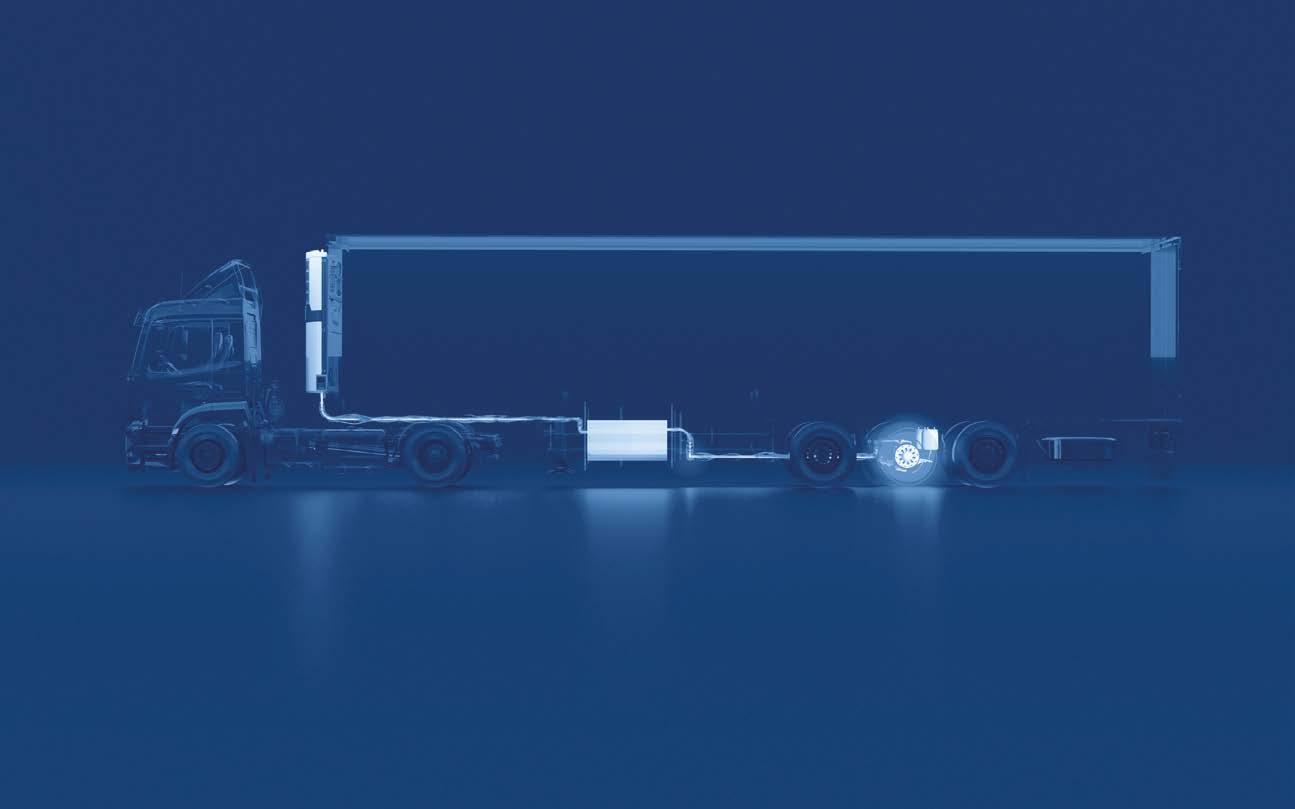
Reliable, independent power supply for fully electric or hybrid refrigeration units
Intelligent energy management and efficient operation
Air-cooled
Saves fuel and CO2
CHAIRMAN
John Murphy john.murphy@primecreative.com.au
MANAGING EDITOR
Luke Applebee luke.applebee@primecreative.com.au
EDITOR
Peter White peter.white@primecreative.com.au
ADVERTISING
Adrian Kos: 0413 777 670 adrian.kos@primecreative.com.au
Ashley Blachford ashley.blachford@primecreative.com.au
DESIGN
Alejandro Molano
HEAD OF DESIGN
Blake Storey
CLIENT SUCCESS MANAGER
Ben Sammartino ben.sammartino@primecreative.com.au
HEAD OFFICE
Prime Creative Pty Ltd 379 Docklands Drive Docklands VIC 3008 Australia
SUBSCRIPTIONS
03 9690 8766 subscriptions@primecreative.com.au
Trailer Magazine is available by subscription from the publisher. Annual rates: AUS $99.00 (inc GST). For overseas subscriptions, airmail postage should be added to the subscription rate. The right of refusal is reserved by the publisher.
ARTICLES
All articles submitted for publication become the property of the publisher. The Editor reserves the right to adjust any article to conform with the magazine format.
COPYRIGHT
Trailer Magazine is owned by Prime Creative and published by John Murphy.
All material in Trailer Magazine is copyright and no part may be reproduced or copied in any form or by any means (graphic, electronic or mechanical including information and retrieval systems) without written permission of the publisher. The Editor welcomes contributions but reserves the right to accept or reject any material.
While every e ort has been made to ensure the accuracy of information Prime Creative will not accept responsibility for errors or omissions or for any consequences arising from reliance on information published.
The opinions expressed in Trailer Magazine are not necessarily the opinions of, or endorsed by the publisher unless otherwise stated.
O cially endorsed by the VTA
Times are unpredictable for transport. Operators are now facing substantial pressure as fuel prices surge through the roof – another challenge that has emerged on the back of many over the last 12 months.
While the Australian Government has announced a few steps in the right direction, such as halving the fuel excise, removing the heavy vehicle road user charge and eliminating increased GST revenue on fuel transactions to “take the sting out” of petrol price rises, it’s clear there’s still much more to be done.
The Australian Livestock and Rural Transporters Association (ALRTA) believes the latest fuel reduction delivers “no real net benefit” to operators, for example. As President, Gerard Johnson, explained, the removal of the heavy vehicle road user charge effectively returned the equivalent value through fuel tax credits.
“We acknowledge the Government is acting, and we welcome that,” he said. “But for truck operators, this latest change doesn’t materially shift the dial. It just stops things getting worse.”
The challenge isn’t just the cost of fuel but the cash required to access it. As global oil prices and supply pressures drive prices higher at a much faster rate, operators are purchasing less fuel within existing credit arrangements. This restricts their ability to operate.
Interestingly, a recent report found most Australians would support replacing the fuel excise with a cost-per-kilometre road user charge – particularly if reforms are tied to improved road outcomes. A survey conducted by Transport Australia found 59 per cent of respondents favour a shift away from fuel tax. That figure rose to 71 per cent among electric and hybrid vehicle drivers. Support also increased to 65 per cent when linked to better road maintenance.
Transport Australia CEO, Ehssan Veiszadeh, said the findings reflect
growing awareness that current funding models are under pressure.
“Australians rely on the road network every day to get to work, move freight, connect communities and support the economy,” he said. “As fuel excise revenue becomes less sustainable over time, particularly as the vehicle fleet changes, we need to have a national conversation about future road funding.”
The Victorian Transport Association (VTA) says Australia’s freight and logistics industry is under growing pressure not because fuel is unavailable, but because escalating global prices are making it increasingly unaffordable.
“This is not a supply failure – it’s a financial one,” said VTA CEO, Peter Anderson. “Rapid increases in diesel prices are putting extraordinary pressure on businesses already operating on thin margins.
“Short term support is welcome, but long term structural reform is essential. Freight underpins the Australian economy, and fuel security underpins freight.”

Trailer Magazine Editor Peter White

Business partnerships, people movements, developments that bolster freight productivity and more.
20 Economy
MEDLOG has signed on as a major tenant of the former Melbourne market site in West Melbourne.
22 Low loaders
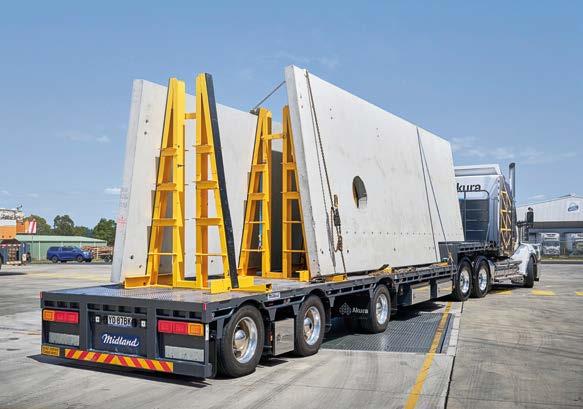
See the latest from Tu Trailers and Midland Industries.
26 Trailer builder
A & S Cuthel has found extreme value in its recent Trout River applications.
28 Braking technology
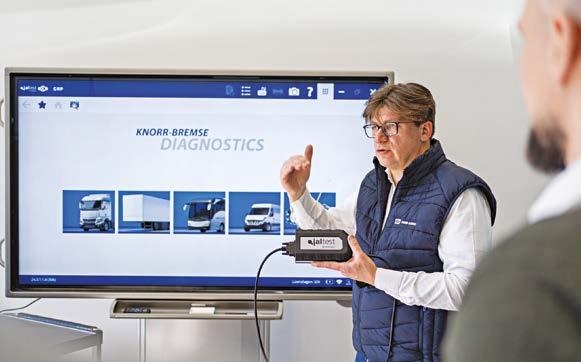
Knorr-Bremse Diagnostics delivers a range of practical benefits to users in the form of one user-friendly interface.
30 Tippers
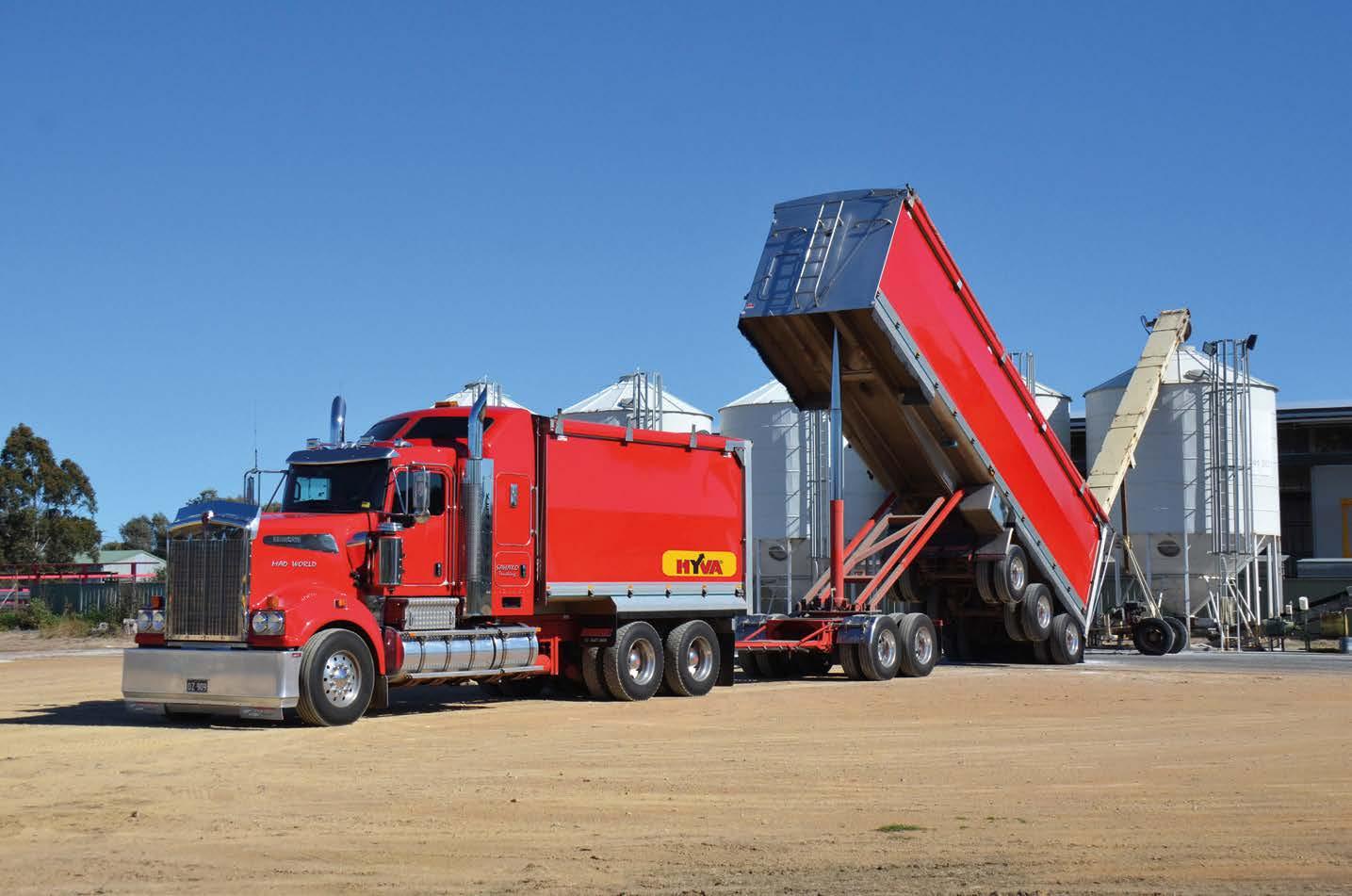
E-Plas QuickSilver truck linings are proven to keep highperforming tipper semi-trailers protected and productive.
32 Trailer building materials/components
A showcase of the products and services that keep trailers on the move.
36 SEMMA
SEMMA says the Government needs to acknowledge small and medium enterprise manufacturers.
39 VTA State Conference 2026
Highlights from this year’s VTA State Conference.
48 Special report
New data reveals the cost-of-living crisis and artificial intelligence is impacting consumer behaviour.
50 Infrastructure spotlight
What you need to know about Australia’s biggest road projects this month.
52 World map
Eight leading trailer OEMs have appealed to the European Court of Justice.
57 Fleet of the month
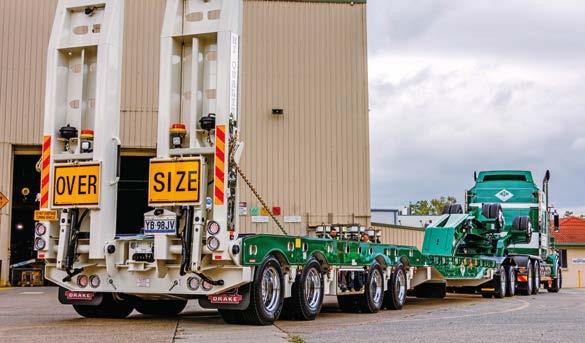
Hi-Quality Heavy Haulage has launched a new Drake Trailers combination into its interstate operations.
58 What’s on Upcoming shows and field days.
Hawk Logistics has launched a new Performance-Based Standards (PBS) A-double road train tanker combination into a contract for Allied Pinnacle and Arnott’s.
Measuring in at approximately 30 metres, the A-double includes two B trailers linked via a convertor dolly – a setup which enables higher payloads while maintaining compliance with PBS requirements.
The Jamieson combination was designed for high-capacity linehaul work and optimised for freight efficiency and stability over long distances.
Operating at Higher Mass Limits, the A-double tanker features a Gross Combination Mass (GCM) of 85.5 tonnes with the ability to achieve payloads of up to 53 tonnes (depending on freight type and load distribution).
Hawk Logistics National Operations Manager, Lavi Goyal, told Trailer the unit has significantly improved productivity compared to standard combinations within the fleet.
“This investment reflects a broader shift toward high-productivity freight solutions in Australia,” he said.
“By adopting A-double configurations, the business is aligning with industry trends focused on efficiency, safety and sustainability.
“It also positions Hawk Logistics as a forward-thinking operator capable of handling complex, high-volume logistics tasks.”
The road train has been deployed into a contract for Allied Pinnacle to transport
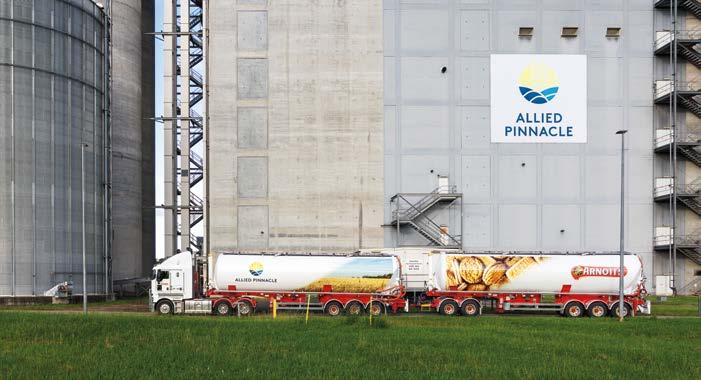
bulk and packaged goods into various Arnott’s sites across Australia.
It primarily operates throughout two key interstate corridors – Sydney to Brisbane and Brisbane to Sydney – via routes which involve high-volume, time-sensitive freight movements.
According to Goyal, the road train’s operational performance has been strong since deployment.
“The combination has delivered improved payload efficiency, reduced trips per volume moved and maintained reliability across long-distance routes,” he told Trailer
“Early indications suggest better fuel efficiency per tonne carried and strong driver acceptance due to stability and handling.”
The introduction of the PBS tanker
combination has also lowered costs per tonne transported, reduced fleet strain with fewer trips required and improved environmental outcomes by decreasing emissions per unit of freight.
Additionally, it has enhanced Hawk Logistics’ capability to secure and service large-scale contracts – therefore improving scheduling and supply chain reliability.
“This investment is focused on strengthening capability in heavy vehicle transport, particularly within linehaul operations,” Goyal told Trailer
“It supports ongoing growth in the business while also ensuring the ability to meet increasing demand from longstanding customers.
“Additionally, it reflects a broader strategy to improve efficiency, reduce cost per tonne moved and future-proof the fleet.”
Tasman Logistics Services has announced the opening of a new facility in Altona, Victoria.
After many successful years of operating from its longstanding headquarters in Laverton, Tasman Logistics Services has relocated and consolidated most of its Melbourne operations into a single integrated super site in Altona.
The move marks an important milestone in Tasman Logistics Services’ continued
growth and its commitment to continuous improvement and stronger client serviceability.
“Bringing our operations together under one roof enables better coordination across our teams and creates a more efficient operating environment for our customers and partners,” said Tasman Logistics Services.
“The consolidation allows us to streamline operations, improve responsiveness and strengthen service
delivery, while providing the infrastructure required to support Tasman’s continued growth across Australia.”
The new facility features single selective racking for efficient palletised storage and multiple loading docks to support high-volume freight movements.
It also includes a dedicated yard storage for bulk, container staging and operations as well as a modern office space that is now home to Tasman’s national headquarters.
Since 1946, Freighter has been forging strength into every trailer we manufacture. From humble beginnings pioneering trailer design in Australia to a position of advanced manufacturing leadership, our commitment to progress has never wavered. Our 80 year journey has been shaped by dedication to our customers and the Australian transport industry, driven by hard work and an enduring spirit of innovation.
Be part of the new era of trailer design. freighter.com.au

Freighter Group has welcomed back Michael Booker as Bulk Sales Manager.
Booker first joined Freighter Group in 2007 as Tipper Sales Specialist for Victoria and Tasmania and spent the next nine-anda-half years specialising in the company’s bulk product brands.
He departed from the business in 2016 to join Barker Trailers as Area Manager in Victoria where he would provide external sales of trailers and truck bodies to new and existing customers.
In November of 2019, Booker joined Bruce Rock Engineering and served as Sales Manager for more than six years.
He now returns to the same business he spent his first 10 years in the industry with 20 total years of experience.
“It feels great to be back, and Freighter Group has been very welcoming,” Booker told Trailer
“Returning to the place where I started my career, but seeing how much it has evolved is fantastic.”
Booker noted that the business he returned to is more capable than ever.
“Since I left, the investment has been massive, from the manufacturing upgrades in Ballarat to the state-of-the-art dealership in Brooklyn,” he told Trailer
“It truly feels ‘Ready’ to deliver on every level.”
In his new role, Booker will be responsible for providing specialised sales and support for the Hamelex White, Lusty EMS and Trout River product ranges across Victoria and Tasmania – brands which seamlessly service the infrastructure, agriculture, mining and waste segments.
“I’m very excited to reconnect with these brands,” he told Trailer
“I’m looking forward to meeting with customers and colleagues, both old and new, and supplying them with various tippers and live bottom trailers.”
Cleanaway has opened a $5 million container sorting facility in St Leonards which will provide critical infrastructure to support Tasmania’s ‘Recycle Rewards’ container refund scheme.
The multi-million-dollar investment is supported by joint venture partner, TOMRA Cleanaway, which runs the scheme’s statewide collection points.
The new facility will deliver on island sorting and processing capabilities to keep pace with the rapid growth in community participation in the scheme to help ensure every container
returned is processed efficiently.
“Tasmanians across the state have enthusiastically embraced Recycle Rewards, returning more than 100 million containers in just 11 months since May last year,” said TOMRA Cleanaway CEO, James Dorney.
“This new facility is where millions of returned containers will be sorted, processed and prepared for a second life by turning the state’s container waste into valuable resources.”
“This demonstrates the value that practical action can have in helping to create a cleaner, greener environment today as
well as a stronger circular economy for generations to come.”
Cleanaway CEO and Managing Director, Mark Schubert, said the company’s $5 million investment into the facility is a testament to its commitment to improving Tasmania’s on-island resource recovery capabilities and creating a circular economy.
“This facility will play a vital role in enabling Tasmania’s circular economy through working with our partners to ensure valuable resources are recovered and returned to the value chain,” he said.


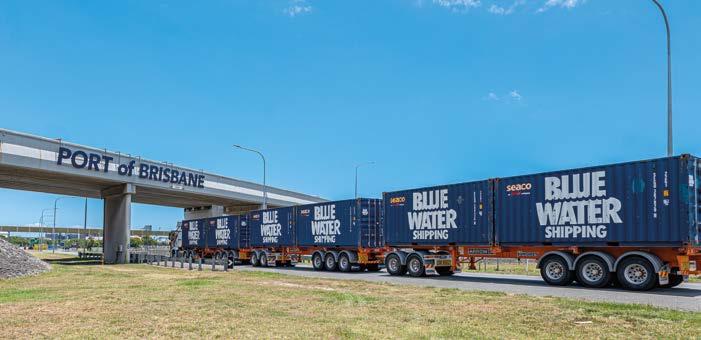
The Port of Brisbane has successfully trialled five new High Productivity Freight Vehicle (HPFV) combinations on Fisherman Islands.
Over the past 12 months, Port of Brisbane and the National Heavy Vehicle Regulator (NHVR) have facilitated successful on-road trials for transport operators including MEDLOG, South East Queensland Hauliers and Arrow Transport.
The new combinations are offering productivity increases of between 50 per cent to 100 per cent compared to other heavy vehicles’ container carrying capacity – delivering major benefits to operators.
The instrumented trials are being used to validate simulation studies and engineering assessments conducted by the NHVR, and assisting the regulator to evaluate the safe operation of the HPFVs and develop safety controls where necessary.
The following new HPFVs have been granted permits to operate on defined routes within Fisherman Islands, under strict safety and operational conditions:
• MEDLOG
• B-triple: increasing productivity of the Super B by 50 per cent carrying capacity, transporting empty containers between parks and depot.
• South East Queensland Hauliers
• Electric A-triple: a 50 per cent increase in productivity to the A-double carrying capacity, when carting empty containers between parks and depot
• Super A-double: a 100 per cent increase in productivity to the A-double carrying capacity, and a 33 per cent increase on the Super B, for four heavy grain containers between their depot and the terminals
• Heavy A-double: a 50 per cent increase in productivity to the A-double carrying capacity, for three heavy grain containers between their depot and the terminals.
• Arrow Transport
• A-triple: a 50 per cent increase in productivity to the A-double carrying capacity, for both laden and empty containers for its export customer.
These build on earlier HPFV innovations trialled and operating at the Port of Brisbane from Qube Logistics, who were the first to be issued a permit for its B-triple in 2020.
This was followed by the introduction of Qube’s Australian-first Super B-double double stacked container trailer and Super B-triple double stacked vehicle (both in 2023).
In 2023, ACFS Port Logistics deployed a Super B-triple combination on port roads.
Port of Brisbane CEO, Neil Stephens, said HPFVs are playing a growing role in moving freight within the port, improving efficiency while supporting sustainability.
“We’re pleased to support the safe introduction of new Higher Productivity Freight Vehicles by our customers at the Port of Brisbane,” he said.
“They help lift productivity while also responding to wider industry challenges such as driver shortages and sustainability priorities including emissions reduction.”
Port of Brisbane anticipates that as Queensland grows, so too will its freight task.
During financial year 2025, the port handled more than 1.6 million containers – with around 98 per cent of them transported by road.
“Our Vision 2060 research shows Queensland’s population is expected to grow from 5.5 million to 8.3 million by 2060, with container volumes tripling and freight movements increasing,” said Stephens.
“It’s essential we work together to manage the growing freight task in an efficient, sustainable and connected way.
“As Port Manager, we’re also focused on ensuring port roads can safely support these HPFVs and future logistics needs.
“Whether maintaining existing roads or building new ones, we’re investing to ensure port infrastructure is ready for the next generation of port logistics.”
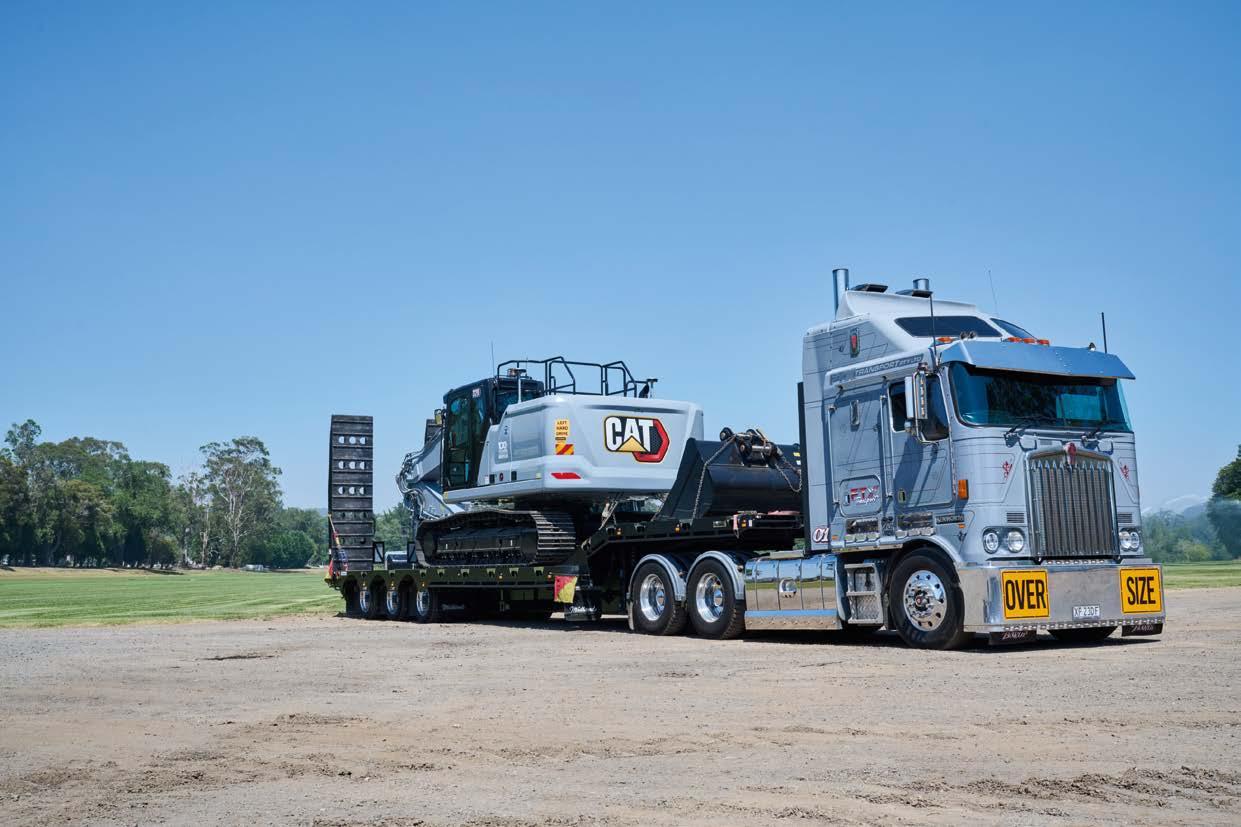
Norman Carriers has supported around 150 containerised merchandise shop movements for Motorsport Distributor Group over the past decade.
That level of consistency reflects a capability that is built on responsiveness,
accountability and experience under pressure.
“Their team consistently delivers on time while maintaining exceptional standards in project management, compliance and asset protection,” said
Motorsport Distributors Group Managing Director, George Nicolopoulos.
“That level of professionalism and reliability has been central to our success, and we value the partnership greatly.”

International freight company, Mondiale VGL, has appointed Michelle Shirton as Group Chief Information Officer.
Shirton brings more than 20 years’ experience in freight forwarding and logistics, with extensive expertise across large-scale technology transformation, supply chain optimisation, digital customer platforms, transport management systems, data security and analytics.
Her career has spanned the full breadth of international freight forwarding
operations – from technology and information systems through to customer service management.
“As Mondiale VGL continues to expand its international footprint and customer offering, the ongoing evolution and innovation of our technology platforms is critical to what comes next,” said Mondiale VGL Group CEO, Matthew Warrington.
“Michelle has the technical knowledge, operational depth, customer understanding and transformation track
record to lead that agenda at pace. We’re excited to have her join the team.”
For the past 24 years, Shirton has served Toll, most recently in the role of Head of Digital at Toll Global Forwarding.
“Toll has been so much more than a workplace, it’s where I’ve grown, been challenged, and built lifelong friendships,”
Shirton said in a statement.
“I’m deeply grateful to the many amazing leaders, colleagues, and friends who have been part of that journey.
“I’m incredibly proud and excited to share that I have been appointed Chief Information Officer at Mondiale VGL.
“I’m thrilled to be joining such a great organisation and am excited about building innovative digital solutions that continue to put customers at the centre of everything we do.”

The National Heavy Vehicle Regulator (NHVR) has announced the appointment of a new Chair and two new Board members.
Former South Australian minister, Patrick Conlon, will take the reigns as Chair through to 2028, with Duncan Gay stepping down after seven years at the helm.
Conlon has served on the NHVR board since 2022.
During his tenure as a SA minister, he held several critical portfolios including Transport, Industry, Police and Energy.
Transport Australia Chair, Aneetha de Silva, and former New South Wales Member of the Legislative Council, Michael Veitch, have also been appointed to the NHVR Board.
“Mr Conlon, Ms de Silva and Mr Veitch each bring significant experience and
leadership, and I look forward to working together to continue strengthening Australia’s heavy vehicle safety and regulatory framework,” said NHVR CEO, Nicole Rosie.
“I would also like to thank Mr Gay for his valuable commitment and dedication during his seven-year tenure as Chair of the NHVR.
“His stewardship has been critical in driving forward the NHVR agenda of regulatory reform for the Australian heavy vehicle industry.”
Conlon said the opportunity to serve as Chair and support the organisation’s ongoing work to improve safety, productivity and sustainability across the sector was a privilege.
“The heavy vehicle industry plays a vital role in keeping Australia moving,” he said. “I look forward to continuing to work
closely with the Board and the NHVR leadership team to deliver outcomes that matter for industry and the community.”
Gay said he wanted to thank the heavy vehicle industry, government partners and the dedicated team at the NHVR.
“The heavy vehicle sector plays a critical role in connecting communities, supporting businesses and strengthening our national economy,” he said.
“The collaboration between industry, jurisdictions and the regulator has been central to the progress we’ve achieved together.
“I warmly welcome our incoming Chair Mr Conlon and new board members Ms de Silva and Mr Veitch.
“The NHVR is well positioned for its next chapter, and I know it will continue to evolve and deliver value for industry and the community.”

Pacific National has opened a freight terminal in Kalgoorlie which marks a significant expansion of its rail network in regional Western Australia.
Fully integrated into the company’s national network, the terminal is designed to improve reliability and capacity for freight moving between
Perth, Kalgoorlie and the east coast.
Kalgoorlie, a major hub for mining and regional industry, is strategically important for both domestic supply chains and the transport of resources to export markets.
The terminal forms part of a broader trend of investment in regional rail
infrastructure, as operators respond to growing demand from mining, agriculture and logistics sectors.
By providing more resilient and reliable freight options, Pacific National is strengthening Western Australia’s supply chains while supporting economic growth in regional communities.
Fonterra’s head o ce in Auckland, New Zealand. Image: JHVEPhoto/stock. adobe.com.
Fonterra has completed the sale of its global consumer and associated business, Mainland Group, to Lactalis.
The sale comprises Fonterra’s global consumer business and consumer brands, excluding the consumer business in Greater China where Fonterra will continue to own the Anchor brand; the integrated foodservice and ingredients business in Oceania; the integrated foodservice business in Sri Lanka; and the Middle East and Africa foodservice business.
The sale was first approved by Fonterra’s farmer shareholders last October, with 88.47 per cent of the total farmer votes cast in favour of the divestment.
Fonterra Chairman, Peter McBride, said the completion is a significant milestone which sets the co-operative up for the future.
“With the divestment complete, Fonterra can return capital to its owners and focus on growing further through its core business as a New Zealand farmer-owned global B2B dairy provider,” he said.
As previously advised, Fonterra will return $3.2 billion NZD (approx. $2.7 billion AUD) of divestment proceeds to farmer shareholders and unit holders via a $2.00 NZD ($1.66 AUD) per share capital return.
“The completion of the sale also signals the start of our long-term partnership with Lactalis,” said Fonterra CEO, Miles Hurrell.
“Lactalis becomes one of our most significant Ingredients customers, as we continue to supply milk and other products to the divested businesses.
“Through our high performing ingredients and foodservice businesses, we sell innovative dairy products to customers globally under our NZMP and Anchor Food Professionals brands.
“We can now focus our resources, R&D spend and farmers’ capital on continuing to grow these businesses, which generate the greatest return for farmers’ milk.”


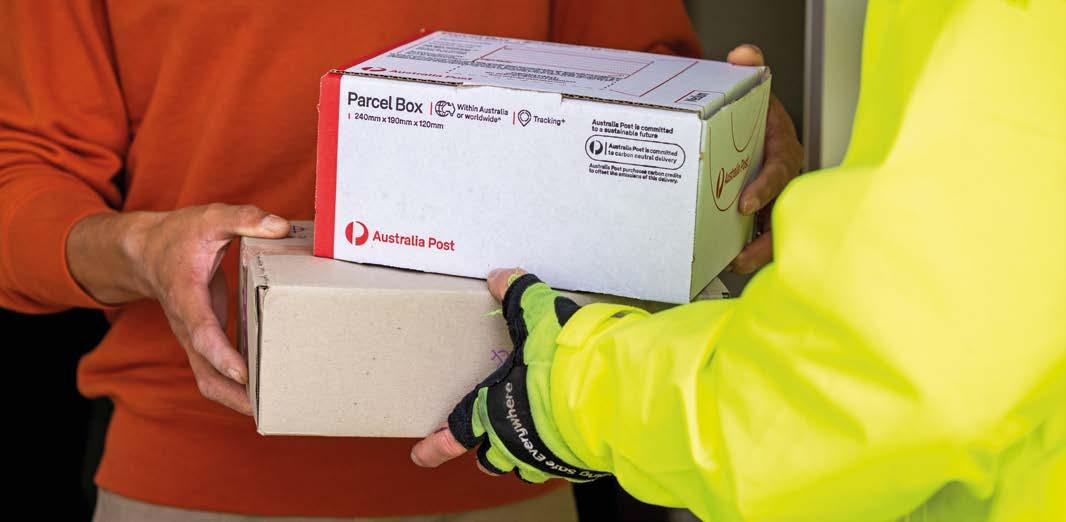
Australia Post has acquired last-mile delivery platform, Rendr, strengthening its technology capability to support faster, smarter and more flexible delivery solutions.
The investment aligns with Australia Post’s broader transformation agenda focused on modernising its technology, expanding digital capability and delivering more flexible, customer-centric solutions across its network.
It will allow Australia Post to offer customers same-day and on-demand delivery at greater scale, expanding same-day geographic coverage to almost 90 per cent of the population and enabling additional delivery windows in the evenings and across weekends.
Rendr’s technology intelligently connects merchants with the most suitable delivery partners in real time, based on factors such as location,
speed, service requirements and delivery windows.
As retailers and eCommerce businesses respond to rising expectations for speed, convenience and transparency, Australia Post is investing in scalable, data driven technology to help Australian businesses compete in an increasingly complex and fast-moving market.
Australia Post Executive General Manager Parcel, Post and eCommerce Services, Gary Starr, said the acquisition reflects Australia Post’s commitment to innovation and customer-led design.
“This investment is about giving Australian businesses the tools they need to compete with global mega marketplaces, particularly as customers increasingly expect faster delivery options like same-day or even three-hour delivery,” he said.
“The way Australians shop and receive
goods continues to change, and investing in technology like Rendr helps us innovate faster, offer smarter delivery options and build the capabilities we need for long-term success.
“It’s an important step in how we continue to deliver better outcomes for customers and businesses, now and into the future.”
Rendr will initially continue to operate as a standalone business.
Australia Post plans to scale this technology within its sending platforms, offering greater flexibility and choice to Australia Post customers.
“Rendr was built to help retailers offer faster, more flexible delivery without adding complexity to their operations,” said Rendr CEO, Sonney Roth.
“Being acquired by Australia Post gives that capability the scale, reach and network needed to support more businesses across the country.”
Thermo King National Training Instructor for Australia and New Zealand, Shane Thomas, is celebrating 30 years in the dealer network.
Thomas started with Thermo King as an apprentice in 1996, and has since built deep technical expertise across
refrigeration systems.
Since stepping into his national training role in 2010, he has played a key part in lifting technical capabilities and standards across the Thermo King dealer network.
“As a part of the TRS team, Shane continues to support technicians and
sales teams, sharing the knowledge and discipline that keep Thermo King and Thermaxx performing at their best,” said Transport Refrigeration Services.
“[It’s] a strong contribution to the industry and one we’re proud to recognise.”
Boral has announced the appointment of Matt McKenzie as CEO.
McKenzie, the former COO of Boral, succeeds Vik Bansal who joined the SGH Board as a Director.
McKenzie has served as COO since July 2025.
He was appointed as part of the planned succession process, and prior to that as Executive General Manager, Concrete and Quarries (South).
Before joining Boral, McKenzie held general management roles at Cleanaway and Oracle Utilities and spent 14 years at GE across a range of operational and executive positions.
SGH Managing Director and CEO, Ryan Stokes, said his deep familiarity with Boral’s operations, people and strategy will continuity of leadership and execution.
“Matt is the right leader for this next phase of Boral’s growth,” said Stokes.
“He knows this business deeply, has been
central to the operational momentum we have built, and has the experience and discipline to take it further.
“The Board has every confidence in his ability to continue delivering for our customers, employees and shareholders.”
Stokes also took the time to thank Bansal for his contributions to the business.
“He took over a business that needed fundamental change and delivered a stronger more focused performance orientated company,” said Stokes.
“He leaves Boral in an excellent position to continue delivering on its potential.”
Boral’s strategy and commercial direction will remain unchanged.
The business will continue to operate with a disciplined focus on safety, margin improvement, network optimisation and customer delivery.
McKenzie said he is honoured to take on the new role.
“The foundations Vik and the team have
Improve Diagnostic Coverage
Gain access to diagnostic functions for systems exclusively supported by Knorr‑Bremse Diagnostics, ensuring deeper insights and more accurate troubleshooting.
Next-Generation Compatibility
Built on a state of the art diagnostic platform, the hardware is compatible with ECUTalk and ACOM AE, ensuring seamless integration with your existing systems.
Flexible Software Access
A subscription‑based model gives you the freedom to choose the access level that best fits your operation.
Future-Ready Design
Engineered to support the next generation iTEBS X, providing long-term value and scalability for evolving fleet requirements.
For more information, contact us at cvs.aus@knorr-bremse.com or call 1300 309 991.
truck.knorr-bremse.com/en/au/
built are strong, and my focus is clear to continue improving safety performance, drive operational excellence across every site and deliver for our customers,” he said.
“I am looking forward to the work ahead.”

Port of Newcastle has delivered its strongest diversified trade performance on record.
More than 11.12 million tonnes of non-coal cargo passing through the Port in 2025 – surpassing the previous record of 10.13 million tonnes set in 2021.
The milestone was driven by a surge in key export commodities including wheat, along with growing volumes of project cargo supporting major renewable energy projects across New South Wales and beyond.
Port of Newcastle CEO, Craig Carmody, said the record result demonstrates both the strength of the Port’s diversification strategy and its expanding role in supporting Australia’s energy transition and agricultural supply chains.
“Surpassing 11.12 million tonnes of diversified trade in 2025 marks an important milestone for Port of Newcastle and reinforces our long-term commitment to broadening our trade base,” he said.
“These record volumes are more than numbers – they reflect the strength of our partnerships, the commitment of our workforce, and the progress we’re making towards a more diversified and sustainable future for our Port and our region.”
Wheat exports increased by 396 per cent year-on-year to reach 2.9 million tonnes, buoyed by favourable seasonal conditions across northern cropping regions.
Exports of meals and grain to destinations including the United Arab Emirates, Bangladesh, Japan, and Vietnam also grew 19 per cent on 2024 volumes to over one million tonnes.
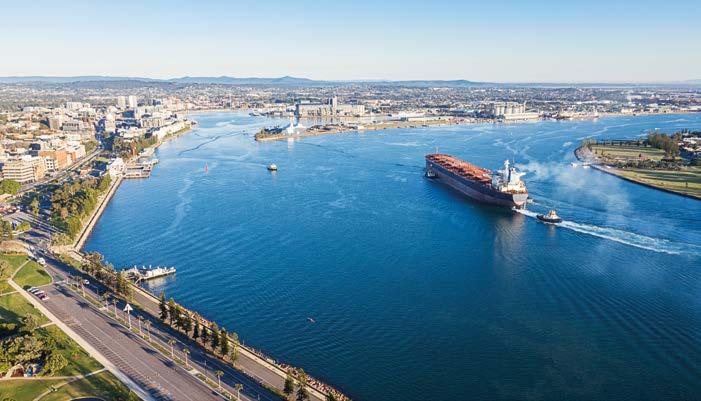
In total, Port of Newcastle handled more than 160 million tonnes of cargo, including more than 149 million tonnes in coal exports.
“Coal continues to underpin a significant portion of our trade, providing energy security to our global customers,” said Carmody.
“Change doesn’t happen overnight and as markets like Asia continue to diversify, we remain a critical energy export gateway.”
The Port recorded 2,340 vessel visits in 2025, including 574 non-coal and nine cruise vessels.
“What many people may not realise is that the Port handles 25 different cargo types, from aluminium, cement, and fuels to fertiliser, steel and project cargo, which are all helping to drive growth in diversified trade,” said Carmody.
Border Express has appointed Daniel Minichiello as Commercial Manager of Victoria.
Minichiello brings a strategic, team-first mindset to the business with a strong focus on delivering exceptional value to customers.
He has extensive experience in the transport and logistics sector, joining
Border Express following his position at Team Global Express where he served as Head of Strategic Sales.
Minichiello also previously spent four years at Australia Post as Enterprise Sales Director.
In a statement online, he said he is excited to help shape the next phase of Border Express’ journey with a clear focus
“We’ve seen particularly strong demand for the import and export of machinery and project cargo, with more than 431,000 tonnes moving through the Port in 2025.
“A major contributor to this was the arrival of wind turbine components for the Uungula Wind Farm within the CentralWest Orana Renewable Energy Zone.”
Carmody said the record results underline Port of Newcastle’s critical role as a key logistics hub supporting government and private renewable energy projects.
“The Port continues to evolve as a critical gateway for Australia’s energy future,” he said.
“Over the next decade, this will not only contribute to the Port’s ongoing diversification but play an essential role in powering the nation’s transformation to cleaner energy.” A
on growth, transformation, customer experience, people and innovation.
“It’s been wonderful working alongside such talented and passionate people, all united by our growth ambitions and dedication to delivering for our customers,” said Minichiello.
“I feel very fortunate to be part of such a supportive and motivated team.”
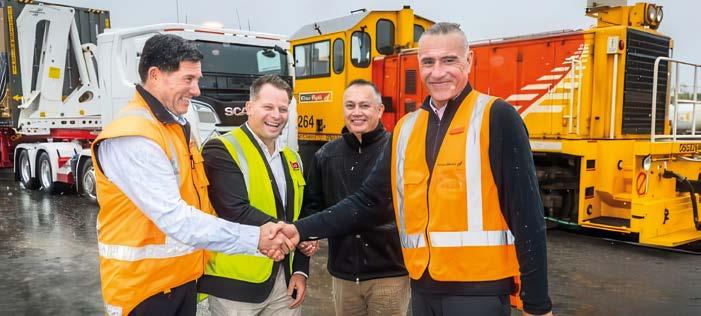
Symons Group is partnering with KiwiRail to launch a new regional freight hub in Taranaki, New Zealand.
Taranaki Connect will address additional freight costs that local exporters and importers have been carrying for years by making it easier and more cost-effective for Taranaki businesses to move freight via rail.
“Containers often arrive in the region full and leave empty or arrive empty and must be repositioned elsewhere before they can be used,” said Symons Group Managing Director, Dean Eggers.
“These inefficient ‘ghost movements’ add unnecessary cost to supply chains and place Taranaki businesses at a disadvantage compared to those based in larger centres such as Auckland, Tauranga or Wellington.”
Taranaki Connect was developed to address this longstanding challenge.
It features a local container exchange model which better matches import and export flows, reduces empty container repositioning and keeps freight equipment working within the region.
“We knew there had to be a smarter way to move freight,” said Eggers.
“Partnering with KiwiRail has allowed us to build a solution that delivers real,
measurable benefits for local businesses.”
Taranaki Connect will offer regular weekday rail services, with both full container load (FCL) and less-thancontainer load (LCL) consolidation options available.
KiwiRail will operate the service from its local container terminal, with Symons Group providing the critical road transport links to and from the terminal.
While road transport remains central to Symons Group’s operations, Eggers said the company is focused on supporting freight solutions that improve overall efficiency across the supply chain.
“Rail is a highly efficient option for
moving large volumes over longer distances,” he said.
“When it makes sense to use rail, it reduces pressure on roads, cuts duplication and lowers emissions across the total freight journey.”
Shifting freight by rail can result in significant carbon emission reductions, with rail producing on average around 60 per cent fewer emissions than moving the same volume by road.
According to Eggers, the launch of Taranaki Connect represents a practical, region-focused solution that supports economic resilience, efficiency and longterm growth for the Taranaki region.
Fonterra has released its results for the first half of financial year 2026 (1H26).
The co-operative demonstrated continued momentum by achieving a revenue of $13.9 billion NZD (approx. $11.55 billion AUD).
Total operating profit increased to $1.23 billion NZD ($1.02 billion AUD) from $1.11 billion NZD ($919.97 million AUD) the year prior.
Reported profit after tax was $750 million NZD ($623.37 million AUD).
Fonterra also delivered a return on capital of 11.2 per cent, up on this time last year and in line with the target range of 10 to 12 per cent.
“The first half of the year has been shaped by strong milk flows, with the co-op collecting record milk volumes in the South
Island so far this season,” said Fonterra CEO, Miles Hurrell.
“When combined with several adverse weather events, these conditions have put pressure on the operations of all New Zealand milk processors.
“We have been able to navigate through these challenges due to the resilience of our network.
“Our performance shows that we are growing the high-value parts of our business through optimal allocation of milk solids across our product mix, which is driving a strong return on capital for shareholders and unit holders.”
In addition, financial year 2026 saw significant progress made on the divestment of Fonterra’s global consumer
and associated businesses, Mainland Group, to Lactalis.
The transaction is unconditional and is expected to complete at the end of this month.
“Our focus now is firmly on our strategy to grow value for farmers as a global B2B dairy nutrition provider, working closely with customers through our high-performing ingredients and foodservice channels,” said Hurrell.
“The foundation of our co-op is our New Zealand milk supply.
“Fonterra has made it easier for new farmer suppliers to join the co-op and share up over time through changes to our shareholding requirements, with greater flexibility in the level of investment required.”
The South Australian Government has announced immediate changes to expand access for more efficient truck and trailer combinations, including 100 new network maps and increased payload capacity on key freight routes.
Cement Concrete & Aggregates
Australia (CCAA) has welcomed the SA Government’s fast-tracked heavy freight reforms, aimed at lifting productivity and lowering fuel consumption across the state’s transport network.
CCAA CEO, Michael Kilgariff, said the reforms highlight the impact of targeted adjustments to freight settings.
“These changes are about getting more out of the infrastructure we already have,” he said.
“Improving access to higher-productivity vehicles allows operators to move freight more efficiently, reducing fuel intensity and lowering operating costs across supply chains.”
Under the reforms, higher-capacity vehicles – including quad-axle trailer configurations for B-doubles – will be permitted, increasing payloads by up to 13 per cent and cutting fuel use by as much as 18 per tonne of freight.
Kilgariff said the changes would deliver practical benefits for industries reliant on

heavy materials transport.
“For the heavy construction materials sector, freight efficiency directly influences project costs, timelines and reliability of supply,” he said.
“Measures that improve payload capacity and network access help ensure materials can be delivered where they’re needed, when they’re needed.”
He added the reforms align with recommendations CCAA has been advancing at a national level.
“These reforms align with the practical measures CCAA put forward in our January submission to the NTC, focused on improving freight productivity while maintaining strong safety outcomes,” said Kilgariff.
CCAA noted the changes were developed in consultation with the National Heavy Vehicle Regulator and industry stakeholders, with safety a central consideration.
“This is a considered approach that balances productivity gains with safety and network capability,” said Kilgariff.
“It also reinforces the opportunity for other jurisdictions to adopt similar reforms that support more efficient freight movement nationwide.
“CCAA looks forward to working with governments on long-term reforms that improve productivity, support decarbonisation and reduce the cost of delivering essential construction materials.”
Supply chain operator, Primary Connect, delivers significant support to Foodbank Australia through its national transport network.
In 2025, Primary Connect team members assisted in sourcing more than 1.16 million kilograms of food, equating to over two million meals for Australians facing hardship. The effort highlights the growing importance of logistics in ensuring food relief reaches communities efficiently and at scale.
While food donations remain essential, the ability to move large volumes across vast distances is equally critical.
Primary Connect has spent more than two decades leveraging its transport
capabilities to support Foodbank, positioning itself as one of the organisation’s largest pro bono freight providers.
Using its national distribution network, the business ensures fresh and essential items are delivered to metropolitan, regional and remote areas alike – an ongoing challenge in a country as geographically dispersed as Australia.
The partnership also aligns with Woolworths Group’s newly launched 2030 Sustainability Plan, which includes a commitment to increase the number of meals donated to people in need by 50 per cent by the end of the decade. Transport efficiency and network scale
are expected to play a central role in achieving this target.
Primary Connect’s contribution forms part of a broader national effort, with Foodbank aiming to source 92 million meals this year to support Australians experiencing food insecurity.
The initiative underscores how freight operators are increasingly extending their role beyond commercial supply chains, applying their expertise to deliver meaningful social outcomes.
As demand for food relief continues to rise, the integration of logistics capability with charitable supply chains is set to remain a key driver in getting essential goods to those who need them most.
MLG Oz has secured a series of contract awards and extensions worth approximately $20 million in annual revenue, strengthening its position across Western Australia’s gold sector.
The agreements include a contract extension with Gruyere Mining Company, new mobile crushing works for Northern Star Resources and a civil construction project with Endurance Mining.
MLG has extended its road maintenance and site services contract at the Gruyere Gold Mine, located about 200 kilometres east of Laverton, under a five-year arrangement comprising a three-year term with two one-year options.
The extension is expected to deliver around $4 million in annual revenue and reflects the company’s established presence on site.
In a separate award, MLG will deliver mobile crushing services across multiple Northern Star operations, including Jundee, Bronzewing, Thunderbox, Carosue Dam, Kanowna Belle and South Kalgoorlie.
The contract expands an existing relationship and will see MLG supply and operate mobile crushing and screening plants with associated personnel on a campaign basis through to September 2028.
The company has also received a letter of intent from Endurance Mining for a civil construction project in WA.
The three-month project, scheduled to commence this month, is expected to generate approximately $6 million in revenue and includes earthworks, drainage, pipeline installation and access infrastructure.
MLG Oz Acting CEO, Mark Hatfield, said
the awards highlight MLG’s ability to grow long-term partnerships while diversifying its client base.
“We are fortunate to win this additional work with the calibre of companies such as Gold Fields, Northern Star and Endurance Mining, and further reflects MLG’s ability to build and maintain long-term, trusted relationships with its clients,” he said.
“The extension of services at Gruyere and expansion of our crushing and screening across Northern Star’s Yandal and Kalgoorlie production centres is a really important outcome for MLG.
“The awarding of a new civil construction project with Endurance Mining – our first with this company – extends our base of clients. We look forward to working alongside the Endurance team to support the development of their asset.”
Data from ARTSA-i’s latest market report suggests there is either a new baseline or temporary pause in new heavy vehicle registrations.
Data from ARTSA-i’s Q1 2026 heavy vehicle market report shows the cooling trend observed through 2025 is continuing this year – with new registrations for heavy trailers, prime movers and rigid all below their Q1 2025 result.
A total of 7,988 new vehicles were registered in Q1 2026, representing a 9.3 per cent decline on Q1 2025 and 22.9 per cent below the Q1 2024 peak.
The Q1 2026 result has effectively returned to levels seen in 2021-2022, suggesting the market is consolidating after an exceptional growth cycle.
Compared with the first quarter of 2025, prime mover registrations fell by 13.1 per cent to 1,440 units.
Heavy trailers were down by 5.7 per cent to 2,975 units, while rigids (heavy and medium) were down by 10.6 per cent to 3,573 units.
Head of ARTSA-i Data Analytics, Anthony Germanchev, said the key question for the remainder of 2026 is whether this moderation represents a new baseline or a temporary pause.
“The first quarter of the calendar year is
traditionally a slower period for new heavy vehicle registrations, with subsequent quarters typically outperforming,” he said.
“However, attention will be firmly on Q2, particularly given the potential impacts of emerging fuel supply issues.
“The performance of the next two quarters, particularly in the context of emerging fuel supply pressures, [is] likely to determine whether demand stabilises or recovers.”
The Q1 2026 data confirms the market has moved beyond the peak conditions of 2023-2024, with registrations easing further across prime movers, heavy trailers and rigids.
Following steady growth from 2020 to a peak in 2023 and sustained high levels in 2024, Germanchev said the Q1 2026 result places the market back within the range observed in 2021-2022 – indicating a return to more typical activity, rather than a sharp downturn.
Heavy trailers continue to dominate and drive the overall trend, with volumes easing from recent highs but remaining above pre2021 levels.
Prime movers and heavy rigids show a similar pullback, reflecting reduced fleet expansion.
Medium rigids remain stable, while heavy
buses continue a gradual recovery from a low base.
“Overall, the market is transitioning from an exceptional growth phase to a more sustainable level, with the next two quarters critical in determining whether this stabilisation holds or demand rebounds,” Germanchev reiterated.
A deeper look at heavy trailer registrations shows that the softening in Q1 2026 is being driven primarily by a pullback in semitrailers.
New semi-trailer registrations were down by 5.1 per cent compared with Q1 2025. They are now 28.2 per cent below the 2024 peak, highlighting the extent of the reset from recent highs.
According to ARTSA-i, this trend is broadly consistent across most trailer types.
Lead trailers were down 12.5 per cent, dollies 7.3 per cent and pig trailers 23.5 per cent from Q1 2025.
“It is worth noting that pig trailers represent the smallest segment by volume, meaning that while the percentage drop is significant, its overall impact on total trailer registrations is relatively limited,” Germanchev noted.
Dog trailers were the only major category to record growth, increasing by 6.4 per cent to 298 units.
MEDLOG is one of the largest shipping-related logistics providers in the
MEDLOG has signed on as a major tenant of the former Melbourne market site in West Melbourne.
MEDLOG, one of the world’s largest logistics companies, has been announced as the major tenant for the redevelopment of the former Melbourne Market site.
Partnering with the Port of Melbourne, MEDLOG will redevelop part of the 29-hectare site – enabling container storage next to the port, supporting more efficient freight movements and reducing truck trips through Melbourne’s inner west regions including Yarraville, Tottenham, Brooklyn and Seddon.
The transformation of the former Melbourne Market site is underpinned by approximately $500 million in private sector investment. It will be developed with industry to support Victoria’s growing freight task and unlock the location’s full potential through efficient land use.
The establishment of port functions at this site is expected to improve traffic movement in the area, with future uses
of the site including rail freight and intermodal activities for import and export containers, freight logistics and storage, empty container storage and a heavy vehicle facility.
By bringing container storage closer to the port, the project will reduce the need for trucks to travel across Melbourne’s inner west – cutting congestion and improving local roads. This builds on the benefits of the West Gate Tunnel and No-Truck Zones which have already taken thousands of trucks off residential streets and improved safety, air quality and noise for local communities.
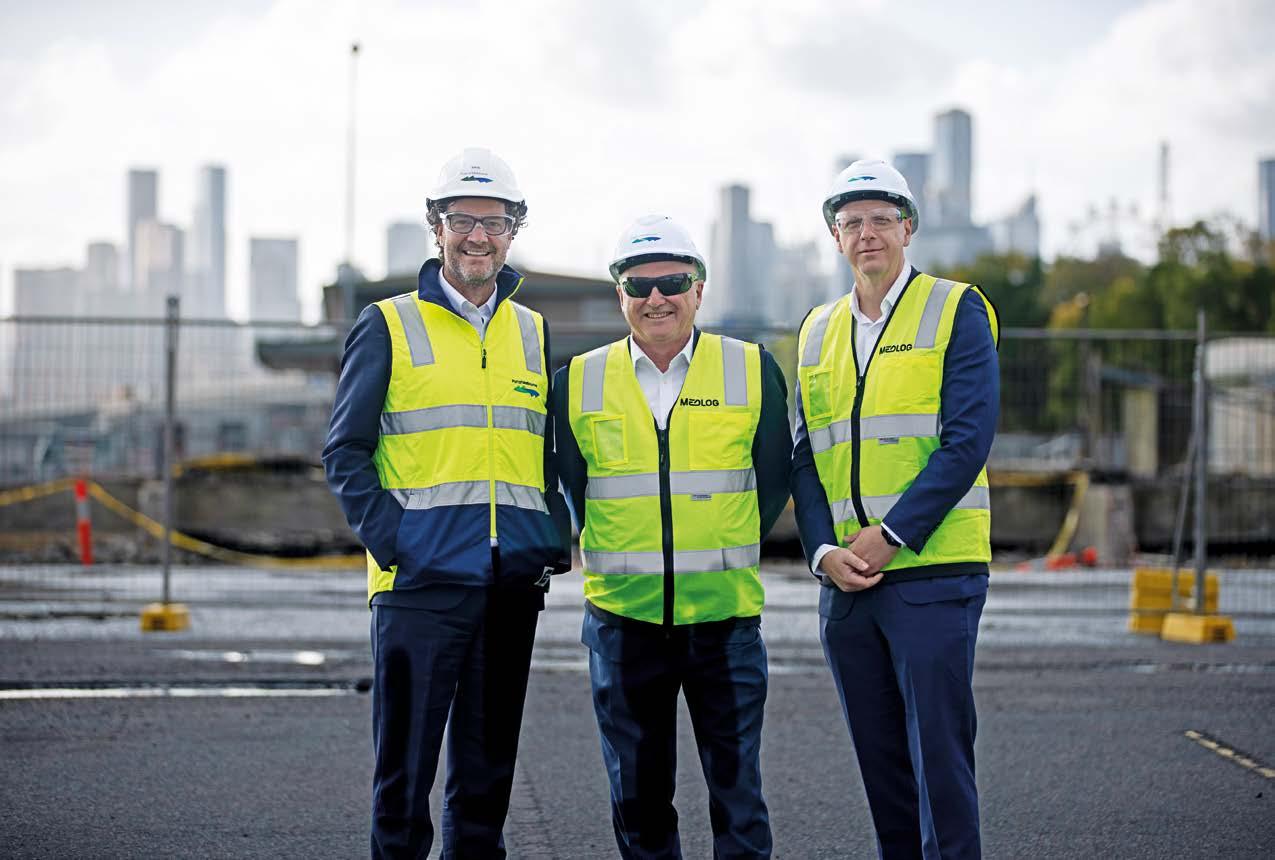
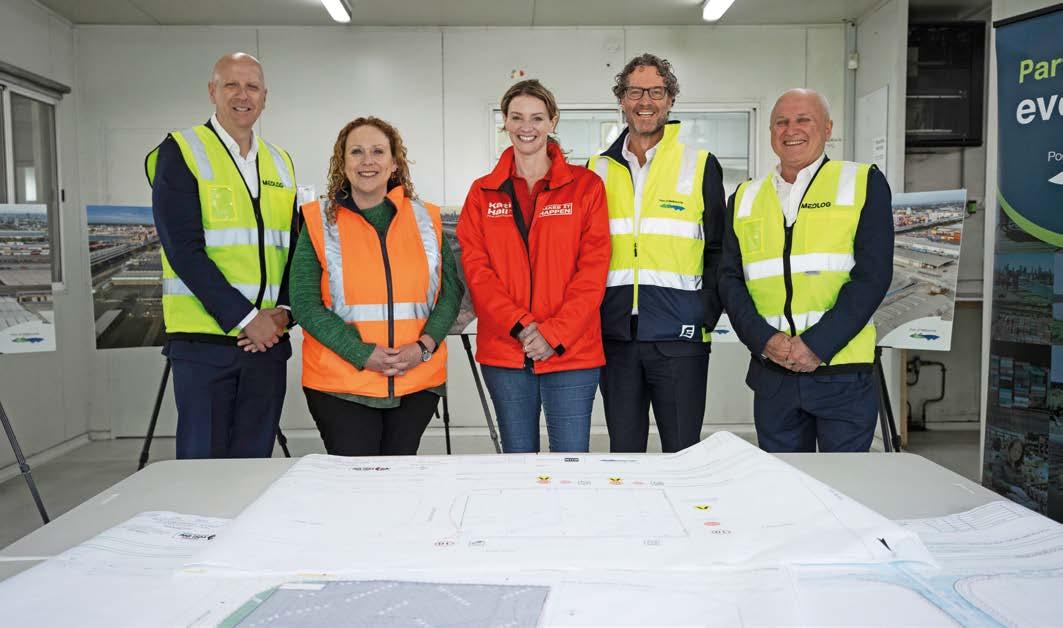
The announcement of MEDLOG as the major tenant was recently made alongside Victorian Minister for Roads & Road Safety and Ports & Freight, Melissa Horne, and Member for Footscray, Katie Hall, with Port of Melbourne CEO, Saul Cannon, MEDLOG CEO, Ned Zver, and Group
Managing Director, Mark Godfrey. Horne stressed the benefits the site’s development will provide to freight and logistics in Victoria.
“This is about keeping goods moving while taking pressure off local streets –cutting truck traffic, improving safety and strengthening Victoria’s supply chains,” she said. “By bringing freight closer to the port, we’re making the system more efficient and delivering real benefits for communities, the freight industry and businesses right across the state.”
Member for Footscray, Katie Hall, added: “This project will reduce truck movements on local roads and make a real difference for families in the inner west, with safer streets and better connections for our community.”
Operating globally across more than 80 countries, MEDLOG is one of the largest shipping-related logistics providers in
the world. The company brings global expertise in developing intermodal terminals, rail corridors, warehouses and empty container parks.
MEDLOG SA Chairman, Giuseppe Prudente, said the organisation’s decision to establish major operations at the site reflects both confidence in Victoria’s economic future and in Port of Melbourne’s central role in supporting national and international trade flows.
“This investment reflects MEDLOG’s long term commitment to building resilient, port connected infrastructure that supports global trade and local economies,” he said. “Our partnership with the Port of Melbourne is a natural extension of that strategy – aligning world class port capability with integrated inland logistics to move cargo more efficiently from ship to customer.”
Alongside MEDLOG’s development, Port of Melbourne is working closely with government, port users, industry stakeholders and potential tenants to consider additional uses that will support operational efficiency. This will ensure the precinct is developed in a way that delivers long term value for Victoria’s freight network and surrounding communities.
Cannon said Port of Melbourne is delighted to welcome MEDLOG as the major tenant of the project.
“With approximately $500 million in private investment planned across the whole precinct and a significant uplift in jobs and economic activity, this redevelopment is a strategic investment in Victoria’s future that will help deliver a stronger and more resilient supply chain for the state,” he said. “By bringing global leaders like MEDLOG to Melbourne, we are strengthening our state’s supply chain competitiveness and creating the conditions for more efficient, sustainable
growth across the entire freight network.”
Furthermore, the project has received recognition from the Victorian Transport Association (VTA). It was commended by VTA CEO, Peter Anderson, as a major win for transport.
“By utilising this site for freight activity, transport operators will benefit from reduced congestion, improved access and fewer avoidable delays that often lead to additional costs and compliance risks,” he said.
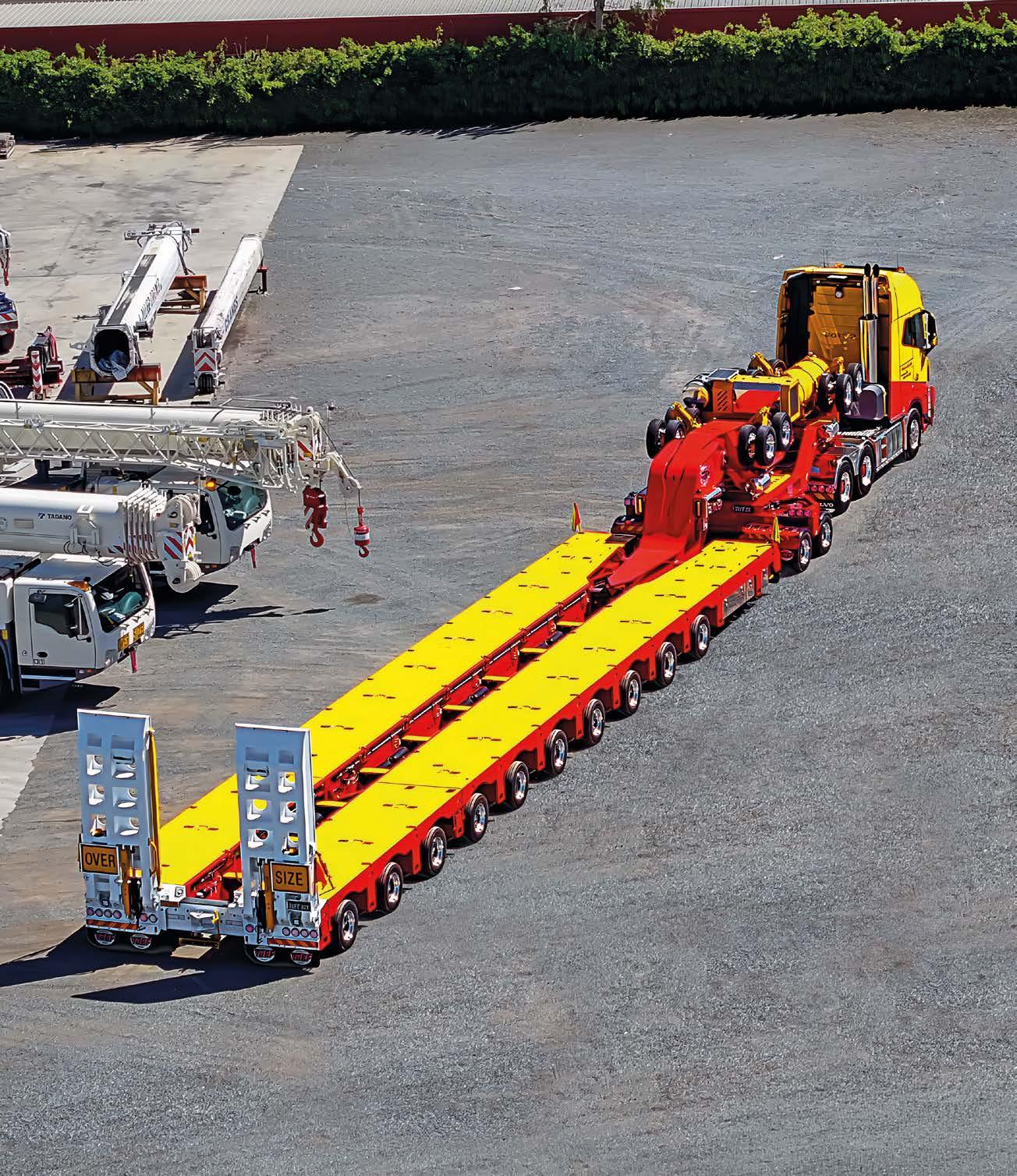
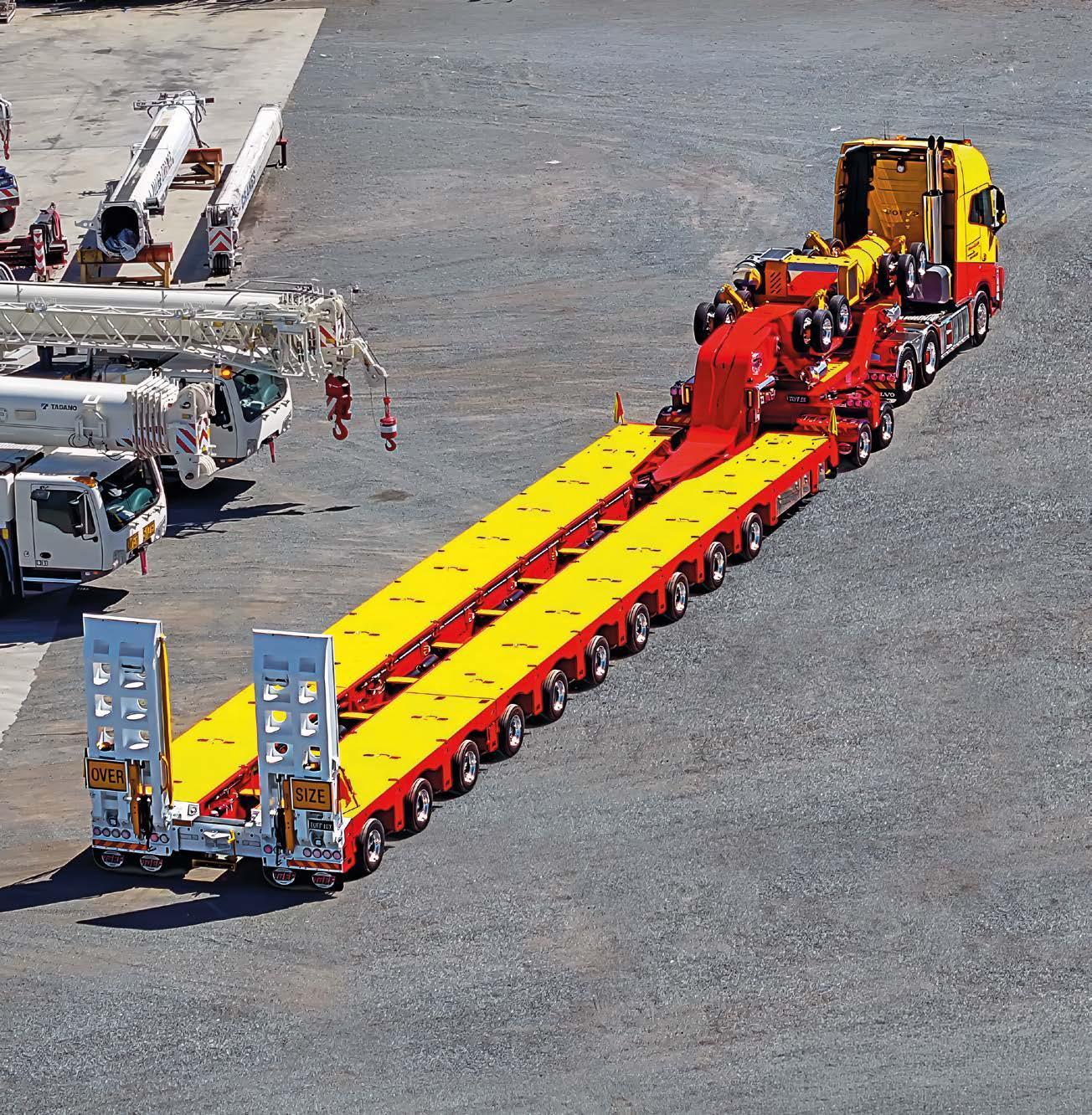
SureLift Crane Hire’s new Tuff Trailers 10x8 Steerable Platform has benefitted the fleet with considerable productivity and efficiency gains.
Transport is known as one of the toughest and most competitive industries to be a part of. While many do manage to enter, succeeding is another challenge altogether. But both were the case for Queensland-based SureLift Crane hire – despite industry headwinds, economic fluctuations and market challenges.
SureLift Crane Hire emerged 20 years prior to today under the helm of founder and Managing Director, Mark (Chopper) Read. Although the next two decades would prove to be challenging, the business would live to tell its tale.
Mark created SureLift Crane Hire in 2006 with just one crane. As the sole operator of the business, he navigated industry downturns such as the global financial crisis which arrived just two years later.
However, SureLift Crane Hire managed to grow significantly by expanding its fleet, team and capabilities. The company now stands as a reputable transport provider in Moranbah, Queensland, with a strong reputation based on service, reliability and the extensive experience of its
team members in the crane industry.
Reflecting on the years throughout SureLift Crane Hire’s history, Mark says this combination of trusted service and skilled personnel has been key to his business’ continual growth and long-term success.
“SureLift Crane Hire was founded on my reputation as an operator”, he says, “and I’m proud to say my team continues to uphold and carry forward the reputation of the company every day.”
A major milestone for SureLift Crane Hire in recent years was the delivery of a 450-tonne Tadano crane across Queensland from Brisbane to Roma. Three dedicated road trains were used to transport the unit efficiently in an operation which significantly expanded the company’s heavy lifting capabilities and brand awareness.
The second key achievement was the recent addition of a Tuff Trailers 10x8 Steerable Platform low loader coupled to a new Tuff Trailers 2x8 dolly. According to Mark, the new combination has enhanced SureLift Crane Hire’s transport and logistics capacity by allowing the business to cover a much larger range of projects and transport more varied loads with greater efficiency.
“ We have been able to take on a wider range of jobs, improve turnaround times and ultimately increase revenue potential,” he explains. “So, the new 10x8 Steerable
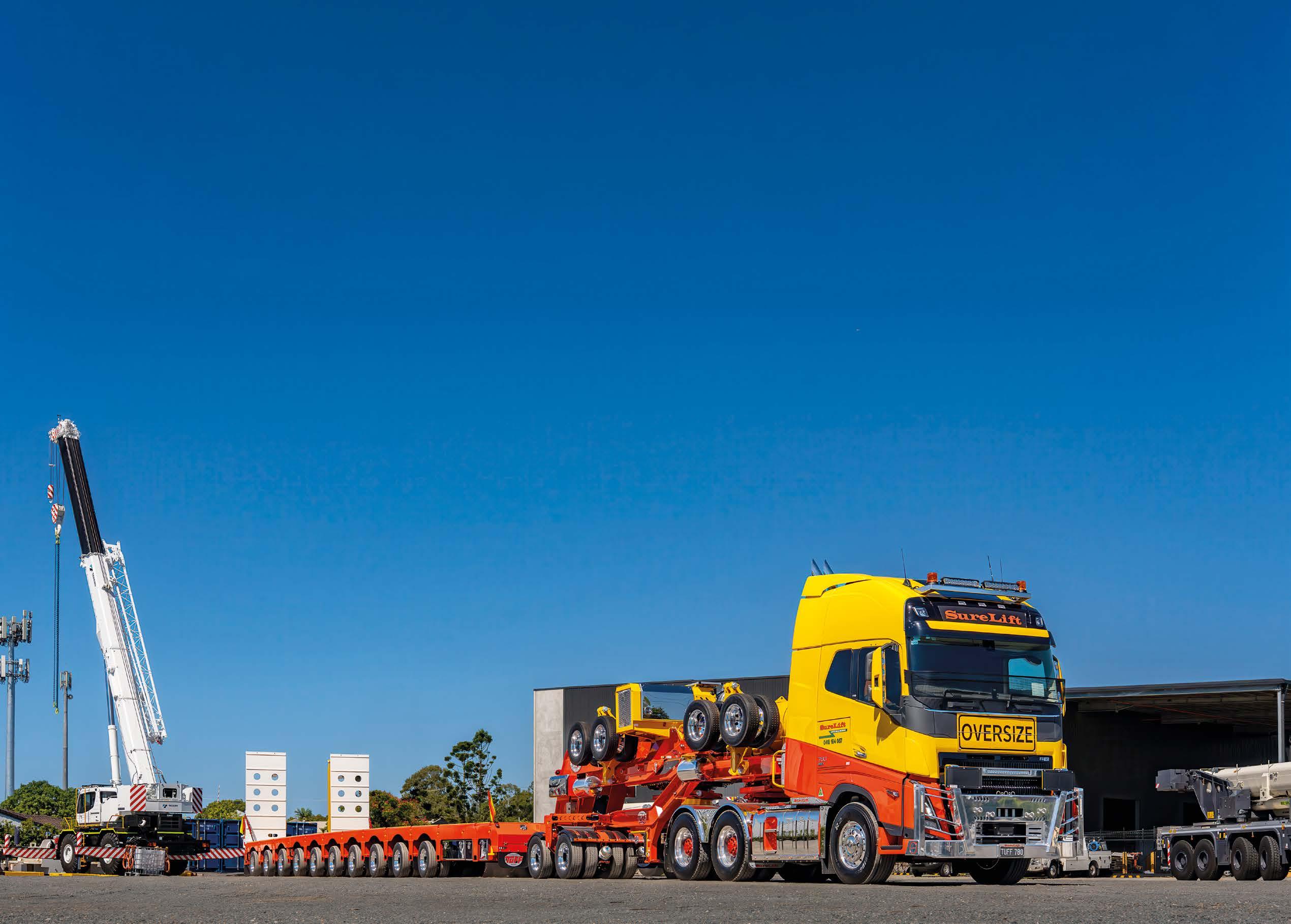
Platform marks a significant step forward for the business.”
This investment is part of the fleet’s ongoing commitment to growth and scaling its services. As more clients began relying on the business, it became clear to Mark that existing equipment needed to keep up with expectations around availability, efficiency and professionalism.
“We’re responding to that demand by ensuring we can handle jobs without delays, reduce downtime and provide a more dependable experience,” he says. “This is being achieved in partnership with Tuff Trailers.”
The partnership has accumulated a total of 41 Tuff Trailers combinations which have all been deployed across two subdivisions – a crane support fleet of 25 units and a general transport/heavy haulage fleet with 16. The former is made up of a series of specialised equipment configured for particular cranes. Each setup is tailored to suit individual crane requirements with features including carry counterweights, rigging components, overcentring retainers at ground level, Razor electric landing legs, Lucidity plug-and-play harnesses, RUD chains, nylon wear strips on all surfaces and more.
On the other hand, the general transport/ heavy haulage fleet was specifically designed to handle a wide variety of loads. Trailers such as Tilt ‘N’ Slide Wideners are used for recovery, containers and
self-loading/unloading while drop deck extendables, flat tops and low loaders are utilised to support auxiliary gear from large cranes that aren’t transported by the sister fleet. Mark says this distinction allows SureLift Crane Hire to operate efficiently in both spaces by delivering precise support while maintaining versatility.
The new Tuff Trailers Steerable Platform combination consists of a 7x8 platform trailer, 3x8 clip and 2x8 dolly. With the ability to be configured as a 7x8, 10x8 or 12x8 combination, or coupled to a 2x8 load share dolly, it gives SureLift Crane Hire extreme flexibility when it comes to varying freight tasks and carrying bulky or oversized items.
The overall length of the Volvo prime mover and Tuff Trailers 10x8 Steerable Platform combination is just under 30 metres, enabling night travel in Queensland and New South Wales when used as a 7x8. Specs include Lucidity plug-and-play harnesses, BPW Transpec axles fitted to TRIDEC/Tuff suspension and steering systems, low maintenance bearings which remove the need for auto greasers, a Knorr-Bremse Electronic Braking System (EBS), digital weight gauges, Tuff Trailers’ patented Ezy Lift Tyre Carriers and a spineless chassis for low deflection and high point loading.
SureLift Crane Hire’s new Tuff Trailers 10x8 Steerable Platform is being used to transport heavy mining equipment like new machinery being delivered to sites or existing equipment being moved for maintenance and repairs. It operates predominantly within Queensland, servicing
key routes and supporting local mining and industrial operations, and depending on client requirements can be equipped to travel anywhere across Australia.
Although the combination has just recently been delivered, Mark says the initial impressions are positive.
“The early signs indicate it is a strong addition to the fleet,” he says. “The setup appears well-suited to the demands of transporting heavy mining equipment so far, and it’s providing us with the stability, capacity and flexibility we need.”
This is no different to the performance of the other 40 Tuff Trailer builds powering SureLift Crane Hire.
“Tuff’s trailers perform very strongly in our operating conditions which are far more demanding than typical transport work,” Mark says. “Because we operate within the mining sector, our trailers are regularly exposed to off-highway environments including rough, uneven roads and harsh terrain.
“Durability is critical in these conditions, and our Tuff trailers have shown they’re built to handle it. The strength of the builds, quality of materials and overall designs allow them to withstand constant stress, heavy loads and challenging ground conditions without compromising performance.”
This reliability is a key reason why SureLift Crane Hire continues to invest in Tuff Trailers. The fleet is now gearing up
for its next delivery – a 4x4 Super Drop Low Loader Extendable Widener with a detachable gooseneck and 2x4 dolly.
“This combination will be a major upgrade in capability and will position us to handle even more specialised heavy haulage work,” Mark says. “It will give us the ability to take on larger, heavier and more complex loads while maintaining safety, efficiency and versatility.”
That specialised transport work is exactly what Tuff Trailers caters to. In Mark’s words, a combination of “innovation, adaptability and proven performance” is why he continues to invest in Tuff Trailers’ equipment.
“We choose Tuff Trailers because their innovation and versatility really stand out,” he says. “Their designs are engineered to adapt to the evolving demands of heavy haulage and crane support work.
“On top of that, their after-sales service, availability of spare parts and repair support are excellent. The ease of dealing with the Tuff Trailers team makes the whole process of ordering, customising and planning straightforward and stressfree.
“Investing in Tuff Trailers has made a big difference to our operations over the years. Whether it’s specialised setups or more versatile transport equipment, their equipment consistently meet our requirements and keep up with the type of work we do.”
Contact Tu Trailers
Ph: 07 3803 0232
Web: www.tu trailers.com.au
Midland Industries continues to expand while keeping customers and their individual requirements front and centre.
Operating out of Parkes, New South Wales, is Midland Industries, a distinctive trailer builder that has quickly emerged as a key player in the transport manufacturing industry.
Midland is a proudly Australian-owned and operated business specialising in the construction of open top trailers using Australian sourced steel and components. What makes it unique is a core focus of crafting custom solutions to meet the specific needs of end users.
“We’re not a massive sausage factory trying to manufacture a huge number of trailers,” says Midland National Sales Director, Roy Trimmer. “We want to be a nimble, family-orientated manufacturing business that can build solutions for our customers.”
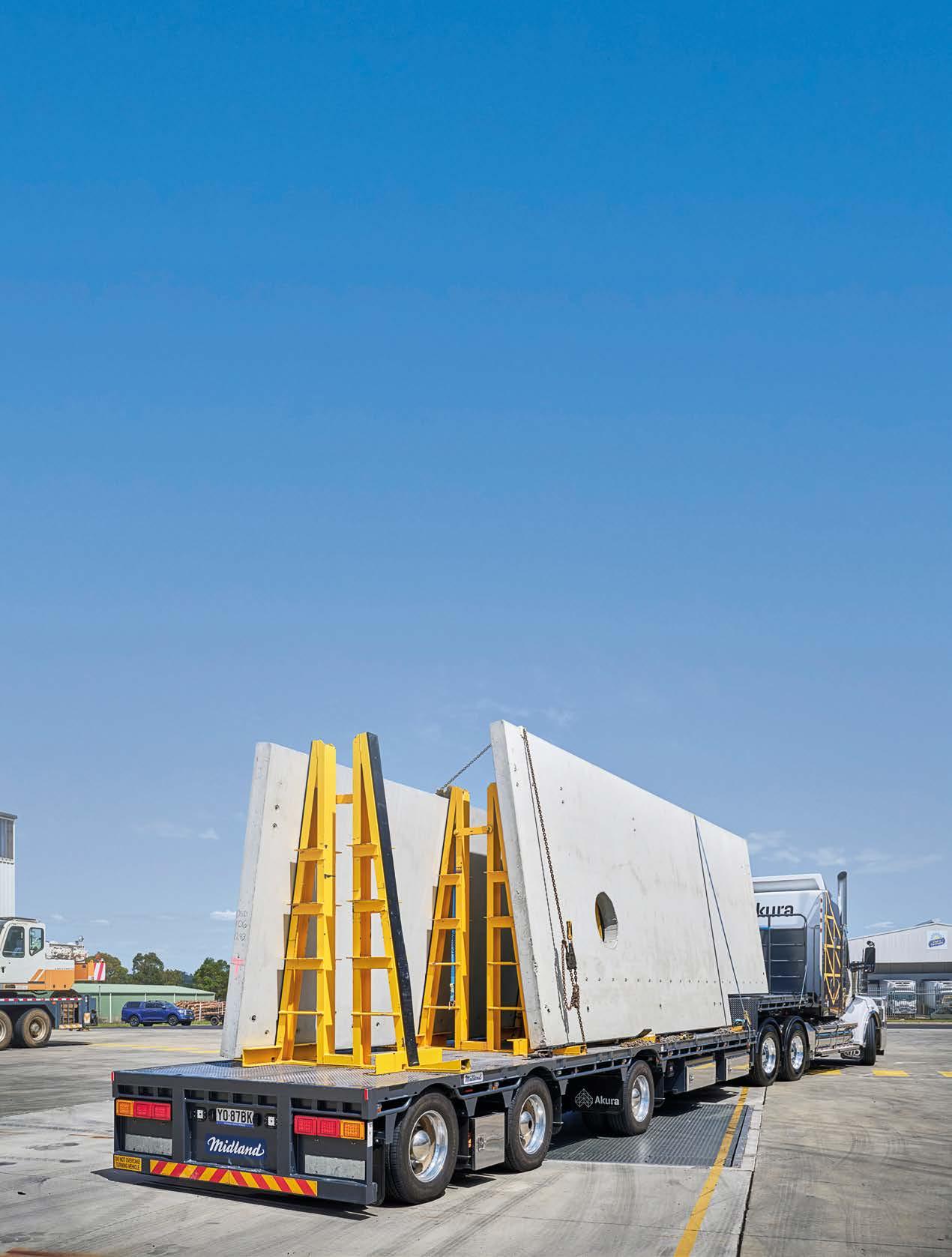
Midland is extremely committed to identifying customer requirements and then creating efficiency around them. Thinking outside of the box and coming up with out-of-the-ordinary innovations is what allows it to stand out, Roy says.
“We’ve got a team of experienced in-house engineers that work with our customers to achieve the best possible end result,” he explains. “Everything is 3D modelled in-house, and we do a lot of finite analysis testing to ensure our customers will be happy when they come to collect their trailers.”
Midland is also very heavily involved with Performance-Based Standards (PBS). The business prides itself for developing its own customised PBS calculator for route-based or load-specific scenarios
which has majorly benefitted customers.
Midland’s PBS calculator allows fleets and operators to compare their trailers with potential PBS combinations to identify the payload and efficiency gains they can make. The system considers current payloads, the number of units and dimensions such as height, width and length to come up with the most effective upgrade.
“We can run through each customer’s scenario with real data and then show them the options of how much more effective they could be,” Roy says.
“The calculator compares different combinations and then creates a visual which displays potential time savings as well as reductions in emissions, fuel and drivers.”
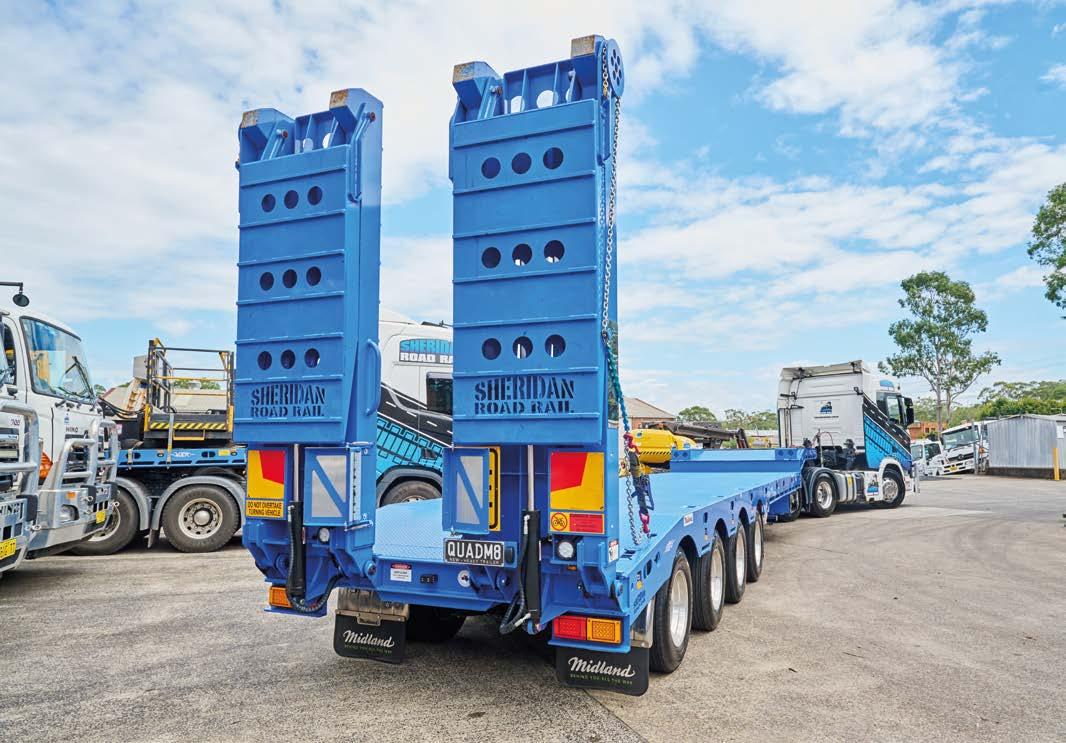
Within the field of PBS manufacturing, Midland has a portfolio of unique trailers that have been customised and tailored to suit individual fleet needs. A recent example is a B-triple for a major operator which, once fully commissioned, is expected to provide some serious benefits in operations along Mount Ousley in NSW.
“The B-triple will help one of the larger steel manufacturers in Australia move with more certainty,” Roy says. “They’ll get a massive payload increase compared to what they’re currently getting, and it will be a very safe and optimised unit once it’s on the road.”
Midland’s origins date back to 1996 when founders, Ben and Martin Larsen, made their own dolly to cart hay on their family farm in Billimari, NSW. It was after they moved to Parkes in 2003 and built a shed that the trailer manufacturing operation (now known as Midland) started to come together.
“Ben and Martin were farmers with their father, Harold,” Roy explains. “They were always interested in manufacturing and building equipment on their own property, so they got into trailers.”
Midland first manufactured a few Land Cruiser trailers and hay trailers before building its first ever semi-trailer for Blayney Shire Council. From that day on, the company would commit to manufacturing open top trailers such as low loaders, flat tops, skels, drop decks, tag trailers with ramps, ramp trailers and wideners with full customisability.
“The business has grown quite significantly since then,” Roy says. “We now have a head office in Parkes and a manufacturing facility in Kyneton, Victoria, with around 95 employees across both locations.”
Another key milestone for Midland has been its involvement with the Snowy Hydro 2.0 project. The business was chosen by Transport for NSW and the National Heavy Vehicle Regulator (NHVR) to manufacture a fleet of trailers for the project – a monumental achievement which put the Midland name on the map.
“We built 14 B-triples to cart all of the tunnel segments onsite,” Roy says. “We worked closely with the PBS certifier and engineer to come up with the design, and it was a whole trailer and load restraint-
certified package that we delivered for the project.”
Roy says the Snowy Hydro 2.0 project has significantly contributed to Midland’s success by leading to several other projects within the tunnel industry.
“Being an engineer-led company, we can truly imagine and deliver as we like to put it,” he says.
As Midland continues to grow within the tunnel project space and its own manufacturing, a customer-centric focus is what will power the business into the future.
“We’re continuing to grow,” Roy says.
“There are a few other tunnel projects which we’re following pretty closely, but we’ll always remain committed to serving our customers and the industries they serve. For us, it’s about optimising their fleets so that they can make more money and move with more certainty.”
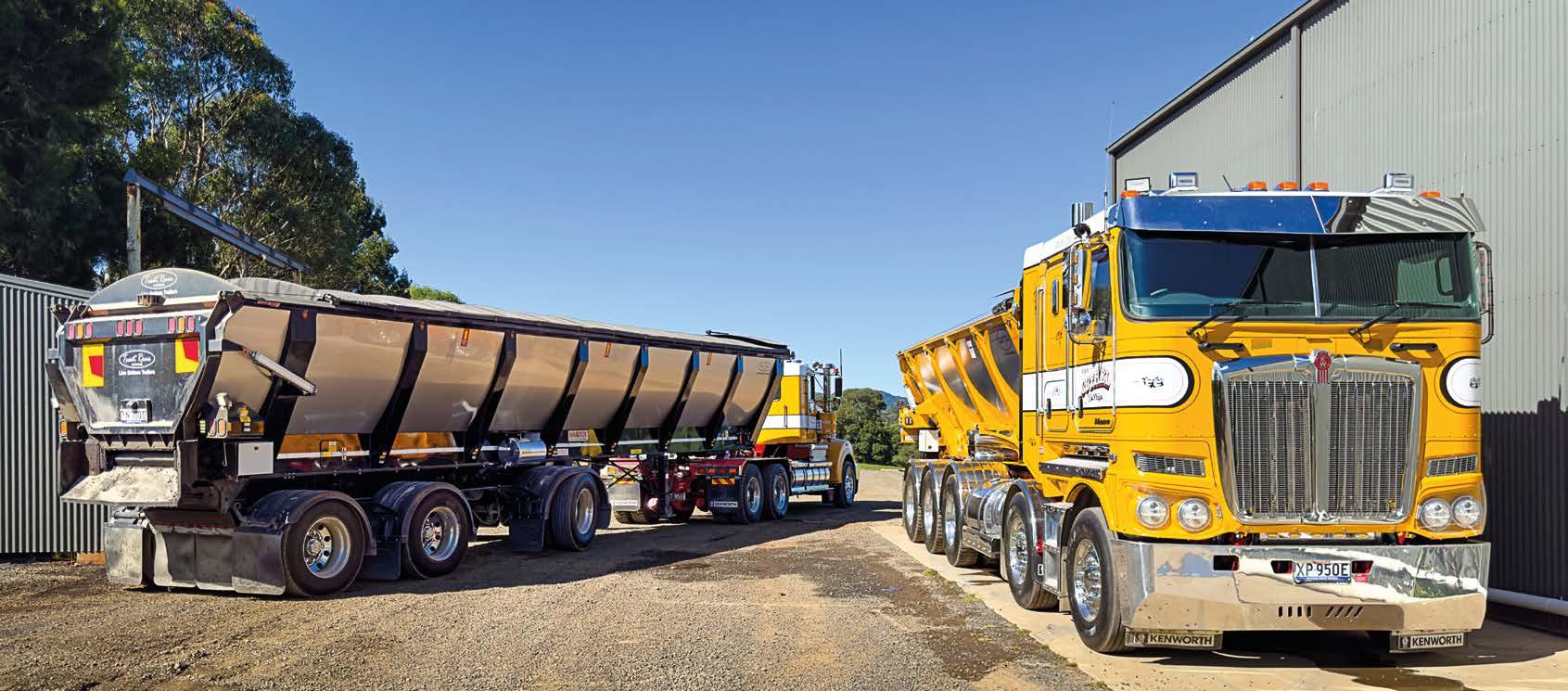
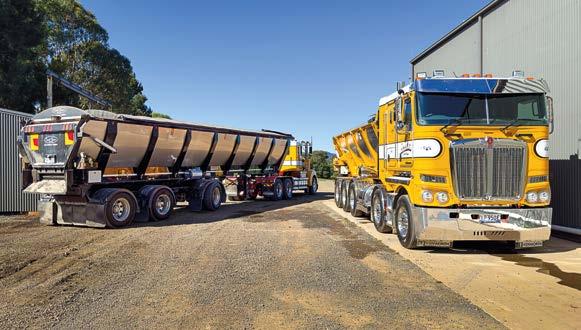
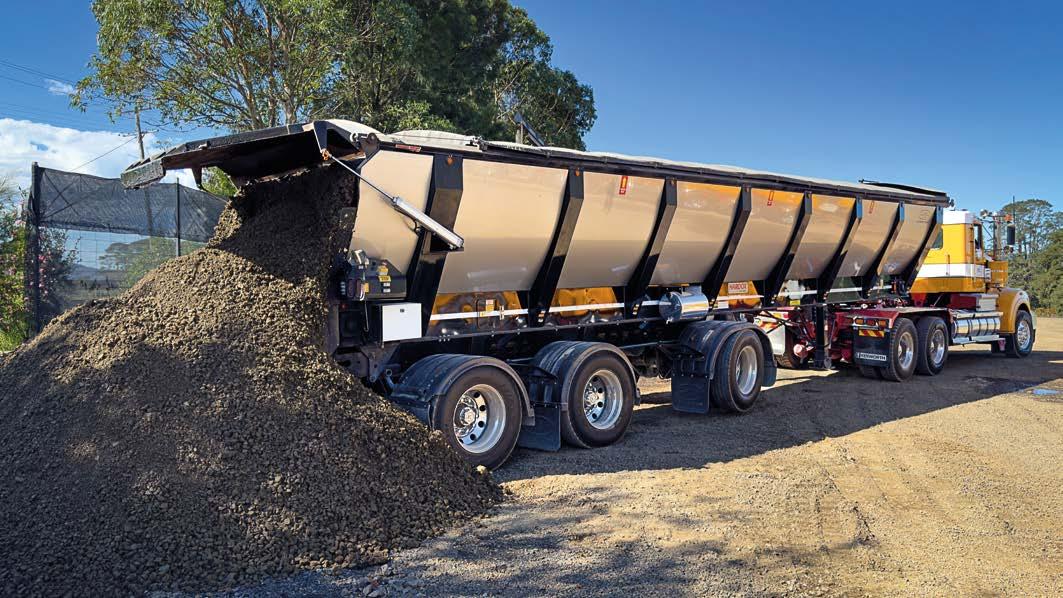
A & S Cuthel has found extreme value in its recent Trout River Live Bottom applications from Freighter Group – successfully bridging the gap between high payload and improved site safety.
Based in Dorrigo, New South Wales, A & S Cuthel is a family-run operation with deep roots in regional transport. Established in 1998 with a single truck hauling grain to dairy farmers, the business has steadily expanded into a nine-truck fleet supporting forestry, quarry and civil works, including major infrastructure projects like the Coffs Harbour Bypass.
At the centre of its evolution is a willingness to rethink traditional trailer configurations which is something that led the company to become an early adopter of live bottom trailer technology in Australia.
“We started looking at it after Dad went to America in 2015 and saw how widely they were used over there,” says A & S Cuthel General Manager, Blake Cuthel. “With the kind of work we do – uneven surfaces, forestry, national parks – it made a lot of sense.”
That insight eventually lead to a milestone build. In 2020, A & S Cuthel worked with Freighter Group to develop what would become the OEM’s first split tri Trout River Live Bottom semi-trailer. The concept was simple but ambitious: match the payload and versatility of a truck-and-dog
combination while improving safety and efficiency.
“We wanted that extra payload without going down the truck and dog path,” Blake says. “At the same time, we were looking for something safer and more flexible.”
The result is a combination that delivers a 30-tonne payload while eliminating many of the operational challenges associated with conventional tipper setups. Unlike a truckand-dog, the split tri configuration removes the need for complex manoeuvring, decoupling and re-hooking.
“With split tris, you’re not trying to jackknife a dog trailer or deal with a dolly lock,” Blake says. “You can back it in straight, get the job done and get out. It just takes away a lot of the risk.”
Safety was a key driver from the outset. Live bottom trailers, which unload via a conveyor system rather than tipping, significantly reduce the risk of rollovers particularly on uneven or unstable ground.
“You’re not running a tipper body up in the air,” Blake says. “That eliminates a big risk factor. With site requirements becoming more stringent, I can see live bottoms becoming the preferred choice for complex
or uneven worksites over the next decade.
“We’re trying to get on the front foot. By the time the industry shifts, we want to already be there with equipment that’s proven and paid off.”
Productivity gains have reinforced that strategy. The Trout River Live Bottom trailer enables rapid unloading (up to 30 tonnes in around two-and-a-half minutes) while also improving access in tight or awkward sites.
“If you’re working in a concrete yard or somewhere tight, you can get these in at all sorts of angles,” Blake says. “You don’t need to unhook or reposition like you would with a dog trailer. It’s quicker, and that often means an extra load in a day.”
That efficiency has translated directly into operational performance. The original split tri has now been in service for around five years, working across infrastructure, quarry and forestry applications without issue.
“I can’t fault it,” Blake says. “It hasn’t given us any grief at all. It’s been a really good trailer.”
The combination’s versatility has also been a standout feature. With a range of interchangeable attachments, including side chutes, spreader boxes and side
conveyors, the trailer can be adapted to suit a wide variety of tasks.
“You’re not locked into one job,” Blake says. “That’s a big advantage. You can open up your work and take on different types of contracts.”
That flexibility was a major factor in choosing Freighter Group as a partner for the build.
“Freighter Group were very helpful from the start,” Blake says. “We wanted to do something different, and they were keen
to be part of it and make it happen.”
According to Freighter Group Key Accounts Sales Manager, Adam Perri, the project represented a significant step forward for both the manufacturer and customer.
“The first Trout River A & S Cuthel acquired was the first Live Bottom split tri combination that we ever built,” he says. “It wasn’t just about building a trailer, it was about engineering a first-of-its-kind solution for a specific regional challenge.”
That collaborative approach has continued with A & S Cuthel’s latest investment – a rigid Trout River body mounted to a Kenworth K220. Built in conjunction with Brown and Hurley in Coffs Harbour, the unit was designed to complement the existing fleet while enabling new operational opportunities.
“We wanted to move away from the semi-trailer perspective for certain jobs,” Blake says. “The rigid gives us another way to carry weight and approach the market differently.”
Like its predecessor, the new Trout River unit was delivered as a turnkey solution.
“We left it up to Freighter Group,” Blake says. “We gave them the truck details and they handled everything. There were no issues at all.”
Having been on the road for just a couple of months, the Trout River rigid has already integrated smoothly into
the fleet. Blake says it is supporting both contracted and local work to a significant level.
“Our new Trout River really stands out in our operations,” he says. “It does everything we need it to do and more.
The unit has made our operations much more efficient by giving us quicker turnaround times, so it definitely speeds things up compared to a dog trailer.”
Together, the two units highlight the scalability of the Trout River concept, from high-capacity semi combinations through to more agile rigid applications.
In the meantime, A & S Cuthel is already considering its next move.
“I’d like to build an eight-wheeler in a couple of years, or maybe another 10-wheeler,” Blake says.
It is a sign that what began as a forwardthinking experiment has become a core part of the business’s long-term strategy.
For Freighter Group, the success of that first split tri build underscores the value of working closely with customers willing to challenge convention. As for A & S Cuthel, it reinforces an effective mindset – invest early, prove it in the field and stay ahead of where the industry is heading.
Contact Freighter Group
Ph: 03 5339 0300
Web: www.freighter.com.au
Knorr-Bremse Diagnostics
delivers a range of practical benefits to users by ensuring fleet reliability and increasing repair efficiency.
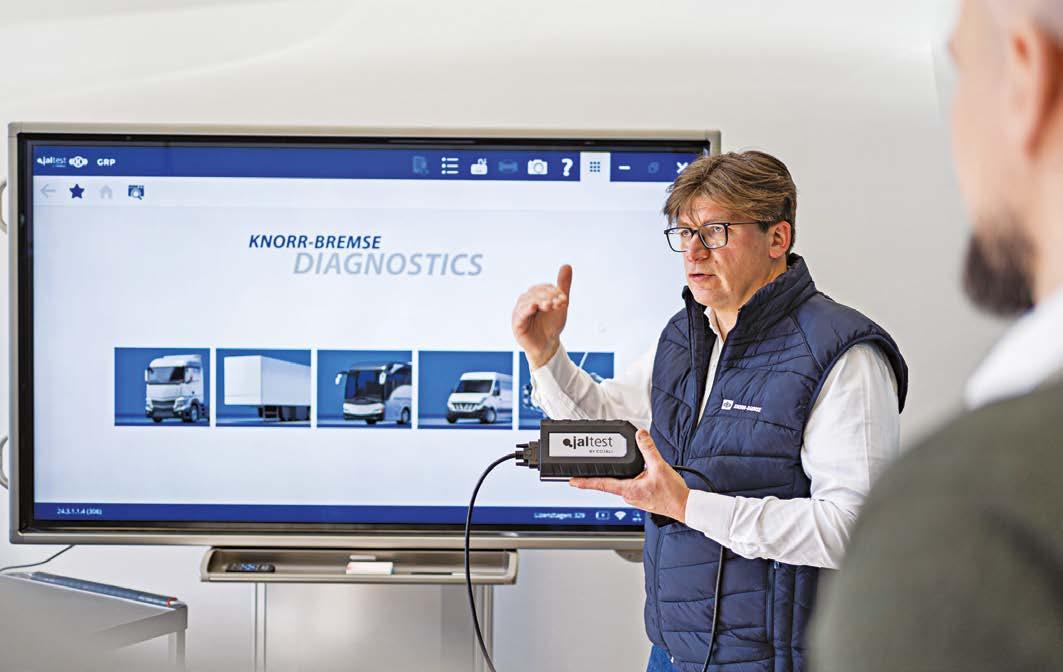
Gone are the days of lingering technical issues across trailer fleets. Knorr-Bremse Diagnostics, an advanced platform for Australian fleets and workshops, is the resolution when it comes to monitoring trailer performance and identifying problems before they escalate further.
Knorr Bremse’s new diagnostic environment was designed to meet the latest cybersecurity and Software Update Management System (SUMS) regulations in Europe which impose stricter requirements on OEMs and workshops when modifying or updating electronic components. Developed in partnership with marketleading provider of diagnostics tools for the commercial vehicles sector, Cojali, it is based on the user interface and workflow concept of Jaltest Diagnostics – a software that has already proven its worth.
“Knorr-Bremse Diagnostics plays a
critical role in assisting servicing and repairs by enabling fast and accurate fault identification,” says Knorr-Bremse Australia Product and Marketing Manager, Andrea Limmer. “Technicians can quickly pinpoint issues and take targeted action.”
Knorr-Bremse’s platform combats the misconceptions often associated with diagnostics by offering modular, application-specific solutions that can be tailored to different fleet and workshop requirements. Rather than a one-size-fitsall approach, customers can select the level of capability they need and expand as their operations evolve.
“A common misconception is that trailer diagnostics require a large, all-in-one investment,” Andrea adds. “In reality, solutions are modular. Fleets can choose anything from trailer-only diagnostics to more comprehensive setups, depending
on their needs. This flexibility makes trailer diagnostics far more accessible and scalable than often assumed.”
Knorr-Bremse Diagnostics is offered as a subscription service and can be obtained in two variants: Knorr-Bremse Diagnostics Add-on, which is used to enhance existing installations of the multi-brand Jaltest Diagnostics software with original KnorrBremse specified diagnostics functions and authored content; and Knorr-Bremse Diagnostics as a standalone version, which is relevant for customers who need only a solution for diagnosis of KnorrBremse systems.
The platform provides a number of key benefits to end users. Firstly, it can improve diagnosis coverage by using functions for systems that are exclusively supported by the software. It also ensures reliable repairs by taking advantage of
Knorr-Bremse’s system know-how and technical expertise, while reducing repair times by using one tool for both truck and trailer diagnostics. Additionally, it requires less training to onboard users who are already familiar with the Jaltest Diagnostics software and acts as one solution for the diagnosis of trailer, truck and bus systems.
“Knorr-Bremse Diagnostics empowers fleets to perform in-house diagnostics, giving teams the tools and insights to address issues quickly,” Andrea says. “It also provides them with access to technical information and regular updates.”
Users can also use Knorr-Bremse Diagnostics to diagnose the new generation of Knorr-Bremse iTEBS X for trailers which will be launched in the Australian market later this year. Furthermore, Knorr-Bremse Diagnostics integrates with the new Online Configuration Tool (OCT) – a cloud-based configuration platform which makes it possible to carry out parameter modifications and control unit replacements in compliance with the latest cybersecurity and SUMS legislations in force.
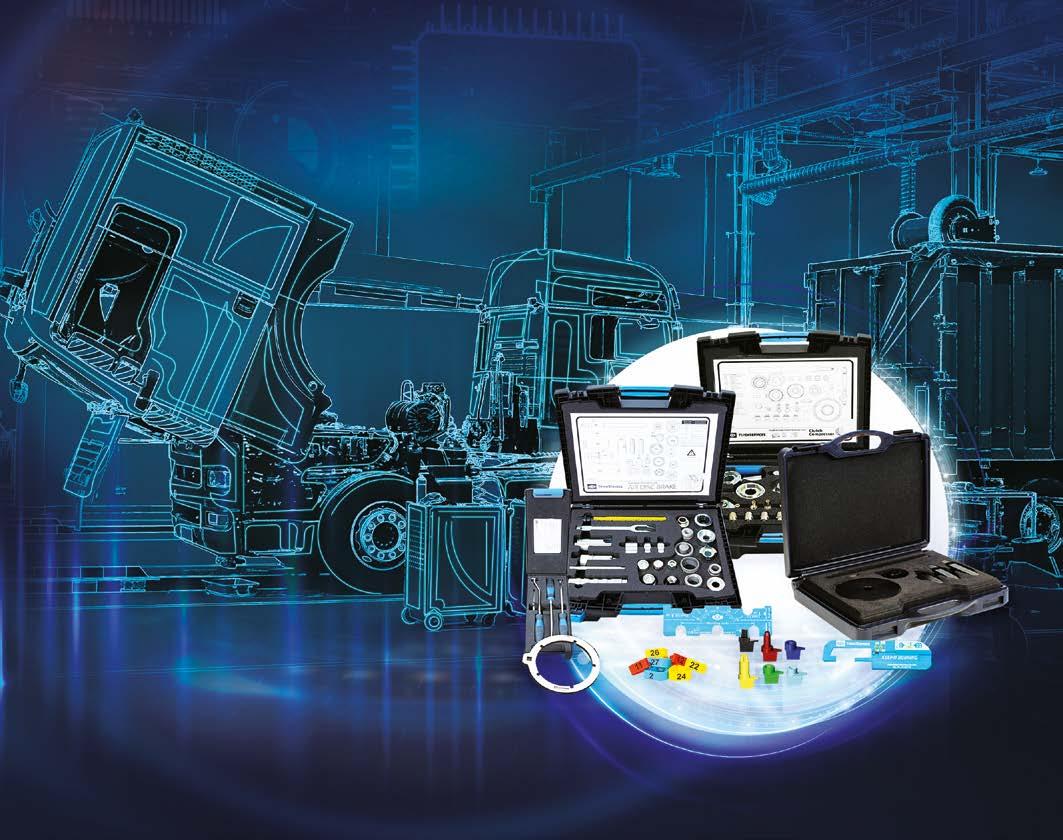
For trailer servicing, Knorr-Bremse Diagnostics primarily correlates with special and auxiliary tools from the OEM that support maintenance of Trailer Electronic Braking Systems (TEBS), brake actuators, air disc brakes and related components. Knorr-Bremse’s workshop tools are an extensive portfolio
designed to support the aftermarket and repair process.
Made up of solutions inspired by the market and developed in cooperation with leading companies, they cover a whole range of products such as the Trailer EBS Modules Tool Kit, Air Disc Brake Tool Kit, Release Tool Kit for Raufoss couplings, Brake Disc Measuring Gauge, Clutch Compressor Tool Kit, Special Bayonet Ring Cartridge Tool, Adjustor Indicator Tool Kit, pipe markers and so much more.
“The TruckServices specialised tool for TEBS modules is a reliable helper in the workshop, and makes every day work simpler, more efficient and more ergonomic,” Andrea says. “Many services are easier and faster with the Knorr-Bremse release tool case, like such as removing and refitting electrical connections and loosening and tightening power supply.”
Workshop tools from Knorr-Bremse TruckServices ensure repairs and maintenance are completed as quickly and reliable as possible. This passes on further advantages (such as increased efficiency, productivity and reduced downtimes) to operators and completes an extremely comprehensive offering on Knorr-Bremse’s part.
“Having the right equipment is key,” Andrea says. “Knorr-Bremse TruckServices makes this wish a reality with a broad range of resources that are developed by professionals, for workshop professionals.”
According to Andrea, Knorr-Bremse has received positive feedback on both its diagnostics platform and tool offering. This is based on the extensive range of operational advantages they present.
“Industry feedback highlights that KnorrBremse Diagnostics is intuitive and userfriendly, making it easy for technicians to adopt,” she says. “As a globally recognised platform with a proven track record, it has consistently delivered reliable performance over many years.”
This is also due to the fact that KnorrBremse Diagnostics is not only backed by the industry prowess it has refined over many years but further supported by its partnership with Cojali, a market-leading developer of diagnostic tools.
“Knorr Bremse provides exclusive, manufacturer specific diagnostic functions, ensuring the tool reflects their proprietary system knowledge,” Andrea explains. “This includes OEM level functions not available in generic tools, allowing more accurate, reliable diagnostics and repairs.
“But Knorr Bremse doesn’t just collaborate with Cojali. It has acquired a majority stake in the company, meaning the diagnostics platform is supported by integrated development between the OEM and the global leader in multi-brand diagnostics.”
Contact Knorr-Bremse truck.knorr-bremse.com/en/au/
QuickSilver truck linings from E-Plas are proven to keep high-performing tipper semi-trailers protected and productive.
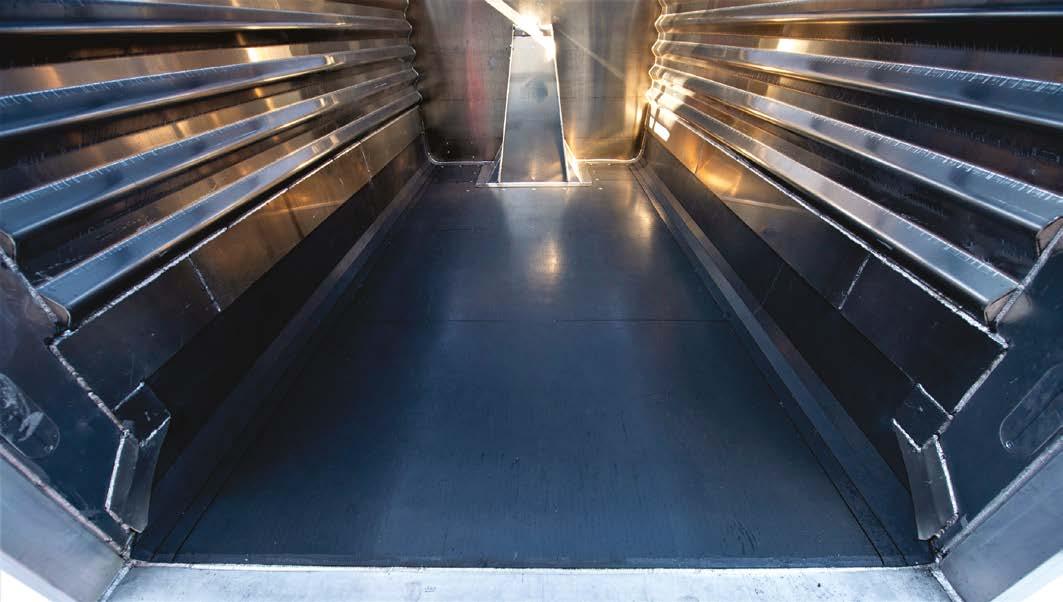
E-Plas has provided high-quality industrial and engineering performance plastics to some of Australia’s most demanding sectors for more than 40 years. It currently has branches in Victoria, Queensland, New South Wales, South Australia and Western Australia, with the capability to service the Northern Territory, Australian Capital Territory and Tasmania.
The company’s popularity among various operators has fuelled the growth of its interstate network. Its innovations have remained fundamental to its offering within all of them.
Among the markets E-Plas serves is the transport industry. Many operators in this sector face unique challenges with specific freight handling. Common issues, particularly for tipper combinations carrying sticky or abrasive materials, include wear on trailer beds and sides and product hang-up. Luckily for transporters facing these problems, E-Plas provides robust solutions in the form of its QuickSilver truck linings.
QuickSilver has been integral to E-Plas’
product offering for more than 20 years. This proven track record has ensured the liner is a convenient and long-term investment for operators.
“QuickSilver has enabled our customers to keep their trailers on the road for longer and get a great return on investment,” says E-Plas National Operations Manager, Rupin Joshi. “It can be installed in a day based on the feedback we’ve received from operators.”
E-Plas’ QuickSilver Ultra-High Molecular Weight Polyethylenes (UHMW-PE) truck lining is widely regarded as a state-ofthe-art industrial strength liner for tipper applications. Its core objective is to keep tippers durable, safe and productive while on the road.
Typically used in end tippers, side tippers and quick-release applications across transport, the product was also designed with versatility in mind and has the potential to be used in off-road trucks as well. QuickSilver truck linings can be used across a variety of functions including bulk handling, minerals, agriculture and
grain with protection against a multitude of materials such as mineral ore, concentrate, gravel, coal, top-soil, cement and more.
A core benefit of the QuickSilver truck lining is it solves the frequent issue of hang-up in tippers. This is due to its impressive flow rate which prevents bulk material from sticking to the surface of a tipper tray and allows materials to flow much easier at a lower tipping angle, thereby increasing safety for operators.
As a result of its durability, QuickSilver also increases the lifetime of a given combination by preventing corrosion. Its application also contributes to operational efficiency, due to the plastic liner weighing less than steel and aluminium while protecting the integrity of the original equipment. This bolstered protection eliminates unnecessary maintenance, downtime and expenses for fleets.
“QuickSilver saves time and maintenance by removing the need for trailer beds to be cleaned or repaired,”
Rupin says. “Once tippers drop off one batch of freight, they can be ready for the next one straight away.
“Having a totally empty trailer when returning after each trip is also a huge economic benefit for operators. Since tippers are always left empty, drivers can load them with more cubic metres and get more money per trip.”
QuickSilver is also met with QuickSilver Heavy Duty. This innovation, also developed by Mitsubishi Chemical Advanced Materials (MCAM), was designed for more demanding operations.
“The classic silver-grey QuickSilver truck lining was already a premium product,” Rupin says. “However, we wanted to better address the specific needs of a niche group of operators. We needed to come up with something that would give customers experiencing extreme wear issues and frequent high impact loads by providing better extended life.”
While QuickSilver Heavy Duty solves the issue of product hang-up much like its sister, it also caters to a much wider scope of abrasive materials. These
include sand, gravel, rock, recycled glass and construction rubble which require eight or more trips per day.
“This product targets a heavy-duty and abrasive market where aluminium trucks or steel bodies cannot handle the wear,” Rupin explains. “This includes combinations that are doing more trips than usual for increased weight properties.”
These capabilities are complemented by the liner’s particular green colour which allows operators to easily discern if a tipper is empty or if there is still product in the trailer.
“Also, QuickSilver Heavy Duty’s distinct high-visibility properties make it a real stand-out product,” Rupin says. “It’s incredibly tough, and it tips and cleans like a dream. It’s an effortless solution.”
To compare the effectiveness of each QuickSilver product, E-Plas and MCAM conducted a case study which applied both liners to the fleet of a customer that was transporting a very abrasive material. The results found that Heavy Duty lasted approximately 30 per cent longer than the standard QuickSilver, thus corroborating the claims behind its durability.
In another study, E-Plas and MCAM compared QuickSilver Heavy Duty and a wear resistant steel liner with a customer that was looking to reduce weight and achieve a similar product lifespan. Heavy Duty lasted twice as long as the wear resistant steel liner material did.
E-Plas is actively testing the long-term benefits of QuickSilver Heavy Duty and the development of the standard QuickSilver truck lining range in collaboration with MCAM.
“E-Plas has been a loyal partner of MCAM for many years now,” Rupin says. “We’ve always worked with MCAM when it comes to UHMW-PE linings such as Quicksilver, and other products such as the TIVAR 88.
“It’s the absolute quality of material, shared knowledge and solid support network that has benefitted E-Plas over decades of partnership. For us, UHMWPE linings do not exist without MCAM at E-Plas.”
Contact
E-Plas
Ph: 1800 806 475
Web: www.eplas.com.au
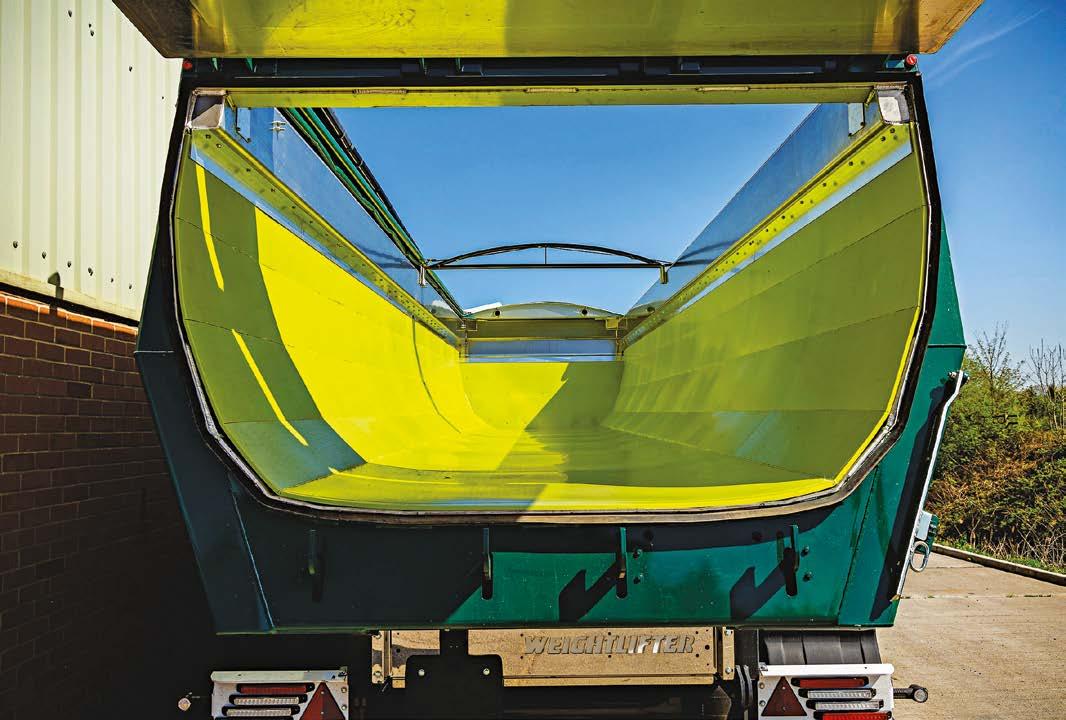
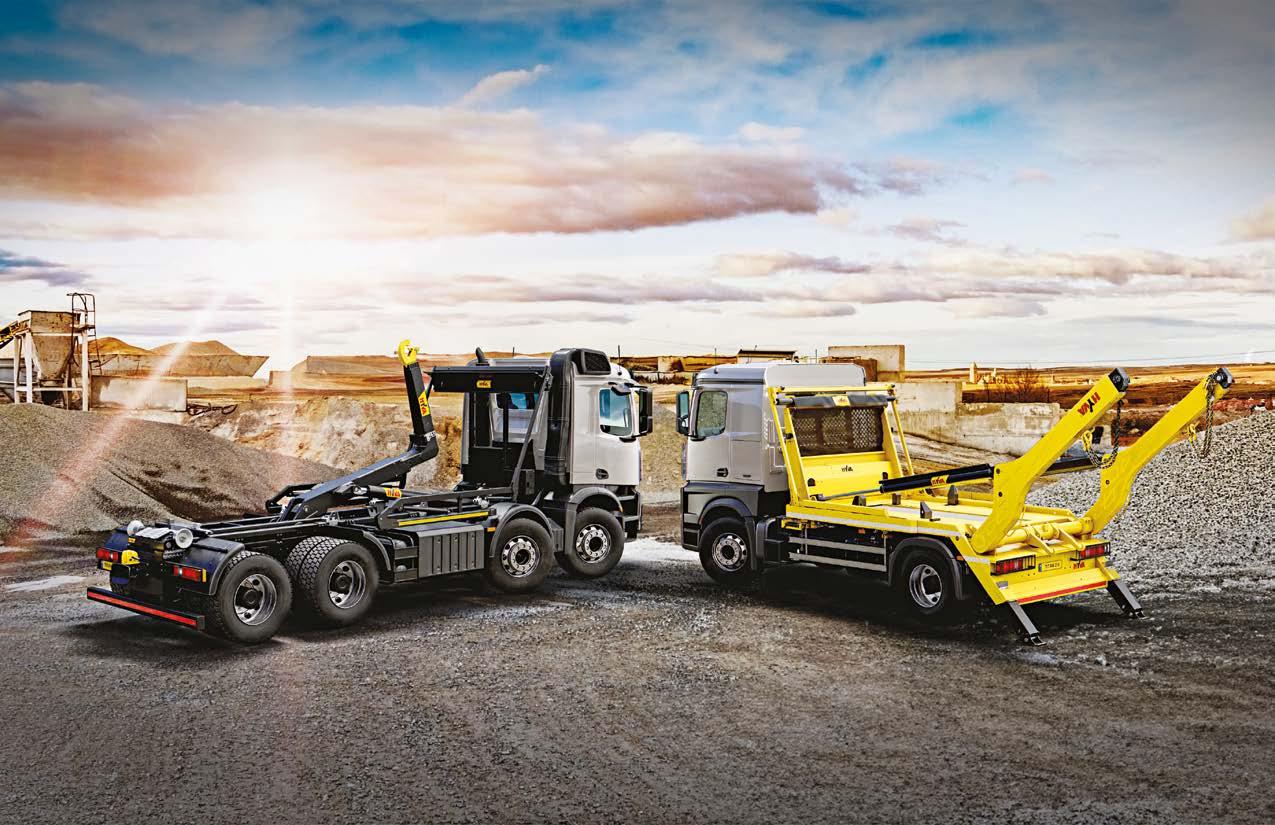
Custom Quip Engineering has bolstered its manufacturing abilities by incorporating JOST components and HYVA hooklifts and skip loaders into its offering.
Custom-built transport equipment manufacturer, Custom Quip Engineering (CQE), boasts 29 years of high-quality production and processes – making it one of Western Australia’s top-tier trailer builders.
The business was founded by Managing Director, Chris Jenzen, in 1997 within the Wheatbelt town of Cunderdin. In 2006, CQE made the decision to move to Perth and relocate into a workshop in Maddington which created further demand, better access for local business and set the tone for future growth phases.
CQE’s relocation into Perth led to the company establishing a dominant presence in the region and further opportunities shortly afterwards. In 2008, for example, CQE relocated into Welshpool. It then invested in a brandnew 11,000-square-metre purpose-built site in Kenwick in 2020 where it remains to this day.
CQE, a business initially specialising in agricultural and farming equipment, has
since bolstered its operations to house a more diverse range of heavy vehicles.
“We originally started with manufacturing agriculture equipment and then expanded into building transport equipment,” Chris says. “This is now our core business which services many industries including agriculture, mining, domestic, general freight and civil.”
CQE was privately owned by Chris up until 18 months ago when the business was acquired by New South Wales-based Varley Group, a 140-year-old engineering and manufacturing group of companies. It now offers services nationally and plans to grow its presence all around Australia. This will include delving into a rigid and refrigerated trailer product offering following its acquisitions of WA’s P&G Body Builders and Stay Cool Trucks.
“We’re bringing rigids into our product line,” says CQE General Manager, Anthony van Litsenborgh. “CQE will also offer rigid-related chassis modifications, extensions, prime mover fit-ups, rigid
trays, bodies and refrigerated trucks.”
While the result of the P & G acquisition is expected to provide enormous benefits in this regard, the agreement led to another factor that has already become a major advantage within CQE’s operations – that being a new partnership with JOST.
“JOST were one of P&G’s key suppliers, and we decided to continue the relationship with them,” Chris explains. “We’re now dealing with a very reputable company. JOST is very obliging and they’re there to support their products. They are also willing to carry stock so we can have product on demand which is very important.”
CQE’s decision to align itself with JOST was also based on a previous partnership which lasted many years.
CQE had been heavily investing in a wide range of JOST products such as fifth wheels, kingpins and landing legs for fitment on its tipper builds which proved to be beneficial in the past.
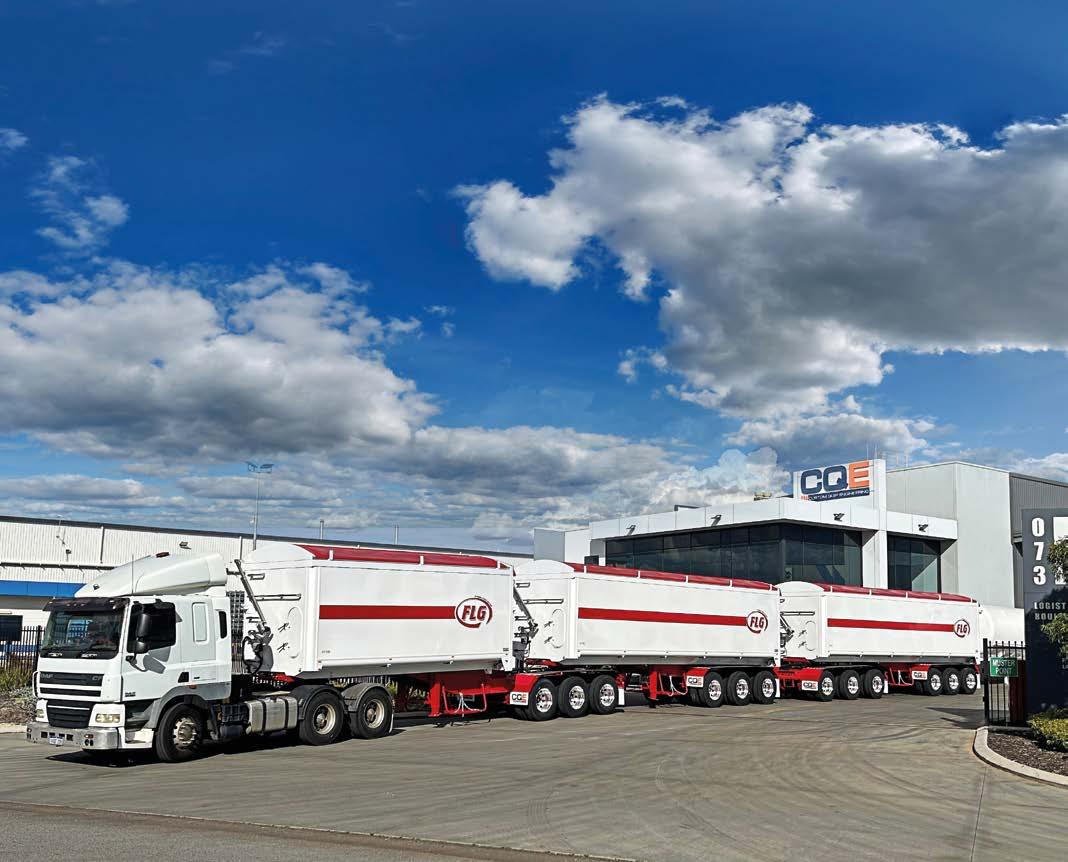
“JOST were always very easy to work with,” Chris says. “They were a very efficient company and they still are to this day.”
It was through the P&G purchase that CQE also reinstated its past partnership with HYVA. JOST’s acquisition of the global hydraulics company then streamlined CQE’s production process when it came to sourcing trailer components, hooklifts and skip loaders under the one umbrella.
“We used to distribute HYVA’s hoists, hooklifts and skip loaders around 15 years ago,” Chris explains. “However, they’ve landed back in our lap and we’re well-positioned to support them due to the size of our business and engineering team.”
CQE has the engineering capacity to offer a range of various HYVA product solutions depending on the needs of its customers. This is why Chris vouches for
the extremely versatile material handling range which he says suits most applications.
“We fit what’s required by the customer,” he says. “HYVA’s hooklifts and skip loaders have been around for a long time, and we’ve never had any issues with them. They’re all-round good products that are well-designed and can be tailored to individual requests.”
Customer feedback on the HYVA hooklifts and skip loaders has been excellent, reinforcing CQE’s own beliefs about the products as well as its reputation of a trusted manufacturer.
“HYVA has always been a market leader, and JOST’s acquisition of the business is only going to strengthen the product,” Chris says. “HYVA is a well-known brand and they’ve got the experience behind them. They have also improved their designs over the years which has allowed the bodies to be fitted much more efficiently, reducing install
costs and the overall expenses put into the product.”
Selecting JOST and HYVA as key suppliers has transformed CQE’s operations.
“The arrangement has increased our network of customers,” Anthony says. “If we’re supplying hooklifts and skip loaders, we can also support the waste industry with other complementary products within their fleets. So, it’s a value-add situation.
“JOST has an appetite for growth and increasing its market share, and we’re on the same journey. We want to grow the rigid side of the business, and this is a good opportunity for us to do that.”
JOST Australia
Ph: 1800 811 487
Web: www.jostaustralia.com.au
E: sales@jostaustralia.com.au
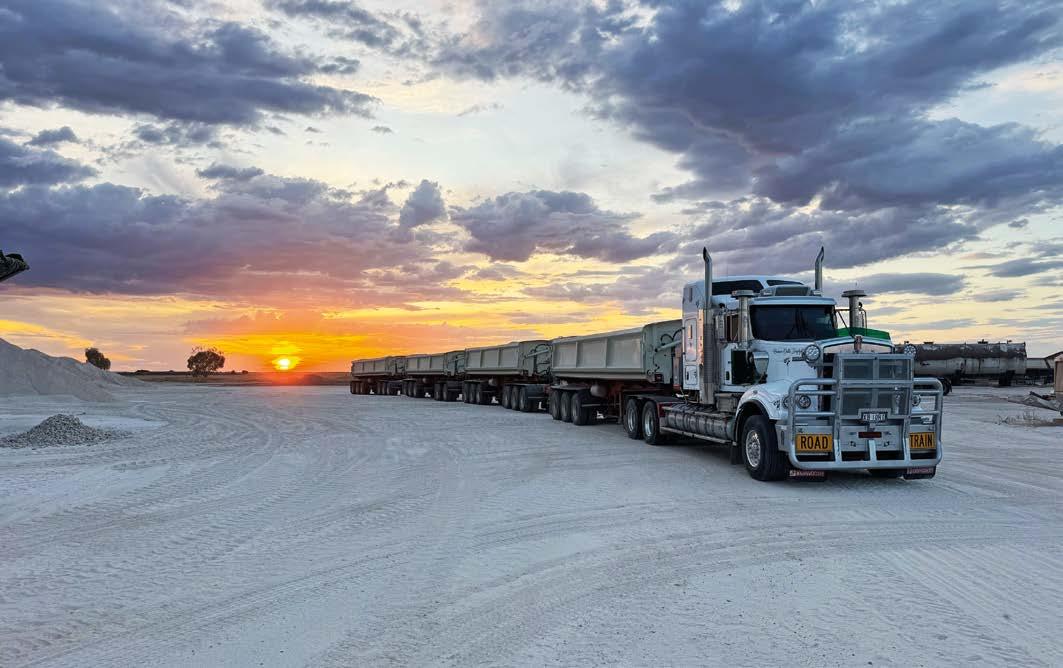
Fuwa K Hitch and 5 Star Side Tippers are proving a powerful combination in delivering reliable, Australian-built trailer solutions for demanding haulage tasks.
For Richard Ostermeyer, founder of 5 Star Side Tippers, the return to trailer manufacturing was a continuation of a legacy. As a second-generation builder, Richard has deep roots in the Australian transport equipment sector, following in the footsteps of his father, Bernie Ostermeyer, who built side tippers and transport equipment from the mid-1970s through to 2012.
After stepping away from the industry for a decade, the call to return proved too strong to ignore.
“After a 10-year break from the industry we decided to begin building side tippers once again after repeated calls from previous customers to come back and start building again,” Richard says.
That resurgence began in 2022, when 5 Star Side Tippers produced its first unit after a 14-year absence. From an initial
run of 10 trailers in its first year back, the business has since achieved steady growth, increasing production by around 30 per cent annually. Today, the company is firmly re-established, and notably, it is now a third-generation operation, with Richards four sons actively involved.
This strong family foundation is central to the company’s identity and approach.
“As a second-generation builder the experience and knowledge gained from working alongside my father is invaluable,” Richard says. “Along with the ‘Ostermeyer’ name, which is renowned worldwide for innovation and reliability, customers are familiar and confident with the products.”
That trust is critical in a competitive market, particularly as imported trailers continue to increase their presence across Australia. For 5 Star Side
Tippers, the point of difference lies in a commitment to local manufacturing, tailored solutions and consistent quality.
“Customisation to suit customer requirements, Australian made, family owned, quality workmanship, reliable products and service,” Richard says.
The company’s product range reflects the diverse and often demanding applications faced by its customers. Its door side tippers range in capacity from 15 cubic metres through to 33 cubic metres, designed to handle freight tasks including coal, aggregates, mineral concentrates, gypsum and large rock. These trailers are configured across a variety of combinations, including 25-metre and 19-metre B-doubles, ABtriples and triple and quad road trains.
In addition, 5 Star Side Tippers offers specialised designs such as its Flex
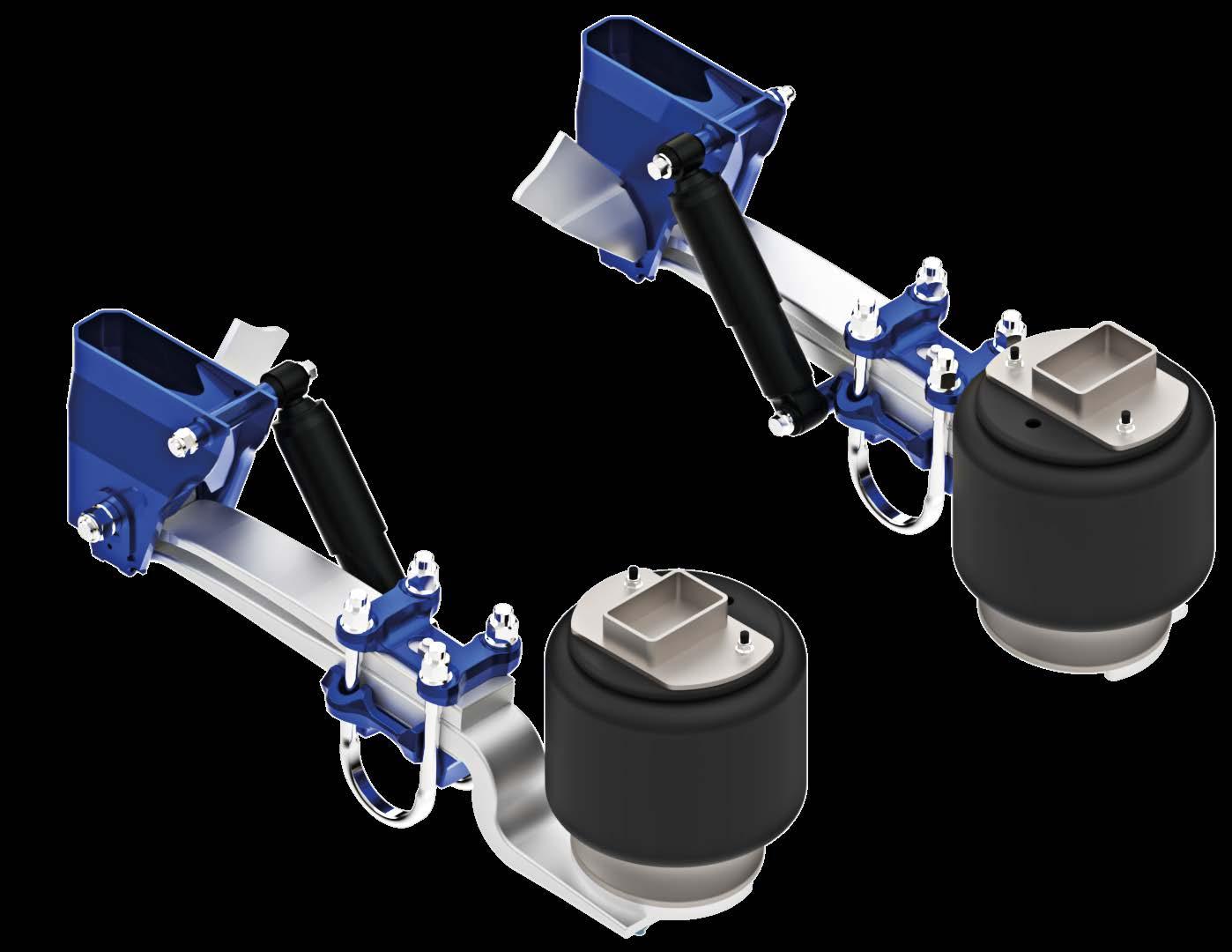
Bowl side tippers, further expanding its capability to meet unique operational requirements.
Underpinning these builds is a strong reliance on component suppliers that can match the durability and performance expectations of Australian operators –particularly in harsh environments. For Richard, that is where Fuwa K Hitch play a critical role.
Today, Fuwa K Hitch components are deeply integrated across the 5 Star Side Tippers range, with approximately 85 per cent of builds fitted with Fuwa K Hitch-supplied products, including axles, suspensions and fifth wheels. The business also quite often fits the Weweler 11-tonne suspension.
This level of integration is not by chance. It reflects more than two decades of experience working with the brand.
“Over the 20-plus years of fitting Fuwa K Hitch products, there have been no major issues,” Richard says.
In the demanding environments where side tippers operate, from off-road mining applications to regional haulage routes, component performance is critical. Axle and suspension selection can have a significant impact on both productivity and lifecycle costs.
Richard takes a practical, experience-led approach to specification. Especially when it comes to axle selection.
“We consider what environment the tippers will mostly be used in, on or off the bitumen, as well as their expected carrying capacity,” he says.
While his experience provides a strong foundation, he also values the technical support available through Fuwa K Hitch.
“From experience, I generally know which products to offer customers,” Richard says. “If in doubt I always contact Jayson or Dean at Fuwa K Hitch for advice.”
This collaborative approach ensures that each trailer build is fit-for-purpose, balancing the need for customisation with the efficiencies of proven component platforms.
Beyond axles and suspensions, Richard points to several other components as critical to overall trailer performance and safety.
“Fifth wheels, landing legs and suspensions,” he says. “They have the biggest impact on trailer reliability and safety.”
The emphasis on reliability is echoed by fleets as well. Operators such as Diamantina Lime & Gypsum have invested heavily in 5 Star Side Tippers equipment, purchasing four side tippers and three dollies in the past 12 months, with plans for further expansion.
Importantly, these customers are not only repeat buyers of 5 Star Side Tippers, but also long-term users of Fuwa K Hitch components – reinforcing the strength of the partnership across both manufacturing and operational levels.
Richard’s continued preference for Fuwa K Hitch products reflects their standing across
“Fuwa K Hitch products have been tested and proven throughout the industry and continue to be the preferred brand to be fitted,” he says.
As the Australian trailer sector continues to evolve, manufacturers face a growing range of pressures – from increased competition from imported equipment to rising expectations around performance, safety and cost efficiency.
Despite these challenges, 5 Star Side Tippers is maintaining its focus on what has driven its success to date – quality, reliability and strong customer relationships.
Richard’s personal connection to the industry remains a key motivator.
“I was born and raised around manufacturing trailers and the transport industry,” he says. “I guess I feel a sense of accomplishment and satisfaction from delivering quality Australian-made products.”
It’s a mindset that aligns closely with the values underpinning the Fuwa K Hitch partnership – a shared emphasis on durability, performance and supporting the needs of operators in real-world conditions.
Together, the two brands are demonstrating that, even in a changing market, there is still strong demand for well-built, fit-for-purpose trailers backed by trusted components.
Contact Fuwa K Hitch
Ph: 03 9369 0000
Web: www.khitch.com.au
The South East Melbourne Manufacturers Alliance says the Australian Government needs to acknowledge small and medium enterprise manufacturers and the contributions they make to the nation’s economy.
According to the Australian Bureau of Statistics, Australia’s economy has flatlined. Victoria had the highest number of businesses (129,000) going bust in 2024. Additionally, data from the Victorian Parliamentary Budget Office suggests Victoria is also the most taxed state in all of Australia, at $5,408 per person in 2025-26.
As a result, the South East Melbourne Manufacturers Alliance (SEMMA) is calling on the Australian Government to acknowledge small and medium enterprise manufacturers and the role they play within Australia’s economy.
“It seems that at every turn, local manufacturers and our supply chain are being asked to cut costs, pay more tax, navigate endless rolls of red tape and battle for what’s fair in a global marketplace,” says SEMMA CEO, Honi Walker. “But at SEMMA, we believe our local jobs content should not be compromised for profit.”
While some sectors such as rail and defence seem ‘immune’ to current economic pressures, Honi believes everyone pays more through the supply chain. Especially when considering situations such as the current fuel supply issue.
“It doesn’t matter what you produce,” she says. “The result is the same – less after-tax profit, less for investment, less for hiring that new apprentice or recent graduate, less for R&D, less for growth and innovation and less inspiration.”
Thus, Honi says local jobs content must be safe-guarded. SEMMA is advocating for manufacturers and suppliers within this space to ensure they are safeguarded.
“SEMMA recently provided a submission to the Productivity Commission in the application of a safeguard on fabricated structural steel,” she says. “Our local suppliers and manufacturers must be protected, or we risk reputations and lives.
“OEMs in rail and defence, for example, must abide by our local jobs content rules. New regulations come into play in Victoria
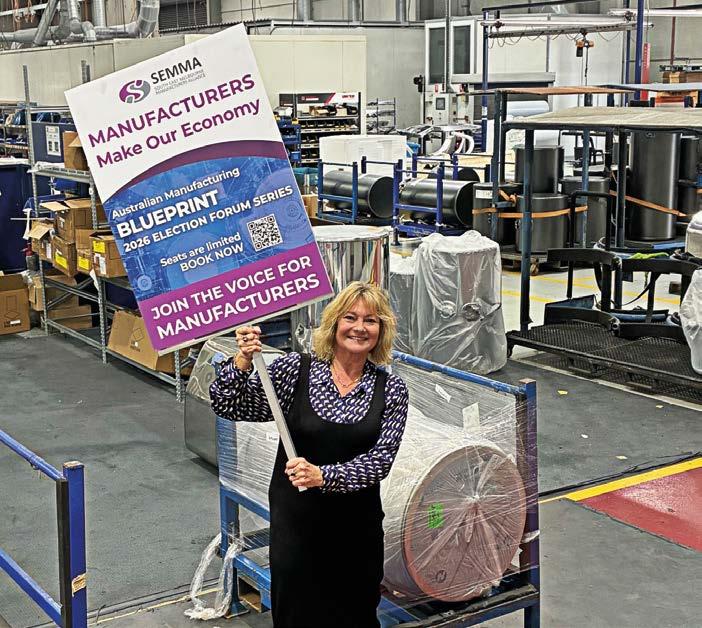
on 1 July, and we will have a new Local Jobs Content Commissioner who will need to hit the ground running.”
While SEMMA might be based in the southeast of Melbourne, it has an eye on the national economy and its place in it.
According to AI Group, manufacturing is the sixth largest industry in Australia, generating $137 billion in value-added output and employing 930,000 people. Recent data from AI Group reveals it also contributes 12.4 per cent to Australia’s exports and 7.9 per cent to capital expenditure.
Last month, SEMMA presented the first of five Australian Manufacturing BLUEPRINT 2026 Election Forum Series – five forums each focused on one of its five pillars of growth to invigorate industry. The first pillar, ‘Economic’, featured the financial sector, industry experts and those from the political
“It’s time policy makers recognised and acknowledged the significant contribution our manufacturing sector makes to the Australian way of life.”
sphere, followed by an interactive panel.
The event was an opportunity for manufacturers to come together to discuss, debate and dissect current policy and offer solutions through SEMMA’s BLUEPRINT platform.
“Manufacturers make our economy,” Honi says. “It’s time policy makers recognised and acknowledged the significant contribution our manufacturing sector makes to the Australian way of life.
“If you’d like to have your say, join us. Become a SEMMA member and we’ll keep raising the profile and voice of SME manufacturing.”
Contact
South East Melbourne Manufacturers Alliance
Ph: 0422 488 678
Web: www.semma.com.au

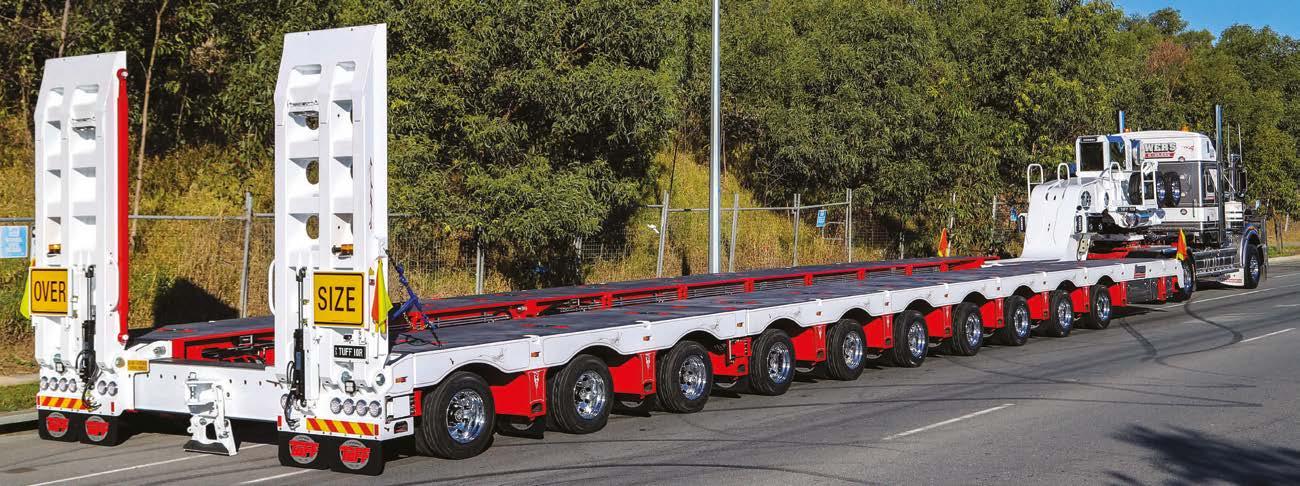

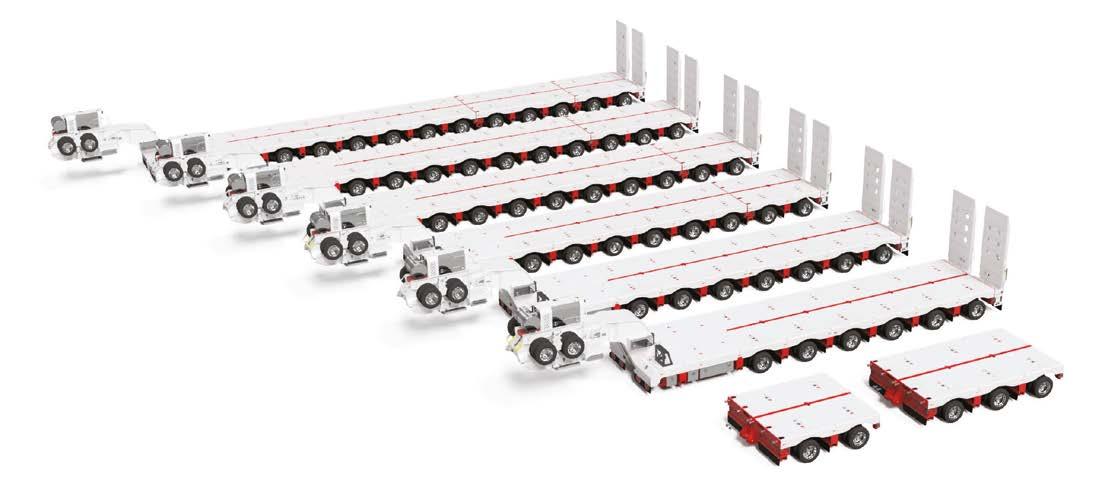


Hundreds of delegates gathered at Philip Island in March for the Victorian Transport Association’s State Conference 2026. Headlining the two-day program were talks on some of the biggest challenges operators are facing, heavy vehicle compliance, road infrastructure projects and more.
The Victorian Transport Association (VTA) opened State Conference 2026 by highlighting the resilience of the freight and logistics sector and the unprecedented challenges operators are facing.
In a wide-ranging address, VTA CEO, Peter Anderson, told delegates the conference’s theme reflects the unbroken commitment of operators who continue delivering for Australia against mounting economic, regulatory and workforce pressures.
“Freight never stops – and neither do the people who power this industry,” he said. “But the pressures on operators today are intense: rising costs, regulatory complexity, shifting markets and growing uncertainty. Our industry keeps going, but it cannot keep absorbing these pressures without meaningful support and structural change.”
The opening of State Conference 2026 coincided with the announcement of the Victorian Freight Decarbonisation Co Investment Program and the Victorian Electric Heavy Vehicle Trial. Both initiatives were launched the same morning by Victorian Minister for Roads & Road Safety and Ports & Freight, Melissa Horne.
In his speech, Anderson acknowledged the $8 million co-investment fund as a positive win for transport.
“We commend the Victorian Government for delivering practical, hands on programs that support operators to trial cleaner vehicles, upgrade their infrastructure and test new business models,” he said.
“Decarbonisation will take time – there is no single replacement for diesel –but programs like these give operators
clarity, real world experience and a viable pathway forward.”
Anderon noted while decarbonisation is the long-term pathway, fuel volatility remains the most immediate and destabilising challenge for transport businesses.
“Fuel prices no longer move on supply and demand alone; they move on geopolitical instability, speculative trading and global uncertainty,” he said. “A 10-20 cent spike per litre can wipe out margins overnight. Operators simply cannot absorb that risk – not when margins are already razor thin.”
Anderson therefore stressed the essential role of the fuel levy as a transparent and defensible mechanism.
“The fuel levy is critical to the survival of operators,” he said. “It ensures legitimate cost recovery and protects cashflow.
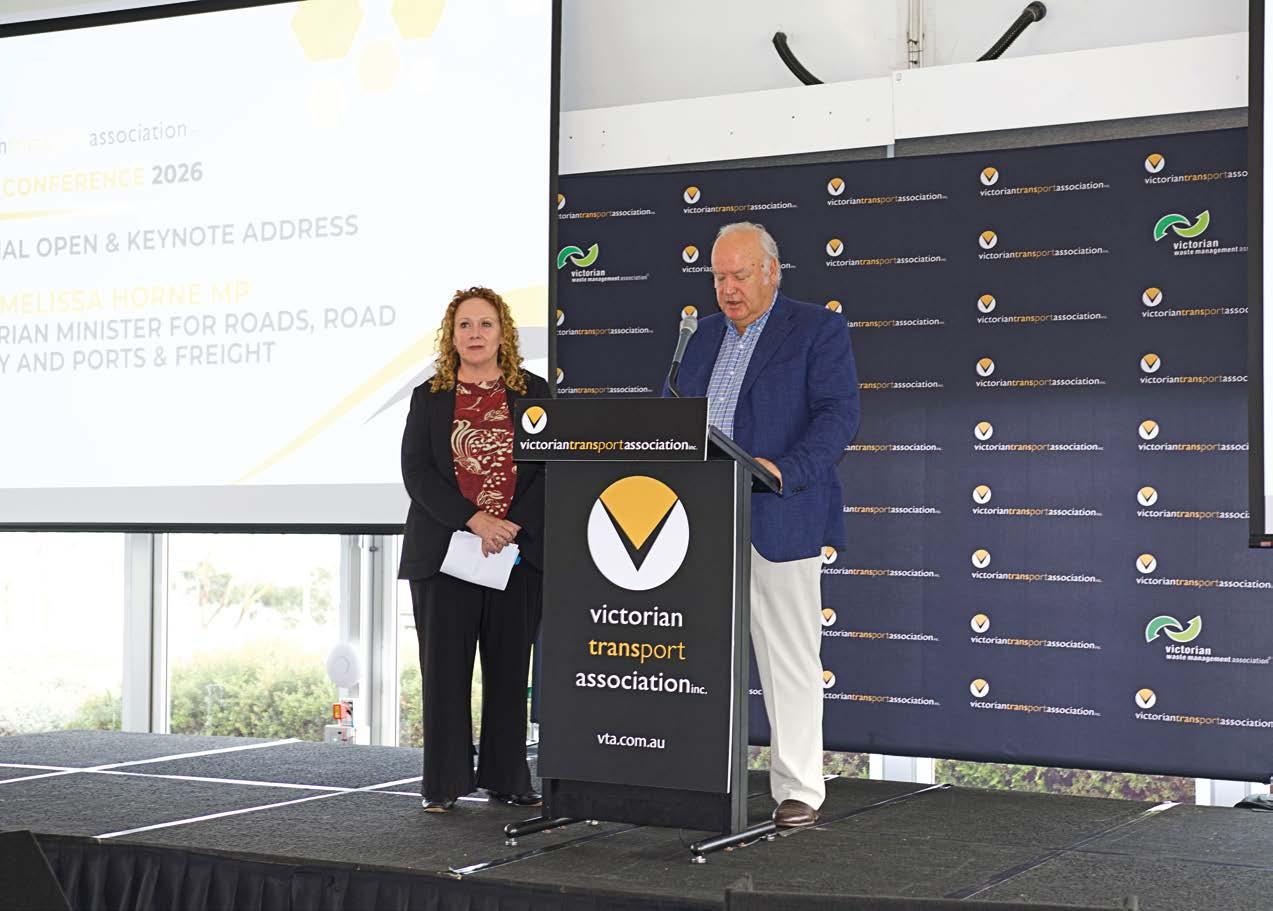
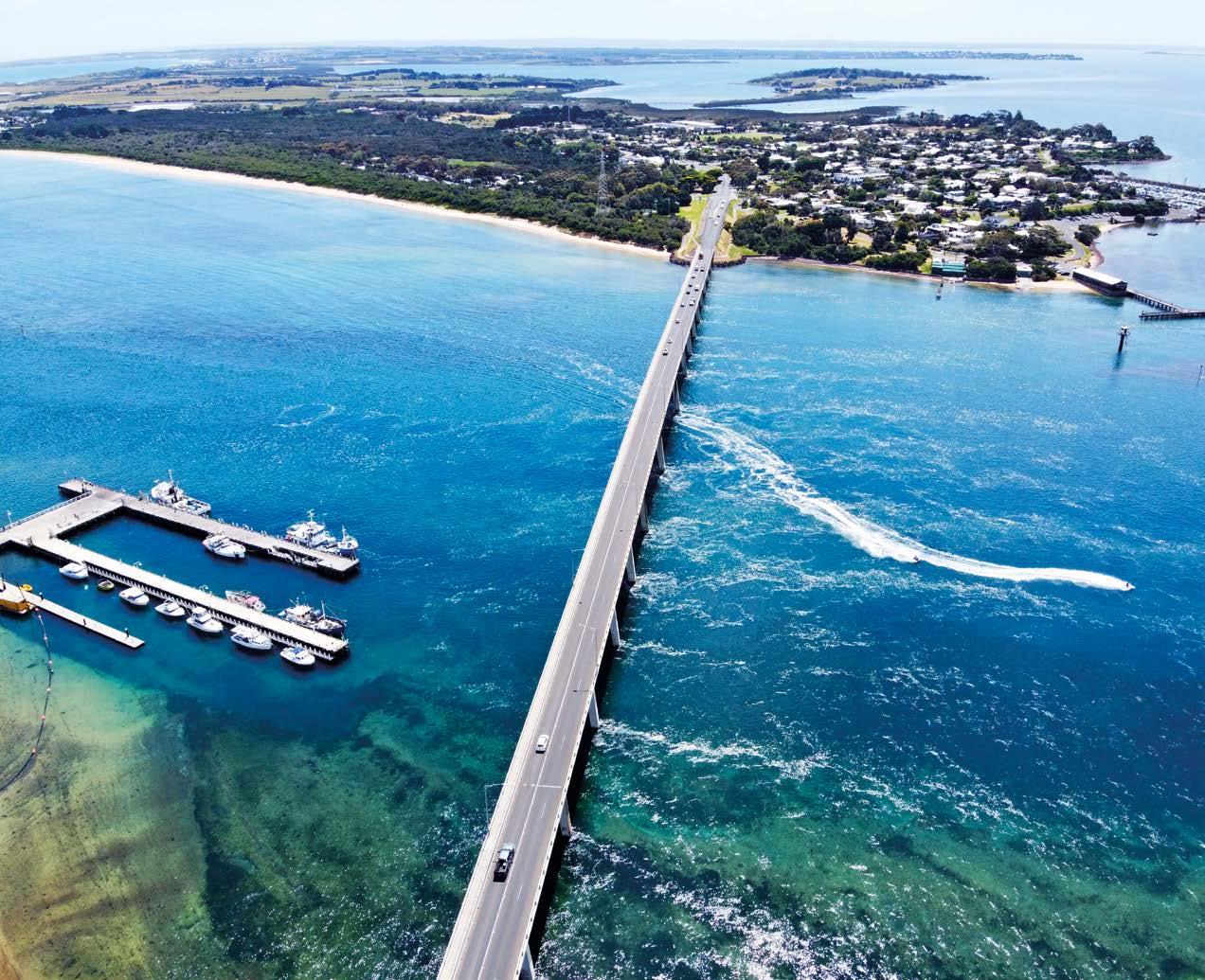
Without it, operators risk collapsing under cost shocks they cannot control.”
Freight customers misrepresenting freight costs or resist surcharge mechanisms were also criticised.
“Transport accounts for about 12-13 per cent of the cost of goods sold – fuel is only a fraction of that,” Anderson said. “Operators must not be forced to subsidise transport for the rest of the supply chain.”
The issue of sham contracting was also addressed, with Anderson describing it as “one of the most dangerous threats from within our sector”. He made it known to attendees that contracting gives rogue operators a 30 per cent cost advantage and is “crippling compliant businesses who operate legally and safely”.
“It is undermining legitimate operators, eroding safety and contributing to the black economy,” he said.
With freight volumes expected to double over the next 20 years, the VTA stressed that productivity is non-negotiable.
“We cannot double the number of
trucks, drivers or congestion – the maths simply doesn’t work,” Anderson said.. “We need better road access, stronger bridges, modern intermodal hubs and more high productivity vehicles.”
Anderson therefore reinforced that profitable operators are essential to a safe, modern industry.
“Profit is not a dirty word – it is the foundation of safety, reinvestment and sustainability,” he said. “Operators cannot invest in safer vehicles, new technologies or alternative fuels if they are not making a fair and reasonable return.”
Speaking at the VTA State Conference, Senator Glenn Sterle said sham contracting has long operated under the surface but is now firmly in the spotlight following industry-wide consultation.
“What’s fired me up is because the decent, honest operators in this nation are the ones that are losing work to the corrupt balance,” he said. “It is tax
avoidance and it is wage theft.”
Sterle described the practice as employers misclassifying drivers as independent contractors, stripping them of entitlements such as superannuation, leave and workers’ compensation, while often delaying payments.
“You’re not going to get any of the good stuff … superannuation, holiday pay, sick leave,” he said. “You put your invoice in and if you’re lucky, you might get paid in 30 days.”
Industry estimates suggest the scale of the problem is significant. Anderson said out of roughly 161,000 sole traders in the sector, as many as 20-25 per cent could be operating under sham arrangements.
“That’s 30,000 to 40,000 drivers that are not paying income tax … where superannuation is not being paid,” he said. “We estimate between $1.5 billion and $2.5 billion in income tax is being missed.”
Both speakers argued the issue is distorting competition, placing compliant operators at a disadvantage and
forcing some out of the market. Sterle confirmed the Federal Government, alongside agencies including the Australian Taxation Office and Fair Work Ombudsman, has begun taking stronger action.
“They actually are now clamping down on sham contracting in the road transport industry,” he said. “But we’ve got to keep pushing. We’re not going to give up.”
Sterle added that major freight customers cannot ignore the issue within their supply chains.
“Any major employer or user of transport who doesn’t know that they don’t have sham contracting in their supply chains is not telling the truth,” he said.
Beyond compliance, Anderson pointed to broader structural challenges, including migration settings and enforcement gaps, which he said can enable the practice to grow.
“It’s not going to suddenly go away,” he said. “It’s actually getting bigger.”
The discussion also touched on wider industry concerns, such as recent fuel supply fears which Anderson dismissed.
“Australia has plenty of fuel … there will be fuel in the future,” he said, urging operators to avoid panic buying.
Sterle, a former truck driver, said his advocacy in Canberra is driven by firsthand experience and a commitment to protecting the industry.
“Never forget where you came from,” he said. “We need to sort this out – and we will be there every week pushing it.”
Minister Melissa Horne announced a $8 million co-investment fund for freight decarbonisation at the VTA State Conference. The fund, aimed at small and medium-sized operators, will provide grants of up to $300,000 to support the transition to low- and zero-emissions technologies.
According to Horne, eligible uses include purchase and leasing of vehicles, vehicle retrofits, infrastructure such as electric chargers and charging or alternative fuel costs. Framing decarbonisation as one of the industry’s biggest challenges, she noted the scale of the task ahead.
“One of our greatest challenges is how we progress the decarbonisation of our $36 billion freight sector,” she told delegates.
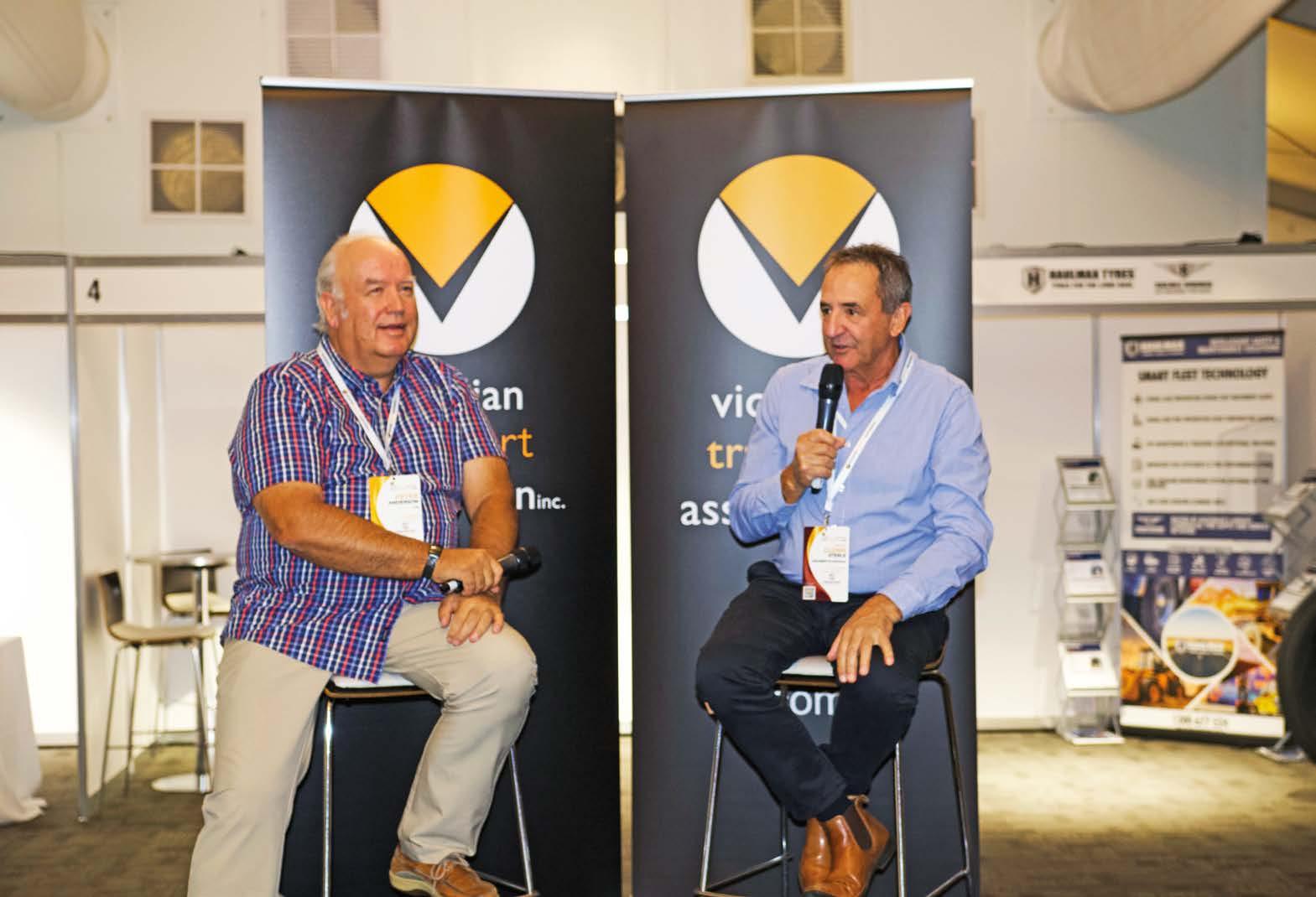
The new fund builds on existing investment including $4 million already committed through partnerships to help smaller operators begin the transition. It also complements broader initiatives such as the state’s freight and technology partnerships and electric vehicle trials which were developed to generate realworld data on performance, costs and operational barriers.
Horne emphasised that the program is designed as practical, accessible support.
“This is practical support – grant
funding that operators will be able to use,” she said, encouraging industry to engage with the program once details are released.
The announcement sits within a wider push under the Victorian Freight Plan to move toward low- and zero-emissions freight across vehicles, infrastructure and supply chains. Alongside environmental goals, Horne highlighted the importance of collaboration between government and industry to deliver workable outcomes.
“I learned early on that you didn’t want
a government that just regulated and refereed from the sidelines,” she said. “You actually wanted one that helps you get on with the job.”
The National Heavy Vehicle Regulator (NHVR) is sharpening its focus on high-risk operators, strengthening enforcement and expanding education efforts as it responds to mounting economic and safety pressures. Speaking at the VTA State Conference, NHVR CEO,
Nicole Rosie, outlined a more proactive, system-wide regulatory approach aimed at improving safety outcomes while reducing unnecessary burden on compliant operators.
Rosie acknowledged the difficult operating environment facing industry, pointing to rising input costs of 40-60 per cent against freight rates that have failed to keep pace in recent years. She warned these pressures are contributing to unsafe behaviours among some operators, including fatigue breaches, overloaded vehicles and poor maintenance.
“It’s a very, very challenging picture,” she said. “Very hard for people in this market to make money.”
In response, the NHVR is increasing its attention on the middle of the supply chain – operators under the most financial strain – while also scrutinising larger players whose commercial practices may be influencing behaviours across the sector.
A key priority is identifying and acting against high-risk operators. Rosie revealed the regulator has developed a comprehensive profiling system that assesses businesses based on incidents, audit results, breaches and roadside compliance history.
“We had companies in accreditation that were extremely high risk … that’s entirely inconsistent,” she said.
Enforcement activity has already intensified, with more trucks prohibited from operating in the past three months than in the previous three years. The NHVR has also removed operators from accreditation and is targeting those linked to sham contracting and systemic noncompliance.
At the same time, Rosie emphasised a stronger focus on education, delivered earlier and more broadly, to prevent safety issues before they occur.
“By the time you’re on the side of the road with a fatigued driver or brake failure, the difference between life and death is luck,” she said.
The NHVR is rolling out new safety bulletins, trend reporting and operator performance profiles to provide clearer guidance on emerging risks and critical control failures. These measures are designed to shift the industry’s focus from reactive compliance to predictive safety management.
Rosie also highlighted major reform initiatives, including the development of a National Automated Access System aimed at reducing up to 90 per cent of permit requirements, and a planned overhaul of the accreditation framework to better reflect real-world safety performance. Digitisation will play a central role, with the NHVR looking to leverage data and intelligence to streamline access, improve transparency and enable more dynamic road-use pricing in the future.
Despite the tougher enforcement stance, Rosie stressed the regulator’s broader goal is to support a safer and more sustainable industry.
“Our primary goal is to support the sector to be productive, sustainable and safe,” she said.
Freight Victoria on decarbonisation, growth
Freight Victoria Acting Executive Director, Cameron Robinson, discussed the challenges and strategies that will shape the future of the state’s freight network with delegates at State Conference 2026.
Freight Victoria, a division within the Department of Transport, collaborates with both industry and government to provide strategic oversight on ports, freight and transport systems. The organisation plays a crucial role in connecting various stakeholders to enhance the economic prosperity of Victorians.
“Our purpose is to provide strategic oversight about ports and freight and transport systems in order to support Victorians and their economic prosperity,” Robinson said.
Victoria’s freight tasks are set to double by 2050, posing significant challenges for infrastructure and logistics. Robinson pointed out that suggestions that this is all done through trucks alone is unrealistic and inefficient. He emphasised the importance of intermodal systems, where road, rail, sea and air transport work together to ease congestion and improve efficiency, especially as Melbourne’s population grows.
Central to the Victorian Freight Plan launched in August 2025 are four key objectives: ensuring the freight network meets future demand, enhancing efficiency, supporting decarbonisation and improving safety. Robinson highlighted 58 practical actions under these objectives, focusing on optimising freight systems and reducing road congestion.
A major part of the plan includes a $1.5 million electric heavy vehicle trial aimed at testing zero-emission vehicles through a subsidised leasing model.
“This is a real opportunity to test these vehicles and give us feedback to improve our policy moving forward,” Robinson said.
Additionally, Freight Victoria is rolling out an $8 million freight decarbonisation co-investment Scheme designed to help small and medium businesses adopt cleaner technologies, including renewable fuel trials and electric vehicles.
“For as little as $60,000, small businesses can leverage up to $300,000 in grants to support decarbonisation activities,” Robinson said.
Freight Victoria continues to collaborate with industry leaders to ensure the state’s freight network is future-ready.
Robinson said government and industry must work together to meet the growing demands and environmental goals.
“We need ongoing participation from the industry to ensure the future success of freight in Victoria,” he said.
Port of Melbourne CEO, Saul Cannon, highlighted key developments and future strategies to ensure the port’s continued growth at State Conference 2026. He outlined the port’s unique positioning as Australia’s only ‘city container port’, situated just a stone’s throw from Melbourne’s central business district.
“Being a city port really does have some different dynamics,” he said, emphasising the exceptional landside connectivity compared to other Australian ports.
“We’ve got the best landside connection in Melbourne, which is critical for our role as a major trade gateway.”
The Port of Melbourne is set apart by its dual-terminal configuration in two separate precincts – Swanson Dock and Victoria Dock – allowing it to accommodate larger vessels.
“With container ships growing in size, we’re planning for the future by developing new infrastructure to keep pace with global shipping trends,” Cannon said.
In terms of trade performance, Melbourne is on track for another record year – with containerised trade up 2.5 per cent year-to-date.
“Last year, Melbourne handled 3.46 million TEUs, and we’re about 20 per cent larger than Sydney in terms of container volumes,” Cannon said.
Landside connectivity, particularly rail, is a focal point for future growth. Currently, only six per cent of containerised freight at the port is moved by rail. To boost this, the Port of Melbourne has introduced a ‘PRSN incentive’, offering financial incentives to encourage more metro freight to shift from road to rail.
“We need more freight on rail for it to be viable, and we’re committed to making that happen,” Cannon said.
The Port of Melbourne is also home to the Southern Hemisphere’s first fully automated terminal, the Victoria International Container Terminal, which enhances yard capacity and reliability. This cutting-edge facility uses automated stacking cranes to manage containers stacked five high, unlike other terminals in Australia which use straddle carriers according to Cannon.
Cannon shared that the Port of Melbourne is investing over $1 billion in long-term infrastructure, with major projects aimed at improving capacity for larger vessels and ensuring Melbourne remains a vital trade hub for Victoria and beyond.
“By 2036, we need a new two-berth terminal capable of handling 14,000 TEU vessels to keep up with demand,” he said.
In addition, the port is working on relocating Tasmanian trade to Victoria Dock, further cementing its role as a critical gateway for regional trade.
“The Port of Melbourne is committed to supporting Victoria’s future,” said Cannon.
“Our investments today will ensure we’re ready for the challenges and opportunities of the next 30 years.”
Deputy Director Traffic and Network Planning for the West Gate Tunnel Project, Paul Smith, provided an update on the final stages of the West Gate Tunnel and West Gate Freeway upgrades. Alongside Transurban General Manager Victoria, Anup Jois, he showcased the many freight reliability improvements that have been noticed since.
Smith first highlighted the importance of upgrading Victoria’s road infrastructure in order to accommodate the everexpanding freight network.
“At this conference in past years, you’ve heard us talk about getting ready to advance in the West Gate Tunnel project involving the new M4 West Gate Tunnel and fully integrated M1 West Gate Freeway,” he said. “It’s exciting to be here in front of you now saying that we have delivered. The project is open and is operating well.”
Smith commenced the updates with a video of the latest developments to the road network in Melbourne’s west, including the West Gate Tunnel project.
“A lot of work went into getting this infrastructure ready to open in December 2025, and those of us who have worked
on it are very proud of this result,” he told attendees. “It’s thanks to industry stakeholders such as yourselves, your input to the design, the VTA’s advocacy with determining the tolling structure and your patience during construction that we’ve got such a great result for freight transport, with direct connections to key parts of the port and improvements to the West Gate Freeway including the new and upgraded connections on and off the freeway.”
Smith said the project had the “right mix of ingredients” to help solve the challenges of the future.
“The West Gate Bridge capacity is improving as drivers use the tunnels,” he said. “Through your experience over the last four months with using the West Gate Freeway and the West Gate Bridge, you would have noticed changes in traffic conditions on days of the week and hours of the day, and hopefully you’re adjusting to provide the most efficient outcome for your particular business.”
Port connections and accessibility for heavy vehicles have also been significantly improved.
“Since the new road opened, the container industry has demonstrated very high compliance with the new routes and restrictions,” Smith said. “Trucks are off local roads and onto bigger infrastructure that is purpose built for them. We know that local residents and community groups are very happy with the results.
“This is what successful long term network planning looks like.”
According to Smith, the West Gate Tunnel has become an important solution for the major transport challenges Victoria is facing. Over one million trips have taken place through the route since it opened, with more than 20 per cent of those being made by trucks.
“[This] was an important milestone as car drivers get familiar with the road and adjust their travel patterns,” he Smith. “Truck numbers make up a big proportion of these duties, and we are very grateful to everyone in this room for the role we have played, and for making the change happen so seamlessly. There will continue to be investment in the freight network that aligns with Victoria’s transport plan.”
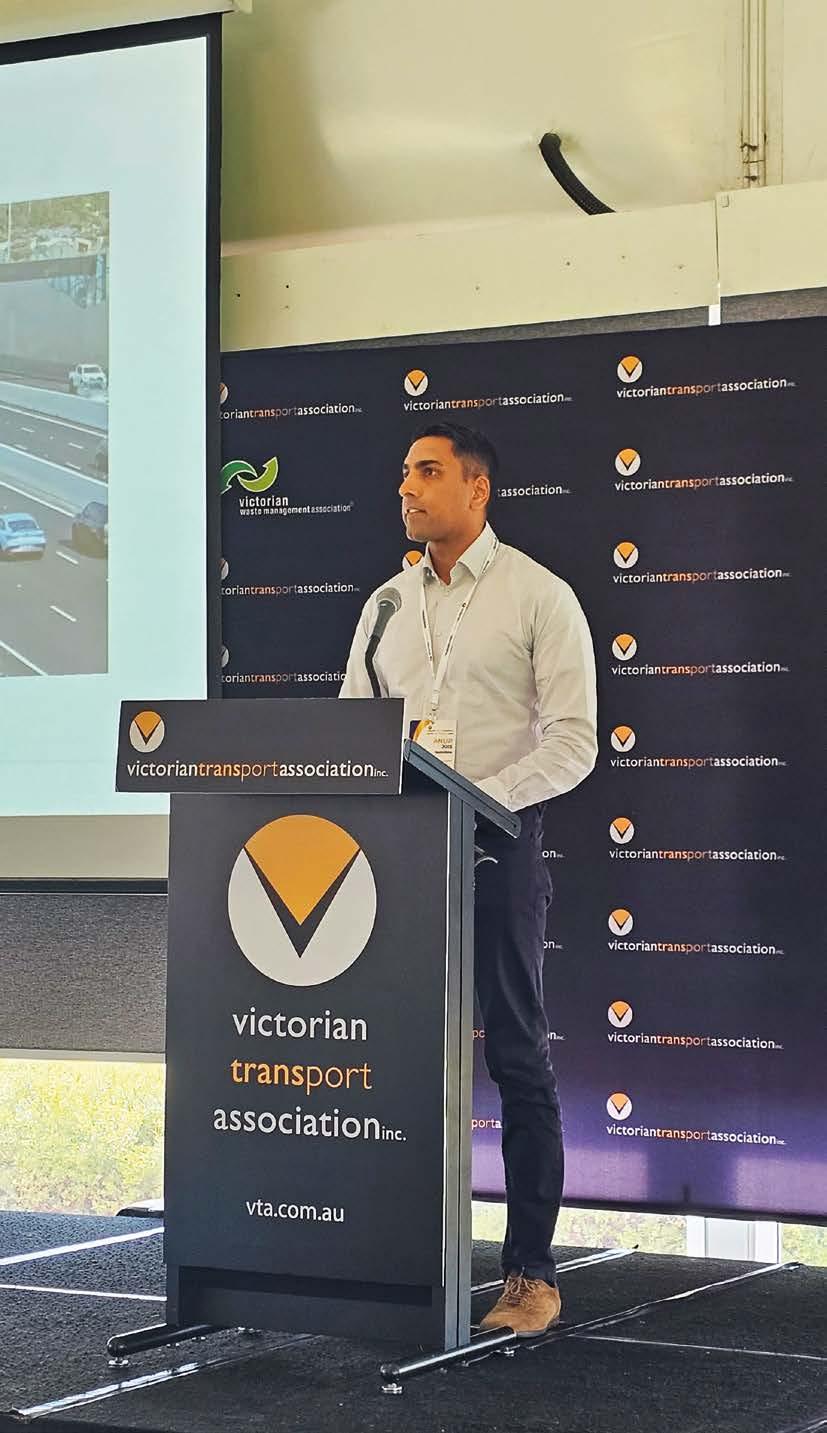
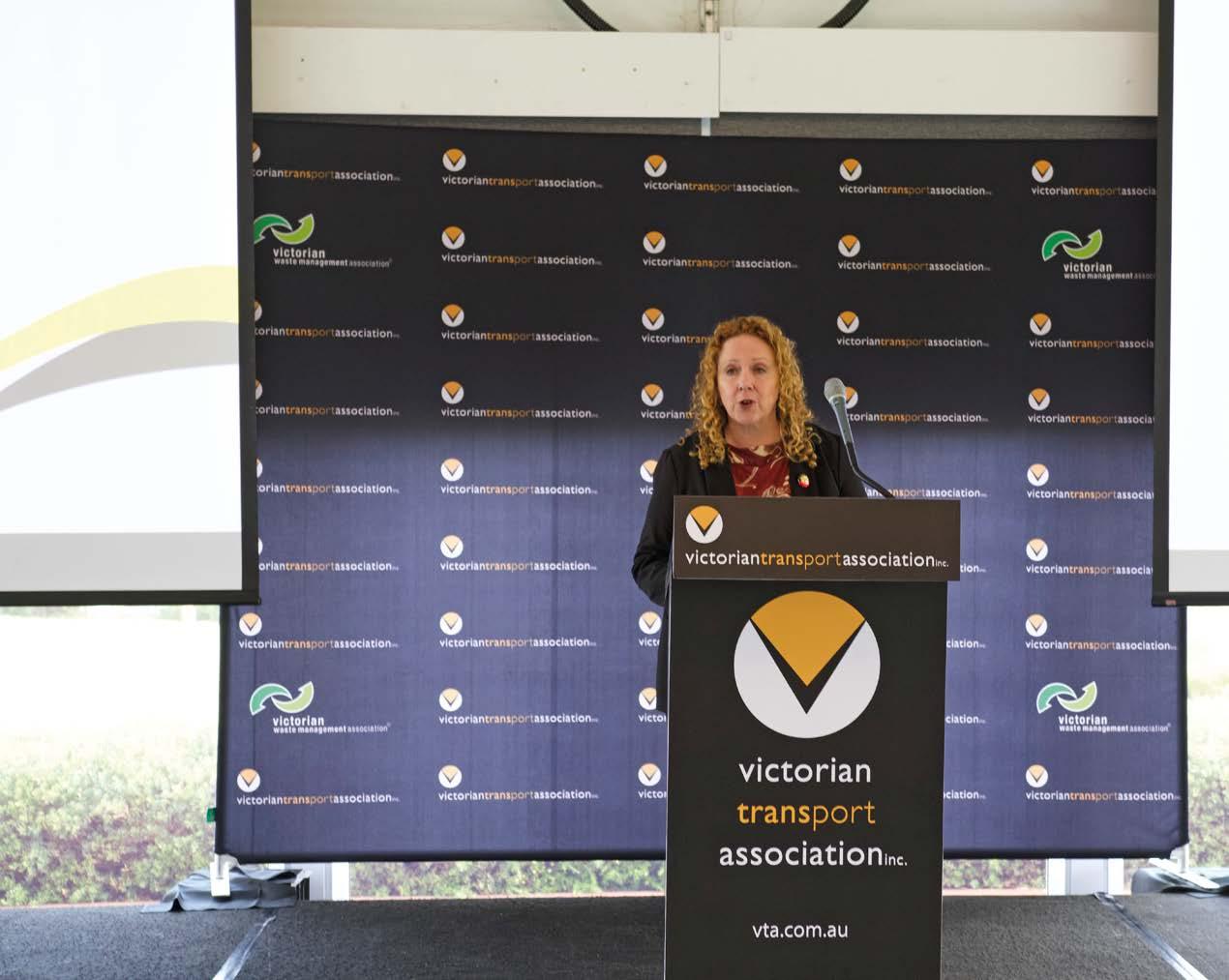
The escalating crisis of sham contracting is distorting competition, undermining safety nets and forcing compliant operators out of the market. Panellists at VTA State Conference 2026 described sham contracting as a ‘subversive shadow industry’ that has grown rapidly in recent years despite existing laws.
Industry representatives said the practice, where workers are engaged as independent contractors under ABNs instead of as employees, has created a deeply uneven playing field. Delegates heard that compliant operators are increasingly unable to compete against businesses cutting labour costs by up to 30 per cent through unlawful arrangements.
One speaker pointed to the collapse of major refrigerated transport operator, Don Watson Transport, as a stark example, arguing the company could not match artificially low contract rates driven by noncompliant competitors.
“The only way to compete was to break
the law,” the panel was told. “That’s the problem. It’s an unfair workplace and an unfair marketplace.”
The session also highlighted a late development in Canberra, with federal ministers moving to amend ‘Closing Loopholes’ legislation to allow minimum standards orders around fuel surcharges.
The change is expected to give operators stronger protections to recover rising fuel costs from customers which is an issue that has added further pressure to already thin margins.
Panellists outlined how sham contracting is typically structured, often targeting vulnerable or newly arrived workers. Under these arrangements, drivers are required to obtain an ABN and are paid hourly rates that may appear higher upfront but exclude key entitlements such as superannuation, workers’ compensation, leave accruals and tax obligations.
In many cases, workers are incorrectly told they are contractors despite supplying no equipment beyond personal protective gear – making them employees under industrial law.
“This is myth number one,” one speaker said. “If all they bring is themselves, they are an employee every day of the week.”
The panel estimated between $1.5 billion and $2.5 billion in income is going undeclared due to sham contracting practices, with regulators struggling to keep pace. A key issue identified was a loophole in the tax system where individuals operating under ABNs may avoid scrutiny if they fail to lodge returns.
Beyond compliance issues, the practice is also increasing risk exposure for transport businesses. Operators using sham contractors may face higher public liability claims instead of workers’ compensation, increased insurance premiums and greater legal exposure in the event of workplace incidents. Insurance claims linked to these arrangements have reportedly surged, adding further cost pressures across the industry.
While sham contracting is not new, speakers noted its scale has intensified,
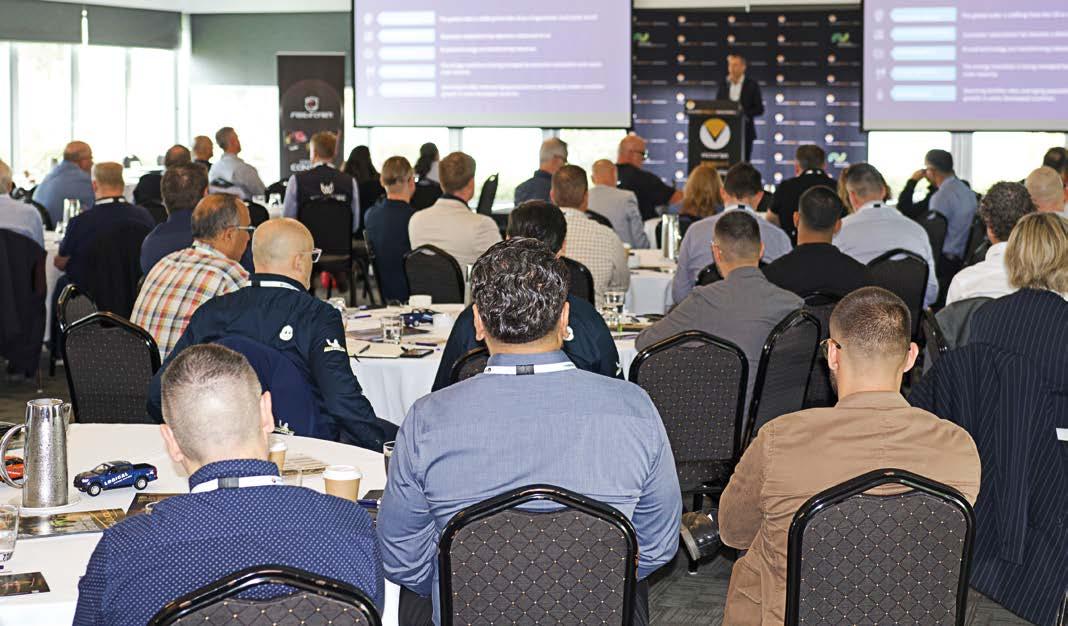
driven by low barriers to entry and high levels of competition. With more than 260,000 transport businesses in Australia and around 60 per cent of those being single-truck operators, the sector is particularly vulnerable.
“It’s happening everywhere,” one panellist said. “Companies know it’s going on, but they feel they have no choice if they want to win work.”
Industry bodies are now calling for stronger enforcement and clearer alignment between tax and industrial laws, including tighter definitions of what constitutes a genuine contractor. There are also calls for government agencies such as the Fair Work Commission, ATO and Border Force to coordinate more closely on compliance.
Recent enforcement activity has begun to uncover breaches, but speakers said it only scratches the surface. The VTA and allied organisations are urging operators to provide evidence of non-compliant practices to support enforcement action.
“The more evidence we gather, the faster we can tackle this,” delegates were told.
Despite the challenges, there was broad agreement that collaboration across industry groups, unions and government will be critical to addressing the issue.
“If we don’t fix this, we will see more businesses disappear,” the panel warned attendees.
Consumer behaviour continues to evolve, with cost-of-living pressure and AI playing key roles.
Image: CandyRetriever/stock.adobe.com.

While Australia has seen a major increase in online spending, new data reveals the cost-of-living crisis and artificial intelligence is impacting consumer behaviour.
Australia Post’s Annual eCommerce Report 2026 reveals online shopping surged to a record $82.6 billion in 2025, up 19.9 per cent year-on-year (YOY). However, while 9.8 million Australian households shopped online last year, their individual basket sizes continue to shrink as cost-of-living pressures mount. Average
basket size is now $96, down from $10 five years ago.
Australia Post Executive General Manager Parcel, Post and eCommerce Services, Gary Starr, says despite smaller baskets, overall spend continues to climb.
“On average, Australians purchased from 16 different online brands last year,
a figure that has been growing for the past decade,” he says. “As they shop more online, it’s how they shop that’s continuing to evolve.”
Australians spent the most on online marketplaces ($18.9 billion), fashion and apparel ($11.6 billion) and home and garden ($11.4 billion). Department stores
experienced some of the highest growth last year – 19.5 per cent (YOY).
When it comes to spend by generation, millennials contributed $29.7 billion to total online spend. They were followed by Generation X ($22.7 billion), Generation Z ($14.6 billion), baby boomers ($12.2 billion) and builders ($3.4 billion).
Online shoppers in New South Wales spent the most online ($26.4 billion), followed by Victoria ($20 billion), Queensland ($17.8 billion), Western Australia ($9.1 billion), South Australia ($5.4 billion), Australian Capital Territory ($1.7 billion), Tasmania ($1.6 billion) and Northern Territory ($0.5 billion). Top postcodes by parcel volume were Toowoomba and Mackay in Queensland and Point Cook in Victoria.
According to Australia Post, agentic AI is also starting to shape the way Australians interact with brands. Instead of just helping shoppers with search, AI can now compare options and even buy on the consumers behalf. For businesses, this means making sure product information is clear, structured and easy for AI to read is essential.
“By 2030, agentic AI is estimated to influence 30 per cent of digital commerce transactions,” Gary says. “The businesses that win will be the ones that make value obvious, show up in AI-led shopping journeys and give customers real choice right through to delivery.”
Shopper promiscuity is also rising. The Annual eCommerce Report reveals hoppers are browsing more selectively with a stronger focus on value and buying when the deals are best. AI has also made it easier than ever to compare prices.
Today, Australian households are shopping across an average of 16 brands a year, a figure that has been growing for the last decade. According to Australia Post, 73 per cent of consumers wait for sales events before purchasing, and 81 per cent say they shop around for the best deals. Purchase frequency is growing as well. While individual basket sizes are falling, online spending continues to climb as consumers make smaller, more frequent
online purchases. Australians are now making four additional online purchases each year compared to last year, the report reveals.
“Australians are shopping smarter,” Gary explains. “They’re comparing more brands, buying more frequently and expecting a seamless experience from checkout through to delivery.”
Simultaneously, the delivery experience is improving. Seventy-three per cent of shoppers believe a good delivery experience makes them more likely to shop online instead of in-store. Faster delivery, growing collections options and improved tracking are therefore removing friction, making online shopping feel smoother and more dependable than ever.
As eCommerce continues to accelerate at remarkable speed, Australia Post’s report demonstrates how shopper habits are transforming and how businesses are rising to meet those expectations. Two thousand twenty-five was another year of momentum, says Australia Post Group CEO and Managing Director, Paul Graham.
“Across the generations, the numbers reveal a consistent desire for more: more value, convenience, speed and choice –spanning the entire shopping journey from discovery through to delivery,” he says.
“As buyer habits evolve, so too must the businesses that serve them.”
What you need to know about Australia’s biggest road projects this month
$50M to strengthen key NSW routes
The New South Wales Government is investing $50 million to strengthen and improve key detour routes in the Blue Mountains and Central West.
The funding – part of the Government’s response to the ongoing closure of the Great Western Highway at Victoria Pass –will support asphalting, shoulder widening and other corridor improvements along Darling Causeway, Chifley Road and Main Street in Lithgow.
According to Transport for NSW, the detour package will improve the resilience of the alternative routes now carrying increased traffic volumes, including more freight and more motorists unfamiliar with these mountain roads.
“This $50 million package is focused on improving the safety, resilience and reliability of the corridors now carrying significantly more traffic as a result of the closure,” said NSW Minister for Roads, Jenny Aitchison.
“We are working every day on shortterm actions while continuing to progress longer-term solutions across government and with expert engineers.”
Work is currenty underway.
“We are moving quickly to strengthen detour routes, supporting affected communities, and continuing the engineering and planning work needed to determine the best path forward,” Aitchison said.
“We know this disruption is significant for local residents, businesses and freight operators, and we will continue working every lever available to support them.”
The Great Western Highway at Victoria Pass has been closed since 12 March, after serious cracking and ground movement were detected at Mitchell’s Causeway.
Detailed geotechnical investigations and ongoing monitoring have confirmed the site remains unstable, making it unsafe for traffic.
Transport for NSW is continuing engineering analysis, geotechnical testing
and design work to determine the safest and most effective repair pathway.
Other routes to the Central West and Blue Mountains, including Bells Line of Road, the Golden Highway and Lachlan Valley Way, will continue to be monitored and maintained during the disruption.
The next stage of the $36 million Snowy Mountains Highway upgrade has commenced.
Jointly funded by the Australian and New South Wales Governments under the Road Safety Program, the suite of safety upgrades stretches for almost the full 330-kilometre length of the Snowy Mountains Highway.
The latest work includes the installation of new safety barriers, a widened centreline and audio tactile line marking on various sections of the highway between Adaminaby and the intersection with the Princes Highway near Bega.
Upgrades currently underway at the intersection with Black Creek Road, as well as safety barrier installation between Yarrongobilly and the Hume Highway, are progressing well.
Transport for NSW is also preparing to install 150 kilometres of rumble strips at various sections on the highway.
This work will be carried out in stages until the end of the project.
Single lane closures, traffic control and a reduced speed limit of 40km/h will be in place for the safety of workers and motorists.
“The Snowy Mountains Highway is an important freight and tourism link, connecting regional NSW with the South Coast, and the local timber industry with the Hume Highway and ports of Sydney and Melbourne,” said Federal Minister for Regional Development and Local Government and Member for EdenMonaro, Kristy McBain.
“This $36 million investment shows our commitment reducing road trauma
because we want everyone to reach their destination safely and without incident.
“I know these improvements will be welcomed by everyone in the community.”
The delivery of the entire $36 million in road safety upgrades is expected to be completed by the end of the year, weather permitting.
A major safety transformation on one of the most important highways in regional New South Wales is now finished.
Motorists are set to benefit from safer, smoother and more reliable journeys through Sidling Hill on the New England Highway, after a critical four-kilometre stretch of the highway was upgraded south of Uralla.
The works mark the completion of the second stage of the Sidling Hill upgrades, building on earlier improvements delivered to the north and south and creating a consistent, higher safety standard through this challenging section of highway.
The first stage of works strengthened the corridor with improved road alignment, upgraded barriers and enhanced line marking to reduce the risk of serious crashes through the steep and winding terrain.
The second stage has delivered:
• wider road shoulders to improve recovery space;
• new rumble strips to prevent run-off-road crashes;
• extended southbound overtaking lanes to reduce driver frustration and unsafe manoeuvres; and
• additional safety barriers to better protect motorists.
Around 4,000 vehicles travel this stretch of highway every day, including approximately 650 heavy vehicles –making this a vital freight and commuter link connecting communities across regional NSW.
“This is one of the largest and most complex safety upgrades delivered in this
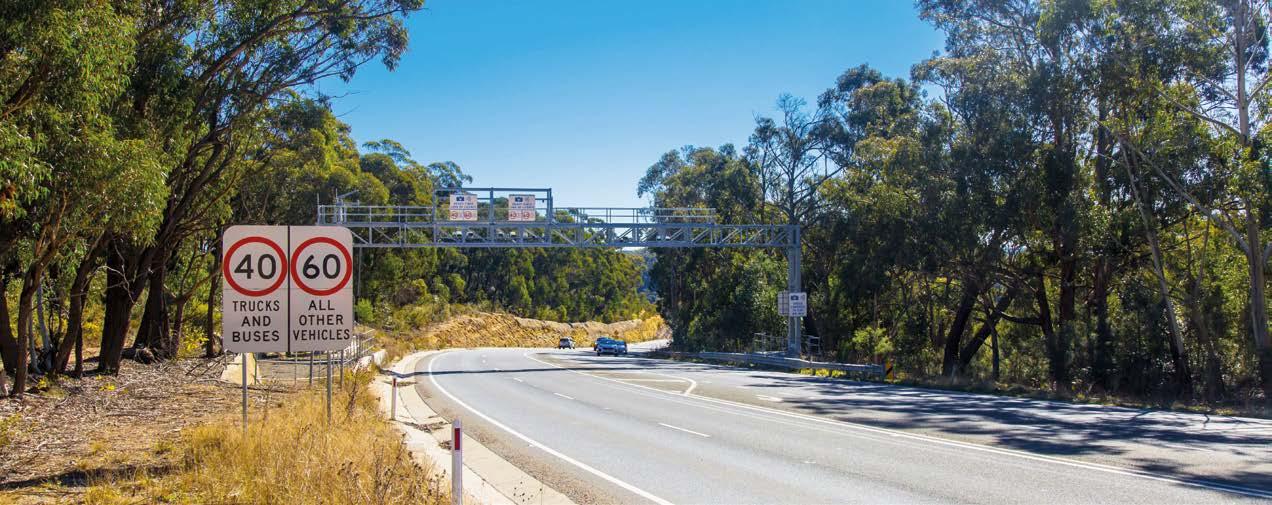
part of the state, and it will make a real difference for the thousands of motorists and hundreds of heavy vehicles that use this route every day,” said Federal Minister for Regional Development and Local Government, Kristy McBain.
“The Albanese Labor Government is proud to partner with the Minns Labor Government to deliver major safety upgrades on key regional highways like the New England Highway.”
The New South Wales Government has committed $183.2 million to upgrade key freight routes supporting the movement of Oversize Overmass (OSOM) loads tied to renewable energy projects across regional New South Wales.
The investment is aimed squarely at improving access and safety for heavy vehicle combinations transporting wind and solar components through designated Renewable Energy Zones (REZ), with funding allocated across Central-West Orana, South-West and New England regions.
Central-West Orana will receive $50 million for upgrades along the Golden Highway and connecting corridors between the Port of Newcastle and the state’s central west.
The South-West REZ will see $65 million directed to six intersection upgrades to facilitate component movements across the Riverina, while $68.2 million is earmarked for New England works including upgrades at Rix’s Creek Bridge, the Liddell Interchange and future OSOM route planning around Tamworth.
Design activity is already underway on sections of the Sturt and New England Highways, alongside town entry safety treatments on the Golden Highway through Dubbo, Dunedoo, Jerrys Plains, Denman and Sandy Hollow.
The works build on an existing $128.5
million program targeting 19 upgrade sites in the Central-West Orana REZ, with treatments including widening, new turning lanes, signage relocation and drainage improvements at known pinch points. Total funding for REZ road infrastructure now stands at $216.9 million.
Minister for Energy, Penny Sharpe, described the program as part of a broader system transformation.
“The Minns Labor Government is delivering a ‘once-in-a-generation upgrade’ of the state’s electricity system,” she said.
“As part of this, we are upgrading our road network to help deliver the renewable energy zones and a once in a generation road upgrade.
“NSW has the most advanced plan for the rollout of renewable energy in Australia – today’s investment in our road network is the next stage of that.”
Minister for Roads, Jenny Aitchison, said the upgrades respond to growing freight demands in regional areas.
“These upgrades recognise a simple reality. Our regional communities are at the heart of our renewable energy future and for too long they’ve had to bear the brunt of the transition without the infrastructure to support it,” she said.
“I know how important the Golden Highway is for both communities and industry alike. These upgrades will ensure it can safely and efficiently support the movement of energy infrastructure, while continuing to serve the people who rely on it every day.”
OSOM movements are being coordinated to minimise disruption, typically departing ports at night and operating under pilot or escort conditions along designated REZ corridors.
Initial REZ component movements through the port are expected from 2027, placing further emphasis on the readiness of supporting road infrastructure for heavy and oversize transport operations.
Twenty-two new contracts have been released as part of the $9 billion Bruce Highway Targeted Safety Program (BHTSP).
The package includes five construction procurement and 17 design contracts to accelerate delivery of safety works along priority stretches of highway between Gympie and Cairns and builds on early progress in the program.
The program is already gaining pace, with eight projects completed, 17 underway and another 13 construction projects rolling out from early 2026.
The 22 new contracts will include:
• more than 100 kilometres of wide centre line treatments;
• 50 kilometres of pavement strengthening and new overtaking lanes;
• five narrow bridge upgrades in north Queensland;
• road widening and audio tactile line marking improvements south of Mirim Vale;
• resurfacing works between Maryborough and Gin Gin; and
• upgrades to multiple intersections and rest areas.
Assistant Minister for Regional Development and Senator for Queensland, Anthony Chisholm, highlighted the transport benefits the upgrade will present.
“From here in Burdekin and all the way up to Cairns, we are accelerating the delivery of intersection upgrades, rest area improvements, wide centre line treatments and pavement strengthening,” he said.
“These works will make a real difference for drivers, freight operators and regional Queenslanders, and form part of a long-term pipeline of upgrades that will squarely benefit the people who live here.”
A contentious EU regulation on CO2 emission standards for new heavyduty vehicles and trailers has seen eight leading trailer OEMs appeal to the European Court of Justice, with major industry ramifications to come.
Since 1 July 2024, Regulation (EU) 2024/1610, which amended Regulation (EU) 2018/858 and repealed Regulation (EU) 2018/956, requires that semi-trailers reduce their CO₂ emissions by 10 per cent and other trailers by 7.5 per cent.
If trailer OEMs do not meet the targets, penalties of €4,250 (approx. $7,111 AUD) per vehicle and per gram of CO₂ emissions per tonne-kilometre will be
imposed, which industry stakeholders say could result in trailer prices rising by up to 40 per cent.
Under the regulation, a zero-emission vehicle is defined based on a tailpipe approach as <=3gCO₂/tkm (freight vehicles) or <=1gCO₂/pkm (heavy passenger vehicles). Hydrogen-powered vehicles are defined as zero-emission vehicles.
The effectiveness and impact of the amended regulation will be reviewed by the European Commission in 2027.
The first-ever EU-wide CO₂ emission standards for heavy-duty vehicles, adopted in 2019, set targets for reducing the average emissions from new lorries for 2025 and 2030. The targets were
expressed as a percentage reduction of emissions, compared to the EU average in the reference period (1 July 2019-30 June 2020), being 15 per cent reduction from 2025 onwards and a 30 per cent reduction from 2030 onwards. The regulation also contained incentive mechanisms for zeroand low-emissions vehicles (ZLEV).
On 18 January 2024, negotiators from the European Parliament and Council reached a provisional political agreement on a Commission proposal. On 6 June 2024, Regulation 2024/1610 was published in the Official Journal of the European Union and entered into force on 26 June, but with application from 1 July 2024.
According to proponents of the regulation, the revised EU CO₂ emissions standards for heavy-duty vehicles, aim to significantly reduce emissions from trucks, buses and trailers, by setting ambitious, but necessary, targets, including a 45 per cent CO₂ reduction for large trucks and buses by 2030, 65 per cent by 2035 and 90 per cent by 2040 compared to 2019 levels, while also mandating that new city buses become zero-emission by 2035.
The scope of the regulation has been expanded to make almost all new heavyduty vehicles with certified CO₂ emissions – including smaller trucks, urban buses, coaches and trailers – subject to emission reduction targets.
It also extends the scope of the regulation to vocational vehicles such as garbage trucks or concrete mixers at a later stage (2035).
Already in effect, the regulation has mandated since 1 July 2024, a starting 10 per cent CO₂ reduction for semi-trailers and 7.5 per cent for other trailers; based on simulations using the EU’s own VECTOTrailer tool, which forms the core of the regulation.
The passing of the regulation generated a collective reaction of deep concern from trailer OEMs, as they saw the regulation as imposes CO₂ targets that are technically unachievable and linked to annual penalties that could threaten the existence of many manufacturers. This led eight leading European truck trailer manufacturers to file an appeal to the European Court of Justice (Court of Justice of the European Union).
The OEMs were Fliegl Fahrzeugbau, Kögel Trailer, Krone Commercial Vehicle SE, Langendorf, Schmitz Cargobull AG, Schwarzmüller, System Trailers Fahrzeugbau and Wecon. Together, they account for over 80 per cent of annual registrations in the relevant trailer segments in Germany and over 70 per cent across Europe.
The most contentious part of the resolution states that: “Since the CO₂ emissions related to trailers have a strong impact on the overall CO₂ emissions and energy consumption of heavy-duty motor vehicles, CO₂ emissions reduction targets should also be set for trailers.”
For the first time, trailers are included as responsible for CO₂ emissions in the category of heavy-duty vehicles. Until the
amending legislation such a categorisation only applied to trucks and tractor units. However, the group of eight said that trailers themselves do not generate any CO₂ emissions, as they have no engines and argue that, from a technical perspective, the 2030-and-beyond targets of reduced carbon emissions of 10 per cent and 7.5 per cent, cannot be achieved across a manufacturer’s entire VECTOrelevant fleet.
The lawsuit was supported by the German Association of the Automotive Industry (VDA), which considers the CO₂ targets in their current form technically unfeasible.
The appellants claimed that instead of reducing emissions, the regulation could lead to increased traffic volumes and overall emissions.
At the centre of the disputed resolution is how the trailer emissions were calculated – the EU’s Vehicle Energy Consumption Calculation Tool (VECTO) Trailer simulation tool, which the appealing OEMs said is flawed as it takes into account theoretical parameters, such as reduced height or weight. The group said the VECTOTrailer always simulates the entire vehicle combination (tractor plus trailer) and ignores decisive factors for trailers, meaning that an optimised trailer designed for intermodal transport, double-deck or high transport efficiency would still lead to penalties.
The eight companies therefore said that the VECTO-Trailer simulation tool does not achieve its intended goal, results in existential fines, and disregards far more effective measures to improve CO₂ efficiency in trailers.
The European Union, represented by the European Commission and the Council, has argued that the companies lack ‘individual concern’, or legal status to bring the action. In first instance, when the appellants filed court action against the resolution, the EU General Court accepted that argument and dismissed the initial action without examining the merits of the case.
“The EU’s General Court did not hear the case on the merits but dismissed the claim on the procedural allegation that the eight plaintiffs were not individually concerned and thus had no legal standing,” said the group’s spokesperson, Gero Schulze Isfort. “With our appeal we want to overcome this procedural threshold and want the Court of Justice of the European Union (CJEU) to hear our arguments on the merits.”
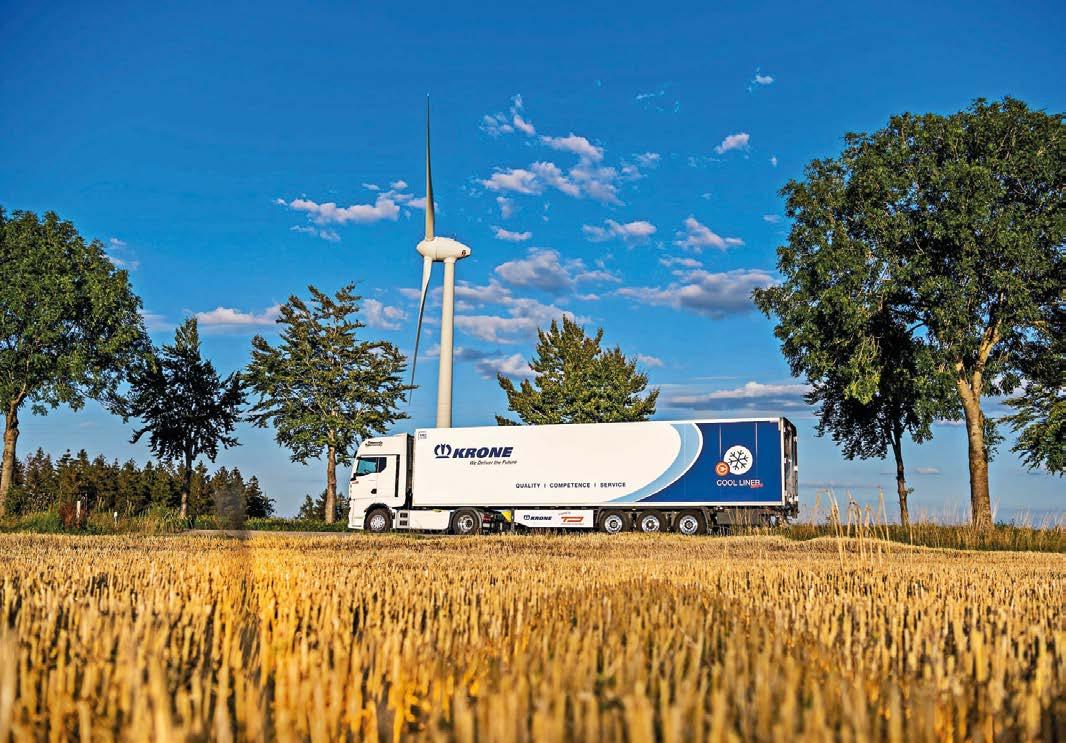
As a result of the General Court’s decision, the eight companies filed an appeal at the Court of Justice (CJEU).
The eight manufacturers emphasise that modern trailers already contribute significantly to efficiency gains through lightweight construction, aerodynamics, reduced rolling resistance, and the use of steerable, lift and e-axles.
They also said they are committed to the Paris Climate Agreement and are convinced that climate protection can only be truly efficient if it is economically viable and technically feasible.
They added that, without amendments to the regulation, more than 70,000 jobs are at risk, with corresponding severe economic and social consequences for Germany and the European industrial base, therefore posing an acute threat to their economic viability – with direct implications for thousands of jobs in the manufacturing and supplier industries.
“We need actual efficiency gains across the entire system, not simulated pseudosolutions,” said Isfort. “In its current form, the regulation jeopardises not only climate targets but also production sites, fair
competition, and more than 70,000 jobs. We therefore see no alternative but to seek legal recourse.
“Climate protection requires holistic thinking. Only if the entire transport chain becomes more efficient can we achieve genuine CO₂ savings.”
The eight appellants said that the Commission and the Council had not addressed the substantive issues of their claim, namely the technical objections to the VECTO-Trailer tool or the economic impacts of the regulation that have been raised by industry stakeholders.
“On the political level, we want EU policymakers to understand the foreseeable consequences of their decisions and to work with us on realistic solutions,” said Isfort. Consequently, the group formulated three demands, which it says will avoid inevitable economic and social damage:
1. Abolition of the penalties of the VECTOTrailer simulation tool and the tool itself.
2. A moratorium on penalties until targets are technically achievable.
3. Credit for zero-emission tractors in trailer CO₂ targets (ZE Vehicle Correction Factor).
The scope of the regulation now covers almost all new heavy-duty vehicles with certified CO₂ emissions subject to emission reduction targets, which the appellants believe lacks a sound rationale and does not appear to be fully thought through.
“A policy that does not make technical or practical sense cannot achieve its goals,” said Isfort. “One should also keep in mind that we are talking about trailers here, which do not produce emissions themselves as they do not have an engine.”
According to the OEM group, the regulation has already had a series of deleterious effects, being:
• Manufacturers are forced into costly data collection and reporting obligations.
• They must make irreversible investment decisions based on a simulation tool (VECTO-Trailer) that does not reflect reality.
• It has created massive uncertainty for production planning and orders.
• It threatens to raise trailer prices by up

to 40 per cent, reduce competitiveness, and will lead to production shifts, unemployment or insolvencies.
• It risks more road traffic, due to capacity loss from artificially lowered trailer dimensions.
As a result, the group argues that the approach to the regulation is disproportionate, technically unfounded, and counterproductive for climate goals, as they see the legislation as imposing constraints on designs that reduce capacity and increase emissions, which is the opposite of effective climate policy.
“A tool that simulates CO₂ savings even though, in reality, more trucks are on the road contradicts the climate targets,” said Isfort. “The penalties foreseen will reach existential dimensions even in cases of only slight non-compliance with the targets.
“What appears to save CO₂ on paper generates additional emissions on the road. That is not climate protection but an illusion with real-world consequences.”
The group of eight is confident that the appeal before the Court of Justice (CJEU) in Luxembourg City will be successful, noting that the German Association of the Automotive Industry (VDA) shares their concerns.
“We consider the General Court’s purely procedural ruling to be incorrect, especially since our arguments were not adequately considered,” the spokesperson said. “We are confident that the CJEU will view our case differently and have substantiated our appeal accordingly. Importantly, the General Court has not yet addressed the substance of our arguments.
“On the merits, we claim a violation of several rights under the EU Fundamental Rights Charter (FRC) and are confident that the CJEU will accept our argument that these rights are violated by the regulation, which also disregards the principle of proportionality.”
In the event the appeal is not successful, the eight OEMs said the financial
consequences will be severe for the OEMs, employees and consumers. Isfort said the ramifications would include direct threats to over 70,000 jobs in Europe and “existential financial penalties” starting in 2030 that would cost larger manufacturers up to hundreds of millions of Euros annually.
Added to these direct financial consequences, the group said there will be a massive loss of European competitiveness, leading to the potential offshoring of production in places such as Asia. The consortium sees that as another step towards the deindustrialisation of Europe.
Coupled with that, the group said there will be higher transport emissions and more traffic, which is counterproductive to EU climate goals and a heavy distortion of competition within the trailer market, where smaller OEMs will struggle to compete or remain operational.
Ultimately, the group of eight is hopeful that a positive case outcome will stimulate a constructive dialogue in the EU institutions to not include trailers in the coverage.
“Australian Truck Radio is my trucking radio station. So many great trucking tunes with loads of industry news. I lock it on and leave it on all day long!”
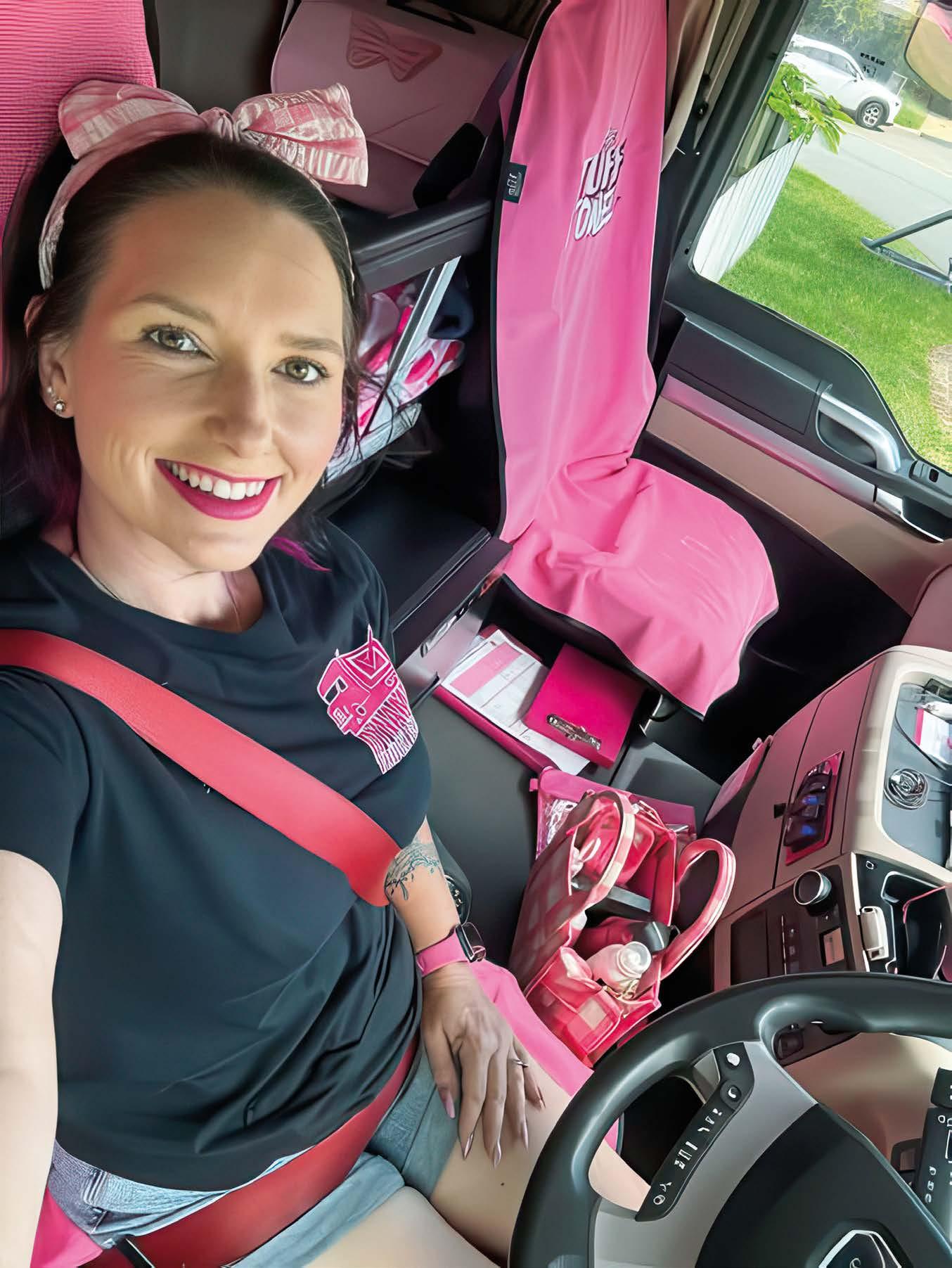





Hi-Quality Heavy Haulage has launched a new Drake Trailers combination into its interstate operations.
Hi-Quality Heavy Haulage has taken delivery of a new Drake 4×4 Full Widener and 2×4 dolly following a period of significant growth and its recent expansion into Central Queensland.
The new Full Widener features a deck length of 13 metres with three-metre ramps, multi-position ramp props and light boards. Its specs include a hydraulic neck which is used for self-loading suitable freight, drop deck which reduces overall travel height for higher loads, hydraulic suspension, auto greasing system for less maintenance, 3-way container pins and more.
Hi-Quality General Manager, Mitchell Gregory, says the Full Widener was designed in line with a tried and tested spec which has proven to be very successful.
“This is our second brand-new Full Widener which is identical to a unit we purchased four years ago,” he says. “Its most important features are a drop deck which helps reduce height when carrying higher cargo and a hydraulic neck which makes hooking up vehicles and adjusting load height much easier. It’s a fairly standard spec, but it works very well for us.”
Hi-Quality services a range of sectors
including mining, earth moving, oil and gas, renewable energy, engineering, heavy manufacturing, civil construction and infrastructure. The Full Widener has become an extremely versatile asset to these industries – having been deployed in operations Australia-wide.
“This is a trailer we heavily rely on because it’s one we can trust,” Mitchell says. “It has a 46-tonne payload and it will move whatever falls within that criteria.
“We just used it to transport a Caterpillar scraper from Queensland down to southern Victoria, and it’s been up to Cairns with a 25-tonne generator on it as well. It isn’t restricted to any specific state.”
Hi-Quality Heavy Haulage has undergone significant growth over the last five years. The business is now operating across three sites in Mackay, Brisbane and Port Kembla with a fleet of 20 trucks.
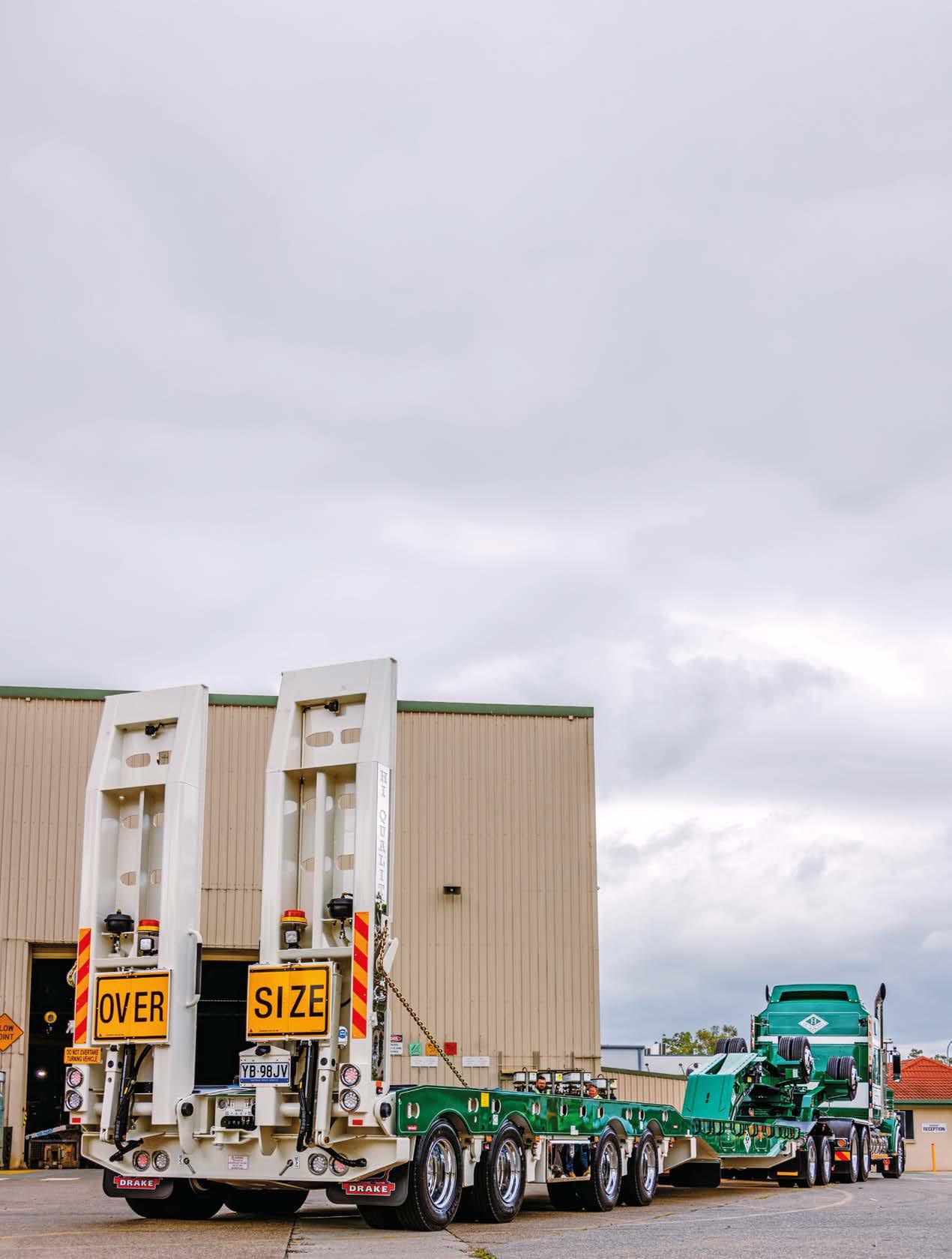
Pencil in some information on dates and venues of various truck shows, field days and road transport industry conferences both locally and internationally.
Tocal Field Days
1-3 May
Tocal, NSW Visit: www.tocalfielddays.com
Brisbane
Australian Manufacturing Week
12-14 May
Brisbane, QLD Visit: www.australianmanufacturingweek.com. au Endeavour Awards
13 May
Brisbane, QLD Visit: www.endeavourawards.com.au
Victoria
NBTA Bulk Tanker Day
13 May
Melbourne, VIC
Visit: www.nbta.com.au/Bulk-Tanker-Day
New South Wales
TruckShowX
18-19 May
Lovedale, NSW
Visit: www.hvia.asn.au/events-hvia
Trucking Australia 3-5 June
Hamilton Island, Queensland Visit: www.new.truck.net.au/ta
CeMAT AUSTRALIA 23-25 June
Melbourne, VIC Visit: www.cemat.com.au
IAA Transportation
15-20 September
Hanover, Germany
Visit: www.iaa-transportation.com/en
Victoria
MegaTrans 16-17 September
Melbourne, VIC Visit: www.megatrans.com.au
BULK2026 16-17 September
Melbourne, VIC Visit: www.bulkhandlingexpo.com.au
Victoria
Elmore Field Days 6-8 October 2026
Elmore, VIC Visit: www.elmorefielddays.com.au
Wandin Silvan Field Days 16-17 October
Wandin, VIC Visit: www.wandinsilvanfielddays.com.au
New South Wales
MOVE Australia 14-15 October
Sydney, NSW Visit: www.terrapinn.com/exhibition/move-au
Fenatran 9-13 November
São Paulo, Brazil Visit: www.fenatran.com.br
Queensland
AusRAIL 23-25 November
Brisbane, QLD Visit: www.ausrail.com

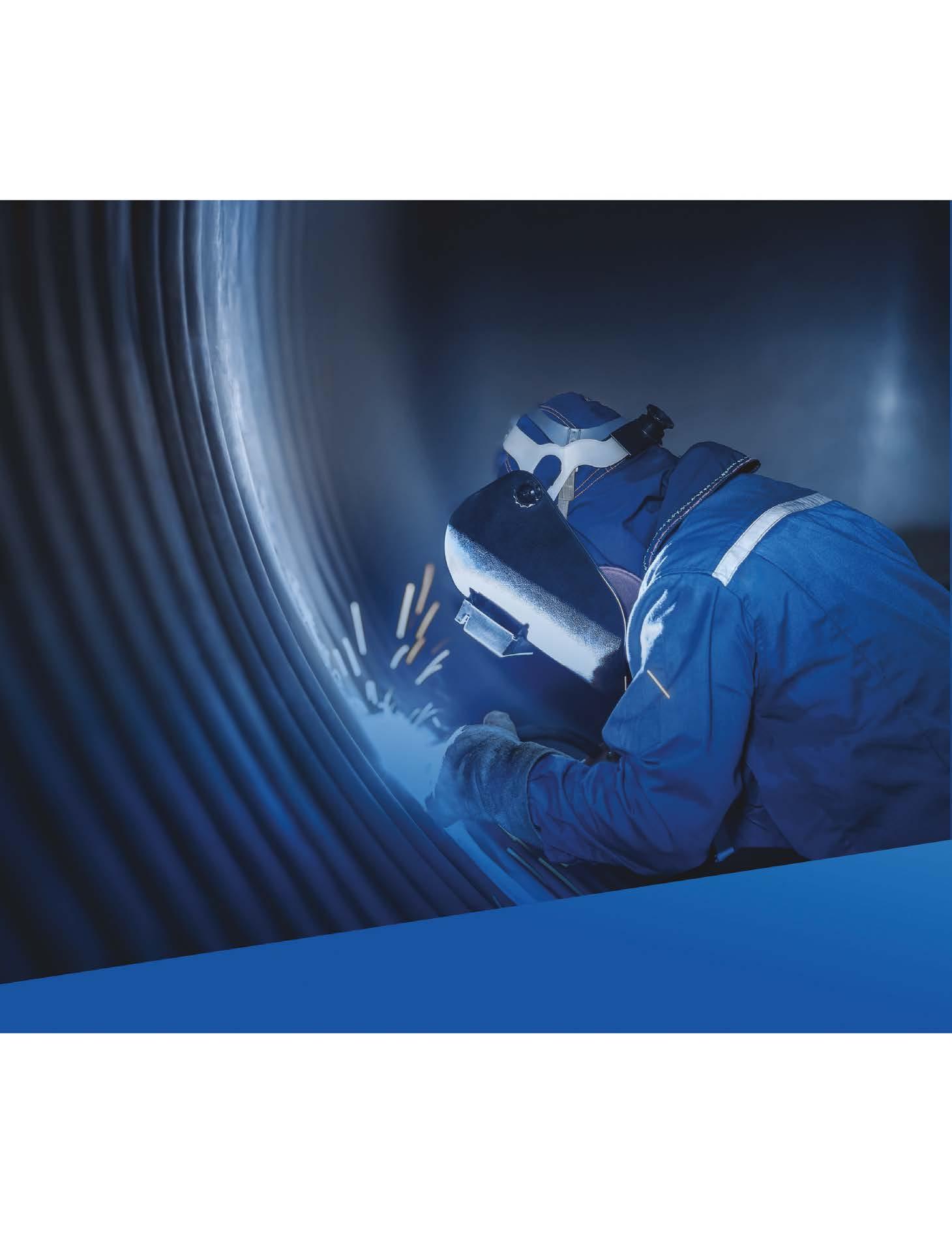
endeavourawards.com.au