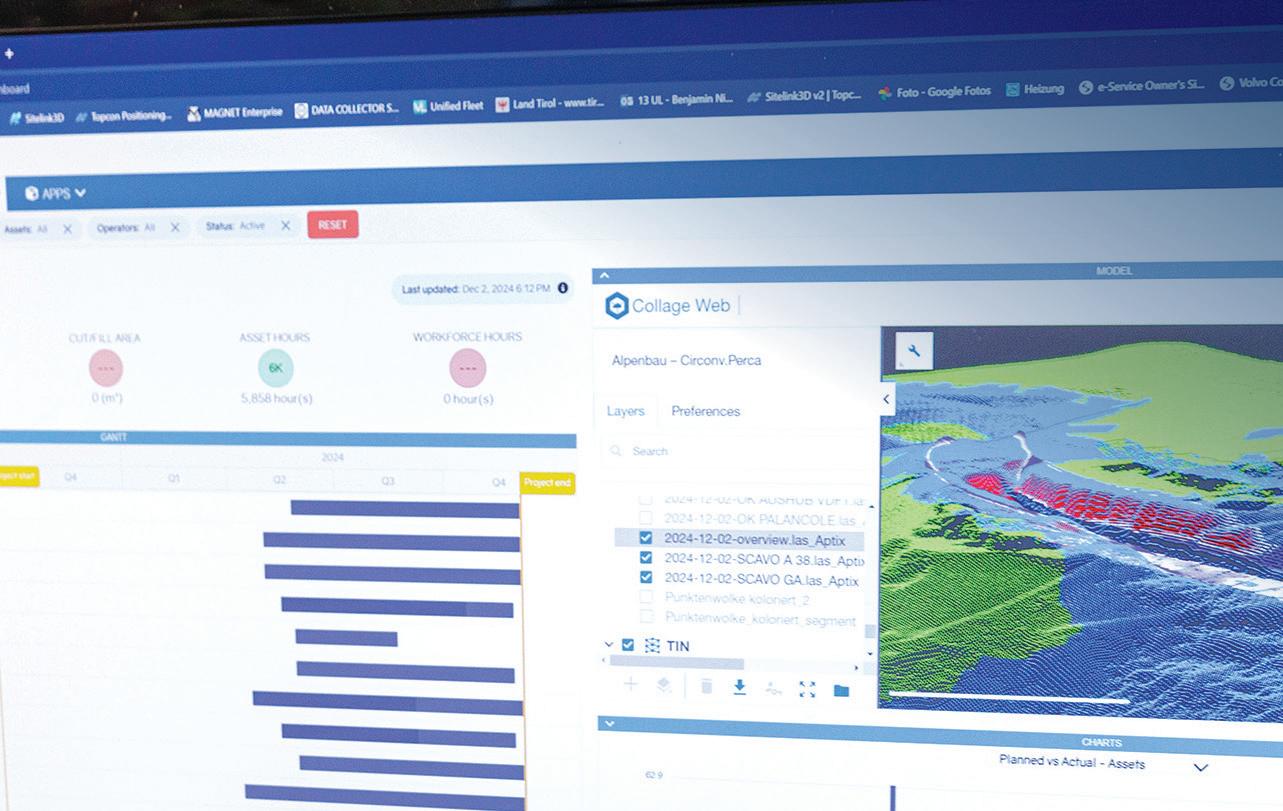
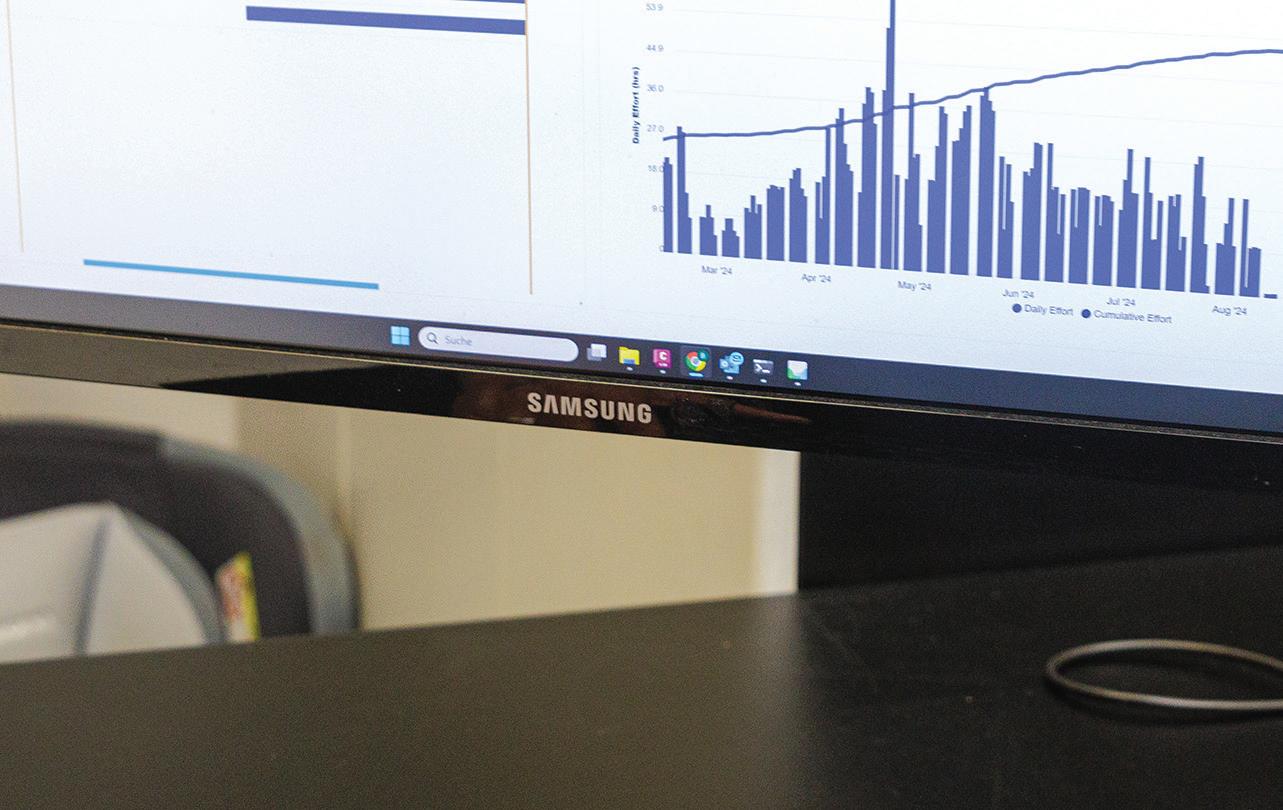
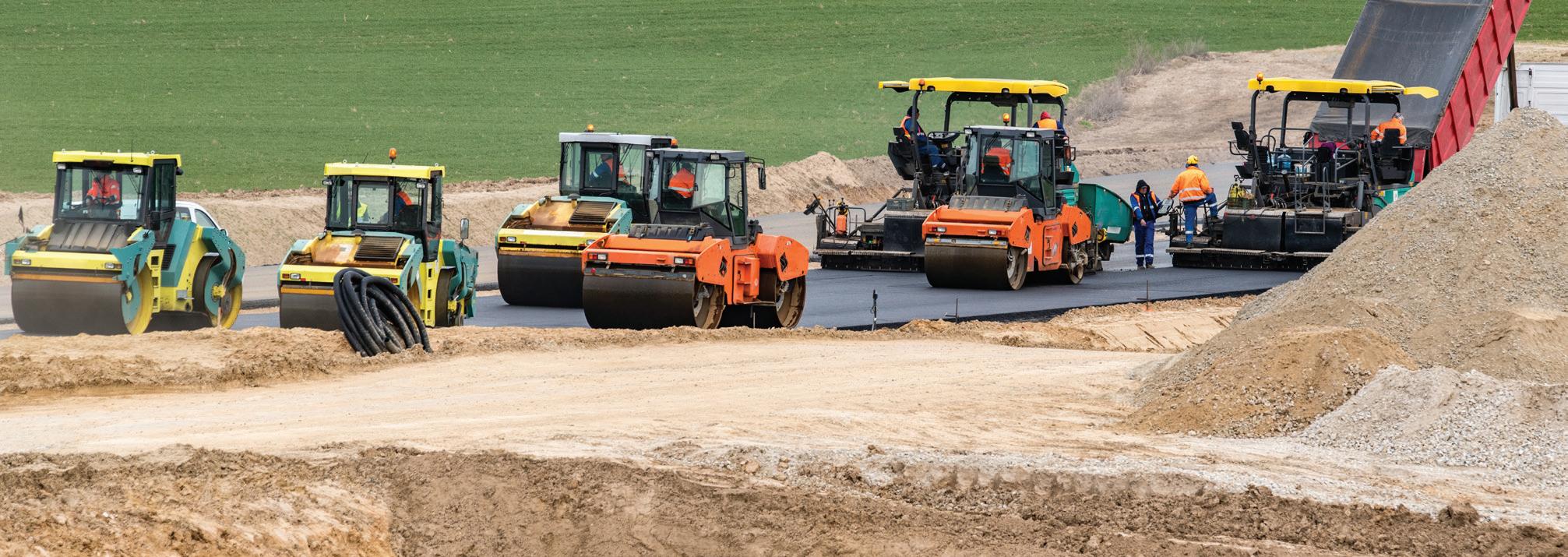
Whether building new highways, roads, or bridges, the things you build are vital to improving the lives of people and communities now and in the future. We provide solutions that bring increased accuracy, e ciency, and sustainability to your projects, allowing you to do more with less.
Learn more at topconpositioning.com
16
GREEN DIESEL FUEL
What does sustainable, renewable diesel have to offer? Liam McLoughlin reports
22
REUSING MATERIALS
How repurposed and specialty minerals can help on the road to a more sustainable future: Andrew Askew from MINORE
30
38
3D VISIBILITY FOR CONSTRUCTION ADVANCES
Use 3D modeling to advance sustainable highway construction best practices: Anna Liza Montenegro from Microsol Resources
ARTIFICIAL INTELLIGENCE FOR SUSTAINABILITY
Hyundai's X-Wise artificial intelligence platform takes sustainability and site safety to the next level: Hyundai and Google at CES
04
46
SUSTAINABLE CONCRETE
Clean, green and sustainable concrete ideas: our guide to eco-friendly concrete
ROUNDTABLE: GREENING THE WORLD
It’s all about profit, people and the planet: AB editor Guy Woodford talks to two world-class experts: Jeremy Harsin from Cummins and Michael Gomes from Topcon
Route One Publishing Ltd, Waterbridge Court, 50 Spital Street, Dartford, Kent, DA1 2DT, UK
Tel: +44 1322 612055
Fax: +44 1322 788063
S IT’S ALL ABOUT PROFIT, PEOPLE AND THE PLANET
Sit in on our latest round table discussion on sustainability in the construction and aggregates industries, brought to you by Global Highways and Aggregates Business. AB editor Guy Woodford has been talking to two world-class experts: Michael Gomes from Topcon and Jeremy Harsin from Cummins. Make your planning, your work ows, your contract tenders and your sites as sustainable as possible. “Sustainability is really about pro t, people and the planet,” say our experts. “Being able to drive that is the work that matters.”
Q: How can we set and maintain sustainable standards and make sure you are buying from sustainable primary, secondary and tertiary suppliers?
MICHAEL: Once you engage in that sustainability process, one of the most important things is looking at your Scope 1, 2 and 3 emissions. Then engage with your supply chain. That starts with an understanding of where you are, as well as where you want to go, engaging in the process and getting some basic metrics right. The most important thing is starting the dialogue because it will take at least six to twelve months to engage with your supply chain and help get them up to speed. At Topcon, we’re just beginning that process.
Q: How do you start the dialogue?
MICHAEL: It might start with a survey, so we know where everybody is on the sustainability journey. A benchmarking survey will show where you are and the most important issues to you. It might be human rights, it might be materials and sourcing, or the treatment of people or the extended supply chain and the supplier interface. It could be about water or environmental risk for different locations.
JEREMY: We produce engines and powertrains so my replies will be angled towards that. We are very focused on emissions from our equipment and how our products are used in the eld. The key is that the standards are practical and realistic to implement, and widely applicable. We see pocketed things which are really hard to navigate. Not to say that we sit still but we want to ensure that we’ve got the right things to work on in the right time frames.
Previously, we’ve talked about scale, particularly how hard it is to build in an off-highway world where the volumes are not on-highway. Being able to build scale on solutions and being able to manage those is a problem, not just for us but for OEM partners as they think about chassis proliferation etc. It comes down to good collaboration between the regulators, suppliers like ourselves, the rest of the industry and trade associations. Through those conversations you tend to pick up a lot more detail concerning infrastructure, how we make sure that we’re covering all the challenges of this diverse market, while we’re getting work done.
Watch the full interview here
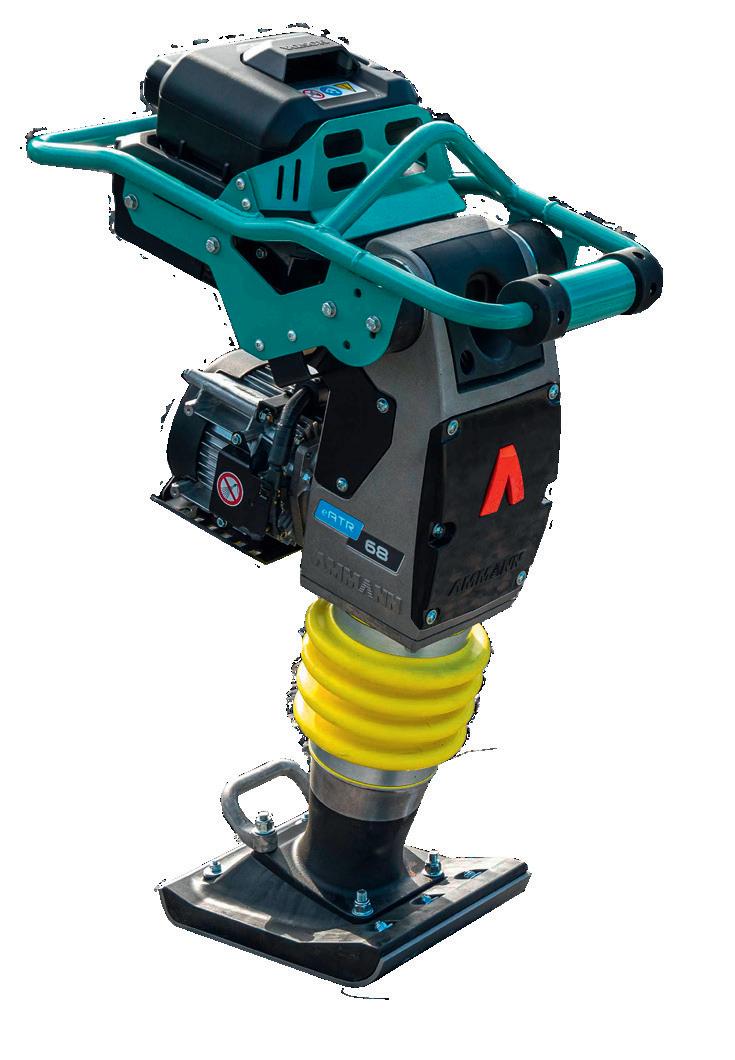
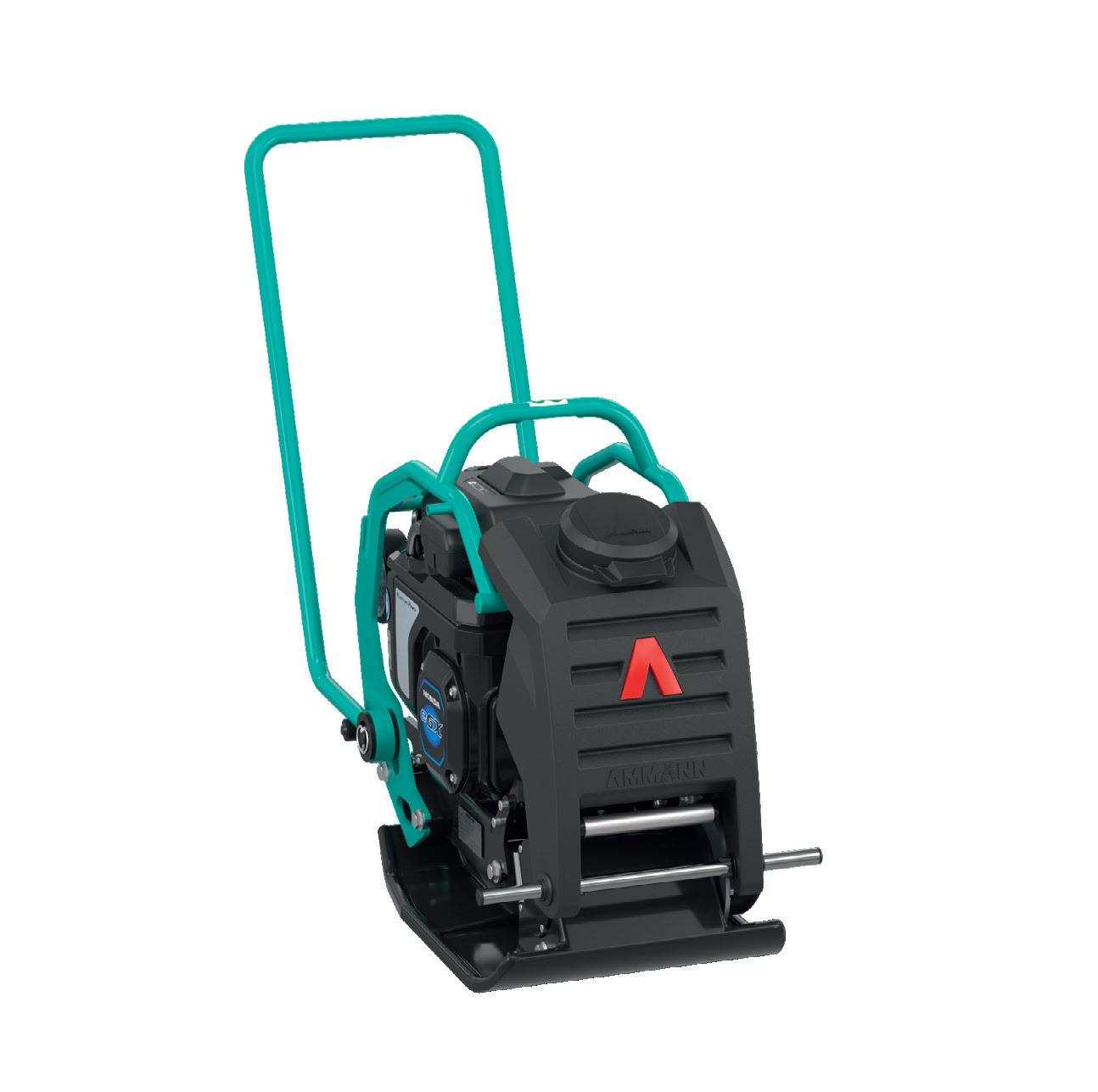
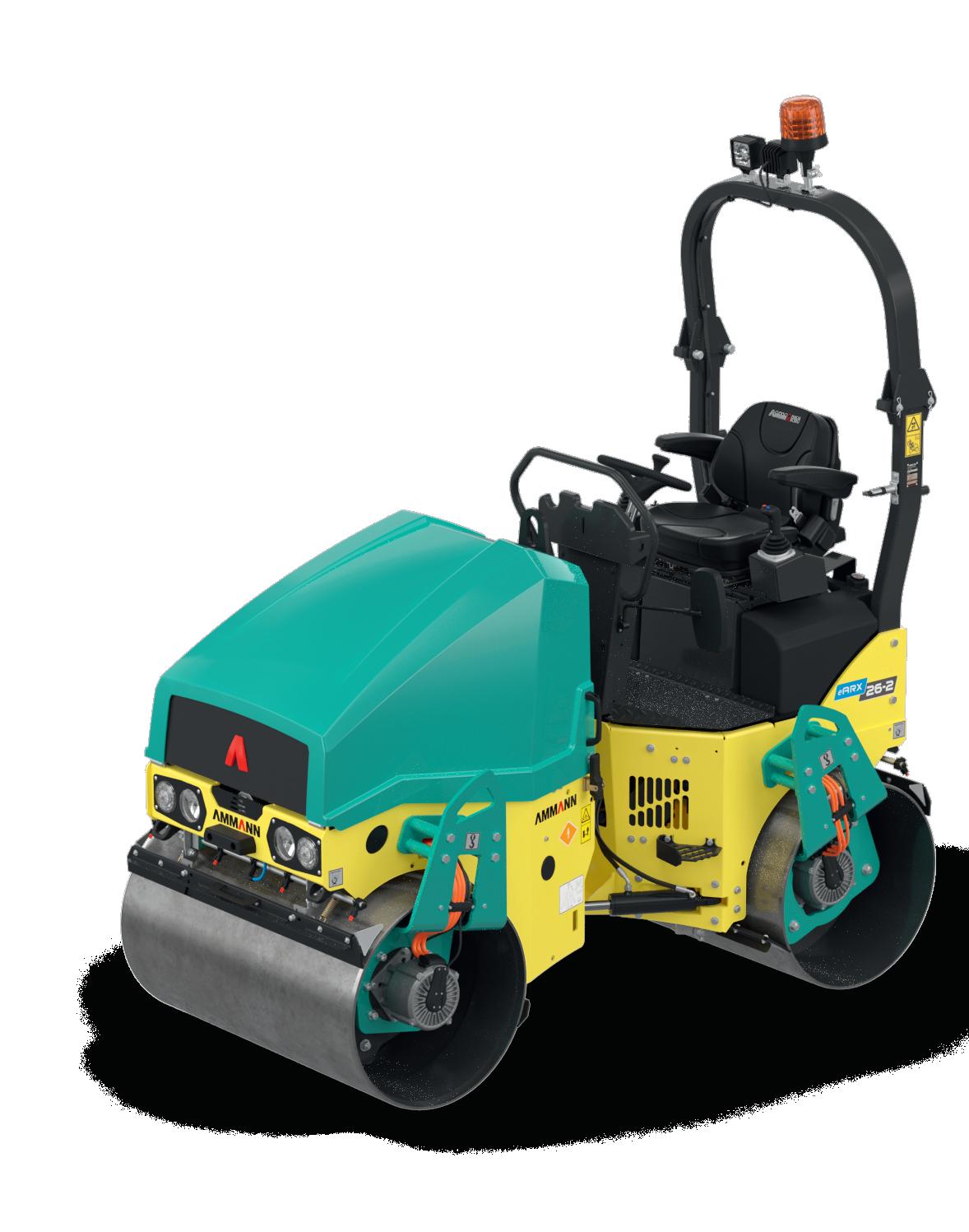
• eATR Rammer: Unleash the force of compaction, rivaling its petrol counterpart!
• eAPF Vibratory Plate: Power-packed performance, matching the output of traditional
• eARX Light Tandem Roller: Go big and green! Fully electric, 8+ hours of
operation without recharging! Get the job done efficiently and eco-friendly with your electric trio!
Q: Jeremy highlights the importance of having a relationship with regulators. How crucial is that to moving forward on sustainable work ows?
MICHAEL: Very important. We’re here in the state of California which has in many cases, for better or worse, led some of those initiatives, for example, with the Tier 4 and Tier 5 emissions standards and the California Air Resources Board. Topcon’s been engaged in elements of those conversations as a member of the Association of Equipment Manufacturers, as well as with the [Agricultural Industry Electronics Foundation] and we’re really working to align with elements of adopted standards. One of the biggest things when interfacing with the regulators is providing information. One of the biggest challenges is that you don’t know what you don’t know and a lot of this stuff can become very technical. We really work on transparency, to be able to share information. As an industry, each of us has a voice but together that choir can really sing and make music if we’re coordinated in our approach. Once we establish some basics of vocabulary, that really helps. I don’t want to use the word ‘lead’ but I’ll use the word ‘in uence’. If we provide information to regulators and other stakeholders then we begin to frame where we are as a company.
Q: On the question of the carbon produced by the construction industry and various transportation and production processes, how can you help customers reduce Scope 3 supply-chain carbon emissions?
JEREMY: We work with OEMs; we don’t deal directly. We work through OEMs who move earth or transport goods, depending on the market, and that’s true for both on- and off-highway. We’re making sure we partner with them as we head towards reduced emissions. We’ve talked previously about intermediate steps making a big difference now, while we’re focusing on that long-term realistic approach about how we’re going to get from A to B. Current engine systems are much cleaner than those from a decade ago. We’ve used an example in our communications comparing the current US spec to a Tier 1 machine. It’s something like 25 to one from an emissions perspective – a bit extreme because there’s not a lot of Tier 1 out there but there probably is still a lot of Tier 3 equipment out there.
Beyond the engine system, another big focus for us is this integrated powertrain mindset. The more integrated - and that doesn’t necessarily have to mean hardware but could include electronics features - collaboration with customers and other powertrain producers, the more ef cient and productive we can be. You probably need look
no further than our Meritor acquisition a couple of years ago. We are trying to expand from just an engine and an aftertreatment to other components . The more pieces you put together, the more optimised you can get the system. The Cummins Meritor portfolio is going to serve customers globally. It could be a combustion-based powertrain, or it could be electrified powertrains. We’re spreading that investment around and covering many different scenarios, depending on the use case.
Q: So, a lot of choice, a lot of variation. How can Topcon help customers reduce transport costs?
source. We obviously have very specific business and sustainability targets for the manufacturing sites. In 2023 the company invested a little over $40 million on energy waste and water-reduction projects.
With manufacturing facilities, a lot of the power comes from solar, so we’ve continued to expand solar capability at the sites. I believe we’re up to 66 locations that have some form of solar arrays onsite for power generation. Where we can’t do that, we look for other ways to make a difference. In northern Indiana there is the Meadow Lake wind farm. Since 2017 Cummins has worked as part of a virtual-power purchase agreement to make sure we’re helping to expand that and offset the energy that we use in other facilities. There are a lot of different ways you can go about it. For the 2030 goals it's going to require action across the company. We publish a sustainability report every year. The key part can elements
whether that is understanding vehicle tracking of what you moved and didn’t move, or showing
MICHAEL: Our business is fundamentally different from Jeremy’s. When customers head down the sustainability journey one of the first things you look at is your Scope 1 and 2 emissions. For people who construct buildings and surfaces, move dirt or grow crops there are a lot of issues about what you burn and where you start with inputs. That can be, for example, the difference between hot-mix asphalt and warm-mix asphalt. In many cases, it starts with elements of the inputs because that is the lowhanging fruit. It’s ‘what is the carbon footprint of those materials?’ Topcon sensors and technology can be used to create those digital data layers, whether that is understanding vehicle tracking of what you moved and didn’t move, or showing how you moved less. It’s showing how you did the job right. It’s the proof of placement. As more people go to warm-mix on the front end, that really amplifies the need for things like intelligent compaction and smoothness standards to make sure you are getting the longevity and Scope 3 emissions out of the life of that structure. We work with clients to understand how the digital data layers can be captured within the workflow. Then those digital data layers serve as proof of practice for what they’re doing.
Scope 3 emissions out of the life of that structure. We work clients layers
How possible
Q: How do you make the best possible use of renewable energy in manufacturing waste, management techniques etc. and how do you help customers capture some of those sustainability gains?
JEREMY: Somebody once said the greenest energy is the one you don’t use. For an engine system or a manufacturing facility, the goal is to make it more effective … to use less. It’s about an increase in efficiency. Once you’ve got that efficiency optimised, you can focus on how you pivot over to making sure that that energy is coming from a renewable
for corporations is coming up with goals based on science, articulating what those are and focusing on their execution. It’s one thing to say it, it’s another thing to put the proof down and put the work in. That’s what we’re striving to do.
Q: How is Topcon embracing the idea of renewable energy and helping customers here?
MICHAEL: Like Cummins, for many years we have published an integrated report that includes sustainability metrics. This year, our report includes Scope 1 and 2 from all our manufacturing facilities, as well as Scope 3 on the input side from our Japanese manufacturing facilities. We’re expanding that to include 45, if not all 81 Topcon locations worldwide. One of the first things you begin to understand is where you are. It was a pleasant surprise to find that about 4% of our electricity came from renewable sources. We’ve added solar at a number of facilities. Looking at our Scope 1 and 2, that number of our inputs coming from renewable sources increases to about 7% because in many cases our facilities, for example in the Netherlands, are all powered by wind.
Our Finland facility is 100% renewable, through local initiatives. It uses wind as well as hydroelectric power, and even heat from the earth and from the local utility sanitation area. We’re increasingly finding those proof points as we continue down our sustainable journey. Once you understand where your Scope 1 and 2 is, it helps you do a better job to help your clients understand where they are on the sustainability journey. We’ve found that helpful as well as educational.
Q: What is Cummins working on in the sustainability area in terms of new developments, technologies and software solutions, including your new brand Accelera and your recent acquisition Meritor?
JEREMY: It’s a long list. We continue with record levels of investment in combustion technology. I would be doing a disservice if I didn’t mention that. We believe wholeheartedly that technology has a long runway still, on-highway and off-highway, but much more so on off-highway. If you look at off-highway historically, we have always benefited from the activity in the on-highway space, both from product learning, as well as from a technology perspective. As on-highway markets continue to evolve and bring new platforms or requirements that drive new platforms, that opens up a lot of opportunity for companies like Cummins to bring new things into the off-highway world that, even if they are still combustion engines at the same emissions, are going to get the jobs done more efficiently than their counterparts and predecessors.
We launched the Next Gen X15 for Stage 5 and Tier 4 markets at Intermat last year. That’s coming to production, I believe, in the fourth quarter of 2026 or the first of quarter 2027. Looking at what’s going on in on-highway, there’s clearly a 2027-round of emissions coming. We’re looking at that product and that technology and are already reading ahead to 2030 time frame emissions for off-highway. The planning work has already started.
We’re not going to stop at engine systems so, again, it’s great to have an engine and an aftertreatment solution that meets emissions targets and does the job. If you think
that are not necessarily new. We’ve talked about it before but even just digital connectivity. I’m sure
powertrain, think a little bit more broadly - hybrid activity is on the rise. We have a lot of projects right now but, there’s also a lot of applications you could buy today. You don’t have to look too hard to nd them. There are de nitely options that are starting to emerge in the market. Those don’t necessarily show up from a government’s perspective. They probably would show up from an end-user perspective on fuel consumed. It starts with an engine system that people want. Once you get that, you start thinking beyond that and about what control feature sets etc., we can integrate to make that equipment more ef cient, more productive, and more enjoyable to operate. There are things out there that are not necessarily new. We’ve talked about it before but even just digital connectivity. I’m sure my co-panelist would con rm that data is power. The more data we get, the more intelligent a decision we can make and, from our perspective, the better we can integrate because we get insights on how people are using the equipment and where we can really make an impact.
The more data we get, the more intelligent a decision part of the mix for Cummins’ sustainability path?
Q: Can we talk about hydrogen which is very much part of the mix for Cummins’ sustainability path?
JEREMY: We’ve talked about our electrolyzer business and our Accelera by Cummins division. Work continues on fuel cells although these are farther out for a lot of markets. More near-term, we’ve launched what we call the HELM platform, which is a base engine system. You can swap some key parts out on assembly line and burn different fuels in them so hydrogen is a combustion engine solution –something a little bit more near-term for some markets. It’s a big part of the plan moving forward.
Q: From Topcon’s perspective, what are the upand-coming technologies and development solutions which are really helping customers on the sustainability side?
MICHAEL: It starts with the data from the machine, being able to use basic systems like telematics etc. to get data off the machine, as well as feed data to the machine. Once you get those data layers off the machine, that data serves as proof of practice and then it comes down to what software system you are working with. Then you can share the data with your stakeholders or use it for your governmental
layers from the machine to the software platforms, focusing
reporting processes. We are working on getting the data layers from the machine to the software platforms, focusing on the interoperability and the sharing ability within those
software platforms as a recording system for proof of practice.
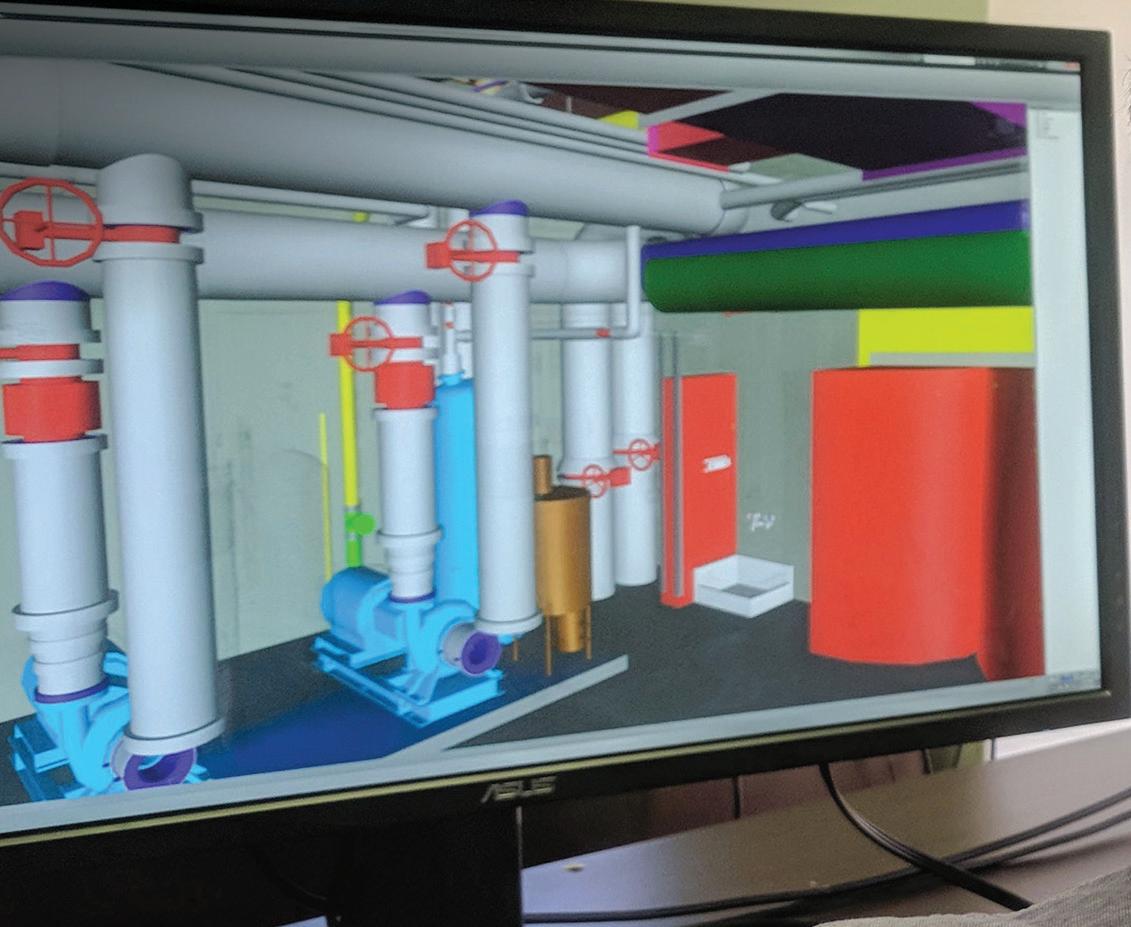
On the Topcon side, for civil engineering it’s our ClearEdge3D for measuring and using data to understand how I use, for example, concrete versus green concrete and how that reduced my carbon footprint. On the construction side it’s our Aptix platform where we can track how we move less dirt, burn less fuel and are on target. On the agricultural side it’s our TAP platform where we can make the choice between formulated fertilisers or organic fertilisers and show how that is re ected as best management practice in the carbon footprint of the crop’s eventual output.
Q: How optimistic are you about a carbon-neutral construction and off-highway equipment industry? What is a realistic time frame – 2030, 2050?
JEREMY: I would say, long-term, optimistic but with a time frame quali er put around that. From our off-highway perspective, a combustion engine runway is a long one. This is de nitely the case when you get outside of markets
like the US and Europe so we tend to focus on those. What we don’t always talk about is markets like Africa, South America and Southeast Asia, where it’s going to be a lot longer. It’s hard to give data and it’s going to vary by which plot of land you’re on. Often, you’re doing construction because the area needs developing, but from an infrastructure perspective the power isn’t there and the fuel has to be brought to the equipment. It’s not like a truck where it pulls into the station. The power density on this equipment is very high. We continue to stress pragmatism.
The best thing we can do is continue to invest, make solutions available and continue to expand into a powertrain supplier, and be able to drive further reductions. As far as 2030, 2040, 2050, that’s hard to say. It’s probably no problem in the US and Europe markets – there are some challenges but we’ve all got a common mission. Elsewhere in the world, where a lot of the construction happens, it’s going to take longer.
Q: Crucially, it’s about helping contractors when they’re bidding for work. It’s a big factor in driving this agenda if they say they have a low-emissions Cummins powertrain when bidding for work, isn’t it?
JEREMY: How it shows up in bids is interesting. In a job bid you could probably spec out an equipment-emissions level. That’s an easy rst step. Fast forward a few years, if somebody wanted to go as far as to spec out that it had to be a hybrid, it’s probably okay in some cases. My guess is you limit what OEMs or contractors are going to be able to do in that job. There may or may not be a solution at that
time. Flexibility has got to be part of it. We’re all working toward lowering emissions and eventually BEV and fuel cells etc. are going to come but it’s got to be phased in. What you’re asking for at any given time, needs to be matched with what the market has to offer.
Q: How optimistic is Topcon that the construction industry will hit net zero targets. Will you hit your own company targets and how can Topcon help customers in the bidding process by offering sustainable solutions?
MICHAEL: We’re very bullish in the long term. We believe in where this is headed. We realise that different parts of the world move at different paces. In many cases, the developing world might even be adopting or moving faster than the developed world because they have fewer standards and they can jump straight to the newest, latest, greatest technology. They are not handcuffed.
Q: Can you give examples of where this is happening?
MICHAEL: Japan is very climate sensitive. In Europe and speci cally northern Europe, we’ve seen it with a project in Norway that we have been working on 2017-2020. It’s a case of being able to provide those proof points. It comes down to being able to use those data layers as proof of practice as they begin to frame into that context. The pace of adoption moves at the speed at which incentives are provided because sustainability starts with pro tability. Often, sustainability represents a cost reduction.
Being able to show best management practices so that you can prove you are reducing cost, as well as improving social sustainability from the social side and worker safety from the environmental side, and reducing your footprint, or either from the governance side, you then show how your process is beginning to t into that. Using those digital data layers as proof of practice towards objectives that are being driven with incentives by the various stakeholders is absolutely where we see it. We’re very positive on that.
Q: So, you’re helping customers meet regulations and win contracts by showing them how sustainable your technology is?
MICHAEL: It’s being able to use those data layers as proof of practice. That could be what emissions are speci c to your engine or your powertrain, or the distance travelled or what you’re moving, and then showing that you are doing the right things and using those industry practices that truly represent the best, most innovative aspects of how technology is being used.
Q: Is there anything on the sustainable workforce agenda, not yet covered, that you would like to add?
JEREMY: For off-highway and on-highway, there’s not going to be one solution. We’re going to nd avenues and opportunities to nd scale and build and that will dictate how we’re able to execute. We looked at some quotes from our CEO. I won’t put them as well as she did but some of the key points are that customers need options and Cummins is here to provide them. Even within a given application, you’ve got a wide spread of size. Even within a common size, you’ve got a wide spread of use cases so there isn’t going to be just one solution for a 20tonne excavator. You’re going to see multiples and all of them are probably going to make sense.
For the path to zero, the big part is the commitment to decarbonise and a big part of that commitment is going to be making choices and exibility for OEMs who are going to, in turn, make that exibility available to the end users actually doing the work. Pro tability being a big part of it is a good comment. It‘s easy to have nice solutions that are very advanced, but if the person buying that equipment can’t make a living, we have a problem. We all have to bear that in mind.
Q: The bottom line has to see the bene t. That’s business. Mike, is there anything you would like to add?
"We’re committed, we’re engaged and we’re going to be here all the way through the journey"
MICHAEL: One of the biggest pieces is social sustainability – the idea of quality work, whether that is now safer, or higher value. Is it reducing operator fatigue, and increasing wages for decision-based quality? It’s those pieces of the puzzle, then being able to have the proof points around that social sustainability. The second thing is, it’s elements of the work that matter. Sustainability and digitisation are intimately linked. It’s the elements of those digital data layers and how they t into a work ow, how they can be used as proof of practice that you are doing the right things, not just for pro t but also for the people, for the planet. It’s validating that triple win and aligning it with incentives to deliver value. Our tools and technologies are used as pieces that help customers validate and tell that story about what they are doing and how they’re doing it. That’s where we t into the puzzle.
Q: Jeremy, how would you sum up what sustainability means to Cummins?
JEREMY: We’ve been at this for a long time. We’re 105 years old now and we would like to be at it for a long time to come. We are committed to delivering power solutions, not just one but a diverse portfolio, and that is core to our destination zero strategy. That exibility is, again, how we
JEREMY HARSIN
Jeremy is the Senior Engineering Director for Cummins Global Off Highway business. When he rst joined Cummins fteen years ago, he installed some of the rst fully emissionised engine systems in the market. Moving from engineering to product strategy and management, Jeremy led the company’s agship 6B engine series project, creating the value package which brought these products to market.
get from A to B. Our product range is going to span the core engine business - what we’ve done well for a long time. It goes all the way to the other end, to our Accelera business where we have our zero emissions technologies. You’ve got the components and other business units in between. A lot of opportunity and optionality is there for customers and, again, with that push further into the powertrain strategy our destination zero approach is going to meet diverse market needs. We’re going to bring real world greenhouse gas reductions. Independent of how fast BEV adoption comes, there are things we can and will do. We continue to make signi cant investment. I think, tagline numbers, $1.4bn in R&D in 2023. $250m of that, I think, was Europe alone and I don’t see that slowing down for quite a while. We’re committed, we’re engaged and we’re going to be here all the way through the journey.
Q: Mike, can you sum up Topcon’s sustainability approach?
MICHAEL: From my perspective it’s really around pro t and being able to prove you are “doing more with less”. Sustainability is about the intricate balance of pro t, people and the planet. Being able to drive that is the work that matters.
MICHAEL GOMES
Since joining Topcon Positioning Systems in 2005, Michael has held positions in product, market and business development. He is currently the company’s Vice President, Global Sustainability & CSR (Corporate Social Responsibility). Before that, he led the group’s approach on strategic OEM relationships and headed up a number of successful mergers and acquisitions. He is co-inventor on four technology-related patents and is an Association of Equipment Manufacturers (Ag sector) board member, chairing the AEM Council for Agricultural Technology.
W WHAT DOES SUSTAINABLE, RENEWABLE DIESEL HAVE TO OFFER?
With requirements for the uptake of sustainable fuels increasing in the off-road sector, the use of renewable diesel with construction equipment is set to expand in the coming years. Renewable diesel has both bene ts and potential issues for the construction sector. Is it all going to be as green and eco-friendly as the world would like it to be? Liam McLoughlin reports.
"Switching to fossil-free HVO/renewable diesel fuel can cut CO2 emissions by up to 90%"
According to the Engine Technology Forum (an industry group for the internal combustion engines, fuels, and technologies sectors) the US construction sector relies on diesel technology to power more than 75% of all heavy construction equipment. The Forum adds that in the construction sector 98% of all energy use comes from diesel and it accounts for 55% of off-road fuel use.
This pre-eminence of fossil-fuel use with construction equipment creates a substantial amount of greenhouse gases, which is a problem in a sector where regulators are increasingly looking to cut down on the level of off-road emissions.
In today's powertrain landscape for mobile construction machines, two technologies currently prevail: the internal combustion engine and electrified powertrains.
Markus Bach, senior engineer drive units at construction equipment supplier Wirtgen, says of these alternatives: “For combustion engines, different energy carriers can be used, ranging from fossil-based diesel - the most used fuel today - to fossil-free renewable diesel, and hydrogen. Alternative fuels like HVO (hydrotreated vegetable oil or 100% renewable diesel) are available and could replace standard diesel to a certain extent in specific markets.
“Current fossil-based diesel has a high carbon intensity, causing a lot of CO2 emissions. By switching to fossil-free HVO, this can enable a reduction in CO2 emissions of up to 90%.”
The main advantage of using renewable biofuels over traditional fossil fuels is the lower amount of WtW (well-towheel) carbon emissions, according to a spokesperson for Volvo CE (Construction Equipment).
No pitfalls says Volvo CE
“As the world moves towards more sustainable practices, these fuels provide a promising solution for reducing our dependence on fossil fuels while meeting existing energy needs,” the Volvo CE spokesperson added. “Renewable diesel fuel also offers a decarbonisation alternative for markets that may face challenges in building the necessary infrastructure for hydrogen or electrically powered machinery.”
In terms of its use with construction equipment, Volvo CE adds: “From an operational standpoint, we see no pitfalls by using a renewable HVO diesel fuel according to EN14940 [diesel fuel standard], only advantages with this type of diesel, like lower carbon emissions.”
However, the manufacturer adds that it's important to note that there are also potential negative environmental impacts associated with certain types of biofuel production methods, such as deforestation for crop cultivation or fertiliser release during farming practices for crops grown specifically for fuel purposes.
Bach says that supply might be an issue with HVO in the future because there probably won't be enough to replace all the fossil-based fuel. “HVO is really good for high-power, high-energy applications, where other alternative energy carriers might have limitations. It's a drop-in fuel, readily available and suitable for the majority of Wirtgen Group machines with no modifications needed.”
Volvo CE also says that availability is a challenge for renewable diesel, since the requirement is that the feedstock needs to be sustainable.
The Volvo CE spokesperson states: “Renewable diesel is only one solution to reach our fossil-free targets and there are also other alternative fuels like hydrogen (fuel cell hybrid electric and H2 combustion engines) that can help us with our fossil-free transition in parallel with battery-electric and grid-connected solutions.”
The Association of Equipment Manufacturers (AEM) says that, to fully understand the potential of renewable diesel and its role in what’s expected to be a greener, more sustainable future for the construction industry, it’s important to realise what’s expected of the fuel in both the near term and the long term.
California breathin’
The North America-based AEM – the trade association representing off-road equipment manufacturers and suppliers – continues: “In November of 2022, the California Air Resources Board (CARB) approved amendments to its offroad regulation aimed at further reducing emissions from the off-road sector.”
In amending the In-Use Off-Road Diesel-Fueled Fleets Regulation (Off-Road Regulation), CARB required fleets to phase out use of the oldest and highest polluting off-road diesel vehicles in California; prohibit the addition of high-
emitting vehicles to a fleet; and require the use of R99 or R100 renewable diesel in off-road diesel vehicles, effective as of Oct. 1, 2023 (with requirements beginning as early as Jan. 1, 2024). Finally, as part of its announcement of the regulation, CARB said the programme was expected to yield more than US$5bn in health benefits between 2024 and 2038.
“Regulations like this one are here now,” said David Bolderoff, fleet manager for the Los Angeles County Sanitation Districts, who detailed his thoughts on renewable diesel during an education session at CONEXPO-CON/AGG 2023. “They vary state by state, but this one in particular is a game-changer.”
With regulations like the amended CARB Off-Road Regulation starting to come into play, the AEM says that consumption of renewable diesel is expected to rise significantly in the coming years.
Apart from the US, Volvo CE says that the European Union is the other major region which requires renewable diesel for off-road/construction vehicles.
But what is “renewable” diesel, exactly? The AEM says it turns out it has a very similar chemical and structural composition to petroleum diesel, though it’s often comprised of fats and oils (animal waste fats, wasted fish
Alternative Energy Carriers: Advantages and Challenges
• Alternative energy carriers offer huge CO2e savings
• Understanding energy consumption is crucial to machine design
• Powertrain ef ciency helps reduce emissions and space requiremnets
products, used cooking oil, vegetable oil residues, tall oil pitch, crude palm oil, rapeseed oil and waste grease).
However, according to Bolderoff, what really sets renewable diesel apart from counterparts such as petroleum diesel and biodiesel is its higher energy density, which is somewhere in the range of 5%.
“That’s important because the more energy you have in fuel, the less you need to produce the same amount of power,” he adds. “One of the real downsides with biodiesel is it has less energy density. And though it is rather difficult to beat the properties of petroleum diesel, renewable diesel is slightly better, and it burns cleaner.”
The AEM says that renewable diesel also:
• Is a paraffinic fuel (with a superior cetane number of >65, which indicates its combustion quality)
• Offers a desirable cloud point
• Provides efficient combustion
• Increases engine life
• Reduces maintenance costs
• Provides a smaller environmental footprint (65-90% carbon reduction)
• Provides superior cold weather performance
• Offers good storage properties
• Is essentially odourless
Currently, the vast majority of all renewable diesel consumption in the US occurs in California. The AEM says that Oregon had until recently been the only other state where renewable diesel was consumed. That, however, is about to change. According to the U.S. Energy Information Administration, U.S. renewable diesel production is expected to more than double during the period through to 2025 to meet ever-growing demand and increased regulatory activity.
“What we’re seeing in terms of the trend moving forward is big oil getting behind renewable diesel,” noted Bolderoff. “And what we’re seeing is they are spending a lot of time converting their refineries. So, in the next few years, we could really see significantly more production.”
However, the AEM says the most notable characteristic of renewable diesel that is expected to impact its adoption is that it’s a true “drop-in” fuel that can be easily blended with petroleum diesel or biodiesel. In addition, and perhaps more importantly, it meets the same ASTM D975 certification standard that ultra-low sulphur diesel (ULSD) does as well.
“We’re seeing a ton of state and federal infrastructure projects requiring the use of alternative fuels, and renewable diesel is an easy-to-use drop-in,” said Bolderoff. “So, construction professionals don’t need to buy new equipment. And while it’s not necessarily recommended to mix it on a regular basis, if you have a half a tank of fossilbased diesel fuel, you can drop this fuel in and you’re not really going to have any negative or detrimental effects.”
No consistency
Because widespread adoption of renewable diesel has yet to take place, there isn’t a lot of consistent guidance regarding how it should be used. According to Bolderoff, equipment service and operations manuals often feature a couple of pages on biodiesel, but nothing specifically on renewable fuel. More recently, he noted, OEMs have issued statements saying that if a fuel meets the ASTM D975 standard, using it won’t void the manufacturer’s warranty and it won’t hurt the engine.
Volvo CE predicts that in the future, there will be several low- to zero-carbon fuel technologies available on the market
“So, if you have a good understanding of its fuel and what it offers from an efficiency standpoint and an emissions-reduction standpoint – as it offers somewhere in the range of a 65-90% carbon reduction – you can actually use that in your bid process,” said Bolderoff.
“Because what if bids are based on total carbon footprint, rather than just the lowest bid?” he continued. “In California, with what we’ve actually seen with things like the Renewable Identification Number (RIN) and LowCarbon Fuel Standards (LCFS) credits, we’ve found that [using renewable diesel] actually saved us money, or at least it was price comparable.”
The AEM says that demand for renewable diesel is expected to rise in the not-too-distant future, in no small part to increased regulation of the off-road industry. And, as the construction industry begins to evaluate how to comply with various regulations, it will need to possess a strong understanding of the options available – while still considering implications related to productivity, safety and the ability to service and maintain vehicles and equipment.
In terms of there being any other alternative fuel technologies that could displace the use of renewable diesel in the next few years, the Volvo CE spokesperson says: “Because of the diverse challenges and opportunities associated with machine sizes, infrastructure capabilities, and working environments, Volvo CE does not anticipate a single globally optimal solution for addressing the
opportunity of decarbonisation. Each fuel-switching option will have its own localised advantages, making it challenging to prioritise among them.”
Volvo CE predicts that in the future, there will be several low- to zero-carbon fuel technologies available on the market. It adds that these may include electric options such as battery-electric, fuel cell electric-hybrid systems, as well as combustion engines utilizing hydrogen and renewable diesel fuels.
There have recently been parallel moves in the aerospace sector, with the alternative fuel SAF (sustainable aviation fuels) that is being produced from waste such as used cooking oil or animal fat. SAF is said to reduce CO2 emissions by 80% compared to fossil fuels, and is already becoming an alternative for the decarbonisation of the aviation sector. However, the supply of sustainable fuel is less than 1% of global demand, which means that investment in suitable production plants is needed. Spain-based fuel multinational Repsol announced at the eMobility Expo World Congress in February 2024 that Spain will soon start up the first SAF plant in Cartagena where coconut oil will be transformed into paraffin, enabling the production of more than 2,000 tonnes of SAF.
Renewable diesel is sometimes called HVO (hydrotreated vegetable oil) or green diesel.
Renewable fuels are derived from organic matter, such as plants and animals, carbon dioxide or carbon monoxide. Volvo CE says this makes them a promising alternative to fossil fuels, offering bene ts for a cleaner environment. The construction equipment manufacturer states that there are several types of biofuels available today, for example bio-based diesel, biogas, bioethanol, biomethanol, and e-fuels.
What is Renewable Diesel?
“Renewable diesel is produced from vegetable oil, animal waste or used cooking oil that is transformed with hydrogen to a paraf nic fuel ful lling the fuel standard EN15940,” Volvo CE adds.
Watson Fuels, a UK-based supplier of road diesel, says of renewable diesel/HVO: “Part of the paraf nic family of fuels, it
is a fossil-free alternative to mineral diesel, resulting in up to 90% reduction in Greenhouse Gas emissions. It is also specially formulated to deliver a cleaner burn, and produces signi cantly lower NOx [nitrogen oxide] and particulate matter.”
The ability of renewable diesel to ‘drop in’ to existing engines differentiates it from another alternative fuel - biodiesel, which is sometimes called FAME (fatty acid methyl ester) biodiesel.
The US Energy Information Administration (EIA) says that renewable diesel is similar to biodiesel but with important differences. Renewable diesel is a hydrocarbon that is chemically equivalent to petroleum diesel and can be used as a drop-in biofuel, transported in petroleum pipelines, and sold at retail stations with or without blending with petroleum diesel.
“Renewable diesel production uses a hydrogenation process rather than the esteri cation process used to produce biodiesel,” the EIA states.
POWER TO MAXIMIZE PRODUCTIVITY
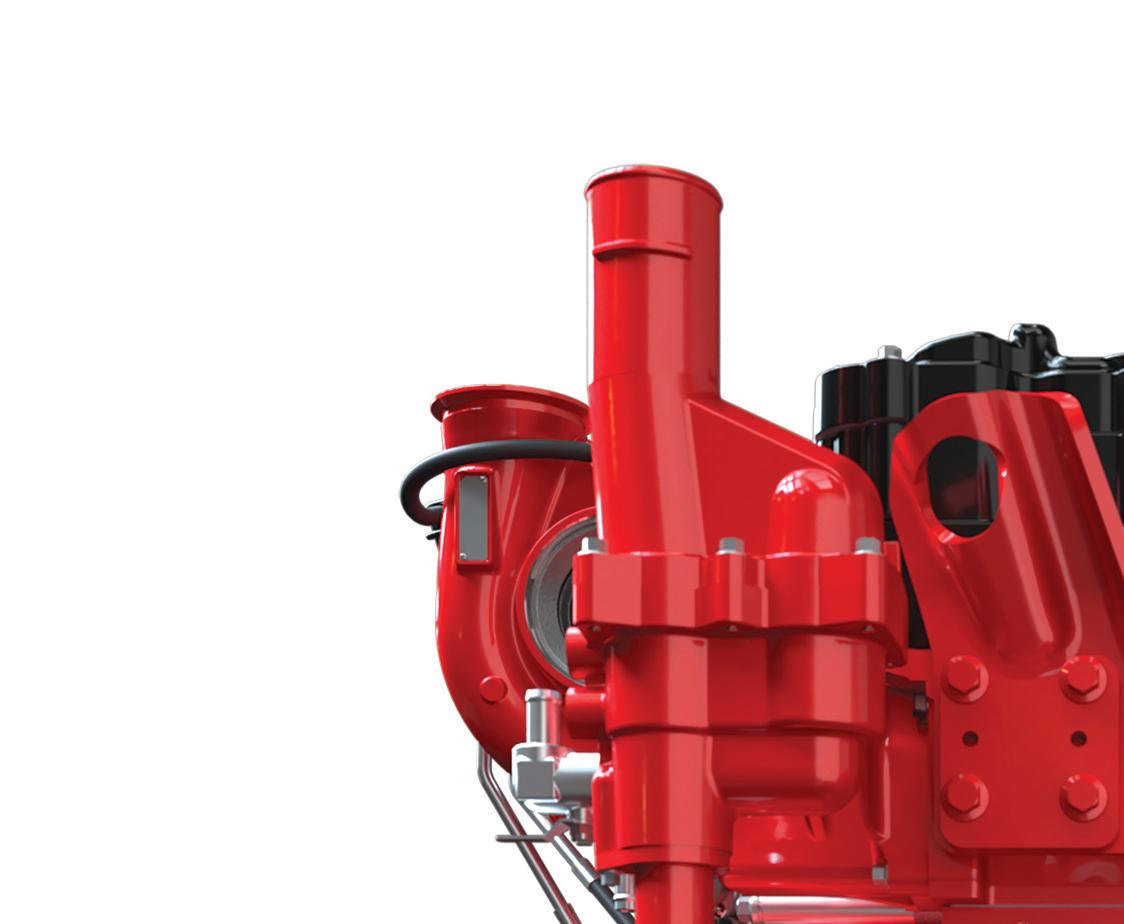
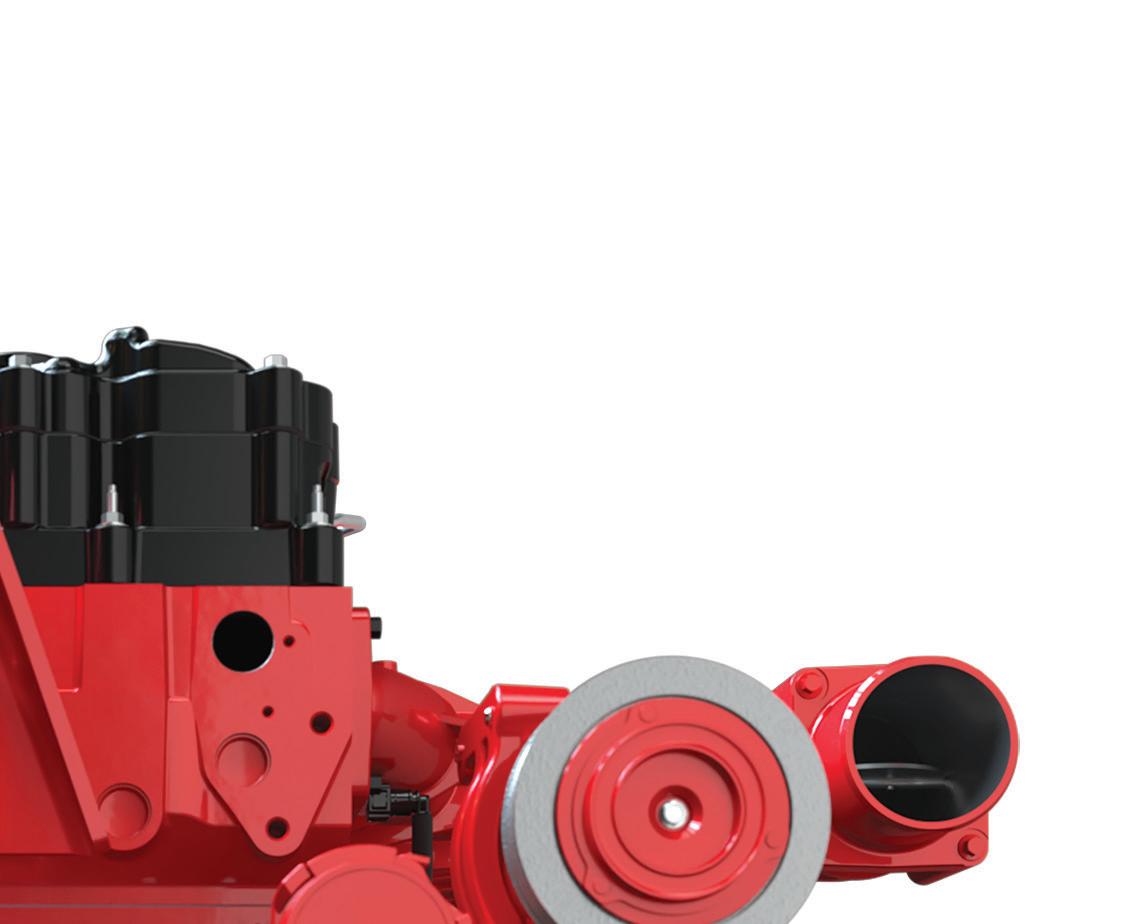
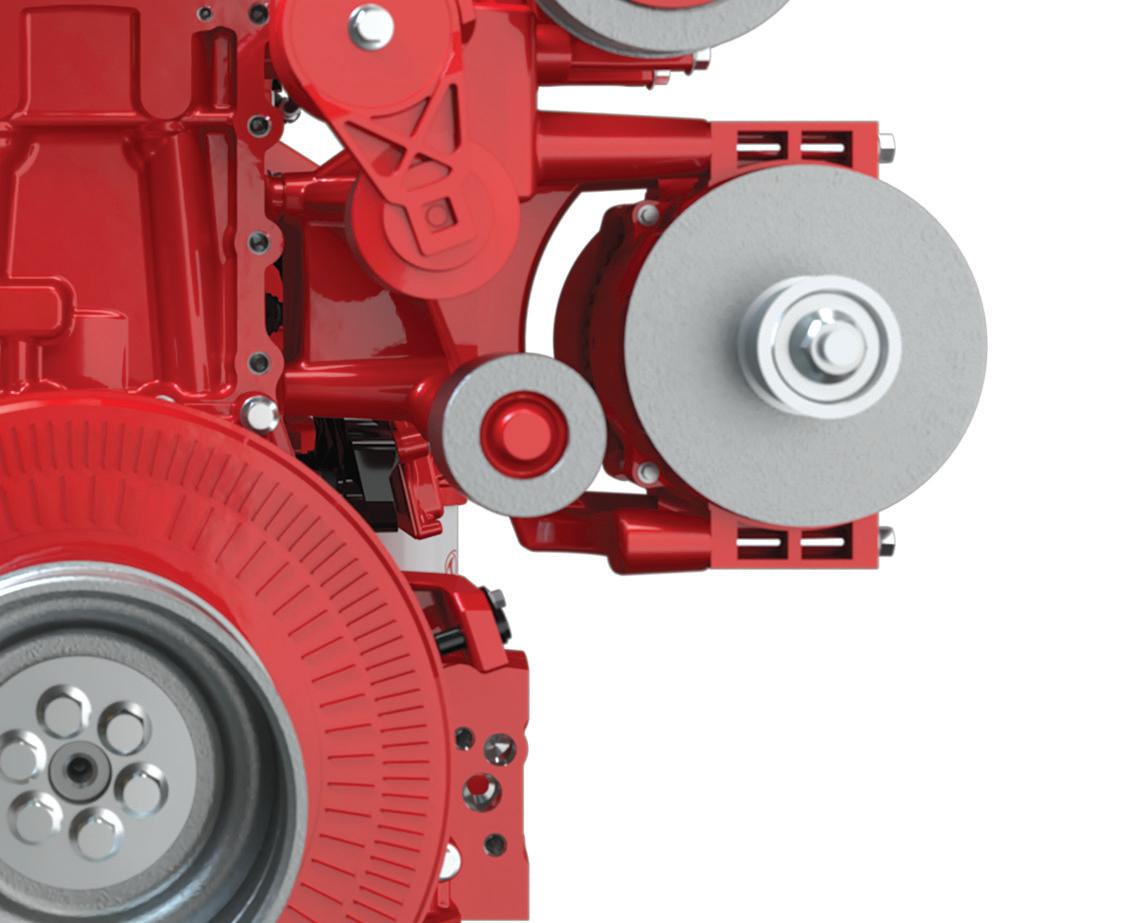
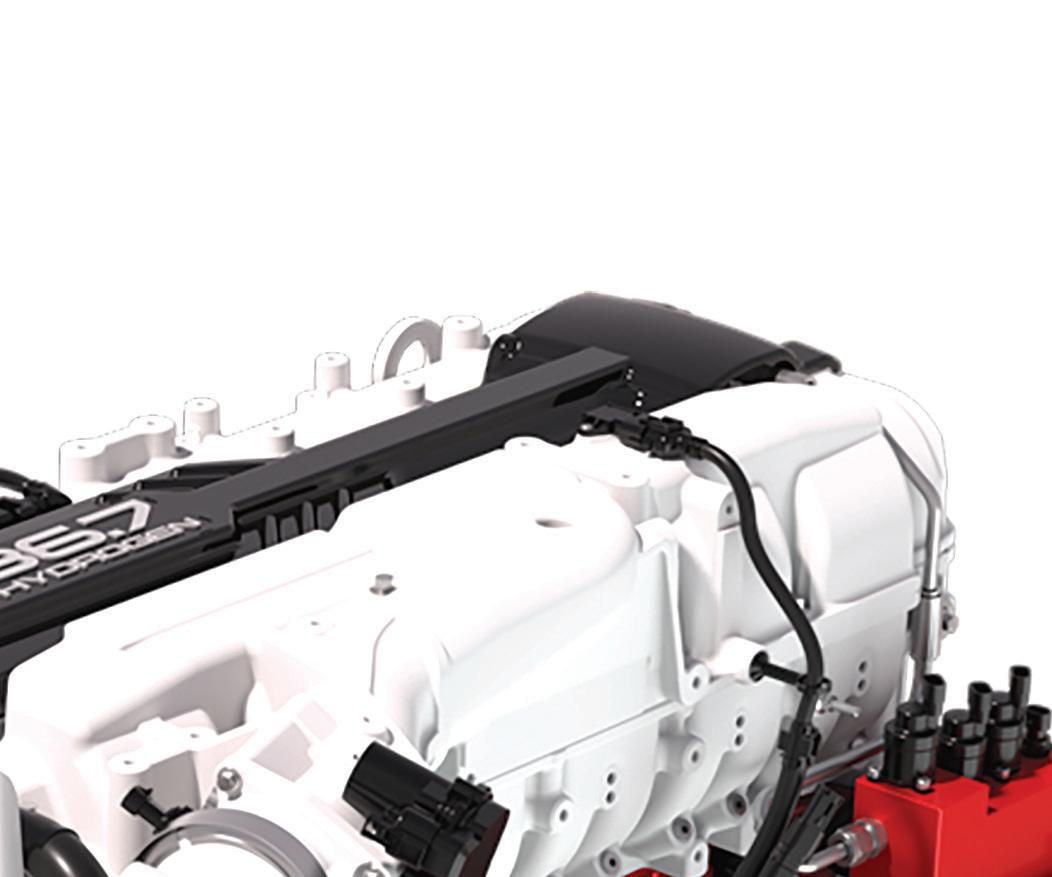
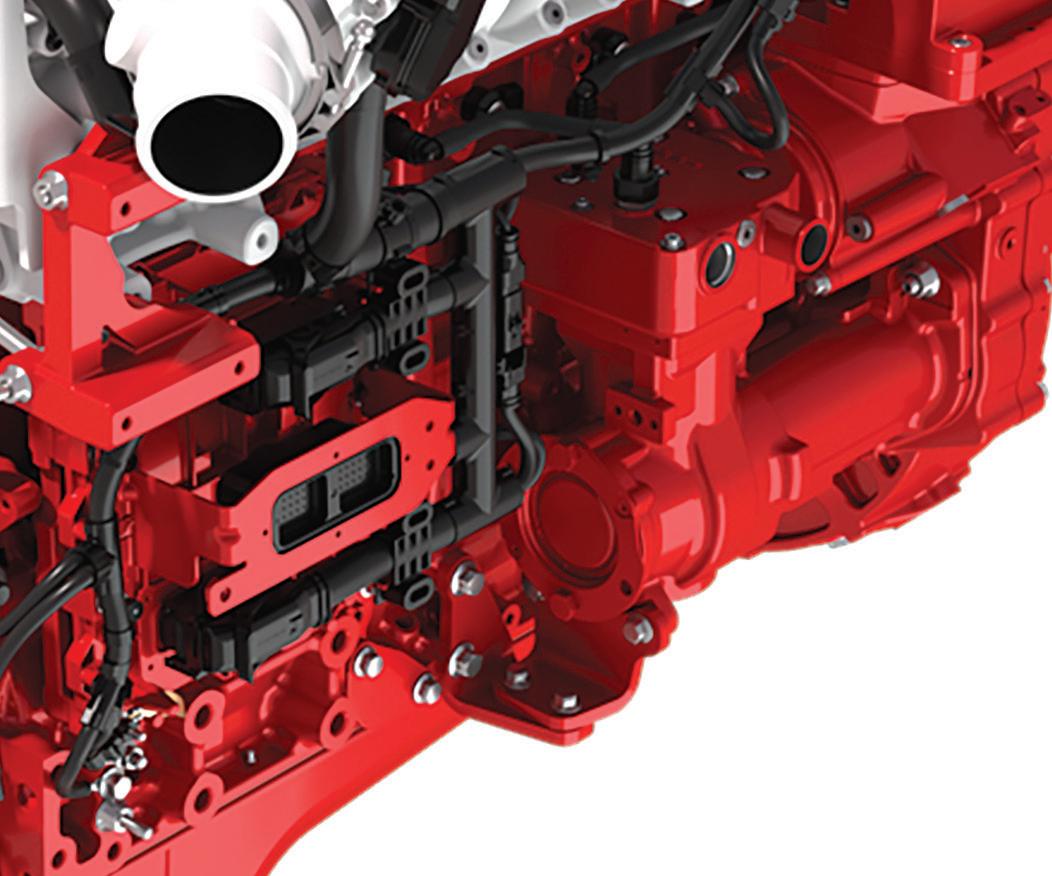
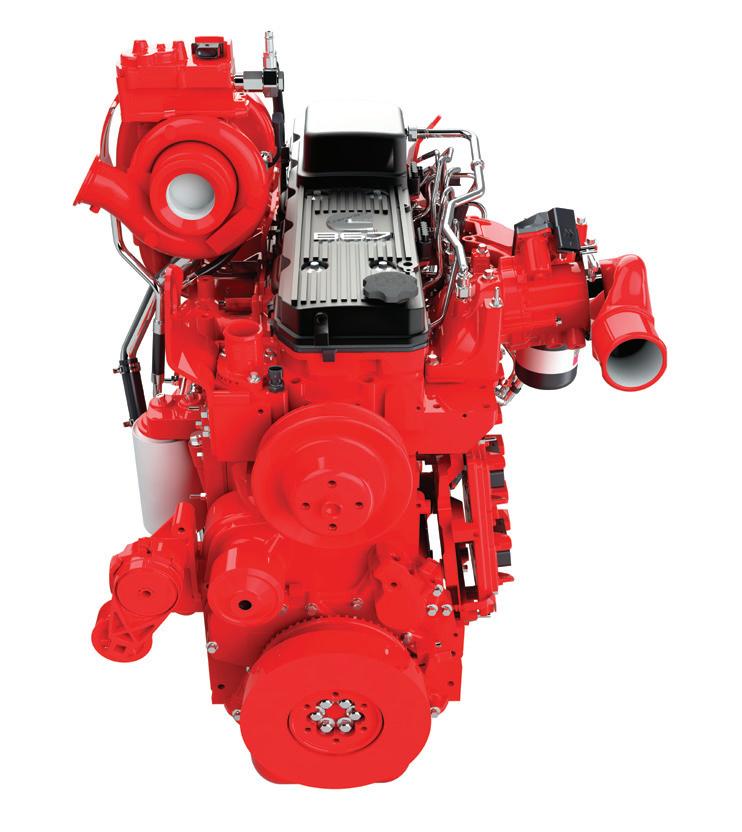
More power with less complexity and less weight. The Cummins B6.7 engine delivers the productivity you need to keep your equipment running. The power increases up to 326 hp / 243 kW and peak torque up to 1014 lb-ft / 1375 Nm, enabling replacement of engines with higher displacement with no impact on productivity.
HOW REPURPOSED AND SPECIALITY MINERALS CAN HELP ON THE ROAD TO A MORE SUSTAINABLE FUTURE S
Sustainable construction, soil preservation, water management, biodiversity and environmental improvement are all now rmly at the top of the agenda for governments around the world. How can you make sure that your next road project ts the bill and will get the go-ahead?
Andrew Askew, from sustainable minerals specialist MINORE, has got some useful advice to share.
REPURPOSED
ROAD
A report from the European Environment Agency revealed that recycled material accounted for only 11.5% of material used on site
Sustainability is now embedded in policy and guidance rules - such as environmental land management, the green infrastructure framework, and biodiversity net gain regulations - in many countries around the world.
Innovative solutions are therefore required across our road networks to protect our natural environment and precious resources. Many materials can be repurposed and recycled to create new and exciting products, following circular economy principles.
And yet, a “Circular Material Use Rate in Europe”’ analysis report from the European Environment Agency, published in February 2024, indicates recycled material accounted for only 11.5% of material used. This marks a marginal increase of less than one percentage point since 2010. We need to make more progress, more quickly.
Sustainable mineral solutions
The MINORE organisation’s way forward is based on three key ingredients: mining existing mineral deposits using sustainable techniques for use in cement and brick and green landscapes; repurposing discarded minerals into new product formulations; and developing bespoke biodiversity solutions.
For instance, MINORE has been operating on an old Victorian brickworks and ash pit in the UK since 2012, providing an ideal location to manufacture mineral solutions for the evolving green infrastructure and low-carbon construction sector.
The site affords a safe environment to formulate solutions using legacy clay, ash and discarded minerals sourced from local construction and demolition projects and waste-management facilities.
At one point, the operation also repurposed those ash deposits for export and re-use within the European speciality steel sector.
Sustainable construction and biodiversity projects Blended soils and clays from these carefully selected discarded materials can be used for a variety of applications, diverting waste from landfill. As an example, MINORE has developed repurposed Bio Soil material specifically manufactured for biodiversity projects, sustainable construction, and carbon-capture sectors.
"Speciality and repurposed minerals can lead the way in many carbonreduction strategies, helping to boost green infrastructure planning and biodiversity projects"
Many materials can be repurposed and recycled to create new and exciting products, following circular economy principles
This gritty, sandy soil meets the specification of stony cohesive material used as general fill under the UK government’s “Specification for Highways Works” rules, used to manage the country’s need for fill materials.
Under generic assessment criteria (GAC) for housing with plant uptake, the material is suitable for houses with gardens and complies with the British Standards for topsoil, BS3882 and subsoil BS8016.
The material can be used to improve soil preservation, water-management solutions, carbon capture, in biodiversity projects, regenerative agriculture, and green construction sectors amongst others.
Additionally, the Bio Soil is currently being independently tested by a leading independent technology innovation centre to assess its carbon-capture capabilities. Initial analysis is showing encouraging stock carbon measured in tonnes per hectare.
Enhancing biodiversity
The introduction of biodiversity net gain regulations signifies a notable shift in sustainable planning for upcoming infrastructure projects. Designed to ensure that natural habitats are left in a better state than before new developments are undertaken, they aim to address climate change, protect the environment, and encourage green construction practices.
Taking prompt action is essential. According to “The Biodiversity Intactness Index (2021)”, published by the UK’s globally renowned Natural History Museum, global biodiversity has already dipped below safe thresholds. The research reveals the UK has only half of its entire biodiversity left, ranking it within the bottom 10% of the world's countries.
One area where biodiversity can be enhanced is roadside verges, highlighted in a best-practice guide to ‘Managing Grassland Road Verges’ produced by Plantlife and partners including The Wildlife Trusts and Butterfly Conservation. They emphasise that road verges support an amazing diversity of plants and animals and that road verges are home to almost half of the UK’s wildflower species.
The Wildlife Trusts state: “Across the UK there are around 300,000 miles of road verge, which, if managed for wildlife while keeping road safety in mind, can provide a huge network of corridors and refuges for nature.”
Under the new biodiversity regulations, all planning permissions granted in England, with a few exemptions, will have to deliver a biodiversity net gain (BNG) of at least 10 per cent. Part of the Environment Act 2021, it is accompanied by new biodiversity reporting requirements for local authorities and mandatory ‘local nature recovery strategies’ (LNRS) .
You need to know about the new rules if you’re a:
• developer undertaking large-scale projects
• developer of small sites from 2 April 2024
• developer of nationally significant infrastructure projects from late November 2025
• land manager wanting to sell in the BNG market
• local planning authority (LPA)
Following the biodiversity-gain hierarchy, if developers cannot achieve all of their BNG on-site, they can achieve this through a combination of on-site and off-site measures.
This could involve generating off-site biodiversity gains on their own land located outside the development area or
purchasing off-site biodiversity credits from third-party BNG schemes. Typical projects that can contribute to biodiversity net gain are:
• Creating or restoring habitats such as wetlands, woodlands, grasslands, or hedgerows
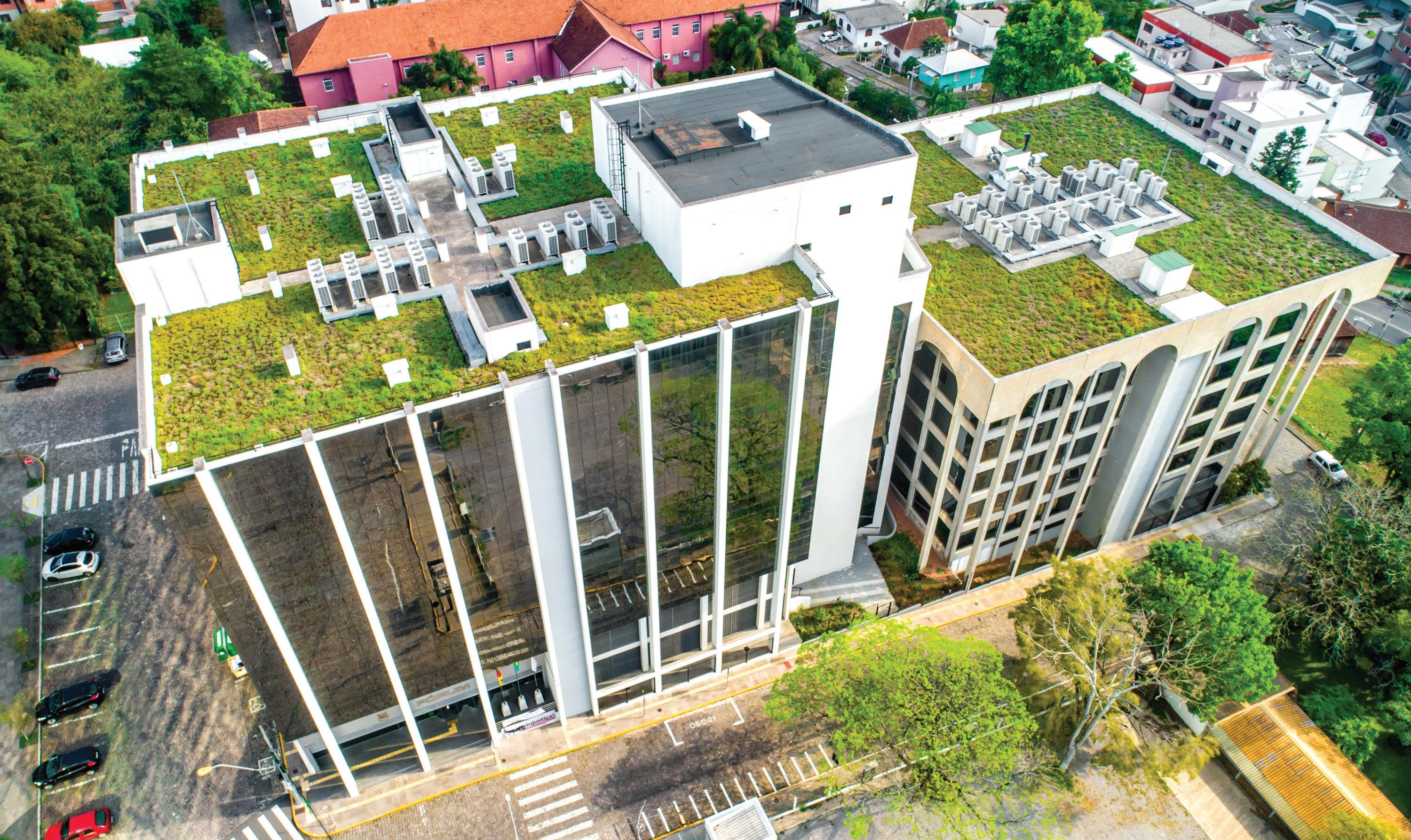
• Incorporating green infrastructure such as green roofs into the design of buildings.
• Supporting local conservation initiatives such as community gardens, wildlife trusts, or public open space.
Suppliers like MINORE offer various solutions tailored for developers and contractors to bolster biodiversity and remediation schemes, providing project engineers with solutions for many of the scenarios above, including fill material and clay lining for pond and wetland construction, and low-nutrient soil that’s ideal for wildflower meadows.
Our solutions include a repurposed Bio Soil specifically engineered for biodiversity applications. The Bio Soil has been paired with specific wildflower mixes to provide sustainable soil solutions for biodiversity projects.
Wildflowers thrive in soil with low-nutrients. The soil is a sandy loam, low nutrient topsoil, ideally suited for biodiversity wildflower planting projects.
This is especially useful when road builders need to restore a brownfield site to a natural habitat, with wildflower meadows and open spaces. The aim will usually be to recreate an ecosystem where wildflowers and insects will thrive. MINORE works with wildflower seed producers to pair mixes of wildflowers with a range of our repurposed clay materials, perfectly tailored to provide sustainable soil solutions for Biodiversity Net Gain projects.
This will turn an area identified under the Biodiversity Metric as poor-condition medium distinctiveness to good condition, by enhancing existing grassland habitats and introducing a wide variety of wildflowers.
Repurposed Bio Soil speci cally engineered for biodiversity applications is allowing roadside verges to thrive. Wild owers and insects love the tough, low-nutrient environments created
Missed chances for green spaces
Recent extreme weather events such as Storm Babet have had devastating impacts. Nature-based solutions are at hand to help address some of the worst climate effects. Trees, parks, green roofs, and walls have cooling effects as temperatures rise and can aid flood resilience, improve air quality, biodiversity, and our wellbeing. However, despite increasing support for these eco-friendly infrastructure options, there are missed chances for their broader adoption at present.
In fact, the 2024 “Heat Resilience and Sustainable Cooling” report from the UK’s Environmental Audit Committee, calls for the government to do more to expand these green spaces. It would particularly like to see increased adoption in urban locations, adding that “measures must prioritise disadvantaged areas currently underserved by access to green space”.
"Recent extreme weather events such as Storm Babet highlight how naturebased solutions such as green roofs have cooling effects and can aid flood resilience, improve air quality, and encourage biodiversity"
Clay’s carbon crusade
Clay has immense promise for enhancing carbon-reduction initiatives across various applications including road building and highway development. Clay’s properties are now being tested and researched for new and sustainable products in diverse fields. From everyday consumer items to industrial uses, agriculture, and construction, clay minerals are incredibly versatile.
In their purest form, primary clay deposits can be mined using sustainable techniques. These materials can be used as key components for creating low-carbon sustainable construction products, adsorption solutions and green landscapes.
Low-carbon cement supplement
Reuse of materials is particularly vital in the construction sector. The World Economic Forum's recent “Shaping the Future of Construction” report indicates that construction is the world's largest consumer of raw materials, using over three billion tonnes annually.
Balancing global demand whilst reducing CO2 emissions is the top challenge for the construction industry.
Calcined clay is gaining increasing recognition as a lowcarbon cement supplement, as it reduces the need to heat limestone to very high temperatures.
The clay mineral composition used by MINORE demonstrates strong-strength activity indices and pozzolanic
properties even at low inclusion rates and lower calcination temperatures. This makes it suitable as cement additive, as this supplementary cementitious material (SCM) can increase durability and compressive strength, extending the service life of concrete.
To test this, MINORE collaborated with a leading independent technology innovation centre to demonstrate and validate the versatility and performance of its speciality clay mineral compositions. Featuring a blend of naturally derived aluminosilicate and mixed layer clay, the composition can be blended, chemically or thermally transitioned to create tailored products or new applications for highway construction.
Building a brighter future Clay and repurposed minerals can lead the way in many carbon-reduction strategies, helping to boost green infrastructure planning and biodiversity projects. They can also be used as building blocks to create new and exciting products, while at the same time opening up employment opportunities for new technologies, industries, and our local communities.
ANDREW ASKEW is owner of MINORE, which specialises in innovative and sustainable solutions within the mineral sector. His team mines existing mineral deposits as well as repurposing discarded minerals into new products, and developing bespoke biodiversity solutions, helping organisations to reach environmental goals. Founded in 2012, MINORE’s roots trace back to the 1950s as a mining and quarrying family business. Established on an old, disused Victorian brickworks and ash pit, the company has a unique environment in which to produce its bespoke mineral and soil formulations.
Highway projects can easily contribute to biodiversity net gain by creating or restoring habitats such as wetlands and run-off ponds alongside the roadway
HYUNDAI’S XITE ARTIFICIAL INTELLIGENCE
PLATFORM TAKES SUSTAINABILITY AND SITE SAFETY TO THE NEXT LEVEL
TA meeting of minds: Hyundai and Google are putting their heads in the cloud. HD Hyundai XiteSolution’s Aerin Jungmin Lee (left) and Yasser Alsaied, VP of IoT (Internet of Things) at AWS (right), can see many bene ts in working together
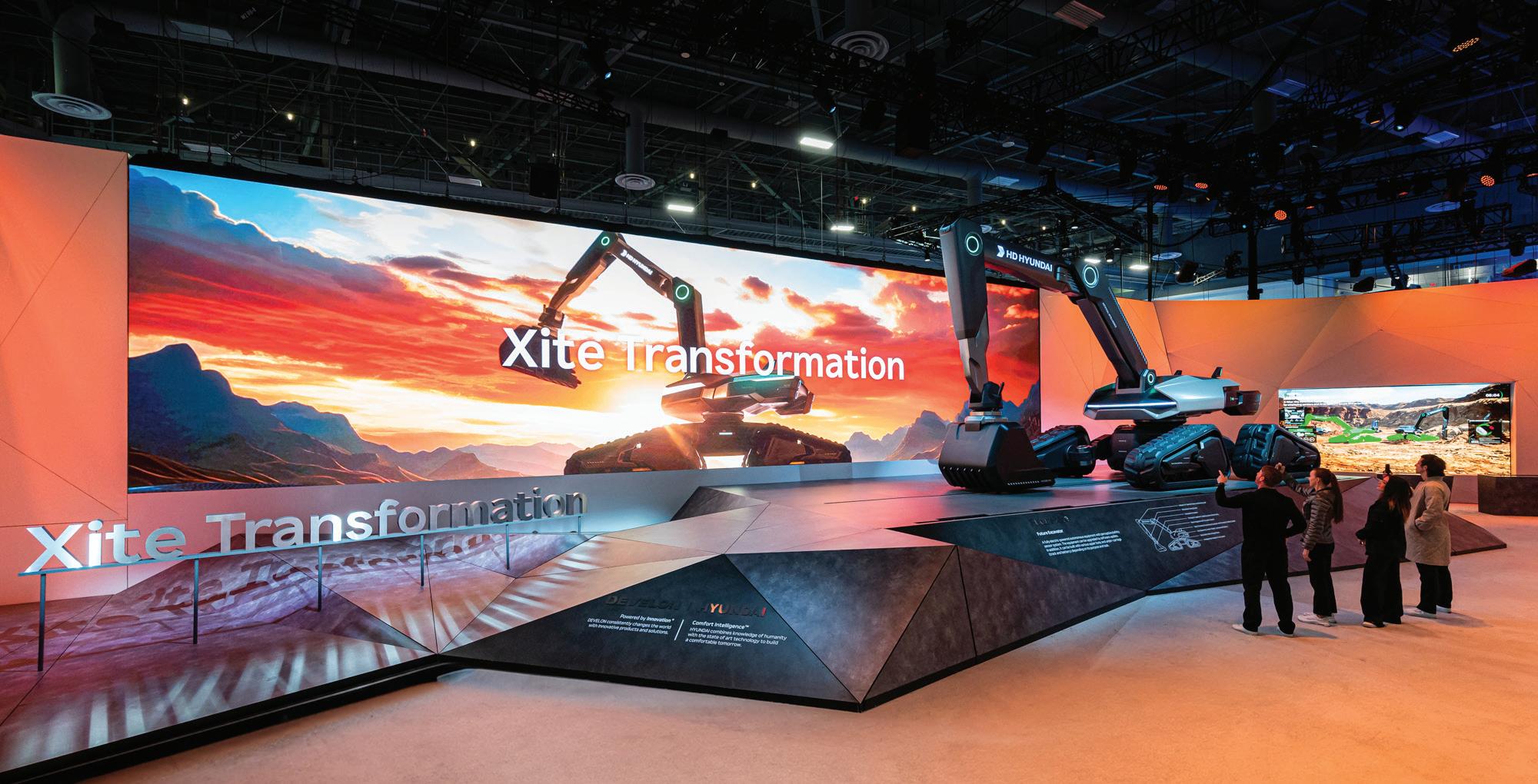
The CES exhibition in Las Vegas is the world’s biggest annual technology show, and HD Hyundai used the 2024 event to headline its “Future Builder” vision. Its new Xite concept is a platform that aims “to improve construction industry safety, boost equipment productivity and ensure long-lasting low-carbon sustainability.” What is it all about?
"We are calling on all of the latest technologies across all industries so we can transform how we build our infrastructure, our lives, our future"
Kisun Chung HD Hyundai’s vice chairman and CEO
HD Hyundai reckons that it “stole the show” at the CES 2024 technology event in Las Vegas by unveiling its Xite range of autonomous machinery, zero-carbon power systems and connected site management.
HD Hyundai’s Vice Chairman and CEO Kisun Chung provided one of the event’s main keynote speeches, introducing the Xite Transformation concept and announcing a series of forward-looking global collaborations, with leading technology partners including Google and Gravis Robotics.
HD Hyundai aims to lead the construction machinery market with its Advanced Around View Monitoring (AAVM) system of cameras, providing operators with maximum visibility all around the machine. The company also offers Intelligent Moving Object Detection (IMOD) technology, which senses and warns the operator if people or objects come within 5m of the machine.
As part of Xite Transformation, HD Hyundai’s X-Wise artificial intelligence platform takes site safety to the next level. Using safety sensors and fully autonomous machinery, such as the company’s futuristic 4.5m unmanned excavator, it will be possible to separate high-risk equipment from site workers, reducing the risk of accidents and injury.
HYUNDAI AT CES 2024
Through the use of connected robotics, HD Hyundai also used CES 24 to demonstrate how a single operator will in the future be able to work remotely from the office, to control a range of machinery on site.
The company aims to control equipment working in hazardous environments remotely, eliminating safety incidents and enhancing performance on site. Self-driving machinery, with 3D machine guidance and control systems, will be able to work autonomously, increasing productivity and providing a solution to future skilled-labour concerns.
HD Hyundai is no stranger to hydrogen and electricpower systems either. Its shipping division, for instance, is already working towards a zero-carbon future, using hydrogen produced from renewable energy to power ocean-going vessels.
Autonomous hydrogen trucks
The company is also developing road-going autonomous trucks powered by hydrogen, which will be able to deliver the fuel to more remote locations to power construction equipment.
Elsewhere within its 1,000m2 display area at CES 2024, the company demonstrated Twin Xite Site Management. The X-Wise AI-powered construction management solution connects and collates vast amounts of data, collected from sensors and drones on site, along with machine-learning technologies from excavators, loaders and haulers, to
model future works and to control equipment on the ground.
Working through a collaboration with Google Cloud, HD Hyundai will be able to maximise the productivity and efficiency of equipment on site, while ensuring minimum risk to operatives. It is a powerful view of how to work more sustainably in the future.
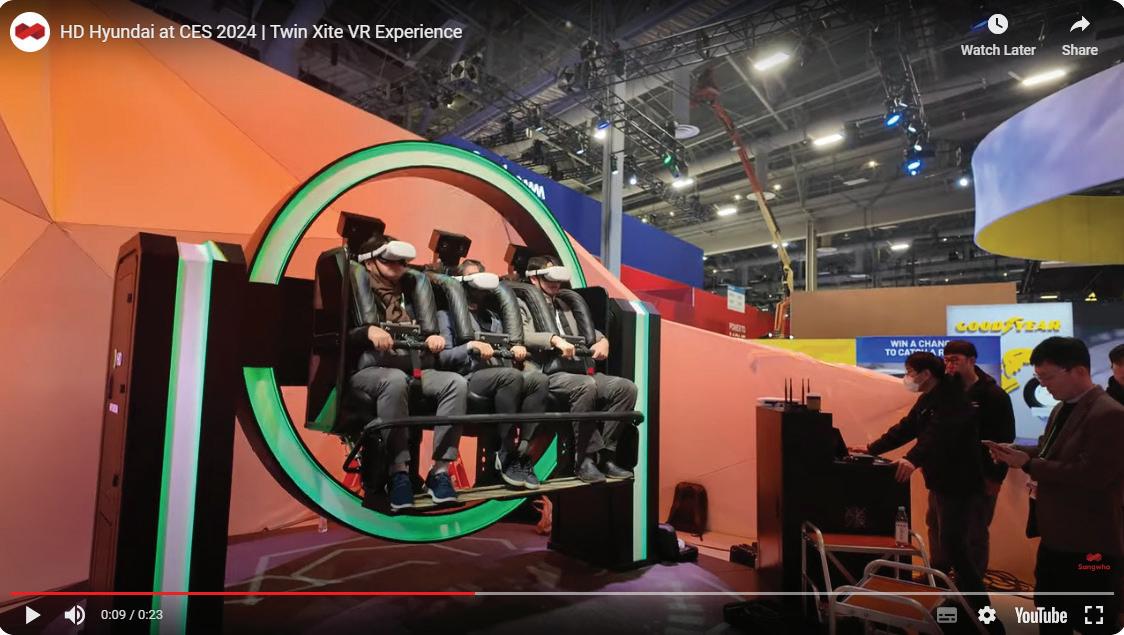
Visitors to the exhibition were given the opportunity to try much of this technology for themselves, using simulators to control a wheeled loader that was operating thousands of kilometres away in Atlanta.
There were also virtual-reality headsets that allowed visitors to experience a range of future machines and solutions. Life-size futuristic autonomous construction equipment was present, giving visitors to the exhibition the chance to experience the construction industry of the future.
“Without changing the way we build, we cannot change our future,” said vice president Chung.
“That’s why we at HD Hyundai are here today, to share HD Hyundai’s vision to change the course of humanity, by changing the future of the construction industry. We call it Xite Transformation, calling on all of the latest technologies across all industries so we can transform how we build our infrastructure, our lives, our future.
“We have three main goals with Xite Transformation. Firstly, enhancing safety on construction sites, for zero-
HYUNDAI AT CES 2024
The Xite Transformation will enhance safety practices, deliver a “quantum leap” in productivity, push for complete machine autonomy, decarbonise sites, and make future construction net zero
ABOVE: Visitors to the CES 2024 exhibition were given the opportunity to try much of this technology for themselves, using simulators to control a wheeled loader that was operating thousands of kilometres away in Atlanta RIGHT: The future is now: Hyundai is teaming up with AWS (Amazon Web Services) to lead the innovation of future unmanned / autonomous construction sites by jointly developing a connectivity platform for XiteSolution’s smart construction equipment
accident working using the latest digital technologies. Second, delivering a quantum leap in productivity, through zero idle time and zero downtime on our construction sites. Our ultimate goal being site autonomy. Third, decarbonising our building sites, to make future construction net zero.”
Working in partnership
As well as developing new levels of site autonomy, HD Hyundai also plans to become the leader in open innovation by partnering with global top players in the industry to build a new global ecosystem.
Visitors to CES were able to meet some of these partners including Professor Marco Hutter from Gravis Robotics who shared how his research on quadrupedal robots grew into developing autonomous excavators and outlined the key features of robotic construction equipment.
“HD Hyundai and Gravis discovered in our research that quadrupedal robots and construction equipment actually have a lot in common,” said Professor Hutter. “This inspired us to start a collaboration to develop robotic construction equipment. HD Hyundai has been striving toward autonomous construction with its Concept-X in 2019 and then again with Concept-X2 in 2022. This will unlock unprecedented capabilities for future construction and to
HYUNDAI AT CES 2024
transform the very nature of this industry.”
Another presentation came from vice president of Google Cloud, Philip Moyer, and Aerin Jungmin Lee of HD Hyundai who talked about the roadmap that the two companies are mutually working on with generative AI.
“We are using a large language model to build construction-specific AI technology,” said Moyer. “X-Wise Xite will be using data from Google to pick up on a pattern of behaviour and preferences, which ultimately helps it personalise recommendations in accordance with the user’s priorities.”
President and CTO of HD Hyundai XiteSolution, DongWook Lee, shared the blueprint of how the company plans to achieve a fully autonomous site solution by combining intelligent construction equipment and X-Wise Xite. HD
Hyundai will introduce the technological capability to create an environmentally friendly ecosystem.
“HD Hyundai will be combining the innovations in intelligent equipment and intelligent site management to deliver fully autonomous site solutions by 2030,” said Lee. “We are also working on decarbonising the future of the construction industry and developing a global value chain such as electrification and an environmentally friendly energy ecosystem.”
Building on CNH collaboration
HD Hyundai is pushing forward with its longstanding collaboration package with CNH. According to Stefano Pampalone, president of Construction at CNH, and Young-Cheul Cho, President and CEO of HD Hyundai
HYUNDAI
XiteSolution (HDX), the controlling company of HD Hyundai Construction Equipment and HD Hyundai Infracore have signed a memorandum of understanding to establish a joint research centre in the US.
At the CE Innovation Lab, a team of CNH and HDX construction specialists will study emerging technology trends, map new and evolving customer needs, and identify prospects for portfolio enhancements and further growth. Their plan is to advance the development and widespread adoption of new technologies such as automation and AI, and to look at developing new technologies and co-investing in innovative startups via their CNH Ventures and HD Hyundai investment arms.
As a part of the agreement, HDX will supply CNH with its AAVM+ (Advanced Around View Monitoring Plus) 360-degree camera and radar system for enhanced safety. CNH will supply HDX with global navigation satellite system technologies through its Hemisphere brand.
“This joint effort will strengthen our commitment to growing CNH’s construction business and position both our companies as tech authorities in the industry,” said Pampalone. “It is highly encouraging that our partnership has extended beyond our product collaboration to include future technologies, a crucial factor to remain at the forefront of the construction equipment market,” added Cho.
Smarter construction sites with AWS HD Hyundai also announced at CES that it is teaming up with AWS (Amazon Web Services) to lead the innovation of future unmanned and autonomous construction sites. The ceremony, bringing together HD Hyundai XiteSolution’s Lee and Yasser Alsaied, VP of IoT (Internet of Things) at AWS, is said to mark a pivotal moment in elevating construction site safety and productivity.
The partners will collaborate to build a connectivity platform for XiteSolution’s smart construction equipment. The platform will integrate next-generation construction equipment with core smart functions to enhance reliability and productivity, with HD Hyundai anticipating a substantial
Looking ahead: HDX will supply CNH with its AAVM+ (Advanced Around View Monitoring Plus) 360-degree camera and radar system for enhanced safety … and CNH will supply HDX with global navigation satellite system technologies through its Hemisphere brand
surge of 30-70% in construction-site productivity and improved safety by transitioning towards unmanned operations.
“With the largest cloud provider as our partner, we can accelerate innovation towards unmanned autonomous construction sites of the future,” said Lee. “This collaboration marks a major milestone in HD Hyundai’s ongoing transformation beyond manufacturing into a comprehensive solutions provider.”
HD Hyundai will use AWS cloud, IoT technologies and services, AI, and machine-learning capabilities to build a smart construction solution. This solution will drive a suite of advanced features focused on boosting reliability, efficiency, and safety in next-generation integrated construction models developed by HD Hyundai’s Construction Equipment and Infracore units set to launch in 2025. AWS solutions will also be used to further refine the X-Wise Xite AI-powered construction site management solution showcased at CES.
WHAT IS CES?
CES (originally called “The Consumer Electronics Show”) is not just about new construction technology. It is by far the world’s biggest stage for innovation in every possible market. “This is where brands get business done, meet new partners and where the industry’s sharpest minds take the stage to unveil their latest releases and boldest breakthroughs,” say the organisers.
Owned and produced by the Consumer Technology Association (CTA), CES is the only trade show that showcases the entire tech landscape at one event.
CES exhibitors include manufacturers, developers and suppliers of consumer technology hardware, content, technology delivery systems and more.
It also includes a conference programme where the world's business leaders and pioneering thinkers address the industry's most relevant issues.
USE 3D MODELING ADVANCE
MODELING TO SUSTAINABLE CONSTRUCTION
WWhen it comes to advancing highway sustainability, the role of 3D modeling and digital technologies in road construction is becoming ever-more important. Anna Liza Montenegro, director of marketing at Microsol Resources explains why your business needs to get involved now.
Did you know that digital transformation in the construction industry can increase productivity by close to 15% and reduce costs by nearly 6%? That’s a 21% increase in ROI for companies adopting these technological advancements, says Anna Liza Montenegro, director of marketing at Microsol Resources.
For more than 30 years, Microsol’s architects, engineers, and construction professionals have been at the forefront of integrated solutions in the construction industry and, according to Montenegro: “While AutoCAD remains essential, the future lies in 3D modeling, augmented reality, digital twins, BIM (building information modeling), and visualisation.”
It’s all part of the “digital revolution” and the worldwide road construction and maintenance sector has got to find new ways to improve its ecological sustainability.
“Digital solutions are particularly significant in rationalising design processes, providing an opportunity for a gain in effectiveness, and decreasing unnecessary waste,
says Montenegro. New technologies are being applied every day “to advance highway sustainability, from conceptual design to real-time monitoring on the highway construction site itself.”
Meeting sustainability demands
The main purpose of sustainability in road construction is to promote environmental stewardship and reduce harmful emissions. Conventional methods of construction, although effective, do not have the same level of productivity and environmental consciousness.
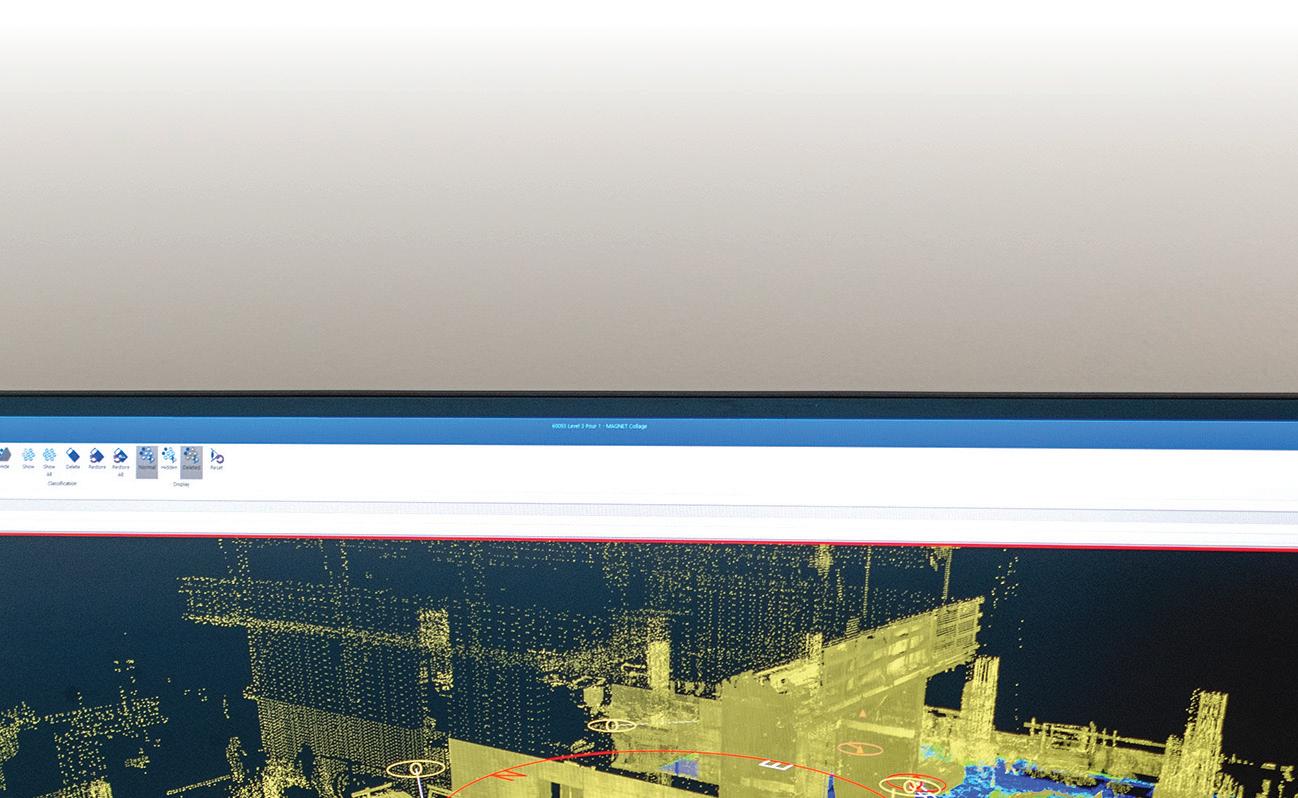
Therefore, to resolve issues of high energy use and excessive material waste, digital technologies are being used more frequently by governments, building contractors, and civil engineering companies. The combination of 3D modeling, IoT, and digital twin technologies allows the construction workers to design, model, and modify a road structure even if no physical construction has been carried out.
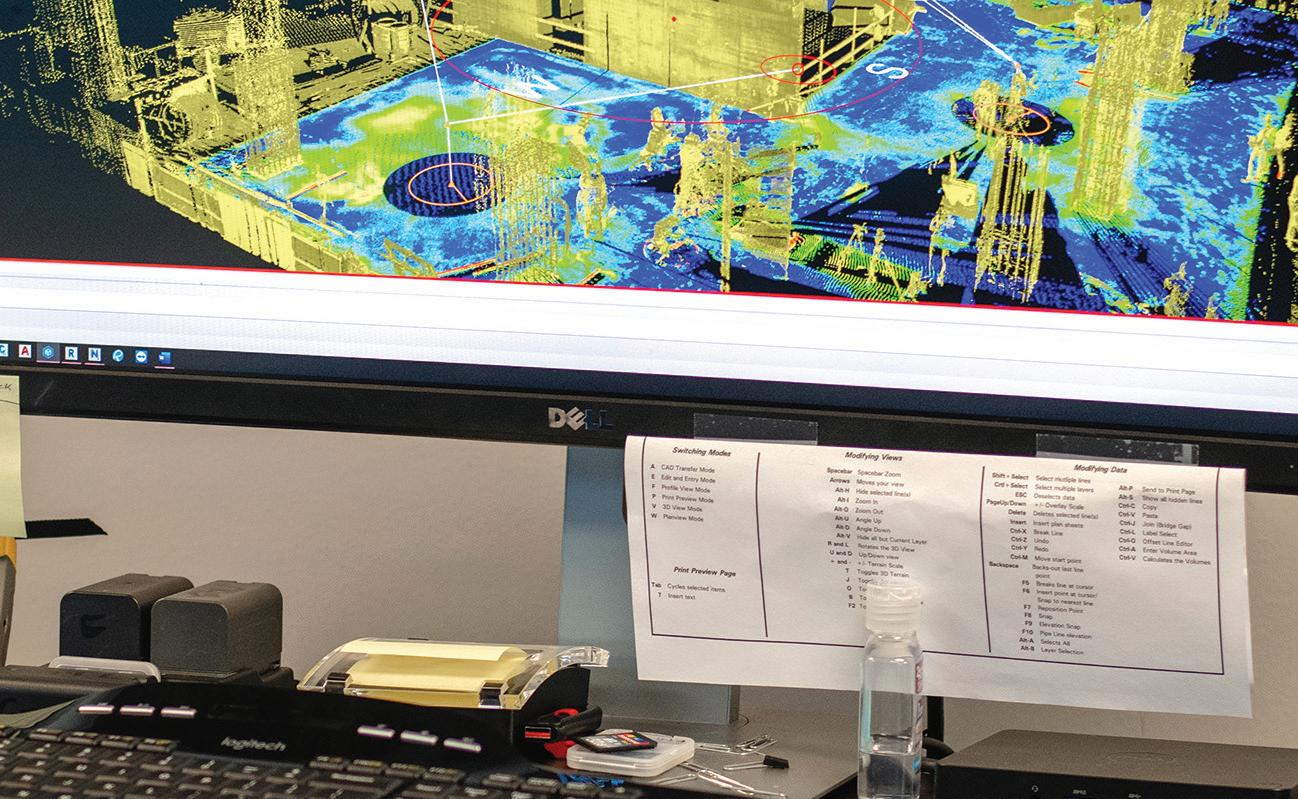
ABOVE: While AutoCAD remains essential, the future lies in 3D modeling, augmented reality, digital twins, BIM (building information modeling), and visualisation
LEFT: 3D models can show complex topography, subsurface geology, and vegetation patterns, allowing for more accurate and contextsensitive design solutions to be used
BELOW: Modern modeling systems are a perfect way to enable your highway engineers to calculate the embodied carbon of the construction materials being used on site
Indeed, design software such as AutoCAD, has become an indispensable tool for the creation of accurate drawings that can be used for highway construction. These technologies help to prevent waste and improve the allocation of resources by reducing design cycles and enabling advancement of the designs without the need for physical prototypes.
How 3D modeling enhances environmentally friendly highway design
“3D modeling is improving the design of highways in a way that allows engineers to clearly see what every component of a road project will look like before the ground is broken,” says Microsol.
“Unlike 2D plans, 3D models can show complex topography, subsurface geology, and vegetation patterns, allowing for more accurate and context-sensitive design. Thus, one of the reasons 3D modeling is useful is that it allows the running of simulations to show the environmental impact of various options within a design.
“In this respect, the technique will let the engineers experiment with materials, accounting for erosion hazard and making related changes that allow maximising water run-off in real time.
“For instance, 3D models allow engineers to position retaining walls or stormwater management systems in ways that will minimise erosion of the soil, improve water quality, and not cause further damage to nearby habitats. Furthermore, 3D modeling in design supports creating sustainable roadways that complement carbon-reduction goals.”
Modern modeling systems are a perfect way to enable your highway engineers to calculate the embodied carbon of the construction materials you are using on site: techniques that will help determine and reduce emissions associated with the development … from the outset.
Real-time decision-making with digital twins
“Digital twins are a phenomenal development of 3D modeling,” says Montenegro. “By creating a digital twin of a physical road, you can enable remote monitoring of the condition and performance of the road.
“These dynamic models also have become important in long-term highway sustainability, since continuous environmental impacts, structural health, and maintenance needs can be monitored.
"By creating a digital twin of a physical road, you can enable remote monitoring of the condition and performance of the road"
“For instance, digital twins can trace how the traffic load is causing pavement deterioration to enable proactive maintenance and prevent much larger repairs that involve many resources later on.
“In addition, digital twins embed information from environmental sensors, which are highly valued for the insight they provide about how development and weather patterns influence infrastructure over time.
“Using actual data, engineers make informed decisions in adapting road designs, drainage systems, and landscaping for optimised highway resilience against climate-related stressors.”
Digital twins can also “support efforts to reduce the environmental cost from road repairs. Because engineers will be able to foresee when and where maintenance will be required, they plan minor-scale and focused interventions that will cut down on emissions, reduce waste, and minimize damages or disruption to the surrounding ecosystems.
“With active digital twins in combination with computer 3D software, civil engineers will be further forging a more proactive and eco-friendly way of handling highway infrastructure.”
Digital twins allow engineers to foresee when and where maintenance will be required and plan minor-scale and focused interventions that will cut down on emissions and minimise damage to the surrounding ecosystems
The centralisation of data and real-time updates that BIM provides allows designers, contractors, and environmental consultants to share and coordinate information
Use BIM to minimise your environmental footprint
BIM is another key digital tool that allows sustainable highway construction. It links 3D modeling together with material data, scheduling, costs, and environmental factors to provide a total model of the project life cycle.
“This is a holistic approach that allows you to simulate and analyze the environment of a highway in its life cycle, from the design to demolition,” argues Microsol.
“With BIM, civil engineers can make informed choices about materials to be used, energy consumption, and construction processes with environmental impact in mind.
“For example, during the design process, engineers will be in a position to enter information about sustainable
materials and then pick options based on which ones produce the lowest CO2 emissions.
“During construction, BIM helps teams visualise and plan work ows, identifying chances to cut down waste and enhance ef ciency. Other environmental impacts that may be unforeseen are also reduced further by simulating construction sequences.
“Besides resource conservation, BIM also allows the collaboration of stakeholders to meet the aims of sustainability. The centralisation of data and real-time updates that BIM provides allows designers, contractors, and environmental consultants to share and coordinate information.”
CASE STUDIES: Integrated digital solutions in highway sustainability projects
To give a fantastic demonstration of what 3D modeling and digital twins feel like and how BIM might be applied to sustainable road construction, Microsol has summarised two independently developed civil engineering projects from Nitsch Engineering and Gedeon GRC Consulting.
Nitsch Engineering: Route 125 Corridor Project
In 2018, Nitsch Engineering was chosen to work on the Route 125 Corridor project, which was intended to turn one of North Andover's most heavily traveled highways into a model for sustainable infrastructure.
By incorporating digital twins to represent real-time data along with BIM, the civil engineering team was well placed to consider various green features such as bioswales and native vegetation.
In addition, the Nitsch Engineering team perceived patterns of stormwater runoff and made necessary adjustments in the drainage system when environmental conditions changed. This proactive approach helped not only in minimizing ood risks but also in reducing environmental pollution.
Gedeon GRC Consulting: Kosciuszko Bridge Replacement Project in New York City
In 2016, Gedeon GRC Consulting got a contract to work on the Kosciuszko Bridge Replacement project. The rising sea levels and frequent storms required that the project needed to focus on sustainability in protecting both the highway and local habitats.
In the pre-construction phase, AutoCAD was helpful for designing protective barriers and rerouting sections of the highway around sensitive ecosystems. The Gedeon team leveraged the construction process to apply BIM in investigations of what type of bridge infrastructure would be suitable to withstand climate change.
The project also included other resilient materials and green infrastructure to absorb wave energy and prevent erosion. This building replacement project shows how digital solutions could support environmentally sustainable highway projects, considering both short- and long-term environmental impacts.
CLEAN, GREEN AND SUSTAINABLE CONCRETE IDEAS
More than 10 billion tonnes of concrete is produced every year and, after water, it is the most widely consumed substance in the world. It is also the world’s most popular building material and forms the very foundation of the world’s infrastructure. However, it is undoubtedly a major contributor to greenhouse gas emissions and needs to clean up its act. Here is a guide to the latest thinking on eco-friendly concrete.
More than 70% of the world’s population lives in a concrete structure and, due to its flexibility and durability, concrete is also used to build the infrastructure that surrounds and connects their homes. The global highways industry uses concrete all the time for things like road surfaces, pavements, pipes, bridge beams, bridge pillars, tunnel linings, and much, much more. To remain this popular, the concrete producers are working hard to become much greener.
For instance, UK materials and equipment manufacturer Mapei has developed a new reduced “ecoimpact concrete” using its “Cube System”, which is “a portfolio of solutions for low-carbon concrete production”.
The Cube System, says Mapei: “Contributes to a reduction in the environmental impact of concrete production by enhancing the performance of binders or supplementary binders, allowing producers to maintain concrete design criteria with minimal impact on production costs.
“To enhance the strength of the new cements, Mapecube technologies include a series of strength enhancers,” the company says. “The formulations feature nano-composite silicate hydrates which produce hydration reactions more rapidly and diffusely in cement paste.
“The combination of the silicate hydrates - with retarding accelerators which produce a more powerful pozzolanic reaction – and alkaline activation materials enable faster development of mechanical strength after both short and long curing cycles.”
The product range includes:
• Mapecube 1 for short curing cycles;
• Mapecube 2 for cements with limestone;
• Mapecube 3 for cements with blast-furnace slag;
• Mapecube 4 for cements with fly ash;
• Mapecube 60, Mapecube 60 W and Mapecube 65 for all cements and SCMs.
“Dynamon CUBE superplasticisers are designed to face the challenges of sustainable concrete, featuring polymers that work with all cement and secondary cement types,” says Mapei. “The Dynamon CUBE range currently includes three superplasticizers: Dynamon Cube 800 which has a neutral effect on setting time; Dynamon Cube 805 which extends and maintains workability for longer periods and Dynamon Cube 807 for extended timeframes.”
In keeping with its focus on sustainability, Mapei has also introduced a “RE-CON” range of superplasticisers - a new generation of admixtures for use with recycled
aggregates and difficult, clay-containing or manufactured sands.
Special absorption inhibitors (RE-CON AGG Technology) are integrated into formulations for use with recycled aggregates and specific gradual-release polymers maintain workability and rheology for extended periods of time, whilst maintaining set times.
According to Mapei’s Cameron Bellman, corporate product line director, Concrete Admixtures: “The CUBE and RE-CON product lines help our customers overcome some of the challenges our industry faces today, providing sustainable and economical solutions in the production of reduced carbon concrete and management of returned concrete. These two product lines are testament to Mapei’s commitment to R&D.”
Mapei UK is headquartered in Halesowen and has more than 300 employees. Mapei facilities have been certified to ISO 9001, ISO 14001 and ISO 45001 standards. An environmentally conscious manufacturer that reinvests significant revenue into R&D, Mapei offers training for architects, contractors, installers and distributors through its own Mapei Academy.
"The global highways industry uses concrete all the time"
Heidelberg Materials' low-carbon concrete
Leading aggregates supplier, Heidelberg Materials, has developed an innovative solution designed to reduce the carbon footprint of sustainable concrete using a clever mix of eco-friendly materials such as GGBS (ground-granulated blast-furnace slag), which lowers CO2 emissions while maintaining the strength and durability of the mix being laid.
The new product is part of Heidelberg’s Ecocrete range and can be produced by static and mobile concrete production plants. There are three products in the range:
• EcoCrete, which reduces CO2 by 30-64% compared with CEM I concrete;
• EcoCrete Extra, which reduces CO2 by 65-79%;
• EcoCrete Elite, which reduces CO2 by up to 85%.
According to the manufacturer, the benefits of EcoCrete are: “It reduces the carbon emissions associated with concrete from 30% to up to 85%; it is easy to use and place; it is suitable for all applications, including reinforced and unreinforced; it offers an unchanged construction process;
The benefits of eco concrete
The EcoCrete range offers a progressive approach to carbon emissions
it complies with BS 8500 and BS EN 206-1; it can create concrete with a lighter, more aesthetically pleasing colour; and it is 100% recyclable at end of life, contributing to the circular economy.
According to Heidelberg: “The input values we use to calculate the CO2 emissions of a concrete mix are externally verified and we can use this data to support our customers with a kg/CO2/m³ indication for each mix. Where required, an indicative EPD can be generated using lifecycle assessment tools aligned with the product category rules for Type III construction products to EN 15804. These detail the CO2 emissions for a concrete mix and provide further detail of where the CO2 emissions occur along the value chain.”
These are just two examples of the latest thinking. Ecofriendly concrete solutions are being developed all the time, says PACA, The Pennsylvania Aggregates and Concrete Association, and tend to fall into the following categories, :
Green concrete
Green concrete is a form of eco-friendly concrete that is manufactured using waste or residual materials from different industries and requires less amount of energy for production. Compared to traditional concrete, it produces less carbon dioxide and is considered cheap and more durable.
The aim of using green concrete is to lessen the burden on natural resources and increase dependency on recyclable materials. Of the multiple strategies being utilized to achieve sustainability through eco-friendly concrete, reusing wash water to reduce water consumption is a good technique.
Partial replacement of energy-consuming cement with reusable materials is among the best strategies used to achieve eco-friendly construction material. For example, cement can be replaced with fly ash, silica fume, and wood ash, etc.
AshCrete
Fly ash is a byproduct of combustion of coal which was previously discarded in the landfill but is now used for manufacturing green concrete.
AshCrete is a substitute for traditional concrete that heavily utilizes recycled fly ash. Fly ash is mixed with lime and water to make it strong and durable, similar to conventional cement.
Use of fly ash in Ashcrete makes it an environmentfriendly alternative, since it can replace cement which in turn leads to reduced CO2 emissions. Moreover, 25% of cement can be replaced using high-volume fly ash concrete.
Other benefits of fly ash include reduced bleeding, increased strength of concrete, and reduced shrinkage, when compared to traditional concrete. Apart from making it environmentally friendly, fly ash also makes concrete resistant to alkali-silica reactivity.
Blast furnace slag
Just like fly ash, blast-furnace slag is a byproduct that can be recycled and used to make an environmentally friendly alternative to concrete. This glassy, granular material is produced by quenching molten iron slag from the blast furnace into water or steam.
This material can replace about 70% to 80% cement and improves the durability of the concrete. Another advantage of blast-furnace slag is that the production process emits less amount of heat for hydration.
Micro silica
Also known as “Silica Fumes,” micro silica is an ultrafine powder which is a byproduct of ferrosilicon alloy and silicon production, from the condensation of silicon dioxide. It can displace around 7% - 12% cement in concrete.
Microsilica is known to improve the durability of concrete by making it less permeable and increasing its compressive strength. Concrete made with silica fumes is specifically used for structures that are exposed to harsh chemicals. Compared to traditional concrete, it is a much eco-friendlier material.
Aggregate replacement
Other than finding substitutes for cement, replacing aggregate materials with recyclable and reusable resources is an effective strategy used to minimize greenhouse emissions caused by traditional concrete. Some aggregate alternatives include paper/fibre, waste plastic, postconsumer glass, and concrete debris.
"Researchers are still working on manufacturing better, eco-friendlier concrete"
Papercrete or fibrous concrete
Papercrete is made using wastepaper, which is recycled and reused as an aggregate material in concrete manufacturing. While it does not entirely replace cement in the mixture, even small quantities of papercrete are enough to combat some of the ill effects of concrete production.
Concrete debris
Use of concrete debris is a clever way to utilize waste concrete material and cut down on resource consumption from the process of concrete production. This process saves valuable landfill space, and the reuse of debris reduces the use of virgin raw materials.
Post-consumer glass
Glass, being a versatile, inert material, is a suitable aggregate replacement for concrete. Since it can be recycled and reused many times without any changes in its chemical properties, post-consumer glass increases the durability of concrete and helps in reducing consumer landfill waste.
Plastic waste
Utilising waste plastic means bringing a non-biodegradable material into the mix. Plastic waste is easily recycled and can easily replace up to 20% of traditional aggregate material. Although concrete produced using plastic waste provides strength within a specific limit, it is unarguably an ecofriendly alternative to traditional concrete.
Composite cement
With the use of composite materials and foam beads, the Buatex wall system is a strong and less energy-requiring alternative to traditional concrete. This is an improved method of constructing walls that can be fireproof, storm resistant, and sound absorbing.
Potential alternatives to CO2 emitting concrete
Despite the availability of various alternatives to traditional concrete, researchers are still working on manufacturing better, eco-friendlier concrete.
For instance, a British manufacturer, Novacem, claims to have developed a carbon dioxide-absorbing concrete, using magnesium sulfate. According to the manufacturer, this new kind of concrete can absorb up to 0.6 tons of carbon dioxide, compared to a ton of traditional concrete which emits around 0.4 tons of C02
While this concrete is still in its trial stages, it is expected to have a significant impact on the construction industry, once it becomes available in the market.