










































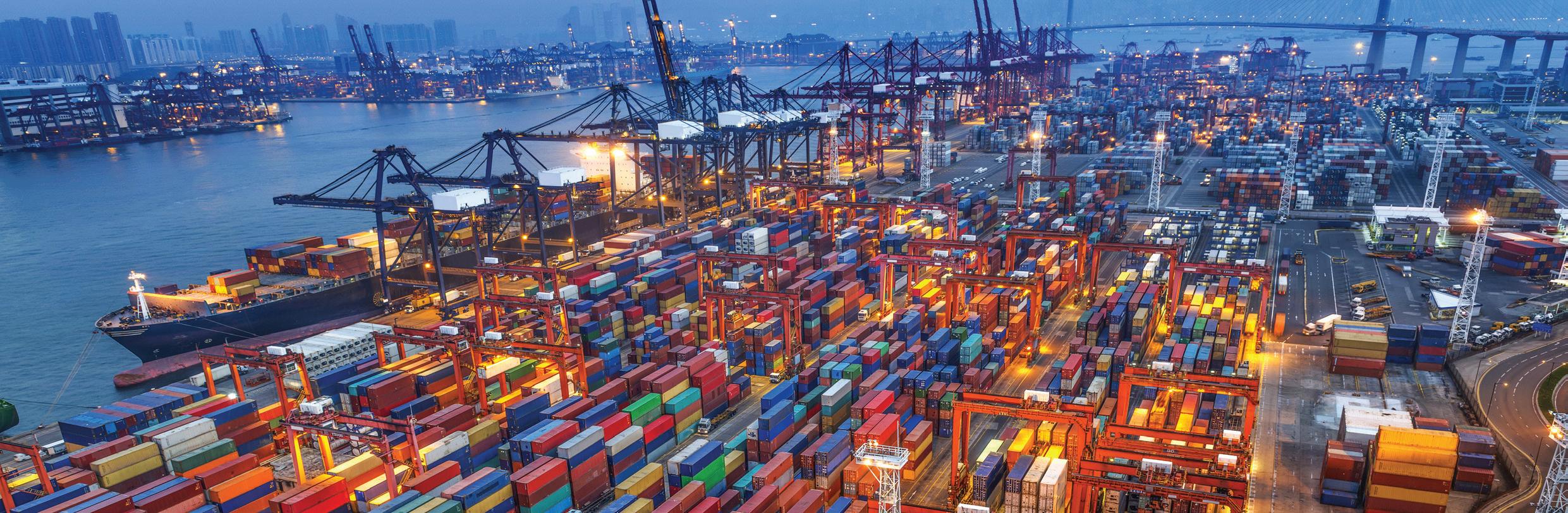
The freight sector is no stranger to disruption. From the pandemic to geopolitical con ict, from natural disasters to infrastructure devastation, co-ordinated mobilisation is a constant challenge. The global transition to net zero emissions will make these challenges ever more complex, requiring major transformation in an ever-decreasing timeframe, with nuances across each mode of transport impacted. The decisions companies take in the coming years will de ne outcomes for generations as the sector builds its future supply chains, says John Fagan, UKIMEA transport leader at global engineering consultancy Arup.
WIRTGEN’S PATH TO CLIMATE NEUTRAL
























DECEMBER 2023
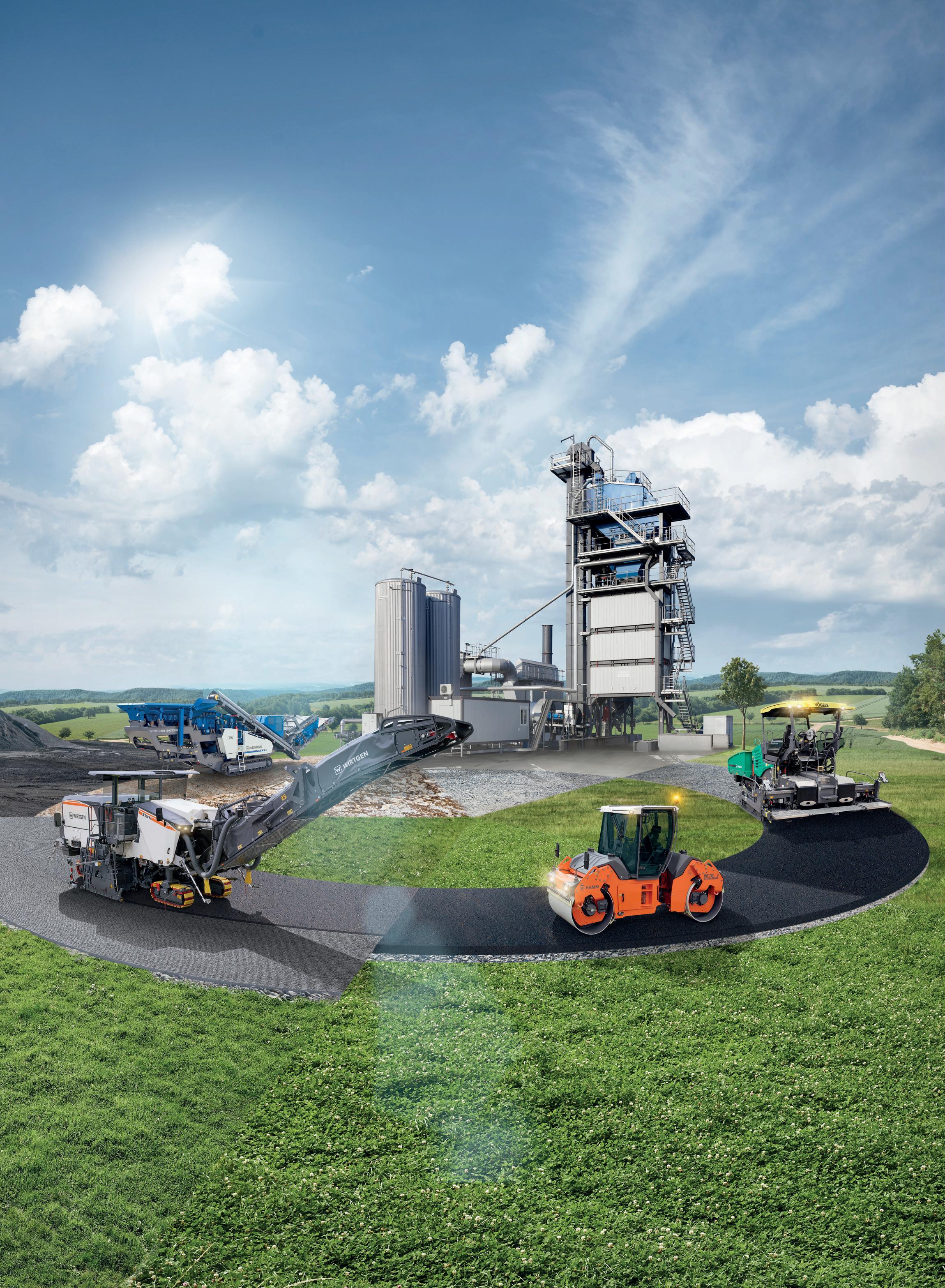
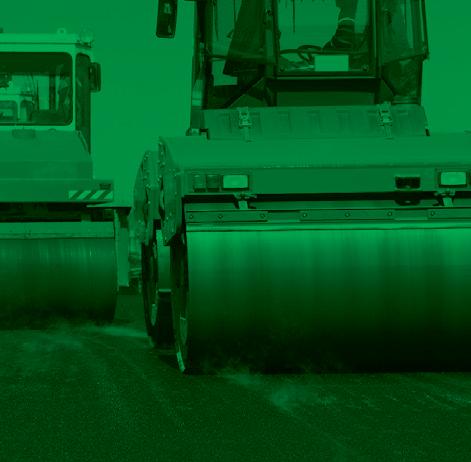
Machine manufacturers and construction companies around the globe are currently searching for ways to achieve the goal of climate-neutral construction. Their main challenge is how best to reduce emissions of CO2 and other harmful gases to zero over the coming decades. In the road construction sector, this transformation is inextricably linked to the improvement and further development of production and working processes. Wirtgen’s chief executive Dr Gunter Hahn and sustainability project leader Dr Markus Bach explain how the focus should not be on individual machines, but on the entire process leading up to the nished product: the road itself.


































16


INTERVIEW: TOPCON’S MICHAEL GOMES
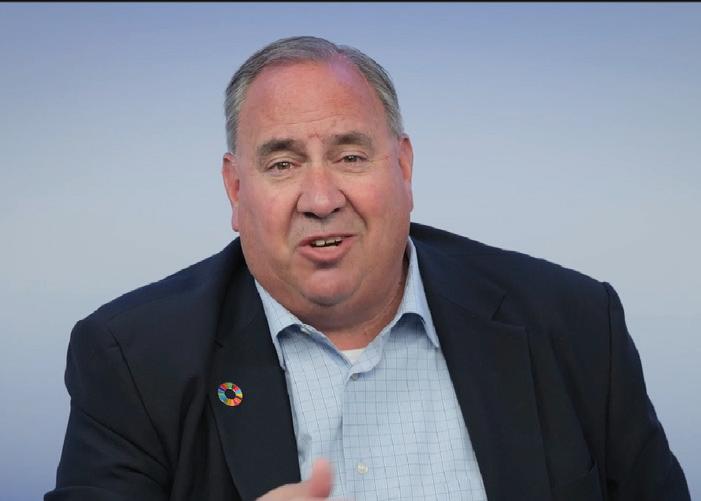
Mike Woof, editor of World Highways magazine, spoke to Michael Gomes, vice president of sustainability and corporate social responsibility at Topcon, about the use of technology to deliver sustainability in construction. When talking about sustainability, it's really about a balance of not just pro t, but people and the planet. At Topcon, it’s about how their sensors, the tools for measurement, can be used to support this.






AMMANN: SUSTAINABILITY IS ABOUT BIG AND SMALL STEPS

Manufacturers must uncover new methods and technologies that enable customers to make production greener. Customers certainly play a key role by providing valuable input and evaluation. Their purchasing dollars also speak volumes. Still, few customers develop their own technologies. It’s up to manufacturers like Ammann to nd ways to lower emissions and maximise material usage. From reducing the use of volatile organic compounds and recycling more asphalt to eliminating production waste and researching new fuels, Ammann is taking a lead.

52







KICKSTART DECARBONISATION FOR OFF-HIGHWAY
44
ROUNDTABLE: A GREEN AND PROFITABLE FUTURE?
In our second Roundtable discussion on sustainability in the construction and quarrying industries, brought to you by World Highways and Aggregates Business, three experts from leading companies in the eld have come together to share their views on managing the transition to net zero. They explore how we can work in harmony with the environment without compromising pro tability and customer partnerships. How can we build a clean, green future and thrive as a business and as a society?
Editor: Geoff Hadwick
Contributing Editors: David Arminas, Guy Woodford, Mike Woof
Designers: Simon Ward, Andy Taylder
Production Manager: Nick Bond
Of ce Manager: Kelly Thompson
Internet, IT and Data Services Director: James Howard
Managing Director: Andrew Barriball
Chairman: Roger Adshead
Cover image: © Maxfx, © Ndoeljindoel, © Bambulla, © Rafael Ben Ari | Dreamstime.com
ADVERTISEMENT SALES
The off-highway sector is just beginning its journey toward decarbonisation, with electric powertrains a major focus. Some of the industry’s smaller tools are well suited to electri cation, but there are numerous obstacles to overcome if it is to make signi cant progress, such as achieving scale of production, advancing battery technologies and installing charging infrastructure, says a new report from consultancies Roland Berger and Off-Highway Research. If the off-highway sector is to seriously reduce carbon emissions, it must focus on decarbonising crawler excavators and wheeled loaders.
60
ZERO EMISSIONS: GLOBAL CEMENT AND CONCRETE UNITES
Ten of the world’s largest cement and concrete producers - including Heidelberg Materials, Cemex and Holcimhave joined architects, engineers, and construction rms in a push for action on climate change. Their group, Mission Possible Partnership, has set out objectives, milestones and commitments that government, industry and investors must work towards over the next 25 years if net zero is to become a reality.
Head of Construction Sales:
Graeme McQueen
Tel: +44 1322 612069
Email: gmcqueen@ropl.com
Sales Director: Philip Woodgate
Tel: +44 1322 612067
Email: pwoodgate@ropl.com
Sales Director & Classi ed:
Dan Emmerson
Tel: +44 1322 612068
Email: demmerson@ropl.com
Italy: Fulvio Bon glietti
Tel: +39 339 1010833
Email: bon glietti@tiscali.it
Asia / Australasia: Roger Adshead
Tel: +44 7768 178163
Email: radshead@ropl.com
ADDRESS
Route One Publishing Ltd,
Second Floor, West Hill House, West Hill, Dartford, Kent, DA1 2EU, UK
Tel: +44 (0) 1322 612055
Fax: +44 (0) 1322 788063
ONLINE: ISSN 2050-179X










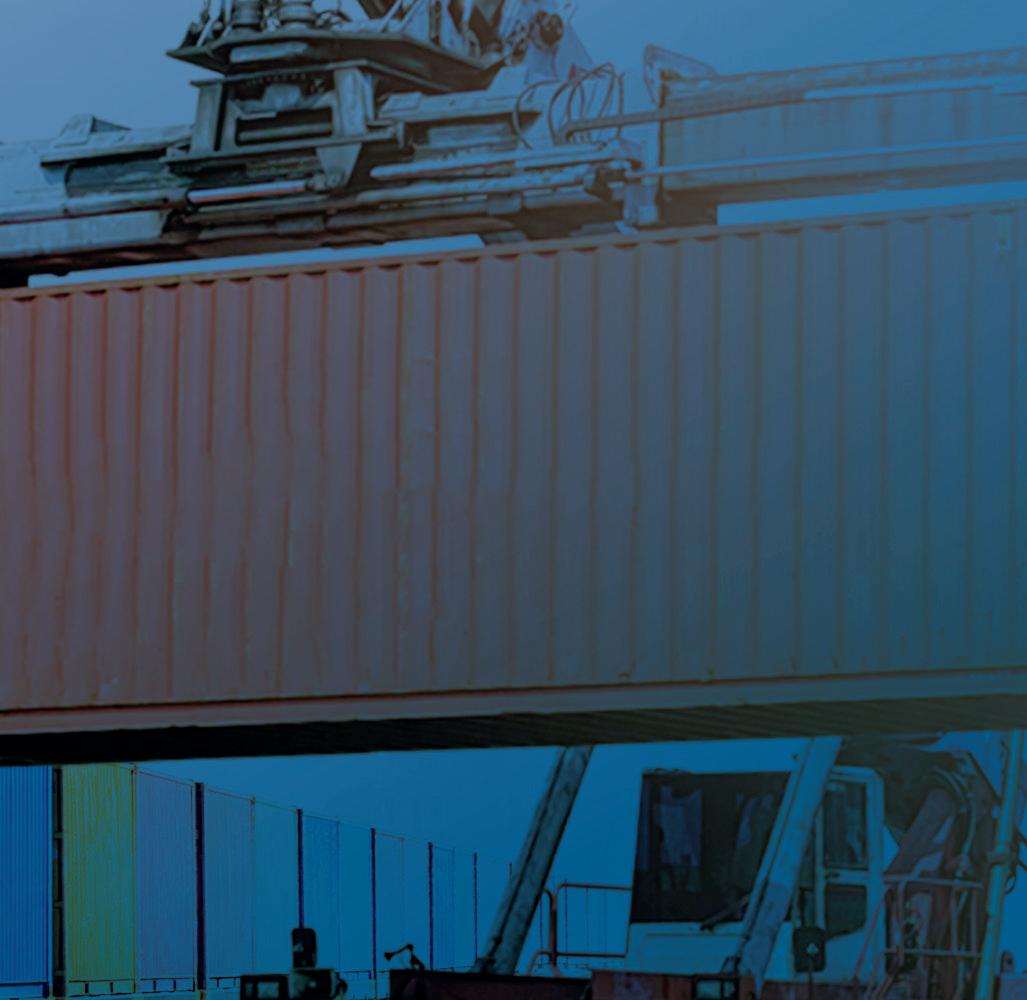




TThe freight sector is no stranger to disruption. From the pandemic to geopolitical con ict, from natural disasters to infrastructure devastation, co-ordinated mobilisation is a constant challenge. The global transition to net zero emissions will make these challenges ever more complex, requiring major transformation in an ever-decreasing timeframe, with nuances across each mode of transport impacted. John Fagan, UKIMEA transport leader at Arup reports.







Arup, one of the world leading consultancy groups, recently published a report on “The Future of Goods Movement,” highlighting systemic change across global supply chains, logistics operations and goods transport as the transition to net zero takes place.
The London-headquartered firm which describes itself as: “A global collective of designers, engineering and sustainability consultants, advisors and experts dedicated to sustainable development,” is predicting “new patterns in consumption and manufacturing and increased need for resilience to reshape all aspects of society – from energy to industrial materials and even food systems.”
According to John Fagan, UKIMEA transport leader at Arup, this complex transition presents the prospect of a more resilient, economically thriving, and inclusive society … if managed correctly. On the flipside, it brings with it tremendous risks … if handled poorly.
It is therefore vital that every mode of transport within the sector familiarises itself with the opportunities and challenges net zero presents. Each form is decarbonising differently, with HGV and road transport
presenting a particularly challenging situation, having traditionally been viewed as comparatively less environmentally sustainable. However, the technology is already in place to help this sector decarbonise more quickly than others.
To realise its potential will require holistic thinking, collaboration, and proactive adaptation - supported by long-range modelling and comprehensive data analysis.
The decisions we take in the coming years will define outcomes for generations as we build the supply chains of the future. Now is the time for industry and government to work together to steer these converging transformations.
To do so, we must look at the key trends identified in this latest Arup report. How will shifting consumption models impact the global movement of freight and associated local supply chains, and how will this system fare as governments and businesses increasingly prioritise decarbonisation in their decision-making?
To ensure effective management, we must look at building greater resilience and agility into supply chains and freight transport infrastructure through more integrated planning and long-term strategy.
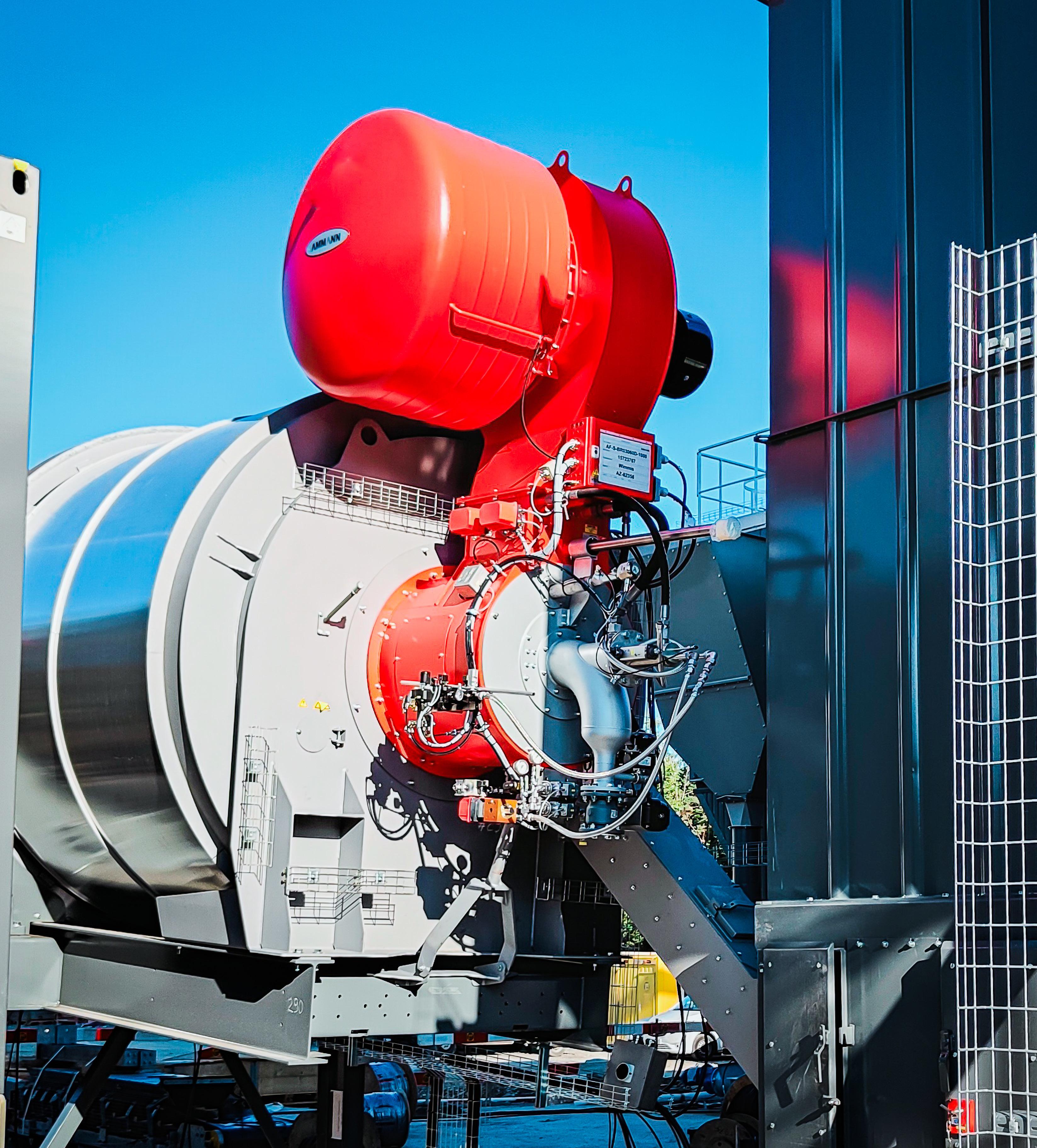
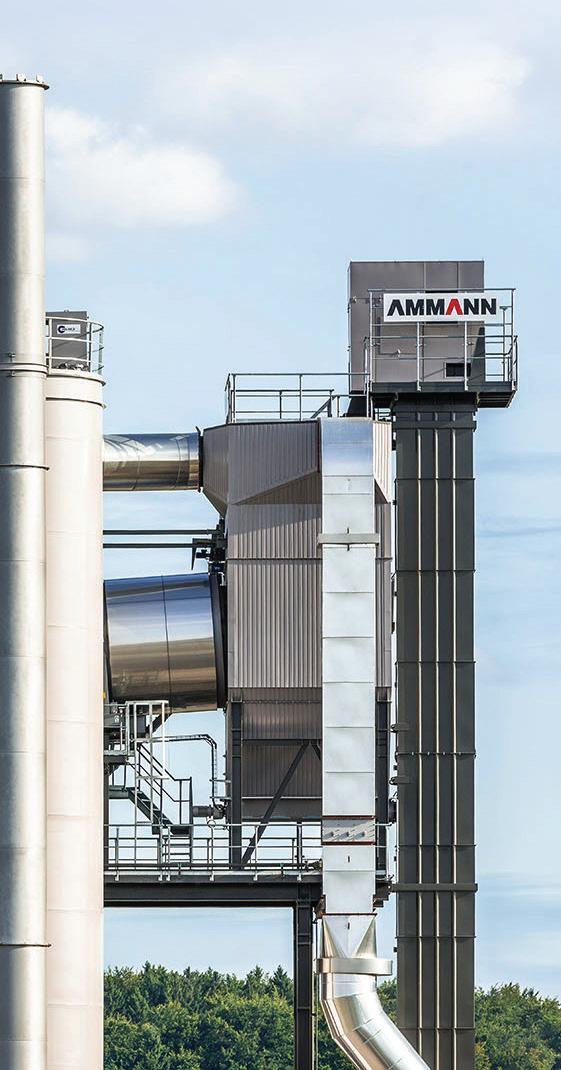
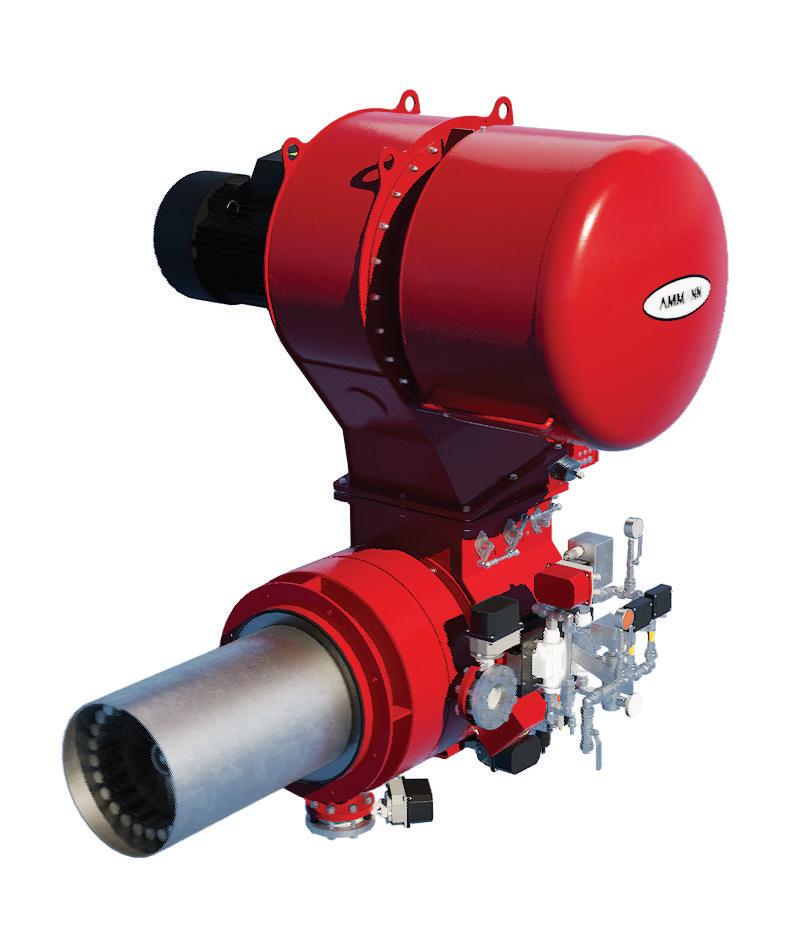
OVER 15 MILLION TONS of asphalt worldwideproduced ... and counting woodAmmann dust burners
Pioneering sustainable combustion technology | Wood dust utilization
Limiting CO₂ through innovation | Years of use | Dozens of systems
The Ammann wood dust burner is growing in popularity. It’s easy to see why:
• Wood dust can be locally sourced, reducing transport costs.
• It’s a renewable energy source.
• The burner transforms a waste material into fuel.
• It’s a proven process, with millions of tonnes of mix produced by asphalt plants equipped with Ammann wood dust burners.
The Ammann wood dust burner can be retrofitted on plants provided by Ammann or competitive manufacturers.



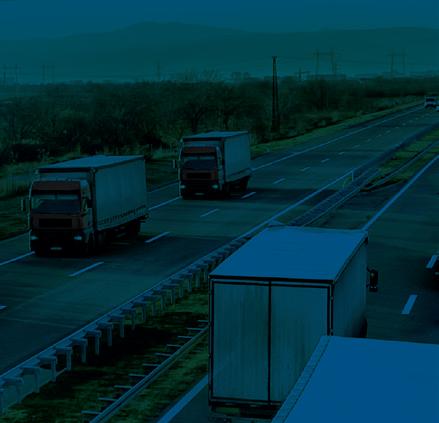






Comprehensive policy and investment decisions, which consider the possibility of major future changes, are necessary to ensure the goods movement system in place can respond to oncoming disruptions without costly consequences - or failure.
Consumption models are set to transform as governments and businesses alike address overproduction and excessive transport of goods. This will substantially impact logistics volumes and put pressure on supply chains, providing both opportunities and challenges for the freight industry – and road transport in particular.
For example, increasing digitalisation means that many services that people are accustomed to accessing through commercial or public facilities are now available remotely
from their homes. This is freeing up capacity on the passenger transport network, and roads in particular, which could theoretically be considered to move goods, if an innovative operational model were to be put in place.
In addition, the onset of truly autonomous vehicles for use on the road will mean the cost of delivering freight within regions could dramatically decrease.
Similarly, the continued growth of e-commerce will require cities to rethink how goods move within urban regions and indeed, between them, from major ports and freight hubs. Models that excessively prioritise consumer convenience at the lowest cost possible are likely to see disruption and potentially greater regulation due to inef ciencies – such as congestion or empty vehicle trips.
Over time, the increased focus on durability by producers worldwide could lead to decreased demand for certain


"...as road vehicles rapidly decarbonise, it is questionable whether rail systems will be able to keep pace and implement net zero operations as quickly"



products. As manufacturers focus on re-use, the need for transporting raw materials to processing and distributing facilities could signi cantly change. The transport industry must be prepared for these shifts and ascertain how it can leverage the opportunities arising from this change.
Meeting net zero targets presents core systematic, crossorganisational challenges across the transport and energy sectors, with different modes of transport presenting different opportunities and decarbonising at different paces.
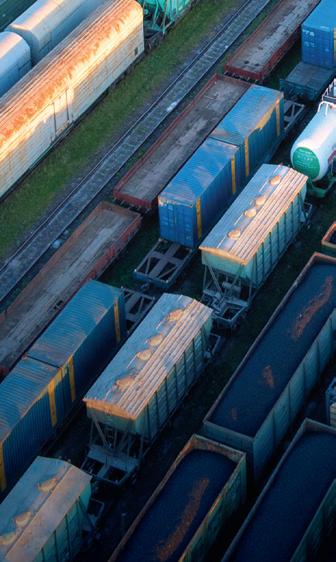
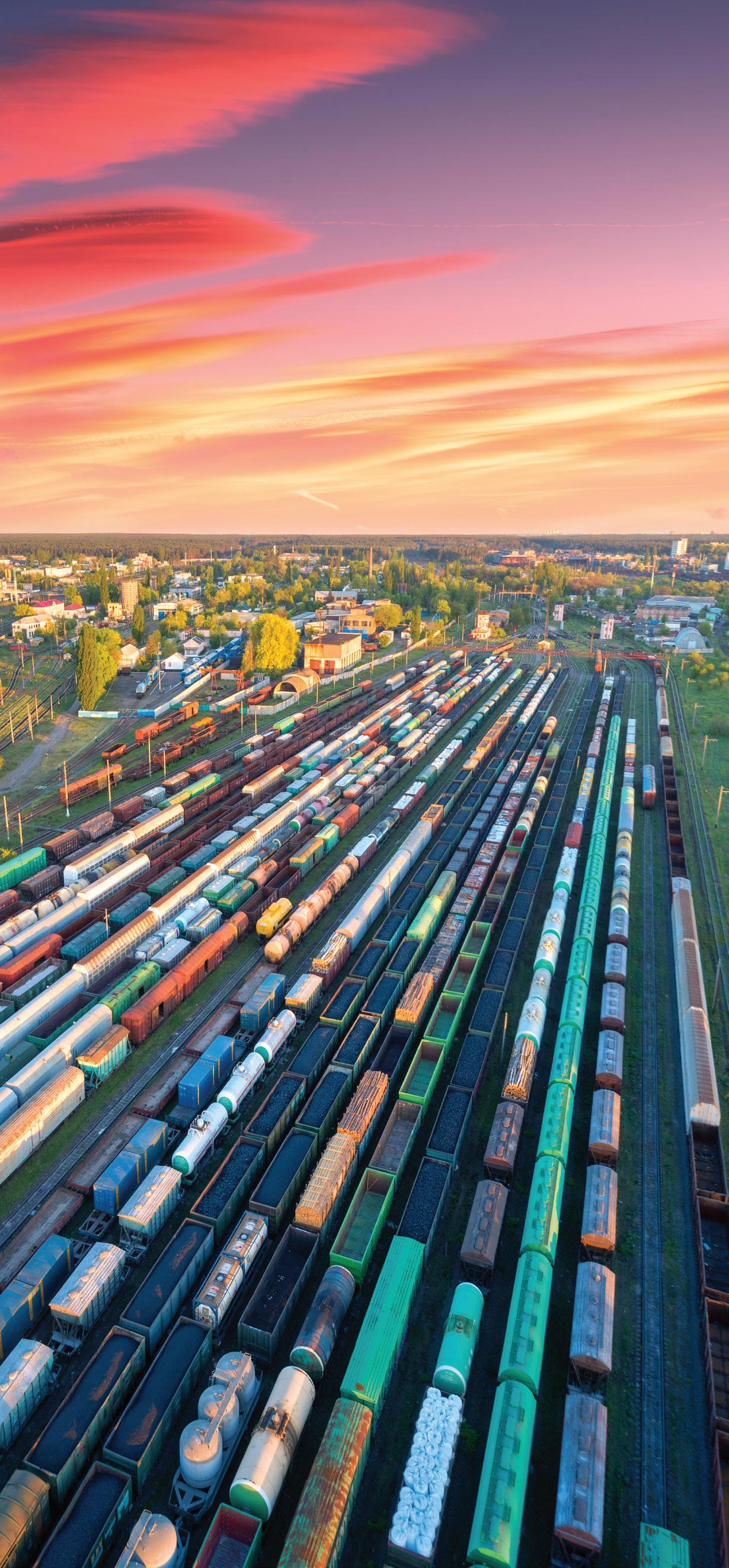
For example, while rail freight is considered less carbon intensive than road (and is often viewed by the government and public as the most environmentally friendly way to move freight), most rail freight is hauled by diesel locomotives. While these are less polluting than the equivalent number of HGVs, they are not a carbon-free option.
And, as road vehicles rapidly decarbonise, it is questionable whether rail systems will be able to keep pace and implement net zero operations as quickly. This is demonstrated by the fact that road freight is expected to gain a cost advantage of around 20-30% by 2050 thanks to technological advancements, meaning that rail will need to match or better these savings to remain competitive, say the consultants at McKinsey.
Generally, the energy and industrial material transition will bene t both rail and road freight. Less coal, natural gas and oil will need to be transported in the future, due to a reduced reliance on fossil fuels and increased uptake in hydrogen.
This will have varying impacts; the greater the distance that goods must travel, the more favourable hydrogen becomes as an alternative fuel source against batteries. In this case, rail freight and HGV transport are among the systems most likely to transition to hydrogen in the short term. By comparison, hydrogen to fuel aviation and shipping is still in the developmental stages.


Building resilience against intensifying climate change risks will become increasingly important, while also taking into account economic and social disruptions. Recent supply chain shocks have highlighted the fragility of over-optimised logistics and the urgency of adaptation measures.
This new Arup report suggests resilience measures like supplier diversi cation across geographies, business transparency through open and sustainable data sharing, strategic redundancy in inventories and routes, and
Dotted lines indicate the year in which various transport modes have largely stopped consuming fossil fuels
physical infrastructure hardening are now crucial. Core organisational capabilities like network modelling, scenario analysis, risk monitoring, and operational agility must also be significantly enhanced.
Technology will be key to building this resilience by enabling a shift towards real-time, predictive supply chain capabilities due to innovations including AI, automation, electrification, control towers and digital twins. It will also be essential to increasing the energy efficiency of business delivery models.
On the road, self-driving trucks are already being piloted for long-haul routes to address driver shortages and improve safety. Meanwhile, in warehousing and distribution centres, robotic goods-to-person systems, automated storage and retrieval and autonomous mobile robots are driving incredible productivity gains, enabling facilities to handle surging e-commerce volumes with reduced labour requirements.
But this shift requires partnerships beyond immediate suppliers to manage risks holistically across entire supply webs. If we can manage this balance, we will ensure our supply chains are prepared for the volatility to come.
Evolving supportive infrastructure networks and forwardlooking government policies will provide critical foundations to enable sustainable logistics advancement.
Introducing the necessary technology will not be possible without policy and regulation that enable innovation and new delivery business models, planned for through aligned public and private investment. A coherent strategy across the supply chain will be vital – and it starts with government policy.
By actively shaping infrastructure and policies today for the systems of tomorrow, governments can unlock technological benefits, accelerate decarbonisation, and support companies, underpinning resilient economies.









National
Total
The economic and manufacturing rise of Asia – with China's dominance and Southeast Asia's growth – alongside nearshoring trends, fundamentally changed global trade relationships, manufacturing locations, and logistics ows between regions. Now, however, we are seeing a shift back to more localised supply chains.
For countries like the UK, the reshoring of production is accelerating as more rms re-evaluate their sourcing strategies in light of geopolitics, shipping costs, and risk.
A recent survey from ShipBob revealed that two in ve UK-based small businesses are considering a switch to local UK manufacturers to avoid cost and margin pressures from global supply chains, while cutting their carbon footprint.
This recent evidence of localisation is probably a near-term trend. However, it is clear that future freight systems will bene t from being agile to take account of the changing ows of goods between short and long-distance routes. This shift is largely due to altering trade relations between nations and shifting sources for consumption and production for key goods.
Delivering the systemic transitions outlined in the Arup report requires ambitious collaboration, within and between the public and private sectors.
It is vital that industry leaders within each mode of transport familiarise themselves with the speci c changes their sector faces, with road transport in a unique situation to drive change given its dominance in the existing freight market.
To make change possible, governments must partner with freight industry leaders to develop supportive policies,
provide regulatory clarity on emerging technologies, and strategically align infrastructure investment for evolving logistics and freight needs.
Companies need greater coordination and shared sustainability standards across their supply chains. Actively piloting and integrating new solutions for decarbonisation, circularity, resilience, and digitised operations will help rms stay ahead of the curve.
Furthermore, agile collaboration between logistics providers, distributors, merchants, and consumers can help optimise local delivery models to reduce wasted transport miles and packaging.
This period of transformation has enormous potential to positively reset goods movement for a sustainable and resilient future. But realising the bene ts fundamentally depends on holistic systems thinking and elevated public-private collaboration.
The challenges are no longer on the horizon, they are here – and here to stay. The future of the freight industry will be de ned by the partnerships, pilots and policies established now.
If you would like to see the full report, please follow this link: https://www.arup.com/ perspectives/publications/research/section/future-ofgoods-movement
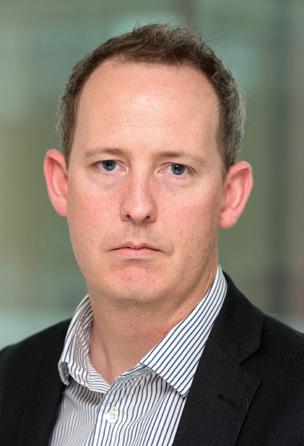
JOHN FAGAN is Arup’s Transport Leader in the UK, India, Middle East and Africa. He has worked across the lifecycle of many transport projects, making the case for investment, developing business cases, and providing advice on transport usage and trends. With more than 20 years’ experience in the transport sector, he has worked with clients to help shape transport systems that are designed and operated around passenger and user needs.
John has extensive experience of working in the rail industry, for example, and has a deep understanding of operational, commercial, and regulatory environments.



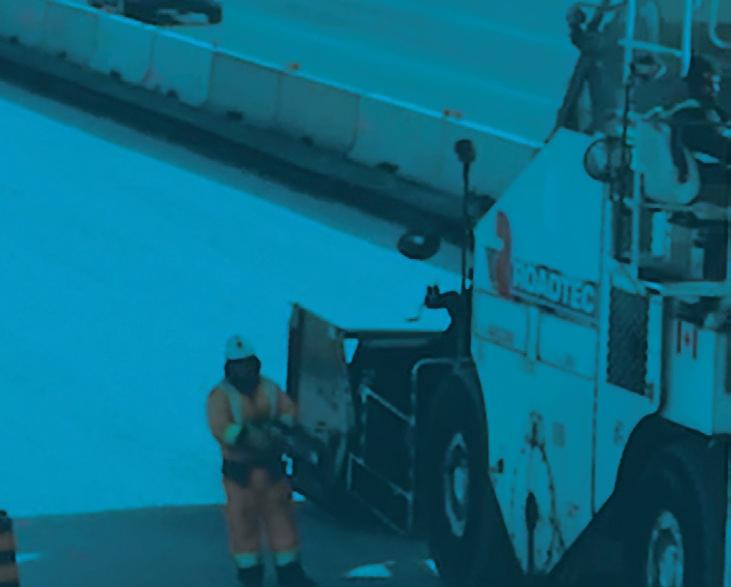
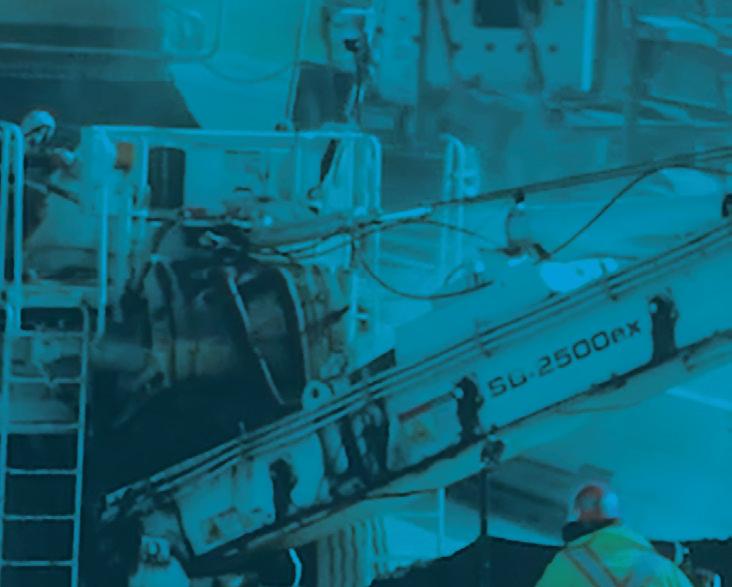
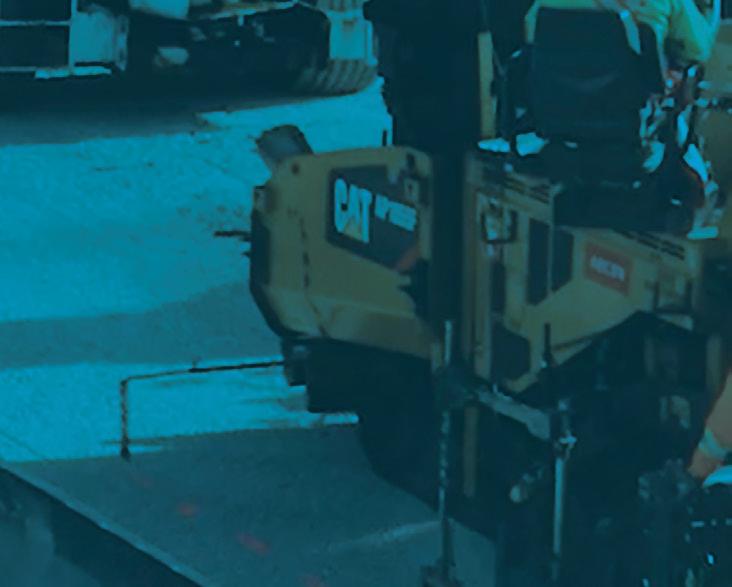


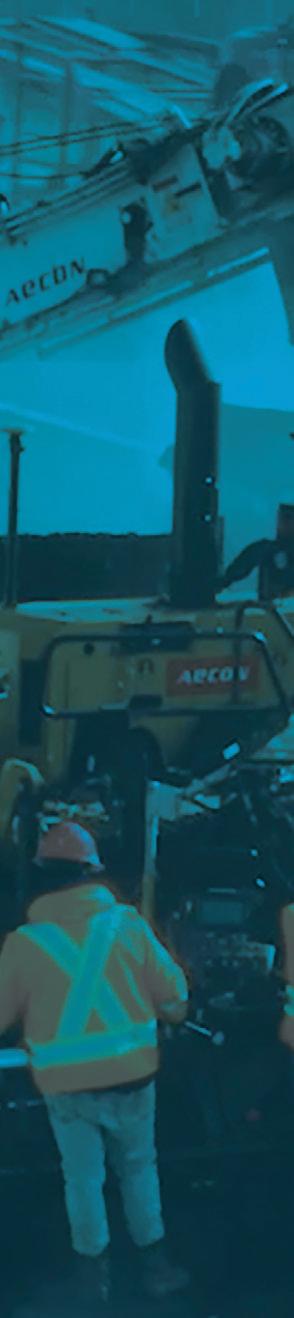







































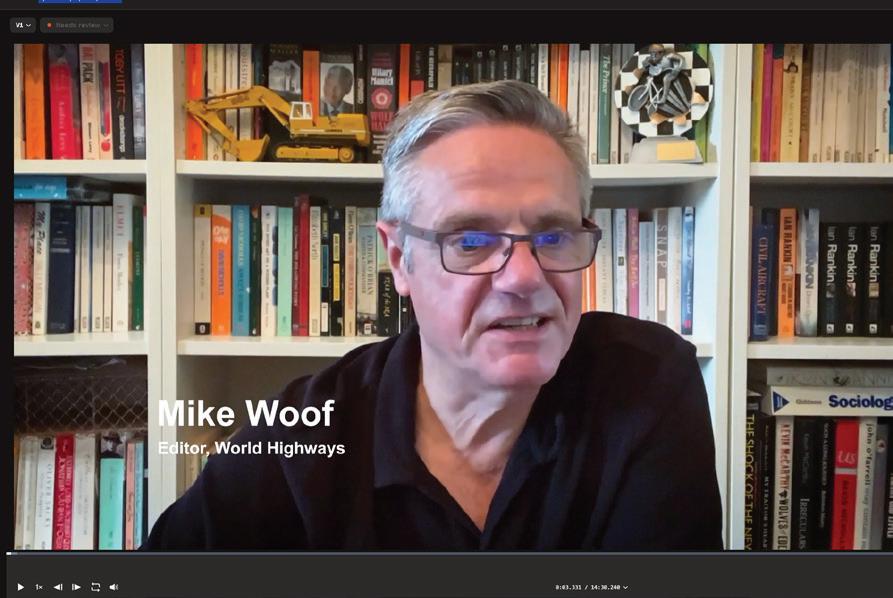
editor of World Highways
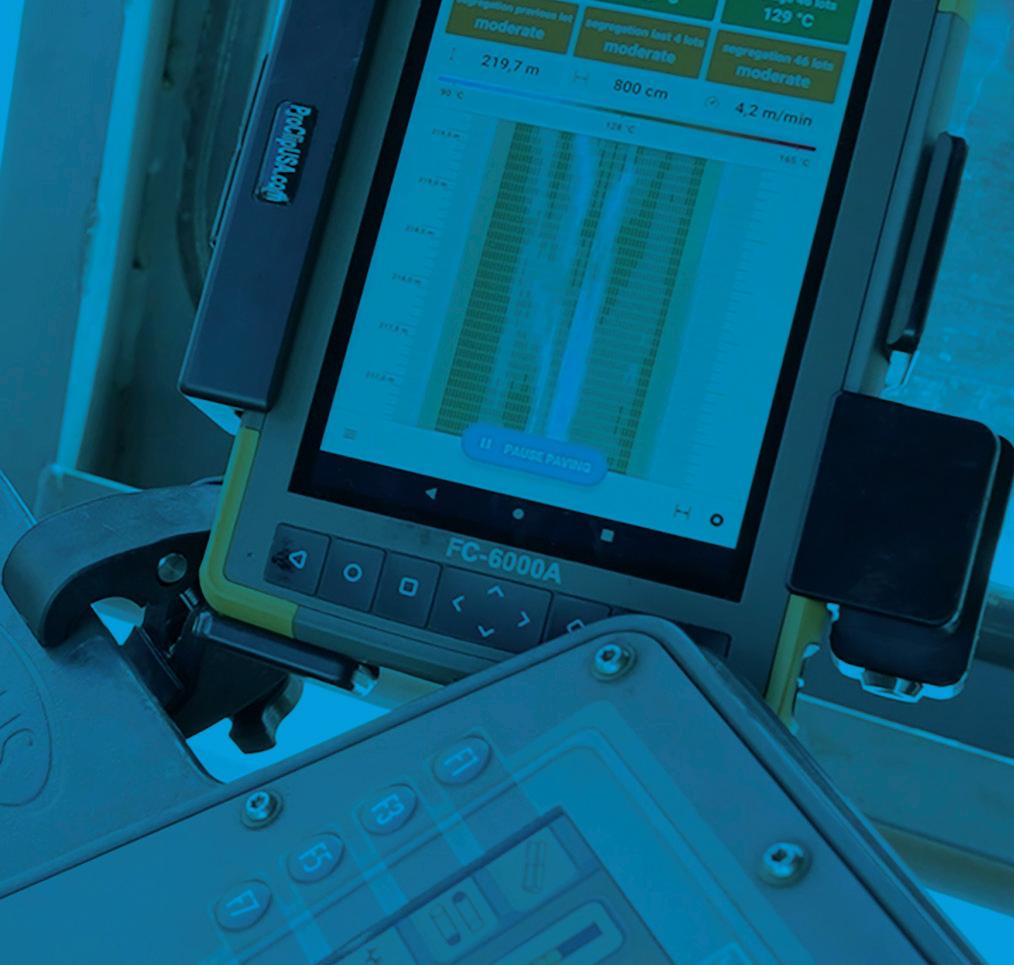
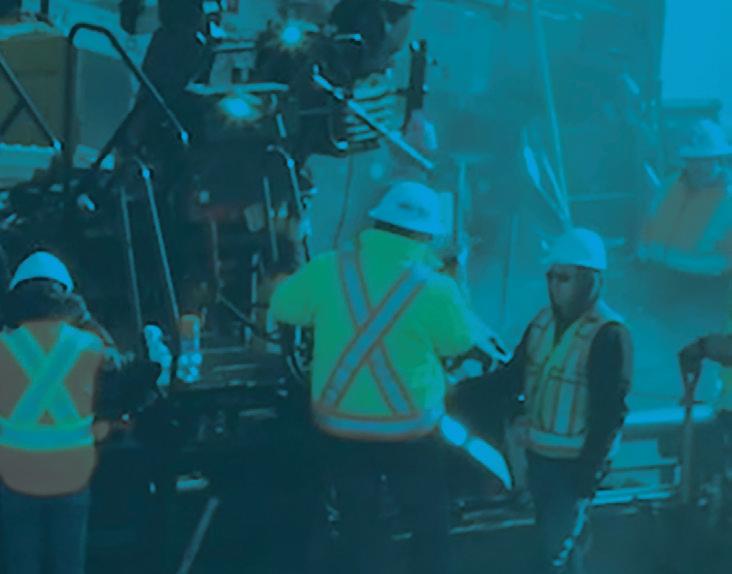
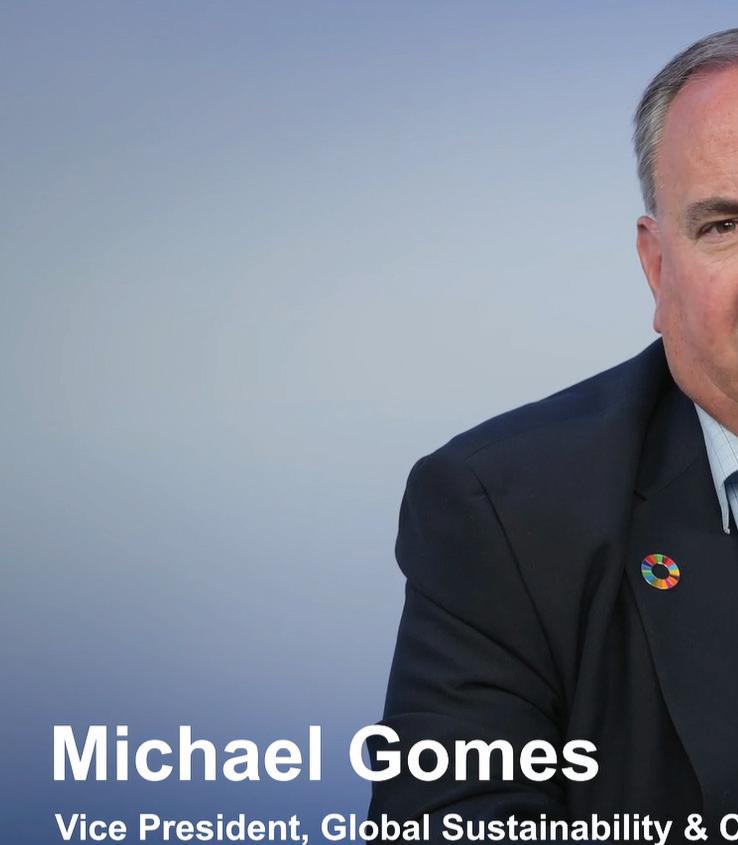
Michael Gomes, vice president of sustainability and corporate social responsibility at Topcon, talks to Mike Woof, editor of World Highways magazine, about the use of technology to deliver sustainability in road construction.













Q. Where has Topcon technology been used on some key projects to deliver sustainability in construction?
A. When we talk about sustainability, it's really about a balance of not just pro t, but people and the planet. At Topcon, it’s about how our sensors, our tools for measurement, can be used. It's the data from those tools that is the valuable piece in sustainability and, importantly, being able to use those data layers in construction projects. That can be to prove that you're using less fuel through telematics or to prove that you're moving less total material or that you're actually using less material. You have more on-time coordination.
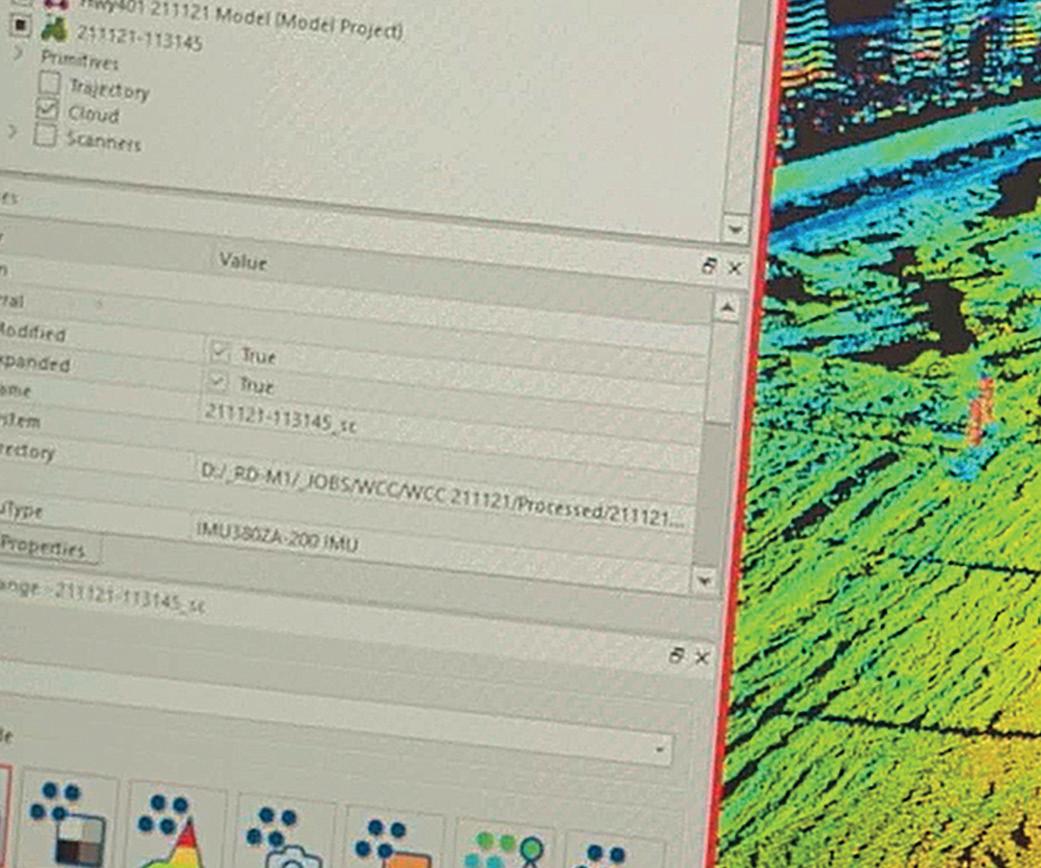
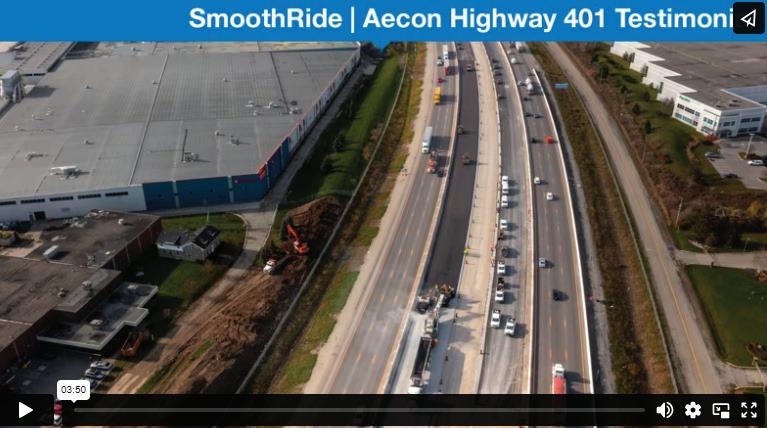
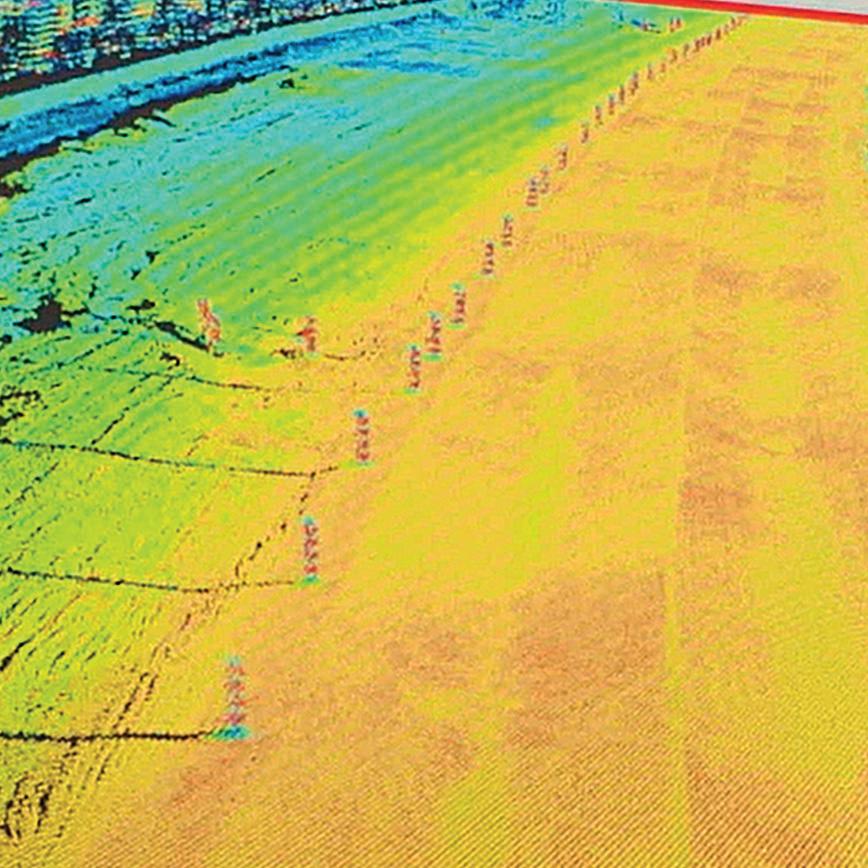
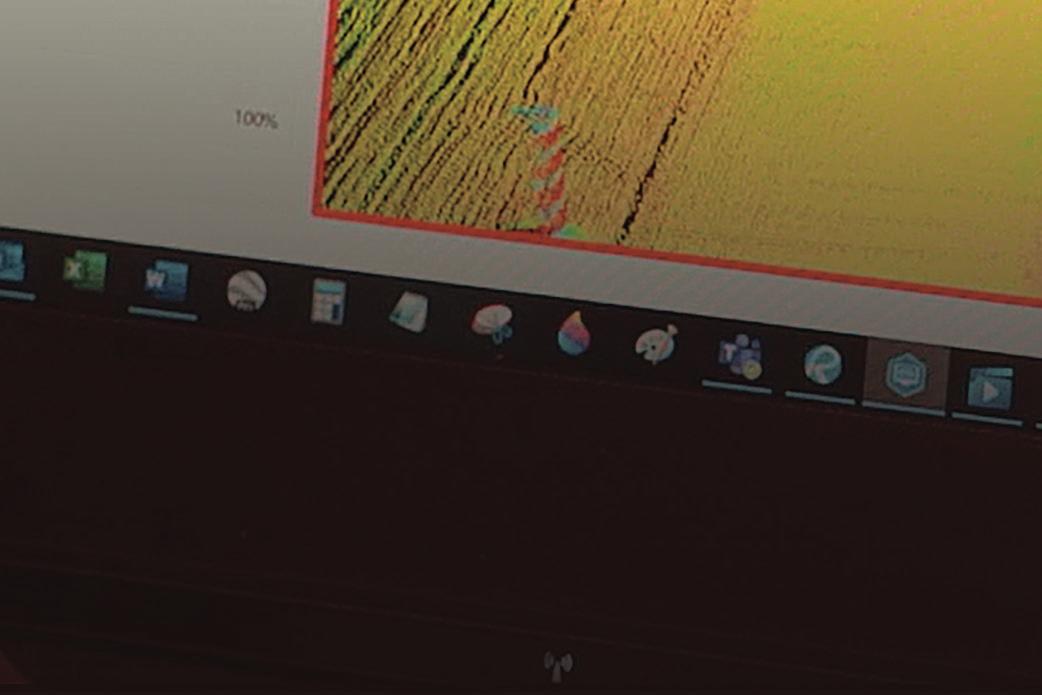
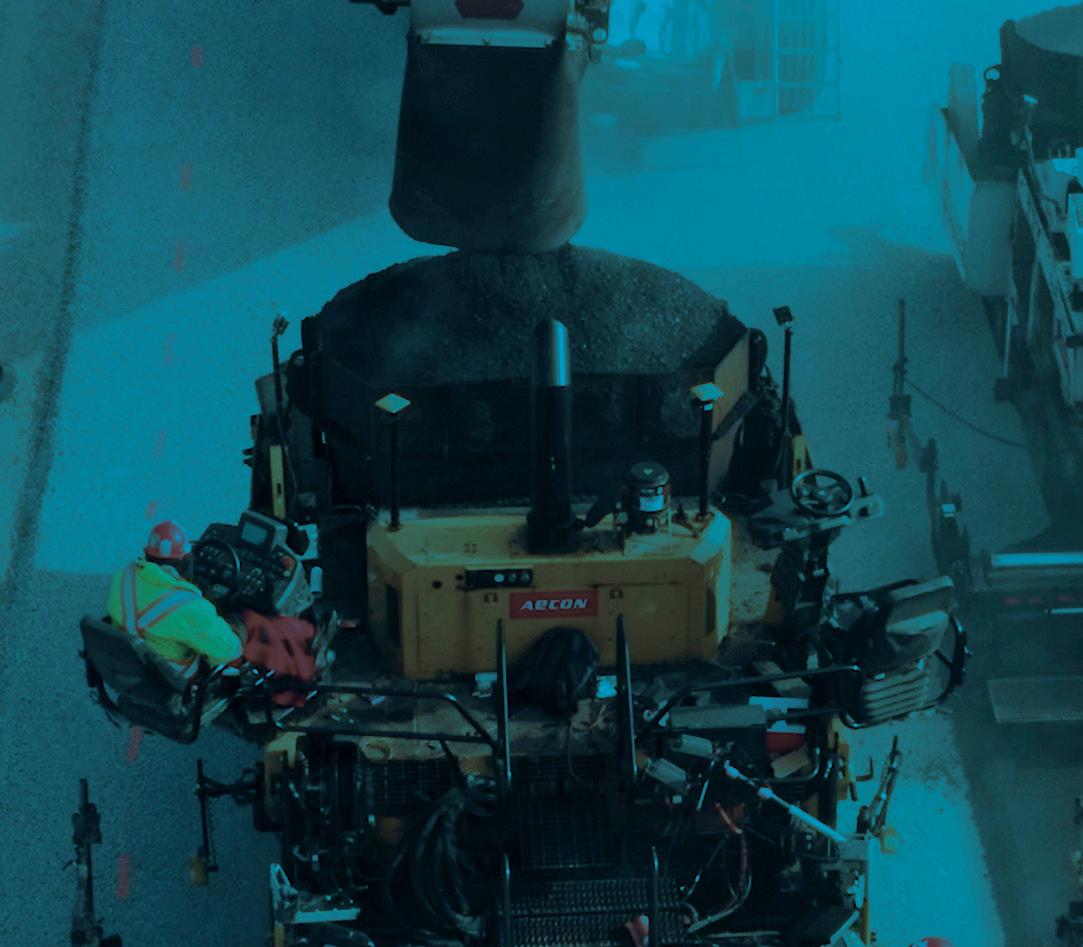
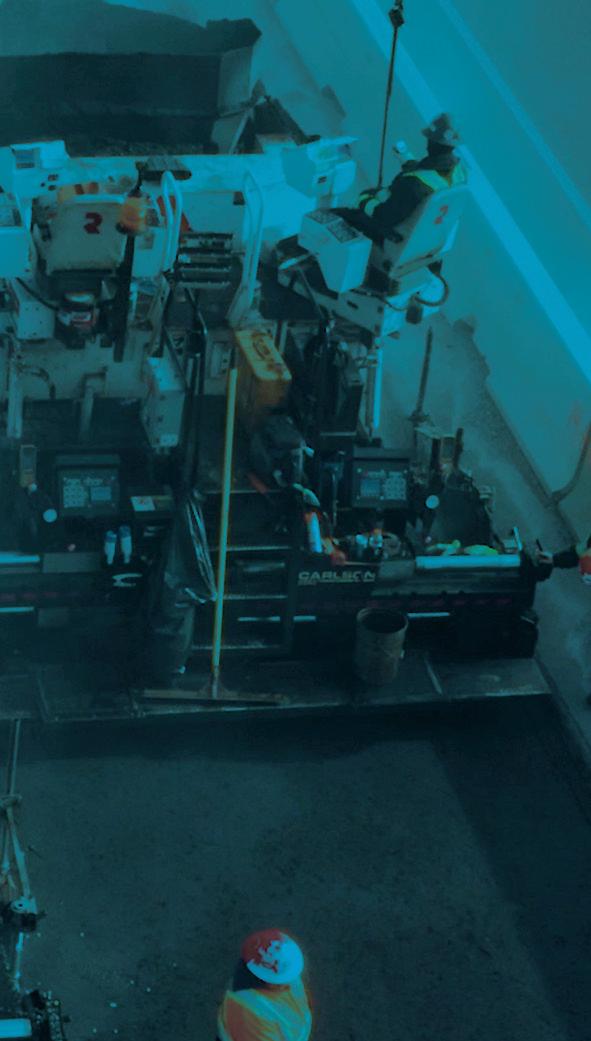
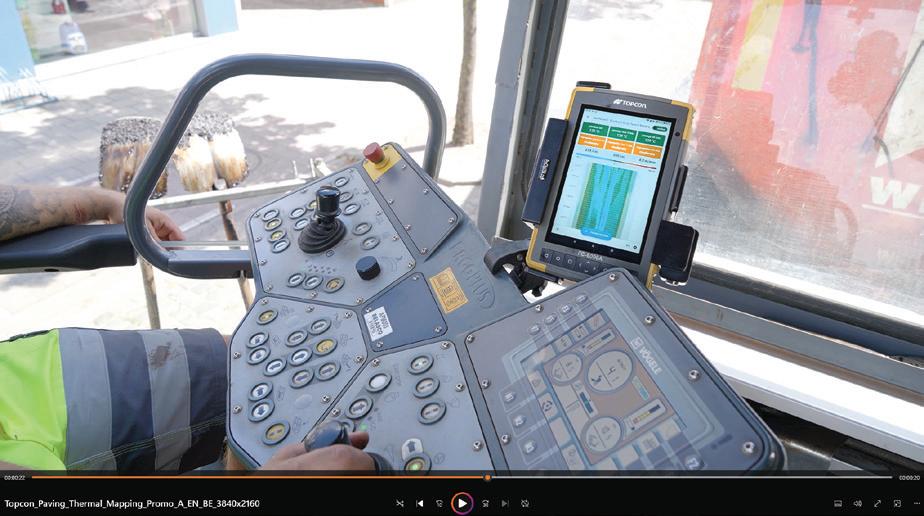
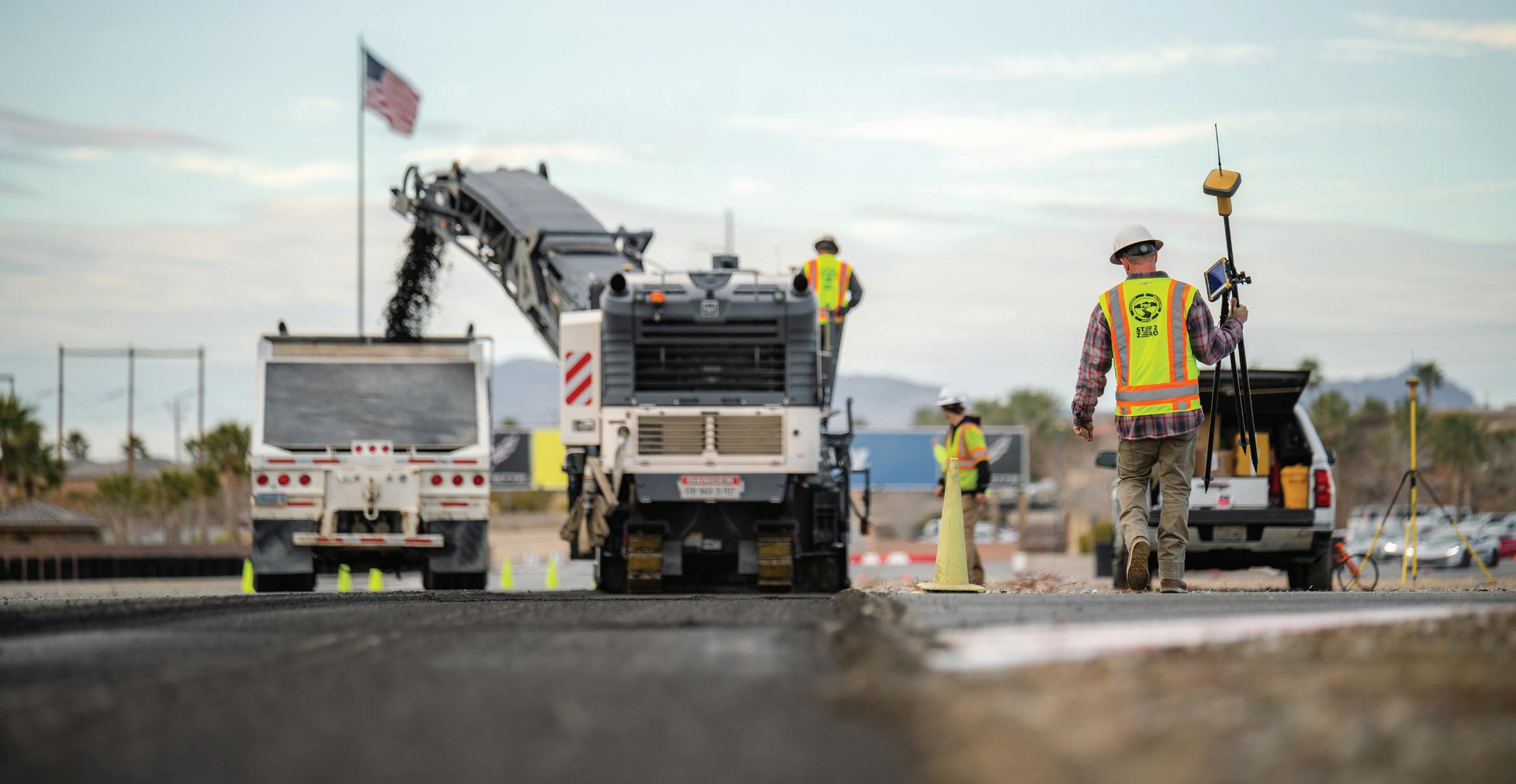
In road building, all of these accumulate to bring added value to sustainability. With the SmoothRide system, in particular, you have the bene t of ensuring that the old road surface, when it's milled off, is done to within a few millimetres as required.
Q. Please explain the bene ts of that for the asphaltpaving process in terms of material costs.
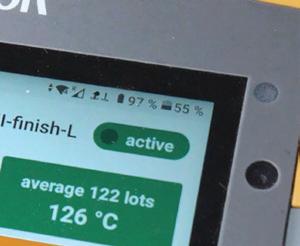
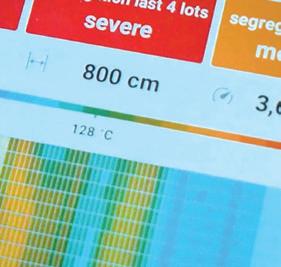
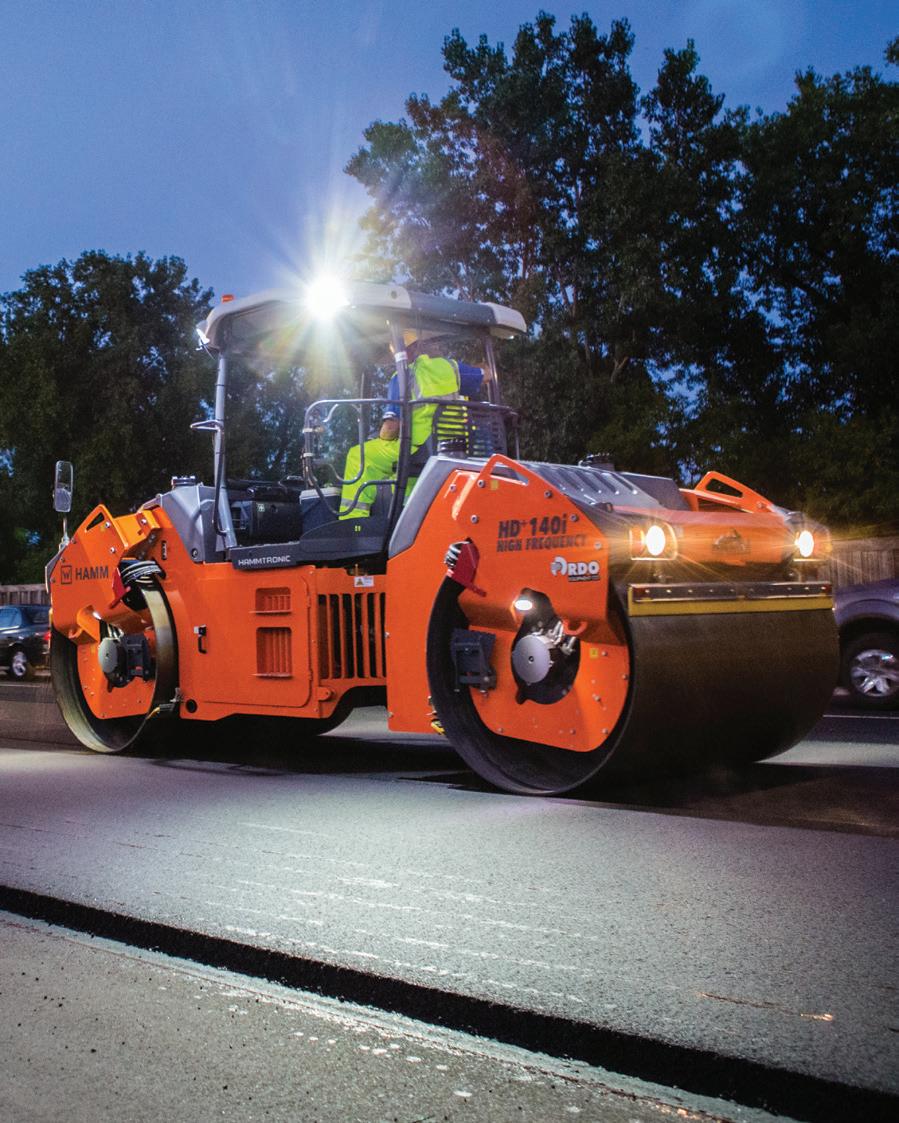
A. For example, a consistently smooth road creates value for taxpayers because vehicles will use less fuel. Our SmoothRide system can document the smoothness of the road and with the intelligent compaction process you have the right amount of compaction. With this optimised





amount of compaction you get optimal road wear and the contractor has used the optimal quantity of material. For the logistic part of the paving process, using products like our Pavelink solution, you have on-time delivery of paving material to the paver. Where you have the coordinated operation and the material is arriving at the right temperature, in the right sequence, at the machine, you get a very, very consistent paving process that results in optimum road smoothness. In other words, you're saving material, reducing costs and extending the wear-life of the pavement. Again, over time, you’re effectively reducing costs. You're getting more for less, in a sense. But when we begin to talk about sustainability, there is a value above this and that is the saving in material which also translates into pro t. This helps to drive the contractors as well as the people who are paying for the projects. But there are also bene ts to other people working on the project. They're doing higher-value work, they're managing and operating the machinery much more ef ciently and can be part of a greater decisionmaking process. They bene t from improved site safety because when they're using sensor-based applications there is less need for grade checking, thereby improving safety around the machines. Because you're optimising the haulage process, you're reducing the fuel burned by the truck eet. So, there are a lot of savings. Pro t, people and the planet, that is what sustainability is about.












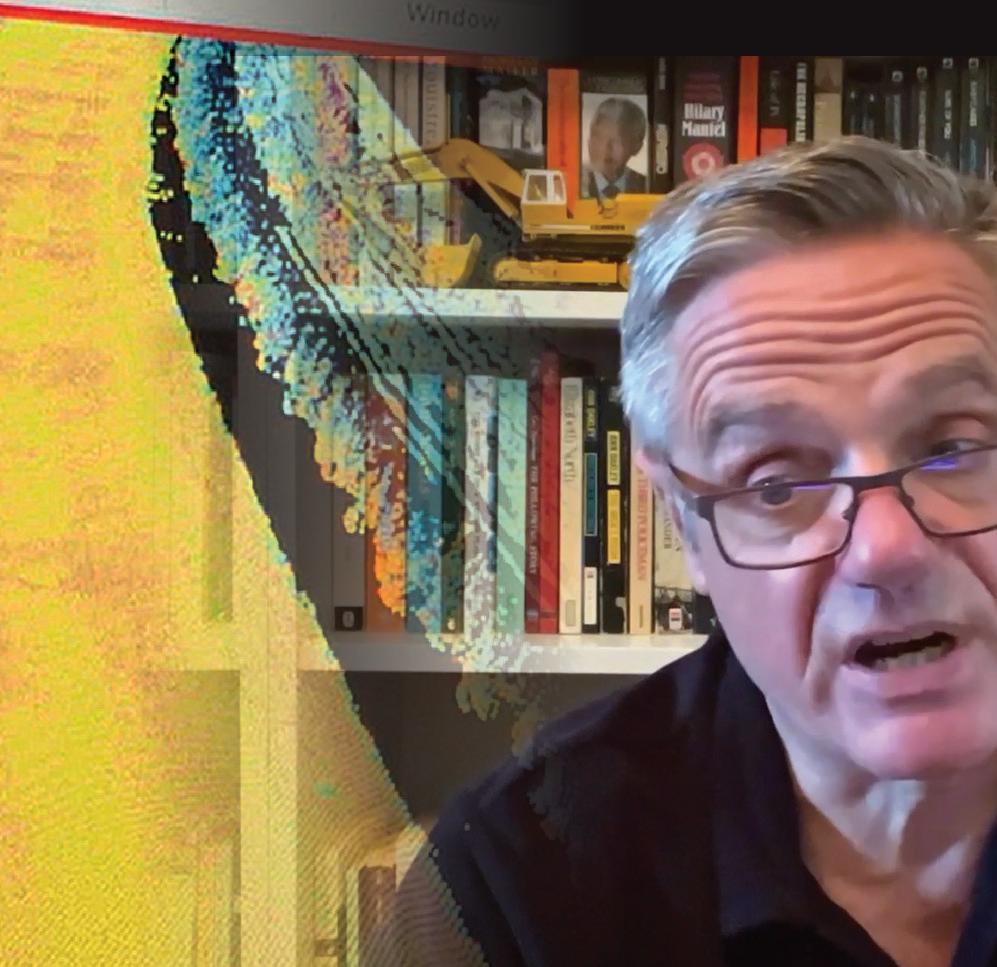



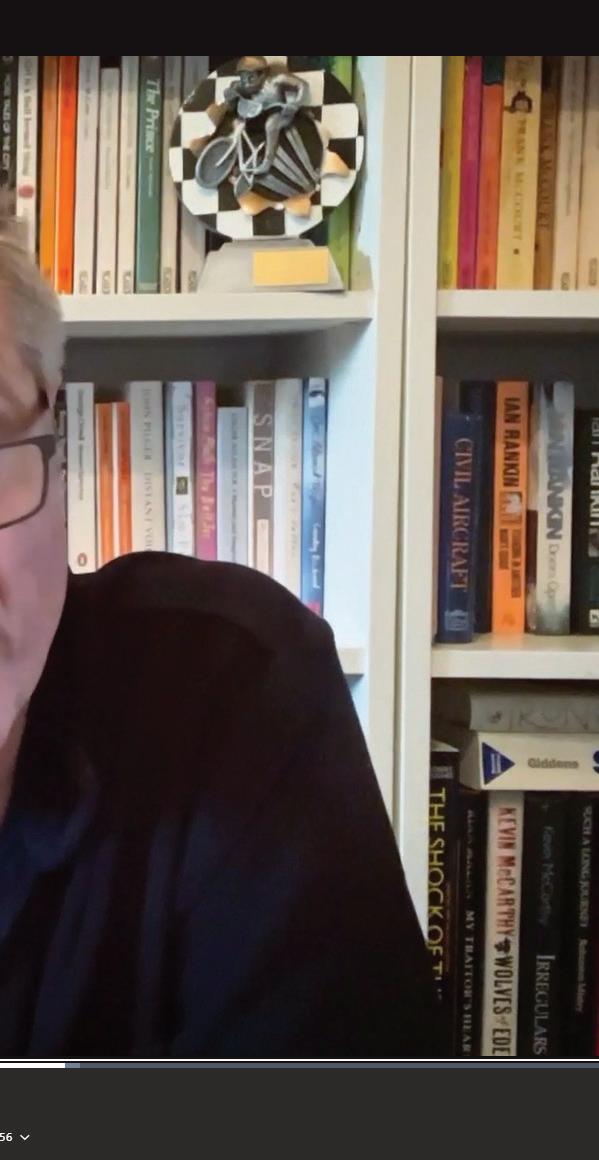

"I would argue that other agencies that manage smaller and regional roads are starting to understand the bene ts of SmoothRide to get a more sustainable and longer-lasting asset"
Q. SmoothRide is being used mainly on large highway and airport projects. Can you tell me how this technology can improve sustainability on smaller projects?
A. We have examples in Europe with various road agencies that manage the entire highways network. But they're using technologies like our SmoothRide on many smaller regional roads to get the bene ts we've talked about, such as less total material used and increased road life. In fact, I would argue that other agencies that manage smaller and regional roads are starting to understand the bene ts of SmoothRide to get a more sustainable and longer-lasting asset.
Q. How many of the highway authorities are actually requesting the use of this technology to deliver sustainability?
A. More and more agencies are doing so but the short answer is probably not enough yet. That's why we appreciate this opportunity to talk today in order to help people understand that these technologies exist now and that they do t into sustainability agendas. Part of the problem is that sustainability is becoming a buzzword. While the actual technologies like our SmoothRide and our road-building portfolio are well known, people haven't necessarily been thinking about
"...technologies such as SmoothRide are about creating opportunities for creating incentives to reach a project’s sustainability goals"

the bigger picture, meaning the bene ts around the material, the bene ts to the operators, as well as the long-term bene ts of the well-built road.
Q. What is Topcon's own focus on sustainability? Has the company set targets or altered its operations to meet the demands of sustainability?
A. Topcon Corporation is really embracing sustainability, starting with the UN Sustainable Development Goals. We support a larger number of these through the development of a wide range of our products. Whether it’s in Healthcare, in agriculture or part of the infrastructure process from the dirt work to actual road and bridge construction, we’re bringing bene ts to people all the way along.
Q. How do your clients or the contractors measure the sustainability pro le of their supply chains?
A. Most of the contractors focus on the incentives that are for themselves, simply because if they can’t make a pro t, nobody bene ts. In this respect, we need to show them where the incentives lie. In some cases, the incentives might be around optimised use and/or delivery of material. In other cases, it's around road surface smoothness. In yet

other cases, it might be around proving that the logistics of a project are happening according to plan. The reality is that each contractor around the world will have a different focus. In Japan, it's towards things like climate change. In Europe, it's really around material use and also there is a large social element to a project. Then in the United States in many cases the SmoothRide standard is only now being adopted. It's new to lots of people. The picture is that more and more of these pieces are coming together. But, I suppose, for the contractors, there are de nite obvious bene ts as we discussed, such as material savings or the bonuses they'll get if the smoothness of the road surface is very good. These are going to be big pluses for them.
Q. How many contractors would you say are actually interested in sustainability? Is it only the major rms or are a lot of the smaller companies showing interest?
A. It’s starting with many of the largest rms but it depends who in the company is really driving sustainability. Firms that serve large institutional investors and which operate in areas that are very environmentally sensitive are the lead adopters. But increasingly it's those small- and medium-sized contractors that are beginning to get engaged, whether it's because of the bene ts of material savings or simply the peace of mind that they are doing the right thing or whether it's around reducing operational risk through machine control. As I’ve noted before, people’s sustainability priorities might be different, but in the end it’s not just for pro t, but also people and the planet.
Q. It might be cynical, but some rms might view sustainability as simply a box-ticking exercise?
A. Yes, for a lot of the industry, the money factor is the key issue. But increasingly, whether that's improving operator safety, improving on-time performance, the overall bene ts are visible to road users. All of these things have a cumulative bene t. And we are also seeing much more frank and open discussions on sustainability and where the bene ts lie and to whom.
Q. What roles do you think clients play in improving the sustainability of road projects?
A. Paving is a very complex process and clients in many cases are voicing concerns over what they think is important. This is where we can point to the bene t of things like the SmoothRide standard and demonstrate to them that all is possible. We can show them how to do more with less and that they can use the digital data layers to prove this. We are also providing evidence of better on-time performance, more coming in on schedule and on budget and, importantly, the fact that they're getting paid more. At the end of the day, technologies such as SmoothRide are about creating opportunities for creating incentives to reach a project’s sustainability goals. You can use hard facts that come from things like telematics and data layers to prove that the client and contractor together are doing the right thing by the people and the planet.
"As I’ve noted before, people’s sustainability priorities might be different, but in the end it’s not just for pro t, but also people and the planet"





















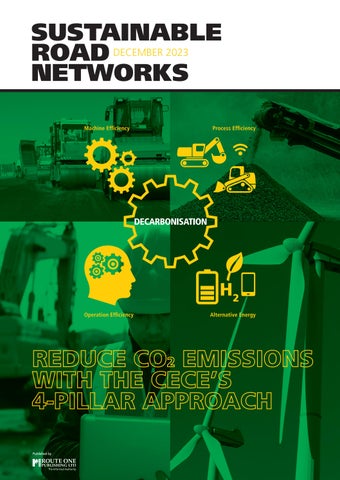
MMachine manufacturers and construction companies around the globe are currently searching for ways to achieve the goal of climate-neutral construction. Their main challenge is how best to reduce emissions of CO 2 and other harmful gases to zero over the coming decades. In the road construction sector, this transformation is inextricably linked to the improvement and further development of production and working processes. Wirtgen’s CEO Dr Gunter Hahn and sustainability project leader Dr Markus Bach explain more.







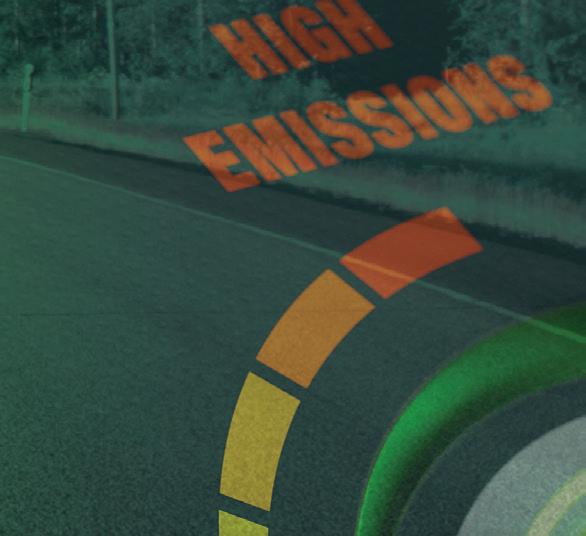













In the future, machines and construction materials will be assessed on the climate-harmful emissions that arise from their production and use. However, the focus should not be on individual machines, but on the entire process leading up to the nished product: the road itself. Ultimately, the decisive factor is the emissions generated per kilometer of newly built or rehabilitated road – the “CO2e per work done”.
In 2015, the United Nations adopted “Agenda 2030.” With the agenda, the global community aims not only to enable people on all continents to live a life in dignity but also to sustainably conserve vital natural resources. Economic, ecological, and social aspects all play a critical role in this. Governments around the world, civil society, and private enterprises, have all been asked to make a contribution to the realisation of the Sustainable Development Goals set out in Agenda 2030.
Above and beyond such demands, the construction
industry already faces speci c on-site requirements with respect to the use of non-fossil fuels or the deployment of machines with local zero emissions – for instance, in the Nordic nations. In the light of this and their obligations to future generations, many leading players in the construction sector and numerous small and mid-size companies are currently setting their own goals to mitigate climate change.
Considerable effort on the part of all parties involved must be invested before the road construction industry as a whole can achieve the envisaged sustainability goals. This applies to machine manufacturers and the contractors who use their products. Given that they share the same goals, both have a growing interest in developing and using machines that produce lower emissions in the course of their service life and are themselves manufactured with climate-friendly processes as well as construction methods
The Greenhouse Gas Protocol (GHG) has become globally established as a holistic accounting method for CO2e emissions. In a similar way to business accounting, it enables companies and institutions to systematically determine their emissions with harmful effects on the climate and to identify their sources.

Machine Ef ciency
Integration of optimised machine components
(e.g. powertrain, hydraulics, tyres...)


Operation Ef ciency
Operators trained for intelligent machine use, skilled teamwork and effective management

Source: CECE (cece.eu)
Process Ef ciency
Optimal work ow including the choice of most suitable machine or combination of connected machines
MACHINE EFFICIENCY:
Optimisation of the power train, undercarriage, or hydraulic components leads to lower energy requirements without compromises in terms of performance.
which CO2e emissions can be reduced:

that conserve valuable resources.
OPERATING EFFICIENCY:
Well-trained operating crews are essential for the ef cient completion of construction projects. Just as much as semiautonomous and autonomous systems, they help ensure that machines are used in an intelligent and also productive way.

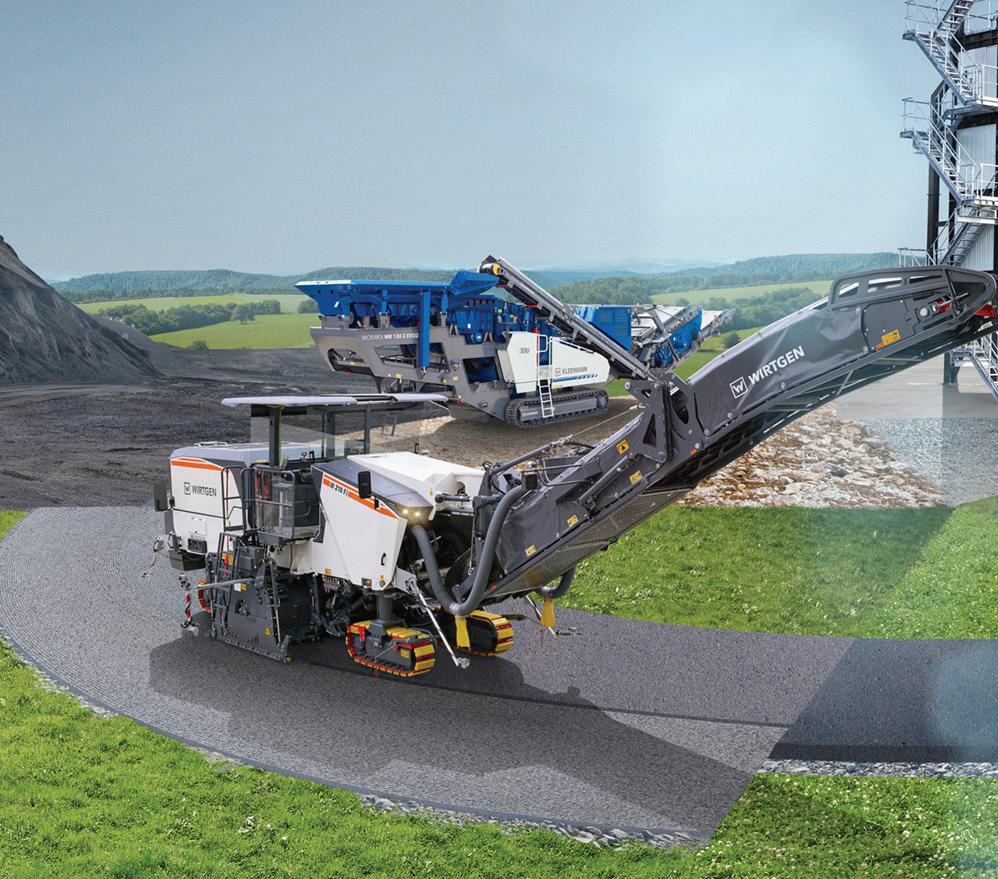
As a leading manufacturer of road construction machines, the Wirtgen Group has also set itself concrete goals to be realized over a number of steps. For example, Wirtgen, Vögele, Hamm, and Kleemann will further increase the availability of machines powered by hybrid or fully electric drive systems by 2026. In addition, all Wirtgen Group product brands, including Benninghoven, will offer machines and plants that can be operated with non-fossil or climate-neutral fuels. Last but not least, the digitalisation of machines will make a signi cant contribution to process optimisation and, in turn, lead to a further reduction of harmful emissions.
The ultimate goal of all these measures is a considerable reduction of the carbon footprint of Wirtgen
PROCESS EFFICIENCY:
Optimal interaction between all players on the construction site can make a big contribution to energy savings. This also includes the choice of the most appropriate machines and construction methods for every job and project.

Alternative Energy sources
Use of bio- or synthetic fuels, electric drives, hydrogen, ammonia, etc.

ALTERNATIVE ENERGY SOURCES:
Instead of being powered by diesel, machines and equipment can use alternative fuels or be electri ed to signi cantly reduce CO2e emissions.

Group machines, plants, and systems by 2030. In concrete terms, the scope 1 and scope 2 emissions should be reduced by more than 50%. In the case of scope 3, the plans envisage a reduction in upstream and downstream emissions by at least 30%.
These primarily include the emissions from machines throughout their service life and, for example, emissions arising along the supply chain. To this end, John Deere, the parent company of the Wirtgen Group, has joined the Science Based Targets initiative (SBTi) and has had its own goals assessed and validated.
Holistic approach
To realise the greatest possible reduction of overall emissions, it is essential that the efforts of all players along
the road construction process chain are focused on the same outcome. The key question is: “How can we construct or rehabilitate roads with minimal or zero climate-harmful emissions?”
To answer this question, not just the emissions from individual machines or plants, but rather the emissions of projects as a whole, should be considered. In the same way as the fuel consumption of a vehicle is measured in miles per gallon, machine performance should be measured in units of work done – for example, per cubic meter of pavement material removed or per ton of asphalt paved. On construction sites, all factors must be taken into account to enable considerations based on kilometers of road constructed or rehabilitated. Such considerations indicate which construction method, materials, and machines are the climate-friendliest for each speci c project.
When it comes to achieving a maximum reduction of CO2e emissions, a holistic approach that takes all aspects into consideration is essential. As the pan-European organisation representing construction machine manufacturers and related industries, the CECE has already proposed a number of courses of action.

There is the potential for considerable savings to be leveraged by further improvement of machine ef ciency, improved construction processes and procedures, and more
ef cient operating concepts. At the same time, alternative, non-fossil fuels and electric drive systems can play an important role on the road to climate neutrality.
In recent years, the Wirtgen Group has developed numerous solutions that have enabled signi cant reductions in fuel consumption. These include intelligently designed drive concepts and ef ciency-optimised control systems.
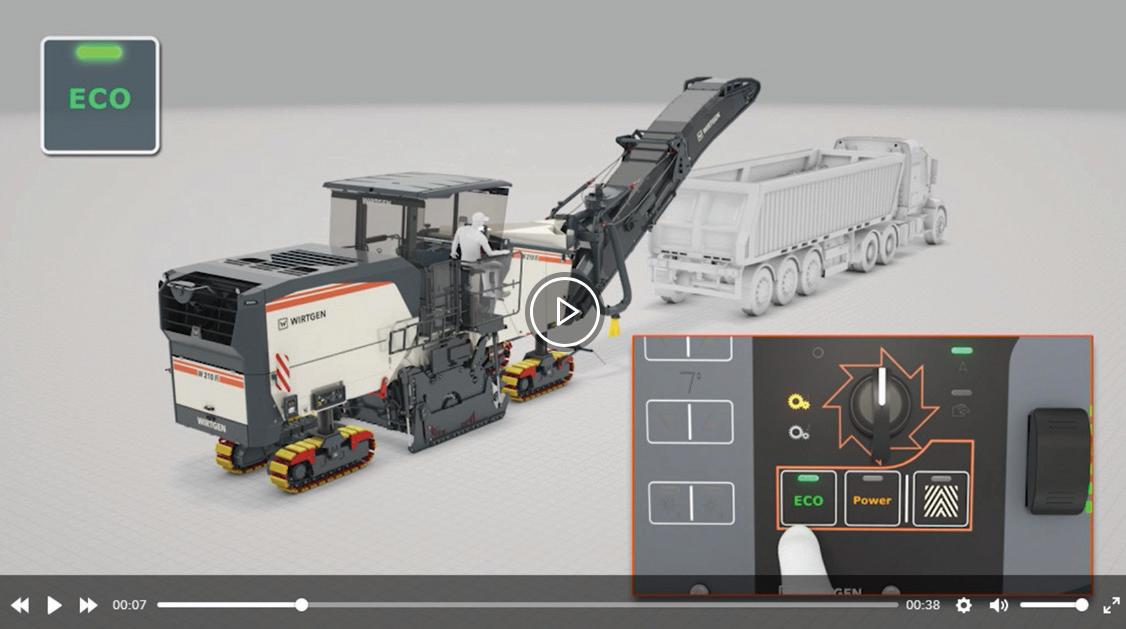
One example of this is Mill Assist from Wirtgen – an assistance system for cold milling machines that automatically delivers the performance and quality requirements entered by the machine operator and consistently guarantees the most favorable balance between milling performance and operating costs.
This simultaneously reduces diesel fuel consumption and minimises pick wear. Another example is the Dash 5 generation of road pavers from Vögele, which features environmentally friendly machine technologies that also ensure lower fuel consumption.
Today, machines from Wirtgen, Vögele, Hamm, and Kleemann, equipped with engines that ful ll the requirements of US EPA Tier 4f, and respectively EU Stage V exhaust emission standards, can also be operated with alternative fuels. They are approved for use with alternative
"In recent years, the Wirtgen Group has developed numerous solutions that have enabled signi cant reductions in fuel consumption "



Source:
In-situ cold recycling (surface layer mix from new material)
CO2e emissions
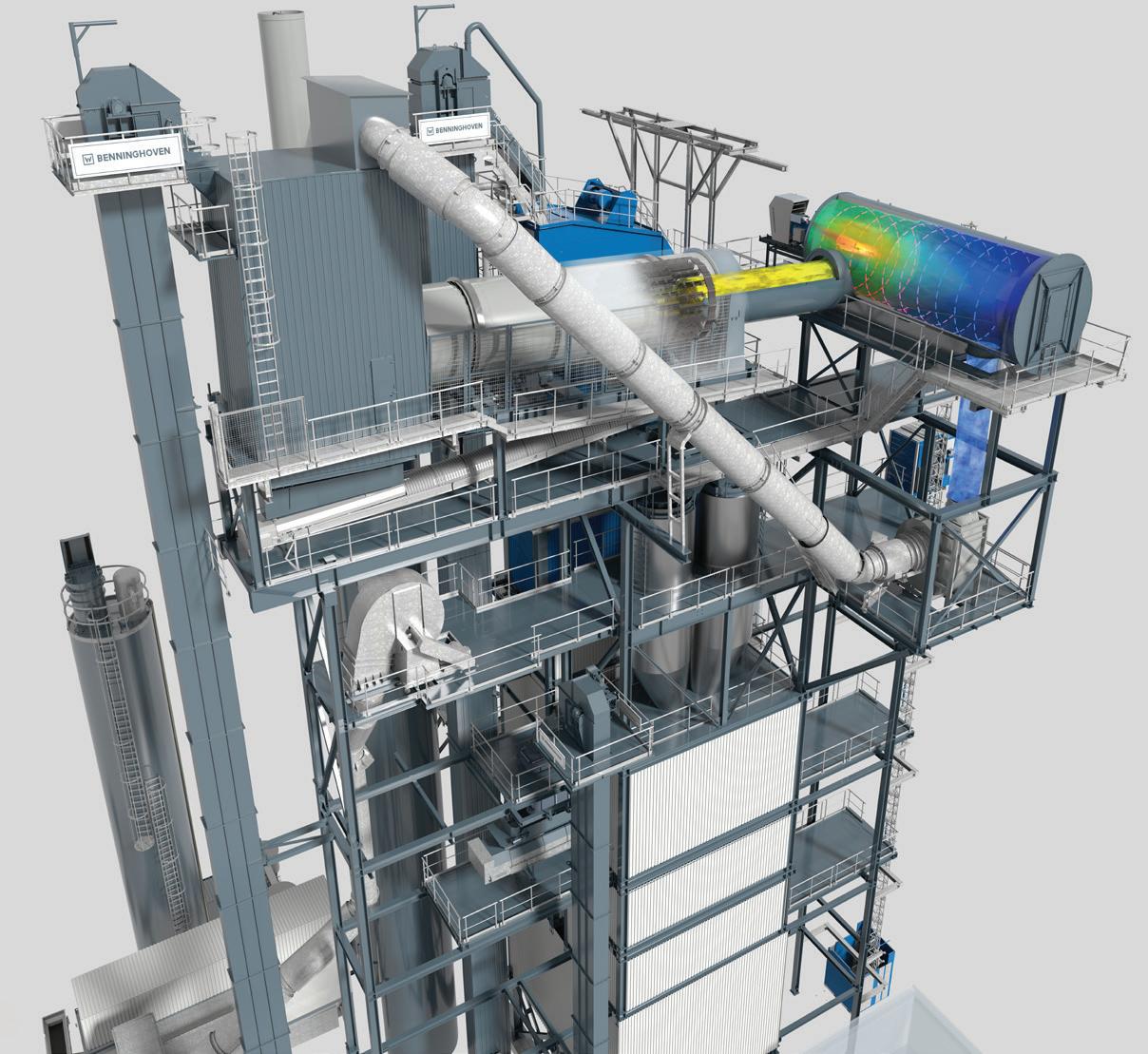
paraffinic fuels such as HVO (Hydrotreated Vegetable Oils – fuels based on vegetable oils or animal fats) or XtL fuels (X-to-Liquid – synthetic fuels on the basis of solid, liquid, or gaseous energy resources). There are already corresponding solutions for asphalt-mixing plants from Benninghoven. These can be fueled with wood dust or BtL (Biomass-to-Liquid – liquid fuels derived from biomass).
The first battery-powered solutions are now also available, including the range of new mini pavers from Vögele and compact rollers from Hamm. These machines have sufficient battery capacity for a typical working day and deliver identical performance to their diesel-powered counterparts. For quite some time now, Kleemann has been offering crushers with direct electric drive systems for the processing of primary resources and recycling materials. These enable local zero emissions by means of connection to an external electric power supply.
The holistic assessment of a construction site and the methods used necessitate a consideration not only of the emissions from individual machines and/or plant but also of
Materials
Bitumen Mobile machines
Aggregates Transportation (materials) Cement Asphalt-mixing plant
all the emissions that arise or will arise in the production of the construction materials and mixes and in their transportation to, from, and on the construction site.
To illustrate the CO2e reduction potential through the use of recycling technologies, Figure.1 (see above) shows the emissions from a variety of construction methods used for the rehabilitation of the surface layer and binder course of a single-lane roadway. In all these cases, it has been assumed that the construction machines and transport vehicles use B7 diesel fuel and that the asphalt-mixing plant is fueled by lignite dust. The transport distances reflect typical distances between mixing plants and construction sites.
The column on the left shows the emissions arising from a conventional approach: existing material is milled off and removed from the site before a new surface is paved with an asphalt mix produced from fresh material. Calculations of emissions show that the major proportion arises in the production of the asphalt mix and the materials this process requires.
The column in the middle shows the situation when the proportion of recycling material in the asphalt mix – i.e., reused milled material – amounts to 80%. Modern asphalt-

A schematic sketch of the cold recycling process: In this method for road rehabilitation, the construction materials are recycled on the spot. As the asphalt does not need to be heated, substantially less energy is required for the process
mixing plants can already produce such asphalt mixes, and appropriate retrofit solutions are available for the upgrading of existing plants. This alone leads to a significant reduction in CO2e emissions of 27%.
Take out the heat
Reductions are even greater if the construction materials are not heated before processing. The column on the left shows that this is where a major proportion of CO2e emissions arise. Proven alternatives are already in use around the globe. The most important of these are lowtemperature asphalt production and cold recycling. With cold in-situ recycling, in particular, consumption of resources and transport movements are reduced by up to 90%.
The scenario in our example shows a 43% reduction of CO2e emissions, column on the right, by using the cold recycling process, when a surface layer of asphalt mix produced from fresh materials is used over the cold recycled layer. In the case of full rehabilitation of the entire roadway, this construction method can reduce CO2e emissions by up
The WPT for cold milling machines calculates and records how many cubic meters of asphalt have been milled. It can also, for instance, provide information on fuel consumption in the course of a specific construction project.
Satellite connection for precise geopositioning
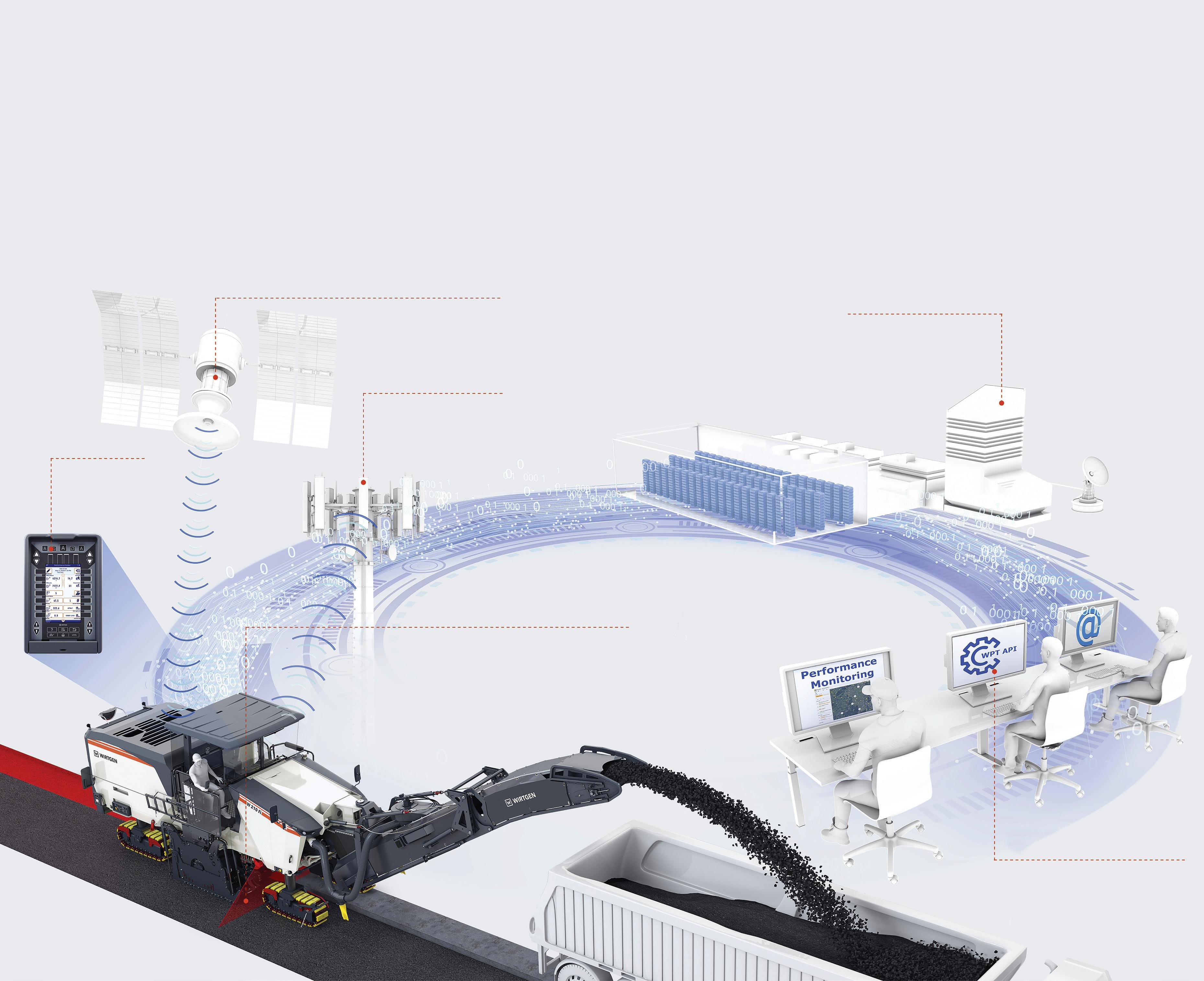
Cellular connection for transmission of project data
Control panel on the operator's platform with current milling data
Laser scanner for measurement and registration of the cross-sectional profile to be milled
Various different options for the transfer or presentation of performance data
Source: Wirtgen Group
to 60% – and without compromising quality. Further practical bene ts of this method are faster project completion and longer-lasting roads.
Regardless of the measures employed, it is essential to have a transparent and veri able system for determining and assessing emissions. This is where the tremendous opportunities offered by digitalisation can play a decisive role. These days, for example, telematics systems are already able to register the fuel consumption of machines.
For Wirtgen Group product brands alone, the number of machines tted with such systems is aimed to rise to 42,000 by 2030. This will allow the documentation of such parameters under real-world operating conditions and will offer a much more realistic picture than prede ned test cycles.
Systems for the documentation of the actual work performed are now also available. These include the Wirtgen Performance Tracker (WPT) for cold milling machines and wheeled recyclers/soil stabilisers (see diagram left). With the aid of such digital solutions, it will be possible to document consumption gures “per work done” – i.e., on a construction site or project basis.
Summary
Around the world, the search is on for ways to mitigate climate change by means of a successive reduction of emissions of CO2 and other harmful gases (CO2e) to zero over the coming decades.
To this end, construction machine manufacturers are pursuing a holistic approach in order to achieve the greatest possible reduction of CO2e emissions arising in the course of construction measures. The spectrum of measures and solutions required on the path to climate-friendly road construction extends from the optimization of machines, construction materials, and processes to new drive systems, alternative fuels, and the enormous opportunities offered by a digitalisation of the overall construction process.
A key tool on this path will be the calculation and documentation of the actual emissions produced. A holistic analysis and assessment of the emissions per unit of work done – expressed by the term “CO2e per work done”; e.g., per kilometer of road constructed or rehabilitated – offers the most promising approach for determining the most climate-friendly and resourcefriendly construction methods.





























































































































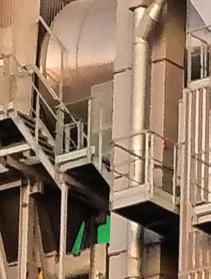
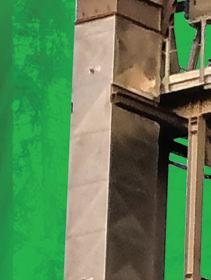





























There are seemingly endless variables when it comes to maximising green asphalt production. Making them all t into a pro table business model can be daunting, but the experts at Ammann are working hard every day to clarify the sustainability picture once and for all. Here are a few truths that guide them.

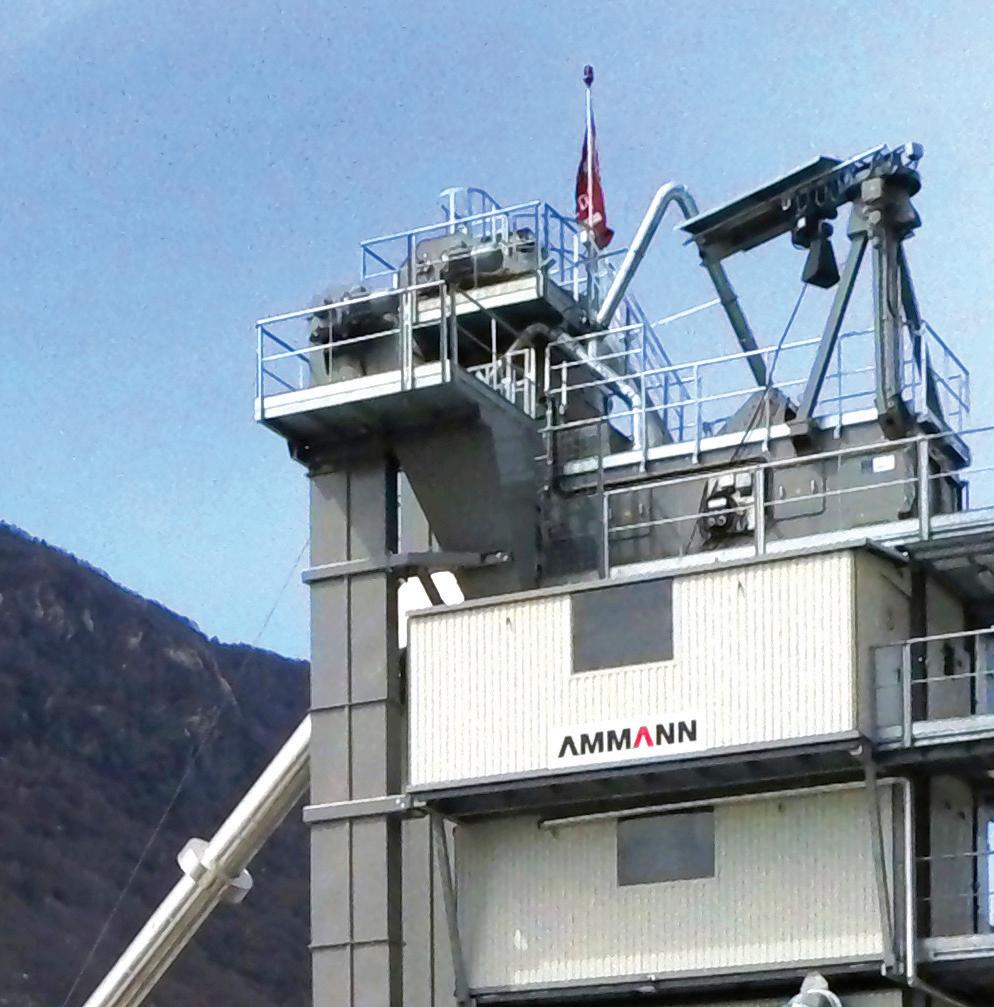
Ammann is guided by a set of key principles when it comes to producing equipment that is sustainable over the long term. They are:
Manufacturers must lead the way. There cannot be adoption by asphalt producers unless manufacturers rst expand capabilities – primarily through technology.
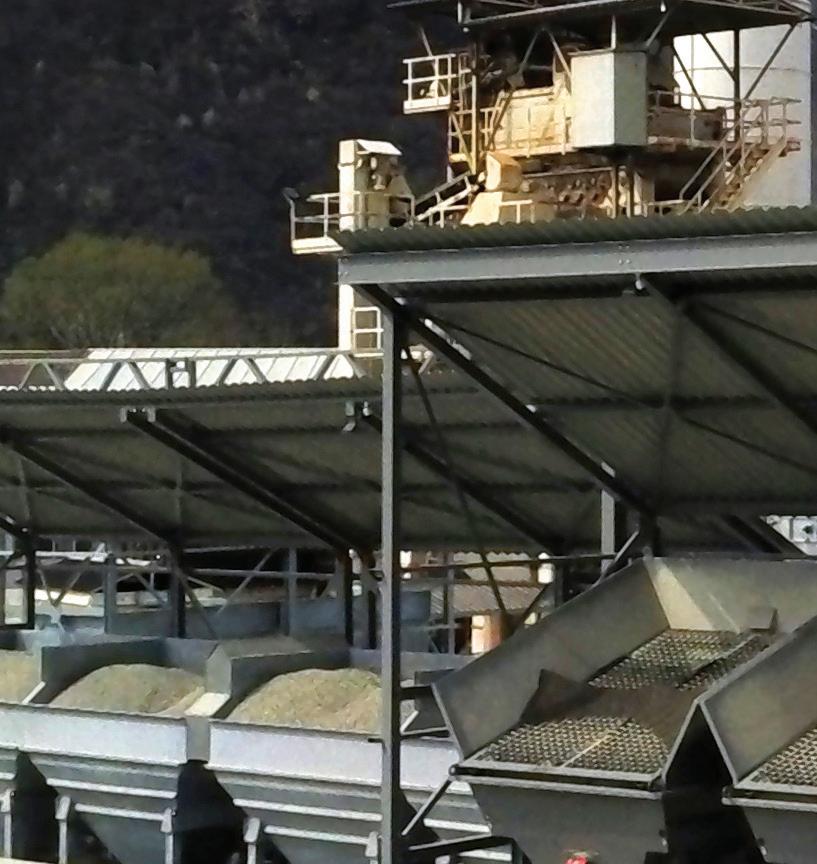

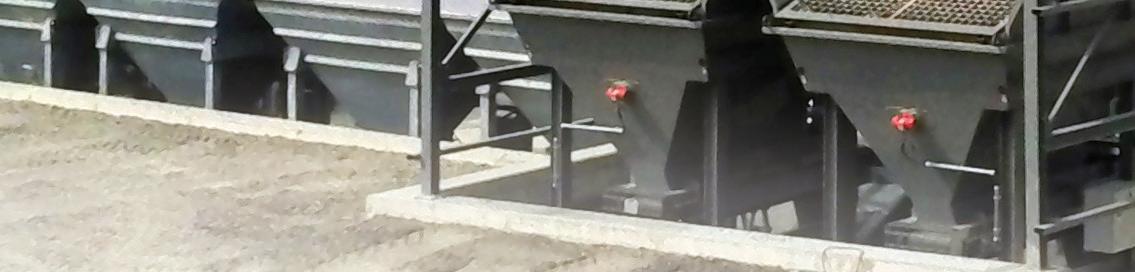
Every step of the process matters. It’s simplistic to simply evaluate sustainability against baghouse emissions, or the percentage of RAP utilised. The entire process chain must be evaluated.


Customers need a comfort level to make changes. They respond best when their tried-and-true methods are offered along with new technologies.
Affordability matters, too. Not every business can purchase a new plant to promote environmental friendliness. Manufacturers must offer options for what is already in the eld.
Here is a deeper look at each of these guidelines.




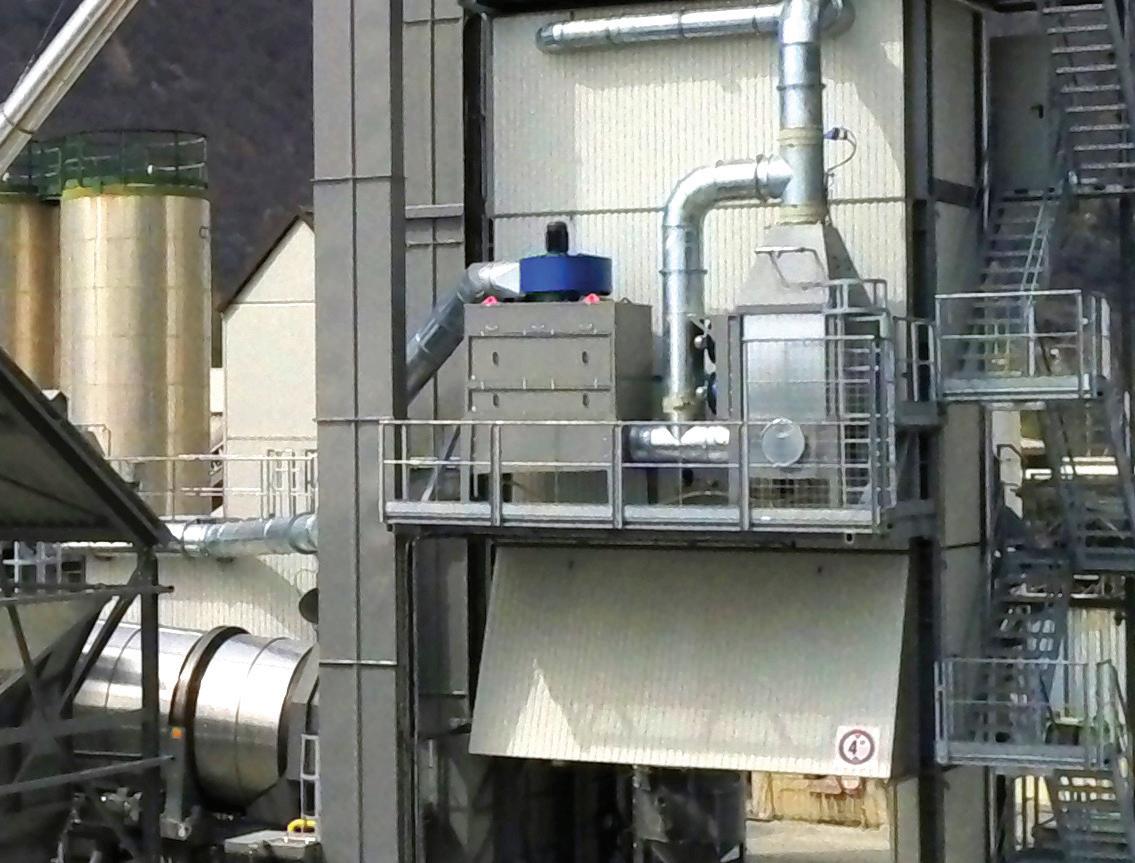






"Not every business can purchase a new plant to promote environmental friendliness"

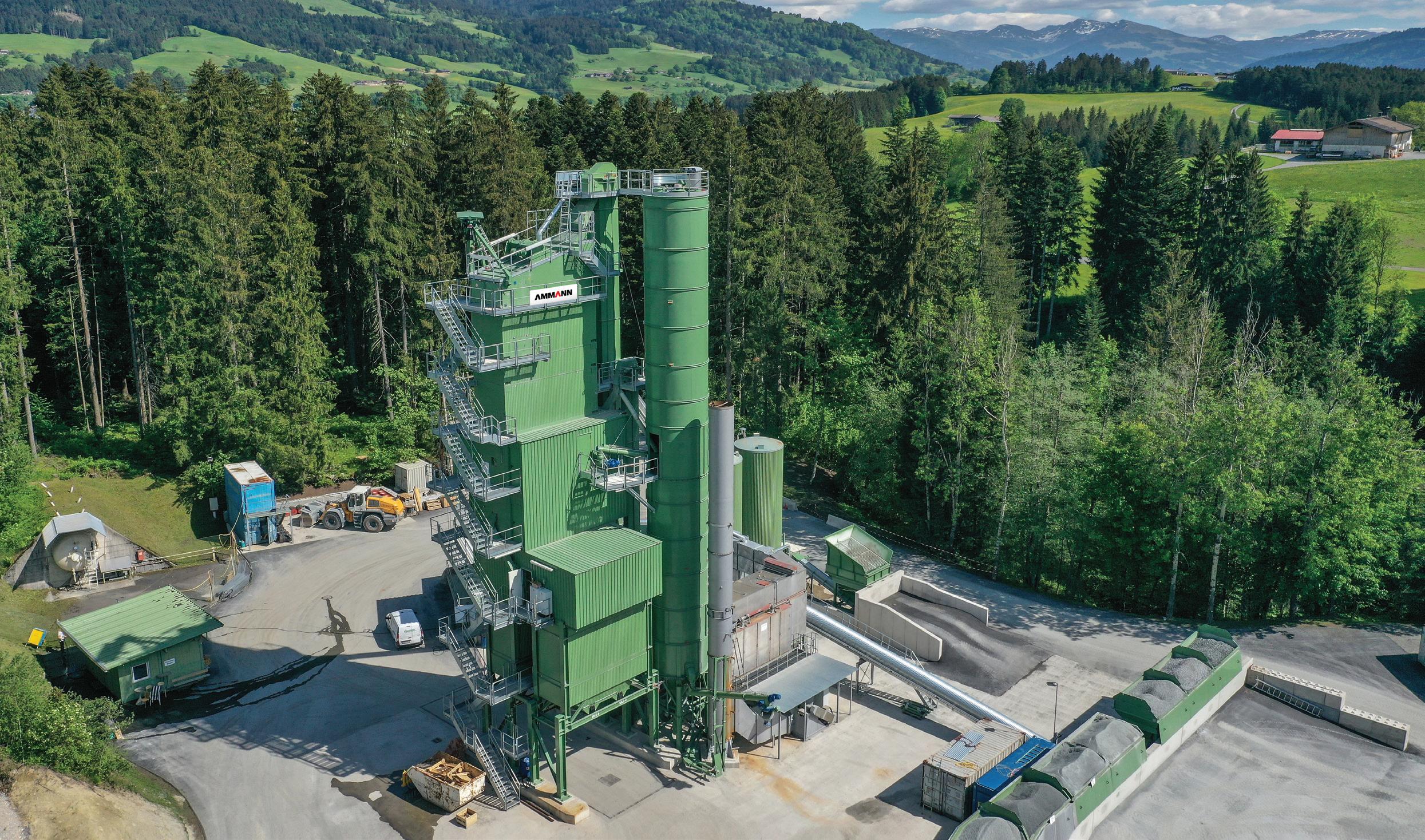
Manufacturers must uncover new methods and technologies that enable customers to make production greener. Customers certainly play a key role by providing valuable input and evaluation. Their purchasing dollars also speak volumes.
Still, few customers develop their own technologies. It’s up to manufacturers like Ammann to find ways to lower emissions and maximise material usage. Here are some of the steps we’re taking:
Volatile organic compounds (VOCs) must be diminished in the clean gas stream to cut the total carbon value. Ammann engineers are developing an innovative regenerative absorber that guarantees a value below 50 mg/Nm – a significant benchmark.
Blue smoke results from the high temperatures required in the production process. It is released when loading trucks. Ammann has a new breakthrough on this front: Blue Smoke Treatment (BST). BST captures and filters vapours
emitted during loading, effectively reducing blue smoke and enhancing air quality.
BST is cost-effective. The system eliminates the need for complex and expensive confinement methods. It efficiently removes oily particles and redirects the remaining gas streams to the burners.
Recycled asphalt (RAP) is a perfect substitute for virgin materials. Employing RAP lessens the stress on both aggregate and bitumen supplies – while decreasing emissions, too. Ammann is an industry leader in RAP technology.
On the high end of RAP utilisation is the Ammann ABP HRT (High Recycling Technology) Asphalt-Mixing Plant. It can produce mix with up to 100% RAP. No virgin aggregate is required.
There is considerable technology and innovation involved in the HRT concept, in particular the RAH100 counterflow drying process.
Essential to the RAH100 is its gentle heating process, which enables temperature control, even up to 160º C. This heating process allows the high percentage of RAP

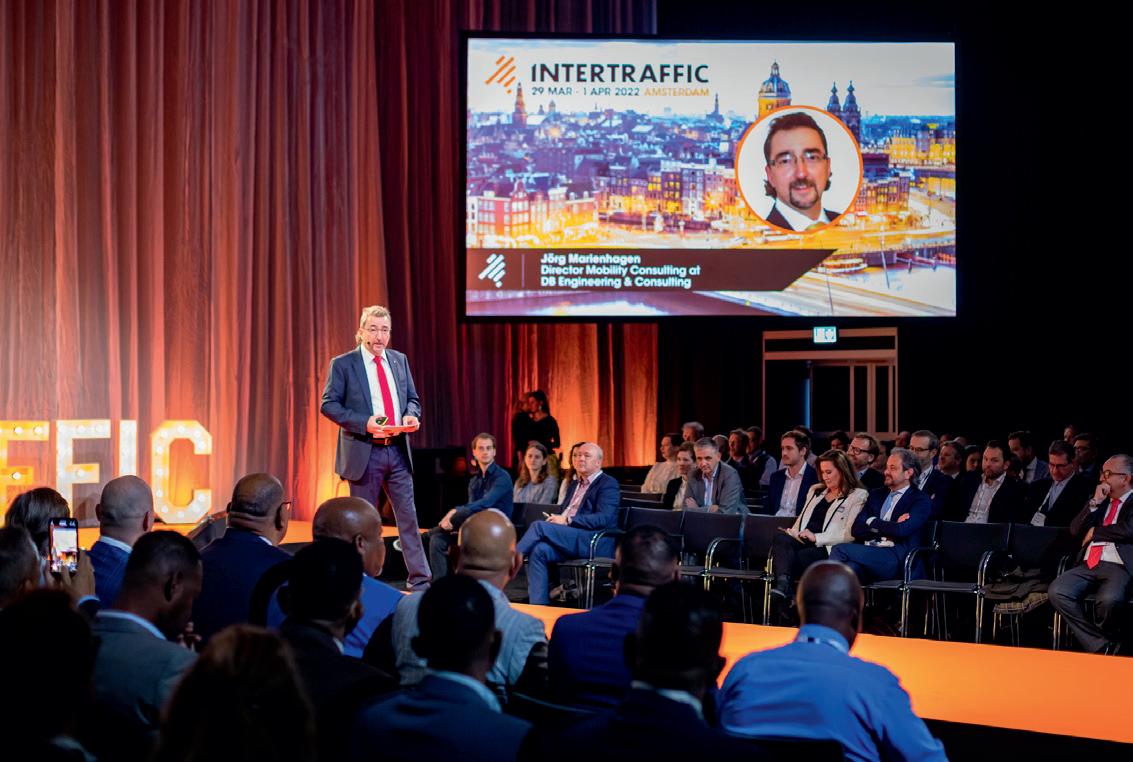
Enjoy a knowledge programme of over 120 sessions, from debates to demonstrations. 200+ speakers will cover the hottest topics touching on policy support, best practices, user cases, trends and more.
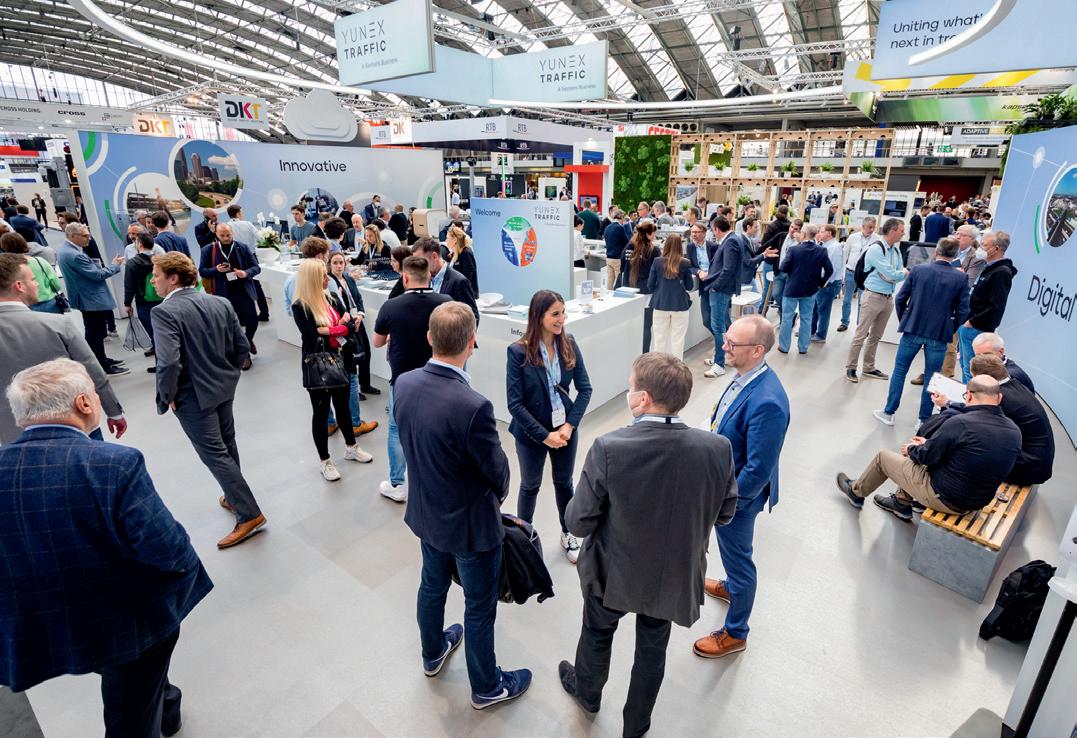
900+ public and private organisations spread over 12 halls will present the latest solutions and developments in mobility and traffic technology. From road safety to parking solutions, intelligent infrastructure, traffic management, smart mobility, and everything in between.
utilisation. The residual bitumen is not damaged by the heat, but properly re-used – with extremely low emissions.
With certain con gurations, the plant can incorporate recycled materials such as tyres and printer cartridge toners to supplement the existing bitumen. This technology has resulted in mixes that are created from 100% recyclables –including, but not limited to, RAP.
Ammann's Zero Waste System is a patented solution for lessening waste in asphalt production with continuous plants. It minimises waste at the beginning and end of each shift.
Without the system, the rst and last few tonnes of every shift would have to be discarded. By preventing unnecessary
mix waste, Ammann cuts costs and promotes sustainable resource management.
Researching new fuels
In the near future other fuel types, such as hydrogen, will signi cantly lessen gas emission values. The use of hydrogen is under development at Ammann.
Maintaining quality
What can minimise material usage better than not having to rebuild a road? Ammann recycled mixes have been monitored by governmental agencies around the world. Tests show these mixes often last longer than those produced from virgin materials.
"Recycled asphalt (RAP) is a perfect substitute for virgin materials"
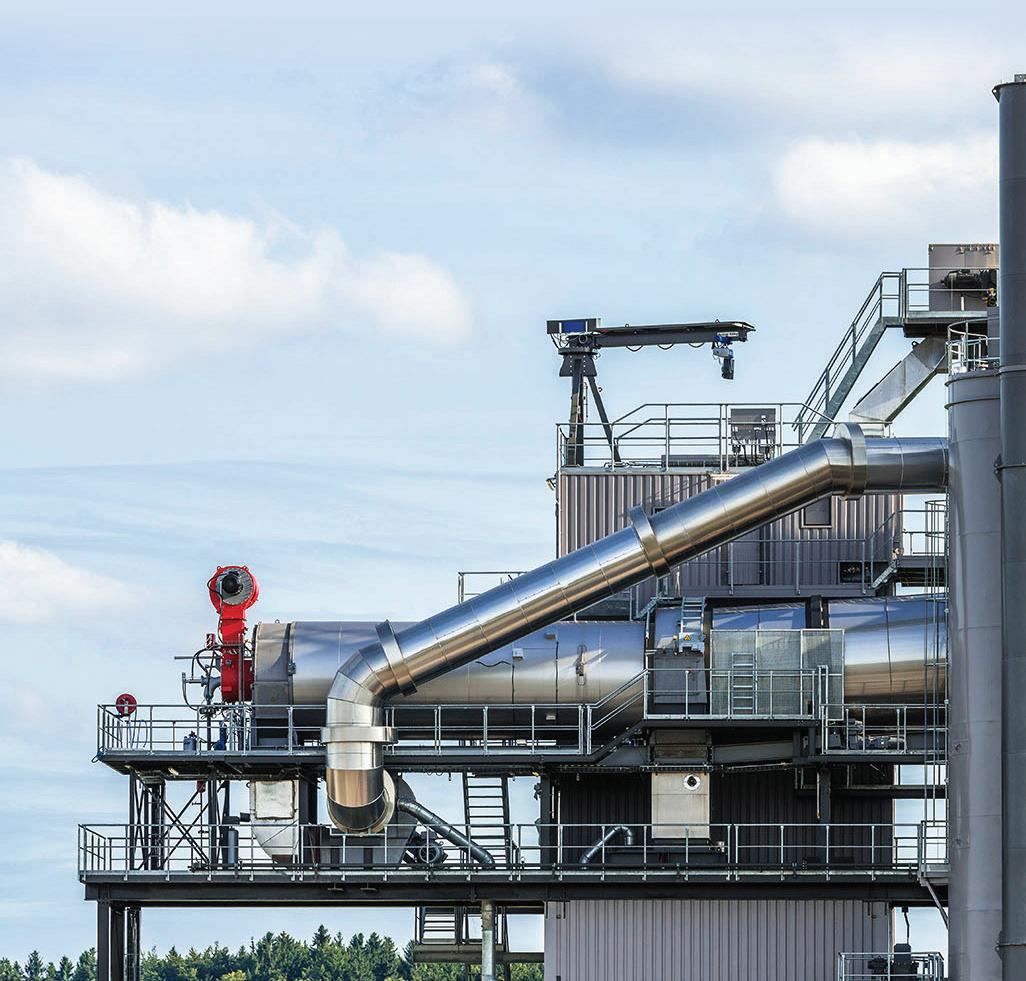





Some people are always ready to leap into a new technology – be it a cell phone, autonomous vehicle or asphalt-mixing plant. These trailblazers are essential to adoption. But most of the world is content to watch and wait as others test the new products. The later adopters respond best when new technologies are presented in conjunction with the ef cient methods they’ve grown to trust.


Yes, Ammann plants can produce mixes comprised completely of RAP. However, not all customers are eager to incorporate such a sizeable amount. These customers begin their recycling efforts at lower levels. By starting with smaller portions of RAP, customers grow comfortable using it and are more likely to increase the amount used in future projects.




This is why Ammann has options for varied percentages of RAP usage. The RAH60 is a parallel ow dryer where up to 60% hot recycled materials can be fed. The RAH50 is a middle-ring dryer that incorporates up to 50% recycled materials.
Recycling can also occur at Ammann asphalt-mixing plants that do not employ these speci c dryers. Up to 40% cold recycled material can go directly into the mixer, meaning any plant from Ammann is capable of incorporating that percentage of RAP.
Enabling use of alternative fuels
Biofuels, such as rapeseed and sugar cane, support climate protection and decrease dependency on mineral oil. Waste fuels preserve natural resources and reduce pressure on land lls.
Many customers are eager to try these alternatives, yet they worry about supply consistency and other potential issues.
Ammann biofuel burners can also utilise more traditional fuels such as natural gas, LPG, kerosene, and light and heavy oil. This alleviates the concerns of customers who are hesitant to rely solely on newer fuels.
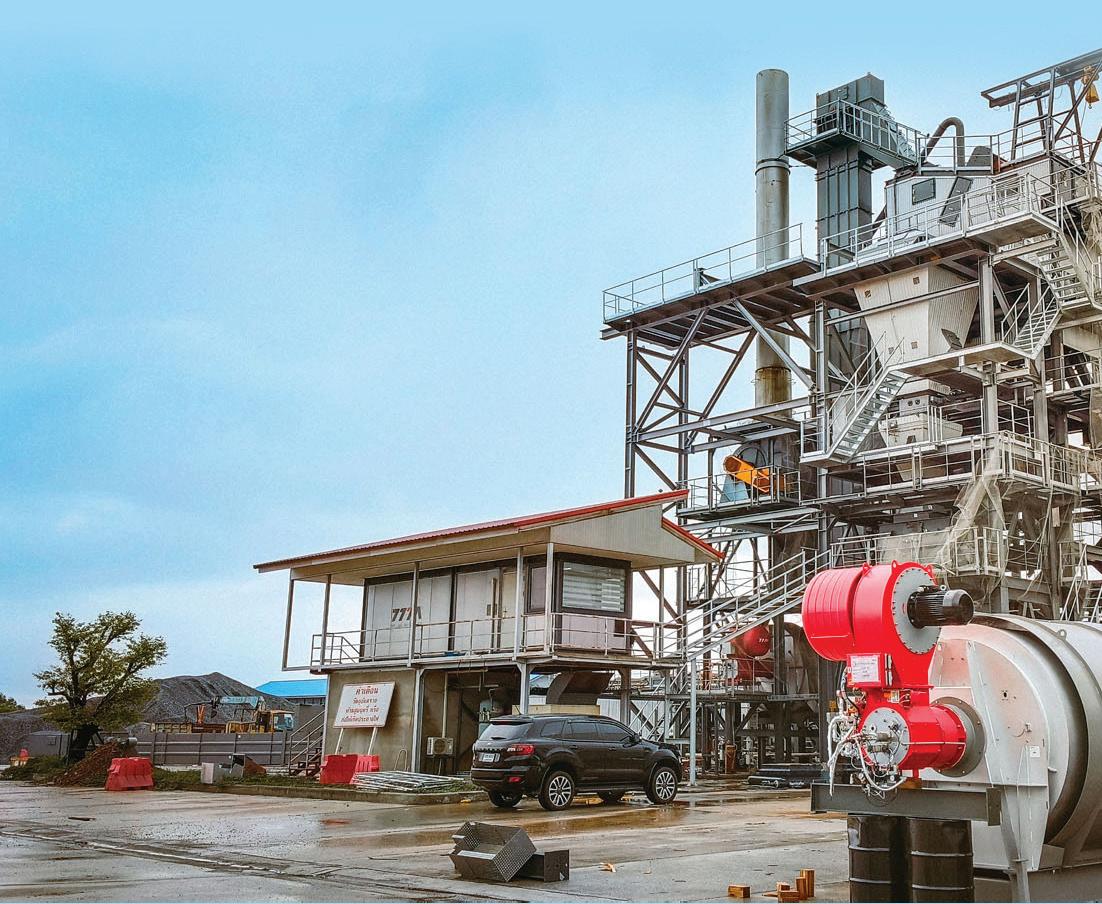
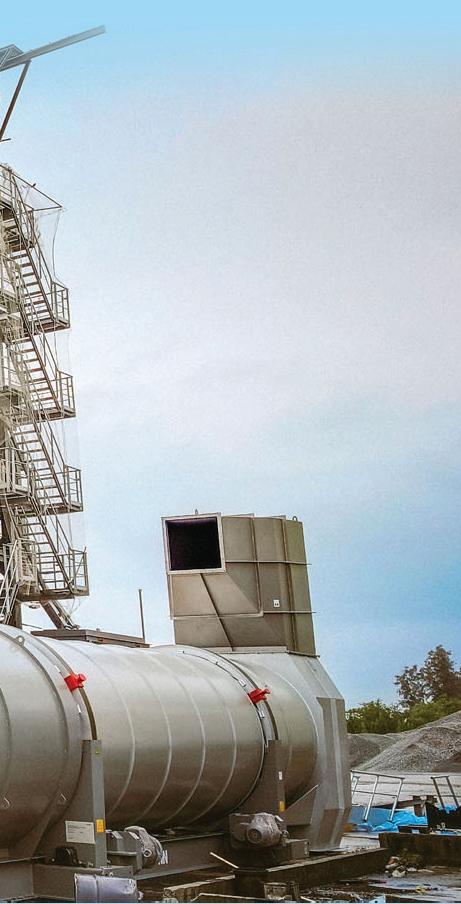
There are many opportunities, separate from the baghouse, to ease emissions.
A study by the National Asphalt Pavement Association (NAPA), a leading U.S. trade organisation, addressed the impact of moisture in aggregates.
“At a nominal aggregate moisture content of 5%, evaporation accounts for more than 40% of fuel consumption,” NAPA stated. Therefore, aggregate that is dryer because it is protected from unnecessary moisture can greatly conserve
fuel. (NAPA believes a reduction of 1% is achievable.)
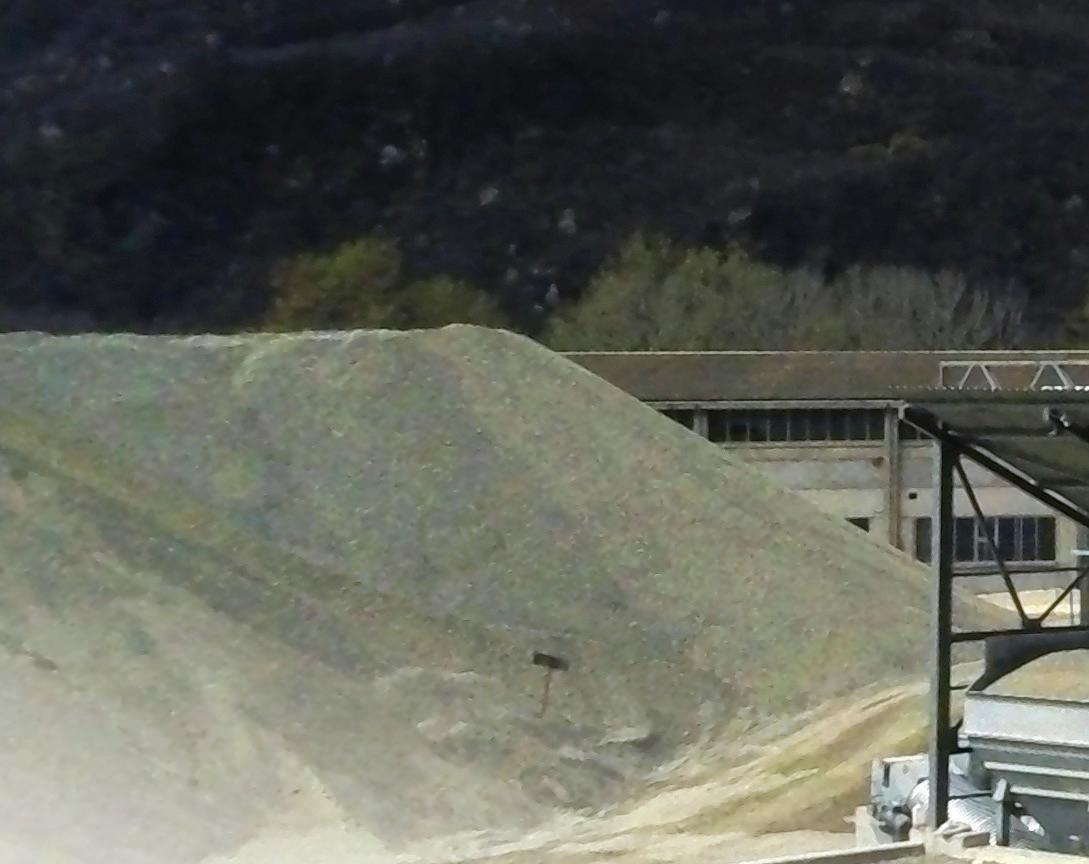
We counsel customers to pay attention to their stockpiles – to place sloped pavement beneath aggregates and put a cover over them. Such simple steps can have a signi cant impact.
Heating bitumen
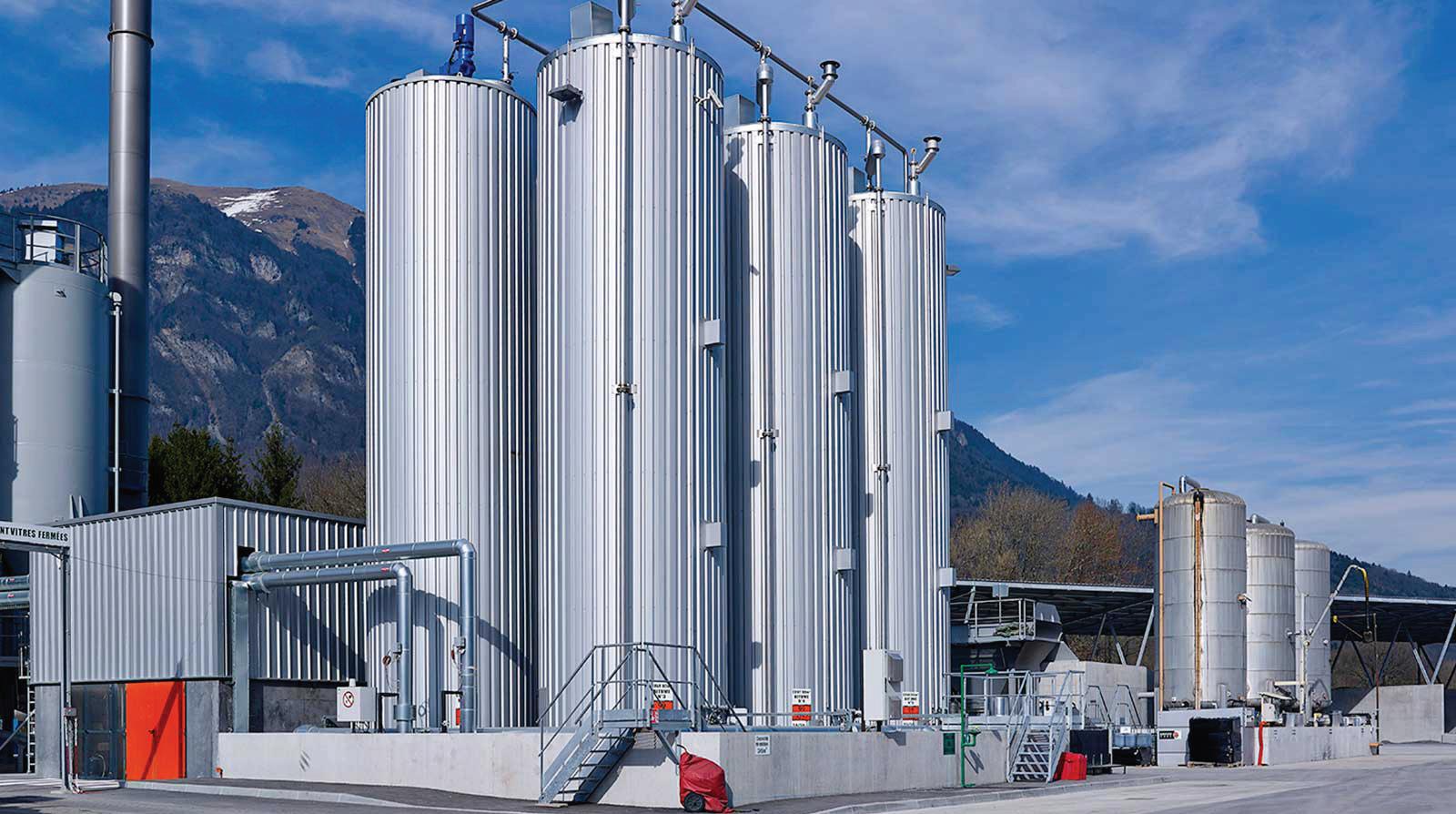
Bitumen tanks have traditionally been horizontal and heated with thermal oil. The new trend is electrically heated vertical tanks.
Electric heating eliminates the consumption of thermal oil, lessening emissions and the environmental impact.
Vertical tanks are said to require less energy to heat.
This approach is quickly becoming standard procedure in some areas of the world.
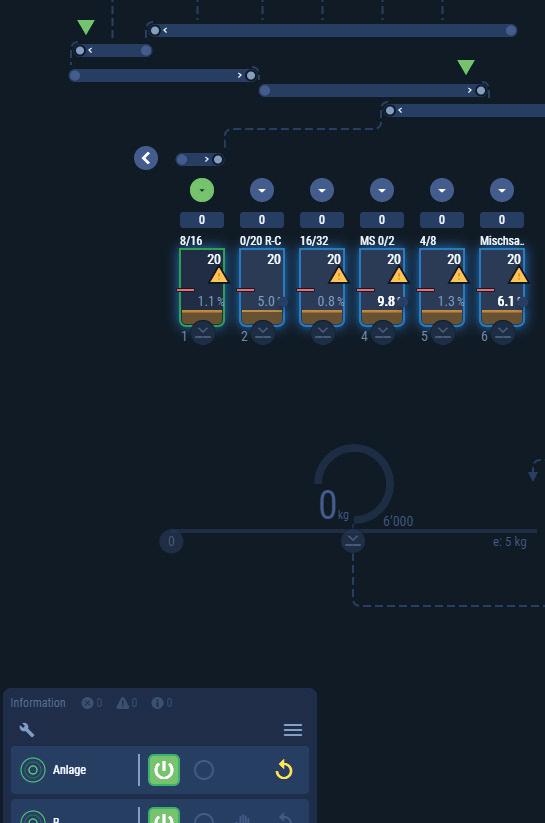
Asphalt producers should be asking themselves why they aren’t using WMA more often. Lower production temperatures reduce energy consumption and associated emissions, contributing to greener processes.
With the warm mix process, the dryer heats materials between temperatures of 100ºC and 130ºC. It also makes asphalt at 140ºC to 160ºC if a more traditional mix is desired.
Ammann technology makes the WMA process extremely easy. A good control system – such as the Ammann as1 – is essential.
This process is a double win on the sustainability front. It re-uses aggregate and bitumen, while the lower heating process reduces fuel burn and emissions.
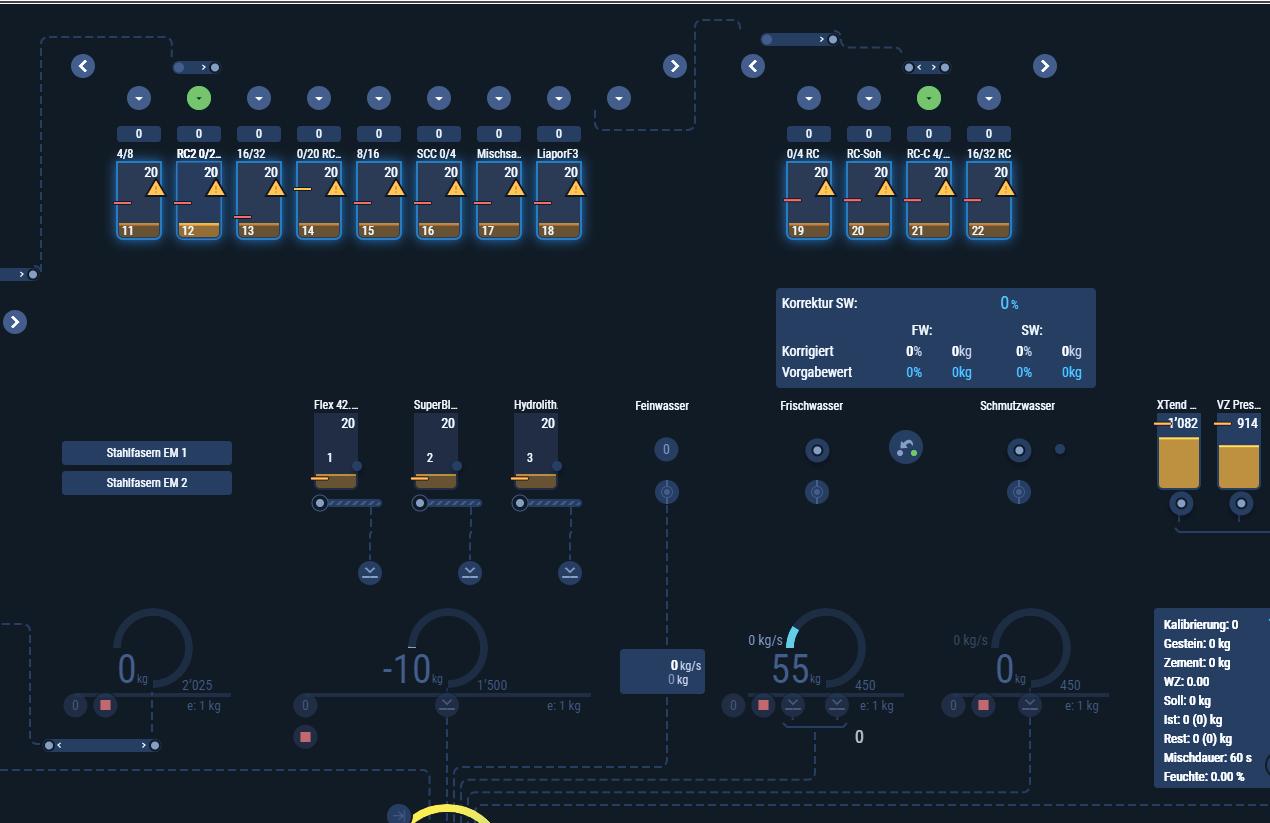

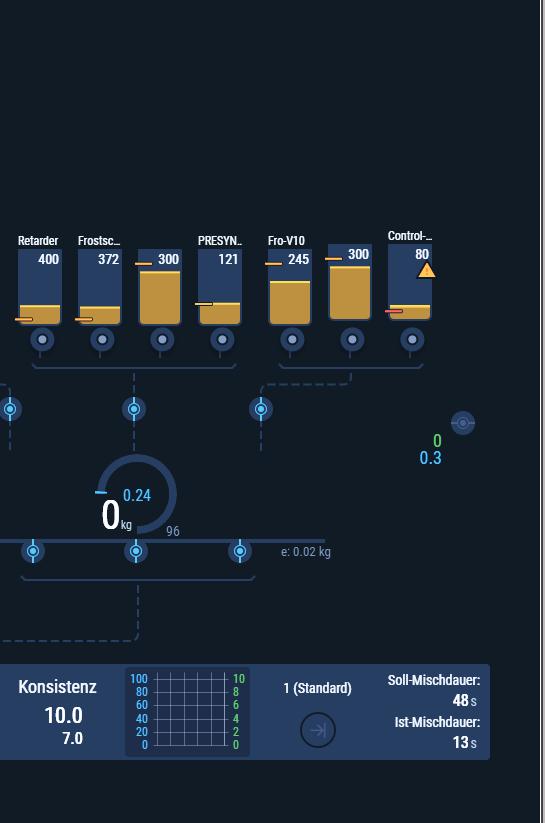
New, environmentally friendly plants with advanced technology can certainly take a bite out of emissions. But purchasing a new plant isn’t always an option.
Some of the best sustainability opportunities lie in netuning what is already at work. We need to understand that not every business can or will purchase a new plant.
Therefore, we improve what is already in the eld. Enter retro ts.
The case for retro ts
A retro t costs a fraction of the price of a new plant. Ammann can retro t plants built by Ammann and other manufacturers.
Asphalt producers might be surprised by what they can accomplish with their existing plant. An easy rst step is to upgrade the control system.
At Ammann, we’ve installed our as1 Control System in many existing plants. The as1 can immediately decrease fuel usage, emissions and material waste.
Another option is a more comprehensive retro t. It, too, is compatible with products made by Ammann and other manufacturers.
Recycling solutions can be added during a retro t. Many retro t customers incorporate a new dryer, which optimises heat transfer – and of course reduces emissions – and allows the use of an expanded range of materials, including RAP.

A retro t can include environmental upgrades to the bitumen tank and baghouse. A host of technological advances can be made – including revamped burners that trim emissions and enable the use of alternative fuels.
There is still much to be done. There are new technologies to be developed, and new lessons to be learned.
Yet progress is being made – and opportunities for improvement are readily available. The world around us bene ts as industry stakeholders continue to take steps, both big and small, toward sustainability.
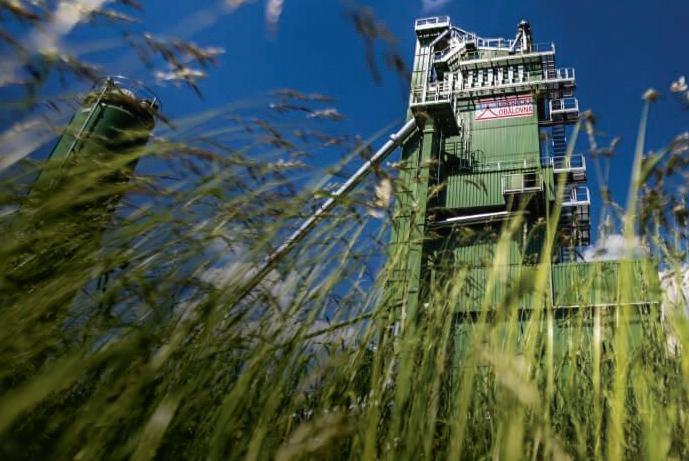

"A retro t can make an existing asphaltmixing plant smarter – and preserve the natural resources that were used to build the original product"



































































Established in 2022, Electric Vehicle Charging & Infrastructure website (www.evcandi.com), has built a considerable readership of over 40,000 industry professionals to our website and eNewsletter We will now be expanding this o ering further into an exciting new digital publication called evcandi Business Report ONE
Launching in mid-2024, this first issue will feature many of the major topics and issues facing the sector.
As a digital publication, each feature can also include video, links to data sheets and other downloadables.
Making the charging network smarter
Dedicated & custom solutions for fleet charging
Fast Charging for ALL
Benefits of a one-stop-shop supplier
Achieving Network Reliability
Practical benefits of connector standardisation
Driving charger reliability and availability
Single home charging solutions
Growing a global network
Exploiting/supplying retail chains as a supplier
Meeting the need for training
Bi-Directional charging: The future?
The performance to be gained by getting technology and manufacturing ‘all under one roof’


For publication information contact... For promotional opportunities contact...
Liam McLoughlin
Managing Editor
Email: lmcloughlin@ropl.com
Mobile: +44 7505 427194
Geo Hadwick Head of Content & Editorial Director
Email: ghadwick@ropl.com
Phone: +44 1322 612013
Graeme McQueen Head of Construction Sales
Email: gmcqueen@ropl.com
Tel: +44 1322 612069
Mobile: +44 7833 445592
Roger Adshead Chairman & Business Development Director
Email: radshead@ropl.com
Mobile: +44 7768 178163
















In our second Roundtable discussion on sustainability in the construction and quarrying industries, brought to you by World Highways and Aggregates Business, three experts from leading companies in the eld have come together to share their views on managing the transition to net zero. How can we work in harmony with the environment without compromising pro tability and customer partnerships? How can we build a clean, green future … and thrive?


JEREMY HARSIN
Jeremy is the global construction market director for Cummins Inc. where he is responsible for segment strategy development, global OEM collaborations and digital connectivity leadership. When he rst joined Cummins, fourteen years ago, he installed some of the rst fully-emissionised engine systems in the market. Moving from engineering to product strategy and management, Jeremy led the company’s agship 6B engine series project, creating the value package which brought these products to market.

Joining Topcon Positioning Group in 2005, Michael has held positions in product, market, and business development. He is currently the company’s vice president of Sustainability and Global CSR (Corporate Social Responsibility). Before that, he led on strategic OEM relationships and a number of successful mergers and acquisitions. He is co-inventor on four technology-related patents and is an Association of Equipment Manufacturers board member, chairing the AEM Council for Agricultural Technology.































Pontus attributes his leadership skills to his experience as a military engineering o cer. Now head of Product Management Region EU/INT for wheeled loaders and articulated and rigid trucks at Volvo CE, Pontus is responsible for the company’s dealer network, focusing on product expertise and market-speci c information designed to keep the company’s competitive edge. He likes to use his military training e ectively, promoting good communication skills across a geographically-diverse team.


Q: Jeremy, how is your company demonstrating sustainability on construction and aggregates sites right now?
Jeremy: In all honesty, it’s the same way we've done it in the past and the same way that I expect we will be doing it in the near- to medium-term future - and that's providing market-leading internal combustion engines. If you look at the latest spec product, our performance series engines are in applications all across the globe, working hard every day. Those engines are enabling sustainability because when we released these products, we took the opportunity to increase power and torque levels
If you would like to watch the full interview please go to: www.worldhighways.com/videos SOME COUNTRIES

that manifested in downsizing at the OE level. When you downsize you typically see a fuel-economy bene t. That's a plus. We also took the opportunity to take those products to 100% blend approval on fuels like HVO (Hydrotreated Vegetable Oil) and, incremental to that, we added in functionality, such as startstop. So, there are many different levers to increase sustainability just by using the current spec product. I expect that to continue in the near-term future and probably into the medium-term future, as well.
Pontus: We are doing the same as Jeremy. Product development is key for both conventional machines - such as new features in how you spec the products - and for new technologies like electric machines. Studies are being done on hydrogen etc., so that’s, of course, a vital part. We also do a lot of collaboration with key customers which we call the four-step approach, where you collect and examine the present data on an actual site - visualising CO2 or ton/hour for example - and then analyse it. Then you identify improvements, for example to remove waste within present production, and then you implement the improvement suggested. It can result in anything from operator training and ef ciency services to installing production monitoring systems. In the future we also want to look into alternative technologies. You need to build and sustain targets. How do you sustain it and how do you improve these footprints over time? These are the questions we need to answer.
INCENTIVES,



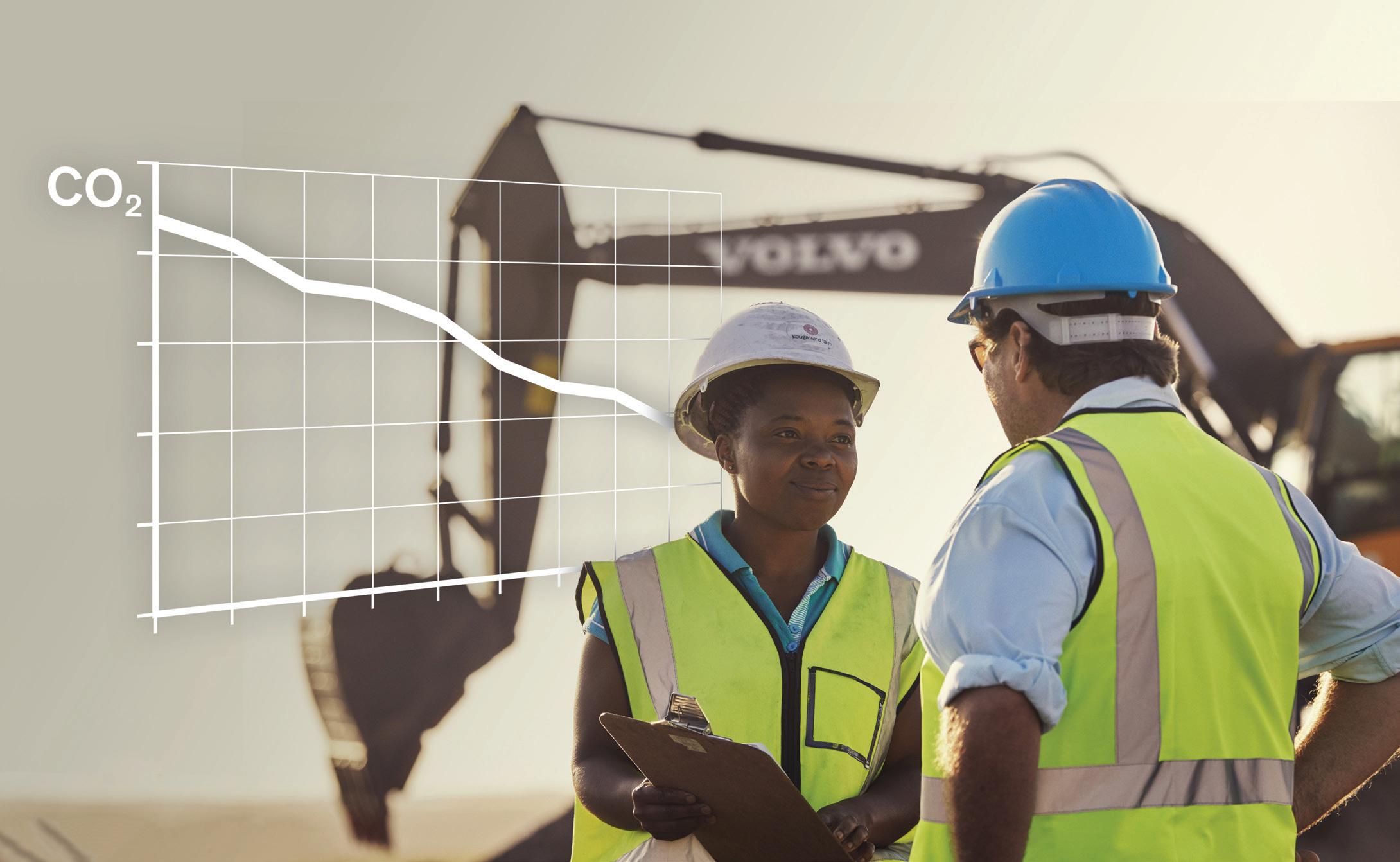
Q: Michael, there is a lot to pick up here from Pontus. As well as talking about what your company is doing to demonstrate sustainability on-site, what are your thoughts about customer collaboration?
Michael: At Topcon we embody sustainability primarily through the installation of sensors and machine control on the machine and that results in that construction equipment being operated most ef ciently, reducing time and fuel. It also results in less total material moved, so that’s signi cant. There is a fair amount of weight in your point about in-job planning and coordination. Using the software, you can begin to coordinate the various machines and operations within the work ow. Machine control results in safer operation. When the operators have in-cab indicators and can see where they are, they have fewer work stoppages as well as having fewer exits from the machine. It makes for a safer work site because when operators are using machine control it requires fewer grade checkers to get in close proximity to the machine. With respect to your collaboration piece, at Topcon we serve the aftermarket so you can retro t these technologies as well as work with a number of the major original equipment manufacturers [OEMs] where they build these features in, speci c to their machine, their brand, their unique value proposition to their customer base. In both cases the technologies will start off in the aftermarket with a bolt-on philosophy and then slowly but surely get embedded and imbued into the machine.
Q: Pontus, we can’t have this discussion without talking about nances and the viability of contractors maximising the sustainability of their operations to win bids – and, crucially, whether you can then still make pro ts?
Pontus: There are a lot of regional differences. Looking at the EU, for example, some countries have incentives, some don’t. We have done studies showing that if you look at the total project cost for building a road or a big warehouse, for example, the added cost of having sustainable technology is no more than one to two percent of the total project cost. So, you have to ask yourself “are you willing to pay one percent extra or not?” because if you look in isolation at the contract for the parts and moving the material, then it becomes expensive. It’s about changing the perspective. But then, of course, there are applications around today, underground applications for example, which have huge ventilation costs which you can get rid of by moving to electric. It’s a very different picture, application to application.
Q: Pontus is saying one size does not t all. Michael, are you willing to pay one or two percent more?
Michael: The way we look at things here, sustainability actually results in lowering long-term cost. That’s the most signi cant thing. Those lower costs, in many cases, may be because you’ve increased ef ciency in the machine. It may be that you’re moving more material etc., or you are more ef cient, and those machines have better on-time
ARE YOU WILLING TO PAY ONE PERCENT EXTRA OR NOT?



performance as well as generating less waste. Where you are coming in on target, on estimate and on budget, those things really help drive it.
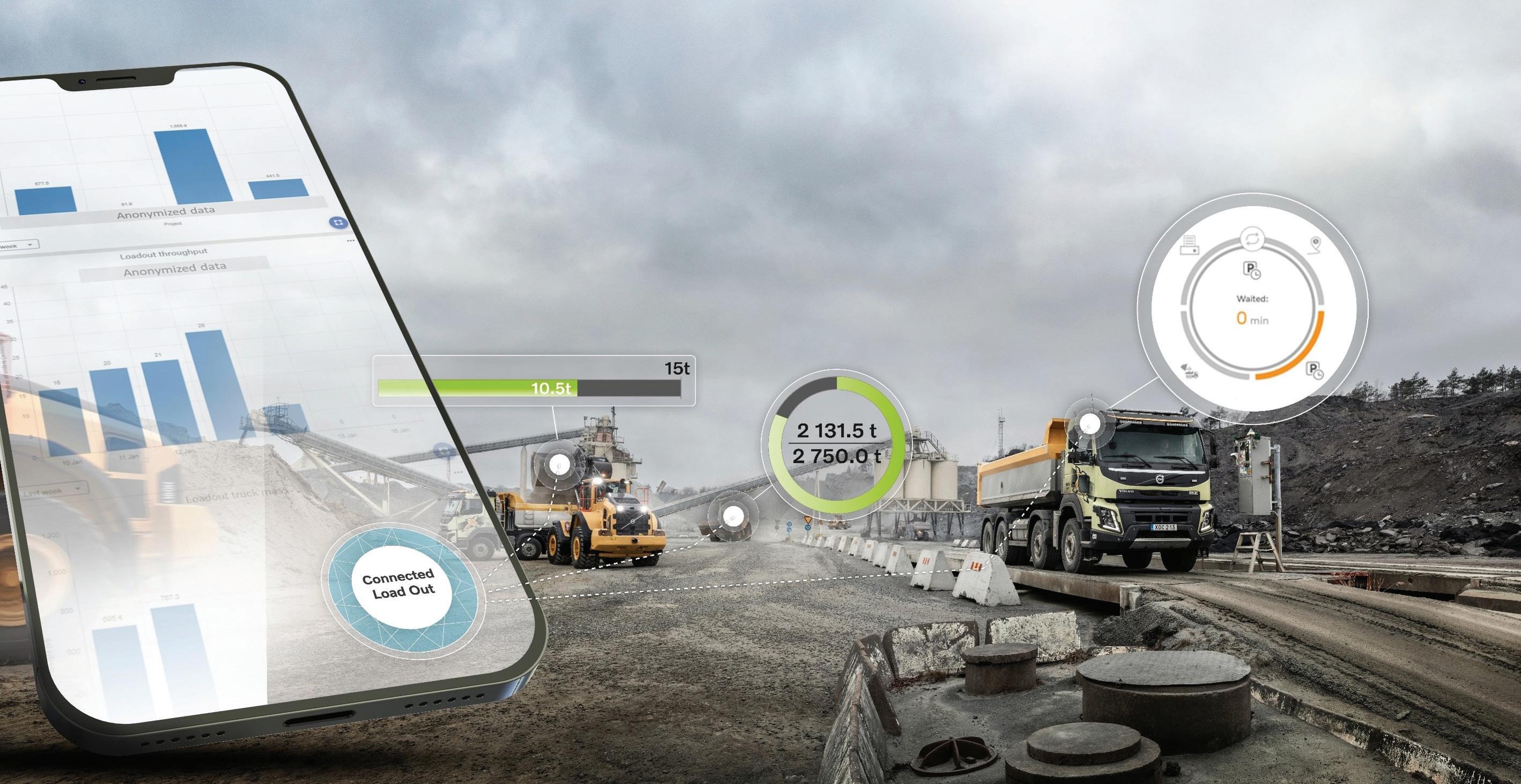
You’re talking about incentives and there are various Green Deal programmes around the world. Probably one of the rst and easiest is adding telematics to the machine because when you do that, we have the ability to capture the data layers to prove the value proposition that we’re talking about so you can see that we have reduced costs over the longer term.
Q: Looking at the longer term, some companies aren’t willing to do that. Jeremy, what are your thoughts?
Jeremy: The answer is time-dependent and I think it is going to evolve. If you think about the requirements that are put in to affect nancial viability i.e., a requirement that says you need the latest spec engines or references latest emissions, then they offer a lot of bene t now. New equipment is de nitely a little bit more expensive than prior vintages but when you think about reduced uid consumption over the life of the machine and you think about extended maintenance intervals, those types of things may not completely offset that but that puts a decent amount of money back to the bottom line for the contractors. Building on an earlier comment regarding connectivity as a prime mover, we also partner with leading telematics providers in the industry. Topcon is an example. I rmly believe that having those systems in place and with everybody working together is, without doubt, going to highlight a lot of inef ciencies and processes such as operator training and things we have talked about in past forums.
it is important to point out that there are three strong motivations for driving emission-free worksites. One is where customers want to decarbonise and have signed up to the Paris Agreement and other climate goals. Another is the impetus of emission-free work zones, which are becoming a necessity. Forget the licence to work – that is already happening. And the third one is that sustainable solutions will increasingly be more and more cost competitive. We see this in Europe, for example. It’s about getting the products out, together with the services.
Q: Michael, how important is it for those funding options to be there to facilitate this transition?
Michael: The economics of technology adoption are, for the most part, already there. In many cases the various support programmes from governments are becoming an accelerant. They increase adoption. It might be the economics of a particular technology on a bulldozer, a loader grader or a paver which accomplishes machine control on that machine, and then it’s the coordination
THERE IS A LOT OF OPPORTUNITY OUT THERE

You can take two people and put them in the same piece of equipment and my guess is somebody who knows what they are doing can do that job much more ef ciently than somebody like me could do it. It is hard to claim those bene ts in a regulatory environment but in the real world, regarding the emissions output needed to get a given job done, there are huge impacts likely to come out of that as the market further embraces digitalization and eet turn and all the things that we have consistently talked about. There is a lot of opportunity out there.
Q: I just want to come back to these shortterm extra costs. Pontus, do you know of any emerging funding options that facilitate the transition for contractors and quarry operators?
Pontus: As I said, there are countries where governments are willing to pay extra for road projects and so on, if it can be done from a CO2 neutral perspective. There is funding already in place, but







going to have a balance of CapEx and OpEx and, future solutions, typically off-highway markets tend opportunities to port that over into off-highway







able to consume hydrogen, natural gas depending you build scale in those products, the storage, the

able to consume it in combustion engine form now
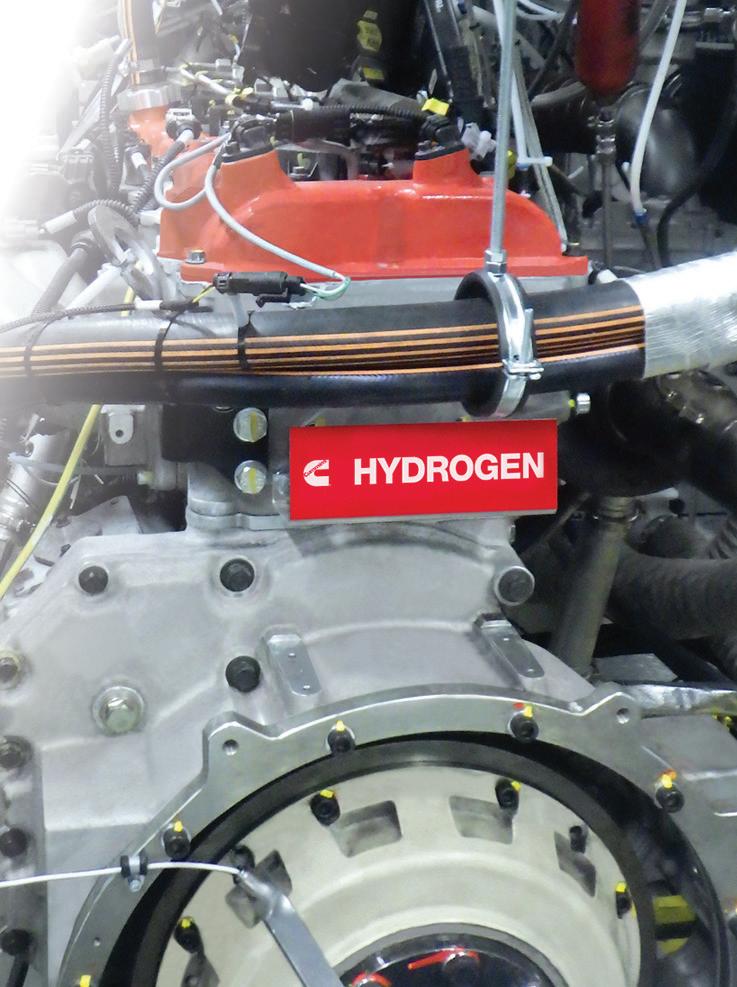
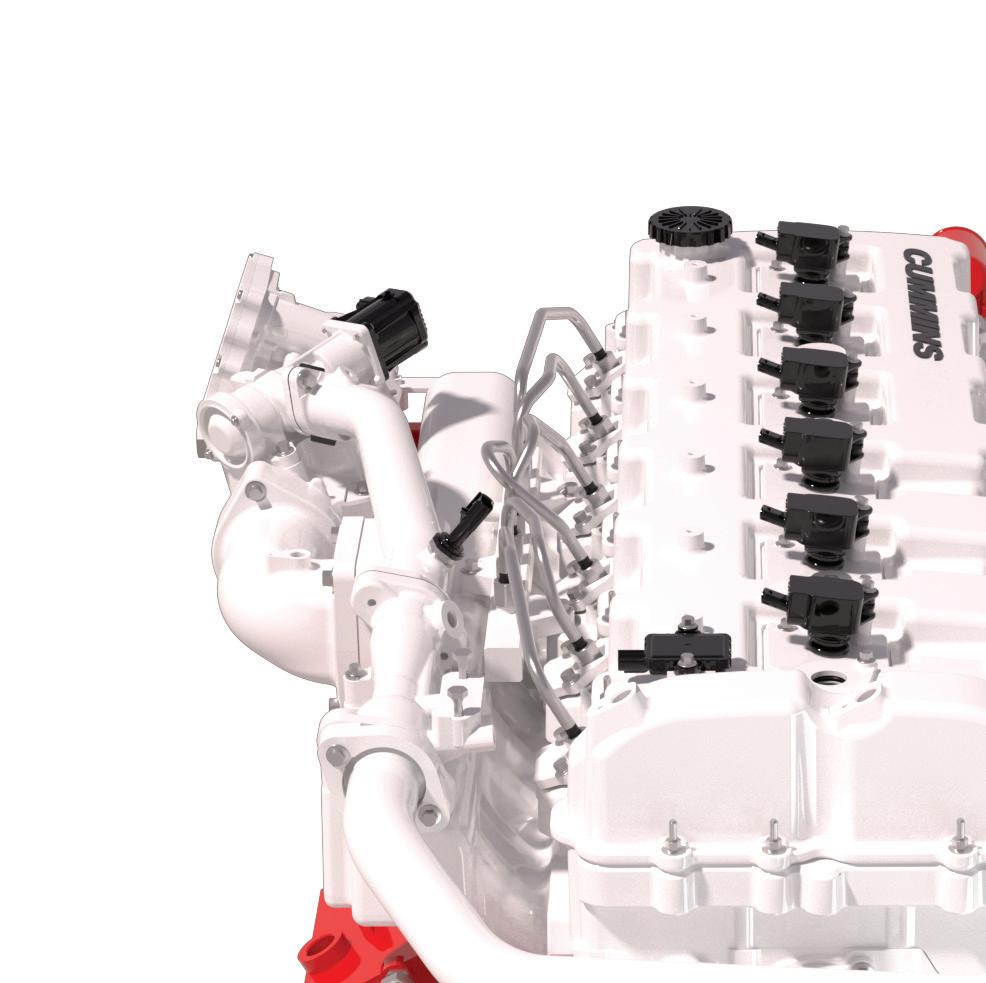
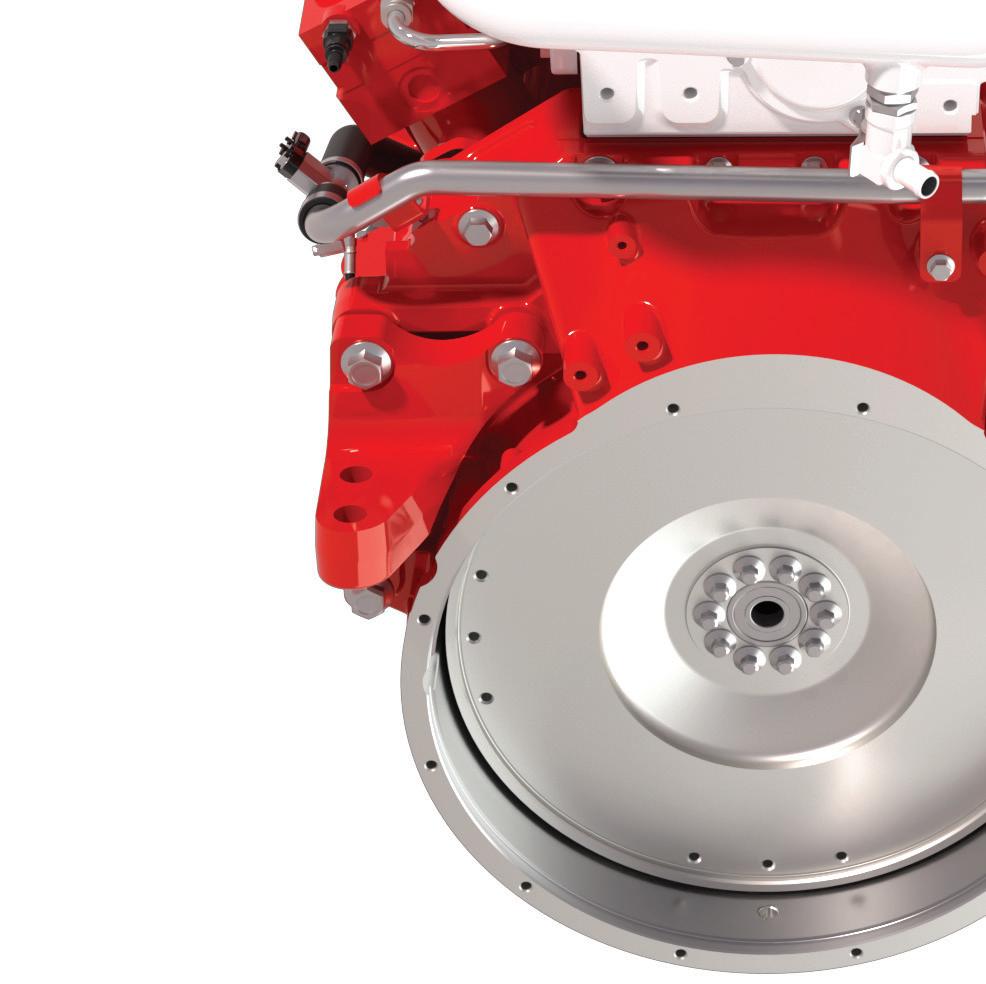
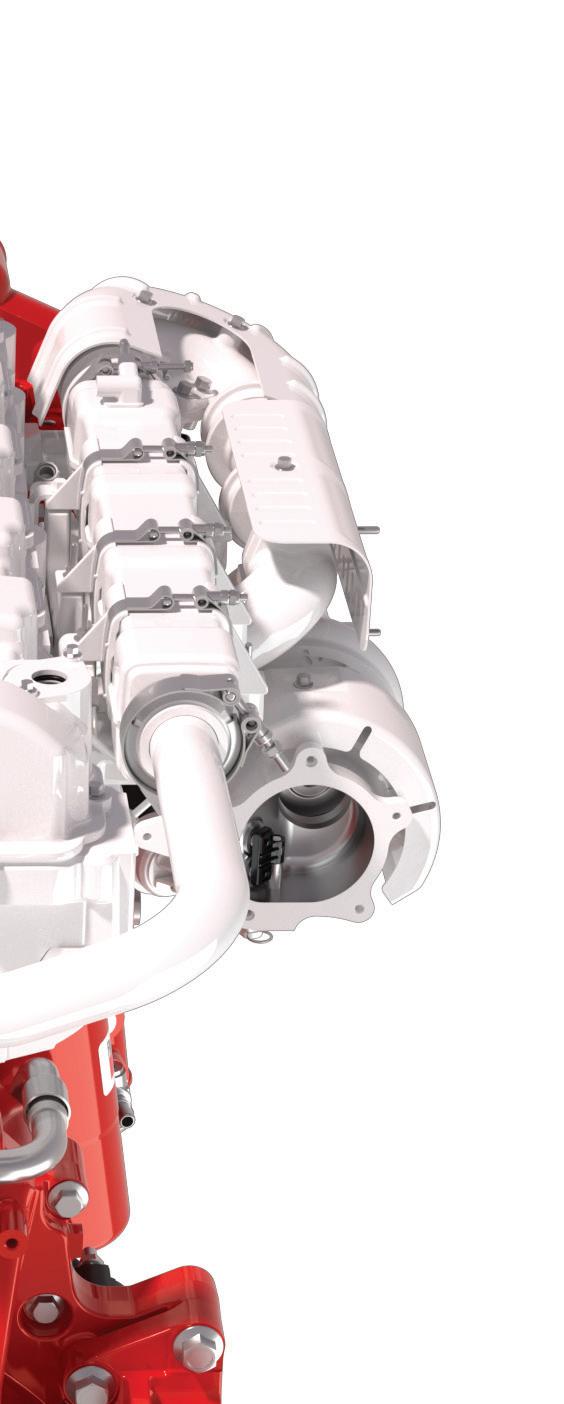
going to have a balance of CapEx and OpEx and, I believe, operational integrations. How does the technology t into the site? When we think about future solutions, typically off-highway markets tend to have genesis in heavy-duty on-highway. So, we learn from there and build scale and then there are opportunities to port that over into off-highway spaces. Further developments in internal combustion engines are a core part of our strategy and off the back of those, future emission regs that we are designing for in relation to platforms, we expect we’re going to see more stringent off-highway emissions coming in, probably early in the next decade. When you look beyond that, those platforms are going to be the enabler for the fuel-agnostic platforms that Cummins has talked about, being able to consume hydrogen, natural gas depending on your market, diesel or biofuels on one platform. Our approach is to build scale and obviously when you build scale in those products, the storage, the generation of something like hydrogen as a fuel is very complementary. We are building that out and we are able to consume it in combustion engine form now and that is going to enable fuel cells to take over at some point in the future.

FURTHER DEVELOPMENTS IN INTERNAL COMBUSTION ENGINES ARE A CORE PART OF OUR STRATEGY

of the additional environmental bene ts or the additional savings of on-time logistics and the idea that you have less material on the road, and material is delivered to the paver on time with lower emissions. It’s a combination of economics and the additional incentives in terms of safety or the environment. You see signi cant opportunities on the sustainability side helping drive adoption of technology.
Q: If we’re looking at infrastructure, how will the necessary support capabilities be developed and nanced?
Michael: We’ve talked about operational planning and design, but you also need to think about the digital twin and digitization. It’s being able to plan that work and execute the plan and it’s the ability of contractors to be able to use these kinds of digital tools to accurately assess an opportunity and then deliver with a performance on time and on budget. In many cases these are the things that truly drive and enable technology adoption.
Jeremy: It all comes back to scale – having some ability to generate scale is key. Ideal solutions are
Q: Pontus, how might the implementation of new technologies affect the overall cost of ownership?
Pontus: CapEx will go up initially, but ownership cost will go down. It’s about acceptance for the longer payback.
From our side, it’s also about helping customers remove risk and providing alternative business models, such as equipment as a service or different types of leasing models. In the long term the investment and product cost will go down and here we must differentiate between the power-atsite investments, the stationary investment and the product investment. So, there are different ways to drive transformation and change.
Michael: Pontus is right. When you look at the subscription model, the idea that users want the latest and greatest updates in respect of their capabilities, then we, as vendors, enable that through different business models that help both the customer as well as creating long-term bene ts and reducing long-term costs.
Q: We’ve been talking about the integration of sustainability, and it would be interesting to know whether it is already a standard requirement across the board in the bidding process or is there room for improvement?
Jeremy: The disclaimer from me would be that we are usually one step removed from the bidding process, so we deal largely with OEMs and, in some cases, large end eets. I would encourage users to verbalise those requirements through their dealers to their OE
channels so that they are more visible to folks like us. I can say that it comes up more in OE conversations now than it has in the past so there are some signals there. Hard to say if it is a standard or not. It feels very much pocketed still, and when you are in isolated pockets, I come back again to that ‘scaled’ comment from the previous question. It’s really hard to pro tably navigate isolated pockets of bid requirements, depending on what they are. If there is something that drives a readily available technology that can be put into the market, we should do that. If it’s something that drives technology into the mainstream, ahead of when the TCO [total cost of ownership] parity is there, without incentives they don’t make a lot of near-term sense right now.
Pontus: Jeremy’s points are correct, but we don’t see it as standard in bids yet. What we do see becoming more common is the need to declare the CO2 and the end-to-end CO2 values throughout the project, so having the lowest CO2 is one of the bid parameters for contractors. It’s becoming a more frequent government demand. That’s the rst step. We also see talk about how this product must be emission-free and CO2 neutral. It’s coming but is not yet standard. The rst step, I would say, is to just declare the CO2 footprint.
Q: Why is it not yet standard across the board? Is it to do with company size?
Michael: First and foremost, I think a lot of it is to do with public perception. We certainly see that perception varies around the world. In Northern Europe, people are very tuned in to it and much more sensitive to this. In other places where they are driven
by economics before the environment of the people, it’s about productivity. You are right when you say that understanding Scope 1 and Scope 2 vehicle emissions is becoming increasingly important. When I think about adoption of some of these things, one pretty obvious thing is road smoothness. Of the 50 states in the USA, there are approximately 24 that have elements of a smoothness standard, so you’ve got half adoption. It has been proven a number of times that a smooth, accurately paved road reduces the amount of material required and when it’s accurately compacted that smoothness results in lower fuel consumption from all cars travelling on it. They also have fewer repairs because there are fewer bumps, causing less damage. The road top will wear more evenly and it can be replaced more ef ciently when it needs to be. So, in my opinion, road smoothness is a great example of a standard that is being adopted but is not yet widely adopted. I think that is just our industry. Change is always dif cult, but everybody loves progress. The difference is ‘what’s the purpose?’ and so as more people have an idea of the purpose behind the change, they begin to expand the standard and adopt it.
Q: Jeremy, adopting standards, more legislation? What role and scope are there for further legislation in this area?
Jeremy: Legislation from our perspective tends to be more emissions-output driven. I would stress, again, that the problem is when you don’t have something nationally legislated. Even a one-country solution or a one-state solution tends to drive disruption and being able to design for that, so we need standards that are more widespread. We need standards that are
emissions-target driven, not necessarily technologymandating proposals. Put the benchmark out for the industry. Let all the smart engineers in the industry gure out what the optimal solution is, one that balances that CapEx/OpEx, operational integration. That’s the way we need to approach it. It’s a good catalyst when we have pocketed incentives or pocketed requirements that say, ‘hey, implement technology X ‘. That’s probably a good way to drop some demonstration activity. It’s probably not the best way to drop something that is going to take root and be sustainable in the long term. Once those incentives go away, if you don’t have something that is driving scale, like at national level – that is usually the best case.
Pontus: I think the rst step is to get the ISO and drive it from government and the bigger building companies. To have CO2 as one parameter, or any type of emissions, and highlight the importance of it. Legislation is there but it will always be different from one country to another.
Q: That’s a problem, isn’t it?
Q: It’s very different. What are your thoughts on hydrogen, other organic fuels and also on electricity as the likely preferred sustainable energy sources?
I DON’T THINK YOU HAVE TO THROW OUT ONE FUEL SOURCE
Michael: I defer to my fellow panelists. They are much stronger on the ‘fuels thing’ than I am. You could have fossil fuels, fossil diesel or renewable or biodiesel. I don’t think you have to throw out one fuel source without understanding the existing infrastructure. The system we have today is very mature and it has evolved to that level of maturity so there is an immense amount of opportunity in being able to use elements of the structure that we already have, as well as things like ethanol-based fuel and biodiesel. Then the telematics and the data layers just act as proof of placement and proof of practice, and in documenting that they are validating the bene ts that we are creating by doing the right thing.
Q: Jeremy, I’m going to take Michael’s advice and draw on your expertise.
Pontus: Yes, but also more of an opportunity. With legislation you can see change happening. It helps if you can show that TCO is lower in the country with legislation than those still using old technologies. Legislation of course helps but it is hard to implement everything in one go.
Michael: It is challenging. I live in California which has been leading a number of different aspects of regulation. I believe we really need to look at it as the glass is half-full. I’m a big believer in incentives-based adoption where we can show elements of the bene ts, whether those are bene ts to people economically or to the environment, and then assigning value to those bene ts so we can create incentives for driving that adoption. I am a glass half-full guy so do we have the incentives out there to get our intended behaviours?
Q: I like that. When and in what circumstances do you anticipate sustainable power becoming the standard?
Pontus: It will differ from segment to segment. For example, the big mining companies are strong drivers towards sustainability already. They are downsizing from the huge trucks they use today to having multiple smaller trucks. Mining is one area which I think will move towards standardisation quite fast. But the de nition of ‘fast’ might differ. In industrial handling they very often have the infrastructure in place if they are moving to electric machines. We see some customers already having their own energy production so, for them, it is only the investment and then they are running the machines for free, basically. Different types of equipment require different things.
Jeremy: It has been mentioned before that solution diversity has to be a market consideration. There are so many applications, so many use cases, that one application could be used in many different ways. A one-solution-for-one-application scenario now is unlikely for us. I don’t see a lot of opportunities in that medium- and heavy-duty space where you have something besides diesel that is going to be a TCO winner within the decade. I think that is important to know. You ask about hydrogen as a fuel. We have been pretty vocal, pretty open and positive about that. We are obviously very interested in hydrogen. If you think about CapEx/OpEx/ integration to the worksite, one of the near-term solutions we are pretty excited about for a lot of reasons is hydrogen combustion engines, not to underestimate some of the challenges. They offer a lot of bene ts for OEMs too, I am going to say, and help the ease in to decarbonisation. You don’t have to electrify the full chassis. You are really taking one engine out and putting another one in packaging tanks which is not insigni cant but is a little bit of an easier lift in that regard. From an aftermarket channel, engines are something that are familiar to that group and it’s not a small group. If you look at the service network for Cummins and for other companies a whole lot of investment, time and energy has been put into this ready and capable channel. Thinking that the switch is going to ip overnight is probably short-sighted. It’s going to take time for that to happen, so you need solution diversity, one hundred per cent. Some things are going to make sense in the near term for some markets and that could be one application may make sense in use case A but not so much in use case B. It will take a while for that to play out. Technology
needs time to mature. Costs need to come down. That tends to happen for our markets rst in the onhighway space. We need to keep a watchful eye on the truck markets and other parts of the business that are leading the way on our behalf.
Q: Jeremy, you said things are going to take a long time. What’s your vision for the sustainable future of the construction and aggregates industry and how, in broad terms, do you think it’s achievable?
Jeremy: Solution diversity but we can’t wait for the perfect solution. We need to be exploiting things we can do now as much as we can. CO2 regulations are coming up more and more in conversation and I would expect those are probably going to nd their way into the off-highway regulation space at some point. That’s going to be a very near-term improvement that we can make as an industry. Thinking about what you can bring to the market soon – combustion engines, diesel hydrogen and other fuels, we are de nitely interested in the near to medium term. Batteries are a great option for compact equipment but when you get bigger than that, it is going to take a longer time to play out. Fuel cells have a longer-term place in the industry but not so much within this decade. You need to think of three things – CapEx, OpEx and maybe even more importantly, how it actually ts in the job site and how people can get the work done. There is no shortage of construction or mining needed within the decade so we’ve got to do what we can to enable that work to happen as ef ciently and sustainably as possible.

PROFIT CONTINUES TO BE IMPORTANT, BUT IT HAS TO BE A BALANCE WITH PEOPLE AND PLANET


Pontus: We believe it can be done. Collaboration will be key – and by that we mean partnerships between OEMS, government and the customer’s customer, as well as the customers’ partnerships around charging digital services. Topcon is one of them, of course. Everyone needs to contribute because sustainability and the transformation needs to be looked at from an end-to-end perspective. It’s not just about having the correct products available. It’s key to have the focus on the total solution, combining products and digital services, to get the job done. But at the same time, we must look at the total energy consumption. It’s not only about the usage phase, but everything – the production of hydrogen, or electricity or biofuels and so on. It’s important to have that in mind.
Michael: Sustainability is an ESG (Environmental, Social and Governance). It’s here to stay but when you look at it, it’s really just a balance. Pro t continues to be important, but it has to be a balance with people and planet. So, increasingly institutional investors are beginning to prioritise those elements. Our ability to transparently explain and show how we are meeting those bene ts is our opportunity. I am an ‘incentive space’ guy and so when we see that the incentives are aligned to push the behaviour that gets us in that realm, then that really increases the rate of adoption. I would say, for the World Highways audience, which is where we see it going and because of the rate at which those incentives and opportunities will appear, I believe that you will see many more aspects of ESG and sustainability being adopted. ESG awareness and sensitivity are here to stay. It’s now in our landscape and so the question is how do we align to that change?









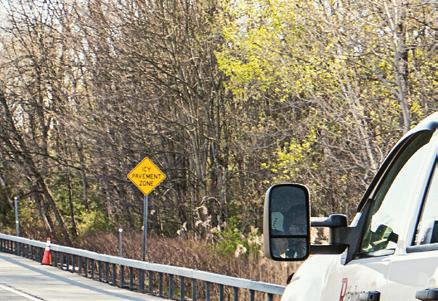



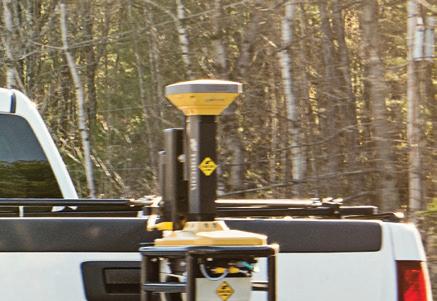












TThe off-highway sector is just beginning its journey toward decarbonisation, with electric powertrains a major focus. Some of the industry’s smaller tools are well suited to electri cation, but there are numerous obstacles to overcome if it is to make signi cant progress, such as achieving production scale, advancing battery technologies, and installing charging infrastructure, says a new report from consultancies Roland Berger and Off-Highway Research.


While not an absolute measure of carbon emissions, this important new study yields a clear conclusion: If the offhighway sector is to seriously reduce carbon emissions, it must focus on decarbonising crawler excavators and wheeled loaders.
Implementing changes in emerging markets will have a bigger impact than in developed markets, and this presents a number of hurdles. Wheeled loaders and medium and large excavators have much higher power requirements than compact machines, making them harder to convert to alternative energy. For battery-powered machines, this is due to the high initial cost of the batteries which can be uneconomical; for hydrogen-powered machines, there can be a lack of hydrogen supply to meet requirements in addition to cost constraints.
A credible alternative seems to lie in renewable diesel or renewable natural gas. However, adequate availability of these fuels needs to be ensured.
Furthermore, encouraging change in emerging markets may be harder than in developed countries. History shows that these countries tend to follow rather than lead on environmental legislation.
There’s also a cost factor: Alternatively-powered machines are currently more expensive than traditional diesel equipment, posing a further challenge to poorer countries.
Lastly, construction equipment has a long lifespan. Without powerful incentives to scrap them, it will take decades to phase out diesel-powered machines.
The global picture
While the drive toward e-mobility in on-highway transport has been underway for some time, the offhighway industry is just beginning its decarbonisation journey. There are four main reasons behind this shift, which are: internal sustainability initiatives among value chain participants; evolving government regulations and incentives; improved operator experience; and total cost of ownership (TCO) benefits.
Much like the on-highway sector, key players across the off-highway value chain are now committing to improving environmental sustainability. From suppliers to OEMs to end-customers, some of the industry’s biggest companies have pledged to significantly reduce emissions, or in some cases reach net zero by 2040 or 2050. See table A. below.
are committing to ambitious sustainability goals, driving the push for electric equipment
Source: Off-Highway Research, Roland Berger




"Europe has the world's strictest emissions requirements for off-highway equipment"


These commitments are largely driven by changes in both government regulations and consumer demands. Customers are increasingly looking to support sustainable businesses with concrete goals to reduce emissions. Green credentials can bring brands significant advantages.
Changing regulations and incentives
When it comes to regulations, governments have primarily focused on the on-road sector but are now introducing legislation for the off-highway industry, both at local and federal levels.
Broadly speaking, Europe has the world's strictest emissions requirements for off-highway equipment. The EU's Stage V standards, in force since 2016, target nitrogen oxides (NOx) and particulate matter (PM), as well as carbon monoxide and hydrocarbon emissions. Stage VI could



include limits on CO2 emissions.
The region’s standards have proved influential as both China and India have emissions standards which are largely based on Europe's Stage V (although drivers for these regions are more geared towards air quality).
At a local level, a growing number of European cities are establishing or expanding low-emission zones (LEZs) to limit pollution within city limits. Globally, nearly 100 cities have joined C40, a network committed to emission reduction targets. Four of these cities have also signed the Clean Construction Declaration, calling for zero-emission construction machinery from 2025 onwards.
In the United States, California leads the way in off-highway emissions reduction legislation. Internal combustion engines (ICE) will be banned for small equipment (less than 19 kW) from 2024/2025. Twelve other US states,
which often adopt emissions standards set by the California Air Resources Board (CARB), are expected to follow suit. CARB is also looking at further reductions to NOx, PM and CO2 , with additional legislation expected to be developed in the near future.
At a US federal level, Tier IV emissions standards required that PM and NOx were further reduced from Tier III levels by 90%. This was primarily implemented through after-treatment technologies such as selective catalytic
reduction and diesel particulate filters. See illustration B. below.
It’s not all about restrictions, though – incentives for electric off-highway equipment are also starting to take shape. The US Inflation Reduction Act includes an advanced manufacturing production credit (AMPTC), which also applies to off-highway vehicles. This comes in the form of a tax credit for the use of US-produced components in energy storage.
Countries leading the way in off-highway emissions regulations
Non-exhaustive
China
Stage IV emissions standards
Clean construction declaration (select cities)

United States
Tier IV emission standards
(<19KW) is to be banned beginning in 2024/2025 for some states
Clean construction declaration (select cities)
Europe
Stage V emissions standards
Low-emission zone cities
Clean construction declaration (select cities)
India
Bharat stage IV emissions standards
Clean construction declaration (select cities)
Japan
Emissions standards equivalent to Europe Stage IV & US Tier IV
Effective since 2015
Source: Off-Highway Research, Roland Berger


Powertrain technology relevance rating - 1 (least relevant) to 5 (most relevant)






Meanwhile, the Commercial Clean Vehicle Credit offers a tax credit for new electric vehicles that meet certain requirements: Critical minerals must come from North America or free-trade agreement partners, while manufactured battery components must come from North America.
To learn more about decarbonisation in the off-highway sector, Roland Berger and Off-Highway Research recently surveyed a group of OEMs, suppliers and distributors within the industry. The global survey covered a roughly equal mix of participants from construction, agriculture and other heavy machinery. Approximately 45% were OEMs, 35% suppliers and the remaining 20% distributors.
More than 70% of respondents believe sustainability and sustainable powertrains are highly relevant to their industry. This is having a significant impact on investment allocations. More than 60% of those surveyed are now spending at least 20% of their R&D budget on sustainability activities. In terms of powertrains, the current





focus is on battery electric, followed by renewable diesel and hydrogen technologies. See illustration E. above.
The report also asked participants about the size of equipment they expect alternative powertrains to be used in. Two-thirds said compact equipment is likely to be fitted with battery-electric systems, with a third saying the same for medium equipment. For large equipment (20-plus tons’ operating weight), only 16% of industry participants believe it will be possible to achieve profitable operations.
Battery-electric powertrains are seen favourably in terms of operability and reliability. According to the survey, industry players expect electric machinery to be marginally easier to operate than diesel vehicles while offering similar reliability. Initial prototypes confirm these views on operability, although overall reliability is yet to be proven in long-term field applications.
From a TCO perspective, renewable diesel is seen as the clear front runner, followed by battery-electric vehicles. Fuel cell and hydrogen combustion aren’t viewed as positively due to the high cost of hydrogen.
Overview of industry concerns across adaption factors - 1 (strongly disagree) to 5 (strongly agree) Illustration F.
Industry players' responses highlight public charging/ refuelling infrastructure, vehicle acquisition costs and system integration challenges
Source:
Roland Berger

There are also concerns with fuel cells’ specific cooling requirements as well as being able to perform under operating conditions with high vibration and heavy dust.
Cost is just one of several challenges in the energy transition. Participants see vehicle acquisition costs, the availability of public charging and refuelling infrastructure, and system integration challenges as the top three concerns. See illustration F. left.
Beyond the challenges mentioned in the chart, industry participants also feel that fundamental changes in their business models are necessary to successfully transition to a decarbonised future. A lack of key skills within their organisations poses a further obstacle.


If you would like to see the full report, please follow this link: https://www.rolandberger.com/ en/Insights/Publications/How-to-kickstartdecarbonization-for-off-highway-machinery.html



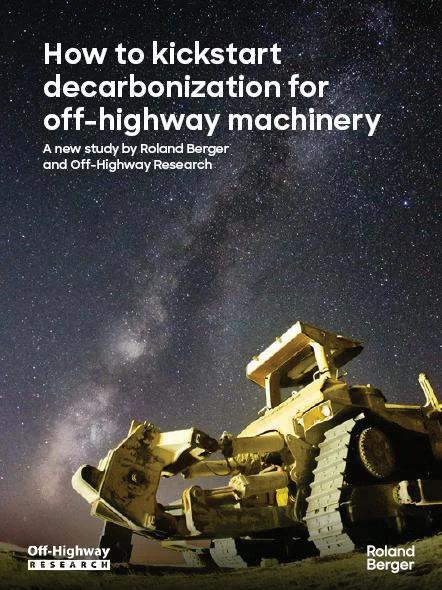

"Participants see vehicle acquisition costs, the availability of public charging and refuelling infrastructure, and system integration challenges as the top three concerns"




ROLAND BERGER, which describes itself as: “The only management consultancy of European heritage with a strong international footprint. As an independent rm, solely owned by our Partners, we operate 51 of ces in all major markets. Our 3,000 employees offer a unique combination of an analytical approach and an empathic attitude. Driven by our values of entrepreneurship, excellence and empathy, we at Roland Berger are convinced that the world needs a new sustainable paradigm that takes the entire value cycle into account. Working in cross-competence teams across all relevant industries and business functions, we provide the best expertise to meet the profound challenges of today and tomorrow.


OFF-HIGHWAY RESEARCH, which describes itself as: “A management consultancy specialising in the research and analysis of international construction, and agricultural equipment markets, and is the largest of its kind in the world. The consultancy was formed in 1981 as part of The Economist Intelligence Unit (EIU). It is now part of KHL Group, a global media and events company focusing on the construction, construction equipment and power industries.










Ten of the world’s largest cement and concrete producers - including Heidelberg Materials, Cemex and Holcim - have joined architects, engineers, and construction rms in a collective push for action on climate change. Their new group, called the Mission Possible Partnership (MPP), has put together a new strategy that sets out the objectives, milestones, and commitments that government, industry, and investors will need to work towards over the next 25 years if we are going to make net zero emissions a concrete reality in the aggregates sector. Guy Woodford reports.


Concrete is the world’s most widely used material after water. Its main ingredient, cement, is therefore an essential part of the global economy, critical to every imaginable part of global infrastructure.
The sector generates 8% of global CO2 emissions, more than aviation and shipping combined, and the challenge of controlling this impact is becoming more and more urgent as concrete and cement production increases to meet the world’s needs. Without efficiency gains, demand for cement is projected to increase by 50% by 2050.
To encourage the market in the right direction, the new Mission Possible Partnership (MPP), has put out a report called: “Making net-zero concrete and cement possible: An industry-acknowledged, 1.5°c-aligned transition strategy.” It shows, through its “Net Zero Scenario”, how the sector can reach net zero GHG emissions and comply with a 1.5°C target if urgent action is taken across three key areas of activity:
• 22% emissions reduction can be achieved on the demand side through efficiency improvements in construction and design, reducing the volume of concrete needed without compromising safety or durability.
• 25% reduction can be achieved in process emissions on the supply side by deploying Supplementary Cementing Materials (SCMs) to decrease the use of clinker, whilst bringing alternative chemistries to commercial stage.
• 53% of emissions can be reduced, eliminated or captured through a combination of fuel switch, power sector decarbonisation and carbon capture utilisation and storage (CCUS).
To see the full MPP report, please visit: ‘Making Net-Zero Concrete and Cement Possible’



Of the three headings above, CCUS currently has the largest emissions-saving potential, says MPP, and 33-45 new CCUS plants with an annual capacity of 80 megatonnes (Mt) of CO2 must be in operation by 2030 for the industry to stay within its carbon budget. However, new data from MPP’s tracking of green industrial projects – released by MPP for COP28 – shows that the current pipeline falls short as projects struggle to reach FID. Fifteen plants have so far reached this critical point.

By 2030:

MPP calls for immediate action across the concrete production value chain from industry, governments and nancial institutions worldwide to create an enabling environment for innovation and decarbonisation. Its roadmap details actions needed in the short and long term to rapidly decarbonise the sector.
Near-term milestones
By 2025:

• Governments permitting increased use of SCMs and using procurement power to bring about deployment.
• Concrete demand reduces by 4% compared with business-as-usual.
• CO2 transport and storage plans in place and construction started across three regions.
• 33-45 commercial-scale carbon capture plants to be operational.
• Concrete demand peaks and starts decreasing globally.
• Global average clinker-binder ratio drops to a global average of 0.54-0.58 from 0.63 today.
By 2035:

• 35% reduction in emissions achieved if previous milestones are met.



Mission Possible Partnership CEO, Faustine Delasalle, says: “Our report sets out precisely what needs to happen to make zero-carbon concrete and cement a reality, but time is not on our side. The moment to roll up our sleeves and work together across the value chain and with governments is now. Immediate collaboration and cooperation – from producers through design and construction – together with policymakers and nance – is essential to making the necessary progress this decade.

Collective acknowledgement of the strategy, from a wide variety of companies and the largest in the concrete and cement sector, re ects the growing momentum of business for action in the near term. Making Net-Zero Concrete and Cement Possible joins a series of industry transition strategies backed by 200+ industry players and developed by MPP to guide the decarbonisation of seven hardest-to-abate sectors.

“At Argos, we are committed to making possible the construction of housing and infrastructure dreams to enable a more sustainable, prosperous, and inclusive society. That is why we are conscious of the importance of reaching net zero by 2050 while the countries where we operate keep developing.”
Juan Esteban Calle, CEO, Cementos Argos
“The concrete and cement transition strategy is a relevant user-friendly guide towards the decarbonisation needed around the world, as it clearly describes the general global actions that need to be taken to achieve carbon neutrality in
2050. However, there is still a pressing need to dive deeper into regional and local insights and differences in mitigation, adaptation and opportunities, and the regional and country roadmaps especially within developing countries, since cement and concrete are essential for the achievement of sustained economic growth and the eradication of poverty and to mitigate the effects of climate change; therefore a successful implementation will need to reconcile this reality with appropriate public policies that take into account local challenges and needs, and the economic cooperation of economies that have already developed.”
Javier Durand, Cementos Pacasmayo S.A.A.
“We at Misr Cement Group are proud to be an active member within the Global Cement and Concrete Association (GCCA), as we are considered one of the first Egyptian local companies to commit to supporting the global sustainable economic, social and environmental development priorities.”
Bassam Abd Elrassoul, Acting CEO, Misr Group.
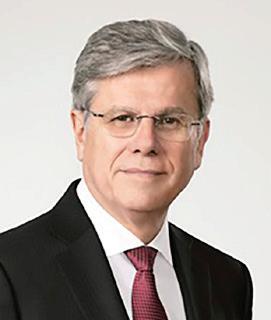
“We welcome all organisations and efforts to decarbonise the cement industry, and we support the main conclusion of the STS report that Net-Zero transition is possible. There is much to be done on the road to Net Zero, and we need the collaboration of public and private sector to achieve the regulatory changes necessary to accelerate the transition.”
Fernando A. Gonzalez, CEO of Cemex.
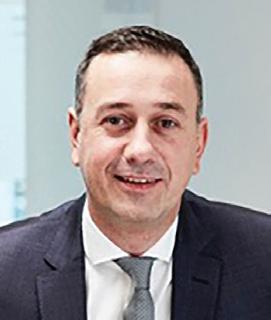
“At Holcim, we are at the forefront of decarbonising buildings across their entire lifecycle to build better with less, from our operations to low-carbon construction to energyefficient buildings in use. The MPP sector transition strategies provide a pathway showcasing how companies and policymakers can collaborate to accelerate decarbonisation.” Miljan Gutovic, Holcim Region Head Europe.
“A perfect all-in-one report. Especially the key message on the very limited cost impact of using zero-carbon concrete on overall cost of construction should be advocated worldwide.”
Jan Hoppenbrouwers, CCO & Investor Relations, CarbonOrO.
“Secil is fully aligned with and committed to the pathway of decarbonisation of the cement and concrete industries. We know our challenges and responsibilities. We are addressing them through our comprehensive decarbonisation roadmap, together with our stakeholders.”
Otmar Hübscher, CEO, Secil.
“This report recognizes the substantial role that those responsible for designing and constructing the built environment play as demand-side partners in significantly reducing the GHG emissions of concrete and cement through thoughtful design, efficient use and reuse, specification and carbon sequestration.” Vincent Martinez, President and COO, Architecture 2030.
“As an OEM equipment supplier to the cement industry with a tradition of more than 160 years of innovation, the decarbonisation of the cement industry is the focus of our activities. We consider it our obligation to develop solutions for the biggest challenge in our industry. Our machines and plants allow for substantial carbon reduction already today and will provide cost-efficient carbon capture through oxyfuel and other novel technologies for total decarbonization.”
Matthias Mersmann, Chief Technology Officer, KHD.
“It is important that we all work together to implement strategies to decarbonize cement and concrete at scale. Most notable to us at the Carbon Leadership Forum is the high impact of strategies under the control of building owners, designers, engineers, and builders. Focusing on efficient use of concrete and optimisation of concrete mixtures can be cost-saving strategies that are easy to implement today.”
Kate Simonen, Executive Director, and Jordan Palmeri, Senior Researcher, Carbon Leadership Forum.
“Heidelberg Materials welcomes the MPP’s Transition Strategy for Cement and Concrete which builds on the industry’s existing and robust decarbonisation roadmap towards 2050. It emphasises the need for strong collaboration of all actors along our value chain and underscores the essential policy levers that are crucial for assisting us on our path to achieving net-zero emissions.”
Dr. Dominik von Achten, CEO Heidelberg Materials AG and Chairman MPP Concrete Action for Climate.