



NEVER
aterial handling is one of those areas in mining where the risks are well-documented and, in many cases, entirely manageable, yet incidents continue to occur. This issue of Safe to Work takes a direct look at why that gap persists, and what the industry is doing to close it.
The handling of raw materials is a constant across Australia’s resources sector – bulk commodities flow through conveyors, chutes, silos and stockpiles around the clock, while maintenance crews work in demanding conditions to keep that equipment running. The risks embedded in these environments tend to emerge from the interaction between how materials behave, how equipment is operated, and how workers are expected to handle both.
In this edition, a standout feature examines how the hierarchy of controls applies to material handling tasks, making the case that lasting safety improvement comes from asking harder questions up-front. Can the hazard be eliminated? Can it be engineered out?
Automation is increasingly where that engineering solution is being found, and a feature on some of the country’s biggest miners explores how automated
material handling systems are being deployed to remove workers from highexposure environments altogether. That thinking continues throughout the issue.
Conveyor technology is explored through the lens of tackling dust and spillage at the source, addressing the conditions that create hazards rather than responding to them after the fact.
Purpose-built lifting equipment also gets a thorough look for the role it plays in removing workers from the most dangerous moments of heavy component handling.
When it comes to closing the gap between safe practice and material handling, the industry doesn’t need to do the heavy lifting alone – as this issue shows, the answers are already out there.
Prealene Khera Editor
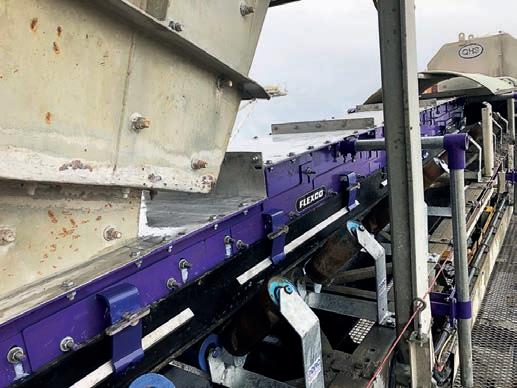
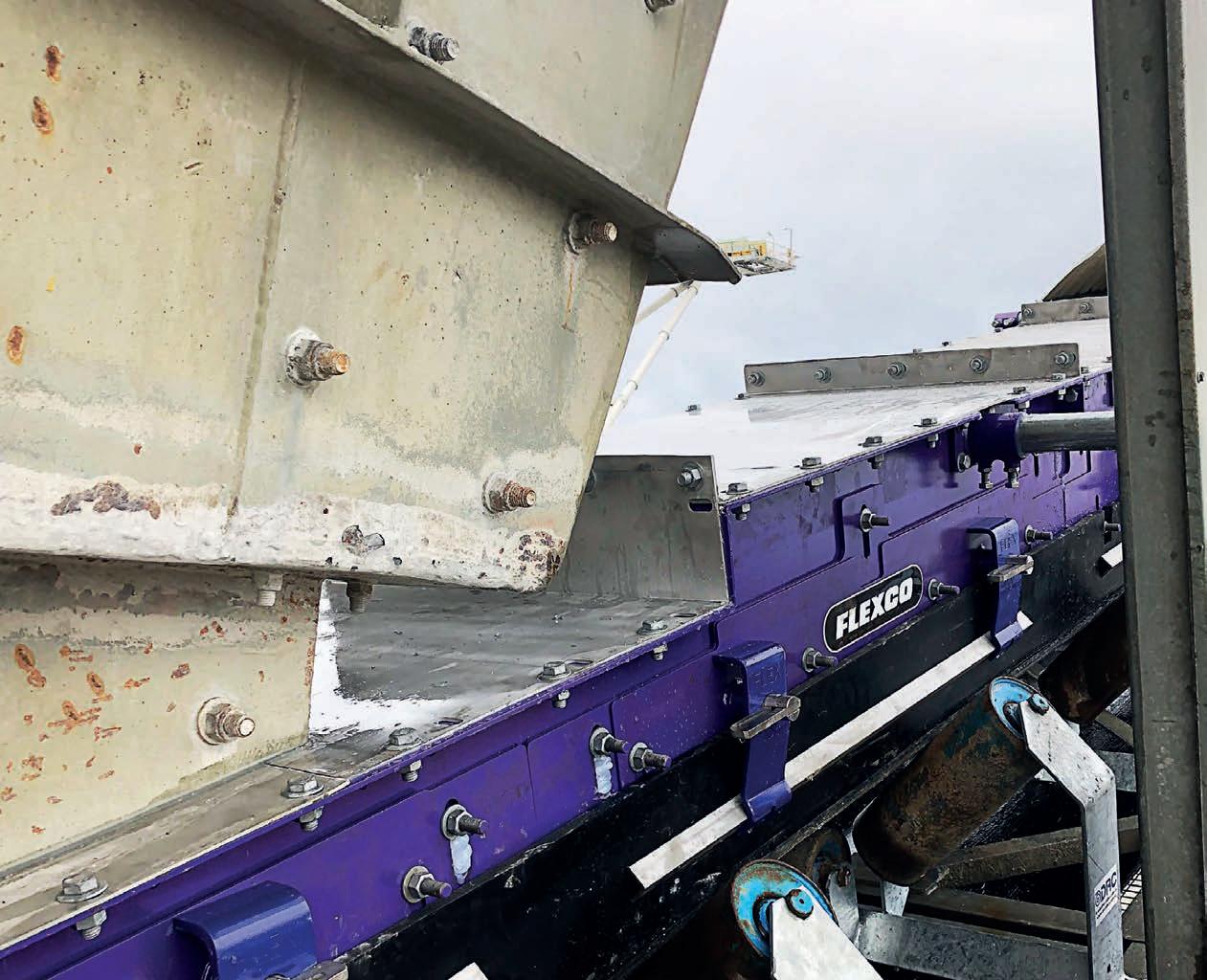
As an industry leader in belt conveyor solutions since 1907, Flexco is a trusted partner for mining and bulk handling operations worldwide. Specialising in belt cleaners, trackers, impact beds, skirting systems, pulley lagging, mechanical belt fasteners and more, Flexco focuses on maximising conveyor uptime and reducing the risk of unplanned downtime. Backed by an extensive, highly trained support network, the company delivers innovative, hands-on solutions that help operations correct potential problems before they become serious issues. Image: Flexco
CEO CHRISTINE CLANCY
MANAGING EDITOR
PAUL HAYES
Tel: (03) 9690 8766
Email: paul.hayes@primecreative.com.au
EDITOR
PREALENE KHERA
Tel: (03) 9690 8766
Email: prealene.khera@primecreative.com.au
CLIENT SUCCESS MANAGER
JANINE CLEMENTS Tel: (02) 9439 7227
Email: janine.clements@primecreative.com.au
ART DIRECTOR
MICHELLE WESTON
RESOURCES GROUP LEAD
JONATHAN DUCKETT
Mob: 0498 091 027
Email: jonathan.duckett@primecreative.com.au
BUSINESS DEVELOPMENT MANAGER
JAKE NIEHUS Mob: 0466 929 675
Email: jacob.niehus@primecreative.com.au

8
Safety on the move
Dust and spillage at conveyor load zones were once seen as an unavoidable issue, but Flexco’s solutions show this is no longer the case.
12
Systemic safety
Ensuring safe handling practices across operations depends on how e ectively the hierarchy of controls is applied and integrated on-site.
18 Safety in bulk
Advanced modelling is changing how the mining industry carries out safety, along with material handling.
24
Hands off the job
Major miners push autonomy as the safest way to move and handle material.
32 Knowledge to thrive
Chelsea Dyer grew up around shift work and its challenges. Now she’s built a company to help others navigate it more e ectively.
42 Access the best of safety
From frontline risk management to long-term resilience, PNG Expo will focus on what keeps Papua New Guinea’s resources sector safe.
44
Flipping mining’s script
As a Women in Industry award winner, Becky Felstead has spent years ensuring the resources sector’s hardest conversations no longer go unheard.
52 Reaping AI-rewards
Artificial intelligence is improving performance across BHP’s global mining operations.
54
Putting people first Australia’s premier mining safety conference is set to take over the Gold Coast once again in August.
AUSTRALIA’S MINING INDUSTRY CONTINUED TO PLACE SAFETY AT THE CENTRE OF OPERATIONS IN EARLY 2026, WITH NEW INITIATIVES, REGULATORY UPDATES AND INDUSTRY-LED IMPROVEMENTS SHAPING THE SECTOR’S SAFETY LANDSCAPE.
Recent months have showcased the mining sector’s ongoing commitment to safety, with operators, regulators and industry bodies driving improvements across sites. Stronger controls, updated training and proactive initiatives reflect the progress made in protecting workers and reducing risks. Safe to Work looks at the key developments influencing mining safety across the country.
SAFETY INSIGHTS
Open-cut coal mines in the Hunter region met dust suppression requirements during a series of unannounced inspections by the New South Wales Environment Protection Authority.
Safety performance featured strongly in recent financial results from major miners including BHP, Rio Tinto and Mineral Resources. BHP
reported a 20 per cent drop in High Potential Injury Frequency compared with H2 FY25, while Rio Tinto and Mineral Resources reinforced safety as a core operational priority in their latest updates.
Serious injury frequency rates across New South Wales’ mining sector remained comparatively low in 2024–25, according to the latest Mine Safety Performance report from the NSW Resources Regulator.
Incident notifications across the state also declined in the final quarter of 2025, with the NSW Resources Regulator recording 501 reports between October and December, representing a 16 per cent decrease from the previous quarter
Psychosocial safety received increased regulatory attention, with SafeWork South Australia (SA) introducing two new codes of practice covering psychosocial
hazards and sexual and genderbased harassment.
Industry bodies also reinforced the need to address workplace behaviour risks, with the Australian Institute of Health & Safety urging companies to treat sexual harassment as a preventable workplace hazard.
Resources Victoria issued infringement notices to Victory Minerals following compliance failures identified at the Ballarat gold mine, including unauthorised infrastructure changes and vegetation removal.
The Queensland Government proposed the Resources Safety and Health Queensland and Other Legislation Amendment Bill 2026 to strengthen the state’s regulatory system.
Efforts to improve workforce capability also progressed, with the Coal Mining Safety and Health Advisory Committee and
the Mining Safety and Health Advisory Committee launching a project to review supervisor training requirements.
Emergency preparedness was highlighted during the Victorian Mine Rescue Competition. Oscar Brigade secured the overall win after completing a series of simulated rescue scenarios, with BHP Copper SA placing second and Victory Minerals Ballarat finishing third.
The Australian Resources and Energy Employer Association urged the Federal Government to use its review of the National Employment Standards to address “structural flaws” in workplace laws affecting 24/7 industries such as mining.
Globally, safety investment appeared set to increase with a survey commissioned by Blackline Safety finding most safety leaders planned to boost spending on workplace safety over the next two years as organisations sought to reduce incident rates.
A near-collision between a rear dump truck and a grader at a surface coal mine in New South Wales highlighted the importance of speed control and situational awareness around mobile equipment.
Mobile plant incidents also occurred at two separate New South Wales mine sites. In one event, a haul truck operator travelling at night crossed to the wrong side of a centre bund and narrowly avoided another truck, while in another incident an excavator’s counterweight struck the cab of a stationary excavator during tailings facility work.
Two vehicle-related incidents at separate surface operations further highlighted traffic management risks. A haul truck and light vehicle narrowly avoided a collision at an intersection, while a front-end loader reversed into a rigid tipper while loading a screen hopper.
Equipment-related incidents were also recorded across several sites. A
grease injection injury occurred at a Central Queensland coal mine when a modified grease hose failed, while a worker was struck on the head by a poly pipe that came free during underground installation works at a separate site.
Electrical hazards were highlighted following two separate incidents at underground mines. One involved a supervisor cutting through a live 11kV cable during rehabilitation work, while another worker received an electric shock while performing electric arc gouging in wet workshop conditions.
Explosives handling procedures also came under scrutiny after a missing electronic detonator was reported at an underground mine. The device was believed to have been inadvertently left in a previously fired location and consumed in the blast.
Finally, South32 suspended nonessential work at its Worsley Alumina refinery in Western Australia after a contractor was fatally injured at the site in March.
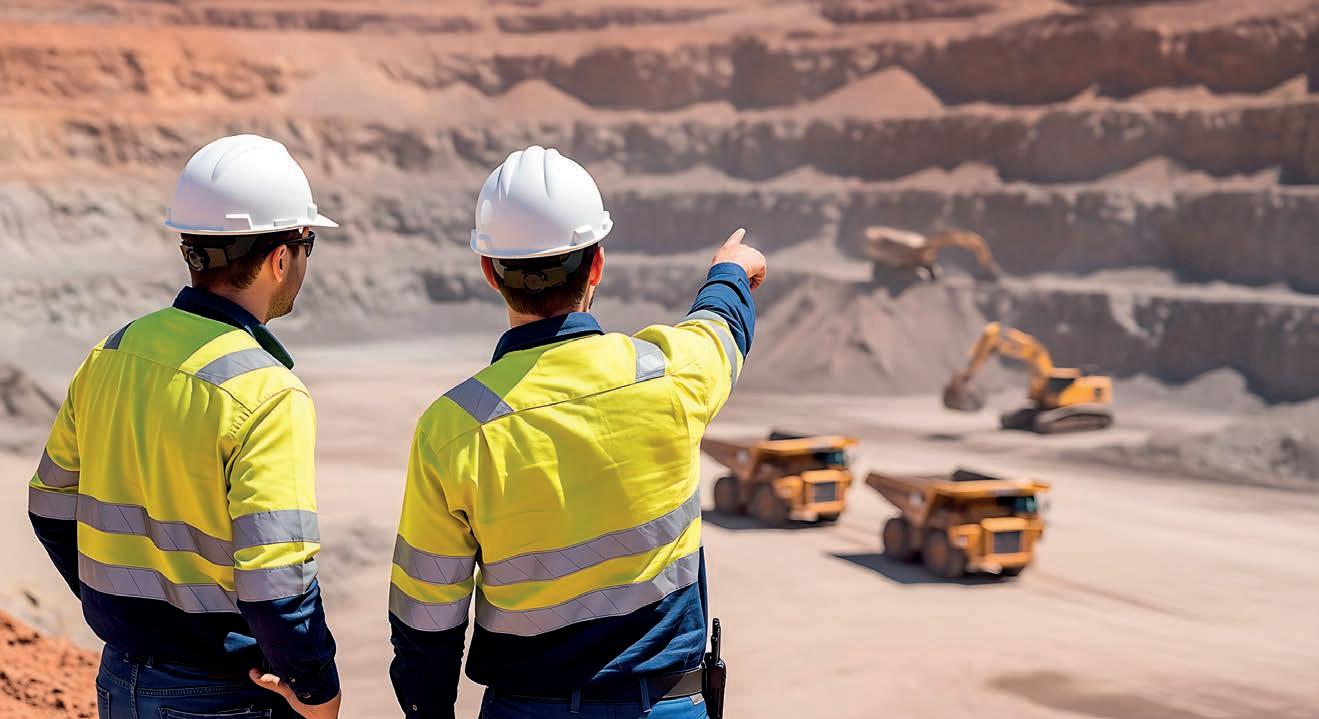
AND SPILLAGE AT CONVEYOR LOAD ZONES WERE ONCE SEEN AS A CHALLENGING ISSUE, BUT FLEXCO’S CONVEYOR SOLUTIONS SHOW THAT THIS IS NO LONGER THE CASE.
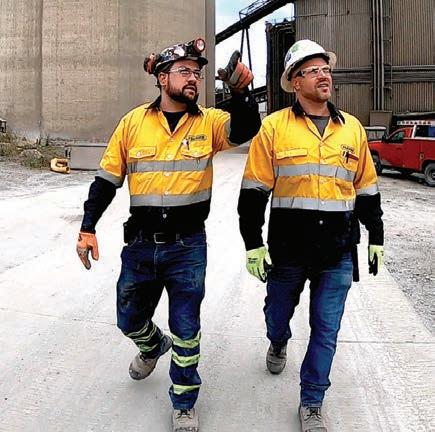
Having spent considerable time on sites across Australia and New Zealand, Flexco regional sales manager Sebastian Olguin has a wealth of experience in tackling dust and spillage issues on belt conveyor systems.
“They aren’t just operational nuisances; they are severe safety hazards,” he told Safe to Work.
The most common issues, he said, are respiratory risks from airborne particulate matter, and slip, trip and fall hazards caused by fugitive material accumulating on walkways. In addition, when dust settles on moving components, it can cause premature equipment failure, leading to unplanned downtime.
Olguin is equally focused on the physical dangers that follow when material isn’t properly contained.
“Manual clean-up around moving conveyors is a dangerous, labourintensive task on a site,” he said. “It exposes workers to pinch points, entanglement risks and heavy ergonomic strains from shovelling dense materials.”
This is the reality that Flexco, as a belt conveyor solution provider, is working to change. But instead of managing the consequences of poor containment, the company is striving to eliminate the conditions that create them in the first place.
“Today, with stricter compliance standards and a genuine industrywide commitment to worker safety, spillage is no longer acceptable,” Olguin said.
“Operators are looking for engineered solutions that stop the problem before it starts.”
That change in expectation has shaped how Flexco positions its offerings. Rather than responding to individual symptoms, the company has built its approach around what Olguin calls “holistic load zone solutions”.
“We don’t just offer a single product,” he said. “We provide integrated systems, like our impact beds, belt support bars and enclosed skirting systems, that work seamlessly
what’s actually happening at the load zone and build a solution from the ground up. This holistic approach can mitigate most issues, especially a persistent issue Olguin often encounters on-site: addressing the visible problem without fixing the underlying one.
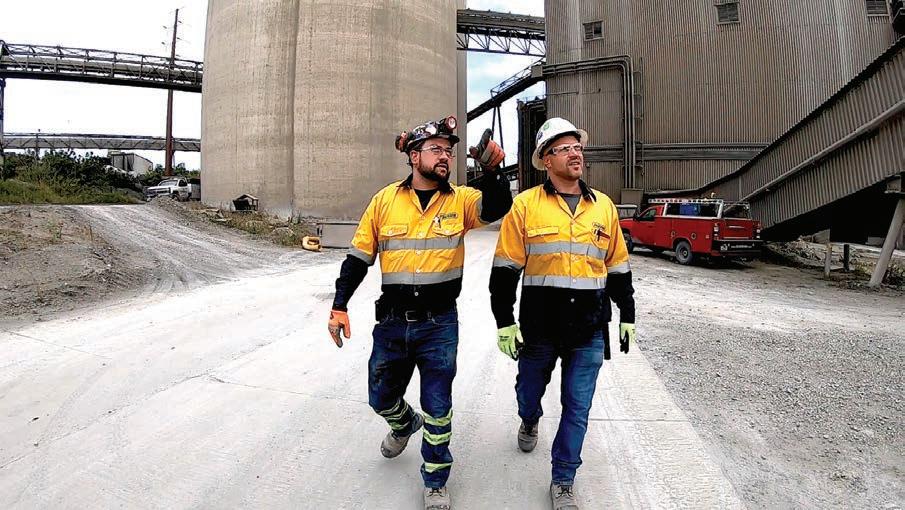
“The most common mistake I see is sites trying to treat the symptoms rather than the disease,” he said.

Olguin’s advice is to treat the load zone as a complete system.
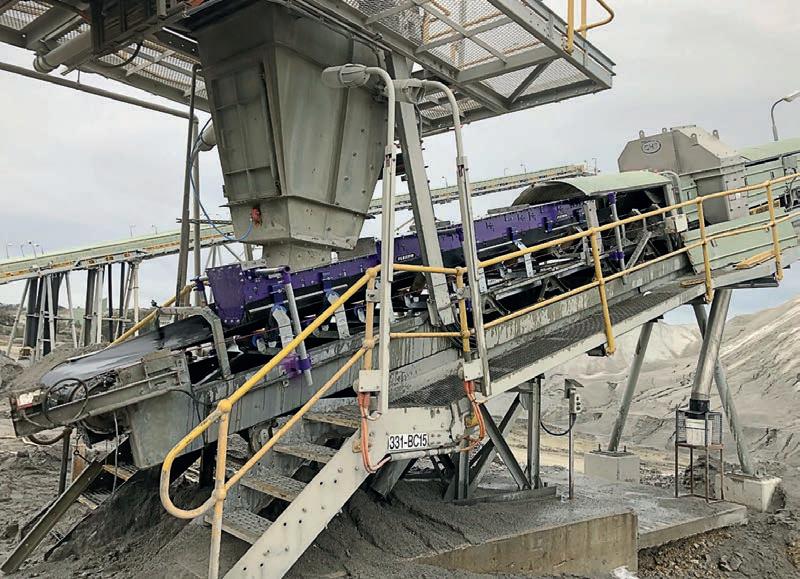
profile, and then apply your skirting,” Olguin said.
That sequence – stabilise, then seal – is the foundation of Flexco’s integrated approach to keep operations moving.
Flexco’s load zone solutions operate in three stages, each component complimenting the next.
When material drops onto the belt from the transfer chute, Flexco’s impact beds absorb the initial shock, protecting the belt from damage at the point of highest impact. As material moves forward, the belt support bars and slider beds take over, providing a flat, stable surface that eliminates the sag and gaps that form between traditional idlers.
“Because the belt is now fully supported and flat, our enclosed skirting system can do its job effectively,” Olguin said. “It is fully enclosed and features strategically placed dust curtains inside. These curtains slow down the air velocity, allowing the dust to settle back onto the belt rather than escaping into the surrounding environment.”
The outcome is particularly significant for fine, dusty quarry and aggregate materials, where airborne particulates are “a constant battle”.
“If you can keep the material on the belt and the dust enclosed, you immediately eliminate a whole cascade of downstream safety risks,” Olguin said.
When Flexco’s distributor was engaged to address serious dust and spillage issues at a local quarry operation, they turned to Flexco. The partnership that followed has since expanded well beyond the original brief.
The site in NSW had a complex enclosed skirting system installed at construction, but the design was working against the people using it. Every maintenance visit required unnecessary components to be removed just to access the parts needing attention, resulting in significant productivity losses. Compounding the disruption, the spare parts for the system were difficult to source, as the manufacturer was based in Europe, resulting in long lead times.
The system was also failing to contain spillage, with material accumulating on one side of the belt, causing it to mistrack and damaging the soft skirt and the conveyor structure.
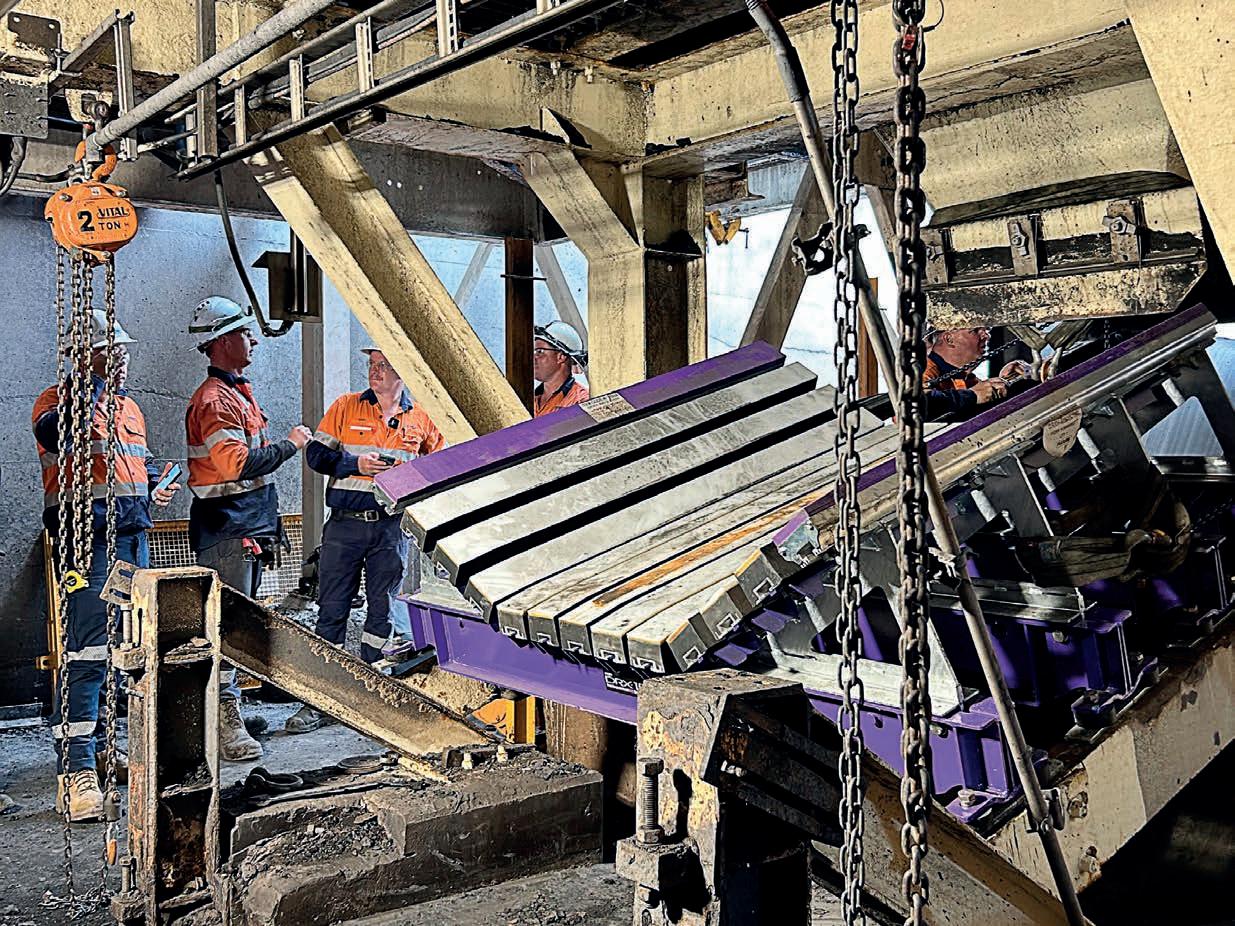
Coming to the site’s assistance, Flexco’s distributor oversaw the installation of the Flexco enclosed skirt system. Remarkably, the 13m system was installed in just two 12-hour shifts.
In addition to ease of installation, the simplicity of the design meant maintenance tasks that had previously required production shutdowns could now be completed without disrupting operations. Easily adjustable hardskirts also provided
For Olguin, the measure of a successful load zone solution ultimately centres around worker safety.
“By implementing a well-designed load zone solution, you drastically reduce the volume of fugitive material,” he said.
“Not only does this mean far less product wastage on the ground, but it also ensures clean-up goes from being a daily, hazardous chore to an infrequent, manageable task.
“It directly removes workers from the line of fire and allows them to focus on safer, more productive maintenance tasks.”
That outcome is what Flexco is working towards on every site.
“Effective load zone containment is about controlling the hazard at its source,” Olguin said. “You aren’t just protecting workers’ lungs; you are keeping them out of hazardous areas where manual shovelling and washdowns usually take place.”
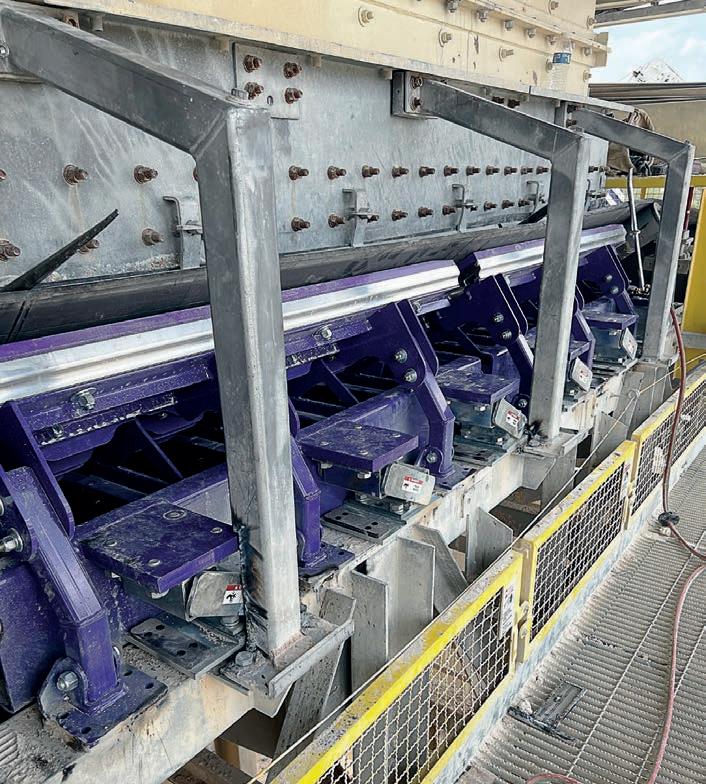
longer-wearing side panels, reducing the frequency of interventions entirely.
Complementing the product itself was the partnership that Flexco offered from the get-go.
Flexco engineers came to the site to measure and provide support, as not all systems were standard and required engineered modifications.
That on-the-ground involvement, from measuring up and identifying what wasn’t standard to engineering the solution accordingly, reflects the exact approach Olguin describes when he talks about tackling root causes rather than symptoms.
Flexco’s enclosed skirting system has significantly reduced spillage, making it safer and easier for maintenance crews.
After the first two systems were installed in 2018, an additional eight units have been installed around the site.
In Olguin’s words, if you contain the problem where it starts, the downstream risks take care of themselves. Flexco’s job is to make sure operators have the system to do exactly that.
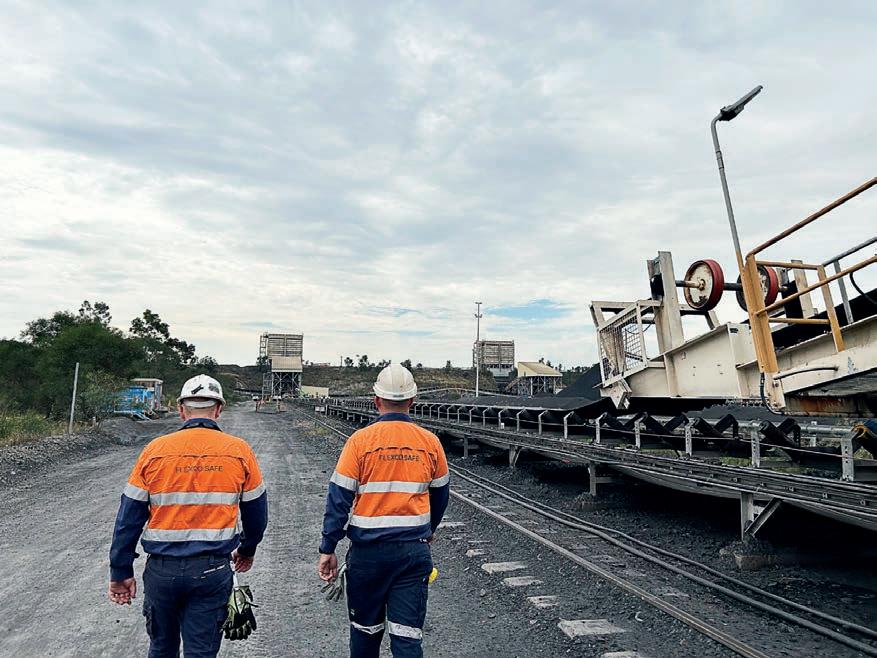
Part of Flexco’s o ering is ensuring its engineers are on site to provide necessary support.
VISIT OUR WEBSITE TO VIEW THE
Moving and storing material may sound like a relatively simple task, but seasoned operators know it’s where numerous incidents occur on mine sites. From the moment ore hits a truck bed all the way through to its final destination at the processing plant, every transfer point carries risk that needs to be actively managed.
While advancements have been made to progress safety initiatives across the process, handlingrelated injuries such as strains, sprains and crush injuries remain stubbornly common.
Data from Safe Work Australia shows that ‘body stressing’ – physical injuries such as musculoskeletal disorders, strains and sprains caused by repetitive, strenuous work, or awkward, sustained postures –is the leading cause of workers’ compensation claims nationally, accounting for 32.7 per cent of all serious claims.
It also accounts for a $28.6 billion cost to the economy every year.
With these numbers forming the backdrop of mine safety, mining operators are now required to ensure their hierarchy of controls is more than just a regulatory checkbox exercise; it is a key blueprint for creating safe working environments.
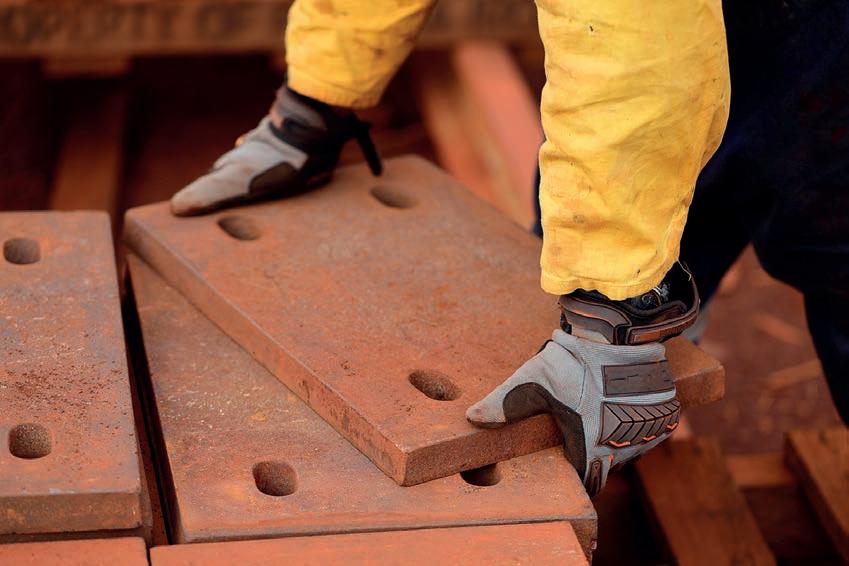
Establishing a hierarchy of controls is mandatory under Australia’s work health and safety laws.
Controls are ranked from most to least effective, and the expectation is to work down from the top, not up from the bottom.
At the top sits elimination, which focuses on removing the hazard entirely. In material handling terms, this means taking people out of hazardous interactions while moving materials wherever possible.
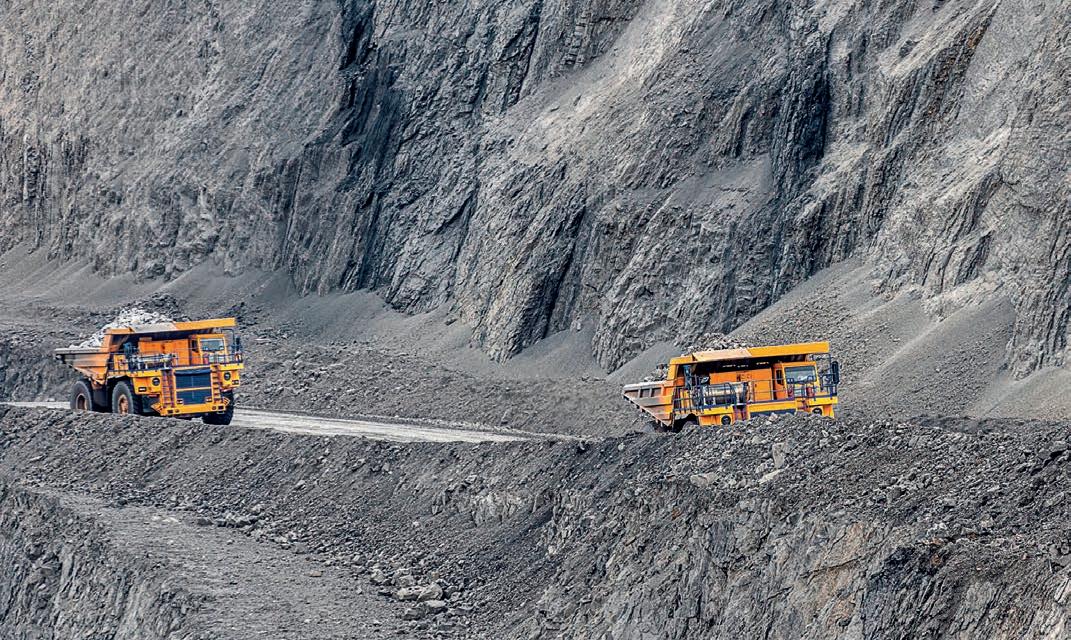
It’s the most effective control available, and it’s where the national mining sector has made its most significant advances, especially concerning autonomous haulage.
fatigue-related incidents and human errors that account for a significant proportion of heavy-vehicle incidents, with major miners backing the switch.
BHP’s South Flank mine in the Pilbara completed its autonomous transition in 2023, converting 41 Komatsu 930E trucks and 185 additional pieces of equipment. Rio Tinto reports its autonomous trucks operate around 1000 more hours per year than conventional fleets, and Fortescue has reported productivity improvements of around 30 per cent from its autonomous operations.
Safety and productivity, in this case, move in the same direction.
Applied rigorously and honestly, the hierarchy is a practical framework for material handling that helps decide where to invest, what to prioritise, and how to measure whether safety efforts are working.
According to GlobalData, as of July 2025, Australia had the world’s second-largest fleet of autonomous trucks, with 1024 units, up from 927 in 2024, reflecting steady growth in the country’s adoption of self-driving freight technology.
These trucks remove operators from cabs entirely, eliminating
Where elimination isn’t feasible, substitution offers the next best option, replacing a hazardous process or material with a less dangerous alternative.
This often means redesigning work so heavy or awkward lifts are replaced with mechanical alternatives. Equipment such as vacuum lifters,
manipulator arms, and powered trolleys substitute human effort for mechanical assistance, reducing both the frequency and severity of musculoskeletal strain.
When it comes to hazardous substances, substitution requires careful evaluation. Replacing a dangerous processing chemical with a less hazardous alternative can significantly reduce risk, but only if the replacement doesn’t introduce new hazards of its own. State regulations require operators to document these assessments and demonstrate that substitution decisions genuinely reduce overall risk rather than simply shifting it.
A notable example here is the work BHP has done across its Australian operations under a maintenance redesign program aimed at reducing musculoskeletal injuries. The miner has rolled out more than 400 safety initiatives, which stem from the operations services maintenance redesign team (MRDT), which was established in 2020 to address the physical strain faced by maintenance crews handling heavy equipment.
One of the most visible outcomes of the program has been the introduction of lightweight sling and shackle sets, developed after a maintenance worker was injured lifting a 30kg shackle overhead.
The incident prompted a redesign led by frontline teams, with the MRDT partnering with Queensland-based
produce equipment made from lightweight materials.
The new sling and shackle sets reduced the lifting requirement from 30kg to just 3kg, significantly lowering musculoskeletal risk.
It demonstrated how thoughtful design can help to safeguard workers and strengthen operational excellence
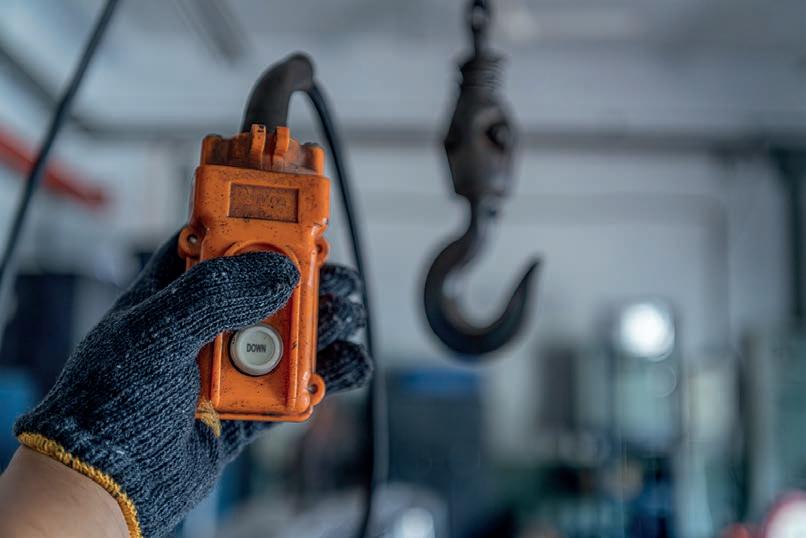


Engineering or isolation controls don’t eliminate the hazard but put a physical barrier between the hazard and the worker. They’re more effective than administrative controls in that they don’t rely on human behaviour to function.
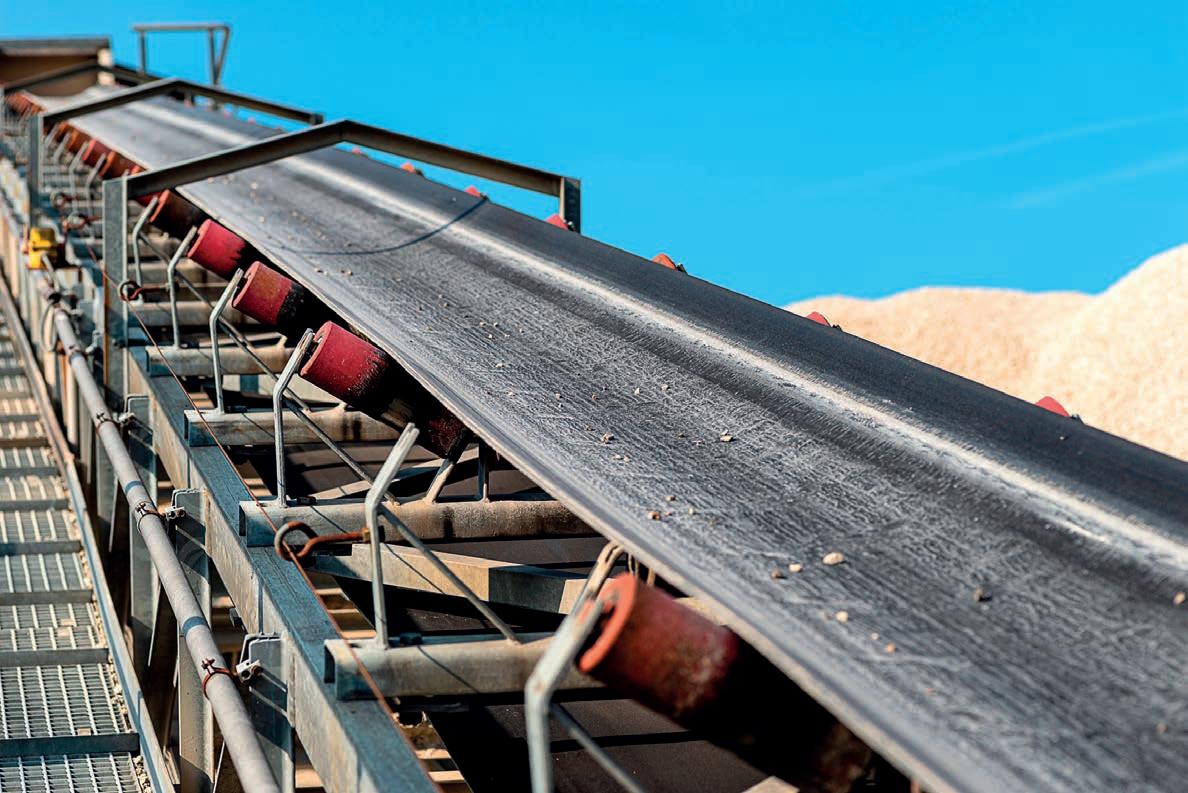
In conveyor systems, engineering controls include physical guarding over pinch points and moving components, pull-cord emergency stop systems along the full belt length, and pre-start warning systems that activate before the belt moves.
Ground support in underground operations relies on engineered controls almost entirely.
Rock bolts and mesh screens physically hold geological structures in place. Real-time monitoring systems like extensometers and
acoustic emission sensors can detect movement that precedes failure, allowing intervention before a hazard develops into an incident.
For manual handling tasks that can’t be eliminated or substituted, engineering design can still reduce risk substantially. Fixed-height work platforms, load-assist devices and purpose-built transfer equipment reduce the physical demands on workers while maintaining productivity.
Sitting fourth in the hierarchy is administrative controls, procedures, training, scheduling and supervision. Because they depend on consistent human behaviour to work, consideration must be made to ensure limitations are adequately assessed.
Australia’s state-based regulatory framework sets the floor for
Engineered guards and safety systems isolate hazards and protect workers from moving machinery.
administrative requirements, with site operators needed to implement safety management systems and have their hazard management plans reviewed annually. WorkSafe Victoria, for example, requires mine operators to review and revise safety controls at least every three years.
Well-designed administrative controls acknowledge human factors rather than work against them. Fatigue management programs that align shift patterns with physiological limits, pre-task risk assessments that prompt workers to think through hazards before starting, and clear communication protocols for traffic management all reduce incident risk by making safe behaviour easier.
Personal protective equipment (PPE) sits at the bottom of the hierarchy because it doesn’t control the hazard, but rather reduces the consequences if everything else fails. Hard hats, highvisibility vests, safety boots and gloves are non-negotiable on any mine site, but they should never be the primary response to a material-handling risk.
Over-reliance on PPE can mask the absence of higher-order controls.
For example, an operation that issues cut-resistant gloves to workers regularly handling sharp materials has addressed the symptom, not the problem.
The right question is why those workers are manually handling sharp materials in the first place and whether elimination, substitution or an engineering control could remove or reduce that exposure.
The hierarchy of controls isn’t a one-time exercise. Reiterating Australia’s workplace health and safety laws, operators have an ongoing duty to eliminate risks so far as is reasonably practicable, and to minimise them where elimination isn’t possible. That means regularly revisiting control decisions as technology, operating conditions and best practices evolve.
The hierarchy offers a clear direction – start at the top.
• A NEW FRONTIER IN CRANE SAFETY & WORKER PPE
• SAFEGAURD YOUR BUSINESS FROM RISK & LIABILITY




• AVOID COSTLY DISRUPTIONS, DOWNTIME AND INSURANCE INCREASES



• PRO-ACTIVE SAFETY CULTURE - SUPPORTING COMPLIANCE & GOV. REGS



• BOOSTS INDUSTRY & CLIENT CONFIDENCE




• SIMPLE, SCALABLE & COST EFFECTIVE














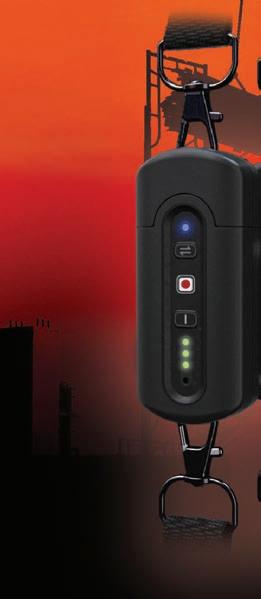
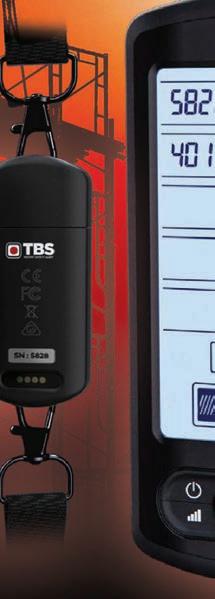









USING THE RIGHT KIND OF EQUIPMENT CAN MAKE ALL THE DIFFERENCE WHEN HANDLING MATERIAL ON A MINE SITE, AND WITH NIVEK INDUSTRIES’ MACHINES DOING THE HEAVY-LIFTING, ONE CAN NEVER GO WRONG.
When people think about safe handling practices, the conversation often begins with lifting techniques, weight limits and manual handling training. While these controls are important, they do not always address where the greatest risks sit in heavy industry.
In many maintenance environments, high-risk tasks involve awkward positioning, unstable loads, restricted access and the need for workers to guide components manually into place. These moments introduce strain, pinch points and exposure to crush zones, particularly
when work is performed at height or within confined areas.
This is where equipment design becomes critical.
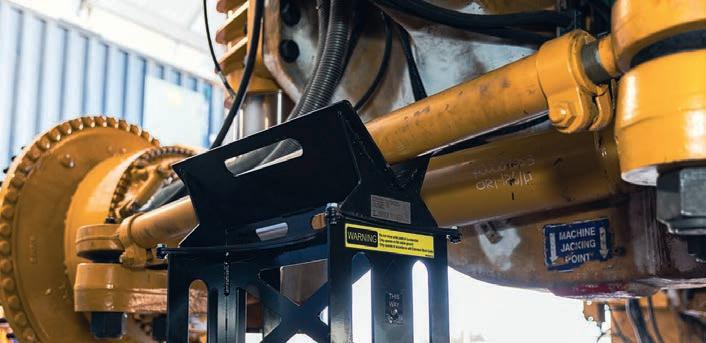
At Nivek Industries, the Lift Assist (LA) 40 and LA80 support arms are engineered to improve stability and control during maintenance activities. Rather than relying on workers to manually hold, balance or manoeuvre heavy components, the LA arms provide controlled elevation and consistent support throughout the task.
With actuator powered operation and engineered stability, the LA40 and LA80 allow components to be
raised, positioned and adjusted without placing workers directly beneath suspended loads or within crush zones. By supporting loads mechanically and maintaining alignment, these tools significantly reduce awkward postures and manual strain.
Safe handling, in this context, begins before the lift even occurs. It begins with selecting equipment that removes the need for hands-on stabilising and builds control into the process itself.
“Not everyone can safely lift 20 or 30kg, and they shouldn’t have to,” Nivek Industries WHS Officer
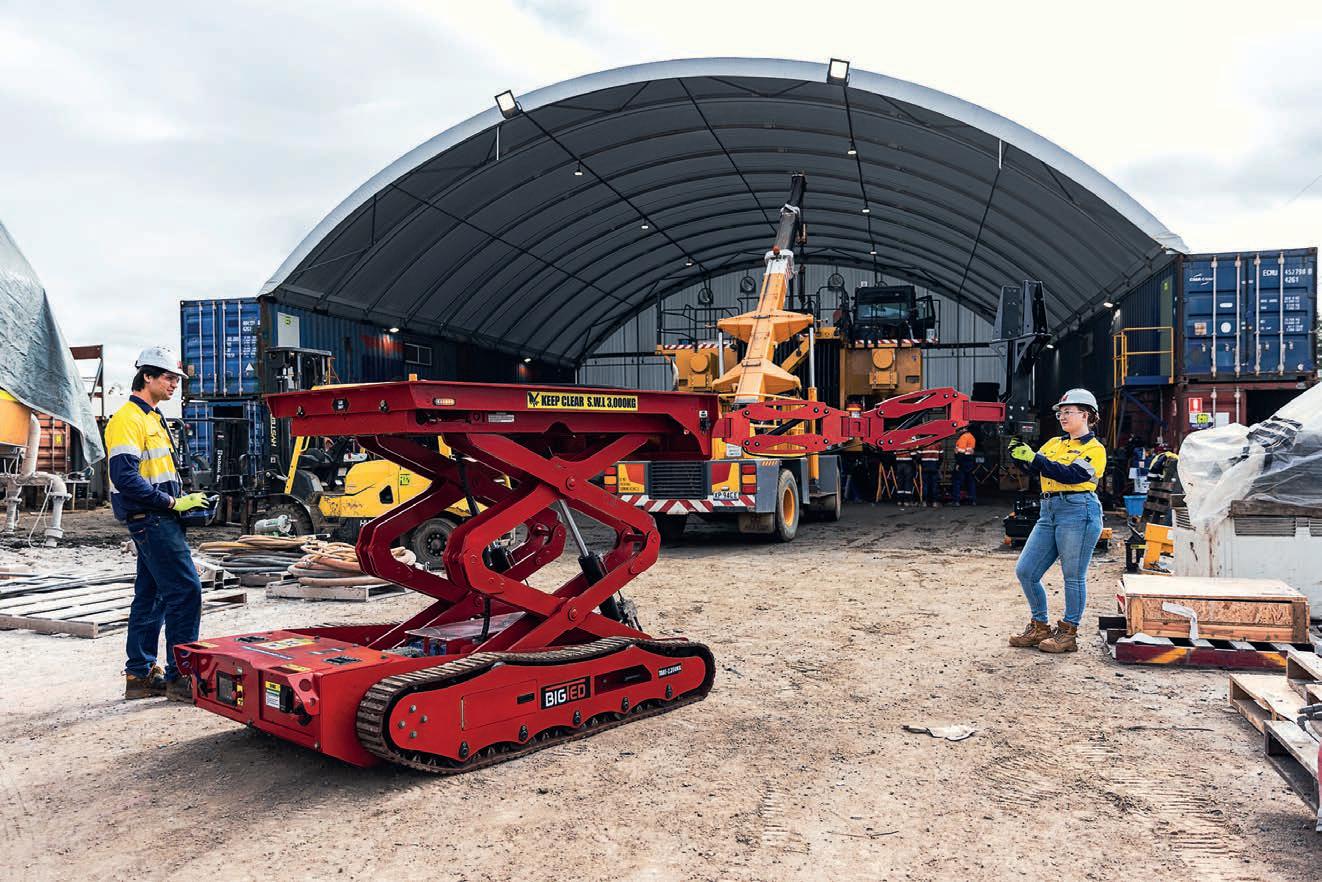
Nivek’s Big TED is designed specifically to manage heavy component removal and installation with maximum stability.
Rosey Holland said. “Our systems open material handling work up to a broader workforce by doing the heavy lifting and holding, while the operator focuses on precision.”
However, controlled elevation is only one part of managing highrisk tasks.
When servicing activities involve the removal and replacement of large, complex or heavily secured components, the level of risk increases. Precision, alignment and sustained load stability become essential. This is where safe handling must extend beyond elevation and into full task control.
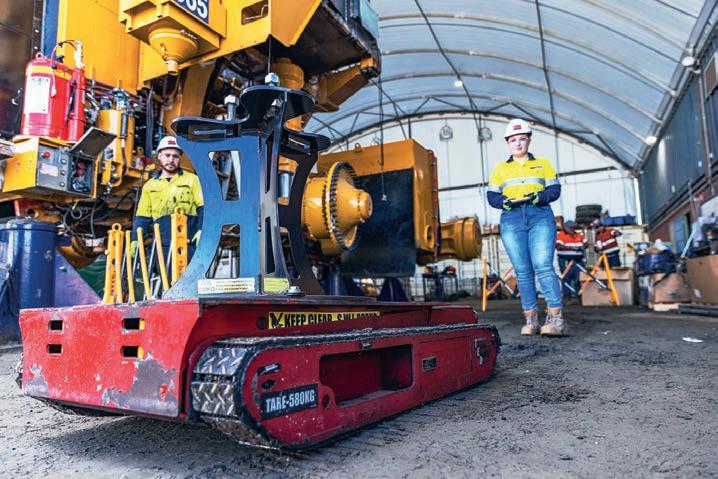
Nivek’s machines, such as the Tracked Elevating Device (TED) and Big TED are designed specifically to manage heavy component removal and installation with maximum stability. Rather than workers manually guiding loads into place, these systems support, align and stabilise components throughout the entire process.
When paired with purpose-built attachments, both machines maintain consistent load control during servicing tasks that would traditionally require multiple workers operating in close proximity to suspended or shifting components.
By reducing sudden load movement and eliminating “hold it there” moments, these machines remove workers from the line of fire.
In one servicing scenario, a task that previously required several workers to manually guide and stabilise a component during removal was undertaken using Big TED. The component remained stable and aligned throughout the operation, removing hands from hazardous zones and significantly reducing physical strain. The outcome was safer, more controlled and far more efficient, without increasing complexity.
Along with supporting the load, removing the operator from the immediate area enhances safety by reducing the risk of injury from falling debris that may be dislodged during the removal process.
tasks before work even begins.

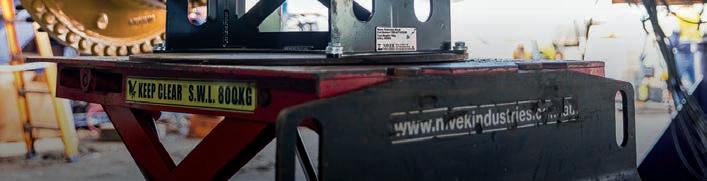
For Nivek, offering safe heavyduty solutions goes beyond business – it is based on a deep personal experience of just how dangerous these operations can be.
“If the job is unavoidable, the difference then is whether it’s done in a way that exposes people to unnecessary risk,” Nivek Industries general manager Derrick Cant said.
Effective safe handling practices are strongest when risks are addressed at the design stage. Nivek’s equipment, such as the LA40, LA80, TED and Big TED, demonstrates how engineering controls can eliminate
or significantly reduce exposure to high-risk manual handling tasks before work begins.
“Whether it’s hydraulic torque wrenches, super nuts or specialised plant maintenance, we can design attachments that cradle the load, control movement and eliminate manual handling,” Cant said.
Safe handling does not start when the load is lifted. It starts with how the task is undertaken, how control is maintained throughout the process, and how the right equipment supports workers to complete high-risk work safely and efficiently.
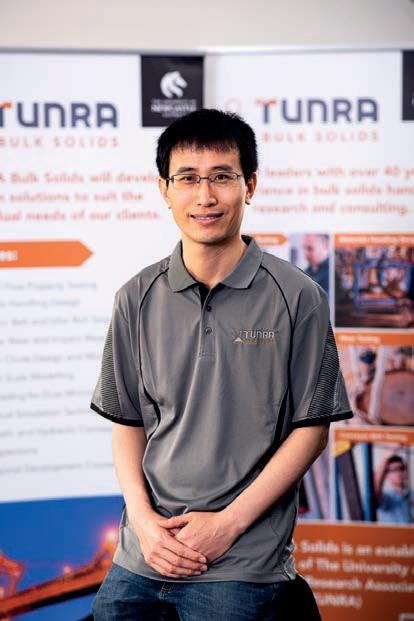
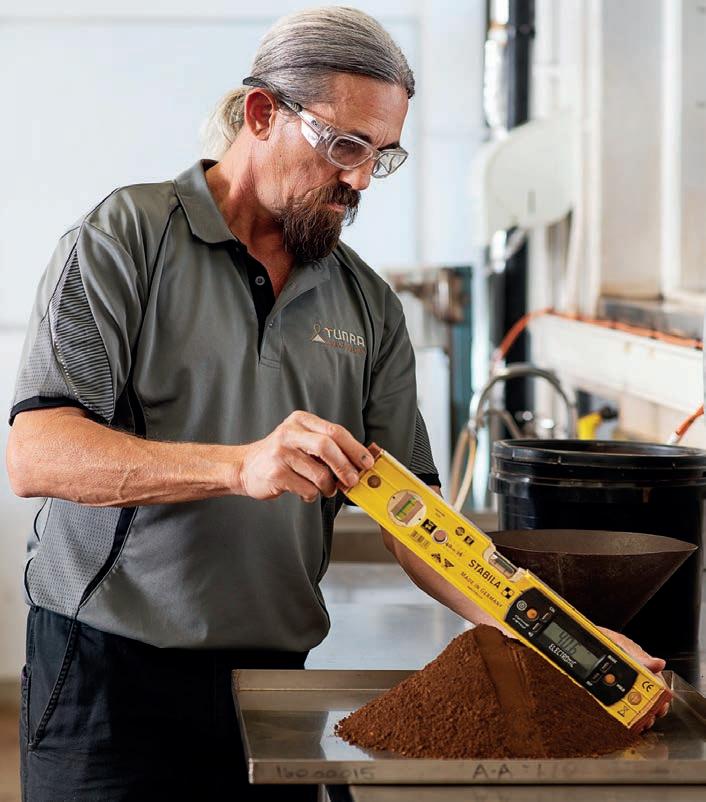
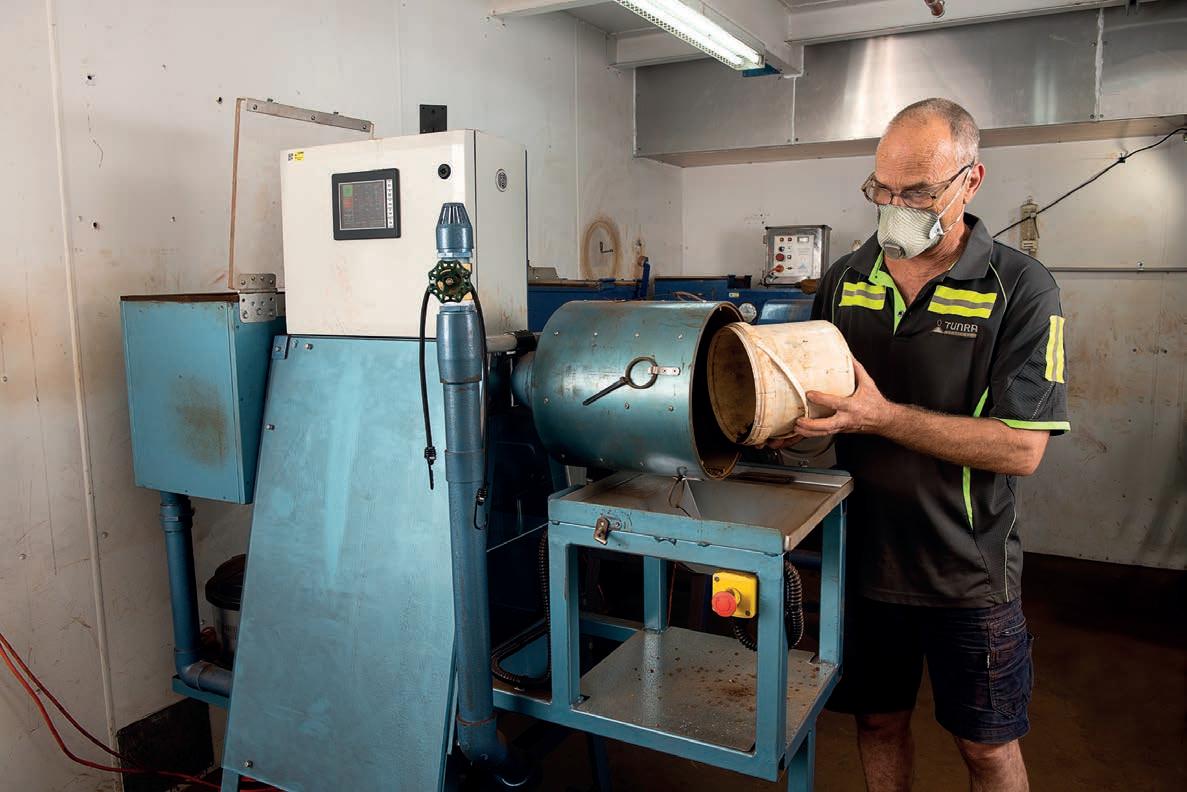
By TUNRA Bulk Solids, technical director, Bin Chen.
Every day, without much fanfare, millions of tonnes of raw material move through some of the most mechanically demanding environments on earth. Iron ore, coal, alumina, mineral concentrates – all of it flowing through silos, chutes, conveyors and stockpiles, shift after shift. These systems are built to be robust, engineered for throughput and designed for durability. But robust doesn’t mean risk-free.
Silo collapses, stockpile accidents, uncontrolled dust events, and
structural failures are things that still happen, and when they do, the consequences can be severe. What’s often surprising is that these incidents rarely come from obvious causes. They tend to emerge from the interaction between three things: how the material behaves, how the equipment is being operated, and how the structure responds to both.
Let’s look at a scenario where a silo doesn’t load the way it’s supposed to – here, a multi-outlet silo has two
or more discharge points, but only one is running. Maybe the other is under maintenance, or maybe there’s a downstream bottleneck. Whatever the reason, material isn’t flowing out.
Silos are designed assuming an idealised world: material goes in evenly, comes out evenly, and pressure around the wall stays roughly uniform. That uniform pressure creates what engineers call hoop tension – a balanced outward force the structure is built to handle. But when a single outlet runs, flow channels develop, material builds up unevenly, and pressure distribution around the wall stops being uniform. That’s eccentric loading, and it can change the structural equation entirely.
Instead of simple hoop tension, the silo is dealing with combined hoop stress and circumferential bending. For thin-walled steel silos, this can dramatically reduce resistance to buckling even if nothing looks different from the outside.
TUNRA Bulk Solids has modelled exactly this using Discrete Element Method (DEM) simulations – detailed computer models that track how particles move and how forces develop across a structure. In one coal silo study, operating a single outlet produced wall pressure differences of nearly 2-to-1 around the circumference.
The most pronounced variations appeared near the cylinder-to-hopper transition, which is historically the most failure-prone area.
Standards like AS 3774 and EN 1991-4 provide methods for estimating eccentric wall loads, but many older silos were designed under simplified assumptions that no longer reflect how they’re actually operated. But you often can’t tell what the case is, as the silo looks fine and the structural integrity doesn’t seem compromised.
However, modern DEM-derived load profiles combined with structural analysis allow engineers to identify specific high-risk zones, so operators can target interventions where they’ll actually make a difference.
If cylindrical silos present a complex loading picture, hoppers add another layer. Angled walls, converging flow and multiple discharge legs create genuinely three-dimensional stress states, highly sensitive to which
outlets are running. Eccentric hopper loads aren’t covered by AS 3774 or EN 1991-4. TUNRA modelling shows that running a single hopper leg independently can produce wall pressure variations of close to 3-to-1 around the circumference, pushing localised stresses well beyond what conventional design assumes.
Operational flexibility is genuinely useful, but the ability to run individual outlets independently comes with structural implications that need to be understood before it becomes standard practice.
Ask most people what dust management is about, and they’ll talk about environmental compliance. That’s real and important, but it’s only part of the story. Dust is also a safety and health issue, with fine airborne particles – PM₁₀ and PM₂.₅ – causing serious respiratory harm. And for certain materials, combustible dust introduces explosion risk in a different category altogether.
To curb risk, it’s important to understand that dust generation also follows physics. Falling material drags air with it, and if that airflow moves fast enough, fine particles get lifted. For many bulk commodities, particles in the 0.1 to 0.7 millimetre range can become airborne at velocities perfectly normal inside a transfer chute. If the physics can be understood, the dust can be managed – often without heavy reliance on water suppression or extraction systems.
A useful concept here is Dust Extinction Moisture, the minimum moisture content at which a material stops generating dust. Every material has its own characteristic curve, but Dust Extinction Moisture is a threshold, not a target. Operating exactly at that level leaves no margin, particularly in hot or windy conditions. The better approach is a moisture operating window that accounts for dust suppression, transport moisture limits and handling performance.
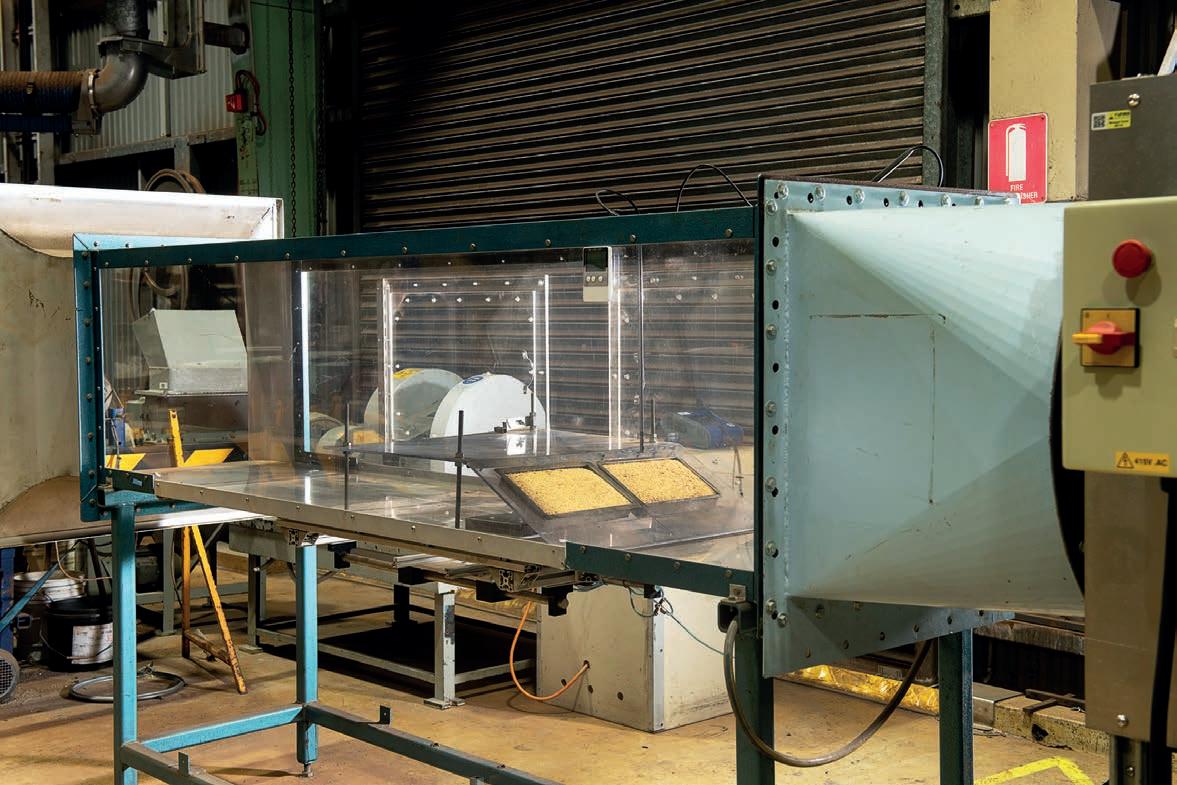
Wind tunnel testing bridges the gap between lab conditions and reality. By simulating sustained airflow across stockpile or wagon surfaces and measuring particulate release over time, operators can evaluate how suppression treatments actually perform, and plan operations around high-wind periods. For port operators facing intense environmental scrutiny, this supports risk-based decisions rather than reactive responses.
But the most effective dust strategy is designing systems that generate less dust in the first place. Reducing freefall height, controlling impact angles, matching belt speeds, and containing airflow through chutes are all passive measures that address the problem at the source. Using integrated DEM and Computational Fluid Dynamics modelling, transfer chutes can be optimised to reduce both fines
A gravity reclaim stockpile is an active geotechnical structure. Its stability depends on the internal shear strength of the material –its resistance to sliding along an internal failure plane. During reclaim, voids called ratholes can form beneath crusted surfaces that look solid from above. A dozer working near the crest may be sitting directly above one of those voids with no visible warning. This is how serious accidents happen because the hazard is completely concealed. Moisture complicates things further. A modest increase can improve cohesion, but if there’s too much, shear strength drops, and collapse risk rises. Therefore, overwatering to manage dust can make a stockpile more dangerous.
Any dust strategy needs to be evaluated through a geotechnical lens, not just an environmental one.
be calculated using material testing and failure analysis, but exclusion zones need to be physically marked and treated as hard boundaries. Many stockpile incidents happen because informal habits form under production pressure. Drone-based scanning to detect developing voids is an increasingly valuable tool for staying ahead of that risk.
It’s clear that Australia’s bulk handling industry operates at an enormous scale, and the consequences of safety failures can match it.
The tools to manage these risks – advanced modelling, material testing, digital monitoring – are now accessible and proven. The gap that remains is between what the research shows and what actually drives decisions on site.
Closing that gap is where the real safety gains are, and it’s where TUNRA Bulk Solids focuses its work.
































In modern production and intralogistics environments, the shift toward autonomous mobile robots (AMRs), automated guided vehicles (AGVs), and automated storage and retrieval systems (ASRS) has dramatically increased throughput, responsiveness, and operational efficiency. Yet this transformation also introduces a new layer of vulnerability: equipment safety and operational reliability depend heavily on pallet quality.
A damaged pallet, whether with cracked boards, missing blocks, protruding nails, or dimensional defects, can trigger failures across the entire automated ecosystem.
A faulty pallet may cause AGV derailment, ASRS crane jams, load instability, conveyor stops, robot misalignment, and even safety hazards for human personnel.
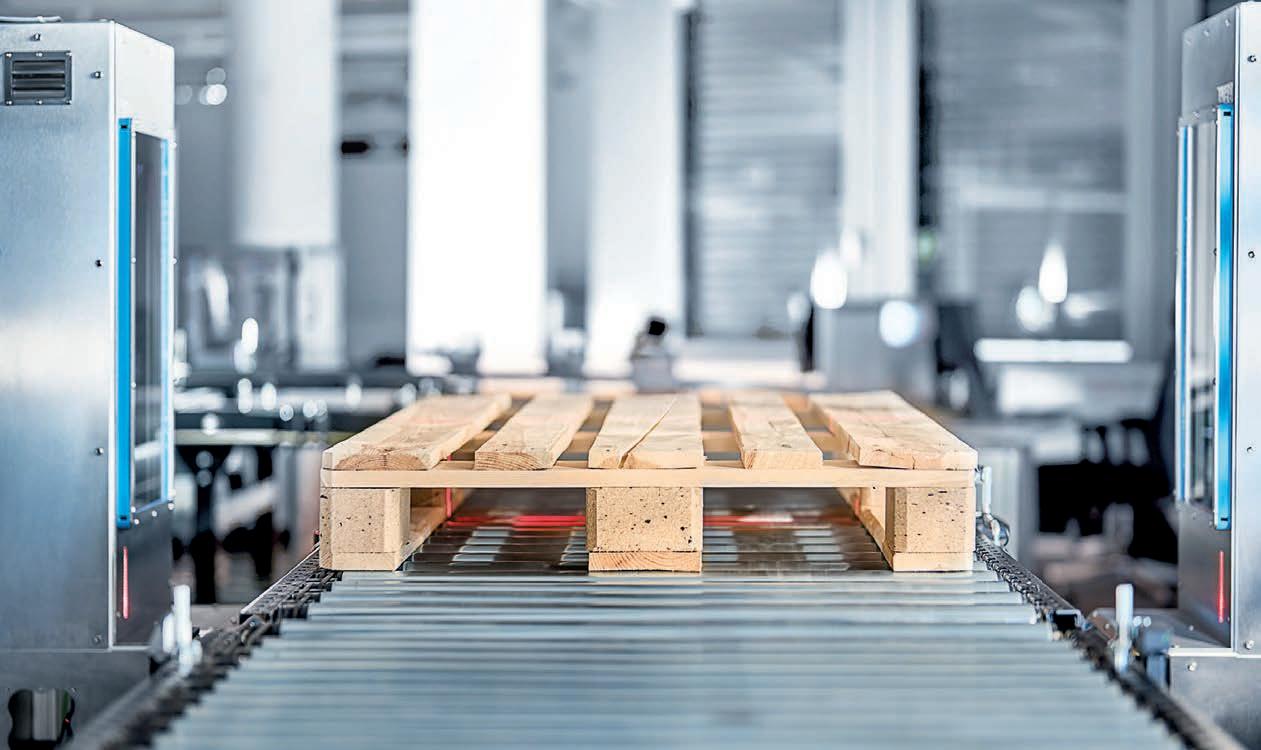
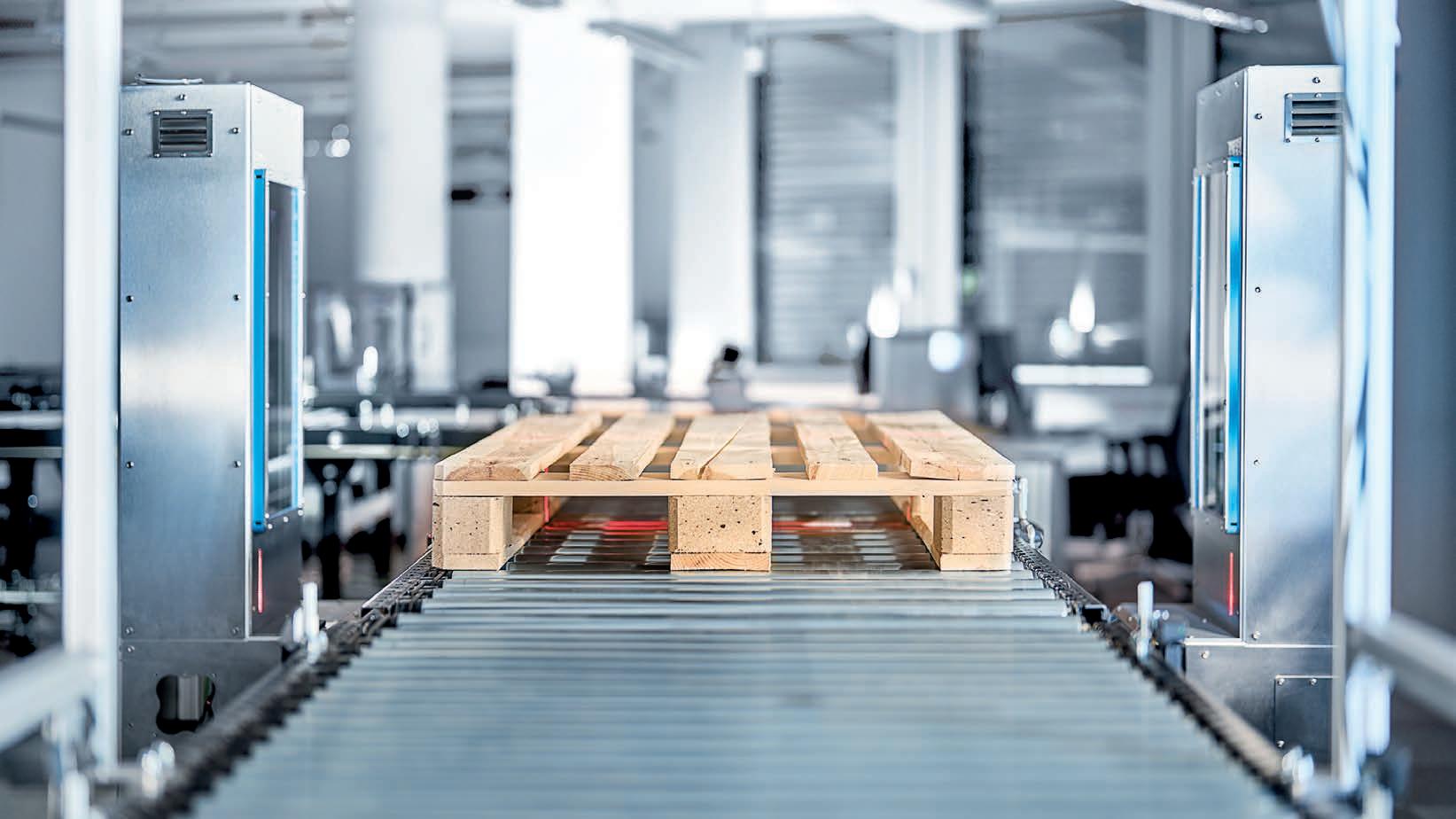
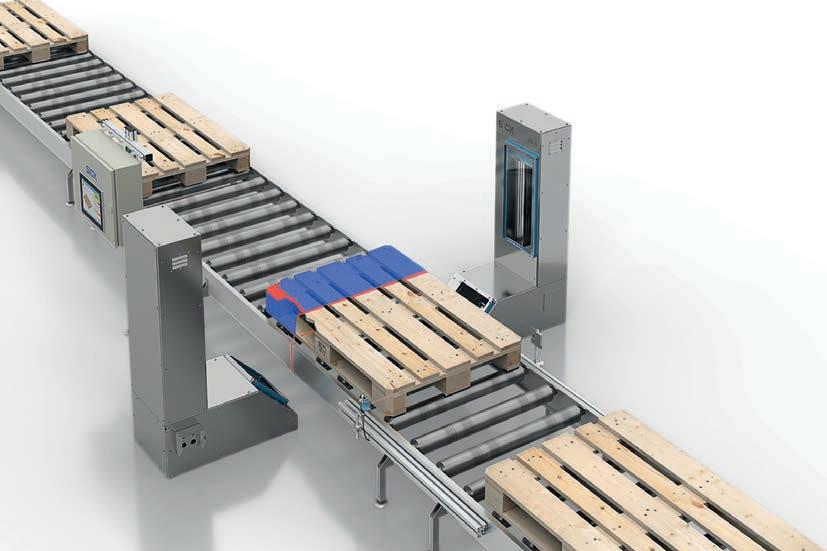
This is where SICK Pallet Inspection Systems (PAIS) have become indispensable. Using advanced 3D vision, AI tools, PAIS deliver reliable, non-contact inspection of pallets before they ever enter automated material-handling flows
Unplanned downtime is among the most expensive disruptions in automated logistics. AGVs and AMRs rely on predictable loads and stable pallet integrity for smooth navigation, lifting, and transfer motions. ASRS cranes rely on consistently shaped pallets to avoid skewing, falling loads, or racking jams.
PAIS mitigates these risks by identifying defects such as missing or broken boards, twisted or misaligned blocks, protruding nails,
The SICK Pallet Inspection Systems ensure that faulty pallets are detected before becoming a risk.

A FAULTY PALLET IS A CRITICAL SAFETY HAZARD ON SITES. SICK IS ENSURING DAMAGED STRUCTURES ARE TAKEN CARE OF BEFORE THEY BECOME A RISK.
cracks or material loss visible in 3D scans, and dimensional deviations beyond tolerance.
PAIS identifies missing blocks, rotated blocks of more than five degrees, cracks of more than or equal to 3 × 3 mm, and missing wood areas of larger than or around 1 cm sq. By automatically rejecting defective pallets before they enter the automated flow, PAIS eliminates a major root cause of system stoppages, ensuring AGVs, AMRs, and ASRS equipment can operate continuously without manual intervention.
AMRs feature sensitive navigation sensors, forks, rollers, belts, and lifting mechanisms that can be damaged by poor- quality pallets. ASRS cranes and shuttle systems face even higher exposure, as a single defective pallet can cause fork or tine bending, shuttle misalignment, rack collisions,
conveyor impact events, and safety gate lockouts.
PAIS uses heavy-duty stainless-steel housings, impact-resistant glass, Class 2M line lasers, and high-resolution 3D cameras (0.6 mm/pixel) designed to detect the smallest defect that could compromise equipment safety.
This mechanical and optical precision allows PAIS to act as a protective gate, shielding automated equipment from the downstream consequences of poor pallet quality.
AMRs and AGVs are optimised for transporting stable loads.
A structurally compromised pallet can shift or collapse during movement – especially during acceleration, deceleration, or when using multi-level racking.
PAIS mitigates these hazards through complete geometric profiling. PAIS creates a full 3D model of the pallet (top, sides, bottom, internal blocks), enabling accurate detection of uneven boards, warped decks, crushed or displaced blocks, and pallet tilt or deformation. This ensures that only structurally sound pallets proceed into AMR/AGV workflows and ASRS storage locations, which
While automation reduces human exposure to physical hazards, it does not eliminate them.
Workers still interact with pallets at receiving zones, stretch-wrapping stations, or rework areas.
Pallet defects such as protruding nails, broken boards, and splinters remain a major source of injuries.
PAIS systems detect protrusions and foreign objects, including nails more than 5 mm and automatically flag pallets requiring manual repair.
This leads to fewer handling injuries, lower risk of load collapse, and safer hybrid (man and machine) environments
By integrating pallet health checks into automated workflows, organisations strengthen their overall workplace safety culture.
As production logistics move toward Industry 4.0, standardising the condition of load carriers becomes essential.
Pallet variability is one of the largest contributors to inconsistent automation performance.
PAIS delivers automation-ready consistency through scalable defect threshold settings, automated pass/ fail classification, real-time status indicators, statistical logging for quality control, and integration with PLCs and WMS systems.
The PAIS platform is a game -changer for modern production logistics.
Standardisation benefits AGV/ AMR fleet coordination, as well as synchronised logistics across receiving, production supply, and outbound operations.
The return on investment case for PAIS in AGV/AMR and ASRS environments is immediate and tangible with lower equipment repair and maintenance costs, fewer production interruptions, reduction in load-related product damage, improved pallet pool quality over time, reduced labor required for quality checks and fewer emergency ASRS interventions – all added benefits.
Given the predictable inspection accuracy verified across 1000-pallet test cycles, PAIS provides a quantifiable economic buffer against unpredictable pallet-related disruptions.
As AGVs, AMRs, and ASRS continue to redefine production logistics, the variable shaping their success is the reliability of the pallets that move through these systems. Pallet Inspection Systems transform pallet quality from a manual gamble into a controlled, automated safeguard. By ensuring only structurally sound, dimensionally compliant, and damage-free pallets enter highly automated flows, PAIS first and foremost protects workers, safeguards automation assets, improves throughput, reduces downtime, and enhances overall operational safety.
Basically, PAIS, when employed well, can act as a core safety system for the future of autonomous intralogistics.
“The PAIS platform is a game changer for modern production logistics,” SICK Sensor Intelligence senior director-focus sales (APAC), Praveen Kannan said.
“By giving AGVs, AMRs and ASRS systems a reliable and real time understanding of pallet quality and compliance, we eliminate avoidable stoppages, protect equipment, and maintain continuous flow. The result is safer operations, higher throughput and measurable cost savings across the entire intralogistics chain.”
Perhaps the most important statistic in mining safety is the number of incidents that never occurred. From the collision that didn’t happen because there was no driver in the cab and the fatigue-related derailment that never took place because there was no crew on board to the maintenance worker who didn’t get called out to a live conveyor because a computer caught the fault first.
That invisible ledger is what the world’s biggest miners are building toward. And the entries in that ledger are increasingly piling up.
The likes of Rio Tinto, BHP, and Fortescue have each spent the better part of a decade pushing automation deep into their material handling operations, and the primary justification, more than productivity or cost reduction, has been safety.
Rio Tinto’s autonomous haulage program is among the longestrunning at scale, with approximately 90 per cent of the company’s haul truck fleet across its Pilbara sites now autonomous.
These trucks, which use predefined GPS courses to automatically navigate haul roads and intersections, allow Rio Tinto to “move more material, safely and more efficiently, increasing productivity”. This removes human operators from the cab and, more importantly, from the pit. Haul roads, where the majority of serious mining injuries have historically occurred, become substantially less dangerous when the trucks driving them are no longer driven by people.
It has also yielded significant financial gains.
“In 2018, each truck was estimated to have operated on average 700
hours more than conventional haul trucks, with 15 per cent lower costs, delivering clear productivity benefits,” the company said.
Rio extended that logic to its rail network with AutoHaul, the world’s first long-distance autonomous heavyhaul rail system.
The miner’s network includes about 200 locomotives on more than 1700km of track in the Pilbara. Ore trains now run from mine to port across hundreds of kilometres of Pilbara track with no driver on board, monitored remotely from Perth.
The system eliminates the fatigue risk associated with longhaul rail shifts, a factor implicated in a number of incidents across the industry over the years.
The Big Australian has followed a similar trajectory to Rio Tinto, with results that are difficult to argue with. BHP converted its entire fleet of 33 haul trucks and five drilling rigs to full autonomy at its Spence copper operation in Chile, with all those assets now operating without human operators on board.
Given its role overseeing mining operations across Chile, the National Geology and Mining Service sees BHP’s move to full autonomy at Spence as a benchmark for safety and operational excellence in the sector.
“This type of project has global relevance, since it uses state-of-the-art technologies that ensure operational continuity and, most importantly, the safety of workers, reducing exposure to accidents,” National Geology and Mining Service national deputy director Andrés León said. “Therefore, it is a very important program and not only for Spence, but also for the entire mining sector.”
South Flank, BHP’s iron ore operation in Western Australia, autonomous haulage has been built into the mine’s design from the outset rather than retrofitted later.
This has delivered far-reaching safety, production and equipment utilisation and reliability benefits.
The company has also extended automation to its port infrastructure. Automated shiploaders at Port Hedland in the Pilbara now load bulk carriers with reduced manual intervention, cutting exposure in an environment where the combination of heavy machinery, bulk materials and marine operations has always presented complex safety challenges.
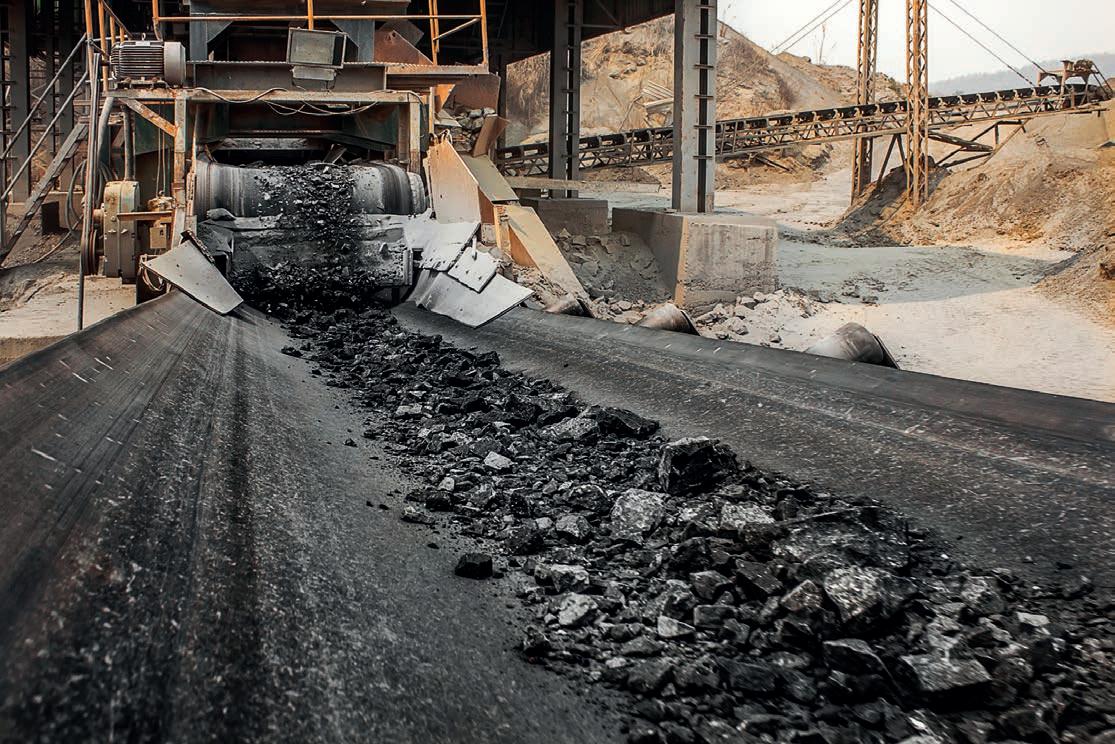
Looking inland, BHP is running artificial intelligence (AI) and computer-vision systems across its conveyor belts, crushers and rail loading equipment, and detecting spillage before they cause unplanned shutdowns that bring maintenance crews into contact with live plant.
“This helps keep material moving safely and consistently, while reducing the need for teams to work in higher-risk situations,” BHP said.
Fortescue has built its autonomous operations around a centralised command structure it calls the Hive, a remote operations centre in Perth that integrates control of haul trucks, train movements and technical services across the Pilbara from a single location.
The Hive remotely oversees an extensive amount of equipment across Fortescue’s network, including more than 200 autonomous haul trucks now in the field, which is also one of the largest deployments of driverless haulage anywhere in the world.
The company is now working with Liebherr to develop the next generation of autonomous haulage systems, with zero-emission capability built in from the ground up, a recognition that the industry’s safety and decarbonisation agendas are increasingly converging.
Through a separate partnership with Scania, Fortescue is also exploring autonomous road train technology, targeting the heavy transport corridors that connect mine infrastructure and carry some of the highest traffic volumes on site.
Increased production demands have resulted in faster, wider, more heavily loaded conveyor belts and increased carry-back.
Carry-back leads to excessive wear on conveyor components, buildup on return idlers, misalignment of the belt, adverse effects on the conveyor operation and plant efficiency, and increased OH&S risks.
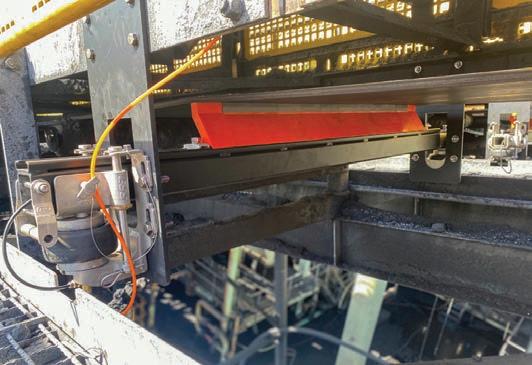
The ESS IPS Cleaners deliver superior belt cleaning performance and unparalleled serviceability for a variety of applications.
The IPS is an upgraded version of the ESS InLine 20-Ten Premium Cleaner & the original ESS InLine cleaner, which set the standard for cleaning performance, safety, and ease of service.
Design features of the new IPS Secondary Cleaner include;
•Improved encapsulated slide design – reduces jamming for easier service
•Stainless steel manufacture – to resist product wear and suitable for corrosive environments
•New tensioning bracket design – increases the cleaners sensitivity to belt movement to maintain optimal cleaning pressure and angle
•New Air and Spring Tensioner design – interchangeable to offer flexibility as the requirements of the client evolve
•Same footprint as the 20Ten Premium InLine cleaner - As a client’s 20Ten Premium cleaner nears the end of its service life, it can be replaced with a new IPS Cleaner through a retrofit
Scan the QR Code for more information about ESS IPS Secondary Belt Cleaners!



Damian Johnson wants users to trust what he develops. And given he has developed a product that’s never been recalled in the two decades it’s been in circulation, it’s not an unreasonable request.
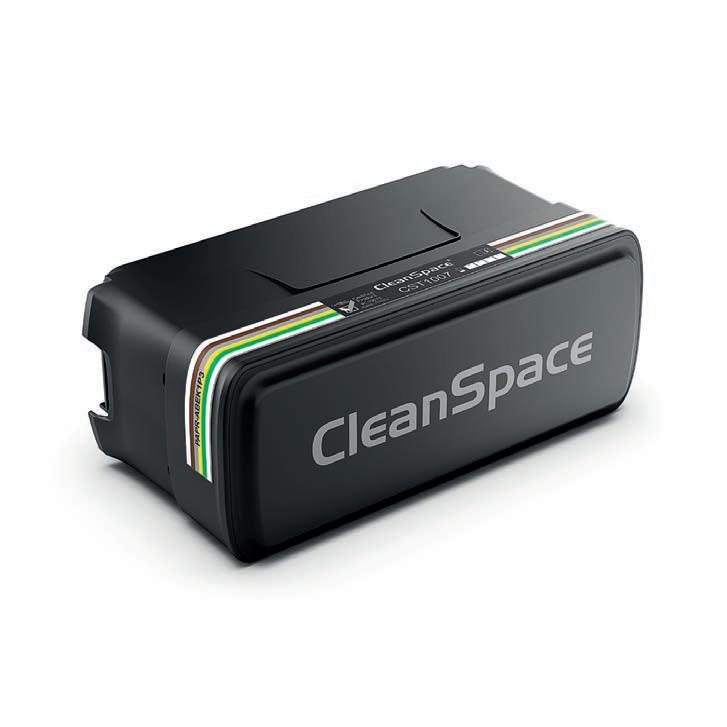
As the senior design engineer for CleanSpace Technology, a specialist in respiratory protection, Johnson possesses an unbridled passion for manufacturing filters that stand up to airborne hazards, every time.
If his singular determination isn’t reason alone to have faith in Johnson and CleanSpace, he believes the product can single-handedly clear all doubts.
“Our filters stand the test of time and use,” Johnson told Safe to Work “And that’s possible because we have an extremely unique level of rigorous manufacturing process control.”
This specific level of control Johnson refers to is unique to CleanSpace and the Australian market, with the company harnessing in-house capabilities to develop its filters from scratch.
“Because we don’t outsource anything, we understand all the finer details,” Johnson said. “We basically make them and also check them extensively, so we actually know everything about our filters right from conception up until they’ve served their purpose.”
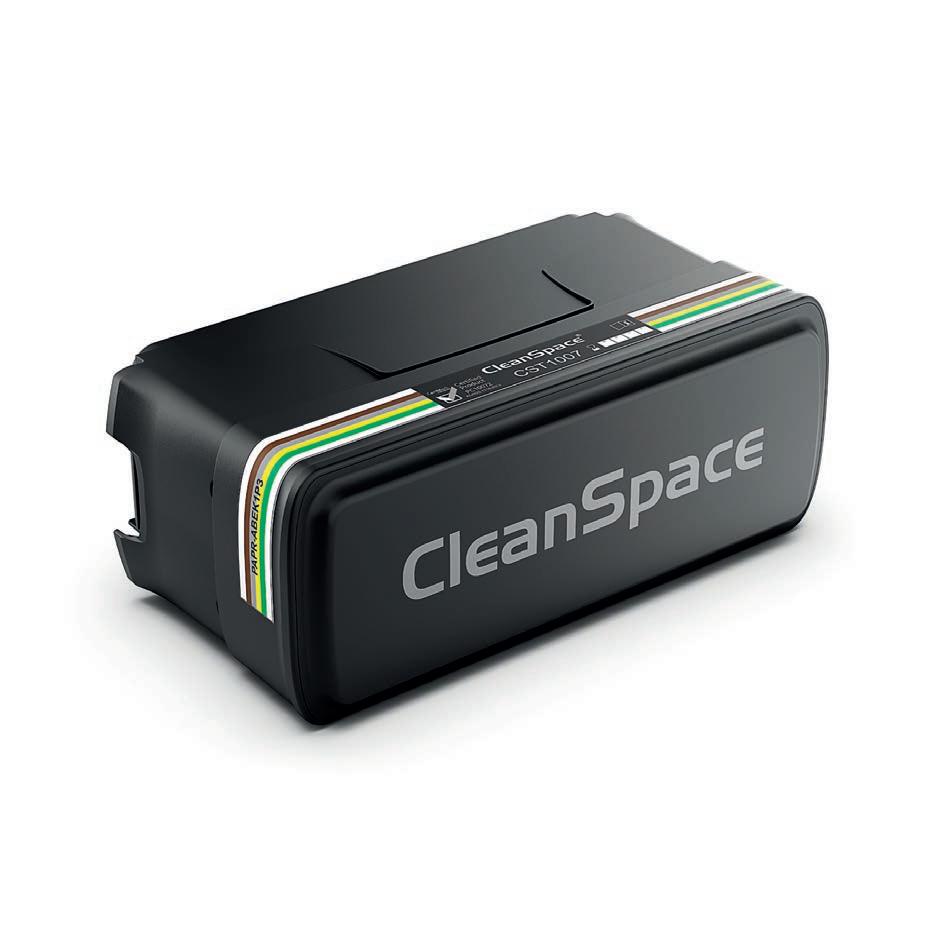
CleanSpace’s filters are developed in-house using rigorous manufacturing process control.
But, according to Johnson’s CleanSpace colleague Jon Imms, designing a high-quality filter is only part of the equation – selecting the right one for the job is just as critical.
As the company’s global technical product director, Imms has a clear understanding of the complex tasks workers and safety managers are often faced with when determining which respiratory filter is appropriate
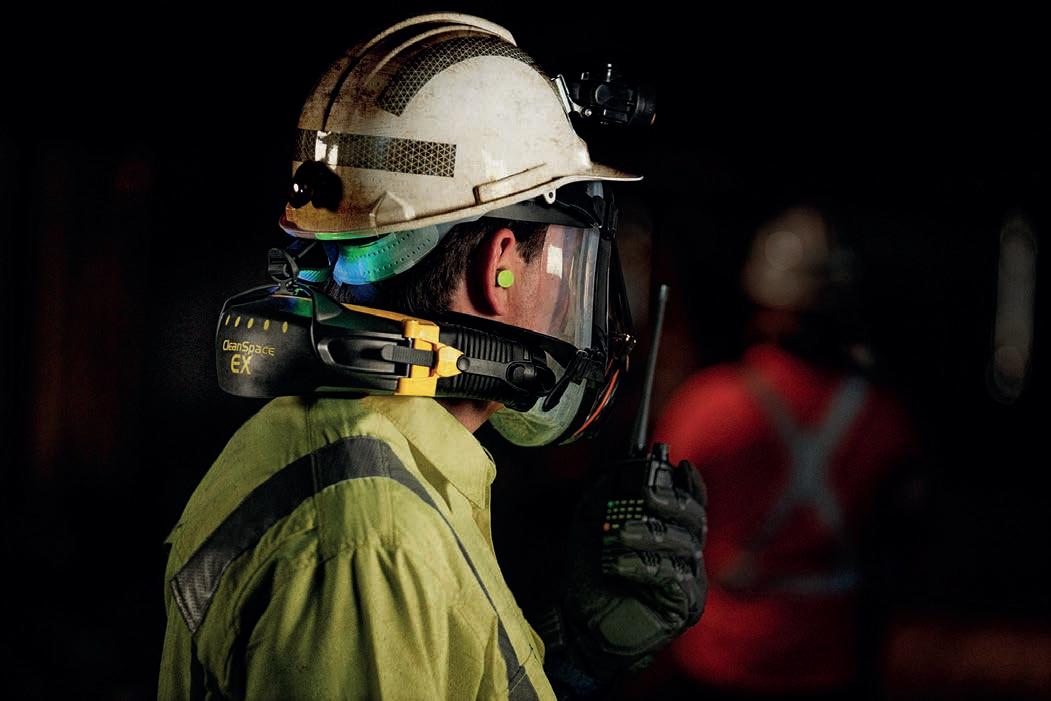
Industrial environments can expose workers to a range of airborne contaminants, from fine dust and particulates to hazardous fumes and vapours, and without a clear understanding of those risks, choosing the correct respiratory protection becomes significantly more difficult.
Effective respiratory protection depends on understanding the specific contaminants present in workplaces such as mine sites and matching them with the appropriate
“Simply wearing a respirator is not enough if the filter itself is not suited to the hazard,” Imms told Safe to Work
“If you don’t have the right filter, you might as well not wear your respirator.”
To help remove some of that uncertainty, CleanSpace provides a filter selection service that works directly with companies to assess
environmental or chemical hazards. The process typically begins with a review of safety documentation, including safety data sheets (SDS) and other information that organisations already maintain as part of their workplace safety procedures.
This information allows CleanSpace specialists to analyse the types of airborne hazards that may be present and determine which filter configuration will provide the most appropriate protection.
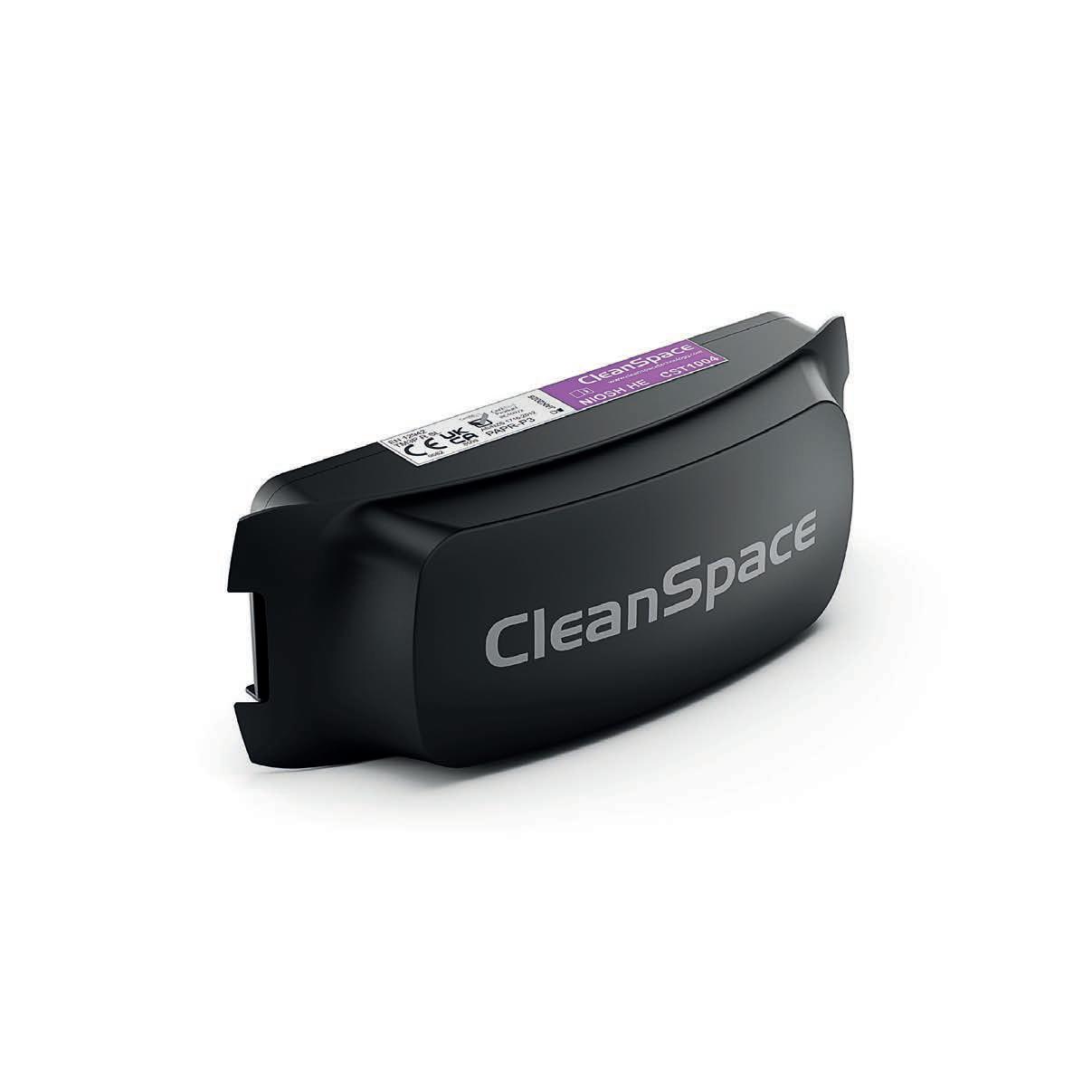
“It can sound complicated to people who have never had to think about filters, but we understand it really well,” Imms said.
“Ensuring that the correct filter is selected is an important aspect of any respiratory program, and we can guide people towards making the right decision.”
This type of guidance can be particularly important in industries such as mining, where exposure risks vary depending on the task being performed. On some mines, multiple hazards may exist across different areas of a site, meaning the filtration requirements can change depending on where workers are operating.
Providing clear guidance on filter selection helps safety managers make more informed decisions and reduces the risk of workers using equipment
that may not provide adequate protection for the risks they face.
CleanSpace’s end-to-end filter expertise also extends to broader fleet monitoring and management capabilities, with its digital platform, the SMART app, giving organisations greater visibility over how respiratory protection equipment is used in the field. The app provides an intuitive dashboard for monitoring filter condition, battery charge and protection levels, while also allowing managers to track gas and vapour filter life in real-time.
Taking that a step further, CleanSpace’s Insights reporting tool uses data collected from the SMART app to give operators a detailed, comprehensive report tracking those metrics. The platform provides safety managers with access to operational data that can help inform maintenance schedules, filter replacement timelines and broader compliance with respiratory protection programs.
This kind of insight allows organisations to better understand how their equipment is performing in real working conditions. Access to usage data can also help identify patterns in respirator use, filter lifespans and replacement frequency, highlighting areas where additional training or adjustments may be required.
CleanSpace individually tests every single filter, ensuring high-quality standards.
“Safety officers can see how long filters are lasting across their fleet and whether workers are using the correct filters for the task,” Imms said. “If two workers are doing the same job but one filter lasts much longer, it prompts the question: why?”
Those are questions that most operators would otherwise never think of answering, largely because they wouldn’t know to ask them. However, for all the queries that may arise, sites have never questioned the quality of a CleanSpace filter.
The reason is what sets the company further apart from the rest.
“As far as we are aware, we’re the only respiratory manufacturer that individually tests every single filter,” Johnson said.
“More than that, it gives us absolute traceability and control over each filter.”
For customers, this amounts to complete peace of mind.
As for the team of Johnson and Imms, both understand that the work they’ve put in on the CleanSpace range of filters is extremely crucial.
“Most people think the respirator is the heart of the operation, but it’s actually just a carrier for the filter. The filter is the critical piece,” Imms said.
“We understand that better than anybody.”
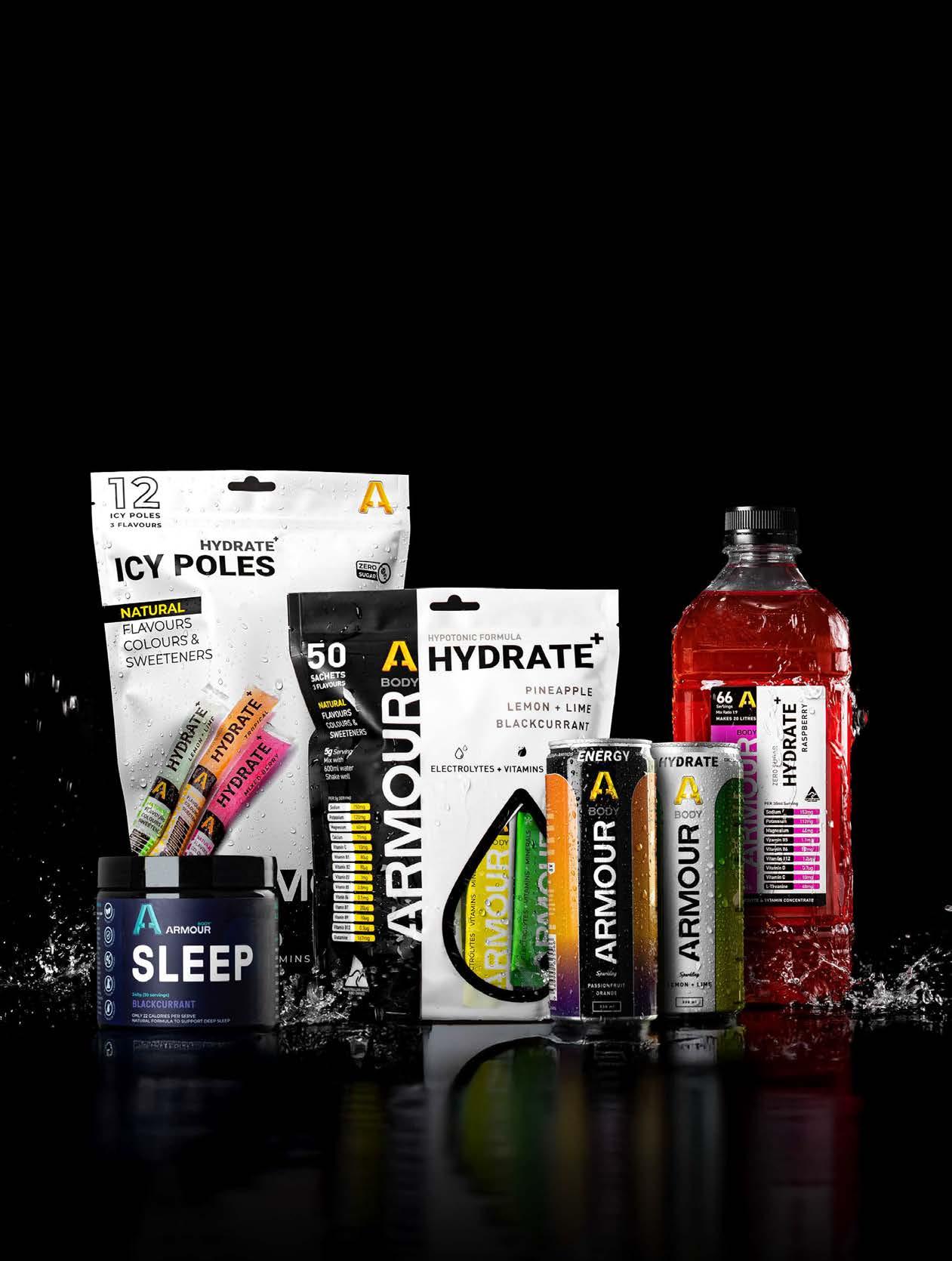
Solving a problem depends on how you approach it. Sometimes, all it takes is a single step; in other instances, the fix calls for a more holistic process. Dehydration sits firmly in the latter category.
Most people think hydration is a by-product of drinking enough water; however, managing dehydration goes well beyond just quenching thirst. It involves anticipating, managing and optimising the body’s needs before performance is affected.
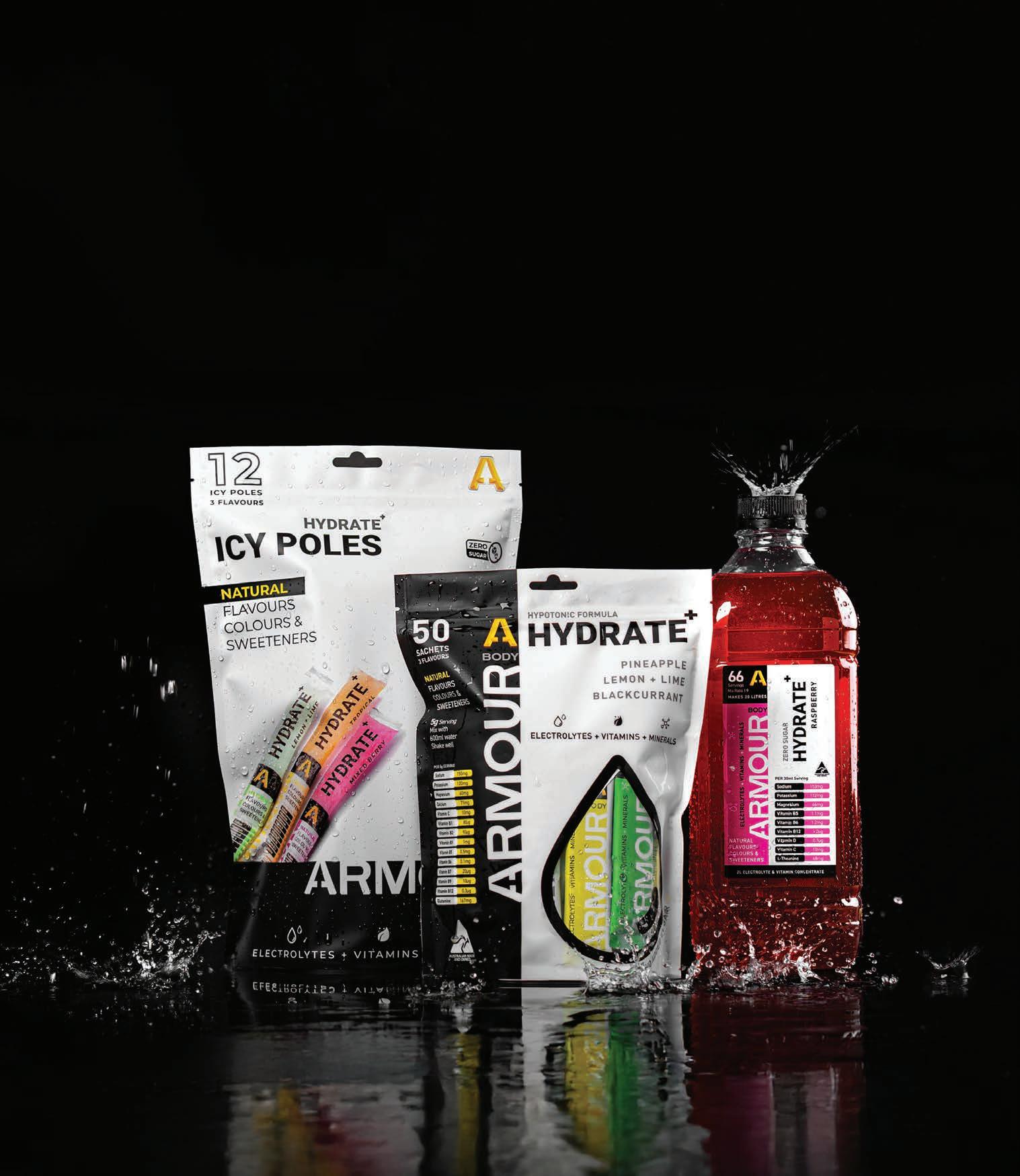
No one knows that better than Body Armour. By applying sportsscience principles to the mining sector, the company equips workers with the tools, knowledge and strategies to treat dehydration effectively.
At the core of Body Armour’s offering is its unique three-tiered approach that blends education, hydration solutions and technology –with the trio working together to keep miners safe.
Perhaps the most significant of the three is education.
Workers who understand how sleep, hydration, heat and fatigue affect performance are more likely to adopt safer behaviours, from pre-shift routines to recovery habits.
This foundation sets the stage for evidence-based strategies that target real-world mining stressors. It begins with grounding workers in simple physiological truths – the basic building blocks of how the body performs on mine sites – while clearing up common misconceptions along the way:
“If you’re thirsty, just drink more water.”
Thirst is a delayed signal; by the time it appears, dehydration is already underway. And without
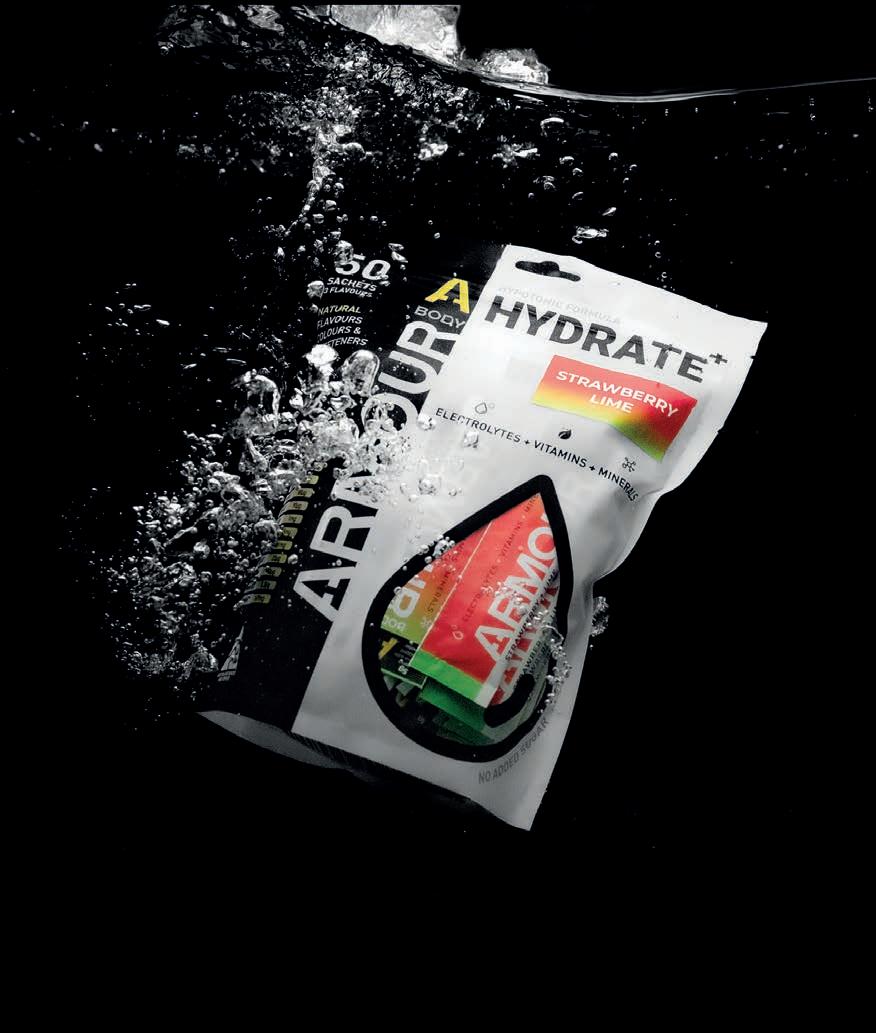
electrolytes, the body cannot retain water effectively, no matter how much is consumed.
“Heat stress only matters when temperatures are extreme.”
Cognitive slowdown, reduced reaction time and coordination issues can occur even on moderate days. Core temperature, not ambient weather alone, determines risk.
“Sugar gives you the energy you need in the heat.”
High-sugar products cause spikes and crashes, contribute to fatigue and can increase gastrointestinal strain, the opposite of what’s needed to stay sharp and safe.
“Hydration is just about water.”
It’s not. Electrolytes make hydration work. They drive muscle contraction,
nerve signalling and fluid absorption. Without sodium, potassium, magnesium and calcium, workers lose strength, focus and reaction speed far sooner.
Basically, education is the gateway that ensures workers are not simply following instructions but are understanding why those instructions matter. With a clear grasp of how the body responds to heat stress, fluid loss and fatigue, they are better equipped to independently implement hydration solutions and integrate monitoring technology into their own fatigue and dehydration management plans.
In this way, knowledge underpins the entire approach. But if knowledge supports the strategy, what underpins the delivery of that knowledge?
For Body Armour, it’s the Human
The Human Factor Toolbox is essentially a series of tailored on-site sessions hosted by Body Armour to educate workers on how their body works under pressure.
The program emphasises that poor focus, fatigue, slower reaction times, and energy crashes are all human issues – not personal failings or procedural limitations.
Through practical, easy-to-follow modules, Body Armour’s toolbox talks show that these outcomes are predictable responses to physical and mental strain.
In ‘Hydration and Heat Stress’, workers learn how fluid and electrolyte balance affects energy, coordination, and muscle function, and how to prevent dehydration before it becomes a risk; ‘Sleep, Fatigue and Recovery’ covers how rest affects focus, decision-making and physical performance, with tips for improving sleep quality and managing fatigue; ‘Nutrition and Performance’ explains how targeted nutrition supports
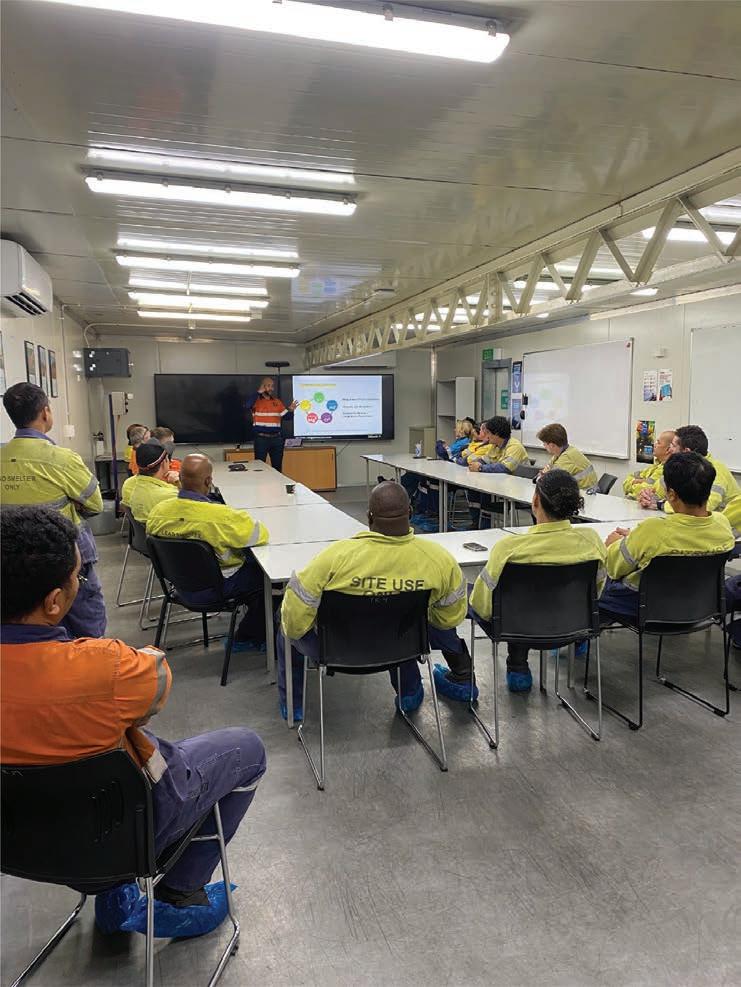
energy, recovery and overall resilience on long, physically demanding shifts.
Sessions are primarily delivered inperson, so workers can ask questions and take part in discussions. But they can be run online if needed.
Content can also be recorded, giving sites a library of resources for ongoing reference.
These sessions are also designed to fit into existing safety campaigns and seasonal heat-management plans, so workers hear the same messages consistently throughout the year.
“This isn’t a wellness tick-box. It’s a practical safety strategy that creates lasting behavioural change,” Body Armour said.
“Knowledge is the key to driving change. With a better understanding of how the body works, we tend to make better choices.”
At its heart, Body Armour’s mission is simple: equip workers with the knowledge and tools to protect their most important asset, their own body.
AS NEW RESPIRATORY EXPOSURE LIMITS COME INTO EFFECT LATER THIS YEAR, SAFETY MANAGERS ARE TURNING THEIR ATTENTION TO COMPLIANCE-FRIENDLY EQUIPMENT.
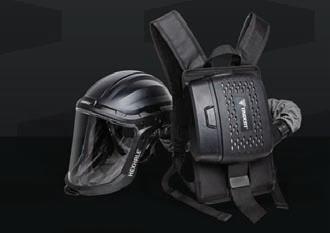
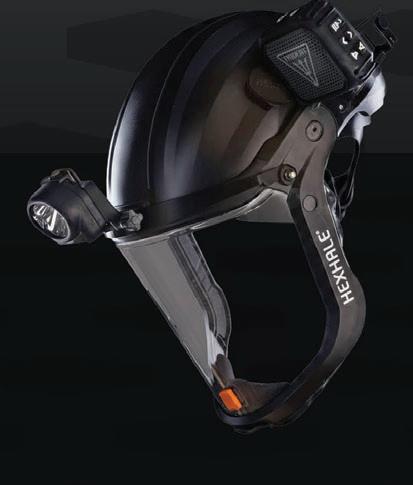
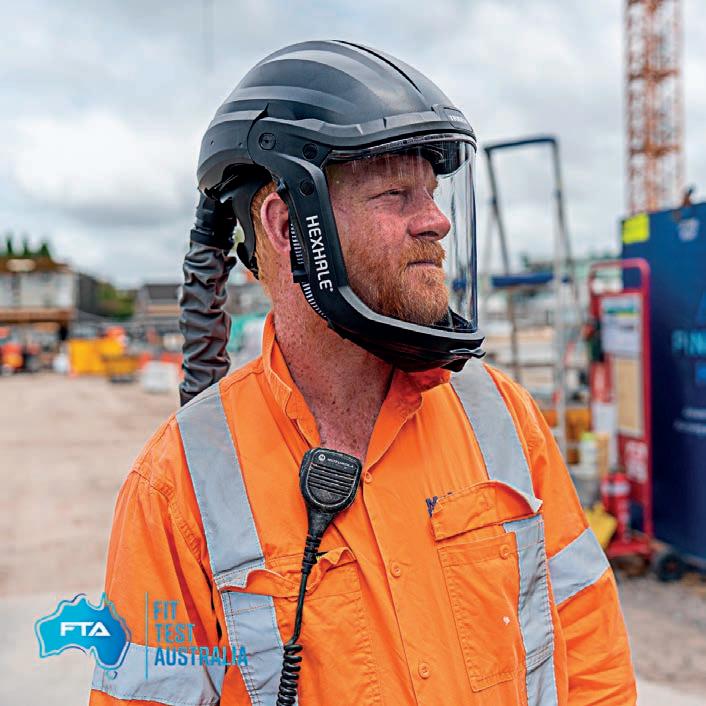
Respiratory protection is evolving faster than ever across industries. The TRIDENT HEXHALE powered air-purifying respirator (PAPR) embodies this shift, setting a new benchmark by delivering advanced, user friendly protection that rises to today’s tightening workplace exposure demands.
Personal protective equipment (PPE) innovation isn’t simply about more sophisticated equipment – it’s about making safety easier to achieve, maintain and standardise. Traditional tight fitting respirators highlight the limitations of older approaches: they require clean shaven policies, strict adherence to fit checks, and formal fit testing for every worker.
SafeWork mandates that tight fitting PPE, such as disposable P2/ N95 masks or reusable half and full face respirators, must be individually fit tested before use, annually, and whenever a new model is introduced.
These requirements intensify under silica related regulations, which also demand pre-use, annual and model change fit testing as part of compliance.
PAPRs represent a practical step forward in this landscape. Unlike tight fitting respirators, loose fitting PAPR hoods and helmets do not require fit testing, because they rely on positive pressure airflow rather than a facial seal. PAPRs are powered systems that deliver filtered air via a hose into a hood, helmet, or loose fitting facepiece, eliminating seal related requirements entirely.
This shift also arrives at a time of major regulatory change. Safe Work Australia has confirmed that Workplace Exposure Limits (WEL) will replace the long standing Workplace Exposure Standards (WES) from December 1, 2026. Unlike the previous terminology, WELs represent strict limits that must not be exceeded, aligning Australia with international
safety language. Many contaminants relevant to mining and drilling –including respirable crystalline silica and various fumes and gases – are having their limits reduced, raising the bar for acceptable protection.
It is also worth noting that workplaces must continue to comply with existing WES requirements throughout the transition period until full adoption of WELs.
In this tightening regulatory environment, PAPRs deliver a powerful combination: higher and more consistent protection, fewer administrative burdens, and improved ease of adoption. This positions them directly at the intersection of compliance, innovation and practical worksite realities.
The TRIDENT HEXHALE PAPR system exemplifies this evolution.
As demonstrated through industry field use, including drilling operations where crews trialled multiple units, workers praised the HEXHALE for comfort, usability and reliable protection – factors that directly influence whether PPE is worn consistently. With positive pressure airflow, high efficiency filtration, long battery life, and expanding accessory options such as integrated lighting, the system reflects the user centred design mining operations increasingly require.
As industries prepare for the WEL transition and face escalating pressures around airborne contaminants, respiratory protection demands solutions that are smarter, more compliant and more practical to handle across long shifts and challenging environments.
In a future defined by tighter exposure limits and heightened accountability, innovation is essential –and PAPRs are leading the way.








Monitoring alone doesn't prevent roof falls, action does. Nome Services translates data into safety through a complete ecosystem: Strata monitoring with Rock Monitor XR, high strength geogrid mesh, rapid gas management, and cable management solutions.




Rock Monitor XR System
Data driven strata control






S-Hooks & Installation
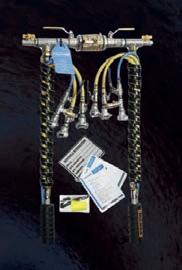


Borehole Crossover kits
Rapid gas management solution

Tools
Practical efficiency underground



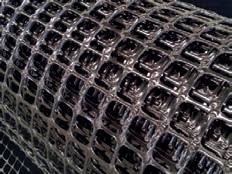


Plastic Geogrid Mesh
Lightweight strength for ground support
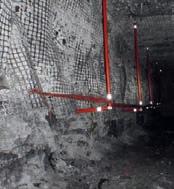

Pogo Systems
Simple solutions for critical control


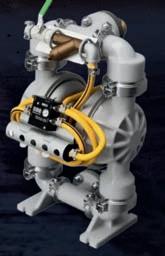
MK3 Air Pump Controller
Efficiency through control
CONTACT

+61 (0) 756 481 315 admin@nomeservices.com.au nomeservices.com.au

Engineered for the world's toughest environments, Nome Services delivers site driven solutions that link peak productivity with uncompromising safety, providing field tested innovation and data driven results.



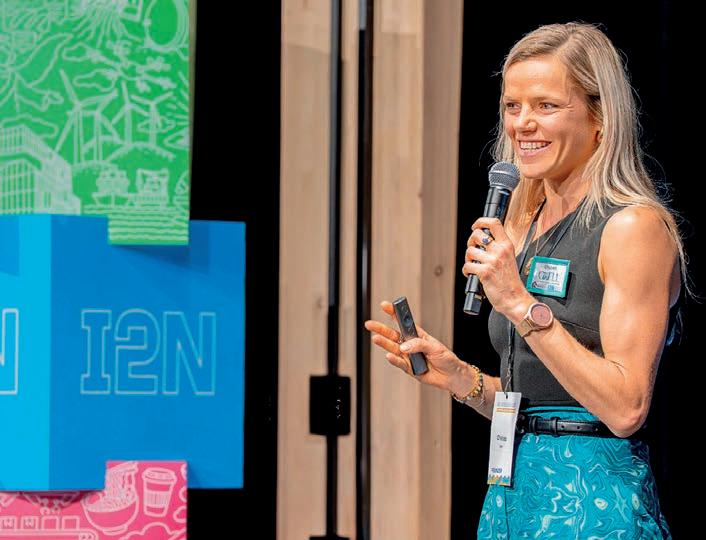
CHELSEA DYER GREW UP AROUND SHIFT WORK AND ITS CHALLENGES. NOW SHE’S BUILT A COMPANY TO HELP OTHERS NAVIGATE IT MORE EFFECTIVELY.
When she was growing up, Chelsea Dyer learned one rule early on: don’t go near the front of the house when Mum is sleeping.
Her mother spent more than four decades in Victoria Police, and for much of that time she worked long, irregular hours that affected her energy, her recovery and her “ability to be present”.
“I saw it take its toll on her,” Dyer told Safe to Work. “Not just on her health and her energy, but even how she could recover and get back to normal.”
That experience planted a seed in Dyer’s mind. Years later, that seed blossomed into digital health solutions provider Valus Health.
As a naturopath and nutritionist with a background in digital health education and learning design, Dyer practices what she preaches.
Early on in her career, colleagues in nursing, paramedicine and other shift-based roles began asking her questions: What should I eat on a night shift? When is the best time to exercise? Why does it take several days to feel normal again?
As the questions kept coming, and the more Dyer listened, the clearer the knowledge gap became.
“I asked them what they’d learnt through work in that area,” she said. “A lot of it was really top-down structural advice, like policies and changes rather than education and empowerment for the workers themselves.”
“I definitely saw in the people I was around that there was a real want for better information, but it just wasn’t easily available.”
The missing element wasn’t research; in fact, Dyer discovered there was an enormous body of it. The problem was accessibility.

“It’s too overwhelming while you’re in it to go and try to find all the answers,” Dyer said. “Especially if that’s not your area of expertise and you’re just trying to get through your long shifts and your work.”
Realising that there was a distinct need for an easy-to-follow blueprint, Dyer founded Valus Health, which distils the science into three evidencebased digital programs: Shift Prime for night-shift workers; Job Site Prime for mining workers on extended or early/late shifts; and Work and Live Prime for office-based and highdemand workers.
Each program draws on hundreds of research papers and covers key pillars of worker health, including circadian rhythms, light exposure, food intake and timing, movement, sleep hygiene, social health and stress management. The content is selfpaced and delivered entirely online, with interactive questions, short video content and, critically, a personalised
action plan that participants build and download at the end of each module.
“A lot of the program isn’t just education, but empowerment for each individual to create actual, lasting habit changes,” Dyer said. “I wanted to make sure that it wasn’t just cookie-cutter advice and that participants could apply it easily to their own lives.”
The program also includes evidence-backed tips scattered throughout to provide people with practical, specific and researchbacked nudges, for example, that eating dinner earlier has been shown to significantly improve sleep quality – helping people fall asleep up to 10 minutes faster, with up to 60 per cent less likelihood of waking during the night.
“They’re designed to give people the confidence and tools to believe they can actually make that change,” she said.
“It’s not overhauling everything about your health, your diet and
understanding that a lot of it can be really simple changes to timing, which can create a huge shift to your health even in the short term.”
(B2B) model means companies enrol their staff members to the program –adding it to their mandatory training,
sending a log-in link, and letting workers move through it at their own pace.
A quarterly check-in keeps the learning alive and gives workers the
Developed in collaboration with leading mining companies, TED’s LA attachments take on the toughest maintenance tasks with precision and control.
Purpose-built to improve safety, e ciency, and handling, each unit mounts seamlessly to TED or BIG TED, transforming one device into a complete lifting system.
ENGINEERED, TESTED, AND PROVEN IN THE FIELD
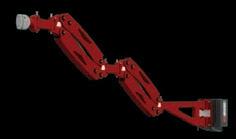
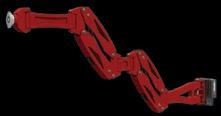
AGA-ARM-100-00-S
Dual spring lift mechanisms support tooling up to 40kg, reducing operator e ort while enabling smooth, precise manual positioning.
Powered by a 24 V lithium battery, dual electric actuators lift and secure loads up to 40kg, using a simple two-button pendant to deliver precise control during installation or removal. AGA-ARM-100-00-P
Powered by a 24 V lithium battery, dual electric actuators handle loads up to 80kg, with straightforward twobutton operation enabling accurate positioning by one operator. AGA-ARM-80-100-P
chance to revisit and update their personalised plans as life changes.
For mining, Dyer recommends Job Site Prime for most workers and Shift Prime for those working overnight. The digital format, she said, solves a logistical headache that often defeats in-person health education in demanding, remote industries.
“It can be quite a challenge to coordinate timetables and logistics of getting everyone in the same room,” she said.
“Being digital and self-paced really opens up that flexibility, it’s one less logistical challenge.”
As mine sites are faced with stronger duty-of-care obligations, particularly around fatigue, psychosocial health and proactive health education, companies are increasingly looking for credible,
scalable solutions that help them get there.
“With these programs, I think sites are meeting those obligations in a really positive, employee-oriented way, and that’s more important than just simply ticking the box,” Dyer said.
Valus Health’s motto – ‘Knowledge to thrive’ – is derived directly from Dyer’s experience of her mum managing shift work. During some night shifts, her mum’s workplace would put on a big dinner at one in the morning, which at the time was probably considered best practice and more beneficial than harmful.
‘“Now, when I think about that it’s just about the opposite of what we now know about timing your food to best recover,” Dyer said. “But they obviously didn’t know. How would they?”
This kind of scenario captures exactly what Valus Health is trying to do – provide the right information, in the right way, at the right time.
“I think she would have had a very different experience,” Dyer said when asked how her mum would’ve fared if these digital programs existed at the time. “With the right knowledge and support, it could have reduced a lot of the strain she carried during those years. Not by removing the demands of the job, but by better equipping her to protect her health through them.”
For Dyer, it all comes down to the belief that people working the hardest jobs deserve the same shot at good health as anyone else. “I feel really strongly about everyone being able to have the opportunity to live their best, healthy lives,” she said. “No matter what they do for work.”
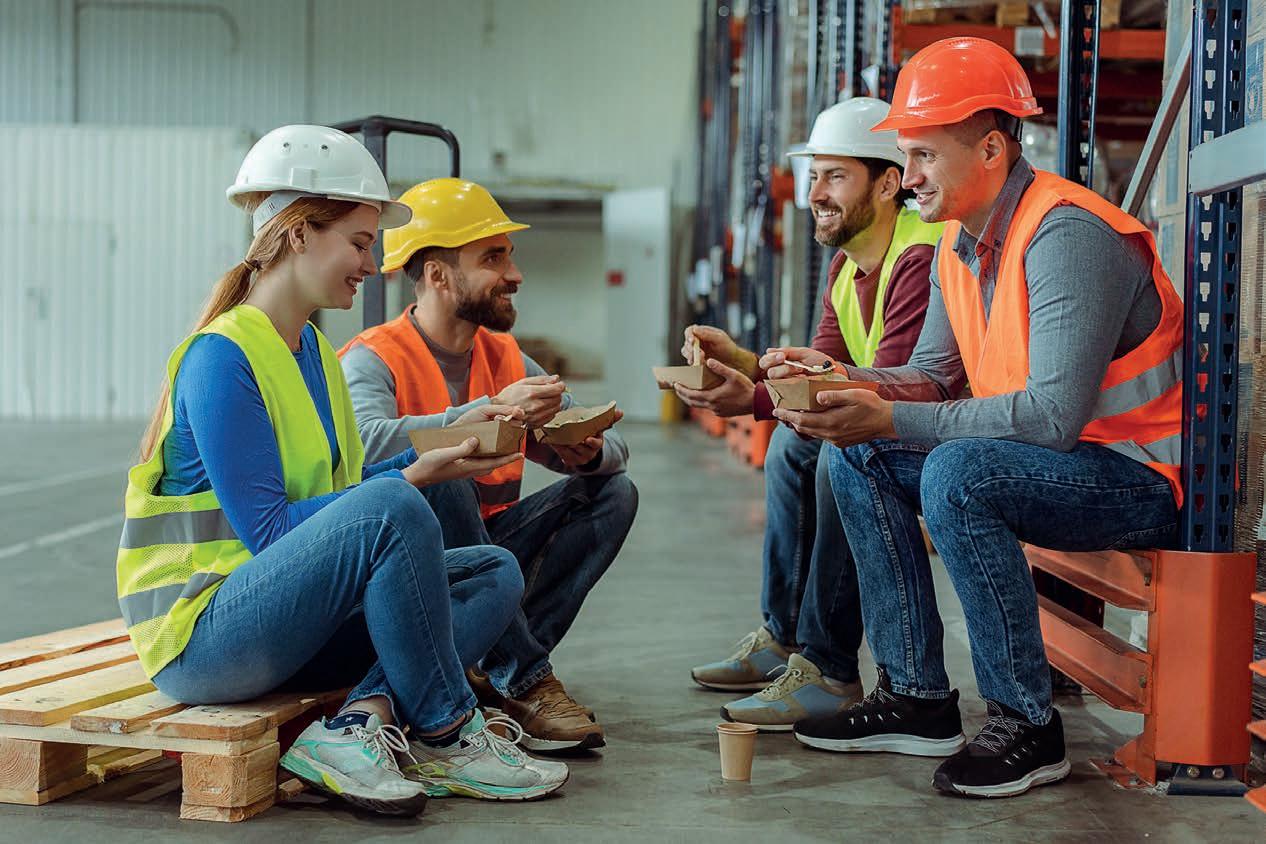
Safety in high-risk industries like construction and mining depends heavily on systems, procedures, and equipment. But one of the most critical elements of hazard avoidance is often the most vulnerable: communication.
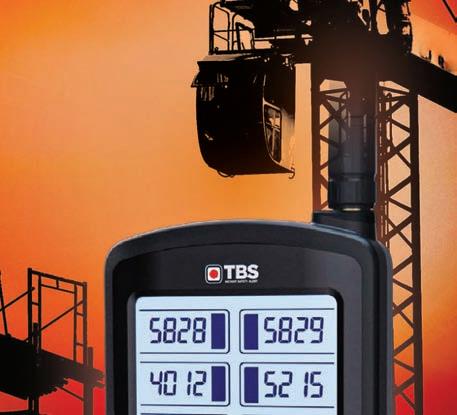
It’s widely recognised that up to 30 per cent of crane-related incidents involve some form of miscommunication between operators and ground crews. On busy sites, that failure can come down to something simple like a flat radio battery, interference, or a missed call.
The Buddie System was developed in Australia by co-founders Gary Panagiotidis and Jade Harris to address exactly that gap, not by replacing systems but by backing them up with something immediate, physical, and impossible to ignore.
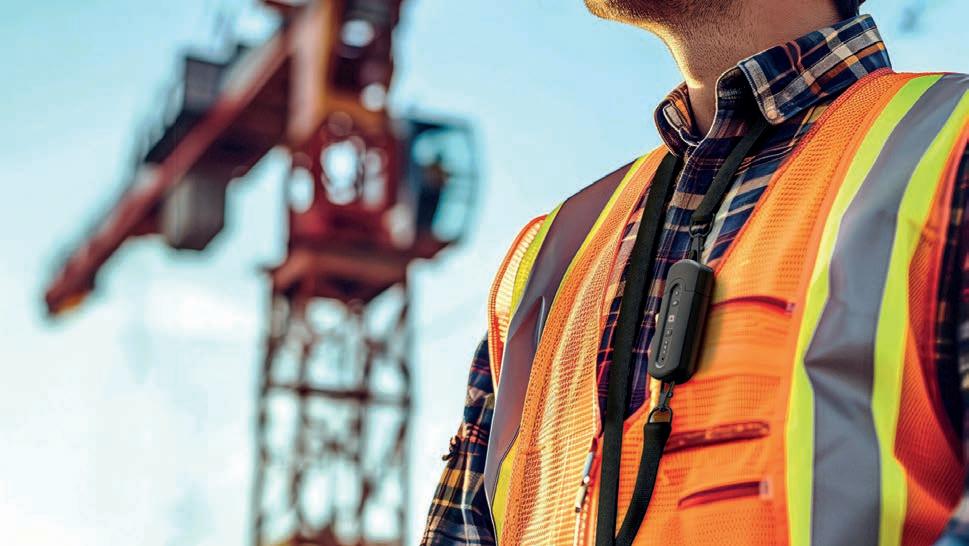
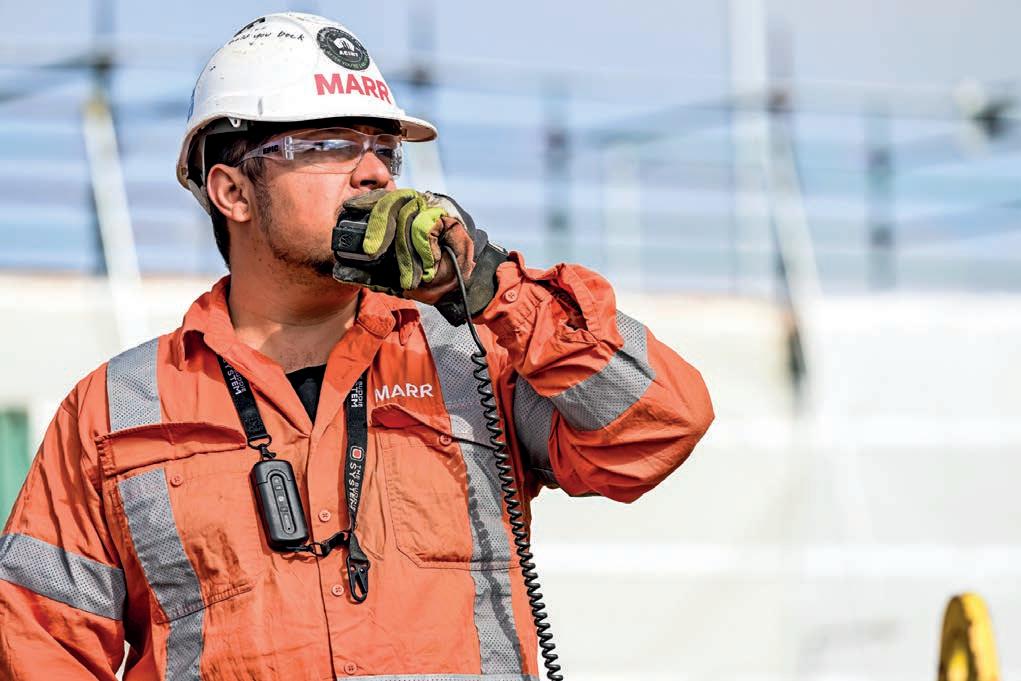
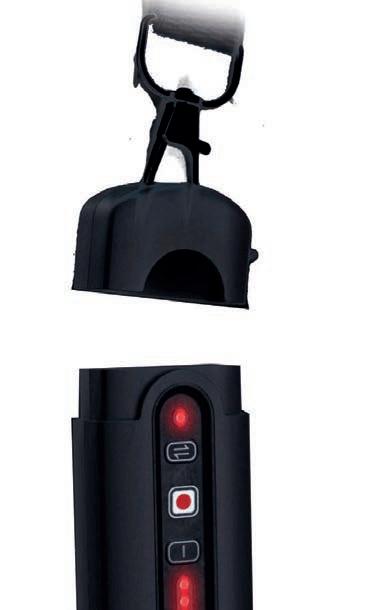
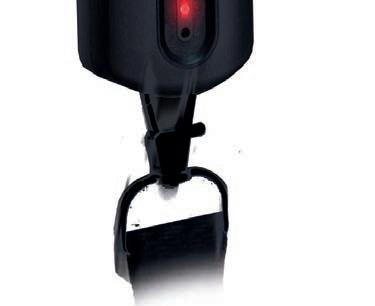
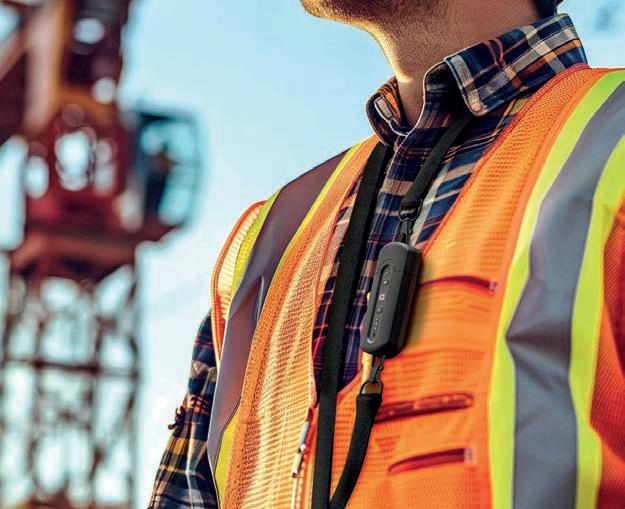
At its core, The Buddie System is simple. A worker wears a lanyard
device that is paired directly to the crane cab. If something goes wrong, they pull the lanyard that triggers an instant audible alarm in the operator’s cab.
No radio call. No waiting. No confusion. Just stop.
As Panagiotidis told Safe to Work, the thinking behind it is less about eliminating risk entirely and more about reducing exposure to a known issue.
“We’re not trying to eliminate all risk, that’s not realistic,” he said.
“But even if we can reduce a portion of that miscommunication risk, we’re doing exactly what we set out to do.”
The idea is deeply grounded in real-world experience.
Both co-founders come from crane and lifting backgrounds and have seen firsthand how quickly communication breakdowns can escalate.
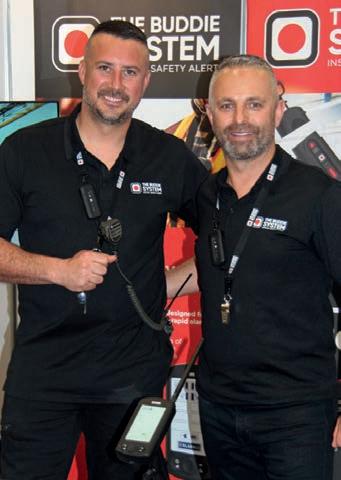

“When communication fails on a lift, there’s no margin for error. That’s when things go wrong,” Harris said.
The Buddie System changes that dynamic by putting control directly into
“The power to stop a lift is literally on you,” Harris said, “So you’re not relying on anyone else hearing you or reacting in time. You’ve got a direct line to the operator when it counts.”
That shift removes delay, reduces reliance on interpretation and creates an immediate response to hazards. It’s also why the product resonates so
“We constantly hear the same thing – ‘why hasn’t this been done before?’ That’s the beauty of it, you don’t need to overcomplicate safety solutions for them to be effective,”
The Buddie System has already gained recognition beyond site level,
Solution of the Year, a reflection of the industry’s growing focus on practical




controls that address real-world risks. Historically, alternatives to this have been limited.
Radios remain the primary tool, with whistles being used as a secondary measure, limiting the immediate response to potentially fatal hazards as both rely on being hard which can be difficult in high-noise environments.

“With a whistle, you’ve got to grab it, use it, and hope someone hears it. In a machine cab, chances are they won’t,” Harris said.
The Buddie System takes that uncertainty out of the equation.
“It’s always on you, always ready to deliver a direct and potentially lifesaving alert instantly,” Harris said.
“Those few seconds can make all the difference.
“In situations like this, it’s important to ask yourself if you or your crew are at risk. If communications are lost during high-risk work, do you have a back-up plan?”
The Buddie System isn’t about reinventing how lifting is done, but rather, reinforcing it. When communication reaches its limit, the response can’t wait.






Nome has built its reputation on a clear and uncompromising objective: improving safety outcomes in some of the world’s most challenging operating environments.
Headquartered in Queensland, the company designs and manufactures a suite of underground mining solutions that prioritise reliability, efficiency and, above all, worker safety.
For managing director Nathan Owen, this mission is deeply personal.
Growing up in a family with three generations of coal miners, Owen witnessed firsthand the risks associated with underground mining operations.
“I’ve seen my father’s co-workers injured and killed in coal mines,” Owen told Safe to Work
“When the opportunity came along to make a difference and help prevent those injuries and fatalities, it was something I had to pursue.”
With nearly two decades of experience across mining, tunnelling and construction, Owen has steered Nome into a position where practical, site-driven innovation underpins every product in the company’s portfolio.
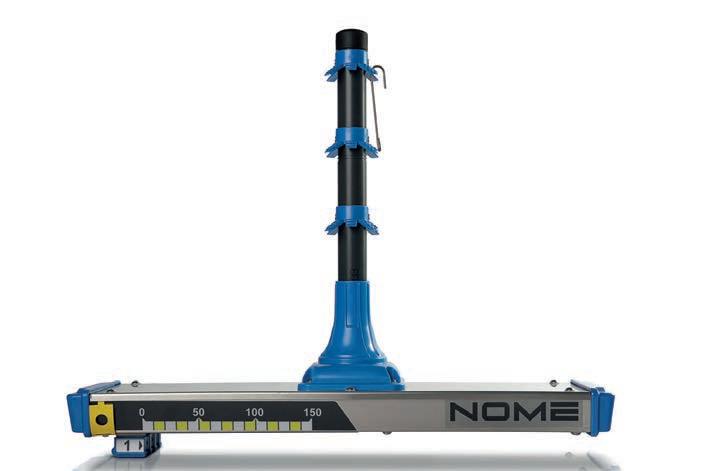
Nome’s telltales are an integral part of its Rock Monitor XR system.
Rather than focusing on a single flagship solution, Nome delivers a comprehensive ecosystem of safetyfocused products, spanning strata monitoring, ground support, gas management, cable handling and operational efficiency systems. Each is engineered to address specific underground challenges while integrating seamlessly into existing site practices.
At the core of Nome’s offering is the Rock Monitor XR, a fully networked strata monitoring system designed to measure displacement in roof and rib environments across both soft- and hard-rock operations.
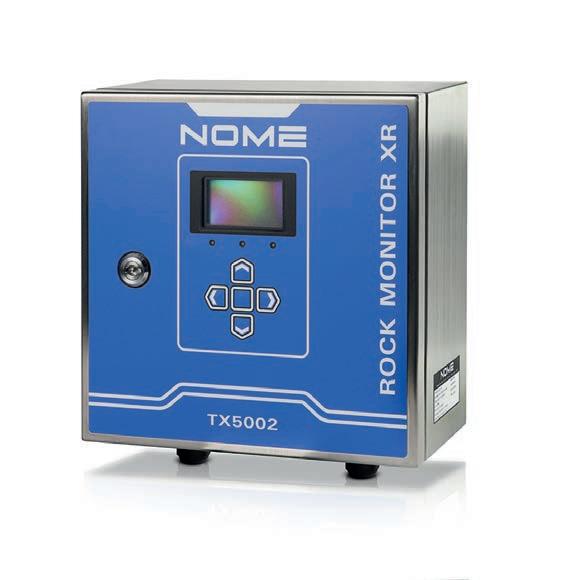
By continuously capturing displacement movement data, the system enables mine operators to move beyond subjective assessment methods such as manual sounding, instead relying on real-time, quantifiable information to guide decision-making. This shift allows for improved hazard identification, more effective support design, and reduced exposure to high-risk areas.
Independent validation has demonstrated the system’s significant operational impact, including up to 65 per cent reduction in injury and incident reports, 40 per cent increase in productivity, and 49 per cent reduction in standing support costs.
In an industry where roof falls remain one of the leading causes of fatalities, the ability to monitor and respond proactively represents a critical advancement.
S-HOOKS AND INSTALLATION TOOLS: PRACTICAL EFFICIENCY UNDERGROUND
Nome’s S-hook cable management system provides a robust alternative to traditional zip ties, aligning with increasingly stringent underground standards.
Available in single- and doublehook configurations, the system allows multiple cables to be secured from a single fixing point, reducing installation time and simplifying routing.
A key differentiator lies in the packaging and usability:
• Supplied in heavy-duty hessian bags
• Pre-packed in bundles of 10 to prevent tangling
• Designed to minimise dropped or wasted materials underground.
Complementing the hooks is a magnetic installation tool extending up to three metres, enabling safe placement in elevated or difficult-toaccess areas without the need for additional operators, equipment, manbaskets or working at height permits.
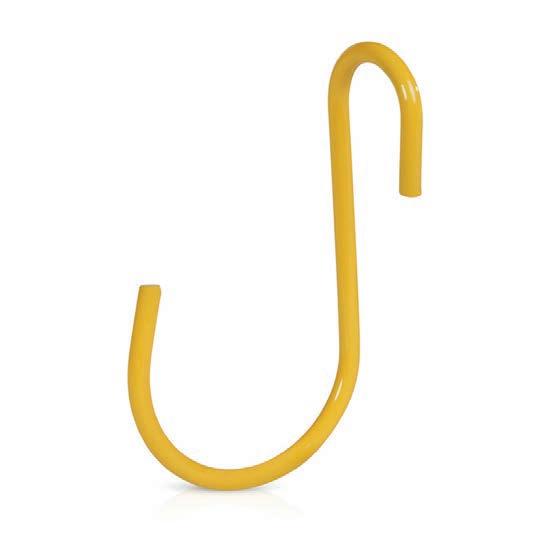
labour-intensive systems that also require fixed grouting methods.
Nome’s plastic geogrid mesh has been engineered specifically for underground applications where handling efficiency and corrosion resistance are critical.
Providing a viable alternative to steel mesh, the product offers a high strength-to-weight ratio, fireresistant, and corrosion resistance for long-term durability.
The mesh design incorporates large apertures to allow drill steels to pass through during installation, while reinforced ribs maintain structural integrity.
Available in 20–50kN strength grades and multiple configurations to support client requirements, the mesh supports rib and roof reinforcement, tunnel stabilisation, and cavity support applications.
Leveraging its in-house manufacturing capability, Nome can tailor mesh specifications to site requirements, delivering customised solutions in both sheet and roll formats. Products are also shipped in containerised loads to optimise handling, storage and stock control on site.
Designed specifically for gas drainage applications, Nome’s borehole crossover kit provides a streamlined alternative to traditional,
The lightweight unit can be rapidly deployed and inflated using compressed air or water.
Once activated, it seals the borehole intersection via a flowthrough valve that prevents gas leakage into active workings.
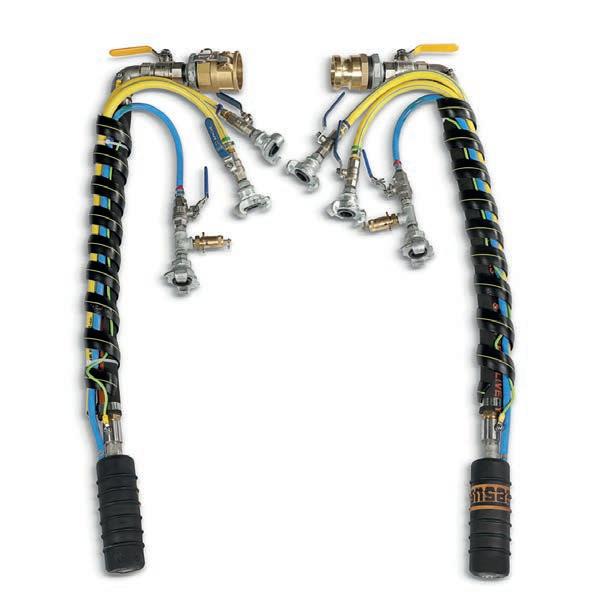
Captured gases are then redirected through hoses and valves to adjacent boreholes, allowing operations to resume significantly faster compared to conventional methods.
This approach reduces downtime while improving overall safety in gasprone environments.
Nome’s pogo systems play a key role in underground demarcation and ventilation control.
Available in standard 4.8m and 6m configurations, the systems are used extensively for brattice installation, work zone delineation, and airflow management.
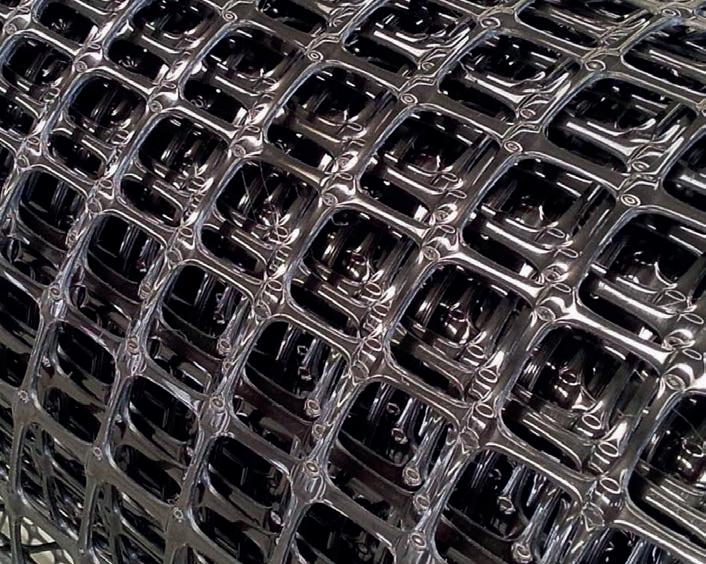

Supplied in bulk quantities for large-scale deployment, the systems are supported by readily available spare components to minimise operational disruption.
A specialised demarcation pogo variant features an adjustable lower section, allowing machinery such as graders to pass beneath without damaging infrastructure, enhancing both safety and practicality.
Nome has also recently introduced the QuickStik variant, a quickadjustable pogo system designed to further streamline installation. Unlike traditional designs, the QuickStik does not require the adjustment bolt and pin to be removed to change height. Adjustment can be completed in a vertical position, significantly reducing handling effort, improving installation speed and increasing overall productivity underground.
The MK3 air pump controller is designed to optimise the performance of diaphragm pumps used in underground dewatering.
Traditional pump systems often run continuously, leading to excessive compressed air consumption, increased wear and maintenance, and reduced system efficiency.
The MK3 addresses these challenges by ensuring pumps operate only when water is actively flowing, delivering reduced air usage, lower
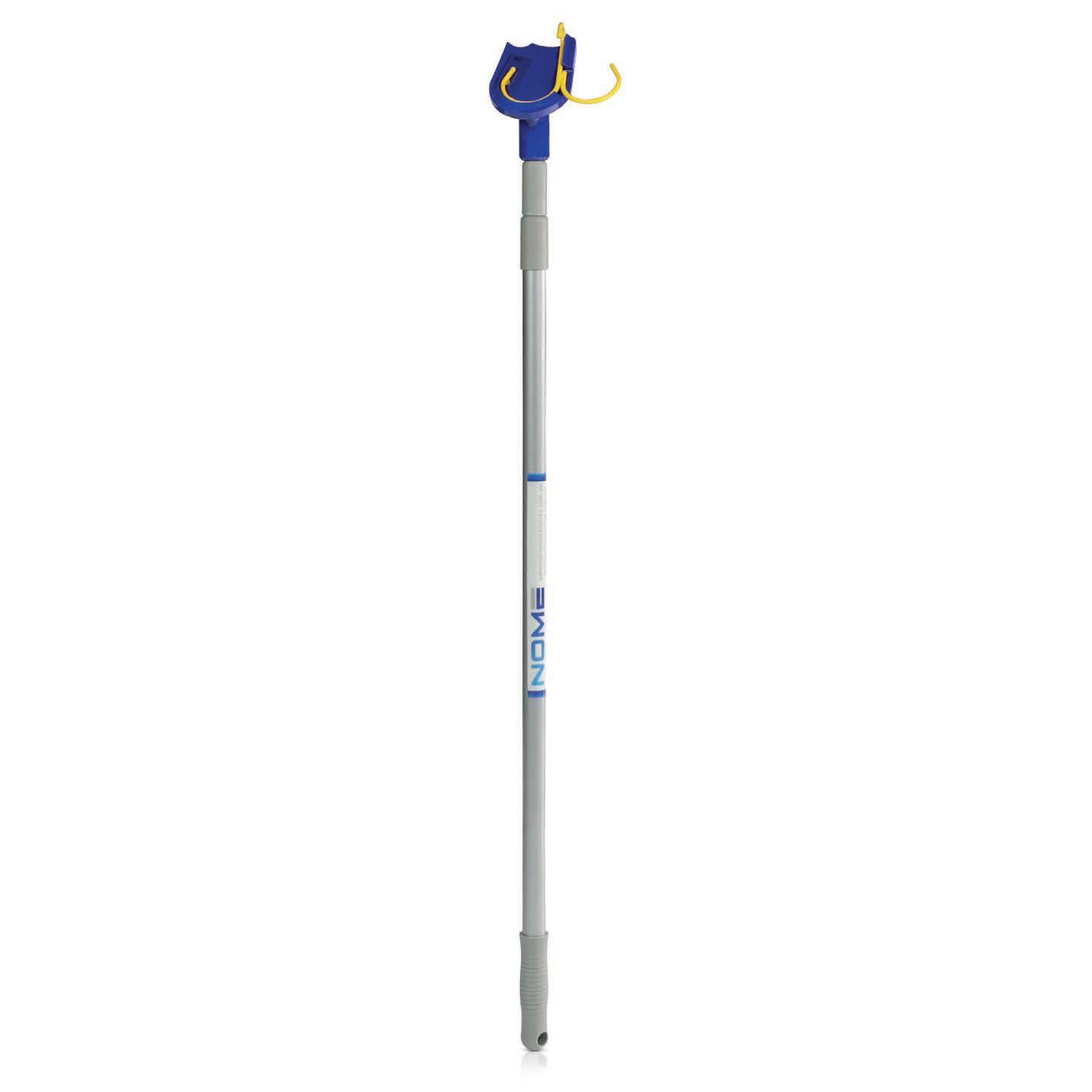
maintenance requirements, and improved system longevity.
The unit can be installed in approximately 15 minutes and is built to withstand a range of harsh underground conditions.
Across its product range, Nome maintains a consistent philosophy: practical, site-driven solutions that deliver measurable safety improvements.
Rather than innovation for its own sake, the company focuses on developing products that operators can deploy quickly, integrate easily and rely on in critical situations.
“Our goal is simple,” Owen said, “Every product we develop is about improving safety outcomes and helping operations run more efficiently. If we’re not achieving that, we’re not doing our job.”
As mining operations continue to demand higher safety standards alongside increased productivity, companies like Nome are demonstrating that the two objectives are not mutually exclusive –but fundamentally linked.
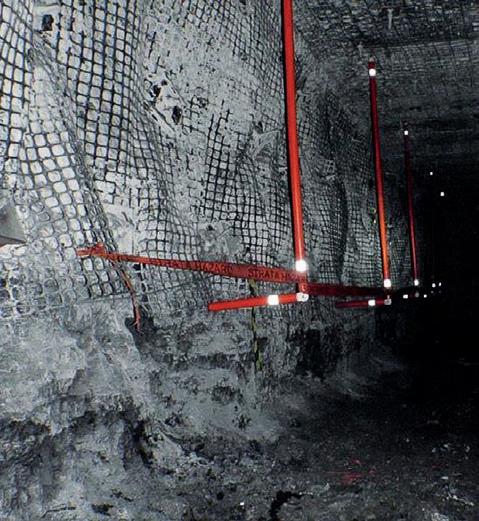
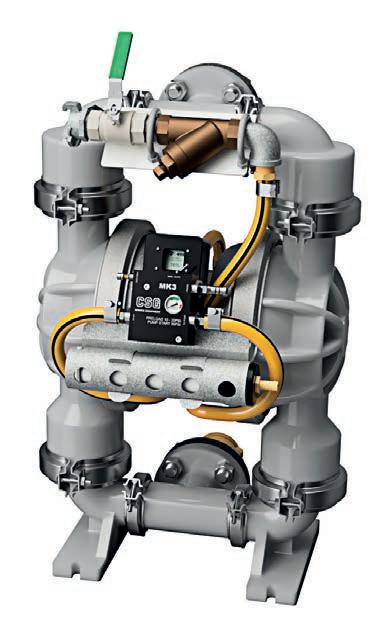








Australia’s largest regional mining event




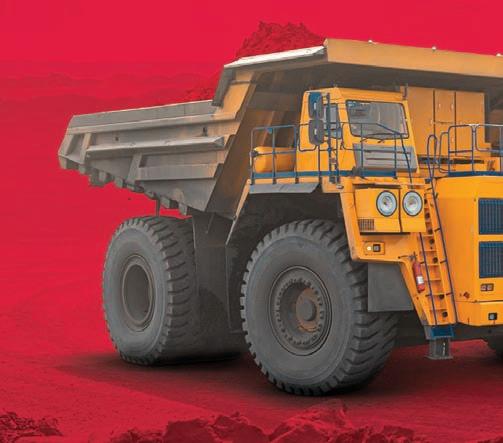


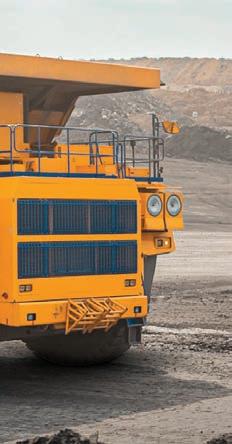

This year’s PNG Expo will set a new benchmark for safety leadership.
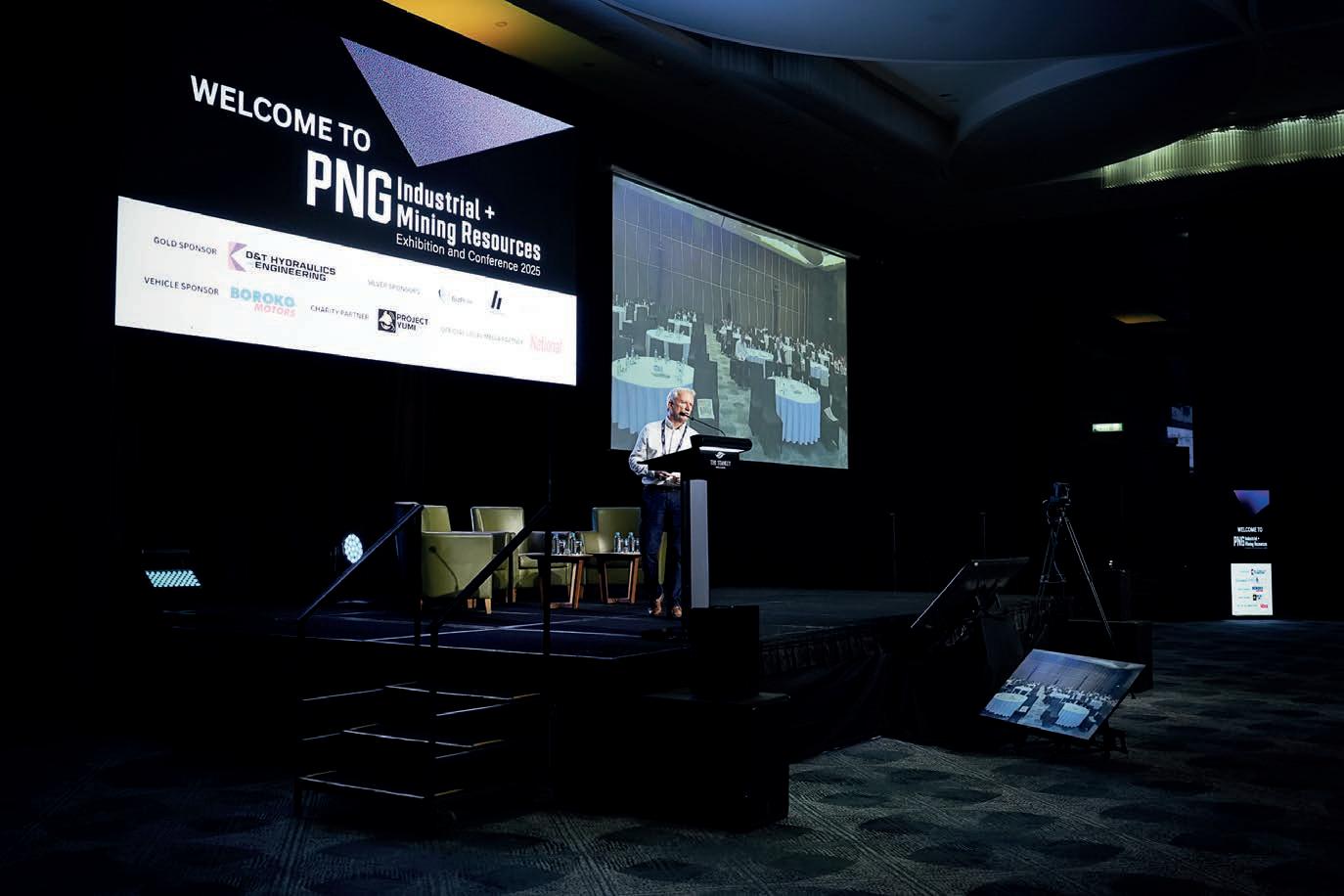
FROM FRONTLINE RISK MANAGEMENT TO LONG-TERM RESILIENCE, PNG EXPO 2026 WILL FOCUS ON WHAT KEEPS PAPUA NEW GUINEA’S RESOURCES SECTOR SAFE.
When the PNG Industrial and Mining Resources Exhibition and Conference (PNG Expo) returns to Port Moresby on July 1–2, it aims to set a new benchmark for safety leadership in Papua New Guinea’s resources industry.
As one of the Pacific nation’s leading mining and resources events, PNG Expo brings together businesses, government representatives and industry leaders from across the country and the wider region. The event helps to align stakeholders and strengthen operational performance while promoting workforce safety and community wellbeing.
PNG Expo’s arrival matches the increasing momentum of PNG’s mining and energy industries. The country’s economy is currently
the fastest growing in Oceania, supported by record production from gold, copper and liquefied natural gas (LNG) projects.
The event will feature an expanded floorplan, creating space for larger equipment displays and a broader range of exhibitors. The expanded layout responds to industry demand while ensuring suppliers can demonstrate solutions suited to PNG’s operating conditions, where robust machinery and reliable support networks are vital.
A free-to-attend conference –curated in collaboration with the editorial team at PNG Mining – will include expert-led presentations focused on local challenges, emerging opportunities and best practice in mining and industrial operations. With projects progressing nationwide, the
conference offers a timely forum for knowledge sharing and learning.
The event’s strong commercial impact has been evident in previous years. At the 2025 edition, 65 per cent of attendees were directly involved in decision-making within their organisations. Domestic participation was equally significant, with 62 per cent of attendees based in PNG, reinforcing the importance of local engagement and in-country capability in shaping safe and sustainable growth.
Prime Creative Media show director – mining events, Rebecca Todesco, said in a statement that PNG Expo plays a vital role in supporting sustainable growth across the country’s resources sector.
“When industry, government and communities meet in one place, it
creates real opportunities for growth, collaboration and long-term success in the mining sector and across the country,” Todesco said.
“PNG Expo welcomes industry leaders, government representatives and local businesses to come together, share insights and be part of discussions that will help guide the future of mining in PNG.”
Throughout the event, journalists will conduct interviews on the conference stage and across the exhibition floor, spotlighting major
projects, technologies and operational priorities shaping the sector.
The initiative will also provide exhibitors with additional exposure beyond the event itself.
In addition to facilitating industry dialogue, PNG Expo serves as a practical meeting place for suppliers and customers, making it an attractive gateway for businesses seeking to expand their presence in the Pacific market.
Event sponsor Tricab highlighted the value of the event’s conference program and industry engagement.
“One of the key focuses of the expo is the conferencing,” Tricab general manager sales for Australia and New Zealand Shane Plumridge said.
“You learn so much from these discussions that translates directly into in-country knowledge to help better suit customers. Events like this give businesses access to best-in-class manufacturing capabilities and the opportunities to create long-lasting business partnerships.
“There are challenges facing PNG’s market that others might not have to deal with, such as having
key distribution routes and strong supply chains. It’s this that made us want to really get behind the project because it’s a key meeting place to do business.”
Exhibitor spaces are now available, including premium indoor stands and tailored packages designed to meet a wide range of business objectives. With demand strong and space limited, companies are encouraged to secure their participation early. PNG Expo offers a platform to strengthen collaboration, share practical insights and reinforce a culture of safe, sustainable and resilient operations.
“We’re seeing more and more investment into PNG as a nation, particularly in the industrial space. We want to be at the forefront of that and make meaningful connections with local businesses,” Plumridge said.
With strong early interest, PNG Expo 2026 is shaping up as a mustattend event for anyone involved in or supporting the country’s resources sector.
Secure your tickets now at pngexpo.com/attend
AS A WOMEN IN INDUSTRY AWARD WINNER, BECKY FELSTEAD HAS SPENT YEARS ENSURING THE RESOURCES SECTOR’S HARDEST CONVERSATIONS NO LONGER GO UNHEARD.
Becky Felstead may not have grown up thinking she’d end up working in the mining sector, but that didn’t stop her from being recognised with the 2025 Women in Industry Awards for Excellence in Mining.
Although her path into mining wasn’t traditional, the impact she has made since has been anything but accidental.
To understand how she got here, it’s important to go back to the beginning.
Felstead grew up between two professional worlds, with a mother in social work and mental health, and a father who was a maintenance technician and fitter, both of which
based environments that keep industries running.
Even in the midst of that dual upbringing, Felstead was always “drawn to understanding people, what’s going on underneath the surface, not just what we see”.
Before mining, she worked in media and photojournalism, then as a personal trainer. In these fields, the same truth kept revealing itself: mental and emotional states determine how people show up.
“When I stepped onto [a mine] site, it made sense,” Felstead told Safe to Work. “The same human challenges were there, just in a different environment and often with

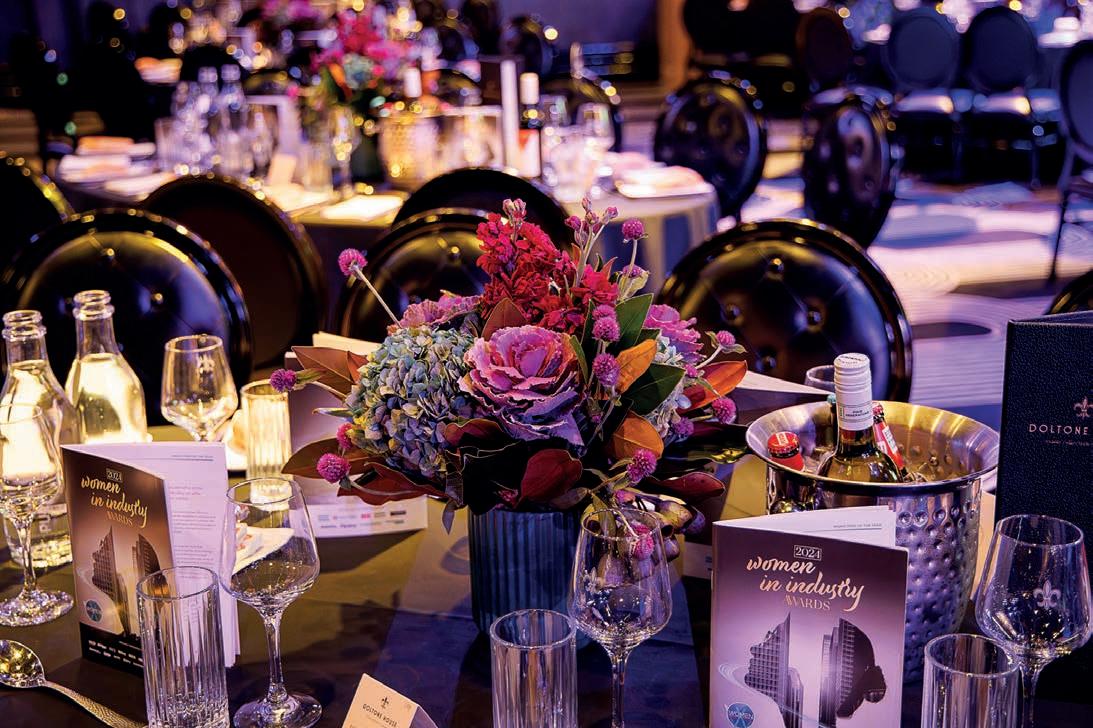

Last year, when Felstead nabbed the prestigious Women in Industry title, she was working as a facilitator at Strong Minds, Strong Mines, an organisation focused on mental health and suicide prevention in the mining industry.
During her time there, Felstead delivered close to 300 presentations, completed over 50 site visits, and reached more than 20,000 people.
What emerged from that scale of exposure was a clear picture of what mining workers regularly carried: relationship challenges and financial pressure, and the way both make their way into on-site performance, safety and culture.
“Those things don’t stay at home,” Felstead said. “They show up on site.”
Felstead now works as a workplace culture advisor and speaker, helping organisations build environments where people can speak up earlier, lead better, and
navigate hard conversations before issues escalate. In addition, she has built The Resource Podcast and is continuing to facilitate conversations she believes the industry needs most.
“The conversations mining teams are avoiding aren’t small. They’re costing companies millions in turnover, safety incidents, and lost productivity,” Felstead said.
She has seen this pattern repeat across more than 50 site visits. “When those conversations finally happen, the shift is immediate,” she said.
Felstead’s work is built around shifting that pattern, helping leaders notice changes in their people earlier, building confidence in having difficult conversations, and moving away from reactive, blame-based culture toward something more honest and sustainable.
One of the biggest things Felstead’s learnt is that while women’s experiences in mining
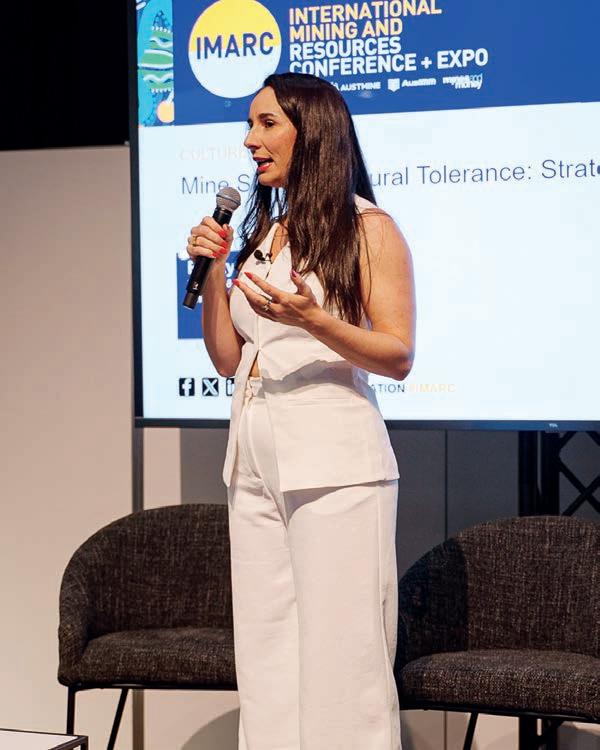

are different and need to be acknowledged, a significant shift happens when men are also brought into the conversation.
Genuine, lasting change in mining’s culture, she said, requires men to be genuinely part of it – not just as bystanders, but as active participants.
“There’s a large percentage of men who want to be part of that change, they just don’t always know how,” Felstead said.
The biggest barrier she sees is silence, which she said is often shaped by shame, fear of being marked, and a culture that has historically rewarded people for pushing through. But since starting this work in 2020, Felstead has watched the conversation shift in ways she didn’t anticipate.
“I never imagined we’d make this much progress in workplaces like mining,” Felstead said. “And that gives me a lot of hope. I also really acknowledge the mining industry for being willing to go first in what is ultimately a global cultural issue.”
What Felstead ultimately wants is workplaces in which people don’t
have to ‘just get on with it’, where speaking up early is possible, where leaders at every level know how to hold that space, and where the culture is shaped by the people in it, not just the policies above them.
“This isn’t just about the workplace,” Felstead said.
“It’s about creating environments that are safer for our sons and daughters to step into.”
Felstead’s story is one of many that the Women in Industry Awards exists to tell.
To be held at the Doltone House Darling Island Wharf in Sydney on June 18, the 2026 edition will celebrate outstanding women redefining what’s possible across mining, transport, engineering, logistics, manufacturing and beyond.
The program will also be bolstered by the addition of four new award categories.
Get tickets to the award night gala at womeninindustry.com.au/attend/
In total, 16 awards up for grabs:
• Rising Star of the Year (30 years and younger)
• Business Development Success of the Year
• Industry Advocacy Award
• Mentor of the Year
• Safety Advocacy Award
• Excellence in Manufacturing
• Excellence in Transport
• Excellence in Engineering
• Excellence in Mining
• Excellence in Construction
• Excellence in Energy
• Marketer of the Year (new for 2026)
• Excellence in Health and Medicine (new for 2026)
• Tradeswomen of the Year (new for 2026)
• Rising Women in Leadership: C-Suite Executive Award (new for 2026)
• Woman of the Year (chosen from winners of the other award categories)
THE DRIVE TOWARD STRONGER SAFETY STANDARDS AND OPERATIONAL RESILIENCE WILL HEADLINE THIS YEAR’S QUEENSLAND MINING AND ENGINEERING EXHIBITION.
Industry leaders across Queensland’s resources sector are sharpening their focus on protecting people, strengthening systems and building long-term resilience. The Queensland Mining and Engineering Exhibition (QME) has become a central forum for those efforts.
Returning to the Mackay Showgrounds from July 21–23, QME will once again bring thousands of mining professionals to one of Australia’s most productive resource regions. For many, the event is an opportunity to step back from dayto-day operations and focus on what underpins performance across the sector: a strong safety culture.
Now in its third decade, Queensland’s largest regional
mining exhibition has grown into a vital industry touchpoint. Suppliers, engineers and contractors from across Australia and overseas attend to showcase their capabilities, as they collectively aim to contribute to a shared objective of creating safer, smarter and more sustainable operations.
This year, strong exhibitor demand has driven an expansion of QME’s outdoor exhibition footprint, with the original space selling out. The purpose-built outdoor area is designed to accommodate largescale equipment and infrastructure, including heavy machinery, fleet vehicles, pumps, lighting towers, solar systems, generators and modular buildings.
From advanced operator-assist technologies and automation to improved visibility, access and maintenance design, the focus is firmly on practical innovations that reduce risk and improve reliability.
Prime Creative Media show director – mining events Rebecca Todesco said in a statement that the expansion reflects QME’s continued growth and relevance.
“QME’s outdoor area is a hub of activity and one of the most popular places at the event,” she said. “The expanded outdoor exhibition area creates new opportunities for more people to get involved.
“This is an exceptional opportunity for suppliers to show off their products where the entire industry
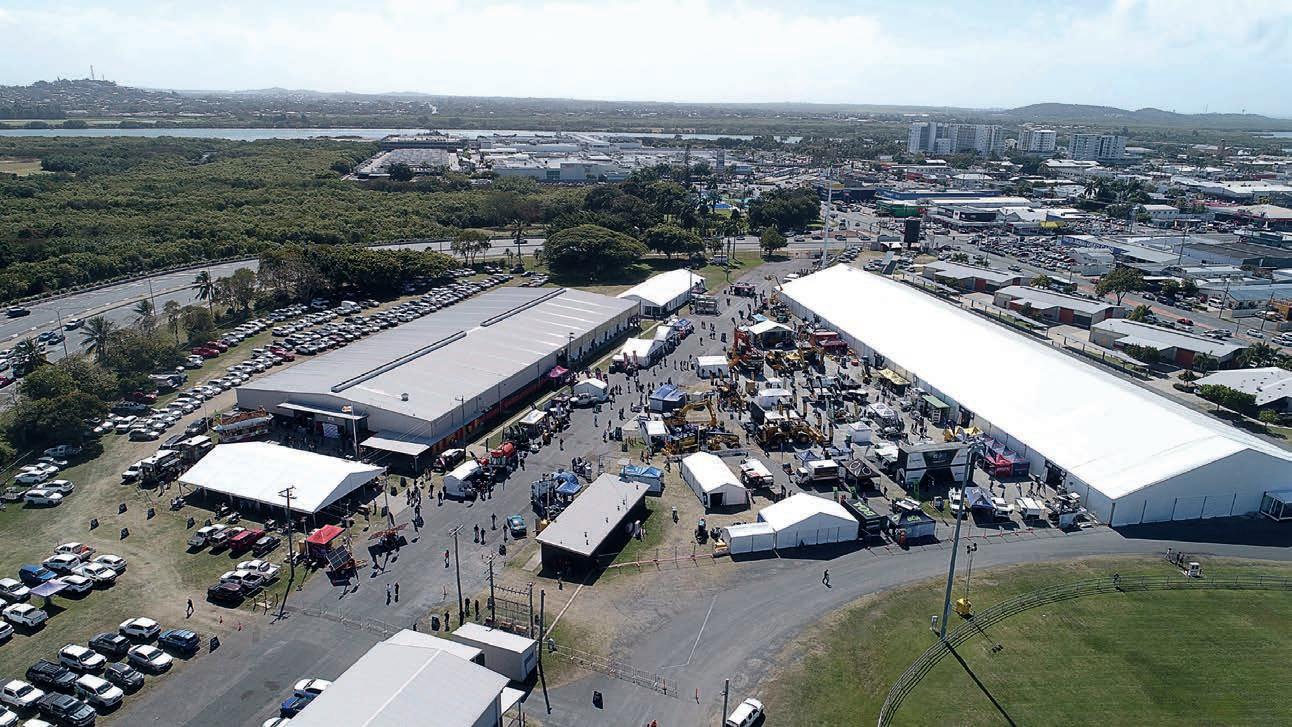
can see them, in an environment that encourages collaboration and discovery”.
The calibre of companies confirmed for the outdoor space highlights the strength of industry support. Exhibitors including Hastings Deering, Liebherr Australia, Hitachi Construction and Machinery, Epiroc and Ford Australia will be on-site, presenting equipment and technologies designed to enhance performance while supporting higher safety standards across operations.
Beyond the exhibition grounds, QME’s conference program reinforces the event’s forward-looking agenda. Expert-led sessions will explore environmental, social and governance priorities, mine rehabilitation, productivity strategies and emerging industry trends.
Industry backing for the event also remains strong, with the Bowen Basin Mining Club returning as an association sponsor.
According to the club’s director, Jodie Currie, QME provides a powerful platform to sustain industry momentum and celebrate progress.
“Queensland’s resources sector contributes over $115 billion to the
Queensland economy and supports more than 549,000 jobs, so mining is a huge part of who we are,” Currie said.
“Queenslanders have plenty to be proud of when it comes to leading the sector in technology and innovation, and QME is the perfect showcase for that.”
The biennial exhibition acts as a focal point for connection and reflection, particularly valuable during periods of operational or market uncertainty.
“It’s something everyone looks forward to every two years,” Currie said.
“It creates a hub of conversation and activity, and when the industry is facing challenges, it becomes even more important to come together, showcase innovation and keep those conversations going.”
According to Currie, a defining feature of QME is its openness to robust discussion. The conference program encourages honest dialogue on complex issues, recognising that transparency is essential to progress.
“We don’t shy away from tough topics,” Currie said.
“The industry doesn’t gain anything from being siloed. Collaboration and cross-industry learning are
engineers and contractors from across Australia and overseas are set to attend
what will strengthen us long term.” QME also maintains close ties to the communities that support and host mining operations. The 2026 event will partner with BHP Mitsubishi Alliance (BMA) CQ Rescue as its charity partner, highlighting the critical link between mining activity, emergency response services and regional wellbeing across central and north Queensland.
“For an industry that operates in remote and high-risk environments, supporting the broader ecosystem around mining is critical,” Currie said. “Whether it’s safety, innovation or community partnerships, it all contributes to a stronger, more resilient sector.”
From major equipment demonstrations to strategic industry dialogue, QME continues to evolve as more than just a trade exhibition.
It is a platform dedicated to strengthening safety leadership, sharing practical solutions and shaping a confident, responsible future for Queensland mining.
Get your tickets: www. queenslandminingexpo.com.au/ attendee-enquiries/
PERTH WILL HOST THE MINING INDUSTRY’S NEXT BIG GATHERING THIS SEPTEMBER, WITH TICKETS NOW AVAILABLE FOR WA MINING 2026.
The Western Australia Mining Conference and Exhibition (WA Mining) returns to Perth this September following a record-breaking 2025.
Held at the Perth Convention and Exhibition Centre, WA Mining 2025 attracted more than 5500 visitors across two days, cementing the event’s reputation as one of the state’s most important gatherings for the mining and resources sector. With over 155 exhibitors showcasing technologies, equipment and services across the entire mining value chain, the show floor became a collaborative hub for practical business discussions and insights.
Industry leaders used the event to highlight the scale and strategic
for global change – especially in this era of decarbonisation and energy transition.”
The conference program reflected these priorities, featuring keynote presentations, panel discussions and sessions examining the future of mining in Western Australia and beyond. Speakers explored themes including decarbonisation, sustainability, technological advancement and workforce diversity, all while emphasising the need for continued collaboration across the sector.
Department of Mines, Petroleum and Exploration deputy director general resource and environmental regulation Andrew Chaplyn reinforced the importance of building a
companies are already translating these ideas into real-world solutions – with businesses presenting technologies designed to tackle everyday operational challenges, from automation and digitalisation to safety and sustainability.
Major mining companies and technology leaders also used the event to showcase their ambitions for the future. Fortescue reaffirmed its commitment to accelerating decarbonisation across the global mining sector, while Tesla outlined plans to support the rollout of fully electric fleets at mine sites across Australia.
The strong turnout and high level of engagement throughout the event confirmed WA Mining’s growing
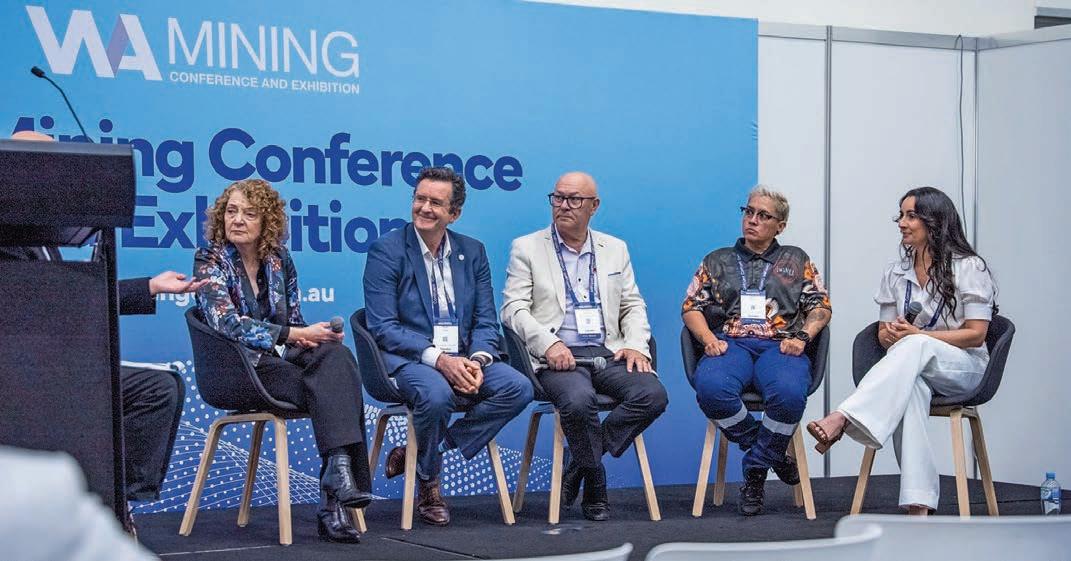

The upcoming edition is expected to build on the success of last year’s show, again bringing together thousands of industry professionals, including mine managers, engineers, procurement specialists, contractors, consultants and business owners.
Visitors can expect a dynamic exhibition floor featuring interactive demonstrations, live equipment displays and hands-on technology showcases, giving attendees the opportunity to see emerging solutions in action.
The event will also feature the Mining Pavilion, a dedicated space designed to connect visitors with major mining companies such as Fortescue and Glencore, and highlight projects shaping the future of Western Australia’s resources sector.
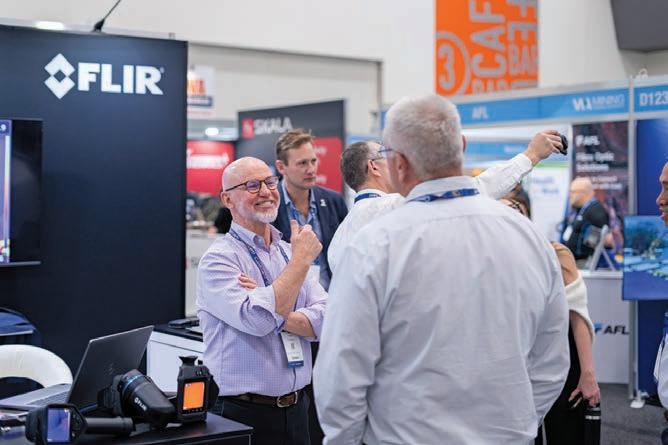
Rebecca Todesco said WA Mining has become a key platform for the industry to come together, share ideas and create opportunities.
attendees alike, and we’re looking forward to another fantastic event.”
Several major companies have already secured their places on the 2026 exhibition floor, including 3M, Blackwoods, Treadwell Group, CRC Industries, Vulcan Steel, REMA TIP TOP and Dodge Industrial – an early indication that this upcoming edition will once again attract strong industry support.
For suppliers, WA Mining provides direct access to qualified buyers and key stakeholders operating across Western Australia’s mining industry.
For attendees, it offers a unique opportunity to explore the technologies, partnerships and ideas that will shape the next chapter of mining in the state.
Alongside the exhibition, the conference program will once again provide insights from industry leaders, offering perspectives on global trends, investment opportunities and the role Western Australia will play in the evolving mining landscape.
With the past two shows selling out, the event continues to demonstrate its relevance and value to the state’s mining community. Prime Creative Media show director – mining events
“We’re thrilled to invite the key players of Western Australia’s resources sector back to Perth for WA Mining,” Todesco said.
“The city will become a buzzing hub of innovation and progress as the state’s industry unites for two days of networking, knowledge-sharing, and celebrating the excellence across the sector.
“We’re already seeing a strong response from exhibitors and
As momentum continues to builds toward September, industry professionals are now being encouraged to secure their tickets early and be part of the conversations, connections and innovations that are driving Western Australia’s mining sector forward.
Tickets for WA Mining 2026 are now available. Reserve your spot today. For more information, visit waminingexpo.com.au
BHP has taken a solid bite out of the artificial intelligence (AI) apple, and key to the Big Australian’s growing appetite is the technology’s influence on improving safety across operations.
Earlier this year, the miner took AI usage from the ‘future concept’ basket and placed it firmly into the here and now, with chief technical officer Johan van Jaarsveld clarifying its position for the company.
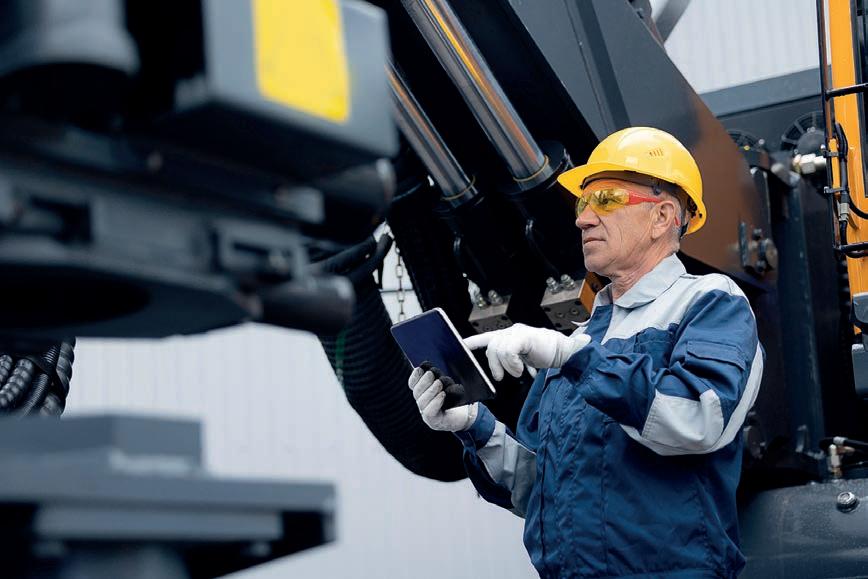
assessments that help teams respond sooner and prioritise controls.
“Our focus is on applying it in practical, governed ways that support our teams in achieving safer, more productive and more reliable outcomes,” he said.
“It is increasingly part of how we run our operations.”
As van Jaarsveld indicated, AI is rapidly moving beyond experimentation and becoming part of day-to-day operations across BHP’s global portfolio, applied at various points along the value chain, with safety a consistent thread running through its use.
Whether in finding resources, supporting processing plant operations or improving reliability across large, interconnected systems, the focus is on giving teams better information so they can make decisions faster and work in lower-risk conditions.
“[AI] is supporting safety outcomes for our teams on the frontline,” BHP said.
For example, a voice-to-text mobile application allows employees to log hazards instantly while in the field. Reports are automatically geotagged and linked to historical incident data, providing rapid digital risk
AI has also made a difference in areas such as resource discovery, running processing plants, and improving reliability from pit-to-port.
While AI is enhancing efficiency and reliability across the mining value chain, challenges remain.
BHP said one such obstacle comes in the form of natural variability, particularly changes in the type and hardness of ore, which can affect how smoothly material moves through a processing plant.
In exploration, AI and advanced analytics are being used to help geoscientists analyse large volumes of geological data more efficiently, supporting better decision-making and helping reduce exploration risk, while decisions on where and how to invest remain with people.
For example, computer-vision systems are used in operations in Chile and Western Australia to help detect issues such as spillage, oversized material or foreign objects on conveyors.
BHP is also ramping up reliance on AI to meet “growing demand in a more complex world”.
With demand for copper and other critical minerals driven by
electrification, this presents the challenge of bringing new supply online, which often involves long development timeframes, complex operating environments and significant execution risks.
Emerging technologies, including AI, are increasingly being used at BHP to help teams manage variability, anticipate issues earlier and support consistent performance across large, interconnected operations.
BHP has been applying AI and advanced analytics across its operations for several years, with use increasing as data quality, platforms and internal capability have improved.
As this work continues, teams across the business are identifying further opportunities where AI can support day-to-day operations, sharing what works and extending proven approaches where appropriate, supported by strong governance and clear accountability.
“AI is helping us understand our operations in new ways and act earlier, with greater confidence,” van Jaarsveld said.
“What excites us is the scale of opportunity ahead as we continue to apply these tools responsibly, learning, improving and expanding what’s possible across our operations.”

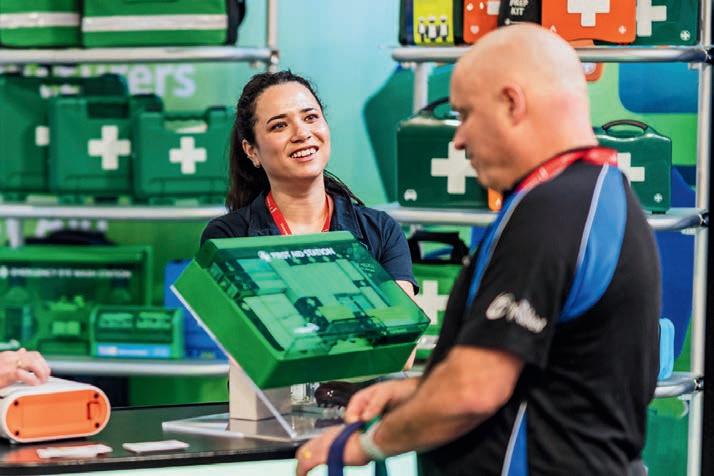
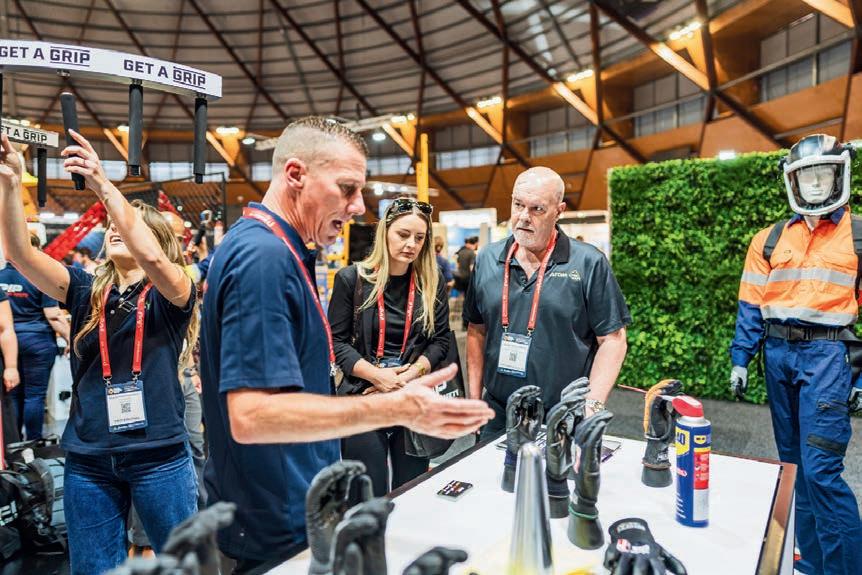

Following on from last year’s success, the 2026 QMIHSC is set to be another unmissable event.
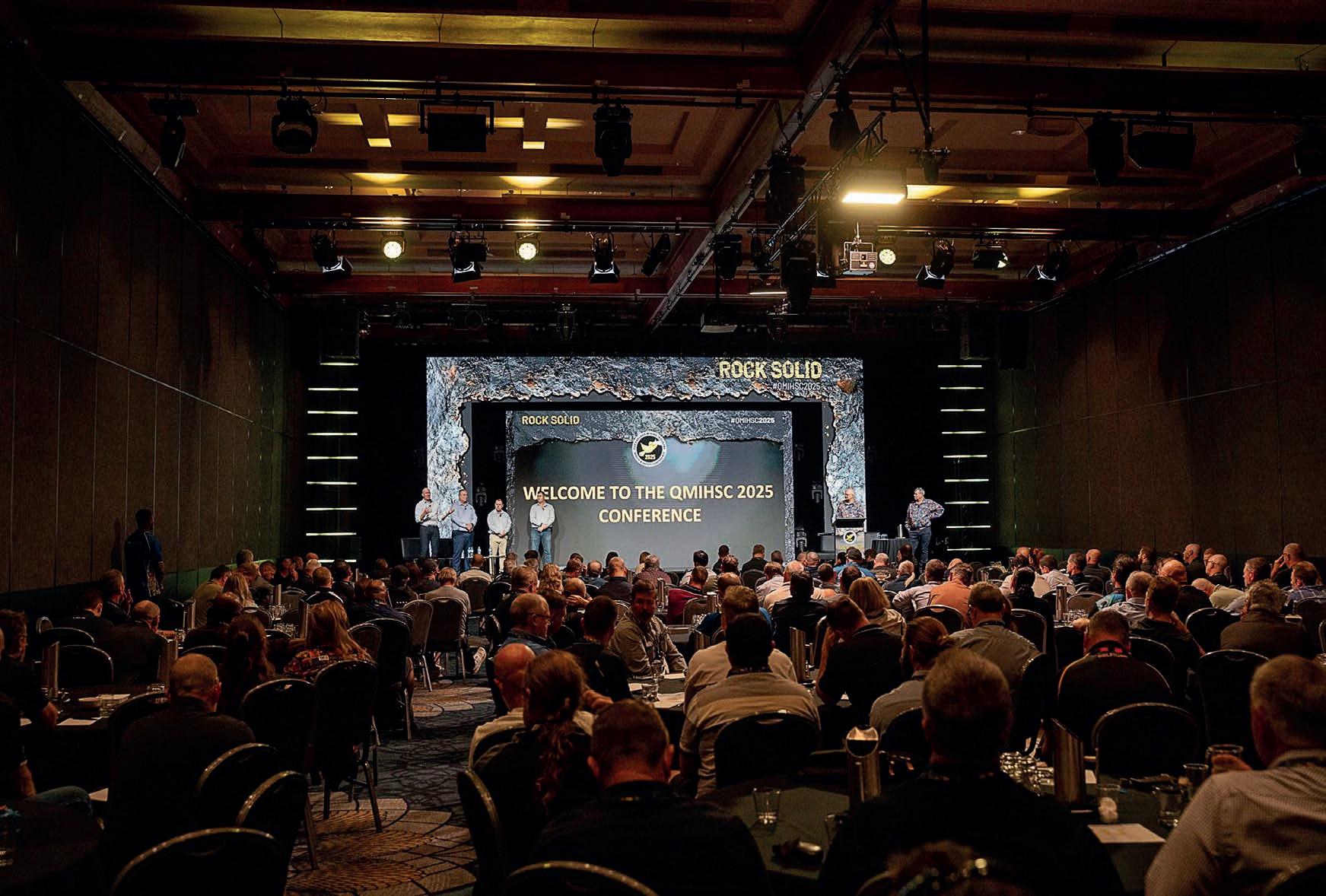
AUSTRALIA’S PREMIER MINING SAFETY CONFERENCE IS SET TO TAKE OVER THE GOLD COAST ONCE AGAIN IN AUGUST, THIS
The mining sector’s value to the Australian economy can hardly be overstated. Yet when the Queensland Mining Industry Health and Safety Conference (QMIHSC) returns to familiar ground later this year, it will challenge decisionmakers to reconsider what truly drives the industry – and the nation – forward.
Or, more appropriately, who drives the industry.
To be held at the Star Gold Coast from August 16–19, the 37th annual QMIHSC will bring together industry leaders, safety professionals and frontline workers from across the mining and resources sector under the timely theme, ‘Our greatest resource, our people’.
According to conference chair Stephen Watts, the event is designed to push the industry to recognise and prioritise the people who ultimately power it.
“The conference will aim to not only challenge [attendees] but also provide valuable tools to take
back to use in the workplace,” Watts said.
The event will deliver “spirited and relevant” keynote presentations, interactive workshops and industryled sessions. Opportunities to collaborate, share innovations and reflect on lessons learned from incidents will sit alongside networking events with industry leaders, sponsors and suppliers. The conference will also support industry charity Miners’ Promise, with proceeds from an informal dinner appeal auction on August 17 going to the not-for-profit organisation, which provides practical, emotional and financial assistance to mining, energy and resources sector families in times of crisis.
“We encourage [visitors] to please support this worthwhile program,” Watts said.
With QMIHSC only a couple of months away, Watts is also asking professionals to help make the conference a success, with speaking opportunities and nominations for
innovation and health awards open ahead of the event.
“For those who have attended in the past, please promote the conference within your network so we continue to welcome new delegates to share in this important learning experience,” Watts said.
The committee is working to deliver a program tailored to the sector’s evolving challenges, while continuing to create a space for meaningful learning and collaboration across the industry.
“We are excited to be delivering another fantastic conference and look forward to welcoming [delegates] in August,” Watts said.
Komatsu is set to return as the principal sponsor for the 2026 event. This, according to Watts, builds on the success and momentum of last year’s conference and its theme, ‘Rock solid – The foundations of safety excellence’, which encouraged the industry to revisit the core principles underpinning safe operations.
The 2025 iteration sparked candid conversations about why the mining industry’s future depends on the strength of its foundations. The program leaned into reflection, urging the industry to revisit basic principles that have long underpinned safe operations: proactive hazard identification, strong leadership and clear, consistent safety systems.
Driving those insights home were the keynote sessions, which included some of the biggest names in the safety conversation.
Forensic engineer Sean Brady unpacked the systemic failures that often sit behind major incidents, urging organisations to look beyond immediate causes and address deeper operational weaknesses.
Safety advocate Helen Fitzroy brought a powerful personal perspective to the stage, sharing the story that continues to drive her work in pushing for stronger accountability and safer workplaces across the resources sector.
one of the industry’s most persistent challenges, examining the human and operational impacts of fatigue and offering practical strategies for better management in complex shift environments.
Meanwhile, internationally recognised safety thinker Sidney Dekker challenged traditional compliance-driven models, encouraging people to rethink how safety systems are designed and how organisations respond when things go wrong.
Across the program, the discussions reinforced a central message: meaningful safety improvements rarely come from technology alone, but from
the decisions, behaviours and cultures that shape the way work is done.
Last year’s QMIHSC reminded attendees that the future of safety isn’t just about what’s next, it’s about strengthening what’s always been there. While last year’s program challenged the industry to revisit the foundations of safety, the 2026 conference will take the same conversation a step further by asking how those principles translate into safeguarding and empowering the people at the heart of the sector.
“We are preparing a tailored program and keynote speakers with content relevant to the industry’s needs to protect our greatest resource,” Watts said.
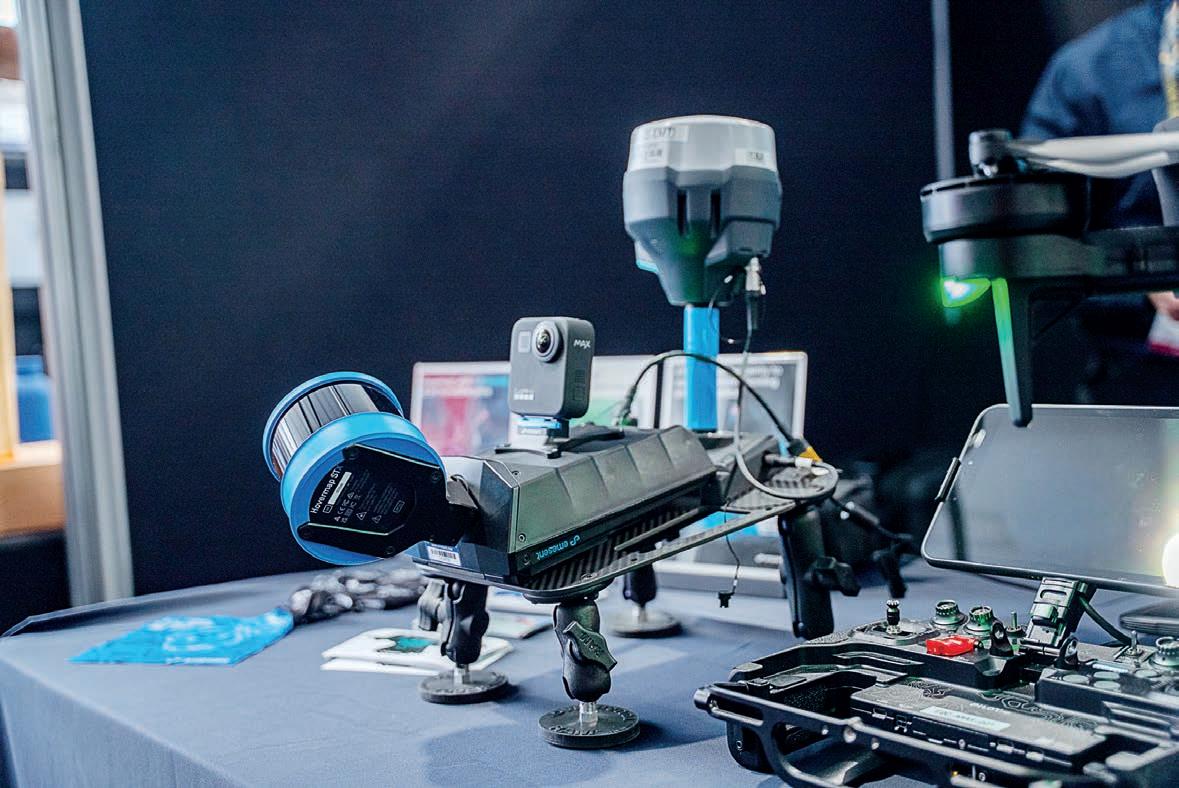

Workplace Health & Safety Show (WHSS)
Queensland has just wrapped at Brisbane Convention & Exhibition Centre, marking a successful return to the state after three years, and reinforcing the growing demand for practical, on-theground safety solutions.
With strong representation from high-risk industries including mining, the Queensland event brought together safety leaders, regulators and suppliers to explore how workplace risks are evolving – and how organisations are responding in real time.
On the show floor, more than 130 suppliers showcased technologies and systems designed to improve visibility, reduce incidents and strengthen safety outcomes across complex operations.
A clear focus on innovation emerged, particularly in areas such as real-time monitoring, fatigue management and psychosocial risk, highlighting the pace at which the industry continues to shift.
That momentum now carries into the next event, with WHSS heading to Melbourne on May 20–21 at the Melbourne Convention & Exhibition Centre. The Victorian event is set to be the largest edition of the show to date, with 200 plus suppliers exhibiting a broad range of solutions designed to support safer, more compliant and more resilient workplaces.
From wearable safety tech and connected platforms through to workforce wellbeing tools and training programs, the exhibition floor will bring together practical solutions that organisations can implement immediately.


Key areas of focus will include wearable safety technology and real-time monitoring, fatigue management and workforce wellbeing tools, psychosocial risk and mental health solutions, site safety systems and compliance-driven platforms, and training and capabilitybuilding programs.
For organisations operating in high-risk sectors such as mining, construction and logistics, the relevance is clear. As expectations continue to evolve, there is increasing pressure to manage both physical and psychological risk, while maintaining productivity across dispersed teams.
Alongside the exhibition, the Melbourne event will feature a comprehensive education program, with more than 40 CPD-accredited seminars delivered by over 70 speakers from across industry, government and leading organisations. Sessions will cover psychosocial safety and managing risk, leadership accountability and safety culture, regulatory updates and what they mean in practice, and using technology to improve safety performance.
A defining theme – both in Queensland and leading into Victoria – is the shift from policy to implementation. The focus is on giving teams practical, actionable solutions they can take back into their workplaces and apply immediately.
Visitor registrations for the Melbourne event are already strong and come from a diverse cross-section of industries, including manufacturing, logistics, mining, construction, government and healthcare.
This broad representation reflects the universal importance of workplace health and safety, and the shared challenges many organisations are working to address.
For mining operators and other high-risk industries, Workplace Health & Safety Show Victoria offers a valuable opportunity to stay ahead of regulatory change, explore emerging technologies and connect with peers navigating similar challenges.
Workplace Health & Safety Show is part of a national series, with the next event taking place in Sydney on October 21–22 at ICC Sydney.
EVENT SUBMISSIONS CAN BE EMAILED TO PREALENE.KHERA@PRIMECREATIVE.COM.AU

AMR Safety Summit 2026
Perth Convention and Exhibition Centre, WA MAY 21–22
The AMR Safety Summit brings together leaders, frontline professionals and technology providers for discussion, practical insights and demonstrations aimed at making mining operations safer and smarter. It is ideal for mine safety and health professionals, operations managers and site leaders, contractors and suppliers delivering safety solutions, regulators and compliance teams, and industry stakeholders interested in technology-driven safety solutions.
• www.amrsafetysummit.com
Mine Electrical Safety Conference
Queensland 2026
Sofitel Brisbane Central, QLD JUNE 1–3, 2026
The 2026 Mine Electrical Safety Conference, hosted by Mine Electrical Safety Association, is Australia’s premier forum dedicated to electrical safety in mining and quarry operations. Now in its 36th year, the conference brings together workers, regulators, contractors and suppliers to share technical insight, best-practice updates and innovations in electrical hazard management – while fostering industry-wide networking and safety leadership.
• www.absoluteevents.eventsair.com/ mescqld2026/
Future of Mining Australia
Crown Perth, WA JUNE 16–17, 2026
Future of Mining Australia 2026 is an industry conference focused on helping operators navigate uncertainty across the
mining sector. As geopolitical tensions, shifting trade policies, and net-zero pressures reshape operations, the event unites miners, technology providers, and experts to explore decarbonisation, automation, electrification, safety, and workforce solutions driving resilience and long - term performance.
• www.future- of- mining.com/home
Health, Safety, Environment & Community Conference and Awards 2026
Rydges Resort Hunter Valley, NSW AUGUST 2–5, 2026
The 2026 NSW Mining HSEC Conference and Awards brings together industry leaders, professionals, and decisionmakers to explore operational safety, workforce wellbeing, environmental management, and community engagement. Featuring expert panels, case studies, and networking opportunities, the event promotes leadership, professional development, and collaboration.
• www.nswmining.com.au/events/ health - safety - environment- communityconference - and - awards -2026/
Mine Health and Safety Conference 2026
Pan Pacific Perth, WA OCTOBER 5–7, 2026
The Mine Health and Safety Conference 2026, organised by AusIMM, is a leading industry forum dedicated to improving health, safety and wellbeing across mining operations. Attendees, including safety professionals, site leaders and regulators, will explore risk management, critical controls, ergonomics, equipment safety and workforce wellbeing. The event features
expert panels, technical sessions, and networking opportunities.
• www.ausimm.com/conferences - andevents/mine - health - and -safety/
International Mining and Resources Conference + Expo (IMARC) 2026
ICC Sydney, NSW OCTOBER 27–29, 2026
IMARC is one of Australia’s premier mining industry gatherings, bringing together global industry leaders, investors, technology providers and policy-makers under one roof.
Attendees will explore topics from project development and investment to ESG, operational excellence, mine digitisation, and sustainable mining practices across a packed -out conference program and vast exhibition show floor.
IMARC provides a unique opportunity to discover innovations shaping the future of mining – alongside networking with peers from more than 120 countries.
• www.imarcglobal.com
Sofitel Brisbane Central, QLD NOVEMBER 17–19, 2026
Ground Support 2026 brings together mining professionals, geomechanics experts and underground-mining practitioners to focus on ground support design and rockfall mitigation – a critical safety concern in underground operations. Themes include mechanised support installation, support for dynamic conditions, corrosion-resistant systems, instrumentation & monitoring, numerical modelling and case studies. The symposium offers technical papers, networking, professional-development credits and exhibition-level engagement.
• www.acggroundsupport.com/








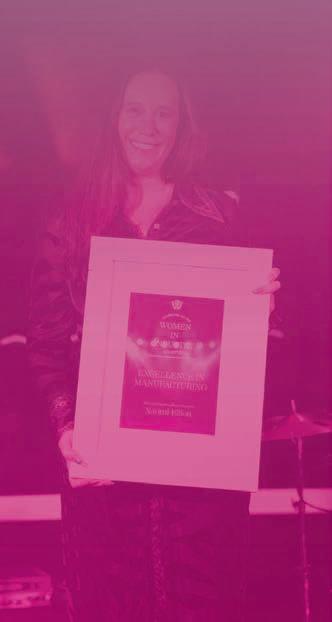






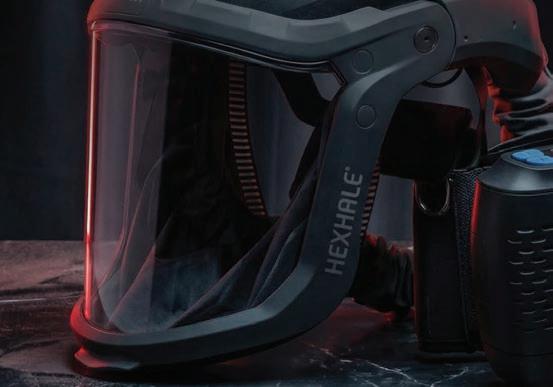

RTC5000 POWERED AIR PURIFYING RESPIRATOR COMPLETE SYSTEM



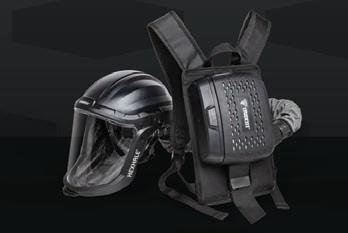
RTC5002
PAPR COMPLETE SYSTEM WITH BACKPACK