rolling bottle test, according to EN 12697-11. In the rolling bottle test method, the affinity between aggregates and bitumen is generally determined by applying different rolling times up to 96 hours, which allows the plotting of the affinity versus rolling time curves.
In a case study at Iterchimica, the affinity between three different aggregate sources and a PEN 50/70 bituminous binder with and without an anti-stripping agent was investigated by means of a boiling test. The additive Iterlene PE-31 was of an aminobased anti-stripping agent. This was added to the hot bitumen with the dosage of 0.3% (by weight of the bitumen). In the boiling water stripping test, the affinity is investigated by determining the degree of bitumen coverage on uncompacted bitumen-coated aggregates. According to EN standards (note 3), the boiling water stripping test is an objective test and has high precision. The test is usually carried out on the 8mm to 11.2mm fraction, where the coated aggregates are immersed in boiling water for 10 minutes. The aggregates are then removed from the boiling water and maintained at ambient temperature in order to dry.
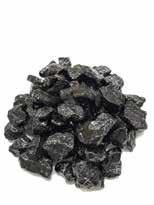
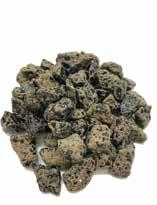
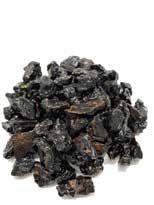
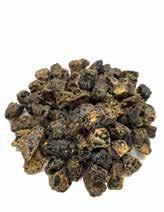
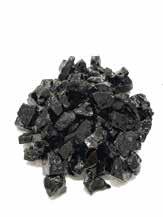
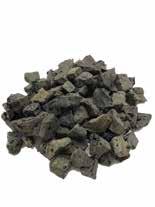
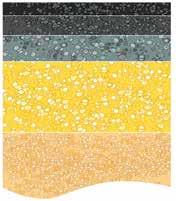
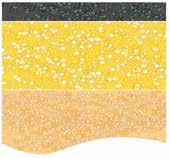
Finally, the same as any affinity test, the degree of bitumen coverage on the aggregates is determined by pavement experts, done according to the standard guide. In the images of the aggregates in this article, the top row has the anti-stripping agent and the bottom row has none. Meanwhile, Table 1 summarises the determined bitumen coverage.
According to the results, it can be seen how the presence of the anti-stripping agents could improve the degree of bitumen affinity which plays a key role in any asphalt’s durability.
As we have noted here, anti-stripping agents are used mainly to promote the adhesion properties of bituminous binders. However, through academic and field investigations, it has been demonstrated that anti-stripping agents can improve the resistance to water sensitivity of asphalt mixtures. With respect to water sensitivity, generally EN 12697-12 or AASHTO T 283 are applicable.
In an academic study⁶, Iterlene 400 IN was used to investigate the effect of the antistripping agent on the water sensitivity of a surface-course asphalt mixture. The study was carried out according to AASHTO T 312 method in terms of tensile strength ratio (TSR) where asphalt specimens are divided into two subsets of dry-conditioned and wet-
DIFFERENT WEATHER; DIFFERENT MIX
When constructing new roads, choose a high-quality binder and a balanced mix of aggregates recommended for local weather conditions. Different climates and regions require specially formulated aggregates and binder content to allow pavements to function optimally and last longer without wearing down. Use a preventative sealant layer based on traffic volumes. This could be a fog seal, a seal coat, micro-surfacing or a thin overlay of hot-mix asphalt. Finally, the simplest and most cost-effective way to prevent raveling is to keep the streets clean.
conditioned.
The dry-conditioned specimens are maintained generally at an ambient temperature of 25°C. Meanwhile, the wet subset is maintained in hot water at 40°C for three days. According to the results of this study, shown in figure 2 (reconstructed from⁶), the proper dosage of the additive improved the TSR value from 75% to 91%, where the minimum specification limit was 80%.
In a similar study, the aggregates shown in figure 1 were subjected to a water-sensitivity test, according to the European standard testing method EN 12697-12. The mixture
was a surface-course, dense-graded mixture where the aggregate-particle distribution complied with the Italian specifications and contained the steel slags and calcareous aggregates. The test specimens were manufactured using 50 blows (each face) of the Marshall compactor. The manufactured specimens were firstly studied for volumetrics, including air void content and bulk density, in order to ensure consistency of the results.
The specimens were divided into two subsets of dry and wet conditioning. During the wet conditioning, the specimens were maintained firstly at ambient temperature for 24 hours, for curing. Then a vacuum system was applied for a determined time while the specimens were submerged in water at 20°C. The specimens were then conditioned in water at 40°C for 72 hours.
Both dry- and wet-conditioned subsets were subjected to indirect tensile tests at 25°C where the wet subset was conditioned for two hours in water at 25°C. According to the results, the mixture containing Iterlene PE-31 showed an 8% superior TSR value compared to the reference mix without additive.
ABOVE: 1. Basalt aggregate - with anti-stripping agent 2. Lime aggregate - with anti-stripping agent
3. Slag aggregate - with anti-stripping agent 4. Basalt aggregqate - no anti-stripping agent
5. Lime aggregqate - no anti-stripping agent 6. Slag aggregqate - no anti-stripping agent
Resistance
Specification limit = 80
WATER SENSITIVITY
According to the literature, besides the type of bitumen and aggregates, the effectiveness of anti-stripping agents on the resistanceto-moisture susceptibility is also dependent on the type of the asphalt mixture. Both lab-scale studies and field experience show that open-graded asphalt mixtures (porous asphalts) and gap-graded asphalt mixtures (stone mastic asphalts) with greater in-situ air voids are more susceptible to water sensitivity compared to dense-graded asphalt mixtures. Hence, the presence of anti-stripping agents technically plays a crucial role in pavement’s water sensitivity and durability.
susceptibility - AASHTO T 283
However, it is always suggested that the choice of the type and the quantity of the additive is determined within prequalification lab-testing. n
*Iterchimica, based near Bergamo in northern Italy, is a global producer of high-tech additives and sustainable technologies for asphalt pavements: www.iterchimica.it.
**ADR is an acronym of the French for the “European Agreement concerning the International Carriage of Dangerous Goods by Road”, a United Nations treaty dating back to 1957 regarding the governance of international transport of dangerous goods by road.
UNRAVELLING RAVELING
References:
[¹] W. Curtis, C. (1990). A literature review of liquid anti-stripping and tests for measuring stripping. SHRP - A/UIR - 90 – 016.
[²] Vaghela, K., Chitaria, V.J., Mehta, P. (2018). Evaluation of organosilane-based asphalt additive for flexible pavement. IRJET (5), pages 1194-1197.
[³] Zhua, C., Tanga, J., Zhang, H., Duan, H. (2019). Effect of liquid anti-stripping agents on moisture sensitivity of crumb rubber modified asphalt binders and mixtures. Constr Build Mater (225), pages 112-119 https://doi. org/10.1016/j.conbuildmat.2019.07.173.
[⁴] Hamedi, H., Tahami, S. A. (2017). The Effect of Using Anti-Stripping Additives on Moisture Damage of Hot-Mix Asphalt. Int J Adhesion and Adhesives. https://doi. org/10.1016/j.ijadhadh.2017.03.016.
[⁵] Watson, D., R. Moore J., J. Taylor, A. (2012). Effectiveness of Anti-Strip Agents in Asphalt Mixtures. FHWA-GA-12-0623.
[⁶] Nazirizad, M., Kavussi, A., Abdi, A. (2015). Evaluation of the effects of anti-stripping agents on the performance of asphalt mixtures. Constr Build Mater (84), pages 348-353 https://doi. org/10.1016/j.conbuildmat.2015.03.024.
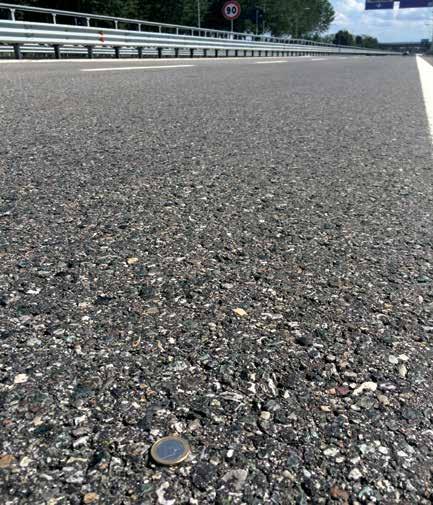
Anti-stripping agents promote adhesion between aggregate and bitumen. The loss of this adhesion is called stripping. When stripping progresses and the binder is aged, the aggregates lose their bonds and may become dislodged from the pavement surface, leading to a condition called raveling.
Asphalt raveling, therefore, is the progressive disintegration of a hot-mix asphalt layer from the surface downward as a result of the dislodgement of aggregate particles. Asphalt raveling results in loose debris on the pavement and roughness, as well as water collecting in the raveled locations which can result in vehicle-hydroplaning and loss of skid resistance.
The causes of raveling can be numerous and include the following:
• Loss of bond between aggregate particles and asphalt binder because of:
n A dust coating on the aggregate particles that forces the asphalt binder to bond with the dust rather than the aggregate;
n Aggregate segregation: If fine particles are missing from the aggregate matrix, then the asphalt binder is able to bind only the remaining coarse particles at their relatively few contact points;
n Inadequate compaction during construction: High density is required to develop sufficient cohesion within the asphalt mix.
• Mechanical dislodging by certain types of traffic (studded tyres, snowplough blades or tracked vehicles).
Raveled pavement can be properly repaired when the root cause of the damage is determined. Pavement repair strategies relating to raveling generally fall into two categories. If the raveled pavement area is small and appears localised, then the repair strategy can be to remove the raveled pavement and patch the hole. However, if the raveled pavement area is large, it could indicate general asphalt failure. Repair strategy is then to remove the damaged pavement and overlay.
Some of this information is courtesy of Pavement Corporation,founded in 1995 and based in the US state of Maryland.The company specialises in asphalt repair and maintenance for roadways,driveways,walkways,parking lots and sports courts.For more information, visit https://pavementcorporation.com.
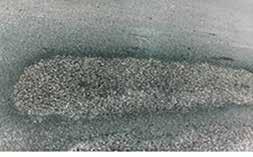
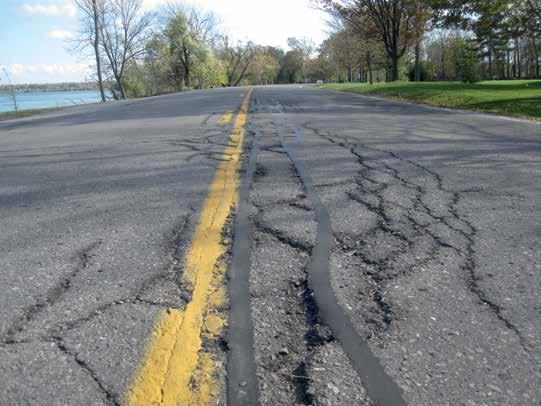
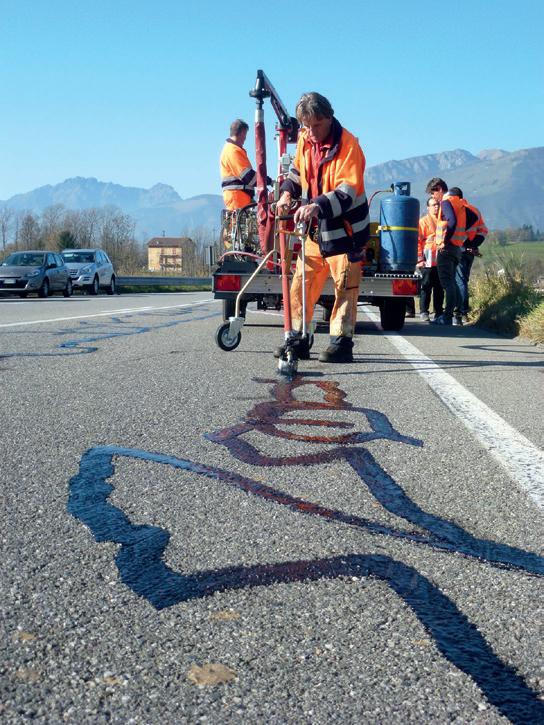
Stripping along a road in the Lombardy region of Italy (image courtesy Iterchimica)
From cracked asphalt and potholes to irreversible deterioration of surfaces, there are financial and safety repercussions to not repairing or maintaining a damaged road. Plus, road maintenance professionals face more year-round challenges than ever because of increased road usage, more severe weather events, limited agency and local authority budgets, not to mention constantly evolving public expectations of a road network.
A visual pavement-condition survey can assess the extent of various types of pavement damage. The overall goal of these surveys is to ensure the optimal use of resources by assisting road authority decision-makers in making informed decisions.
However, this manual process can, generally speaking, be expensive, errorprone, slow, resource-intensive and, therefore, conducted infrequently. Plus, with the existing decision-making tools currently in use, maintenance funding is typically insufficient for long-term sustainable road asset management.
Since manual road pavement-condition surveys can be difficult and costly, Vaisala engaged an independent consultant to compare the performance of its automated RoadAI tool against human assessment. The goal was to determine whether automated tools can indeed make road surveying, maintenance and planning more efficient and cost effective.
As municipalities and highway authorities seek better methods to assess their network of roads, high-tech tools are increasingly deployed to simplify and improve pavement inventory and management by thoroughly and objectively evaluating pavement assets. For example, Vaisala, a global supplier and
AUTOMATED ROAD SURVEYING: COST EFFECTIVE?
A study by the Finnish weather and measurement firm Vaisala illustrates that automated surveying tools can provide a comprehensive and objective analysis of pavement conditions for enhanced road management. Tuomas Keränen* explains
provider of environmental and industrial measurement, has created an artificial intelligence-powered tool that essentially replicates the human visual surveying process. It uses high-quality video data, computer vision and a reliable automated road-survey methodology.
RoadAI uses a combination of standard smartphone cameras, connectivity solutions from vehicles and computer vision algorithms with data fusion. The solution collects pavement data, quantifies the
condition of pavement assets and quickly and accurately assesses pavement conditions.
In the UK, Vaisala commissioned BMJC Consulting to undertake a detailed analysis of the road-condition data collected using the company’s RoadAI technology.
PROJECT BACKGROUND
Phase 1 of the project looked at the correlation between the RoadAI data and the United Kingdom Pavement Management System (UKPMS) CVI (coarse visual inspection) data collected by a local county council in England (see box UKPMS). Two parallel data sets were generated. The CVI data was collected by trained CVI inspectors between 14 October and 18 December 2019. The AI data was collected at the time of the
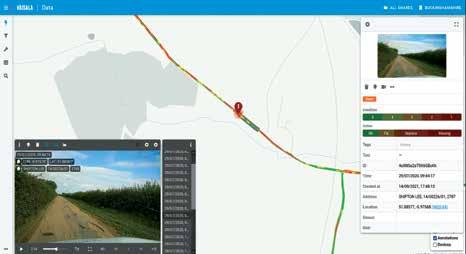
ABOVE: Vaisala’s RoadAI identifies road defects and other features and objects in the environment using just a smartphone to collect video, without the need for the presence of a second person in the vehicle (image courtesy Vaisala)
LEFT: RoadAI provides advanced analysis of the video data, accurately classifying pavement for more than 20 categories of defects and patches to support strategic programming and asset management (image courtesy Vaisala
CHOOSE BETTER COVERAGE WITH
CAT® COMMAND FOR COMPACTION
Break from the status quo. Get up to 60% better coverage with Cat® Command for Compaction. The innovative operator-assist technology delivers consistent results with uniform compaction, even with multiple operators. Command controls the speed, direction, steering and vibration system of the soil compactor for a consistent result. Trust the quality of Cat construction products to bring you the latest paving solutions. Your first step towards autonomous compaction — that’s the power of choice. Visit cat.com/command-compaction-gb to learn more.
CVI survey to provide the most optimal comparison possible.
The report analysed about 15,000 sections of road across all data collected, with the sections spanning across B, C and U class roads and all matching survey sections were analysed. Each CVI data file was checked against each of the AI data files to determine matching sections to enable a complete list of sections for the comparison exercise. The analysed sample size equates to 10,777 matching sections covering nearly 5,000km in road length.
A high-level analysis shows there is an overall length difference of 0.5% between the AI data and the CVI data, which is well within the tolerance for any chainage-based survey. The UKPMS pass marks for the inspector training on both defect lengths and extents recorded is +/- 5%.
The road class split is well aligned between both sets of data as well. The largest difference was across the U road network (0.9%), while both the B (0.1%) and C class (0.0%) networks are closely aligned.
There are three standard pavementcondition reporting categories in the UKPMS CVI process: structural, edge and wearing course. The structural condition index is a measure of the damage to a pavement caused by traffic and loading.
Deterioration of the road edge is not only hazardous but can lead to more extensive deterioration of the entire road. CVI surveys record this defect and the edge-condition index is calculated from defects that measure the deterioration of the road’s edge.
Meanwhile, the wearing course refers to the top layer of a pavement structure and its condition index looks at the surface’s ability to continuously prevent water from penetrating into the pavement structure. Each of the three pavement-condition indices are determined on a scale from 100 to 0, with the higher value corresponding to a theoretically “perfect” pavement.
The data was also refined to report four main condition bands: Red, High Amber, Low Amber and Green. These ranges were defined from the overall condition bands using the following scores:
• Green: <=40
• Low Amber: >40 to <55
• High Amber: >=55 to <70
• Red: >=70
Each condition band saw variations between the CVI and AI data sets. The difference between CVI and AI data in the Green condition band was -88.704km. The Low
In total, the CVI data sample is broken down as follows:
CVI Data Results
Structural Length 43.175km or 0.89% greater than or equal to 85.00
Edge Length 517.67km or 10.64% greater than or equal to 50.00
Wearing Course length
Overall CI length
476.799km or 9.80% greater than or equal to 60.00
844.591km or 17.35% of any condition index exceeded
In total, the AI data sample is broken down as follows:
AI Data Results
Structural Length 30.48km or 0.62% greater than or equal to 85.00
Edge Length 554.576km or 11.33% greater than or equal to 50.00
Wearing Course length 482.781km or 9.87% greater than or equal to 60.00
Overall CI length
880.093km or 17.99% of any condition index exceeded
Difference Between CVI and AI Data Results
- 9.92% -0.12%
Overall CI length 17.35% - 17.99% 0.63% difference in total
Amber difference was 20.461km, while the High Amber difference was 81.779km. Finally, the Red condition band difference between CVI and AI data was -40.1km.
The percentage difference between CVI and AI data across all the condition ranges is as follows:
• Green = -2%
• Low Amber = 64%
• High Amber = 50%
• Red = -5%
• Total = -1%.
REPORT CONCLUSIONS
The BMJC report found that RoadAI is at least as accurate as human inspectors: “The comparison against the overall section length is very accurate with an overall difference of 0.5% noted within the dataset. This result far exceeds any tolerance built into the UKPMS formal training and these results are clearly very good.”
The report also showed that the overall condition results “correlate well with defect peaks synchronised between both CVI and AI data sets”. When comparing the road class condition to the hierarchy, “the results are also very good and comparative”. Edge defects contribute to the highest percentage group in both data sets, with wearing course second and structural defects following. These data sets compare favourably.
The overall structural indices differ by 0.26%, the wearing course by -0.12% and the edge by -0.76%. The overall comparison difference between both data sets is -0.63%, a level of difference that would sit comfortably within the tolerances used in the UKPMS Visual Survey Accreditation Scheme.
Since the overall correlation between
the CVI and AI data sample is very closely aligned, the report concludes that there is indeed a high level of accuracy between the two sets of data, ultimately illustrating that AI-powered tools are a viable alternative to human visual inspections.
Surveys are traditionally conducted manually by human inspectors making evaluations of the road-surface condition and objectively reporting what they see. At the same time, inspectors can drive only 12kph during the surveying process. Road authorities often commission external, thirdparty agencies to conduct these surveys. But due to the demand for these services and the cost of the specialised equipment, including the equipment-carrying vehicle, these surveys can be difficult and costly to conduct.
Another issue for manual surveys is that the vehicles equipped with laser-scanning, Lidar and/or ground-penetrating radar technologies cannot be used on all roads due to width restrictions. In fact, authorities tend to use machine-based surveying technology only on priority routes, which make up only about 25% of the overall UK network.
Additionally, a limited number of companies provide road-surveying services, and these organisations are often booked during the dry weather season. Due to this constant demand, the specialised surveying equipment is expensive. Without a bottomless pit of funding, road authorities are restricted by how much of the road network they can financially afford to survey with advanced equipment every year.
To augment the limited machine-based surveying authorities are able to conduct, they have human inspectors visually evaluate the physical conditions of road pavements.
Around the globe, there are different processes for human visual inspections of the road.
As briefly touched on in the BMJC report, the UKPMS supports the management of scheduled maintenance through the monitoring of condition on UK local authority hard-paved areas, including roads. In the US, the Pavement Condition Index (PCI) is widely used in transportation civil engineering and asset management and many municipalities use it to measure the performance of their road infrastructure and their levels of service. In France, authorities use the M3 process to manually inspect roadpavement conditions.
While road authorities in each locale have devised different methodologies and processes to ensure the recording of defects on the road network is done in a systematic, repeatable way, the underlying methodologies and processes are similar. Typically, a team of two — one driver and one inspector — drives the road network. The inspector either sketches down on paper road-defect information or punches it into a software tool to record the defects for each 10m to 20m section of road driven.
Finally, post-processing the data to produce the report after inspection takes a significant amount of time. Clearly, this manual process is slow and subject to human error and delays, which further drain already limited resources.
Because these surveying professionals are trying to collect a significant amount of information from a moving vehicle on a live road, defects can be missed or misinterpreted. In fact, if two qualified professional engineers survey the same stretch of road, the likelihood that they will reach slightly different conclusions is high. While human inspections can be subjective, RoadAI serves as an objective solution.
As the BMJC report indicates, using RoadAI’s automated road-survey methodology is a viable, alternative solution to manual surveying since the difference between AI and human assessment is less than 1%.
Vaisala’s RoadAI tool leverages AI and computer vision to teach its software how to identify road defects and other features and objects in the environment using just a smartphone to collect video, without the need for the presence of a second person in the vehicle. Although RoadAI can pick up more information than its human counterparts, it is trained to work similarly to a human inspector.
UKPMS
UKPMS – United Kingdom Pavement Management System – is a standard for computer systems that supports the management of scheduled maintenance through the monitoring of condition on UK local authority hard-paved areas, including roads, kerbs, footpaths and cycle tracks. Any software platform that is UKPMS-accredited provides certain core functionality so that key outputs are consistent regardless of which UKPMS has produced them. Each year, every UKPMS system is independently tested. The tests use reference data to check for basic consistency and then supplement this with real-world data tests. In effect, this ensures that different systems match each other across a broad range of data. The UKPMS enables authorities to split the UK road network into distinct linear sections. Local authorities can then carry out visual surveys to capture inventory and condition data about pavements.
UK ROAD CLASSIFICATION
A-roads are the UK’s trunk roads, usually heading out of, and into, major urban areas. B-roads are numbered distributor roads with lower traffic volumes than A-roads. The B classification is not based on width or other physical attributes of the road and they can range from dual carriageways to single-track roads with passing sections.
U-, C- and D-roads are essentially unclassified roads and have even lower traffic volumes than B-roads. However, the prefix letter of either U, C, and D is not usually seen on road signs and maps. The designation is more a notation for administrative and maintenance purposes by local authorities which are responsible for maintaining these roads.
The tool provides advanced analysis of the video data, accurately classifying pavement for more than 20 categories of defects and patches to support strategic programming and asset management, as well as reducing human error. Even better, the tool is able to produce a comprehensive report that can quickly be verified by the inspector, enabling the rapid creation of detailed, accurate reports about pavement conditions. By combining AI with geospatial video data, automated road-survey technologies like RoadAI simplify and improve pavement inventory and management. Plus, automated tools enable inspectors to work independently and multitask, making surveying and planning maintenance faster
and more cost effective. Not only can surveyors drive faster while collecting data, automated tools also enable authorities to target spending in the right place, at the right time.
In conclusion, automated tools such as RoadAI empower authorities to prioritise and target maintenance projects, optimise budgets, reduce the cost of surveys and improve the road-user experience. Best of all, the time and cost advantages RoadAI unlocks enable authorities to accurately assess pavement conditions up to four times faster and at half the price of a manual road survey.
As the results of the report reveal, RoadAI can conduct a complete, objective and accurate analysis of pavement conditions much more quickly and efficiently than humans. The performance of RoadAI is benchmarked against human surveyors, and the level of difference between AIcollected and human-collected data is just 0.63%. Since the performance of automated tools is at least as accurate as its human counterparts, the significant efficiency gains RoadAI’s automated roadsurvey methodology delivers enable road authorities to use staff without specialised training to create thorough, accurate reports about pavement conditions.
With better pavement-condition data comes better decision-making, which is the ultimate goal in optimising road maintenance. n
*Tuomas Keränen, a professional engineer, is head of the RoadAI product at Vaisala, a global designer and supplier of weather, environmental and industrial measurement solutions headquartered in Vantaa, Finland. Keränen has more than 15 years’ experience in technical product development as well as programme and project management at Nokia, Microsoft and other organisations. He brings expertise in agile concepts and product development to the Vaisala team to advance Vaisala’s automated road-survey methodology platform. He holds a Masters Degree in telecommunications engineering from Teknillinen korkeakoulu-Tekniska högskolanHelsinki University of Technology.
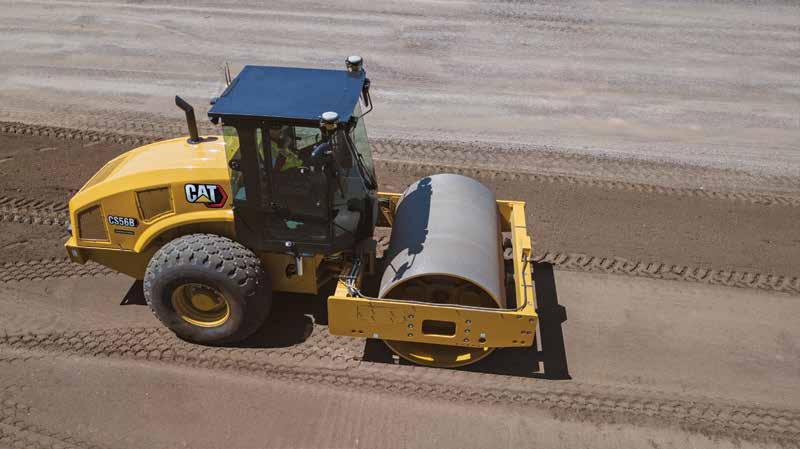
Powered by a 117kW (157HP) Cat C4.4 engine, the CS56B with the latest technologies provides exceptional performance for granular soil compaction applications
CONTROL IS THE NAME OF THE GAME
Satellite positioning, Wi-Fi accessibility, cellular networks: These are the technologies that machine manufacturers are increasingly using to ensure the paving process delivers a longer-lasting, more durable pavement
The basics of asphalt paving have not changed for several decades. However, many technologies to improve the paving process, such as satellite positioning, Wi-Fi and cellular networks, have become more readily available. They are helping owners, agencies and contractors build longer-lasting, more durable pavement.
Many of these technologies rely on accurate positioning of the construction and paving equipment. High-accuracy positioning is necessary for specifying elevations and inplace material quantities, often done within 1% or less of the estimated quantity. The biggest cost-savings to paving contractors are found in three areas: efficiencies in transportation – the trucking of asphalt mix to the job site; managing the quantity of asphalt material placed on a job; and labour costs.
The more accurately the material quantity can be managed, the more direct profit for the contractor. This is a benefit to project owners as well, since accurate control of material quantities results in more competitive bidding and lower bid construction contracts.
Automatic grade and slope control on cold planers and asphalt pavers has existed for many years but upgrades to positioning systems that use high-accuracy global navigation satellite systems (GNSS), coupled with more widespread availability and coverage of virtual reference stations (VRS) using wireless data networks, have made it less expensive to implement 3D positioning technology on cold planing, paving and
compaction equipment. Increasingly, 3D technology is used to pave more complex designs to greater accuracy and better manage material quantity usage. A paving contractor recently used 3D grade control on an asphalt paver to construct the paved surface of a running track at North Dakota State University in the US.
Other examples of 3D paving have been used on jobsites where precision elevation and slope are required to meet a design specification, such as racing tracks for NASCAR in the US, Formula 1 globally, and other national and international motor-sports tracks.
By explanation, 3D paving refers to machine control of the paver screed elevation and slope that produces the final asphalt surface. On cold planers, 3D milling refers to elevation and slope control of the cutting drum, the rotor. The availability of accurate positioning systems combined with higher turnover in the workforce and less experienced workers has led to the growth of 3D paving on projects that may have used conventional 2D grade control systems in the past.
2D CONTROL SYSTEMS
However, recent advances in the simplicity of operating 2D grade and slope control systems on milling and paving equipment have led to increased use of these 2D systems, especially by new and less experienced workers. Features that required pressing a sequence of buttons now require only two button presses. For example, on newer Cat machines operating
under 2D grade control, there is a feature called a ‘hot swap’ that allows the operator to switch from one grade control sensor to another during paving. Most often, this feature is used for taking off a transverse joint* while using an averaging ski.
In the past, many operators could not accomplish this without first exiting, switching sensors, then re-benching and putting the grade control system back into automatic mode. As a result, most operators paved under manual control for some distance before enabling automatic grade control. The section of manual paving was largely guesswork and dependent on the operator’s experience, among other factors, and often resulted in an area of localised roughness or bumps in the final road surface. The ‘hot swap’ feature allows seamless switching to grade or slope sensors during paving. This maintains a smooth profile by minimising guesswork inherent in manual grade control.
While 3D milling provides the best accuracy relative to a design specification, the technology required to achieve that accuracy requires a significant investment. It also requires additional jobsite management that is warranted only for special applications. Jobsites with good sightlines, manageable distances and minimal interference with 3D control stations, such as airports, are good candidates for using 3D grade controls to help meet the tight specifications.
Even so, 2D grade controls, with or without stringlines, are still an efficient and effective way to meet numerous milling job
specifications without additional hardware. To this end, Caterpillar has focused heavily on improving the user interface and intuitive operation of 2D grade and slope control systems on its latest generation of milling machines. In most job situations, the greatest benefits in 3D milling, paving and grading technology are realised on the base preparation, whether it is a milled surface or new construction using motor graders or track-type tractors. Asphalt pavers continue to place the smoothest mat when operated in 2D grade and slope control either following a stringline, using a contact averaging ski or utilising a stringless reference system with sonic grade sensors, such as a sonic averaging ski - SAS.
CAT COMPACTION CONTROL
Cat Compaction Control allows the contractor to measure, map and connect to enable real-time information to equipment operators on the job and to project managers at remote locations. This enables real-time decision-making that can significantly improve the quality and efficiency of delivering the project. Cat Compaction Control in soils and aggregate base materials provides a relative indication of the level or degree of compaction of both cohesive and granular materials.
Machine drive power (MDP) provides an indication of the level of compaction in cohesive materials containing clay and clay-like properties, based on the principle of rolling resistance. As the cohesive material becomes more compacted, there is less rolling resistance and less power required to move the compaction machine over the soil.
Proprietary sensors detect the change in rolling resistance and report a unitless number between 0-150, indicating a higher
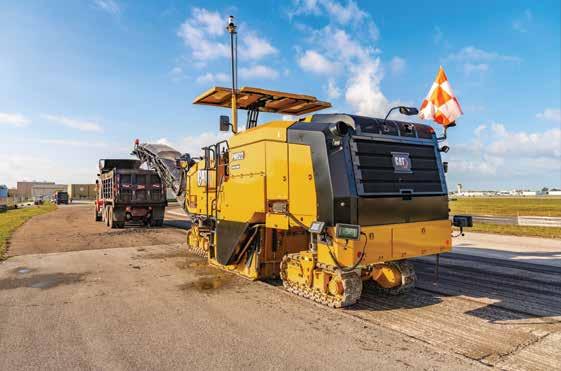
Sarasota Airport in the US state of Florida: jobsites with good sightlines, manageable distances and minimal interference with 3D control stations, such as airports, are good candidates for 3D grade controls to help meet the tight specifications
closer to 150. In granular materials, the soil compactor uses accelerometer technology to measure the rebound or response of the compaction drum as it interacts with the soil material. Using the same 0-150 scale, a compaction meter value (CMV) is reported to the operator; 150 being the maximum level of compaction achievable under the given conditions of soil moisture, roller speed, weight and amplitude and frequency settings, among other less critical factors.
Apart from measuring and displaying compaction measurement values in all soil types, Cat Compaction Control can be configured to display, record and wirelessly transmit geospatial data
In addition to measuring and displaying compaction measurement values in all soil types, Cat Compaction Control can be configured to display, record and wirelessly transmit geospatial data. This allows information on the number of roller passes or coverage over any given area to be recorded along with MDP and/or CMV values, roller settings of speed, amplitude, frequency and other parameters at any location and over 100% of the project area. This real-time data is a huge benefit to operators. They can then make changes in machine settings or number of passes on the job during compaction in order to be most productive and meet target MDP or CMV values in the field. This minimises or even eliminates the need to come back and do re-work after third-party acceptance testing is performed.
All of this data can be made available in near real time, online, anywhere that cellular or Wi-Fi data networks are available. Customised alerts can be set up remotely for managers when criteria are met or violated, such as exceeding threshold values of CMV, MDP and
analyse data over any period or over an entire project duration can be created for further analysis, troubleshooting or identifying areas for improved efficiency.
For example, it can be determined that target CMV values are being achieved after five roller passes on high amplitude, low frequency at around 5kph (3mph) with the roller. But the operator may be making seven passes over this area. This is one example of an opportunity for efficiency by training the operator to move on after five passes. Similarly, a method specification may require seven passes to be made over an area. In this case, the mapping system can record and provide a record that seven passes were made. The operator has a visual colour-coded map to ensure seven-pass coverage and meeting the specification. This is all documented and saved over the entire compacted area.
CAT COMMAND
The sequel to Cat Compaction Control includes Cat Command for Compaction. Command for Compaction is a semiautonomous, single-drum soil compactor that takes control of the routine operation of pass count coverage. In its simplest form, a roller operator physically outlines the perimeter of the compaction area on a jobsite to establish a boundary for compaction. The settings of amplitude, frequency and roller speed are then selected and target CMV, MDP or pass count values are entered into the machine’s onboard computer. The operator is now able to set the machine in ‘autonomous mode’.
It will automatically make the required number of roller passes (coverage) within the established boundary while following the guidance parameters and settings that have been input by the operator prior to compaction.
All the same features of Cat Compaction Control exist on this machine, in addition to its ability to drive itself. It should be noted that this is not full autonomy; an operator remains on the machine to provide initial setup and to monitor rolling operations. Nonetheless, this is the first step to remote control and full autonomy.
Technology features available on the latest generation of Cat cold planers include cruise control, load control, standby/resume and obstacle jump and auto-transition. These features not only improve the quality of the finished product but allow operators to focus on safety and job planning. Cruise control allows the operator to set a constant milling speed to achieve a consistent milling pattern over any area of the project. Automatic load control monitors engine load and automatically adjusts the milling speed as needed to allow operators to easily push the machine to maximum productivity without having to worry about stalling the engine. Standby/resume allows operators to stop and start milling between trucks with the push of a single button, This will pause and resume propel speed, conveyors, ventilation and water spray. At the same time, it reduces engine speed to conserve fuel and reduce emissions while waiting. Obstacle jump makes it easier to ‘jump’ the rotor over a manhole and then quickly and accurately resume the original cut depth and grade control status. This saves the operator time and reduces error in re-setting the grade and slope control system every time
BANKING ON CAT GRADE
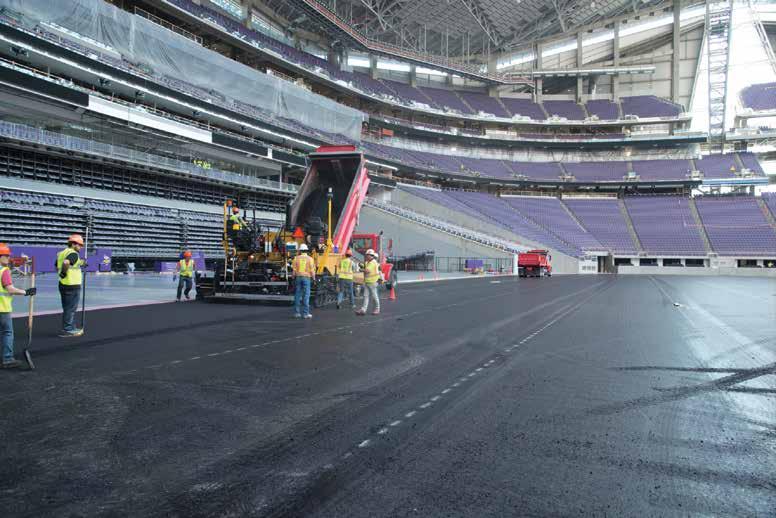
At the US Bank Stadium – home of the Minnesota Vikings football team in the US - subcontractor Park Construction placed an asphalt mat that varied less than 1/8-inch (3.175mm) over a 10-foot x 10-foot (3m x 3m) area the entire length and width of the playing field. A Cat AP1055E Paver with an AS2302C Screed laid down the mix. AccuGrade PCS900 is integrated with the Cat Grade Control factory 2D system. The AccuGrade PCS900 is an overlay system that does all of the required 3D calculation. It then transmits the information to the paver’s 2D system which in turn drives the machine tow-point hydraulics to the height specified by the 3D system.
an obstacle is encountered during milling.
My.cat.com, a portal allowing 24/7 access to equipment performance data, is a good way to improve the efficient use of equipment and ensure top quality of work. Historically, telematics has focused primarily on machine health indicators such as engine hours, fuel usage, fuel burn, engine rpm, fault codes, maintenance interval alerts based on hours of operation and even machine location. But telematics has expanded well beyond machine service items and intervals.
Telematics monitors equipment and other assets by using GNSS technology and on-board data monitoring and diagnostics to record and report an asset’s movements (events) on a computerised map. This data provides valuable information concerning the efficiency of work being undertaken. It allows an owner to analyse the data and make operational improvements in many different ways.
One such example is using the Cat Compaction Control to review operational data such as the number of roller passes over an area. Are operators making more passes than necessary to achieve the required level of compaction? Too many passes result in increased equipment wear which likely will mean increased maintenance on the machine, more machine down-time leading to lost hours in terms of opportunity costs as well as increased fuel burn by a machine not running at optimum performance levels.
In terms of quality, telematics data provides a baseline for future contract bidding. The data is recorded for 100% of the job and can be used to refine a contractor’s future bids on similar projects. This type of information would be available via VisionLink’s 3D productivity module.
Where telematics really becomes a huge benefit to the owner is when data from several machines working on a jobsite is connected. The data from one operation, or machine, is used to guide the operations of the next machine to enter the work area on a jobsite. For example, on a large earthworks project where earthen fill is being placed in multiple layers by scrapers, telematics data from soil compactors equipped with Command for Compaction can be used in real time so that site managers know when the required number of compaction passes have been made. Then the next round, or layer, of earthen material may be placed based on a required roller coverage or based on a minimum compaction meter value or machine drive power value to indicate an acceptable level of compaction. This type of operation can realise large efficiencies by avoiding unnecessary roller passes and minimising re-work through use of CMV and MDP compaction indicators.
So, what does the future hold? The next leap for better efficiency will include fully autonomous machinery in more populated and more complex job sites. Machines will communicate with each other and work as a “system”, not as individual units, on a project. The start of work for one machine will be predicated on the completion of work from other equipment. One machine will indicate to the next when it’s time to “move in” and take over. n
*A transverse construction joint is used when the paving operation is interrupted for longer than 30 minutes. These joints are commonly used at the end of the paving operation each day and may be retro-fitted to tie an existing slab into a new pavement.
BLOWN AWAY BY STRASSMAYR
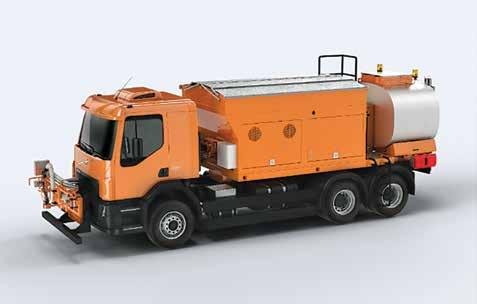
Strassmayr’s latest Blow Patcher, the STP 1010 Joy, allows the vehicle driver to make road surface reparations using only a joystick located within the cab of the truck
Strassmayr reports that its Blow Patcher STP 1010 is in full production after two years of onsite testing and evaluation with chosen customers in Europe.
The STP 1010 Blow Patcher, introduced at bauma 2019 in Munich, Germany, allows reparation of holes and general road surface damage without the use of milling machines and pavers. It requires only one person to operate the system - the driver of the vehicle – using a joystick within the truck cabin. Delivery of aggregate and emulsion is done electronically.
“Technological, production and manual documentation is ready and the machines are in full production,” notes the company, based near Poznań in Poland. Several machines are already in operation in France, Germany, Belgium, Estonia and the Netherlands.
Because of the physical size of the machine and its specifications, Strassmayr says it expects the greatest interest will be from contractors and local authorities in Western Europe, “where the target customer is very demanding. It is for them that we have created a comprehensive and very effective system”.
Notably, the Blow Patcher comes in two versions. Each version carries 2,000 litres of emulsion. The STP 1010/4000 version carries 4m³ of aggregate and the STP 1010/6000 version carries 6m³ of aggregate.
Aggregates and emulsion stay separated in their own bins until the last moment before
ABOVE: Strassmayr’s STP 1010 Blow Patcher allows reparation of holes and general road surface damage without the use of milling machines and pavers
application. This means that there is no loss of material if, for any reason, the reparation process needs to be stopped at some stage. Also, there is no need to purchase small quantities of asphalt mixture each day.
MAIN ENGINE
The system’s main engine is a HATZ 4H50TICD which fulfils exhaust emission regulation EPA Tier 4 Final. The vertical 4-cylinder liquid-cooled diesel engine puts out 55kW of power. It also has an engine radiator fan to ensure the most effective cooling. A hydraulic pump drives all the functions and there is a hydraulic oil tank with filter and temperature/oil level indicators. Meanwhile, a Kaeser OMEGA blower delivers more than enough air to “blow” the aggregate into place.
An access platform allows easy access to the engine compartment, including ladder. Finally, there is easy access to all engine components from the side of the unit.
Two hydraulic pumps handle emulsion processes. The larger pump is for circulation and loading/unloading of the emulsion, while the smaller unit is for the spraying operation.
The introduction of the emulsion into the road surface hole is a two-step process. First, compressed air is blown into and around the
hole. Next, the hole is flushed with a cleaning liquid.
Application of the emulsion is done using Strassmayr’s Easy Patch method. This automatic electronic system regulates the amount of emulsion in accordance with the amount of aggregates being delivered to repair the road surface. “Thanks to the electronic Easy Patch system, we have removed the risk of putting an incorrect amount of emulsion in the mixture,” notes the company.
The vehicle’s aggregate bin – whether with a 4m³ or 6m³ capacity – is divided into two sections to allow for two sizes of aggregate stone. Each bin section has its own hydraulic screw conveyor for delivering the aggregate to the road surface. There is also a manually operated cover to protect the bin and its contents in the case of rain.
The 2,000-litre emulsion bin is integrated into the body of the vehicle and is insulated with rockwool. A Riello diesel burner heats the emulsion and automatically controls its temperature.
WORKING ARM
The system’s working arm, or boom, in the front of the vehicle is clearly visible to the driver and has an operational radius of between 3.5m and 4m. A ring of small nozzles at the end of the boom ensures proper mixture of emulsion and aggregate.
The speed of delivery of the aggregates can be reduced if there is spill-over outside the target area on the road surface during repair work. This means there is little loss of aggregate that otherwise would then end up being brushed off the road surface as surplus to reparation requirements.
All operations of the boom are done via a joystick system and a Siemens-manufactured touch screen.
To maintain a stable emulsion temperature, there is a pre-heating system for the pump body. This avoids temperature drops in the emulsion as the reparation process starts and the first amounts of emulsion pass through the pump.
Importantly, no crane is required to lift the system off the vehicle’s chassis. Raising the system off the chassis is done using six legs that are incorporated into the system itself. Adjusting the height of the legs, when raising the system for removal, is done manually.
Strassmayr has also incorporated a 200-litre water-spraying unit that is operated electrically. A water nozzle, also at the end of the boom, is useful for filling buckets or even washing hands. A series of spray bars in each
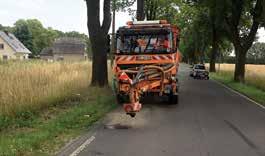
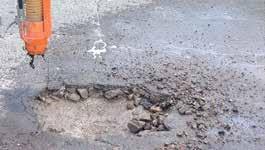
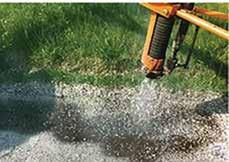
1.All the stages of the reparation are done using the nozzle of the working arm while the driver-operator is safely inside the cab of the truck 2.The most important stage in the entire reparation process is the cleaning and drying of the hole – using compressed air - prior to application of the aggregate and emulsion mixture 3.Emulsion is allowed to flow over the stones to make a homogeneous mixture which is then “blasted” into the surface hole - all in a continuous process 4.The road section can quickly be reopened and traffic will provide additional compaction of the reparation
aggregate bin section allows for easy and fast cleaning with water of the holding units.
PATCH PORTAL
Strassmayr’s Patch Portal is an information and data analysis tool that works using GPS and GSM connections. Contractors and local
authorities can confidently trace the unit’s location during repair work. Information on the portal includes a calculation of material used during operation and the location of potholes being repaired.
To ensure less down-time of the system, Patch Portal can check the technical
condition of the main system’s components. If a problem is detected, it will send a notification to a defined e-mail address or a text message to a listed mobile phone number.
Patch Portal also allows for the creation of a comparative database of several Blow Patchers operating in the field. n
To watch Jakub Kanarek, international sales director for Strassmayr explain some of the system’s advantages, go to; https://www.youtube.com/ watch?v=fj6QmMsinPw
To see the Blow Patcher in operation, go to https://strassmayr.com/video-gallery/ then choose “Blow Patcher with Joystick operation”.
Strassmayr https://strassmayr.com
Riello www.riello.com
Kaeser www.kaeser.com
Hatz www.hatz-diesel.com
RECYCLED PLASTICS IN ASPHALT: AN UPDATE
Using recyclable plastics in asphalt mixtures requires an extensive knowledge of plastic types and asphalt mixing processes. US-based NAPA* has reviewed the literature about what works and what doesn’t
The US-based National Asphalt Pavement Association recently conducted a comprehensive review of the literature about the use of recycled plastics in asphalt binders and mixtures. This review included over 110 research reports, journal articles, trade publications, newsletter and magazine articles and personal e-mail communications, all written in English.
It should be noted that there is likely more literature available on this topic, but these are in languages other than English and were not included in this review.
Around 70% of the literature was published within the past decade, up to 2020. The five countries with the most literature documents are the US, India, Malaysia, Canada and China. The most studied type of recycled plastic for use in asphalt was polyethylene (PE). This includes linear lowdensity polyethylene (LLDPE), low-density polyethylene (LDPE) and high-density polyethylene (HDPE). This was followed by polyethylene terephthalate (PET) and polypropylene (PP).
More than 60% of the literature focused on adding recycled plastics into the asphalt binder via the wet process, including Novophalt and Polyphalt - both registered trade names. Meanwhile, around 30% used the dry process of adding recycled plastics into the mixture. Only a few studies reported the use of asphalt-plastic emulsion and plastic synthetic binder for adding recycled plastics. Finally, over 90% of the literature focused on laboratory testing and/or field projects of recycled plastic modified (RPM) asphalt binders and mixtures. The rest of the literature focused on cost analysis, pavement design, production information, accelerated pavement testing and agency specification.
The following sections present a summary of literature review findings organised on a topical basis.
INCORPORATING PLASTICS
In general, there are two methods of incorporating recycled plastics in asphalt: the wet process and the dry process.
In the wet process, recycled plastics are added into the asphalt binder as polymer
modifiers or asphalt replacement (in some cases, erroneously referred to as asphalt extenders), where mechanical mixing is required to achieve a homogeneous modified binder blend. Recycled plastics with a low melting point, such as LLDPE, LDPE and HDPE, are typically suitable for this process. For the wet process, the dosage of recycled plastics commonly reported in literature varies from approximately 2-8% by weight of asphalt binder. This dosage corresponds to about 2-8 lbs (just under 1kg to 3.6kg) of recycled plastics in a ton of asphalt mixture.
In the dry process, recycled plastics are added directly into the mixture as either aggregate replacement, mixture modifiers, binder modifiers or any combination thereof. The aggregate replacement approach is commonly used with recycled plastics with a high melting point, for example, above the typical production temperature of asphalt mixtures, such as PP, PET, polystyrene (PS) and polycarbonate (PC). The mixture modifier approach is applicable to virtually all types of recycled plastics, such as PE, PP, PET, PP, PS and others, except for polyvinyl
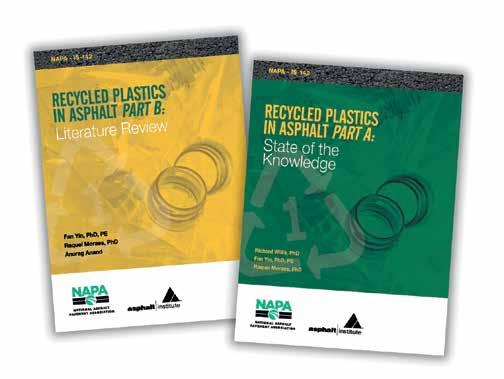
*NAPA, the National Asphalt Pavement Association, is based in Greenbelt in the US state of Maryland. The association recently published two important booklets concerning plastics in asphalt: ‘Recycled Plastics in Asphalt, Part A: State of the Knowledge’ and ‘Recycled Plastics in Asphalt, Part B: Literature Review’. The article here is an edited version of chapter 3 in Part A. To download the two free publications, visit NAPA’s website: www.asphaltpavement.org/expertise/engineering/plastics-in-asphalt
Using waste plastics to modify binders and strengthen pavements is fast gaining ground and assumed to have obvious economic and environmental benefits. But two recent reports from the National Asphalt Pavement Association (NAPA) and the Asphalt Institute, both in the US, question this assumption.
A joint taskforce created by the two organisations was set up in October 2019 to evaluate the use of recycled plastics. Its members included industry experts from North America and Europe.
Recycled Plastics in Asphalt Part A: State of the Knowledge, provides a comprehensive look at issues around types of waste plastic, recycling issues, environmental benefits and hazards. The report cites research and trials to highlight multiple issues. It concludes further investigation is needed before large-scale use of plastics in roads should be encouraged.
Part A is backed up by a second report, Recycled Plastics in Asphalt Part B: Literature Review, which was commissioned by the taskforce from the National Center for Asphalt Technology (NCAT). The authors evaluated 110 research reports, journal articles and trade publications that summarised the scope of work, the findings and the recommendations.
One of the big challenges discovered by the taskforce is that there is not enough hard data. India could be a good source of information on long-term performance because waste plastics have been used there for over 15 years, but the researchers found no data.
Meanwhile, the use of recycled plastics in mixes in other countries is relatively recent. The concern is that while modifying binders with plastic can increase a pavement’s stiffness, it can also lead to problems with premature cracking and fatigue.
One of the important issues when selecting a waste plastics stream is chemical composition, according to the report. Only certain plastics seem suitable for asphalt modification, with polyethylene (PE) being the most commonly used. However, standard asphalt binder tests, including the Superpave performance grading, may not be applicable to binders modified with plastics, warns the report.
The report also raises significant environmental concerns. Hazardous air pollutants could be released at the asphalt mixing plant, creating potential health risks for workers. There are also unanswered questions about the leaching of harmful chemicals, microplastics and nano-plastics during service and end-of-life milling. It is not clear yet whether pavements containing waste plastics can themselves in turn be successfully recycled.
In conclusion, the taskforce urges a slow and measured approach to the deployment of waste plastics in roads. According to the report, “research takes time and rushing [to greater use of] plastic for political reasons or for economic reasons is not optimal. Remember that it has taken 40 years to get a national average of 21% RAP – recycled asphalt pavement - in asphalt mixtures.”
chloride (PVC) due to the concern of hazardous chloride emissions.
When recycled plastics with a melting point below the mixture production temperature - LLDPE, LDPE and HDPE - are used for mixture modification via the dry process, they will melt upon mixing with the hot aggregates and produce plasticcoated aggregates with potentially improved physical and surface characteristics. Previous experience of asphalt contractors in France indicated that when LDPE was added into the asphalt mixture via the dry process, part of the plastics coated the surface of aggregate particles while the rest was dispersed in the asphalt mortar phase. For the dry process, the dosage of recycled plastics commonly reported in literature varies from around 0.2-1% by weight of aggregate, which corresponds to about 4 to 19lbs (1.8-8.6kg) of recycled plastics in a ton of asphalt mixture.
LABORATORY BINDER
Every study that evaluated the impact of recycled plastics on asphalt binder performance expressed its findings in terms of penetration, softening point, viscosity, ductility or performance grade. The overall consistent finding was that the use of recycled plastics for asphalt modification reduced the penetration and ductility and increased the softening point, viscosity and hightemperature performance grade of asphalt binder. Therefore, asphalt binders modified with recycled plastics could potentially have better rutting resistance.
However, other than reduced ductility, very few studies examined the effect of recycled plastics on asphalt binder properties related to fatigue or low-temperature cracking susceptibility.
The inherent incompatibility expressed in terms of phase separation between the recycled plastics and asphalt binder was another topic often evaluated in literature for the wet process. This incompatibility is mainly attributed to the difference in solubility parameter and thermodynamics between the two individual components. Phase separation refers to the tendency of polymers to separate from the asphalt binder under static heated storage conditions. This is an important attribute of polymer-modified asphalt in order for it to maintain its integrity and homogeneity during storage, handling and mixture production.
The evaluation of phase separation typically required the storage stability testing (ASTM D7173) of plastic modified binders followed
by softening point, viscosity and rheological testing of the top-third versus bottom-third cigar-tube samples. This is sometimes done in conjunction with fluorescence microscopy analysis. The literature consistently reported that producing a homogenous and storagestable binder blend was difficult because the plastic modified binder was very susceptible to phase separation.
To overcome this issue, several researchers incorporated a third component in the binder blends to act as a stabilising agent or a compatibiliser. Potentially effective stabilisers and compatibilisers identified in the literature include ethylene-vinyl acetate (EVA), maleic anhydride (MA) grafted LLDPE, nanosilica, organic montmorillonite, polyphosphoric acid (PPA), reactive elastomeric terpolymer (RET) and styrene-butadiene-styrene (SBS).
Low-level chlorination and malleation of PE were found effective also in improving
ABOVE RIGHT: One of the safety concerns has been the generation of chlorine-based gases from PVC during asphalt mixture production and construction
BELOW: Few studies examined the effect of recycled plastics on asphalt binder properties related to fatigue or low-temperature cracking susceptibility (image: David Arminas/World Highways – Niagara Peninsula, Canada)
its compatibility with asphalt binder. Among these potential stabilisers and compatibilisers, use of elastomeric polymers can enhance the performance grade and elasticity of RPM asphalt binders. Finally, one study reported that PE was insoluble in solvents commonly used in the chromatography and spectroscopy characterisation techniques for polymers and asphalt binders. This further complicated the chemical characterisation of asphalt binders containing recycled plastics and made solvent extraction and recovery infeasible.
LABORATORY MIXTURE
Many of the existing studies evaluated the effect of recycled plastics on asphalt mixture behaviour using the Marshall stability test. In most cases, the addition of recycled plastics increased the Marshall stability and the Marshall stability index - or quotient - of asphalt mixtures. Several researchers suggested that this indicated improved resistance to permanent deformation.
Existing studies also demonstrated a positive impact of adding recycled plastics on the stiffness and rutting resistance of asphalt mixtures. The cause of this improvement, however, may differ depending upon how
In the wet process, recycled plastic provides a stiffening effect on the asphalt binder which contributes to increased stiffness and rutting resistance of the resultant asphalt mixtures. In the dry process, the improvement in mixture rutting resistance has been mainly attributed to increased internal friction within the aggregate structure, enhanced aggregate quality due to the surface coating of aggregates with plastics, stiffening of asphalt binder due to plastics modification or any
Numerous studies suggested that plasticcoated aggregates had better toughness, abrasion resistance, bond strength and reduced asphalt absorption. This yielded asphalt mixtures with better rutting
resistance. Few studies investigated the impact of recycled plastics on the fatigue and cracking resistance of asphalt mixtures and they did not reach a consistent conclusion.
Finally, only a few studies evaluated moisture-damage resistance. Most of them concluded that recycled plastics had either a positive or no noticeable impact on the moisture resistance of asphalt mixtures.
PLANT OPERATIONS
Existing studies that documented asphalt plant operations were mostly related to the production of Novophalt, which is the trademark of a proprietary product marketed as an asphalt mixture modified with virgin or recycled PE. To overcome the phase separation of Novophalt binder during storage, a mobile high-shear blending unit was developed. This accommodated the on-site formulation of PE modified binders at asphalt plants during production. The Novophalt blending unit was equipped with agitation and mixing tanks to ensure the homogeneity of asphalt binder until it was mixed with aggregates.
Field experience indicated that the Novophalt blending unit was not difficult to set up and could be completed within hours. During production, the blending unit was typically attached to the asphalt plant with one hose connected to the asphalt intake line and the other connected to a return line. No additional plant modifications were required to produce Novophalt mixtures.
CONSTRUCTION
Only one study in the literature discussed the construction of asphalt mixtures modified with recycled plastics. The study claimed that high-modulus asphalt mixes produced with PE modification were difficult to compact due to increased binder viscosity and mixture stiffness and thus, heavy rollers were required for construction in order to achieve adequate in-place density. Previous experience of
asphalt contractors in France indicated that the compaction of PE- modified asphalt mixtures was temperature sensitive. In general, field compaction was not an issue if it could be completed before the asphalt mat temperature dropped below the crystallisation temperature of PE.
HEALTH AND SAFETY
The literature review identified two potential health and safety concerns regarding the use of recycled plastics in asphalt: leaching of toxic components during processing of recycled plastics and the generation of chlorine-based gases from PVC during mixture production and construction. One laboratory study evaluated the leachability of hazardous chemicals and toxic fumes – for example, toluene, benzene as well as aliphatic, cyclic and aromatic hydrocarbons - generated by asphalt binders modified with three proprietary plastic products. However, the studies found no detectible adverse effects from the recycled plastics.
ENVIRONMENTAL IMPACT
The literature review suggested that recycling of waste plastics provides significant environmental benefits. These included the preservation of limited natural resources, reduction of energy consumption, reduction of disposed and discarded solid waste and reduction of carbon dioxide (CO₂), sulphur dioxide (SO₂) and nitrogen oxide (NOx) emissions. However, these claims were not quantified.
On the other hand, the use of recycled plastics in asphalt has raised several environmental concerns, including the release of microplastics. This would arguably jeopardise the future recyclability of asphalt mixtures containing recycled plastics, its compatibility and storage stability of RPM asphalt binders and the material’s life cycle sustainability. It should be noted, too, that no study has yet investigated these concerns.
FIELD PROJECTS
Around 200 field projects using recycled plastics in asphalt pavements were identified in the literature. There were reportedly more projects constructed in France between the mid-1980s and mid-1990s, but these were not identified due to lack of published records in English. Most of the field projects identified in this literature review were constructed using Novophalt in more than a dozen countries between the late 1980s and the early 2000s. The Novophalt projects included city streets, county roads, minor
and principal arterials, interstates and airports.
Limited field performance data suggested that Novophalt pavement sections performed well, especially in terms of rutting performance. But one study reported more cracking compared to pavement sections using unmodified and SBS modified binders. In 1993, a Novophalt test section constructed on Federal Highways Administration’s accelerated loading facility had the best rutting performance among all test sections included in the study.
India has reportedly more than 15 years of experience recycling waste plastics into
DOSAGE; GET IT RIGHT
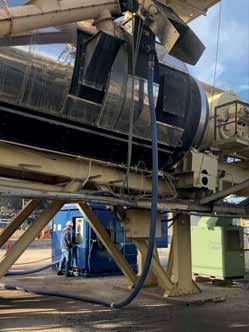
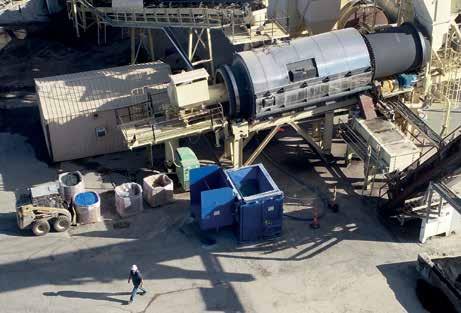
Image 1 shows Colas’ double-barrel dryer with the external 12-foot (3.6m) pugmill (an Astec Double Barrell X system). The blue box is the blower metering the LDPE pellets by weight (hi-tech asphalt solutions). The hopper is mounted on weight cells which allows for accurate monitoring of the dosage. Also seen on the lower left are the gaylord boxes with the colored rPE pellets being loaded into the hopper by a Bobcat mini-excavator.
Image 2 shows the metering system from the ground with the hose connecting the blower to the injection port right below where the RAP is introduced. In this setup, the RAP is dried and heated in the outside shell before being blended with the heated aggregate inside the internal dryer. This metering system is locked with the plant controls which allows recording of the rpE dosage. Accurate provision of a low percentage of rPE (0.3% to 1% by weight of mix) is important. (images courtesy of Colas)
asphalt pavements, with more than 2,500km of roads using asphalt mixtures containing plastic-coated aggregates. Although several studies reported the successful outcome of using plastic modified mixtures, field performance data for these pavement sections was not documented.
More recently, numerous demonstration projects using proprietary products made of recycled plastics were started in Australia, Canada, Indonesia, the Netherlands, New Zealand, South Africa, the UK and the US. Many of these projects are only a few years old and thus, the long-term durability of the pavements has yet to be determined. n
IMAGE 1
IMAGE 2
Ready to start measuring: the new Structural Road Analysis (SRA) service from Kistler helps to identify the best locations and layouts so users get maximum performance from their weigh-in-motion solutions (image courtesy Kistler Group)
CZECH REPUBLIC: STRUCTURAL ROAD ANALYSIS
An understanding of the physical condition of the road surface and substructure is essential when deciding on the optimum location for a weigh-in-motion system.
Kistler* explains its newest service, Structural Road Analysis
The road authority of the Czech Republic and SPEL, the agency’s local system integrator, are among the first customers to use the new Structural Road Analysis (SRA) service from Kistler. SRA helps to determine the right road location and the best sensor layout for optimum weigh-inmotion (WIM) performance.
These two key factors ensure that direct enforcement applications deliver the required accuracy in all circumstances. Automatic vehicle-weight-enforcement systems – another name for WIM systems – are gaining popularity in numerous countries around the world. They can be used for many different applications: road monitoring, bridge protection, industrial weighing and, not least, for direct enforcement of overloaded vehicles. However, for an enforcement application, the technology must meet demanding requirements. The installed WIM system must ensure a reliable basis for legal prosecutions. In purely technical terms, its performance must comply with relevant standards. In many countries,
an accuracy of at least 95% gross vehicle weight (GVW) is required for direct enforcement purposes. This accuracy must be met in any circumstances and at all times, regardless of environmental influences, time since installation and further factors.
Practice in recent years has shown that the actual performance of an installed WIM system is significantly dependent on the quality of the road in which it is installed. That is why Kistler offers a service to ensure that its WIM solutions deliver maximum performance.
Within Kistler’s Structural Road Analysis (SRA), there are three service levels available:
• SRA Standard: site evaluation based on customer documentation (e.g., drawings, maps, etc.);
• SRA Plus: site evaluation and analysis based on IRI data (International Roughness Index);
• SRA Full: site evaluation and analysis based on IRI and FWD data (falling weight deflectometer).
As noted above, one of the first customers to benefit from Kistler’s new SRA service was SPEL, the local system integrator designated by the Road and Motorway Directorate of the Czech Republic (ŘSD ČR). For a planned extension to an existing WIM site at kilometre 8.3 of the D2 highway linking Břeclav and Brno, a full SRA was conducted over a length of 150m on both Brno-bound lanes. The goal was to identify the optimum location and best sensor layout to ensure optimum performance and maximum overall lifetime for the WIM system.
An earlier investigation had already highlighted the challenges presented by the road’s condition, so a full-scale analysis was undertaken including road-surface measurement, measurement of pavementbearing capacity (using a falling weight deflectometer - FWD) and measurement of IRI and rut depth to determine the road’s longitudinal and transversal unevenness. Based on the results, the pavement structure was modeled and the elastic modulus of each layer was calculated.
The final report from Kistler to SPEL included an in-depth analysis and evaluation,
together with practical recommendations on system configuration and sensor layout, as noted by Miroslav Kolda, production and technical director at SPEL. Kistler handled the management of the entire project, including the IRI and FWD measurement services provided by two local partners. A full report ensured road quality along with specific recommendations on how to improve the WIM site.
RESULTS OF THE SRA
From the SRA report, it was seen that the base layers of both lanes were found to be fairly heterogeneous. However, the soil contained significant amounts of water that could have a seasonal effect on measuring accuracy and even lead to road damage. Rutting values at some points actually exceeded the levels permitted for monitoring applications; in such a situation, the locations for installing the sensors must be chosen very carefully.
Lane one showed better overall quality and was suitable for direct enforcement in its existing state. But three rows of WIM sensors - instead of two - were recommended here. On the other hand, the analysis showed that the WIM system on lane two did not meet the requirements for direct enforcement in its present state. Four rows of Kistler Lineas sensors were necessary to achieve the desired GVW accuracy here.
A simulation model was calculated to determine the best sensor layout, taking account of profile data from both lanes. The model comprises eight vehicles that are each simulated in both empty and fully loaded conditions. On this basis, a location between
metres 68 and 84 of the highway section was determined as the best position for the sensor installation.
Kistler also provided a detailed graphical layout recommendation, with different sensor arrangements and intermediate distances for lanes one and two.
Based on this experience using the
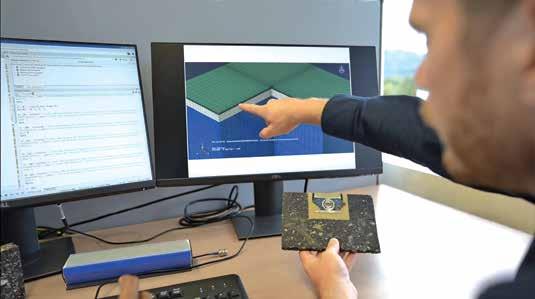
Data acquired from a Structural Road Analysis by Kistler is processed in simulations, leading to specific recommendations on the best sensor position and system layout for weigh-in-motion installations (image courtesy Kistler Group)
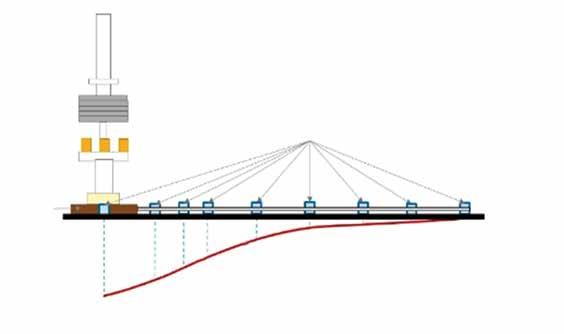
An analysis based on measurements with a falling weight deflectometer (FWD) – part of the SRA service from Kistler – delivers key data on road pavement structure and the quality of the pavement layers (image courtesy Kistler Group)
Deflection sensors
Structural Road Analysis, it was decided to use it for all its future WIM installation. A key factor in this decision, according to the agency, is knowing the right number of sensors, the best location, ideal layout and intermediate distances. With this knowledge in hand, setting up WIM systems takes much less time and, therefore, involves lower financial cost, including later on.
In the meantime, SPEL commissioned a second full SRA service. Discussions are now under way with ŘSD ČR about the possible introduction of a mandatory requirement for SRA, so the new service from Kistler could be specified for all WIM installations in the Czech Republic in the future.
“We’re glad to have shown in practice that these analyses are fully worth the effort,” said Michal Izak, sales engineer traffic solutions for Eastern Europe at Kistler. “It’s simply the right way to go for direct enforcement applications – both for largescale systems and single WIM installations.”
Another system integrator in the Czech Republic has also shown interest in the SRA system. n
*Kistler Group, a measurement technology company, was founded in 1959 and is based in Winterthur, Switzerland. The Kistler companies develop, manufacture and distribute sensors for measuring pressure, force, torque and acceleration, as well as electronics and software. Kistler specialises in piezoelectric and piezoresistive measurement technologies.
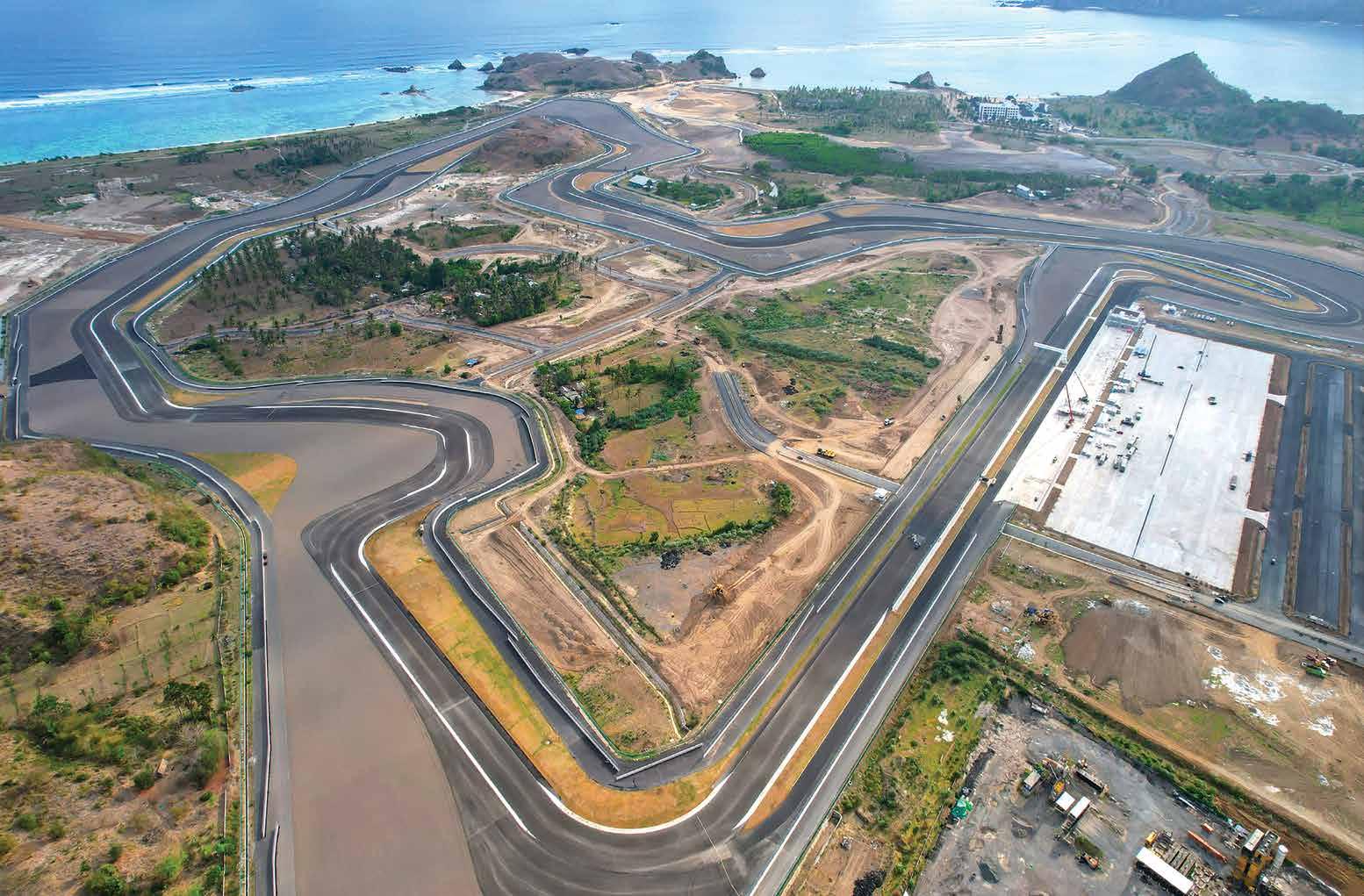
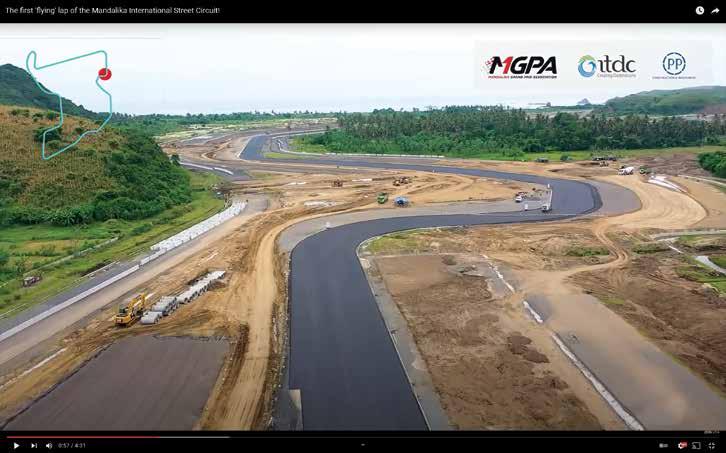
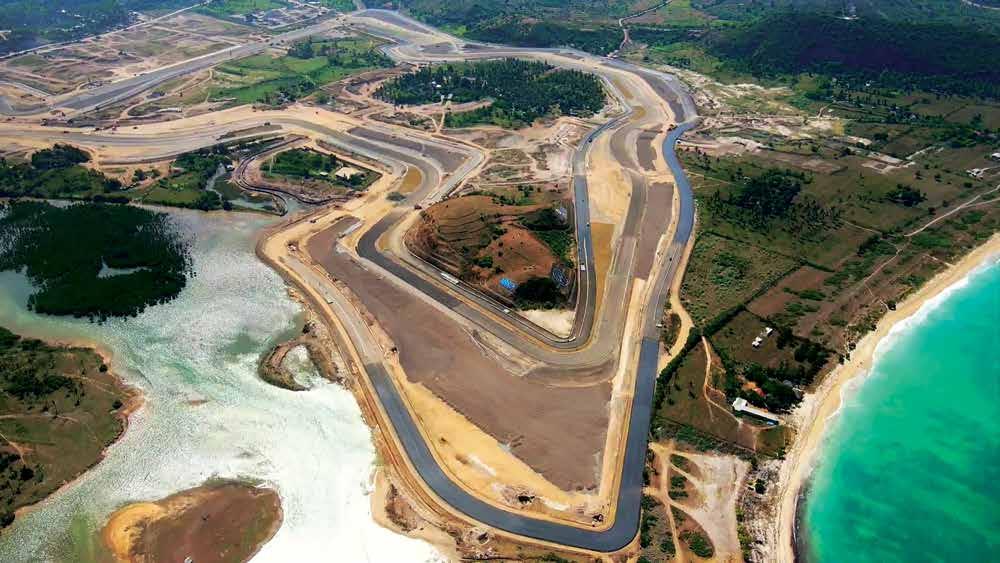
The first machines to complete a circuit of Indonesia’s new Mandalika International motorsport track were a series of Bomag pavers and rollers. They can claim a best-in-class finish when it comes to creating the ultimate surface for a competitive racing track
On the still quiet tourist island of Lombok, work on the Pertamina Mandalika International Circuit is in full swing. After completion, the circuit will be one of the most exciting tracks in the motorsport world. The first street circuit in motorcycle racing since 1977 is set to host the Indonesian MotoGP motorcycle race next year (see box, The fast lane). As many as 150,000 visitors are expected on any given racing weekend when the circuit is complete and running international events.
Bahraini company Mrk 1 Consulting and Roadgrip Motorsport were commissioned by the Indonesian Tourism Development Corporation to design, build and manage the circuit. The track, with few elevation changes, was designed by Mrk 1 to be a partially closed racing circuit where part of the track will be open as a public road during non-racing events. It is sometimes classified as a street circuit. Even so, the track surface has to meet the highest international racing circuit standards, as it is crucial for ensuring optimum grip and even wear on the tyres of competitive motorcycles.
The loads exerted on the asphalt during a race are tremendous. In the top motorcycle racing classes today, top speeds of over 360kph are reached. At such high speeds, overpressure is generated in front of the tyre and underpressure behind it. The heated tyres develop an adhesive effect that pulls the
material upwards. It’s like “hitting it with a hammer at the front while using a vacuum cleaner at the back”, as once explained by Hermann Tilke, a German civil engineer who developed many international circuits including Sepang International Circuit, China’s Shanghai International Circuit, Istanbul Park Racing Circuit and Spain’s Valencia Street Circuit.
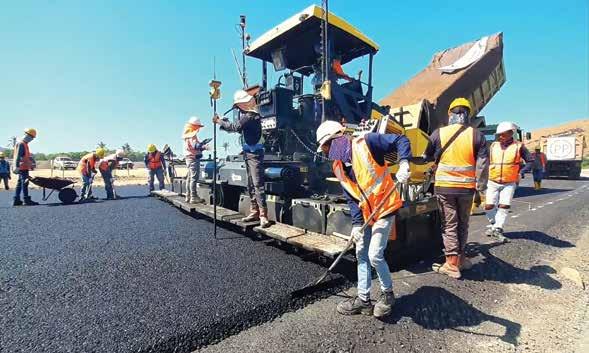
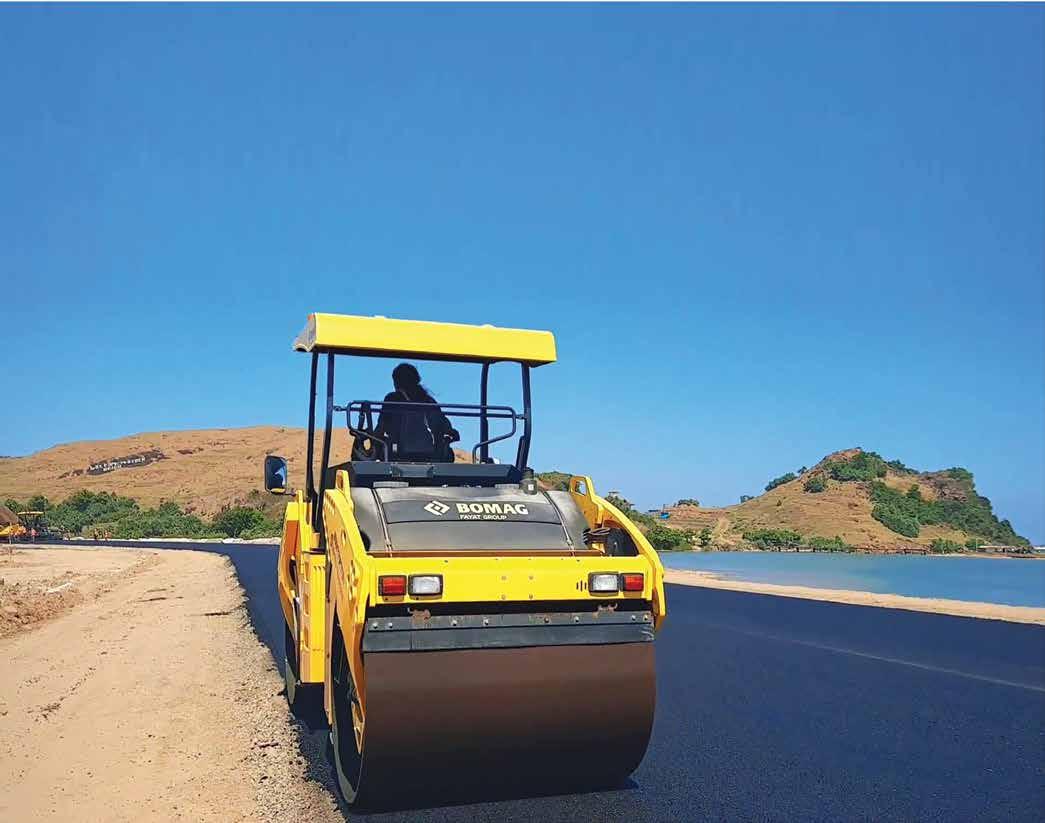
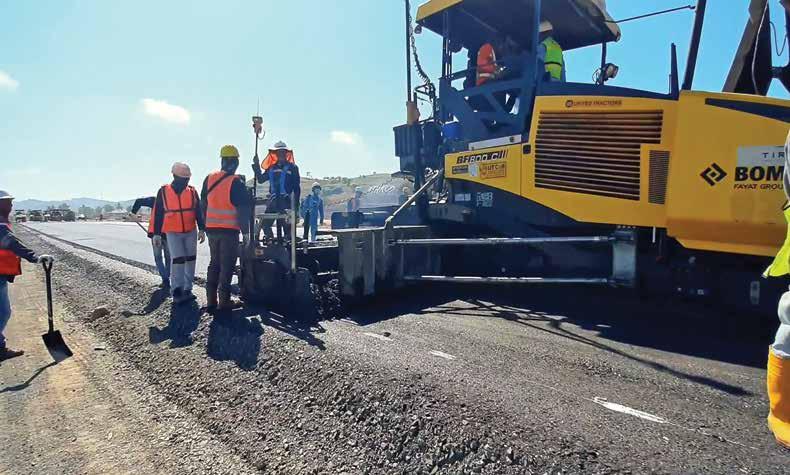
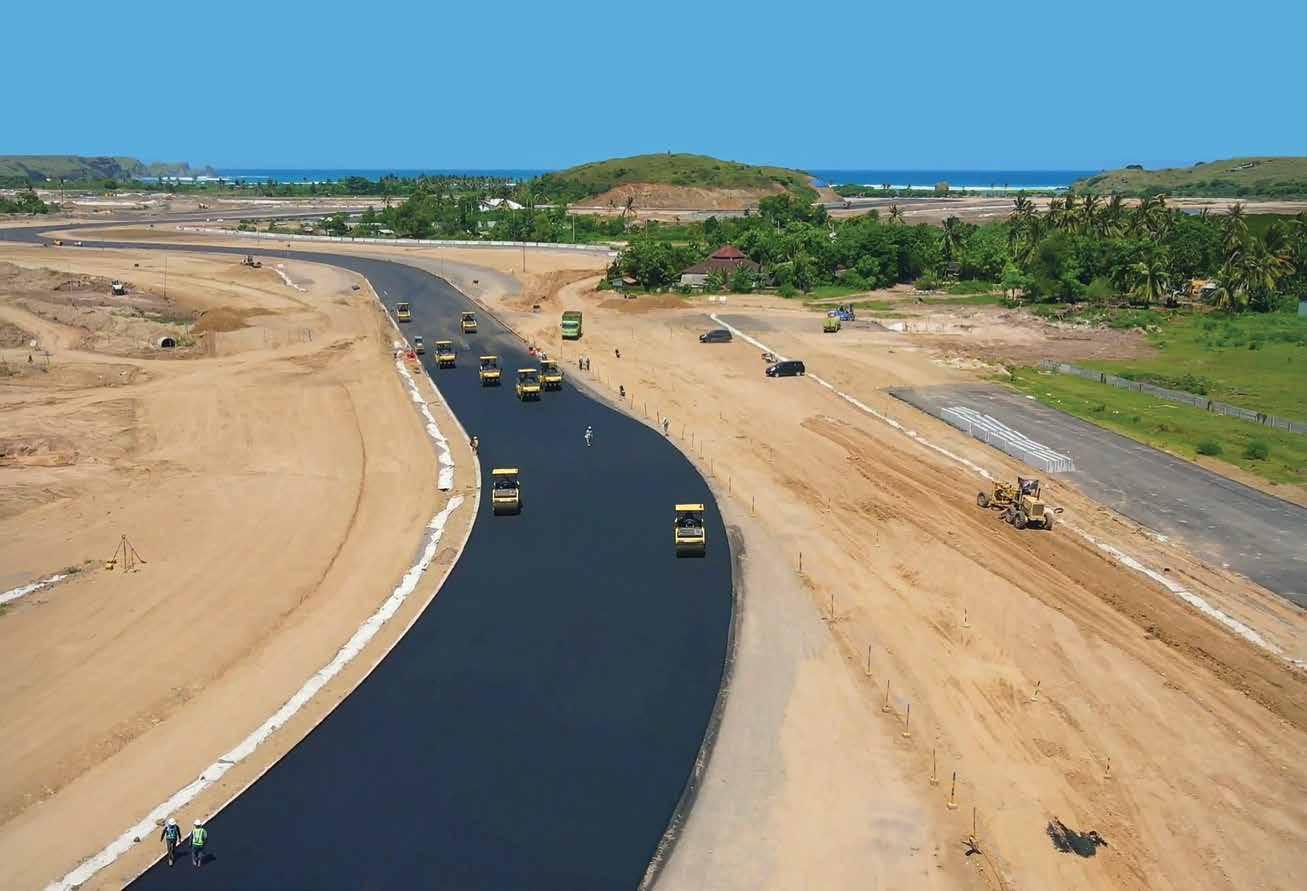
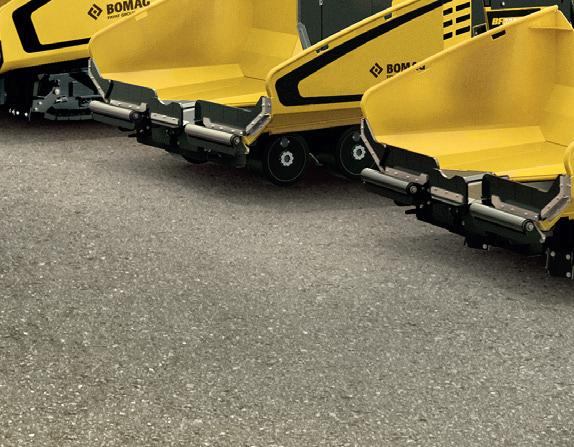
Given these exacting demands on the finished surface, the contractor opted for Bomag machines for paving and compaction of the asphalt for the entire circuit, including the verges, run-off zones and service roads.
The greatest challenge is that the track must continue to meet all future demands placed upon it - competitive racing and high-volume public traffic - so the asphalt must be geared towards durability for smoothness and longevity.
Given the extremely high speeds of racing motorbikes, even the slightest unevenness results in less tyre grip that could increase the risk of serious accidents. To fulfil all the specifications, the optimum paver settings for evenness, degree of compaction and surface texture were first determined on a test section. In Mandalika, for example, a surface evenness of +/-5mm was required for the bearing and binder course, measured over a distance of 4m. The tolerance for the wearing course was even lower, at +/-3mm.
The local paving team was supported
throughout the project by Bomag Singapore’s team and also experts from Bomag distributor United Tractors in the Indonesian capital, Jakarta. Also on site were Lintec & Linnhoff asphalt manufacturing plants from the Indonesian heavy-equipment and services company Presisi.
80MM BEARING COURSE
Two Bomag BF 800 C pavers were used to install the bearing course. With their combination of high productivity and flexibility, these all-rounders were selected for both their high-quality and efficient road construction. Equipped with Bomag assistance systems and options, they greatly simplify the job for the operator and the entire paving team. For example, the operator has all-weather protection from not only the heavy downpours of rain, common and frequent in the region, but also from intense sunshine. The operator’s performance is aided by technologies such as Bomag Ecomode, an intelligent control system that keeps the engines in the optimum rpm and power range at all times, thus reducing fuel consumption and keeping noise levels to a minimum.
for stringline tensioning, which is costly and time-consuming to set up. Instead, the machine’s three-dimensional position is measured with a total station. One side of the screed is then controlled in 3D in position and height; the height of the other side of the screed is determined by the cross slope, which is also specified in the project data.
Although the system was not part of the project’s specification requirements, the pavers were equipped with components for 3D levelling. This eliminates the need
The use of 3D control systems offers great advantages, especially when paving banked curves. They allow the designs of the track layout to be implemented with exceptional precision. This highly accurate paving makes the surface especially even and reduces material consumption. Furthermore, where
there is no stringline tensioning, it cannot cause any interference or inaccuracy - yet another factor that increases the paving quality and operational safety while speeding up completion of work. The 3D measuring and levelling systems are flexible in their use and compatible with all Bomag highperformance screeds.
To reduce the number of longitudinal joints, the client decided to use only two pavers side by side instead of the usual three. To achieve this, two screed extensions of 750mm each were used per paver, giving each a maximum working width of 9m. Extending the screed was easy, thanks to Bomag’s Quick
During the first two passes, the Bomag BW 161 AD-4 articulated tandem rollers were used directly behind the pavers for static compaction (image courtesy Bomag)
LEFT: The two Bomag BF 800 C pavers were equipped with components for 3D levelling which eliminated the need for stringline tensioning RIGHT: The contractor opted for Bomag machines for the paving and compaction of the asphalt for the entire track, including verges, run-off zones and service roads (image courtesy Bomag)
60MM BINDER COURSE
A two-paver configuration was used for the binder course in phase 2. Meanwhile, a third paver was deployed to pave the wide curves as well as to establish the connection to the pit lane. One of the biggest challenges, however, were two sharp bends in the track layout. This section required detailed planning to ensure continuous asphalt paving without interruption.
Here, too, paving was no problem for the two BF 800 C pavers because they offer an optimal view of the machine’s edge, hopper, auger and screed. The control panel and seat form an adjustable unit. All switches are arranged logically and ergonomically. This allows the operator to concentrate on what really counts: continuous and smooth asphalt paving.
In phase 3, the surface course consists of stone mastic asphalt (SMA mix) with polymer-modified bitumen. Coarse aggregate Tau stone from Palu, central Sulawesi –famous for its hardness – was used. But for the underlay asphalt, stone from North Lombok and East Lombok was used. Around 7,000 tonnes of Palu stone were transported in two stages for the asphalting. In addition, cellulose fibre additives from Germany were used to help bind stone and asphalt. Meanwhile, the limestone filler was brought in from Ponorogo and Probolinggo in East Java.
Paving took place in five segments to minimise the amount of the transverse joints. The sections were also defined precisely in order to meet the aesthetic requirements of the track. A three-paver configuration
MAIN
AND VERGE
TRACK RUNOFF
40mm AC-WC (expected nom. size 14mm)
60mm AC-BC (expected nom. size 20mm)
80mm AC-BASE COURSE (expected nom. size 32mm)
220mm SUBBASE COURSE
CAPPING LAYER (600-1200mm) with CBR 8.31% - 24.07%
30mm AC-WC (expected nom. size 10mm)
60mm AC-BC (expected nom. size 20mm)
75mm AC-BASE COURSE (expected nom. size 32mm)
220mm SUBBASE COURSE
CAPPING LAYER (600-1200mm) with CBR 8.31% - 24.07%
SERVICE ROAD SPECIFICATION
60mm AC-BC (expected nom. size 20mm)
220mm SUBBASE COURSE
CAPPING LAYER (600-1200mm) with CBR 8.31% - 24.07%
RACETRACK
was used for this phase. It took five days to complete the entire surface course. Thanks to the hot-on-hot echelon paving method and the use of three pavers, the longitudinal joints are invisible. When paving hot-to-cold, there is the risk of joint failure, the biggest cause of early failure on asphalt in roads.
High temperatures are the secret to success in the paving process. Bomag pavers are equipped with Bomag Magmalife technology. All the heating rods are cast in an aluminium block. Aluminium’s outstanding thermal conductivity enables significantly shorter heat-up times and thus faster operational readiness of the pavers and their crews.
With the paving now complete and work forging ahead on other infrastructure, the Mandalika circuit is ready for its first races in front of very enthusiastic and much appreciative Indonesian racing fans
Another advantage is even heat distribution.
In phase one and two, the asphalt was compacted with Bomag BW 161 AD-4 articulated tandem rollers and BW 24 RH pneumatic tyred rollers. During the first two passes, the tandem rollers were used directly behind the pavers for static compaction. Next came two low-amplitude passes. Then it was the turn of the pneumatic tyred rollers.
For compaction of the surface course, only tandem rollers were used. This was due to the mix and to achieve the surface as required. These rollers ensured an optimum surface quality and the required degree of compaction of at least 98%. Surface texture was IRRA <0.9,
MRK1 CONSULTING
Mrk1 Consulting has designed dozens of international motorsport circuits around the world, including the Formula One street circuit in Baku City in Azerbaijan. In partnership with RoadGrip Motorsport Indonesia (RMI), Mrk1 Consulting has been instrumental in the development of the world’s first, purpose-built street circuit to host MotoGP. The Mandalika Grand Prix Association (MGPA) appointed Mrk1 to undertake the detailed design of the track as well as appointing Mrk1 staff in key roles on the project, including the interim chief operating officer. In addition, RMI and Mrk1 will provide the core operational team and event management services for a number of international events each year. http://mrk1consulting.com
The BW 24 RH pneumatic tyred rollers followed the tandem rollers (image courtesy
Bomag)
meaning the pavement macrotexture had to reach not less than 0.9mm after construction. Thanks to the rollers’ Bomag Economizer technology, there were no unnecessary passes. The system shows the degree of compaction on a display, enabling the operator to achieve the best compaction results. For the degree of compaction of the binder course, the test lab measured values of 98.9% (left-hand side of the track), 99.2% (centre of the track) and 99.1% (right-hand side of the track). There was also a non-nuclear density asphalt test on site.
At the end of the day, upwards of 76,000 tonnes of asphalt were laid and paving productivity was between 150–250 tonnes per hour. With the paving now complete and work forging ahead on other infrastructure, the Mandalika circuit is ready for its first races in front of very enthusiastic and much appreciative Indonesian racing fans. n
*Technical detail and information was supplied by Johannes Schröder, Bomag’s head of marketing with responsibility for dealer marketing, application training and business development in Southeast Asia and Pacific, including Korea, Japan and Taiwan. Schröder has been with Bomag since 2015 and is based in Singapore. He holds an engineering degree from Aachen University in Germany, a Masters in Engineering from Tsinghua University in China and an MBA from College des Ingénieurs in France. Bomag is headquartered in Boppard, Germany, and is now part of the French Fayat Group: www.bomag.com.
THE FAST LANE
In late 2018, the Indonesian government signed a deal with French group Vinci Grands Projets for the construction and development of the Mandalika racing circuit and supporting facilities, as well has hotels. The course is officially the Pertamina Mandalika International Circuit, named so after Indonesia’s state-owned oil and natural gas mining company, Pertamina.
The 4.3km circuit, in the Mandalika resort area in the Central Lombok Regency of West Nusa Tenggara province, covers around 120 hectares. It is, in effect, a purpose-built race track that will incorporate some existing public roads. These will be closed off and used for motorsport events and then re-opened for normal traffic. The circuit complex will eventually include the construction of hotels and other facilities but because the track is set in a sensitive natural environment, the government has set aside a 3,000-hectare conservation area around the track. This area, with many native species, will be accessible for low-impact activities only, such as cycling or hiking in order to minimise damage to flora and fauna.
Indonesia held MotoGP - grand prix-level
motorcycle racing events - in 1996 and 1997 as well as several World Superbike events from 1994 to 1997 at the 4km-long Sentul International Circuit in Bogor on the island of Java. The US$3 billion Mandalika circuit is billed as one of the so-called “10 New Balis” initiative announced by Indonesian president Joko Widodo in 2017. The goal is to build tourism hubs across the country to attract both foreign investment and tourists in areas that need economic support.
The track itself has 11 right turns and six left turns. Around 40 pit garages will be built as well as seating for more than 50,000 people in covered grand stands and standing room for up to 138,000. As of April, most of the track paving was completed but much work remains to be done on the pitlane, paddock area and other infrastructure that support international moto-sport events such as MotoGP. Despite this, Dorna, the organiser of international motorcycle racing, said the Mandalika circuit will host its first international event, the 2021 MOTUL FIM Superbike World Championship season finale later this month. The MotoGP, now scheduled for some time in 2022, will be the first such event in Indonesia since 1997.
For a fly-by of the race track taken by a drone in early April, visit: https://www.youtube.com/watch?v=0bYkZYUxW-s
BOMAG COMES IN FIRST
Bomag equipment was essential for constructing the Mandalika circuit, according to R3, the project’s asphalt technical consultant
R3, an independent testing services business for roads, runways and racetracks, is the asphalt technical consultant for the Mandalika circuit. As such, the UK-based company is overseeing the design, methodology and construction of the racetrack surface. It advises the principal contractor and client, helping them achieve best-practice techniques and the highest level of quality control, says Campbell Waddell, the managing director of R3.
Because R3 was the technical consultant, it could specify Bomag equipment for the paving. “We had discussions with Bomag, approved their equipment and then specified
their equipment right from the start,” he says. “Bomag rollers are well-known for their quality and being the best in the business. There was also good availability of stock and the willingness on behalf of Bomag itself to be involved in supporting the project from the start. These reasons are why we were keen that their equipment was used on site.”
The entire track was laid in echelon, all hot-to-hot joints, as R3 specified. “It is the only way to create the durability that allows the surface to handle the extreme forces of motorsport. Also, it is the only way to the tight surface smoothness as required, particularly important for MotoGP. We actually oversaw and monitored the paving
process entirely by video link, the first time we have ever done that.”
R3 recommended Shell Bitumen’s highperformance Cariphalte Racetrack modified bitumen which has been adopted by many international race tracks, including the Formula One circuits of Yas Marina in Abu Dhabi, Marina Bay Street Circuit in Singapore, the Nürburgring in Germany and Ferrari’s own Fiorano test track in Italy.
There were three Lintec & Linnhoff asphalt mixing plants on site for the paving process. A large one - the Lintec CSD 3000 series with a maximum capacity of 240 tonnes per hour – was used only for the track surface and the feeding of the two Bomag pavers. The two
The Mandalika circuit on the Indonesian island of Lombok is set to become one of the most exciting tracks in the MotoGP motorcycle racing calendar starting next year (image courtesy Bomag)
smaller plants - Linnhoff TSD 1500 - were used for run-off areas and service roads.
R3 is heavily geared towards asphalt research and has a close relationship with the highways laboratory at Ulster University in Northern Ireland. Indeed, all three of the company directors hold PhDs in road engineering and asphalt from Ulster. Dr. Waddell obtained his PhD in 2019 having completed his thesis entitled The Grip of Motorsport Surfaces. Waddell’s five-year research project developed a system for testing motorsport surface characteristics using knowledge from the road and airport industries – something not done before. A system for quantifying and measuring surface characteristics including grip was developed. Measuring surface characteristics such as micro-texture, macro-texture, surface roughness and enveloping offered an insight into factors influencing the tyre-surface interface. First-hand experience was gained from surface testing throughout the Formula One Singapore Grand Prix events since 2017 as well as at other Formula One and international circuits. While studying for his doctorate, Waddell worked for Findlay Irvine, the manufacturer of the GripTester, a continuous surface testing unit pulled behind a vehicle.
At the Mandalika circuit, the surface asphalt is designed to replicate characteristics that are similar to other racetracks that deliver desirable races, he explains. “In doing this, we have been able to maximise the use of local virgin materials, equipment and staff expertise. This has highlighted the potential of Indonesia to the world as well as reducing the environmental impact and cost of importing.”
R3’s team, says Campbell, put a lot of work into quality control at Mandalika. It is the first time that a stone mastic asphalt has been used on a racetrack in Indonesia and only a handful of times that it has been used on any road surface in the country. Aggregates used in SMA must be well shaped, resistant to crushing and sufficiently polish resistant. “We did much research to ensure that the Tau aggregates from Palu were suitable for a racing surface and that it was crushed to the correct shape and quality. It’s very hard stone but it also has a very nice green colour to it when the binder starts to wear away.”
When Waddell sets foot on the track this month for testing it will be for the first time since the pandemic started. As elsewhere, national and international COVID lockdowns and restrictions negated travel. R3 will be using its own RD-M1 scanner from Topcon as part of performance testing of the circuit this
month and for an ongoing asset management programme. “We have a suite of bespoke, non-standard testing that we use from day one of a motorcycle racing track’s life to its end-of-life. The tests determine whether the surface characteristics are appropriate for racing and have the required characteristics of vehicle-tyre interaction.
“We also take the information and use it to model tyre wear and how the asphalt will wear over time. This knowledge can then be applied
to track maintenance.” RS will be working in partnership with its sister company Roadgrip, also based in the UK and which is the operational partner for the Indonesian MotoGP motorcycle races.
Campbell hopes that R3’s efforts at the Indonesian track will open up other sporting markets in the region for the UK-based company. “Our work at Mandalika could be a lasting legacy for us.” n
www.r3ltd.com
YOUR TOTAL SOLUTION FOR ASPHALT & CONCRETE
Lintec & Linnhoff’s range of asphalt and concrete plants pave the way to success in infrastructure projects globally. The plants we manufacture are constructed with European precision and technology to improve the overall efficiency of your mixing operations and reduce transportation costs.
We harness our technology to create unique equipment within the Lintec, Linnhoff and Eurotec brands to progress together with you. We build on the qualities that have established our strong presence here and offer solutions with capacities and capabilities to maximise your profits.
Contact us now to learn more about our asphalt and concrete plants! Choose Lintec, Linnhoff and Eurotec Plants for Reliability, Mobility and Profitability
With tall oil used as a rejuvenator for RAP and lignin from conifers replacing binders, the bitumen sector is making serious green advances, reports Kristina Smith*
In May this year oil and gas company Total rebranded as TotalEnergies, a move backed by over 90% of its shareholders. The idea was to signal that the group is expanding its ‘green’ energies and products such as solar power, batteries, electric-vehicle charging, wind power, biofuels and bio lubricants.
But where do shifts like this leave bitumen? Bitumen just doesn’t seem to fit with the drive towards renewable energy and the circular economy narrative (see box, Around and around). Even bitumen’s appearance – black like the oil from which it comes – reminds us that it is a hydrocarbon, the bad boy of many environmentalists. Bitumen is the poor cousin to these environmentally friendly technologies, as their backers would have us believe.
But wait. The bitumen sector is fighting back. Technology marketeers are working hard to demonstrate that their products are, in fact, ‘green’. Whether it be products with names like FreshAir, or rejuvenators for recycled asphalt that derive from plants, or technologies to reduce the energy needed to run an asphalt plant, the message is that bitumen is sustainable.
“Bitumen is one of the most sustainable construction products in the market,” notes Carl Robertus, technical director of Nynas. He was speaking during the launch of
Eurobitume’s Bitumen Sustainability Steering Group in June 2019. The role of the group, which is headed by Robertus, is to provide information and positioning on a range of sustainability-linked issues in order for the industry to get its message across.
Nynas’ recent changes in ownership underline the challenge that bitumen technology companies are facing. Neste Corporation, which has shifted from oil refining to renewables and the circular economy, sold its shares in Nynas in 2020, as well as its Russian fuel retail businesses.
Peter Vanacker, chief executive of Neste, later commented that the corporate decisions show that the company has “a clear strategy on renewable and circular solutions”.
UNDER PRESSURE
Pressure to be green doesn’t come from only shareholders. With the approach of the climate change summit GOP26 in Glasgow, Scotland, this November, national and local governments are looking for ways to demonstrate that they are working to reduce their carbon emissions. In some cases, this pressure translates to national road authorities in countries including Sweden, the Netherlands and the UK. They are looking for ways to consider carbon budgets alongside financial ones.
The Swedish Transport Administration –
Trafikverket - aims to be carbon neutral by 2045 with interim reduction targets of 15% by 2020 and 20% by 2025, when compared to 2015 values. June 2020 saw it release the seventh version of its Klimatkalkyl lifecycle assessment tool. Trafikverket uses Klimatkalkyl during the planning stages, within tender processes, by contractors on site and then after construction to establish final carbon saving. Contractors are incentivised to reduce lifetime carbon emissions by receiving bonuses if they beat the carbon-cutting targets.
In the Netherlands, the RijkswaterstaatDirectorate-General for Public Works and Water Management - wants to be carbon neutral by 2030. The national agency has set a target related to asphalt of a 20% reduction in carbon emissions by 2025. The Dutch version of Sweden’s Klimatkalkyl tool is called DuboCalc. This is used as part of the tender process but it doesn’t take into account a road’s operational life.
The UK government has pledged to be carbon neutral by 2050. In England, the National Highways company – formerly called Highways England - has been collecting data on carbon emissions from its term maintenance contractors and major projects since 2008-9. It has done this using a carbon tool that is basically an Excel spreadsheet which contractors must fill in
and submit on a quarterly basis. As such, it doesn’t provide any life-cycle information using a specific tool. There is only a record of carbon emissions being produced.
Nonetheless, the UK actually does have a life-cycle assessment tool for roads that was developed around a decade ago by TRL, the Transport Research Laboratory. Called asPECT - asphalt Pavement Embodied Carbon Tool – it has been twice updated since its original release. Even so, it remains a voluntary rather than a required part of any tender process.
MEANING OF GREEN
There are all sorts of grounds on which manufacturers claim that their bitumen technology products are ‘green’. Recent product launches include warm-mix and cold-mix additives to reduce energy demands at the mixing plant. There are plant-based rejuvenators that allow higher proportions of RAP (recycled asphalt pavement), or planing - to be included in mixes. There are also additives that incorporate waste materials such as ground tyre rubber and plastics.
Shell Bitumen’s new LT R binder has been designed to tick two green boxes: it is a warm-mix additive that contains chemically modified waste plastic. “We are displacing a standard warm-mix additive with one that is made from recycled plastic, demonstrating that we can make a lowtemperature binder from an end-of-life material,” explains Richard Taylor, global product technology manager at Shell. “But the biggest environmental gains come from the reduction in temperature and in carbon emissions at the asphalt plant.”
As a recent US-based National Asphalt Pavement Association (NAPA) study demonstrates (see article on page 17), the jury is still out on whether combining waste plastics with asphalt delivers net environmental benefits. There are concerns about microplastics escaping into the
TOP: TotalEnergies’ Styrelf Long Life was laid on a trial section of the A43 in the UK near Silverstone, following on from test sections in the Netherlands and Germany (image courtesy TotalEnergies)
MIDDLE: Shell Bitumen’s LT R warm-mix bitumen, which uses chemicals from waste plastic, was deployed for the first time on a Shell Chemicals project in Pennsylvania (image courtesy Shell Bitumen)
BOTTOM: If road authorities can avoid at least one major maintenance intervention over a road’s life, the carbon savings are significant (image courtesy TotalEnergies)
environment and whether mixes can be recycled. However, Shell’s process is a different proposition; chemicals from the plastic are used to form the additive which becomes part of the binder.
Shell deployed its LT R technology for the first time on a Shell Chemicals’ project in the US state of Pennsylvania where a large chemical plant is under expansion. “The project team wanted to use recycled plastic in the paving,” says Taylor. “They were originally going to use it in a dry process, adding it into the mix box, but we explained that we had an alternative.”
After a trial in July 2020, the Shell Chemicals project team has signed off the use of LT R on all the main roads around the site. There has also been a trial in the UK with more trials planned and there may be trials in South-East Asia.
“Warm mix is a key lever for decarbonisation,” says Taylor. “If you look for the levers for asphalt, you have to consider the burner, the bitumen itself and transportation. Warm mix is key, where you can do it, because it requires lower temperatures which help remove some of the carbon.”
Iterchimica’s new Gipave technology has a similar story to LT R in its use of waste plastic – although with an added boost from nanotechnology. Gipave is the result of a six-year research programme. It combines graphene with hard plastic which cannot usually be recycled.
Gipave’s main environmental benefit is that it delivers longer-lasting roads. Research carried out on behalf of Iterchimica and its graphene-producing partner Directa Plus
LEANING TOWARDS LIGNIN
In Sweden, contractor Peab Asfalt aims to reduce carbon emissions across the board. Having spent the past five years introducing biofuels to its asphalt plants, it is now experimenting with new technology that allows some of the bitumen in an asphalt mix to be replaced by lignin from pulp manufacture using conifer trees.
This year, Peab paved its third section of road in the city of Örnsköldsvik, replacing 10% of the bitumen with lignin. This followed on from two previous trials, one in Sundsvalle in 2020 and one in Järfälla earlier this year. According to Mats Wendel, innovation adviser for Peab Asfalt, other trials are planned.
Lignin is an organic polymer found in plants and some algae. In this case, it comes from
suggests that Gipave will last two and a half times longer than a road paved with standard asphalt. The fact that it also uses waste plastic that would otherwise be incinerated or go to landfill is icing on the environmental-benefits cake.
Recycled asphalt planing has long been used in asphalt mixes. At first it was for purely financial reasons. But now, with environmental benefits seen as a bonus, its use is becoming increasingly common. Rejuvenators allow higher proportions of
RAP to be used, claiming to revitalise oxidised and stiffened bitumen.
There are many different forms of rejuvenator, some of which have been shown to be less successful than others. But one type can claim more green credentials than the others - it contains oil from plants. “The fastest-growing rejuvenator segment is probably bio-oils,” says Krishna Srinivasan, president of Sripath Technologies. The company is launching its ReLIXIR biobased rejuvenator into the European market, having had some success in India and the US. Although Sripath won’t reveal exactly which plant oils go into ReLIXIR, Srinivasan says that they are not oils that can be used for food. Some bio-based rejuvenators do, however, use food oils. For instance, Biorestor from BioBased Spray Systems is based on oil from soybeans, as is Cargill’s Anova.
trees. The trials are part of a US$23.5 million (€19.8 million) project called Rewofuel*, a European-funded research programme to investigate the use of biofuel in sectors such as aviation and automotive.
Peab has replaced up to 25% of bitumen with lignin in laboratory trials. Keeping it to 10% means that the road still meets national specification. Wendel believes that roads paved with lignin could perform even better than those which use 100% bitumen as the binder, although at the moment research demonstrates only that they will perform equally well.
Crude tall oil is another commonly used component of bio-based rejuvenators. Tall oil - also called liquid rosin or tallo - is a viscous liquid obtained as a by-product of wood pulp manufactured when pulping mainly coniferous trees. The name originated as an anglicisation of the Swedish tallolja, meaning pine oil. Tall oil is the thirdlargest chemical by-product in a mill after lignin and hemicellulose (see box, Leaning towards lignin). Kraton’s SylvaRoad PR 1000, developed by Arizona Chemicals which was acquired by Kraton in 2015, is based on tall oil.
Cold recycling is another technology which can deliver impressive reductions in carbon emissions. Working on the A590 highway in the northwest of England, Aggregate Industries reused the top 320mm of the surface pavements, recycling it in a cold process using its foamed asphalt process FoamixTM, along with Nynas’ Nyfoam bitumen.
LONGEVITY
Although recycling has been a strong sustainability narrative for the bitumen
A recent US-based National Asphalt Pavement Association (NAPA) study (see article on page 17) suggests that there are still questions over whether combining waste plastics with asphalt delivers net environmental benefits (image courtesy TotalEnergies)
Image courtesy Peab
industry, major players have introduced a new narrative. Both Shell Bitumen and TotalEnergies are pushing the idea that the most important ‘green’ feature of an asphalt mix should be its longevity. Hence, their recently launched so-called antiageing products. “There’s a lot of focus on RAP and recycling but a big part is how long roads stay in service,” explains Shell’s Taylor. “Extending the life of products is a really important part of the circular economy.”
Cariphalte AgeSafe, made by Shell Bitumen, combines a cocktail of chemicals aimed to tackle different forms of ageing. It was laid for the first time in a trial on the A43 highway near Silverstone in the UK. This was followed by trial stretches in Cumbria in the north of England, as well as in Thailand. Meanwhile, TotalEnergies’ Styrelf Long Life was laid on a trial section of England’s A43 highway. TotalEnergies also has test sections in the Netherlands and Germany.
Both Shell Bitumen and TotalEnergies claim that their products go beyond the durability delivered by polymer modified bitumen (PMB). The sustainability sell is that if you can avoid at least one major maintenance intervention over a road’s life, the carbon savings are significant.
Another environmental challenge that some bitumen technologies are addressing is air pollution. This can be particularly problematic when paving in enclosed areas, such as tunnels or in confined city locations where air pollution levels are already high. Paving processes could push these areas over any legal air pollution limits.
With this in mind, Shell Bitumen developed FreshAir bitumen. This reduces six of the seven pollutants produced when asphalt mixtures are manufactured and laid. According to Shell, FreshAir cuts nitrogen oxides, sulfur dioxide, volatile organic compounds, particulate matter at 2.5microns and 10microns and carbon monoxide by at least 40% beyond what warm-mix technology would do.
To reduce air pollution from vehicles, London has had an ultra-low emission zone since April 2019. Birmingham introduced such a zone in June this year and Greater Manchester intends to introduce one in May next year. In keeping with the ethos of the zones when doing repairs or new paving, asphalt supplier Hanson is using Shell’s FreshAir technology in its new range of reduced-emission asphalt for work in designated low-pollution inner-city areas.
AROUND AND AROUND
A circular economy tackles global challenges such as climate change, biodiversity loss, waste and pollution. It emphasises the reuse, sharing, repair, refurbishment, remanufacturing and recycling of products to minimise the use of new resources and reduce waste, pollution and carbon emissions. Products, materials, equipment and infrastructure – such as highways – are kept in service longer in order to reduce demand on new resources.
PRODUCT COMPARISONS
With so many claimed ‘green’ benefits from so many forms of bitumen technology, road authorities and contractors are becoming spoilt for choice. But making the right choice can be difficult, not least because comparisons of products are difficult – if not impossible.
This may be even more of a challenge at local government level, where there is the will to reduce carbon emissions. But as yet, sometimes there is no firm strategy as to how that will be achieved. Also at this level, there is the added dimension of local politicians wishing to appear ‘green’ to voters and, hence, making choices based on perception rather than science or experience.
One of the hurdles faced by anyone trying to evaluate different technologies is that there is no agreed way to create an Environmental Product Declaration (EPD) for asphalt pavements. The declaration is, in fact, a
information on the life-cycle of a product to enable comparisons between products fulfilling the same function. The defining methodology is based on the life-cycle assessment tool that follows ISO series 14040. Companies implement EPDs to show their sustainability credentials but this is not so simple.
Creating an EPD for asphalt was the subject of a recent research project at Sweden’s KTH Royal Institute of Technology, which involved Trafikverket, the Swedish Construction Industry Development Fund, Skanska, NCC, Nynas and Peab Asfalt. The problem, the study found, lies in that a pavement’s environmental performance depends not only on the paving process but on maintenance regimes and service life of the final product, the road.
Comparing a road materials’ carbon footprint only to the point of paving misses the point, warns Shell’s Taylor. “Cradle-to-gate carbon calculations could give you the wrong answer. If you don’t look at the longevity and pavement life, that could be a race in a dangerous direction.”
To that end, Shell is working on a pavement life model which will help road owners and specifiers compare paving solutions. “It’s really good we are recycling a road at the end of its life, but we only get RAP because the road is no longer useful,” says Taylor. “One key performance indicator should be to have less RAP arising from our roads.” n
Paving in Örnsköldsvik: Swedish contractor Peab is involved in a research project at Sweden’s KTH Royal Institute of Technology (image courtesy Peab)
HIGH-DENSITY POLYETHYLENE AS A PLASTIC ADDITIVE
Using recycled plastic in a hot-mix asphalt requires choosing the right plastic with the appropriate mixing method, as Simon Tetley* in South Africa explains
The introduction of recycled plastic waste into hot-mix asphalt for road surface applications is gaining traction in many countries - US, UK, India, Australia, New Zealand, Canada, Malaysia and China. From an environmental perspective it is obviously preferable to use recycled plastic in asphalt binders and mixtures compared to nonrenewable resources. The benefits often stated include the conservation of natural resources, less energy consumption, reduced disposal of solid waste and lowered carbon dioxide (CO₂), sulphur dioxide (SO₂) and nitrogen oxide (NO) emissions.
South African contractor Shisalanga Construction carried out extensive research into assessing the properties of various types of waste plastic to find the most suitable type for use as a hot-mix asphalt modifier.
The preferred choice for this application was found to be recycled high-density polyethylene (rHDPE) derived from used milk containers, caps and packaging which is blended into penetration grade bitumen. In addition to performance enhancement, the use of rHDPE reduces the likelihood of fugitive and stack emissions; rHDPE (130oC) melts at much lower temperatures than polyethylene terephthalate (>250oC) and does not release toxins associated with polypropylene.
RHDPE
MODIFIED BINDER
The rHDPE material is available in pelletised form. Using a 6% dosage rate of rHDPE in the bitumen binder it equates to approximately 118 two-litre milk bottles per tonne of asphalt. Shisalanga Construction found the method of adding the rHDPE to the asphalt mix is crucial for ensuring an appropriate mixture. Two methods were researched. In the “dry” method the product is added to the heated aggregate before adding the bituminous binder. In the second method, the “wet” method, the polymer is digested into the hot bitumen.
The “wet” method was favoured as it
is considered that the polymer would be more evenly distributed in the binder and, furthermore, the possibility of micro-plastics leaching from the asphalt mix is eliminated. An important conclusion, after exhaustive testing of both binder and mix performance characteristics, was that 70/100 penetration grade bitumen modified with 6% rHDPE (by mass of binder) produces a binder with a near-perfect visco-elastic behaviour. Its performance grading is PG70V-22 and its performance properties compare very well with those of ethyl-vinyl-acetate (EVA) and styrene-butadiene-styrene (SBS), while fitting into a higher temperature range.
Although the binder does not have any noticeable elastic recovery properties when tested using the ductility test, it shows very encouraging low-temperature characteristics when tested using the bending beam rheometer (BBR). The binder achieves a -22oC low-temperature performance grading value that would indicate high resistance to
thermal cracking. It also achieves a hightemperature performance grading value of 70oC when tested with the dynamic shear rheometer (DSR).
The performance grading system used in South Africa takes traffic loading into account with the rHDPE modified binder falling into the “V” category. This denotes its suitability for use in asphalt mixes under very heavy traffic loading conditions. It should also be noted that the ageing ratio, which is a good indicator of fatigue resistance of the HDPE modified binder, is superior to that of other standard modified binders such as SBS modified binder.
ASPHALT DESIGN
Asphalt mix designs using binder modified with 6% rHDPE focused on two stoneskeleton asphalt mix types; stone mastic asphalt (SMA) and Enrobe a Module Eleve (EME - high modulus asphalt). In order to compare asphalt performance properties
Trial section 2: a severely rutted and distressed section of the D755
of mixes manufactured using the rHDPE modified binder, further mix designs were carried out using SBS modified binder in the case of the SMA mix and 10/20 pen grade bitumen in the case of the EME mix.
Results of tests on the EME-type asphalt mixes showed comparable fatigue results for rHDPE and 10/20 pen binders. Meanwhile, the SMA, with its higher binder content and film thickness, achieved a far higher fatigue value. It was also found that the rHDPE modified binder tends to improve the compactability of the asphalt mixes. This results in lower void contents (VIM) at the same binder contents than either the SBS or 10/20 pen grade binders.
PERFORMANCE
To assess performance characteristics, Shisalanga appointed VNA Consulting engineers to undertake field trials. Two trial sections of rHDPE modified asphalt were paved in August 2019 on a provincial road close to Shisalanga’s asphalt plant. The first consisted of a 40mm surfacing overlay of the SMA-type mix and the second used the EME mix. A fairly steep section with 8-9% gradient was purposely selected to assess the SMA mix’s ability to withstand traction and brake forces imposed by heavy vehicles leaving the asphalt plant and adjacent quarry.
A severely rutted section was selected for the second trial (see image) with areas exhibiting the most severe rutting being milled off before paving the 60mm-to-70mm EME-type mix. It was anticipated that some initial rutting would occur but that this would test whether the high-modulus asphalt could bridge the uneven surface and previously distressed pavement. This trial section was also intended to verify the low-temperature crack resistance of the modified mix. To do this, one of the lanes was paved a week before the other, purposely leaving the longitudinal joint uncut. Normal good practice is to trim back the joint before paving the adjacent lane.
Traffic loadings on the trial sections include trucks hauling asphalt and delivering bitumen and aggregate to Shisalanga Construction’s asphalt plant, as well as heavy vehicles carrying crushed aggregate and ready-mix concrete from the nearby quarry. Data was collected from the weighbridge at the asphalt plant and quarry as well as from a seven-day classified traffic count. It was concluded that the traffic loading on the two trial sections from August 2019 to June 2021 was in the order of 200,000 E80 axle loads (+/- 3.2 million over a typical 20-year design period).
Condition surveys of the trial sections
Table 1: SMA & EME Type Mix Design – salient properties
carried out in June 2021 included detailed visual assessments, as well as the automated collection of rut depth, roughness and texture data. These show that both trial sections performed well under comparatively high traffic loading, with an average rut depth of approximately 5mm. The texture depth along the SMA trial section, measured as mean profile depth (MPD), averages 0.8mm, showing that the asphalt has been able to resist “closing up” under the slowmoving heavy traffic.
Some smoothing is evident along the trial section where the EME-type mix was used. It should, however, be taken into account that EME-type asphalt mixes are intended for base layers and not to act as a surfacing; slight smoothing under traffic could be expected.
Importantly, no cracking is evident on the EME-type mix trial section where the longitudinal joint was purposely left uncut. The detailed visual assessment correlated well with the automated data capture, showing that both trial sections are still performing well after two years under traffic.
CONCLUSION
Shisalanga Construction’s research into the modification of hot-mix asphalt with waste plastic found that when 70/100 pen grade bitumen is modified with 6% recycled highdensity polyethylene it results in binder with performance properties equal, if not superior, to those of more conventionally used polymers, such as SBS or EVA. It is important to note that the “wet” method, which entails digesting the plastic in hot bitumen, was used in the manufacture of the asphalt for the trial sections.
Comprehensive mix design work using rHDPE modified binder was carried out prior to the trials. The SMA-type mix was found to have enhanced fatigue properties compared to the control mix where SBS modified binder was used. The fatigue properties of EME-type mix using rHDPE modified binder and 10/20 pen bitumen were found to be similar.
For the past two years the two trial sections - one using SMA-type asphalt mix and the other an EME-type mix - are performing well after being under traffic from a nearby asphalt plant, rock quarry and ready-mix plant.
Based on these encouraging results, it is intended to carry out a trial on an urban expressway that has extreme traffic loading thanks to heavy goods vehicles running to and from the Port of Durban on the Indian Ocean in eastern South Africa’s KwaZuluNatal province. An investigation to assess the structural condition of the proposed trial section is complete and the launch of the trial is imminent.
All phases of the trial, using EME-type mix as the base and SMA-type mix as the surfacing, will be monitored. This will include preparation of the modified binder, manufacturing and paving, continually testing for performance in both the short term (12 and 24 months) and the long term (+5 years). The results will eventually be published. n
*Simon Tetley is group executive for pavement and materials engineering at VNA Consulting based at the Cape Town office in South Africa. He is also a director of the South African operation of ARRB Systems business.
www.vnac.co.za
www.arrbsystems.com
Users of the WITOS technology from Vögele can view relevant paving information on a smartphone or tablet device
SPOTLIGHT ON PAVERS: A PRODUCT UPDATE
Asphalt paver manufacturers are delivering new machines and technologies that can boost paving performance and handle challenging projects, reports Mike Woof, editor of World Highways
New asphalt paver models coming to market will offer increased capabilities over earlier-generation models. Firms are also offering new systems and technologies that can optimise the overall efficiency of asphalt paving operations. At the same time, the latest-generation machines are more versatile and deliver higher quality paving work on challenging projects.
BOMAG is introducing a new asphalt paver range. In addition, the company is launching its digital co-pilot package called BOMAG Advanced Pave.
The new generation Universal and Highway class paver line-up from BOMAG includes the BF 600 C-3, BF 600 P-3, BF 700 C-3 and BF 800 C-3 models, which are all now available worldwide. The machines benefit from the firm’s Advanced Pave
digital-assistance system as well as the new electronic side-mounted control panel.
The dashboard has a full graphic display and the digital co-pilot allows the operator to manage work more quickly, easily and productively. The optional multi-function seat offers an additional benefit as the operator has all important functions to hand, allowing a greater focus on the paving process. Construction progress is documented because the pavers transmit data in real time to the digital site-management system via the BOMAG Joblink system.
The third generation of BOMAG Universal and Highway class pavers features the new Advanced Pave digital-assistance system which is intended to support the machine operator during complex tasks.
The ergonomic swivel seat provides a good all-round view of the working area
as well as the graphic display. Having the option of controls in the armrests allows easier and combined use of the travel joystick, hopper wings and front gate. The dashboard position can be adjusted for a better view in all working situations.
The Advanced Pave system allows the operator to view all machine and processrelevant functions on the display and make adjustments as required. The system offers pre-programmed and individual settings and automates recurring, complex set-up procedures. This saves time when configuring the machine. In addition, it is now much easier to reproduce the same quality with tried-and-tested settings. These can be recalled from the machine’s memory.
The operator selects the required paving layer and the system selects optimum settings for conveyor belt, augers, screed temperature and tamper and vibration frequency. The machine also can be set into transport or working mode quickly as the system brings all functions into position, making the machine ready for operation or loading as required.
The new electronic side-mounted control panel provides relevant information on the paving process and current settings in
real time. The intelligent material calculator predicts material requirements for the job and indicates the quantity of material already installed. The levelling controller is integrated. The operator can view the setting of the cross slope and crown profile over a defined distance using the automatic profile system. The operator can also view the crown profile, auger mount, tamper frequency or vibration on the side-mounted graphic display. Material temperature can be monitored with an optional sensor. Other important features for the operator include the patented Sideview concept with a laterally sliding stand for better visibility.
The machines retain the innovative BOMAG Magmalife screed heating system that has heating rods cast in aluminium. This allows rapid heating and homogeneous heat distribution, as well as extending the service life of the heating elements. The proven Quick Coupling system helps ensure fast set-up.
The machines offer a range of paving widths, with standard screeds available from 2.55-5m or 3-6m. However, the BF
600 C-3 is designed for paving widths up to a maximum of 8m, the BF 700 C-3 up to 9m and the BF 800 C-3 up to 10m.
The third-generation machines are equipped with Deutz six-cylinder engines rated at 116kW for the BF 600 C-3, 129kW for the BF 600 P-3 and BF 700 C-3 and 140kW for the BF 800 C-3. The engines can be specified to meet either Stage IIIa/ Tier 3 or Stage V/Tier 4 Final emissions requirements depending on market needs. Other advanced features include intelligent engine and hydraulics management for optimised fuel consumption and lower
Vögele has expanded the WITOS Paving Plus process optimisation solution and made it easier for planners and construction managers to issue calls to tender
noise levels. The BOMAG Ecomode system also adapts the hydraulic power according to what is needed to complete the job at hand.
VÖGELE
Meanwhile, Vögele is expanding its offering for digital road construction solutions with the introduction of new functions in its WITOS Paving Docu and WITOS Paving Plus packages. The firm claims that these improve simplicity and accuracy for asphalt paving jobsite documentation and process optimisation. Paving temperatures can be monitored in real time on a smartphone, while the system automatically generates paving and logistics information.
Vögele has been offering a three-tier, modular, digital road construction system, with different functional scopes. The three practical tools are designed for different construction projects and users, and some of these tools can be combined or expanded. The RoadScan non-contacting measuring system allows users to monitor paving temperature across the entire paved area. The WITOS Paving Docu documentation tool
Volvo CE claims high productivity for its versatile P2820D ABG compact paver
records and analyses machine and process data, while the WITOS Paving Plus high-end solution allows all paving processes to be planned and optimised in real time. Vögele is expanding these three solutions by adding features that increase ease of use.
An important component is the new Jobsite Temp app. Users of WITOS Paving Docu and WITOS Paving Plus who also use the RoadScan temperature-measuring system can connect to the paver using a QR code and activate the application. The Jobsite Temp app provides real-time data access to relevant information for worksite personnel, such as paving supervisors and roller operators.
The foreman can use the system to view paving temperatures in real time as well as current pave speed, screed width and paver position. The system can show positions of trucks, including delivery-note information in order to determine where each driver should unload. Meanwhile, roller operators can view their own position and distance from the paver and define exclusion zones.
“The Jobsite Temp app gives paving crews a comprehensive real-time overview of all temperature data,” said Stephan Weller, software products manager at Vögele. The app and the paver are networked via WiFi, allowing information to be exchanged between the RoadScan temperaturemeasuring system and the smartphone even where there is no mobile phone connection. Weller noted that the paver establishes a WiFi network with a radius of between 50-80m and acts as a server.
Vögele has also continued improving the temperature-measuring system. RoadScan’s infrared camera measures paving temperatures up to 10m wide across the mat, behind the screed. To avoid faults in the thermal image from moving objects, Vögele has developed an automatic correction. The RoadScan system compares up to four images for a position and can detect moving obstacles such as compactors. These are removed from the thermal image, giving construction managers and paving supervisors an accurate overview of paving temperatures.
Vögele has also optimised odometer calibration as RoadScan’s GPS receiver and the odometer are calibrated automatically every 2m. “This prevents errors and saves additional effort,” said Weller.
The WITOS Paving Docu documentation tool has new features that users can use to monitor paving data and progress more efficiently. Paving crews have the option of
entering target project values such as target tonnages, paving sections or areas directly in the Jobsite app and of tracking progress. They can also have displayed in the relevant truck history delivery notes from trucks which have already unloaded.
Vögele has expanded the WITOS Paving Plus process optimisation solution and made it easier for planners and construction managers to issue calls to tender. Once the relevant planning data has been entered in the control module, they can generate a
PAVEMENT ASSESSMENT AT HIGHWAY SPEEDS
iPAVe, the world’s only intelligent Pavement Assessment Vehicle that offers comprehensive pavement measurement, using revolutionary state-of-the-art technology to provide structural and surface condition data at highway speeds.
Pavement Management Intelligence
template for a paving and logistics concept and produce a document that can be edited. This saves time and effort and gives the individual responsible the option of adding information or comments. “All the new features and developments linked to our digital road construction solutions ultimately have the same objective,” said Weller. “We want to make life easier for planners,
construction managers and paving crews and to give them the best possible support by providing reliable, straightforward and transparent information.”
VOLVO
Volvo CE is introducing a versatile and productive new compact paver model, the P2820D ABG. This is the most compact paver in the range and is designed to deliver versatility in small-to-medium paving applications. The machine can be used for urban roadworks, access narrow jobsites or complete small patching work.
Power comes from a Volvo D3.8H engine delivering 55kW of power and which meets Stage V emissions requirements. The machine can pave mat thicknesses of up to 250mm, while the machine offers a maximum output of 300tonnes/hour. Hopper capacity is 9tonnes, while the tractor unit weighs 7.95tonnes.
Two screeds are offered - the VB30 and VB40. The VB30 tamping and vibrating screeds feature the robust screed guide
The productive paver from Ammann paver proved precise on a paving contract in South Korea
system, hydraulic screed crown, and extend from 1.5m-3m. Screed extensions can be fitted to further increase the paving width up to 4m. The new VB40 screed allows users to pave up to a width of 4.5m. The screed features a tiltable walkway, mechanical or hydraulic screed crown and zero-daily maintenance with lifetime-lubricated tamper and vibration bearings. Two possible screed extensions are available: 52.5cm and 27.5cm, with the latter allowing machine transportation without disassembling extensions and end-gates.
Hydraulically-controlled end-gates are said to eliminate the need for manual adjustments. This optional feature keeps operators safely away from traffic and reduces the time required to ensure a clean side finish. The hydraulic end-gates are no thicker than the manual option, with the slim design said to leave less uncompacted material within the screed.
Versatility is claimed and the P2820D ABG benefits from many of the features found on larger Volvo ABG pavers. The workstation can be customised and has easy-to-use controls and offers good visibility. The newly designed screed console can be tilted and rotated in any direction, allowing the operator to position it according to the requirements of the jobsite.
The machine is also designed for quick and
easy routine maintenance to keep scheduled downtime to a minimum. The firm’s CareTrack system allows telematics reports on topics such as productivity, health and fuel efficiency. A user can work independently or with the support of a Volvo dealer and use data to minimise the risk of unplanned downtime.
AMMANN IN KOREA
In South Korea, an Ammann AFT 700-3 paver has provided the smoothness needed on a road in Seosan City, around 120km south of the capital Seoul. The work involved paving access roads for a testing ground for Hankook Tire. Also included was paving work adjacent to the main test roads, with the work being carried out by local contractor, Daero Construction.
The paving crew used a MOBA Big Sonic Ski with sensors to ensure accurate placement and smoothness. The Ski can work as wide as 13m, though this project called for passes of 12m. The crew worked at a pace of around 5m/min, placing roughly 200tonnes/hour.
The AFT 700-3 was equipped with a high-compaction screed that employed tamping and vibrating features as the mix was placed. This particular Ammann paver had PaveManager 2.0, a CAN-based automated system that monitors paving and provides feedback. PaveManager 2.0 is connected to
Versatility was a key feature for the Dynapac paver as it was able to pave downhill for a contract in Germany
both the main operator control and to the screed remote-control panels, providing an overview. It automates many key functions and allows slope and crowning to be programmed.
The integration of the auger and sonic sensors allows for ease of operation. A reversible twin conveyor system allows material to flow consistently from the hopper. The tunnel shape of the material conveyor helps optimise flow and limits segregation. The auger system delivers consistent distribution of material across the screed. The system features sonic sensors that provide proportional speed control.
DYNAPAC IN GERMANY
Meanwhile, a Dynapac SD1800C City Class paver has proven its worth on a summer construction job in Germany. The contractor needed a machine to pave a new cycle and pedestrian path on a slope in a public park in the city of Kiel.
However, a major challenge to the working was that local road restrictions ruled out the chance to use a supply of material from the top of the hill which would have allowed conventional uphill paving. But as the contractor had been using Dynapac pavers for some time, the firm was sure the machine would be able to pave on the downhill slope. n
Our screed heating is ready for operation three times faster than conventional systems –cost cutting with technology.
For faster screed extension set up times – the smart QUICK COUPLING attachment system.