

SCALING GROWTH
Two big industry players are working in tandem to deliver high quality outcomes through partnership
Keeping community and commerce moving
How industry is finding solutions to global impacts
Maintaining a legacy
Opportunity and growth have played key roles in the journey of this up and coming industry leader










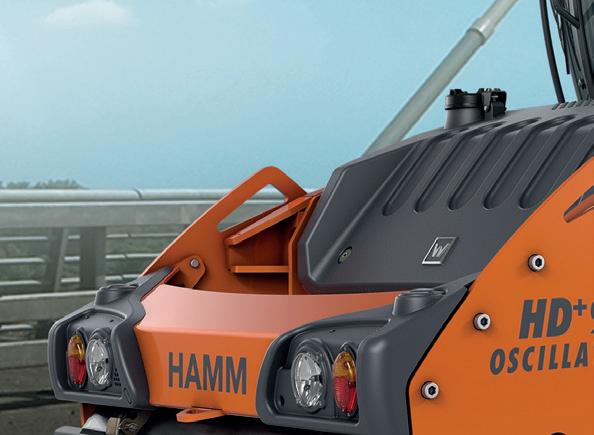
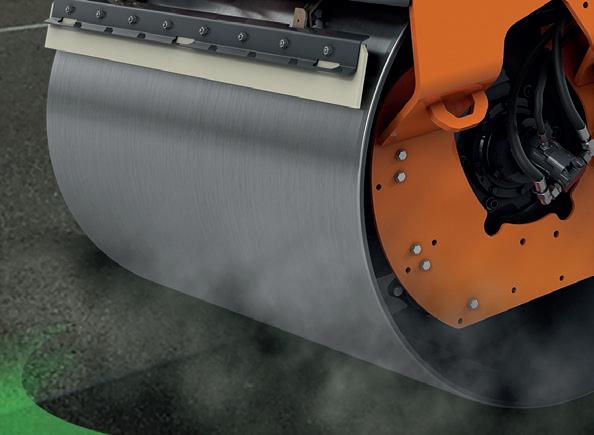







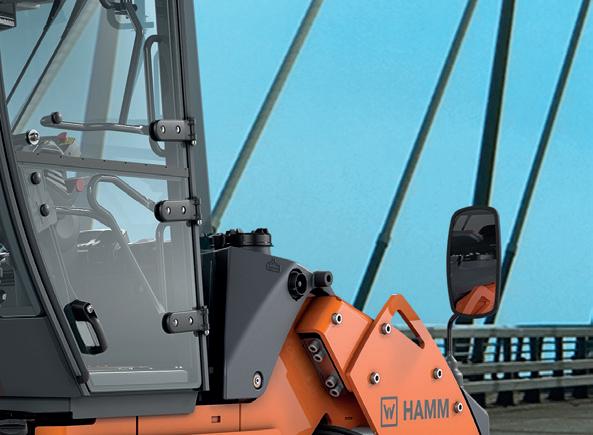
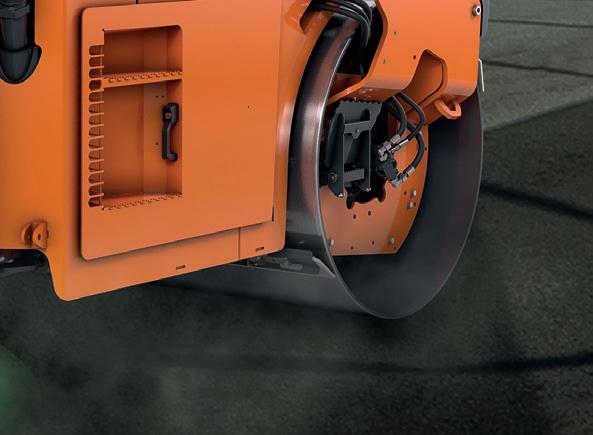


CLOSE TO OUR CUSTOMERS. For decades, HAMM oscillation has been the go-to compaction method for quality results on sensitive asphalt mixes like SMA and EME-2, especially around vibration sensitive assets like pipelines, bridge decks and buildings. Now HAMM has introduced Smart Compact Pro - another breakthrough in compaction efficiency that incorporates real-time density on the fly. Do you want to be known for producing quality pavements, quickly and with less re-work? Let Hamm help.
COVER STORY
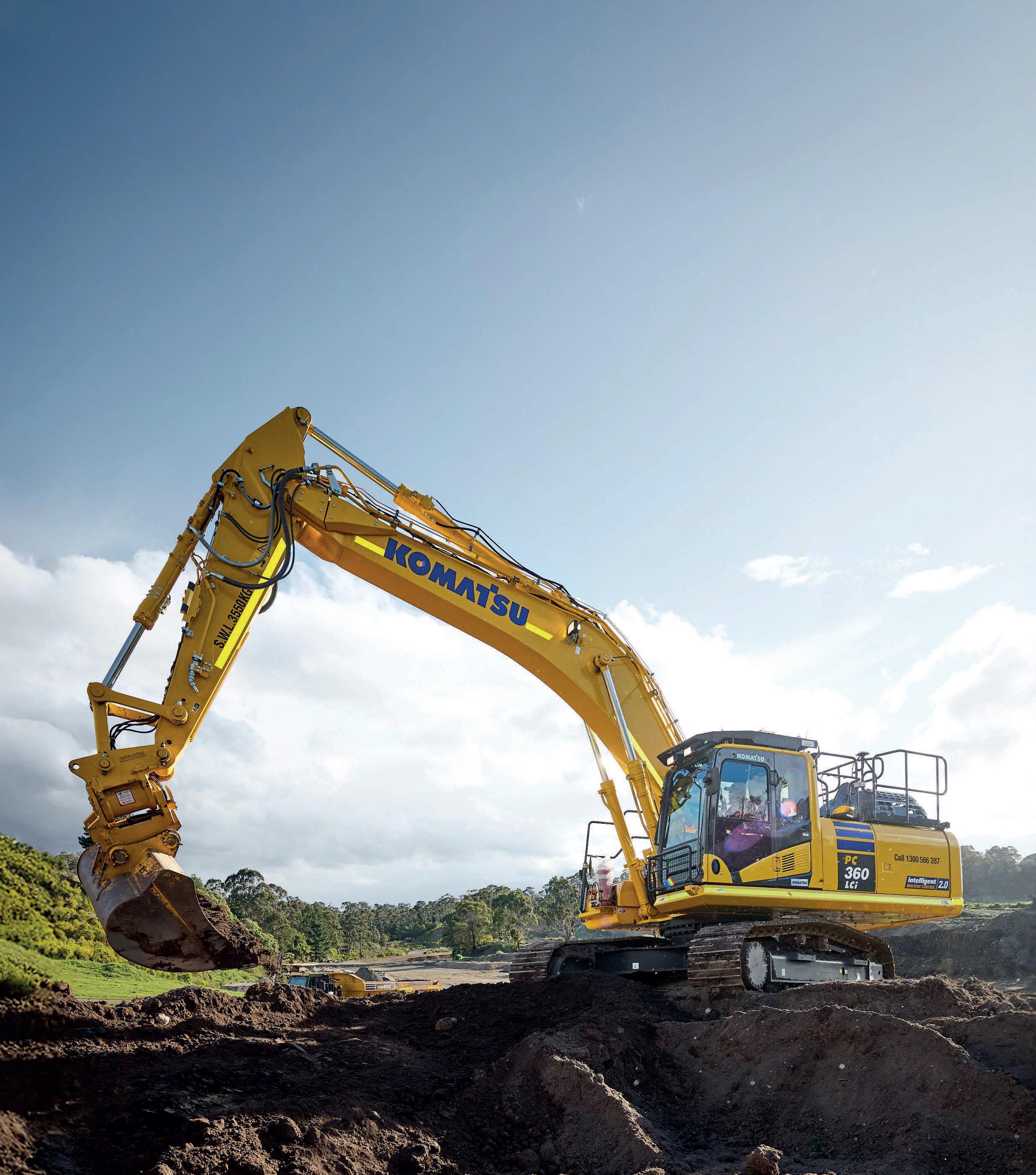
14 Growth through partnership Komatsu is supporting HEXhire’s expansion across Victoria and South Australia.
ROADS REVIEW
16 This month, Roads & Infrastructure asked decision makers how the sector is working to reduce the effects of global conflict and logistical challenges on the supply chain.
THOUGHT LEADERSHIP
18 Community and commerce moving
The Australian Flexible Pavement Association is working with both the public and private sector to find a way forward in the face of bitumen and fuel supply disruptions.
20 From pressure to opportunity RoadAid Director and Founder Chris Couldrey shares his perspective on the current industry project pipeline.
SAFETY
22 Lights, camera, action
The Transport Accident Commission’s Split-Second film competition offers a creative platform to communicate key road safety messages.
PROJECT REPORT
24 Maintaining a legacy
The Georgiou Group is providing the next wave of industry leaders with the knowledge and skills required to deliver major infrastructure pipelines – as seen by a recent project.
SUSTAINABILITY
27 Calling to action
ResourceCo subsidiary Tyrecycle is calling for increased government procurement and market-based regulation during a parliamentary inquiry into Australia’s tyre industry.
EVOLVING INFRASTRUCTURE
30 Enabling the next evolution
The experts behind WT’s digital construction consulting capabilities explain how the industry can benefit.
INNOVATION
33 Sticking the landing Works on the East Kimberley Regional Airport have thrown an innovative asphalt formulation into the spotlight.
36 New possibilities Geoquest Oceania is attributing its recent growth to what is now a breadth of possible applications and markets.
MACHINERY & EQUIPMENT
39 The case for strategic storage TEC Container Solutions’ Managing Director discusses the state of Australia’s bitumen supply chain constraints amid global conflict.
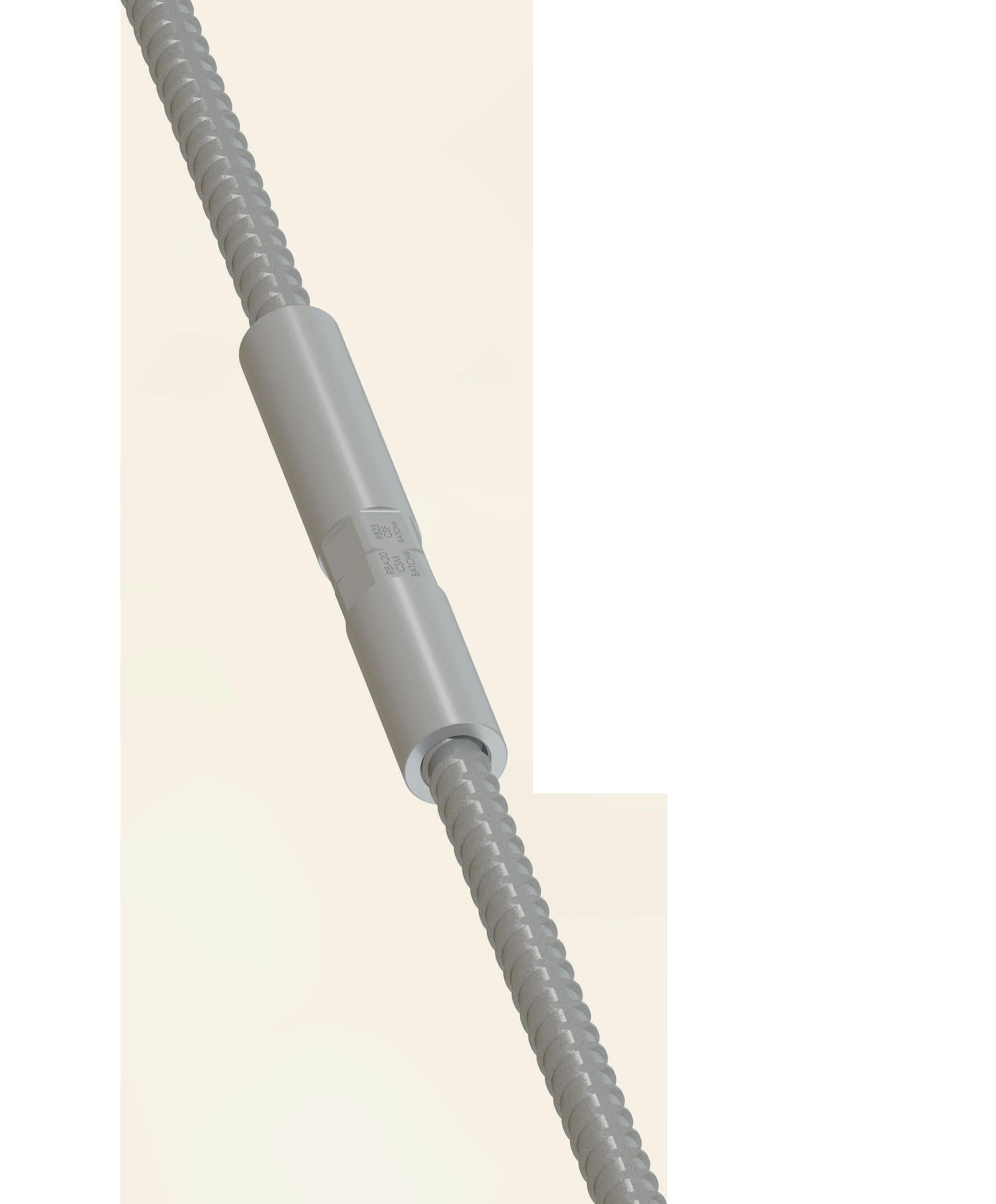
42 The essential link Reid’s new advanced mechanical splice system is promising to transform delivery for bridge projects of all sizes.
44 The bucket list ALLU’s Asphalt Recycling Bucket is an efficient and economic choice for the waste and recycling applications of heavy equipment operators.
46 Always down to earth VEGA’s level and point level measuring instruments are simplifying the production process of a well-known international company.
COMPANY PROFILE
50 An enduring commitment Vital Chemical continues to focus on developing environmentally and sustainably sound products as its 50th anniversary approaches.
ASSOCIATION SECTION
52 Driving a new era for training
A National Precast-led initiative is reshaping workforce training for Australia’s precast concrete industry.
EVENTS
54 Connecting Victoria
The 15th Victorian Transport Infrastructure Conference returns to the Melbourne Convention and Exhibition Centre in June 2026.
56 Making the cut
As the 2026 Women in Industry Awards approach, Eileen Breen of NTEX reflects on how being celebrated at last year’s ceremony changed both her business and her perspective.
CONTRACTS
58 An update on some of the contracts and tenders recently awarded or put to market across the Australian infrastructure sector.
CEO
Christine Clancy
christine.clancy@primecreative.com.au
PUBLISHER
Sarah Baker sarah.baker@primecreative.com.au
MANAGING EDITOR
Lisa Korycki lisa.korycki@primecreative.com.au
EDITOR
Tom O’Keane tom.okeane@primecreative.com.au
JOURNALIST
Sean Gustini sean.gustini@primecreative.com.au
HEAD OF DESIGN
Blake Storey
ART DIRECTOR
Bea Barthelson
BUSINESS DEVELOPMENT MANAGER
Loren Katie Logan lorenkatie.logan@primecreative.com.au
CLIENT SUCCESS MANAGER
Sabrina Zor sabrina.zor@primecreative.com.au
HEAD OFFICE
Prime Creative Pty Ltd
379 Docklands Drive, Docklands VIC 3008 Australia p: +61 3 9690 8766 info@primecreative.com.au www.roadsonline.com.au
SUBSCRIPTIONS
+61 3 9690 8766 subscriptions@primecreative.com.au
Roads & Infrastructure Australia is available by subscription from the publisher. The rights of refusal are reserved by the publisher.
ARTICLES
All articles submitted for publication become the property of the publisher. The Editor reserves the right to adjust any article to conform with the magazine format.
COVER IMAGE Komatsu
COPYRIGHT
Roads & Infrastructure Australia is owned and published by Prime Creative Media. All material in Roads & Infrastructure Australia is copyright and no part may be reproduced or copied in any form or by any means (graphic, electronic or mechanical including information and retrieval systems) without the written permission of the publisher. The Editor welcomes contributions but reserves the right to accept or reject any material. While every effort has been made to ensure the accuracy of information, Prime Creative Media will not accept responsibility for errors or omissions or for any consequences arising from reliance on information published. The opinions expressed in Roads & Infrastructure Australia are not necessarily the opinions of, or endorsed by the publisher unless otherwise stated.

TACKLING THE PROJECT PIPELINE OF TOMORROW
THE PIPELINE OF WORKS REQUIRED for hosting the 2032 Brisbane Olympic and Paralympic Games has been a prevalent topic of late and in many ways has acted as a key representation of the current state of the industry.
Despite notable challenges, the sector’s enthusiasm and determination is clear, and the recent milestones on projects across the country – such as progress on the Sydney Metro West, Melbourne Airport Rail and M1 Pacific Motorway Extension projects – reflect this ambition. There is a path forward, and the industry is prevailing as it always does.
In this edition, Chris Couldrey, Director and Founder of RoadAid, shares his perspective on this current project pipeline: the challenges it presents, as well as the opportunities for industry to grow once said projects have been delivered.
Also in this edition, we hear from Tony Aloisio – Chief Executive Officer of the Australian Flexible Pavement Association – on how the industry is working to ensure continuity of supply for bitumen and diesel despite the lingering impacts driven by the conflict in the Middle East. Aloisio says a strong sense of empathy within the industry has quickly come to the fore: “What I’ve really seen is people recognising that we’re part of a broader community. They’re not just protecting their own narrow interests; they’re asking how we keep communities connected and commerce moving”.
We also hear from industry experts on how the industry is finding alternative solutions to minimise such impacts, in this edition’s Roads Review column.
To support further growth and upskilling for the next generation of industry leaders, the National Precast Concrete Association of Australia is introducing micro credentials that have been developed to reflect the needs of modern precast manufacturing. Five new precast-specific units within MSM30325 Certificate III in Manufactured Mineral Products will be made available, encouraging an increase in the use of best practice methodology and execution on projects of all sizes.
And in our cover story, we learn more about a growing partnership between Komatsu and one of the nation’s fastest growing machinery, dry and wet hire businesses. It goes to show that collaboration can be a key to success for established and emerging companies alike.
We also learn more about the upcoming 15th Victorian Transport Infrastructure Conference, being held at Melbourne Convention and Exhibition Centre from 17-18 June 2026.
This and much more in this edition of Roads & Infrastructure magazine.
Happy reading!
TOM O’KEANE – EDITOR


CONSTRUCTION FIRMS SHORTLISTED FOR MELBOURNE AIRPORT RAIL STAGE
Two construction consortiums have been shortlisted to deliver the final package of works for Melbourne Airport Rail Stage One in Victoria.
The wider project aims to construct a dedicated rail line across from the Melbourne CBD to the Melbourne Airport in Tullamarine, while the first stage will implement this transport infrastructure between West Footscray and Albion.
The two shortlisted consortiums to progress through the tender process ahead of the contract being awarded next year are:
• CPB Contractors Pty Ltd, SMEC Australia
• FCC Construction, Martinus Rail, Arcadis, BG&E
The final package of works will widen the rail corridor – adding more tracks, building two new regional platforms at Sunshine Station and extending the station concourse.
This package will also deliver a new walking and cycling connection across the rail line, an upgraded bus interchange, as well as open space and new forecourts as part of the Victorian Government’s $143 million upgrade to
the Sunshine Station precinct.
The works between West Footscray and Albion will increase capacity through the corridor and pave the way for further upgrades.
This includes the electrification of the Melton line, and will allow more than 1000 trains a day through Sunshine.
Early works on the project are already underway to relocate underground utilities between Albion and Sunshine and prepare the corridor for new rail infrastructure.
Melbourne Airport Rail Stage One is expected to be complete in 2030.
ADDITIONAL FUNDING FOR NATIONAL ROAD PROJECTS
The latest round of funding for the Federal Government’s Safer Local Roads and Infrastructure Program (SLRIP) has been released, with more than $107 million to go towards 42 new projects.
The SLRIP provides funding for projects that deliver safer and more productive roads across Australia.
In total, more than $91 million is earmarked for projects in regional Australia under the latest funding tranche.
New South Wales will receive $43.97 million for 16 projects including
$5 million for Balranald Shire Council to seal Benanee Road in Euston.
Queensland will receive $37.52 million for 11 projects including almost $5 million for the Queensland Government to strengthen and widen

the Roma–Condamine Road.
Victoria will receive $17.02 million for seven projects including over $3.7 million for Campaspe Shire Council to upgrade Two Tree Road, Carag Carag.
Western Australia will receive $5.36 million for three projects including $3 million for the WA Government to deliver a new Heavy Vehicle Rest Area on Albany Ring Road, Menang Drive.
Left: In total, more than $91 million is earmarked for projects in regional Australia under the latest funding tranche. Image: adobe.stock.com/Olivia Zhou

Melbourne Airport Rail Stage One is expected to be completed in 2030. Image courtesy of the Victorian Government.

Georgiou Group is a leading civil and building construction company in Australia which is part of STRABAG Societas Europea, one of Europe’s leading construction technology groups.
www.georgiou.com.au
Georgiou’s team of over 900 employees are dedicated to upholding our core values of Care, Integrity, and Excellence in delivering solutions across transport, resources, building, utilities, energy and Defence.
MILESTONE FOR $15.4B T2D PROJECT
South Australia’s River Torrens to Darlington (T2D) project is turning a corner, with the first of three 300-tonne Tunnel Boring Machine (TBM) cutterheads being lifted into place.
The $15.4 billion project has been working to create a non stop north-south transport corridor in Adelaide since mid-2025.
The placement of this cutterhead marks great progress, and will be completed by a 500-tonne gantry crane lowering it into the 20-metre-deep South precinct launch bot at Clovelly Park.
Around 120,000 cubic metres of material weighing more than 343,000 tonnes has already been excavated in preparation for this milestone to form the TBM launch box.
The first and second TBMs are being built alongside each other at the Southern Precinct, and will soon be tasked with carving out the twin Southern Tunnels across 4.5 kilometres towards Glandore and Black Forest.
Meanwhile, all components for the T2D’s third TBM, which will dig both of the 2.2-kilometre-long Northern Tunnels, have now arrived in SA.
Once the first cutterhead has been attached to the front of the TBM, other major parts of the machine will then be assembled, with the completed TBM to undergo final testing and commissioning
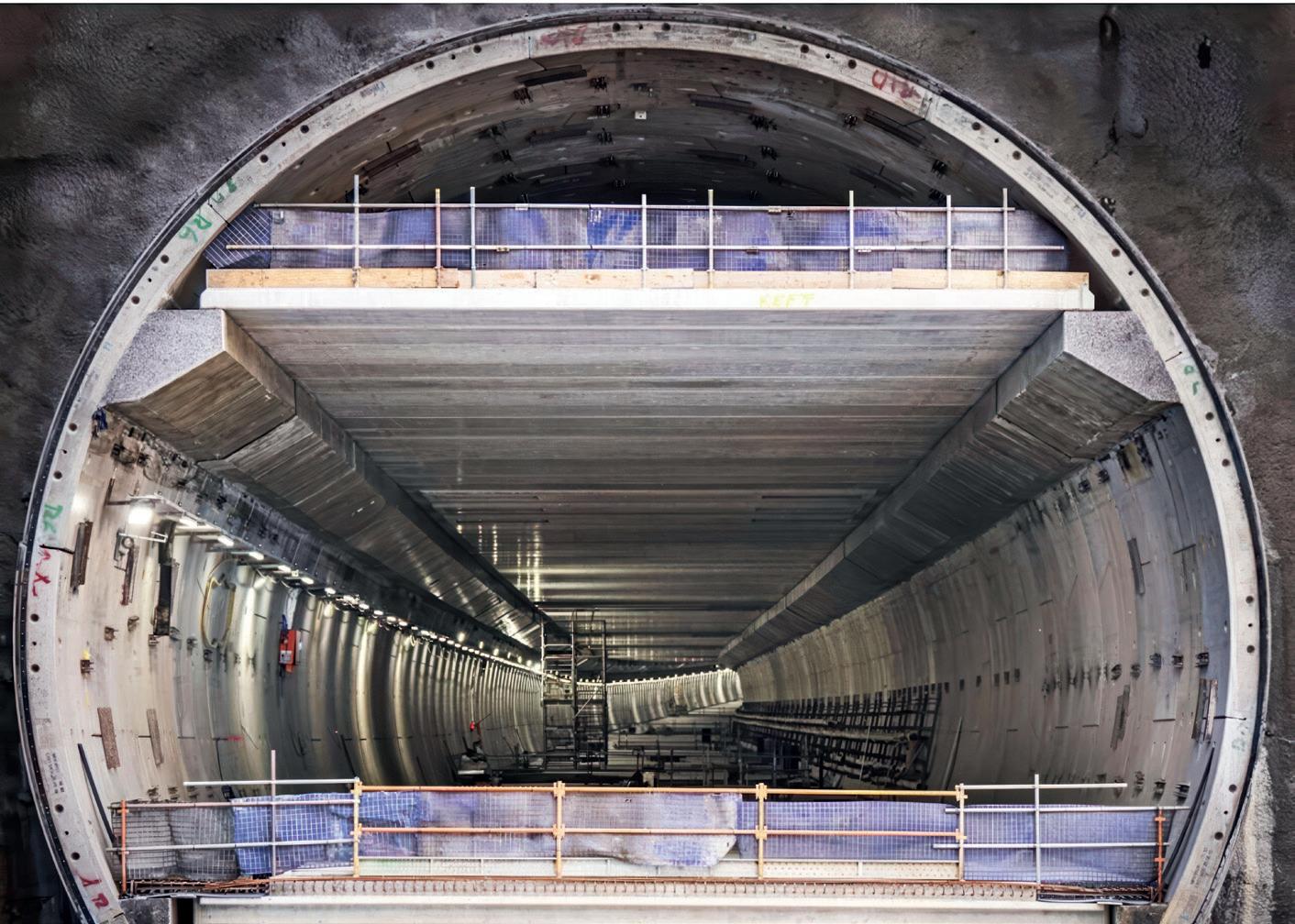
before tunnelling begins.
Tunnelling is expected to commence in the second half of 2026.
Once operational, each TBM will operate 24 hours a day, seven days a week, progressing approximately 8-10 metres per day, with up to 20 specialised workers inside at any one time.
The tunnelling team on the T2D project has been involved in other complex tunnelling projects around the world, such as
EARLY DESIGNS FOR VIC RAIL BRIDGE
The Victorian Government has released early designs for a new rail bridge in the north eastern suburb of Macleod, which plans to remove the dangerous and congested Ruthven Street level crossing.
The new rail bridge aims to improve safety and traffic flow for the 12,600 drivers who use the crossing every day, and eliminate nearly 30 minutes of boom gate down time during the morning peak.
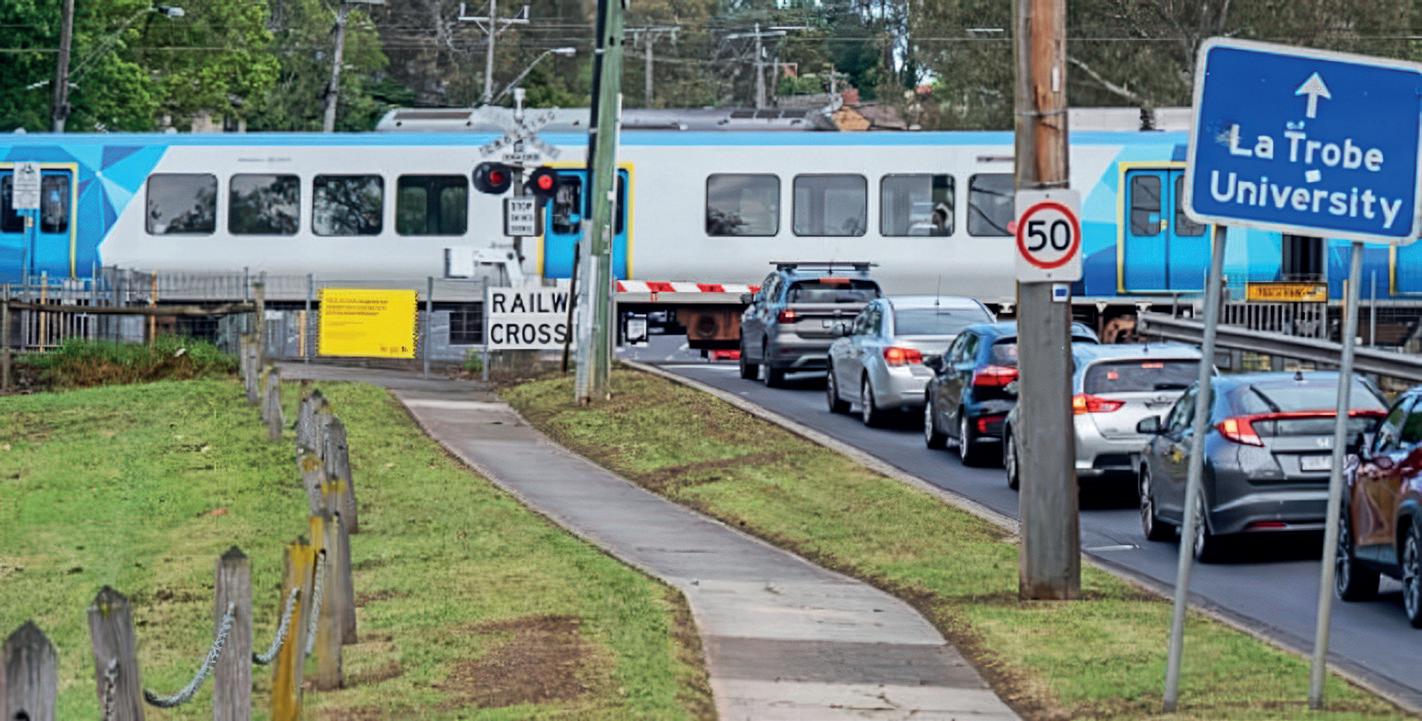
WestConnex and Sydney Metro in Australia, the Northern Line Extension in England, and the Trunk Road T2 Project in Hong Kong.
The use of three TBMs will allow both the Northern and Southern sections to be constructed concurrently, for the T2D Project to be delivered by 2031 if not earlier.
The Federal and South Australian governments are each contributing $7.7 billion to make the T2D Project possible.
Construction will start later this year with the commencement of major works to deliver the new rail bridge and supporting infrastructure, and is expected to be complete in 2027.
A new signalised pedestrian crossing on Ruthven Street will also improve safety and provide easier access to the station and surrounding area, joined by a new walking and cycling path which will be built along Ellesmere Parade between Ruthven Street and Davis Street.
Macleod’s new rail bridge is part of an effort by the State Government to remove 110 level crossings from Melbourne by 2030, with 88 having already been removed.
The project has been shaped by community feedback and local insights – a new landscaped community space under the rail bridge will include native indigenous plants, creating a welcoming space.
Construction on the rail bridge will start later this year. Image courtesy of the Victorian Government.
Tunnelling for the T2D project is expected to commence in the second half of 2026. Image courtesy of the South Australian Government.
This project is one of the largest infrastructure undertakings in the region’s history. Image courtesy of the New South Wales Government.

NSW’S MAJOR M1 ROAD WORKS FAST TRACKED TO FINISH THIS YEAR
The Hunter Region’s M1 Pacific Motorway extension to Raymond Terrace in New South Wales is expected to open to traffic in late 2026 – more than a year earlier than originally planned.
The project is one of the largest infrastructure undertakings in the region’s history, and has been accelerated by the completion of the Heatherbrae Bypass, a new five-kilometre-long motorway on the extension’s northern section.
The Raymond Terrace interchange,
Masonite Road overpass and bridge crossing at Windeyers Creek have also all been finished as part of the northern section.
This section will open to motorists as soon as work on the 10-kilometre southern section from Black Hill to Tomago is completed later in the year.
Once open, contractors will remain on site to monitor how the new road adjusts to carrying highway traffic, various landscaping establishment, and targeted
BALLARAT STATION UPGRADE FINISHES WITH NEW PEDESTRIAN OVERPASS
A new pedestrian overpass has opened at Ballarat Station in Victoria, marking the end of the Ballarat Station Upgrade.
The structure has been designed to deliver safer and more accessible journeys for passengers.
It features stair and lift access to each platform, ensuring people with disability, luggage or prams can cross the rail line safely and conveniently.
The overpass is also wide enough for two wheelchairs or mobility scooters to pass each other – due to its 28 metres of length – further improving access for people with mobility needs.
The overpass design was developed
in consultation with disability and heritage advocacy groups, and reflects the community’s preference for a design that honours the station’s heritage while bolstering accessibility.
Its aluminium cladding features curved elements inspired by the station’s historic ironwork, along with a perforated design that improves visibility and provides protection from the weather.
maintenance as required – for up to one year on the northern section and two years on the southern section.
The project’s early delivery has been supported by detailed planning, staged construction sequencing and strong delivery partnerships.
The M1 Pacific Motorway extension is being jointly funded with a total investment of $2.24 billion between the Federal Government and New South Wales Government.
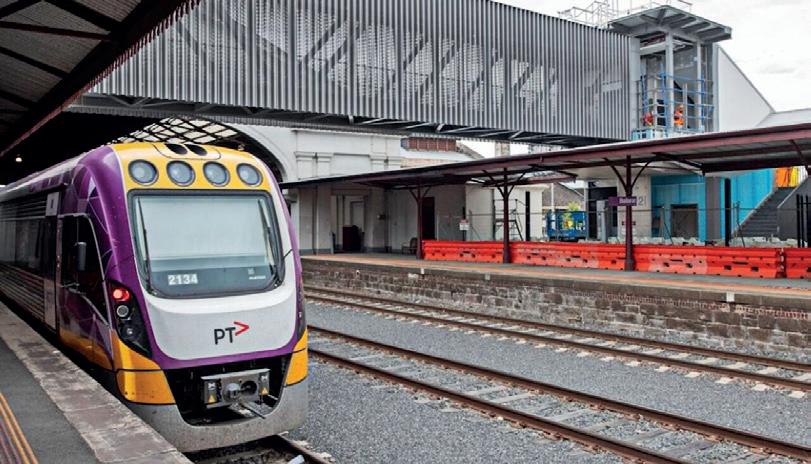
Above: A new pedestrian overpass has opened at Ballarat Station in Victoria, marking the completion of the Ballarat Station Upgrade. Image courtesy of the Victorian Government.
Open balconies with glass balustrades at the lift landings provide views of the station’s iconic clock tower and train hall, creating a more welcoming and userfriendly space.
Accessibility upgrades to the station’s northern entrance were completed last year, including a new ramp, stairs, handrails and an automatic door to improve access for all passengers.










•
•
•
•
•
www.geoquest-group.com.au

MILESTONES FOR STAGE ONE, TWO OF MULGOA ROAD UPGRADE
Key progress has been made on both stages of the $226 million Mulgoa Road upgrade in New South Wales.
Mulgoa Road is a main access route between Penrith and the M4 (Western) Motorway, connecting to the broader Sydney motorway
network. Motorists currently experience high levels of congestion, which is expected to worsen over the next 15 years. 52,000 vehicles use this section daily.
The first stage of the project is now complete, with the works between Jeanette
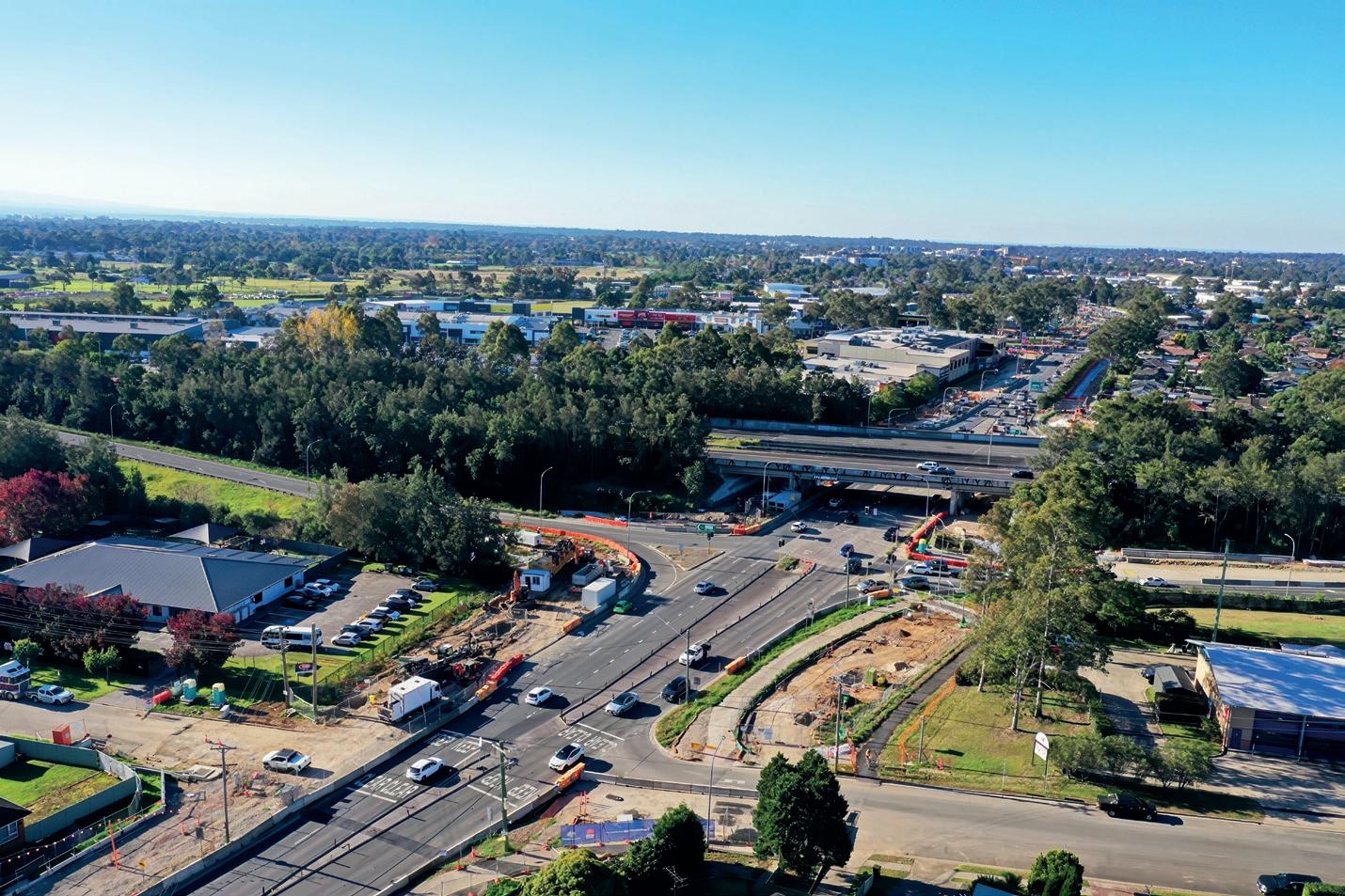
Street and Blaikie Road having widened Mulgoa Road to three lanes in each direction, improving access to and from the M4 Motorway and delivering safer, more efficient connections to surrounding retail and residential precincts.
Stage two of the works will upgrade the section between Jeanette Street and Glenmore Parkway, targeting a key pinch point to further improve traffic flow and reliability for the thousands of motorists who rely on this corridor each day.
Further south at Mulgoa, additional safety improvements are also being delivered, including shoulder widening, minor road realignment, and the installation of safety barriers at the intersection of Mulgoa Road and Roscrea Drive.
Work on the second stage of the project is expected to be completed by late 2028.
FIRST LOOKS FOR SYDNEY METRO WEST STATIONS RELEASED
Early designs for the next generation of metro stations as part of the Sydney Metro West project in New South Wales have been unveiled.
The project, a new 24-kilometre underground metro railway, plans to double rail capacity between Parramatta and the Sydney CBD, linking communities with fast and accessible transport.
Global construction firm Gamuda, along with Laing O’Rourke and DT Infrastructure, will build the project’s stations at Westmead, North Strathfield, Burwood North, Five Dock, The Bays and Hunter Street.
Early work will specifically begin at North Strathfield, Burwood North, Five Dock and The Bays this month, including the delivery of machinery and equipment, set-up of temporary work sites, utilities investigations and maintenance, survey works and traffic management.
Major station construction is due to commence by the end of the year.
Architecture firms Bates Smart, SAA Architects, John McAslan + Partners, Neeson Murcutt, Neille, Stewart Architecture and Aileen Sage Architects have been appointed to design the five stations.
The final design for each station will be
confirmed following a detailed design process, expected to be completed by early 2027.
All nine stations on the Sydney Metro West line will be built to respond to their unique neighbourhoods, with the goal of creating welcoming and people-focused transport hubs that improve connectivity and support future growth.
Once operational, Sydney Metro West will deliver fast, safe and reliable metro services to key precincts and new areas of Sydney for the first time.
Construction firms Lendlease, Mirvac and
Coombes Property Group were awarded the contract to design and construct Sydney Metro West’s flagship city station at Hunter Street.
Their work will begin later this year once cavern excavation is complete.
Remaining contracts for Sydney Metro West stations at Parramatta, Sydney Olympic Park, and Pyrmont will be announced by the end of the year.
Sydney Metro West will double rail capacity between Parramatta and the Sydney CBD and has a target opening date of 2032.
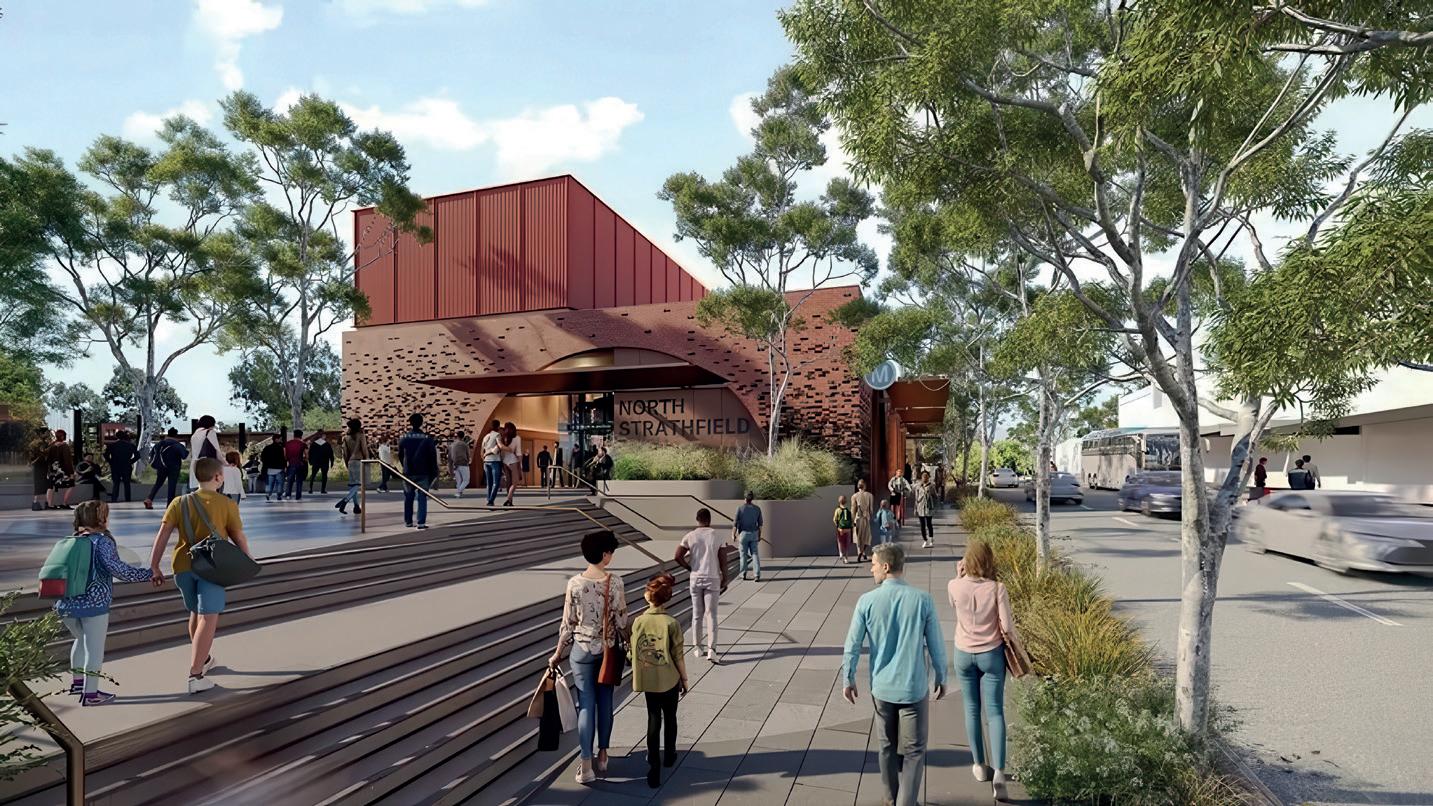
Early work will specifically begin at station sites in North Strathfield, Burwood North, Five Dock and The Bays this month. Image courtesy of the New South Wales Government.
Mulgoa Road is a main access route between Penrith and the M4 (Western) Motorway in New South Wales. Image courtesy of the New South Wales Government.
PARTNERSHIP SCALING GROWTH THROUGH
KOMATSU IS SUPPORTING HEXHIRE’S EXPANSION ACROSS VICTORIA AND SOUTH AUSTRALIA, WITH THE GROWING HIRE BUSINESS STRENGTHENING ITS FLEET
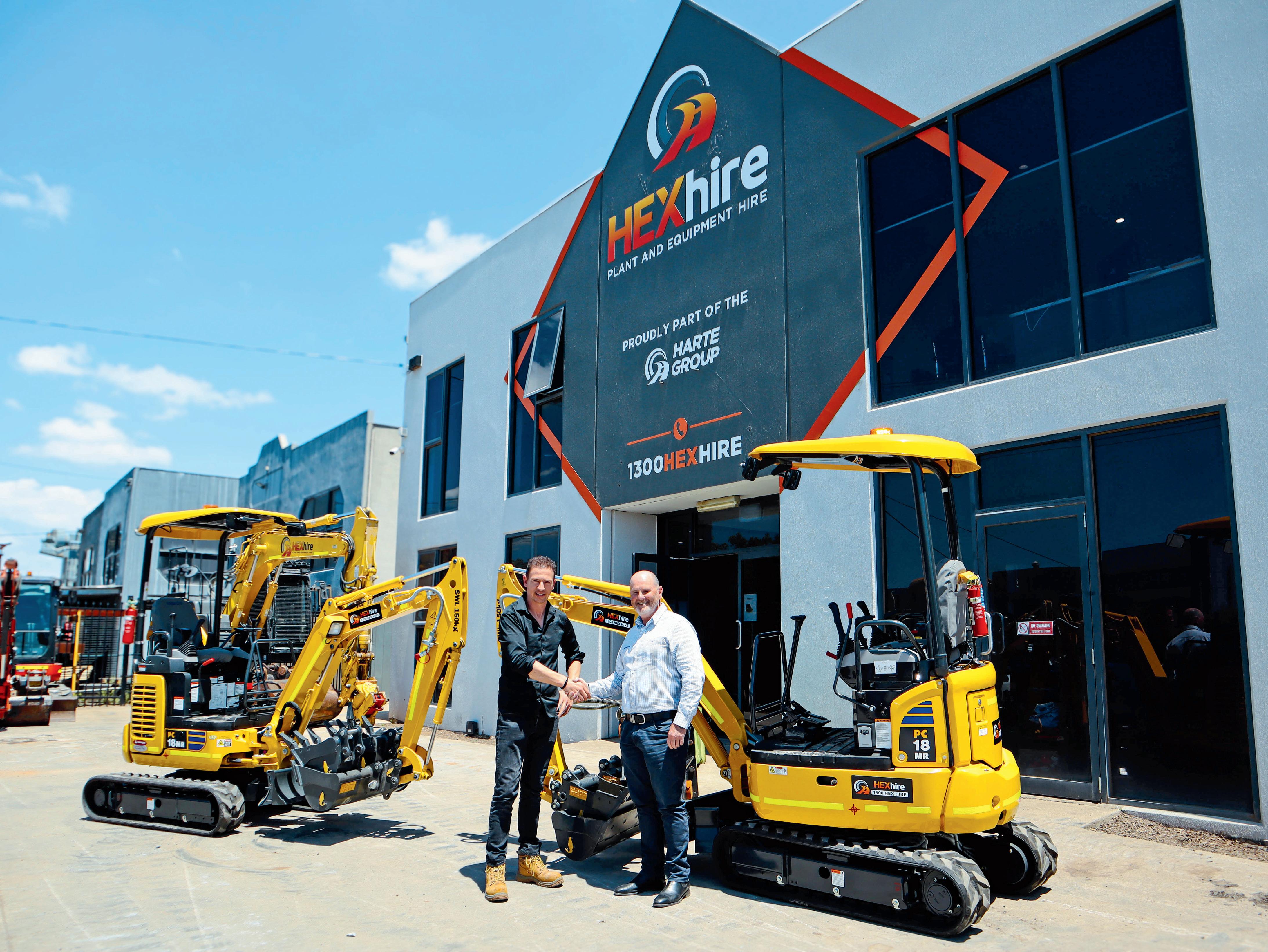
Established in 2013 as a predominantly wet hire operation, HEXhire shifted its focus as large-scale infrastructure projects were rolled out across Victoria, resulting in an increase in demand for dry hire solutions.
HEXhire Managing Director Andrew Harte says the transition marked a turning point for the business.
“Moving into dry hire allowed us to scale up and target the bigger projects where there’s strong demand for larger machinery. We’re now able to service a broad mix of customers, including major infrastructure and large civil contractors as well as smaller civil and
landscaping companies, with demand evenly spread across the sectors,” he says.
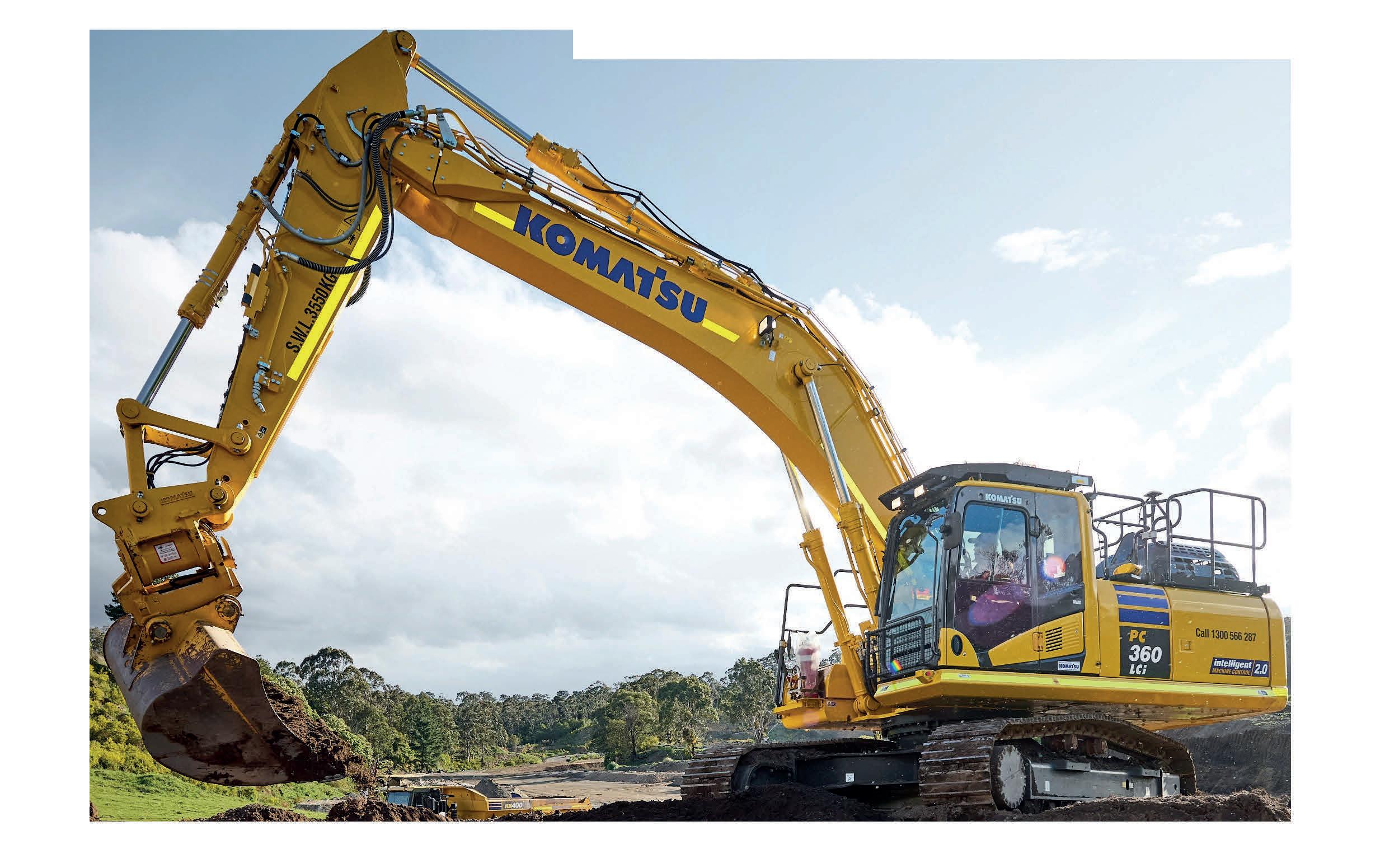
Komatsu has played an increasing role in supporting that growth. HEXhire has been purchasing Komatsu equipment for the past five years and has recently expanded its fleet to include excavators, dozers, loaders and dump trucks, with a total of more than 20 new and used Komatsu machines.
“As a hire business, we place a strong emphasis on customer feedback when making purchasing decisions and the feedback on Komatsu machinery has always been really good,” Harte says.
“That, combined with the positive feedback
from our mechanics and service team on their strength and durability, really cemented for us that Komatsu is who we want to continue purchasing from.”
HEXhire services a broad mix of customers, including major infrastructure and large civil contractors as well as smaller civil and landscaping companies.
Harte sees technology as a key differentiator in the rental market, with customers responding positively to integrated features on HEXhire’s Komatsu machinery, such as GPS and machine control systems.
“It’s important for us to follow brands that evolve with the times and include leading
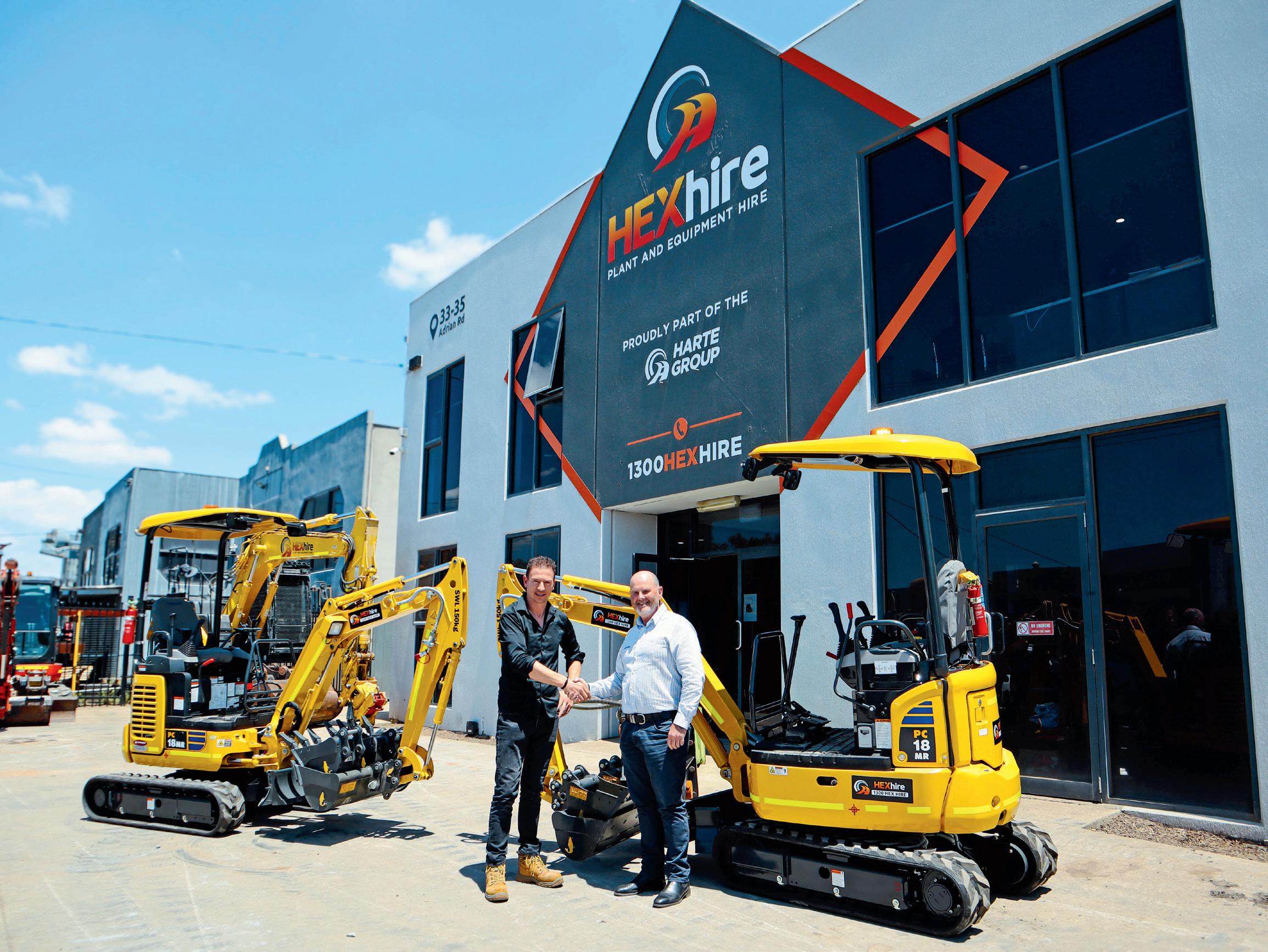
HEXhire Managing Director, Andrew Harte with Komatsu’s Regional Sales Manager for the Southern Region, Andrew Fowkes.
technology in their offering. The feedback on the Komatsu technology has been really positive,” he says.
Local support has also been a key factor, with Komatsu located only minutes from HEXhire’s Campbellfield base, on the outskirts of Melbourne. Responsive service and smooth onboarding have helped embed the machines into the fleet with minimal disruption.
That same level of service now extends to South Australia, where HEXhire is supporting many infrastructure projects in Adelaide with reliable Komatsu equipment backed by its expert service and support team.
Looking ahead, HEXhire plans to further expand its presence in the larger machine categories, particularly in dump trucks and dozers, with Komatsu part of the strategic growth plans.
“With the capital investment involved in machines, you want to partner with a company that stands behind its gear,” Harte says.
As we continue to grow, having a strong partner like Komatsu is very important to us.”


out


Images:
Komatsu
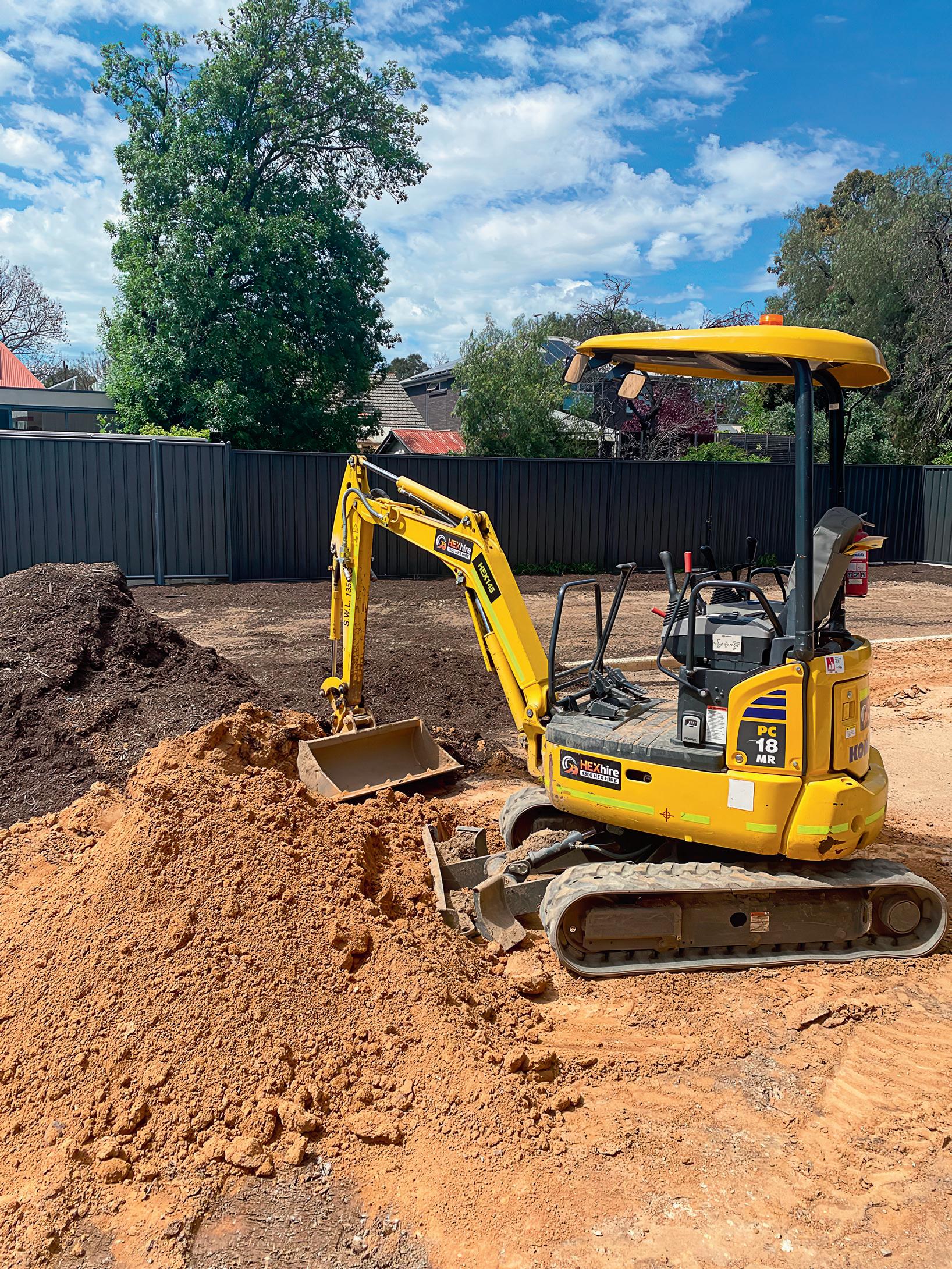
Komatsu has played an increasing role in supporting HEXhire’s growth for the past five years, with a total Komatsu fleet of over 20 new and used machines.
ROADS REVIEW
THIS MONTH, WE ASKED THE INDUSTRY’S DECISION-MAKERS, ‘HOW IS THE SECTOR WORKING TO REDUCE IMPACTS ON THE SUPPLY CHAIN, WHICH HAVE BEEN PRESENTED BY GLOBAL CONFLICT AND LOGISTICAL CHALLENGES?’

CADELL
TAYE,
CHIEF
EXECUTIVE
OFFICER – NATIONAL PRECAST CONCRETE ASSOCIATION OF AUSTRALIA
The global fuel crisis has intensified the industry’s focus on efficiency and resilience. Precast construction is well positioned in this environment, as offsite manufacturing enhances efficiency by reducing transport movements and limiting exposure to fuelrelated impacts compared to traditional construction methods. Additionally, the use of digital planning tools is helping to further improve freight efficiency. Across the sector, there is a strong shift toward local sourcing, optimised logistics, and design for manufacture and assembly (DfMA), all aimed at reducing material handling and minimising waste. More broadly, National Precast continues to advocate for smarter procurement practices and greater standardisation to cut inefficiencies, supporting the development of a more fuel-resilient and sustainable supply chain.
Image: National Precast
PAUL
MATTHEWS,
MANAGING DIRECTOR - MATTHEWS BROTHERS ENGINEERING
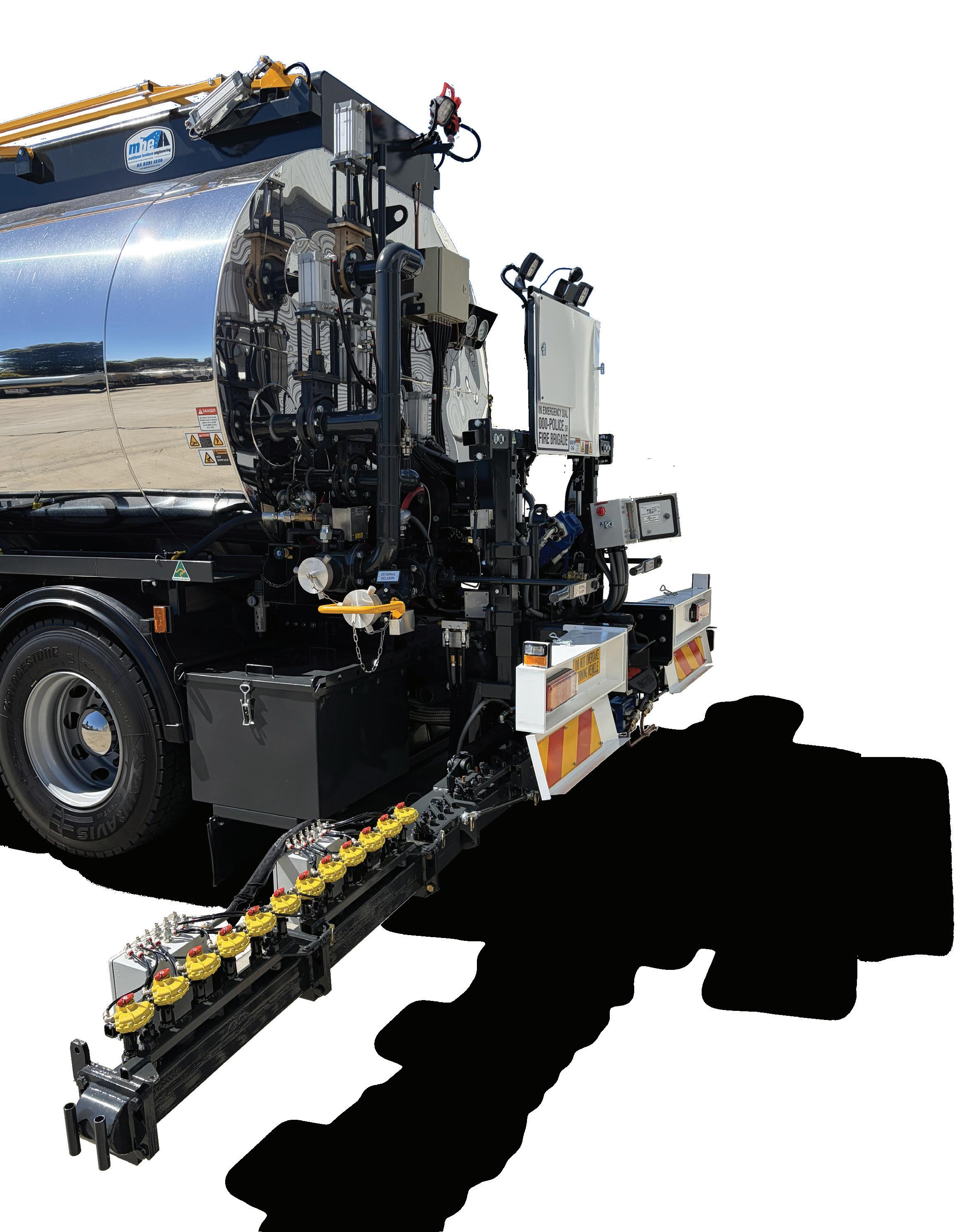
MBE has always placed a strong emphasis on retaining the ability to control our own supply chain as much as possible. This approach has become increasingly important in response to global conflict and logistical challenges. For us, that meant strengthening this policy through COVID, which saw us bring more of our suppliers onto Australian soil to reduce reliance on international freight and improve reliability. Even with those steps, we are still experiencing the pinch through fuel charge levies. Our capacity to control this is somewhat limited, but we are negotiating with suppliers to cap delivery charges for regular orders.
Image: Matthews Brothers Engineering



EKATERINA BEREZNIAK, MANAGER SUPPLY CHAIN ANALYTICS –SAMI BITUMEN TECHNOLOGIES
The Middle East conflict has hit hard, disrupting bitumen from Singapore and Thailand, driving up costs across bitumen, polymers, and chemicals. Some suppliers are not able to quote given the market volatility. To reduce these impacts, we’re diversifying supply sources geographically and discussing with road authorities when bitumen sources fall outside local specifications due to market restrictions. We have negotiated with our clients to share the increased costs, and we’re genuinely grateful for their understanding. Strengthened collaboration on demand forecasting has been crucial. It’s all about agility now, we can’t rely on traditional supply chains anymore. Navigating this together makes all the difference.
Image: SAMI Bitumen Technologies
If you or someone at your organisation is an industry leader and would like to be a part of this monthly column in 2026, please get in touch with Editor, Tom O’Keane: tom.okeane@primecreative.com.au

KEEPING COMMUNITY AND COMMERCE MOVING
THE AUSTRALIAN FLEXIBLE PAVEMENT ASSOCIATION (AFPA) IS TAKING A LEADING POSITION ON BITUMEN AND FUEL SUPPLY DISRUPTIONS THAT ARE IMPACTING INDUSTRY, WORKING WITH BOTH THE PUBLIC AND PRIVATE SECTOR TO FIND THE BEST PATH FORWARD.
Australia has historically maintained unique and relatively narrow specifications for bitumen, tailored specifically to local road conditions, climate, and performance expectations.
Unlike many overseas markets that use alternative grading systems, Australia has required bitumen to conform to standards designed for Australian pavements, traffic loads, and temperature ranges.
As a result, much of the bitumen imported from Asia has been produced to a custom “Australian recipe”, rather than to widely used international norms.
Practically overnight, geopolitical conflict in the Middle East meant there was no more bitumen coming in from the normal suppliers, threatening the ability to build new roads and, critically, to maintain and reopen existing infrastructure within Australia.
This supply shock has created continuity-of-supply issues with major knock- on effects: costs for bitumen and diesel have risen sharply, inflationary pressures are intensifying, along with questions surrounding the commercial viability of select transport projects.
Tony Aloisio, Chief Executive Officer of the Australian Flexible Pavement Association (AfPA) says that the speed of such impacts has been matched by the industry’s response, with key associations such as AfPA springing into action.
“Immediately, the industry turned to a mindset of ‘how do we keep things moving?’ It wasn’t about ‘what does this mean for me?’ or ‘we’re stuffed’. It was
about moving to ensure that we could start to solve the problem, and to once again, make sure that we could keep the industry in Australia moving,” he says.
Bitumen importers quickly began sourcing product from new regions, some coming from as far away as the American Gulf and Europe, while contractors, suppliers, and small-tomedium enterprises openly shared detailed information about their situations, negotiations, and solutions.
This transparency allowed AfPA to see the whole picture and present a unified, evidence - based case to government, as Aloisio explains.
“We wrote to governments very quickly to say, ‘bitumen is as critical as diesel.’ Without it, you can’t keep roads open, you can’t reconnect communities, and
you can’t move freight. It’s not a nice-tohave product – it’s absolutely essential,” he says.
“Every state road authority, from the Northern Territory to Tasmania and across to Western Australia, came back with the same number one priority: continuity of supply. ‘Keep the critical work going and keep the roads open’.”
He says one of the largest challenges faced was the rigidity provided by existing contracts and agreements. Many of these said agreements include rise -and -fall and cost-adjustment formulas, each designed for small, incremental price movements. The sudden price hike has exposed many contractors as a result.
The strong sense of empathy within the industry has quickly come to the fore.
Image: stock.adobe.com/Vadim
Tony Aloisio, Chief Executive Officer of the Australian Flexible Pavement Association.
Image: AfPA
Despite ongoing impacts to bitumen supply, the industry is coming together to support continuity.
“Behind the big names you see in the news are the small and medium enterprises – the mum and dad operators carting asphalt to site and providing services. They’re just as exposed to these shocks, and they’re absolutely vital to keeping the system running,” Aloisio says.
“We had truck drivers telling us, ‘I can’t afford to drive my truck at the old rates anymore.’ The industry response was, ‘We don’t yet know exactly who will pay for it, but we’ll pay you, because you’re part of our team and we need each other.’ That’s the sort of values-based decision making that has kept the supply chain intact.”
While the financial impacts continue to linger, a broader sense of community cohesion and shared sacrifice through the sector and the general public –echoed by government and industry
collaboration – points towards a potential path forward, Aloisio says.
“You hear the negatives about people hoarding fuel, but what I’ve really seen is the opposite – people recognising that we’re part of a broader community. They’re not just protecting their own narrow interests; they’re asking how we keep communities connected and commerce moving,” he says.
“For our industry, the big positive has been that sense of shared purpose: keeping Australia’s roads maintained, serviceable, and safe. Everyone has rallied around that goal.
“For our members, I think this has demonstrated very clearly that AfPA has a real purpose and brings tangible value – not just in getting through today’s crisis, but in shaping a stronger
framework for tomorrow.”
It’s Aloisio’s belief that such impacts highlight the need to rethink specifications and consider how to future-proof contracts and standards so that the road network – and the businesses that support it – can withstand similar shocks in the future.
“This is an opportunity. The next phase is lessons learned; how we managed this crisis and how we build resilience for the next one,” he says. “Every state has approached cost adjustments and bitumen specifications differently, and that gives us a rich foundation to draw from.
By bringing together the best of those approaches, we can work towards a truly national framework, one that strengthens the entire industry.”
QUEENSLAND’S OLYMPIC INFRASTRUCTURE:
FROM PRESSURE TO OPPORTUNITY
CHRIS COULDREY, DIRECTOR AND FOUNDER
OF ROADAID SHARES HIS PERSPECTIVE ON THE CURRENT PROJECT PIPELINE: THE CHALLENGES IT PRESENTS, AS WELL AS THE OPPORTUNITIES FOR INDUSTRY TO GROW ONCE SAID PROJECTS HAVE BEEN DELIVERED.
As Queensland gears up for the 2032 Olympic and Paralympic Games, the scale of what needs to be delivered is becoming clearer by the day. We’re not just talking about a handful of major projects. It’s a full pipeline across transport networks, roads, tunnels, and supporting infrastructure, all happening at once.
There’s no denying the pressure. Tight timeframes, workforce shortages, and overlapping projects are real challenges. But there’s also a genuine opportunity here. This isn’t just about getting everything done in time, it’s about lifting the standard of how critical infrastructure is planned, delivered, and maintained across the state.
The focus shouldn’t just be on what we build, but how we go about it. The default response when demand ramps up is to throw more people at it. But in reality, the issue often isn’t just numbers, it’s how effectively the work is planned and executed.
Designing for long-term value and legacy is a key part of that. A key part of Olympic planning is making sure what we build continues to deliver value long after the Games are over. There are well-known global examples where infrastructure has struggled to find relevance post-Games. Queensland has the opportunity to take a different approach by embedding longterm use and performance into the design from the outset.
Athlete villages can transition into housing. Stadiums can be aligned with long-term users and ongoing events. These assets should also remain accessible to the community so they stay active, maintained, and connected.
But it goes beyond repurposing.
Infrastructure should be designed to perform over its entire lifecycle, extending asset life, reducing operating costs, and improving sustainability outcomes. Ultimately, what defines success isn’t what gets built, but why it gets built. The most successful Olympic programs are those that prioritise the long-term needs of the state, using the Games as a catalyst to accelerate infrastructure that would have been required regardless.
The industry is already feeling the pressure on workforce, and with estimates suggesting up to 250,000 additional workers are needed to meet Olympic demand, that pressure is only going to increase. The focus needs to shift toward capability. A well-trained, adaptable workforce can deliver more efficiently and respond better to changing project demands, particularly across both construction and maintenance environments.
Retention is just as important. Providing consistency of work, clear expectations, and a strong safety culture helps keep experienced people in the industry and reduces the reliance on constantly sourcing new labour.
That’s where SMEs (small and medium-sized enterprises) present a


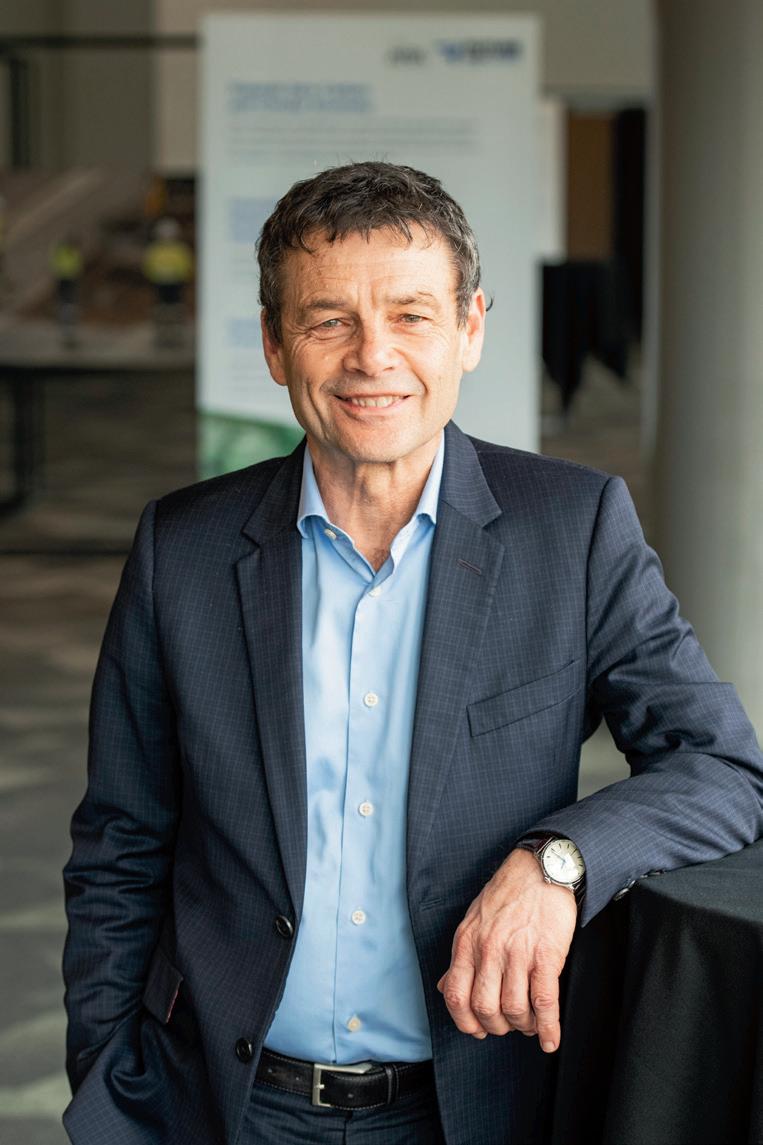
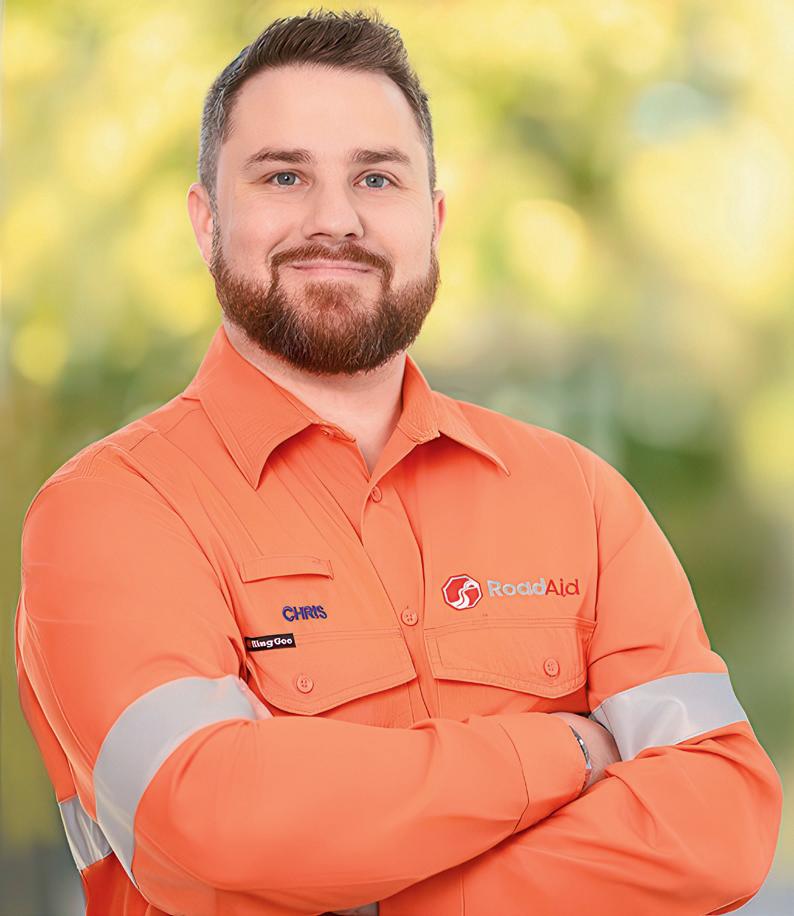
Chris Couldrey, Director and Founder of RoadAid.
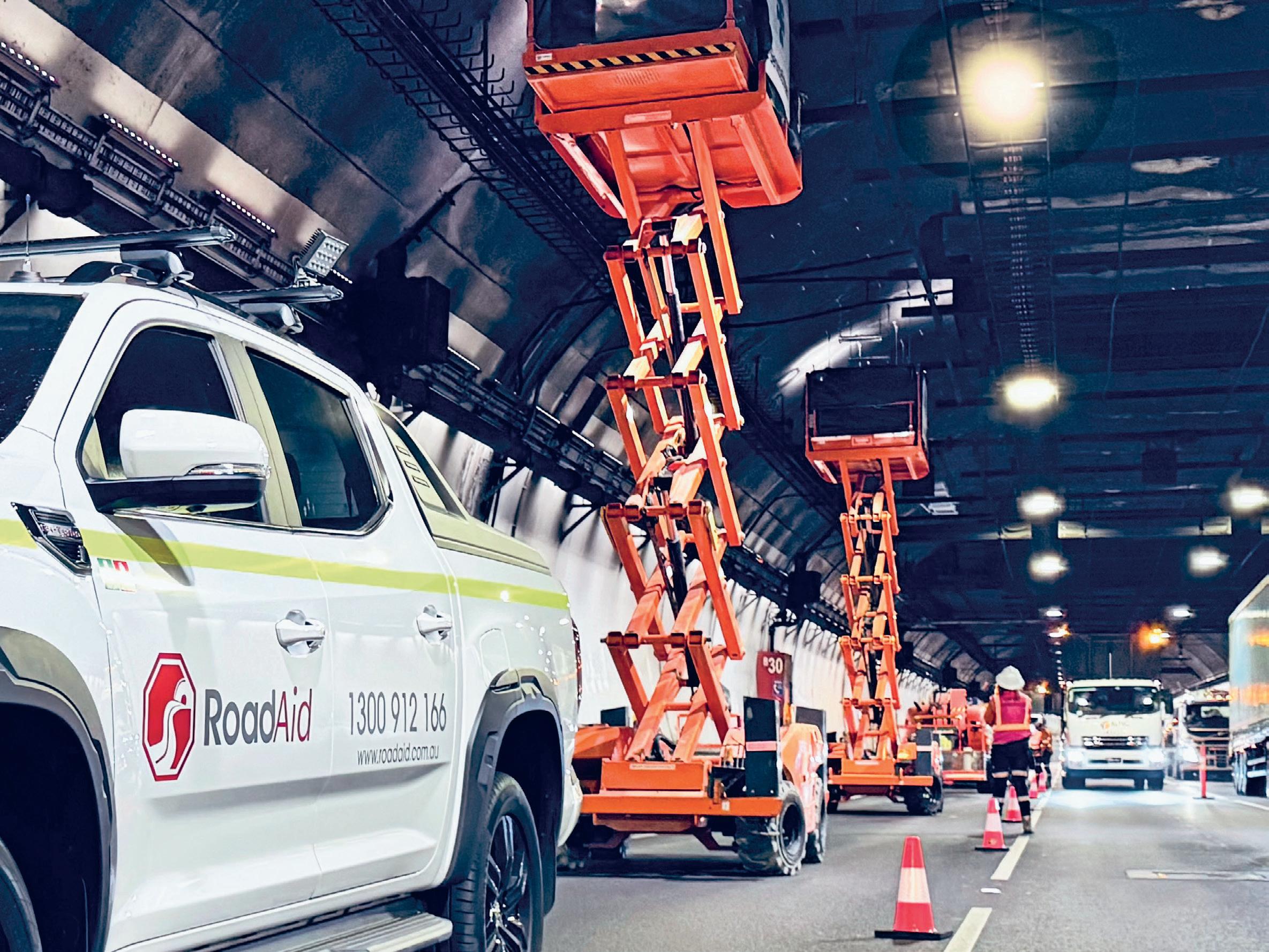
RoadAid has emerged as a key representative of the industry, helping to promote best practice when it comes to project delivery.
real opportunity to support delivery. Many smaller businesses already have the capability and agility to support the construction and maintenance of major infrastructure, but often face barriers through complex procurement processes. Simplifying those pathways will be key to unlocking that capability.
With the volume of work ahead, no single organisation will deliver this alone. There is a clear opportunity for SMEs to work together, combining capability, sharing resources, and delivering as coordinated teams rather than in isolation.
From a RoadAid perspective, this is exactly where we see our role. Supporting the construction and ongoing maintenance of critical infrastructure, particularly across road networks, while also partnering with other capable SMEs to deliver integrated outcomes across broader infrastructure projects.
The task ahead is significant, but it’s achievable. With the right approach, Queensland has a real opportunity to not only deliver the Olympic program, but to set a new benchmark for infrastructure delivery and maintenance across the state.

LIGHTS, CAMERA, ACTION
THE
TRANSPORT ACCIDENT COMMISSION’S SPLIT-SECOND
FILM COMPETITION OFFERS
FILMMAKERS A CREATIVE PLATFORM TO COMMUNICATE KEY ROAD SAFETY MESSAGES.
The Transport Accident Commission (TAC) has played a number of roles for the Victorian community since its establishment nearly 40 years ago. In 1987, it was founded as a no-fault insurer for motorists, but has since grown into a multi-faceted organisation promoting general road safety through various means, which range from written road safety implementation strategies and insurance options to, as of more recently, community event showcases.
One such example is the TAC’s annual Split-Second film competition, which invites filmmakers from around the state to submit concepts for short movies that address imperative road safety concepts. The TAC has run the competition for seven years, with this iteration receiving hundreds of submissions portraying many different road issues, under a plethora of themes.
Split-Second’s most recent event in 2025 centred around road safety accidents among young people – a group that continues to be over-represented in road trauma according to the TAC. The
competition accepted submissions from creators between the ages of 18 and 30, to ensure the winning films would communicate concepts to the young driver demographic effectively.
The competition’s two winners, Shane Senanayake and Stacey Park, were selected for their unique and compelling films focused on seatbelt use and low-level speeding, respectively.
Senanayake entered the competition with no formal film training, but instead a passion for movie-making which has spilled into a full-time career.
“I loved making movies as a child,” he says. “But then I decided to study accounting, and pursued that as a job, which is obviously different. However, I soon realised I wasn’t fulfilled by my work, and knew that I liked being creative, so I just quit out of nowhere to begin a video production company, Identity and Beyond, with my mate.
“We mostly do video advertising for businesses. I’ve loved jumping back into it, and being creative for a purpose, or for
making some kind of impact.”
This made him an ideal candidate for the competition.
Senanayake’s film, Unusual Behaviours, communicated the risk of not wearing a seatbelt through humour. The road risk was explored with a metaphor of not wearing pants, highlighting the absurdity of the choice, and how some bad habits can be passed down through tradition.
Senanayake says the unique idea was the result of the competition brief’s openended nature, which provided him with a great creative licence.
“The brief’s instructions weren’t to portray certain statistics or specific situations on the road,” he says. “It very simply asked us to communicate the importance of wearing a seatbelt. The lack of parameters meant there was much more room for me to get creative without losing the message itself.
“A line in the brief said, ‘people who don’t wear seatbelts often don’t because of how they grew up’, and the idea of learned behaviour seemed like a great
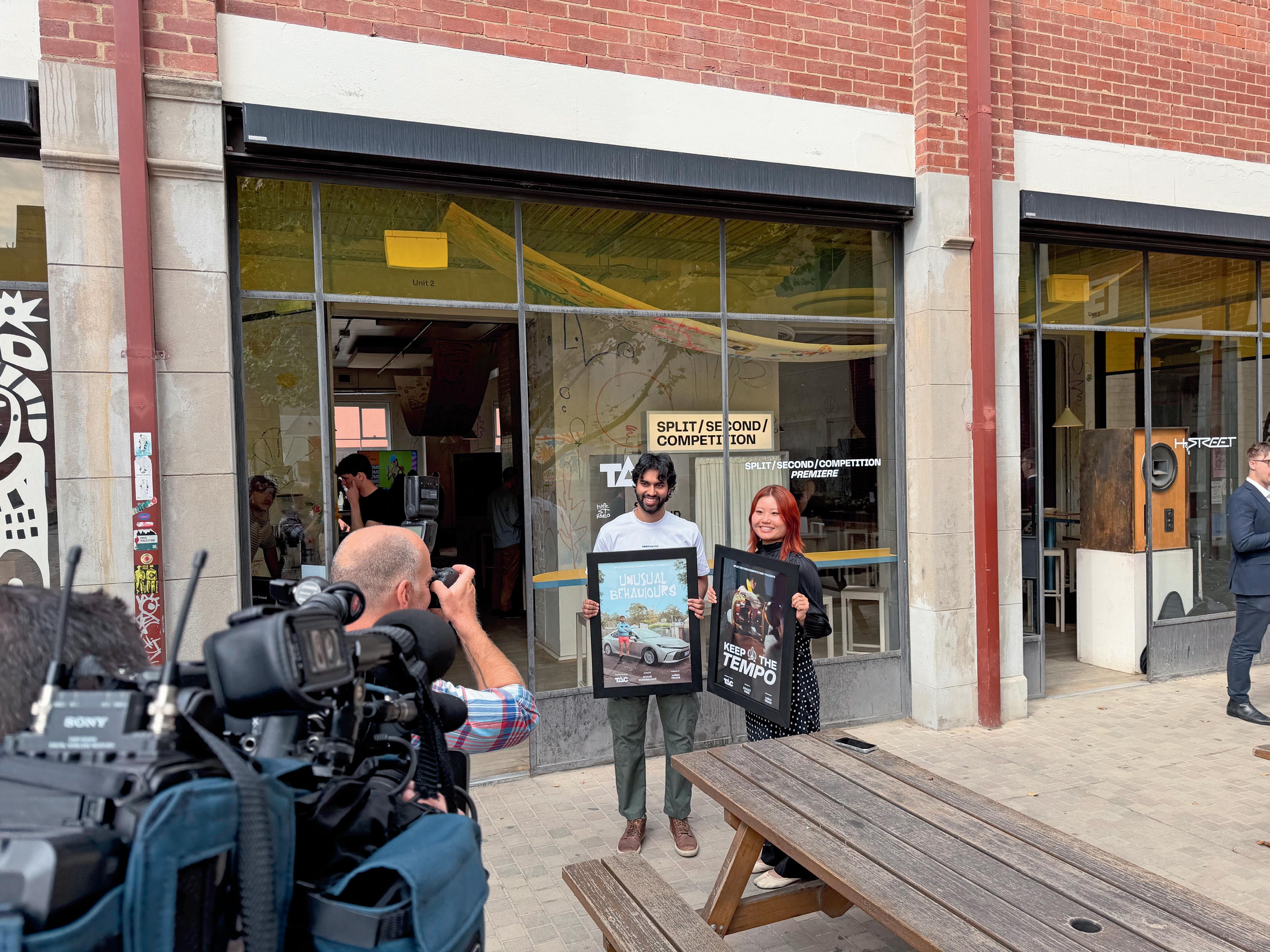

This year’s Split-Second event centred around road safety accidents among young people – a group that continues to be over-represented in road trauma.
opportunity to be silly and fun.”
Senanayake feels that people can be more receptive to lessons explained with humour than drama in some cases and, in his film, utilised this to explain the dangerous action in a light-hearted yet resonant manner.
The competition also provided Senanayake with an invaluable opportunity to be exposed to professional filmmaking.
“I was very involved with the end product,” he says. “I got to meet the talent agency, Taboo, and the production company, Truce, which supported the film’s production. The director and I discussed my idea, pitched it to TAC, and worked together on all the aspects of production. Casting, sound design, colour grading, editing – everything.
“It was all brand-new to me, and was such a great education. I wanted to learn from the best, and definitely got that experience. This was the first film competition I entered, and it won’t be the last.”
Similarly, Park entered the Split-Second competition with a deep admiration for filmmaking as an art form, despite her different career direction.
“I came into filmmaking from a place outside the traditional path,” she says. “I’m not a filmmaker by trade, and don’t identify myself as a creative at all. Currently, I work as a doctor in a public hospital in Melbourne, but I’ve always had a keen interest in the space.”
Throughout her life, Park has been an active film watcher, and has volunteered at many film festivals. The TAC’s competition marked the first time she submitted her own movie material.
Park’s film, Keep the Tempo, revolved around the safety risk of low-level speeding through tension and the metaphor of music. She compared the act to that of a drummer gradually playing his music faster than the ensemble band he is a part of, and ruining the music, highlighting that even a
to my Korean background, and it places an emphasis on rhythm, collective timing, and physicality,” she says. “I thought that given my personal experiences with it, and the fact that I know a group who practices it in Melbourne, using it in my film would support the TAC’s message really well.”
During the production process, Park preferred to work as a general overseer, partially due to her work commitments in regional hospitals at the time. But her experience with the Split-Second
“THE BRIEF’S INSTRUCTIONS WEREN’T TO PORTRAY CERTAIN STATISTICS OR SPECIFIC SITUATIONS ON THE ROAD.”
slight deviation from a given speed can have negative consequences.
“When I first read the briefing, I immediately made a connection between slightly speeding and going a little ‘offbeat’,” Park says, “since we weren’t allowed to include any cars or explicit road imagery.
“That immediately took me to music, and the ideas of both tempo and acceleration.”
The type of drumming Park featured –traditional Korean Samul Nori drumming –was critical to the film for two key reasons. Firstly, the style is energetic and percussive, a fitting parallel to speeding that connects with audiences. Secondly, it is culturally significant to Park and her background.
“Samul Nori is something I appreciate due
competition, along with the final product of the film itself, has given her a taste for other filmmaking ventures.
“The end product of the movie was truly beyond my expectations, and has made me want to do this more,” she says. “I think coming from a non-creative background is a strength of mine in this space, because I have no fear when it comes to applying for these things. I don’t think anyone expects me to win, and that gives me the freedom to try anything.”
Senanayake and Park’s winning films draw upon their unique approaches and experiences to portray the TAC’s road safety messages effectively. The two films are available to view on the TAC website.
Shane Senanayake and Stacey Park were the winners of the TAC’s 2025 Split-Second film competition.

MAINTAINING A LEGACY
GEORGIOU GROUP IS EQUIPPING THE NEXT GENERATION OF INDUSTRY LEADERS WITH THE KNOWLEDGE AND SKILLS REQUIRED TO DELIVER MAJOR INFRASTRUCTURE PIPELINES, BENEFITTING THE ENTIRE SECTOR AS A RESULT. RECENT WORKS ON THE NEW MIDLAND STATION EXEMPLIFY JUST THAT.
Georgiou’s origins can be traced back close to five decades ago in Western Australia, when it began as ‘Direct Drainage’. The eventual amalgamation of Direct Drainage, Geocrete and Roadpave in 1996 paved the way for the Georgiou Group name that’s become synonymous with Australia’s infrastructure sector.
Despite its ambitious growth and vision – with operations now across Australia –Georgiou Group has always prided itself on maximising its local impact.
This approach emphasises support for local industries, organisations, and individuals, all while being guided by the core values of Care, Integrity, and Excellence.
But delivering transformational projects takes much more than just scope and scale, a key reason why Georgiou Group prides itself on its people. Understanding that having a great team is just one of the keys to success, Georgiou Group aims to attract, develop and grow individuals who identify with the company’s philosophy.
SAM’S JOURNEY
For Samuel Collins, studying and garnering
experience across both civil and geotechnical engineering provided plenty of career opportunity. But it wasn’t long before he gravitated towards larger, more integrated infrastructure, determined to develop coordination, strategy, and leadership skills.
Collins’ first impression of Georgiou left a lasting impact. As he explains, the company’s “people first” approach was obvious for all to see, an aspect that he was keen to learn more about.
“Right from the onset, I noticed this culture that Georgiou had, initially in the way that managers treated their people. I gravitated towards that straight away, I remember thinking ‘I want to be a part of that’,” he says.
“I could see that they supported their people, they backed them and gave them ownership and accountability.”
Collins’ first few days with the business were no different.
“It didn’t matter if I was in the office or out on-site, staff – including general managers – would come up and ask, ‘Hey, what’s your name? What do you do here?’ It was just really refreshing,” he says.
Employed initially as a Site Engineer, Collins
received close support and scheduled development reviews to map his growth and journey within the business.
“From the very beginning, Georgiou has consistently provided me with opportunities to step into bigger and more complex roles, which really helped to accelerate my growth compared to traditional career pathways,” he says.
Project-based and external mentors also influenced this growth.
“The management group has actively pushed me into positions where I’ve felt self-doubt, but they’ve always been there to support me,” Collins says.
He adds that the support provided through high pressure delivery phases helped to mould his development as a leader, resulting in his appointment as a construction manager on one of the METRONET program’s largest works packages.
THE NEW MIDLAND STATION
The METRONET construction pipeline represents the largest ever investment in Perth’s public transport network, ultimately delivering about 72 kilometres of new rail,
sometimes disintegrate, go into silos and start to blame each other when things don’t go right. That never happened on this project,” Collins says.
“The culture and teamwork we had resulted in everyone supporting, find the fixes and overall, just working well together.”
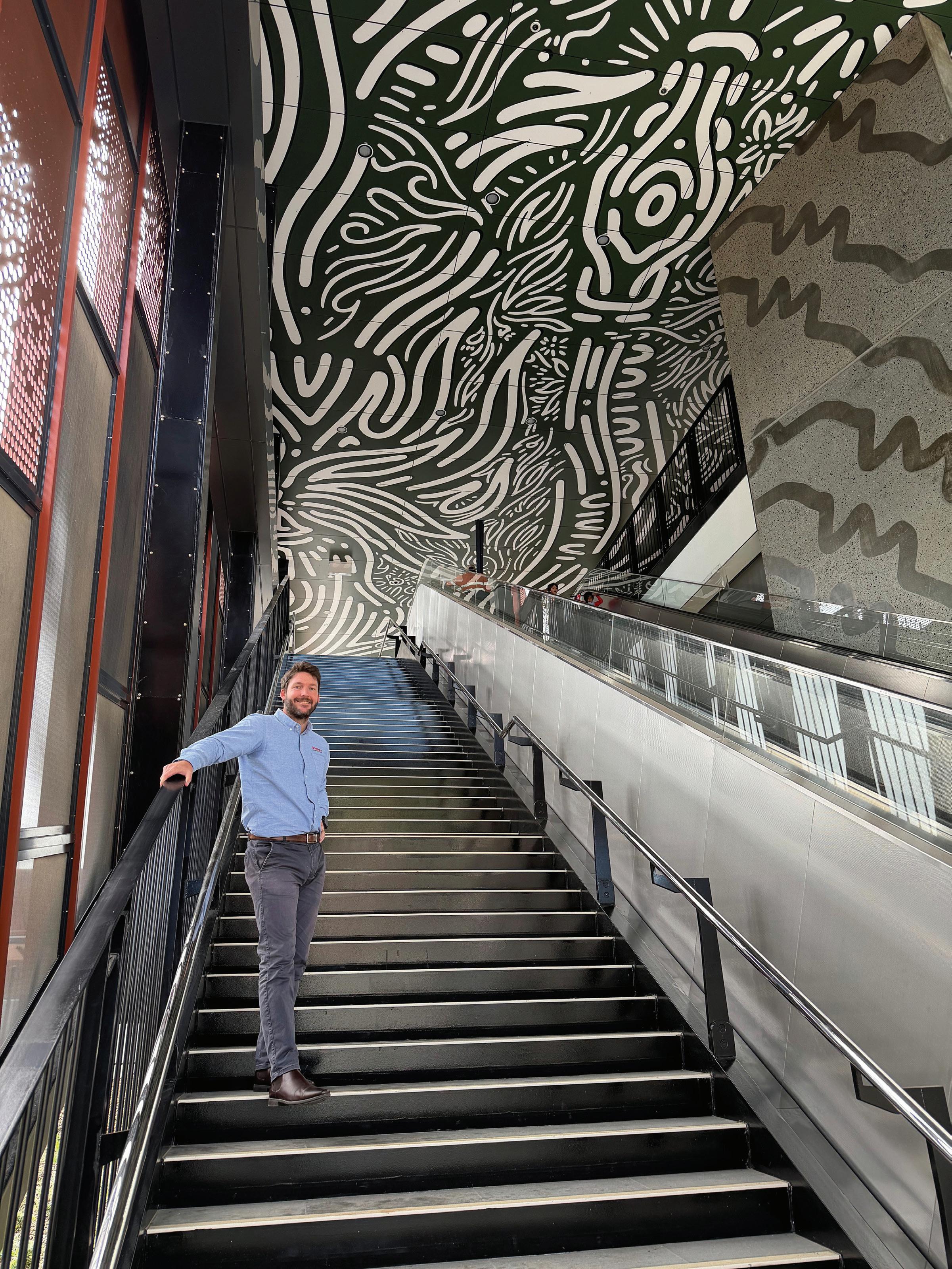

Images: Georgiou Group
Samuel Collins, Construction Manager – Midland Junction Alliance.
The New Midland Station is set to benefit the community for decades to come.
CALL TO ACTION
TYRECYCLE CHIEF EXECUTIVE OFFICER JIM FAIRWEATHER IS CALLING FOR INCREASED GOVERNMENT PROCUREMENT AND MARKET-BASED REGULATION DURING A PARLIAMENTARY INQUIRY INTO AUSTRALIA’S TYRE INDUSTRY.
yrecycle has made a formal submission to the parliamentary inquiry into the state of Australia’s tyre industry with one clear objective in mind.
“We don’t want a single tyre dumped in Australia,” says Jim Fairweather, Chief Executive Officer at Tyrecycle, which is Australia’s largest collector and recycler of end-of-life tyres. “But collection and schemes are not enough – you must create demand.”
The inquiry was adopted by the Standing Committee on Industry, Innovation and Science, following referrals from the Federal Ministers for Industry and Innovation, and Science, respectively. Its goal is to investigate the Australian tyre industry and identify any challenges and opportunities within it.
Fairweather believes the inquiry poses an opportunity to address what he calls areas for improvement in the industry, while it could also steer conversation
towards the economic triggers required to make an economic resource recovery system – the circular economy –a reality.
“There’s a misconception that markets are created by extended producer responsibility schemes,” Fairweather says. “They’re not.
“Just because you have an element to collect tyres, doesn’t mean you have a way to dispose of them.”
A key component of Tyrecycle’s submission to the inquiry is an emphasis on the ‘demand side’ of the industry, calling for an increase in government procurement of crumb rubber for road construction.
Australia’s road construction sector already consumes about 30,000 tonnes of crumb rubber annually, making it one of the strongest markets for the product globally. Meanwhile, Tyrecycle is advancing a pipeline of more than 100,000 tonnes per annum in domestic
tyre-derived fuel (TDF) from end-of-life passenger tyres.
Fairweather says this market-led growth in domestic demand demonstrates that the industry is driving sustainable outcomes for waste tyres and improved market resilience through businessled innovation, without the need for centralised intervention.
However, he also explains that continuous improvement is critical.
“By mandating higher recycled content in asphalt specifications through specific procurement, the Federal Government could create a domestic market five times its current size, reducing the industry’s reliance on exporting TDF,” he says.
Resource recovery is also integral to Tyrecycle’s submission. Fairweather says Tyrecycle supports a regulated mandatory market-based stewardship approach to the industry. However, he wants that approach to focus on where there is a market failure – off-the-road
Fairweather believes the inquiry poses an opportunity to address market failures in the industry.
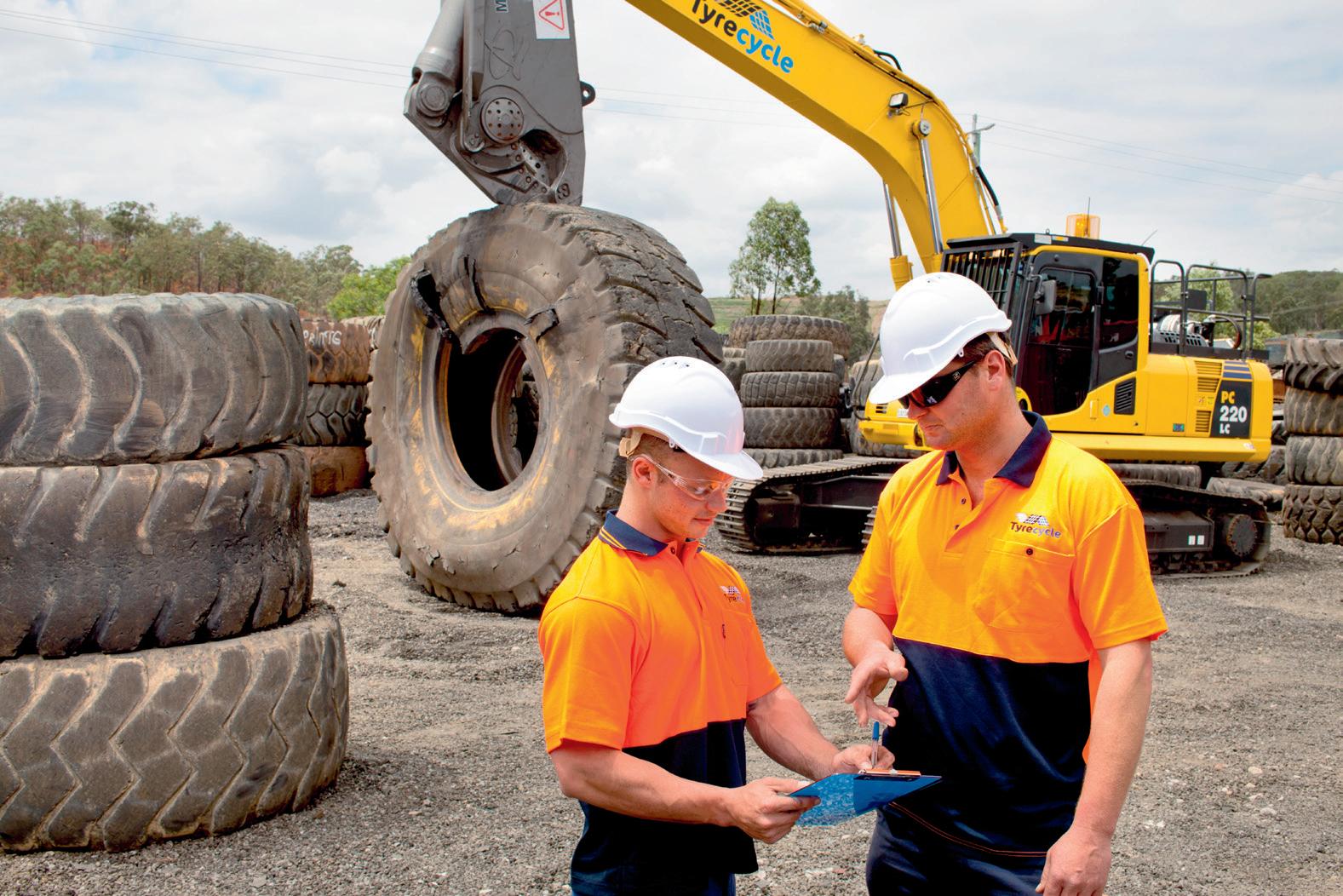
(OTR) or mining tyres – rather than creating inefficiencies, bureaucracies and unnecessary burden upon the high performing areas of the tyre recycling industry.
While passenger and truck tyres have a 96 per cent collection rate, the OTR sector, which is dominated by mining and agricultural tyres, tells a different story.
“We have to keep presenting ourselves as an environmentally sound, commercially fair option for our waste generation customers,” Fairweather says. “We also need to continue to prove ourselves as a reliable, high-quality manufacturer of tyre-derived products to our offtake partners.
“If we just keep doing those two
“WE HAVE TO CALL ALL WASTE GENERATORS TO ACCOUNT AND ENSURE THEY MANAGE THEIR WASTE AND DISPOSE OF IT APPROPRIATELY AND ENVIRONMENTALLY SOUNDLY.”
OTR tyres represent nearly 30 per cent of Australia’s total tyre waste by weight, but are currently collected at a rate of just two per cent.
Fairweather says the circular economy cannot function effectively while such a large volume of feedstock remains outside the recycling loop.
“If we want to reach national waste targets, then we have to make sure we do something about OTR tyres,” he says. “The practice of allowing landfilling of OTR tyres and in-pit disposal at mines is the most significant regulatory barrier to circular economy outcomes.”
To bridge the gap in the OTR sector, Tyrecycle has proposed the implementation of targeted landfill bans that would act as an immediate trigger to redirect mining and agricultural tyres into the hands of recyclers.
things we will eventually win the war for circularity.”
Tyrecycle’s submission also points to the need for better enforcement of existing laws.
Fairweather says rogue operators who export non-compliant, low-quality tyre products often use substandard equipment that cannot mechanically produce export-compliant materials, allowing them to operate at a lower cost than legitimate recyclers.
Tyrecycle is urging the Federal Government to allocate more budget for the enforcement of export regulations to ensure a level playing field.
Ultimately, the inquiry submission is advocating for the establishment of a mandatory, market-based tyre stewardship approach that holds all participants accountable. The Federal Government is being encouraged to provide procurement, while waste generators are being pushed to ensure their disposed tyres go to the legitimate recycling industry so circular economy outcomes can be realised.
“We want to see regulation at the right pace and in the right timeframe to ensure that we can direct so much of that waste into the hands of recyclers,” Fairweather says. “We have to call all waste generators to account and ensure they manage their waste and dispose of it appropriately and environmentally soundly.”

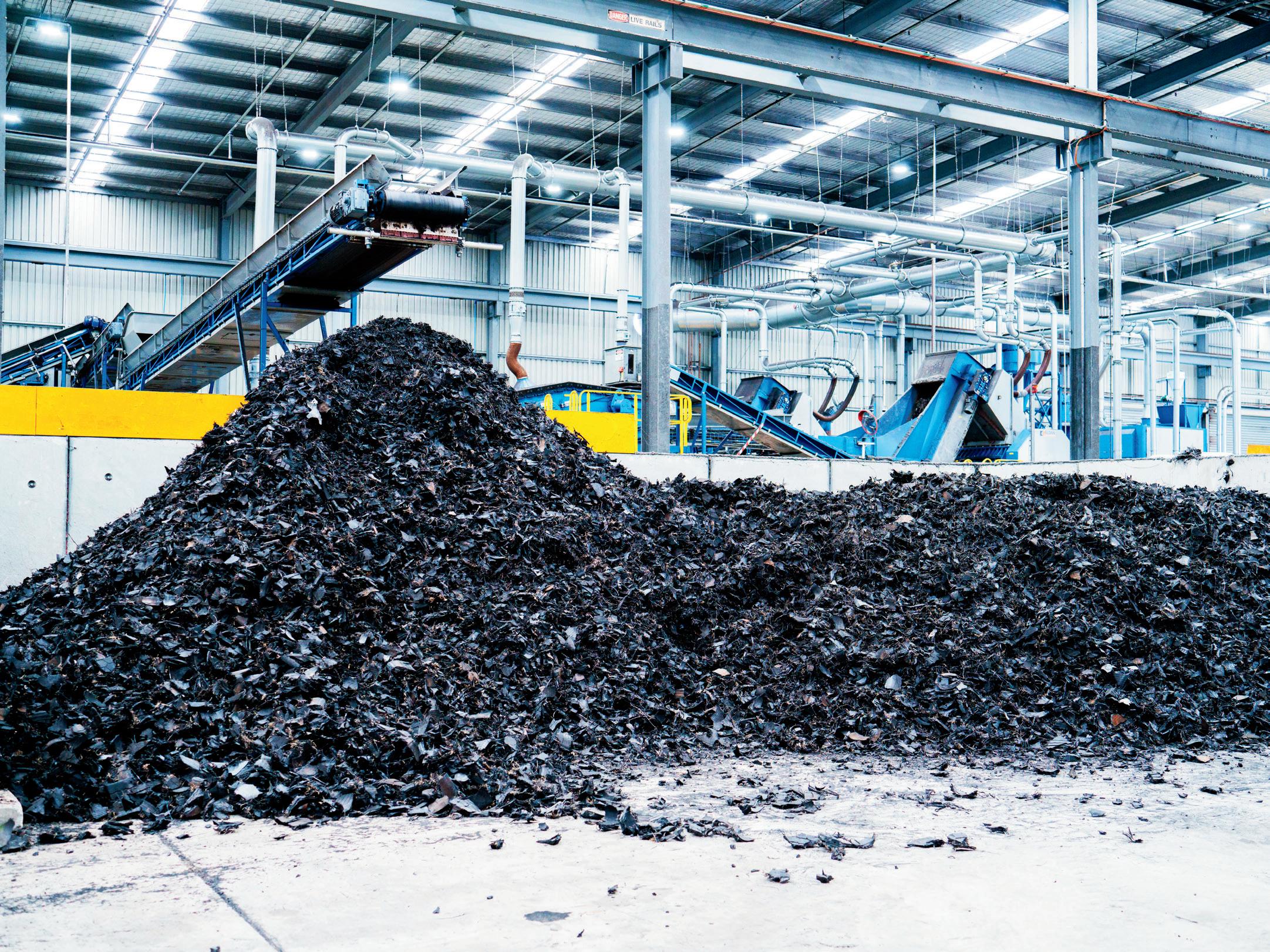
Tyrecycle is Australia’s largest collector and recycler of endof-life tyres.
Tyrecycle’s inquiry submission is advocating for the establishment of a mandatory, market-based tyre stewardship approach that holds all participants accountable.

Seven State Galas. One National Night.
The people, projects and innovations setting the standard for Australian flexible pavements, recognised by the peers who know exactly what it took.
Nominate
Nominations are open across seven categories, from Field Worker and Emerging Leader to Outstanding Project, Safety Initiative and Industry Leadership. State submissions close from 3 July 2026.
Attend
The Gala Dinner Series runs nationally from July through October, culminating in the National Awards night on 23 October. Formal, celebratory, and attended by the senior leaders, major contractors and government representatives who shape the sector.
State Gala Date
South Australia 24 July 2026
Western Australia 7 August 2026
Northern Territory 21 August 2026
Victoria 4 September 2026
Tasmania 11 September 2026
Queensland 9 October 2026
NSW/ACT & National 23 October 2026
Sponsor
Be seen and heard by industry leaders. 70% of gala attendees are senior decision-makers and C-suite leaders. National Award Sponsorship from $20,000. State Major Sponsorship from $5,000. Enjoy category exclusivity.

ENABLING THE NEXT EVOLUTION
AS INFRASTRUCTURE PROGRAMS GROW IN SCALE AND COMPLEXITY, CONFIDENCE IN REPORTING IS BECOMING AS IMPORTANT AS THE DATA ITSELF. PROJECT ADVISORY FIRM WT SHARES HOW CLEARER, MORE RESPONSIVE REPORTING IS SUPPORTING BETTER DECISION-MAKING ON MAJOR PROJECTS.
Kristian Lojszczyk, Associate Director, Portfolio and Program Advisory –WT.

For decades, quantity surveyors and project control specialists have played a central role in helping infrastructure projects understand where they stand, largely through spreadsheets and manual work forms. While these approaches continue to serve the industry well; the scale, pace and complexity of projects continues to grow, and the limits of static, point-in-time reporting is becoming more apparent.
Across large infrastructure portfolios, cost, schedule and risk information flows from multiple sources, often on different cycles, for different audiences. In that context, a renewed focus on real time, interactive reporting, is transforming the way projects are governed and delivered.
This evolution is not about replacing what already works. Many organisations have invested significantly in governance frameworks and reporting disciplines, and continue to refine them. Advances in data efficiency and integration are continually supporting those systems to operate more effectively at scale, enabling information to be brought together with greater consistency and user confidence across complex programs.
Drawing on its work across major infrastructure programs, project advisory firm WT sees that challenges rarely stem from a lack of data. More often, they arise from how information is required to move across cost, schedule and risk perspectives,

as programs grow in complexity and oversight expectations evolve.
“Information flows from every direction – management, contractors, surveillance and delivery teams,” says Kristian Lojszczyk, Associate Director, Portfolio and Program Advisory at WT. “Without a consistent cut‑off or structure, it becomes hard to track trends, spot emerging risks or ensure that what is reported genuinely reflects what is happening on the ground.”
Sitting across the full lifecycle, from feasibility through to delivery, WT’s work spans traditional quantity surveying, project controls, and portfolio level reporting. This vantage point provides clear visibility of how reporting narratives interact over time, particularly as governance requirements and scrutiny evolve.
In practice, this involves project teams bringing information together in more integrated, online reporting environments, so governance discussions are grounded in a consistent and trusted view of a program’s progress.
“On major infrastructure projects or capital works programs, misalignment between cost, schedule and risk creates competing versions of the truth. Executives can be left navigating multiple narratives, which undermine confidence in the entire reporting framework. Harmonising those narratives is critical, not just for clarity, but for confidence in the decisions being made,” Sian McKenna, National Director at WT and Victorian Infrastructure Lead says.
“The purpose of reporting is not just a retrospective about past performance, it’s using integrated data to identify emerging issues and support timely, informed decisions.”
From early feasibility and business case stages through to delivery, WT provides
cost management and commercial advisory support to keep projects on time and on budget.
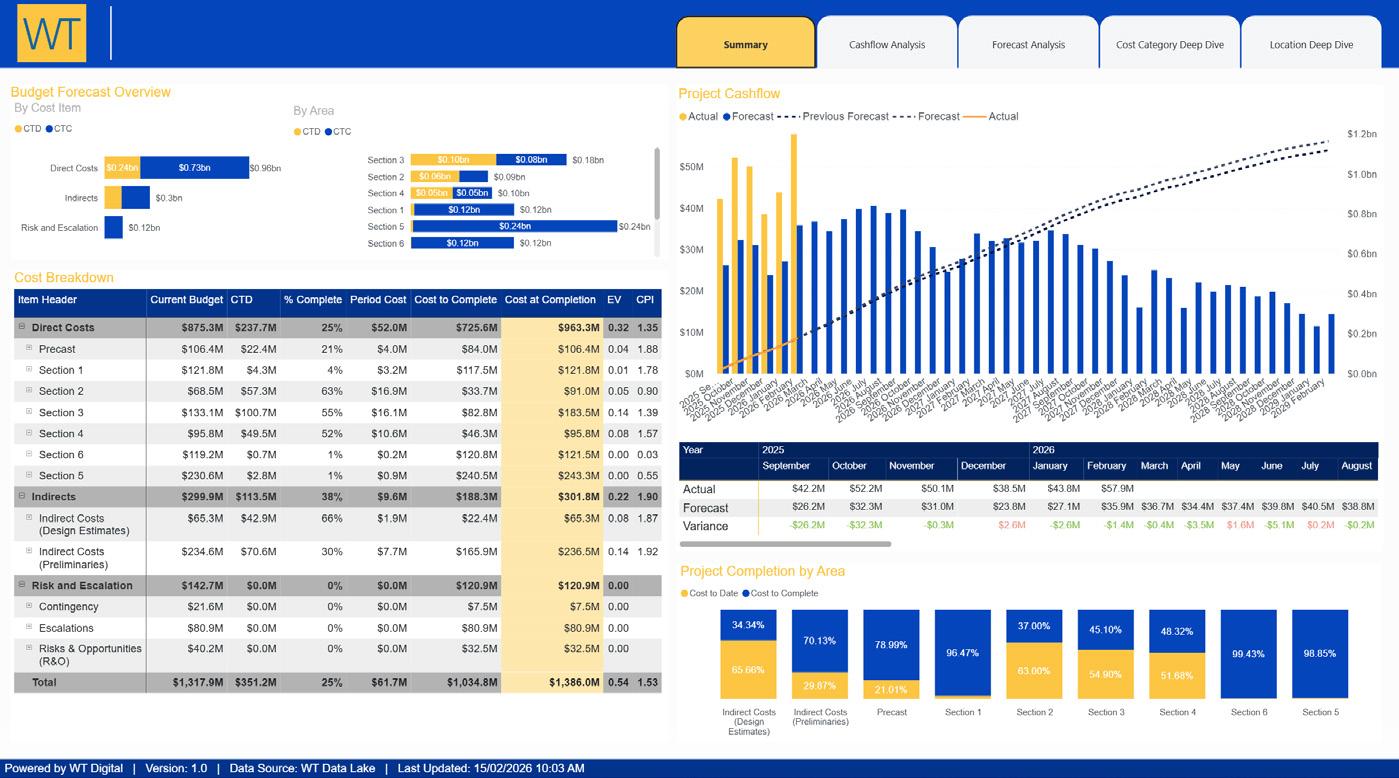
Its Portfolio and Program Advisory practice designs governance and reporting frameworks so executives have a single, coherent view of cost, schedule and risk across complex programs, improving efficiency and allowing project teams to spend less time reconciling spreadsheets and more time actively managing risk.
“Every client – whether they’re a government agency, a PPP (Public Private Partnership) or a private developer – has its own governance and reporting requirements. There’s no one size fits all solution. We start from a strong baseline, then by working closely with each client, tailor a reporting framework that aligns with their internal structures and supports their decision making, to ensure it actually works for them,” McKenna says.
“Good governance creates confidence. Delivery teams and executives want clear, reliable information they can trust, and that’s exactly what integrated reporting should deliver.”

The starting point is always a clear understanding of the reporting audiences, the information they need, how often they need to see it, as well as the required level of detail and assurance. That high‑level governance view sets the foundation for how data, reports and interfaces are structured.
WT works collaboratively to tailor the metrics, visualisations and drill‑down capabilities to how each organisation thinks and makes decisions. Some stakeholders may require high‑level headlines and trend views; whilst others need the ability to interrogate detailed cost, risk or schedule
drivers, or to move seamlessly between macro capital‑program views and micro project‑level insights.
“The platform lets us tell the story of a project over time. You can zoom out for the big picture or drill right down into the detail, depending on the requirements of the reporting audience,” Lojszczyk says.
Crucially, these digital solutions are designed to be dynamic over the life of a project or program. In early stages they support feasibility, business case development and baseline definition; in delivery they shift toward more intensive trend analysis, risk monitoring and contract administration.
As the project matures and the questions from boards and executives evolve, the reporting and visualisation layer evolves with them.
WT also works closely with clients to ensure a smooth adoption and transition for all stakeholders.
“One‑size‑fits‑all reporting doesn’t work. Every stakeholder has different needs, so we continuously tailor how the information is presented while keeping the underlying data consistent,” Lojszczyk says.
And this is just the start of WT’s journey. Looking ahead, the firm is exploring how artificial intelligence can be responsibly overlaid on these foundations, with a strong emphasis on data structure, integrity and security.
But for McKenna and Lojszczyk, the fundamental shift is moving reporting beyond governance compliance into a true decision making environment.
“It’s about how we leverage digital tools to stay ahead of the curve, while being able to continue to inspire confidence and support the industry,” McKenna says.
WT’s integrated project reporting solution brings together insights to support better decision-making. Images:
Sian McKenna, National Director at WT and Victorian Infrastructure Lead.
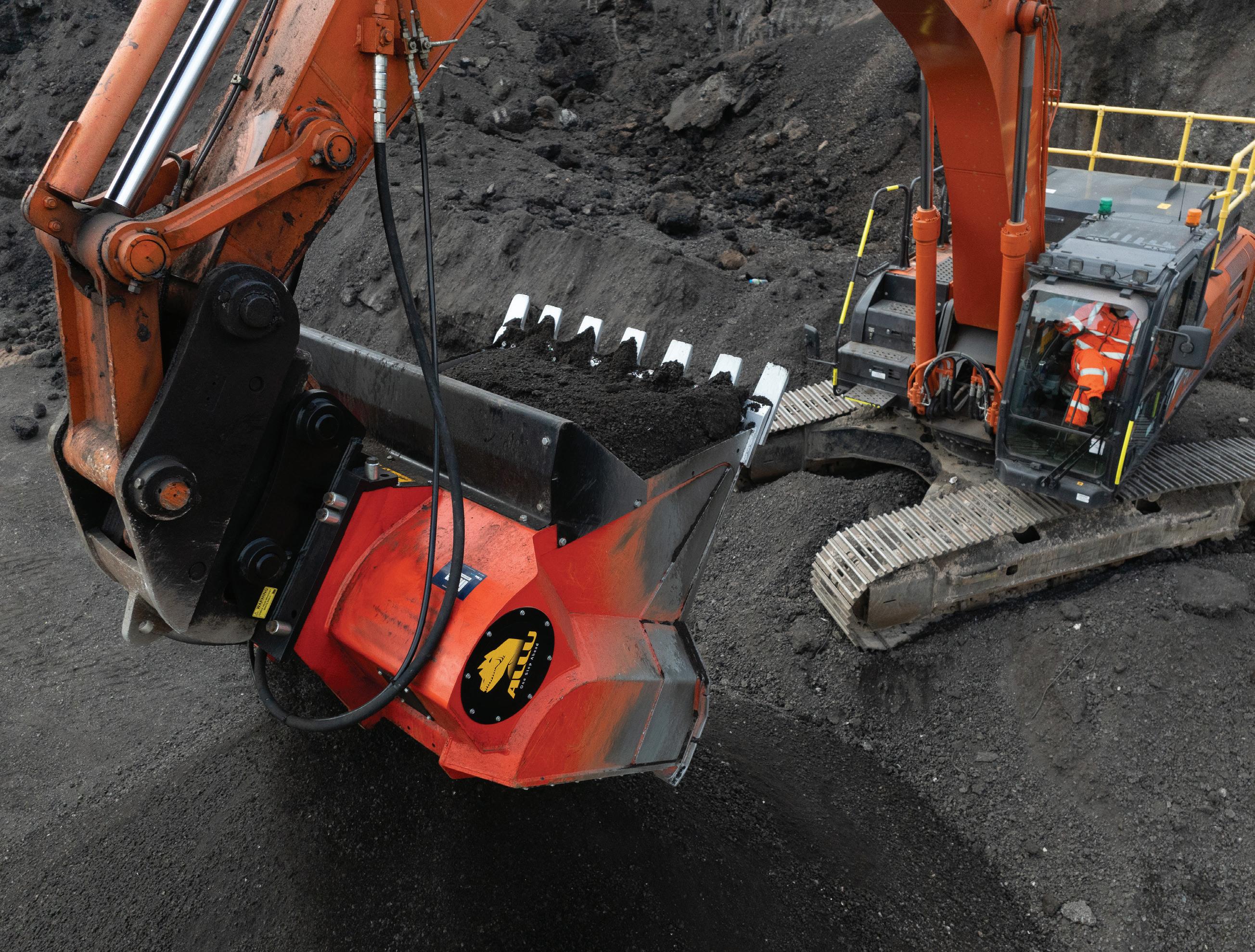
ALLU ASPHALT BUCKET – BUILT FOR RAP. DESIGNED FOR RESULTS.
Unlock the full potential of reclaimed and coldmilled asphalt with the ALLU Asphalt Bucket – a next-generation hybrid screening solution engineered for maximum efficiency and sustainability.
One-step processing – crushes and screens simultaneously
High productivity – up to 250t per hour
Hybrid blade tech – superior material separation in a single pass
Robust build – reinforced for heavy-duty asphalt applications
Fits your fleet – suits 25–45t excavators and 15–30t wheel loaders

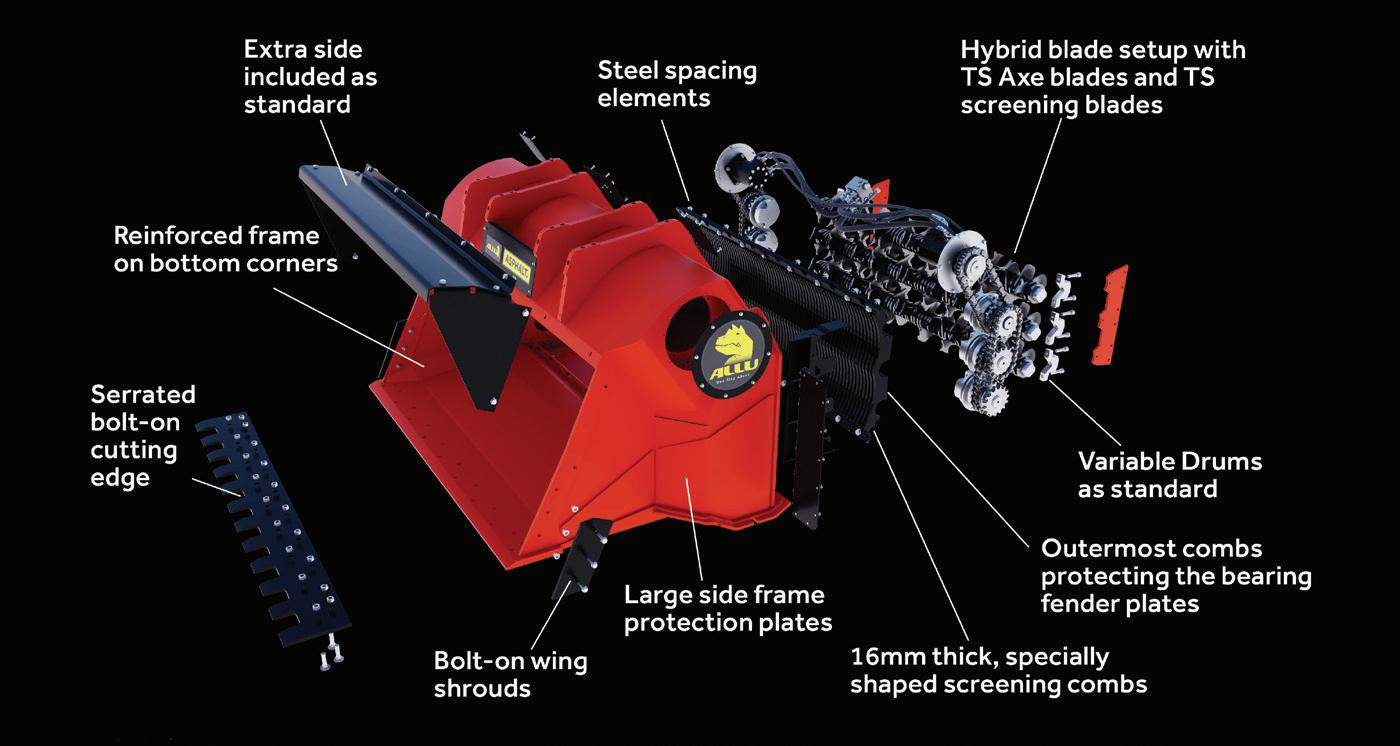
The hybrid blade setup – a mix of screening and crushing blades – enables the bucket to crush clumps, screen fines and separate oversized particles all in a single pass, eliminating the need for pre-crushing or secondary equipment.

THE LANDING I-BRID STICKING
WORKS ON THE EAST
KIMBERLEY REGIONAL AIRPORT HAVE THROWN AN INNOVATIVE ASPHALT FORMULATION INTO THE SPOTLIGHT, PROMISING TO DELIVER INCREASED EFFICIENCY IN THE SHORT-TERM, WHILE ALSO DELIVERING INCREASED ROBUSTNESS AND DURABILITY IN THE LONG-TERM.
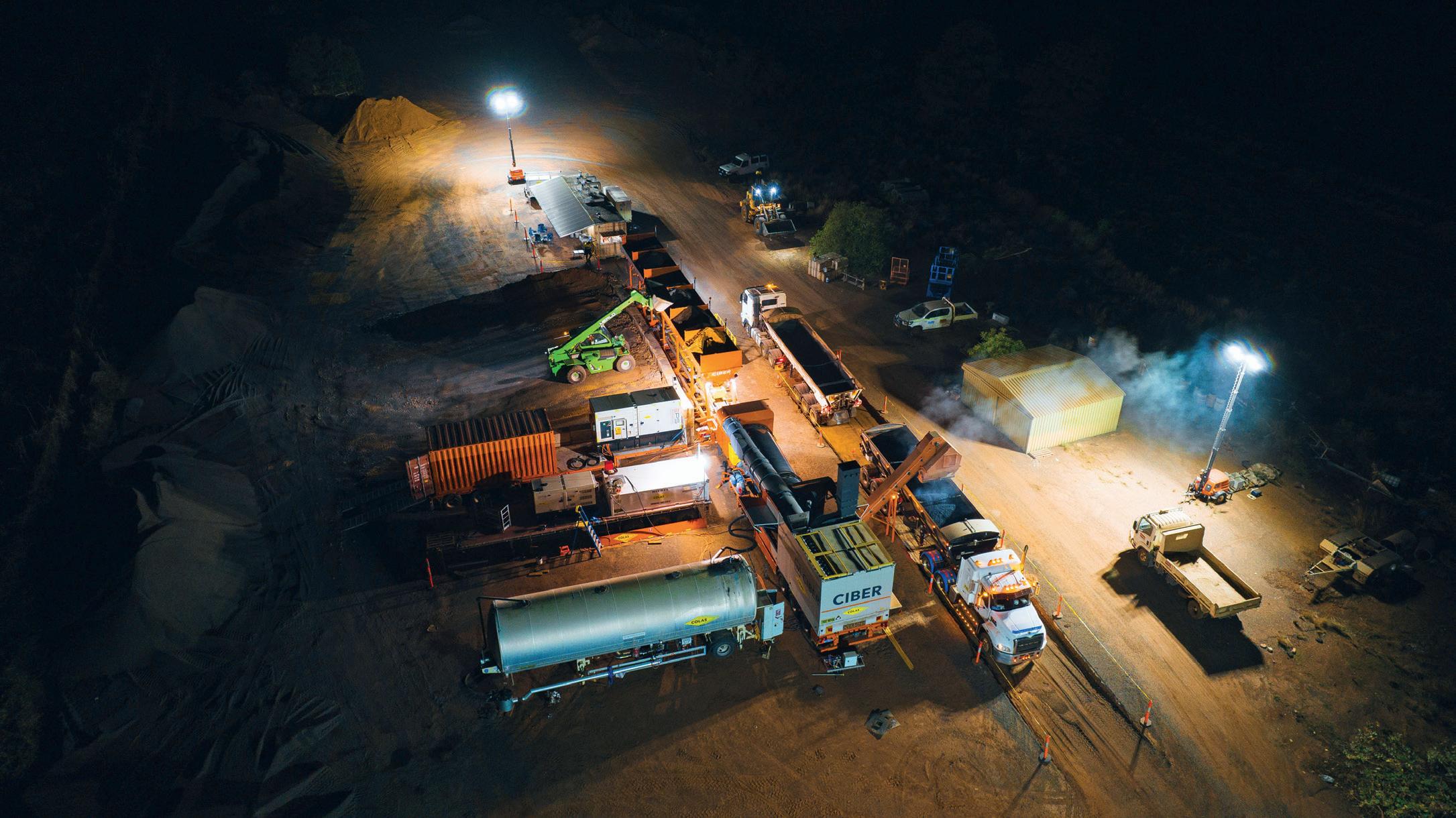
The East Kimberley Regional Airport in Kununurra, Western Australia is an essential link for the local community and visitors alike.
Situated about 3200 kilometres away from the state’s capital of Perth, the facility is heavily relied upon for essential services and deliveries throughout the region.
It’s one of the main reasons why the Shire of Wyndham East Kimberley sought to upgrade the airport’s main and surrounding facilities, to ensure that any potential travel impacts could be reduced and – in the best case, prevented. Airport Consultancy Group – Construction (ACG) was engaged to deliver initial upgrades, which formed part of the airport’s 10 year master plan. These works focused on upgrading the apron and taxiways, laying the foundation for a second stage of upgrades. Stage two includes a 550-metre extension to Runway 12/30 extending the length of the runway from 1829 metres to 2370 metres,
creating the capacity to accommodate larger jet aircraft.
Such upgrades would ultimately provide significant benefits to consumers, supporting lower airfares, enabling improved aviation services and strengthening the liveability of the region.
ACG was tasked with handling the bulk of the civil scope. This included overall site and civil preparation, drainage works, bulk excavation, and base preparation for the new runway length. ACG also completed the AGL (airfield ground lighting) installation, as well as the road line marking associated with the extension.
COLAS’ role, contracted by ACG, was the asphalt production and paving component of the project, bringing in a mobile asphalt plant and associated technical expertise to deliver the surface.
As part of this, COLAS selected a hybrid binder in the asphalt mix, chosen for its
superior performance and durability. This is where SAMI Bitumen Technologies’ I-Brid polymer modified binder presented all the right properties to satisfy the project scope.
SUPREME PERFORMANCE
SAMI Bitumen Technologies’ I-Brid is a heavily polymer-modified bitumen binder developed in Australia for high-demand pavement applications.
An evolution of the earlier B380 binder, I Brid uses different raw materials and a higher level of modification to improve on conventional airport binders such as A10E, as Scott Olsen, State Manager WA – SAMI Bitumen Technologies explains.
“With some of the other products, you either get good rutting resistance, or you get good fatigue results, you don’t get both. With this one, you can get both,” he says.
It also offers enhanced fuel resistance compared with standard binders, helping
Images: SAMI
I-Brid is well suited to aviation and high-stress/weight bearing surface requirements.
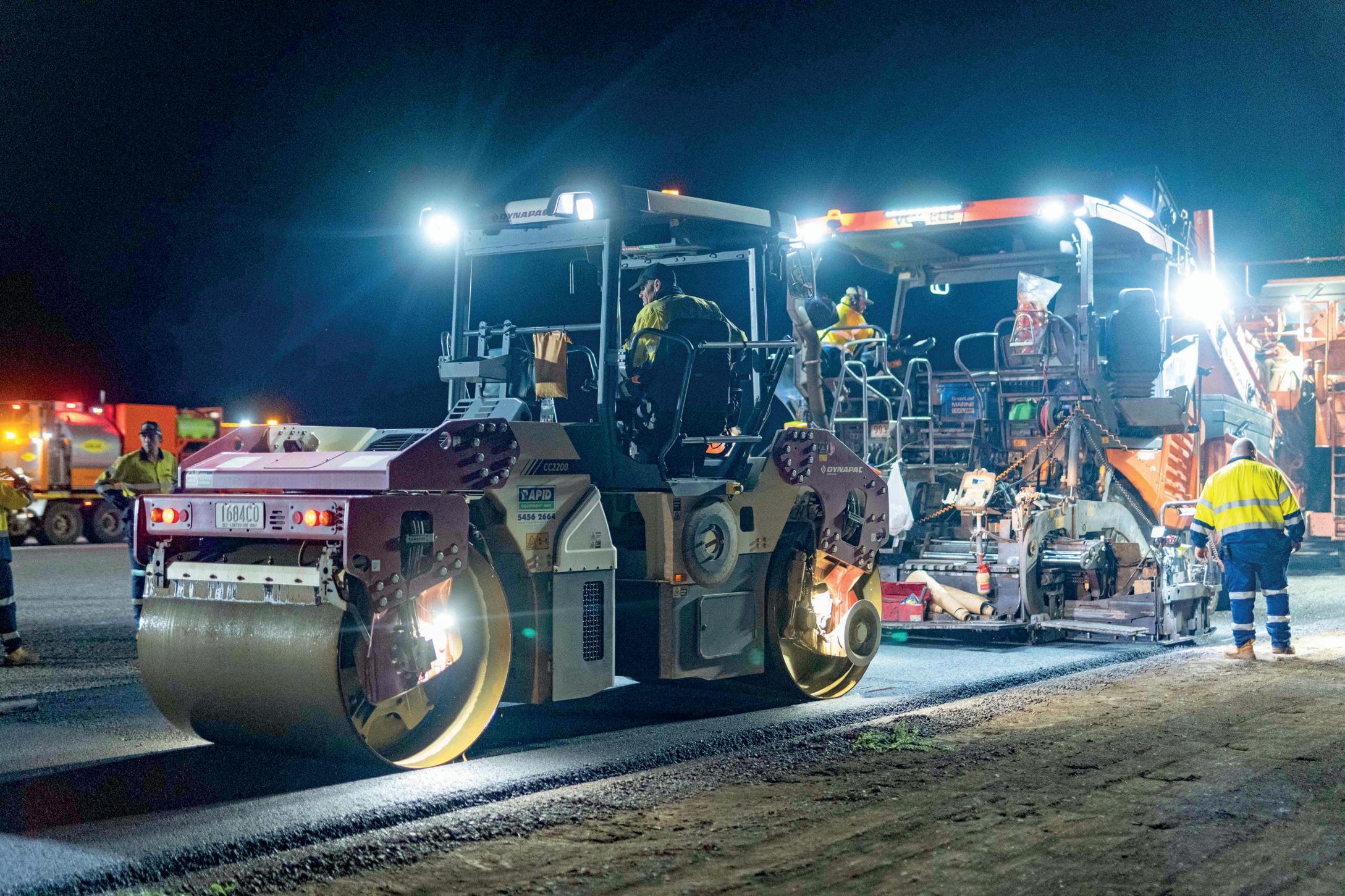
pavements better withstand kerosene and jet fuel spills.
Due to its performance capabilities, the I Brid has been used primarily at airports –including regional, remote, and soon major airports – but also has potential applications on heavy‑haul mining roads and in other heavy‑duty environments such as ports.
“Some things have been developed overseas and then we bring that technology to Australia, but this is the reverse. This was all designed in Australia,” Olsen says.
“That’s why we’re called SAMI Bitumen Technologies. We don’t just do what’s been done before – we try to develop new products that we think will be worthy for the market.”
Beyond the I Brid’s performance benefits, SAMI Bitumen Technologies and COLAS’ solutions also provided a high level of versatility, an essential component for a project this remote.
In particular, the I Brid’s stability over long transport distances.
For this project, the formulation was manufactured offsite, hauled more than 3000 kilometres to a very remote site, and still arrived within specification. Lee Whitehead, Group Major Projects Manager, Aviation – COLAS says conventional polymer modified bitumen (PMBs) formulations can be less stable when transported over such a long haul.
“Our real strength is our ability to be highly mobile — we can work across all regions, with
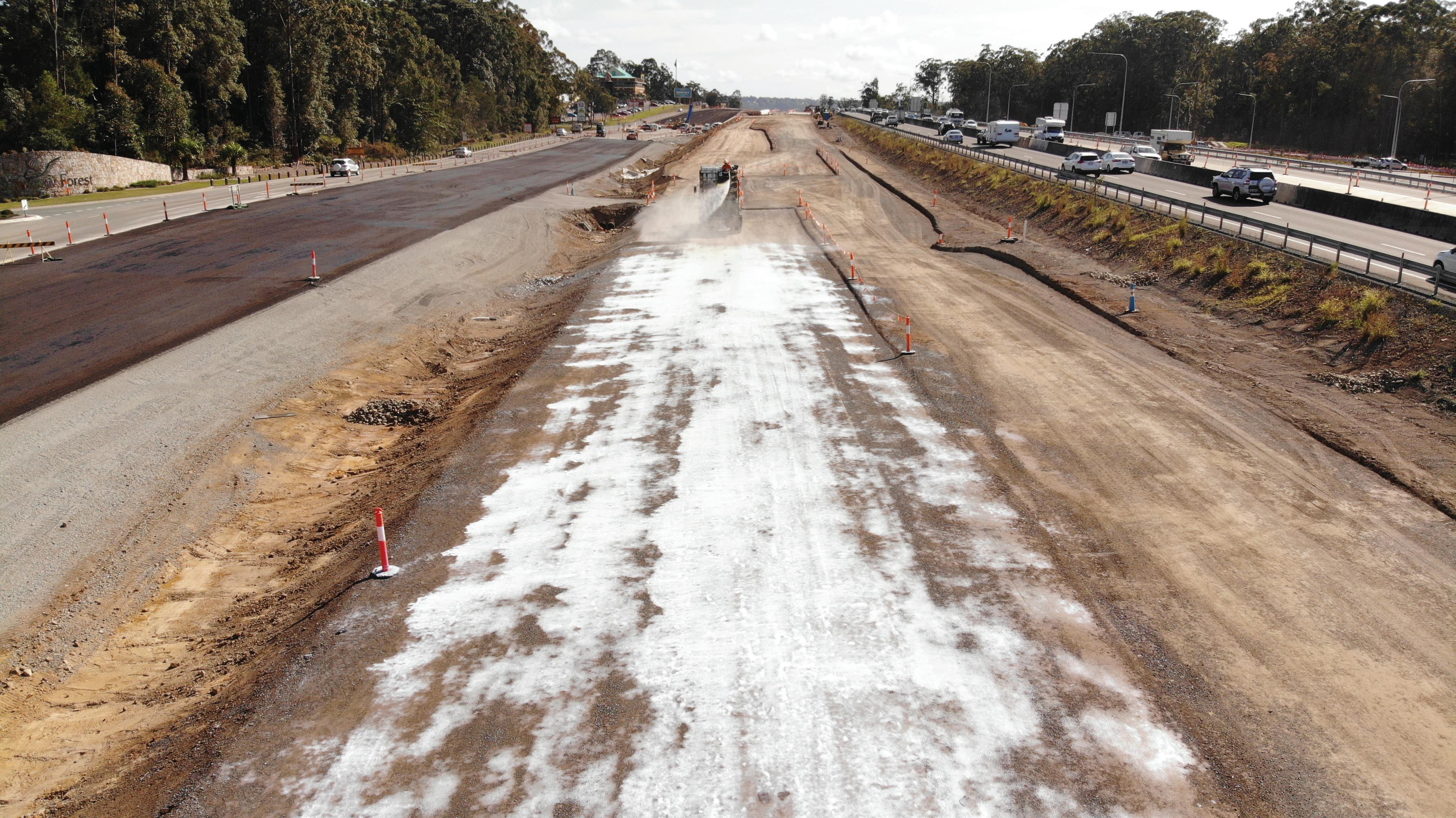
no part of Australia out of reach. We bring not just mobile crews, but mobile technical expertise, and we’re able to think outside the box in how we deliver projects,” he says.
Olsen sees the I Brid as a true “one of one”.
“We test it before it leaves the plant and again when it arrives. If it passes, it goes into the asphalt. The test results are almost identical at both ends, which is exactly what you want for remote airports. With COLAS’ mobile asphalt plants, we can now deliver to remote airports and be confident that the binder will arrive on site within specification,” he says.
The completion of second stage works for the East Kimberley Regional Airport represents a key milestone for the product’s application on aviation projects, being the first fully integrated airport project combining spray seal operations with onsite asphalt production and surfacing.
“The airport construction industry demands a sophisticated understanding of both operational constraints and stringent quality requirements, therefore ACG only engages highly skilled companies to ensure the quality remains at the highest level,” Craig Halliday, Director of Construction at Airport Consultancy Group says.
“Ensuring that ongoing airport operations remain uninterrupted while consistently meeting high standards is critical to project success. With this in mind ACG, in collaboration with its sub contracted partner COLAS, strategically staged the project to
effectively balance both priorities.”
The ability to manufacture, supply, and place significant volumes of asphalt within a single shift – while maintaining full airport operations – demonstrates both the robustness of the product and the efficiency of the project delivery.
The successful implementation of a hybrid binder in such a demanding airport environment further reinforces ACG’s position as a specialist contractor. This achievement underscores ACG’s capability to deliver complex works to the highest industry standards while enabling its delivery partners to perform at their best.
“I’m really happy with how well Kununurra Stage One went. To have strong references from the first stage and then be asked back for Stage Two speaks volumes,” Whitehead says.
“People are starting to see we’re not just a company muscling our way in. We understand the local issues, and we want to work with stakeholders to build a project that’s fit for purpose.”
Despite ongoing impacts to the global supply chain, COLAS and SAMI Bitumen Technologies continues to assess future project opportunities, with hopes that additional airports will jump on board.
“COLAS is one of the largest bitumen users globally, so we have access to multiple supply sources across Europe and America,” Olsen says. “That diversity is what lets us reassure customers about ongoing availability.”
The project exemplified COLAS and SAMI Bitumen Technologies’ ability to collaborate with project stakeholders.


POSSIBILITIES GEOSYNTHETICS CREATING NEW
GEOSYNTHETICS ARE CHANGING THE GAME FOR INFRASTRUCTURE DELIVERY. PIONEERS LIKE GEOQUEST ARE TAKING THE LEAD IN THE APPLICATION OF THESE COMPONENTS, CREATING NEW PROJECT POSSIBILITIES.
Driven by increasingly challenging ground conditions and project environments, geosynthetics have quickly moved from niche engineering products to go-to solutions for geotechnical problems.
And the proof is in the pudding, with Geoquest Oceania reporting a sharp increase in enquiries from road, rail, and mining clients.
Riccardo Musella, Managing Director of Geoquest Oceania attributes this growth to what is now a breadth of possible applications and markets.
“Every major project today is grappling with the same issues: unpredictable ground, rising material costs, and tight delivery schedules,” he says.
“Geosynthetics offer a way to de-risk, improve ground and drainage performance
and reduce the volume of imported fill or aggregate. The shift we’re seeing is significant; these solutions are becoming core to resilient infrastructure design.”
THE BENEFITS
Geosynthetics often enable simpler, faster installation compared with purely conventional solutions for major projects. This includes traditional structures and installations, such as heavy concrete structures or thick rock layers for some projects.
Easier builds usually means less time on site, as well as a reduction in associated project and safety risks. Geosynthetics also provide additional efficiency benefits thanks to the ability to optimise materials, increasing the use of alternative backfill materials, while reducing the total amount of material
required to deliver a project.
Ultimately, well-designed geosynthetic systems can handle challenging geotechnical and hydraulic conditions, which might be tricky or expensive to complete using only conventional methods.
INNOVATING FOR CHALLENGING CONDITIONS
Geoquest’s current range of geosynthetic solutions comprises three key segments: drainage, soil reinforcement and erosion control.
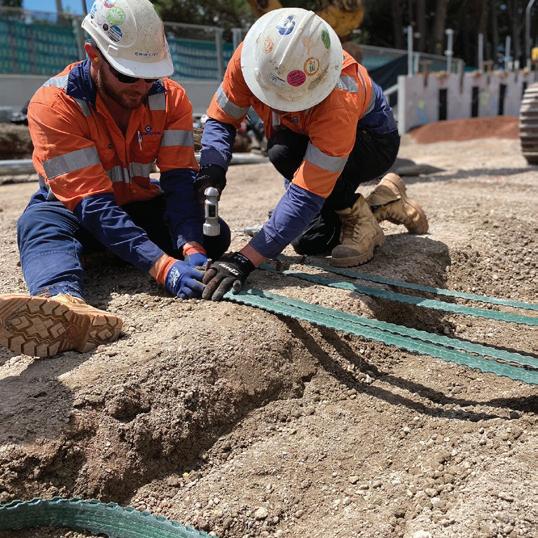
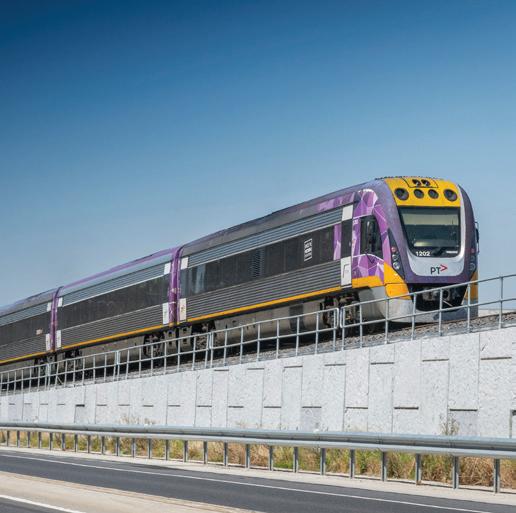
DRAINTUBE is a key geosynthetic for drainage. A multi-linear drainage system, it is a proven alternative to conventional gravel drainage layers in both road and rail projects. This system also provides improved installation times, as well as higher flow capacity under heavy loads.
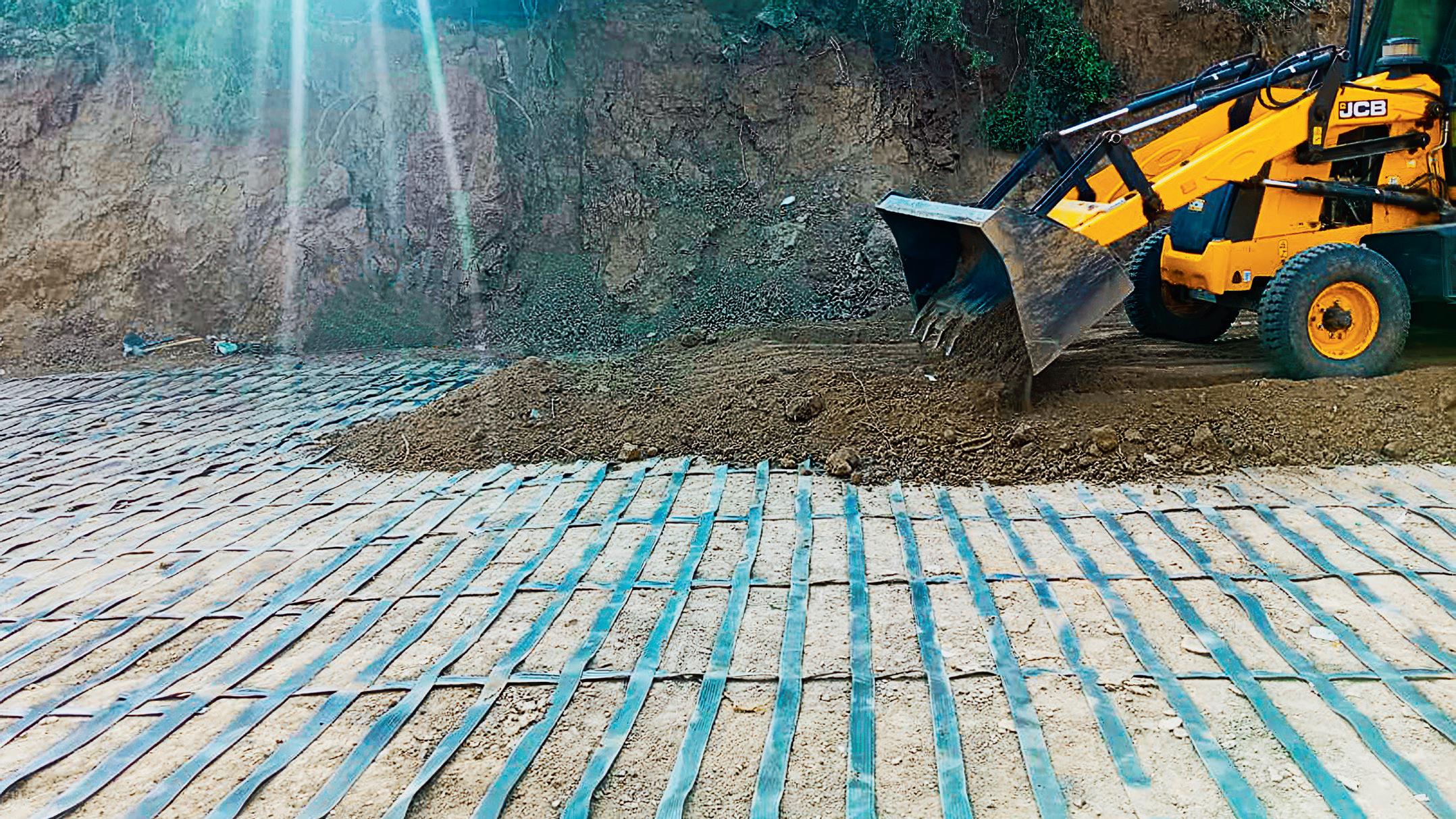
Geoquest works with its clients to customise solutions depending on project requirements.
Musella says it’s these benefits that have validated DRAINTUBE’s use on large-scale road projects and upgrades, such as that in New South Wales and Victoria – helping to reduce required excavation, trucking, and installation time across both projects.
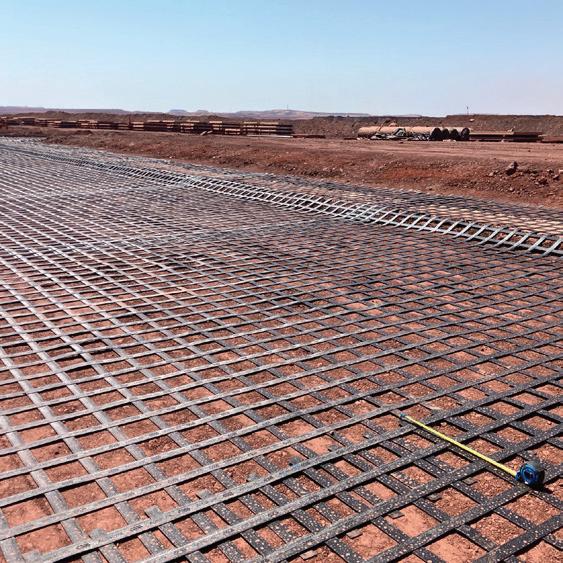
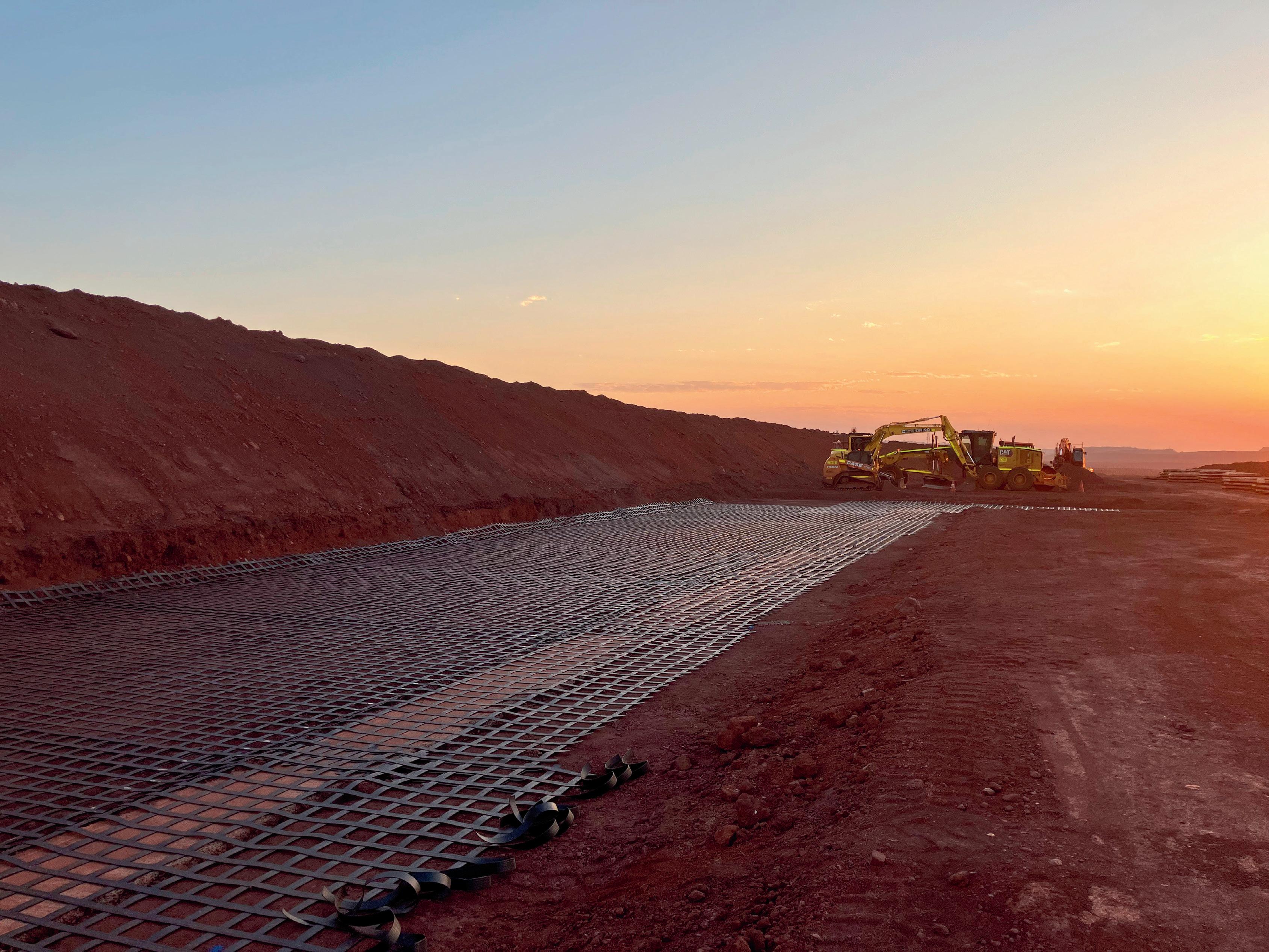
When it comes to soil reinforcement, two key systems emerge as standouts. The ArmaLynk and ArmaGrid geogrids both share the load – literally, by helping to optimise load distribution for pavements, rail ballast and mining haul roads, while reducing a reliance on the use of granular materials.
These systems have proven to be especially effective in supporting the movement of heavy vehicle traffic, particularly in soft soil and variable conditions, as seen at a recent Geoquest mining road project in Western Australia’s Pilbara.
Erosion control has long been a staple of Geoquest’s offerings, but the TechRevetment product line has helped to transform this side of the business.
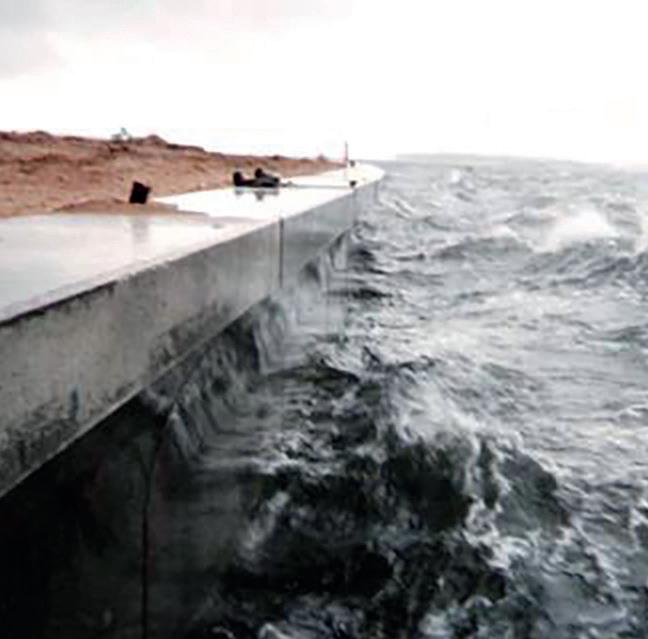
Emerging as a preference to stabilise channels, embankments and other prone areas along transport corridors, the TechRevetment ‘concrete mattresses’ represent the “gold-standard” in solving challenges posed by scour-prone areas. This system is even capable of being installed under water to support or form a bank slope or channel bed.
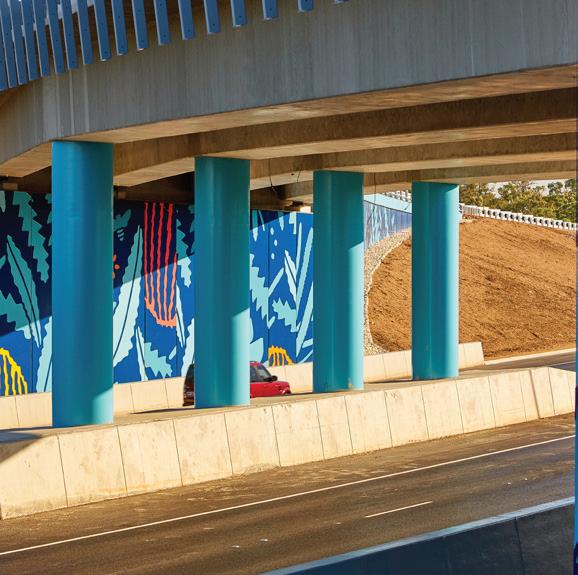
Importantly, these systems can also be deployed in conjunction with Geoquest’s vast range of mechanically stabilised earth (MSE) retaining walls and precast structures. Together, these formulations are helping projects to achieve even greater performance, while amplifying reduced lifecycle risk, as Musella explains.
“MSE wall or embankment performance is optimised when drainage and foundation
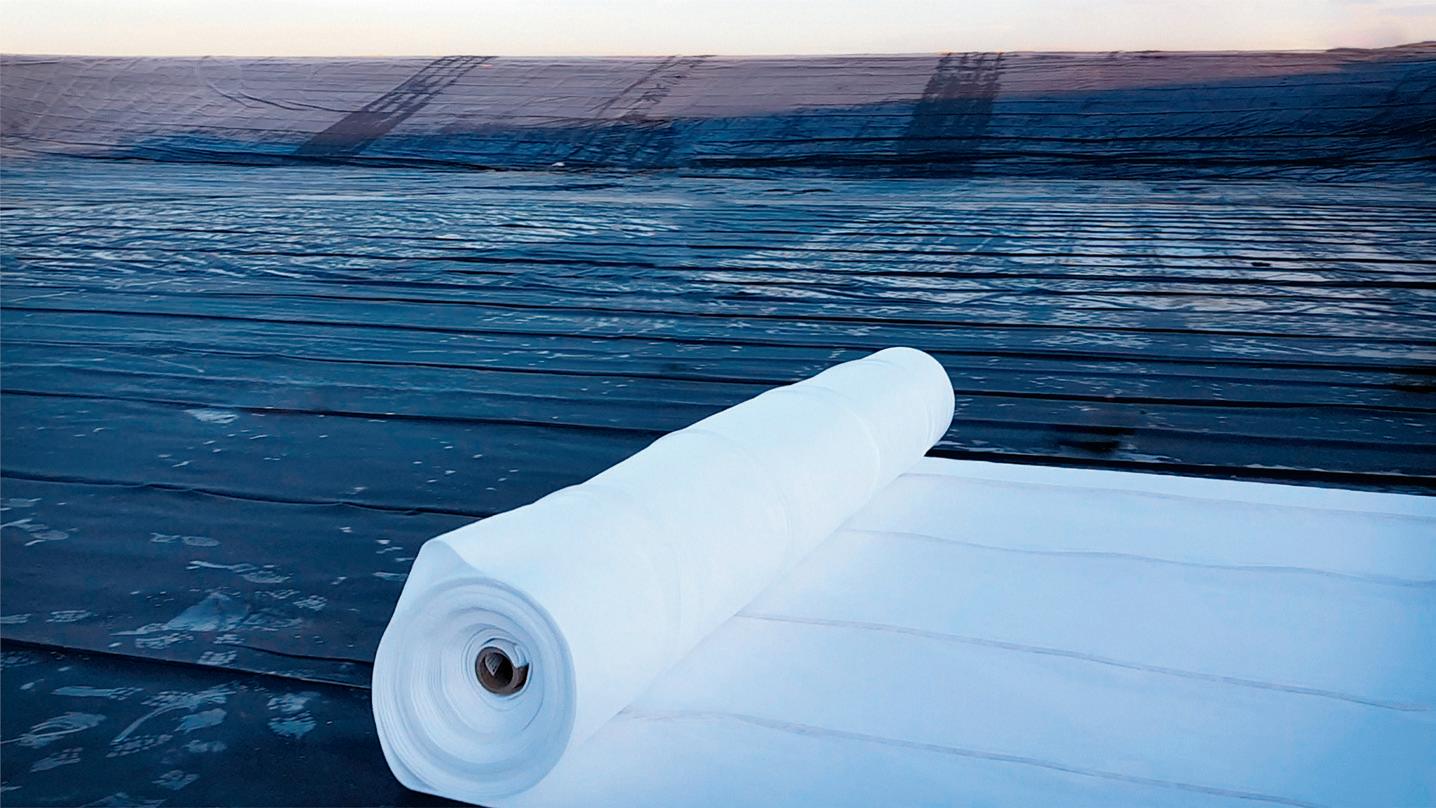
reinforcement are integrated,” he says.
“We’re seeing designers take a more holistic approach, an aspect that geosynthetics help to unlock.”
ONE-STOP-SHOP
One of Geoquest’s biggest differentiators is its ability to provide for every product and phase along a project’s journey, encompassing design, delivery and support.
Designing and formulating these techniques in-house grants greater control over the quality and effectiveness of each component. Geoquest’s process also benefits the bottom line of its clients, due to reduced transport costs and delivery speeds, even for regional projects.
Project stakeholders are the biggest beneficiaries, as Musella explains.
“When you have a solution that’s designed and supplied by one player, rather than multiple players, you immediately minimise risk,” he says.
“We’re a turnkey solution, which looks at the whole lifecycle of a project, not just a
portion. When it comes to engineering, we aim to deliver the whole package.”
Behind this engineering expertise and innovation is rigorous testing.
“We’ve performed test installations at our own sites and factories to see what we could improve on,” Musella says. “It’s not just learning the theory behind a product, it’s also understanding the practicality.”
For Musella, each project and development is more than just a milestone. Rather, each step forward and each accomplishment adds a greater sense of pride. An aspect that he says is shared and reflected across the wider Geoquest team.
“I’m still an engineer at my core, so I still get excited about challenging projects and when we’re able to find different solutions, while working in partnership with industry,” Musella says.
“Not only that, but solving problems for communities and the prospect of building something that will benefit all. Projects like these leave long-lasting, visible legacies, which we’re very proud of.”
Images:
Geoquest
DRAINTUBE is a multi-linear drainage system proven to be effective on large-scale road projects and upgrades.
The ArmaLynk geogrid is helping to support the delivery and longevity of project performance.




Moreover, he believes that current events have not created a temporary shock, but rather exposed a structural vulnerability of how the Australian bitumen supply chain is configured.
The supply chain also has a significant lag built into it, Whittall says.
“Crude oil takes weeks to move from source to refinery to finished product to Australia port,” he says. “What arrives in April reflects conditions from February. And what February’s disruptions will produce for June and July is still working its way through the system.”
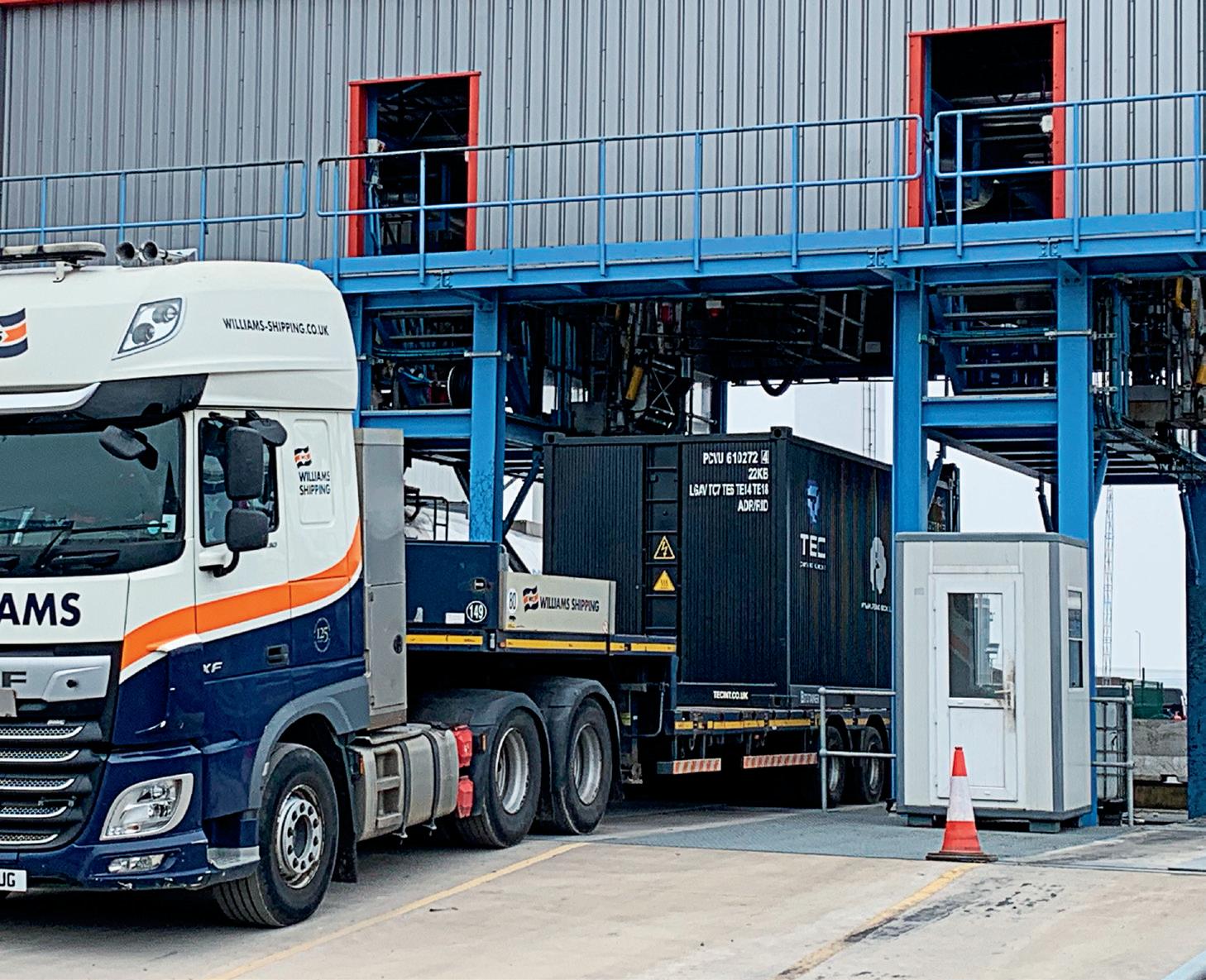
Australia receives over 80 per cent of its refined petroleum products from Asia, which sources between 60 and 70 per cent of their crude feedstock from the Middle East.
Bitumen is critical to the production of asphalt, working as a binder that holds aggregate materials together and provides structural integrity to road surfaces.
Image: TEC Container Solutions
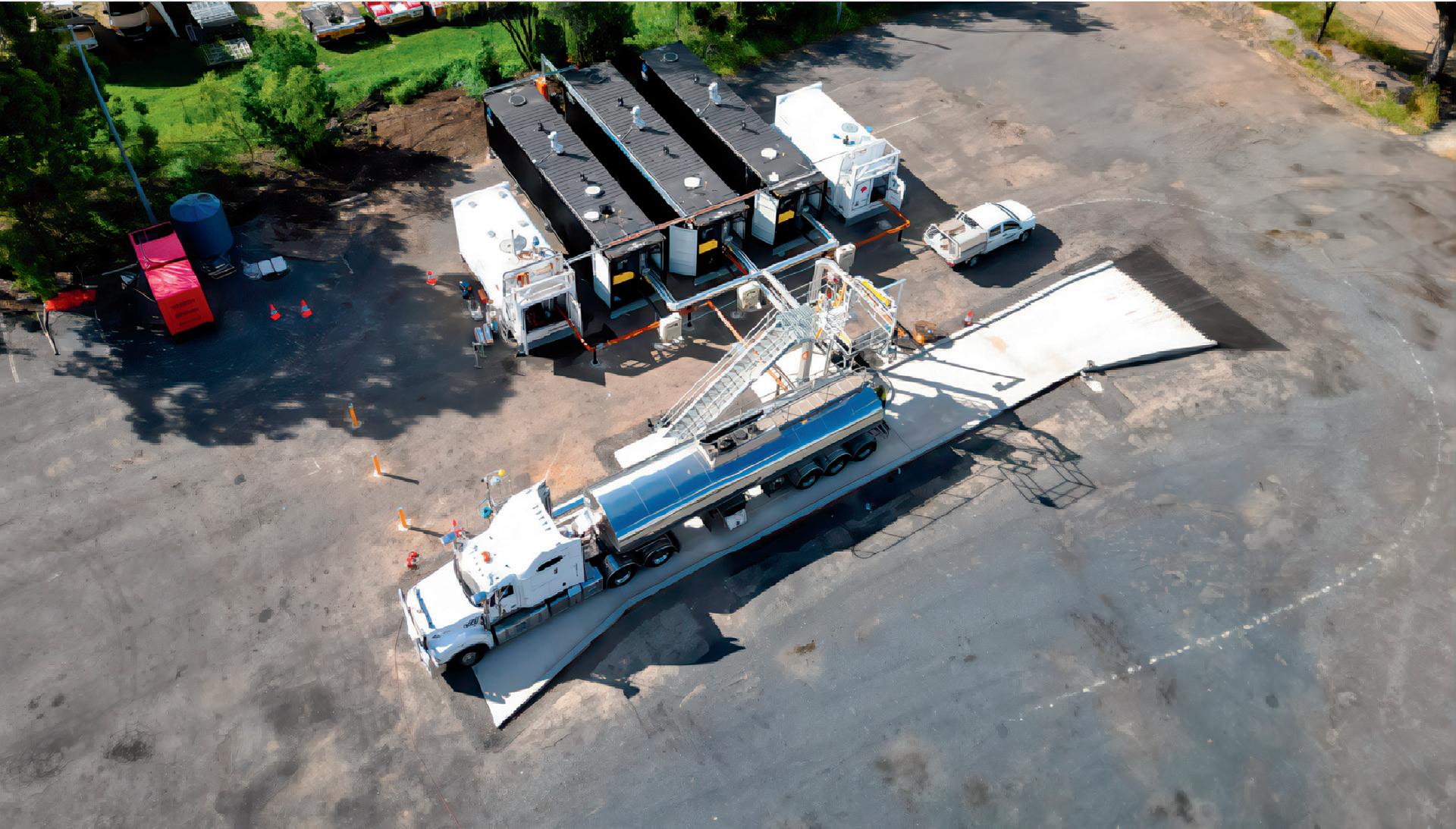
exposed when Asian refiners increasingly prioritise domestic markets ahead of export commitments.
Whittall reasons that considering these bitumen supply chain pressures, bitumen storage approaches are changing. While traditional storage could once hold enough to maintain short-run continuity under normal delivery schedules, a growing number of contractors and producers are moving toward a buffer stock model, targeting 100 to 200 tonnes of on-site storage capacity to support asphalt plant production, rather than the 50 tonnes that has historically been the norm.
Whittall says the intent is straightforward – to place a meaningful operational buffer between the volatility of the international supply chain and the production demands of live infrastructure projects.
“Just-in-time logistics work well when supply is predictable, but buffer stock is the practical alternative when it is not,” he says,
However, Whittall also says that scaling up bitumen storage capacity is not straightforward. Bitumen – particularly specialist products such as crumb rubber modified binders and polymer modified bitumens (PMBs), demand various requirements to be stored effectively.
These include heated and insulated storage maintained at precise operating temperatures, with agitation systems for high-viscosity materials and infrastructure that integrates reliably with existing asphalt production processes.
“The capital and civil works involved in

operators, the flexibility to scale up or relocate storage is as important as the capacity itself.”
This is where TEC Container Solutions comes in. The manufacturer has supplied High-Performance Storage Bitutainers to sites across Australia and New Zealand, supporting operators who are increasing their on-site capacity in direct response to current supply conditions.
These electrically-heated, thermally insulated tank containers are available in configurations tailored for crumb rubber, PMBs and emulsions. They are designed around the specific handling requirements of each product, rather than generalpurpose storage assumptions.
“The containerised format allows operators to reach the storage volumes that a buffer stock requires without committing to permanent civil infrastructure,” Whittall says. “Units can be deployed quickly, combined to reach target capacity, and relocated as project needs evolve.
“For contractors managing multiple sites or planning ahead for regional programs, that flexibility is operationally significant – particularly during a period when procurement lead times and delivery schedules are under pressure.”
The bitumen supply chain disruption has also reinforced the value of materialspecific storage design. Whittall says that crumb rubber particularly demands purpose-built infrastructure, with elevated operating temperatures, agitation requirements and thermal sensitivity that standard storage cannot accommodate reliably.
As supply tightness increases the premium on product quality and consistency, storage systems deliver clear operational advantages, Whittall says.
“Operators across Australia and New Zealand are already acting on this shift,” he says. “What was previously a conversation about site logistics efficiency has become one about securing operations through an uncertain supply environment.
“With state road programs well-funded and project pipelines strong, the ability to maintain production continuity has a direct commercial value that now justifiably supports a higher level of onsite inventory.”
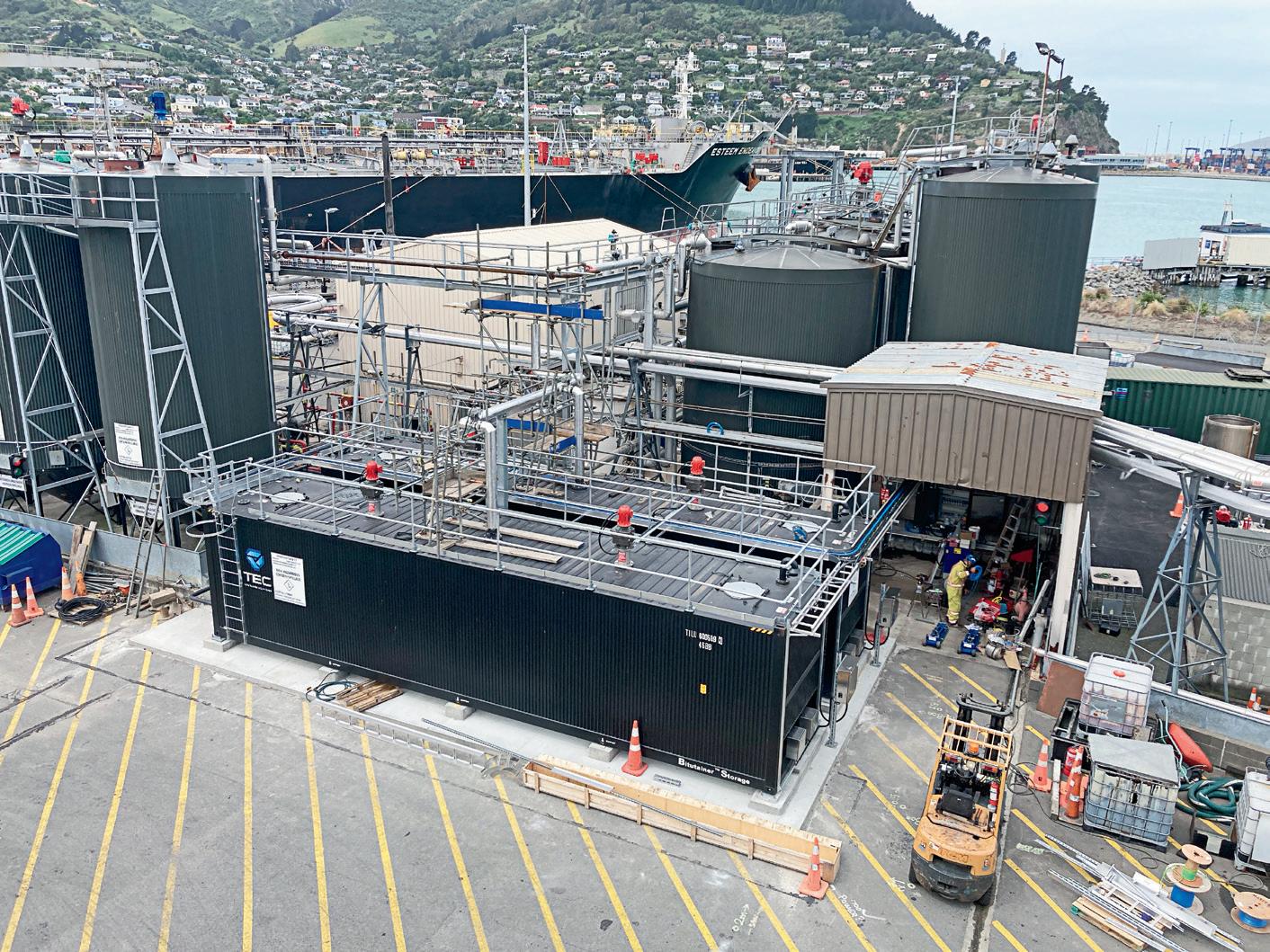
Images: TEC Container Solutions
One of TEC’s Mobile Equipped Storage Tank facilities in action.
TEC’s solutions straddle both bitumen storage and transport.
THE ESSENTIAL LINK
REID’S NEW REIDBAR™ TX COUPLER, AN ADVANCED MECHANICAL SPLICE SYSTEM, IS PROMISING TO DELIVER IMPROVED INSTALLATION TIMES AND CONSTRUCTABILITY WHILE ADHERING TO SOME OF THE NATION’S STRICTEST SPECIFICATIONS, TRANSFORMING DELIVERY FOR BRIDGE PROJECTS OF ALL SIZES.
The development of the ReidBar™ TX Coupler signals a strengthening of current services for the civil market from one of the industry’s biggest manufacturers of concrete lifting, reinforcing and fastening systems nationwide.
Reid has a proud history of servicing the civil infrastructure space, but until recent times, the majority of its services had been geared towards the commercial space, a footprint that remains firm to this day.
With specification changes bringing about an era of change in the infrastructure market, Reid looked to maximise an opportunity that it spotted in the market.
That was, a system that could improve on current solutions for inclusion in upcoming bridge and transport infrastructure projects.
“There was a period not so long ago where a lot of government funding went into civil infrastructure projects. During the COVID pandemic, commercial projects slowed slightly, but there was a real push into
infrastructure. We saw that as a growth area and a clear opportunity for our business,” says Glen Taylor, Product Manager, ANZ, Reid.
With that opportunity came the acknowledgement that an evolution was required, necessitated by changes to the way that bridge projects were being delivered, as well as the nature of the components themselves.
As Brent Mills, Project Manager –Reid explains.
“Bridge projects are definitely evolving. We’re seeing bigger precast segments, more bars, bigger bars, just more reinforcement overall. That drives a need for heavier connections,” he says.
The ReidBar is Reid’s solution to this conundrum. A fully threaded reinforcing bar system, the ReidBar is designed around mechanical reinforcement connections, using couplers and engineered fittings instead of traditional lap splices to provide strong, reliable structural connections in both
commercial and civil infrastructure.
A key differentiator of the system is that the ReidBar is supplied directly from the mill ‘coupler‑ready’, meaning it’s manufactured specifically to accept connection systems without needing extra processing, such as cutting or rolling threads onto the bar ends.
This approach avoids altering the material properties of the reinforcing steel, which is normally an area of concern for engineers.
Because the bar’s original properties remain intact, contractors can rely on the specified strength and performance of the steel, an important feature in demanding applications such as large bridge segments that include heavy reinforcement and complex connections.
The ReidBar also forms the backbone of the company’s reinforcement range.
“This range for Reid is all about reinforcement connections,” Taylor says. “We have a really strong offering in headed anchorage and core connections in
“WHEN YOU THINK ABOUT BRIDGES – BIG OPEN STRUCTURES CONSTANTLY SEEING VIBRATION FROM TRUCKS, TRAINS AND WIND – THOSE CYCLES OF MOVEMENT ARE CRITICAL. AT THE JOINTS AND CONNECTIONS BETWEEN LARGE, STIFF CONCRETE ELEMENTS, YOU REALLY NEED THAT FATIGUE PERFORMANCE. THAT’S EXACTLY WHAT THIS TESTING IS FOR.”
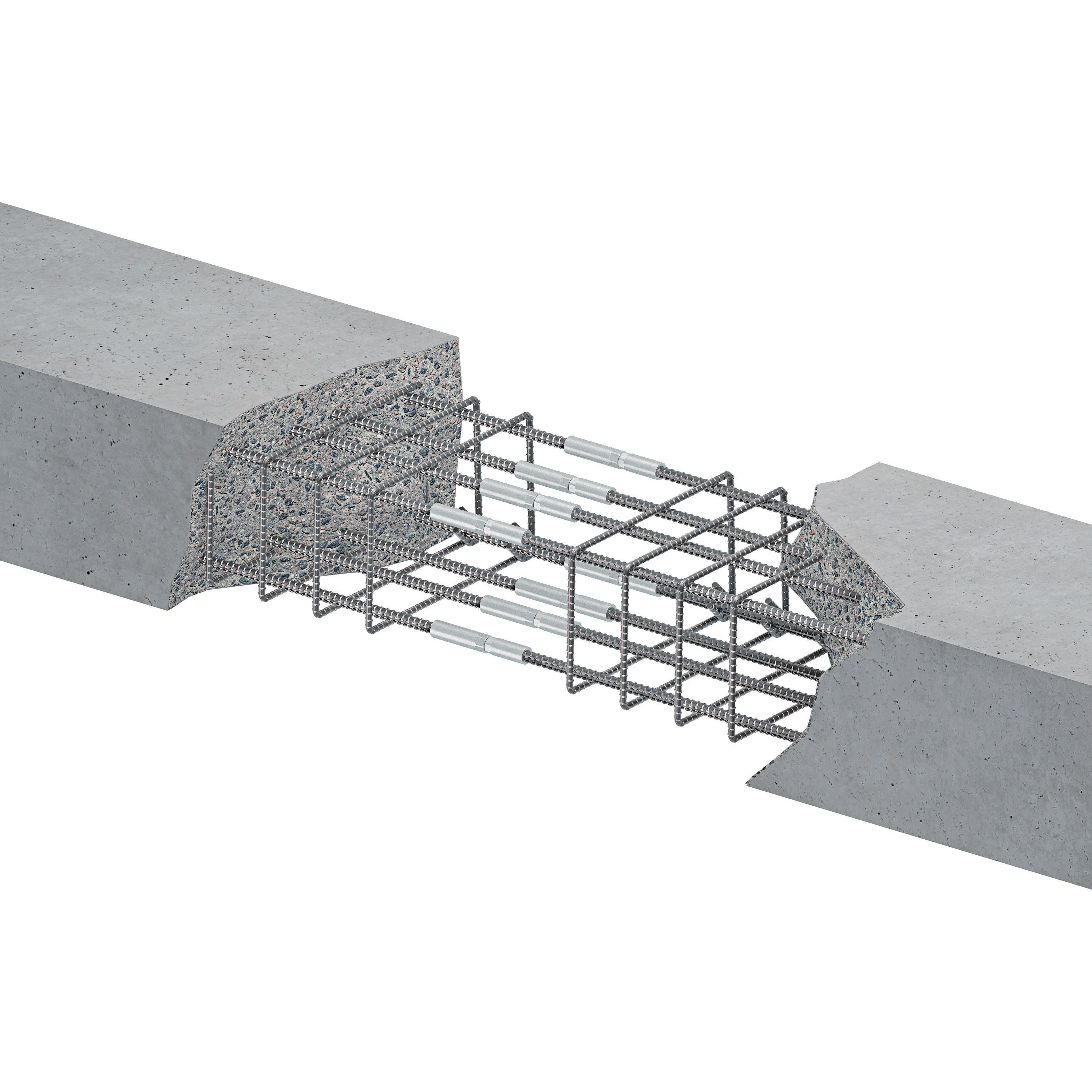
Reid is evolving, improving and adapting its solutions to cater for changing industry requirements.
The ReidBar™ TX Coupler features an advanced mechanical splice system that’s ideal for large-scale infrastructure projects.
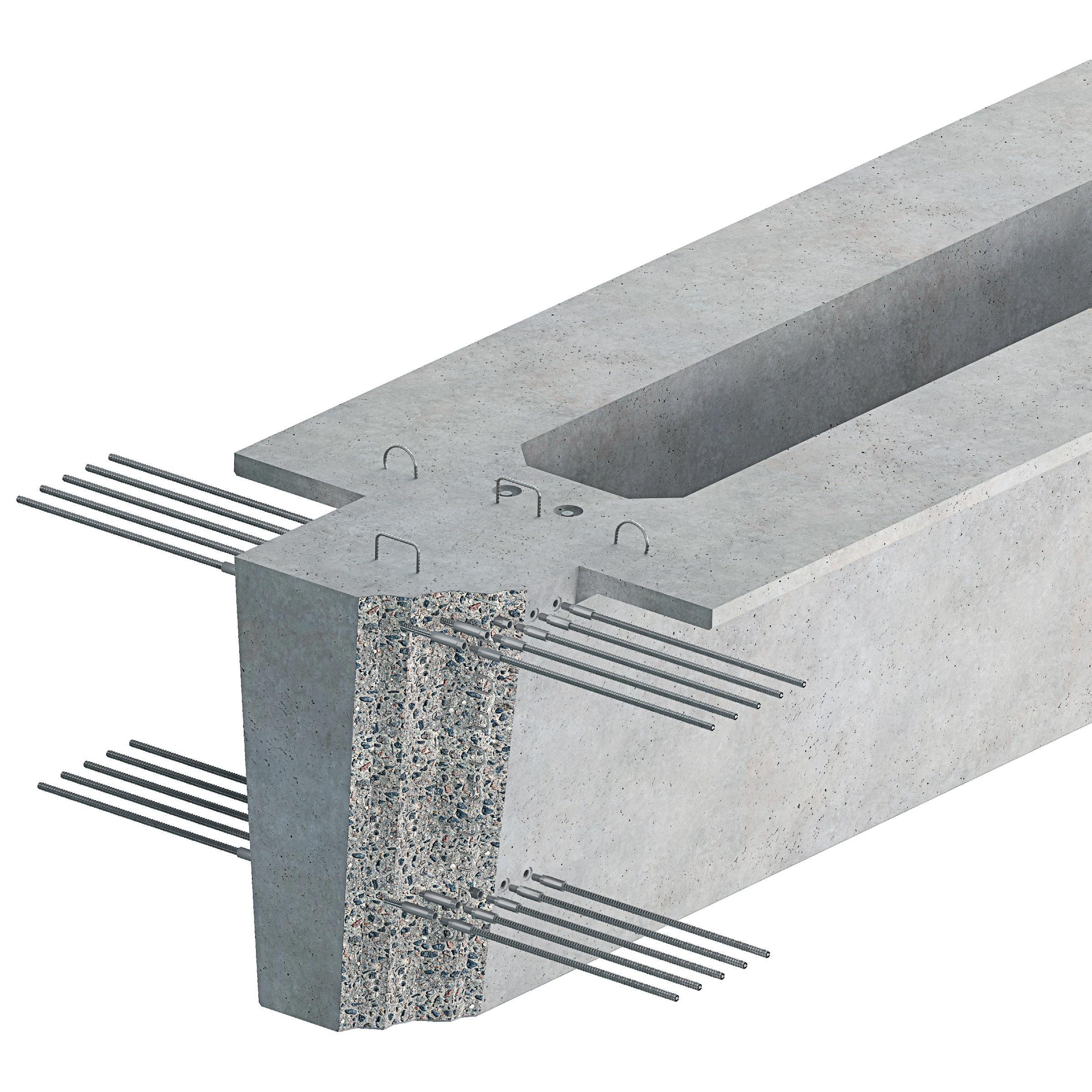
commercial buildings, and we focus on using couplers and mechanical connections instead of lap splices.
“We’re seeing a lot of ‘super Ts’ in precast bridge manufacture, and that’s a big part of where we play. We already do a lot with precast across the Reid brand, so this was a natural area we needed to expand into.”
PERFORMANCE VALIDATED
To ensure a high level of performance, Reid undergoes a thorough testing process for each of its products, surpassing the requirements set out to achieve and satisfy national specifications.
As Taylor explains, testing on the ReidBar was no different.
“We put the system through the full ISO 15835 testing regime, which includes high cycle fatigue, low cycle fatigue, specified yield strength testing and more,” he says.
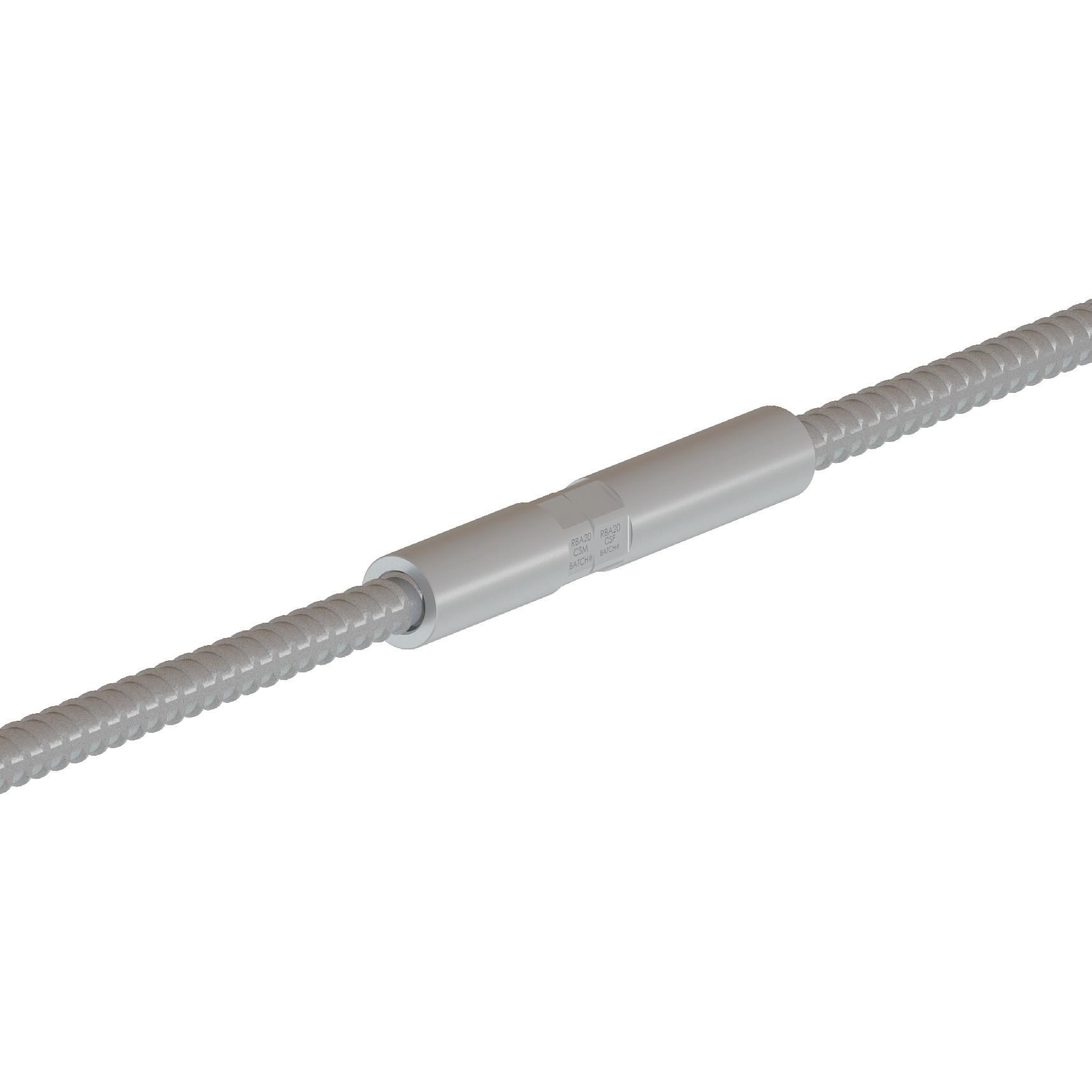
“Where we really see our strength is in high cycle fatigue. We run the system through two million push pull cycles to simulate vibration and fatigue in the connection.
“When you think about bridges – big open structures constantly seeing vibration from trucks, trains and wind – those cycles of movement are critical. At the joints and connections between large, stiff concrete elements, you really need that fatigue
performance. That’s exactly what this testing is for.”
As well as ISO compliance, the product has been explicitly developed to satisfy the requirements of major state road authorities, particularly Queensland, New South Wales, and Victoria, whose specifications drive practice nationally.
Transparency around testing and specification satisfaction also extends to Reid’s delivery process, with customers given access to essential information to not only stay in the loop but also aid final installation.
“Because it’s a fully threaded bar, we can turn it around relatively quickly, instead of having to get a bar, rework it and then put couplers on,” Mills says.
“We have a dedicated team that prepares the take-off, does the shop drawings and issues everything to the contractor for approval and ordering. From the customer’s point of view, it’s a seamless process.
A thorough testing regime ensures performance for
“Everything has batch numbers and traceability from factory to installation. They know which bars go where, which assemblies go where – down to a few millimetres in some cases.”
Reid also utilises its vast and longstanding relationships with industry to spur innovation, incorporating feedback from the industry to drive potential product innovations.
Just one example was common occurrences of bars being misaligned when other systems in the market were deployed.
Reid addressed this with an internal stiffener plate in a recent product release to maintain alignment and reduce rework.
“For us, the best feedback is repeat business. If we do a good job from top to bottom, customers come back,” Mills says. “Reid has always made a high quality, engineered product that’s well recognised amongst the industry.”
Images: Reid
the ReidBar™ TX Coupler, as well as Reid’s other offerings.
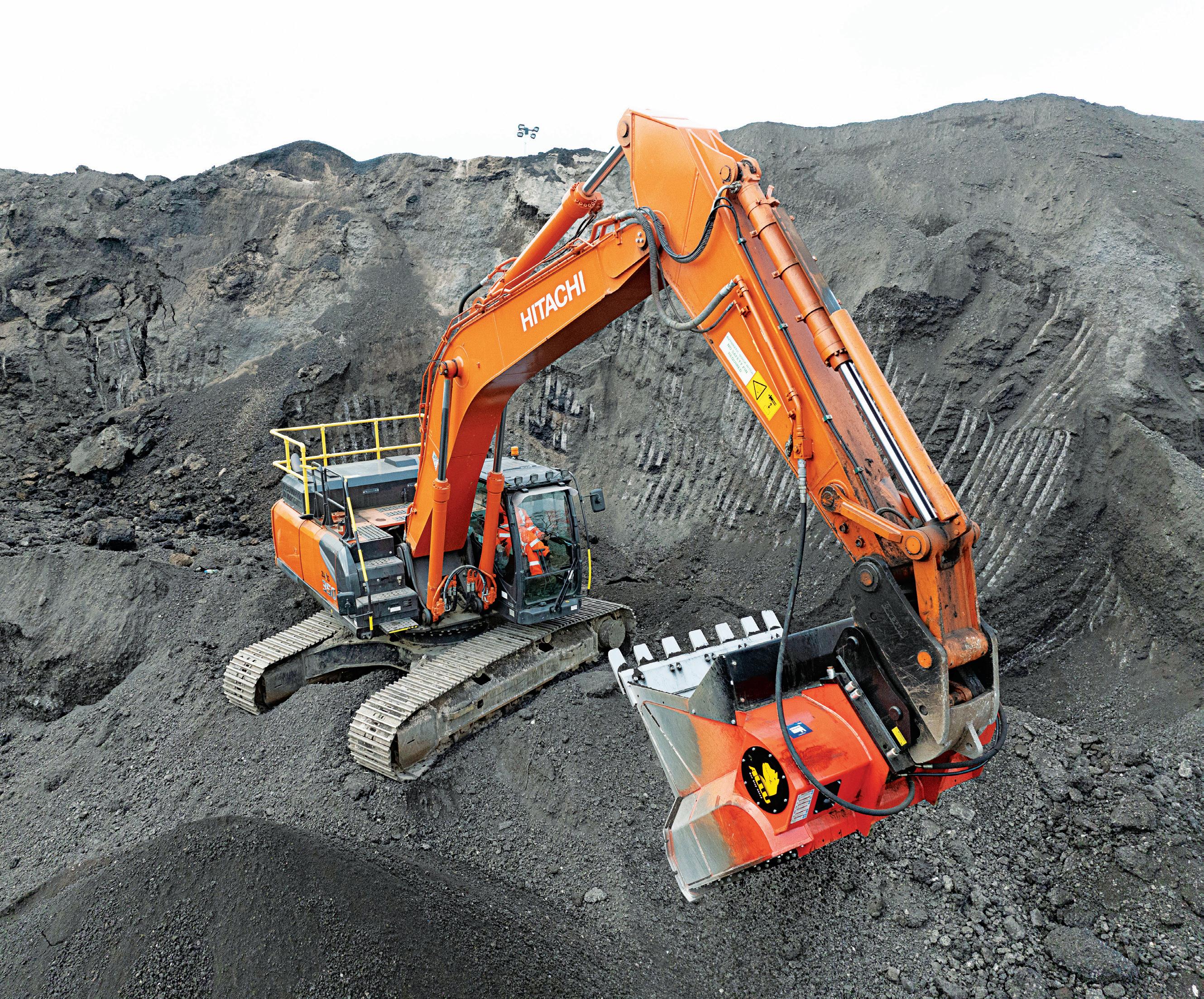
THE BUCKET LIST
ALLU’S SPECIALISED ASPHALT RECYCLING BUCKET IS AN EFFICIENT AND ECONOMIC CHOICE FOR THE WASTE AND RECYCLING APPLICATIONS OF HEAVY EQUIPMENT OPERATORS.
It took just six years for ALLU to develop its flagship product. The Finnish heavy machinery manufacturer was established in 1985, first looking to develop solutions in the world of environmental technology. This soon morphed into equipment for the earthmoving market and laid the foundation for ALLU to create what it calls the world’s first excavator-attached screening and crushing bucket. This breakthrough was a catalyst for ALLU’s growth, as the business’ international expansion soon followed.
“ALLU is a market leader in the crushing and screening bucket attachments segment of heavy machinery,” says Sami Rahman, ALLU Sales Manager at Walkers Hammers. “It is widely regarded as a global leader in specific niche applications, such as on-site material
processing, soil improvement, and waste and recycling applications.“
Today, the company provides a range of equipment to customers in more than 30 countries, including Australia. Here, a network of partnered, independent dealers supply local markets with ALLU products, creating a strong presence for the brand.
These local distributors consist of Walkers Hammers in Victoria, South Australia and Tasmania, Queensland Rock Breakers in Queensland and the Northern Territory, and Total Rockbreaking Solutions in Western Australia.
Walkers Hammers has specifically carried ALLU’s wide-spanning heavy equipment product portfolio for seven years, which was recently bolstered by the release of the ALLU D-series
The ALLU Asphalt Recycling Bucket attaches to heavy-duty excavators and wheel loaders for the screening and crushing of cold-milled asphalt and reclaimed asphalt pavement.
Hybrid-blade Asphalt Recycling Bucket in mid-2025.
This bucket is a heavy machinery attachment designed for the screening and crushing of cold-milled asphalt and reclaimed asphalt pavement. The product boasts a durable and versatile design through customisation due to a number of features which make it suited for various applications.
Its innovative hybrid screening and crushing blade setup – which come in 12, 16 and 25 millimetre lengths – allow the equipment to crush clumps, screen fine material, and separate oversized particles in a single pass. This balance of fine screening with effective crushing power creates a consistent high-quality end product, which has also been constructed with convenience in mind.
“ALLU’s Asphalt Recycling Bucket models have two hydraulic motors and variable drums,” Rahman says. “The drums’ designs specifically allow customers to change the bucket’s blades when they become worn out, without needing to disassemble the drums from the chain boxes.
“The product’s reinforced frame also helps it to withstand tough applications, which are further supported by a serrated cutting edge to help dig into material.”
Rahman explains that these features make the Asphalt Screening Bucket specifically compatible with heavy-duty excavators and wheel loaders, ranging from 24 to 45 tonnes and 15 to 30 tonnes, respectively. He also emphasises that customisation is key to fitment, as operators can choose their buckets to be installed with standard screening blades or axe blades, which enable aggressive crushing and shredding capabilities.
“The bucket model for a customer is decided by the base machine it will be attached to, as well as the oil flow required,” Rahman says.
Because the majority of milled asphalt can be screened directly with the ALLU bucket, instead of the host heavy equipment, the wear on these machines is significantly reduced.
This means decreased fuel consumption, wear part replacements, and operating hours required. As a result, time and money is saved.
Following the Asphalt Recycling Bucket, ALLU is now set to boost its bucket
product line further with the release of the Concrete Screening and Crushing Bucket, which will also support recycling and waste management practices for operators.
The ALLU Concrete Bucket is built to crush and screen tough demolition material where they are generated, turning it into usable product on-site without relying on a separate mobile crusher for every job.
This bucket can be fed with demolition rubble up to 300 millimetres, and controls its output with a counter blade setup which allows operators to target both fine and coarse materials, depending on the job. The product’s reinforced design also enables it to handle and process rebar and other steel objects in the material, minimising the need for stoppage and maintenance.
Additionally, the bucket’s build helps to reduce hauling and double handling by letting operators crush and screen directly on an excavator. In this way, it works as a practical replacement for a mobile crusher on smaller or spacerestricted sites.
“Contractors don’t need another machine to manage on a crowded jobsite,” says Antti Rautamies, ALLU Research and Development Project Manager. “They need a practical way to turn rubble into usable material with the excavator they already have.
“This bucket is built for the real world – fines-heavy material streams, tight spaces, and reinforced concrete that doesn’t arrive ‘clean’.”
The ALLU Concrete Bucket is under final testing and will be available to the market later in 2026.
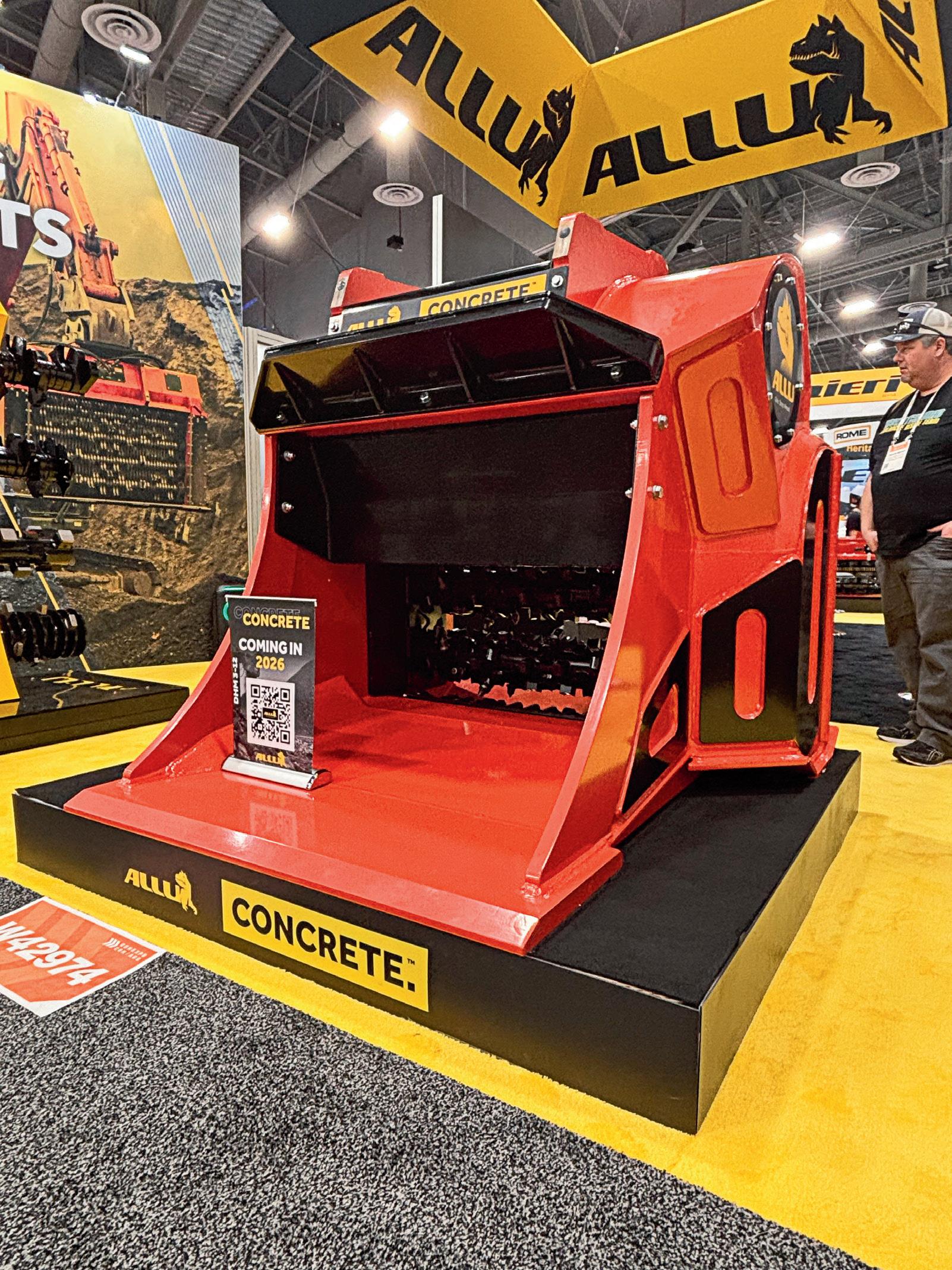
Images: ALLU
The ALLU Concrete Bucket can further assist operators with their waste and recycling needs, and will be available to the market later this year.
ALWAYS DOWN TO EARTH
VEGA’S LEVEL AND POINT LEVEL MEASURING INSTRUMENTS HAVE SIMPLIFIED THE PRODUCTION PROCESSES AT QUARTZLINE, IN THE NETHERLANDS.
Acompany that keeps a close eye on its raw material stocks can produce efficiently, while saving financially. Floor screed manufacturer Quartzline, based in Dordrecht in the Netherlands, is taking this principle to heart, as shown by its use of VEGA measuring instruments to monitor 15 storage silos.
VEGAPULS radar sensors indicate, among other things, the exact levels in the silos, which contain sand in different grain sizes.
Founded in 1976, the family business specialises in the manufacture of cast synthetic resin floors.
Within just a few decades, what started as a small enterprise, became a global player with headquarters just outside Rotterdam. While the company at first was basically just an installer of cast floors, it has since developed into one of the largest producers of floor components.
B-COMPONENT ENSURES THE RIGHT CONSISTENCY
“We manufacture the components that specialist companies then use to install floors at their customers’ construction sites. We don’t deliver to private customers ourselves,” explains Fred van Zanten, Operations Manager at Quartzline. Pointing to a sandgravel example floor, he illustrates the various process steps carried out in the company.
“It consists of rock granulate that we have dried here and selected specifically according to size. We can produce a floor like this in any colour the customer wants,” he says. Quartzline also colours the granulate. The same applies to floors that consist mainly of sand. In such cases, the sand is also selected according to size, dried and coloured.
“Our floors always consist of an ‘A’
and a ‘B’ component. The A component contains the sand or gravel. The B component contains the substances that ensure that the floor liquefies, flows well and then hardens”, van Zanten says.
Almost ten different types of floors are manufactured at Quartzline. They can be made from different grain sizes and
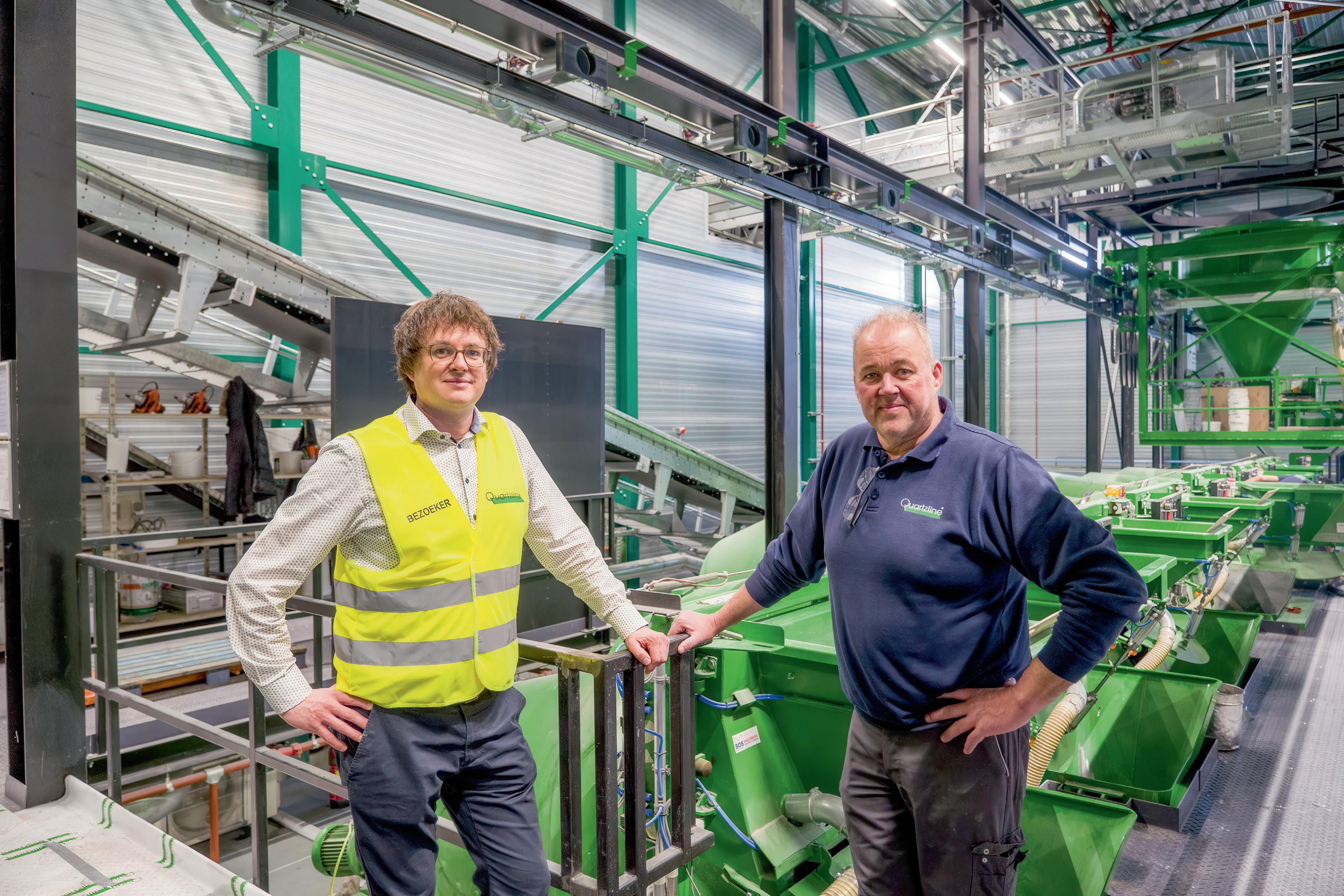
a variety of colours, so the number of possible finishes is immense.
“In the Netherlands, you can find our floors in private homes as well as in companies,” van Zanten says. He tells of a car dealership that has equipped the entire showroom and workshop with Quartzline floors.
The floors can be designed and installed by a specialist even on small surfaces in private households. Although cast floors have already been in use for a long time, there has recently been an increased interest in sand-cement floors in the private market.
“For example, nowadays you’ll often see the well-known Beton Ciré, a concrete plaster used more and more in living rooms. The great thing about it is that you can also apply it to the walls. So in a bathroom, you don’t need tiles at all anymore. It also works very well with underfloor heating,” van Zanten says.
A few years ago, the company moved into a new, multifunctional building in Dordrecht. Owner Arthur Kaptein focused on the ability to dry sand and gravel on site from that point on.
“This influenced the design of the building, which has become a unique object in the neighbourhood,” van Zanten says.
“The result is a complex facility that meets all the company’s requirements: We can dry and sieve sand, sieve gravel, produce all mixtures in hundreds of colours, as well as reclaim coloured products.”
A CLEAN SOLUTION
Extreme cleanliness is absolutely necessary in the screed manufacturer’s production processes. High standards
similar to those in the food industry are required. van Zanten uses an example to illustrate why this is so.
“Let’s say a customer wants a jetblack floor for his office. No problem, consider it done. After that, we produce a red floor for a customer who wants that colour. If just one black particle gets stuck somewhere in the system and comes out in the red floor, we’ve got a problem on our hands. After all, we can’t say to the customer: ‘Just put a rug over it.’ Quality and colour have to be perfect,” he says.
To be on the safe side, Quartzline
“THE MIXERS ARE CLEANED THOROUGHLY WITH A HUGE VACUUM CLEANER AFTER EVERY BATCH, IN ORDER TO PREVENT A SINGLE FALSE GRAIN FROM GETTING INTO THE NEXT BATCH.”
avoids producing a red floor directly after a black one. Such factors are always taken into account when planning the production sequence.
“Theoretically, it should be possible to produce red directly after black”, says van Zanten. “The mixers are cleaned thoroughly with a huge vacuum cleaner after every batch, in order to prevent a single false grain from getting into the next batch.”
MEASUREMENT TECHNOLOGY IN MANY PLACES
Quartzline became aware of VEGA’s products through the construction company that supervised the building of the company’s new plant. It had suggested using radar level measurement as a reliable and robust solution for the application and thus recommended VEGA’s measuring instruments. First, Quartzline tested the instrumentation in a pilot project on one silo in the old plant.
“It worked extremely well”, recalls van Zanten. As a result, all silos in the new plant were equipped with the radar sensors.
Several VEGA sensors are used in the tank farm, where the liquids for the floors are stored. For example, a VEGA level switch was installed on the ST system, from which liquid products are fed into the mixer under vacuum, and the bulk solids silos are also monitored with a VEGAWAVE S61 level switch in addition to radar level sensors.
Rob Smulders and Quartzline Plant Manager Fred van Zanten.
Images: VEGA
In the control room, employees receive real-time information on all processes.
RADAR IDEALLY SUITED FOR ABRASIVE MEDIA
There are in fact alternatives to radar level measurement, but they proved to be less interesting for Quartzline. Rob Smulders of VEGA Netherlands explains why.
was left in the silos. That was okay actually, but with our new silos and the quantities we have to deal with now, it wouldn’t be a good idea. It’s not for nothing that radar level measurement is now used in almost all concrete plants”, says van Zanten, recognising
“THE LEVEL GAUGES ARE TRULY PAYING FOR THEMSELVES. BECAUSE WE NOW HAVE VERY PRECISE INFORMATION ON OUR STOCKS, WE CAN BUY RAW MATERIALS AT LOWER COST. IF THE PRICES ARE HIGH AT A CERTAIN POINT IN TIME AND WE’RE ABLE TO WAIT A LITTLE LONGER, WE’LL BUY AT LOWER PRICES A FEW DAYS LATER.”
“Sometimes mechanical methods are used, like cable level indicators with a float. But I wouldn’t recommend those for sand, which is simply too abrasive. Non-contact radar level measurement is by far the best method.”
In the old plant, Quartzline still measured the levels in its silos in a rather complicated way.
“We used a very long aluminium rod and a hammer to determine how much
the great advantages of this high-tech measuring method.
ALL CHALLENGES OVERCOME
Especially in abrasive media, VEGAPULS demonstrates all the advantages of a non-contact radar level transmitter. It delivers precise measuring results even under the difficult, extremely dusty conditions in the tall silos. The challenges posed by the special circumstances at
Quartzline were solved.
“With some products we had to contend with material bridging and cratering in the silos. Sometimes, a rather large sand rim would stick to the silo wall. The sensor detected this rim as the upper limit of the raw material – until it collapsed. The level transmitter then suddenly indicated 20 less tonnes of raw material in the silo. We solved the problem by installing ventilation systems in the silos, which significantly reduced bridging and cratering,” van Zanten says.
INVESTMENT PAYS OFF
van Zanten is convinced that the investment in the new measurement technology has more than paid off.
“The level gauges are truly paying for themselves. Because we now have very precise information on our stocks, we can buy raw materials at lower cost. If the prices are high at a certain point in time and we’re able to wait a little longer, we’ll buy at lower prices a few days later. One silo can hold the contents of three lorries, so we have a lot of leeway”, he says.

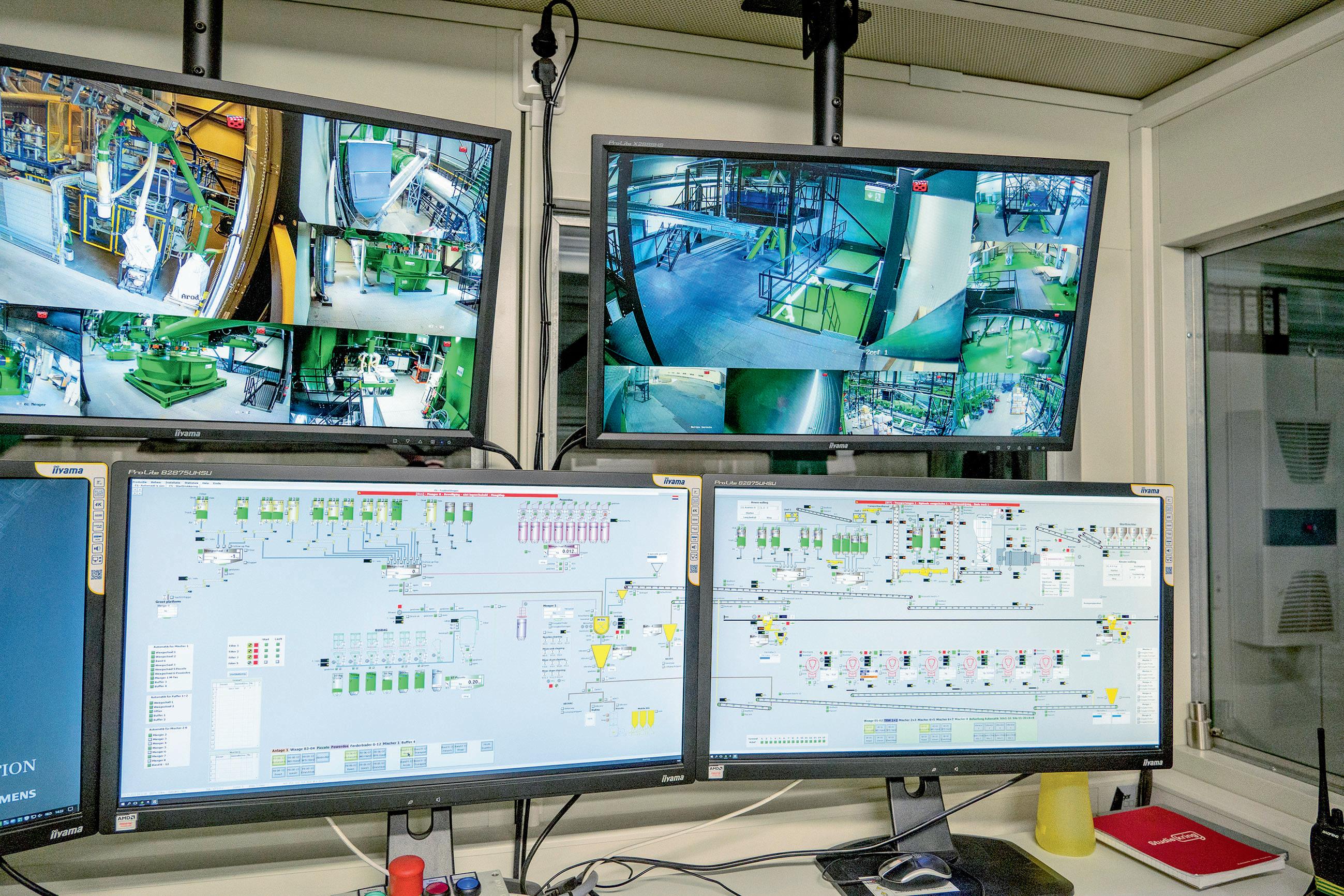
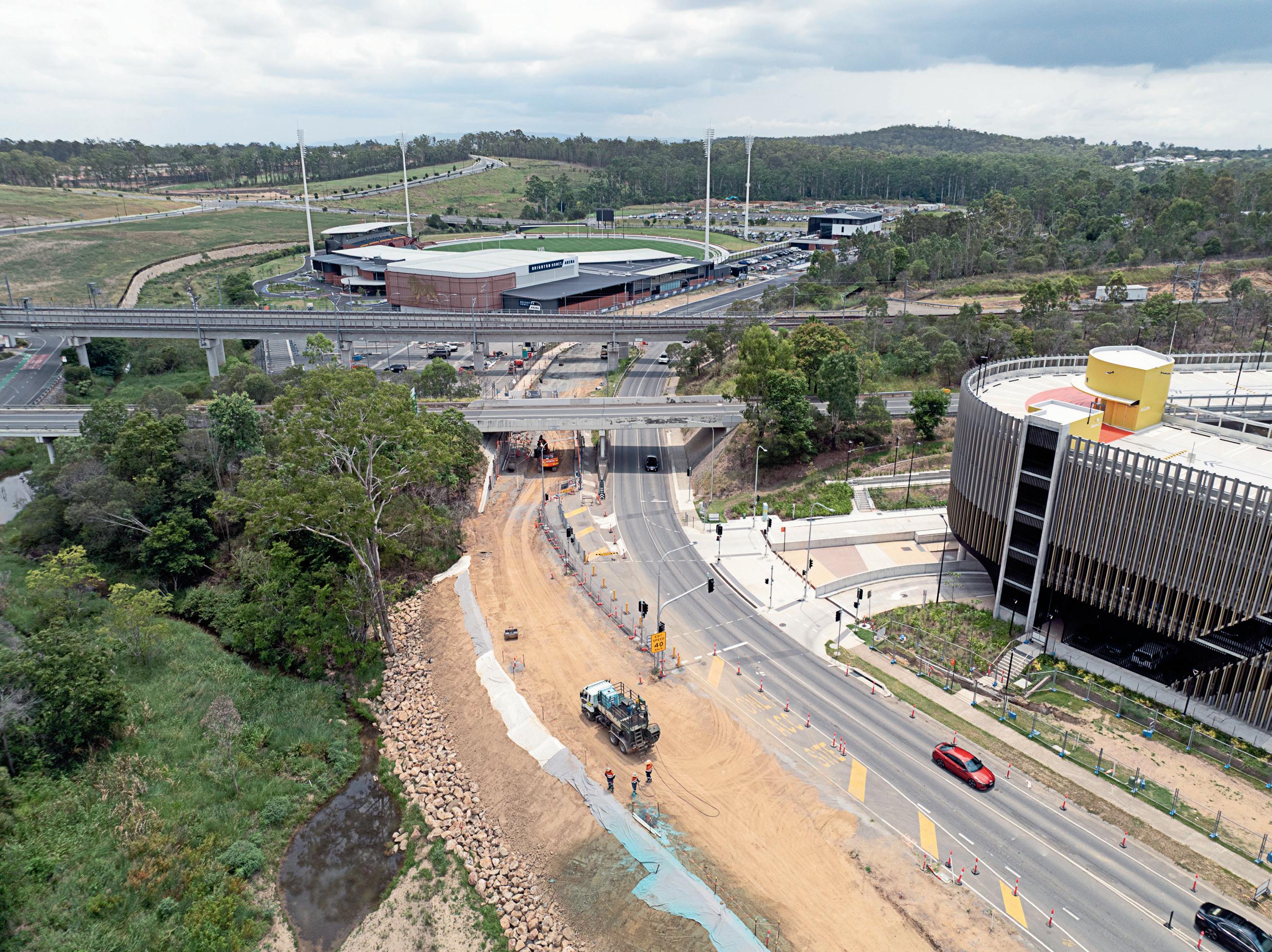
AN ENDURING COMMITMENT TO SUSTAINABILITY
SOON TO BE CELEBRATING ITS 50TH ANNIVERSARY, AUSTRALIAN-OWNED VITAL CHEMICAL CONTINUES TO FOCUS ON DEVELOPING ENVIRONMENTALLY AND SUSTAINABLY SOUND PRODUCTS AND SERVICES TO ADDRESS A RANGE OF INDUSTRIAL CHALLENGES, INCLUDING EROSION AND DUST CONTROL.
Vital Chemical is a supplier to major Queensland infrastructure projects, including civil and construction developments, helping them achieve sustainability outcomes, environmental compliance, cost savings, and operational efficiencies.
The company is at the forefront of research, formulation, manufacturing, and the supply of environmentally sound solutions to help clients address unique challenges and a wide array of geographic, climatic, and builtenvironment factors.
The Brisbane-headquartered business has successfully partnered with industry-leading contractors utilising its solutions, including for the Bruce Highway Upgrade Program, the largest road infrastructure program
Queensland has ever seen.
Vital has its own research and development department of dedicated scientists and testing laboratories, and all products are third-party tested and independently verified to ensure they are market-ready and free from harmful toxins, including Polyacrylamides, prior to release.
“Our focus is on developing and providing environmentally sound products and services that deliver proven efficacy and cost effectiveness, while prioritising safety for humans, flora, and fauna in the areas of application,” Paul McMullen, Director of Vital Chemical says.
“Our partnerships underscore Vital’s vision of creating safer, cleaner, and more sustainable work environments worldwide.
“With the world’s eyes on Queensland and Australia ahead of the 2032 Games, we will look to continue our innovative product developments and remain committed to sustainability through environmental stewardship, social responsibility, cultural connection, and delivering economic benefits.”
THE BRUCE HIGHWAY UPGRADE PROGRAM
The company was selected following a robust evaluation process to identify best value, whole-of-life revegetation solutions for the Caloundra Highway to Sunshine Motorway (CR2SM) six-lane upgrade.
Works on this project included major upgrades to both interchanges and a new two-way service road for local traffic
Vital Chemical’s commitment to sustainability represents five decades of growth and excellence.
between Steve Irwin Way and Tanawha Tourist Drive.
In addition, the CR2SM project required that the selected revegetation solution be incorporated into a complex, staged works program.
Environmental management considerations were critical to ensure that environments were protected and legislative discharge standards were consistently met.
Vital’s VE Gro-Matt was chosen as the revegetation solution.
Manufactured from sustainably sourced Australian timbers, VE Gro-Matt delivered a custom seed specification to ensure the application integrated seamlessly into the existing environment.
The turnkey revegetation works package delivered by Vital Chemical, comprising VE Gro-Matt product and installation, supported the sustainable procurement objectives of the CR2SM project.
The CR2SM project reused site water to minimise potable water use across vegetation watering programs.
VE Gro-Matt provided ideal growing conditions, delivering immediate stabilisation while establishing a sustainable growth medium.
SHORT-TERM SURFACE STABILISATION
As part of a South East Queensland urban development project, Vital Chemical was engaged to deliver a short-term erosion and dust control solution to reduce the risk of sediment mobilisation from the exposed site.
The region had strict council regulations requiring the client to source an efficient, effective solution that met the project’s environmental compliance criteria.
The location was known for its highly dispersive soils, which are prone to erosion when disturbed and are easily mobilised by rainfall or wind events.
The application of Vital Bon-Matt P47-VR1 met the expectations of both the client and the local council, delivering an efficient and cost-effective solution that ensured compliance with erosion and sediment control requirements.
Designed for non-trafficked areas, Vital Bon-Matt P47-VR1 is an inert, environmentally sound formulation offering cost-effective, instant, and sustainable surface stabilisation for civil and mining broadacre, stockpiles, and residential developments.
Its non-toxic formulation cured instantly, preventing sediment mobilisation into
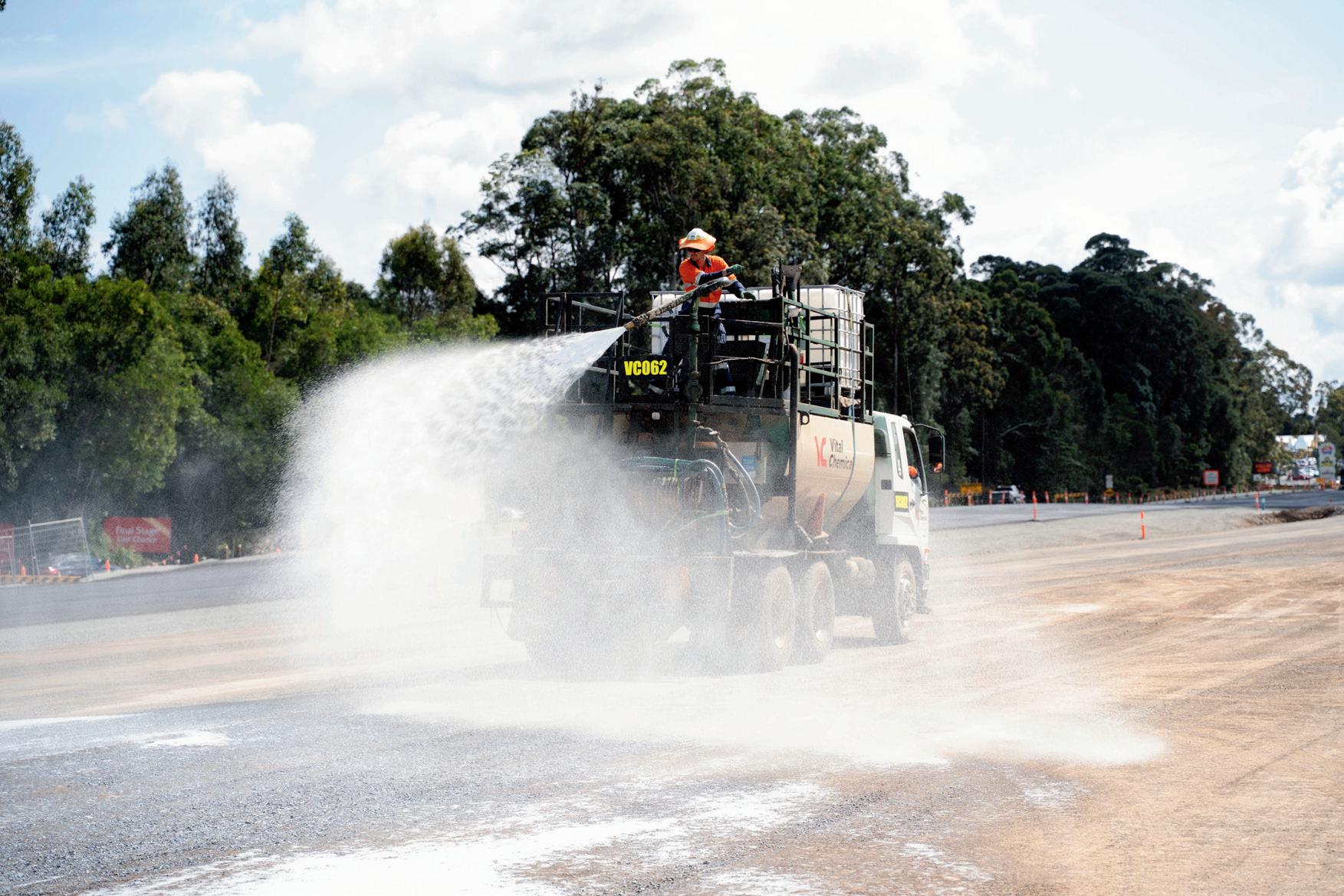
Sustainable outcomes will be especially important for major construction programs, such as the works being delivered for the upcoming 2032 Olympic and Paralympic Games.
Chemical considers itself to be a true project partner, helping its clients to achieve more environmentally sound outcomes.
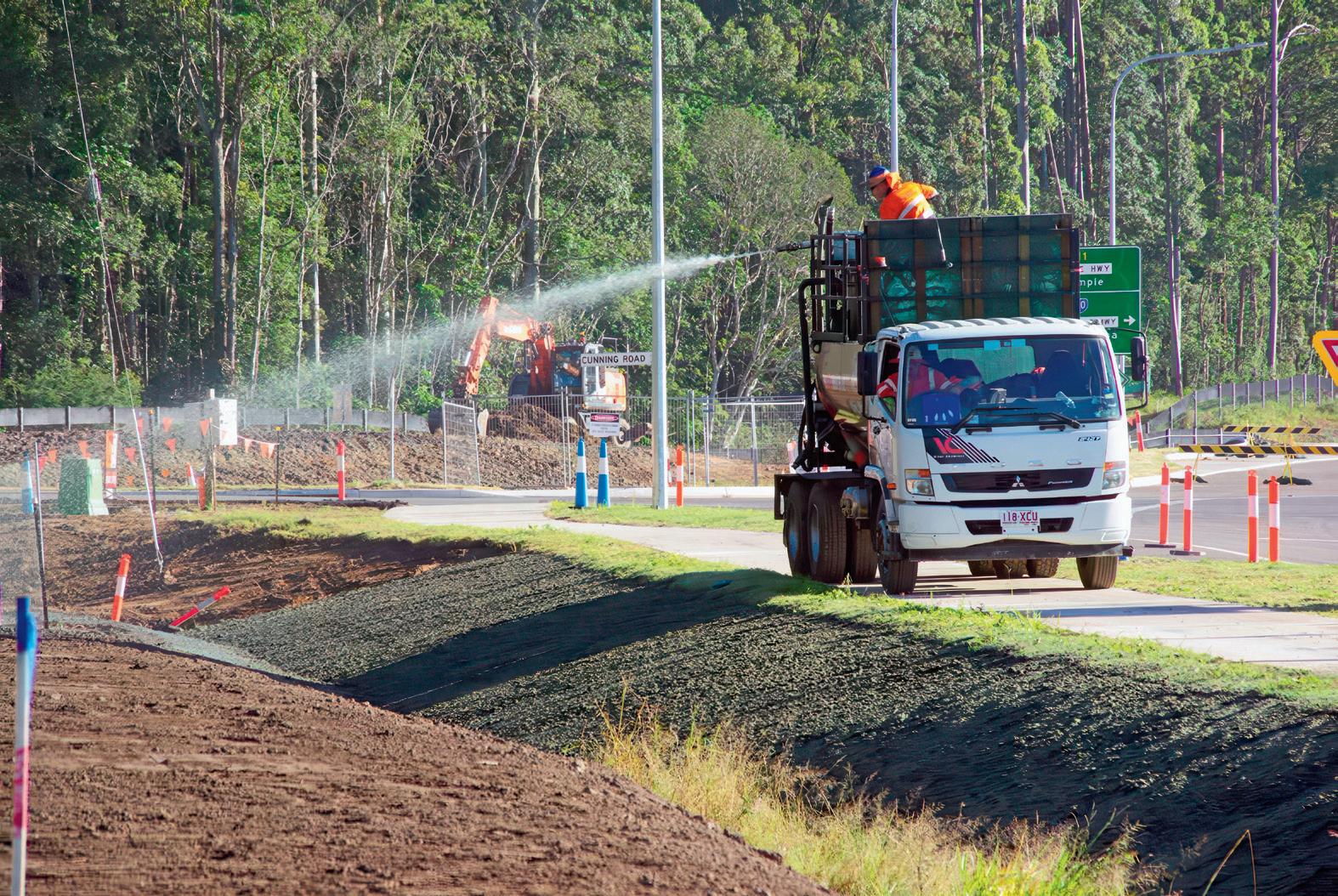
nearby drainage networks, business precincts and residential spaces.
SUSTAINABLE HAUL ROAD MANAGEMENT
The Adelaide Brighton Cement site in Birkenhead, South Australia, presented a serious challenge in reducing the amount of water used to control dust generated by unsealed traffic surfaces.
Legacy road dust mitigation operations were drawing approximately 200,000 litres of water per week at peak times to manage dust generation from unsealed trafficked surfaces at the site.
Vital Bon-Matt HR was trialled throughout the Adelaide Brighton Cement site on unconsolidated trafficked surfaces and loading areas.
The Sustainable Haul Road Management Program consisted of twice-weekly applications of Vital Bon-Matt HR.
Vital Bon-Matt HR is an environmentally sound, concentrated liquid formulation that is diluted with water before application.
Formulated to greatly reduce erosion from wind, water, and traffic, Vital Bon-Matt HR is a highly effective solution when strong
binding and durable surface conditions are required.
Among a raft of key sustainability outcomes, including a decrease in visible dust lift-off and significant stabilisation, an estimated 90 per cent water saving was achieved for dust suppression.
READY TO USE
Vital has just launched its own ‘Ready to Use’ range of products, specifically formulated to deliver instant results with minimal effort.
Vital Bon-Matt P47-VR1, Vital Bon-Matt Stonewall, and Vital Bon-Matt HR are now available in Ready to Use formulation, saving time, reducing costs, and delivering consistent results without the complexity of adding water and mixing.
By eliminating the need to travel to water sources for mixing, fuel consumption is reduced, and valuable on-site time is saved.
“Our Ready to Use range is about efficiency and reliability,” McMullen says.
“We’re seeing real challenges across some sectors in sourcing water onsite at an economical price point.”
Images:
Vital

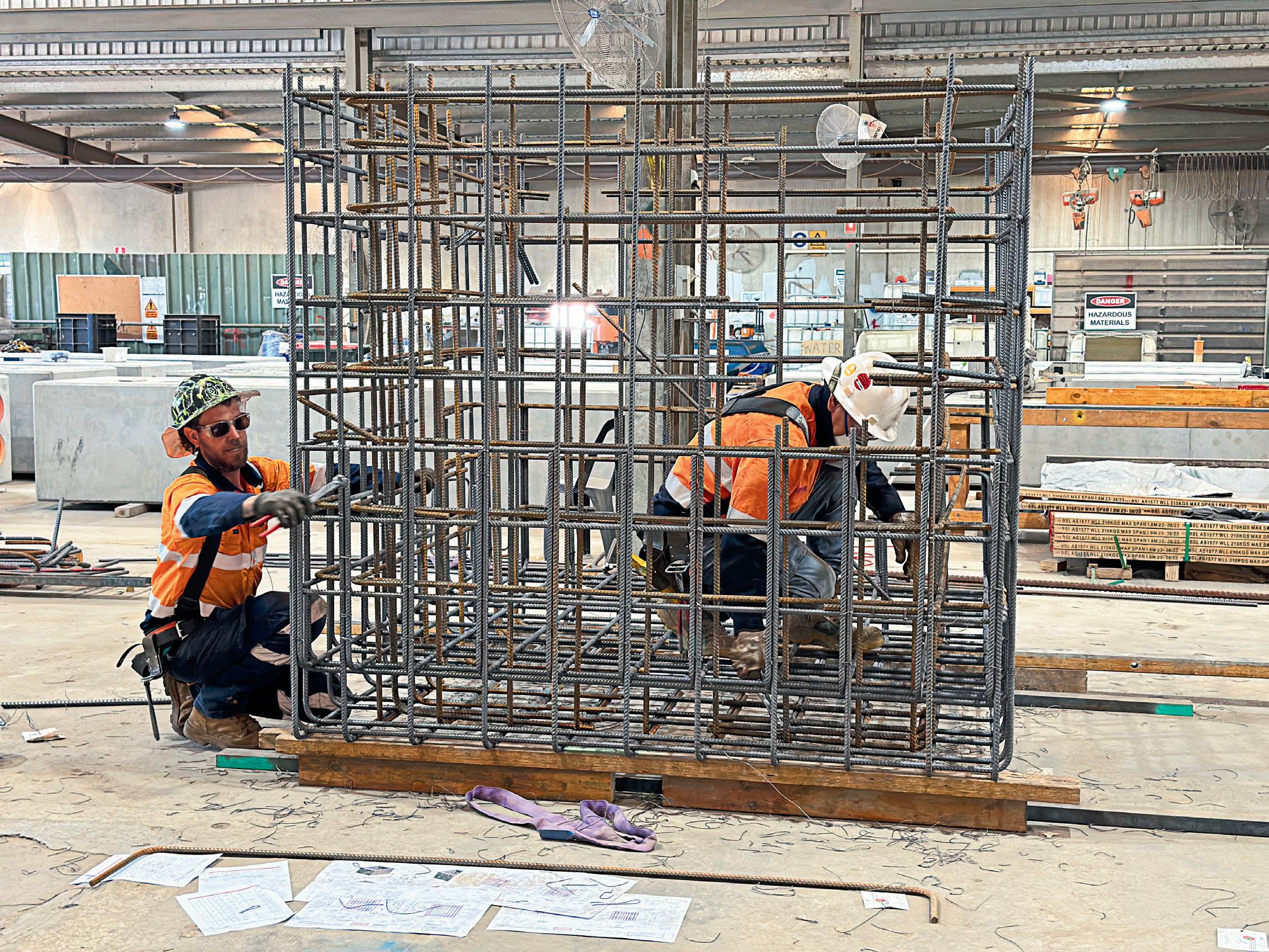
INITIATIVE DRIVING NEW ERA FOR PRECAST TRAINING
As an Australian first, a new precastspecific Certificate III pathway is now available for precast workers, with South Australia an early adopter.
The achievement is the result of a deliberate two-pronged strategy led by National Precast Concrete Association Australia to address long-standing gaps in training for the precast sector.
REFORMING QUALIFICATIONS AND BUILDING TRAINING
The first step was to tackle the training framework itself. Recognising that the formal training system did not properly reflect the needs of modern precast manufacturing, National Precast initiated and drove the development of five new precast-specific units within MSM30325 Certificate III in Manufactured Mineral Products.
This was a critical breakthrough for an industry that has long relied on informal, onthe-job learning, despite its growing role in delivering buildings and major infrastructure.
DEVELOPING PRACTICAL TRAINING FOR IMMEDIATE USE
The second step was to create training the industry could use straight away.
With support from the Queensland Government through its Micro-credentialing Program, administered by the Department of Employment, Small Business and Training, National Precast developed ten micro-credentials tailored specifically to precast manufacturing.
Together, these two streams of work have culminated in a genuine precast-specific training pathway.
The micro-credentials now support
Recognition of Prior Learning towards the five new precast units in MSM30325, linking practical workforce training with nationally recognised qualifications.
REAL OUTCOMES NOW EMERGING
The broader outcomes are already being seen.
In South Australia, ‘precast worker’ has now been recognised as an occupation, and a precast traineeship pathway has been established, creating a formal entry point for new workers into the industry.
“For too long, precast manufacturing has lacked the formal training pathways needed to properly support workforce capability,” Bachmann says. A NATIONAL PRECAST-LED
Sarah Bachmann, Executive Advisor to National Precast says the initiative had always been about creating lasting structural change.
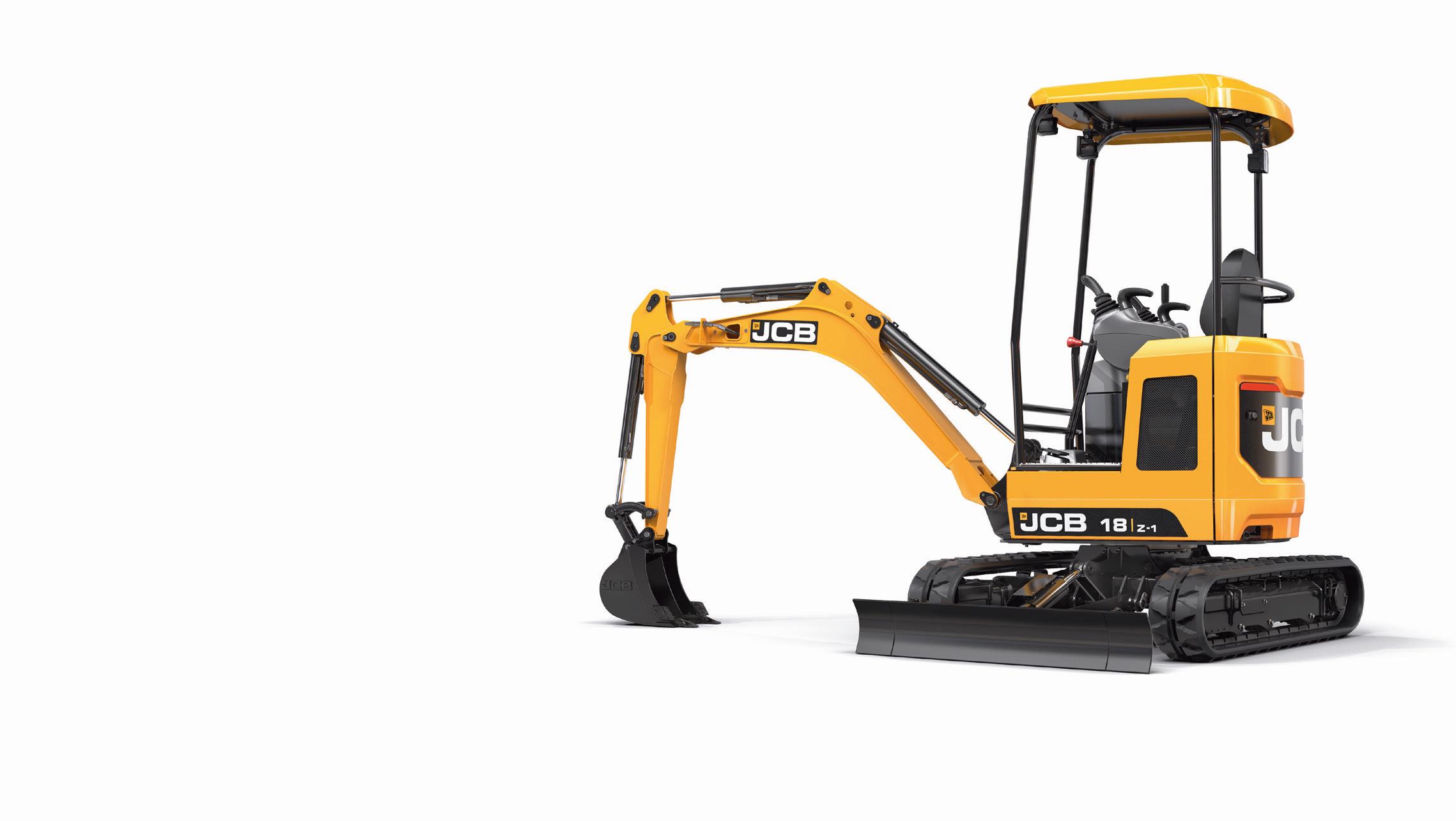
Image:
National Precast’s new training services aim to strengthen the industry as a whole.
“National Precast recognised that meaningful change required action on two fronts. Firstly by helping reshape the formal qualification framework and secondly by leading to the development of practical training that industry could adopt straight away.
“That approach has now culminated in a new precast-specific Certificate III for precast workers across the country. In South Australia, precast work has been recognised as an occupation, and a traineeship pathway that creates new opportunities for workforce entry and development.”
STRONG INDUSTRY BACKING
Since all ten micro-credentials launched nationally in September last year, over a thousand workers across Australia have enrolled, with Queensland having the biggest uptake as workers there can access the micro-credentials at no cost until 30th June.
Norm Prowse of Novus Precast Solutions says the training will deliver clear quality and capability benefits.
“From a quality perspective, this training is highly valuable for the precast industry.
It is clearly aligned with quality assurance systems and reinforces the standards needed to deliver consistent, high-quality outcomes,” Prowse says.
“These micro-credentials help workers understand not just what they need to do, but why it matters. That leads to better decision-making, improved quality and safer practices.”
Patrick Heyward, Director of Benzini Precast Concrete, says the program was also
to Darlington Project in South Australia.
Bachmann says the adoption of the training on Torrens to Darlington shows how other civil projects around the country could follow suit.
“As major civil and infrastructure projects increasingly rely on precast, there is a real opportunity for other projects around Australia to follow the example being set by Torrens to Darlington,” she says.
“Enrolling workers in the certificate – where
“NATIONAL PRECAST RECOGNISED THAT MEANINGFUL CHANGE
REQUIRED ACTION ON TWO FRONTS – HELPING RESHAPE THE FORMAL QUALIFICATION FRAMEWORK WHILE ALSO DEVELOPING PRACTICAL TRAINING THAT INDUSTRY COULD ADOPT STRAIGHT AWAY.”
proving valuable as an upskilling tool.
“These micro-credentials have set me up well for my role, and we will be rolling them out across our team,” Heyward says.
“They are an excellent upskilling tool and establish a strong benchmark for the industry.”
The training is also being adopted on major infrastructure projects, including the Torrens
JCB 18Z MINI EXCAVATORS
successful completion of the five new precast units includes successful completion of the ten micro-credentials – is a practical way to lift workforce capability, improve quality and compliance, and create stronger training pathways for the people manufacturing the precast elements those projects depend on.”
For more information refer nationalprecast.com.au.


VICTORIAN TRANSPORT INFRASTRUCTURE CONFERENCE 2026: CONNECTING VICTORIA
INDUSTRY LEADERS AND DECISION MAKERS WILL GATHER TO EXPLORE MAJOR TRANSPORT INFRASTRUCTURE PROJECTS SHAPING THE STATE AT THE 15TH VICTORIAN TRANSPORT INFRASTRUCTURE CONFERENCE, RETURNING TO THE MELBOURNE CONVENTION AND EXHIBITION CENTRE ON 17-18 JUNE 2026.
The conference will bring together senior representatives from industry, government and the private sector to foster innovation, collaboration, and knowledge-sharing. The conference program will explore plans and projects geared towards meeting increased demand for transport infrastructure in Victoria,
Australia’s fastest growing state.
Victoria’s transport infrastructure sector is focused on completing major transformative projects such as the Suburban Rail Loop and the North East Link, with $7.3 billion allocated in the 202526 Victorian budget.
Against this backdrop, the two-day
conference will showcase plans and projects to deliver future-ready transport systems that support economic growth, improve connectivity, and enhance liveability across the state.
During the two-day conference, over 25 senior-level speakers, representing industry leaders, government agencies,
The conference is expected to bring together private and public segments of the industry, to exchange ideas and solutions for the future.
and private stakeholders, will provide key insights into the transport infrastructure projects shaping Victoria, including port, road, rail and airport projects.
Potential solutions for future challenges will also be discussed, with attendees being given the chance to network with decision-makers, gain valuable insights, and be part of shaping Victoria’s transport infrastructure future.
AGENDA HIGHLIGHTS
The two-day conference will cover a diverse range of transport topics, giving attendees the chance to engage with transformative projects shaping Victoria’s future.
WHY ATTEND?
For professionals in the transport sector, this conference is more than just an event: it is a gateway to understanding the future direction of Victoria’s transport system. Attendees will leave with actionable insights, inspiration, and connections that empower them to actively contribute to long-term growth and sustainability.
“THE
TWO-DAY CONFERENCE WILL SHOWCASE PLANS AND PROJECTS TO DELIVER FUTURE-READY TRANSPORT SYSTEMS THAT SUPPORT ECONOMIC GROWTH, IMPROVE CONNECTIVITY, AND ENHANCE LIVEABILITY ACROSS THE STATE.”
REGISTRATION DETAILS
Whether you are a policymaker, project manager, planner, engineer, contractor, or investor, the Victorian Transport Infrastructure Conference is an unmissable opportunity to be a part of the conversations shaping the state’s transport future.
Secure a place today to be a part of the discussions and innovations driving Victoria forward.
Visit the official 15th Victorian Transport Infrastructure Conference website www.vicinfrastructure.com.au for more details and to register.
KEY AGENDA ITEMS INCLUDE:
• Ministerial Keynote: Gabrielle Williams, Minister for Transport Infrastructure and Minister for Public and Active Transport, Department of Transport and Planning, will open the conference with a keynote address.
• N orth East Link: The Interim Chief Executive Officer at VIDA Roads will discuss progress on the North East Link, the largest ever investment in a road project in Victoria’s history.
• Port of Melbourne: The Executive General Manager at Port of Melbourne will outline major transformations underway at the Port of Melbourne, the number one container port in Australia.
• G overnment strategies and plans: The Executive Director, Major Projects – Development & Integration, will outline the Department of Transport and Planning’s strategies and plans to provide transport infrastructure that caters for Victoria’s booming population.
• S uburban Rail Loop (SRL): Two Suburban Rail Loop Authority leaders will discuss different aspects of the planned SRL, a 90 kilometre underground orbital rail line connecting every major metro line.
• M elbourne Airport Upgrades: The construction of a third runway, and other expansion plans to meet forecast passenger and freight demands, will be outlined.
• In frastructure Strategy for Victoria: The Deputy Chief Executive Officer at Infrastructure Victoria will outline the organisation’s recommendations and findings to improve Victoria’s transport infrastructure provisioning.
• B us service provisioning: The Chief Executive Officer at Ventura Bus Lines will join a panel discussion on ways to improve Melbourne’s bus service provisioning.
• Future Intelligent Transport System: A panel of experts will discuss the opportunities and challenges of a future Intelligent Transport System for Victoria.
MAKING THE CUT
AS THE 2026 WOMEN IN INDUSTRY AWARDS APPROACH, EILEEN BREEN OF NTEX REFLECTS ON HOW BEING CELEBRATED AT LAST YEAR’S CEREMONY CHANGED BOTH HER BUSINESS AND PERSPECTIVE.
For more than 10 years, the Women in Industry Awards have recognised the efforts and achievements of women across heavy vehicle industries – from transport and logistics to mining, engineering and manufacturing, just to name a few.
In Australia, these sectors have been male-dominated for some time. In 2024, BuildSkills Australia reported that women make up only 2.9 per cent of the construction sector’s workforce, while The Conversation shared that women in mining roles experienced significant pay gaps and social exclusion this year.
In the face of these demographic challenges, the 2026 Women in Industry Awards will continue to honour women’s contributions in these fields, this time from the Doltone House Darling Island Wharf in Sydney on June 18. Despite the event’s new location this year, along with some added awards, its goal has remained unchanged – evident in past winners such as Eileen Breen.
In 2025, Breen received the Industry Advocacy Award for her work as the Co-Founder of NTEX, a demolition operator, environmental remediator and resource recovery solutions provider in the Northern Territory (NT).
Breen’s establishment of the company followed a life-long dedication to sustainability and environmental conservation.
“I’ve always been a sustainably-oriented person,” she says. “Though I admit I never thought I’d end up in this industry. My background is in horticulture and land management. My parents were farmers, and they instilled in me a strong connection to land.
“To me, caring for country has always been crucial.”
Her career path led her to Darwin, where she met her husband and eventual NTEX Co-Founder. Breen says the two balance their business to chase both economic and environmental benefit.

NTEX turns construction waste such as concrete, bricks and rubble into Type Two Aggregates – crushed rock materials which can be reused in other civil construction projects. Over 16 years of operations, the company has grown extensively, utilising a variety of high-end equipment which has made its work efficient and extended its value proposition.
“We can extract metal rebar out of concrete and blow out plastics to make new items,” Breen says. “But we’ve also been able to enter new markets by using new equipment. We can now also recycle tyres, rubber fenders, and rubber components.”
NTEX completes this heavy industry recycling work at its multi-purpose ‘NTEX Code Red’ facility in Darwin. In addition to this work, the site also handles decommissioning of offshore assets for the energy sector, emergency response waste management for regional flooding in remote communities, and employment programs for local disadvantaged community youth.
These dimensions of the business have come from Breen’s passion for people, which has also been present during her career.
“I previously worked for a not-for-profit organisation which supported people who experienced economic hardship starting their own businesses across the
Image: Prime Creative Media
Eileen Breen won the Industry Advocacy Award at the 2025 Women in Industry Awards.
NT,” she says. “Many of the people I’ve helped are still great friends of mine and are doing great things.
“I’ve been able to bring that side of work to NTEX with a small Aboriginal group called Grassroots Action Palmerston Aboriginal Corporation, and its youth engagement program. We provide employment pathways and skill sessions for indigenous youth, and currently have a 23 per cent indigenous workforce, which we are very proud of.”
Breen’s desire to make a difference was reflected in her winning of the Women in Industry Awards’ Industry Advocacy Award in 2025 – an honour recognising individuals who help shape a positive view of their industries.
“Winning this award was very exciting,” Breen says. “Being a finalist was an honour in itself, and being in a room with some amazing women in all sorts of industries was incredible. There were some real movers and shakers in there.”
Beyond the honour itself, Breen explains her award came with utility – it provided her with a unique exposure and opportunity to spread the message
of her business and advocacy efforts. NTEX continues to feel this positive impact to this day.
“With the platform my award gave me, I’ve been able to get people in the NT thinking more positively about the opportunities that can come from waste,” Breen says, “and the circular economy frameworks that we can embed in business.
“Many corporations and consumers think that waste is a necessary evil in production, and it doesn’t have to be.”
Breen says that winning an award on a national scale has given her invitations for keynote speeches at conferences and legitimate business opportunities to achieve environmental betterment.
Additionally, being acutely aware of the obstacles women in heavy industries face, Breen feels vindicated by the award bringing more eyes to her work and sector.
“To some, the waste industry isn’t
the most exciting topic,” she says. “By winning the award, I did feel vindicated, because sometimes it’s hard to be taken seriously at higher levels when talking about waste.
“Any woman who is climbing the ranks in her industry, and particularly a heavy industry, will have experienced this. You don’t get to move up in these spaces without being persistent, creative, and what some men call ‘difficult’.”
Breen’s experiences have become sage advice for the prospective winners of the upcoming Women in Industry Awards.
“My message to winners is to leverage the opportunity given by their awards to achieve their goals,” she says. “The awards aren’t just a time to celebrate, they’re also an opportunity to amplify and build.
“These capable women can and should grow their influence and positive impact in their industries through their victories.”
“BY WINNING THE AWARD, I DID FEEL VINDICATED, BECAUSE SOMETIMES IT’S HARD TO BE TAKEN SERIOUSLY AT HIGHER LEVELS WHEN TALKING ABOUT WASTE.”
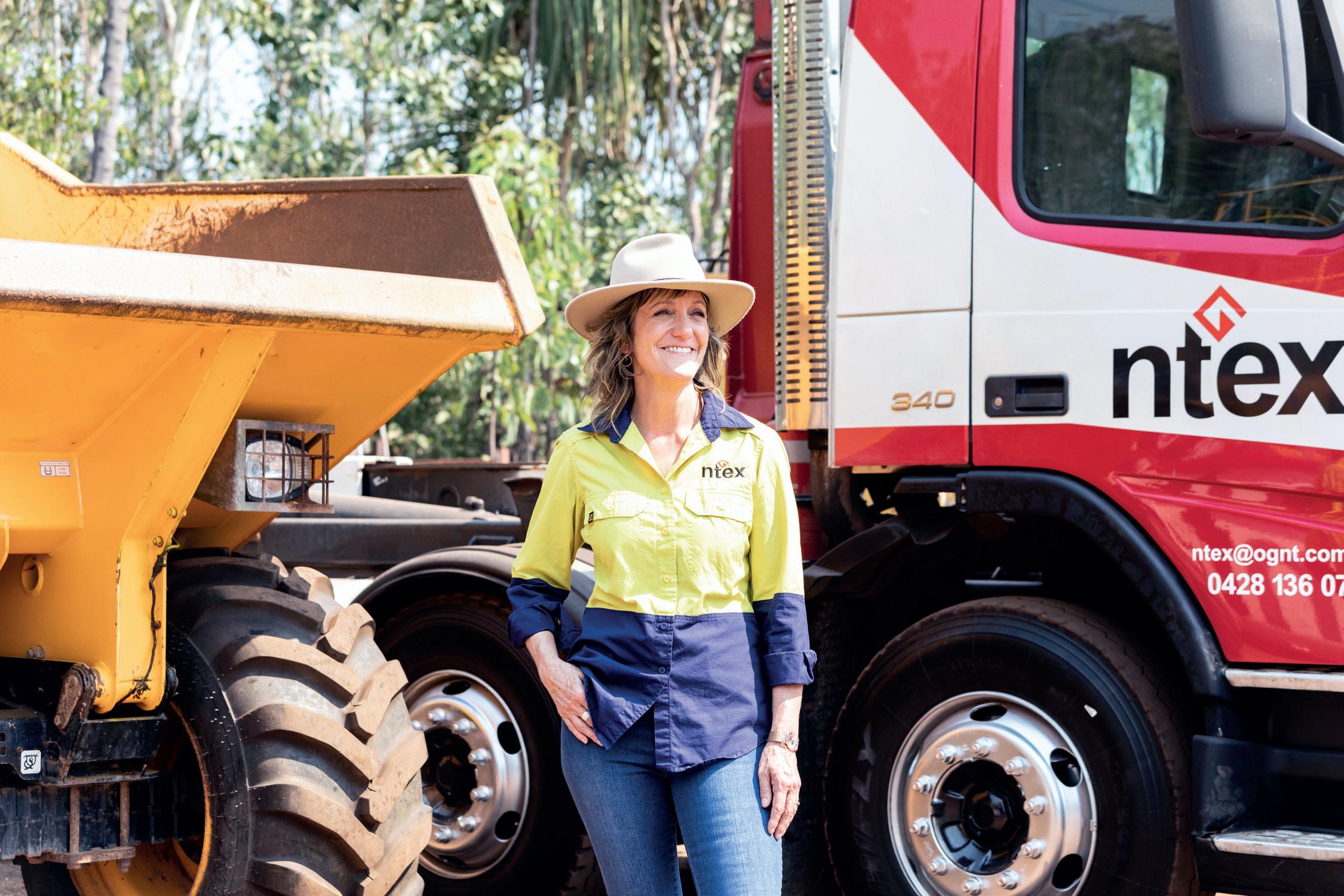
Breen is the Co-Founder of demolition operator, environmental remediator and resource recovery solutions provider, NTEX.
CONTRACTS IN BRIEF
ROADS & INFRASTRUCTURE PROVIDES AN UPDATE ON SOME OF THE CONTRACTS AND TENDERS RECENTLY AWARDED OR PUT TO MARKET ACROSS THE AUSTRALIAN INFRASTRUCTURE
SECTOR.
NEW SOUTH WALES
WT Partnership appointed on Sydney Metro West project
Project advisory firm WT Partnership has been appointed Independent Estimator for the Sydney Metro West Linewide Systems Package. The Sydney Metro West project aims to deliver a new 24-kilometre underground rail connection between Parramatta and the Sydney CBD in New South Wales, significantly bolstering connectivity across the Greater Sydney region. It is scheduled for completion in 2032. The project’s Linewide Systems Package covers the construction and commissioning of core rail systems, including trackworks, power systems, tunnel ventilation, lighting, drainage and fire systems, as well as a new stabling, maintenance and control centre in the suburb of Clyde. The package was awarded to construction company Jon Holland in December 2025. As Independent Estimator, WT will provide cost estimation and assurance to support the management of the package’s incentivised target cost approach, helping both Sydney Metro and John Holland navigate complexity, manage risk and make informed decisions throughout delivery. This appointment builds on WT’s track record advising on complex transport projects across Australia.
Contract awarded as part of $85M works
A construction contract has been awarded for works that form part of an $85 million package to upgrade Wakehurst Parkway, in New South Wales. With detailed design now complete, Ertech has been awarded the contract for construction, which is expected to get underway mid-year. Site establishment will commence in the coming months. Wakehurst Parkway is a key arterial route in the Northern Beaches region, connecting Pittwater Road at North Narrabeen with Warringah Road at Frenchs Forest. The Parkway currently experiences peak period congestion and flood-related disruptions that affect travel reliability for local communities. The upgrades to Wakehurst Parkway will deliver targeted upgrades along Wakehurst Parkway to enhance network efficiency and traffic flow, improve safety by reducing crashes in key cluster areas, increase capacity for future traffic growth and support better access for walking, cycling and public transport. These upgrades will include flood-
improvement work between Dreadnought Road and Oxford Falls Road, marking the first step in improving flood resilience on the Wakehurst Parkway. The State Government has also started consultation on the ‘Northern Beaches Network Review’, a network-wide analysis of the key road corridors moving people and goods across Sydney’s Lower North Shore and Northern Beaches. This review aims to identify short and medium-term opportunities to improve travel reliability, reduce congestion, and enhance safety to and from the Northern Beaches and Lower North Shore. Just some examples of potential solutions are improvements to bus reliability, upgrading busy intersections, improving traffic flow on key corridors and targeting safety hot spots.
QUEENSLAND
22
contracts released for $9B program
The Federal and Queensland governments have announced the release of 22 new contracts to market for projects that form part of the $9 billion Bruce Highway Targeted Safety Program (BHTSP). Of these 22, five are for construction procurement, with the remaining 17 comprising of design contracts. These works will deliver safety upgrades to priority stretches of the Bruce Highway between Gympie and Cairns. Across these 22 new contracts, works will deliver more than 100 kilometres of wide centre line treatments, 50 kilometres of pavement strengthening and new overtaking lanes, five narrow bridge upgrades in north Queensland, as well as additional road widening, resurfacing and intersection works. Contractors will be appointed progressively from April 2026. Dedicated designer and constructor panels were established for the BHTSP to streamline procurement, accelerate delivery and ensure value for money. Other works that form part of the BHTSP are also progressing. This includes the completion of eight projects, with 17 currently underway and another 13 construction projects rolling out from early 2026. The program of works between Gympie and Cairns are being jointly funded on an 80:20 basis between the Federal and Queensland governments.
Major contracts, developments for 2032 Games
Two separate principal architects have been appointed for the delivery of the Sunshine Coast Stadium and Moreton Bay Indoor
Sports Centre, while key milestones have been reached on additional works in the lead up to the 2032 Brisbane Olympic and Paralympic Games. Architectus has been appointed as the principal architect for the Sunshine Coast Stadium, which will provide a tenfold increase in grandstand capacity, from 1046 to more than 10,000 seats, with new eastern and western grandstands, new community and event spaces, and improved player amenities and accessibility. Populous has been appointed as the principal architects of the brand-new Moreton Bay Indoor Sports Centre, which when delivered will feature 12 multi-use courts with a capacity of 10,000 spectators. Meanwhile, the Brisbane Stadium design team of COX Architecture, Hassell and Azusa Sekkei have locked in key features for the brand-new Brisbane Stadium, which is expected to cater for 63,000 spectators when complete. The size of the stadium will be equivalent to that of the Melbourne Cricket Ground to better accommodate an athletics track. The proposed position of the stadium is near Gilchrist Avenue, which will help to connect the structure to existing transport infrastructure, while also allowing the new stadium to better suit the existing topography. The new Brisbane Stadium is part of the $7.1 billion Games Venues Infrastructure Program, jointly funded by the Federal and Queensland governments, and will be delivered by the Games Independent Infrastructure and Coordination Authority.
WESTERN AUSTRALIA
$500M partnering agreement signed Downer has signed a new long-term partnership with Stockland, which will see the former deliver services across the latter’s operational assets for an initial five-year term. The $500 million contract commences August 1, with the initial five-year term coming with an additional five-year term extension as an option. Downer will deliver services across Downer’s commercial office buildings, shopping centres, logistics facilities and land lease communities – across New South Wales, Victoria, Queensland and Western Australia.
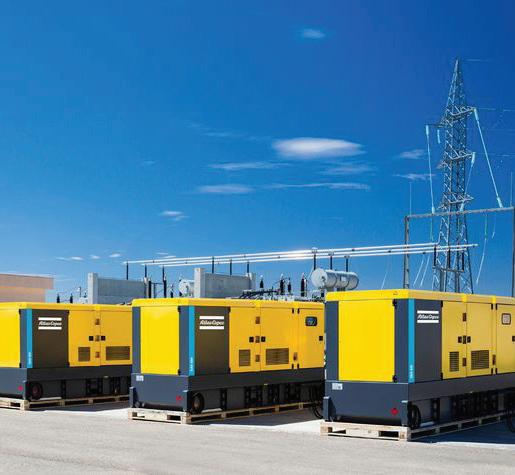
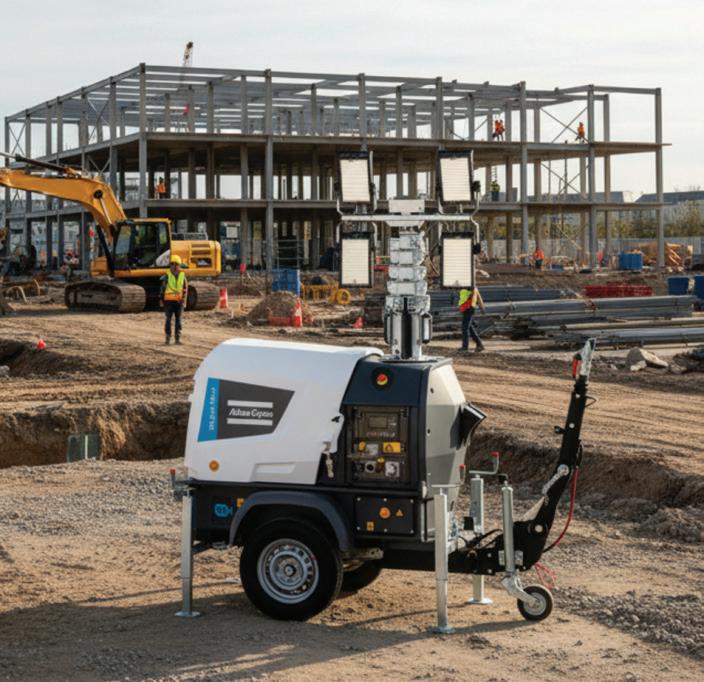
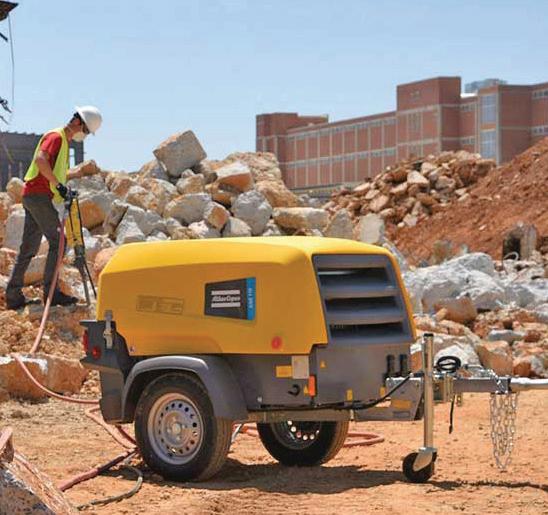


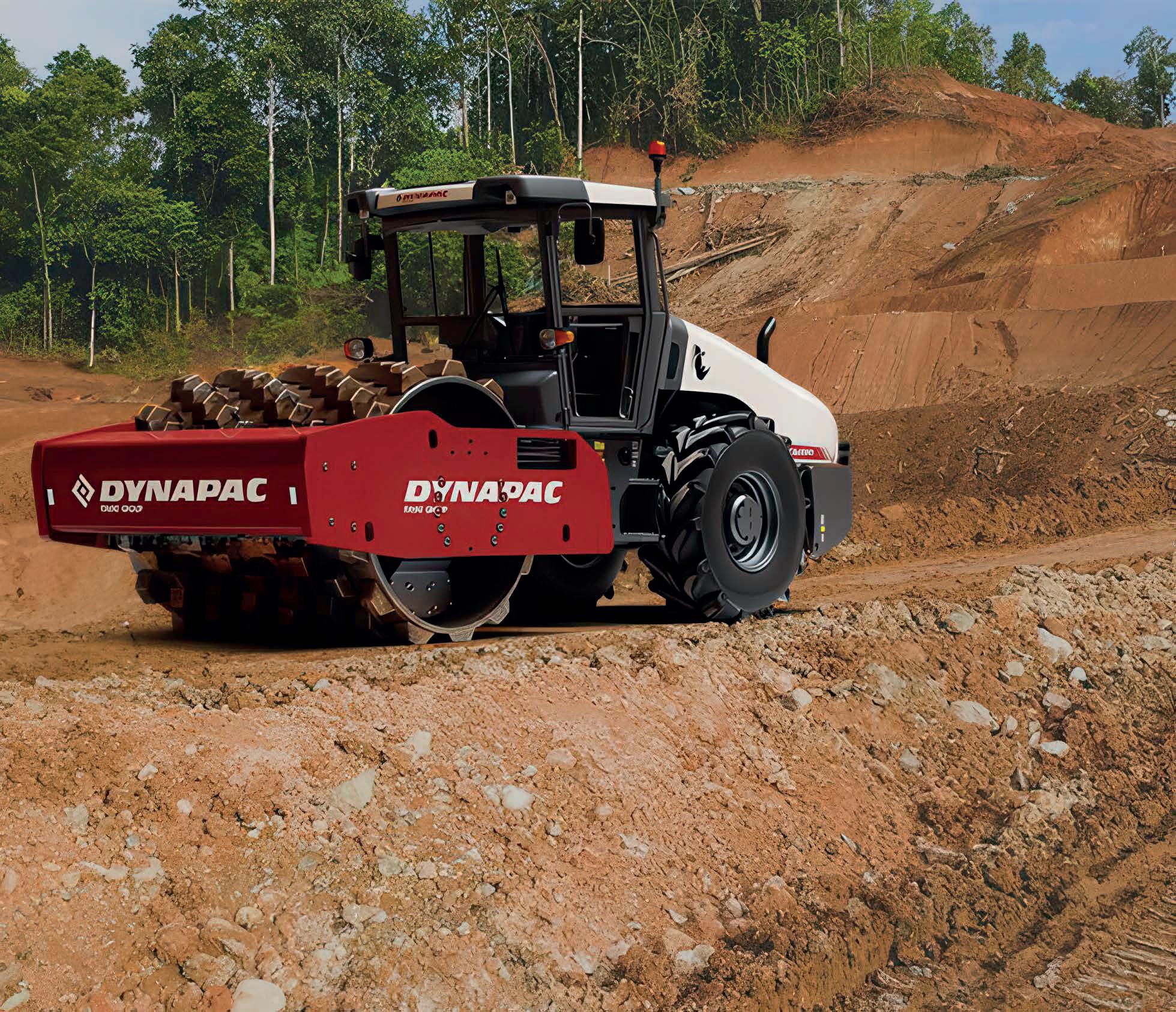

PICK A ROAD, ANY ROAD.
I-Brid, SAMI’s hybrid modified binder, delivers enhanced strength, durability and cost-efficiency. That’s why your airports, ports, motorways and heavyduty pavements can withstand aircraft loads, heavy trucks and everything in between.