
The centre of
The centre of
Machinery technology, with a human touch
Marking the spot
Research uncovering future innovation


Moving beyond the basics
Essential education for the industry
www.wirtgen-group.com/sustainability
14 At the centre
This manufacturer is moulding its offerings to ensure customer and industry support.
18 This month, we asked the industry’s decision-makers, ’Now that we’re into the second half of the year, what industry milestones or challenges have stood out to you so far in 2026?’
20 In safe hands
A new solution is helping to fi ll a vital safety gap encountered during the delivery of temporary static works.
24 Class in session
A key repair servicer is educating the bitumen spraying sector on safe operations.
26 All seeing
An innovative 360-degree Pedestrian Recognition System is helping to make worksites safer and more effi cient.
28 Tailored training
The National Transport Research Organisation is helping to upskill the industry to tackle current and future project pipelines across a range of disciplines.
30 A helping hand
Read about this engineering group’s growing disaster recovery portfolio, which is delivering essential works for communities.
32 Leading the charge
Advocacy for crumb rubber-modifi ed bitumen and its advantages in the production of urban roads continues.
34 Risky business Light is shed on trends and challenges encountered by the industry.
36 From the ground down
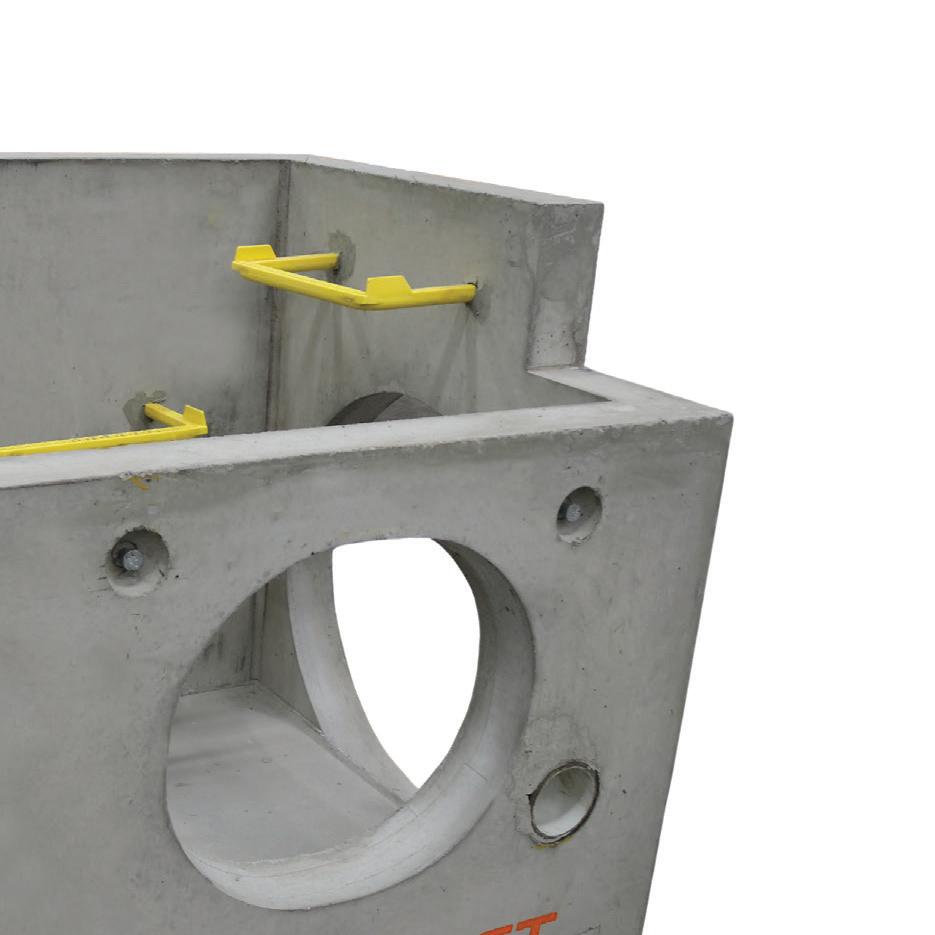
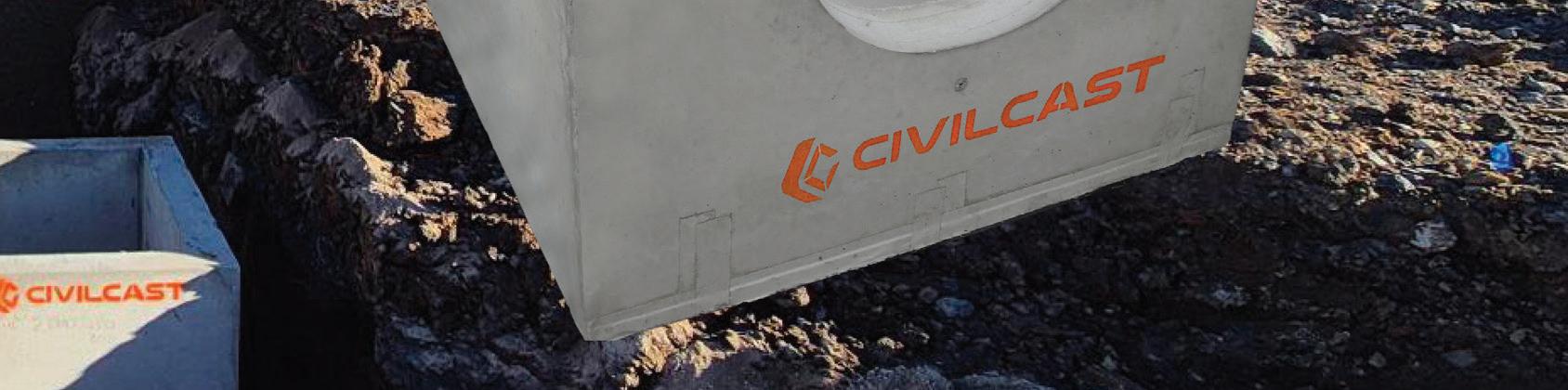
The components of this pioneer’s road pit design lay an essential foundation for the successful delivery and long-term function of infrastructure projects nationwide.
38 In the spotlight
These sustainable lighting towers can be configured to support the needs of construction projects across Australia.
40 Worlds collide
A civil construction collaboration is delivering safer, smarter and more effi cient infrastructure projects across the state.
43 Making sense
This technology is playing a crucial role in the extraction and processing of essential aggregates and materials.

46 Solving the problem
This event is critical in bringing fundamental industry changes to life.
48 Making a mark
Read about the science behind road line markings, which are vital to upholding safe travel on motorways across Australia.
51 Hitting the benchmark
This new paper represents a landmark moment for the roads and infrastructure sector.
54 Adjusting delivery
Major infrastructure projects rarely run in perfectly straight lines, as recent works by a National Precast member on the Western Sydney International Airport exemplify.
56 Evidence-based
Actionable and attainable safety solutions are within the industry’s reach.
58 Roads & Infrastructure provides an update on some of the contracts and tenders recently awarded or put to market across the Australian infrastructure sector.

CEO
Christine Clancy
christine.clancy@primecreative.com.au
PUBLISHER
Sarah Baker
sarah.baker@primecreative.com.au
MANAGING EDITOR
Lisa Korycki lisa.korycki@primecreative.com.au
EDITOR
Tom O’Keane tom.okeane@primecreative.com.au
JOURNALIST
Sean Gustini sean.gustini@primecreative.com.au
HEAD OF DESIGN
Clayton Hawley
ART DIRECTOR
Bea Barthelson
BUSINESS DEVELOPMENT MANAGER
Loren Katie Logan lorenkatie.logan@primecreative.com.au
CLIENT SUCCESS MANAGER
Sabrina Zor sabrina.zor@primecreative.com.au
HEAD OFFICE
Prime Creative Pty Ltd
379 Docklands Drive, Docklands VIC 3008 Australia
p: +61 3 9690 8766 info@primecreative.com.au www.roadsonline.com.au
SUBSCRIPTIONS
+61 3 9690 8766 subscriptions@primecreative.com.au
Roads & Infrastructure Australia is available by subscription from the publisher. The rights of refusal are reserved by the publisher.
ARTICLES
All articles submitted for publication become the property of the publisher. The Editor reserves the right to adjust any article to conform with the magazine format.
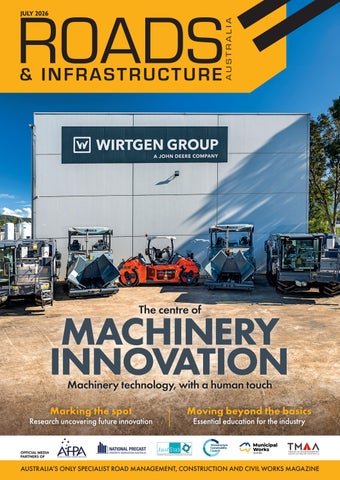
COVER IMAGE Wirtgen
COPYRIGHT
Roads & Infrastructure Australia is owned and published by Prime Creative Media. All material in Roads & Infrastructure Australia is copyright and no part may be reproduced or copied in any form or by any means (graphic, electronic or mechanical including information and retrieval systems) without the written permission of the publisher. The Editor welcomes contributions but reserves the right to accept or reject any material. While every effort has been made to ensure the accuracy of information, Prime Creative Media will not accept responsibility for errors or omissions or for any consequences arising from reliance on information published. The opinions expressed in Roads & Infrastructure Australia are not necessarily the opinions of, or endorsed by the publisher unless otherwise stated.

SAFETY IS FRONT AND CENTRE IN OUR JULY EDITION of Roads & Infrastructure magazine, with advocacy, innovation and education converging in the hope of reducing the inherent risks associated with infrastructure delivery.
Just one of the emerging innovators in the space is ProTx. Despite the variety of road barrier and truck-mounted attenuator systems available, the company identified that a more dedicated design would better serve crews servicing temporary static works.
It’s thought leaders like those at ProTx who are helping to plug essential gaps, with the aim of optimising the safety of every project.
The Commonwealth Scientific and Industrial Research Organisation, or CSIRO, is also doing great work in the space, with its research focusing on supporting the safety and performance of physical and environmental infrastructure. Just one part of this research has focused on road line markings, with interesting findings and developments being reached.
Also in this edition, we learn more about Georgiou’s disaster recovery project portfolio, which has helped to make a real difference for communities impacted by severe weather events. Whether it’s repairing crucial transport routes, or increasing resiliency for future weather impacts, Georgiou is putting communities first in what will, unfortunately, be a growing area of the sector, with the frequency of severe weather events continuing to increase.
We also hear from a number of our key association partners, who are doing great work in their efforts to service and support the industry. The Traffic Management Association of Australia touches on the importance of re-emphasising the need for greater roadworker safety, while the Australian Flexible Pavement Association has launched a new white paper, explaining why a minimum of seven per cent of the sealed road network should be resealed annually to maintain network condition. This and much more, in this edition of Roads & Infrastructure magazine.
Happy reading!







Built to help operators get more done, every day.
From compact excavators to large construction equipment, Komatsu machines are designed to deliver the performance, reliability and efficiency businesses depend on, because real productivity starts with equipment built for the job.
Explore the Komatsu Construction & Utility range today.
Early designs have been released for a new Spotswood Station and rail bridge that will replace the Hudsons Road, Spotswood level crossing in Victoria.
The new elevated station will open following the level crossing’s removal in 2028, making journeys more reliable and less congested for the 6600 drivers that use the crossing each day.
Its replacement is part of an initiative from the Victorian Government to remove other level crossings across Melbourne’s inner west – at Newport, Altona, and Yarraville, to make the Werribee Line level crossing-free by 2029.
The new Spotswood Station designs have been shaped by community feedback, with locals showing a preference for connected spaces, while maintaining the heritage look and feel of the area.
The incoming station will feature two entrances at Hudsons Road and
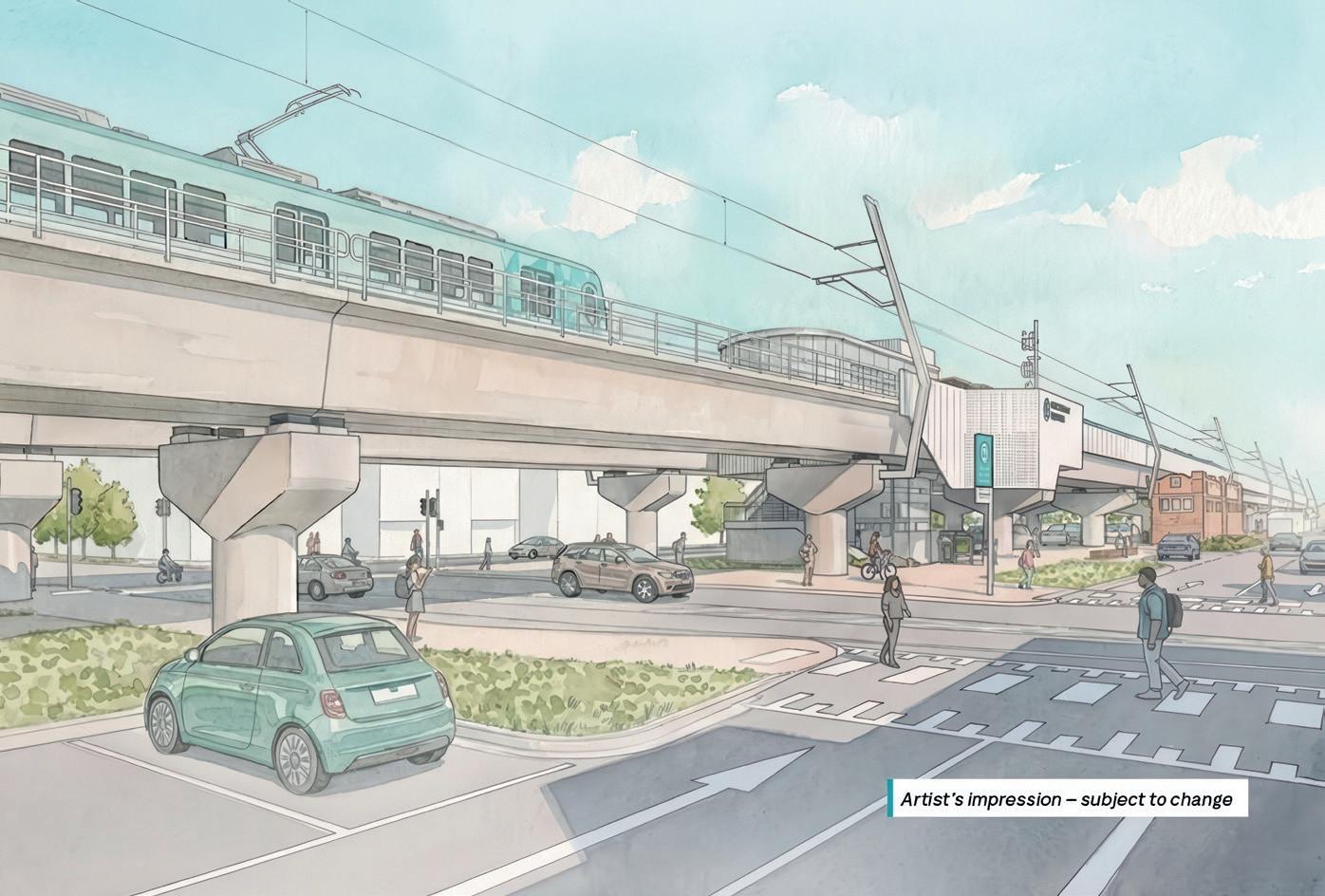
McLister Street, with the locally heritagelisted station building on Hope Street to be incorporated into the design. Elevating the rail line creates new open
An artist’s impression of the new Spotswood Station and rail bridge that will replace the Hudsons Road. Image: Victorian Government
spaces where the community will benefit from seating, improved walking and cycling connections and opportunities for landscaping.
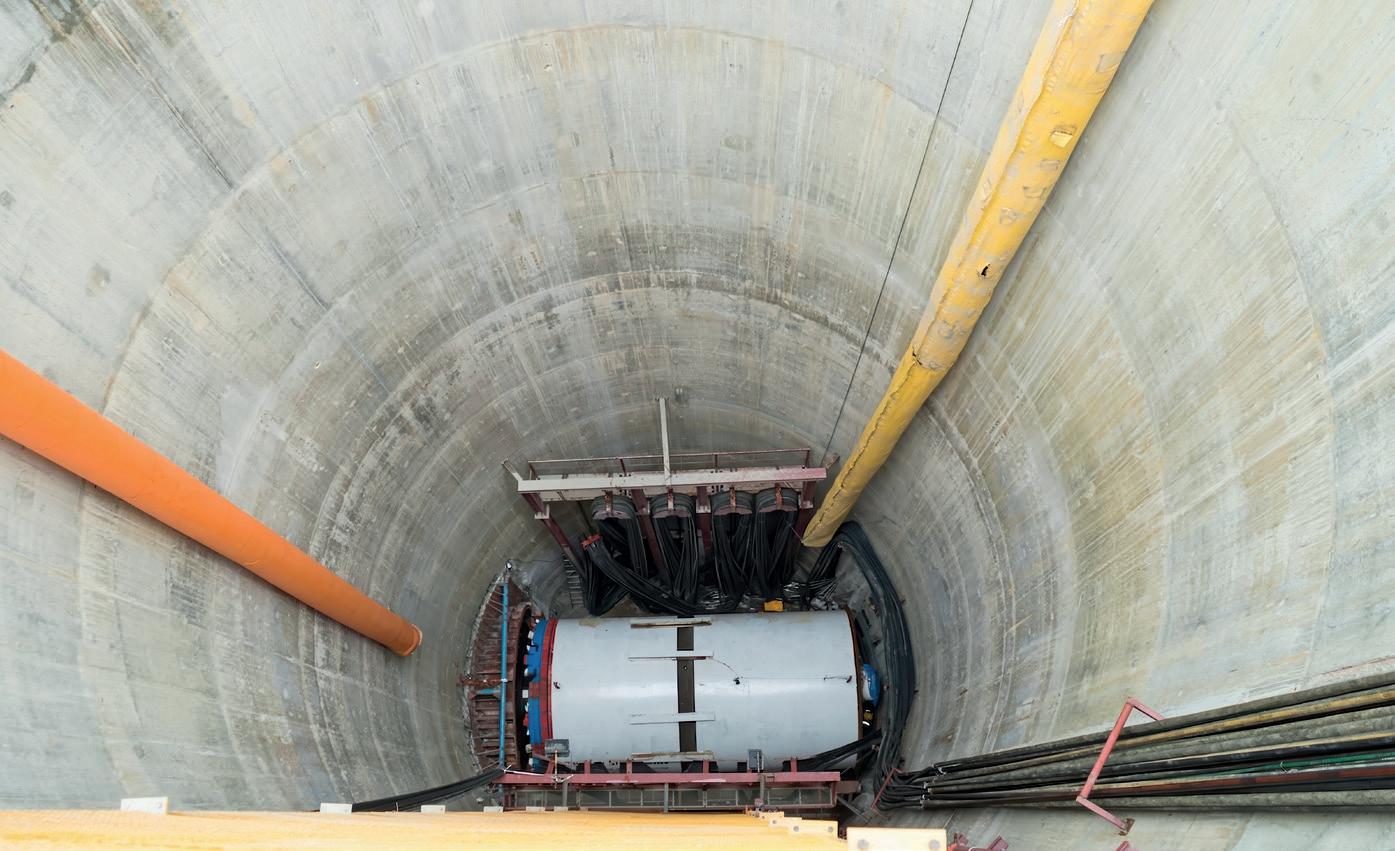
South Australia’s River Torrens to Darlington (T2D) Project has reached another major milestone, with its third and final tunnel boring machine (TBM) cutterhead craned at the project’s Central North Precinct in Adelaide.
The cutterheads, each weighing more than 300 tonnes, have now been lifted into place, and will make Australian history as the first

road project operating three large-scale TBMs concurrently.
After being lowered into the 20-metredeep launch box by a 500-tonne gantry crane, the third cutterhead now sits at the front of the TBM and rotates to excavate rock and soil, known as spoil, from the tunnel face using cutting teeth and discs. With the cutterhead now in place, the remaining
TBM components will be assembled, before final testing and commissioning ahead of tunnelling beginning in the second half of 2026.
The River Torrens to Darlington Project’s third and final Tunnel Boring Machine cutterhead has been craned at the project’s Central North Precinct in Adelaide, South Australia. Image: sornchai/stock.adobe.com
The third TBM will construct the Northern Tunnels by launching from the suburb of Hilton and excavating 2.2 kilometres towards the project’s Northern Precinct near the Brickworks Marketplace in Torrensville, where it will be turned around before tunnelling back to Hilton.
Once operational, each TBM will operate 24-hours a day, seven days a week, progressing approximately 8-10 metres per day, with up to 20 specialised workers inside at any one time.
Each TBM is approximately 100 metres long and 15 metres in diameter, roughly the height of the Thebarton Theatre or the goal posts at Adelaide Oval.
The use of three TBMs will allow both the Northern and Southern Tunnels to be constructed concurrently, for the project to be delivered by 2031 if not before.
The Federal and South Australian governments have each committed $7.7 billion towards the T2D project.

Georgiou Group is a leading civil and building construction company in Australia which is part of STRABAG Societas Europea, one of Europe’s leading construction technology groups.
www.georgiou.com.au
Georgiou’s team of over 900 employees are dedicated to upholding our core values of Care, Integrity, and Excellence in delivering solutions across transport, resources, building, utilities, energy and Defence.
Victoria’s North East Link project has reached another milestone.
The $21.6 billion project has been called the biggest investment into Melbourne’s north east by the State Government, and will deliver
three major projects – two 6.5-kilometre North East Link tunnels from Watsonia to Bulleen, upgrades to the Eastern Freeway, and upgrades to the M80 Ring Road. Tunnel boring machine (TBM) Zelda has now broken
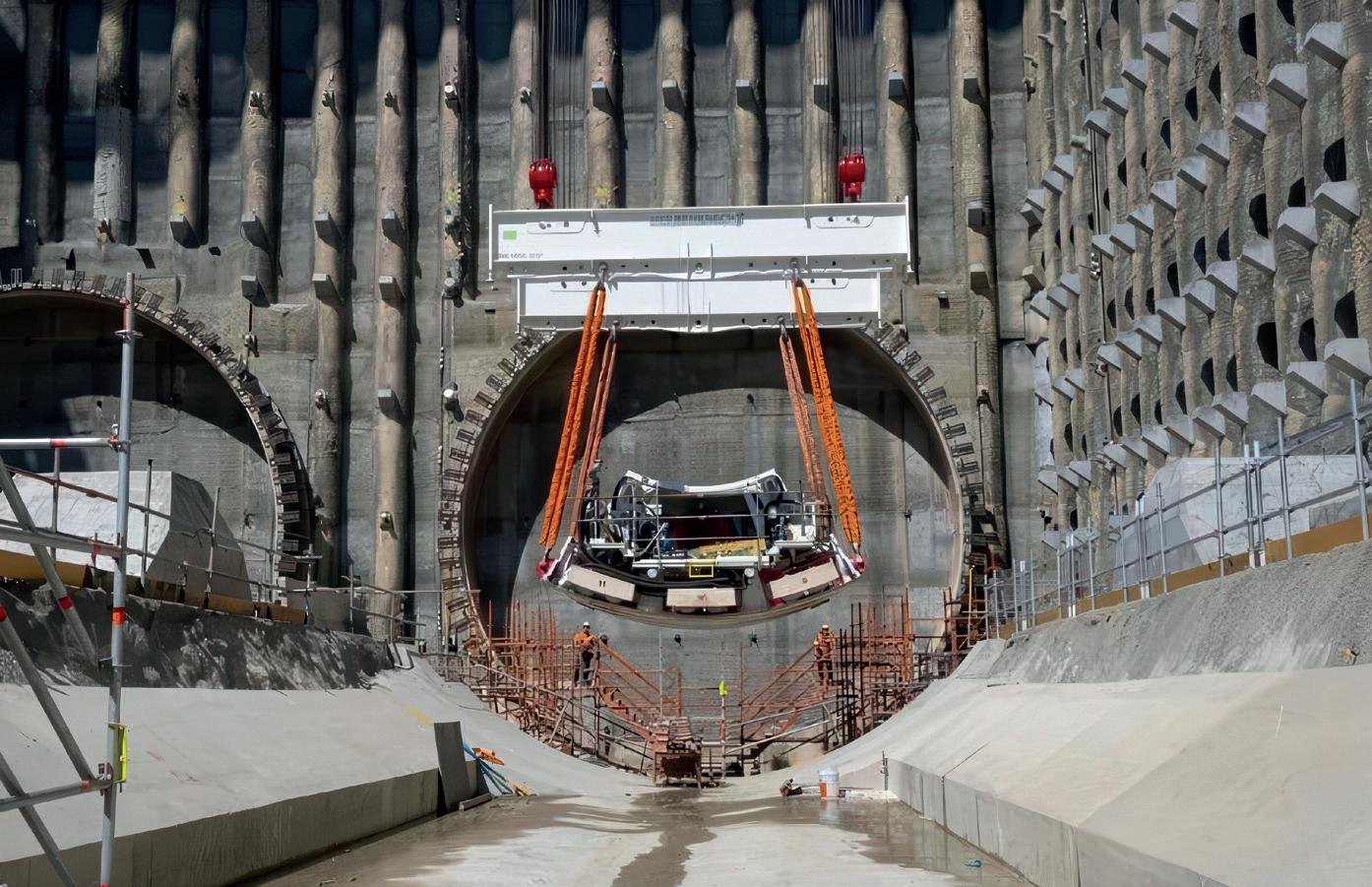
through in Bulleen, completing excavation on the three-laned northbound North East Link tunnel.
Zelda is one of two TBMs building the road tunnel from Watsonia to Bulleen, with TBM Gillian continuing excavation of the southbound tunnel.
It is expected to break through in the coming months.
The tunnels will provide a direct route for up to 15,000 trucks each day, reducing travel times by up to 35 minutes between Melbourne’s north and east.
More than 39,000 precast concrete segments manufactured in Benalla have been installed inside these tunnels.
Crews are now building the road inside the tunnels and installing electrical, lighting and safety systems, while above ground works are continuing on key connections into the tunnels and the Greensborough Road boulevard.
The North East Link project is jointly-funded by the Federal and State governments.
Preparatory earthworks are underway to transform Brisbane’s Victoria Park into a new 63,000-seat stadium for the 2032 Olympic Games.
The new Brisbane Stadium will host the opening and closing ceremonies and athletics at the 2032 Games before becoming the city’s main oval stadium and home ground for the city’s AFL, Big Bash League teams, as well as an international cricket venue for Test, One Day and T20 matches.
Temporary fencing has been installed around the perimeter, while changes to some traffic and transport routes surrounding the area have been made.
While the North Brisbane Bikeway, York’s Hollow, Pump Track and some green space will remain open to the public, key changes for residents include the closure of Gilchrist Avenue for traffic and parking, and closure of access to the park from both the Queensland University of Technology and Herston bus stations.
Additionally, more than two thirds of Victoria Park will remain as green public space once
works are complete, including York’s Hollow Pond, with work to date focusing on ensuring Victoria Park is accessible and functional for all users.
On-site traffic management and signage is in place to assist the transition, and additional closures of parts of the park will be required as construction progresses.
The new Brisbane Stadium is part of the $7.1 billion Games Venues Infrastructure Program, jointly funded by the Federal and State governments.
According to the State Government, the stadium’s main construction partners will be appointed within a matter of months, and the entire precinct’s draft masterplan will also be released.
The masterplan, being developed by global design firm Arup, will shape a ‘world-class’ recreation and lifestyle hub, connecting Brisbane Stadium, the National Aquatic Centre and Brisbane Athletes Village during the Games, and generational infrastructure beyond 2032.
Preparatory earthworks are underway for the 2032 Brisbane Olympic Games. Image: Brisbane City Council


The Victorian Government is delivering two new train stations in Melbourne’s west.
Early designs for new stations in Tottenham and Albion have been released, and will be constructed as part of Melbourne Airport Rail Stage One – with rail upgrades on the corridor already underway.
More than six kilometres of track between West Footscray and Albion are being upgraded to boost capacity.
The project will untangle one of Victoria’s busiest rail junctions and transform Sunshine into a transport superhub, allowing up to 1000 trains a day through the corridor.
The new Tottenham station will specifically be rebuilt roughly 20 metres north of its current location on the realigned Sunbury line.
Passengers will access the station from both sides of the train line via a wider, secure underpass, making it easier for
A detailed concept design for the $250 million Curtis Road Level Crossing Removal project has been revealed in South Australia.
About 21,000 vehicles travel through this level crossing in Adelaide each day, with boom gates down for up to 15 minutes every hour during peak periods, causing traffic delays and congestion for road users.
The project will replace the existing at-grade rail crossing with a new gradeseparated, dual-lane road overpass, allowing traffic to pass safely over the Gawler passenger rail line without delays.
The proposed design also includes a new link road connecting to Curtis Road, improving access to the growing Playford Alive East housing development.
To maintain safety and traffic flow, several side street connections along Curtis Road will operate as left-in, left-out only, supporting smoother vehicle movements along the corridor.
A new connection between Charlotte Street and Alawoona Road will provide an alternative route for local traffic under the new overpass.
The project also incorporates walking and cycling infrastructure, including shared-use paths on both sides of Curtis Road, and new wombat crossings to provide more safety for pedestrians and cyclists.
Information sessions on the project have also been held with the community, providing an opportunity for local stakeholders to provide feedback that will
them to move between home, work and public transport.
Passengers will also benefit from new platforms with lifts, stairs, shelter and lighting.
The new Albion station will be rebuilt slightly east of its current location, and will include an accessible concourse with lifts and stairs, plus upgraded lighting, shelters, seating and CCTV.
Works on the new Tottenham and Albion stations are set to be completed in 2030.

inform the development of a final design, as well as gather early input into the urban design that will surround the overpass.
Major works will commence by 2027, with completion expected in 2030.


























Leave it to us!




















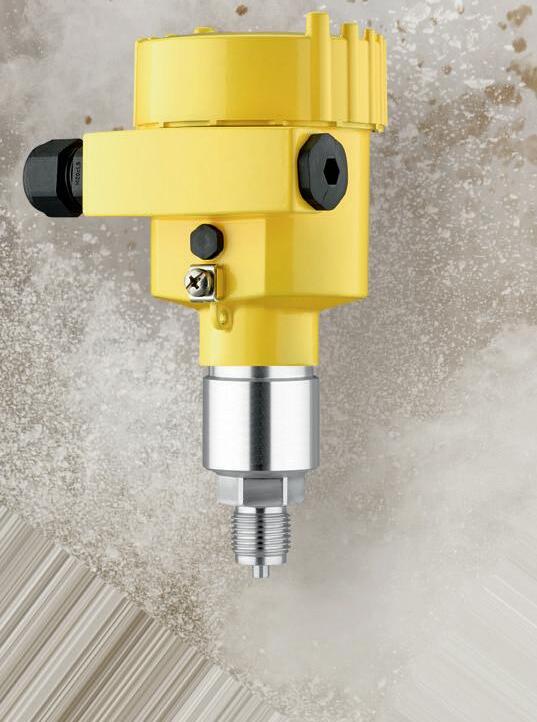


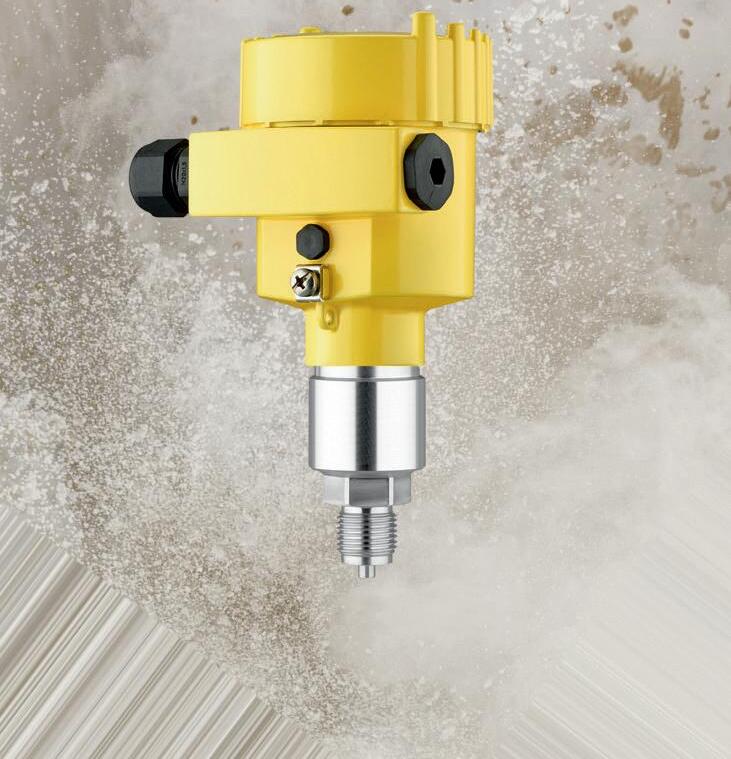




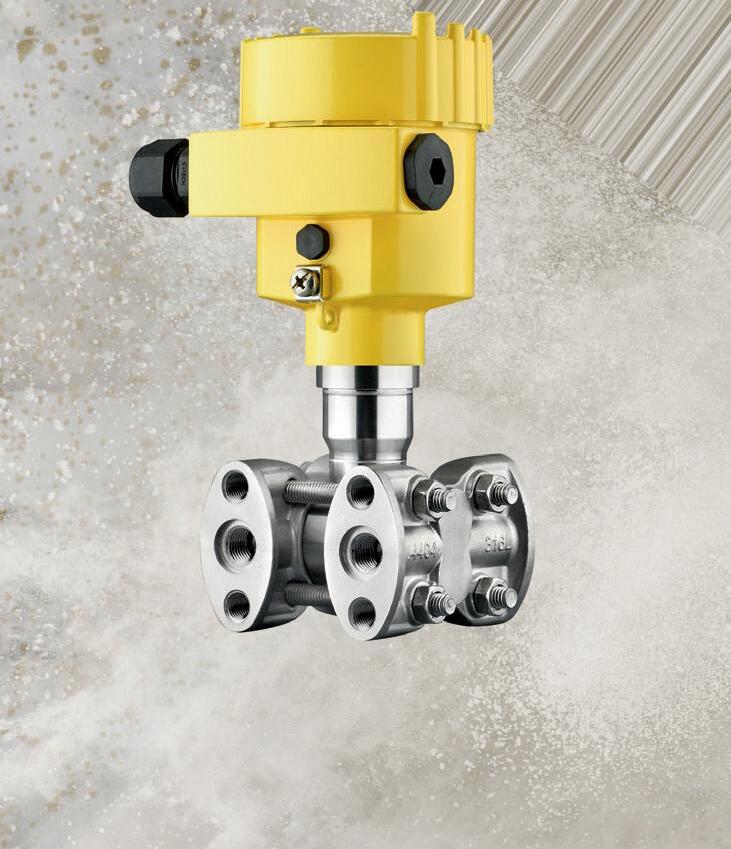

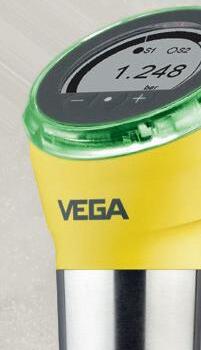



Our technologies offer everything you need for process, hydrostatic, and differential pressure for mining. Around the world, VEGA pressure solutions stand for proven reliability and trend-setting innovation. Our pressure measurement solutions go beyond just efficient, optimised processes – they provide you with peace of mind, knowing that you’ve chosen the best technology available.
Everything is possible. With VEGA.





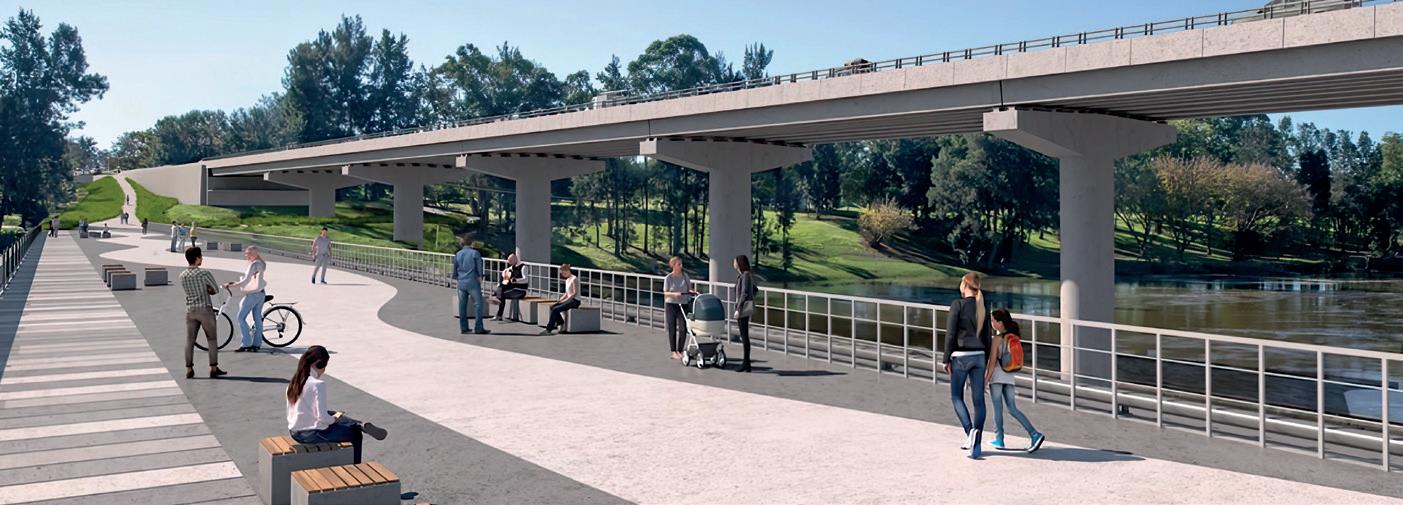
Progress on a group of key infrastructure works in New South Wales has been accelerated by new joint funding from the Federal and State governments.
A combined $114 million has now been allocated to the second stage of development for a new bridge in Richmond, a historic town and suburb in Greater Sydney, in addition to surrounding bypass connections and road upgrades.
The new funding has brought the total investment in these projects to $658 million, meaning the full scope of work can now be delivered at once.
This will accelerate the delivery of this critical infrastructure while reducing longterm disruption for residents.
The existing bridge between Richmond and the nearby area of Richmond North is a vital crossing of the Hawkesbury River, carrying roughly 31,000 vehicles every day on a single lane in each direction – making it a key congestion point and critical route during floods.
Stage two of the projects surrounding the bridge will deliver a new four-lane bridge over the Hawkesbury River; road widening improvements through North Richmond; intersection improvements;
Left: A combined $114 million has now been allocated to the second stage of development for a new bridge in Richmond, in addition to surrounding bypass connections and road upgrades, in New South Wales. Image: Transport for NSW
a new bypass south of Richmond town centre, and; improved pedestrian and bicycle user connections.
The new bridge will sit around 10 metres higher than the existing crossing to improve flood resilience for the community.
The existing bridge will be converted into a dedicated active transport connection for pedestrians and cyclists between the two areas, providing a family-friendly crossing over the river.
Once complete, the project will ease congestion, improve connectivity and strengthen evacuation access during major flooding events.
Fulton Hogan has been awarded the contract to finalise the design and deliver Stage Two of the project.
Construction is expected to start in late 2026.
Half-price public transport (PT) has begun in Victoria until the end of the year.
Under these half-price fares, a full daily fare to travel anywhere across the state will cost $5.70, instead of $11.40.
This PT discount has been rolled out to assist Victorians struggling with rising fuel costs as a result of the current conflict in the Middle East.
It follows two months of free PT state-wide between April and May.
According to the State Government, halved PT fares will save a regular commuter more than $850 between now and January 1 next year.
Public transport will remain permanently free for under 18s and other special pass holders.
Additionally, the State Government’s light vehicle registration rebate has begun in another effort to reduce costs for Victorians.
With the 20 per cent off registration, a driver with one car will receive up to $186, and a family with two cars will receive up to $372.
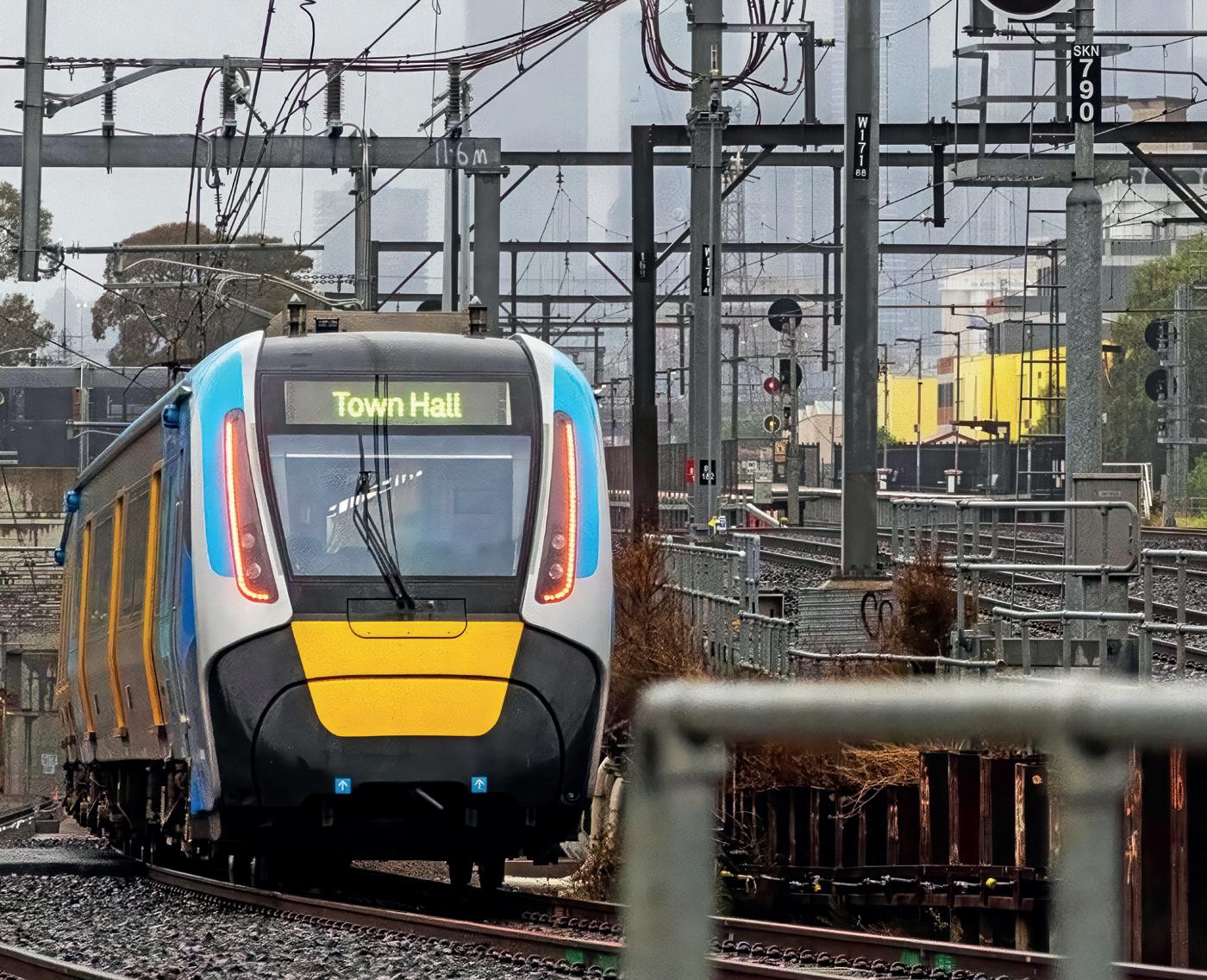
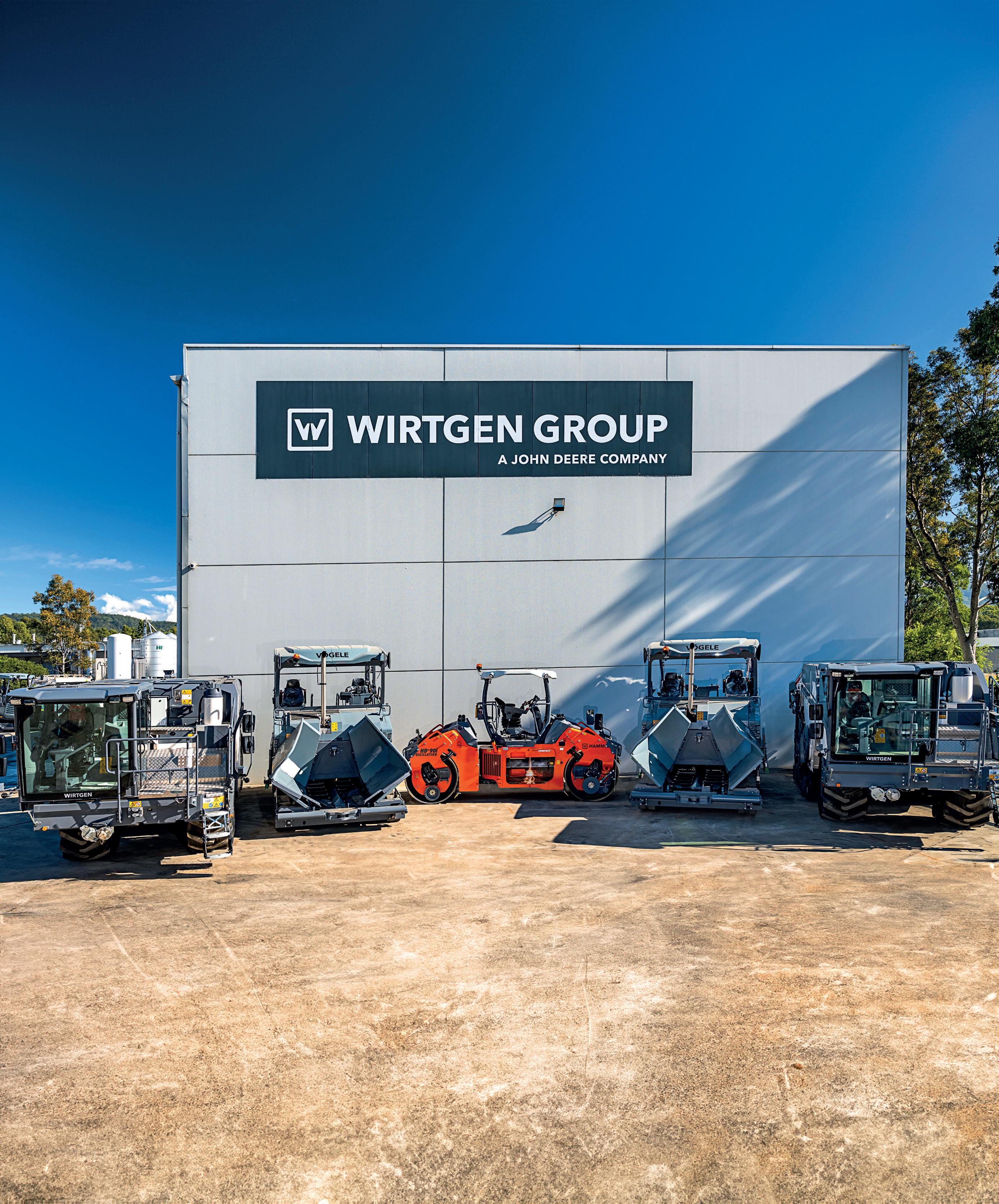
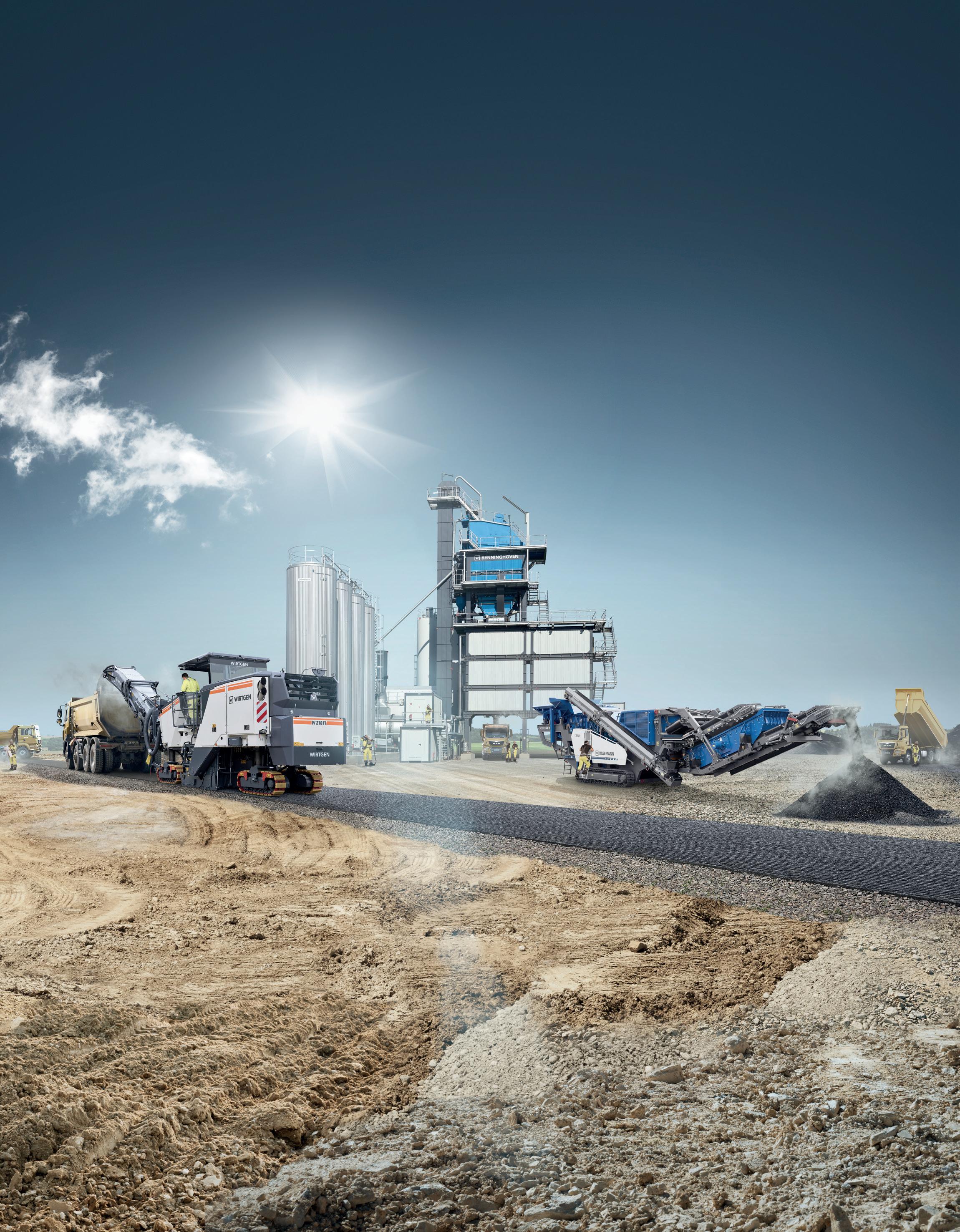
THROUGH THE PIONEERING OF ROAD CONSTRUCTION MACHINERY TECHNOLOGY, AS WELL AS A STRONG FOCUS ON AFTER-MARKET SUPPORT, WIRTGEN IS MOULDING ITS OFFERINGS TO ENSURE CUSTOMERS AND INDUSTRY CAN BE SUPPORTED FOR DECADES TO COME.
Among many industries –construction in particular – there’s an ongoing conversation around the balance between automated and human interfaces.
For infrastructure projects, the concept of a fully automated construction site may seem like a pipedream, but daily gains in the development of this technology point to this becoming a reality in the not-so-distant future.
For Wirtgen, that shift is reshaping how contractors think about compaction, quality, safety, and cost.
As one of the world’s premier road construction machinery manufacturers, Wirtgen is at the forefront of automated development. However, the company still places a large importance on equipping human operators with the best tools possible – best epitomised by its advances in the roller space.
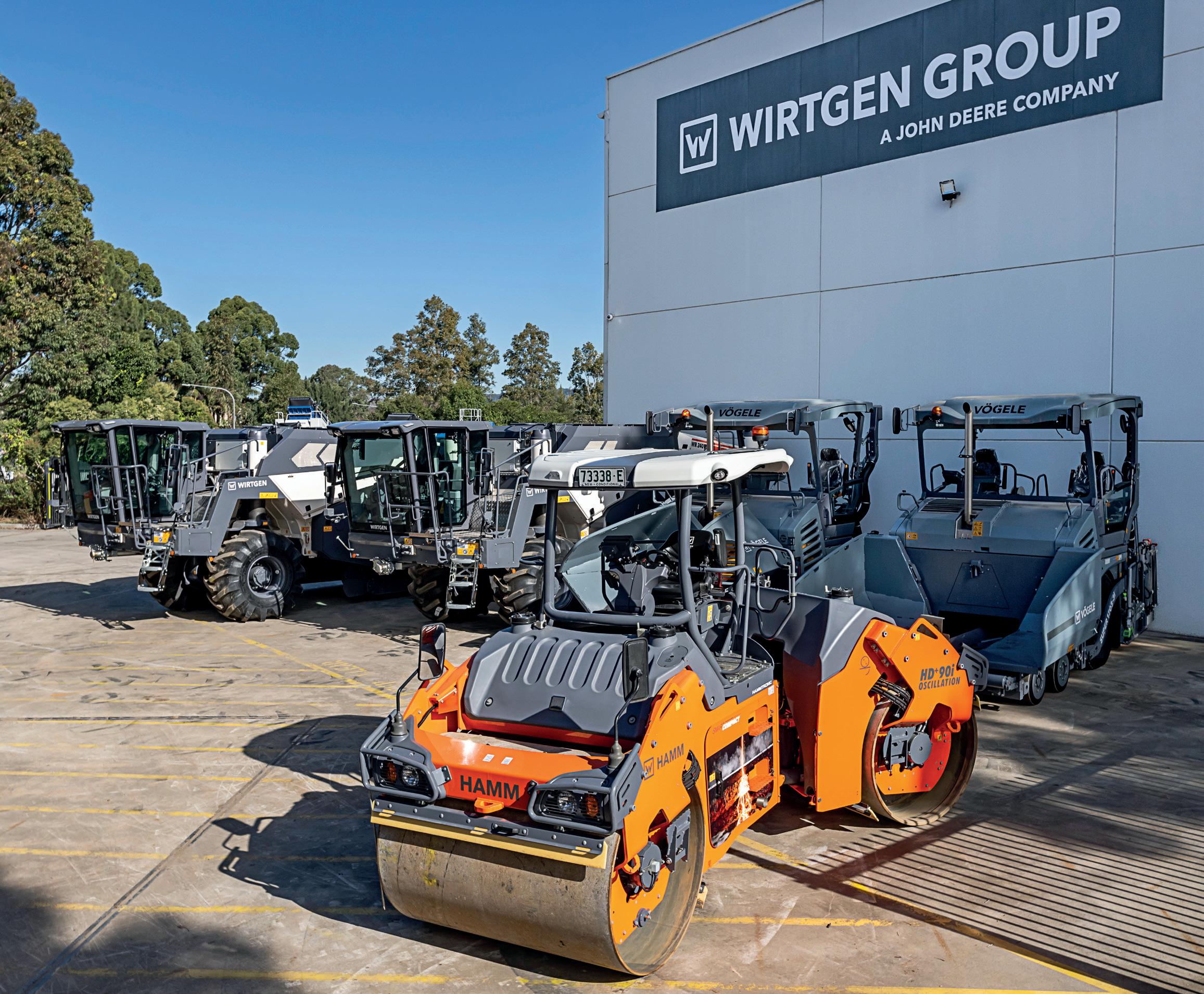
Wirtgen, through its HAMM brand, is pushing hard into smarter, more automated roller technology. Craig Yeats, Product Support Manager at HAMM – Wirtgen Australia says
these innovations are aimed at improving quality, reducing costs, and easing the skills burden on operators.
“Industry in Australia is starting to look more and more at technology to assist the operator for both quality of work and safety,” he says.
“Big picture – a long way down the track – this is to assist and eventually act as the operator. The technology isn’t close to that yet, but right now, companies are very interested in assistance, because high-skilled labour is very hard to find.”
A major development for Wirtgen is Smart Compact Basic and Smart Compact Pro on asphalt rollers.
Smart Compact Basic automates many of the functions operators previously controlled manually – such as frequency, amplitude, and drum configuration – using data from the machine, as well as temperature and stiffness readings.
This reduces the reliance on highly skilled operators to ‘read’ the asphalt, letting them concentrate more on maintaining good
rolling patterns and line-keeping, while the machine optimises the compaction process in the background.
Smart Compact Pro takes this a step further by targeting density, which Yeats describes as the “holy grail” of asphalt compaction.
Instead of relying only on stiffness values that vary with temperature and mix design, Smart Compact Pro uses ground penetrating radar (GPR) to measure density directly.
“Some customers who do everything from design of the granular sub-base up to the asphalt layers have seen the benefit of having a machine with the density scanner, as well as the traditional stiffness meter,” Yeats says.
“They’ve been asking us, ‘Can we use the same machine to proof-roll the base and identify soft spots before we put the asphalt on?’ The answer is absolutely, 100 per cent yes. And that’s the best time to start looking intelligently at compaction, before the asphalt goes down. Once the asphalt is down, it’s too late.”
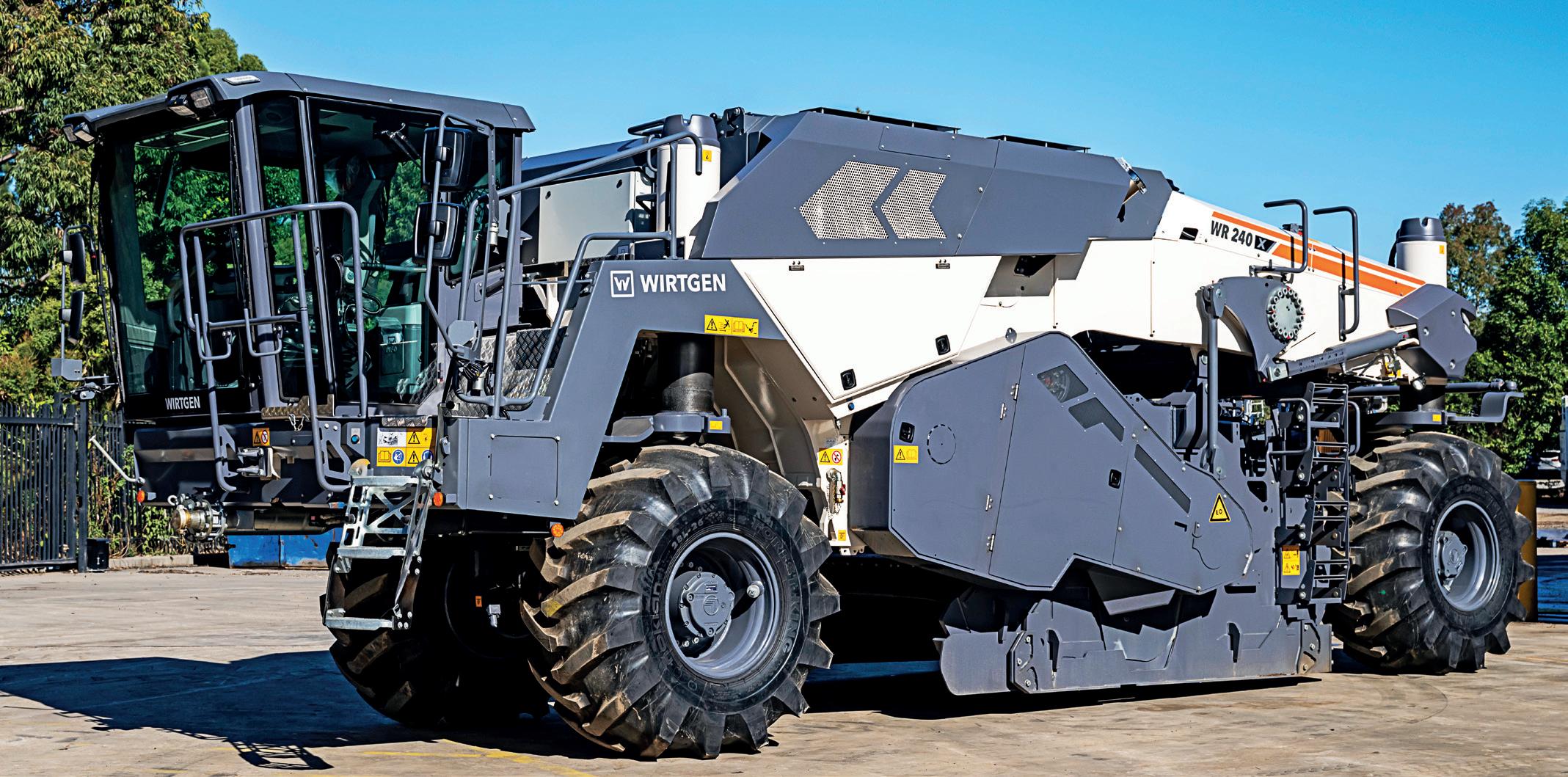
Wirtgen is continuing to develop its range of equipment, as well as its compaction and paving technologies.
“SOME CUSTOMERS WHO DO EVERYTHING FROM DESIGN OF THE GRANULAR SUB‑BASE UP TO THE ASPHALT LAYERS HAVE SEEN THE BENEFIT OF HAVING A MACHINE WITH THE DENSITY SCANNER AS WELL AS THE TRADITIONAL STIFFNESS METER.”
Not only is such technology providing efficiency gains when it comes to productivity, it’s also helping to reduce costs.
“Reducing idle time is one thing, but it’s also about reducing the amount of work the machine does to achieve the job it’s there to do. That’s where the intelligence comes in,” Yeats says. “If you under compact and only find out from cores the next day, it’s too late. You can’t come back, warm the asphalt up, and keep compacting. Get that wrong and it’s either rework or a financial penalty. So, there’s a lot of financial incentive for
customers when it comes to intelligent integration of these smart technologies.”
The move toward smarter, more automated systems also directly supports safer operation.
Integrated proximity detection, collision warning, and collision avoidance systems can communicate directly with the machine and, when connected to pedestrian detection systems, can slow or stop the roller if someone enters a danger zone. With this technology, possibly the industry’s greatest risk can be fully automated and mitigated.
Wirtgen’s developments are also helping to minimise impacts from global events, such as fluctuations to fuel costs stemming from the ongoing conflict in the Middle East.
Wirtgen is increasingly using performance tracking and telematics to make fuel consumption visible and tangible.
Customers now have access to fuel burn data through systems such as the Operation Centre, allowing them to see exactly how their machines are being used. This data not only quantifies overall fuel usage, but also highlights inefficiencies such as excessive idle time.
Brett Ferris, Product Support Manager –Wirtgen says this transparency of data helps to ensure that operators can optimise not only their ongoing projects, but also their entire machinery fleets.
“We had one customer look at his fleet, and he had 20,000 hours of idle time over a couple of years. That’s basically two machines, in a typical lifespan, just thrown away in idle time,” he says.
In the latest WR 240 X cold recycler, features such as Mix Assist and CoPilot further support fuel efficiency by making it easier for less-experienced operators to run machines optimally.
Mix Assist is an automated assistance feature that helps optimise the mixing process in stabilisers and recyclers, helping operators to set and maintain the right mixing parameters to achieve a high-quality mix.
CoPilot is Wirtgen’s operator assistance and interface platform that ties together machine data, automation, and guidance functions, providing the operator with step-by-step assistance, in real time.
“A big complaint is, ‘We can’t get operators.’ Then some customers say, ‘We don’t need all the fancy training.’ But this technology lets you put almost anyone in the seat and still get a good result,” Ferris says.
Fuel and output efficiency gains aren’t the only benefits provided by Wirtgen’s machinery portfolio.
Paul Ridgeway, Applications Support Manager, Road Technologies – Wirtgen
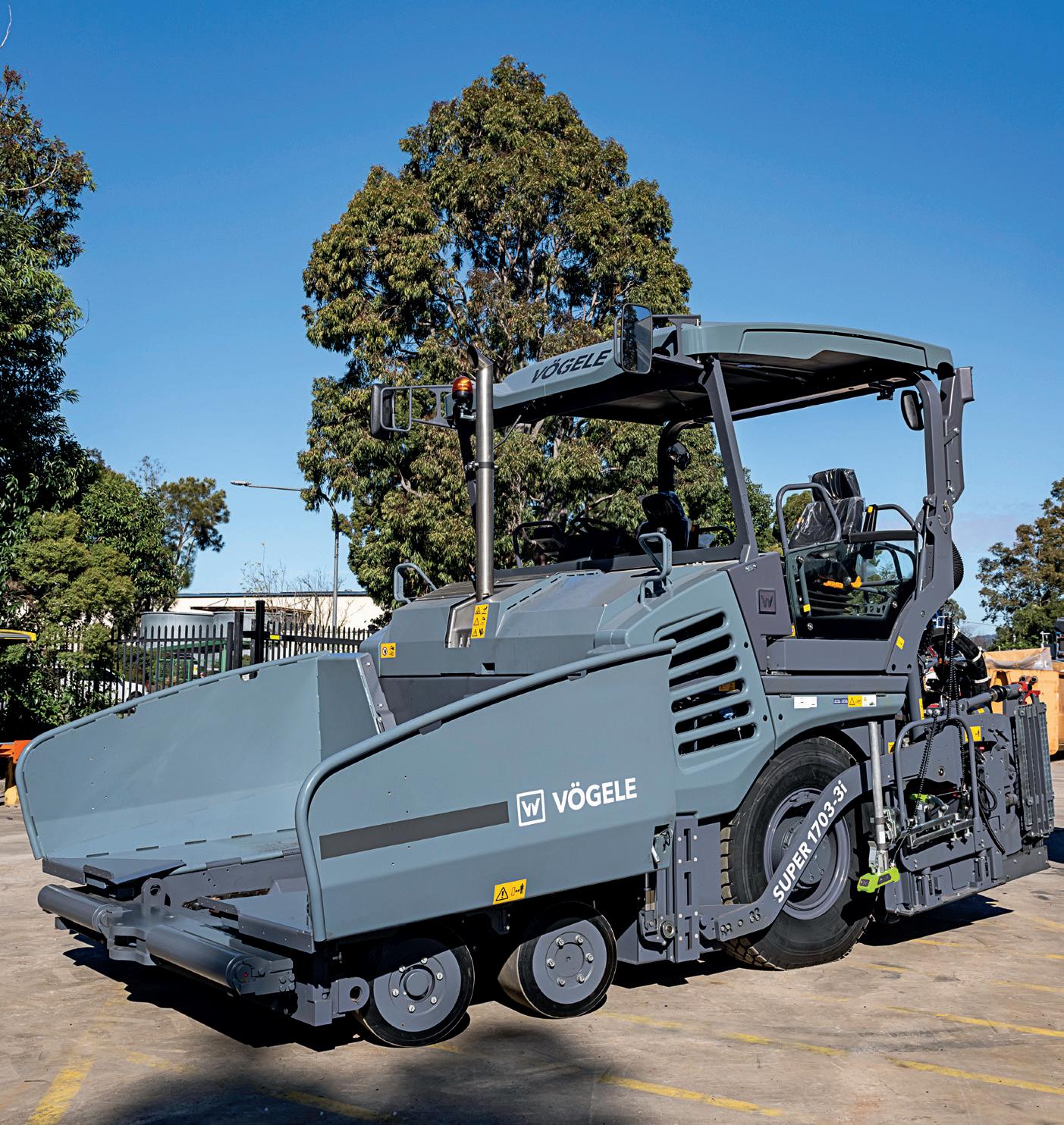
The Voegele Super 1703-3i Paver is regarded as an ‘allrounder’, capable of completing a wide range of works.
“IT’S NOT JUST ABOUT KNOWING THE MACHINE; IT’S ABOUT BEING ABLE TO STAND BEHIND IT FOR ITS ENTIRE WORKING LIFE.”
Australia says there’s plenty of options available to enable operators to not only satisfy emission control requirements, but also surpass, prepare and future-proof their machinery capabilities against future emission control regulations.
“Through VÖGELE we offer our Eco Plus option for our larger pavers. This option includes a clutch which disengages the pump drive gear box from the engine when there is no load demand, automatically engaging when demand returns,” he says.
“An asphalt paver which can sit idle for long periods between deliveries of material, can see a substantial reduction in fuel burn with this option.”
To assist in translating these benefits into real results, Wirtgen also walks customers through such features, ensuring they understand how to use, then optimise features to achieve higher quality outcomes.
“I think it is the responsibility of a machine supplier to ensure operators are well informed and trained in the use of the
equipment they have. That’s why we spend a lot of time doing this with our customers,” Ridgeway says.
A key differentiator of Wirtgen’s aftersales support is its structure. Unlike other manufactures, Wirtgen doesn’t rely on a dealer network to distribute and support, instead it offers a centralised model.
As Yeats explains, keeping these services in-house helps to avoid any dilution in the knowledge or quality provided, and more often than not, speeds up response time.
“There’s so much expertise at every level of our business. Service technicians, product specialists – a lot of them have been here 20-plus years. We are the factory. We’re the subsidiary. We’re the direct communication to the people who make the gear,” he says.
“We believe that no dealer in the country can offer the same kind of connectivity directly to the manufacturer.”
Wirtgen conducts extensive training to ensure consistent, high-quality support for its customers, regardless of where they are located. Unlike a broad dealer network, where service quality can vary dramatically from one region to another, Wirtgen keeps support largely in-house and uses training to maintain a uniform standard of expertise.
When machines such as the WR 240 X stabiliser or advanced functions like CoPilot and Mix Assist are launched, Wirtgen brings in specialists from Germany or sends staff overseas to learn directly from the experts.
Those trained product managers then pass on knowledge internally, building tailored training programs for local technicians, to ensure staff can best service customers.
This philosophy underpins Wirtgen’s promise, to support every single machine that it sells. This commitment is what Ferris believes sets the company apart.
“If we sell a single machine into a new market, we still have to support it like there’s a fleet of them,” he says. “Training our own people properly is what allows us to do that.
“It’s not just about knowing the machine; it’s about being able to stand behind it for its entire working life.”


THIS MONTH, WE ASKED THE INDUSTRY’S DECISION-MAKERS, ’NOW THAT WE’RE INTO THE SECOND HALF OF THE YEAR, WHAT INDUSTRY MILESTONES OR CHALLENGES HAVE STOOD OUT TO YOU SO FAR IN 2026?’






CADELL TAYE, CHIEF EXECUTIVE OFFICER – NATIONAL PRECAST CONCRETE ASSOCIATION OF AUSTRALIA

Image: National Precast


One of the most encouraging developments in 2026 has been the continued focus on capability building across the precast sector. We’ve seen strong uptake of industryspecifi c training, with more than 1000 enrolments in National Precast’s Micro-Credentials program and growing recognition of formal career pathways through the new Certifi cate III and traineeship initiatives. It’s also been positive to see precast playing an increasingly important role in major infrastructure and housing projects, with manufacturers continuing to innovate, improve productivity and deliver high-quality outcomes despite ongoing market challenges.
In South Australia, one of the most encouraging achievements in 2026 has been the continued commitment to integrating road safety, sustainability, and network effi ciency into infrastructure investment decisions. Among these initiatives, the ongoing advancement of the $15.4 billion River Torrens to Darlington (T2D) Project stands out as a landmark investment that will signifi cantly improve north–south connectivity, freight effi ciency, and network reliability across metropolitan Adelaide. Similarly, although South Australia has increased funding for road maintenance in recent years, a signifi cant maintenance backlog remains, particularly on regional roads. These roads continue to face challenges associated with ageing pavements, increasing freight demands, extreme weather events, and constrained maintenance budgets. Sustained investment in asset preservation and renewal will be critical to maintaining network safety, resilience, and serviceability. Looking ahead, South Australia should also place greater emphasis on identifying critical transport corridors, safeguarding them from disruption, and planning alternative routes and network redundancies. I am confi dent that the South Australian Government, together with industry and research partners, will continue to build on the progress achieved in 2026 and work towards delivering a safer, more resilient, and sustainable transport network for the future.
Image: Adelaide University




As we move into the second half of the year, increased seasonal rainfall is expected to result in greater subgrade moisture fl uctuations and associated ground movements, particularly in clayey soils. Consequently, a higher rate of utility failures may be anticipated during this period, with failure rates likely to decline towards September and October as moisture conditions stabilise. While the impact of climate-induced ground movement is well recognised in the design of residential footings, it has not been widely incorporated into the design and management of road infrastructure and buried utility networks. The industry should therefore give greater consideration to both short- and long-term adaptation strategies to address these climatic infl uences and improve the resilience of future road and utility infrastructure. Approximately 30 per cent of Australia’s surface soils are ‘clayey’, making climate-related ground movement a signifi cant national infrastructure challenge.
Image: Adelaide University
If you or someone at your organisation is an industry leader and would like to be a part of this monthly column in 2026, please get in touch with Editor, Tom O’Keane: tom.okeane@primecreative.com.au





SRE’s telescopic bitumen sprayers or our newly developed 8m fixed wing bitumen sprayers are available for mid 2027 delivery.
Fully compliant with all Australian regulations our sprayers meet all Austroads performance requirements for bitumen sprayers and are ready to go straight to work.
www.specialisedroadingequipment.com
A BRAND-NEW SOLUTION IS HELPING TO FILL A VITAL GAP WHEN IT COMES TO ENSURING THE SAFETY OF ROADSIDE WORKERS AND THE WIDER PUBLIC DURING THE DELIVERY OF TEMPORARY STATIC WORKS.
According to Austroads, close to 800 roadwork site crashes occur annually across Australia, with 18 resulting in fatalities and a further 245 in serious injury. That’s an average of two crashes every day, with Austroads noting that the real figure is likely higher.
Despite the development of technology and solutions, when John Ferguson first entered the industry he felt there was still something missing. Ferguson’s first foray into the road safety and barrier space came about in 2018, when he became involved in the hostile vehicle barrier segment of the sector.
In this role he helped coordinate and implement barrier systems supplied to more than 40 Defence bases and used at major events including the Gold Coast Commonwealth Games, Vivid Sydney, and more.
Each installation brought increased interaction with people across the roads and traffic industry, as well as those who had been impacted by crashes at roadworks, particularly regional workers.
“It really blew me away. I just couldn’t believe how many people I met from the
industry in those years who’d been directly or indirectly impacted while working on the road,” Ferguson says. “That’s why I thought ‘something’s missing, why is this still happening in this day and age?’”
It wasn’t only those impacted. Through the same period, Ferguson met the team from Ventia working on Brisbane’s motorways, who explained their challenges.
One in particular emerged, that Truck Mounted Attenuators (TMAs) designed for mobile works were increasingly being deployed in a stationary position for hours on end, with a driver strapped in. This raised both safety and commercial challenges.
Those conversations, alongside the statistics and the experience of regional workers, prompted Ferguson to research the market. It confirmed his suspicions.
“When you stand back and look across all the works that happen on the road, you realise mobile works are well served by TMAs, and long-term construction is well served by longitudinal barriers, such as concrete barriers,” he says.
“But the whole ‘temporary static works’ segment in the middle, which covers
everything from a few hours to a few days – encompassing nearly all maintenance activities – is actually the biggest slice of what takes place on our roads every day, and didn’t have a targeted solution.”
For Ferguson, one question kept repeating: ‘Why wasn’t there a barrier any work crew could take with them with a standard work ute, and drop and go – just like signs and cones? Not needing any
additional trucks, cranes or people – just a bolt-on to existing crews and vehicles going to site?’
Ferguson set about developing a concept, establishing a core set of “non-negotiables”.
“It had to be crashworthy; it had to be towable by a standard work ute; it had to be ‘drop and go’ with no operator sitting in harm’s way once deployed; and it had to stack up commercially,” he says.
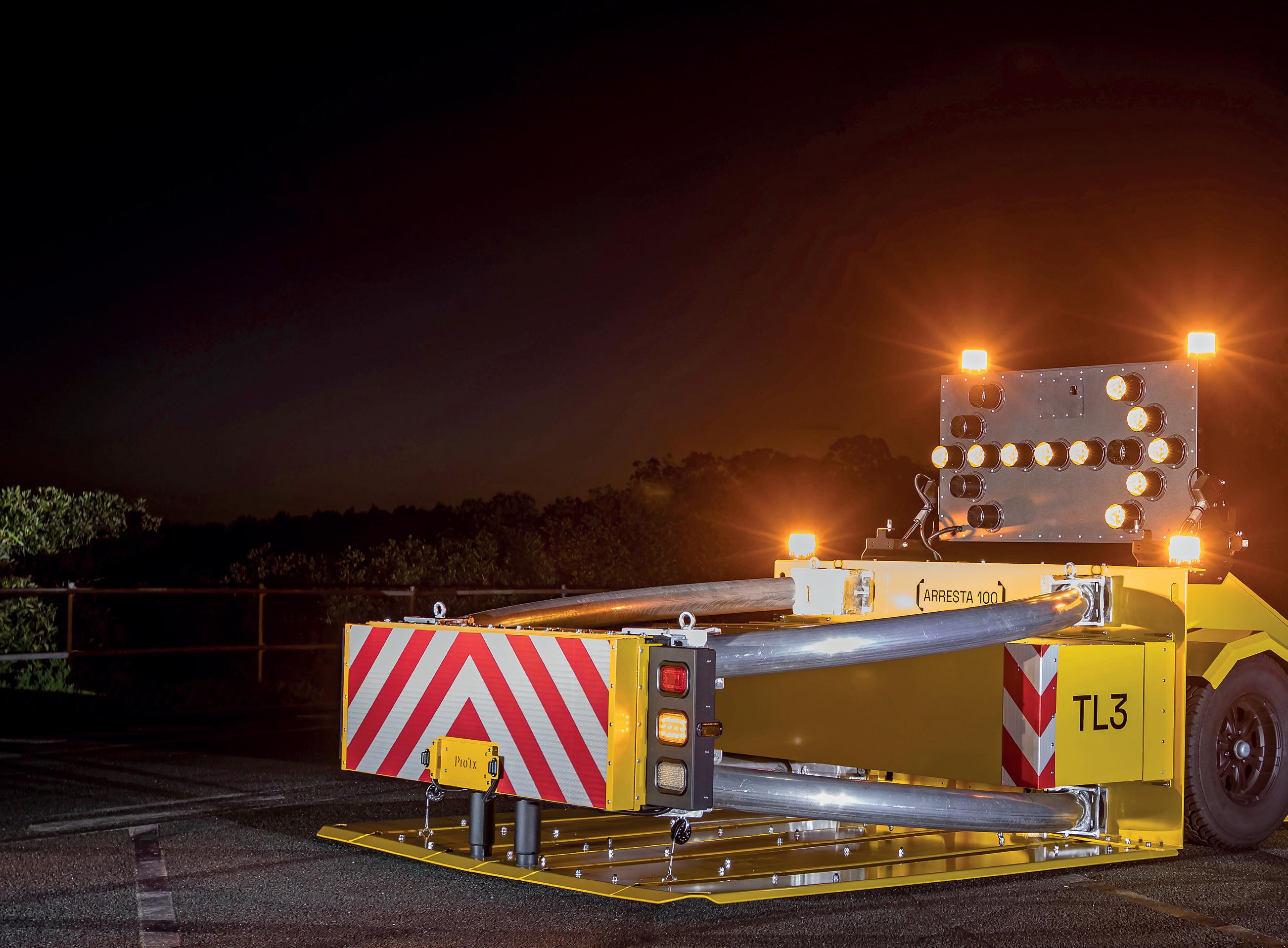
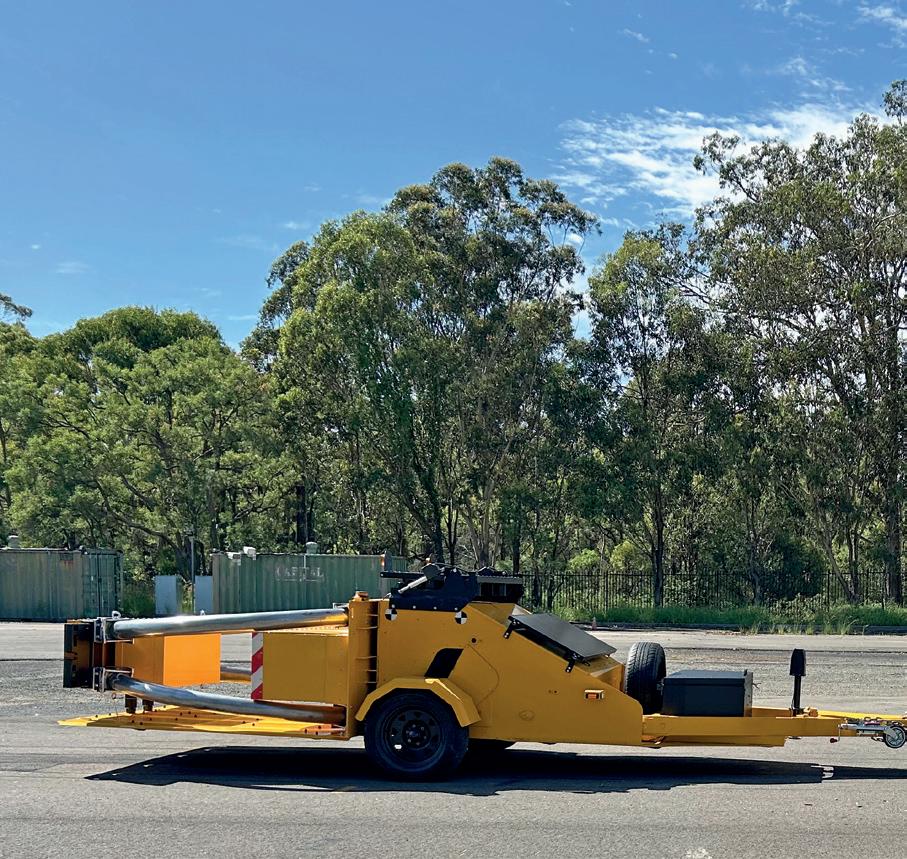
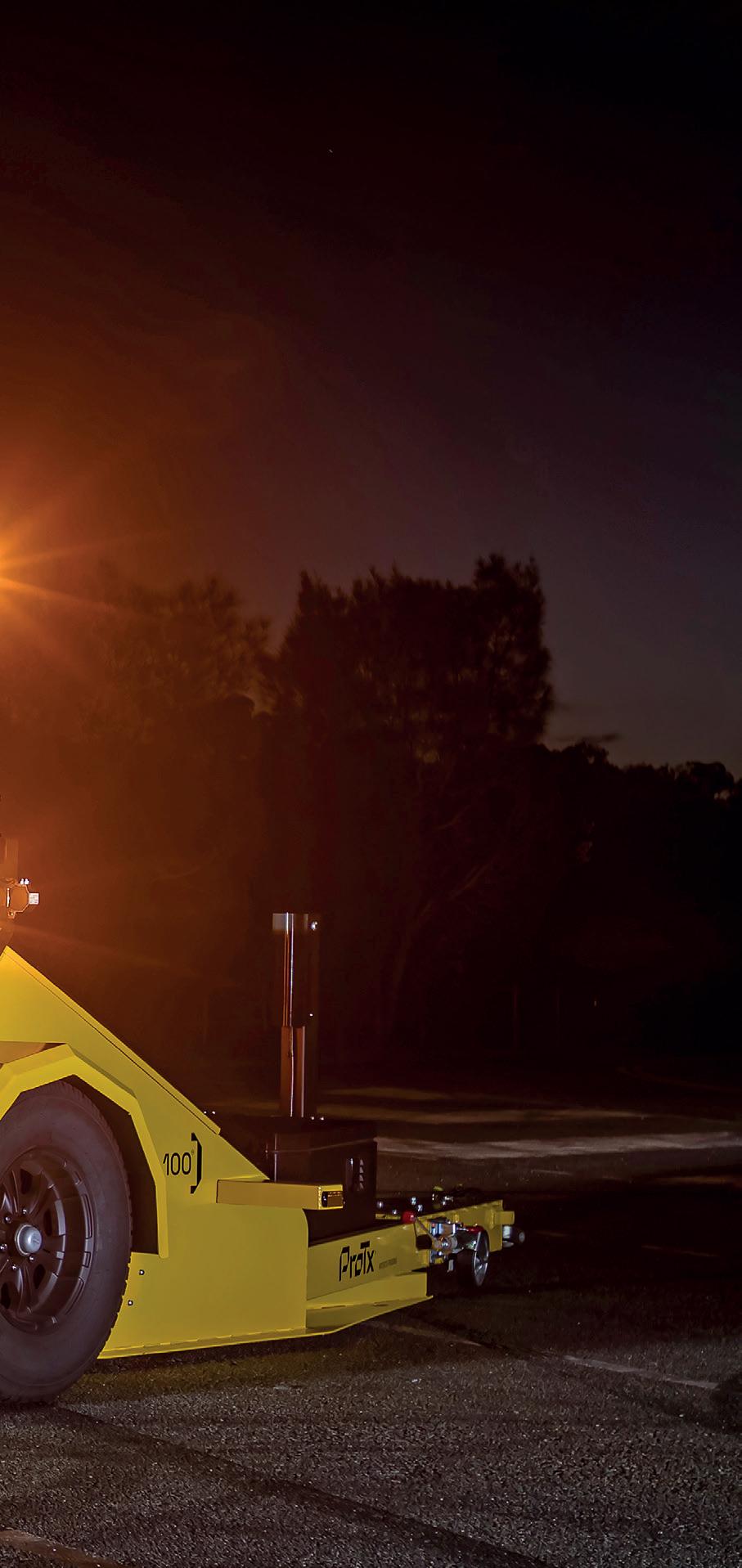
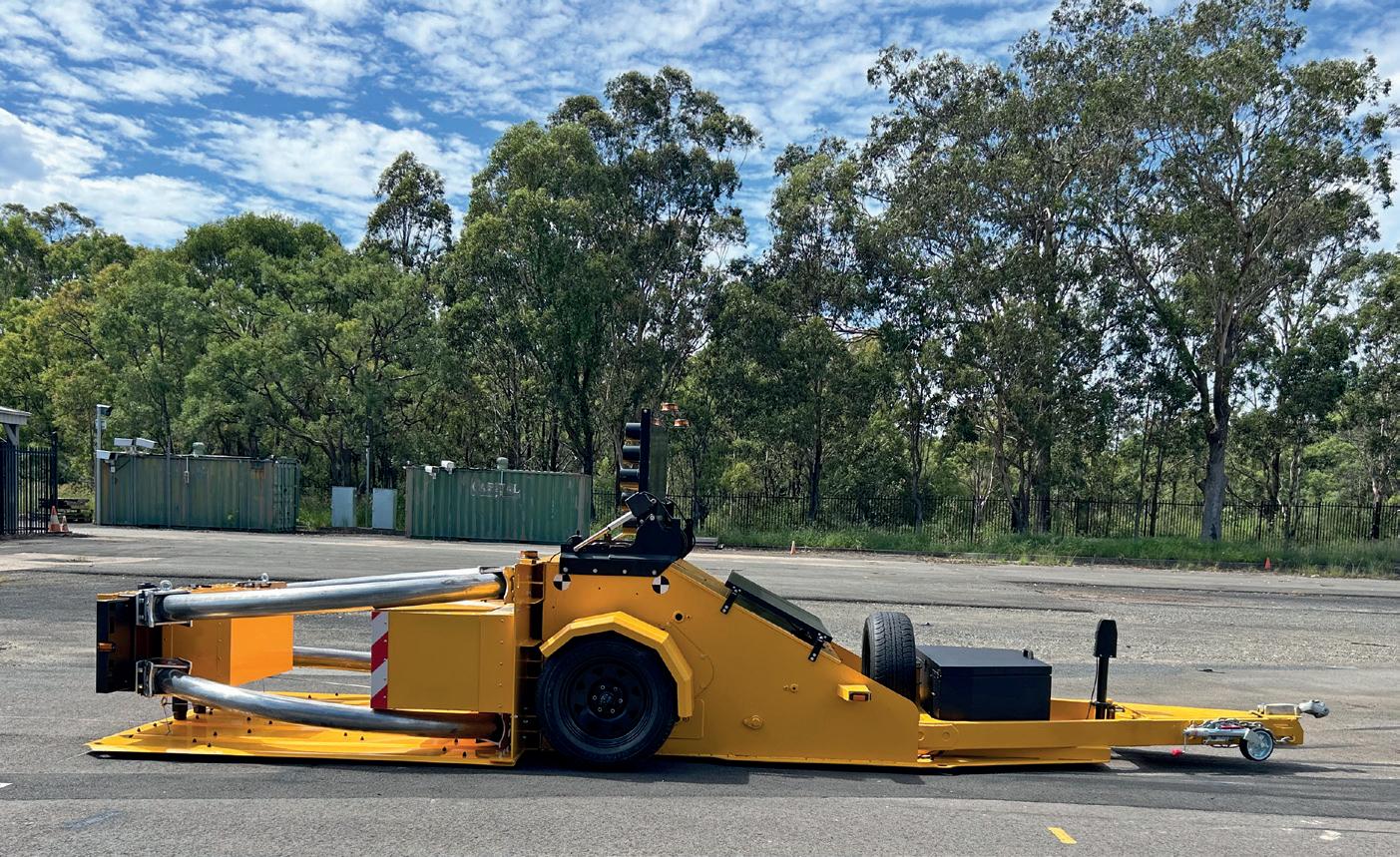
The Arresta 100 is a towed vehicle arrestor –the world’s first purpose-built for temporary static works, which includes things like roadworks, utilities and incident response.
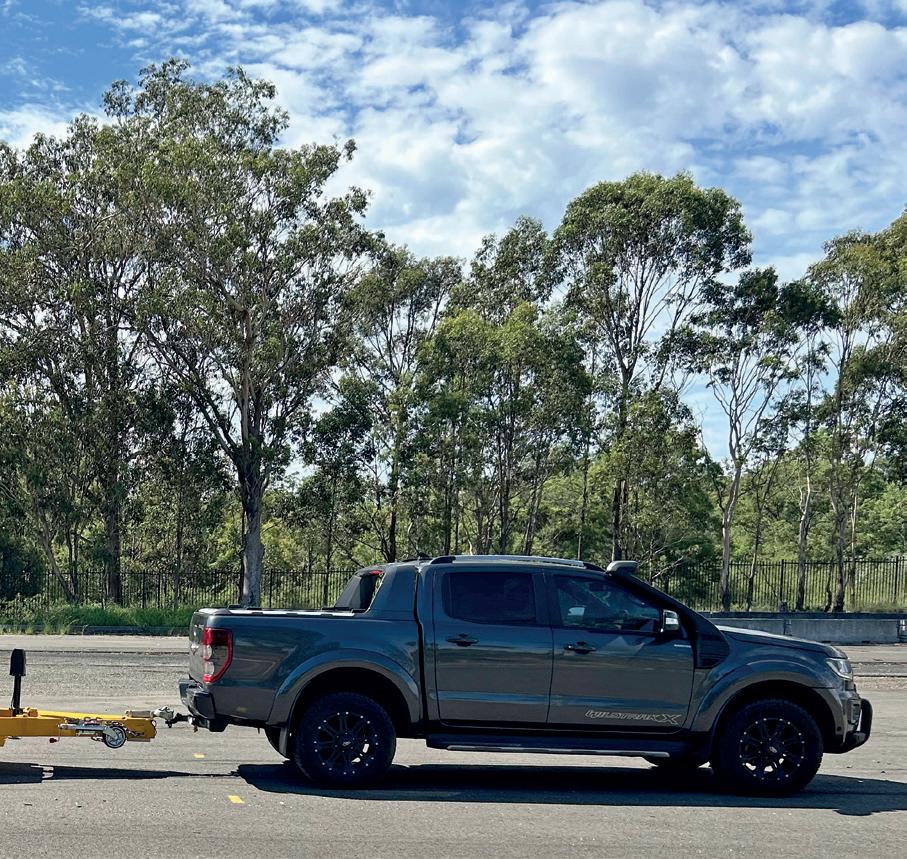
Despite appearing like a simple trailer, the system is split into two sections. The front is a heavy-duty main body, built similar to a semi-trailer chassis and reusable even after an impact. It hooks up to a ute via standard 50 millimetre tow-ball, just like a traditional trailer.
The second section is a sacrificial cassette that faces the oncoming traffic, engineered to crumple and absorb the brunt of an impact. Underneath the base lie more than 30 rubber feet, which grip the road to slow the captured vehicle to a stop.
Ferguson calls this approach “catch
“YOU REALLY NEED CREWS ON THE GROUND GIVING YOU FEEDBACK: ‘HOW DO THEY DEPLOY IT, HOW QUICKLY CAN THEY GET ON AND OFF THE ROAD?’ THAT’S WHERE WORKING WITH THE VENTIA TEAM HAS BEEN TERRIFIC.”
and slow”, an idea rooted in his hostile vehicle days.
“The question I kept coming back to was: ‘is there a way to use the impacting vehicle itself – its own mass – to help stop it?’
“That’s what led me to this upside-down ‘T’ idea, a floor plate that the vehicle could drive onto. Once it’s on the plate, the vehicle’s own weight is pressing down through the rubber feet, and friction does
the work. It’s like the car hitting the brakes hard, even though the driver never touched them. Catch and slow, basically.”
“From a crash perspective, the trailer aspect is only there to get it from A to B. Once it’s deployed, it behaves like a barrier. You could take the drawbar and wheels off and it would still work the same in a crash.”
A key difference to other mounted devices is that the tow vehicle must be disconnected when the Arresta 100 is deployed, delivering on the ‘drop and go’ concept.
Ferguson is clear the Arresta 100 isn’t a replacement for TMAs.
“It frees TMAs up to do what they were built for: mobile and rolling works,” he says. “It’s complementary, purpose built for temporary static works. Another tool in the kit bag of protection for workers.”
Industry feedback was key throughout, with crews on the ground helping to refine how the Arresta 100 is deployed in the field.
“It’s one thing for me to design a barrier, but I don’t work on the roads every day,” Ferguson says. “You really need crews on the ground giving you feedback: ‘how do they deploy it, how quickly can they get on and off the road?’ That’s where working with the Ventia team has been terrific.”
The concept first came to life in 2021.
Transport for NSW’s crashlab is one of only two facilities in the southern hemisphere capable of the crash testing needed. With COVID-19 closing access, testing went ahead at the other, at Holmes Solutions in Christchurch, New Zealand.
The test article was deliberately simple: a basic steel skeleton of the upside-down ‘T’ concept, built by a Christchurch fabricator.
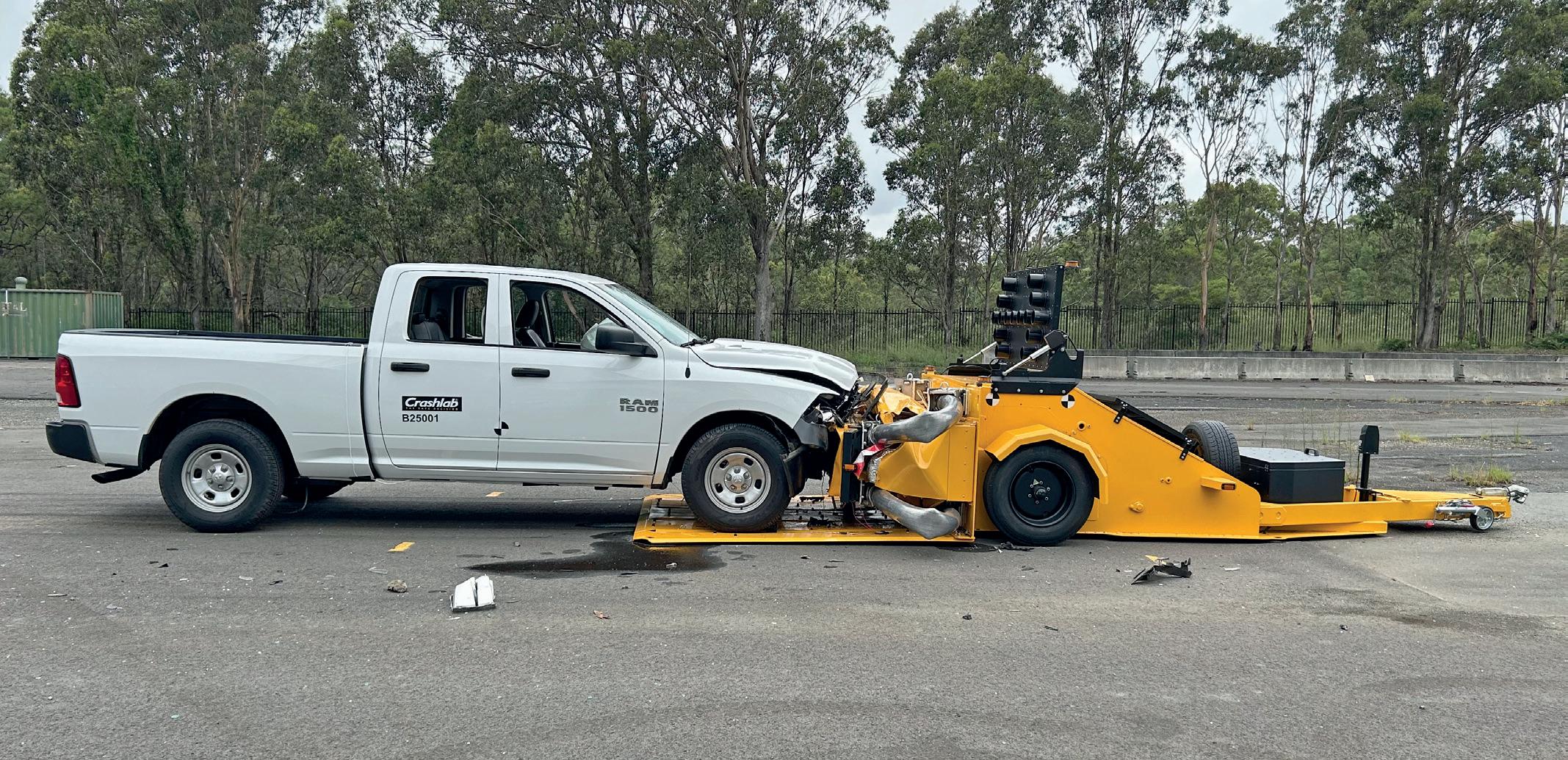
Due to travel restrictions, the ProTx team couldn’t be there in person.
“This was a whole new type of barrier idea, and you can’t just build a computer simulation model without any data. So we had a frame fabricated, loaded up some Volvo XC90s to weigh two tonnes, and ran them into the Arresta 100 prototype to see what would happen,” Ferguson says. “This part was fun, it was like being a kid in the garage again, except watching from the other side of the street, as we couldn’t get there.”
After five proof-of-concept crash tests – four at the MASH (Manual for Assessing Safety Hardware) Test Level Two (TL-2) speed of 70 kilometres per hour (km/h), and a final run at the Test Level Three (TL-3) speed of 100 km/h – the results were clear. The cabin stayed intact, the doors opened, and forces on occupants were within acceptable ranges. The concept worked, and the crashes produced the real-world data needed to build a detailed computer model of both the vehicle and the barrier.
A skeleton surviving a crash is one thing, but a finished product – that’s both barrier and roadworthy testing compliant, while also passing the full MASH Test Level Three matrix (or criteria) – is another. Ferguson explains that the step from TL-2 to TL-3 is deceptively steep, with the extra 30 km/h more than doubling the impact energy.
“We believed that we were close. The simulations showed us how much further there was to go,” Ferguson says.
Two years and hundreds of crash simulations followed across 2022–23, refining the design iteration by iteration. Even then,
the real world demanded more. Full-scale MASH testing began at Transport for NSW’s crashlab, where the first three tests didn’t pass.
“That’s the design-test loop. Each test taught us something the simulations couldn’t. We’d take it back, refine, and go again,” he says.
The refinements worked. Four consecutive positive results saw results satisfy the full MASH TL-3 matrix, which encompasses small cars and large vehicles, with multiple impact angles. Results showed that the Arresta 100 prototype was capable of removing over 50 per cent of the vehicle’s speed in under
“BUT
Hub in Brisbane, where the system was designed and developed. The launch also marked the system’s arrival in the field. Ventia, which supported the Arresta 100 during its development, is now its first customer and the first to deploy it, with a unit in service.
It’s taken five years to move from the first concept to its release in the market, but Ferguson says he’s “very proud” that the Arresta 100 has been designed, developed and built in Australia, achieving a world first, with international patents pending.
Ferguson adds that while the June launch event was a major success, the potential
ULTIMATELY, YOU HAVE TO REALLY BELIEVE IN THE VISION OF WHAT YOU’RE TRYING TO BUILD – ESPECIALLY WHEN THERE’S NO GUARANTEE OF SUCCESS, WITH THE CRASH ASPECT BEING SO CHALLENGING. IT MEANS BEING ALL-IN, AND IN FOR THE LONG HAUL.”
three metres, every test. The same main body was used across all seven tests, refitted with a new cassette and towed back to Queensland each time.
In December 2025, the Arresta 100 received its ‘Crash-worthiness Assessment’ from the Austroads Safety Barrier Assessment Panel (ASBAP). With Federal Vehicle Type Approval secured for tow mode, the path was cleared for the release of the Arresta 100 system.
The latest milestone came in June, when ProTx hosted key industry representatives to officially launch the Arresta 100 at ARM
for real impact – developing a new tool that helps protect the people who work on Australia’s roads every day – is the real driver.
“Over five years we’ve dealt with a lot of ups and downs, and it’s been a team effort with so many people contributing. But ultimately, you have to really believe in the vision of what you’re trying to build, especially when there’s no guarantee of success, with the crash aspect being so challenging. It means being all-in, and in for the long haul,” he says.
“I think the real reward will be the first time I’m just driving around, see an Arresta 100 on a country road protecting a crew, or get the call that it’s helped save someone’s life.”

Compliant & Approved
Australian Standards Compliant
TfNSW Approved
VicRoads Compliant


Strength You Can Trust



SPECIALISED ROADING EQUIPMENT IS EDUCATING THE SECTOR, WHILE UTILISING ITS UNIQUE DESIGN AND MANUFACTURING CAPABILITIES TO OPTIMISE SAFETY ACROSS THE BITUMEN SPRAYING INDUSTRY.
While it may be an essential component of transport project delivery, bitumen spraying carries several intrinsic risks, not only for machinery operators and crews, but also to the wider public.
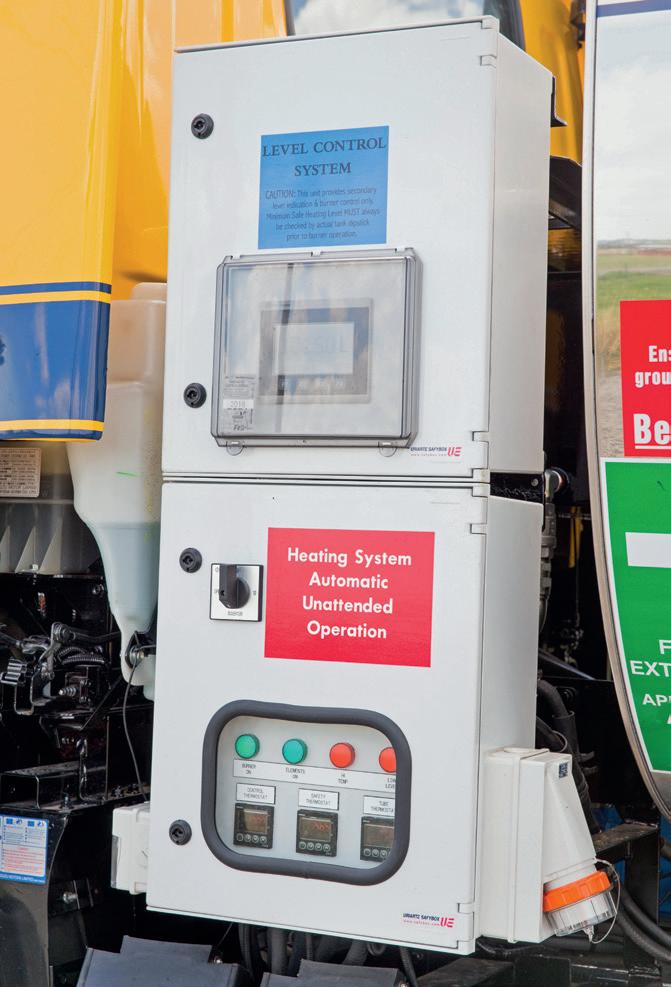
Among the biggest risks is the heating of bituminous products, especially in Australia where crumb rubber and higher kerosene content are common. Tanks operate at very high temperatures, often around or above 180 degrees Celsius, and sometimes surpassing the product’s flash point. Failures in the heating system can lead to fires, explosions, or severe burns. Older or less sophisticated systems often rely on operators manually controlling heating with limited safeguards, meaning that mistakes can quickly escalate into major incidents.
Another area of risk is the transfer of product – moving bitumen between tanks or from trucks to sprayers. Pushing product under pressure through flexible hoses, which can fatigue, fail, or disconnect, could lead to leaks or bursts during transfer, exposing operators to hot material and vapours.
While both New Zealand and Australia share most of these risks, the Specialised Roading Equipment (SRE) team believes New Zealand has valuable lessons to share with the Australian industry.
As a New Zealand-based bitumen sprayer manufacturer, SRE is uniquely placed to understand and identify potential areas of advancement for Australia, a market that the company is increasingly servicing, with a rapidly growing customer base.
Chris Kaelin, Business Development Manager – SRE says it’s these factors that have encouraged the business to begin educating existing and potential customers – as well as the wider industry – on how to improve safety across the board.
“In New Zealand we try to engineer the risk out. In Australia it’s more about the process. You have your SWMS (Safe Work Method Statement) and your SOPs (Standard Operating Procedures). It’s a different philosophy: there’s more effort on

procedures, whereas we put more emphasis on engineering,” he says.
“The regulations around heating controls in New Zealand are at a higher standard than in Australia. In New Zealand, automated heating is just standard, we don’t even talk about it, the industry is so used to it.
“In Australia, the geography changes the equation. A sprayer can be a thousand kilometres from base. If you’ve got lots of interlocks and one fails, it can hold up a massive job. That pushes people towards simplicity and reliability, even if it means more reliance on the operator. When you’re relying on SOPs and people to follow processes, the inherent risk is still there. Our preference is to engineer that risk out completely.”
As Mark Wansbrough, Managing Director – SRE adds, transforming a manual requirement into an automated process helps to drastically reduce the associated risks. “Someone said to me the other day that on
the old sprayers you almost have to be a mathematician. You’re constantly calculating what you need to be doing, what you’re spraying, and what’s happening as you turn valves and change the pump speed up and down,” he says.
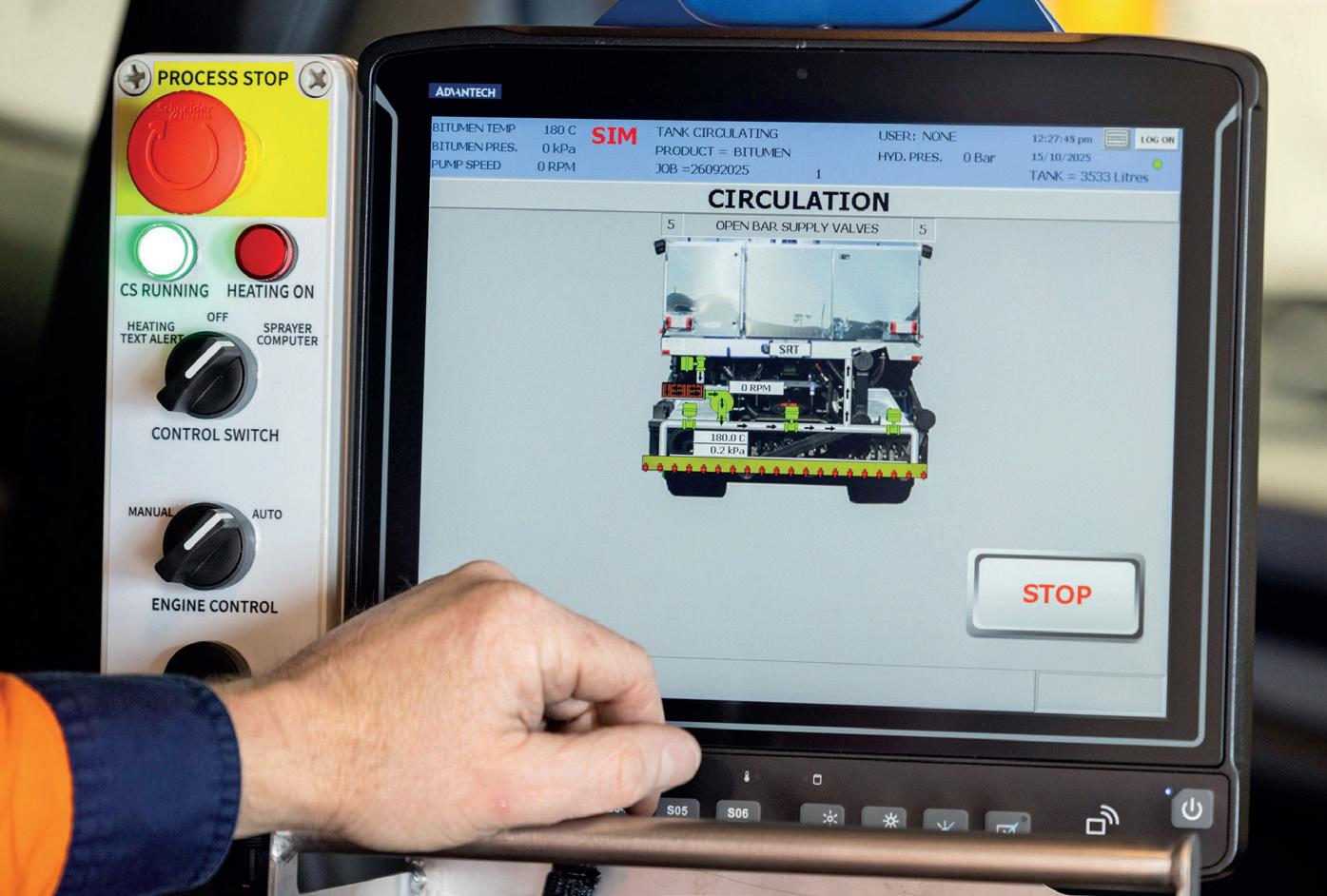
“On our sprayers, you select all that before the job starts, then you go. The control system automates it so the operator can concentrate on the job at hand. It strips out a lot of complexity, which is a big safety and training benefit.”
Instead of manual burner switches and operator judgment, SRE systems use interlocks, low level protections, temperature sensors, timer and automatic shutdowns – all designed to ensure that once anything unsafe or abnormal is detected, the system halts heating immediately.
“The industry is becoming more aware of safety, but we still see customers ordering sprayers with only manual heating control. That means it’s 100 per cent reliant on the
operator doing all of their pre-checks properly, knowing exactly what they’re doing, and staying on top of the heating process the whole time,” Wansbrough says.
“Having said that, we’re definitely seeing a shift. Automated heating is much more common now than it was two and a half years ago. Our base sprayer in Australia now goes out with automated heating as default because customers can see the safety advantage.”
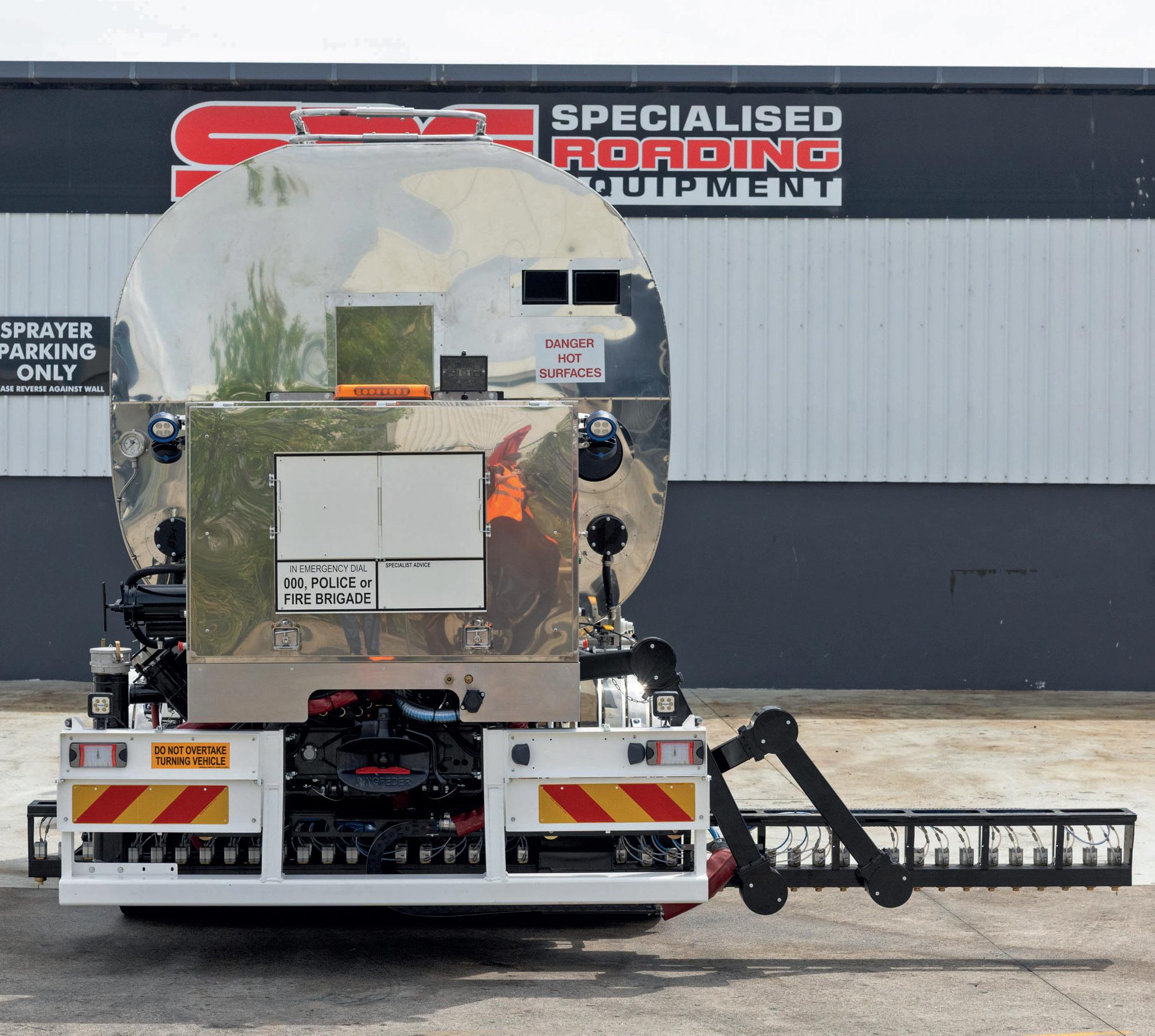
SRE’s sprayers are also designed to maximise control from the cab, keeping operators away from the hottest, most dangerous part of the machine: the back of the sprayer.
Operators can open and close main valves, circulate the tank, put product into the bar, move the wings in and out and more, all from within the cab. Operators still have access to the same feedback via hydraulic pressures and system statuses, without having to stand at the back of the sprayer, beside hot product and moving plant.
SRE’s telescopic spray bar design is another key safety system. On traditional fixed-wing bars that fold up for transport, nozzles end up pointing sideways. If there’s residual pressure or a fault, hot bitumen can be sprayed out at people, traffic, or infrastructure.
Equipment’s philosophy is placing more controls in the cab, removing the dangers associated with standing beside machinery externally.
SRE’s telescopic bars keep the jets facing downwards at all times, whether during works or while in transit. The bar only extends as far as required for the job, rather than lowering a full-width wing, reducing the risk of ‘plant-to-plant’ or ‘plant-to-people’ interactions on site.
“We also try to hard pipe as much as we can, using only small flexible joints. Flexible hoses can fatigue and fail over time, so we minimise their use and only rely on them
“ONE OF THE BIG THINGS WE’RE WORKING ON IS GETTING AWAY FROM CREW BEING ON TOP OF THE TANK. WE WANT A RELIABLE, TRUSTWORTHY SYSTEM SO THEY DON’T HAVE TO GO UP THERE AND DIP EVERY TIME THEY DO A SPRAY RUN.”
where we absolutely have to, like with hand lances,” Kaelin says.
SAFETY IN-HOUSE
Improvement is always front of mind, with SRE already acknowledging potential refinement for its equipment when it comes to safety.
“One of the big things we’re working on is getting away from crew being on top of the tank. We want a reliable, trustworthy system so they don’t have to go up there and dip every time they do a spray run,” Wansbrough says.
“Everyone recognises that the less time people spend working at heights, the better.
Left:
Increasing the automation of controls is just another way that the Specialised Roading Equipment team is minimising the chances of mistakes and accidents occuring.
“The same thinking flows through to the back of the sprayer. We want to normalise the idea that operators simply shouldn’t be standing in the hottest, most dangerous part of the machine.”
This also extends to the company’s own manufacturing facility, which has strict rules to ensure the safety of SRE staff.
“The move to the new site has been the single biggest safety improvement for us. The old place was more congested, with lots of shared workspaces. Now we’ve got more room for dedicated work zones and hot zones, especially for welding,” Wansbrough says.
“We’re pretty rigorous about keeping people up to date with working at heights and confined space training. Those are two of the riskiest areas in our business, so even the way we build tanks is designed to minimise how long anyone has to spend inside a confined space.”
This desire for improvement is also supported by the company’s immersion with industry. Kaelin himself is actively involved with Civil Contractors New Zealand, sitting on the committee responsible for the design of bituminous substance tank wagons.
A key part of the committee’s work is reviewing incidents that have occurred across the industry, to understand what went wrong and how to prevent similar events in future.
“We know that industry is often the best driver of those regulatory changes,” Wansbrough says.
“I honestly don’t think that the cost is the issue. The bigger issue is around the education of the industry and the acceptance of these engineered solutions.”

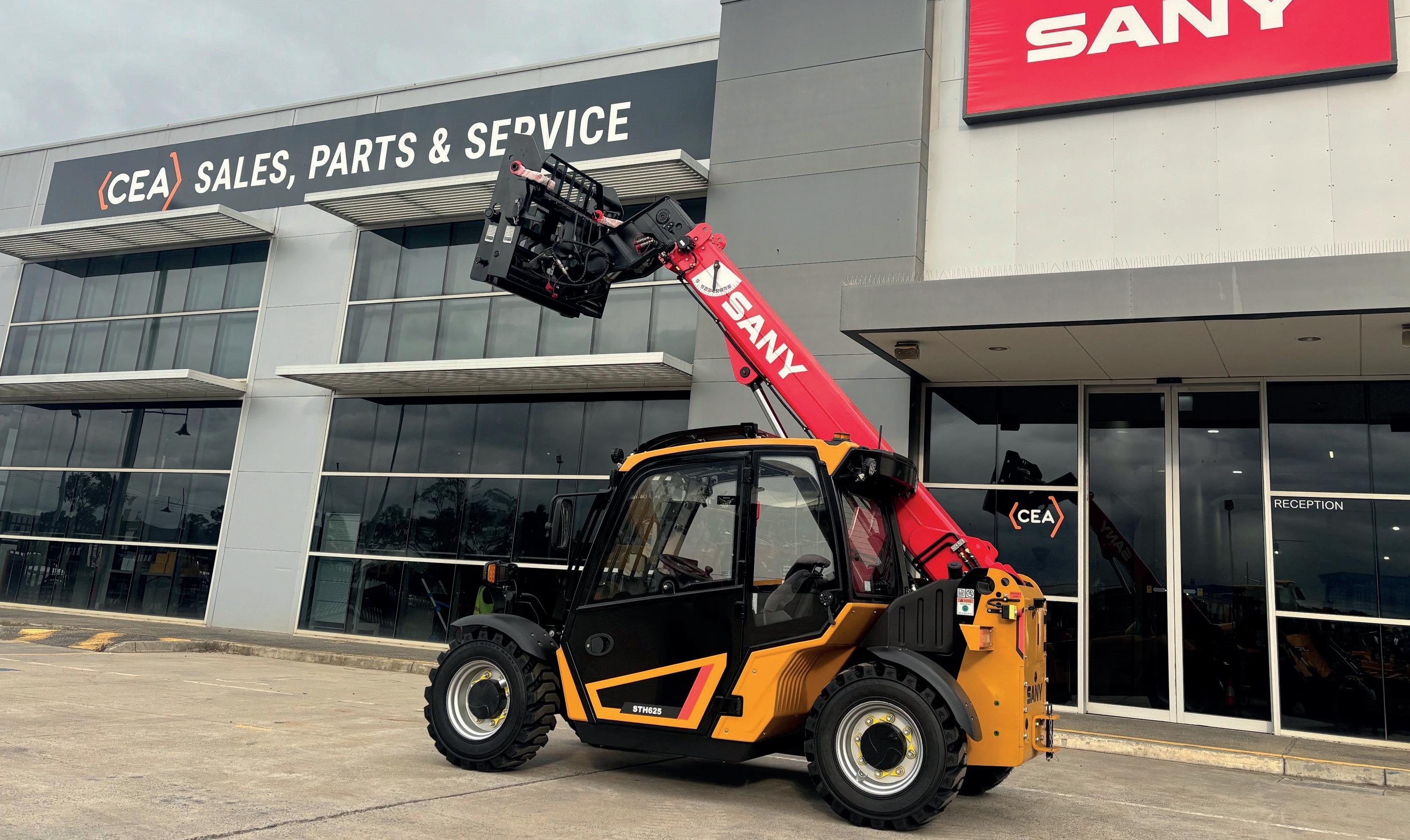
SANY TELEHANDLERS, DISTRIBUTED NATIONWIDE BY CEA, OFFER A 360-DEGREE PEDESTRIAN RECOGNITION SYSTEM, INCREASING WORKSITE SAFETY AND EFFICIENCY.
The telehandler is an indispensable workhorse across a range of industries, from construction and infrastructure to material handling. However, its versatility often brings about a distinct set of operational challenges. By design, a telehandler’s boom can compromise an operator’s blind spots – especially on the rear and passenger sides – creating significant risk zones on tight and busy jobsites.
As Australian workplace health and safety regulations tighten, the demand for proactive engineering controls has never been higher. Enter SANY telehandlers, equipped with the groundbreaking 360-degree Pedestrian Recognition System.
Distributed nationwide by CEA, this intelligent safety feature is setting a new benchmark for what contractors and rental
fleet operators should expect from standard machinery specifications.
Rather than relying on passive backup beepers or traditional radar systems that trigger false alarms for inanimate objects, such as concrete barriers or skip bins, SANY’s system utilises advanced artificial intelligence (AI) cameras. The technology specifically isolates and identifies the human form. When a pedestrian enters the designated risk zone around the machine, the system provides real-time visual and audible alerts to the operator, allowing for instantaneous corrective action before an incident can occur.
Greg Sealey, CEA Group Wholesale Manager, emphasises that this technology is a direct response to the evolving needs of local worksites.
“SANY’s telehandlers have been engineered to provide a strong combination of high-efficiency performance and intelligent safety while retaining exceptional operator comfort,” he says. “The 360-degree Pedestrian Recognition System represents a massive leap forward.
“We know that the Australian customer base demands uncompromising safety and productivity. By integrating this level of AIdriven awareness directly into the machine,

we are giving project managers and business owners peace of mind that their people on the ground are protected.”
The competitive advantage brings operational efficiency and cost reduction to the Australian market. Traditionally, compliance with strict site-safety mandates required aftermarket installations of proximity sensors and cameras, proving an expensive and time-consuming process that often complicated wiring and voided factory warranties. SANY eliminates this friction by offering a fully integrated, factory-fitted solution. This out-of-the-box readiness gives fleet managers a distinct edge, allowing assets to be deployed to highly regulated infrastructure projects without delay. By reducing the frequency of false alerts, SANY significantly reduces ‘alarm fatigue’ among operators. When the alarm sounds, the operator knows it is a genuine hazard, keeping engagement high and site operations fluid.
As Australia’s civil construction and materials handling sectors continue to demand greater diversity and sophistication in machinery, the combination of SANY’s robust engineering and intelligent safety tech is proving tough to beat. With the backing of CEA’s extensive national support network, the SANY telehandler range is not just moving material; it is actively safeguarding the future of Australian worksites.










THROUGH ITS RANGE OF TAILORED TRAINING, COURSES AND WORKSHOPS, THE NATIONAL TRANSPORT
RESEARCH ORGANISATION IS HELPING TO UPSKILL THE INDUSTRY TO TACKLE CURRENT AND FUTURE PROJECT PIPELINES ACROSS A RANGE OF DISCIPLINES.
For more than 60 years, the National Transport Research Organisation (NTRO) has been a pillar of the evolution and expansion of the transport, infrastructure and construction industries.
Beyond acting as a key voice for government and industry, the NTRO has played a pivotal role in the establishment of industry standards and specifications, laying a clear and attainable path ahead for the sector to reach best practice.
Not only has the organisation endeavoured to set the bar, but it’s also sought to equip industry with the tools to surpass it. Alan Hay, Executive Director International and Leader, Certification
and Events – NTRO, has been influential in this push.
As he explains, while advancements have been made in the training, courses and workshops that NTRO offers, its end goal has always remained the same.
“As the Australian Road Research Board and now as the NTRO, we’ve existed to help the transport sector make better decisions through credible, applied knowledge,” Hay says.
“NTRO training is not just professional development, it’s a mechanism for strengthening sector capability.”
A key point of difference for NTRO is that its courses are developed and delivered by people who deeply

understand the sector, including in-house engineers, researchers, and technical specialists whose expertise also shapes national practice and standards.
“Courses are written by engineers and specialists for engineers and specialists,” Hay says.
Emphasis is placed on practical relevance, with these courses going across a broad range of topics, such as pavements, bridges, materials and much more.
“NTRO training is about helping the sector move beyond the basics by giving individuals, and organisations the confidence, judgment, and practical capability they need to deliver better infrastructure outcomes,” Hay says.
“Our aim is to help people understand the decisions behind the standard, so they know why they’re learning it.”
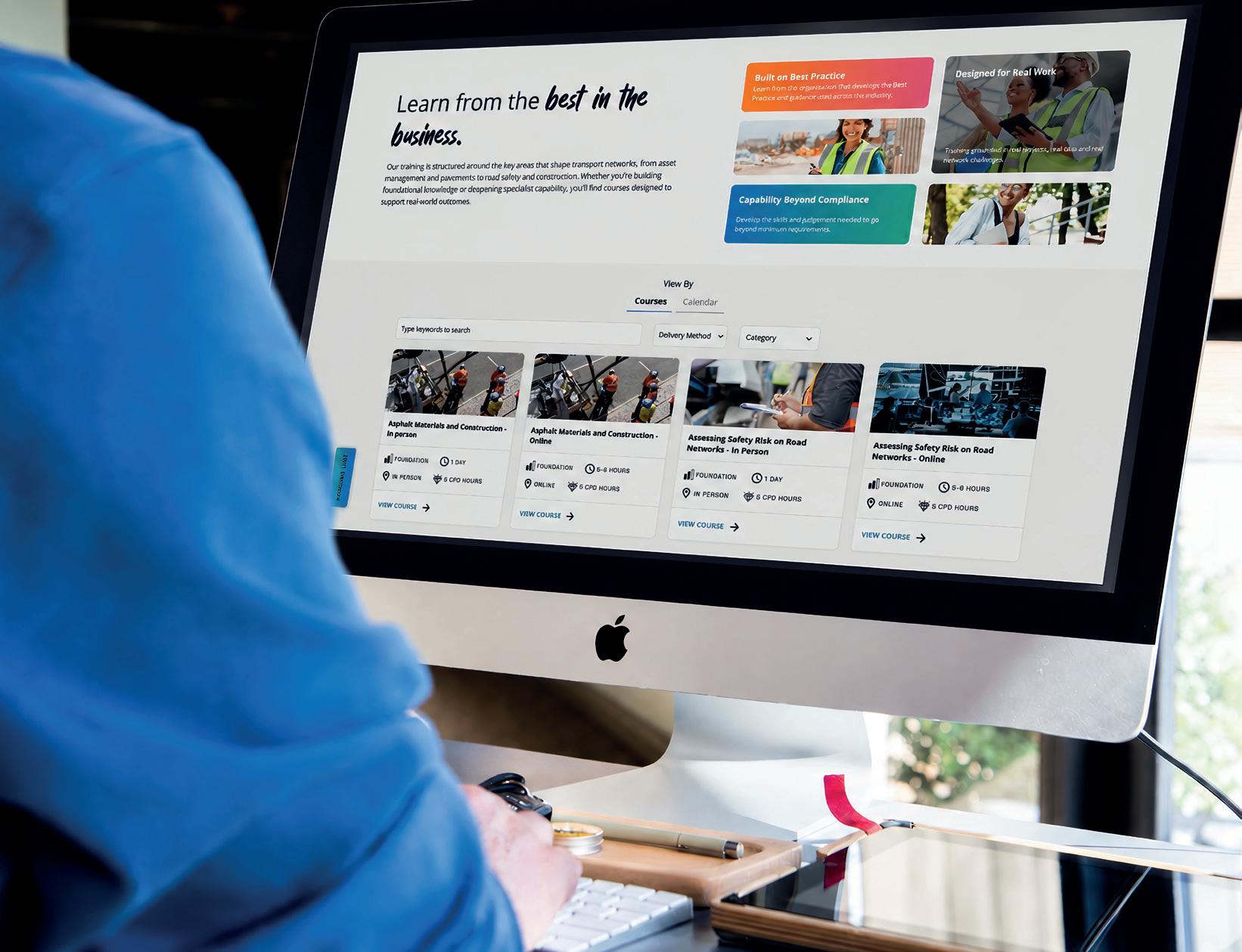
Shifting – where possible – away from face-to-face requirements has also helped to broaden the scope and reach of the NTRO’s programs, as Hay explains.
“We are democratising access to specialist transport training, not by diluting technical quality, but by making expert-led learning available online, in hybrid formats and at price points that work for individuals as well as organisations,” he says.
“If you imagine a small council or a small organisation in remote or regional
Australia, they can’t always afford to use the resource or pay for a trip to a state capital for face-to-face training, but they’re usually the people most in need.
“Technology now lets us provide quality online and hybrid training models and access isn’t limited by geography as a result.”
That being said, Hay says there’s still an intrinsic quality that comes with face-to-face learning, especially for more practical courses.
“We run three - plus- one tiers across NTRO. As you go up through the tiers, face -to -face tends to become more important. Introductory courses can largely be done online, but medium to higher expert levels move into hybrid and then mostly face -to -face,” he says.
This delivery model, as well as the courses themselves, continue to evolve to ensure that the programs are suited to current and future industry requirements.
“We developed more than 15 new online courses in a six- month period. That was driven by appetite from industry – we don’t work in isolation. We’re talking with stakeholders and individuals all the time, and that feedback tells us where the needs are,” Hay says.
“We’re looking to make sure people can come to us and get a single
point of truth when it comes to transport infrastructure.”
The NTRO’s industry immersion extends across the globe, with the company capable of utilising its ties with international transport organisations to ensure that domestic courses are kept up to date with best practice methodology.
“We’re part of the ‘Big Seven’ – the seven largest and most recognisable organisations focused on the transport infrastructure sector worldwide. We
something hasn’t been covered to their satisfaction in the market.”
Yet another source that helps the organisation deliver on this mantra is the NTRO’s MG Lay Library known as the National Transport Research Information Service (NTRIS). This curated knowledge portal provides access to a range of resources, from academic research papers to technical standards – all geared towards providing practical guidance.
NTRIS also houses both the industry’s successes and failures, helping to
“WE’RE PART OF THE ‘BIG SEVEN’ – THE SEVEN LARGEST AND MOST RECOGNISABLE ORGANISATIONS FOCUSED ON THE TRANSPORT INFRASTRUCTURE SECTOR WORLDWIDE. WE SHARE INFORMATION ALL THE TIME. IT’S NOT ONE‑WAY TRAFFIC; THERE’S A LOT WE LEARN FROM OTHERS OVERSEAS AND A LOT WE CONTRIBUTE.”
share information all the time. It’s not one -way traffic; there’s a lot we learn from others overseas and a lot we contribute,” Hay says.
“We’re not limiting ourselves to what we know in - house. We partner with others across the sector, from Cranfield University in the UK for aviation courses, to organisations like the Australian Pavement Recycling and Stabilisation Association (AustStab) locally. We also respond to specific requests from organisations when
avoid past mistakes, while showcasing successful methods and designs.
Hay says that at the end of the day, the main objective is to inform and educate the micro, in the hope that the macro can benefit.
“It’s not just about personal development. It’s about better practice leading to better quality infrastructure and better outcomes for everyone in Australia,” he says.
“I want to see a better outcome for the nation. That’s what motivates me.”
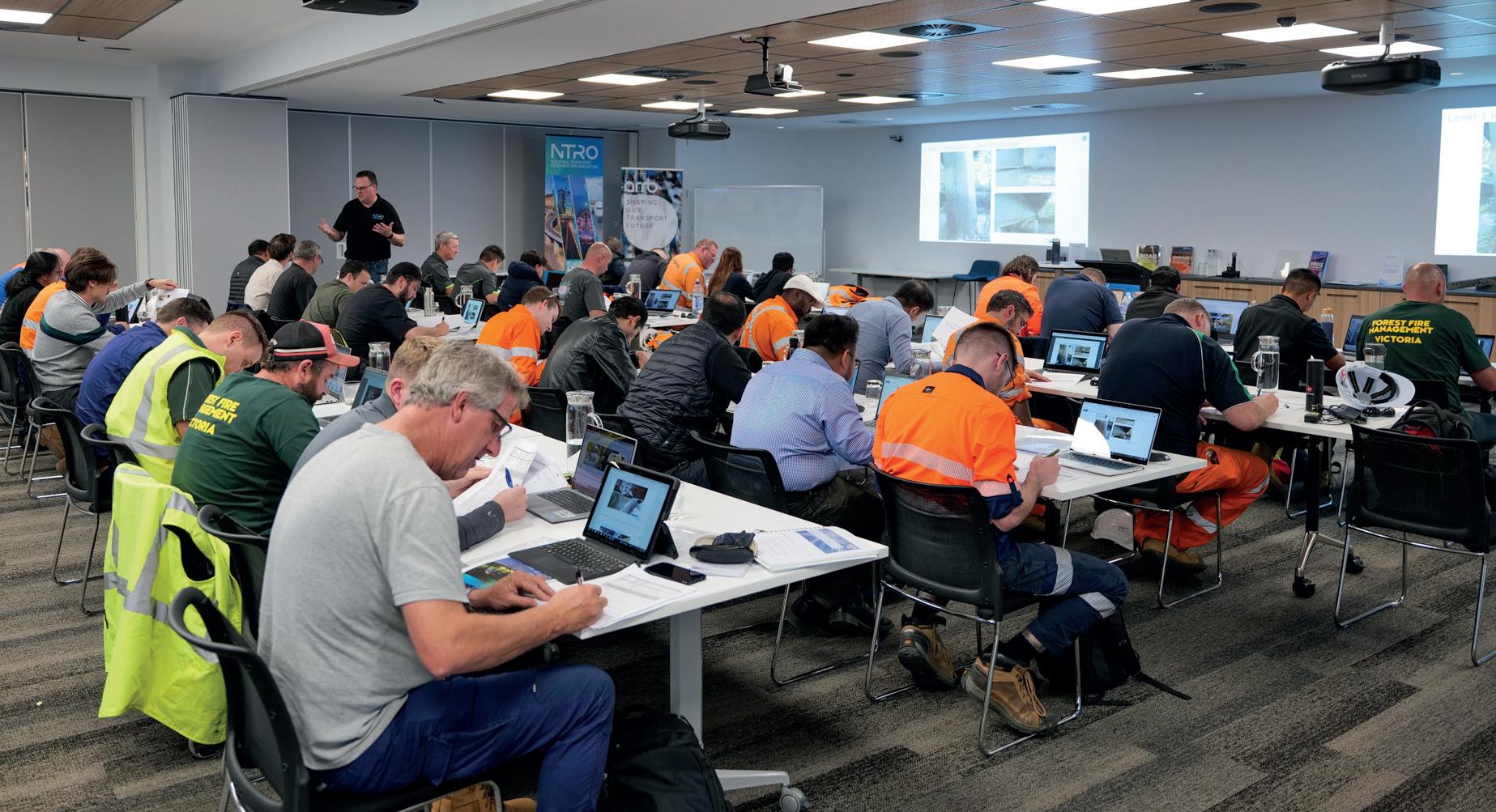
Training and courses cover a wide range of topics, with more being added, depending on industry demand.
Toowoomba Regional Council Flood Recovery Program works came in the aftermath of three
GEORGIOU’S GROWING DISASTER RECOVERY PORTFOLIO IS HELPING TO DELIVER ESSENTIAL WORKS FOR COMMUNITIES THAT HAVE BEEN IMPACTED BY SEVERE WEATHER EVENTS, SUCH AS FLOODING AND CYCLONES.
In Queensland, flooding now accounts for 30 to 40 per cent of the state’s transport infrastructure budget. In New South Wales, unresolved reconstruction work exceeds $7 billion, while in Victoria, weather-related damage costs $2.7 billion every year.
These financial burdens are exasperated by the severe impacts on local communities, who depend on resilient and reliable infrastructure to access essential services such as healthcare, schools, employment and more.
Disruptions to transport and community infrastructure can also heavily impact the effectiveness and timeliness of emergency services.
For Georgiou Group, the opportunity to assist communities through crisis, repair, the maintaining of services, and ultimately increased resiliency against future weather events is of the upmost importance.
That’s why the company has been expanding and growing its unique portfolio of disaster recovery services for more than a decade.
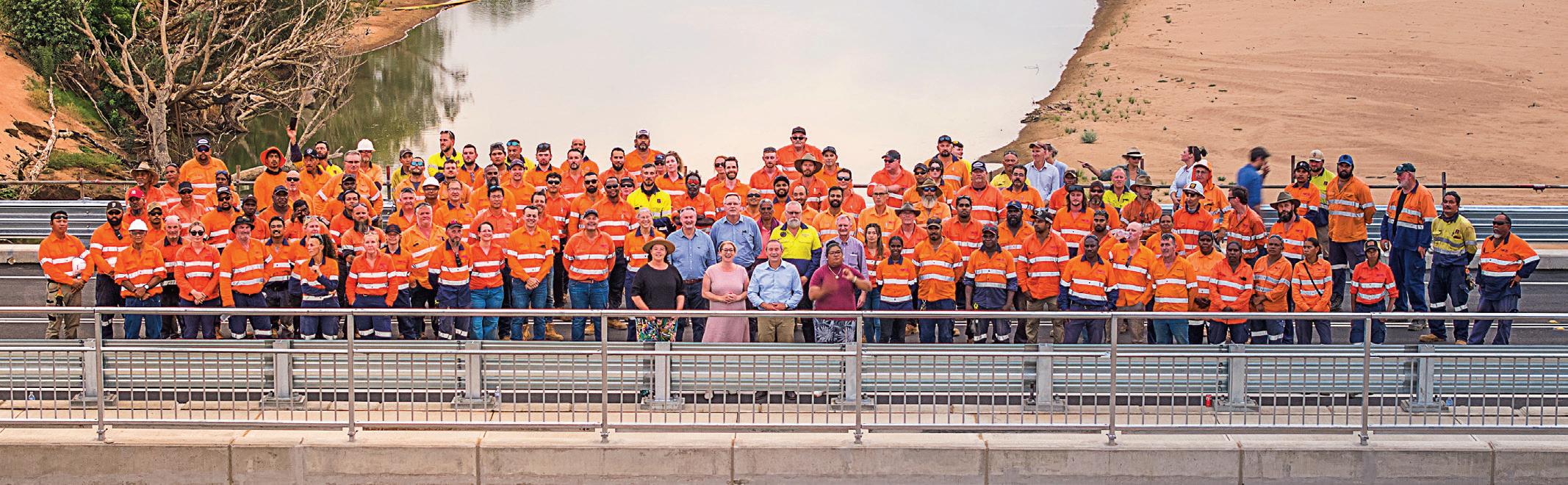
A major milestone for Georgiou Group’s disaster recovery team was the delivery of the $250 million Fitzroy River Bridge
Replacement in Western Australia. When Ex-Tropical Cyclone Ellie destroyed the bridge and 500 metres of road in January 2023, it severed the only connection between Fitzroy Crossing’s Aboriginal communities, the East Kimberley, and the Northern Territory.
Delivered through the Fitzroy Bridge Alliance – a partnership between Georgiou, BMD and BG&E for Main Roads Western Australia –the project included construction of a new 270-metre, eight-span incrementally launched bridge, estimated to be six times stronger than its predecessor. It was delivered by the team six months ahead of schedule.
This project represented not only a significant achievement for Georgiou but is also regarded as one of Australia’s most substantial disaster recovery projects.
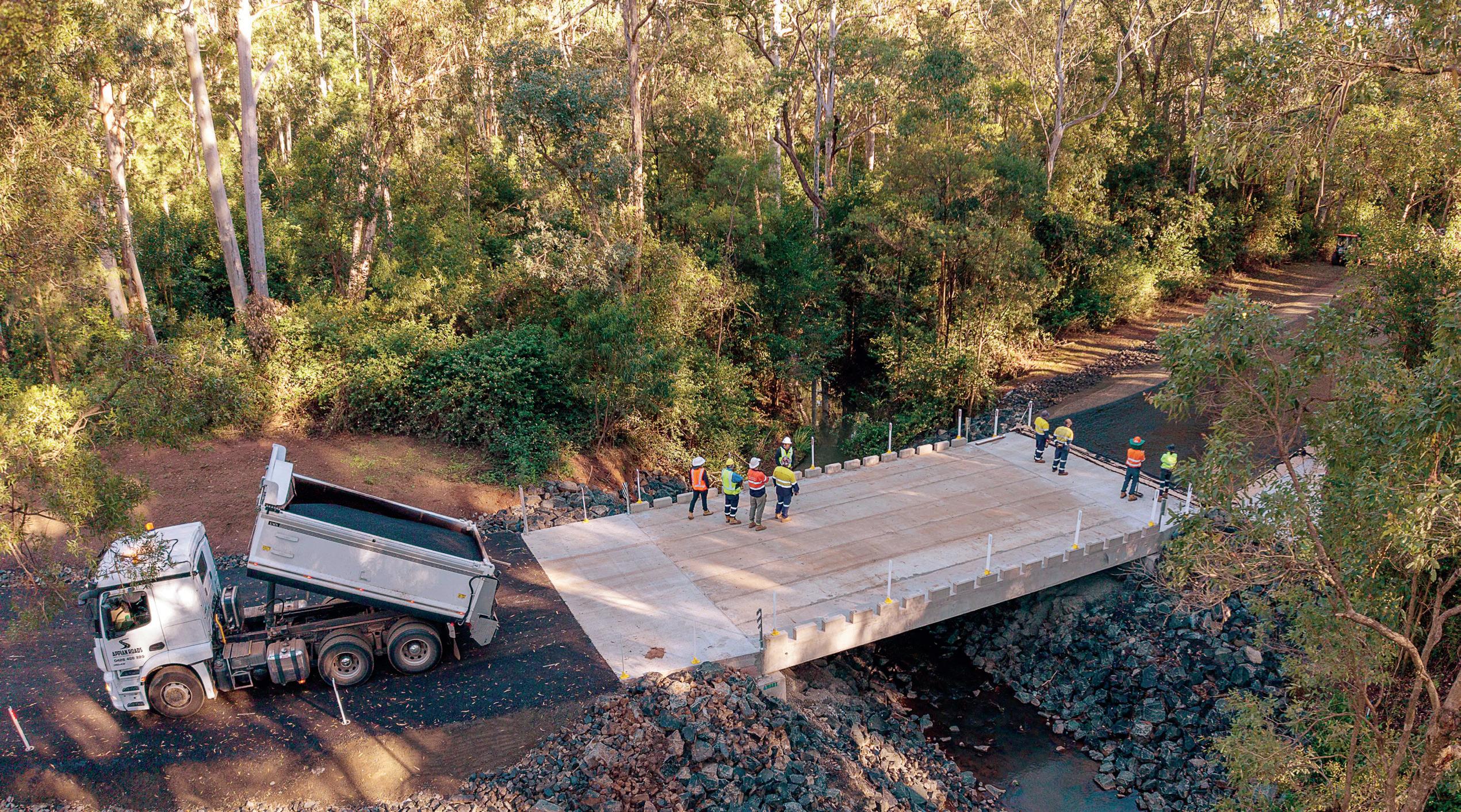
Yet another key project was the $95 million Toowoomba Regional Council Flood Recovery Program (North).
These works came in the aftermath of three devastating flood events in 2021–22 across more than 7000 individual sites.
For Blair Stormon, Project Manager – Georgiou Group, the first step in successfully delivering this package was equipping the delivery team with the best possible expertise.
“Having the right support staff, such as
dedicated traffic management personnel and people who’ve developed real expertise in disaster recovery, has been critical. It means that when we kick these jobs off, we’ve already got the right people in place to put our best foot forward with the client.
“On the bigger projects, we’ve built a strong contingent of superintendents whose main role is making sure we’ve got the right supervisors and foremen in the right roles – whether it’s roads, bridges, culverts, or slope works.”
Like many of Georgiou’s projects, these works were delivered under a collaborative contracting model, ultimately restoring approximately 550 kilometres of unsealed and 80 kilometres of sealed roads, replacing more than 1600 metres of culverts, and the remediation of six major landslip sites.
As well as serving communities through these works, Georgiou aspires to utilise local businesses, helping to ensure that works also benefit local economies.
“Especially when we’re working outside major population centres, we actively seek local people. It’s good for local participation, but it’s also crucial because environmental issues can be really area-specific, and you want people who understand that landscape,” Stormon says.
On the Toowoomba program, more than 71 per cent of construction spend was directed to local businesses, while the project also encompassed 446,047 working hours across 422 sites.
As Stormon explains, the Toowoomba works represented significant milestones, not only for the business, but also for his own personal development.
“Stepping up from Senior Project Engineer to Project Manager on the Toowoomba Flood Recovery Project was a big milestone for me. It was a $95 million job, so a big step up from the $10–15 million jobs I’d done previously, and it meant we could build a proper project
team of 25 to 30 people, not just half a dozen people working between other jobs.
“Toowoomba really paved the way for where we are now. Without taking that step into bigger Disaster Recovery Funding Arrangements (DRFA) packages and new clients, we wouldn’t be seen as we are now, as one of the main players in this type of work.”
Recognition of these works also extended far beyond the typical positive feedback and impressions from clientele, as Stormon explains.
“We ended up winning a couple of industry awards off the back of Toowoomba, which really reinforced that we were doing something right in this space,” he says.
The project achieved a perfect five out of five client performance score – the highest Toowoomba Regional Council has ever awarded – and was recognised with the Queensland Major Contractors Association (QMCA) Ian Harrington Collaboration Award, a model now cited by the Queensland Reconstruction Authority as a benchmark for all future DRFA contracts.
“People often assume you can never actually get a five out of five, but now that we’ve set the bar at that level, it puts positive pressure on our other projects and sets a clear benchmark for what ‘good’ looks like,” Stormon says.
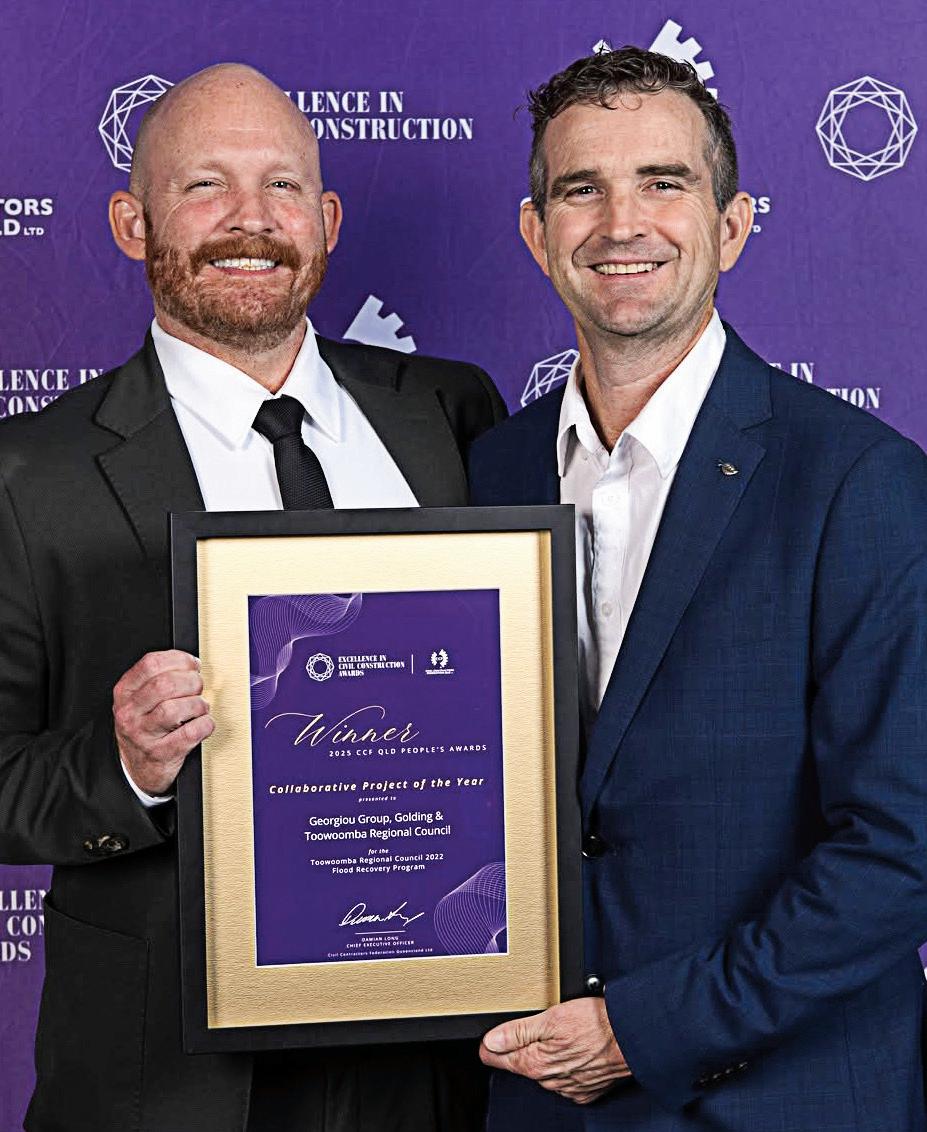
These works were also recognised with the Collaborative Project of the Year award at the Civil Contractors Federation (CCF) QLD Earth Awards.
And this is just a small taste of the work that Georgiou is doing in the space.
In Far North Queensland, the Captain Cook Highway Disaster Remediation Project represents Georgiou’s largest single DRFA engagement, valued at more than $100 million.
Delivered as a joint venture with Koppens for the Department of Transport and Main Roads (DTMR), the project is restoring more
than 60 sites within the World Heritagelisted rainforest and adjacent to the Great Barrier Reef Marine Park, incorporating the installation of six-metre-high debris fences engineered to absorb future rockfalls.
Stormon says these projects and more act as constant reminders of why infrastructure is so vital to local communities.
“One of the main things I enjoy is that we’re genuinely helping communities in a short timeframe. You know that at the end, you’ve restored something that’s critical to them,” he says.
“The other thing that I enjoy is bringing people up through this type of work and imparting knowledge so they can carry it forward. You can’t do everything yourself, the only way to grow is to upskill your people.”
With a portfolio that now extends nationally, encompassing more than $500 million in projects, Georgiou Group continues to build its capability to deliver outcomes that not only assist communities to recover from extreme weather events, but also ensure that communities can withstand severe weather scenarios well into the future.
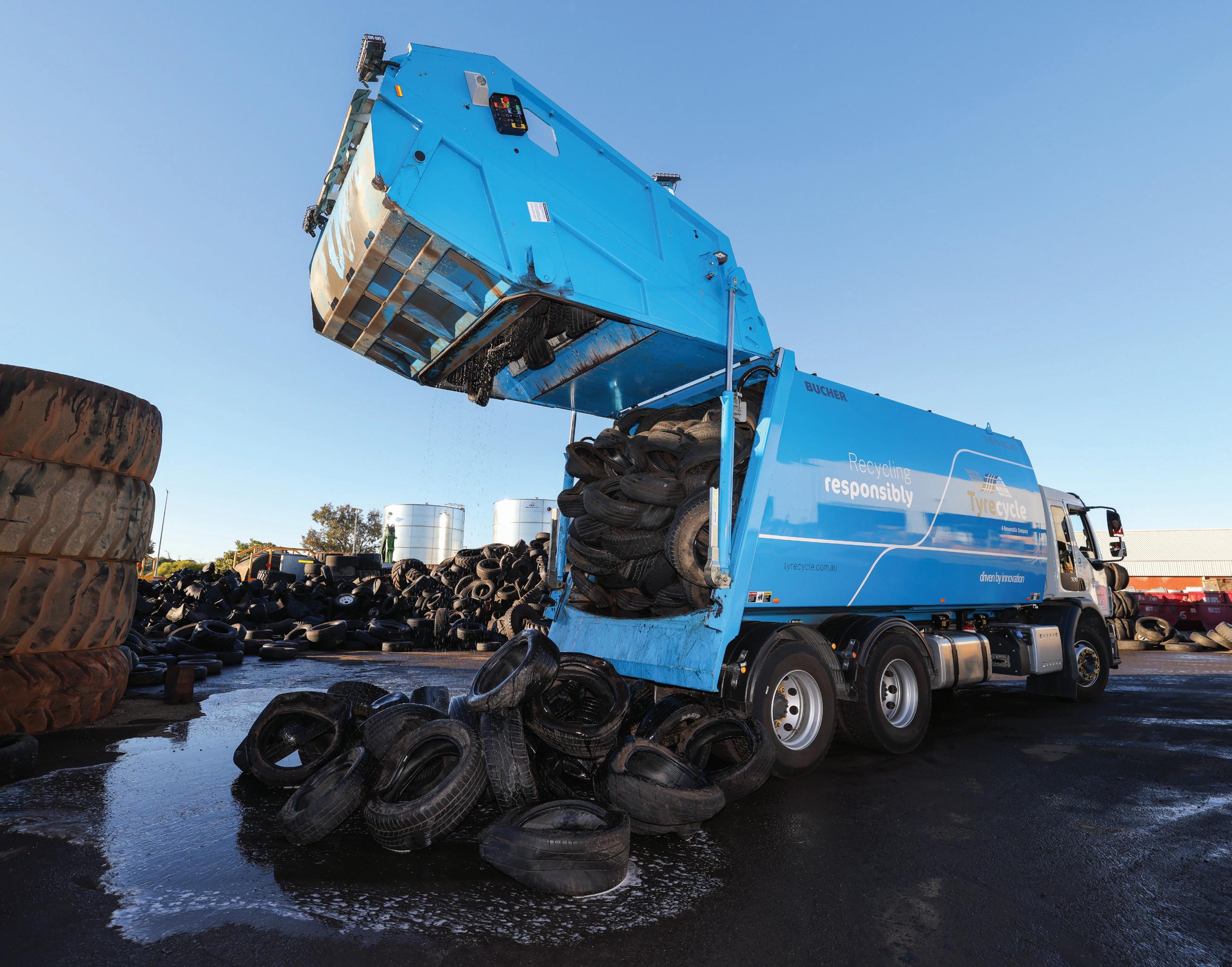
TYRECYCLE IS ADVOCATING FOR THE INCREASED USE OF CRUMB RUBBER IN ROAD INFRASTRUCTURE PROJECTS NATIONALLY, HELPING TO FURTHER UNLOCK THE RECYCLED MATERIAL’S ABILITY TO EXTEND THE LIFE OF ROADS BY A DECADE.
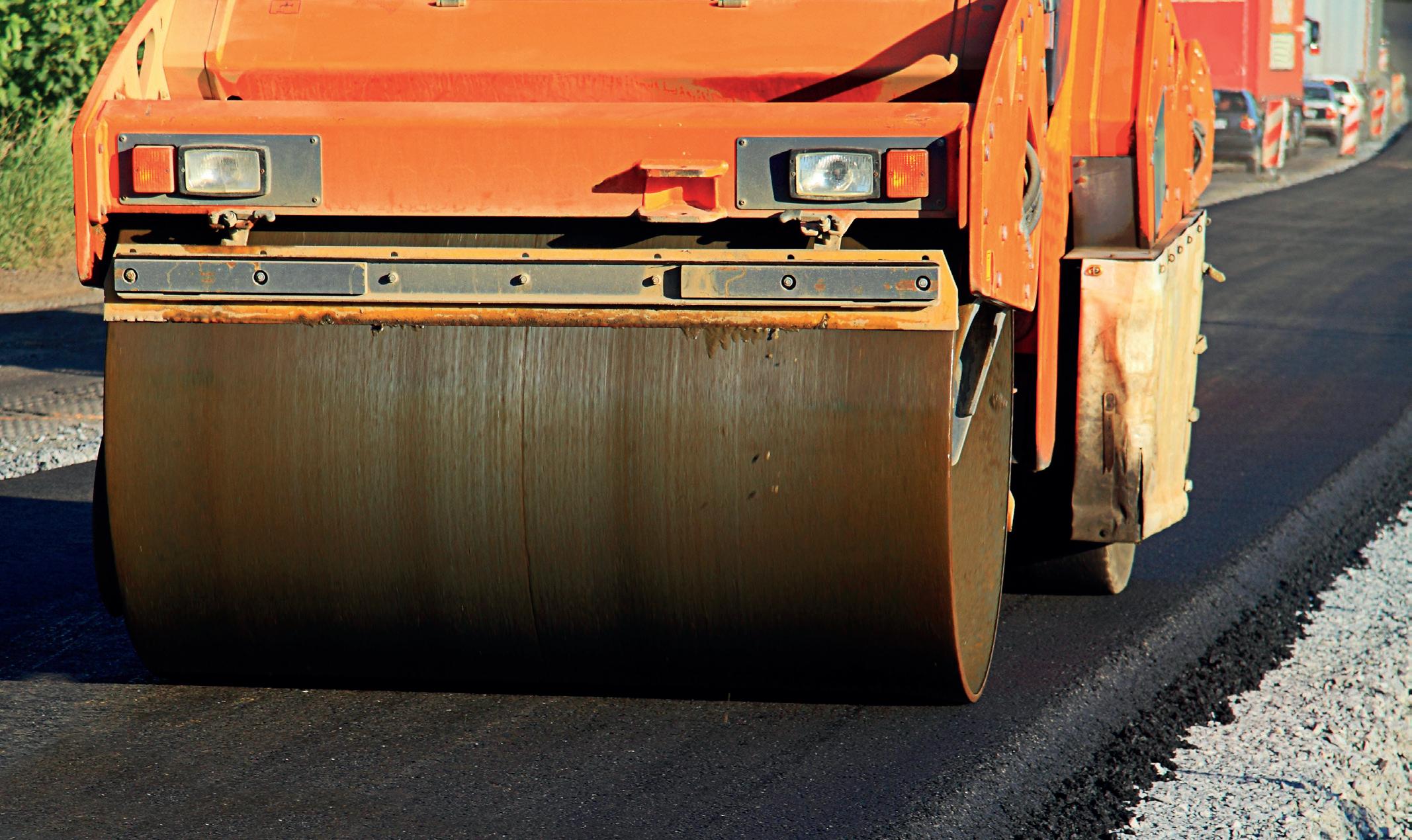
The construction of urban roads across Australia is facing something of a crisis. Laying these asphalt surfaces typically involves the modification of bitumen with synthetic polymers, which are usually imported from all over the world. However, this process has long carried a heavy carbon footprint, and now also carries an inflated cost due to current conflict in the Middle East.
In the wake of these environmental and economic challenges to asphalt production, operators are seeking alternative solutions for laying urban roads. Among them is the use of bitumen modified with crumb rubber, which is created from the rubber of recycled end-of-life tyres, and has been produced in the country for some time.
“The first trial of crumb rubber was completed in New South Wales in the
1950s,” says Trevor Distin, Technical Projects Advisor at the Australian Flexible Pavements Association (AfPA). “It was then commercialised in the 1970s, firstly in Victoria, where it was used predominantly for the spray sealing of rural roads.”
While used in spray sealing over the past five decades, the uptake of crumb rubbermodified bitumen as a solution for asphalt production has been minimal – despite delivering a wealth of well-documented benefits to roads, such as increasing the life of roads by 10 years due to enhanced durability. Because of this, its use has been extensively advocated for by tyre recycling giant Tyrecycle.
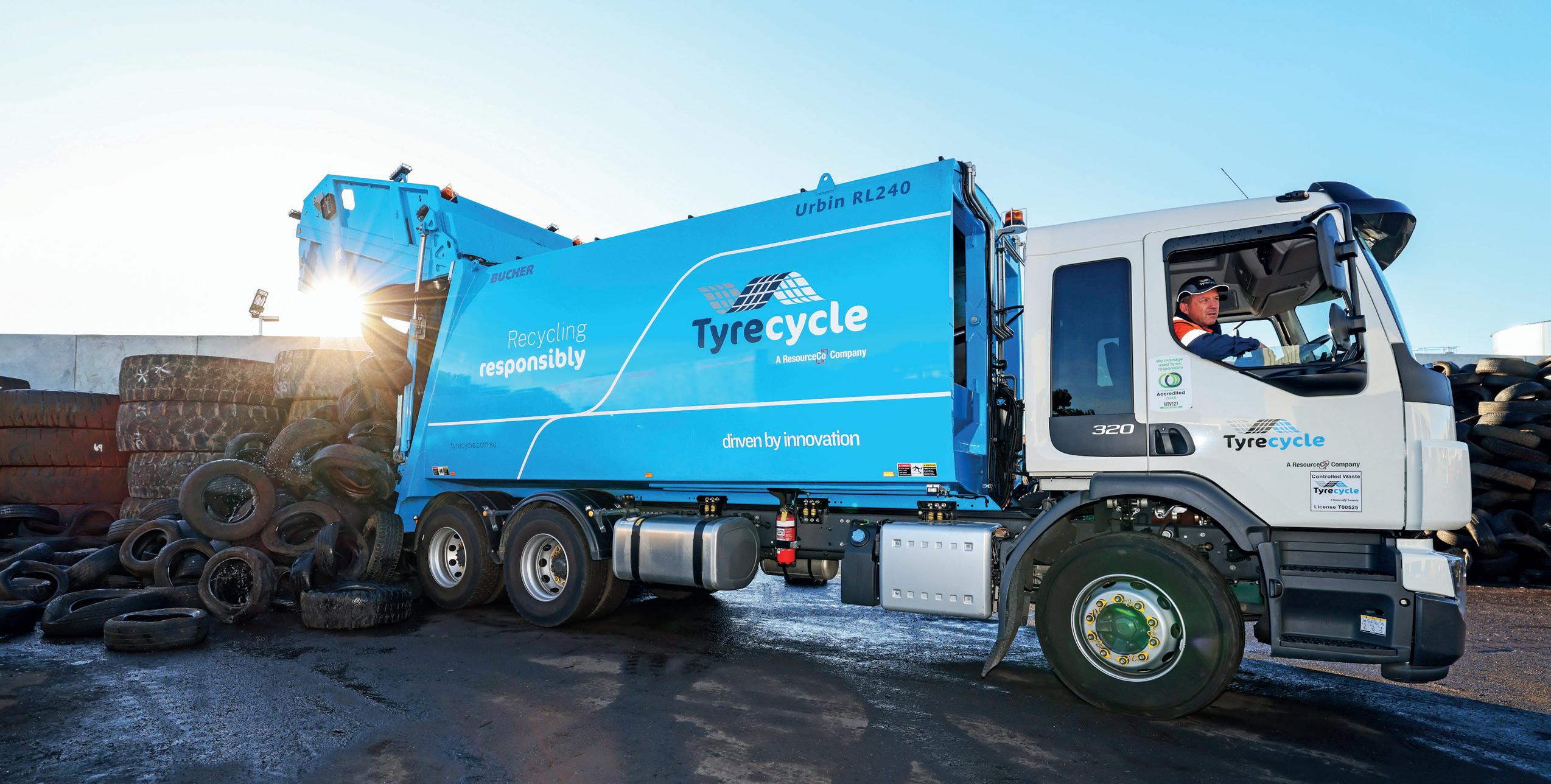
“We’ve been going for more than 30 years,” says Jim Fairweather, Tyrecycle Chief Executive Officer. “We’re Australia’s oldest, largest, and only national collector and
recycler of tyres, with a mission to eliminate every waste tyre and maximise the value of every tyre we collect. We want to keep tyres out of landfills and unregulated pathways –we treat them as a resource, not a waste.
“And, for the last 14 years, we’ve been operating as part of a much broader resource group called ResourceCo.”
As a market leader, Tyrecycle runs its tyre recovery business across nine processing facilities dotted around Australia, collecting in the order of 20 million equivalent passenger units every year. As part of its commitment to keeping tyres out of landfills, the company also manufactures crumb rubber out of its Melbourne, Sydney and Perth sites.
“We make more crumb rubber than anyone in the country,” Fairweather says. “Recycling is an interesting industry, because
those who don’t do well in it think it’s all about processing waste – but that’s only part of the equation.
“The secret to success is finding markets to place the waste-derived material in. This is what we are doing with crumb rubber.”
Fairweather explains that the use of crumb rubber-modified bitumen reduces the frequency and cost of road maintenance due to its toughness. Additionally, it reduces road noise, increases passenger comfort, reduces the chance of road rutting from repeated traffic loading, and has a high resistance to moisture and water infiltrations –reducing the risk of water damaging the pavement structure.
More holistically, crumb rubber-modified bitumen supports a circular economy around tyres.
Crumb rubber-modified bitumen is extremely cost effective when compared to other polymer-modified bitumen formulations, and can be accessed
domestically – a key consideration for operators.
For all the material’s observed benefits, Fairweather attributes its minimal uptake to barriers of convention, perception, and the role of the Federal and State governments.
“One key barrier is the legacy specifications and engineering standards currently used for asphalt production,” he says. “Manufacturers have abided by these criteria for a long time, so it’s hard for them to move away from what they know.
“Part of that hesitation is an enduring view that recycled materials are of lower quality, which is just not the case. We must produce crumb rubber to a very high standard for it to be used in asphalt – the process is very sensitive, and the product is very refined. As market leaders, the quality of our crumb rubber product is paramount.”
On a more administrative level, Fairweather cites the lack of incentivised procurement practices in favour of crumb rubber and recycled content in infrastructure projects
as another major hurdle. To combat this, Tyrecycle continues to invest in crumb rubber manufacturing infrastructure around the country, while working with partner organisations such as AfPA to educate the industry and develop the market.
“Together with Tyrecycle, we’ve published a number of crumb rubber specifications to facilitate the advance and uptake of the material in asphalt production,” Distin says. “Last month, we held a webinar on one of those specifications to the wider industry.
“We do lots of work in the space to spread the message that crumb rubber-modified bitumen is not only viable, but beneficial to asphalt production.”
Fairweather also shares that things are moving in the right direction in certain jurisdictions.
“Western Australia is a great example,” he says. “We didn’t sell any crumb rubber there a few years ago, but the government has since invested in tyre recycling facilities, and we complemented it with our own crumb rubber production site.



“We have seen a dramatic increase in the reception of the material there.”
But the work needed is far from over.
“If government, industry and procurement capabilities align, we can turn a significant waste challenge into one of Australia’s strongest circular economy success stories, with crumb rubber roads at the very centre,” Fairweather says.
“I think the crumb rubber market is about 25 per cent of its potential size in Australia, so there is a huge amount of upside.
“We may be on the right path, but we have a long way to go.”
Credeq’s services aim to mitigate risk as much as possible, before, during and after project delivery.

GLOBAL PERFORMANCE GUARANTEE PROVIDER CREDEQ IS HELPING AUSTRALIA AND NEW ZEALAND’S CONSTRUCTION AND INFRASTRUCTURE SECTORS NAVIGATE CHANGING PROJECT RISK, GREATER CAPACITY DEMANDS AND A FASTCHANGING PIPELINE OF OPPORTUNITY.

With more than 35 years of global specialist credit risk insurance, one of Credeq’s main areas of focus is Contract Performance Guarantees, otherwise known as Surety. In Australia and New Zealand, its surety team brings 18 years of local market experience, with a strong focus on construction and mining – sectors where project risk is significant, but the economic and community benefit is substantial.
With a team that now stretches across ten countries, Credeq’s expertise is grounded and supported by global best practice, a benefit the company aims to pass on to Australia’s construction industry.
For Ian Lee, Director of Strategy & Originations, Surety at Credeq, the role of a performance guarantee provider has become increasingly important as construction risk becomes more complex.
“Construction has always carried risk, but the nature of that risk is changing,”
Lee says. “Contract values are larger, supply chains are stretched, budgets and feasibilities are constantly being tested. Our role is to help our clients manage these risks so they can tender and execute with confidence,”
“We look after a broad range of businesses, from national and multinational tier-one contractors through to your emerging specialist subcontractors with turnover from around $20 million a year.”
Credeq’s support and service is particularly prudent in enabling the industry to face some of its biggest challenges head on –the growing requirement for capacity and risk of contractor insolvency.
“One of the key learnings that the industry has taken away from the COVID era, is that subcontractor insolvency is one of the leading causes of loss-making and problem projects that can cause significant disruption across the construction supply chain,” Lee says.
Credeq’s model is built around directly addressing this vulnerability, by deliberately supporting not only the head contractors, but also the key specialist subcontractors that they rely on.
“Smaller specialist subcontractors are essential to the success of each project. Supporting key subcontractors is what allows tier one and tier two head contractors to thrive and operate with confidence,” Lee says.
Rather than treating performance guarantees as one‑off, transactional products, Credeq underwrites contractors holistically. The firm conducts extensive due diligence on each contractor, looks through to their subcontractors, clients, financials and track record. Above all, Credeq seeks to understand the specific risks and mitigants of the contractor’s projects, as well as the sector that they operate in.
On the back of this work, Credeq provides a facility – a pre‑approved limit of Guarantee capacity – that the contractor can draw down across multiple projects.
This structure is designed to ensure capacity is there when needed, without repeatedly re‑underwriting from scratch, and to give both contractors and their subcontractor networks more confidence as they take on work.
“Our model is based on frequent, detailed discussions with clients, so we really understand what they’re doing, what issues they’re facing and how we can best support them in executing their strategy.”
Lee says.
That close relationship also allows Credeq to bring broader market insight to the table.
“Across our portfolio we see what works and what doesn’t. Without breaching any confidentiality we can bring industry‑wide experience to the table when we talk to clients about project and contract risk and the early warning signs to be aware of. That is one of the real benefits of our value proposition.”
This model continues to be shaped by industry feedback and insight, to ensure that the company can deliver on its ultimate goal: to enable the construction sector to absorb unforeseen shocks, whether it be systemic or project specific, instead of being undone by them.
WITH OPPORTUNITY COMES CHALLENGES
Lee admits that additional pressures and challenges will likely emerge as the sector
increasingly diversifies its portfolio away from traditional road and rail projects.
“The exciting part is our chance to support both contractors and principals as Australia navigates renewable energy transition, increasing electrification and the development of artificial intelligence (AI),” he says. “It’s a joint effort between government, private enterprise and financiers like us. It’s a complex and challenging space, but it’s a very exciting stage and we’re proud to be at the forefront of supporting that transition.”
When discussing technology, Lee stresses that while AI will become increasingly important across construction and finance, human perspective and control remain essential.
“Good underwriters rely on a broad range of subjective and objective information, both structured and unstructured. Context is very important and you need to understand the contractors, the principal, the project type and the pathways to resolving issues and disputes when things don’t go according to plan. One day AI may be able to properly ingest all of that, but we’re not quite there yet,” he says.
Support extends far beyond just the major players in the space, with smaller contractors also receiving high quality service.
“At the moment AI can’t understand the full nuance of why a particular project has gone off the rails and how a contractor and principal might work together to get a project back on track. We’re very conscious that while AI can help streamline processes, we can’t allow it to make us more binary or myopic in our decision‑making, especially in a complex industry like construction where the grey areas really matter.”
When asked for the best piece of advice he would offer to contractors in the market, Lee encourages them to extend the level of due diligence that they would conduct on their key subcontractors, to their financiers and guarantee providers.
“Contractors would consider many intangible factors when selecting a key subcontractor such as track record, character, attention to detail, resilience and experience working with similar contractors and projects. This should also apply when selecting a performance guarantee provider to ensure that they are able and willing to support you through each stage of the cycle.”
For Credeq, that is where strong surety partnerships begin: with capacity, clarity and the confidence to keep projects moving.

CIVILCAST HAS EMERGED AS A PIONEER IN CUSTOMISABLE ROAD PIT DESIGN, WITH ITS COMPONENTS HELPING TO LAY AN ESSENTIAL FOUNDATION FOR THE SUCCESSFUL DELIVERY AND LONG-TERM FUNCTION OF INFRASTRUCTURE PROJECTS NATIONWIDE.
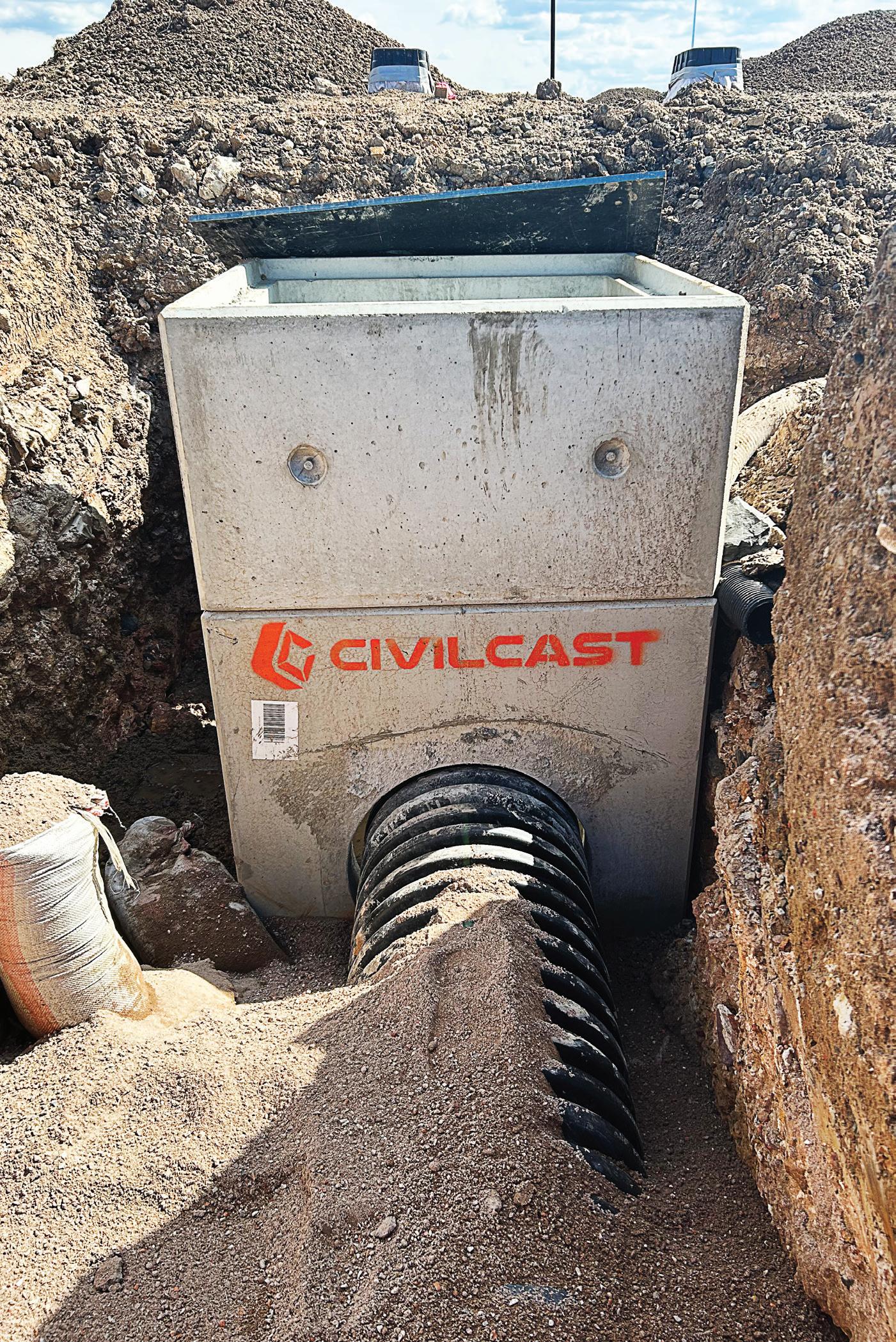
For many years, road pit design and customisation have been key features of Civilcast’s service.
There’s a tendency in infrastructure conversations to focus on what you can see – pavements, kerbs, traffic flow, bridge spans. But some of the most important decisions in road construction happen well below the surface.
Road pits, often overlooked, sit at the centre of that hidden network. And according to Civilcast Product Development Manager Brian Lee, they’re one of the most misunderstood components in the entire system.
“People still think of pits as a standard box you drop in the ground,” Lee says. “But the reality is that they’re a critical interface point between design, hydraulics, electrical, and long-term maintenance. If you get them wrong, you don’t just create a small problem – you create a recurring one.”
That sentiment is increasingly shaping how Civilcast approaches its road pit range, particularly as projects across Australia face tighter programs, more complex service corridors, and higher expectations around asset longevity.
Civilcast’s position is that road pits should now be considered engineered components rather than generic products.
“We’ve moved well past the point where a one-size-fits-all approach makes sense. Between stormwater, communications, power, and future service expansion, pits need to be designed with adaptability in mind. Otherwise, you’re forcing contractors to compromise on site, and that’s where problems start,” Lee says.
That idea of reducing compromise on site is central to Civilcast’s development philosophy. The aim is not just to supply a product, but to mitigate installation complexities, something that continues to cost contractors time and money across civil projects.
Anyone who has spent time on a civil construction site understands that theory and practice often diverge quickly. Ground conditions change. Services aren’t exactly where the drawings said they would be. Access is tighter than expected. Weather turns. Civilcast’s road pit designs reflect that reality. Instead of relying
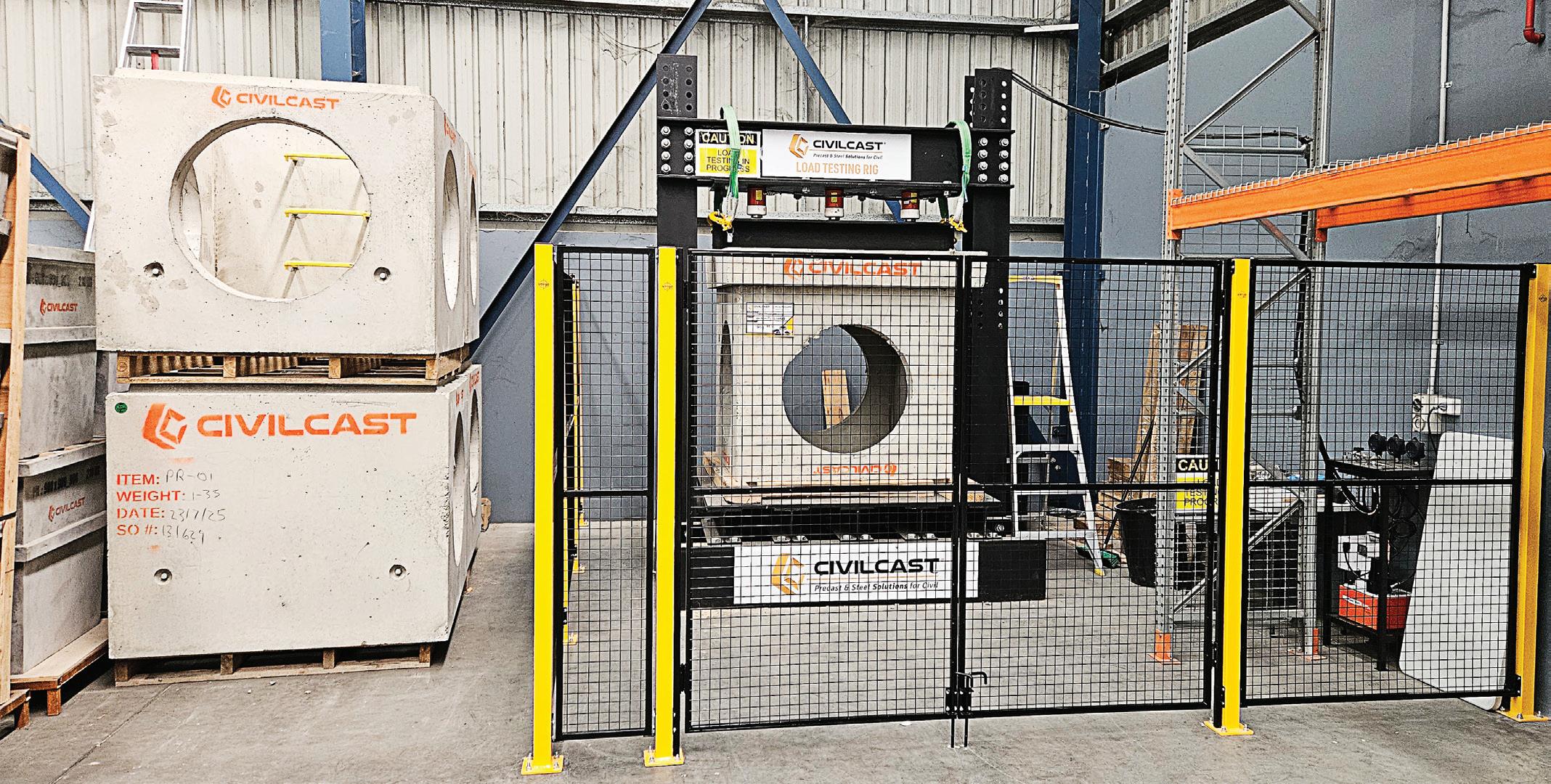
purely on ideal installation conditions, the focus has shifted toward robustness in the field – tolerances that accommodate real-world variation, lifting and handling improvements, and clearer integration points for adjoining assets.
“It’s not enough for something to look good on a drawing,” Lee says.
“If it slows down installation, or forces rework, then it’s not doing its job properly. The pit has to work with the installer, not against them.”
That philosophy is also influencing collaboration earlier in the design phase. Increasingly, Civilcast is working directly with engineers and contractors before final designs are locked in, an approach that reduces late-stage redesigns and improves constructability outcomes.
One of the less visible but increasingly important benefits of better pit design is risk reduction. Underground services remain one of the highest-risk areas in civil construction, not just in terms of safety but also long-term asset performance.
Misaligned entries, inadequate load capacity, or poor integration with surrounding structures can all lead to expensive rectification work, often long after practical completion.
“Every time a pit fails or needs to be reopened, you’re not just paying for the repair,” Lee says. “You’re disrupting traffic, reintroducing safety risks, and pulling resources back onto a site that should already be finished.”
This lifecycle view is changing how procurement decisions are made. Rather than focusing solely on upfront cost, contractors and asset owners are increasingly weighing installation efficiency and longterm maintenance implications. In that environment, product consistency and
engineering support carry as much weight as price per unit.
The evolution of road pit design isn’t happening in isolation. It reflects broader shifts in Australian infrastructure delivery, denser urban corridors, increasing utility coordination requirements, and the growing need to future-proof assets against unknown service expansions. Civilcast’s approach suggests that even the most conventional infrastructure components are being reevaluated through this lens of complexity.
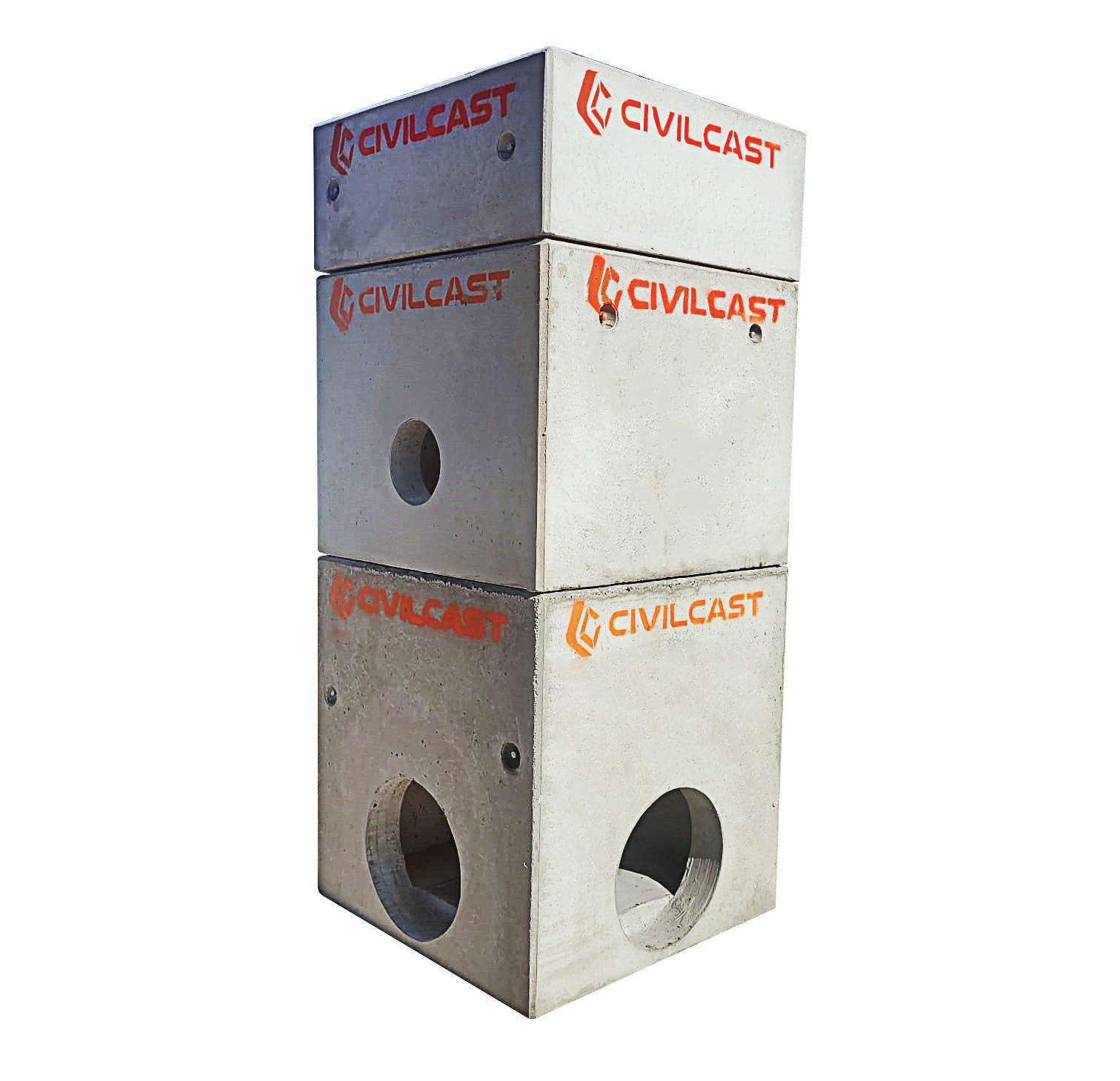
“We’re not trying to reinvent the pit,” Lee says. “We’re trying to make sure it actually fits the environment that it’s being installed in today and still makes sense fifteen or twenty years from now.”
That long-term perspective is increasingly important as road authorities and contractors grapple with assets that must perform beyond their original design assumptions.
Road pits will rarely be the headline feature of any infrastructure project. They won’t appear in ribbon-cutting photos or project launch videos. But their performance influences almost every layer above them. When they’re designed well, they disappear into the system. When they’re not, they become a recurring problem that no one can afford to ignore.
“The best outcome is when nobody has to think about the pit again after installation. That’s when you know it’s doing its job properly.”
For more information contact Civilcast on 1300 012 278 or visit civilcast.com.au
JLG INDUSTRIES’ NEWEST RANGE OF HIGHQUALITY, SUSTAINABLE LIGHTING TOWERS CAN BE CONFIGURED TO SUPPORT THE NEEDS OF CONSTRUCTION PROJECTS ACROSS AUSTRALIA.
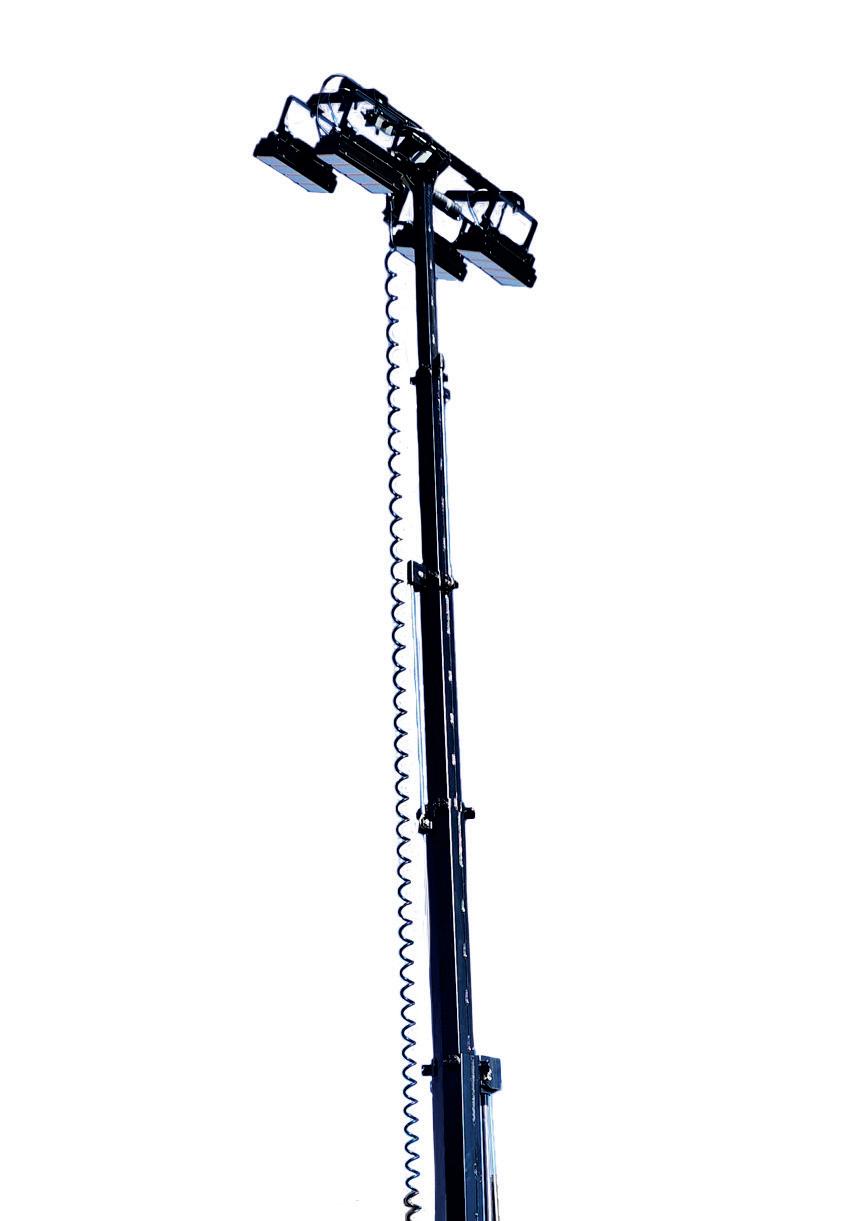
With its versatility and durable chassis
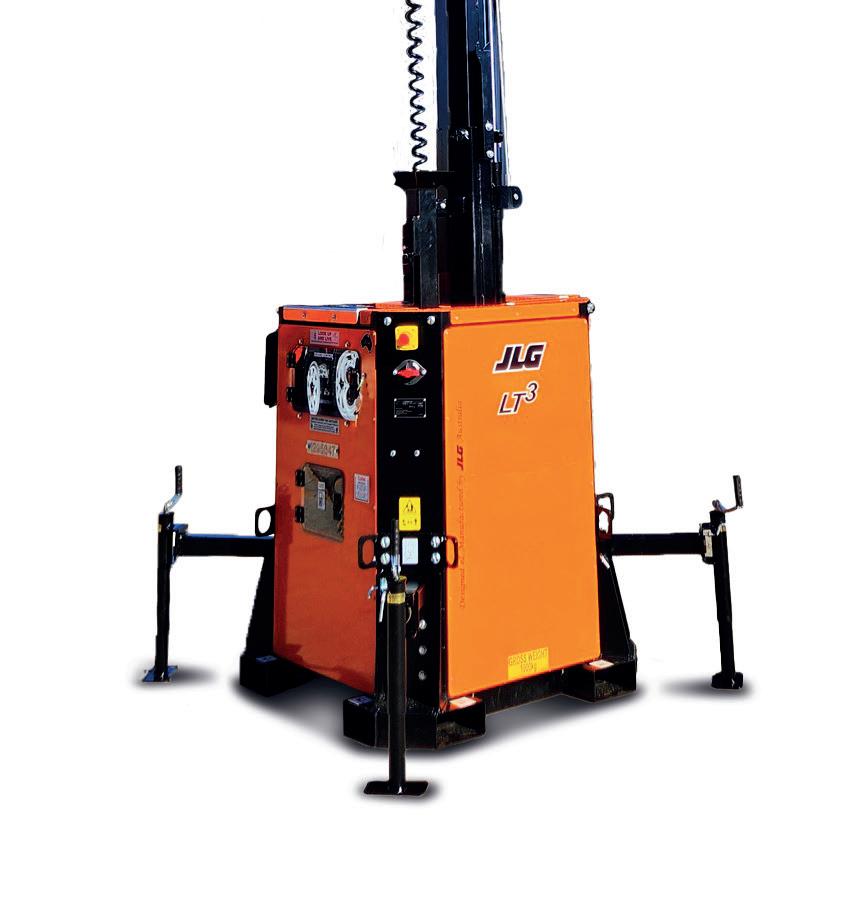

Lighting towers are critical components to road and construction work sites.
In the day, they can illuminate darkened structures and shaded workspaces. At night, they extend operating hours, enabling crews to conduct works while minimising impacts for motorists, while also maintaining stringent on-site safety standards.
These benefi ts are vital in Australia, where an expansive road network requires constant maintenance and upgrading in a variety of conditions and times.
Lighting towers must be durable and effi cient to effectively assist demanding road and construction work operations – exactly the way JLG Industries makes them.

JLG Industries is an iconic access equipment brand which provides the Australian market with highquality solutions.
From its specialised Port Macquarie facility in New South Wales, the company designs and manufactures products to cater for Australian worksites while satisfying growing demand for environmentally sustainable equipment.
Lighting towers are no exception to this, and have been key to the company’s product portfolio with three distinct ranges – the AN series, Skid mounted series, and the Metro series. JLG’s newest range of lighting towers, the Hybrid range, builds on the success of these predecessors.
The Hybrid lighting towers are fl exibly designed to be applied to both product series. They can be built with dynamic articulated masts for the AN series and its mining and

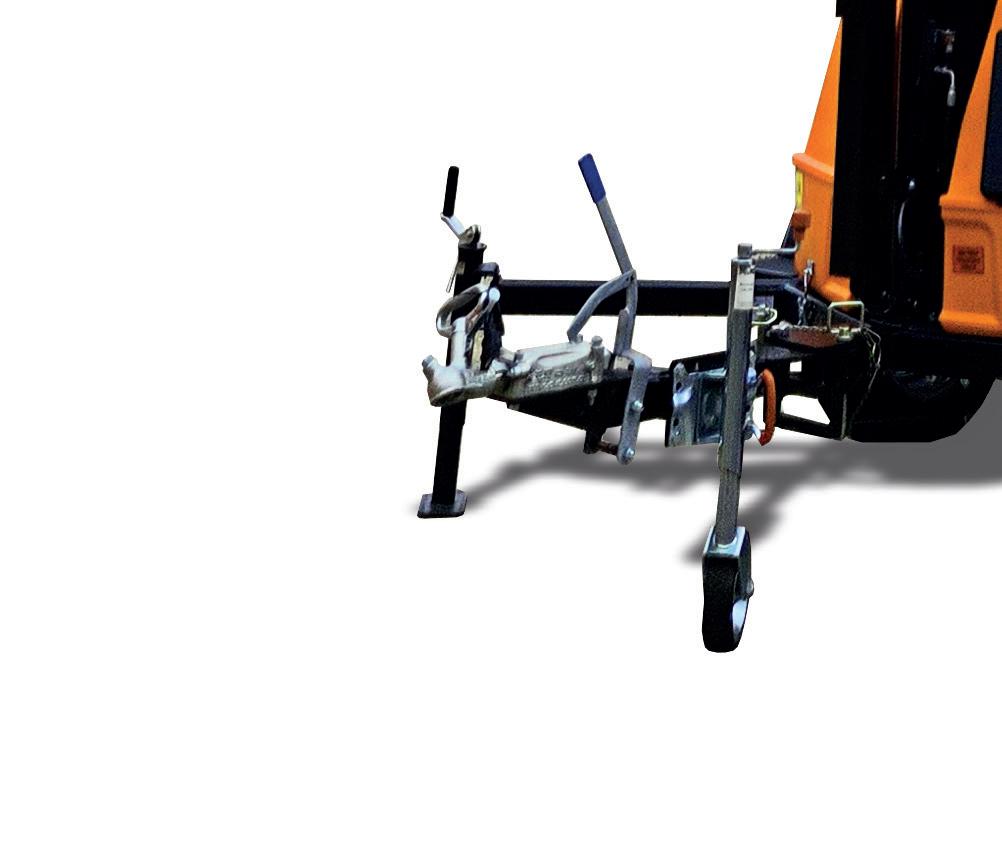
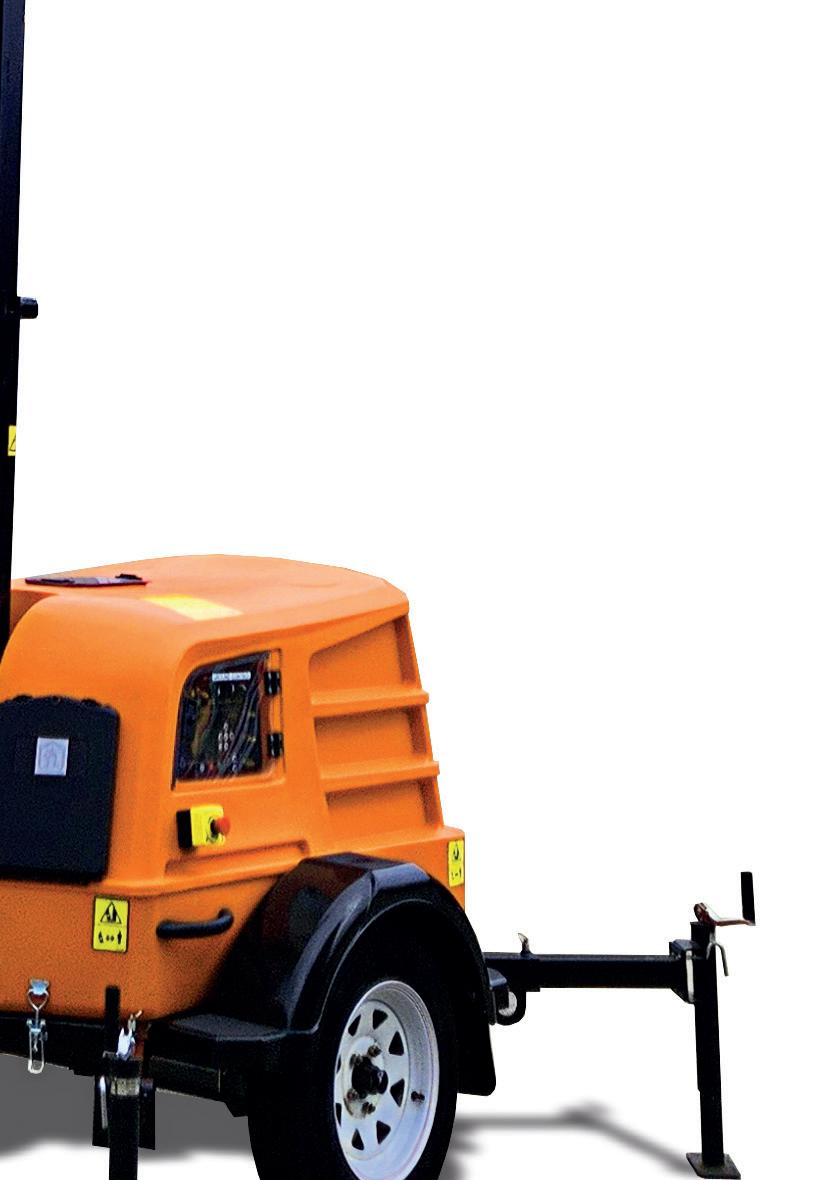

heavy construction applications, or straight vertical masts for the Metro and Skid series and its civil construction and road work needs. User-friendly controls are present across both uses.
This versatility, along with a proven durable chassis design, makes the newest Hybrid lighting tower range perfect for use in harsh climates nationally. The towers’ effi ciency and longevity are achieved through its hybrid power system – a combination of LiFePO4 lithium batteries and a Kubota Z482 diesel engine – as the name suggests.

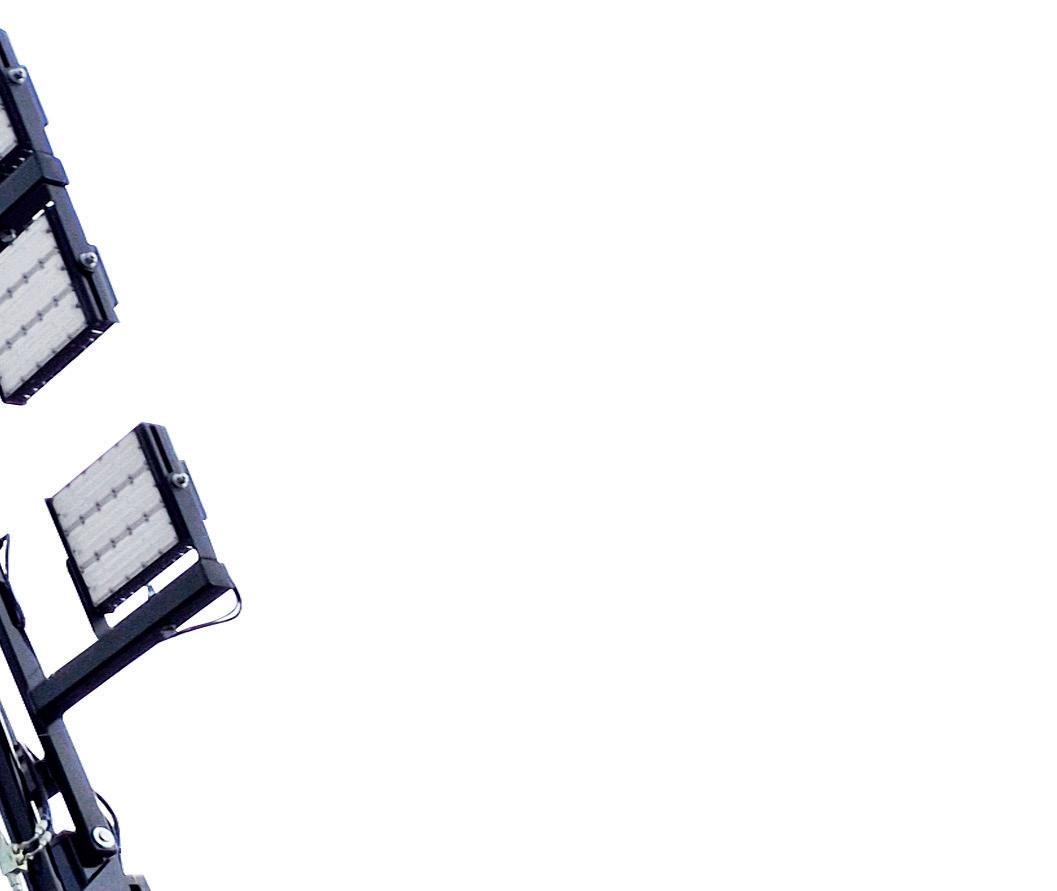
“It’s all about maintaining our highquality manufacturing standards, while continuing to make things more energyeffi cient and sustainable,” says Arron Cooper, Product Manager at JLG.

“LiFePO4 lithium batteries have enough power to light your worksite for approximately 11 to 12 hours before needing to recharge. This means you can put it on charge during the day and you’re ready to go the next night.”
In a further effort to be sustainable for operators, the Kubota diesel engine built into JLG’s Hybrid lighting tower range is Tier Four compliant. This ensures the machinery adheres to stringent air quality emissions standards, which provide a higher level of fuel effi ciency and a reduced environmental impact at the same time.

“It’s not just about reducing carbon emissions and fuel savings,” says Cooper, “it’s also about not having to run the engine during the night to provide lighting.
“That’s a massive benefi t when working in high-density urban areas.”
JLG’s Hybrid tower is the latest example of how the manufacturer’s local design and production capabilities allow it to make reactive product considerations with the unique environments of the Australian worksite in mind.
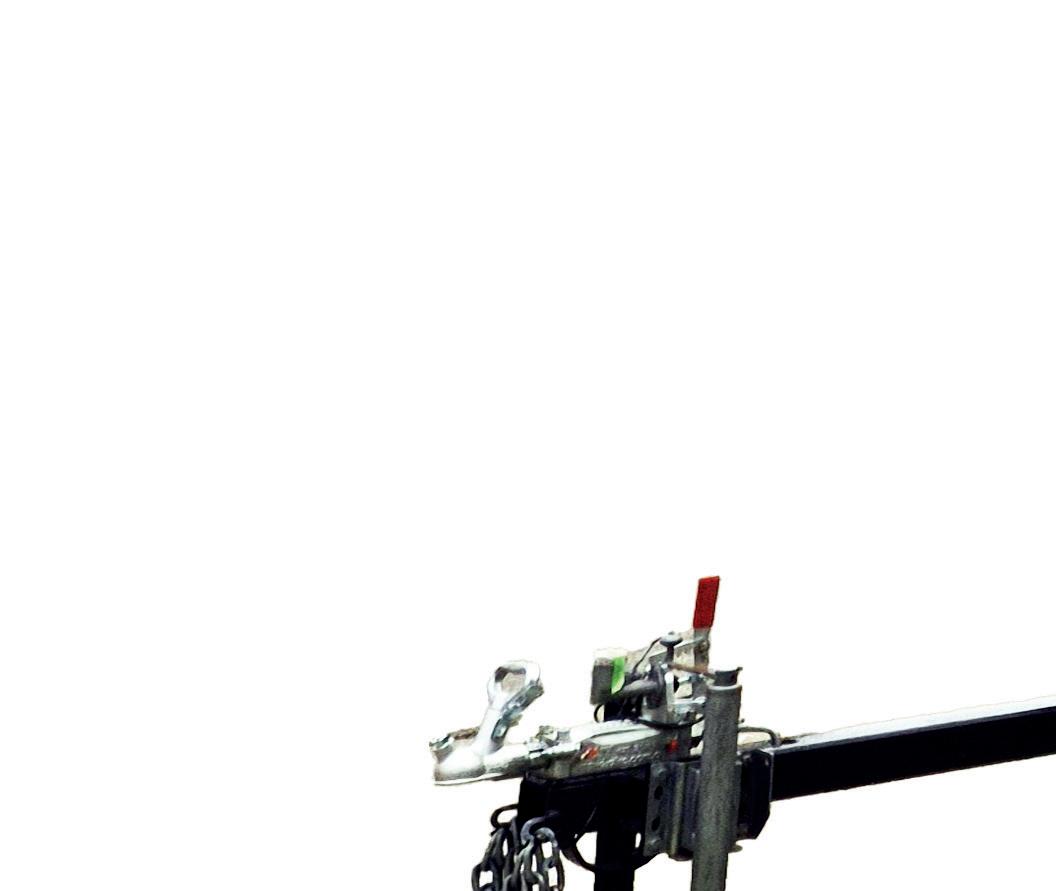
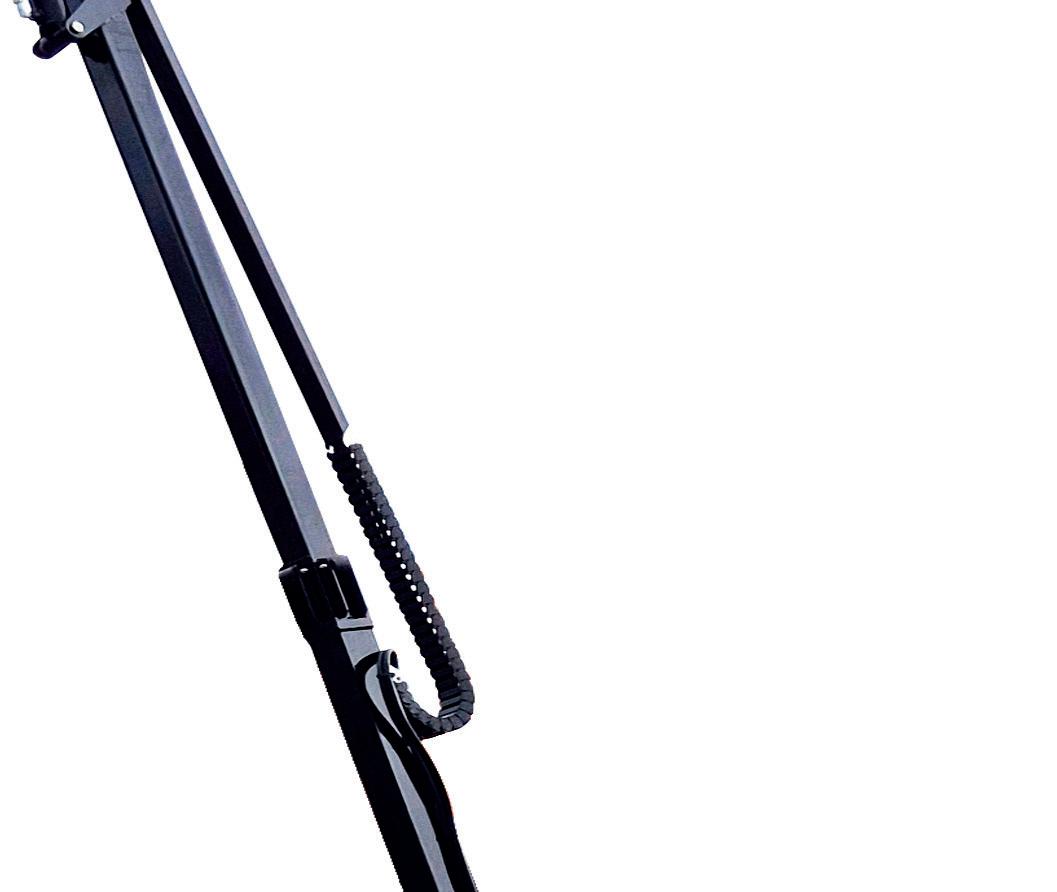
“AT THE BEGINNING OF THE DESIGN PHASE, WE SAW THE NEED TO MAKE THIS HYBRID POWER PACK RETROFITTABLE TO EXISTING STANDARD JLG DIESEL METRO AND AN SERIES UNITS IN THE FIELD, WHILE ALSO KEEPING AS MANY COMMON COMPONENTS AS POSSIBLE.

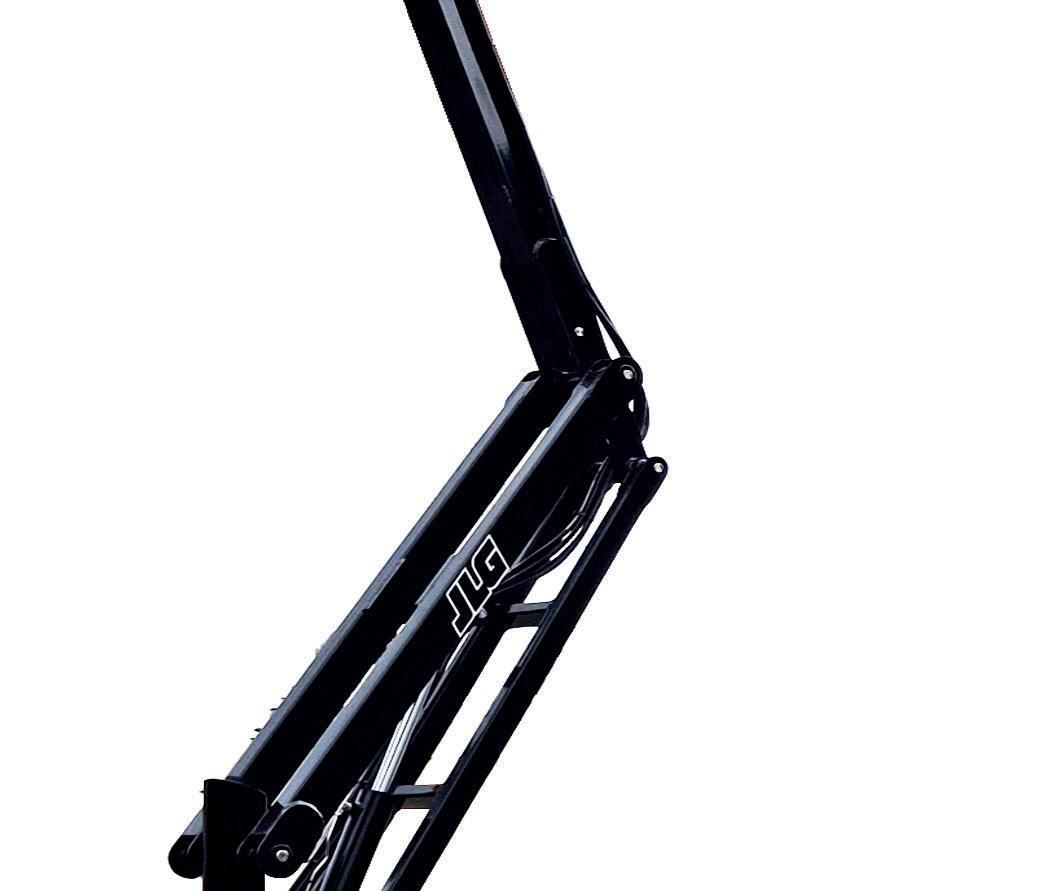
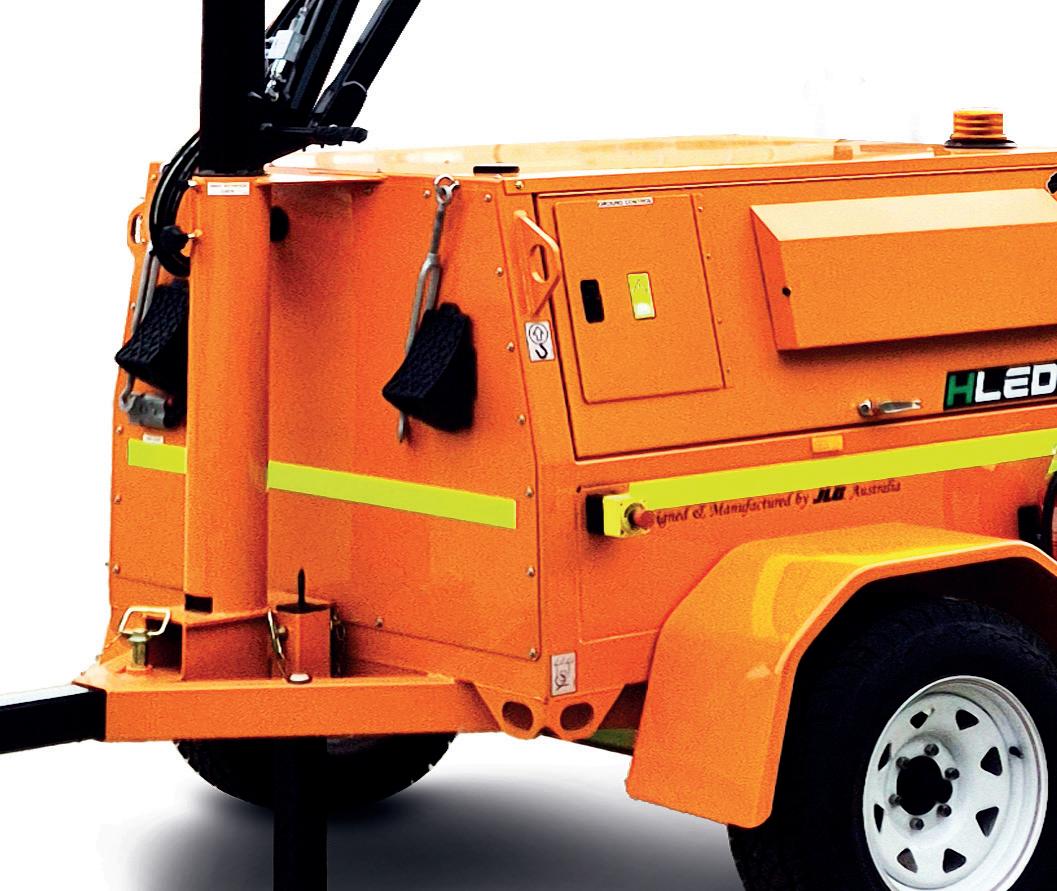

“Providing hours of lighting was just one part of selecting the right battery for our new Hybrid range,” Cooper says.
“It’s also about making sure the product is reliable long-term. LiFeOP4 batteries are better suited to industrial applications for their durability and increased lifecycle, which is ideal for the climates our towers frequently operate in.”
In an age where more companies and industries are shifting towards a more sustainable circular economy, JLG understands that operators can’t be expected to purchase new products with every wave of innovation. Because of this, the company is offering businesses across Australia and New Zealand the ability to upgrade their current models to more sustainable and effi cient hybrid alternatives.

“At the beginning of the design phase, we saw the need to make this hybrid power pack retro-fi ttable to existing standard JLG diesel Metro and AN series units in the fi eld,” Cooper says, “while also keeping as many common components as possible.
“Customers looking to make a shift to more sustainable and greener products now have an option of either purchasing new units or upgrading and refurbishing their existing units.”
PAD Civil provides clients with an integrated approach to project delivery, helping streamline construction programs while maintaining a strong focus on safety, quality and efficiency.
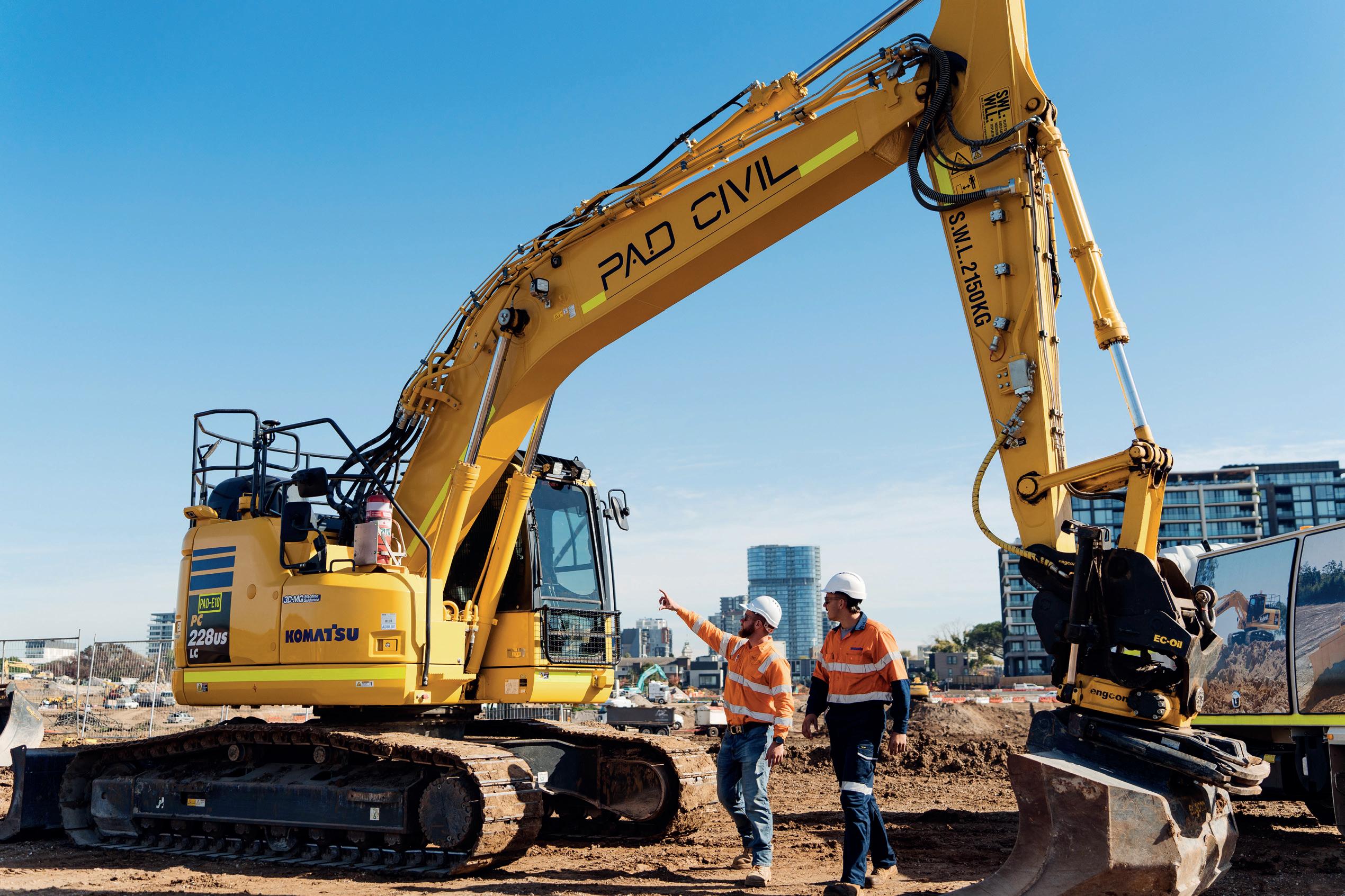
VICTORIA-BASED CIVIL CONTRACTOR PAD CIVIL IS USING KOMATSU MACHINERY AND DIGITAL CONSTRUCTION TECHNOLOGY TO DELIVER SAFER, SMARTER AND MORE EFFICIENT INFRASTRUCTURE PROJECTS ACROSS THE STATE.
When Ricky Thomson founded PAD Civil, it was a commercial plumbing and drainage operator for customers in and around the Melbourne suburb of Thornbury. But six years and many projects later, things have changed.
Today, the company is a diversified civil construction contractor, servicing both public and private clients across road infrastructure. Its operations know no limits, with projects spanning road infrastructure, utilities, renewable energy, sports and recreation facilities, health and education precincts, rail infrastructure, industrial developments and commercial construction.
Boasting strong-in house capabilities, PAD Civil provides clients with an integrated approach to project delivery, helping streamline construction programs while maintaining a strong focus on safety, quality and efficiency.
And, as the business has expanded, so too has its investment in technology and innovation.
PAD Civil has been purchasing Komatsu machinery for the past five years, working closely with the manufacturer
to integrate Intelligence Machine Control (iMC), Smart Construction 3D Machine Guidance (3DMG), and Komatsu’s Smart Construction suite of digital solutions across its fleet.
Thomson says the ability to access realtime project data and machine guidance technology is helping improve accuracy, productivity and visibility throughout the company’s civil projects.
“Digital visibility is critical on major civil projects because it gives us live data every day,” he says. “Through drone survey support and live as-built data from the machines, we can track excavation quantities and project progress in real time.
“It gives our clients trust and confidence in what we’re doing on-site.”
One of the biggest challenges civil projects face is excavating accurately to design – particularly during deep drainage works and complex excavation activities.
“Trying to dig to a design model with deep drainage is always challenging,” Thomson says, “but with iMC and 3DMG we can see real data directly from the machine with the operator,
without needing a spotter to check heights, helping us improve both safety and effi ciency.
“It’s also helping our crews complete deep excavations, battering and benching works with greater precision, while reducing the need for external survey support throughout the project lifecycle.”
Komatsu’s iMC technology is an integrated machine guidance and automation system that uses Global Positioning Systems, sensors and 3D design data to help operators work directly to the project design. By automating key machine functions and providing real-time positioning information, iMC improves accuracy, reduces rework and survey requirements, and helps increase productivity on site.
“Our crews are much more selfsuffi cient thanks to iMC because they’re not relying on external surveyors. The information and guidance are right there in the cab and available when they need it,” Thomson says.
The benefi ts are particularly valuable when operating in tight corridors and around live services, where manoeuvring heavy machinery and lifting materials can present additional risks and challenges.
“Being able to see exactly where you are relative to the design, and
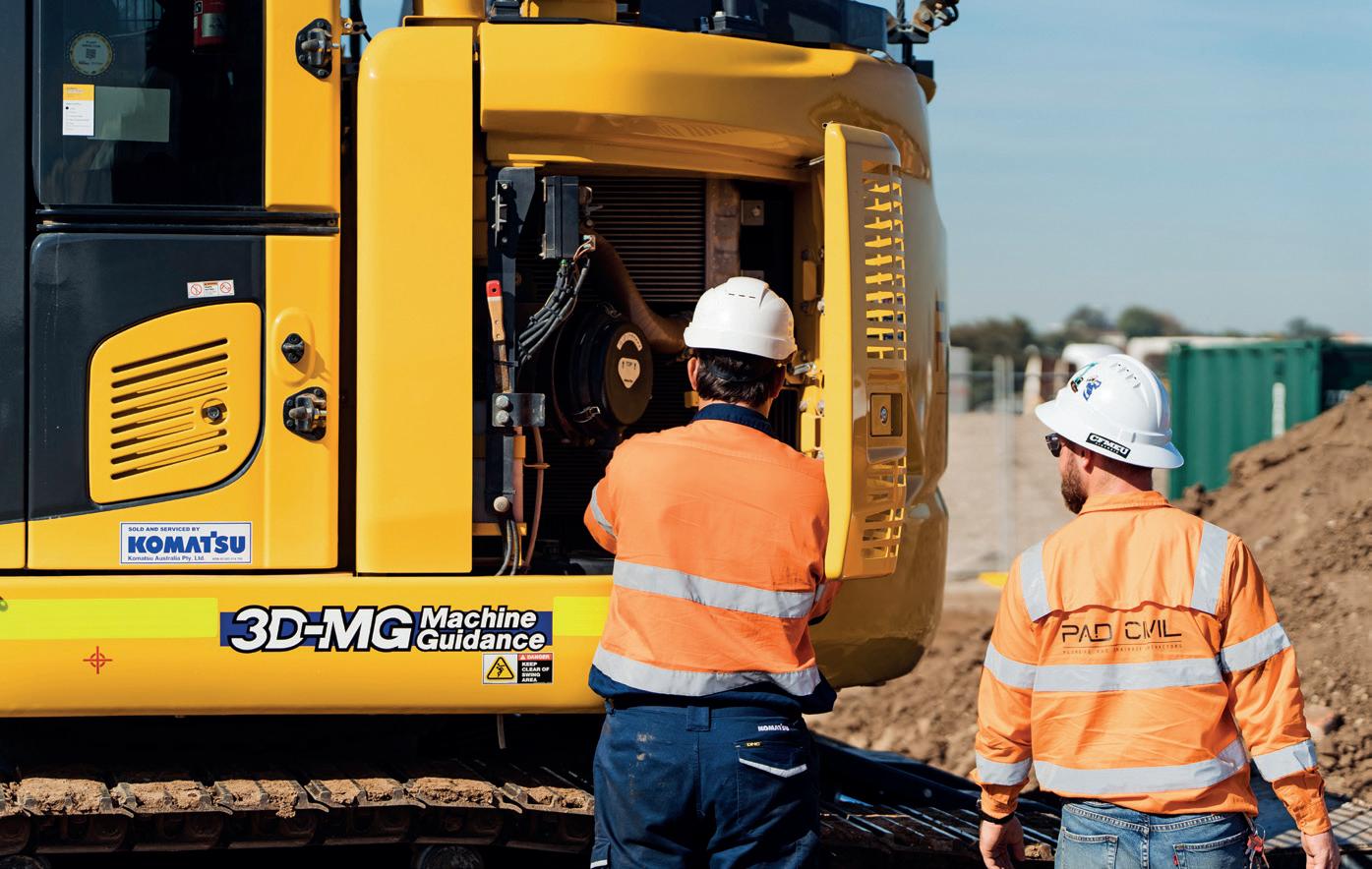
work confi dently around existing services is a major advantage. It helps improve safety while also keeping projects moving.”
Beyond productivity and project delivery, PAD Civil’s investment in modern equipment and technology is also helping to attract and retain skilled operators in an increasingly competitive labour market.
“Using state-of-the-art technology makes operators more comfortable and confi dent, which ultimately makes them safer,” Thomson says.
“When you’ve got high-quality equipment and technology that genuinely helps people do their job better, good operators want to stay. That’s important for us as we continue to grow.”
The partnership extends well beyond the initial machine purchase, with ongoing aftersales and onsite support playing a critical role in maintaining uptime, productivity and project performance.
“The aftersales and on-site support make a massive difference because it gives us confi dence in our machines and we know the team is there to support us if any issues arise,” Thomson says.
“As we continue to work on Tier One infrastructure and construction projects, having a machinery partner that can provide both quality equipment and smart technology solutions is critical to our success.
“We’re looking forward to continuing our partnership with Komatsu for many years to come.”
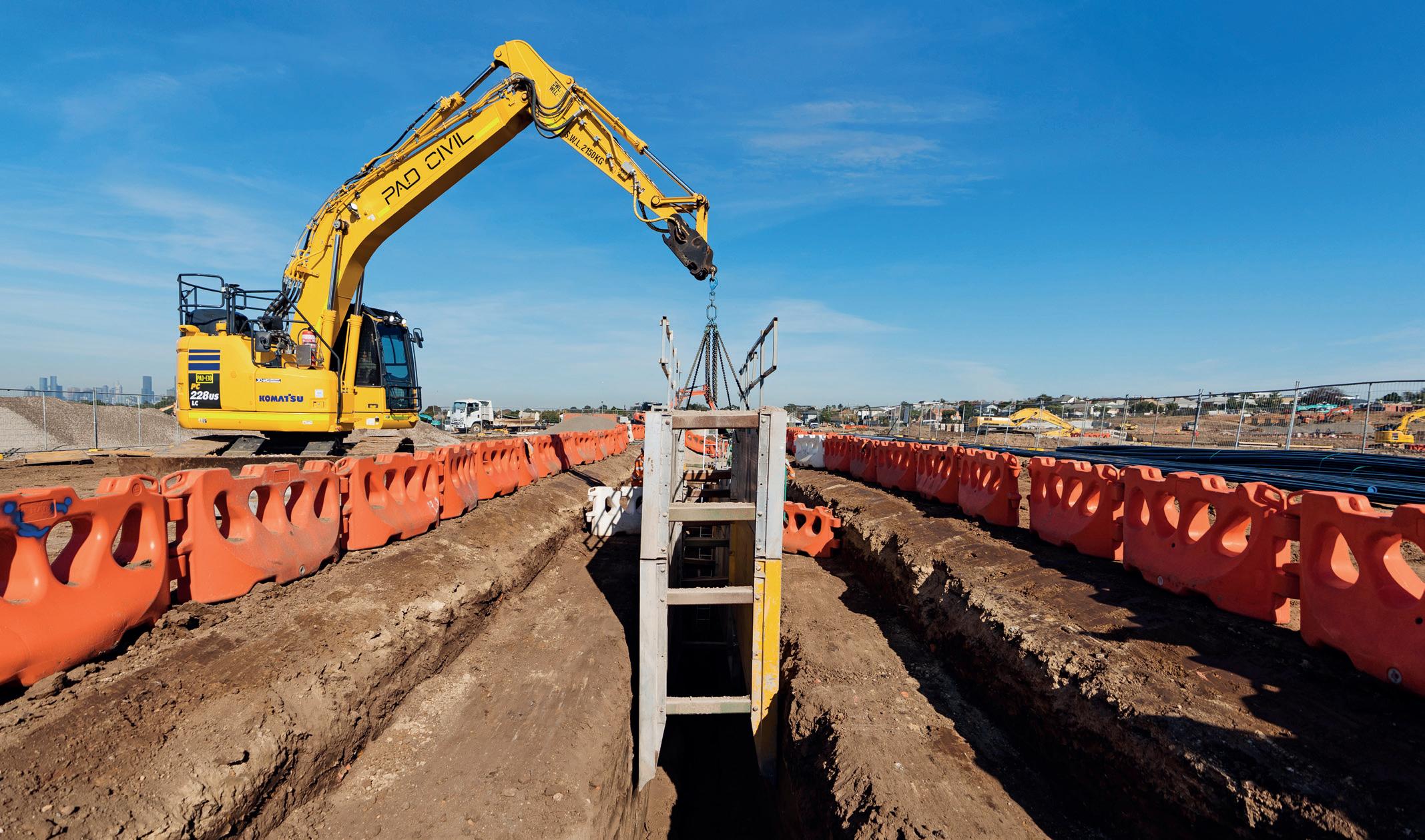






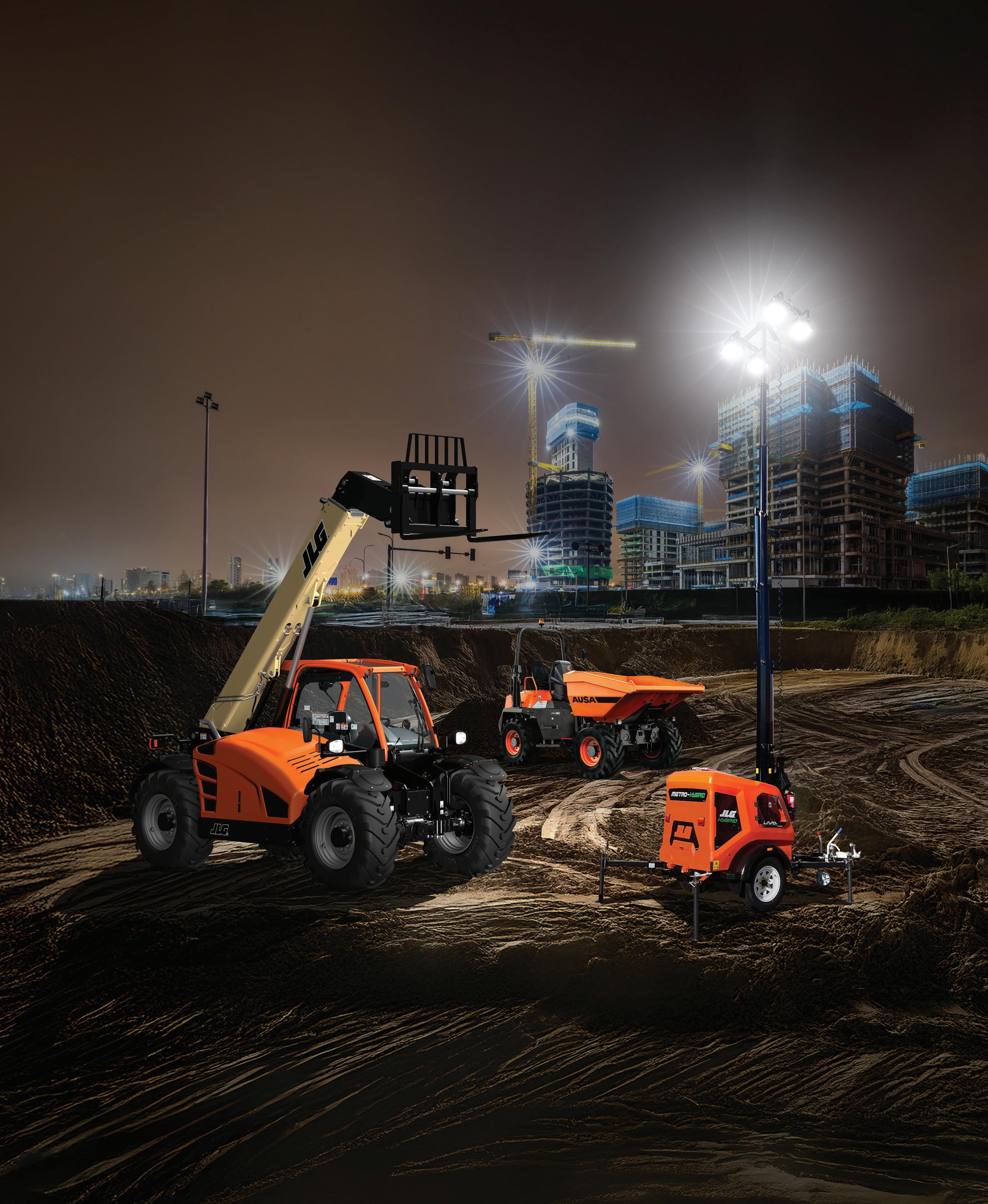
VEGA
Melaphyre is a fine-grained basalt rock that’s used for building materials, concrete and road aggregates. VEGA sensors play a key role in monitoring the individual process steps during its extraction and processing at a number of sites across the world.
Melaphyre from a mine in Tłumaczów in Lower Silesia, Poland is being extracted using the open-pit mining method and processed on site. It’s here that VEGA sensors have proven integral.
The melaphyre rock is used as an aggregate in different grain sizes for a wide variety of asphalt surfaces and special concretes, as well as ballast for the construction and maintenance of railway tracks.
However, before melaphyre can meet the high quality requirements, it has to be processed in numerous steps by the mine operator REGNARS. First, the rock is blasted, crushed and ground before being transported away on conveyor belts or lorries. The level of the material is continuously monitored at various points in the process, including in jaw crushers, cone crushers, vertical grinding mills and buffer silos.
Previously, ultrasonic probes from another manufacturer were mainly used for these level applications. However, measurement errors often occurred and the sensors were not able to cope with the harsh ambient conditions in the mine.
Another problem: The sensors could not be visually checked to make sure they were functioning correctly. And every attempt to somehow check the sensors carried the serious risk to personnel, compromising occupational safety. The company was
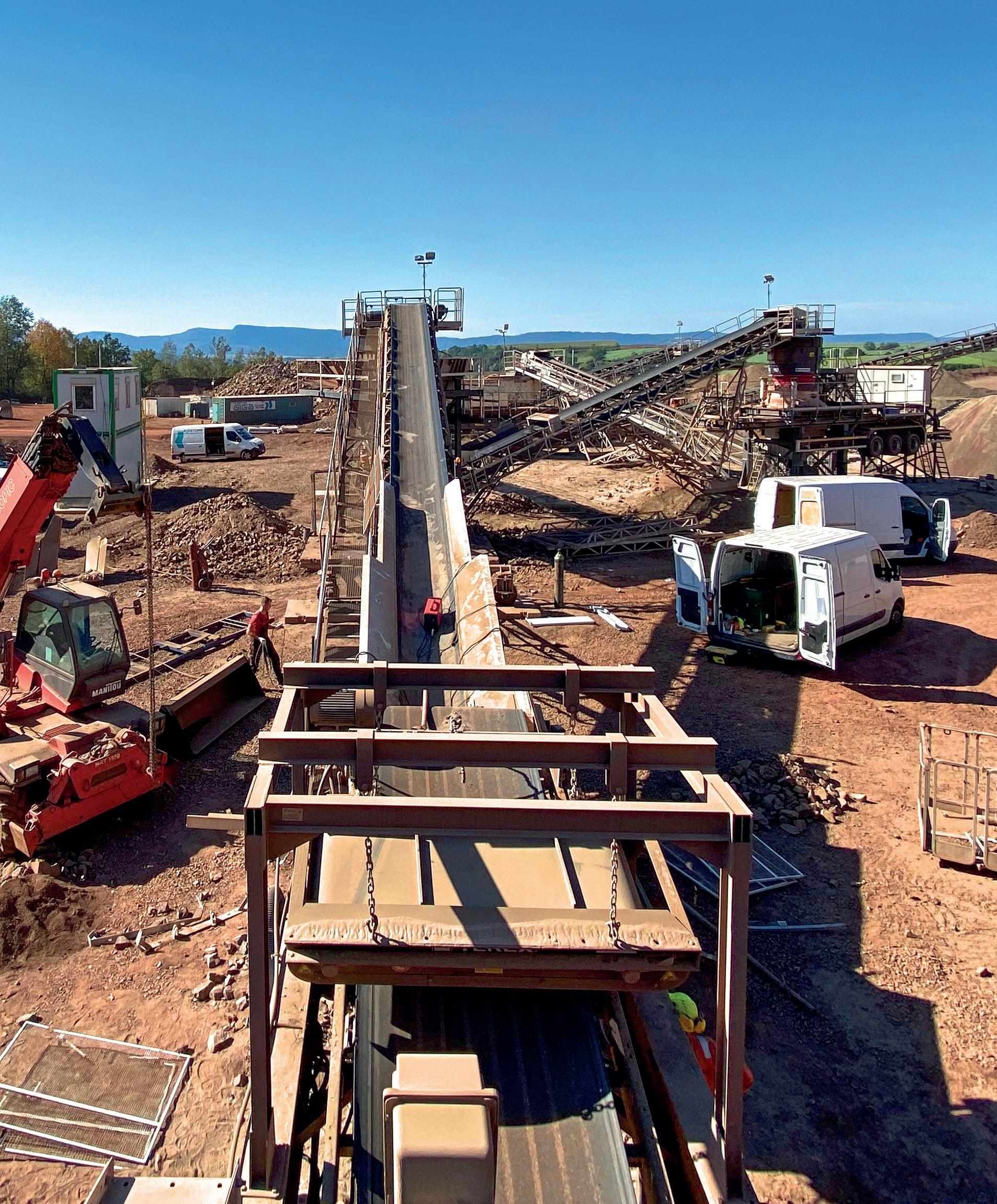
therefore looking for a solution that would allow precise and reliable level measurement, even in the event of intense dust formation, strong vibration from the crushers and harsh weather conditions. REGNARS found what they were looking for in the compact VEGAPULS BASIC level sensors.
The measuring conditions in the Melaphyre mine are extremely challenging. There is a huge amount of dust and bone-jarring vibration in the crushers, and even occasional rockfalls. In addition to this are the environmental factors typical of outdoor applications, such as wind, rain and intense sunlight. All of this had to be taken into account when selecting the measuring instruments.
The 80-gigahertz (GHz) radar technology used by VEGA enables non-contact measurement – the sensor is mounted at a sufficient distance from the ongoing process and is thus not damaged. Besides being unaffected by temperature fluctuations, vacuum or high pressures, radar sensors are, most importantly, not sensitive to the build-up of dust and dirt. These are all factors that can cause ultrasonic level transmitters to malfunction.
The VEGAPULS BASIC series is maintenancefree and delivers precise measurement results around the clock. Reason for this: Thanks to the strong focussing of the 80-GHz technology, the radar beam can be aimed at the level to be monitored with pinpoint accuracy. Interference, for example from
Melaphyre rock is being crushed and ground, then transported away on conveyor belts, with all levels being continuously monitored across various crushers, vertical grinding mills and buffer silos.
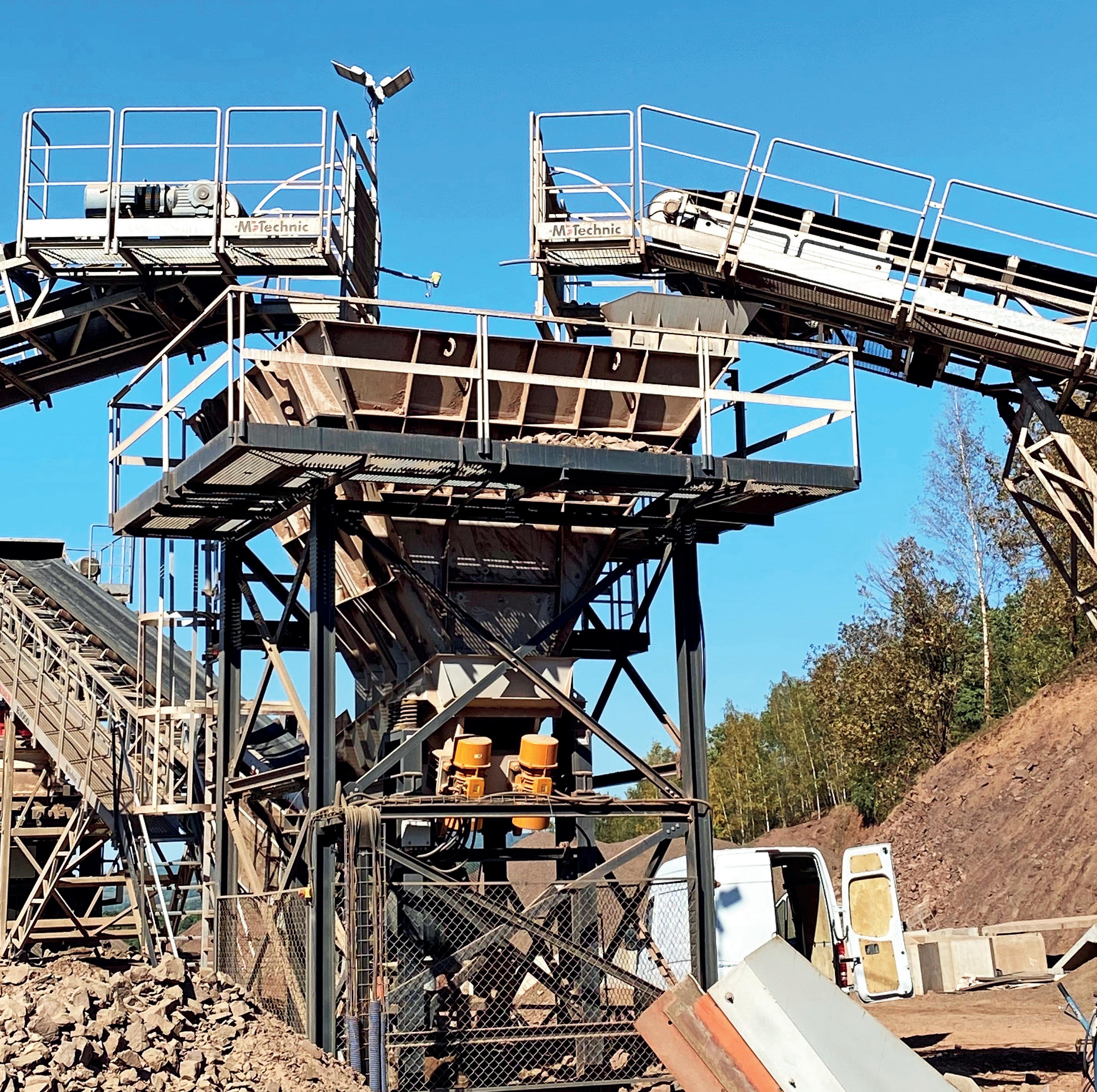

around the clock.

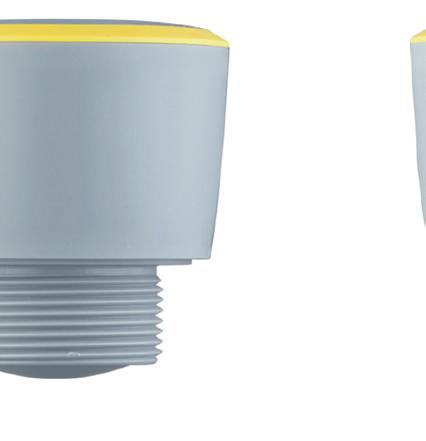
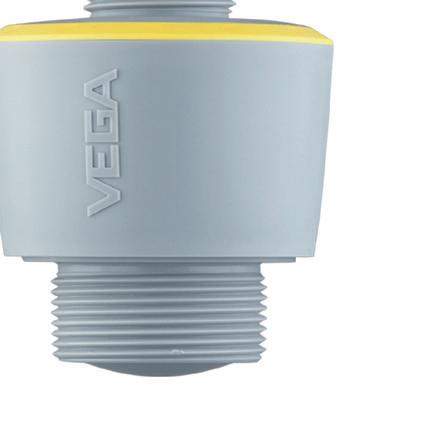





dust and build-up on the antenna system, is simply suppressed. The VEGAPULS BASIC series is also capable of fast response times. Coupled with optimised signal processing, the compact sensors deliver reliable measured values around the clock.
“Our VEGAPULS BASIC series impresses users with its compactness and low price. I was confident that these sensors would meet all the challenges of this application,” says Krystian Grecki, Sales Engineer at VEGA. “We then decided to simply test them under the conditions in the mine in Tłumaczów. In the event of any anomalies, we could still have used PRO series sensors, such as the new VEGAPULS 6X radar probe. In the end, however, the VEGAPULS BASIC probes worked very well.”
At the time, REGNARS had no experience with VEGA sensors. As such, the company’s management was happy to have to chance to test the sensors before purchasing them. This not only made it possible to check whether a particular sensor worked well under the local conditions and specific properties of the medium, but also whether it met the accuracy requirements. This gave REGNARS the opportunity to test the entire functionality, handling and adjustment of the instrument at the same time – from configuration and data display to access from outside the application. The instruments were installed and put into operation by the Schiltach company. The compact VEGAPULS sensors passed the test with flying colours and completely convinced the operators. The melaphyre mine in Tłumaczów thus received an effective an low-cost solution for measuring at multiple points in the mine.
In open-pit mining, large chunks of rock are separated from the solid rock mass by blasting. Further processing steps are required to turn the boulders into aggregates and then into building materials. Inside powerful jaw crushers, large rocks are broken down into products of various grain sizes. To enable trouble-free operation and minimise wear on the crushers, continuous control of the level is required. Precise monitoring of the melaphyre feed rate is crucial for stable, uninterrupted operation of the entire process and for the safety of the miners. That is why VEGAPULS radar probes were chosen to monitor the level of the bulk
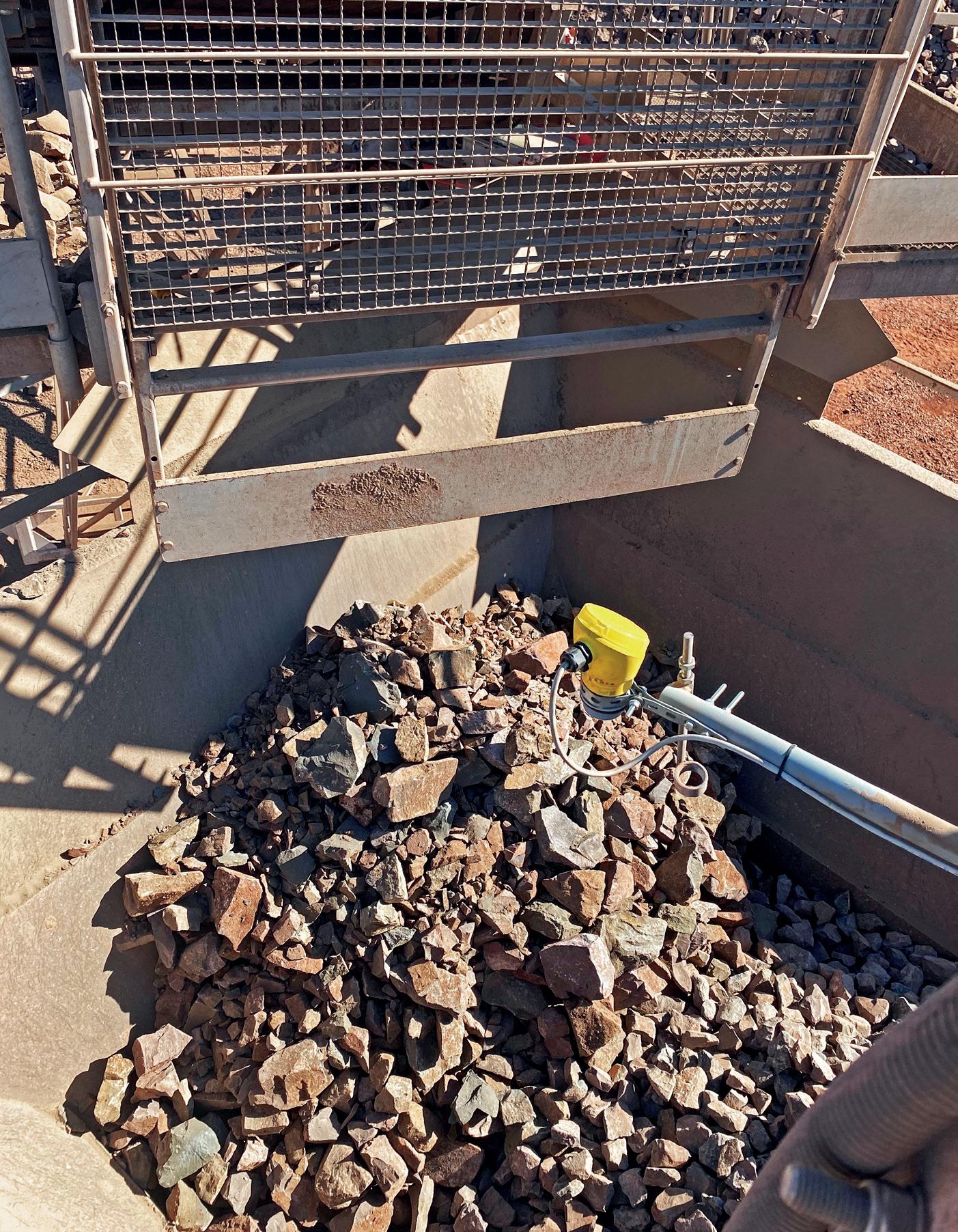
solids in the crushers, to optimally control the process.
The compact VEGAPULS C 21 and VEGAPULS C 23 sensors are used in the buffer silos, while the VEGAPULS 11 and VEGAPULS 31 devices with local displays are used in the jaw and cone crushers. The VEGA sensors were installed by the company VICOTEL from Walbrzych, which specialises in carrying out such work for open-pit mining companies. Thanks to the wide range of available mounting accessories and brackets, the sensors could be installed quickly and efficiently.
Besides the reliability of the measurement, the functionality of the instruments used was extremely important to the plant operator. Functionality includes the simple installation and set up of the instruments, the way in which the data is visualised and, last but not
least, the option of adjusting them remotely.
The measuring probes and VEGA controllers can be conveniently configured via a smartphone or tablet with Bluetooth communication. Especially in harsh environments, hazardous areas or difficult-toaccess measuring locations, Bluetooth makes set up, display and diagnostics much easier and safer.
What’s more, the VEGA instrument data can be saved to the cloud and later retrieved just by entering its serial number. This makes subsequent maintenance work easier. For the employees at the melaphyre mine, this was still another reason to opt for VEGA sensors. The sensors have been installed at Tłumaczów since summer of 2023 working smoothly and delivering reliable process control.
The construction industry has spent years describing its challenge as one of capacity, with not enough people and capability to deliver a growing pipeline of work.
That explanation is wearing thin, because the issue isn’t capacity alone –it’s productivity.
Productivity isn’t an abstract concept. On major projects, it is lost through the system, through duplicated processes, delays between approvals and delivery, contracts that shift risk rather than manage it, and in the gaps between clients, designers and contractors. All of which continue to hold projects back, even as the industry has access to better technology, better tools and more data than ever before – making it clear that the challenge runs deeper than workforce alone.
None of this comes down to effort. People are working hard and projects are complex, but the system in which they operate is not set up to get the best from them.



The silver lining is that the construction industry is not starting from zero. Across the infrastructure pipeline there are projects delivering better outcomes, where the conditions are different and the results refl ect that. Approaches such as early contractor involvement, collaborative delivery models and stronger client leadership are already improving project performance, alongside better use of data and technology to support more informed decision-making.
The issue is that the industry keeps rediscovering the same lessons instead of building on them. The next step is straightforward in principle but harder in practice, because it requires taking those learnings and making them standard practice, shifting from isolated examples to consistent application across projects, jurisdictions and clients.
The upcoming Foundations and Frontiers 2026 (FF26) program has a direct focus on the pockets of potential seen across major projects, which show what’s possible when collaboration is embedded and each party focuses on what it does best.
New ideas alone will not reduce the variability that drives ineffi ciency, but scaling proven approaches is the fi rst step.
The development of construction industry standards presents an opportunity to support this shift, but only if those standards are practical in their application, clear in their expectations and measurable in their outcomes. Setting consistent approaches to contracting, risk allocation, governance and dispute resolution will result in more cost certainty and better relations between industry, government and unions.
Through the past decade of global turmoil, the industry has seen the risk of this uncertainty, with investment dropping, innovation slowing and capability eroding, making it harder to

attract and retain the workforce required. Again, it reinforces that improving productivity will underpin long-term stability, allowing the sector to weather the storms.
There is now broad agreement across the industry that change is needed.
Forums such as Foundations and Frontiers are a critical part in bringing these changes to life, drawing together project leaders, clients and industry bodies in person, to debate, connect and test ideas against real-world delivery experience, to accelerate their adoption across the sector.
The task now is to apply what is already known to work, consistently and at scale across the infrastructure pipeline, moving beyond diagnosis and debate toward practical action.
The foundations are already in place, and the frontiers are increasingly clear. What happens next will depend on whether the industry can turn that into consistent action across the projects that matter most.








A practical three-day workshop covering seal design and construction, defect diagnosis, and field application — from AfPA, Australia’s flexible pavement authority.
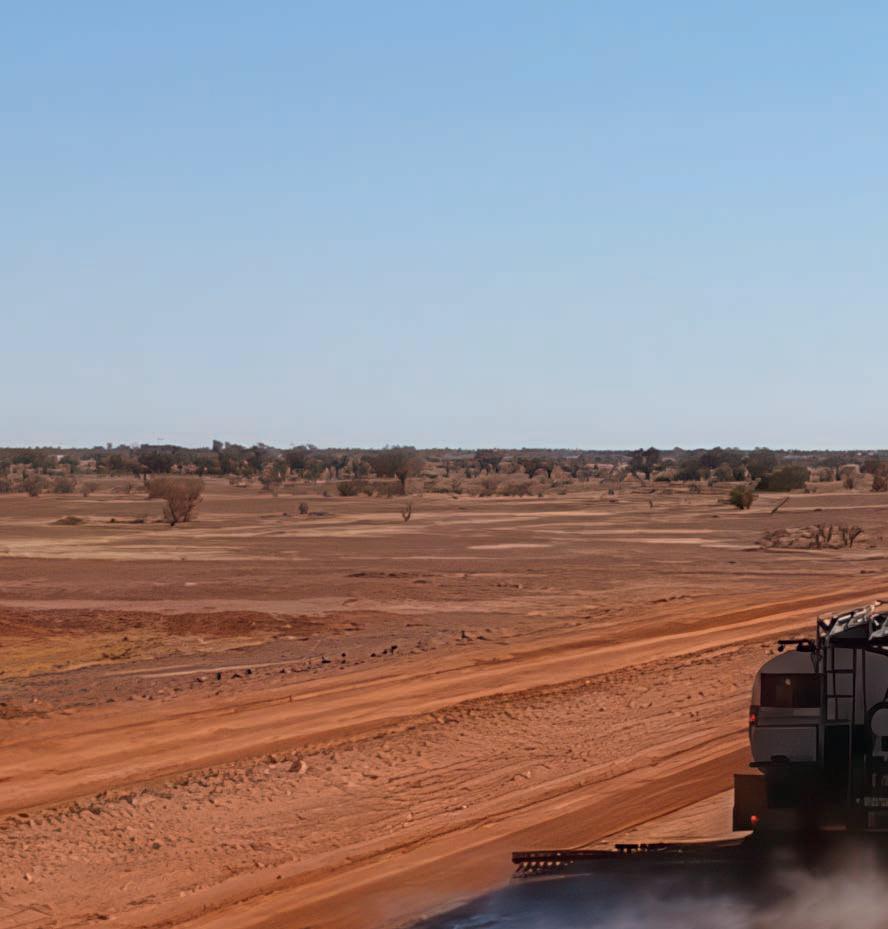

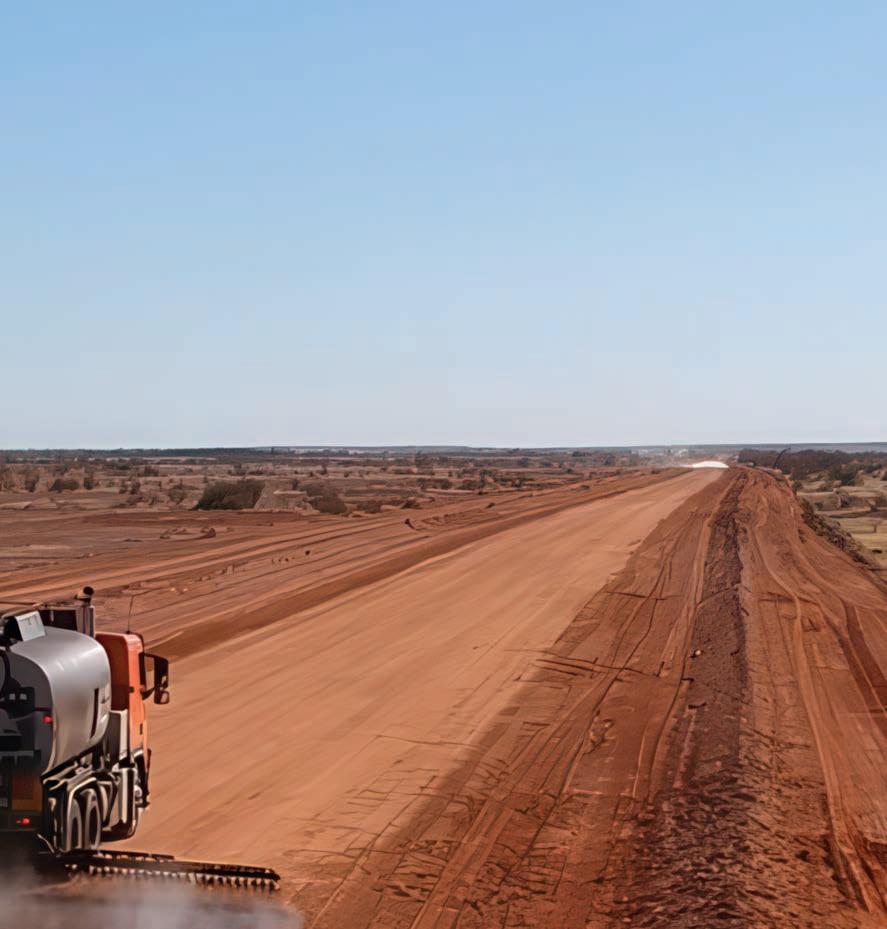









INDUSTRIAL

TESTING AND VERIFICATION OF MATERIALS USED IN ROAD LINE MARKINGS ARE VITAL TO UPHOLDING SAFE TRAVEL ON MOTORWAYS ACROSS
The Commonwealth Scientific and Industrial Research Organisation (CSIRO) is Australia’s national science agency. The institution’s work spans a variety of sectors, from agriculture and the environment, to health and technology.
Under this massive umbrella, the CSIRO’s Infrastructure Technologies program
specifically conducts research to support the safety and performance of physical and environmental infrastructure.
“The program offers a range of services for different industries, and largely revolves around the testing of materials related to the building and transport sectors,” says Dr Christopher Preston, Program Director. “We

have a number of labs covering lots of topics, from fire safety and material durability to acoustics and certification schemes. Road tunnel infrastructure specifically acts as an intersection for all of these disciplines.”
Such certification schemes are present in the development of road line markings, which are essential for maintaining safe and efficient travel on roads. Motorists rely on the visibility of these lines to stay in their lanes, understand the rules and adapt to road conditions as they change. While critical for human drivers, increasingly autonomous vehicles are also guided by these lines.
“Many people don’t realise that lane-keeping assistance and other driver-support systems depend on well defined, consistent line markings,” says Money Arora, Team Leader of Materials Performance. “If markings can’t be clearly detected, especially in rain, glare or at night, it can reduce the effectiveness of these safety systems.”


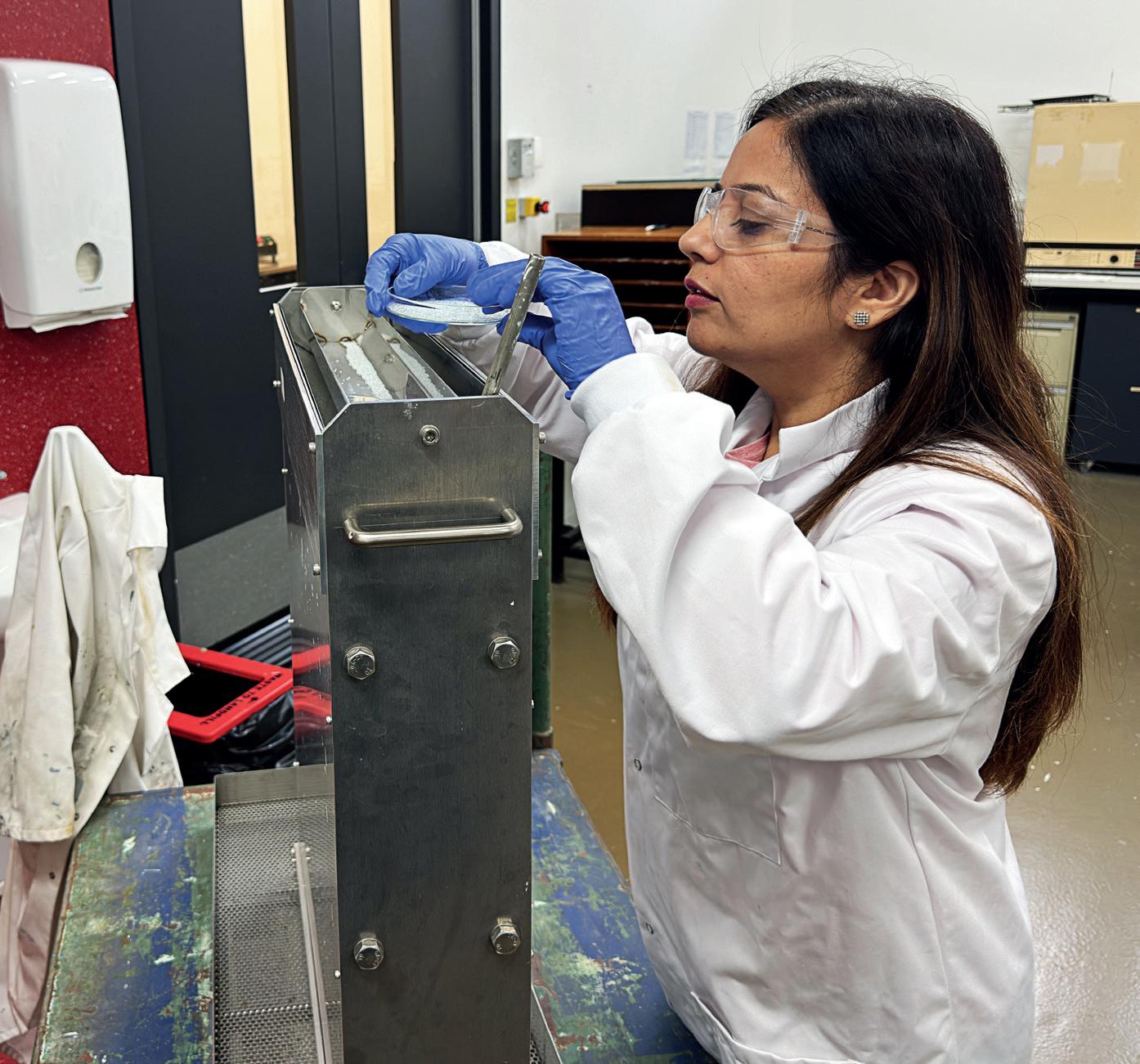
The Infrastructure Program’s work with road line markings consists of testing different types of marking materials from various manufacturers as well as their methods of production, while also certifying those who physically apply these markings to the road. This is completed through the CSIRO’s Painting Contract Certification Program.
“Our work receives support from all the state road transport authorities,” says Preston. “They take extreme interest in making sure any products applied to their infrastructure

– roads, bridges, tunnels and more – are maintained in a way that protects them, and increases their value.”
In addition to upholding road safety, the CSIRO’s testing of road line markings is equally important to ensure their longevity and sustainability. Markings that last longer reduce road maintenance costs, require fewer re-paints, cause less traffic disruption and lower overall environmental impact.
“Our testing looks at whole-of-life performance,” Arora says. “If markings last longer, that’s good for safety, budgets and the environment.”
A crucial aspect of the CSIRO’s testing of road line markings revolves around glass beads that are embedded in their coats of paint. These beads are what make the markings glitter – light from the sun during the day and headlights at night strike them, and their specific shape sends the light back to the driver. This process is called retroreflection.
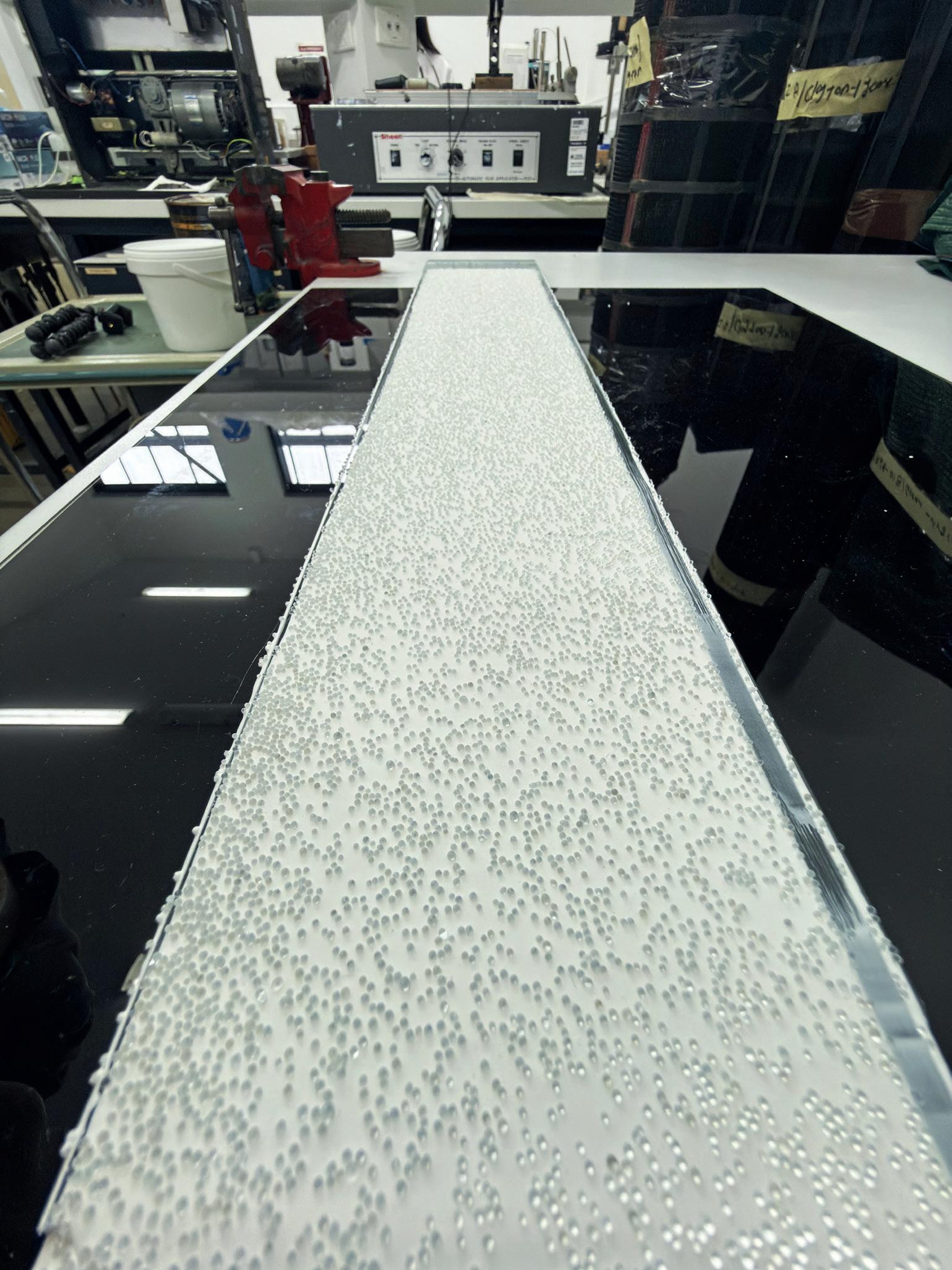
to be used in road line markings. There are parameters related to their shape –specifically roundness – in addition to their clarity, particle sizes, distribution sizes and toxicity requirements.”
Preston says that while these criteria work as a proxy for measuring retroreflectivity, the beads also go through a separate test which measures retroreflectivity more directly.
“The roads used for testing need to be blocked off, then the markings need to be applied, and stakeholders need to meet. It can be quite a difficult process to undertake,” he says.
The Infrastructure Technologies team scrutinises all beads sent by manufacturers, to make sure they adhere to the strict criteria allowing for retroreflection to occur.
“These glass beads are sub-millimetre in size,” says Preston, “but for such a small item, there is a huge amount of testing required to certify their effectiveness.
“We conduct tests in our lab, which is accredited with the Australian Standards related to glass beads. This standard demands that the beads we test meet a number
Following these CSIRO laboratory tests, the glass beads and other road line marking materials are typically evaluated in real-world conditions by their manufacturers, painted onto real roads and tested in real traffic over periods of time. During these trials, retroreflectivity continues to be observed, along with slip resistance and other metrics. However, Preston explains that these field tests have become increasingly difficult to complete due to their expense and inconvenience.
To combat these difficulties, the CSIRO is currently working to establish a new facility that can host these real-world tests in a more controlled environment. Here, it is hoped that Australia’s many climates and road challenges can be accurately simulated.
The stringent testing and researching required to produce sufficient road line markings is unknown to many motorists, but is crucial to creating a road network that can support the country.
“The science behind those white lines is rarely noticed, but its impact is everywhere,” Arora says. “By getting the details right, we help make Australia’s roads safer today, and ready for the future.”













THE AUSTRALIAN FLEXIBLE PAVEMENT ASSOCIATION HAS PUBLISHED A BRAND-NEW WHITE PAPER, REPRESENTING A LANDMARK MOMENT FOR INDUSTRY AND ITS DESIRE TO FUTURE-PROOF THE NATIONAL ROAD NETWORK. AS THE ASSOCIATION WRITES.
Australia’s roads are deteriorating faster than they are being maintained – not because the solutions are unknown, but because funding commitment has not kept pace with the evidence. The $13.6 billion national maintenance backlog is the accumulated cost of that gap.
The Australian Flexible Pavement Association (AfPA) presents a measurable reseal benchmark, grounded in Australian research, that gives governments a clear and fundable path forward – and leaves the next generation with a network worth inheriting.
Australia’s road network is not deteriorating because the engineering knowledge is absent.
It is under pressure because investment in preventative maintenance has been repeatedly deferred, and the compounding consequences of that deferral are now visible in declining
regional surfaces, an expanding pothole backlog, and a national road maintenance defi cit estimated at $13.6 billion, a burden felt most sharply in the regional and rural communities where roads are the only transport option.
AfPA’s recently published white paper, A National Case for Periodic Road Resealing , was written to equip the conversations now underway in jurisdictions across Australia, where political will and community pressure are converging around a shared goal of reversing the current trajectory.
It makes three arguments: the benefi ts of a measurable reseal benchmark, the cost of deferring maintenance, and the technology now available to deliver it.
The bituminous surface seal on a road pavement functions as its protective coating, the layer that stands between
the elements and the structural base beneath. A sprayed seal is designed to last between 10 and 15 years, depending on surface type, traffi c conditions, climate, and location. During that period, it performs several functions, but perhaps the most critical is keeping water out of the structural pavement layers beneath.
The analogy most Australians will immediately recognise is the weatherboard home.
The paint on a weatherboard house is not just decorative, it is waterproofi ng. Applied on schedule, every 10 to 15 years, it costs a manageable sum, a modest investment of time, and keeps the timber beneath in sound condition. Defer that repaint cycle, and moisture begins to penetrate. The timber softens and rots from within, and eventually the entire cladding requires stripping and replacement. What was

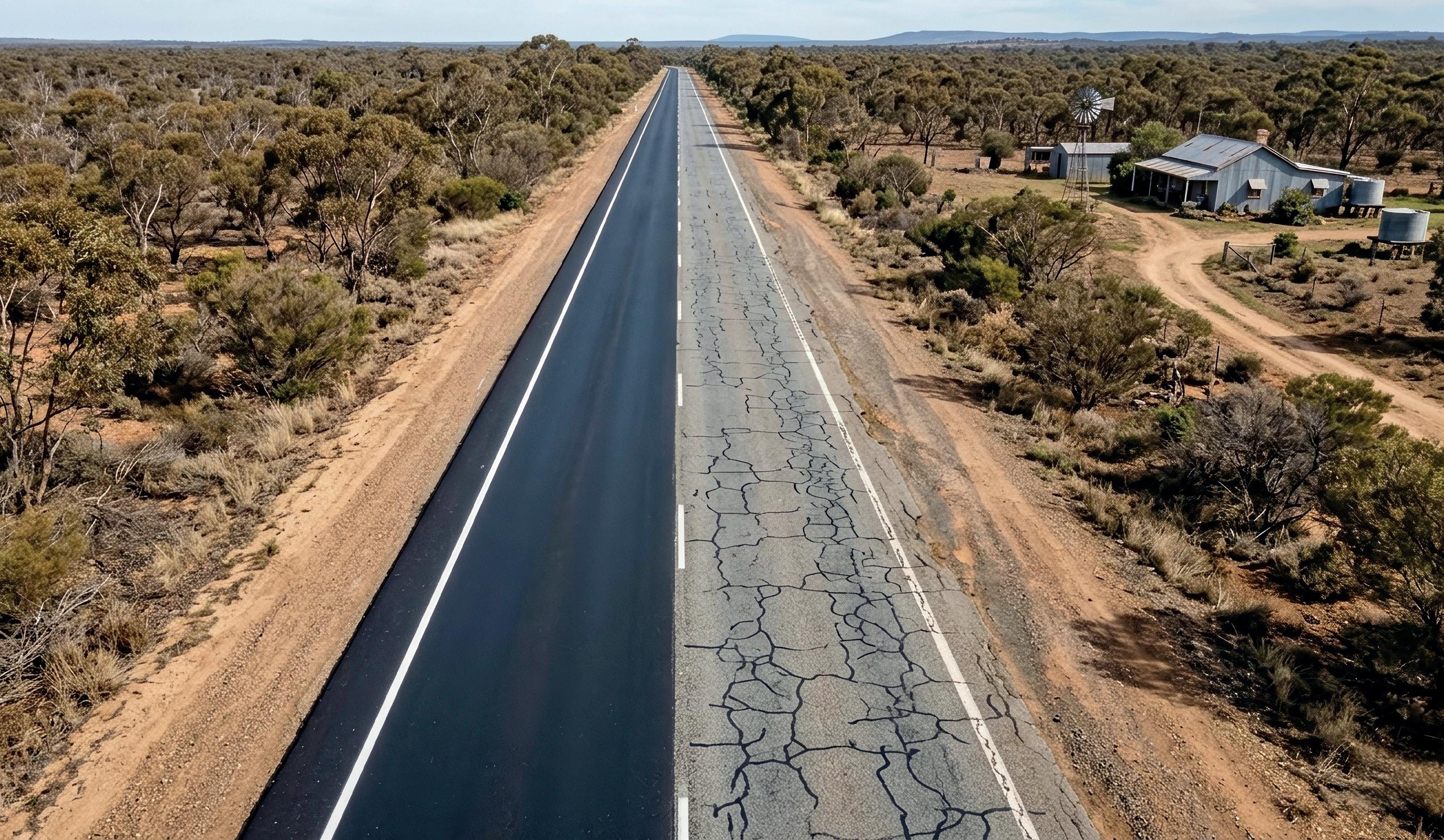

a routine maintenance task becomes a full re-cladding job at many times the original cost. Every homeowner who has faced that bill understands the principle intuitively.
The road pavement follows the same logic. The bituminous seal is the paint; the structural base beneath is the timber. Maintain the seal on the required cycle, and the pavement performs reliably for decades. Defer past the serviceability window, and water enters the base, structural failure follows, and the only available remedy is the most expensive one.
From this straightforward engineering logic, AfPA establishes a clear and measurable policy target: a minimum of seven per cent of the sealed road network should be resealed annually to maintain network condition. Leading organisations currently target 10 per cent.
The seven per cent figure is not arbitrary. It derives directly from the 10-to-15-year sprayed seal lifespan. Reseal less than seven per cent per year and the network’s surface age profi le drifts progressively older, meaning a growing proportion of the network approaches the end of its serviceability window simultaneously. The reactive maintenance costs that follow are not distributed evenly over time; they arrive in concentrated and increasingly expensive waves.
Austroads’ analysis, drawn from Australian data, confi rms the fi nancial case. Periodic resealing delivers lifecycle cost savings of 2:1 to 3:1 over reactive
approaches and can extend pavement life by 50 to 100 per cent, for example, a 20-year design pavement potentially delivering 30 to 40 years of service under consistent periodic maintenance.
The U.S. Federal Highway Administration’s widely cited 1-3-6-9 rule further frames the timing imperative: treatment costing $1 at the optimal point may cost $3 to $6 if deferred several years, and $9 or more once structural failure is unavoidable.
The gap between benchmark and current practice is not marginal, it is severe. Across a number of Australian jurisdictions, reseal rates are reported at approximately two per cent. Roughly one-third of the minimum required to maintain network condition.
At two per cent, the surface age profi le of the network deteriorates faster than any maintenance program can address.
a larger and more expensive obligation to the next budget cycle, the next government, and ultimately to the next generation of road users and taxpayers.
The $13.6 billion national maintenance backlog is the accumulated result of exactly this logic, applied at scale, across multiple jurisdictions, year after year. Maintenance avoided is not a cost saving, it is a cost multiplier passed on to future generations.
Restoring reseal rates to benchmark says nothing about how a road is treated, only that it is treated. The benchmark is a measure of network coverage, not a prescription for method.
“MAINTENANCE AVOIDED IS NOT A COST SAVING, IT IS A COST MULTIPLIER PASSED ON TO FUTURE GENERATIONS.”
Reactive repair costs consume an evergrowing share of available maintenance budgets. The backlog compounds year on year.
What could be resolved through planned periodic resealing is deferred until reconstruction becomes unavoidable at more than nine times the cost, a differential the Victorian Auditor-General has documented directly for councils. This is not prudent budget management. It is the transfer of
The industry has made signifi cant advances since Australian road networks were last consistently hitting sustainable reseal targets, and the suite of options now available has expanded well beyond what existed then. Whatever a local council or state government values most – sustainability, safety, longevity, or cost effi ciency – modern technologies can deliver on those priorities, and in many cases, address several of them at once.
Take crumb rubber modifi ed binders. Made from end-of-life tyres, they turn a waste problem into a road asset, delivering surfaces that resist cracking, last longer, and run noticeably quieter. Lifecycle assessments show green house gas (GHG) reductions of up to 98 per cent compared to conventional approaches.
AfPA members are delivering crumb rubber surfaces across multiple jurisdictions today, and new specifi cations are expanding the range of roads where it can be applied.

Polymer-modifi ed binders solve a different problem. For roads facing temperature extremes, the scorching summers and sharp winters of inland Australia, or freight corridors under constant load, standard binders can reach their limits earlier than expected. Polymer-modifi ed binders are engineered to hold.
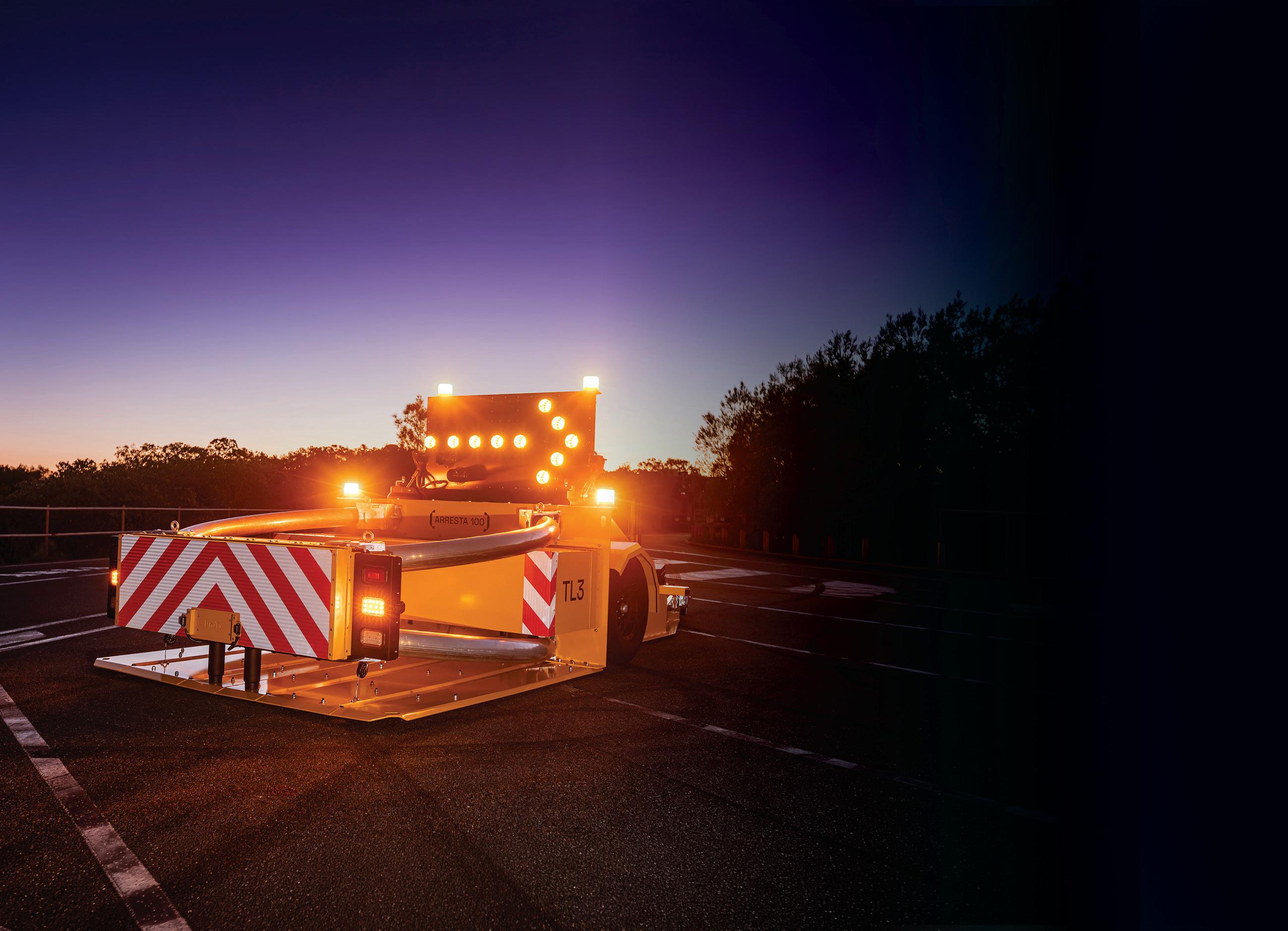
They resist the rutting and thermal cracking that shorten road life in demanding climates, and while they cost more upfront, for regional communities where road failure means genuine isolation, the investment typically delivers a lower cost per year of service. The right choice depends on the road, the region, and what the community most needs from it.
What is consistent across all of these options is that the materials exist, the specifi cations are in place, and the industry has the capability to deliver. What turns that capability into outcomes is the funding certainty that lets road managers plan ahead and choose the right solution for their community.
Wet weather through winter and spring limits the conditions for effective resealing, and work volumes dial back across much of the country accordingly. That seasonal pause offers something valuable – a window to step back from
the pressure of live programs and look clearly at the choice in front of us.
AfPA calls on federal, state, and local governments to commit to a minimum annual reseal rate of seven per cent of their sealed networks, and to publish that target alongside performance against it.
Three policy mechanisms support this commitment: ringfenced reseal allocations measured by network proportion, not budget line; multiyear funding commitments that enable effi cient delivery and regional workforce planning; and transparent annual reporting that creates accountability against the benchmark.
As Australia’s peak body for fl exible pavement, representing the organisations and individuals who deliver road surfacing programs in every jurisdiction, AfPA presents these positions grounded in both technical evidence and the practical experience of those who must implement any solution.
Australia’s road network represents
between $8.6 trillion and $19.2 trillion in replacement value.
It supports a transport sector generating $137.2 billion annually and carrying more than 260 billion vehicle kilometres per year. Protecting that asset begins with timely, periodic resealing applied at scale, to a measurable standard, with the best available materials.
The evidence, the technology, and the industry capability are all in place. What remains is the funding commitment, sustained across budget cycles and electoral terms, to maintain programs at the rate the network requires.
A road network worth inheriting begins with the maintenance decisions made today.
The paint on the weatherboard is due. The question is whether we schedule it now or wait until we’re replacing it.
AfPA’s white paper, A National Case for Periodic Road Resealing, is available at afpa.asn.au. For membership and partnership inquiries: enquiries@afpa. asn.au
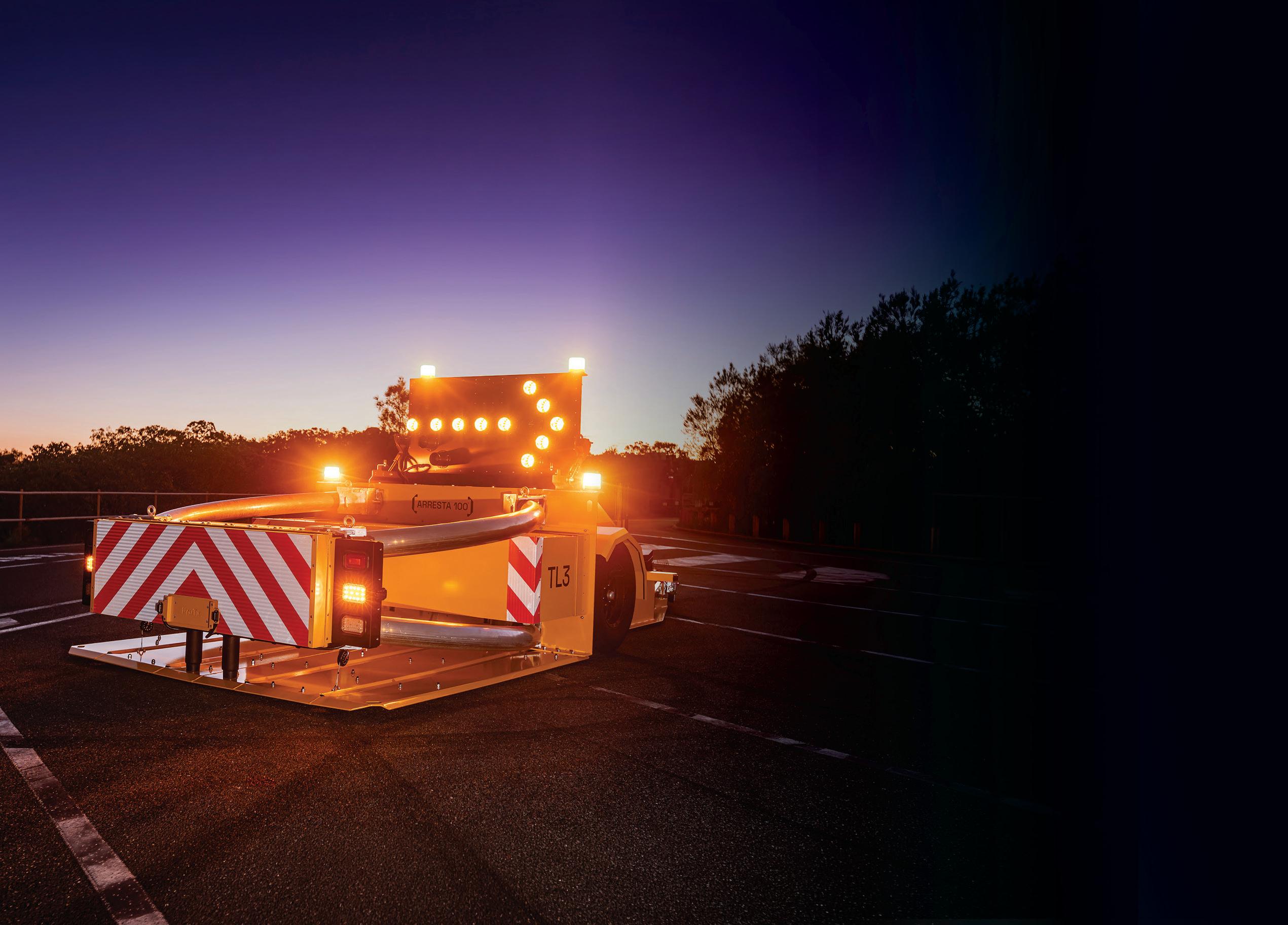
Designed & built in Australia


Timelines shift, staging changes, and contractors are often required to adjust quickly as broader project conditions evolve. For suppliers, the challenge is not simply manufacturing components on time, but ensuring production remains aligned with what is actually happening on site.
National Precast member Ozcast encountered this challenge during its involvement in the Western Sydney International Airport Landside Civil and Building Works project.
Working with the AeroWest Joint Venture, comprising BMD Construction and Seymour Whyte, Ozcast supplied 920 linear metres of precast concrete parapets for the landside infrastructure works at Badgerys Creek.
The new airport is scheduled to commence operations in late 2026 and forms part of the broader Western Sydney Aerotropolis development.
Initially, project timelines required rapid early production of the parapets to support the construction program. Ozcast prepared to increase manufacturing output accordingly.
However, as delays affected parts of the broader project, continuing full-speed production risked creating unnecessary storage, transport and coordination issues before installation could occur.
Rather than simply continuing manufacturing to the original schedule, Ozcast worked closely with the AeroWest team to progressively adjust production pacing as project conditions changed.
The approach allowed parapet production to continue steadily while maintaining fl exibility to scale manufacturing up again if required. In large civil and infrastructure projects, this type

of coordination is often just as important as manufacturing capacity itself.
Producing components too early can create downstream pressures across transport, storage and site access, particularly on projects involving multiple contractors and overlapping work fronts.
For Ozcast, the focus became maintaining alignment between manufacturing output and the realities of site delivery.
The project also refl ects the broader level of infrastructure activity surrounding Western Sydney International Airport.
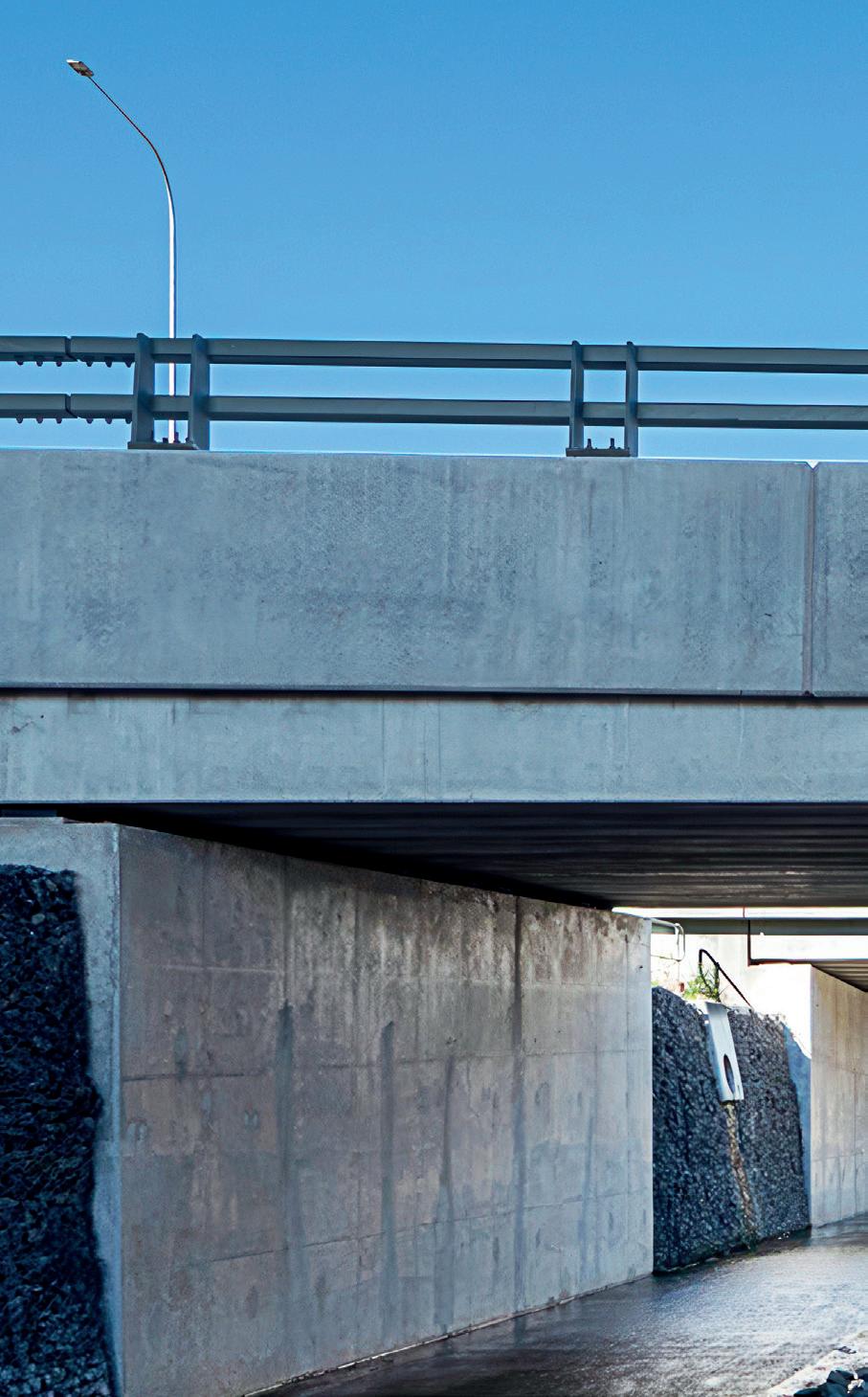
Alongside the airport works, Ozcast has also supplied precast elements for major connecting infrastructure projects linked to the airport precinct, including the Sydney Metro viaduct works and the M12 corridor connections servicing the new airport network.
This included the manufacture of approximately 2500 parapets and 104 panels for the Sydney Metro viaduct works connected to the airport corridor.
FLEXIBILITY
While precast elements themselves are only one component within these major
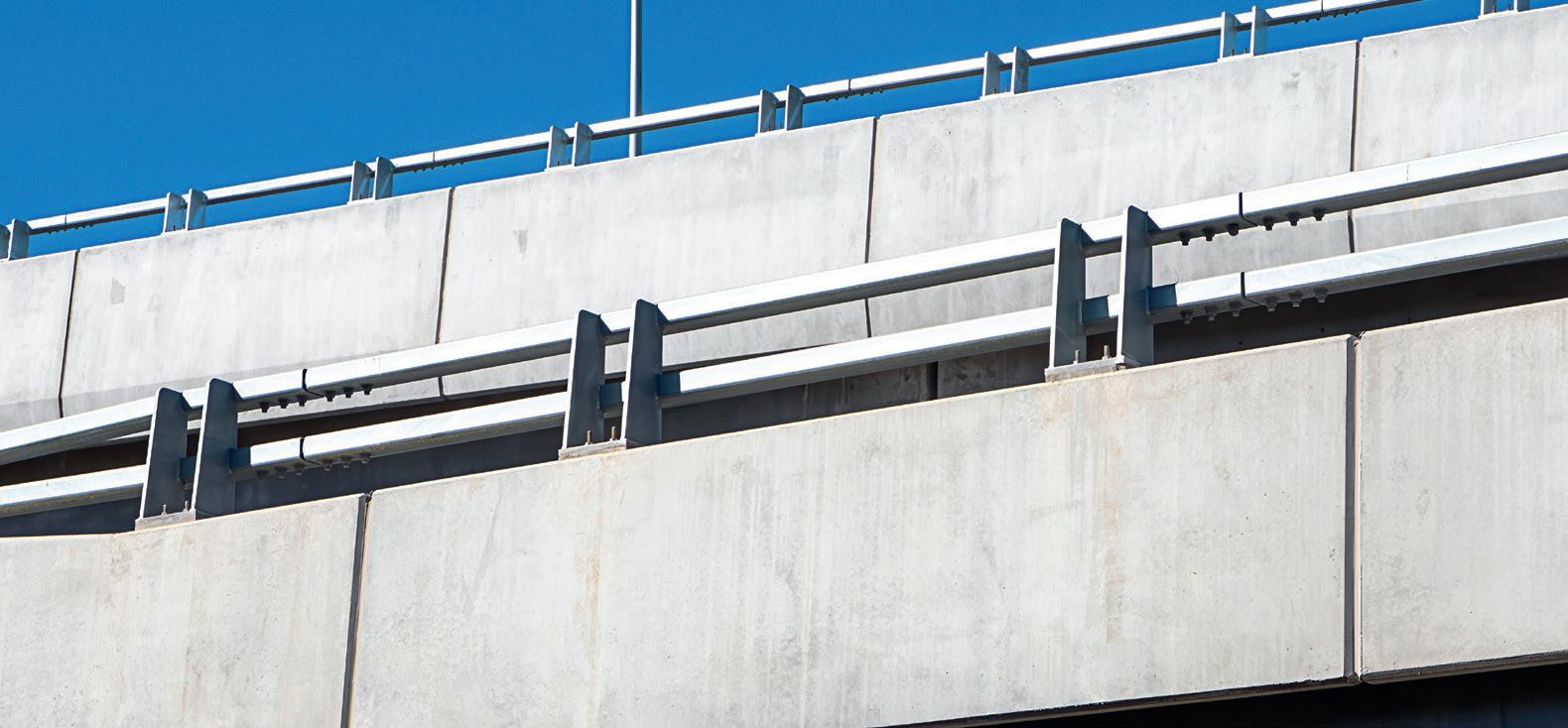
Ozcast has emerged as one of the leading providers and installers of precast concrete components.
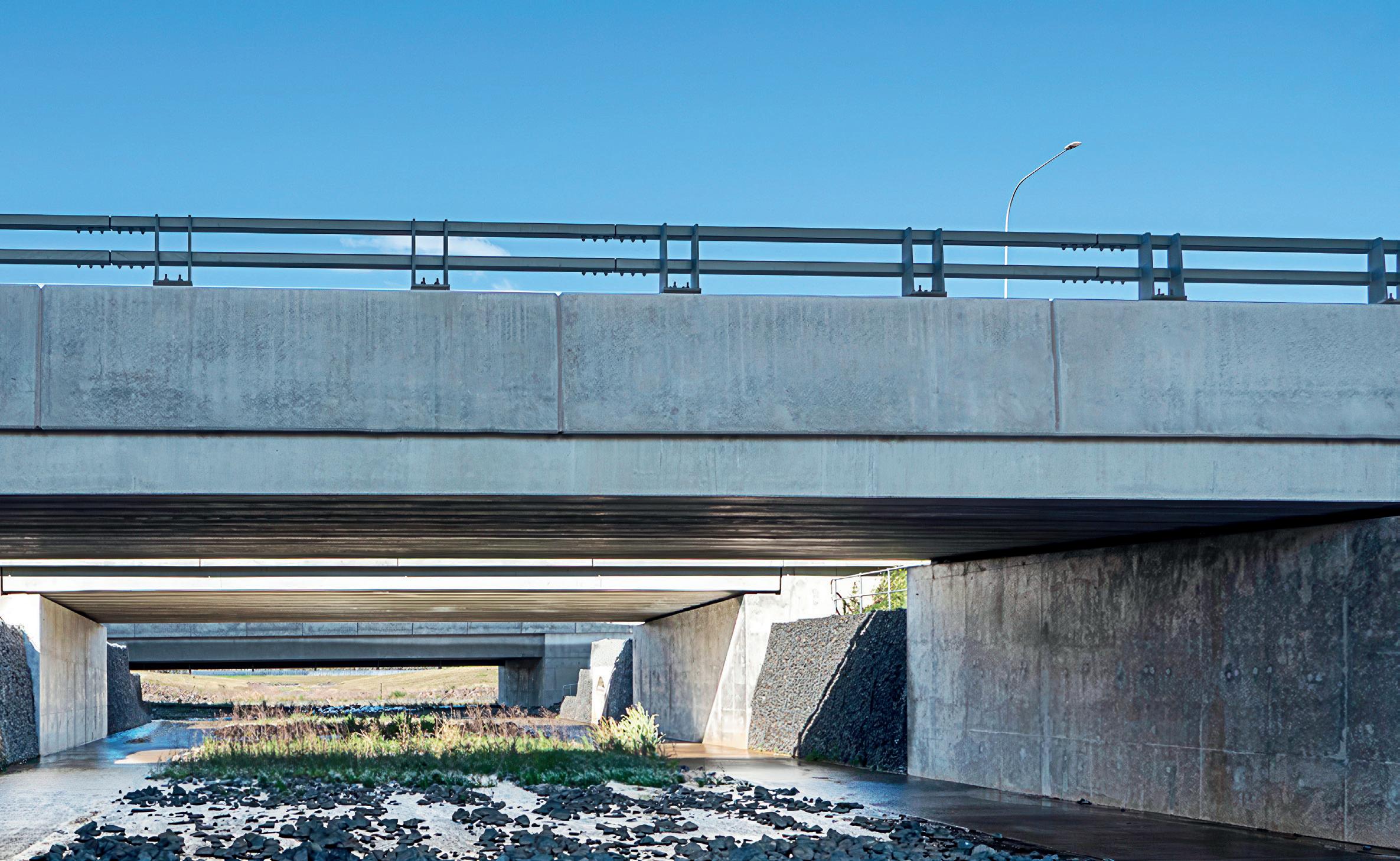
infrastructure developments, the project highlights how important flexibility and coordination have become across modern infrastructure delivery. As staging conditions and program timelines evolve, manufacturers are increasingly required to work closely alongside contractors and project teams rather than simply supplying materials.
The Western Sydney International Airport project demonstrates that successful precast delivery is not defined solely by manufacturing speed or output, but by the ability to adapt as project conditions change.
By working closely with the AeroWest
Joint Venture and adjusting production in line with changing site conditions, Ozcast helped reduce downstream pressure while maintaining continuity across the broader delivery program.
As major infrastructure projects become increasingly staged and interconnected, this type of coordination is becoming an essential part of keeping projects moving efficiently. When speaking to the
organisation’s relationship with National Precast, Barry Lindsay, Precast Manager –Ozcast says the industry is united when it comes to achieving collective goals that could benefit not only contractors, but also the wider public.
“Being a National Precast member keeps us connected to the wider precast industry and helps us stay aligned with best practice, innovation and quality
“BEING A NATIONAL PRECAST MEMBER KEEPS US CONNECTED TO THE WIDER PRECAST INDUSTRY AND HELPS US STAY ALIGNED WITH BEST PRACTICE, INNOVATION AND QUALITY STANDARDS.”
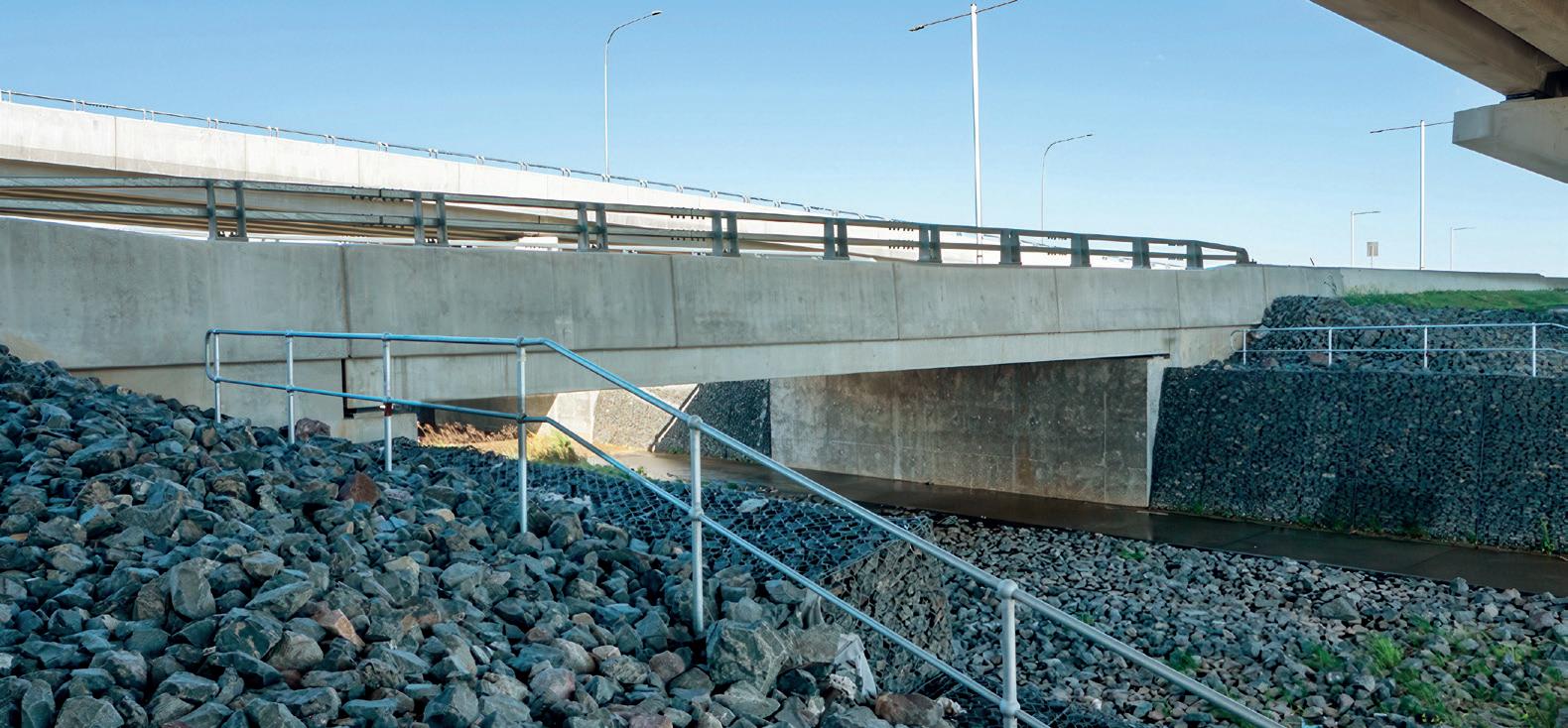
standards. We are proud to support an organisation that actively promotes and strengthens the Australian precast industry,” he says.
“National Precast provides valuable industry advocacy, technical resources and networking opportunities. It also helps showcase the capabilities of the precast industry and its members, which benefits the sector as a whole.
“We look forward to continuing to work alongside National Precast to promote the benefits of precast construction and support the ongoing growth and development of the industry.”
AS
Every day, traffic controllers and road workers stand between live traffic and the people building, repairing and maintaining Australia’s road network. Their work is visible to all of us, yet too often the scale, complexity and risk of the traffic management industry are poorly understood.
For the Traffic Management Association of Australia (TMAA), this is why advocacy must be grounded in evidence. Strong advocacy is not simply about speaking loudly. It is about knowing what is happening on the ground, understanding the pressures that our members are facing, and using real-life data to pursue the right reforms.
Traffic management is a safety-critical industry. It protects road workers, motorists, pedestrians, event patrons, emergency services, utility crews and the broader community. It also enables infrastructure delivery, maintenance works, major events
Chief Executive Officer of
and emergency responses across the country. When traffic management is done well, the public may barely notice it. When it is under-resourced, poorly planned or treated as an afterthought, the consequences can be severe.
That is why TMAA’s role is so important. We are not only a representative body for industry. We are a source of leadership, advocacy and practical reform. We work with members, road authorities, governments, suppliers and other stakeholders to lift standards, improve safety, strengthen workforce capability and ensure the industry is properly recognised.
A good example is the National Traffic Controller Safety Survey, which has become one of the most important tools for understanding the risk profile faced by traffic controllers on the ground. The 2024 and
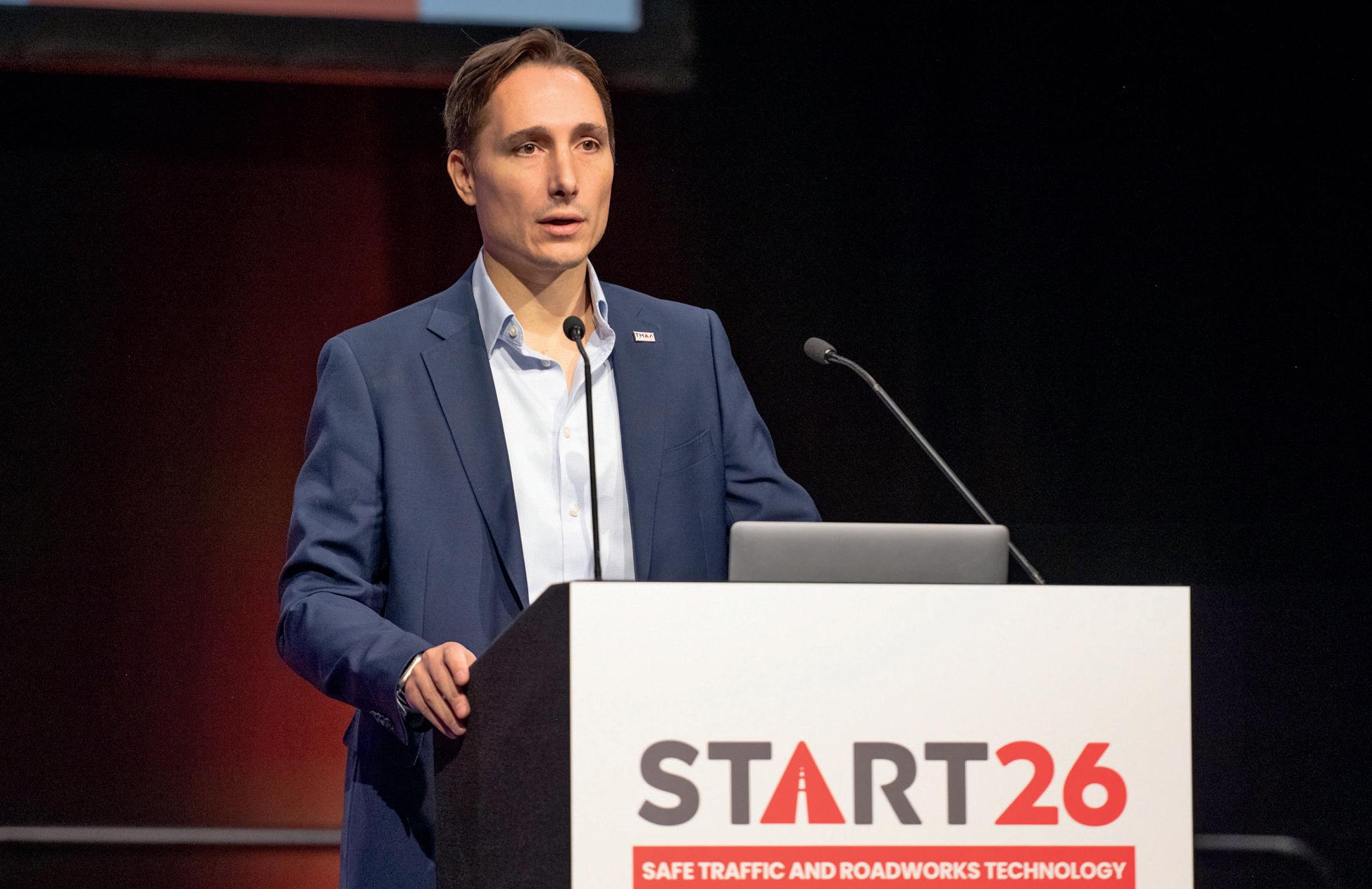
2025 surveys collected responses from more than a thousand traffic controllers nationally each year, providing a strong evidence base on their lived experience at worksites across Australia. Our survey identified persistent concerns including disrespect, verbal abuse, distracted drivers, speeding vehicles, and risks during site set-up and pack-down.
This matters because numbers tell a story that anecdotes alone cannot. When traffic controllers tell us they are facing near misses from distracted drivers, abuse from road users, or elevated risks on high-speed roads, that information should shape our advocacy. It should inform the conversations we have with governments, road managers, technology companies, enforcement agencies and the broader public.
The same principle applies to understanding the size and value of our industry.
Recent research undertaken by TMAA to estimate Australia’s temporary traffic management workforce and economic footprint found that the industry employs about 30,000 people through traffic management companies and organisations supporting our industry. This represents roughly a $2 billion annual turnover.
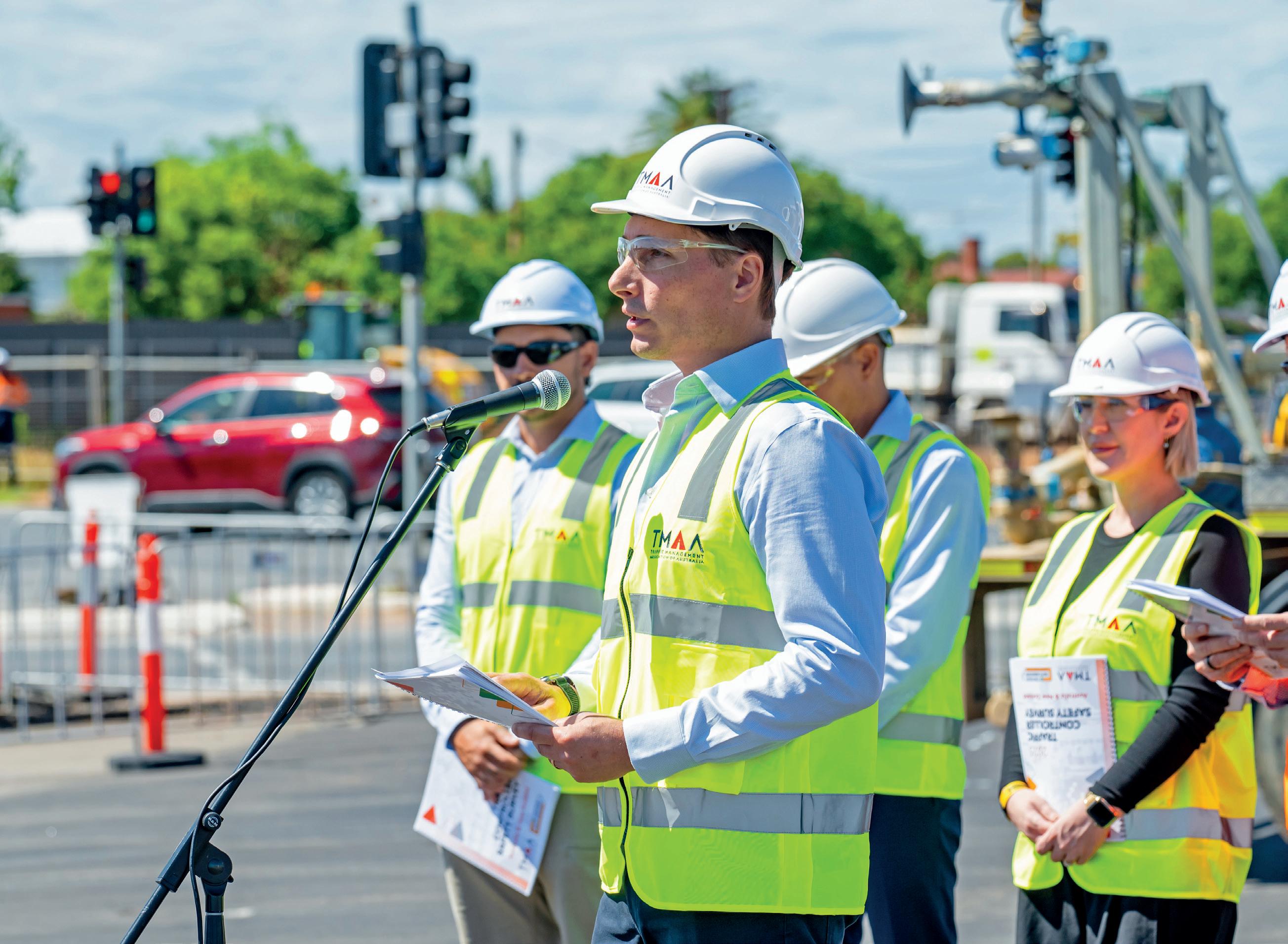
That research is significant because our industry has often been undercounted, under-recognised and misunderstood.
Temporary traffic management is not a small add-on to road works. It is a major national industry, a substantial employer and an essential enabler of public and private infrastructure delivery. If governments and clients do not understand the scale of the sector, they are less likely to design policy, procurement and safety systems that reflect the real needs of the workforce.
Evidence also helps us avoid shallow or reactive advocacy. It allows us to ask better questions. Where are workers most exposed? Which behaviours from road users are causing the greatest risk? Are procurement models rewarding quality and compliance, or pushing providers towards unsustainable pricing? Are training, enforcement and technology keeping pace with the risks faced by workers?
However, there remains a major gap in Australia’s understanding of work zone safety. We still do not have a clear, nationally consistent picture of how many traffic controllers and road workers are injured or killed on Australian roads.
TMAA has already identified the need for better historical and industry-specific data on serious injuries and fatalities in temporary traffic management, including state-by-state data and workers compensation insights. In recent correspondence to Safe Work Australia, TMAA sought assistance to obtain at least five years of historical data on serious injuries and fatalities in the temporary traffic management industry, including state-level breakdowns and additional industry-specific claims data.
This is not an exercise in data collection for its own sake. It is about prevention. Every serious injury and fatality represents a person, a family, a workplace and a set of circumstances from which we must learn. If we cannot see the full pattern, we cannot fully understand the risks. If we cannot understand the risks, we cannot be confident that our advocacy is targeting the right problems.
TMAA intends to explore this gap further. We need stronger evidence on the number of traffic controllers and road workers injured or killed on Australian roads. We need to understand where these incidents occur, what
factors contribute to them and what lessons can be applied nationally. Most importantly, we need to ensure that we do not repeat the same mistakes.
The goal is not to create blame. The goal is to create learning.
Australia has made progress in road safety because governments, industry and the community have been willing to measure harm, confront difficult facts and change behaviour. Work zone safety should be no different. Traffic controllers and road workers deserve the same seriousness of purpose that we apply to other areas of road safety.
For TMAA, leadership means listening to members, gathering evidence and turning that evidence into action. It means advocating for safer worksites, better compliance, more informed procurement, stronger public awareness and greater recognition of the people who keep our roads operating safely.
The future of traffic management advocacy must be data-led, practical and focused on outcomes. We owe that to our members. We owe it to every worker standing on the roadside. And we owe it to every family expecting them to come home safely at the end of the day.


The New South Wales Government has shortlisted two engineering consortia to fix Mitchells Causeway on the Great Western Highway at Victoria Pass. Mitchells Causeway has been closed since substantial cracking and movement was detected in March. The decision succeeds an industry briefing and site inspection with 20 Australian and international companies. Following solutions proposals submitted by geotechnical and road construction experts, consortia led by two construction firms have been shortlisted: Seymour Whyte and Gamuda. Both proposals are being assessed and developed side-byside to determine the safest and fastest solution to reopen the road. Examining both options in parallel will allow the State Government to move faster towards selecting a consortium and starting major construction. Early preparation works are already underway on-site to enable construction to begin as soon as the engineering solution is confirmed. The closure of the Great Western Highway at Victoria Pass will extend past June and the State Government will provide an updated timeframe once a consortium is appointed. At this time, the State Government has committed $50 million towards improving the safety and resilience of selected detour routes through the Blue Mountains and Central West. The State Government is also exploring additional support for impacted businesses, having provided $15,000 in funding to the Blue Mountains City Council, Lithgow City Council, and Bathurst City Council to support tourism to the region while the closure remains in place.
has been selected to deliver a major upgrade of the Multi-lane Free Flow (MLFF) roadside tolling system on the EastLink tollway in Melbourne. The MLFF tolling system upgrade project is a significant multi-year financial investment, scheduled for completion in mid 2028. Under the contract, successful tenderer Kapsch TrafficCom will design, supply, install and commission an upgraded tolling system for the EastLink tollway. The current roadside tolling architecture, built during EastLink’s construction between 2005 and 2008, relies on older generation roadside equipment (RSE) with each toll point having a two-gantry arrangement, and with physical controllers housed in nearby technical shelters. While refresh programs between 2013 and 2024 replaced discontinued components, the core architecture remained unchanged. This new project will upgrade the EastLink’s existing 26 toll points, delivering Kapsch’s latest generation of MLFF tolling technology and advanced roadside components. Upon completion of the upgrade, Kapsch TrafficCom will continue to provide operations and maintenance support to ensure continuity of performance. The upgraded tolling system will improve accuracy and performance while reducing false positives and errors, resulting in a more seamless driving experience for road users.
TAS stadium works to begin with contract awarded

A globally recognised provider of intelligent transportation systems and tolling solutions
The Tasmanian Government has awarded a contract to pack down its famous Goods Shed, in order to make way for its $1.13 billion multi-purpose stadium in Hobart. The Goods Shed, an early 20th century industrial building located at Macquarie Point, was once vital infrastructure to freight sorting and distribution in the area’s rail and port precinct. In the 2010s, it was repurposed
to be an entertainment venue for various festivals and markets, and became heritagelisted in 2024. Now, the State Government has selected building company Hunter Mason to pack it down in order to clear space for the Macquarie Point Multipurpose Stadium. The awarded contract will see the Goods shed carefully dismantled, packed, stored and then reconstructed as part of the stadium precinct. Additionally, the contract to deliver bulk earthwork removal has been delivered to local firm Hazell Brothers. As part of these works, the Red Shed – an iconic warehouse of the Hobart Brewing Co. at Macquarie Point – will also be removed from the site, with salvage and conservation efforts undertaken wherever practical. Materials and heritage that can be retained will be carefully recovered and assessed for re-use within the future stadium and precinct development.
The Tasmanian Government has awarded the contract for the construction of the new Burnie Courts Complex to industrial builder Fairbrother. The Burnie Courts Complex is a major judicial facility housing the Supreme and Magistrates Courts in the state’s North West, and is undergoing $86.5 million relocation works. Fairbrother is a respected Tasmanian business with a long and successful history of delivering major projects across the state, and will oversee the new complex’s construction at 106 Wilson Street in Burnie’s Central Business District. Specifically, the new court complex will ensure access to justice for the North West community through the provision of two Magistrates Courts, one Supreme Court and one flexible multi-jurisdictional Coury. It will also improve safety and amenity for all courtuser improve disability access; and enable contemporary functioning of the facilities, including through the use of technology.



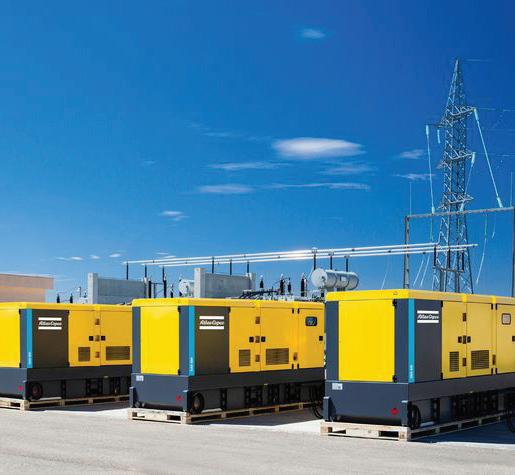
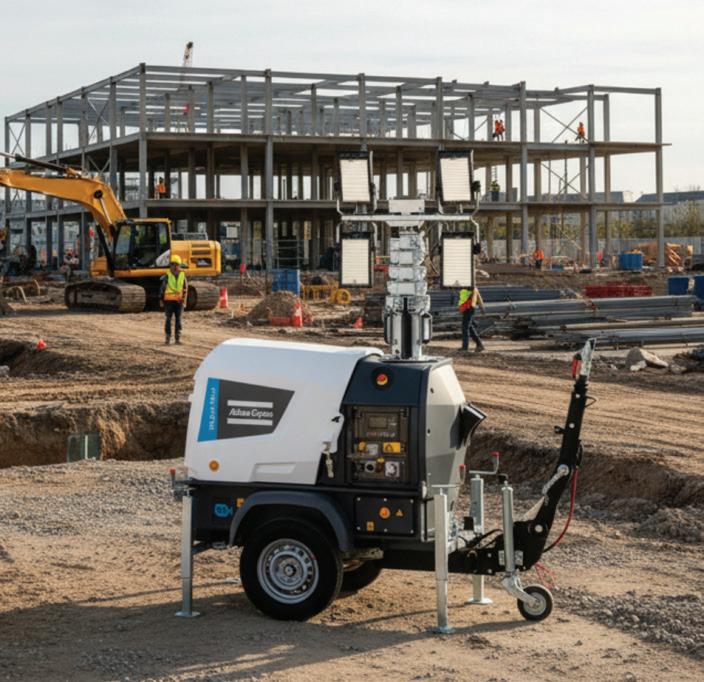
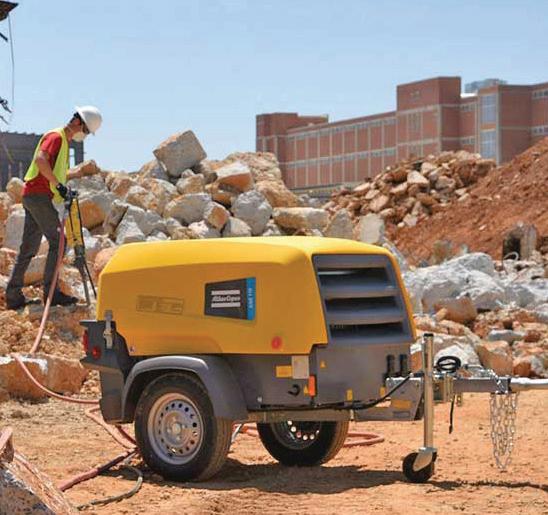
Atlas Copco’s extensive range of generators, light towers and compressors are engineered for maximum uptime while providing uncompromising efficiency in the toughest environments. Whether you need reliable onsite power, precision-engineered air flow, or high-intensity illumination, our equipment delivers the sustainable performance and rugged durability your project demands.


SANY telehandlers are powerful all-rounders that stand out for their agility, speed and versatlity while being the ideal solution for demanding jobs and precision work. Thanks to their compact design and a selection of three different steering modes, they can be perfectly positioned in even the tightest of spaces and can bring heavy loads up to a lifting height of between 7-18 metres.
LIFTING CAPACITY
The highly efficient and powerful hydraulics allow operators to work with precision in short cycle times.
SAFETY
The load management system monitors the load of the machine to prevent instability when carrying loads, and limits speeds for safety and improved load retention.
EFFICIENCY
The Deutz electronic engine control (EMR) ensures optimum engine performance and low fuel consumption, while the Dana hydrostatic transmission offers precision and manoeuvrability for improved material handling applications.


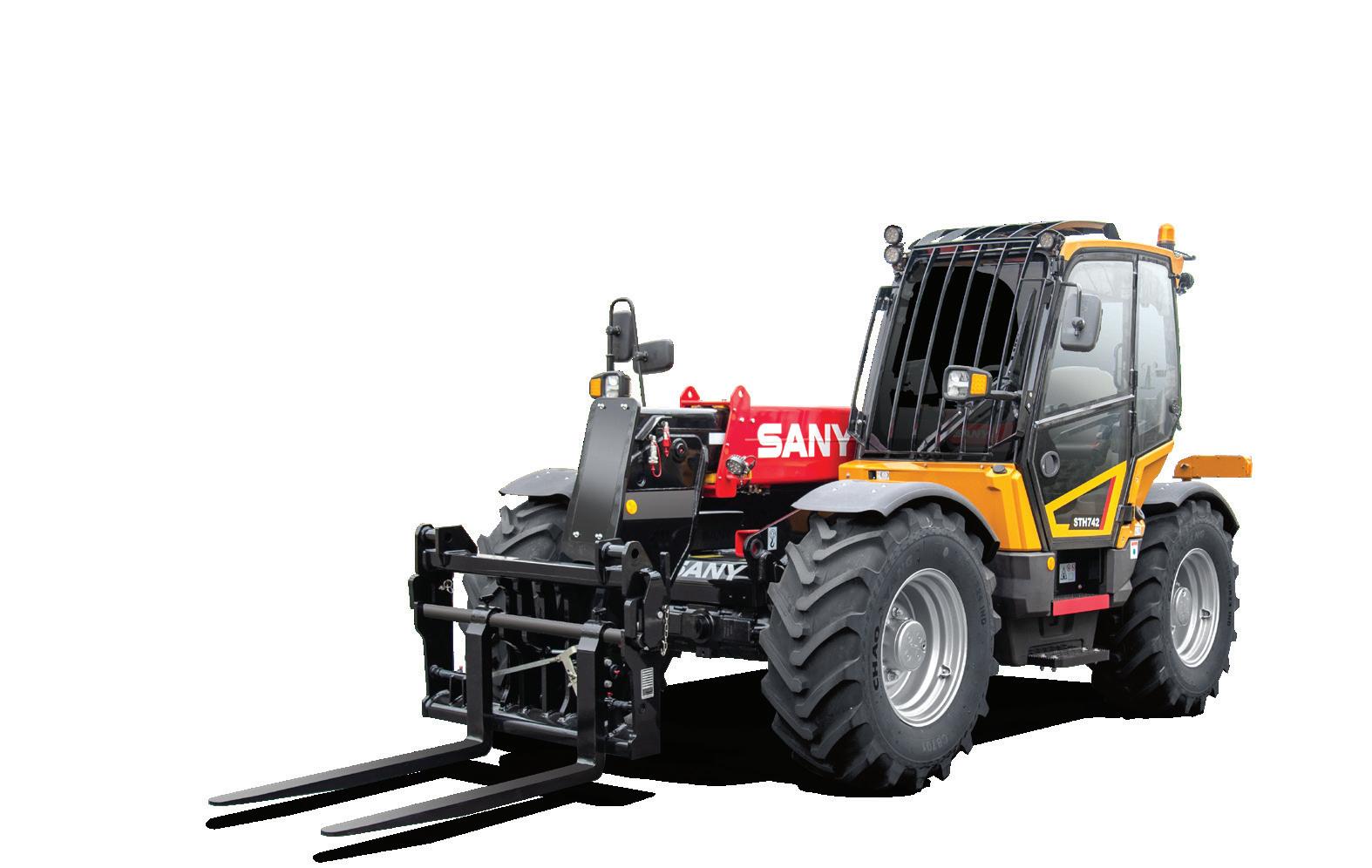

sourcing and quality to sustainability and performance, we believe in doing business transparently. Choose SAMI and you won’t look back.