A new wave of ‘electrotech’ is revolutionising how electricity is generated, stored and consumed.
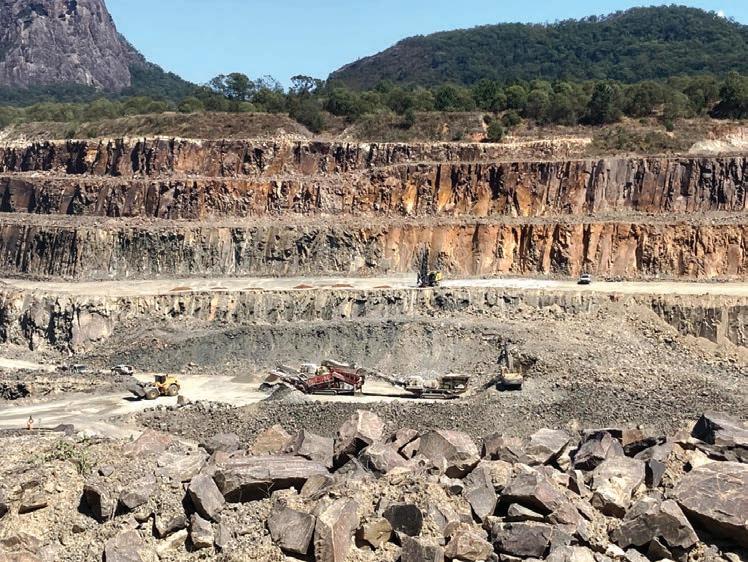
QUARRY SUPPORTS BRISBANE CANOEING Boral is supporting a Queensland council’s vision to build a new venue for the Olympics.
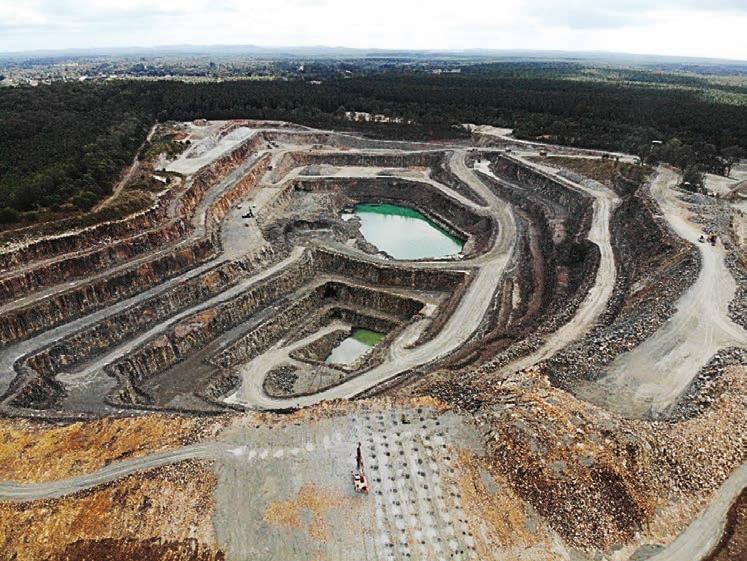
FROM PIT TO PARK Rob Corkery explains how a once vital quarry has been transformed into
16 Expanding ALLU’s range
The new bucket line from ALLU Group is at the forefront of productivity.
20 Absolutely wrapped
Divall’s Earthmoving and Bulk Haulage are taking That’s Solid on the road.
26 Efficiency in quarrying
Tesmec is offering an alternative method to unlock major efficiency gains.
28 The next generation
Multotec Australia’s Callan Gerick shares insights into his career journey so far.
30 Magnetic considerations
Boral
Why suspended electromagnets are a popular for protection against metal.
Beyond the machine
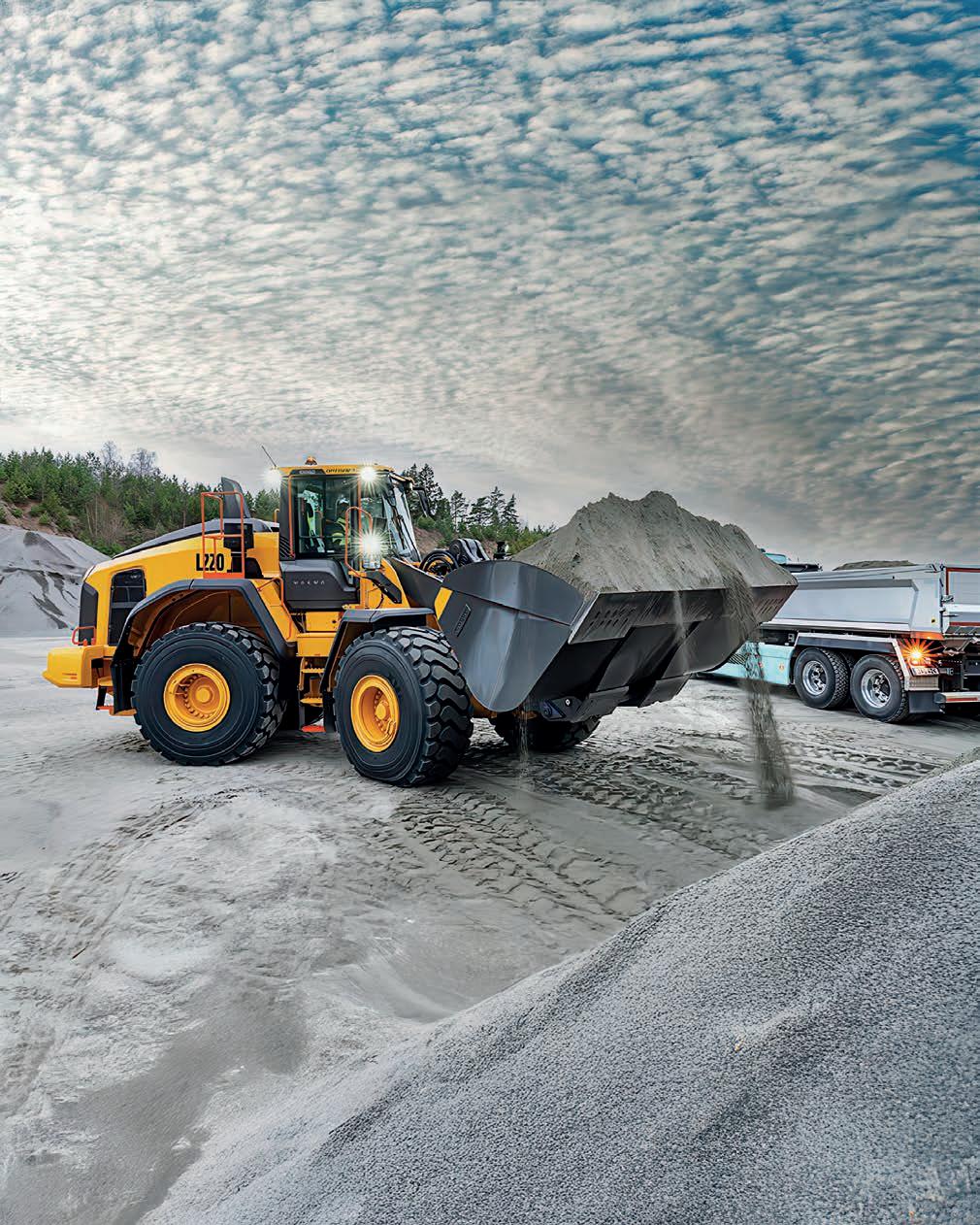
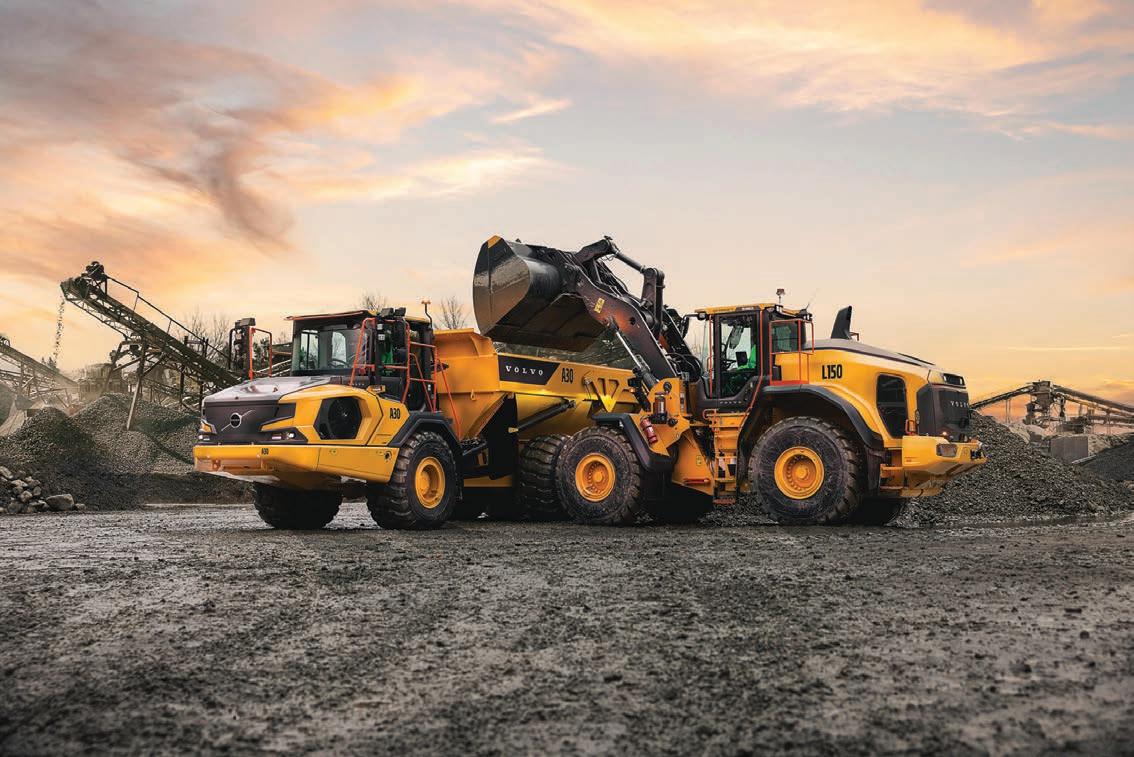
Volvo Construction Equipment’s wheel loader is improving operator efficiency. Making a difference
Onetrak is helping regional quarries handle crushing without interruption.
Always learning
Trainsafe RTO is helping quarries retain valuable experience.
PNG industry collaboration
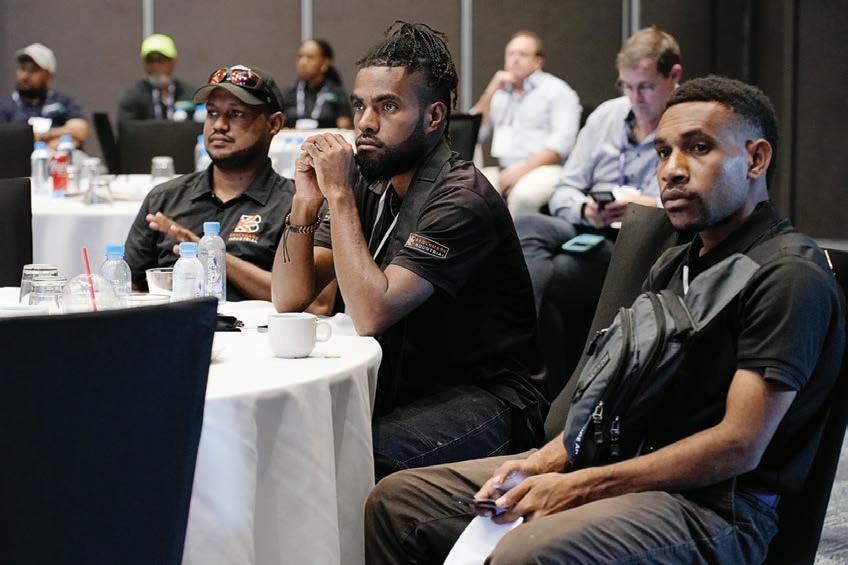
PNG Expo 2026 will return to Port Moresby with a focus on the operational challenges shaping PNG’s mining sector.
Screening for all applications
Metso has an even wider range of solutions for aggregate operators.
44 The holy trinity
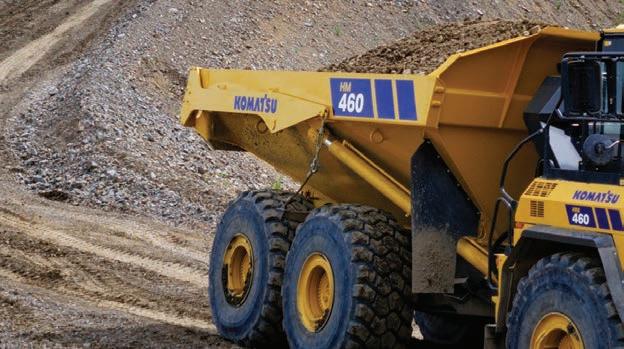
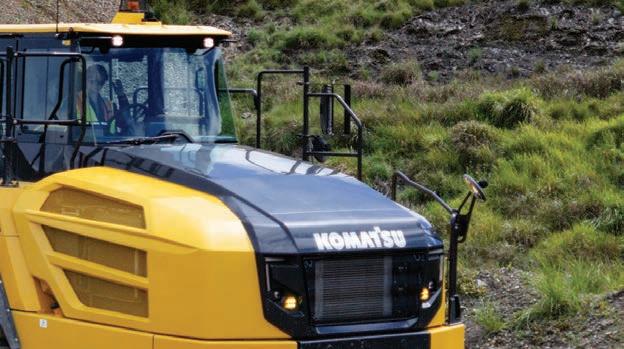
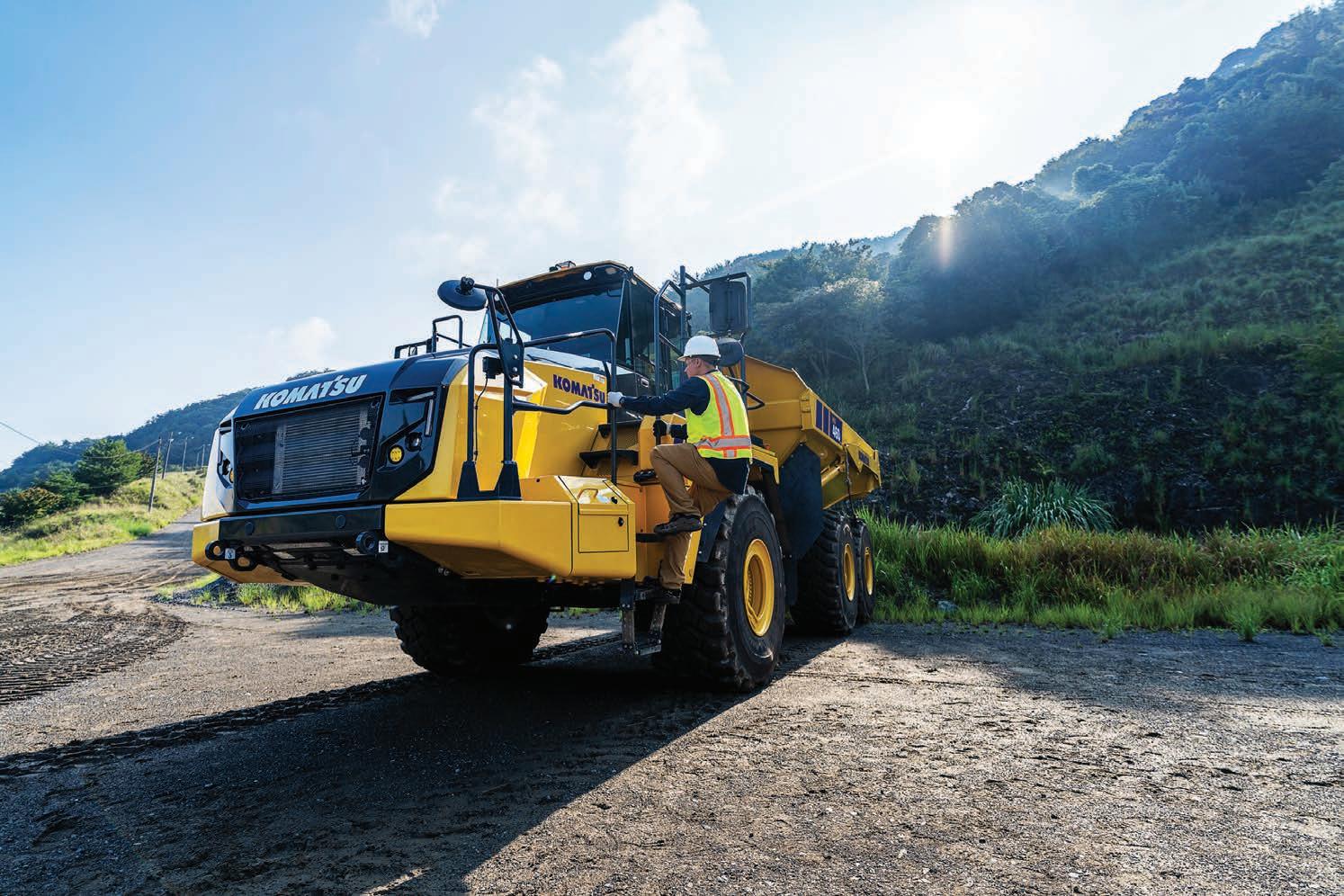
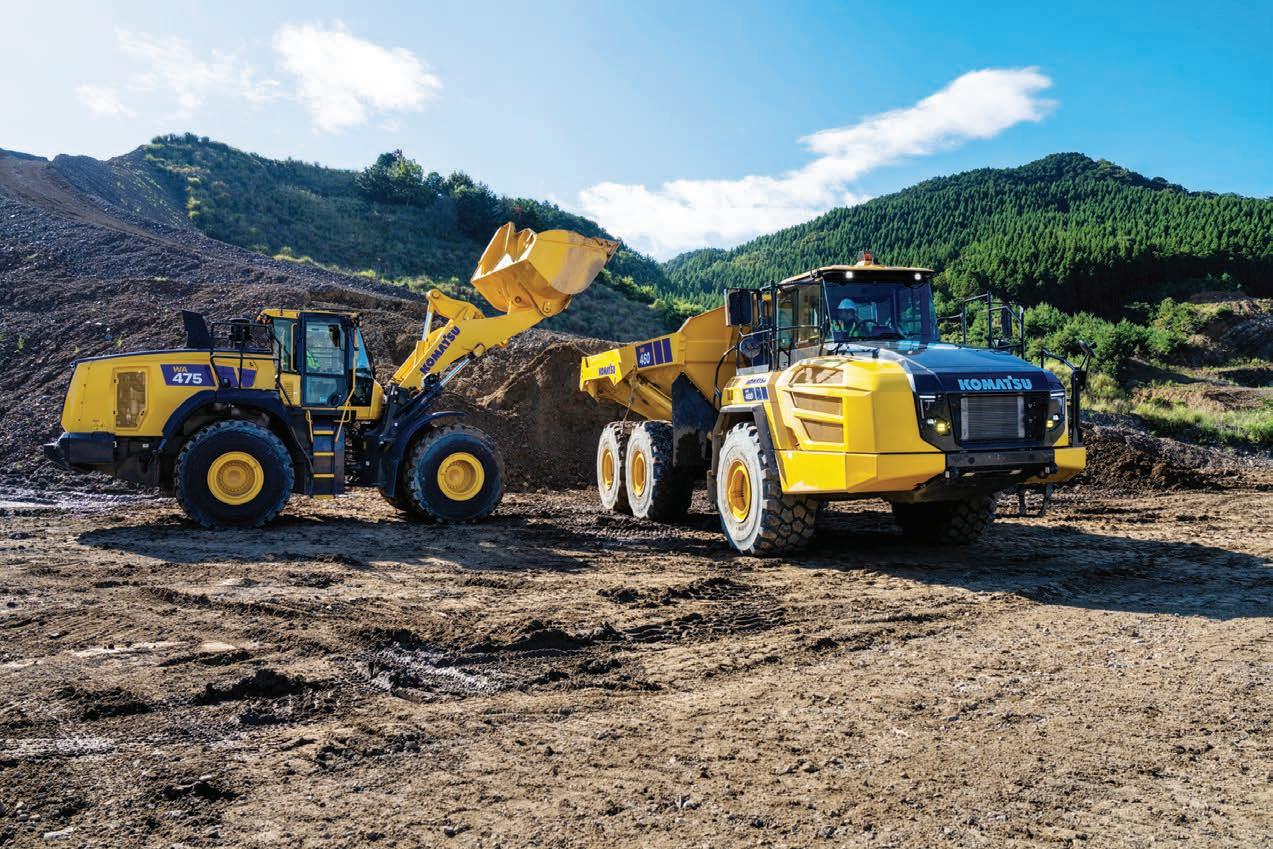
Komatsu’s new HM460-6 haul truck delivers more payload and efficiency.
48 Women in Industry finalists
The Awards highlight the women and organisations driving meaningful change.
STAYING EFFICIENT
Over the life of an asset, fuel expenses can often add up to around half of the total costs required to keep a machine running on a quarry.
In 2020, prices for fuel had been on the decline as demand significantly dropped. Now, as supply shortages are reaching a crisis point, fuel efficiency has become even more vital than usual.
Original equipment manufacturers (OEMs) have been hard at work, developing equipment that can provide the long-term fuel savings required for modern quarries.
In some cases, this is through a more effective and modern engine which has been designed to make diesel last for as long as possible. Other equipment can also have a serious impact on fuel, such as a more effective excavator bucket reducing the number of passes required to fill a truck, thereby requiring less fuel.
Some OEMs are finding ways to cut down on idle time, where the fuel is consumed without productive work occurring. Some idle time is impossible to avoid due to shut down requirements,
but there are many areas where it can be controlled and minimised.
Operators also have an important part to play. How they use the machines can vastly reduce the amount of fuel used. Training plays a key role in keeping a site humming along productively.
Data and machine analytics can also track how machines are using fuel in real time, allowing canny quarry managers to spot where potential problems are.
The push for net-zero emissions has also led to the development of electric crushers, mixers, wheel loaders, trucks, and more. The sector is embracing this technology, as it not only helps reduce prices, but it also cuts down on carbon emissions across the board.
Fuel costs are rapidly fluctuating, and that is unlikely to change any time soon. Quarries who have made the move to upgrade their fleets to maximise fuel efficiency are likely to be in the best position to weather the oncoming uncertainty.
William Arnott Editor
DATA AND MACHINE ANALYTICS CAN ALSO TRACK HOW MACHINES ARE USING FUEL IN REAL TIME, ALLOWING CANNY QUARRY MANAGERS TO SPOT WHERE POTENTIAL PROBLEMS ARE.
In April, Australian quarrying took its place on the world stage. Together with IQA president Michael Close and our Young Members Network (YMN) South Africa study tour group, I joined quarrying leaders from five countries – Australia, the UK, New Zealand, Hong Kong and host nation South Africa - at the 55th IQ Southern Africa Conference & Exhibition in Durban. It was a chance to share That’s Solid with an international audience, and to talk about how Australia is working to lift the profile of our sector and bring the next generation in.
The campaign struck a chord, and the conversations that followed were just as valuable. We’re all facing the same challenges – workforce, perception, the next generation –and there’s a shared determination to work on the answers together.
The IQSA Conference also marked the end of the formal learning aspects of our IQA Young Members Network South Africa Study Tour – 10 days of site visits, networking and cultural experiences across Johannesburg, Durban and Cape Town. Our YMN delegates joined international peers in the conference’s Young Professional session, putting Australian talent in front of a global audience.
It was a proud moment for the IQA, and the kind of experience that shapes careers. The tour attendees will be sharing their reflections at the That’s Solid careers day: Dig into your future session at our 2026 National Conference on Wednesday 7 October.
FROM
DURBAN TO THE GOLD COAST
Our National Conference program keeps building. Since the last edition, we’ve confirmed our Brisbane 2032 Olympic and Paralympic Games session, with BOCOG’s Dominique Lamb joining us on the Gold Coast. Our site tour is shaping up at Heidelberg Materials’ Wolffdene Quarry – a unique look at the new transport workshop, the new plant, and current quarry development, guided by Heidelberg’s southeast Queensland quarry managers.
You’ll also find our interview with keynote speaker Sean Brady elsewhere in this edition – ahead of his session on the Boeing Max 8 failures and what they tell us about systemic risk.
MEMBERSHIP RENEWALS
CLOSE 30 JUNE
A reminder that 2026/27 IQA membership renewals are now open and close on Tuesday 30 June. Your membership keeps you connected – to your peers, to professional development, and to the work driving our sector forward. It also gives you access to expert resources, including legal guidance through our Strategic Advisory Partnership with Thomson Geer.
www.quarry.com.au
The IQA’s Strategic Plan 2023 to 2026 embodies the following vision, values and strategic priorities:
Thriving communities supported by a sustainable industry
Operational Priorities:
• Deepen industry participation
• Sustainable revenue streams
• Highly capable team
THE CAMPAIGN STRUCK A CHORD, AND THE CONVERSATIONS THAT FOLLOWED WERE JUST AS VALUABLE.
Renew before the deadline to avoid the rejoining fee and lock in member rates for the 2026 National Conference and every IQA event for the year ahead. Renew online at quarry.com.au, by direct deposit, or call 02 9484 0577. It’s shaping up to be a big year. Thank you for being part of the IQA community – your support is what makes all of this possible.
Jane Schmitt Chief Executive Officer Institute of Quarrying
Australia
• Technological innovation
• Effective engagement
• Great governance
Strategic Priorities:
• Support industry participants with compliance and regulation
• Build a diverse and skilled industry
• Foster strong industry connectivity
IQA Contacts:
For all education, member and branch enquiries: Phone: 02 9484 0577
Michael Close interviews Komatsu executive general manager for construction and utility David Small.
Komatsu is a valued IQA National Conference Partner and a longstanding supporter of the quarrying sector in Australia. At the 2026 IQA National Conference on the Gold Coast, Komatsu will once again host the ever-popular Conference Dinner, traditionally one of the most memorable evenings of the conference.
Michael Close: Why is it important for Komatsu to be actively involved in events like this?
David Small: The quarrying sector plays a critical role in Australia’s infrastructure and construction supply chain, so supporting organisations like the IQA is important to us. The National Conference brings together operators, suppliers and industry leaders to share knowledge and discuss the challenges and opportunities shaping the sector. For Komatsu, it’s also a valuable opportunity to listen to our customers, understand what matters most on their sites, and continue working together to improve safety, productivity and sustainability across the industry. I think real value in the relationship has been driven by the longevity of the engagement between IQA and Komatsu.
MC: What can attendees expect this year on the Gold Coast?
DS: The dinner has become a great tradition of the conference and something we really enjoy hosting. It’s a chance for everyone to step away from the day-to-day pressures of the industry and spend time with
colleagues, customers and friends in a relaxed environment. This year on the Gold Coast we’re looking forward to another memorable evening, good food, great company and a few surprises along the way.
MC: How does Komatsu see innovation and technology shaping the future of quarrying operations?
DS: Technology is playing an increasingly important role in helping quarry operators run safer, more efficient and more sustainable operations. Today we’re seeing more sites adopt solutions that connect machines, site data and people, giving operators clearer visibility of productivity, material movement and machine performance. At Komatsu, we’re focused on developing technologies that make those insights easier to access and act on, whether that’s through smart machine automation, digital fleet management or solutions that help optimise the entire site.
MC: What are you most looking forward to at the 2026 National Conference?
TECHNOLOGY IS PLAYING AN INCREASINGLY IMPORTANT ROLE IN HELPING QUARRY OPERATORS RUN SAFER, MORE EFFICIENT AND MORE SUSTAINABLE OPERATIONS.
Educating and connecting our
www.quarry.com.au
The IQA’s Strategic Plan 2023 to 2026 embodies the following vision, values and strategic priorities:
Vision:
Thriving communities supported by a sustainable industry
Operational Priorities:
• Deepen industry participation
• Sustainable revenue streams
• Highly capable team
• Technological innovation
• Effective engagement
• Great governance
Strategic Priorities:
• Support industry participants with compliance and regulation
• Build a diverse and skilled industry workforce
• Foster strong industry connectivity
IQA Contacts:
For all education, member and branch enquiries: Phone: 02 9484 0577
Email: iqa@quarry.com.au
Chief Executive Officer
Jane Schmitt
President Michael Close
Company Secretary
David Cowie
DS: For me, it’s always the conversations. The conference provides a great opportunity to reconnect with customers and hear firsthand how the industry is evolving. It’s also encouraging to see the level of collaboration across the sector, everyone is focused on improving safety, productivity and sustainability in quarrying. I’m looking forward to seeing the ideas and discussions that come out of this year’s event and how they help shape the future of the industry.
Michael Close, FIQ President Institute of Quarrying
Australia
Follow the IQA on our social media pages:
IQAustralia
the-australian-institute-ofquarrying/ iqaus
Eriez Suspended Electromagnets and Metal Detectors offer reliable protection against tramp metal contamination. Eriez. Always the Right Choice. Protect your downstream crushers, mills, and pulverizers from damage caused by stray digger teeth, tools, and other dangerous metal.
IQA NEWS
OUT AND ABOUT WITH THE IQA
Townsville Mayor flags regional project pipeline
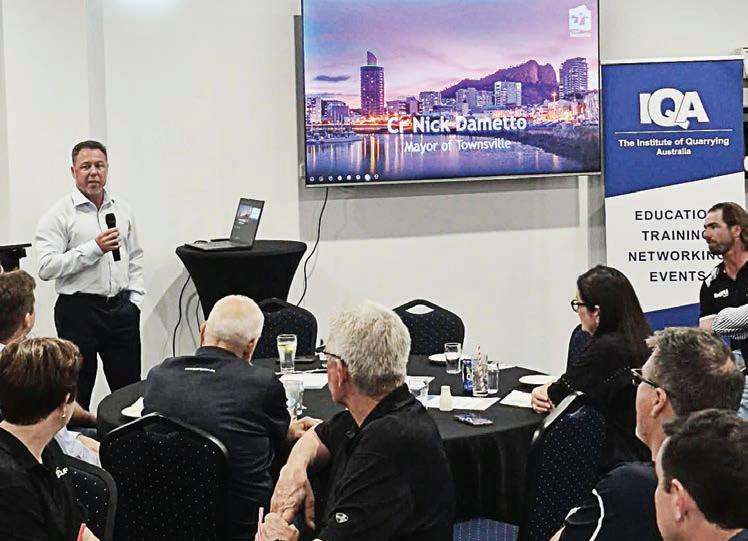
Townsville mayor Nick Dametto outlined a pipeline of regional projects set to drive demand for quarry materials across the Townsville corridor at the IQA North Queensland branch’s dinner meeting in April.
Speaking to 34 sector professionals at the North Queensland Club, Dametto highlighted upcoming developments expected to create significant opportunities for local quarry operators and suppliers.
The Queensland Department of Transport and Main Roads’ Kylee Petersen followed with a detailed update on major transport infrastructure works underway in the region, with both presentations generating strong discussion among attendees.
Komatsu’s Nathan Timms rounded out the evening with an update on the company’s latest updates, reinforcing Komatsu’s valued ongoing support of the North Queensland branch.
Branch chair Paul Hooton said the packed room reflected growing sector engagement across the Townsville region.
Fossils, forklifts and fellowship: QLD Branch heads to Berrinba
Every quarry tells a story, but some tell stories 300 million years old.
That was the takeaway from the IQA Queensland branch’s sold-out Porter Equipment Berrinba site tour in April, where more than 60 attendees heard Anthony
Romilio and Professor Bruce Runnegar deliver a fascinating presentation, Quarrying deep time: Industry at the front line of discovery.
The session explored the remarkable role quarries play in uncovering Australia’s fossil record - from dinosaur footprints to ancient plant remains - and the sector’s quiet but significant contribution to palaeontological research.
For many in the room, it was a reminder that every site worked today could hold scientific value tomorrow.
Anthony Romilio welcomes any potential fossil finds from the quarrying sectoroperators are encouraged to take photos and email a.romilio@uq.edu.au. No need to stop production, just an opportunity to record a potential discovery.
The afternoon had opened with a behindthe-scenes tour of Porter Equipment’s Berrinba facility, hosted by Jason MacDonald and his team, who showcased the business’s operations and its support for the quarrying sector.
Adbri’s Anielle Berthelot then delivered a compelling presentation on safety excellence, offering practical insights on embedding strong safety culture across operations.
Victorian branch hits the greens
On 23 April, Victorian branch members traded site boots for golf clubs, taking over X-Golf Preston for the autumn social event. Across the indoor simulators, members
tackled some of the world’s iconic courses while doing what these nights are really built for: catching up, swapping stories, and making the kind of connections that don’t happen on a Teams call.
The format was relaxed, the competition was friendly, and the Branch’s autumn calendar is well and truly off the tee.
Quarrying in the tropics
Running a quarry in one of the wettest parts of the country comes with a particular set of challenges. On 30 April, the IQA Far North Queensland sub-branch went to see how Pioneer North Queensland’s Innisfail Quarry handles them.
Innisfail averages more than three metres of rain a year, a climate that shapes everything from stockpile management and water handling to plant maintenance and production planning.
The site tour, hosted by Pioneer North Queensland’s Darren Caddy and Paul Stokes, gave Far North Queensland members a close-up look at how those pressures play out across the operation’s plant, processes and current production.
The conversation continued over a networking dinner at the Parkview Tavern. Members from across the region traded notes on equipment performance, compliance pressures and the realities of running operations in tropical conditions, the kind of practical exchange that’s hard to replicate in a webinar.
Townsville mayor Nick Dametto outlined a pipeline of regional projects at the IQA Queensland branch dinner. IQA members tackled some of the world’s iconic golf courses at the Victorian branch autumn social event.
Images: IQA
Bringing you our world of expertise
We are now better equipped than ever to help you to optimise your comminution and material handling operations for maximum performance, safety and efficiency.
Our industry leading expertise in crushing, screening, feeding, loading and wear protection allows us to bring you an unrivalled equipment line-up. We underpin this unique offering with our expert process knowledge, full range of digital tools, high quality OEM spare parts, consumables and life-cycle services.
Scan the QR code to discover why we are the industry’s partner in eco-efficient mineral processing.
NEXT GENERATION CRUSHING, SCREENING AND STACKING
A new wave of ‘electrotech,’ including solar photovoltaic, batteries, electric vehicles and heat pumps is revolutionising how electricity is generated, stored and consumed, increasingly at lower cost than fossil fuels.
As the quarrying, recycling and material handling industries continue to evolve, the demand for smarter, more efficient, and environmentally responsible equipment has never been greater.
The crushing and screening industry has long relied on diesel-hydraulic machinery. Businesses are charging ahead with electrification, but few are scaling.
ENVE product specialist Francis Sherry told Quarry that operators who adopt early are positioned to capture the greatest operational savings.
Australian owned and operated equipment supplier ENVE believes the biggest challenge in the sector will be shifting perspective of the traditionalist quarry operator.
“There is finite time until the dieselhydraulic drive system becomes uncompetitive from an operational standpoint,” Sherry said. “We look forward to
the challenge of transforming how crushing and screening is done.”
“Surging demand from electric vehicles, heat pumps and data centres have pushed electricity into a new ‘age of demand’ with electricity use projected to double by 2050 and with business driving three-quarters of that growth.”
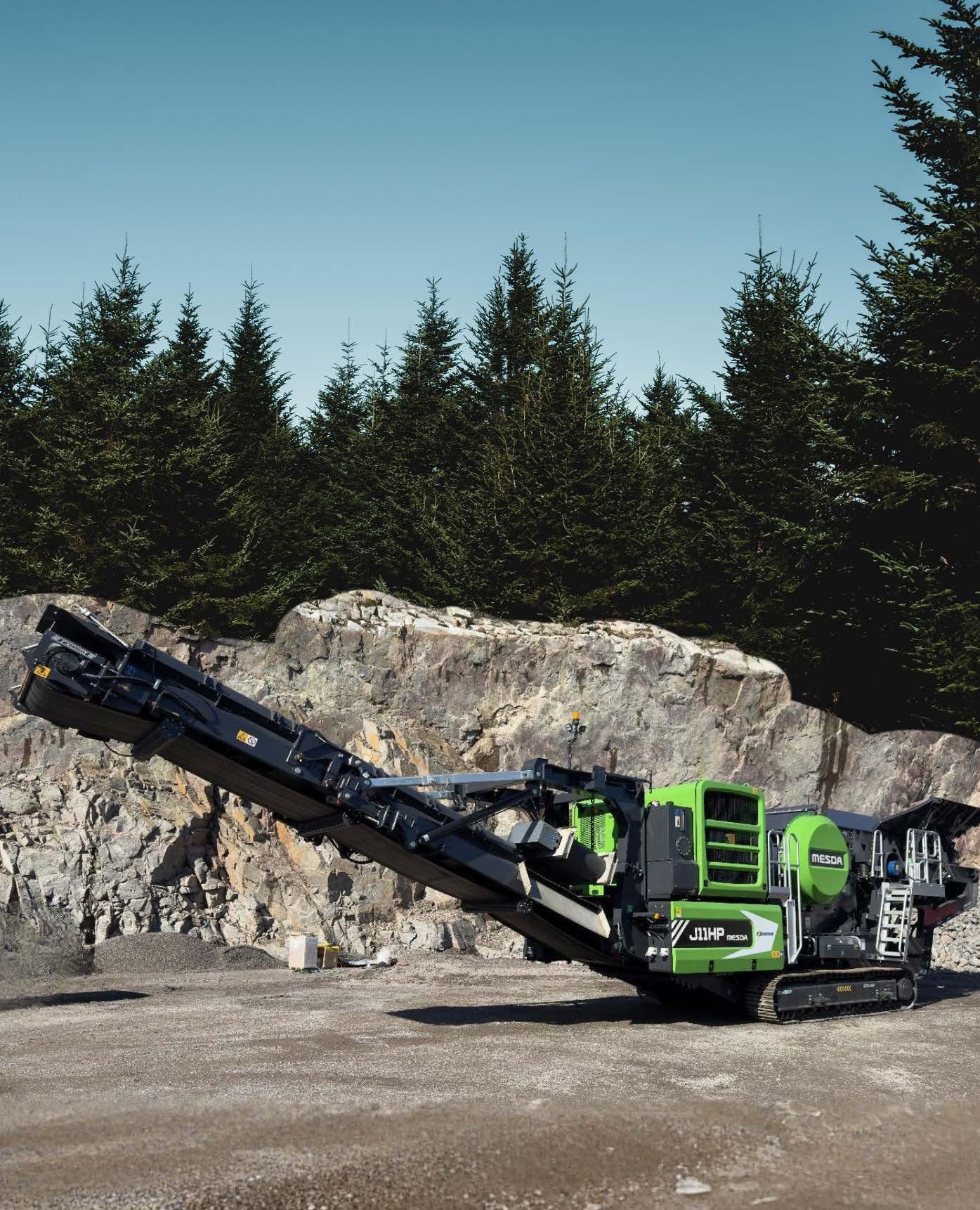
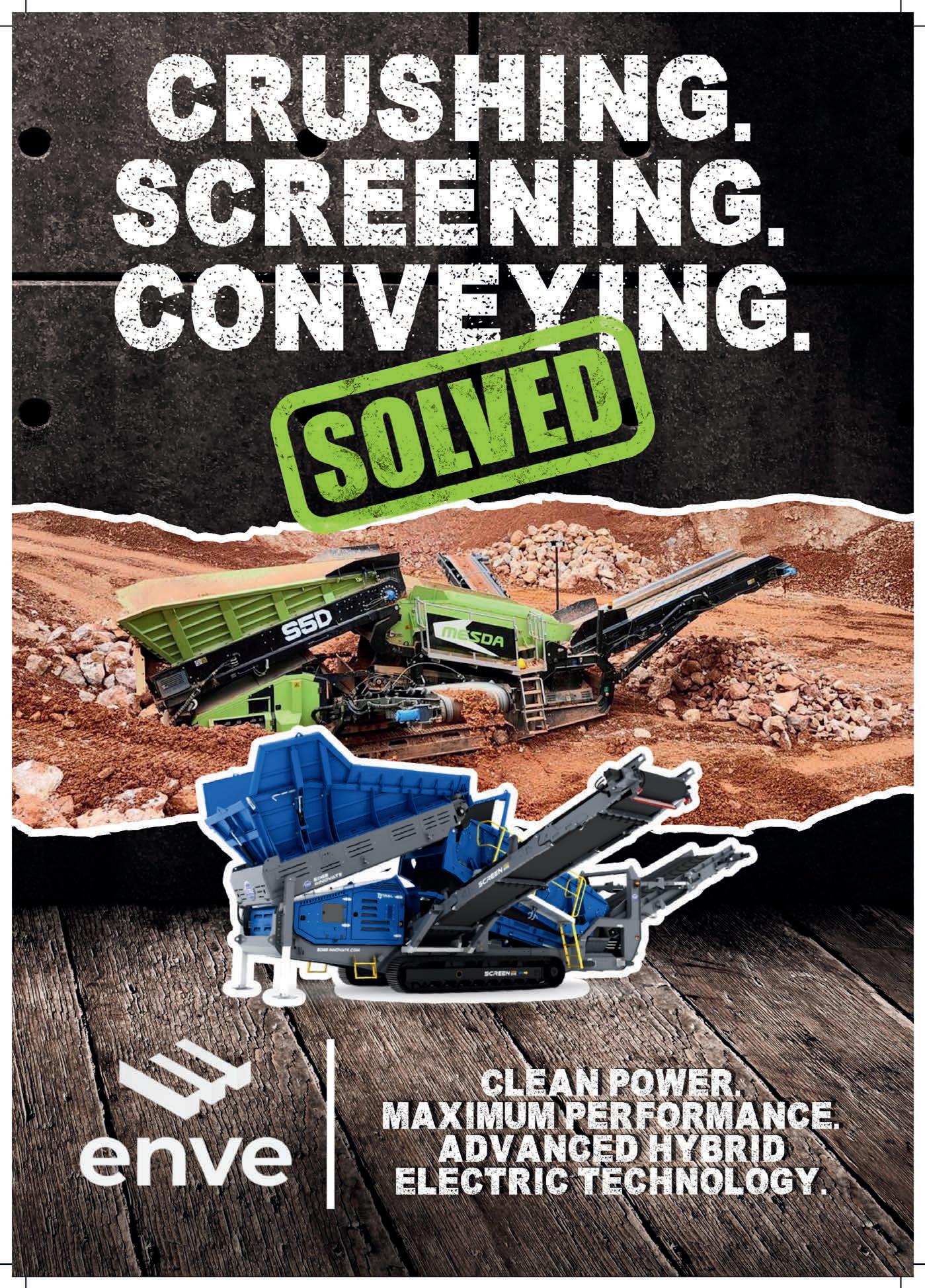
Specialising in electric-hybrid technologies, ENVE is helping quarries redefine their approach productivity and sustainability.
By integrating advanced screening, crushing and stacking equipment into its offering, ENVE provides operators with reliable, high-performance machinery that provides up to 40 per cent reduction in fuel costs and a possible 30 per cent reduction in maintenance costs when compared with a conventional diesel only operation.
“The electric drive system at minimum provides a 15 per cent lower operating
expenses (OPEX), and depending on material type, plant configuration and grid access, companies could return up to a 35 per cent OPEX cost reduction,” Sherry said.
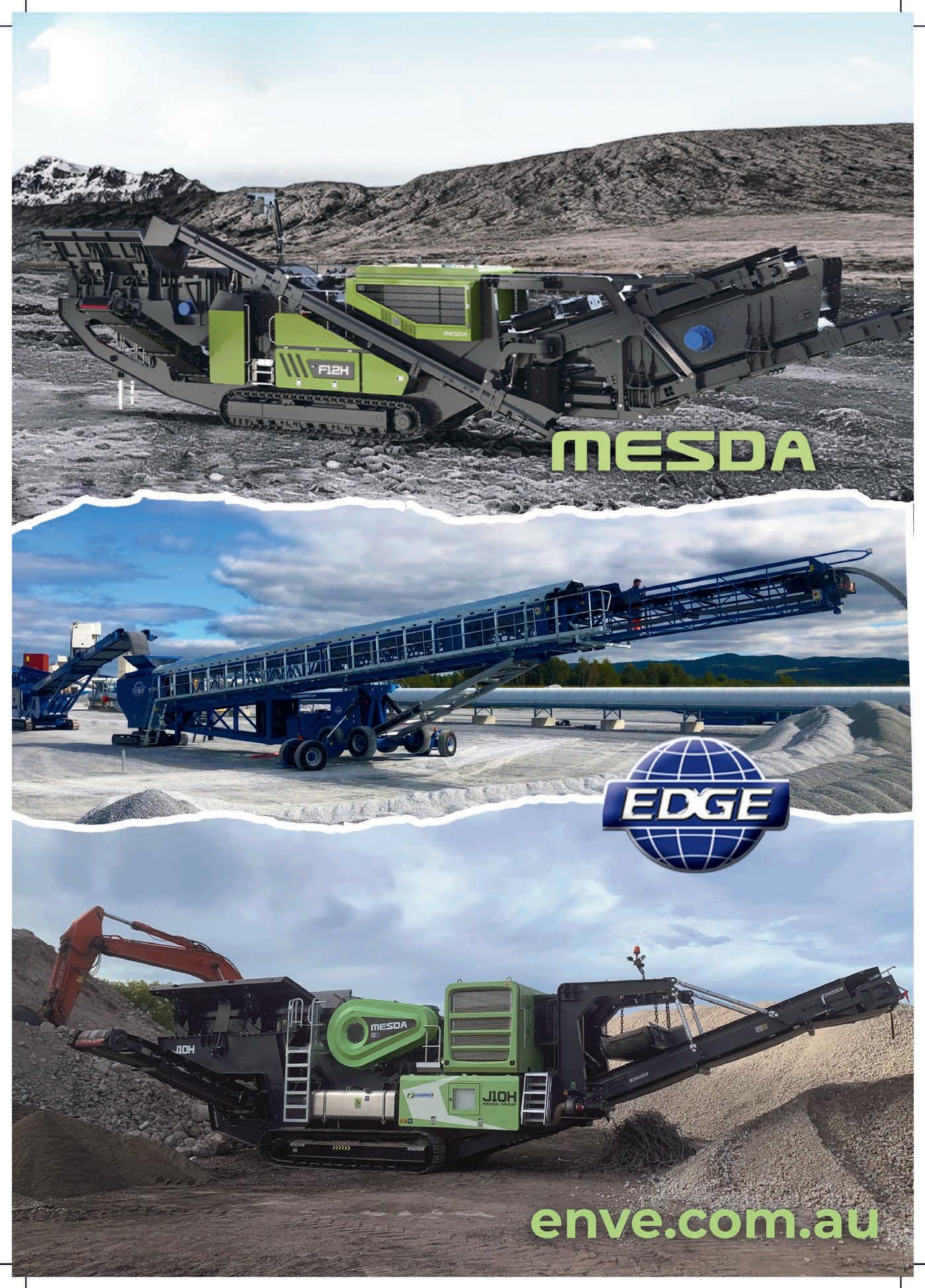
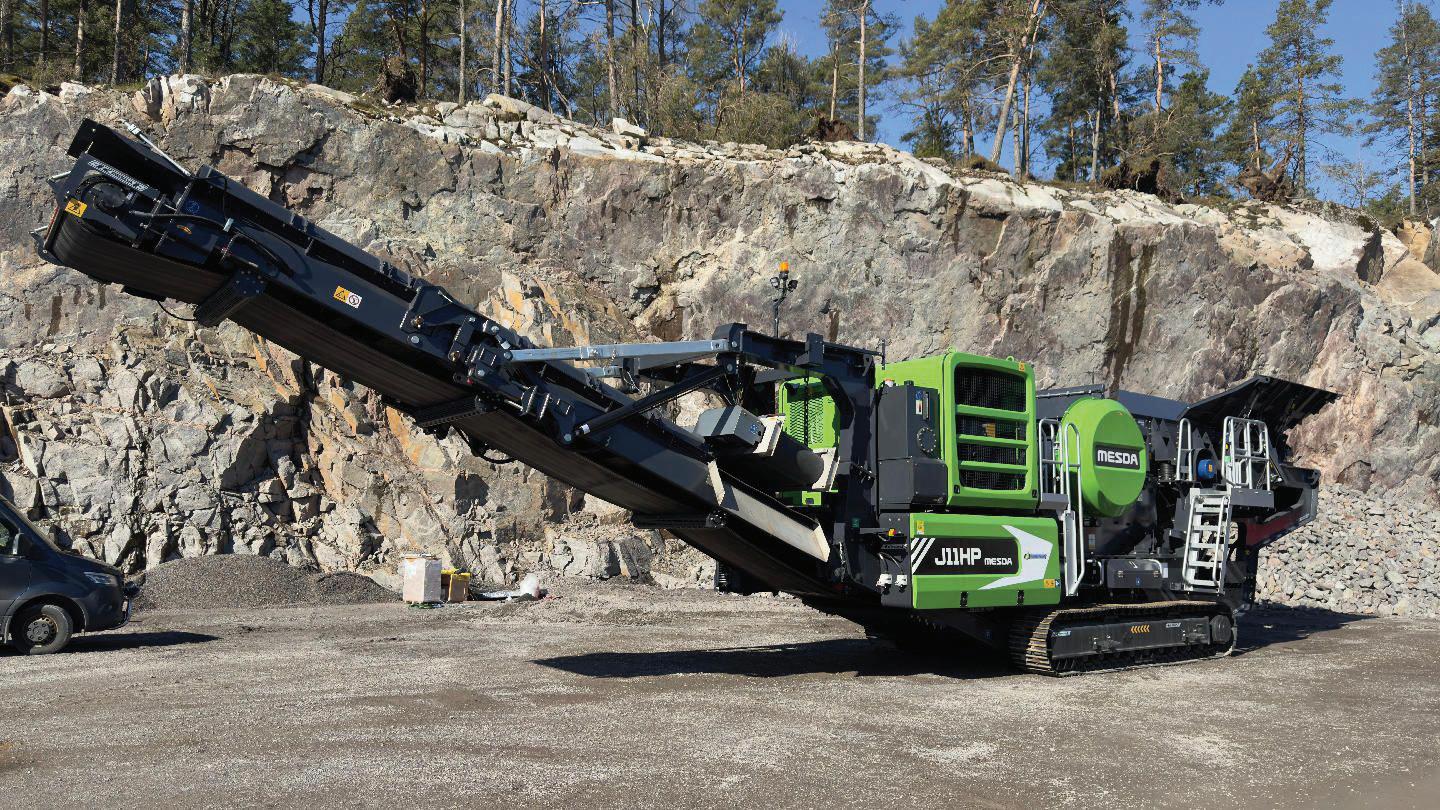
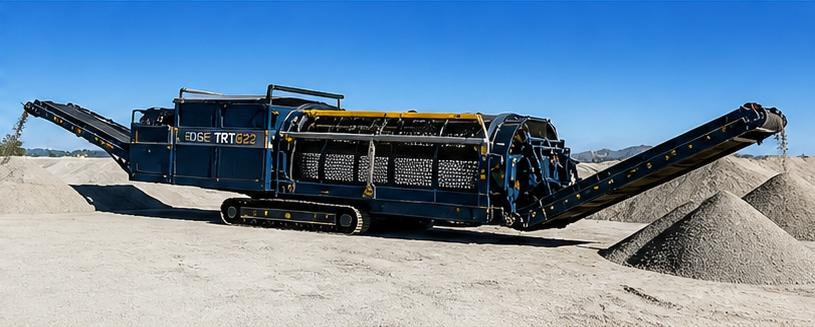
At the core of ENVE’s portfolio is a strategic partnership with manufacturers Edge Innovate and Mesda Group.
EDGE Innovates has more than 25 years of expertise in the design and manufacture of screening and stacking products. Its knowledge and experience with eco-drive and electric-hybrid power packs meant partnering with EDGE Innovations was a no brainer decision for the ENVE team.
Sherry said Edge’s ability to understand the requirements of what is needed is always the focus.
“EDGE Innovate continually pushes the boundaries of engineering and manufacturing to deliver robust, highperformance machinery,” Sherry said.
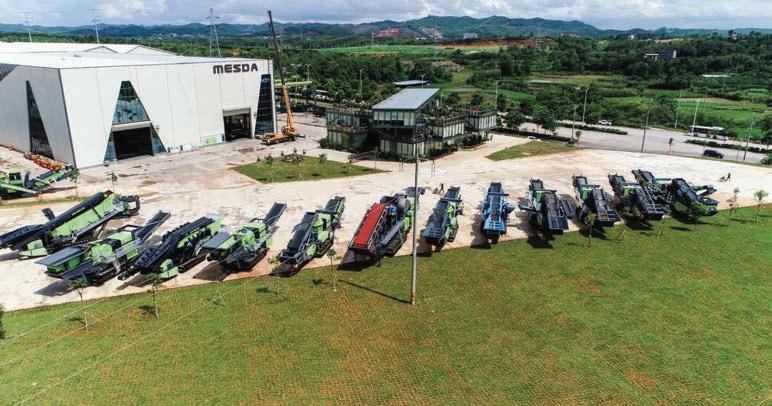
Mesda is the market leader for mobile crushing and screening equipment in China.
Images: ENVE
Mesda is a market leader for mobile crushing and screening equipment in China, holding a market share of over 50 per cent in the Chinese domestic market. With four manufacturing facilities in China, 700 employees and operations in more than 40 countries globally, its customer-focused engineering has led to a reputation as a technology-driven manufacturer.
“ENVE’s decision to partner with Mesda marks a deliberate step toward the future of quarrying – if the core driver of your operation is to reduce your cost per tonne, it is imperative you act now,” Sherry said.
“China leads with the largest share of firms in the advanced stages of electrification (38 per cent), as well as the largest share of firms seeing positive returns on electrification investments (66 per cent).
“Mesda is strategically well-founded because China’s deep, policy-driven commitment to accelerating electric and hybrid technology adoption has created one of the world’s fastest-growing markets for electrified screening and crushing equipment.”
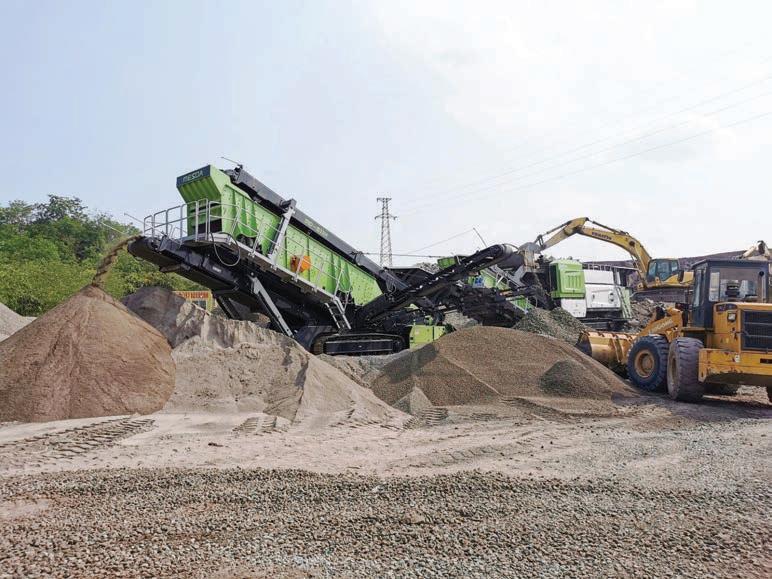
Unlike traditional diesel-powered systems, Mesda’s electric hybrid crushing range integrate electric drives with intelligent energy management, allowing operators to significantly reduce fuel consumption with 20 per cent fuel savings and the option to run direct electric, while maintaining consistent throughput.
Sherry said fuel efficiency is the most tangible advantage.
“Quarry operators are acutely aware of diesel price volatility,” Sherry said. “Mesda’s hybrid electric crushers dramatically cut fuel burn by 20 per cent.”
“As of May 2026, Australian diesel prices are elevated, averaging around $2.60 per litre. Your traditional diesel impactor runs on a fuel burn of 30-45 L/hr, a Mesda hybrid-electric impactor runs on a fuel burn of 15-22L/hr.
“By adapting you’re saving eight to 30 litres per hour. If you’re running 3000hrs/yearyou’re looking at a fuel saving of 24-90,000 litres, $145-$150k per annum. The result is a measurable reduction in daily operating expenses, often without requiring major changes to site infrastructure.”
Equally important is the reduction in emissions and noise. As community expectations evolve and environmental compliance becomes more stringent, quarries must demonstrate responsible operation.
Performance remains non-negotiable. One of the critical factors in ENVE’s decision was that Mesda hybrid machines do not trade productivity for efficiency.
From a support perspective, ENVE recognised the importance of offering equipment that is not only advanced, but also serviceable and practical in realworld conditions.
ENVE engineering manager Nathan O’Connor said the move to electric drive systems is a case of adapt or expire.
“If you haven’t changed your model by next year, you need to speak to our team. The principles of simplicity are at the forefront of these Mesda units with a suite of diagnostic capabilities, predictive maintenance, telematics and ease of service,” O’Connor said. “I have visited both manufacturers’ facilities, their after-sales,
aggressive research and development approach, spare parts and technical support teams are on the frontline with us, and with our customers.”
Ultimately, ENVE’s decision to distribute Mesda and Edge Innovate electrichybrid equipment is part of a broader industry transition.
ENVE is positioning itself and its customers at the forefront of this transformation.
“Contact our team today for a free report on electric drive technology and how we can help optimise your crushing spread,” O’Connor said.
“Stop over-spending, look at the statistics and make up your own mind on how long it will be before the competition is crushing your margins.” •
For more information, visit enve.com.au
EXPANDING ALLU’S MATERIAL PROCESSING RANGE
Quarrying operators are always on the search for ways to make processes more efficient, and the new bucket line from ALLU Group is at the forefront of innovation and productivity.
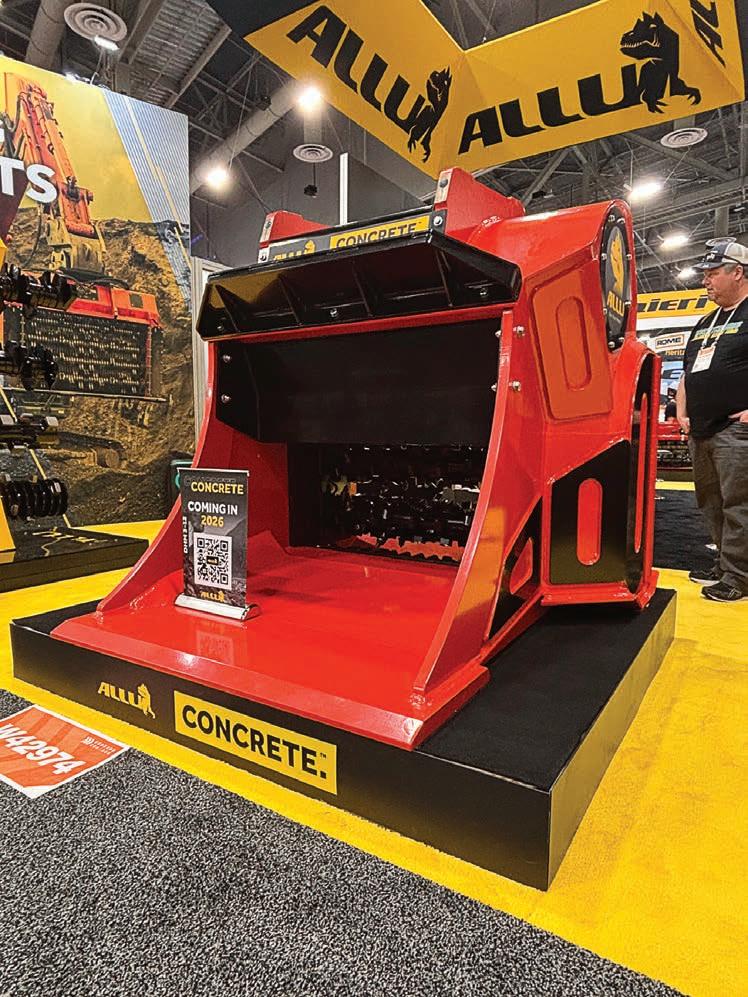
ALLU Group has expanded its range of material processing buckets with the introduction of a new concrete screening and crushing bucket, purpose-built to handle rebar-contaminated demolition material directly onsite.
Unveiled at the recent CONEXPO-CON/AGG in Las Vegas, the new bucket attracted strong interest from contractors and operators seeking more efficient ways to process demolition waste without relying on additional plant equipment.
The new release complements existing ALLU solutions such as the ALLU D and M-Series, widely used in mining and quarrying for their ability to combine screening and loading in a single step.
Designed for 25–45t excavators, it enables operators to crush and screen material in a single step directly onsite. By combining crushing and screening functions into one attachment, the bucket reduces the need for separate pre-crushing or screening equipment. This approach minimises double handling, lowers transport requirements, and streamlines material flow across the site.
“Contractors don’t need another machine to manage on a crowded jobsite; they need a practical way to turn rubble into usable material with the excavator they already have,” ALLU R&D project manager Antti Rautamies said.
“This bucket is built for the real world: finesheavy material streams, tight spaces, and
maintain consistent throughput in demolition and recycling applications where material contamination is common.
To accommodate different application requirements, the bucket incorporates a changeable counter blade setup, allowing operators to select output sizes of 0–50mm and 0–100mm. This flexibility enables contractors to balance fragment size and productivity without reconfiguring the overall processing setup.
The introduction of the concrete bucket aligns with broader industry trends towards on-site recycling and circular construction practices. By enabling waste materials to be processed and reused at source, contractors can reduce haulage, landfill dependency and overall project costs.
“With the ALLU Concrete Bucket, we’re adding a targeted recycling tool that aligns with circular construction goals and allows contractors to turn waste into resource.”
Walkers Hammers sales and business development manager Sami Rahman said. With more than 40 years of experience in material handling innovation, ALLU Group continues to focus on developing attachments that improve efficiency, reduce operational complexity and support sustainable practices across industries worldwide.
The ALLU Concrete Bucket is scheduled for release in Australia in Q4 2026, supported by an established national dealer network providing local availability, service support and technical expertise. •
To register interest or learn more, contact your local ALLU dealer:
• QLD and NT: QLD Rockbreakers, rdw.com.au/qld-rockbreakers
• VIC, SA and TAS: Walkers Hammers, walkershammers.com.au
• WA: Total Rockbreaking Solutions: totalrockbreaking. com.au
Dealer contact details can be found at attachmentspecialists.com.au/allu
for Aust ralia, Papua N ew Guine a and South East Asia
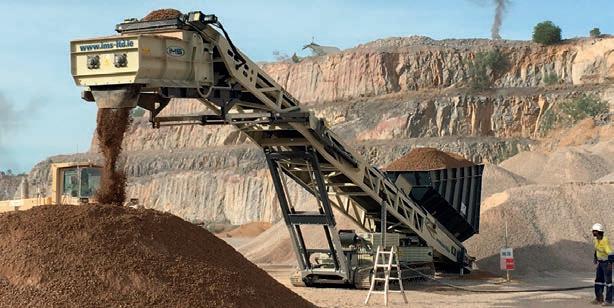
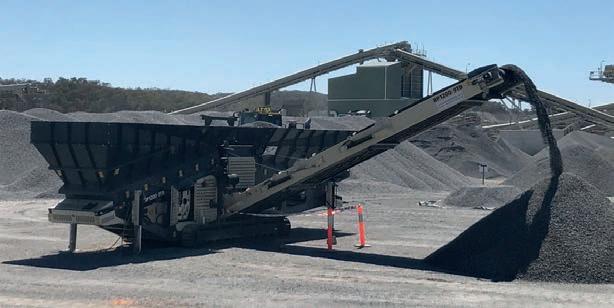
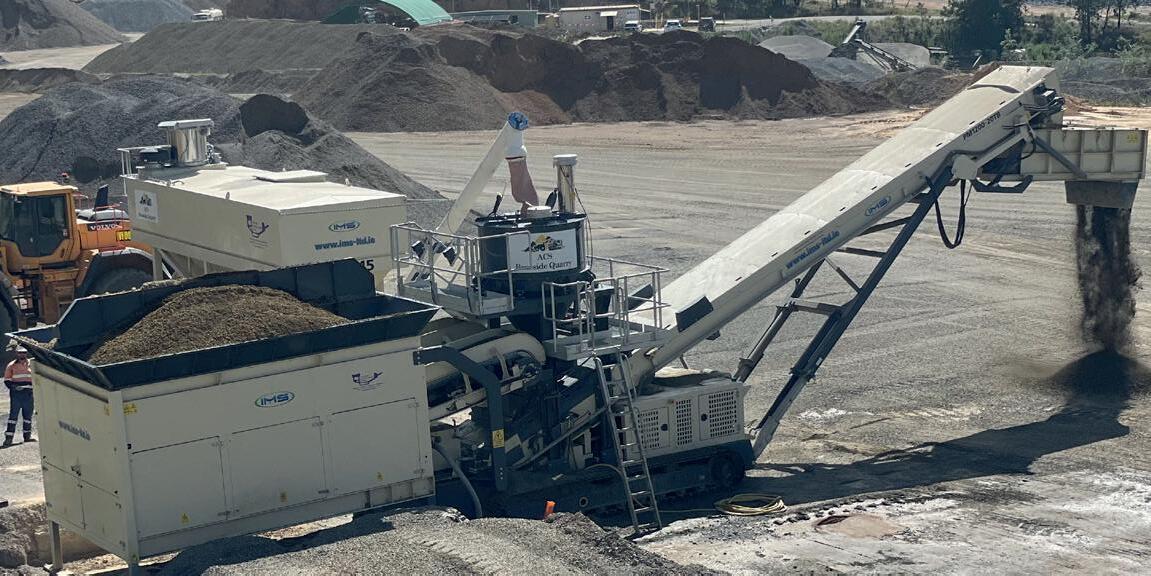
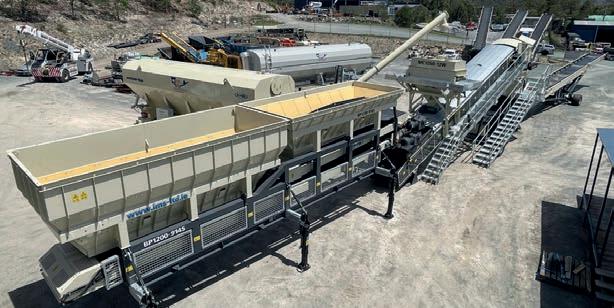
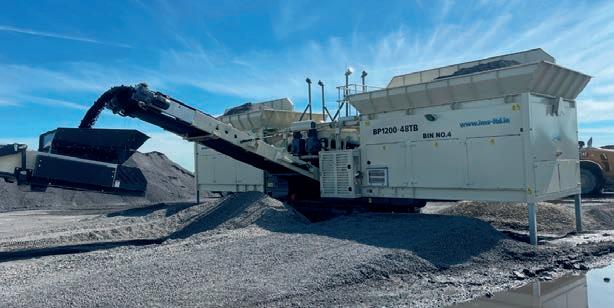
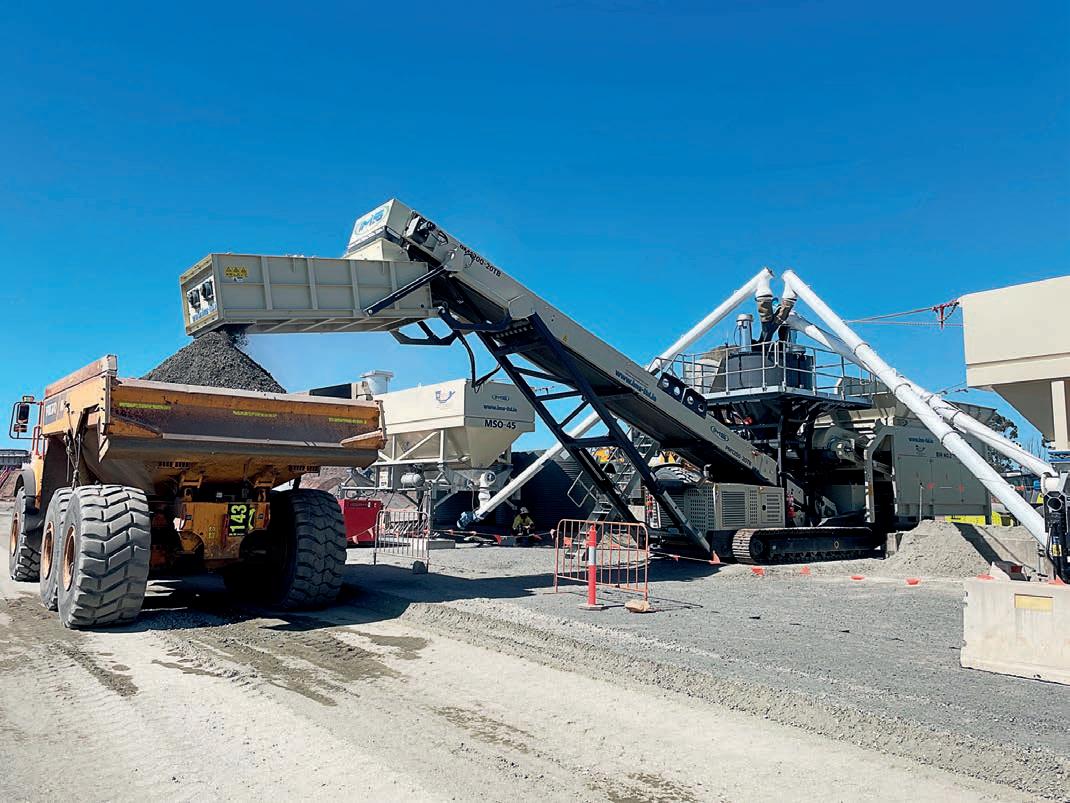
IMS have added the new BP1200-48TB track electric twin power blender to its impressive collection of blenders and pugmills, the new BP1200-48TB has four separate feed hopper each five meters long holding 12m3 each. All feed hopper conveyors are fitted with belt scales and controlled by a PLC control and recording system that can be operated from an iPad or phone from its own Wi-Fi system from a loader or site office. A Cat C7 Generator powers the Nord electric motors a speed to each feed hopper conveyor. The generator can be connected to mains power and could power an extra 24-meter radial stacker increasing the stockpile capacity.
new
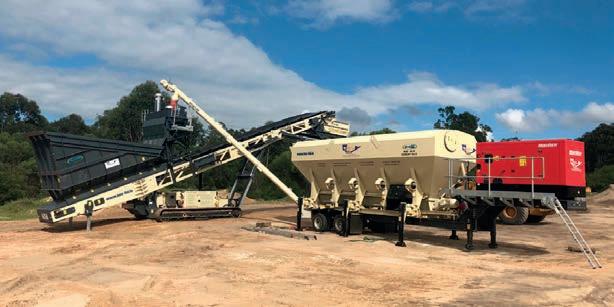
Track Pugmill with twin 10m3 feed hoppers has just commissioned to Braeside Quarry on the New England Highway Warrick in Qld, the options t improved product management with the twin feed hoppers blending having two different products available ready for moisture contr system can be operated from an iPad in a loader managing all aspects of the operation including loading trucks and multiple trailers stopping when the required weight has been reached for each unit and recording the ID number of each load.
FROM PIT TO PARK
Rob Corkery, Honorary Fellow of the Institute of Quarrying, explains how a once vital quarry has been transformed into a major multipurpose recreational and environmental asset for northern Sydney.
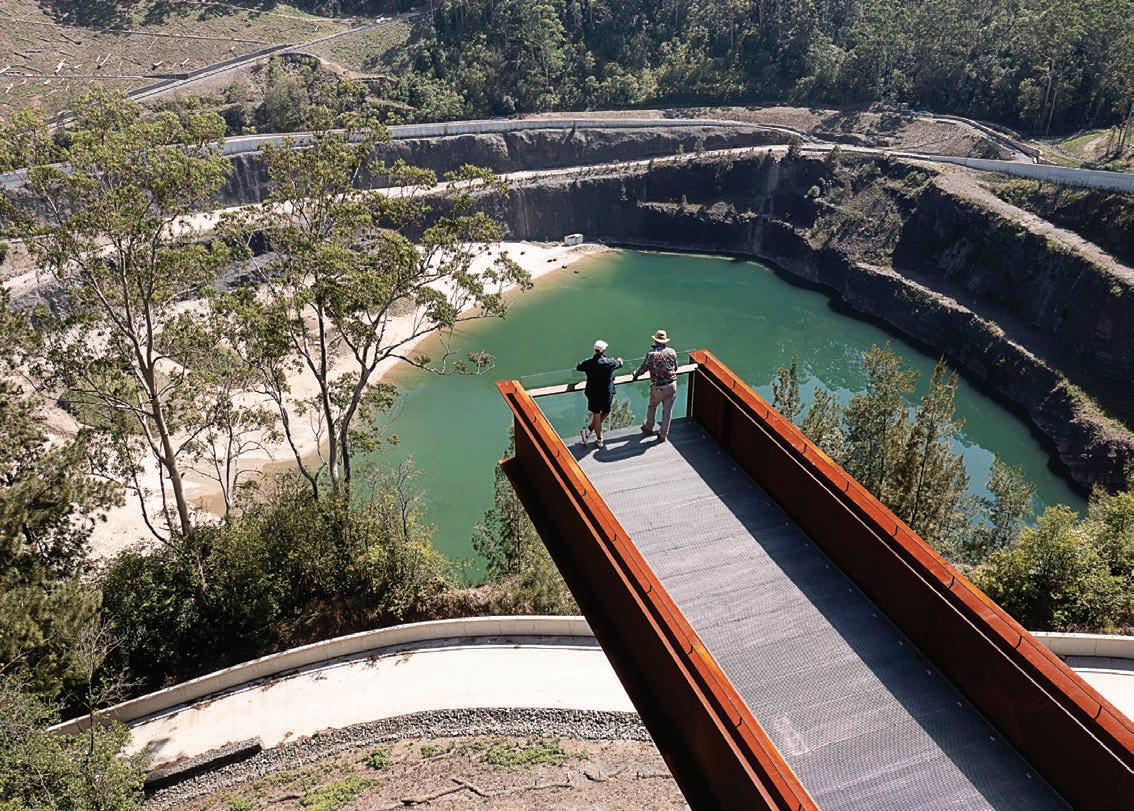
After almost 100 years of supplying aggregates and road base to Sydney’s construction industry and numerous infrastructure projects, Hornsby Quarry closed in 2003.
Hornsby Shire Council purchased the 60ha site soon after its closure. However, the former quarry remained largely dormant until mid-2016. At that time, the quarry void extended approximately 120m below the surrounding land surface, and the overall area of disturbance covered around 30ha.
A turning point in the quarry’s transformation came in mid 2017 with the construction of the nearby NorthConnex road tunnel. Over a period of approximately 18 months, around 1.2 million cubic metres
of sandstone and shale excavated from the tunnel were used to partially backfill the quarry void. This helped to reshape the landform within the quarry void and created surrounding landforms suitable for future uses, including playing fields, open space,
and supporting infrastructure.
The Hornsby Shire Council began extensive community consultation, technical studies, and staged planning to turn the former quarry into a major multipurpose recreational and environmental asset for northern Sydney.
A PARK FOR THE COMMUNITY
Hornsby Shire Council wanted to transform more than just the former quarry void. The Council’s plan for Hornsby Park included an additional 30ha of surrounding land, previously part of the quarry’s environmental buffer.
The vision for the site includes a blend of active and passive recreation opportunities, namely: •Playing fields and open parkland
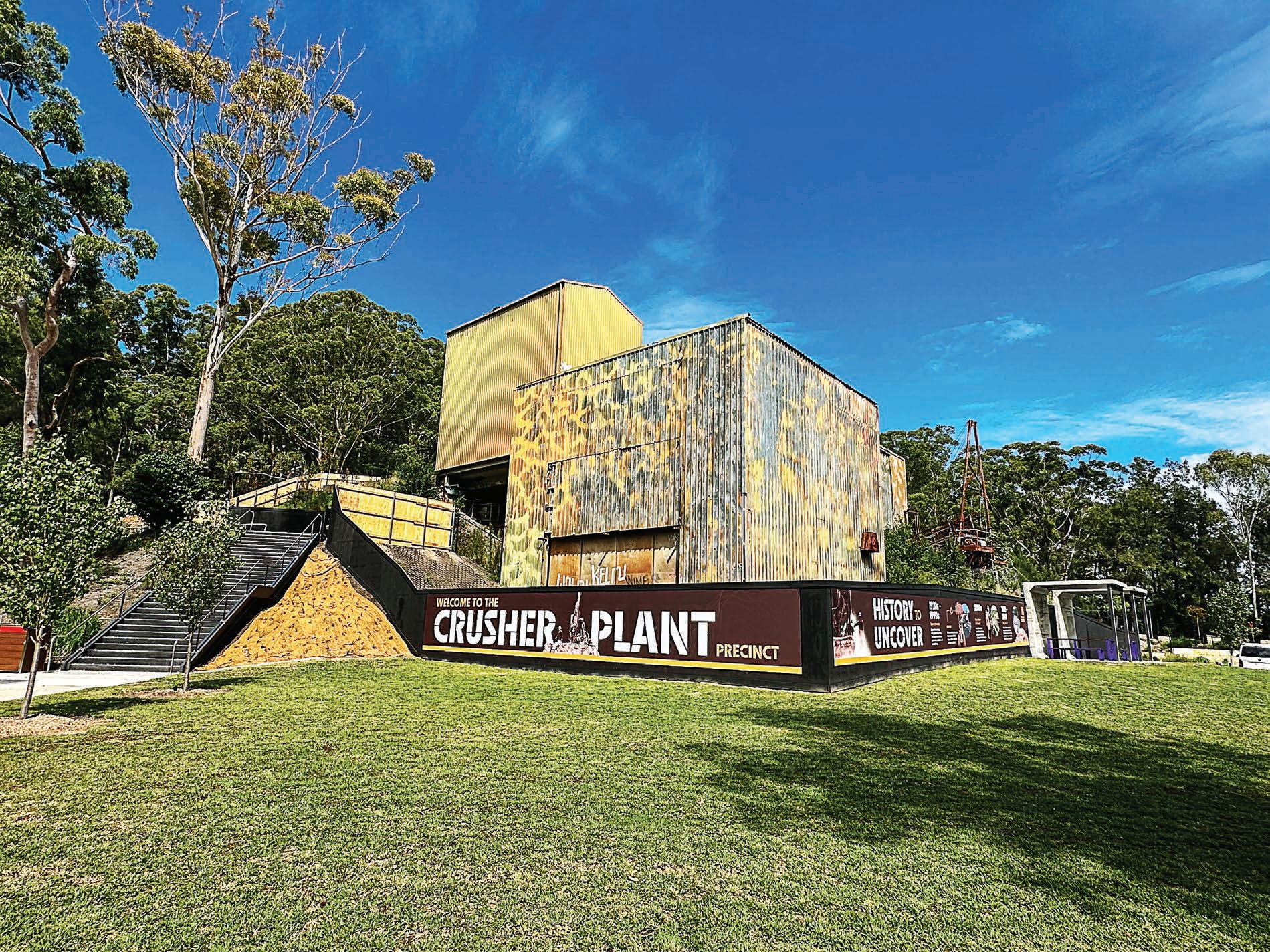
Former crushing plant operator Peter Milgate, contributed valuable historical insight into the Crusher Plant Precinct.
Images: Hornsby Shire Council
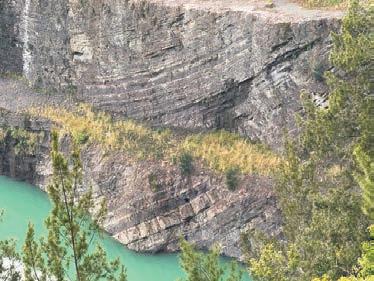
Diatreme exposure in the eastern quarry wall
Image: John Martyn
also drawn upon the knowledge of those closely connected to the quarry’s operational past. Former crushing plant operator Peter Milgate, who worked on site for nearly 30 years, contributed valuable historical insight into the Crusher Plant Precinct. The development also benefited from input provided by the quarry’s final manager, Roger Moona.
During its operational life, rock was extracted by blasting and transported to a crushing and screening plant located on the southern side of the quarry. Today, this industrial history forms an important part of the site’s character and interpretation.
Hornsby Quarry was centred on a Jurassic volcanic diatreme, comprising predominantly breccia, with some basalt and dolerite. One of the most remarkable features of the site is the exposed upper section of the diatreme on the eastern face of the former quarry. This striking geological cross-section reveals the internal structure of the collapsed volcanic system which has been the reason for the former quarry being recognised as an internationally significant geosite.
The geosite lies within the Ku-ring-gai GeoRegion, a designated area of geologically important locations across northern Sydney. In collaboration with Hornsby Shire Council, the Ku-ring-gai GeoRegion Steering Committee, with valued input from John Martyn, has contributed to the development of interpretive and educational materials to support visitor understanding and schoolbased learning.
The geosite also highlights the connection between the volcanic geology and the surrounding area’s ecology, particularly the critically endangered Sydney Blue Gum High Forest, which is closely linked to the fertile soils derived from the diatreme.
A GRAND OPENING
Stage one of Hornsby Park was officially opened on 28 March 2026 marking a major milestone in the long-term transformation of the former quarry.
The opening involved a joint ribbon-cutting with the Mayor, Councillors and Anna Watson MP representing the Hon Ron Hoenig MP, Minister for Local Government. Mayor Warren Waddell said, “the opening of the first stage of Hornsby Park was an important step in delivering a long-held community vision.”
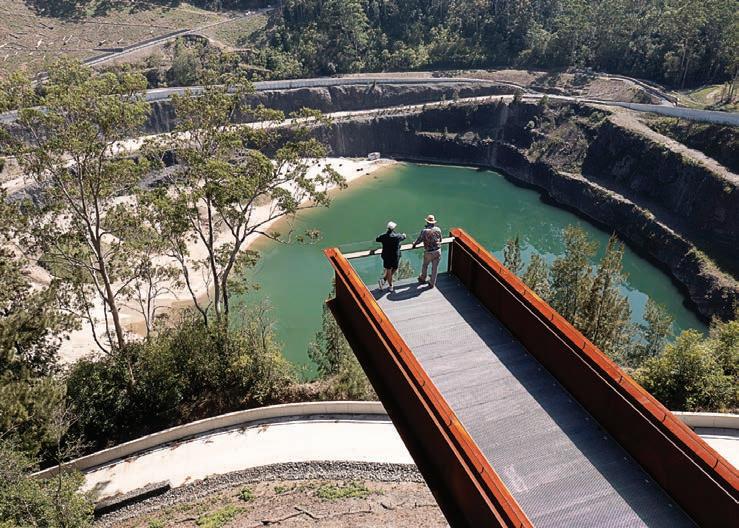
The first stage includes the restored Crusher Plant Precinct and a cantilevered Southern Lookout, offering expansive views across the former quarry. Visitors can now
enjoy picnic shelters, barbecue facilities, parking for vehicles and a network of trails. These include three sets of upgraded historic steps, originally constructed during the 1930s, an enduring link to the site’s past.
Delivery of the Crusher Plant Precinct was supported by the NSW Government through a Stronger Communities Fund grant. Further stages of Hornsby Park are currently under construction and will be delivered progressively. These include the quarry loop walking and cycling track, additional scenic lookouts, a bike jump and pump track, and the Old Man’s Valley field of play. As each stage is completed, the park will continue to evolve into a significant regional tourism and educational destination.
The transformation of Hornsby Quarry into Hornsby Park is an excellent example of how former extractive industry sites can be reimagined for community benefit ensuring that the site continues to serve and add value to the community for generations to come. •
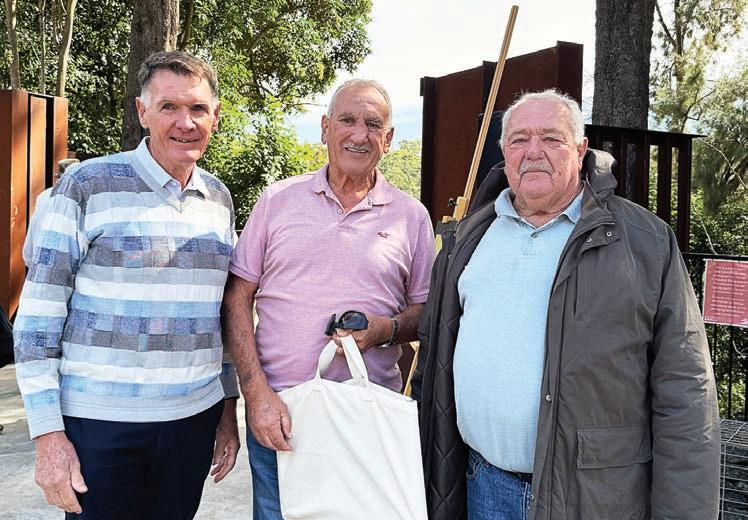
(Left to Right) Rob Corkery, Roger Moona and Peter Milgate at the Hornsby Park opening.
Image:
Robert Corkery
ABSOLUTELY WRAPPED
Divall’s Earthmoving and Bulk Haulage are taking the That’s Solid campaign on the road.
The Institute of Quarrying Australia’s (IQA) is now set for a show on the road thanks to Divall’s Earthmoving and Bulk Haulage.
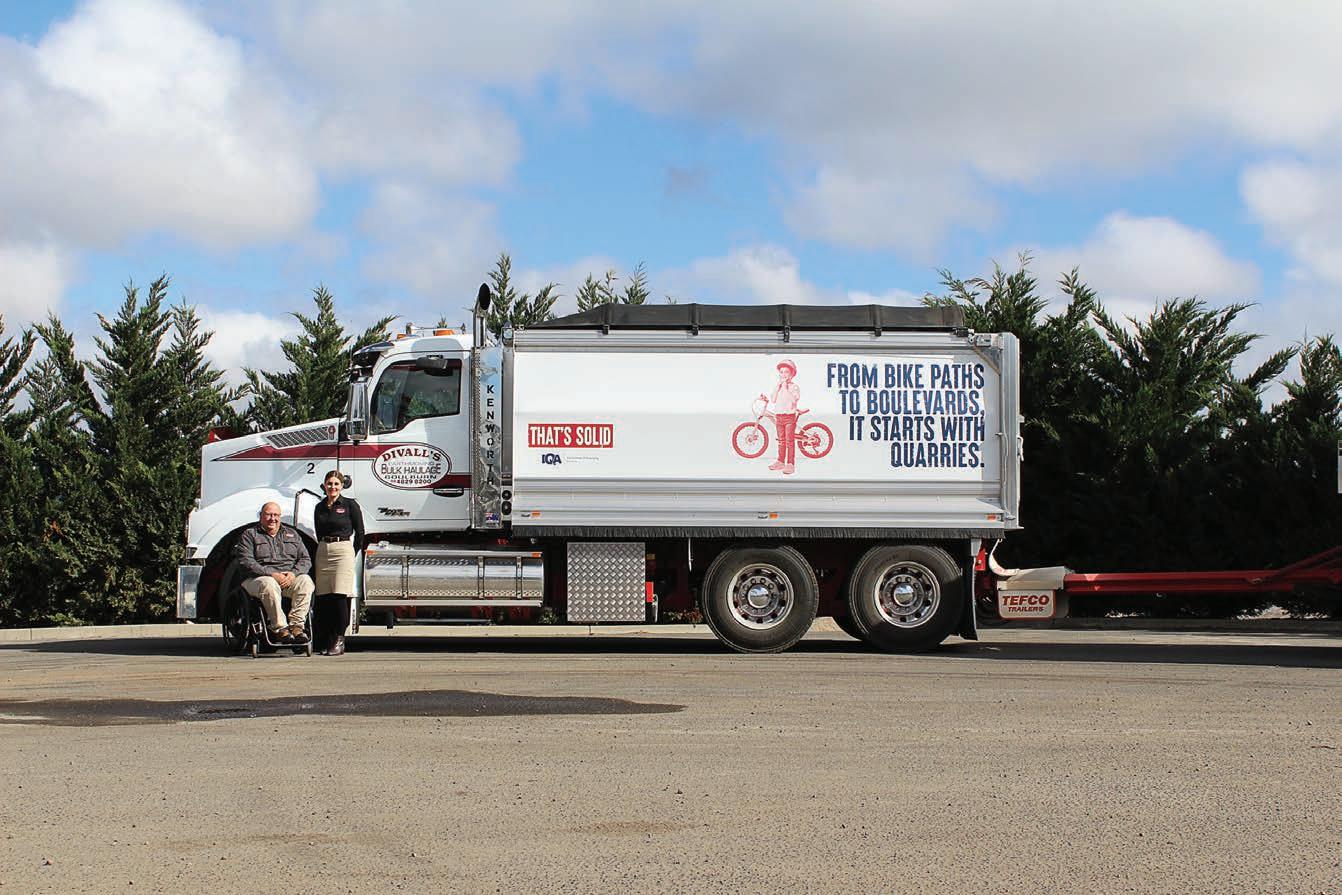
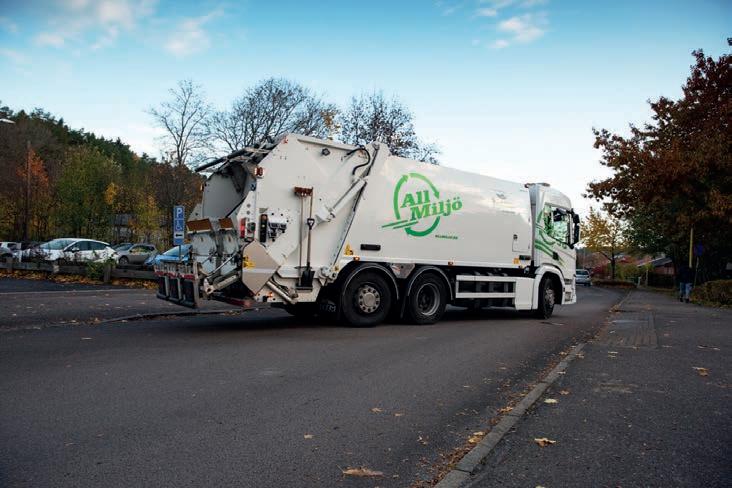
The NSW-based company, which employs more than 300 people, has wrapped its trucks in the IQA’s That’s Solid branding as part of its support for the national awareness campaign.
Divall’s Earthmoving and Bulk Haulage sales and logistics manager Kerry Sheehan came up with the idea after IQA chief executive officer Jane Schmitt presented to the Women in Quarrying national committee.
“I just immediately thought of our trucks, which go all over the state, and how that would be great exposure to get the message out there as a giant billboard that’s moving all the time,” she told Quarry
“People don’t realise that without quarries we wouldn’t have homes, schools and the roads that we use every day. This campaign highlights that it is a secure and essential industry.”
The IQA launched the That’s Solid campaign in early 2026 as part of a national awareness campaign to highlight the positive impact of the quarrying sector in local communities, especially for local employment. The campaign has included distinctive branding, such as the wrapping on Divall’s trucks, as well as interactive resources, stories from
current quarrying professionals, and more. It will be launching the IQA School to Workforce (S2W) Hub, which will feature comprehensive career resources for students, educators, and employers.
The S2W hub includes career pathway diagrams showing progression from trainee through to senior management, detailed career profiles for roles across the sector, work experience toolkits for both employers and schools, an interactive career quiz, and links to local quarries for work experience opportunities through the ‘find a quarry’ directory.
“With quarrying, [it’s important to realise] just how it benefits everyday life that you don’t really think about,” Divall’s Earthmoving and Bulk Haulage transport manager Troy Cook said.
“I guess people don’t really think about it when they drive up their driveway, or they’re in their house or building their brick barbecue, how that material actually came about, so this campaign will help build awareness for the general public.”
Divall’s is strongly connected to its local community and provides employment for locals. The company regularly attends career days for local schools to showcase the number of opportunities in the quarrying sector.
A highlight of its exhibition is the earthmoving simulator and the truck simulator, which allow students to experience what it would be like to operate an earthmover or truck on a jobsite.
“It’s important for us as a company to attend these events as they raise awareness of the many career options and pathways that we have in our community,” Sheehan said.
“And hopefully it encourages kids when they leave school that is it is a viable career option.”
Sheehan and Cook are examples of how quarrying can be a one-stop shop for your career, with plenty of options and, importantly, job security within the sector. Sheehan has been with Divall’s for 18 years, while Cook has been there for 24, with both currently working in key management roles within the company. For both of them, the people within the industry and the nature of the work make their jobs satisfying and rewarding.
“It is pretty satisfying, and the people in our sector are fantastic right across the board. The friends that I’ve made in the sector are lifelong friends,” Cook said. “And the security is a big thing as well. It is a very secure industry, and the company we work for is very family-oriented. It is a great family business, and we’re part of that family.” •
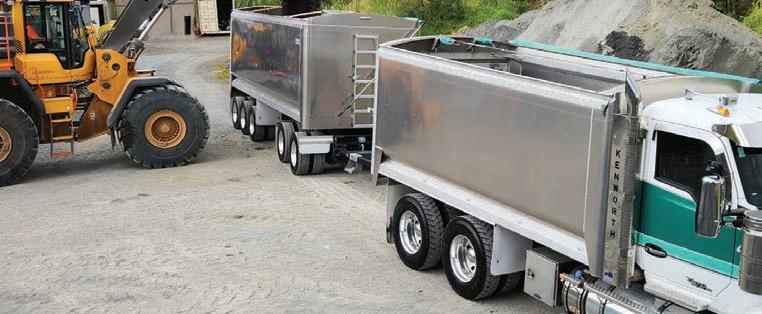
Troy Cook and Kerry Sheehan with the newly wrapped Divall’s Earthmoving and Bulk Haulage truck.
Images:
Divall’s Earthmoving and Bulk Haulage
LEADING THE WAY IN QUARRYING SOLUTIONS
Tesmec solutions offer a sustainable and performing alternative to drill-and-blast methods. These all-in-one machines combine excavation and crushing, maximizing productivity and minimizing waste. With reduced emissions, noise, and vibration, and real-time geodata for full traceability, Tesmec delivers precision, efficiency, and performance in every cut. Contact us to optimise your next quarry project.
SIMPLIFYING COMPLEXITY
Sean Brady is set to bring his much-anticipated keynote speech to the IQA National Conference from October 6-8 on the Gold Coast.
At first glance, a Boeing 737 Max and a quarry may not have much in common.
But as attendees to Brady Heywood managing director Sean Brady’s keynote will discover, it is all about the bigger picture. When disaster strikes, it can often seem like an isolated event. Something that went wrong in a singular moment and is isolated from the rest of the operations. Often, it’s easy to fixate on this moment and drill down into exactly what went wrong.
But, in the words of Mark Buchanan in his book Ubiquity: Why Catastrophes Happen, it is worthwhile considering the world as a steep pile of sand, poised on the brink of instability, where small events can build up the sand pile and set off an avalanche.
And it was this theory that made Brady reconsider how he thinks about and conceptualises risk as a forensic engineer.
“I found that it was just groundbreaking that you could have systems failing in this complex way, which the sandpile model just so powerfully illustrates,” he told Quarry.
“For me, I was reading about a lot of failures, and it was a real lightbulb moment for me because it made me understand them differently.
“People think when you get big effects, like a fatality, or a stock market crash or the Boeing crashes, that the cause must also be proportionally big. But usually what we find is there’s this disconnect, and it’s all these small things together that produce big effects.”
Brady uses the example of the Boeing 737 Max crashes in 2018 and 2019 to illustrate his point. The two incidents occurred between October 2018 and March 2019, which saw 346 people die in two similar crashes. While most would narrow in on whether the incidents were caused by isolated factors, Brady said the incidents show how small issues can build into larger conundrums.
“I think one of the important aspects to consider is how they ended up in this situation? And when we look at it, they made a range of decisions that
ended with a single sensor crashing a plane,” he said.
“And the reason we got to a single sensor crashing a plane is that everything else that should have been there was not there to prevent it, and they had been systemically removed.”
But what do two aircraft disasters have to do with the quarrying sector? Quite a bit when it comes to preventing human tragedy in a complex working environment.
“Often in these environments, we can build these sand piles inside our organisation, and they turn around and bite us,” Brady said.
“They don’t have simple causes. Often, the initiating incident is blamed, but often the reason incidents like this happen is that the controls we thought were in place on the day to stop it were ineffective.
“It’s important to understand where your controls are weak and to do something about them before the failure happens.”
Brady, who authored the Brady Review, has an immense understanding of the mining and quarrying sectors. His report, which was commissioned by the Queensland Government’s Department of Natural Resources, Mines and Energy, looked into all of the fatal accidents in Queensland mines and quarries from 2000 to 2019. The final report carried eleven recommendations for the regulator and the sector and was tabled in the Queensland Parliament in February 2020.
While Brady does not think there has been a meaningful change in the sectors since the report was finalised, he believes there
is a path forward if people reframe how they assess risk, using tools such as feedback loops. These tools effectively ask senior leaders in these operations to regularly consider the weaknesses in their controls and whether these measures are as effective as they think they are. By actively reviewing and considering the operational environment and the safety controls within it, the operation can avoid sandpiles from developing.
“If you’re not looking for sandpiles inside your organisation, the avalanche will come as a complete shock,” he said.
“You need to be aware of those sand piles; otherwise, they will get so steep, all they need is a simple trigger. So your job is to identify which sand piles are getting steep and get on top of them.”
Brady is looking forward to delivering his keynote speech at the IQA National Conference on the Gold Coast from October 6-8, 2026.
“I have had a long relationship with the IQA, and I’ve always enjoyed the conferences,” he said.
“I think from an industry perspective, it is critical from a health and safety point of view because everyone gets to chat and see what other people are doing well. The value you get out of getting together and sharing that knowledge is really valuable.”
Discounted rates for IQA members are available if they register now.
Join the IQA on the Gold Coast, 6-8 October 2026, for the IQA National Conference. • For more information quarry.com.au
Image: Brady Heywood
Sean Brady is the managing director of Brady Heywood.
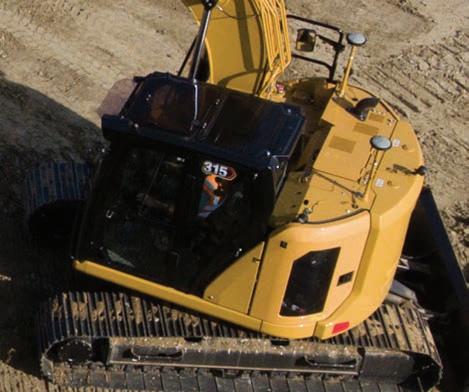
Right now, you can secure 1.99%* finance for 36 months on select Cat® Excavators:
• Small excavators 313*, 315, 315 GC
• Medium excavators 320, 320 GC, 323, 325, 326, 330, 330 GC This offer is subject to finance approval and ends 30 June 2026. For what you’ve done and for what you’ll do, we’re here for you. Don’t miss out. Contact your local Cat dealer for a quote.
FOLLOW THE MONEY
Chevron Equipment Finance is helping educate businesses in the quarrying sector about the versatility of equipment financing.
Jake Sibenaler knows equipment inside and out after spending years as a production supervisor and manager, a maintenance fitter, and an improvement manager within the quarrying sector.
In fact, most of Chevron Equipment Finance’s team have years of experience, which enables them to understand what customers require. So, when quarry operations need finance, Chevron Equipment Finance knows what to look for and how to help.
It’s why Chevron Equipment Finance, which began in a small garage, has expanded to several locations across Australia, with the main office on the Gold Coast and an office in Melbourne, in just over a decade. The company employs 22 brokers, four training brokers, and 10 administrative support staff.
“We only specialise in equipment, so we understand these industries really well,” Sibenaler told Quarry.
“I know what these guys are going through. I’ve operated the machinery, and I understand the profit-and-loss systems for quarries because I’ve been a [secondin-command], so I know the implications of when a machine goes down.
“And that’s all of our guys as well, they’ve been in the industries, and they sit down with our customers to really understand their problems.”
It’s this level of industry experience that has helped Chevron Equipment Finance work with customers through a variety of problems by delivering quick, efficient solutions.
Chevron’s team has supported operators through it all, with the majority of the company’s customers involved in quarrying, earthmoving, construction and transport.
“It all comes back to understanding the business and understanding the environment that they’re operating in,” Sibenaler said.
Chevron Equipment Finance takes a tailored approach to financing, so operators can avoid potential headaches later down
smaller repayment amounts, longer payment terms, and balloon payments at the end.
Sibenaler said equipment financing can open up more opportunities for operators when applied correctly to their businesses.
Sibenaler uses the example of a $300,000 excavator. If the business were funding the purchase from its generated profits, it is important to consider the amount of top-line revenue it would need to generate in addition to fund the equipment purchase. Whereas, if the purchase was financed, the business
needing an unexpected replacement.
“I think people’s mentalities are changing around financing, and that’s been an important part of educating the industry,” he said.
“We’re very customer-oriented in that sense, we’ll travel anywhere in Australia to meet a customer and see how we can help them and their business. We’ll always do the best by them because we want to be a lifelong partner for their business.” •
Chevron Equipment Finance specialises in the industrial sectors.
Images: Chevron Finance
a a a you
Presentations from sector leaders and international experts
100+ exhibitors featuring the latest quarrying innovations
IQA National Awards celebrating excellence across our sector
Exclusive site visit to Gold Coast operations
Welcome reception and gala dinner in a stunning coastal setting
CPD points available
ar o a our c or c a r.
Australia's quarrying sector comes together on the Gold Coast for three days of expert insights, technology showcases, and unrivalled networking opportunities.
The Gold Coast Convention and Exhibition Centre provides the perfect backdrop - combine professional development with Australia's premier destination for beaches, dining, and entertainment.
EFFICIENCY IN QUARRYING
For quarrying operators, efficiency is the name of the game, and Tesmec is offering an alternative method to unlock major efficiency gains.
In the extractive industry, operational efficiency is not simply a matter of speed: it is the ability to get the most out of every cubic metre of excavated material while reducing costs, machine downtime, and environmental impact on site. In this context, Tesmec Surface Miners stand out as one of the most technologically advanced solutions on the market, capable of fundamentally transforming the way a quarry operation is designed and managed.
INTEGRATED APPROACH
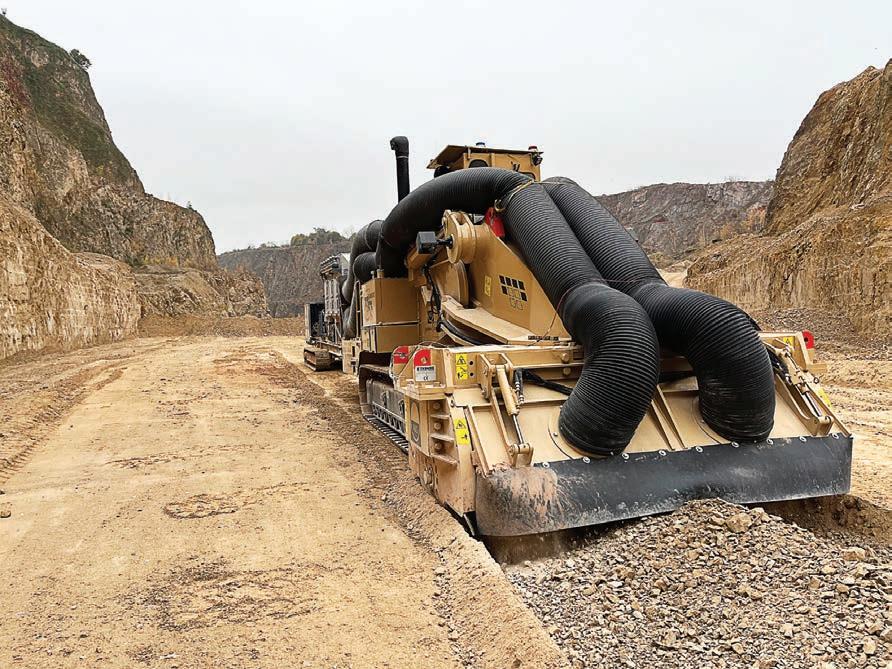
Tesmec’s surface mining technology was developed with a clear objective: to replace traditional methods — explosives, jack hammers and multiple crushing stages — with a single, continuous and controlled process. The result is high-quality excavated material, already sized to project specifications, that requires significantly reduced downstream processing.
In a conventional quarry operation, the workflow typically involves drilling, blasting with explosives, material collection, primary crushing and, in many cases, one or more secondary crushing stages. Each phase adds costs, consumes time, requires personnel and introduces potential breakpoints into the production chain. Tesmec Surface Miners condense excavation and crushing into a single pass, eliminating the need for primary
crushing and, in many cases, drastically reducing secondary crushing requirements. This approach delivers concrete and measurable advantages: fewer machines on site, simplified logistics, fewer operators required, and a more streamlined, safer site management. Reducing operational interfaces is a key factor in cutting both fixed and variable costs in an extractive operation.
SELECTIVE MINING
One of the most frequently underestimated aspects in quarry efficiency analysis is the quality of the extracted material. With traditional blasting methods, control over particle size and the stratigraphic origin of the material is limited: blasting produces a heterogeneous mix that requires sorting, screening, and additional processing.
Tesmec Surface Miners, by contrast, enable precise and selective extraction.
Excavation depth is controlled with centimetre-level accuracy, allowing layer-bylayer work, avoiding contamination between materials of different quality, and resulting in a final product with a uniform, manageable particle size. For a quarry that must comply with strict product specifications, such as in the production of aggregates for the construction market, this translates into a significant reduction in waste and a higher yield from the deposit.
DYNAMIC DRIVE
The Dynamic Drive backend is the Tesmec solution specifically developed to maximise performance in the conditions typical of quarry operations: soft to medium-hard rock, such as marly limestone, gypsum, bauxite, phosphates, potash and similar industrial minerals, with a compressive strength of up to 50MPa.
At the heart of the technology is a planetary gearbox integrated directly into the cutting drum, driven by a 100 per cent hydraulic power system. This configuration eliminates the need for digging chains, sprockets, and baseplates — components subject to intense wear in conventional applications — and transfers power directly to the drum with minimal energy loss. The result is a mechanically simpler, more reliable and less costly system to maintain over time.
In terms of operational performance, Tesmec has said the Dynamic Drive can deliver productivity increases of between 60 per cent and 100 per cent compared to Surface Miners with a conventional backend under the same rock conditions. The significantly higher drum rotation speed, between 45 and 80 RPM compared to the 23–46 RPM of the Rock Hawg in the 1150EVO version, makes it particularly suited to the medium-hardness conditions typical of aggregate and industrial mineral quarries.
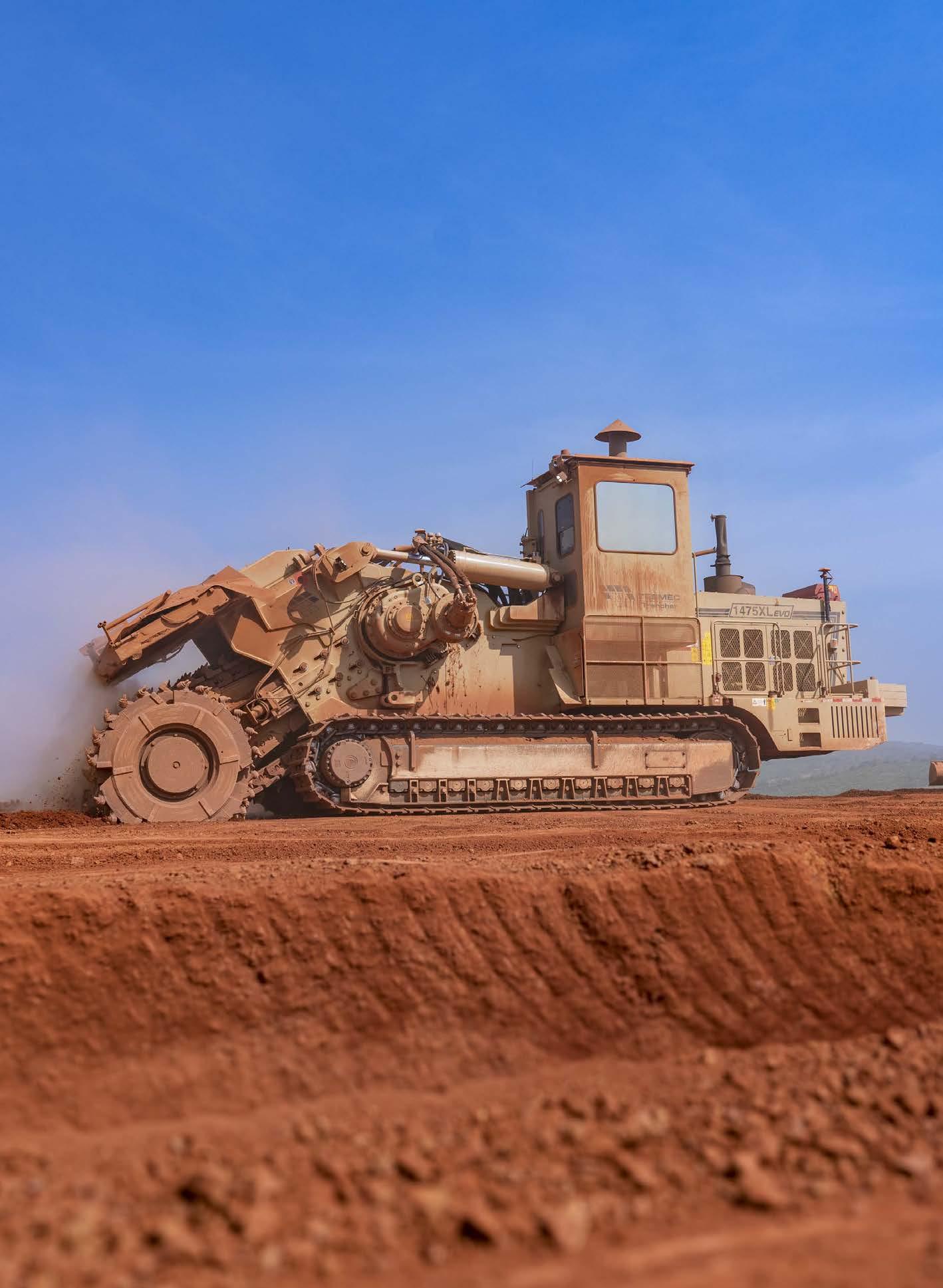
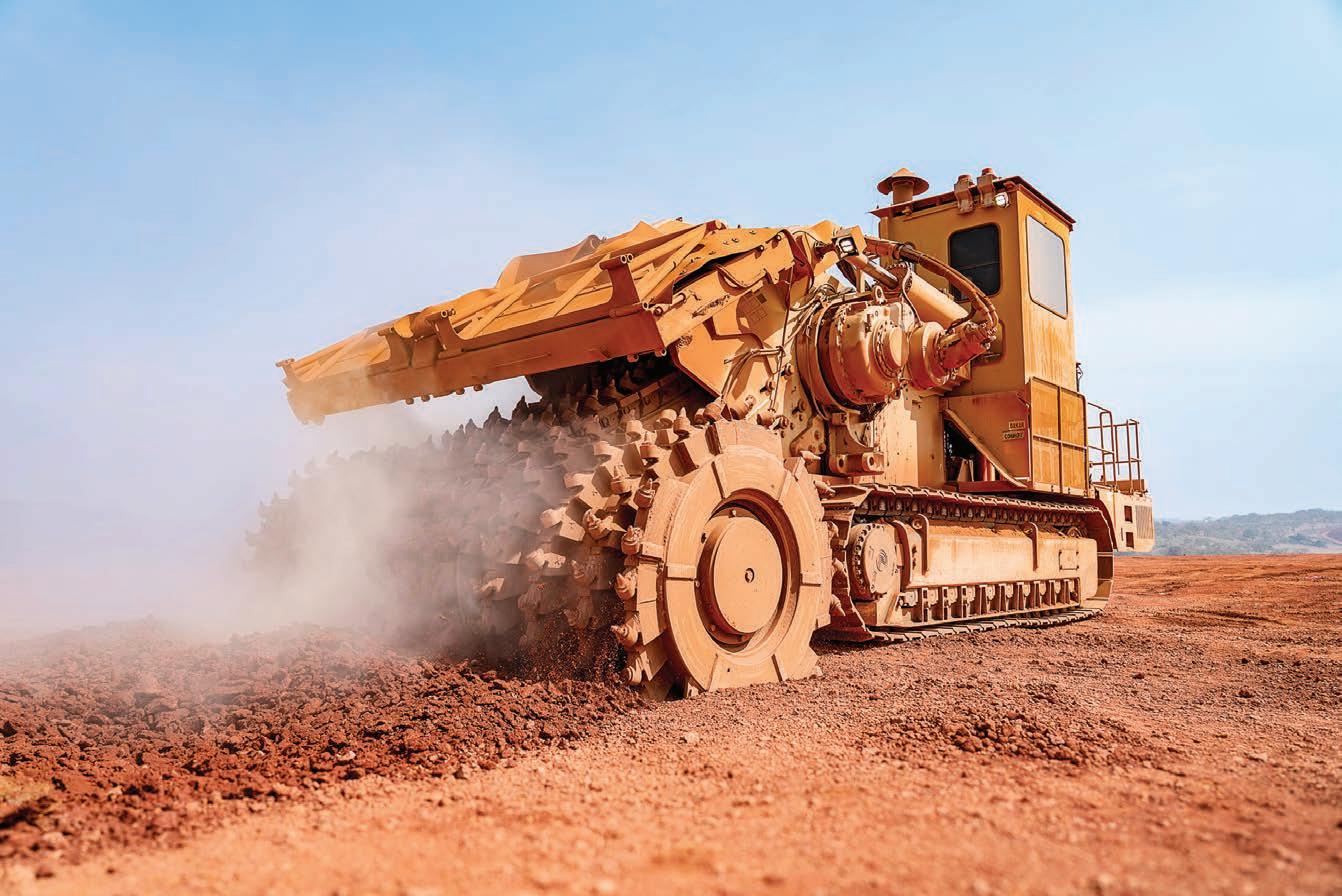
Tesmec’s surface miners has been trusted around the world.
Images:
Tesmec
On the cost side, Tesmec estimates that the Dynamic Drive enables an average reduction in operational expenditure of up to 45 per cent. The absence of digging chains and sprockets eliminates one of the main wear parts expenditure items, reducing the frequency of maintenance interventions and associated machine downtime. The cutting power, which is more than 30 per cent higher than conventional configurations, is also accompanied by lower fuel consumption per excavated cubic metre, with a direct impact on the operation’s environmental sustainability and CO₂ emission reduction.
INTEGRATED TECHNOLOGY
The efficiency of a quarry operation is not measured only in terms of tonnes produced per hour, but also in the ability to monitor, control and optimise every aspect of the process in real time. Tesmec integrates an advanced technology suite into its Surface Miners, transforming operational data into a management tool. The TrenchTronic 5.0 system manages automatic excavation control and machine self-diagnosis, reducing dependence on individual operator skills and ensuring consistent performance over time. The TrenchIntel system provides 3D-GPS automatic guidance that controls steering, trajectory, and excavation depth with millimetre precision, essential for compliance with product specifications and for protecting the deposit.
WIRTGEN GROUP COMPANY
The Re.M system enables real-time remote monitoring of machines, with immediate access to operational data, diagnostics and maintenance alerts, an essential tool for site managers overseeing fleets across multiple sites or in geographically remote areas. This technological integration translates into greater control, less waste, better planning of maintenance interventions and, ultimately, a reduction in the cost per excavated tonne, the performance indicator that, more than any other, defines the longterm competitiveness of a quarry operation.
LOCAL PRESENCE
Since 1984, Tesmec has been active in surface mining projects worldwide, with machines operating across Europe, Africa, the Middle East, Asia and the Americas.
The Rock Hawg and Dynamic Drive range covers a wide variety of geological conditions and applications, from bauxite in Guinea to limestone in Kazakhstan, from gypsum in the United States to marly limestone in the United Kingdom.
To support operations, Tesmec offers a comprehensive service that includes preliminary feasibility studies, geotechnical analysis, site management assistance, remote fleet monitoring and a global spare parts service.
The goal is to ensure that every machine operates under optimal conditions throughout the project, with the least possible impact on the project’s timelines and costs. •
For more information, visit tesmec.com
Impressive from A to Z. Thanks to its robust design and extensive range of screen linings, the MSS 802 EVO can easily adapt to changing locations and new operating conditions – making it ideal for a wide variety of applications. The coarse screening plant features an intuitive system control that reduces the risk of operating error. And all relevant functions can be operated from a safe distance for increased work safety. The MOBISCREEN MSS 802 EVO – the heavy-duty, versatile solution in natural stone and recycling.
www.wirtgen-group.com/mss-802-evo-kleemann
THE NEXT GENERATION
Multotec Australia’s Callan Gerick shares insights into his career journey so far in the quarrying and mining sectors.
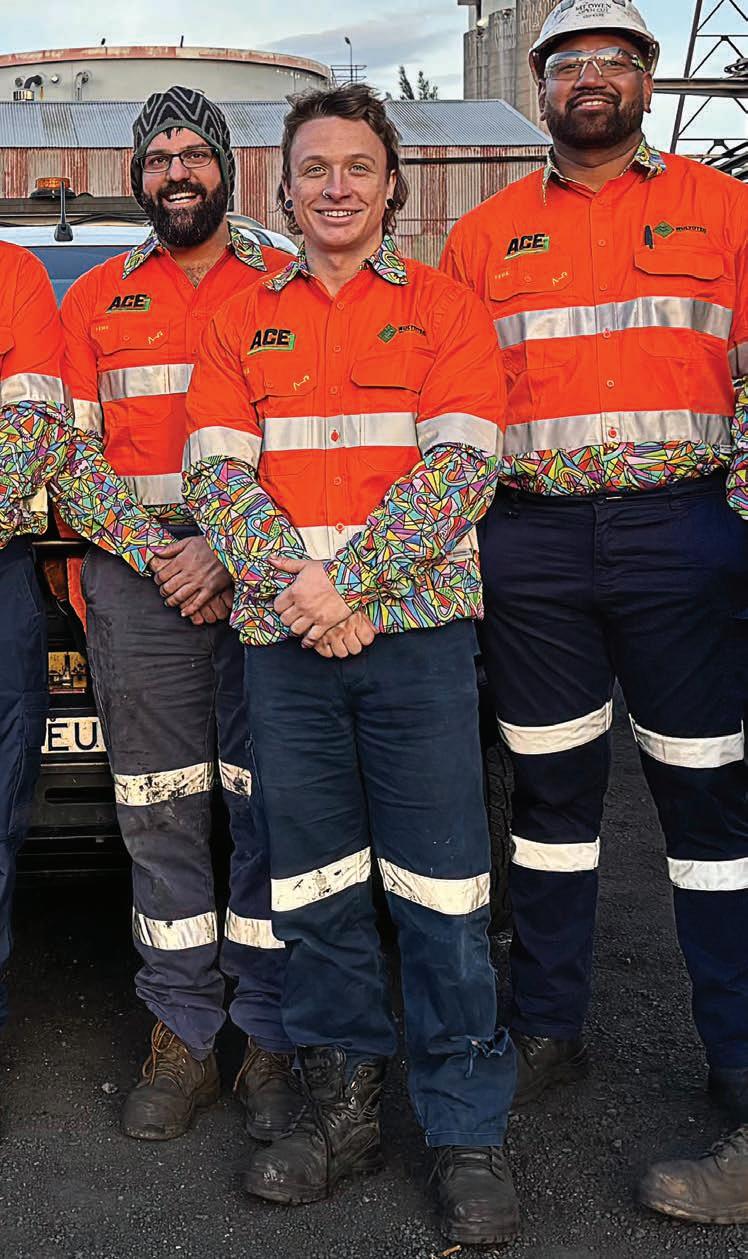
When Callan Gerick wanted to start his career, one thing stood out in his decision-making process: culture.
“Every company has experienced tradespeople, and you can learn a lot from them, but what makes Multotec unique for me is the work environment,” he said.
“We really do feel like a family. We are a small team, and we have some big days, but every day is a positive environment to be in.”
Gerick is one of Multotec’s up-and-coming workers, alongside Orisi Vosuqa and Max Powell-Linforth, who have progressed from apprentices to qualified fitters and are key to its operations in the Hunter Valley, New South Wales. Multotec provides a ‘hands-on’ experience in learning a trade, with the benefit of being partnered with an experienced tradesperson.
In Gerick’s case, his mentor has more than 30 years of industry experience to share.
“My journey to become a qualified fitter has been a great learning experience; it is really understanding the how and why behind what we do,” he said.
“I would ask lots of questions and would sometimes doubt my work when I first started. Since completing my trade, I still ask questions, but now I’m confident in my abilities and know that I’m doing things the correct way.
“I have enjoyed it. I’ve learnt new skills and knowledge that I will keep with me for the rest of my career. Every day is hands-on and keeps me busy. There are a few tips I have learned along the way that are unique to my job, such as the sequence of parts to undo or easy ways to install or remove a part.
“That has helped with a lot of small challenges that come daily, like removing parts with bolts that are seized, which is a common trend in the damp and wet environments of a wash plant.
“Or trying different ways to remove bolts before cutting them with a grinder, as this is a lengthy process on site, including permits, fire watchers and things like that.”
Gerick has come a long way since starting as an apprentice. He is currently a shutdown fitter and site supervisor.
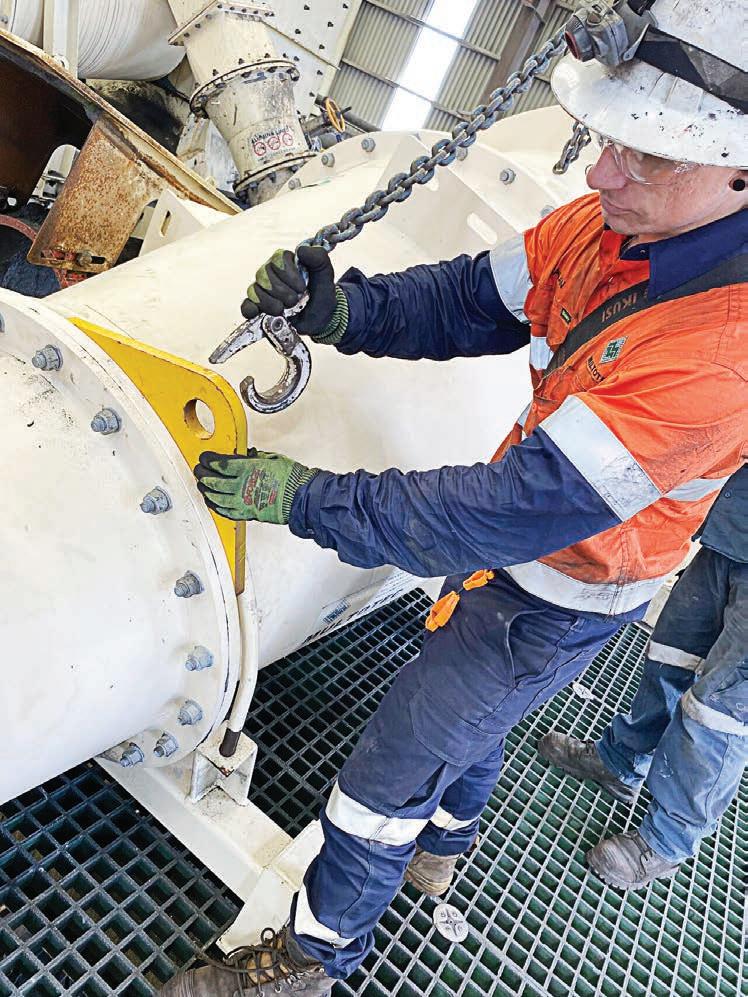
On maintenance days, Gerick can be found checking the oil, air filters, and airline fittings, ensuring the nuts on the plant are tight and that no components are damaged.
Other days are focused on component change-outs. This involves coordinating the use of an overhead crane to attach to parts as the team removes them with a rattle gun. Otherwise, the Multotec team conducts inspection days to ensure their
customers are getting the best production from their equipment. The key, Gerick said, is getting the sizing of crucial parts right so he ensures components are measured within 0.1mm increments. Given Multotec’s expansive offering across the quarrying and other industrial sectors, there is always a range of equipment to work on during these days. Any given day could see Gerick working on screening equipment, cyclones,
spirals, magnetic separators, chutes and more. Parts must be within spec for changeout size and logged in Multotec’s reporting system, Hawkeye. Gerick and his colleagues also create cyclone or screening reports for their customers on site, which can show the operator sizes of each part, when they are predicted to require a change-out, which replacement parts are needed, and more.
With a laundry list of tasks each day, Gerick said the variety of the work keeps him on his toes.
“I enjoy how alive the work environment feels; there is always so much happening,” he said.
“Cranes moving, bolts being cut, plates being welded. Everywhere you look, there is something happening. It’s a busy environment, and I wouldn’t want it any other way.”
Gerick said he looked forward to working on more Multotec projects and advancing his career in the industry.
“It’s great to be part of a really strong team at Multotec. Everyone supports each other and looks out for one another,” he said. “I’ve learnt so much from the team during my time here, especially from being on the job with senior fitters, and I can’t wait to build my skills further and learn more about the industry.” •
MAGNETIC CONSIDERATIONS
Eriez’s
Jonathan Schulberg shares insights on why suspended electromagnets are a popular choice for protecting against tramp metal.
In quarrying, tramp metal such as steel fragments, bucket teeth, and fixings pose a constant, costly risk. They can stop crushers or screens, damage equipment, and cause maintenance issues.
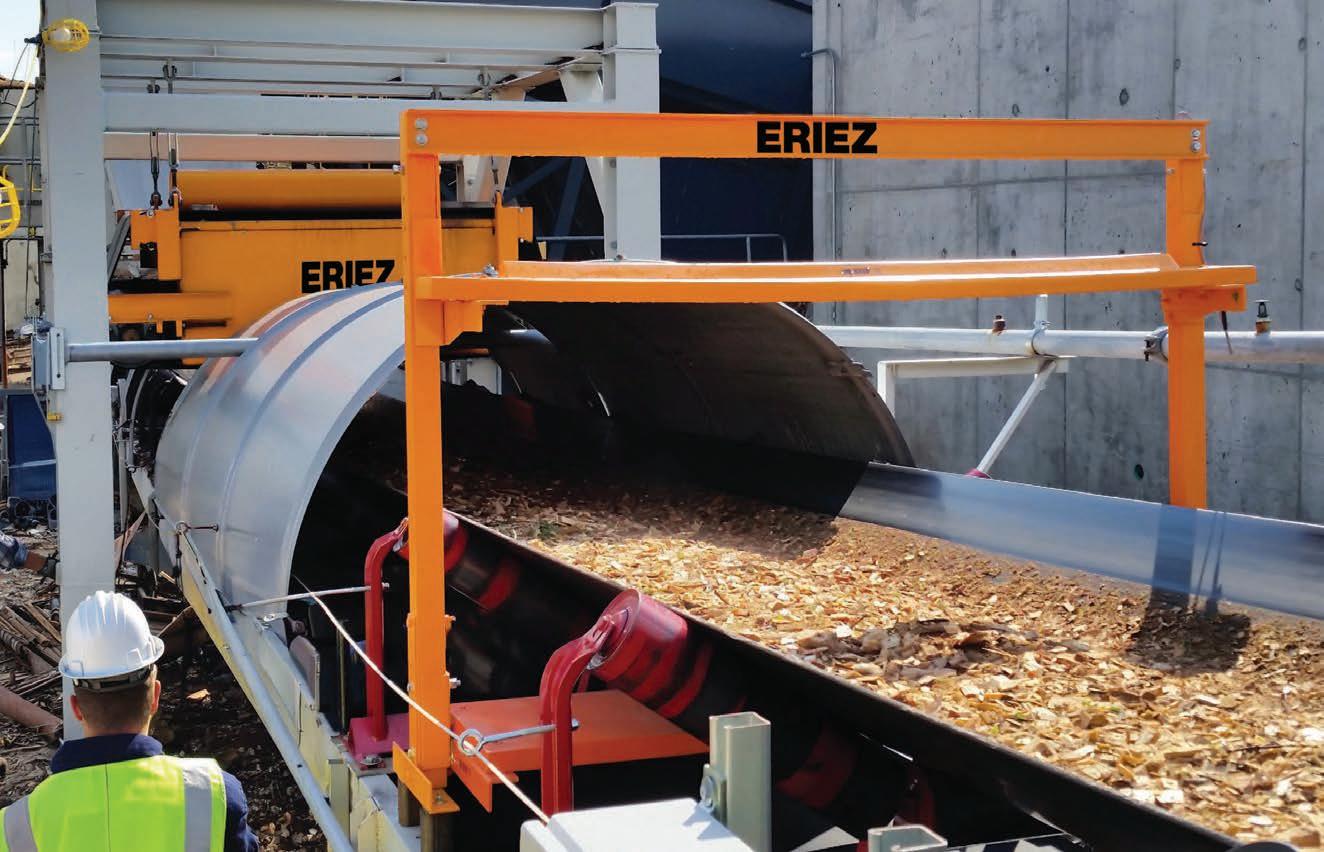
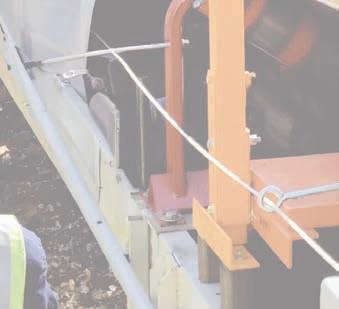
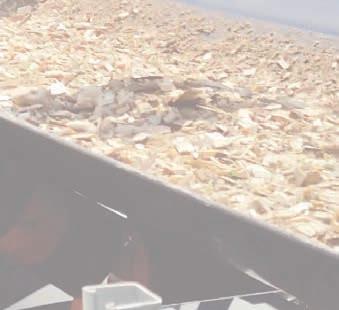
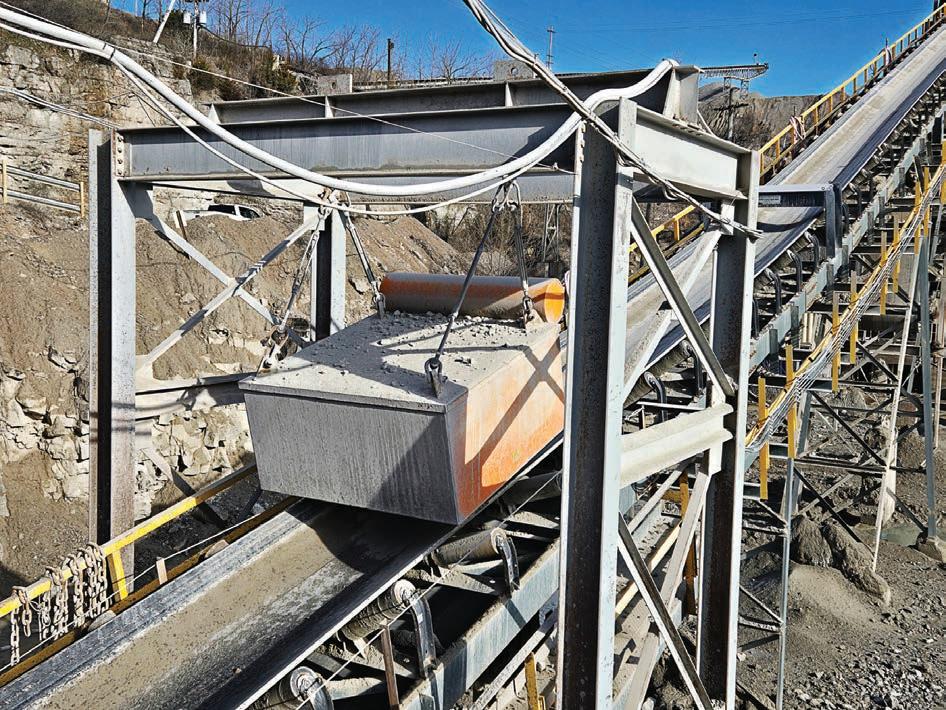
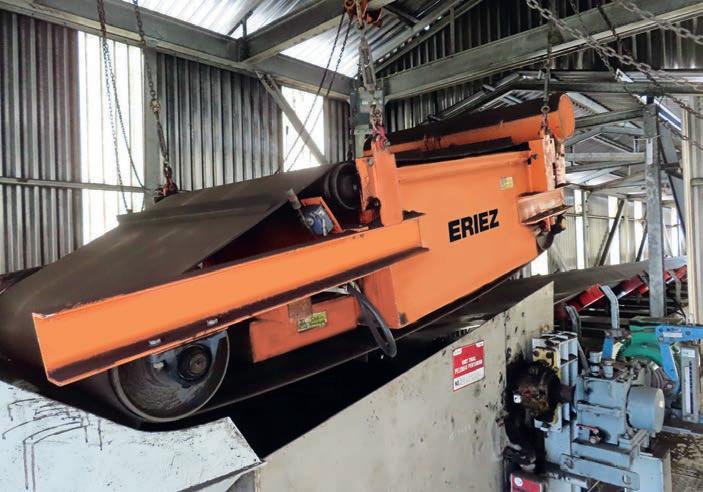
Suspended electromagnets are one of the most widely used and effective solutions for tramp iron removal in conveyor systems. Installed above belt conveyors, these heavy-duty magnets are designed to operate continuously, extracting ferrous contamination before it reaches crushers, mills and transfer points.
“Modern suspended electromagnets are built for harsh quarry environments. Their robust construction withstands vibration, abrasive dust, and temperature fluctuations during continuous operation. Designed for uptime, they suit modern aggregates plants where downtime is costly,” Eriez business development manager for heavy
industry in the Asia Pacific region Jonathan Schulberg said.
“Design features such as oil expansion tanks help prevent condensation inside the magnet body and protect against thermal hot spots, extending coil life and overall reliability. “Force-cooled designs and rectangular core configurations are used where belts are wider, burdens are deeper, or belt speeds are higher, conditions that are increasingly common as operations push for greater productivity.”
Suspended electromagnets are available in both manual-clean and self-clean configurations, with selection driven largely by contamination levels and site access.
Manual-clean units are typically used where tramp iron is limited and predictable. These magnets are periodically de-energised to release accumulated ferrous material once they are moved clear of the belt.
“The approach is simple and effective, with infrequent cleaning intervals and straightforward access,” Schulberg said.
Self-clean magnets are designed for higher-risk environments. Using an integrated belt system, they provide continuous, automatic removal of tramp metal without interrupting production.
“This makes them particularly suitable for primary crushers, high-tonnage transfer points and installations where routine manual cleaning would be impractical,” Schulberg said.
MAKING THE DIFFERENCE
Performance is heavily influenced by how and where a suspended electromagnet is installed. Two configurations dominate in quarrying applications: in-line and cross-belt. In-line installations position the magnet over the material trajectory as it discharges from the conveyor head pulley.
“This is generally regarded as the most efficient arrangement. As material leaves the belt, it spreads and slows, making ferrous contaminants easier to extract,” Schulberg said.
“Momentum carries iron toward the magnetic field, improving separation efficiency. Non-magnetic head pulleys are essential in this configuration to prevent disruption of the magnetic field.”
Cross-belt installations place the magnet at right angles above the moving bed of material. While effective, they typically require a stronger magnetic field and are less tolerant of high belt speeds or deep burdens, particularly where smaller ferrous pieces must be removed.
Schulberg said there are many factors to consider when purchasing a suspended electromagnet.
“Choosing the correct suspended electromagnet requires a detailed assessment of both material and conveyor characteristics. Lump size, bulk density, moisture content and tonnage all influence the strength of the magnetic field required,” Schulberg said.
“Conveyor parameters, including belt width, speed, inclination, idler configuration
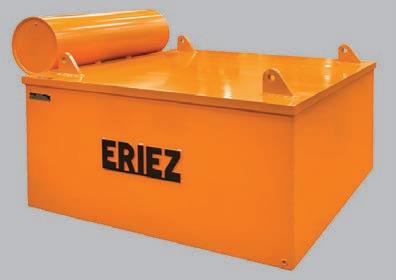
Eriez’s suspended electromagnets are trusted in harsh operating environments.
and head pulley diameter, are equally critical. As belt speeds increase or burdens deepen, a greater magnetic force is needed to pull ferrous material through the conveyed product.
“Ambient temperature, power availability, and the equipment being protected also factor into the final selection.”
UNDERSTANDING PERFORMANCE
Not all tramp metal is equally easy to remove. Larger items, such as rail spikes or bucket teeth, are typically captured more easily than smaller fragments buried under heavy overburden. Flat or elongated steel pieces respond better to magnetic attraction than spherical or compact shapes, which present minimal surface area.
“Magnetic field strength is greatest at the centre of the magnet and decreases toward the edges, making alignment and suspension height critical. To maintain efficiency and prevent unwanted magnetic interaction,
non-magnetic idlers are recommended directly beneath the magnet installation,” Schulberg said.
While the primary role of suspended electromagnets is to protect plant, their impact goes beyond asset preservation. Removing sharp or heavy metal reduces the likelihood of belt damage, fires and secondary failures, improving overall site safety.
Optional features such as guarding, dust covers and monitoring devices
Highperformance screening
High-performance screening backed by a complete portfolio of equipment, media, aftermarket, and services - designed to optimize throughput, reliability, and total cost of ownership.
Partner for positive change
further support safe, compliant operation, particularly in demanding environments.
“As quarrying operations continue to scale up, suspended electromagnets remain a practical and proven safeguard, quietly removing risk before it becomes downtime. When correctly specified and installed, they deliver exactly what producers need, especially when it comes to uninterrupted production and peace of mind.” •
For more information, visit eriez.com
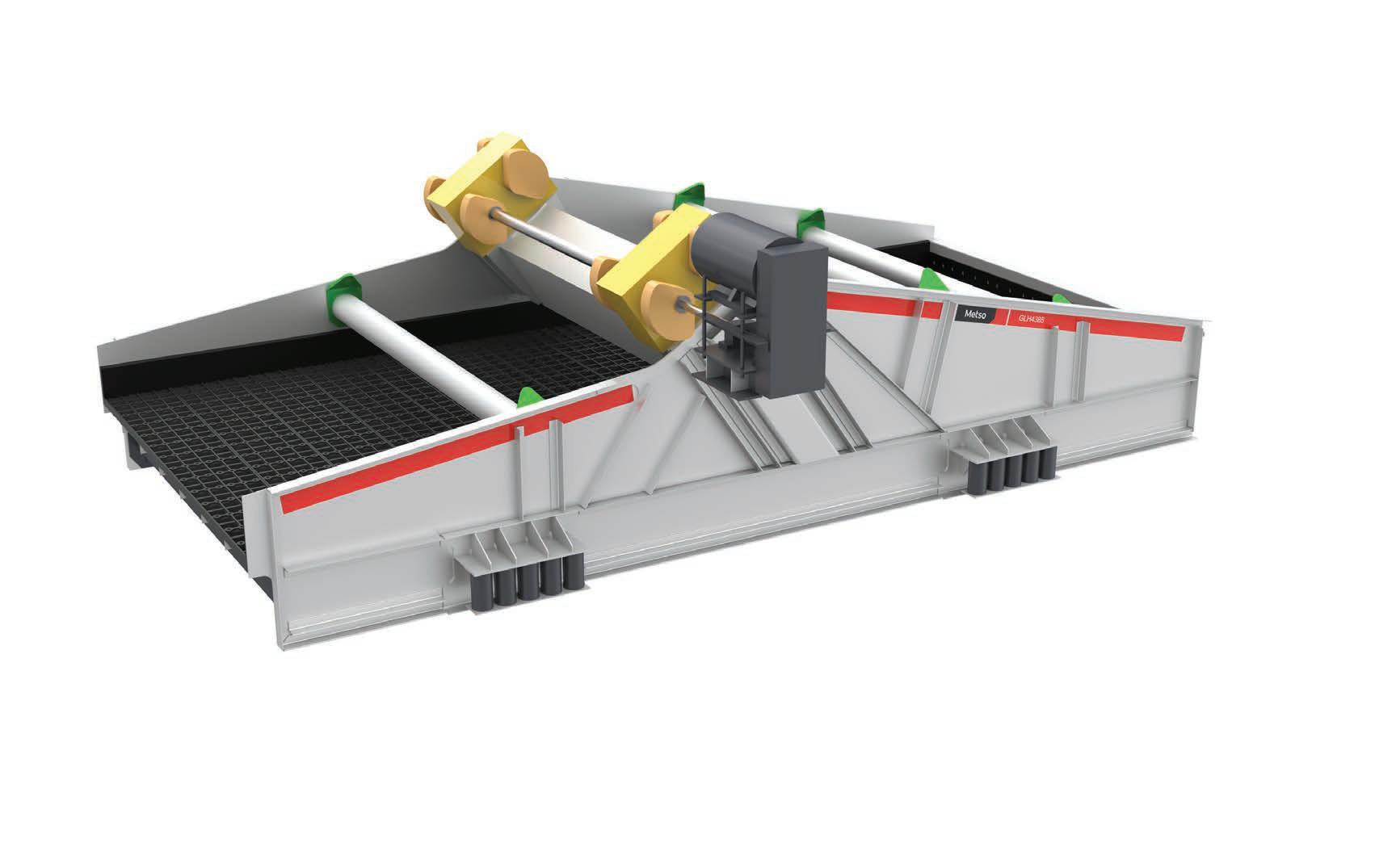
Metso Grande Series™ screens are large-scale screens delivering high capacity, exibility, and reliability for demanding aggregate operations. Metso GLH Series™ screens are horizontal, linear-motion screens optimized for accuracy at high capacity in demanding 24/7 aggregate operations.
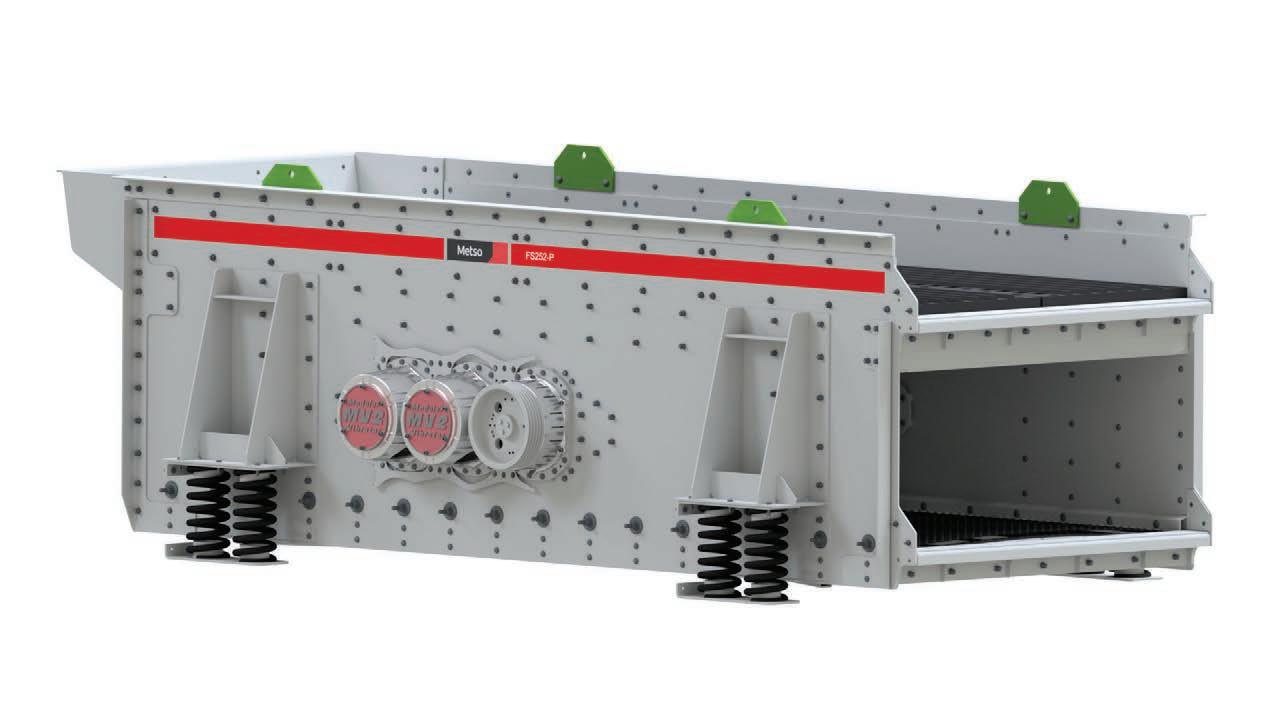
Metso FS Series™ screens. Horizontal elliptical-motion screens delivering reliable performance and accurate classi cation in demanding applications.
Metso TKP Series™ pan feeders. High-e ciency pan feeders designed for reliable material feeding in aggregate applications, o ering cost-e ective operation and adaptable con gurations.
BEYOND THE MACHINE
In modern quarry operations, the difference between average and high performance is no longer defined by the machine alone, but by how effectively operators, equipment, and site conditions work together as a single system.
In quarry operations, productivity has traditionally been measured in straightforward terms: tonnes per hour and fuel burned per cycle. But across highperforming sites, that equation is shifting. Increasingly, output is being understood not as a function of machine capability alone, but as the result of how effectively the operator and machine work together.
This shift sits at the centre of Volvo Construction Equipment’s latest wheel loader developments, particularly its K Series range. Rather than positioning wheel loaders as standalone assets, the focus has shifted to considering machine systems, operator behaviour, and site conditions when evaluating performance.
Performance gains are no longer found solely in higher horsepower or breakout force, but in consistency, predictability, and reduced variation across shifts.
CONSISTENT PERFORMANCE
Fuel consumption remains one of the most closely watched metrics in quarry operations.
The K Series loaders are designed to minimise these inefficiencies by smoothing machine response and reducing unnecessary operator corrections. The outcome is not necessarily peak fuel efficiency in ideal conditions, but rather more stable, repeatable fuel consumption across varying operators and workloads.
For quarry managers, that distinction matters. Predictable fuel usage enables more accurate cost forecasting and reduces variability between shifts, which can otherwise erode margins.
SAFE AND PRODUCTIVE
Safety is often treated as a compliance requirement, but in high-output quarry environments, it is increasingly viewed as a contributor to productivity.
Machine visibility, stability, and operator comfort directly influence how confidently a wheel loader can be operated.
Reduced blind spots, improved balance during load-and-carry tasks, and lower cabin noise and vibration all contribute to
A recurring challenge in quarry equipment deployment is not the implementation of the machines. Even high-spec equipment can underperform if it is not matched to the application or properly integrated into site workflows.
emphasises a structured rollout process.
material type, load profiles and site layout to ensure the machine is configured appropriately. On-site commissioning then aligns machine settings with real operating conditions, while establishing baseline performance metrics.
Operator training is a critical component. Rather than generic instruction, the focus is on developing efficient loading techniques, understanding machine
Modern wheel loaders are increasingly designed to work in sync with operators, improving consistency across quarry operations.
across different users and conditions. Reducing fatigue is a key factor. When operators can maintain focus and control over longer periods, output remains steadier, and errors decrease.
Consistency, rather than peak output, is where long-term efficiency gains are realised.
DATADRIVEN SUPPORT
Beyond the machine itself, digital integration is becoming an essential part of modern quarry operations.
Systems such as Volvo Connect provide real-time data on utilisation, fuel efficiency, and machine health. This allows fleet managers to move from reactive to proactive decision-making.
Maintenance can be aligned with actual usage rather than fixed intervals, reducing unnecessary downtime and extending component life. Emerging faults can be identified earlier, allowing for planned interventions rather than costly breakdowns. Crucially, data also provides insight into operator performance. Variations in machine use can be tracked and addressed through targeted training, helping to standardise output across teams.
Support from distributors such as CJD Equipment increasingly centres on interpreting this data in the context of specific quarry applications, rather than simply providing parts and servicing.
THE COMMERCIAL IMPACT
While the operator-centric model is often framed in terms of performance and efficiency, its implications are ultimately financial.
Lower fuel consumption delivers immediate cost savings. Reduced operator fatigue supports sustained productivity across shifts. Fewer errors mean less rework and material loss. Improved machine handling reduces wear, lowers maintenance costs, and extends asset life.
Individually, these gains may appear incremental. Collectively, they can have a significant impact on operating margins
INTEGRATED APPROACH
Another key aspect of the system-based approach is flexibility.
Modern wheel loaders can be configured to suit specific applications, from bucket selection and hydraulic setups to control responsiveness. Operator preferences can also be accommodated, ensuring that machines feel intuitive to use.
Integration with existing fleet systems and workflows is increasingly important, particularly for larger quarry operations managing mixed equipment fleets.
The objective is not to force a site to adapt to a machine, but to ensure the machine fits seamlessly into the operation.
THE BIGGER PICTURE
The evolution of wheel loaders reflects a broader trend in the quarrying sector: the move from equipment-focused thinking to system-based performance.
Machines are no longer evaluated in isolation. Instead, their value is determined by how well they integrate with operators, site conditions, and digital management systems.
For operations experiencing inconsistent output, fluctuating fuel use, or uneven machine wear, the underlying issue may not be equipment specification, but integration. As quarry operations become more complex and cost pressures intensify, the ability to deliver consistent, repeatable performance is becoming a defining competitive factor.
In that context, the future of wheel loaders may be less about what the machine can do, and more about how effectively it works as part of a broader operational system. •
For more information, visit cjd.com.au
SCREEN CRUSH & LOAD all
in one pass
REDUCE MATERIAL DOUBLE-HANDLING.
The ALLU M-series buckets turn your carrier into a high-capacity mobile crusher or screener by crushing material and separating unwanted impurities in the rock mass while loading the dump truck or conveyor.
One-step processing – crushes and screens simultaneously
Reduced double handling – lowers costs
Improved efficiency – reduces the need for buffer storage and material transport
Fits your fleet – suits 50 – 120t excavators and 50 – 70t wheel loaders
Contact your local ALLU dealer for more information.
NEW DAWN FOR QUARRY
Boral is supporting a Queensland council’s vision to build a community precinct, including a new venue for the Brisbane 2032 Games.
The City of Moreton Bay and Boral have backed a proposal to create a flatwater rowing venue and community precinct in time for the Brisbane 2032 Olympic and Paralympic Games.
The proposal has been presented as an alternative to the current selection of the Fitzroy River in Rockhampton, which is currently undergoing technical reviews by the Games Independent Infrastructure and Coordination Authority (GIICA) and the international federations for rowing and canoeing.
The evaluations are part of a standard process that assesses a site’s technical capability, including river flow, water levels, wind, and operational requirements, as well as field-of-play options, to ensure they meet international competition and Olympic and Paralympic Games standards.
The venue is funded through a $7.1 billion agreement, which was renegotiated by the Queensland and Commonwealth Governments in July 2025.
“This is an exciting phase. As we progress to venue design and technical approval, we can now get down into the detail and technical considerations that go into delivering a world class venue for
competitors that Queenslanders can be proud of,” GIICA chief executive officer Simon Crooks said.
Both presidents of the international rowing and canoeing federations have come out in support of the work underway on the Fitzroy River venue as they await the results of further technical assessments.
“Fairness and integrity of competition is our utmost priority, and we look forward to continuing to work with stakeholders to undertake further technical assessments of the Fitzroy River to reach a final position in a timely manner,” World Rowing president Jean-Christophe Rolland said.
International Canoe Federation president Thomas Konietzko said, “We welcome the feasibility work completed so far and will continue to provide practical technical guidance as planning progresses, ensuring that athlete needs and competition requirements remain central to the process.”
Rockhampton MP Donna Kirkland has also come out in support of the Fitzroy River venue, which was set to be a key part of the region’s involvement in the upcoming Olympic and Paralympic Games.
“Rockhampton and the broader Central Queensland community are excited
about being a Games host city and the infrastructure and investment legacy that will bring to our region,” she said.
“The mighty Fitzroy River is a proud part of Rockhampton’s history, and the opportunity of showcasing it on the world stage is something we can all be proud of.”
Despite this, the City of Moreton Bay is seeking formal consideration and assessment of the Flatwater Precinct through the appropriate Olympic and technical review processes.
The proposal for the flatwater rowing venue would redevelop the Boral quarry on Lawnton Pocket Road into a major rowing venue, in a similar vein to Penrith Lakes, which was born from the rehabilitation of the sand and gravel quarry there and used in the Sydney 2000 Olympics and Paralympics for the Sydney International Regatta Centre.
Boral played a key role in the redevelopment and is one of the shareholders in the Penrith Lakes Development Corporation (PLDC), alongside Holcim Australia and Heidelberg Materials Australia.
The PLDC is the entity that has overseen the site’s rehabilitation and the handover to the NSW state government.
“Penrith Lakes was once the largest sand and gravel quarry in the southern hemisphere, responsible for producing 80 per cent of Sydney’s building supplies,” Boral executive general manager for property,
The Fitzroy River venue is set to be a key part of the region’s involvement in the upcoming Olympic and Paralympic Games.
planning and environment, Kate Jackson said previously.
“And as an employee of the major shareholder, this exemplifies the 360-degree ‘end to end’ approach we take at Boral when it comes to the responsible management of our properties through the lifecycle of the asset.
“The rehabilitation of the quarry site has created a system of lakes both for water recreation activities and wildlife protection.”
City of Moreton Bay mayor Peter Flannery said this new venue
could create a legacy for rowing in Queensland.
“This is not about a single moment in 2032. It is about creating infrastructure that is used every day, supports future generations, and leaves Queensland stronger long after the Games are over,” he said.
The City of Moreton Bay Council has partnered with Boral, which will support the development of the precinct that will integrate the flatwater venue.
The overall vision for the Moreton Bay Central precinct would integrate the flatwater
venue alongside commercial offices, a university and college precinct, the Moreton Bay Indoor Sports Centre, and a new residential community. It has been reported that the residential community would include more than 750 homes. Jackson said the proposal was a strong example of long-term planning that considers elite sport, community use and environmental outcomes.
“Our focus is on ensuring infrastructure is fit-for-purpose, deliverable and designed for long-term use, not just for the Games,” she said. •
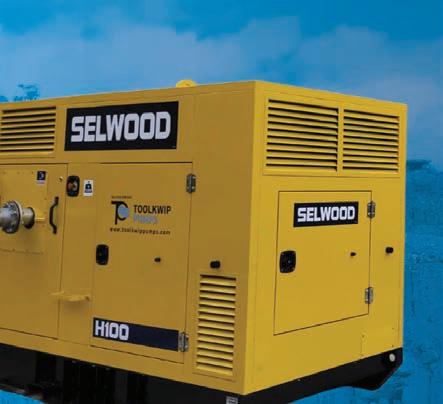
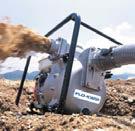
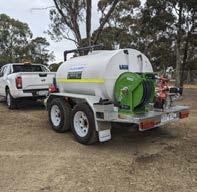
GET PUMPED WITH THE SPECIALISTS!
MAKING A DIFFERENCE
Onetrak is helping regional quarries, big and small, handle their crushing needs without interruption.
Australia is a big country, with states larger in size than many European countries, creating logistical challenges for regional quarries.
Many quarries are in rural areas and, as a result, face challenges with coverage and support. If a machine breaks down, work comes to a halt. In some cases, it can take days for spare parts and equipment to reach the site, slashing productivity.
Onetrak crushing business manager
Heiner Guenzel said the company’s coverage is what sets it apart as a crushing and screening supplier.
“We have eight branches across the country, with two major supplies of stock,” he told Quarry. “Our very good coverage helps our customers reduce their downtime.”
“The products we provide are also reliable, simple, and suited for the Australian market.”
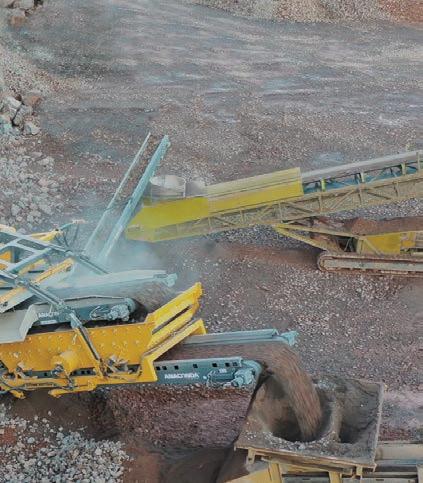
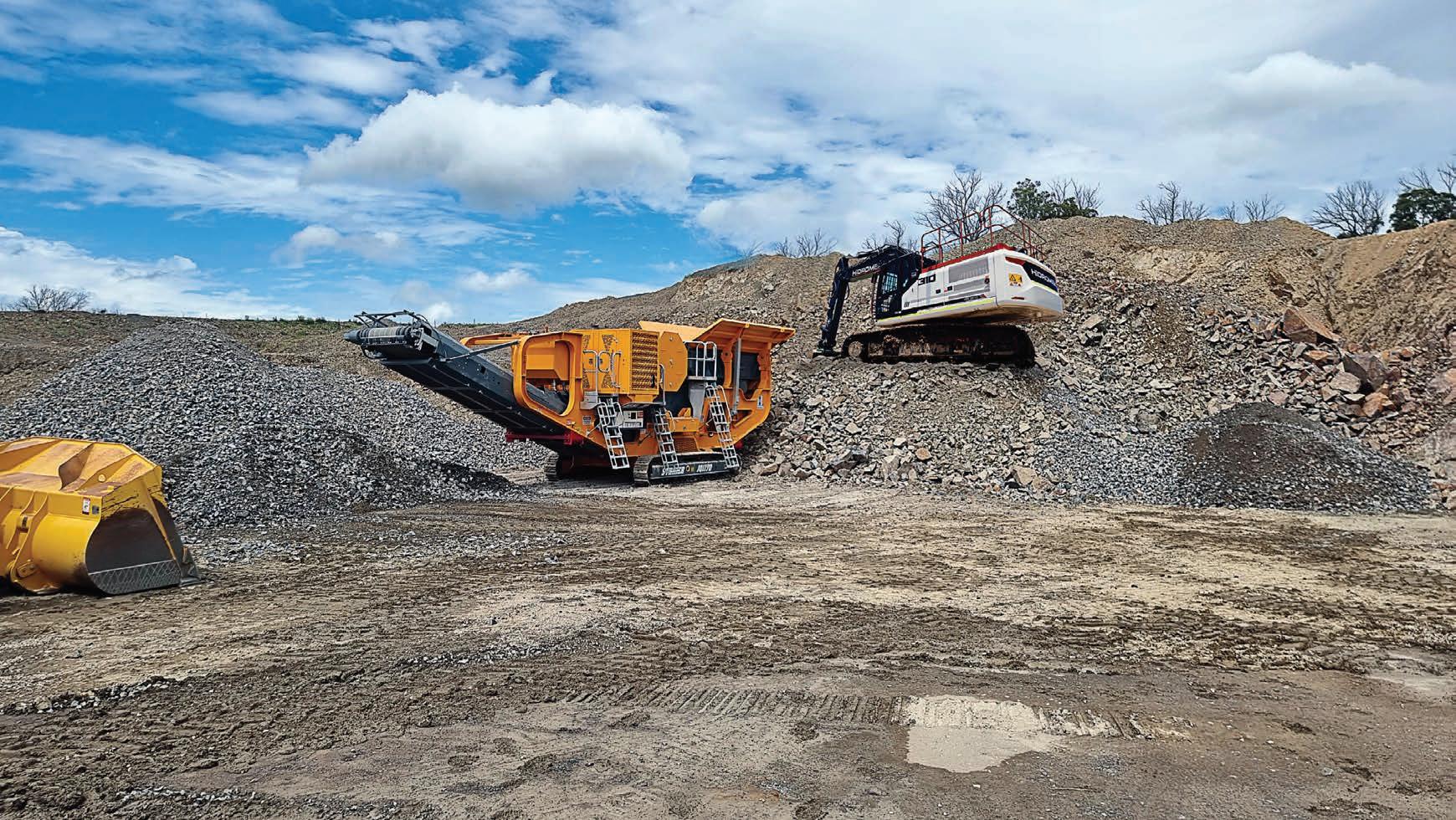
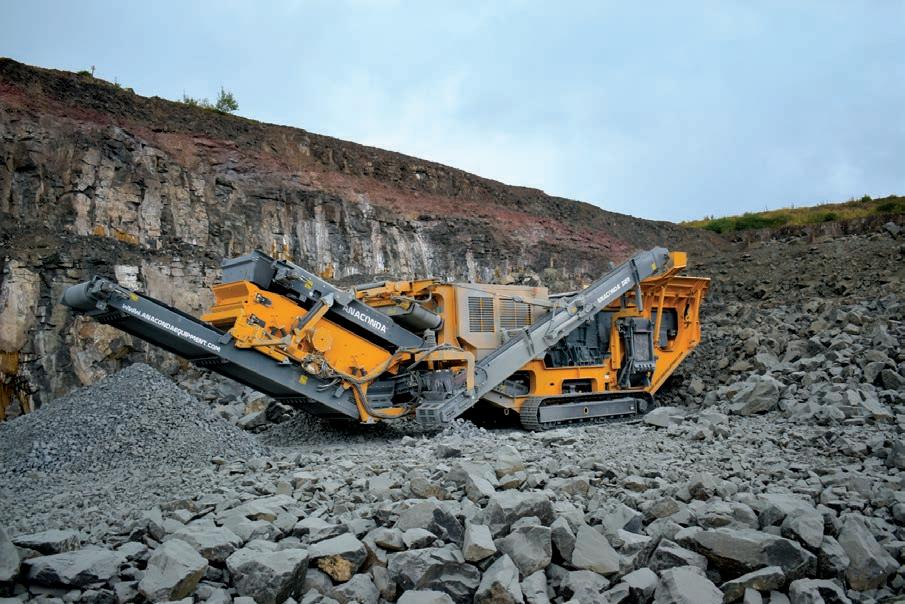
Onetrak’s range of crushing and screening equipment is built for maximum performance, efficiency, and reliability. The company offers mobile and fixed solutions of crushers and screens from brands like Striker and Anaconda, designed to tackle the toughest materials across mining, quarrying, and recycling applications.
In particular, the company’s Anaconda C12 mobile cone crusher, I12 mobile impact crusher, and Anaconda J12 jaw crushers have proven popular among Australian quarries.
The two machines are some of Onetrak’s best-selling crushers, providing quarries with flexibility and reliability on site.
Heiner said the company can provide the full range of crushing and screening equipment, whether for a large contractor or a small quarry.
“Whether you need jaw crushers, impact crushers, scalping screens, stackers, rock trommel, all material handlers including civil contractors materials handling attachments, tracked quarrying conveyor, cone crusher rentals, Onetrak has the right solution for your material processing needs,” he said.
A key part of ensuring the client gets the right equipment for the job is to know the application. Onetrak teams will often visit a site to look at the application in person to ensure they can choose the right machinery.
It can also call upon support from the original equipment manufacturers (OEMs), if needed.
Heiner, a 30-year veteran in the crushing industry, said the company has very experienced personnel with a deep understanding of the equipment and
operate the equipment to get the best value for money.
“Our customers appreciate our service availability, quick reaction time, and the consultations that help them find the right tools for the job.”
Onetrak plans to continue targeting areas of growth, particularly in Queensland, where the construction industry is heating up.
The upcoming Olympic Games and reconstruction work following floods in the north of the state have led to a high demand for aggregate.
Heiner said the company is ready to support the industry with reliable crushers, while continuing to grow.
“We want to continue expanding our team, engage with new clients, and are
The Anaconda J12 jaw crushers have proven popular among Australian quarries.
ALWAYS LEARNING
Trainsafe RTO is helping quarries retain valuable experience by delivering training that goes far beyond ticking a compliance box.
In the quarrying sector, it is common for people who have spent years working in the pit to progress into management roles. While their operational knowledge is invaluable, the skills needed to run a quarry day to day can be very different from those required on the tools.
For many new quarry managers, managing people, resolving conflict and fostering a positive workplace culture are not skills they have been formally taught.
Trainsafe RTO managing director Malcolm McDonald says these capabilities often need to be developed alongside the role, and learning through trial and error can be costly.
“People often end up learning these skills on the run,” McDonald told Quarry. “But if trial and error is your teacher, you are going to make mistakes, and some of those mistakes can have serious consequences.”
That is where Trainsafe RTO sets itself apart. The registered training organisation provides training and assessment specifically for the quarrying sector, delivered by trainers who have lived and breathed the industry.
Its team includes former quarry managers, trainers, rescue operators and business owners, with experience across Australia and overseas. That depth of practical knowledge
allows trainers to relate directly to participants, building trust, respect and stronger learning outcomes.
“They have all made mistakes,” McDonald said. “One of our trainers was named quarry manager of the year. He openly shares what went wrong in his career so others do not repeat the same errors.”
Trainsafe RTO takes a practical, people focused approach to training. Rather than delivering theory in isolation, its trainers work on site, acting as a link between the training industry and the realities of quarry operations.
“We are quarry people training other quarry people,” McDonald said. “We prefer to be on site. And we do not just teach the content, we teach people how to study and how to learn again. For some, it has been a very long time since they last sat behind a desk.”
The organisation delivers a range of nationally recognised qualifications, including the Diploma of Surface Operations Management (RII50120) and Certificate III and IV in Surface Extraction Operations (RII30120 and RII40120). It also provides NSW SafeWork competencies and a wide range of training, from confined space entry to fire extinguisher use and manual handling.
Staying relevant is central to Trainsafe RTO’s philosophy. The team regularly attends manufacturer conferences to stay across new technologies, as well as business and leadership forums to strengthen management capability.
“As a training provider, we cannot afford to stand still,” McDonald said. “Our engagement with industry, regulators and manufacturers allows us to bring leading practices from other sectors back to quarries.”
That insight often helps businesses simplify their systems rather than complicate them.
“We frequently find workplaces weighed down with layers of paperwork created with the best intentions,” McDonald said.
“Because we understand WHS legislation inside out, we are often able to reduce documentation rather than add to it, without compromising compliance.”
Trainsafe RTO’s business model prioritises continuity. Each client works primarily with one main trainer, supported by specialists when required. This allows trainers to build genuine relationships and gain a thorough understanding of site specific systems, procedures and people.
Trainsafe’s trainers act as a link between the training industry and the realities of quarry operations.
“It is not just about turning up,” McDonald said. “It is about knowing the people, their challenges, their processes and their environment.”
That familiarity allows training to be tailored using real equipment, real procedures and real scenarios, not generic examples.
“When we develop procedure manuals, the images and examples are of your own plant and machines,” McDonald said. “We capture the unique knowledge held by long serving employees, the things they have learned
through experience that are often never written down.”
Preserving that knowledge delivers significant value.
“By capturing it, we prevent the same mistakes being made again and save quarries hundreds of thousands of dollars when experienced people retire or move on,” McDonald said.
Ultimately, Trainsafe RTO’s goal is to help quarry businesses operate more safely, more efficiently and more profitably. Skills
development, McDonald says, must deliver tangible outcomes.
“Training is more than a piece of paper,” he said. “The business has to see a return, whether that is improved safety, higher production, better quality or reduced maintenance costs.”
“Our role is to help people identify where they can improve the quarry and show management exactly how that improvement adds value.” •
For more information, visit trainsafe.com.au.
Images: Trainsafe
The registered training organisation provides training and assessment specifically for the quarrying sector
PNG CONFERENCE TO SUPPORT INDUSTRY COLLABORATION
PNG Expo 2026 will return to Port Moresby with a focus on the operational challenges shaping Papua New Guinea’s mining sector.
Papua New Guinea’s (PNG) mining and quarrying industries will come together once again for the PNG Industrial and Mining Resources Exhibition and Conference (PNG Expo 2026), as the event evolves to reflect the realities of operating in one of the world’s most complex resource environments.
Set to take place over 1–2 July, the event combines a conference program with a largescale exhibition, bringing operators, suppliers, government representatives and community stakeholders into the same space.
Prime Creative Media show director of mining events Rebecca Todesco said the event is designed to reflect the breadth of the sector.
“PNG Expo is about connecting the full spectrum of the mining industry, from operators and suppliers through to government and community leaders,” she said.
“By bringing these voices together, the conference creates conversations that support long-term growth across the sector.”
A stronger emphasis has been placed on the practical challenges of working in remote regions, which continue to shape project delivery across PNG. The remote operations and connectivity panel will examine how mining investment in infrastructure and digital systems is improving access to isolated sites, while also creating broader benefits for communities.
Supply chain constraints will be addressed in the procurement and logistics in PNG’s remote terrain session, focusing on how companies maintain reliable operations across difficult geography, limited infrastructure and long transport distances. These discussions sit alongside sessions exploring investment certainty and cross-sector collaboration, including the Partnering for certainty: How miners and government can strengthen PNG’s global position panel.
The importance of social outcomes will also remain a central theme. The Healthy
operational performance.
“Strong communities are essential to a strong mining sector,” Todesco said.
“This panel will highlight how organisations working on the ground are improving health outcomes in remote regions, supporting safer and more productive operations.”
The program also includes the Building Trust, Shared Value and Sustainable Partnerships session, which will explore how companies are approaching long-term stakeholder engagement in PNG.
Alongside the conference, the exhibition floor will showcase equipment, technologies and services tailored to the country’s mining, construction and infrastructure sectors.
Following continued growth, the 2026 event will feature an expanded layout aimed at improving access between exhibitors and attendees, while structured networking opportunities will provide engagement with key decision-makers and project stakeholders.
Goodman Fielder has been confirmed as the Official Catering Sponsor, highlighting the role of supply chains in supporting remote operations. Trade marketing and insights manager Benjamin Raepa said the company sees the event as an opportunity to connect.
robust supply chains, with mining operations requiring consistent, highquality food supplies for workforce camps. They need partners who understand scale and reliability.
“Events like PNG Expo create a space for real conversations about what works on the ground.”
Todesco said the 2026 edition reflects a broader shift in how the event is being delivered.
“The launch of our 2026 event marks a new phase for PNG Expo, one we’re especially proud to lead,” she said.
“Everything is designed to deliver value for both exhibitors and attendees.”
“PNG Expo is about bringing people together face-to-face. When industry, government and communities meet in one place, it creates real opportunities for growth, collaboration and long-term success in the mining sector and across the country.”
With a program increasingly focused on logistics, connectivity and on-the-ground realities, PNG Expo 2026 is positioned as a key forum for addressing the challenges and opportunities shaping Papua New Guinea’s resources sector. • Secure your tickets now: pngexpo.com/attend
PNG Expo 2026 will bring together key stakeholders from across Papua New Guinea’s mining and resources sector. Image:
SCREENING FOR ALL APPLICATIONS
Screening equipment is the unsung hero of quarrying performance, which is why Metso has an even wider range of solutions for Australian aggregate operators.
In a market where quarry operations run on increasingly tight margins, efficient screening equipment has become vital to a business’s bottom line.
But there’s a wide range of screening requirements across the sector. Some operators handling sticky, wet materials may need a unique set-up, while others may opt for a larger and or efficient solution to achieve higher throughput, around the clock. Metso’s expanded screening range reflects the realities of modern operators.
From the compact and efficient FS Series horizontal screens through to the heavyduty high-capacity Grande Series, the original equipment manufacturer (OEM) offers options to support quarry operations, whether they need a greenfield or retrofitted solution, from small to high-capacity, largescale installation.
COMPACT PERFORMANCE
Traditionally, investing in compact and efficient screening equipment was a
balancing act, the trade-off was usually capacity or accuracy. Metso designed the FS Series to redefine change this.
The FS Series is designed for all quarry screening applications.
It combines a compact footprint with an aggressive elliptical motion that delivers high throughput and efficiency in both wet and dry applications.
With a 1:3 elliptical vibration ratio, the screen generates movement in two directions, accelerating material stratification and allowing fines to pass rapidly through the deck.
A triple-shaft-line mechanism comprising six modular MV vibrators provides the screen’s distinctive motion.
These grease-lubricated vibrators are paired via Cardan shafts and synchronised via gears, ensuring smooth, reliable operation even in heavy-duty applications.
Maintenance has been simplified as well: individual vibrators can be replaced in just a few hours without major disassembly, helping to minimise unplanned downtime.
According to Metso, this motion profile enables the FS Series to outperform traditional linear horizontal screens, particularly in applications involving sticky, flaky or clay-rich materials. According to the OEM, this can translate into up to 25 per cent higher performance than standard horizontal screens, without changing the plant’s size or power usage.
BUILT FOR DURABILITY AND COST
Quarrying exposes equipment to harsh conditions and demands consistent uptime and performance daily. The FS Series features a robust design that meets this challenge and delivers on the operator’s expectations. The FS Series’ frames are fabricated from beam sections reinforced with stiffeners in high-stress zones, while huck-bolted side plates eliminate the fatigue risks associated with welded joints.
The FS Screens are compact solutions for primary and tertiary applications.
Operational flexibility is another defining feature. While, for standard vibration, the angle is set at 45 degrees to correspond to the normal feed speed of materials, operators can fine-tune vibration amplitude by adjusting counterweights, while vibration angle can be altered between 30 and 60 degrees to suit different feed materials and flow characteristics. This level of adjustability allows a single FS Series screen to be optimised for multiple applications over its service life.
GOING LARGE
Modern high-capacity aggregate processing plants need to maximise their assets by utilising equipment around the clock.
Many light duty screens cannot take the 24/7 duty, this is where Metso’s Grande Series comes in. Designed for large-scale quarry and mining operations, the Grande series includes three stationary screen types (GLH, GMF, and GFF) that handle varied applications, from heavy-duty slurry (GLH) to fine- and near-size particles (GMF) to challenging materials and fine separation (GFF).
But these screens can be tailored to match other applications if required, for example, the GLH can manage wet screening, but it could also be used as a final screening solution or for dewatering or trash screening applications.
“It’s all about helping our customers succeed with the right tools for their unique needs. With the newly launched Grande Series, customers gain more flexibility, easier screen replacements, and access to solutions for even the most demanding screening tasks,” Metso screening business line vice president Jouni Mähönen said. Metso has made the Grande series available globally, with the GLH and GMF
lines launched in December 2025, while the GFF Series was set to be available from the end of the first quarter of 2026.
According to Metso, these three solutions add large-capacity screening options to its stationary screening range, which were previously unavailable.
The Grande series features a robust design with fabricated, huck-bolted screen bodies, reinforcement plates, cross beams, and a strong mechanism beam.
Metso minimises welds in critical areas to extend service life, while stroke is generated by box exciters mounted on top, producing consistent linear motion over large decks.
Compatibility with Metso’s Trellex modular screening media improves adaptability.
By choosing suitable panel types, wear, screening accuracy, and throughput are balanced, while simplifying maintenance and reducing inventory.
The Grande screens can be set at different slope angles to suit process requirements and site layouts, while a wide range of exciter options allows precise performance matching to the application.
“The Grande Series is a result of our continuous screening portfolio development. We are strengthening Metso’s position as a screening solutions partner – expanding our offering with larger screens, lighter-duty screens, and new flip-flow technology,” Metso capital equipment business (screening) vice president Michael Gyberg said.
“With new technologies, larger sizes, and advanced capabilities, we’re expanding our portfolio to support the most demanding applications and strengthen our position in the growing screening market.”•
For more information, visit metso.com
Images:
Metso
The Grande Series is designed for large-capacity screening applications.
PRODUCTIVITY, VERSATILITY, EFFICIENCY:
THE HOLY
Komatsu’s new HM460-6 haul truck delivers more payload and efficiency.
Komatsu has introduced its HM460-6 articulated haul truck to the Australia and New Zealand markets, delivering increased payload, improved fuel efficiency and enhanced operator performance across a wide range of applications.
The next-generation articulated dump truck builds on the longstanding success of the HM400 series, which is widely used across civil construction, quarrying and mining operations.
Komatsu Australia national business manager Nick Vrontas said the new model was developed in direct response to customer demand for greater productivity in the popular 40-tonne class.
“The previous model, the HM400-5, has been the most popular truck in its class for a long time, but customers have been asking for more payload,” Vrontas said. “The HM460-6 delivers that, with a 42-tonne capacity that still meets the needs of those same applications.”
BUILT FOR VERSATILITY
The HM460-6 is built for quarry, construction, large-scale site development, mining and infrastructure projects where
variable terrain, soft ground and haul road conditions can limit productivity. With a higher-rated payload and improved fuel efficiency compared to the Komatsu HM400-5, the truck is designed to deliver a lower cost-per-tonne while maintaining stable, predictable operation throughout the haul cycle.
“Across Australia and New Zealand, you’ll see it used in civil applications like pipelaying, moving material around on construction sites, and even wind farms, as well as in quarries as a haul truck or bin truck and also in mining on subcontractor fleets moving material around,” Vrontas said.
“It’s a great, versatile piece of machinery that we know will be popular with our customer base.”
MORE PAYLOAD, BETTER EFFICIENCY
The HM460-6 increases rated payload capacity while delivering improved fuel efficiency, helping contractors lower cost per tonne and increase overall productivity.
Powered by a new Komatsu engine platform, the truck delivers approximately 9 per cent more horsepower while reducing fuel consumption by around 12 per cent.
TRINITY
When combined with the increased payload, this translates to a significant improvement in overall efficiency.
“When you combine the increased payload and reduced fuel use, you see about a 22 per cent improvement in efficiency, which is a big plus for contractors looking to improve productivity and save costs wherever they can,” Vrontas said.
PERFORMANCE IMPROVEMENTS THAT ADD UP
The HM460-6 also features a redesigned operator environment, with a new cab layout focused on visibility, ergonomics and ease of use. Updated displays, improved sightlines and a range of operator-assist technologies are designed to reduce fatigue and improve overall productivity throughout the shift.
“There are a lot of operator-assist features now, including cruise control for uphill and downhill, automatic retarder braking, rollover prevention system with an inclinometer, KomVision cameras and hill start assist, all designed to make the operator’s day easier so they’re not getting out of the cab fatigued at the end of their shift,” Vrontas said.
The Komatsu HM460-6 haul truck was designed with productivity, versatility, and efficiency in mind.
Maintenance and serviceability have also been enhanced, with extended service intervals helping to reduce downtime and lower operating costs.
“We’ve extended service intervals with engine oil and filter changes out to 1,000 hours, another thing to help reduce running costs for customers,” Vrontas said.
TAILORED FOR LOCAL CONDITIONS
Komatsu has also ensured the HM4606 meets local requirements, with Australia and New Zealand specifications
supported through both factory and locally installed features.
“The factory supports Komatsu Australia and New Zealand quite significantly with the amount of extra specification they provide,” Vrontas said. “We get emergency stops, auto-grease, battery and starter isolators as standard, and then locally we fit options to suit customer requirements.”
The HM460-6 has already been introduced in global markets, with units deployed in North America and Europe following its debut at CONEXPO earlier this year. The
truck is expected to be available in Australia and New Zealand from June, along with a series of demonstrations and customer events to support the roll out.
“It’s a completely new machine, but it’s built on what we know works - reliability, performance and operator comfort – backed with more payload and better efficiency,” Vrontas said. “We’re confident it’s going to be a strong addition to fleets across Australia and New Zealand.” •
For more information, visit komatsu.com.au
Engineered Sand™
The new model was developed and manufactured in direct response to increasing customer demand.
PRODUCT FOCUS
direct truck loading.
“The PM1200-20TB has been designed so operators can switch between blends or run dual products without slowing production or reconfiguring the plant. It’s about giving them control, not constraints,” Crusher Screen Sale & Hire (CSSH) manager John Andersen said.
The system also supports one or two powder hoppers, enabling precise addition of stabilising agents such as cement or lime. The twin powder hoppers can be connected to two separate silos, allowing different powders to be blended in a single run or kept ready for rapid changeover without emptying hoppers or swapping silo connections.
SELWOOD H100 DELIVERS HIGH HEAD PERFORMANCE FOR DEMANDING DEWATERING
Toolkwip Pumps has introduced the Selwood H100 ‘H’ High Head and High Pressure pump, ideal for dewatering applications. Offers maximum performance with Selprime automatic self-priming and emission compliant engine, the H100 is simple to operate and maintain and is one of the most reliable pumps in the field.
The H range of Selwood pumps offer maximum performance and efficiency for high head, high pressure dewatering.
The H100 offers total heads up to 120m, can handle solids up to 30mm, features mechanical shaft sealing, and a super silent canopy. Selprime automatic self-priming and emission compliant engines, making them ideal for high head and high-pressure applications with the bonus of being simple to operate and maintain.
The Selprime priming method is a unique Selwood auto-priming pump that utilises a water tolerant diaphragm air pump. The design is environmentally friendly and has none of the problems of oil vapour emissions and oil emulsification associated with other priming systems.
The Selwood range of auto priming pumps are the market leader and are available in Australia from Toolkwip Pumps. Selwood Pumps are a British Brand. Designed and manufactured in the United Kingdom, they have established a reputation for being user-
To submit new product and equipment releases, email: les.ilyefalvy@primecreative.com.au
production data and can be operated from an iPad in the loader or site office, giving operators real-time oversight and traceability, an increasingly vital aspect for compliance and quality assurance.
For high-powder applications such as roller- compacted concrete, the three -metre pughead ensures a consistent, high- quality mix. Hydraulic vibrating tipping grids can be installed on both feed hoppers to enhance material flow and minimise blockages, especially when handling sticky or variable raw materials.
For more information, visit crusherscreen.com
friendly, while being low maintenance and trouble free. These high-performance pumps have provided dewatering solutions across the civil construction, pipeline, sewer bypass, mining, and quarry sectors.
In Australia the Selwood product through Toolkwip has earned recognition for being performance-engineered, cost-efficient and “super silent”, backed by exceptional aftermarket support. They are also renowned for their ability to selfprime automatically from dry.
For more information visit the website toolkwippumps.com.au or call the Toolkwip team 03 8805 0500.
Image: Toolkwip Pumps
Image: CSSH
STEELING THE SHOW
SSAB has launched its Hardox HiAce steel, engineered to outperform more conventional abrasion-resistant (AR) steels, stainless steels, and ceramics used in the most challenging and obtrusive settings.
The company claims Hardox HiAce delivers a combination of superior hardness and strength, resistance to corrosive wear, high performance at high temperatures, and workshop-friendly fabrication with no special infrastructure required.
Through rigorous testing and production methods, the steel has been manufactured to resist any acids, sulphates, ammonia, and salts which can accelerate wear and reduce service life.
Hardox HiAce steel is compatible in the most demanding of industries including waste collection, pulp and paper, wood handling, recycling, mining, agriculture, transportation, and quarrying.
Stainless steels perform well in purely corrosive environments, but when abrasion and impact are introduced, its lower hardness limits service life.
According to internal testing at SSAB, Hardox HiAce outperforms both stainless steel S304 and AR 400 steel in abrasive pH 4 conditions.
“The main reason Hardox HiAce outperforms stainless steel is its significantly higher hardness and dent resistance,” SSAB senior wear specialist Jonas Allebert said.
In the corrosive wear tests, Hardox HiAce achieved up to 20 per cent longer service life than stainless steel, no signs of pitting corrosion, and a more cost-efficient solution compared to stainless steel.
To further monitor and assess the performance of the steel, SSAB analysed a garbage truck operated by Swedish company Allmiljö over a six-year period, where Hardox HiAce flooring replaced stainless steel S304.
Over the course of six years and 106,000 km (65,865 miles), only 40 per cent wear was measured at the most exposed point, no pitting corrosion was observed, and floor integrity remained intact
“At this wear rate, the extended service life fully meets the operator’s requirements,” Allebert said.
Hardox HiAce has even been tested in the most extreme heat conditions.
At SSAB’s coke plant, after red-hot coke exits the coal furnaces the Oxelösund mill, it is water-cooled and discharged onto sliding ramps while still extremely hot, creating a challenging environment as the coke is mildly to moderately corrosive in addition to being abrasive.
When one of the ramps required new liner plates, Hardox HiAce was
chosen for its combined resistance to abrasion, impact, corrosion, and heat. After months of operation, wear levels were even lower than anticipated.
Other high-temperature applications for Hardox HiAce in steel mills include quenching wagons, cooling beds, slag tippers and furnace inlet scrapers.
Additional high-temperature applications include dryer drums and lifter plates in asphalt plants, clinker cooler plates and liner plates in cement plants, ash-handling equipment and chain conveyors in power plants, foundry scrapers and screeners, and crusher liner plates and clinker hammers.
For more information, visit ssab.com
Workshops delivered Australia wide with Online, On-Site and Face to Face training options tailored to individual skill sets and competency. Quarry training facilitated by Quarry people.
ertification inc udes i ed ant and ac iner
ertificate in urface traction erations
ertificate in urface traction erations i oma of urface erations ana ement
Imagea: SSAB
FINALISTS ANNOUNCED FOR WOMEN IN INDUSTRY AWARDS
The Women in Industry Awards has selected the women and organisations driving meaningful change across industrial sectors.
The Women in Industry Awards, held at Doltone House Darling Island Wharf, Sydney on June 18, offers a unique opportunity to unite industry professionals, senior leaders, and emerging talent in a dynamic and engaging setting.
“This year’s finalists represent the strength, innovation and leadership driving Australia’s industrial sectors forward,” Prime Creative Media head of events marketing Molly Hancock said.
“The Women in Industry Awards not only recognise these outstanding achievements but also create a space where leaders at every stage of their career can come together, share ideas, and build connections that have a lasting impact on both individuals and the industry as a whole.”
The 2026 Women in Industry Awards finalists:
EXCELLENCE IN ENERGY
•Louise Bishop - Zinfra
•Ilaria Giovannetti - Rohlig Australia
•Shamime Hussein - Liion Energy
•Sunny Rutherford - Potentia Energy
•Stephanie Salinas - Yarra Valley Water
•Jessica Schmidt - EnSol Environmental
Solutions
•Sheeza Shakeel - DXC Technology
EXCELLENCE IN ENGINEERING
•Andrea Edney - Systra ANZ
•Hoda Ehsani - Fortescue
•Neyra Hackett - BOC Limited
•Ameneh Jalali - Yokogawa Australia
•Elika Karbassi - InfraBuild
•Alexandra Kelly - SMEC
•Olga Mikhaylova - CPB Contractors
•Olivia Mirza - Western Sydney University
•Tamsyn Parker - BOC Limited
•Marjan Torshizi - Argon & Co
TRADESWOMAN OF THE YEAR
•Shanica Banham - Acorp Construction
•Olivia Entwistle - Newmont
•Elijha Fortescue - Essential Energy
•Ana Gamero - Bucher Municipal
•Samantha Hall - Drake Trailers
•Shannen Jeffery - Newmont
•Clarisse Orchard - Callidus Group
•Felicity Pettiford - Sydney Builder Chick
• Jennifer Revell - Master Electricians Australia
•Jasmyn Smith, Logan Barnett - The GO Company
BUSINESS DEVELOPMENT SUCCESS OF THE YEAR
• Pansy Khurana - Aussie Home Loans Berwick
•Michelle Knott - Brooklyn Quarry
•Zureka Loubser - Argon & Co
•Sienna Tamati - Resourceful Women
•Kate Tsorvas - Jakarli Group
•Jenny Valentino - New Era Group
•Marissa Verberne - Bajwa EnvrioConsult
•Yuan Yuan - Sykes Group
•Karlie Zec - Tiny Tins
INDUSTRY ADVOCACY AWARD
•Tatiana Delendik - Grundfos
• Lauren Fahey - NexGen
• Becky Felstead - The Resource
• Haura Hussaini - Chevron Australia
• Julie Jupp - University of Technology Sydney
• Narissa Kinghorne - Newmont
• Vicky Pellowe - The FIFO Family Project
• Julia Szymanski - Yokogawa Australia
• Jessica Tuck-lee - Mudgee Cranes
• Karlie Zec - Tiny Tins
EXCELLENCE IN CONSTRUCTION
• Michelle Gillies - Brisbane Airport Corporation
• Georgia Hartin - EME Rooming Houses
• Caitlyn Hayes - Komatsu Australia
• Puja Khanna - Ellipse Property
• Jacqueline Madsen - Australian Antarctic Division
• Divya Mehta - Decode Group
• Alysse Reedy - Fulton Hogan
• Jessica Rippon - Construction Legal
MARKETER OF THE YEAR
• Maria Astakhova - Rohlig Logistics
• Liz Bingham - Metso
• Maria Deferia - Grundfos
• Lauren Hamilton - Smart Commercial Energy
• Renata Hjelmstrom - Lincom Group
• Melissa Johnson - Primary Comms Group
• Edie Lada - Croire
• Caroline Luczynski - SMEC
• Louise Tilley - SAGE Group
• Anastasia Zimsen - Weir
EXCELLENCE IN TRANSPORT
• Alexandra Bosnjak - Argon & Co
• Ilaria Giovannetti - Rohlig Australia
A gala dinner will be held at Doltone House
Darling Island Wharf, Sydney on June 18
Image: Prime Creative Media
• Ronda Irvine - Asahi Beverages
• Jing Liang - Yokogawa Australia
• Jacqueline Madsen - Transport for NSW
• Orlane Mortimer - Wollongong Crane Trucks
• Priya Perera - V/Line Corporation
• Kattie Risk - Billirrawarra Trucking & Training
• True Ross - Ross Transport
• Sarah Singh - Elite Transport Solutions
MENTOR OF THE YEAR
• Laura Canning - Komatsu
• Tracy Clark - City of Gold Coast
• Lisa Dimitrijevic - Fulton Hogan
• Naomi Elliott - Concept Labs
• Annabelle Lynch - Mudgee Cranes
• Allison Metcalfe - Newmont
• Kym Sammut - Red Rock
• Martina Storgato - Mills Oakley
• Shannon Tutin - RoadAid
• Nina Zundel – Aurecon
EXCELLENCE IN MANUFACTURING
• Latinka Cubitt - Catten Industries and LaTink
• Naomi Elliott - Concept Labs
• Hayley Erasmus - Coca Cola Europacific Partners
• Melanie Hignett - Asahi Beverages
• Joanne Howarth - Planet Protector
• Elika Karbassi - InfraBuild
• Derelle Mitchell - Health Focus Manufacturers
Jane Oppenheim - Ego Pharmaceuticals
• Sheila Payad - Asahi Beverages
• Charline Siccardi - Argon & Co
WOMEN IN LEADERSHIP AWARD
•Belinda Battaglia - MEDLOG
• Laura Canning - Komatsu
• Samantha Cleaver - Potentia Energy
• Sandra Kemp - Evolution Mining and Civil
• Judith Ong - Elevate Dental
• Dr Priya Subramanian - Dulux Australia
• Cassia Sutton - earth gear
• Rachel Thomas - Grace Insurance
• Karlie Zec - Tiny Tins
EXCELLENCE IN HEALTH AND MEDICINE
•Alineh Agon - Closer Care
•Bec Bennett - National Acoustic Laboratories
•Dr Sarah Crowe - OOXii
•Ameneh Jalali - Yokogawa Australia
•Katherine Millar-Shannon - Terpeze Holdings
•Dr Judith Ong - Elevate Dental
•Dr Signe Steers - The Audiology Place
•Shaina Zheng - S & J Optical / Eyecare Plus Mermaid Beach Optometrists
RISING STAR OF THE YEAR 30 YEARS AND UNDER
•Caitlin Barlow - JATEC Transport
•Alex Callinan - Grundfos Pumps
•Courtney Dobson - Newmont
•Alesha Henare - Select Logistics and Transport
•Sophie Jackson - Argon & Co
•Angela Julianto - Fulton Hogan
•Jasmine Obermuller - SMEC
Purpose built fleets tailored to quarry site requirements
OEM backed support, service and technicians
•Jasmine Palmer - Fire+Rescue NSW and Polymetals
•Aya Salih - Bajwa EnviroConsult
•Servarna Waterman - Asahi Beverages
EXCELLENCE IN MINING
•Brooke Adamson - Newmont
• Erin Bell - Co Connect App
• Joanne Bergamin - Women in Sustainable Energy & Resources
• Briony Coleman - Newmont
• Maria Davoren - Davoren Environmental
• Caitlyn Hayes - Komatsu Australia
• Sandra Lam - FIFO Focus
• Allison Metcalfe - Newmont
• Guilia Vallone - Rema Tip Top Australia
SAFETY ADVOCACY AWARD
• Sarah Barnbrook - Away from Keyboard Inc.
• Madalyn Cheetham - BOC Limited
• Sarah Henry - Queensland Water Directorate
• Alicia Neville - Action OHS Consulting
• Kate Quinlan - Complete HSEQ Solutions
• Alysse Reedy - Fulton Hogan
• Sandra Reid - CDC NSW
• Peta Ritchie - Coca Cola Europacific Partners
• Priya Sanyal - Asahi Beverages
•Shannon Tutin - CCL Specialised
Businesses from across Australia are invited to attend the awards gala for an inspiring evening dedicated to celebrating trailblazing women who are breaking barriers and redefining what’s possible. •
24/7 service Australia wide
Expert advice and analysis
Late model, low hour fleet
GEOLOGY TALK
ANCIENT TECTONICS RESHAPE THE SEARCH FOR CRITICAL MINERALS
New research from the University of Adelaide is offering a fresh geological lens for locating rare earth elements.
Research from the University of Adelaide suggests the key to unlocking rare earth element (REE) deposits lies not in recent surface geology, but in tectonic processes that occurred billions of years ago.
Published in Science Advances, the study identifies a strong global link between ancient subduction zones and the formation of REE deposits, challenging long-standing assumptions about their origin.
Led by School of Physics, Chemistry and Earth Sciences professor Carl Spandler, the research team reconstructed Earth’s tectonic evolution over the past two billion years using advanced plate modelling. Their findings suggest the conditions required for REE deposits were established deep in Earth’s past, long before the minerals themselves became economically relevant.
Rare earth elements are essential to technologies such as electric vehicles, wind turbines, smartphones, and defence systems. However, identifying viable deposits remains a major challenge for the resources sector.
The Adelaide researchers propose a two-stage formation model. The first stage occurs during subduction, when one tectonic plate is forced beneath another. This process releases fluids and elements into the overlying mantle.
The second stage can occur hundreds of millions, or even billions, of years later, when geological conditions trigger melting. This produces carbonatite magmas, which can host high concentrations of REEs and eventually form mineable deposits.
Professor Spandler said the research highlights just how long these processes can take to translate into accessible resources.
“This research shows that the ingredients for these critical mineral deposits were put in place many million to even billions of years ago,” he said.
“This time lag is one of the most surprising aspects of our findings.
“It shows that the Earth’s mantle can store these enriched zones for incredibly long periods before the right conditions arise to form mineral deposits.”
The study found that fertilised mantle regions are associated with approximately 67 per cent of carbonatites and 72 per cent of REE deposits formed over the past 1.8 billion years. For older deposits, that figure rises to more than 90 per cent.
These regions now underlie around 35 per cent of Earth’s continental crust, with the highest concentrations of REEs found where multiple subduction events have overlapped.
Professor Spandler said this provides a more precise framework for exploration.
“By identifying where these ancient processes occurred, we can significantly narrow down the search areas for future discoveries,” he said.
IMPLICATIONS FOR QUARRYING
The findings challenge previous theories that linked REE deposits primarily to mantle plumes, instead positioning subduction as the dominant control on their formation. Exploration strategies can be refined by focusing on ancient tectonic boundaries, improving efficiency and reducing the cost of discovery.
Co-author Andrew Merdith noted that targeting these zones could help governments and companies better respond to rising global demand for critical minerals.
“By focusing on these ancient tectonic zones, exploration companies and governments can take a more targeted and efficient approach to finding new deposits,” Merdith said.
“This is especially important as demand for rare earth elements continues to grow.” Beyond resource exploration, the research provides new insights into Earth’s geological evolution. It demonstrates how the mantle can preserve chemically enriched regions over immense timescales, influencing not only mineral formation but also broader processes such as carbon and water storage. •
Rare earth elements are vital for modern technology, green energy, and defence.
Researchers from the University of Adelaide have discovered new ways of attaining rare earth elements.
Image:
$631M+ TOTAL SALES INDUSTRIAL
61,000+ INDUSTRIAL ASSETS SOLD
5,000+ EARTHMOVING ASSETS SOLD
Looking to sell big by June 30? Talk to Pickles today about how to maximise the return on your assets before EOFY. With a huge community of almost a million buyers and sellers, the results speak for themselves. Head to pickles.com.au to find what you need.