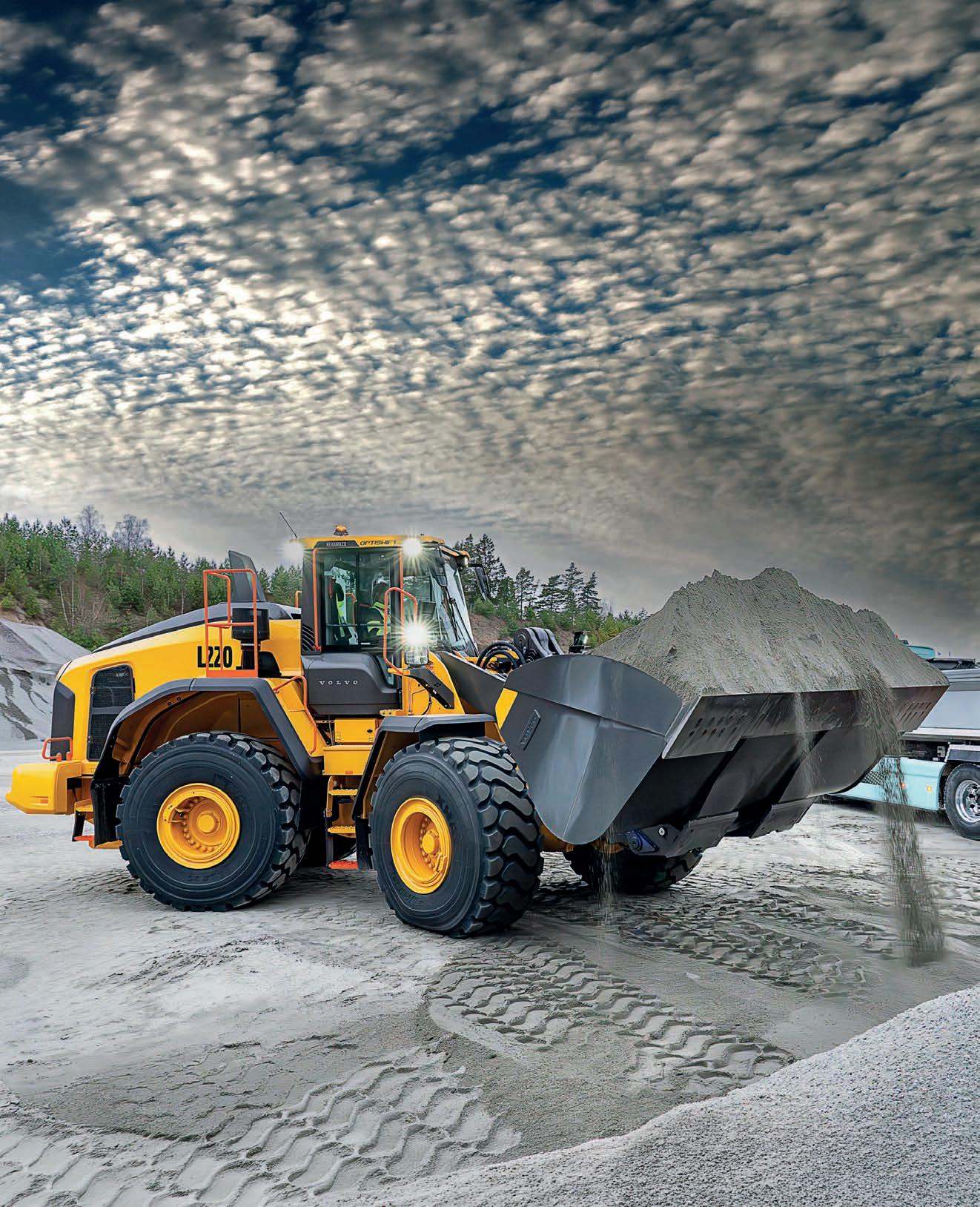
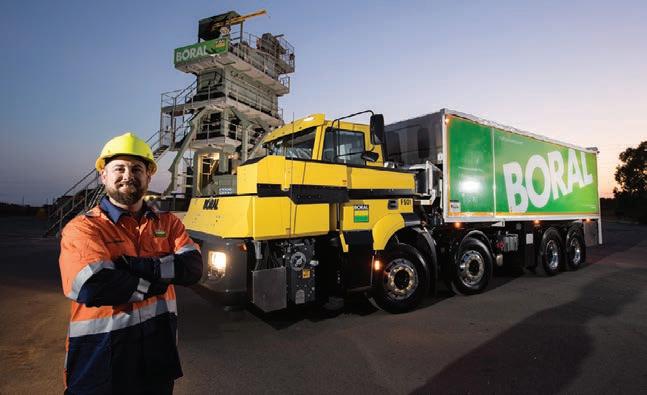
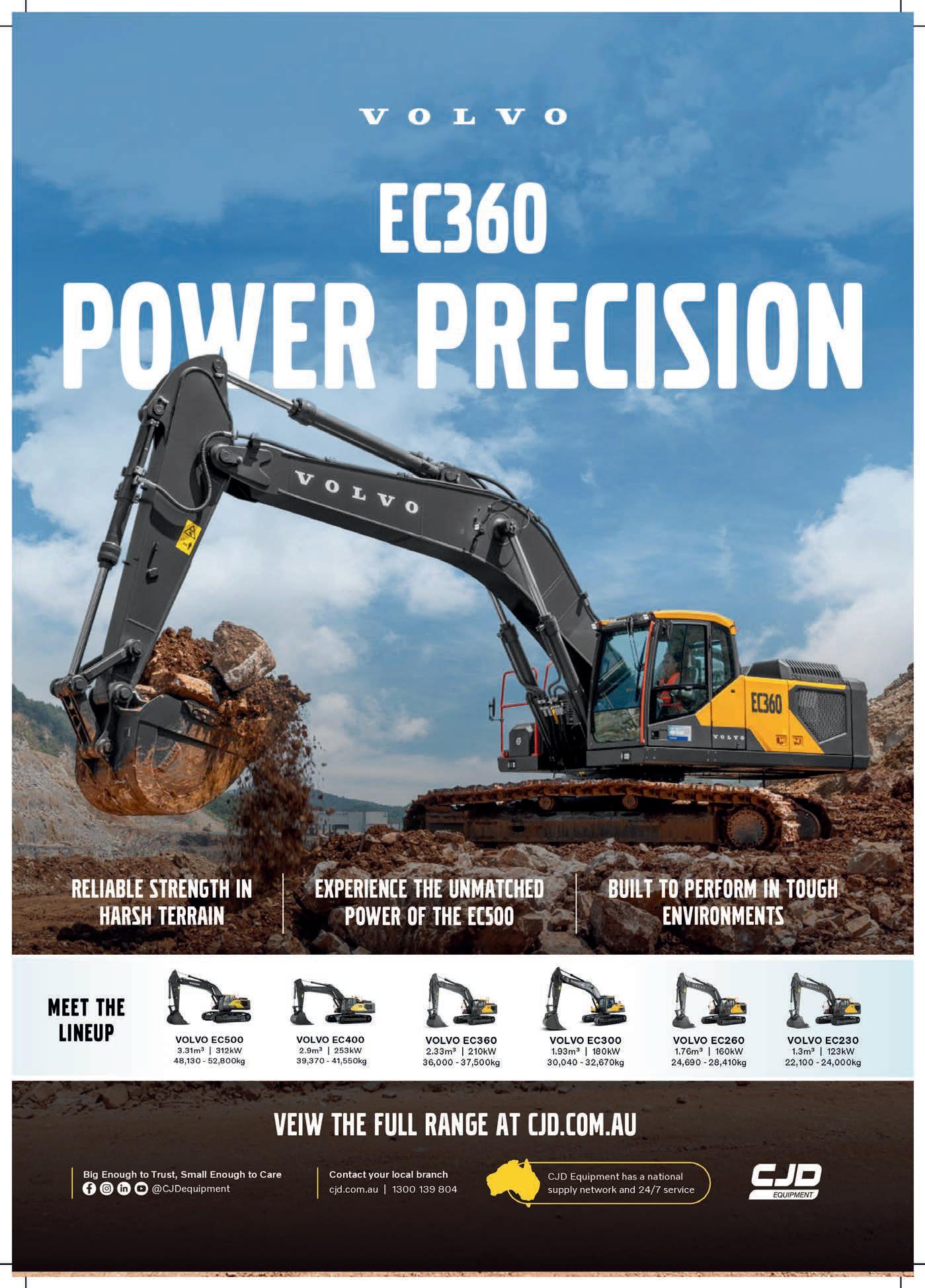
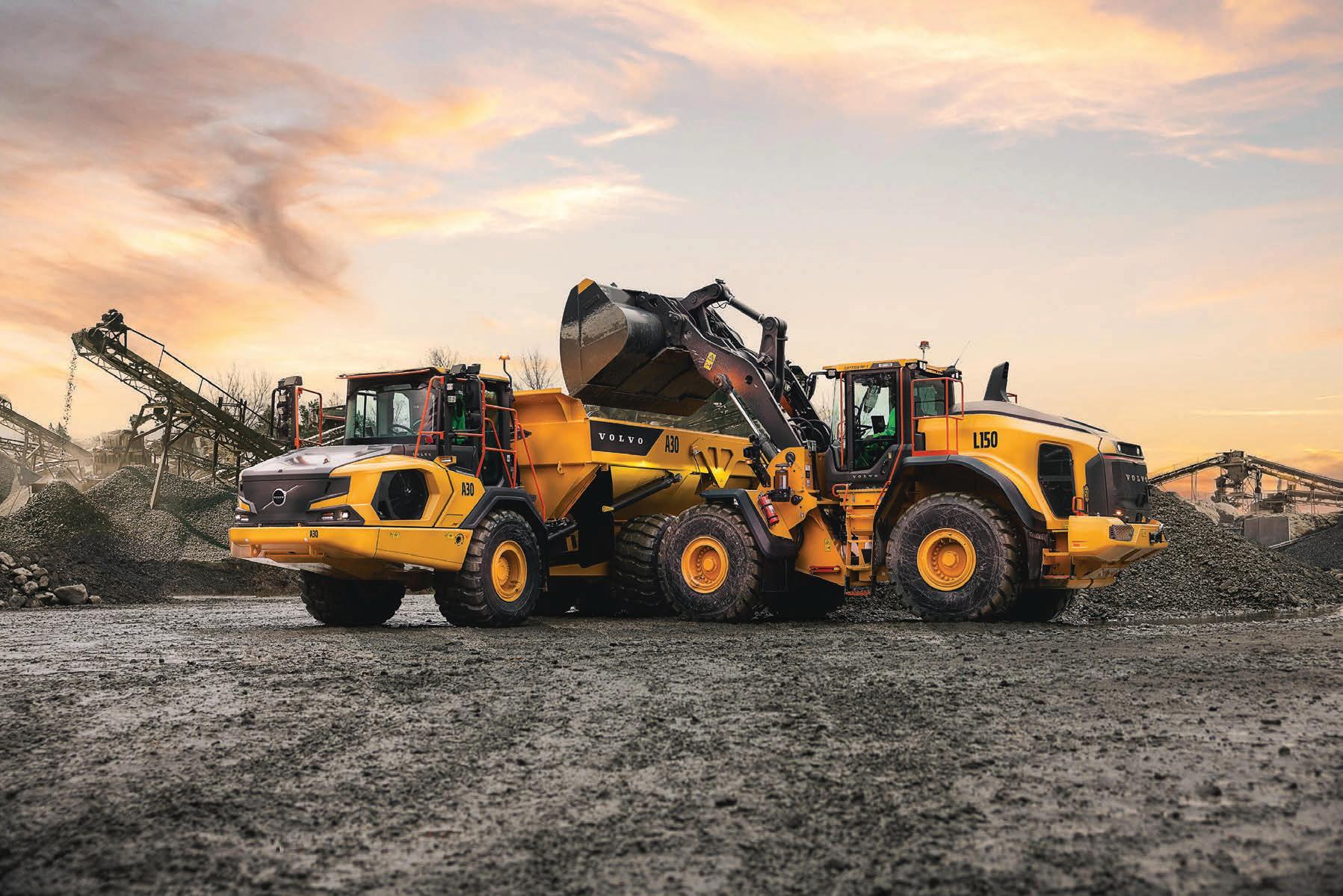
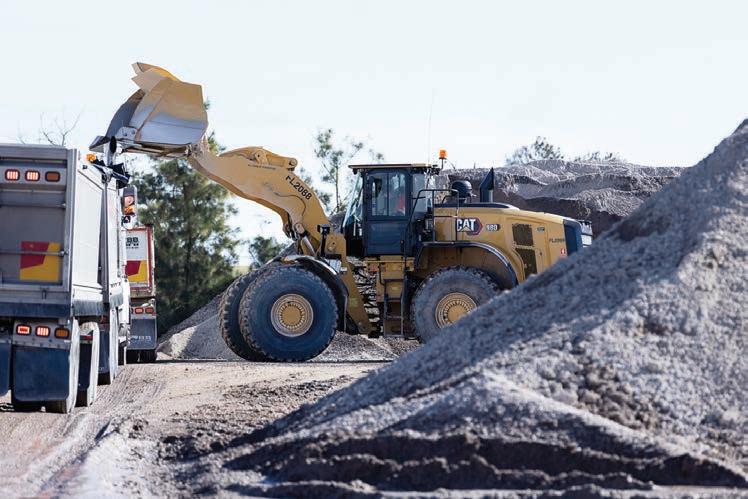
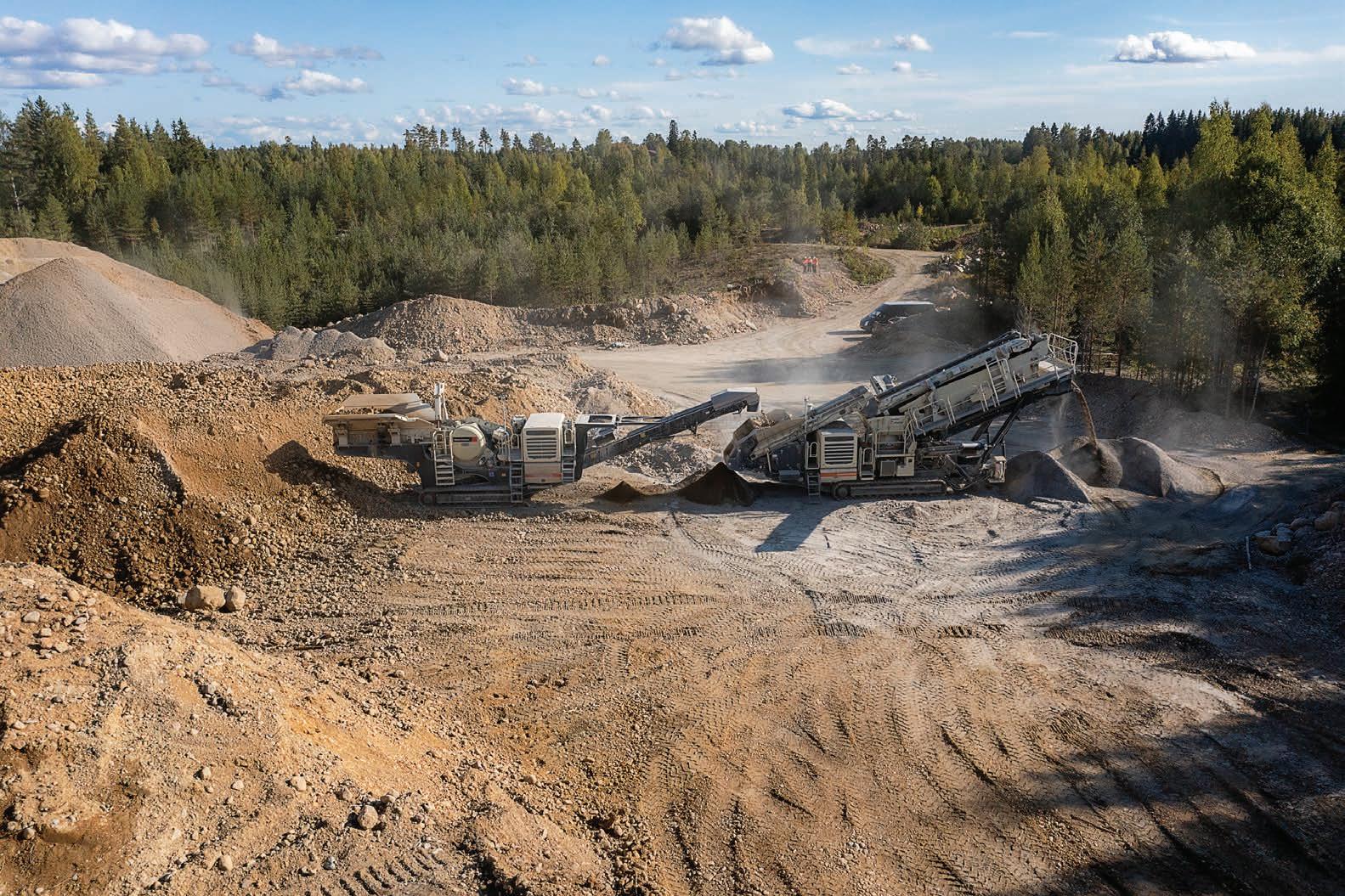
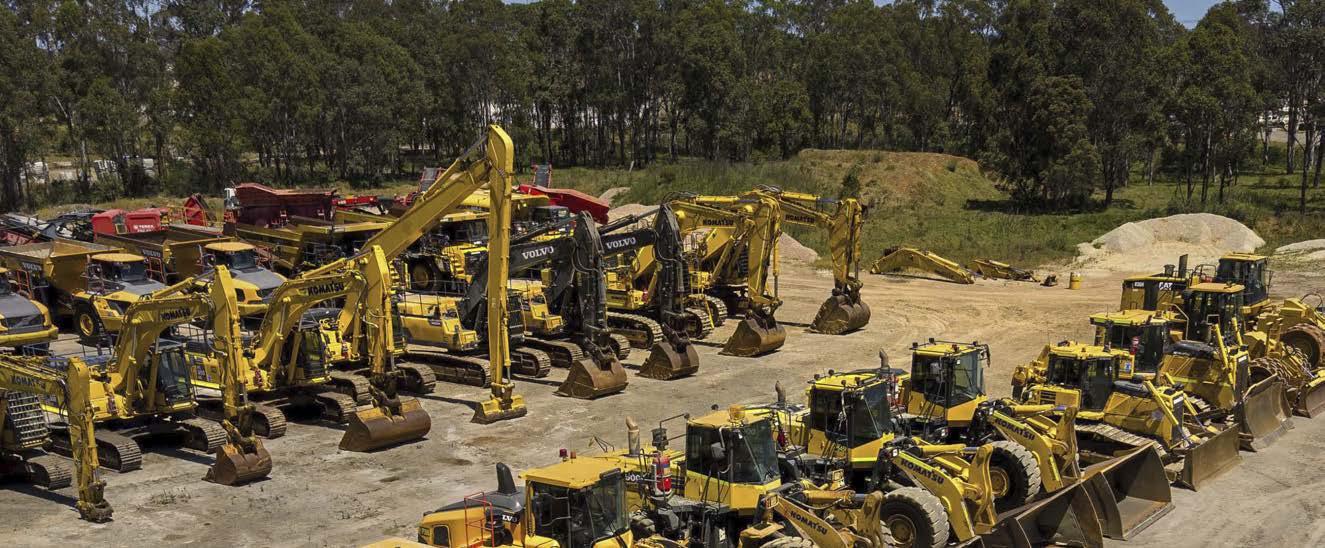
CJD Equipment showcases what makes the Volvo K Series wheel loaders such a good fit for quarry operators.
28
MIXING IT UP IN SA Liam Berneville-Claye is having a crack at developing his business from the ground up in South Australia.
36
THE AUSTRALIAN EDGE Multotec has invested in local manufacturing to improve support for the Australian quarrying sector.
IN THIS ISSUE
ON TOUR
Ella Sloss and Ben Howard discuss their experiences in travelling in South Africa.
FEATURES
12 28 21
Safety in full view
The IQA hosted a well-attended Health and Safety Conference in NSW.
Future-focused forecast
William Buck chief economist Besa Deda previews the IQA National Conference.
Meet the managers
James Chauncy and Hugh Rainger are the leaders behind used industrial auction businesses, Pickles Industrial.
Tutt Bryant’s range of Metso equipment is readily available for Australia.
30 An alarming improvement Wales, Germany, and Australia help improve productivity at a historic quarry.
A new logistics project is set for Melbourne’s western area.
MIXING IT UP IN SA
Mix Group founder Liam Berneville-Claye has launched his new business venture. BREATHING NEW LIFE INTO RAVENHALL
FOR
South African manufacturer has set its sights on Australia.
32 Here to serve Onetrak launches new customer support initiative across the country.
Harder, better, faster, stronger Komatsu helps create a smarter, safer, and more productive quarry at Blue Rock.
The Australian edge
Multotec has invested in its manufacturing to support the Australian quarrying sector.
Legendary reliability
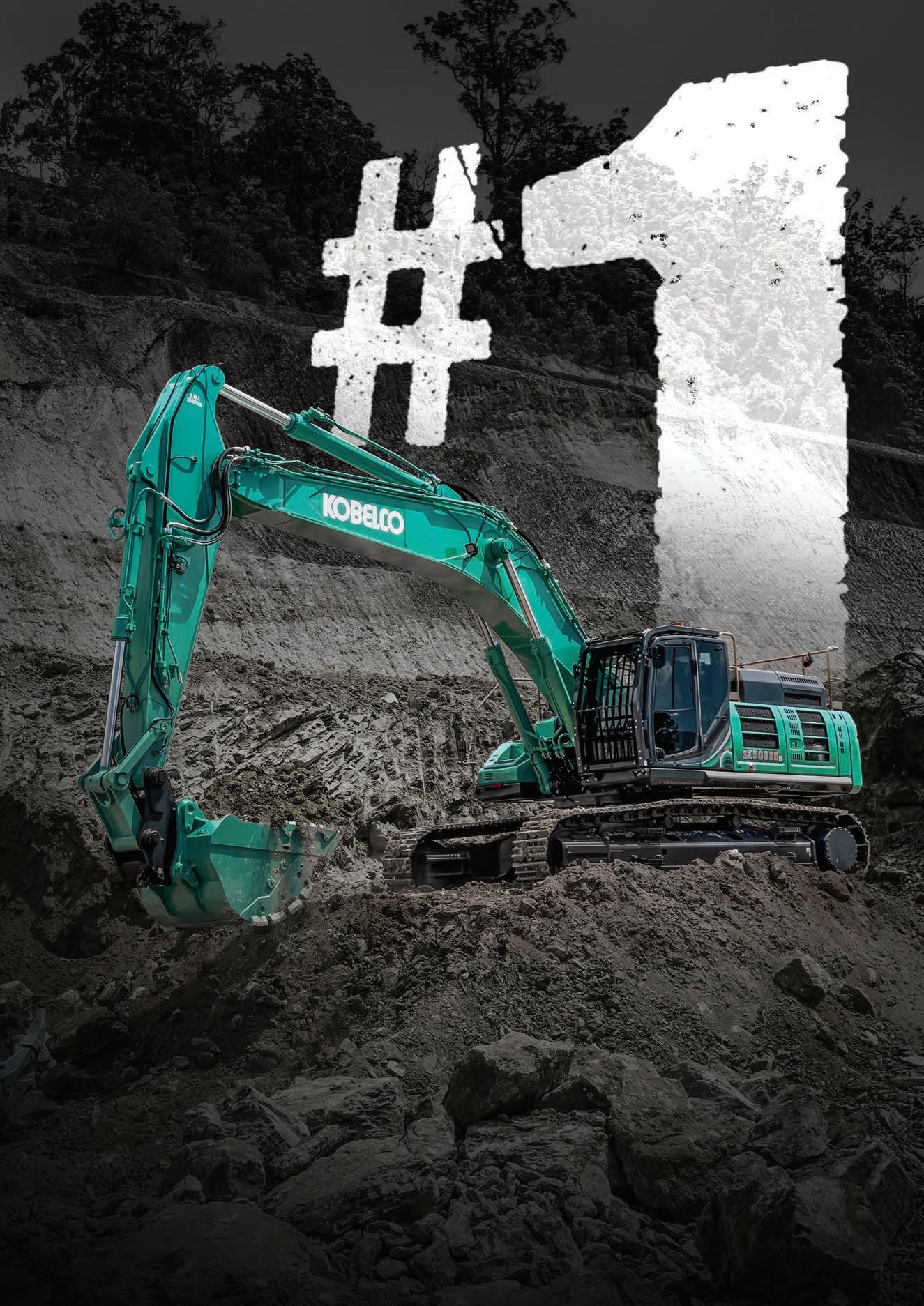
Why Dixon Quarry Group trusts Kobelco for its excavators.
Quartz in North Queensland
The Sugarbag Hill Ultra High Purity Quartz Sand Project gets fast-tracked.
46 Operational excellence
Planning for the inaugural Hunter Valley Mining Expo is underway.
48 In the zone
The WA Mining Conference and Exhibition 2026 will return with a renewed focus.
CRUSHING EXPECTATIONS
To a layman, quarrying is so simple they don’t think much of it. People in big machines dig up rocks and turn them into smaller rocks.
This isn’t the whole story though.
The demand for construction materials is immense, with roads, railways, buildings, and bridges requiring an increasing amount of sand, cement, aggregate and more.
To keep pace with these vital projects, quarrying has changed. Processes have gotten more efficient, technology has become smarter, and running a business has become more complex.
At the heart of all of this are the crushers, which are tasked with handling some of the most demanding work, day in, day out. If something goes wrong and a crusher goes down, the entire site’s production could grind to a halt.
Additionally, managing a quarry has become even more complex. A shortage of skills, urban encroachment, international conflicts, and changing legislation means modern quarries need to be operating as efficiently as possible.
Some quarries have started to adopt technology that lets them better monitor what is happening on site, whether its fuel use, equipment downtime, or preventative maintenance scheduling.
This edition of Quarry highlights the companies and individuals that have responded to these complex requirements and have continued growing as a result.
It includes interviews and articles that dive deep into the latest crushing and screening technology, highlights original equipment manufacturers, and takes a look at the latest trends with some of the major players in the construction materials industry.
Additionally, the magazine looks at how the Institute of Quarrying Australia (IQA) is supporting members across the country, especially when it comes to safety.
The next edition will take a look at plant and equipment hire. If you would like to get involved, please get in touch.
William Arnott Editor
PROCESSES HAVE GOTTEN MORE EFFICIENT, TECHNOLOGY HAS BECOME SMARTER, AND RUNNING A BUSINESS HAS BECOME MORE COMPLEX.
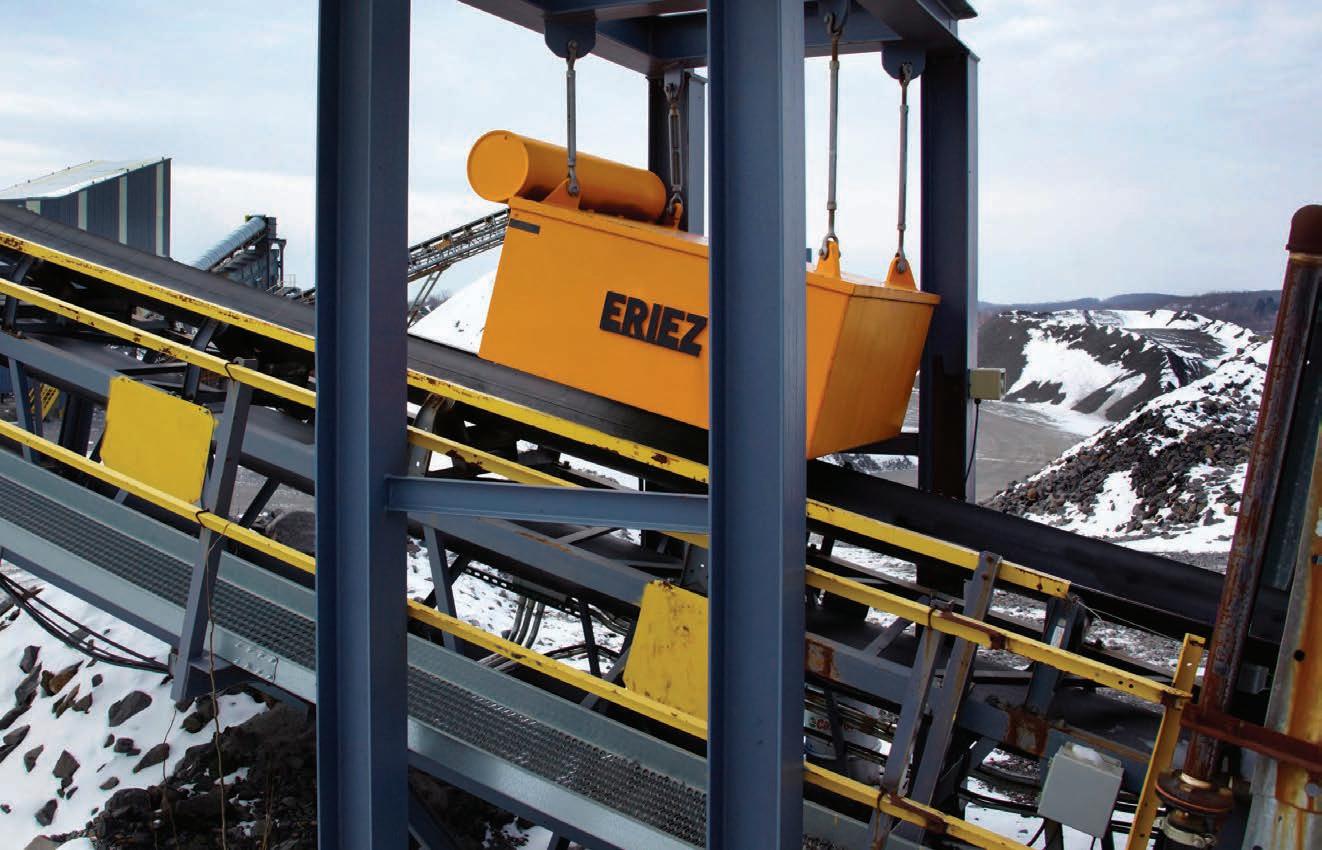
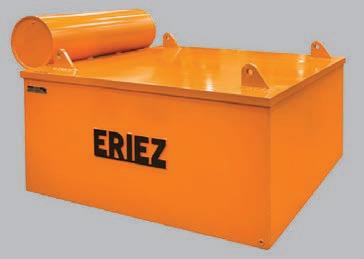
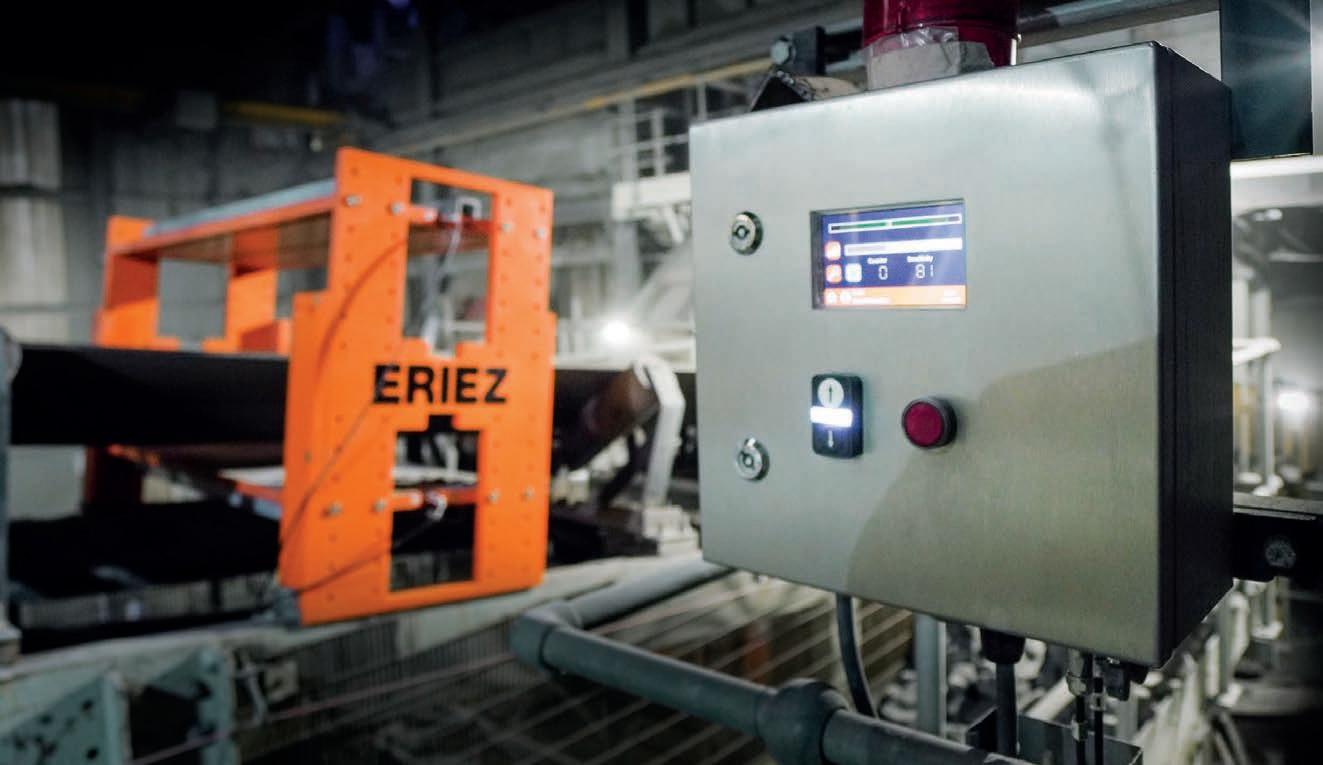
With more than 80 years of magnetic experience behind them, Eriez Suspended Electromagnets offer peace of mind, knowing your processes are protected against tramp metal. Eriez. Always the Right Choice.
Protect your downstream crushers, mills, and pulverizers from damage caused by stray digger teeth, tools, and other dangerous metal.
A NEW YEAR, A RENEWED COMMUNITY
With the new financial year underway, our 2026/27 membership renewals have just wrapped, and it’s been a strong one. Thank you to everyone who has renewed and chosen to stay part of the IQA community for the year ahead.
If you haven’t renewed yet, there’s still a little time, but not long. Renew now and you’ll avoid the rejoining fee that applies once the window closes, and lock in member rates for the 2026 National Conference and every IQA event this year.
Your membership also keeps you connected to your peers, to professional development, and to the work driving our sector forward. Renew online, by direct deposit, or call 02 9484 0577.
FREE MENTORING IS BACK
I’m delighted to share that our second IQA Mentoring Program launches this month, and like the first, it’s free for members. It pairs experienced professionals with those looking to grow, and the connections that come out of it often last well beyond the program itself.
THAT’S SOLID KEEPS BUILDING
Our national quarrying awareness campaign continues to gather momentum, and it’s been wonderful to see so many members getting behind it. That’s Solid was built by the IQA, but it belongs to the sector. We’ve seen Divall’s wrap a second truck in That’s Solid livery, another member company preparing to brand their first ute, members taking the campaign to high school and careers expos, and companies hosting That’s Solid tables stocked
with campaign materials at quarry open days for their local communities. Every member who gets involved helps shift how the public sees what we do.
A highlight to come is the That’s Solid Careers Day at our 2026 National Conference on Wednesday 7 October, where Year 10-12 students will explore the careers, technology and people behind our sector, proudly supported by John Deere and Kleemann.
BRANCH COMMITTEE NOMINATIONS OPEN
Our branch and sub-branch committee AGM season begins this month and runs through to September. This is your chance to help shape the IQA in your own region. If you’ve ever thought about contributing to your local branch, I’d encourage you to put your hand up. It’s one of the most rewarding ways to give back, meet your peers and have a say in what we do.
and connecting
ALL ROADS LEAD TO THE GOLD COAST
Registrations for our 2026 National Conference on the Gold Coast, 6 to 8 October, are tracking strongly.
Nominations are open for the 2026 IQA Excellence Awards, presented at the conference. They recognise the very best of our sector, from the Gold Hard Hat Site Safety Award and Gold Site Environment Award through to the President’s medal, quarry leadership and contribution, and the Alec Northover Award. With the support of the AIQEF, we’re also again offering Young Member Network Scholarships that cover the cost of attending the conference for emerging professionals.
Jane Schmitt Chief executive officer Institute of Quarrying Australia
OUR NATIONAL QUARRYING AWARENESS CAMPAIGN CONTINUES TO GATHER MOMENTUM, AND IT’S BEEN WONDERFUL TO SEE SO MANY MEMBERS GETTING BEHIND IT. THAT’S SOLID WAS BUILT BY THE IQA, BUT IT BELONGS TO THE SECTOR.
www.quarry.com.au
The IQA’s Strategic Plan 2023 to 2026 embodies the following vision, values and strategic priorities:
Thriving communities supported by a sustainable industry
Operational Priorities:
• Deepen industry participation
• Sustainable revenue streams
• Highly capable team
• Technological innovation
• Effective engagement
• Great governance
Strategic Priorities:
• Support industry participants with compliance and regulation
• Build a diverse and skilled industry
• Foster strong industry connectivity
IQA Contacts:
For all education, member and branch enquiries: Phone: 02 9484 0577 Email: iqa@quarry.com.au
Michael Close continues his series of conversations with our valued quarrying community, exploring their commitment to the sector and their partnership with the Institute of Quarrying Australia (IQA).
Michael Close interviews John Deere marketing manager for construction and forestry Australia and New Zealand Karen Poulton.
Careers Day is part of the IQA’s national That’s Solid campaign.
Careers Day will be sponsored by John Deere and Kleemann and take place on Wednesday, 7 October 2026, at the Gold Coast Convention and Exhibition Centre as part of the 2026 IQA National Conference (6-8 October).
The event invites year 10-12 students to explore the careers, technology and training pathways across Australia’s quarrying sector.
Michael Close: John Deere and Kleemann supported the very first Careers Day in Adelaide back in 2024, and you are right behind it again on the Gold Coast. Why is investing in an event aimed at the next generation so important to John Deere and Kleemann?
Karen Poulton: Supporting that very first Careers Day in Adelaide was an easy decision for us, and the response from students made coming back just as easy.
For John Deere and Kleemann this is about helping build the workforce that will operate, maintain and innovate on that equipment for decades to come.
MC: That’s Solid is all about changing how young Australians see our sector and showing them the pathways on offer.
How do you see Careers Day fitting into that bigger picture, and what do you hope students take away from it?
KP: There is nothing like meeting people in the sector, climbing into a simulator and asking questions face to face.
Careers Day takes everything That’s Solid stands for - solid careers, real pathways, and a sector that builds communities - and puts it directly in front of the students who are making decisions about their future. We want them to leave realising how many doors the sector can open, and thinking “I could see myself doing that”.
MC: This year’s conference theme is ‘building the future today.’ Quarrying is becoming an increasingly hightech sector. How does that change the careers story you want students to hear?
Karen: The idea that quarrying is purely manual work is well out of date.
The sector now runs on data, automation, precision technology and connected machinery, and that has created careers that did not exist a generation ago. For young people who are drawn to technology, that is an exciting message, and the machinery simulators on the day are a great way to bring it to life.
MC: Finally, what message would you like to share with the students and schools thinking about attending?
KP: Come with an open mind. You will meet people who love what they do, see technology you might not expect, and discover pathways you may never have heard of. A career in this sector really can take you a long way - so come along and dig into your future.
Michael Close, FIQ
President Institute of Quarrying
Australia
CAREERS DAY WILL RUN FOR THE SECOND TIME ON WEDNESDAY, 7 OCTOBER 2026, AT THE GOLD COAST CONVENTION AND EXHIBITION CENTRE AS PART OF THE 2026 IQA NATIONAL CONFERENCE (68 OCTOBER) AND BE SPONSORED BY JOHN DEERE AND KLEEMANN ONCE AGAIN.
and
www.quarry.com.au
The IQA’s Strategic Plan 2023 to 2026 embodies the following vision, values and strategic priorities:
Vision:
Thriving communities supported by a sustainable industry
Operational Priorities:
• Deepen industry participation
• Sustainable revenue streams
• Highly capable team
• Technological innovation
• Effective engagement
• Great governance
Strategic Priorities:
• Support industry participants with compliance and regulation
• Build a diverse and skilled industry workforce
• Foster strong industry connectivity
IQA Contacts:
For all education, member and branch enquiries: Phone: 02 9484 0577
Email: iqa@quarry.com.au
Chief Executive Officer
Jane Schmitt
President Michael Close
Company Secretary
David Cowie
Follow the IQA on our social media pages:
IQAustralia
the-australian-institute-ofquarrying/ iqaus
IQA NEWS
IQA members have taken part in education sessions across the country.
OUT AND ABOUT WITH THE IQA
IQA Education: a busy season of learning
A growing focus on mental health and wellbeing took centre stage this season, with the launch of a new IQA webinar, Be Buoyant: Reducing Psychosocial Hazards in Your Workplace. With psychosocial risk now one of the most significant areas of focus in
workplace health and safety, the session struck a chord with members and reflects where the sector’s safety conversation is heading. It was one highlight in a busy few months for IQA Education, with members taking part in a full program of workshops, webinars and online courses across the country. Sessions spanned
UPCOMING COURSES AND EVENTS
the fundamentals through to specialist technical training, with introduction to quarrying, critical control management and managing in the middle drawing good numbers.
Fit for purpose: Plant lifecycle and duty of care ran in Goulburn, Kulnura, Penrith and Newcastle, while slope stability featured in
South Wales branch’s AGM
Hunter NSW sub-branch’s mental health in the workplace networking dinner and AGM
Central West New South Wales sub-branch’s Metromix Marrangaroo and Bathurst Quarries site tour and lunch
Marrangaroo Quarry –Oakley Forrest Road, Marrangaroo Learning from disasters program Friday, 24 July8:30am – 4:30pmPenrith RSL – 8 Tindale St. Penrith Komatsu site tour and networking lunch
16 July9:30am
North Queensland branch’s safety and health conference Wednesday, 29 July10:00am – 7:00pm Rydges Southbank Townsville – 23 Palmer St, South Townsville Plant and equipment: Conveyors, mobile plant, guarding, and maintenance Thursday, 30 July9:00am – 11:00am Online
Southern New South Wales region sub-branch’s Women in Quarrying drinks and Christmas in July AGM
Images: IQA
The IQA Far North Queensland sub-branch’s annual Cairns Golf Day packed out the Cairns Golf Club.
IQA NEWS
Brisbane and at Penrice Quarry in South Australia. Beyond the regular program, the IQA continues to deliver tailored enforceable undertaking education. When an operator enters an enforceable undertaking with a regulator, the IQA develops and delivers targeted training that turns those commitments into lasting capability on site. It speaks to the role the Institute plays beyond traditional training, and to the trust regulators and operators place in us. As IQA chief executive officer Jane Schmitt noted at the recent NSW Safety and Health Conference, if an operation ever finds itself in this space, the IQA team is here to help.
As part of the That’s Solid campaign, the IQA education team is hosting the That’s Solid
Careers Day at the 2026 National Conference on Wednesday 7 October, welcoming year 10-12 students to the Gold Coast Convention and Exhibition Centre. Students will meet employers, hear from sector professionals about real career pathways, try machinery simulators and explore the range of roles quarrying offers - a direct investment in the workforce of tomorrow that is proudly supported by John Deere and Kleemann.
The full IQA education program, including upcoming courses and CPD hours, is available at quarry.com.au.
Sold out, sun-soaked: Queensland branch’s 32nd golf day delivers
The IQA Queensland branch’s 32nd annual Brisbane golf day filled Oxley Golf Club to capacity on 8 May, cementing its place as the course’s biggest event of the year, and one of the most-loved fixtures on the Queensland quarrying calendar.
Blue skies, breakfast burgers and a steady queue at the coffee cart set the tone from the first tee. By the time players rolled back in for the buffet lunch and prize presentations, the room had the unmistakable hum of a sector that knows how to do networking properlyand how to enjoy itself doing it.
“32 years on, it’s still the one everyone clears the diary for,” IQA Queensland branch chair Blake Ardrey said.
“A day like this doesn’t run itself - huge thanks to our Queensland branch golf day planning sub-committee, our sponsors and prize donors who make it happen.”
Industry leading solutions
Purpose built fleets tailored to quarry site requirements
OEM backed support, service and technicians
Cairns keeps the golf momentum rolling in Queensland
The IQA far north Queensland (FNQ) subbranch’s annual Cairns Golf Day packed out Cairns Golf Club on 22 May.
Build-your-own burgers fuelled the field before tee-off, with post-game platters and the much-anticipated prize presentations rounding out an afternoon of high-energy networking in cracking conditions for a round of golf.
A huge thank you to the Far North Queensland sub-branch committee; Darren Caddy, Keoni Kidner, Donella Cobbe and Bec Farnes, for executing a flawless event, and to the sponsors: Bolwarra Enterprises and Construction Sciences (drink cart), Orica (catering), and hole sponsors Hastings Deering, Brown and Hurley, Bio Civil, H-E Parts International and Pioneer North Queensland.
Victorian sub-branch toasts a sold-out night in Ballarat
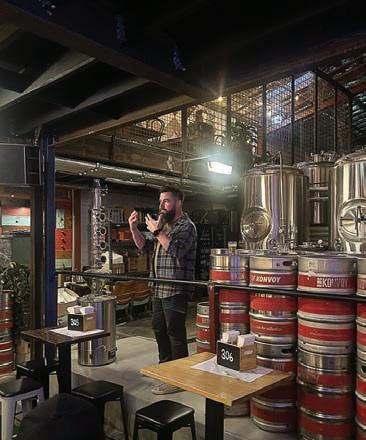
The IQA Victorian sub-branch packed out Aunty Jacks in Ballarat on Thursday 28 May, with all 70 seats sold out for a night of networking, beer tasting and good company.
Guests heard from hospitality entrepreneur Brian Taylor, who has transformed four forgotten heritage buildings in central Ballarat into a thriving precinct of distinctive venues
The night’s highlight was Taste The Taps, with Aunty Jacks head brewer Matt Ives walking guests through four varieties, unpacking the flavour, history and production behind each.
24/7 service Australia wide
Expert advice and analysis
Late model, low hour fleet
Aunty Jacks head brewer Matt Ives walked IQA members through four varieties of beer.
A PASSPORT TO QUARRYING
Quarry about their IQA Young Member Network study in South Africa and what they learnt from the once-in-a-lifetime experience.
FAustralia (IQA) members gained an in-depth understanding of South Africa’s quarrying and aggregates sector.
The study tour came on the back of a similar initiative in 2024, where a group of the IQA’s young member network went to the UK.
Quarry: Can you tell us about your career in the quarrying sector so far?
Ella Sloss: My current role is within the technical department of Heidelberg Materials, supporting both metropolitan and country quarry operations in WA. I’ve been in this position for about a year, following two years in the Heidelberg Materials graduate program. As part of the program, I rotated through all areas of the business—including concrete, sales, transport and both sand and hard rock quarrying. I found myself particularly drawn to the quarrying side, so for the past two years I’ve been based exclusively in quarry operations.
Ben Howard: I came into the quarrying sector through a traineeship as basically a trainee quarry manager.
Q: How have you found your time in the quarrying sector so far?
ES: I sort of stumbled into it really. It wasn’t really my goal coming out of university, but the graduate program really appealed to me, and then I fell into the quarrying sector from there. I’ve found I really love the sector.
BH: It has been really positive so far. There is awareness in the sector of worker shortages, so I think everyone has been happy to reach out and help me because I am having a crack. They’re always willing to lend a hand, take phone calls, and answer any questions, which has been pretty unreal for someone who is fresh to the sector.
Q: How did your involvement with the Young Members’ study tour come about?
ES: I first heard about it through the IQA newsletters as well as our internal communications at Heidelberg Materials. HMA offered to sponsor two attendees, so there was an application and selection process, and I was fortunate enough to be chosen.
I’d also spoken to people who’d been on the UK tour previously, and they all said it was an incredible experience.
BH: I heard about it through some contacts I had in the sector. I’d heard about the IQA and Young Members Network, and when I saw the study tour advertised, I thought it looked like a pretty unreal opportunity.
Q: What were some of your highlights from the trip in terms of what you saw in the quarrying and aggregates sector?
ES: It was great to see brands like Multotec, Loadtech and Astec in person. Even though we already use some of their products, visiting their facilities gave us a real look at the backbone of their manufacturing and opened my eyes to other applications we could be using them for. I left those visits thinking, “Wow, there’s so much more we could do with this.” With Multotec, for example, they walked us through their polyurethane screening materials. What really stood out to me was their customer-focused approach, always looking for solutions to a customer’s problem, even if it’s something really niche.
BH: Loadtech had some very cool artificial intelligence applications in the back-end of their smart quarrying and data analysis platforms. Afrisam’s Jukskei Quarry was also good to see, as it highlighted the similarities and differences in quarrying approaches. While there might be some cultural differences, it’s still essentially the same idea.
At Afrimat’s Tygerburg Quarry, we listened to the quarry manager discuss the changes and upgrades he’s made. I found listening to how they chose to spend the money was interesting.
Probably one of the biggest differences was the use of labour. They had about 65 employees to run an 800,000 tonne quarry, whereas over here, you might have around 20 staff operating at a 1.2 million tonne quarry. ES: Over here, it is more common to get bigger machinery in and use fewer people, while for them, machinery is costly, so they operate with smaller machinery and have more people working. But they do face similar issues; they’ve got budgets to follow, as well
IQA members were able to tour the South African quarrying sector.
as sales, production plans, along with an ageing workforce.
Q: And outside of the quarrying tours, what highlights did you have from the trip?
BH: We did a day-and-a-half safari, which was awesome, as well as a cultural tour through the Zulu tribe. We got to see the lions feed. When you’ve got a lion with blood around its mouth five metres away from you, it definitely raises the heartbeat. We also saw a large bull elephant on the second day of the safari, which was a highlight.
The conference was really good for the networking and learning opportunities.
ES: The safari was insane. It was definitely worth staying out all day to see the bull elephant. Cape Town is a pretty spectacular city, and I’d honestly like to go back just to see more of Cape Town.
One of my big takeaways from the tour as a whole was the hospitality we received; everyone was so friendly and eager to talk to us.
The whole tour was incredibly well organised. We didn’t have any issues with anything, and everything we did was super valuable. Terry Pop, who was the Institute of Quarrying South Africa delegate, organised and ran the whole trip; she did an amazing job.
Q: What would you say to someone thinking of joining the IQA or the YMN?
ES: I think it’s really important to get involved.
There’s a lot of discussion about our aging workforce and the need to transfer knowledge within the sector, so participating is a pivotal part of how we support the industry.
Without our involvement, whether through the IQA or events like this, these opportunities wouldn’t exist.
Building connections locally, nationally and internationally is essential, and this forum really helps make that happen.
BH: I think the biggest thing you take out of these tours is the network that you build.
As you expand your network, it makes problem-solving easier because chances are, if you’re going through something, someone in your network has been through that problem.
Is your Quarry compliant?
Workshops delivered Australia wide with Online, On-Site and Face to Face training options tailored to individual skill sets and competency. Quarry training facilitated by Quarry people.
ertification inc udes i ed ant and ac iner
ertificate in urface traction erations
ertificate in urface traction erations i oma of urface erations ana ement
By doing these types of events, you’re able to build a really solid network. There are benefits for the employer as well, because the employee will be a more excited about working in the quarrying sector and see the amount of opportunities available within it. I’d encourage employers to get their young members to join up, attend an event, and join in. •
For more information, visit quarry.com.au
Membership in the IQA’s Young Member Network is available to any IQA member who is 35 years old or younger and passionate about advancing their quarrying career.
Images:
Ella Sloss
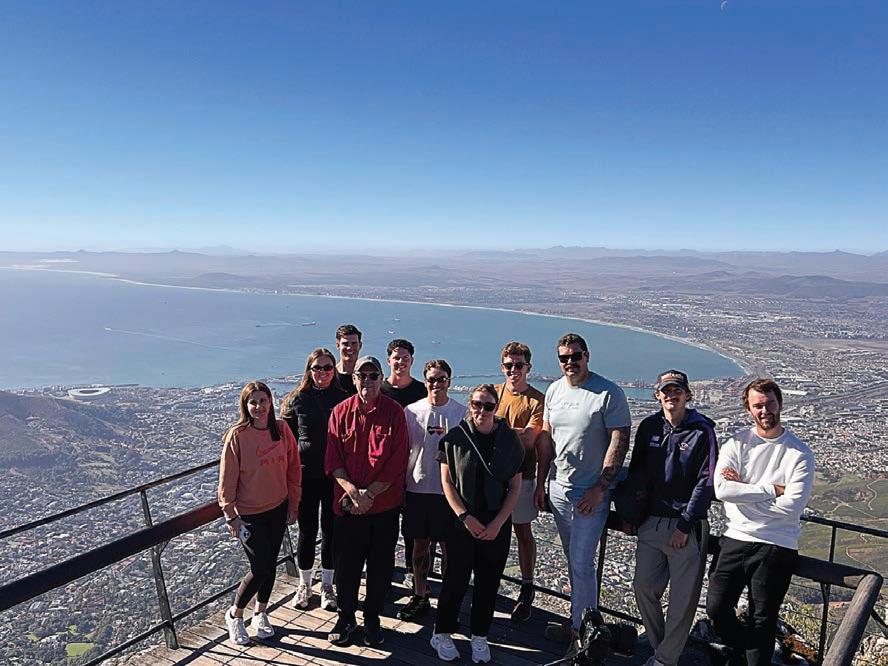
The IQA Study Tour group visited Table Mountain in Cape Town, South Africa.
SAFETY IN FULL VIEW
The Institute of Quarrying Australia hosted a well-attended Health and Safety Conference in Penrith, New South Wales.
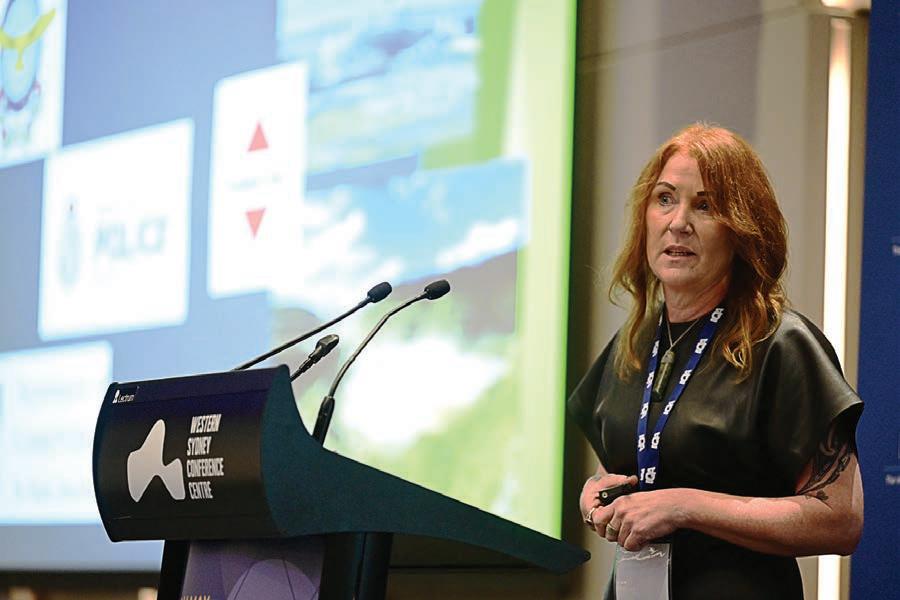
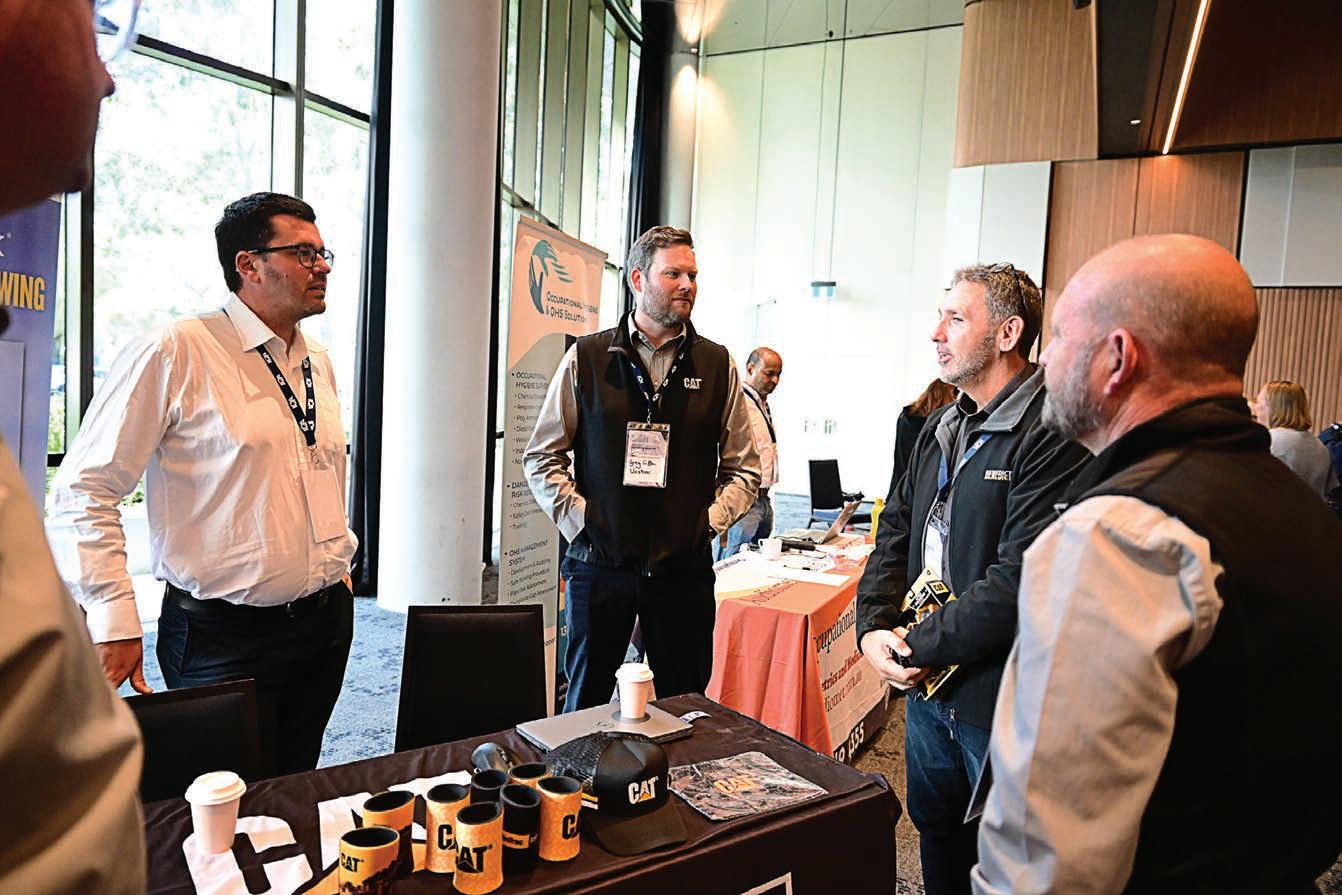
Education was at the forefront at the Western Sydney Convention Centre for the return of the Institute of Quarrying Australia’s (IQA) safety and health events.
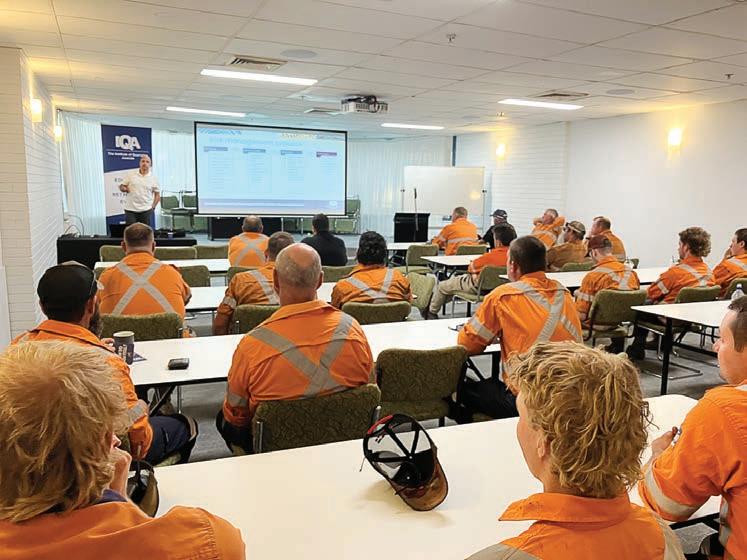
More than 165 people attended the New South Wales Safety and Health Conference for a day of professional development through a series of talks and panel events.
The conference was emceed by IQA chief executive officer Jane Schmitt and IQA NSW branch chairperson Greg Dressler, as attendees were taken through various safety talking points relevant to the sector, including updates from the NSW Resource Regulator, geotechnical risk assessments, enforceable undertakings, technical reference guidelines and more. There were also two informative panels, including a women in quarrying panel featuring Rebecca Finlay, Emily Ashbrook and Christine Ashcroft, followed by a panel of young industry leaders, including Luke Cormick, Daniel Makings, Jacqui Host and Zubayr Colley.
IQA ambassador Frank Lourey said it was important to take the lessons from the day’s speeches and panels into the workplace.
“The standard you walk past is the standard you accept. When you walk past and you
Keynote speaker Darren Flanagan delivered an emotional address as he recounted his
Images:
IQA
More than 165 people attended the NSW Safety and Health Conference 2026.
Rebecca Finlay shared her experiences in the quarrying sector.
Two decades on, Flanagan recounted the complexities of saving Webb and Russell, who were trapped nearly one kilometre below the surface after a small earthquake triggered an underground rockfall in the Beaconsfield gold mine. Flanagan operated more than 70 explosives in a period of nearly 30 hours deep underground to support efforts to free the two men so that, two weeks after the collapse, they could walk free and see their families.
Flanagan told the audience how the impact of the Beaconsfield mine collapse has lasted long after the workers were freed.
The intensity, stakes, and emotional toll of the work left a lasting mark on Flanagan and many involved, which is why he now shares his story of the aftermath of the event, focusing on workplace safety and mental health.
It was an incredible keynote speech, showcasing how many people showed strength and resilience in the face of adversity in the Northern Tasmanian town.
“When I go to sites, I talk about destiny. I tell the guys and girls that work there, ‘Your employer can spend millions and millions of dollars a year on safety, but if you don’t buy in, it doesn’t mean anything’. They can give you the best safety systems in the world, the best personal protective equipment, but you have to take control,” Flanagan said.
“I ask the workers, ‘Whose responsibility is it to make sure you walk back into your house tonight?’ It’s your responsibility.”
Lourey gave an update on the IQA’s ambassador program, which is continuing in 2026 for a second year, as well as a call out for more people to join the IQA’s ranks as members.
“The biggest value I have received from being part of the IQA is these networking events and the relationships and the people I’ve met through this have been invaluable,” he said.
“I look around the room, and there are a lot of people I do know simply from being part of the IQA.
“The training and professional development programs to maintain your competencies are really valuable as well.”
Lourey spoke about the impact of the IQA’s That’s Solid campaign, which was launched earlier this year to bring more awareness to career opportunities within the sector.
“It would be great to get more young people to join the IQA. A lot of old people tend to come to these events, and we need more young members,” he said. •
For more information, visit quarry.com.au
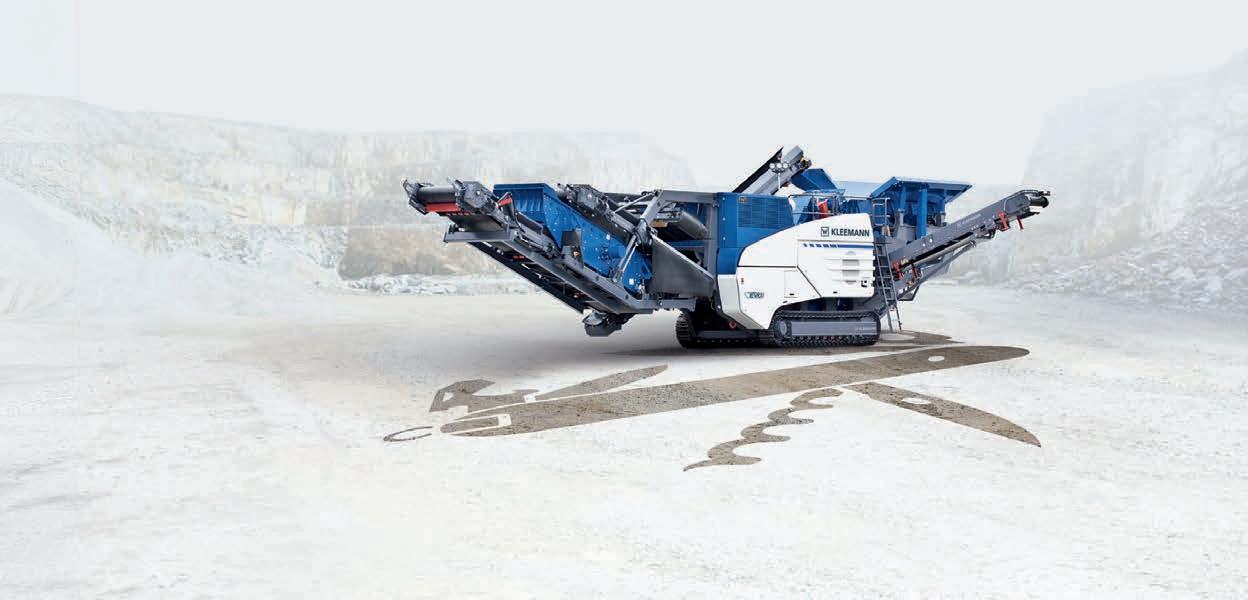
www.wirtgen-group.com/mr-130i-evo2-kleemann
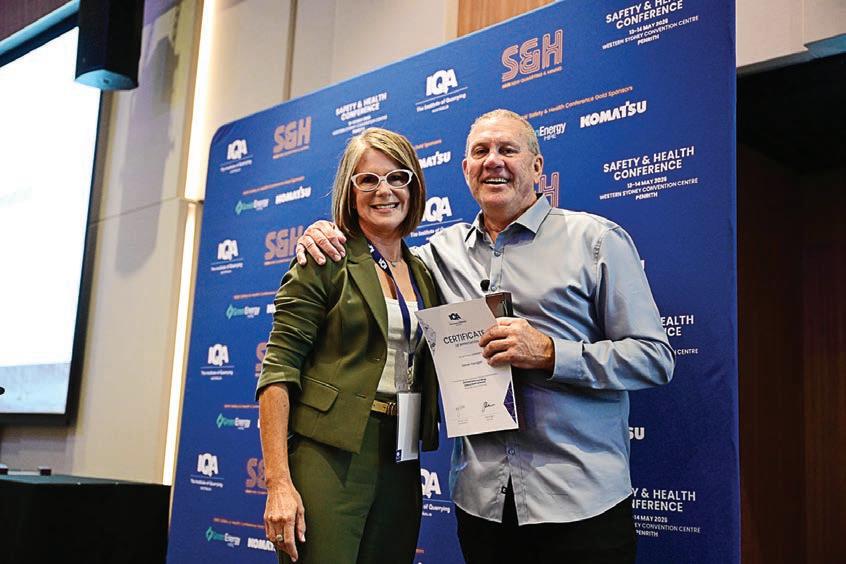
IQA CEO Jane Schmitt with keynote speaker Darren Flanagan.
FUTURE FOCUSED FORECAST
William Buck chief economist Besa Deda will be one of the highlights of the IQA National Conference from 6–8 October, 2026.
Besa Deda has had a storied career as an economist, including serving as the first female chief economist of an Australian bank and as chief economist of Westpac Group.
She spoke to Quarry ahead of her keynote address at the Institute of Quarrying Australia’s National Conference.
Quarry: Why is it important for professionals in the quarrying sector to be aware of economic issues?
Besa Deda: The macroeconomic backdrop feeds into so much of the business model of the quarrying sector, including the demand for the goods and services they are producing.
If we think about just this year alone, at the time of writing, we’ve had an oil price shock, much higher fertiliser prices from the Middle East and significant tax policy changes announced in the Federal Budget, and we haven’t seen that size of change within tax policy for a long time. There’s a lot happening in the economy, and with that comes a lot of noise for businesses and uncertainty as well. I think it is helpful for businesses to try to understand the outlook, cut through the noise, and identify where the upside and downside risks might be.
Q: What sort of factors could be important for a quarrying business to consider from an economic perspective?
BD: There are some economic signals that can give business owners a better understanding of the environment in which their business is operating. These signals can help business owners understand how demand for their products is impacted and
also how supply inputs in their production process might be impacted.
For example, with higher inflation, there’s an impact on the labour market and potentially wages. If they’re a business that is borrowing to expand or has borrowed in the past to expand and still holds debt, understanding the interest rate outlook is important.
If they are importers or exporters in the quarrying sector, understanding currency fluctuations and having a strategy around them can support them in international trade.
Understanding these outlooks can help businesses plan and future-proof their operations.
Q: What are some of the trends we are currently witnessing in the economy?
BD: One prominent trend we’re seeing is that most global regions have an ageing population.
That’s an important consideration because it will have an impact on the healthcare and aged care systems, but it will also have an impact on the average age of the workforce.
An ageing workforce can lead to higher wage pressure over time.
Productivity is another key talking point, especially because Australia has had weak productivity for a long period of time.
It is important to note that many major economies are experiencing weak productivity as well.
Part of the reason why is that there is no silver bullet to fixing productivity; it is really hard to fix.
It will require many solutions, including improving competition, making it
easier for start-ups, improving labour mobility, strengthening our research and development, and rethinking the tax system to better support innovation.
Weak productivity means there is a handbrake on economic growth and, as a result, on our long-term economic potential. It is possible that the advent and acceleration of artificial intelligence (AI) will improve productivity, but it is too early to say for sure. There is some hope that AI will improve efficiency, but it is also a source of uncertainty because both businesses and employees are unsure what AI means for the future.
Q: What can we expect to see in your keynote speech at the IQA National Conference 2026?
BD: My keynote to provide the business operators in the room with an insight into the economic signals for the next 12 –18 months. We know business owners are looking to cut through the noise and get a tangible sense of where the economy is headed.
So, we’ll cover key market signals, including interest rates, business investment confidence, and the jobs market and provide a detailed view of what’s happening in the economy.
Tickets for the IQA National Conference are on sale now.•
Tickets are selling fast for the IQA National Conference, 6-8 October, 2026, on the Gold Coast. IQA Members rates are available. To register, visit quarry.com.au
William Buck chief economist Besa Deda will give a keynote speech at the IQA National Conference 2026.
Image:
William Buck
CONSISTENCY IS THE KEY
For many quarry operators, equipment purchasing decisions have historically centred on machine specifications and upfront productivity figures.
However, variations between operators, changes in shift performance, and inconsistent fuel consumption can all have a measurable impact on production efficiency and maintenance costs.
Volvo Construction Equipment’s (Volvo CE) new K Series wheel loaders aim to reduce this variability, giving fleet managers a better operational consistency.
Rather than concentrating solely on breakout force or engine output, Volvo CE has placed greater emphasis on machine responsiveness, operator comfort, and datadriven fleet integration.
According to Volvo CE, the aim is to minimise unnecessary operator corrections and inefficient machine movements during loading cycles.
In practical terms, this can contribute to smoother bucket filling, reduced rehandling, and more controlled throttle input.
FUEL EFFICIENCY UNDER PRESSURE
Global tensions and supply chain disruptions have had a serious impact on fuel prices. For quarries, this poses a serious problem, as fuel consumption is one of the largest operating costs for their fleets.
For quarry operations running multiple shifts or large loader fleets, even marginal reductions in fuel consumption per tonne moved can translate into significant cost savings over time.
Volvo CE believes operational factors rather than engine specifications alone have a major effect on real-world fuel performance. Cycle efficiency, hydraulic responsiveness, idle time, and operator technique all contribute to overall fuel usage.
The K Series wheel loaders include features designed to reduce overcorrection and improve machine balance to help create more repeatable loading cycles and steadier fuel burn across shifts.
In high-production quarry environments, operator confidence and situational awareness can directly influence loading efficiency and cycle performance.
Modern wheel loaders are now incorporating technologies such as 360-degree camera systems, expanded visibility zones, and improved cabin ergonomics to assist operators working in mixed-equipment environments.
Lower fatigue levels can improve operator concentration over long shifts, potentially reducing hesitation during loading and positioning tasks.
Stable machine balance during load-andcarry operations also contributes to both safety and operational consistency.
Quarry finds out what makes the Volvo K Series wheel loaders such a good fit for quarry operators.
OPERATOR ONBOARDING
Industry suppliers increasingly recognise that machine capability alone does not guarantee site performance.
Improper machine setup, limited operator familiarity, and unsuitable application matching can all reduce productivity outcomes.
As a result, structured commissioning and training programs are becoming more common across the heavy equipment sector.
For Volvo CE distributors such as CJD Equipment, this includes reviewing site applications prior to machine delivery, configuring machines for specific material handling tasks, and establishing baseline performance benchmarks during commissioning.
Operator training programs are also placing greater emphasis on efficient loading techniques, fuel-conscious operating habits, and understanding machine response characteristics. The objective is to shorten the time required
for operators to reach optimal machine performance while improving consistency across different shifts and crews.
DATA INTEGRATION AND FLEET VISIBILITY
Connected fleet technology is continuing to reshape how quarry operators monitor and maintain equipment performance.
As connected systems become more common throughout the quarrying industry, equipment performance is increasingly being assessed at a fleet-wide operational level rather than as isolated individual machines. Telematics systems allow fleet managers to track machine utilisation, fuel efficiency, service intervals, and operator behaviour in real time.
Volvo Connect, the company’s fleet management system, integrates machine data into broader fleet management systems. This allows maintenance scheduling to be aligned more closely with actual operating conditions rather than relying solely on fixed service intervals. It also assists operators and managers in identifying developing
mechanical issues before they lead to major downtime events.
In addition, machine usage data can provide insight into operating patterns across multiple shifts, helping identify opportunities for further operator training or workflow adjustments.
For quarry operators, variability in fuel burn, machine wear, and production rates can create significant cost pressures over the life of an asset. Reducing those fluctuations is becoming an increasingly important part of fleet management strategy.
This is influencing both machine design and the broader support systems surrounding equipment deployment. Wheel loaders are now being evaluated not only on power and capacity, but also on how effectively they integrate into site workflows.
For many quarry businesses, future productivity gains may depend as much on operator integration and data visibility as on the machine itself. •
For more information, visit cjd.com.au
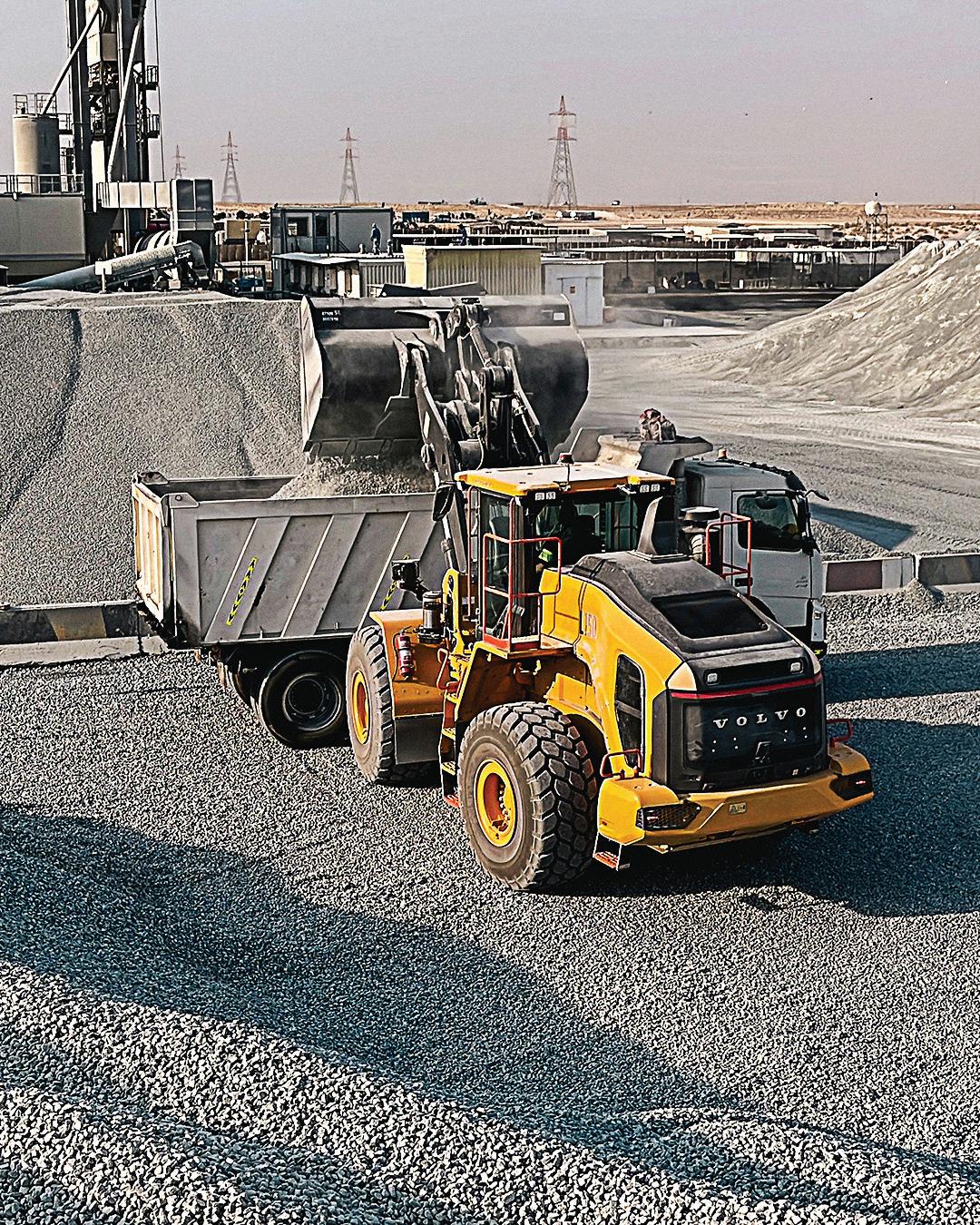
Advances in wheel loader technology are helping quarry operators improve productivity, safety, and fuel efficiency.
Operator-focused machine design is becoming a key consideration for quarry and earthmoving businesses.
BREATHING NEW LIFE INTO RAVENHALL
Boral and Dexus have agreed to develop a new logistics project in Melbourne’s western corridor.
The Ravenhall Logistics Precinct, located within Melbourne’s rapidly expanding western growth corridor, could eventually deliver up to 2.5 million square metres of lettable industrial space across a 630-hectare site.
Situated about 20km west of Melbourne’s CBD, the site is strategically positioned near the Western Freeway and the future Outer Metropolitan Ring Road. It also includes an existing rail spur connected to the Port of Melbourne, creating the potential for future multimodal freight operations.
The precinct is located within one of Victoria’s fastest-growing freight and industrial corridors, an area increasingly shaped by warehouse expansion, transport investment and population growth.
To deliver this project, Boral and Dexus have joined forces, entering into a joint venture to transform Boral’s extensive Ravenhall landholding into a major logistics and warehousing precinct.
For Boral, the project represents a longterm redevelopment strategy for land that has historically supported quarrying operations. Deer Park Quarry has supplied basalt to Melbourne’s construction market since 1965 and remains a significant source of hard rock for infrastructure and building projects across the state.
Boral chief executive officer Matt McKenzie said the agreement reflected the strategic value of the company’s land assets.
“This joint venture is a significant milestone for Boral and a compelling demonstration
Images: Boral
Construction is underway in Melbourne’s western corridor.
Boral chief executive officer Matt McKenzie.
CONSTRUCTION
of the long-term value embedded in our landholdings,” he said.
“Ravenhall is one of the most strategically important industrial sites in Australia. This partnership with Dexus allows Boral to unlock that value in a disciplined, capital-efficient way, contributing land rather than cash.
“It represents a continuation of our Good to Great strategy by optimising our significant land assets for recurring earnings.”
The joint venture structure will see Boral progressively contribute land following rezoning approvals, ultimately retaining a 50 per cent stake in the development. Dexus and its capital partners will hold the remaining 50 per cent interest.
Importantly for the quarrying sector, Boral says the staged development model has been designed around the continuation of extraction activities at Deer Park.
“Importantly, the phased development structure means our quarrying operations will continue uninterrupted,” McKenzie said.
“Using the sheer scale of the site, we will sequence development stages around existing operations to maintain continuity of hard rock supply to the Melbourne market.”
That continuity is likely to be critical as Victoria continues delivering major transport and civil infrastructure projects,
The project has an estimated end value of $10 billion and will deliver up to 2.5 million square metres of warehousing and logistics space.
requiring reliable access to quarry materials.
Melbourne’s western corridor has become a focal point for both housing growth and industrial expansion, placing increasing pressure on construction supply chains.
The proposed logistics precinct also reflects broader changes occurring across former quarry and industrial landholdings nationally, where operators are increasingly exploring alternative land uses as urban boundaries expand around long-established extraction sites.
For Dexus, the project adds another major industrial development opportunity to its portfolio at a time when demand for largescale logistics space remains strong, driven by freight growth, e-commerce activity and supply chain investment.
According to Boral, the Ravenhall Logistics Precinct could contribute up to $14.9 billion annually to the Victorian economy once fully operational, while supporting more than 31,000 full-time equivalent jobs each year.
The scale of the proposal underlines the long-term significance of the site not only for logistics and warehousing, but also for the broader industrial and construction sectors across Victoria.
McKenzie said the project would help support long-term economic activity in the state.
“This development is another example of how Boral is contributing to a stronger economy in Victoria over the long term.” •
Deer Park Quarry has been supplying basalt to the Melbourne metropolitan market for over 60 years.
WS2.10 — one of Isenmann’s innovative products is now making its mark on the Australian mining and quarry industry, exclusively through Multotec.
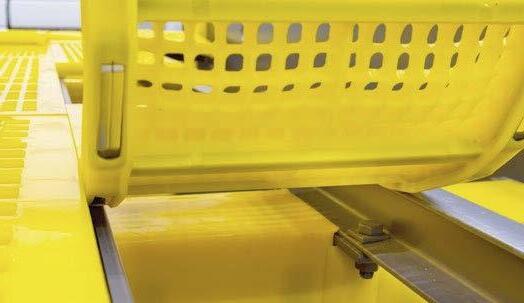
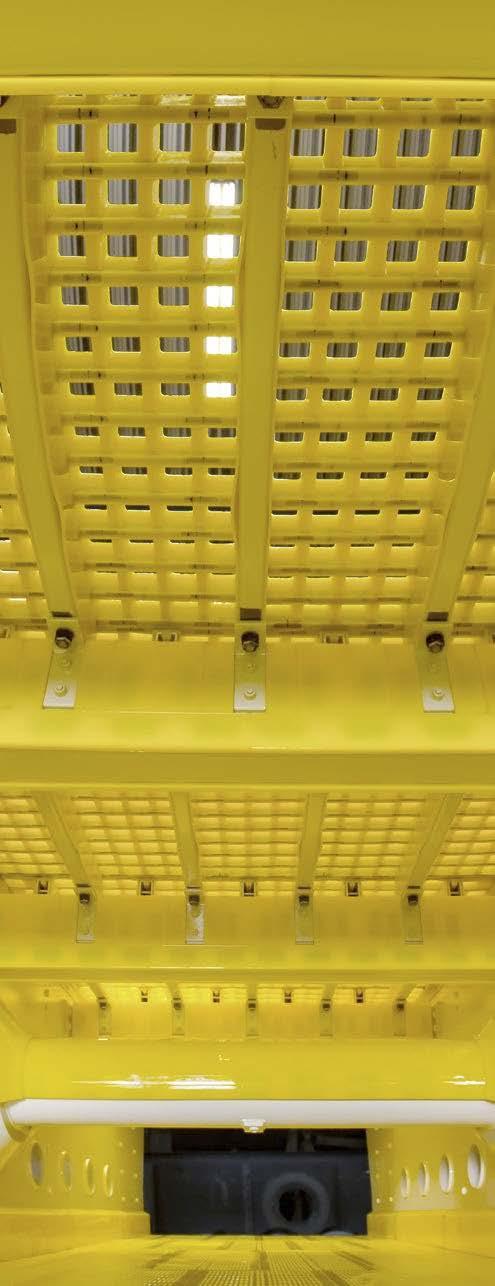
The WS2.10 screen panel is engineered for unbeatable durability. It features a magnetic fastening system paired with proprietary polyurethane panels, where patented magnets polarise to triple their strength, ensuring a firm, secure hold even in tight spaces. Designed to thrive in tough environments, it offers exceptional wear life for demanding applications.
Developed for global mining operations, WS2.10 is now one of Isenmann’s most in-demand products. Multotec brings this proven technology to Australia, tailored for local mining and quarry needs. Whether for wear protection or screen panel attachment, WS2.10 delivers reliable performance you can trust.
The
hThe patented magnetic fastening system grips like no other. The magnets polarise to triple their strength, ensuring a rock-solid attachment to any magnetic surface. This exceptional magnetic power provides unmatched durability and flexibility across a wide range of applications
Crafted with proprietary open-cast polyurethane, WS2.10 thrives in the harshest environments. It resists abrasive materials and the elements, maintaining peak performance year after year. With reduced downtime and lower maintenance needs, it delivers long-term value.
No welding, no bolting, no adhesives. The magnetic system installs quickly and safely, even in confined spaces and high-risk environments.
er a le for ever appl ca on
Flexible and adaptable, WS2.10 screen media is ideal for a broad range of applications, from the top end of the flow sheet to the bottom there is a configuration of WS2.10 which is suitable for all screening and material handling applications.
WS2.10 extends your machinery’s lifespan by reducing wear and cutting the need for costly replacements. It’s a smart solution to lower maintenance costs and boost operational efficiency.
WS2.10 is trusted locallyand proven globally, becoming one of Isenmann’s most in-demand products worldwide. Its performance across mining and quarry operations highlights its reliability and impact in the field.
Multotec Australia is a leading minerals processing and engineering company specialising in customised equipment for complex applications.
ith over years of e perience, local manufacturing and deep engineering e pertise, our solutions are trusted to perform in some of the world s toughest minerals processing environments.
With more than 35 years of engineering excellence, Isenmann is a global leader and innovative partner.
Their products, trusted by major resource operations worldwide, deliver cuttingedge performance. Isenmann consistently pushes technological boundaries, providing reliable solutions to meet ever-evolving industry demands.
Close-up of WS2.10 panel and attachment system
MEET THE MANAGERS
James Chauncy and Hugh Rainger are the leaders behind one of Australia’s leading used industrial auction businesses, Pickles Industrial.
Behind Australia’s leading used marketplace for industrial machinery and transport assets are the Pickles Industrial general managers, James Chauncy and Hugh Rainger.
A dynamic, salt-of-the-earth pair, Chauncy and Rainger are well known throughout the industry as the leaders behind one of Pickles’ most successful divisions.
The journey to becoming dual general managers has been expansive for both Chauncy and Rainger, with more than 40 years of experience at Pickles between them.
Before their tenure with Pickles, both came from industry-adjacent backgrounds, bringing a wealth of experience in auctions, practical knowledge, and hands-on experience.
As general manager of industrial sales and general manager of corporate and fleet, respectively, Chauncy and Rainger oversee the buying and selling of gear for Pickles Industrial.
in the last several years, as machinery costs are higher than ever before and the supply of new machinery has been slow.
managers have continued to push the limits of an auction house:
Pickles Industrial offers Australia’s leading auctions of used industrial goods and transport vehicles.
Turning over 60,000 assets and over $700 million in sales in the last financial year alone, Chauncy and Rainger’s division of the business is as busy as it is profitable.
With hundreds of sales each year and assets bought and sold from every corner of the country, Pickles Industrial is a large operation.
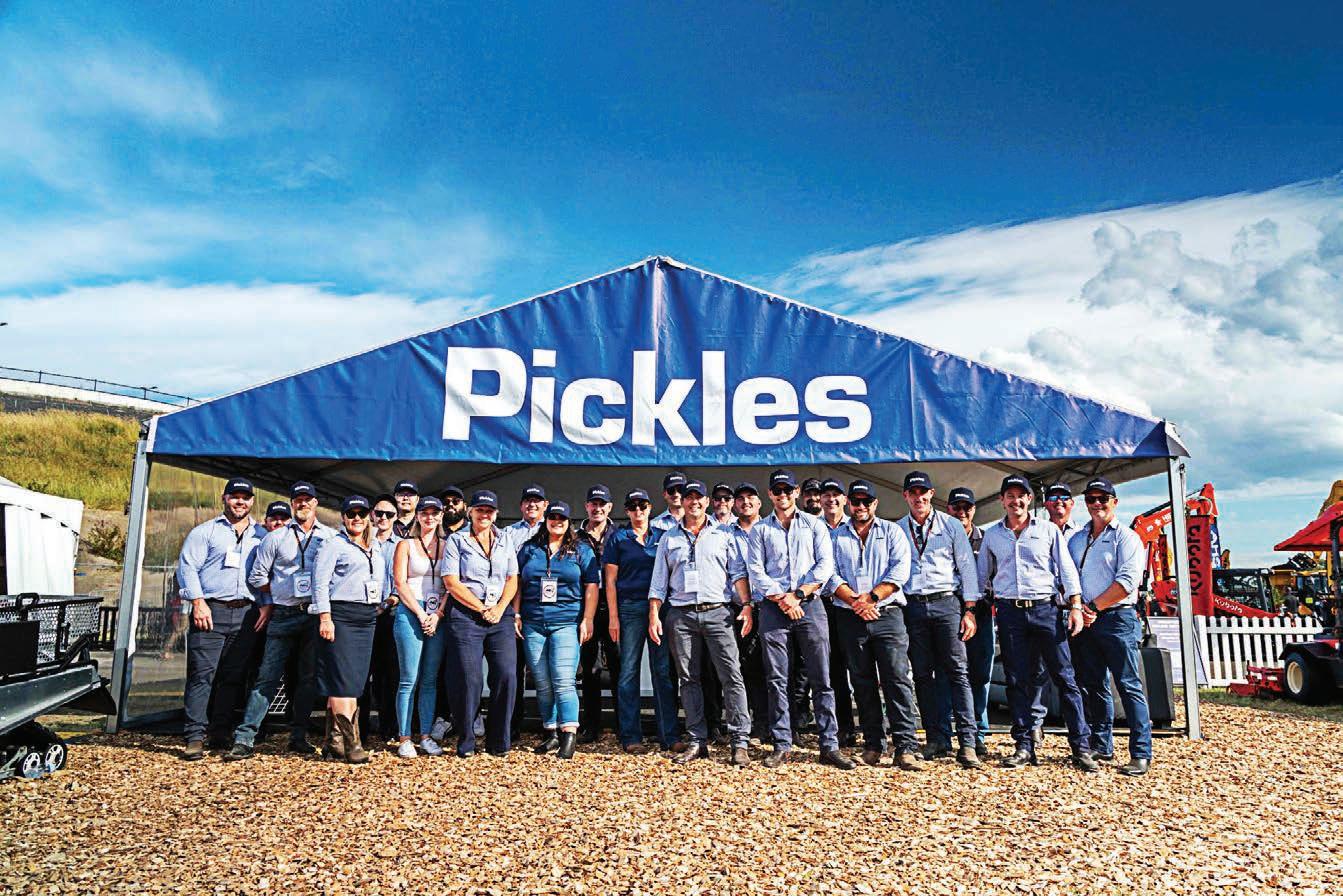
Luckily, Chauncy and Rainger have built a huge national operation with over 80 industrial experts helping to keep the wheels spinning.
It’s in the industrial division where quarry operators find the bulk of their resources at Pickles. With a number of businesses routinely engaging with the market to either offload their underutilised machinery or source new-to-them assets to join their fleets for any number of infrastructure projects, using Pickles’ marketplace has been a way to keep assets in circulation, maximise sales returns, and inject capital straight into a business.
This has led to a healthy boom in the segment that has been advantageous for all players in the sector - buyers can access quality, Australian-based assets at a fair price, and sellers can maximise returns on their machinery.
Every player in the marketplace wins when circularity is the goal. That’s why sales of quarry-related assets have been notably successful at Pickles over the last two years. While the auction landscape has moved to a mostly digital environment, Pickles maintains an expansive in-person network of industrial team members to ensure that the extensive range of online industrial auctions is supported by on-the-ground personnel who can handle the nitty-gritty of an industrial sale.
As a national marketplace, Pickles Industrial serves every customer at every touchpoint of the asset turnover process. Pickles is a circular market, with sales and services that meet customers’ needs at every stage of an asset’s lifecycle.
•Developing strategic project teams for onsite event auctions and in-situ selling, which is important for quarry operators who don’t want to transport assets to a Pickles site.
•Off-market opportunities sourcing and selling for buyers and vendors where there is an urgent need for acquisition or disposal.
•Up-front payment solutions prior to auction date where it may be required for our vendors.
•Marketing services that reach a broad, international buyer base with an appetite for quarry-specific equipment.
As the auction market in Australia continues to move in a digitally-focused direction, the Pickles Industrial team, under the leadership of Chauncy and Rainger, continues to build behind the scenes to ensure more sales and services roll out to meet the evolving needs of operators within the industry. •
For more information, visit pickles.com.au or email Hugh Raigner at hugh.rainger@pickles.com.au or James Chauncy at james.chauncy@pickles.com.au
Pickles Industrial is a national operation with over 80 industrial experts.
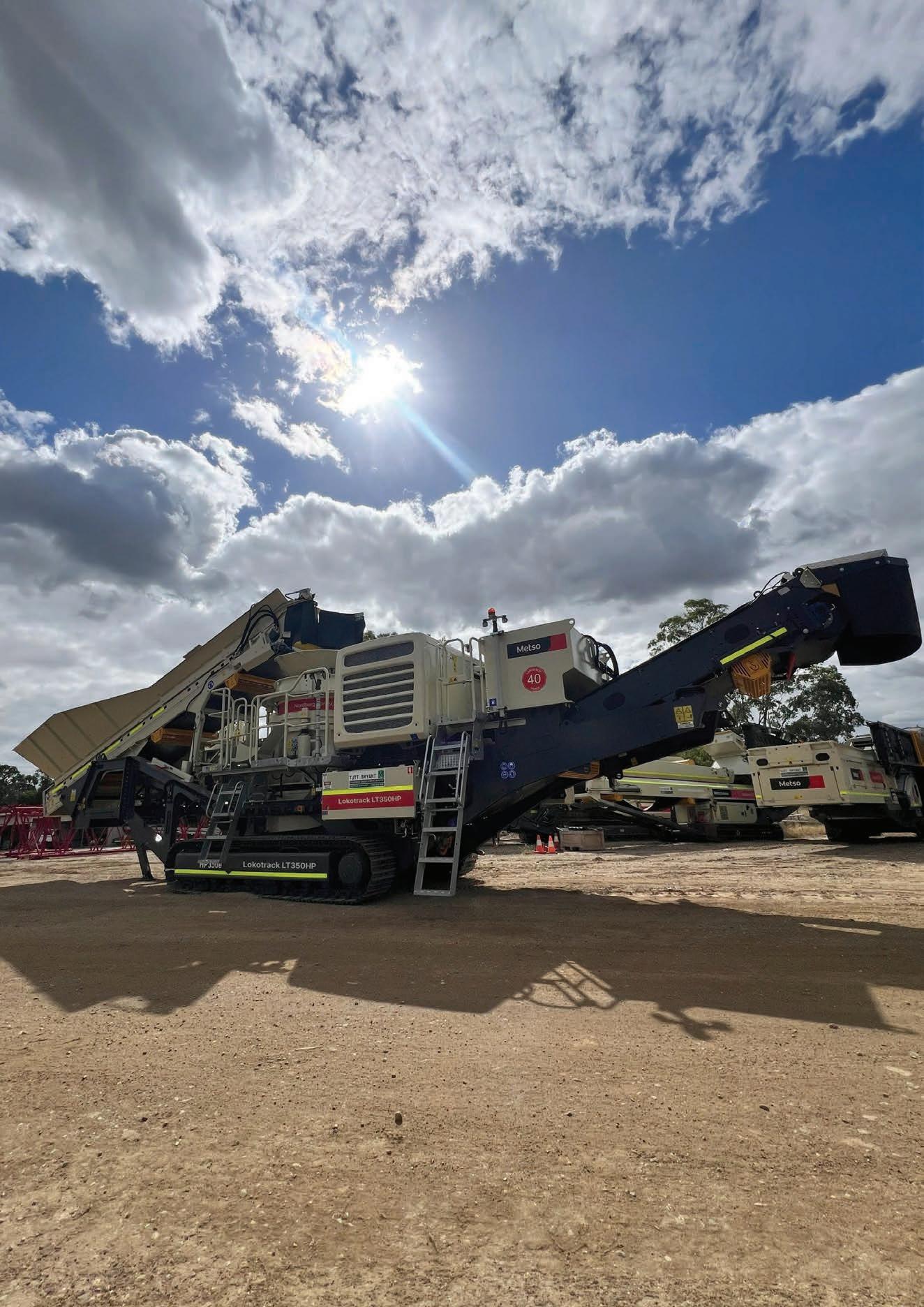
Powering the Next Generation of Mobile Crushing
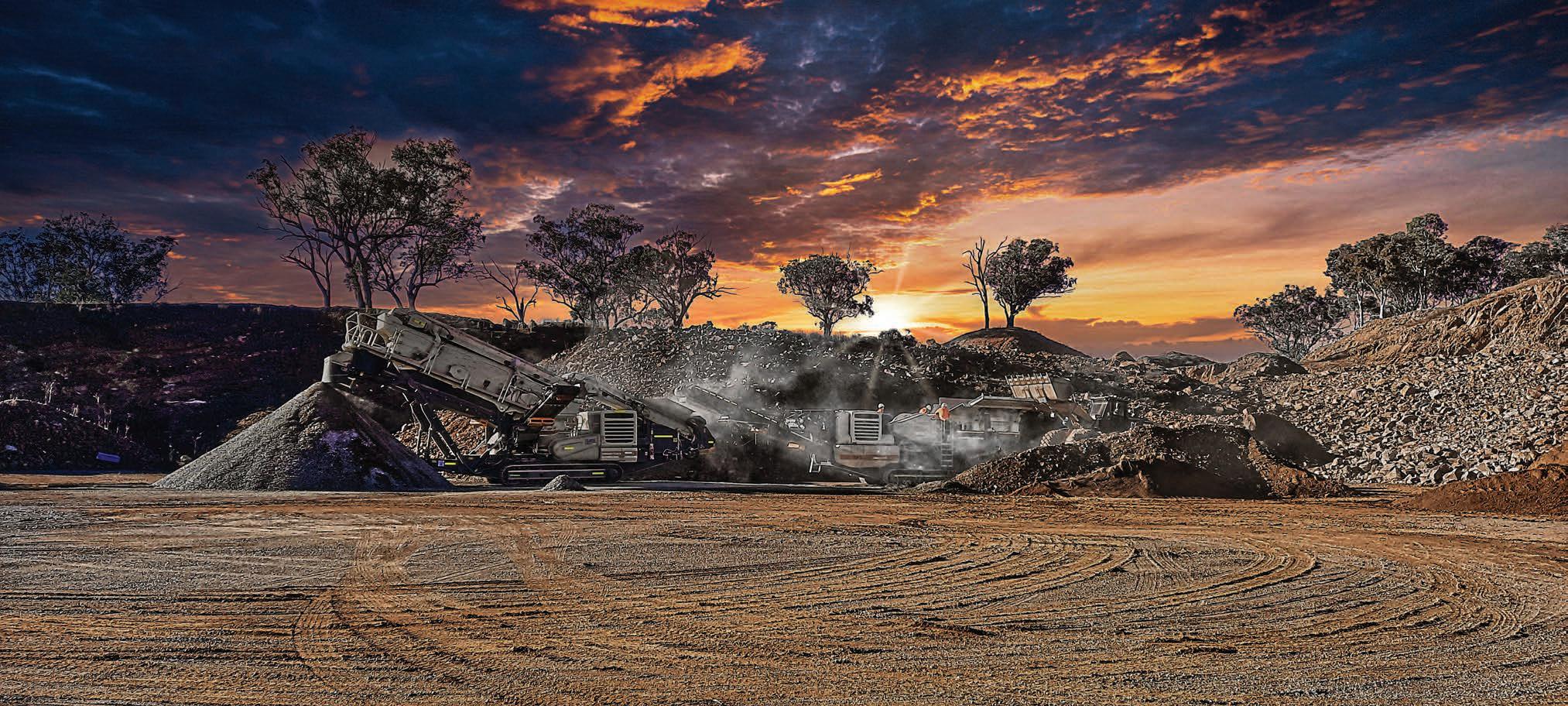
Supplied by Tutt Bryant Equipment, Metso mobile crushing solutions are engineered to deliver reliable performance, high throughput and operational efficiency across demanding quarry applications.
Featuring advanced crushing technology, intelligent process control and efficient material flow, these machines are designed to maximise productivity while reducing downtime.
Integrated pre-screens, fuel-efficient drive systems and easy service access help operators keep production moving.
Backed by Tutt Bryant Equipment’s national support network, Metso equipment delivers the performance and reliability modern operations demand.
HP350 cone crusher
READY TO GO
Tutt Bryant’s range of Metso equipment is readily available to support operators in Australia’s quarrying sector.
Long lead times and delays can impact project deadlines, especially when operators and contractors need crushing equipment quickly.
Tutt Bryant Equipment, as Metso’s official distributor in Australia, offers a range of Metso crushing and screening solutions that are ready to go. From producing mediumsized aggregates to handling recycled demolition waste, Metso’s LT106 is a popular choice for operators and contractors seeking a reliable transportable solution.
“That balance is particularly important for contractors and multi-site operators who need to relocate equipment regularly without sacrificing output or reliability,” Tutt Bryant Equipment business development manager Paul Doran said.
“The LT106 can work across hard rock quarrying, infrastructure projects or recycled materials processing and do it all to a really high level.”
The LT106 is particularly suited to primary crushing applications and has excelled in applications where high production rates are paramount. It features a Nordberg C106 jaw crusher and is powered by a Cat C9 engine. Depending on the material and configuration, the LT106 can deliver 350 tonnes per hour, with many operators choosing it for hardrock applications.
Weighing in at 41 tonnes and designed for a compact footprint, the LT106 features hydraulically folding hopper walls and other hydraulic settings to enable a quick setup time, so operators can begin crushing soon after arriving on site.
“It is a value-for-money investment. You’re getting a machine that can handle demanding feed material while being able to work across several in-demand applications,” Doran said.
“The ability to relocate equipment quickly without compromising production capability is a significant advantage.”
MORE THAN A CRUSHER
What’s better than one machine? Two machines in one. The Metso LT220D is a cone crusher and a triple-deck screen on the same chassis and has become one of the most popular mobile solutions in Tutt Byrant Equipment’s Metso range. The LT220D has been used as a secondary or tertiary crushing plant, in combination with a Lokotrack jaw crusher, for quarrying applications. It can be configured with a Nordberg GP220 or HP200, which has earned a reputation for its high-quality end product in hard rock applications, including concrete aggregates.
Doran said the two-in-one configuration can reduce fuel and transport costs compared with investing in two comparable units.
“Any way you can save money in this sector is going to support your bottom line and make your business more profitable,” Doran said.
“The brilliant thing about combining the crushing and screening functions into one unit means not only is your fuel consumption lower, but your maintenance requirements and transport costs also go down. That’s a major saving for a quarry operation.”
The three-deck screen has a large surface area, enabling it to handle high production volumes at a high stroke rate.
The two-in-one setup, which includes hydraulics for easy transportation, means the Metso machine can operate at lower fuel consumption, saving quarry operators in the long run.
“I think one of the great things about Metso equipment, especially the LT220D, it has been proven as a reliable solution around the world, especially when it comes to consistent performance and product quality,” Doran said.
“So, when it comes to Australia, operators can be confident that it will handle abrasive materials, high production volumes and demanding environments.”
Tutt Bryant Equipment is the exclusive distributor of Metso equipment in Australia.
FULLSCALE SUPPORT
Both the LT220D and LT106 support Metso’s intelligent controller (IC) technology, which features a radio remote for control and tracking. Through the remote IC app and Metso Metrics platform, operators and managers can see data in real time. This function helps improve worker safety by spotting incidents before they become bigger headaches.
The remote IC app enables one operator to control the crusher from the comfort of an air-conditioned cabin, away from potential safety hazards and dust.
“Metso Metrics can give you all of the important data, including throughput, running hours, fuel consumption and crusher parameters in real time. It is incredibly valuable because operators can spot inefficiencies and change sooner,” Doran said.
“Even from a safety perspective, which is critical in our sector, these innovations are incredible. Remote monitoring and control technologies are increasingly being recognised as an important part of improving safety outcomes on site.”
Tutt Bryant Equipment backs its Metso solutions with genuine spare and wear parts
from the original equipment manufacturer.
The distributor also provides sales and technical support to all its nationwide customers, with an expert team on hand.
“Our sector has some of the harshest and most demanding conditions in the world, so equipment reliability and aftermarket support are critical,” Doran said.
“Having nationwide support available helps operators minimise downtime and maintain consistent throughput across their crushing and screening operations.” •
For more information, visit tuttbryant.com.au
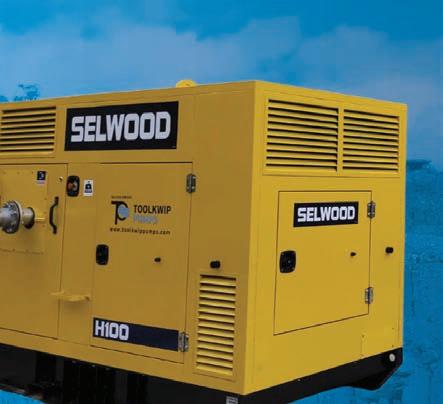
GET PUMPED WITH
Metso equipment has been proven to be durable and reliable.
Images: Tutt Bryant Equipment
MIXING IT UP IN SA
Mix Group founder Liam Berneville-Claye is having a crack at developing his business from the ground up in the South Australian market.
Liam Berneville-Claye’s father once told him to keep his ear to the ground when it comes to new business opportunities, and potentially following his father’s footsteps into business.
It’s this advice that led the former Holcim Australia employee and his wife, Kerry Bernville-Claye, to regional South Australia, as he took a punt on a long-held dream to run his own construction materials business.
Mix Group has been on the fast track since it was founded in mid-2025, with the parent company operating Lincoln Concrete in
following a chance meeting between Liam and former owner Marty Keeley, who was looking to sell his business.
“Port Lincoln is a beautiful part of the world, it is absolutely gorgeous, and Marty and his family are fantastic, salt-of-the-earth people. They’ve been brilliant and extremely supportive to both Kerry and I,” Liam told Quarry
“They’ve really helped us fit into Port Lincoln. Moving here, we knew no one; we literally just knew Marty and Sharon, who we were buying the business from, and that was it. They’ve been really good to us, especially as
Lincoln Concrete is currently involved in the local desalination plant project, which began a month after they took over the business, and it has been described as one of the biggest civil infrastructure projects the town has ever seen.
The company was awarded sole supply to both Accionia and McConnell Dowell, the two head contractors on the project.
Currently, Mix Group have supplied more than 4500m3 of concrete for the desalination project alone, at the time of writing, which, in perspective, is close to what the business was producing annually prior to Liam taking over.
“It has been an absolute baptism of fire,” he said. “When you put the last nine months together, it is a bit of a pinch-me moment.”
Lincoln Concrete has an all-star cast supporting it including one of Australia’s leading concrete technologists, Peter Carson, who has been instrumental in all things compliance, quality control and concrete testing.
Hallett Group provides the group’s cement, aggregate and NATA laboratory facilities via a supportive supply agreement.
In particular, Liam credited Hallett Group managing director Mark Pickard and chief executive officer Kane Salisbury with guiding him in his business journey.
“Kane and Mark have both been brilliant to Mix Group. They’ve given me so much support and what they’ve done in terms of allowing us to use their people, resources and facilities has been amazing,” Liam said.
“Between the two of them, I can’t thank them enough in terms of what they’ve done for us and how that helped the Mix Group business grow so rapidly. Ironically, the initial business plan was to get our teeth sunk into Lincoln Concrete, run for the next two to three years, finish the desalination project and then start to see what the rest of the Eyre Peninsula market looked like.”
However, through the grapevine, Liam heard that Boral was considering exiting the market with its concrete plant in Whyalla, about 250km north of Port Lincoln.
Mothballing a concrete plant is not an easy decision. So, on a Friday afternoon, Liam decided to take a chance and see if he could take the opportunity with both hands.
Mix Group has expanded into Whyalla in South Australia.
Mix Group is supporting the Port Lincoln desalination project.
The pitch was simple: Mix Group could run the concrete plant under a licence from Boral and pay the overheads of Boral’s mothballed plant, while Boral could continue to supply the aggregates from the on-site quarry.
“It is a classic case of ‘if you don’t ask, you don’t receive’ and hats off to Boral. For them to even contemplate the deal and give me this opportunity is something I will never forget, and we’ll certainly try to do the right thing by them as we continue to grow our relationship. The opportunity so far has been excellent, we get a lot of support from their Whyalla quarry manager Kym Murdock, the agreement seems to be extremely symbiotic,” Liam said.
By January 2026, the Whyalla deal was signed, and by March 2026, Mix Group’s newest addition was doing over 800 cubic metres of concrete a month. So, the dominoes were beginning to fall. First, Lincoln Concrete and then, Whyalla Concrete, for first-time business owners and becoming new parents three days after they took over Lincoln Concrete, Liam and Kerry were definitely busy.
About three hours from Whyalla, in Minnipa, another opportunity presented itself, only months after Mix Group expanded to Whyalla.
One of South Australia’s biggest private building and civil companies, McMahon Services, had a project in Minnipa to build a water tank for SA Water.
There was just one problem: the company could not find anyone to provide the concrete.
Liam told Quarry that the specification for concrete in SA Water projects is among some of the hardest to achieve in Australia.
“It’s not something you can just pull out of your hat. You basically need to start in a laboratory about four months before you’re going to turn your first agitator over on site,” he said.
With the help of Carson and the experience gained from the SA Water desalination project in Port Lincoln, McMahon Services approached Mix Group.
“They said, ‘We’ve got this project in the middle of nowhere, can you help us?’ We need to find a mobile batch plant and someone
capable of taking on SA Water-specified concrete,” Liam said.
Originally, the plan was to hire a mobile batch plant, but as luck would have it, everyone in the sector seemed to be using their own gear or had hired it out for other projects.
A phone call later and a mobile concrete batch plant was on its way to the Eyre Peninsula from Italy, and Mix Group Mobiles was born.
Mix Group shows no signs of slowing down, with its eyes firmly on growth in the Eyre Peninsula, especially in the fixed concrete plant market, and on expanding its mobile fleet for small-to-medium-sized projects.
Liam could not be prouder of how his business is shaping up for the future in the local construction materials sector.
“We’re lucky to have a big support network at Mix Group. When you look at the support from my wife Kerry, mum and dad, Peter Carson, the Hallett Group and now Boral, it has been a true team effort to get this pipe dream going,” he said.
“Both the concrete and quarrying industries are fantastic industries to be part of, and a lot of people have really helped us.
“It’s been really rewarding, and we can’t thank each and every individual who has supported our first twelve months in business and beyond.
“We are both so excited to see where Mix Group takes us as we strive to be the supplier of choice for concrete on the Eyre Peninsula.” •
AN ALARMING IMPROVEMENT
Wales, Germany, and Australia combine to improve productivity at a historic quarry operation.
Since 1885, the Craig yr Hesg quarry in Wales has contributed to more than €2 million a year to the local economy.
The blue pennant sandstone extracted from the site is highly regarded for its polished stone value (PSV), giving it exceptional skid resistance.
This has made the material particularly valuable for use in road surfacing, motorways, and airport runways throughout south Wales and beyond.
The Welsh Government commissioned German multinational building materials producer Heidelberg Materials to undertake a significant expansion project at the quarry.
The project will enable the extraction of an additional 10 million tonnes of aggregate stone from the site, securing the quarry’s long-term future and ongoing contribution to regional infrastructure supply.
However, despite Heidelberg Materials’ extensive global experience in quarrying and
materials production, operational challenges still emerged during the expansion works.
One of the most persistent issues involved tramp metal entering the aggregate cone crusher system.
Metal contamination repeatedly caused blockages and unplanned shutdowns, creating costly downtime and disrupting production efficiency.
To address the issue, Heidelberg Materials turned to Eriez, a company with decades of experience in metal separation and detection technologies.
Eriez designs and manufactures advanced separation, metal detection, and material handling equipment for a range of heavy industrial applications, including quarrying, mining, recycling, and bulk materials handling.
To support Heidelberg Materials’ endeavours, Eriez proposed a three-month trial of its MetAlarm metal detector prototype.
The MetAlarm system was developed specifically to maximise metal recovery and detection performance in demanding industrial environments.
For Heidelberg Materials, the timing proved critical as production demands increased during the quarry expansion project.
Eriez-Europe business development manager – heavy industry Liam Gulwell said MetAlarm was developed through “strategic collaboration” alongside Cardiff University.
“Tapping into the technical expertise of Cardiff University has been instrumental to pioneering groundbreaking new technologies like our MetAlarm metal detector,” Gulwell said.
“Furthermore, this partnership approach accelerates our ability to introduce new products to the market.”
The trial quickly demonstrated measurable improvements across the entire quarry operation.
Images: Eriez
Eriez proposed Heidelberg Materials with a three-month trial of its MetAlarm prototype.
Heidelberg Materials improved productivity, safety, and cut costs after installing MetAlarm.
Following the installation of the MetAlarm system, Heidelberg Materials reported a significant reduction in metal-related blockages and crusher interruptions.
The decrease in downtime translated into improved productivity, greater operational reliability, and increased throughput across the site.
The reduction in stoppages also delivered broader operational benefits.
Fewer shutdowns meant less time spent on maintenance interventions and equipment clearing procedures, helping the quarry maintain production targets while reducing associated labour and operational costs.
Eriez-Australia business development manager for heavy industry in the Asia Pacific region Jonathan Schulberg said the system was designed for practical quarry operations.
“The MetAlarm is easy to install because the conveyor belt does not need to be cut during the setup process,” Schulberg said. “This can save operators a great amount of time and money.”
According to Schulberg, the detector’s design allows it to operate effectively in harsh quarrying conditions while maintaining high detection sensitivity.
MetAlarm has rugged, high-density polyethylene-encased search coils which are designed to reliably detect both ferrous and nonferrous metals while maintaining a high level of immunity to radiated signals.
“The detector is equipped with a signal monitoring and self-check facility, as well as mechanical relays to actuate reject devices and alarms when contamination is found,” Schulberg said.
“This feature significantly improves onsite safety and also supports Heidelberg Materials’ commitment to sustainability.”
In addition to improving plant reliability, the technology also supports broader resource recovery objectives. By identifying and separating metal contamination before it enters downstream processing equipment, the system enables recovered metal to be recycled rather than discarded.
Because Size Matters
Little or Large. Ready when you need it. Short, long term, or emergency hire –anywhere in Australia.
This contributes to circular economy initiatives while helping operators minimise material waste and equipment damage.
For Heidelberg Materials, the operational improvements reinforced the value of investing in preventative technologies capable of reducing risk and improving efficiency in high-throughput quarry environments. At Craig yr Hesg quarry, the results of the MetAlarm trial demonstrated how targeted technological improvements can support safer, more reliable, and more efficient quarrying operations.
“The MetAlarm metal detector has greatly exceeded our expectations not only in terms of performance and reliability but also in driving process efficiencies,” Craig yr Hesg quarry general foreman Mike Wilkes said.
“Eriez has truly been an invaluable partner for us, tailoring solutions to suit our specific needs and providing customer service that is second to none.” •
For more information, visit eriez.com
HERE TO SERVE
Onetrak has rolled out new training for its technicians to provide greater customer support across the country.
When it comes to quarrying, quantity is king, and quarries work hard to maintain high levels of productivity to ensure they are turning a profit.
If something goes wrong, such as a machine breaking down, that can have a major impact on the business. Deadlines could be missed, and profit margins shrink as quarry staff try to get things back on schedule.
It’s why Onetrak crushing business manager Heiner Guenzel said service is so important within the Australian quarrying sector.
“We try to eliminate downtime as much as we can,” he told Quarry. “It’s one of the most important things for our customers.”
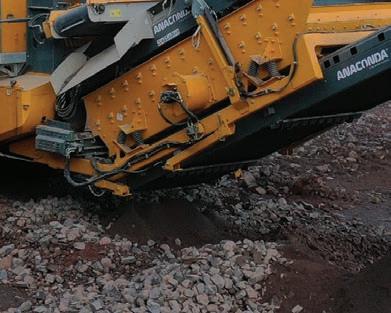
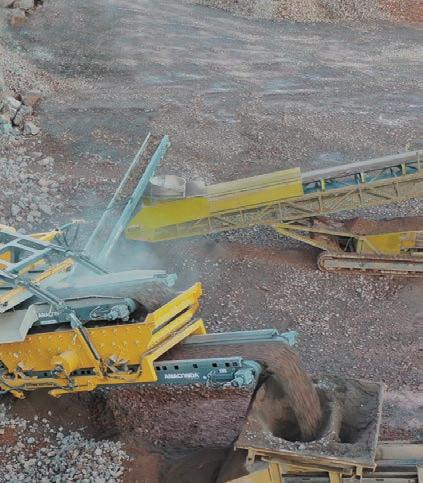
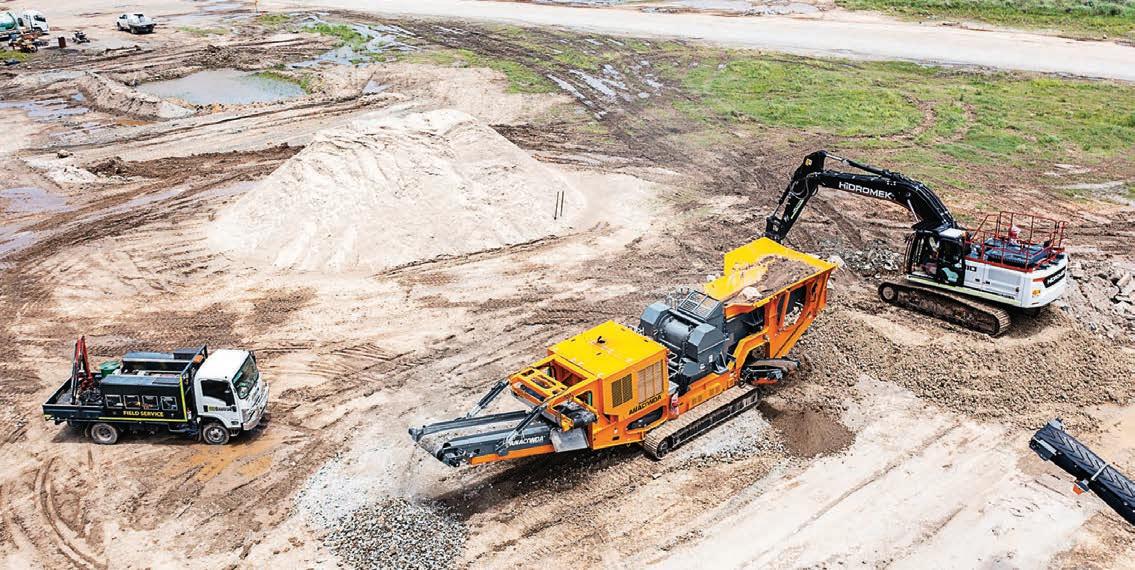
the quarry sector, it offers a range of crushing and screening equipment built for maximum performance, efficiency, and reliability, with brands like Striker and Anaconda.
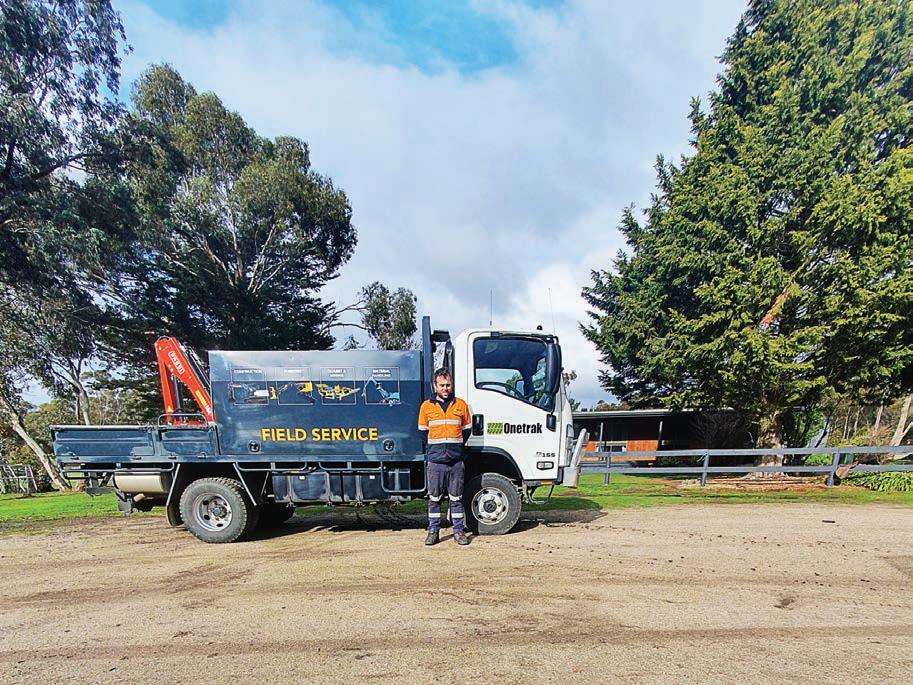
Guenzel said the company wants to go above and beyond for its customers, which is why its service technicians are undergoing further training.
Staff are learning more about the machinery itself, as well as how to best apply it in the field.
“The more our service technicians understand the customers’ needs, the more involved they can get to help them out and find the right equipment,” Guenzel said.
“We are implementing structures internally.
Ultimately, the goal is to help reduce downtime and increase production for customers by ensuring they are supported by a well-trained team.
Guenzel said Onetrak’s team is responsible for ensuring that the customer’s machines perform consistently.
“If our machinery fails the customer, they cannot make money, so it’s our responsibility to set up the equipment as effectively as possible,” he said.
“To do this, we all must understand what the right product for the application is, how it should be used, and share this information with the customer so they can make the most of this experience.”
Guenzel has decades of experience working in the quarry sector and is sharing this knowledge across the team as part of its
Feedback from the team has been positive, as it has helped broaden their skillsets and led to a greater understanding of how the machinery is used.
Eventually, Onetrak aims to expand its training to customers themselves.
Guenzel said he is excited by the prospect of growing the training and expanding Onetrak’s customer focus.
“It’s our chance in the market to get closer to customers, fulfil their objectives, and satisfy their demands,” he said.
“Currently, we have eight branches with a minimum of five service technicians in each. We are excited to be growing their skills so they can serve every state with the best support possible.” •
For more information, visit onetrak.com.au
Images:
Onetrak
Onetrak offers a range of crushing and screening equipment built for maximum performance.
Onetrak aims to reduce downtime and increase production for customers with a well-trained team.
a a a you
Presentations from sector leaders and international experts
100+ exhibitors featuring the latest quarrying innovations
IQA National Awards celebrating excellence across our sector
Exclusive site visit to Gold Coast operations
Welcome reception and gala dinner in a stunning coastal setting
CPD points available
ar o a our c or c a r.
Australia's quarrying sector comes together on the Gold Coast for three days of expert insights, technology showcases, and unrivalled networking opportunities.
The Gold Coast Convention and Exhibition Centre provides the perfect backdrop - combine professional development with Australia's premier destination for beaches, dining, and entertainment.
HARDER, BETTER, FASTER, STRONGER
Quarry learns how Komatsu is helping to build
a
smarter, safer, and more productive quarry at Blue Rock.
With more than a century of rock reserves ahead of it, Fulton Hogan’s Blue Rock Quarry is focused on long-term investment in technology, safety and efficiency.
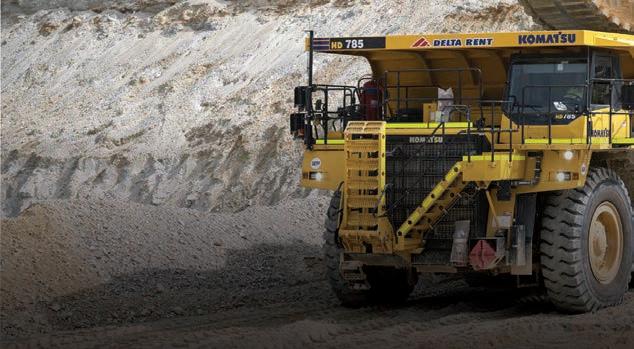
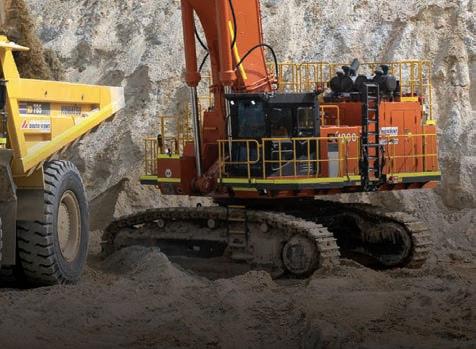
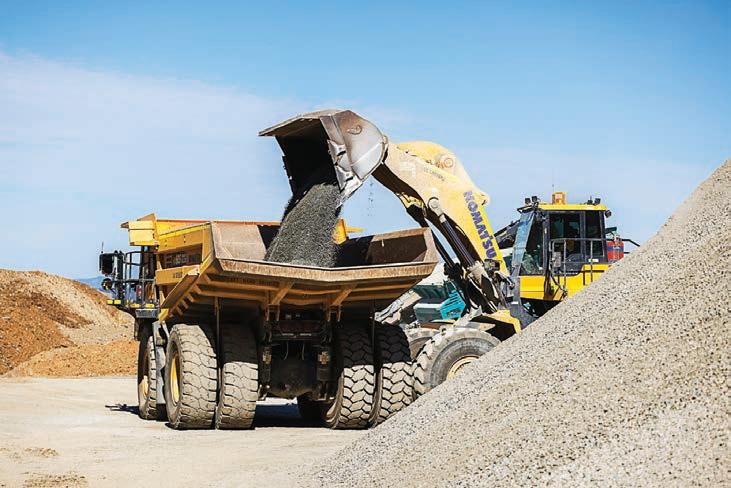
Over the past year, the southeast Queensland site has transitioned to a full Komatsu rental load and haul fleet, recently completing the line-up with the arrival of a PC950LC-11 excavator.
Within weeks, the impact has been clear, with faster loading cycles and strong productivity gains across the operation. Fulton Hogan divisional manager quarries Carl Buckland said the PC950 gave the site clear efficiency gains.
“We’re now loading our dump truck in just six passes, which is a noticeable improvement on what we had prior,” Buckland said.
“Our operators love the new gear too and keeping people happy goes a long way to having a safe and productive operation.”
Hogan was designed to address the site’s operating constraints and production goals.
However, Komatsu Australia’s rental manager Craig Marsden said providing a machine was only one part of the solution.
“Rental is more than just putting a machine on a job site; it’s all the backup that keeps those machines operating so the customer can meet their obligations and their commitments,” Marsden said.
“That support can include rapid onsite response, ongoing optimisation and a fully scalable fleet model to grow with the customer’s quarry.”
DESIGNING A DIGITAL QUARRY FROM DAY ONE
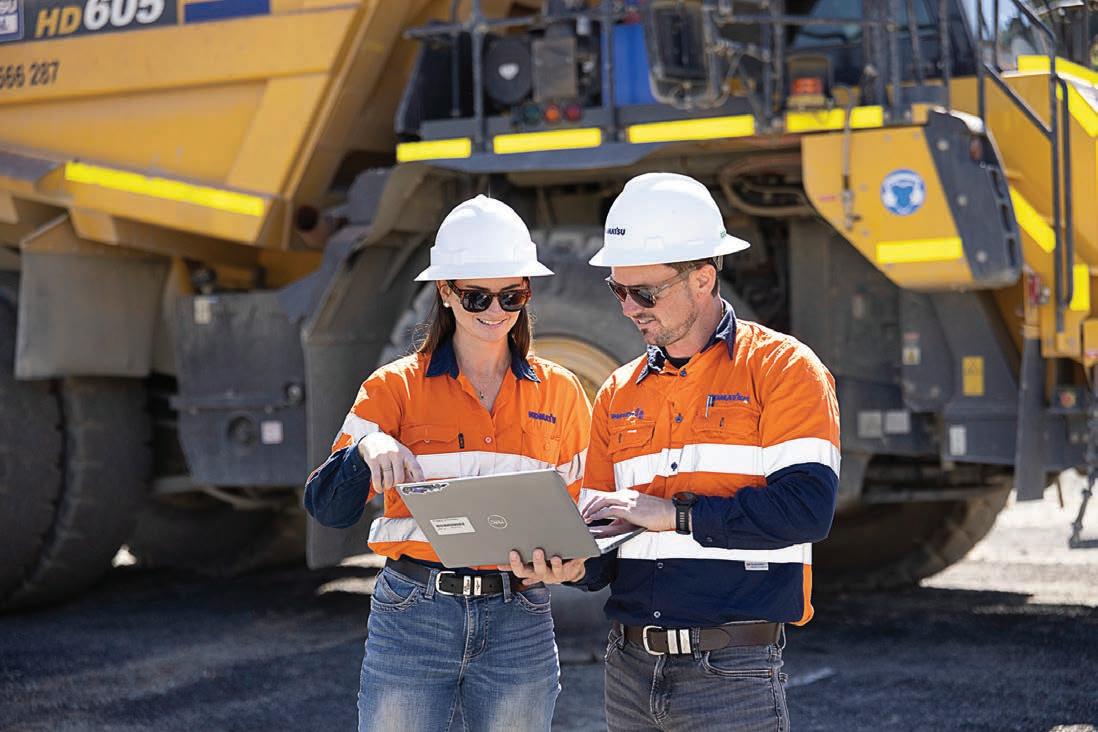
Along with the rental support, the entire fleet solution now includes Komatsu’s Smart Quarry Site (SQS) delivering efficiency gains through real-time visibility to safety events, production cycles, fuel use, emissions and machine health.
“Our first priority was understanding Fulton Hogan’s constraints and tailoring a Smart Quarry solution to best accommodate them,” Komatsu Australia business development manager, smart construction James Kelly said.
reliability and the ability to scale the fleet without large upfront capital outlay.”
Blue Rock now receives automated daily reporting, enabling the team to understand what’s happening on site before the day begins through the SQS platform. GPS tracking, geofencing and machine analytics give managers the insights needed to lift utilisation and plan proactively.
“Machine efficiency, emissions, fuel usage and production capabilities are all reviewed daily,” Kelly said.
“Analysing that data allows them to make informed, proactive decisions that impact their next day’s operations.”
The combined fleet and technology approach has already delivered measurable results, improving safety, operator performance and workflow transparency. System insights are now used in training, planning and continuous improvement.
“Komatsu’s rental solution, combined with Smart Quarry Site, gives the quarry greater flexibility and financial certainty, allowing the team to focus on growth while preserving cash flow and accessing the latest technology as it evolves,” Marsden said. • For more information, visit komatsu.com
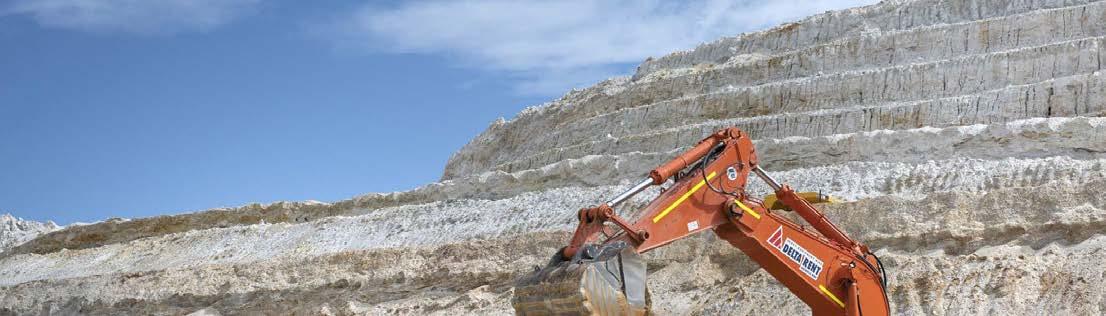
Multotec has invested into local manufacturing to improve support for the Australian quarrying sector.
Multotec’s Australian manufacturing operation reflects the company’s long-term commitment to supporting the quarrying sector through local capability, innovation and customer-focused solutions.
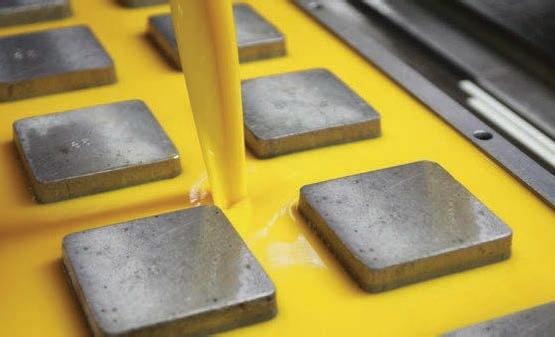
Operating from its facility in Berrinba, Queensland, Multotec manufactures a wide range of screening media, wear solutions and process equipment components using advanced polyurethane, rubber and steel fabrication technologies.
This investment provides customers with shorter lead times, greater flexibility and improved responsiveness compared with traditional offshore manufacturing models.
“We are a highly customer-focused business. Our goal is to understand each customer’s challenges and provide practical solutions that help improve their operation,” Multotec Australia group operations manager Jaco van Lelyveld told Quarry.
“That is why local manufacturing is so
hold inventory where required and scale production as demand grows.”
Local manufacturing enables Multotec to respond quickly to changing customer requirements while providing a level of supply chain resilience that has become increasingly important in recent years.
Reduced dependence on international freight networks helps minimise lead times and ensures customers receive critical products when they need them.
and rapidly develop solutions that are tailored
Supporting this capability is a highly experienced team of engineers, product specialists, field technicians and business development professionals who regularly visit customer sites across Australia. These interactions provide valuable insights into operational performance, wear patterns, maintenance challenges and opportunities for process improvement.
The information gathered in the field plays a critical role in driving product development and continuous improvement.
Whether supporting standard screen media applications or developing specialised wear protection solutions for challenging operating environments, customer feedback remains central to the design process.
“Our engineering and technical teams work closely with customers to evaluate requirements, develop designs and ensure solutions are thoroughly tested before entering service,” van Lelyveld said.
“One of our greatest strengths is the experience within our business. We are focused on transferring that knowledge to the next generation, ensuring we continue to build local manufacturing capability and technical expertise here in Australia.”
Developing future manufacturing capability remains a key focus for the business.
By investing in training, mentoring and knowledge transfer, Multotec is helping preserve valuable technical expertise while creating career opportunities for the next generation of Australian manufacturing professionals.
Quality assurance forms an integral part of every stage of the manufacturing process.
Rather than relying solely on final inspections, Multotec embeds quality controls throughout production through its
Multotec Australia group operations manager Jaco van Lelyveld.
Multotec Excellence Program, which drives continuous improvement across safety, quality, people, delivery, cost and innovation.
“Quality is not something you add into a product at the end of the process. It must be built into every step of manufacturing,” van Lelyveld said.
“Every person in our operation plays a role in delivering quality. In addition to in-process controls, our quality team conducts inspections and testing to verify that products meet our standards before they reach the customer. We also undertake extensive laboratory, mechanical and wear testing to ensure our products perform reliably in Australian operating conditions.
“Manufacturing locally gives us the ability to validate performance and improve our products based on real-world feedback.”
The company’s testing capabilities provide customers with confidence that solutions will perform in demanding quarry and mining environments across Australia while creating a faster feedback loop between product performance and future product development.
Sustainability is another area where Multotec continues to focus its efforts.
Initiatives include the use of recycled materials in suitable applications, ongoing design optimisation to reduce raw material consumption and manufacturing improvements that extend product life and reduce waste.
For Multotec, sustainability and operational performance often go hand in hand, helping customers reduce maintenance requirements, improve equipment availability and lower total operating costs.
“We are constantly looking for ways to create value for our customers,” he said.
“Success for us is measured by the success of our customers. If we can help them improve productivity, reduce costs and remain competitive, then we have achieved our objective.” •
For more information, visit multotec.com
XMOR® JUST GOT TOUGHER
Multotec manufactures its solutions locally for the Australian quarrying sector.
LEGENDARY RELIABILITY FOR QUARRIES
Quarry learns why the Dixon Quarry Group solely relies on Kobelco for its excavators.
At Dixon Quarry Group, reliability has become one of the key reasons behind its growing investment in Kobelco excavators.
The family-owned business, which has operated since the 1960s, now runs multiple quarry operations across Maroota, around 60km northwest of Sydney. Over the past decade, the company has expanded its sandstone operations, producing a range of specialty sands, gravels, and sandstone products.
It was this demanding sandstone work that led Dixon Quarry Group to purchase its first Kobelco excavators in 2022.
According to operations manager Jayden Rejtano, the decision initially came down to timing and suitability during the supply challenges experienced throughout the COVID-19 period.
“At the time we needed them, they were firstly available, and they met all the specs that we needed to run hydraulic attachments,” Rejtano said.
After trialling the machines and researching how other quarries were using them in sandstone extraction applications, Dixon Quarry Group decided to proceed with the purchase.
“We did a bit of homework and all the stars aligned to get them into the fleet,” he said.
The SK500XDLC and SK380XDLC excavators now play a critical role in the company’s sandstone extraction operations, where conditions are particularly demanding on machinery.
“The sandstone, especially what we have, it’s a marine-grade stone,” Rejtano said. “It’s very hard and it’s very abrasive, so we needed a really strong machine.”
Unlike conventional digging applications, Dixon Quarry Group’s excavators spend much of their time operating hydraulic saw attachments used to cut through sandstone. Rejtano said this type of operation places enormous strain on both the excavator and its hydraulic systems.
“Excavators aren’t built around running an attachment and standing still all day,” he said.
“They’re built for digging. But Kobelco have really nutted out their hydraulics and got them working well with the power the engine gives.”
Rejtano said the machines’ hydraulic performance has become one of the standout features of the fleet.
“Kobelco can run their attachments superior to any other brands,” he said.
To further support the quarry’s requirements, Kobelco also worked with Dixon Quarry Group to introduce additional hydraulic cooling systems on the machines.
“They’ve definitely come to the table with a few ideas we’ve presented and made it happen,” Rejtano said.
Images: Kobelco
Kobelco’s excavators are integral to Dixon Quarry Group’s operations.
and the air can’t escape,” he said. “There’s a lot of reflection from the sun, so it’s a perfect storm for heat and ground temperature.”
Despite these conditions, the SK500XDLC and SK380XDLC excavators have continued operating through 40-degree days while running 12-hour shifts.
“That’s where the SK500 really stood out for us,” Rejtano said. “A lot of people have to park up production running these attachments, but these Kobelcos managed it really well with their hydraulics and cooling systems.”
Before introducing the Kobelco fleet, Dixon Quarry Group often had to halt operations
“We used to have to park up at lunchtime on
attachments constantly with the heat.”
The company now operates approximately 12 hydraulic saw attachments across its fleet.
“Introducing these Kobelcos has kept our hydraulic attachments running and prevented them from failing too, which is a massive thing for us,” he said.
Beyond hydraulic performance, Rejtano said the excavators’ build quality and machine sizing had also contributed to their durability in harsh quarry environments.
“With their 380s and their 500s, they’re genuine machines,” he said. “A lot of other manufacturers beef up smaller machines,
but we found Kobelco actually is a genuine 38-tonne machine. It comes with a heavier package that can take more of a beating.”
The company’s experience with machine reliability has also been backed by strong dealer support and parts availability.
“If something does break, parts are available and the maintenance team is on site within the day if something goes wrong,” Rejtano said.
“Some other manufacturers, it takes a while and parts are from overseas. That definitely puts a hold on production.”
While Dixon Quarry Group has traditionally operated a mixed fleet of machinery brands, Rejtano said the business has increasingly moved towards Kobelco since 2022.
“We buy what suits us,” he said. “We’re not rigid with the machine. From 2022 onwards, the Kobelcos have been the only thing that suits us with the sandstone operation.”
The company now operates around 12 Kobelco machines and plans to continue expanding the fleet.
“Our operation relies on these machines continuously running 12 hours a day,” Rejtano said. “We finally found a brand that keeps providing and we haven’t had any major issues with them so far.”
“It’s a real sense of security for the company,” Rejtano said. “You sort of know what you’re in for. There’s no surprises.” •
For more information, visit kobelco.com.au
LEADERS IN MODULAR CRUSHING, SCREENING AND MATERIAL HANDLING SOLUTIONS HANDLING SOLUTIONS
Dixon Quarry Group’s rigorous sandstone extraction operations require only the best and versatile excavators.
POSITIONED FOR GROWTH
A South African manufacturer of modular and static plants has set its eyes on global expansion, and Australia is its next target.
For years, Pilot Crushtec has supported sand-making operations through largescale crushing contractors and recycled materials businesses.
Its plants have become popular for sand production in South Africa. Its modular approach to static plants ensures that all components fit together easily, with minimal site preparation, making commissioning easy and efficient.
Pilot Crushtec sales and marketing director Francois Marias said it’s all about packaging the well-known components for the user’s convenience and peace of mind.
“Many operators put together the components - from crushers and screens to feeders and conveyors - but lose time and money during operations due to inefficiencies and unreliable performance,” Marias said.
“Alternatively, if they choose to go with a bespoke plant, tailored for their purposes, this comes at considerable cost and can take many months to design and manufacture.”
Pilot Crushtec’s modules can work with either a concrete base or, alternatively, due to being skid-mounted, a flat, level compacted surface, without requiring the operator to add
platforms, weld extra items, or specially fit items to make the static plant operational.
The company uses tried-and-tested engineering designs, which have been proven globally in quarrying applications.
After being refined over the years, these robust designs will be heading to Australia’s shores, thanks to a new distribution deal with Vastum Engineering.
Vastum Engineering has supported clients in quarrying, mining, recycling, and wastematerials applications, with its team drawing on a wide range of practical knowledge to create tailored solutions.
Vastum Engineering director Amir Tadros said the company was proud to be selected as Pilot Crushtec’s exclusive agents in Australia for modular and static plants.
“This exclusive agreement expands our offering across quarrying, mining and recycling applications, while providing customers with greater access to specialised processing solutions,” he said.
“With demand continuing to grow for flexible and efficient processing equipment, we believe this partnership will create new opportunities across the quarrying sector.
“The appointment marks an important step for the business and reflects growing demand in Australia for high-performance crushing, screening and material handling solutions.”
DEMAND FOR SAND
The smallest sand-making plant from Pilot Crushtec is the SMP100, which can produce up to 40 tonnes per hour (tph) of minus 5mm sand and has a recirculating load capacity of 85tph through the rotor.
Following this is the SMP200, with a capacity of up to 55tph, and the SMP300, capable of producing 100tph.
All sand-making plants are manufactured at Pilot Crushtec’s modern ISO-accredited facilities in Jet Park, Johannesburg, and are supported by the manufacturer’s global distribution network, including Vastum Engineering in Australia.
Marias said Pilot Crushtec’s solutions could be scaled up as quarrying operations grew over time, to suit the needs of the business.
“Our modular systems also have the advantage of scalability, which is ideal for those customers that will require increased capacity later,” he said.
Sand is in demand for many construction and infrastructure markets.
“Our well-engineered modular systems allow you to add units or upgrade without overhauling the whole setup, making it easier to scale as your operation grows.
“Investing in a turnkey solution like our sand-making plants removes the unknown operational elements for the customer, allowing them to make reliable forecasts of their returns and expenses.”
As natural sand reserves become scarcer in the quarrying sector, and demand for sand in the construction sector grows, sandmaking plants from Pilot Crushtec present a potential solution to one of the sector’s growing pain points.
A 2025 study by the Mineral Resources Council of Tasmania highlighted the exhaustion of sand resources in southeastern Tasmania through a combination of exhausted quarry resources and a difficulty in producing the “natural coarse sharp sand suitable for concrete manufacture”.
“As of 2025, southeast Tasmania has effectively exhausted its available supply of natural coarse sharp sand suitable for concrete manufacture,” the report said.
“This will likely result in price increases for sand use for concrete manufacture.
“The transportation of sand is currently costing approximately $0.20-$0.25 per tonne per kilometre. The distance to transport sand to the Hobart CBD will increase from 35 kilometres to over 300 kilometres as coarse
sand supplies transition from South Arm to northeast Tasmania.”
This does present a potential bottleneck for the sector; especially with the uncertainty around diesel and transport costs.
However, alternative options, including sand-making plants and manufactured sand production, could offer opportunities.
“Quarry operators are under increasing pressure to deliver consistent, highspecification products, and advanced sandmaking technology is playing a key role in achieving that,” Tadros said.
“The ability to produce high-quality sand from existing quarry materials is helping producers diversify their product offering while reducing reliance on declining natural sand sources.”
Tadros said Vastum Engineering was looking forward to building a strong partnership with Pilot Crushtec.
“Being appointed as a distributor gives us the opportunity to deliver globally recognised processing solutions while continuing to build long-term relationships with quarrying customers across the country,” he said.
“We believe the combination of Pilot Crushtec’s equipment technology and our local industry experience positions us well for continued success in the market.” •
Images: Pilot Crushtec
Pilot Crushtec has signed a deal with Vastum Engineering.
16-17 September 2026
Perth
NORTH QUEENSLAND’S QUARTZ PUSH
The Queensland Government’s decision to fast-track the Sugarbag Hill Ultra High Purity Quartz Sand Project signals more than just another quarry approval.
North Queensland’s quarrying sector is being drawn into the centre of Australia’s critical minerals strategy, as the Sugarbag Hill Ultra High Purity Quartz Sand Project moves through an accelerated approvals pathway.
The Queensland Government’s decision to fast-track the development underscores a growing recognition that materials traditionally associated with quarrying, such as silica and quartz, are now essential inputs for high-tech manufacturing, from semiconductors to solar panels.
Valued at $515 million, the project centres on a proposed quarry at Sugarbag Hill,
about 17km from Forsayth, supported by pre-processing at Mount Garnett and further downstream operations near Townsville.
By declaring the development a “prescribed project”, the Queensland Government has effectively streamlined approvals under the state’s Coordinator-General framework.
Queensland deputy premier Jarrod Bleijie said the move was a response to longstanding delays in large-scale resource projects.
“Declaring the Sugarbag Hill Ultra High Purity Quartz Sand Project a prescribed project ensures this development moves forward without unnecessary delays,” he said.
“This project will help strengthen Queensland’s critical minerals capability, inject hundreds of millions of dollars’ worth of investment and create hundreds of jobs in North and Far North Queensland.”
STRATEGIC PLANNING
Ultra-high purity quartz sits at the centre of the project’s strategic significance. Unlike traditional quarry materials, it is a specialised input used in semiconductors, solar panels and high-end glass manufacturing, placing quarry operations at the front end of advanced industrial supply chains.
The Sugarbag Hill project highlights the growing role of quarrying in Australia’s critical minerals supply chain.
Material extracted from Sugarbag Hill is expected to be processed locally and exported via the Port of Townsville, reinforcing North Queensland’s role in the quarrying, bulk materials handling and mineral processing sectors.
The integration of quarrying with downstream processing infrastructure, such as facilities proposed at the Lansdown Eco-Industrial Precinct, highlights a growing policy emphasis on value-adding within Australia rather than exporting raw materials.
LOCAL BENEFITS
The Queensland Government claim the project is expected to generate around 600 construction jobs and 140 ongoing operational roles, with employment spread across quarrying, processing, and logistics.
Queensland natural resources and mines minister Dale Last said the development would create opportunities across the entire value chain.
“This project will create hundreds of new jobs in the construction phase and ongoing operational jobs across the value chain right here in regional Queensland, from the quarry to the processing facilities and at the Port of Townsville,” he said.
“With the Queensland Resources Common User Facility and Graphinex’s Battery Anode Hub just down the road, we’re committed to building sovereign capacity right across the critical minerals sector.
“We’re serious about cutting red tape, driving faster approvals and delivering certainty to investors so they can get on with creating local jobs.”
STREAMLINED PATHWAY
Central to the fast-tracking process is the role of the coordinator-general, who will oversee approvals and facilitate coordination between government agencies and the project proponent.
Queensland coordinator-general Gerard Coggan said the designation allows for closer alignment between stakeholders.
“Our role is to ensure the approvals process progresses without unnecessary delay,” he said. “This declaration allows us to work closely with all parties to deliver the economic and strategic benefits this project promises for Queensland.”
For proponents, the designation can reduce regulatory uncertainty, an issue often cited as a barrier to investment in large-scale quarrying and mining developments.
High Purity Quartz Ltd chief executive officer Stuart Jones said the decision provides greater clarity as the project advances.
“This declaration allows us to progress project approvals more efficiently and with greater certainty as we move through the Detailed Feasibility Study and Engineering stage,” he said.
“We welcome the Queensland Government’s support, which reinforces the strategic importance of our project to the State’s Critical Minerals Strategy.”
A BROADER SHIFT
The Sugarbag Hill project sits within a wider pipeline of prescribed developments across Queensland’s resources sector, particularly those tied to critical minerals and energy transition technologies.
For the quarrying industry, this signals a shift from traditional construction materials toward specialised mineral extraction aligned with global demand for electronics, renewable energy and advanced manufacturing inputs.
Subject to approvals, a final investment decision is targeted for early 2027, with construction expected to begin in 2028. •
North Queensland is positioning itself as a hub for critical minerals extraction and downstream processing.
NEW HUNTER VALLEY EVENT TARGETS RESOURCE SECTOR
The inaugural Hunter Valley Mining Expo aims to create a regional platform for collaboration, innovation and operational improvement across mining, quarrying, and heavy industry.
While the Hunter Valley’s reputation has been built largely on coal mining, the region’s influence extends across a broader network of suppliers, contractors, and equipment providers that support heavy industry throughout New South Wales.
In 2027, that network will gain a dedicated platform with the launch of the inaugural Hunter Valley Mining Expo (HVME), a new industry event designed to bring together operators, suppliers, and technical specialists from across the region.
Scheduled for May 19–20 at the Newcastle Entertainment Centre, the event aims to create a forum where industry professionals can share knowledge, explore emerging technologies and discuss the operational challenges shaping the future of resource extraction and materials handling.
For quarry operators and suppliers, many of the issues expected to dominate conversations at the expo will be familiar. Productivity pressures, equipment reliability, maintenance planning, workforce development and digital technologies continue to influence decision-making across both the mining and quarrying sectors.
Among the early supporters of the event is conveyor solutions specialist Flexco, which has signed on as the inaugural sponsor. According to the company, supporting the expo reflects the importance of the Hunter Valley as a major industrial hub and a region that continues to attract investment in infrastructure, maintenance, and operational improvement.
“The Hunter Valley has long been an important region for the mining industry, so when the opportunity came up to support a dedicated event in the area it felt like a natural fit,” a Flexco spokesperson said.
The company said it had long advocated for a dedicated event in the region and viewed the expo as an opportunity to strengthen connections with customers and industry partners operating throughout New South Wales.
While the Hunter Valley remains synonymous with coal production, operators across the region are increasingly focused on improving productivity and extending the life of existing assets. Similar priorities are being seen across Australia’s quarrying sector, where businesses continue to seek greater
For suppliers, this creates opportunities to deliver technologies and services that improve reliability and reduce downtime.
“The Hunter Valley continues to be one of Australia’s most important mining regions, and we see strong opportunities both in the coal industry today and in how the region continues to evolve for the future,” the Flexco spokesperson said.
The company pointed to ongoing investment in mine-life extensions, conveyor infrastructure and operational efficiency projects as evidence of the region’s continuing importance.
Conveying systems are expected to be a key discussion point throughout the event.
Across both mining and quarrying operations, conveyors remain among the most critical
Industry professionals will have the opportunity to connect, share insights, and explore new operational solutions. producing regions and a key hub for industry innovation.
As operators seek to maximise production from existing sites, there is growing interest in predictive maintenance, condition monitoring and data-driven decision-making.
Rather than relying solely on reactive maintenance programs, many businesses are investing in technologies that allow potential failures to be identified before they impact production.
The HVME exhibition floor will reflect this shift, with suppliers expected to showcase solutions spanning exploration and drilling, extraction and processing, engineering services, maintenance technologies, software platforms, energy solutions and specialised consumables.
For quarry businesses attending the event, the exhibition offers an opportunity to assess technologies that may have practical applications across crushing, screening, conveying and processing operations.
Regional supply networks continue to play a critical role in supporting both mining and quarrying operations. Access to local expertise, technical services and replacement parts can have a direct impact
on equipment availability and operational efficiency, particularly in regional areas where logistics challenges can affect maintenance schedules.
Beyond the exhibition floor, the conference program is expected to focus heavily on operational performance and innovation. Presentations and case studies will explore strategies for improving efficiency, adopting new technologies and managing the evolving demands placed on industrial operations.
The workforce challenge is also likely to feature prominently in industry discussions. As experienced personnel retire and new workers enter the sector, businesses face increasing pressure to transfer knowledge and develop technical capability.
Flexco highlighted training as a critical component of maintaining reliable conveyor operations.
“To support this, we provide on-site, online and in-class training to help teams better understand their conveyor systems and apply best-practice maintenance to improve long-term reliability,” the company spokesperson said.
At the expo, the company plans to showcase both established conveyor technologies and newer digital solutions, including monitoring systems designed to provide real-time insights into belt condition and performance.
The broader significance of HVME extends beyond the products and technologies on display. Industry events continue to provide valuable opportunities for collaboration, networking and knowledge sharing at a time when operators are under increasing pressure to improve performance while managing costs.
Dedicated networking functions and informal meeting spaces will provide opportunities for attendees to connect with suppliers, customers and industry peers outside the conference sessions.
For Flexco, supporting the inaugural event is ultimately about contributing to the long-term strength of the region and helping establish a platform that can support industry collaboration for years to come. • Be the
IN THE ZONE
The WA Mining Conference and Exhibition 2026 will return in September with a renewed focus and sustainability.
Agrowing number of businesses across the resources sector are embracing environmental, social, and governance (ESG) practices to gain an edge over the competition.
Modern consumers, especially governments, are including specific requirements for suppliers to ensure they are a sustainable partner to work with.
In response to the demand for ESG practices, the WA Mining Conference and Exhibition 2026 (WA Mining) will feature a dedicated decarbonisation zone alongside a new transformative tech zone, which aim to showcase how new strategies and innovations are reshaping the sector.
Prime Creative Media show director of mining events Rebecca Todesco said the event’s return comes at a pivotal time.
“WA Mining is coming back at a time when the industry is actively transforming,” Todesco said.
“The decarbonisation zone and the new tech zone are a clear representation of where
The transformative tech zone will bring together a range of forward-thinking companies demonstrating solutions already delivering impact across mining operations. Some Exhibitors are already locked in, including LEAP Australia, Strata Bot AI and Auxilium One. The dedicated zone will provide attendees with direct access to real-world applications of automation, digitalisation and data-driven technologies.
“Attendees won’t just see what’s possible they’ll see what’s already being implemented across the sector,” Todesco said.
“This is about practical solutions that companies can adopt now to stay competitive.”
The decarbonisation zone will focus on supporting the industry’s transition to a lower-carbon future, connecting attendees with solutions aimed at reducing emissions and improving energy efficiency. GST Australia will be among the exhibitors, showcasing offerings that support mining businesses in navigating decarbonisation pathways and strengthening
The return of WA Mining follows overwhelmingly positive feedback, with the expo floor selling out and with both exhibitors and attendees highlighting the event’s strong industry relevance and quality of engagement.
“The feedback we received last event was incredibly encouraging,” Todesco said.
“Exhibitors saw real value in the conversations they were having, and attendees appreciated the focused, practical nature of the event.”
Building on this momentum, WA Mining 2026 is expected to deliver even greater opportunities for connection, knowledgesharing and business development, attracting a broad cross-section of the industry, from major operators and contractors to technology providers and emerging innovators.
WA Mining is where technology, sustainability and operational excellence come together, and where the next phase of mining will be shaped. •
Tickets for last year’s expo floor sold out.
The decarbonisation zone will focus on supporting the industry’s transition to a lower-carbon future.
GEOLOGY TALK
A BASALT BREAKTHROUGH
Researchers may have found a new pathway towards greener cement production, using more sustainable ingredients.
Across the globe, researchers and manufacturers are trialling alternative fuels, recycled materials, carbon capture systems, and lowemission production methods to reduce the environmental footprint of one of construction’s most essential materials.
Cement production remains heavily reliant on a small group of raw materials, including limestone and clay or shale, which are heated to high temperatures to form clinker. This clinker is then finely ground with gypsum to produce Ordinary Portland Cement (OPC), with silica sand and iron ore often added to meet specific chemical standards.
Researchers from the University of California believe they may have identified another pathway towards greener cement production, one that could significantly reduce both emissions and energy demand by replacing limestone altogether.
Researchers Jeff Prancevic and Cody Finke claim calcium-rich silicate rocks such as basalt could potentially substitute limestone in Portland cement production. Their findings suggest the switch could reduce carbon dioxide emissions by more
than 80 per cent while utilising existing cement manufacturing infrastructure.
Unlike limestone, basalt does not release significant amounts of carbon dioxide during heating because it lacks large concentrations of carbonate minerals. This means producers could avoid the emissions generated during calcination while still producing the calcium compounds required for clinker production.
The researchers also suggest basaltbased cement production may require substantially less energy than conventional methods. According to their study, producing Portland cement from basalt could use less than 60 per cent of the energy required when manufacturing cement from limestone.
Prancevic and Finke estimated the energy requirements and carbon dioxide emissions of cement production using silicate rocks and discovered the theoretical minimum energy requirement is more than 40 per cent lower than that of limestone. Using natural gas as a power source, the minimum carbon dioxide emissions per tonne of cement produced decreased from 609kg using limestone to
43–59kg, depending on the specific type of silicate rock used. The implications for the quarrying industry could be substantial. Basalt is one of the most abundant volcanic rocks on Earth and is already widely quarried for construction aggregates, road base, and rail ballast. In regions with established basalt quarries, producers could integrate extraction and processing into existing operations. However, cement manufacturing is governed by strict performance and chemical standards, meaning any alternative feedstock would require extensive testing before large-scale commercial use. Durability, consistency, kiln performance, and compatibility with existing supply chains would all need to be assessed.
There are also logistical considerations. While limestone deposits are typically located close to existing cement plants, transporting basalt over long distances could offset some environmental benefits if supply chains are not carefully managed. Despite these challenges, the research highlights the growing role geology could play in the decarbonisation of construction materials. Traditionally viewed primarily as an aggregate resource, basalt may emerge as a strategic material in the push to lower emissions. •
Basalt is a dark, fine-grained, extrusive igneous rock.
Image: stock.adobe.com/Stefano Zaccaria
$631M+
5,000+ EARTHMOVING ASSETS SOLD
Looking to sell big in 2026? Talk to Pickles today about how to maximise the return on your assets before EOFY. With a huge community of almost a million buyers and sellers, the results speak for themselves. Head to pickles.com.au