Solar sets sail
FLOATING PANELS SLASH PUMPING COSTS IN VICTORIA
Energy efficiency: The key to operational success
Record-breaking event returns in September

Energy efficiency: The key to operational success
Record-breaking event returns in September
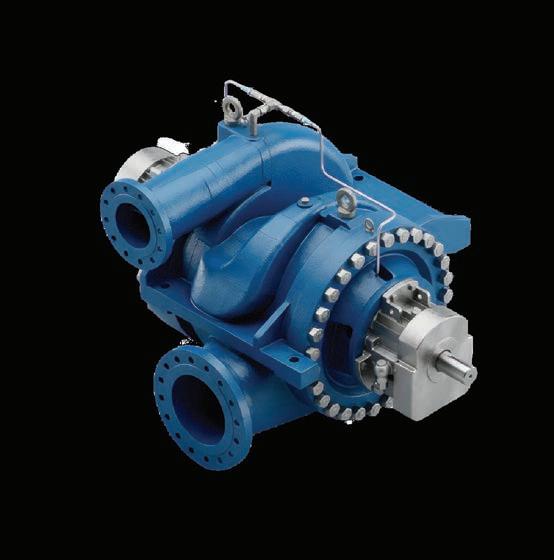

Impressive flow, head and pressure for serious water and wastewater pipelines, when “standard” is not enough. Designed and manufactured in Australia. STERLING PUMPS
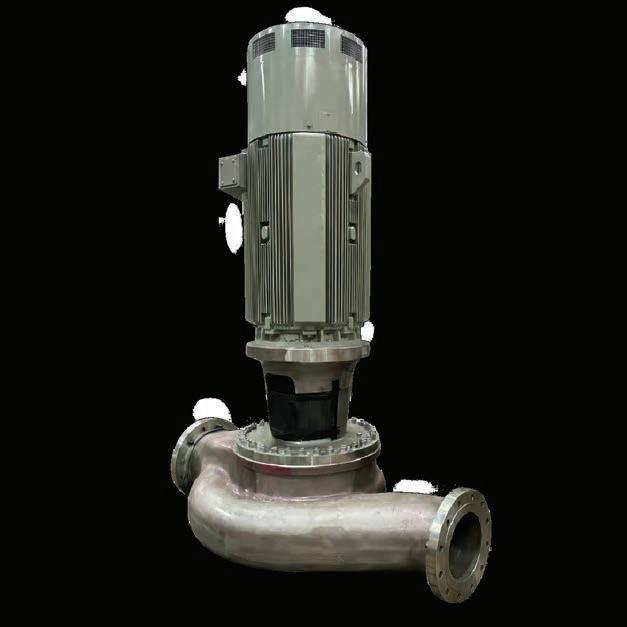
pumping solutions. DSTHF up to 800 m3/h 300m Head in a Single Pump 5m Suction Lift VP Series up to 1500 m3/h 30m Head (up to 250m in UNITED



+613 5941 3400
sales@sterlingpumps.com.au
14 Sharnet Circuit, Pakenham VIC. Australia 3810 Contact Sterling Pumps or United Pumps for
Pump Industry Australia Incorporated
Dear PIA Members and Industry Colleagues,
As we head into winter, it’s clear that energy e� ciency is becoming one of the biggest priorities across our industry – and not just because of rising power prices.
knowledge across the industry is something we should continue to encourage.
• Michael Woolley (Tsurumi Pumps)
• Naomi Lincoln (Regent Holdings)
Everywhere you look, businesses are being asked to do more with less. Reduce costs, improve performance, lower environmental impact and keep systems running reliably. For the pump industry, that creates both a challenge and an opportunity.
Pumps are at the heart of so many industries that keep Australia moving – water, wastewater, mining, manufacturing, agriculture, construction and more. They are essential, but they also consume a signi� cant amount of energy, which is why even small improvements in e� ciency can make a real di� erence.
What I � nd encouraging is the way our industry continues to adapt and innovate. We’re seeing smarter technologies, improved monitoring systems, more e� cient equipment and better system design becoming part of everyday conversations. More importantly, businesses are recognising that energy e� ciency is not just about replacing a pump, it’s about looking at the whole system and understanding how everything works together.
There’s also growing awareness that good maintenance and smarter operation can be just as important as new technology. Simple changes, regular system checks and better planning can often deliver meaningful energy savings without major investment. Sharing that practical
This edition of Pump Industry highlights several projects, innovations and people helping drive that progress. It’s great to see so many businesses across the sector embracing new ideas and � nding practical ways to improve e� ciency while maintaining reliability and performance.
The ability to learn from one another, share experiences and network remains a key focus for the Pump Industry Association. To support this, the Council met in June to discuss a range of activities and events planned for the remainder of the year.
In Melbourne, we will be hosting a social evening at the Waterside Hotel in August, and for our members in Perth, a similar networking event is currently being � nalised, with details to be announced soon. Please keep across our LinkedIn page for details.
The PIA committee is also preparing for our annual general meeting and dinner, which will be held at the Crowne Plaza on November 19. Please save the date – this is always a highlight of our calendar, and we look forward to bringing members together once again.
I’d like to thank all our members, contributors, sponsors and industry partners for your continued support of the association and the wider pump industry. Your willingness to share knowledge and support each other is what keeps our industry strong.
Kind regards,
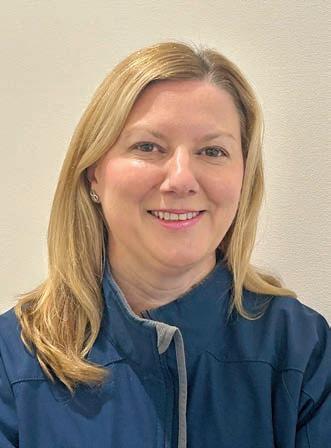
Kylie Kinsella PIA, President
Scan to subscribe to Pump Industry’s weekly newsle er –delivered to your inbox every Thursday a ernoon.
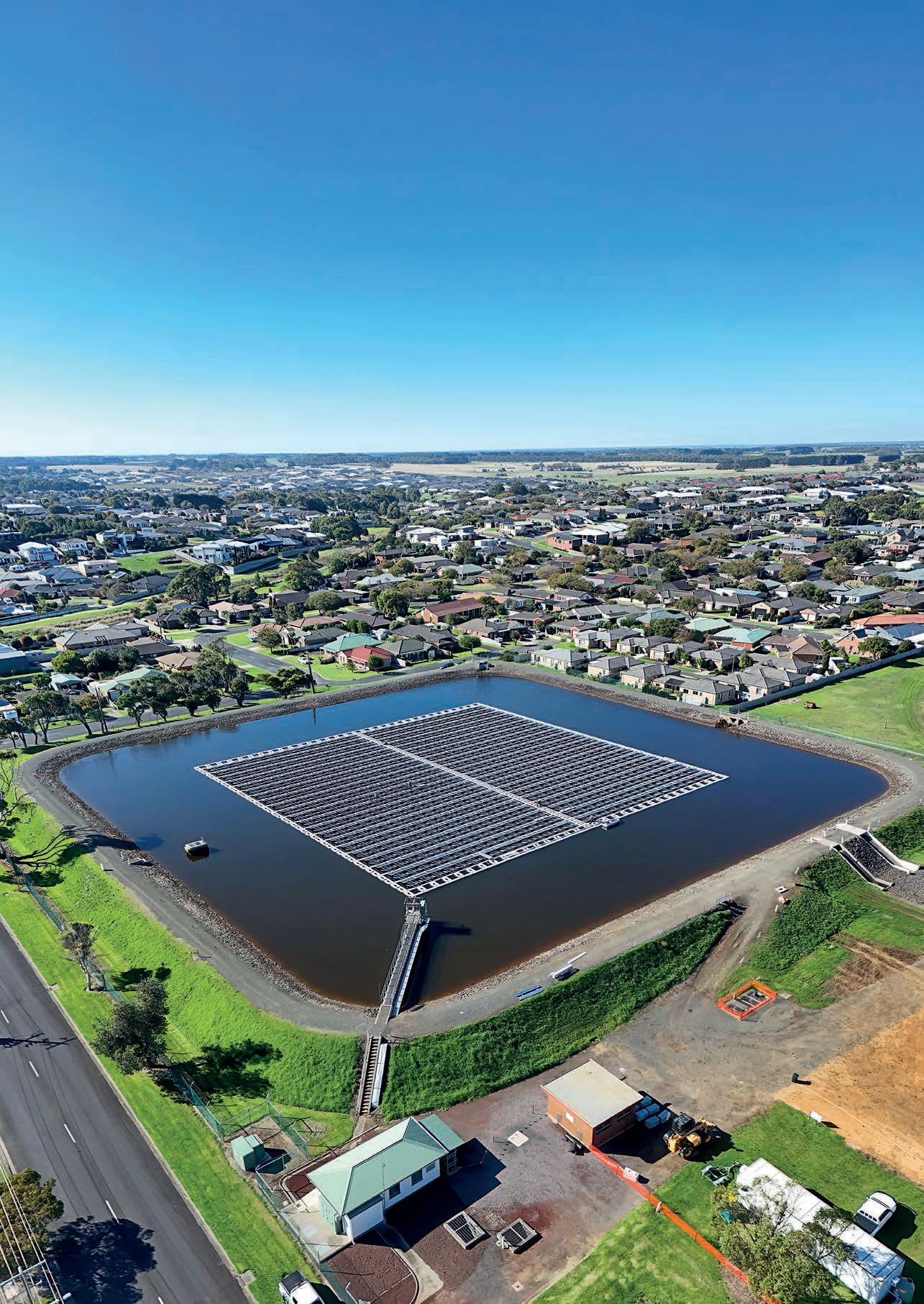
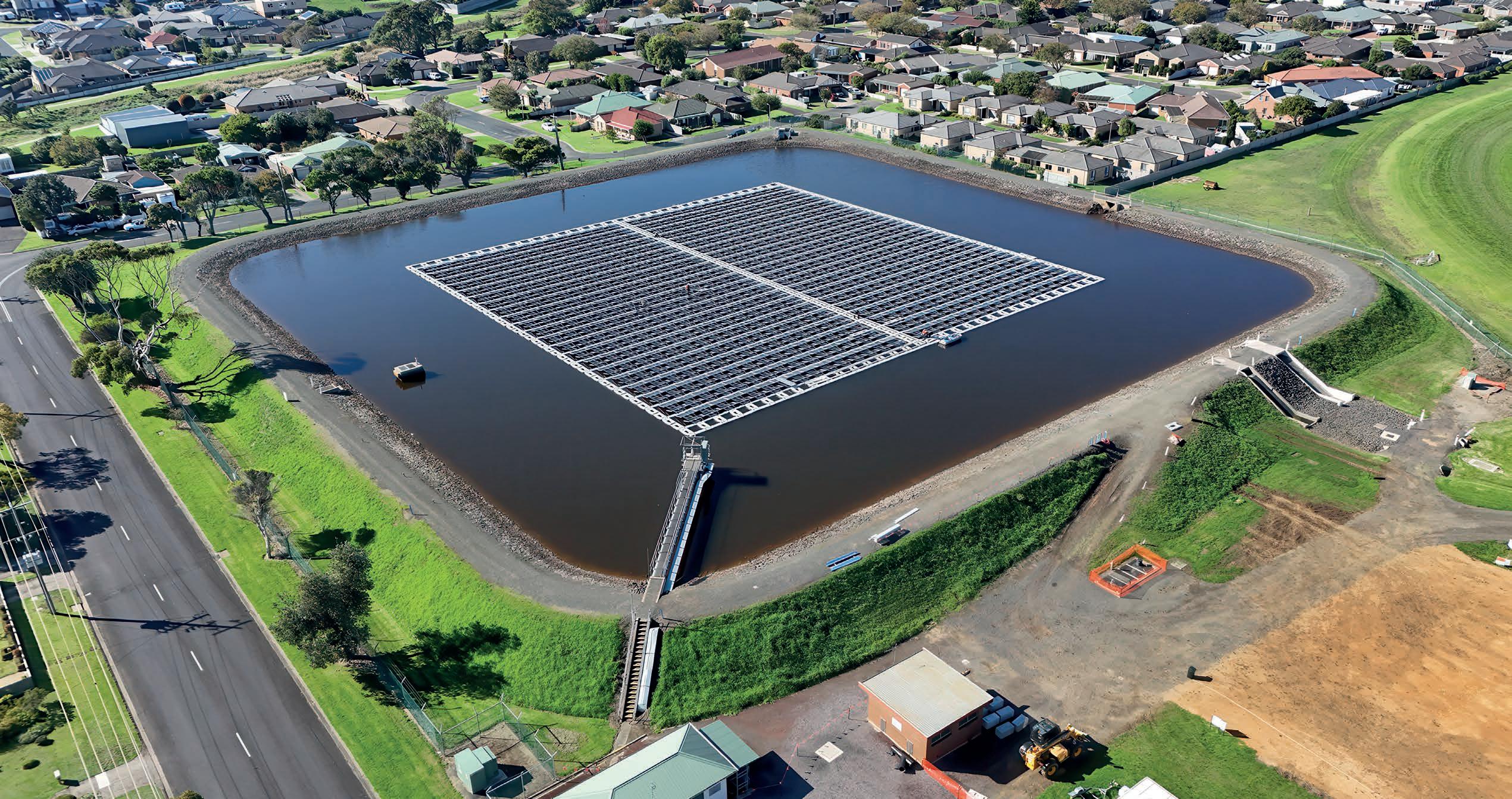
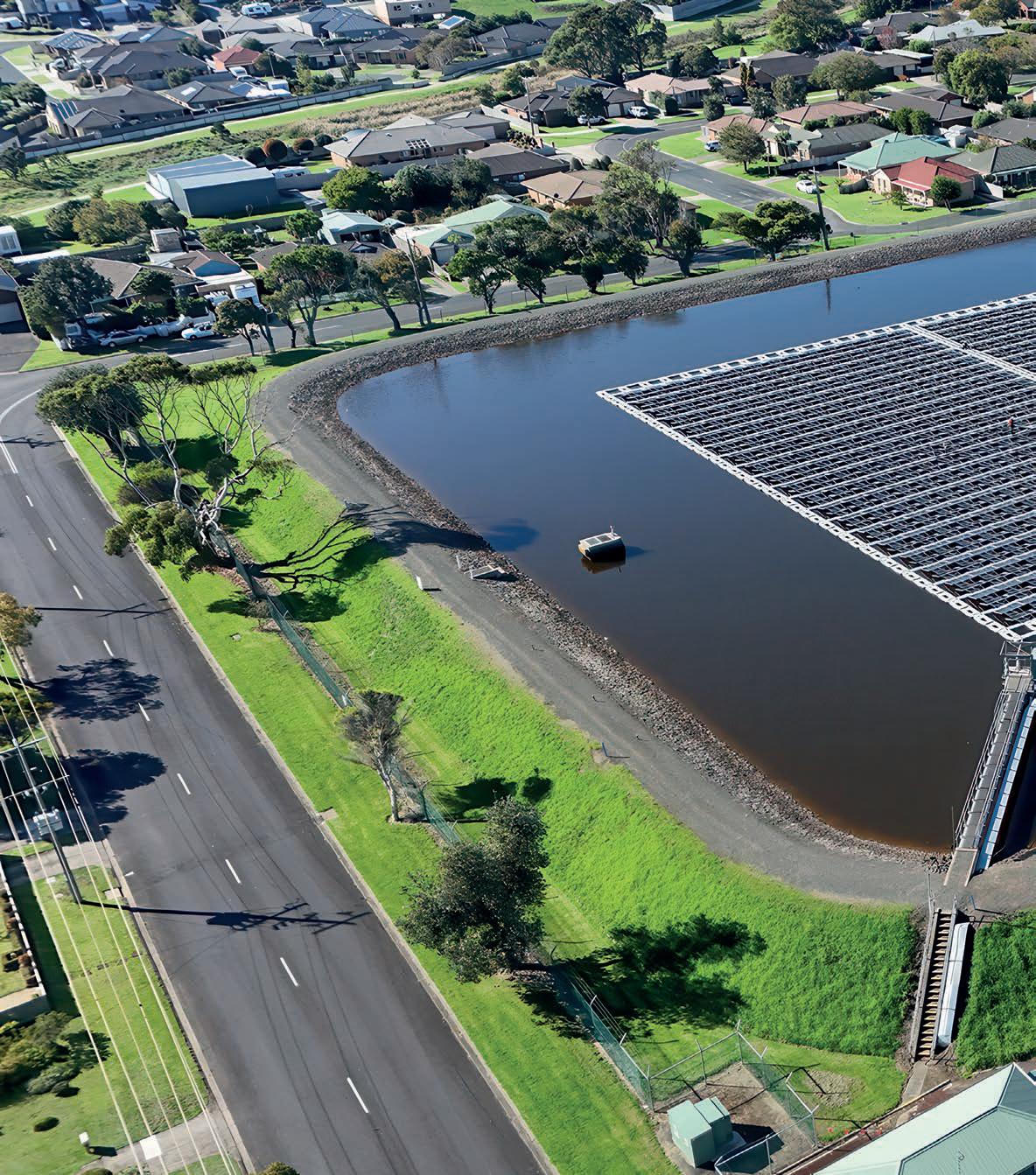
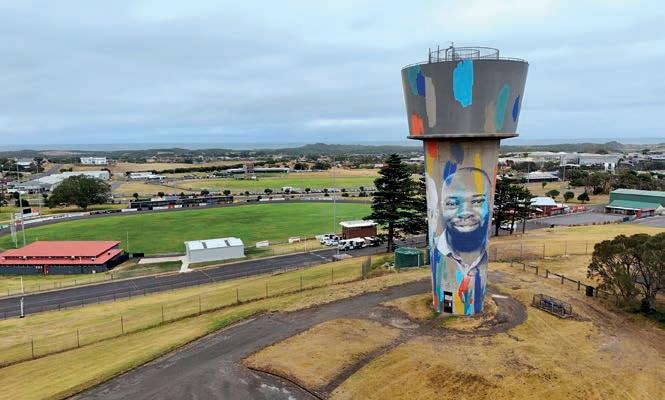
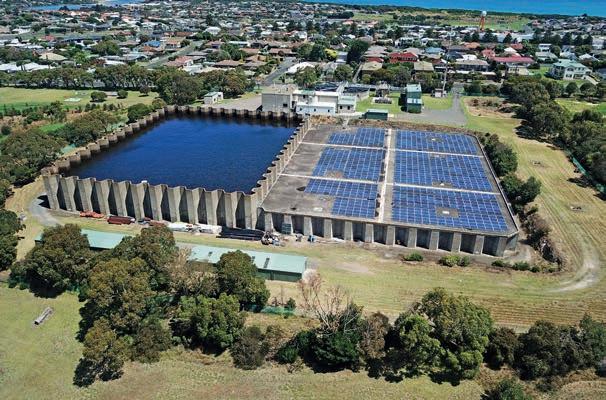
Cover image: A 1260-panel solar array at Brierly Basin, Warrnambool. Image: Wannon Water

Published by
Chairman John Murphy
Chief Executive O� cer
Christine Clancy
Editor Tom Parker
Design
Jacqueline Buckmaster
Head of Design Clayton Hawley
Business Development Manager
Rima Munafo
rima.munafo@primecreative.com.au +61 413 475 078
Client Success Manager
Cait Pillay
Head O� ce
Prime Creative Media
379 Docklands Drive
Docklands Victoria 3008
P: +61 3 9690 8766
info@primecreative.com.au pumpindustry.com.au
Subscriptions
P: +61 3 9690 8766
subscriptions@primecreative.com.au
Pump Industry is available by subscription from the publisher.
The rights of refusal are reserved by the publisher.
8Pumps, panels and pontoons
With no land to spare, Wannon Water took solar to the water – and cut pump energy costs by up to 40 per cent.
14 Graco goes big Graco’s distributorship with GO Industrial has taken the QUANTM electric diaphragm pump into new applications and industries.
16 E�ciency starts with selection
United Pumps Australia has spent more than 40 years helping operators choose, service and optimise pumps for peak performance.
18 A new way to move sludge
SEEPEX’s Smart Air Injection is proven to reduce energy demand by up to 80 per cent in Australian wastewater applications.
22 Meeting the toughest pumping challenges
From handling abrasive sludges to delicate food products, rotary lobe pumps o�er the �exibility needed for today’s industrial demands.
25 Next-generation progressive cavity pumps
Design enhancements across Roto Pumps’ ‘P’ Range help operators reduce energy consumption, extend service life and lower maintenance costs.
PROJECT SPOTLIGHT
30 A blueprint for 2074
A new 50-year roadmap outlines the infrastructure needed to meet Mans�eld’s growing water and wastewater demands.
PUMP TECHNOLOGY
32 The magic in sealing solutions
Advanced sealing technologies and compression packing underpin a more e�cient, reliable and costfriendly pumping operation.
34 The integration advantage
Bürkert Australia is helping desalination plants save up to 40 per cent in engineering time.
MOTOR TECHNOLOGY
43 Introducing the MPX motor Techtop Australia has launched its new MPX motor range, bringing higher e�ciency and increased smarts to modern pump systems.
INDUSTRY EVENTS
46 Where mines and pumps convene Poised for another sell-out event, the WA Mining Conference will once again be the epicentre of Western Australia’s resources sector this September.
PIA WELCOME
3 President’s welcome
PROJECT WATCH
6Where the work is
PUMP HANDBOOK
52 Evaluating the commissioning run
This magazine is published by Prime Creative Media in cooperation with the Pump Industry Australia Inc. (PIA). The views contained herein are not necessarily the views of either the publisher or the PIA. Neither the publisher nor the PIA takes responsibility for any claims made by advertisers. All communication should be directed to the publisher.
The publisher welcomes contributions to the magazine. All contributions must comply with the publisher’s editorial policy which follows. By providing content to the publisher, you authorise the publisher to reproduce that content either in its original form, or edited, or combined with other content in any of its publications and in any format at the publisher's discretion.
Pumps Industry acknowledges Aboriginal Traditional Owners of Country throughout Australia and pays respect to their cultures and Elders past, present and emerging.
Optimized Pre-Mixing Reduces Retention Time and Increases Biogas Output
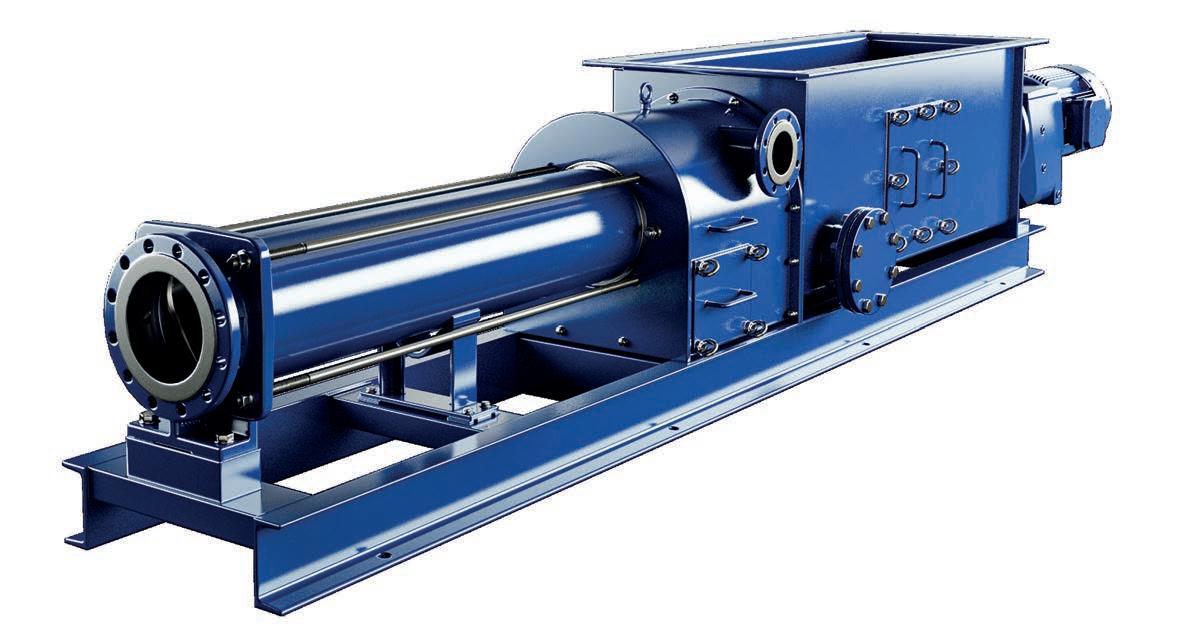
Australian biogas plants require robust, high-capacity feeding solutions. The new SEEPEX BTEX sizes extend conveying performance up to 160 m3/h, supporting scalable plant concepts and higher throughput requirements.
YOUR BENEFITS WITH BTEX
y Flow rates up to 160 m3/h
y Reliable handling of high dry solids
y Reduced fermenter retention time
y Lower mixing energy demand
y Robust heavy-duty construction
y Simplified maintenance
SEEPEX Australia Pty. Ltd. info.au@seepex.com www.seepex.com

From the Northern Territory to Tasmania, pump infrastructure projects are actively under construction right across the country.
In the next instalment of ‘Project Watch’, Pump Industry outlines several notable projects the pump sector should be across.
Prospect Vale sewerage improvement project
The Prospect Vale sewerage improvement project is a key component of TasWater’s Launceston sewer transformation, one of the largest infrastructure upgrades in northern Tasmania. The project focuses on retiring the ageing Prospect Vale sewage treatment plant, which can no longer meet modern environmental standards or support future population growth.
Wastewater from Prospect Vale will be redirected to an upgraded treatment facility at Ti Tree Bend, forming part of a broader plan to consolidate multiple ageing plants into a more e� cient, centralised system. This will improve treatment performance, increase system reliability, and provide capacity for future development across the Launceston region.
The project also includes installation of new infrastructure, such as a treated water transfer main, which will help strengthen local water supply connections.
Aura wastewater project
Unitywater is investing in new wastewater infrastructure to support growing communities and ensure sustainable, safe and reliable wastewater services for the Aura community on the Sunshine Coast, which is expected to reach 50,000 residents by 2050.
The Aura wastewater project includes construction of a new wastewater pump station and installation of 12.5km of new wastewater pipeline to transfer wastewater from Aura to Unitywater’s Kawana wastewater treatment plant.
Construction began in mid-2023 and is expected to be completed by late 2026, weather and construction conditions permitting.
As part of a renewal program for critical waste infrastructure, Power and Water Corporation is upgrading � ve major pump stations across its network. Power and Water operates 45 major and minor sewerage pump stations across the Darwin and Palmerston region. Assessments identi� ed � ve major pump stations needed upgrading to ensure the network continues to operate reliably and in line with environmental and health standards. Rapid Creek will be the fourth of these to be upgraded.
Investing in the renewal of critical wastewater infrastructure supports Power and Water’s commitment to delivering reliable and e� cient services to communities across the Northern Territory. The upgrades are focused on areas that will have the greatest impact on system reliability and long-term asset performance.
A new water treatment plant is being constructed as part of a $23 million project to strengthen the drinking water supply of Jurien Bay, Western Australia.
Once complete in mid-2027, the project will increase Jurien Bay’s total water supply capacity by 24 per cent, lifting annual supply to 520 million litres.
In May, the Shire of Dandaragan received $100,000 for Stage 5 of its Jurien Bay irrigation project, which involves a new distribution pump, two 275,000-litre storage tanks, 600m of pipework, and power upgrades to support irrigation and � re� ghting water availability.
Do you have any projects to promote? Contact tom.parker@primecreative. com.au to share your stories.
A landmark sewer transformation project is taking place in Launceston.
Pump Supplies service and repair all types of industrial pumps and are Australia’s exclusive distributor of PLEUGER submersible motors, pumps and thrusters, along with the ALDRICH range of reciprocating pumps.
We have qualified engineers and factory-trained personnel who can assist with technical enquiries, sales, service, on-site commissioning and tailored engineered pumping solutions.
As a leading supplier to the water industry, we offer products suited to a wide range of applications.

MUNICIPAL WATER & WATER APPLICATIONS

AGRICULTURAL & GENERAL INDUSTRIES
RENEWABLE ENERGY SOLUTIONS

With no land to spare, Wannon Water took solar to the water – and cut pump energy costs by up to 40 per cent.
At Brierly Basin in Victoria’s south-west, Wannon Water faced a conundrum: how to reduce the energy consumption of several 100-kilowatt (kW) pump systems moving 10 megalitres per day to the Warrnambool water treatment plant.
This led the utility to a unique solution – a 1260-panel � oating solar array � tted to a pontoon in the middle of Brierly Basin.
“When considering solar options across our sites – such as rooftop solar, solar on top of tanks, and groundmounted systems – we found there
wasn’t enough land at Brierly Basin to support such solutions,” Wannon Water manager net zero Murray Dancey told Pump Industry.
“That led us to � oating solar.”
While Gippsland Water installed a � oating solar array next to its Drouin wastewater treatment plant in 2024, when Wannon Water began exploring this project in 2019 it stood alone in the market.
“Floating solar hadn’t been done in Australia when we began looking at this project, so we couldn’t turn to local peers for guidance,” Dancey said. “We’d
seen a few overseas projects – in the UK and Singapore – and we reached out to the Public Utilities Board (PUB) in Singapore.”
PUB � rst began studying the feasibility of � oating solar PV systems in 2011. By 2016, the utility – recognised as Singapore’s national water agency – had launched its � rst � oating solar PV pilot on Tengeh Reservoir.
After testing demonstrated the technology’s upside, which trumped the performance of Singaporean rooftop solar systems by 5–15 per cent, PUB launched its � rst large-scale � oating
solar PV system on Tengeh Reservoir in July 2021.
“PUB was generous in sharing their experience and gave us the inside running on how to design and install a � oating solar array,” Dancey said. “This helped us build the business case, go out to tender, and ultimately deliver the project.”
Enervest – who won the contract to construct the 500kW � oating solar array – was recognised for its ability to deliver an integrated, turnkey solution.
“Enervest has overseen the project management, contract management,
system integration, all the electric work, and the balance of plant at Brierly Basin,” Dancey said.
“The � oating module system was supplied by French company Ciel et Terre, which specialises in the � oats and structures the panels mount onto. Ciel et Terre has delivered hundreds of these systems worldwide.”
Driving down energy costs
Brierly Basin is a key cog in Wannon Water’s Otway supply system which supplies water to more than 26,000 customers.
Used as holding storage for water sourced from the Gellibrand River in the Otways, Brierly Basin is supplemented by water captured from the Warrnambool Roof Water Harvesting System.
Water from the basin is pumped to the treatment plant, where it’s disinfected and made safe for drinking and food preparation before being distributed to homes, businesses and industries across Warrnambool, Koroit and Allansford (over 19,000 customers).
Once Wannon Water commissions the � oating solar array, the utility will

save 30 per cent on annual electricity costs from Brierly Basin as a baseline. This increases to a 40 per cent annual saving once the system is optimised.
“We’re re� ning SCADA controls between the treatment plant and Brierly Basin so that pump operations are aligned with the optimal solar generation window, which is typically during the day,” Dancey said.
“We’re also putting in place controls to optimise exports to the grid –capitalising on when wholesale prices are high and reducing exports when prices are low or negative. This enables us to maximise the revenue generated from the solar array.”
The � oating solar array also has the potential to reduce evaporation by covering a portion of the basin’s surface area and reduce blue-green algae growth by limiting the amount of sunlight reaching the water.
When Dancey spoke with Pump Industry in late May, he said the solar array would be in full operation “any day now”.
“We’re just waiting on the � nal sign-o� s from our power utility and the relevant authorities to energise the system,” he said.
“From there, the focus is on � ne-tuning the pumping schedules and export strategy. Once that’s in place, the system should operate largely automatically, with relatively low maintenance requirements.”
Integrating the pumps with the solar array has been straightforward. This
was supported by a recent switchboard upgrade to connect the solar system into the existing network.
A new era of decarbonisation
As it limits energy consumption, the � oating solar array will also reduce greenhouse gas emissions by more than 600 tonnes each year, supporting Wannon Water’s goal of reaching net zero emissions by 2030.
This project is one of several decarbonisation initiatives the utility is undertaking.
“Elsewhere, we’ve installed an 800kW wind turbine to power our water and sewage treatment plants in Portland, alongside solar arrays at our Warrnambool and Hamilton water treatment plants,” Dancey said.
“We’ve also just commissioned an integrated solar and battery project at a depot in Warrnambool.”
These renewable energy measures enable Wannon Water to generate largescale generation certi� cates to help reduce the utility’s Scope 2 greenhouse gas emissions. LGCs can be surrendered and sold through a national market.
Wannon Water is also a partner in Zero Emissions Water (ZEW) with 11 other Victorian water corporations. A power purchase agreement with the Kiamel solar farm near Ouyen enables ZEW partners to purchase LGCs each year under a collective buying agreement.
More broadly, Wannon Water recognises its duty to increase water security for generations to come.
A key part of this is reducing its impact on the Gellibrand River – a regionally signi� cant source of water for urban communities and industry.
“We want to make sure we’re looking after the river while ensuring a secure water supply for the future,” Dancey said. “That’s why we’re delivering a major upgrade to the Otway supply system.”
Three main projects are planned over the next few years, including constructing a secondary emergency bore at Curdievale, and converting the existing Curdievale emergency groundwater bore to a production bore.
“This will provide up to 10 megalitres of groundwater per day to supplement the existing supply during high demand periods, reducing pressure on the Gellibrand River,” Dancey said.
“Reducing how much we extract from the Gellibrand River, especially in the summer months, will improve river � ows, protecting native � sh and wildlife.”
Recognised as one of Australia’s largest � oating solar arrays, Brierly Basin is blazing a trail for others to follow – demonstrating how utilities can integrate renewable energy with pumping infrastructure to cut costs, lower emissions and strengthen longterm water security.
Sometimes it takes creativity to achieve this – something which Wannon Water is showing in spades.



No matter if stationary, mobile or submerged, all pump components are selected individually according to the requirements of every single application.
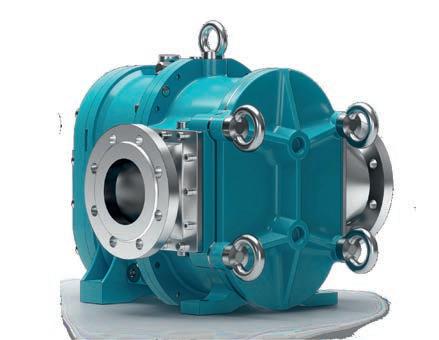
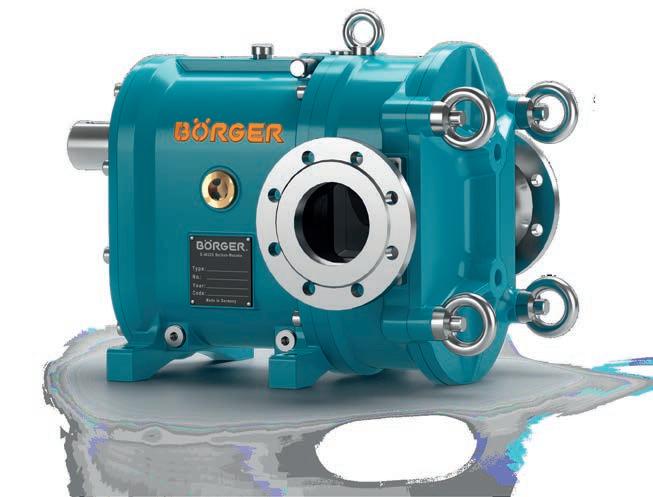
With our three pump series BLUEline Nova, BLUEline Legend and ONIXline, a large selection of equipment and additional parts, we are able to build rotary lobe pumps that are perfectly suited to every single application.
+ 25 pump sizes
+ Capacities from 1 to 1,440 m³/h
+ With and without casing protection plates and liners
+ Self-priming
+ Compact and powerful
+ Various drive options
+ MIP® design for fast, simple maintenance
Engineered for reliability. Designed for longevity.
Instead of using drinking water, Australian data centres are increasingly turning to recycled water to sustainably cool their facilities.
In a Victorian � rst, a soon-to-be-built Amazon Web Services (AWS) data centre in western Melbourne will be supplied by recycled water.
Water will be pumped from Greater Western Water’s (GWW) Melton recycled water plant and used to cool the data centre.
“We’re thrilled to announce, alongside AWS, that the Melton recycled water plant (RWP) is expected be the � rst in Victoria to supply a data centre with recycled water,” GWW managing director Cameron FitzGerald said.
“Planning for the water needs of data centres is part of Greater Western Water’s responsibility to deliver reliable, a�ordable water services for its customers now and into the future, especially as the region grows and the climate dries.
“We know data centres and large industrial users of water are increasingly looking for innovative ways to reduce their environmental footprint, and we’re keen to see more of them follow AWS’ lead in working with us to get connected to recycled water.”
AWS head of infrastructure and energy policy – Australia and New Zealand, Matt O’Rourke, explained the signi� cance of the project.
“Working closely with Greater Western Water to deliver recycled water to our new data centre in western Melbourne will help preserve millions of litres of drinking water annually for local communities,” he said.
“We will continue to work closely with GWW to identify opportunities to partner on water replenishment projects in the community as part of AWS’s commitment to return more water to the community and the environment than it uses by 2030.”
The announcement comes as GWW prepares to begin the second phase of major upgrades to the recycled water plant at Melton.
Contractor Guidera O’Connor will begin construction on the $70 million project next year, with upgrades to
substantially increase Melton RWP’s capacity and improve recycled water quality. This will ensure GWW can continue to support one of Australia’s fastest-growing areas with recycled water for years to come.
Elsewhere, GWW has commenced works on the fourth and � nal stage of a $160 million project to expand Melbourne’s oldest sewer network.
This will see about 750m of underground sewer pipes constructed along Siddeley Street, from Spencer Street and Flinders Lane to Wurundjeri Way, connecting them to the existing network.
New underground sewer pipes have already been installed in Elizabeth Street, Lonsdale Street and Spencer Street as part of GWW’s Melbourne
CBD Sewer Strategy – a major investment to strengthen Melbourne’s wastewater infrastructure.
“Melbourne’s underground sewer network has played a crucial role in protecting public health and the environment for the past 120 years,” GWW general manager – asset planning and delivery Ian Burton said.
“These are vital works designed to strengthen the sewerage system’s capacity and reliability as Melbourne CBD’s population continues to grow and thrive.
“Not only will the completed project double the capacity of the existing sewer network, it will support more dwellings and o� ces in the CBD for at least another 100 more years.”

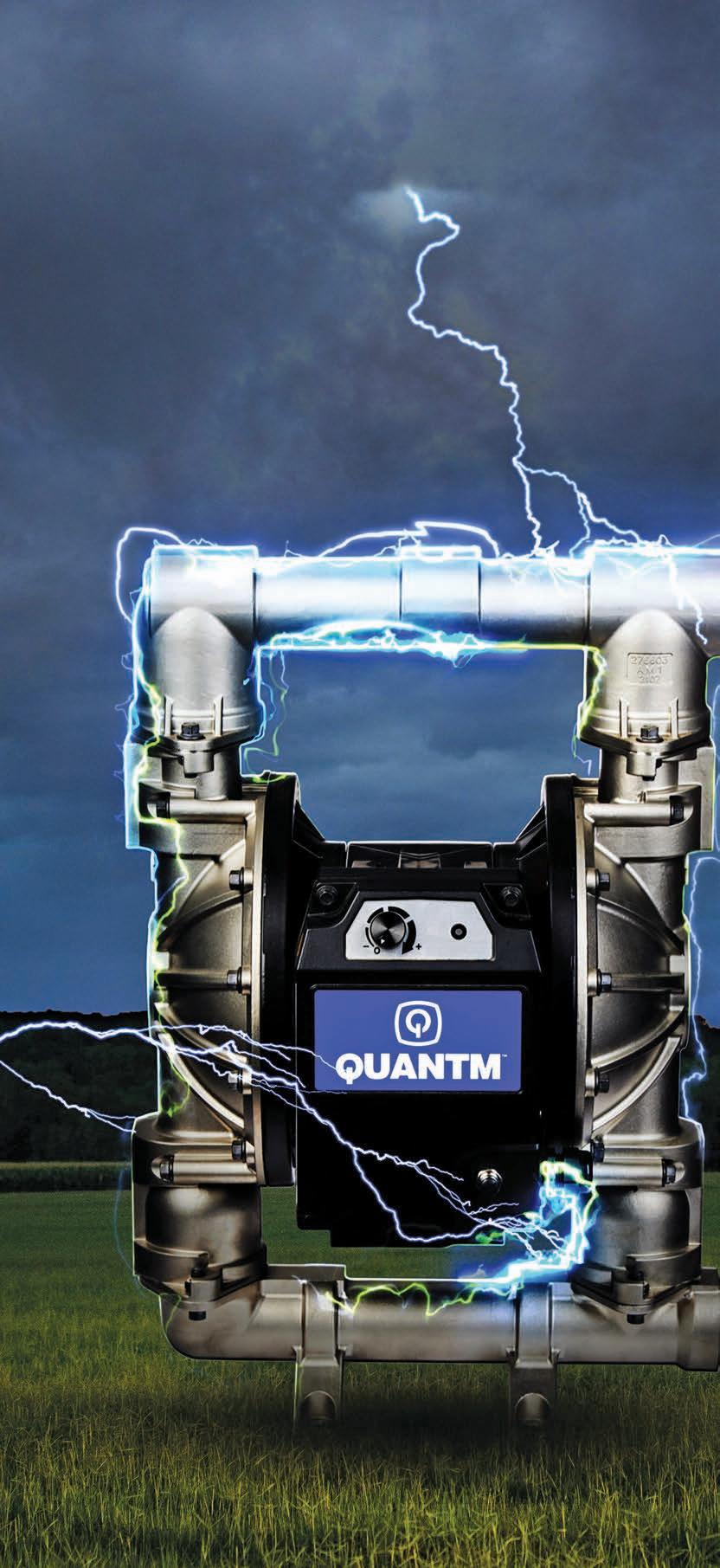
Graco’s distributorship with GO Industrial has taken the QUANTM electric diaphragm pump into new applications and industries.
No matter the industry you work in, the need for energy e� ciency is universal, with ine� cient operations increasingly placing pressure on bottom lines.
This is particularly pertinent in 2026, where industries are not only facing an electricity price crunch, but also surging costs for fuel and imported materials.
For pumping applications, where systems are often operating 18–24 hours per day, the need for innovation and optimisation grows by the hour – the success of an operation hinges on it.
Luckily, there are industry proponents pioneering new ways of operating, with technologies that were previously never thought possible.
Graco is one of those, having developed its QUANTM electric diaphragm pump that does away with gearboxes and variable speed drives (VSDs), creating a more compact footprint. A gearless FluxCore electric motor delivers up to eight times more continuous torque at low speeds.
Since the launch of its QUANTM range in late 2022, Graco has worked closely with its distributors to ensure industries recognise its applications and advantages.
This has led to global adoption of the QUANTM pump, including in mining, wastewater, paint, pulp and paper, and pharmaceutical industries.
One of Graco’s more dynamic and diverse distributors is Queenslandheadquartered GO Industrial, which is changing the way � uid handling equipment is procured through e-commerce and end-to-end service support.
“Instead of treating Graco as a vendor, we’ve taken a di� erent approach by becoming a partner to Graco – one that is an extension of their internal team,” GO Industrial head of brand Jacob Morgan told Pump Industry
“We’ve had a sole-source strategy from the start, which means we’ve picked a product segment and from day one, we’ve said we’ll only sell Graco. We’ve learned the range inside and out and made sure we’re trained up to do service and warranty support.
“Instead of multi-branding and dealing with a growing list of vendors, being an expert in and o� ering one range has simpli� ed things for our customers.”
Having partnered with Graco since 2017 – when GO Industrial was � rst established – much of the distributor’s success can be put down to the US manufacturer’s verve for innovation.
“While we’re con� dent Graco makes the best gear available to market in these segments, it’s our job to then take that to market and provide that next level of service, through sales, commissioning and after-sales support,” Morgan said.
“We would call ourselves Graco nerds, so when new Graco solutions become available, we’re the � rst to hear through our distribution network. This means we can get onto supporting our clients with the latest and greatest of what Graco has to o� er.”
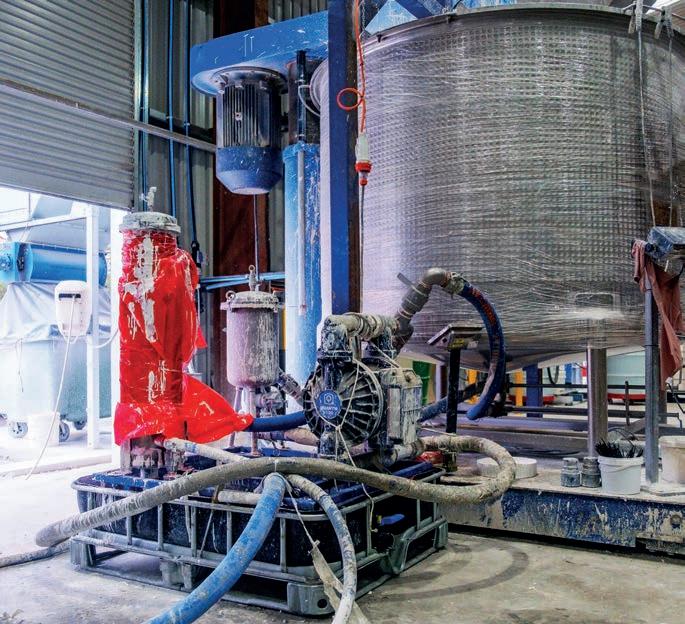
One GO Industrial client that’s been a Graco bene� ciary is line-marking paint manufacturer Crysalite, a Kempsey-based business which turned to the QUANTM range to help unlock greater energy e� ciencies in its manufacturing process.
Crystalite, which has been manufacturing line-marking paints for 40 years, deployed two two-inch QUANTM i120 pumps to start with, which helps produce its � agship WB100 waterborne road-marking paint in white, yellow, blue, red, green and black. One of these pumps has transferred more than six million litres of product without the need for a diaphragm or seal change and is still running today.
One-inch QUANTM i30 and i30 hazardous area pumps have since been deployed to Crystalite’s site to support the manufacture of smaller-batch and solvent-borne products.
“Previously using air-operated diaphragm pumps (AODDs), Crystalite were starting to hit a ceiling with air consumption and cost at their manufacturing facility, especially as they scaled their production lines to support growing demand for their water-based line-marking paint,” Morgan said.
“Every time you add a pump on the line, you need to increase the size of the compressor, and compressors are expensive to run. Pair that with the ongoing cost of air and operational costs were on the increase.”
Morgan said this is where the QUANTM electric-powered range “has revolutionised industry”.
“With QUANTM, complexity and wear items have been removed, while the system’s mechanical and engineering approach has been simpli� ed,” he said.
“Operators don’t have to size up their compressor every time they add a new pump or production line – QUANTM is
much more scalable, and the energy savings exponentially grow over time.”
From one pump, operators can go from the 10–15 per cent energy e� ciency possible with AODDs to 85 per cent energy e� ciency with QUANTM. This is set to generate $22,000 per year in power savings across Crystalite’s four-pump � eet.
“When you start factoring this into your balance sheet, it’s signi� cant,” Morgan said. “Operators also get a 10dBa drop in noise per QUANTM pump, which is huge for people working with this product every day.”
Electric power also removes the need for air regulators to adjust pump � ow rates, with operators able to easily make pressure adjustments on the side of the pump.
“QUANTM delivers wins across the board,” Morgan said. “It might have a higher purchase price but delivers a much lower total cost of ownership due to the operational costs saved and the extended lifecycle of this machine.
“While air remains important to Crystalite’s business, the way costs and technology are trending, it made sense for them to start increasingly transition to electric, and we’re seeing other end users make this move too.”
GO Industrial has supplied QUANTM pumps to clients both large and small, demonstrating the advantages for businesses of all sizes.
“QUANTM strips a lot of the complexity and costs away, which has allowed a broader range of businesses take greater ownership of their operations,” Morgan said.
Crystalite is set for $22,000 in annual power savings across its four-pump QUANTM fleet.
“While we’ve supplied this product to Crystalite, which employs 60–70 people and runs � ve QUANTM pumps, we also supplied a pump to a small business with only four or � ve sta� producing soy sauce.
“There’s a lot of commercial sense for all kinds of businesses, large and small, in deploying QUANTM pumps.”
Banana puree and beyond QUANTM applications are quickly growing as end users recognise the pump’s potential over traditional AODDs.
Morgan has seen this � rst hand.
“I was watching a video before of banana puree being pumped with a larger, two-inch QUANTM pump, so they’re becoming more and more prevalent,” he said.
“There are plenty of uses for QUANTM pumps in food and beverage, and we’re also seeing uptake for chemical transfer and storage, as well as oil and diesel transfer.
“There are so many di� erent con� gurations of the QUANTM range to suit so many di� erent uses. It starts with discovering the pain point for the customer and determining what we can do for them within their budget.”
QUANTM’s growth can be put down just as much to its proven technology as it can its distributorships, with Graco’s GO Industrial partnership demonstrating how such relationships can be a boon for a product and inform the solution’s evolution over time.
So where does QUANTM go from here? All signs suggest this is just the start of the journey.
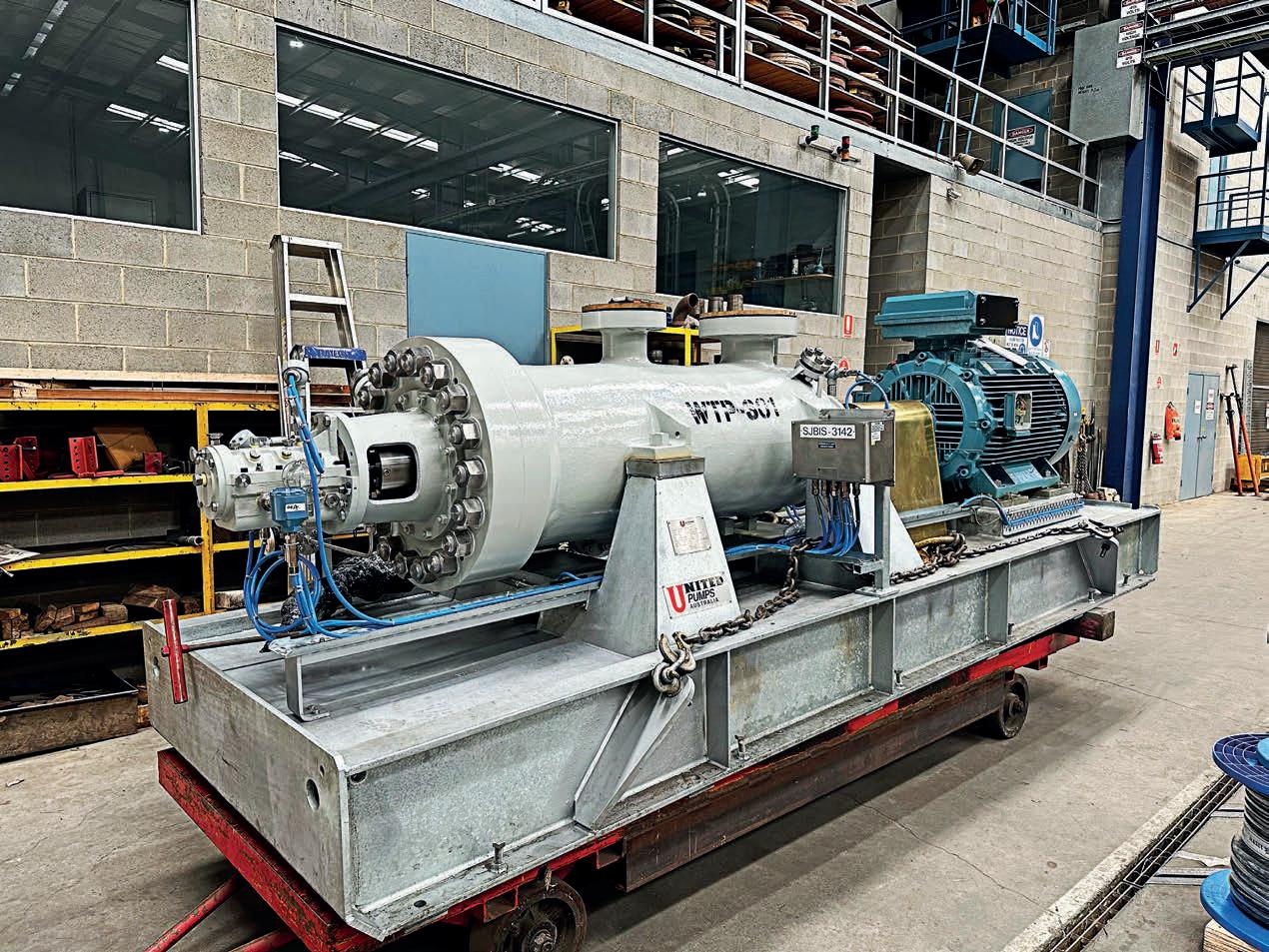
United Pumps Australia has spent more than 40 years helping operators choose, service and optimise pumps for peak performance. A 12-stage
Selecting the right pump for your job can be like separating the wheat from the cha� : there are a bevy of options, but not all are suitable to the required application.
Firstly, you need to determine what pump family is needed, with pumps typically falling in either the rotodynamic or positive displacement category. Rotodynamic pumps see energy continuously imparted to the pumped liquid by a rotating impeller, propellor or rotor, while positive displacement pumps see energy periodically added by application of force.
Operators then need to decide on the right pump type, which in the rotodynamic family could include centrifugal, peripheral or other specialty pumps such as jet pumps or magnetic drive pumps.
In the positive displacement family, operators can select from either reciprocating or rotary pumps, with a suite of sub-categories to choose from, such as double diaphragm (reciprocating), piston or screw pumps (rotary).
The correct pump selection can unlock a world of bene� ts and limit losses – which is essential to achieving an e� cient pump operation.
United Pumps Australia (UPA) has been helping operators select the right pump for more than 40 years. The company also o� ers a world-class pump testing and repair centre in Sunshine, Victoria, servicing all pump brands and models, and is adept at reverse engineering or re-engineering pump parts to as-new condition, or to better suit changing needs or speci� cations.
Mitigating losses is essential to achieving an e� cient pump operation, with ine� ciency a productivity and pro� tability killer.
For those looking to optimise or improve their pump design, UPA’s specialised service division will � rstly determine where the losses are coming from. Are you experiencing mechanical, impeller hydraulic, disk friction, leakage, and/or casing hydraulic losses, for example?
While some losses are unavoidable, many can be mitigated, and getting to
the root cause of these losses is key to reversing a throttling pump system.
Mechanical losses can come from bearings, bearing shields or mechanical seals, while misaligned couplings and variable frequency drives (VFDs) can also drive ine� ciencies. Leakage losses can come from a range of sources, which stem from the design and engineering that occurred in the � rst place.
Front rings, back rings and impeller balance holes are just some of the avenues for leakage losses to occur. In such circumstances, UPA would recommend, among other interventions, plugging balance holes or installing tighter clearances.
Tighter clearances can cause pump seizure and galling, or operational unreliability from high or low temperatures generated, and must be installed with precision. Minimum diametrical clearances should be considered � rst, which is dependent on the galling tendencies of the pump materials.
The use of advanced composite materials can help reduce
clearances, generating 3–5 per cent e� ciency improvements.
Elsewhere, seal � ush piping and balance piping can be put in place to ensure uniform � ow distribution and stabilise operational pressures, thus unlocking further e� ciencies.
In parallel with loss mitigation, pump operators can consider the role of VFDs in adjusting electrical frequency and voltage supplies, thereby regulating a pump motor’s speed and torque. Better matching VFD output with operational demand is key to removing wasteful control valve throttling and an underperforming pump system.
Other service measures include impeller re-sizing or a hydraulic redesign to adjust a pump’s performance where the operating regime has changed. This is often seen in the oil and gas sector where production � ows decrease over time as resources deplete.
Optimising the e� ciency of an existing pump with the use of better materials, tighter clearances, and reducing internal recirculation can typically improve e� ciency of the between 2–7.5 per cent or even more if the pump was severely worn beforehand.
However, the biggest gains can be had where a pump audit reveals a poor selection or where variable operating conditions have led to an oversized pump being wastefully throttled for much of its duty cycle.
In these circumstances, reselection and/or VFD speed control may reap enormous savings – often reducing power consumption by more than 50 per cent.
UPA can help with this decisionmaking process and provide pump servicing to adjust an existing system to better suit operational needs. This includes reverse and re-engineering capabilities, a large spare parts division and stock management services.
The company’s world-class service facility in Sunshine has two separate closed loops and an open loop for deep well verticals, vacuum tank net positive suction head (NPSH) testing and di� erential heads exceeding 1800m. High voltage drivers, noise and fast fourier transform (FFT) vibration testing can also be completed.
Testing – which can be performed to ISO 9906, ANSI/HI14.6 and API 610 tolerances, or other standards by arrangement – is benchmarked before and after repairs to demonstrate
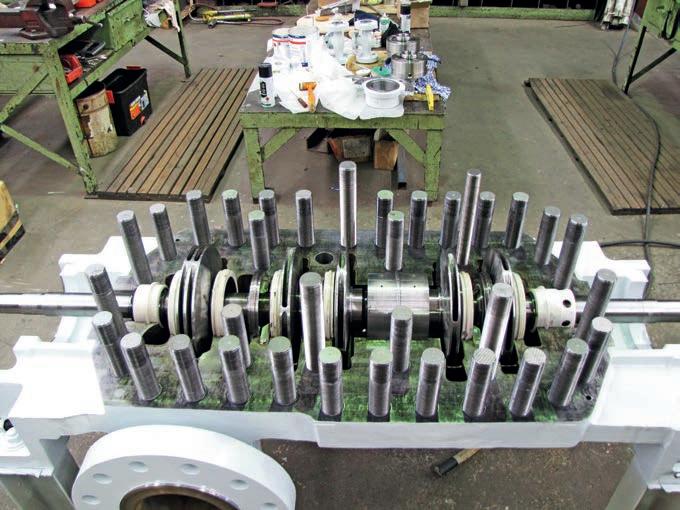
UPA has been helping operators select the right pump for more than 40 years.
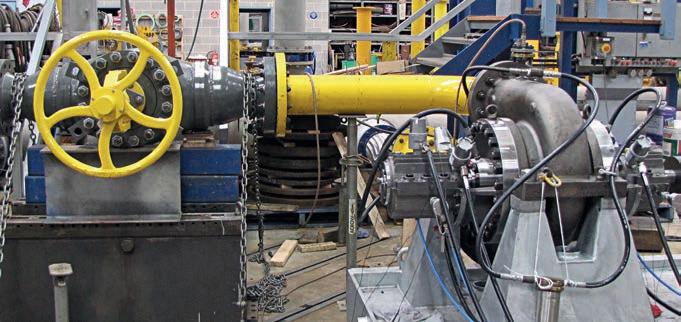
Composite carbon-fibre bushing reduces wear, vibration, and energy consumption in centrifugal pumps.
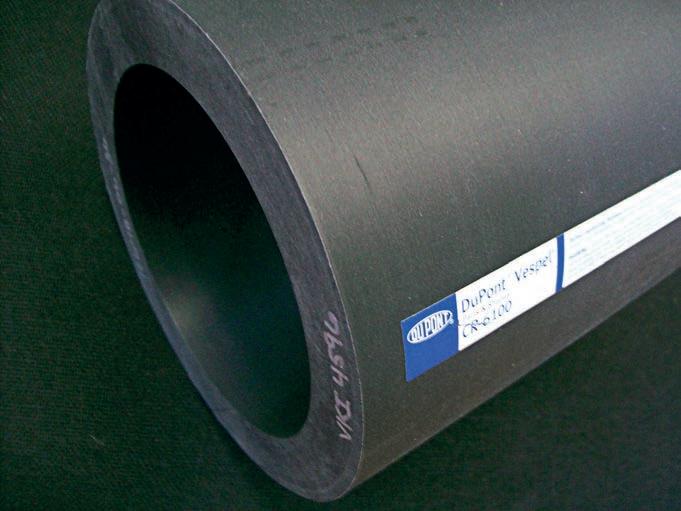
e� ciency and vibration signature.
While United Pumps Australia is recognised as a leading manufacturer of horizontal and vertical centrifugal single and multi-stage pumps, the company has taken its business to new heights through its esteemed service division.
This is helping inspire a more e� cient and sustainable Australian pump industry, where the very selection and servicing of a pump has troubled operators for decades.
Learn more at unitedpumps.com.au
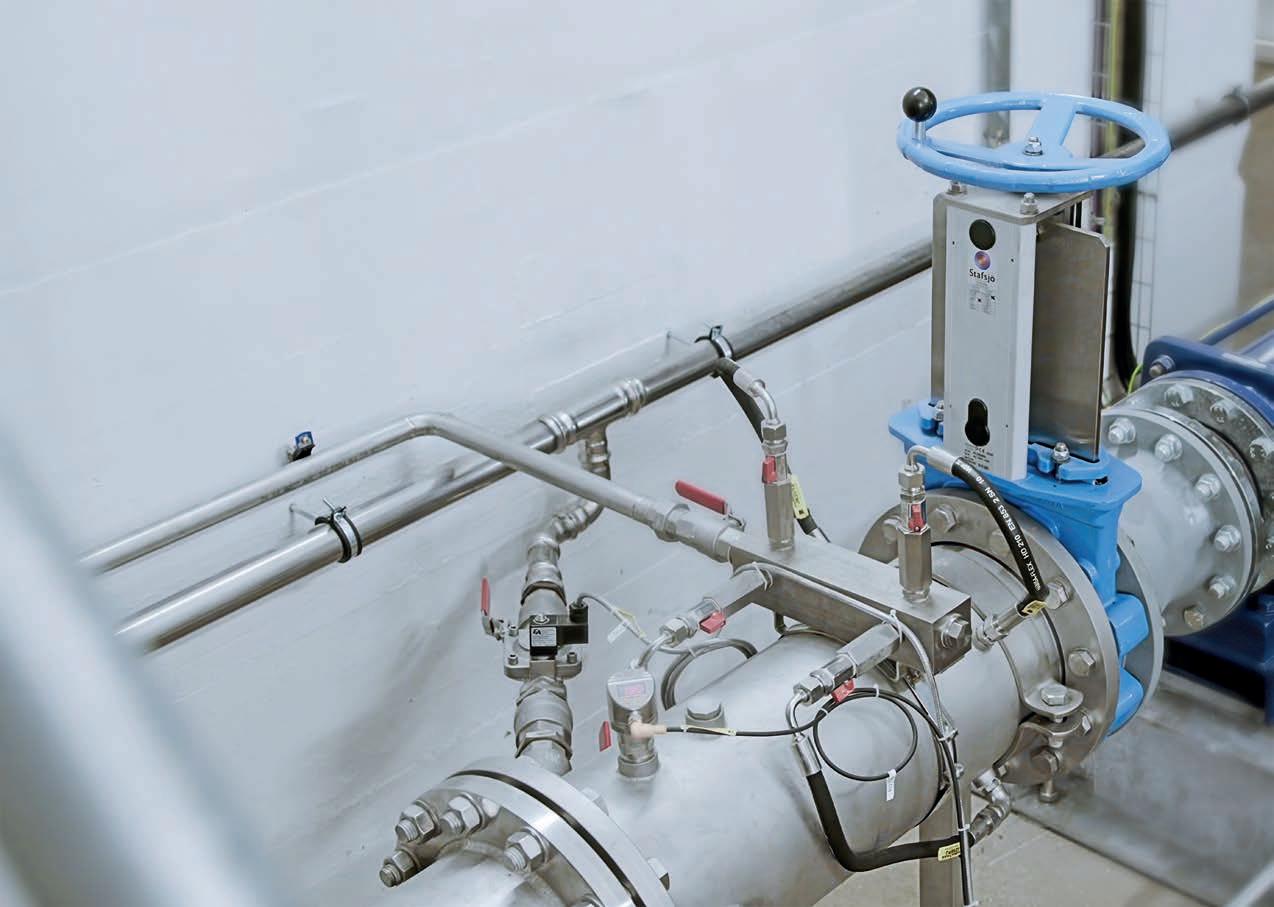
SEEPEX’s Smart Air Injection is proven to reduce energy demand by up to 80 per cent in Australian wastewater applications.
Across the globe, utilities face a common challenge: how to transport thick, dewatered sludge reliably, economically and sustainably.
Traditional systems such as piston pumps and screw conveyors have long been the standard, but they come with high energy demands, costly maintenance, and operational complexity. In an era de� ned by tightening budgets and rising environmental obligations, utilities are searching for smarter alternatives.
SEEPEX, a global leader in progressive cavity pump systems and digital solutions, has positioned itself at the forefront of this transformation with its Smart Air Injection (SAI) technology. By combining progressive cavity pumping with dense-phase pneumatic conveying, SAI is proven to reduce energy consumption, lower maintenance costs, and streamline sludge handling over long distances and challenging pipe routing. This is already being adopted by utilities worldwide, including Sydney Water at its West Camden water resource recovery facility (WRRF).
Challenges of conventional transport Wastewater treatment plants (WWTPs) generate vast amounts of sludge that must be stabilised and dewatered. Targeted processing must occur, such as drying and thermal utilisation, with the goal of recovering reusable products such as stabilised organic matter, biogas, and crop nutrients.
Conventional transport systems often rely on piston pumps operating at high pressure, requiring heavy-duty pipelines and subjecting equipment to accelerated wear. Mechanical conveyors often involve multiple steps, take up valuable space, and expose operators to rain-induced rehydration, odour and safety risks.
The drawbacks are clear: high operating costs, frequent downtime, and environmental burdens that run counter to a utility’s sustainability objectives. The need for more energye� cient, low-maintenance, and environmentally friendly technology is pressing.
The SEEPEX solution
By forming sludge into plugs, coating them with a thin polymer � lm, and
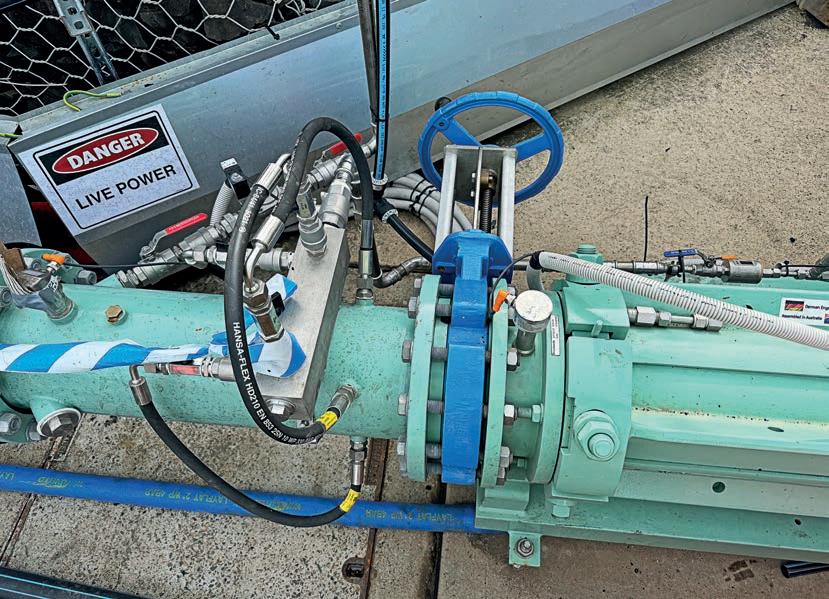
A Smart Air Injection system including compressed air connections.
propelling them forward with lowpressure compressed air, SEEPEX’s SAI system minimises friction and signi� cantly reduces pipeline pressure requirements.
Compared to piston pumps that often run at up to 70 bar, SAI systems typically operate at only 2–3 bar, reducing energy demand by up to 80 per cent and extending the service life of pump components.
“Another critical advantage is simpli� ed maintenance,” SEEPEX project manager Jenny Nicholson told Pump Industry. “With innovations such as the Rotor Joint Access system, operators can perform quick interventions without dismantling the pump, reducing maintenance costs by up to 88 per cent.
“The pump system’s modular design allows for easy integration into existing infrastructure, whether for temporary projects or permanent installations.”
How SAI works in practice
The principle behind SAI is simple yet e� ective. First, sludge is fed into an open hopper progressive cavity pump, which forms the material into dense plugs.
These plugs are then coated with a thin layer of polymer lubricant at only about 0.1 per cent dilution. Importantly, SAI uses this lubricant in extremely small quantities – about 2 per cent of the overall sludge � ow – making the chemical input negligible while signi� cantly reducing friction inside the pipeline.
“Once lubricated, the plugs are propelled forward by controlled bursts of compressed air,” Nicholson said. “Instead of continuous high-pressure pumping, sludge moves in short, e� cient segments, reducing wear and cutting energy consumption.”
A complete SAI system typically consists of four main components: an open hopper pump to feed and compact the sludge, a dosing pump to supply the lubricant, a compressor with an air receiver vessel to generate the required low-pressure air� ow, and the SAI controller.
The controller is the “brain” of the system, managing air injection timing, lubricant dosing, and pipeline pressure. Advanced automation and monitoring features give operators real-time data and precise control, ensuring stable performance under changing conditions.
“SAI’s ability to operate at just 2–3 bar makes it possible to use lighter PN10 pipelines instead of expensive heavyduty PN40–PN100 pipes, reducing both capital and operating costs,” Nicholson said.
“In contrast to bulky screw or belt conveyors that consume � oor space, demand constant maintenance, and leave sludge exposed to the open air, SAI is compact, enclosed, and odour-free.”
The result is a system that not only reduces pressure but also reduces stress – on equipment, operators, and budgets. With lower wear, fewer spare parts, and optimised energy input, SAI makes dewatered sludge transport more predictable, more sustainable, and far more cost-e� cient.
Success stories worldwide
Sydney Water WRRF, Australia
Sydney Water, Australia’s largest water utility, needed a temporary solution to maintain operations during facility upgrades at its West Camden WRRF. With conventional screw conveyors requiring extensive infrastructure and creating odour challenges, SEEPEX’s mobile SAI system provided a compact, enclosed, and energye� cient alternative.
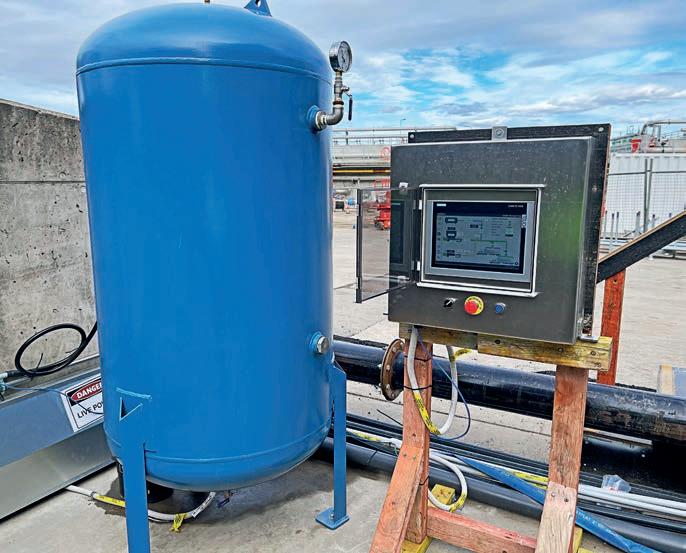
Performance tests con� rmed that SAI maintained biosolids consistency, minimised odours, and streamlined transport.
“Implementing SEEPEX Smart Air Injection at West Camden WRRF has been a transformative step in biosolids management,” Sydney Water principal engineer Mark Ziogas said. “This innovative technology not only enhances e� ciency and reduces costs but also signi� cantly improves safety and environmental outcomes.”
The success of this temporary SAI application has spurred Sydney Water to explore permanent deployments across its network.
When an ambitious eco-energy facility was launched to convert 370,000 tonnes of municipal solid waste into 200 million kilowatt-hours of electricity annually, sludge transport became a critical bottleneck. The layout required moving material 370m horizontally and 30m vertically. Traditional conveyors and trucks proved labour-intensive and costly, while dry sludge pumps su� ered from wear due to excessive pressure.
The installation of SEEPEX SAI transformed operations. The plant achieved smooth, trouble-free transport without replacing a single wear part. The results included up to 80
per cent lower electricity consumption and major reductions in truck transport and labour costs, all within a compact footprint that � t the plant’s spatial limitations.
Sehnde WWTP, Germany
In Sehnde, near Hanover, where sludge was previously transported using a piston pump, the goal was to reduce energy use, lower operating costs, and ensure compliance with new environmental regulations.
SEEPEX installed an SAI system capable of moving sludge 250m through an existing buried steel pipeline. Within the � rst year, energy costs were reduced by more than 50 per cent, while maintenance costs fell by 88 per cent.
Operating pressures dropped from 60–80 bar to just 3 bar.
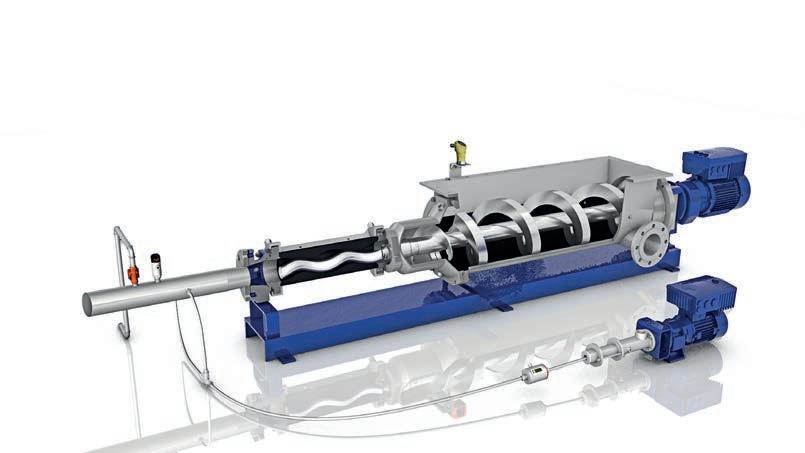
The Smart Air Injection system features an open hopper pump, boundary layer injection, and control unit for optimised biosolids transport.
Overall, annual operating costs were reduced by up to 82 per cent, saving around €37,500 per year, demonstrating the scalability and sustainability of SAI as a trusted solution.
Hetlingen WWTP, Germany
Serving more than 40 municipalities north-west of Hamburg, Hetlingen WWTP needed to replace undersized piston pumps that consumed excessive energy and required frequent maintenance. The challenge was to transport 5–15m³/h of dewatered sludge over 90m, including a 30m vertical rise.
SEEPEX supplied a turnkey SAI solution, including a hopper pump, compressed air system, dosing pump, and automation control. By operating at just 2–3 bar instead of 70 bar, Hetlingen reduced pipeline requirements, cut energy use by 20–25 per cent, and

energy consumption compared to piston pumps.
• Up to 88 per cent lower maintenance costs thanks to low-pressure operation and simpli� ed pump access.
• Con� dent handling of dewatered sludges up to 1km and across vertical lifts.
• Modular design suitable for both temporary and permanent installations, requiring a smaller footprint.
• Enclosed pipelines reduce odours and emissions, supporting workplace safety and sustainability goals.
From Australia to China and Germany, Smart Air Injection has consistently proven itself as the future
reduce carbon emissions, SAI provides a pathway to achieve these goals,” Nicholson said.
“With more than 100 installations worldwide and counting, the system has already established itself as a trusted solution across multiple contexts.”
As the push for sustainability reshapes industries, the message is clear: Smart Air Injection is not just an incremental improvement, it’s a step change.
This forward-thinking solution is enabling wastewater utilities to embrace a cleaner, more e� cient, and futureready approach to sludge handling.
Learn more about Smart Air Injection at seepex.com
442C
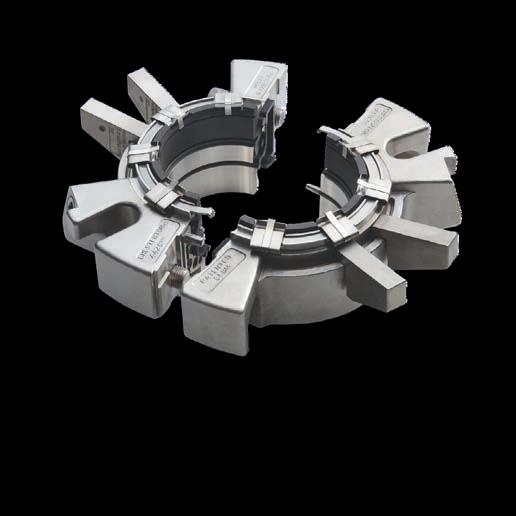
Split Mechanical Seal
Chesterton® sealing solutions help improve equipment reliability, reduce maintenance, and support efficient plant operation. The 442C and DualPac® 2212 deliver dependable sealing performance for a wide range of rotating equipment applications.
Reduces Downtime and Maintenance
Improves Equipment Reliability

Reduced Operating Costs Scan
chesterton.com
chestertoncustomseal.com.au


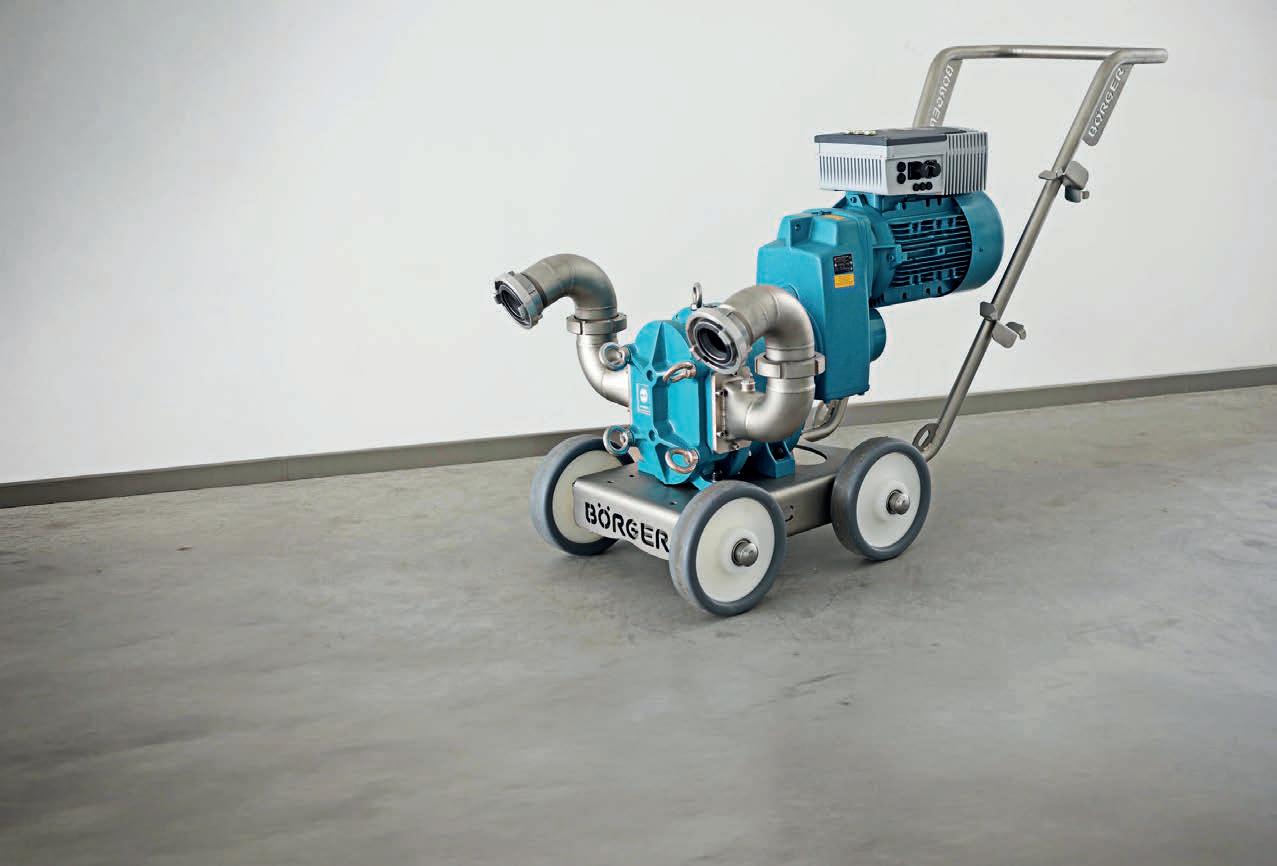
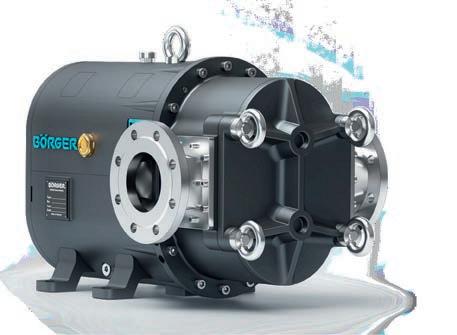
Boerger’s rotary lobe pump range is designed with e ciency and reliability at its core.
Boerger doesn’t compete on price, but on performance. is is epitomised by the company’s rotary lobe pump range.
As cost and sustainability pressures grow, industrial facilities are having to adjust their operations to improve e� ciency, lower energy consumption, and reduce downtime – all while handling increasingly demanding pumping applications.
Whether in wastewater treatment, biogas production, chemical processing, food manufacturing, mining, or emergency response operations, pumping equipment is being called on to deliver reliable performance under a range of operating conditions.
Among the many pump systems available today, rotary lobe pumps have earned a reputation as one of the most versatile and dependable solutions for modern industry. Their ability to handle everything from low-viscosity liquids to highly viscous, solids-laden media has made them a preferred choice for engineers and operators worldwide.
As industries evolve, so too has rotary lobe pump technology. Manufacturers such as Boerger have continually re� ned their designs to improve e� ciency, simplify maintenance, and deliver application-speci� c solutions that meet the diverse needs of modern operations.
“Industrial pumping applications rarely operate under ideal conditions. Fluids can vary signi� cantly in viscosity, solids content, abrasiveness, and chemical composition,” Dominik
Straetling, managing director of Boerger Pumps Asia, Singapore, told Pump Industry.
“Pumps must therefore be capable of adapting to changing process requirements without sacri� cing reliability.”
Rotary lobe pumps achieve this through a simple-yet-e� ective operating principle. Two synchronised lobes rotate within the pump housing, creating cavities that transport the pumped medium from the suction side to the discharge side. This positive displacement action ensures
a consistent � ow rate while providing gentle product handling and excellent solids capability.
The result is a pumping solution capable of handling sludge, wastewater, chemicals, oils, food products, polymers, digestate, and many other challenging media with exceptional reliability.
Looking beyond the purchase price When selecting pumping equipment, focusing solely on the initial purchase cost can be misleading. Operators are instead best placed to look at
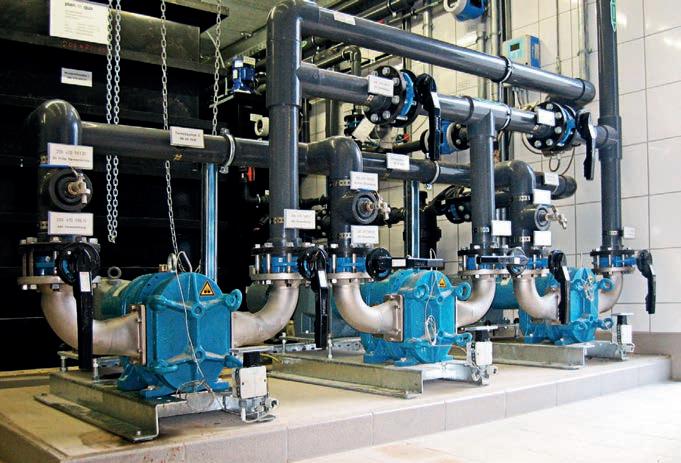
Boerger has continually refined its rotary lobe pump portfolio to improve e ciency and simplify maintenance.
the total cost of ownership, which provides a more holistic view of energy consumption, maintenance requirements, spare parts costs, and operational downtime.
“Modern rotary lobe pumps are increasingly valued for their ability to minimise these ongoing expenses.”
Straetling said. “E� cient hydraulic design reduces power consumption, while robust construction helps ensure dependable operation over many years of service.
“For plant operators, the greatest value often comes not from the pump’s purchase price, but from its ability to deliver reliable performance day after day with minimal interruption.”
One of the most signi� cant contributors to operational cost is unplanned downtime. Every hour spent servicing equipment can a� ect productivity and pro� tability.
This is why maintainability has become a key consideration in pump design. Boerger’s Maintenance-in-Place (MIP) concept allows wear components to be accessed directly through the front cover without removing the pump from the piping system.
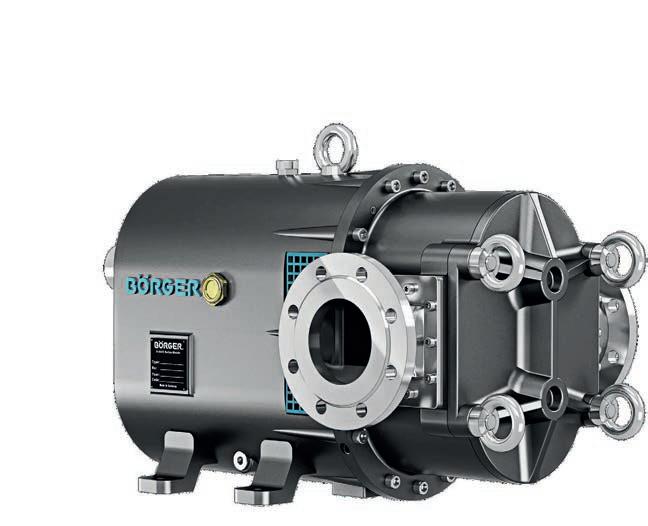
The BLUEline Legend rotary lobe pump has been refined through decades of practical operating experience.
“This approach signi� cantly reduces service times and enables maintenance personnel to perform inspections and component replacements quickly and e� ciently,” Straetling said. “For facilities operating continuously, the ability to minimise downtime can provide substantial operational and � nancial bene� ts.”
For many industrial users, reliability remains the most important performance consideration.
The BLUEline Legend series represents Boerger’s proven rotary lobe pump technology, re� ned through decades of practical operating experience. Designed for durability, e� ciency, and ease of maintenance, these pumps have become trusted solutions across municipal, industrial, and commercial applications worldwide.
“From wastewater treatment facilities and sludge handling systems to industrial process duties and mobile pumping applications, the BLUEline Legend provides dependable performance in demanding conditions,” Straetling said.
“Robust construction and servicefriendly design make this rotary lobe
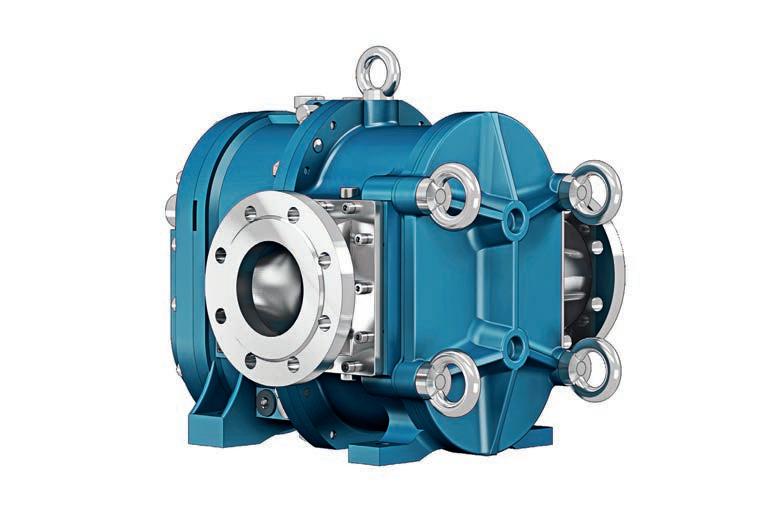
The ONIXline series has been engineered specifically for highly abrasive sludges.
pump a preferred choice for operators seeking long-term reliability and low lifecycle costs.”
From the success of BLUEline Legend, Boerger has continued to pursue new ways of unlocking greater operational e� ciency and sustainability, driven in large part by customer needs.
This has inspired the BLUEline Nova – a novel solution to meet modern industrial requirements.
Featuring an advanced hydraulic design, the BLUEline Nova optimises � ow characteristics while maintaining the durability expected from Boerger rotary lobe pumps.
“By reducing energy consumption and enhancing overall pumping performance, the BLUEline Nova helps operators achieve lower operating costs and improved process e� ciency,” Straetling said.
“It represents the next step in rotary lobe pump innovation, helping facilities eager to achieve sustainability objectives while not compromising on performance.”
The ONIXline
Not all pumping applications are created equal. Some involve highly abrasive sludges, aggressive chemicals, viscous products, or extreme operating conditions that demand exceptional durability.
The ONIXline series has been engineered speci� cally for these demanding environments.
Its advanced design enables it to handle challenging media while maintaining reliable performance. For industries such as mining, wastewater treatment, chemical processing, and heavy manufacturing, the ONIXline o� ers a robust solution where reliability is critical and downtime isn’t an option.
The strength of Boerger’s rotary lobe pump range lies in its ability to provide specialised solutions while maintaining the core advantages of rotary lobe technology.
Whether selecting the proven reliability of the BLUEline Legend, the enhanced e� ciency of the BLUEline Nova, or the heavy-duty capabilities of the ONIXline, operators bene� t from a common commitment to quality, serviceability, and longterm performance.
These bene� ts align with the future of � uid handling, where the need for greater e� ciency and reliability is more important than ever. This will see technologies that minimise energy consumption and simplify maintenance increasingly prioritised in industrial applications, placing Boerger – which competes on performance, not price –at the front of the queue.
Learn more at boerger.com/en
Roto Pumps has installed thousands of positive displacement pumps and spare parts across Australia.
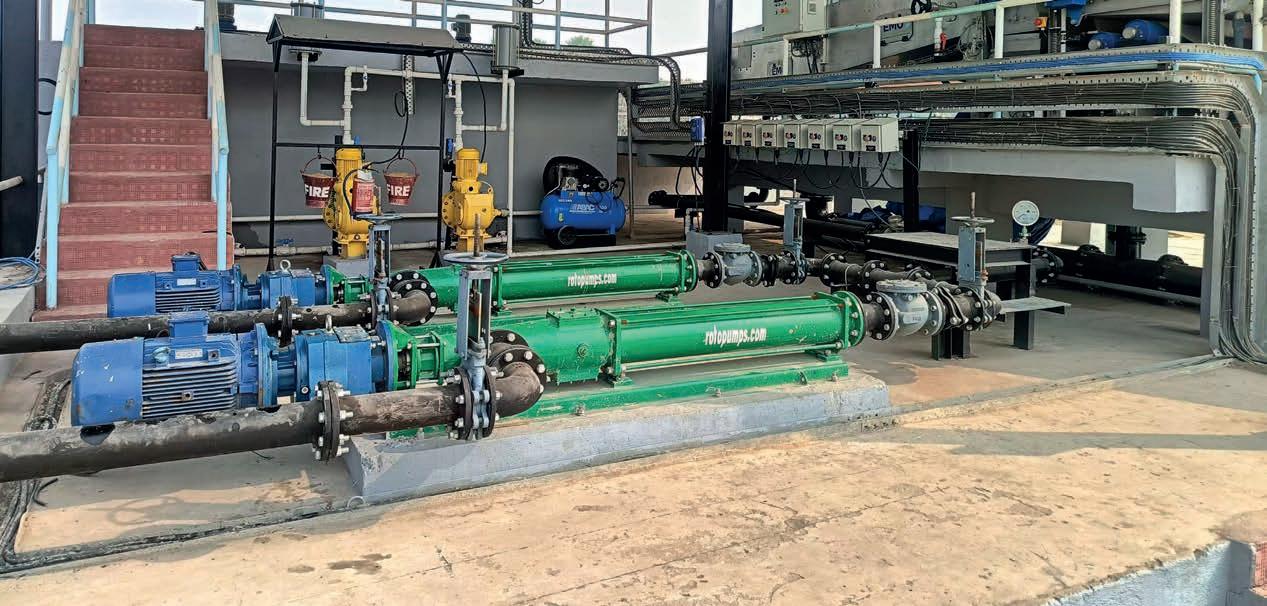
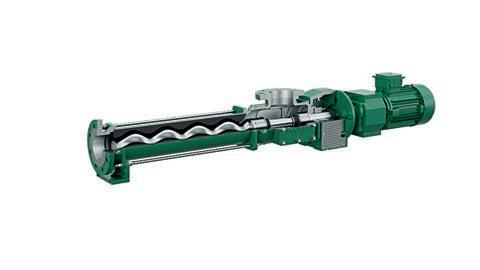
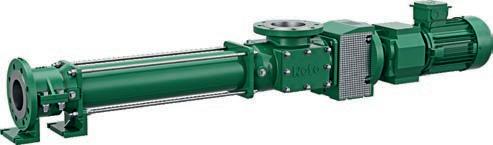
Design enhancements across Roto Pumps’ ‘P’ Range help operators reduce energy consumption, extend service life and lower maintenance costs.
While motors and control systems play a central role in reducing pump energy consumption, adjustments made to the pump system itself can deliver the most lucrative returns.
Roto Pumps has developed its ‘P’ Range progressive cavity pumps with this in mind, combining proven positive displacement pump technology with a range of design enhancements aimed at improving e� ciency, reliability and service life.
The P Range forms part of Roto Pumps’ broader progressive cavity pump portfolio, a suite of products known for delivering accurate, lowshear � uid transfer while handling challenging media.
Progressive cavity technology
Particularly suited to applications involving viscous, abrasive, shearsensitive and solids-laden �uids, progressive cavity pumps deliver a uniform, metered and non-pulsating �ow, with pump capacity varying in proportion to speed. These inherent attributes help operators optimise energy usage while maintaining process consistency.
At the heart of the P Range is its optimised rotor and stator geometry available in both standard and 6L con� gurations. This reduces rubbing velocities between pumping elements, helping to minimise wear and maintain hydraulic e� ciency over time. The stator also incorporates a tapered inlet design to improve media entry and enhance suction performance, reducing
the energy required to move di� cult � uids through the system.
Another key feature is Roto Pumps’ unique thrust bush joint design, which helps the system absorb axial loads e� ciently to promote smoother operation and reduce mechanical stresses on critical components. A metal-reinforced boot seal prevents pumped media from entering the joints, extending joint life and reducing maintenance requirements.
Further supporting operational e� ciency is the P Range’s advanced shaft seal arrangement. Its open seal housing design prevents media accumulation around the seal area, improving seal life and eliminating the need for seal � ushing plans.
The pumps also feature a heavy-duty bearing housing with a two-piece shaft design, simplifying maintenance and supporting a wide range of geared motor con� gurations.
For applications where e� ciency retention is critical, Roto Pumps also o� ers a wear compensation stator with its P Range, which uses engineered spacers to maintain optimal interference
Roto Pumps’ progressive cavity pump range is known for delivering accurate, low-shear fluid transfer.
between the rotor and stator as components wear.
By ensuring precise and regulated adjustments, this system helps sustain volumetric e� ciency while avoiding unnecessary energy losses associated with deteriorating pump components.
Delivering � ow rates up to 360m³/h and pressures up to 24 bar (350 PSI), the P Range features self-priming capability, low NPSH requirements, suction lift capability up to 9 mwc and reversible rotation capabilities. The pumps can handle � uids ranging from 1 cSt to 3 million cSt in viscosity and solids up to 150mm in size, making them suitable to a broad range of industrial applications.
With more than 350,000 installations worldwide and over � ve decades of experience in progressive cavity pump technology, Roto Pumps is focused on engineering solutions that help operators balance reliability, performance and energy e� ciency.
Visit rotopumps.com.au for more information.

Franklin Electric has developed a high-e ciency pump package that can slash annual electricity costs by 21 per cent.
Since manufacturing the world’s � rst submersible motor for water pumps in 1949, Franklin Electric has become a household name in developing proven borehole solutions.
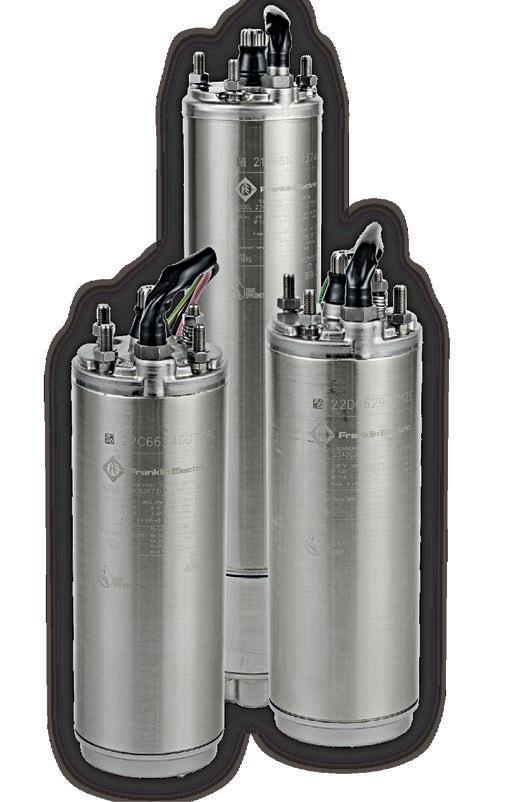
Franklin Electric is now taking this expertise to new heights, having pioneered permanent magnet technology in submersible motors, unlocking motor e� ciencies of up to 94 per cent.
Permanent magnets are a key cog in Franklin Electric’s High E� ciency Systems (HES) – a suite of 4”, 6”, 8” and 10” systems that pair a submersible pump, variable frequency drive (VFD) and matching output � lters with either an encapsulated synchronous (4” and 6”) or rewindable synchronous (8” and 10”) motor.
“While the motor is the heart of the system – where most energy savings are achieved – our HES systems are packaged with a VFD and protections such as � ow switches, temperature sensors and pressure sensors,” Franklin Electric Australia national sales manager Stephen Jennings told Pump Industry.
“Our motors are based on an original design, which has been tried and tested since the 1940s. This helps us build packages that are bespoke and practical for the customer, while being simple to deploy and understand.”
Franklin Electric’s HES systems are delivering signi�cant gains in industries that understand the cost savings on o�er.
Having installed Franklin Electric’s bore pumps with strong results, Yarra Yarra Golf Club opted to upgrade its systems to Franklin Electric’s HES motors.
While naturally coming with a higher upfront cost, given the scale of Yarra Yarra’s irrigation requirements, the initial investment in Franklin Electric’s HES motors was fully recouped in under 12 months.
Annual electricity costs dropped from $35,239 to $27,586, saving the club $7652 in the � rst year, while another capability gave Yarra Yarra’s grounds team unprecedented oversight of water infrastructure strewn across the golf course.
Remote monitoring and bore level monitoring tools enabled better scheduling, system alerts and planning capability – a game-changer for a golf course navigating changing climates and water requirements across seasons.
“Yarra Yarra Golf Club is a good reference point for our HES systems,” Jennings said.
“We engaged with them directly, understood what they had, explained what we thought we could save, and they backed us. Post installation, they achieved signi� cant power savings and quickly saw the payback.”
Seeing what Yarra Yarra has been able to achieve, other golf clubs have been enquiring about Franklin Electric’s HES systems.
“Many golf courses need to � ll a dam each day, so they quickly get the paybacks needed to invest in our HES systems,” Jennings said.
Franklin Electric’s HES systems are also generating strong uptake in solar installations, where solar footprints can be reduced. This is made possible by a voltage boost function.
“Voltage boost is predominant in 230V three-phase motors up to 2.2kW,” Jennings said. “Instead of requiring the full 230V, with voltage boost our motors only need 100V incoming to get going.
“This supports the ratio of panel to motor wattage. Where we once needed around 5000W of panels to run a 2000W motor, we can now equalise these ratings thanks to the voltage boost function.”
On larger solar pump systems, the use of a HES motor can reduce the required solar array size. An application requiring eight strings x 20 solar panels, for example, can be reduced to seven
its
strings. This is achieved from motor e� ciency alone in comparison to standard con� guration motors.
“This reduces the surface area, hardware and maintenance costs,” Jennings said. “Lower energy consumption also enables operators to run their systems longer – starting their motor early in the day and running it late.”
Jennings said the applications bene� ting most from Franklin Electric’s HES systems are those with “long pumping hours”.
“We see these systems supporting town water supply in remote areas, many of which run on bore water,” he said.
“If you’re pumping 24/7 into water treatment plants or to supply towns, that’s where you’ll get the fastest payback. Cotton farmers are big bene� ciaries as well, given their signi� cant pumping load.”
Franklin Electric is increasingly targeting the mining industry as well, which relies on submersible pump systems to dewater open pits and underground operations.
“Dewatering is critical to the resource extraction process on mine sites, but often the biggest lifecycle cost of this process is energy,” Jennings said.
“With mining operations facing a social responsibility to reduce energy consumption and environmental impact, they are entertaining new solutions to this age-old process.
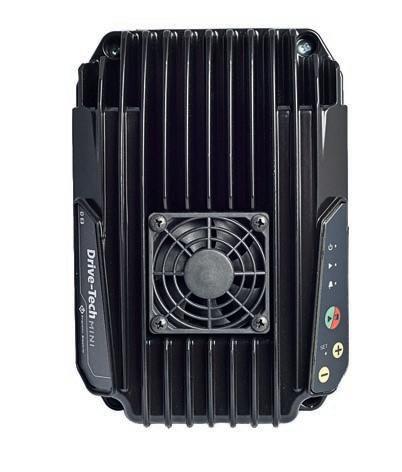
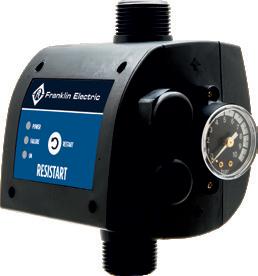
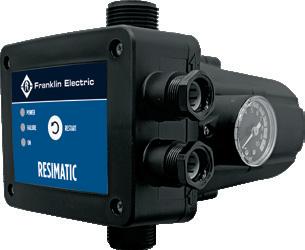
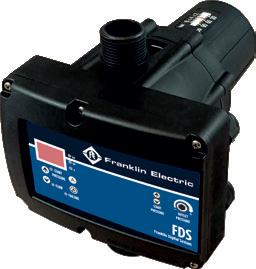
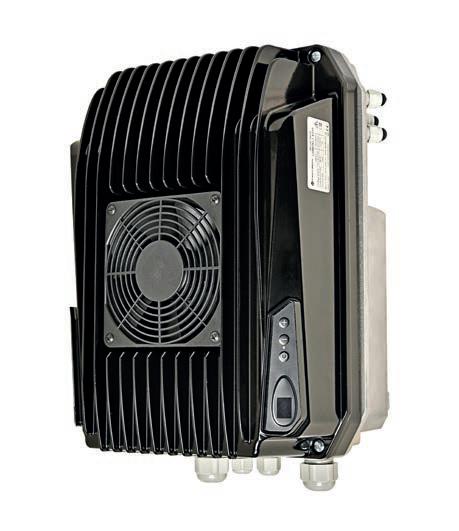
The Drive-Tech MINI and COMPACT are used to control and protect pumping systems.
“By switching to Franklin Electric HES motors, mining operations can signi� cantly reduce their energy consumption, improve their sustainability pro� le and cut operating costs all at once.”
While Franklin Electric’s HES systems boast a strong footprint of installations across a range of industries, the next phase of deployment hinges on the marketing of the system.
“We’re making our HES systems simpler to understand and quote,” Jennings said. “Customers will be able to say, ‘Let’s opt for the high-e�ciency package’, which clearly encompasses a bespoke solution with several components.
“We’re attending more trade shows and being active commercially to explain to the market the upside and simplicity of our HES systems. This will help customers clearly understand the cost di� erences and the savings on o� er.”
From introducing the world’s �rst submersible motor for water applications more than 75 years ago to advancing permanent magnet technology today, Franklin Electric continues to build on its legacy of innovation.
The company’s High E� ciency Systems represent the next chapter, providing a simple solution for industries eager to reduce energy consumption and operating costs.
Visit franklinelectric.com.au to learn more.

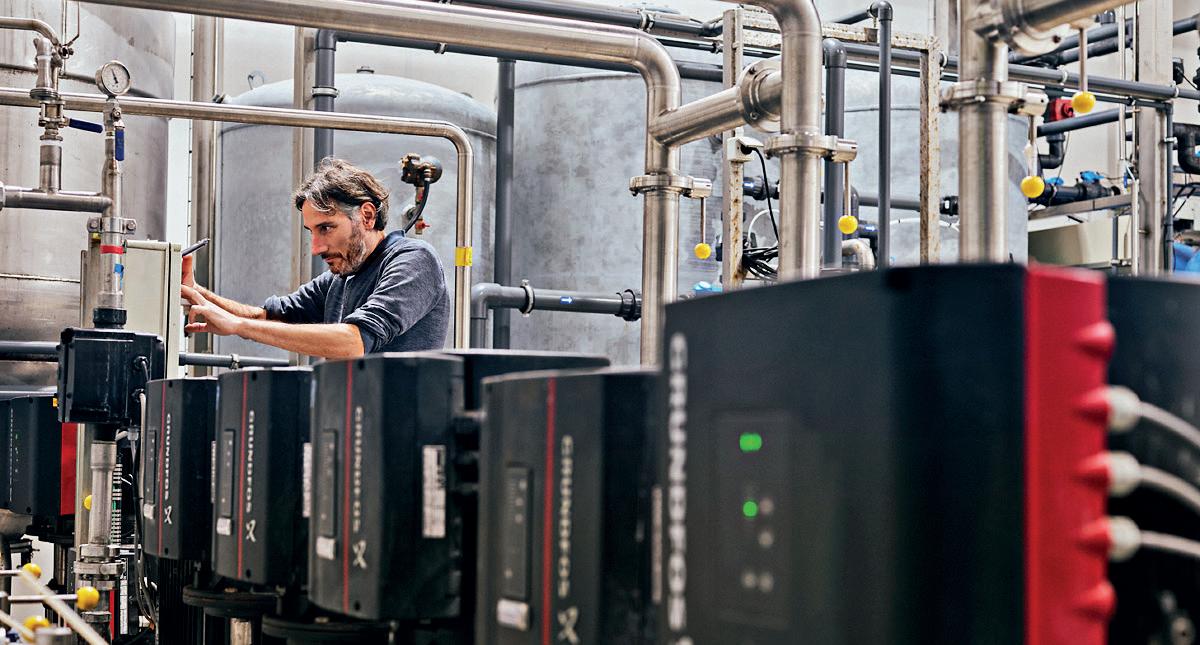
Grundfos is helping Australia’s industrial sector slash energy consumption, limit operational costs and boost performance with its e-pump range.
As � oods, heatwaves and wild� res across Australia underline the urgency of the climate crisis, industries are already reshaping how they operate.
The industrial sector is facing rising pressure to cut emissions, reduce energy use, and build resilience across operations, with digital technologies playing a larger role than ever before.
According to the International Energy Agency, industry energy use comprised 40 per cent of global energy consumption in 2024, contributing to two-thirds of total energy demand growth since 2019.
While this footprint is signi� cant, it also represents an enormous opportunity. With the right technologies, much of this energy use can be reduced without compromising performance, productivity or reliability.
The good news is that the solutions already exist. Intelligent, energy-e� cient pump systems – especially e-pumps that adjust to real-time demand – are helping industrial companies cut consumption, lower emissions and strengthen operational performance.
As governments around the world introduce legislation to boost climate e�orts, many industrial companies are taking the lead by establishing clear ambitions and approved net-zero plans.
Grundfos has had its own net-zero target approved by the Science Based Targets initiative, and to continue this movement, the company has launched a ‘Hard energy facts. Intelligent answers.’ campaign to show what its intelligent and energy-e� cient e-pumps can do for industry partners.
Recognising that pumps account for roughly 25 per cent of all electricity consumed by industrial electric motors, the campaign highlights the potential of Grundfos e-pumps – a combination of energy-e� cient pumps, motors and drives that underpin a single, intelligent and connected solution.
While most industrial systems are set to run constantly at full speed to ensure sustained operational reliability, most of the time, full speed isn’t needed.
Grundfos’ e-pumps are equipped with a frequency converter to help ensure the pump only runs when needed, which helps optimise complete systems in real time. Calculations show that these e-pumps can help reduce energy
Grundfos iSOLUTIONS unlock savings through system coordination of pumps, drives and controls.
consumption by 37 per cent on average. For many Grundfos customers, this number is much higher.
The e-pump range is bolstered by Grundfos’ iSOLUTIONS, which go beyond pumpset optimisation to unlock savings through the coordination of pumps, drives, controls, measurement and communication units.
iSOLUTIONS recognises that better system control can be a gamechanger for the e� ciency of an operation, with a holistic approach able to reduce industrial energy consumption by as much as 20 per cent.
As the need for climate action grows, industry has a signi� cant opportunity to reduce their energy consumption and carbon emissions with the adoption of e-pumps – all the while boosting performance, reducing costs and simplifying operations.
This places Grundfos at the forefront of industrial sustainability, always supporting customers with its intelligent, energy-e� cient solutions, while constantly seeking opportunities and trialling innovations to boost e� ciencies and cut costs.
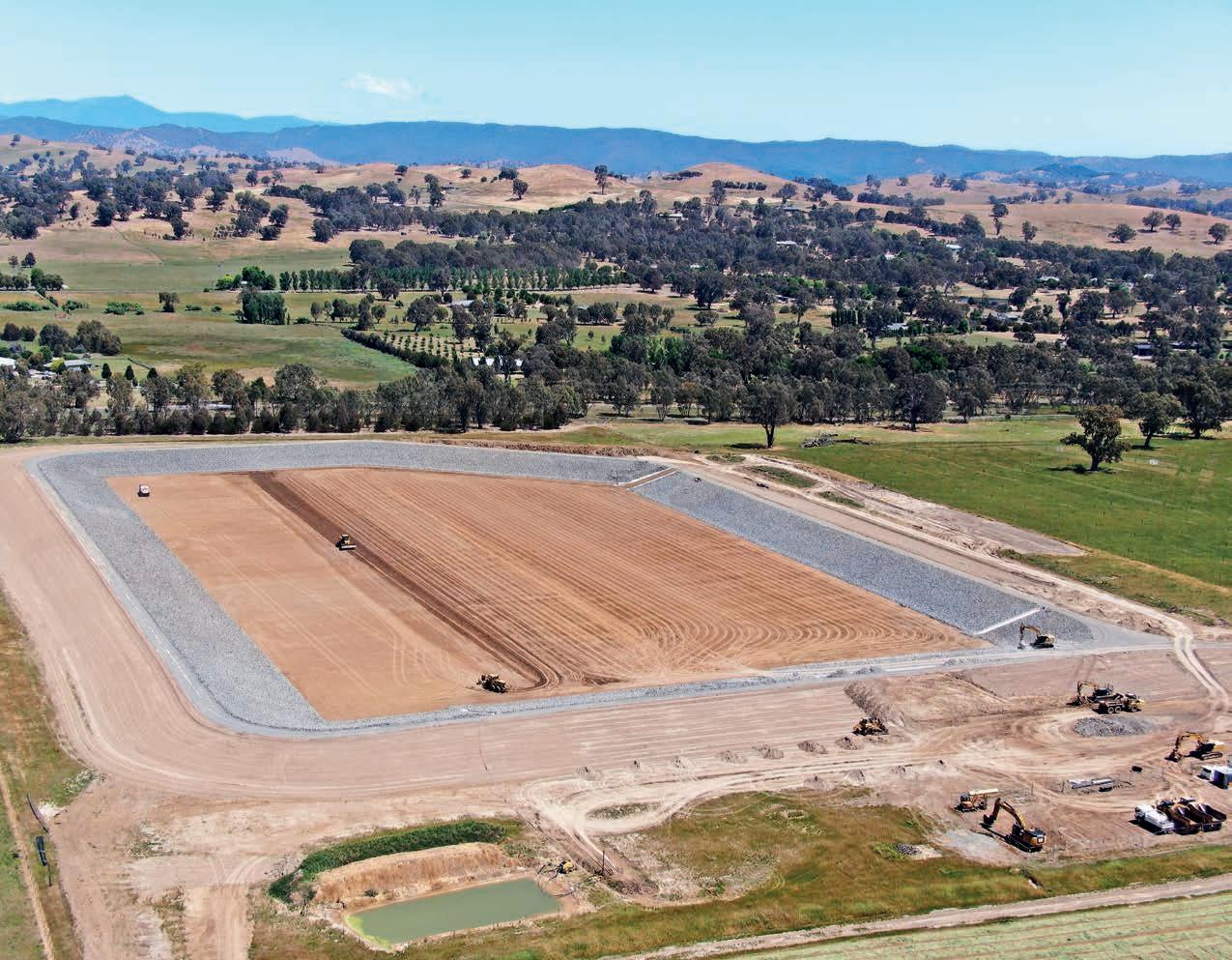
A new 50-year roadmap outlines the infrastructure needed to meet Mansfield’s growing water and wastewater demands.
Every � ve years, Goulburn Valley Water (GVW) takes stock and develops the next iteration of its Urban Water Strategy.
This enables the utility to evolve with heightening climate pressures and water demands, charting a new path to best position local towns and businesses for the future.
With 54 towns in its network, GVW expects water use to double over the next 50 years, with population growth and climate change driving higher water demand across GVW’s service area. And with rising water use and wastewater demand closely interlinked, GVW is also planning sewerage upgrades across its network to ensure prolonged wastewater security.
Ahead of the release of its next Urban Water Strategy in July 2027, GVW has launched a 50-year master plan for
Mans� eld – which sits in the foothills of the Victorian Alps.
Across four projects, GVW will be aiming to ensure water security for the town through to 2074.
The � rst project will see a new 9.7km pipeline constructed to improve untreated raw water transfer capacity from the town’s storage reservoirs to the Mans� eld water treatment plant.
GVW general manager – planning and assets Regan Flanagan explained why the utility was tackling this project � rst.
“This is an ageing asset that is due for replacement based on condition, but we will also be upsizing the pipeline to cater for growth of the town,” he told Pump Industry
“Of the four projects identi� ed, this one was considered the most critical based on condition and capacity of the asset and has therefore been
prioritised to ensure a more e� cient and reliable supply.”
Once GVW has completed this pipeline by early 2027, it will commence construction of a second pipeline from the o� take at Delatite River to the existing water storage at Ritchies Reservoir.
GVW will then undertake an upgrade of the Mans� eld water treatment plant, increasing its capacity to produce up to 10 megalitres (ML) of treated water per day. The last of the four projects will see GVW construct an additional 200ML of raw water storage.
All projects are planned to be completed by 2034.
“These projects are being delivered in a staged approach, with the timing of each based on asset condition and the capacity of existing assets to meet the needs of the growing town,” Flanagan said.
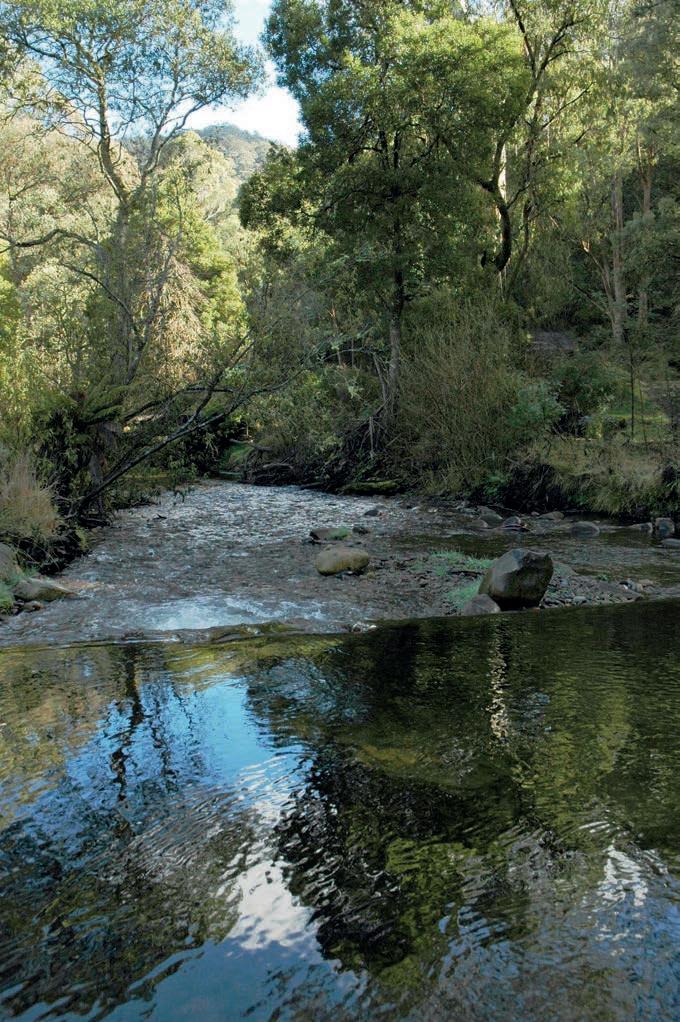
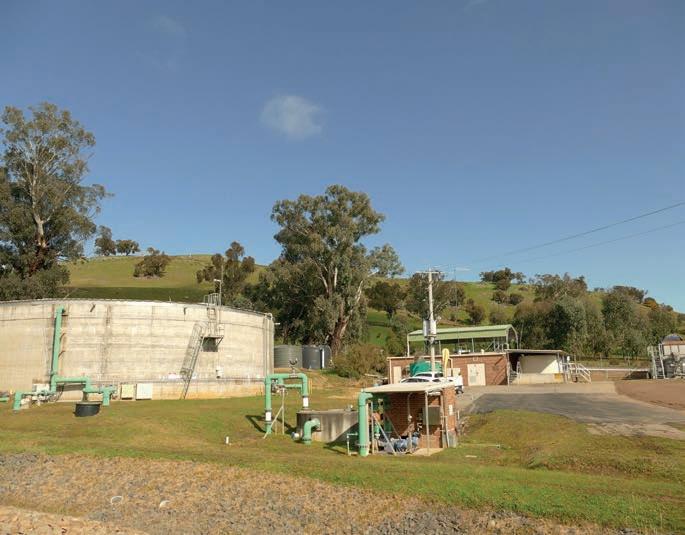
Pump developments
GVW is plotting several pump upgrades as part of its 50-year master plan for Mans� eld, with the � rst project including the construction of a new raw water transfer pump station.
This will comprise two pumps (one duty and one standby), with provision for a third main pump to accommodate future increases in � ow. The pump station will have a capacity of up to 230L/s at 104m total dynamic head (TDH) and be connected to GVW’s SCADA system for monitoring and operation.
When sourcing new pump systems, Flanagan said GVW follows a “strict procurement process” that’s in line with Victorian Government regulations.
“We also have an approved list of materials that are used in our assets,” he said. “For this pump station, the approved procurement approach was a design and construct (D&C) model … which includes the supply of all materials required.
“The works were publicly tendered and awarded in line with Victorian regulations.”
Once GVW has completed the program of works by 2034, it expects Mans� eld to have access to a reliable, safe and resilient water supply for its growing population for the years ahead.
A key asset across GVW’s service region, the utility is always undertaking a range of pump projects at any one point in time.
Other active projects across GVW’s network include the construction of a new 36ML clear water storage tank in Shepparton. This will increase drinking water storage for Shepparton, Mooroopna and surrounds by more than 40 per cent.
GVW is also building a new 25km drinking water supply pipeline from the Numurkah water treatment plant to storage tanks in Nathalia, while Kilmore is getting a new trunk sewer main to connect development areas in southern Kilmore with the town’s wastewater treatment plant.
As climate pressures and population growth reshape regional water networks, utilities are increasingly relying on long-term infrastructure strategies to stay ahead of demand.
GVW’s Mans� eld projects illustrate how targeted investment in critical assets –including pumping infrastructure – can help future-proof water services for decades to come.

Advanced sealing technologies and compression packing underpin a more e cient, reliable and cost-friendly pumping operation.
For decades, industries have focused on improving pump e� ciency through better hydraulic design, premium-e� ciency motors, and variable speed drives. Yet one critical area of pump system performance continues to be underestimated: the sealing system.
Mechanical seals and compression packing may represent only a small part of the overall pump assembly, but they can signi� cantly in� uence the energy performance of an entire pumping system.
In many applications, the true energy impact of sealing systems extends far beyond simple friction losses. Cooling requirements, � ush water usage, and thermal ine� ciencies can all contribute to substantial hidden energy consumption.
Beyond friction losses
Sealing systems have traditionally been evaluated primarily on their frictional characteristics. However, in most industrial pumping applications, the friction generated by a seal accounts for only a small percentage of the pump’s total energy consumption.
“Larger energy losses often come from cooling and � ushing systems,
reheating process � uids, product dilution, water treatment requirements and heat losses from the pump itself,” Chesterton sales and business development manager – Australia and New Zealand Jorge Mellado told Pump Industry
“This is particularly the case in high-temperature applications such as condensate systems, boiler feed pumps, hot-water circulation and many chemical-processing operations.”
In these environments, support systems designed to protect seals can unintentionally create energy penalties if they are not properly optimised.
Advances in sealing technology are helping industries reduce these hidden ine� ciencies. Mechanical seals are designed to operate with minimal support requirements in demanding operating conditions.
Chesterton’s mechanical seal portfolio, including the Chesterton 1810 single cartridge seal, 2810 dual cartridge seal, and 442 split mechanical seal, is engineered to help facilities improve reliability while reducing unnecessary cooling and � ush water consumption.
For high-temperature and demanding process applications found in oil and gas, power generation and food and beverage industries, advanced seal face materials and hydraulic designs can reduce thermal losses and minimise the need for external support systems.
This lowers the amount of cooling and reheating required, signi� cantly reducing overall energy consumption.
“Making these improvements can immediately lower energy usage, reduce water consumption and lower the total cost of ownership of many industrial pump systems,” Mellado said. “The bene� ts become even more signi� cant in continuous-duty services where pumps operate around the clock and small e� ciency improvements accumulate into major annual savings.”
Why compression packing is key
Compression packing plays an equally important role across industry, complementing mechanical seals in applications where maintenance demands need to be minimised.
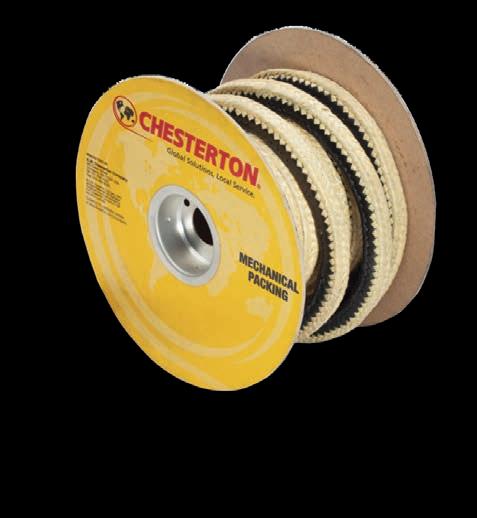
Modern packing technologies such as Chesterton’s 1400R carbon-reinforced packing and 1600 low-emission carbon packing are designed to reduce shaft
wear, minimise leakage and operate with lower friction than conventional packing materials.
Advanced � bre construction and lubrication systems help reduce gland loading requirements, underpinning a practical, energy- and water-e� cient option that further boosts the lifespan and reliability of pumping equipment.
“As industries pursue lower operating costs and greater sustainability outcomes, pump e� ciency strategies are evolving beyond motors and hydraulics alone,” Mellado said.
“By taking a broader view of energy consumption, including the impact of cooling, � ushing and thermal losses, facilities can uncover opportunities for substantial cost savings while reducing their environmental footprint.”
For operators seeking long-term e� ciency gains, combining the right sealing technology, proper application engineering, and proactive maintenance strategies can deliver substantial reductions in energy usage and lifecycle costs.
Learn more at chestertoncustomseal.com
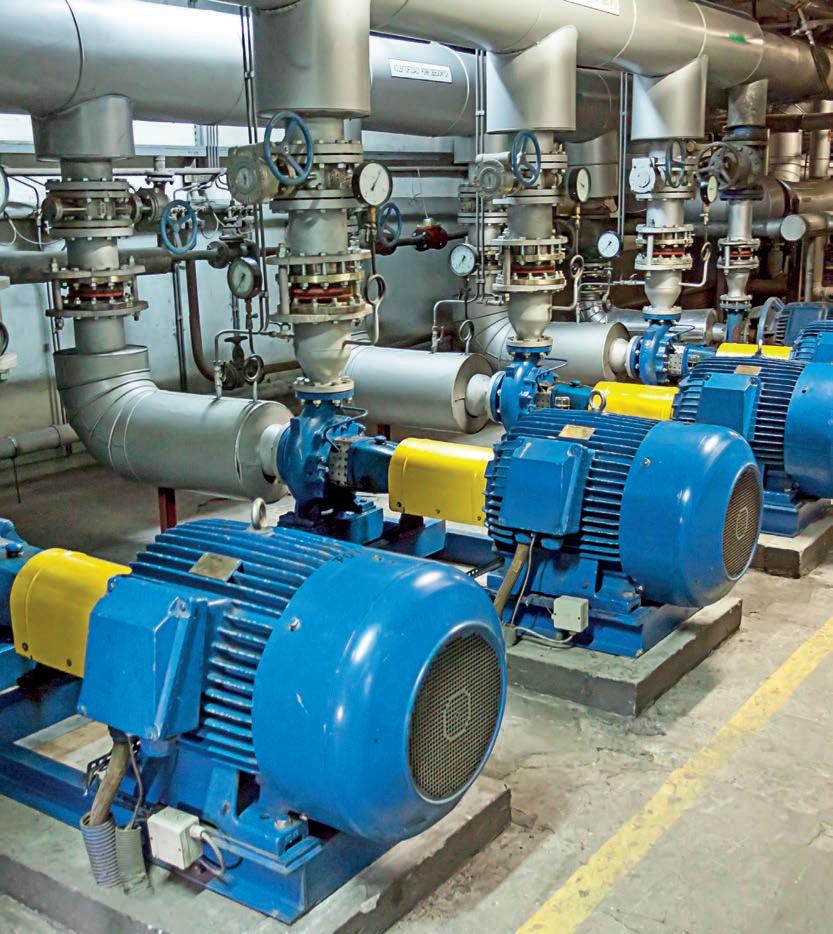
Sealing solutions are key to reducing hidden pump ine ciencies.
Image: Doin Oakenhelm/stock.adobe.com.
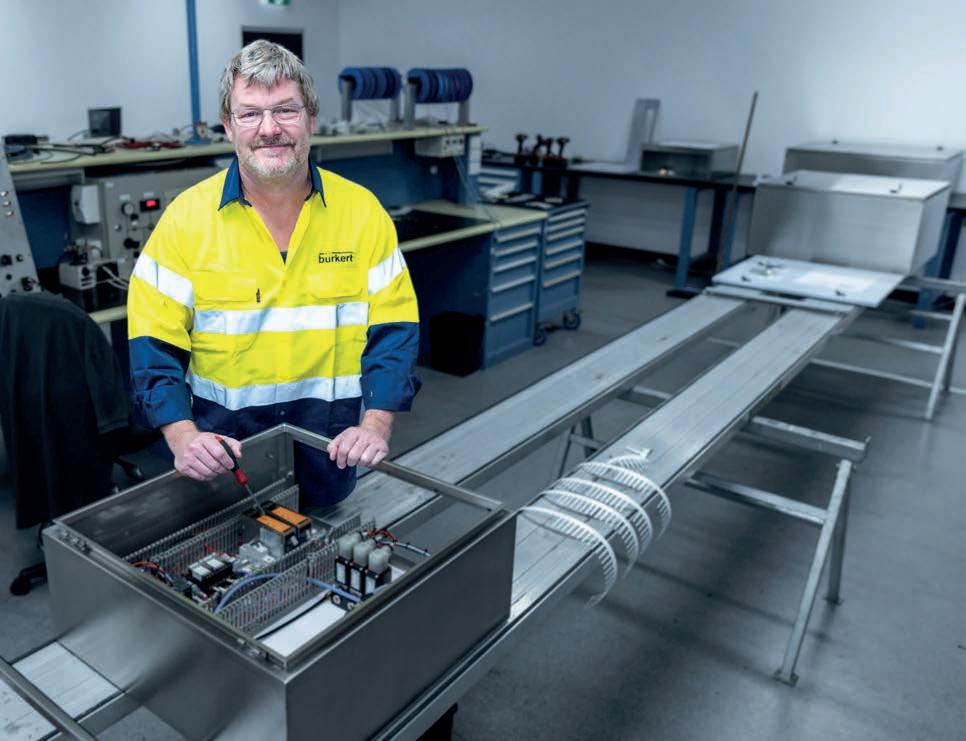

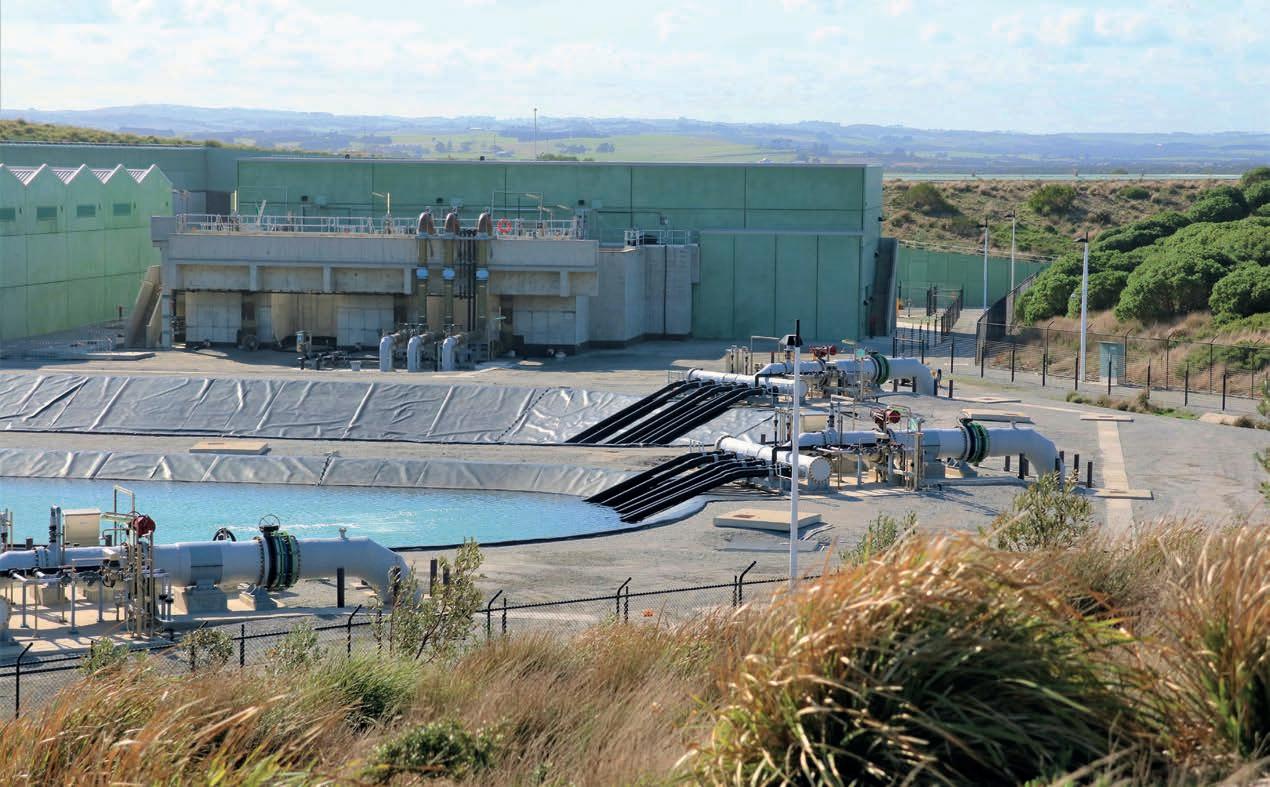
Bürkert provides a proven, integrated automation package for desalination plants. Image: Dorothy Chiron/shu erstock.com
By eliminating traditional automation headaches, Bürkert Australia is helping desalination plants save up to 40 per cent in engineering time.
The challenge in building desalination plants is not only about how you construct an e� cient operation, but also how e� ciently the project itself can be delivered.
For many project teams, signi� cant capital is deployed on engineering resources and processes long before a pump starts or a membrane � ltration train comes online. Integrating automation systems, con� guring communications and coordinating multiple suppliers can become a major source of cost, risk and delay.
Bürkert Australia is taking a di� erent approach. By combining native Siemens-compatible valve technology with pre-engineered control solutions, the company is helping desalination projects save up to 40 per cent in engineering time.
A key part of that approach is Bürkert’s Type 8647 AirLINE SP valve island, which has been speci� cally designed for native integration with Siemens SIMATIC ET 200SP and HA for high availability, and the option for Pro� net S2 redundancy.
Unlike conventional valve island platforms that rely on additional
gateways, interface layers or custom communication development, the Type 8647 integrates directly into Siemens environments and can be con� gured through Siemens’ TIA Portal.
This native compatibility is a key di� erentiator for Siemens-based desalination plants, where reducing integration e�ort can have a signi� cant impact on project timelines. Engineers can work within a familiar platform using standardised hardware and software building blocks, removing much of the custom interface work that traditionally accompanies automation projects.
The impact extends well beyond convenience.
By simplifying communication between automation components, project teams can reduce engineering e�ort, accelerate commissioning and spend less time troubleshooting integration issues. Integrated diagnostics and clear status indication also make fault � nding faster, helping minimise delays both during project delivery and throughout the asset lifecycle.
For desalination facilities where schedules are tight and performance guarantees are critical, reducing
commissioning risk can be just as valuable as reducing engineering hours.
Bürkert has further streamlined project delivery through its fully engineered control cabinet solutions for membrane � ltration applications.
These cabinets are designed to pilot �lter membranes and control the valves, instruments and pneumatic systems that feed raw water through pumps and into reverse osmosis and �ltration stages.
Rather than sourcing individual components and coordinating multiple suppliers, through Bürkert, project teams can procure a proven, integrated package aligned with Siemens automation architecture.
This approach simpli� es both engineering and procurement. With a single supplier responsible for the valve island, pneumatics and cabinet integration, project teams bene� t from fewer interfaces, clearer accountability and reduced project risk.
These advantages are particularly relevant as desalination facilities become larger and more automated. As operations expand, plant designers, system integrators and OEMs are increasingly looking for repeatable, standardised solutions that reduce
project variability and allow engineering resources to be focused on optimising plant performance rather than managing integration challenges.
The bene� ts of Bürkert’s solutions continue long after commissioning.
Designed for demanding water and process applications, the Type 8647 includes integrated diagnostics, visual status displays and hot-swap functionality, allowing valves to be replaced without taking the system o� ine. Media Redundancy Protocol (MRP) compatibility and integration with Siemens safety modules further enhance reliability in critical water infrastructure environments.
As desalination projects scale, success will increasingly depend not only on how e� ciently plants move water, but how e� ciently they can be designed, integrated and commissioned.
By combining native Siemens integration with pre-engineered automation solutions, Bürkert Australia is helping project teams simplify delivery, reduce engineering e�ort and bring critical water infrastructure online sooner.
Visit burkert.com.au to learn more.
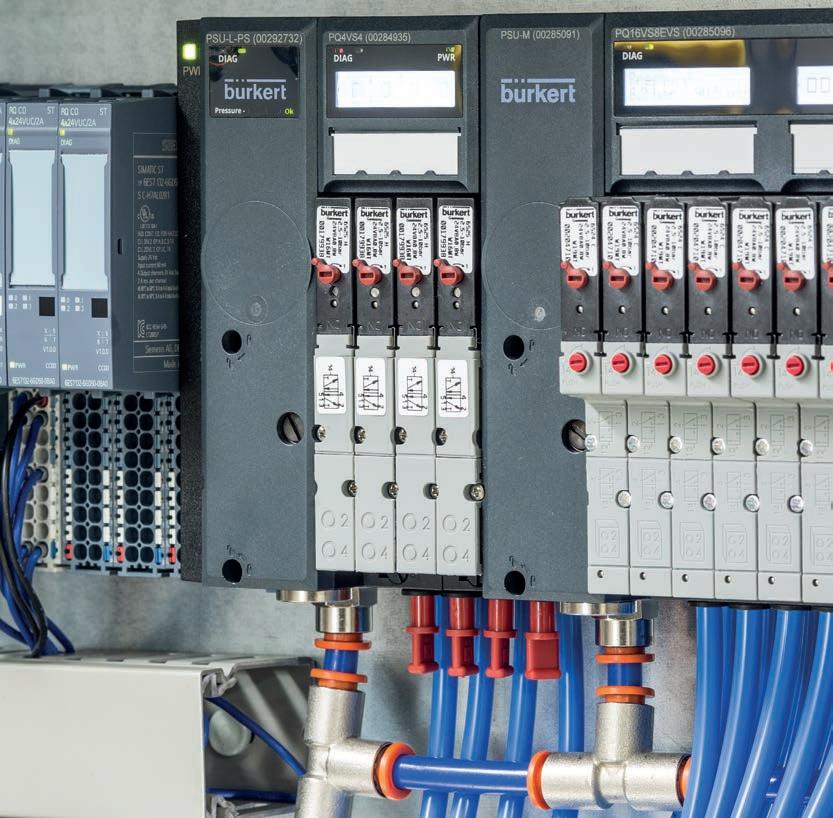
Bürkert’s Type 8647
AirLINE SP can be natively integrated with Siemens SIMATIC ET 200SP and HA. Image: Bürkert
• Three new chapters – Installation, Commissioning and Operations
• Completely rewritten Slurry Pumping and Energy Efficiency chapters
• 80 additional pages

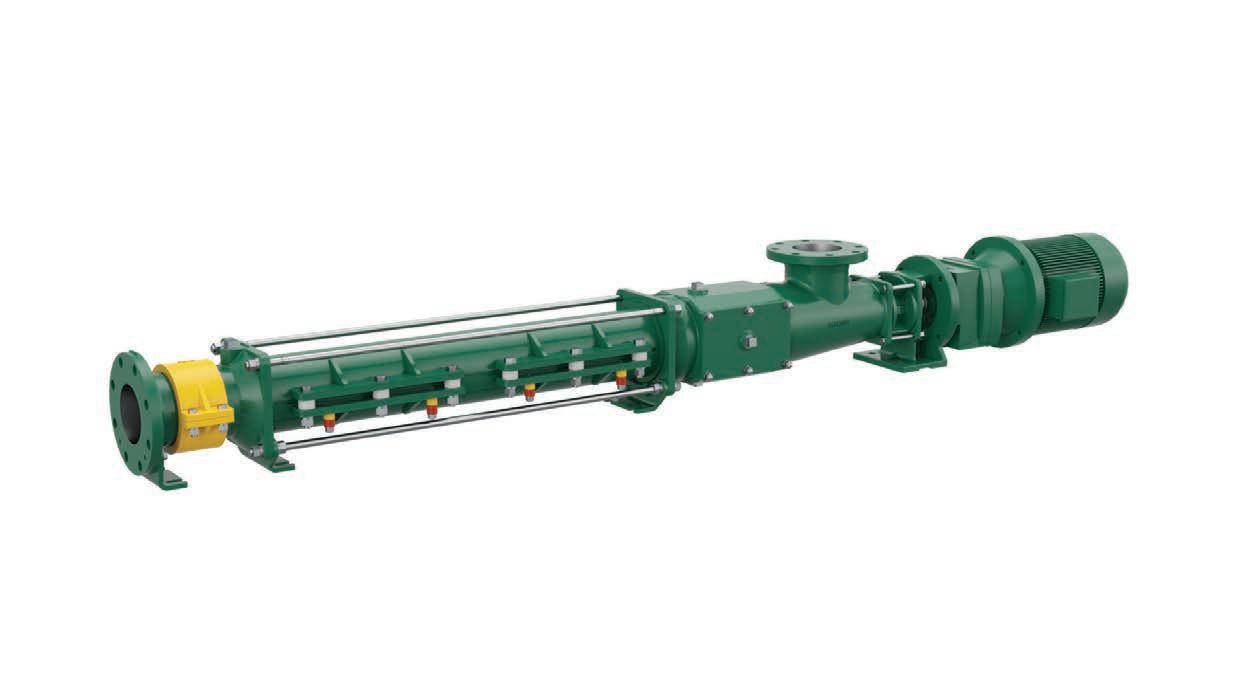
•Built
•Equipped
White Industries is helping pump OEMs reduce casting lead times through local manufacturing and express delivery.
High-wear pump components require robust replacements that can be turned around quickly.
This has seen pump OEMs turn to local manufacturers to access premium casting solutions, of which White Industries – an ISO-quality supplier with more than six decades of foundry expertise – has become a trusted partner.
“We excel in supplying smallto-medium-volume components of specialty alloys in high-wear applications,” White Industries business development manager Geo� Lee told Pump Industry.
“This includes stu� ng boxes, volutes and impellers for submersible, abrasive, dredge and peristaltic pumps – those that are exposed to corrosive environments such as salt water, brine and slurry.”
As global supply chains become further disrupted by rising energy and transport costs, US tari� s on steel and aluminium imports and � uctuating exchange rates, foundry availability and quality has become more inconsistent.
This has prompted more pump OEMs to onshore their casting requirements for supply certainty, faster response times and greater IP protections.
Backed by global certi� cation, White Industries has stepped up to � ll this demand, providing express delivery options and supply consistency to become a trusted partner for a range of industries, including mining, power generation and agriculture.
“Customers have told us that orders which used to take six months are now taking 12,” Lee said. “Their end customers don’t have that kind of time, and they don’t have the visibility in the supply chain to plan around such variable lead times.
“They want a contact who can change order priorities, expedite certain parts, and maintain an ongoing relationship so they can balance between high volume and fast supply.
“That is why they turn to White Industries.”

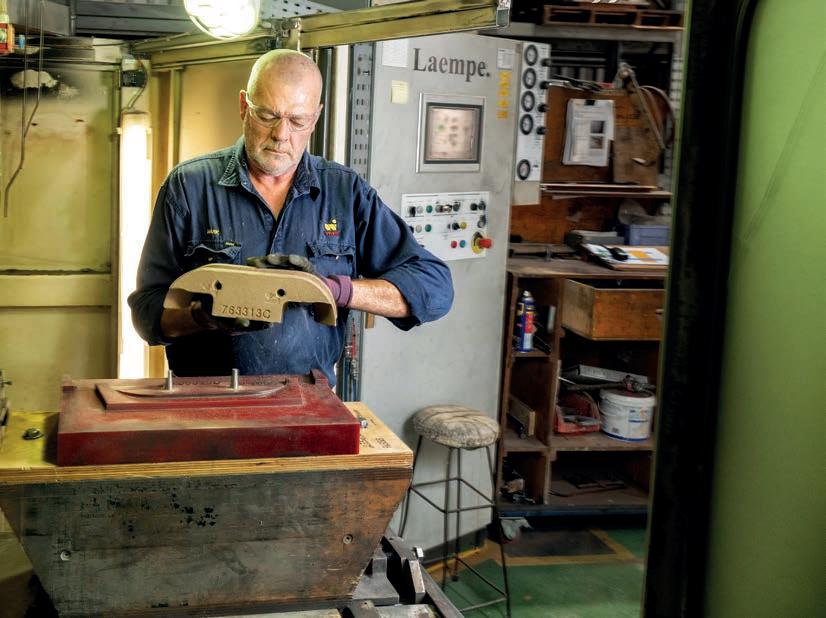
Pump OEMs are increasingly turning to local manufacturers to access premium
A 100 per cent family-owned business, White Industries o� ers an accessible, single point of contact that is easily reachable in Australian time zones.
“We can be on-call and on-site to work directly with pump procurement teams, providing design input, alloy alternatives, troubleshooting, and help with timelines,” Lee said.
“This is particularly important with high-spec alloys, which we provide to many industries. An overseas foundry may not work with higher-spec materials at the same volume.
“We’re familiar with them, our sales team can support them, and we know how to heat-treat and machine them. We have full in-house capability to not just be the casting manufacturer, but also the machining and specialised heat treatment provider – all as a one-stop shop.”
As Lee explained, an alternative might see a customer use an Australian
contractor to source the casting from one place but then use a separate contractor for machining.
“This can create its own hazards,” he said. “If there are failures, it becomes very hard to identify a single owner for the full product, which is critical for product integrity.
“Having that one point of contact to respond to any casting, heat treatment, or delivery challenge is key.”
As White Industries attracts increasing interest from pump markets, the company is focused on growing its manufacturing facilities, service footprint and the capability of its workforce.
This positions White Industries to support pump OEMs with the speed, quality and supply certainty increasingly required in high-wear industrial applications.
Pump Industry sat down with TECO’s Atheer Yaseen Nashi to learn about the engineering methodology behind the TECO MAXe3 HX frame.
Belt-driven machinery imposes a speci� c and continuous mechanical load on the motor driving it.
Unlike direct-coupled applications where shaft loading is primarily axial or torsional, a belt or chain drive introduces a radial force at the drive-end shaft and bearing. That force is present whenever the motor is running under load, and its magnitude depends on the belt tension, the geometry of the sheave, and the distance between shaft centres.
For pump and fan applications in mining and heavy industrial environments, this load pro� le is compounded by continuous S1 duty cycles, high-ambient operating temperatures, and limited access for early intervention when the bearing condition begins to deteriorate.
The engineering response is not a heavier-grade standard motor. It is a frame speci� cation designed speci� cally for elevated radial load: the HX designation in the TECO MAXe3 Mining range meets this demand.
TECO product manager – low voltage motors for Australia and New Zealand Atheer Yaseen Nashi explains the engineering basis of the TECO MAXe3 HX frame and its application in pump and fan motor selection.
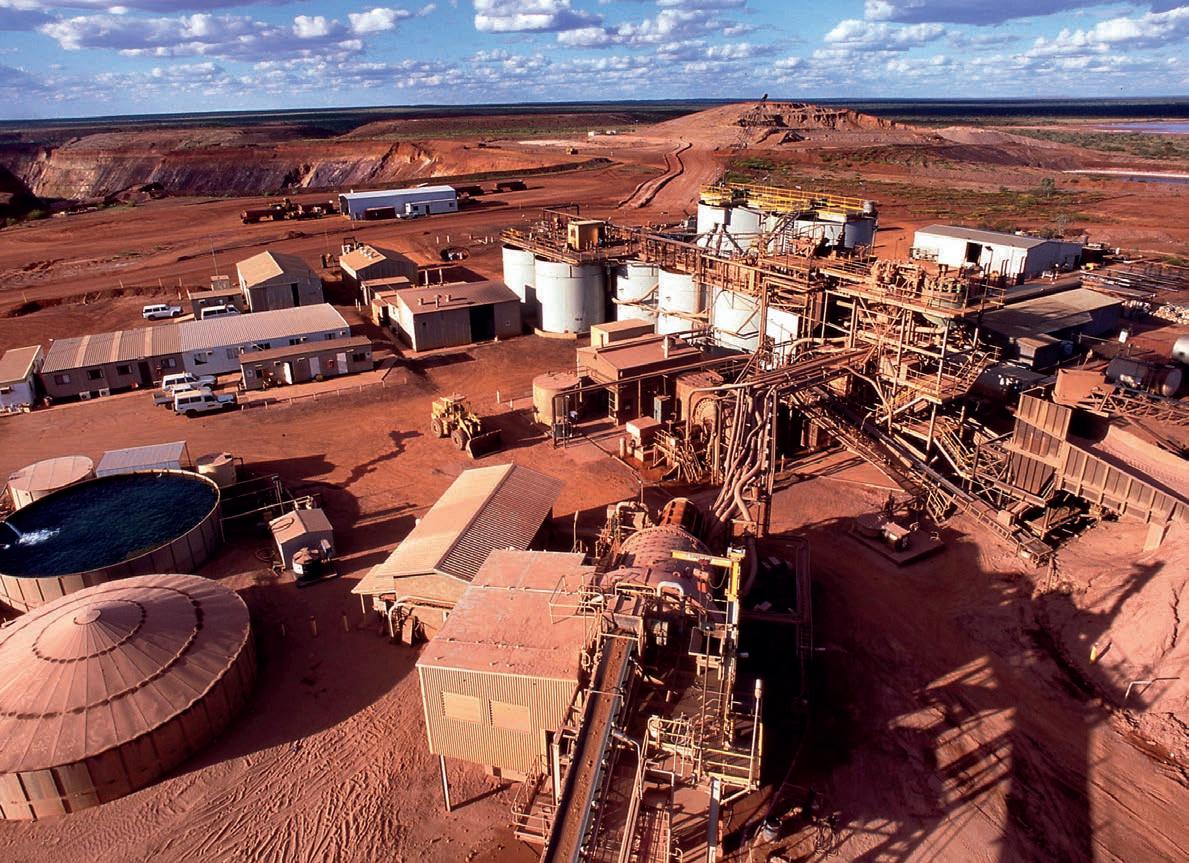
Oversized sha and drive-end bearings are standard features of the HX frame, not optional extras. Image: mojahata/shu erstock.com
TECO Australia and New Zealand product manager – low voltage motors Atheer Yaseen Nashi.
What does the HX designation refer to?
AN: HX refers to a reinforced frame speci� cation applied to the larger frame sizes in the TECO MAXe3 Mining range, speci� cally D315MC through to D355CC.
The primary di� erences are at the drive end: an oversized shaft and oversized drive-end bearings are speci� ed as standard features of the HX frame, not as optional extras.
The reinforcement is engineered into the frame from the beginning – a distinction that matters in practice. When a bearing or shaft modi� cation is applied to a standard frame, the frame geometry is not necessarily designed to support the altered load path.
The TECO MAXe3 HX frame is designed around the reinforced driveend speci� cation from the outset.
What radial loads are created by beltdriven pump and fan applications?
AN: In a direct-coupled application, the motor shaft and driven equipment shaft are aligned so that torque transmission is the primary load. Bearing loads in that arrangement are modest in the radial direction.

Beyond the bearing itself, the shaft cross-section at the point of maximum bending stress is larger, which reduces de� ection under radial load. Controlling de� ection keeps the bearing operating closer to its design geometry, which supports the rated life rather than shortening it through misalignmentinduced fatigue.
The TECO MAXe3 HX shaft speci� cation addresses both of these factors: the bearing selection and the shaft sti� ness at the point of load application.
What thermistor protection does the motor come with?
AN: Dual thermistors are standard on TECO MAXe3 HX frames, wired to independent alarm and trip outputs through a dedicated auxiliary terminal box.
A belt or chain drive is fundamentally di�erent. The belt must be under tension to transmit torque, and that tension creates a radial force on the motor shaft, acting perpendicular to the shaft axis, with the magnitude depending on the transmitted power, speed ratio, belt type, and sheave diameters.
For pump and fan applications in the frame sizes covered by the HX speci� cation, that radial load can be signi� cant, particularly in applications with long belt spans or high-tension narrow-belt arrangements. Selecting a standard frame bearing is based on a moderate radial load assumption, whereas selecting a TECO MAXe3 HX bearing speci� cation is based on a higher radial load requirement.
The HX range can also be used in direct drive applications as well.
Why role does the oversized shaft speci� cation play?
AN: The shaft diameter at the drive end a� ects the bearing bore selection, which in turn a� ects the load rating available at the bearing. A larger shaft diameter supports a bearing with a larger bore and therefore a higher dynamic load rating.
For a given radial load, the higher the dynamic load rating relative to the applied load, the longer the calculated bearing L10 life.
The dual arrangement means one thermistor is wired to an alarm output and a second is wired to a trip output. This con� guration allows the site to set an early warning threshold that triggers an alarm before the winding temperature reaches the trip threshold.
In belt-driven applications, where bearing deterioration tends to manifest as increased friction and heat before it reaches mechanical failure, thermistor-based monitoring provides a diagnostic signal. It is not a substitute for vibration monitoring, but it provides an additional data point that can be incorporated into a condition-based maintenance program.
The dedicated auxiliary terminal box separates the monitoring circuit from the main power termination, which simpli� es wiring and reduces the risk of interference during maintenance activities.
What are the key TECO MAXe3 HX applications?
AN: The primary applications are belt-driven centrifugal pumps, belt-driven axial and centrifugal fans, and belt-driven blowers in process air applications.
This includes dewatering pump installations on mine sites, where a belt
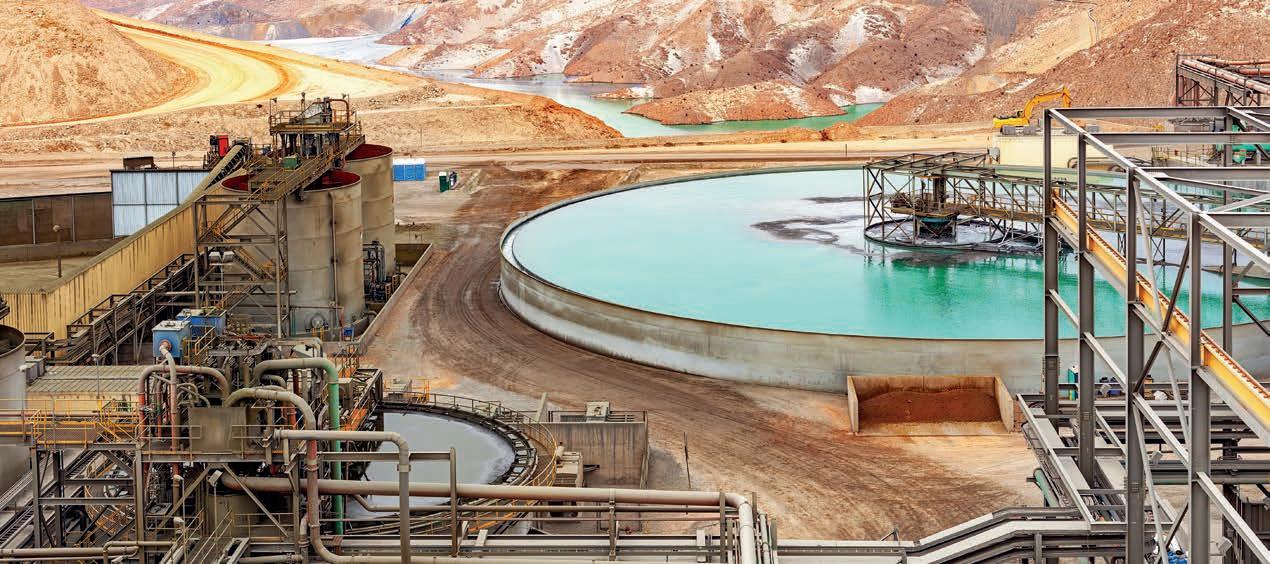
drive is used to achieve a speci� c speed ratio, mine ventilation fan installations, and process water pump circuits feeding mineral processing equipment.
The TECO MAXe3 HX frame size range, D315MC to D355CC, covers the power requirements typically associated with these installations in the medium-to-large range. For smaller frame sizes where the radial load requirement is within the capability of a standard bearing speci� cation, the standard TECO MAXe3 Mining frame is appropriate.
What should be considered when choosing between the TECO MAXe3 Mining and TECO MAXe3 HX frame?
AN: The key inputs for selection are the radial load at the drive-end bearing and the expected duty cycle. The radial load calculation requires the motor output power, the shaft speed at the drive end, the sheave diameter on the motor shaft, and the belt tension factor for the belt type being used. This calculation gives the radial force in kilonewtons, which can then be compared against the bearing load rating at the relevant speed.
If the calculated load falls within the standard frame bearing speci�cation for the expected L10 life requirement, the standard frame is adequate. If it does not, then the TECO MAXe3 HX speci�cation is the appropriate selection.
In practice, speci� ers working with belt-driven arrangements in the D315MC to D355CC frame range should treat the TECO MAXe3 HX frame as the default starting point and con� rm whether the standard frame is adequate rather than the other way around.
Other factors worth con� rming are the overhung load from any external sheave or coupling, the operating ambient temperature, and whether the installation will involve variable speed drive control, which a� ects the thermal pro� le of the motor.
The HX designation refers to the larger frame sizes in the TECO MAXe3
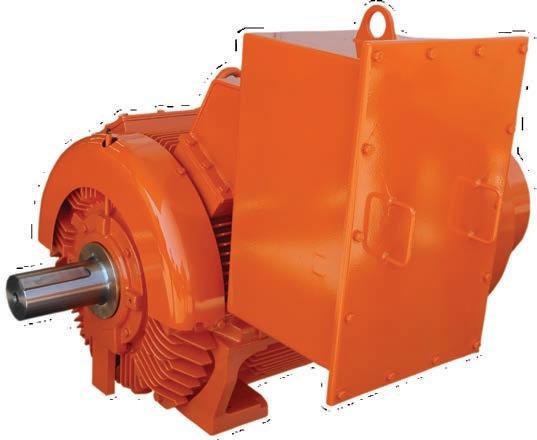
How does the HX speci� cation integrate within the broader MAXe3 Mining range?
AN: The TECO MAXe3 HX frame speci� cation carries the same IP66 protection, Class H insulation, and high IE3 e� ciency ratings as the standard TECO MAXe3 Mining range. The 60°C ambient rating at full output without de-rating also applies.
The HX designation adds the reinforced drive-end shaft and bearing speci�cation, and the dual thermistor protection with a dedicated auxiliary terminal box. It’s not a separate product line but an extension of
Product
HX frame range
Drive-end spec
Thermistor
IP rating
Insulation
Ambient rating
E� ciency
Full power range
Primary applications
the TECO MAXe3 Mining speci�cation into the larger frame sizes, where the driveend reinforcement becomes a relevant engineering requirement.
IEC frame dimensions are maintained across the HX range, which means the motor integrates mechanically with existing installation geometries in most belt-driven pump and fan applications, including direct replacement of motors that have reached their end of service life.
For technical speci�cations and application support, visit electricmotors.teco.com.au
TECO MAXe3 Mining (HX frame series)
D315MC to D355CC
Oversized shaft and bearings, standard on HX frames
Dual: independent alarm and trip outputs, dedicated auxiliary terminal box
IP66 protection
Class H (180°C)
60°C at full output, no de-rating
IE3 (AS/NZS 1359.5 / IEC 60034-30-1)
150kW to 450kW (complete MAXe3 Mining range starts from 0.18kW)
Belt-driven centrifugal pumps, mine ventilation fans, process air blowers
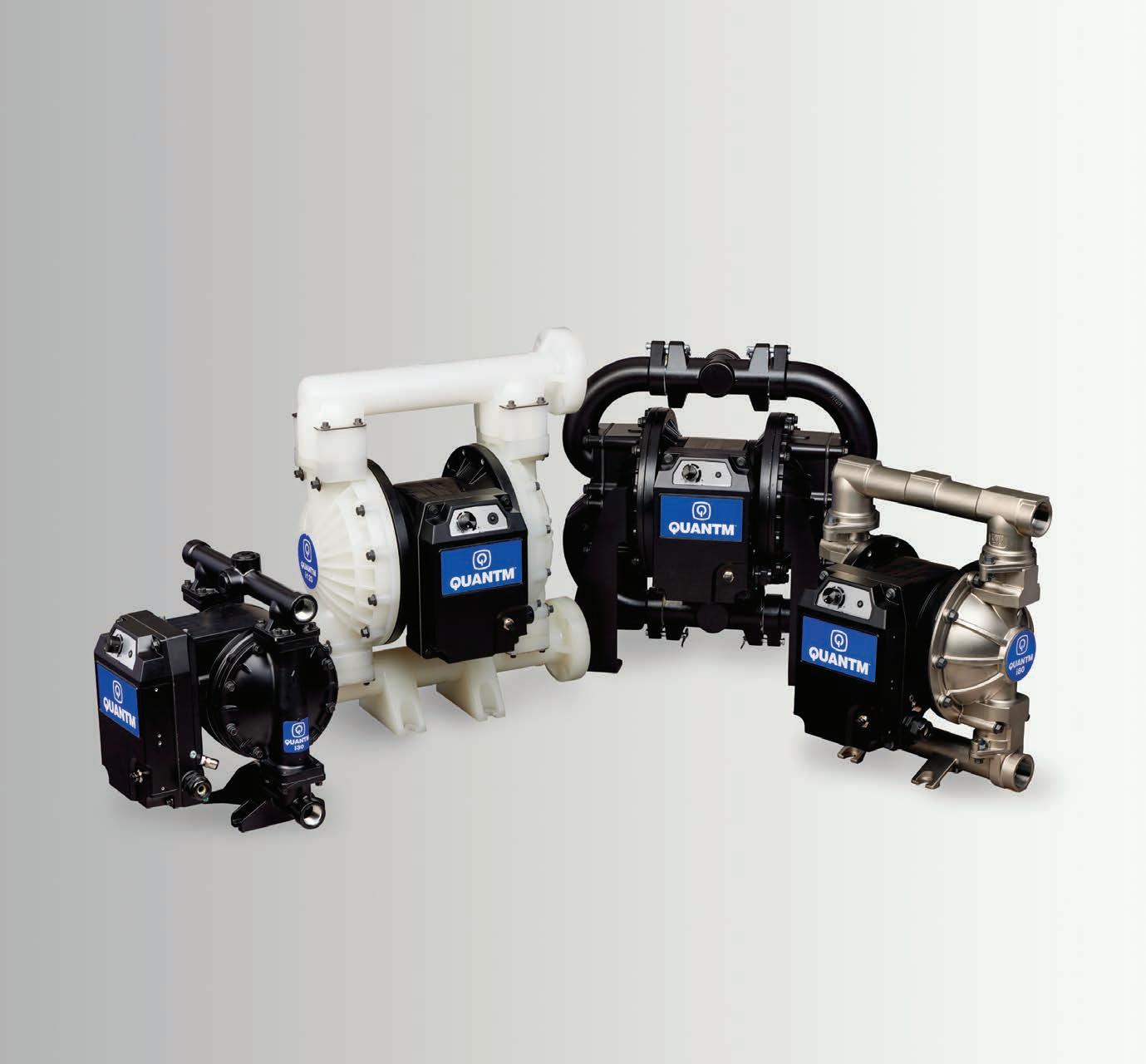

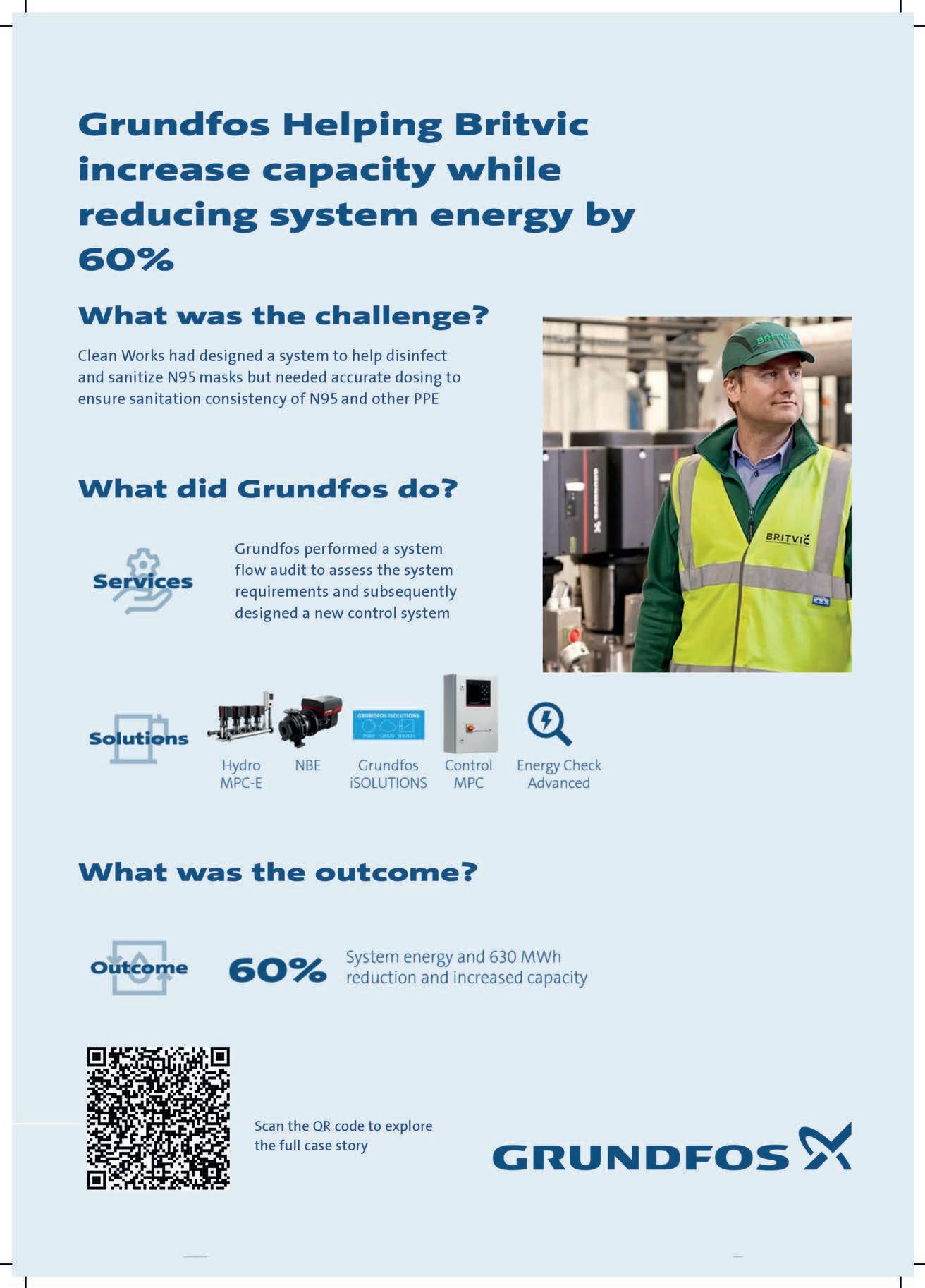
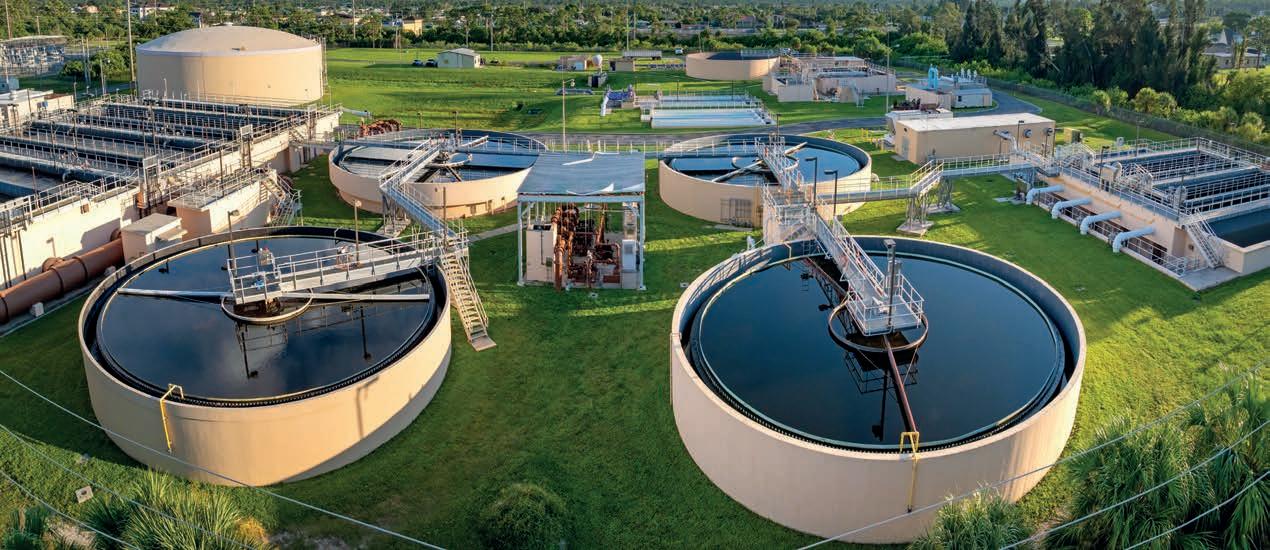
The MPX range is designed to provide dependable performance across a wide range of pumping applications.
Techtop Australia has launched its new MPX motor range, bringing higher e ciency and increased smarts to modern pump systems.
In today’s pumping applications, where energy e� ciency, uptime and ease of maintenance are critical, selecting the right motor is more important than ever.
The new MPX motor range has been developed to meet these demands head-on, combining high performance with practical design features that simplify installation, operation and long-term maintenance.
At the core of Techtop Australia’s MPX range is its IE4 ‘Premium E� ciency’ classi� cation, representing the leading edge of e� ciency standards, reducing electrical losses and operating costs compared to lower e� ciency classes.
In continuous-duty pumping environments, where motors often run for 18–24 hours straight, the e� ciency improvements achieved by deploying an MPX motor can translate into signi� cant savings over the life of the equipment. Lower energy consumption also supports improved sustainability outcomes, helping operators limit their carbon footprint.
“Beyond e�ciency, the MPX range has been engineered with a strong focus on practical installation and serviceability,” Techtop Australia motor product manager Keiron Cook told Pump Industry.
“A key feature is the oversized terminal box, providing generous space for cable termination. This simpli� es wiring, reduces installation time and helps ensure reliable electrical connections, particularly in applications where larger cables or more complex terminations are required.”
This is complemented by the inclusion of auxiliary terminal boxes, allowing easy integration of monitoring devices and
accessories without overcrowding the main connection area.
Reliability in demanding environments is further enhanced through comprehensive built-in protection systems.
“The MPX motors are supplied as standard with bearing and winding RTDs, o� ering accurate temperature monitoring and enabling early detection of potential issues.” Mr Cook said. “In addition, two sets of thermistors provide an extra layer of thermal protection, allowing operators to con� dently manage motor performance under varying load conditions.”
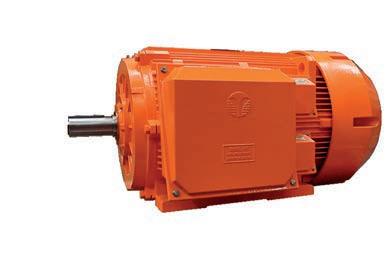
Deploying an MPX motor can translate into significant cost savings over the life of the equipment.
providing superior durability and consistent cooling performance in demanding environments.
Anti-condensation heaters are also included as standard, preventing moisture build-up during idle periods and reducing the risk of insulation failure – particularly important in pump installations exposed to changing environmental conditions.
As Mr Cook explained, durability is another de� ning characteristic of the MPX range.
“The motors are rated to IP66, ensuring a high level of protection against dust ingress and powerful water jets,” he said. “This makes them ideally suited to pumping applications in outdoor or washdown environments where exposure to water and contaminants is unavoidable.”
The external � nish features a robust epoxy paint coating, providing long-term resistance to corrosion and extending the service life of the motor.
Mechanical design has also been carefully considered to maximise reliability. The MPX motors feature a cast iron cooling fan and fan cowl,
“When these features are combined, the result is a motor range that not only delivers high e�ciency but also supports predictive maintenance through realtime condition monitoring,” Mr Cook said.
“Integrated bearing and winding RTDs, along with dual thermistors, provide continuous temperature data that can be fed into site monitoring or control systems, enabling operators to identify abnormal trends early and plan maintenance before failures occur.
“This reduces unplanned downtime and extends operational life.”
The MPX range is designed to provide dependable performance across a wide range of pumping applications – from water transfer and treatment through to industrial processing systems.
This makes for a single, well-balanced solution combining energy e� ciency, robust construction and practical design features. For operators seeking to lower energy costs, improve reliability and simplify maintenance, the MPX range represents a smart and forward-thinking choice for modern pump systems.
16-17 September 2026
Perth
Pump Industry explores how WEG’s premium e ciency motors, including the W22 and W23 ranges, lower energy consumption and slash costs.
Harsh environmental conditions, demanding duty cycles and variable speed applications.
These are just some of the operational requirements posed by today’s water and wastewater projects, where the need for dependable, energye� cient equipment has never been more pressing.
Electric motors are a key part of this equation, powering pumps, blowers, compressors, and other essential equipment to keep water and wastewater infrastructure operating e� ciently.
WEG has developed an extensive range of low and high voltage motors to meet the challenges faced by such industries, including water and wastewater treatment plants, pump stations, desalination facilities, and irrigation systems. Built with high-quality materials and advanced manufacturing techniques, WEG motors provide premium durability while minimising maintenance requirements and operational downtime.
“Energy e� ciency remains a key focus within the water industry, where electric motors can account for a signi� cant portion of total power consumption,” WEG national product manager – industrial motors Sean Sill told Pump Industry.
“WEG’s premium e� ciency motor platforms, including the W22 and W23 ranges, are engineered to reduce energy usage while maintaining optimal performance. By lowering electricity consumption, operators can achieve substantial cost savings over the life of the equipment while supporting sustainability and environmental targets.”
One of the major advantages of WEG electric motors is their � exibility in engineered solutions.
WEG o� ers customised motor con� gurations, coatings, enclosure options, and mounting arrangements to suit speci� c project needs. Combined with WEG variable speed drives, these
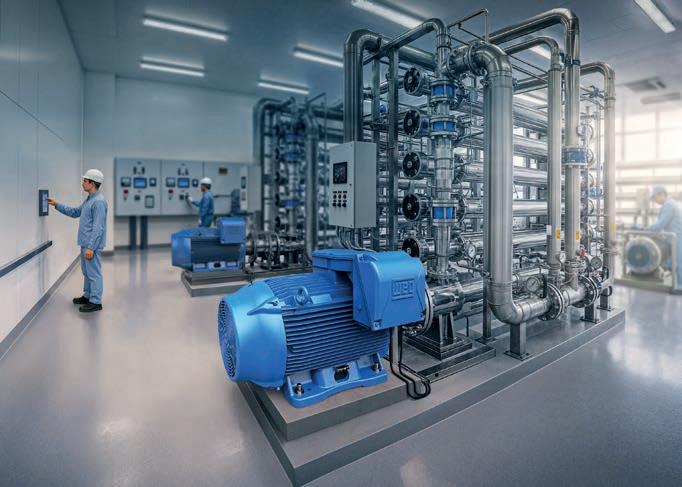
solutions enable precise control of pumps and process equipment, improving system e� ciency and reducing mechanical stress.
“Reliability is particularly important in critical water applications where equipment failure can disrupt essential services and lead to signi� cant operational costs,” Sill said.
“WEG motors are designed with Class H insulation, high-quality bearings, advanced cooling systems, and robust cast iron construction to ensure dependable operation under continuous service conditions. These features help maximise equipment life while maintaining performance in challenging environments.”
For wastewater treatment facilities, WEG motors provide reliable operation for aeration blowers, sludge pumps, mixers, and screening equipment. In clean water applications, they are commonly used in booster pumps, transfer pumps, � ltration systems, and desalination plants.
Agricultural irrigation systems also bene� t from WEG’s e� cient motor technology, helping farmers manage
water resources e� ectively while reducing energy costs.
Beyond supplying electric motors, WEG delivers complete engineered solutions through its integrated portfolio of motors, drives, controls, and automation technologies.
“This capability allows our customers to source complete system solutions from a single manufacturer, simplifying project management and ensuring compatibility across all components,” Sill said. “Further support is provided by � eld service technicians in each state.”
As water and wastewater infrastructure evolves to meet growing demand and sustainability requirements, WEG is innovating motor technologies that push the boundaries of operational performance and reliability.
This is made possible by the company’s engineering expertise, global manufacturing capability, and local technical support, enabling WEG electric motors to be a central cog in the water and wastewater infrastructure of the future.
Visit weg.net to learn more.
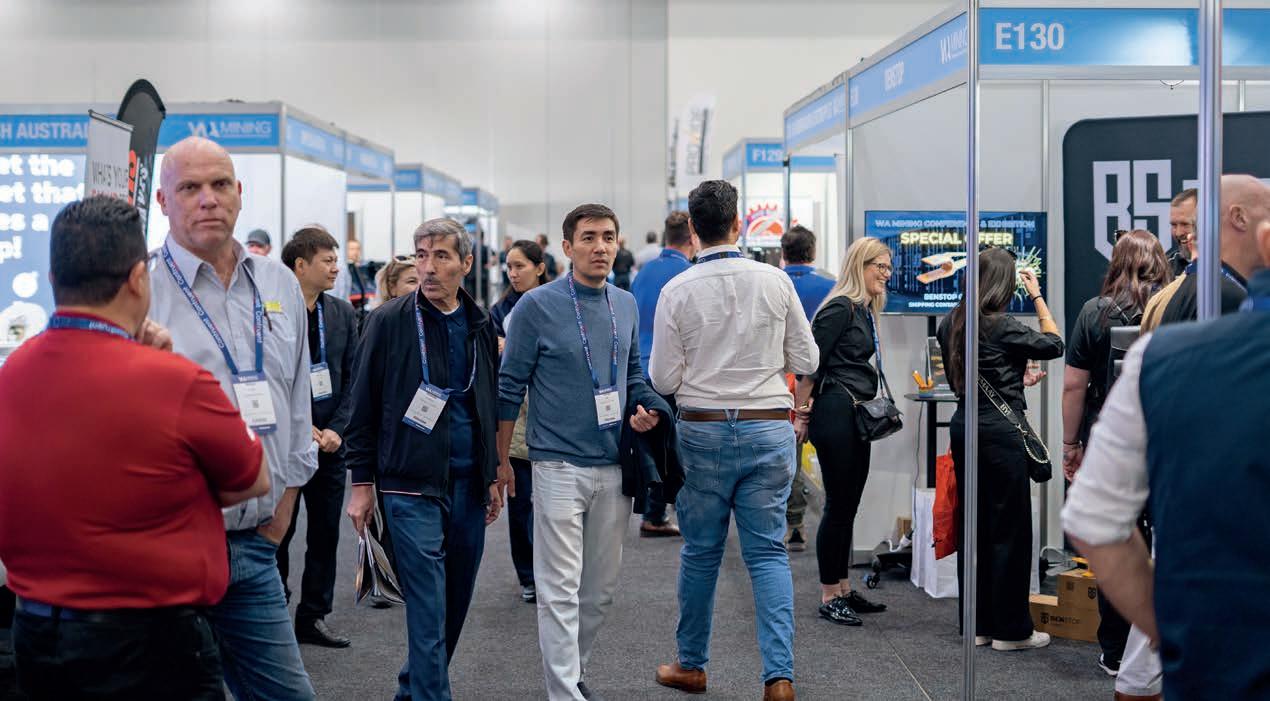

The biggest names in mining and technology will converge in Adelaide for AIMEX 2027.
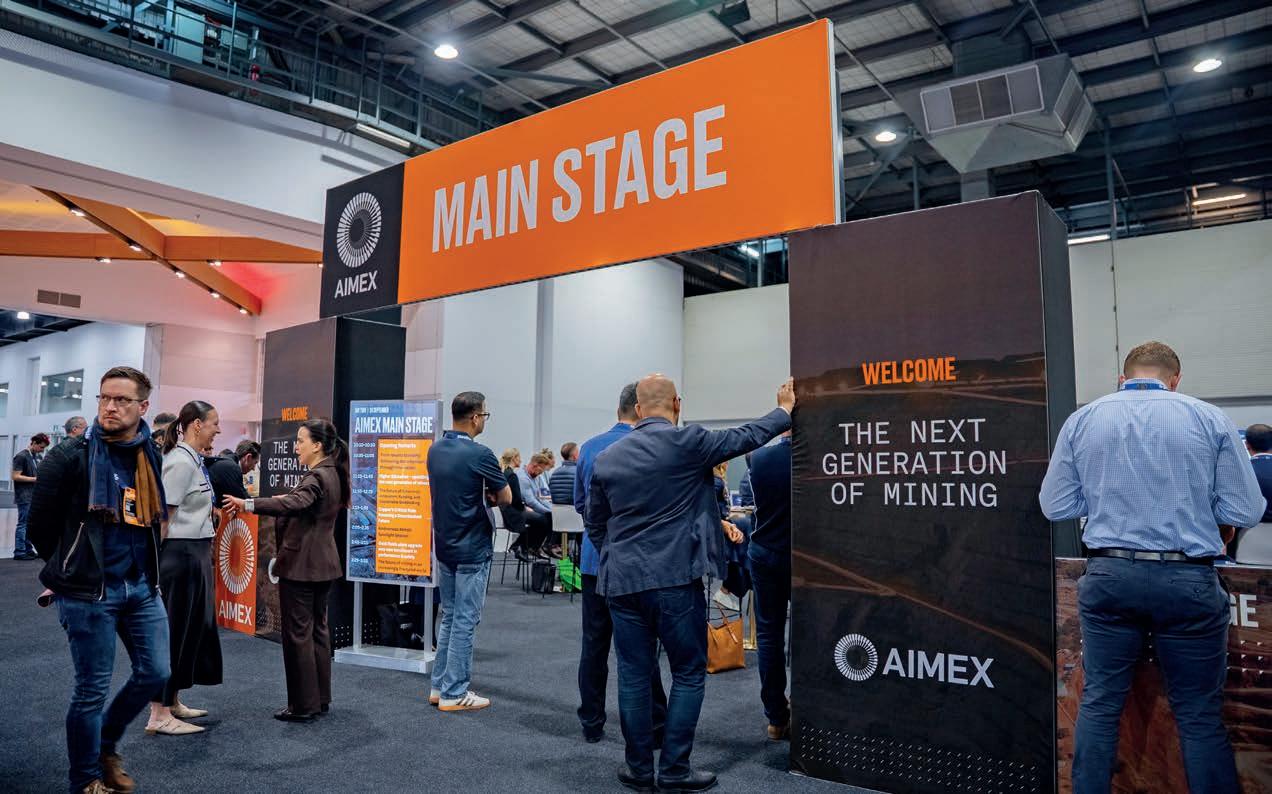
AIMEX 2027 will o er the pump industry the chance to engage with Australian and international mining companies.
The Australian and international mining communities will reconvene in Adelaide when Asia-Paci� c’s International Mining Exhibition (AIMEX) returns from 28–30 September 2027.
After taking place in South Australia for the � rst time in 2025, AIMEX 2027 will once again bring together the biggest names in mining, technology and global innovation.
This year’s event will showcase how automation, AI, digital systems, and next-generation operational e� ciency are transforming the way the sector operates, with a drawcard for the 2027 event being the Renewable, EV and Tech Showcase.
Mining operators are increasingly investing in automation to better manage their pump � eets. This is
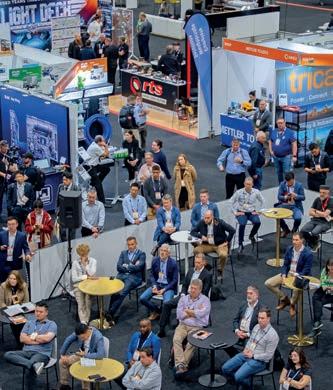
helping reduce unplanned outages, optimise energy use, and minimise manual inspections.
Automated pump systems are also central to enabling remote and centralised operations, which are increasingly important as mines extend into more isolated locations.
Prime Creative Media relationship manager – events Rebecca Todesco, explained how this will be re� ected at AIMEX 2027.
“From advanced pumping systems to site-wide control technologies, we’re seeing strong demand for integrated automation that delivers real operational value,” she said.
“AIMEX provides a powerful platform for suppliers to showcase these innovations directly to the decisionmakers shaping the future of mining.”
Global Pumps, which was one of a host of pump companies to exhibit at AIMEX 2025, saw the event’s value in connecting with both boots-onthe-ground operators and highlevel executives.
From gold mines to major nickel operations, Global Pumps has supported mines across Australia with long-lasting solutions. A trial involving a Verder� ex hose installed inside existing hose pumps saw pump life triple, while Global Pumps’ SlurryPro range has slashed wear life in Victoria’s gold mines.
Elsewhere, the International Mining Pavilion will unite Australian and international mining companies at AIMEX 2027, as part of the event’s
standalone business and collaboration hub, while the conference program will provide a platform for partnerships, projects and solutions making real industry impact.
Networking will remain a cornerstone of AIMEX, with dedicated experiences including opening networking drinks, premium meeting spaces and informal connection zones designed to spark conversations, partnerships and business growth across the exhibition � oor.
Todesco said the event re� ects the momentum and transformation underway across the global mining sector.
“AIMEX 2027 is where the industry sees what’s next,” Todesco said. “It’s a powerful meeting point for operators, innovators and technology leaders driving real change across mining.
“The pace of change in mining has never been greater. AIMEX provides the platform to connect global capability with real operational need, helping the industry move faster and smarter.”
AIMEX 2027 is expected to attract thousands of industry professionals, hundreds of exhibitors and strong international participation from multiple countries, reinforcing its position as the Asia-Paci� c’s leading mining exhibition.
Be among the � rst to secure your place on the exhibition � oor at AIMEX 2027.
To exhibit, visit aimex.com.au/exhibitor-enquiries
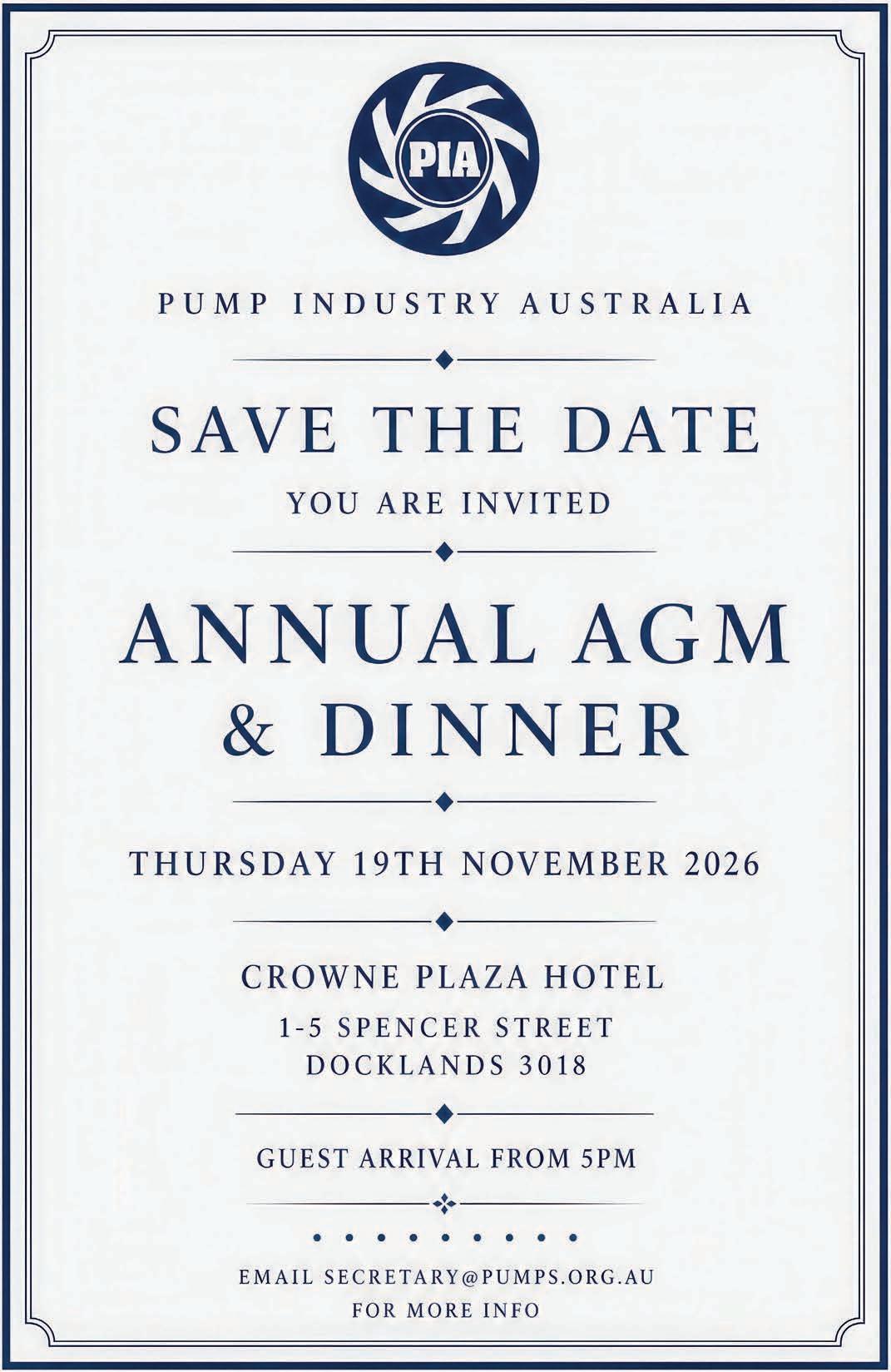

From climate resilience to the skills shortage, AWA’s Ozwater’26 provided a platform for the water industry’s biggest opportunities to be discussed.
As thousands of delegates gathered in Brisbane for Ozwater’26, one message resonated throughout the three days of festivities: the future of water will be built through collaboration.
Held under the theme ‘Our Water, Our Tomorrow’, the event brought together utilities, technology providers, researchers and government representatives to discuss how the sector can respond to growing pressures, including population growth, climate uncertainty, ageing infrastructure and rising customer expectations.
Across keynote presentations, technical sessions and exhibition showcases, delegates explored how new technologies and digitalisation will play a critical role in ensuring Australia’s water services remain resilient and sustainable for decades to come.
Collaboration takes centre stage
The opening day of the conference program set the tone for broader discussions around partnership and collective action. As utilities face growing pressures from climate change, urban growth and infrastructure renewal, speakers repeatedly emphasised that no single organisation can solve these challenges alone.
Instead, success will depend on bringing together expertise from across utilities, government, research institutions and the private sector to develop practical solutions and share lessons learned.
This collaborative spirit was evident throughout the event, with busy networking sessions, packed exhibition halls and strong engagement across technical presentations and workshops.
The exhibition � oor gave suppliers and technology providers an opportunity to showcase new solutions and engage directly with utilities about the challenges facing the sector.
“It was a great � rst show for Detectronic at Ozwater,” Detectronic commercial director Mark Pritchard said. “There was a huge amount of interest in our leading � ow and level monitoring technology, and we had some excellent conversations – with plenty more to follow.”
From concept to reality
By day two, conversations had shifted towards one of the industry’s most signi� cant areas of change: digital transformation.
Arti� cial intelligence and data-driven decision-making emerged as recurring themes across the conference program, re� ecting the sector’s growing interest in using technology to improve
operational performance and longterm planning.
Delegates explored how digital tools are helping utilities improve network visibility and asset management. Many presentations focused on real-world implementations already delivering bene� ts across Australian utilities.
Autodesk head of water infrastructure APJC Chris Ryan said events such as Ozwater provide an important forum for organisations to share ideas and explore how di� erent technologies can work together.
“One of the things I’m most excited about at Ozwater is seeing how the industry communicates and collaborates,” he said. “Utilities, suppliers and technology providers are all having open conversations about where their strengths lie and how they can work together to deliver better outcomes for customers.”
Alongside the digital transformation, discussions also examined procurement innovation, puri� ed recycled water, catchment management and strategies for improving infrastructure resilience in the face of climate-related risks.
Workforce capability also remained a key focus, with discussions centred on attracting and developing the talent needed to support the sector’s transformation.
Conference speakers emphasised that no one organisation can solve the water industry’s challenges alone.
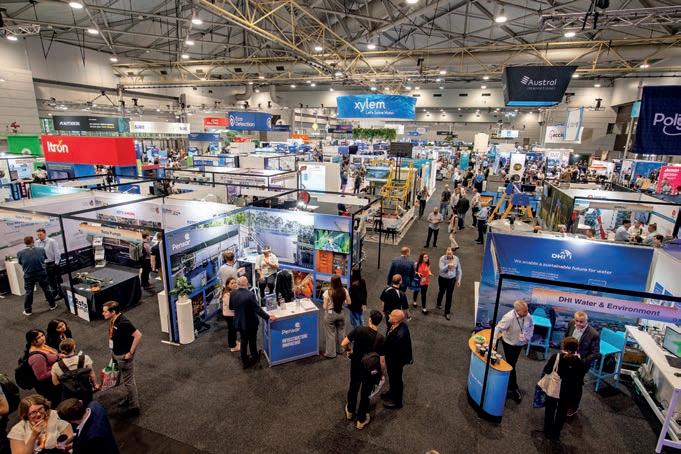
While Ozwater is known for its technical content and industry discussions, the event also provides an opportunity to recognise the people driving progress across the sector.
One of the highlights of the week was the 2026 Australian Water Awards, which celebrated outstanding achievements from across the Australian water industry.
Australian Water Association chief executive Corinne Cheeseman said the awards highlighted the breadth of innovation and leadership across the sector.
“This year’s winners and � nalists demonstrate the depth of talent across Australia’s water sector and the incredible impact that can be achieved when industry, government, researchers and communities work together,” she said.
Throughout the awards program, a common thread emerged: innovation is not solely about technology. Many of the recognised achievements demonstrated the value of collaboration, knowledge sharing and community engagement in delivering meaningful outcomes.
The awards served as a reminder that the sector’s greatest asset remains its people and their commitment to solving increasingly complex challenges.
As Ozwater’26 entered its � nal day, discussions increasingly focused on the industry’s long-term future.
The exhibition � oor remained a hub of activity, with more than 200 exhibitors showcasing technologies and services designed to support the next generation of water infrastructure and operations.
Among those exhibitors was SAVECO, which used the event to connect
with utilities and discuss emerging opportunities across the water and wastewater sector.
“It was a fantastic opportunity to connect with industry professionals, share insights and discuss the future of sustainable water and wastewater solutions,” SAVECO sales manager Bhrigu Sharma said. “We truly appreciated the engaging conversations and interest in our technologies and services.”
Final-day discussions focused on turning innovation into action, with speakers emphasising the importance of implementation, integration and long-term planning.
If there was a de� ning takeaway from Ozwater’26, it was that the future of water depends on collaboration and a willingness to work towards common goals.
Autodesk’s Ryan felt Australia’s water sector was ready for this challenge, backed by its growing global reputation.
“The Australian water industry is already recognised as one of the most advanced in the world, but I think we’re on the cusp of becoming a global leader,” he said. “The next step is thinking di� erently about collaboration, intergenerational planning and how we solve challenges together.”
Once the first commissioning run has been completed, the results will be recorded and this process must now be evaluated.
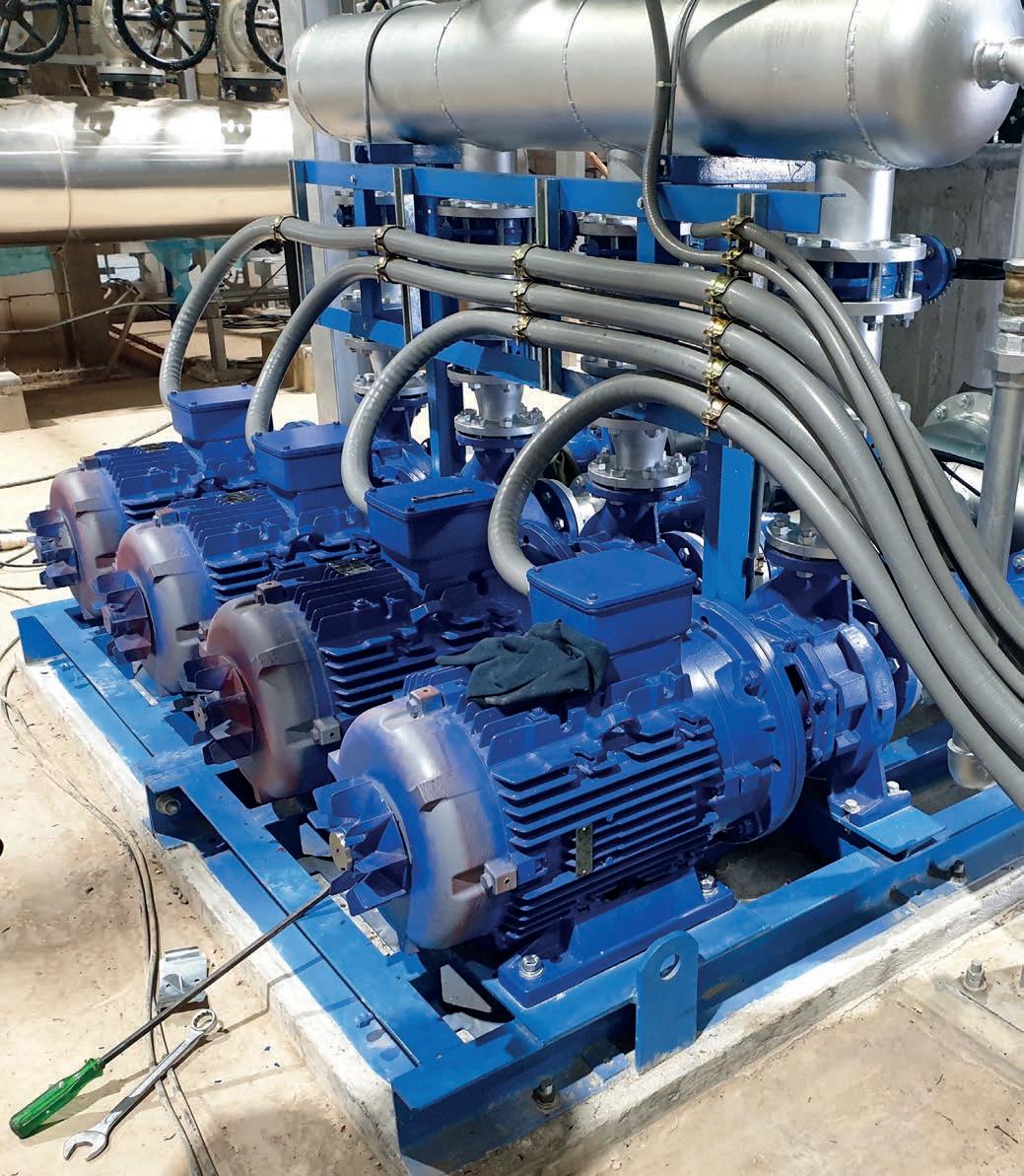
The previous chapter of Pump Industry Australia’s (PIA) Pump Technical Handbook discussed the various steps involved in the commissioning run. Concluding the commissioning series, we now need to evaluate the results recorded during this run.
The following should be looked at as the various readings and temperatures are recorded:
1. At valve shut, the discharge and suction pressure can be used to work out the di� erential head. This should coincide with the shut head shown on the pump characteristic curve for the speed the pump runs at and/or the impeller diameter being used.
2. As the discharge valve is opened, the recorded results will show either:
a) A continuously falling head characteristic, where the pressure falls continuously until the discharge valve is fully open.
b) A non-falling head characteristic curve. This sees the pressure rise slightly before falling until the discharge valve is fully open.
This observation in conjunction with the valve shut head observation allows us to estimate if the pump is following the manufacturer’s characteristic curve.
3. When the pump discharge valve is fully open, the recorded pump suction and discharge pressures can be used to calculate the pump di� erential head.
If the total pump duty head has been calculated accurately, this head should be close to the pump duty head calculated from the suction and discharge pressures, say within � ve per cent.
If pump di� erential head is not close to the calculated head, the following should be noted:
a) If the di� erential head during commissioning is lower than the calculated head, i.e. system curve intersects pump curve further to the right than calculated, this means one of two things:
i) There is a leak in the system, which needs to be found and � xed.
ii) The head calculation is wrong and needs to be checked with the possibility that a contingency, which is too high, has been applied. If this is the case, the discharge valve should be throttled back until the pump’s speci� ed duty head is achieved.
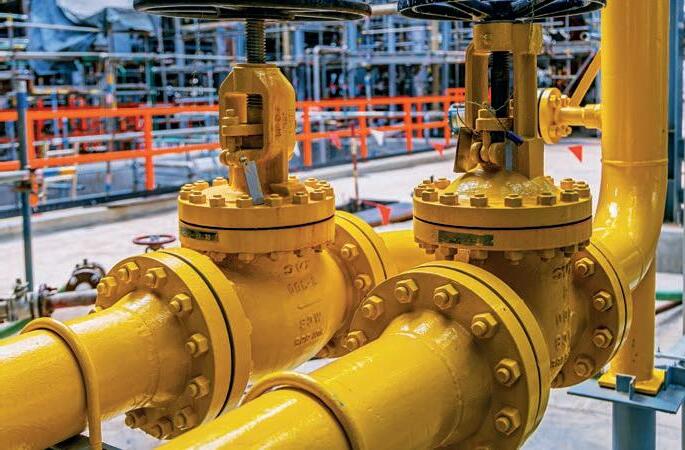
Recording electric-motor amp and volt readings helps us estimate if a pump has adequate power. Image: noomcpk/shu erstock.com
b) If the pump running di� erential head is higher than the calculated head, i.e. system curve intersects pump curve further to the left than calculated, then this means one of two things:
i) There is a partial blockage in the system causing extra unwanted head, therefore the system should be checked, and the blockage cleared.
ii) There has been a miscalculation of the total head meaning either the system must be modi� ed, if practical, or the pump � tted with a larger diameter impeller, provided the driver has the available power to cover the extra power demand.
In summary, if the pump runs at or very close to its speci� ed duty, this means the pump is running at the correct spot on the system curve and should be producing the � ow it is designed to pump, see Figure 1 below.
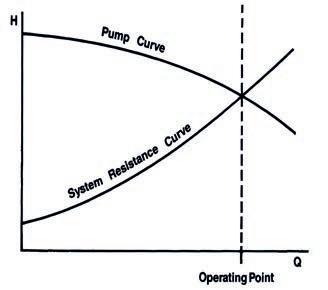
4. If the � ow being pumped can be checked, either via � ow meter in the system or as described in item 6 of the ‘commissioning run’ article, this will con� rm, when considered with the measured pump total head at fully open discharge valve, that the pump is operating at its speci� ed duty.
5. Recording the amp and volt readings going to the electric motor allows us to estimate if the power going to the pumpset is at its expected level.In addition, the motor amp reading is critical in determining that the motor is operating correctly. If correctly sized, the motor should pull just below its full load amps. Anything else should be investigated.
The motor amp and volt readings can determine by calculation what pump e� ciency has been achieved. To do this, the electric motor e� ciency and power factor is required together with the calculated pump power demand.
The following formula can be used to con� rm that the amp reading is correct:

kW is the pump calculated power, V is volts powering the motor, E is the motor e� ciency, and PF is the motor power factor.
This method will provide a good estimate of the power being consumed by the pump. The power achieved can then be used to calculate if the expected pump e� ciency is being achieved.
6. It is important to monitor the motor temperature, which should stabilise at its normal running temperature, as advised by the motor manufacturer, within 30 minutes of starting the pumpset.
Note: Should the motor run hotter than recommended, this could be phase imbalance caused by either a fault in the motor windings or electric supply and needs to be investigated by an onsite electrician.
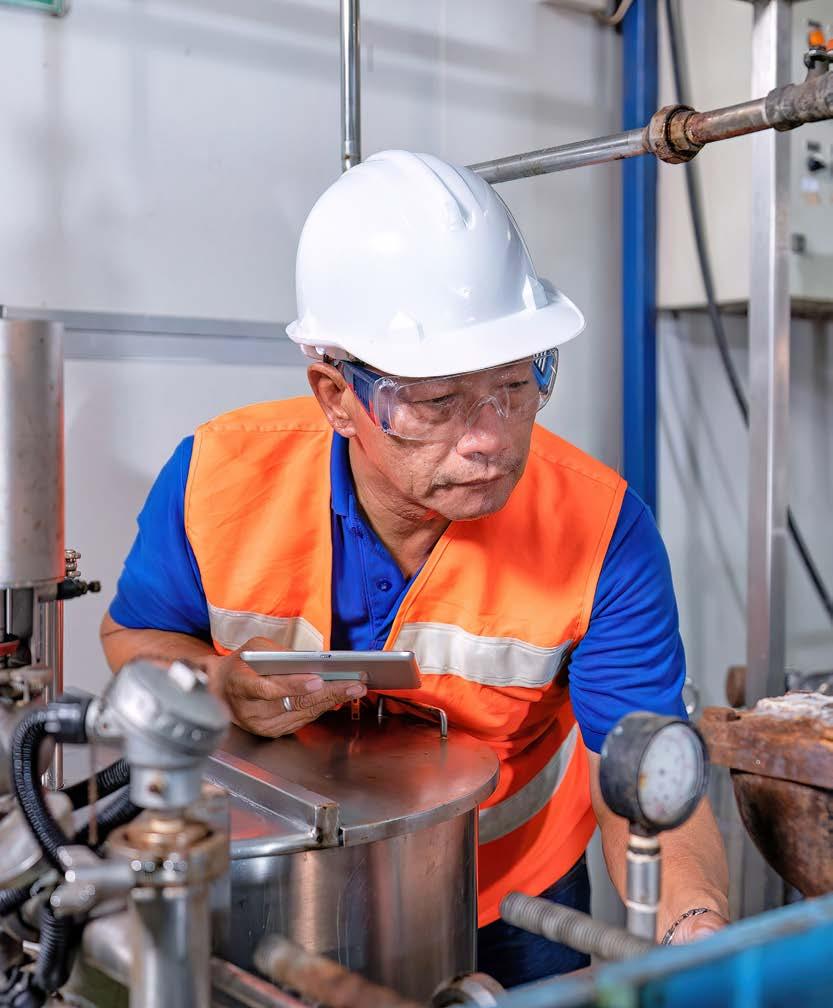
7. During the commissioning run, the temperature of the pump and electric motor bearings will rise from their ambient non-operating temperature to their operating temperature, normally, within the � rst half hour of the run and then hold steady for the remainder of the run. What temperature speci� c pump and motor bearings will run at is hard to estimate because it will depend on the design of the bearing housing, type of lubrication, running speed and load on the bearing. When monitoring bearing temperature, a simple rule of thumb limits the bearing housing temperature to 70°C for safe
There are 12 key steps in evaluating pump commissioning results.
Image: Tongpool Piasupun/ shu erstock.com
operation. Normally, bearing temperature should stabilise below 70°C a short time after startup.
8. Recorded vibration levels should quickly settle once the pumpset has been run up to operating speed and remain steady throughout the commissioning run.
An acceptable vibration level for a centrifugal pump with either overhung bearings or betweenthe-bearings construction is 3mm/ sec RMS. If the pump is vertically suspended, the acceptable vibration level is 5mm/sec RMS.
If the pump does not come within the above limitations, there are a number of possible causes:
a) Poor alignment
b) Soft foot
c) Cavitation
d) Poor pump rotational balance, e.g. debris lodged in the impeller. All of the above need to be checked if the pump vibration level is high.
9. The vibration levels of electric motors will generally be well within the limitations noted above for pumps, but problems with the pump vibration can be transferred to the motor, therefore it is recommended that any pump vibration problem be � xed before addressing high motor vibration. If needed, decouple the pump and motor and check the motor vibration while running on its own.
Electrical imbalance can be a common cause of motor vibration. This should be checked when high vibration occurs.
10. When using engine-driven pumps, it is not possible to check the power an engine is delivering without sophisticated equipment. All that can be done is to be sure that the engine temperature, oil pressure and fuel � ow are constant.
When the oil and water temperatures reach a satisfactory operating level, these should remain constant during the commissioning run.
As well as monitoring the above parameters, an engine should run smoothly, without labouring, while driving the pump. Any competent engine � tter will be able to note any di� culty the engine labours under.
11. Once the pumpset settles, typically well within the � rst 30 minutes of the commissioning run, all the readings that are being taken should remain steady throughout the rest of the run.
12. If a problem arises with the readings during the run, it is recommended that after the problems are resolved and when the pump is running steadily again, the run be extended so that the pump has 90 minutes of steady running problem free.
The commissioning of a pumpset is a logical step-by-step process as outlined in this series.
If this process is followed, the commissioning of a pumpset and the eventual handover to the client will be smoothly completed, ensuring all parties have ongoing con� dence of the pumpset’s future operation.
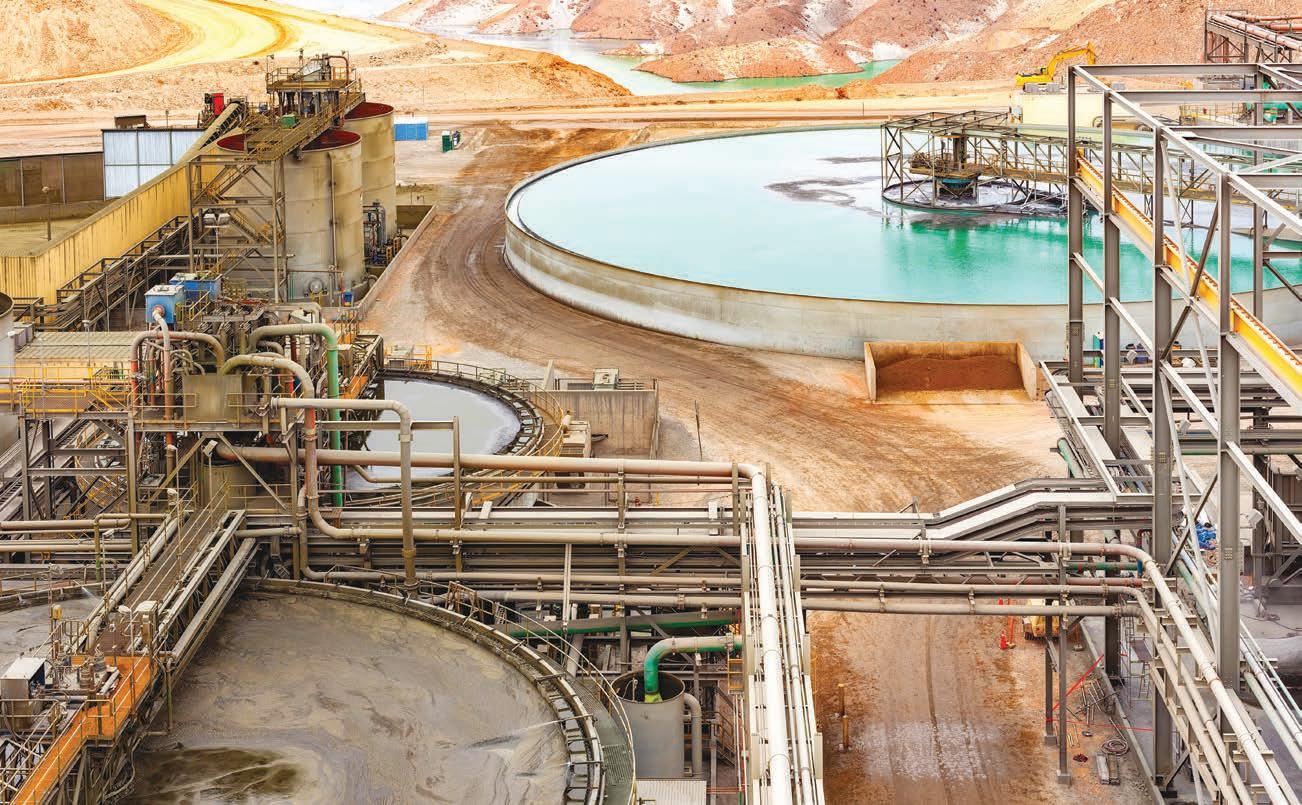
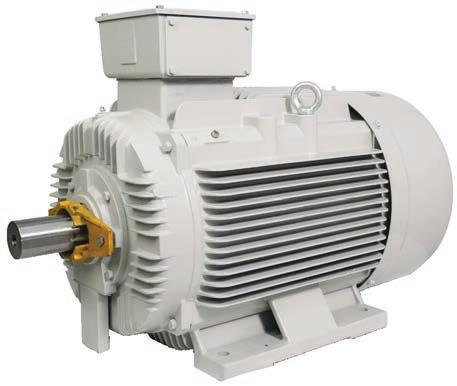
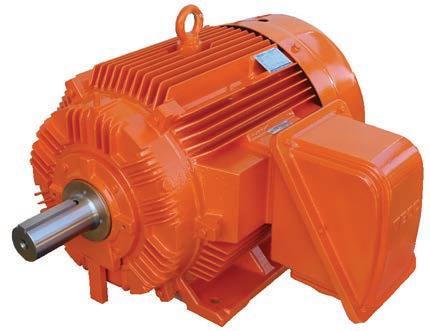
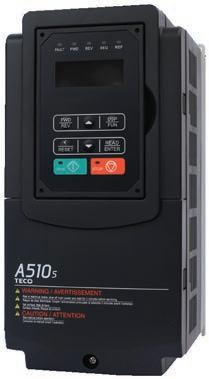
Purchase a TECO Motor and VSD together and receive an extended warranty of up to 36 months 36 months from delivery or 30 months from commissioning (whichever occurs first).