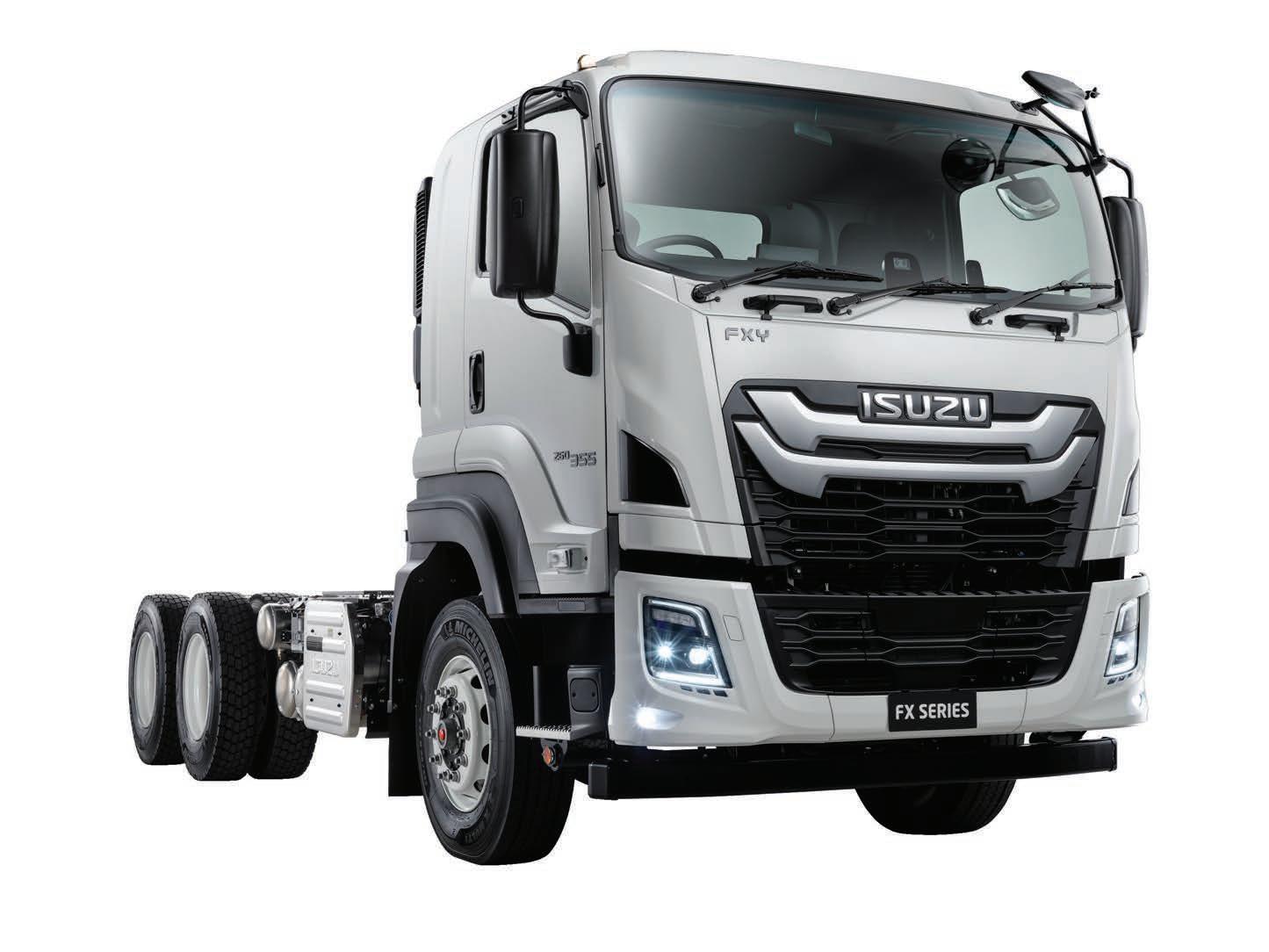
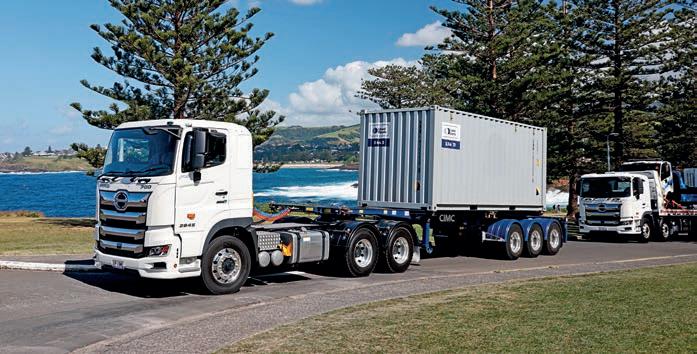
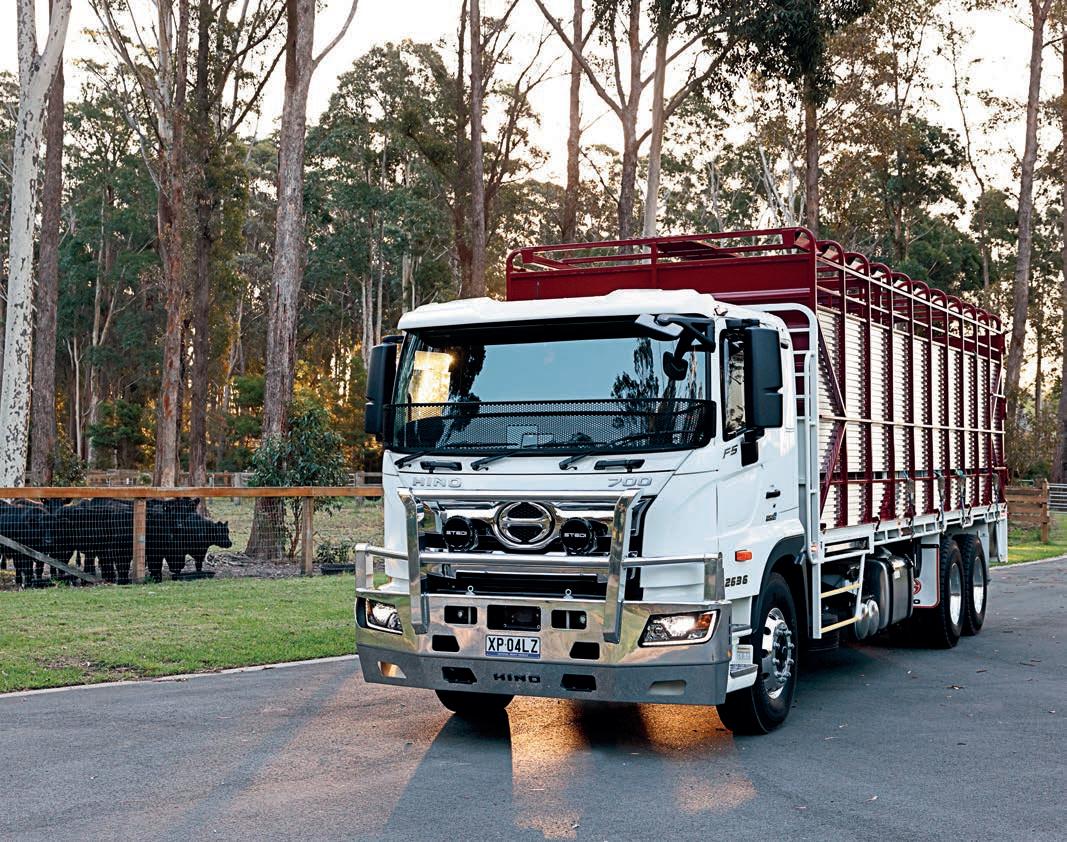
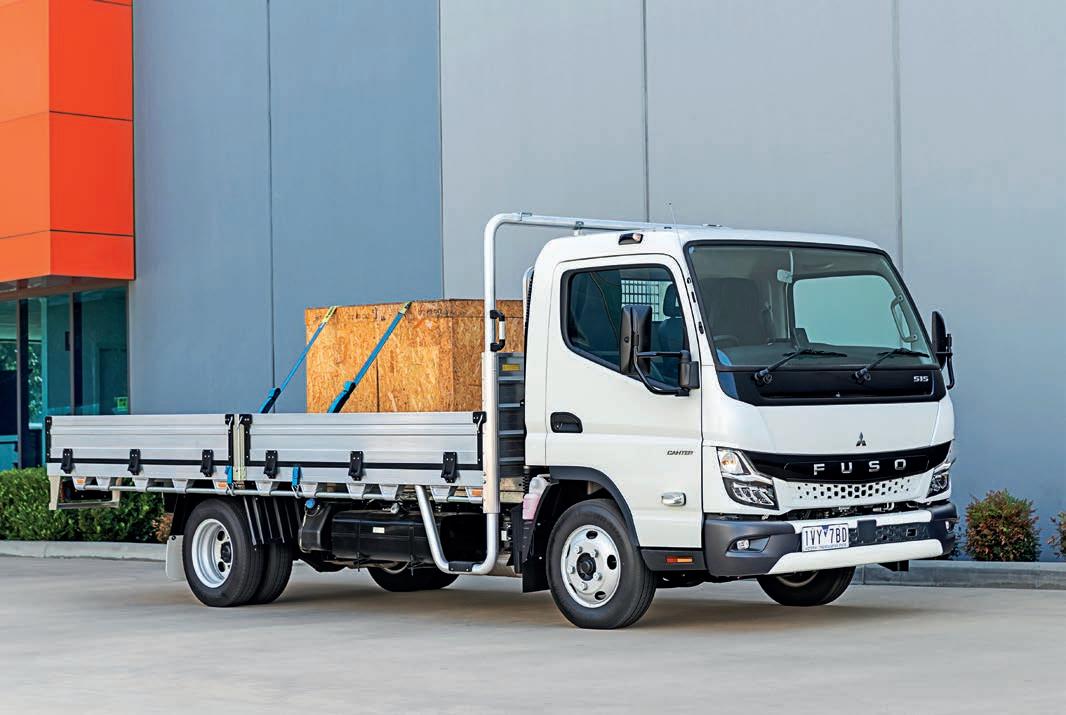
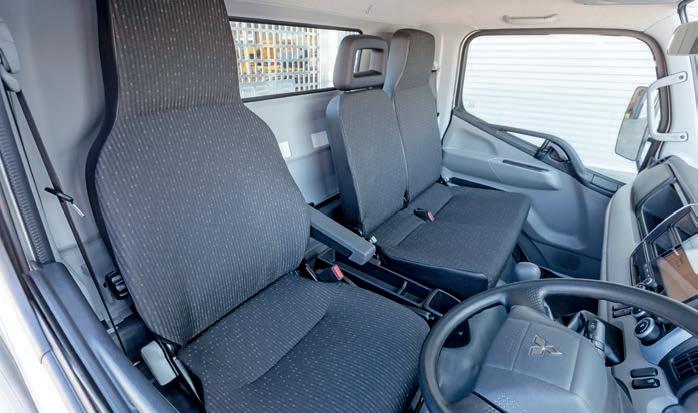
The all-new FX Series reinforces our reputation for Japanese performance and reliability. Equipped with a comprehensive safety package that raises the bar on industry standards, these are the safest heavy-duty trucks that Isuzu has ever made. The FX heavy-duty series will change the way we rely on our trucks. Forever.
Head to isuzu.com.au or visit your nearest Isuzu Trucks Dealer today.
Trusted protection. Proven performance.
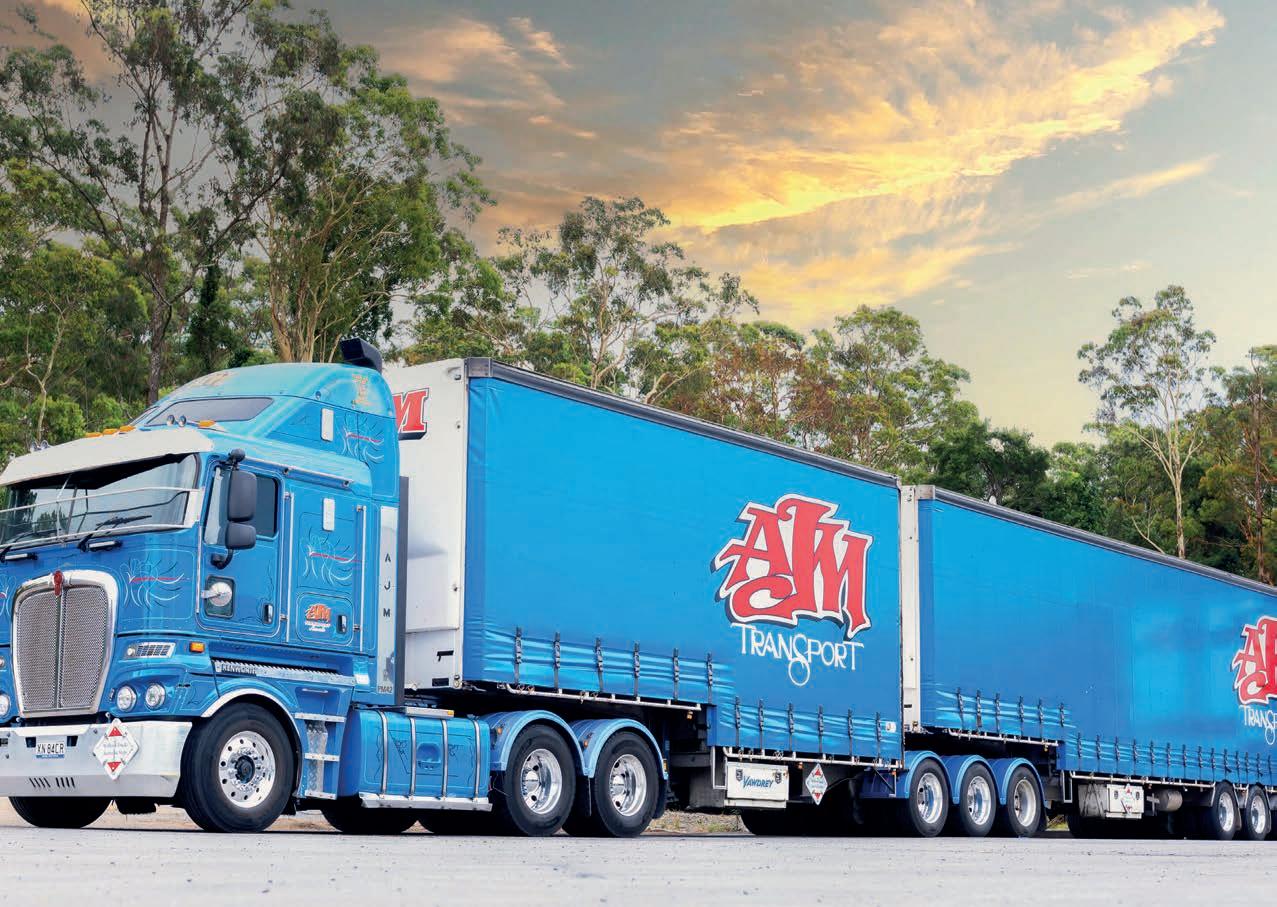
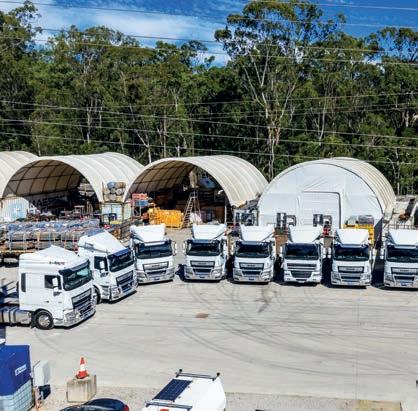
With a fleet of over 90 trucks, 240 trailers and clocking over 3,000,000 km’s a month AJM Transport relies on Castrol oils, fluids, greases and advanced analytics to keep its fleet at peak operational levels, continuing to provide best in class service to their customers - up and down Australia’s eastern seaboard. Castrol - trusted no matter the challenge.
Performance multiplied
There is a particular kind of ambition that runs through AJM Transport. The kind that began with one driver, one truck and a conviction that operational excellence would set the business apart.
Anthony and Megan Mansell built their business on this ambition 20 years ago, and it has propelled AJM Transport into the 90‑truck, 240‑trailer fleet it is today, distributing essential freight along Australia’s eastern seaboard.
Anthony admits that business growth has brought new layers of complexity, from rising operational demands and increased staffing needs to building a workshop capable of maintaining a larger fleet.
The road to no wear
When your fleet travels more than a million kilometres every week – around 12,000 kilometres per vehicle –pursuing efficiency becomes a discipline. It demands skilled drivers, reliable routes, accurate data and an uncompromising approach to preventative maintenance.
“The nature of our business is that we’re on the run all the time,” Anthony says. “We ask a lot of our trucks, maintenance division, operations and drivers.”
After becoming dissatisfied with engine wear rates and maintenance intervals from a previous supplier, AJM Transport put alternatives to the test, applying rigorous testing across trucks, equipment and products in real‑world conditions.
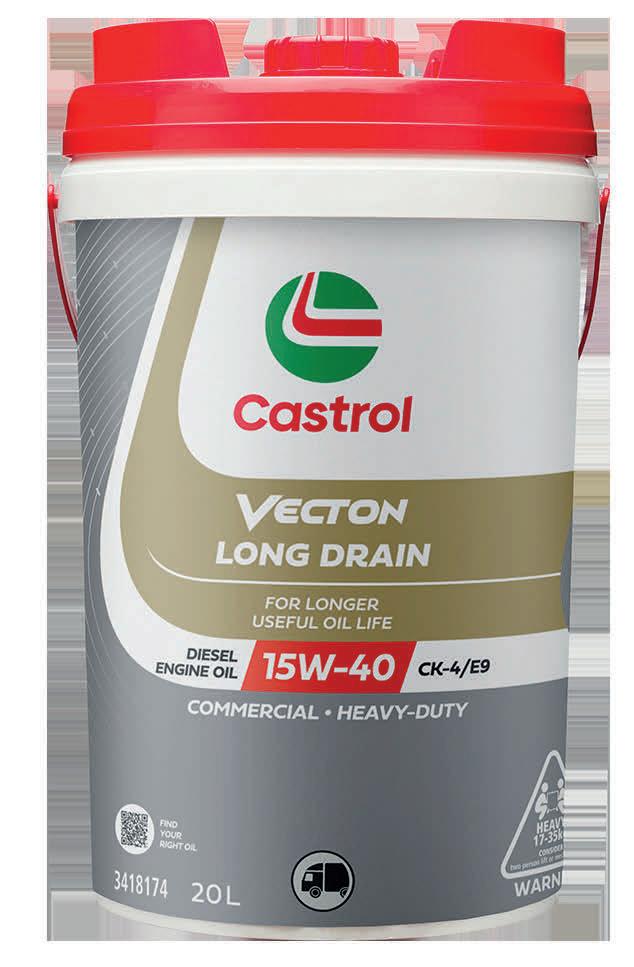
When the team evaluated Castrol VECTON – a heavy‑duty engine oil engineered for high‑load, long‑haul diesel applications – the results were decisive, and a wholesale switch was made to Castrol engine oils, fluids and greases.
Anthony says that having a strong alliance with Castrol across the full product range “ensures we maintain strong uptime with the fleet”. In fact, since adopting Castrol VECTON, oil drain intervals have been extended to 80,000 kilometres, delivering a 37% reduction in oil consumption and a 33% increase in uptime. Even with some trucks pushing one million kilometres on the clock, AJM Transport mechanics now report little to no camshaft wear and clean engine internals.
Lubricant supply, Anthony explains, “sounds small but is big in our business,” adding that “with the extended oil drain alone there’s a bottom-line saving.”
But he stresses that the support Castrol provides is just as important. “For me, there’s one thing to have the product, but two is to have the support. That ability to be able to pick up the phone and have a relationship with a supplier is massive.” For AJM Transport, that combination is what matters most. “When we align ourselves with Castrol, it works,” he says.
It’s this foundation that has enabled AJM Transport to take further steps forward in the pursuit of operational excellence, including a shift towards smarter, data driven maintenance.
Powering smarter maintenance
By integrating technology at multiple points in the maintenance chain, the business has reduced reactive maintenance to below the industry average, cut unplanned downtime, improved efficiency and created a more predictable maintenance budget.
Digital auto‑tank gauges on bulk oil storage units have eliminated manual stock checks, improved forecasting and reduced the risk of critical stock‑outs. In addition, automated fluid extraction and replacement systems now deliver faster, safer oil changes, removing routine exposure risks associated with handling hot oil.
AJM Transport has also challenged the long‑held belief that oil analysis is a specialist activity only for mining fleets. By adopting Castrol LabCheck as a routine maintenance tool, the team receives real‑time data on engine, drivetrain and oil conditions. This allows them to pinpoint wear early, adjust drain intervals and build a data record that sharpens future specification decisions.
In a competitive freight market where reliability is a genuine differentiator, AJM Transport’s proactive approach has become a real commercial advantage. By improving maintenance practices, integrating smarter technology and refining workshop efficiency, the business has lifted reliability and productivity, becoming a compelling case study for fleet owners and managers looking to review their own operations.
MEET THE TEAM
Australia’s leading truck magazine, Prime Mover, continues to invest more in its products and showcases a deep pool of editorial talent with a unique mix of experience and knowledge.
Christine Clancy | CEO
With more than two decades of experience as a media professional, Christine has worked in newsrooms across Canada, Vietnam and Australia. She joined the Prime Creative Media team 12 years ago, and today oversees more than 43 titles, including a dozen print and digital transportation titles. She continues to lead a team that focuses on continuous improvement to deliver quality insights that helps the commercial road transport industry grow.
Paul Lancaster | Editor
Paul joined Prime Creative Media as an editor in March 2025 and has enjoyed a broad career spanning over 20 years across different sectors, including law, journalism and marketing in Australia and internationally. He gets great satisfaction from creating targeted content that appeals to wide ranging audiences. Paul says this comes from listening to industry members, businesspeople and the broader community.
Peter Shields | Senior Feature Writer
A seasoned transport industry professional, Peter has spent two decades in the transport media sector. Starting out as a heavy vehicle mechanic, he managed a fuel tanker eet and held a range of senior marketing and management positions in the oil and chemicals industry before becoming a nationally acclaimed transport journalist.
CEO Christine Clancy christine.clancy@primecreative.com.au
Editor Paul Lancaster
paul.lancaster@primecreative.com.au
Managing Editor, Luke Applebee Transport Group luke.applebee@primecreative.com.au
Senior Feature Peter Shields Writer peter.shields@primecreative.com.au
Business Ashley Blachford Development ashley.blachford@primecreative.com.au Manager 0425 699 819
Head of Design Clayton Hawley clayton.hawley@primecreative.com.au
Design Jacqueline Buckmaster, Danielle Harris
Client Success Ben Sammartino Manager ben sammartino@primecreative.com.au
Head Of ce 379 Docklands Drive, Docklands VIC 3008 info@primecreative.com.au
Ashley Blachford | Business Development Manager
Handling placements for Prime Mover magazine, Ashley has a unique perspective on the world of truck building both domestically and internationally. Focused on delivering the best results for advertisers, Ashley works closely with the editorial team to ensure the best integration of brand messaging across both print and digital platforms.
Peter White | Contributor
Since completing a Bachelor of Media and Communication degree at La Trobe University in 2021, Peter has obtained valuable newsroom experience, supplemented by direct industry exposure at Prime Creative Media. As the Editor of Trailer, Peter brings a fresh perspective to Prime Mover. He has a strong interest in commercial road transport and in furthering the magazine’s goal of growing the industry.
www.primemovermag.com.au
Subscriptions
03 9690 8766 subscriptions@primecreative.com.au
Prime Mover magazine is available by subscription from the publisher. The right of refusal is reserved by the publisher.
Annual rates: AUS $110.00 (inc GST). For overseas subscriptions, airmail postage should be added to the subscription rate.
Articles
All articles submitted for publication become the property of the publisher. The Editor reserves the right to adjust any article to conform with the magazine format.
Copyright PRIME MOVER magazine is owned and published by Prime Creative Media. All material in PRIME MOVER magazine is copyright and no part may be reproduced or copied in any form or by any means (graphic, electronic or mechanical including information and retrieval systems) without written permission of the publisher.
The Editor welcomes contributions but reserves the right to accept or reject any material.
While every effort has been made to ensure the accuracy of information
Prime Creative Media will not accept responsibility for errors or omissions or for any consequences arising from reliance on information published. The opinions expressed in PRIME MOVER magazine are not necessarily the opinions of, or endorsed by the publisher unless otherwise stated.
COVER STORY
“We are extremely busy these days. With all the government building and maintenance projects between Brisbane and the Gold Coast, the next four years are going to be boom time for us.”
Prime Feature STORIES SMOOTH CANTER 48
FLEET FOCUS
28 Moving on Up
A Townsville transport company has all industry bases covered with its wide range of prime movers, capable of delivering the goods when needed.
32 Magnificent Seven
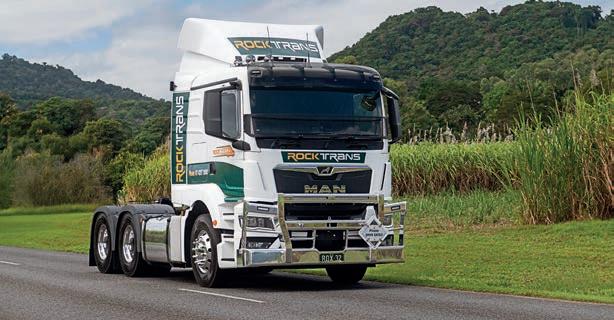
A Queensland logistics provider, from the Atherton Tablelands, has celebrated its 50th anniversary with the delivery of seven new MAN TGS prime movers.
34 Shining Legacy
From a single Leyland truck to one of the nation’s largest family-run fuel logistics fleets, this CQ family business celebrated delivery of its 250th Kenworth.
38 Growth Engine
Penske Australia & New Zealand is focusing on diversification and long-term investment as it targets sustained growth across transport, energy, defence and mining.
56 Enduring Reliability
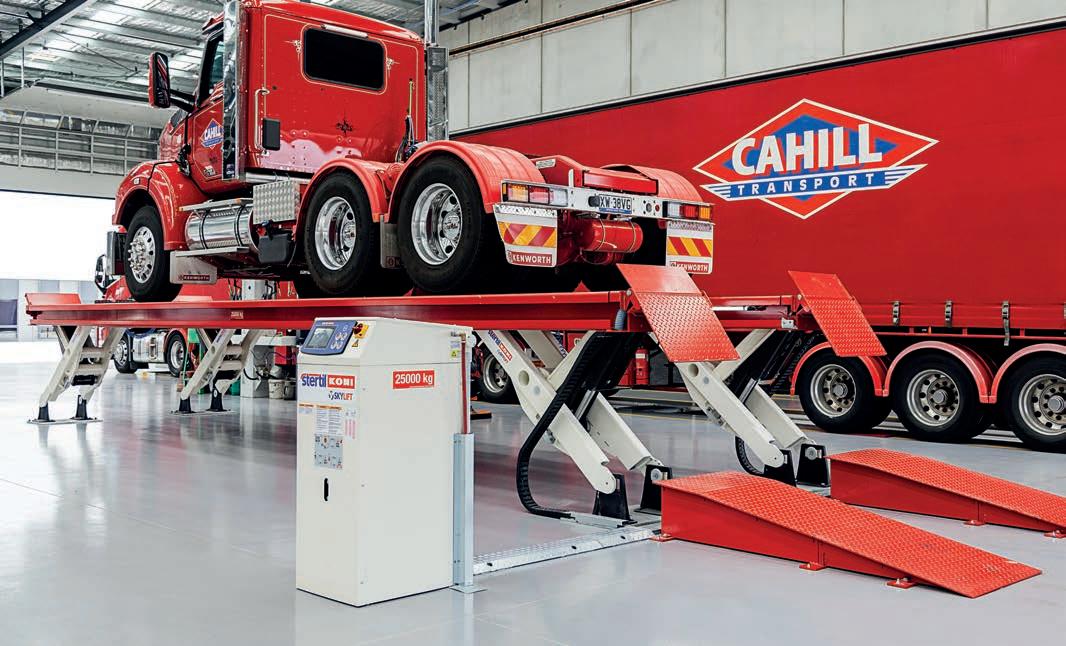
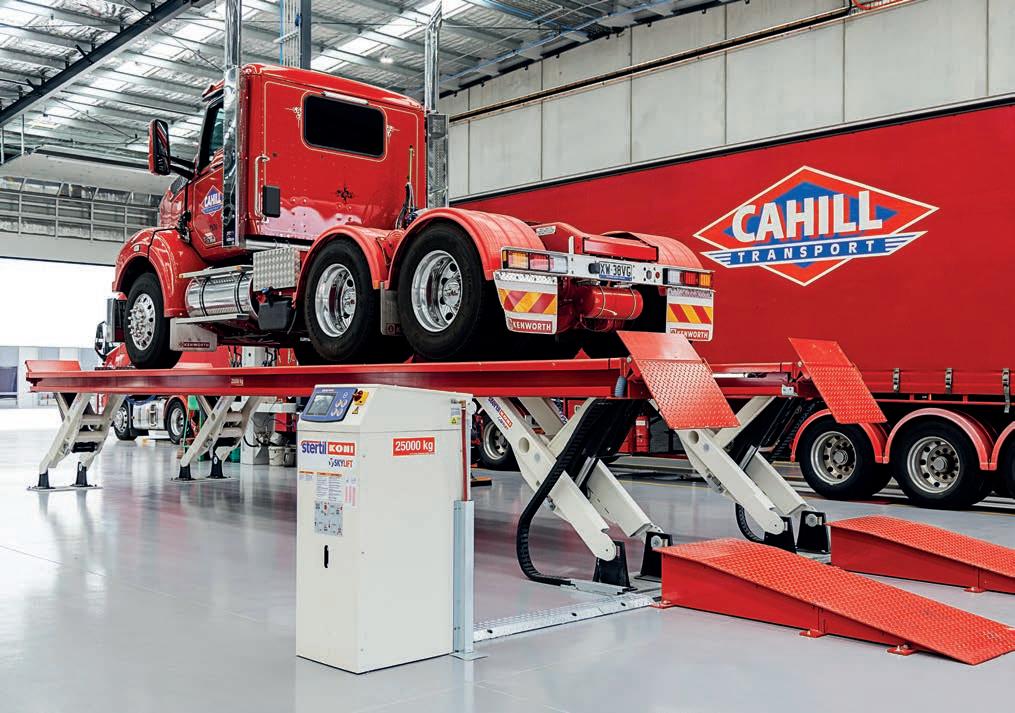
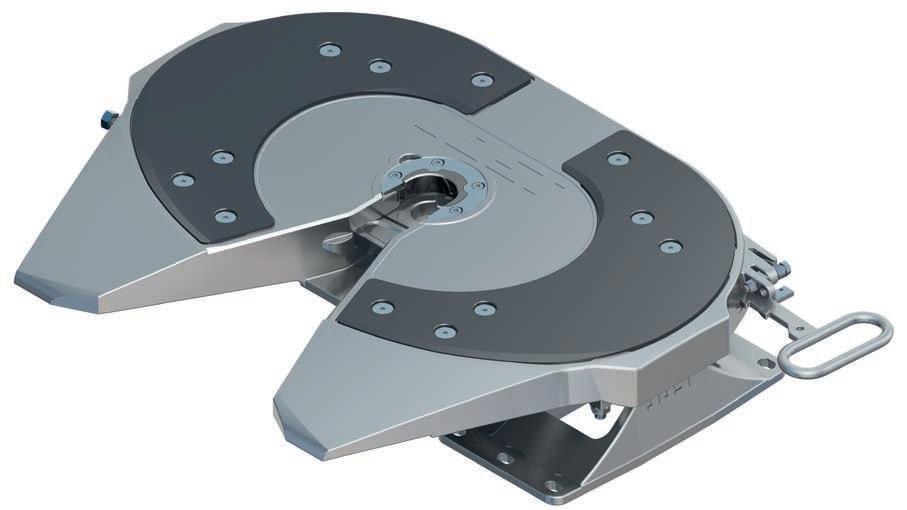
As Cahill Transport celebrates 75 years in business in 2026, it continues to rely on JOST coupling and trailer equipment in keeping its national fleet on the road.
TEST DRIVE
44 Multi-tasker
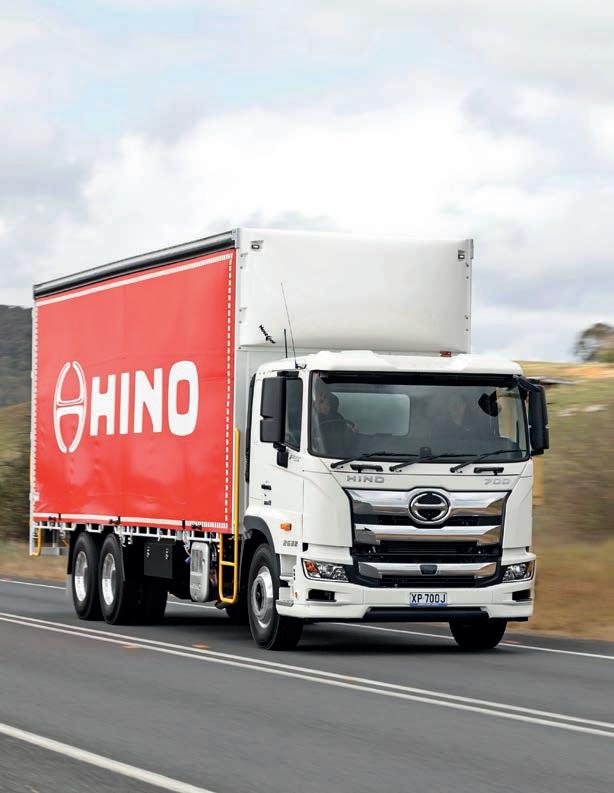
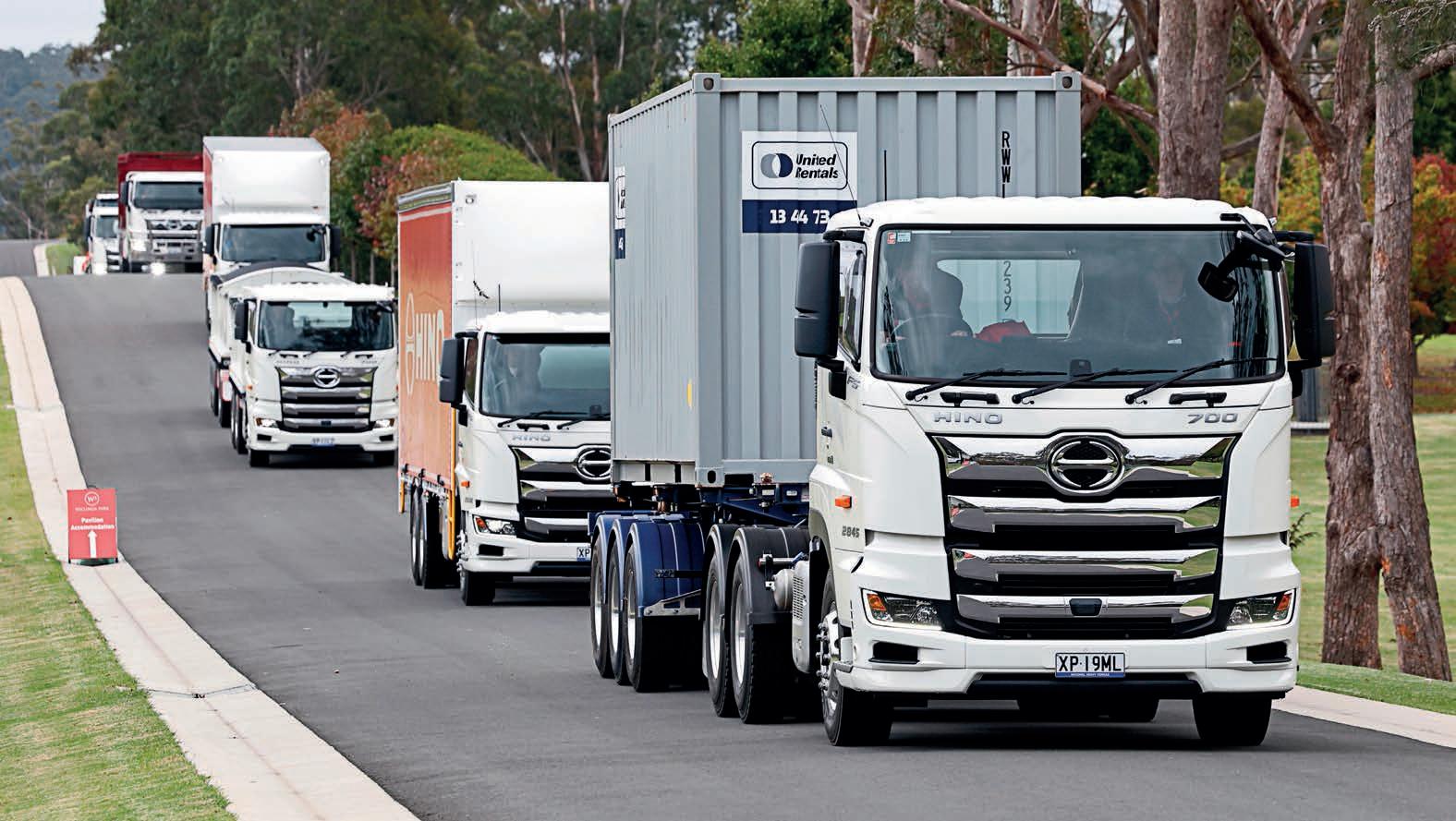
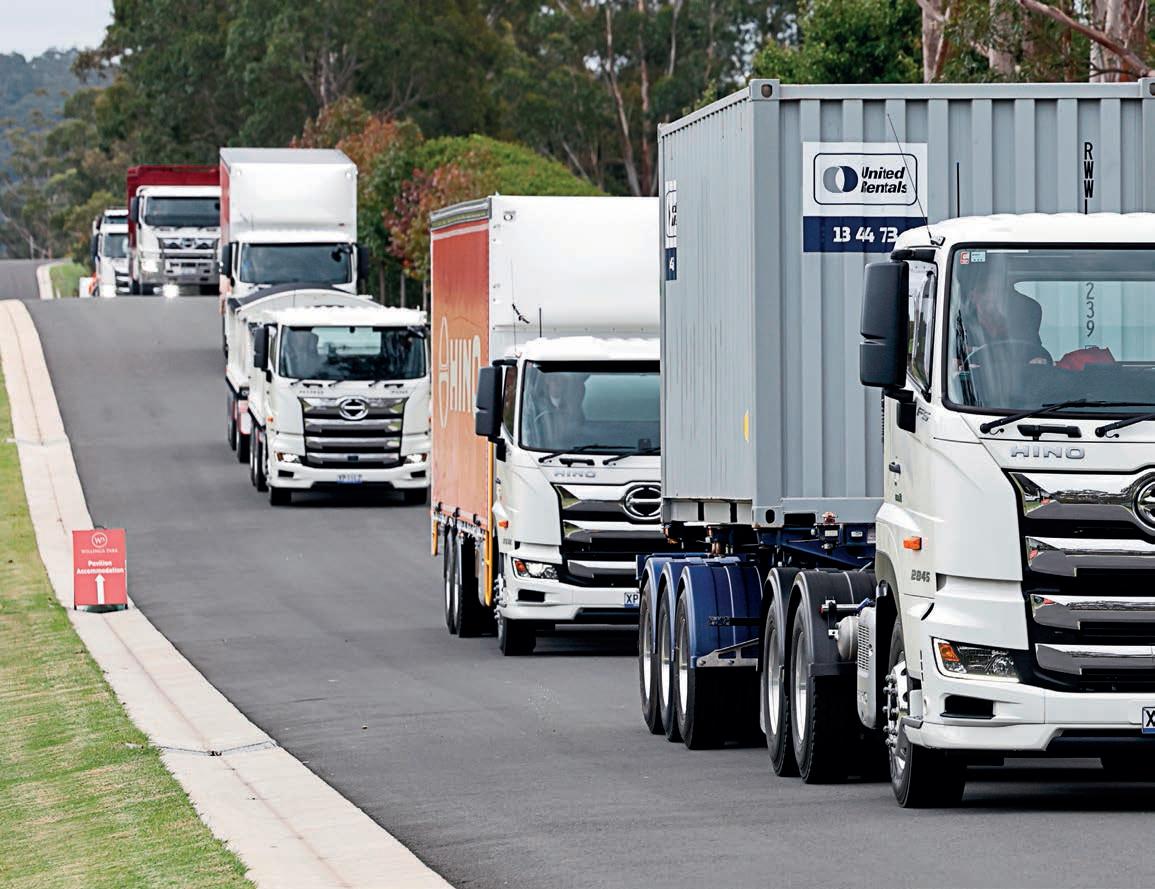
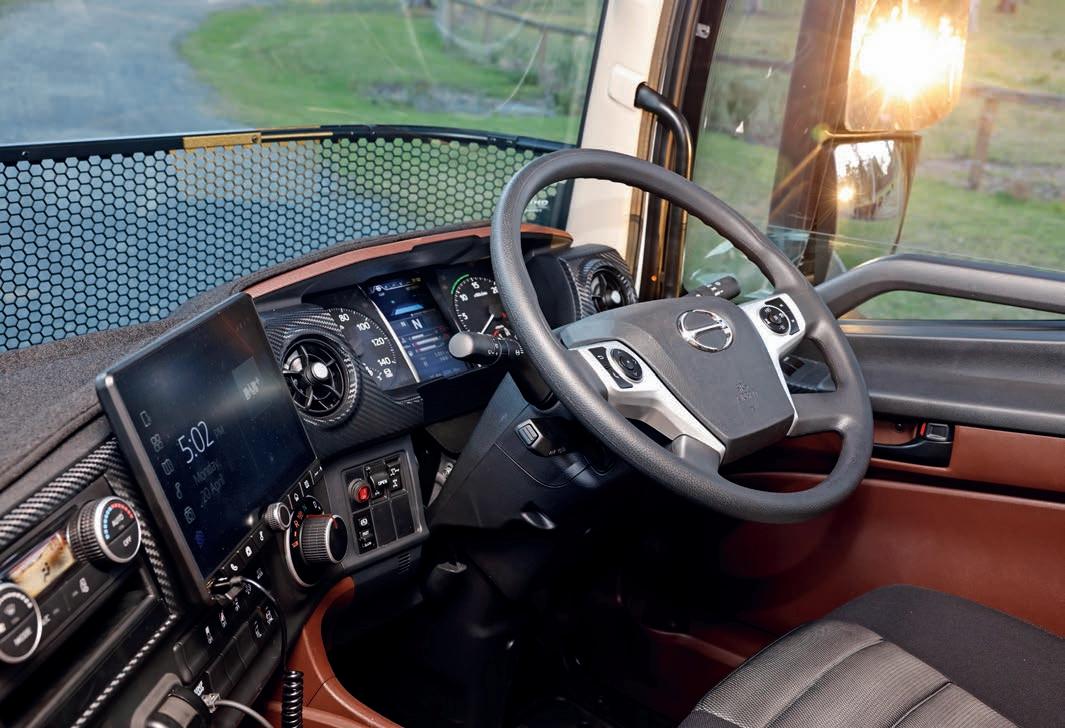
Hino’s Heavy Duty 700 Series now suits a wider range of applications with a new 12-speed automated transmission.
Paul Lancaster Editor
It’s a common belief that politicians sit alongside lawyers and real estate agents in the public popularity stakes – professions many Australians regard with a healthy degree of scepticism. Politicians are often accused of promising much and delivering little. In the current period of by-elections and budgets, Australia’s transport and trucking sectors do not need more political speeches and promises. They need action.
Across the country, operators are battling a combination of fuel supply uncertainty, soaring operating costs, tightening margins and a broader cost-of-living crisis that is hitting every part of the supply chain. The transport industry sits at the heart of the Australian economy. If trucking slows, everything slows. Supermarket shelves, construction projects, mining operations, agriculture and manufacturing all depend on trucks continuing to roll ef ciently and pro tably.
Yet many transport businesses are reaching breaking point. NatRoad has reported that as many as 70 per cent of
Time for Action
operators surveyed say they are on the verge of closure.
Diesel prices continue to uctuate, insurance premiums climb relentlessly, nance costs remain high and a chronic shortage of skilled labour continues to place enormous strain on eets large and small. With increasing compliance requirements, infrastructure bottlenecks and supply chain disruptions it becomes clear why many operators are asking how much longer the industry can absorb the pressure.
For years, transport companies, industry associations, eet managers, owner-drivers, truck manufacturers and suppliers have been identifying the problems and proposing solutions. What has often been lacking is the political will to genuinely listen and respond decisively to those with expertise and experience.
This is where governments at every level – federal, state and local – must step up.
The trucking industry does not expect miracles. It understands economic cycles and external pressures. What operators are demanding is meaningful consultation and practical policy. They want governments to engage directly with the people on the ground rather than relying solely on bureaucracy and political optics.
That means listening to transport associations about infrastructure priorities. It means working with truck manufacturers on cleaner and more ef cient technologies. It means consulting eet operators on freight routes, rest areas, road maintenance and productivity reforms. It means recognising that excessive red tape and inconsistent regulations between states only add further cost and inef ciency to an already stretched industry. Most importantly, it means listening openly and acting quickly.
Australia’s transport industry has always been resilient. It survived economic downturns, pandemics, oods, bush res and supply chain crises. However, resilience should not be mistaken for endless capacity to absorb pain.
The time for political point-scoring has passed. The industry needs governmental leadership prepared to make strong decisions, implement meaningful reforms and support the businesses that quite literally drive the national economy.
The road ahead will not be easy. But listening, collaborating and acting decisively would be a good place to start.
THE POWER OF SEAMLESS LOGISTICS
THAT’S ANOTHER HINO
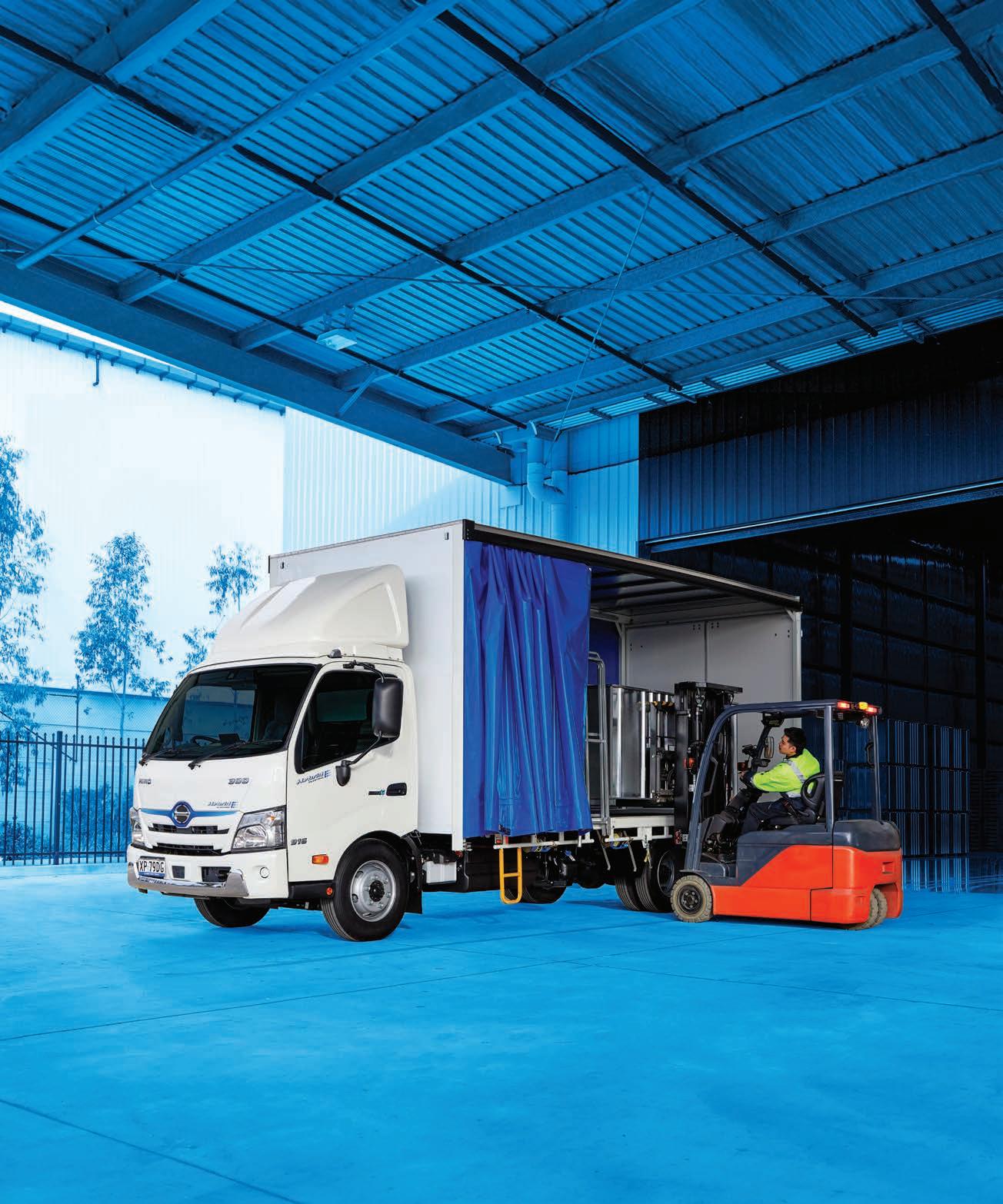
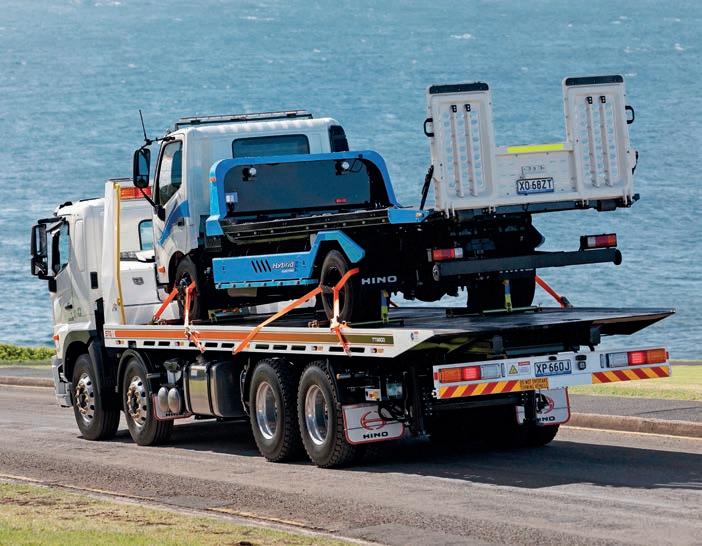
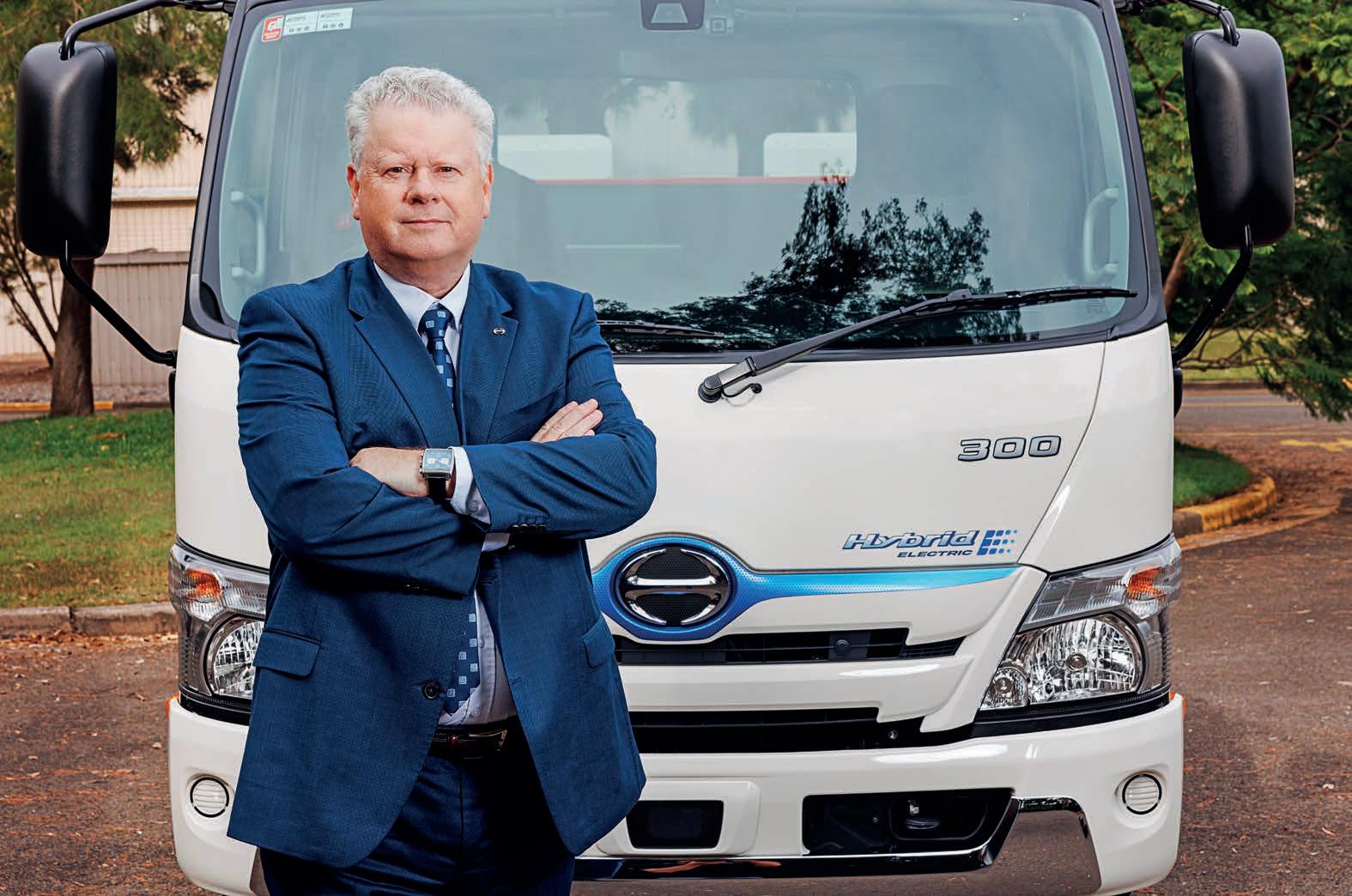
THE HINO HYBRID ELECTRIC IS BUILT FOR FREIGHT & DELIVERY WITH ZERO RANGE LIMITATIONS. Designed for high-frequency logistics, the Hino Hybrid Electric helps reduce running costs with up to 22%* fuel savings and lower emissions. Its impressive payload capacity - delivering up to 8 tonne GVM - and self-charging hybrid technology mean there’s no need to plug in, just refuel and go. Backed by nationwide support and over 18 years of leadership in low-emissions transport, it’s the smarter way to move goods. Visit hino.com.au
>
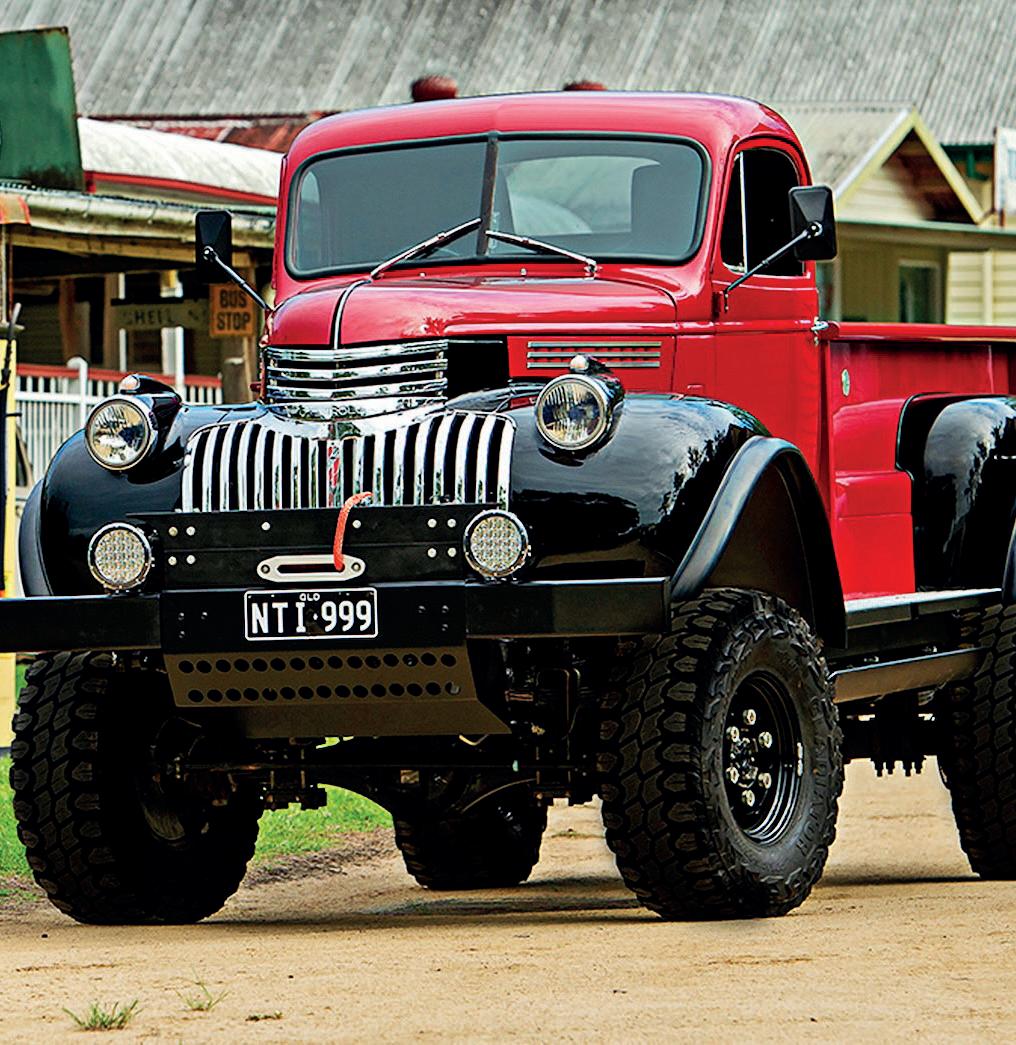
Classic Chevrolet to be raffled for MND research
A custom-built, restored 1947 Chevrolet Maple Leaf truck is the latest vehicle to be raffled to raise funds for Motor Neurone Disease (MND) research.
The striking red and black truck, named ‘Ruby’, is the ninth to be raffled by Australia’s largest transport and logistics specialist insurance provider, NTI, in support of the MND and Me Foundation.
Since 2017, NTI has raised more than $3 million for vital research, with 100 per cent of funds going directly to the official NTI Research Grant for MND.
Powered by a Hino 4-litre turbo diesel engine and built on Hino 4x4 running gear, ‘Ruby’ combines vintage character with modern performance, continuing NTI’s tradition of transforming classic trucks into one-ofa-kind collector’s items.
The truck comes equipped with front and rear disc brakes supported by an anti-lock braking system, vehicle stability control, and traction control to enhance handling and driver confidence. An exhaust brake adds further control, complemented by a robust multi leaf spring suspension setup designed for durability.
Powered through a 6-speed manual transmission, the truck is built for practical capability, including a 6-tonne electric winch and a 3.5-tonne tow bar. Inside, modern comforts are seamlessly integrated, including electric windows, air conditioning, a touch screen media system, and a reversing camera, making the classic truck highly functional.
NTI CEO, Janelle Greene, said the organisation is proud to continue its commitment to funding research aimed at finding a cure for MND.
“Every day, MND claims the lives of two Australians, and another two are diagnosed. That’s why this work is so important,” Greene said.
“NTI became involved with MND after our former CEO, Wayne Patterson, was diagnosed with the disease and later
passed away. Wayne is widely regarded as the leader who created the modern NTI, and we wanted to honour his legacy in a meaningful way.
“Our approach of restoring and raffling classic trucks has brought together our people, partners, customers and the broader community in an incredible show of support. To have raised more than $3 million for MND research is something everyone involved should be immensely proud of.
“I think Wayne would be amazed and humbled by what this initiative has achieved. It’s a legacy that continues to drive us forward.”
MND and Me Foundation CEO, Jane Milne, said the partnership with NTI continues to have a profound impact on those living with MND and their families. “Our mission is to care and to cure. We support people and their families and carers from the moment they are diagnosed through to end-oflife care,” she said.
The restored 1947 Chevrolet Maple Leaf truck to be auctioned.
> FWC mandates fuel cost recovery
Fuel costs must now be recovered across transport contracts, according to the Fair Work Commission (FWC).
The FWC has issued a mandatory fuel cost recovery order, that has been applied across the entire road transport contractual chain as from 21 April 2026, requiring rates to be reviewed and adjusted at least fortnightly.
The order, formally known as a Road Transport Contractual Chain Order (RTCCO), has been introduced as an emergency measure following significant global fuel supply disruptions linked to conflict in the Middle East. It was fast-tracked after just four days of hearings and consultation, compared to the usual extended process, after the Federal Government deemed the situation to have a significant and immediate national impact on the road transport industry.
Under the order, parties must ensure transporters can recover increases in fuel costs incurred since, on or before 6 March 2026. The requirement extends from operators through to clients at the top of supply chains, including retailers, manufacturers and mining companies, who must engage in regular fuel pricing reviews.
The RTCCO applies broadly across the industry, covering primary parties at the top of contracts, secondary subcontracting parties, road transport businesses, gig platform operators and both employee-like drivers and owner drivers. It captures any arrangement where freight is moved by road under a chain of contracts, making it legally binding for all relevant participants. Parties must adjust rates at least twice per month to reflect fuel cost movements. This can be achieved through direct rate increases, fuel levies, reimbursement mechanisms or existing ‘rise and fall’ clauses tied to fuel benchmarks. Where such mechanisms already exist, they may satisfy the order if they adequately account for increased fuel costs.
The Australian Trucking Association (ATA) supported the order, while proposing amendments to improve its clarity and workability during the hearing process.
ATA Chair, Mark Parry, said the decision was necessary given current conditions.
“The events of the weekend show that we still face a long period of price and supply disruption. Small and medium sized trucking businesses cannot keep Australia’s freight moving at rates that do not recover their fuel costs,” said Parry.
“The industry’s business as usual contractual arrangements have served us well and will serve us well in the future. But they’re not working for many operators under the emergency we face.
“I urge every trucking business to read the order, talk to their financial adviser and seek the necessary rate adjustments.”
The order includes provisions requiring primary parties to take reasonable steps to ensure downstream participants adjust rates paid to owner drivers. The ATA had raised concerns about the administrative burden of this clause during proceedings.
“The commission retained the clause, while providing that it does not apply to a small business primary party that is not a road transport business,” said Parry.
“The Fair Work Ombudsman will need to provide industry with clear guidance about what are reasonable steps.” Disputes arising under the order can be referred back to the Commission, reinforcing its role in overseeing compliance across complex contractual chains.
The Commission will review the order after its first month and then every three months. It will cease to apply if the national weekly average terminal gate price of diesel falls below $2.00 per litre, based on data from the Australian Institute of Petroleum.
The FWC has issued a mandatory fuel cost recovery order.
Industry bodies have welcomed the decision as a significant shift in how fuel cost pressures are managed.
Victorian Transport Association (VTA) CEO, Peter Anderson, speaking as National Secretary of the Australian Road Transport Industrial Organisation, described the ruling as a landmark outcome.
“This is a historic and long-overdue decision from the Fair Work Commission that recognises a simple reality: transport operators cannot continue to absorb extraordinary fuel costs on behalf of the rest of the economy,” said Anderson.
“This order ensures that wherever diesel prices go, transport businesses will have confidence that those costs can be recovered from their customers. That certainty is essential if trucks are to keep moving and supply chains are to remain stable.”
The decision follows a joint emergency application by ARTIO and the Transport Workers’ Union, enabled by recent legislative changes under the Fair Work Amendment (Fairer Fuel) Act 2026, which allows expedited intervention during industry crises.
“For too long, operators and transport businesses have been forced to subsidise fuel costs for major clients at the top of the supply chain.
“This decision makes it clear that freight operators must be able to pass on the genuine costs they incur to deliver goods on behalf of customers. That’s fundamental to safety, sustainability and the long-term health of the industry.”
> TWAL 2026 scholarship winners announced
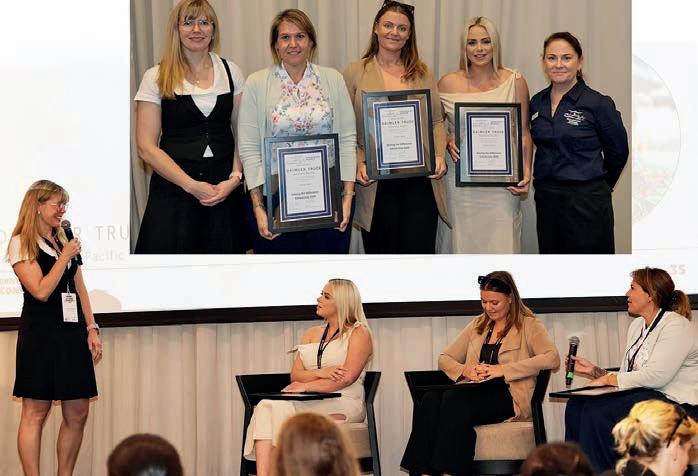
The 2026 recipients of the Transport Women Australia Limited (TWAL) Driving the Difference scholarships were announced at the organisation’s recently held annual conference.
The 2026 TWAL Driving the Difference Scholarship recipients are Jen Vella of TransCrane, Chloe Hunt of StarTrack, Brittany Grech of Divalls Bulk Haulage, Chelsea Moen of Australian Glass Group and Mandy Solar of Followmont Transport.
Daimler Truck Australia Pacific has backed this program since 2019, which offers a unique opportunity for women to enter the transport industry or to upskill to advance themselves in their chosen transport related field, since 2019.
“Daimler Truck is proud to work with TWAL to help enrich the transport and logistics sector and help more women make their way in this field,” says Daimler Truck Australia Pacific President and CEO, Daniel Whitehead.
“We’ve been thrilled to see the
difference that past scholarship recipients are making in the industry. They are a great endorsement of the initiative.”
The scholarship recipients were presented certificates at the TWAL Driving the Difference conference by Daimler Truck Australia Pacific Head of Marketing and Communications, Dr
> John De Bruyn remembered for transport legacy
The passing of Tasmanian transport figure John de Bruyn has been acknowledged by industry, with his early contributions to West Coast operations remembered as foundational to the business.
John de Bruyn (1944–2026) passed away in April, leaving behind a legacy tied to the development of freight and earthmoving operations in northern Tasmania.
His connection to the industry began with his father, Cornelius de Bruyn, who established C De Bruyn’s Transport in Launceston in 1953. The business later expanded in 1965 with the purchase of West Coast Transport in Burnie, supporting the region’s mining and sawmilling sectors.
De Bruyn relocated to Burnie with his young family to manage the operation, overseeing the business during its
Stefanie Tralaggan.
“It was an honour to present the certificates to the 2026 scholarship recipients and hear about their amazing work,” Dr Tralaggan said.
“Each one of them is achieving great things already, and we are so pleased to be able to help them advance even further in the industry.”
formative years. He remained in the role until 1978, when ownership transitioned following the arrival of extended family members from the Netherlands.
After this period, de Bruyn returned to Launceston and established his own earthmoving venture. He was regarded as hardworking and mechanically
skilled, attributes that defined both his transport and later business activities. In a statement, the De Bruyn’s Transport said: John de Bruyn “played a meaningful role in shaping the early direction of our company, and his contribution remains part of the story we carry forward today.”
Image:
Daimler Truck Australia.
Image:
De Bruyn’s Transport.
The 2026 recipients of the Transport Women Australia Limited (TWAL) Driving the Difference scholarships have been announced.
John De Bruyn.
> Electric freight push gains traction
A fully electric freight run between Sydney and Canberra has been used to demonstrate the viability of zero-emissions heavy transport, with industry and political leaders calling for faster investment in trucks and charging infrastructure.
New Energy Transport, alongside ANC and Who Gives A Crap, completed what is reported to be Australia’s first end-to-end electric delivery on the corridor, before presenting the results at Parliament House with the Parliamentary Friends of EVs and the Smart Energy Council.
Smart Energy Council CEO, John Grimes, said the shift to electric freight would reduce reliance on imported fuels while improving cost efficiency.
“Australia’s trucking freight runs on somebody else’s fuel – but there is a better way,” said Grimes.
“The transition to electric trucks actually allows trucking in Australia to run on Australian sunshine.”
Grimes said the industry requires an urgent response to accelerate uptake, warning that diesel supply constraints and geopolitical pressures were exposing vulnerabilities in the current freight model.
Speaking at the event, MP Dr Monique Ryan said the demonstration came at a critical time for national fuel security.
“We’re at a moment in history where the future of Australian transport is more important to us than it ever has been before,” said Ryan.
“This is an issue about the health of our economy, but it’s also about the security of our fuel supply.”
Ryan said electric trucks were now capable of handling heavy freight tasks previously seen as a barrier to adoption.
“It’s incredibly exciting to see trucks like this which are able to move large transport between our nation’s capital and the capital cities more quickly and more cheaply than diesel,” she said. New Energy Transport Co-CEO, Daniel Bleakley, said the Sydney–Canberra run
highlighted both cost and productivity advantages.
“The energy cost to do this trip was roughly 84 per cent lower than what it would cost the equivalent diesel truck,” said Bleakley.
“This truck was also able to complete this journey 25 minutes faster than a regular diesel truck.”
Bleakley said electric trucks could maintain speed on inclines and operate on low-cost renewable energy, delivering operational gains alongside emissions reductions.
He added that the shift would also improve driver conditions.
“These trucks are much more quiet, they don’t vibrate and all of the drivers have reported feeling a lot less fatigued,” said Bleakley.
ANC CEO, Joe Sofra, said customer expectations and operational efficiency were also driving interest in electrification.
“When customers can actually see an electric vehicle rocking up to their door, that is part and parcel of what customer expectationis,” said Sofra.
Sofra added that quieter vehicles and reduced physical strain could benefit drivers in what remains a demanding job.
“If you can sit there for 10 hours in something that’s as quiet as an electric vehicle versus a diesel powered vehicle, you see the difference,” he said.
From a commercial perspective,
Who Gives A Crap co-founder, Jehan Ratnatunga, said the transition was already viable.
“Going electric isn’t just about going green,” said Ratnatunga. “It’s actually just common sense. It’s commercially viable, and it’s right here today.”
However, speakers acknowledged barriers to widespread adoption, particularly the upfront cost of vehicles and limited charging infrastructure.
Bleakley said the industry currently operated on a low capital expenditure, high operating cost model, while electric trucks inverted that structure.
New Energy Transport has demonstrated the viability of zeroemissions heavy transport.
“You might buy a diesel truck for $250,000 but spend about $2 million on diesel over 10 years,” he said.
“Electric trucking is the opposite – high capex, but extremely low opex.”
Grimes said government support and faster deployment of infrastructure would be critical to scaling the sector.
“We need innovative financing models, and we need to move quickly… we need a crisis-like response,” he said.
He pointed to charging solutions already available in Australia and argued the technology was no longer the limiting factor.
“The technologies are there – it’s just a question of will and coming together,” said Grimes.
Despite the progress, the transition is expected to take time. Bleakley noted the average age of Australia’s truck fleet is around 13 years, meaning full electrification could take decades even with rapid uptake.
“If 100 per cent of all new trucks were electric, it would still take 20 years to convert that entire national fleet,” he said.
The demonstration highlighted that range limitations may be less of a constraint than previously thought, with one electric prime mover capable of travelling up to 670 kilometres on a single charge under trial conditions. Industry stakeholders said the focus now must shift to scaling deployments, with calls for coordinated action across government and industry to accelerate the transition.
> BildGroup takes on first Fuso eCanter truck
Australian civil construction company, BildGroup, has taken delivery of its first Fuso all-electric truck.
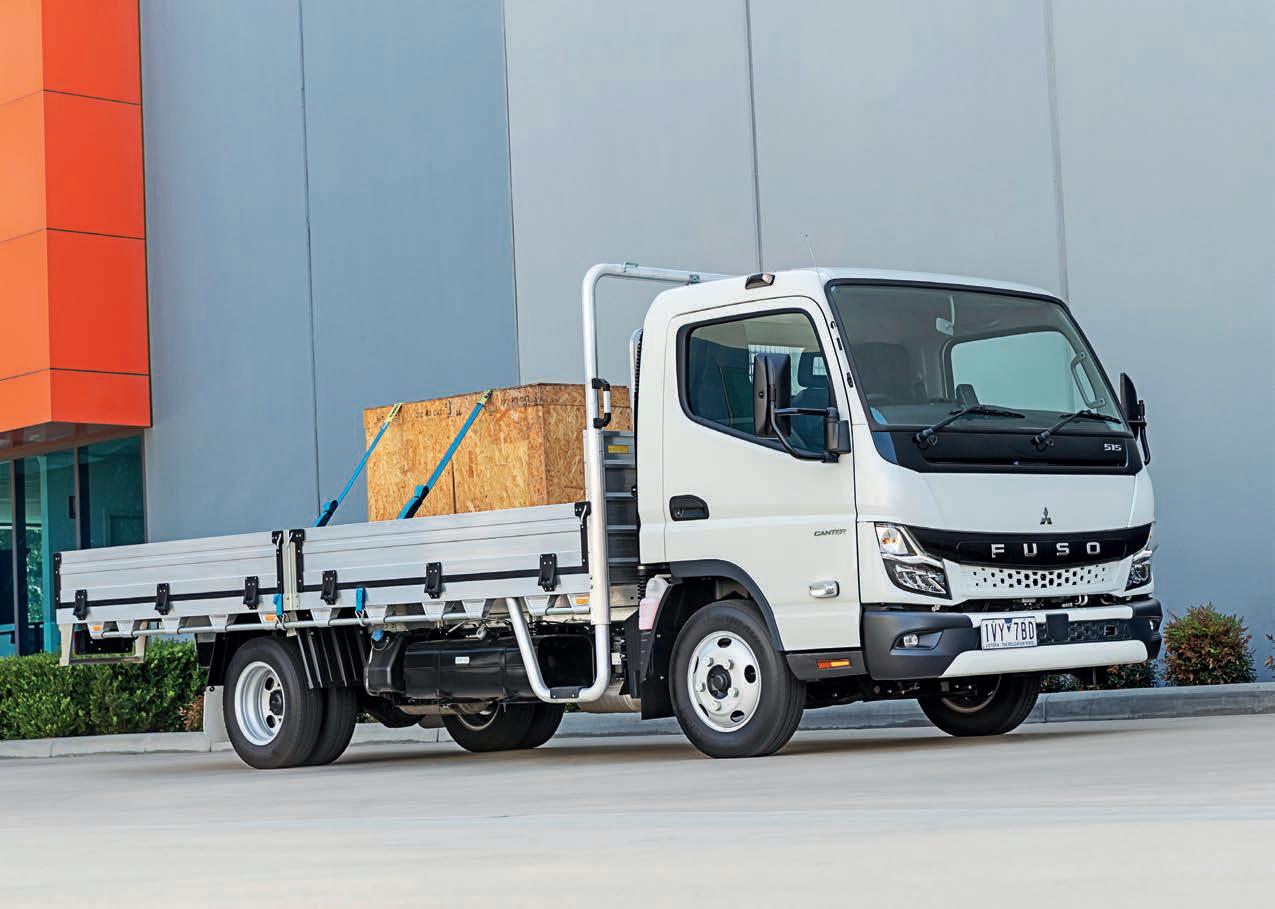
The e918 Fuso Canter tipper truck has been added to the company’s fleet as part of its sustainability program that focusses on transitioning to a low carbon future. The near-silent fully electric model produces zero exhaust emissions.
The first generation eCanter was the first OEM (factory-built) seriesproduction electric truck available in Australia.
The new generation model brings a raft of improvements included increased range, a class-leading eAxle for efficiency and a full-suite of active safety features.
BildGroup Environmental and Sustainability Manager, Jake Chitty, says that introducing the electric eCanter is a signal of intent regarding its sustainability pathway.
“We’re not waiting for the industry to change - we’re helping lead that change. This is the first of many steps toward modernising our fleet, reducing emissions, and aligning our business with the expectations of our clients and our people,” he said.
“From a sustainability standpoint, the introduction of the Fuso eCanter tipper is more than just adding a new truck to our fleet — it represents a meaningful shift in how BildGroup approaches environmental responsibility within our operations.”
The eCanter’s zero exhaust emissions and near silent operation will deliver key benefits, Chitty said.
“For our crews, this means safer, and more comfortable work environments. For our clients, it means projects that align with modern sustainability expectations. And for our business, it’s another step in future proofing our operations,” he said.
Daimler Truck Australia Pacific President and CEO, Daniel Whitehead, applauded BildGroup for its environmental initiative.
“We are delighted to see companies such as BildGroup show such great leadership and make the move to battery electric trucks like the Fuso eCanter,” he said.
“There is no better way to prove the benefits of quality electric trucks like the eCanter than to see them in action with leading companies like BildGroup who are prepared to invest in productive sustainability.”
Daimler Truck Australia Pacific Vice President Sales, Marketing and Operations, Andrew Assimo, said the advanced eCanter is the perfect truck for this job.
“The eCanter is a proven workhorse that gets the job done day in day out, and importantly, is equipped with the most advanced safety features,” he said.
“We know BildGroup will just love it.”
The Fuso eCanter was first introduced into Australia in 2020. A new generation model has introduced a raft of new technology including the eAxle, which does away with a traditional driveshaft. Instead, the electric motor is integrated into the drive axle reducing weight and boosting efficiency.
• 30 + years in the market place
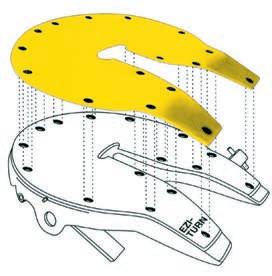
• Clean, grease-free fifth wheel
• More cost effective
• Easy to fit
• Consistent steering characteristics
• Environmentally friendly
• Australian designed & manufactured
• Used by
The all-new Fuso eCanter tipper truck in action.
> Sunswap Endurance hit at TruckShowX 2026
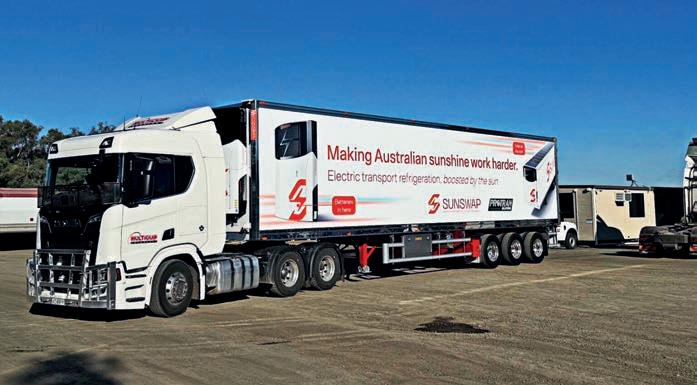
The Sunswap Endurance solarelectric transport refrigeration unit was a hit at the TruckShowX 2026, held in May, after it was showcased by Protran Solutions at the Hunter Valley show.
Protran Solutions highlighted the Sunswap Endurance as part of the “Innovative Energy Security” session, highlighting the importance of solar technology in today’s environment.
For Protran Solutions, it was an opportunity to put the Sunswap Endurance credentials in front of key transport decision-makers who are under growing pressure to cut emissions, reduce fuel costs, and demonstrate sustainability progress to customers and regulators alike.
“Australian fleet operators have been waiting for a credible, commercially proven alternative to diesel refrigeration — and that’s exactly what the Sunswap Endurance delivers. TruckShowX is where the industry comes to see what’s next, and we’re proud to be showing them that the future of cold chain is already here, running on Australian sunshine,” Protran Solutions General Manager, Grant Turner, said at the show.
The Sunswap Endurance, built by UK-headquarted Sunswap, is not a retrofitted diesel unit with an
electric motor bolted on. It was engineered from the ground up as a fully integrated electric refrigeration system, featuring the battery, solar panels, and cooling unit designed to work as one.
Capable of achieving and maintaining temperatures to -25°C, theEndurance eliminates TRU exhaust emissions entirely and significantly reduces operating noise — a critical advantage in urban distribution environments.
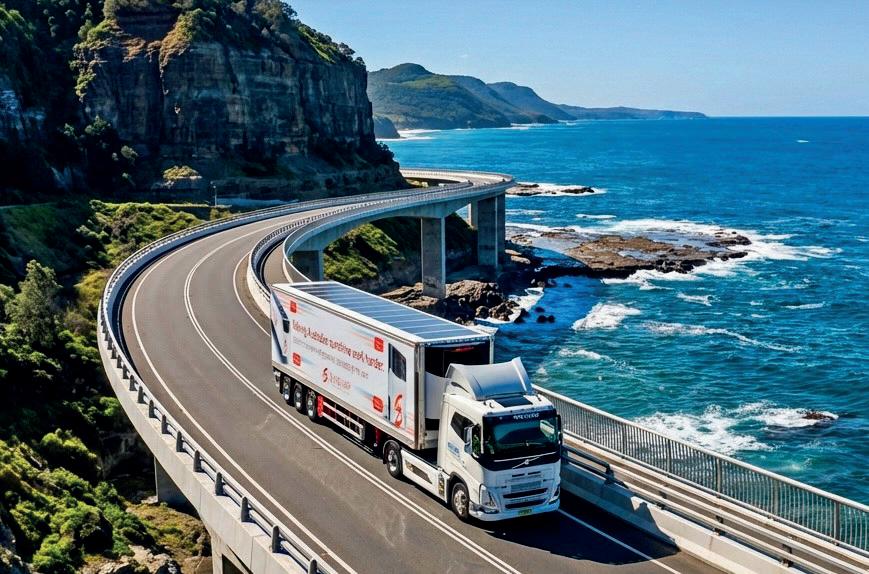
Solar panels integrated across the roof of the trailer continuously harvest energy during normal daytime — in yards, at loading docks, between deliveries — topping up the onboard battery without any action required from the operator.
The result is a refrigeration system that arrives at deployment already charged, with dramatically reduced dependence on depot charging infrastructure.
The technology’s Australian credentials have already been documented. Protran Solutions recently completed the world’s longest zero-emission solarcharged refrigerated transport trial — a 1,671-kilometre return journey between Sydney and Brisbane, running entirely on battery-electric power charged by solar energy, with 62 per cent battery capacity remaining upon completion.
Furthermore, a very recent trial of more than 1,200 kilometre between Sydney to Canberra to Griffith and return, delivered a 67 per cent battery life. Running at a constant temperature of -5°C, on a 36-hour cycle during the trip indicated the versatility of the Sunswap Endurance as a serious solar-charging option for transport companies.
“These trials are not a scientific exercise. They are real-world scenarios on some of Australia’s most demanding freight corridors. In both cases outline, we finished with 62 and 67 per cent battery remaining in two very different cases of cartage and roads,” said Grant.
“That’s a statement about what this technology can do in Australian conditions.”
The Sunswap-Endurance underwent a 1200km trial through metropolitan and rural roadways.
The Sunswap Endurance goes through its paces. Images: Sunswap Limited.
> Einride files for US listing
Einride has filed for a proposed NASDAQ listing via SPAC merger.
Swedish freight technology company, Einride, has publicly filed a registration statement with the U.S. Securities and Exchange Commission as part of a proposed business combination with Legato Merger Corp. III.
The transaction, first announced in November 2025, is expected to see Einride list on NASDAQ in the second quarter of 2026 under the ticker ‘ENRD’, subject to customary approvals.
The deal values Einride at approximately $1.35 billion USD ($2.06 billion AUD) and is expected to generate around $333 million USD ($508 million AUD) in gross proceeds. This includes $113 million USD ($173 million AUD) from an oversubscribed private investment and $220 million USD ($336 million AUD) held in trust by Legato, before redemptions and transaction costs.
Einride’s Freight-Capacity-as-aService platform combines electric and autonomous trucks with AI-driven software and charging infrastructure to improve freight efficiency. The company operates a large electric heavy vehicle fleet across North America, Europe and the Middle East, and is expanding its offering to include licensing of its autonomous driving system and fleet management software.
The business reports more than 30 enterprise customers across seven countries and approximately $92 million USD ($141 million AUD) in expected annual recurring revenue from signed contracts, alongside longer-term commercial opportunities exceeding $800 million USD ($1.22 billion AUD).
Financial filings show Einride generated revenue of SEK 457.8 million ($67 million AUD) in 2025, up from SEK 388.4 million ($57 million AUD) the previous
year, reflecting continued investment in fleet deployment, infrastructure and technology development.
“This filing marks a significant step as we advance toward becoming a publicly listed company and continue scaling our platform globally,” said Einride CEO, Roozbeh Charli.
“Over the past year, we have expanded our commercial operations, deepened partnerships with leading global shippers, and continued to deploy electric and autonomous freight solutions in real-world environments.”
Legato SPA Officer, Eric Rosenfeld, added: “Einride has built a differentiated platform at the intersection of electrification, autonomy, and digitalisation… We believe the company is well positioned to execute on its strategy and deliver long-term value as it continues to scale its operations.”
BOOM TIMES
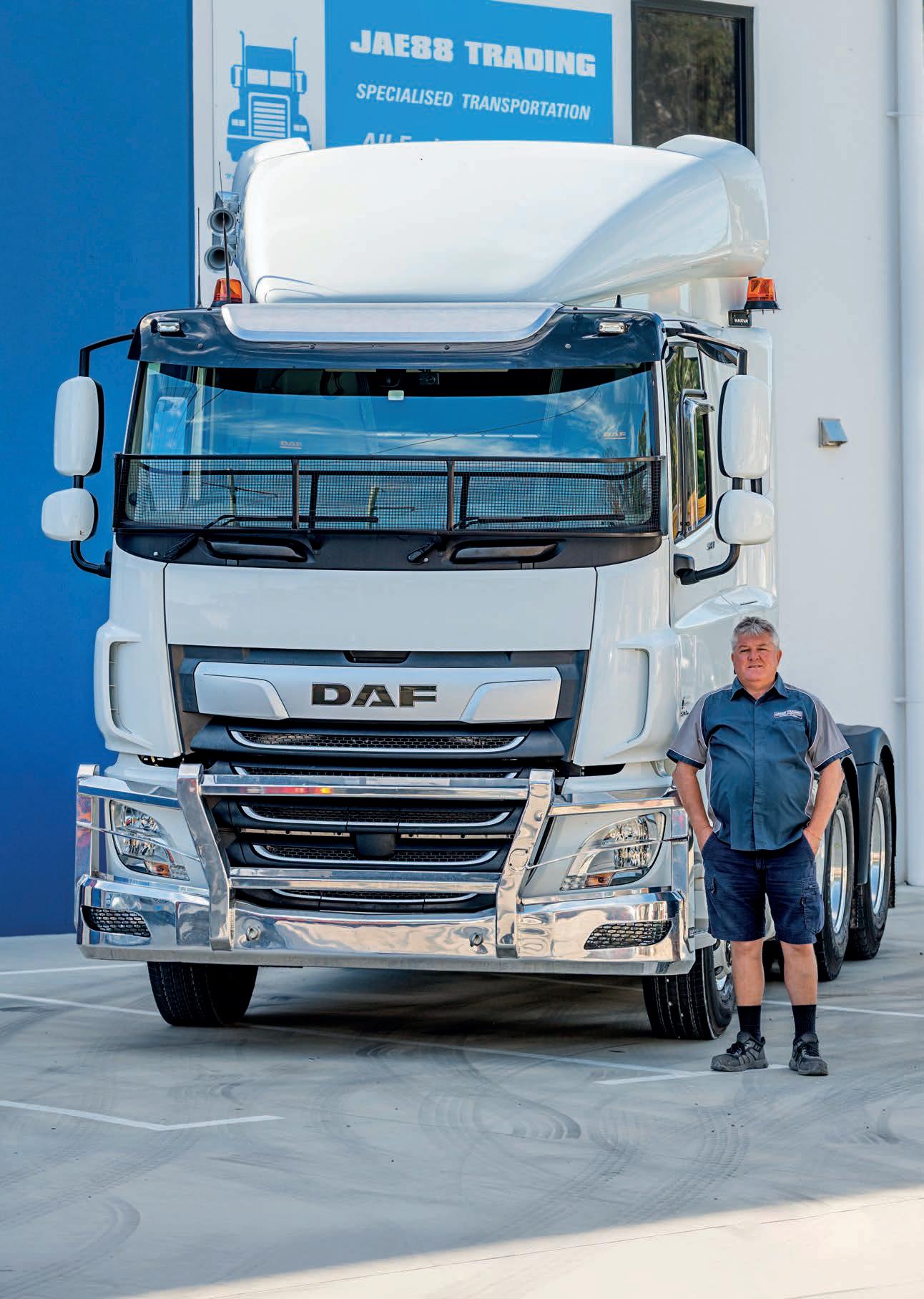
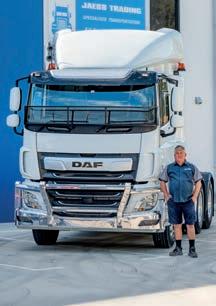
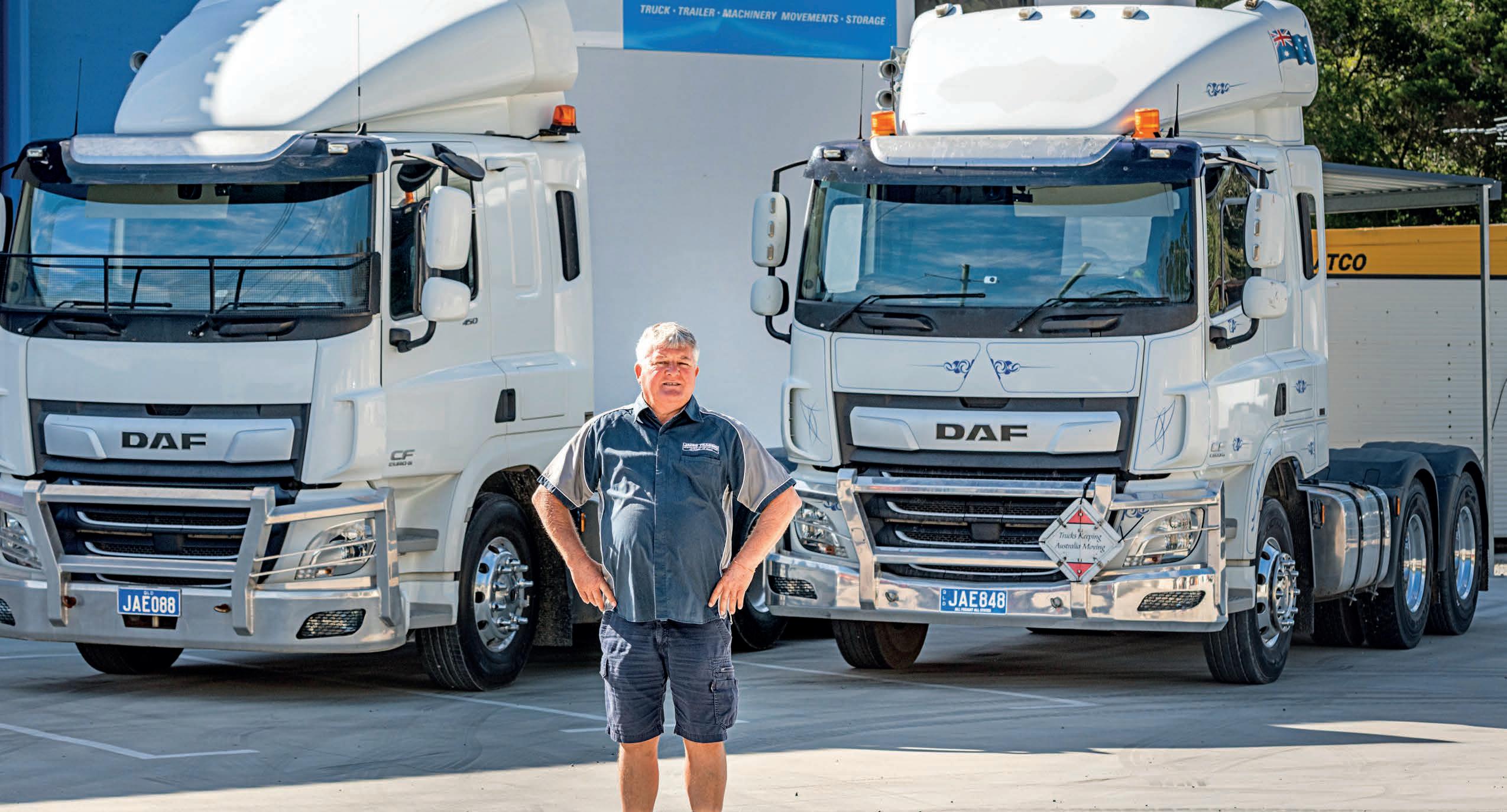
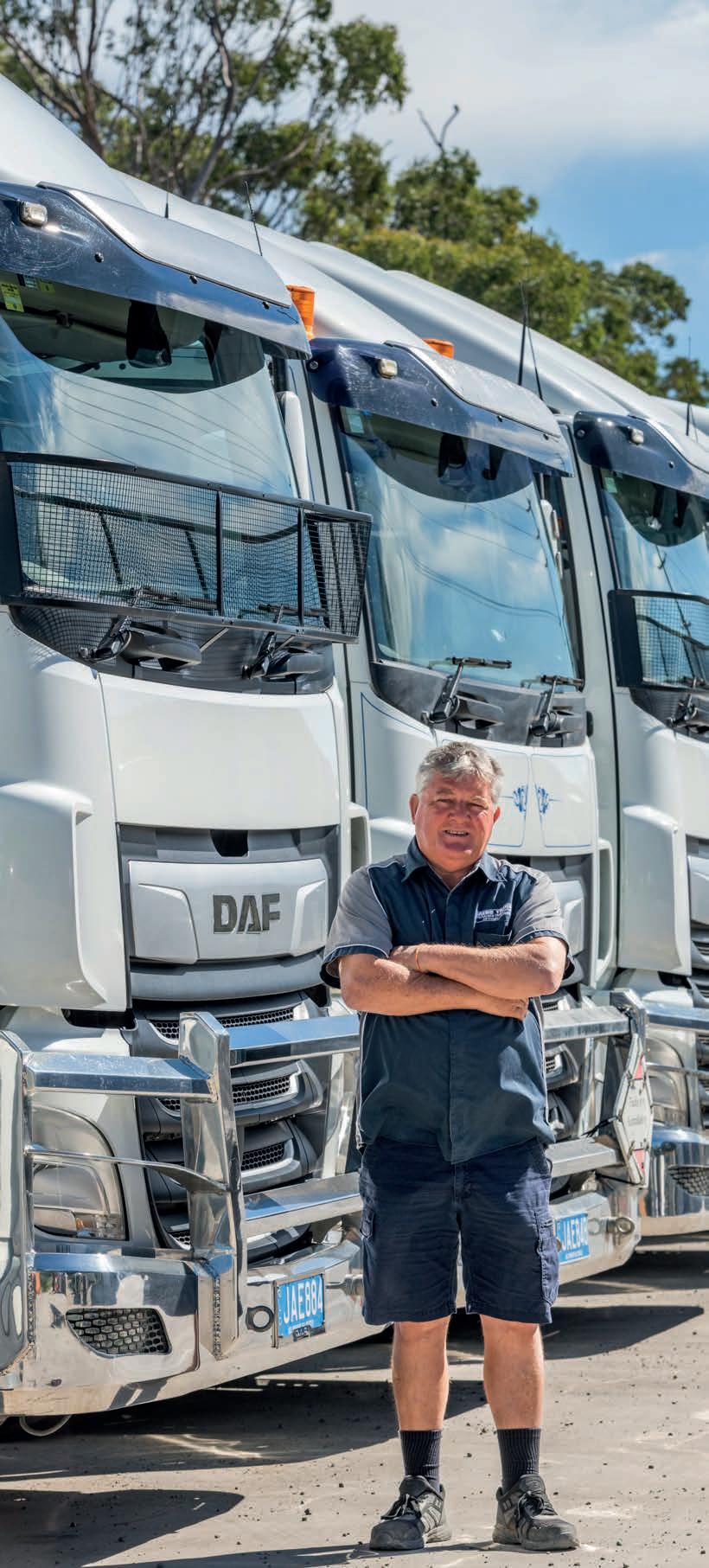
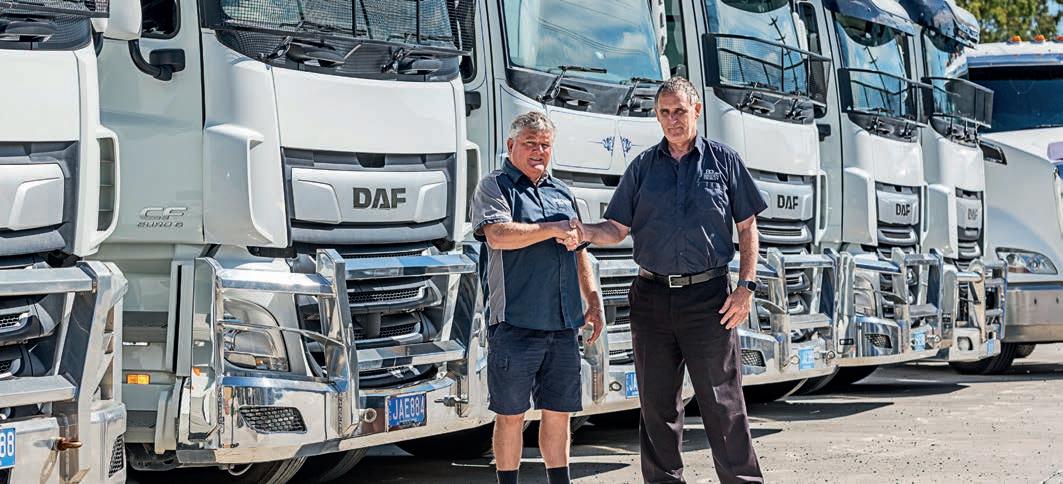
As major infrastructure and construction projects gather pace across south-east Queensland, JAE88 Trading owner, Jamie Little, says demand for transport services has never been stronger, with his expanding eet of DAF trucks working around the clock to service booming building activity between Brisbane and the Gold Coast.
For Jamie Little, trucking is more than a business - it is something that has been part of his life since his youth.
The 61-year-old transport operator grew up in Windsor in Sydney’s picturesque north-west outer, known for its colonial heritage and gateway to the Hawkesbury River.
Rather than being drawn to the bush or a quiet life on the Hawkesbury, from an
early age Jamie has been surrounded by trucks, tippers and construction work, learning the industry from his father.
“Dad was always involved with tippers in Sydney, and I was getting involved in the business from a young age,” Jamie says.
“I’ve always been in the trucking game.”
After years working in transport and construction haulage in Sydney, Jamie eventually relocated north to the Gold
Coast, where he would later rebuild both his business and personal life following a divorce.
“I started again after I got divorced,” he says with a laugh. “I got the Gold Coast curse.”
What followed was far from easy.
Jamie says the construction transport sector on the Gold Coast could be brutal for he and his dad during those early years, particularly working around
Jamie Little at the company’s Yatala headquarters.
property developers and short-term projects.
“Working with tippers was very tough work in construction, because the developers were here one day and gone tomorrow,” he says.
Looking for a more stable business model, Jamie moved into a different area of transport almost by accident.
“I started with one ute and I knew somebody who knew somebody,” he says.
“They rang me and asked, ‘Can you do this?’ and it started from there and just kept growing.”
The early days tested both his patience and determination.
“For the rst six months I lost money,” Jamie explains.
“My motto was I didn’t say no. I didn’t say no for six months, and I still lost money in that time.”
But persistence eventually paid off. Today, JAE88 Trading has grown into one of the busiest, and well-known, specialised transport operators servicing the construction and infrastructure sectors throughout south-east Queensland.
Operating from a strategically located depot at Yatala, midway between Brisbane and the Gold Coast, the company transports a huge variety of freight for building and infrastructure projects.
“We carry everything. Steel, timber, pallets, formwork, scaffolding, heavy gear, building products, we’re basically a one-stop shop,” Jamie says.
The company also specialises in transporting elevator cars for high-rise construction projects. “We deliver them in kit form, they unload them and erect them on site, then when they nish the project we come back and pick them up again,” he says. Handling that diverse range of freight requires equipment capable of operating ef ciently in con ned construction sites and busy urban environments.
“The trucks have to cope with getting into building sites and small areas,” Jamie says.
Images:LucyRC Photography/Brown and Hurley.
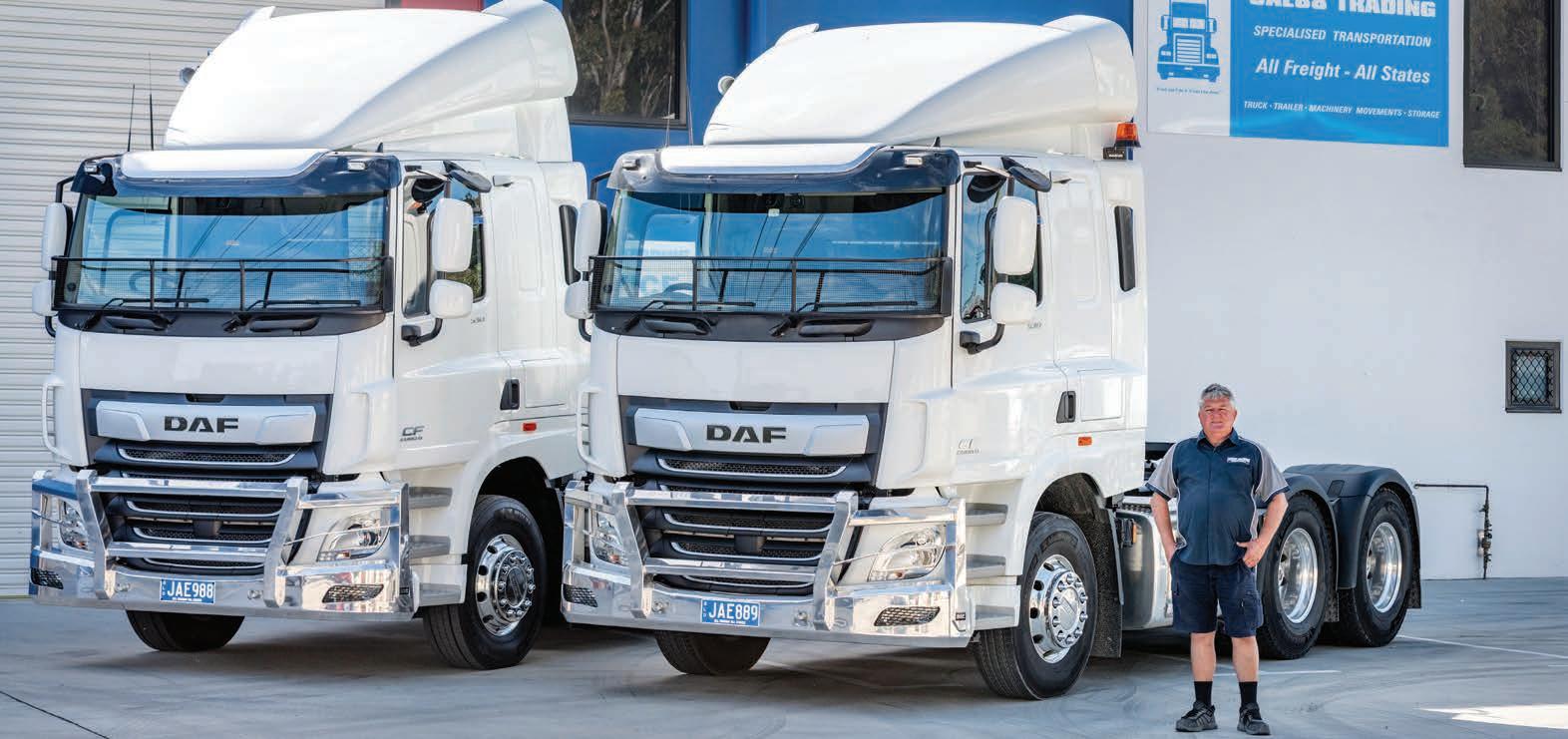
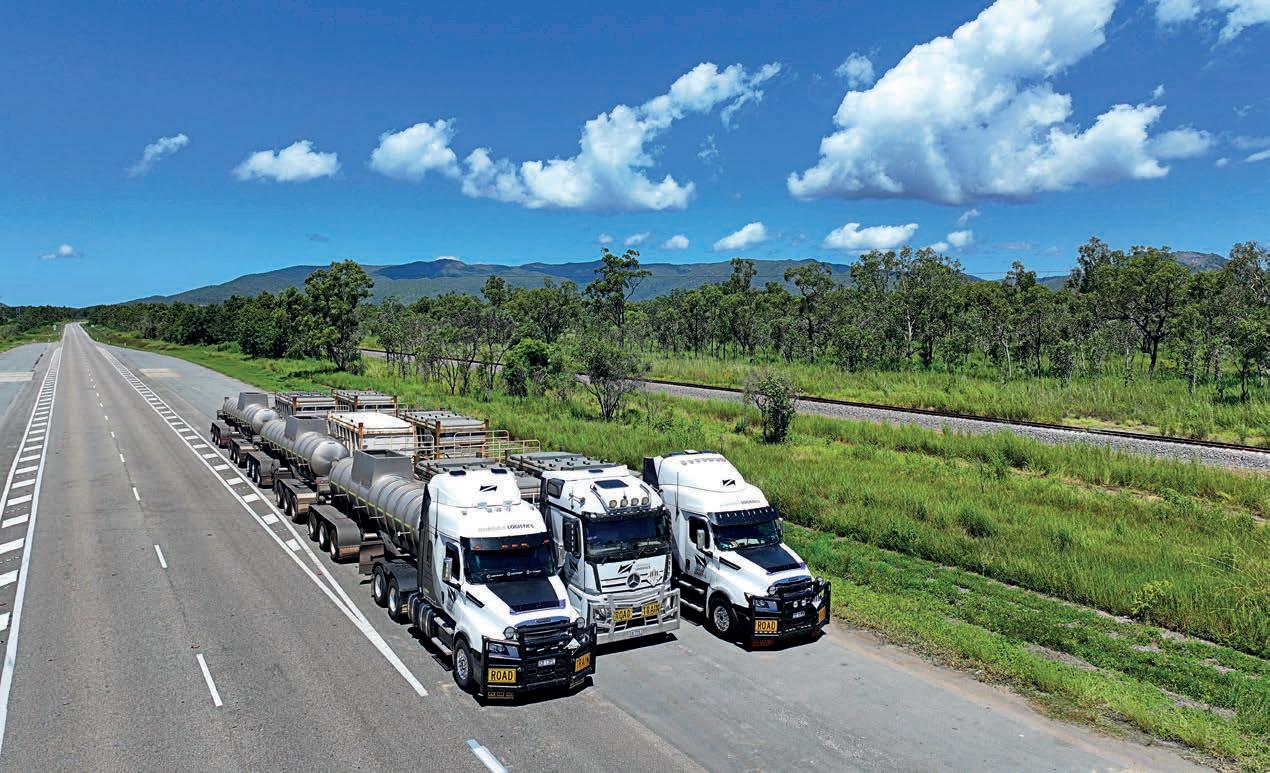
Jamie Little with the two brand-new DAF CF530s.
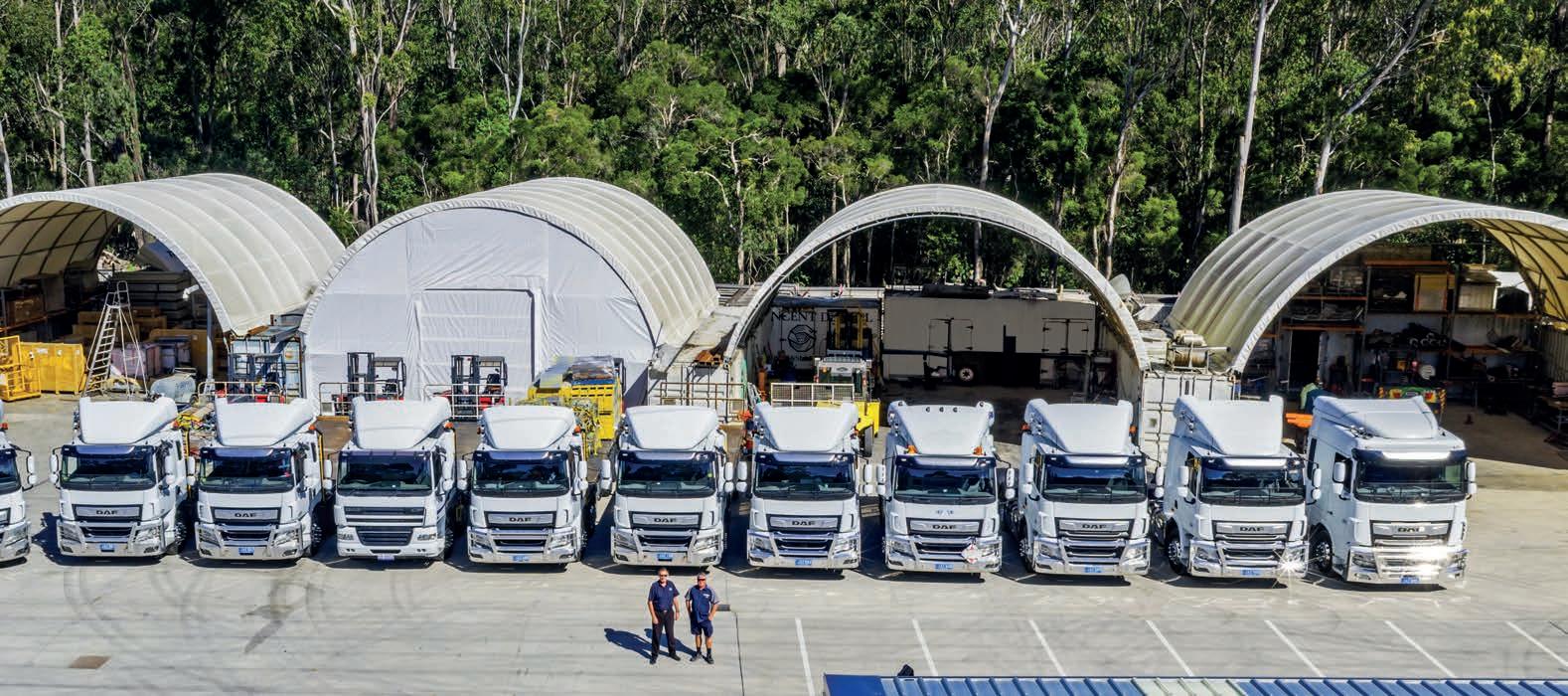
A bird’s-eye view of JAE88 Trading’s fleet.
“They need to be very manoeuvrable and easy to operate.”
The business now operates a eet of 22 trucks, including 14 DAF models, alongside Freightliner and Kenworth units, supported by specialised trailers.
“We’ve got about 15 trailers at the moment. Flat tops, drop decks, tautliners and drop deck ramps and extendables,” he says.
A new additions to the eet are two new DAF CF450 eight-wheelers with eight-metre steel trays and Moffett forklift brackets.
“We recently took delivery of two brand-new DAF CF530 prime movers,” he says.
The investment represents a major shift for the company, which historically relied heavily on second-hand equipment and rebuilds.
“We’ve always had second-hand trucks and rebuilt them,” Jamie recalls “But we got good valuations on the older trucks and decided to make the leap into new models because we knew what sort of work was coming.”
That forward planning has coincided perfectly with what Jamie describes as an unprecedented infrastructure and construction boom throughout southeast Queensland.
“We are extremely busy,” he says in his no-nonsense manner.
“With all the government building and maintenance projects between Brisbane and the Gold Coast, the next four years are going to be boom time for us.”
Among the major projects driving demand are the Coomera Connector motorway development, new hospital projects at Toowoomba and Coomera, and the enormous pipeline of infrastructure associated with the upcoming Brisbane Olympic Games.
“We’ve got so much work on these days with the new freeway and bypass at Coomera,” Jamie says.
“There’s no rest for us.”
Jamie believes the scale of infrastructure spending will continue to attract major contractors from interstate as projects in southern states begin winding down.
“With Melbourne’s tunnel work and Sydney Airport nishing up, a lot of those construction companies are already heading north,” he says.
“They’re establishing bases up here because they know where the work is.”
With his company rmly established in the area, Jamie is not concerned about the southern in ux of competitors.
For JAE88 Trading, the company’s location at Yatala places it directly in the middle of the booming growth corridor.
Brisbane is consistently one of the fastest growing cities in Australia and is complemented by the attraction of the Gold Coast, which is projected to reach a population of 1 million by 2040 and is experiencing a record-breaking economic output.
“We’re right between Brisbane and the Gold Coast,” Jamie says.
“With all the work in that area, our trucks don’t do more than about 50,000 kilometres a year, so we’re laughing.”
The business focuses heavily on local and regional work rather than longdistance interstate operations.
“With interstate work we tend to subcontract accounts out so we can focus on the local work,” he says.
“That’s where the boom is.”
The company could easily handle even more work if additional drivers were available.
“We could probably do with a couple more drivers,” Jamie says.
“Our drivers are never short of work.”
Even during quieter periods, the company keeps staff busy with workshop duties, truck washing and maintenance work.
“We’ve got our own mechanics on site so we can do everything here in the yard,” he says.
The company’s relationship with the local Brown and Hurley Kenworth and DAF dealership has also played a major role in keeping the eet operational.
“The dealership is across the road from us, where we a good relationship with Mark Holden, DAF salesman of the year. It works well.,” Jamie says.
Jamie Little is immensely proud of what he has built in his business.
“We carry everything. Steel, timber, pallets, formwork, sca olding, heavy gear, building products - we’re basically a one-stop shop.”
JAE88 Trading owner, Jamie Little.
“We’ve been blessed maintenance-wise with very few breakdowns.”
Jamie says a winning combination of the reliability, power, comfort and value offered by the DAF trucks continue to impress both him and drivers alike.
“They cope with all the different loads really well and they’re very reliable,” he says.
“The drivers are loving the new DAFs.”
The company operates on a one-driverto-one-truck system, something Little believes improves driver pride and vehicle presentation.
“When drivers have their own truck, they care for them more and look after them.”
While many transport operators continue to face dif cult trading conditions, rising costs and nancial pressure, Jamie says disciplined nancial management has been critical to the company’s growth and long-term stability.
“Every spare dollar we make goes back into the business and I don’t have a ashy car or a big lifestyle.”
Jamie explains the business avoids unnecessary debt and carefully manages every expense.
“We get 12,000 litres of fuel delivered weekly and pay it the next day,” he says.
“I don’t believe in having outstanding accounts anywhere.”
The company also purchases truck tyres in bulk and brings tyre tters on-site, while operating its own facilities.
“Everything’s done and controlled here. We’ve got our own land and our own warehouse,” Jamie adds.
“Keep the overheads low and pay as you go. If you can’t pay for it now, you shouldn’t buy it.”
That philosophy stems directly from the lessons he learned from his father during his early years in the transport industry.
“It came from the approach Dad always had in the tippers,” he says.
Today, that same work ethic continues to underpin the company’s success.
That success is also due to a good management team in place, with manager Ian Hodges; Jamie’s brother,
David, (warehhousing); sister, Tania, (maintenance/registration schedules) and daughter Caitlyn as scheduler.
There’s also a very loyal team of 20 drivers, including long-term drivers
Matt Seccombe (14 Years), Keith Beck (12 years), Alan Waugh and Trevor Parr-Smith (12 years), Tony Ciseau (8 years), Neil Melville and Stewart Brown ( ve years), as well as recently-retired Lennie Slade, from accounts (10 years).
“At 61, I’ve done the hard yards and got the yard and business to where it can run without me there all the time,”
Jamie says.
His business success is also re ected in the company name. “I lived on acreage, Lot 88, so I went with that,” Jamie says.
JAE88 Trading is now a name synonymous in the transport sector for getting the job delivered.
“The business must be doing something right because I haven’t looked back since,” he says.
With the company’s growth and strong reputation, Jamie hasn’t needed to rely on traditional advertising.
“We don’t use advertising or business cards. All our trucks have ‘JAE88’ number plates on them.
“That’s enough. We’re well known in the industry, and we get plenty of work.”
For JAE88 Trading, it’s de nitely a case of let the good times roll.
Jamie Little with DAF Salesman of the Year, Mark Holden.
ON UP MOVING
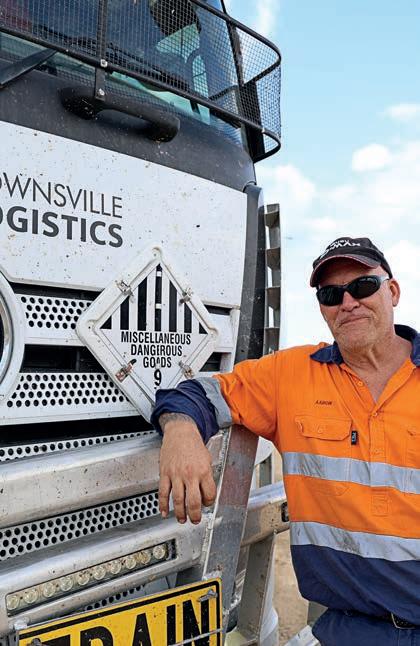
Townsville Logistics provides an extensive suite of services using innovative equipment and an expanding eet of Daimler brand trucks.
Townsville
be found working in a variety of industries and locations.
Logistics can
Townsville Logistics is a successful transport and logistics operation which is a direct subsidiary of the Korea Zinc Company and is based in the North Queensland city of Townsville.
Townsville Logistics has developed the capabilities required to provide a tailored solution for new and existing business partners, offering productivity and nancial advantages to enhance their clients’ own operations.
Townsville Logistics was established in 2017, providing transport services to the Sun Metals Zinc Re nery located 15 kilometres south of Townsville. Sun Metals is also a subsidiary of Korea Zinc and its North Queensland re nery is one of the most technologically advanced in the world. Townsville Logistics quickly expanded its scope of operations to provide transport and logistics services to other companies.
On average, Townsville Logistics transports approximately 1.2 million tonnes of product each year and current operations focus on the transport of concentrates, chemicals, cement, lead bullion and containers throughout Queensland and the Northern Territory or some of the largest mining operators in Australia.
A key priority for everyone at Townsville Logistics is continuous improvement in all aspects of the operation.
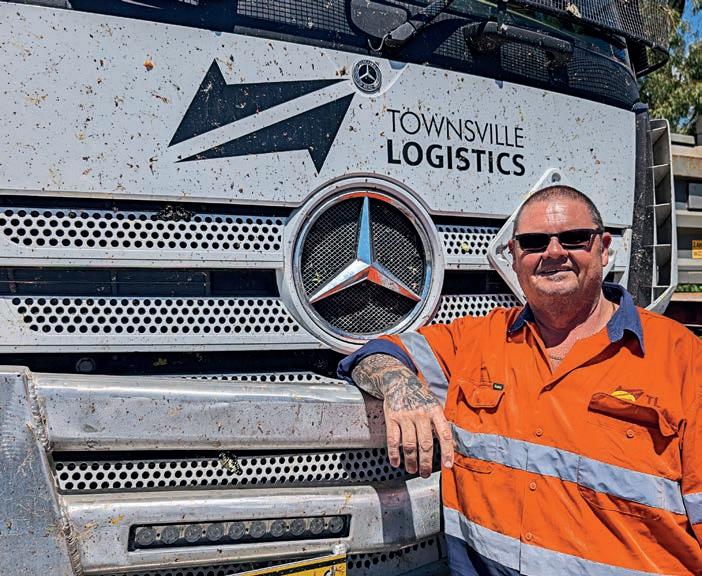
“We actively invest in technology and innovation to remain at the forefront of the heavy haulage sector, ensuring our operations are safe, ef cient and future-focused,” says the company’s Logistics Lead, Ken McKenzie.
Townsville Logistics’ partnership with its sister company Townsville Marine Logistics (TML) results in the provision of the full package of logistics, from on-site haulage, mine to port transport, storage, and stevedoring using TML’s state of the art port equipment.
“We pride ourselves on delivering tailored solutions to both new and existing customers, adapting to their operational needs and creating longterm value,” says Ken.
Equally important is Townsville Logistics’ commitment to its own people and the communities in which it operates. The company consistently invests in its workforce, recognising that strong teams are critical to delivering safe and reliable outcomes.
Townsville Logistics is also dedicated to its desire to be a good corporate citizen and is active in supporting the local community, primarily through its longstanding relationship with Fuel For Schools, a local charity which supports schools across North Queensland by encouraging students to attend school and also providing them with nourishing breakfasts as well as essential school supplies.
In 2025 ten of Townsville Logistics’ trucks participated in the tenth anniversary Convoy for the Cure, and will be involved again this year, raising funds for The Cure Starts Now charity. In June, many Townsville Logistics team members will also be participating in the Castle Hill Foot Race to the top of the huge stony outcrop which dominates the Townsville skyline, fundraising for Save Our Sons Duchenne Foundation, a charity that hits close to home as one of the staff members’ son has
The drivers of Townsville Logistics are happy behind the wheel of the Mercedes-Benz.
the debilitating Duchenne Muscular Dystrophy condition.
Townsville Logistics is focused on optimising its operations by being at the technological forefront of the heavy haulage transport sector by actively considering all of the possible technological improvements available. This commitment extends to the modern eet of around 30 prime movers.
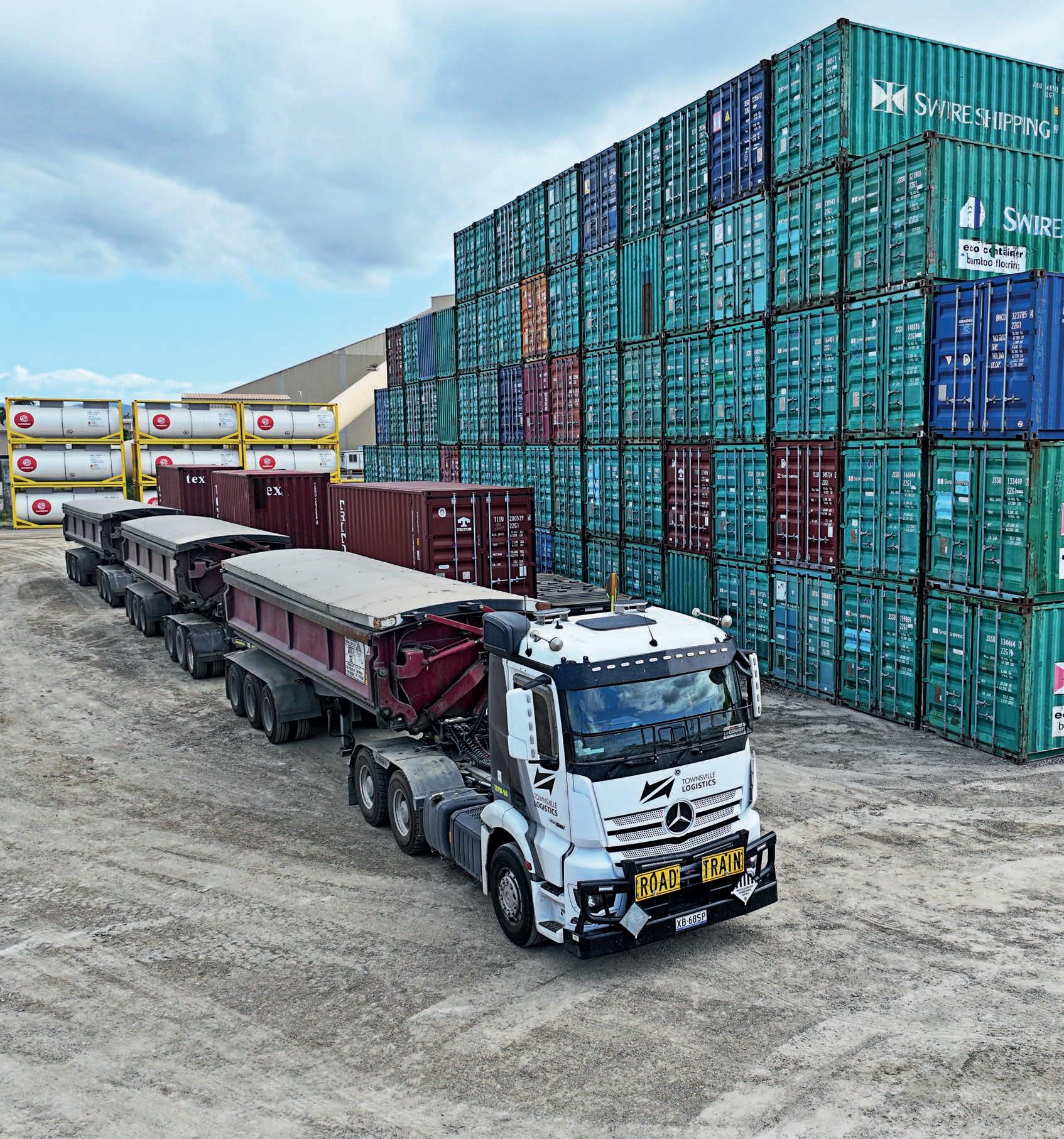
During the past year Townsville Logistics has added ten DD16 powered Freightliner Cascadias to the eet, joining seven Mercedes-Benz Actros 2663 prime movers. As an operation which routinely utilises road train combinations in remote areas, performance and reliability are crucial factors in the choice of equipment, as is the inherent comprehensive safety and driver support systems available with the modern range of Daimler trucks. In common with the broader transport industry, Townsville Logistics faces the regular challenges associated with the extensive ooding in both the coast and inland areas during the wet season. Flood events are especially dif cult to manage because the reopening dates of roads can change quickly depending on river levels, road inspections and damage repairs.
The oods initiate a chain reaction which goes way beyond being merely a transport inconvenience due to the large number of road closures. The subsequent road damage also results in further road closures as repair teams are deployed to make the roads passable again. The effects of ooding can lead to higher operating costs because of being forced to take detours, which increases the amount of fuel used and adds to driver operating hours, plus the additional travel can result in additional wear on the eet.
Townsville Logistics operates a 24/7 maintenance department located near the Sun Metal’s re nery complex which services its own equipment, along with Sun Metals’ on-site eet of mobile machinery. This in-house capability allows Townsville Logistics to maintain its high standards of reliability and minimise downtime, ensuring continued and seamless service delivery for its customers. All of the prime movers are on Daimler Trucks’ repair and maintenance contracts. Due to its diverse transport offerings, Townsville Logistics has an impressive eet of trailers mainly across multiple road train sets including Azmeb BK2 compliant side tippers suitable for carrying dangerous and non-dangerous
goods such as ore concentrate, with each trailer having a 23 cubic metre capacity. Skel trailers suitable for containers also form a key part of the eet.
Triple road train sulphuric acid tankers with a capacity of 16,000ltrs to 19,000ltrs have been designed for off-road use and have provision for top and bottom discharge. An innovative new trailer design of tanker-tippers is utilised where each unit incorporates two powder tankers with a BK2 compliant side tipper in the centre. This provides the ability to backload to Townsville with an ore product. Each triple road train consists of six 16 cubic metre tankers and three 18 cubic metre side tippers.
Townsville Logistics’ ambitious mission is to be the best logistics company in the world by being primarily the safest, the most customer oriented and the most innovative logistics services provider on the planet. As safety is the key priority, there is a distinct focus on continuously improving the company’s Safety Management system, the processes and the overall company culture to achieve the very highest standard of Occupational Health and Safety in all activities, while aspiring to zero harm.
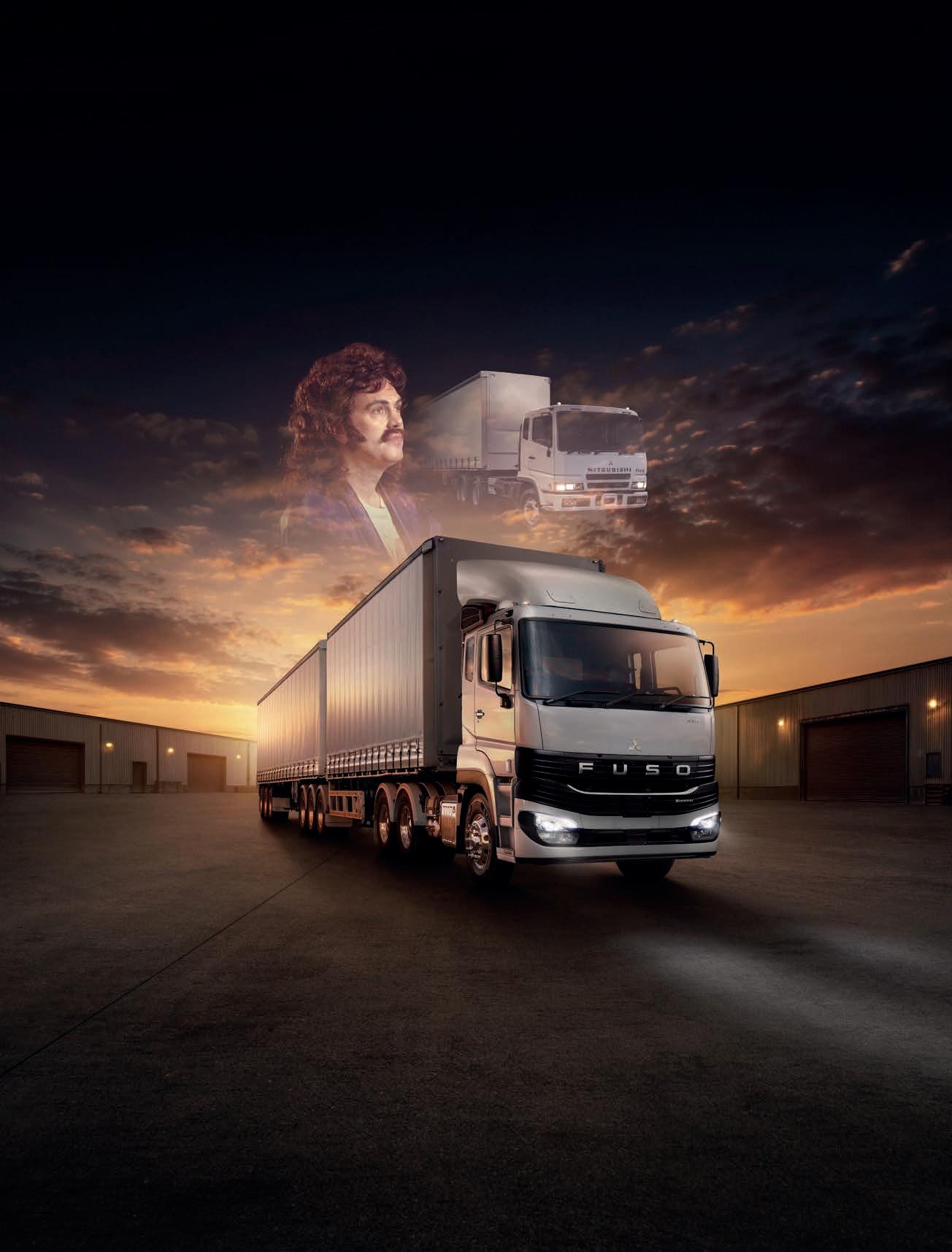
We went BIG in the 80s. Big hair, big suits, big phones and, starting in 1982, the first big FUSO heavy-duty truck. Now it’s time to go even bigger with the new FUSO Shogun 530, a 13-litre hauler with the biggest power figure of any Japanese truck – 530 horsepower. It can haul big weights too, up to 70 tonne GCM, and comes packed with advanced safety systems.* FUSO Shogun 530. Because bigger has always been better.
Learn more at your authorised FUSO dealer or visit fuso.com.au/shogun
SEVEN MAGNIFICENT
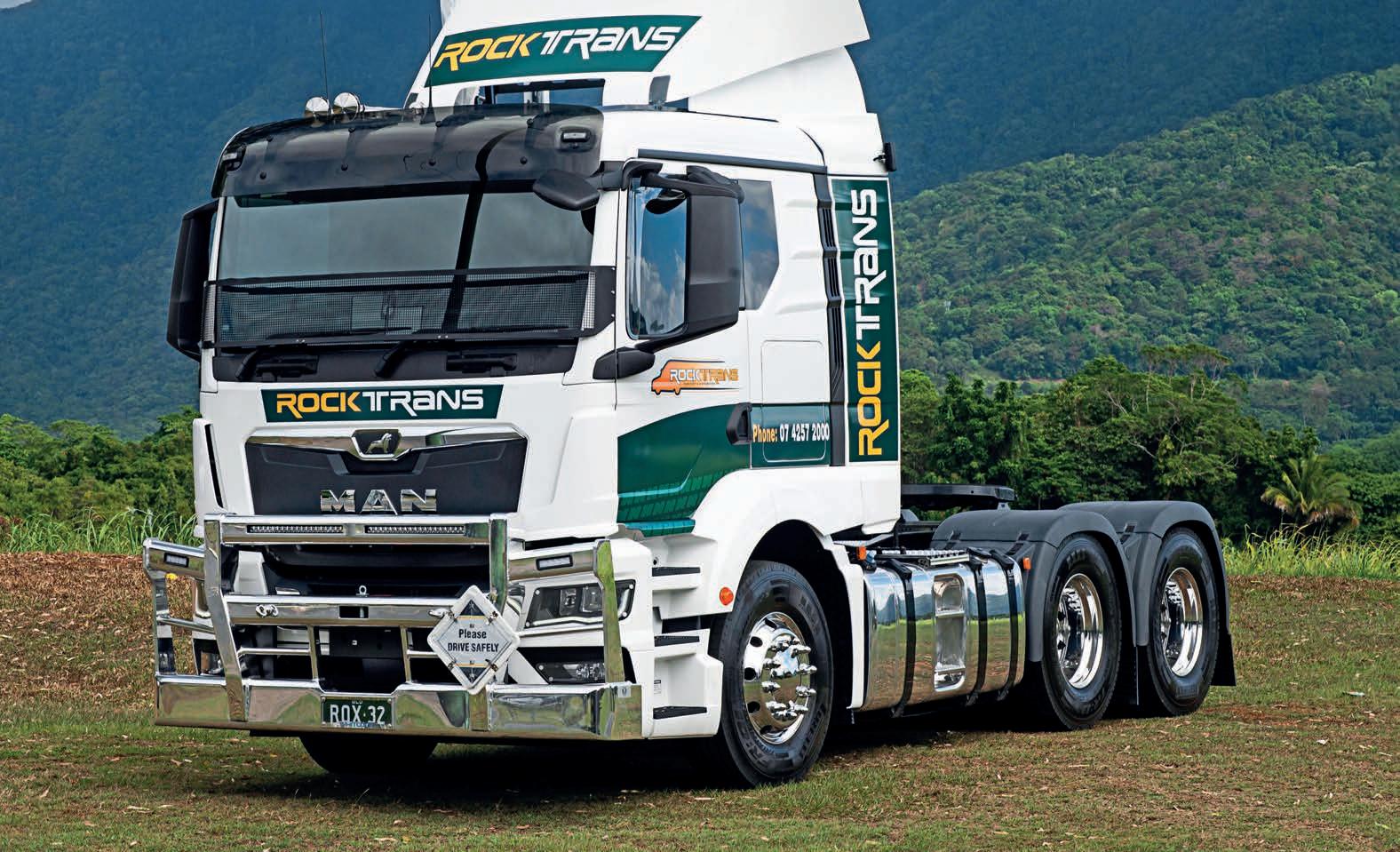
Queensland logistics provider, Rocktrans, has celebrated its 50th anniversary with the delivery of seven new MAN TGS prime movers.
A50th anniversary is a truly golden time to celebrate, no matter who or what is hitting the big milestone. For Neal Rockley, General Manager of Rocktrans, the golden anniversary of his familyowned transport business, Rocktrans,
the celebration was aptly marked with the a ‘package’ of seven brand new MAN prime movers.
Based in Atherton, in Far North Queensland (FNQ) Rocktrans has added some bright, shiny colours to the lush backdrop of cane elds and
verdant forests.
The highlands town is renowned as a high-altitude, cool-climate retreat, boasting tropical rainforests, volcanic crater lakes, and stunning waterfalls. It is the hub of the Tablelands, renowned as a major agricultural “food bowl”
producing coffee, dairy, and tropical fruits, alongside diverse wildlife.
Now it is also home to Neal’s addition of brand-new MAN TGS trucks.
What started as a small soft drink manufacturing company in 1975, Rocktrans has evolved into one of North Queensland’s most trusted logistics providers, not just built on a growing eet, but on a family that embodies commitment to the community.
When the junior Rockley took the reins from his father in 1991, Rocktrans was a modest operation with just three trucks and six staff members. Empowering his vision Neal transformed the business into today’s premium logistics provider – now
operating 40 vehicles with a team of 47 professionals who are embodied with a passion for exceptional service. Neal’s hands-on approach, background in diesel tting and transport eet management grew business rapidly, while updating and advancing operational standards. This included establishing Rocktrans’ Mechanical Services division early on and then engaging with its suppliers through maintenance contracts. In doing so, Neal and his team gained complete control over quality and ef ciency, ensuring every vehicle meets the company’s high standards. As a result, Rocktrans is able to maintain its support of local farmers, businesses, and communities across North Queensland. Those close and binding client relations are a hallmark of Rocktrans reputation and stability in the region and industry. It continues to maintain relationships with major national companies which started more than 45 years ago – a testament to trust earned through consistent, reliable service. These strong partnerships are what Neal and the Rocktrans team see as long-lasting legacies in the often- ckle transport and logistics sectors.
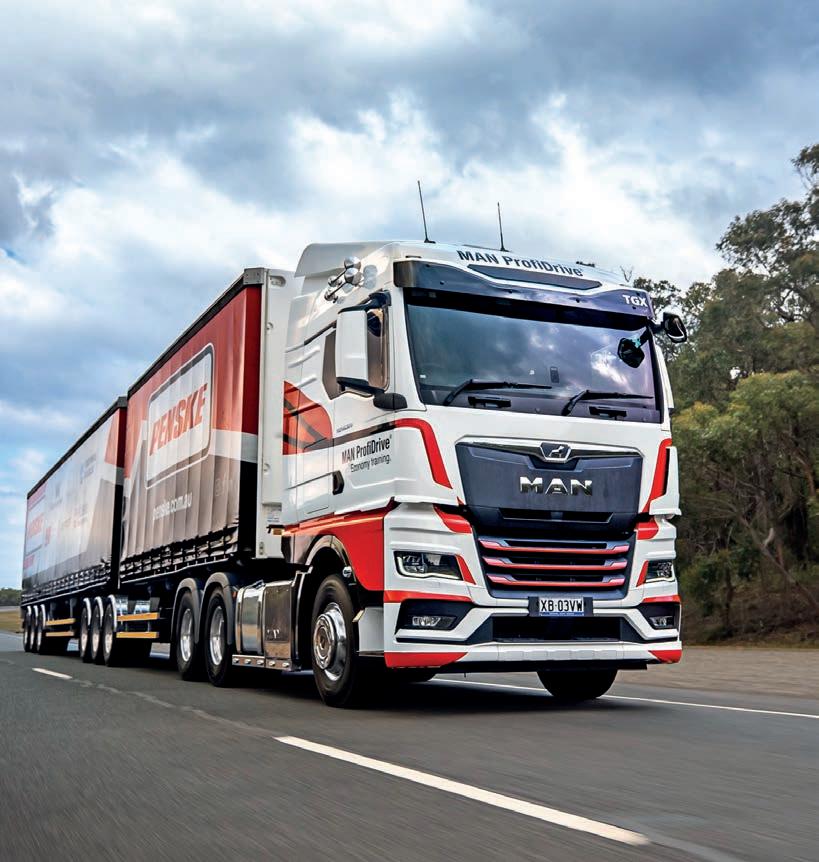
For Neal, the choice to upgrade the company’s eet with MAN prime movers was a natural choice.
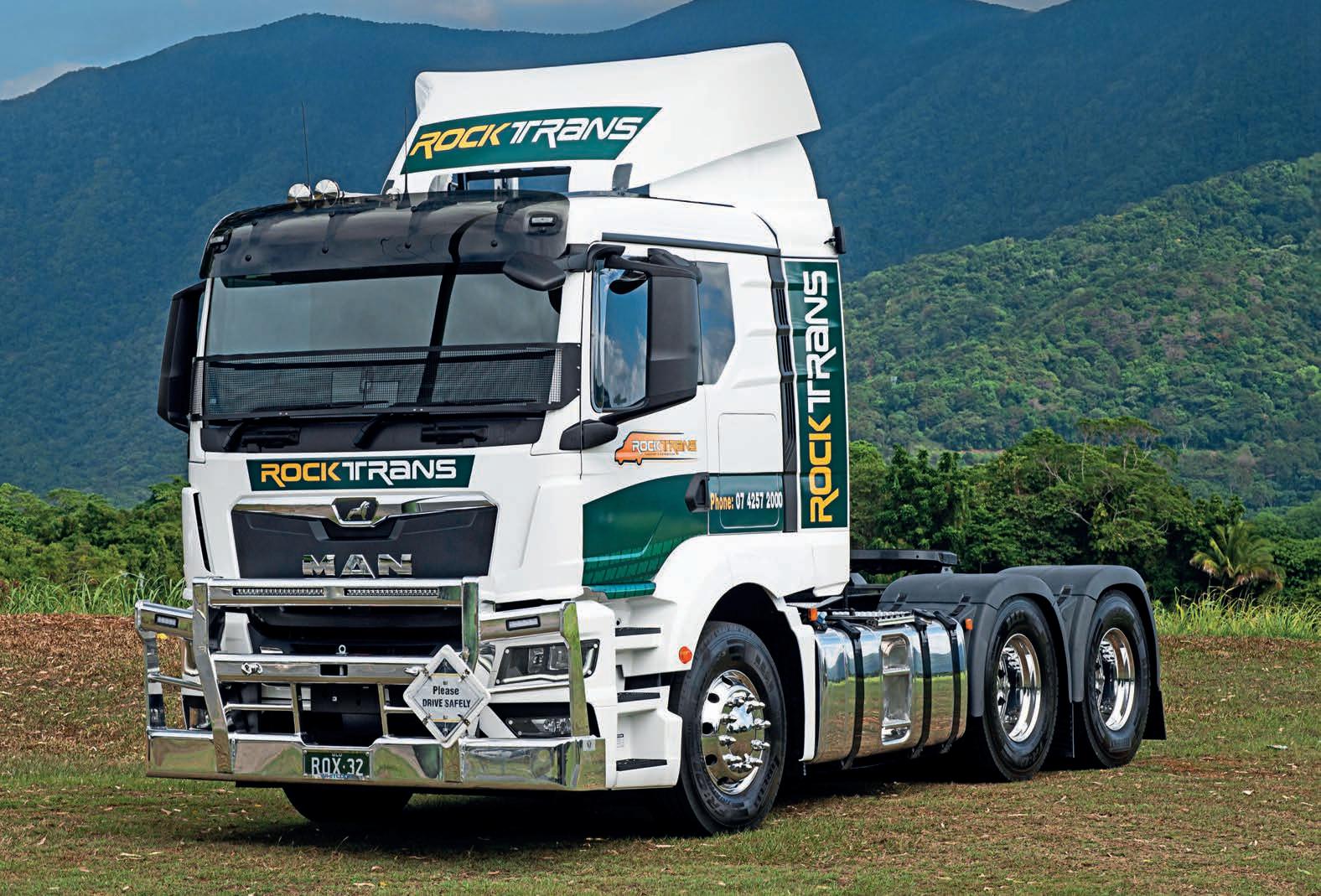
He readily notes that, with a drivercentric design, the TGS 26.540 6x4 TN cab model delivers maximum performance and ef ciency.
“MAN trucks are very user-friendly. They’re certainly suited to the work that we do, and our driver feedback often tells us they’re very good on fuel, a great bene t to our business,” Neal says.
A highly ergonomic cab with a bed makes the TN model ideal for long-haul trips, while the ability to transform an empty co-driver’s seat into a side table gives drivers a handy meal when on the go. And the optimised instrument panel and large fridge have been praised by its drivers after multiple days on the road.
Neal says the new MAN models have been the perfect addition to his eet,
with little need for customisation.
“MAN trucks certainly meet every requirement that we need,” he said.
“We haven’t needed to t anything extra recently, but anything that we have had tted has been seamless and without any issue.”
Clocking up the kilometres across North Queensland, Rocktrans requires reliable aftersales support to keep its eet running smoothly.
“We’ve been extremely happy with the service we’ve received from Penske’s dealership in Townsville.
“We have gold maintenance contracts for all our trucks, so all responses are quick and if there’s ever an issue where we need a replacement vehicle, that happens as fast as possible.”
The company’s evolution has seen a number of truck dealers come and go over the years, but none that have stood out and prospered like the dealers under the Penske Australia umbrella.
“I also chose MAN because it means you solely deal with Penske, who are running the show, both as retailer and distributor,” Neal says.
“A lot of the other companies we’ve dealt with have a structure where there’s a middleman, and that’s been very frustrating.
“When that happens, it’s not a good experience for aftersales. Now, there’s a clear path straight through to Penske, and that was certainly one of the biggest reasons why I went with MAN.”
Rocktrans’ relationship with Penske began with an order of four MAN prime movers and quickly expanded after a promising start.
“The extra three weren’t on our radar to begin with, but it was based on our positive experience with the rst four,” Neal says.
“We were very happy with everything. The sales went extremely well, and aftersales and servicing have been topnotch.”
Having solidi ed business relations with multiple household names, Rocktrans is set to move from strength to strength on the road to its centenary celebrations.
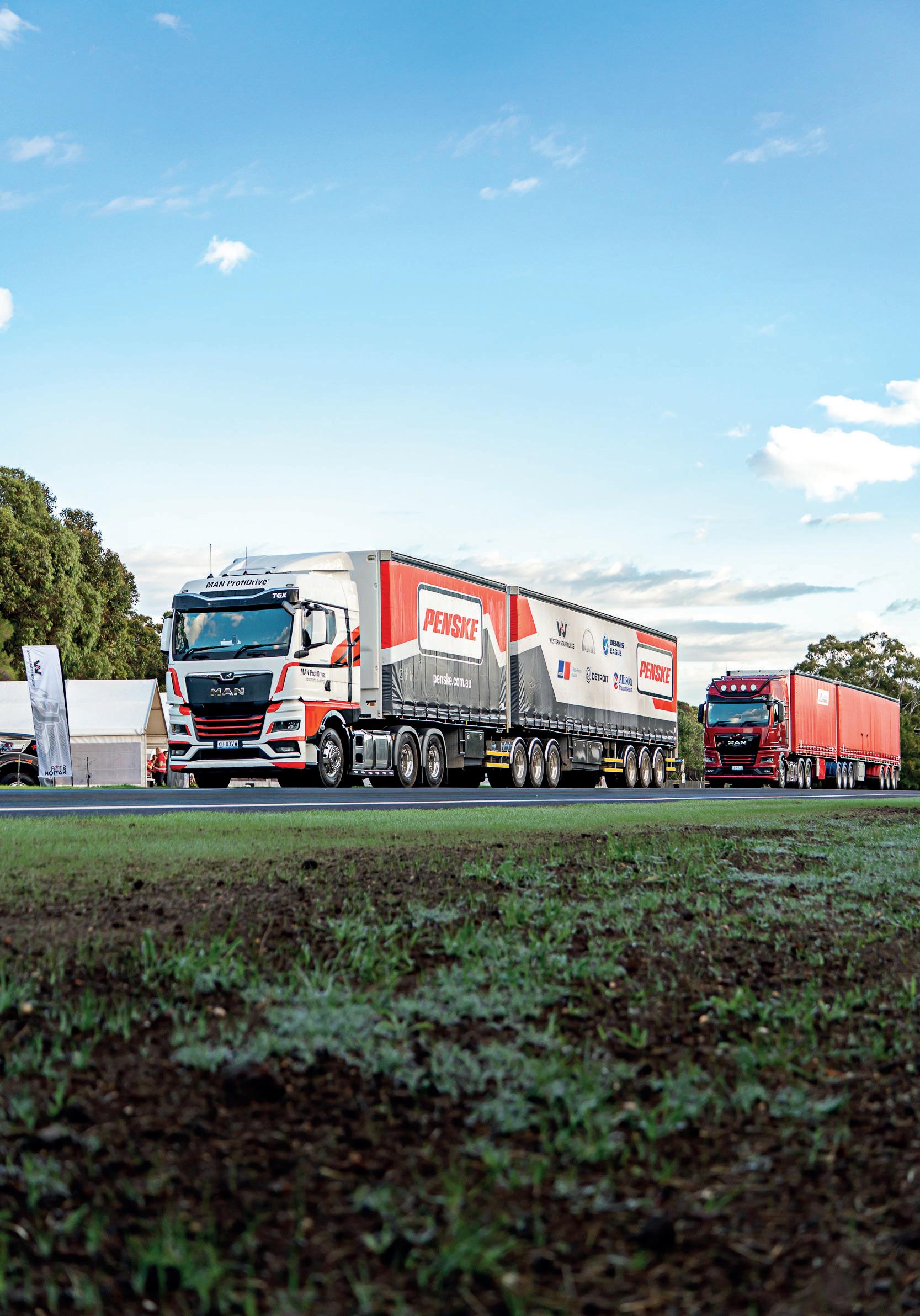
The sleek MAN TGS prime mover is a welcome addition to the Rocktrans fleet.
LEGACY SHINING
From a single Leyland truck in central Queensland to one of the nation’s largest family-run fuel logistics eets, Emerald Carrying Company, is still being driven by the same values that forged it 60 years ago.
Today, Emerald Carrying Company is recognised as a major force in Australian fuel transport, but its story begins in much humbler circumstances - with one family in Emerald, Queensland, determined to build a lasting legacy through hard work and freight. The Haylock family business traces its roots back to 1965 when Matt
Haylock’s grandparents, Bill and Joan, established the operation after Bill decided to give trucking and transport a good go after a life of farming in Queensland’s central highlands. “We started off in general eet by my grandfather,” Matt says. “That was where it all began — doing milk runs, doing local deliveries, taking freight off the rail and carting it around Emerald.”
In those early years, the company’s work centred on collecting freight from the local railhead and delivering it across the district, gradually earning a reputation for reliability in the process. General freight remained the foundation of the business for decades and, while it still exists today, it now accounts for only a fraction of the wider operation.
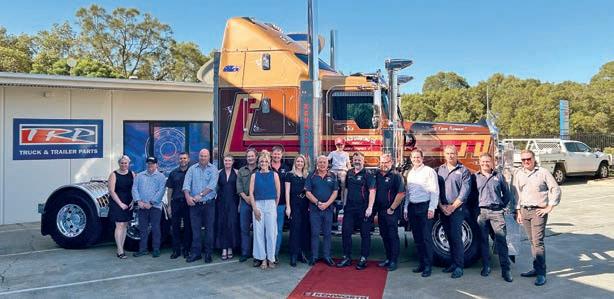
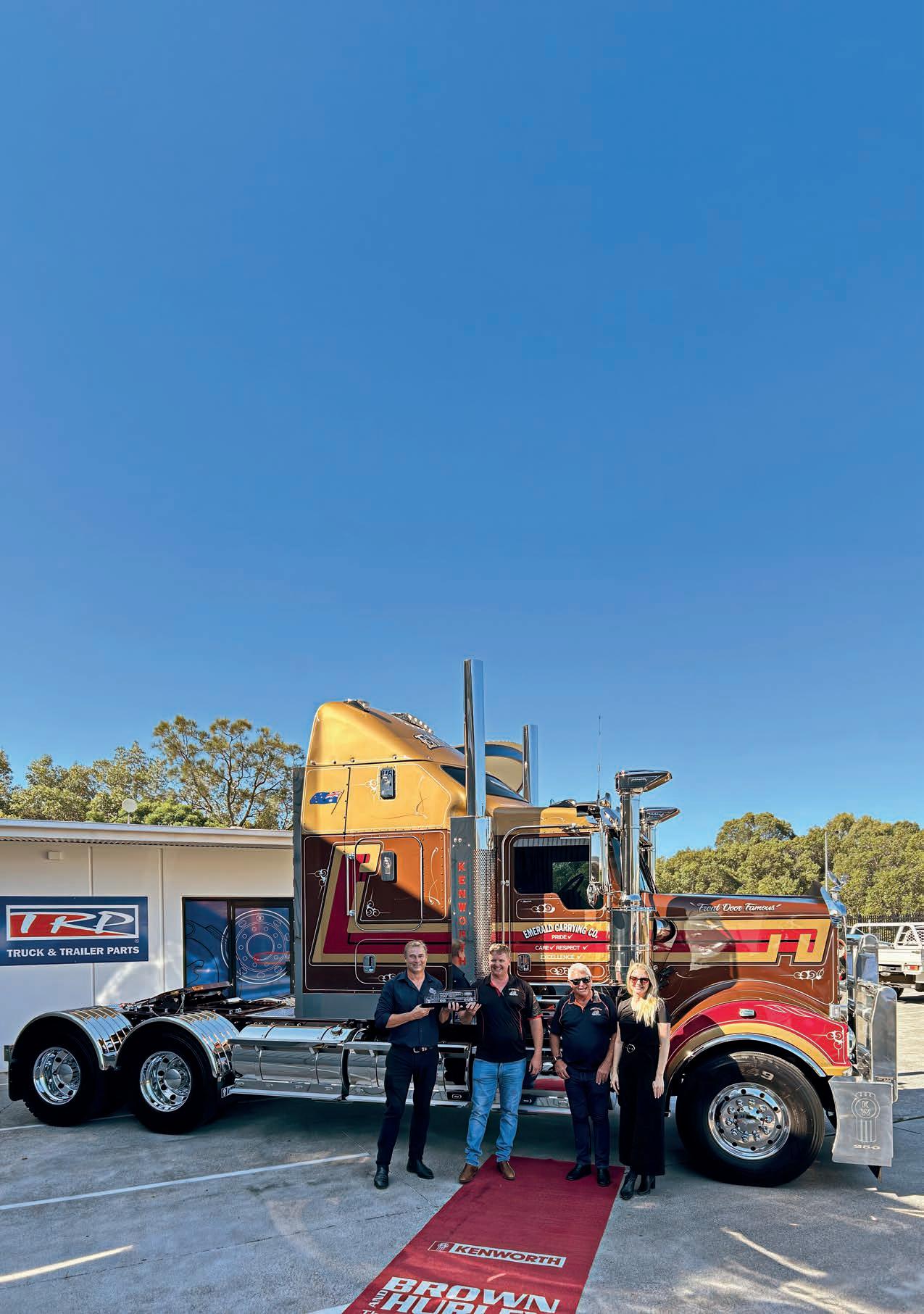
The Emerald Carrying Company team with the 250th Kenworth.
“These days it’s probably only about ve per cent of what we do,” Matt says.
“But it’s where we started, so we’ve always kept that general freight side there servicing central Queensland.”
The de ning shift for Emerald Carrying Company comes in 1994, when Matt’s father, Greg Haylock, secured a contract with the local Ampol distributor and decisively moved into fuel transport.
“My father started the fuel side of things in 1994 and that’s where it all sort of kicked up from there,” Matt says.
That one opportunity changes the trajectory of the family business.
What begins as a regional freight operator steadily evolves into one of the country’s largest family-owned fuel logistics providers.
Today, Emerald Carrying Company carts fuel throughout Australia, excluding Western Australia, servicing a vast range of commercial and industrial customers, with mining enterprises in the coal-rich Bowen Basin among its largest sectors.
“We do the fuel carting for the minesthey’re our biggest clients,” Matt says.
“Some of those mines get 14 B-double loads of fuel a day, so it’s a big business for us.”
The numbers are substantial. Across its national network, Emerald Carrying Company now delivers approximately 6.5 billion litres of fuel every year, a logistical task requiring hundreds of staff, constant scheduling precision and a highly dependable eet.
“We’re going out to everywhere,” Matt says. “And when you’re doing that sort of volume, you’ve got to look after your customers.”
Despite its size, the company remains unmistakably family-run. Greg Haylock continues as Managing Director, while the third generation of Haylocks now ll key operational roles. Matt oversees eet and general freight, younger brother, Ben runs fuel operations as the Group Operations Manager, and sister, Taylor heads up the role of Commercial Manager.
“It’s a real family enterprise,” Matt says.
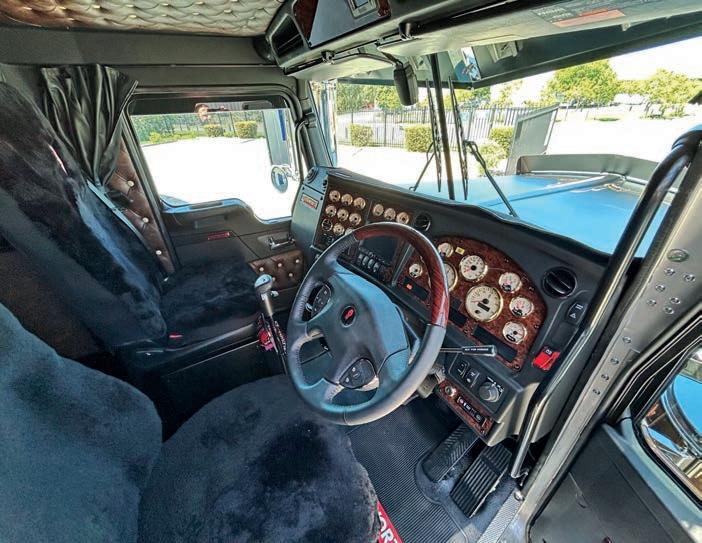
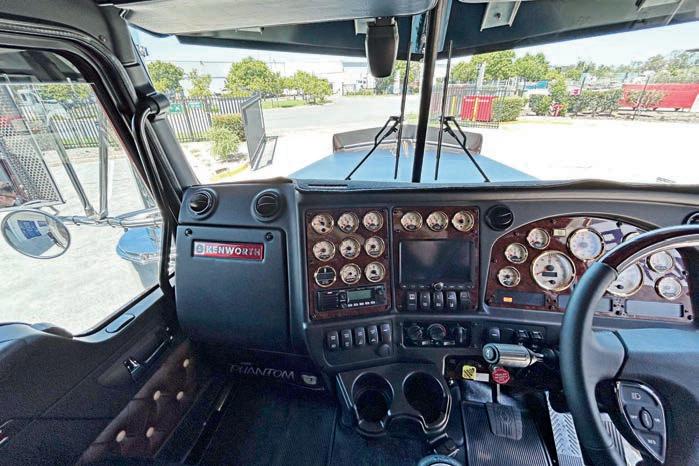
The Kenworth’s sleek and functional interior.
A proud moment for the team at Emerald Carrying Company.
“Dad’s still the MD, I look after eet and general freight, Ben handles fuel operations and Taylor’s on contracts. We all have our areas, but we all work together.”
Matt’s own progression into the business is one that mirrors many family transport stories - beginning at the very bottom.
“I’ve always been in the family business since I was a kid,” he says. “I started off washing trucks after school and hanging around the yard. Then I started driving them and doing general eet, and eventually I moved into managing the business.”
That practical grounding remains important to the way he approaches eet management today.
Understanding what drivers deal with, how the equipment performs and what operational pressures exist on the ground gives him a perspective that cannot be learned from behind a desk.
While Emerald remains the birthplace of the company, Brisbane has served as its operational headquarters for the past few years, with the business run from its major depot at Lytton, near the Port of Brisbane.
“We’ve been based in Brisbane since 2018,” Matt says. “Lytton is where we have our headquarters — everything is run out of here.”
With depots across the country and interstate fuel being the company’s bread and butter, Matt explains the logic behind establishing Brisbane as the enterprise’s base.
“I get to these depots a lot that’s why I moved to Brisbane, making it easier to get around. My brother, Ben, is always away at one of the yards, he’s always on the go,” Matt says.
Despite being based in the Brisbane head of ce, Matt still feels the pull of the open road and the beauty of Emerald and the central highlands.
“I still like to get up to Emerald now and again and I like to do some driving, when required,” Matt says.
The Lytton site acts as the control centre for a rapidly expanded depot network that now stretches across Emerald, Brisbane, Gracemere, Rockhampton, Mackay, Townsville and Darwin.
Every depot is supported by its own workshop and in-house mechanical team, a necessity when dealing with a eet operating at such intensity.
“We use our own in-house mechanics, and every depot has a workshop,” Matt says. “That’s important because these trucks are working hard all the time.
A lot of trucks have got two to three drivers, ones that run around the clock doing shift work.”
South of Brisbane, the Haylock
footprint extends even further through Monaro Fuels, which services Newcastle, Sydney, Melbourne, Adelaide and Port Augusta.
The Haylocks acquired Monaro in 2016 when it was running a handful of trucks. Since then, it has grown exponentially to a eet of 70 prime movers.
“When we bought Monaro Fuels in 2016 it had six trucks,” Matt says. “Now it’s got 70, so that shows how much it’s grown.”
Combined with Emerald Carrying Company’s own eet of around 130 trucks, the Haylocks’ businesses now manage close to 200 prime movers nationally and employ around 550 people, including roughly 450 full-time drivers.
“From my granddad’s day, it was just him and my grandma in Emerald,” Matt says. “Now it’s 450 drivers plus all the staff. That’s a huge wages bill. It’s grown a lot.”
That growth accelerated in the early 2000s as the company branched out into Rockhampton and Gracemere, strategically positioning itself to service the rapidly expanding mining regions of central Queensland. Fuel demand from resources projects soon created a natural and highly lucrative pathway for further expansion.
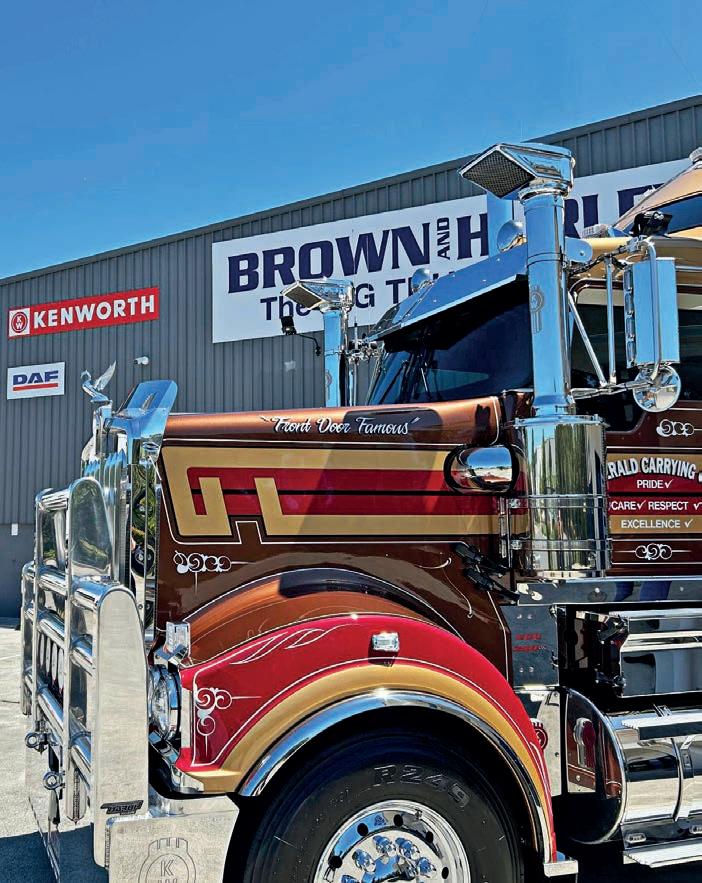
That winning Kenworth look.
While the business has consistently scaled up, one constant has remained at the centre of its operationsKenworth trucks.
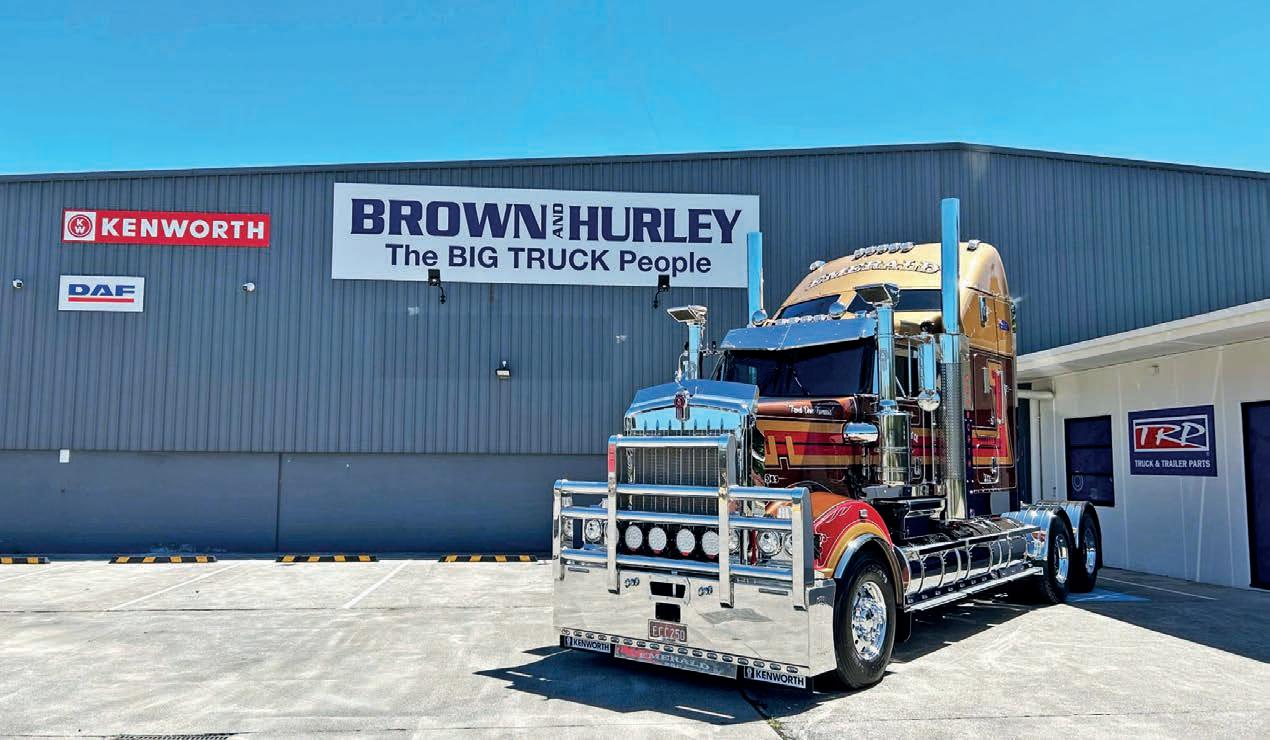
Emerald Carrying Company recently marked the delivery of its 250th Kenworth, a T909, handed over at Brown and Hurley’s Brisbane Port branch just minutes from the Lytton headquarters. For the Haylock family, the milestone carries symbolic weight.
“My father bought the rst Kenworth and that’s where it all sort of started,” Matt says. “So, to take delivery of our 250th is a pretty proud moment.”
Today the company runs virtually every major Kenworth model, from T909s and C509s to T659s, T610s, T410s and cab-over variants, carefully matching equipment to task.
“They’re just the best trucks — the power, the reliability, the resale, the after-sales service,” Matt says. “No matter what model it is, the Kenworth brand is just so reliable for us doing lots of mileage.”
And there is certainly plenty of mileage. Some of Emerald’s long-haul fuel units travel as much as 500,000 kilometres a year as they criss-cross the country servicing fuel contracts.
“With the trucks that do a lot of driving we change them every four or ve years,” Matt says. “The general freight ones we can keep for 10 or 15 years, but it depends on what they’re used for.”
Supporting that eet are supplier relationships the Haylocks regard as vital. Brown and Hurley has serviced Emerald’s Queensland operations since 2000, while Twin City Motors supports the Monaro side.
“They’ve all been fantastic and really look after us,” Matt says.
“We also have a great relationship with PACCAR for engines and parts, particularly Damian Smethurst, who is PACCAR Australia’s MD.”
Brown and Hurley Rockhampton Dealer Principal, Simon Graham, said he had been working with Emerald Carrying company for about the last 10 years, taking over the account which ramped up in the early 2000s.
“The company started off in Emerald and due to their growth, Brisbane now also heavily features in their plans. But I reckon Emerald will always be home to them,” Simon says.
“They use Kenworths almost exclusively these days due to the trucks’ reliability, service and also the after-sales support they get from the PACCAR dealership. We’re like a one-stop shop here. We do it all for them.
“PACCAR, with the Cummins brand, are in Emerald, Brisbane, Hobart and have a good reputation for looking after their customers and a strong network across Australia.”
For all the expansion, however, the Haylocks are adamant that the
business’s success has never simply been about truck numbers or fuel volumes.
Customer service remains the central philosophy, closely followed by staff welfare.
“We’ve always grown up on customer service — you’ve got to look after your customers,” Matt says. “And as well as that, you’ve got to look after your staff.
Without your staff, you can’t do the job.”
That culture, he believes, comes directly from the family head, Greg Haylock, whose no-frills approach still shapes the company.
“Dad is a very humble person,” Matt says. “He’ll still come in and mow lawns and stuff at the yard here, just because he likes doing it. He’s really hands-on.”
There is no corporate distance in the Haylock operation, no sense that management sits above the workforce. The family remains visible, practical and deeply involved — a trait inherited from modest beginnings.
“He’s had humble beginnings and he doesn’t think he’s any better than anyone else,” Matt says. “That sort of rubs off on us kids. We all have that same belief.”
For Matt, that legacy is never far from his mind.
Being part of the third generation is not simply about managing trucks and contracts; it is about preserving what his grandparents started and what his father transformed.
“Being a real family business makes us more aware of the legacy and what we need to do,” he says.
Nearly 60 years after one Emerald couple rst took freight off the rail, Emerald Carrying Company now stands as one of the nation’s most signi cant fuel transport operators. Despite the annual freight of billions of litres, the 200-truck eet and the hundreds of employees, the business still runs on the same straightforward formula that built it in 1965 - work hard, stay humble, look after customers and look after your people.
Images: Brown and Hurley.
The nerve centre of the Kenwworth T909.
GROWTH ENGINE
Penske Australia & New Zealand is doubling down on diversi cation and long-term investment as it targets sustained growth across transport, energy, defence and mining.
Vision’ growth strategy.
Penske Australia & New Zealand Managing Director, Hamish Christie-Johnston, says the business has “effectively tripled in size” over the past ve years, even as it narrowly missed its ambitious $2 billion revenue target.
“Our goal was $2 billion by 2025, and we reached $1.9 billion,” he says. “We started that journey at around $640 million, so while we fell slightly short, we still consider that a strong result.”
That milestone marks the end of one
strategic chapter and the beginning of another, with the company now launching its “2030 Vision”. Rather than focusing purely on revenue, Christie-Johnston says the business is shifting its attention to pro tability.
“We’ve moved to an earnings-beforetax target of $200 million by 2030,” he says. “We’re already among the top 600 companies in Australia, but we want to climb higher and increase our contribution to Penske Automotive Group globally.”
While parts of the transport market are cooling, Christie-Johnston says Penske’s diversi ed structure is insulating it from volatility.
“You might think transport is slowing, but other parts of our business are red hot,” he says. “Our energy division is now the fastestgrowing segment - we delivered 850 megawatts of standby power to data centres last year and generated about $600 million in revenue.”
This diversi cation is also
Penske Asustralia & New Zealand is firmly fixed on its ‘2030
Hamish
“We’ve moved to an earnings-before-tax target of $200 million by 2030. We’re already among the top 600 companies in Australia, but we want to climb higher and increase our contribution to Penske Automotive Group globally.”
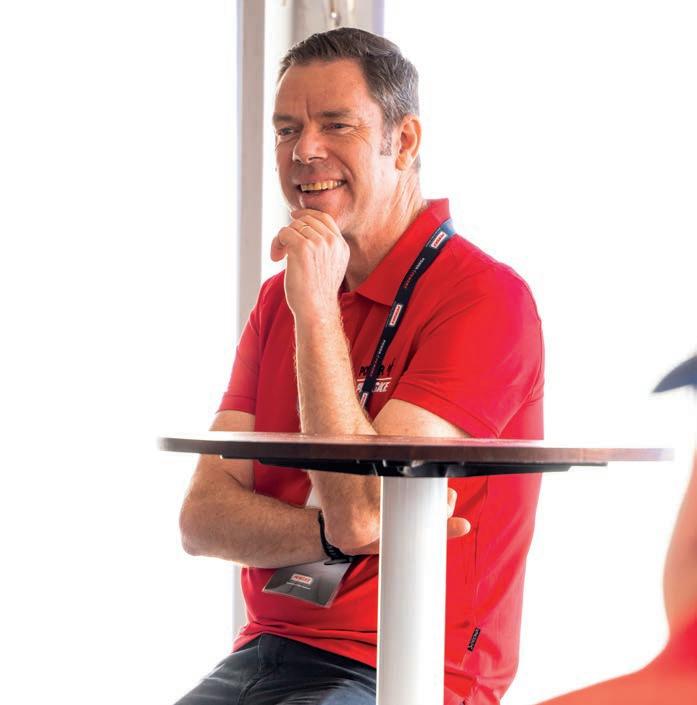
Penske Australia & New Zealand Managing Director, Hamish Christie-Johnston.
strengthening Penske’s footprint in regional Australia. Christie-Johnston points to Kalgoorlie as a prime example, where the company’s presence across multiple sectors provides a competitive edge.
“We’ve got a strong mining and power generation presence there, and because we’re on the ground, we’re supporting a wide range of customers - even across different truck brands,” he says. “That’s the bene t of having a broad business with depth.”
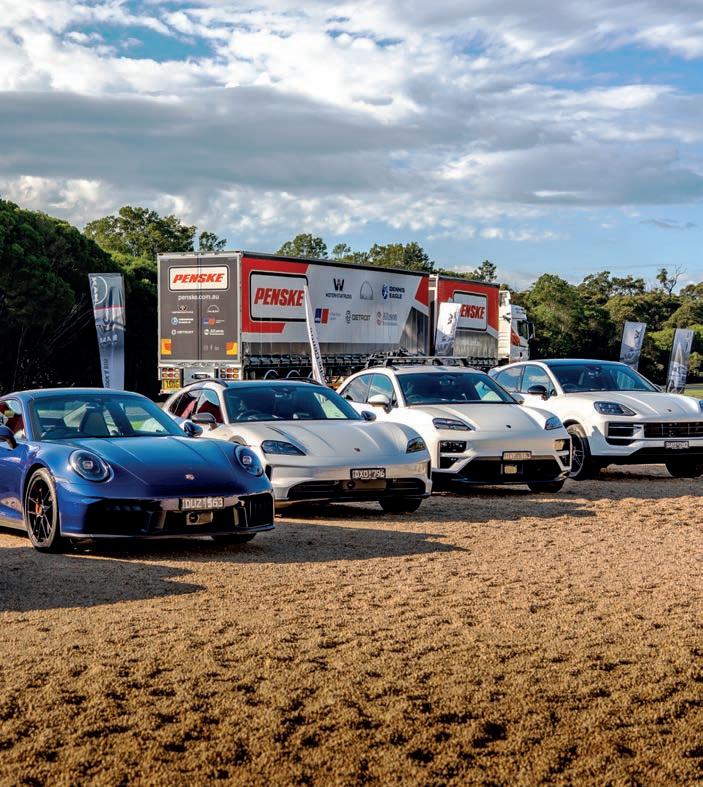
Strategic investment has also played a key role in recent growth, including the acquisition of Porsche dealerships in Melbourne in 2024.
“That added close to $500 million in revenue, but more importantly it demonstrated strong con dence from our parent company in the Australian market,” Christie-Johnston says.
“We’re absolutely here to stay and continuing to invest.”
Looking ahead, defence is emerging as a major growth pillar. ChristieJohnston says increased government spending and large-scale projects such as nuclear-powered submarines are creating signi cant opportunities.
“Defence is already a big part of our business and it’s growing,” he says. “We’re involved in most of the current build programs for land and sea, including repowering the Collins Class submarines, and we’re positioning ourselves to support future programs.”
Mining is another area of innovation, particularly through a hybridisation project aimed at reducing emissions and fuel consumption.
“We’re converting a large haul truck into a hybrid system, capturing energy during downhill operation and reusing it,” Christie-Johnston says.
“We expect about a 20 to 30 per cent reduction in fuel use, with a payback period of around three years.”
Despite these advancements, Christie-Johnston believes the biggest challenge facing the transport sector is not technology, but energy supply.
“The technology is largely there -
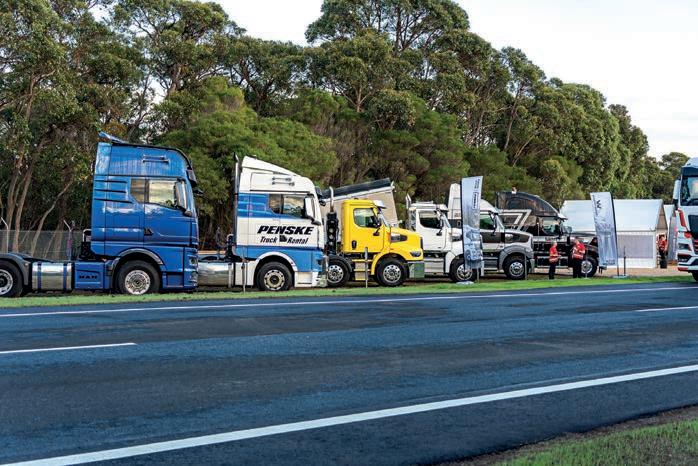
A broad range of Penske prime movers.
Christie-Johnston, Penske Australia & New Zealand Managing Director.
battery electric, hydrogen, hybrid - but the real question is how we generate the energy and at what cost,” he says. “If you want to electrify heavy vehicles, you need vastly more electricity than we currently produce.”
He warns that fully electrifying Australia’s road transport eet would require a massive expansion of the national grid.
“Petrol and diesel consumption today represents about three times the energy of the national electricity market,” he says. “So you’re talking about scaling the grid up three or four times - that’s the real challenge.”
Christie-Johnston says this shifts the conversation from engineering to economics.
“This is no longer just a technology discussion - it’s an economic one,” he says. “Electricity prices, infrastructure and supply chains will ultimately determine how quickly the transition happens.”
In the meantime, Penske is exploring integrated energy solutions, combining gas, renewables and battery storage to support both industrial customers and future vehicle electri cation.
“We’re working on projects that generate power behind the meter using a mix of gas, wind, solar and storage,” he says. “Those kinds of solutions could also support charging for electric eets.”
For Christie-Johnston, the long-term outlook for road transport remains strong, even amid uncertainty.
“Transport is fundamentally tied to GDP, so it will continue to grow,” he says. “There will be change, particularly around fuels and emissions, but the need to move goods isn’t going away.”
And with multiple growth engines now ring, he is con dent Penske is well positioned for the decade ahead.
“We’re very bullish about the future,” he says. “Across all our key segments, we see strong opportunity—and we’re investing to capture it.”
A Penske MAN prime mover goes through its paces.
Penske Australia & New Zealand acquired the Porsche dealerhips across Melbourne in 2024.
SUPER SHIFT
With Payday Super commencing on 1 July 2026, Team Super is helping Australian employers understand the new requirements and prepare their payroll systems and processes for a smooth transition.
Australian employers are preparing for one of the biggest changes to the superannuation system in recent years, with the introduction of Payday Super from 1 July 2026. The new rules require employers to pay superannuation contributions at the same time as salary and wages, rather than making quarterly payments. In most cases, contributions must be received by an employee’s super fund within seven business days of payday. The changes affect a wide range of businesses, including employers who currently use the Small Business Super Clearing House (SBSCH), businesses that pay super less frequently than wages, and self-employed people operating through a company who pay themselves a salary and are subject to the Super Guarantee.
Improving retirement outcomes
The Federal Government is introducing Payday Super to improve retirement savings for Australian workers. Treasury estimates around 8.9 million employees will bene t from receiving their super earlier and more regularly over the course of their working lives. More frequent contributions mean investment earnings can begin sooner, helping balances grow over time. The changes also give the Australian Taxation Of ce (ATO) greater visibility and allow it to respond more quickly when super payments are missed or delayed.
Key changes for employers
Several important changes come into effect from 1 July 2026.
A new term, Qualifying Earnings (QE), replaces the current framework used to calculate Super Guarantee obligations.
Team Super is here to help with the introduction of Payday Super on 1 July 2026.
QE includes ordinary time earnings, salary sacri ce contributions, and other amounts currently counted as salary or wages for super purposes.
Employers must report both QE and their super liability through Single Touch Payroll (STP).
The Small Business Super Clearing House will permanently close at 11.59pm on 30 June 2026. Employers using the service need to make their nal payments before this date and download any transaction records they wish to keep, as these records will no longer be accessible after the system closes.
Steps to prepare
Employers are encouraged to review their cash ow, payroll governance, and internal processes well before the start date.
This includes ensuring payroll systems can quickly identify and correct errors so contributions are made within the required timeframe.
Businesses planning to adopt new payroll software should contact their provider or clearing house to con rm the software will be ready in time. It is also important to understand the
new Qualifying Earnings concept and how it affects super calculations.
Penalties for late payments
If super is not paid on time under the new rules, employers may be liable for a Super Guarantee Charge, which is calculated and assessed by the Australian Taxation Of ce.
Team Super support for employers
Team Super, the specialist industry super fund for workers in transport, energy and mining, is helping employers prepare for the transition. Its Key Employer Relationship
Managers work directly with businesses to explain the new requirements and help implement practical processes to ensure compliance from day one.
Team Super offers on-site visits and presentations tailored to employers and payroll teams.
Employers can contact Team Super on 136463 (8am - 6pm weekdays AEST/AEDT) or email employers@ admin.teamsuper.com. For more information, visit teamsuper.com/ payday or scan the QR code above.
GET A HEAD START WITH FREIGHTLINER CASCADIA.
Get three months on us up to $20,000 when you finance a Freightliner Cascadia with Daimler Truck Financial Services. Experience the benefits of Guaranteed Buy Back and three years of servicing at no extra cost. Talk to your Freightliner dealer today to find out how you can take advantage of Cascadia’s remarkable fuel efficiency, advanced safety and superior comfort - Underestimate At Your Own Cost.
TASKER
Hino’s Heavy Duty 700 Series now suits a wider range of applications with a new 12-speed automated transmission.
The Euro VI Hino 700 had its Australian launch during the surreal and restrictive days of Covid during 2021. At the time, the new range set a number of benchmarks for heavy-duty Japanese trucks, meeting and even exceeding the offerings from Europe, placing the Japanese trucks on a more than equal footing.
During the intervening period Prime
Mover has taken several opportunities to drive the big Hino, including some interstate trips, and there is always something new to be experienced. With last year’s release of the new 12-speed Hino Automated Manual Transmission (AMT) a eet consisting of eight different examples of the Hino 700 has been assembled for the opportunity to assess different applications operating on a variety of roads on the NSW
South Coast including driving up the imposing Clyde Mountain on the King’s Highway to Canberra. We commence the road test portion of the two-day event at the wheel of tipper and three-axle dog with a gross combination weight of 33,800kgs. After negotiating Sydney’s morning traf c, the next challenge is the steep descent of Mount Ousley into Wollongong which requires trucks and buses to
negotiate the 12 to 18 percent incline at a maximum speed of 40 kph without applying the service brakes. To achieve this, as we approach the start of the descent, we switch the 12-speed AMT to manual mode and down shift to seventh gear. The Hino’s Jacobs brake is so effective we are able to hold that speed and even occasionally click it off as the truck slowed to 30 kph.
The Hino’s Electronic Braking System is more than “brake by wire” as the electronics manage the brakes’ air valves to deliver a smoother pedal stroke and application. Once past the base of Mount Ousley we activate the “Brake Sync” switch and there is no need to use the engine brake wand in general driving. The Adaptive Cruise Control operates down to 35 kph and won’t operate if the engine brake wand is in an active position. The rst stage of travel of the foot brake actually activates the engine’s Jake brake before it engages the service brakes. Thisnhelps conserve brake components as they only are activated after the engine brake.
The 9.0 litre models have a twoposition engine brake, while trucks equipped with the 13.0 litre engine have three positions, and in Position #2 the transmission will downshift if
a gear is available which matches the engine’s speed.
The Hino 700 Series is equipped with the extremely comprehensive SmartSafe safety package which delivers multiple driver assistance technologies which take an active focus on protecting drivers, passengers and other road users. Included in the Hino SmartSafe package are such features as Pre-Collision System (PCS) with Autonomous Emergency Braking (AEB), Pedestrian Detection (PD), Lane Departure Warning System (LDWS), Vehicle Stability Control (VSC), Reverse Camera and a suite of other standard safety features including airbags, seat belt pre-tensioners and an energy absorbing steering wheel.
The Staggering Warning feature comes into effect if the truck is detected wandering out of its lane too frequently, often an indication of impending driver fatigue. At the same time as alerting the driver with audio and visual warnings, the system will be pre-charging functions such as the Autonomous Emergency Braking system. The Driver Monitor system has undergone some re nement and during this trip false alarms are nonexistent across all of the trucks we drive, or maybe we’re displaying a good level of driver concentration. To make sure it’s working we only have to look at the map on the 10.1-inch (25.65 cm) information screen for more than a few seconds to set it off.
The Adaptive Cruise Control (ACC) maintains the speed set by the driver while continuously scanning the road in front of the truck. If a slower vehicle is detected in front, the ACC can reduce the engine acceleration and even engage the auxiliary braking, adapting the truck’s speed to that of the vehicle in front.
Access to the cab is via three non-slip steps which are staggered to enable safer entry and egress because you can see each step instead of blindly feeling around for it with your foot. The cab is supported at four points by airbag suspension which, in combination
A Hino Hybrid hitches a ride.
The Hino 700 series going through its paces with variable loads.
with the Isri NTS2 seat, delivers an exceptionally smooth ride in both leaf sprung and airbag suspended models, without any sense of disconnected oating on even the worst of road surfaces. The range of seat and steering wheel/column adjustments allows the driver to create the perfect position and still be able to view and access everything on the wrap-around cockpit-style dash. The interior delivers a superior work environment for the driver and features surface nishes that can be readily described as “classy”, utilising earthy tones reminiscent of a good latte, complemented by faux carbon bre highlights.
The 9.0 and 13.0 litre engines have met Euro VI emission standards since 2021 using a well sorted and reliable combination of AdBlue, SCR and DPR technologies. This combination is not new technology for Hino and has been ne-tuned to reduce AdBlue consumption.
The 9.0 litre 360hp engine has a very
at torque curve and is now paired with Hino’s own 12-speed AMT and is well suited for highway applications. Shift points can be adjusted from the dash between Eco, Standard and Power settings.
When the AMT was launched in 2025 Hino wanted to make clear that this was not a completely new transmission but rather was a development of a manual synchro box used in Japan. In AMT format it features a counter shaft brake to facilitate quicker and smoother shifts. It is fundamentally a three-speed with a dual range con guration plus a splitter to achieve the 12 speeds. The range change is on the 6-7 shift and, as such, takes fractionally longer to achieve. In manual operation the driver quickly adapts to this and holds off from upshifting too early.
The rear axle ratio has been changed from 5.6:1 to 5.2:1 in order to downspeed the engine and improve fuel ef ciency in the sweet spot around
1600-1700rpm.
The introduction of the 12-speed AMT complements the Allison fully automatic transmission which remains the driveline of choice for Hino 700’s under 350hp and has for a long time proved ideal for metropolitan applications.
Hino 700’s with the 480hp version of the 13.0 litre engine are tted with the 16-speed ZF AMT which incorporates the incredibly effective ZF Intarder. Diff locks are a feature of all of the Hino 700 Series range.
On Day Two of our trip, about midway on the long climb from the coast up the Clyde Mountain in an FS 2636 6x4 curtainsider, another vehicle up ahead encountered a problem (possibly driver related) and we, along with other traf c, were forced to come to a complete halt. After considering twisting the transmission selector dial to the crawler gear ‘slow forward’, we elected to leave it in ‘Drive’, toggle down to rst gear, move the Hill Hold
The well-appointed interior of 700 series.
release to ‘slow’ and simply fully apply the accelerator. Despite the Hino’s weight and the incline, this resulted in a very smooth take up and we were quickly manual shifting through the higher gears. Easy.
In concert with the rotary dial on the dash which basically selects forward or reverse, the transmission can be controlled by a wand located next to engine brake lever, meaning there is no need to take a hand off the steering wheel.
In ‘Eco’ mode with the Adaptive Cruise Control activated the transmission will neutralise whenever coasting is possible to save fuel and the reconnection of the driveline is very smooth.
In line with the rest of its range (including the Euro VI 500 Series coming next year) the Hino 700 Series now comes with a ve-year warranty.
The versatility of the Hino 700 Series is impressively demonstrated by the disparate line-up of vehicles provided for this exercise. From a prime mover pulling a loaded skel trailer, an 8x4 tilt-tray loaded with an innovative Hino Hybrid recovery vehicle, several versions of curtainsiders, air and leaf
spring tippers, and even a 6x4 rigid stock crate, every Hino proved to be up to the applications for which they have been developed.
Whether it be civil works, metro and regional delivery or specialised applications such as the tilt-tray, the Hino 700 Series is up for the task.
Heavy loads are all within the Hino 700 series’ capabilities.
Another successful application of the Hino 700 heavy duty truck.
Operating in a super competitive category the Fuso Canter continues to evolve and the latest Euro VI range has upgrades to its engine as well as a freshened cab interior.
Adictionary will describe a “canter” as a particular horse’s gait that is smoother, yet faster, than a trot. While we don’t set out to prove how fast the latest Fuso Canter can go, it certainly impresses with its smoothness.
Fuso upgraded the exterior of the Canter a couple of years ago so this latest version receives only minimal outside changes in the form of foglights as standard, as well as new LED tail-lights. The headlights have been LED for a while and provide excellent illumination and an almost in nite service life.
The Canter 515 Wide Cab at the centre of this assessment is powered by a 3.0-litre four-cylinder engine which develops 110kW between 2,840 and 3,500 rpm and now meets the stricter Euro VI emission standards through the use of Exhaust Gas Recirculation, a Diesel Particulate Filter and
Supplementary Catalytic Reduction using AdBlue uid. The engine has also gained an additional 30Nm of torque and now has a very handy 400Nm on tap across the range of 1,350 to 2,850 rpm. The same Euro VI engine has been in local operation in the Fuso Rosa bus since 2020, so there are no bugs to sort
ISRI seats are now standard for drivers and passengers.
out in the emission control technology. A version of the engine rated at 129kW and 430Nm is also available.
Thanks to the underlying design and engineering, most models in the current Canter range have a payload advantage over their competition. he Canter 515 model is also now
available with a Built Ready Alloy Tray option, which incorporates a clever design of the drop sides to provide a gap along the length of the tray which allows for load straps to run under the 330mm high tray sides in order to provide improved restraint for any load without putting excess strain on the alloy tray sides. The gap is protected by a rubber weather seal and provides an innovative solution for a problem often encountered with an alloy trays and enables a load to be secured directly to the tray’s heavy duty side tie rails. The tray also features alloy steps and grab handles at the front corners, a mesh lined headboard load-barrier and a three tonne rated alloy oor.
To simulate during our test drive the tray is occupied by a large wooden box which wouldn’t be out of place housing a wild animal, but in this case it’s loaded with ballast.
Standard Canter safety features include Autonomous Emergency Braking, Electronic Stability Program, Lane Departure Warning System and Pedestrian Detection.
For all Canter models except Crew Cabs, the most noticeable upgrade inside the truck is the addition of new ISRI driver and passenger seats which provide a high level of support and comfort and have adjustable dampening to suit the weight and individual requirements of any driver. Achieving a comfortable position is enhanced by the range of telescopic
and tilt adjustments available for the steering wheel.
Riding or driving in the cab is enhanced in these new models due to the air conditioning system being upgraded to an automatic mode to allow the comfort of the occupants to be set at a preferred temperature.
The 8-inch LCD touch screen is mounted on the dash and provides wireless Apple Carplay and Android Auto compatible Bluetooth phone connections as well as digital DAB+ radio and the familiar AM/FM radio. There is a USB port for charging of devices such as mobile phones. The screen also functions as the display for the standard equipment reverse camera and has the capability to accept input from up to ve additional cameras. The rear mounted camera has a microphone as well as infra-red abilities for low light operations.
Daimler tells us that around 90 per cent of Canter sales in Australia are for trucks equipped with the optional Duonic six-speed Dual Clutch Automated Manual Transmission, as many buyers prefer the ease of operating a two-pedal light truck. However, our test vehicle is equipped with a ve speed all-synchro manual gearbox which is a delight to operate.
The clutch is light and progressive and delivers smooth take offs, enhanced when necessary by the Canter’s Hill Start function which takes its cue to release the brakes as the clutch pedal
is released. Fourth gear is direct, with fth delivering a 0.723:1 overdrive to contribute to fuel ef ciency at higher speeds.
The gear lever is located on the centre of the dash, providing plenty of leg room for a centre passenger and also making it easy for the driver to move across the cab to exit on the kerb side. Even with the load on the tray, the engine’s torque allows for the truck to happily move off in second gear on a at road surface. The actual gear shifting requires very little effort when changing either up or down. The exhaust brake is noticeably effective especially when negotiating long downhill sections of road.
The Canter 515 has independent double wishbone coil spring front suspension which, in combination with the shock absorbers at each corner and the power rack and pinion steering, provides a much more comfortable ride than one expects from a partially loaded light truck. The steering is quite nimble with an 11-metre turning circle, making access to tight situations or performing U-turns easy.
The car licence compatible Australian light truck market is as competitive as any and there is a noticeable push towards this type of vehicle in preference to dual cab utes, particularly when towing is on the task list. The Canter 515 has a 3,500kgs braked towing capacity. When towing heavy items such as small excavators, the Canter’s dual rear wheels provide a level of stability and consequently safety far better than what’s available with the wide single tyres tted to most utes.
Total cost of ownership is kept in check due to the Canter’s 30,000 kilometre service intervals (or 12 months, whichever occurs rst) and a ve year/200,000 kilometre warranty.
The Fuso Canter was already an excellent light truck. Improved engine performance, lower emissions and additional comfort deliver even more positives for this latest step in the truck’s evolution.
The Canter Euro VI’s wellappointed interior.
Freight
MODE DRIVE
Two new Kenworth T909 prime movers currently being prepared for service at Freight Assist Australia will further strengthen the company’s long-standing relationship with Dana Australia.
The white T909s, which are due to receive their nal artwork shortly, will feature Australian ags on both sides to match the company’s existing triple road train combinations.
Beneath the striking livery, each truck is speci ed with a Dana Spicer D2000F single steer axle rated from 7.3 to 9.1 tonnes, paired with Dana’s proven D46-170 tandem drive axles with differential locks and a 20.9-tonne gross axle weight rating. The driveline package is designed for gross combination masses of up to 110 tonnes.
The latest order builds on Freight Assist’s extensive experience with Dana equipment. Over the past ve years, the company’s National Maintenance Manager, Iain Strain, has speci ed 11 Kenworth K200 prime movers equipped with Dana D46-170 drive axles.
“For our heavy road train work, the D46-170 performs extremely well,” says Strain. “It’s proven to be strong, dependable equipment and it handles the task without any issues.”
Strain says the key to achieving maximum reliability is straightforward: use the correct lubricants and follow Dana’s recommended service intervals.
“We use semi-synthetic oil and change it every 200,000 kilometres,” he says.
“As long as we service them according to the guidelines, they just keep doing their job.”
Strain says it is pleasing to note that Dana’s Spicer D-Series Steer Axles feature a unique exclusive combination of patented Dana technologies and designs to deliver proven reliability, maximum manoeuvrability, reduced maintenance, and greater durability. Having worked closely with Dana throughout his career, Strain says the support and technical guidance from
the manufacturer gives him complete con dence in the product.
“I’ve dealt directly with the Dana team for many years and have a very good understanding of what’s required to keep the drivetrains performing properly in our eet,” he says.
One of the biggest bene ts, according to Strain, is the peace of mind that comes from knowing the drivetrains require very little attention outside routine servicing.
He recalls having performed many senior management roles throughout his career and is always happy knowing the Dana products will serve him, and eets he maintains, well.
“As National Maintenance Manager, it’s one less thing to worry about,” he says. “They’re very reliable products and that means one less headache for the maintenance team.”
The low-maintenance design also makes life easier for workshop staff,
Assist Australia relies on quality Dana drive lines for its longhaul fleet.
allowing technicians to focus on preventative inspections rather than major repairs.
“Our mechanics can spend their time checking for wear, cracks or damage instead of constantly pulling components apart,” says Strain.
Just as importantly, Freight Assist’s drivers report no issues with the drivetrains, even when operating in remote and demanding conditions.
“Our drivers have no problems, whether they’re on the highway or out in the back blocks,” he says.
Based on the performance and reliability Freight Assist Australia continues to experience, Strain says the company has every intention of staying with Dana drivetrains.
“We’re very happy with the Dana product and we’ll keep using it.”
Since opening its doors in Victoria in 2012, Freight Assist Australia, has steadily evolved into a national linehaul and warehousing company with one key mission – to provide uncompromised service as one of Australia’s most ef cient and reliable supply chain providers.
As part of its ongoing quest to transport
more freight with less trucks, this mission is now being further supported with the company’s relationship with Dana and its move of introducing Vawdrey B-triple trailer combination for longhaul road train work.
In October 2025, Freight Assist Australia commenced a strategic expansion of its facilities in Victoria, following the national operator’s acquisition of a site neighbouring its base in Altona.
As a result, Freight Assist Australia’s warehousing and distribution facility will offer 3,000 additional pallet spaces, 5,000 total racked locations, increased storage and third-party logistics (3PL) capacity, streamlined operations and Hazard Analysis and Critical Control Point (HACCP) accreditation.
Additionally, the site will include four container loading docks, enabling the operator to service multiple hand unload and palletised container unpackings simultaneously.
The expansion has led to the ideal separation of the company’s 3PL and linehaul operations, creating a safer
and more ef cient environment.
In addition, Freight Assist Australia has been experiencing signi cant growth in other areas of the business as well, with it solidifying its presence in South Australia by opening a new depot in Adelaide.
Freight Assist Australia operates a modern national eet that includes at least six high-productivity PerformanceBased Standards (PBS) B-triple road trains.
The company continues to invest in new equipment, including two new Kenworth T909s to be delivered in the near future, Kenworth K220s, DAF CF 530 trucks and Vawdrey drop deck trailers to support their national logistics, warehousing, and 3PL services.
It has depots in depots in Sydney, Melbourne, Perth, Gold Coast, Canberra, Brisbane, Tasmania, and Adelaide.
The fact that they are supported by Dana, as a global leader in drivetrain and e-propulsion systems, certainly gives the team at Freight Assist Australia peace of mind in the tough world of transport logistics.
Happy members of the Freight Assist Australia team.
FUELLING UP
Australian eet operators have little control over global diesel markets, but they do have control over how ef ciently every truck on the road burns fuel — and right now, that control has never mattered more.
With wholesale diesel terminal gate prices across Australian cities jumping by around 50 per cent in less than two weeks earlier this year, and pump prices pushing beyond $3.00 per litre in some regions, transport businesses are facing one of the toughest cost environments in recent memory.
Temporary federal relief through reduced fuel excise and the pause on the heavy vehicle Road User Charge has softened the immediate sting, but neither measure changes the longterm reality that Australia remains heavily exposed to overseas fuel supply volatility.
For operators already managing wafer-thin margins, the spotlight is
As fuel prices continue to batter Australian transport operators, eet managers are turning to telematics, predictive maintenance and driver coaching to claw back thousands in avoidable diesel spend.
shifting sharply toward the hidden inef ciencies inside eets. According to global telematics specialist Geotab, those inef ciencies can account for as much as 30 per cent of total fuel spend. That means fuel savings are no longer being found solely at the bowser, but in the cab, the workshop and the dispatch of ce.
“Rising fuel prices continue to place pressure on Australia’s transport sector, making fuel ef ciency a growing priority for heavy vehicle eets,” says Geotab’s Heavy Transport Australia Associate Vice President, Andrew Hintz. “The operators who are getting ahead right now are the ones using real-time data to coach their drivers and address inef ciencies before they compound.” Among the biggest controllable drains on diesel consumption is driver behaviour.
International research has consistently shown that speeding, harsh acceleration and aggressive braking
can reduce fuel economy by 15 to 30 per cent at highway speeds, and even more in urban stop-start conditions. For long-haul operators, where every kilometre matters, small behavioural changes quickly become major line items.
Simply dropping cruising speed from 100km/h to 90km/h can shave almost 10 per cent off fuel use in many heavy vehicle applications. For a 50-truck eet, where each truck travels 200,000 kilometres annually that translates into annual savings worth hundreds of thousands of dollars at current diesel prices.
This is where telematics has become far more than a compliance or tracking tool.
Modern platforms provide live monitoring of speeding events, harsh braking, rapid acceleration, excessive idling and engine RPM management, allowing eet managers to build driver scorecards and identify exactly
where fuel is being wasted. Rather than relying on assumptions operators can now coach from hard data. Idling presents another major - and often underestimated - source of loss.
A heavy-duty diesel truck can consume between two and four litres of fuel per hour while stationary with the engine running. Multiplied across dozens of vehicles and daily waiting times at depots, customer sites or rest stops, the cost quickly becomes staggering.
For a eet of 30 trucks idling an average of 45 minutes a day, the annual diesel wastage can total between 16,000 and 33,000 litres. At more than $3.00 per litre, that is between $48,000 and $98,000 spent achieving precisely nothing, while also accelerating engine wear and increasing emissions.
Telematics platforms now allow operators to monitor idle time vehicle by vehicle in real time, trigger threshold alerts and benchmark drivers against one another. Fleets implementing
active idle-reduction programs commonly report unnecessary idle cuts of around 30 per cent, delivering almost immediate fuel cost reductions. In addition, mechanical inef ciencies are increasingly being recognised as silent fuel killers, particularly as modern trucks become more electronically sophisticated and less forgiving of minor faults.
Underin ated tyres increase rolling resistance, misaligned axles create drag, clogged air and fuel lters choke engine ef ciency, and faulty electrical sensors can prompt engine management systems to overfuel without any obvious warning to the driver.
Historically, many of these issues have remained hidden until a scheduled service or a roadside breakdown. Predictive maintenance changes that model entirely.
By integrating telematics with Controller Area Network (CAN) Bus systems and Tyre Pressure Monitoring Systems, eet managers can access real-time diagnostic information on engine health, tyre condition, fault codes and component performance. Instead of waiting for a driver to mention a dashboard warning — which can often take days or even weeks — workshops can intervene before a small issue quietly drains fuel or escalates into a costly downtime event.
“Predictive maintenance is an important strategy that helps operators boost fuel ef ciency,” Hintz says.
“With increasingly complex trucks, faulty electrical sensors or small mechanical issues can quickly increase fuel consumption. Telematics gives eet managers the visibility to catch these problems early and keep heavy trucks running ef ciently.”
Route planning is the third major savings frontier. The shortest path between two points is not always the cheapest one when fuel is involved.
Traf c congestion, topography, load weight, stop frequency and route deviations all in uence how much
diesel is consumed on any given trip. Advanced telematics platforms compare planned routes with actual vehicle movements and fuel burn, giving dispatchers the ability to re ne scheduling based on real operational outcomes rather than map estimates. Industry gures suggest effective route optimisation can reduce fuel costs by 10 to 15 per cent, particularly for eets operating repetitive freight corridors over long distances.
The value of this intelligence lies in its consolidation. Rather than treating driver behaviour, maintenance, fuel purchases and route ef ciency as separate operational silos, telematics pulls them into one live dashboard. Managers can track litres consumed per vehicle, identify anomalies, reconcile fuel card transactions, ag possible theft or purchasing discrepancies, and measure performance improvements over time.
It transforms fuel management from reactive guesswork into a measurable business discipline.
There is also a growing environmental dividend. Every litre of diesel saved prevents roughly 2.7 kilograms of carbon dioxide from entering the atmosphere, meaning fuel ef ciency programs now carry both nancial and ESG signi cance. With more transport businesses facing emissions reporting expectations from customers, investors and government frameworks, telematics data is increasingly doubling as an auditable emissions record.
For Australian eets, the message is becoming unmistakably clear. Global oil prices may remain beyond reach, but the way trucks are driven, maintained and routed is not. In an era of sustained fuel volatility, the operators protecting their margins are those treating telematics not as an optional extra, but as a frontline fuelsaving tool.
To learn how data-driven eet management can reduce fuel costs and improve operational ef ciency, visit www.geotab.com/au.
Telematics is the latest frontier to help transport operators save money with fuel consumption. Image: Geotab.
PURE PERFORMANCE
Fuel quality can no longer be assumed to be consistent across Australia with declining quality raising the stakes for engine protection.
Ongoing geopolitical disruption continues to in uence global fuel supply chains, contributing to variable fuel composition and cleanliness. To help address these challenges, Fleetguard’s advanced ltration solutions are designed to combat contamination and water ingress in the fuel system, helping operators manage risk, protect components, and maintain operational continuity.
Fuel is arriving with higher levels of contamination and water content, increasing risks of damage to critical engine components, and placing pressure on budgets and maintenance schedules.
Modern diesel engines are designed for higher ef ciency, improved performance, and reduced emissions, but these come with increased sensitivity to fuel quality. High Pressure Common Rail fuel systems, now widely used across the industry,
operate at pressures of up to 30,000 psi. These systems rely on extremely tight tolerances and precise component interaction. Even microscopic particles or small amounts of water can disrupt performance, accelerate wear, and lead to premature failure of injectors and fuel system components.
The widespread adoption of ultra-low sulphur diesel and biodiesel blends has supported emissions reduction targets but has also introduced new challenges. These fuels are more susceptible to contamination; can retain more water and may degrade differently under storage and transport conditions.
For operators managing long haul freight routes, or supporting remote industries such as mining, these risks are ampli ed. Equipment reliability is critical, and unplanned downtime can have signi cant operational and nancial consequences. Therefore, poor fuel quality is a direct threat to productivity.
“We are seeing a clear shift in fuel quality across the market,” says, Atmus
Filtration Technologies, Supply Chain Leader South Paci c, Akash Patel.
“At the same time, engines are becoming more precise and less tolerant of contamination. That combination is increasing the risk for operators who do not have the right protection in place.”
As fuel quality continues to evolve, the role of ltration is becoming increasingly important in helping operators maintain engine reliability and performance. Fleetguard ltration products are designed to protect modern diesel engines by removing harmful particles and separating water before fuel reaches sensitive components.
Fleetguard ltration products support many applications, including engine ltration, advanced system solutions, remote mount con gurations and fuel island ltration. This allows operators to manage fuel quality across the entire fuel supply chain.
Industry benchmarks, such as
Fleetguard Filtration Systems are playing a vital role in fuel quality for operators across Australia. Images: Atmus Filtration.
ISO 18/16/13, de ne acceptable contamination levels, yet a signi cant proportion of fuel in use today fails to meet these standards. Without effective ltration, that contamination is transferred directly into the engine, increasing wear and reducing component life.
Fleetguard ltration products, incorporating NanoNet media, are engineered to deliver high ef ciency contaminant removal while maintaining performance in demanding conditions. Unlike traditional cellulose based lters, NanoNet uses a synthetic bre structure that is resistant to water and maintains its integrity over time. This design enables more effective capture of ne particles, including those as small as four microns. It also allows the lter to hold a greater volume of contaminants, extending service and maintenance intervals.
Another key advantage is the ability to retain captured particles under varying operating conditions. Traditional lter media can under pressure uctuations or vibration. NanoNet media is designed to minimise the release contaminants into the fuel stream. Water separation is equally important. The presence of water in fuel can lead to corrosion, microbial growth, and reduced lubrication within the fuel system. By resisting water saturation and maintaining separation ef ciency,
NanoNet supports more stable ltration performance even when fuel quality is compromised.
“Fuel quality is becoming less consistent, and that variability is what creates risk,” says Akash Patel. “Operators need ltration solutions that can perform reliably regardless of what is coming through the tank. That is where advanced media makes a real difference.”
For eet operators, the impact of improved ltration is both immediate and long term.
Cleaner fuel entering the engine helps reduce wear on injectors and pumps, improving reliability and extending component life. It also supports more ef cient combustion, which can contribute to better fuel economy and reduced emissions.
In mining and remote operations, fuel contamination introduced during storage or refuelling can quickly lead to widespread equipment issues if not properly managed. Hence, the need for high quality ltration infrastructure at engine and fuel supply levels. Variability in fuel quality is likely to remain a persistent challenge for Australian operators.
At the same time, engine technology will continue to evolve, with further gains in ef ciency and emissions performance increasing sensitivity to contamination.
Fleetguard ltration products are
designed to meet these changing requirements, helping operators protect their engines, reduce operating costs, and maintain performance in an increasingly complex environment. For Australia’s transport and resources sectors fuel quality can no longer be taken for granted. Fuel ltration is emerging as a critical safeguard. By focusing on prevention rather than repair, operators can better protect their assets, maintain uptime and control costs in the face of uncertainty.
www. eetguard.com
AIRBAGS
& AIR SUSPENSION Designers & Manufacturers
Rugged engineering Long-lasting protection
Built for the long haul
Keep your fleet on the road & out of the workshop. Book a fleet consultation today.
Fleetguard filters on the production line.
ENDURING RELIABILITY
As Cahill Transport celebrates 75 years in business in 2026, one of Australia’s largest familyowned transport companies says its long-standing use of JOST coupling and trailer equipment continues to play a key role in keeping its national eet safe, serviceable and on the road.
From modest beginnings and a couple of trucks, but through hard work and dedication,
Cahill Transport has grown into a major national operation with around 200 prime movers and 300 trailers, a transformation that underscores three generations of family commitment and strategic investment in dependable equipment.
The Cahill family has been associated with the transport industry since 1915, when John Cahill purchased his rst horse and dray. John’s son, Joe Snr, was later to become the Victorian General Manager of the company “Yellow Express”.
In 1951, his son, also named Joe, purchased his own truck - a Ford
semi-trailer that cost Joe £ 720. Joe had borrow money from his father and uncle to assist with the deposit and his beloved Ford was the foundation of successes to come. Within four years, the truck was fully paid for and the growth of Joe’s own venture ‘Cahill Transport’ rmly established.
“This year is our 75th anniversary. It’s a huge milestone for us,” says Joe Cahill, Cahill Transport’s National Workshop and Fleet Manager, and third generation ‘Joe Cahill’ working in the family business.
“My grandfather started off with just a couple trucks, and then Dad, Michael and Dan bought off him and have built it up to what it is now.”
Today, the company stands among the nation’s biggest remaining familyowned transport operators, and according to Joe, maintaining that position requires products that can consistently perform across a large and varied eet.
“We’ve been using JOST products for as long as I can remember,” he says. “The product’s good, it’s reliable, and they work really well with all the various truck OEM models.”
JOST has been distributing truck and trailer components since 1986 and for the past 30 years the team at JOST have been working with Cahill’s Transport supplying it with high-quality components.
A Cahill Transport prime mover in the company’s stateof-the-art Melbourne facility. Image: Cahill Transport.
Cahill Transport engages a broad range of JOST equipment across its assets, including fth wheels, landing legs, kingpins and recently JOST’s greaseless turntables – all components Joe Cahill describes as essential to the day-to-day continuity of the eet.
“We use a lot of JOST products. They’re vital for our business and to be able to keep going, so we need reliable products. Reliability from a maintenance point of view and the safety point of view is very important,” Joe says.
For a eet of Cahill Transport’s size, reliability extends well beyond simple product performance and directly into workshop planning, compliance and operational safety.
“Reliability from a maintenance point of view and the safety point of view is very important,” Joe says. “The JOST products are all very serviceable, and they are always checked and maintained during our services for trucks and trailers.
“We’ve never had issues, like structural issues and that sort of thing. It gives us peace of mind.”
That con dence is particularly important given the scale of the investment involved in eet procurement and lifecycle management.
“It’s a big investment, and we want
to make sure we’re doing it all right,” he says. “We’re always looking for a competitive price, but ultimately we want products that are going to last. We nd that JOST is the best in the market.”
Supporting Cahill Transport’s commitment to uptime are two major in-house workshops located in Laverton, Melbourne, and Brisbane, with the Victorian site recently expanded through the addition of a new ve-bay, state-of-the-art facility.
“At our Melbourne workshop we’ve just built a ve-bay state-of-the-art facility, which includes a drive-through automated truck wash and a ve-pad modular weighbridge,” Joe says.
Advancing an entrepreneurial spirit, Cahills have opened the truck wash to the public.
The new workshop is now also servicing external transport operators, further strengthening the company’s maintenance footprint, while a team of mechanics ensures the Cahill eet remains under close technical supervision and always on the road.
“We have 16 full-time truck mechanics with us,” he says.
Joe adds that one of the major advantages of working with JOST is the manufacturer’s willingness to support not only the workshop team, but also drivers in the eld.
“Their availability to come out and meet with us and offer us training on their products is very good as well.”
“JOST come out to our workshops and show the guys the products, how to service and repair them, as well as do driver training on the products.”
That supplier-led education, he says, helps ensure equipment is being used correctly from coupling through to daily operation.
“That’s a huge help to us, as the drivers are using the prime movers and trailers and need to know how to connect and use the gear properly,” Joe adds.
He also credits the hands-on approach of key JOST personnel as a major contributor to the successful relationship.
“At JOST we mainly deal with Joey Coles,” he says. “The company is great, very knowledgeable and approachable. They know their product and are down to earth. They’re excellent to deal with.”
As the company is enjoying the fruits of its landmark anniversary year, its emphasis on workshop investment, preventative maintenance and proven component supply continues to re ect the same practical values on which the family business was built – with Joe Cahill making it clear that reliable partnerships remain central to the next chapter of the company’s journey.
The JOST fifth wheel used with Cahill Transport’s prime movers. Image: JOST Australia.
CAREER CHALLENGES
The road transport industry is chronically short of maintenance personnel and drivers. What’s the core of the issue? Is there a connection to responsibilities and accountability or the lack of glamour in the job? Prime Mover technical contributor, Bob Woodward, investigates.
It’s a sad state when industry associations need to provide lists of components that meet inservice standards, whereas lists of non-complying components are seen as anti-competitive. If a maintenance technician ts a critical non-compliant component and there is an incident, then that person is potentially in the ring line - responsible and accountable. I recently watched a YouTube video where aircraft engineers were conducting extra curricula activities with students at a Queensland school. The students, under professional guidance, were building an experimental category kit aircraft under the supervision of the group of volunteer Licensed Aircraft Maintenance Engineers (LAMEs).
The difference between a LAME and an AME (Aircraft Maintenance Engineer), lies in licensing and certi cation authority. A LAME holds a license from CASA in Australia, allowing them to sign off on maintenance, whereas an AME often refers to an unlicensed technician, apprentice, or a general trade term. The video quoted the average age of LAMEs is sixty-four. What a great way to direct the attention of young minds to a potential career path.
As individuals we don’t like being criticised. It’s easy to fall into the approach that if a senior workshop person knows something so intimately then why is it others don’t understand that issue. It’s a case of being patient and respectful, so that the senior person will explain in simple terms.
Are there opportunities to work in road transport maintenance workshops? Yes, without doubt. However, there seems to be a general lack of discipline within the younger generations, in that they don’t like being directed. This needs to be addressed, but the older practitioners also need to be more patient.
Based on 2024-2025 data from the National Centre for Vocational Education Research, the long-term completion rate for trade apprentices in Australia is about 58 to 63 per cent. Measured over a typical six-year period this is less than two in three. The initial dropout rate is of greater concern, roughly 33 per cent of apprentices cancel or withdraw in the rst year. While it is often stated that heavy vehicle tradespeople can adapt and become good heavy vehicle drivers (they can x small things on the road) but it’s robbing Peter to pay Paul, taking from one shortage to ful l another shortage. The broader problem is that the public don’t see truck drivers and maintenance persons as respected professionals –there is no glamour.
There are reports that Australia ranks as having one of the oldest truck driver workforces. Reported as 47 per cent over the age of 55 and this translates that in Australia, 21 per cent of current drivers will have retired by 2029. For heavy vehicle maintenance persons the median age of a diesel mechanic is 32, whilst supervisory roles often fall into higher age brackets 45-plus, but this sector is also ageing.
And the pressures on drivers and maintenance continue to increase. The only solution is really to help ourselves. A quote from an aviator friend rings
true: “A legacy doesn’t survive on one person. It survives on stewardship. Passing the reins was never about stepping away. It was about making sure the standard never slips.”
Developing heavy vehicle driving skills has become more dif cult. By the time a person can attain an MC combination licence due to minimum age constraints, they are likely to be on another career path, and there is no formal recognition. For a workshop technician it’s feasible and possible to mould a career direction before school leaving age; there just needs to be opportunity. There is also potential scope to progress a trades assistant (TA) to a competency quali cation, but there is no process available. I have long supported the principle of competency skills. There needs to be change and industry needs to nd away, so that all possible opportunities are explored.
The x lies with signi cantly with maintenance and workshop managers. They have to get out of the mindset of: ‘I’m not training a person who will be poached by another company’. They need to initiate in-house workshop programs with younger people and consider some competency based inhouse authority and documentation, so that if a mishap occurs the evidence can prove that the person was properly trained and deemed component.
Image: Parilov/stock.adobe.com.
“Australian Truck Radio is my trucking radio station. So many great trucking tunes with loads of industry news. I lock it on and leave it on all day long!”
ASH ANDERSON
INSTRUCTOR, DYNAMIC TRUCK SCHOOL
OASIS OPERATOR
The MegaTrans exhibition, at the Melbourne Convention & Exhibition Centre, will showcase Australia’s transport and logistics stakeholders with the convening of the Operator Hub - a bespoke space designed to connect operators with industry players.
Making its debut at MegaTrans, the Operator Hub places operators front and centre on the show oor, creating a dedicated space where some of the country’s largest transport and logistics companies will connect directly with industry peers to share realworld insights and innovations.
From day-to-day challenges to longterm strategies, the Hub is all about practical experience, real conversations and meaningful connections.
The Operator Hub has been created speci cally for eet managers, transport companies and owneroperators. Leading corporations, including Amazon, Toll, DP World, UPS, Maersk, Centurion, Wettenhalls, Cold Xpress, Hi-Trans Express, Aramex and SGS Logistics have con rmed their involvement to share insights and talk candidly about the realities of keeping freight moving across Australia.
Geotab, a global leader in connected vehicle and telematics solutions, is the of cial sponsor of the Operator Hub, as well as a gold sponsor of MegaTrans.
As supply chains face increasing pressure to deliver greater ef ciency and resilience, data-driven intelligence has become critical to high-performing transport and logistics networks.
Geotab’s sponsorship of the Operator Hub underscores MegaTrans’ commitment to advancing smarter and more connected operations across the entire supply chain.
“MegaTrans provides an important platform for Geotab to connect with the leaders shaping Australia’s transport and logistics future,” said Geotab APAC Associate Vice President, David Brown, said.
“As supply chains become more complex and performance expectations continue to rise, events like MegaTrans create valuable opportunities for meaningful conversations around data, safety, sustainability and operational excellence.
“Our decision to sponsor the Operator Hub was driven by a shared commitment to empowering operators with actionable intelligence. The Hub brings together some of the most in uential eet and logistics organisations in the region, and that aligns strongly with our goal of helping businesses harness connected vehicle data to improve ef ciency, resilience and long-term performance.
“We’re particularly looking forward to engaging directly with operators, partners and industry stakeholders
to better understand the challenges they’re navigating and to explore how technology can unlock smarter, more connected supply chains.
“The opportunity to exchange insights and collaborate on practical solutions is what will ultimately drive meaningful impact for the industry.”
The Operator Hub experience will extend beyond the exhibition oor, with operator representatives also stepping onto the MegaTrans conference stage.
Attendees can expect rsthand stories, lessons from the road and honest discussions around challenges, innovation and the future of transport and logistics. They will have the opportunity to participate in conversations about contracts, partnerships, ef ciency and future planning, straight from the businesses moving freight at scale every day.
Free registrations are now open: https://megatrans.com.au/attend
Geotab is sponsoring the Operator Hub at MegaTrans 2026. Image: Prime Creative Media.
Act on the most urgent risks in seconds.
Geotab’s new all-in-one video telematics solution, the GO Focus Plus, automatically flags distracted driving, tailgating, hard braking and other serious events immediately, delivering instant in-cab voice feedback to enhance driver safety. For managers, patterns and urgent cases rise to the top for fast review and targeted coaching, all in one workflow that tracks follow-up and results. Spend less time searching and more time supporting every driver, addressing risk, encouraging improvement and recognising safer habits.
Ready to transform your fleet?
Visit www.geotab.com/au/ to learn how our telematics solutions can drive your business forward.
FUTURE BRIGHT
In this special Prime Mover report, Richard Emery, who is the President and CEO of Hino in Australia, spoke to media about the state of Australia’s transport sector and what plans Hino has for its future success.
Speaking to the Australian truck media at a recent business brie ng, Hino President and CEO, Richard Emery, has expressed con dence in the Japanese manufacturer’s future in Australia, despite the challenges arising from the current dynamic global environment.
“Despite the obvious short-term global uncertainty, we believe the Australian economic outlook remains positive with steady long-term growth through to 2030. Having said that, market conditions are likely to remain
subdued through 2026, with growth now likely delayed until early 2027,” said Richard. “While there was some initial momentum earlier in the year, recent global factors have tempered this outlook, with the market forecast to remain relatively at this year before returning to steady, long-term growth”.
Mr. Emery expects Hino Australia’s core market sector (trucks under 500hp) to stabilise in 2026 before returning to steady, sustainable growth by 2030, following COVID-driven peaks and subsequent Euro VI supply-driven troughs.
“Our 700 Series heavy duty range is gaining strong momentum driven by improved supply, a compelling value proposition and an expanded model range,” said Richard. “Our order intake on 700 Series has close to tripled in the last six months. So we can certainly see both our dealers and our customers are reacting in terms of what it offers.
“Today, we have better supply, a strong value proposition, together with the expanded line-up. So we have the product, we have a great value proposition in place, and now we have a much broader model line-up than before”.
It’s not just the Heavy Duty sector in which Richard has con dence.
“Hino is well-positioned with our Euro VI emissions-compliant 300 Series 150hp diesel light-duty models available to order now, and the high horsepower and crew cab options arriving in the middle of 2027.
“We are also increasing our range of Built to Go products over the next 18 months, starting with a 300 Series Hybrid Electric Tipper, which will be on sale in Hino dealerships nationwide from June this year.”
The Hino 300 Series Hybrid Electric Light Duty truck remains a strong focus for Hino and for its customers who can reduce fuel costs by as much as 24 per cent in Wide Cab variants and 22 per cent in Standard Cab models.
“Higher diesel prices have further highlighted the strong value proposition of our 300 Series Hybrid Electric versus its diesel equivalent,” says Richard. “It will compound further when we introduce our Euro VI diesels in the middle of the year as they will have an associated price increase,” says Richard. “2025 was a record year for Hino Hybrid Electric with a 24 per cent increase compared to 2024 and we expect 2026 to be even stronger.”
After being out of production for around two years the Hino 500 series is soon returning to the Australian market.
“Completing our range is our 500 Series Medium Duty trucks which will be on sale from July, and arriving in dealerships in early 2027,” said Richard.
Richard Emery recognised the challenges facing Australian transport operators including ne margins, and the shortage of drivers.
“We still get customers saying to us, ‘If you could nd me some drivers, I’ll buy
Hino Australia CEO & President, Richard Emery.
Hino Australia’s impressive hybrid range.
some more trucks from you’. We need to do more work to encourage people to choose trucking. The truck industry is a great career, but we need to be able to keep them in the industry. And we’ve got some issues rolling around the country at the moment in terms of workloads, delivery pressure, and racism - issues that are forcing many people out of the industry.
“At the moment, we need to keep everybody because we’re already short of people, and if we keep losing people, then that’s only going to make things harder. Over the next ve to ten years, we’re already around 30,000 drivers short, and that will only get worse if we don’t arrest that leakage of drivers”.
The truck body building industry faces similar workforce challenges and Hino is implementing a strategy aimed at closing the time gap between truck order and delivery of a complete ready to work vehicle.
“The challenge that we’ve had, in fact the whole industry has had, over the last ve years is getting vehicles to a point of delivery to customers in a suitable time frame. The time frame between arrival in Australia to delivery to a customer has blown out to close to four and a half to ve months. This needs to be signi cantly shortened, and we’ve been taking some action on this through what we call Project Vortex.
“In simple terms, Project Vortex is
“We are also increasing our range of Built to Go products over the next 18 months, starting with a 300 Series Hybrid Electric Tipper, which will be on sale in Hino dealerships nationwide from June this year.”
Hino Australia CEO & President, Richard Emery
about delivering more trucks more quickly. We’re expanding our build to go range beyond the models that we’ve had in place over the last ve to ten years.
“We are working with a number of partners on joint venture activities to bring an even wider variety of vehicles to a nished state, so that they are ready for delivery, rather than having to go through a long body build process. We’ve also taken the decision to take on some local engineering solutions to speed up the availability of suitable products to our consumers and to our dealers.”
Richard Emery also used the business brie ng to call on the Federal Government to provide more support for the trucking and transport industry. “Recent shortages and increased prices of diesel have acutely highlighted the importance of the trucking industry to the Australian public,” said Richard.
“I remain frustrated at the lack of genuine understanding, care, dialogue and focus on this industry at a Federal Government level, and to some extent,
at the state level as well. I am calling for a renewed focus on the transport portfolio with the appointment of a dedicated Transport Minister within Cabinet,” said Richard.
“This is not a criticism of the current Minister Catherine King MP, who is Minister for Infrastructure, Transport, Regional Development and Local Government of Australia, and, ironically, my local Member,” he says.
“Catherine has a huge portfolio and an expectation that any minister can be across the intricacies of such a diverse portfolio, and give Transport the focus it deserves and requires, is unrealistic.
“A dedicated Transport Minister would help facilitate a more streamlined approach to the safety, emissions, ef ciency and productivity issues facing the industry including the aging truck eet, lack of drivers and a practical and balanced regulatory transition to low and zero emissions vehicles,” Richard adds.
Another matter which is going to in uence the Hino business in Australia going forward is Archion,
“Our 700 Series heavy duty range is gaining strong momentum driven by improved supply, a compelling value proposition and an expanded model range. Our order intake on 700 Series has close to tripled in the last six months.”
Hino Australia CEO & President, Richard Emery
the holding company which was established to assume full ownership of truck manufacturing companies Mitsubishi Fuso and Hino 2026, following their 2025 merger agreement. Archion became operational on 1 April 2026 to align with the Japanese scal year. Daimler Truck and Toyota, respectively the parent companies of Fuso and Hino, each own 25 per cent of Archion. Hino Motor Sales Australia is fully owned by Hino Motors Limited which, in turn, is now 100 per cent owned by Archion with Daimler truck and Toyota as major shareholders alongside other institutional and Japanese nancial investors.
“We certainly see a positive outcome,
and it certainly will give us an opportunity to expand our portfolio over time, not only in terms of the product offering, but in terms of the technology both parties, Daimler and Toyota, will bring to the table. We look forward to the impact of Archion on over the next ve to ten years, in terms of what will allow us to offer our customers here in Australia,” Richard says.
“We therefore are pretty con dent about the future in the short to medium term, and we certainly see a business environment that we can plan and build strategies to maximise our outcomes for the Hino business, for our stakeholders and our customers.”
The HINO 700 line up.
Our industry is in revolutionary times. Smart systems are being used to signi cantly improve safety and productivity. New design rules are in force that require Vehicle Stability Controls (VSC, 2019), Autonomous Emergency Braking (AEB, 2025) and Lane Departure Warnings (LDW, 2027) for motor vehicles. Australia should take the lead in optimising the performance of these systems on long combination vehicles.
My vision is that we can de ne ‘Advanced Safety Vehicles’ (ASVs). An ASV has a coordinated smart safety system that works on a combination vehicle. Each part of the combination vehicle has a two-way CAN databus that shares dynamic information between vehicles. It allows the smart systems on each vehicle part to be fully appraised of the actions being taken by the other parts. Thereby the ASV could achieve best-case dynamic performance. I would go further than is mandated and require lane departure control on a semi-trailer. A lane departure control on a semitrailer (including a lead trailer) applies brake steer to stop lane overshoot during a lane change manoeuvre. This is related to the PBS technical standard C13, High Speed Transient Offtracking. The Trailer EBS (TEBS) brake system could apply the inner wheel brakes to damp the movement and prevent overshooting when changing lanes. This feature
Recognition of Advanced Safety Vehicles
is particularly important for multicombinations because the overshoot can be cumulative. The current generation TEBS systems could deal with lane change trajectory, but it is not mandated by the ADRs. Indeed, the ADRs do not consider many combination vehicle dynamic performance issues. I would nally x-up the brake compatibility problem. ADRs 35 and 38 have a brake compatibility test for fully laden vehicles. This is intended to achieve acceptable combination brake balance on laden combinations. Each vehicle should retard the mass carried by its wheels. But the brake rules do not require brake compatibility on mid- or
lightly laden vehicles. The European prime mover EBS systems do take account of the load when determining how much brake effort to instruct the trailers to apply. That is, the European truck system applies Electronic Brake Distribution (EBD) that ows onto the trailer brake coupling. The North American truck systems do not. This is a fundamental problem with the Australian brake rules because good brake balance minimises interventions by safety systems. An Advanced Safety Vehicle AVS should apply EBD on the prime mover, and this should ow through to the trailers. The trailer brake TEBS systems should be smart enough to
PETER HART
apply EBD itself, so communication between the truck and the trailers is essential. The lack of any interface standard for electronic communication between combination vehicles is a glaring omission from the Australian Design Rules.
So why does Australia need to de ne the features and performance of an Advanced Safety Vehicle? Australia is a world leader in the application of High Productivity Freight Vehicles (HPFVs).
The achievement has been signi cant. HPFVs now run through the centres of major cities. The community gets the bene t of the safety and productivity performance of these vehicles. This achievement also underpins a substantial manufacturing industry in Australia –HPFV vehicle manufacture.
Australia did not invent any of the technologies that are used on HPFVs. Australia adapted and developed the technologies. The regulatory reforms that were necessary to allow HPFVs to operate, rested on community acceptance that these vehicles are safe. To justify the safety credentials, the Performance Based Standards were adopted. The PBS standards were necessary because they could be applied to individual combination vehicles, whereas the ADRs do not. Now we have reached the next stage. The challenge is to get co-operative performance between intelligent safety systems on a combination vehicle. This is now about intelligent control systems working together. New thinking and new technical standards are needed to deliver the next stage. An Advanced Safety Vehicle should be deemed to comply with many PBS ‘dynamics standards’. The next decade will see adoption of electric drives on trucks and trailers.
The capability of electric technology is advancing dramatically year by year. Coincidentally, the reliance of Australian heavy transport on diesel fuel is currently on display. Inevitably adoption of electric traction will dramatically increase. Safety and economy are not negotiable. Because Australia is the world leader in the use of multicombination vehicles, Australia will need to develop the interface standards. The UN ECE technical standards that Australia follows are not focused on HPFVs. The Europeans are a decade behind.
The age pro le of the main Australian vehicle types is shown in the graphs. The mandated introduction dates of ABS and VSC are also shown. It is not possible to make an Advanced Safety Vehicle from arbitrary combinations of existing vehicle types. We need new national rules that can deliver ASVs. I envisage that a new design rule, ‘ADR
ASV’ be developed, with the assistance of the Transport Certi cation Agency (TCA), that de nes the co-operative performance of new combination vehicles with advanced safety systems. The TCA has the world-leading capacity to develop technical standards for electronic systems and is a local authority. The intention of ADR ASV is to allow an arbitrary combination of parts to be formed that will have superior safety performance. I would identify these parts by having a different coloured national registration plate for new vehicles that are certi ed to ADR ASV. An AVSR must have coloured plates on all vehicle parts.
So, what features should an Advanced Safety Vehicle have? Here is my list. All technologies exist but many are not mandated:
Peter Hart Chair ARTSA-i
VEHICLE TYPE TECHNOLOGY REQUIRED ON ASV
MOTOR VEHICLES
SEMI-TRAILERS
AND DOLLY TRAILERS.
Vehicle Stability Control including Rollover Control and Directional Control.
Electronic Brake Distribution.
CAN signaling to trailer.
Driver condition monitoring.
Vulnerable road user monitoring and protection. Integrated service and endurance brake controls.
Autonomous Emergency Braking.
Electrically driven axle control integration.
Battery safety.
Vehicle Stability Control including Rollover Control and Directional Control.
Electronic Brake Distribution, including lane change management.
CAN signaling to rear trailer.
Vulnerable road user monitoring and protection.
Reversing danger controls.
Tip-truck rollover controls.
Electrically driven axle control integration.
Battery safety and swapping standards.
In this column over the years, I have discussed the various National Transport Commission (NTC) reviews of the heavy vehicle Road User Charge (RUC). A two-part system that is designed to generate revenue to maintain our existing road infrastructure and provide funding for expansion of Australia’s road network. Part one assigns a tax, fuel exercise, on diesel, petrol and gas fuels, used by vehicles on our roads, while the second part allots an annual registration fee on the vehicles that use our roads. For heavy vehicles, the registration charge for each truck, bus and trailer, is detailed in the national PAY as you GO (PAYGO) charging system, that is regularly reviewed by the NTC, who make recommendations to the Infrastructure and Transport Ministers’ Meetings (ITTM). Upon approval by the ITTM ministers, the RUC pricing for heavy vehicles is then updated nationally. The last PAYGO increase was approved by ITTM in May 2023, for heavy vehicle charges for 2023–24 to 2025–26. At that time, the process also identified opportunities to improve how charges are set and the ITTM ministers approved a project for the NTC to explore an alternative approach to setting heavy vehicle charges in Australia and develop a Forward-Looking Cost Base (FLCB),
A New Name, Same Broken System
which could potentially provide a basis for setting future heavy vehicle charges.
The FLCB is an alternative to the current PAYGO scheme for setting heavy vehicle charges. Under PAYGO, signi cant increases in government road expenditure have led to growth in what heavy vehicles should be charged, while approved charges by ITTM have not necessarily kept pace, resulting in an increasing gap between costs and revenue. The FLCB could address these issues by spreading the cost of road construction and maintenance over the life of the road assets, aligning more closely with approaches used in other regulated infrastructure sectors. This approach is intended to improve the stability and predictability of heavy vehicle charges and better align charges with long-term investment in the road network. If endorsed by ministers, the model could form the basis for setting heavy vehicle charges from 2027–28 onwards.
The Truck Industry Council (TIC) has been an interested participant in the NTCs RUC review process, taking more of an observer’s role, once we found out the narrow scope that the process takes. It is TICs fundamental belief that the RUC is fundamentally flawed and is no longer fit for purpose. Road vehicles create damage not just to the road infrastructure; older vehicles are less safe and can contribute to adverse safety outcomes for all road users. These same old vehicles are emitting noxious pollutants at significancy higher rates than new ADR80/04 (Euro VI) vehicles, directly leading to poor health outcomes for Australians. While the increasing numbers of
Battery Electric Vehicles (BEVs) on our roads are not charged any form of fuel, or energy, exercise, which will lead to a significant RUC financial shortfall in coming years. However, BEVs, have significant benefits for public health and reducing CO2 emissions from the transport sector, and these benefits are not rewarded by the current RUC.
The purpose of governments and their tax systems is not simply to collect revenue; there is a much higher purpose. It’s to shape society for the betterment of all. It is no accident that staple foods are excluded from the GST, that the tariff on alcohol is higher than that on water and that the taxes on cigarettes are significant. There is a bigger, long-term picture for the RUC, that needs to be considered. This should not be a short-term money grab.
TIC has long called for a comprehensive review of Australia’s RUC scheme with the development of charging arrangement that ensures all vehicles pay proportionally for the damage, or lack thereof, they contribute to the roads that they actually use, the safety they afford all road users, the public health outcomes they generate and the amount of CO2 they emit. TIC, again, calls upon State, Territory governments and the Federal government to show some vision and look beyond the current road user charge discussions, to investigate and develop a road user charging scheme that will take our country out of the 20th century and into the 21st.
Tony McMullan CEO, Truck Industry Council
TONY MCMULLAN
Road transport is the cornerstone of Australia’s economy. Every tonne of freight moved by road underpins our capacity to build homes, supply supermarkets, support regional industries and keep communities connected. Yet too often, the roads that carry this responsibility are treated as short term liabilities rather than long term national assets.
Across Australia, governments at all levels are investing billions of dollars in road infrastructure. That investment is welcome and necessary. But as budgets tighten and cost pressures mount, the focus must now shift from simply spending more to spending smarter. Taxpayer money must be directed toward road upgrades, maintenance and new construction that prioritise durability, longevity and whole of life value.
The Victorian Government’s 2026–27 Budget recognised this challenge, with increased funding for road maintenance, resurfacing and targeted upgrades. From a freight and logistics perspective, this focus is critical. Poorly maintained pavements increase vehicle damage, accelerate wear, raise safety risks and drive up operating costs that inevitably ow through to the wider community.
However, maintenance alone is not enough if it is not done properly. Temporary patching may provide
Smarter Spending for Stronger Roads
political cover and visible short term xes, but it rarely delivers lasting value. In many instances, it simply defers the problem and increases the eventual cost of repair. Roads that fail prematurely cost taxpayers more, undermine safety and reduce network ef ciency.
This is where the Pavement Condition Index (PCI) should play a far greater role in infrastructure decision making across Australia.
PCI is an internationally recognised engineering benchmark that rates road pavement condition on a scale from 0 to 100, based on objective measures of surface distress such as cracking, rutting and deformation. It provides a consistent, evidence based assessment of asset health, allowing governments to prioritise spending where it delivers the greatest long term bene t.
In jurisdictions overseas – including the United States, Canada and parts of Europe – PCI is widely used to guide maintenance programs and capital investment. Importantly, many agencies publicly report PCI scores, holding asset owners accountable not just for spending money, but for maintaining network quality over time. This transparency drives better outcomes, encourages preventative maintenance and reduces whole of life costs.
Australia should be moving in the same direction.
Publishing PCI ratings for all signi cant roads – state and local – would give industry, communities and taxpayers a clearer picture of network condition and performance. It would shift the conversation from reactive pothole repairs to proactive asset management. It would also support smarter
investment decisions by identifying where early intervention can prevent costly reconstructions later.
For the freight sector, the bene ts are clear. Heavy vehicles are particularly sensitive to poor pavement quality. Deteriorating roads increase fuel consumption, worsen vehicle vibration, raise accident risks and shorten asset life. High quality pavements, by contrast, improve safety, reduce emissions through smoother travel, and deliver productivity gains across the supply chain.
Victoria provides a useful case study. With a large freight task and extensive regional road network, the state has much to gain from a nationally consistent, transparent approach to pavement condition. The same is true right across Australia, particularly in regional and remote areas where road quality directly affects economic viability.
Ultimately, responsible infrastructure investment is not about building the cheapest road today, but the one that lasts the longest tomorrow. Governments owe it to taxpayers to ensure that every dollar spent on road infrastructure delivers maximum durability, safety and economic return.
If we get this right – by embracing PCI benchmarks, publishing performance data and prioritising long term outcomes over short term xes –Australia can build a road network that truly supports productivity, resilience and growth for decades to come.
Peter Anderson CEO, VTA ARTIO National Secretary
PETER ANDERSON
Rolling with the Punches
The Australian economy continues to absorb punches which are not all together necessarily of its own making as the fuel crisis triggered by the US-Iran and wider Middle East con ict lurches from one incident to another with, at the time of writing, no medium term resolution in sight.
The costs of nance are also on the rise as the Reserve Bank pulls its only lever to put the brakes on in ation, but the external factors are beyond the control of the RBA and, indeed, the Federal Government.
The Truck Industry Council’s sales report for April 2026 shows 2,253 new trucks departed through dealers’ gates throughout the month, despite losing some business days with Easter and ANZAC day in those states which declared a public holiday. The monthly total was 329 less than during April of 2025 (-12.7 per cent). The Year to Date accrual at the end of April of 8,963 units shows the market running 15.1 per cent behind where it was at the same point on last year’s calendar.
The Heavy Duty category still managed to crack the 1,000 unit mark with 1,005 big trucks during April, 105 less than during the previous April (-9.5 per cent) with the YTD result of 4,010 being 480 less than for the rst four months of 2025 (-10.7 per cent).
The Medium Duty segment continues to have a tough time with April’s 360 units being 40.0 per cent less than for the same month in 2025 (-240 units). The YTD total of 1,435 units is 829 less than the same period in 2025 (-36.6 per cent).
The Light Duty category actually exceeded (just) April 2025’s result by 16 units (+1.8 per cent) with 888 units. The YTD of 3518 was 282 less than the 3,800 units which had been sold by the same point last year (-7.4 per cent).
The large van sector experienced a slower market compared with April last year, its 618 units for the month showing 216 less than 12 months ago (-25.9 per cent), while the YTD of 3,040 was just 179 units behind last year (-5.6 per cent).
Temporary cuts to fuel excise and emergency loans and a sizable commitment to much better fuel security are just some of the factors the Federal Government is rolling out to address the local impacts of the global market turmoil, and the short and longer term approach will hopefully instil con dence in the road transport sector to continue to invest in new equipment.
As the official Shell Lubricants Macro Distributor in Australia, Viva Energy keeps your fleet moving