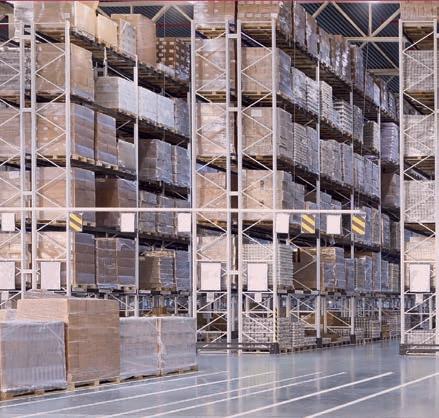
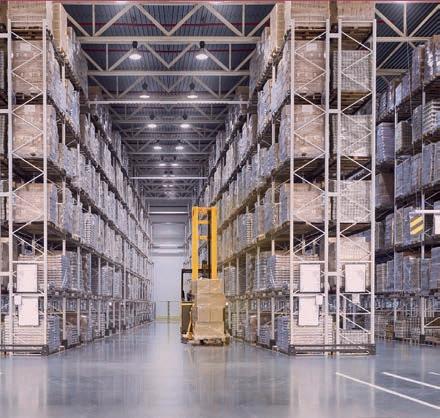
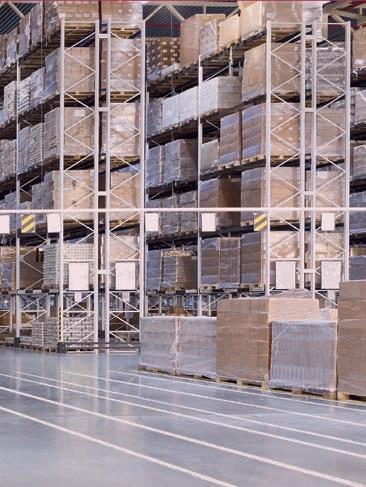
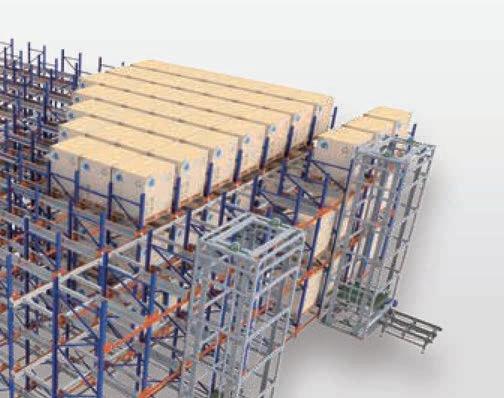
BHD drives denser automated storage.warehouse operations. SMARTER RACKS, BIGGER GAINS
ANZ BOOST, GLOBAL BACKING
Swisslog expands regional automation support.
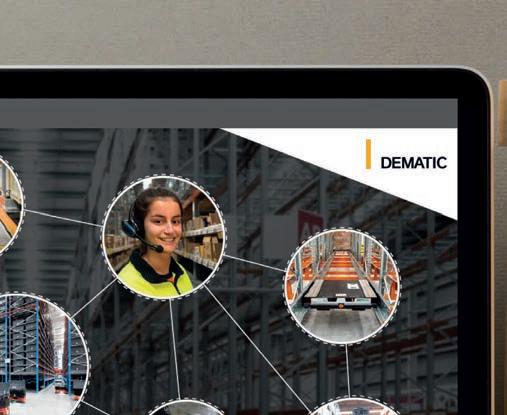
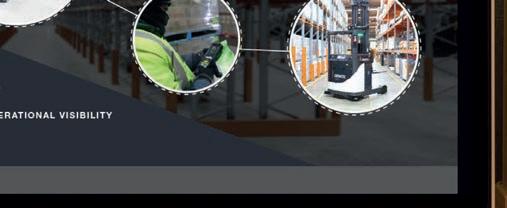
Facing challenges with labour, capacity or delivering to your customers’ expectations? Looking to optimise your current or new manual warehouse—improve visibility, storage capacity and picking productivity?
Dematic’s latest eBook explores practical optimisation technologies that can be implemented incrementally—from warehouse software and RF/ voice/vision systems to racking strategies, AMRs, and compact, scalable automated storage solutions. Supported by Australian and New Zealand case studies, it outlines a clear roadmap to improve performance today while enabling future automation as your business grows.
Learn more at dematic.com or scan the code below.
MHD
Supply Chain Solutions
CONTACT
MHD Supply Chain Solutions is published by Prime Creative Media
Australian Subscription Rates (inc GST) 1yr (11 issues) for $99.00 2yrs (22 issues) for $179.00
To subscribe and to view other overseas rates visit: www.mhdsupplychain.com.au or Email: subscriptions@primecreative.com.au
ACKNOWLEDGEMENT
MHD Supply Chain Solutions magazine is recognised by the Australian Supply Chain Institute, the Chartered Institute of Logistics and Transport Australia, the Supply Chain and Logistics Association of Australia and the Singapore Logistics and Supply Chain Management Society.
A sector advancing through change and investment
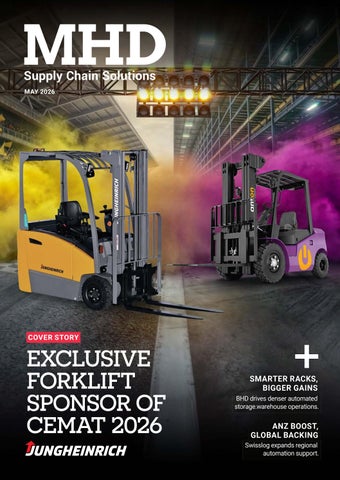
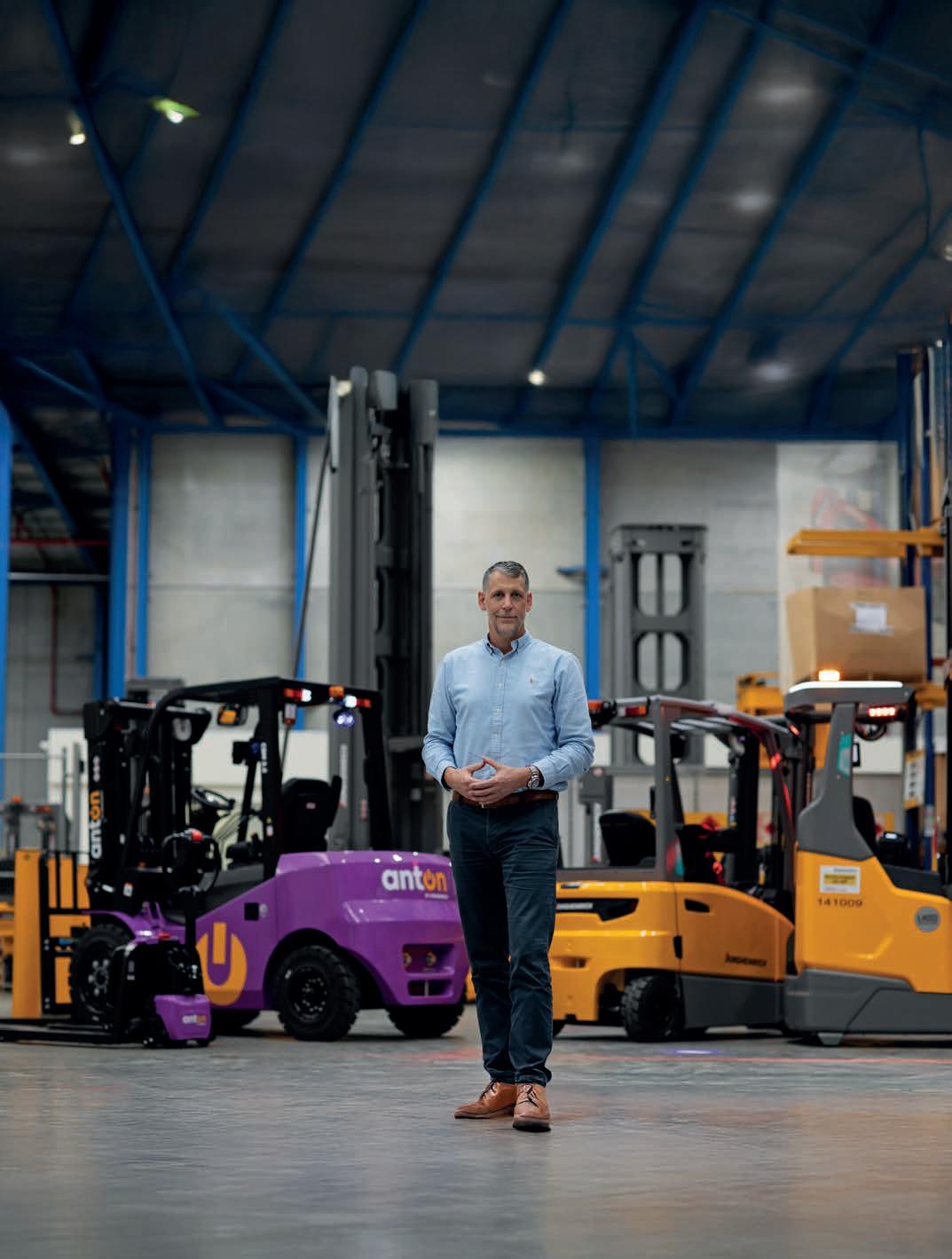
This issue’s cover story highlights a milestone for Jungheinrich, as the materials handling provider prepares to exhibit at CeMAT for the first time.
The move comes after a decade of operating in the Australian market and reflects a broader commitment to local growth, as well as the increasing importance of the region within global supply chain networks.
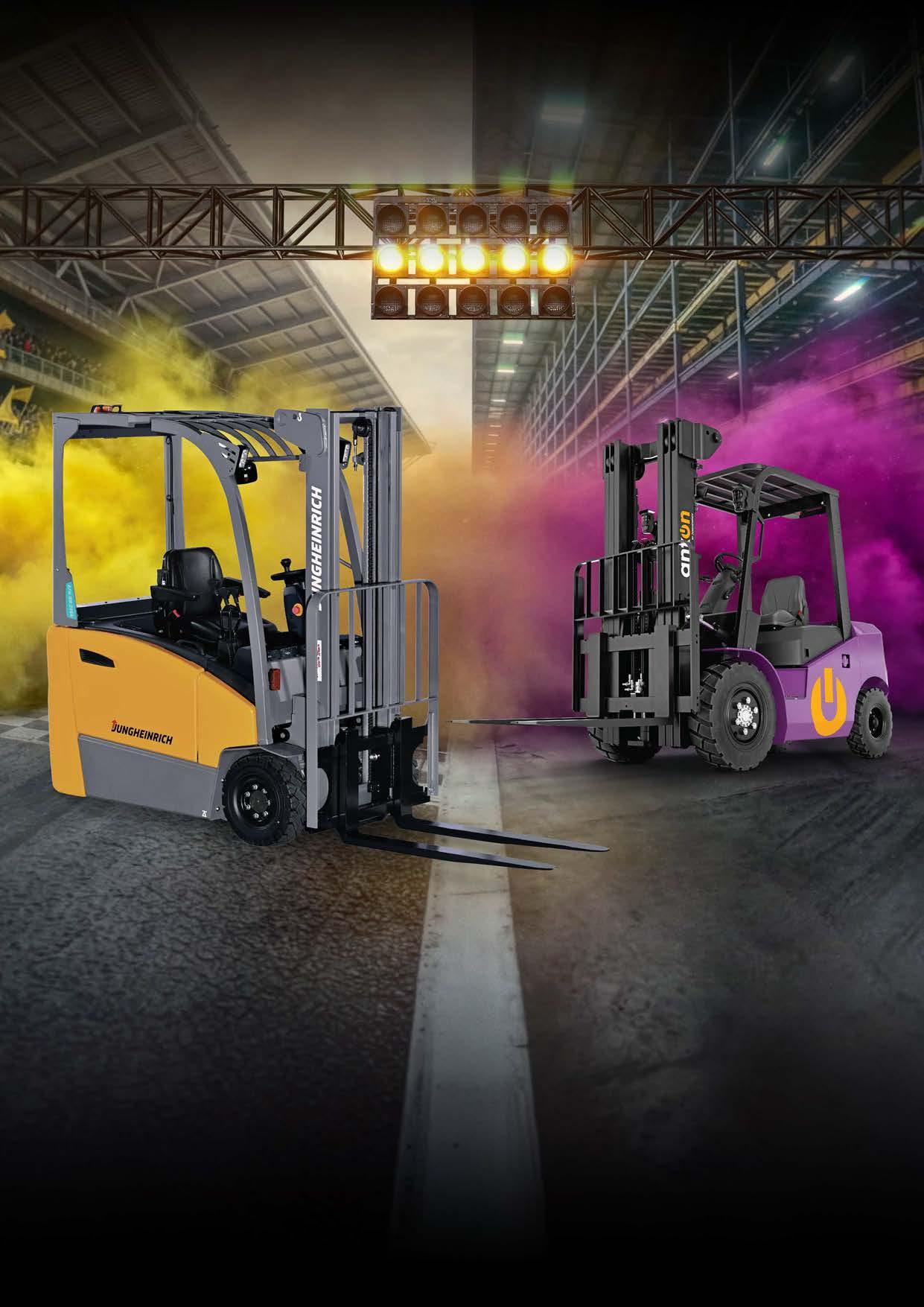
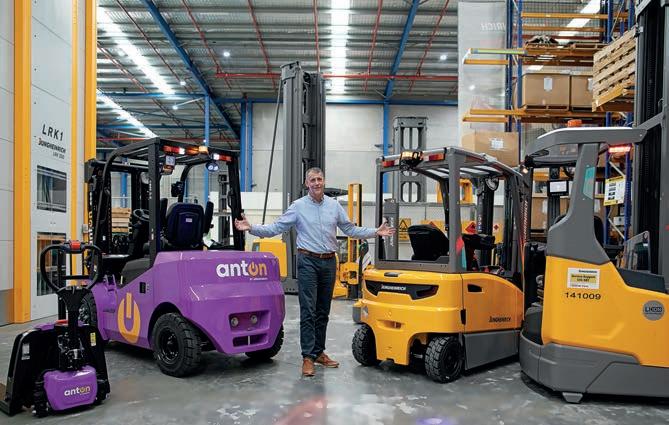
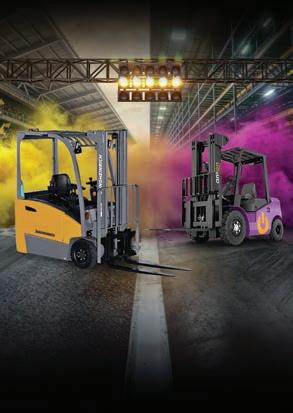
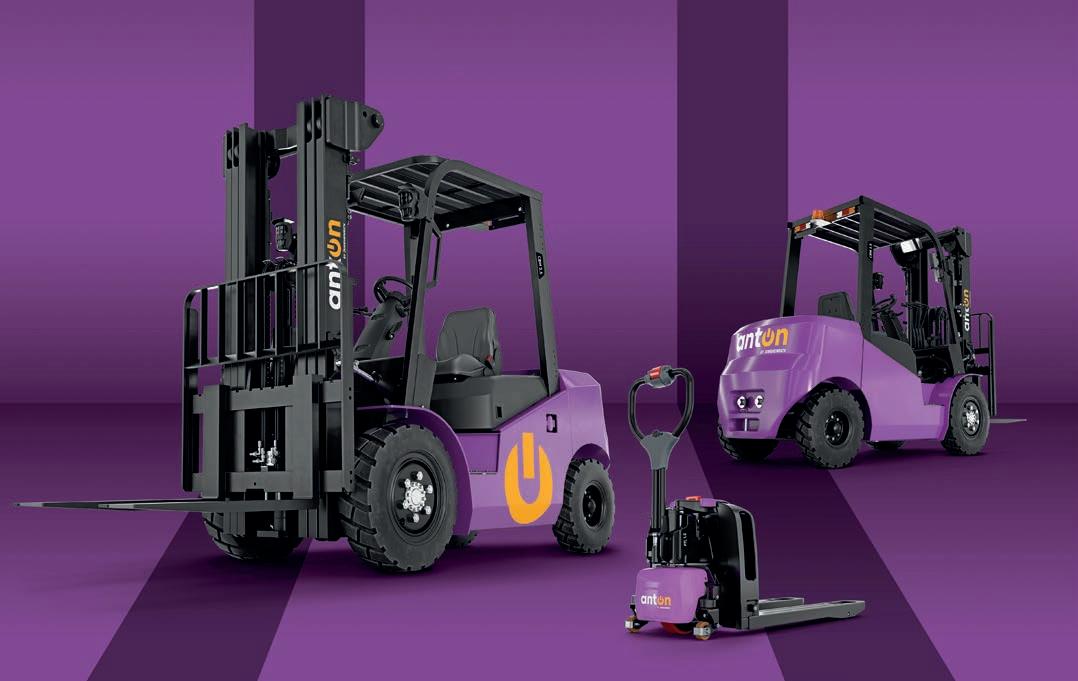
At the event, Jungheinrich will present a dual-brand portfolio designed to address operational requirements across the market. Its core brand will showcase high-performance, integrated warehouse solutions, while AntOn by Jungheinrich will be introduced to Australia through its first physical demonstration, offering a value-focused alternative for more cost-conscious operations.
The exhibition will also highlight the company’s long-standing position in lithium-ion technology, as the industry continues shifting towards more energy-efficient, high-uptime equipment and away from traditional leadacid and internal combustion solutions.
Elsewhere in this issue, investment across Australia’s logistics sector continues to gather pace. Amazon’s new fulfilment centre in Southeast Queensland underscores ongoing expansion in large-scale distribution infrastructure, supported by strong connectivity to key freight networks
Sustainability remains a central theme this issue, with Coca-Cola Europacific Partners’ Richlands facility nominated as this month’s Most Sustainable Warehouse, achieving a 6-star Green Star rating.
Together, these developments reflect a sector continuing to evolve through a combination of investment, technology adoption and changing operational priorities.
Happy reading!
Phillip Hazell
permission of the publisher. The Editor welcomes contributions but reserves the right to accept or reject any material. While every effort has been made to ensure the accuracy of information Prime Creative Media will not accept responsibility for errors or omissions or for any consequences arising from reliance on information published. The opinions expressed in MHD are not necessarily the opinions of, or endorsed by the publisher unless otherwise stated.
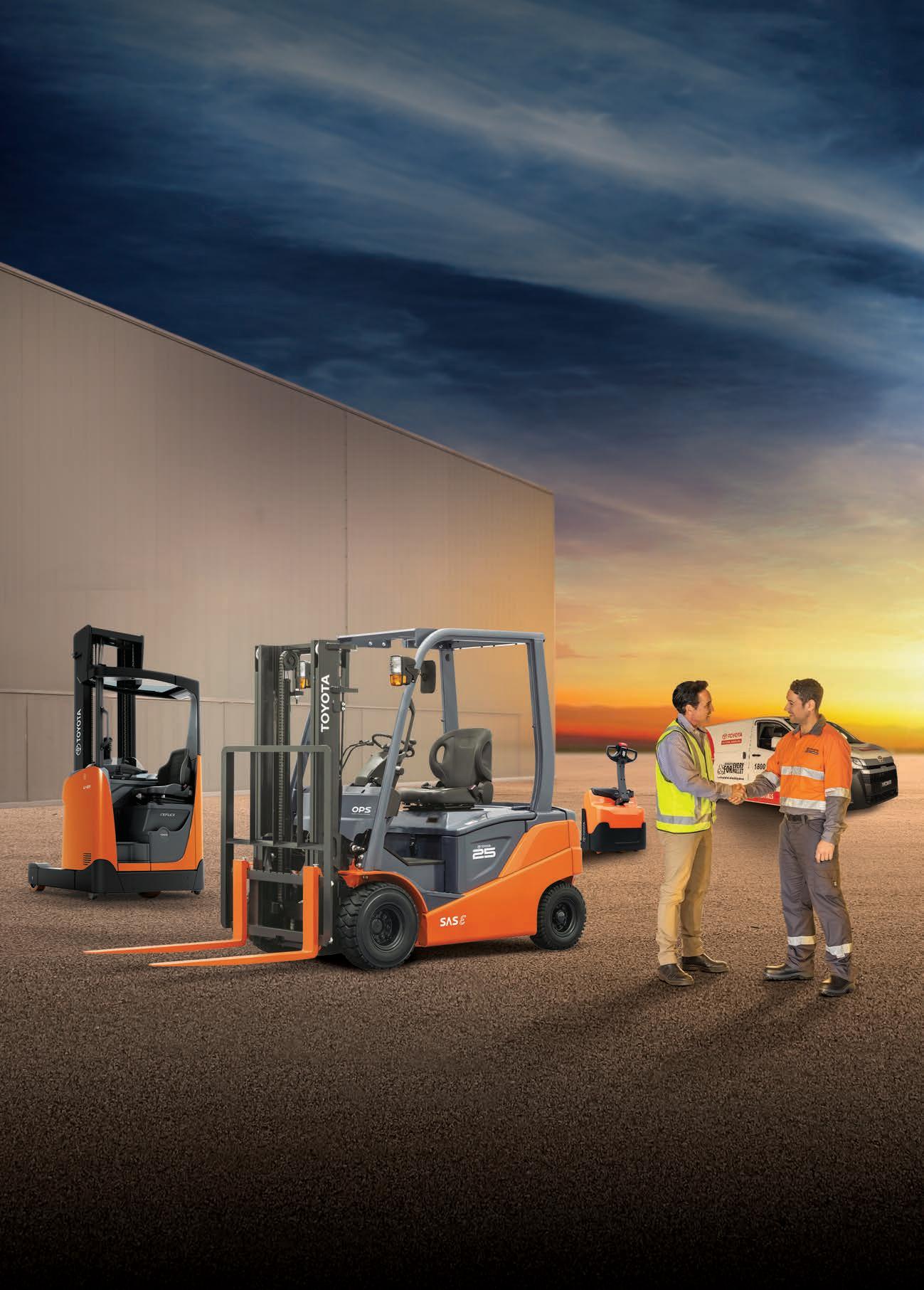
As Australia’s leading forklift company, it doesn’t matter whether we are supplying you with a single spare part, a rental forklift, or helping you manage your entire eet, our objective and commitment remain the same – adding value to your operation. Whether it's the legendary reliability and world leading safety of our Toyota forklifts, the ongoing support of one of Australia’s most dedicated service and parts networks, or the innovations that have made Toyota the World’s number one forklift brand* , you can be assured we’ve got all your needs covered to power your business forward. To nd out more contact your local Toyota Material Handling branch today.
THIS ISSUE
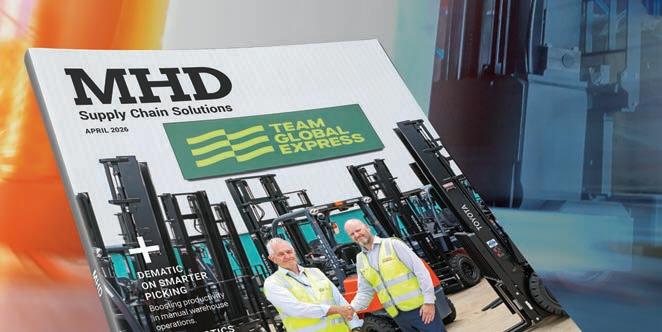
COVER STORY
12 Jungheinrich drives integrated intralogistics growth in ANZ
MATERIAL HANDLING
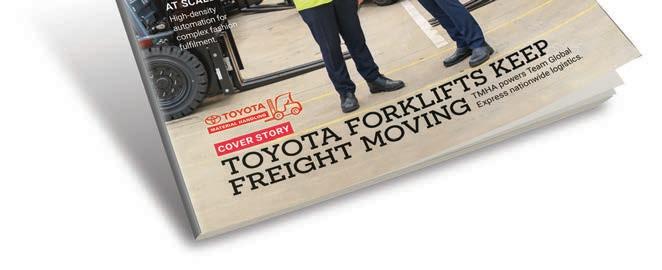
16 TMHA supports national fresh produce logistics operations
WAREHOUSES
20 BHD advances intelligent, integrated warehouse automation systems
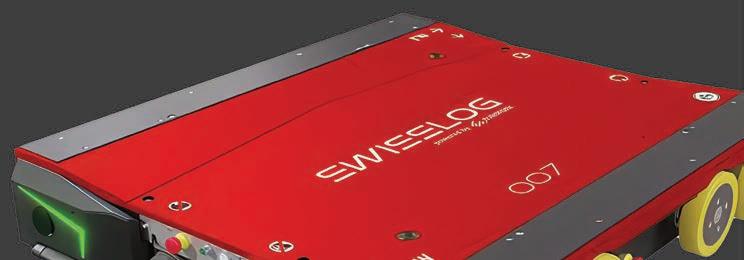
24 Swisslog expands ANZ automation through regional integration
ASSOCIATIONS, EVENTS, AND REGULARS
06 Ed’s Letter
08 Industry News
44 Women in Industry Awards
47 BULK2026
50 MegaTrans 2026
52 ASCI
54 ASCLA
57 People on the Move
58 Product Showcase
SPECIAL FEATURES
24 Industrial market rebalances as vacancy trends shift
30 Most Sustainable Warehouse Column: CCEP
34 FedEx highlights women driving logistics workforce growth
38 Fuel costs reshape resilience across freight networks
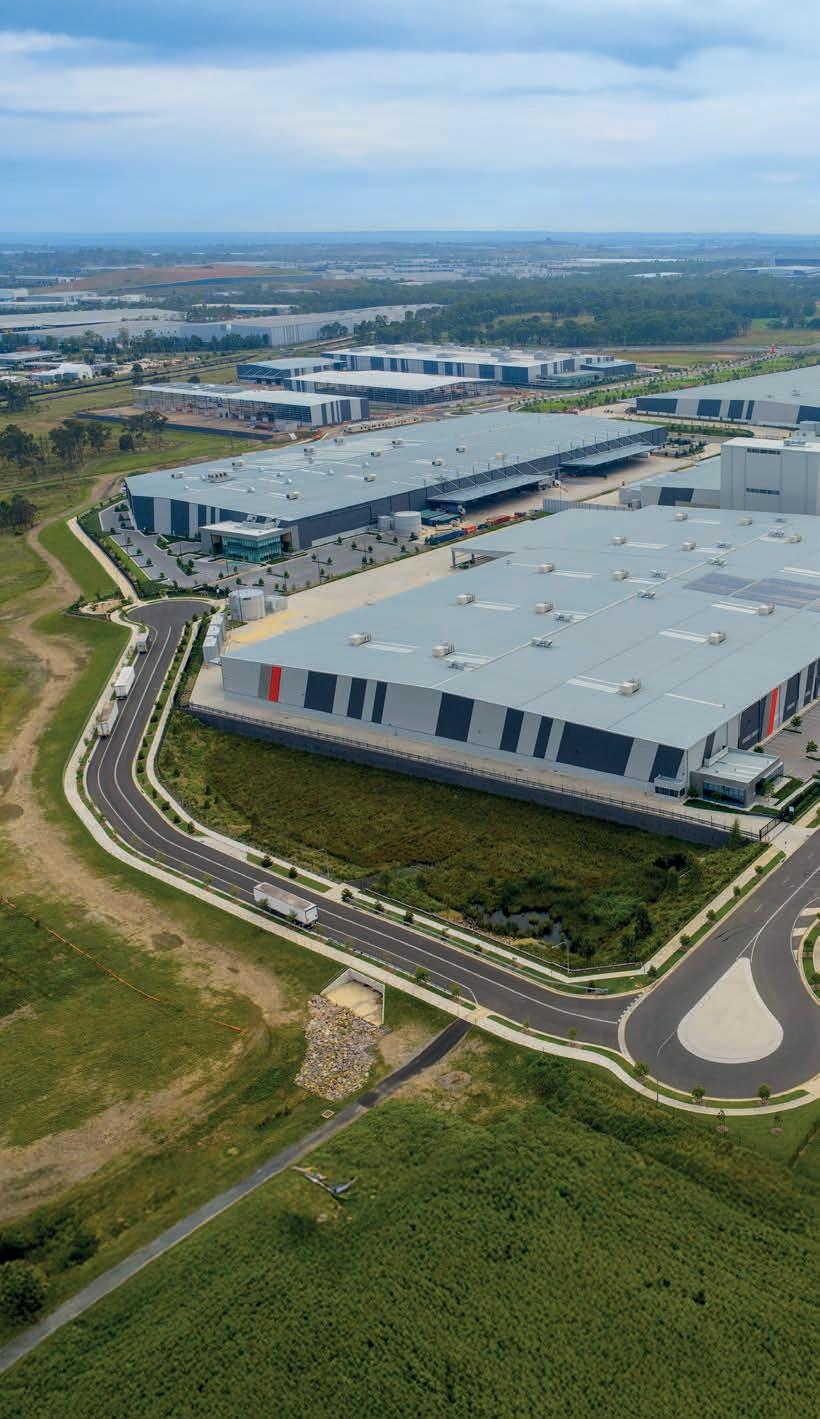
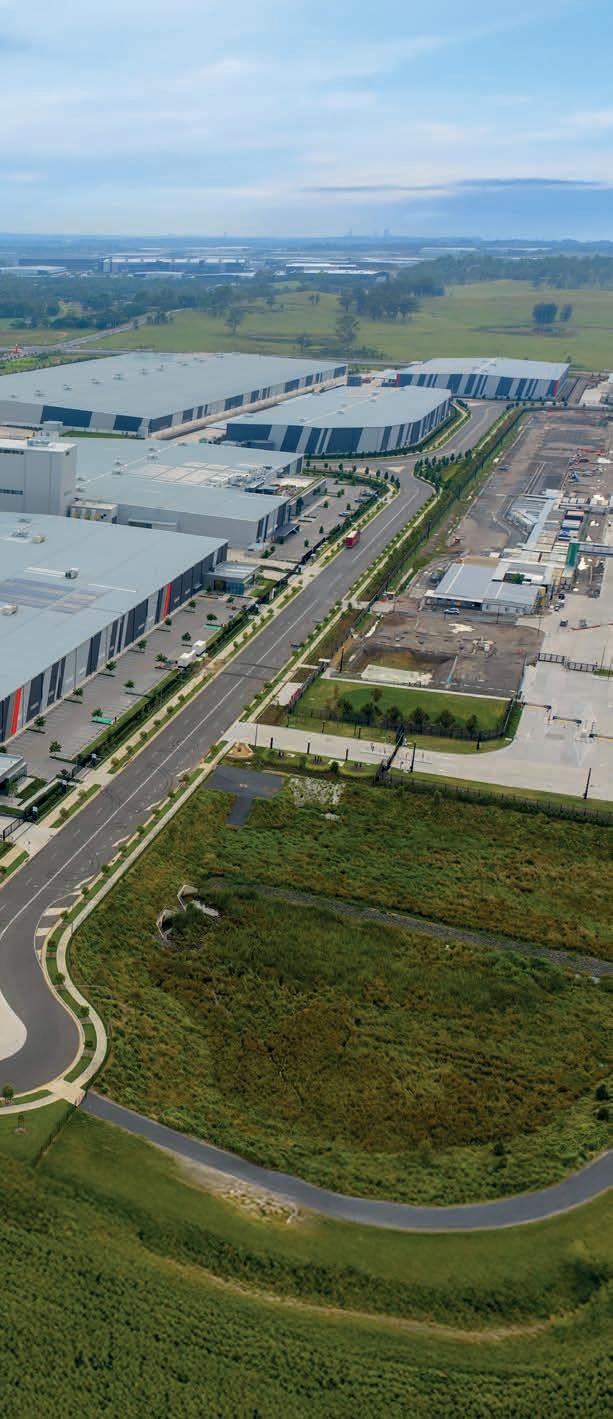
40 Aerotropolis drives structural shift in Sydney logistics
ON THE COVER
Jungheinrich is expanding in Australia, shifting from equipment supply to integrated intralogistics solutions, combining automation, energy systems and software to support complex warehouse operations and long-term Strategy 2030+ growth.
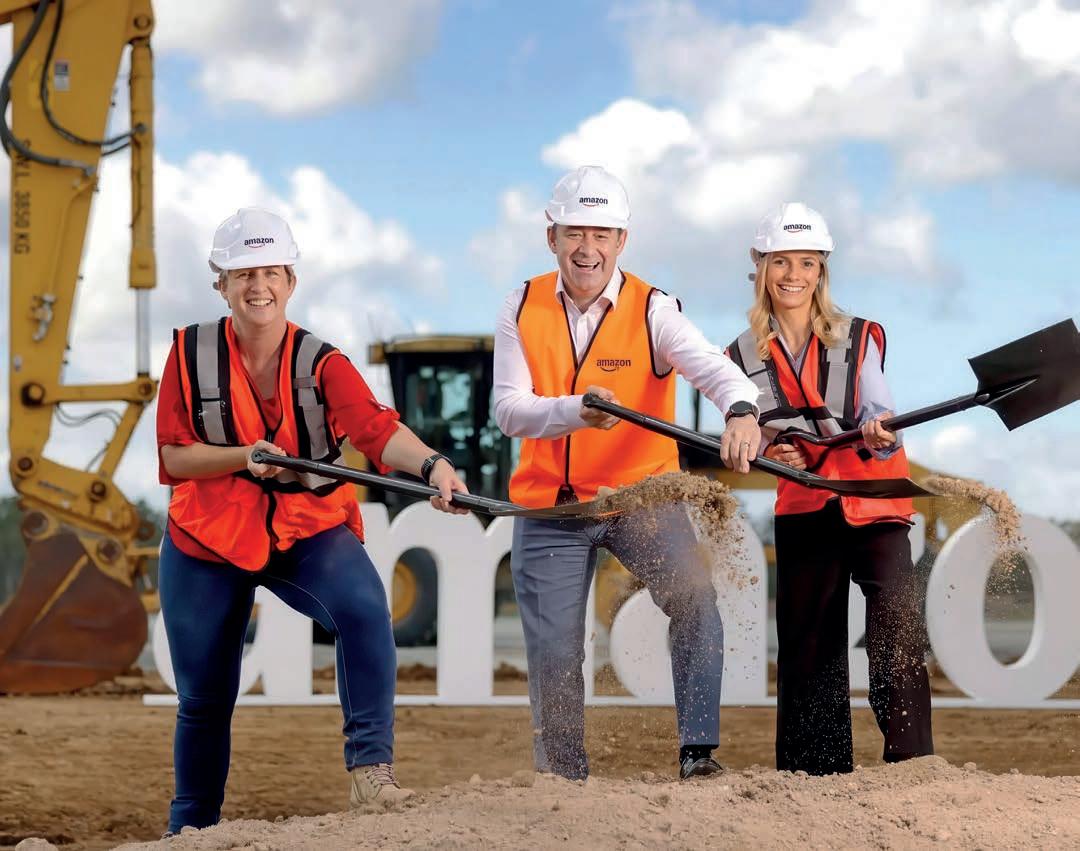
L–R: Jo Lees, Senior Construction Manager, Wayne Angus, Director of Operations, and Samantha Bonwick-Fyfe, Senior Construction Manager, Amazon Australia. Image: Amazon.
Amazon signs new lease
Construction has begun on a new fulfilment centre in South East Queensland, with global e-commerce company Amazon expanding its logistics footprint at the Greater Flagstone Logistics Estate.
The $750 million facility will span more than 141,000 square metres and is expected to become one of the largest fulfilment centres in the state. Located within the Greater Flagstone Priority Development Area, the site has been selected for its connectivity to freight infrastructure including the Gateway Motorway, the Port of Brisbane and Brisbane Airport.
The development is expected to generate economic activity during both construction and operations.
Approximately 2,000 construction jobs will be supported while the facility is being built, with around 1,000 ongoing roles anticipated once the site becomes operational.
The project was delivered through collaboration between the Queensland Government, Economic Development Queensland and Trade and Investment Queensland, alongside development partners including Charter Hall and Logan City Council.
According to the government, the planning application was approved in 35 business days, making it the fastest approval Amazon has received for a development of similar scale in Australia.
Amazon Australia Director of
Operations Wayne Angus says the facility will combine advanced robotics technology with a skilled local workforce to support the company’s growing operations in Queensland.
“People are at the heart of our operations, and by combining innovative robotics technology with skilled local talent in this state-ofthe-art site, we’re building a workplace where people and technology work hand in hand to deliver for our customers,” Wayne says.
The new facility will operate alongside Amazon’s existing fulfilment centre in Lytton, Queensland, supporting the company’s expanding e-commerce and logistics network across the state. ■
Aldi distribution centre approved for Western Sydney
A$1 billion automated distribution centre planned for Western Sydney’s Aerotropolis has received state approval.
The Aldi Automated Distribution Centre will be built adjacent to Western Sydney International Airport and is expected to support the retailer’s supply chain servicing more than 200 stores across New South Wales.
The facility is expected to generate approximately 3,700 construction jobs and around 585 ongoing operational roles once complete.
Designed as a highly automated logistics hub, the distribution centre will operate 24 hours a day, with around 80 per cent of its operations automated. The development will also include rooftop solar panels and energy-efficient building systems as part of a strategy aimed at achieving net-zero operations by 2035.
The project represents the largest distribution centre approved within the Aerotropolis to date and the first state development approved within the Ingham Property Group Master Plan
area, a key precinct planned for mixeduse industrial, commercial and retail development adjacent to Bradfield City. Minister for Planning and Public Spaces Paul Scully says the approval highlights the strategic importance of Western Sydney as a logistics and industrial hub.
“With Western Sydney International Airport opening in 2026, the timing of this approval underscores the growing recognition of Western Sydney as a strategic gateway for national supply chains and international markets.” ■
The retailer’s planned Western Sydney distribution centre will span an area equivalent to around 15 soccer fields.
Image: Jackie Davies/ stock.adobe.com
Refresco anchors Sydney’s largest multi-level warehouse
Gateway Capital and Invesco Real Estate Australia have secured a 10-year prelease from beverage manufacturer Refresco for a new multi-level warehouse development in Sydney’s south-west.
It is set to become the city’s largest of its kind, highlighting the growing shift toward vertical industrial facilities as land availability tightens.
Gateway Capital, in partnership with Invesco Real Estate Australia, has received approval for the 55,000-square-metre complex on Milperra Road. The development will be delivered across two levels and is designed to accommodate occupiers seeking modern logistics space closer to urban markets.
The facility will allow Refresco to consolidate several New South Wales operations under one roof as it continues expanding its Australian manufacturing footprint.
Refresco entered the Australian market in 2022 through the acquisition of Tru Blu Beverages and produces more than 200,000 pallets of product annually for retailers including Woolworths, Coles and Aldi.
Gateway Capital chief investment officer and co-founder Peter McDonald says the Revesby project reflects a broader shift occurring across industrial property markets.
“Multi-level facilities are no longer an emerging typology. They are becoming a strategic necessity in land-
constrained markets,” Peter says.
“With Sydney’s industrial vacancy near historic lows and land availability tightening across core precincts, multi-level developments allow developers to unlock density while maintaining operational functionality.”
Multi-level warehousing has long been common in densely populated Asian cities such as Tokyo and Singapore, but the concept is only beginning to scale in Australia.
Around 100,000 square metres of multi-level industrial space has been completed in Sydney so far, with an additional 200,000 square metres expected to come online across 2026 and 2027. ■
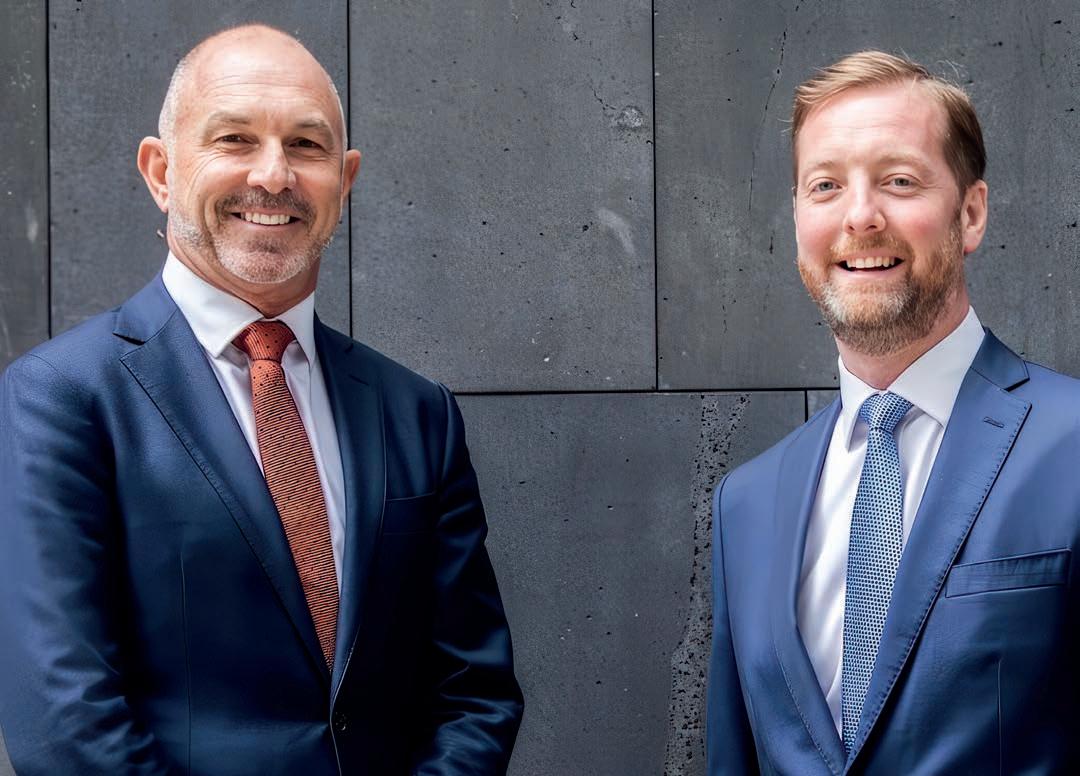
L-R: Gateway Capital Co-Founders, Peter Mcdonald and Stuart Dawes. Image: Gateway Capital
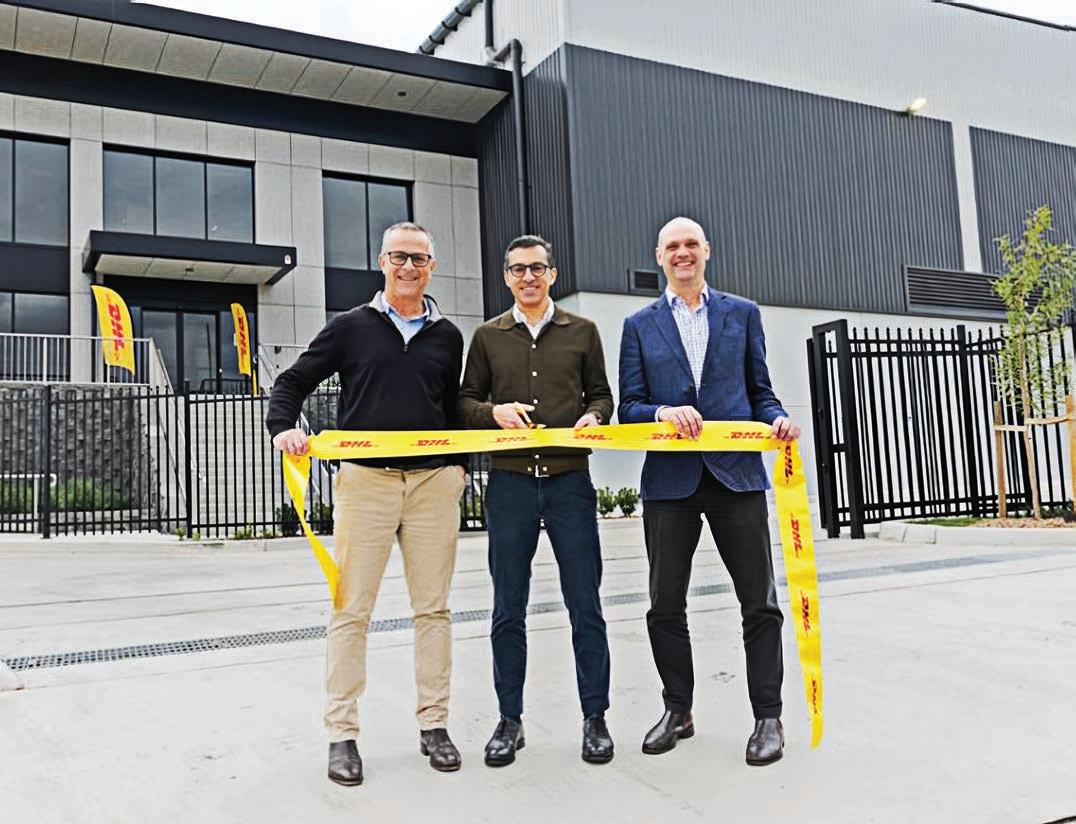
L-R: Steve Thompsett, CEO DHL Supply Chain
Australia Javier Bilbao, CEO DHL Supply Chain
Asia Pacific Mark Taylor, VP Technology, Spare Parts & Service Logistics, DHL Supply Chain Australia. Image: DHL Supply Chain
DHL opens new warehouse
DHL Supply Chain Australia has opened a new warehouse facility in Erskine Park, New South Wales, expanding its national distribution network to support growing demand across the technology and automotive sectors.
The 21,078 square metre facility is located in Western Sydney and is positioned close to DHL’s upcoming transport hub, strengthening connectivity across its logistics network.
The site includes ambient storage supported by selective racking and block stack areas, along with eight recessed docks and six on-grade doors. A mezzanine level has been incorporated to support rework and value-added services.
Sustainability features include a 256
kWp rooftop solar system to reduce reliance on grid electricity, rainwater harvesting for non-potable use, LED lighting with energy-efficient controls, and electric vehicle charging infrastructure.
Javier Bilbao, CEO DHL Supply Chain Asia Pacific, says the investment reflects the company’s focus on supporting sector growth and strengthening supply chain capability.
“Australia is a key market for us, and we remain committed to supporting the country’s growth, including its technology and automotive sectors,” says Javier.
“On the technology part, businesses in Australia have doubled their spending on data centres in just six months last year, and we have solutions that
can help them. Likewise, we see growth in the consumer demand for the automotive sector, with nearly 99,000 new vehicles sold in 2025 and increasing aftermarket requirements.”
“Our Strategy 2030 focuses on delivering value to our customers, and we’ve been investing ahead of the curve in the region to strengthen supply chain resiliency and flexibility by expanding warehouse capacity and future-proofing logistics centres.”
Steve Thompsett, CEO DHL Supply Chain Australia, says the facility is designed to support reverse logistics and multi-user operations.
“The Erskine Park new facility reflects our ongoing investment in innovation, sustainability, and infrastructure,” he says. ■
Jungheinrich builds ANZ momentum
Jungheinrich is strengthening its position in Australia and New Zealand, with a clear focus on long-term strategy, capability development and differentiated material handling solutions.
Axel Knigge, Managing Director, Jungheinrich Australia & New Zealand. Images: Jungheinrich
Jungheinrich is sharpening its focus in the Australian market, aligning its local approach with its global Strategy 2030+ framework as it looks to expand its presence and capability across the region.
From local supplier to integrated material handling partner
Over the past decade, the business has evolved from a local equipment supplier into a broader material handling partner, supported by a growing operational footprint across Australia and New Zealand.
Axel Knigge, Managing Director, Jungheinrich Australia & New Zealand, says this shift reflects a move towards delivering more complete, outcomedriven solutions.
“Our journey in Australia and New Zealand has been about moving from presence to impact,” Axel says.
That transition has seen Jungheinrich expand its offering beyond forklifts to a more integrated model, combining material handling equipment, automation, racking, software and energy systems into a single ecosystem.
This systems-based approach is becoming increasingly relevant as warehouse operations face rising complexity. Across sectors such as eCommerce, 3PL and food & beverage, operators are balancing throughput demands, labour constraints, safety requirements and cost pressures, while also responding to growing expectations around sustainability and efficiency.
Rather than addressing these challenges through standalone equipment upgrades, Jungheinrich is positioning its offering around how the entire warehouse functions, from storage and transport through to energy and data.
“We’ve also expanded from supplying equipment to enabling performance through lifecycle support, fleet insight and integrated warehouse solutions,” Axel says.
Strategy 2030+ shapes local direction
At a strategic level, this direction is underpinned by Strategy 2030+, which sets out Jungheinrich’s plan for sustained global growth, expanded
automation capability and a broader product portfolio. The company is targeting revenue of AUD $16.7 billion and an EBIT return on sales of 10 per cent by 2030, supported by expansion in North America and Asia-Pacific, alongside continued investment in automation, software and product development.
Australia is expected to be a key priority in this framework, particularly as global trends such as electrification, digitalisation and automation translate quickly into operational decisions locally.
“Under Strategy 2030+, Australia plays a clear and increasingly important role,” Axel says.
Australia driving the rapid development of integrated solutions
The Australian market is defined by large-scale, complex operations and highly diverse operating conditions. It is a market that demands the rapid development and deployment of efficient, integrated material handling solutions. According to Jungheinrich, success in this environment depends on reliability, flexibility, and the ability to deliver measurable outcomes across a wide range of applications. Automation is key area of focus, with Australian operators increasingly seeking scalable, practical solutions that deliver immediate operational value.
Automation adoption shifts to scalable, staged deployments
Rather than large, one-off investments, many businesses are adopting a staged approach, starting with targeted use cases before expanding as operational confidence grows. This includes applications such as high-frequency transport tasks, defined workflows and environments where safety and repeatability are critical.
Jungheinrich’s approach to automation centres on integration, bringing together equipment, mobile robots, racking systems and software into a connected solution that can scale over time.
“Automation is a key pillar of our Australian business strategy because it helps customers build operations
that are safer, more resilient and more predictable,” Axel says.
Energy systems move beyond batteries alone
Alongside automation, energy is emerging as a critical component of warehouse performance, particularly as businesses shift away from internal combustion and lead-acid systems.
Jungheinrich has been an early mover in lithium-ion technology, but its focus has evolved beyond the battery itself to a broader energy systems approach.
“What truly sets Jungheinrich apart is how we design and manage energy as an integrated solution,” Axel says.
Rather than treating energy as an add-on, the company designs fleet and site operations around availability, safety and efficiency, aligning charging strategies with operational requirements and supporting customers through the transition to electric fleets.
This approach is delivering immediate benefits in uptime and operational simplicity, particularly in high-utilisation environments where opportunity charging can reduce downtime and eliminate battery change processes.
At the same time, customers are increasingly evaluating energy decisions through the lens of total cost of ownership and lifecycle value, rather than upfront capital cost.
This shift is being driven in part by sustainability expectations, with more organisations seeking practical pathways to reduce emissions and improve energy efficiency across their operations.
Local expertise underpins delivery and trust
Alongside its technology and systems capability, Jungheinrich continues to position its team as a core differentiator in the Australian market. The company emphasises the importance of local expertise, supported by global capability, across engineering, project delivery and aftersales service.
“The Australian market is demanding and diverse,” Axel says. “Customers are increasingly looking for partners and solutions they can truly rely on.”
This has shaped how Jungheinrich engages with customers, with a focus on understanding site-specific requirements and delivering solutions that can perform in real-world conditions.
“Success in this environment comes from listening closely to the application and the customer’s real challenges, rather than leading with assumptions,” Axel says. “Service and parts support are not after-sales activities, but fundamental to trust and long-term performance,”
This emphasis on people is reflected in Jungheinrich’s broader talent strategy, as the company continues to build capability across the Asia-Pacific region. Jungheinrich is also investing in its local workforce as part of its Strategy 2030+ growth plans, with a focus on strengthening engineering, automation and service capabilities to support long-term expansion. The company’s people strategy centres on capability development and retention, recognising that consistent delivery in complex environments depends on a skilled and stable workforce.
Expanding the portfolio to support diverse customer needs
In parallel, Jungheinrich is expanding its product portfolio to better address increasing segmentation across segments of the market. This includes the introduction of AntOn, a value-focused offering designed to complement Jungheinrich’s premium solutions and give customers greater flexibility to align match equipment and solutions with to specific applications, duty cycles and stages of business growth.
“AntOn addresses a clear market need – customers seeking for reliable, dependable material handling performance with a strong value proposition,” Axel says. “Depending on operational priorities, that may mean a cost-efficient, robust track for straightforward applications, or a fleet designed to deliver the highest productivity when assessed from a total cost of ownership perspective.”
This dual-brand approach reflects broader segmentation across the market, where some operators are investing in automation and
integration, while others are prioritising cost efficiency and operational simplicity.
Jungheinrich’s strategy is to support both ends of this spectrum, providing a range of solutions from value-driven equipment through to integrated, automated systems.
CeMAT Australia 2026: engaging the market face to face
As part of its continued engagement with the local market, Jungheinrich will be present at CeMAT Australia 2026, where it will showcase its portfolio across both premium and value segments, whilst serving as the event’s exclusive forklift sponsor.
“Visitors will see our broad portfolio presented across two dedicated booths, and our team looks forward to supporting businesses as they plan their next stage of growth,” Axel says.
The exhibition provides an opportunity for the company to engage directly with customers and demonstrate how its solutions translate into operational outcomes. ■
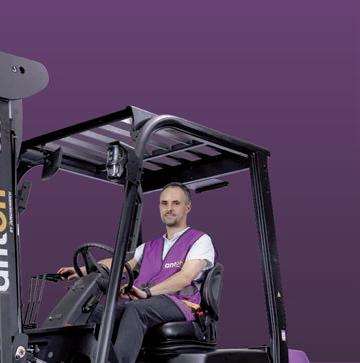
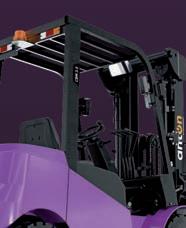
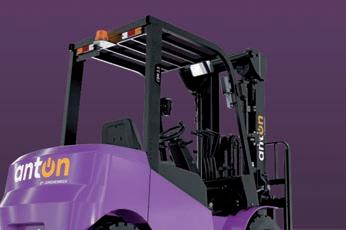
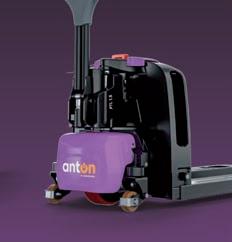
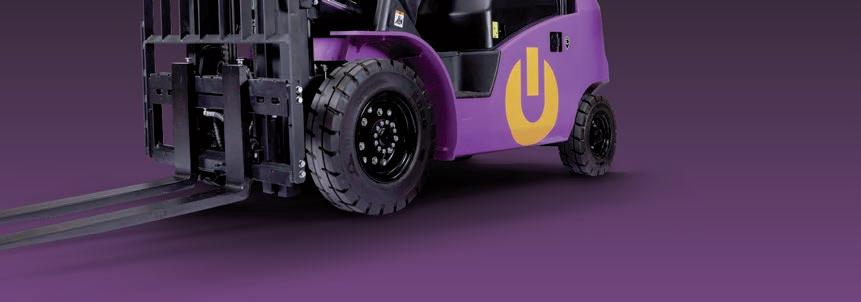
Jungheinrich’s AntOn brand, created to expand the company’s portfolio with value-focused options.
Toyota, Premier Fresh partnership delivers results
Premier Fresh renews Toyota forklift fleet, citing reliability, service support, and tailored safety features.
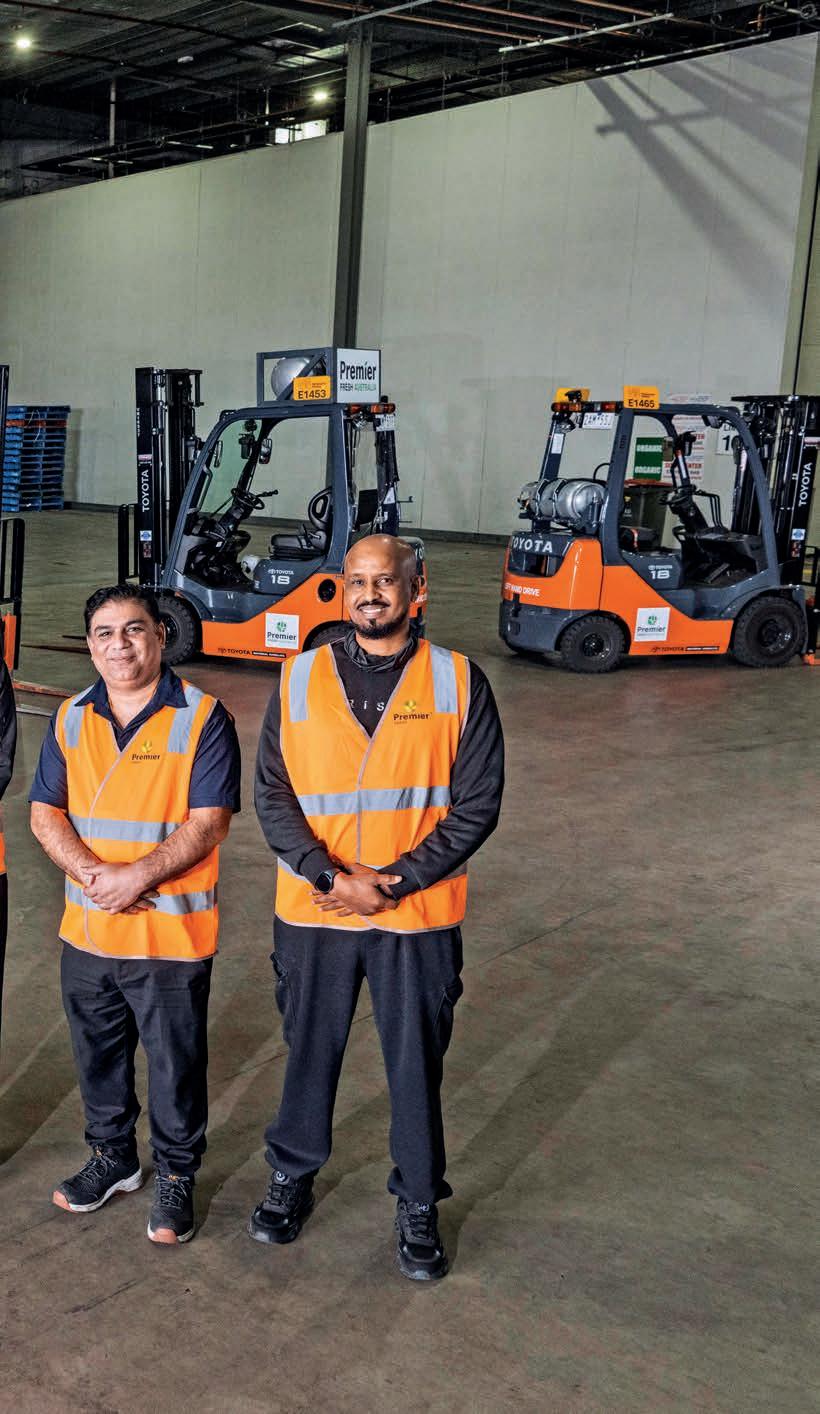
One of Australia’s largest fresh fruit producers and marketers has refreshed its national fleet of Toyota Material Handling Australia (TMHA) forklifts and pallet jacks, continuing a working relationship which goes back over 30 years.
Premier Fresh Australia recently signed up to its second long-term lease deal with TMHA for its fleet of over 120 machines spread across the country, which is used to pack and transport a variety of fresh fruit and vegetables grown and sold across Australia.
Toyota forklifts are known for their quality, durability and reliability, which was a key factor for Premier Fresh Australia wanting to renew their contract, according to Chief Operating Officer Stephen Millar.
“They’re very robust units, they’re very reliable, we find them to be pretty efficient with usage as well, they meet the mark,” Stephen says.
“I think where we operate, the conditions that we operate, we need something that can handle the climate we operate in, and we find that these ones are basically bulletproof. So that’s one of the main drawcards for them.”
With roughly 450 employees nationally, the Australian owned Premier Fresh Australia operates sites across the country, from banana farms in Humpty Doo, Innisfail and Mission Beach, to a gourmet tomato greenhouse in Victoria’s Goulburn Valley, and warehouses and market trading floors in many of Australia’s capital cities.
Premier Fresh Australia’s footprint requires its material handling equipment to keep the logistics side of the business running seamlessly and reliably, whether in the hot and humid regional Queensland or in the cold produce markets of metro Melbourne.
A key part of that equation is Toyota’s service network and team of service forklift technicians, who work hard to ensure Premier Fresh Australia’s fleet minimises downtime.
“One of the reasons we like dealing with Toyota is we’re spread out across Australia, some of the areas are pretty remote,” Stephen says.
“They’ve got service agreements with us in each of those locations where
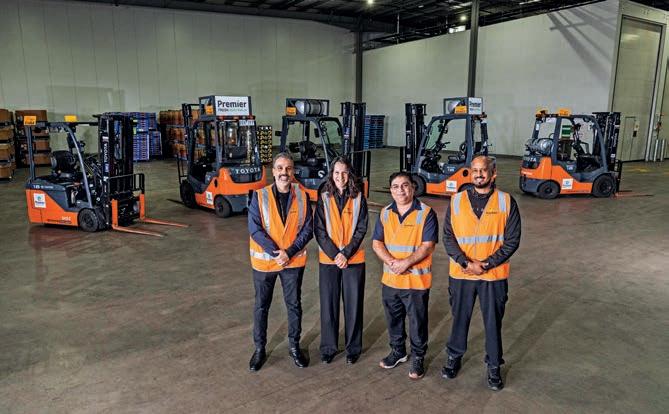
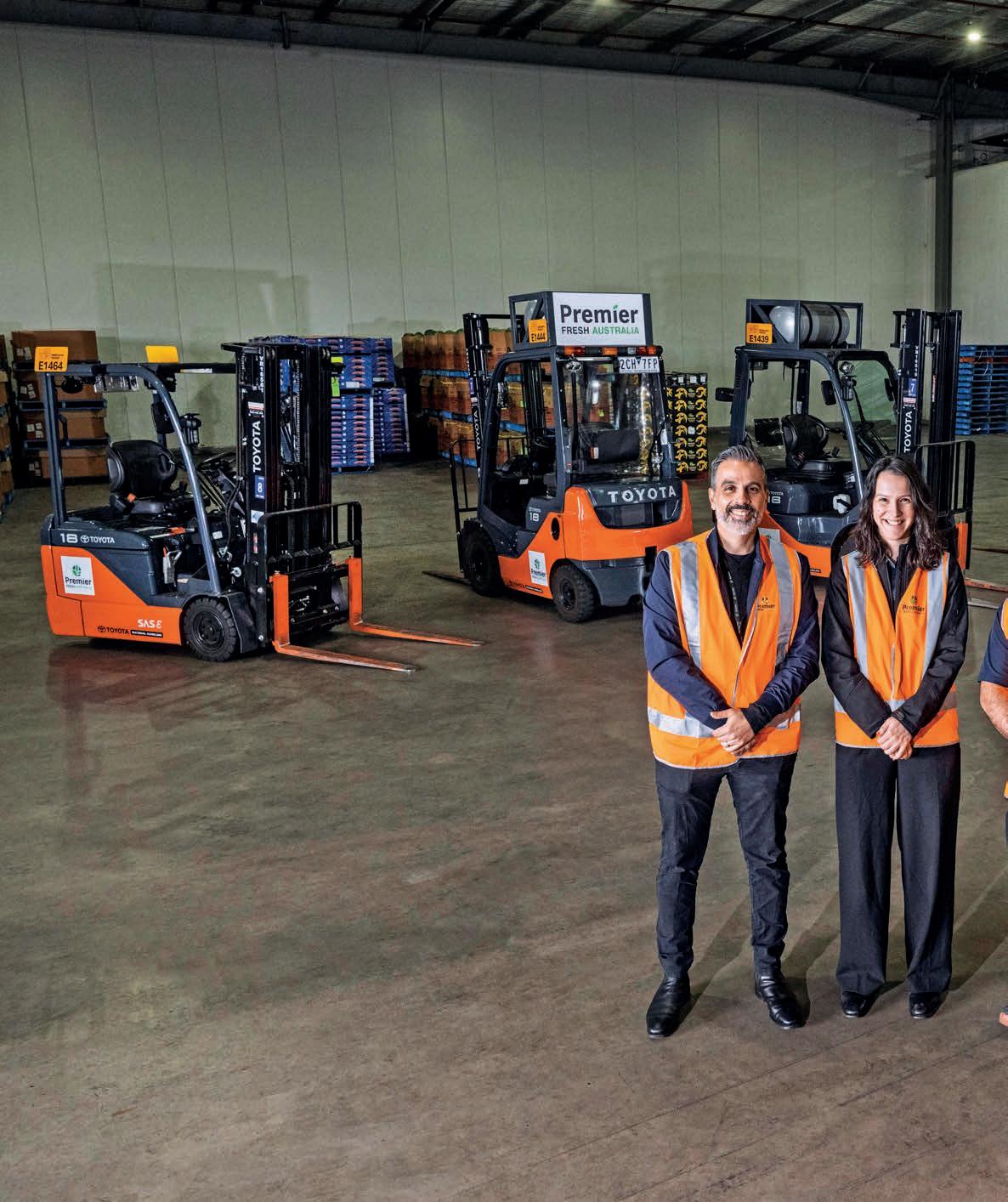
The Premier Fresh team alongside its updated national forklift fleet, supporting operations across multiple Australian states.
we have the routine maintenance take place.
“So we ensure the forklifts and the equipment have maximum uptime available to use, so we invest in that regular maintenance and they’re able to provide that to us in each of those locations, and in the event that you have an unforeseen, unplanned service required, their turnaround times are quite prompt and the service arms of the business have always been quite professional.
“They know what they’re doing –they come out, they handle it well and they understand our business well enough to know how urgent those forks are to be back and up and running. They’re very good at what they do.”
One particular servicing advantage for TMHA is having a service centre located inside Melbourne Market, home to a 12,500-square-metre trading floor where Premier Fresh Australia wholesales a large amount of its fresh fruit and vegetables.
TMHA area sales manager Brad White, who is the main point of contact for Premier Fresh Australia, explained the advantage of an on-site service centre.
“We’ve got the advantage in the Melbourne market of having a service centre in there as well,” Brad says. “They bring their forklifts in for a service during the day and we drop them back – it works in well.”
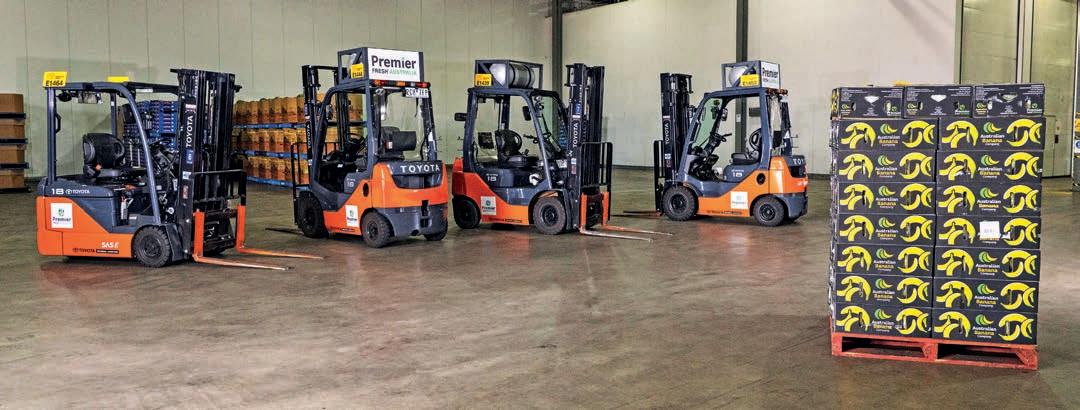
The new 120-strong fleet for Premier Fresh contains a mix of primarily LPG counterbalance forklifts, as well as
battery-electric forklifts and electric pallet jacks for a wide range of loading and transport uses.
For the new order, Brad and his TMHA team helped Stephen and Premier Fresh Australia spec up a number of their machines to suit their requirements, including safety lights and even an AI-based safety system being trialled on a small number of units.
“We add some bells and whistles to them as well, some safety features like proximity lights,” Stephen says.
“On some of them we’ve also put in some AI proximity sensors to try and establish how close forks will get to people and then try to slow them down. We’re putting some smarts on it so they
can be as safe as they can be – we’re doing that trial on about 15 forks.”
Stephen went on to say that the help provided by Brad and his team has been helpful to Premier Fresh Australia.
“He’s been very good, very professional”, he says. “He’s been in the business for a longtime, so he knows the product quite well, and he knows our business well.
“He sees what we do and has been able to pick the right units and right fleet for us based on what he knows, so that always helps.” ■
For more information free call Toyota Material Handling on 1800 425 438 or visit online at www.toyotamaterialhandling.com.au
Premier Fresh’s renewed forklift fleet in operation across its warehouse network, part of a 120-unit national rollout.
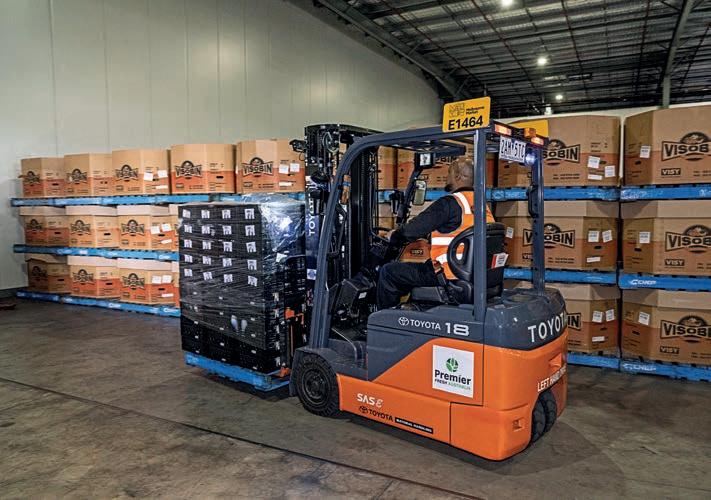
Toyota forklift handles palletised produce within Premier Fresh’s warehouse, which is operating in tropical Queensland.
Rack intelligence drives next phase of warehousing
BHD advances smart warehousing through four-way shuttles, integrated automation, and R&D-driven intelligent storage solutions.
As warehouse operators across Australia confront rising labour costs, limited space and increasing throughput demands, the focus is shifting toward smarter, more integrated storage systems. For BHD, that shift is being driven by intelligent racking, four-way shuttle technology and expanded automation capability, as businesses
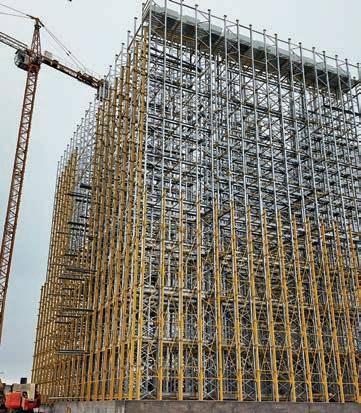
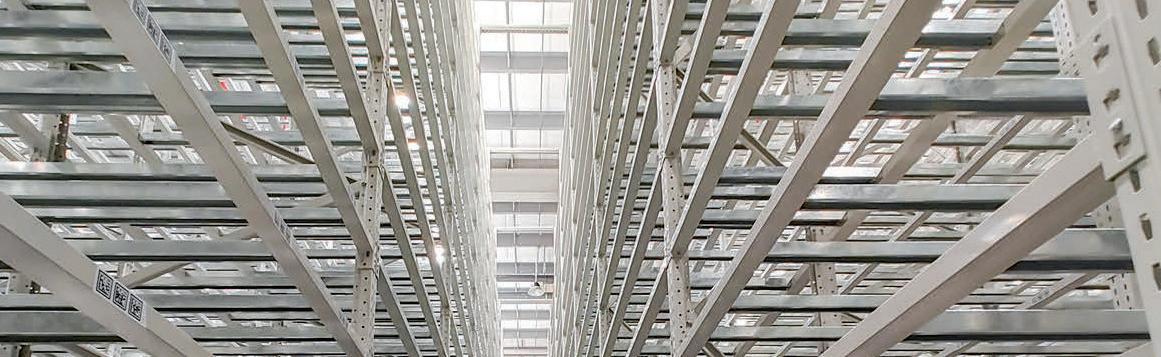
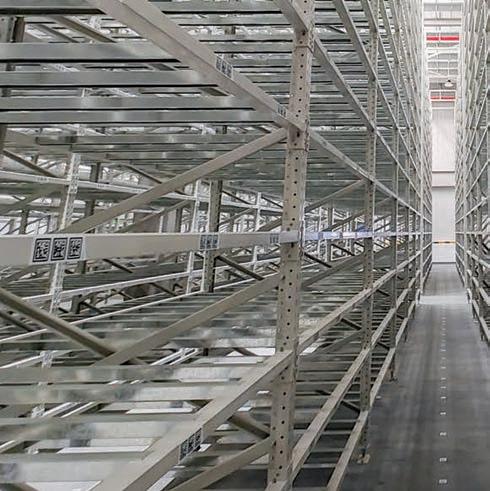
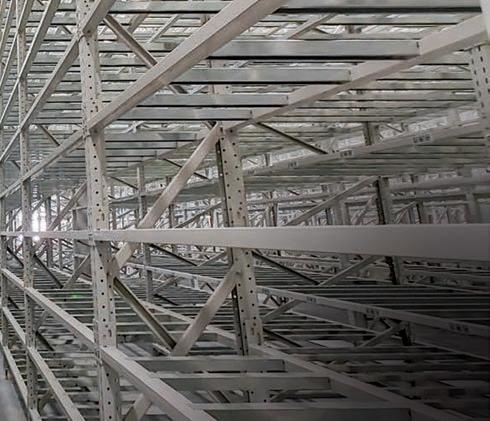
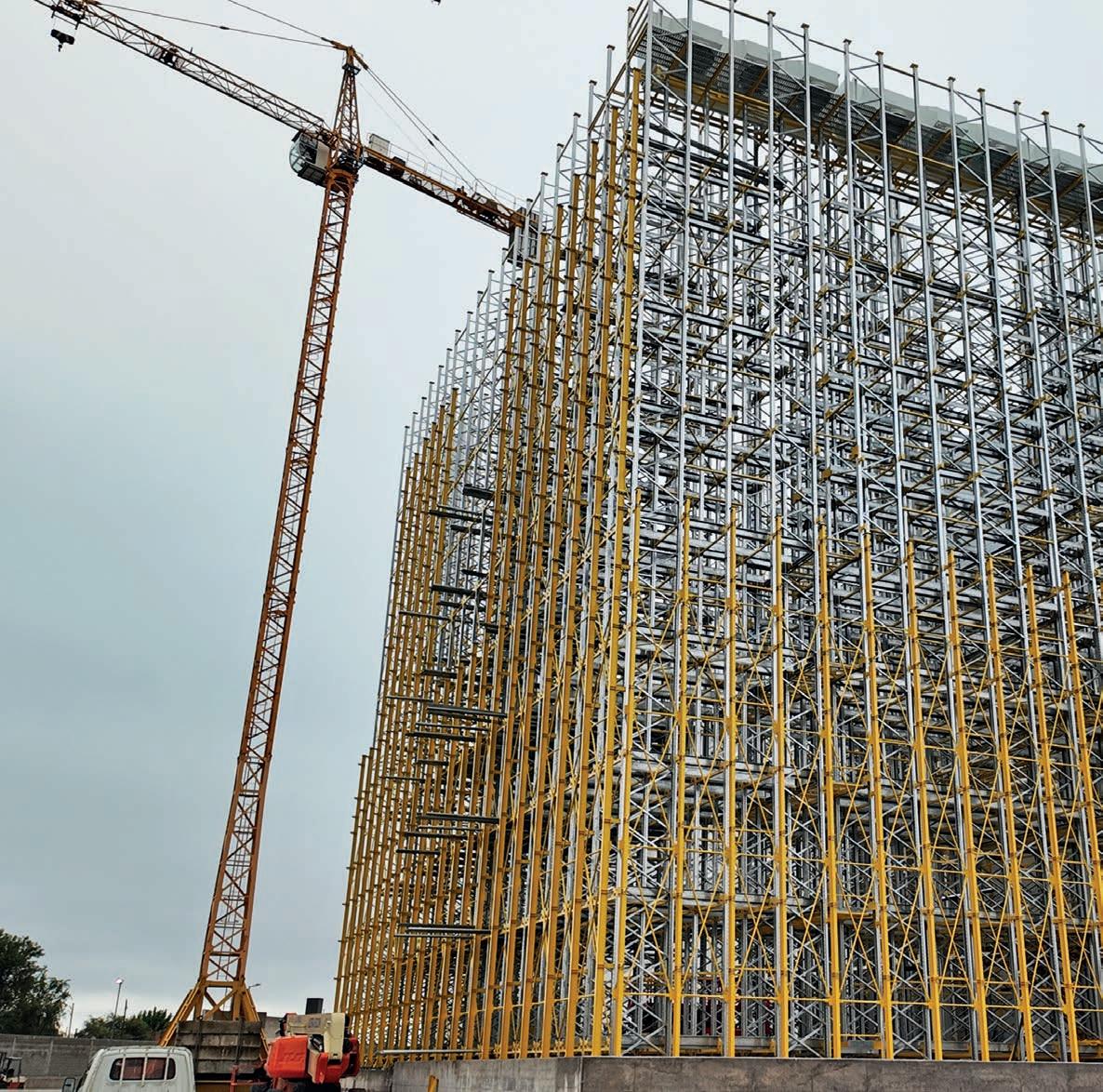
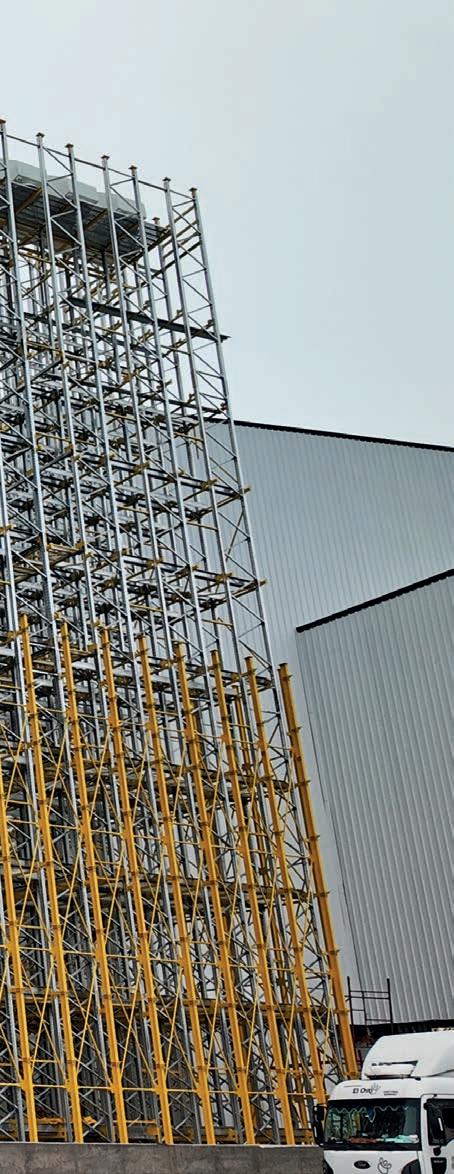
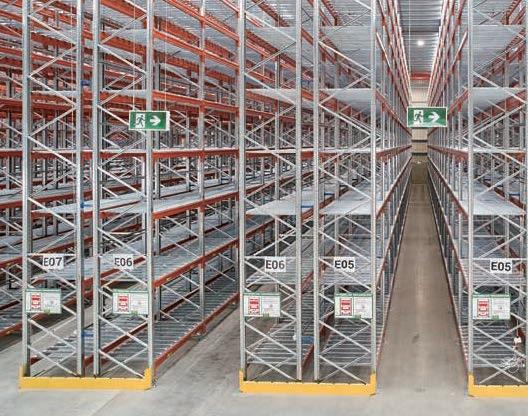
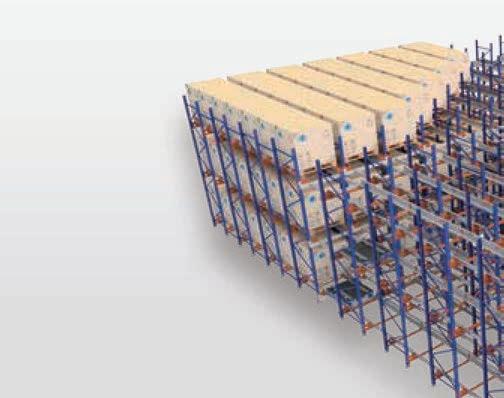
Four-way shuttle racking reaches up to 28.5 metres, maximising vertical storage and throughput. Image: BHD
look to extract more value from existing assets rather than expand footprints.
“There’s no doubt that’s the direction the business is heading in, and all businesses are heading in terms of the automation space,” says John Harrison, General Manager, BHD.
Rather than committing to new facilities, many operators are reassessing how they use their current sites, with automation offering a pathway to increase capacity, improve efficiency and reduce reliance on manual processes without incurring the costs and risks associated with relocation.
“A lot more companies now don’t necessarily have to move,” John says. “They can stay in their existing premises and make them more efficient.”
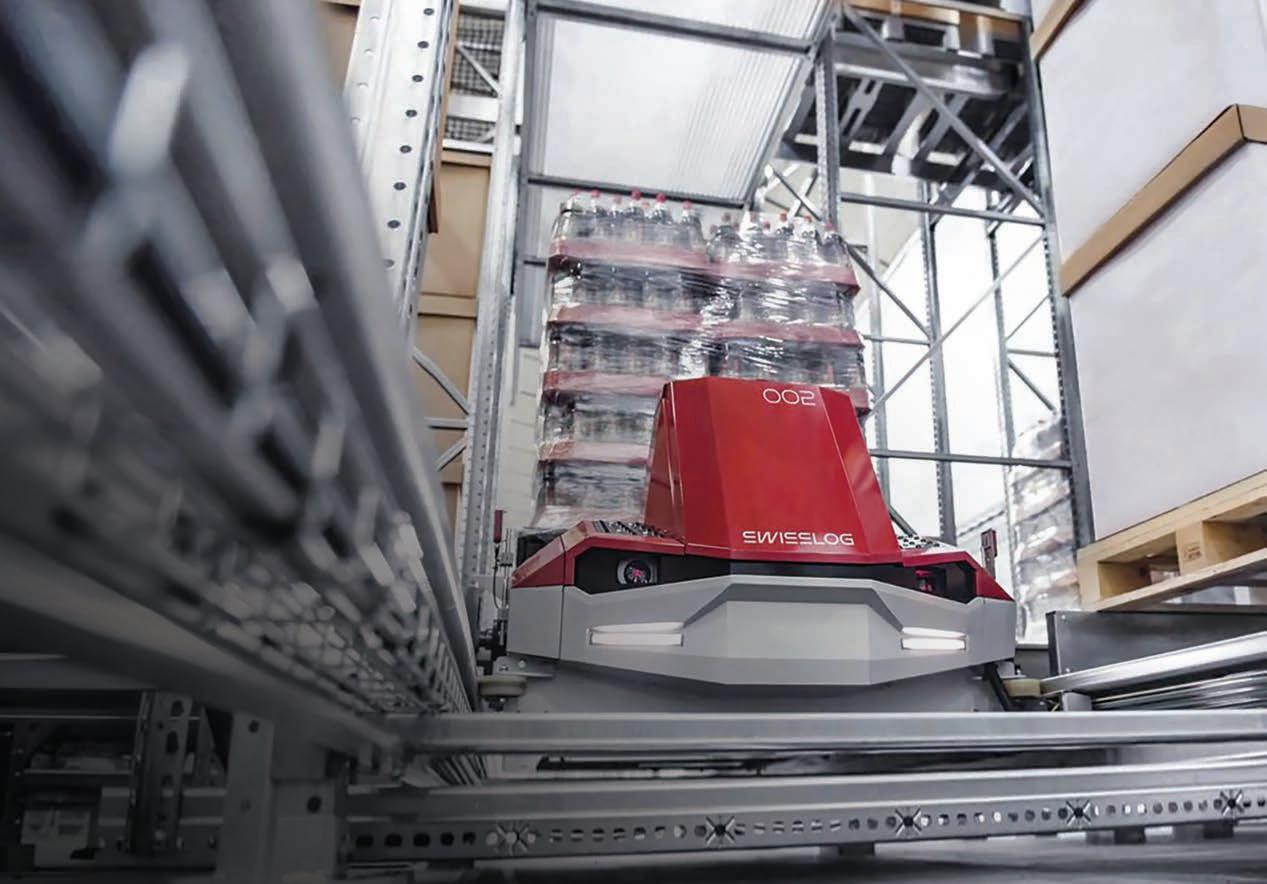
4-way shuttle systems redefine intelligent racking BHD’s approach to rack intelligence reflects a broader evolution in shuttle-based storage systems, with the industry moving from basic configurations toward more advanced, high-density solutions capable of handling complex operational requirements and delivering stronger performance across a range of sectors.
“We’ve gone through different phases that started with probably a two-way shuttle,” John explained.
As systems have developed, the limitations of traditional automated storage models have become more apparent, particularly in environments where flexibility and density are critical. This has accelerated the shift toward technologies that can operate across multiple axes and adapt to changing warehouse layouts.
“The next main one is going to be the four-way shuttle,” John explains. “The four-way shuttle will replace the ASRS in the not-too-distant future.”
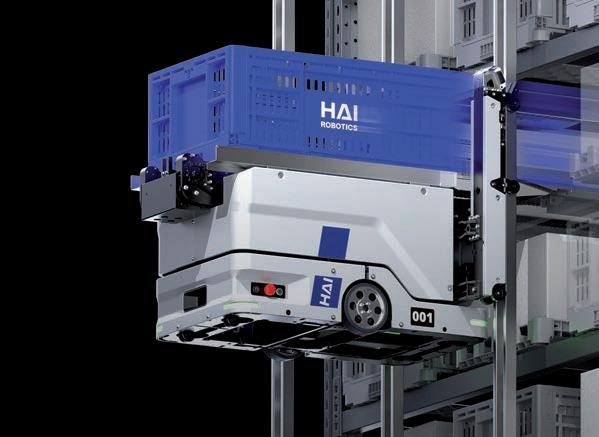
Four-way shuttle systems enable movement in multiple directions, allowing for more dynamic layouts and improved use of cubic space. This reduces reliance on fixed aisles and increases storage density, making them particularly suited to high-volume and space-constrained environments.
“Less space, more automation, denser in terms of its storage ability, and certainly a lot easier to control and use into the future,” John says.
These systems are already being deployed in demanding applications such as cold storage and food manufacturing, where temperaturecontrolled environments amplify the importance of space efficiency and system reliability at scale.
Automation capability moves toward full integration
Warehouse automation is increasingly defined not just by individual technologies, but by how effectively they are integrated. BHD is expanding its capability to deliver coordinated systems that bring together racking, shuttle systems, conveyors and other automated components into a single operational framework.
“The efficiencies that are gained from having warehouse automation is quite amazing,” John explains.
Cost pressures are accelerating this shift, particularly as labour availability tightens and businesses seek to extend operating hours without increasing workforce requirements. Automation is enabling more consistent output across longer operating windows.
“The cost of labour here in Australia is going up,” John says. “Seven days a week versus five days a week, eight hours a day versus 24 hours a day, all of those sorts of things have an impact.”
As a result, automation is increasingly viewed as essential rather than optional, with businesses prioritising systems that can deliver faster returns and measurable performance improvements in a competitive operating environment.
“I think there’s no doubt about that at all,” John says. “It’s predominantly driven by cost, so the cheaper the return, the shorter the return on the investment, the better it’ll be.”
This shift is also changing how warehouse solutions are delivered, with growing demand for integrated offerings that reduce complexity and streamline implementation across multiple technologies and suppliers.
John says that in traditional business,
WAREHOUSES
three companies are typically combined to make the whole system work, but the requirement is shifting towards a one-stop shop. To support this transition, BHD is developing its own warehouse management system to complement its hardware offering, allowing it to deliver a more cohesive solution that integrates racking, automation and software within a single platform.
“We will be able to provide the automation, the software, and the racking,” John says.
Software becomes central to performance
As warehouse systems become more interconnected, software is playing an increasingly critical role in coordinating operations, enabling real-time decision-making and ensuring that automated systems deliver consistent and reliable performance.
“The integration of the software, the warehouse management system and warehouse control system, is huge,” John says.
Without effective software integration, even advanced hardware systems can struggle to achieve their full potential, particularly in highthroughput environments where timing, sequencing and visibility are essential to maintaining operational flow.
“It has to be functional,” John says. “The only way that it will become efficient and provide the level of return on investment that you need is if you’ve got a good, functioning software package.”
The impact of automation is becoming increasingly visible across warehouse operations, with significant reductions in manual labour requirements and a shift toward more streamlined, system-driven workflows supported by fewer but more specialised roles.
“I’ve seen manufacturing and warehousing facilities that are manned by two people,” John says.
Traditional environments, often characterised by large teams and extensive forklift activity, are being replaced by more controlled and efficient systems where throughput is maintained or increased despite
reduced workforce numbers. As John explains, volumes are declining while productivity is increasing.
Despite these gains, implementing automation remains a structured process that requires planning, consultation and alignment with longterm business objectives rather than a quick or immediate transformation.
“It’s not something that you can change overnight,” John says. “It is a consultative process. It does take time for the return on investment, the numbers to change.”
Return on investment drives decision-making
Financial considerations remain central to automation decisions, particularly as businesses weigh the cost of expanding into new facilities against the benefits of upgrading existing infrastructure to improve performance and capacity.
“We can do the return on investment for a company to work out what the difference will be, what the payback will be, what the efficiencies will be,” John says.
In many cases, automation is emerging as a more viable alternative to relocation, delivering measurable improvements within a relatively short timeframe and reducing long-term operational costs.
“The return on investment of the racking system was just under five years,” John says.
When compared with ongoing leasing costs or the need for further expansion, this level of return is reinforcing the case for investing in intelligent storage systems.
“When you think of it in the grand scheme of things, yes, it is a relatively short period of time,” John says.
R&D centre enables realworld validation
As automation systems become more complex, ensuring compatibility between technologies before deployment is becoming increasingly important. BHD’s R&D centre has been developed to address this challenge, allowing full systems to be tested and refined in a controlled environment.
“The only way that you can
actually tell whether all of those components will work together is to put them together and try it,” John says.
The facility brings together multiple technologies, including racking, shuttle systems, conveyors and autonomous solutions, enabling customers to validate system performance before committing to full-scale implementation.
John says businesses will require fully integrated systems, including racking, four-way shuttle systems, AGVs, AMRs, conveyors and lifts. By testing systems in advance, BHD can refine designs, reduce risk and ensure that all components function as intended, improving reliability and minimising disruption during deployment.
“Our R&D centre gives customers the ability to put everything together, make sure it works, refine the design, and make sure it’s exactly what they want,” John says.
This approach also removes the need for costly trial and error within operational facilities, helping to streamline implementation and improve overall project outcomes.
“It saves them doing the trial and error in their actual facilities,” John says.
A more integrated future for warehousing
As the boundaries between racking, automation and software continue to converge, the industry is moving toward more integrated, end-to-end solutions that prioritise efficiency, scalability and adaptability within existing operational constraints.
“We’ve seen the requirement moving forward to become a one stop shop,” John says.
John explains that rack intelligence, supported by four-way shuttle systems and integrated software, is emerging as a central component of this shift, enabling businesses to optimise performance without relying on expansion.
“The efficiencies that are gained are quite amazing,” John says. ■
Delivering greater resources to ANZ
Swisslog strengthens ANZ operations with regional integration, boosting expertise, scalability, and local automation support.
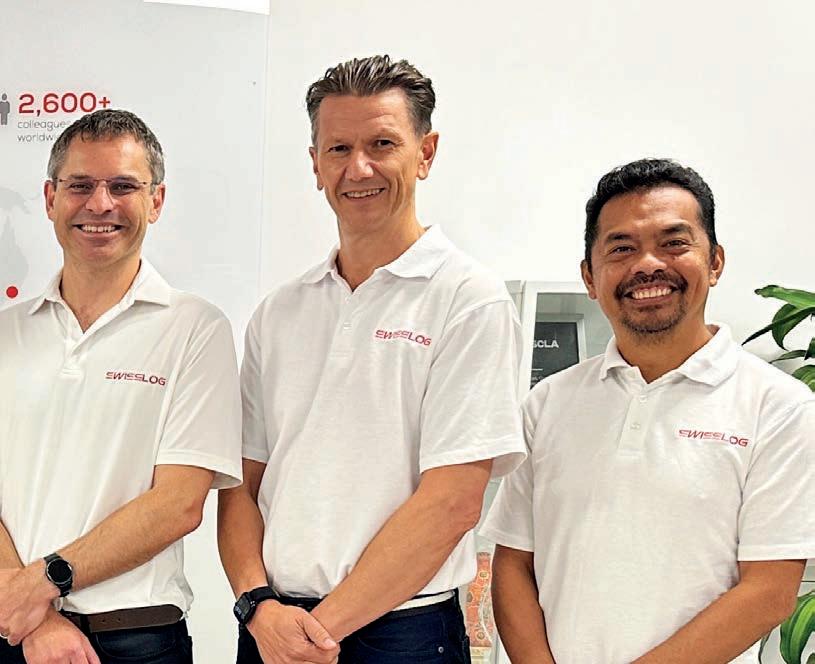
Swisslog, a global provider in automated intralogistics solutions, is strengthening the resources available to its Australian and New Zealand (ANZ) customers through a new structure for the Asia Pacific excluding China (APeC) region.
This integration allows Swisslog to align closely across markets and adds strengths to existing Australian and New Zealand service and management teams, which allows for more direct access for Australia and New Zealand to expertise developed in Swisslog’s broader Asia Pacific operations, including global software expertise.
The broader APeC region will be overseen by Steven Xie, who will serve as Executive Vice President and Managing Director, based in Malaysia. Steven, who first joined Swisslog in 2017, has a hands-on approach that includes a close involvement with all countries and their teams.
“Both the ANZ and Asia Pacific regions have experienced strong growth and continued success, so there is good sense in sharing across regions the expertise and lessons learned from projects of all sizes and requirements,” he says. “Swisslog will maintain a local leadership team in ANZ, as well
as sales, engineering, service, and support staff so that customers always have a local contact for any stage in a warehouse automation project.
“We will then draw upon highly qualified resources, shared innovation, and regional expertise that strengthens our ability to deliver complex automation solutions across the region.”
Dual Managing Directors for Australia and New Zealand
Lyn Osbourne, Director of People & Organisation, ANZ, and Grant Beringer, Director of Operations, ANZ, have been
appointed as dual Managing Directors for Australia and New Zealand. This dual Managing Director structure reinforces Swisslog’s commitment to strong governance, accountability, and responsible leadership, ensuring Swisslog continues to operate as a trusted and ethical corporate citizen across the ANZ region.
“The ANZ region has been performing well, with some flagship accounts, as well as new customers seeing the value in our whole-oflifecycle approach,” says Steven.
“With Lyn and Grant as dual Managing Directors, and Steve
Dimitrovski as Director of Sales, the ANZ team is in great hands, and I look forward to our continued collaboration under the new strengthened regional structure.”
Futureproofing warehouse automation
Across the region, Swisslog is rolling out its “Ready for the Next” strategy, which highlights its role as a lifetime automation partner, not just a solution provider.
“We are ready for anything that might happen next with our customers, from adapting to seasonal peaks, to a change
in product lines, to expansion to meet growth. Swisslog has the flexibility, experience, and service backing to meet our customers’ needs efficiently and productively,” says Steven.
“We take an outcomes-based approach to warehouse automation projects. Rather than try to sell a specific solution, we gain a deep understanding of our customer’s needs now – and in the future – and use our local and global expertise to find the ideal solution.”
Local delivery with regional insights
Under the new APeC structure, Swisslog ANZ customers will get:
• Enhanced access to specialist engineering and technical expertise.
• Greater collaboration across regional project teams.
• Improved scalability for large and multi-site automation projects.
• Shared innovation and best practice across Asia Pacific markets.
• Stronger coordination across supply chains and service networks.
“Importantly, Swisslog’s project delivery, service operations, and customer support functions in Australia and New Zealand remain locally based. The company continues to maintain dedicated teams across sales, project management, customer service, and lifecycle support within the ANZ market,” says Steven.
“We understand that successful automation projects rely on deep local knowledge – from regulatory requirements and safety standards to operational nuances within specific industries. That local expertise remains firmly in place.
“By aligning ANZ more closely with neighbouring Asia Pacific markets, Swisslog is better positioned to respond quickly to evolving customer requirements and to support long-term growth across the region.
“Our commitment to Australia and New Zealand remains unwavering. This structural evolution strengthens our ability to serve the market. We are locally led, regionally supported, and focused on helping our customers build smarter, more resilient operations for the future.” ■
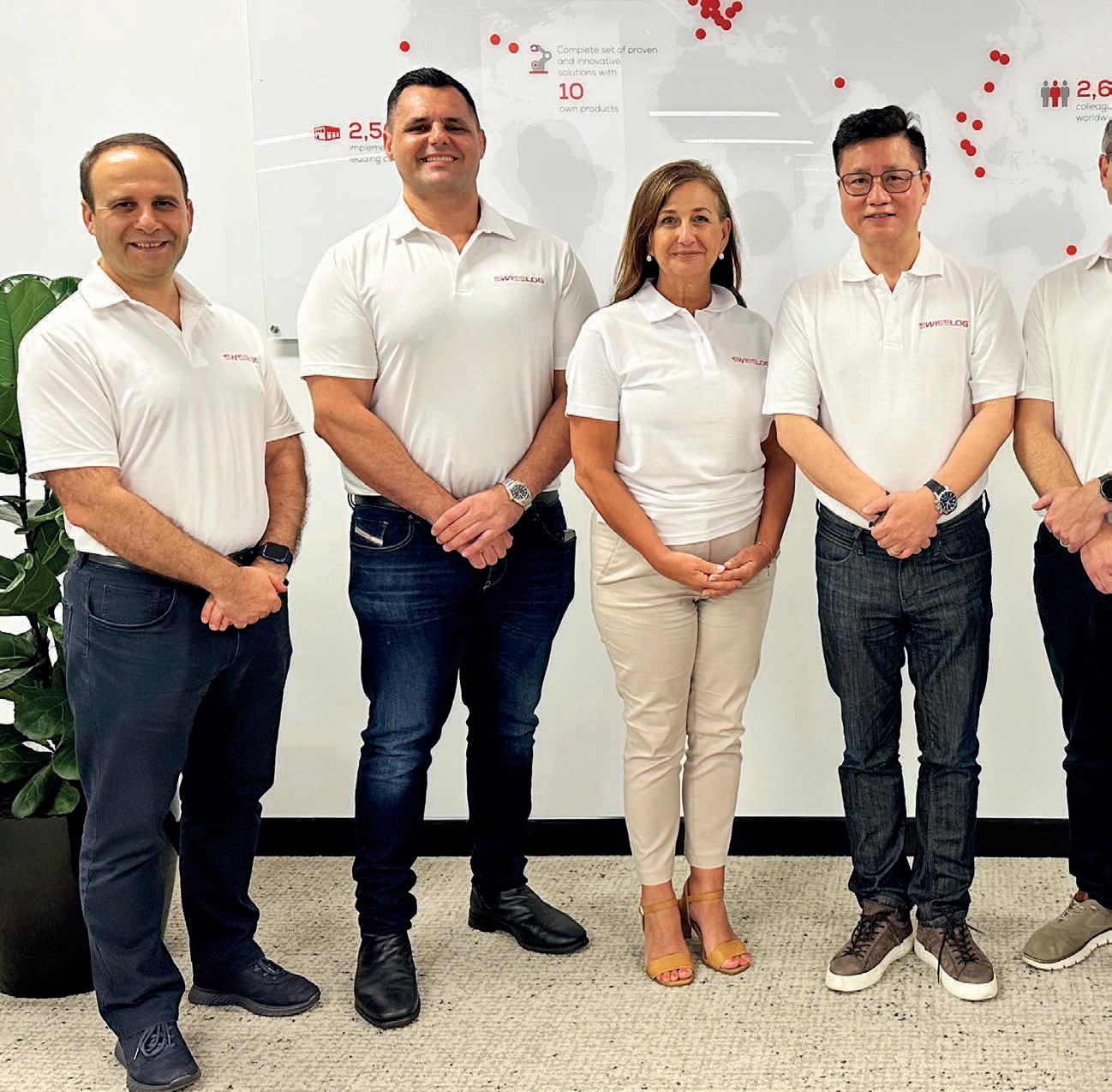
Swisslog’s ANZ leadership team under the new regional structure. Image: Swisslog
Industrial vacancy shifts as supply and demand rebalance as
Australia’s industrial property market is showing changes in vacancy trends across Sydney and Melbourne following a period of increased supply through 2025.
Sydney’s industrial vacancy rate edged down to 5.8 per cent in the first quarter of 2026. Image: hppd/stock.adobe.com
Vacancy rates declined for the first time in more than two years in the first quarter of 2026, according to new data from JLL.
“Sydney’s vacancy rate has edged lower to 5.8 per cent, which was led by declines in super prime and prime grade vacancy,” says Annabel. “Vacancy in super prime assets declined to 6.8 per cent, down from 8.7 per cent over the quarter and from a peak of 11.27 per cent in 3Q25. Prime grade vacancy also declined slightly, and this offset the impact of increasing secondary vacancy.”
In Melbourne, vacancy fell to 5.2 per cent in the first quarter of 2026, down from 5.3 per cent in the previous quarter. The decline was driven by a reduction in super prime vacancy from 10.5 per cent to 7.4 per cent, while prime grade vacancy decreased from 4.8 per cent to 4.6 per cent.
By mid-2025, vacancy had increased across major east coast markets. CBRE data shows the national vacancy rate reached approximately 2.8 per cent in the first half of the year, with Sydney at around 2.4–2.9 per cent and Melbourne between 4.1 and 4.7 per cent.
“Sydney and Brisbane have seen more gradual increases, while Melbourne continues to show a split market, with tight conditions in the Southeast and East and higher vacancies elsewhere,” says Sass.
Sublease availability also shifted during this period. CBRE data shows sublease space increased in some markets, while Sydney’s sublease share fell below 20 per cent of total vacancy.
By the end of 2025, vacancy in Sydney increased further. Knight Frank data shows more than 768,000 square metres of industrial space was available across the market. The Outer West and South West accounted for the majority of available stock, reflecting the concentration of recent development activity in these precincts.
The increase in vacancy reflected a combination of completed developments and additional sublease space entering the market.
Leasing activity remained active over the same period, with approximately 1.3 million square metres transacted across
2025. Pre-commitments and demand from transport and logistics operators, retailers and manufacturers contributed to leasing volumes. These sectors accounted for a share of occupier demand across Western Sydney’s industrial precincts.
Prime rents across Western Sydney remained broadly stable, generally ranging between $180 and $290 per square metre depending on location. Incentives increased to around 21 per cent, reducing net effective rents despite stable face rents.
JLL data shows vacancy trends differ across asset grades. In Melbourne, vacancy in secondary-grade assets increased from 4.3 per cent to 4.6 per cent. In Sydney, secondary vacancy rose from 4.8 per cent to 5.4 per cent. At the same time, vacancy in prime and super prime assets declined across both markets.
Availability of warehouses larger than 30,000 square metres has fallen from 445,078 sqm in late 2025 to 224,140 sqm. Image: YesPhotographers/stock.adobe.com
In Melbourne, all remaining largeformat vacant assets are now in secondary-grade properties, according to JLL.
Availability of large-format warehouse space has reduced nationally. Options for tenants seeking warehouses larger than 30,000 square metres have nearly halved in recent months. Five such assets remain vacant, totalling 224,140 square metres, down from 445,078 square metres in the fourth quarter of 2025.
“There are no super-prime warehouse options above 30,000 square metres available in Melbourne and also very limited in Sydney,” says Nathan.
JLL data shows absorption of prime and super-prime space has been driven predominantly by logistics operators expanding their operations. The report
also notes there is limited evidence of COVID-era onshoring activity returning. New supply is expected to slow compared to previous years.
Approximately 647,000 square metres of industrial space was projected to be delivered across 2025, representing a reduction in development activity compared to earlier periods.
Incentives increased during 2025 and have stabilised in some locations, with declines emerging in select estates.
Leasing activity continues across logistics, retail and manufacturing sectors, with demand concentrated in major industrial precincts.
Data across CBRE, Knight Frank and JLL shows vacancy increased through 2025 before declining in early 2026. Sydney vacancy reached approximately 5.8 per cent in the first quarter of 2026, while Melbourne recorded 5.2 per cent. ■
Coca Cola Europacific Partner’s most advanced facility
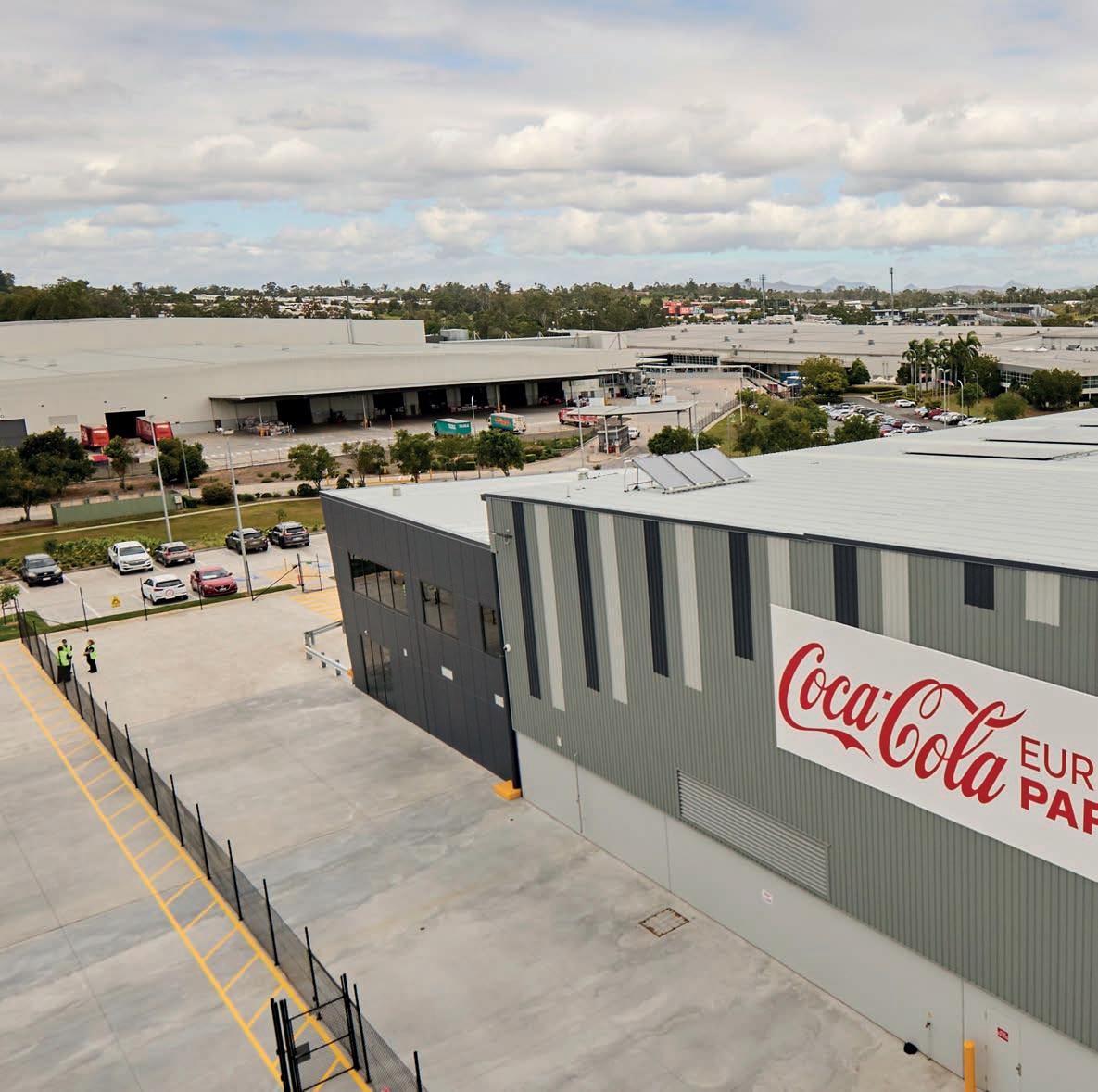
Coca-Cola Europacific Partner’s (CCEP) Richlands facility combines high-volume production with energy efficiency, reduced emissions, and improved working conditions, earning it a 6-star rating.
The facility brings together three co-located sites, equipment services, manufacturing, and logistics. The equipment services site, developed by Charter Hall, joined the CCEP property portfolio in 2025. As one of 20 CCEP sites across Queensland, it initially targeted a 5-star Green Star rating but has since achieved
6 stars. This reflects performance across categories including energy, water, materials, indoor environment quality, and emissions. MHD spoke with Associate Director for Sustainability, CCEP Australia, Scott Edwards, to discuss the outcome.
“It was important for the practical reasons you would expect, including
improving efficiencies to reduce overall operational costs, but also to create a complete and comfortable working environment for employees,” Scott says. “Getting the design right was a key consideration, ensuring the workspace is efficient in its layout and in how it operates.”
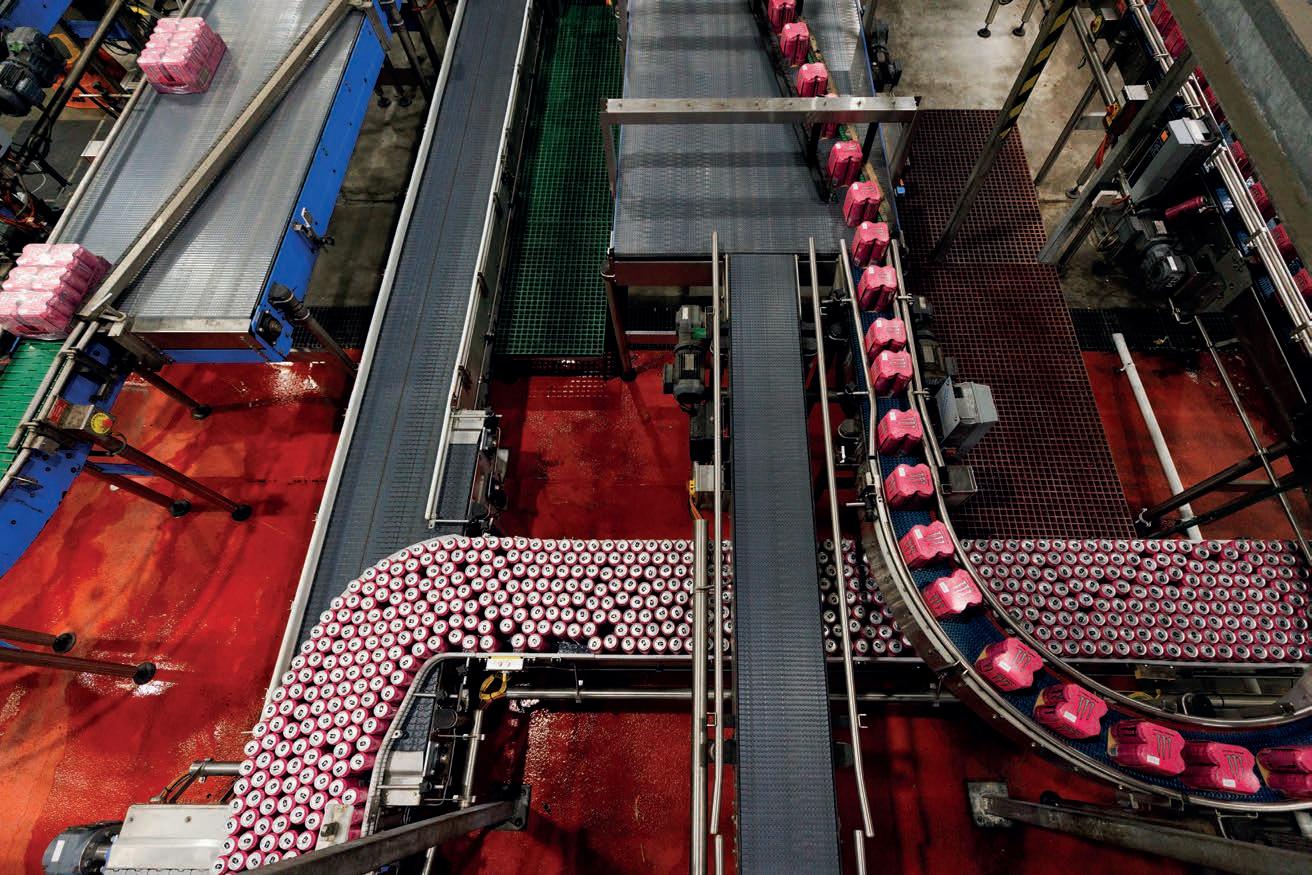
Across all CCEP sites in Australia, the Richlands equipment services site is the first and only in the company’s portfolio to achieve a 6-star rating. Its manufacturing site spans over 8,791 square metres, producing up to 2,000 cans per minute, 120,000 per hour, and nearly three million each day.
“It produces a huge number of cases of product. It basically supplies all of Queensland and parts of northern New South Wales with pretty much the full gamut of our portfolio,” Scott says. That portfolio includes soft drinks such as Coca-Cola, Coke Zero, Fanta and Sprite, water brands like Mount Franklin and Pump, then the likes of Monster Energy, as well as juices and sports drinks, such as Powerade.
The specifics
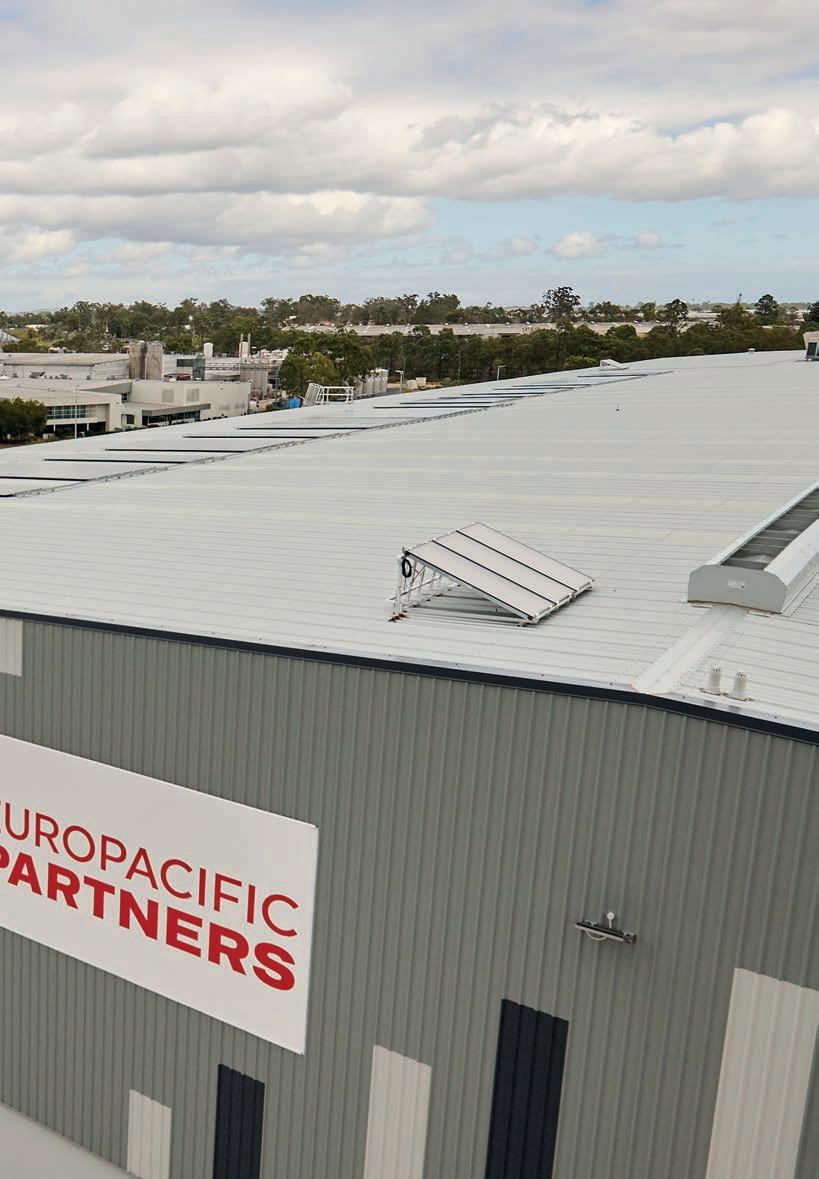
The equipment services site incorporates a range of measures aimed at improving operational efficiency and reducing environmental impact. A 233kW rooftop solar photovoltaic system was incorporated into the initial design brief, generating on-site renewable energy and reducing reliance on grid electricity. Based on the past 12 months of data, the system supplies approximately 47 per cent of the site’s total energy requirements.
This is supported by high-efficiency LED lighting deployed throughout, alongside motion sensor controls that minimise energy use in low-occupancy areas. Water management has been integrated into the site’s design through a 100,000-litre rainwater tank, with captured water reused for non-potable applications including amenities and landscaping. Lowpollutant and low-emission building materials have also been used to support environmental performance.
Within the equipment services site, attention has been given to working conditions. The building is designed
The Richlands facility uses climate, light, and air systems to improve working conditions.
to support improved indoor air quality and increased access to natural daylight across operational areas.
“I’m not a native Queenslander, but I’ve spent time there in summer and understand how hot and humid it can be,” Scott says. “Designing the facility to provide a more comfortable environment, particularly for those working on the shop floor, was a major priority.”
Climate control systems maintain stable indoor temperatures, addressing the challenges of Queensland’s conditions.
“It also incorporates healthier and higher quality indoor environments, so it’s not just about sustainability outcomes, but how the space performs for the people working in it day to day,” says Scott.
The broader context
The Richlands facility operates as a central hub for CCEP’s Queensland operations, consolidating functions from three sites to improve efficiency.
Distribution is supported by a combination of internal fleet operations and third-party logistics providers, servicing both large retail customers and smaller route-based deliveries.
“I think, with almost everything we do on the sustainability side of things, we get learnings out of all those things,” he says.
Lighting was one of the key considerations, with Scott noting it can account for a significant portion of energy use in warehouse environments.
“Lighting across all of our facilities would typically make up between 10 and probably 30 per cent of the total site’s energy use,” he says.
He adds that lighting design also considers maintenance requirements, particularly in high-clearance warehouse environments where access is more difficult, making longevity an important factor.
The facility incorporates LED lighting, natural light integration, and controls to manage energy use across operational areas. CCEP’s current focus includes emissions reduction, material recovery, and working with customers and suppliers.
“So, our focus, really, for the next couple of years is going to be a continuation of our decarbonisation journey,” Scott says.
“I think a lot of businesses these days realise that it is a collaborative effort, and no one business can really be truly sustainable on their own.”
The Richlands facility distributes most of CCEP’s portfolio across Queensland and northern NSW. Images: CCEP
Women reshaping logistics
Women in logistics drive workforce growth, improving retention, capability, and leadership across supply chain operations.
Transport and logistics operators are placing greater focus on workforce development and retention, as the sector continues to face ongoing labour and skills pressures across Australia and New Zealand.
While historically male-dominated, the industry is seeing a gradual shift in participation, with more women entering roles across operations, engineering and leadership. For operators, this is not just a diversity conversation, but a practical response to workforce shortages and the need for broader talent pipelines.
Within one global operator’s regional network, this shift is already visible across warehouse floors, operational teams and executive leadership.
Mylène Blanquart, Managing Director Planning and Engineering, Australasia, has built a career spanning engineering and commercial functions across multiple regions. She says the industry’s complexity is part of its appeal.
“Transportation and logistics are the heartbeat of the global economy,” she says.
For Mylène, developing future talent is critical to sustaining that role. She points to mentorship as a key driver of capability, particularly in technical environments where leadership pathways are still evolving.
“Success in leadership shouldn’t be a solo journey. By giving our time and global perspective to junior engineers, we build a stronger and more inclusive industry.”
At an operational level, Zoe Samwell, Senior National Operations Excellence, Australia, highlights the visibility and immediacy of the sector as a drawcard for new entrants.
Starting on the warehouse floor and progressing through operational programs, Zoe says hands-on experience remains central to building capability.
“It’s fast-paced and tangible. You can see the results of your problem-solving in real time,” she says.
Zoe adds that representation plays a role in attracting talent into the industry.
“If I hadn’t seen a female driver enjoying her job, I might never have applied. Showing that these roles are open to everyone helps bring in the next generation of operators.”
Retention is another ongoing
challenge, particularly for workers balancing career progression with personal responsibilities. Cassandra Rayner, Leading Hand, Australia, says flexible working arrangements can make a measurable difference.
Beginning with a two-hour shift while raising young children, Cassandra has since built a decade-long career in operations.
“Reliability and leadership aren’t defined by gender, but by how you
show up for your team,” she says.
Cassandra notes that flexibility in shift structures and working conditions can help operators retain experienced staff who might otherwise leave the workforce.
“If the industry provides flexibility, it can retain dedicated people who want to grow their careers.”
Across New Zealand operations, Lorina Shareef, Operations Manager, points to trust and internal
Lorina Shareef, Operations Manager, FedEx Express New Zealand.
progression as key to developing leadership capability. After starting in an administrative role, Lorina progressed into management through exposure to operational responsibilities and ongoing development.
“What I appreciate most about this industry is its dynamic nature. Each day presents new challenges that require critical thinking and collaboration,” she says.
Lorina adds that early opportunities to take on responsibility can shape long-term leadership outcomes.
“When organisations invest in mentorship and provide growth opportunities, they develop leaders who are committed to performance and safety.” ■
Cassandra Rayner, Leading Hand, FedEx Australia.
Zoe Samwell | Senior National Operations Excellence, FedEx Australia.
CALL FOR SUBMISSIONS
Award Submissions Now Open
NOMINATIONS ARE NOW OPEN FOR INDUSTRY’S MOST PRESTIGIOUS AWARDS
Nominations are now open for the 2026 ASCLA Industry Awards, celebrating the outstanding achievements of businesses and industry leaders across supply chain and logistics.
These awards celebrate excellence and acknowledge the businesses and individuals whose work continues to shape, strengthen and advance the industry through innovation, collaboration and success. They provide an opportunity to recognise those making a genuine impact and setting a strong example for others across the sector.
If there is a business or individual whose contribution deserves to be acknowledged, now is the time to put them forward.
SPONSOR AN AWARD
ALIGN YOUR BRAND WITH EXCELLENCE
We are inviting companies and organisations to become part of these prestigious 2026 Awards night. Showcase your organisation, strengthen brand awareness to industry leaders and be the Ambassador of Excellence by recognising its highest achievers.
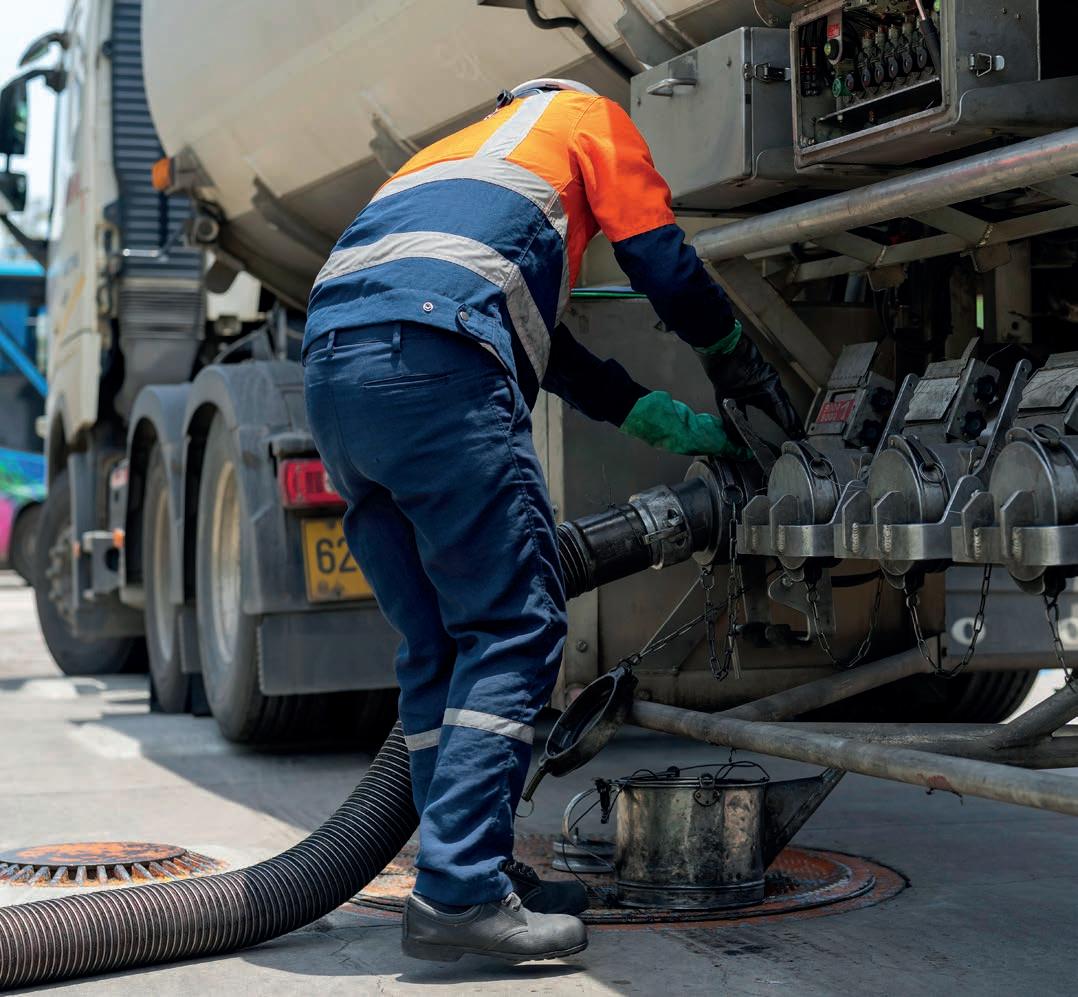
Fuel suppliers expand distribution capacity as highercost imports move through domestic networks. Image: Chatchawal/stock.adobe.com
The cost of resilience
As companies pay more to secure supply, resilience is no longer theoretical, it is becoming a measurable cost across Australian logistics networks.
The Federal Government’s decision to underwrite fuel imports marks an intervention in Australia’s supply chain, enabling companies to purchase additional cargoes on the global spot market without bearing the full financial risk. The move follows renewed disruption to global energy flows,
as instability in the Middle East and ongoing constraints through the Strait of Hormuz tighten supply routes and reinforce concerns about volatility.
Under the agreement, backed by Export Finance Australia, major importers including Ampol and Viva Energy can secure fuel at above-normal market prices, with the Government
absorbing potential losses if prices shift before delivery. Prime Minister Anthony Albanese says the arrangement is designed to increase supply into the domestic market.
“This is not business as usual. Importantly, this is additional supply here in Australia that they will be able to source,” Albanese says.
The intervention aims to allow companies to act quickly on shortnotice cargoes, as sourcing expands beyond traditional Asian suppliers to include North America and other regions. Minister for Climate Change and Energy Chris Bowen says the agreement enables purchases that would otherwise fall outside normal commercial thresholds.
“This arrangement will enable the companies to take a purchase that would have been non-commercial and to go out and buy that fuel for Australians,” Bowen says.
While the policy response is immediate, the disruption itself is structural. Damage to infrastructure and ongoing instability in the Gulf are constraining global supply flows, with impacts expected to persist even if geopolitical conditions stabilise.
“You can’t just turn back the tap,” Albanese says. “This will have consequences for a period of at least months ahead.”
For an import-dependent market such as Australia, the effect is direct. Supply routes have been disrupted both entering and exiting the Gulf, tightening availability and increasing competition for cargoes across global markets. While fuel remains available, the conditions under which it can be secured have shifted, with volatility and pricing uncertainty making procurement decisions increasingly complex.
In this environment, purchasing fuel is no longer a straightforward commercial transaction. Spot cargoes are becoming available at short notice, requiring rapid decision-making under fluctuating market conditions. Companies must commit to purchases without certainty over where prices will land by the time cargoes arrive in Australia.
“These purchases become even riskier for companies,” Bowen says. “The oil price might move substantially by the time the cargo gets from where it’s bought to the time it gets to Australia.”
The Government’s underwriting arrangement aims to offset that risk, allowing companies to secure supply that would otherwise be considered too risky or uneconomic. Under the arrangement, companies are securing fuel based on availability and timing, including cargoes that would not typically be considered commercially viable. Fuel suppliers have expanded distribution capacity to meet elevated demand, with Ampol and Viva Energy increasing their truck fleets by around 20 per cent to accelerate deliveries and maintain supply, particularly in regional areas.
Demand has also increased during peak periods, with Ampol reporting fuel volumes up 30 per cent compared to the previous Easter period, with similar trends observed by Viva Energy.
For freight operators, the implications are immediate. Diesel remains a core input cost across road transport, which continues to carry the majority of Australia’s freight task. Higher-cost fuel entering the market is likely to flow through to transport rates and operating expenses over the coming months, even as supply conditions begin to stabilise.
Sourcing patterns are also shifting in response to the disruption. Minister for Climate Change and Energy Chris Bowen says, while Australia typically sources refined fuel from Asia, additional cargoes are now being secured from regions including North America and Mexico as they become available at short notice.
Despite signs of improvement, including easing outages and supply secured into May, the Government maintains that global supply conditions remain uncertain. Bowen says contracts currently in place provide supply “well into May”, with additional cargoes continuing to be secured as they become available.
Higher-cost fuel entering the market is expected to flow through to transport activity in the near term, particularly across road freight networks that rely heavily on diesel. The increase in distribution activity and changes to sourcing patterns are already influencing how fuel is procured and delivered across the supply chain.
Industry groups say the primary pressure on operators is not supply availability, but cost. Victorian Transport Association CEO Peter Anderson says rising diesel prices are placing significant strain on freight operators, many of which are already operating on tight margins.
“There is fuel available in Australia,” Peter says. “The challenge for freight operators is cost. Rapid increases in diesel prices are putting extraordinary pressure on businesses.”
Peter says higher fuel costs are tightening operating conditions across the sector, with limited capacity for operators to absorb sustained increases.
“This is not a supply failure – it’s a financial one,” he says. ■
Anthony Albanese says the underwriting will secure additional fuel supply. Image: Wirestock Creators/shutterstock.com
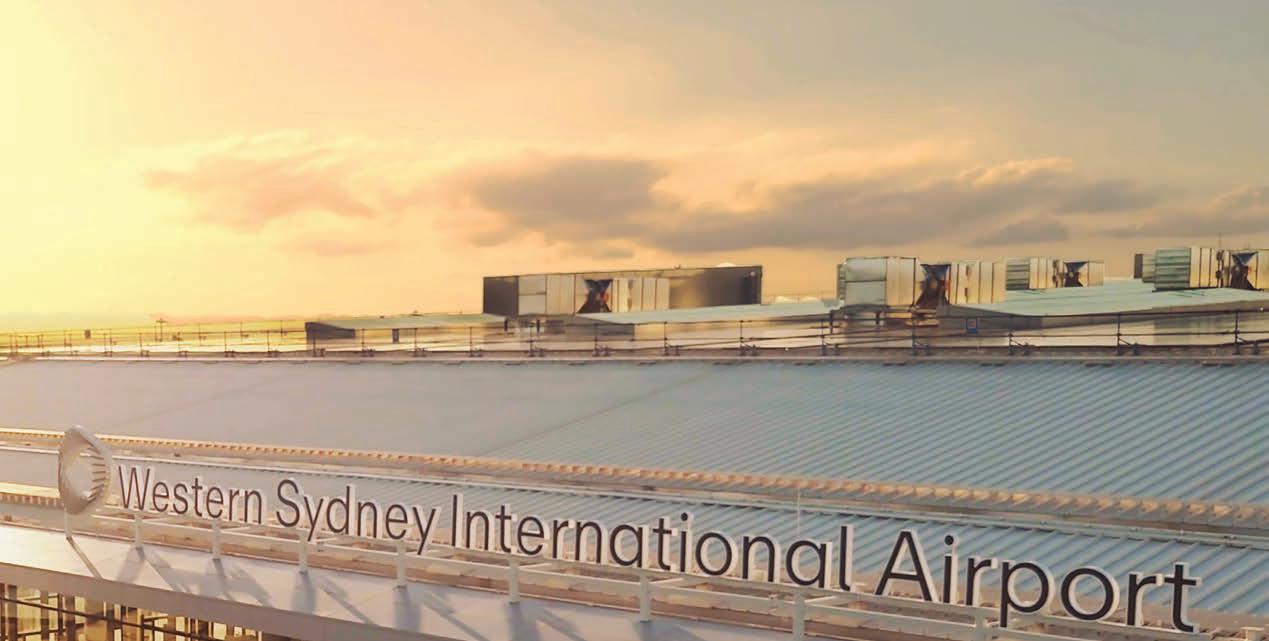
Western Sydney International Airport anchors the Aerotropolis, positioning the precinct as a future 24-hour freight and logistics gateway. Image: Steve/stock.adobe.com
Aerotropolis reshapes Sydney’s industrial market
Aerotropolis transforms Sydney’s industrial market through infrastructure, capital flows, logistics scale, and long-term investment positioning
The Western Sydney Aerotropolis is rapidly reshaping how capital, occupiers and developers approach Sydney’s industrial market, emerging as one of the most consequential logistics and employment hubs in Australia.
Once positioned as a long-term planning vision, the precinct is now transitioning into an active investment market, underpinned by major infrastructure delivery, growing transaction activity and a wave of institutional and private capital targeting scale, connectivity and longterm positioning.
Anchored by the upcoming opening of Western Sydney International Airport in late 2026, the Aerotropolis is increasingly being viewed not as a peripheral growth corridor, but as a core node in the national logistics network.
According to Cushman & Wakefield, more than $26 billion in private
development applications and an estimated 120,000 to 200,000 future jobs are supporting its evolution into a largescale industrial ecosystem. This level of investment is reinforcing the precinct’s role as a focal point for both economic activity and supply chain transformation.
Capital follows scale
Transaction activity across the Aerotropolis and surrounding precincts reflects growing investor conviction in the long-term growth story.
Over the past 12 months, a series of land deals spanning institutional acquisitions and owner-occupier purchases has highlighted the depth of demand. Major transactions include the acquisition of 235 Martin Road, Badgerys Creek, a 1.96 million square metre site purchased for $575 million, alongside multiple smaller-scale deals across Orchard Hills and Elizabeth Drive.
This activity signals a shift in how capital is approaching Sydney’s industrial market.
“Buyers are increasingly looking beyond established infill locations and targeting scale, infrastructure access and long-term positioning,” says David Hall, Cushman & Wakefield’s National Director and Head of CRE and Brokerage Logistics & Industrial, ANZ.
“The Aerotropolis offers a rare combination of these factors, which is why we’re seeing strong interest from both domestic and offshore capital prepared to take a forward view.”
Rather than competing for constrained, high-cost infill sites closer to the CBD, investors are reallocating capital toward largeformat landholdings capable of supporting next-generation logistics facilities.
This includes both long-term land banking strategies and near-term
development plays, reflecting differing risk profiles and investment horizons across the market.
From fringe to core logistics hub
The shift in capital allocation is closely tied to the Aerotropolis’ growing role as a logistics hub.
With 24-hour airport operations planned and a cargo precinct already substantially pre-committed, the region is positioning itself as a critical gateway for freight movement. The ability to operate around the clock, combined with proximity to major road infrastructure, is reshaping how occupiers assess site selection.
Traditional industrial hubs across Sydney are now being complemented by larger, more integrated precincts that can accommodate evolving supply chain requirements, including automation, higher throughput and consolidated warehousing.
“The appeal of the western corridor is not just about proximity to the airport, it’s about optionality,” says David.
“We’re seeing groups pursue everything from long-term land banking through to near-term development and operational uses, depending on their capital strategy and risk profile.”
This flexibility is creating a layered market, where both large-scale institutional players and smaller owner-occupiers can find entry points aligned to their operational needs.
Infrastructure as catalyst
Central to the Aerotropolis’ rapid progression is the delivery of enabling infrastructure, particularly the completion of the M12 Motorway.
Opened in March after four years of construction, the 16-kilometre motorway provides a direct, intersection-free connection between Elizabeth Drive and The Northern Road, forming a dedicated access corridor into the airport precinct.
Designed for speeds of up to 100 km/h, the M12 is expected to become a critical freight route once airport operations begin, improving travel
reliability and reducing congestion across surrounding local roads.
Government planners estimate the motorway will remove approximately 25,000 vehicles per day from local streets, while enabling more efficient freight movement between the Aerotropolis and Sydney’s broader logistics network.
The motorway’s integration with the Westlink M7, via an interchange at Cecil Hills scheduled to open later this year, will further enhance connectivity, creating a seamless motorway-to-motorway link across Western Sydney’s key freight corridors.
From the airport entry point at Elizabeth Drive, freight movements to Port Botany are expected to be largely uninterrupted, a structural improvement that is already influencing occupier and investor behaviour.
Beyond transport efficiency, the M12 is widely viewed as foundational infrastructure, unlocking surrounding industrial land and accelerating development activity across the precinct.
The corridor effect
While core Aerotropolis sites continue to attract strong interest, adjacent locations across the western corridor are also benefiting from the flow-on effect.
Suburbs such as Leppington, St Marys and Picton are emerging as complementary markets, offering more immediate opportunities for developers and investors seeking exposure to the broader growth story.
These locations often provide shorter planning timeframes or existing income profiles, making them attractive to groups looking to balance long-term positioning with near-term returns. Available sites across these areas span a range of use cases, from large development-ready land parcels to smaller, flexible holdings suited to staged repositioning or owneroccupier use.
This diversity is contributing to a more dynamic and layered industrial market, where different capital strategies can coexist within the same growth corridor.
Policy pressure and infrastructure gaps
Despite strong momentum, industry stakeholders are continuing to highlight the need for further infrastructure investment to support the Aerotropolis’ long-term growth.
The Property Council of Australia has called for the reclassification of Luddenham Road as a state road, arguing that earlier upgrades are required to accommodate rising freight and commuter demand.
Currently slated for staged upgrades beyond 2030, the road is a key north–south link connecting major development sites and employment precincts.
Industry groups are also advocating for new funding mechanisms, including a Western Sydney Employment Lands Delivery Fund, to address infrastructure shortfalls where development costs exceed existing contribution frameworks.
These concerns point to the broader challenge of infrastructure sequencing, ensuring that transport and services delivery keeps pace with accelerating private sector investment.
Government vision and scale
At a strategic level, the Aerotropolis is being supported by significant public investment and coordinated planning across multiple levels of government.
Infrastructure NSW estimates that private development proposals worth close to $33 billion are currently in planning or delivery, complemented by more than $28 billion in committed government infrastructure investment.
The Aerotropolis Sector Plan outlines a staged approach to infrastructure delivery, aligned with development demand and the timeline for airport operations.
By 2030, nearly 4,500 hectares of serviced employment land is expected to be unlocked, supporting large-scale industrial and commercial activity across the region.
This coordinated approach is designed to ensure that transport, water and utility infrastructure is delivered in line with growth, enabling the precinct to function as a fully integrated economic centre.
A structural shift in industrial markets
More broadly, the rise of the Aerotropolis is contributing to a structural shift in Sydney’s industrial market.
Rather than relying solely on established infill locations, the market is expanding toward larger, masterplanned precincts capable of supporting modern logistics operations at scale.
This includes facilities designed for automation, higher throughput and more efficient distribution networks, reflecting the evolving requirements of supply chains.
“As the precinct moves closer to operational phase, the focus is expected to shift from land accumulation to delivery, leasing and asset stabilisation,” says Archie Cropley, Executive, Brokerage Logistics & Industrial at Cushman & Wakefield.
“For investors and occupiers, timing and site selection will become increasingly critical as early-mover advantages begin to compress.”
This transition marks a new phase for the Aerotropolis, as speculative investment gives way to tangible development outcomes and operational activity.
Defining the next phase
With the airport opening approaching and infrastructure continuing to come online later this year, the Aerotropolis is entering a critical period of transformation.
For investors, the window to secure strategic land positions is narrowing as competition intensifies and pricing adjusts to reflect growing demand.
For occupiers, the precinct offers a rare opportunity to access largescale, well-connected sites capable of supporting future supply chain requirements.
“The Western Sydney Aerotropolis is no longer a future concept,” says Archie.
“It is an active market, and one that is rapidly defining the next phase of Australia’s industrial landscape.”
As capital, infrastructure and planning align, the Aerotropolis is not only reshaping Western Sydney, but redefining how industrial markets operate across the country. ■
Are You Running a Business — or a Fleet?
You didn’t set out to become a fleet manager. But somewhere along the road, your growing business turned into a full-time logistics operation stress, costs constant distractions piling up.
Your Fleet Shouldn't Be a Full-Time Job
Managing vehicles, drivers, compliance, delays, maintenance – it's exhausting, expensive, and pulls focus from your real priorities. he truth Most businesses are wasting time and money trying to manage logistics they’re not trained for.
Reclaim Your Time & Sanity
Our professional last mile metro delivery service is built for businesses like yours. We handle every detail – from dispatch to doorstep – with reliability, efficiency, and brand-level professionalism. No more early morning driver calls. No more compliance headaches. No more fleet-related fire drills. Just smooth deliveries and peace of mind.
FLEET X-RAY
Ready to nload the Burden?
Book your no-obligation Ontime Fleet X-RAY today Call our team on 1300 778 919 to discover how much deliveries are really costing your business, and discover how Ontime can deliver business fleet solutions that save you money, time headaches.
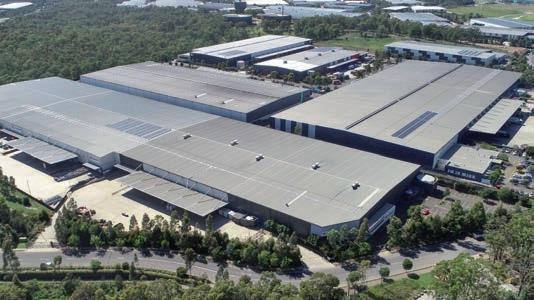
Aerial view of Kemps Creek, a key component of the Aerotropolis, highlighting the scale of emerging industrial development across the corridor. Image: Wittke Photography/stock.adobe.com
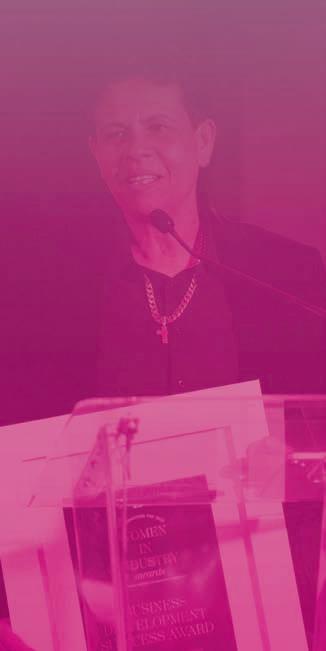
Tickets open for Women in Industry Awards 2026
Tickets are now available for the 2026 Women in Industry Awards, set to bring together leaders and professionals across Australia’s industrial sectors in Sydney this June.
Tickets are now on sale for the 2026 Women in Industry Awards, which will take place on 18 June at Doltone House, Darling Island Wharf in Sydney. The event will bring together industry leaders, accomplished women and organisations from across manufacturing, engineering, mining, transport and logistics to recognise achievement across Australia’s industrial sectors.
Now a well-established fixture on the national industrial calendar, the awards recognise individuals and businesses driving progress across industries including manufacturing, engineering, mining, transport and logistics. The
event continues to highlight leadership, innovation and the evolving role of women across sectors that are critical to Australia’s economic performance. With nominations now closed, attention now turns to the announcement of finalists ahead of the June event. The 2026 program will feature 16 award categories, recognising achievement across a broad range of disciplines, from operational excellence through to leadership, advocacy and emerging talent.
The awards reflect the depth of capability across Australia’s industrial workforce, while also highlighting the importance of diversity, inclusion and
leadership development in shaping the sector’s future.
“The Women in Industry Awards highlight the remarkable progress and transformation taking place across these sectors. The quality of submissions, combined with the increasing excitement and engagement surrounding the awards, is a clear reflection of how these industries are evolving,” says Molly Hancock, Head of Events Marketing at Prime Creative Media.
“It’s inspiring to see the depth of talent emerging and also the strong momentum building as more individuals and organisations champion
Attendees
connect at the Women in Industry Awards, bringing together leaders from across Australia’s industrial sectors.
innovation, diversity, and excellence.”
Beyond recognition, the event provides a platform for connection across the industrial landscape. The gala evening brings together senior leaders, decision-makers and emerging professionals in an environment that encourages meaningful engagement and knowledge sharing.
For many attendees, the awards serve as more than a celebration, offering an opportunity to build relationships across sectors that are increasingly interconnected through supply chains, infrastructure and shared operational challenges.
“This is more than a typical networking event,” says Molly. “Even if your business isn’t nominated, the evening provides the time and space for deeper, more valuable conversations.”
The event also provides organisations with an opportunity to demonstrate their support for diversity and inclusion across the workforce, while recognising the contributions of individuals driving change within their businesses and industries.
As industrial sectors continue to face workforce challenges, skills shortages and increasing pressure to innovate, initiatives that support leadership development and broaden participation are becoming increasingly important. The Women in Industry Awards reflect this shift, highlighting the role of diverse leadership in strengthening organisational capability and long-term performance.
Sponsors play a key role in supporting the program, with organisations such as Atlas Copco Group, Australian Power Equipment, Kenter and Grundfos Pumps contributing to the event. Their involvement reflects a broader industry commitment to recognising and supporting women across traditionally male-dominated sectors.
“Our decade-long partnership with the Women in Industry Awards is driven by a firm belief that inclusion fuels innovation. By supporting this platform, we aim to recognise and elevate the contributions of women who are reshaping traditionally maledominated sectors,” says Natalie
Douglas, Communications Manager – Southeast Asia & Oceania at Atlas Copco Group.
The awards program culminates in the announcement of category winners on the night, with recipients representing a wide cross-section of industries and roles. The Woman of the Year award, selected from category winners, recognises an individual whose contribution has had a significant impact across their field.
Alongside recognising individual achievement, the awards also highlight the broader structural and cultural changes taking place
Finalists take centre stage at the Women in Industry Awards, with winners announced across 16 categories.
across industry. As businesses adapt to new technologies, sustainability requirements and evolving workforce expectations, leadership and diversity are increasingly central to long-term success.
With tickets now on sale, the 2026 Women in Industry Awards are expected to again attract a strong cross-section of attendees from across Australia’s industrial and supply chain sectors.
The event offers a chance to recognise achievement, connect with peers and gain insight into the people and organisations shaping the future of industry. ■
TConference themes revealed for Bulk Expo
Bulk Expo 2026 reveals practical conference themes, with discounted tickets driving industry engagement.
here’s no shortage of theory in bulk solids handling, but straight talk about what actually works when things get messy on site is much harder to come by.
That’s where Bulk Expo is aiming its conference this year. The program, curated by the Australian Society for Bulk Solids Handling (ASBSH), is built around the issues operators keep running into, from stubborn dust to conveyors that don’t behave the way they should.
“We didn’t want a program that just talks at people,” Molly Hancock, Head of Marketing – Events at Prime Creative Media says.
“We wanted to put together a conference that gets into the detail of what’s actually going wrong on site and what’s working to fix it.”
The newly announced conference themes reflect that approach, with each session shaped by real operational pressure points.
Conveyors, Mechanical Handling & System Performance
Looking at belt and mechanical conveying from the inside out, this theme covers fire safety, fibre optic monitoring, wear resistance testing and the redesign of long-distance systems. It also digs into mechanical conveying
through bucket elevator engineering and low-breakage transport, alongside real-world learnings from revisiting a 13 km overland conveyor with modern technology.
Dust, Fire & Operational Risk
Dust remains one of the most persistent and dangerous challenges in bulk handling. This theme focuses on explosion protection in terminals, proactive conveyor belt fire safety and practical fixes that reduce dust leakage, including how small component changes can shift operations from downtime to uptime.
The event brings together exhibitors and attendees to explore equipment and practical solutions across bulk handling operations.
Storage, Stockpiles & Material Behaviour
From unpredictable loads during discharge to the stability of iron ore stockpiles, this theme gets into how bulk materials actually behave. It includes advanced storage systems, new approaches to bulk tonnage assessment and methods for tracking and maintaining material quality across the stockyard.
Monitoring, Measurement & Wear
This theme centres on visibility. Topics include live wear monitoring of wall liners, dynamic weighing in industrial bagging and systems that give operators a clearer read on performance, condition and accuracy across the entire handling chain.
Simulation, Design & Emerging Technologies
Focusing on what’s next, this theme explores fast coupled solid-fluid simulation tools, new deep mining concepts and the design of complex systems where modelling and engineering decisions carry major operational weight.
Together, these themes form a program grounded in real-world challenges and shaped by the people solving them. Bulk Expo’s conference will bring engineers, operators and suppliers into the same room, focusing on what actually works when the system is under pressure.
Early Bird tickets are now available for Bulk Expo 2026, offering discounted access to Australia’s leading bulk solids handling conference and exhibition. For a limited time, attendees can secure a full Conference Pass for $155 AUD, representing a discount of more than 60 per cent.
Taking place on 16–17 September at the Melbourne Convention and Exhibition Centre, Bulk Expo brings together professionals from across the bulk handling ecosystem for two days of technical insights, networking opportunities and technology showcases. Engineers, operators, equipment suppliers and decisionmakers will converge to explore the latest developments shaping the sector.
The event serves as a meeting point for industries that depend on the safe and efficient movement of bulk materials, including mining, cement, grain, ports, agriculture, manufacturing and bulk logistics. As these sectors face increasing pressure to improve efficiency, manage environmental impacts and strengthen operational resilience, the event provides a platform to share knowledge and explore practical solutions.
The Conference Pass includes access to the Bulk Handling Technical Conference, curated by ASBSH, as well as entry to the exhibition floor across both days. Attendees will also gain access to the Day One Networking Event, sponsored by SRO Technology, designed to connect professionals across different parts of the supply chain.
“We know budgets are always front of mind,” Molly says.
“This deal is designed to give people maximum access to Bulk Expo without the usual barriers, so more of the industry can be involved.
“Between the conference, the expo, the networking events and the awards, it’s shaping up to be a brilliant couple of days for the industry.”
making now the best time to lock in a spot at this can’t-miss event.” ■
The networking session will provide an informal setting for attendees to connect with peers, suppliers and industry leaders, encouraging crosssector conversations and new business
Bulk Expo will take place at the Melbourne Convention and Exhibition Centre from 16 to 17 September 2026, with Early Bird tickets available for a limited time.
September 2026
EXHIBIT IN 2026. BE SEEN. BE HEARD. BE CHOSEN.
Industry leaders take the stage at MegaTrans 2026
MegaTrans 2026 unveils a conference program tackling decarbonisation, automation, workforce pressures and infrastructure shaping Australia’s freight future. MegaTrans is set to return to the Melbourne Convention and Exhibition Centre on 16–17 September 2026 with a conference program built around the real-world pressures and opportunities reshaping Australia’s freight and logistics sector.
Reflecting an industry in transition, the program will explore the key challenges shaping the future of supply chains, from decarbonisation and automation to workforce pressures and infrastructure planning. The event will bring together operators, infrastructure owners, technology
providers and policymakers, reinforcing MegaTrans’ role as a cross-modal platform spanning road, rail, ports, intermodal and warehousing.
A standout session, Beyond Diesel: The Best Way Forward, will feature Andrew Newman, Director of Policy and Strategy at Freight Victoria, and
Heather Bone, Director of Sustainability at Team Global Express. Joined by a panel of industry experts, the session will explore practical pathways beyond diesel as the sector works toward a lower-emissions future.
Innovation across the freight task will be explored in Automate All Avenues: Driving All Modes Forward,
featuring Bruno Porchietto, CEO of Victoria International Container Terminal Melbourne, and Gren John Britto, Amazon Australia DSP Country Leader. Together with fellow panellists, the discussion will examine how automation is transforming operations across ports, road and beyond.
Mid-tier operators, often the backbone of the sector, will be the focus of Reinvigorating Mid-Tier Logistics, featuring Steven Ballerini, CEO of the Australasian Supply Chain & Logistics Association. The session will bring together a range of perspectives on how these businesses are under growing pressure from rising costs, tight margins and long payment terms, and how to respond. Strategic infrastructure planning will take centre stage in Location,
Location, Location: Establishing DCs for the Future, featuring Hermione Parsons, CEO and Managing Director of the Australian Logistics Council. Alongside other industry representatives, the session will examine how businesses can secure and design distribution centres that align with evolving freight flows, land constraints and long-term network planning.
Sustainability will remain a key theme throughout the program. In Greener By Design: Manufacturing Driving Sustainability Across the Supply Chain, Scott Edwards, Associate Director Sustainability at Coca-Cola Europacific Partners Australia, will join fellow panellists to explore how sustainability is being embedded across operations, from manufacturing through to distribution.
Workforce challenges will also be addressed in Recruiting Right: Overcoming Staff Shortages, featuring Tony Mellick, CEO of Hi-Trans Express. Together with other industry voices, the session will focus on practical strategies to attract, retain and develop talent in a highly competitive labour market.
These sessions form part of a broader conference program
Exhibitors showcase technology and solutions on the MegaTrans show floor,
designed to reflect the operational realities facing the sector. The agenda is expected to expand further, with additional speakers and topics to be announced in the lead-up to the event.
Molly Hancock, Head of Marketing – Events at Prime Creative Media, says the 2026 program reflects both the urgency and opportunity facing the sector.
“Freight and logistics are under real pressure right now, and that’s exactly why this program matters,” Siobhan says.
“We’ve built it around the conversations the industry is already having on the ground and brought together the people who can speak to what’s actually changing and what comes next.”
MegaTrans 2026 will again bring together a broad cross-section of the supply chain, including major operators, logistics providers, infrastructure stakeholders and technology companies, alongside the dedicated Operator Hub showcasing real-world operational perspectives.
With registrations now open, the event is shaping up to provide businesses with practical ideas, sharper insight and a clearer path forward in a fast-changing freight and logistics landscape. ■
Delegates engage in conference sessions at MegaTrans, addressing key challenges across freight and logistics.
connecting with industry decision-makers.
Sales Forecasting 1-Day Course
The Sales Forecasting course equips participants to build structured forecasting frameworks, and identify demand risks and bias across processes. Image: Serhii/stock.adobe.com
A practical, hands-on workshop designed to help organisations improve sales forecasting through structured demand management. The course will take place on 12 May 2026.
Participants will gain an understanding of how forecasting integrates into broader planning processes, how actual orders relate to true demand, and how to implement a simple, effective forecasting framework using existing tools. Key areas include performance measurement, forecasting for new products, identifying and
correcting bias, and communicating risks and opportunities.
The course also explores how forecasting connects with planning systems and how safety stock strategies can be used to mitigate variability and maintain service levels.
Delivered in a step-by-step format, the workshop highlights common pitfalls and practical techniques to improve accuracy while reducing effort. Participants will review accountabilities, cross-functional alignment, and benchmark current
processes against best-practice frameworks.
Suitable for demand planners, sales and marketing professionals, supply chain and inventory managers, and S&OP participants, the course is designed to support improved service outcomes, lower inventory levels, and more informed planning decisions. ■
Time: 9 am to 5 pm (Sydney time)
Duration: 8 hours (online via Zoom)
Cost: $995 (members), $1,395 (nonmembers)
Production Planning & Control 2-Day Course
This two-day course focuses on the tools, processes and performance measures required to achieve effective production planning and control. It will take place on 26–27 May 2026.
The program examines integrated planning and control approaches across different operational environments, including distribution centres, manufacturing sites, purchased and manufactured items, and repetitive production settings. It also covers aggregate planning through S&OP alongside detailed execution planning.
Participants will assess process maturity through structured checklists, including the Tom Wallace selfassessment tool, supported by additional frameworks covering fundamentals and behavioural elements.
The course also outlines relevant performance measures and methodologies to ensure organisations are applying appropriate metrics and formulas across planning functions. ■
Time: 9 am to 5 pm (Sydney time)
Duration: 16 hours (online via Zoom)
Cost: $1,950 (members), $2,350 (non-members)
The production planning course focuses on aligning processes, and strengthening control across manufacturing and distribution environments. Image: littlewolf1989/stock.adobe.com
Master Planning & Material Requirements Planning (MRP) 2-Day Course
This course is designed to strengthen master planning and material requirements planning capabilities, supporting improved inventory management and customer service outcomes. It will take place on 9–10 June 2026.
Participants will learn how to align and integrate planning processes across functions, including the development of a structured fivestep Integrated Business Planning
(IBP) process supported by the Master Production Schedule (MPS). The course also covers Distribution Requirements Planning (DRP) and the application of safety stock strategies, including simple, complex and statistically derived approaches.
The program focuses on improving process integration, accountability, and planning accuracy across the organisation.
It is suited to senior leaders, planning professionals, and cross-
functional stakeholders involved in demand, supply, and pre-S&OP processes, including roles across inventory, production, distribution, IT, and purchasing. ■
Time: 9 am to 5 pm (Sydney time)
Duration: 16 hours (online via Zoom)
Cost: $1,950 (members), $2,350 (non-members)
Fuel price surges are intensifying pressure across the freight chain, exposing gaps in cost recovery and contract structures. Image: Piya W./stock.adobe.com
The fuel cost standoff: When customers refuse to pay, everyone loses
By Steven Ballerini | CEO of Australasian Supply Chain & Logistics Association (ASCLA).
Australia’s 2026 fuel crisis has generated a great deal of commentary about supply disruptions, government intervention and the financial pressure on trucking operators. Less attention has been paid to a dynamic that sits at the heart of the problem and predates the current crisis by years: the refusal by a significant number of freight customers to accept legitimate fuel cost recovery from their transport providers. What the crisis has done is strip away any remaining ambiguity about the consequences of that refusal. They are severe, they are systemic, and they are now a matter of public policy.
The scale of the cost shock is not in dispute. According to the Australian Institute of Petroleum, diesel terminal
gate prices rose by around 50 per cent across all major capital cities between 2 and 13 March 2026 alone, driven by the closure of the Strait of Hormuz following the outbreak of conflict in the Middle East. By the week ending 27 March, the ACCC reported that the national retail average for diesel had reached $3.03 per litre, with every capital city breaching or approaching that threshold. In Melbourne, the terminal gate price moved from 165 cents per litre in early March to 295 cents by late March, an increase of 78 per cent in under four weeks. For operators running heavy vehicles, the arithmetic was brutal. For an owneroperator running a B-double burning 50 to 60 litres per 100km, a single Sydney to Melbourne run now costs over $1,300
in fuel alone, up from roughly $900 six months earlier. Fuel surcharges were adjusted upward, but nowhere near enough to close the gap. And a significant cohort of freight customers refused to accept any increase at all.
The voices documenting this resistance are not fringe operators. Steve Shearer, Executive Officer of the South Australian Road Transport Association, was direct: “For too long, too many customers have abused their road transport providers and pressured them to absorb increases in fuel prices. In today’s very tough commercial environment, that’s a recipe for disaster for your trucking business.” The operator evidence is equally stark. Ross Transport Director True Ross-Sawrey revealed that her
business, running around 55 trucks, absorbed an additional $550,000 in fuel costs across March alone, roughly $30,000 every single day. Some of her larger customers had refused to move their fuel levy until April 1, leaving approximately $400,000 of the business’s income sitting on a 0.68 per cent fuel levy for the entire month. Others had gone further, asking for levies to be removed altogether.
This is not an isolated story. It reflects a structural dynamic that the Fair Work Commission’s own proceedings have now formally acknowledged. The road transport contractual chain places large clients – retailers, manufacturers, mining companies – at the apex of significant purchasing power. Road transport contractors at the other end of that chain have limited capacity to push back on pricing when fuel surges, because their commercial survival often depends on the very customer they are trying to negotiate with. The power imbalance is not incidental to the problem. It is the problem.
The industry and government response has been swift by Australian legislative standards. The Fair Work Amendment (Fairer Fuel) Act 2026 received Royal Assent on 1 April 2026, with the Fair Work Commission receiving a joint application from the Transport Workers’ Union and ARTIO for a road transport contractual chain
order covering fuel cost recovery across the industry. Some of the largest freight clients moved ahead of the legislation. Woolworths lifted the fuel levy drivers could charge and moved its review cycle from monthly to fortnightly. Coles followed with fortnightly reviews of its truck driver fuel levy. These are meaningful steps. But they should not have required a national fuel crisis and emergency legislation to prompt them. The obligation to ensure that transport providers can recover legitimate costs should not be contingent on the price of oil hitting a crisis threshold.
The broader commercial principle at stake is one that supply chain leaders must internalise. Shippers who refuse to engage on fuel surcharges and instead shop for operators willing to absorb the cost are not saving money. They are transferring risk down the chain and systematically weakening the freight industry their own operations depend on. The goal of good freight procurement is not to eliminate the carrier’s fuel cost recovery. It is to ensure that recovery happens through a transparent, contractually agreed mechanism rather than through unilateral surcharge notices that neither side can plan around. A welldesigned freight contract with a clear, index-linked fuel escalation clause is not a concession to the carrier. It is the foundation of a functional, sustainable supply chain relationship.
The Australian Trucking Association has been explicit about what is at stake. One in every twelve Australian trucking businesses closed in the twelve months to November 2025, before this crisis hit. Transport company liquidations have shot up 48 per cent compared to the previous year. The Transport Workers’ Union warned that without a cost recovery order in place, the industry was facing not a reduction in profit but mass business closures and supply chain chaos. These are not hypothetical risks. They are the documented consequences of a procurement culture that has systematically treated fuel cost recovery as a negotiating position rather than a legitimate, essential cost pass-through.
For supply chain professionals, the lesson from this crisis is the same one that should have been absorbed years ago. Freight capacity is not a commodity that regenerates itself on demand. When operators exit the market, capacity tightens, service levels deteriorate and the cost of finding alternative providers typically exceeds whatever was saved by refusing to pay a levy. The businesses that will navigate the current environment and whatever follows it are those that treat their transport providers as genuine supply chain partners, with contracts that fairly reflect the full cost of the service being delivered.
The compliance wave discussed in last month’s article was largely foreseeable. So was this. The organisations that fare best in disruption are those that resolve structural vulnerabilities before events force the issue. Waiting for legislation to compel basic commercial fairness is not a supply chain strategy.
The final word
Customer refusal to absorb legitimate fuel cost recovery is not a negotiating tactic. It is a risk transfer that weakens the freight industry and ultimately destabilises the supply chains those customers depend on. The 2026 crisis has made the consequences of that behaviour impossible to ignore. The real question for supply chain leaders is whether the lesson will outlast the crisis that taught it. ■
Steven Ballerini, CEO, ASCLA. Image: ASCLA
Stay ahead of the curve in logistics, warehousing, and supply chain management. MHD Supply Chain Solutions Magazine offers the latest trends, thought leadership, and actionable insights you need to drive your business forward.
Unlock the ideas, information, and strategies that are shaping the future of supply chain management—only available to MHD subscribers. Don’t miss out on the critical insights that can give your business the edge.
•One-year subscription: $99 for 11 issues
•Two-year subscription: $179 for 22 issues
•Auto-renew subscription: $95 per year Scan to subscribe
Contact: subscriptions@primecreative.com.au
Visit: mhdsupplychain.com.au/subscribe/
People on the move
Robert Charles
ThreeSixty Supply Chain Group has appointed Robert Charles as Chief Operating Officer, strengthening its executive leadership team as demand for supply chain transformation services grows. Based in Melbourne, Rob joins from Maersk, where he served as Head of Contract Logistics Oceania, bringing more than 30 years of experience across transport, 3PL and logistics. His career includes senior roles at TNT and Toll, spanning retail, healthcare and FMCG sectors. At ThreeSixty, Rob will focus on strategic direction, solution design and execution, supporting customers with end-to-end supply chain improvements and aligning operations with increasingly complex logistics requirements across Australia and the broader region. ■
Herbert Vongpusanachai
DHL Express has appointed Herbert Vongpusanachai as Senior Vice President, Commercial for Asia Pacific, effective April 1, 2026. Based in Singapore, Herbert brings more than 20 years’ experience across key regional markets, including leadership roles in Thailand, Singapore, and Hong Kong. Most recently, he served as Managing Director for Thailand and Indochina, where he drove consistent profitable growth.
In his new role, he will lead DHL Express’s commercial strategy across Asia Pacific, focusing on customer engagement, trade lane development, and technology adoption to support sustainable growth and strengthen the company’s regional performance. ■
AgileStore 4-way roaming pallet shuttle
Swisslog is expanding its pallet ASRS portfolio in Australia and New Zealand with AgileStore, a new flexible 4-way shuttle system designed for highdensity storage without changing existing building footprints. Developed with Eurofork, AgileStore supports deep-lane racking, high throughput, and multiple pallet types, making it ideal for growing logistics, retail, and food and
beverage operations. Compatible with ambient and cold-chain environments from -30°C to +40°C, the system adapts to both current warehouse layouts and future expansion. With modular scalability and efficient space utilisation, AgileStore strengthens Swisslog’s offering for businesses seeking smarter, more resilient intralogistics solutions.
Introducing Radaro Route Optimisation 4.0
Radaro Route Optimisation 4.0 is a next-generation routing engine built for real-world complex logistics. Powered by real-time location intelligence, it replaces consumer-grade mapping with truckspecific routing that accounts for large vehicle constraints, driver schedules, compliance rules and live conditions. Using advanced AI and machine learning, it dynamically builds and adjusts routes
as operations unfold, enabling teams to plan thousands of stops in minutes while adapting to traffic, delays and disruptions. The result is smarter, more reliable delivery execution - reducing costs, decreasing dispatch FTE count, improving on-time performance, and enhancing driver and customer experience across even the most complex, high-volume delivery networks.
Specialists in automation investment strategy and delivery
Not getting the most out of your intralogistics automation? Get in touch to discover how you can get the most out of your operations.
Need assistance with your automation investment journey? Reach out to ensure you have the lowest lifecycle cost.