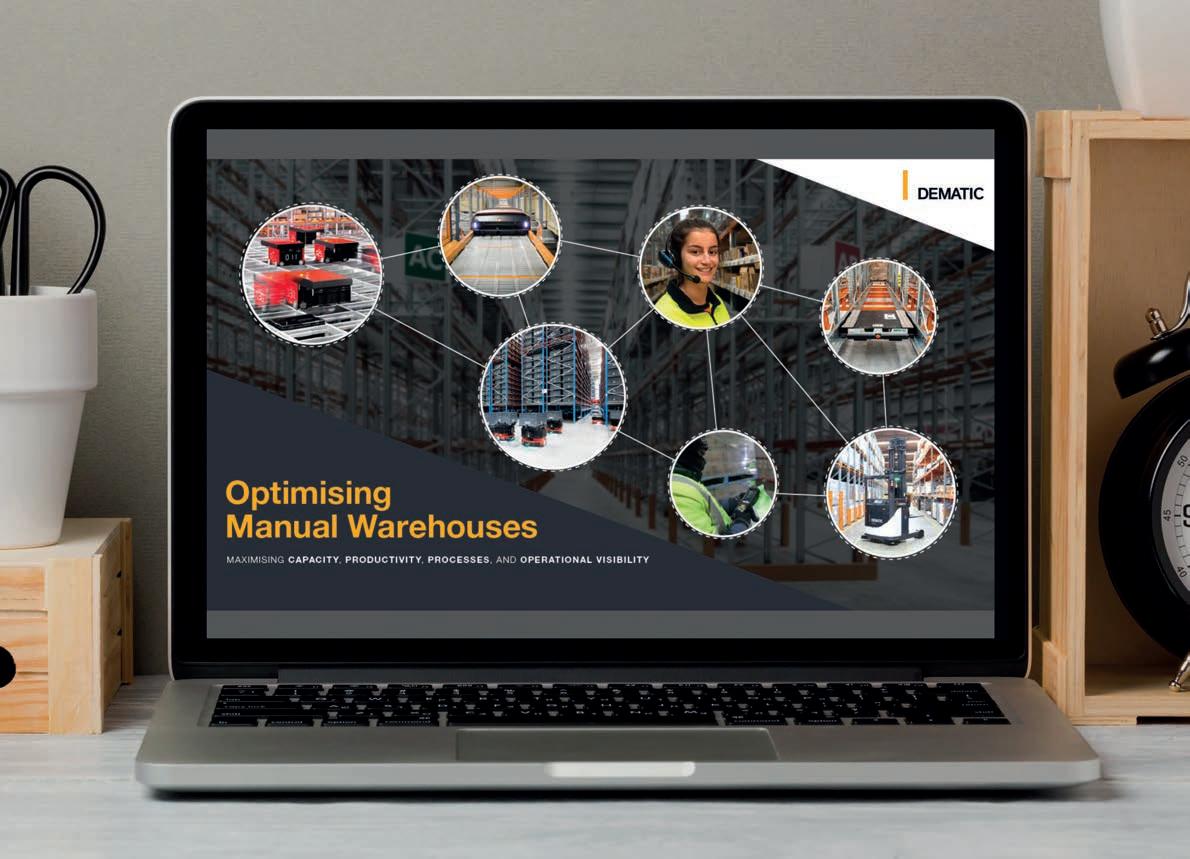
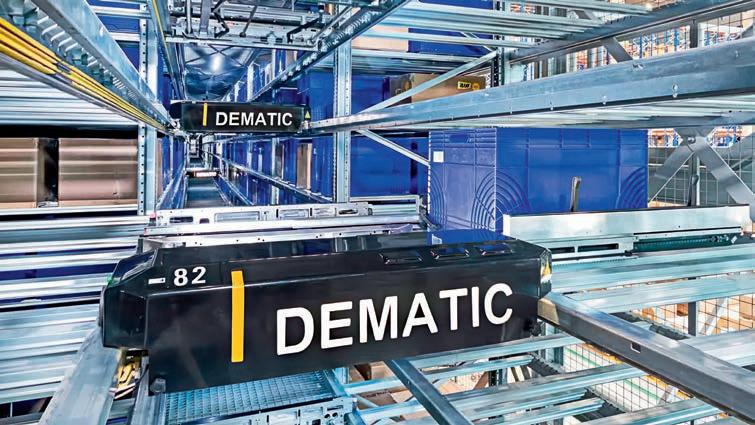
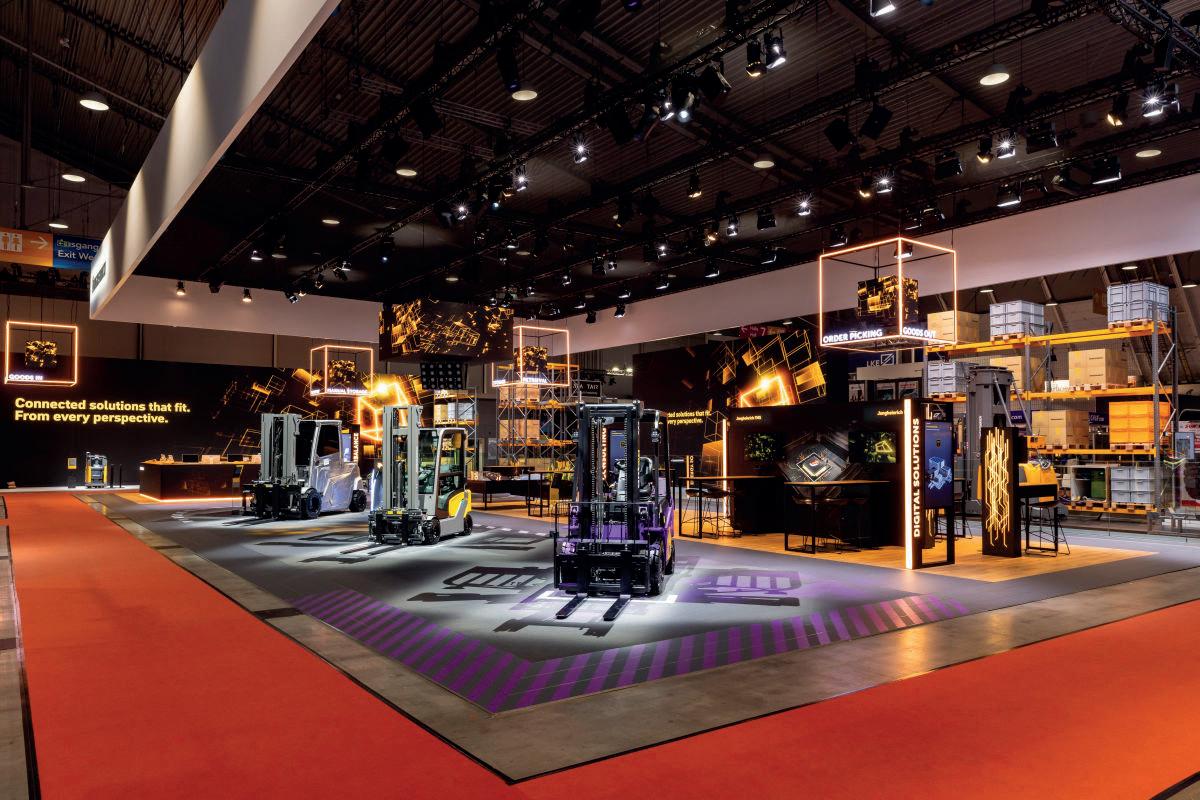
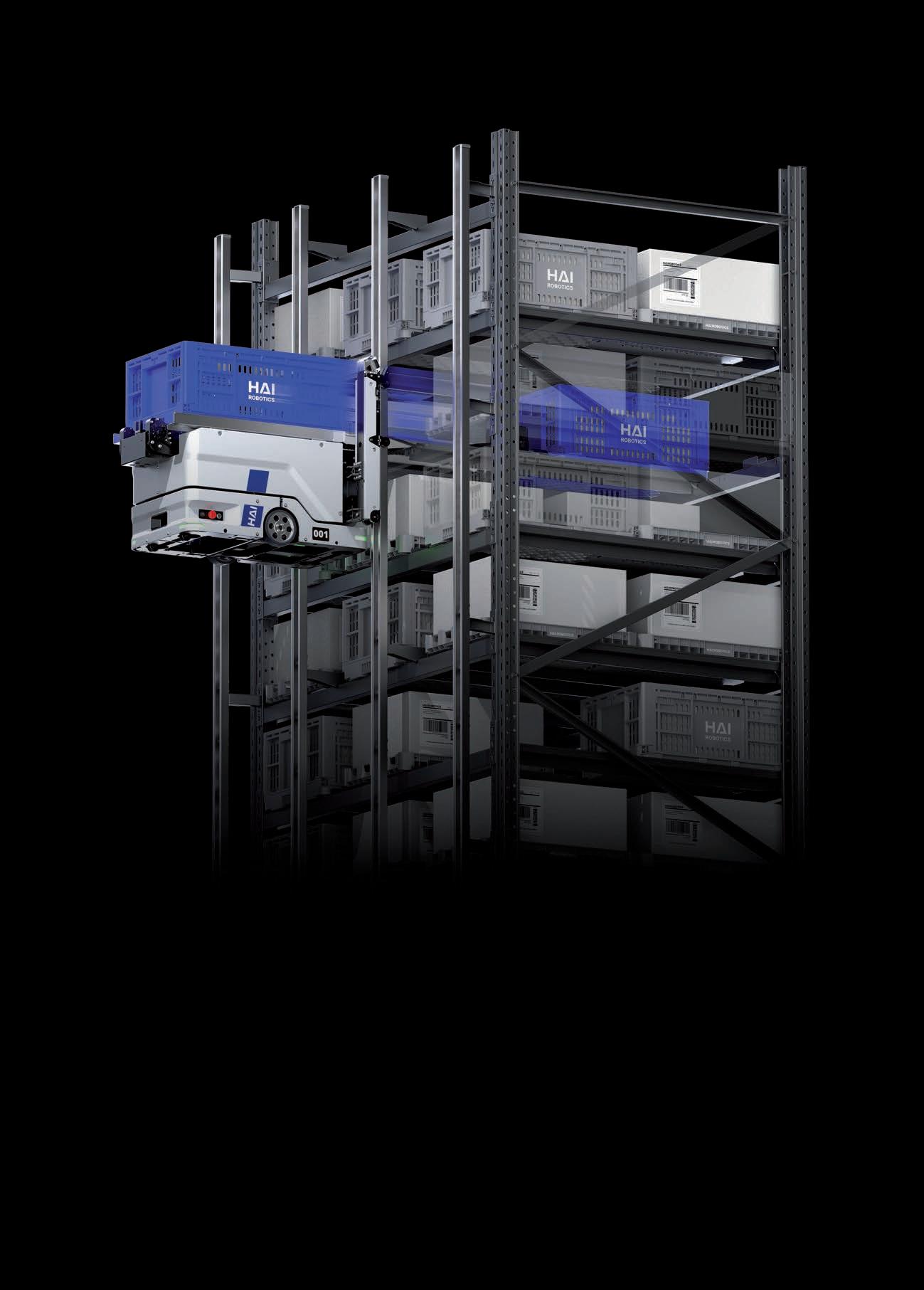
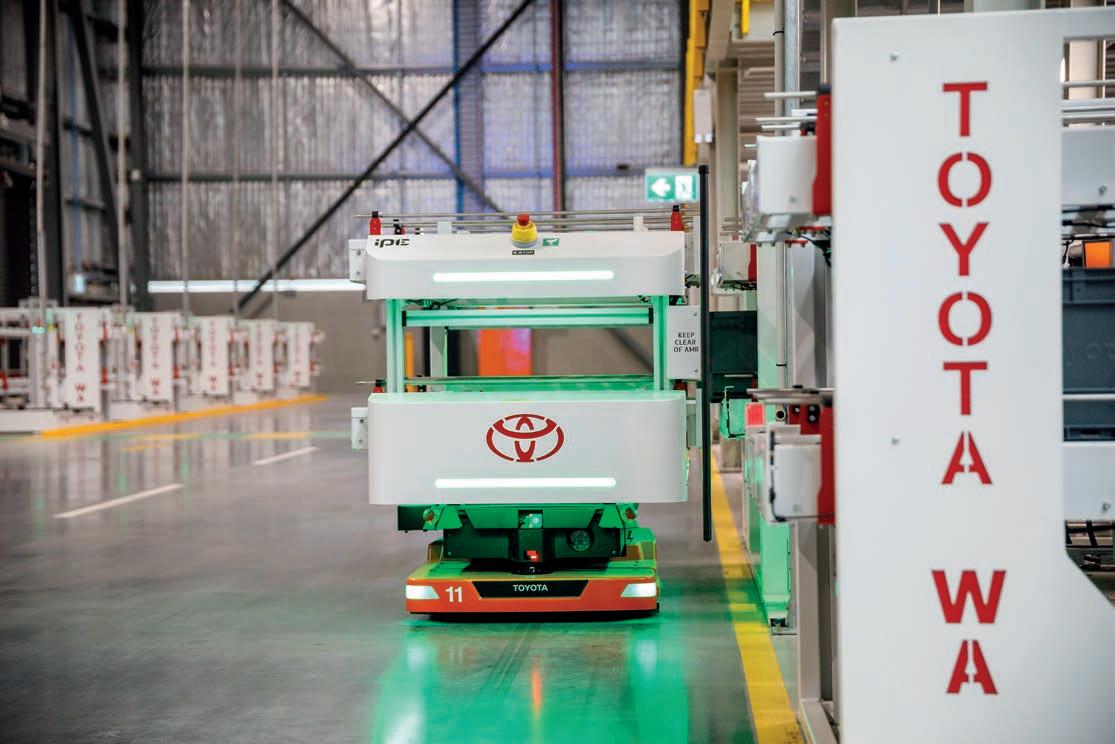
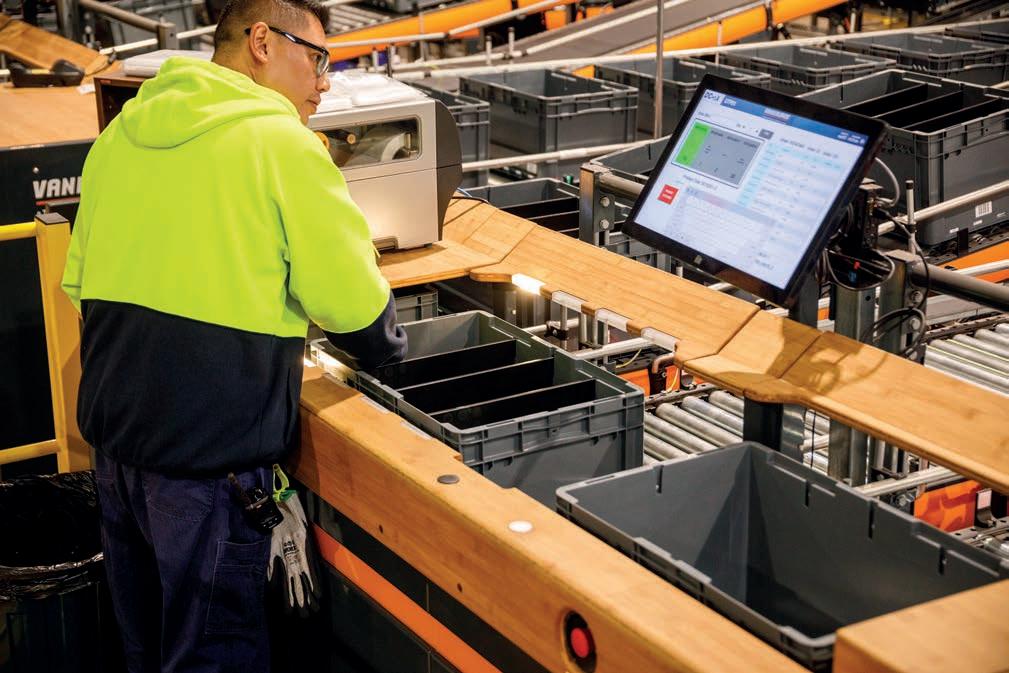
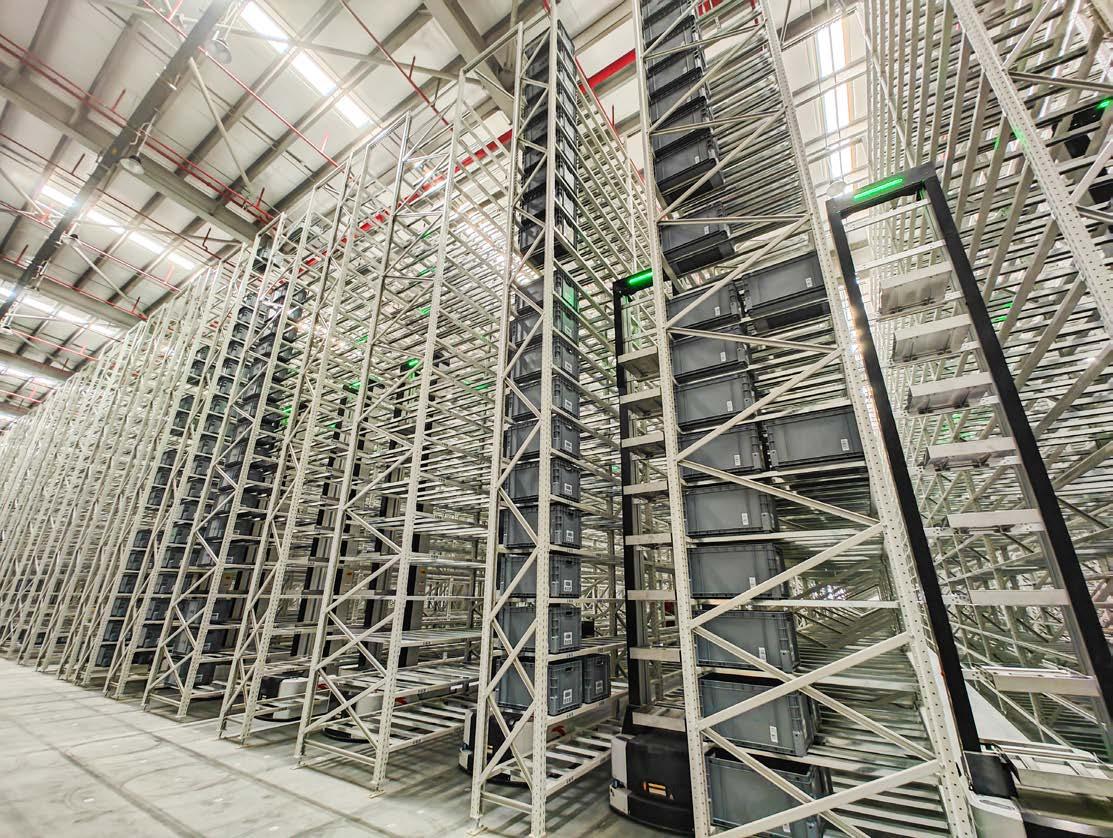
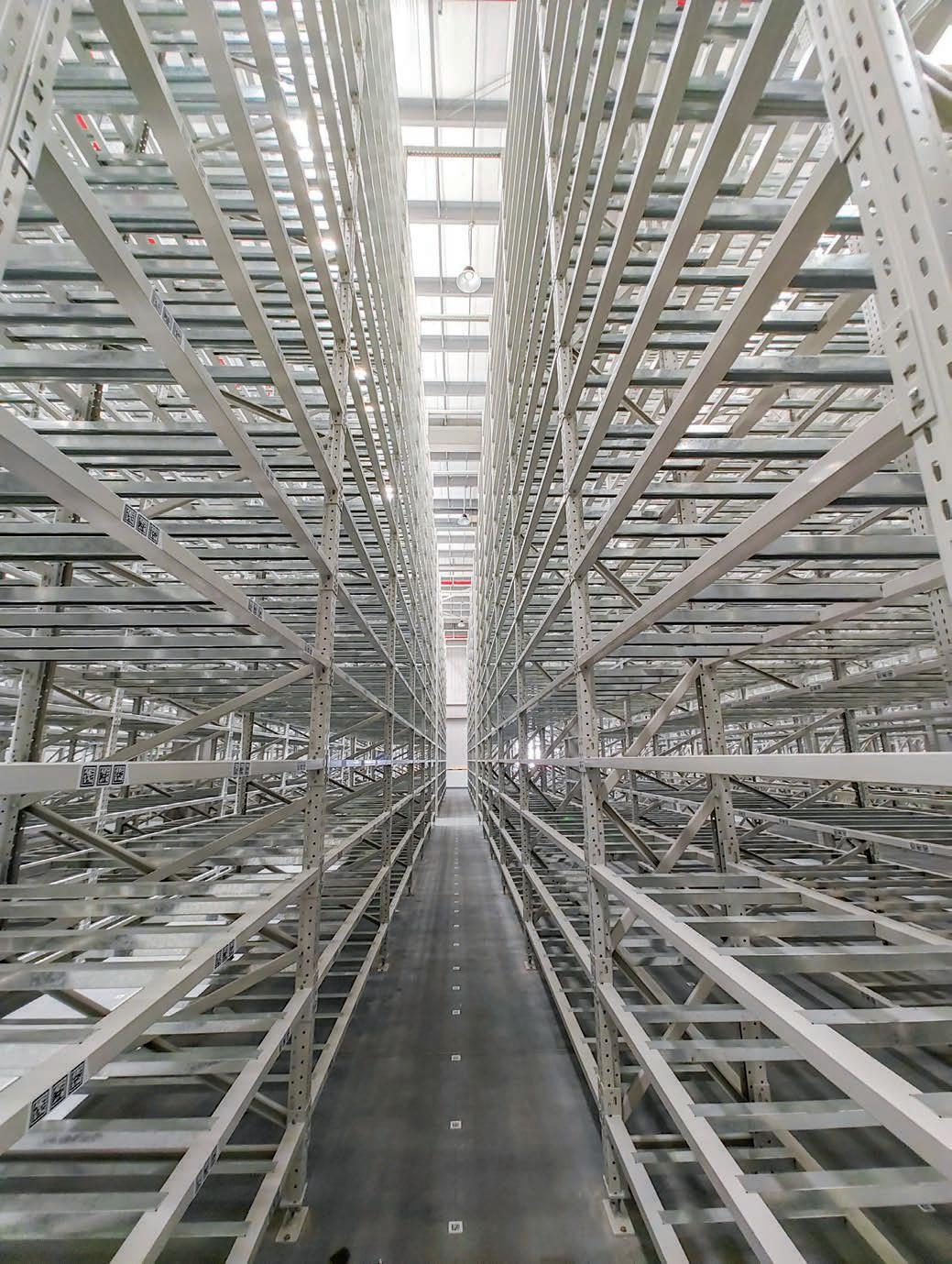
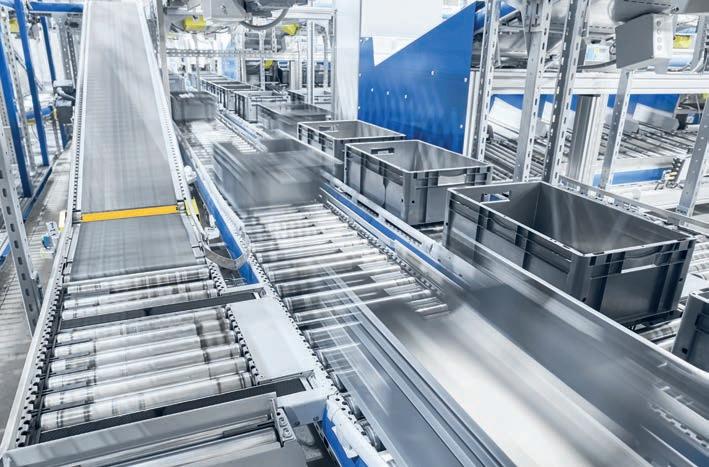
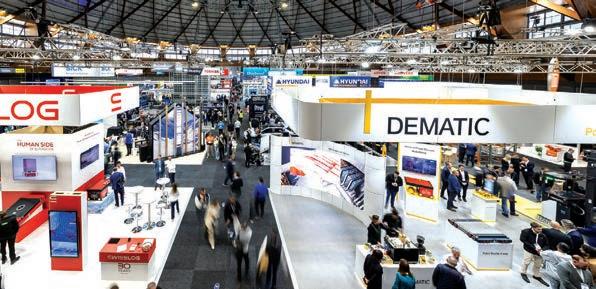
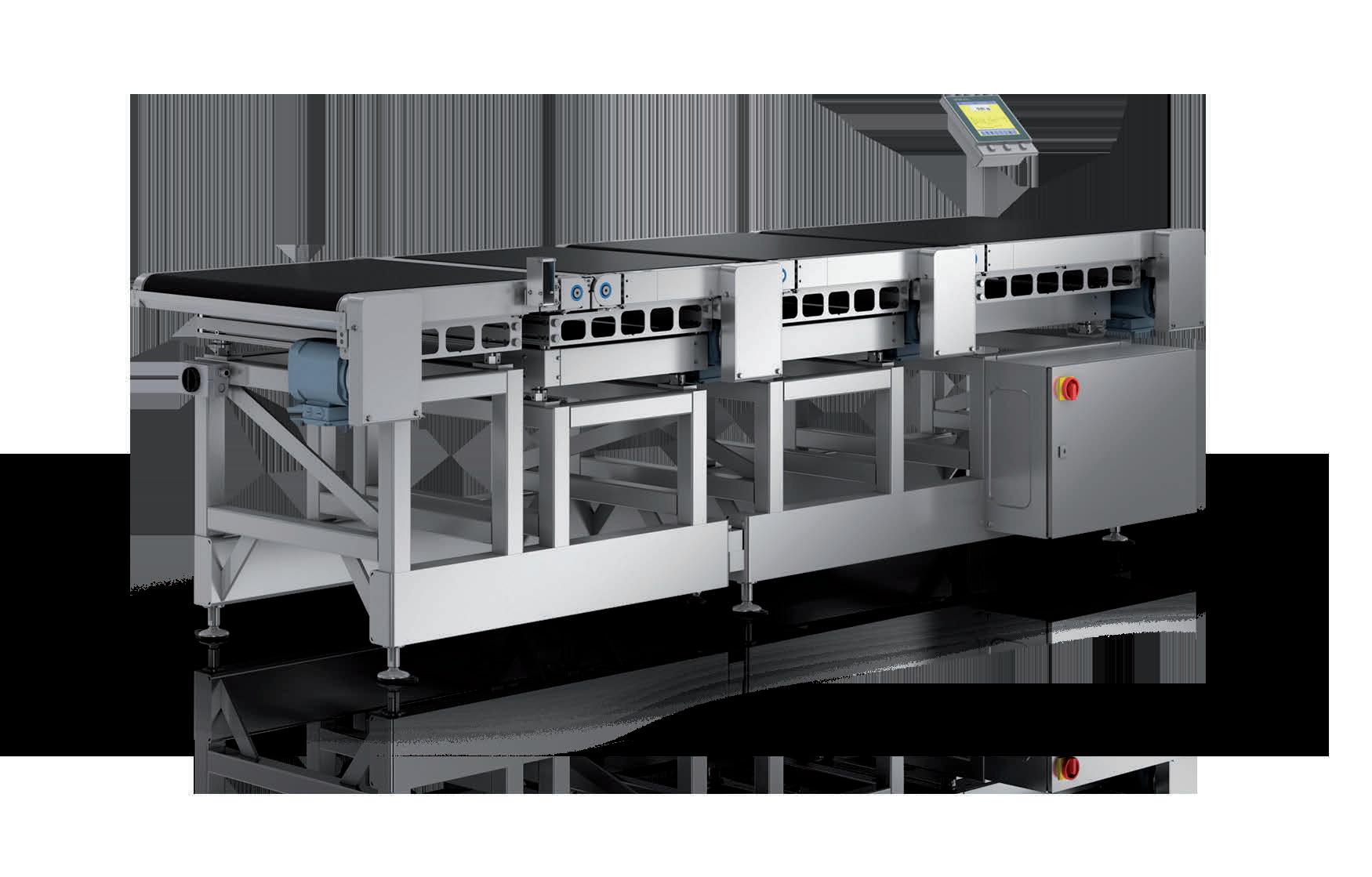
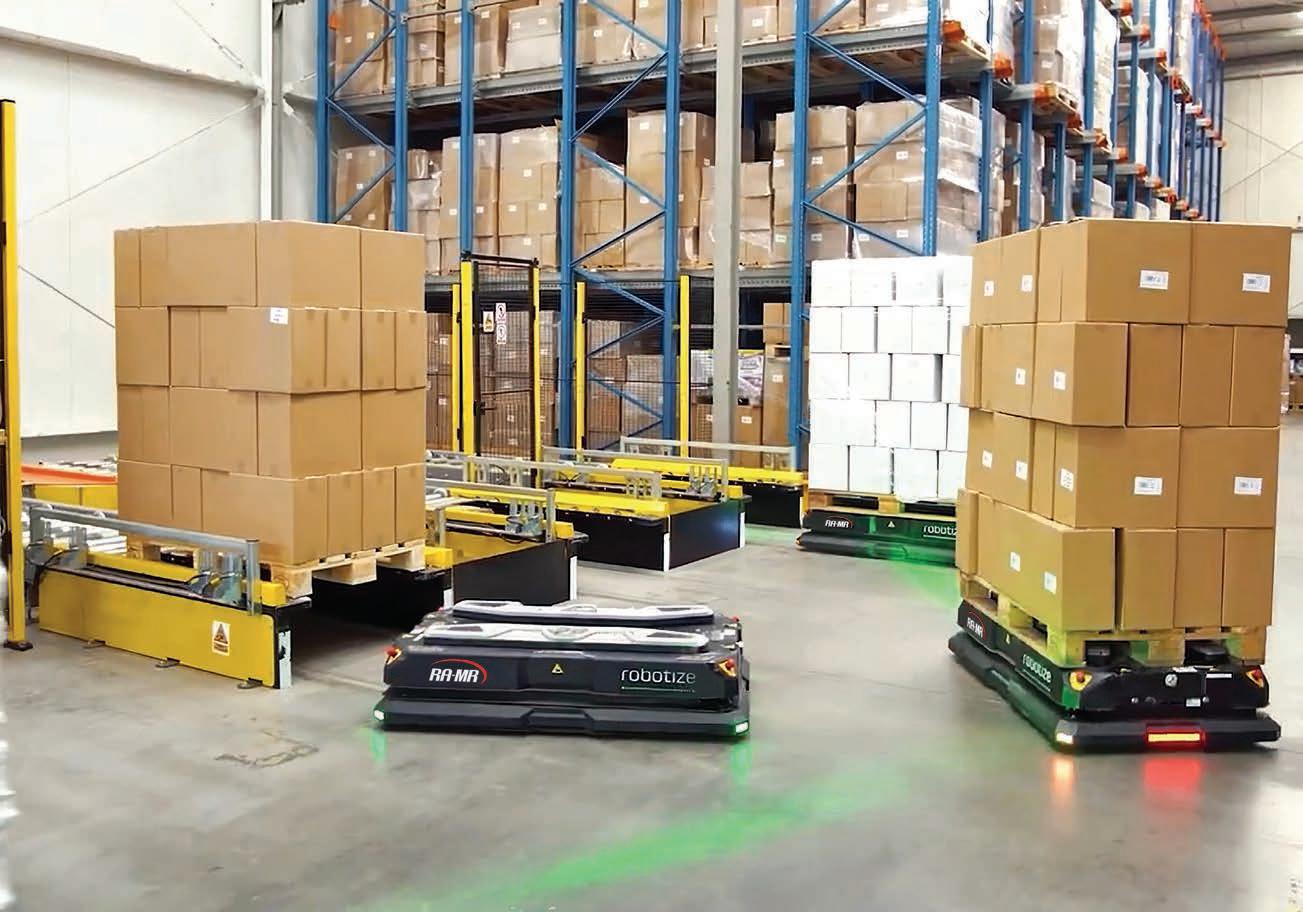
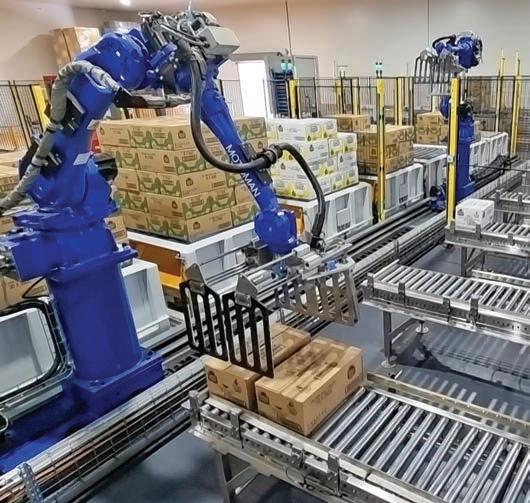
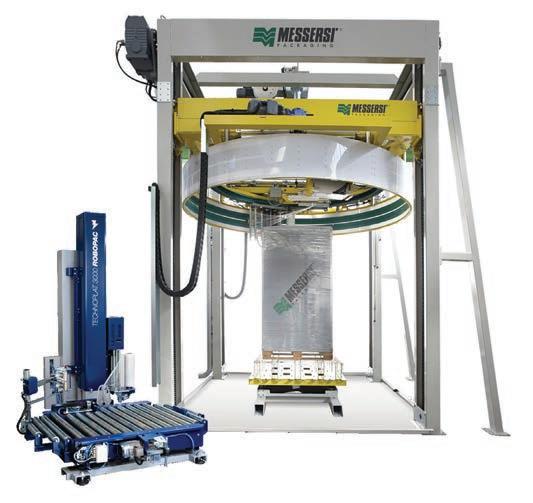
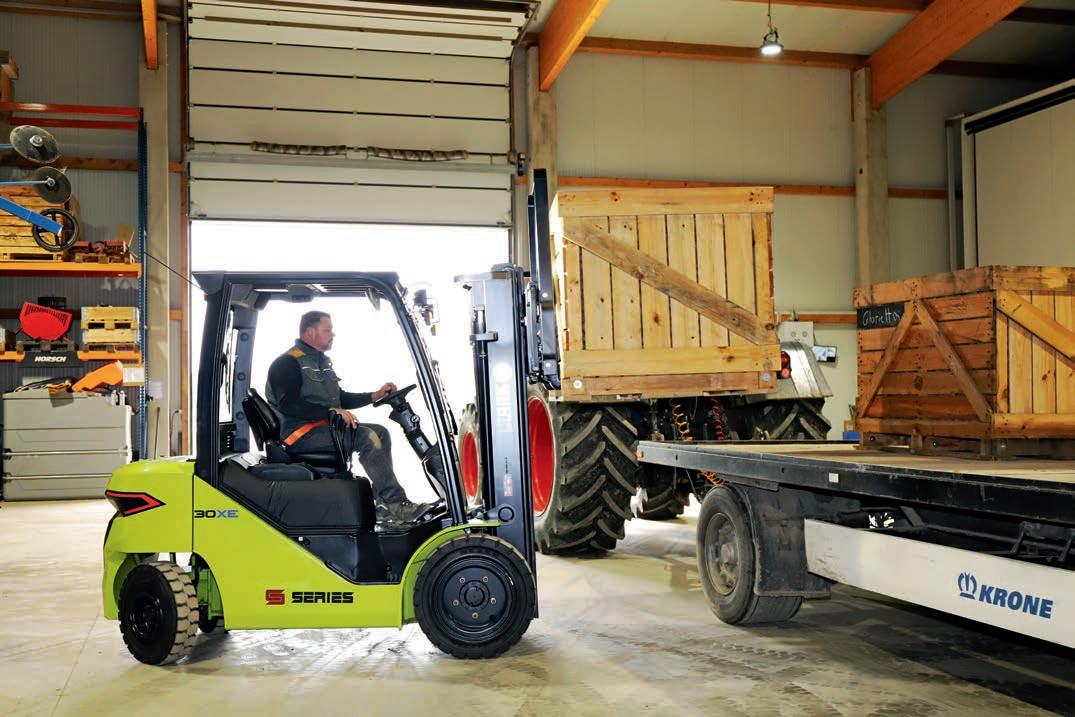
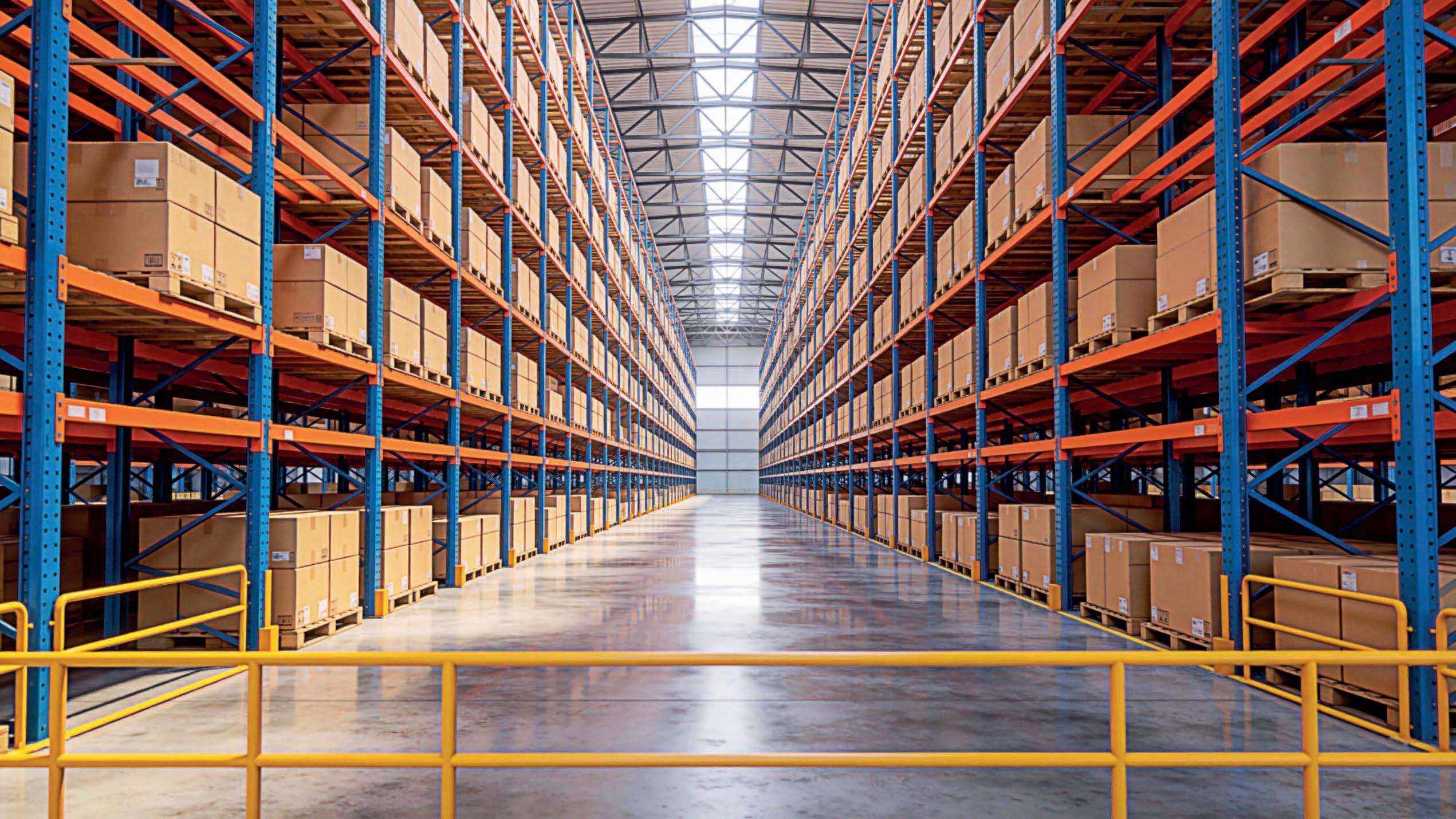
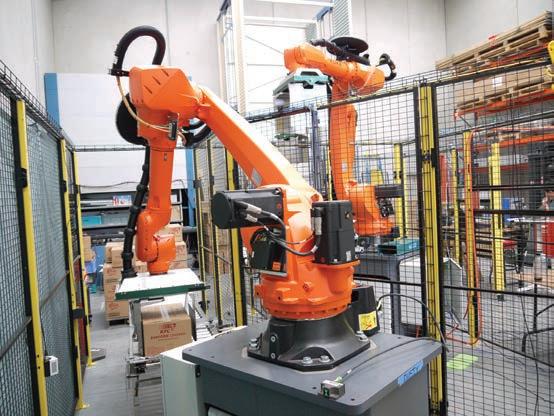
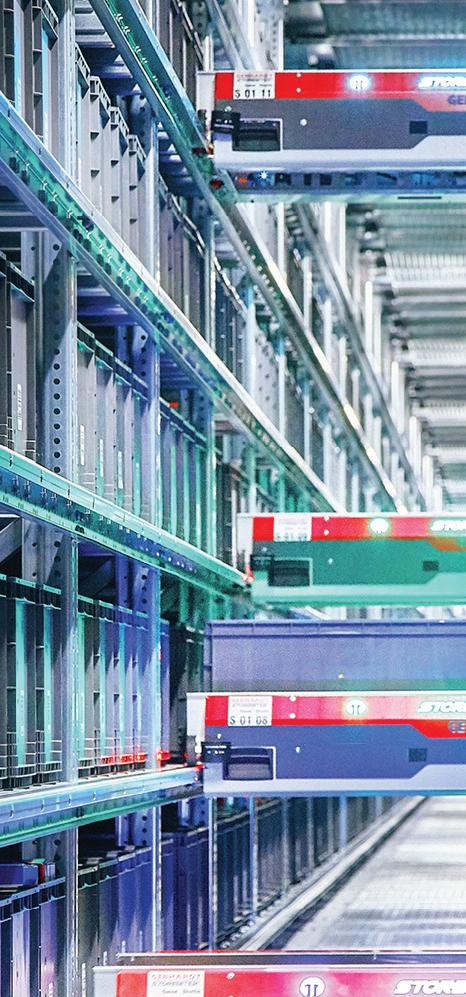
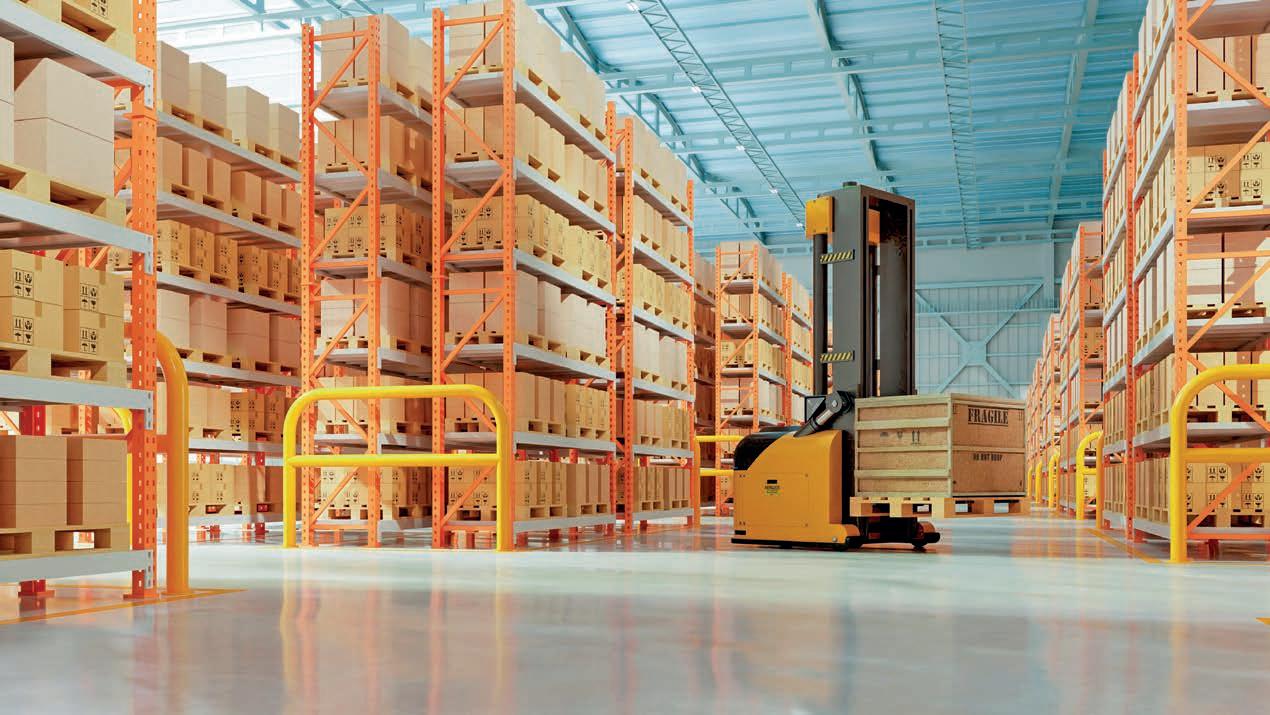
Facing challenges with labour, capacity or delivering to your customers’ expectations? Looking to optimise your current or new manual warehouse—improve visibility, storage capacity and picking productivity?
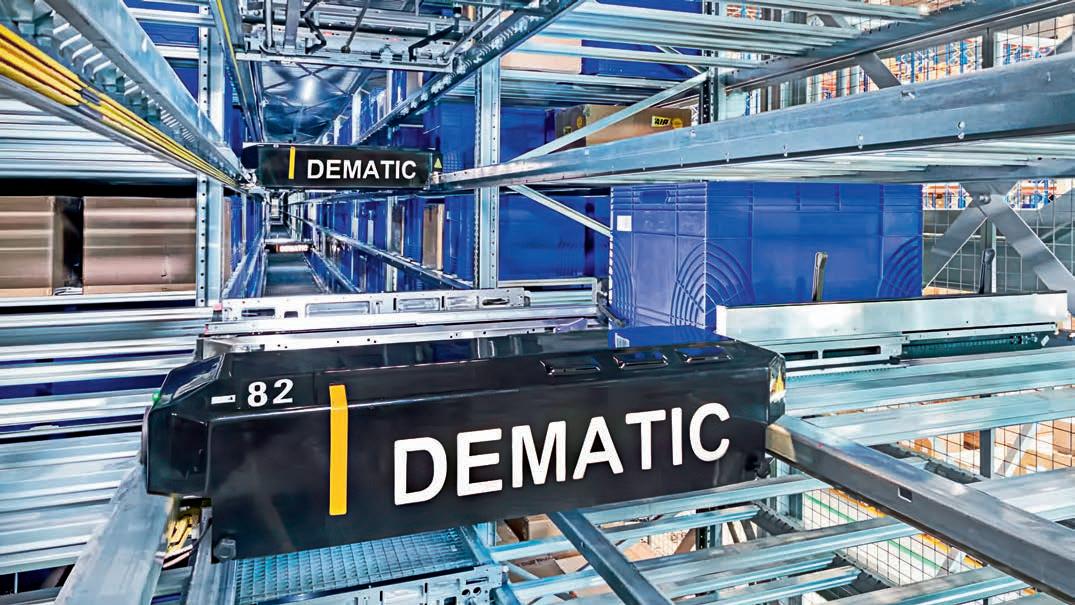
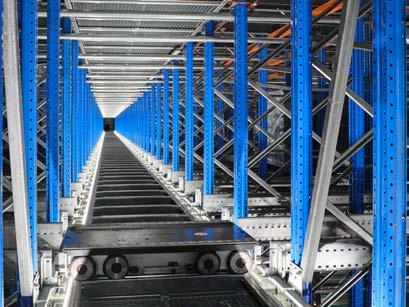
Dematic’s latest eBook explores practical optimisation technologies that can be implemented incrementally—from warehouse software and RF/ voice/vision systems to racking strategies, AMRs, and compact, scalable automated storage solutions. Supported by Australian and New Zealand case studies, it outlines a clear roadmap to improve performance today while enabling future automation as your business grows.
Learn more at dematic.com or scan the code below.
MHD
Supply Chain Solutions
CONTACT
MHD Supply Chain Solutions is published by Prime Creative Media
Australian Subscription Rates (inc GST) 1yr (11 issues) for $99.00 2yrs (22 issues) for $179.00
To subscribe and to view other overseas rates visit: www.mhdsupplychain.com.au or Email: subscriptions@primecreative.com.au
ACKNOWLEDGEMENT
MHD Supply Chain Solutions magazine is recognised by the Australian Supply Chain Institute, the Chartered Institute of Logistics and Transport Australia, the Supply Chain and Logistics Association of Australia and the Singapore Logistics and Supply Chain Management Society.
Preparing for warehousing’s next step
For many readers, June means one thing: CeMAT. This issue arrives as the warehousing and logistics sector continues to navigate a familiar mix of pressure and opportunity. Operators are being asked to move more product, manage tighter labour markets, improve safety, reduce waste, and make smarter investment decisions, often within the same budget cycle. It is little wonder automation, storage optimisation and operational visibility remain at the centre of so many industry conversations.
Across this edition, we look at the practical technologies and strategies helping businesses respond. From warehouse execution systems designed to connect automation, labour and workflows in real time, to robotics, racking, fleet technology and materials handling equipment, the common thread is clear. The industry is not simply chasing new technology for its own sake. It is looking for systems that solve real operational problems.
That point is especially relevant in the lead-up to CeMAT, where suppliers, integrators and logistics leaders will come together to discuss what works, what is changing, and where investment is heading next. For Australian operators, the challenge is often not whether technology exists, but whether it can be applied in a way that suits local conditions, existing infrastructure and changing customer requirements.
This issue also highlights the importance of people. Automation may be reshaping warehouse operations, but its success still depends on the teams that specify, implement, manage and maintain these systems. Safety, training, leadership and workforce planning remain central to the future of the sector.
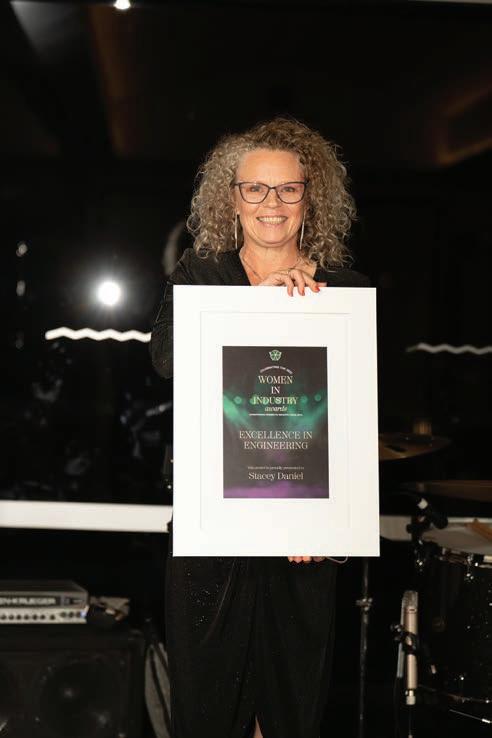
That balance between technology and people also sits behind our coverage of the Women in Industry Awards, which returns in June to recognise leaders and emerging talent across industrial sectors. It is a timely reminder that progress is not measured by equipment alone, but by the capability, resilience and diversity of the people driving industry forward.
As CeMAT approaches, this edition considers the direction of modern logistics at a practical level. The focus is on capacity, control, safety and adaptability. These are not abstract ambitions. They are the daily realities shaping warehouses, distribution centres and supply chains across Australia.
We hope this issue provides useful insight as the sector prepares for one of its key events of the year.
Happy reading!
Phillip Hazell
without written permission of the publisher. The Editor welcomes contributions but reserves the right to accept or reject any material. While every effort has been made to ensure the accuracy of information Prime Creative Media will not accept responsibility for errors or omissions or for any consequences arising from reliance on information published. The opinions expressed in MHD are not necessarily the opinions of, or endorsed by the publisher unless otherwise stated.
THIS ISSUE
18
COVER STORY
08 Dematic ANZ’s 60 year anniversary.
SUPPLY CHAIN
36 Wipotec helps operators improve accuracy.
39 Flexco uses operator feedback to innovate.
46 DLL and Swissport finance electrification.
50 Radaro helps freight operators optimise.
52 Production Reality Group tailors automation.
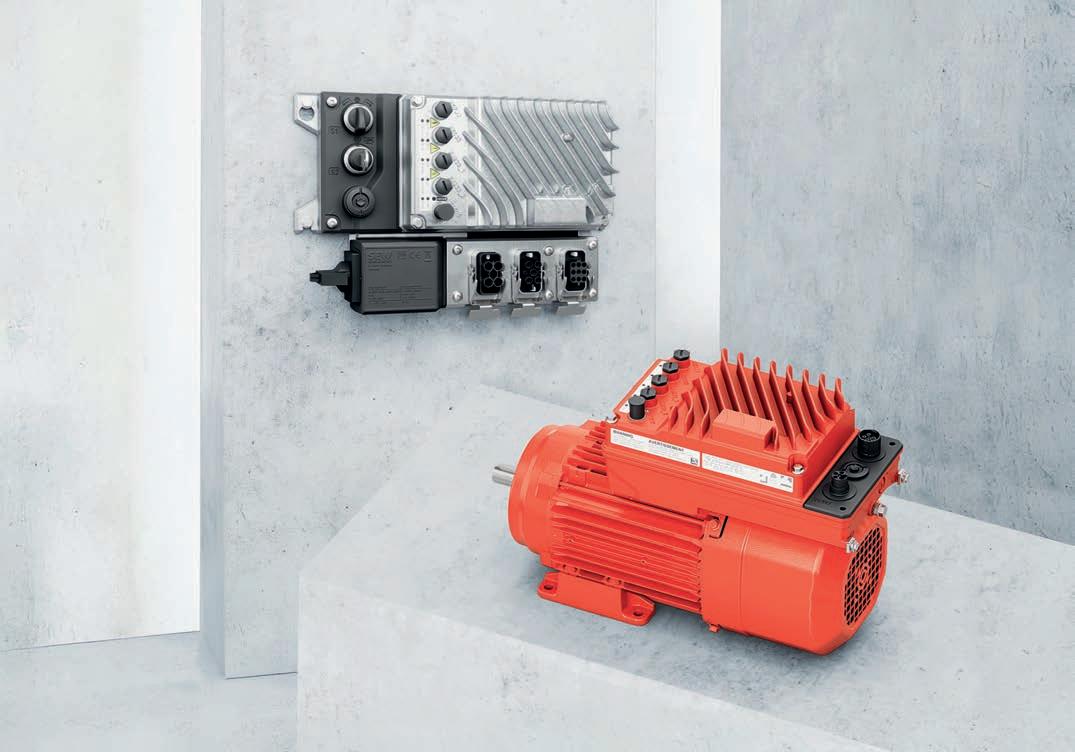
54 SEW-EURODRIVE simplifies conveyor control.
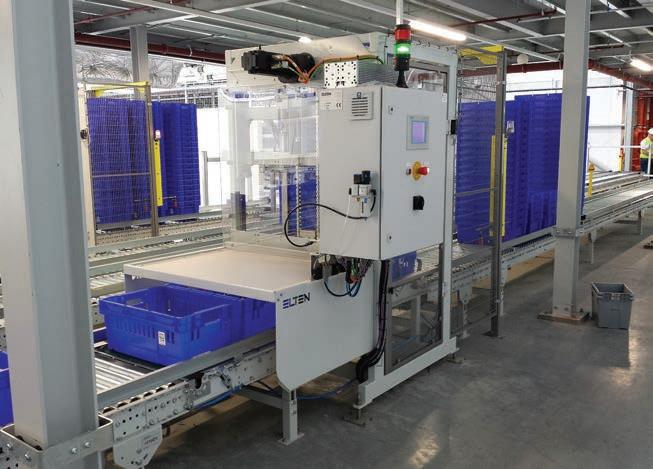
56 INWASO expands local access to Elten automation.
58 Stow delivers cold chain automation.
62 Car tonCloud helps logistics operators scale practically.
64 Extolla introduces Attabotics.
66 Netlogix helps operators improve visibility.
68 Robotic Automation supports safer mobile robot transport.
70 IFS Softeon connects warehouse automation into one workflow.
MATERIAL HANDLING
10 Toyota supplies tow tractors to LifeFlight.
12 Jungheinrich strengthens market position.
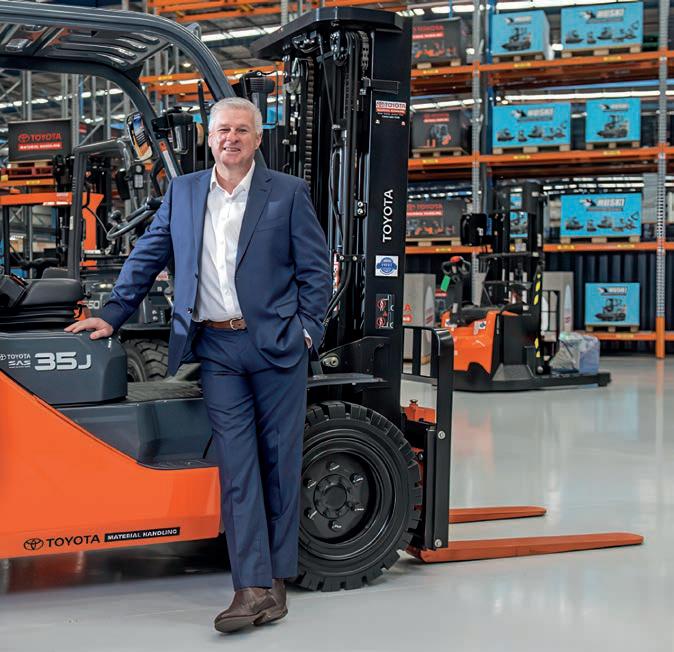
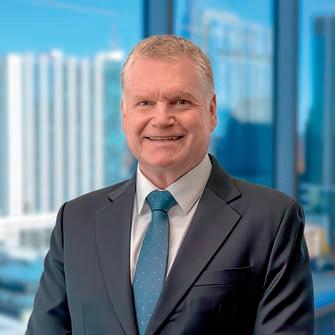
21 Toyota CEO reflects on his career
43 Combilift spotlights forklift safety.
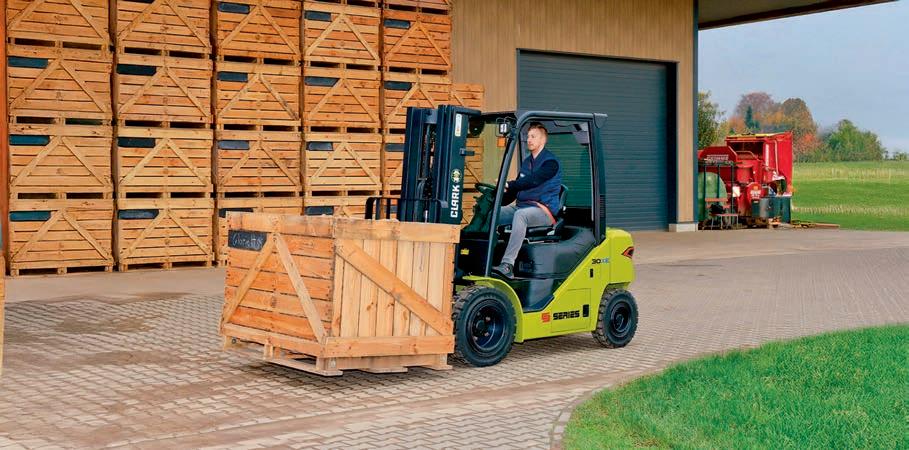
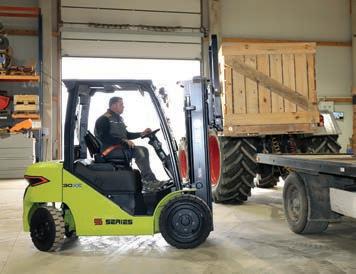
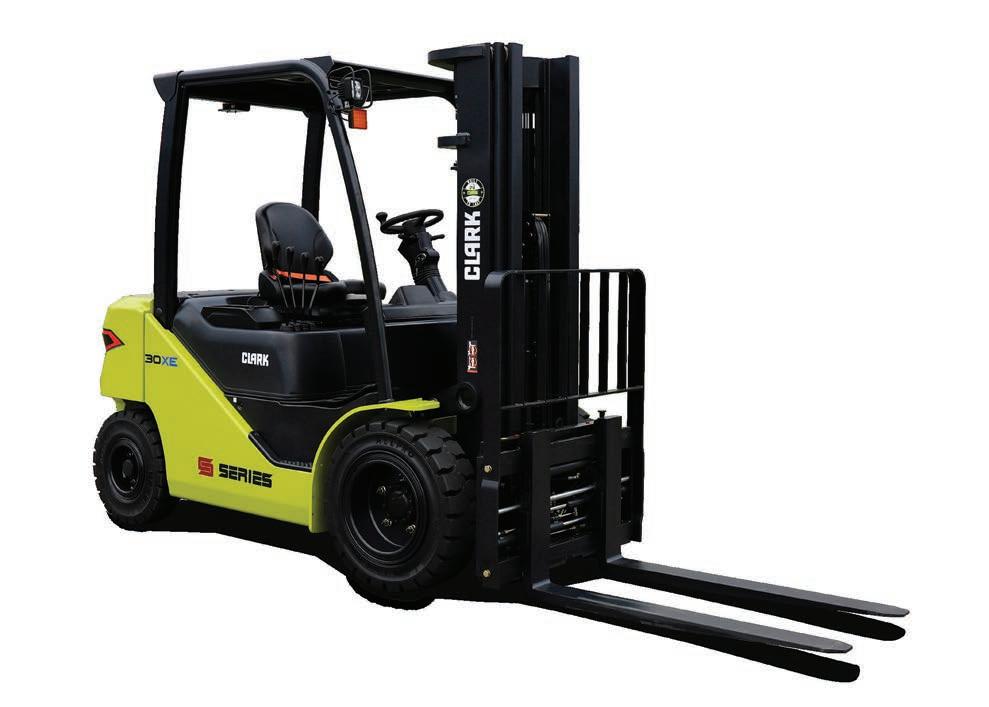
48 CLARK brings electric power to industrial forklifts.
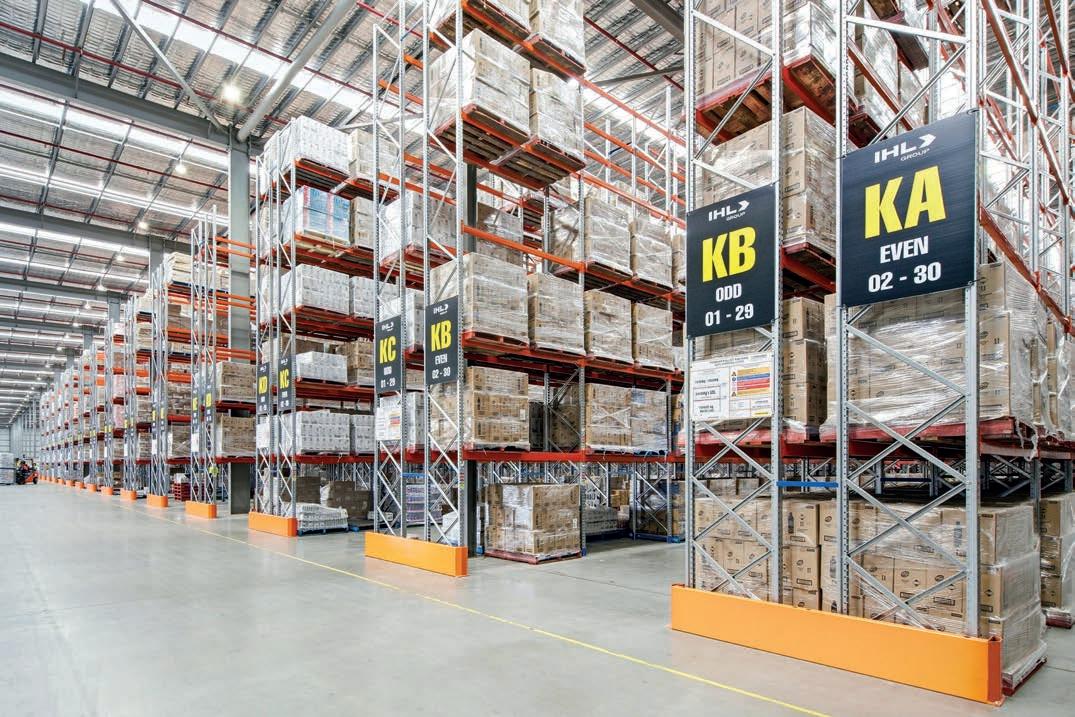
60 Premier Pallet Racking partners with IHL.
WAREHOUSES
15 Vanderlande unites under Toyota Automated Logistics.
29 Kärcher automates warehousing cleaning.
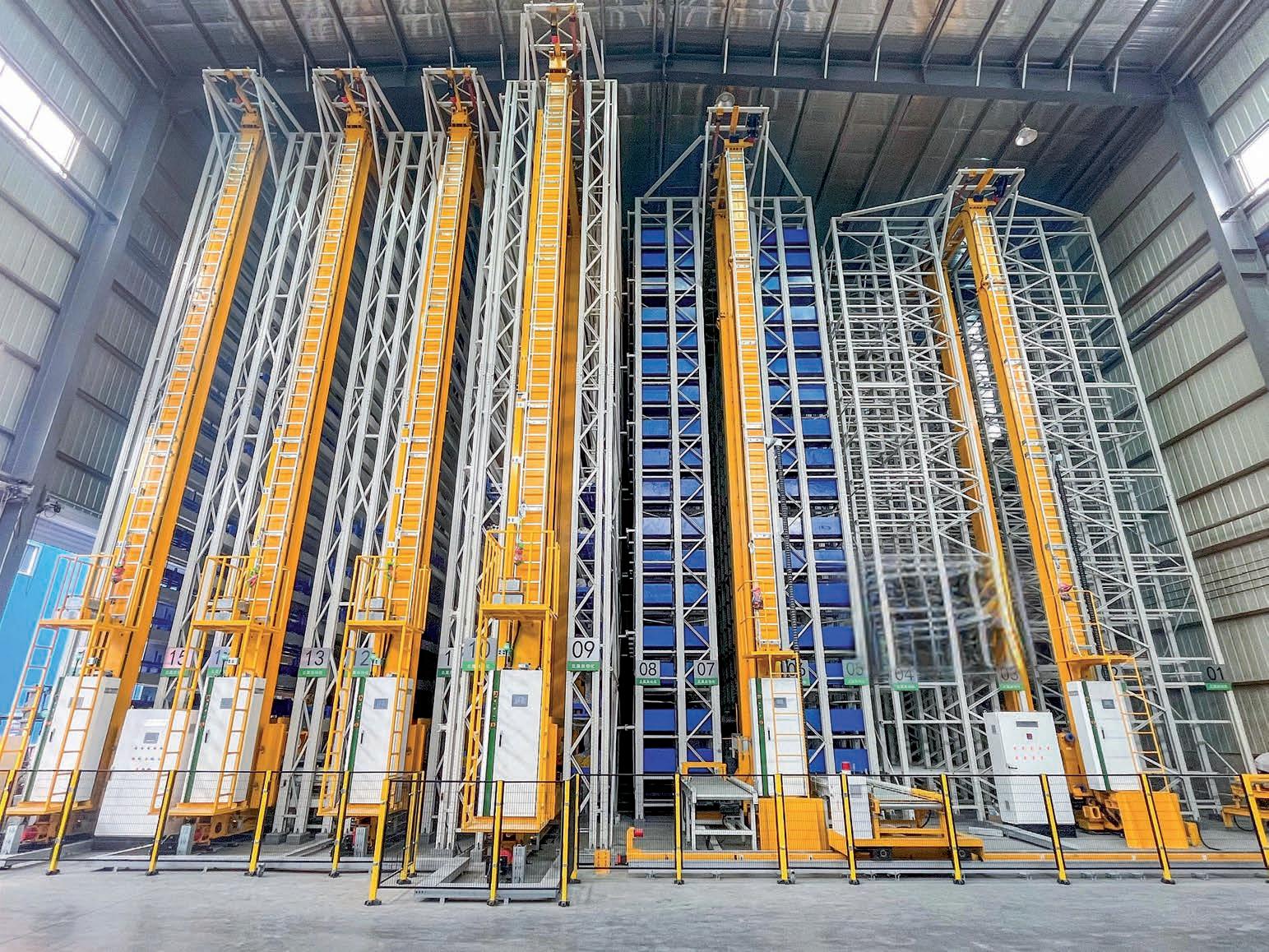
33 CH Racking combines robotic automation and high-density storage.
ASSOCIATIONS, EVENTS, AND REGULARS
03 Ed’s Letter.
06 Industry News.
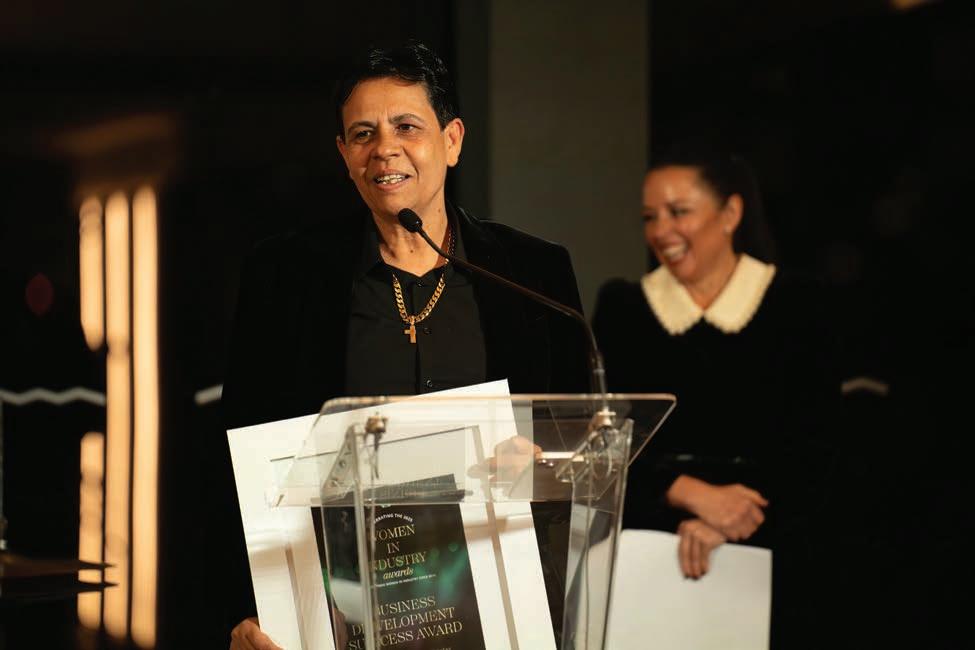
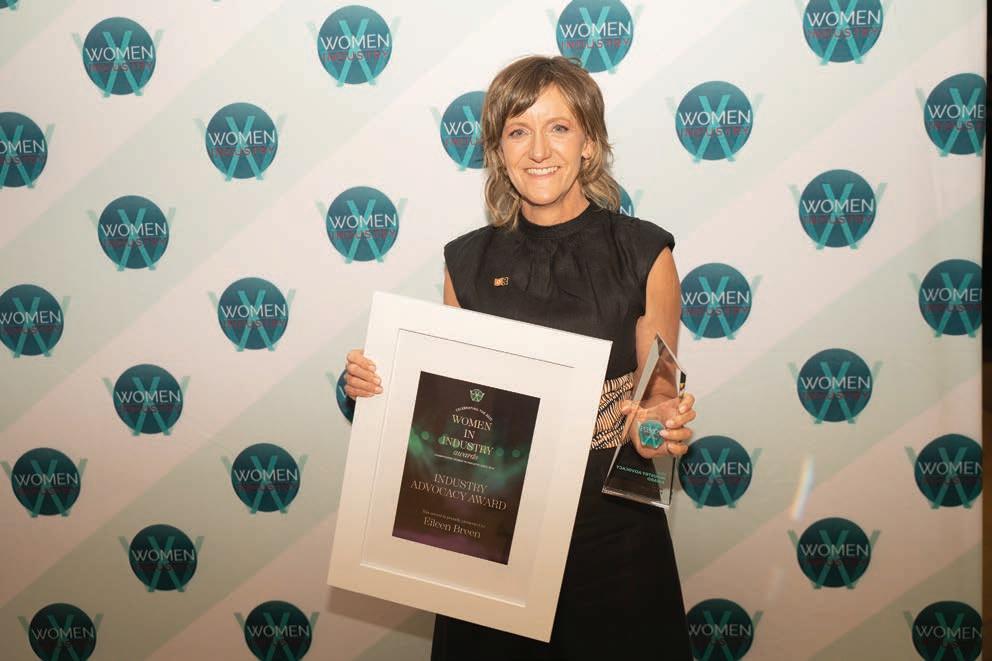
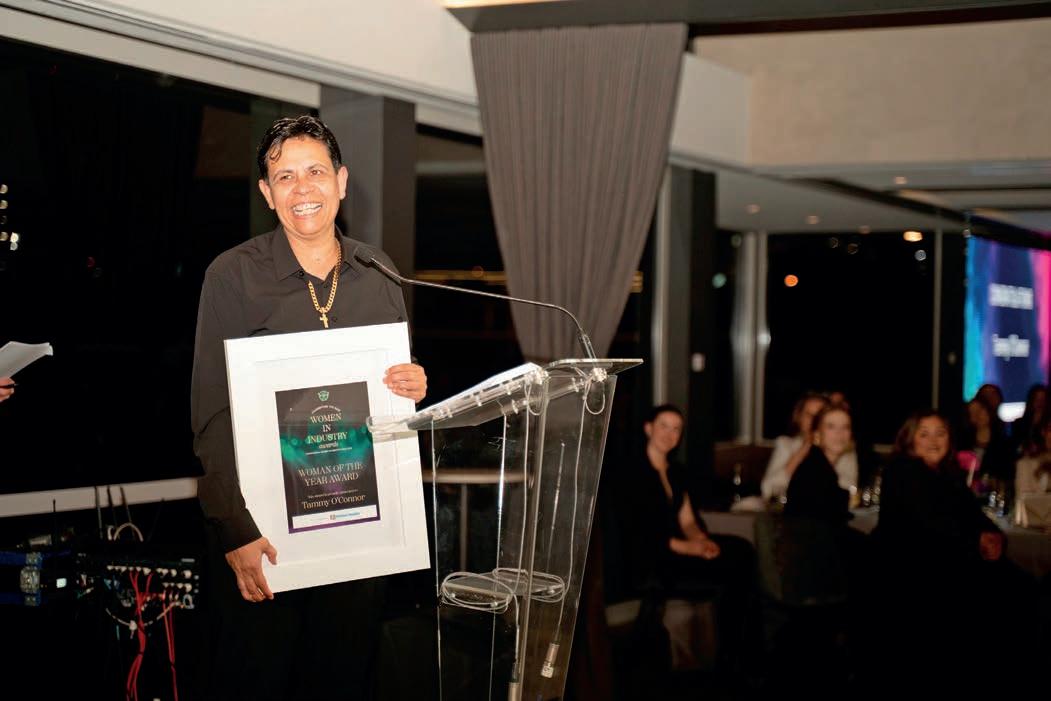
72 Women in Industry Awards.
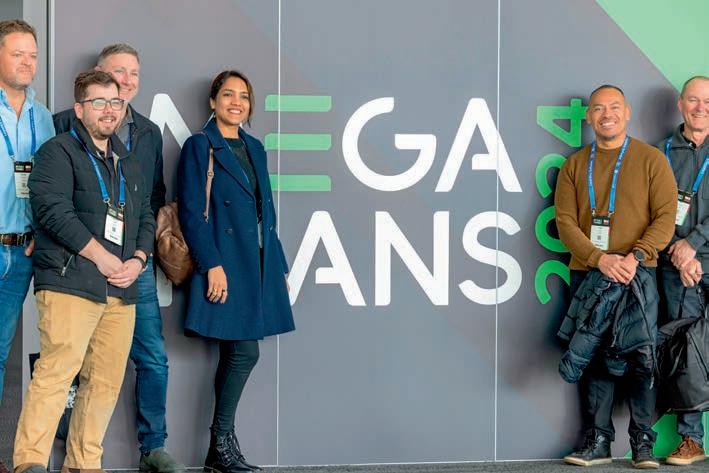
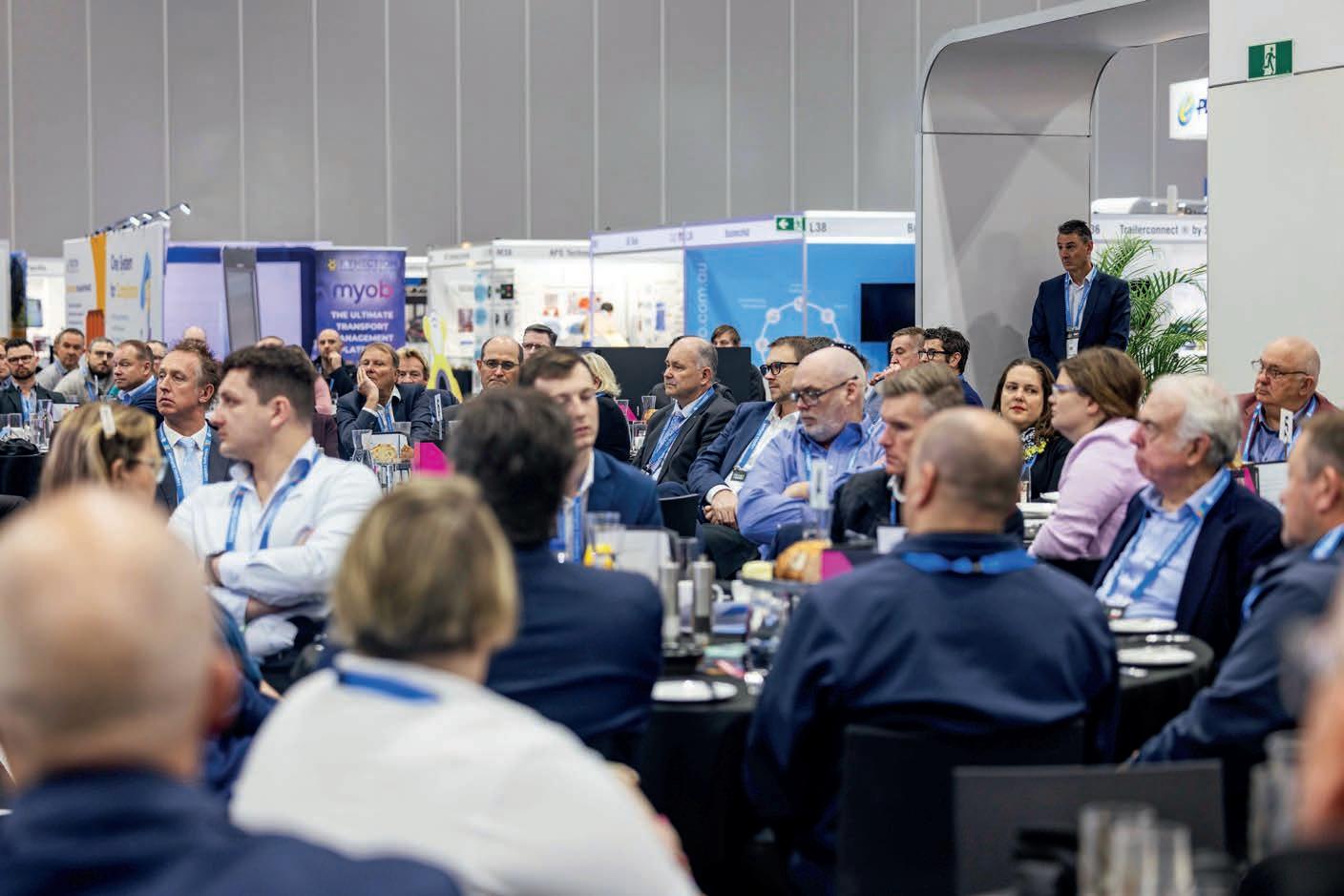
74 MegaTrans and BULK 2026.
78 ASCI.
76 ASCLA.
Amazon opens its supply chain playbook to the world
Amazon has launched Amazon Supply Chain Services, opening its freight, distribution, fulfilment and parcel shipping network to businesses beyond its own sellers.
The service will allow companies of different sizes and sectors to move, store and deliver goods through the same logistics network Amazon uses to support its retail operations and independent selling partners.
Amazon says the launch follows several years of third-party logistics expansion, during which hundreds of thousands of sellers used its network to move, store and deliver hundreds of millions of packages across thirdparty facilities, warehouses and sales channels outside the Amazon store.
Peter Larsen, vice president of Amazon Supply Chain Services, says the
company is applying the same model it used in cloud computing to supply chain.
“Amazon is bringing the infrastructure, intelligence, and scale of its supply chain services, proven over decades, to businesses everywhere, much like Amazon Web Services did for cloud computing,” he says.
The service includes freight, distribution, fulfilment and parcel shipping. Amazon says its freight network spans ocean, air, ground and rail, with support for time-sensitive shipments, customs clearance and endto-end visibility.
Its distribution and fulfilment services are designed to help businesses import, store and position inventory closer to demand, while fulfilling orders across websites, ecommerce
Government consolidates Inland Rail after $45 billion cost estimate
The Federal Government has consolidated Inland Rail, confirming construction will be completed between Beveridge in Victoria and Parkes in New South Wales by the end of 2027.
The decision follows independent cost assurance work by ACIL Allen, which found the full Melbourne to Brisbane Inland Rail project would now cost more than $45 billion.
The Government says the revised estimate is more than three times the current budget allocation, with the full project unable to be delivered until at least 2036.
Works north of Parkes will now focus on preserving the rail corridor and protecting sites for future Inland Rail intermodal terminals in Queensland.
The Government says completing the Beveridge to Parkes section will allow double-stacked freight trains to travel between Melbourne and Perth via Parkes.
The Inland Rail decision was announced alongside a further $1.75 billion investment
in Australia’s freight rail network and a $55 million incentive program to move more freight by rail and sea.
The additional funding builds on the Government’s existing $1.04 billion commitment to upgrade the Australian Rail Track Corporation network, bringing total investment under the Network Investment Program to almost $2.8 billion.
“The Government’s $1.75 billion investment in the ARTC network will shift more freight onto rail and protect this network for decades to come,” says Catherine King, Minister for Infrastructure, Transport, Regional Development and Local Government.
The works will include track renewal, passing loop extensions and signalling upgrades across the East Coast network.
Kings says these upgrades will help remove speed restrictions, improve transit times, support larger trains and improve reliability and safety.
Resilience upgrades will also be delivered in high-risk flood-prone
marketplaces, social media channels and physical stores.
Amazon says businesses can also use its parcel shipping network for orders placed across multiple sales channels, with two-to-five-day delivery speeds and seven-day-aweek service.
Procter & Gamble, 3M, Lands’ End and American Eagle Outfitters are among the first businesses to use the service.
Andrew McLean, CEO of Lands’ End, says the company is using Amazon Supply Chain Services to position inventory closer to customers.
“This consistency is central to our solutions-based approach, enabling us to serve customers with confidence and agility, especially during peak seasons,” he says. ■
sections of the network, particularly along the East-West Corridor, which has experienced several multi-week closures over the past decade following heavy rainfall in central Australia.
The Government will also establish the Transport Resilience And Capacity Kickstart pilot program, known as TRACK, to support more fuel-efficient freight movements across Australia.
A coordinator will be established within ARTC to identify and implement rail operational improvements in partnership with other rail infrastructure managers.
“This is critical funding that follows decades of underinvestment in the network by the former Coalition Government,” Catherine says.
“The 2023 independent review found major deficiencies in the governance and delivery of Inland Rail by the Liberals and Nationals,” Catherine says. “We are taking sensible decisions to realign the future of Inland Rail and build a safe, efficient and reliable network for the future.” ■
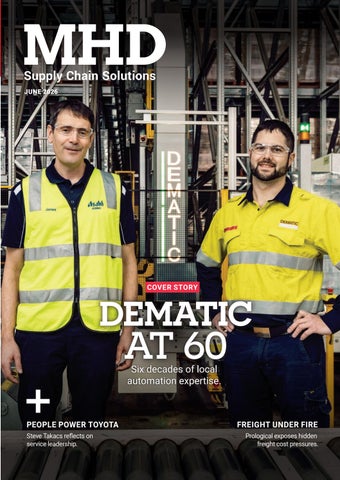
Six decades of logistics evolution
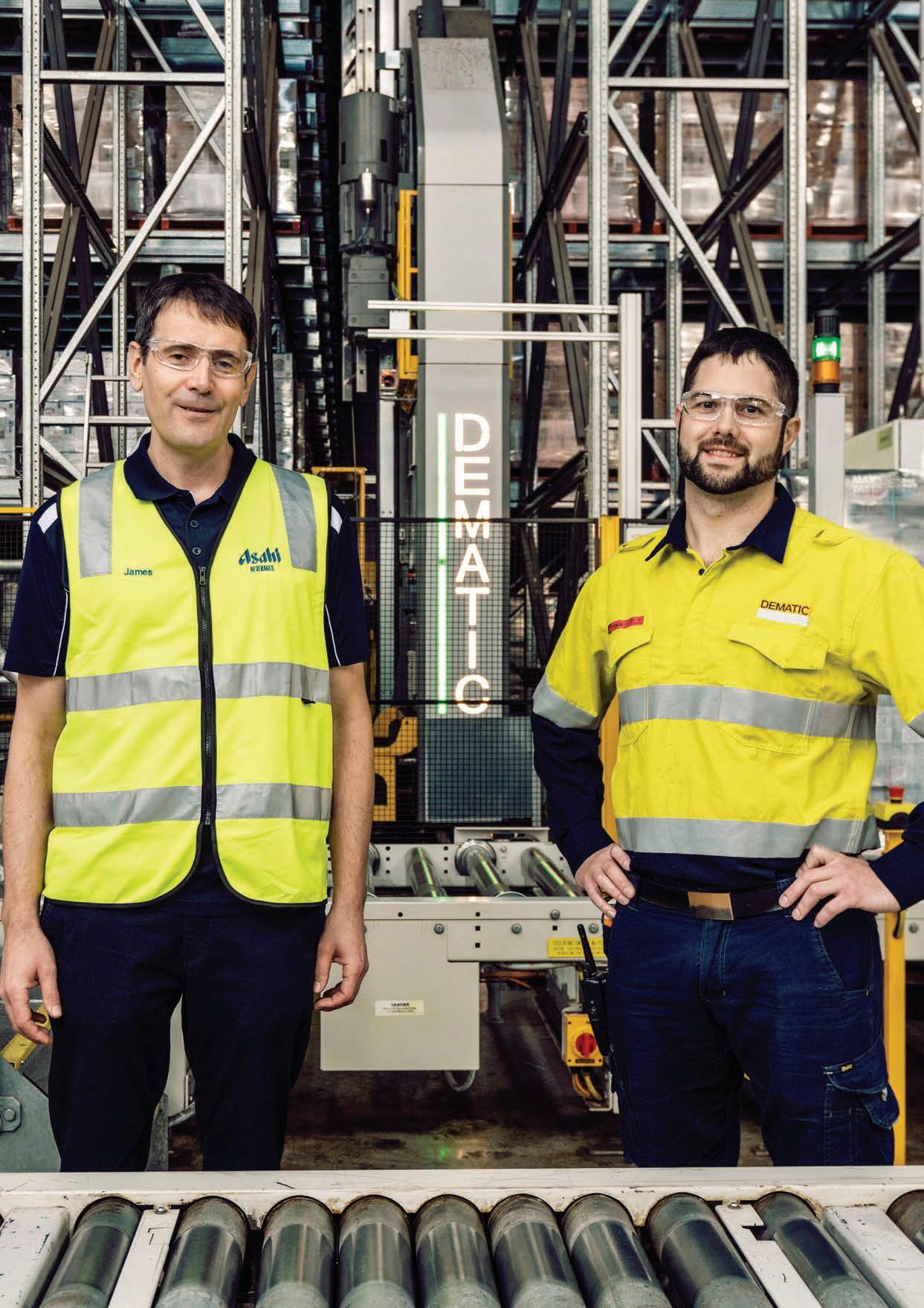
As Dematic marks 60 years in Australia and New Zealand, CEO Michael Jerogin reflects on resilience, customer partnerships, and the future of automation.
For decades, Dematic has operated across Australia and New Zealand, but 2026 marks a significant milestone for the business as it celebrates its 60th anniversary in the region. The anniversary comes at a time when supply chain and logistics operations are under growing pressure. Labour shortages, rising transport costs, land constraints, and demand volatility are forcing businesses to rethink how warehouses and distribution centres operate, with automation increasingly becoming part of that conversation.
For Michael Jerogin, CEO of Dematic APAC, the company’s longevity has been built on more than technology alone.
“I would say that the culture within the business has carried us through,” he says. “The foundations of the business, a culture of innovation, a culture focused on customer results, and a culture that still carries some of those family values around the way we interact with our people.”
remained consistent even as the business
has evolved over decades of change.
“I look at care for our customers, care for our people, and achieving our results as being those values that form the basis for decision making and for the way that we behave as we drive our business forward,” he says.
Over its 60-year history in ANZ, Dematic has operated through periods including the Global Financial Crisis, challenging economic conditions in the early 2010s, and the disruption caused by COVID-19. Michael says those moments reinforced the importance of resilience and collaboration within the business.
“Working our way through those crises, we’ve come out stronger,” he says. “I think it has been partly due to the culture and the way that our people work together.”
Operating in Australia and New Zealand has also shaped the way Dematic approaches automation and customer relationships. According to Michael, the geographic realities of the region have
“We do need a sense of independence,” he says. “We do have to have a certain resilience that allows us to operate and maintain that performance within a geographically separated and isolated world.”
That local investment has extended across engineering, consulting, technology capability, and manufacturing.
“We have invested locally because we have to,” Michael says. “We have built our local engineering competence, our local consulting and technology, and we have maintained our own manufacturing within Australia.”
While global automation providers often pursue standardisation at scale, Michael says the ANZ market requires a more balanced approach. Australia and New Zealand have comparatively smaller populations and fewer large-scale automated facilities than regions such as Europe and North America. Many projects remain unique
Dematic says local capability, customer partnerships and applied innovation have helped the company adapt across six decades in Australia and New Zealand. Images: Dematic
to provide customised or bespoke solutions,” Michael says. “But at the same time, we understand, and our customers understand, the value of standardisation. It drives down cost, it removes risk.”
He says the challenge is finding the balance between repeatable systems and customer-specific outcomes.
“At the end of the day, each customer has elements to their business that are unique,” he says. “We have that ongoing challenge of looking to standardise where we can but still maintaining an awareness that the final solution that our customers are looking for requires some elements that are unique to their business.”
That philosophy has also influenced how Dematic approaches innovation. Rather than focusing solely on developing entirely new technologies, Michael says meaningful innovation often comes from how proven systems are applied to solve operational problems.
“One area where we have been innovative, particularly in this part of the world, has been how we have applied the basic products and the basic technologies that we have for a customer solution,” he says.
He points to Dematic’s work with protein and fresh meat producers across Australia and New Zealand as an example of that approach in practice.
“Our team spent a lot of time talking with primary producers in the protein or fresh meat products industry within Australia and New Zealand,” Michael says. “We listened to some of the challenges they had with their traditional materials handling systems.”
Those conversations eventually led to the development of a solution that became widely adopted within the sector.
“We developed a solution particularly for that industry that has proven to be one of those breakthroughs that has become a standard,” he says. “It has significantly reduced their costs of operation and led to some really interesting improvements and value for our customers, particularly around shelf life of product and distribution reach.”
Transparency and long-term customer relationships have also remained central to Dematic’s strategy. Michael says
operating in ANZ has reinforced the importance of close partnerships with customers who face many of the same operational pressures.
“We have learned the value of transparency and partnership with our customers,” he says. “That close, genuine empathy for our customer has stood us apart and ensured that we’ve remained relevant.”
He says long-term lifecycle support has become increasingly important as automated systems remain operational for decades.
“Many of the systems that we put in operate well over 20 years,” Michael says. “Customers are expecting a return on that for that full 20-year lifecycle, and perhaps even more.”
To support that expectation, Dematic has continued investing in customer service capability across the region.
“Dematic in ANZ has the largest customer service organisation of any of our peers,” he says. “It is a separate and standalone business unit focused without compromise on servicing our customer and providing them the support when they need it.”
The broader supply chain landscape has also changed significantly over the past decade, particularly following COVID-19. Michael says the pandemic fundamentally shifted how senior business leaders viewed supply chain operations.
“COVID significantly changed the value of supply chain in the minds of senior executives within the corporate world,” he says. “It brought into stark reality what a disruption to your supply chain can do to your business.”
At the same time, businesses are placing greater emphasis on data,
visibility, and decision-making tools.
“Probably some of the biggest changes that are happening are around the value of data,” Michael says. “The use of data to make better decisions, to make real-time decisions, based on the ability to capture information that perhaps wasn’t seen as that valuable 10 years ago.”
Technologies such as AI, digital twins, machine learning, and advanced software platforms are now becoming increasingly important within warehouse and logistics environments. Michael says those developments will continue shaping the future of automation, although he expects the core engineering foundations of the industry to remain consistent.
“There may be some breakthrough technologies,” he says. “There may be some real innovation around the use of software and data and that interface with the mechatronics world.”
At the same time, he expects scale and operational complexity to continue increasing.
“Our solutioning and consulting will only become more and more focused on larger and more complex operations as businesses continue to scale up,” Michael says.
Despite the technological evolution occurring across the sector, Michael believes the fundamentals behind strong customer relationships remain unchanged.
“I think many partnerships, the word gets used in a way that’s not really a partnership,” he says. “If we can continue to focus with empathy on our customers, we can work with them to solve their problems and the challenges that exist for all our businesses.”
As Dematic marks its 60th anniversary in Australia and New Zealand, the company’s message is less about celebrating longevity alone and more about adapting alongside customers through changing market conditions. For Michael, that ability to evolve while maintaining long-term relationships remains central to the business.
“I think that’s something that’s kept us effective and as a valued part of our customers’ supply chains for the past 60 years.” ■
Michael Jerogin, APAC CEO, Dematic.
Toyota tow tractors pull their weight in helicopter rescues
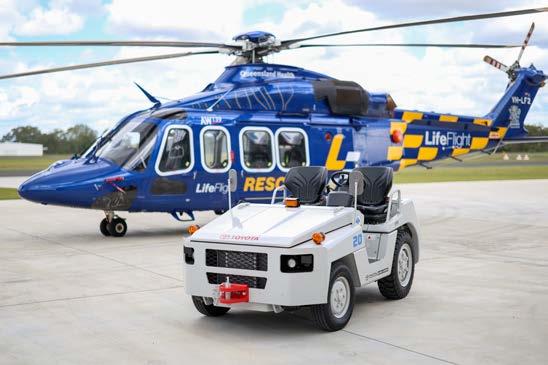
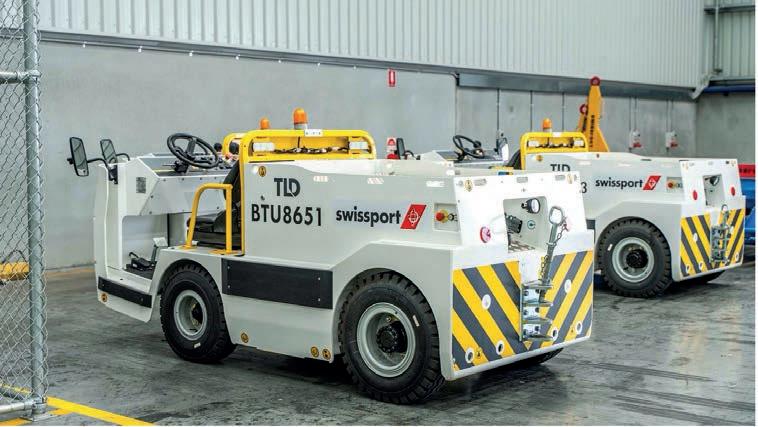
TMHA has supplied Toyota TD20 tow tractors to help LifeFlight move emergency helicopters reliably across its Queensland operations.
Toyota Material Handling
Australia (TMHA) has joined with LifeFlight, one of the largest suppliers of aeromedical services in the Southern Hemisphere, to reinforce the emergency organisation’s ground handling capability.
Five new Toyota TD20 tow tractors (tugs) have been positioned at LifeFlight facilities across Queensland, including the engineering hub known as the LifeFlight Clive Berghofer Maintenance Centre in Brisbane, all part of a major upgrade aimed at meeting strict operational response standards. More are scheduled for delivery.
LifeFlight operates specialist helicopters and fixed-wing aircraft fitted out as mobile intensive care units from eight bases across Queensland and Singapore.
“We’re servicing a 21-strong helicopter fleet, so we need reliable equipment to move the helicopters, which can weigh up to 7,000 tonnes,” says Michael Dopking, LifeFlight Engineering Operations Manager.
The new Toyota TD20 diesel tow tractors will service the entire fleet with emphasis on deployment of the emergency helicopters according to strict response protocol.
“They will cover the shortest distance of any of our machinery – towing our helicopters no more than 200 metres from their hangar to the Final Approach and Take Off area – but they must do so with absolute reliability,” Michael says.
LifeFlight is a not-for-profit organisation, formed from a single grassroots regional helicopter service in 1979. Medical and aircrew teams are on call 24/7 and helped close to 9,000 people in 2025. LifeFlight is funded in Queensland through a service agreement with the State Government to deliver essential aeromedical services.
Additional funding to go beyond the service agreement requirements comes from community donations and profitfor-purpose activities. LifeFlight is currently in the middle of a substantial improvement program. Michael says TMHA had generously provided the tractors at special pricing to LifeFlight, resulting in cost efficiencies for the aeromedical charity.
“We operate on a tight budget, so any savings that can be found is a big help,” he said. “Toyota has been extremely supportive and we’re grateful to have their backing.”
The new Toyota tow tractors will replace machines of various makes, which, according to LifeFlight, were approaching the end of their reliability cycle.
Along with its acquisition of the Toyota tow tractors, LifeFlight is undertaking upgrades of its regional facilities and of its aircraft fleet.
Leonardo AW139 helicopters from Italy are retrofitted in Queensland with a modular medical fit-out system, inclusive of oxygen supply, medical air supply, medical devices, and IV bags.
“There’s a perception that our helicopters are used simply to transfer patients to hospital,” Michael says.
“In reality, they are well-equipped flying ambulances, crewed by doctors and Queensland Ambulance Service (QAS) flight paramedics, capable of offering life-saving support from the time they arrive on the scene. Those first few minutes when we arrive on site can be critical.”
The 3.5-litre direct-injection 2Z diesel has the power to haul large loads over long distances, beyond the LifeFlight requirement but comfortably within the organisation’s specification for reliability. According to Michael, diesel start-up dependability in areas of extreme ambient temperature in remote
outback locations was a determining factor in LifeFlight’s choice.
The tow tractors can also be driven by a person holding a road driving licence or, on certain airfields, by a licenced airside operator.
“They will have an extremely easy, but incredibly important life,” Michael says. “We’re used to seeing tow tugs in constant operation at busy airports.
“Ours will clock minimum hours, so part of our regime will be to drive them occasionally on the apron to ensure they remain prepared.”
LifeFlight has joined the tow tractors to its Gannet maintenance software program, which oversees all its machinery.
“The Toyota tugs have proven to be a reliable workhorse for us over many years,” Michael says. “We’re made even more confident by the knowledge that Toyota service is available across our operational region.” ■
For more information freecall 1800 428 438 or visit online at www.toyotamaterialhandling.com.au
Toyota TD20 tow tractors support LifeFlight’s helicopter ground handling operations across Queensland. Image: TMHA
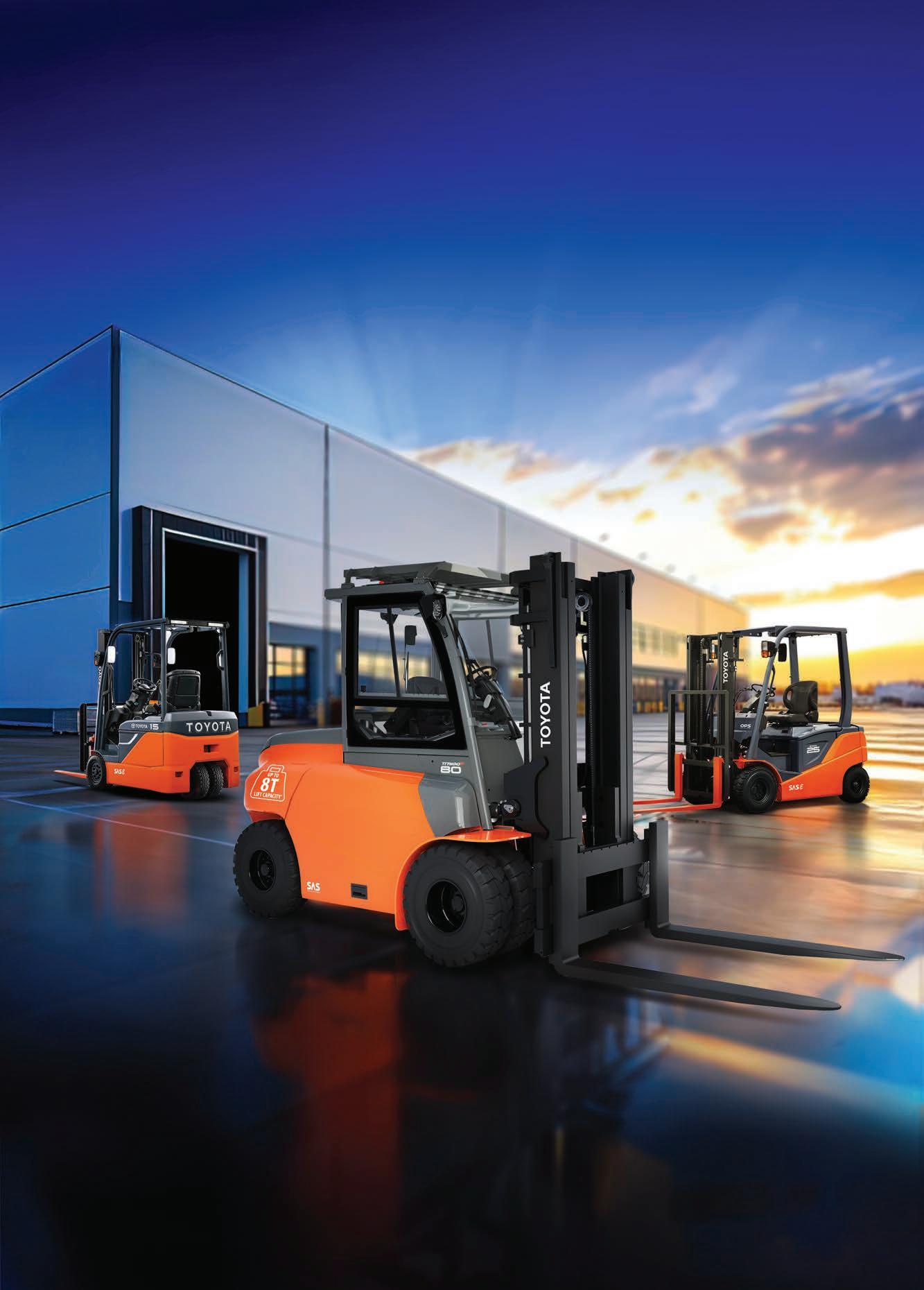
Demand is shifting. Labour is tightening. Expectations are accelerating. Built on Toyota strength, Toyota Automated Logistics delivers automation designed to adapt as fast as your business does. Toyota Automated Logistics is engineered for change. Combining scalable systems, intelligent software and global expertise to help your operation evolve in real time. Whether you’re automating for the first time or optimising at scale, Toyota Automated Logistics gives you the flexibility to move forward without limits. Not just automation for today. Automation that keeps you ready for what’s next. For every challenge a reliable solution.
Find out more: toyota-automated-logistics.com
Flexibility, speed, and fit-for-purpose solutions
Jungheinrich Australia is strengthening its market position through a complete materials handling portfolio, flexible commercial models, and speed to market, as warehouse operators place greater emphasis on efficiency and cost control.
Warehouse operators are under increasing pressure to lift efficiency while managing labour constraints, energy costs, and throughput demands. For materials handling providers, the expectation is shifting from supplying individual pieces of equipment to delivering solutions that align with how sites actually operate.
For Jungheinrich Australia, that position is built around responsiveness, portfolio breadth and fit-for-purpose design, with speed to market forming a key part of its local value proposition. Scott Coy, Director – Rental and Sales Management at Jungheinrich Australia, says the ability to deliver equipment quickly remains a practical advantage for customers operating under time and cost pressure.
“For us, a key focus is speed to market. A number of our products, from order through to delivery, can be as little as around three months at times, which gives customers a relatively fast turnaround.”
Speed and flexibility as core drivers
That responsiveness is supported by direct access to manufacturing, but
Scott says it needs to be matched with flexibility across both solution design and commercial structure. The company’s approach extends beyond individual truck specification to include portfolio choice and alternative business models.
“When we talk about flexibility, that covers commercial flexibility, product portfolio flexibility with us, and a certain level of factory customisation.”
In practical terms, this includes alternative commercial structures for customers operating larger fleets. For operations running high volumes of equipment, Jungheinrich offers usagebased models designed to better reflect actual operational demand.
“If you’re a customer that has a large fleet within your warehouse portfolio, a portion of that can be what we call Flexi Fleet. You literally pay for the hours you use it.”
Alongside this, the business maintains a broad product portfolio that combines Jungheinrich’s own equipment with value-focused and partner brands, as well as racking and automation capability. This allows Jungheinrich to support a wide range
of applications beyond traditional warehousing without forcing customers into a single equipment type or utilisation model.
Scott says this flexibility becomes more important as operations diversify and demand becomes less predictable. Rather than focusing solely on highspecification equipment or largescale automation, the emphasis is on providing the right solution for each site.
“We have our own Jungheinrich branded equipment, but we also have partnerships that allow us to stretch into industries outside your typical warehousing and logistics.”
Balancing standardisation and customisation
While flexibility is a core part of the model, not every solution requires customisation. In many cases, standard machines meet operational requirement effectively, particularly where speed of deployment is critical.
“There’s a lot of our standard product portfolio that does meet a customer requirement.”
At the same time, where operations
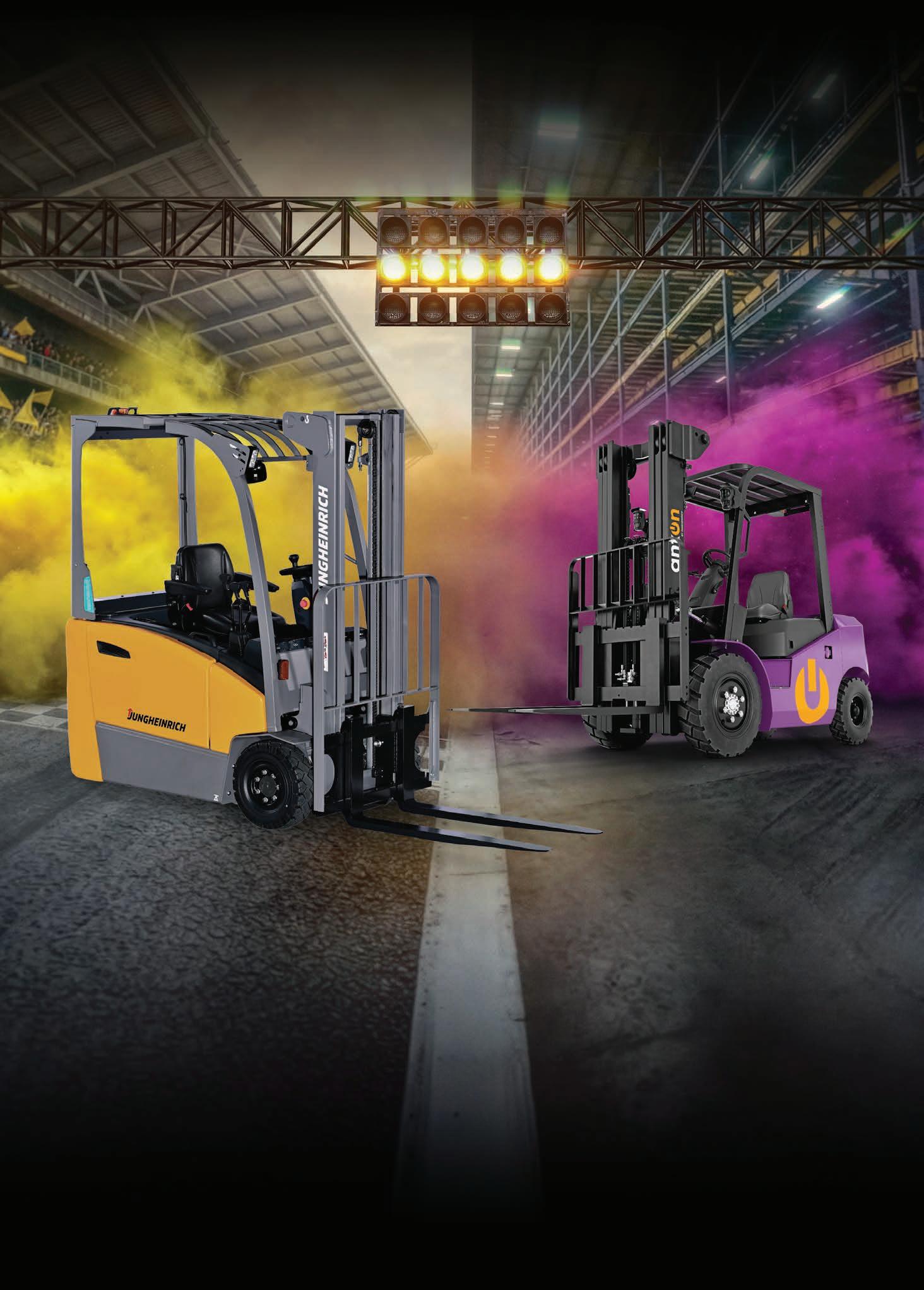
AntOn by Jungheinrich offers valuefocused materials handling equipment for cost-conscious warehouse operators. Image: Jungheinrich
are more complex, the company works directly with customers to develop tailored, site-specific solutions. This is supported by Jungheinrich’s ability to design and build customised equipment through its manufacturing plants.
“There are times where a customer’s site and operations are quite specific. Being an OEM, we can design and manufacture our own equipment and work closely with our customers to find a solution that exactly suits their requirements.”
That process is grounded in understanding how a site operates on a day-to-day basis, rather than applying a predefined configuration. Scott says the starting point is always the same.
“It’s always a close conversation with the customer out on their site, walking their warehouse, really working out what the exact solution is.”
At the same time, Jungheinrich maintains local stock of standard equipment to support customers that need immediate deployment. This balance between stock availability and plant-built customisation allows the business to respond across different operational timelines.
“We ensure that we always have a standard offering within our locations around Australia for that efficient speed-to-market need.”
Electrification and cost pressures
Cost pressures are shaping how customers approach equipment decisions, particularly in relation to energy and fuel. The shift towards electrification, and specifically lithiumion technology, continues to accelerate across the market.
“We’re seeing not only the continued shift towards electrification, but also the heightened push at the moment, especially given fuel availability and pricing pressures.”
For many operators, the focus is not just on changing energy sources, but on reducing downtime and improving operational continuity. Scott says this is where lithium-ion solutions are gaining traction.
“It’s very important for a customer to minimise downtime as much as they can. Any downtime they have is a cost
they can’t recover.”
Jungheinrich has invested heavily in lithium-ion technology, including integrating battery systems directly into its equipment rather than relying on retrofit solutions.
“Jungheinrich was an early adopter of lithium-ion solutions within the materials handling equipment industry. Our products are designed and manufactured around lithiumion, so it’s fully integrated within the truck.”
While upfront costs can be higher, the conversation is increasingly centred on total cost of ownership (TCO) rather than purchase price alone.
“Often, the upfront cost is higher, but the return on investment over a relatively short period of time, when you’re talking five years plus, is significantly more compelling.”
Total cost of ownership in focus
Rather than focusing solely on purchase price, Jungheinrich is increasingly engaging customers around TCO, particularly when transitioning from internal combustion fleets. Scott points to a recent example involving a customer operating a fleet of LPG forklifts.
“The customer was spending upwards of 6 figures per annum on LPG to keep their LPG forklifts running.”
By moving to an electric, lithiumion solution, the cost profile changed materially over time, even when factoring in infrastructure upgrades.
“When you start looking at total cost of ownership, the cost saving was upwards of just under a million dollars over a six to seven-year term for this customer.”
Scott says these discussions are driven by transparency rather than pushing a predetermined outcome.
“If there’s no genuine commercial benefit, we’ll let the customer know that. We’re open and transparent with those conversations.”
Automation and staged adoption
Automation remains an area of strong interest, although adoption varies depending on site maturity,
layout and capital availability.
Jungheinrich’s approach is to work through operational requirements before introducing automation into the conversation.
“Automation can definitely come with a larger upfront cost. However, when you work through the total cost of ownership, the return on investment becomes very visible.”
For new facilities, automation can be designed into the layout from the outset. For existing sites, the focus is on staged integration without disruption.
“We can work with brownfield sites and redesign the operational flow, or in many cases fit an automated solution within the customer’s current design.”
This staged approach allows customers to adopt automation progressively rather than committing to large-scale projects upfront.
CeMAT:
full portfolio on show
At CeMAT Australia, Jungheinrich will reflect this portfolio-led approach by showcasing both premium and valuefocused solutions across two stands.
“One will be focused on Jungheinrich and our high-end solutions, so highvolume operations, automation, racking, the full portfolio.”
Alongside this, the AntOn by Jungheinrich range will be positioned towards customers with lower utilisation requirements or more costsensitive operations.
“The AntOn portfolio is really for that customer who doesn’t need high utilisation and is focused on value. It’s a good product. I’ve driven it myself, and it performs well.”
Looking ahead, product development remains closely tied to customer feedback and local market requirements. The focus is on refining existing solutions while introducing new technologies that improve efficiency and performance.
“Our local product team works closely with our sales team and customers to understand what’s required in the market. Then we work directly with our factories to adapt those solutions for local conditions.”
Toyota Automated Logistics combines local delivery support with broader automation capability across Australia and New Zealand.
A new chapter in warehouse automation
Toyota Automated Logistics unites automation expertise to support scalable, practical warehouse solutions across Australia and New Zealand.
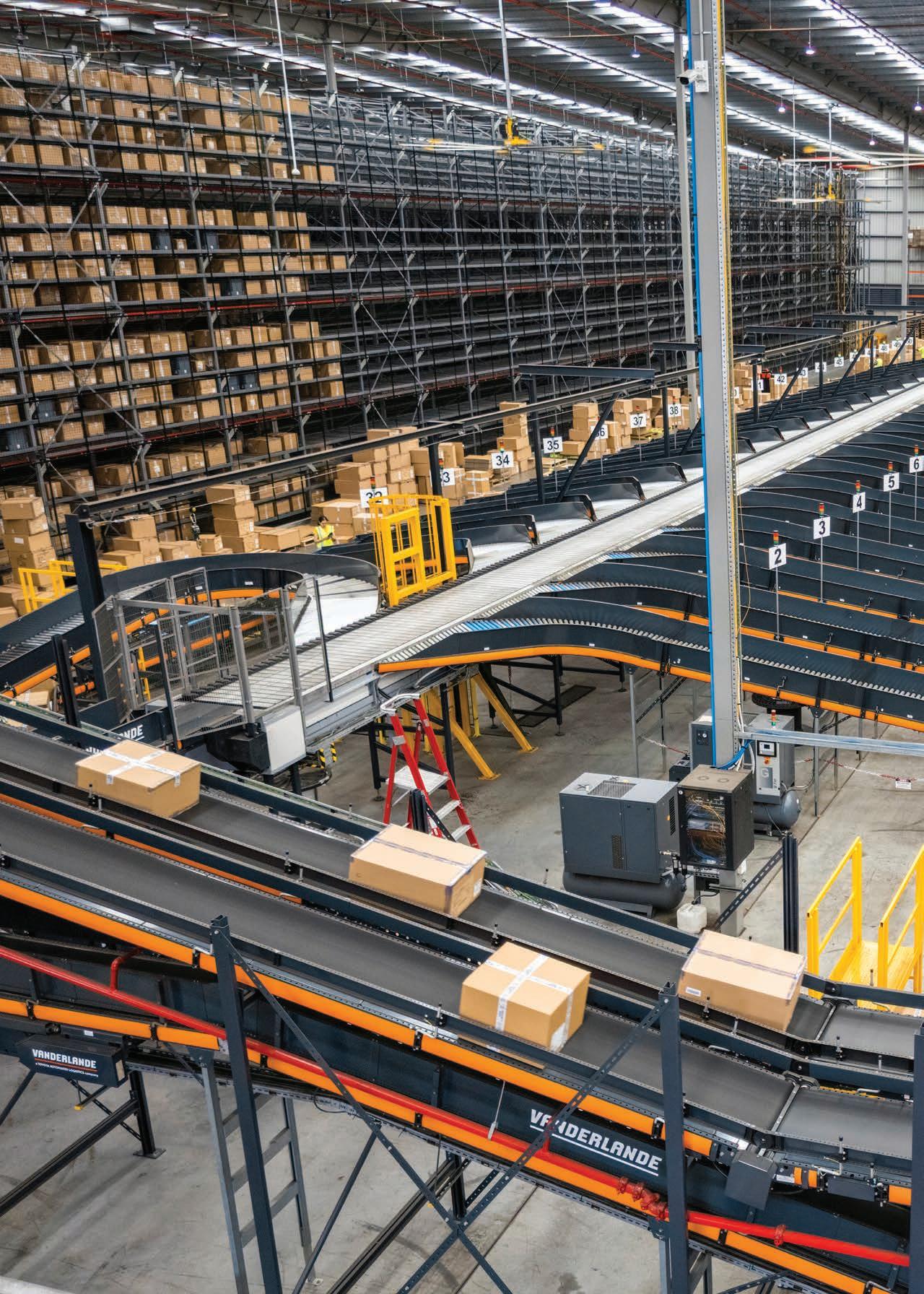
The formation of Toyota Automated Logistics marks a new phase in the development of warehouse automation. For customers across Australia and New Zealand, it brings together the experience and technology of Vanderlande warehousing, viastore, and Bastian Solutions under one structure.
From 1 April 2026, the three businesses are being more closely aligned to support a broader range of warehouse automation requirements. Each organisation brings experience across different areas of automation, from high-throughput distribution centres and shuttle-based storage systems to robotic solutions and
software platforms. By combining these capabilities, Toyota Automated Logistics aims to support customers across more stages of the warehouse automation lifecycle.
For customers, the change provides access to a broader portfolio while retaining the engineering knowledge, delivery capability, and sector experience developed by each business over many years.
Your lifetime automation partner
Toyota Automated Logistics is built around long-term customer partnerships. The business works with customers at different stages of their automation journey, from forklift-based
operations through to highly automated distribution centres.
“From my perspective, automation is not about a single project, it’s about building a long-term pathway with our customers,” says Roald de Groot, Director of Sales. “That pathway can start small, solve a very specific challenge, and scale over time as the operation evolves.”
This journey does not need to begin with a large or complex investment. For many customers, the most practical starting point is a targeted solution that addresses a specific operational challenge. Whether automating a single process or introducing focused technology within an existing
operation, these steps can deliver value while supporting a broader automation strategy over time.
Designed around the customer
Toyota Automated Logistics’ strategy is based on an integrator-first approach, supported by selective own functional modules. This means solutions are designed around customer requirements rather than being limited to one technology or product set.
In practical terms, this means customers can access solutions that are:
• t ailored to specific operational needs
• s calable as requirements change
• c onsidered across the broader value chain, not only individual components
Rather than focusing only on largescale automation, this approach also allows customers to automate selected processes within their supply chain.
“We see many customers who don’t want to jump straight into full automation,” adds Roald.
Global structure, local capability
Toyota Automated Logistics operates through a three-region structure across the Americas, EMEA, and Asia-Pacific. For customers in Australia and New Zealand, this means continued access to local teams, supported by global engineering, delivery, and technology capability.
Within this new structure, Vanderlande’s warehousing operations, active in Australia since 2012, will transition into Toyota Automated Logistics. Vanderlande has delivered and supported projects for companies including ASICS, Woolworths, Kmart and The Iconic, which will now be supported by Toyota Automated Logistics.
“Having worked in this market for many years, we’ve built strong partnerships with some of Australia’s leading retailers and logistics operators,” says Roald. “That local experience, combined with global capability, is what allows us to consistently deliver in complex environments.”
The Australian business has experience across industries including
grocery, fashion, general merchandise, parcel, and airport operations.
Driving efficiency through integration
Another part of the Toyota Automated Logistics strategy is the gradual alignment of back-end operations. While customer-facing delivery remains locally responsive, back-end integration is intended to improve consistency, speed, and cost efficiency.
For customers, this is designed to create a more coordinated experience from concept development through to delivery and long-term support, while maintaining flexibility for sitespecific requirements.
Built on warehouse expertise
Toyota Automated Logistics is backed by Toyota Industries Corporation and draws on its approach to quality, reliability, and continuous improvement.
These principles are applied alongside warehouse automation expertise to support solutions that are practical, operationally sound, and suited to real-world environments.
Supporting customers
Warehouse automation is not only about technology. It is also about helping businesses respond to changing operating conditions. E-commerce growth, labour constraints, service expectations, and cost pressures are all influencing how companies think about automation.
Toyota Automated Logistics supports customers through this
orking collaboratively to define
roviding clarity on performance, cost, and implementation
upporting integration with existing
ssisting with long-term optimisation and improvement
The company’s role is to support customers as they assess where automation fits, how it can be introduced, and how systems can evolve as operational needs change.
Toyota Automated Logistics supports warehouse operators with systems designed around practical workflows and site requirements. Images: Vanderlande
Freight efficiency under pressure
Prological highlights how fuel pressures expose freight inefficiencies and drive supply chain awareness in manufacturing.
Rising fuel costs are adding pressure to already tight manufacturing margins.
For many Australian manufacturers, the issue is not just cost, but how freight is structured, managed, and understood. Against this backdrop, supply chain capability is emerging as a defining factor in long-term viability.
“It is really, really difficult,” says Peter Jones, Managing Director and Founder, Prological.
Manufacturers across Australia are navigating an operating environment shaped by cost volatility, labour constraints, and increasingly complex distribution networks.
While fuel price increases are a clear pressure point, they are exposing deeper
structural issues in how supply chains are designed and prioritised. For many businesses, these challenges are not new, but they are becoming harder to ignore.
Peter says one of the most consistent patterns he has observed is the dominance of manufacturing culture over supply chain investment.
“Manufacturing businesses were started by people with a passion for manufacturing,” he says. “As a result of that, some of the other important verticals fall somewhere below that on the list of priority.”
This imbalance is not always obvious in day-to-day operations. Manufacturers still procure, store, and distribute goods effectively enough to remain operational.
However, the underlying inefficiencies can accumulate over time, particularly in freight, where costs are less visible but highly material.
“The supply chain is often the very poor cousin to the manufacturing side of the business,” says Peter.
Freight, in particular, has become a critical pressure point. Australian manufacturers typically operate from centralised production sites due to the capital intensity of manufacturing infrastructure.
This creates unavoidable transport distances, increasing reliance on efficient freight strategies.
“For manufacturers in Australia, freight is a cornerstone,” he says. “You are servicing Australia from that one
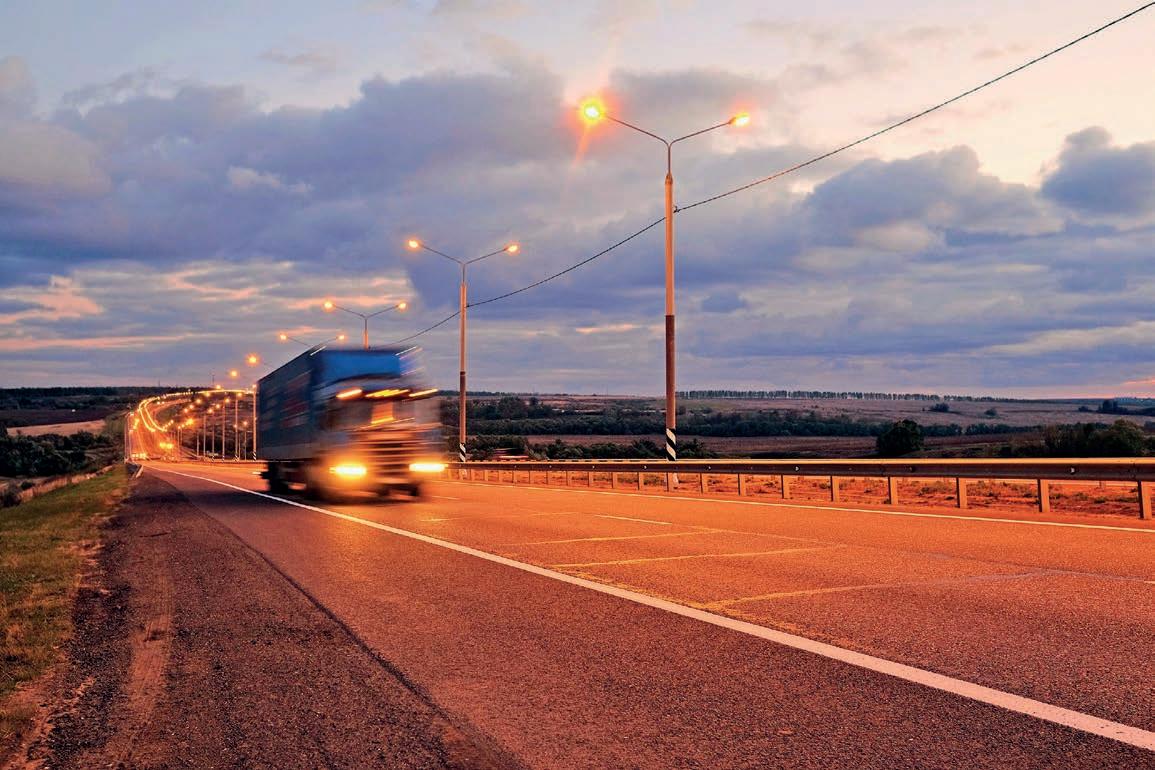
Rising fuel costs are placing further pressure on Australian manufacturers to review freight strategy and supply chain resilience. Image: Dmitry Vereshchagin/stock.adobe.com
location, so there is no getting away from the kilometres you have got to travel.”
As fuel prices rise, these kilometres become more expensive, amplifying any inefficiencies embedded in transport models. Despite this, many manufacturers continue to operate legacy freight approaches that prioritise simplicity over cost and performance.
“There are many methodologies to deliver freight,” Peter says. “Not all of them are giving it to one carrier at my door, who then delivers it to the door at the other end.”
This end-to-end carrier model is common because it appears straightforward.
“It appears simple, but depending on the profile of your freight, that can be a very expensive option and not provide you with the best service outcomes either,” he says.
One of the complexities is the balance between insourcing and outsourcing transport capability. In many instances, more persistent inefficiencies Peter highlights is the ownership of private transport fleets.
While historically seen as a core capability, this model is increasingly difficult to justify in many environments. However, there are other circumstances where having your own capability can be as much as 20-30 per cent more cost effective for some tasks.
This is just one example of the unknown inefficiencies many Australian manufacturers are leaving on the table. The options are many, they are nuanced and they are complex, but necessary to resolve for those aspiring to continue manufacturing in Australia.
“The problem with manufacturers is they somehow just see freight as a cost of business, but, without knowing what strategy and which partners ought be employed, it is actually eroding profitability,” Peter says.
Beyond transport structure, visibility remains a major constraint. Many manufacturers operate with limited real-time insight into their supply chains, relying on manual processes and reactive communication.
Peter says this places the sector behind others in terms of digital maturity.
“Manufacturers are toward the bottom on the capability scale,” he says. “They have some level of visibility, and this is a long way from what a B2C supplier can provide.”
In contrast, consumer-facing businesses have set a benchmark for transparency, with real-time tracking and automated updates now standard. For manufacturers, the gap between customer expectations and supplier capability continues to widen.
“We look at what we are getting from B2C businesses, and that is the benchmark,” he says. “Manufacturing, as a sector is the least developed in the visibility space.”
This lack of visibility is often linked to how systems are implemented. Enterprise resource planning systems are typically configured with a primary focus on finance and production, leaving supply chain functionality underdeveloped.
“All of the focus goes on the finances first, and then the manufacturing process second,” says Peter. “Supply chain comes later, and later never comes.”
As a result, manufacturers are often operating without the data needed to optimise freight, inventory, and distribution decisions. This limits their ability to respond effectively to external pressures such as fuel price increases. Peter says the first step for manufacturers is not necessarily investment, but awareness.
“The first thing is to be a little bit curious,” he says. “Just make the assumption that maybe things could be better.”
For the companies that are curious, Peter explains that a practical starting point is benchmarking internal capabilities against external experiences.
“Ask the question, is my visibility that I provide my customers comparable to what I get when I place an order online?” he says.
If the answer is no, it is likely that other areas of the supply chain are also underperforming. From there, identifying priorities becomes critical, particularly where resources are limited.
“None of them will be saying everything here is great,” Peter says. “It is about working out what is the furthest away from what it could be and what is inhibiting business growth, the super pleasing of customers or command and control over order fulfilment the most and start there.”
Freight optimisation is often one of the most accessible opportunities. This can include reassessing carrier strategies, exploring modal shifts such as rail for long-distance transport, and improving inventory deployment.
“If you can be reducing freight costs by 15 per cent and in some instances, 30 per cent for most of the year, that is significant,” Peter says.
Rail, for example, can offer cost advantages for certain freight profiles, particularly over long distances. However, it requires planning and resilience to manage potential disruptions.
“You assume a disruption is going to happen,” Peter says. “So you build the resilience into your supply chain.”
This includes having alternative transport strategies in place and testing them regularly.
“You have got to use that second process once or twice a year,” he says. “So that when something happens, you and your alternate are ready.”
Ultimately, the challenge for manufacturers is not a lack of awareness that conditions are difficult. It is identifying where supply chain improvements can deliver the most impact and acting on those areas.
“Manufacturers know it is tough to survive,” says Peter. “They are looking for their opportunity, but they only know what they know.”
As fuel costs continue to fluctuate, freight efficiency is becoming less of an operational detail and more of a strategic requirement. For manufacturers willing to reassess long-standing practices, there is an opportunity to reduce cost, improve service, and strengthen resilience. The alternative, Peter explains, is continuing to absorb rising costs through systems that were not designed for the current environment. ■
Stability, service and the human side of leadership
SMaterial Handling Australia says his entry into the forklift industry “started by accident”, after he saw a newspaper advertisement for a repairman role at Crown Equipment in the mid-1980s.
For Steve, the job became more than an entry point into a trade. It became the start of a career defined by stability, loyalty and a commitment to the people working closest to customers.
“I’m a son of two Hungarian migrants that come to Australia in 1956,” says Steve. “Life wasn’t a good start.”
Crown as a workshop technician. He later became a field technician and worked his way up through the service ranks.
It was during those early years that one small moment left a lasting impression.
“There was a time not long after I started at Crown when I went out in the field as a mechanic, and they
uniform had my name on it, ‘Steve’,” he moving from the workshop to the field, then into sales and management. His move into sales came after colleagues began asking him to join customer meetings when technical credibility was needed.
“When it was time to talk practicality, can the forklift lift it? Can it turn in that turning circle? Can it do the job that was required? They turned
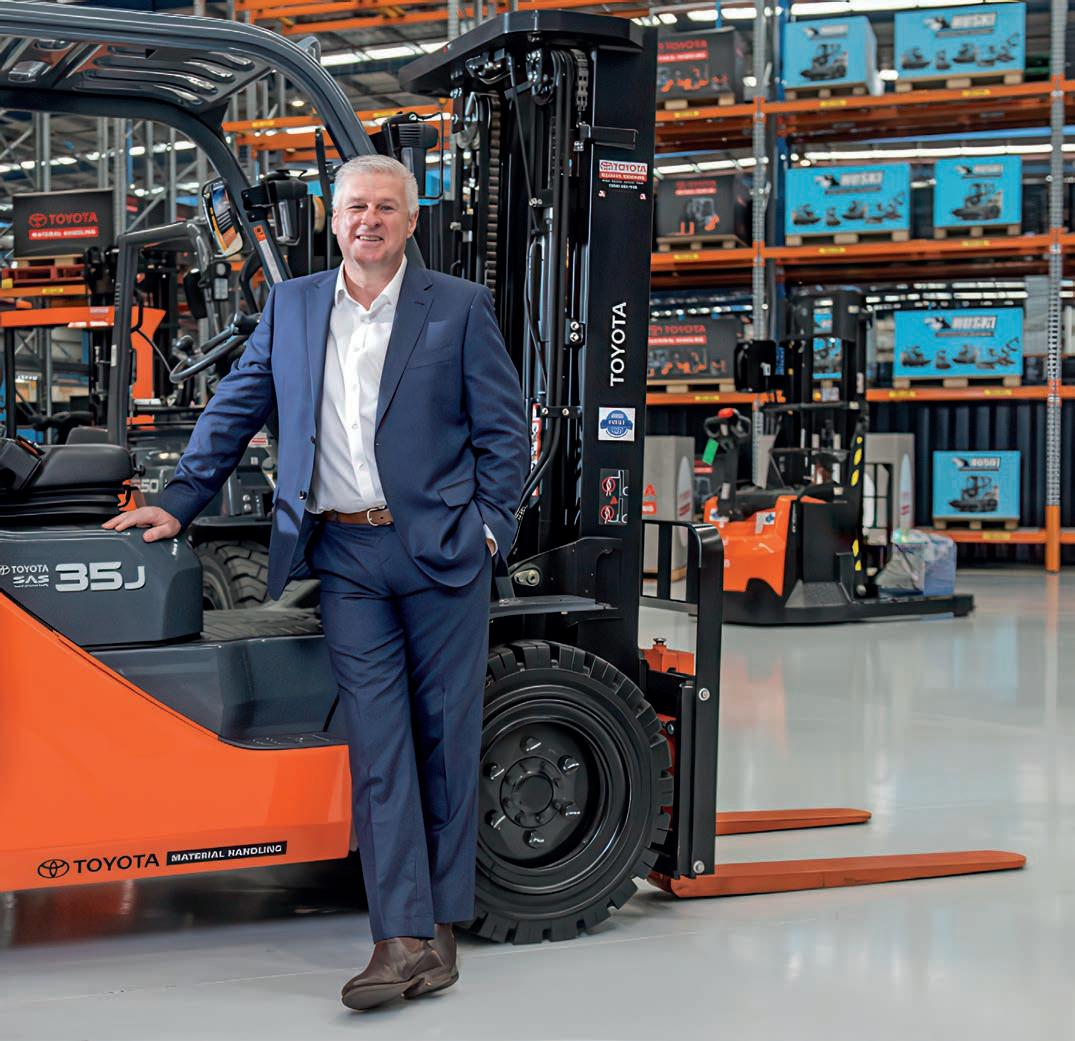
Steve Takacs, President and CEO of Toyota Material Handling Australia, reflects on a career shaped by stability, service and people. Image: TMHA
to me,” says Steve.
He says he was direct with customers, even when the answer was not what a salesperson might have wanted to hear.
“In some cases, I’d say, ‘Well, no, it’s the wrong one for this application,’ or, ‘Yes, it is the right one,’ or ‘You need to make some modifications’,” he says.
That honesty helped win business and eventually led Steve into a sales role. From there, he progressed through several senior positions, including sales manager, rental manager, national rental manager and general manager roles across rentals and Asia Pacific. After two decades at Crown, Steve was approached by Toyota. He says he initially rejected the opportunity three times because of his loyalty to the business that had given him his start.
After discussing the opportunity with senior people at Crown, he decided to make the move. Steve joined Toyota as General Manager of Sales at a time when the forklift business in Australia was smaller than it is today. He says Toyota Material Handling Australia had 11 branches and was in a position of financial loss with poor market share. Since then, Steve says the business has grown from about $150 million in annual turnover approaching $1 billion.
His career at TMHA has taken him from General Manager of Sales to Director, Chief Operating Officer, and then President and CEO. While the numbers point to business growth, Steve’s reflections return repeatedly to people. He says his upbringing shaped his view of work and the importance of providing stability for others.
“No matter how bad things were, his alarm clock went off at 4am in the morning,” says Steve of his father. “He got up and went to work and never missed a day. He had an amazing work ethic.
“Although we had turbulence, he gave stability. Stability was something that I always craved in my life.”
That has carried into his leadership style. Steve says he does not look for short-term spikes, but for longterm decisions that strengthen the organisation and support the people within it.
“When I make decisions at work, when I look at strategy and I look at things, I think, ‘Well, I’m not after a spike. I want long-term stability’,” he says. “I always look for how is it going to affect our people? Is it going to hinder them? Is it going to help them? Is it going to strengthen the organisation?”
For Steve, that perspective is grounded in his own time wearing a technician’s uniform.
“My best times, and I still reflect, were when I was wearing a blue uniform. They were some of the best times I ever had in the business,” he says.
He says technicians carry a level of responsibility that is not always fully understood.
It was such a proud moment for me. It was like the first time I felt like I really belonged to something.
“When you’re wearing a blue uniform as a technician, you can’t negotiate your way out of a problem. You have to fix the problem,” says Steve. “The technicians are also diplomats. They’re the one that the customer yells at. They didn’t sell the customer the truck, they didn’t negotiate the price, they didn’t set the terms and conditions, but they’re the first ones to turn up when there’s a problem.”
That respect for service teams has influenced how Steve leads.
“One of the things I will say in my time at Toyota, I’ve never, ever retrenched anyone that’s wearing a blue uniform,” says Steve.
Looking back across his career, Steve says young people entering the industry should focus on resilience and longevity.
“I think my observation is that a lot of young fellas these days approach a
career with stepping stones in mind, and they don’t necessarily approach it with longevity in mind,” says Steve. “They’re looking at the next job while they’re starting the first job.”
His advice is to commit, work hard and allow opportunities to develop over time.
“If you’re resilient enough and you just stay there long enough and do a good job, opportunity will come,” he says.
That message is one he shares with apprentices at TMHA. He encourages them to see the business as a long-term home.
“One of your ambitions should be to start an apprenticeship with this company, but actually retire with this company,” says Steve. “You may retire in a different position, when your time comes, but just lock yourself in. Give yourself long-term stability.”
As Steve prepares for retirement, he says he hopes his lasting impact is measured less by commercial performance and more by how he treated people.
“I like to think that, first and foremost, I’ve been kind to people and I’ve shown empathy,” says Steve. “I want to be known as a decent human being before being known as a good businessman.”
Retirement will bring a different kind of focus. Steve says he expects to travel initially, but his priority will be family.
“I’m a family man, first and foremost,” says Steve. “By the time I retire, I’m going to have six grandkids, and so I’m going to help my family a lot in and around their house.”
He also plans to spend time on small hobbies, including beekeeping. But more than anything, Steve says he wants to be present.
“There will be nothing more pleasing than going to the kids’ footy and just being around,” says Steve. “Nothing sensational, just the rest of the life being a good husband and a good family man. That’s all.”
Steve concluded: “I’d like to thank family, friends and colleagues for their support, and Crown Lift Trucks and Toyota Material Handling for 40 years of stable employment.” ■
Warehouse Performace Starts Here.
In today’s high-pressure warehousing environment, reliable infrastructure is critical to productivity, safety, and long-term growth.
Premier Pallet Racking delivers tailored storage solutions that help Australian businesses maximise capacity, streamline operations, and keep goods moving efficiently.
From pallet racking and shelving systems to complete warehouse fit-outs, we combine industry expertise with globally trusted SSI SCHAEFER systems to deliver practical solutions that perform.
With nationwide coverage, extensive stock holdings, competitive pricing, and a commitment to exceptional service, Premier Pallet Racking supports businesses across logistics, manufacturing, retail, pharmaceutical and distribution centers Australia-wide.
For all enquiries email us: sales@premierracking.com.au
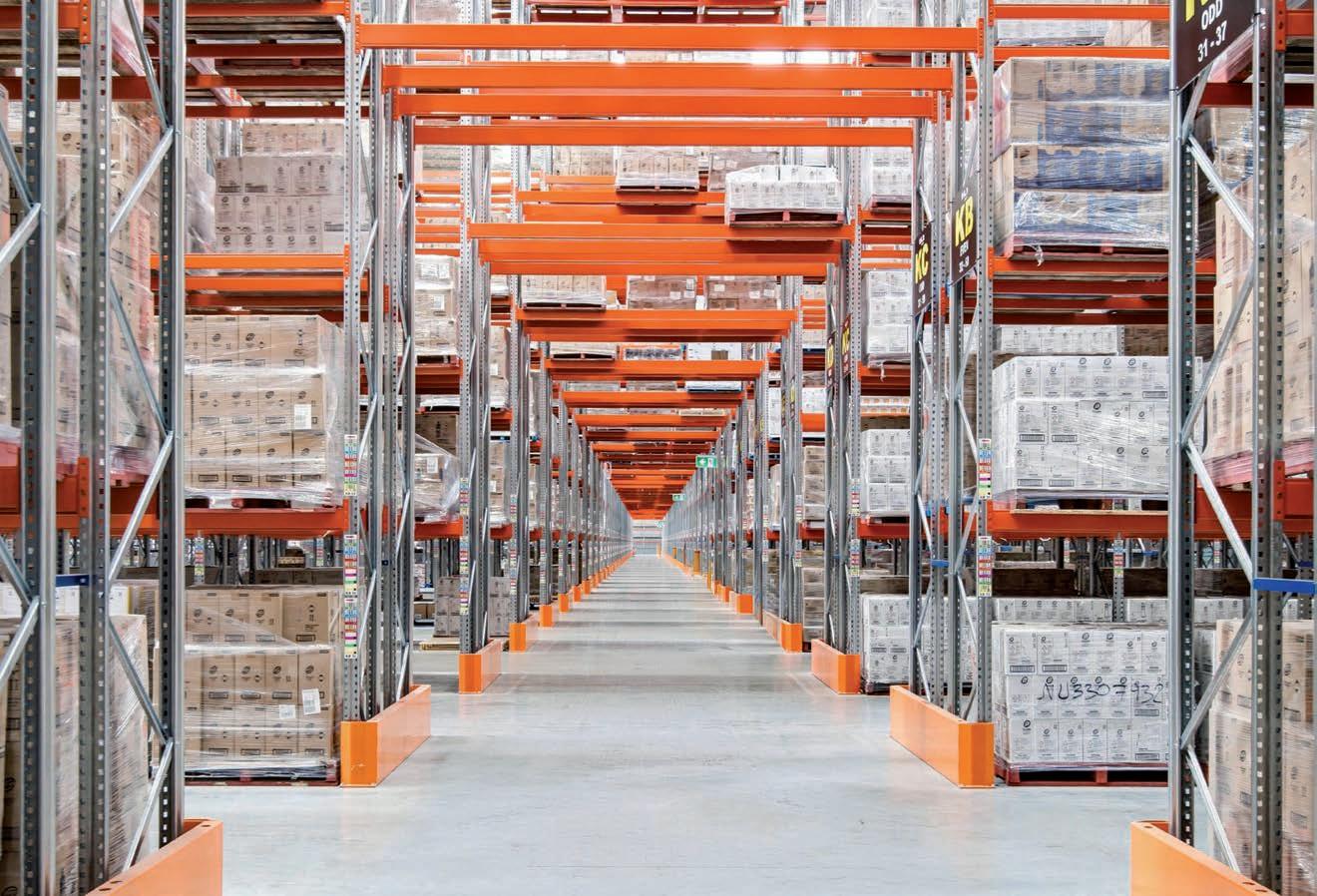
IHL Group | 52,786 pallet positions
How to turn AI and automation into real logistics value
Argon & Co explains why logistics businesses need to start with value, operating models and data foundations before investing in AI and automation.
s artificial intelligence and automation become more common across logistics operations, the challenge for businesses is no longer whether to invest in new technology. It is how to make those investments deliver measurable value.
For Argon & Co, the starting point is not the technology itself, but the business problem it is intended to solve. Logistics leaders need to understand where value is being created, where it is being lost, and whether automation or AI is the right mechanism to address
Cameron Austin, Managing Principal at Argon & Co, says the strongest performers are those taking a pragmatic approach to technology
“I think where industry leaders are getting it right is that they have a balanced and pragmatic view,” says Cameron. “You must be pro-technology but not get caught up in the hype.”
and your resilience, and doing that simultaneously.”
systems and other platforms already support structured workflows, many operational decisions still rely on unstructured information, including emails, status updates, exception reports and fragmented data sources.
Marjan Torshizi, Managing Principal at Argon & Co, says this is where AI can help connect information and support more cognitive forms of automation.
“If we look at WMS, TMS and other systems, AI is bridging the gap that exists in an unstructured world,” says Marjan. “It can elevate automation to more of a cognitive workflow automation.”
That distinction is important. Automation can accelerate a process, but it does not necessarily improve it. If the underlying workflow is poorly designed, automation may simply increase the speed at which inefficiency moves through the business.
For logistics operations, this means investment decisions need to be tied to clearly defined outcomes. These may include reducing cost to serve, improving labour efficiency, lowering cost per unit, optimising transport spend, improving margins, increasing on-time in-full performance, or improving order accuracy.
Bart Gill, Associate Partner at Argon & Co, says logistics value needs to be measured through business outcomes, rather than activity metrics.
“Real logistics value is about measurable business outcomes, not just
Once those outcomes are defined, businesses can begin assessing demand patterns, order profiles, market volatility, customer expectations and the operating model needed to support the desired result. This allows leaders to understand where automation can remove constraints, improve decisionmaking or strengthen operational performance.
Bart says this groundwork is essential before moving into process design or technology selection.
“Start with what the business outcomes are and make sure they are clearly defined,” says Bart. “Examples would be service levels, cost reduction and scalability, and then translating those into measurable targets.”
AI is also creating new opportunities in parts of logistics that have traditionally been difficult to automate. While warehouse management systems, transport management
Rather than simply executing predefined tasks, AI can help gather information, interpret context and determine what needs to happen next. In logistics environments, this can support better exception management, faster decision-making and more integrated workflows between systems.
Cameron says logistics businesses should view automation across three connected categories: physical automation, process automation and decision automation. Physical automation may include robotics, conveyors, sortation systems or automated materials handling equipment. Process and decision automation, meanwhile, may be enabled through AI, data platforms and system integration.
The greatest value often comes when these forms of automation are considered together. When deployed in isolation, they can create new bottlenecks or disconnected pockets of capability.
“Businesses should think about the different forms of automation holistically,” says Cameron. “Each of them has different benefits, but the greatest impact comes when they are integrated.”
Cameron Austin, Managing Principal at Argon & Co. Images Argon & Co
A strong business case also depends on accurate baselines. Businesses need to understand their current performance in detail, then compare it with a realistic future-state model. That includes a full view of costs, benefits, implementation requirements, change management effort, adoption assumptions, riskadjusted savings and accountability across the organisation.
Cameron says this helps businesses assess whether a solution solves the right problem, fits the operation and delivers measurable value.
“The most important thing for a successful business case is accurate baselines,” says Cameron. “That means comparing the current situation and the updated automation baseline on a likefor-like basis.”
However, even a strong technology business case will fall short if the operating model is not redesigned around it. For Argon & Co, the operating model is the link between deploying new capability and realising value from it.
Automation changes how decisions are made, how work is allocated and how people interact with systems. It can also change the relationship between functions that may have previously operated in silos.
Bart says this is why businesses need to treat automation as an operational transformation, rather than a technology project.
“Technology alone creates capability, but the operating model determines how that capability will be embedded into decisions, processes and behaviours,” says Bart.
This also changes the role of the workforce. Automation does not remove the need for people in logistics operations, but it shifts where their expertise is applied. Employees may spend less time on manual execution and more time managing exceptions, monitoring performance, interpreting data and orchestrating flows across automated systems.
That shift increases the need for hybrid capabilities, combining operational understanding with digital literacy, problem-solving and data
Marjan says businesses need to understand how their data is defined, tagged, classified and governed before expecting AI to deliver reliable results. This includes understanding what information is confidential, sensitive or usable across the organisation, as well as how data moves between systems.
“Traditionally, in manual operations, people can often cover up the data issues and plug the gaps,” says Marjan. “But as soon as you move the process into an automated flow, data issues can make AI implementation very expensive.”
Without proper integration into the existing system landscape, AI solutions can also struggle to deliver the efficiencies expected. A standalone tool may provide localised benefit, but it will not necessarily improve the endto-end flow of work.
For logistics leaders considering AI or automation investment over the next 12 to 24 months, Argon & Co’s advice is to start with the problem, quantify the value, assess data and organisational readiness, and redesign the operating model where needed before selecting technology.
“Clearly define your business issue, quantify its value, assess your data and organisational readiness, redesign the operating model where necessary, and only then select the right technology,” he says. “Let strategy drive technology, not the other way around.”
Marjan says this also requires a more coordinated approach to AI
“It cannot be a technology-led initiative,” she says. “It has to be a top-down mandate at the whole enterprise level.”
Ultimately, the organisations that succeed with AI and automation will not necessarily be those that deploy the most systems. They will be the ones that understand where decisions are made, how work gets done and how technology can support a better operating model.
As Bart says, “It’s not the businesses that deploy the most technology or the most automation. It’s the ones that redesign based on where decisions are made and how work gets done.” ■
Bart Gill, Associate Partner, Argon & Co.
Marjan Torshizi, Managing Principal, Argon & Co.
•
•
•
•
•
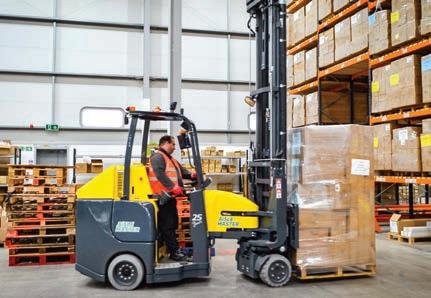
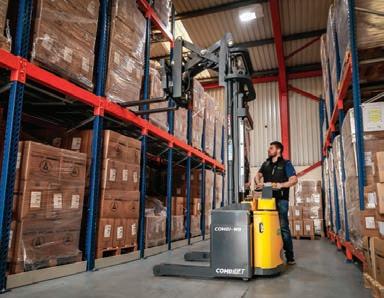
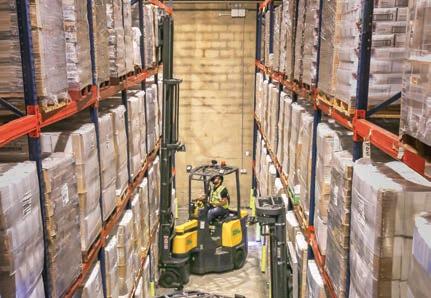
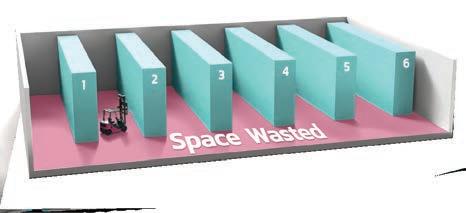
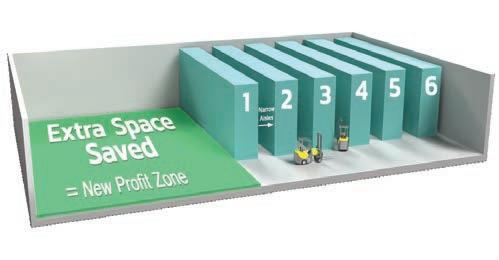
The Aisle Master range of articulated and pedestrian forklifts are designed specifically for warehouses that require ease of movement through very narrow aisles. With the ability to operate in aisles as narrow as 1.6m, the Aisle Master maximises storage capacity, dramatically increasing your storage space by up to 50%.
CONTACT US TODAY
To find out how Aisle Master
every inch of your storage space.
Revolutionising warehouse hygiene
Kärcher’s KIRA range supports autonomous warehouse cleaning, improving hygiene consistency while reducing manual labour demands.
When managing largescale logistics centres and manufacturing plants, operators are often required to balance hygiene and safety requirements with ongoing labour challenges. In materials handling environments, time spent on manual floor care can take staff away from core operational tasks such as picking, packing and inventory management.
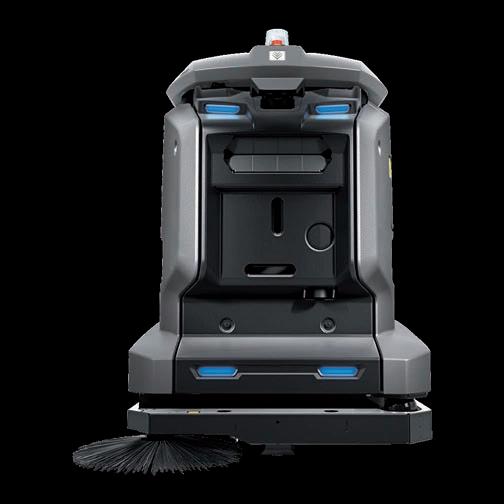
Autonomous cleaning technology can also help facilities manage these competing pressures by supporting cleaning consistency while allowing staff to focus on higher-value work. As autonomy becomes a more practical consideration for Australian logistics and manufacturing operators, Kärcher is expanding its range to meet the demands of larger industrial environments. One of its latest additions is the KIRA B 200.
The KIRA B 200: Engineered for industrial scale
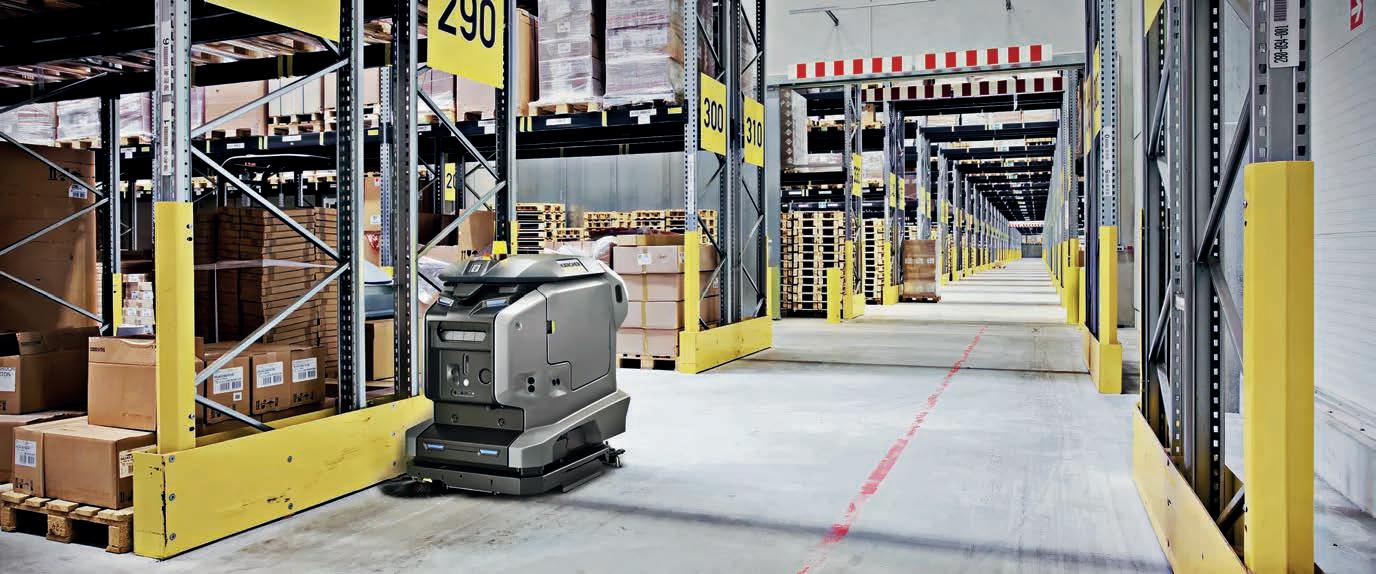
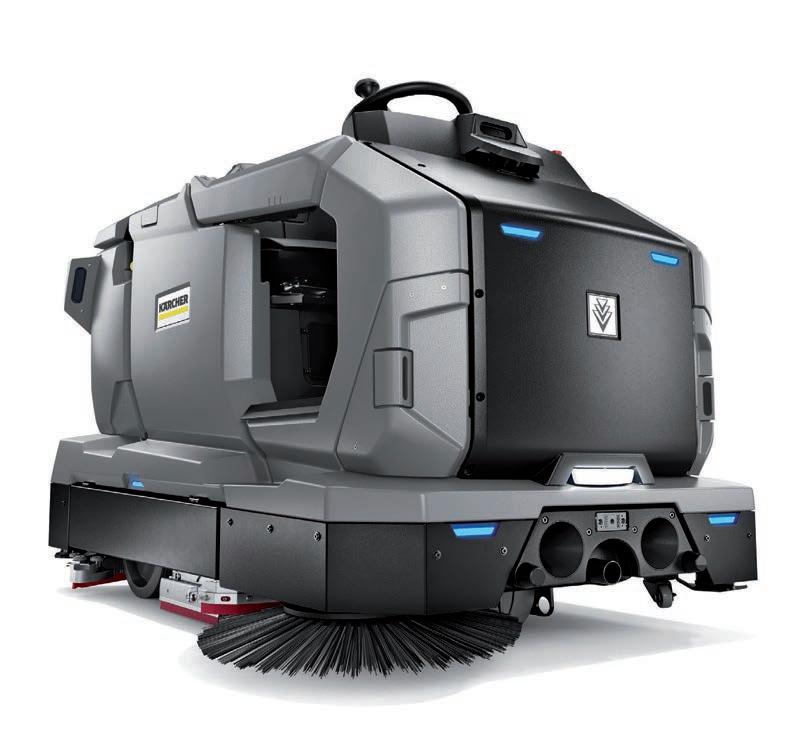
The KIRA B 200 robotic scrubber has been designed for large distribution centres, warehouses and manufacturing facilities. Kärcher says the machine has been developed to operate in complex environments where floor layouts, traffic patterns and operational demands can change throughout the day. The B 200 is positioned for materials handling environments through several key features.
360° smart navigation: In active warehouse environments, cleaning equipment needs to operate around forklifts, pallets and workers. The B 200 uses environmental mapping and real-time obstacle avoidance to navigate around activity on the warehouse floor. Kärcher says the machine can also reverse out of tight spaces and dead ends if an aisle becomes blocked.
High-capacity operation: The B 200 has been designed for extended use across large floor areas, supporting cleaning programs in industrial logistics facilities where uptime and coverage are important considerations.
Hands-free maintenance: An optional docking station allows the B 200 to return to base for charging, wastewater discharge and fresh water refilling. This is designed to reduce manual intervention and support longer cleaning cycles.
A scalable ecosystem for different facility areas
While the B 200 is designed for larger warehouse floors, Kärcher says the broader KIRA portfolio can support other parts of a logistics site, including narrow aisles, loading docks and office areas.
The KIRA B 50 supports consistent autonomous floor cleaning in active warehouse environments.
WAREHOUSES
The KIRA B 50: The KIRA B 50 is designed for tighter and more congested areas. Its roller brush technology combines pre-sweeping loose debris and scrubbing in a single pass, reducing the need for separate cleaning cycles.
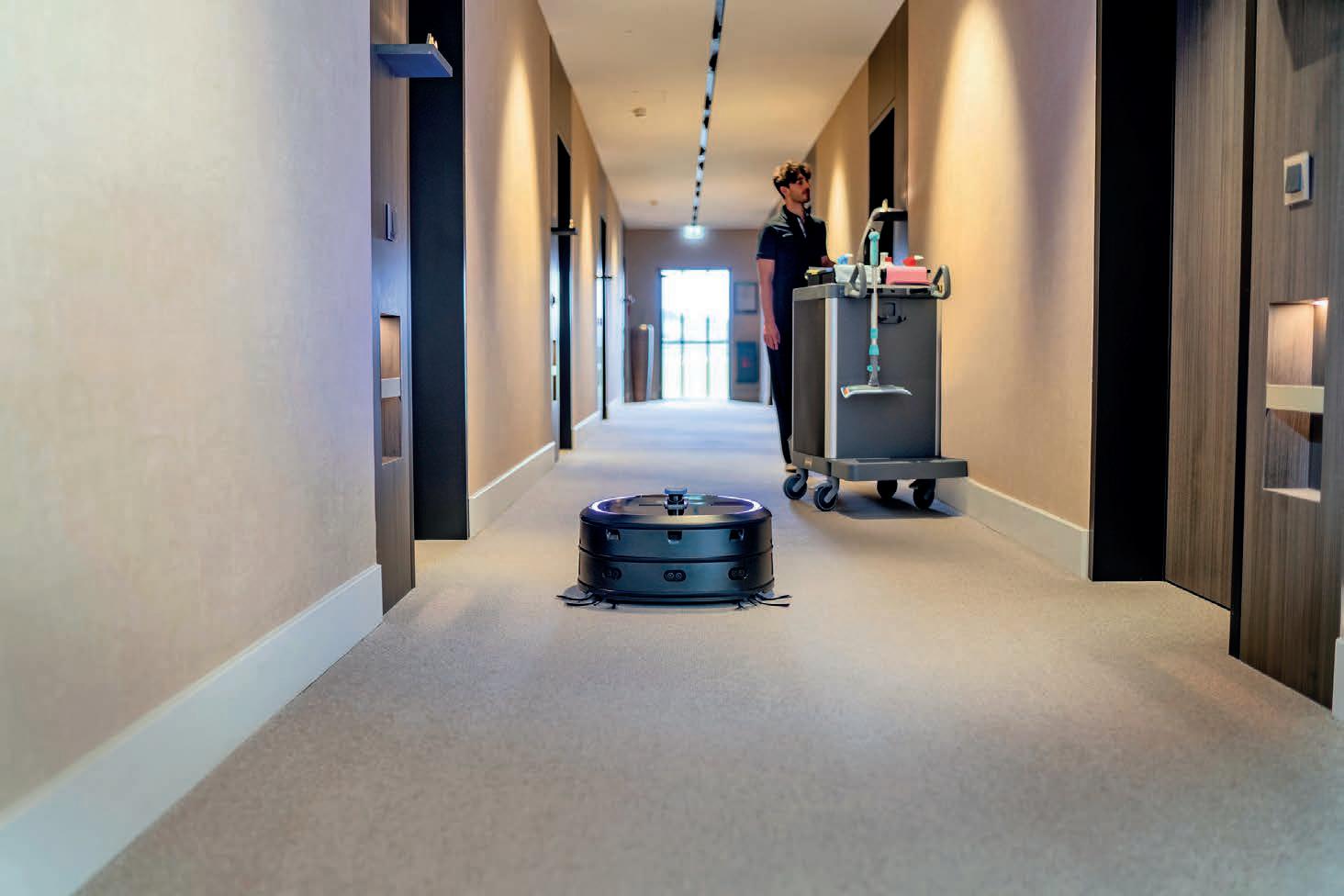
The KIRA CV 50: The KIRA CV 50 is an autonomous commercial vacuum suited to adjacent administrative and office environments.
Unified digital visibility
Kärcher says digital integration is a key part of the KIRA range, with the B 200, B 50 and CV 50 connected through the KIRA Robots app.
The app allows facility and warehouse managers to monitor cleaning performance and machine status, adjust route planning remotely, and access data that can support hygiene compliance reporting.
“Autonomy is the next frontier for the logistics and manufacturing sectors in our region. At Kärcher Oceania, our mission is to provide scalable solutions that bridge the gap between high-performance hygiene and labour efficiency,” says Nathan Briggs, Head of Product Oceania. “The KIRA range represents years of engineering aimed at one goal: allowing your team to do what they do best, while our robots
take care of the rest. With the addition of the B 200 this October, we are completing a portfolio that can handle any environment, from the office to the loading dock.”
Supporting operational resilience
For logistics and manufacturing operators, autonomous cleaning technology is increasingly being considered as part of broader efforts to
Kärcher’s autonomous cleaning range can be deployed across both warehouse and adjacent office environments. Images: Kärcher
Optimise your warehouse operations with IFS Softeon WMS
Increasing density, flexibility, and fulfilment speed
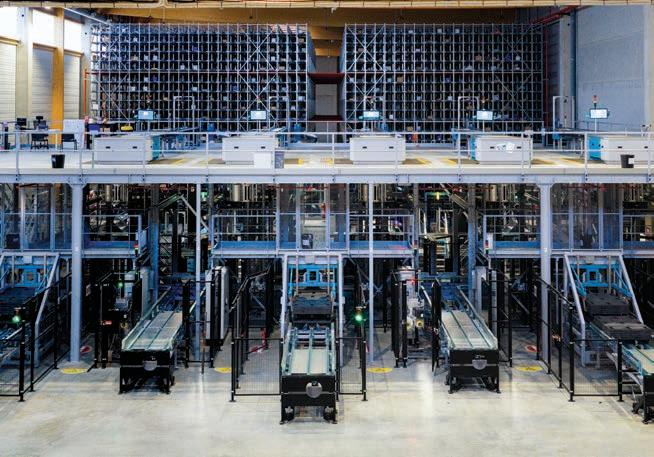
CH Racking’s ACR/CTU system combines robotic automation and high-density storage to improve warehouse efficiency and scalability.
As warehouse operators across Australia continue to face rising throughput demands, labour shortages, and growing SKU complexity, automation systems capable of improving storage density and operational flexibility are becoming increasingly attractive.
For many facilities, particularly those supporting eCommerce, retail, manufacturing, and third-party logistics operations, the challenge is no longer simply finding additional warehouse space. Instead, operators are looking for ways to maximise existing footprints while maintaining picking efficiency and order accuracy.
system is designed to address those pressures through a high-density automated storage approach that
combines robotic goods-to-person technology with scalable racking infrastructure.
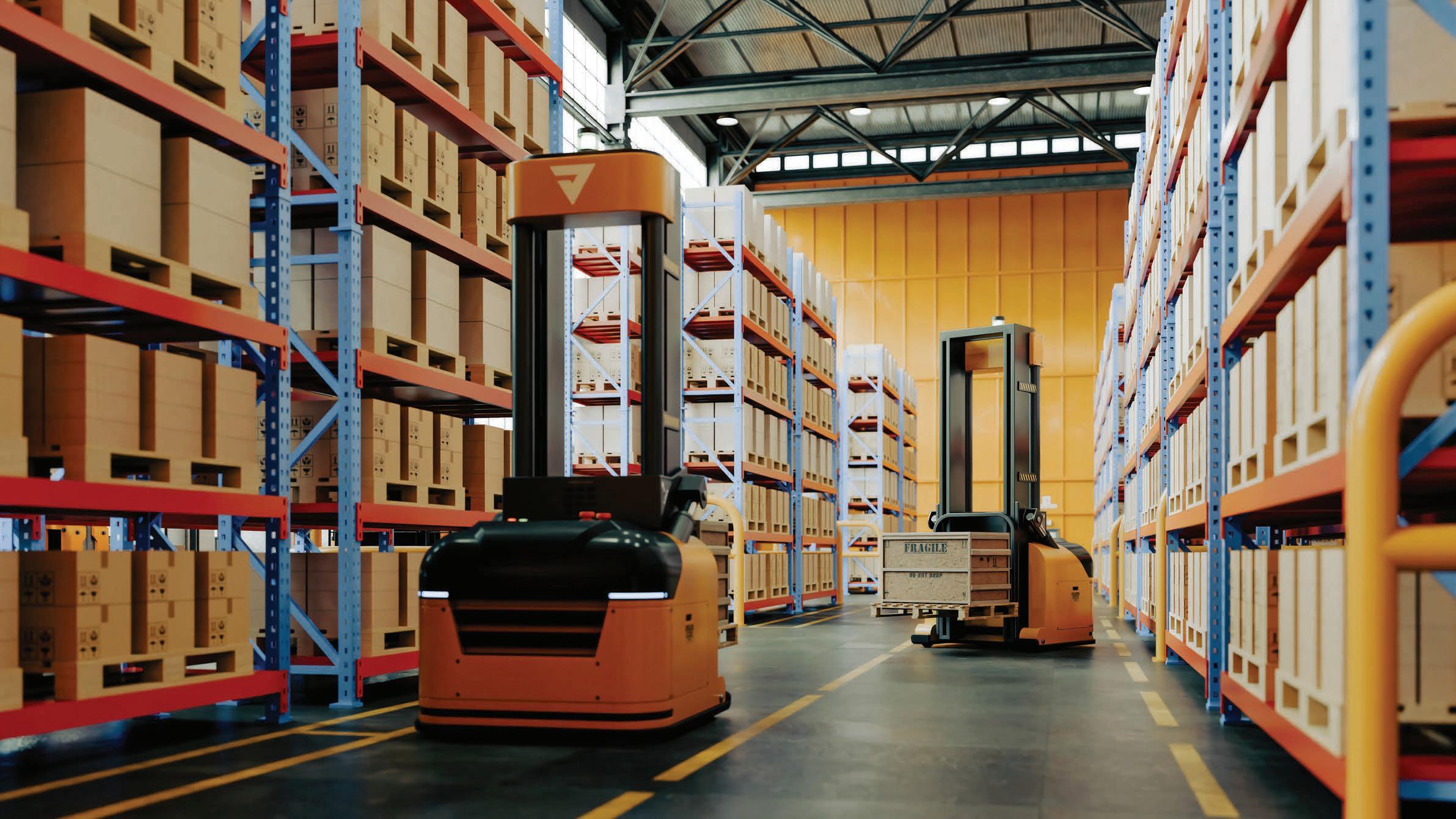
The system integrates ACR/ CTU technology with high-density storage layouts to support automated handling of cartons, bins, totes, and other inventory formats. Rather than relying on workers travelling through warehouse aisles to retrieve stock manually, robots transport inventory directly to picking stations, reducing travel time and supporting faster outbound processing.
while working within tighter labour and space constraints,” says Jessica. “Businesses are looking for solutions that improve efficiency without requiring entirely new facilities or major operational disruption.”
The ACR/CTU system has been developed around high-density storage principles, with CH Racking highlighting the ability to significantly increase storage capacity compared to conventional shelving configurations. As industrial land availability tightens across major Australian markets, storage
Autonomous mobile robots retrieve through the racking system to support goods-to-person fulfilment. Images: CH Racking
WAREHOUSES
“Operators are trying to get more value from the facilities they already have,” says Jessica. “Increasing storage density while maintaining accessibility and fulfilment speed has become a major focus across the industry.”
The modular nature of ACR/CTUbased automation is also contributing to growing interest in robotic storage systems. Unlike some traditional fixed automation infrastructure, mobile robotic systems can offer greater flexibility as warehouse requirements evolve.
This flexibility can be particularly relevant in Australian operations, where facilities often manage diverse SKU profiles and multiple daily product changeovers across varying order sizes. CH Racking says the system is designed to support a range of inventory handling requirements, including carton-level and bin-level storage within the same automated environment.
Jessica says scalability is becoming increasingly important for businesses investing in warehouse automation.
“Many operators want automation that can scale alongside the business,” says Jessica. “Flexible systems allow warehouses to expand capacity or adjust workflows as operational requirements change over time.”
The broader warehousing sector is
When precision becomes a logistics advantage
Wipotec’s automated weighing and inspection systems help logistics operators improve accuracy, throughput and data visibility.
For logistics operators, the margin for error is narrowing.
Parcel volumes are increasing, delivery windows are tightening, labour availability remains constrained, and customers expect greater visibility across every stage of the fulfilment process. In that environment, a parcel is no longer just something to be moved from one point to another. It is a data point, a cost item, a compliance requirement and a customer promise.
That is where Wipotec Australia sees a growing role for automated weighing, inspection and traceability technology.
Colin Seddon, Managing Director, Wipotec Australia, says logistics businesses are under pressure to improve accuracy and throughput without adding unnecessary complexity to already busy operations.
“Logistics operators in 2026 face critical challenges centred on volatile supply chain disruptions, severe labour shortages in warehousing and driving, and rising operational costs,” says Colin.
Accuracy under pressure
While technology cannot remove every external pressure facing the sector, Colin says it can reduce manual handling, improve data quality and give operators more confidence in the decisions being made across the logistics chain.
“While Wipotec cannot resolve all of these issues, the more freight that is put across these automatic systems, the more human error and human intervention are reduced, with improved accuracy of data,” he says.
Founded in 1988 as a spin-off from Kaiserslautern Technical University, Wipotec has grown from its German engineering base into a global provider of dynamic weighing and inspection systems. The company is headquartered
in Kaiserslautern, Germany, and is known for high-speed EMFR weighing technology, Track & Trace systems, checkweighing, X-ray inspection and integrated product control solutions.
Colin says Wipotec’s position in the market is shaped by its manufacturing model, with development, engineering and production brought together under one roof.
“Wipotec is your innovative, reliable partner for high performance, process and customer-oriented weighing and inspection solutions,” he says. “As one of the world’s leading businesses for dynamic weighing technology and product control, Wipotec stands for outstanding manufacturing quality ‘Made in Germany’, the highest ease of integration and profound sector expertise.”
For logistics and parcel handling environments, that capability is increasingly important. Courier, express and parcel operators, mail order businesses and intralogistics providers need systems that can handle high volumes while capturing accurate information in real time.
Data-driven parcel handling
A key part of that capability is DWS: dimensioning, weighing and scanning. These systems combine several processes into one automated workflow, measuring a parcel’s dimensions, recording its weight and scanning its barcode or code data as it moves through the system.
“Our DWS systems, which are tailored to customer requirements, reliably check your shipments for weight and shape,” says Colin. “In addition, they record 1D and 2D codes on packages in a fully automated workflow, which contain important data for process and cost optimisation.”
In practice, this means operators can capture the volume, weight and barcode information of parcels simultaneously. That data can then be transferred into a central management system, where it can support decisions around sorting, franking, cost allocation and customer reporting.
For operators managing thousands of items each day, this can make a material difference. Manual processes may be workable at lower volumes, but as throughput rises, errors in weighing, sorting, labelling or franking can become costly. They can also create delays downstream, particularly when incorrect data causes exceptions at carrier or postal points.
Wipotec’s work with Rhenus Logistics Switzerland provides one example. Rhenus, a full-service logistics provider, used Wipotec’s E-Commerce Sorter at its Swiss operation to optimise customer order processing in contract logistics. The application involved a small online mail order company with almost 15,000 items in stock and daily volumes averaging 6,000 to 10,000 items. As volumes increased, manual franking became less economical, with incorrect sorting reducing revenue and creating error messages at the post office.
The solution weighed and dimensioned parcels to determine postage and classify consignments into multiple categories. After manual introduction, parcels were automatically separated to create the correct gap for dimensioning and weighing. The software controlled the machine’s components through one central HMI, giving operators a single interface.
The project also showed the importance of tailoring systems to the application. The Rhenus operation involved small, light and sometimes unstable consignments, which meant
the system needed to be precise enough to detect small differences in size and weight. Wipotec used Active Vibration Compensation technology to filter out external influences during weight determination, even where ambient vibrations were present.
For Colin, this kind of application reflects a broader shift in logistics. Automated weighing and inspection are no longer isolated functions. They are becoming part of a wider data and decision-making layer across warehouses, sortation facilities and distribution networks.
“The volume, weight and barcodes of your parcels are acquired and analysed simultaneously by the DWS system,” he says. “The information is then transferred to a central data management system and is used by the system as the basis for making decisions, such as the sorting function or whether the franking is correct.”
That visibility also supports customer billing and operational accountability. If operators can automatically record the type and number of parcels being handled, they can prepare more accurate cost breakdowns and reduce disputes over freight charges.
Colin says the rise of e-commerce and urban distribution is accelerating demand for these systems. Smaller parcel sizes, faster delivery expectations and denser networks are placing new strain on traditional workflows.
“E-commerce growth and the expansion of urban distribution are dramatically increasing the demand for automated, high-precision inspection and weighing solutions to manage higher volumes, smaller parcel sizes, and faster turnaround times,” he says. The challenge for many operators is balancing throughput, accuracy and footprint. Warehouse and hub space is expensive, and operators are often trying to add capability without expanding their physical footprint. Colin says system integration is therefore critical.
“As factory floor space now comes at a premium cost to the production facility, integration and footprint are critical,” he says.
Wipotec’s broader portfolio includes systems that combine checkweighing, metal detection, vision, label application and sortation. While these technologies may be applied differently across food, pharmaceutical, industrial and logistics environments, the principle is consistent: bringing multiple quality, inspection and data capture functions into a more compact and connected platform.
From inspection to intelligence
The company’s modular approach is central to that model. Rather than forcing a standard system into every application, Colin says Wipotec focuses on adapting systems to the customer’s operational requirements.
That flexibility will become more important as logistics operators reassess automation strategies. Colin says automation has moved beyond being a competitive advantage and is now becoming a necessity for many parts of the sector.
“Automation in logistics has transitioned from a competitive advantage to an essential necessity,” he says. “This is driven by critical labour shortages, the need for 24/7 operational resilience, and surging demands for faster fulfilment.”
Looking ahead, Colin expects weighing, inspection and traceability systems to become more integrated, predictive and connected. Instead of functioning as standalone checkpoints, these technologies will contribute to what he describes as a more transparent digital thread across supply chains.
“Over the next five years, inspection,
weighing, and traceability technologies will evolve from standalone quality control checkpoints into a fully integrated, AI-driven, and transparent ‘digital thread’ that connects raw materials to finished products,” he says.
For the Asia-Pacific market, Wipotec is focused on growing its regional presence and strengthening local support. Colin says this includes building service capability across Southeast Asia, Australia and New Zealand, with tailored inspection technologies for sectors including pharmaceutical, food and logistics.
“Wipotec’s strategic focus in the AsiaPacific market centres around expanding its footprint through increased regional presence, local customer support, and tailored high-precision inspection technologies,” he says.
For logistics operators considering investment, Colin says the priority should be finding partners that can combine precision, integration and long-term support. As supply chains become more data-driven, weighing and inspection systems will not simply be judged by how accurately they measure a parcel, but by how effectively they help operators make better decisions across the flow of goods.
In a sector where speed matters, accuracy is increasingly becoming part of the service promise. ■
Visit Wipotec at CeMAT Australia, stand G29, to learn how its inspection and weighing technologies can support accuracy, compliance and efficiency across logistics operations.
Wipotec’s DWS systems combine dimensioning, weighing and scanning to support accurate parcel data capture. Image: Wipotec
From the ground up
Flexco’s recent light-duty conveyor innovations have been shaped by direct feedback from logistics customers, where jams, debris, damaged belts and manual maintenance tasks can quickly affect throughput and safety.
In high-volume logistics environments, small conveyor issues
transfer point, a label stuck to a roller, become the starting point for a series of recent product developments across its Transfer Plates, the Belt Edge Protector which is set to launch globally in early conveyor issues occurring inside their
“The number one challenge that we try to support or provide solutions for, conveyor systems are required to move thousands of packages through a single transfers, roller transfers or 90-degree
Ryan says the second major challenge
accumulates can require maintenance personnel to work around moving equipment or clear material in awkward positions.
“There’s a lot of overlap. We see a lot of common problems, but we always want to understand the problems at the ground level,” says Ryan.
That process typically involves site visits, walkthroughs and audits, as well as engagement with conveyor OEMs to understand system design requirements. It allows Flexco to identify not only the immediate problem, but the operating conditions behind it.
The Segmented Transfer Plates are an example of that approach. Designed as a modular system, the plates can be configured for different belt widths, gap sizes and mounting conditions. The aim is to reduce the risk of packages becoming caught between conveyors while supporting consistent product flow.
The product also includes a practical protection feature. If an issue occurs, such as a protruding belt splice or a jam at the transfer point, individual segments are designed to pop out at around 45 kilograms of force. This helps prevent a smaller issue from becoming a larger belt failure.
The Belt Edge Protector addresses a different but related issue. In high-
Flexco’s Segmented Transfer Plate is designed to prevent packages from catching at transfer points. Image: MBPROJEKT_Maciej_Bledowski/iStock.com
volume bulk flow conditions, packages can be pushed beneath the edge of a belt at 90-degree transfer points, particularly where one conveyor feeds a downward slide or chute onto a receiving belt.
If a package becomes trapped between the bottom of the belt and the slider bed, it can be dragged towards the head pulley. This can damage both the product and the belt.
Flexco’s linear Belt Edge Protector is mounted along the side of the conveyor, beginning at or upstream of the transfer point. Made from recycled UHMW, it is designed to provide wear resistance and low friction, allowing packages to move over the protected edge while preventing them from being forced under the belt.
The company has also developed a radial version for power turns. These curved conveyor sections are commonly used in logistics operations to move packages through 90-degree or 180degree turns. Ryan says power turns require specialised belts, making maintenance and replacement more involved than on a standard straight conveyor.
The radial Belt Edge Protector is designed to conform to the radius of a power turn and includes a brush that makes light contact with the belt
surface. The brush helps stop packages from entering the gap between the belt and the sidewall, without creating unnecessary belt wear.
In more severe cases, Ryan says a damaged belt on a power turn may require the line to be shut down while sidewalls, drive mechanisms and other components are disassembled. Once the belt is replaced, it must be correctly restrung, tensioned and reassembled.
“We are talking roughly eight hours of downtime to replace one belt at one power turn,” says Ryan.
The Roller Conveyor Scraper Tool reflects the same customer-led development process but addresses a maintenance task that is often treated as routine. Roller conveyors are common in logistics facilities, and their metal rollers can collect stickers, labels and adhesive residue as packages move across them.
If the rollers are not cleaned, they may stop operating properly, slow the system, contribute to jams or cause
labels to transfer onto the wrong package, creating the risk of mis-scans.
Ryan says maintenance teams have traditionally used tools such as putty knives or paint scrapers, which are not designed for the task and can damage the galvanised coating on rollers.
The Roller Conveyor Scraper Tool has been developed as an ergonomic handheld tool specifically for removing labels and residue from conveyor rollers. Its base and removable aluminium blade are contoured to suit a 50 millimetre roller, allowing maintenance teams to clean more effectively.
Ryan says the tool can cut roller cleaning time by about half compared with traditional methods. In one facility, eight maintenance team members were spending an hour each morning cleaning rollers, equating to eight person-hours a day. Reducing that task by half allowed the team to redirect time to other maintenance work.
The idea emerged while Flexco was working with customers on a roller
conveyor transfer plate. During site work, the team noticed how dirty many rollers were and saw maintenance personnel removing labels manually with a scraper.
“We were there with our customers, and we saw a pain point that they were dealing with,” says Ryan.
For Ryan, that example reflects the broader product development strategy. Many conveyor problems are not isolated failures. They are repeated operational issues that only become visible when suppliers spend time inside the facilities where the systems are running.
By working directly with logistics customers, Flexco can develop products that respond to practical conveyor challenges, from high-speed transfer point jams to manual roller cleaning.
The result is a portfolio focused on keeping products moving, reducing avoidable downtime and helping maintenance teams manage the systems that underpin modern logistics
Protect Your Revenue
Eliminate billing inaccuracies at scale
"Time is money" – a well-known saying that applies particularly to mail and logistics service providers.
With e-commerce volumes rising, parcel handling is intensifying, and so is the pressure on throughput, e ciency, and cost control.
For sorting centres, distribution hubs, and
Our advanced Catchweighers and Dimensioning, Weighing and Scanning solutions fit right into your environment, capturing critical data from all angles, fast, reliably, and without disruption.
The result: better visibility, optimized workflows, and measurable impact on performance and revenue protection
info.au@wipotec.com www.wipotec.com/au phone +61 370 316 100 Stand G29 23-25 June 2026
Wipotec Australia Pty Ltd 1/46 Aylesbury Drive Altona 3018 Victoria Australia
FREE UP TEAMS, INCREASE PRODUCTIVITY.
Supercharge your logistics productivity. Whether you are managing vast warehouses or busy distribution centres, our KIRA B 50 and new B 200 robotic floor scrubbers deliver top performance by cleaning large surfaces while your team focuses on the details. No matter what your challenge. There‘s Kärcher for that.
Safety starts with the right forklift
Selecting purpose-built forklifts and safety technologies helps reduce risk, improve visibility and protect workers in busy facilities.
Every warehouse and manufacturing facility relies on material handling equipment to keep goods moving. But whenever loads are lifted, transported and stored, safety becomes a critical consideration.
According to Combilift Country Manager Chris Littlewood, forklift safety is not just about operator behaviour. It begins with selecting equipment designed to minimise risk in the first place.
With National Forklift Safety Day observed internationally each June, Chris says the occasion provides an opportunity for Australian businesses to review how their equipment, processes and facility layouts contribute to safer operations.
“Safety is one of the pillars on which Combilift operates,” says Chris.
Bringing loads down to a safer height
One of the most common risks in materials handling involves carrying loads at height. Long and bulky products such as timber, steel and piping are often difficult to move through conventional warehouses. In many cases, operators are forced to elevate loads above racking or transport them in unstable positions, increasing the likelihood of accidents.
“If you can bring the load down and carry it low, it is far safer than trying to transport it at height,” he says.
This principle underpins Combilift’s multidirectional forklift range. By allowing operators to travel sideways, these machines can move long loads through narrow aisles without raising them unnecessarily.
The result is improved stability, better visibility and reduced risk of collisions with racking, products and pedestrians. Warehouse operators continue to face pressure to maximise storage density.
However, tighter aisle widths can create new hazards if equipment is not suited to the environment.
Chris says specialised forklifts are helping businesses improve both space utilisation and safety.
Among the company’s most safetyfocused products are the Combi-CB multidirectional counterbalance forklift and the Combi-WR pedestrian walkie reach stacker.
The Combi-CB combines the flexibility of a counterbalance forklift with multidirectional movement, making it well suited to businesses handling long loads in confined spaces.
For palletised goods, Chris highlights the Combi-WR and Combi-WR4.
These pedestrian-operated units can work in aisles as narrow as 2.2 metres and are specifically designed to reduce interaction risks between operators, pedestrians and racking.
“The Walkie Reach range helps reduce the risk of crush injuries and improves safety where people and equipment operate in close proximity,” says Chris.
A patented tiller arm allows operators to remain offset from the truck, helping
The Combi-CB multidirectional forklift helps operators transport long loads safely while keeping them low to the ground. Images: Combilift
prevent them from being trapped between the machine and warehouse infrastructure.
Technology adds another layer of protection
Forklift safety technology has advanced in recent years. Chris says AI-driven pedestrian detection systems are becoming more common across Australian facilities, helping identify nearby people and automatically slowing or stopping vehicles when necessary.
Combilift integrates third-party systems to suit customer requirements.
“We work closely with customers to ensure the pedestrian awareness systems they use meet their specific site requirements,” he says.
Additional safety features include:
• Safe-to-approach lighting
• Red-zone and blue-spot warning lights
• Front, rear and 360-degree cameras
• Telematics and utilisation monitoring These systems improve operator awareness and provide managers with deeper visibility into how equipment is being used.
Autonomous trucks and controlled environments
Automation is creating new opportunities for safer material handling.
Combilift’s autonomous vehicles are equipped with detection systems that can stop the truck if pedestrians enter a designated safety zone.
Chris says the safest approach is often to deploy autonomous equipment in controlled or segregated areas.
Whether using autonomous or manually operated forklifts, the principle remains the same: technology should complement safe site design and sound operational procedures.
Familiarisation and ongoing support For Combilift, safety does not end once a forklift is delivered.
Chris says organisations need confidence that equipment will be properly supported throughout its operational life. Combilift works with long-standing distribution partners across Australia and has expanded its
local technical resources to strengthen customer support. Rather than formal operator training, Chris refers to “familiarisation”, ensuring customers understand how to use and maintain the equipment effectively.
Combilift also provides a library of videos that customers can review during toolbox meetings and before machines arrive on site.
“Combilift does not supply a machine and walk away from it,” says Chris. “We want customers to have confidence in both the product and the support behind it.”
Telematics improves accountability Telematics is becoming an increasingly important part of forklift safety. By collecting data on equipment usage, servicing intervals and operator access, telematics helps organisations ensure forklifts are used correctly and maintained on schedule.
Chris says these insights can improve both safety and productivity.
Managers can confirm that machines are being operated by authorised personnel, in the appropriate areas and according to manufacturer recommendations.
Chris believes Australian businesses are already highly safety conscious, but says National Forklift Safety Day is an opportunity to strengthen that focus.
“It is very easy to talk the talk on safety,” he says. “The challenge is to walk the walk.”
For warehouse and manufacturing operators, that means assessing whether current equipment is genuinely aligned with site requirements.
The right forklift can reduce the need to lift loads at height, minimise interactions between pedestrians and machines, and provide operators with technologies that support safer decision-making.
Chris says: “One of the easiest ways to maximise safety in your facility is by looking closely at your materials handling equipment.” ■
Dutch Simplicity now has a home in Asia Pacific
The most sophisticated systems are often the simplest. Elten Logistic Systems specialises in thought-out simplicity, engineering high-capacity machines with fewer moving parts to reduce failure risk and lower the total cost of ownership. Now locally partnered with INWASO across Asia Pacific, our Dutch solutions integrate seamlessly into custom subsystems and turnkey projects. We provide the reliable, space-saving technology you need to ensure maximum uptime and a safe working environment for your clients.
Servicing the following industries and more: +
Manual Case Palletisers
Flexible asset finance designed to support long term growth, operational resilience and large scale transition.
In a capital intensive industry, the right investment decisions depend on more than equipment alone, they depend on financing that aligns with long term strategy.
As supply chain and logistics organisations modernise fleets and transition toward more efficient operations, they need funding structures that provide flexibility, certainty and scale. DLL, a wholly owned subsidiary of Rabobank Group, partners with businesses across logistics, manufacturing and infrastructure to deliver tailored finance solutions that support complex, multi asset investment programs.
From fleet renewal, electrification and automation to expansion across facilities and regions, DLL helps organisations invest with confidence: balancing operational demands, cash flow requirements and long term objectives.
Driving a more sustainable future in aviation
DLL and Swissport are supporting aviation fleet electrification through scalable financing for electric ground support equipment.
Swissport provides airport ground handling and air cargo services across more than 300 airports in 49 countries. Its vehicle fleet supports daily airport operations, where reliability, safety and operational efficiency are critical.
To meet the aviation industry’s growing sustainability expectations, Swissport has committed to a transformation of its operations.
The company is targeting the transition of 55 percent of its motorised GSE to electric by 2032. Swissport says the program is designed to reduce emissions while supporting operational efficiency across its global network.
Delivering the program at scale requires more than asset investment alone. It also requires financing arrangements that can support equipment deployment across multiple regions and operating environments.
For Swissport, electrification forms part of its sustainability strategy, as well as its approach to operational resilience and efficiency. For DLL, the partnership aligns with its work in sustainable asset financing.
“The energy transition is one of our
fleets,” says Lara Yocarini, DLL Chief Executive Officer and Chair of the Executive Board.
A partnership built on shared ambition
Swissport initially turned to DLL to support the rollout of electric GSE in Australia. DLL worked with Swissport’s procurement, finance and operations teams to understand its fleet strategy, local requirements and long-term sustainability goals.
“We’ve been able to grow the relationship in Australia and, subsequently, globally, becoming a key partner in the electrification of their fleet,” says Geoff Anderson, DLL Business Development Manager.
As Swissport’s electrification program expanded, DLL scaled its support through a global master limit financing structure. This model gives Swissport access to funding across Australia, Europe, the United States and other key markets, creating a consistent framework that supports local execution.
Through a simplified approval process, DLL says it has helped
accelerate the deployment of electric equipment. The approach is intended to help the business move from strategy to implementation more efficiently.
Supporting operational efficiency and sustainability
For Swissport, electrification is not only an environmental initiative. It is also an investment in operational performance.
“Swissport has a 2032 target for 55 percent of its motorised vehicles to be electric, and DLL has assisted with the investment required to help reach that target,” says Jason Wills, National Operations Manager, Fleet, Swissport Australia.
Andrew Batch, Chief Financial Officer, Swissport Australia, says DLL’s model provides both financial and operational support.
“DLL’s financing approach combines global expertise with local execution and supports our long-term operational goals through continued investment in innovation,” he says.
Global expertise, local execution
DLL’s ability to structure large-scale, multi-country financing programs has been central to the partnership. With local teams and global coordination, DLL supports Swissport in deploying assets across different markets.
“We provide access to streamlined funding channels, as well as knowledge and experience that we can leverage across multiple jurisdictions,” says Lara.
This combination of global capability and local delivery is helping Swissport progress its electrification roadmap and support its operational resilience.
Lara concludes: “As Swissport continues to electrify its fleet and grow globally, we want to be their partner every step of the way.” ■
Swissport is investing in electric ground equipment as part of electrification strategy. Image: DLL
MOBILE ROBOTS
PALLETISING
PALLET WRAPPING
Electric performance without compromise
For many materials handling operators, the case for electric equipment is growing stronger as fuel prices, emissions targets, maintenance costs and workplace conditions push businesses to reassess diesel and LPG forklifts.
Yet for industrial sites, the transition has not always been simple. Operators using forklifts outdoors, on uneven surfaces or across mixed environments have been cautious about moving away from internal combustion models, particularly where speed, ground clearance and lift performance remain critical.
Clark Equipment says its CLARK S25XE Series Crossover forklifts have been developed to address that challenge.
“The Crossover concept is quite simple: going electric should not require a compromise on performance,” says David Hammond, General Manager, Materials Handling, Clark Equipment.
David says the CLARK S25XE Series represents a new category of industrial truck, designed to deliver the operating characteristics businesses expect from internal combustion equipment while incorporating the benefits of lithiumion electric power.
“The CLARK S25XE Series Crossover forklifts represent a new class of industrial truck that delivers the performance characteristics operators expect from an internal combustion forklift, such as ground clearance, top speed, lift capability, physical size, and seating position, while combining the efficiency, low emissions, and reduced operating costs of modern lithium-ion electric technology,” says David.
“In essence, the S25XE Series bridges the gap between IC and electric, enabling businesses to transition to electric power without changing how or where they operate.”
According to David, the range was developed in response to a clear gap in the market. While electric forklifts
environments, fewer models have been able to meet the requirements of industrial operators that have traditionally relied on diesel or LPG trucks.
David says travel speed, gradeability and ground clearance are often deciding factors for operators considering electric alternatives. In applications where forklifts move between indoor and outdoor areas, operate in yards or handle heavy loads over uneven ground, these metrics can determine whether a fleet change is practical.
“The CLARK S25XE Series directly addresses this gap, delivering IC-like performance in an electric package and making electrification genuinely viable for demanding, real-world industrial environments,” he says.
Clark Equipment’s history in internal combustion forklifts helped shape the Crossover range. David says customers wanted equipment that could support stronger environmental outcomes
The CLARK S25XE Series is designed to support operators moving between indoor and outdoor applications.
without forcing changes to core operations.
“CLARK’s strong reputation in the IC forklift market has been fundamental to the development of the Crossover range,” says David. “Our ‘Built to Last’ philosophy and customer-led approach meant we listened closely to our industrial customers who wanted stronger environmental credentials, but were concerned that performance might be compromised.”
From an operating perspective, the shift from diesel to lithiumion changes several elements of daily forklift use. The S25XE Series delivers instant torque and responsive acceleration, while removing engine lag and drivetrain losses associated with gearboxes and torque converters.
David says operators also benefit from lower noise, zero exhaust emissions, reduced vibration and an improved working environment.
“Importantly, the drivability and operating feel closely mirror an IC forklift, but without LPG cylinder handling, diesel refuelling, fumes, or noise,” he says. “Feedback from customers, particularly those operating near offices or mixed environments, has been very positive.”
Fuel costs are also playing a larger role in equipment decisions. David says electric forklifts are not new to Clark Equipment, but the current operating environment has changed the way businesses view their fleets.
“While sustainability goals, ESG requirements, and emissions reduction targets have driven much of the EV transition, fuel price volatility and supply uncertainty have significantly accelerated adoption,” says David. “Diesel costs now represent not just a higher operating expense, but a business risk.”
Lithium-ion technology is also changing the economics of electric forklifts. Compared with lead-acid batteries, lithium-ion supports opportunity charging, has a longer service life, removes the need for watering or daily battery maintenance, and provides consistent power output across a shift.
“Lithium-ion technology has
fundamentally changed the economics and practicality of electric forklifts,” David says.
The S25XE Series has been positioned for applications traditionally served by internal combustion forklifts, including manufacturing, industrial operations, construction supplies, timber, building materials and mixed indoor and outdoor environments.
“The CLARK S25XE Series is suited to virtually any application traditionally served by an IC forklift,” he says. “These trucks feature strong dust and water ingress protection, allowing confident outdoor use in all weather conditions.”
David says the range is also suited to Australian operating conditions, including heat, dust, uneven surfaces and sites where operators want to replace LPG or diesel without changing the application.
Early customer feedback has focused on reduced maintenance, smoother transitions and improved uptime. David says one Melbourne rental customer moved from 26 internal combustion forklifts to Crossover units.
“One particularly telling example came from our own service team,” he says. “After transitioning a Melbourne rental customer with 26 IC forklifts to Crossover units, the lead mechanic personally thanked us. The S25XE Series delivered higher uptime while significantly reducing maintenance demand, even under intensive use.”
David says total cost of ownership is becoming clearer as operators gather more real-world data. Energy savings are part of the equation, but maintenance and uptime are just as important.
“The obvious factor here is the energy cost savings from switching to electricity, delivering lower cost per hour of operation compared to diesel/ LPG,” he says.
Charging infrastructure is another area where David says customer concerns can be overstated. The S25XE Series includes on-board charging as standard, with external fast charging available for opportunity charging.
“Charging infrastructure is far less complex than many expect,” says David. “Most sites already have the groundwork in place.”
For larger fleets, Clark Equipment supports customers with site assessments, telemetry analysis and trial programs to understand usage profiles before a transition is made.
As the market continues to evolve, David expects lithium-ion electric forklifts to take a growing share of Australian applications, supported by sustainability pressures, fuel costs and technology improvements.
“The future is not about immediate replacement, it’s about giving businesses credible, high-performance alternatives, and that is exactly where the CLARK S25XE Series plays a key role,” he says. ■
The Crossover range is suited to demanding industrial sites. Images: Clark Equipment
Truck-aware routing intelligence helps freight operators optimise deliveries in real time. Image: Tunsale/stock.adobe.com
From static routes to truck-aware intelligence
Freight operators are shifting from static routing to truck-aware intelligence, with Radaro enabling real-time, compliant, data-driven delivery optimisation.
Freight operators are moving away from static, car-based routing systems as delivery networks become more complex, customer expectations tighten, and compliance requirements increase. In their place, a new layer of truck-aware location intelligence is emerging, enabling operators to plan and execute routes based on real-world constraints, not assumptions.
That shift is being driven by the limitations of legacy planning tools, which rely heavily on manual intervention and fixed routes that cannot adapt to changing conditions. For operators managing high volumes, diverse fleets, and time-sensitive deliveries, those constraints are becoming increasingly difficult to sustain.
Arie Spivak, Co-Founder and CTO at Radaro, says traditional routing approaches were built around static planning models that no longer reflect the realities of modern freight operations.
“Most traditional routing tools would involve a lot of static planning and a lot of manual planning and intervention by dispatchers and management,” says Arie.
“The friction that transpires from those sorts of manual processes is significant.”
The turning point
Static routing models typically involve planning delivery runs in advance, locking them in, and executing them without adjustment throughout the day. While this approach may have been sufficient in less complex environments, it does not account for the variability that now defines lastmile logistics.
There is often no integration between planning systems, execution data, and customer communication layers. As a result, operators are left managing fragmented systems, limited visibility, and a growing reliance on manual workarounds.
“Once the manual hours have gone into setting and designing a plan across a delivery network, that plan is generally locked in, without any dynamic intervention,” says Arie. “There’s also generally no execution data measured against what the static plan was. It’s usually disparate systems that are siloed.”
For many organisations, these limitations have direct operational and
customer impacts. Inefficient routing leads to extended delivery windows, missed timeframes, and a lack of realtime communication with end customers.
“In some environments, we saw inbound customer calls reaching six to seven hundred per day,” says Arie. “Customer satisfaction dropped, and delivery windows were unrealistic because the routes themselves weren’t optimised for real-world conditions.”
The result is a disconnect between planning and execution, where delivery promises cannot be consistently met, and customer confidence erodes.
Moving beyond car-based routing
A key limitation of traditional routing systems is that they are often built on car-based mapping logic. These systems do not account for the constraints that apply to heavy vehicles, such as bridge heights, weight limits, and road restrictions.
As delivery networks scale and diversify, those constraints become critical. Routing a heavy vehicle using car-based assumptions introduces compliance risks and operational inefficiencies, particularly in urban environments.
Arie says the shift toward truck-
aware routing, powered by HERE Technologies, is a direct response to these challenges, enabling operators to plan routes that reflect the physical and regulatory realities of freight movement.
“Truck routing intelligence is the game changer,” he says. “You’ve got bridge heights, weight restrictions, hazardous goods that can’t go through tunnels, and road access limitations. Those commercial vehicle realities weren’t being treated properly in traditional routing platforms.”
By incorporating these constraints into route optimisation, operators can reduce risk, improve safety, and ensure compliance without relying on manual checks or driver intervention.
Case study: Air Liquide
For healthcare logistics provider Air Liquide, the limitations of manual and static routing were particularly acute. Delivering oxygen and medical equipment requires a high level of reliability, with little tolerance for delays or errors.
Prior to implementing a dynamic routing solution, the organisation relied heavily on manual processes. There was limited visibility across the delivery network, and no consistent way to communicate delivery windows to customers.
“Everything was heavy and manual,” says Arie. “Drivers weren’t following planned routes because they didn’t trust them, and there was no real-time visibility or feedback loop within the system.”
The introduction of a dynamic routing and execution platform changed how the operation functioned. Real-time tracking, improved driver workflows, and integrated communication tools provided a clearer view of each delivery.
Drivers were able to interact with the system through a more intuitive interface, improving adoption and trust in the routing logic. At the same time, operators gained access to execution data that could be used to refine and optimise future routes.
“Once the solution was implemented, there was real-time job visibility, better
driver workflows, and stronger trust in the system,” says Arie. “Capturing feedback in real time and closing the loop on each job was a major shift.”
The result was a more reliable and transparent delivery operation, aligned with the critical nature of healthcare logistics.
Case study: Nick Scali
Furniture retailer Nick Scali faced a different set of challenges, driven by high delivery volumes and customer expectations around timing and service.
Under a static routing model, the business experienced inefficient delivery planning, large delivery windows, and high volumes of inbound customer enquiries.
“Delivery windows were often four to five hours, which created anxiety for customers,” says Arie. “There was no real-time communication, and when deliveries ran late, there was no visibility into what was happening.”
By shifting to a dynamic routing approach, the retailer was able to improve both operational efficiency and customer experience. Route optimisation reduced fleet requirements while maintaining delivery volumes, and delivery windows were tightened to provide more accurate expectations.
“There was a 15 to 20 per cent reduction in fleet requirements while maintaining the same productivity,” says Arie. “Delivery windows reduced from four hours to three hours, and inbound customer calls dropped by 30 to 40 per cent.”
These improvements were driven by better route density and more efficient clustering of deliveries within specific geographies. As routes became more optimised, the cost per delivery decreased, and resource utilisation improved.
“When routes become more effective, you see better density on the map,” says Arie. “That’s where the efficiency gains become real, not just theoretical.”
The broader impact
The shift toward truck-aware location intelligence is not limited to individual case studies. It reflects a broader
change in how freight operators approach planning, execution, and customer engagement.
As supply chains become more dynamic, the ability to respond in real time is becoming a baseline requirement rather than a competitive advantage. Static planning models, which rely on upfront assumptions and manual adjustments, are increasingly out of step with this reality.
Arie says the value of modern routing systems lies not just in real-time tracking, but in the data and insights generated through execution.
“Real-time tracking is a drawcard, but it’s the execution intelligence and insights that are the real value driver,” he says. “That’s what allows organisations to continuously improve and adapt.”
For operators, this means moving toward integrated platforms that connect planning, execution, and communication into a single workflow. It also requires a shift in mindset, from viewing routing as a static planning exercise to treating it as a dynamic, data-driven process.
Conclusion
The move away from traditional routing tools is being shaped by the increasing complexity of freight operations and the need for more accurate, responsive planning.
Truck-aware location intelligence is enabling operators to align routes with real-world constraints, improve efficiency, and deliver more reliable customer outcomes.
For organisations still relying on static planning models, the gap between expectation and execution is likely to widen.
“Once efficiency gains are measurable and not just assumptions, that’s what builds trust,” says Arie. “It’s about delivering on the promise, consistently.”
As freight networks continue to evolve, the ability to plan and execute with precision will remain central to performance, cost control, and customer satisfaction. ■
Are
you being offered a round peg for a square hole?
David Husband, Managing Director of Production Reality Group, explains how tailored automation improves efficiency without unsuitable standard systems.
Across warehousing, distribution, and manufacturing environments, automation is accelerating at a phenomenal rate. Global vendors are bringing proven systems into the Australian and New Zealand markets, often backed by case studies from Europe, the United States, or Asia. Throughput rates are compelling. Labour savings are clear. The technology is, without question, sophisticated.
But there’s a fundamental question that doesn’t get asked often enough: proven where – and under what operating conditions?
A different kind of supply chain
The Australian manufacturing and supply chains can be unique. Compared to many global counterparts, operations here are
shaped by variability rather than consistency.
It’s not unusual to see:
• High SKU counts with diverse handling requirements
• Frequent changeovers within a single shift
• Fluctuating order profiles driven by customer demand
• Pressure to do more with smaller orders, and greater geography
In this environment, flexibility isn’t an add-on – it’s often central to performance. Yet many automation systems entering the market have been designed for operations where stability is the norm: long production runs, consistent product profiles, and predictable volumes. These are environments where standardisation delivers maximum return.
When those same systems are deployed locally, the fit isn’t always seamless.
When standardisation becomes a constraint
“Off-the-shelf” solutions are often positioned as low-risk – faster to deploy, easier to support, and already validated in other markets. But in practice, they can introduce unintended constraints.
A system optimised for repeatability may struggle to accommodate frequent changeovers. Fixed layouts can limit future adaptability. Software designed around uniform workflows may require workarounds to handle realworld variability.
Over time, operations can find themselves bending to suit the system – adding manual intervention, reducing efficiency, or limiting responsiveness to change.
That’s where the round peg meets the square hole.
Designing for local reality
For Australian and New Zealand operators, the conversation is shifting. The focus seems to be moving away from simply adopting “Off-the-shelf” automation, toward ensuring that “tailored” automation aligns with how the business actually runs – now, and into the future.
This is where local engineering insight becomes critical.
Working with partners who understand the nuances of regional supply chains – labour constraints, geographic challenges, and high-mix operational models – can change the outcome of a project. Instead of retrofitting global solutions, the emphasis is on custom designing systems that are inherently suited to our market.
In an interview with Production Reality Group, rather than leading with predefined systems, they adopt a
process that starts with understanding operational demands and designing around them.
For them, this can translate into:
• Modular architectures that allow systems to evolve over time
• Software built to manage your requirements, not just overseas ways
• Integration strategies that prioritise adaptability and integration for AU pallets
• Equipment selection driven by application fit, rather than brand alignment
Production Reality managing Director, David Husband goes on to note: “Automation remains one of the most powerful levers available to improve efficiency, reduce risk, and provide scalability across supply chains. The value isn’t in the technology alone – it’s in how well that technology fits the operation it serves,
ensuring it’s your way.”
For decision-makers, the challenge is not just identifying what’s available but critically assessing what’s appropriate.
Before committing to an automation solution, it’s worth asking:
• Can it adapt as our operation evolves?
• A re we designing around our needs –or adapting to someone else’s model?
A more tailored approach to automation
In a market defined by complexity, the most successful supply chains won’t be those that adopt the most automation. Because in the end, no matter how advanced the technology, a mismatch in fit will always come at a cost.
Success will be driven by those that adopt the right automation – fit for purpose, locally informed, and built to handle the realities of Australian operations. ■
Tailored automation is helping Australian warehouses build systems around operational complexity, rather than forcing local supply chains into standard models. Image: DDavid/stock.adobe.com
SEW-EURODRIVE’s MOVIONE is designed to simplify conveyor control in warehousing applications.
Image: SEW-EURODRIVE
Decentralised control for conveyor applications
SEW-EURODRIVE’s MOVIONE decentralised inverter and drive unit is designed to simplify motor control for stationary conveyor applications across logistics, warehousing, airports, and parcel operations.
SEW-EURODRIVE has introduced its MOVIONE decentralised inverter and drive unit to support stationary conveyor applications across logistics and automation environments.
Designed for roller, belt, and chain conveyors, MOVIONE targets warehousing, parcel sortation, airport, and distribution facilities where conveyor systems are becoming increasingly dense and interconnected. The product forms part of SEWEURODRIVE’s broader MOVI-C modular automation platform and expands the company’s decentralised drive technology portfolio.
According to Osem Jibrail, National Industry Specialist – Airports and
Parcel Logistics at SEW-EURODRIVE
Australia, MOVIONE has been developed specifically for stationary conveyor applications where installation flexibility, simplified maintenance, and scalable control are priorities.
“MOVIONE is designed to provide an optimised decentralised drive solution for stationary conveyor applications in logistics, warehousing, parcel, and airport environments,” says Osem.
Bringing control closer to the conveyor
Unlike traditional centralised control systems, decentralised inverters position motor control closer to the conveyor or machine section being operated. This reduces the need for
extensive cabling and large control cabinet installations.
In conveyor applications, motor control extends beyond simply powering the conveyor. It includes functions such as acceleration, deceleration, speed control, communication with sensors, and coordination with larger automated systems.
“Modern conveyor systems require coordinated and responsive control to support automated material flow throughout a facility,” says Osem. By locating the inverter closer to the conveyor, MOVIONE is designed to simplify infrastructure requirements while improving installation flexibility – particularly in facilities operating hundreds of conveyor zones.
Reducing installation complexity
One of the key benefits of decentralised control is the reduction in cabinet space, cable runs, and installation effort.
In conventional systems, multiple conveyor motors are connected back to central control cabinets, increasing wiring complexity and consuming valuable floor space. Decentralised systems instead allow drive units to be distributed throughout the facility closer to the application itself.
“Reducing the amount of cabinet infrastructure can help minimise installation space, labour, and overall system complexity,” says Osem.
This becomes increasingly important in high-density logistics facilities where large numbers of conveyor drives must operate within compact footprints.
“When conveyor density increases, flexibility in installation and system architecture becomes critical,” he says.
Designed for easier maintenance
MOVIONE has also been developed to simplify maintenance and servicing. The system uses a standardised plug-in architecture intended to make installation, replacement, and recommissioning more straightforward for maintenance teams.
“The aim is to provide a standardised system that can reduce downtime and simplify maintenance procedures,” says Osem.
In logistics and parcel handling environments, where uptime directly affects throughput and delivery performance, reducing maintenance
complexity can provide operational advantages.
SEW-EURODRIVE has also focused on minimising setup and commissioning requirements to help speed up replacement during unplanned stoppages.
“The objective is to have a decentralised drive solution that can be installed and returned to operation quickly when required,” Osem says.
Optimised for stationary conveyor applications
SEW-EURODRIVE has positioned MOVIONE as a purpose-built solution for stationary conveying applications across logistics, warehousing, airports, parcel, and post operations.
Rather than incorporating unnecessary functionality, the product has been designed to provide the features required for standard conveyor control while maintaining simplicity and cost efficiency.
“For straightforward conveyor applications, customers often benefit from a solution that is optimised rather than overly complex,” says Osem.
MOVIONE is available as both a decentralised inverter and a complete drive unit with IE3 or IE5 motors, depending on application requirements.
Part of the MOVI-C platform
MOVIONE integrates with SEWEURODRIVE’s MOVI-C modular automation system, which is designed to provide consistency across hardware, software, commissioning, and operation.
According to Osem, this modular approach allows different decentralised products within the MOVI-C portfolio to be combined across a single site depending on application requirements.
“The MOVI-C platform is designed around modularity, consistency, and transparency across the wider automation architecture,” he says.
For OEMs, system integrators, consultants, and end users, this consistency can simplify software navigation, commissioning, and long-term maintenance across mixed conveyor systems.
Supporting evolving logistics operations
While decentralised drive technology is well established globally, Osem says many businesses are still evaluating how decentralised architectures can improve long-term operational efficiency.
As logistics facilities continue to evolve, factors such as lifecycle cost, maintenance efficiency, downtime reduction, and installation flexibility are becoming increasingly important alongside upfront capital cost considerations.
SEW-EURODRIVE works closely with consultants, OEMs, system integrators, and end users to help identify suitable drive solutions for different conveyor applications.
“MOVIONE has been developed as an optimised decentralised solution specifically for stationary conveyor systems across logistics and airport applications,” says Osem. ■
INWASO brings Elten systems to local integrators
INWASO and Elten bring local support to automated tote, crate and pallet handling systems.
INWASO is strengthening its focus on warehouse automation through a strategic partnership with Elten Logistic Systems, bringing the Dutch manufacturer’s handling systems closer to integrators and end users across Australia and New Zealand.
The partnership is designed to support businesses handling high volumes of totes, crates, trays, pallets, dollies and other reusable load carriers across grocery, bakery, warehousing, beverage, packaging and healthcare operations.
Elten Logistic Systems specialises in automated handling systems designed around what it describes as “thought-out simplicity”, with a focus on user-friendly, reliable and efficient subsystems for internal logistics operations. Its local range through INWASO includes manual case palletisers, tote stackers and destackers, tray loading and unloading systems, conveyor lines and wider automated solutions for crates, trays and pallets.
Dick Heintz, Sales Director and Co-Founder of INWASO, says the partnership gives the local market access to proven European technology, backed by local technical knowledge and support.
“We have basically aligned ourselves with Elten, a market leading provider of solutions around tote stacking and de stacking and manual palletizing and depalletising,” says Dick. “The quality of their build and the reliability of their systems is a very welcome addition to the Australian, New Zealand markets.”
For INWASO, the partnership reflects a broader strategy of identifying established international manufacturers with proven global capability, then supporting them with local presence, market education and aftersales infrastructure.
Dick says Elten already had experience working in the Australian
presence, educate the markets, and most important is that we also make sure that the necessary infrastructures, like service and maintenance after sales service is in place,” says Dick.
That local support is expected to be particularly important for systems integrators. Elten’s products are designed as specialised subsystems that can be incorporated into larger automated facilities, giving integrators access to equipment for specific handling tasks without requiring them to develop these functions in-house.
One of the key areas of focus is tote and crate handling. In many facilities, reusable totes or crates move through production, fulfilment, cleaning and return loops. At the end of a process, empty totes may need to be stacked, destacked, washed, cleaned and prepared for the next production or distribution cycle.
“It’s basically less touch points from the people in the business, because it’s all automated,” says Dick. “It speeds up the process.”
He says the value is not only in replacing manual work, but in applying automation to repetitive tasks that can
The benefits also extend to consistency, safety and ergonomics. By reducing repetitive lifting, stacking and handling, automated systems can help improve the working environment while supporting more predictable flow through high-volume operations.
Manual case palletisers are another area of focus. Elten’s pallet loading systems are designed to support safer and more ergonomic palletising, with pallets automatically rising and lowering as products are loaded. The systems are intended to improve handling efficiency while reducing physical strain on operators.
Looking ahead, INWASO expects demand for specialised automation to continue growing as local operators look for practical ways to improve efficiency, reduce labour pressure and support more consistent material handling.
“With INWASO’s local presence, Bob and I bring almost 60 years of combined experience in the Australian and New Zealand markets,” says Dick. “That experience, along with our relationships with local integrators, consultants and major end users, gives us a strong platform for growth.” ■
Elten’s automated tote handling systems are designed to reduce manual touchpoints in high-volume logistics operations. Image: INWASO
DIESEL PERFORMANCE LITHIUM POWER
• On board charger
• Opportunity charging
• Zero emissions + low maintenance
• No compromise on speed, climb or ground clearance
• 2.5t, 3.0t, 3.5t now available. 7.0t and 8.0t coming very soon!
Stow, AMG set cold chain automation benchmark
Stow Australia and AMG deliver a high-density cold storage automation milestone at Cootamundra.
As Australia’s food and cold chain sectors continue to face increasing pressure around costs, labour availability, energy efficiency, throughput, and storage density, automation is becoming an increasingly important focus for operators looking to future-proof their facilities.
At Australian Meat Group’s Cootamundra processing facility in regional New South Wales, that shift is already underway.
In partnership with Stow Australia, AMG has delivered Australia’s first fully operational Movu Atlas 2D Shuttle system within a live cold storage environment, a milestone for high-density automation in the local market.
Designed specifically for freezer and chiller applications, the automated solution was engineered to maximise storage density while improving operational efficiency and reducing reliance on manual handling in demanding cold storage conditions.
Operating in temperatures as low as –25°C, the system combines highdensity pallet storage with advanced shuttle automation to support increased throughput, improved
Stow Australia
the shuttle
sector, where rising energy costs and facility footprint constraints continue to present ongoing challenges, storage efficiency remains a critical consideration. The Movu Atlas 2D solution addresses this directly, delivering storage density levels of up to 85–90 per cent while reducing overall freezer volume requirements and associated energy consumption.
“We have been operational with the Stow Atlas 2D shuttle for over 6 months now and we are very happy with how it’s working,” says Gilbert Cabral, Managing Director, Australian Meat Group.
Australian Meat Group’s Cootamundra facility is home to a new high-density cold storage automation system. Image: Stow Australia
the facility footprint while supporting AMG’s future growth requirements. Its modular design also provides flexibility for future expansion as operational demands evolve.
According to Stow Australia, projects like AMG show rising demand for integrated warehouse solutions combining storage, automation and safety.
Stow Australia says it combines Stow Group’s European-engineered automation technologies with local engineering, project delivery and service support.
Beyond the technology itself, the project reflects a broader shift occurring across the warehousing and logistics sector, with more businesses viewing automation not simply as a way to increase throughput, but as a long-term operational investment.
For AMG, the successful commissioning of the Movu Atlas 2D Shuttle system positions the Cootamundra facility at the forefront of cold chain automation in Australia and demonstrates how advanced storage technologies are beginning to reshape the future of temperature-controlled logistics locally.
Paul Johnson, Managing Director at Stow Australia, said the project demonstrates the growing role automation will continue to play across Australian supply chain operations.
“This project is a strong example of how high-density automation can help businesses maximise storage capacity, improve operational efficiency, and create safer working environments, particularly within demanding cold storage applications,” he said.
Ultimately, The result is a system designed not only to meet AMG’s current cold storage needs, but to provide a scalable platform for future capacity as demand grows. ■
says
system supports greater throughput, scalability and safer cold storage operations.
Automation Innovation your way
Tailored solutions for your business success
Production Reality advances productivity through innovative warehouse automation and robotics—delivering smarter, more efficient fulfilment. Custom-engineered in Australia for your operation to boost throughput, reduce costs, and scale with confidence.
Premier supplies IHL Group
Premier accelerates IHL Group’s warehouse capacity with major racking project delivered ahead of schedule.
52,786
Pwarehouse storage installation for IHL Group, delivering 52,786 pallet positions for ambient storage.
The project involved the supply of 40 x 40ft containers of SSI SCHÄFER materials, with additional stock delivered directly from Premier’s inventory.
Premier says its ability to mobilise materials quickly and commence the project immediately was a key factor in the project’s delivery.
The final layout delivered 52,786 pallet positions for storage, with the system designed around IHL Group’s requirements.
Installation was completed in four stages, allowing IHL Group to progressively load the racking system throughout the build.
Premier says the staged approach aligned with CDC requirements, with the company providing support
“The customer required a fast turnaround on the pallet racking design due to the immediate availability of their new site,” says Fraser Shaw, National Sales Manager, Premier Pallet Racking. “Our design enabled IHL to clearly understand the site’s overall storage capacity based on the pallet heights and weights required. The speed of our design process allowed the customer to make prompt operational decisions.”
The full installation was completed in 15 weeks, finishing two weeks ahead of schedule. Premier Pallet Racking says the result demonstrates its ability to deliver large-scale storage solutions within short time frames.
“There was also a high level of trust in the delivery timelines from the SSI SCHÄFER manufacturing plant in Malaysia,” says Fraser. “Due to SSI SCHÄFER’s global scale and consistent delivered by Premier Pallet Racking. ■
There were
pallet positions for IHL Group’s storage operations. Image: Premier Pallet Racking
Mid-market
logistics operators need software that can support scale without losing touch with warehousefloor realities. Image: CartonCloud
World-class warehouse solutions
Racking. Automation. Safety. Compliance.
As supply chains evolve, so too must the environments that support them.
At Stow Australia, we design, manufacture and deliver high-performance warehouse solutions that maximise capacity, improve efficiency, and prioritise safety. From high-density storage systems through to advanced automation and integrated safety solutions, we help businesses build smarter, scalable facilities for the future.
Planning a new facility or upgrading an existing one? Contact the Stow Australia team today.
Extolla introduces Attabotics to APAC, helping warehouses improve density, fulfilment speed and automation integration outcomes.
As supply chains across APAC continue to battle rising operating costs, poor labour productivity, shrinking warehouse availability and growing customer expectations, businesses are now reaching an inflection point for their warehouse operations.
The traditional warehouse model is no longer keeping pace with either modern fulfilment demands or commercial realities.
For years, distribution centres have expanded horizontally. More aisles, more travel time, more labour and more complexity. But as omnichannel commerce volumes increase and cost-to-serve becomes one of the most critical operational metrics for retailers, distributors, manufacturers and 3PLs alike, simply building larger warehouses is no longer viable.
At CeMAT 2026, Extolla will introduce Attabotics to the APAC market, bringing one of the world’s most innovative automated storage and retrieval systems back into focus for organisations looking to rethink their future fulfilment models.
As Attabotics’ partner and systems integrator across APAC, Extolla will showcase how the technology is helping organisations transform warehouse density, throughput and operational scalability while supporting faster, smarter and more cost-efficient fulfilment strategies.
Visitors to Extolla’s stand 126 at CeMAT can discuss how Attabotics is challenging both manual and conventional warehouse automation approaches and why the market is paying close attention to the Attabotics solution.
A new era of warehouse automation Attabotics is unlike traditional ASRS automation systems.
The technology uses a highly compact, three-dimensional storage structure where robotic shuttles retrieve inventory vertically and horizontally within a dense cube-based system. By eliminating the need for long aisles and excessive travel paths, or digging down columns like other ASRS systems, businesses can dramatically reduce the warehouse footprint while increasing storage density, productivity and operational efficiency.
Higher SKU counts. Faster fulfilment. Increasing omnichannel volumes. Greater inventory accessibility. Reduced labour dependency. Improved productivity and scalability.
For organisations under pressure to optimise fulfilment performance while minimising costs, the appeal is obvious.
“Supply chains are under enormous pressure to deliver faster, smarter and more efficiently than ever before,” says Peter Kendall, CEO of Extolla. “Attabotics introduces an entirely new way of thinking about warehouse design and fulfilment performance.”
The current supply chain turmoil resulting from global instabilities is having a major impact on supply chain operations across Australia and New
Zealand. Costs are increasing at the same time as economic productivity continues to stagnate, a perfect storm of adverse outcomes. In parallel, customer service expectations continue to increase resulting in businesses struggling to keep their customer promise.
Attabotics addresses many of these challenges head-on by fundamentally redesigning how inventory is stored, accessed and fulfilled.
It is not simply about automation for automation’s sake. It is about creating a smarter fulfilment operation that is built for long-term agility, growth and superior productivity.
Why APAC is paying attention
The launch of Attabotics into the APAC market comes at a time when supply chain leaders are actively reassessing how their distribution networks need to evolve over the next decade.
The conversation has shifted well beyond warehouse storage alone. Today, supply chain leaders are looking at the bigger operational picture, asking questions such as:
How do businesses:
• reduce cost to serve?
Attabotics uses robotic shuttles to retrieve inventory within a dense, three-dimensional storage system. Images: Extolla
• fulfil faster without increasing labour costs?
• optimise warehouse capacity without building larger facilities?
• support omnichannel growth and changing customer demands?
• create scalable operations that can evolve with the business?
• optimise our inventory investment by positioning the right inventory in the right place at the right time?
Automation is becoming a key part of that answer, but successful transformation requires far more than selecting a piece of equipment. Choosing the right technology is easy. Delivering the right outcome is harder.
“The real challenge is integrating automation, software, inventory strategy and operational design into one connected eco-system,” says Peter. “That’s where organisations either unlock transformational value or fall short of expectations.”
That is why businesses are increasingly looking beyond standalone automation vendors and seeking partners that understand the broader supply chain ecosystem.
This is where Extolla’s broader supply chain capabilities come into play.
More than automation
While Attabotics will be a major focus at CeMAT, Extolla’s approach extends well beyond warehouse automation.
The company works with retailers, manufacturers, distributors and 3PLs across supply chain strategy, warehouse design and redesign, network optimisation, demand planning and inventory strategy, cost-to-serve analysis, transport strategy and supply chain software selection and implementation. Because in reality, automation does not operate in isolation.
Modern supply chains rely on connected ecosystems where both operational and inventory strategy, software platforms, warehouse design and automation technology all work together seamlessly.
Warehouse management systems, order management systems, transport management systems, inventory platforms and automation controls
must be aligned to create real operational value. Many existing systems were never designed to operate for today’s automation environments, resulting in operations that fail to achieve expected productivity and business case outcomes.
These challenges are giving rise to a new breed of warehouse execution systems that can bridge the critical resource and asset allocation logic gap inherent within existing core systems and automation end-points. This alignment is becoming critically important as businesses face growing pressure to deliver to automation productivity and financial business cases, while maintaining customer service with finite operating budgets.
For many organisations, the challenge is no longer deciding whether automation is needed. The challenge is ensuring automation integrates into existing automation to deliver measurable business outcomes.
Rethinking cost-to-serve
One of the biggest focus areas for supply chain leaders today is understanding cost-to-serve in detail. Rising transport costs, labour pressures, inventory carrying costs and fulfilment complexity are putting pressure on margins and forcing service compromises across almost every sector.
As a result, organisations are increasingly evaluating how warehouse design, automation, customer service
and software can work together to create leaner and more responsive operations. This is where technologies like Attabotics are generating strong interest. By reducing travel time and enabling high-density storage, businesses can unlock operational efficiencies and faster order fulfilment.
Warehouse design impacts labour models. Inventory flow impacts transport efficiency. Software visibility impacts customer service. Network strategy impacts delivery performance. Everything is connected. Nothing is in isolation. This is why it’s so important to assess a supply chain as a whole system, not just individual solutions or siloed elements.
The organisations achieving the greatest customer and operational successes are the ones looking at supply chain transformation holistically rather than as disconnected operational projects.
The future distribution centre is already here
The old world of supply chain has gone, and it’s never coming back. Distribution centres are no longer simply storage facilities. They are becoming highly intelligent fulfilment hubs designed to support speed, flexibility and real-time responsiveness.
As businesses continue navigating economic uncertainty, global supply constraints, changing consumer behaviour and increasing operational complexity, the need for smarter infrastructure has never been greater.
Attabotics represents a practical example of how warehouse automation is evolving to meet these challenges.
And with Extolla leading its entry into the APAC market, the technology is once again becoming part of a much bigger conversation around the future of supply chain operations.
At CeMAT 2026, Extolla will showcase how organisations can combine intelligent automation, strategic warehouse design and next-generation software systems to create supply chains that are more resilient, faster, productive, scalable and built for the future, not the past.
CeMAT visitors can discover Attabotics firsthand at Extolla stand 126. ■
Peter Kendall, CEO of Extolla, says Attabotics introduces a new way of thinking about warehouse design and fulfilment performance.
Netlogix explains how recent fuel price volatility has exposed freight network inefficiencies and increased the need for greater visibility, coordination and capacity utilisation.
Recent fuel price volatility has highlighted how exposed many freight networks remain to cost pressure, and how quickly hidden operational inefficiencies can become bottom-line issues.
As fuel prices climbed, businesses across Australia and New Zealand were forced to reassess rising freight costs in an already tight margin environment. While the spike placed immediate pressure on transport spend, it did not create entirely new problems. Instead, it exposed inefficiencies that were already embedded across many freight networks.
Half-full trucks, missed consolidation opportunities, poor coordination between shipments and unnecessary kilometres can often be absorbed during more stable operating periods. But when freight costs rise sharply, these issues become harder to ignore.
Fuel represents a large portion of total freight cost, meaning every kilometre matters more during periods of volatility. A partially filled truck is not only inefficient, but it increases the cost per unit moved. When repeated across hundreds or thousands of freight movements, even small inefficiencies can quickly scale into financial pressure.
For many businesses, the recent spike served as a reminder that freight networks cannot be managed in isolation. Businesses relying on fragmented systems, multiple carrier portals and limited visibility were often less able to respond quickly when costs increased. Without a clear view of available capacity, routes, delivery windows and shipment activity, it becomes difficult to identify opportunities to consolidate freight or reduce unnecessary movements.
By contrast, businesses with more
coordinated and digitally connected freight networks were better positioned to adapt. Greater visibility across freight movements allowed them to assess available capacity, consolidate loads more effectively, adjust routes and reduce wasted kilometres as conditions changed.
The period also exposed broader gaps in how freight is planned and executed. In many networks, shipments are still managed individually rather than as part of a connected operation.
This can lead to underutilised trucks, missed backloads, inefficient routing and inconsistent service outcomes.
Leading businesses are responding by taking a more structured, data-driven approach to freight management.
This includes maximising fleet utilisation, building fuller loads, consolidating freight across suppliers or delivery windows, and using networkwide visibility to make faster decisions.
Rather than adding more capacity, the focus is shifting towards making better use of the capacity that already exists.
Digitally-enabled freight platforms are supporting this shift by connecting shippers, carriers and freight movements in a more coordinated way.
For Netlogix, this is where opportunities lie.
By helping customers better coordinate freight across their networks, operators can improve resilience, reduce unnecessary kilometres and respond more effectively when cost pressures emerge.
While fuel prices may stabilise, the lessons from the recent volatility are likely to remain. In a high-cost freight environment, inefficiency can no longer be treated as background operational friction. It has a direct impact on margins, service performance and long-term network resilience.
Netlogix helps businesses improve visibility across freight movements and make better use of available capacity. Image: Netlogix
• Provide smooth transitions at transfer points
• Reduce pinch points for improved worker safety
• Quick and easy installation
Why mobile robots are gaining momentum
• Improve safety by reducing pedestrian traffic and heavy movement
• Address labour availability and turnover challenges
• Deliver predictable, repeatable throughput
• Operate consistently across shifts, nights and weekends
• Support sustainable 24/7 operations
• Easily expandable
Where mobile robots deliver fast value
• Pallet and tote transport between zones
• Dock to stock and stock to dock moves
• Feeding goods to person workstations
• W IP transfer between production and storage
• Peak period throughput support
IFS Softeon WMS targets connected automation
IFS Softeon positions warehouse execution systems as the control layer for modern automated fulfilment.
IFS Softeon says the next stage of warehouse automation will be shaped by how well robotics, labour, workflows and materials handling equipment are connected across the fulfilment environment.
As more warehouses introduce autonomous mobile robots, goods-toperson systems, conveyors, sortation, put walls and other automation technologies, the company says operators need to look beyond standalone systems and consider how work is orchestrated across the entire site.
Scott Gillies, Vice President and Managing Director, Australia and New Zealand, IFS Softeon, says warehouse orchestration is about coordinating every moving part of the fulfilment operation as one connected system.
“Simply adding more automation does not automatically improve performance,” says Scott. “In many warehouses, adding standalone robotics or automation without orchestration can actually create new bottlenecks.”
In practical terms, Scott says orchestration means dynamically deciding which orders should be released first, which automation resource should handle each task, how labour should be balanced across zones, and how workflows should adapt when congestion or delays occur.
IFS Softeon’s warehouse execution system, or WES, is positioned as the operational intelligence layer between the warehouse management system and the warehouse floor. It is designed to monitor conditions in real time, redirect work, prioritise orders and balance activity across people, automation and material handling equipment.
“Warehouses are realising that isolated ‘automation islands’ only solve individual tasks,” says Scott. “A robot may optimise picking, or a conveyor may improve carton transport speed, but fulfilment performance depends on how all systems work together.”
According to IFS Softeon, many automation systems are still designed to optimise their own equipment. However, without a broader orchestration layer, each system can optimise locally while creating pressure elsewhere in the warehouse.
Scott says this can lead to bottlenecks between systems, idle automation assets, manual intervention, limited visibility and inconsistent throughput across fulfilment zones.
“One of the biggest issues is that individual systems may optimise locally while hurting overall warehouse efficiency,” says Scott. “For example, a picking robot may continue feeding work into a congested packing area, creating downstream gridlock.”
IFS Softeon says its WES provides a vendor-agnostic integration and orchestration framework, allowing AMRs, goods-to-person systems, conveyors, sortation, put walls and human labour to operate in a coordinated environment.
This approach is designed to support businesses that introduce automation gradually. Many warehouses do not automate all at once, instead beginning with one process, one constraint or one part of the building before adding further systems over time.
“Instead of embedding business logic inside individual robotics systems, the WES manages workflows centrally,” says Scott. “That allows businesses
to replace or add robotics vendors over time, scale automation gradually, adapt workflows without rewriting integrations, and select technologies based on operational fit rather than ecosystem dependency.”
IFS completed its acquisition of Softeon in March 2026, forming IFS Softeon and expanding its warehouse management, warehouse execution and distributed order management capabilities.
For Australian and New Zealand operators, Scott says many businesses face the same pressures as larger overseas markets, including labour, space, productivity and wages. However, local operators may now have the advantage of adopting automation technologies that have already been tested in larger markets.
“This makes this a great time for Australian businesses to evaluate and implement automation and advanced warehouse systems,” says Scott. ■
Above: IFS Softeon says warehouse execution systems are becoming central to coordinating robotics, labour and workflows. Image: Vanitjan/stock.adobe.com
Above: Scott Gillies, Vice President and Managing Director, Australia and New Zealand, IFS Softeon. Image: Softeon
Women in Industry Awards reveals 2026 finalists
The Women in Industry Awards will return to Sydney in June, bringing together finalists, sponsors and industry leaders from across Australia’s industrial sectors.
The Women in Industry Awards has announced its official finalist list for 2026, ahead of the gala dinner at Doltone House Darling Island Wharf, Sydney, on 18 June.
The awards recognise women working across Australia’s industrial sectors, including manufacturing, transport, engineering, construction, energy, mining, safety, marketing, business development and health.
The 2026 program will bring together finalists, senior leaders, emerging talent and organisations supporting greater representation across traditionally male-dominated industries.
This year’s finalists span 15 categories, including Excellence in Energy, Excellence in Engineering, Tradeswoman of the Year, Business Development Success of the Year, Industry Advocacy, Excellence in Construction, Marketer of the Year, Excellence in Transport, Mentor of the Year, Excellence in Manufacturing, Women in Leadership, Excellence in Health and Medicine, Rising Star of the Year, Excellence in Mining and Safety Advocacy.
while bringing together companies
Molly Hancock, Head of Events Marketing at Prime Creative Media, says the awards recognise the achievements of women making an impact across industry.
“This year’s finalists represent the strength, innovation and leadership driving Australia’s industrial sectors forward,” Molly says.
“The Women in Industry Awards not only recognise these outstanding achievements but also create a space where leaders at every stage of their career can come together, share ideas, and build connections that have a lasting impact on both individuals and the industry as a whole.”
The 2026 Women in Industry Awards gala will bring leaders and emerging talent together at Doltone House Darling Island Wharf. Image: Prime Creative Media
In addition to the 15 award categories, the prestigious Woman of the Year title is awarded by the judging panel to one outstanding woman selected from across all category winners.
The event is designed to provide more than a formal awards presentation, with the gala dinner also creating opportunities for industry professionals to connect outside day-to-day business settings.
Businesses from across Australia are invited to attend the evening, which will celebrate finalists and winners
emerging leaders, unite curious minds and celebrate their achievements.”
Australian Power Equipment is supporting the 2026 awards as Platinum Sponsor, while Kenter and Grundfos Pumps join as Gold Sponsors. The Australian Flexible Pavement Association is supporting the program as Association Partner.
Together, the sponsors will support the awards program as it brings industry leaders together and recognises women contributing to change across Australia’s industrial sectors.
Tickets are available for the 2026 Women in Industry Awards gala dinner. ■
Longest Running Supply Chain & Logistics Industry Awards
ASCLA Industry Awards will be held in QLD for the first time in 2026!
2026 SPONSORSHIP OPPORTUNITIES
ELEVATE YOUR BRAND VISIBILITY
We are inviting companies and organisations to become part of the celebrations of the prestigious ASCLA Industry Awards for 2026.
This is an opportunity to align your brand with excellence, innovation, and leadership. Showcase your organisation, strengthen brand awareness to industry leaders and be an Ambassador of Excellence by recognising the highest achievers in the supply chain and logistics Industry. Solidify your position as a champion of progress and innovation; a partner driving our industry forward.
SPONSOR NOW
WHY SPONSOR?
PLATINUM SPONSOR [Exclusive]
GOLD SPONSORS
SILVER SPONSORS
BRONZE SPONSORS
INDIVIDUAL AWARD SPONSORS
RECEIVE OVER $44,300 VALUE WITH PLATINUM SPONSORSHIP
MegaTrans program puts pressure points in focus
The MegaTrans 2026 program will bring operators, industry bodies and supply chain leaders together to examine what comes next for freight, logistics and warehousing.
Decarbonisation, automation, workforce shortages and infrastructure planning will shape the agenda when MegaTrans 2026 returns to the Melbourne Convention & Exhibition Centre in September.
The conference program has been built around the operational and strategic challenges facing Australia’s freight and logistics sector, with sessions covering emissions reduction, new technology, labour pressures, distribution centre planning and supply chain sustainability.
A key session, Beyond Diesel: The Best Way Forward, will examine how freight operators can plan for a loweremissions future while continuing to meet operational and commercial demands.
The session will feature Andrew Newman, Director of Policy and Strategy at Freight Victoria, and Heather Bone, Director of Sustainability at Team Global Express, alongside other industry representatives.
The panel will explore practical pathways beyond diesel as the sector considers alternative fuels, emerging vehicle technologies and supporting infrastructure.
Automation will also be a major focus of the program. Automate All Avenues: Driving All Modes Forward will feature Bruno Porchietto, CEO of Victoria International Container Terminal Melbourne, and Gren John Britto, Amazon Australia DSP Country Leader.
The session will look at how automation is influencing different parts of the freight task, from port operations to road transport and fulfilment. As logistics businesses look for greater efficiency and reliability, automation is increasingly being considered as part of broader
operational planning.
The role of mid-tier logistics businesses will be explored in Reinvigorating Mid-Tier Logistics, featuring Steven Ballerini, CEO of the Australasian Supply Chain & Logistics Association.
panellists to discuss how sustainability is being embedded across supply chains.
Workforce challenges will also be addressed in Recruiting Right: Overcoming Staff Shortages, featuring Tony Mellick, CEO of Hi-Trans Express.
Mid-tier operators remain a major part of Australia’s logistics network, but many are facing pressure from rising costs, tight margins and long payment terms. The session will examine how these businesses can respond to changing conditions while continuing to invest in people, systems and service capability.
Infrastructure and site selection will take centre stage in Location, Location, Location: Establishing DCs for the Future, featuring Hermione Parsons, CEO and Managing Director of the Australian Logistics Council.
With industrial land constraints, network redesign and changing freight patterns influencing warehouse decisions, the session will examine how businesses can identify suitable locations and fit out distribution centres to meet future supply chain needs.
Sustainability will continue through the program in Greener By Design: Manufacturing Driving Sustainability Across the Supply Chain.
Scott Edwards, Associate Director Sustainability at Coca-Cola Europacific Partners Australia, will join fellow
The session will focus on practical strategies to attract and retain talent in a competitive labour market, with operators continuing to manage recruitment, retention, training and workforce planning pressures.
These sessions form part of a broader MegaTrans 2026 conference program designed to bring together speakers from across the supply chain.
Molly Hancock, Head of Marketing –Events, Prime Creative Media, says the 2026 program reflects both the urgency and opportunity facing the sector.
“Freight and logistics are under real pressure right now, and that’s exactly why this program matters,” Molly says.
“We’ve built it around the conversations the industry is already having on the ground and brought together the people who can speak to what’s actually changing and what comes next.”
With more speakers and sessions still to be announced, the MegaTrans 2026 program is expected to continue expanding in the lead-up to the event.
Free registrations for MegaTrans 2026 are now open. ■
MegaTrans 2026 will return to Melbourne with sessions covering decarbonisation, automation, infrastructure and workforce challenges. Image: Prime Creative Media
Bulk conference program to spotlight safety, engineering and performance
The Bulk Handling Technical Conference 2026 program will bring together engineers, researchers and technology providers to examine practical advances across bulk solids and materials handling.
The Bulk Handling Technical Conference 2026 program is now live, with sessions focused on safety, digital engineering, infrastructure performance and materials handling innovation.
Held as part of BULK2026, the conference will feature presentations from engineers, researchers, technology providers and technical specialists working across bulk solids handling, mining, industrial processing and infrastructure.
The program has been designed around practical challenges facing the sector, including conveyor performance, measurement accuracy, wear resistance, deep mining applications and longterm asset reliability.
Several major organisations will lead headline sessions across the program.
Worley will revisit a 13 km overland conveyor, examining how modern technology is changing energy use, capital cost and lifecycle performance in long-distance conveying systems.
Intertek will present a method for accurate bulk material tonnage assessments, addressing measurement accuracy and commercial reporting in bulk handling operations.
KOCH Solutions will showcase IBEX and its role in deep mining, with a focus on next-generation systems for high-performance material handling in complex environments.
TUNRA Bulk Solids will deliver multiple presentations across the program, covering conveyor belt wear resistance, safety in bulk solids handling, and live wear monitoring of wall liners using experimental and simulation-based approaches.
The program will also include presentations from Luna Innovations, HMA, Prime Manufacturing, Syntechtron, Hawk Measurement Systems, BFM Australia, Geometrica, the University of Wollongong, Concetti, DICE Computing, AXO33, WGA, Leap Australia, Australian Weighing Equipment, Anval and
Ultra-Dynamics.
Prime Creative Media Head of Marketing, Events, Molly Hancock, says the program has been curated to give attendees practical insight.
“This year’s conference is about what’s actually working on the ground and what will be helpful in the future,” Molly says.
“From advanced simulation tools to practical safety solutions, the program has been curated to give attendees ideas they can take straight back to site.”
The conference will continue to position itself as a technical forum for the bulk handling industry, connecting operators, engineers and suppliers with solutions aimed at improving safety, efficiency and longterm asset performance.
Further details, including full session timings, will be released in the coming weeks.
Early bird tickets are still available for a limited time. ■
The Bulk Handling Technical Conference 2026 program will examine practical advances across safety, engineering and asset performance. Image: Prime Creative Media
When logistics becomes infrastructure
By Steven Ballerini | CEO of Australasian Supply Chain & Logistics Association (ASCLA).
Every now and then a single announcement reframes how an industry thinks about itself. The launch of Amazon Supply Chain Services on 4 May 2026 was one of those moments. Within hours of Amazon opening its global logistics infrastructure to any business in the world, FedEx shares had fallen 9.1 per cent in their worst trading day in over a year, UPS dropped more than 10 per cent, and contract logistics players including DHL Supply Chain and GXO Logistics took similar hits. The market reaction tells you what the press release alone could not. This is not just another product launch. It is the moment logistics stopped being a service industry and started becoming an infrastructure platform.
For Australian supply chain leaders, the temptation is to read this as a North American story. Amazon’s domestic logistics footprint in Australia remains a fraction of its United States scale, the local 3PL market has its own dynamics, and the immediate competitive impact will be felt offshore first. That reading is comfortable. It is also wrong. The strategic logic Amazon has just deployed is portable, it is replicable, and the businesses that already operate at scale in Australia have every reason to consider whether they should be applying it themselves. What was actually announced Amazon Supply Chain Services brings the company’s full logistics stack into a single offering available to any business, regardless of whether they sell on the Amazon marketplace. Freight, distribution, fulfilment and parcel shipping are now packaged as one. Initial customers include Procter
and Gamble using Amazon’s freight network to move raw materials, 3M using it to transport finished goods to distribution centres, Lands’ End fulfilling cross-channel orders, and American Eagle Outfitters.
The scale of the network being opened up is significant. Amazon’s United States logistics footprint includes more than 200 fulfilment centres, over 80,000 trailers, 24,000 intermodal containers and a fleet of more than 100 cargo aircraft. The company delivers 13 billion items annually. Roughly 28 per cent of all packages shipped in the United States now move through Amazon Logistics, putting it second only to USPS by volume and on track to be number one by 2028.
Peter Larsen, the Amazon vice president running the new business, was unambiguous about the playbook. He compared the launch directly to the origins of Amazon Web Services, telling reporters that Amazon is bringing its supply chain to outside businesses much like AWS did for cloud computing. That comparison is the strategic key to understanding what just happened, and it is not a marketing flourish. It is a statement of intent.
Why the AWS analogy is the whole story
Twenty years ago, AWS started life as Amazon’s internal cloud infrastructure. The company built it because it had to, then realised the real prize was selling that capability to everyone else. AWS now generates more than USD $110 billion in annual revenue and is the operating profit engine of the entire Amazon group. The same pattern is
now being applied to physical logistics.
Parth Talsania, CEO of Equisights Research, captured the shift in one line. Amazon is trying to convert logistics from a cost burden into an infrastructure product. That framing matters because it changes who Amazon is competing against. UPS and FedEx are now competing not with another carrier but with a platform business backed by USD $181.5 billion of quarterly revenue and a willingness to operate logistics at the kind of margins that would terrify a traditional carrier.
Bloomberg analysis suggests the move is most threatening in business-to-business shipping. That is the high-margin segment where deliveries are denser, more predictable and cheaper to serve than consumer parcels, and it is precisely where incumbent carriers make their money. The Bloomberg call describes the announcement as a structural warning shot in e-commerce-heavy lanes where Amazon already has density, data and a delivery-speed advantage. That description deserves attention. Structural warning shots tend to be ignored by the businesses they are aimed at, right up until the structural change arrives.
A broader pattern, not an isolated event
The Amazon launch is the loudest signal of a much broader trend. In the same week, Mediterranean Shipping Company’s Australian arm Medlog Oceania completed its acquisition of the Ettamogah Rail Hub near AlburyWodonga, one of the most strategically important intermodal facilities in New South Wales. MSC, already the
Image: ASCLA
world’s largest container shipping line by capacity at $7.29 million TEU and 21.6 per cent of global capacity, is now reaching directly into Australian inland freight. Shipping lines are buying inland terminals. Retailers are buying carriers. Technology platforms are building airlines. The boundaries that defined the industry for forty years are dissolving in real time.
Penske Logistics has launched a realtime supply chain visibility platform that consolidates transportation and warehouse data into a single dashboard. NVIDIA’s cuOpt Agent Skills is offering AI-driven optimisation for supply chain decisions at a level previously available only to the largest enterprises. Manhattan Associates has rolled out autonomous AI agents that compress thirty to forty-five minutes of warehouse supervisor work into seconds. Each of these moves chips away at the same underlying assumption: that operating logistics is hard, specialised work that most businesses should outsource to specialists. The question that follows is uncomfortable but necessary. What if it isn’t, anymore? What if logistics becomes something a business consumes through an API, the way it consumes compute, storage and payments today?
What this means for Australian supply chains
Three observations are worth making for Australian supply chain leaders watching this unfold.
First, the competitive moat for traditional 3PLs in Australia is narrower than many operators assume. Linfox, Toll, DHL Australia and the major contract logistics players have built defensible businesses on operating expertise, network density and customer relationships. None of those advantages are immune to a platform competitor with global scale and a willingness to price aggressively for share. The 9 to 13 per cent share-price drops experienced by global incumbents in early May are a preview of the conversation Australian boards will eventually need to have.
Second, the same logic Amazon is
applying to logistics could be applied locally by the businesses that already operate at scale. Coles and Woolworths run two of the most sophisticated supply chains in the country. Australia Post operates the largest delivery network. Wesfarmers has Bunnings, Kmart, Officeworks and Catch all running through related infrastructure. Any one of these businesses could plausibly decide that opening its supply chain to third parties is a highermargin business than the retail it currently supports. The question is whether they get there before a global platform builds the proposition around them.
Third, the supply chain professional’s career arc is changing. The skills that mattered in 2010 were operational. The skills that will matter in 2030 are a combination of operational depth and platform fluency. The ability to integrate, configure, orchestrate and design across third-party logistics infrastructure will increasingly matter more than the ability to build everything in-house. This is not a prediction about a distant future. It is a description of the capability shift that the businesses making the right calls today are already investing in.
The cost pressure backdrop These structural changes are landing on top of an already volatile cost environment. Continued disruption in the Strait of Hormuz saw United States forces seize an Iran-flagged containership and Iranian forces fire on another vessel during the same week as the Amazon announcement. Bunker price volatility has prompted carriers to recalculate fuel surcharges more frequently, with some shippers moving from quarterly to monthly adjustment cycles. Intra-Asia container freight rates rose by an average of 10 per cent over the past fortnight as bunker increases flowed through to shorthaul trades.
For Australian importers, that means landed cost is moving every fortnight rather than every quarter. For exporters, freight cost has become a strategic variable rather than a budget line. Combine that with the structural pressure Amazon’s announcement
just placed on incumbent carriers, and the operating environment for the next eighteen months looks more like the early pandemic than anything resembling normality. Supply chain leaders who were hoping for a return to predictable freight markets in 2026 should adjust their planning accordingly.
If a platform competitor entered your category at half the price point and double the technology investment, what would your business look like? Most Australian supply chain operators have not genuinely stress-tested their model against a platform challenger. The companies that did this exercise twelve months before AWS hit their industry came through it well. The ones that did not are largely no longer competing. Audit your platform readiness. If Amazon Supply Chain Services or an equivalent reached the Australian market in three years, could your business plug into it as a customer, a complement, or a partner? The businesses that benefit most from platform shifts are rarely the platform itself. They are the businesses that move quickly to position themselves around it. That requires API maturity, data standards and a willingness to operate as a node in a larger network rather than as a self-contained operator.
The final word
Amazon Supply Chain Services will not destroy the global logistics industry. UPS, FedEx, DHL, Maersk, MSC and the major Australian 3PLs are not about to disappear. But the assumption that has underwritten the industry for forty years, that logistics is something specialists do for everyone else, is now under direct challenge from a competitor that thinks of logistics the way it thinks of cloud computing. The companies that recognise this for what it is, and adjust their strategy accordingly, will be the ones that emerge stronger from the next decade. May 2026 will be remembered as the month the logistics industry started becoming an infrastructure industry. The trend is not coming. It is here. Australian supply chain leaders should be paying close attention. ■
Production Planning & Control 2-Day Course
The Production Planning & Control 2-Day Course will cover the processes, tools, techniques and performance measures used to support production planning and control excellence.
The workshop examines why integrated planning and control techniques have become important as organisations manage the different behaviours of DC finished goods, finished items at manufacturing sites, manufactured items and purchased
items. It will also address items that experience repetition, where simplicity in execution is important, and aggregate planning through S&OP.
The course will also cover accountabilities and cross-functional links, helping participants assess the quality of their current processes against world-class checklists. Participants will receive three checklists, with the focus on the Tom Wallace self-assessment, Excel-based tool. The other two checklists include
the Fundamental checklist and a checklist focused more on behaviours than processes.
Relevant performance measures will also be presented, including how companies can apply the right measures and formulas.
Classes run from 9 am to 5 pm Sydney time each day, totalling 16 training hours. Participants will join via Zoom.
ASCI members can register for $1,950, while non-members can register for $2,350. ■
Fundamentals of Supply Chain Management 2-Day Course
The Fundamentals of Supply Chain Management 2-Day Course will cover the processes, tools, techniques and performance measures used across supply chain management.
The workshop provides an overview of key supply chain tools used to address the different behaviours of DC goods, finished items, manufactured items and purchased items. It will also cover items that experience repetition, where simplicity in execution is
important, along with aggregate planning through the S&OP/IBP process.
Accountabilities and crossfunctional links will be discussed, helping participants assess the quality of their current processes against world-class checklists. Participants will receive three checklists, with the focus on the Tom Wallace self-assessment, Excelbased tool. The other two checklists include the Fundamental checklist
and a checklist focused more on behaviours than processes. Relevant performance measures will also be presented, including how companies can apply the right measures and formulas.
Classes run from 9 am to 5 pm Sydney time each day, totalling 16 training hours. Participants will join via Zoom.
ASCI members can register for $1,950, while non-members can register for $2,350. ■
Master Planning & MRP 2-Day Course
The Master Planning & MRP 2-Day Course will focus on the key processes that support effective inventory management and higher levels of customer service.
The two-day master class covers essential planning processes, from IBP/S&OP and master scheduling to MRP and vendor scheduling, with a focus on optimising inventory and customer service.
Participants will learn how to audit performance against world-class standards, define cross-functional accountabilities, and apply strategies for safety stocks and product offerings.
The course will also cover how to maximise ERP systems, manage capacity, and provide senior management with the data needed
to support decision-making. Reallife examples and modern forecasting methods will be used to help participants work towards inventory targets.
Classes run from 9 am to 5 pm Sydney time each day, totalling 16 training hours. Participants will join via Zoom.
ASCI members can register for $1,950, while non-members can register for $2,350. ■
Specialists in automation investment strategy and delivery
Not getting the most out of your intralogistics automation? Get in touch to discover how you can get the most out of your operations.
Need assistance with your automation investment journey? Reach out to ensure you have the lowest lifecycle cost.