Subscriptions $140.00 per annum (inc GST) Overseas prices apply Ph: (03) 9690 8766
Copyright Manufacturers’ Monthly is owned by Prime Creative Media and published by John Murphy.
All material in Manufacturers’ Monthly is copyright and no part may be reproduced or copied in any form or by any means (graphic, electronic or mechanical including information and retrieval systems) without written permission of the publisher. The Editor welcomes contributions but reserves the right to accept or reject any material. While every effort has been made to ensure the accuracy of information, Prime Creative Media will not accept responsibility for errors or omissions or for any consequences arising from reliance on information published.
The opinions expressed in Manufacturers’ Monthly are not necessarily the opinions of, or endorsed by the publisher unless otherwise stated.
All articles submitted for publication become the property of the publisher. The Editor reserves the right to adjust any article to conform with the magazine format.
Welcome to the June edition of Manufacturers’ Monthly
This month’s Cover Story explores Capral’s 90year journey from wartime origins to a modern, sustainable supply chain – a story that reflects the evolution of Australian manufacturing itself.
In our Decision Maker column, Emma Harrington, vice president and site head of the Moderna Technology Centre – Melbourne, explains why onshore mRNA manufacturing is emerging as critical national infrastructure.
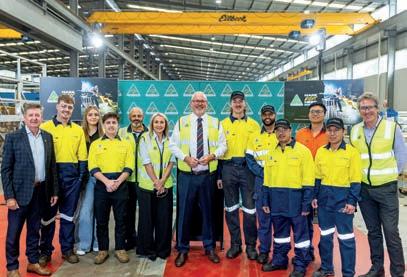
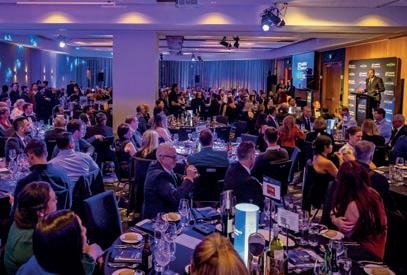
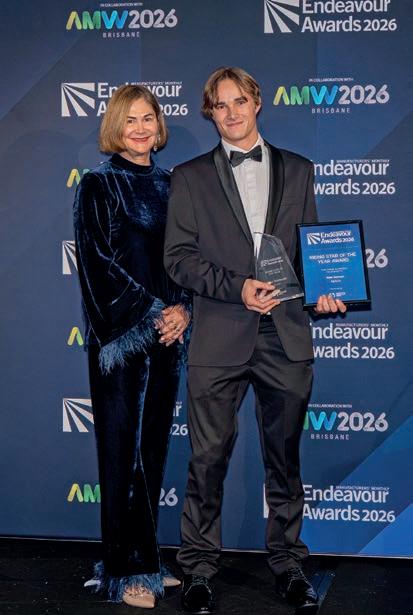
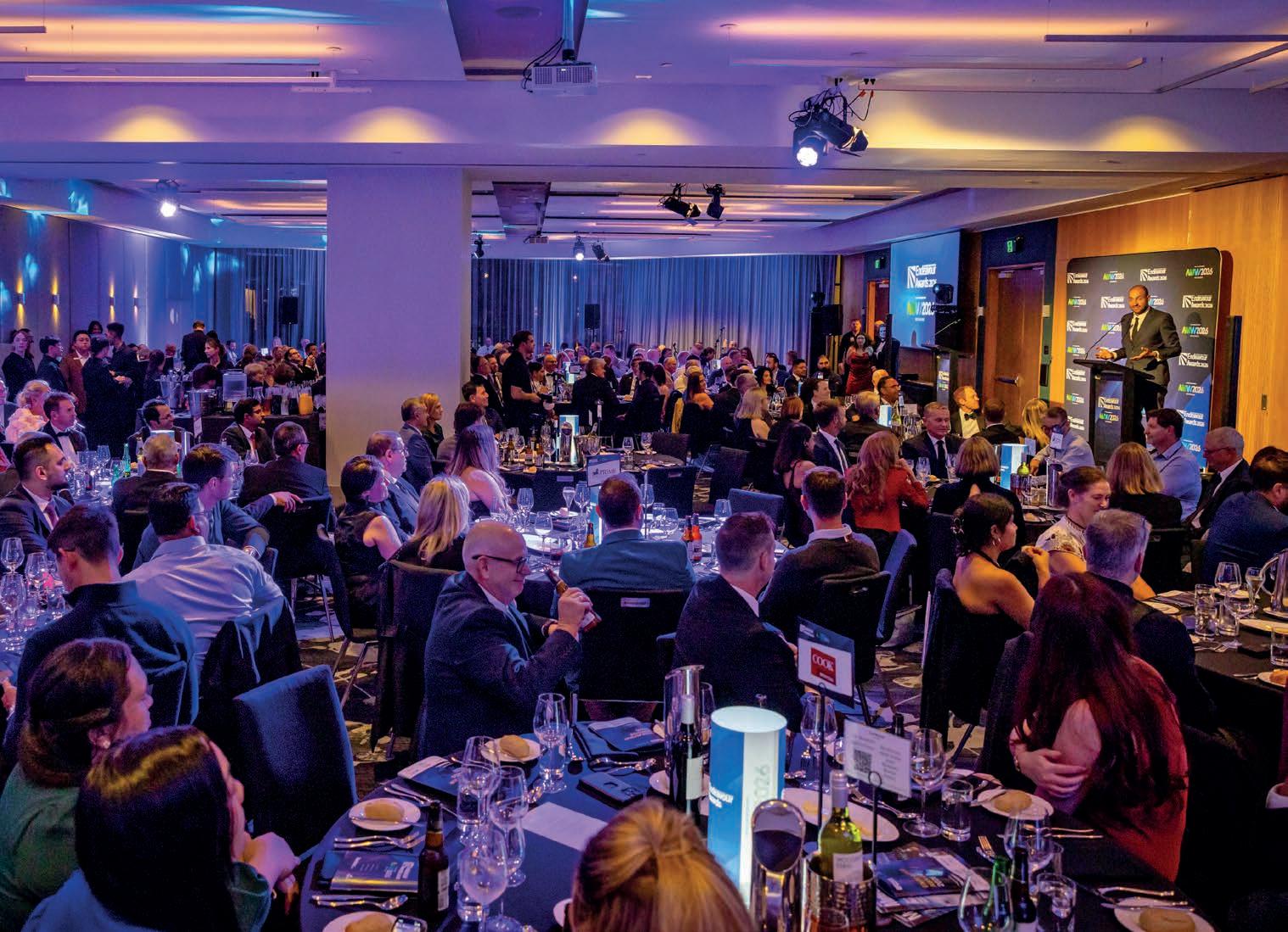
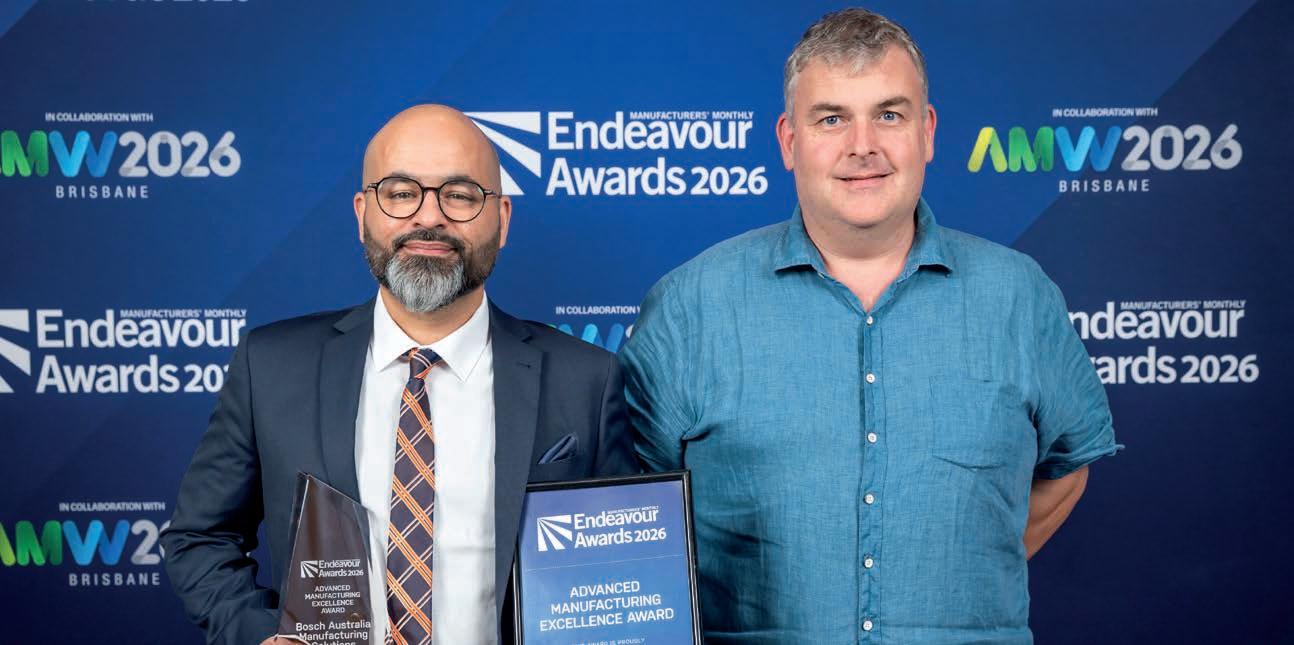
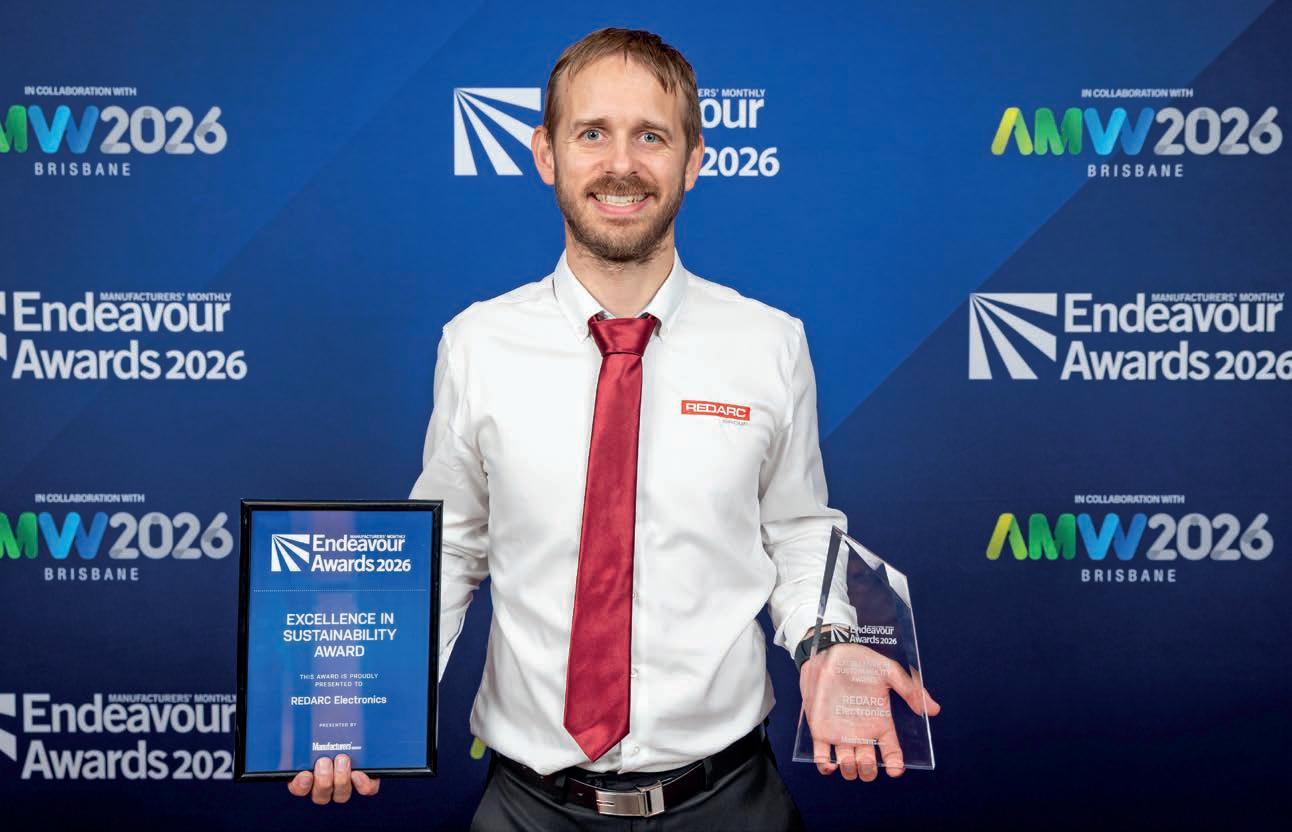
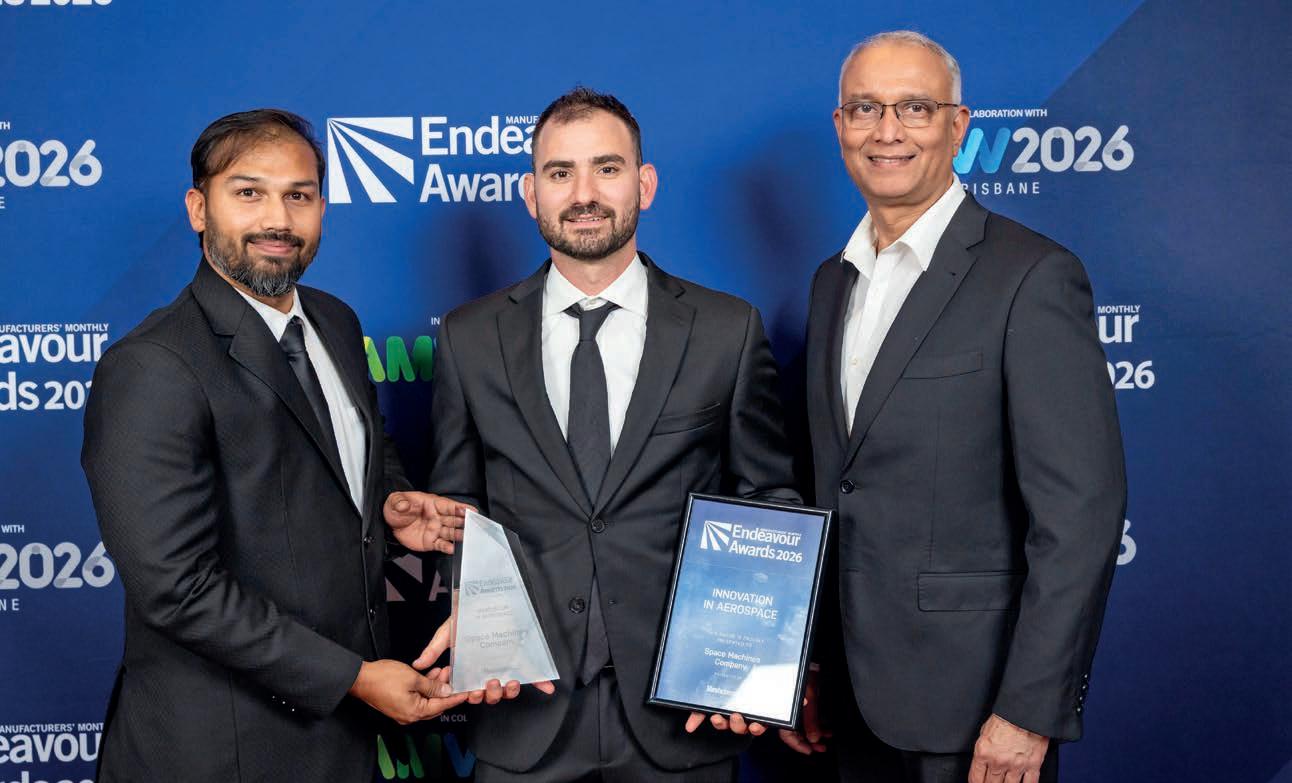
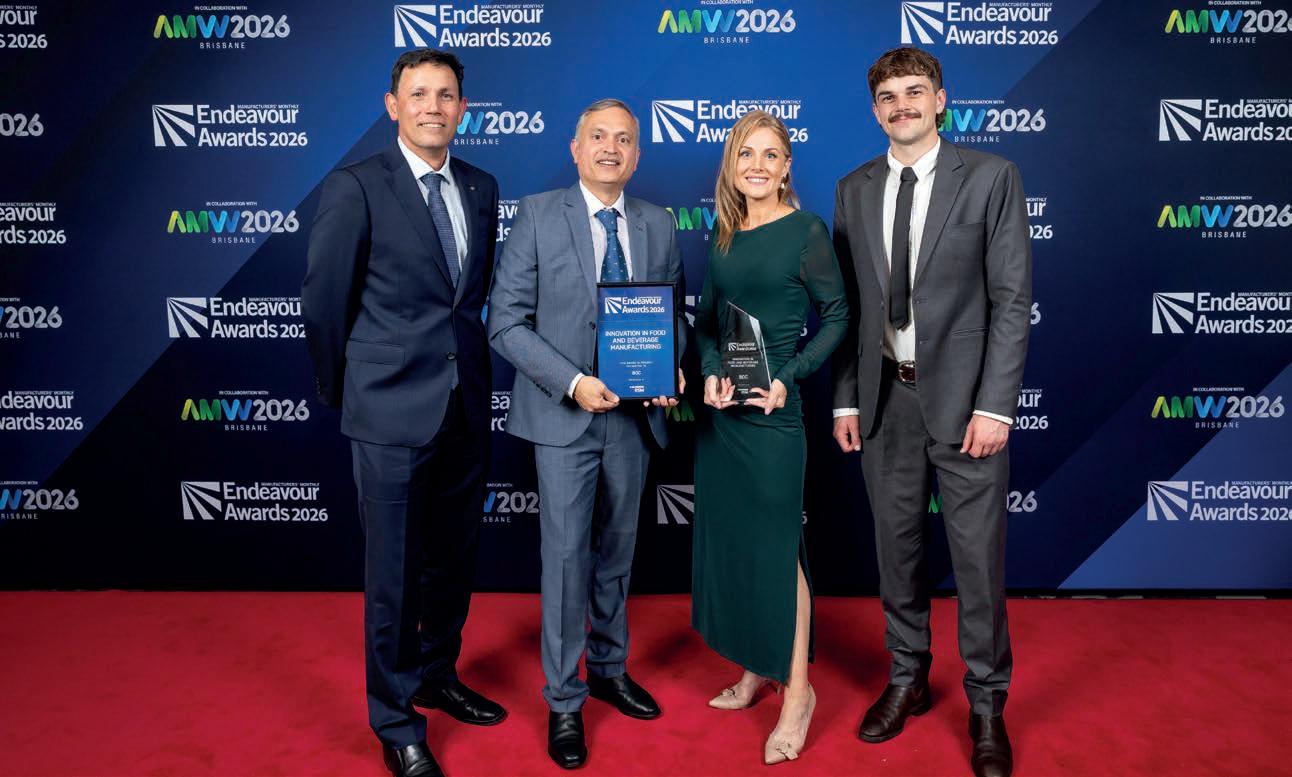
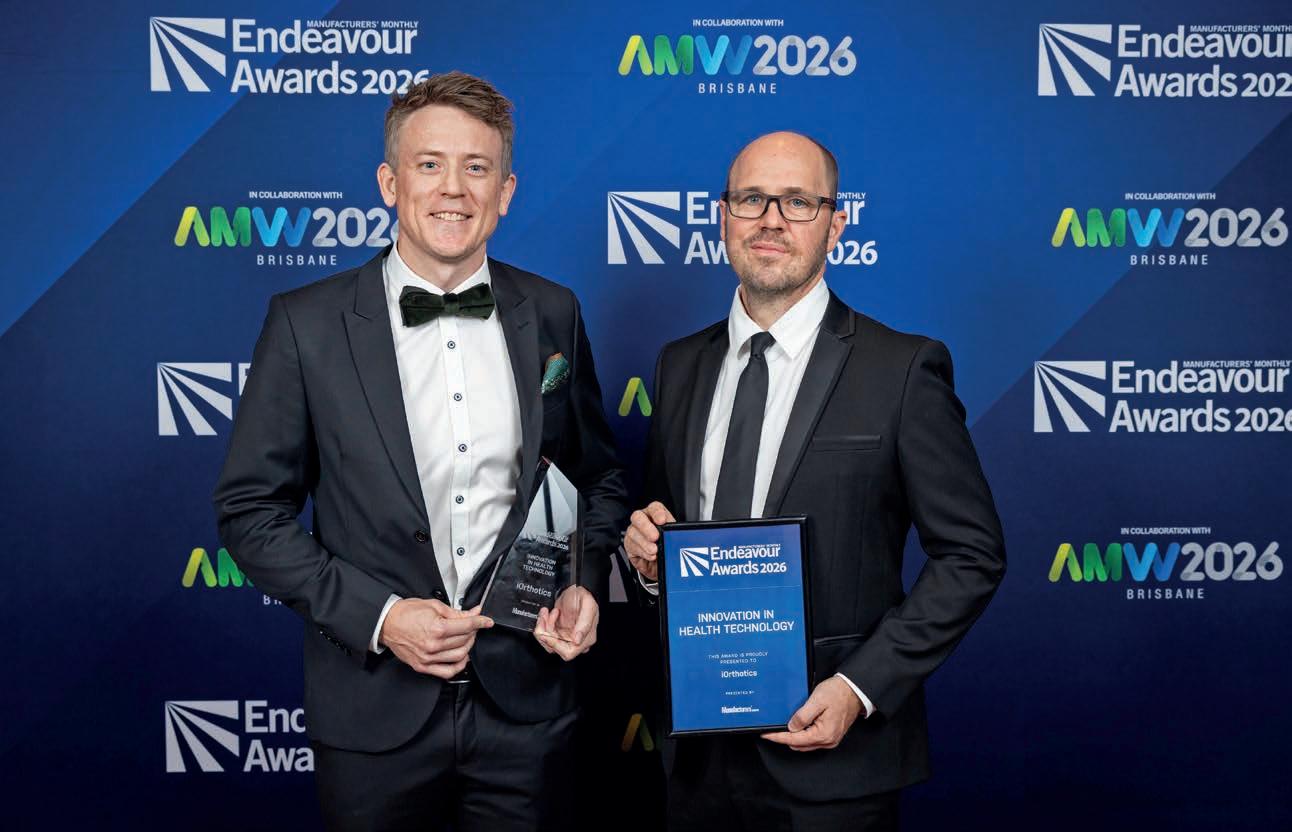
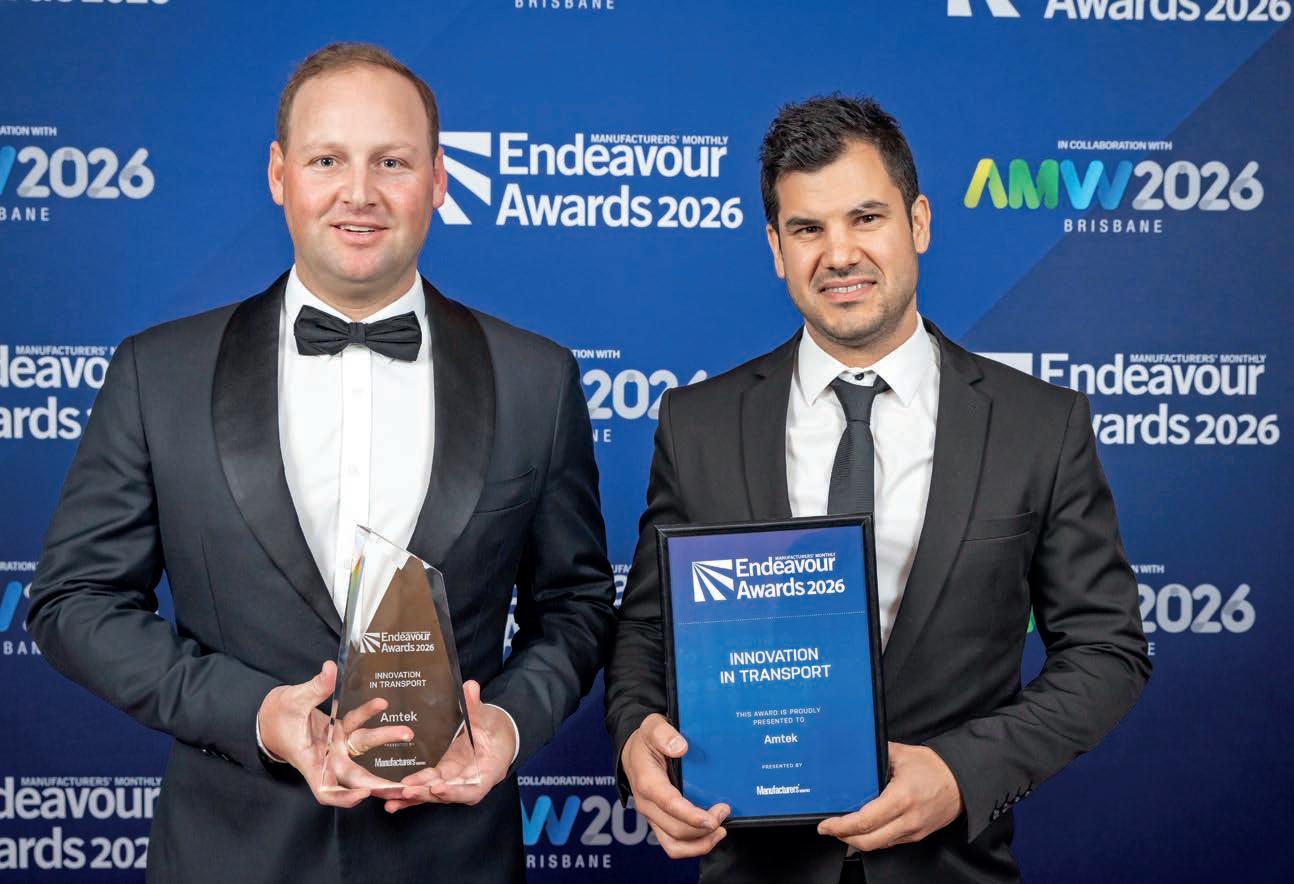
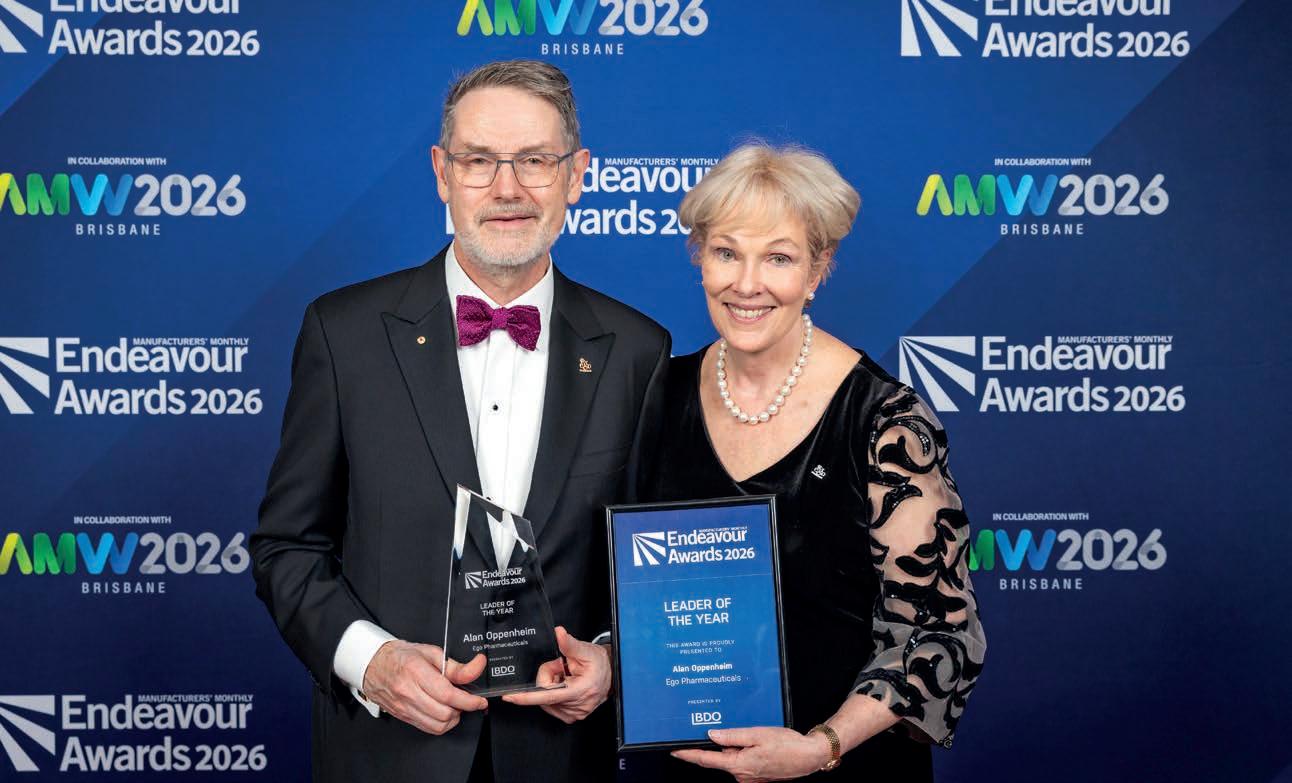
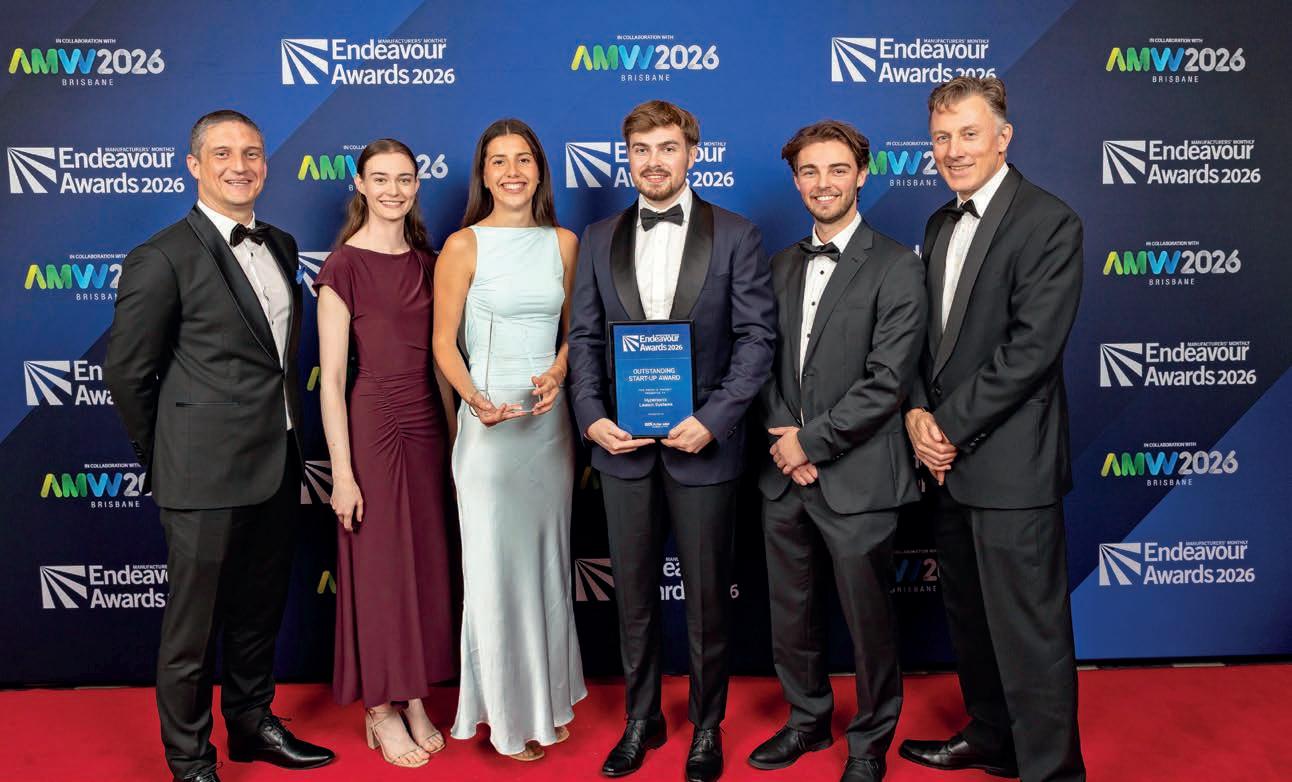
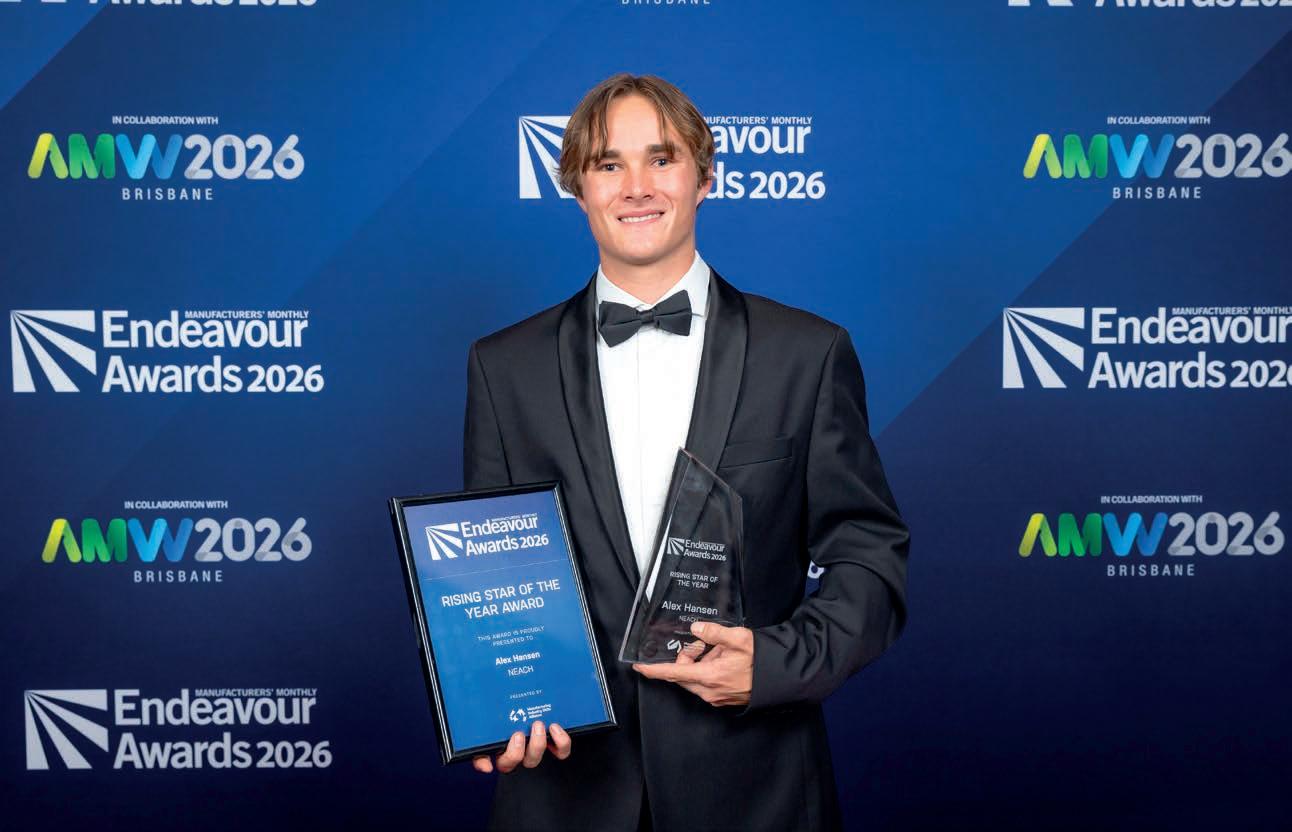
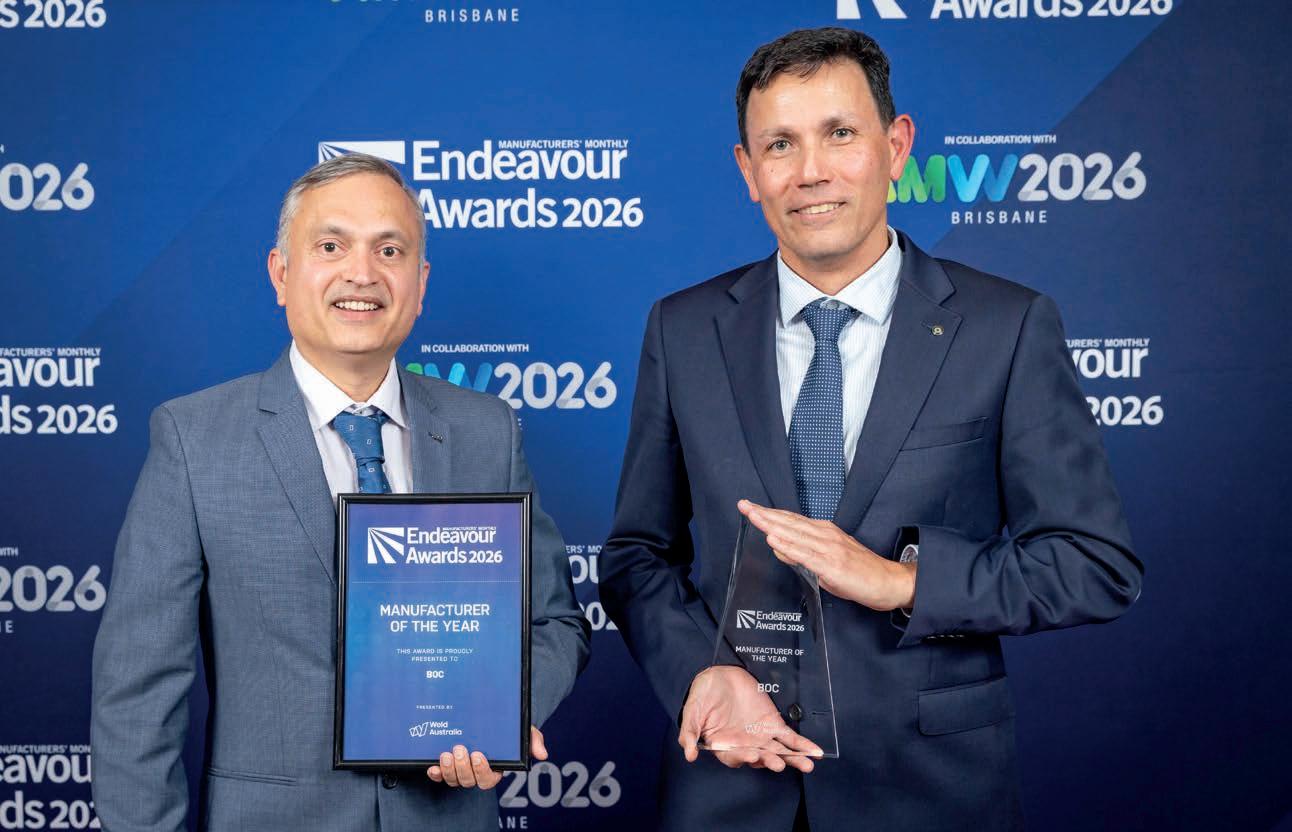
Also featured are the winners of the 2026 Manufacturers’ Monthly Endeavour Awards, recognised for setting the benchmark in innovation, excellence and leadership across the industry.
A month of momentum, reflection and renewal
What a last month it has been for Australian manufacturing.
From the packed exhibition halls of Australian Manufacturing Week (AMW) in Brisbane to the celebration of excellence at the Endeavour Awards, the month of May provided a timely reminder of both the scale and sophistication of this country’s manufacturing sector. For anyone still holding onto the narrative that Australian manufacturing is in decline and without hope, this week offered a very different picture.
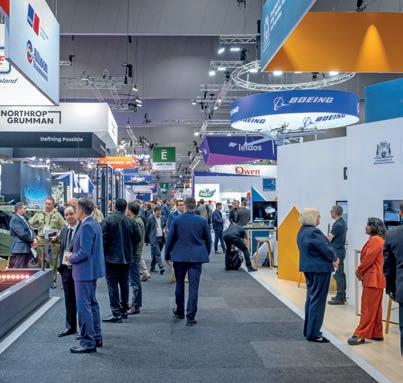
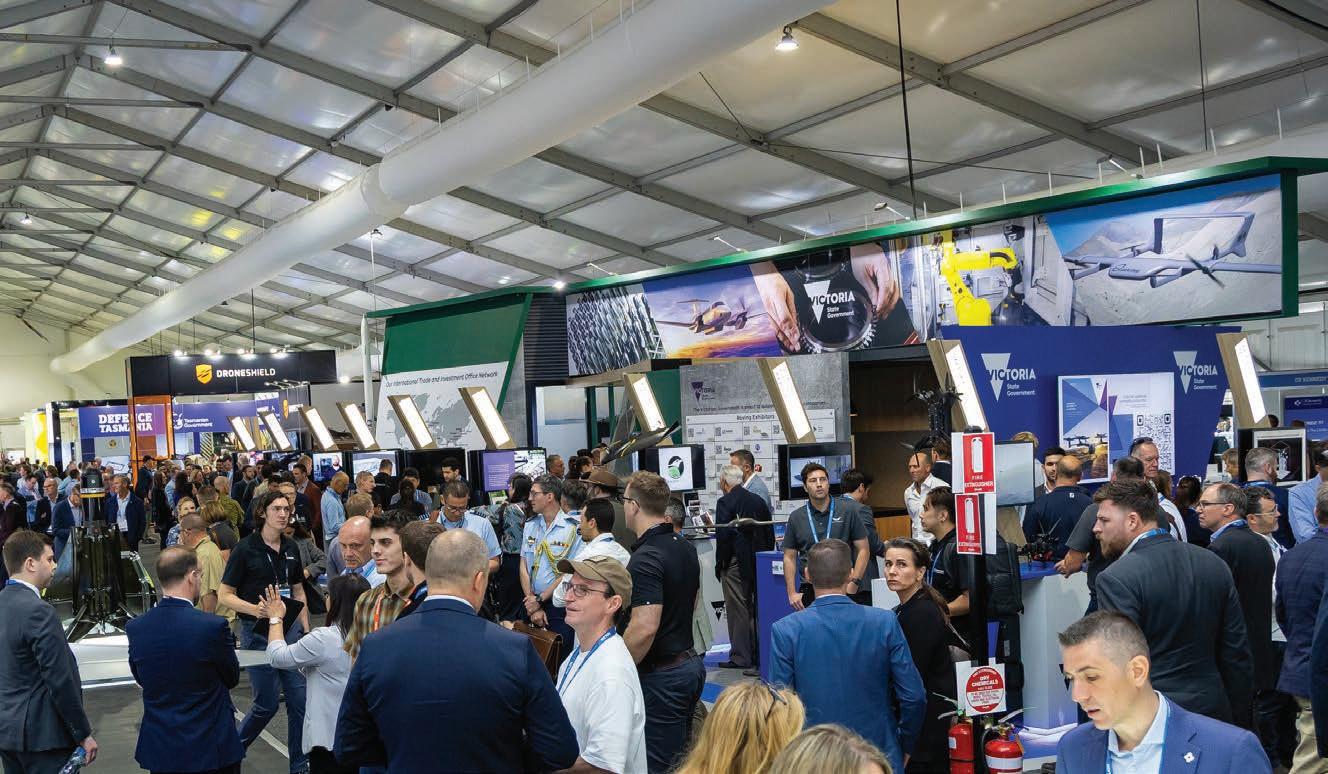
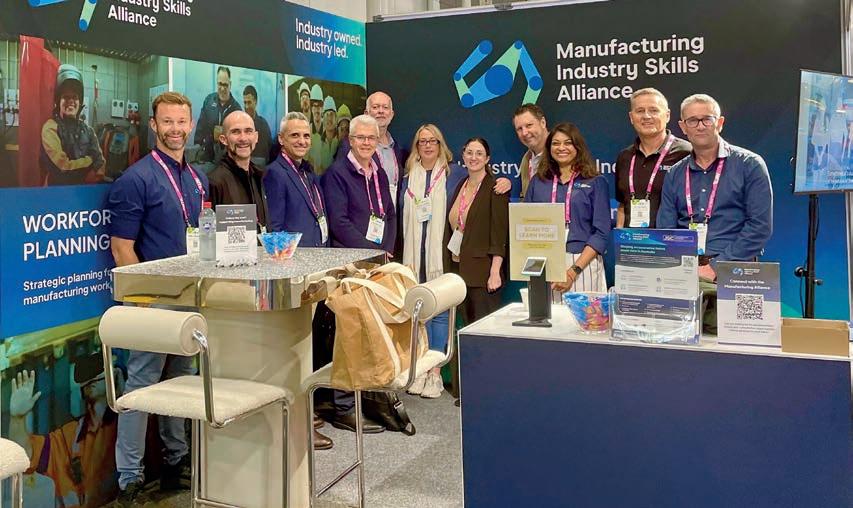
AMW 2026 marked the first time the event has been hosted in Queensland, and Brisbane delivered an energetic and optimistic atmosphere from the moment the doors opened at the Brisbane Convention and Exhibition Centre. Across the exhibition floor, visitors were met with live demonstrations in robotics, automation, additive manufacturing, AI-enabled production systems and advanced engineering technologies. More importantly, they were met by manufacturers eager to talk about what they are building, solving and innovating.
One of the strongest themes throughout the
week was sovereign capability. In an increasingly volatile geopolitical environment, Australia’s ability to manufacture critical products, technologies and infrastructure locally is becoming more important than ever. Queensland’s manufacturing leadership reinforced that message during the opening sessions, highlighting the state’s ambitions around advanced manufacturing, regional capability and value-added production. However, AMTIL CEO Lorraine Maxwell perhaps summed it up best.
“I don’t believe manufacturing will die, and I don’t believe it’s dying. I believe it’s too important, and I believe it will transform.”
That sense of transformation was visible everywhere. Australian manufacturing today looks very different from the heavy industrial image many still associate with the sector. The reality is a far more advanced, technical and specialised industry spanning defence, medtech, pharmaceuticals, shipbuilding, aerospace, transport, energy, food production and advanced materials. It is built around agile SMEs delivering world-class products into highly competitive global markets.
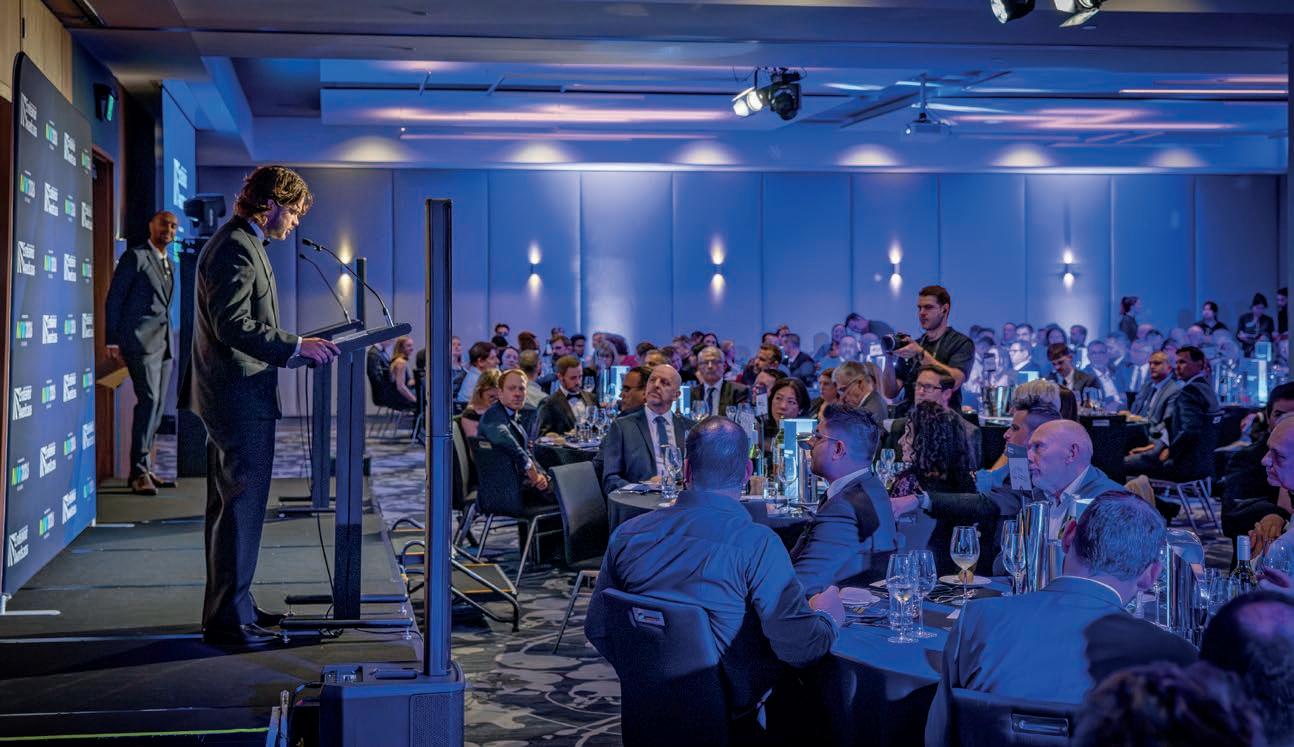
This year’s Endeavour Awards felt particularly special as the event returned alongside Australian Manufacturing Week, creating what has quickly become a flagship gathering for the industry. The program continues to represent the pinnacle of recognition for Australian manufacturing. Beyond products and production numbers, the awards acknowledge the innovation, persistence, risk-taking and long hours that rarely make mainstream headlines. From family-run businesses built over generations to well-known technology leaders, the finalists and winners demonstrated the depth of capability that exists across the sector.
The conversations throughout the week were honest about the challenges ahead. Skills shortages, rising costs, productivity pressures and global uncertainty remain very real concerns. Yet the overwhelming mood was not pessimism. It was ambition.
Australian manufacturing is evolving rapidly, and this week showed an industry that is determined to lead that change rather than simply react to it.
Image: PCM
DECISION MAKER
Why onshore mRNA manufacturing is a catalyst for critical infrastructure
Onshore mRNA manufacturing is emerging as critical national infrastructure, strengthening Australia’s pandemic preparedness, sovereign capability and advanced manufacturing future.
Most of us would prefer to file global pandemics away as a chapter we’ve closed – a crisis endured, lessons learned, life resumed. But pandemics do not operate on our sense of fatigue or finality. They test systems, expose vulnerabilities and, inevitably, return in new forms. The question is not whether we want to relive that experience, but whether we are better prepared for the next one.
Global shutdowns caused by pandemics place extraordinary pressure on international supply chains, and experience shows that demand for important supplies can far exceed manufacturing capacity. In a health emergency, the ability to draw on from multiple platforms and sources reduces risk and strengthens resilience. In the past, access to imported medicinal products was constrained by international availability, export controls and fragile supply chains. As an example from overall system perspective, the Halton Review of COVID-19 Vaccine and Treatment Purchasing and Procurement – Summary and recommendations1 noted that early
procurement occurred in a “sellers’ market” and that pre-pandemic procurement mechanisms weren’t fit for an emergency context, underscoring challenges of securing adequate supply amid scarcity.
Nations with domestic manufacturing capability were able to move quickly to secure supply for goods in need and adapt as circumstances evolved. Australia’s need for critical vaccines and medicines, by contrast, were at times critically shaped by external factors beyond its direct control.
The experience underscored a clear lesson: in a crisis, access is influenced not only by need but by sovereign capability and diversified supply options.
As scientists warn of “Disease X” – a yet-unknown pathogen with the potential to trigger the next pandemic – Australia has taken important steps to strengthen its preparedness. Onshore manufacturing of mRNA technology is one of these efforts. Far from being a niche scientific investment, it represents critical national infrastructure: protecting public health, strengthening sovereign capability, and supporting advanced manufacturing in Australia.
Why onshore manufacturing changes provide strategic optionality
Building a sovereign mRNA technology manufacturing ecosystem transforms Australia’s ability to respond. Domestic capability enables:
• Rapid development and earlier commencement of clinical trials for promising investigational candidates.
• Reduced dependence on international supply chains and bilateral agreements.
• Greater security of supply for vulnerable populations.
• Faster, more coordinated public health responses.
• Economic benefits through investment in the manufacturing ecosystem. This capability strengthens Australia’s advanced manufacturing base, builds skilled jobs, and creates spill-over benefits across biotechnology, medical research, cold-chain logistics and quality manufacturing systems.
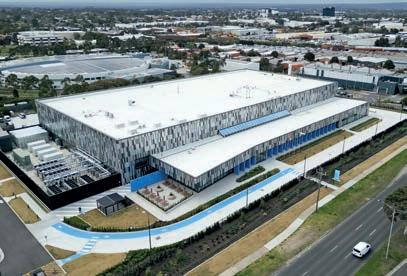
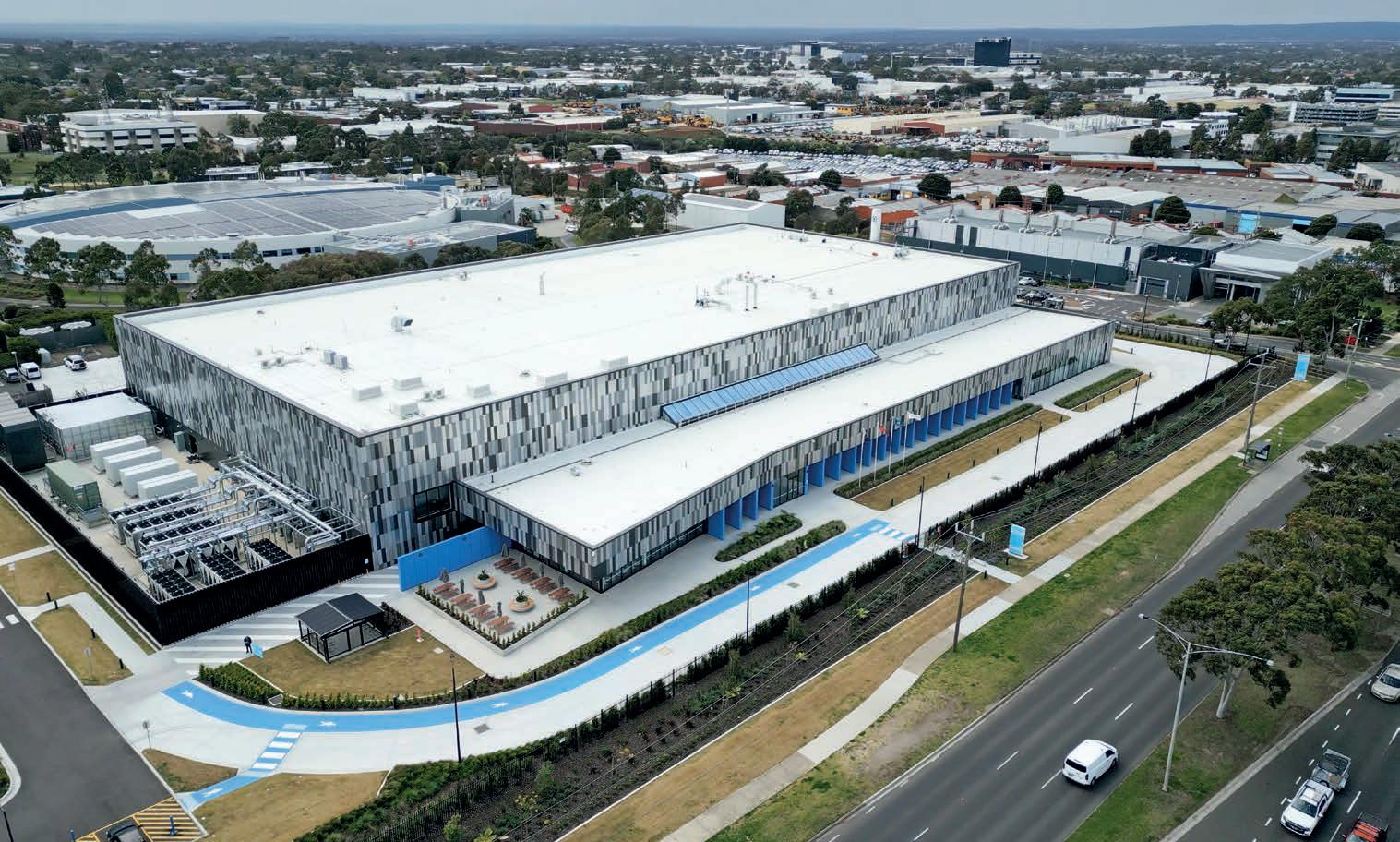
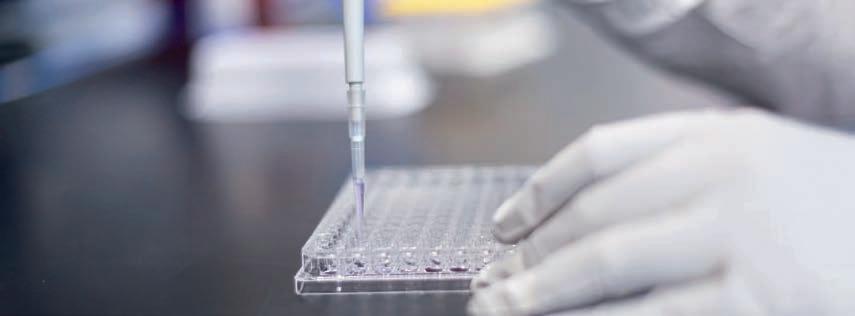
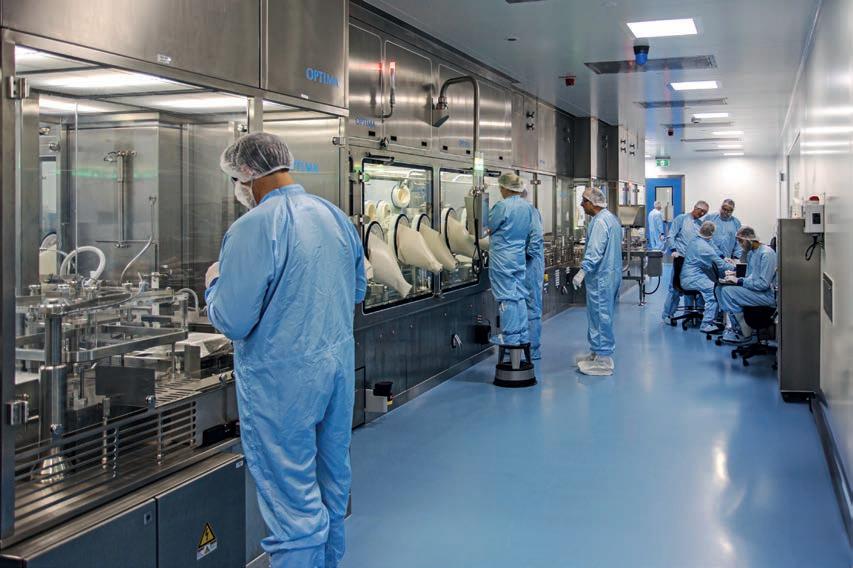
Moderna Technology Centre in Melbourne is the Southern Hemisphere’s first endto-end mRNA manufacturing facility.
Images: Moderna
EMMA HARRINGTON, VICE PRESIDENT, SITE HEAD, MODERNA
From policy to practice:
Building capability in Australia
Establishing a resilient mRNA manufacturing industry requires long-term collaboration between government, industry and research institutions. Australia has already taken a step with the establishment of Moderna’s Technology Centre –Melbourne (MTC-M) in Clayton, Victoria, a high-tech construction which was operationally complete in 2024.
Designed to produce up to 100 million doses of vaccines per year in a pandemic scenario, the facility provides surge capacity for future health emergencies and will also supply vaccines for seasonal respiratory diseases (subject to regulatory approval). As the Southern Hemisphere’s first commercial-scale, end-to-end mRNA manufacturing facility, MTC-M positions Australia among a small group of nations with local mRNA production capability – a strategic advantage if global supply chains are disrupted again, according to Australia’s mRNA Advantage: Jobs, Health & Economic Resilience – A Report for Moderna.2
The economic case is equally compelling. Analysis by Oxford Economics, commissioned by Moderna, indicates that MTC-M could help Australia avoid up to $4.8 billion in pandemic-related costs over the next 30 years through reduced lockdown impacts, lower mortality and improved population wellbeing. Beyond crisis scenarios, the centre is expected to support approximately 990 direct and indirect jobs each year and contribute an estimated $96 million annually to Australia’s GDP.
The role of sustained strategic partnerships
While MTC-M represents a milestone, maintaining and evolving this capability will require sustained partnerships across the ecosystem. International experience underscores the importance of consistent, long-term investment. In the US, decades of public funding through agencies such as the National Institutes of Health (NIH), the Biomedical Advanced Research and Development Authority (BARDA) and the Department of Defence laid the groundwork for development of mRNA technology. For Australia, this means committing to a longterm national strategy that prioritises research, innovation and workforce development. End-to-end mRNA manufacturing should be viewed not as an one-off asset, but as the foundation of a broader health emergency response system – one that must be continuously supported to remain effective and that can catalyse a new, sustainable ecosystem
that includes a Centre for Disease Control (CDC), further investments into other mRNA technology, early research and development (R&D) such as recommended by the government’s 2024 Australia’s RNA Blueprint3 , a strong and capable regulatory system and an attractive environment for investment by international interests.
Capability in the event of a crisis
The establishment of onshore mRNA technology manufacturing is not just an achievement for public health – it is a testament to what strategic industry advocacy and long-term partnership can achieve. In Victoria, mRNA Victoria was established to ensure Australia as a maker – not just a consumer – of mRNA technologies.
By bringing together government, industry and research institutions, mRNA Victoria helped catalyse investments from organisations like Moderna
and BioNTech, creating a foundation for further innovation. It signalled to the world that Australia is open for high-value, knowledge-intensive manufacturing and that decision is already yielding results in jobs, capability and sovereign resilience.
But momentum can’t be taken for granted. To sustain these gains, we need continued focus on nurturing our talent pipeline, backing R&D partnerships, and making Australia a competitive destination for advanced manufacturing investment. This is not about one facility or one company – it is about building an ecosystem that thrives in both good times and crises.
Australia’s future resilience will be defined by the infrastructure we build today. Onshore mRNA manufacturing is a strategic asset – and with strong industry champions, clear policy settings and collaborative effort, it can anchor a new era of capability in this country.
network that spans local suppliers, packaging partners, and research institutions.
1 Review of COVID-19 Vaccine and Treatment Purchasing and Procurement – Summary and recommendations (28 February 2023) https://www.health.gov.au/sites/default/files/2023-02/review-of-covid-19vaccine-and-treatment-purchasing-and-procurement-summary-and-recommendations.pdf
2 Moderna, 2025. “Australia’s mRNA Advantage: Jobs, Health & Economic Resilience — A Report for Moderna.” [https://static.modernatx.com/pm/6cef78f8-8dad-4fc9-83d5-d2fbb7cff867/3d48d19b-afb942e2-81cf-5630724e736a/3d48d19b-afb9-42e2-81cf-5630724e736a_viewable_rendition__v.pdf]
The facility has the capacity to produce up to 100 million vaccine doses per year in a pandemic situation.
CELEBRATING SOVEREIGN INDUSTRY
Capral at 90: Forging an Australian manufacturing legacy
From wartime origins to a modern, sustainable supply chain, Capral’s 90-year journey mirrors the evolution of Australian manufacturing itself.
When Capral reflects on its 90-year history, the journey did not begin with size, certainty or market dominance. According to managing director and CEO of Capral, Tony Dragicevich, it began with belief in aluminium as a material, in the potential of Australian industry, and in the enduring value of local manufacturing.
That belief, first realised in the 1930s by engineer N. Warren “Gus” Waterhouse, would ultimately underpin one of Australia’s most
enduring manufacturing businesses. Today, as Capral marks nine decades in operation, its trajectory offers a lens to view the broader evolution of the nation’s industrial base.
A material finds its moment
Capral’s story is inseparable from that of aluminium itself – a material that, while identified in the early 19th century, only became industrially viable following breakthroughs in electro-metallurgy in the late 1800s. By the early
20th century, aluminium had begun reshaping industries including aviation, transport and construction. In Australia, however, its adoption lagged. Domestic production was limited, and fabrication capability was virtually non-existent. Waterhouse recognised the opportunity. After studying aluminium manufacturing techniques in Europe and North America, he returned to Australia with a determination to establish a local industry. His efforts culminated in the formation of the Australian Aluminium Company in 1936,
Images: Capral
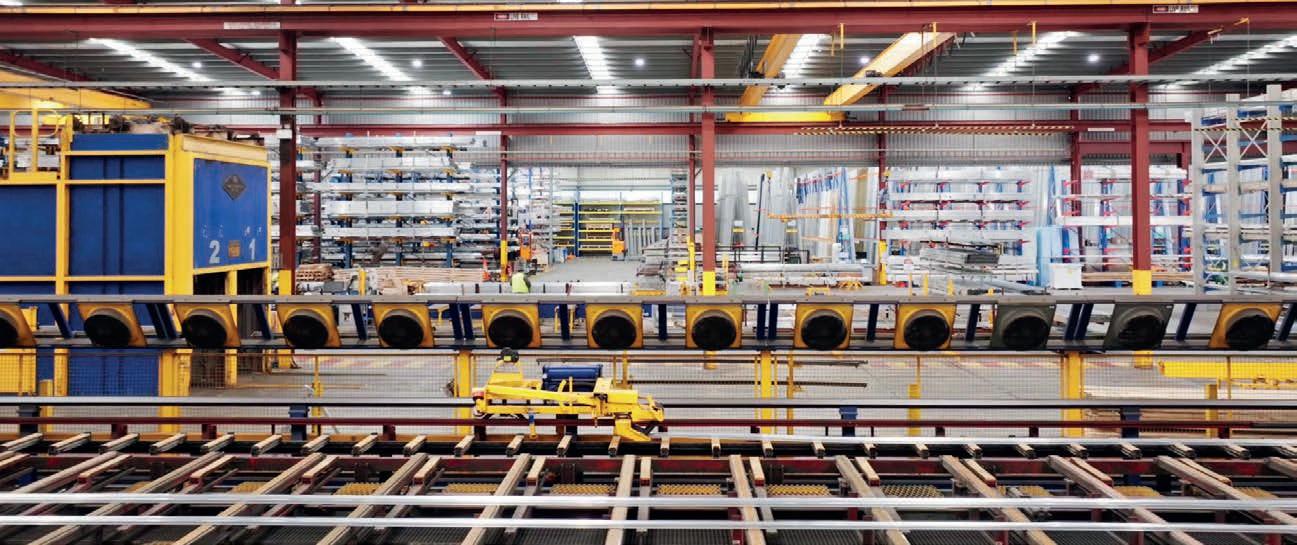
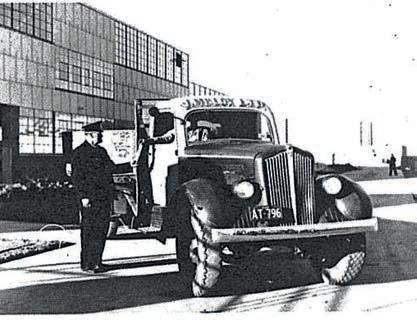
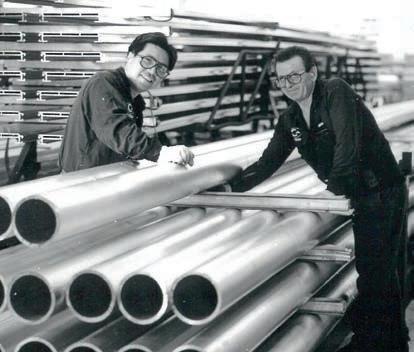
Capral’s 90-year journey did not begin with size, certainty or market dominance, but with belief in aluminium.
setting the stage for what would become Capral.
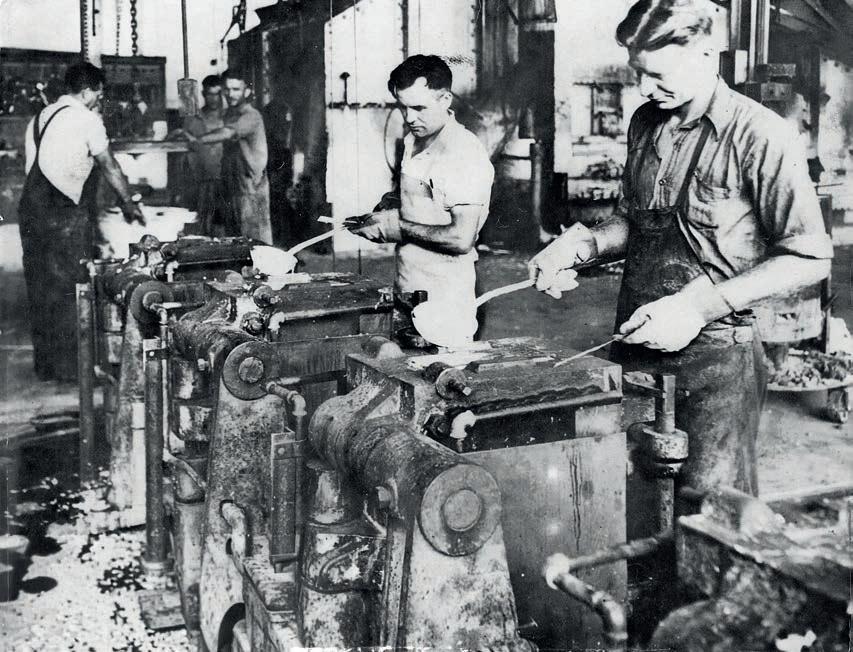
The company’s first milestone came with the establishment of its Granville works in New South Wales. Built on a 47-acre site purchased in 1939, the facility would become the birthplace of Australia’s aluminium fabrication industry.
Construction coincided with the outbreak of the Second World War, forcing rapid adaptation as equipment orders from Britain were cancelled and replaced with machinery sourced from the US. Despite these challenges, the plant began production in 1941.
Across
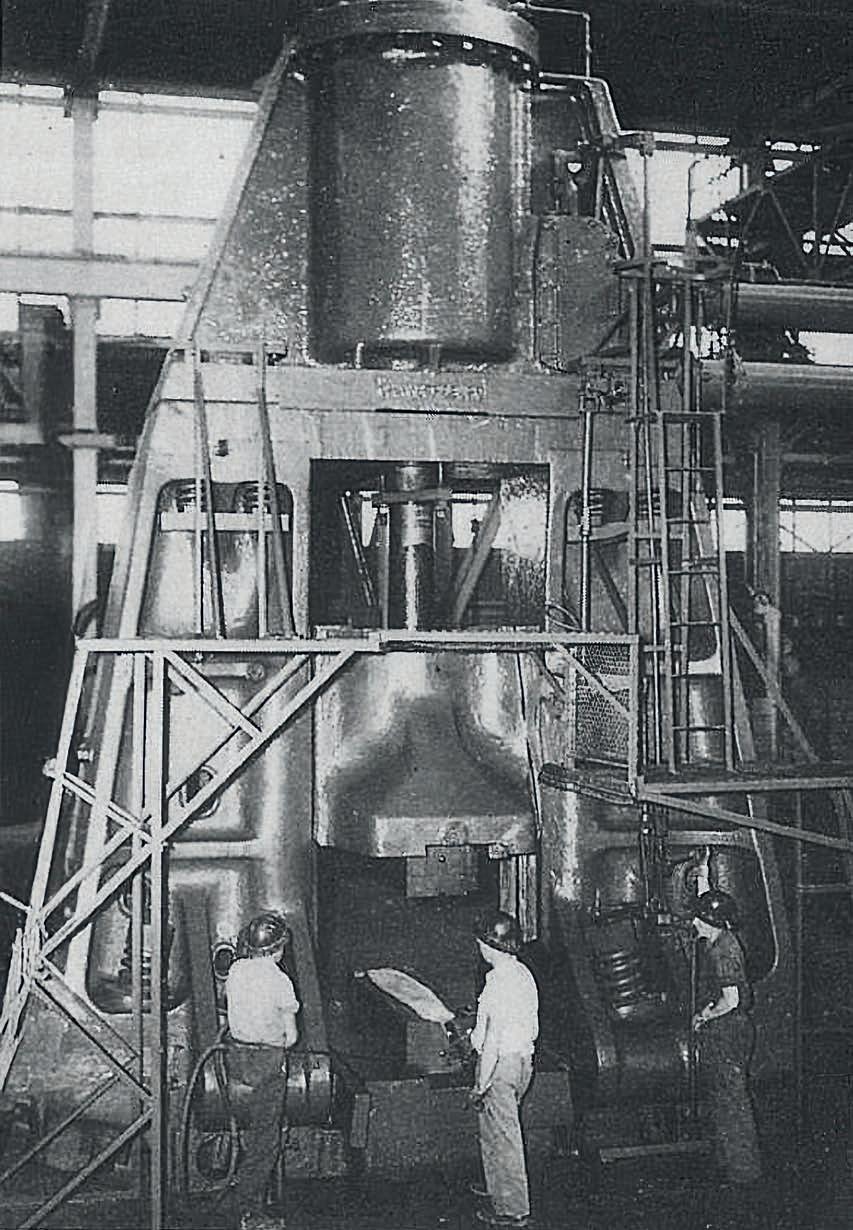
On 10 June that year, the first aluminium sheet was rolled at Granville – a moment still regarded as foundational in the company’s history. Extrusions and forgings followed shortly after.
By this time, around 460 employees had been trained in aluminium manufacturing, many with no prior experience. The site quickly became central to Australia’s wartime effort, producing aircraft components and other defence-critical materials under strict government oversight.
The war years tested the resilience of both the business and the broader industry. With Japanese
forces advancing in the Pacific, contingency plans were established, including a “shadow factory” in Wangaratta, Victoria, designed to replicate Granville’s capabilities in the event of an attack.
While the secondary site was never fully activated, Granville operated at capacity throughout the conflict, laying the technical foundations for post-war expansion.
As peace returned, demand for aluminium surged. Housing, infrastructure, transport and consumer goods all drove growth, prompting Capral’s predecessor – then known as Australuco and later Alcan – to expand its operations. New extrusion presses, rolling mills and finishing capabilities were introduced, while aluminium found increasing application in building products, packaging and industrial equipment.
Building a national footprint
The late 1950s and 1960s marked a period of transformation. The business listed publicly in 1958, unlocking capital for expansion,
By the 1970s, Capral evolved into a fully integrated aluminium supplier, with extrusion, rolling, finishing and primary production.
By the early 20th century, aluminium had begun reshaping industries like aviation, transport and construction.
nine decades, Capral has experienced wartime production, post-war expansion, globalisation, industry restructuring and technological transformation.
CELEBRATING SOVEREIGN INDUSTRY
The COVID-19 pandemic underscored the importance of local manufacturing.
and established new facilities including Campbellfield in Victoria and Cabramatta in New South Wales.
By the 1970s, it had evolved into a fully integrated aluminium supplier, with capabilities spanning extrusion, rolling, finishing and primary production. The commissioning of the Kurri Kurri smelter in 1969 represented an upstream investment, securing domestic supply of primary aluminium.
At the same time, the company expanded into architectural systems, marine applications and national distribution. The creation of Aluminium Centres across Australia brought products and expertise closer to customers, laying the groundwork for today’s trade centre network. Aluminium became embedded in the fabric of Australian life – from high-rise buildings and suburban homes to transport systems and marine vessels.
From Alcan to Capral
By the late 20th century, global shifts in the aluminium industry prompted a reassessment of strategy. Rising competition, changing trade dynamics and increasing capital requirements led many producers to streamline operations. For the Australian business, this resulted in a pivotal transition. In the mid-1990s, Alcan divested its majority shareholding, and the company emerged as an independent entity under a new name: Capral Aluminium.
The rebrand marked more than a change in identity. It signalled a renewed focus on downstream manufacturing, distribution and customer relationships within Australia.
The acquisition of Comalco’s downstream assets in 1996 further strengthened Capral’s position, establishing it as the country’s largest integrated aluminium extruder and distributor.
Reinvention in a globalised market
The early 2000s brought fresh challenges. Increased imports, currency fluctuations and global competition placed pressure on domestic manufacturers. Capral responded with a period of consolidation and modernisation. Legacy sites such as Granville were progressively closed, while investment shifted to more efficient, strategically located facilities.
The development of the Bremer Park site in Queensland exemplified this approach – a fully integrated manufacturing and distribution hub designed for modern supply chain demands.
Further acquisitions, including Crane Group’s aluminium business in 2005, expanded Capral’s national footprint and reinforced its market leadership.
At the same time, investments in automation, finishing technologies and digital systems improved efficiency and product quality, ensuring
the business remained competitive in a rapidly evolving landscape.
The 2010s saw Capral sharpen its strategic focus. Acquisitions such as OneSteel’s aluminium distribution division strengthened its product offering and distribution network, while operational improvements enhanced reliability and service. Technical capability also advanced, particularly in architectural systems, where stricter performance requirements drove innovation in design, testing and compliance. By the end of the decade, Capral had stabilised and repositioned itself in the Australian market,
with an emphasis on customer service and operational excellence.
Manufacturing through disruption
The COVID-19 pandemic underscored the importance of local manufacturing. As global supply chains faltered, Capral’s national footprint enabled it to maintain supply to key industries.
“With extrusion capability in Queensland, New South Wales, Victoria, South Australia and Western Australia, Capral was able to maintain a stable, reliable flow of extruded aluminium,” the company noted.
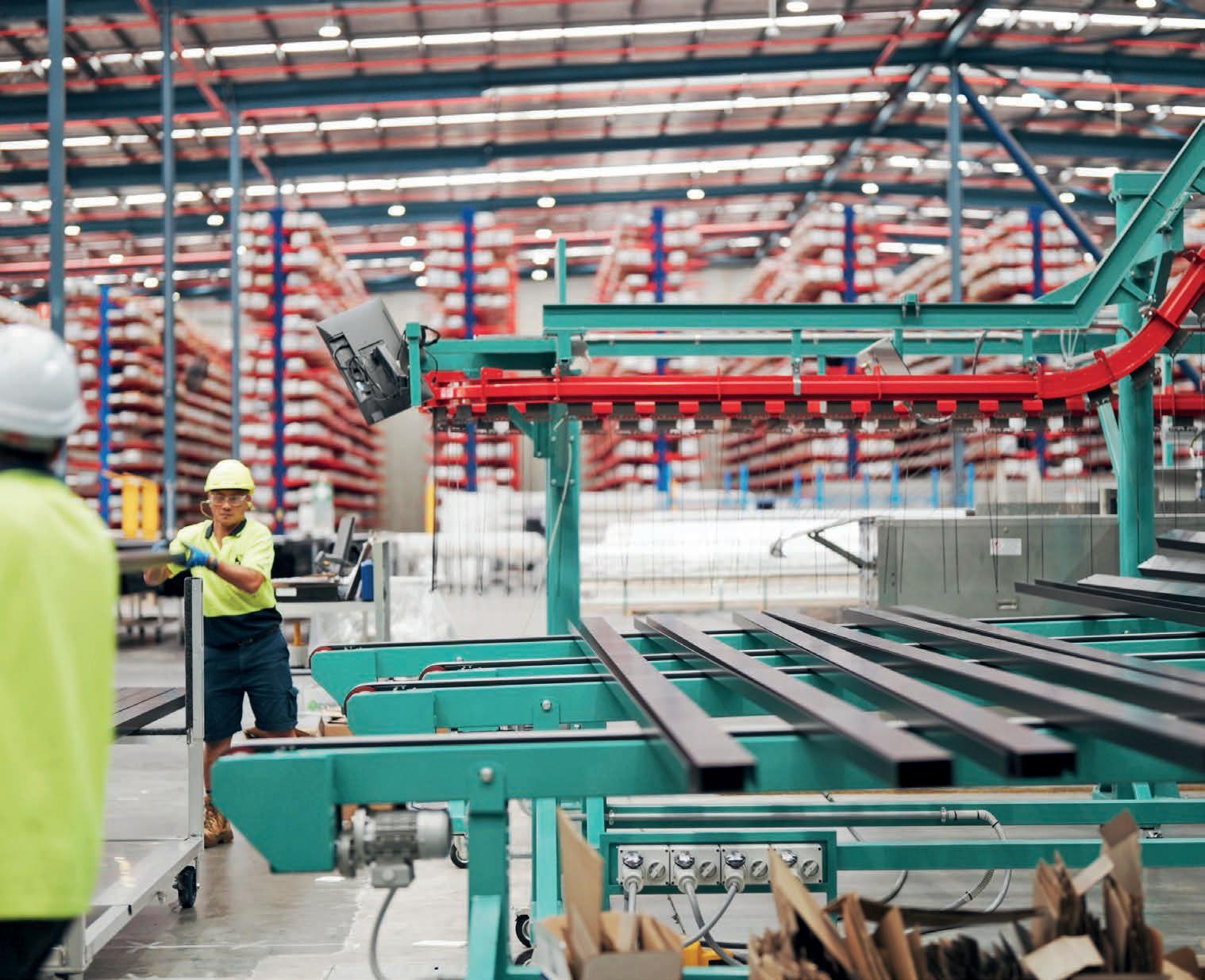
For many customers, access to Australian-made aluminium became critical, reinforcing the value of domestic capability. Recent years have also seen continued investment in infrastructure, including the acquisition of the Smithfield extrusion site in 2020 and the development of advanced finishing technologies such as the Huntingwood vertical paint line.
Sustainability and the next chapter
As the industry shifts towards lower-carbon solutions, Capral has placed sustainability at the centre of its strategy. The introduction of LocAl aluminium products provides lower-carbon options for customers, while Aluminium Stewardship Initiative certification reflects a broader commitment to responsible production.
This focus aligns with growing demand for transparency and environmental performance across construction and manufacturing sectors.
“We are committed not only to extruding and distributing aluminium, but to do it responsibly, transparently and sustainably,” Dragicevich said.
A legacy still being written
Across nine decades, Capral has experienced wartime production, post-war expansion, globalisation, industry restructuring and technological transformation. Each phase has required adaptation – from the manual, labourintensive processes of the 1940s to today’s automated, data-driven operations.
Yet certain constants remain. The importance of people, the value of local manufacturing, and the need to evolve with changing market conditions continue to define the business.
“What gives me the greatest confidence in our future is our people,” said Dragicevich. “More than any asset or facility, it is the experience, skill and commitment of our teams that set Capral apart.”
As Capral enters its tenth decade, its story reflects more than the history of a single company. It is a story of Australian manufacturing itself – shaped by innovation, resilience and a willingness to adapt. And, as its leadership makes clear, that story is far from finished.
By the late 20th century, global shifts in the aluminium industry prompted a reassessment of strategy.
As Capral enters its tenth decade, its story reflects more than the history of a single company.
RSM MANUFACTURING PLAYBOOK: WHERE EXPERTISE
Tax time priorities for manufacturers
Following the federal budget, RSM Australia’s William Zhang said manufacturers should use the end of financial year to reassess structures, maximise incentives and strengthen compliance.
Australian manufacturers are entering the end of financial year period against a backdrop of tax changes announced in the federal budget, with measures spanning research and development incentives, asset write-offs, trust structures and compliance obligations. While many of the changes are aimed at stimulating investment and innovation, they also introduce new considerations around governance, cash flow and long-term business structuring.
For manufacturers navigating rising input costs, supply chain volatility and continued pressure on margins, the tax environment has become increasingly strategic. According to RSM Australia partner, tax services, William Zhang, the latest budget delivered several measures that manufacturing businesses should be paying close attention to before 30 June.
“From the R&D space, the refundable R&D tax offset threshold will be lifted from $20 million to $50 million aggregated turnover,” Zhang said. “This will be capturing more mid-sized businesses to the instant refund offset.”
R&D
and investment incentives
Among the budget measures for manufacturers were changes to the R&D tax incentive framework.
Zhang said the government had increased the R&D expenditure cap from $150 million to $200 million, which would benefit larger claimants.
At the same time, the minimum R&D expenditure threshold will increase from $20,000 to $50,000.
Zhang said the combined changes reflected the government’s ongoing focus on supporting advanced manufacturing capability and other initiatives.
“The government will continue their commitment to support Future Made in Australia initiatives, focusing on renewable green materials and low emissions manufacturing,” he said.
Beyond R&D, the budget also confirmed that the $20,000 instant asset write-off would be made permanent for businesses with turnover under $10 million. Zhang said the permanence of the measure removed uncertainty for smaller manufacturers making ongoing equipment investments.
Importantly, he noted that the threshold applies on a per-asset basis rather than as a single annual limit.
“One thing I wanted to remind businesses of is that the $20,000 limit is on a per asset basis, so that you can write off multiple separate equipment purchases in the same year, which are less than $20,000,” he said.
The budget also made the tax loss carryback measure permanent for companies with
turnover below $1 billion, allowing businesses to offset current losses against profits from prior years. Zhang said this would be valuable for manufacturers experiencing softer trading conditions after stronger periods in previous years.
“This essentially gives some companies that were experiencing downturns the ability to claw back some of the losses and help cash flow,” he said.
The government also announced a startup
RSM Australia partner, tax services, William Zhang.
RSM Australia offers advisory services to manufacturing businesses that may need guidance in the EOFY period.
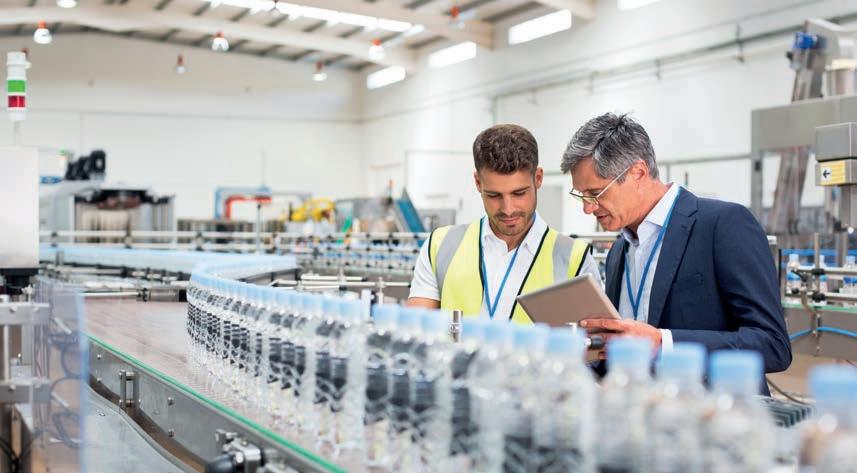
For manufacturers navigating input costs, supply chain volatility and margin pressures, the tax environment has become increasingly strategic.
loss refund from 2028 for small startups with turnover under $10 million in their first two years of operation, enabling them to claim refunds for tax losses.
Looking beyond new products
While R&D tax incentives are often associated with new products, Zhang said many manufacturers overlook opportunities tied to improvements in existing products, systems and processes. He said manufacturers should be assessing where expenditure and testing activities have produced measurable improvements, rather than limiting claims to greenfield innovation projects.
“Manufacturers need to show how the expenditure and testing has improved their products and processes rather than mere routine changes,” Zhang said.
Zhang pointed to examples including improvements to product materials or components, embedded software, production processes, component integration and operational performance. At the same time, he warned that manufacturers should expect continued scrutiny around R&D claims and broader tax compliance obligations.
The Australian Taxation Office has increased its focus on data matching, governance processes and internal system controls, making accurate documentation and oversight increasingly important.
“We would strongly recommend that businesses look into their governance side,” Zhang said.
He said manufacturers should consider regular governance health checks conducted by thirdparty accounting firms or external specialists to identify compliance risks before they become audit issues.
Common mistakes at year end
According to Zhang, manufacturers continue to make recurring mistakes during the end of financial year process, particularly around inventory accounting, deductions and cash flow management. One common issue involves stock and materials in transit not being accounted for correctly through cost of goods sold calculations.
“We found in the past a lot of businesses are not accounting for stock or material in transit properly,” Zhang said. “With trading stock, be mindful of the three different valuation methods – cost, reselling value and replacement value.”
He said manufacturers should also identify obsolete stock that could be claimed as a tax deduction, while ensuring that standard costing systems are properly readjusted on 30 June. Other missed opportunities include diesel fuel rebates, deductible prepayments and foreign exchange losses tied to importing and exporting activities. Zhang cautioned businesses to remain mindful of doubtful debt provisions as they are not deductible.
Manufacturers should also review pay-as-you-go installments for the June quarter to ensure they are not unnecessarily overpaying tax.
“You may have prepaid too much tax this year,” Zhang said.
Managing cash flow pressures
With manufacturers continuing to face elevated energy prices, labour costs and supply chain disruptions, Zhang said tax planning remained an important lever for improving cash flow. One area where businesses often miss opportunities is through the deferred GST scheme for importers. He said many importers continue to create avoidable GST cash flow pressures by failing to implement the
He also encouraged manufacturers to review customs duty and GST arrangements on imported goods, noting that incorrect duty classifications
by customs brokers can create substantial refund opportunities. RSM has seen businesses recover refunds after reviewing historical import classifications and customs arrangements.
“An expert in this area could reveal and may result in large refund opportunities,” said Zhang.
Structural changes ahead
One of the most consequential budget measures for privately owned manufacturing businesses involves changes to family trust taxation. From 1 July 2028, a 30 per cent minimum tax on trust income will apply, while family trusts will also lose access to the 50 per cent capital gains tax discount for gains after 1 July 2027.
Zhang said the changes would reduce many of the traditional advantages associated with family trust structures.
“It takes away a lot of the past benefits of people streaming trust income to lower earning individuals and to move income to bucket companies,” he said.
As a result, Zhang said many businesses should begin reviewing whether their current structures remain appropriate, particularly where significant assets such as land are held within trusts.
The government has also introduced a tax-free rollover period between 1 July 2027 and 30 June 2030 to allow businesses to move assets out of family trusts without triggering income tax consequences. However, Zhang warned that stamp duty implications still need to be carefully assessed where land assets are involved.
“Businesses may think about restructuring their existing assets or future acquisitions out of reliance on the family trust structure into perhaps a corporate or fixed trust setup,” he said.
He added that businesses undertaking restructuring should also consider how the changes interact with R&D eligibility rules. Manufacturers may also benefit from tax consolidation arrangements, which Zhang said can improve both liability protection and tax efficiency.
“Business can also consider tax consolidation, which will provide better legal liability protection, as well as tax efficiencies being a single entity taxpayer,” he said.
Preparing for the next phase
While the budget delivered few major changes relating directly to payroll tax or employment taxes, Zhang said manufacturers should already be preparing for the incoming payday super regime. From 1 July 2026, businesses will need systems capable of meeting new superannuation payment obligations in real time, with penalties applying for non-compliance.
Looking forward, Zhang said RSM Australia continues to offer advisory services to manufacturing businesses that may need guidance in this busy period.
Image: Martin Barraud/KOTO/stock.adobe.com
AIR COMPRESSOR SOLUTIONS
CAPS: Complete solutions, simplified
From compressed air to power generation, CAPS is positioning itself as a single-call partner for Australian manufacturers seeking reliability, efficiency and local support.
In manufacturing, problems rarely arrive neatly packaged. A drop in compressed air quality, an unexpected outage, or a system expansion can quickly ripple across an entire operation. For many businesses, the challenge is not simply identifying the issue – it is knowing who to call to solve it.
For CAPS, the answer is straightforward. The company’s guiding principle – delivering “complete solutions” – is about becoming that single point of contact for industrial air and power needs. Internally, the philosophy has been likened to a “Ghostbuster” model: when something goes wrong, or when a capability gap emerges, customers know exactly who to call.
That positioning reflects a broader shift across the sector. As manufacturing systems grow more interconnected and performance expectations tighten, procurement of equipment is shifting toward integrated, end-to-end solutions. CAPS has aligned itself with that demand, focusing on simplifying complexity for operators while maintaining performance across critical systems.
CAPS Australia Director of Operations Paul Goodwin said, “Efficiency and reliability are key focusses in matching operations with the right equipment.”
Built around air, extending across systems
While CAPS’ capabilities span multiple categories, compressed air remains at the centre of its offering. It is a deliberate focus. Compressed air is often described as the “fourth utility” in manufacturing, yet it is also one of the most frequently misunderstood and inefficient systems on site.
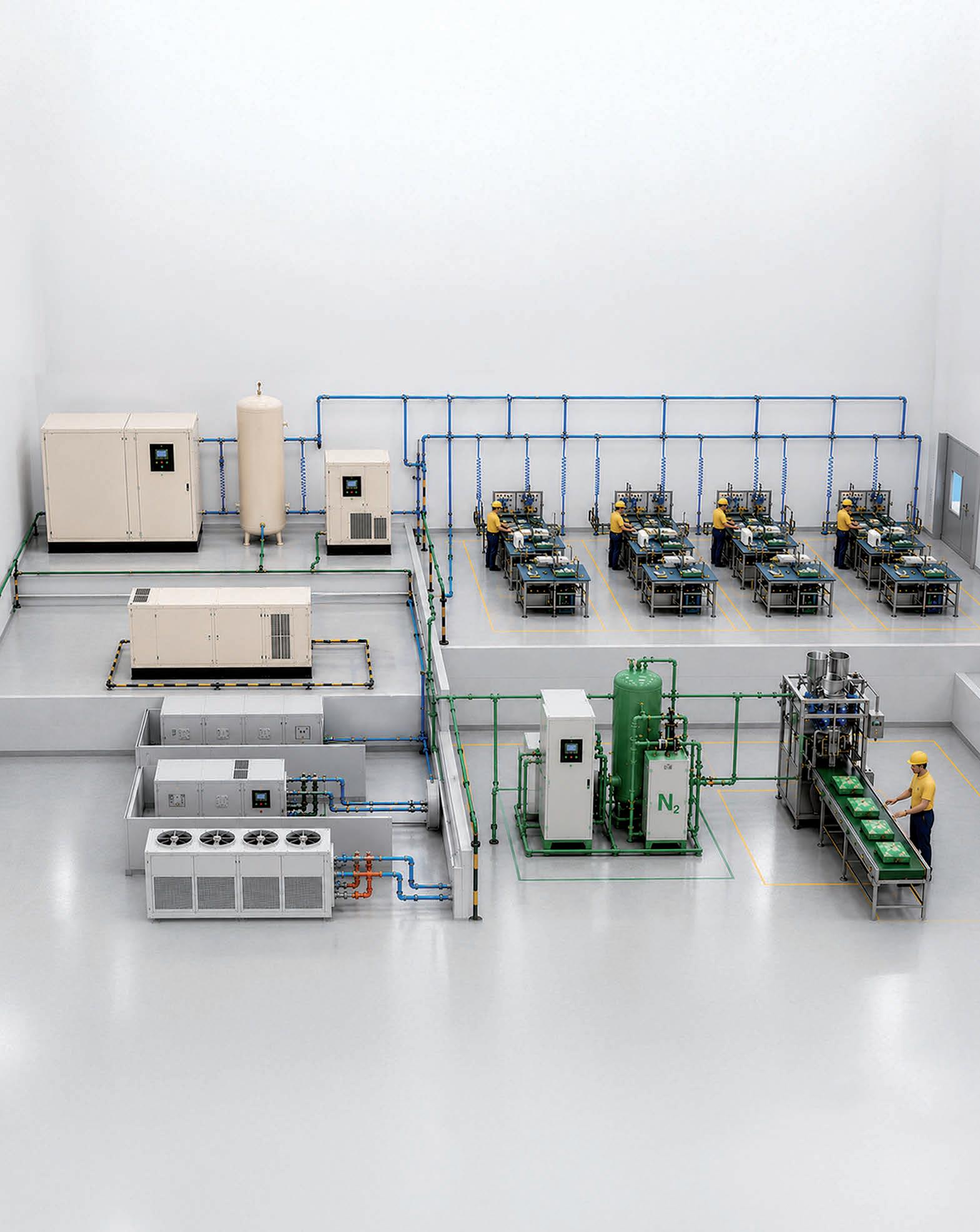
CAPS provides a full suite of compressor technologies – from reciprocating and rotary screw to oil-free and centrifugal systems – enabling manufacturers to match equipment precisely to application requirements. Whether the priority is hygiene in food and pharmaceutical production, or energy efficiency in heavy industry, the selection and configuration of the right compressor is critical.
But the company’s “complete solutions” approach extends well beyond the compressor itself. CAPS supplies and integrates air dryers, filtration systems, blowers and vacuum pumps, ensuring that the entire compressed air ecosystem performs as intended. This holistic view is essential, particularly where air quality, pressure stability and uptime directly impact product quality or throughput. Beyond air, CAPS also delivers nitrogen and oxygen
generation systems, enabling manufacturers to produce industrial gases on-site. This capability can reduce reliance on delivered gas, improve supply security and lower long-term operating costs.
Supporting these systems are chillers and ancillary technologies that help regulate temperature and maintain consistent operating conditions. The result is an interconnected infrastructure designed not as individual components, but as a cohesive system engineered for efficiency and reliability.
“While the basic principles of compressed air remain unchanged, the exact configuration to suit requirements of flow, pressure, environment and reliability can all vary. CAPS has the team, equipment and experience to determine the solutions needed,” Goodwin said.
Global backing, local delivery
CAPS’ engineering capability is complemented by its position within the Ingersoll Rand group, having joined the organisation in 2024. This relationship provides access to a wide portfolio of global brands and technical expertise, including Ingersoll Rand’s own compressor technologies alongside partners such as Mitsubishi Heavy Industries, AIRMAN, Sauer, Pedro Gil and Next Turbo Technologies.
For Australian manufacturers, the value lies in the combination of global innovation with local delivery. CAPS maintains a national footprint with 10 branches, enabling it to provide on-the-ground support, spare parts and technical expertise across the country.
Service is a central part of that offering. With 24/7 maintenance and breakdown support, as well as structured service programs such as CAPS Care, the company aims to ensure that systems continue to perform long after installation. In an environment where downtime can be costly, this level of support is often as critical as the equipment itself.
Powering productivity
Alongside compressed air, reliable power generation remains a cornerstone of CAPS’ offering. In many manufacturing environments, even a brief interruption to power can lead to costly downtime, product loss or safety risks.
CAPS addresses this through a broad portfolio of generator solutions, drawing on established global brands including Mitsubishi Heavy Industries and AIRMAN. As the official Australian distributor for the Mitsubishi Generator Series and a supplier of AIRMAN equipment, the company provides
systems designed for both prime and backup power applications.
These solutions are engineered with durability and responsiveness in mind. Fast start capabilities, robust construction and the ability to handle full load demands are essential features, particularly in industries where continuity is non-negotiable.
Importantly, CAPS doesn’t treat power as a standalone offering. Instead, it is integrated into the broader system design, ensuring that air, power and supporting technologies work together seamlessly. This integrated approach reduces the risk of mismatched systems and simplifies both installation and ongoing management.
Engineering tailored outcomes
A defining feature of CAPS’ model is its emphasis on engineering-led solutions. Rather than supplying off-the-shelf equipment alone, the company designs and delivers customised systems built around the specific requirements of each application.
This capability is underpinned by an in-house engineering team and an Australian ISO9001accredited manufacturing facility. Together, they enable CAPS to design, assemble, test and commission specialised compressor, generator and blower packages locally.
The benefits for manufacturers are practical. Systems can be pre-configured and tested before arriving on site, reducing installation time and minimising disruption to operations. Where existing infrastructure is in place, CAPS can integrate new technologies into legacy systems, extending asset life and improving performance without requiring full replacement.
This approach also supports scalability. As production demands change, systems can be expanded or reconfigured to accommodate new requirements, ensuring that infrastructure keeps pace with business growth.
“Every operation is technically different, and CAPS combines the equipment, the engineering and support to deliver solutions that not only work but enhance operations and overall reliability. The turnkey, engineered solutions mean clients get the right equipment for the task that is also suited to the operating environment.
Flexibility through rental
While capital investment in infrastructure remains an important decision for manufacturers, not every requirement justifies a permanent installation.
Project-based work, seasonal demand spikes or unexpected equipment failures can all create shortterm needs that require rapid response.
CAPS addresses this through its rental division, offering turnkey air and power solutions on both short- and long-term agreements. Compressors and generators can be deployed quickly, helping businesses maintain operations without the upfront cost of purchasing equipment.
This flexibility is valuable in today’s operating environment, where demand patterns can shift rapidly and supply chain disruptions remain a consideration. By providing access to reliable equipment when it is needed most, CAPS extends its “complete solutions” philosophy into the realm of operational agility.
Simplifying complexity for manufacturers
At its core, CAPS’ proposition is about reducing complexity for manufacturers. By bringing together compressed air, power generation and supporting technologies under a single provider, the company aims to streamline procurement, integration and ongoing management.
For operators, this can translate into tangible benefits: improved system efficiency, reduced downtime, and clearer accountability when issues arise. Instead of coordinating multiple suppliers,
manufacturers can rely on a single partner to design, deliver and support their critical infrastructure.
As industrial systems continue to evolve, that simplicity is likely to become increasingly valuable. Whether the challenge is improving energy efficiency, meeting stricter quality standards or scaling production, having a trusted provider capable of delivering end-to-end solutions can make a meaningful difference.
“CAPS delivers leading global technology that is suited and configured to Australian operating
environments, and supported and serviced by local skilled technicians,” Goodwin said.
CAPS’ “complete solutions” objective may be simple in concept, but its execution spans a wide and technically complex landscape. From compressors and dryers to generators, gas systems and beyond, the company is positioning itself as a partner that manufacturers can call on – whatever the challenge. In an industry where reliability is everything, that clarity of purpose could prove to be its strongest asset.
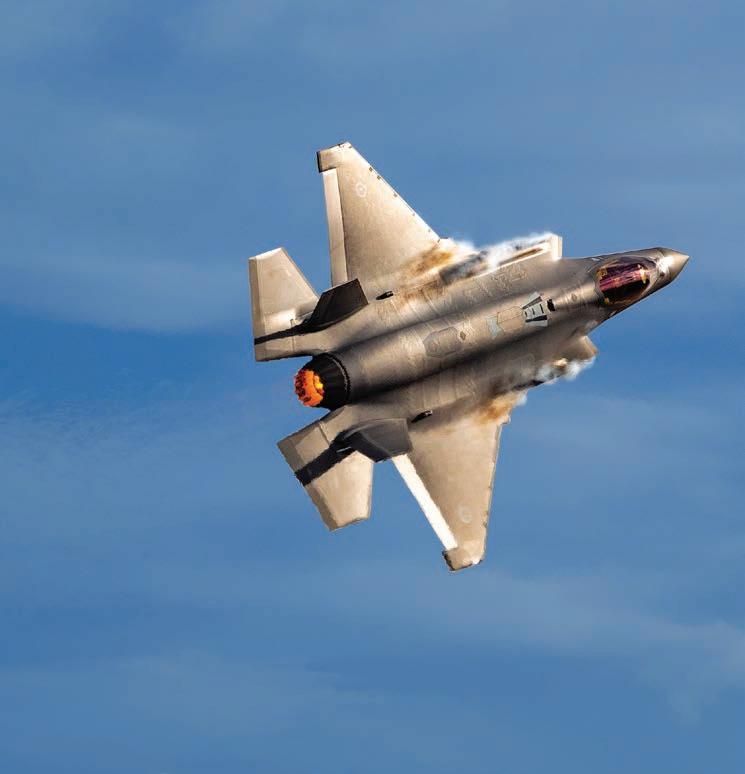
Avalon Australian International Airshow Geelong, Victoria, Australia | 23-28 February 2027 The Asia-Pacific’s premier aerospace and defence event. Exhibition and sponsorship opportunities open now.
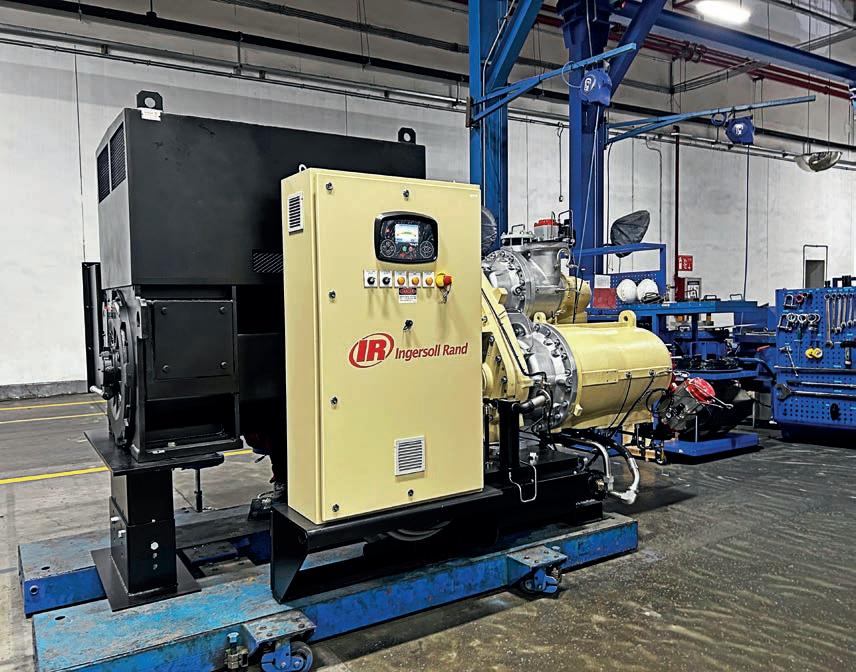
CAPS delivers integrated compressed air, power generation and gas solutions designed to simplify industrial operations.
MANUFACTURING
Australian-made momentum
The broader message underpinning Australian Made Week remained centred on sovereign manufacturing capability and supply chain resilience.
Australian Made Week 2026 highlighted the growing strength of local manufacturing, championing sovereign capability, regional industry and consumer support for homegrown products.
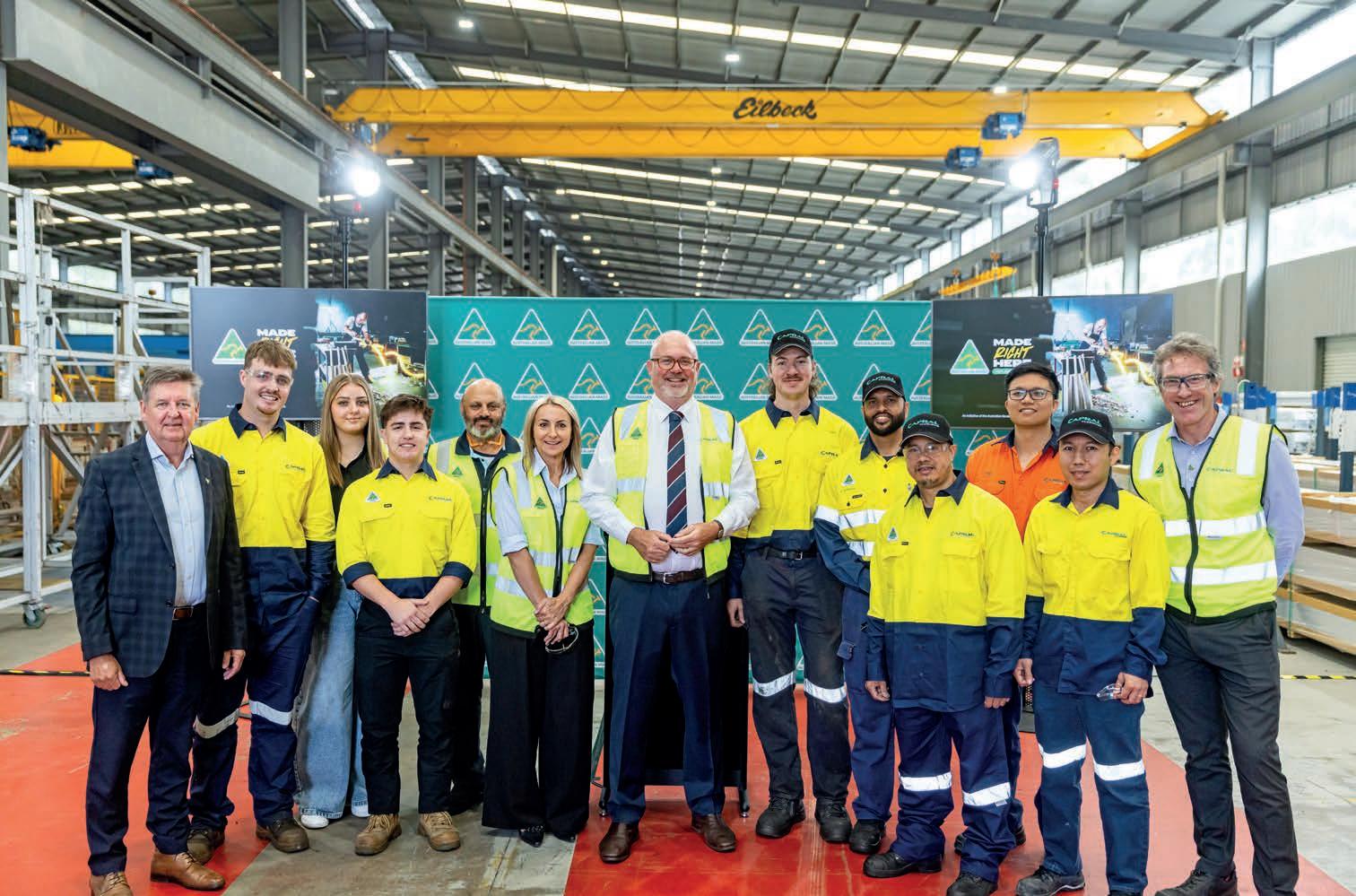
Australian Made Week 2026 concluded as the campaign’s largest and most ambitious celebration yet, with a packed national program designed to highlight the strength, diversity and economic impact of local manufacturing. Led by Australian Made Campaign Limited (AMCL), the week brought together manufacturers, retailers, government and consumers in a coordinated push to reinforce the value of buying Australian-made products at a time of growing global uncertainty.
The campaign expanded on previous years, with a broader calendar of launches, business events, media activations and social engagement initiatives aimed at connecting Australians more directly with local manufacturers and growers. Across the week, manufacturers from a wide range of sectors were featured through national media, live events and collaborative industry initiatives designed to showcase the depth of Australian capability.
One of the headline moments of the week was the official launch at the Melbourne Cricket Ground, chosen to demonstrate the extensive supply chains behind Australian manufacturing. The venue itself became a case study in local industry collaboration, centred around Abel Sports – manufacturer of the MCG’s goal posts – and the network of businesses supporting the product’s development and installation.
“We’ve never had a fuller calendar of activity and
events,” said AMCL chief executive Ben Lazzaro.
“We’re launching at the MCG because one of our Australian Made businesses, Abel Sports, manufactured the stadium’s goal posts. While Abel Sports directly employs 15 staff, the economic impact generated by the business extends far beyond the company itself, with the production of these footy goals supporting more than 6,000 jobs across the broader supply chain, including Capral Aluminium and ARC, a division of InfraBuild. It’s a really great story to showcase.”
Bringing Australianmade into the home
Another addition to the 2026 campaign was Australian Made House, a new concept developed to demonstrate how consumers could incorporate locally-made products throughout everyday life. The activation featured a series of themed rooms fitted with Australian-made products, spanning living rooms, bedrooms and bathrooms.
The initiative became a central hub for media activity and social content during the week, while also serving as the base for several broadcast segments and influencer events. AMCL partnered with the Today show for weather crosses throughout the campaign, using the platform to highlight Australian-made products and businesses in practical settings.
“We know that if every household spends an additional $20 a week on Australian Made products – which is about three items per shop for a family – an additional $11 billion can be generated for the economy and up to 20,000 new jobs created,” Lazzaro said.
“By choosing Australian Made, consumers are investing in local craftsmanship while contributing to local jobs, industries and communities – creating a ripple effect that extends well beyond the home.”
Alongside the consumer-facing elements of the campaign, AMCL also expanded its business engagement activities. Events were held in partnership with chamber of commerce networks across New South Wales, Victoria, Queensland and Western Australia, while an export-focused event explored opportunities for Australian brands in China.
New voices, growing engagement
The 2026 campaign also benefited from the involvement of media personality Andy Lee, who served as the face of Australian Made Week following previous ambassadors including Ariarne Titmus, Jessica Mauboy, Ash Barty and Adam Liaw. Lazzaro said Lee brought a new demographic reach to the campaign while also maintaining an authentic connection to Australian production.
“We were thrilled to have Andy Lee as this
Images: AMCL
year’s Australian Made Week Ambassador,” said Lazzaro. “Andy has been a long-time champion for Australian-made, both here and overseas –passionately supporting and spruiking the best of Aussie manufacturing and production.”
“He’s got a production company, Lee Bones, and they’ve licensed their TV show to carry the Australian Made logo because it’s made right here. All the animation is done here. He walks the walk and talks the talk.”
Beyond the public campaign, Australian Made Week 2026 also reflected momentum within the manufacturing sector itself. Engagement across AMCL’s digital platforms increased in the lead-up to the event, while applications to use the Australian Made logo rose year-on-year.
According to Lazzaro, applications to use the logo increased by around 24 per cent, signalling stronger interest from manufacturers seeking to align themselves with Australian production and sovereign capability. Close to 200 licensees were featured across campaign activities, media opportunities, giveaways and event partnerships throughout the week.
SMEs at the heart of Australian manufacturing
The campaign also reinforced the importance of small and medium-sized manufacturers (SMEs)
within Australia’s industrial landscape. SMEs account for around 65 per cent of businesses licensed to use the Australian Made logo, with many operating in regional communities where the direct economic impacts of manufacturing are often most visible.
“They’re incredibly important,” said Ben Lazzaro. “Around 65 per cent of the businesses using the logo are SMEs, meaning they make up the majority of our licensees. They play a critical role in Australia’s manufacturing sector.
“Our research shows that regional communities have a strong understanding of the flow-on benefits of local manufacturing, because in many areas they see the impact firsthand through businesses and jobs in their own communities.”
Collaboration between manufacturers, retailers and government agencies was another defining feature of the campaign. Retailers, including Harvey Norman, intensified their promotion of Australian-made products during the week, while supermarkets also increased visibility of locally-produced goods.
AMCL also received an investment from the federal government in 2026 to promote and protect the Australian Made logo domestically, helping expand campaign activity across the financial year.
Building capability beyond the week
The broader message underpinning Australian Made Week remained centred on sovereign manufacturing capability and supply chain resilience – themes that have become increasingly relevant since the Covid-19 pandemic and amid ongoing geopolitical and economic uncertainty.
Lazzaro said Australians had become more conscious of the importance of maintaining local manufacturing capability, particularly following the disruptions experienced during the pandemic years.
“It’s never been more important than right now that we then focus on buying Australian, supporting our Australian businesses, and making sure we do have that resource here,” he said. “We were very lucky that we were able to pivot and make some of those important products that became in short supply globally, but we were able to change our manufacturing plants to start making those products.”
The scale of the sector highlighted during Australian Made Week reflected that importance. More than 4,500 businesses are licensed to use the Australian Made logo, collectively representing around 40,000 jobs and generating combined annual revenue of approximately $8.1 billion.
“That is a pretty compelling set of figures,” Lazzaro said. “And something we can’t do without.”
DUST CONTROL
Containing risk in pharmaceutical manufacturing
Camfil Australia is helping pharmaceutical manufacturers tackle the growing challenge of dust control in oral solid dosage production.
Pharmaceutical manufacturing environments are under pressure to manage airborne dust hazards as production processes become more complex and active pharmaceutical ingredients (APIs) become more potent. In oral solid dosage (OSD) manufacturing – including tablets, pills and capsules – the handling of powders and solvents creates fine airborne particles that can present health, safety and operational risks if not properly controlled.
For manufacturers, dust control is no longer simply a matter of filtration. It is a critical component of a broader risk management strategy. Dust generated during dispensing, blending, granulation, tablet compression, coating and drying processes can create respiratory hazards for workers, increase the risk of combustible atmospheres and contribute to costly cross-contamination between products. At the same time, pharmaceutical companies must comply with stringent health, safety and quality regulations while maintaining production efficiency.
Managing exposure and contamination
Camfil Australia, through its Air Pollution Control division, is working with pharmaceutical manufacturers to offer tailored solutions for application-specific dust extraction and containment systems that address these evolving requirements. According to Air Pollution Control sales manager, Heath Roberts, the complexity of pharmaceutical dust management is continuing to increase as the industry evolves.
“One of the key challenges we’re seeing is managing the risks associated with highly potent and very fine airborne dusts,” Roberts said. “In OSD manufacturing, unit operations such as dispensing, blending, granulation and tablet compression all generate particulate emissions. Without effective control, these fine particles can lead to occupational exposure risks, process safety concerns and, in certain conditions, combustible dust hazards.”
Alongside the operational challenges posed by fine pharmaceutical dusts, manufacturers are also facing growing compliance demands. Roberts said the industry was seeing increasing pressure to meet stricter standards around containment, cleanability and worker safety.
“The challenge extends beyond effective dust capture,” he said. “Systems must also support robust
containment strategies, enable thorough cleanability, and ensure operator safety across all process stage.”
Protecting workers and product quality
The risks associated with pharmaceutical dusts are multifaceted. From a worker health perspective, airborne exposure to APIs can create both immediate and long-term health concerns depending on the toxicity and potency of the compounds involved. Even very low airborne concentrations can exceed occupational exposure limits in certain pharmaceutical applications.
Dust also creates product quality concerns inside pharmaceutical facilities. If not properly controlled, airborne particles can move between production lines or batches, increasing the possibility of contamination and non-compliance with regulatory bodies such as the Food and Drug Administration (FDA), European Medicines Agency (EMA) and Medicines and Healthcare products Regulatory Agency (MHRA).
According to Roberts, the consequences of inadequate dust management can impact both employees and manufacturing outcomes.
“From a health perspective, you’ve got dust contaminating the air. You can have inhalation exposure to your APIs that can cause respiratory irritation and long-term effects,” he said. “In some cases, very low airborne concentrations can even exceed occupational exposure risks. From a product standpoint, you’ve also got the risk of cross-contamination between batches and products. If you don’t control your dust properly, that dust accumulation can really impact the equipment and the product quality.”
Combustion and explosion concerns
Beyond health and contamination concerns, pharmaceutical dusts can also present significant combustion and explosion hazards, particularly when contained within enclosed systems such as dust collectors. Many pharmaceutical manufacturing processes generate combustible dusts, flammable gases, mists or vapours, often in combination. When these materials accumulate or are concentrated within a dust collector, the risk of an explosive atmosphere increases substantially if an ignition source is introduced.
The issue is becoming more pronounced as pharmaceutical ingredients continue trending
towards smaller and more potent molecules designed to improve drug delivery and performance. Finer particles increase explosive potential due to their larger surface area and higher airborne concentrations, while simultaneously increasing the risk of harmful particles being retained in workers’ lungs.
As a result, pharmaceutical manufacturers are placing greater emphasis on risk assessments before implementing extraction systems. Dust characteristics, exposure requirements, combustion risks, facility layouts and operational constraints all need to be evaluated to determine the appropriate containment and filtration solution.
Tailored extraction systems
Camfil’s approach centres on tailoring systems to the specific manufacturing process and hazards involved. Rather than applying a single standard solution across facilities, the company designs systems around the operational and safety requirements of each customer.
“Camfil has a variety of different products that are suitable,” Roberts said. “We tailor each and every application and come up with a solution that fits each customer.”
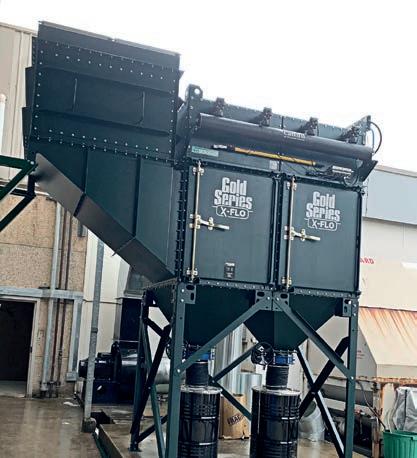
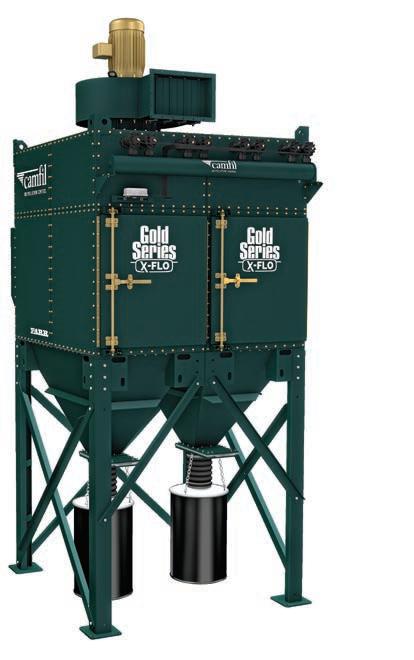
Among the systems used in pharmaceutical environments are Camfil’s Gold Series dust collectors and the company’s Quad Pulse Package (QPP) units. Roberts described the QPP as a compact indoor system designed to withstand stringent
Image: Camfil
Camfil GSX12 installed at a global pharmaceutical facility in NSW.
explosion risks commonly found in pharmaceutical production environments.
“The QPP is more like a singular unit that is built for indoors and robust enough to comply to the most stringent explosion risks that some of these manufacturers have,” he said.
Designing an effective pharmaceutical dust extraction system begins with understanding the manufacturing process in detail. Camfil assesses containment objectives, compound potency, combustion risks and exposure requirements before determining the most suitable extraction configuration.
Depending on the application, this can involve high-efficiency dust collectors, containment booths, centralised extraction systems, dedicated extraction units, HEPA filtration systems and safe-change technologies such as Bag-In/Bag-Out (BIBO) housings. Roberts said the company’s engineering approach was highly application-specific.
“We begin our approach by understanding what the customer process is, what their containment objectives are, what the dust characteristics are, what kind of exposure requirements they need to comply to, as well as operational constraints,” he said.
“From there, we tailor a solution based on airflow, compound potency, combustion risk, facility layout and cleanability requirements.”
Roberts said one of the most critical principles in pharmaceutical dust management is source capture – extracting dust directly at the point where it is generated rather than relying solely on general room air filtration systems. Once airborne particles spread throughout a facility, they become more difficult to contain and can impact housekeeping, HVAC performance and energy efficiency.
Safe maintenance procedures
Containment during maintenance procedures is another focus within pharmaceutical manufacturing environments, particularly when handling highly potent compounds. Changing contaminated filters can expose maintenance personnel to hazardous dusts if systems are not properly designed.
To address this risk, Camfil incorporates Bag-In/ Bag-Out technology into suitable pharmaceutical systems. The technology allows contaminated filters to be removed inside sealed containment bags, preventing operators from coming into direct contact with captured dust.
“Bag-In/Bag-Out is primarily designed with the operator in mind,” Roberts said.
Balancing performance and efficiency
While containment and safety remain the primary priorities, energy efficiency is also becoming an
important consideration across pharmaceutical manufacturing. Dust collection systems can consume large amounts of energy over their operational life, particularly if filters become overloaded or system pressure drops increase.
Camfil’s approach to energy management focuses on optimising fan selection, duct design, filter media and control systems to reduce operating costs while maintaining filtration performance.
“With modern dust collection systems, we achieve high filtration performance and do our best to minimise energy consumption,” Roberts said.
“We look at fan selection, optimise duct design, use variable speed drives and at Camfil we do have very low pressure drop filter media.”
Looking ahead, Roberts expects pharmaceutical dust control systems to continue evolving in response to increasingly potent compounds, smaller production batches and more advanced manufacturing technologies. As particle sizes continue to decrease and containment expectations rise, manufacturers will require more sophisticated filtration and monitoring capabilities. In this environment, effective dust control will be critical not only for compliance, but for protecting people, ensuring product integrity and enabling long-term operational performance.
Powering the shift to oil-free electric air
Atlas Copco rental models are offering flexible access to electric, oil-free compressed air as rising fuel costs and stricter emissions targets are accelerating industry demand.
The shift towards electric, oil-free compressed air is gathering pace across Australian manufacturing, as businesses respond to mounting cost pressures and stricter environmental expectations. Atlas Copco Rental is seeing increasing demand for these solutions as companies look to reduce reliance on dieselpowered equipment and align with internal sustainability targets. The move is not confined to one sector, with manufacturing, mining and oil and gas all contributing to the uptick in adoption.
At the centre of this trend is a dual imperative: cutting emissions while maintaining operational efficiency. Electric-driven compressors eliminate the need for diesel fuel, which has seen price volatility, while also supporting organisations in meeting environmental KPIs. For many operators, particularly those required to report on emissions performance, the transition is becoming less optional and more a practical necessity.
David Irwin, national marketing manager, Atlas Copco Rental, added that rising fuel costs have further accelerated the shift, noting there is now a clear “willingness to use electric machines” across multiple industries.
Built for industry, designed for flexibility
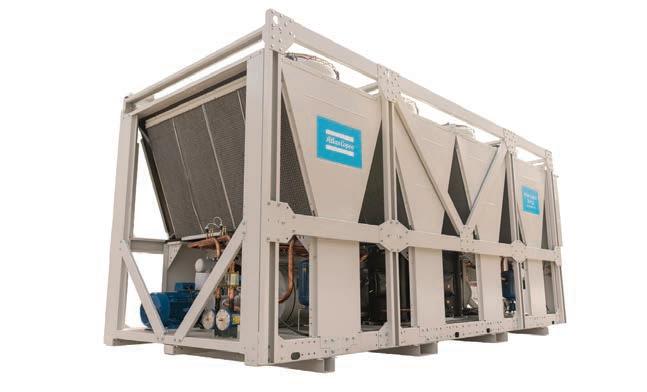
Atlas Copco’s rental fleet reflects this changing landscape, offering a range of electric oil-free compressors suited to both industrial and heavyduty applications. At one end are the ZT oil-free compressors – fully electric units equipped
with variable speed drives and integrated dryers, designed to deliver high air quality for manufacturing environments. These machines are engineered to meet stringent Class Zero standards, ensuring 100 per cent oil-free air for sensitive processes.
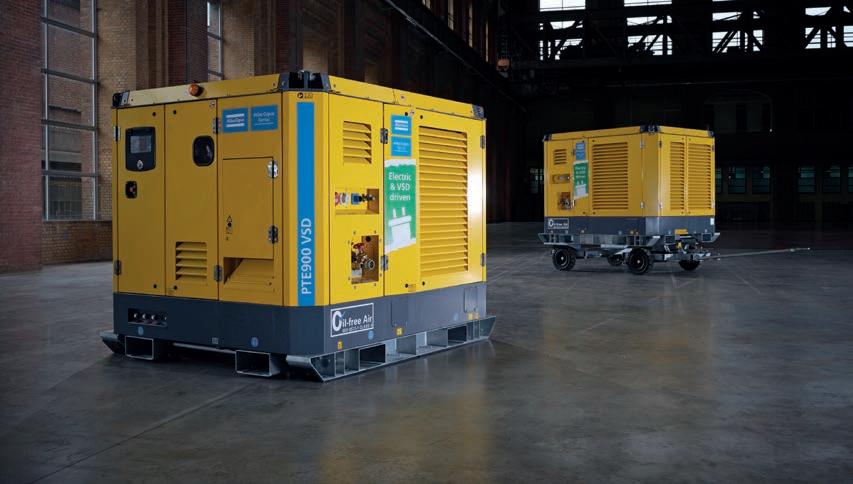
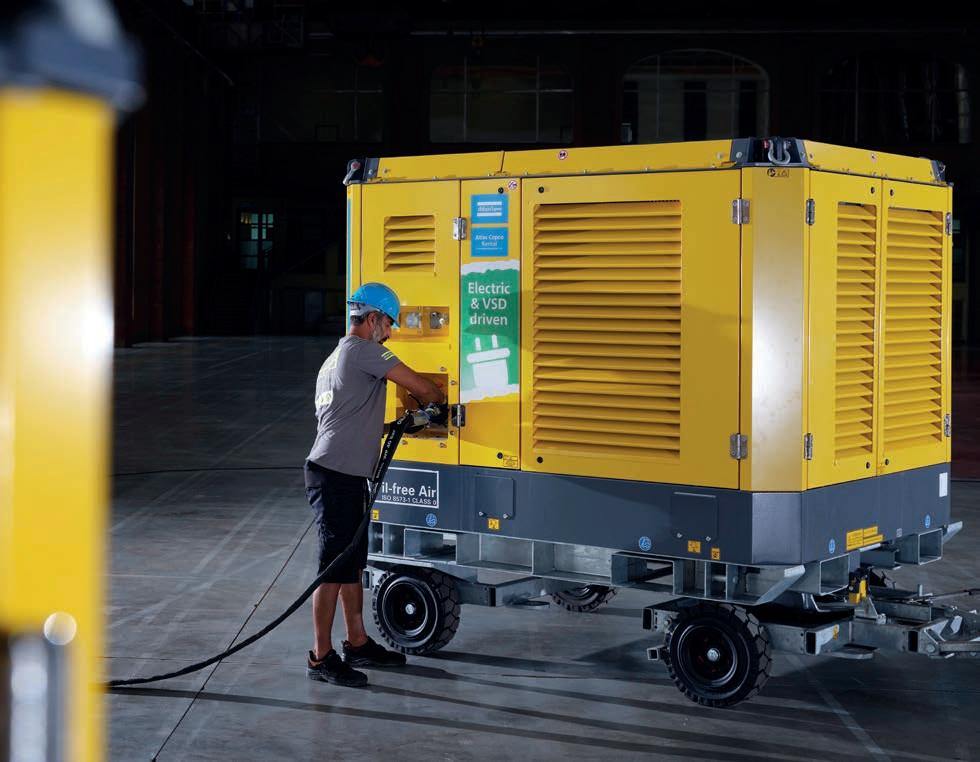
Alongside these sits more ruggedised solutions, including the PTE 900 VSD Plus and PTE 1500, as well as the H250 and H450 units. Built within robust cabinets, these compressors are designed to operate in harsh outdoor environments such as mining, quarrying and oil and gas sites. Their durability allows them to withstand exposure to dust, moisture and fluctuating temperatures, extending the reach of electric solutions beyond traditional factory settings.
“The majority of our equipment is oil-free, mainly because it can be used in all applications,” Irwin said. “It doesn’t matter if you’re in manufacturing or heavy industry – you can use an oil-free machine to do that.”
Engineering the right solution
A key differentiator for Atlas Copco Rental lies in how it supports customers in selecting the right equipment. Rather than simply supplying machinery, the company works closely with clients to understand their operational requirements, site conditions and long-term objectives. This includes assessing where equipment will be deployed, whether indoors or exposed to the elements, and ensuring compatibility with existing systems.
Considerations such as available footprint,
site accessibility and environmental conditions all play a role in determining the optimal setup. Equally important is understanding the electrical infrastructure – from overall consumption and starting currents to safe grid integration. Atlas Copco’s engineers also evaluate air quality requirements, including pressure, flow, temperature and dewpoint, often delivering complete systems that incorporate dryers, filters and ancillary equipment.
“We tend to involve ourselves with the customer and really get into what he needs and what his application is,” Irwin said. “We direct him to the best machine for the job.”
Renting as a strategic advantage
Renting, rather than purchasing, is another factor driving adoption, offering a level of flexibility that is difficult to achieve with owned assets. Compressors are large capital investments, and lead times for new equipment can stretch from 12 to 20 weeks. Rental solutions provide an immediate alternative, ensuring continuity during breakdowns or while awaiting permanent installations.
This approach is particularly valuable in contingency planning. By working with customers in advance, Atlas Copco Rental can map out requirements and respond rapidly in the event of equipment failure. Pre-determined configurations enable technicians to deploy the correct machines, hoses and fittings quickly, minimising downtime in critical operations.
“We go around and talk to customers about contingency planning,” Irwin said. “If a customer has a critical breakdown, we will know what machine to bring on site, and it would be up and running as fast as possible.”
Beyond emergencies, rental solutions also support fluctuating demand. Many operations experience periodic surges in production, requiring additional compressed air capacity for short durations.
Temporary rental units can be deployed to handle these peak loads without the need for permanent overinvestment in infrastructure.
Long-term rental arrangements are also gaining traction, offering an alternative to capital expenditure. Under this model, businesses can access new equipment without committing to upfront costs, instead treating the expense as part of their maintenance budget. This can be particularly attractive for organisations facing capital constraints or seeking to preserve financial flexibility.
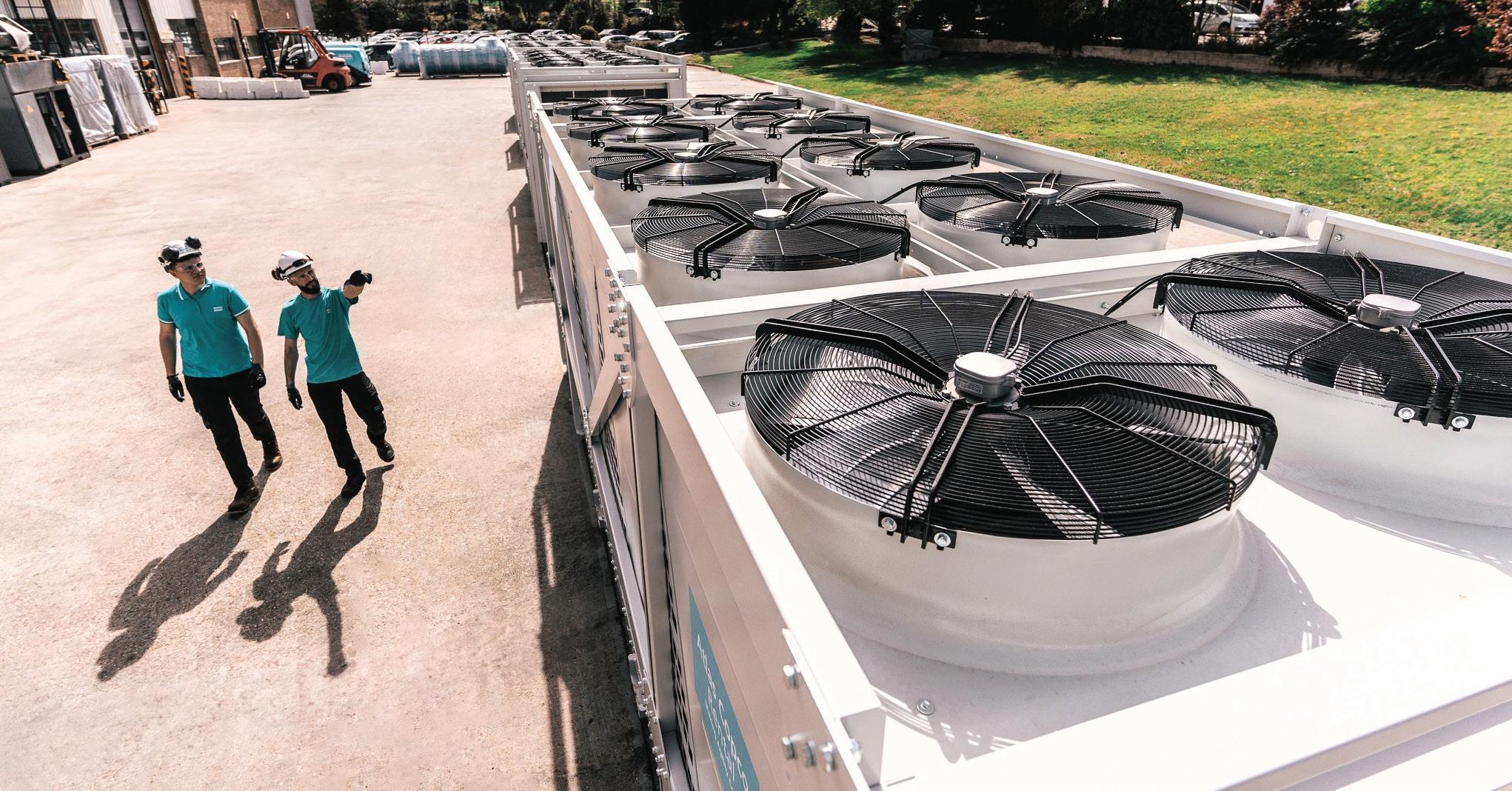
Atlas Copco Rental is seeing rising demand for electric, oil-free compressors as manufacturers prioritise sustainability and cost efficiency.
Images: Atlas Copco
The benefits extend beyond cost management. Rental agreements include servicing and 24/7 support, reducing maintenance burdens and ensuring consistent performance. Equipment is also replaced on a three- to four-year cycle, giving customers access to modern, efficient technology without the risks associated with ageing assets.
Taken together, these factors point to a broader shift in how compressed air systems are deployed and managed. Electric, oil-free technology is no longer confined to niche applications but is becoming a mainstream solution across industries. Coupled with the flexibility of rental models, it offers a pathway for manufacturers to balance performance, sustainability and cost in an increasingly complex operating environment.
To complement its rental offering, Atlas Copco also provides a comprehensive portfolio of specialty rental equipment. This includes electric generators, nitrogen generators, steam boilers, industrial chillers, dryers, boosters and associated accessories, enabling full support for a wide range of on-site industrial rental applications. In addition, Atlas Copco offers turnkey rental solutions encompassing delivery, commissioning, operational support and decommissioning, ensuring each rental engagement is delivered efficiently and seamlessly.
Electric-driven compressors are helping Australian industry reduce diesel reliance while meeting stricter environmental targets. Total Solutions: Atlas Copco’s rugged electric compressor
Tackling manual handling risks at the source
WorkSafe Victoria’s free programs are helping manufacturers tackle hazardous manual handling with practical tools, guidance and participatory approaches.
Hazardous manual handling remains the most common cause of injury in Victorian workplaces, and for manufacturers, the implications are both human and operational.
Musculoskeletal disorders (MSDs) such as sprains and strains, back injuries, soft-tissue damage, hernias and chronic pain continue to drive absenteeism, reduce productivity and place pressure on already stretched workforces.
Building safer foundations in manual handling
WorkSafe Victoria’s Manual handling basics program is designed to address this challenge head-on.
Delivered as a free online workshop, the initiative is tailored for employers, managers and supervisors in small to medium-sized businesses, particularly those with direct occupational health and safety (OHS) responsibilities.
The program is about capability building. Participants are guided by an independent expert in ergonomics and safety, who provides practical advice
on managing the risks associated with hazardous manual handling. The workshop moves beyond theory, equipping attendees with tools they can immediately apply in their workplaces.
The program covers key areas such as understanding MSDs, recognising early warning signs of injury, and conducting effective risk assessments. Importantly, it also outlines a straightforward risk management approach, enabling businesses to implement preventative measures without unnecessary complexity.
Outcomes are both tangible and strategic, with businesses who complete the Manual handling basics program better positioned to identify hazards early, reduce injury rates and foster a safer working environment. This, in turn, supports improved productivity and lower absenteeism – outcomes that are particularly critical in manufacturing settings where workflow disruptions can have cascading effects.
Beyond compliance, there is also a workforce dimension. Demonstrating a commitment to safety
helps manufacturers retain skilled employees and attract new talent in a competitive labour market. For many, the added peace of mind that comes with a structured approach to safety is equally valuable.
OHS Essentials: tailored support for small businesses
While Manual handling basics focuses on foundational knowledge, WorkSafe Victoria’s OHS Essentials program takes a more hands-on, tailored approach to workplace safety.
The WorkSafe Victoria program connects small businesses with an independent safety expert who works alongside them to identify risks and implement practical safety measures. The emphasis is on simplicity and relevance – ensuring that safety improvements are suited to the specific needs of each business.
“The benefits have been immense. Knowing that we now have solid support for workplace safety gives us peace of mind,” said Ross McCullogh, builder, RM Building and Design Group.
Hazardous manual handling remains the most common cause of injury in Victorian workplaces.
Eligibility for the program reflects its focus on smaller operators. It is available to Victorian small businesses with 60 workers or fewer that hold a WorkCover insurance policy, as well as sole traders using contractors. Notably, for 2026, manufacturers located in postcode 3175 with fewer than 200 employees are also eligible to register.
The program unfolds over three structured visits. The first, conducted within the initial month, involves a comprehensive site review by a health and safety expert and the development of a simple safety plan. A follow-up visit three to six months later assesses progress and provides further guidance, while a final visit between nine and 12 months ensures that all actions have been completed and that safety measures are embedded.
For growing manufacturers, this structured support can be transformative. Sunset Sleepers, a Melbourne-based producer of concrete sleepers for retaining walls, offers a case in point. Since its establishment in 2014, the company has expanded to three sites and approximately 30 employees. A change in ownership in 2021 brought renewed focus on workplace safety, prompting site manager Wendy Archer to engage with the OHS Essentials program.
Working with safety expert Frank Rizzo, Sunset Sleepers undertook a series of targeted improvements. Across three visits, Rizzo provided hands-on support and tailored recommendations, helping the business strengthen its safety practices while accommodating ongoing growth.
The result is a safer, more efficient operation, where employees are better supported and the business is equipped to scale sustainably. For manufacturers navigating similar growth trajectories, the program highlights the value of embedding safety into operational planning rather than treating it as an afterthought. Wendy shared one key takeaway: “The program re-emphasized the
critical importance of OHS and workplace safety.”
Thanks to the OHS Essentials Program, Sunset Sleepers is not only ensuring its operations are safe and efficient but also creating a workplace where employees can thrive as the company continues to grow.
A participatory approach to risk management
For medium to large manufacturers, WorkSafe Victoria’s participative hazard identification and risk management (APHIRM) toolkit introduces a more advanced, collaborative approach to workplace safety.
Developed in partnership with La Trobe University, the APHIRM toolkit is a free online resource designed to address MSDs. What sets APHIRM apart is its participatory framework, which actively involves employees in identifying hazards and shaping solutions.
The toolkit enables organisations to systematically identify both physical and psychosocial hazards that contribute to injury risk. Physical hazards can include environmental factors such as vibration, extreme temperatures, poor lighting, slippery or uneven surfaces and workplace obstructions. Psychosocial hazards, meanwhile, encompass elements such as high job demands, low job control and insufficient support from supervisors or colleagues.
When these factors intersect, the risk of MSDs increases – a reality that many manufacturing environments must contend with daily.
The APHIRM toolkit provides a structured pathway to address these risks. It supports businesses in designing targeted interventions, monitoring progress and reviewing outcomes over time. The result is an approach to risk management that evolves alongside the workplace.
Crucially, the toolkit also strengthens engagement. By involving employees directly in the process, organisations can improve staff morale, increase buy-in for safety initiatives and create a more proactive safety culture.
WorkSafe Victoria is planning two introductory workshops in 2026-2027 that provide an overview of the toolkit’s functionality and practical application. Here, participants learn how to use the toolkit in conjunction with other resources, ensuring a cohesive approach to risk management. The workshops also highlight the broader organisational benefits, from reduced absenteeism to improved workforce engagement. Subscribe to Manual Handling updates to be the first to hear when the new workshops are available.
A cohesive approach to workplace safety
Together, WorkSafe Victoria’s Manual handling basics, OHS Essentials and APHIRM programs provide a structured support pathway for manufacturers at every stage of development. For smaller operators, the focus is on building core knowledge and establishing practical safety processes. As businesses grow, the priority shifts to embedding those systems and aligning them with expansion. For larger organisations, attention turns to continuous improvement, workforce engagement and data-led decision-making.
In a sector defined by tight margins and constant pressure, this accessibility matters. It allows manufacturers to strengthen safety without sacrificing competitiveness – often improving both. As the industry evolves, effective manual handling will only become more critical, but with the right tools and guidance, manufacturers are well placed to reduce injuries and build more resilient operations.
EVENTS: LAND FORCES 2026
Land Forces 2026 takes on WA
Land Forces 2026 will bring defence, government and industry leaders to Perth this October to showcase the technologies, partnerships and sovereign capabilities.
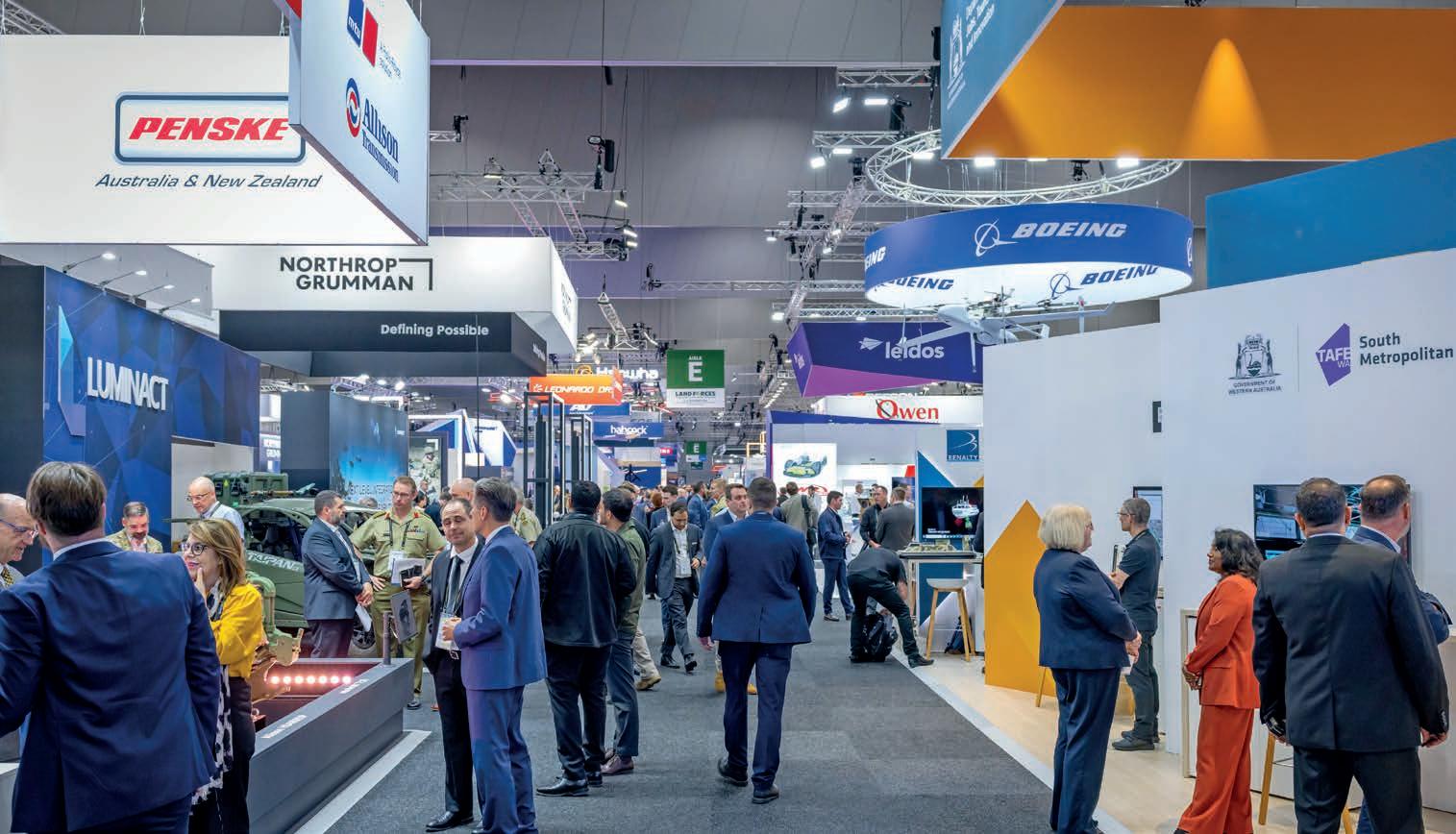
As Australia’s strategic priorities continue to evolve, Land Forces 2026 is set to provide one of the nation’s most important platforms for defence, industry and government engagement. Returning from 6–8 October 2026 at the Perth Convention and Exhibition Centre, the international exposition will bring together military leaders, defence primes, SMEs, researchers, innovators and policymakers to examine the future of land capability and national resilience.
With visitor demand expected to be strong, free Trade and Defence Visitor registration for Land Forces 2026 opens in early June.
Supported by the Australian Army, the Western Australian Government, Defence West and Business Events Perth, Land Forces 2026 arrives at a pivotal moment for Australia’s defence industry. From sovereign capability development and advanced manufacturing to autonomy, sustainment and digital transformation, the event will showcase the technologies, partnerships and ideas shaping the future land domain.
The three-day exposition is expected to attract senior defence representatives and official delegations from across the Indo-Pacific and allied nations, creating opportunities for Australian manufacturers and suppliers to engage directly with decision-makers, procurement authorities and international partners.
Industry engagement will sit at the centre of the
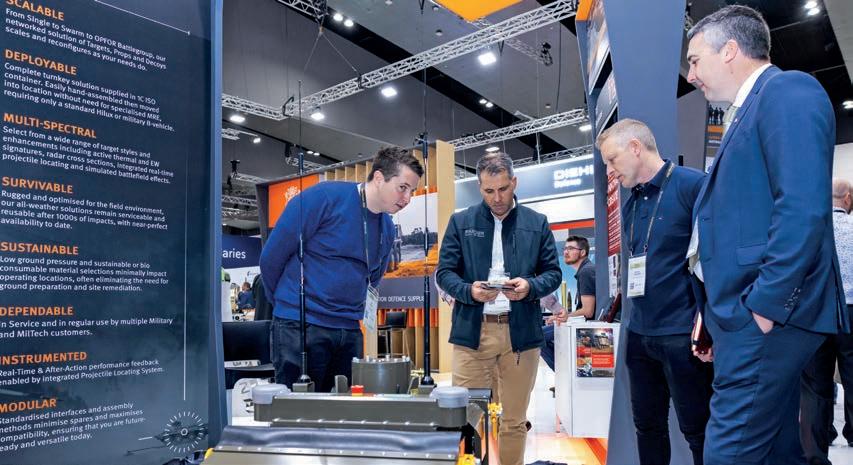
event, with hundreds of exhibitors showcasing capabilities across vehicle systems, robotics, autonomous platforms, communications, munitions, infrastructure, logistics and sustainment. For manufacturers seeking to position themselves within Defence supply chains, Land Forces 2026 offers a direct connection to current and future capability priorities.
A strong focus will also be placed on sovereign industrial capability and Australia’s growing emphasis on self-reliance. As Defence seeks to accelerate capability delivery and strengthen domestic manufacturing resilience, the event will highlight the role Australian industry can play in delivering complex systems and supporting longterm sustainment outcomes.
Innovation will feature prominently throughout the program, including the return of the Land Forces 2026 Innovation Pitchfest and Awards. The initiative is designed to uncover and support emerging Australian technologies and ideas, ranging from early-stage concepts through to developed solutions ready for industry adoption. Across four categories, finalists will present to an engaged audience of Defence representatives, investors and potential partners.
For the first time at Land Forces, Pitchfest finalists will also be showcased within the dedicated Innovation Base precinct on the exhibition floor across all three days of the
event. The precinct will provide innovators with increased visibility and opportunities to engage with stakeholders from across the defence ecosystem.
Advanced manufacturing and emerging technologies will also be explored through specialist conference sessions and industry forums. One of the key feature programs, Autonomy in the Joint Military Battlespace, hosted by the Australian Association for Uncrewed Systems (AAUS), will examine the growing role of autonomy and uncrewed systems in defence applications. The conference looks to discuss operational requirements, technological advancements and future challenges facing the autonomous systems sector.
The broader conference program reflects the interconnected nature of defence capability development. Sessions across the three days will cover topics including digital transformation, export pathways, supply chain integration, capability acquisition, innovation acceleration and international collaboration.
Highlights include Global Supply Chain “Pitch to the Primes” sessions hosted by the Department of Defence, Defence Export Essentials workshops delivered by Austrade, and discussions focused on enabling Australian industry participation in international programs and allied capability initiatives.
Land Forces 2026 represents an opportunity to be part of the national conversation shaping Australia’s future land capability.
Land Forces will also provide insight into rapidly evolving strategic programs and technologies through presentations including Advanced Strategic Capabilities Accelerator’s ASCA: Fast Tracking Capability Delivery, and Integrated by Design: Enabling the Modern Land Force hosted by Department of Defence: Defence Science and Technology Group
The Australian Army will play a role throughout Land Forces 2026, leading engagement activities designed to strengthen collaboration between Defence and industry while fostering professional development and innovation. This includes the Chief of Army Symposium, the Army’s premier strategic forum examining the future of land warfare and capability development, alongside the Junior Leaders Forum, which connects emerging Army leaders with industry and thought leaders.
Army Innovation Day and the Australian Army History Unit Display will further contribute to the program, particularly as the Army marks its 125th anniversary in 2026 an important milestone recognising both the service’s legacy and its future direction.
International engagement will remain a defining feature of Land Forces 2026. As Australia deepens defence cooperation across the IndoPacific and with allied nations, the event will
provide opportunities to strengthen partnerships, explore collaborative capability development and support interoperability initiatives. The continued progression of AUKUS Pillar II initiatives is also expected to shape discussions around advanced technologies including artificial intelligence, cyber, quantum and autonomous systems.
The decision to host Land Forces 2026 in Perth reflects Western Australia’s growing importance within Australia’s defence and industrial landscape. With its strategic location, expanding defence footprint and proximity to the IndoPacific, Perth provides a platform to connect Australian manufacturers and suppliers with global partners and opportunities.
Safely
While hosted in Western Australia, Land Forces 2026 remains a national event that showcases Australian industrial capability and innovation to the world by bringing international defence and industry leaders to Australia.
For manufacturers, suppliers and technology companies seeking to engage with Defence capability programs, strengthen supply chain relationships and better understand future operational requirements, Land Forces 2026 represents an opportunity to be part of the national conversation shaping Australia’s future land capability.
Free Trade and Defence Visitor registration opens early June. Visit landforces.com.au.
remove toxic and combustible dusts from your factory or workshop
The Gold Series X-Flo (GSX) dust collector is the industry’s best-in-class dust collection system. It handles all kinds of toxic and combustible dusts and fumes, including fine, fibrous and heavy dust loads.
Modular construction
Tested to meet ATEX & NFPA
Configurable to meet the strictest requirements for factory air quality
SCAN THE QR CODE to send an enquiry
The exposition is expected to attract senior defence representatives and official delegations from across the Indo-Pacific and allied nations.
COMMENT
SHARON ROBERTSON, CEO, MANUFACTURING INDUSTRY SKILLS ALLIANCE
AMW showed an industry ready to lead – but not without challenges
Australian Manufacturing Week 2026 highlighted a sector driven by innovation and growth, with workforce skills and training reform emerging as critical priorities.
Australian Manufacturing Week 2026 is a powerful antidote for anyone who may mistakenly believe Australian manufacturing is in decline. The depth and range of Australian manufacturing is unmistakable. From global hearing-implant manufacturers to start-ups shipping hydrogen jet engines and underwater robots, the sector’s innovation is clear.
Having spent the week on the exhibition floor and in strategic conversations alongside our team, I came away with a clear sense that the industry knows where it is heading – and is increasingly focused on the workforce question that will determine whether it can deliver: attracting more people into manufacturing, and ensuring they have the skills the sector actually needs.
The conversations throughout the week centred on advanced manufacturing, AI, automation, productivity and sovereign capability, but what came through most clearly was how rapidly the skills landscape is shifting. As manufacturers adopt new technologies, the workforce conversation is no longer just about filling vacancies, it’s about ensuring people have the skills to work alongside increasingly sophisticated systems. That includes everything from automated production lines to digital engineering and quality processes.
Critically, this does not mean traditional trades are being left behind. Fabrication, welding, machining –these disciplines have underpinned manufacturing through fi ve industrial eras and they remain foundational. What is changing is that traditional trade skills and advanced manufacturing capabilities now run in parallel. Manufacturers need both, and the training system must support both.
Manufacturing Skills Queensland captured this well in its Future of Trades report: a “dual reality” where traditional trade foundations and emerging digital competencies work alongside each other, not in competition.
I had the opportunity to make this case during the Strategic Dialogue Series hosted by the Queensland Government at the Brisbane Convention and Exhibition Centre, joining industry, training providers and government representatives to discuss the future of manufacturing workforce capability. The discussion reinforced something we hear consistently through our engagement with industry: that training packages need to continue evolving
through targeted modernisation not wholesale redesign. This is the exact approach we have taken with the Manufacturing and Engineering Training Package – Future Focused Skills project; a thorough, nationwide review of all 39 qualifications and
pathways. Queensland employers were particularly active contributors. The goal is straightforward: make sure the qualifications Australian manufacturers rely on reflect where industry is heading, not just where it has been.
The dialogue also reinforced something I believe strongly: that the best workforce outcomes come from coordinated conversations between industry, training providers, unions and government. When the right people are in the room together, with a shared focus on evolving workforce needs, the system moves faster and more effectively. Queensland’s willingness to convene those conversations, bringing decision-makers together with the people closest to the problem, is a model worth building on nationally.
Australian Manufacturing Week also coincided with the Endeavour Awards, and the Manufacturing Alliance was proud to support the program as sponsor of the Rising Star Award, recognising emerging talent and leadership in Australian manufacturing. Investing in the next generation of manufacturing leaders is central to everything we do. The momentum across the week was compelling. The challenge now is to sustain it – and to ensure that workforce development and skills reform remain at the centre of the sector’s growth story. The manufacturers and partners I spoke with this week are ready. The task for all of us is to make sure the system keeps pace.
Australian Manufacturing Week 2026 pushed back on the notion that Australian manufacturing is in decline.
The Manufacturing Alliance was proud to support the Endeavour Awards as sponsor of the Rising Star Award.
Images: PCM
Trig Point Streamlines Manufacturing with ERP
Australian 4WD manufacturer Trig Point implemented an ERP system in just three months, transforming inventory control, production visibility and product customisation.
As an Australian manufacturer of automotive accessories specialising in chassis-mount canopies and trays for 4-wheel-drive vehicles, Trig Point was founded in 2015 by Murray Brookes after a canopy he had made for personal use started attracting interest from friends, colleagues, and fellow 4WD enthusiasts. A few years after the business was established, Chris Wasylkiw, a former colleague of Brookes, joined as a production engineer. Today, the company is well established in the Australian 4WD community and employs around 20 people.
With this growth, Trig Point has recently selfimplemented an ERP system in just three months, helping the company to gain control over its unwieldy component inventory, product customisations, and production processes.
“We wouldn’t be able to manage that without a system like this,” said Wasylkiw.
Implementing a manufacturingcentric solution
When Wasylkiw joined the company, Brookes was still using a combination of Xero and spreadsheets to manage the operation. Both knew, however, that in order to grow, they needed something more scalable. At their previous employment, they had used an old
DOS-based Manufacturing Resource Planning (MRP) system, which had highlighted the benefits of a dedicated solution.
“It was ancient, but it still demonstrated how important such a system was to effectively control your stock and orders,” Wasylkiw said. “So, we tried to get one as soon as possible.”
Wasylkiw and Brookes laid out their basic requirements. The new system had to be cloudbased, integrate with Xero, and have robust manufacturing inventory management functionality. Looking through the Xero App Store, they found that many inventory management solutions were geared towards e-commerce businesses rather than serious manufacturers.
“Then we came upon MRPeasy,” Wasylkiw said. “As a production engineer, I thought it had all the features we needed.”
After a free trial of the software, the team felt confident enough to implement it on their own. While much of the data could be imported via CSV files, the bills of materials of the products had to be created from scratch. Once the foundation was laid, however, it was easy to add layers of functionality.
“We started with the base package and upgraded as we went along and discovered new things we wanted the software to do,” Wasylkiw said.
Managing customisations
After implementing MRPeasy, Trig Point gained better control over its products and component inventory. The new system proved to be capable of supporting the company as it expanded its product range, increased customisation options, and added more part numbers across two factories.
“We’ve got over 6,000 part numbers in our system now,” Wasylkiw said. “We wouldn’t be able to manage that without a system like this.”
MRPeasy has also made quoting more accurate and product configuration easier to manage.
As the company expanded its customisation offerings, the system gave the team a better way to handle multiple options without relying on manual notes and checks.
“We recently started using the matrix BOM features, so now we can have drop-down menus for building a product,” Wasylkiw said. “There’s the base product that we add customisation options to, which makes the quoting and order generation processes a lot easier.”
Better inventory visibility has reduced the risk of errors, stockouts, and delays in deliveries. By tracking stock more accurately, including part variations like colours, Trig Point can respond with more confidence and avoid situations where the system says an item is available, but the wrong version is actually on the shelf.
“The system says we’ve got 10, but you go look on the shelf and they’re all 10 in different colours,” Wasylkiw said. “That variation tracking was one of the first things we added, because it made what stock we had much clearer.”
Suggestions for other small manufacturers
To other small manufacturers struggling with spreadsheets, Wasylkiw suggested taking software adoption seriously. According to him, it is necessary to adapt your processes to the software, not the other way around.
“Do it how the software is doing it because it just seems to flow better than trying to force the software to do a round block through a square hole sort of thing,” he said. “And have someone in the company dedicated to the software that users can go to with questions and issues.”
Specialising in chassis-mount canopies and trays for 4-wheel-drive vehicles, Trig Point was founded in 2015 by Murray Brookes
Image: Trig Point
Need Aluminium Extrusions
As Australia’s largest supplier and extruder of aluminium, Capral is committed to supporting Australian manufacturing with high-quality, locally produced aluminium extrusions. Our state-of-the-art facilities provide precision-engineered solutions for industries nationwide, from construction, to engineering, transport, and marine.
Choosing Capral is an investment in reliable supply, shorter lead times, and a stronger Australian manufacturing sector.
When you need Australian-made aluminium, Capral can do.
Order online 24/7 Pick-up & Delivery shop.capral.com.au Celebrating 90 years of Australian manufacturing
Rittal RiLineX – Standardised busbar platform engineered for switchboards
Rittal RiLineX, supported by master distributor APS Industrial, is a standardised 60mm busbar platform for AS/NZS 61439 switchboards, enabling faster, safer and more flexible LV power distribution builds.
Low voltage power distribution is being asked to do more with less: shorter build cycles, fewer specialist hours, higher expectations around touch safety, and a growing mix of AC and DC architectures.
Rittal RiLineX addresses this demand as a busbar platform for industry, buildings and infrastructure, designed to flex with real world requirements while staying consistent enough to repeat across jobs. It is manufacturer-neutral and licence-free, with standardised boards that can be extended as needed, which makes it a practical foundation for teams trying to standardise without limiting design choices. It also supports a safe transition path, with existing RiLine60 boards able to be upgraded as requirements evolve.
Switchgear compatibility is designed to support all brands in Australia, including Siemens, ABB, Schneider, Eaton, Terasaki and Mitsubishi. That flexibility is reinforced through universal MCCB mounting using a single adaptor, supported by multi-brand compatibility and Easy Fix technology that helps keep builds consistent from job to job. More importantly, it reduces the usual workshop complexity by removing fabrication steps, with no drilling or tools required for the click-in adaptor
mounting and no custom brackets needed to make different switchgear fit.
At the engineering level, RiLineX centres on standard flat copper busbars built around the familiar 60mm busbar spacing, with a modular board approach that can be configured in two main ways: assembled from modular elements or installed as a pre-assembled complete board.
It uses globally available flat copper in common sizes including 15/20/30 x 5/10 mm. The planning and build workflow are kept simple. The arrangement can be mapped out in the RiPower configurator using Eplan macros, the board is mounted into the enclosure, then populated with the required component adaptors. With less rework in the design stage, engineering effort can be reduced by up to 30 per cent, helping teams lock in repeatable designs and consistent documentation without stretching resources.
In the workshop, the click-in concept is designed to reduce assembly effort and variability. Components and adaptors can be snapped on without tools, using click-in adaptors with no drilling, in turn reducing the usual cutting and trimming waste from protective covers. Installation time can be reduced by up to 75 per cent, with up to 15 per cent more usable installation space created through the click in
Click-in adaptor technology allows components to be mounted without drilling or tools, reducing assembly time and improving consistency.
concept, which becomes a real advantage as boards get denser and deadlines tighten.
RiLineX covers the core LV distribution requirements with rated currents up to 800 A, applications up to 1000 VAC and 1500 VDC, tested short circuit resistance up to 65 kA. Key electrical values that include Uimp 12 kV and a rated short time withstand current of 65 kA for 500ms, alongside overvoltage category 4 and contamination level 3, with safety built in as a baseline. The busbar system itself is capable of continuous contact hazard protection to IP2XB, upgradable to IP4X at the front in suitable configurations, and work can be carried out when the system is live, subject to site procedures and safety requirements. By default, Form 2b capability is provided, and Form 4b can be achieved when combined with Ri4Power.
Rittal RiLineX is suitable for mounting horizontally, vertically and above head height, supports cable routing in the rear section, and is documented as AS/ NZS 61439 aligned and UL approved, with standards listed including AS/NZS 61439 and UL 508.
For more details and to contact your local APS representative to specify the right Rittal RiLineX busbar system for your project, visit https:// apsindustrial.com.au/rittal-riline-x/
RiLineX in-situ within a switchboard enclosure, showing the modular 60mm busbar system designed for scalable low voltage power distribution.
Images:
Igus: Maximum cleanliness over long distances
The C6 cleanroom energy chain with new e-spin guide system allows for abrasion-resistant travels over distances of up to 30 metres and has been awarded ISO Class 1 by Fraunhofer IPA
Whether in microelectronics, semiconductor or battery production, it is essential that surroundings are free from particles and that processes work with maximum reliability. With increasing automation and systems that constantly grow, the routes for material transport are also becoming longer. A key challenge is to ensure a reliable supply of energy and data while minimising particle emissions. Busbar systems do not transmit data; energy chains usually require complex extraction systems for microparticles.
igus now offers a solution for this. With the C6 energy chain certified by the Fraunhofer IPA according to ISO Class 1 in combination with the new e-spin upper run guide wheel, the system permits compact and durable energy supply in cleanrooms – even for travels of up to 30 metres. In modern semiconductor factories, silicon wafers undergo numerous process steps – from lithography to etching to metallisation. Due to the strict requirements for cleanliness and freedom from particles, manual transport within the cleanroom is not feasible. Instead, automated systems transport the wafer cassettes over long
distances more safely and efficiently. One example is overhead hoist transport (OHT), a rail system that moves the cassettes under the ceiling. Although this saves cleanroom space, it presents design engineers with a challenge – supplying the OHT with power and data.
“The demand for a cleanroom-compatible, durable and cost-effective alternative is correspondingly high in the industry,” said Kira Weller, product manager for e-chains and cleanroom expert at igus.
Rolling instead of gliding with new e-spin guide system
To solve this dilemma, igus has developed a special guide system called e-spin for the C6 cleanroom energy chain. It consists of guide wheels that, like all igus energy chains, are made of tribologically optimised high-performance plastic, optimised for friction and wear. The wheels are located between the upper and lower run of the energy chain. As a result, the chain parts roll on top of each other instead of gliding, without further particle emissions.
“Thanks to the e-spin system, the energy chains can be used in production within a cleanroom without the need for an extraction unit. This allows
design engineers to reduce the complexity of energy supply in transport systems and save costs in the process,” said Weller.
The e-chain expert on the igus website helps users save time while configuring the energy chain system. With the high-performance plastic, the system consisting of C6 energy chain and guide wheels is abrasion-resistant, low-maintenance and durable. Laboratory tests in collaboration with the Fraunhofer IPA confirm that the system achieves the highest cleanroom Class ISO 1 at a speed of 0.5m/s.
Supported by Australian distribution
Treotham Automation is a supplier of high-quality electrical components and products to a wide range of industrial markets. Being the distributor for many suppliers in their respective fields, Treotham Automation offers a diverse range of products to a variety of industries. With multiple warehouses and experienced staff, Treotham Automation strives to provide customers with a total solution, with the highest quality products, service and ongoing technical support.
The C6 energy chain in combination with the new e-spin upper run guide wheel allows for reliable energy and data supply with minimal particle emissions.
BDO backs manufacturing innovation
As a long-term sponsor of the Endeavour Awards, BDO highlights the importance of innovation, people and digital transformation in Australian manufacturing.
BDO’s long-standing involvement in Australia’s manufacturing sector has shown the company both the scale of the opportunity ahead and the complexity businesses face in navigating it. As the national leader of manufacturing and wholesale at BDO in Australia, Ryan Pollett, said the company works closely with organisations across the full spectrum of the industry – from family-owned enterprises to large, globally active companies – supporting them through growth, transformation and change.
As manufacturing remains a cornerstone for BDO, the firm’s approach is grounded in a combination of deep sector expertise and practical, handson support, spanning audit, tax, advisory and consulting. This integrated model enables manufacturers to improve performance, manage risk and invest in both capability and people, while adapting to an increasingly competitive and fastmoving landscape.
That same commitment underpins BDO in Australia’s continued sponsorship of the Endeavour Awards. Now in its sixth year supporting the program, the organisation sees the awards as an important platform to recognise and elevate innovation across the sector.
“BDO has proudly sponsored the Endeavour Awards since 2021, and now in our sixth year, the motivation remains the same – to back
Australian manufacturers who are driving growth through innovation,” said Pollett. “Manufacturing is central to Australia’s economic future, and recognising those pushing boundaries helps lift the entire sector.”
This alignment between BDO’s purpose and the values of the awards is clear. At its core, the organisation is focused on empowering people and helping businesses realise their potential –principles that closely mirror the achievements celebrated through the Endeavour Awards.
“BDO’s purpose is built around empowering people and realising possibilities,” Pollett said. “We work alongside manufacturers to support financial performance, people development and market expansion, the exact qualities these awards celebrate.”
Across the industry, Pollett points to a number of key trends shaping the future of manufacturing in Australia. Chief among them is the increasing adoption of digital technologies and data-driven decision-making, alongside a broader shift towards more agile and responsive operating models.
“We’re seeing manufacturers increasingly embrace digital transformation, data-driven decision-making and smarter operating models,” he said. “What’s most exciting is how technology is being combined with investment in people and culture.”
These changes are helping position Australian manufacturers to compete more effectively on a global stage, while also strengthening resilience in the face of ongoing disruption. For BDO, supporting clients through this transition is a critical part of its role within the sector.
Beyond strategy and operations, Pollett emphasises the importance of recognition and community within manufacturing. For those acknowledged through the Endeavour Awards, he sees the moment as both a milestone and a platform for continued growth.
“Congratulations on being recognised,” he said. “Every growth story is different, and that diversity of thinking is what makes Australian manufacturing so strong. Keep backing your ideas, investing in your people, and sharing your story as you’re shaping the future of the industry.”
He also encourages broader participation in the awards program, noting the value it provides not only to individual businesses, but to the sector as a whole.
“If you’re considering nominating or attending the Endeavour Awards, we encourage you to get involved,” Pollett said. “Nominating is a valuable opportunity to reflect on your growth journey, and attending connects you with peers who understand the realities of manufacturing.”
As the industry continues to evolve, initiatives such as the Endeavour Awards play a key role in showcasing what is possible. Through its ongoing support, BDO remains committed to helping Australian manufacturers realise those possibilities and drive the sector forward.
Image: BDO Australia
National leader of manufacturing and wholesale at BDO in Australia, Ryan Pollett.
BDO’s combination of
sector expertise and practical, hands-on support, spans audit, tax, advisory and consulting.
Dynamic solutions to manufacturing challenges at foodpro 2026
How foodpro 2026 addresses the real problems defining Australian food manufacturing right now.
There is no shortage of challenges facing Australian food manufacturers in 2026.
There is, however, a shortage of genuine opportunities to address them in one place, with the full breadth of the industry’s supplier base present and engaged.
foodpro returns to the Melbourne Convention & Exhibition Centre from 26–29 July as the only processing and packaging trade event on the Australian calendar this year. For manufacturers navigating investment decisions, operational pressures, and an accelerating technology landscape, the timing couldn’t be more relevant.
foodpro delivers that with more than 400 exhibitors across processing equipment, packaging, digital manufacturing, factory infrastructure, ingredients and sustainability, concentrated into four days.
For those with capital expenditure decisions on the horizon, or supplier relationships due for review, the case for attendance is straightforward. The access that foodpro provides in four days would take months to replicate through individual supplier meetings.
Equipment decisions that require more than a brochure
For production and plant managers, the fundamental value proposition of foodpro has remained consistent across its 50-year history: equipment can be evaluated under realistic operating conditions, with engineers available to discuss specifications, integration requirements and total cost of ownership.
That matters when a purchasing decision carries an extended procurement lead time and a large capital commitment. The Demonstration Exchange at foodpro, extends this further, with processing equipment operating live.
The production challenges occupying Australian manufacturers are ageing infrastructure, unplanned downtime, the pressure to automate against constrained capital budgets and they are sector wide. foodpro brings together the people navigating those challenges, and the suppliers who have helped solve them at comparable scale.
Automation and digital transformation: from roadmap to reality
Labour market conditions, the drive for operational consistency, and the competitive pressure to extract more from existing infrastructure have
made the case for automation a matter of when, not if.
What remains difficult is implementation; integrating modern automation platforms with legacy equipment, building the business case for leadership, and finding technology partners who understand food-grade operational requirements.
foodpro’s Intelligent & Digital Factories segment addresses this directly. AI-driven quality inspection, IoT sensor networks, predictive maintenance platforms and Industry 4.0 solutions are presented in the context of food manufacturing.
The Innovation Stage program supports this with presentations from technology leaders on digital transformation in practice – including case studies from manufacturers who have moved beyond pilot programs to measurable operational impact.
Sustainability: commercial reality, not just compliance
Retailer sustainability requirements have moved from aspiration to specification. Recyclable packaging, emissions reporting, waste reduction targets – these are now commercial prerequisites rather than brand positioning choices, and manufacturers are under genuine pressure to meet them without compromising line performance or exceeding capital budgets.
The AIP’s partnership with foodpro brings a practical response to this with structured training, regulatory guidance and access to the teams behind 2026’s PIDA Award-winning packaging designs. The Sustainability segment covers circular packaging economics, energy-efficient refrigeration
and compressed air systems, and waste-to-value technologies – with an emphasis on solutions that have demonstrated outcomes in comparable manufacturing environments.
For packaging and sustainability managers who need to balance environmental targets against operational and commercial constraints, this is a more useful environment than most.
Network with the food and beverage manufacturing industry
The Industry Connect Evening on Sunday 26 July – held at Melbourne Public next to the MCEC –opens the event week in an informal setting. For experienced trade event attendees, the value is familiar: conversations that begin here tend to be more candid, and the groundwork laid on opening night shapes the quality of engagement across the days that follow.
A concentrated window for decisions that matter The pressures bearing down on Australian food manufacturing in 2026 are well documented. What is less certain is how individual businesses respond, which investments get made, which supplier relationships get established, which technologies get evaluated and adopted.
foodpro 2026 provides a concentrated environment in which those determinations can be made with confidence.
Visitor registration is free. The event runs 26–29 July at the Melbourne Convention & Exhibition Centre.
Register at foodpro.com.au
foodpro returns to the Melbourne Convention & Exhibition Centre from 26–29 July.
Securing the future of Australia’s welding industry
Corporate Industry Supplier
For fabricators, contractors, asset owners and primes. Unlock influence, capability and delivery support, with credit vouchers, events, advocacy touchpoints, technical leadership, and team enablement at scale.
For equipment, consumables, software and service providers. Reach the market with targeted promotion, event activations, editorial opportunities and leadgenerating showcases.
For welders, inspectors, engineers, supervisors, educators and apprentices. Advance skills and credentials with CPD, training discounts, technical support and a connected professional network.
Gold | Silver | Bronze
Gold | Silver | Bronze
Welder | Apprentice | Reciprocal
The Endeavour Awards continue to highlight a simple truth: Australian manufacturing is not standing still.
Celebrating the 2026 Endeavour Awards
The Manufacturers’ Monthly Endeavour Awards 2026 brought Australia’s manufacturing leaders together for an evening recognising innovation, resilience and excellence across the sector.
Held alongside Australian Manufacturing Week in Brisbane, the Endeavour Awards 2026 presented by Manufacturers’ Monthly once again provided an opportunity for the industry to come together and celebrate the achievements shaping the future of Australian manufacturing.
The annual awards program continues to recognise the businesses, leaders and emerging talent driving progress across the industry. This year’s event highlighted excellence across a range of categories, with established awards joined by expanded recognition for achievements in advanced manufacturing, health technology, aerospace, transport and sustainability. These additions reflect the evolution of the sector, and the increasing role Australian manufacturers are playing in developing globally competitive solutions.
The evening showcased everything from pioneering technologies and sovereign manufacturing capability through to sustainability initiatives and the next generation of manufacturing leaders. The announcement of the 2026 winners recognised organisations and individuals delivering tangible impact through innovation, operational excellence and long-term vision.
The awards were made possible through the support of valued sponsors including AMTIL, RSM, Weld, BDO, Manufacturing Industry Skills Alliance and Max Flow MRP by Central Innovation whose ongoing commitment to the advancement of Australian manufacturing helps ensure the continued success of the program. Their partnership reflects a shared belief in the importance of recognising those raising standards and driving capability across the sector.
As always, winners were selected by an accomplished panel of judges comprising manufacturing leaders, technical experts and industry representatives, who assessed entries based on innovation, impact, leadership and contribution to the broader manufacturing landscape.
The Endeavour Awards continue to highlight a simple truth: Australian manufacturing is not standing still. It is adapting, investing and innovating across sophisticated areas of production and technology.
Within the following pages, readers will gain further insight into the companies and individuals recognised across each category, and the achievements that earned them their place among the industry’s best in 2026.
ENDEAVOUR AWARDS 2026
Advanced Manufacturing Excellence Award – Bosch Australia Manufacturing Solutions
Bosch Australia Manufacturing Solutions (BAMS) has been recognised at the 2026 Endeavour Awards, winning the Advanced Manufacturing Excellence Award for its role in advancing large-scale automated manufacturing capability in Australia. Working in partnership with renewable energy company RayGen, the business has helped transform a complex manual production process into a scalable automated manufacturing system designed to support the energy transition.
The recognition highlights the growing importance of advanced automation in commercialising Australian innovation and enabling local manufacturing at scale.
“It’s a significant nod to the Bosch Australia Manufacturing Solutions team and a celebration of our partnership with RayGen,” said Bradley Trewin, head of sales, marketing and key account programs at BAMS. “RayGen’s unique, future-focused technology is a vital part of the renewable energy transition, and we are proud to help bring it to life.”
“By applying Bosch standards and deep customer
insights, we transformed a manual process into a mobile, automated factory capable of producing 300 heliostats a day,” said Trewin. “It is this level of technical rigour that turns brilliant Australian IP into a globally scalable commercial reality.”
BAMS was formed from Bosch’s long-standing automotive manufacturing operations in Australia, with a turning point occurring in 2013 when the division began offering its engineering expertise to external industries. Recognising that the precision and high-volume methodologies developed in automotive manufacturing had broader industrial applications, the company expanded into sectors including MedTech, food and beverage, FMCG and renewable energy.
“Since then, we have applied that expertise to a diverse range of sectors,” said Trewin. “Our inspiration remains the same: ensuring Australia maintains a sovereign, world-class capability in advanced automation.”
As part of the wider Bosch group, BAMS operates under the mission “Invented for life”, applying
As part of the wider Bosch group, BAMS applies automation and engineering solutions to help manufacturers scale innovation.
automation and engineering solutions to help manufacturers scale innovation into commercially viable production.
“For BAMS, this means engineering the manufacturing solutions that make life-changing innovation scalable,” Trewin said. “We are dedicated to building robust, automated processes that allow Australian companies to manufacture complex hardware locally and compete on a global stage.”
Looking ahead, the company plans to continue supporting Australian manufacturers through its Robotics & Automation, Manufacturing as a Service, Manufacturing Consulting and Equipment Servicing offerings. Central to this strategy is the continued development of its Clayton-based Manufacturing Automation Centre, which provides industry partners with an environment to prototype, test and validate turnkey manufacturing systems.
“We remain committed to bridging the gap between global innovation and local expertise to drive sustainable growth for Australian manufacturers,” said Trewin.
Excellence in Sustainability – REDARC Electronics
The Excellence in Sustainability award recognises manufacturers implementing meaningful environmental initiatives.
REDARC Electronics has been recognised at the 2026 Endeavour Awards for its ongoing commitment to sustainability and operational improvement, with the company implementing changes across energy use, waste reduction and packaging within its Australian manufacturing operations.
Accepting the award on behalf of the business, business development manager – Queensland, Aaron Przibilla, said the recognition reflected the collective effort of teams across the organisation working to deliver measurable environmental outcomes.
“What we’re really proud of as a team is we all work really hard to make improvements, not just talk about them,” said Przibilla.
Over the past year, REDARC has reduced electricity consumption by 20 per cent, cut emissions by 60 per cent and diverted 98 per cent of manufacturing waste from landfill. The company’s sustainability initiatives have been
driven from its Lonsdale manufacturing facility in South Australia, where teams have focused on implementing practical improvements across operations and production processes.
“This is manufacturing waste, so I can’t take too much credit for that,” Przibilla said. “That is the wonderful people back in our Lonsdale facility that have done that.”
One of the company’s achievements has been transitioning the Lonsdale site to operate on 100 per cent renewable electricity through a combination of solar generation and battery storage systems. The battery infrastructure is also capable of supporting factory operations during grid outages, improving both sustainability and operational resilience.
“Our Lonsdale facility is actually 100 per cent powered by renewable electricity,” said Przibilla. “The battery system can run that factory for a couple hours if the grid does go down.”
Alongside energy initiatives, REDARC has also focused on packaging reform, reducing reliance on
plastics and foam materials across its product lines.
The company reports that 88 per cent of packaging materials are now made from recycled paper or cardboard.
“We’ve also made a lot of big changes to our packaging,” Przibilla said. “One of the big things the guys have been working on is reducing the foam and plastics in those products.”
The Excellence in Sustainability award recognises manufacturers implementing meaningful environmental initiatives while maintaining strong operational performance. For REDARC, the achievement highlights the role manufacturing teams can play in delivering practical sustainability outcomes through continuous improvement and innovation.
“A lot of hard work has gone into making these improvements, and I really appreciate the commitment from everyone involved at REDARC,” said Przibilla. “Thank you again for the recognition.”
ENDEAVOUR AWARDS 2026
Innovation in Aerospace –Space Machines Company
Operating in the aerospace and defence arena, Space Machines Company is building sovereign capability in Australia’s evolving space sector. Co-founded by CEO Rajat Kulshrestha and chief development officer George Freney, the company is focused on delivering responsive, cost-effective spacecraft designed to safeguard satellite infrastructure.
As the company continues to scale its capabilities and tackle challenges in space technology, its sustained momentum was recognised at the 2026 Endeavour Awards as Space Machines Company took home the Innovation in Aerospace award.
“We are proud to be recognised, but what this really reflects is the effort of a team that refuses to accept that building advanced space hardware has to be slow or expensive,” said Kulshrestha. “The Endeavour Awards puts Australian innovation on the map, and we are glad to be part of that conversation.”
Founded on the principle that space infrastructure underpins modern life – from communications and navigation to defence coordination – the company was established to address a critical gap in satellite
protection. Traditional response systems can take months to deploy, often at significant cost, leaving assets exposed. Space Machines Company has sought to redesign this approach, developing rapid-response spacecraft supported by advanced software to reduce operational complexity.
“We started this company to close that gap, and to prove that Australia can be the one to do it,” said Kulshrestha.
At the core of the company’s mission to safeguard space infrastructure for commercial, defence and public use is a focus on engineering rigour, sovereign capability, and designing cost-effective and scalable systems.
“We are not trying to build the most expensive spacecraft. We are trying to build the most useful ones, at a cost that lets you deploy them without hesitation. That changes the economics of space security,” said Kulshrestha.
Over the past year, the company has achieved several milestones. Among them is a contract with the Advanced Strategic Capabilities Accelerator to develop the Space Threat Analysis and Response
System. This is an AI-driven platform designed to detect threats to Australian and allied satellites and generate autonomous response options.
“Space is contested. That is not a hypothetical: it is today’s reality. Australia needs a homegrown capability to detect threats and respond to them. We are building it,” said Kulshrestha.
In parallel, Space Machines Company has expanded its manufacturing footprint, with production underway at its facility in UTS Tech Lab in Botany. A partnership with the Bradfield Advanced Manufacturing Readiness Facility is also set to further scale production capacity, with ambitions to move from tens to hundreds of spacecraft annually by the end of the decade.
Looking ahead, the company is focused on advancing its Solstice OS command-and-control platform, progressing the Space MAITRI mission with NewSpace India Limited, and accelerating manufacturing at scale.
“The pieces are in place. The work now is about velocity: faster production, faster deployment, faster response,” said Kulshrestha. “Space doesn’t wait, and neither do we.”
Space Machines Company was established to address a critical gap in satellite protection.
Innovation in Food and Beverage Manufacturing – BOC
With more than 90 years of operations in Australia, BOC delivers engineering and application-based solutions.
BOC’s food and beverage team has been recognised at the 2026 Endeavour Awards for its continued innovation in industrial gas technologies supporting Australia’s meat and food processing sector. With more than 90 years of operations in Australia, the company delivers engineering and application-based solutions designed to improve productivity, yield and product quality for customers across the supply chain.
Recognition in this category reflects the development of advanced chilling technologies designed to enhance efficiency and performance in demanding processing environments.
“This is positive recognition for our food and beverage team who have been working incredibly hard to develop an innovative approach to meat trim chilling using our…technology that delivers tangible benefits for our customers,” said Andrew Dowley, customer applications manager, BOC.
BOC has a long-established presence in Australia, providing gases, technology and engineering solutions across a range of industries.
Within its food and beverage division, the focus is on understanding customer challenges in detail and developing tailored, end-to-end solutions that support operational outcomes.
“In BOC’s food and beverage team, we put the customer’s need front and centre,” said Dowley.
“We take the time to understand their specific challenges and what they are trying to achieve.
This helps us to develop a more holistic solution.”
At the core of this approach is a focus on productivity and innovation, supported by ongoing collaboration between application specialists and engineers working to adapt global technologies for local industry needs.
“We’re exceptionally proud of our Cryoline and Accu-Chill technologies, optimising Australian-first solutions that use liquid nitrogen and liquid CO2
to deliver improved hygienic standards, increased yield, boosted shelf life and fast turnaround of shipment all while retaining high quality product,” said Dowley.
The solutions form part of a broader global innovation pipeline within the Linde food and beverage network, with international interest emerging from markets including Europe, North America and South America.
Looking ahead, BOC is focused on expanding the adoption of these technologies within Australia’s meat and food processing sectors, while continuing to collaborate across its global network to bring new innovations to market.
“BOC has presented this innovative solution globally across the Linde food and beverage community,” said Dowley. “We look forward to bringing this unique offering and others to more Australian customers in the meat and food processing sectors.”
ENDEAVOUR AWARDS 2026
Innovation in Health Technology – iOrthotics
From its beginnings in regional Queensland, custom orthotic manufacturer, iOrthotics has built its reputation on innovation, precision and sustainability. Founded in 2009 by Dean Hartley, the company has transformed traditional podiatry practices through digitisation and advanced manufacturing, delivering 3D-printed orthotics at scale to clinics across Australia and internationally.
Its recognition as the winner of the Innovation in Health Technology award at the 2026 Endeavour Awards highlights a period of growth and impact for the business, which continues to push the boundaries of healthcare technology while representing the strength of Australian SMEs on a global stage.
“It’s an honour to be recognised among such a strong field of winners in both the Advanced Manufacturing Excellence and Innovation in Health Technology categories,” said Hartley. “We’re proud to represent Queensland and the incredible SMEs
in our region. It’s an exciting time for our company, and this recognition really amplifies our credibility in the community.”
iOrthotics was founded out of frustration with conventional orthotic manufacturing processes, which were often slow, costly and wasteful. By embracing digital workflows and 3D printing early, the company was able to reimagine production, improving turnaround times while reducing material waste and enhancing clinical outcomes.
From servicing seven clinics domestically in 2011, the company now supports more than 300 across Australia and over 1,000 internationally, with operations spanning four locations, including two in the United States. More than 750,000 devices have been produced to date, reflecting both the scale and demand for its solutions.
“Our mission is to equip practitioners with innovative, research-driven orthotic solutions – combining clinical precision with responsible design to deliver better patient care,” said Hartley.
“Our values of excellence, innovation, collaboration and sustainability drive everything we do.”
This commitment is reflected in the company’s latest product range, EnviroPoly and EnviroFoam, which reduce waste compared to traditional subtractive manufacturing methods. In 2025 alone, iOrthotics produced more than 200,000 custom orthotic devices, saving an estimated 180 tonnes of waste.
“We’re particularly proud of our EnviroPoly and EnviroFoam range of foot orthotics,” Hartley said. “It’s a product we believe genuinely builds a better tomorrow.”
Looking ahead, iOrthotics is focused on continued innovation and global expansion, with plans to further grow its presence in the United States, expand its material offerings and explore in-clinic 3D printing capabilities.
“As we scale, we’re determined to hold onto that Aussie adventurous spirit – in our people, our products, and everything we do,” said Hartley.
iOrthotics was founded out of frustration with conventional orthotic manufacturing processes.
Innovation in Transport – Amtek
Specialist vehicle manufacturer Amtek has taken home a gong at the 2026 Endeavour Awards for its commitment to innovation and manufacturing excellence within the transport sector. Led by chief executive officer Craig Little, the company continues to push the boundaries of design and delivery across emergency response, accessible transport and custom-built vehicle solutions.
The recognition reflects a focus on innovation embedded throughout the business, from engineering and design through to end-to-end project delivery.
“Being recognised as a finalist at the Endeavour Awards for the Innovation in Transport category means a great deal to the entire Amtek team,” said Little. “Innovation is a core part of how we operate, not just in the products we build, but in how we approach problem-solving, design, and delivery.”
Founded in 2013 by director Alan Moses, Amtek began as a small, highly skilled team specialising in ambulance and patient transport modifications. The business was established to address a gap in the
market for purpose-built vehicles designed around real operational requirements.
Since then, the company has expanded, now delivering a diverse portfolio including wheelchair accessible vehicles, correctional transport, emergency and rescue vehicles, and bespoke builds for government, defence and commercial sectors.
From its origins in Sydney, Amtek has grown into a national and global operation, underpinned by a commitment to collaboration and customerfocused design.
“At its core, Amtek exists to bring together a turnkey solution for our customers through end-to-end management through in house design, fabrication, and project delivery,” said Little.
Central to the company’s approach is its mission to build vehicles that “change lives and save lives”, supported by values of integrity, innovation, humancentred design and collaboration.
This philosophy is evident in one of its standout projects over the past year — a wheelchair accessible drop-floor conversion for the Ford
Amtek delivers a diverse portfolio including wheelchair accessible vehicles, correctional transport, emergency and rescue vehicles, and bespoke builds.
Tourneo. Developed to address gaps in the accessible vehicle market, the solution introduces greater flexibility and inclusivity for users.
“This design includes a fold-flat ramp that provides additional storage space when a wheelchair is not in use, flexible seating configurations, and the ability to accommodate up to two wheelchair users,” Little said. “One of the most important features is that it allows wheelchair passengers to travel within the main cabin, rather than being positioned solely at the rear of the vehicle.”
Looking ahead, Amtek is focused on strengthening its position as a leader in specialist vehicle manufacturing, with continued investment in research and development and expansion across Australia.
“A key priority is ongoing investment in research and development across vehicle design and transport solutions,” said Little. “We also aim to continue growing Amtek as a recognised leader in the Australian vehicle manufacturing industry.”
ENDEAVOUR AWARDS 2026
Leader of the Year – Alan Oppenheim
As managing director of Ego Pharmaceuticals, Alan Oppenheim has overseen the continued growth of one of Australia’s most established and globally recognised skincare manufacturers. His leadership reflects decades of commitment to sciencebacked healthcare, building on a legacy that began in suburban Melbourne more than 70 years ago.
Recognition at the 2026 Endeavour Awards highlights both Oppenheim’s personal contribution and the collective achievements of the company he leads, with a workforce of 700 people driving innovation in skin health across international markets.
“It is an honour to be recognised among such high-calibre competition, especially as growing Ego has been my life’s work since taking the mantle from my parents,” said Oppenheim. “I see this win as a celebration of the 700 wonderful people who are Ego Pharmaceuticals, leading the science and manufacturing of skin healthcare in Australia for consumers of the world.”
Ego Pharmaceuticals was founded in 1953
by Gerald and Rae Oppenheim, who began developing products in their Melbourne laundry. Drawing on the clinical expertise of dermatologist Dr Erwin Oppenheim, the company was built on delivering effective, science-based skincare solutions – a philosophy that continues to underpin its operations today. The company’s name itself reflects this heritage, as an acronym for Erwin and Gerald Oppenheim.
At its core, Ego remains focused on improving patient outcomes through research-driven products designed to treat and manage a range of skin conditions.
“Ego exists to transform lives through the science of healthy skin,” Oppenheim said. “Every product we create is rigorously backed by science. We are driven by the goal of helping people worldwide manage skin conditions; if we can alleviate the suffering of just one child with eczema, we know we are fulfilling our purpose.”
Over the past year, the company has made investments to strengthen its manufacturing capabilities in Australia. In mid-2025, Ego
unveiled a $156 million, decade-long expansion of its Melbourne operations, including the Zorzi Innovation Centre (ZInC), the Green Core sustainability project, and a new high-efficiency cream filling line.
“The last 12 months have been significant for Ego,” said Oppenheim.
The business has also reinvigorated its product portfolio, relaunching the Elucent anti-ageing range with updated formulations and packaging, further reinforcing its position in the competitive skincare market.
Looking ahead, Ego Pharmaceuticals is focused on scaling its operations while embedding sustainability into future developments, including plans for a new greenfield manufacturing site.
“We are focused on continued expansion and sustainability,” Oppenheim said. “By scaling our operations and creating more good jobs both in Australia and abroad, we are ensuring that Ego’s legacy continues to thrive for generations to come, as we help the children and families with eczema and other concerns.”
This recognition highlights both Oppenheim’s personal contribution and the collective achievements of Ego Pharmaceuticals.
Outstanding Start-up –Hypersonix
Australian aerospace company
Hypersonix has been recognised at the 2026 Endeavour Awards for its continued advancement of hydrogen-powered hypersonic technology, reinforcing the nation’s growing presence in the global aerospace and defence sector.
Led by CEO Matt Hill, the company has focused on developing reusable scramjet-powered aircraft capable of sustained hypersonic flight, with its latest achievements marking milestones for both Australian innovation and the broader aerospace industry.
“It’s a major honour to be nominated as winners again, especially after our success in 2023,” said Hill. “This reflects our team’s consistent dedication, growth, and output in creating worldleading hypersonic technology and systems.
“Being recognised alongside some of Australia’s best manufacturers is a reminder that we are actively making a change and helping put Australian tech and innovation on the world map.”
Hypersonix was founded in 2019 by Dr Michael Smart, whose vision centred on using hydrogen scramjet propulsion to enable hypersonic access to space. After more than a decade working at NASA designing and testing hydrogen-fuelled scramjet engines, Smart returned to Australia to continue his propulsion research at the University of Queensland before establishing the company.
Since then, Hypersonix has developed its proprietary SPARTAN scramjet engine alongside the DART AE hypersonic demonstrator vehicle, securing international attention through a contract with the United States Defence Innovation Unit.
“Our mission has been constant since the very start – to develop reusable hydrogen-powered scramjet aircraft that fly faster, further, and to space,” said Hill. “Ultimately, we’re striving for sustained hypersonic space flight.”
This year marked a breakthrough for the company with the inaugural flight of the DART AE demonstrator aircraft. During testing, the vehicle achieved speeds exceeding Mach 5 using a
hydrogen-powered scramjet engine — a world-first achievement for the technology.
“For hypersonic technology, this was a major industry breakthrough that showed what emerging technologies can achieve,” Hill said. “And for Hypersonix, this flight evidenced what Australian skills and innovation are capable of.”
The company’s values focus on engineering excellence, sustainability, innovation and collaboration, with hydrogen propulsion forming a central part of its long-term vision for cleaner, reusable aerospace systems.
Looking ahead, Hypersonix plans to build on the success of DART AE through additional hypersonic test flights for international defence and government organisations, while continuing development of its next-generation hypersonic vehicle, VISR.
“We have plans of offering our products to multiple markets and using our continuous learnings to develop our next generation hypersonic flyer – VISR,” said Hill.
Hypersonix was founded in 2019 on a vision that centred on using hydrogen scramjet propulsion to enable hypersonic access to space.
ENDEAVOUR AWARDS 2026
Rising Star of the Year Award – Alex Hansen
Hansen’s day-to-day work involves welding and fabrication across a variety of structural components.
Emerging talent continues to play a role in the future of Australia’s manufacturing workforce, and Alex Hansen of NEACH represents the next generation of skilled tradespeople coming through the industry. As a fourth-year apprentice boilermaker, Hansen has demonstrated a commitment to quality, craftsmanship and continuous improvement since entering the trade straight out of school.
Recognition at the 2026 Endeavour Awards reflects both Hansen’s individual dedication and the broader importance of apprenticeships in building capability across the sector.
“For me, being recognised as an award winner really shows that hard work pays off,” said Hansen. “I came into this straight out of school, keen to learn and put in the effort, so to be acknowledged at this level is pretty humbling. It’s a nice confirmation that the hours on the tools, the focus on doing things properly, and sticking with the tough learning curves are all worth it.”
Hansen’s journey into manufacturing began with an interest in welding during high school, which led him to pursue a hands-on career in fabrication.
After approaching NEACH for a trial placement, he secured an apprenticeship and has since progressed through the ranks, developing his skills across a range of projects and applications.
“I decided this was what I wanted to do. I came down to NEACH and asked for a one week trial to see if it was the right fit,” he said. “Fortunately, it worked out well, and I’ve been here ever since.”
Now in his fourth year, Hansen’s day-to-day work involves welding and fabrication across a variety of structural components, with an emphasis on precision and consistency. This aligns closely with NEACH’s broader commitment to quality and workmanship.
“One of the big things at NEACH is the focus on quality and skills from a really early stage,” he said. “If something’s not up to standard, you redo it. It doesn’t just get let go.”
This attention to detail has been evident in Hansen’s recent work on the Moorooka Station project, where he contributed to the fabrication of structural columns that will support a key walkway.
“Instead of just tacking plates onto beams, we’re working the material into shape; there’s more craft to it,” he said. “Those columns will support a walkway structure, so there’s a real sense of responsibility and achievement knowing the work we’re doing will literally be holding up part of the station.”
Looking ahead, Hansen is focused on continuing to build his technical capabilities while supporting the next generation of apprentices entering the trade.
“I’d like to keep growing my skills and take on more responsibility, particularly in supporting the younger apprentices,” he said. “If I can keep improving my own work while helping the next wave of apprentices develop their skills and confidence, that’s a future I’d be really happy.”
Manufacturer of the Year – BOC
BOC was also named Manufacturer of the Year at the 2026 Endeavour Awards, taking home the top recognition for its innovation in food processing technologies and its collaborative approach to solving complex industry challenges. The award capped off a successful evening for the company, which also secured recognition in the Excellence in Food and Beverage category for its advanced chilling technologies developed for the meat processing sector.
Accepting the award on behalf of the company, national business development manager Anil Kamath said the recognition reflected years of work developing practical solutions tailored to customer needs.
“Winning two awards is something pretty special,” said Kamath. “Teamwork makes the dream work. So, without them and any of their support, it would be impossible.”
BOC’s latest innovations centre on the use of
industrial gases and advanced chilling applications designed to improve hygiene, product quality, yield and operational efficiency within meat processing environments. While industrial gases themselves are well-established technologies, Kamath said the company’s focus has been on applying them in new ways to address evolving customer challenges.
“Gases, as everyone knows, is a 100-year-old industry,” he said. “It’s the application that makes a difference, and how you understand customers’ problems and come up with a solution that makes the difference.”
A key factor behind the success of the project was the collaboration between BOC’s engineering and applications teams and its customers, particularly JBS Australia, which worked closely with the company during the development and implementation process.
“I should proudly say this is truly an Australian innovation, and I’m pretty sure we’ll take it around the world,” Kamath said. “Even though we have a
presence in about 100 countries across the world, this is truly an Australian innovation.”
Kamath also acknowledged several team members who played a role in bringing the project to life, including Stephen McLaughlin and Julian, alongside the broader customer and installation teams involved throughout the process.
“People who I have to thank are our customers(?), and tonight I have got JBS Australia with me, who has been pretty supportive in getting our concept and the design made into reality,” he said. “That kind of paved our way to introduce this technology to many other customers in Australia.”
The Manufacturer of the Year award recognises companies demonstrating outstanding achievement across innovation, operational excellence, customer impact and industry leadership. For BOC, the recognition reinforces the importance of collaboration, technical expertise and customerfocused innovation in driving the future of Australian manufacturing.
The Manufacturer of the Year award capped off a successful evening for BOC which also secured the Excellence in Food and Beverage award.
WELD COMMENT
We did not lose Australian Manufacturing. We gave it away.
According to Weld Australia CEO Geoff Crittenden, Australian manufacturing’s decline was not inevitable but the result of procurement decisions that neglected local capability, compliance and long-term national interest.
There was a time, not so long ago, when Australia was a manufacturing nation. We made cars and trains and critical infrastructure. We had profitable steel mills, a worldclass mining sector, strong aluminium capability, and engineering businesses that could take on projects of national significance. Transfield, for example, was awarded the contract for the ANZAC frigates in 1989 – a project worth billions that employed more than 10,000 people in Australia and 1,300 in NZ.
This was not nostalgia. It was capability. Manufacturing employment peaked at roughly 27 per cent of Australia’s workforce around 1950 and remained high throughout the 1960s. Manufacturing accounted for 26 per cent of GDP in 1962-63. Today, World Bank data puts manufacturing value added in Australia at 5 per cent of GDP.
The decline is not abstract. For instance, Australian mass car manufacturing ended in 2017 when Toyota and Holden closed their remaining plants, following Ford’s closure the year before. So, what happened?
It is easy to blame China, Vietnam, Korea or India. But that is too convenient. These countries are doing what industrial nations do: building capability, supporting industry, securing work, creating jobs and pursuing national interest. Too often, the answer is: we gave the work away.
For 20 years, Australian governments and procurers have talked about local content while awarding contracts to the lowest upfront bidder. They tender major public projects to primes and the Australian taxpayer is left with the consequences when things go wrong. There is little meaningful whole-of-life cost analysis, little accountability for the downstream cost of non-compliance and no effective mechanism to verify that imported fabricated steel complies with Australian Standards.
The examples are everywhere. The New South Wales Government ordered a fleet of inter-city trains from South Korea for $2.3 billion, expecting them to be 25 per cent cheaper than locally made trains. The trains did not fit sections of the Blue Mountains network, requiring station and infrastructure modifications, while the Auditor-General warned the total project cost could rise to $3.9 billion.
Queensland’s New Generation Rollingstock project was manufactured in India. A commission of inquiry found all 75 trains failed to comply with disability
access laws, with rectification works costed at $335.7 million.
At WIN Stadium in Wollongong, a $30 million grandstand used steel from China, with virtually no BlueScope steel, despite Port Kembla being just two kilometres down the road. At GMHBA Stadium in Geelong, defects delayed the redevelopment of the new northern grandstand, with reports pointing to welding quality problems in steel imported from Qatar. On Melbourne’s Tullamarine Freeway, a massive overhead road sign fell and crushed a car after a strengthening steel plate was not installed; the audit found similar issues on other signs. These are not isolated incidents. They are symptoms of a system that confuses paperwork with compliance.
Imported structural steelwork may be fabricated to unknown standards, fabricated poorly due to weak quality assurance systems, or involve improper substitution of materials and welding consumables. It also warns that without proper quality assurance, the result can be catastrophic structural collapse causing serious or fatal injuries.
Meanwhile, local fabricators are being hollowed out. Fabricated steel imports have climbed from 450,000 tonnes a year to 700,000 tonnes a year. Vietnam has emerged as a major exporter to Australia, increasing steel exports by almost 50 per cent in 2025. In NSW alone, more than 15 fabricators have gone out of business in recent years.
This is what Weld Australia is hearing every day from our members. One Western Sydney fabricator told us that this time last year he had 90 tradespeople working for him. Now he has 12. Another local company quoted $100,000 for compliant work, only to see the job awarded overseas for $30,000.
When I wrote to the NSW Government about this crisis, the response from Building Commission NSW simply pointed back to existing National Construction Code pathways for demonstrating product suitability. That completely misses the point. The problem is not that compliance pathways do not exist on paper. The problem is that nobody is consistently, independently checking that imported fabricated steel complies before it enters our buildings and infrastructure.
This is not just about fabricated structural steel. Evidence from Dux Hot Water shows imported heat
pump water heaters raising serious safety concerns, including independent testing that found steel in some imported models had carbon content up to 90 per cent lower than comparable Australian-made units. Some units reportedly imploded, leaked flammable gases or failed outright.
The contradiction is extraordinary. On one hand, governments are spending billions trying to revive sovereign capability. The Commonwealth has committed $22.7 billion over a decade to the Future Made in Australia agenda. Governments are working to keep Tomago Aluminium open, investing up to $600 million to support the Mount Isa copper smelter and Townsville refinery, and providing a $135 million support package for Nyrstar’s Port Pirie and Hobart smelters.
The same test must apply to the Government’s new fuel security infrastructure. If taxpayers are underwriting a $10 billion permanent, governmentowned Australian Fuel Security Reserve of around one billion litres, then the tanks, pipework and associated fabricated steel should be fabricated in Australia wherever local capability exists, and any imported content must be independently verified to Australian Standards.
On the other hand, public procurement continues to send Australian work offshore. That is self-sabotage.
The solution
The solution is not complicated. Weld Australia, working with industry partners, is progressing the National Fabrication Authority: an independent, not-for-profit body designed to verify compliance with Australian Standards for fabricated steel, whether made in Australia or overseas. Its role would be to certify, audit and inspect fabricated steel before it is erected or installed.
If imported fabricated steel complies with Australian Standards, it should be welcome. If it doesn’t, it shouldn’t be used. That is public safety, fair competition and common sense.
Australia did not lose its manufacturing capability overnight. We gave it away. Now we have a choice. We can keep rewarding the lowest price, or we can enforce the standards we already claim to uphold.
If we want a future made in Australia, then governments must start buying, verifying and backing what is made in Australia.
Reliable Cooling with Atlas Copco Rental
Atlas Copco Rental air‑cooled chillers are designed to keep operations running reliably and efficiently, even in demanding conditions. Available in a wide range of capacities, they provide flexible cooling solutions for emergency situations, seasonal production peaks, system upgrades, and planned shutdowns.
Our chillers support a broad range of applications, including peak shaving, district cooling, air temperature control, product storage cooling, and other process cooling requirements.
Your trusted partner in Chillers
As your chiller rental partner, we deliver tailored solutions with expert support, including logistics, commissioning, energy management, and decommissioning, ensuring a seamless rental experience from assessment to completion.
Our Offerings
200
330
Compact and flexible solution ideal for emergencies, small systems, and short‑term cooling requirements.
Versatile mid‑range chiller suited to seasonal peaks, process cooling, and planned shutdowns.
720 kW Designed for large‑scale operations, critical processes, and continuous cooling demand.
• Portable crash frame with 4 point ISO lift facilities and forklift pockets.
• Low noise levels ideal for projects where noise needs to be kept to a minimum.
• High cooling capacity at low temperatures, delivering up to 16% more performance compared to standard air‑cooled chillers.
Partner with Atlas Copco Rental for reliable chiller solutions, expert support, and flexible capacity to meet changing cooling demands.