Copyright Manufacturers’ Monthly is owned by Prime Creative Media and published by John Murphy.
All material in Manufacturers’ Monthly is copyright and no part may be reproduced or copied in any form or by any means (graphic, electronic or mechanical including information and retrieval systems) without written permission of the publisher. The Editor welcomes contributions but reserves the right to accept or reject any material. While every effort has been made to ensure the accuracy of information, Prime Creative Media will not accept responsibility for errors or omissions or for any consequences arising from reliance on information published.
The opinions expressed in Manufacturers’ Monthly are not necessarily the opinions of, or endorsed by the publisher unless otherwise stated.
All articles submitted for publication become the property of the publisher. The Editor reserves the right to adjust any article to conform with the magazine format.
Sydney Office Suite 11.01, 201 Miller St, North Sydney, NSW 2060
Printed by: The Precision Group 83-89 Freight Drive. Somerton Vic 3062 Ph: (03) 9794 8337
Welcome to the July edition of Manufacturers’ Monthly.
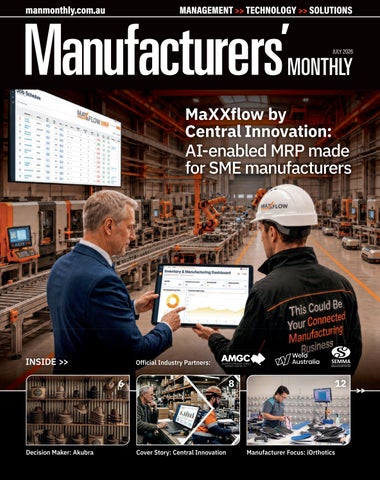
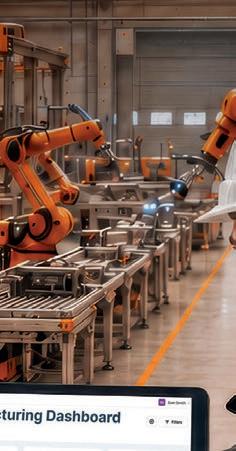
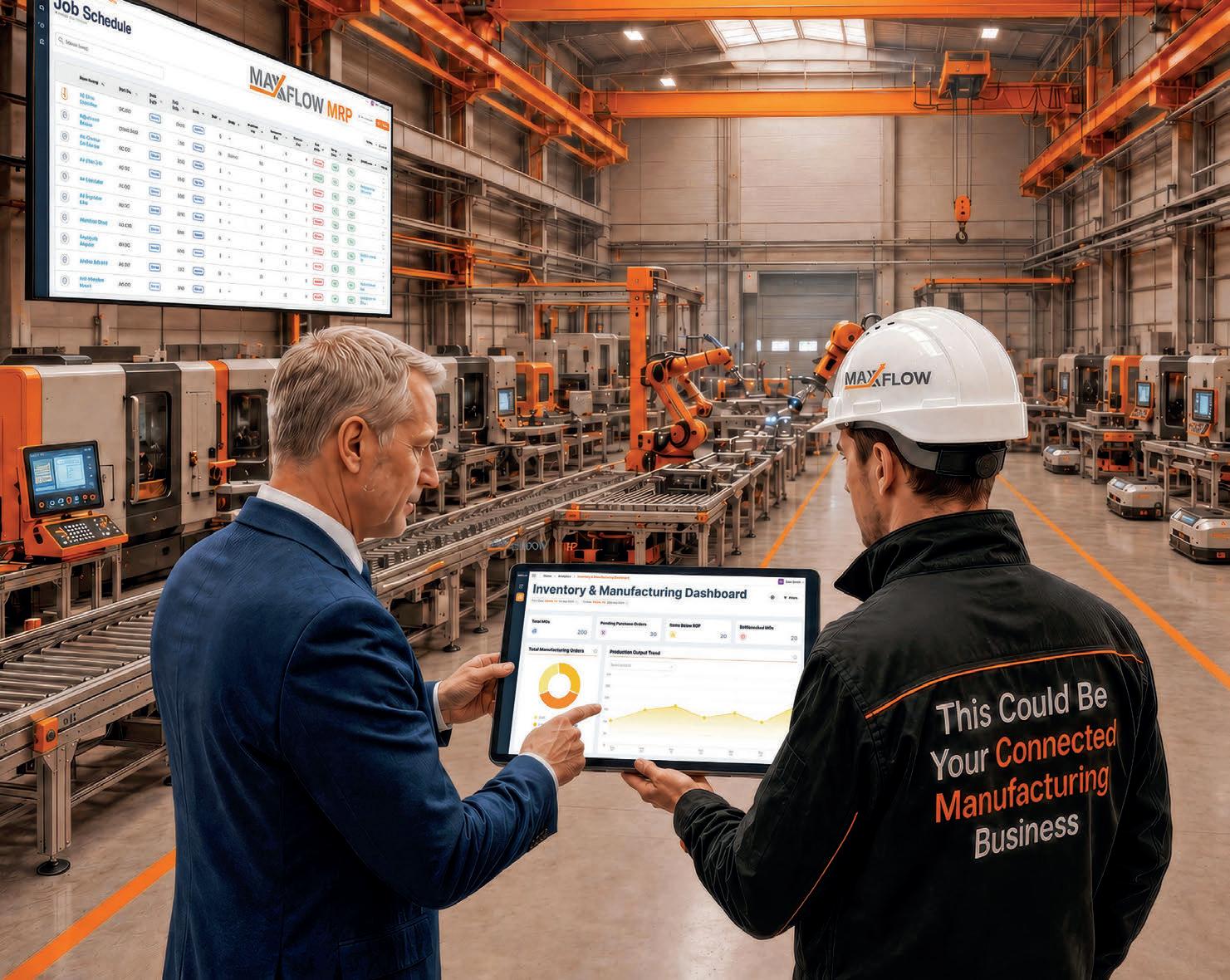
This month’s Cover Story explores Central Innovation’s launch of MaXXflow, an Australiandeveloped MRP platform designed to make digital transformation more accessible for manufacturers.
In our Decision Maker column, CEO of Akubra Natalie Culina reflects on the company’s 150 years of craftsmanship, community and preserving skills in an increasingly automated world. Also featured in our Manufacturer Focus is iOrthotics, and its use of clinical expertise, advanced manufacturing and digital technology to reshape custom orthotic production from Australia.
Celebrating innovation and heritage
Australian manufacturing is often discussed through the lens of productivity, technology and global competitiveness. Those factors are undoubtedly important, but the stories in this issue highlight something equally important: the industry’s ability to balance heritage, innovation and ingenuity in ways that continue to create value for the nation.
Few companies embody that balance better than Akubra. As the iconic hatmaker celebrates its 150th anniversary, CEO Natalie Culina reflects on a business that has remained relevant not by chasing every technological trend, but by preserving the craftsmanship and skills that define its products. In an era dominated by automation, each Akubra hat still passes through 162 manufacturing steps over six weeks and involves around 60 pairs of hands. The company’s success serves as a reminder that manufacturing excellence is not solely about machines and systems – it is also about people, knowledge and pride in making things well. At the other end of the manufacturing spectrum sits Brisbane-based medtech company iOrthotics,
whose growth demonstrates the opportunities created by advanced manufacturing technologies. Through digital scanning, CAD/CAM design tools and industrial-scale 3D printing, the company has transformed the production of customised orthotics, thus reducing production times while improving consistency and quality. Its expansion into the United States and recognition at the 2026 Endeavour Awards highlight the global potential of Australian manufacturers that combine specialist expertise with cutting-edge technology.
What connects these two seemingly different businesses is a commitment to sovereign capability. Whether preserving traditional skills in regional New South Wales or building advanced additive manufacturing capacity in Queensland, both companies are investing in Australian jobs, knowledge and production.
That same focus on capability is evident in a collaborative research project bringing together industry and academia to develop smart surfboard fins designed to deter sharks. Led by partners including the Australian Composites Manufacturing
CRC, UNSW Sydney and the University of Wollongong, the project showcases how innovation can create entirely new manufacturing opportunities. By combining advanced composites, embedded electronics and sustainable production methods, the initiative has the potential not only to improve ocean safety but also to establish new highvalue manufacturing activity on Australian shores.
Taken together, these stories paint an encouraging picture of Australian manufacturing. They demonstrate that the sector’s future is not a choice between tradition and innovation, nor between craftsmanship and technology. Instead, success increasingly comes from combining the strengths ofboth.
Whether it is a 150-year-old hatmaker, a fastgrowing medtech manufacturer or researchers developing the next generation of smart products, Australian manufacturers continue to prove that world-class ideas, products and expertise can be developed and produced locally. That combination of heritage, innovation and ambition remains one of the sector’s greatest strengths.
DECISION MAKER COLUMN
When time stands still: 150 years of the hands behind the hat
As Akubra marks 150 years, CEO Natalie Culina reflects on the value of craftsmanship, community and preserving skills in an increasingly automated world.
When we reflect on the evolution of manufacturing, more often than not we consider the advances in technology and the machines that have increased efficiency to help businesses keep up with the demands of today’s consumers.
But in an age of automation, I believe Akubra is a quiet act of defiance. In Kempsey, regional NSW, the skill still lives in the sixty pairs of hands that make a single hat, not in software.
For 150 years those hands have been part of some of this country’s most defining moments, from The Man from Snowy River to Slim Dusty, who wore his hat so faithfully that he was granted special permission to keep it on when he performed before Queen Elizabeth II. And Akubra’s manufacturing of the slouch hat, which has been worn by every Australian soldier since the First World War, a symbol of the courage and service that gives us the freedom we have today. There are few products in this country that carry that kind ofweight.
The future of Akubra is about protecting what the company has built.
In an age of automation, Akubra is a quiet act of defiance.
NATALIE CULINA, CEO AKUBRA
150 years is a long time to resist conforming to the fast pace of today. But it’s also a long time to be provedright.
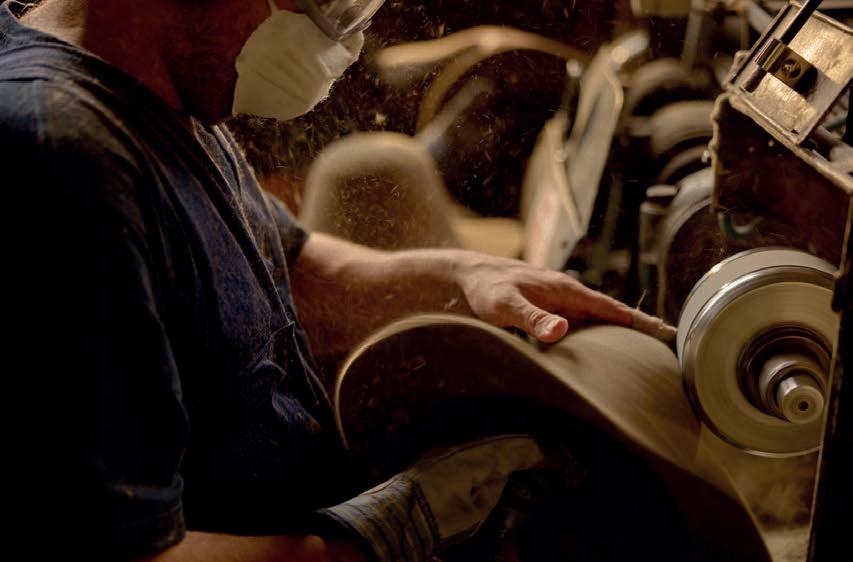
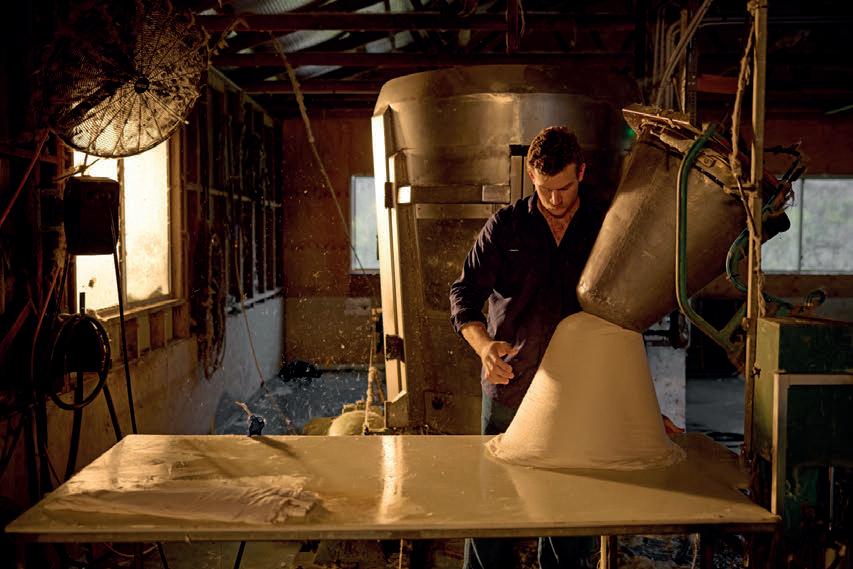
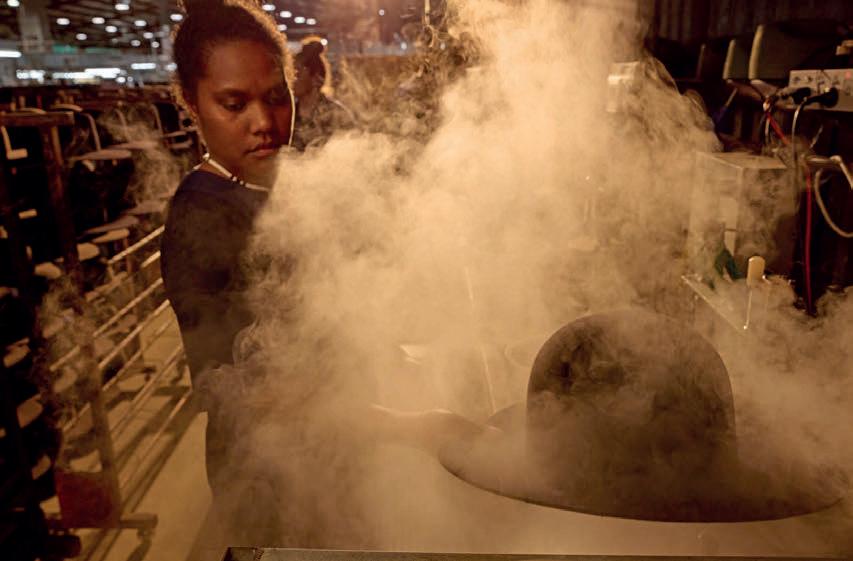
That sense of doing things right is mirrored in the 162 meticulous steps required to make a single hat, a process that takes six weeks from start to finish. At the heart of everything we do at Akubra is a commitment to handcrafting our products in Australia from the best materials, an enduring and utilitarian style that genuinely transcends the ages and survives the harshest environments. They’re built to withstand drought, deluge and dust. The quality has never wavered. And it neverwill. But in keeping alive something the whole country values, it’s important not to mistake
deliberateness for stubbornness.
The changes we make to our process and our product are careful and considered. If you don’t evolve, you get left behind.
The 162 steps our craftspeople follow today are the same 162 steps that have always defined an Akubra. But how they do it, and the conditions in which they do it, have changed considerably over the decades. We have improved safety across the workshop in ways that set up the business up for future success, by ensuring our people are our greatest priority. And we are actively building a pipeline of future craftspeople through training and on-the-job development because we know that the moment we stop investing in the next generation of
hatmakers is the moment the craft starts to die.
Every Akubra tells a story. And every one of those stories starts in Kempsey.
Our Kempsey workshop isn’t just a workplace, it’s a community. And that sense of community is woven through everything we make and everything we are. Akubra has called Kempsey home for more than 50 years and we employ around 120 people in a town that feels so personal. That matters to us. It has to.
Supporting manufacturing in a regional location isn’t just about giving someone a job. A job in a capital city comes with infrastructure, options, and proximity. A job in Kempsey is something different. It’s a career that can last a lifetime and for many of our craftspeople, it has. We have local workers who have dedicated twenty, thirty, even forty years of their working lives to passing down generations of skill and craftsmanship.
I am deeply passionate about keeping authentic Australian manufacturing alive here because I have seen firsthand what it means to this community. Supporting Kempsey means supporting families and ensuring that regional Australia continues to thrive through industries that value hard work and heritage. Our people care deeply about their craft, and it shows in the product that Australia wears with pride.
That kind of pride doesn’t live in a manual or in automation. It lives in people.
The future of Akubra isn’t about changing who we are; it is about protecting what we have built and the people who have built it, ensuring that the generations of skill on our workshop floor continue to have a home for the next 150 years.
So, when we reflect on the evolution of manufacturing, sometimes success isn’t measured by the pace of change. It’s found in the quiet persistence of a workshop floor that looks much the same as it did a generation ago, where the same care is taken, the same skills are practised and the same pride is felt in every hat that comes off the line.
That is where time stands still. And at Akubra, I would argue, it’s exactly where it should.
For 150 years Akubra hats have been part of some of Australia’s most defining moments.
Australian soldiers who served in the 3rd Light Horse Brigade at Tobruk during World War I: Harry Smith (WA), Smokey [Ron Searle] Colin Murn (SA) Poss Hardy (SA) Popeye Collis (WA) Ray Harrison (SA). Image: State Library of South Australia
Images: Akubra
162 meticulous steps and six weeks are required to make a single Akubra hat.
MaXXflow bringing practical innovation to Australian manufacturing
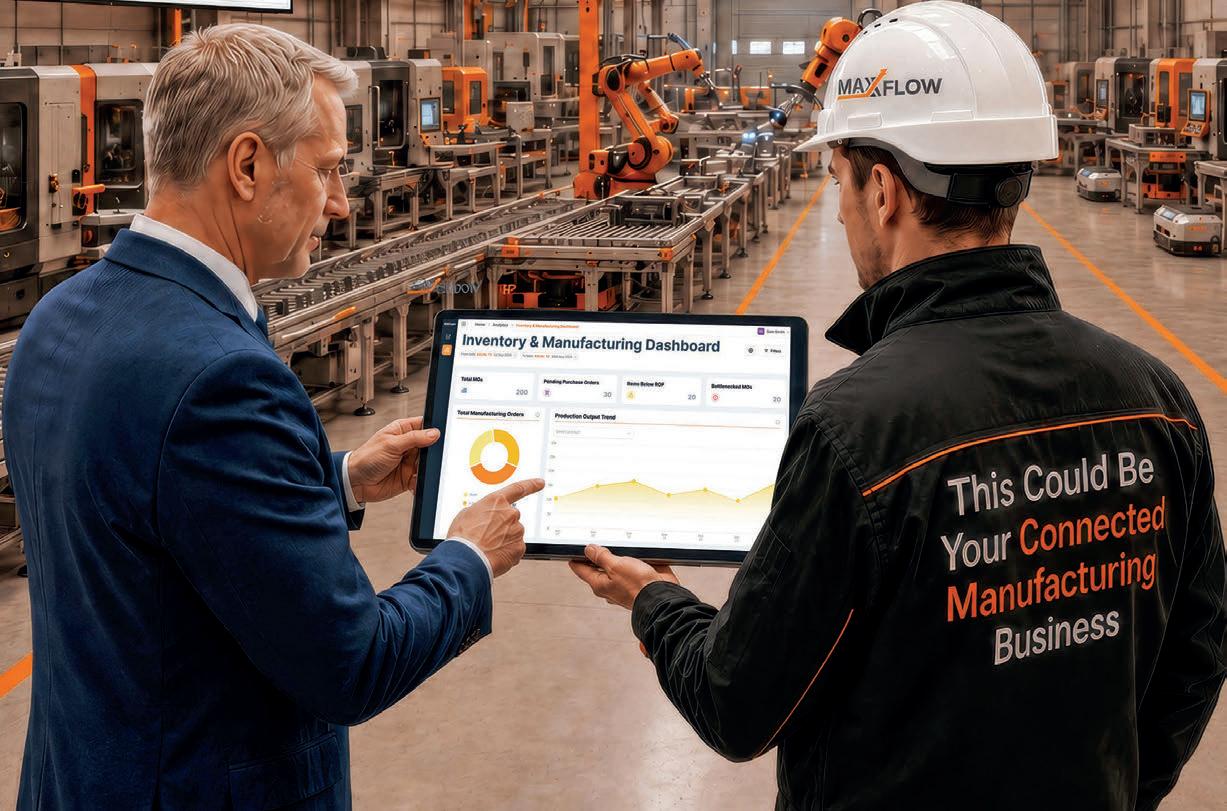
Drawing on more than 35 years of manufacturing expertise, Central Innovation is launching MaXXflow, an Australian-developed MRP platform designed to make digital transformation more accessible for manufacturers.
For more than 35 years, Central Innovation has built a reputation as one of Australia and New Zealand’s most recognised partners in engineering, design and manufacturing technology. Best known as a SOLIDWORKS partner in Australia and New Zealand and now an original software provider and developer, the company has spent decades working alongside manufacturers of all sizes, gaining deep insight into the operational challenges that continue to hold many businesses back.
That experience has now culminated in a strategic shift. Rather than simply supplying software solutions developed elsewhere, Central Innovation has invested millions of dollars into developing its own intellectual property, designed specifically to address the needs of manufacturers across Australia and New Zealand. At the centre of that effort is MaXXflow, a new materials requirements planning (MRP) solution that the company believes can help close the gap between traditional manufacturing practices and the demands of modern production environments.
“Central Innovation is exceptionally well-known, especially amongst engineering, design, and manufacturing firms in Australia and New Zealand,” said Damien Davis, general manager – Data Solutions at Central Innovation. “Over 35 years, we’ve been exposed to a number of different business issues in the market, which have been articulated to us by our loyal customers, and we have seen opportunities for services and products which are currently not being delivered to a large portion of the market in Australia and New Zealand.”
Addressing a persistent digital gap
According to Davis, those opportunities are substantial. Of the approximately 115,000 design, engineering and manufacturing businesses operating across Australia and New Zealand, around 80 per cent fall into the small-tomedium enterprise category. Nearly half of those organisations, he said, still do not utilise integrated or connected manufacturing systems.
Despite years of discussion around Industry 4.0, many manufacturers continue to rely on manual processes, spreadsheets, whiteboards and disconnected systems to manage production.
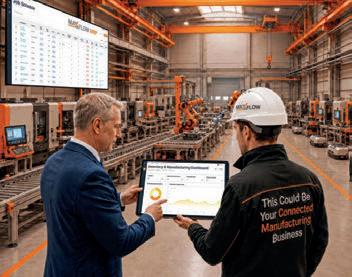
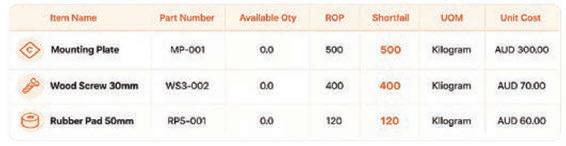
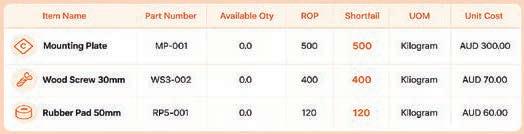
3 items are currently below their Reorder Point (ROP), all showing zero available stock.
are
of
Purchase orders should be raised for all three immediately.
Information is often stored in employees’ knowledge rather than within accessible digital systems, creating inefficiencies that can affect productivity, planning and decision-making. While the industry increasingly discusses Industry 5.0, Davis believes a large segment of the market is still struggling to take
the first steps towards digital transformation.
“Most organisations that we have spoken to have cited challenges with respect to adopting Industry 4.0 type technologies,” he said. “We are in fact on the cusp of Industry 5.0, yet a very large portion of the market still use manual-based processes and
Images: Central Innovation
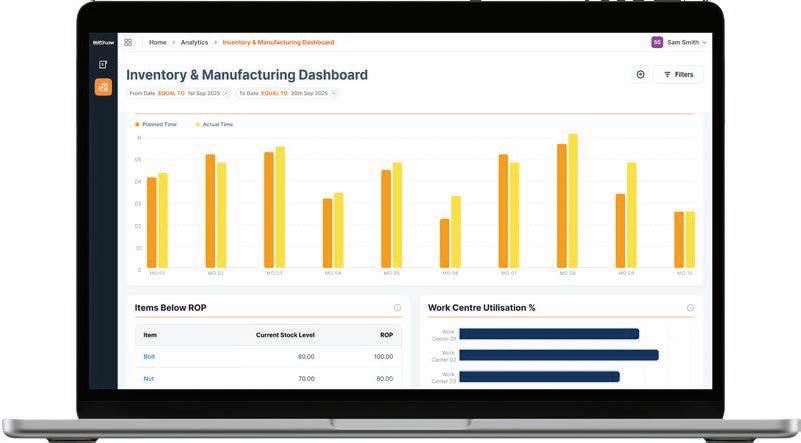
What items are below their ROP?
Which work centres are processing MOs linked to high value sales orders?
Central Innovation has pivoted to become an original software provider and developer.
systems and tools, whiteboards, Excel spreadsheets, tacit and explicit information which is housed in people’s heads.”
Building MaXXflow with manufacturers
Recognising this gap, Central Innovation deliberately avoided competing directly with major enterprise resource planning (ERP) vendors. Instead, the company focused on a segment of the market that often finds itself overlooked by large software providers: small and medium-sized manufacturers seeking practical solutions without the complexity and cost typically associated with enterprise systems.
The development of MaXXflow was driven by extensive consultation with manufacturers themselves. Rather than designing a solution based solely on assumptions, Central Innovation established customer advisory boards and invited manufacturers into the development process. These businesses shared their existing challenges, identified shortcomings in their current systems and outlined what they would ideally want from a planning platform if they could start from scratch.
“We’ve made a conscious decision not to play in the deep end of the pool, where there’s a lot of blood in the water with the major ERP players,” said Davis. “When we spoke to the manufacturing market, we actually invited several companies inside the tent to come and advise us on what their current systems and indeed their current ways of working are not providing for them, and also to share their challenges, and if they had a clean slate, what would they want to see from a product to meet their specific needs.”
MaXXflow: Everything you need and none of what you don’t
The resulting platform reflects what Central Innovation describes as a low-friction approach to manufacturing software. The company’s guiding principle for MaXXflow is straightforward: provide
manufacturers with everything they need and none of what they do not. Ease of adoption, usability and practical functionality became key design priorities throughout development.
The solution also represents a broader evolution for Central Innovation itself. The launch of MaXXflow signals the company’s ambition to leverage decades of manufacturing expertise and convert that knowledge into products designed specifically for the realities of local industry.
“MaXXflow represents the flagship product in our library of IP and heralds or announces to the marketplace Central Innovation’s strategy to change its spots,” Davis said. “Our slogan for MaXXflow is ‘everything you need, none of what you don’t’. So, we’ve made it a very low friction product, easy to adopt, learn and use.”
For Fraser Creighton, head of marketing at Central Innovation, the launch of MaXXflow has been about taking a clear message directly to the manufacturers who need it most. Through major industry exhibitions including Australian Manufacturing Week, EMEX –New Zealand’s Manufacturing & Engineering Expo, and CeMAT Australia / Industrial Transformation Australia, the focus has been on cutting through the noise, capturing attention and showing the market that Central Innovation is building its own future in manufacturing technology.
“MaXXflow gives us a powerful story to tell,” Creighton said. “This is not just another software product. It is Central Innovation taking decades of manufacturing knowledge, turning it into practical technology, and putting it in front of the businesses that are ready to work smarter.”
That same thinking is driving Central Innovation’s Connected Manufacturing event series, now being rolled out across Australia and New Zealand following successful sessions in South Australia and on the second morning of CeMAT Australia / Industrial Transformation Australia. Designed to bring manufacturing decision-makers into the room, the events create an opportunity to explore
smarter workflows, understand where technology can remove friction, and connect with peers facing similar operational challenges.
“The exhibitions help us start the conversation, but Connected Manufacturing takes it deeper,” Creighton said. “These events are about getting the right people around the table, showing them what is possible, and building a community around the next era of manufacturing. The message is simple: Central Innovation is here, MaXXflow is here, and we are moving with the manufacturers who are ready for what comes next.”
Designed in Australia with global ambitions
While MaXXflow has been designed for Australian and New Zealand manufacturers, the company’s ambitions extend well beyond domestic markets. Built and developed locally, the platform carries Australian Made and Owned certification and has been created with a view towards serving a broader international customer base overtime.
As an MRP solution, its applicability extends beyond traditional manufacturing environments, creating opportunities for future growth across other industries and international markets. Central Innovation views the platform not only as a product launch, but as evidence of the organisation’s confidence in its staff, customers and longterm strategy.
“MaXXflow represents not just a substantial investment in the development of a new-to-market materials requirements planning solution,” Davis said. “It represents a product designed and developed here in Australia, for, but most importantly with Australian and New Zealand engineering and design manufacturers.”
Making innovation practical
For Chatura Elkaduwa, head of Technical and Product Development at Central Innovation, accessibility remains one of the platform’s
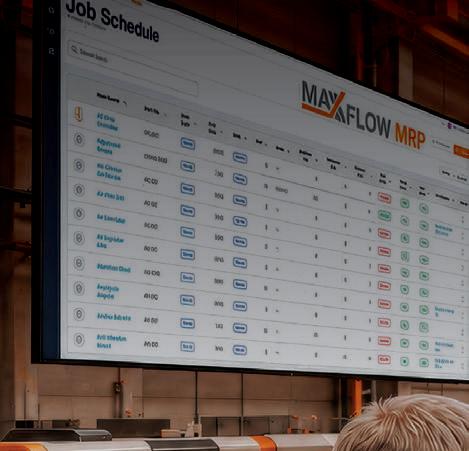
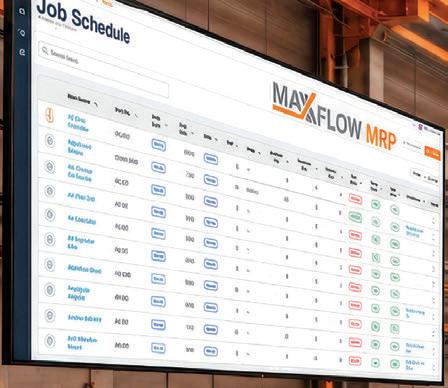
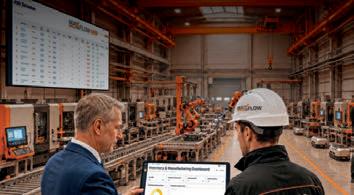
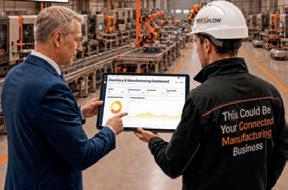
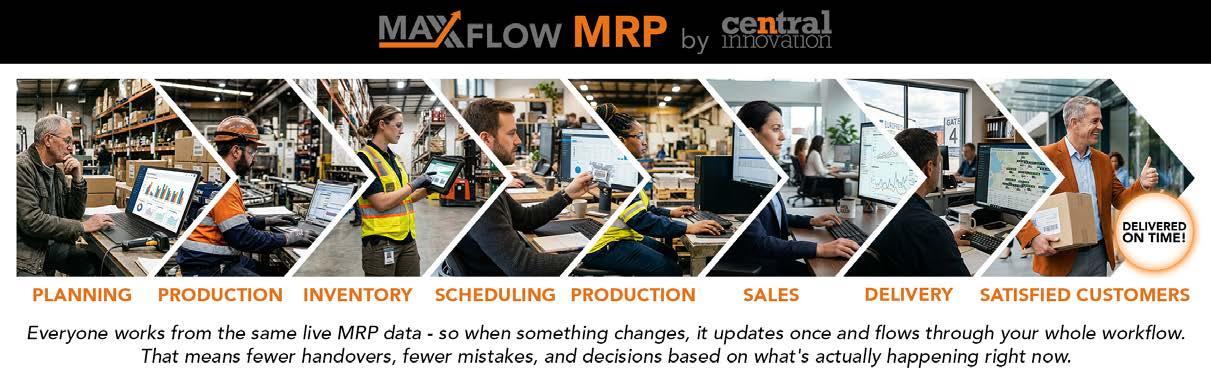
MaXXflow is Central Innovation’s new materials requirements planning (MRP) solution for manufacturers across the board.
COVER STORY
defining characteristics. He believes many manufacturers want to innovate but often encounter barriers created by complex systems, lengthy implementation processes and the disruption associated with large-scale transformation projects.
Rather than pushing organisations towards extensive digital overhauls, Elkaduwa advocates for practical improvements that solve immediate operational problems. By focusing on usability and measurable outcomes, he believes manufacturers can achieve meaningful innovation through incremental change.
“At Central Innovation, our focus is making advanced manufacturing solutions more accessible, practical, and easier to adapt for businesses of all size,” Elkaduwa said. “We understand that many manufacturers want to innovate, but are often held back by complex systems, high implementation costs, long training cycles, and the challenge of changing established ways of working.”
Connecting engineering, operations and production
That philosophy extends beyond MaXXflow to the company’s broader suite of solutions, including MaXXlink. Together, these platforms are designed to connect engineering, operations and production more effectively, reducing the disconnect that often exists between departments.
Improved visibility, streamlined bill of materials management and stronger collaboration are among the intended benefits. By reducing reliance on disconnected systems and manual processes, Central Innovation aims to help manufacturers respond more quickly to changing requirements while maintaining accuracy and control.
“Our approach is to remove those barriers,” Elkaduwa said. “We aim to deliver solutions that are intuitive, easy to learn, and quick to start using, so manufacturing teams can gain value almost immediately.”
Putting AI to work on the factory floor
Artificial intelligence also plays a role within MaXXflow, although Central Innovation has taken a deliberately practical approach to its implementation. Rather than treating AI as a marketing feature, the company has focused on solving everyday operational challenges using data that manufacturers already possess.
Across jobs, inventory, purchasing records, bills of materials, production schedules and customer requirements, manufacturers generate vast amounts of information. The difficulty often lies in interpreting that information quickly and transforming it into actionable decisions.
“When it comes to MaXXflow, it’s being developed with practical AI at its core, not as a futuristic add-
on, but as a way to solve everyday manufacturing challenges more intelligently,” Elkaduwa said. “The AI capabilities within MaXXflow are designed to help manufacturers turn their information into clear decisions and faster actions.”
From data to decisions
Among the platform’s AI-enabled capabilities are predictive inventory planning, anomaly detection and intelligent planning support. These functions help manufacturers identify potential material shortages, recognise unusual cost movements, detect stock inconsistencies and identify production delays before they become larger operational issues.
The system also supports planning decisions involving competing priorities such as labour availability, machine capacity, material constraints and delivery commitments. Rather than replacing human expertise, the objective is to provide clearer visibility and support more informed decisionmaking.
“One special feature we have is conversational AI,” Elkaduwa said. “Through conversational AI capability, users can ask practical business questions in plain language, such as checking the job status, reviewing inventory risk, identifying overdue actions, or understanding production bottlenecks.”
Supporting people, not replacing them
For manufacturers that may lack dedicated data analysts or advanced reporting expertise, this approach lowers the barrier to accessing critical information. It also aligns with Central Innovation’s broader philosophy of making advanced technologies more approachable and easier to adopt.
The focus, Elkaduwa emphasised, remains firmly on empowering people rather than replacing them. AI is intended to provide earlier warnings, deeper insights and faster access to information, allowing teams to
respond with greater confidence and efficiency.
“The focus is not on replacing human decisionmaking,” he said. “It is about giving manufacturing teams better insight, earlier warnings, and faster access to information they need.”
A broader vision for manufacturing
The launch of MaXXflow also reflects a broader transformation underway within Central Innovation itself. While the company’s heritage remains deeply rooted in engineering and manufacturing software, its capabilities now extend far beyond software reselling.
Today, the organisation positions itself as an end-to-end solutions provider encompassing software, bespoke software development, systems integration, consulting, education, implementation and ongoing technical support. Combined with a partner ecosystem developed over more than three decades, Central Innovation believes it can support manufacturers through a wide range of operational and technology challenges.
“The clear message to the market is that Central Innovation is no longer just a value-added reseller,” Davis said. “We are an end-to-end solutions house for manufacturing in Australia and New Zealand. No matter what the challenge is, through our capabilities, our organisation’s capabilities, our 35-plus year history, our consultants would be able to visit all of this knowledge and expertise on your business’s problem.”
As Australian manufacturers continue navigating labour shortages, rising costs, increasing complexity and growing demands for efficiency, solutions that deliver practical value without disruption are likely to attract considerable attention. For Central Innovation, MaXXflow represents both a new product and a new chapter – one built on decades of industry experience, shaped by direct customer input and focused on helping manufacturers embrace innovation with confidence.
MaXXflow is designed for Australian and New Zealand manufacturers, but not without global ambitions.
STORE MORE. MOVE SAFER.
ENHANCE THE SAFETY, STORAGE AND EFFICIENCY OF YOUR LOGISTICS
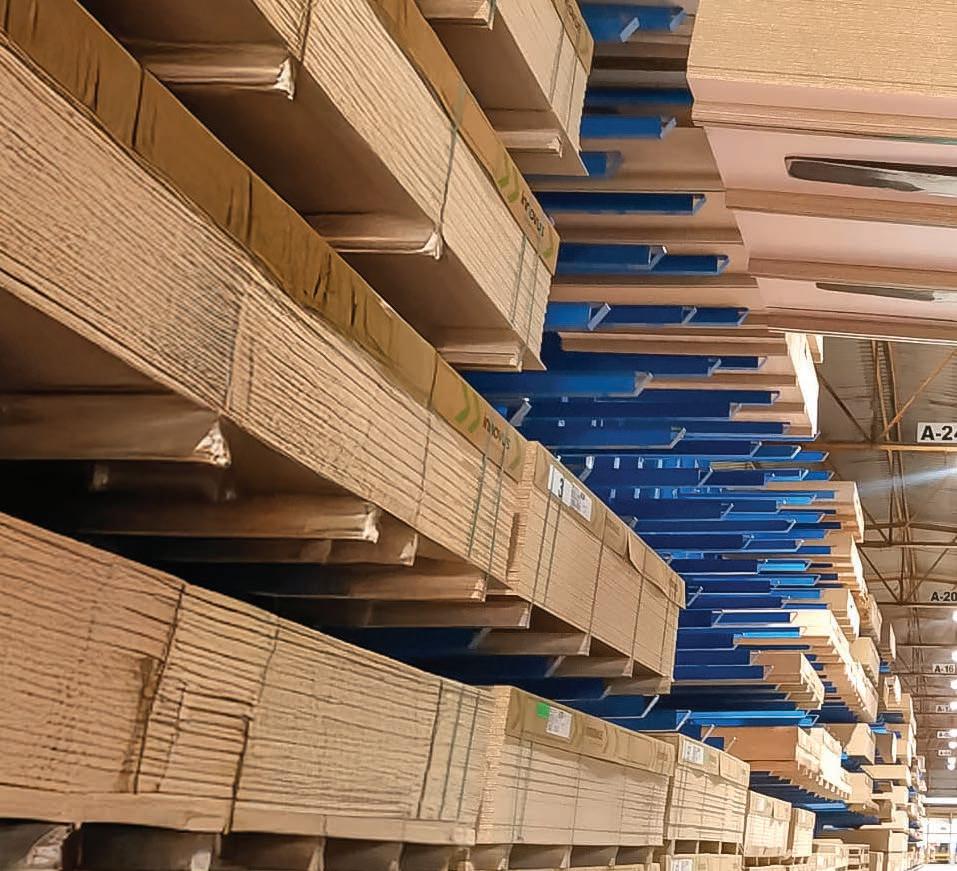
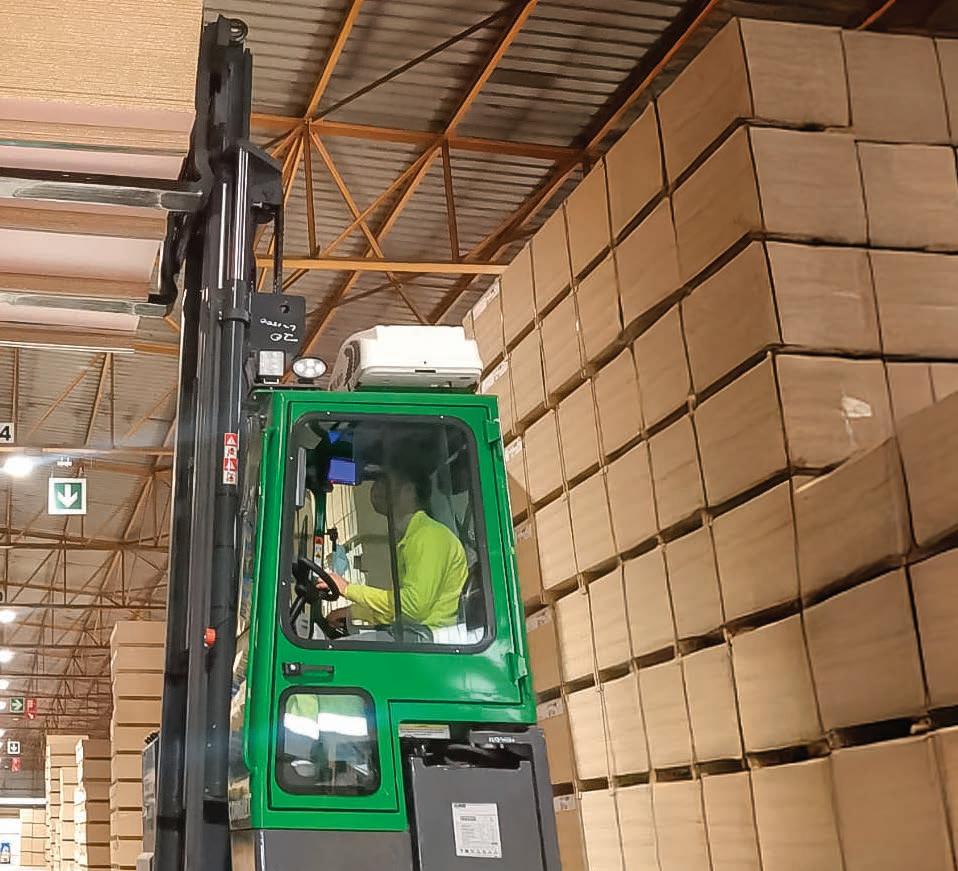
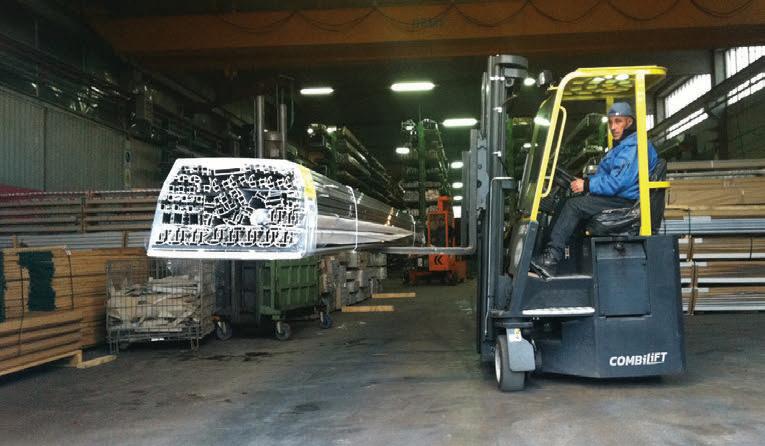
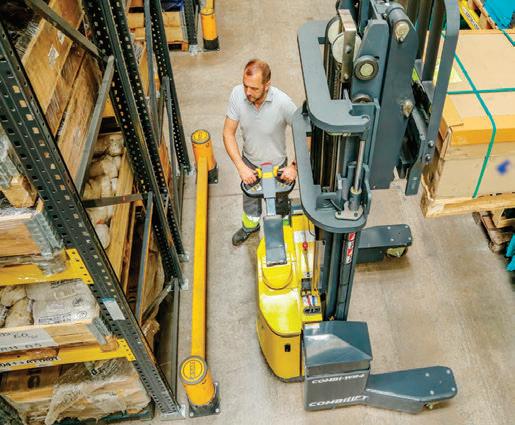
For almost 30 years, Combilift has been revolutionising the way companies handle and store goods. We help companies of all sizes and from every industry to maximise the capacity, safety and efficiency of their warehouse and storage facilities.
Our pioneering product range of multidirectional, articulated and pedestrian forklifts, straddle carriers and container loaders allows you to manoeuvre long loads safely, reduce aisle widths and increase the amount of space available for storage.
CONTACT US TODAY
To find out how Combilift can help you unlock every inch of your storage space.
MANUFACTURER FOCUS
Building a better fit
iOrthotics is combining clinical expertise, advanced manufacturing and digital technology to reshape custom orthotic production from Australia.
For many manufacturers, digital transformation is a journey of incremental improvements.
For Brisbane-based medical manufacturer iOrthotics, it has been embedded in the business from the beginning. What started as an internal solution to support a growing podiatry network has evolved into an advanced manufacturing operation spanning Australia and the United States, producing customised medical devices through a highly automated digital workflow.
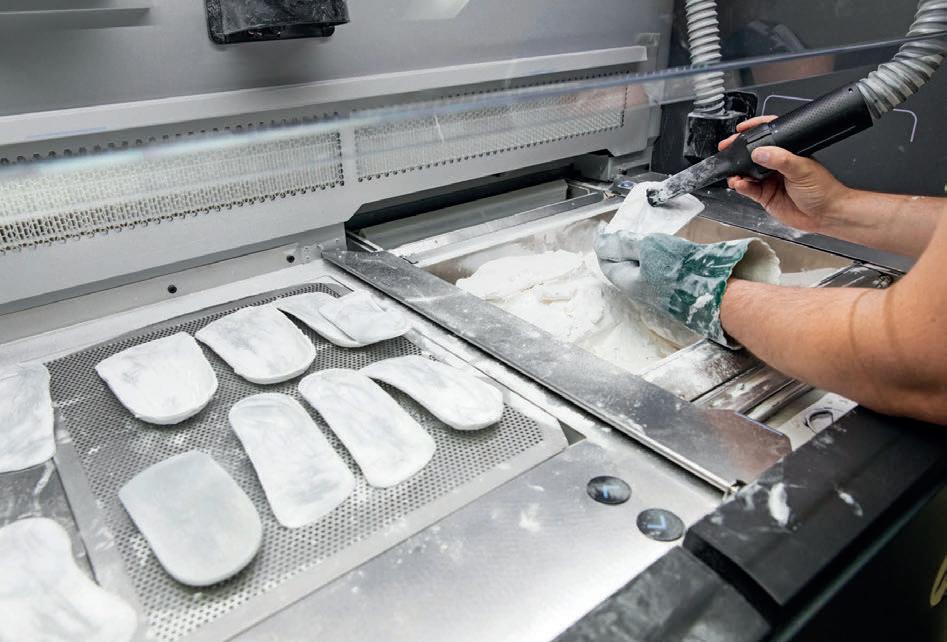
Today, iOrthotics sits at the intersection of medtech, software development and advanced manufacturing. The company designs and manufactures custom foot orthotics using digital scanning, CAD/ CAM design tools and additive manufacturing technologies, serving podiatrists, allied health clinics and healthcare providers. Its operations reflect the broader shift occurring across Australian manufacturing, where specialised products are increasingly being produced through digitally enabled processes.
The company’s origins, however, were grounded in managing director Dean Hartley’s clinical practice.
“I trained as a qualified podiatrist, registered podiatrist, and went into business pretty early when I graduated university in Albury and moved to Mackay in Queensland,” he said.
Within six months of joining a practice in Mackay, Hartley entered into partnership and began helping build what would eventually become a national podiatry network. As the clinical business expanded, so too did the need for reliable orthoticproduction.
The growing organisation established its own orthotics laboratory to manufacture devices for its clinics. Hartley took responsibility for developing the operation, creating the foundations for iOrthotics. As the podiatry network expanded to approximately 12 clinics across Australia, the manufacturing side of the business grew alongside it, eventually relocating to Brisbane around 2012 as part of the company’s broader support operations.
Over time, the orthotics division evolved beyond servicing the company’s own clinics and began attracting external customers. What had initially been an internal capability transformed into a standalone manufacturing business with its own technologies, systems and growth trajectory.
Embracing digital disruption
From the outset, Hartley recognised that traditional orthotic manufacturing methods were ripe for disruption. Having learned through conventional plaster-casting techniques, he experienced first-
hand the limitations of manual workflows and lengthy production cycles.
Historically, practitioners would create physical plaster moulds of patients’ feet and lower legs before shipping those moulds interstate for manufacturing. The process was labour-intensive and often involved delays before patients received their customised devices.
For clinics operating in regional Queensland, those delays were even more pronounced. Plaster moulds needed time to dry before they could be packaged and transported to manufacturing facilities in cities such as Adelaide or Melbourne. Production itself could take weeks before completed orthotics were returned to clinicians.
“Because of this, we introduced CAD technologies pretty quickly, like routers and digital scanners, when they came to market,” said Hartley.
The company’s digital journey accelerated further as scanning technologies matured and additive manufacturing began gaining traction. By around 2014, Hartley was already investigating how 3D printing could be integrated into orthotic production, long before the technology became commonplace within the sector.
That early commitment positioned iOrthotics among the first movers globally within the orthotics space. A partnership with technology giant HP helped accelerate the company’s adoption of industrialscale additive manufacturing systems and provided a platform for continued innovation.
The impact of digitisation on patient outcomes quickly became apparent. Faster turnaround times were among the most immediate benefits, allowing clinicians to deliver customised devices faster
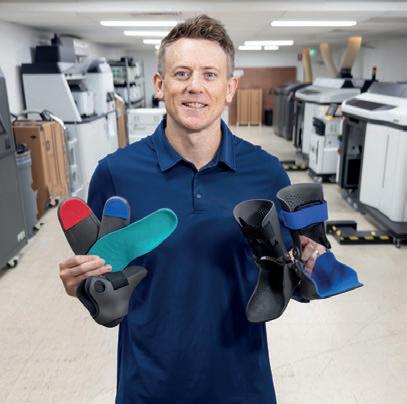
Managing director, iOrthotics, Dean Hartley.
Images:
The company’s digital journey accelerated as scanning technologies matured and additive manufacturing gained traction.
compared to traditional manufacturing models.
“Our average turnaround time is about three to three-and-a-half days for a full custom-made device in and out of our facility,” Hartley said. “What typically is two or three weeks is less than a week now.”
By bringing production in-house and digitising the workflow, iOrthotics gained greater control over quality, production schedules and customer service. The company also benefited from vertical integration, supporting its clinical operations while building a scalable manufacturing platform.
Advanced manufacturing at scale
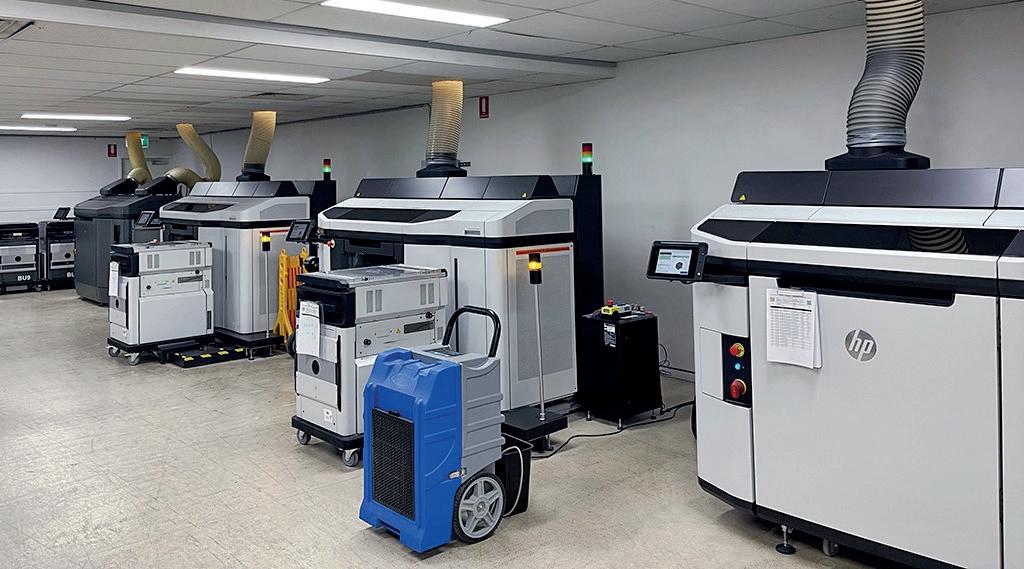
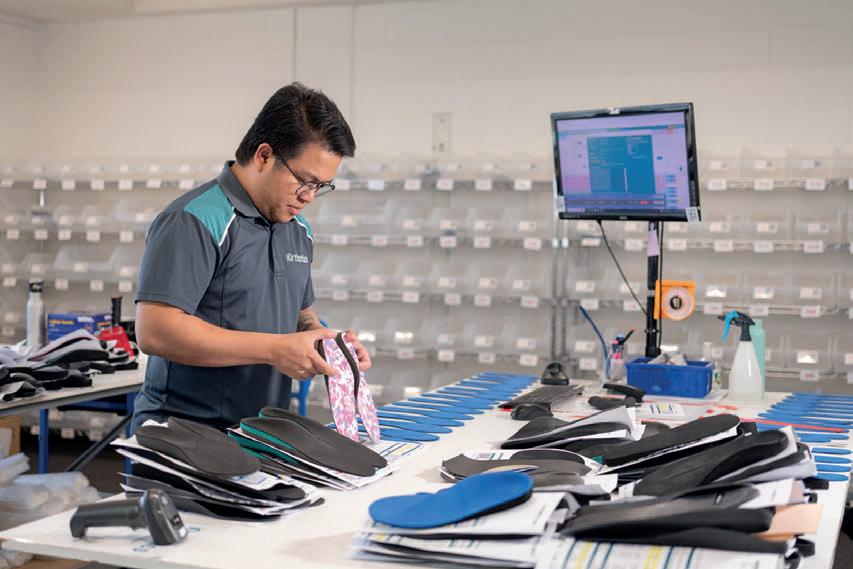
The company’s manufacturing capability today is centred around a highly digital production environment and approximately 25 people across a mix of full-time staff, engineering students and podiatry students. At the heart of the operation is a Brisbane-based additive manufacturing facility featuring four large-format HP 3D printers. According to Hartley, it is among the largest facilities of its kind in Australia. The company has also replicated much of that capability internationally through a matching facility in New York, enabling it to service North American customers while maintaining consistent production standards across both regions.
While the printers are a visible representation of the company’s manufacturing capability, Hartley believes one of iOrthotics’ most valuable assets
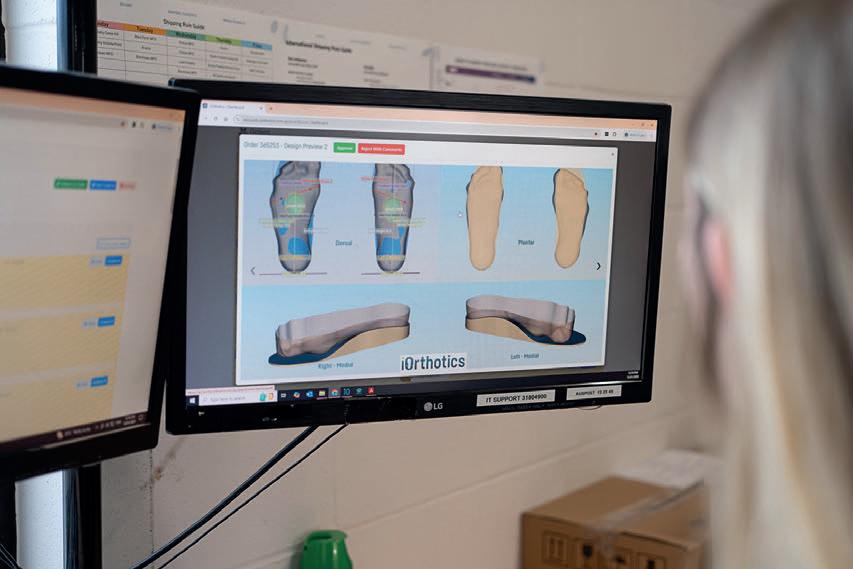
are less obvious. Over more than a decade, the business has developed a proprietary workflow management platform that effectively functions as the nervous system of the entire organisation.
The platform integrates clinical data capture, production management, quality assurance, maintenance scheduling, customer relationship management and financial processes. This helps link clinicians directly to manufacturing operations, allowing patient scans, prescriptions and production instructions to move seamlessly through the workflow without manual intervention.
“That’s become our biggest piece of IP,” Hartley said. “It manages our entire workflow, whether it’s from the clinician taking 3D scans on their phone or other devices.”
Raising industry standards
For a business operating within the medical sector, those controls are particularly important. Although foot orthotics have historically been produced within a largely unregulated environment, iOrthotics has deliberately adopted standards that exceed many industry norms.
Hartley describes much of the orthotics industry as operating like a cottage industry, where practitioners can establish manufacturing operations with relatively few formal requirements. While regulatory oversight is increasing, many providers continue to operate without comprehensive quality systems.
Rather than waiting for regulations to dictate change, iOrthotics chose to implement internationally-recognised standards proactively.
“We wanted to make sure we were doing things the right way and that we had systems and processes in place,” Hartley said. “We thought there’s no better way to do that than using the ISO standard across our facility.”
The company subsequently achieved both ISO 9001 certification and ISO 13485 medical device accreditation. Hartley believes the latter remains uncommon within Australia’s orthotics sector.
Importantly, the decision was driven less by compliance obligations and more by a desire to establish robust governance and operational discipline as the business continued to scale.
“We don’t need it, but we just thought, let’s make sure what we’re doing is right,” he said.
Manufacturing with less waste
Sustainability has emerged as another advantage of the company’s digital manufacturing model. While additive manufacturing is often associated with design flexibility, its material efficiency has become important as manufacturers seek to reduce waste. Traditional orthotic manufacturing commonly involves milling devices from thick plastic blocks. The process removes large amounts of material to produce relatively thin finished products, resulting in substantial waste. By contrast, iOrthotics’ additive manufacturing approach
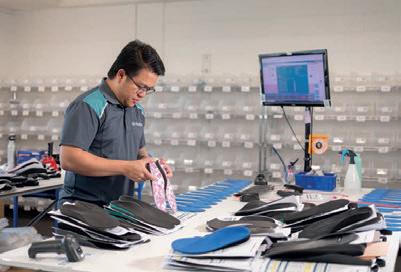
iOrthotics sits at the intersection of medtech, software development and advanced manufacturing.
MANUFACTURER FOCUS
reduces discarded material while maintaining performance requirements.
The difference is striking. According to Hartley, traditional methods can waste close to two kilograms of material per pair of orthotics. The company’s current process reduces that figure to approximately 50 grams on average, and potentially less.
Across the company’s Australian and US operations, the impact is substantial.
“We’re probably saving over 200 tonnes of plastic waste going into landfill each year if we were still traditionally making it the other way,” Hartley said.
“That’s a huge sustainability component from our end that we’re pretty proud of.”
Expanding beyond Australia
The success of the Australian operation has also underpinned the company’s international expansion.
Around fi ve years ago, iOrthotics entered the North American market, establishing manufacturing operations designed to replicate the capabilities developed locally.
The company now operates facilities in Long Island City, New York, and New Jersey, together providing a strategic foothold within one of the world’s largest healthcare markets while allowing the business to maintain local production close to customers.
Despite relatively lean staffing levels, the facilities can generate high output due to the productivity enabled by advanced manufacturing technologies.
The New York facility operates with around four fulltime employees, while the New Jersey site employs roughly another dozen.
“We can do a lot of volume because we’re using this type of equipment.” Hartley said. “It actually has quite a high turnover of revenue but with less staff.”
Recognition and sovereign capability
The company’s recent success was recognised at the 2026 Endeavour Awards, where iOrthotics received national recognition for its manufacturing achievements. For Hartley, the award was less about external validation and more about acknowledging the efforts of the team behind thebusiness.
Recognition from industry peers provided an opportunity to celebrate the company’s progress and demonstrate to employees how their work contributes to broader manufacturing innovation.
“It’s always humbling winning any award,” Hartley said.
The achievement also reinforced the importance of maintaining sovereign manufacturing capability within Australia’s growing medtech sector. Hartley believes local production provides advantages not only for iOrthotics but also for other industries that increasingly require advanced manufacturing expertise.
By maintaining production locally, the company contributes to a broader ecosystem of skills, technologies and capabilities that can support sectors ranging from healthcare and engineering through to defence-related applications.
“It’s a bit of a no-brainer to have that sovereign capability,” Hartley said. “We’re bringing that capability not just to our business, but other businesses can utilise it as well.”
The next stage of growth
Looking ahead, growth remains firmly on the agenda. The company is targeting expansion over the next fi ve years through a combination of organic growth, strategic partnerships and potential acquisitions. The objective is ambitious: to double or triple the size of the business while continuing to strengthen both Australian and North American operations.
Australia will remain central to those plans, but Hartley sees opportunities within the United States as the company continues to refine its international growth strategy.
“We want to grow two to three times the business over the next fi ve years,” he said. “A big part of that will be organic growth.”
That growth will extend beyond healthcare alone. While orthotics remains the company’s core focus, the expertise developed through years of advanced manufacturing, materials science and additive manufacturing offers opportunities across a range of industries.
As Australian manufacturing continues shifting towards specialised, technology-driven production, iOrthotics provides a compelling example of what can be achieved when clinical insight is combined with digital innovation. From a small in-house laboratory supporting a podiatry practice to an internationally operating medtech manufacturer, the company’s journey reflects the sophisticated future of Australian manufacturing.
iOrthotics’ proprietary platform integrates clinical data capture, production management, quality assurance and more.
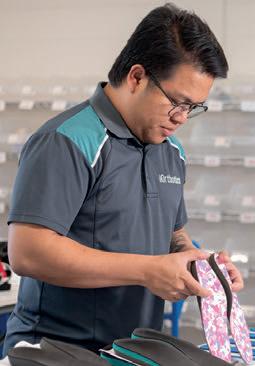
The company designs and manufactures custom foot orthotics using digital scanning, CAD/CAM design tools.
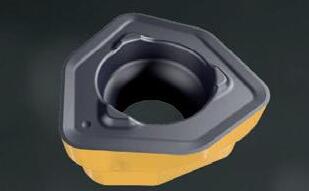
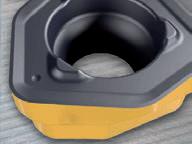
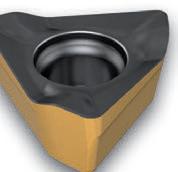
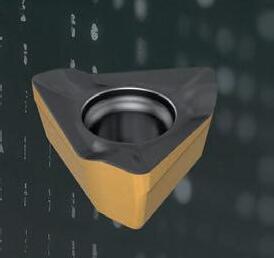
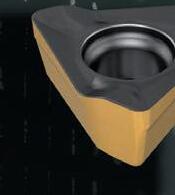
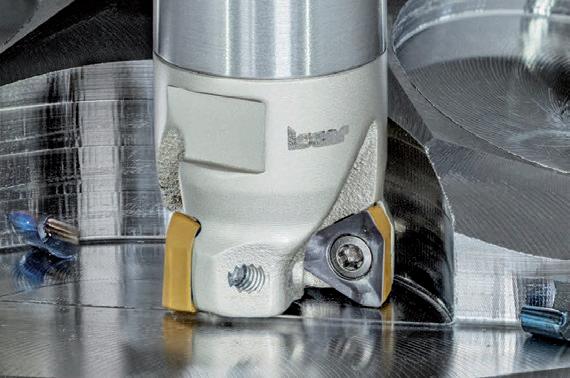
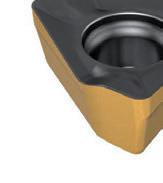
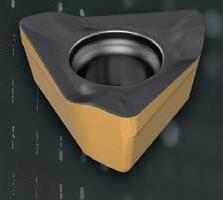
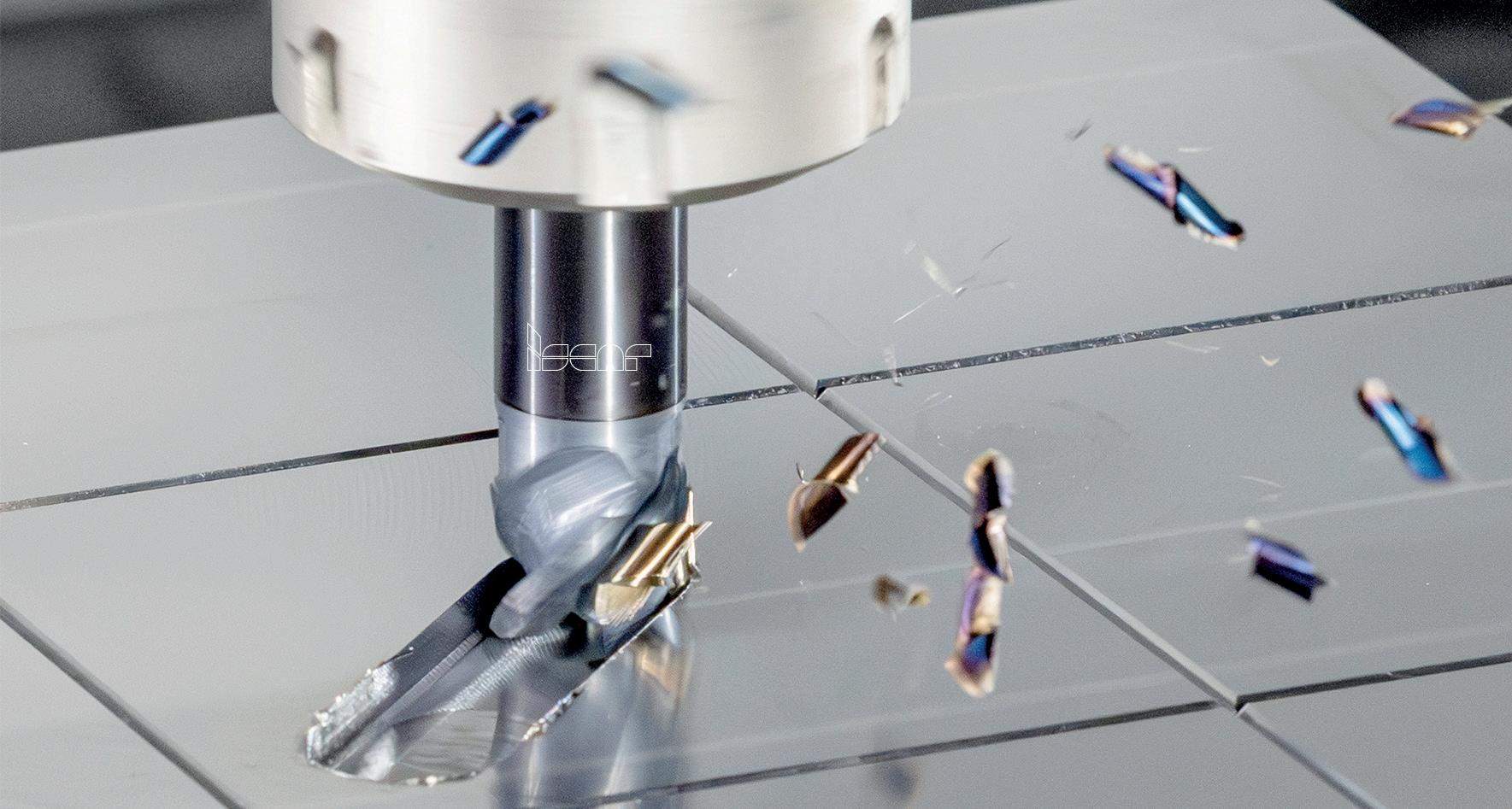
FEEDMICRO3
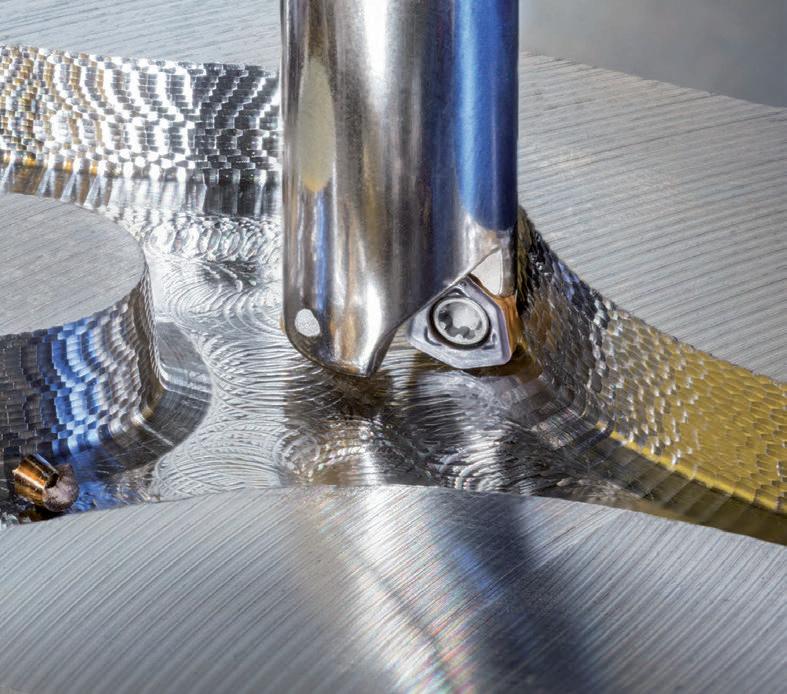
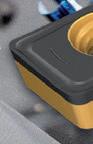
With 3 indexable cutting edges, the small high-feed trigon insert delivers efficient, productive roughing and proves that compact inserts can make a big performance impact.
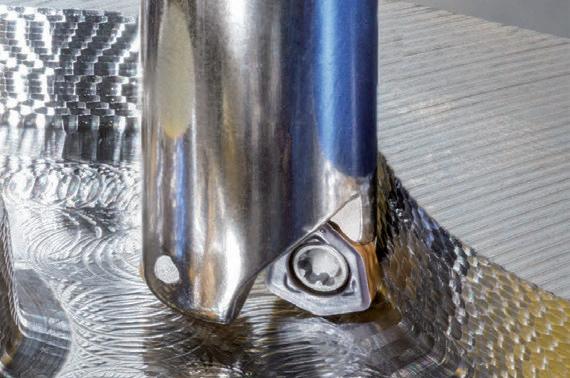
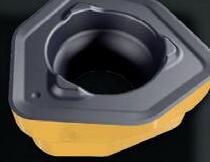
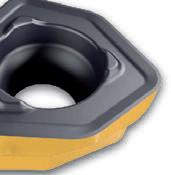
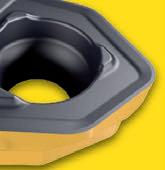
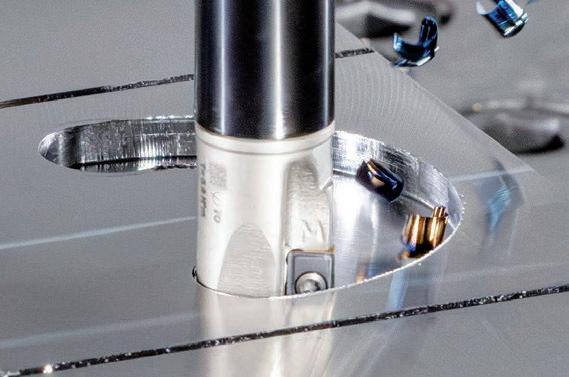
A material-efficient triangular insert with 3 cutting edges boosts productivity through longer tool life and delivers accurate 90° square-shoulder milling while reducing carbide scrap through full-edge utilization.
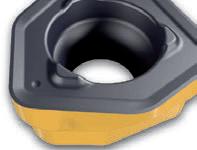
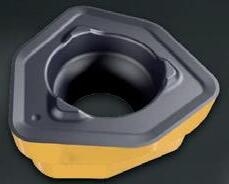
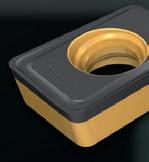
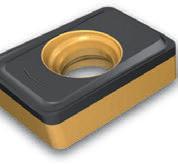
The ultimate all-in-one indexable tool, combining milling and drilling to increase versatility, maximize insert utilization, and improve cost efficiency.
Keeping manufacturing moving
CAPS Australia is helping manufacturers maximise reliability, reduce costs and extend asset life through proactive maintenance and responsive support services.
In manufacturing, unplanned downtime can have consequences that extend well beyond a single piece of equipment. Production delays, missed delivery schedules and rising operating costs all place pressure on businesses already navigating challenging economic conditions. That is why CAPS Australia is encouraging manufacturers to focus on maintaining and optimising the equipment they already have, rather than relying solely on costly replacement programs.
For more than 45 years, CAPS Australia has supplied compressed air, gas generation and power solutions to the Australian industry. The company believes effective maintenance remains one of the most important factors in ensuring operational efficiency, reliability and long-term asset performance.
“Regardless of the environment or operation, the key to asset performance is appropriate maintenance,” CAPS Australia director of operations Paul Goodwin said. “Reliability
and efficiency are directly impacted by the maintenance that you do or don’t do.
“A machine that hasn’t been maintained can suffer from a range of compounding issues – unnecessary wear, loss of output, higher operating temperatures, reduced quality and ultimately, an increased risk of failure.”
With supply chain pressures and longer lead times affecting many industries, maintaining existing assets has become increasingly important.
“The economic pinch that is being felt across the country means now is the time to be focussing on maintenance to ensure your air compressors, power generators and associated infrastructure can deliver the ongoing performance and reliability you need,” Goodwin said.
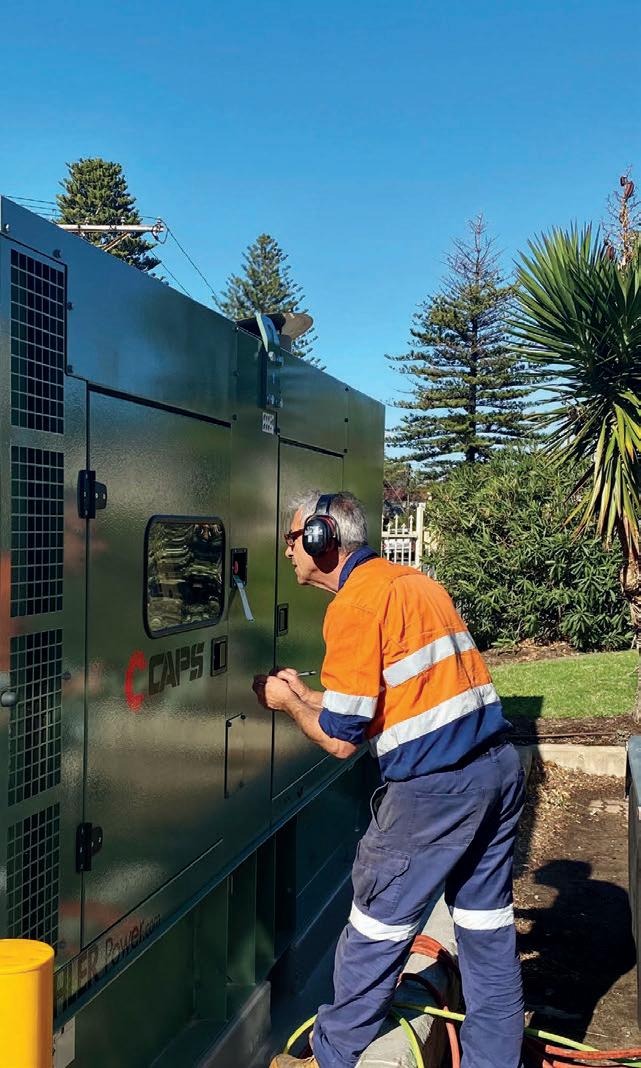
CAPS supports manufacturers through a nationwide network of 10 branches, providing local service, technical expertise, spare parts availability and 24/7 emergency breakdownassistance.
“Technology alone is not enough,” Goodwin said. “Our clients can be confident that our trained technicians are available at any hour to keep plantsoperating.”
The company said one of the most disregarded aspects of maintenance is ensuring equipment is serviced by appropriately-trained personnel using genuine components.
“Having the right people do the job is often overlooked,” Goodwin said. “Our service technicians are factory-trained to assess and maintain equipment – preventing issues, identifying concerns and keeping you operating.
“Using the right parts is also important.
Manufacturers specify particular parts for a reason and many ‘equivalent’ parts just aren’t the same. The mechanical tolerances mean that for lubricant and filter requirements, near enough is not good enough.”
At the centre of the company’s maintenance offering is CAPS Care, a program designed to enhance the value and performance of compressed air assets throughout their operational life.
The program combines scheduled maintenance, diagnostic services, genuine parts supply and ongoing support to help identify potential issues before they develop into costly failures.
“The range of programs offered under CAPS Care looks after your equipment, allowing you to
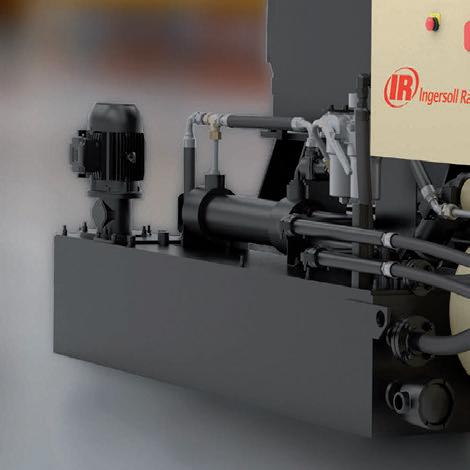
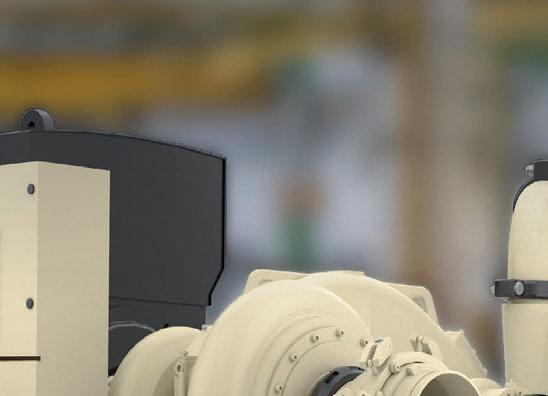
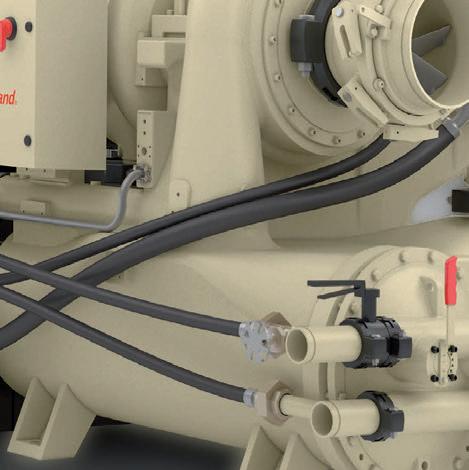
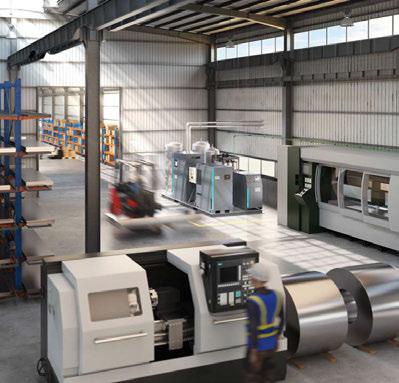
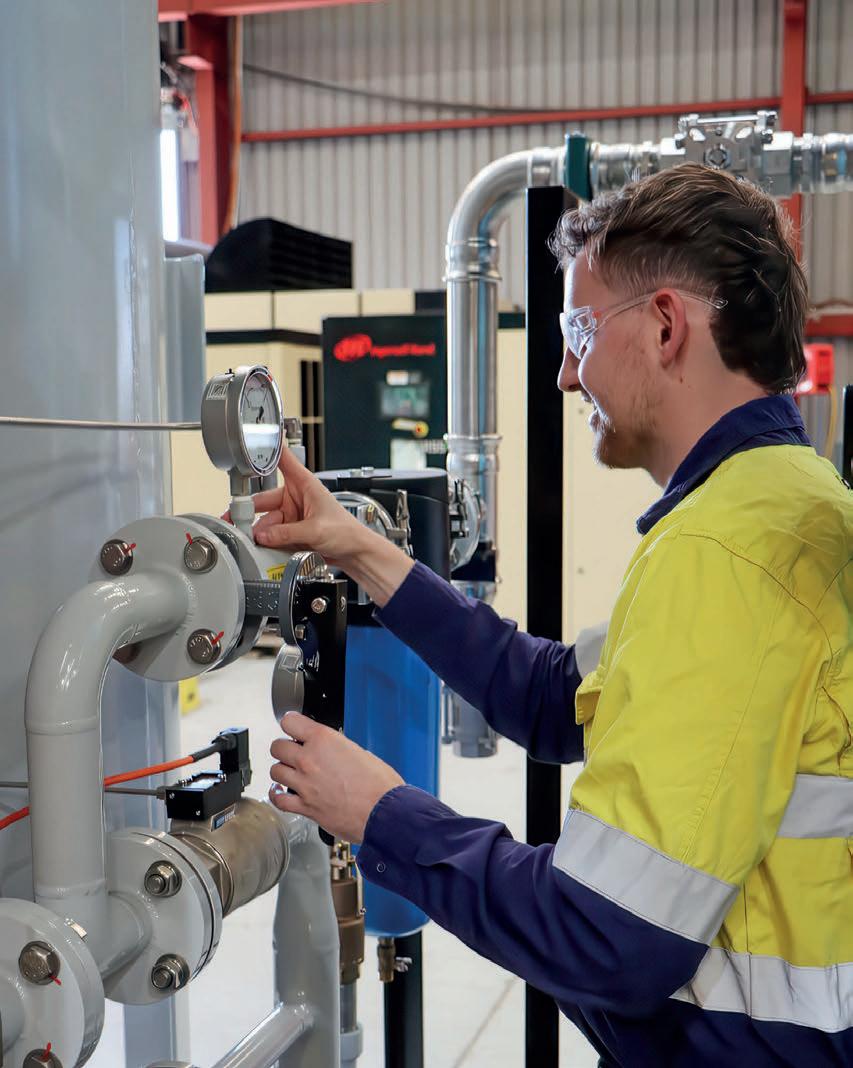
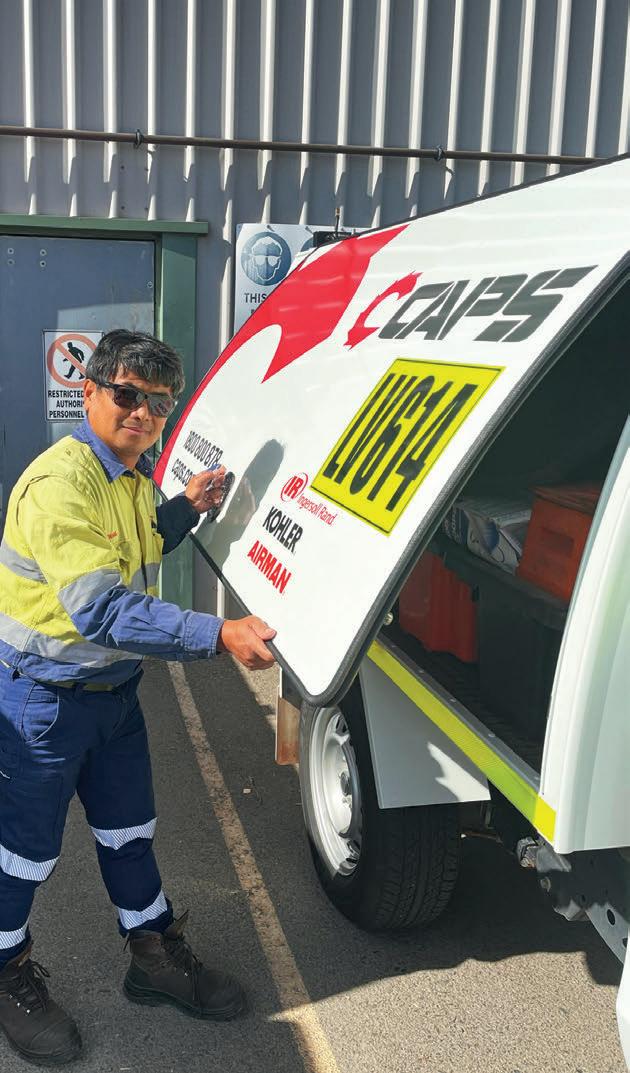
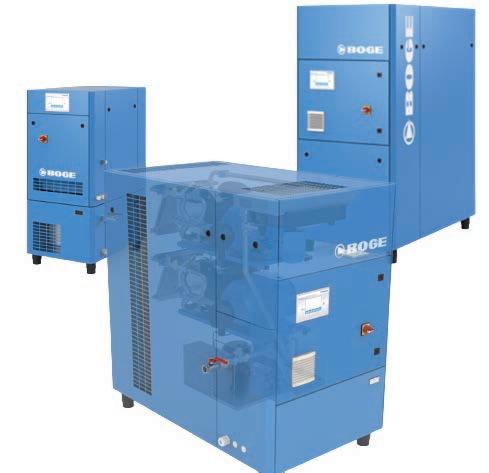
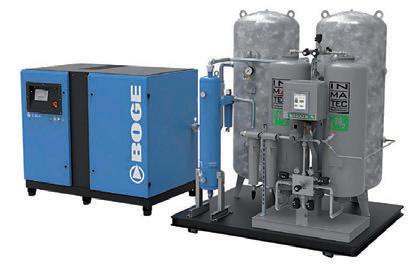
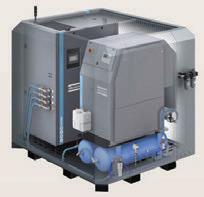
CAPS Australia supplies compressed air, gas generation and power solutions to Australian industries.
Images: CAPS
focus on optimising your operation while we ensure it runs smoothly,” Goodwin said. “It consists of a range of diagnostic and service maintenance programs, each delivering specific features, from extended warranty and scheduled maintenance to providing a consistent supply of parts, as they’re required.”
Manufacturers can select from four CAPS Care options for air compression equipment – Packaged Care, Planned Care, Parts Care and Performance Care – depending on their operational requirements and internal maintenance capabilities.
For power generation assets, CAPS offers Power Care, a dedicated maintenance solution designed to improve reliability and reduce operating costs by ensuring equipment performs at peak efficiency.
“To some they might not seem like it, but air
compressors are pieces of precision equipment,” Goodwin said. “They are the core of countless commercial and industrial operations.
“Maintaining your infrastructure can extend its operational life and dramatically reduce the additional burden of purchasing capital equipment needed to replace gear that wears and fails.”
Back up when needed
Even with robust maintenance programs, unexpected failures can occur. To help manufacturers maintain production continuity, CAPS also offers short and long-term rental solutions for compressors and generators.
Its nationwide fleet provides site-ready equipment for planned shutdowns, seasonal demand increases, special projects or emergency breakdown situations.
With equipment positioned across Australia and supported by local service teams, CAPS can quickly deploy solutions to minimise disruption and keep production linesmoving.
“CAPS has 10 branches across Australia meaning its team of skilled service technicians are generally only a matter of hours away from the majority of our customers,” Goodwin said. “Coupled with a 24/7 rapid response for emergency breakdown repairs, plus a vast inventory of spare parts that are held locally in each branch, CAPS is committed to keeping our customers operating.”
For manufacturers seeking to improve reliability, control costs and maximise the life of critical infrastructure, structured maintenance programs and responsive support can make all the difference.
CAPS has dedicated maintenance solutions to improve reliability and reduce operating costs.
CAPS supports manufacturers through a nationwide network of 10 branches.
CARBON DIOXIDE SAFETY
BOC Australia and LogiCO2 unite to increase gas safety standard
With new Australian gas safety legislation in effect, BOC Australia and LogiCO2 have formalised a partnership to provide businesses with a comprehensive monitoring solution.
BOC Australia has been supplying compressed and bulk gases, chemicals and equipment for nearly a century. Today, as part of Linde, a global industrial gases company operating across more than 80 countries, BOC serves a variety of industries, including healthcare, food and beverage, manufacturing, mining, and energy across Australia and the South Pacific.
BOC operates with a commitment to continuous improvement in safety, health and environmental performance. The company recognises that gases are inherently hazardous if not managed correctly, making rigorous safety management essential. This focus shapes how it designs equipment, trains employees, supports customers, and develops supply solutions. According to Nathan Johns, Food and Leisure marketing manager at BOC, the company does not treat safety as a compliance exercise, but as a core responsibility to employees, customers, and the wider community.
“Our ultimate objective is zero harm to people and communities,” he said.
Why LogiCO2
BOC began working with LogiCO2 after identifying a growing need for fit-for-purpose gas-monitoring solutions, particularly in enclosed and customeroperated environments. LogiCO2 – as a specialist in atmospheric safety monitoring with technical expertise and equipment designed to meet international safety standards – was a natural fit.
The local relationship builds off the work already undertaken by LogiCO2 with Linde globally.
Kristoffer Eklund Cuestas, LogiCO2’s business manager for Asia-Pacific and Oceania, explained why this partnership made sense.
“BOC brings strong local market knowledge and established customer relationships, while LogiCO2 brings a dedicated CO₂ safety monitoring system designed to detect leaks, activate alarms, and help customers create safer workplaces,” he said. “From the start, it was clear that both companies share the same priorities.”
What began as conversations in 2024 quickly progressed in 2025, when the LogiCO2 team visited Australia to meet BOC representatives to finalise the
partnership. The timing was perfect, arriving just before the updated Workplace Exposure Standards for Airborne Contaminants took effect in November 2025 with a 12-month transition period.
Why monitoring matters
CO₂ is roughly 1.6 times denser than air, meaning that when a leak occurs, it sinks and accumulates in low-lying and enclosed areas such as basements and beer cellars. Because it cannot be seen or smelled, someone sent to check on an empty cylinder or investigate a dispensing fault may walk directly into a dangerous concentration without any warning. The effects on the human body are severe: at 4 per cent, CO₂ is classified as an immediate danger to life and health, and at 10 per cent, it can lead to unconsciousness and death.
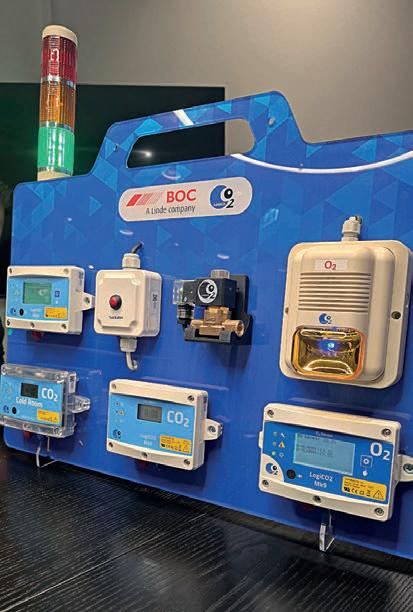
It is precisely this risk that led LogiCO2 to develop its CO₂ safety systems, available in two configurations. The Mk9/Mk90 base set includes a separate central unit for installation outside the monitored area. The Mk90 also offers a stand-alone option, integrating high-intensity alarms directly into
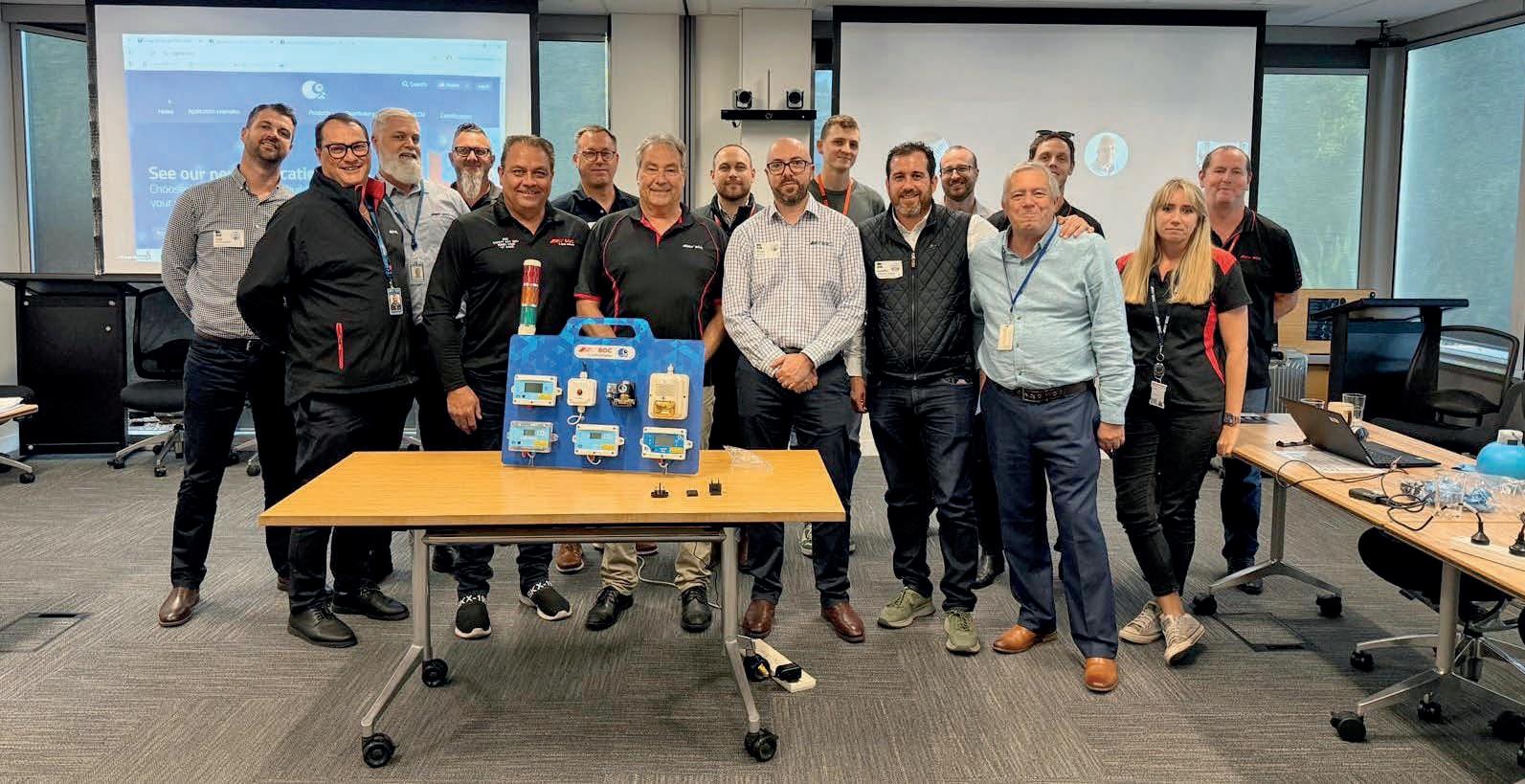
BOC began working with LogiCO2 after identifying a growing need for fit-forpurpose gas-monitoring solutions.
Images:
the sensor unit, or can be used as part of a base set together with a central unit. Both systems measure CO₂ concentration in enclosed environments and trigger alerts across four distinct alarm levels when thresholds arereached.
The value of this monitoring in practice is well documented from BOC’s experience. There have been several cases in which CO₂ monitoring systems provided early warning of leaks, allowing sites to evacuate safely before CO₂ levels became dangerous. In enclosed cellar or dispense areas, alarms have alerted staff to issues that may otherwise have gone unnoticed without a monitoring system in place.
“These systems not only help prevent serious injury or fatalities but also minimise downtime and operational disruption,” said Michael Murray, BOC Australia’s Queensland customer maintenance manager. “However, customers often only fully appreciate their value after seeing them work in real situations.”
Understanding why monitoring is not yet universal requires looking at the regulatory landscape and market awareness. In Australia, CO₂ and oxygen safety is primarily governed through workplace health and safety legislation at the state and territory level, supported by Safe Work Australia. These regulations address hazardous atmospheres, confined spaces, and exposure limits, but are often principles-based rather than prescriptive.
Awareness is generally strong in high-risk industries such as mining, manufacturing, and healthcare. However, in parts of the hospitality industry and small-scale food and beverage
production, awareness can be moreinconsistent.
“Smaller businesses may not always recognise CO₂ and oxygen as hazards until an incident or audit occurs,” said Murray. “This highlights the importance of education and proactive safety management beyond minimum regulatory requirements.”
Removing the barriers
From BOC’s experience, awareness has improved over time, particularly following high-profile incidents and increased regulator attention.
Market penetration of CO₂ monitoring in Australian hospitality is relatively strong. In brewing, especially craft and industrial brewing, uptake is continuing to improve. Winemaking is an area of opportunity, with larger producers generally well-equipped and smaller operators less so.
“The biggest barriers to wider adoption are awareness and understanding of the risks, rather than technology availability,” said Paul Ross, LogiCO2 product manager at BOC. “Cost can be a factor, particularly for small operators, but it is often secondary to a lack of information.”
BOC’s three commercial models are designed to address cost barriers directly, making the technology accessible regardless of business size or budget.
The first is a rental arrangement in which BOC covers the upfront installation and manages all ongoing servicing and maintenance for a monthly fee, providing customers with compliance support throughout the system’s lifecycle, with no (or very low) upfront capital cost. The second is an outright purchase, installed by BOC, with optional ongoing
servicing by BOC. The third is a direct retail purchase, where the customer arranges their own installation.
Shaping what comes next
Australia has some of the strongest workplace health and safety regulations globally. BOC has been deliberate in partnering with LogiCO2 to meet these requirements. It is also active on regulatory committees to help shape and drive safety and compliance in Australia.
Over the next few years, BOC aims to see broader recognition of CO₂ and nitrogen hazards across all industries that use these gases. The goal is for monitoring, training, and risk assessments to become standard practice rather than optional extras. The company said it would like to see the market move towards proactive safety management, supported by clearer guidance and greater adoption of technology.
“If you use CO₂ or nitrogen in your business, safety should not be an afterthought. These gases are essential tools, but they can be dangerous without the right controls in place,” Johns said. “Understanding the risks and installing appropriate monitoring can save lives, protect your people, and safeguard your business. Prevention is always more effective, and far less costly, than responding to an incident.”
For more information about LogiCO2 safety systems, visit www.logico2.com or contact Paul Ross, LogiCO2 product manager, BOC at Paul.Ross@boc.com.
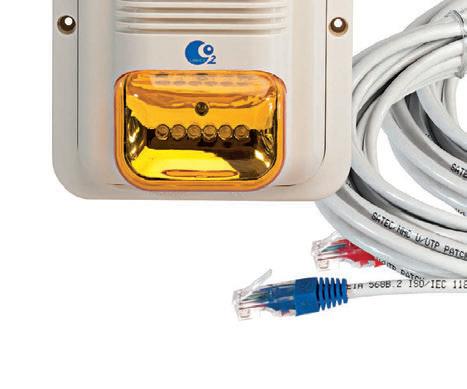
The Mk90 offers a stand-alone option, integrating high-intensity alarms directly into the sensor unit.
The Mk9/Mk90 base set includes a separate central unit for installation outside the monitored area.
NITROGEN GENERATION
Nitrogen: The hidden utility driving manufacturing efficiency
As manufacturers seek greater efficiency, reliability and sustainability, on-site nitrogen generation is transforming the way a critical production processes are managed.
Nitrogen has long been an essential part of modern manufacturing. Often described as the “fifth utility”, alongside water, electricity, gas and compressed air, it supports a broad range of industrial processes, from metal cutting and welding to electronics production, heat treatment and advanced manufacturing applications.
For decades, manufacturers have sourced nitrogen through cylinders, gas racks or bulk liquid nitrogen tanks. While these traditional supply methods have reliably met production needs, they also bring
ongoing costs and operational challenges. Transport expenses, delivery scheduling, administrative requirements and the handling of stored gas all add complexity to manufacturing operations.
As businesses place greater emphasis on productivity, sustainability and operational control, many are rethinking how they source nitrogen. Increasingly, manufacturers are turning to on-site nitrogen generation as a way to improve efficiency while reducing costs and reliance on external suppliers.
Generating nitrogen on-site can reduce operating expenses by eliminating recurring gas supply costs. Unlike delivered gas arrangements, on-site systems remove the need for long-term supply contracts, helping businesses achieve more predictable and stable operating costs. Manufacturers can also reduce gas losses, improving overall production efficiency and making better use of resources.
The operational benefits extend beyond cost savings. Without the need for regular deliveries and refill management, administrative workloads
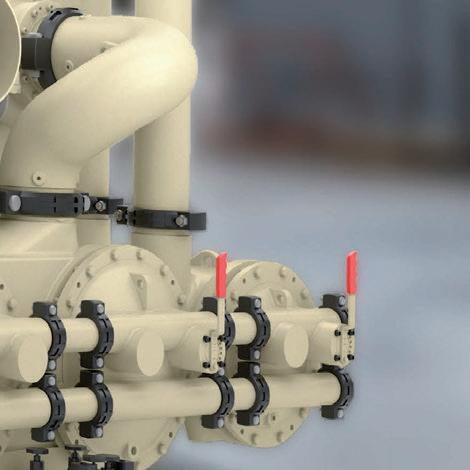
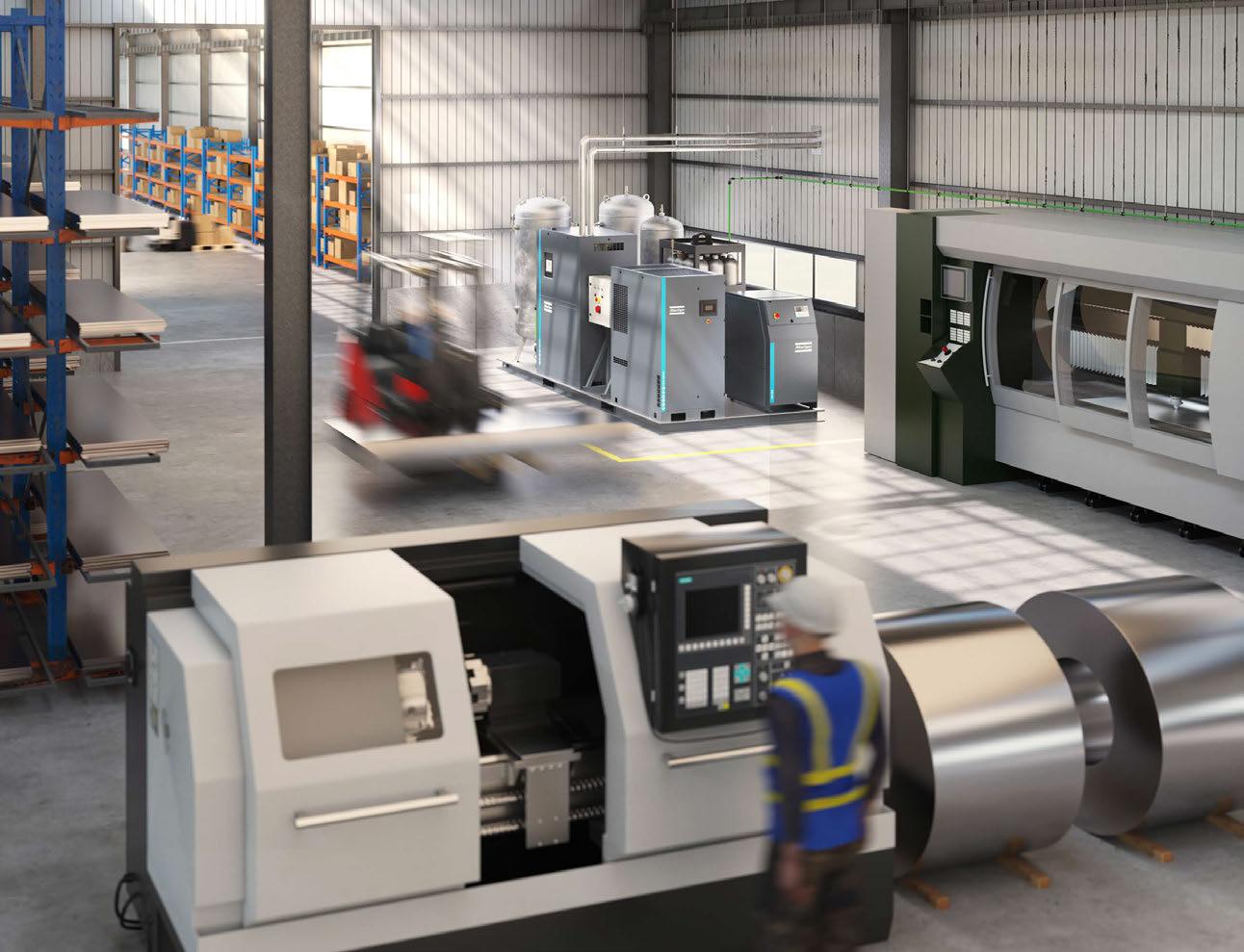
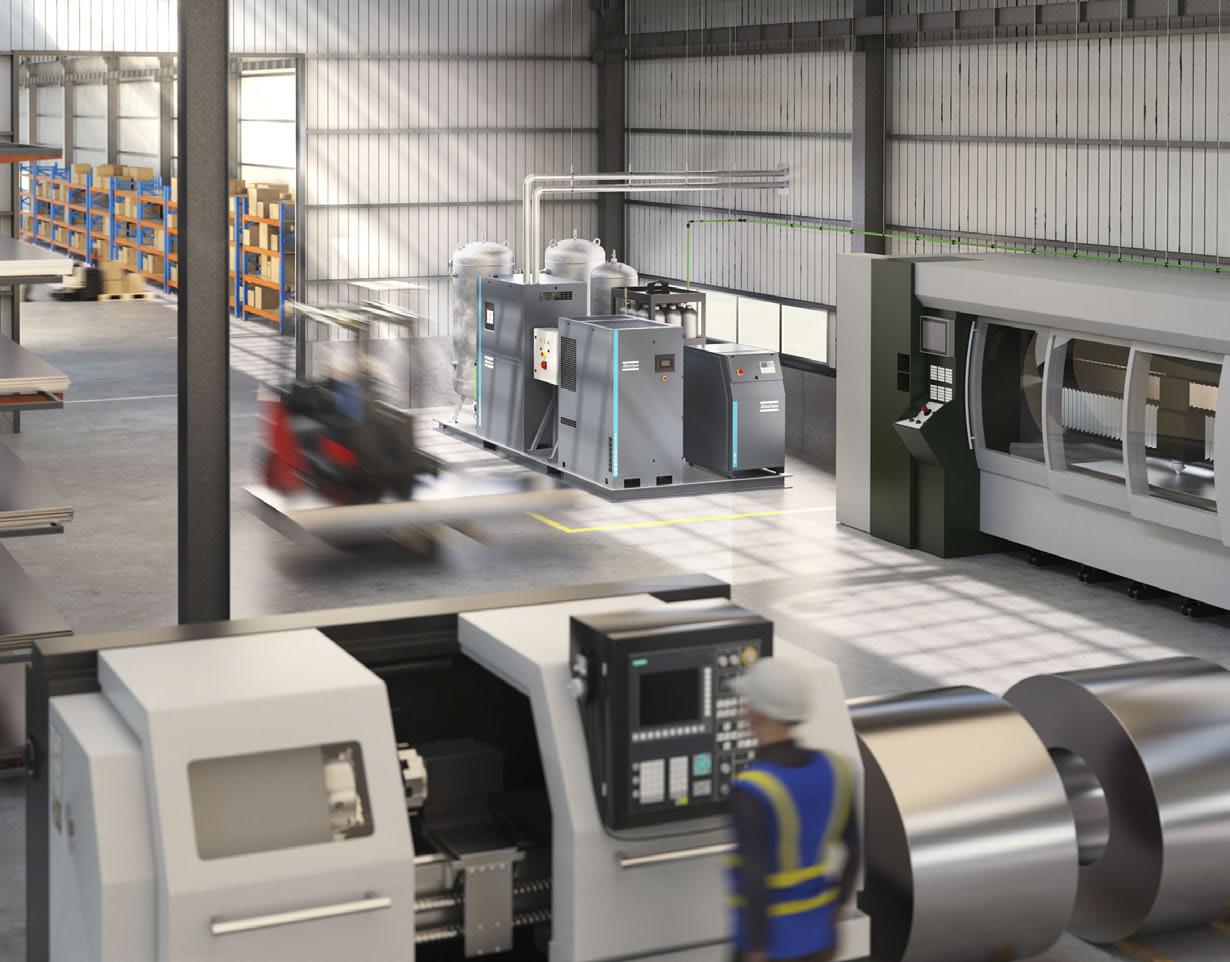
Atlas Copco solutions can help manufacturers gain greater control over supply, improve reliability and achieve meaningful cost savings.
are reduced and logistics become simpler. On-site generation can also improve workplace safety by minimising the storage and handling of large volumes of gas. From an environmental perspective, removing transport and storage requirements helps lower the overall carbon footprint associated with nitrogen supply.
Choosing the right technology
The effectiveness of an on-site nitrogen generation system depends largely on selecting the right technology for the application. Two primary technologies are used to generate nitrogen from compressed air: Pressure Swing Adsorption (PSA) and membrane technology.
PSA systems are typically chosen for applications requiring very high nitrogen purity. Capable of achieving purity levels of up to 99.999 %, PSA technology offers strong efficiency when operating at high purity specifications. This makes it wellsuited to demanding manufacturing processes such as laser cutting, electronics production and other precision applications where gas quality is critical
Membrane technology, by contrast, is valued for its simplicity and low maintenance requirements. These systems can deliver nitrogen purity levels of up to 99.5% and feature lower overall system complexity. Membrane generators perform well in
higher-temperature environments and offer fast start-up times, enabling stable operation without the need for additional storage capacity. Their straightforward design makes them an attractive option for manufacturers seeking a robust, easyto-operate solution.
Both technologies offer distinct advantages. PSA systems provide ultra-high purity and excellent efficiency for precision manufacturing environments, while membrane systems deliver simpler operation, lower maintenance demands and faster responsetimes.
Supporting a wide range of industries
Nitrogen’s versatility means it plays a role in an extensive range of manufacturing processes. It is commonly used in heat treatment and controlled atmosphere applications, where precise environmental conditions are required to achieve desired material properties.
In metal fabrication, nitrogen is widely used in laser cutting to produce clean, oxide-free finishes and in welding and brazing applications to prevent oxidation. The gas is also critical in electronics and semiconductor manufacturing, where contamination control is essential.
Other applications include injection moulding and extrusion processes, battery manufacturing and recycling operations, and component assembly
and testing. As manufacturing technologies continue to evolve, nitrogen remains an enabler of quality, consistency and production efficiency.
A flexible approach to supply
Atlas Copco nitrogen generators are designed to integrate seamlessly with existing compressed air systems, helping simplify installation and implementation. Systems can be configured to provide a continuous on-demand supply or combined with storage solutions to accommodate periods of peak demand.
This flexibility allows manufacturers to tailor nitrogen generation capacity to their specific operational requirements and scale systems as production needs change overtime.
As more businesses view nitrogen as a standard utility rather than a delivered gas or consumable, on-site generation is becoming an increasingly attractive option. By generating nitrogen on-site with Atlas Copco solutions, manufacturers can gain more control over supply, improve reliability and achieve meaningful cost savings while maintaining consistent product quality.
To enquire about nitrogen generators by Atlas Copco Compressor, contact 1800 023 469, compressorsau@au.atlascopco.com or visit www.atlascopco.com
www.airshow.com.au
Avalon Australian International Airshow Geelong, Victoria, Australia | 23-28 February 2027
Asia-Pacific’s premier aerospace and defence event. Exhibition and sponsorship opportunities open now.
For Australian manufacturers looking to better understand the Defence landscape, opportunities can often seem difficult to navigate. Acquisition programs, capability priorities, procurement pathways and supply chain requirements are evolving, creating both challenges and opportunities for businesses seeking to enter or expand within the sector.
Land Forces 2026 aims to bridge that gap.
Returning as Australia’s premier international land defence exposition and forum, the event will bring together Defence personnel, government representatives, prime contractors, SMEs, technology providers and manufacturers from across Australia and overseas. More than a traditional trade exhibition, Land Forces combines a large-scale exhibition with a conference and presentations program designed to provide attendees with direct access to Defence stakeholders, industry leaders and policy makers.
With visitor registration now open, the event presents an opportunity for manufacturers to gain valuable insight into future Defence requirements while building relationships that could support longterm participation in the supplychain.
More than an exhibition
One of the defining features of Land Forces 2026 is its integrated approach to industry engagement.
Visitor registration provides free access across all three days of the event, including entry to the exhibition floor and a range of conference and presentation sessions that are included as part of standard registration.
Trade Visitor registration is available to individuals involved in, or affiliated with, defence and related sectors, while Defence Visitor registration is available to personnel holding a valid Australian or international defence identification credential.
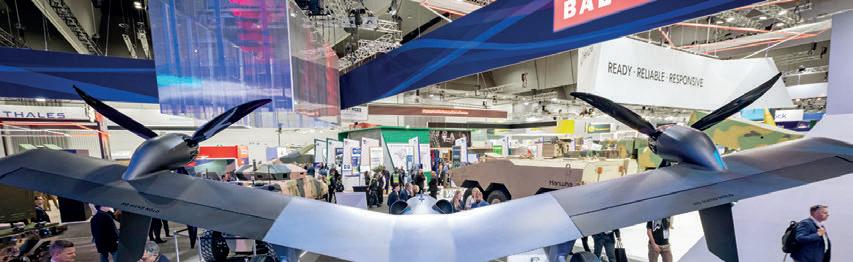
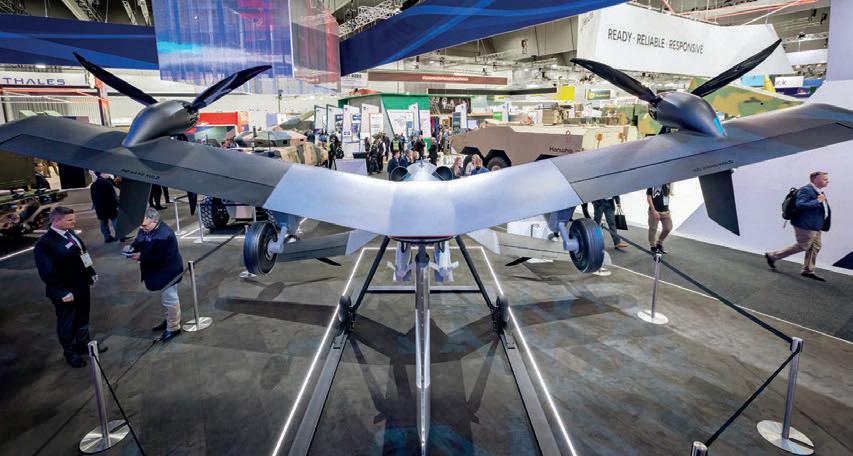
The event’s exhibition floor will feature Australian and international defence companies, showcasing technologies, systems, products and services supporting modern military capability. Alongside the exhibition, attendees will have access to a program of presentations and discussions covering Defence priorities, capability development, procurement programs and emerging technologies.
Importantly, most sessions are complimentary and included within standard visitor registration.
Understanding Defence priorities
For manufacturers seeking to align their capabilities with Defence requirements, the conference program offers a valuable source of information. Sessions will be convened by key organisations across the Defence ecosystem, including the Australian Army, Department of Defence, Austrade, US Commercial Service, Guided Weapons Explosive Ordnance
Enterprise (GWEO), Capability Acquisition and Sustainment Group (CASG) and the Advanced Strategic Capabilities Accelerator (ASCA).
Together, these organisations play a critical role in shaping Australia’s defence capability and industry participation strategies.
The program will provide updates on Defence priorities, acquisition programs and future spending opportunities, while also delivering practical information on supply chain participation and export pathways.
For Australian manufacturers, particularly SMEs considering entry into the defence sector, such insights can be invaluable. Understanding where Defence investment is being directed and how supply chains are structured can help businesses identify opportunities, align their capabilities and make informed investment decisions.
The sessions will also provide attendees with the opportunity to hear directly from Defence officials, military leaders and government agencies responsible for capability acquisition and industry engagement.
A spotlight on Australian Army
As a key partner of Land Forces 2026, the Australian Army will play a central role throughout the event. The Army’s program has been one of the major drawcards for attendees and is
expected to remain a focal point in 2026.
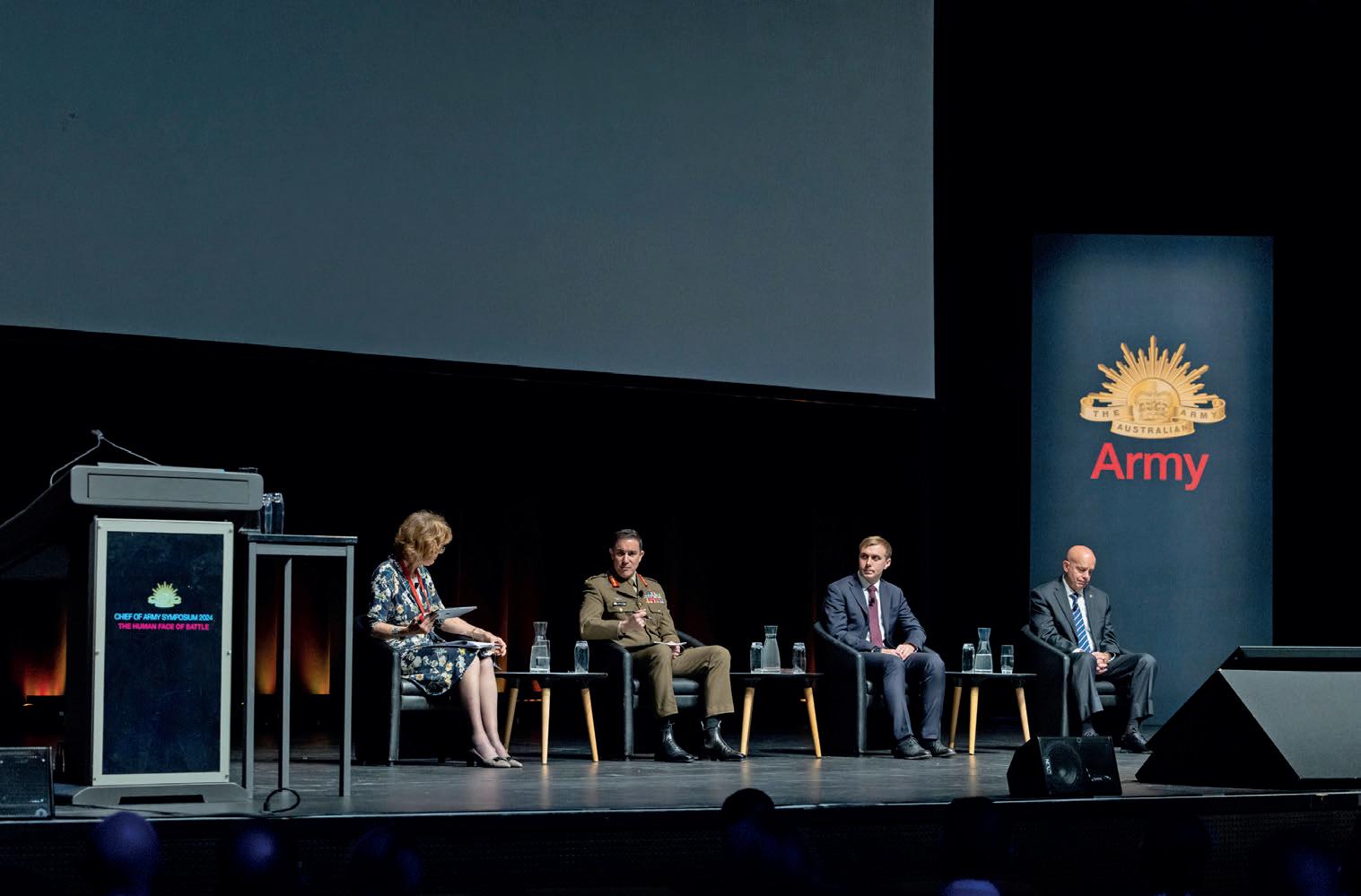
Among the headline sessions will be the Chief of Army Symposium, Army Innovation Day and the Junior Leader Forum. These sessions are designed to provide industry with a deeper understanding of Army’s future requirements, operational priorities and innovation challenges.
For manufacturers and technology providers, this offers an opportunity to gain insight directly from end users and capability planners. Understanding how operational requirements are evolving can help businesses tailor solutions to meet future needs and identify areas where innovation may support capability outcomes.
The Army program also creates opportunities for meaningful dialogue between Defence and industry, helping organisations better understand the practical challenges faced by military personnel and where industry expertise may contribute to future solutions.
A major moment for industry engagement
Land Forces 2026 will also coincide with an important leadership transition within the Australian Army. Lieutenant General Susan Coyle is scheduled to assume the role of Chief of Army from July 2026, making Land Forces one of the first opportunities for industry to hear directly from the Army’s new leader.
As a result, the Chief of Army Symposium – open to all attendees – is expected to attract interest from across the defence sector. For manufacturers and suppliers, the session may provide valuable insight into future strategic priorities, capability directions and the Army’s vision for industry engagement under its new leadership.
Given the increasing emphasis on sovereign capability, resilience and innovation within Australia’s defence industry strategy, industry stakeholders will be keen to understand how these priorities may evolve in the years ahead.
Networking where decisions are made
While conference sessions provide insight, the exhibition floor remains a valuable aspect of the Land Forces experience. Australian Army representatives will maintain a strong presence throughout the exhibition, engaging directly with exhibitors and visitors across the three-day event.
This creates opportunities for informal conversations, relationship building and direct engagement with Defence personnel, industry leaders and potential partners.
For SMEs and manufacturers seeking to establish themselves within Defence supply chains, these interactions can be just as important as formal presentations. The ability to connect with decisionmakers, understand capability requirements and explore collaboration opportunities often provides a foundation for future business development.
The exhibition environment also allows visitors to see emerging technologies and solutions firsthand, providing a clearer understanding of where capability development is heading and how Australian industry can contribute.
Accessing the full program
While most presentations and sessions are included within standard visitor registration, Land Forces 2026 will feature one premium conference component.
The AAUS Autonomy in the Joint Military Battlespace conference attracts an additional registration fee and can be added during the registration process.
Attendance is optional, with all other complimentary sessions remaining accessible through standard visitor registration where indicated.
For attendees interested in autonomous systems and emerging defence technologies, the conference provides an additional opportunity to explore one of the fastest-growing capability areas within modern defence operations.
Register now
As Defence investment continues to drive opportunities across manufacturing, technology and advanced industry sectors, Land Forces 2026 provides a platform for businesses seeking to understand where those opportunities exist and how to access them.
Visitor registration for Land Forces 2026 is now open and free for eligible trade and defence attendees. Registration includes access to three days of exhibitions, presentations, networking opportunities and direct engagement with Defence, Australian Army and industry leaders.
Visitor registration for Land Forces 2026 is now open and free for eligible trade and defence attendees.
Test Machines Australia keeps pace with changing industry needs
New service offerings, expanded calibration capabilities and upgraded testing technologies are helping Test Machines Australia strengthen support for manufacturers.
As manufacturing technologies evolve and quality requirements become more stringent, materials testing providers are being challenged to deliver more than just equipment. For Test Machines Australia (TMA), the focus has increasingly shifted towards long-term customer support, equipment optimisation and tailored testing solutions that help businesses maintain productivity and compliance.
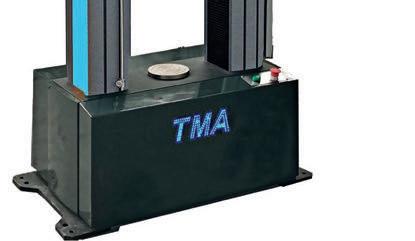
As an Australian supplier and service provider of materials testing and quality-control equipment, TMA supports manufacturers, laboratories, universities and research organisations with testing technologies used to verify the performance and durability of materials. Its portfolio spans universal testing machines, hardness and impact testing systems, metallurgical equipment, software solutions and ongoing calibration and servicing services.
Recent developments at the company reflect a broader strategy to strengthen customer relationships while responding to changing industry demands.
Expanding support beyond equipment supply
One of the most notable additions to TMA’s offering has been the launch of TMACare, a support and maintenance service designed to provide customers with ongoing assistance throughout the life of their equipment.
The program aims to minimise downtime through proactive servicing, technical support and rapid response when issues arise. According to the company, the service has been well received by customers seeking confidence in the reliability and performance of their testing systems.
Building on the success of TMACare, TMA has also expanded its repair and upgrade capabilities to include equipment from other manufacturers. This move allows businesses operating mixed fleets of testing equipment to access TMA’s service expertise without needing to replace existing assets.
The approach is helping establish stronger customer relationships by demonstrating service capabilities in practice rather than relying solely on product specifications or sales commitments.
Addressing overlooked calibration needs
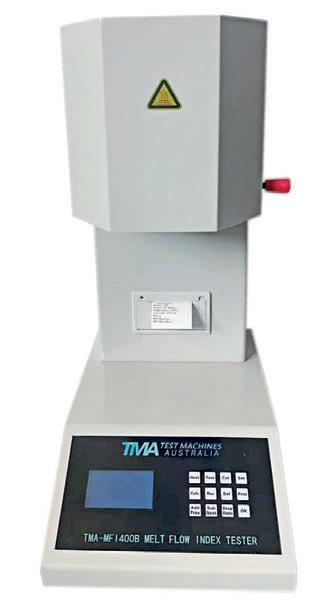
Another area of growth for the company is calibration services, particularly for melt flow index (MFI) testing equipment.
As plastics manufacturers face quality and compliance requirements, accurate MFI testing remains critical for assessing material flow characteristics and ensuring product consistency. However, TMA has identified that many of these systems have gone years without proper servicing orcalibration.
As a result, the company has expanded its calibration offering to include MFI equipment, helping customers identify performance issues that may have developed gradually over time. In many cases, previously undetected problems only become apparent once equipment is thoroughly inspected and recalibrated.
The service reflects a growing awareness across industry of the importance of maintaining
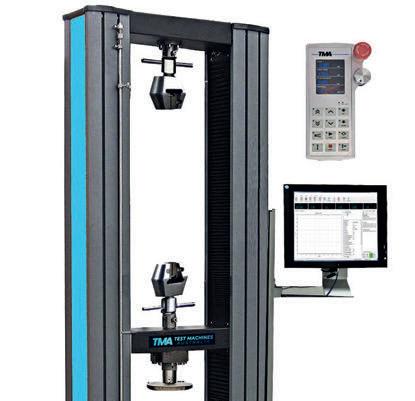
TMA supports manufacturers, laboratories, universities and research organisations with testing technologies.
testing equipment to ensure reliable data and standards compliance.
Investing in user-focused technology
Alongside service expansion, TMA continues to invest in product development and usability improvements. Following the introduction of colour LCD hand controllers and the TMATest software platform last year, the company is now launching a new touchscreen computer interface for its universal testing machines.
The system integrates directly onto the testing frame, reducing the overall footprint of the machine while simplifying operation through touchscreen functionality. By reducing reliance on traditional mouse-and-keyboard controls, the design aims to improve usability and efficiency for operators conducting routine testing procedures.
Customisation as a competitive advantage
A key differentiator for TMA remains its ability to design and manufacture equipment locally. Because the company develops its machines in-house, it can modify designs and configurations to suit specific customer requirements rather than offering only standard catalogue products.
This flexibility enables manufacturers to commission testing systems tailored to their applications and material types. TMA can also test customer samples during the development process, providing proof that a proposed solution will perform as intended before installation.
For manufacturers seeking certainty in a competitive environment, that ability to validate performance upfront offers a practical advantage. Combined with the company’s growing service and support capabilities, it demonstrates how TMA continues to evolve alongside the industries it serves.
Melt
“Made in Australia” starts with automation: Insights from AMW 2026
As manufacturers push to bring more production onshore, automation is emerging as the critical enabler of a “Made in Australia” future.
“Made in Australia” is firmly back in focus.
Across the manufacturing sector, there is renewed momentum around building local capability, strengthening supply chains, and producing more onshore. Australian Manufacturing Week 2026 in Brisbane reinforced that message clearly. The appetite is there, the conversations are happening, and manufacturers are actively exploring how to make it work in practice.
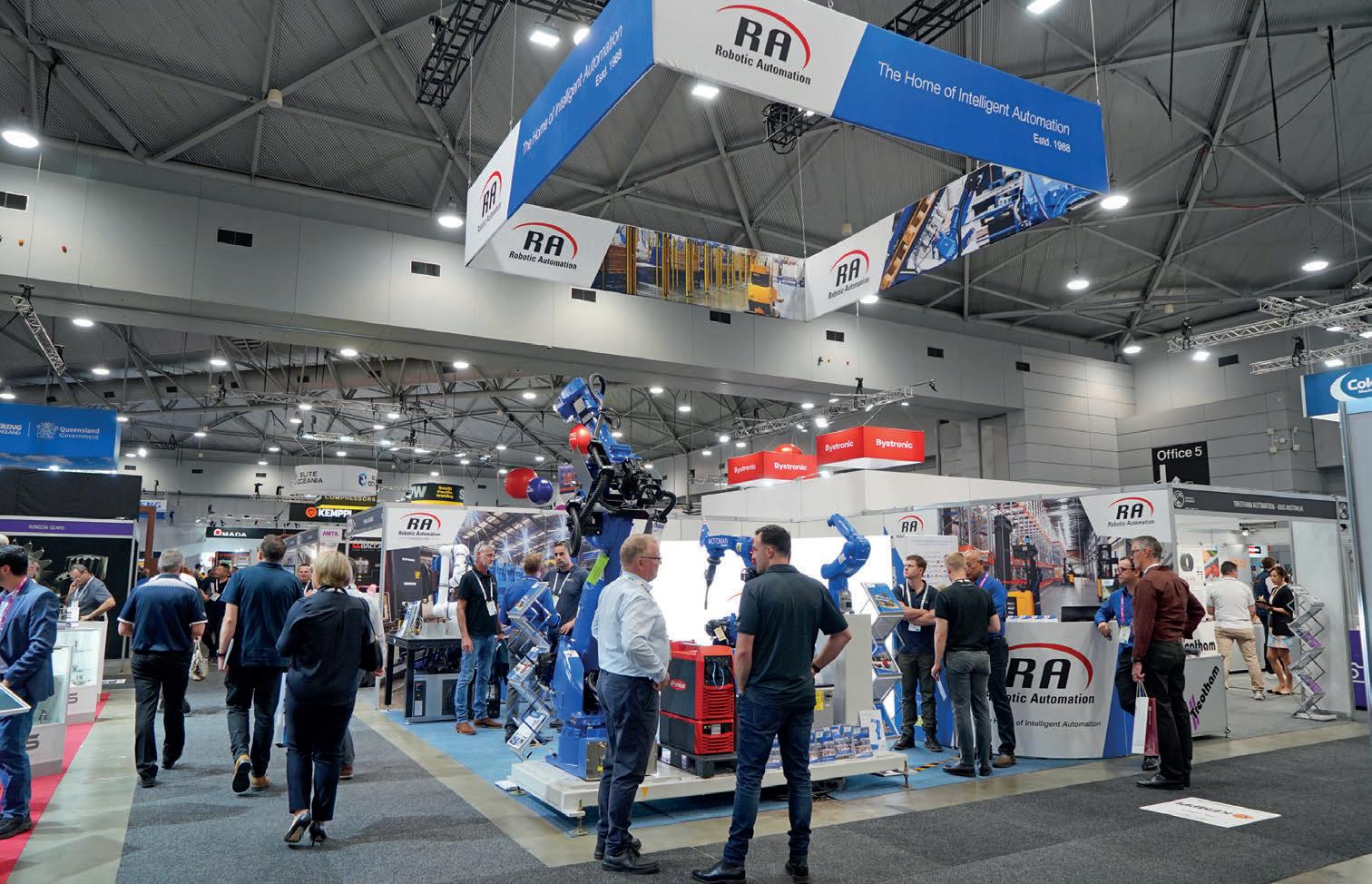
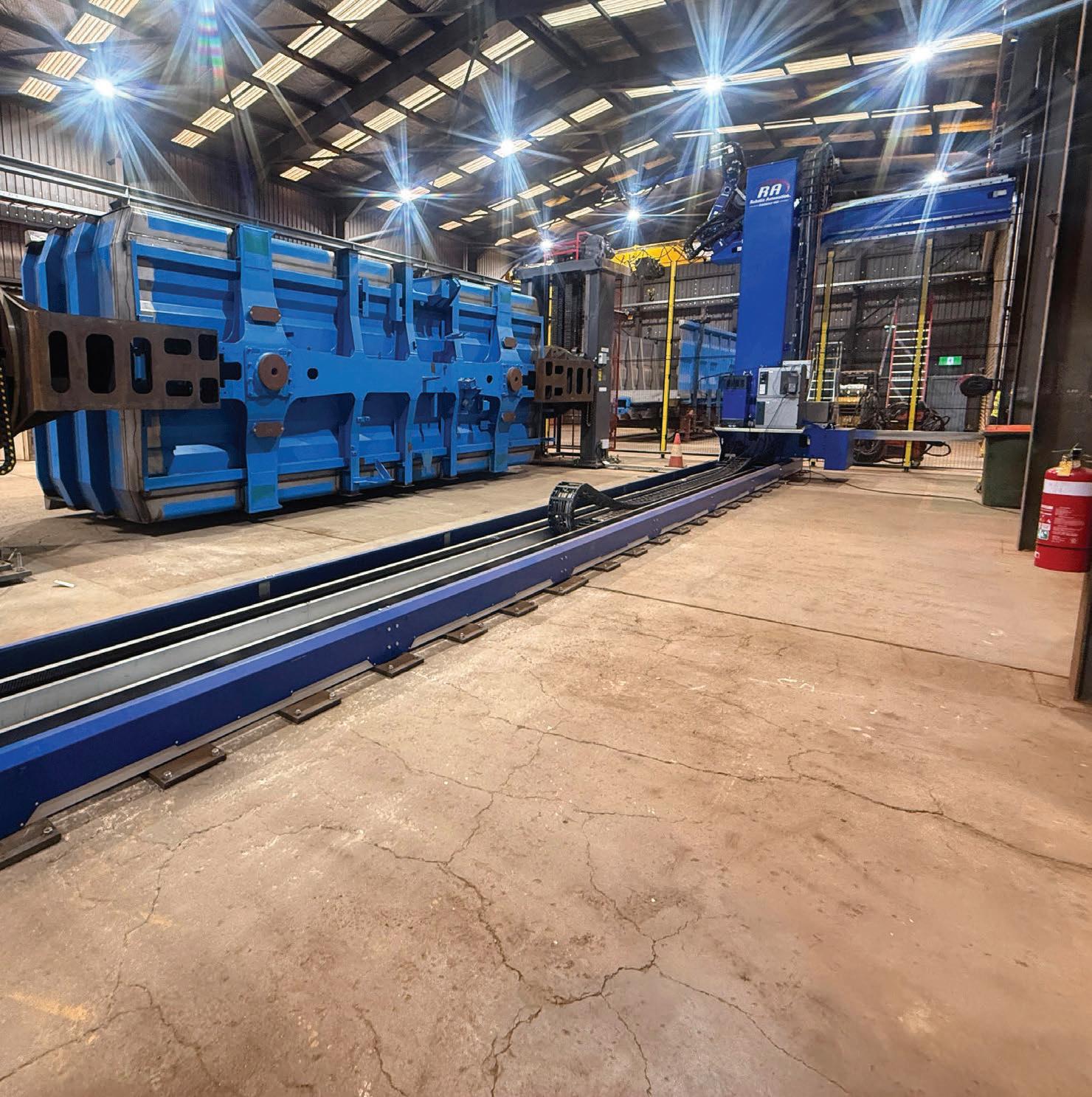
For Robotic Automation™, the show was a strong success. We met with manufacturers across a range of industries, all looking at how automation could support their operations. Discussions were grounded and practical, centred on applications, pricing, and how systems could be integrated into existing facilities.
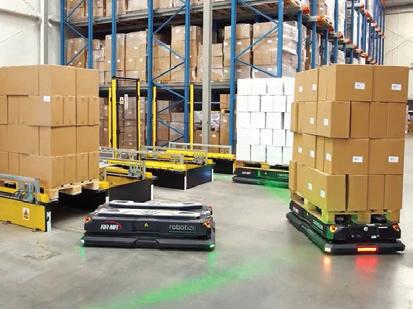
Robotic welding solutions were a major point of interest. This is not surprising, welding remains a critical process and often a constraint due to labour availability and consistency challenges. At the same time, Robotic Automations’ mobile robot range attracted attention, with strong interest in how AGVs and AMRs can streamline internal logistics and warehouse operations.
But the most important takeaway from AMW was not about any one technology – it was about what “Made in Australia” requires to succeed today.
“Made in Australia” needs a different model
Bringing manufacturing back onshore is not as simple as relocating production. Australia
operates in a high-cost environment, with labour, energy, and compliance all contributing to higher operating expenses. Competing globally requires a different approach.
The focus must shift from competing on lower labour costs to competing on capability. Australian manufacturers cannot rely on cost advantages, instead they must build operations that are efficient, consistent, and flexible enough to compete on quality and performance.
Automation is central to this shift.
It enables manufacturers to produce locally with greater efficiency, reduce reliance on labour-constrained processes, and deliver the level of quality expected in both domestic and export markets.
In short, “Made in Australia” is only viable when it is also highly automated.
The labour reality behind local manufacturing
One of the clearest challenges facing Australian manufacturing is labour availability.
Across the industry, manufacturers are reporting difficulty filling roles, particularly in repetitive and physically demanding positions. In many cases, production capacity is now limited not by demand, but by workforceconstraints.
This creates a direct barrier to expanding local manufacturing capability.
Automation provides a practical solution. Not by replacing people, but by stabilising operations and reducing dependency on roles that are hardest to fill.
How automation supports “Made in Australia”
• Reduces reliance on labour-constrained roles.
• Enables consistent, repeatable production atscale.
• Improves safety by removing manual, repetitive tasks.
• Allows skilled workers to focus on higher-value activities.
Beyond the core process
A key insight from AMW 2026 was how manufacturers are approaching automation.
Many conversations focused on core processes such as welding or machining. These are important starting points, but they are only part of the picture.
The opportunity to strengthen “Made in Australia” manufacturing often lies in the surrounding processes.
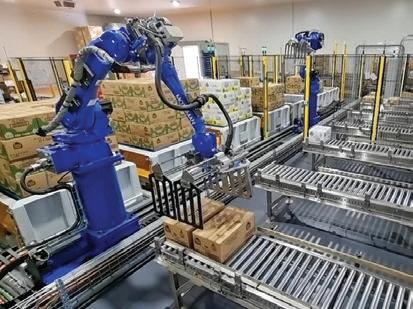
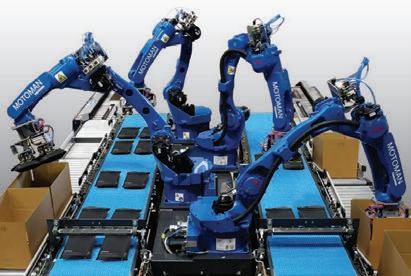
Material handling, machine tending, packing, palletising, and warehouse movement are frequently manual, labour-intensive, and inconsistent. These areas can limit the effectiveness of even the most advanced production equipment.
High-impact areas supporting local manufacturing
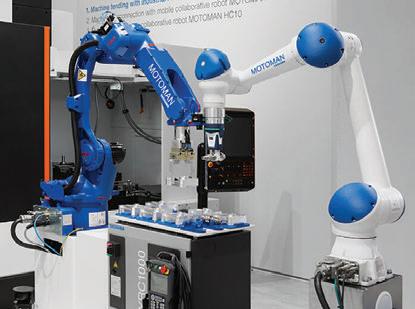
• Machine tending, feeding and unloading production equipment.
• Packing products ready for distribution.
• Palletising to remove end-of-line bottlenecks.
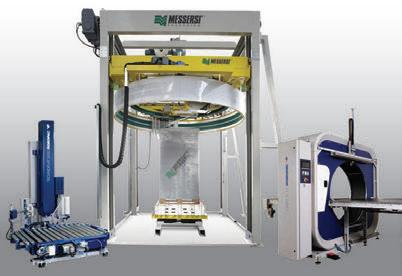
• Automatic stretch wrapping for consistent load security.
• Warehouse movement and racking using AGVs and AMRs
Building capability through connected systems
If “Made in Australia” is to succeed, factories must operate as connected systems.
A robotic welding cell can deliver strong gains in quality and throughput. But if components are not fed into that process efficiently, or finished goods are not moved out smoothly, overall performance is stillconstrained.
Automation needs to extend beyond the core process to create flow across the entire operation. By connecting production, handling, and logistics through automation, manufacturers can unlock higher productivity, improve reliability, and make better use of available resources.
This is where real competitive advantage is built.
From local production to global competitiveness
“Made in Australia” should not be seen as a fallback option. It is an opportunity to build a more advanced, more capable manufacturing sector.
Automation allows Australian manufacturers to:
• Compete on quality rather than cost.
• Respond quickly to changing demand.
• Produce complex, high-value productsefficiently.
• Reduce exposure to global supply chain disruptions.
These are the characteristics of a globally competitive manufacturing environment.
AMW 2026 highlighted the strong interest in automation across Australian manufacturing. More importantly, it reinforced how closely that interest is tied to the future of “Made in Australia.”
Local manufacturing is not just about where products are made. It is about how they are made, and how efficiently and consistently they can be produced.
Automation is not separate from this conversation. It is at the centre of it. Because in today’s environment, “Made in Australia” only works when it is enabled by the right technology, applied across the entire operation, and designed to deliver real, measurable performance.
That is how Australian manufacturing becomes not just local, but competitive.
Gemco Rail Car in Pilbara.
Robotic Automations’ car welding system in use on a Gemco Rail Car.
Avalon 2027: Putting Australian capability in front of decision-makers
Avalon 2027 will provide Australian manufacturers with access to defence, aerospace and advanced technology decision-makers.
As Australia continues to strengthen sovereign industrial capability and invest in advanced technologies, opportunities for manufacturers to connect with customers, partners and decision-makers have never been moreimportant.
From 23-28 February 2027, the Avalon Australian International Airshow will bring together industry, government and defence leaders from across Australia and around the world, creating a platform where business relationships are built, partnerships are formed and future capability takes shape.
Expected to host more than 900 exhibiting organisations and tens of thousands of trade visitors, the event is more than an airshow. It is Australia’s largest aerospace, defence and advanced technology exposition, providing manufacturers with direct access to the organisations driving investment and procurement across some of the nation’s most strategically important sectors.
Manufacturing at the centre of sovereign capability
For Australian manufacturers looking to grow their presence in aerospace, defence and adjacent high-value industries, Avalon presents three compelling opportunities.
Australian manufacturing is playing an increasingly important role in delivering the technologies, systems and industrial capacity that underpin national security and economic growth.
Across aerospace and defence, there is growing emphasis on sovereign capability, resilient supply chains and trusted industry partners. As governments and contractors seek to strengthen domestic industrial capacity, Australian manufacturers are finding themselves presented with new opportunities to contribute to complex programs and long-term capability development.
Avalon provides a platform to demonstrate those capabilities in front of an audience actively seeking solutions and Australian expertise.
Whether supplying specialised components, advanced technologies, engineering services or integrated solutions, exhibitors can position themselves within a broader ecosystem focused on capability delivery. The event showcases not only products and services, but the skills and industrial capacity that support Australia’s future competitiveness.
For many organisations, participation is as much about demonstrating capability and credibility as it is about generating immediate sales opportunities.
Direct access to decision-makers
Few events in Australia bring together the breadth of stakeholders represented at Avalon.
The exposition attracts senior representatives from government, defence, industry and academia, alongside prime contractors, program managers, procurement specialists and international delegations. This concentration of influence creates a unique environment for meaningful business engagement.
For manufacturers, the value lies in being able to engage directly with the organisations responsible for shaping future capability requirements and investment priorities.
Conversations that might otherwise take months to arrange can occur over the course of a single event. Exhibitors have opportunities to build relationships, explore supply chain partnerships, gain insights into future requirements and position themselves for emerging programs.
As Australia’s defence and aerospace sectors continue to evolve, early engagement with key stakeholders is becoming increasingly important. Avalon provides a venue where those conversations can take place face-to-face and in a targeted business environment.
The event’s industry program further supports
The event will be held at Avalon Airport, Geelong, Victoria from 23-28 February 2027.
these opportunities, offering insights into strategic priorities, technology trends and the challenges shaping future capability development.
A global platform for Australian Industry
While Avalon is Australia’s premier aerospace and defence event, its reach extends beyond the domestic market. The event attracts participation from allied nations, international delegations, global industry leaders and organisations seeking to establish or expand partnerships throughout the Indo-Pacific region.
For Australian manufacturers, this creates opportunities to showcase capability on an international stage without leaving home.
Export growth, collaboration and supply chain integration are increasingly important priorities for many businesses. Avalon provides an environment where manufacturers can engage with potential international customers and partners while demonstrating the quality, innovation and reliability of Australianindustry.
The event also reflects the growing convergence of aerospace, defence and advanced technology sectors. Organisations that may once have operated in separate markets are increasingly working together to solve common challenges, creating new opportunities for collaboration and diversification.
For manufacturers seeking to expand into new sectors or strengthen their position within existing markets, Avalon offers access to a broad and influential audience united by a common focus on innovation and capability.
Elevating your presence through sponsorship
For organisations looking to maximise their impact, Avalon 2027 offers a range of exhibition and sponsorship opportunities designed to increase visibility and strengthen marketpositioning.
Sponsorship provides exposure to a targeted audience of industry leaders, government representatives, defence personnel, international
A Commercial & Industrial Builder You Can Trust
From tilt panel warehouses to large-scale industrial developments, Chappell Building Systems has built its reputation on precise and reliable delivery.
visitors and media. It enables organisations to align their brand with one of the Southern Hemisphere’s most significant aerospace and defence events while creating additional opportunities for engagement before, during and after the exposition.
Combined with exhibition participation, sponsorship can help organisations enhance brand recognition, demonstrate leadership and reinforce their commitment to Australia’s industrial future.
The Avalon Australian International Airshow is presented with the Royal Australian Air Force and the Victorian State Government. It will be
Chappell Building Systems delivers high-performance industrial and commercial facilities engineered for durability, efficiency and long term functionality across Australia’s Eastern Seaboard and the Northern Territory. Contact us to assist you with the design and construction or construction only of your next project. (02) 4959 3000 enquiries@chappellbuild.com.au chappellbuild.com.au
INDUSTRIAL AIR SOLUTIONS
BOGE: Powering the future of industry through intelligent compressed air & gas solutions
With intelligent controls, digital monitoring and energy-efficient compressed air and gas solutions, BOGE is helping manufacturers improve reliability and reduce costs.
Rising energy costs, increasing demands for process reliability, and growing pressure to improve efficiency are reshaping industrial operations worldwide. Today’s manufacturers require more than equipment that simply performs a function; they need intelligent, connected, and cost-effective systems that support productivity and long-term competitiveness.
This is where BOGE, headquartered in Germany, has established itself as a trusted industrial partner. With more than 118 years of experience in compressed air and gas solutions, pneumatic technologies, the company combines engineering expertise, digital innovation, and customer-focused services to help businesses optimise operations and reduce energy consumption.
Delivering end-to-end industrial solutions
Compressed air remains one of the most important energy sources in industry, yet it is often one of the largest opportunities for efficiency improvements. As production facilities become more automated and data-driven, the performance of compressed air systems has a direct impact on operational costs, reliability, and sustainability goals.
BOGE also enables on-site oxygen and nitrogen generation, eliminating reliance on external suppliers and reducing costs, storage issues, and environmental impact.
BOGE’s strength lies in its ability to provide comprehensive solutions across the entire compressed air and gas process chain. Its portfolio covers compressed air and onsite gas generation, treatment, distribution, and application. By offering integrated solutions from a single source, the company simplifies system management and helps customers achieve greater operational efficiency.
Digital intelligence through BOGE connect
As digitalisation continues to transform industrial environments, demand for intelligent and datadriven solutions is accelerating. To meet evolving requirements, BOGE developed BOGE Connect, a digital platform that provides greater visibility into compressed air and gas systems and energy usage. The platform enables real-time monitoring, energy consumption analysis, dashboard reporting, and predictive maintenance capabilities. By transforming operational data into actionable insights, BOGE Connect helps businesses identify inefficiencies,
improve system performance, and prevent costly disruptions before they occur. Through digital monitoring and proactive maintenance strategies, BOGE Connect provides organisations with practical tools to address these challenges while supporting long-term operationalexcellence.
Maximum energy efficiency –optimised automatically
BOGE is setting new standards for the interlocking control of air compressors with the BOGE airtelligence provis 3 which allows an unlimited number of compressors, compressed air networks and accessory components to be controlled and managed proactively based on consumption. A highperformance industrial PC with 15.6” display makes the system a complete ready-to-connect solution. In addition, even older compressors can be easily integrated. Furthermore, the control unit supports OPC-UA platform-independent architecture, enables an energy audit with performance test, statement of costs and reporting, and thus optimises the efficiency of your entire compressed air system.
BOGE plant controllers continuously analyse load profiles, pressure demand and operating data. Intelligent control algorithms switch compressors
BOGE, headquartered in Germany, has established itself as a trusted industrial partner with more than 118 years of experience.
Images: BOGE
optimally, thereby ensuring lower energy costs, less idle time and maximum efficiency across the entire compressed air and gas system.
Product spotlight: The new BOGE E-Series Screw Compressors
Further strengthening its market offering, BOGE has recently introduced the BOGE E-Series Screw Compressors, a new range designed to deliver reliable compressed air performance while remaining accessible and cost-effective for a broad range of industrial users.
Developed with simplicity and efficiency in mind,
the E-Series addresses a growing demand for compressor solutions that combine modern technology with practical value. Suitable for manufacturing facilities, workshops, automotive operations, and general industrial applications, the range focuses on the features that matter most to today’s businesses.
Smart, user-friendly operation
One of the advantages of the E-Series is its intelligent operation. User-friendly controls and smart monitoring capabilities enable operators to track performance, optimise energy consumption, and maintain reliable system operation with minimal complexity. These features contribute to reduced downtime, lower maintenance requirements, and improved productivity.
Compact design, maximum flexibility
The compact footprint of the E-Series makes it attractive for facilities where floor space is at a premium. Despite its space-saving design, the system delivers dependable performance and efficient airflow, making installation straightforward and operational integration seamless.
Efficiency that delivers value
Energy efficiency remains a key benefit. Advanced screw compressor technology helps reduce power
consumption while maintaining consistent output, enabling businesses to lower operating costs and improve overall profitability.
Perhaps most importantly, the E-Series demonstrates BOGE’s commitment to making advanced compressed air technology more accessible. By balancing performance, reliability, energy efficiency, and affordability, the new range delivers a practical solution for organisations seeking to modernise their compressed air systems without significant capital expenditure.
Shaping the industrial future
As industry continues to evolve, efficient, connected, and reliable supply systems will play an increasingly important role in business success. Through its combination of engineering expertise, digital innovation, and customer-focused solutions, BOGE is helping shape the future of industrial compressed air technology. With a strong heritage, a commitment to innovation, and a clear focus on efficiency, BOGE is positioning itself as far more than a compressed air specialist – it is a strategic partner for the next generation of industrial performance.
On top of this, BOGE Australia supports customers across Australia, New Zealand, Papua New Guinea, and Fiji through a comprehensive network of highly trained sales and service partners.
Serious machines for serious welders.
To arrange a product demonstration contact: david.wilton@lorch.eu
The new Lorch iQS is the solution with its future-proof platform that sets a new benchmark in industrial welding. A smart iQ, Industry 4.0, game changing welding platform with wifi connectivity and leading new welding processes to drivequality, e ciency and productivity improvements.
BOGE has recently introduced the BOGE E-Series Screw Compressors.
CUTTING TOOLS
Focusing on cost-effective cutting tools
The belief that high-performance machining demands solid carbide tooling is being challenged by ISCAR’s latest generation of small-indexable carbide insert cutters. These innovative solutions are helping manufacturers achieve more with less.
In the modern metalworking industry, tungsten carbide has become the most commonly used cutting material. With greater hardness, abrasion resistance, and thermal strength compared to traditional high-speed steel (HSS), tungsten carbide allows for substantially higher cutting speeds, resulting in increased metal removal rates (MRR) and enhanced productivity.
“Price is what you pay. Value is what you get,” said Warren Buffett
Advances in coating technology, in which a thin layer of coating material with a microhardness exceeding that of tungsten carbide is applied, have transformed the natural relationship between hardness and toughness in cutting materials. When coated, tungsten carbide demonstrates higher wear resistance than uncoated carbide of the same toughness. This improvement has further contributed to productivity gains. Today, the majority of carbide tools, whether solid or featuring indexable inserts, use coated tungsten carbide as the primary material for cuttingedges.
However, in recent years, the metalworking industry has faced a new problem: the rising prices of tungsten-containing materials. There are a variety of reasons, often interrelated, for this increase, most of which are related to economic and political factors. China, for example, is the main supplier of tungsten, accounting for around 80% of global production. As a result, any changes in China’s export policy or mineral resource regulations have a direct impact on pushing prices up. In addition, there is considerably higher demand for tungsten from other industrial sectors, mainly electronics as well as aerospace and defense. The current geopolitical situation and the logistics disruptions affecting the supply chain further contribute to the rising prices.
Understandably, this price increase impacts tooling investment and results in a higher proportion of cutting tool outlays within overall machining expenditures. Naturally, under these conditions, manufacturers are seeking ways to reduce toolingrelated spending, more frequently considering alternative chip approaches. At the same time, it is important to bear in mind that cutting tools, despite their relatively small share in overall machining costs, can be a powerful means to boost productivity and thus lower the actual cost of production. Hence, the new challenge for cutting tool manufacturers is to provide cost-effective solutions that address
the difficulties caused by the sharp rise in tungsten prices in the global market. Ultimately, costeffectiveness and achieving optimal value are key.
In such circumstances, the metalworking industry places greater emphasis on the affordability of cutting tools and seeks ways to enhance their value for money. On the one hand, this logically requires adopting advanced technologies, revising existing processes, introducing more effective machining strategies, and improving tool management at the machine shop. On the other hand, the industry looks to cutting tool manufacturers for an appropriate response, particularly regarding how they will address rising tungsten prices.
So, what do tool manufacturers have in their arsenal to meet this challenge? There are several possible responses.
Alternative hard cutting materials
One approach is the expanded use of alternative hard cutting materials such as cermets and ceramics. These materials undoubtedly offer significant advantages over tungsten carbide, featuring higher hardness and greater heat resistance. However, their application is limited by several factors: they are more brittle, less tough, and more sensitive to unstable machining conditions.
Extra-hard materials like cubic boron nitride (CBN) and polycrystalline diamond (PCD) provide excellent wear resistance, but they are very expensive. Moreover, compared to tungsten carbide, their application range is not as broad: CBN is mainly used for machining hard steels, cast iron, and high-temperature superalloys (HTSA), while PCD is effective primarily for cutting non-ferrous materials such as aluminum, copper alloys, and composites.
Advanced coatings
A second strategy is the development of wearresistant protective coatings. Innovations in this field have enabled newly engineered coated carbide grades to achieve increased tool life. In addition, the most advanced coatings can maintain the same tool life even in grades with reduced tungsten carbide content. Nevertheless, applying the latest coating technologies requires specialised equipment and processes, leading to additional production costs, which can, in turn, affect the final price of the tools.
Optimised tool design
Another solution to address the challenge involves optimising tool design. For example, adopting assembled tool concepts with replaceable tungsten carbide cutting parts allows for more rational use of carbide material and increases both flexibility and efficiency. Likewise, inserts featuring shapes that maximise the number of indexable cutting edges help extend tool life and material usage. In practice, inserts are often used at much shallower cutting depths than their maximum capacity allows. In addition, modern workpiece fabrication methods, such as precision casting, forging, and injection molding, make it possible to produce workpieces that closely match the final part profile. This reduces the amount of material that needs to be removed during machining. As a result, tools fitted with smaller inserts are increasingly in demand. Miniaturising insert size presents a valuable opportunity to conserve tungsten material. And, of course, the nonstop development of optimised cutting and chip-forming geometries continues to improve machining efficiency, increase tool life, and thereby reduce tungsten consumption.
ISCAR’s innovations
In this context, the program offered by ISCAR, one of the leading tool manufacturers, speaks for itself and is of particular interest.
ISCAR’s MULTI-MASTER is a family of assembled tools with exchangeable carbide cutting heads that has been on the market since the beginning of the century. It provides an excellent example of cost-effectiveness and versatility. The family concept, where a single tool body (referred to as a shank in MULTI-MASTER terminology can accommodate a variety of heads, and each head is compatible with multiple shanks, not only conserves tungsten carbide, but also allows for optimised tool configurations tailored to specific machining operations. This system simplifies customisation, reduces the need for special tools, and minimises tool stock requirements.
In holemaking, the SUMOCHAM drill family and its derivatives employ a similar design principle: an assembled tool with a replaceable tungsten carbide cutting head. A head can be mounted on shanks with different overhangs, ensuring the most suitable tool choice according to the required drilling depth. The use of replaceable heads reduces the demand for
In recent years, the metalworking industry has faced a new problem: the rising prices of tungsten-containing materials.
a large drill inventory. Further development of the SUMOCHAM family has led to the application of this principle to counterboring as well.
Both product ranges, MULTI-MASTER and SUMOCHAM, feature extremely rigid head clamping that brings the assembly’s dynamic behaviour very close to, or even the same as, that of a solid tool. Moreover, the products address a common challenge in machining operations: the timeconsuming process of changing worn tools. In these tool families, only the head needs replacement, which can be carried out swiftly and without extra setup procedures. Such a NO-SETUP-TIME design concept allows for the head to be replaced without withdrawing the tool from the machine spindle, reducing machine downtime and providing added value.
By applying the indexable design concept to miniature tools, as well as to tools intended for machining at shallow cutting depths, ISCAR has developed a wide variety of products, particularly in its milling line. The company’s portfolio includes families such as MICRO-3-FEED for efficient highfeed milling (HFM), and recent additions to the popular HELITANG and HELI-3-MILL lines, featuring portable cutters with mini inserts for square shoulder milling, among other solutions. Notably, many of these small-in-diameter cutters are designed as endmill heads, allowing them to be mounted on MULTI-MASTER shanks. This expands the application range of both product types. In addition, some heads feature a threaded connection for clamping with ISCAR’s FLEXFIT multifunctional modular system, offering greater value.
In the turning line, the LOGIQ-4-TURN family has been expanded with tools featuring a smaller-sized
(06) insert. This double-sided insert not only makes efficient use of tungsten carbide by providing four indexable cutting edges but is also suitable for clamping with either a screw or a lever, depending on the tool design. Such a smart, cost-saving solution is especially advantageous for turning operations producing miniature parts on Swiss-type machines and compact lathes.
For ISO turning applications that require cuts shallower than the maximum cutting depth of standardised ISO inserts, ISCAR has developed the FLASH-TURN family of tools with smaller-sized inserts. This primary option for reducing tooling costs in ISO turning is engineered to maximise edge utilisation and lower the cost per part while maintaining performance.
In the parting and grooving segment, DOGRIP products with thin, reversible inserts show considerable promise. The narrow inserts offer two indexable cutting edges and enable precise, small-width cuts ranging from 0.8 to 1.2 mm (0.031 to 0.047”). These material-saving features ensure economical use of both tungsten carbide and the workpiece material, specifically when parting/ grooving tubes or thin-walled components.
The multi-edged insert design offers significant cost-effectiveness. As a well-established “classic” strategy for maximising the utilisation of cutting material, tool design engineers adopt this approach whenever possible. Among ISCAR’s latest innovations, a recent addition to the PENTACUT family -a range of parting and grooving tools with star-shaped inserts - is particularly noteworthy. The newcomer features mini inserts with a 17 mm (0.67”) inscribed circle diameter and a cutting width ranging from 1.5 to 2.5 mm (.059 to .098”). The mini PENTA
products deliver clear cost-saving advantages: fi ve cutting edges and the ability to produce narrow cuts, which minimises material waste during parting of small-diameter workpieces and grooving, especially in next-to-shoulder applications.
Multifunctional tooling enables different machining operations to be performed with a single tool. Such “all-in-one” solutions are a substantial means of reducing metal-removal costs and increasing profitability. QUICK-D-MILL indexable tools, which combine milling and drilling capabilities, perfectly demonstrate the effectiveness of multifunctional design. Double-toothed, right-hand cutters equipped with two rectangular-shaped indexable carbide inserts form the core of the QUICK-D-MILL concept. Each insert features four cutting edges and can be used for both central and peripheral cutting, thereby optimising utilisation, reducing the frequency of replacements, and lowering costs. During drilling, the cutter operates with one effective tooth, while milling is accomplished with two effective teeth, offering a significant functional advantage. The new endmill designs are available in diameters ranging from 16 to 32 mm (0.625–1.25”), making them strong, cost-effective competitors to solid carbide tools. For added versatility, a MULTI-MASTER head configuration option is also available, featuring pinpointed internal high-pressure coolant (HPC) supply.
Rising tungsten prices are challenging the metalworking industry, pushing manufacturers to find more cost-effective cutting too solutions while maintaining productivity. Innovative approaches, such as those offered by ISCAR, are increasingly focused on maximising output and reducing tooling expenses in response to these demands.
Image: Iscar
INDUSTRIAL FORKLIFTS
Beyond the price tag: How Combilift delivers long-term value
As cost pressures intensify, Combilift is differentiating itself through customised engineering, safety-focused innovation and a long-term approach.
In an increasingly cost-conscious market, manufacturers and warehouse operators are scrutinising every investment more closely than ever. While purchase price often dominates procurement discussions, Martin McVicar, managing director of Combilift, believes the real conversation should focus on long-term operational value.
Over the past 28 years, according to Combilift, the company has grown into the world’s largest manufacturers of multidirectional forklifts and articulated reach trucks, producing around 10,000 machines annually. Yet McVicar argues that scale alone is not what defines the company. Instead, its ability to deliver tailored solutions for individual customer requirements has become its point of difference.
“Combilift is now the largest manufacturer of multidirectional forklifts and articulated reach trucks in the world, manufacturing around 10,000 machines every year,” he said. “Of the 10,000 machines we manufacture every year, 90 per cent of them will be different in one way or another to the machine next to it. It really is around what you might call mass customisation.”
That philosophy extends beyond the equipment itself. Combilift’s sales and service teams work closely with customers to understand sitespecific challenges, develop layouts, provide machine drawings and create solutions designed around operational requirements rather than standardised products.
Customer-led innovation
The company’s approach to innovation follows a similar path. Rather than developing products in isolation, Combilift’s research and development strategy begins with customer problems and works backwards towards practical solutions.
Combilift invests between six and seven per cent of annual turnover into research and development, roughly double the proportion invested by the average ASX 200 company. However, McVicar believes the value lies not in the amount spent, but in how those resources are directed. Customer challenges frequently become innovation opportunities, with solutions often finding relevance across multiple industries and applications.
“It’s not the quantity that we’re investing in research and development which drives us, it’s
where we’re investing and why we’re investing,” he said. “Our R&D is truly customer-led. Customers come to us with a particular problem and we dedicate time and resources to solving that problem to provide a practical solution.”
That approach has helped Combilift build a portfolio of more than 140 worldwide patents and over 60 product models distributed globally. Recent developments include autonomous trucks designed for long-load handling and a proprietary telematics system that allows machine performance to be monitored remotely while providing real-time operational data to support servicing, diagnostics and ongoing product improvement.
Solving safety, space and efficiency challenges
According to McVicar, most customer outcomes can be grouped into three areas: safety, storage and efficiency. These have become increasingly important as manufacturers seek to maximise output while managing rising operational costs.
Australia’s strong safety culture has played a large role in shaping Combilift’s product development. The company focuses on reducing accident risks through equipment designed specifically for challenging materials handling tasks. Multidirectional forklifts, for example, allow operators to move long loads in narrow spaces without carrying them at height, reducing exposure to potential incidents.
“Australia is one of the most safety-conscious countries in the world and rightly so,” said McVicar. “The costs of not being safe can be astronomical. Beyond the personal impact an accident has on victims, co-workers and the company at large, costs can include compensation, fines and downtime. This can run into the millions of dollars.”
Other solutions include the Combilift Container Slip Sheet, which eliminates the need for personnel or machinery to enter containers during unloading, and pedestrian-operated trucks that reduce injury risks in areas where people and materials handling equipment interact.
Space utilisation represents another challenge. With warehouse costs continuing to rise across Australian capital cities, the ability to create additional capacity within existing facilities has become more valuable. Combilift’s Aislemaster articulated reach trucks can increase warehouse
storage capacity by up to 50 per cent through narrow aisle operation, allowing businesses to avoid costly facility expansions or relocations.
The third area is efficiency. Products such as the Combi-CSS Container Slip Sheet can unload a 40foot container of timber, steel or similar products in approximately six minutes without loading docks or removing the container from the truck. McVicar said the company regularly demonstrates these benefits by placing equipment directly on customer sites for evaluation.
Designing with safety at the core
Safety considerations influence product development from the earliest design stages. Across its portfolio, Combilift aims to improve productivity and maximise space utilisation while reducing the likelihood of accidents, operator injuries and product damage.
Australian customer requirements have played an important role in shaping some of the company’s most notable innovations. McVicar points to the electric pedestrian range as a direct response to safety and manoeuvrability challenges raised by Bunnings.
“A key safety innovation within the range is the patented multi-position tiller arm,” he said. “At the touch of a button, the arm rotates left or right while the rear wheel pivots parallel to the chassis. That single movement repositions the operator from behind the truck to the side of it and out of the crush zone.”
The design allows aisle widths to be reduced to just 2.1 metres while maintaining operator visibility, manoeuvrability and safety. The result is more precise load placement, reduced product damage and safer working environments.
Building long-term customer partnerships
Combilift’s focus on long-term value is perhaps best demonstrated through the longevity of its customer relationships and equipment. The very first machine manufactured by the company remains operational after 28 years of service. Similarly, one of its first Australian customers, acquired around 25 years ago, continues to purchase equipment today. Rather than treating equipment sales as isolated transactions, Combilift maintains ongoing engagement with customers as their businesses
evolve. This includes supporting changing operational requirements, project-specific needs and broader industry transitions such as electrification.
“Our first machine ever manufactured is still in operation,” said McVicar. “It has been in operation for 28 years. The customer is still utilising it and has subsequently bought other machines.
“We just don’t rock up every six or seven years and ask for another order. It is a continuous process of engagement with the customer to ensure that what we are offering meets their changing needs.”
The company’s electric range illustrates this approach. Products such as the CB70E seven-tonne electric multidirectional forklift were developed in response to customer challenges involving indoor air quality, sustainability objectives and the safe movement of heavy building materials.
Other innovations, including the FSE 8000 electric sideloader and Combi Load Xtender, were similarly driven by customer demand for safer handling of larger loads in confined spaces.
Looking beyond purchase price
For businesses evaluating materials handling investments, McVicar argues that total cost of ownership should be the primary consideration. A multidirectional forklift, for example, can often replace three conventional machines by combining
the functions of a narrow aisle truck, counterbalance forklift and sideloader.
The financial implications extend beyond equipment consolidation. Space savings can generate additional revenue opportunities for warehouses and third-party logistics providers, while manufacturers can allocate more floor space to production rather than storage.
“I think value is the keyword,” said McVicar. “Australian customers are certainly looking for greater value. It is balancing upfront cost against long-term operational value. Is saving a small percentage in my upfront cost worth the headaches compared to buying equipment which has been proven to deliver operational value for 30 years?”
He also points to factors such as local service support, spare parts availability, research and development investment and product durability when assessing long-term value.
Responding to changing market demands
Economic pressures, rising land costs and the transition towards electrification are shaping purchasing decisions across manufacturing and logistics. Combilift is seeing increasing demand for solutions that maximise productive space while supporting sustainability objectives.
Globally, approximately 70 per cent of the
Combilift’s research and development strategy begins with customer problems and works backwards towards practical solutions.
equipment manufactured by Combilift is now electric. Australia is rapidly approaching that level as more businesses seek alternatives to diesel and gaspowered equipment.
At the same time, conversations around automation are becoming more prominent. The company’s Autonomous Guided Truck (AGT), designed for handling long loads in narrow aisles, is already gaining traction in steel, aluminium and metals operations seeking productivity improvements through automation.
Looking ahead, McVicar expects labour shortages, skills challenges, automation and artificial intelligence to continue influencing manufacturing and logistics operations. However, he believes the underlying objective will remain unchanged.
“AI and automation are definitely going to be an important part of manufacturing and logistics going forward,” he said. “Yet the basis of these trends is still the same, and that basis is around improving productivity and efficiency within an organisation. Combilift is well positioned to assist.”
6 – 8 OCTOBER 2026
LAND DEFENCE FUTURE
Land Forces 2026 brings together the senior decision-makers, program leads, and industry innovators shaping Australia’s land domain, giving you direct access to the insights, connections and opportunities needed to position your organisation for growth.
INDUSTRIAL BUILDING SYSTEMS
Building for the Long Haul
From tilt panel warehouses to large-scale industrial developments, Chappell Building Systems has built its reputation on precise and reliable delivery.
In Australia’s industrial construction sector, reputation is built over time – forged through delivery, reliability and the ability to consistently perform under pressure. For Chappell Building Systems, that reputation has been shaped through more than three decades of experience across commercial and industrial construction projects throughout Australia’s Eastern Seaboard and Northern Territory.
Based in Morisset on the NSW Central Coast, the company has steadily grown into a specialist design and construct contractor delivering warehouses, workshops, manufacturing facilities, multi-unit industrial developments and complex operational spaces. What began as a construction business grounded in practical building expertise has evolved into a fully integrated operation encompassing design, engineering, fabrication and project delivery.
Today, Chappell Building Systems operates with a clear focus: delivering high-performance industrial and commercial facilities engineered for durability, efficiency and long-term functionality.
At the centre of the business is founder and director Chris Chappell, whose hands-on approach and technical knowledge continue to shape the company’s direction.
With industrial construction, clients are not simply investing in a building, but investing in operational performance, reliability and future growth. That philosophy has helped position the business as a trusted partner for industrial developments where speed, precision and coordination are critical.
An end-to-end delivery model
One of the defining features of Chappell Building Systems is its delivery model. Rather than operating solely as a construction contractor, the company manages projects from feasibility and approvals through to engineering, fabrication, construction and final certification.
The approach allows tighter control over timelines, costs and quality while streamlining communication between consultants, subcontractors and clients.
Its core capabilities span:
• Design and construct delivery.
• Industrial and commercial construction.
• Concrete tilt panel and precast systems.
• Structural steel fabrication and installation.
• Roofing and cladding systems.
• Commercial fitout.
This breadth of capability has become important in the industrial sector, where projects often
The company specialises in reinforced concrete tilt panel construction and structural steel systems – two construction methods widely used across warehouses, logistics facilities and manufacturing operations due to their strength, scalability and efficiency.
Its roofing and wall cladding systems utilise CodeMark-approved products designed to provide long-term weatherproofing and durability in demanding industrial environments.
Chappell Building Systems also places an emphasis on early contractor involvement, providing upfront design input, feasibility assessments, budgeting and value engineering before construction begins. The aim is to reduce project risk while improving buildability and operational outcomes for clients. Alongside fixed lump sum contracts, the business also offers collaborative construction management models, giving clients flexibility and transparency throughout the build process.
Built around industrial performance
Industrial buildings have evolved in recent years. Warehouses and operational facilities are no longer viewed simply as storage spaces; they are now central components of broader supply chains, manufacturing operations and logistics networks. As a result, industrial construction demands buildings that can support automation, improve operational efficiency and adapt to future expansion.
Chappell Building Systems has focused on this
shift towards performance-driven facilities. The company’s project portfolio includes large-scale multi-unit industrial developments, steel-framed warehouse facilities, industrial workshops and complex commercial builds incorporating laboratories, cool rooms and multi-level office spaces.
Among its completed projects is the 27-unit reinforced concrete tilt panel industrial development at 11 Bluewater Close, Taylors Beach, completed in April 2025. Delivered under a design and construct model, the project spans 1,955 square metres and was designed to provide flexible operational use while maintaining durability and efficiency.
Another standout project is at 19 Brodie Street, Morisset, on behalf of Sanitarium, completed in August 2024. The development combined warehouse facilities, laboratories, cool rooms and a multi-level office space with a compliant commercial kitchen – highlighting the company’s ability to manage projects with diverse operational requirements.
Meanwhile, at 40 Accolade Avenue in Morisset, the business delivered 10 reinforced concrete tilt panel units on a challenging site featuring a four-metre suspended rear structure. This project demonstrated the technical coordination and structural expertise increasingly required across modern industrial developments.
Together, the projects reflect a company operating across a wide range of industrial and commercial applications while maintaining a consistent focus on long-term performance.
4 Curtiss Close, Taminda.
Images: Chappell Building Systems
Leadership grounded in experience
Much of the company’s growth has been shaped by the leadership structure behind the business. Chris Chappell brings more than 30 years of experience across prefabricated steel construction, concrete tilt panel systems and large-scale design and construct delivery. He remains actively involved in projects, overseeing compliance, quality control and project outcomes.
Alongside him is Operations and Business Development Manager Ben Isenhood, whose 26 years of industry experience spans industrial developments, commercial construction, high-end hotels, taverns and childcarefacilities.
Construction manager, Jake Evans, oversees site operations, subcontractor coordination and quality assurance across active projects, while Office Manager, Tina Smith, manages the operational and financial systems supporting project delivery.
Nartasha Evans, project planning & approvals manager, works closely with the company’s contracted design consultants and local certifying authorities throughout the planning process and in obtaining the required approvals.
The company’s organisational structure is designed to maintain clear communication and efficient
decision-making across all stages of construction, from project planning and approvals through to logistics and sitesupervision.
Safety and systems at the forefront
As industrial construction projects grow in scale and complexity, safety management has become a defining benchmark across the sector. Chappell Building Systems positions workplace health and safety as a core operational value, supported by internal management systems and independent external auditing.
According to the company, it maintains zero losttime injuries, 100 per cent monthly external safety audits and 100 per cent induction compliance.
The company employs a full-time WHS manager and implements site-specific Safe Work Method Statements (SWMS), risk assessments, mandatory PPE protocols and ongoing competency training across all projects.
Environmental responsibility also forms part of its site management approach, including waste reduction initiatives, erosion control measures and dust and noise management in accordance with EPA and local environmental guidelines. Technology and project systems have also
become central to the company’s operations, with its fully integrated digital ecosystem designed to improve real-time reporting, documentation control and communication across project teams.
A growing pipeline
While the company’s completed projects demonstrate its established capabilities, its future workload points to continued expansion. Chappell Building Systems is currently delivering a strong pipeline of industrial developments scheduled throughout 2026. These include:
• A 26-unit industrial development at Tinnula Close, Jilliby.
• Two large industrial warehouses at Accolade Avenue, Morisset.
• A warehouse and three-level office development at Rathmines.
• A warehouse and office project at Mount Thorley.
• A 27-unit industrial project at Cedar Mill Drive, Jilliby.
Additional pipeline projects include developments at Cardiff, Helensburgh and Gateshead, with project values ranging from $2.4 million through to $12 million.
The scale of the pipeline reflects broader demand across Australia’s industrial property and logistics sectors, particularly as manufacturers, warehousing operators and supply chain businesses continue investing in purpose-builtfacilities.
For Chappell Building Systems, it also signals the next phase of growth for a business that has steadily expanded through technical capability, operational consistency and long-term client relationships.
Contact Chappell Building Systems: W: www.chappellbuild.com.au
P: (02) 4959 3000
E: enquiries@chappellbuild.com.au
19 Brodie Street, Morisset.
FEATURE YOUR BRAND LEAD THE INDUSTRY
Put your brand in front of Australia’s manufacturing decision-makers
ACTURERS
Be showcased alongside Australia’s top manufacturers in our most anticipated edition of the year. Gain targeted exposure, industry credibility, and direct access to decision-makers actively shaping the market.
Scan the QR code to secure your copy of the Top 100 list
POWERED BY
A new Australian research project is combining advanced composites, embedded electronics and surf safety innovation to develop smart surfboard fins designed to deter sharks.
Australia’s surfing culture is woven into the nation’s identity, yet the industry behind many of its products increasingly has shifted offshore over recent decades. A new collaborative project involving the Australian Composites Manufacturing Cooperative Research Centre (ACM CRC), Gowing Bros Ltd, UNSW Sydney and the University of Wollongong aims to reverse that trend while addressing a growing safety concern along Australia’s coastline.
The initiative will develop smart composite surfboard fins capable of integrating shark-deterrent technologies directly into the fin structure. By embedding miniaturised sensors, electromagnetic systems and illumination technologies into advanced composite materials, researchers hope to create a product that enhances surfer safety without compromising board performance.
The timing is key as New South Wales has experienced an increase in shark encounters in recent years. For the project partners, the challenge is not simply creating a deterrent system but making it easy for surfers to adopt as part of their everyday equipment.
According to James Gowing, representing Gowing Bros and surf hardware manufacturer FCS, the concept emerged through discussions focused on rebuilding Australian manufacturing capability.
“FCS has joined with CRC to look into onboarding manufacturing in Australia,” said Gowing. “There was a meeting where my dad basically said to one of the partners at CRC that we want to do a shark deterrent fin. That was pretty much sped through the ranks, and everyone got on board pretty quickly.”
Recent shark incidents helped reinforce the need for a practical solution that could be seamlessly integrated into existing surfing equipment.
“We know that there’s technology out there for shark deterrent,” he said. “We wanted to make it easier for people to incorporate it into their surfing. There is technology which you can put on your grip pad, which is heavy and requires a bit of work to get in. We figured that if we could make it part of the fin, it would just make it easier for surfers and easier for the consumer.”
Why the fin became the focus
While various shark-deterrent devices already exist, the project team identified surfboard fins as the most logical location for the technology. Positioned beneath the board and permanently submerged during use, fins provide an ideal platform for integrating sensing and deterrent systems.
The challenge, however, extends well beyond simply inserting electronics into an existing product. The fins must continue to deliver the hydrodynamic
performance surfers expect while housing sophisticated technologies capable of operating reliably in harsh marine environments.
For ACM CRC, the project represents an opportunity to showcase how advanced composites can move beyond structural applications and become platforms for embedded functionality.
As Australia’s leading composites manufacturing research organisation, the CRC sees the integration of electronics within composite structures as a technological advancement that could extend far beyond surfing equipment.
“We’re an industry-led research centre supporting composite manufacturers Australia-wide,” said ACM CRC chief executive officer Luke Preston. “To support composite manufacturers to take something super innovative that can impact people’s lives potentially is a fantastic opportunity.
“For us, the exciting technology is embedding the electronics within the composite part. That’s something that’s new and can really differentiate composite manufacturers as a whole in Australia and lead to some great products as we see with this fin.”
The broader vision extends beyond surfboards. If successful, the technologies and manufacturing methods developed through the project could be adapted for other marine applications requiring embedded sensing or deterrent systems.
Manufacturing capability at the centre
Although surfer safety is the headline outcome, rebuilding Australian manufacturing capability sits at the heart of the project.
According to Scientia Professor Gangadhara Prusty from UNSW Sydney and founding director of the ARC Training Centre for Automated Manufacture of Advanced Composites (AMAC), discussions with Gowing Bros over several years focused on bringing surfboard and fin manufacturing back to Australia.
Historically, much of Australia’s surfboard production occurred locally. Today, however, a large proportion of manufacturing takes place offshore.
“The intent was primarily that the manufacturing of surfboards and fins has gone offshore,” said Prusty. “It used to be much in Australia, but now the majority are offshore.”
The CRC partnership was established with the goal of encouraging innovation-led manufacturing that could support local jobs, skills development and advanced production capability.
“Our target was to bring the manufacturing also,” he said. “Gowing Brothers thought let’s do the innovation, let’s do the manufacturing here in Australia, upskill the workers and get the manufacturing done.”
The project also demonstrates the growing role collaborative research is playing in Australian industry development. By bringing together government-supported research, universities and commercial manufacturers, the consortium hopes to accelerate both technological innovation and commercial outcomes.
“It’s good to see manufacturers like Gowing and business owners coming in partnership with the CRC and bringing academics,” said Prusty. “The whole consortium is industry on one side, academics like universities on the other side, coming together and making things happen right in Australia.”
Finding the right manufacturing formula
Developing a commercially viable smart fin requires solving a range of manufacturing challenges. Researchers must determine not only which sharkdeterrent technologies are most effective, but also how those systems can be incorporated into a fin that remains durable, lightweight and affordable. Several manufacturing approaches are under consideration. Traditional surfboard fins are commonly produced using injection moulding, compression moulding or resin transfer moulding (RTM). Emerging technologies such as carbon fibre 3D printing also offer potential pathways for production.
The project’s two-year research program will evaluate materials, manufacturing methods and sensor integration strategies to identify the most effective combination.
“The idea behind this project is to find the right mechanism and the right material that can embed the sensors inside while not compromising the quality or performance of the fin and then be able to manufacture at scale,” said Prusty.
Sustainability considerations are also influencing material selection.
“We prefer sustainable materials that can be recycled,” he said. “We’ll find out the right sensors, the right manufacturing technique, and then be able to demonstrate the prototype in terms of attaching it to a surfboard and making it happen.”
The research will involve extensive engineering simulation to understand how the fin behaves in water, how embedded systems affect performance, and how manufacturing choices influence durability and manufacturability.
If the project successfully delivers a validated prototype, the findings will provide a roadmap for future commercial-scale production.
“If we can come to a tabletop version of the fin that satisfies the requirements in terms of simulation and manufacturability, then we can present it to Gowing and determine what is needed for mass-scale production and how to escalate this into a business,” said Prusty.
From prototype to commercial opportunity
The initial prototype development will take place in Wollongong, with researchers focusing on refining the fin configuration before evaluating options for larger-scale production.
Testing will be comprehensive, covering both surfing performance and shark-deterrent effectiveness. Mechanical testing will assess how the fins bend, twist and withstand longterm loading, while laboratory evaluation will examine sensor functionality and electromagnetic performance.
“Any development we do comes in two stages,” said Prusty. “First, what we can see in the computer in terms of simulation, then laboratory verification. We will verify the electromagnetic waves, how far they can go, and the sensing capability.”
“In terms of mechanical performance, we put it into our machines and see how much it bends, how much it twists and how long it lives. Then we take it into the water and verify that.”
Real-world testing will also involve surfers evaluating performance in the ocean.
“We’re definitely going to be testing the performance, so we’ll get surfers to test the performance,” said Gowing. “And then on the shark deterrent side, we’re going to be putting them in baited scenarios with sharks just to see what happens.”
For Gowing Bros, commercial success would represent more than the launch of a new product. It would demonstrate that advanced manufacturing can once again thrive within Australia’s surf industry.
The company is already pursuing local production initiatives through other ventures and sees the smart fin project as another step towards rebuilding domesticcapability.
“We’re really keen to get as much manufacturing out of China and back onshore as we can,” said Gowing. “If this product can get over the line and be a commercial success, that would be a huge win for Australian manufacturing, especially if we can do it here.”
Backed by ACM CRC funding and industry investment, the project represents a convergence of advanced composites, embedded technologies and commercial manufacturing ambition. If successful, it could not only provide surfers with an additional layer of protection but also position Australia as a leader in a new generation of smart composite products with applications extending well beyond the surf.
ACM CRC chief executive officer Luke Preston.
Scientia Professor Gangadhara Prusty
Image: Prusty
WOMEN IN INUDSTRY AWARDS
Winners revealed at the 2026 Women in Industry Awards
Australia’s top women in industry were honoured at a record-breaking 2026 Women in IndustryAwards.
Industry excellence was on display as Australia’s leading women took centre stage at the 2026 Women in Industry Awards. Bringing together innovators, trailblazers and change-makers from across the nation at Doltone House Darling Island Wharf in Sydney, the awards recognised the remarkable achievements of women who are breaking barriers, driving innovation and shaping the future of Australia’s industrial sectors.
Following a record number of nominations and attendance of more than 350 industry professionals, supporters, and guests at the gala dinner, the 2026 Awards marked the largest event since the program’s inception.
In her opening address, Molly Hancock, Head of Events Marketing at Prime Creative Media, praised the high calibre of this year’s nominations and reflected on the growing influence of the awards in championing achievement, leadership, and innovation across the industry.
“The quality of nominations received this year has once again been exceptional. Every nominee and
finalist has demonstrated excellence in their field, a commitment to delivering outstanding results, and a determination to make a positive difference within their organisation, industry and community,” she said.
The 2026 Awards featured 15 categories celebrating outstanding achievement across leadership, emerging talent, workplace safety, and excellence in a diverse range of industries.
This year’s program introduced four new award categories including Women in Leadership, Marketer of the Year, Excellence in Health and Medicine, and Tradeswoman of the Year, further expanding recognition of women’s contributions across these key sectors.
The 2026 Women in Industry Awards winners:
• Tradeswoman of the Year – Shannen Jeffery, Newmont
• Women in Leadership – Karlie Zec, Tiny Tins
• Mentor of the Year – Laura Canning, Komatsu
• Excellence in Transport – True Ross, Ross Transport
• Excellence in Mining – Brooke Adamson, Newmont
• Industry Advocacy Award – Tatiana Delendik, Grundfos Pumps
• Rising Star of the Year- 30 years and under –Caitlin Barlow, JATEC Transport
• Business Development Success of the Year – Yuan Yuan, Sykes Group
• Excellence in Health and Medicine – Dr Sarah Crowe, OOXii
• Marketer of the Year – Caroline Luczynski, SMEC
• Excellence in Energy – Louise Bishop, Zinfra Operations
• Excellence in Construction – Alysse Reedy, Fulton Hogan
• Excellence in Manufacturing – Charline Siccardi, Argon & Co
• Safety Advocacy Award – Sarah Barnbrook, Away from Keyboard Inc.
• Excellence in Engineering – Hoda Ehsani, Fortescue
The evening culminated with the presentation of the program’s highest honour, the Woman of the Year Award, which is chosen from the winners of the 15 nominated award categories. Taking home the premier award this year was Brooke Adamson fromNewmont.
“If you think you can’t have a career and be a mother, I am proof that you can,” she said. “I couldn’t do it without the support of my family and my partner, who has sacrificed part of his career to help support me.
“There are so many phenomenal women, but also men, who play such a key role in mining and industry by supporting women. I wouldn’t be here without those sponsors and advocates who gave me the confidence to put my name forward.”
Beyond recognising outstanding achievements, the Women in Industry Awards serve as an important platform for fostering connection, collaboration and progress across Australia’s industrial sectors. The event brings together women from different industries and career stages, creating valuable opportunities to build networks, share experiences and inspire future leaders.
Head to the website to see learn more about the awards and to see the full list of winners –womeninindustry.com.au
The event brought together women from different industries and career stages.
Image: PCM
MegaTrans tackles freight sector pressures
MegaTrans 2026 will bring together freight operators, logistics providers and supply chain leaders to explore the major challenges and opportunities shaping the sector.
Decarbonisation, automation, workforce shortages and infrastructure planning will headline the agenda when MegaTrans 2026 returns to the Melbourne Convention & Exhibition Centre in September. The conference program has been designed around the operational and long-term issues facing Australia’s freight, logistics and warehousing sectors, with discussions covering emissions reduction, automation, labour shortages, distribution centre planning and supply chainsustainability.
One of the featured sessions, Beyond Diesel: The Best Way Forward, will examine how freight operators can transition toward lower-emissions transport while maintaining operational efficiency and commercial viability.
The session will include Andrew Newman, director of policy and strategy at Freight Victoria, and Heather Bone, director of sustainability at Team Global Express, alongside other industry representatives. Panellists will discuss alternative fuels, emerging vehicle technologies and the infrastructure needed to support industry transition.
Automation will also feature prominently in the conference program. Automate All Avenues: Driving All Modes Forward will include Bruno Porchietto, CEO of Victoria International Container Terminal Melbourne, and Gren John Britto, Amazon Australia DSP country leader.
The discussion will explore how automation is
reshaping different areas of the freight task, from container terminal operations to road freight and fulfilment networks. As operators pursue greater efficiency and reliability, automation is becoming an increasingly important consideration in operational planning.
The future of mid-tier logistics operators will be examined in Reinvigorating Mid-Tier Logistics, featuring Steven Ballerini, CEO of the Australasian Supply Chain & Logistics Association.
Mid-tier businesses continue to play a significant role across Australia’s freight network, although many are managing rising operational costs, margin pressures and extended payment cycles. The session will explore how operators can adapt to changing market conditions while continuing to invest in systems, workforce capability and customer service.
Infrastructure planning will also be addressed in Location, Location, Location: Establishing DCs for the Future, featuring Hermione Parsons, CEO and managing director of the Australian LogisticsCouncil.
With industrial land availability tightening and freight patterns continuing to evolve, the session will examine how businesses can identify suitable distribution centre locations and prepare facilities for future supply chain demands.
Sustainability will remain a key theme throughout the event in Greener By Design: Manufacturing Driving Sustainability Across the Supply Chain. Scott Edwards, associate director sustainability at Coca-
MegaTrans 2026 will return to Melbourne with sessions covering decarbonisation, automation, infrastructure and workforce challenges.
Cola Europacific Partners Australia, will join fellow panellists to discuss how sustainability initiatives are being integrated across supply chain operations. Labour shortages and workforce planning will also be discussed in Recruiting Right: Overcoming Staff Shortages, featuring Tony Mellick, CEO of HiTrans Express.
The session will focus on recruitment, retention, training and workforce development strategies as operators continue to navigate a highly competitive labour market.
The sessions form part of a broader MegaTrans 2026 conference program bringing together speakers and organisations from across the supply chain sector.
Head of Marketing Events at Prime Creative Media, Molly Hancock, said the 2026 program reflects both the urgency and opportunity facing the sector.
“Freight and logistics are under real pressure right now, and that’s exactly why this program matters,” Hancock said. “We’ve built it around the conversations the industry is already having on the ground and brought together the people who can speak to what’s actually changing and what comes next.”
Additional speakers and sessions are expected to be announced ahead of MegaTrans 2026. Free registrations for MegaTrans 2026 are now open.
Image: Prime Creative Media
WITH JACK LLOYD
JACK LLOYD Editor & Host Manufacturers’ Monthly
AWARDS 2026
Celebrating excellence: Bulk Awards return for 2026
Tickets are on sale for the 2026 Australian Bulk Handling Awards.
The Australian Bulk Handling Awards are back in 2026 to recognise and celebrate the outstanding achievements of companies and individuals driving innovation, excellence and leadership across Australia’s bulk handling industry.
With nominations for the awards now closed and finalists set to be announced on 27 July, the 2026 Bulk Handling Awards invites industry professionals, suppliers, manufacturers and service providers to secure their tickets now and join peers from across the sector for an evening celebrating innovation, achievement and excellence in bulk handling.
“One of the most rewarding aspects of the Bulk Awards is bringing the industry together in one room. It’s a chance to reconnect with peers, meet new people, celebrate achievements and have conversations that can lead to future partnerships and opportunities. The networking element is just
as valuable as the awards themselves,” said Prime Creative Media’s head of awards and conferences Caitlyn Douglas.
With the bulk handling industry continuing to evolve, the awards provide a valuable platform for professionals to exchange ideas, discuss emerging trends and strengthen relationships across the supply chain. From operators and engineers to equipment manufacturers and technology providers, the event brings together the people and businesses driving progress across the sector.
As Australia’s only awards program dedicated exclusively to the bulk handling sector, the awards shine a spotlight on the people, projects and technologies shaping the future of the industry.
This year, the prestigious awards presentation will take place at ONE23 Rooftop in Melbourne on 16 September, concluding the first day of the biennial Bulk Handling Expo.
“After the 2024 program ran alongside the MHD Supply Chain Mercury Awards, we’re excited to welcome the Bulk Awards back this year as a standalone event. The bulk handling industry has made huge strides over the past few years, particularly around safety, automation, sustainability and efficiency. There’s been a real shift in how the sector is embracing innovation and tackling challenges head-on,” said Douglas.
The 2026 awards program features a range of categories designed to reflect the evolving landscape of the industry and recognise excellence across all areas of bulk handling including, sustainability, digital transformation & automation, Women in Bulk Handling, supplier of the year and more.
For ticket information and event updates, visit the Bulk Awards website bulkhandlingawards.com.au/awards/
The prestigious awards dinner will take place at ONE23 Rooftop in Melbourne on 16 September.
Image: PCM
MOVE STORE OPTIMISE CONNECT
Where the whole supply chain connects. Experience Australia’s largest integrated conference and exhibition dedicated to the transport, logistics and supply chain industry.
Be part of the future supply chain
When the ABC recently reported on the rise of high-powered, non-compliant e-bikes on Australian roads, the story should have made every regulator in the country sit up and take notice. Because the issue is not really e-bikes.
According to the ABC, Australia has seen a surge in high-powered products that can be imported and sold but are illegal to use on public roads. The ABC also found online sellers agreeing to place fake compliance stickers on high-powered e-bikes to make them appear road legal. These are not harmless technical breaches. They are products moving at speeds and power levels far beyond what most people understand when they hear the word ‘bicycle’.
The result is predictable: enforcement becomes almost impossible, police are left to clean up the mess, hospitals see a 400 per cent increase in e-bike related injuries, and the public pays the price.
The dangerous habit of assumed compliance
But e-bikes are just the latest example of a much bigger national failure. Australia has developed a dangerous habit of assuming compliance rather than verifying it.
The same risk exists across many consumer products. Lithium-ion batteries are now embedded in everyday life: phones, laptops, power tools, e-bikes, scooters, energy storage systems and
more. The ACCC has warned that lithium-ion batteries can be highly flammable and may catch fire, explode or vent toxic gas if incorrectly manufactured, handled, stored or disposed of. It also reported a 92 per cent increase in lithium-ion battery incidents involving swelling, overheating and fires in 2022 compared to 2020.
Yet the ACCC also notes there is no mandatory safety standard for lithium-ion batteries or products containing them. Think about that. A product category that is rapidly expanding, increasingly linked to serious fire risks, and used in homes across the country does not have a mandatory safety standard.
Recent recalls of imported water heaters and heat pumps also reveal systemic failures.
Independent lab testing has confirmed dangerously low carbon content in the steel used in some imported models – up to 90 per cent lower than equivalent Australian-made units. When installed, these products have imploded, leaked flammable gases, or failed outright. Every household in Australia has a water heater. These are pressure vessels. If they fail, the consequences can be explosive.
Australia has a proud local manufacturer of water heaters in Dux, a regional manufacturer with over 100 years of history and a proven track record. But despite this capability, imported heat pumps with substandard components are being installed in Australian homes under generous government rebate schemes – without any minimum
performance standards. The risks associated with this are not hypothetical. We’ve already seen heat pumps implode during operation, with fragments scattered across residential areas. This is not just a consumer issue – it is a public safetyissue.
Imported fabricated steel
These same failures are not limited to consumer products. They exist in the world Weld Australia knows best: welding, fabrication, construction and infrastructure.
Imported fabricated steel has been entering Australian projects for years without consistent, independent verification that it complies with Australian Standards. In some cases, the consequences have been obvious.
At GMHBA Stadium in Geelong, defects delayed the redevelopment of the new northern grandstand, with reports pointing to welding quality problems in imported steel from Qatar.
On Melbourne’s Tullamarine Freeway, a fi ve-byfour metre road sign fell and crushed a car. The final report found weaknesses in quality control in the design and construction process.
At WIN Stadium in Wollongong, a $30 million grandstand used Chinese and Victorian steel, with virtually no BlueScope steel, despite Port Kembla being just two kilometres away.
These examples are not identical, but they point to the same structural problem: too often, Australia rewards the lowest upfront price and assumes compliance will take care of itself.
It does not.
Imported structural steelwork may be fabricated to unknown standards, fabricated poorly because of inadequate quality assurance systems, or involve improper substitution of materials and welding consumables. It has also warned that failure to implement proper quality assurance systems may result in catastrophic structural collapse, causing serious or fatal injuries.
That should be the end of the debate.
Fabricated steel is not a discretionary product. It is not a fashion item. It is not a gadget. It sits inside bridges, schools, hospitals, stadiums, gantries, pressure vessels, renewable energy assets, defence facilities and public infrastructure. If it fails, people can die. And yet, in too many cases, our system still relies on declarations rather than verification.
This is like having laws without a police force. A speed limit is useless if nobody enforces it. A building code is useless if nobody checks the building. A welding standard is useless if nobody verifies the weld.
Australia has some of the best standards in the world. That is not the problem. The problem is that standards without enforcement are aspirations. Weld Australia has been saying this for years.
Compliance is not red tape. Compliance is public safety. Compliance is productivity. Compliance is fair competition.
When compliant Australian businesses invest in qualified personnel, welding procedures, inspection regimes, certification systems and quality assurance, they carry real costs. When imported or non-compliant products bypass equivalent scrutiny, those compliant businesses are undercut. The market rewards the lowest price, not the safest or best product. That is not a free market. That is regulatoryfailure.
It also creates false economies. A cheap product that must later be repaired, replaced, recalled or investigated is not cheap. A project delayed by defective fabricated steel is not productive. A battery installation that must be rectified is not efficient. An e-bike that injures a child is not an innovation success story. The cost of verification is tiny compared with the cost of failure.
The Australian Fabrication Authority
That is why Weld Australia is working with industry partners to establish the Australian Fabrication Authority: an independent, not-for-profit body designed to verify compliance with Australian Standards for fabricated steel, whether made locally or overseas.
The idea is simple. If fabricated steel is to be used in Australia, it should be independently verified before it is erected, installed or incorporated into a project. If it complies, it should be welcome. If it does not comply, it should not proceed. That is not protectionism. That is common sense.
The same principle should apply more broadly to high-risk products. E-bikes, batteries, pressure equipment, water heaters, fabricated steel, renewable energy components and construction products should not rely on self-declaration alone. Where public safety is at stake, independent verification must be part of the system.
Australia does not need more slogans about cutting red tape. We need a mature national conversation about the difference between unnecessary bureaucracy and essential compliance. Red tape slows down good operators. Compliance stops bad products from hurting people. There is a world of difference.
The e-bike issue has given us a warning. The battery inspection results have reinforced it. The fabricated steel examples have already shown what happens when we ignore it. Now governments have a choice. They can continue to rely on declarations, voluntary pathways and after-the-fact enforcement. Or they can build a system that verifies compliance before products reach our roads, homes, buildings and infrastructure.
Australia already has the standards. Now we need the courage to enforce them
Australia has seen a surge in high-powered products that can be imported and sold but are illegal to use on public roads.
Minerals Council of Australia officially partners with Bulk Expo 2026
The Minerals Council of Australia has partnered with Bulk Expo 2026 to strengthen collaboration and innovation across the nation.
The Minerals Council of Australia (MCA) has partnered with the Bulk Handling Technical Conference and Expo (Bulk Expo 2026), reinforcing a shared commitment to strengthening Australia’s bulk handling, mining, manufacturing and infrastructure sectors.
Taking place on 16-17 September, Bulk Expo 2026 is Australia’s dedicated exhibition and conference for bulk materials handling, processing, transport, logistics and storage. The event brings together industry leaders, technology providers, equipment manufacturers, decision-makers and operators from across key sectors including mining, construction, agriculture, ports, manufacturing and infrastructure. Designed to showcase innovation, practical solutions and emerging technologies, Bulk Expo provides a platform for industry collaboration, knowledge sharing and business growth.
The MCA is the peak national body representing Australia’s minerals industry, advocating for policies and initiatives that support a safe, sustainable and globally competitive resources sector. Representing many of the nation’s leading minerals companies, the MCA works to address critical challenges facing industry, including productivity, workforce
development, decarbonisation, supply chain resilience and regulatory competitiveness.
Through this partnership, the MCA will further strengthen its position as a leader across the minerals value chain, helping industry solve some of its biggest challenges, including building resilience through new technologies and services, navigating rising cost pressures and responding to increasing compliance obligations. The partnership also supports the MCA’s objectives of delivering added value to existing members while fostering stronger engagement with partner industries and attracting new members.
Head of Marketing Events at Prime Creative Media, Molly Hancock, said the partnership highlights the growing importance of collaboration between mining, minerals processing and bulk materials industries.
“Bulk Expo is designed to bring together the industries and innovators shaping Australia’s industrial future. We are delighted to welcome the Minerals Council of Australia as an official partner for 2026 and look forward to creating valuable opportunities for collaboration, innovation and industry advancement,” Hancock said.
Minerals Council of Australia CEO Tania Constable said the bulk handling sector is a vital partner of Australia’s world-class mining sector, with strong alignment between mining and bulk handling on safety, competitiveness, productivity and innovation.
“We’re proud to partner with Bulk Expo 2026 because the scale and success of Australian mining wouldn’t be possible without the bulk handling expertise and innovation that will be on show at this great event,” Constable said.
“With more than half of previous Bulk Expo attendees working either in mining or engineering companies that specialise in mining, it’s clear that our industry and the bulk handling sector are natural partners in building national prosperity and resilience.”
Bulk Expo 2026 will feature an exhibition floor, expert-led conference sessions, networking opportunities and the latest technologies and solutions driving efficiency, productivity and sustainability across the bulk materials sector.
For more information on Bulk Expo 2026, visit www.bulkhandlingexpo.com.au
Cut nitrogen costs—without compromise
At Atlas Copco, we combine expertise with smart technology to deliver nitrogen solutions tailored to your exact needs. By optimising nitrogen purity and selecting the right generation technology and system configuration, we help you reduce operating costs while ensuring consistent, reliable product quality—every time.