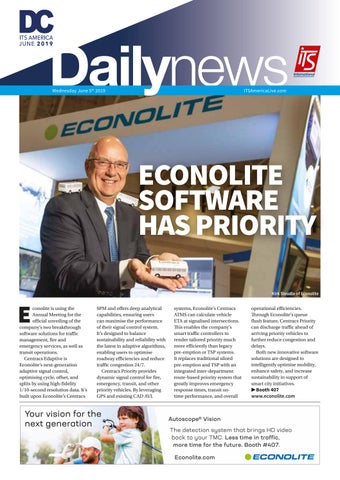
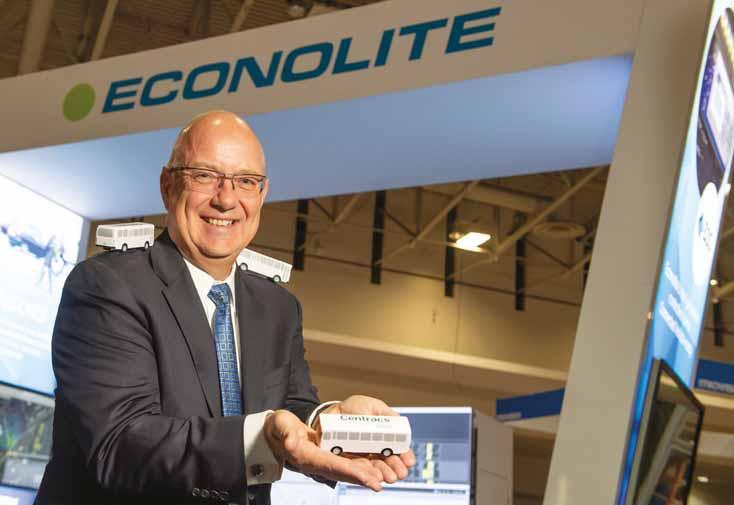
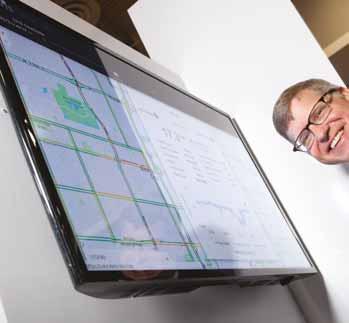
Econolite is using the Annual Meeting for the official unveiling of the company’s two breakthrough software solutions for traffic management, fire and emergency services, as well as transit operations.
Centracs Edaptive is Econolite’s next-generation adaptive signal control, optimising cycle, offset, and splits by using high-fidelity 1/10-second resolution data. It’s built upon Econolite’s Centracs
SPM and offers deep analytical capabilities, ensuring users can maximise the performance of their signal control system.
It’s designed to balance sustainability and reliability with the latest in adaptive algorithms, enabling users to optimise roadway efficiencies and reduce traffic congestion 24/7.
Centracs Priority provides dynamic signal control for fire, emergency, transit, and other priority vehicles. By leveraging GPS and existing CAD AVL
Your vision for the next generation
systems, Econolite’s Centracs ATMS can calculate vehicle ETA at signalised intersections. This enables the company’s smart traffic controllers to render tailored priority much more efficiently than legacy pre-emption or TSP systems. It replaces traditional siloed pre-emption and TSP with an integrated inter-department route-based priority system that greatly improves emergency response times, transit ontime performance, and overall
operational efficiencies. Through Econolite’s queue flush feature, Centracs Priority can discharge traffic ahead of arriving priority vehicles to further reduce congestion and delays.
Both new innovative software solutions are designed to intelligently optimise mobility, enhance safety, and increase sustainability in support of smart city initiatives.
▶Booth 407 www.econolite.com
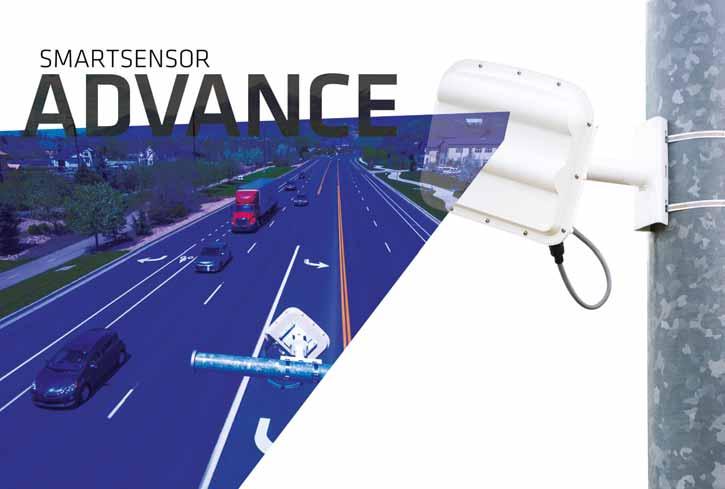
The detection system that brings HD video back to your TMC. Less time in traffic, more time for the future. Booth #407.
Kirk Steudle of Econolite
“SMART CITIES” READY TRAFFIC DATA
Affordably and Easily Retrieve Real-Time Intersection Data
Dailynews team
Publisher / MD
Andrew Barriball
Editor James Foster
Editorial team
Adam Hill
David Arminas
Andrew Bardin Williams
Sales director
Dan Emmerson
Design
Andy Taylder
Photography
James Robbins
Production manager
Nick Bond
IT & website director
James Howard
Website
Sarah Biswell
Tatyana Mechkarova
Printed by
MPM Communications LLC
Contact us
The Daily News office can be contacted at media@ropl.com
The publishers would like to thank ITS America for all its assistance in helping to produce the Daily News
Scott Perley of Iteris
Iteris launches powerful new analytics platform
Iteris has today announced the launch of a new transportation analytics solution, Iteris ClearGuide. The state-of-the-art mobility intelligence platform is designed to help transportation agencies achieve safer, more efficient mobility for their networks.
ClearGuide represents the culmination of Iteris’ more than two decades of experience deploying analytics-driven mobility solutions.
The modern, flexible and scalable platform enables transportation agencies and commercial entities, such as construction and engineering firms, to actively monitor traffic congestion, and identify anomalies and their causes.
Using ClearGuide, transportation agencies, in particular, will have the knowledge to allocate budget and resources and generate the best economic return on transportation investments.
The new analytics solution is designed to ingest large amounts of complex data from sensors, IoT devices, and third-party providers, as well as a wide array of emerging data from sources, including connected vehicles. ClearGuide users are presented with real-time and historical analytics to support operational and planning decisions.
“I am thrilled to announce Iteris’ launch of the most powerful transportation analytics platform available,” said Ramin Massoumi, senior vice president and general
manager, transportation systems at Iteris. “With Iteris ClearGuide, transportation agencies of any size can optimise their mobility operations using real-time, historical and contextual transportation analytics to identify problem areas and their root causes, and ultimately improve safety and mobility for all road users.”
Iteris says that early-access customers are already seeing the benefits of ClearGuide’s powerful features in extensive deployments, including Transport Canada, which uses ClearGuide nationwide. Additionally, all existing iPeMS customers will be migrated to ClearGuide.
▶Booth 325
www.iteris.com
KISTLER GOES COMPACT WITH KITRAFFIC
Kistler reports its new Lineas Compact sensors are installed below the road surface and are protected by a special epoxy grout for robustness and durability.
The sensors are part of Kistler’s KiTraffic Statistics solution, an integrated prewired system that allows an overview of road usage and vehicle weight patterns.
The Lineas Quartz Sensor is an industryproven Weigh in Motion (WIM) solution delivering consistently reliable results, according to the company. It requires no routine maintenance for more than 20 years. Kistler now offers the world’s first subsurface quartz sensor, the Lineas Compact and WIM Data Logger to provide what the
company claims is the most sustainable solution for automated real-time traffic data collection at a budget price. Combined with the Kistler WIM Data Logger, KiTraffic Statistics is easily integrated into an overall system for a customised solution.
▶Booth: 464 www.kistler.com
0
The acceptable number
Your job is critical in helping make roads safer for the driving public—but you’re not alone in your mission. We’ll continue to challenges you face.
Switch on with Belden
Belden has released the Hirschmann DRAGON PTN with HiProvision, an MPLSbased backbone switch family with provisioning software.
The unit reliably and efficiently transports missioncritical data and guarantees bandwidth in wide area networks through its support of MPLS-TP technology.
McCAIN UNVEILS TRANSPARITY TDX
McCain has formally unveiled Transparity TDX (transportation data exchange) today here at the Annual Meeting. The product will provide a new cloud-based software platform serving a network of standards-compliant transportation applications and data processing services. As individual transportation systems are advancing, Transparity TDX is the answer to decades of challenges in ITS integration and connectivity to innovative technologies.
Transparity TDX enables rapid and secure integration of a multitude of emerging and existing applications, such as integrated corridor management systems (ICMS), regional traffic management, parking system events, and multimodal applications including transit priority, emergency vehicle pre-emption (EVP), and pedestrian and bike safety. Transparity TDX also provides long-term storage of highresolution event data and performance reporting.
Greg McKhann, McCain’s chief operating officer, says the new platform will immediately create new efficiencies for agencies while positioning them for the connected and autonomous vehicle future without a huge, ongoing capital investment. “Transparity TDX addresses the problem of what to do with the billions of records
generated by signals and intersections, and how to transform that information into actionable data,” he said. “As we transition into a fully connected world, data storage and access will become increasingly crucial. With TDX, traffic managers could arrive at work and within a few keystrokes immediately assess the health and performance of an individual traffic signal or an entire city.”
Among the many applications supported by Transparity TDX, McCain is inviting agencies to take a closer look at a few select applications here at ITS America. These include Transparity SPM Report Suite which gives traffic managers access to high-resolution performance measures at every level; and Transparity C2C which can also be utilised for regional coordination and data sharing between agencies. Integration with parking solutions like McCain’s Optipark parking guidance system (PGS) enables synchronisation between parking events and signal operations to give motorists parking guidance while providing parking facility operators with compelling low-cost alternatives compared to single-space systems.
▶Booth 201
www.mccain-inc.com
OptaSense shows off TMS for the first time at ITSA
OptaSense is exhibiting its Traffic Monitoring Solution (TMS) for the first time at the Annual Meeting.
“The new DRAGON PTN with HiProvision enables customers to predict the behaviour of data as it goes across the network, guaranteeing bandwidth and ensuring uninterrupted communication,” said Vinod Rana, product manager at Belden.
Due to its deterministic capabilities and low cost, according to the manufacturer, MPLS-TP technology equips network architects for designing efficient and cost-effective networks and provides a migration path for legacy equipment. Architects can seamlessly integrate with legacy systems through multiple modular, redundant interface options and port types. A complete, integrated solution can be secured for provisioning and managing large networks from one vendor, making upgrades and implementation efficient and streamlined, according to the company.
The backbone device is also ideal for other harsh industrial environments, such as power transmission and distribution and oil and gas applications.
▶Booth 354
www.belden.com
It uses distributed fibre-optic sensing (DFOS) technology to convert existing roadside
The company says the product converts roadside fibre-optic cable into a distributed traffic sensor capable of delivering timely and reliable traffic monitoring and incident detection information from the entire monitored road.
optical-fibre cable into an array of intelligent sensors over long distances.
OptaSense says each roadside installation can cover up to 50 miles and it has a spatial output of 50m updated every second.
The OptaSense TMS is already in use with road operators, including the North Dakota DoT, which uses it on the I-29 highway in Fargo.
▶Booth 358
www.optasense.com
Kevin Drummond of McCain
To help you plan your day, here is an overview of some key topics from today’s full conference schedule. Check out the programme for further information and speakers and panellists
Emergency Response Day
Emergency response is a never-ending mission to increase the personal safety of responders and the travelling public they serve and to ensure the mobility of people and goods. The convergence of responders and the transportation technology industry is an opportunity to collaborate on these shared goals and to continue to improve the transportation system. The packed programme, which runs from 9:00 - 5:00, will feature roadway equipment and technology displays, including #ResponderReady Demos in the exhibit hall; traffic incident management simulations and activities; incident survivor testimonials; as well as sessions on responder training and more.
The learning session, The Qualcomm C-V2X Automotive Industry Summit, being held (9:00 – 3:00, room 202A), will discuss C-V2X technology and its evolution. Attendees will learn the fundamentals and understand the C-V2X ecosystem readiness as Qualcomm and partners move towards commercialisation.
Opening Keynote and Panel
The opening keynote, (9:45 – 11:00, ballroom AB) will open with a keynote from Jeff Klei, president of Continental North America, and will drill down on the conference theme: Intelligent mobility: Safer. Greener. Smarter. It will explore how the deployment of new technologies will allow us to improve our communities and make the streets safer for pedestrians, cyclists, drivers, and vehicles. In addition to safety benefits, connected and automated vehicles hold the promise of reducing the 90-plus hours a year we sit in traffic as well as our carbon footprint. Additionally, the panel will discuss how public entities are integrating new technologies into existing infrastructure and preparing for a future that looks different from today.
Klei is responsible for customer, governmental and other external relationships in the region. He has retained his current responsibilities as VP of sales, General Motors Worldwide.
The distinguished panel will include Pete Bigelow, mobility reporter, Automotive News; Gabe Klein, co-founder, Cityfi; Sherif Marakby, president and CEO, Ford Autonomous Vehicles; Jeremy McClain, head of systems and technology for the Chassis & Safety Division, Continental in North America; Angel Mendez, COO, Here Technologies; and Polly Trottenberg, commissioner, New York City DoT.
Executive session ES02: Saving The Spectrum: Safety-Communications Transportation (8:15 – 9:30, room 207A), will explain what the 5.9 GHz spectrum band
Today’s IP cameras offer up a world of possibilities for the ITS industry, from licence plate identification to traffic management. A network camera can deliver video in multi-megapixel resolution and the most challenging light conditions. Special session Driving Toward the Future of Intelligent Transportation (8:15 – 9:30, room 204A) will explore innovations in IP video surveillance and review how specific applications residing on the camera, such as automatic incident detection, traffic statistics, licence plate recognition, and intersection control are helping to change the way traffic is managed. It will be an informative session with real-life examples and actionable insights to help improve the future of transportation security and operations.
If you want the latest insights into emerging
Connected and automated vehicles hold the promise of reducing the 90-plus hours a year we sit in traffic
Connected and automated vehicles require little if any financial support from public agencies, except some roadside sensors. That is, the deployment will happen largely based on market forces and the pace of technological change. Given the significant social benefits (reduced crashes and fatalities) and potential economic gains (reduced traffic congestion and improved access to jobs and labour), there are important public benefits if we can speed up deployment of driverless vehicles.
Special session Do Infrastructure Managers Have Any Role or Should They Just Get out of the Way? (8:15 - 9:30, room 206), will debate a whole range of issues and actions to define the public role.
From 8:15 – 9:30, in room 209BC, the special session, SmartColumbus: Move from Smart City to Smart Region, brings together a panel of senior figures from Central Ohio Transit Authority, Transportation Research Centre, DriveOhio, Ohio State University, and the City of Dublin, to provide insights into how Columbus has evolved from a smart city to a smart region.
In the executive session, AVs, Healthcare And Ageing, (12:30 – 1:45, room 207A), the Autonomous Vehicle Alliance will discuss how evolving business models in healthcare are opening up new vehicle and fleet opportunities for AV’s in the future. The panel, which includes senior figures from General Motors, Magna International, and the Autonomous Vehicle Alliance, will also discuss how our ageing population will influence vehicle design, and how AVs can enable independence beyond the physical constraints of the consumer.
The special session, The Imperative Role of Standards in the Connected & Automated Vehicle Landscape, (12:30 – 1:45, room 204A), moderated by Kevin Cosgriff, president & CEO of the National Electrical Manufacturers Association (NEMA), will provide a discussion forum between key thought leaders in the vehicle and infrastructure arena, such as Qualcomm, Ford, and Panasonic, and Applied Information. Panellists will discuss the vital role standards play in enabling connectivity, defining and simplifying interoperability, and safeguarding privacy and cybersecurity.
Why the Future of Traffic Management Depends on the IoT-ITS Integration (12:301:45 room 204C) will detail the importance of how high-resolution data from a network of sensors and detectors, actuators, controllers, and software systems will be the backbone and anchor tenant for any larger smart and ITS and connected traffic management deployment. It will include how IoT integration will enable new realms of traffic control capabilities. The session will also feature the future technology and connectivity requirements of these systems to safely manage the very long transition period when roadway operators will have to manage C/AVs (connected and autonomous vehicles) and non-C/AVs .
Some infrastructure owners and operators (IOOs) have already produced C/AV strategic plans and are implementing portions of it, while others have jumped right into pilottesting different solutions and technologies. One constant among them is the ongoing questions from senior IOO leadership and elected officials: are we ready for C/AVs? The special session, Infrastructure Readiness for C/AV (12:30 - 1:45, room 206) will feature an interactive discussion of CAV planning and readiness, featuring lessons learned, roadblocks overcome, and institutional issues managed.
The special session, Making TSMO “Stick”: Building An Organisational Culture For Transportation Systems Management & Operations, (12:30 – 1:45, room 207B), will explore how transportation agencies are advancing and institutionalising transportation systems management and operations (TSMO). Representatives from State DoTs leading the way on TSMO will discuss the early successes their agencies have achieved, as well as the challenges they have encountered. Brief presentations by the panellists will help orient the audience to the topic before a panel discussion to maximise interaction.
Cybersecurity Hot Topics: Protecting People, Data, and Resources (12:30 – 1:45, room 209A) will look at the cyber threats to critical infrastructure and associated disruptions to operations. This session will look at these disruptions and strategies being deployed to protect, mitigate, and recover from cyberattacks. The format will be interactive to answer attendee questions about what they can do to be more secure.
Recognising the tremendous potential of emerging datasets to measure traffic signal performance, special session Automated Traffic Signal Performance Measures Using Emerging Data Sources (12:30 - 1:45, room 209 BC) will highlight recent studies and advances in automated traffic signal performance measures (ATSPM) using these new data sources. These applications have the potential to greatly reduce the effort and cost of monitoring and evaluating signalised intersection performance.
At your side. To help you move mobility forward.
Together, we can transform the way the world travels — with intelligent transit systems, integrated curbside management, dynamic roadway charging and advanced public safety solutions. All backed by advanced analytics and scalable platforms to ensure everything works as one today, tomorrow and beyond.
Ready to move mobility forward? Visit us at booth #406
The Traffic Engineer’s Changing Role In The Era Of ATSPMs, And Connected Infrastructure (2:00 - 3:15, room 207 B) is a special session to bring multiple stakeholders to provide an understanding of the changing role of the traffic engineer with the major changes occurring in the industry. The importance of traffic engineers in acquiring data analysis and ITS skillsets to be able to move beyond the traditional ways will be discussed. The session will also review the opportunities and challenges associated with this shift from the perspective of multiple sectors, including the government, engineering companies, cities, academia and the tech sector.
Mobility affects every aspect of city life. By walking, cycling, ride-sharing, using a bus, a train, micromobility platforms, or any combination thereof, people need to get places. Only by looking at mobility as a whole, can a city effectively tackle its largest problems. For example, to reduce car dependence, thereby improving congestion and pollution, requires effective actions to curb car usage, which can include measures such as parking meters, and road tolling.
Special session Smart Cities Success Will Depend on ITS (2:00 - 3:15, room 209 BC), will bring industry leaders for a roundtable session to discuss the ongoing and increasing forces they see happening around the globe that are
The transportation community is currently experiencing a data revolution. Improved sensors, probe vehicles, and the promise of connected vehicles offer the potential to more fully understand what is happening on our roadways and to manage those assets in ways that were never previously imagined. To fully realise these opportunities, it is critical that data be shared among organisations to facilitate integrated operations and optimise infrastructure and traffic flow.
While the benefits are obvious, the challenges are significant. These include technical issues, security and privacy concerns, and data ownership questions. In the executive session Challenges And Opportunities Of Data Sharing For Transportation Operations (3:30 - 4:45, room 207 A) the panel will explore these issues and provide insight on where we go from here to realise the benefits and resolve these major challenges.
Nearly everything in transportation these days is labelled “smart” - smart cities, smart signals, even smart markings. But what does smart parking mean in today’s urban environment? Special session Is Smart Parking Really That Smart? (3:30 - 4:45, room 206) is an informal panel discussion among parking professionals to talk about harnessing the real value of parking information and data and thinking about how to best program the
Promoted by FHWA, Automated Traffic Signal Performance Measures (ATSPMs) are the union between traditional signal timing and big data. They consist of a high-resolution data-logging capability added to existing traffic signal infrastructure and data analysis techniques. With the plethora of data available from each mode of mobility passing through an intersection (speed, arrival time, volume, phase information), ATSPMs were developed as a way to harness that data and provide insightful feedback into moving people more safely and efficiently.
In the special session, ATSPM: Using Moving Data to Move People through Intersections (3:30 - 4:45, room 207B) attendees will learn how signal retiming efforts can be based directly on actual performance without dependence on software modelling or expensive, manually collected data. This provides agency professionals with the information needed to proactively identify and correct deficiencies in a cost-effective manner. They can then manage traffic signal maintenance and operations in support of an agency’s safety, liveability and mobility goals.
ATSPMs also provide a large benefit for traffic signal maintenance. There are currently 26 transportation agencies implementing ATSPMs, including 11 state DoTs. The open source software continues to spread and grow rapidly, with more municipalities and counties joining in each month.
ONE INTERSECTION AT A TIME
Providing intelligent transportation solutions that make the travel experience everything it should be — safe, convenient, environmentally friendly, and ready for tomorrow. www.mccain-inc.com
Celebrating our SWARCO family; improving your travel experience for 50 years. McCain. Proud to Be Part of Something Bigger.
Advanced Automated Traffic Image Analysis Introducing the
Embedded Artificial Intelligence for VDET and ALPR
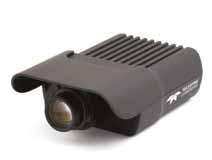
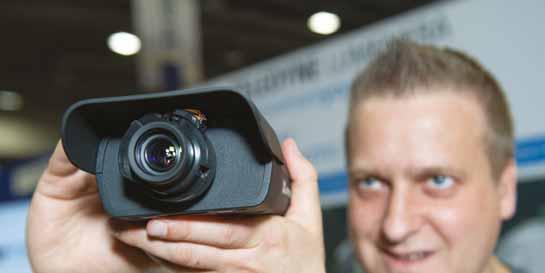
The Teledyne Lumenera Ls245R camera is an embedded traffic imaging solution with integrated self-triggering VDET and ALPR. This camera is designed for high-speed, free-flow traffic that needs high accuracy under a wide variety of operating conditions – all while being easy to use.
Live demonstrations have always been an integral component of every ITS America Annual Meeting and this year is no exception. This year’s demonstrations are highlighted below but check out the website for further information and times www.itsamerica2019.org/demonstrations-1
▶Ford is demonstrating Cellular Vehicle to Everything (C-V2X) technology with Vehicle to Vehicle (V2V), Vehicle to Pedestrian (V2P), and Vehicle to Intersection safety scenarios. Some of these scenarios include a pedestrian crossing a high-speed road and a road maintenance truck signalling a lane closure to unaware oncoming vehicles. In each safety scenario, the Ford vehicle will provide its driver with notifications to enhance safety for themselves as well as for those around them. Attendees will be shuttled to a nearby location to experience the demonstrations. The shuttle will leave from the North side of L Street between the mid-block crosswalk and 9th Street. Reserve your place at the Ford booth (#543) in the exhibit hall.
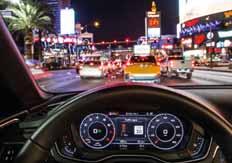
▶ The Audi and Traffic Technology Services (TTS) demonstration features the Audi connect Traffic Light Information system, the first automotive OEM connected vehicle application for Vehicle to Infrastructure (V2I), launched in December 2016.
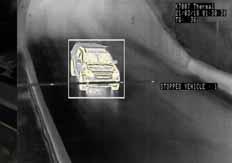
▶ The Flir demonstration, Safer Roads with Flir Thermal for V2X and ADAS, uses V2X communication between the vehicle, infrastructure, and cloud. The Flir TrafiSense2 V2X solution, featuring a thermal imager and V2X technology, will detect pedestrians, cyclists and cars while sending and receiving V2X messages at the same time to enhance road safety.
Participants will be able to view warning signals and heads-up displays as they appear on the dashboard of the Flir connected vehicle to draw the driver’s attention to a specific crossing or to reduce speeds because of an approaching cyclist or pedestrian.
Attendees will be picked up on the North side of L Street between the mid-block crosswalk and 9th Street, and you can reserve your place at the Flir booth #648.
This demonstration shows how existing technology, networks and software can support connected vehicle applications today at little cost to government agencies. The vehicles used for this demonstration are actually production vehicles available from Audi, with no retrofit or other aftermarket integrations. The information service, Personal Signal Assistant, from Traffic Technology Services, is supported by an open data portal from DDoT.
Participants will experience two connected vehicle applications, TTG (Time-To-Green) and GLOSA (Green Light Optimised Speed Advisory), available from the Audi connect Traffic Light Information feature.
Attendees will be picked up on the North side of L Street between the midblock crosswalk and 9th Street, and you can book for the demonstration at www. traffictechservices.com/its-america-2019. html
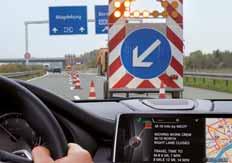
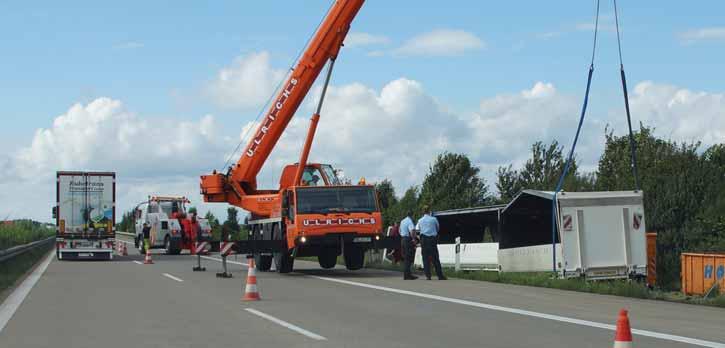
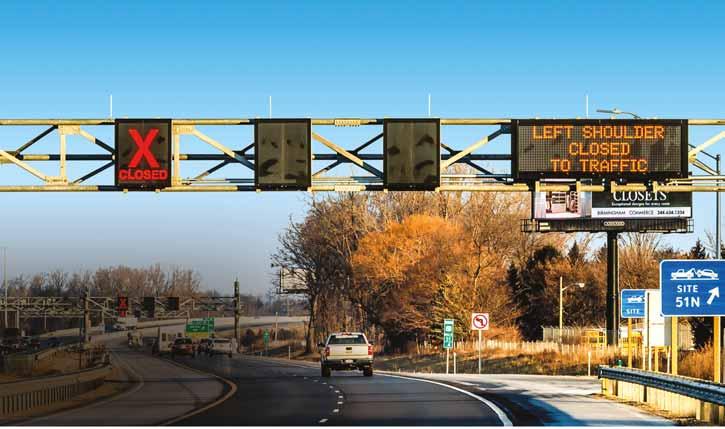
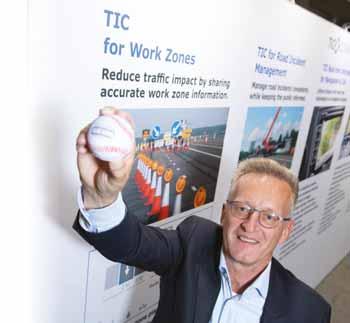
▶Gewi and iCone are demonstrating an off-the-shelf solution for smart workzones - Reduce Traffic Impact and Increase Work Zone Safety using Smart Technologies - which enables agencies to capture real-time data from workzones including speed, operational status, location, arrow board status and advice, and service vehicle position.
Conference attendees can inspect the workzone devices in the field and at the Gewi booth, to see how this information is provided
to navigation devices, broadcasters, websites, apps, and other systems. Additional tools will be available to demonstrate data quality management and compliance with USDoT National Work Zone data standards, as well as data audit functions.
This demonstration is located on 9th St between L And M Streets. The location will be signed. Attendees can also see the ICone system in operation at the ICone booth (#216).
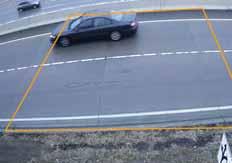
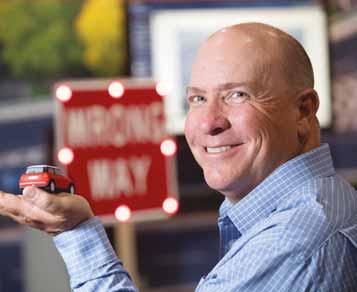
▶Image Sensing Systems’ demonstration, A New Approach to Wrong Way Detection, addresses the serious safety risk wrong way drivers pose. Every day there is a death in the US due to a wrong-way driver.
Detection is vital to reducing these risks. Image Sensing Systems wrong-way alerting solution provides accurate detection and fast notification to help improve the safety performance of roadways.
The system will be in action outside the convention centre, giving attendees an insight into the company’s wrong-way alerting solution and a chance to learn about the benefits of reliable, accurate detection to prevent wrong-way fatalities.
This demonstration is located in Hall E, accessible through the exhibit hall, or through the main doorway to the exhibit hall.
Trevor Pawl, group vice president for the Michigan Economic Development Corporation, on safety first
“Driverless vehicles, on paper anyway, make sense: Simply remove the possibility of fatigue or alcohol impairment in a driver, and you have just knocked 45.5% off the fatality rate in the US — and that is merely the lowest-hanging fruit in a forest of human-factor hazards. But, we don’t tend to think on paper.”
This statement was pulled from a recent Car and Driver article by Tim Vanderbilt asking the basic but deeply important question, “How safe is safe enough?”
Roughly 40,000 Americans die from car accidents each year with 95% of them due to human error. That is equivalent to a Boeing 737 going down every day for one year and is a vastly under-communicated national crisis.
However, for the first time in history, humans have designed artificial intelligence and automated driving technology to predict and prevent these accidents. Solving this crisis will not only fall on the shoulders of vehicle designers and engineers. Local policymakers, transit authorities and city administrators also have a crucial role to play.
Laser-focused
The State of Michigan, through state agencies like the Michigan Department of Transportation (MDoT), is laser-focused on this issue. In recent years, MDoT has upgraded connectivity within its network of highways and corridors so that signals, signs and even pavement markings can communicate back to vehicles regarding potential operating risks.
This vehicle-to-infrastructure (V2I) technology will not only reduce accidents and save lives, but it will also improve congestion and help city planners collect valuable data that will be leveraged to design better city services and transportation offerings.
V2I technology installation can be used as a tool for economic development. Leveraging the best artificial intelligence software from some of the most dynamic new companies around the world can create compelling reasons for those dynamic companies to locate offices and create jobs near their installations.
An intersection in Detroit contains the entrance and exit to/from the General Motors Headquarters, the entrance to the Detroit-Windsor International Tunnel
Creating a world with less fender benders
Crossing, the city of Detroit administration building drop-off, a hotel motor lobby, a four-lane thoroughfare in Randolph Street and one of the city’s most expansive eight-lane thoroughfares. With such a high volume of slowing and speeding cars and pedestrians, the area was ripe for new V2I technology.
Software applications
So, MDoT, the city of Detroit and PlanetM (the mobility arm of the Michigan Economic Development Corporation) sought out the best artificial intelligence provider to help ease the intersection’s bottlenecks and risks. After much research, Derq, a Dubai-and-Detroit-based traffic safety tech start-up, was chosen to launch two advanced software applications for connected vehicles to communicate with the surrounding infrastructure. Derq’s testing focused on predicting vehicle and pedestrian-related risks and proactively alerting fleets and equipped vehicles.
Derq received a PlanetM Pilot Grant in
June 2018 to launch its technology in Detroit. PlanetM Mobility Grants provide aid to mobility start-ups and corporations to test, validate and prove out new technologies on Michigan roadways and air space, or at one of the state’s premier testing facilities.
Not all of the new technology that makes our roads safer should start on our roads. Any new V2I innovation must go through thousands of hours of rigorous testing in artificial environments to ensure there are no failures.
Michigan’s ecosystem is equipped to handle these earlier stages of testing through our world-class testing sites, which offer closed urban, suburban and high-speed environments that can be used in all weather conditions, and prepare any V2I solution for the harshest or most complicated conditions.
The evolution of mobility demands requires collaboration between state, industry, community, advocacy and higher education leaders working together to make sure new mobility raises the quality of life for everyone.
Crossing, the city of Detroit administration
June 2018 to launch its in Detroit.
BEST OF ITS AWARD
ITS America’s competitive “Best of Intelligent Transportation Systems (ITS) Award” annually recognises organisations that have implemented the most advanced transportation projects in the transportation and technology industry. This program aims to distinguish organisations whose projects demonstrate specific and measurable outcomes and exemplify innovation. As this issue of the Daily News went to press last night, the winner was about to be announced.
▶The Utah Automated Traffic Signal Performance Measures (ATSPMs) project has created a valuable asset management tool, aiding technicians and managers in the control of both traffic signal hardware and traffic signal timing and coordination. allows analysis of data collected 24 hours a day, seven days a week, improving the accuracy, flexibility, and performance of signal equipment and the system as a whole. ATSPMs show real-time and historical functionality at signalised intersections. Engineers can use ATSPMs to directly measure what they previously could only estimate and model. ATSPMs allow for agencies to effectively optimise and manage traffic signals without extensive field data collection and to visualise data in an easyto-understand format that is web-based and easily accessible by a diverse group of users. Using ATSPMs, agencies can improve mobility, increase safety, and use resources more effectively.
▶Wyoming DoT (WYDoT) Connected Vehicle Pilot was born in 2015 when the USDoT awarded WYDoT a cooperative agreement to initiate a design-build-test phase of the Connected Vehicle (CV) Pilot Deployment Program.
As one of three selected pilots, WYDoT is focusing on improving safety and mobility by creating new ways to communicate road and travel information to commercial truck drivers and fleet managers along the 402 miles of Interstate 80 (I-80) in the state.
Systems and applications in the pilot enable drivers of connected vehicles to have improved awareness of potential hazards and of situations they cannot see. The pilot scope has included the deployment about 75 roadside units (RSU) that can receive and broadcast messages using DSRC along various sections on I-80. There is ongoing work to equip around 400 vehicles, a combination of fleet vehicles and commercial trucks, with onboard units (OBU).
OBUs will have the functionality to broadcast Basic Safety Messages (BSM) Part I and will include a human-machine interface (HMI) to share alerts and advisories to drivers of these vehicles. Several V2V and I2V applications have been developed that include support for in-vehicle dissemination of advisories for collision avoidance, speed management, detours, parking, and presence of workzones and maintenance and emergency vehicles downstream of their current location. Through the on-board applications, WYDoT hopes to improve on-road messaging on the corridor, especially when adverse weather and workzones are present.
▶ The four-year Tampa Hillsborough Expressway Authority (THEA) Connected Vehicle Pilot is the first step in a long-term effort to deploy connected vehicle technology in the Tampa Bay region. This ambitious project tackles a variety of safety and mobility challenges in downtown Tampa: morning backups and wrong-way drivers on the Lee Roy Selmon Expressway; pedestrian safety at a busy midblock crosswalk; delays
on downtown bus routes; dangerous conflicts between cars and streetcars; and traffic flow. Motorists, transit riders and pedestrians all benefit from this truly multimodal approach.
As part of the project, Hillsborough Area Regional Transit Authority (HART) has equipped ten buses and eight streetcars with connected vehicle technology while 1,000 individual drivers have been recruited and trained to participate in the program. A partnership with Hillsborough Community College provided an installation facility for on-board units, and student automotive technicians help to install the equipment. In this way, the pilot is not only improving safety and mobility but also helping to train the ITS workforce of the future.
▶The Utah Smart Transit Signal Priority project uses CV technology to enable conditional priority of transit vehicles at traffic signals to improve the reliability of bus services while optimising the use of available green time. DSRC radios allow interactive communication between Utah Transit Authority buses and traffic signals.
▶ Utah DoT’s Transportation Performance Measures are live traffic data-driven measures that provide an objective approach to evaluating transportation issues state-wide. The overall goal is to convey an easily understood message to facilitate collaboration among decision makers.
BELOW: WYDoT hopes to improve on-road messaging on the corridor, especially when adverse weather and workzones are present
Parsons iNET delivers smart city functions
Parsons says it is making cities more livable using advanced solutions that result in smarter mobility; improved public safety, infrastructure, environment and energy; and intelligent data exchange. The company is highlighting its new iNet Transform platform, which delivers these advanced smart city functions through a range of key capabilities.
For instance, for smart city monitoring, iNet interfaces with a variety of new smartcity sensors, including smart lighting, air quality monitoring, video analytics, public safety,
and wireless communication devices. For an integrated data environment, iNet stores and standardises the exchange of all information contained within the environment, in real time. All smart-city data is housed within the environment and exchanged in real time using standard C2C interfaces.
Meanwhile, for big data analytics, iNet is a framework for ingesting large volumes of transportation and other smart city data and storing it in a cloud- and/or premise-based big data environment. This solution includes integrated big data analytics tools to enable the
ad hoc reporting of the big data environment information. iNet solutions now support several connected vehicle dynamic mobility applications, including speed harmonisation, queue warning, weather alerting and motorist assist warnings. iNet now incorporates artificial intelligence and machine learning capabilities, such
as voice-driven assistants and machine learning–based traffic and event prediction, while its edge computing capability addresses the need for more roadside processing and automation by delivering intelligence at the edge for improved efficiency and cost. ▶Booth 349
www.parsons.com
Look
Roberto Perez of Parsons
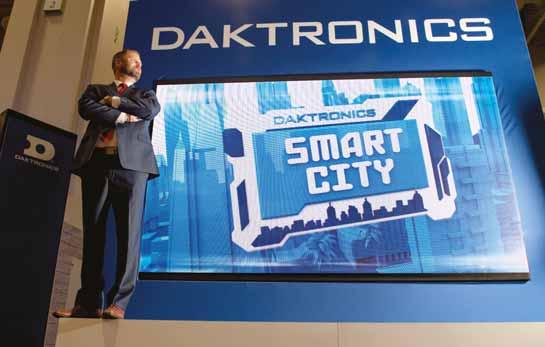
Visitors to the Daktronics booth will see how the company continues its commitment to connecting and guiding travellers with innovative display systems. Highlights include customers’ ability to upgrade current DMS signs while maximising their budget with Daktronics’ retrofit solution.
Visitors will also learn how they can transform their traffic management centre (TMC) with a new line of narrow pixel pitch options to provide a seamless view of traffic systems. Additionally, attendees will learn how Daktronics displays provide real-time information to deliver smart city messages to travellers in a variety of locations.
As Daktronics points out, the company continues to design and manufacture long-lasting, cost-effective, dynamic message signs (DMS) for hundreds of transportation agencies throughout North America. These displays convey critical
DAKTRONICS HIGHLIGHTS TMC TRANSFORMATION
traffic messages to drivers and assist in mitigating congestion and increasing safety in a variety of applications for freeways, arterial roads and tollways. The company stands behind its products with a
comprehensive service network, on-site commissioning, toll-free phone support and on-site training. Daktronics’ NTCIP-compliant Vanguard DMS and control software continues to sharpen the image
of traffic management, and its salespeople and engineers work closely with ITS professionals to develop innovative, effective and reliable ITS solutions.
▶Booth 609
www.Daktronics.com/ITS
Jason Morrison of Daktronics
SAFETY IS PRIORITY FOR FLIR CONNECTED VEHICLE
Flir is demonstrating its thermalenhanced autonomous and connected test vehicle at the Annual Meeting. The demo allows participants to experience how thermal cameras can enhance the effectiveness of advanced driver-assistance systems and make intersections safer for pedestrians and cyclists.
Crossing an intersection safely requires a driver’s full attention. However, it’s not always possible to see pedestrians or cyclists sufficiently clearly, due to bad weather, night conditions or an obstructed view. The Flir thermal-enhanced autonomous and connected test vehicle addresses this by providing a complete picture of road surroundings to increase the driver’s awareness.
The demonstration vehicle uses Vehicle to Everything (V2X) communication between the vehicle, infrastructure and the cloud. The Flir TrafiSense2 V2X, a V2X-enabled thermal camera, detects pedestrians, cyclists and cars on the intersection and at typical areas where the field of view of a vehicle is occluded by infrastructure, parked vehicles, or any other obstacles. Based on the information provided by the TrafiSense2 V2X, drivers receive personal safety messages that warn
of vulnerable road users (VRUs) near the vehicle. Drivers are offered a 360-degree thermal street view, which allows them to spot VRUs, despite adverse lighting and weather conditions.
Warning signals and heads-up displays appear on the dashboard of the Flir
connected vehicle to draw the driver’s attention to a specific crossing or to reduce speed because of an approaching cyclist or pedestrian. Attendees can reserve a spot for this demonstration by visiting the Flir booth.
▶Booth 648
www.flir.com
Danlaw / Code 3 V2X Solution for Emergency Vehicles
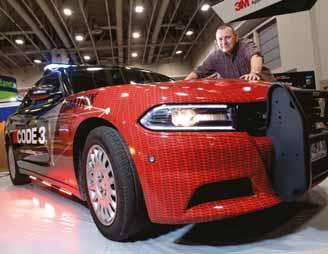
Danlaw, a specialist in connected vehicle technology, collaborated with Code 3, a leading provider of light and sound solutions for emergency vehicles, to develop what they say is the industry’s first fully integrated V2X system for emergency and utility vehicles. Here at the ITS America Annual Meeting, a joint demonstration features a V2X-equipped police vehicle which illustrates the importance of traffic signal preemption in emergencies.
The emergency vehicle lighting module has a fully integrated V2X antenna, connected to Danlaw’s
AutoLink Onboard Unit (OBU), which is integrated with Code 3’s emergency vehicle system to provide first responders with 360-degree vehicle awareness and safety insight. By simply switching on the vehicle’s emergency lights and siren, the V2X system will communicate with roadside equipment to request traffic light pre-emption. This feature will temporarily stop cross-traffic so that first responders can quickly manoeuvre through intersections that may otherwise be congested.
▶Booth 207 www.danlawinc.com
Danlaw's Andrew Donaldson
Michael Deruytter of Flir
JESSICA ROBINSON
Executive Director, Michigan
Mobility Institute
The state that revolutionized the way the world moves is doing it once again. Across Michigan, talented engineers, technicians and scientists are creating new mobility solutions, from autonomous vehicles to connected infrastructure to cybersecurity. Mobility in Michigan is moving fast, so get here or get left behind. Visit planetm.com
Q-Free’s Intelight opens up its software MIBs to everyone
Highlighting an unwavering commitment to standardising ATC controller specifications and open standards, Q-Free’s Intelight has publicly released the management information base (MIBs) for its Maxtime local traffic signal control software. This unprecedented release paves the way to advance the adoption of open protocols, giving customers access to all available objects within a controller, including proprietary ones.
The MIB essentially provides a common language for the central system and local controller software to communicate with, and control, traffic signals and other transportation management devices. Approximately half of the objects in a controller MIB used today for ATC controllers have been standardised by
the National Transportation Communications for ITS Protocol.
But the remaining 50% of MIBs are defined by individual manufacturers and can restrict agencies or increase costs for organisations interested in
IRD’S TECHNOLOGY IMPROVING SAFETY
International Road Dynamics (IRD) is showcasing its Tyre
Anomaly and Classification System (TACS) at the Annual Meeting. TACS is an advanced screening technology that helps agencies identify vehicles with potentially dangerous tyre problems before accidents occur. The system measures the tyre-toroad contact patch and identifies unsafe tyres including flat, missing and mismatched tyres on dual tyre assemblies.
Tyre anomalies can result in vehicle imbalance, reduced manoeuvrability, improper load distribution, reduced braking performance, poor fuel economy, and reduced tyre life. Damaged tyres lead to breakdowns, expensive roadside repairs and
increased costs due to freight being delayed. Pavement damage can also result from increased loads on tyres when adjacent tyres are flat or mismatched in size. The Oklahoma Department of Public Safety, Illinois DoT and Illinois State Police have integrated TACS into their commercial vehicle e-screening systems. Trucks with identified tyre problems are signalled to report for further inspection and the anomaly verified by a human inspector. These agencies have found TACS to be an effective method of identifying vehicles with tyre problems that are sufficiently serious to place vehicles out of service.
As IRD points out, safety is the primary goal of commercial
central and local software from different vendors.
“Though companies have been known to share their MIB with other vendors, the agreements to do so can be limiting and unreliable,” said Tom Stiles, EVP of urban
solutions for Q-Free America. “We asked ourselves, why do we do this? How does this benefit our customers and the communities they serve? When looking at it from this perspective, it was an easy and unanimous decision to publicise our MIB and make it accessible to anyone.”
Q-Free and Intelight believe that open standards promote innovation and better customer support, both of which can improve safety and mobility for the public. With this announcement, they say they continue to lead the industry in enabling customers to choose the best of all solutions.
People interested in downloading the MIB for Intelight local control software, can do so by visiting the Q-Free | Intelight website ▶Booth 213 www.intelight-its.com
vehicle inspections, and TACS helps agencies ensure road safety while providing the efficiency of an automated screening system. Agencies seeking to reduce the risk of catastrophic tyre failures
will benefit from adopting tyre anomaly screening as part of their commercial vehicle inspection systems. ▶Booth 636 www.irdinc.com
Communication: Lee Hansen and Trisha Tunilla of Q-Free
Michael Wiek of IRD
Activu acts with vis/ability
Activu is demonstrating vis/ ability, the latest version of the company’s collaborative visualisation platform, also called Activu.
CUBIC’S ACQUISITIONS ELEVATE ITS PORTFOLIO
Cubic’s capabilities have substantially grown, as visitors to the Annual Meeting will discover: earlier this year, the company acquired Trafficware and Gridsmart, two technology-driven ITS companies, to expand its traffic management portfolio. The complementary features of Cubic’s transit, toll and traffic management platform capabilities combined with the intersection management capabilities and an established footprint, means Cubic will optimise intersections on arterial roads, urban corridors and grids. As visitors will see, the company can now detect traffic at the intersection but also get a broader view of traffic patterns across the entire region; predict volumes of inbound traffic from highways and freeways entering urban areas; and optimise intersections by
giving priority to shared transportation.
“Bringing these fundamental solutions together under our Cubic Transportation Systems (CTS) business will make our NextCity Operations and Analytics pillar a reality as we believe it’s a cornerstone of all smart city capabilities,” said Chris Bax, vice president of Global ITS, CTS.
In 2019 the NextCity vision will come to life. Cubic’s legacy has traditionally been in larger, more metropolitan cities, through the implementation of large-scale traffic management systems, such as its Cubic Transport Management Platform for the Intelligent Congestion Management Program (ICMP) in Sydney.
Cubic is well known for its major transit systems around the world, including London, New York, San Francisco, and Australia.
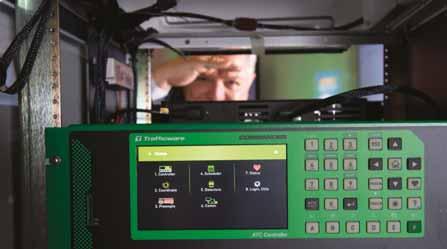
Now with the addition of scalable Trafficware and Gridsmart technologies, Cubic says cities of all sizes can benefit as the company begins the next iteration of its vision, NextCity 2.0, focusing on scalable, platform-centric capabilities. Visitors to the Cubic booth will see an array of industry-leading demos, including the Trafficware ATMS central traffic management system and Synchro traffic analysis software. Attendees can get a sneak peek of the new, small form factor Commander rack mount controller. Cubic will also showcase the Gridsmart System and the Smartmount 2025, both first-of-its-kind technologies for intersection actuation and fibre optic, respectively.
▶Booth 701 www.trafficware.com www.cubic.com
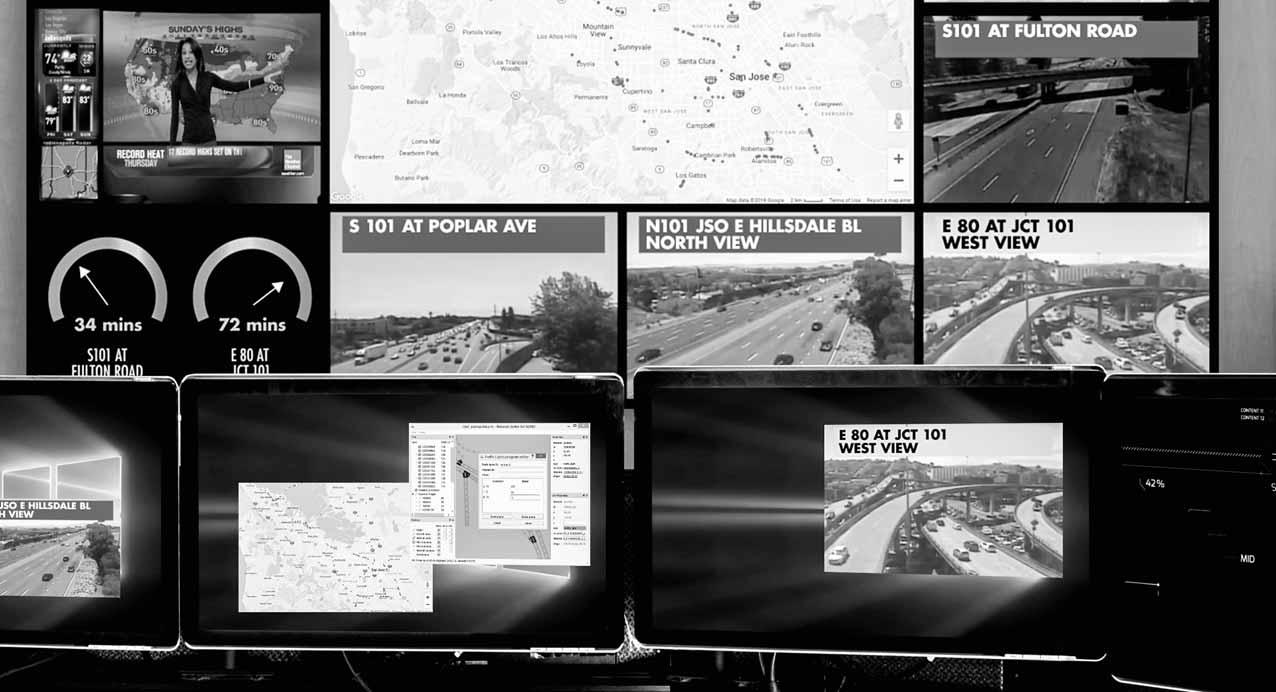
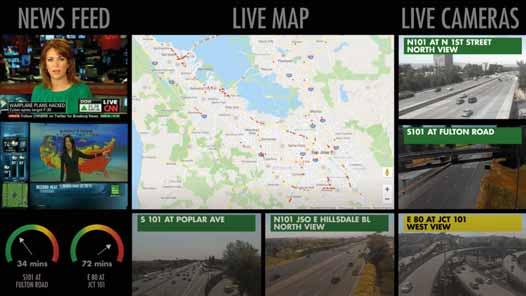
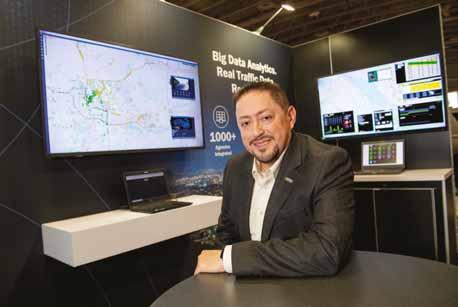
The company says that the Activu platform offers seamless situational awareness that is sharable to any display, control room video wall and mobile device from virtually any visual source on the network.
The company said that Activu software incorporates video, Internet of Things (IoT), drone feeds, mobile content and more into one of the most powerful and collaborative common operating pictures available.
Activu is used by over 1,000 control rooms within transportation, shipping, utilities, defence, public safety, smart cities and corporate security organisations.
Upcoming Activu software includes a real-time Waze integration option that triggers displays and video walls to reconfigure with relevant live content, in context, for instant teamwide situational awareness. Other data feeds can be incorporated: virtually anything with an API can be integrated with Activu for a dynamic common operating picture.
▶Booth: 200
www.activu.com
Less bandwidth with Hydra 265 Transcoder
Wireless Technology claims that its Hydra 265 Transcoder encodes a video stream into an H.265 video stream using less bandwidth. Once the stream is received back at the head end - if your current software supports H.265 - you’re good to go, said the company. If not, it can be transcoded back into H.264 or MPEG-4 by using another Hydra 265 to transcode the streams to support a client’s software.
The Hydra 265 does this without affecting the image quality and with very
low bandwidth the quality will increase substantially. Hydra 265 can be used to encode up to four 1080HD H.264/H.265 streams, eight 720p H.264/H.265 streams or sixteen SD H.264/H.265 streams and the same number on the back end if decoding is needed. It can also encode up to eight MPEG4 SD streams.
The types of video that it takes in are RTP/RTSP in MPEG-4, H.264 or H.265 and it outputs RTP/RTSP, in MPEG-4, MJPEG, H.264 or H.265 formats.
Its small physical size means that it can be added easily to any rack or cabinet. Once installed in the cabinet, it is simply plugged into the switch that is handling the video data streams.
The company said that WTI provides a simple-to-use control software that designates which IP addresses the client would like the Hydra 265 to transcode into the H.265 compressed format.
▶Booth: 561
www.wirelesstech.com
Jeff Spinazze looks to the future
Q-Free. Integrated, Smart City Solutions for Better Mobility.
Developed based on open protocols and cutting-edge technology, Q-Free’s robust transportation management tools turn data into actionable insights, enabling intelligent decision making that positively impacts operators, users, and the environment. Learn more about our solutions, including Intelight, Open TMS, Intrada, and ParQSense at booth 213 or online at www.q-free.com Changing the movements
From the intersection to the highway, parking to toll roads, Q-Free mobility management solutions make it easier than ever to provide a seamless traveling experience to our growing urban communities. ow to make your traffic To see how ent, visit more efficien axis.com / traffic keep traffic moving A smarter way to ke er flow on your roadways, with less congestion, gridlock and Envision a smoother impact. Axis cameras, empowered with analytic software from environmental im help you achieve it. Utilizing high-quality Axis video, Citilog solutions Citilog, can he real-time flow assessment and tools for detecting and relieving queues. provide re
Gridsmart pedals forward with 19.3
Gridsmart’s new software release-19.3-delivers a "quantum leap forward for cyclist safety and intersection efficiency" the firm says. It complies with California MUTCD 2014 Revision 3, requiring signal timing and actuation to consider the needs of cyclists.
Instead of simply proceeding with the basic needs of actuation for cyclists, Gridsmart explains it took a step back and dug to the root of the problem: where do vulnerable road users (VRUs) - cyclists, pedestrians, wheelchairs - need the most protection?
This thought process led the company’s engineers directly to the box junction, the real area of potential danger in an intersection where it is vital to know it’s safe to change the signals. 19.3 provides
green extension calls from the box junction only when cyclists and other vulnerable road users are in the box. Gridsmart’s new software doesn’t cater to the slowest common denominator or guess how long a cyclist might take to clear an intersection. It protects the cyclist based on their real-time actions; green time is saved for cyclists that quickly clear the intersection and increased for slower users who require an extension.
According to the company, 19.3 delivers safety for VRUs while maintaining efficiency for drivers and other road users, circling back to Gridsmart’s vision: to improve one billion lives through intelligence.
▶Booth 625 www.gridsmart.com
Brooke McGee of Gridsmart
ACCURATE WRONG-WAY DETECTION WITH LOW FALSE EVENT RATE
Wrong-way drivers pose a serious safety risk on roadways. Every day in the United States, there is a death caused by a wrongway driver. The detection of these wrong-way drivers is vital to reducing these risks. Image Sensing Systems is demonstrating how its Wrong-way Alerting solution can help in reducing these risks with an accurate, reliable system that has a low false event rate. This solution provides accurate detection and fast notification to help improve the safety performance of roadways.
Image Sensing Systems says the wrong-way alerting solution has seen some great results in Minnesota. The system has been deployed for nine months and has produced some impressive results. There’ve been 3.5 million vehicles pass the detector with
eight verified wrong-way events captured. During that time, the false event rate was 0.00037%, and there were 300,000 vehicles that passed the detector between false events and 21 days between events.
outside of the convention centre throughout the event and is also inviting attendees to stop by its booth to learn about this new
approach to wrong-way detection and see it in action.
▶Booth 331
www.imagesensing.com
“The results we have seen in Minnesota show that our solution is meeting our expectations for performance,” said Seth Anderson, product manager for Image Sensing Systems. “Wrong-way drivers are a problem for many states and stopping them before they enter the highway is key to preventing potentially deadly crashes. We believe our approach to the problem will help save lives.”
Image Sensing Systems will be demonstrating its wrongway solution as part of the live demonstrations out on L Street,
tobetee ys between e our ations d Seth anager tems. re opping er the enting shes. ach to the e lives.” ems will wrongf the live n L
Tony Wheeler of Image Sensing Systems
Brendan Lelieveld-Amiro of Teledyne Lumenera
TELEDYNE LUMENERA SHINES LIGHT ON TRAFFIC IMAGE ANALYSIS
Safety issues detected by Knock-Down
Applied Information (AI) is showcasing two new products, the Knock-Down Detection System and the Pedestrian Crossing Safety System (PCSS).
Teledyne Lumenera is here to showcase its new Ls245R traffic camera, an innovation that provides an advanced solution for automated traffic image analysis, with integrated selftriggering vehicle detection (VDET) and automated licence plate recognition (ALPR). Built on the Teledyne Lumenera Ls Series Embedded Vision Platform, the Ls245R traffic camera is ideal for detecting vehicles on high-speed freeways and extracting licence plate information.
This new traffic camera can
image, analyse and extract data all on its own without the need for a separate computer to process images. Image processing can run at all hours by automatically controlling a lens shuttle to flip between a day and night mode.
The Ls245R optimises network traffic by sending images that are already processed or by just sending metadata for each licence plate that the camera extracts. Even in the case of a network outage, images and data are safely stored on the device and queued up for delivery when a connection
is established. The network connection for the Ls245R traffic camera also provides access to a Web UI to control device settings such as zoom, focus, iris and even external lighting options.
The Ls245R traffic camera is the result of a flexible FPGA design using the Ls Series Platform. Teledyne Lumenera says that capturing and processing images without the overhead of a traditional vision system is what makes the platform so versatile for different imaging applications.
▶Booth 229 www.lumenera.com
Green light for GiveMeGreen!
Sensys Networks says it has introduced a new way to actuate traffic signals for cycling and scooting citizens - the GiveMeGreen! smartphone app.
The free GiveMeGreen! app automatically detects bicycle and scooter riders up to 300 feet in advance of the intersection, meaning they have no need to veer off their path to push pedestrian crossing buttons to get a green light.
Amine Haoui, chief executive of Sensys Networks, said that GiveMeGreen! is already at use in Santa Clarita, California. It is leveraging Sensys Networks' Infrastructure to Everything (I2X) platform to increase safety for cyclists and people on scooters while at the same time improving travel for all modes of traffic.
Local highways agencies can define detection zones and use existing signal phases or design special timings to take advantage of this new detection input. Optional visual cues enabled by the service include signal phase state or a countdown timer within the app, third-party bicycle crossing lights at the intersection for cyclists, or bicycle presence warnings for turning motorists.
“GiveMeGreen! not only improves safety, but improves the ride experience for Santa Clarita’s legions of bicyclists with automatic and reliable advance detection,” said Cesar Romo, chief traffic signal system administrator for Santa Clarita.
▶Booth 637
www.sensysnetworks.com
AI’s Knock-Down system detects when a traffic control device has been damaged - or knocked down - due to an accident, storm or vandalism and then will call for help. The traffic light knockdown sensor uses battery power and wireless Internet of Things technology to send alerts to transportation system managers when it is in an abnormal position.
Meanwhile, the pedestrian system uses bold, attentiongrabbing visual alerts, along with audible warnings for both drivers and pedestrians. The PCSS works in tandem with the TravelSafely app, bringing an extra level of safety to road users, according to the company.
Both are part of AI’s Glance Smart City Supervisory System, a platform that gives cities access to their traffic infrastructure via remote monitoring and maintenance capabilities through connected devices.
During ITS America, AI is also hosting connected vehicle demonstration drives in the company’s fleet of Teslas to showcase the power of C-V2X and the capabilities of connected and autonomous vehicles. The Teslas are driving through a corridor of connected intersections where AI’s TravelSafely app acts as the on-board unit to receive SPaT messaging, Red-light Running alerts, Get Ready for Green alerts and other connected vehicle applications. A livestream of this is featured at the AI booth.
▶Booth 330
www.appinfoinc.com
Conduent views the future
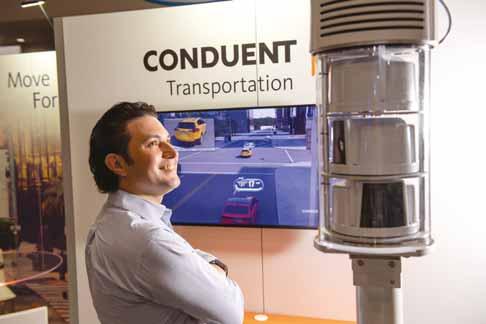
Avisit to the Conduent Transportation booth provides a not-to-be-missed, all-encompassing experience for attendees. Visitors can learn more about the company’s comprehensive solutions technologies – including the DriveSafe enforcement system, which supports the goals of the Vision Zero multinational road traffic safety project. The system provides enforcement for red light, speed, block the box, illegal turn, restricted lane and LPR and combines industry-leading technology and advanced vehicle detection to reduce aggressive driver behaviour, making streets safer without an increase in the workforce.
Visitors can also learn more about mobilityon-demand and accessibility, as well as congestion management by joining Conduent Transportation at the Pathway to Innovations Stage in the exhibit hall where the company’s leaders will discuss these challenges that many cities are facing today.
Over the past 50 years, Conduent Transportation has helped clients advance the way the world travels, as it will demonstrate at the event. As the transportation landscape
evolving to meet the needs of its clients and their end users to help move mobility forward.
According to Conduent Transportation, the journey into the future isn’t about a single set of technologies, an individual mode of transportation, or an endless chain of one-off fixes for each challenge that comes along.
end key solutions, including public safety, transit, kerbside management, and roadway charging and management, to identify clients’ challenges and create the right set of solutions to tackle them head-on.
▶Booth 406 www.ConduentTransportation.com
Bill Tente of Conduent
THE BENEFITS OF SMART WORKZONES
Until recently, most information provided to the public about work zones included only planned activities. But today, as Gewi and iCone will demonstrate, with the advent of devices to measure precise location, speed, lane closure advice and workers present, more real-time information is available for navigation devices, VMS signs, broadcasters, apps and other systems. By providing drivers in-vehicle notifications in advance of entering a workzone, safety for motorists and workers is increased.
As Gewi points out, the company has been at the forefront of smart workzone efforts with a first public conceptual demonstration with BMW at the ITS World Congress in Orlando, Florida in 2011. The first European implementation of this smart workzone technology was undertaken in 2018.
Today, this technology is available as a low-cost off-the-shelf solution, and Gewi and iCone are demonstrating this technology here at the Annual Meeting.
Smart workzones are critical to the success of the emerging connected and automated driving (C/AV) market. Precise information about lane configuration changes which occur during workzones must be available for the C/AV to operate properly in a fully automated mode.
Gewi is exhibiting this all-in-one workzone solution at its booth and inviting attendees to make an appointment for a demonstration of how the company’s TIC software can be used for workzone planning, real-time operations, and post-construction analytics.
▶Booth 216 www.gewi.com
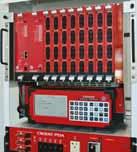
A new intersection traffic control field unit that incorporates control, safety monitoring and signal switching in a compact IT-style rack assembly. This advanced system marries high density and high capability into a single space.
Smarter, smaller, simpler
ATC-based CPU
Detachable display and keypad Standard 19” rack-mounted
High density load switches up to 32 phases
GREENWave Intersection Control Software with Web Interface