Renée Amilcar on UITP Summit 2025: ‘It’s my passionate topic!’ How V2X is making workzones safer fair Verona, where we lay our scene Also…
NEWS DIGEST
CONTRACTS & DEALS
UITP president Renée Amilcar: “I trust in transit, I rely on transit, and I
ENFORCEMENT
How Hayden AI, Genetec, Conduent Transportation and England’s National Highways are taking different steps to prevent wrongdoing
18 DIGITALISATION
The City of Hamburg – host of the UITP Summit 2025 – has been working with PTV Group to make the most of technology to enhance urban mobility, and reach climate goals…
20 ARTIFICIAL INTELLIGENCE
AI is coming to ITS – but how do we best use it? What’s it for? Ekin Smart City Technologies, Verra Mobility and Flow Labs have some ideas...
AI GOVERNANCE
Effective oversight is required to ensure that artificial intelligence remains an asset rather than a liability, suggests IntelliRoad
V2X
Workzones need to be safer for drivers and workers – and the technology exists to harmonise safety with mobility needs, says Swarco
32
DATA & MAPPING
Technology can cut congestion quickly and effectively. But TomTom says it can’t just be about making things better for car drivers
35 MOBILITY AS A SERVICE
After 10 years, where are we now with MaaS? And how does the industry need to be thinking about it in the future?
39 TOLLING
Why does the most transparent funding mechanism – the simplest, clearest and most intuitively logical – face the strongest public resistance?
42
ITS INTERNATIONAL 30TH BIRTHDAY
From traffic light phasing and GPS to the birth of the ITS World Congress, via Talking Heads, we look at the last quarter of the 20th century
44
URBAN MOBILITY
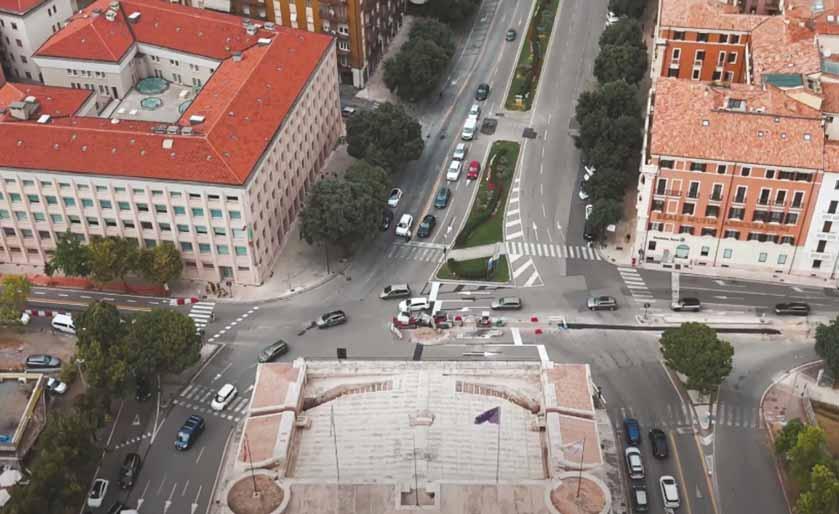
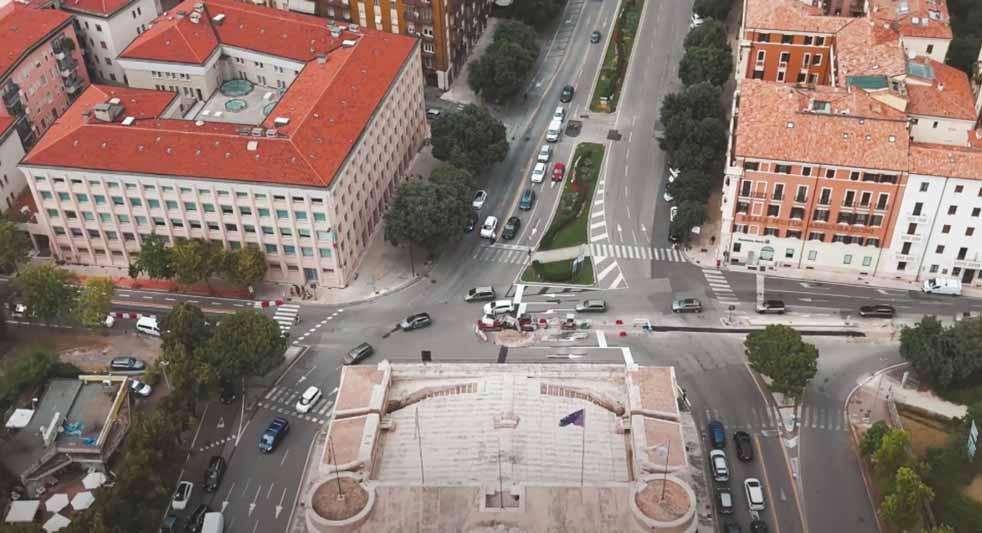
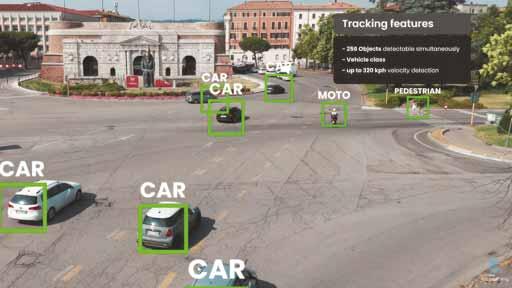
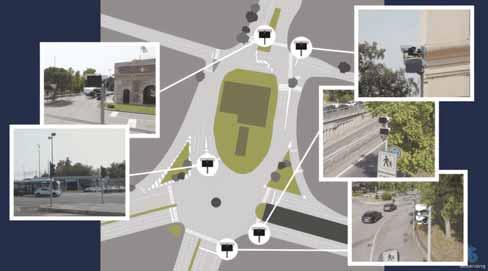
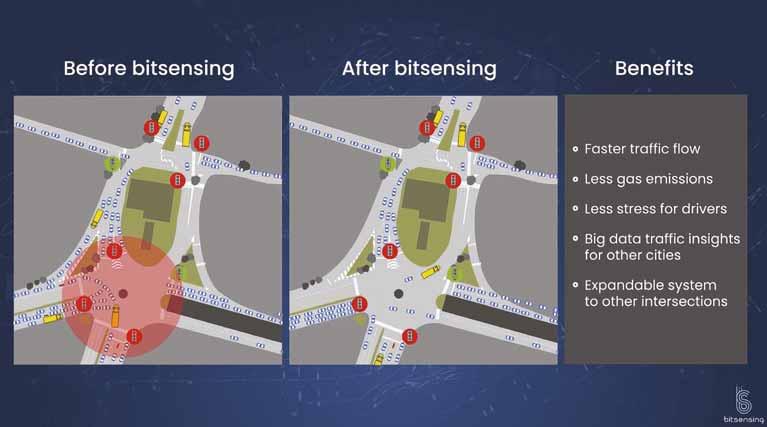
Shakespeare’s Verona was a place of star-cross’d lovers - today, the traffic is more of a problem, finds Bitsensing
America area only
03 What would happen to truck platooning if the weather turns nasty? The I-70 Truck Automation Corridor Project should provide some answers
“SO MUCH FOR WHAT AI CAN DO – HOW DO WE MAKE IT WORK FOR US?”
What is artificial intelligence for? Presumably it’s for more than remaking yourself as an image of an action figure, complete with accessories, still in your shop-bought packaging (entertaining though this admittedly is). And there must be another use for AI than simply asking a bot to come up with a three-paragraph distillation of a 268-page business report (pro tip: you still need to check all the facts it gives you. Everything. Everything).
Yes, it won’t have escaped your attention that AI is having something of a ‘moment’ and, like every other industry in the world, intelligent transportation is working out how to use it most effectively. So let’s start with a basic question: what are the main problems that AI can help solve in ITS? In fact, to make it simpler, what are the main problems in ITS, full stop?
Leaving aside the fact that AI is already used in many applications which are common in our industry, particularly when it comes to the analysis of data, it could have positive effects on three major
Editor
Adam Hill
Email: ahill@ropl.com
Tel: +44 1322 612062
Sales Director
Dan Emmerson
Email: demmerson@ropl.com
Tel: +44 1322 612068
Web Manager
Sarah Biswell
Email: sbiswell@ropl.com
Tel: +44 1322 612078
Staff Writer
David Arminas
Design Team
Simon Ward, Andy Taylder
Data & Marketing Manager
Alan Cansick
Email: acansick@ropl.com
Tel: +44 1322 612061
Office Manager
Kelly Thompson
Email: kthompson@ropl.com
Production Manager
Nick Bond
Email: nbond@ropl.com
Tel: +44 1322 612066
“
AI is appealing – you have the potential to do much more for much less
problems: safety, decarbonisation and congestion.
In this issue, we ask several ITS experts what they think – everything from potential use cases to pitfalls. After all, the scale and cost afforded by AI is appealing – you have the potential to do much more for much less.
Publisher/
Managing Director
Andrew Barriball
Email: abarriball@ropl.com
Tel: +44 1322 612057
CEO
Roger Adshead
Email: radshead@ropl.com
Editorial Consultant
Geoff Hadwick
“While some legacy systems use rudimentary algorithms or rules-based logic, true AI goes far beyond that,” says Akif Ekin of Ekin Smart City Technologies. “AI systems can learn from millions of data points, adapt to changing conditions, and optimise themselves over time.”
So much for what AI can do – how do we ensure it works for us? Governance is a particularly important part of the debate, which sometimes seems overlooked. Rafael Hernandez of IntelliRoad writes: “As AI adoption accelerates, oversight isn’t optional - it’s essential to prevent errors, protect privacy and maintain public trust.”
So, AI is more than a buzzword. But less than a whole solution. And above all, it needs watching. Fun times… ITS
Email me at ahill@ropl.com @itseditoradam.bsky.social @adamhillwriter @itseditor_adamhill
Printed by Warners (Midlands) PLC
ITS International (PE 13324) is published 6 times a year with combined issues in January/ February, March/April, May/June, July/August, September/October and November/December by Route One Publishing Ltd, Second Floor, West Hill House, West Hill, Dartford, Kent, DA1 2EU, UK.
Airfreight and mailing in the USA by agent named World Container Inc., c/o BBT 150-15, 183rd St, Jamaica, NY 11413, USA. Periodicals postage paid at Brooklyn, NY 11256.
POSTMASTER: Send address changes to ITS International, World Container Inc., c/o BBT 150-15, 183rd St, Jamaica, NY 11413, USA.
Air Business Ltd is acting as our mailing agent.
Subscription records are maintained at Route One Publishing Ltd, Second Floor, West Hill House, West Hill, Dartford, Kent, DA1 2EU, UK.
All editorial, advertising or circulation enquiries to:
ITS International, Second Floor, West Hill House, West Hill, Dartford, Kent, DA1 2EU, UK.
No part of the publication may be reproduced in any form whatsoever without the express permission of the publishers. Views expressed in this journal do not necessarily reflect the opinion of the Editor or Route One Publishing Ltd.
Reader Enquiry Service: data@ropl.com
Tel: +44 1322 612061
Subscription Enquiries: subs@ropl.com
Global: Print ISSN 1463-6344
Digital ISSN 2057-3421
NA: Print ISSN 2632-4458
Digital ISSN 2632-5950
AI adoption in transportation needs a boost, says TRL
Low levels of AI literacy and limited workforce upskilling, as well as public distrust of AI-
intelligence adoption in transportation, according to a recent report by TRL. Bridging the gap: overcoming barriers to AI adoption in transport found other problems such as lack of infrastructure to support AI applications and concerns about environmental impact. Clear governance and regulation is required, along with the enhancing of technical skills and expertise, adoption, the report suggests.
• Not just a buzzword, p20
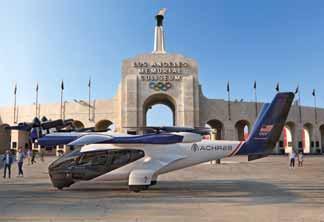
Air taxis added to LA Olympics events
The Los Angeles Olympics in 2028 is set to be a festival of sporting excellence, with an estimated 15 million visitors enjoying athletics, swimming, marathons, rowing, beach
Archer's Midnight fourpassenger eVTOL craft will be transporting "VIPs, fans and stakeholders" during the LA28 Olympic and Paralympic Games, following a partnership with Team USA. The company
taxi provider' for the games, with a planned network in LA which includes vertiports at the Stadium in Inglewood, Los Angeles Memorial Coliseum, Los Angeles International Airport, Hollywood, Orange County and Santa Monica.
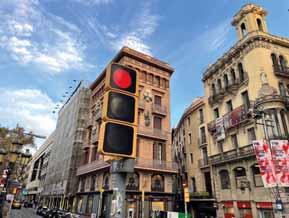
Power cuts cause transport chaos in Spain and Portugal
transit systems disrupted, in a power blackout on 28 April which affected large parts of lights were not working in some cities, while the metro was closed in Lisbon and Porto.
Jose Luis Martinez-Almeida,
to travel if possible. Power was down for 10 hours or more in many places in the Iberian peninsula. As ITS International
explanation for the outage had yet been given.
Western Australia trials C-ITS technology
Main Roads Western Australia
conducted a trial of connected vehicle technology on roads in Perth, Western Australia state. Kapsch said the trial successfully demonstrated that both cooperative ITS (C-ITS) and the road infrastructure of Western Australia are ready for widespread deployment of such technology. Mehdi Langroudi, executive director for network operations with Main Roads Western Australia, said the C-ITS Roadmap and C-ITS trials will help make the state’s roads safer as well as boost mobility and improve sustainability for generations to come.
AV trucks now operating in $8.8m pilot between Ohio and Indiana
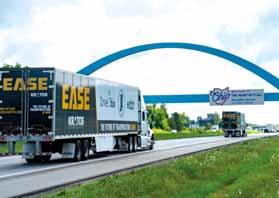
Trucks with automated platooning technology are operating between Ohio and Indianapolis in the US as part of a multi-year, $8.8 million logistics pilot. The two tractor-
trailers are using I-70 between Columbus and Indianapolis - with human drivers who can override the technology if needed - delivering shipments for Ease Logistics. It is a collaboration between Ohio Department of Transportation (ODoT)’s DriveOhio initiative and Indiana DoT (INDoT) "to advance the adoption of truck automation technologies in the logistics industry across the Midwest". Later this year, ODoT and INDoT will release a request for proposals for additional deployments of automated trucks.
Seyond’s SIMPL formula for success in the US
Seyond reports it has achieved “a major operational milestone” by deploying its end-to-end Lidar-based ITS platform to
in Georgia, US. By combining the Falcon Lidar sensor with its NEMA TS2-rated SIMPL (Seyond ITS Management Platform) at Peachtree Corners’ Technology Parkway, Seyond says it delivered reliable vehicle-
controller, demonstrating
US Automated Vehicle Framework to 'slash red tape'
Removing regulatory barriers is at the heart of US National Administration (NHTSA)'s (AV) Framework. "The new framework will unleash
US. It plans to expand this to El Paso in Texas and Phoenix in Arizona by the end of this year. “We founded Aurora to deliver
Ex-Yunex boss Schlitt takes over at Holon
says a statement from US Department of Transportation.
framework “will slash red single national standard that spurs innovation and prioritises
up to 15 people and a top speed business at Siemens Mobility.
set to be tested this year on the
Compass IoT connected vehicle data used to shape iRAP projects
The Road Safety Foundation
safety standard of roads.
International Road Assessment Programme (iRAP) work. The
will be responsible for every
to identify risks and prioritise improvements to prevent deaths and serious injuries. The aim of iRAP was to develop a methodology similar to a New
CONTRACTS & DEALS
Milestone acquire uTrack
Mobility as a Service specialist Ridango and private equity
Sharjah Roads & Transport Authority in the United Arab Emirates. The tunnels are on the road connecting the port city of Khorfakkan with the rest of the emirate through the Hajar Mountains, cutting driving time to the capital, Sharjah, from over 100 minutes to around 45 minutes. There will be three years of delivery, followed by two more of maintenance, with and regulatory compliance of the tunnel systems. It is worth "double digit millions" of euros.
and Euro NCAP collaboration
Data for Road Safety (DFRS) and Euro NCAP - the European vehicle safety performance assessment programmesigned a memorandum of understanding during the 16th ITS European Congress 2025 in Seville, Spain, last month. Their collaboration aims to enhance vehicle safety assessments through the integration of realtime road hazard-data. The new Euro NCAP 2026 Protocol on Safe Driving Vehicle Assistance has introduced a requirement for vehicle manufacturers to share these hazard warnings information - and to be awarded 'points' in the Euro NCAP safety rating system for doing this.
Samba time for Travelier and Moovit in Brazil
Travelier, a travel technology provider, has partnered with commuter app maker Moovit to offer Brazilians intercity and interstate bus ticket planning and purchasing. The purchases in the Moovit app are now available in Brazil through Travelier’s B2C domestic brand DeÔnibus, which offers bus travel through a network of more than 300 bus operators and thousands of routes across Brazil. By integrating its services with Moovit, travellers can now select their origin, destination, travel dates, choose from multiple route options and purchase their tickets, explained Noam Toister, cofounder and CEO of Travelier.
buy uTrack Software Solutions. Bregal took what it calls a "majority strategic growth investment" in Ridango in March, and Cyrus Shey, cofounder at Bregal, explains:
Four-year Florida deal for Iteris
Ridango given their software platform, loyal and recurring customer base of marketleading institutions, and complementary geographic presence, which made it a
ecosystem." Founded in 2011, uTrack provides a public transport data platform with a real-time analysis and predictive engine that feeds a suite of software services.
Iteris has been awarded a says could be worth $10m over time. The task order-based, quantity' contract from the Hillsborough County Board of County Commissioners is for engineering services to support centre. Iteris' remit is to provide signal-system operational monitoring and control; connected emergency-vehicle signal priority and preemption; support and management; connected traveller information; signal retiming, phasing and coordination; TMC communication and integration; transit signal prioritisation; and connected and autonomous vehicle support.
Q-Free and Dars deliver C-ITS in Slovenia
Q-Free has collaborated with Slovenian road operator Dars in the deployment of a new cooperative ITS (C-ITS) network in the eastern European country's capital, Ljubljana. The system will enable equipped Volkswagen vehicles to receive in-car visibility alerts, and wrong-way driver warnings. The new network sees 25 roadside units on more than 100km of Ljubljana’s major ring-road. These RSUs will transmit information to VW drivers,
MEET SWARCO AT
the International Symposium “Navigating the Future of Traffic Management”
Athens, Greece, 29 June – 3 July 2025
“I TRUST IN TRANSIT, I RELY ON TRANSIT, AND I LOVE TRANSIT”
Renée Amilcar, UITP president and boss of Ottawa’s OC Transpo, talks to Adam Hill about relying on public transport, the importance of user experience – and what to expect from the upcoming UITP Summit 2025 in Hamburg…
Renée Amilcar is the first female president of international public transport organisation UITP; an overdue appointment, some would say, as UITP had been going for 138 years by the time she was voted in, two years ago. Rather disarmingly, Amilcar says she didn’t really ever see herself in this position.
“It was not a goal,” she insists. “I never had this wish because, for me, it was not possible - it was for other people, not for Renée, you know what I mean? So that’s why it brought a joy - and it’s my colleagues at the executive board who, I would say, forced me to apply!”
Amilcar is aware that her appointment as president of the organisation has a wider significance. “I realised at the time that, hey, it’s important,” she acknowledges. “I didn’t get there to have this recognition, but if some other women, [or] little girls can say: ‘Oh, okay, it’s possible, because we have a role model here’, I think just because of that, it’s great.”
UITP Summit 2025
She is looking forward to UITP’s annual conference – UITP Summit 2025 – which will be held in Hamburg, Germany, on 15-18 June. “It will be fantastic,” she says. “First, you will have access to operators, to other stakeholders, to constructors, to leaders, to politicians. And it’s a great time to do a lot of networking. It’s a great time to be inspired by a lot of leaders and to see the trends for the next years in transit. And you know, even to just have the opportunity to take a coffee and talk about transit will be great. I used to say that [you should] take any opportunity that you have to talk about transit.”
As well as her presidential role, Amilcar is director general of OC Transpo, the transport agency in Canada’s capital, Ottawa. An engineer by trade, she took over there in late 2021 after 19 years at the Societe de Transport de Montreal (STM), where she had a particular responsibility for buses.
“This is where I discovered transit, really,” she explains. “I realised, as an engineer, that transit is more than just a bus and a bus driver. And so in 2002 I started my career at STM on transit, and very quickly I said: ‘Okay, this is for me’. Transit, it’s for everyone.”
Transit will need to be more sexy than your car - it’s got to be a good price, reliable, frequent, convenient, for sure
“
Her experience of the importance of public transportation before that had been as a child going to high school, or visiting friends. “And I really like the fact that, when I was a kid, I was relying on transit without knowing it.” Her parents were not ferrying her everywhere in a car, so it was walking or the bus.
“So that became a ‘must’ for me, and knowing today that I’m in charge of that, knowing that I can so easily make a difference in people’s lives – wow!” she laughs. “Do you know a lot of people who, daily, can take a decision that will either say that you have a good day or you have a bad day? It’s a huge responsibility, because, you know, on transit, we have to bring people from A to B, but it’s not only for fun; it’s for school, for work, the doctor, it’s for everything.”
That’s not to say she opposes other ways of getting around. “I’m not against cars either, you know – in an urban area, if we can have dedicated lanes, if the transit is affordable, efficient, repetitive… Singapore is a good example. I went there last year, and it was amazing.”
Her responsibilities at OC Transpo also include train and paratransit. “So it’s a complex bouquet of services, which is great,” she says. “And I love the fact that we can be together in the same bus: we have our own responsibilities, and we are everywhere in our head, but we are in the same vehicle, and we rely on the bus driver. Those kind of things, I realised only when I became a manager on transit, because, as I said before, for me, it was just a bus and a bus driver.”
Importance of customer experience
She understands the value of customer experience and she advocates the importance of this in driver training. “When the customer comes in the bus, it’s important to say hi, it’s important to smile, it’s important to look at him or her, because you are one of the best ambassadors. My bus drivers are very lucky because they can see happy customers, and they can even influence their happiness by saying: ‘Thank you for taking transit, see you tomorrow?’ Those kind of little connections can make a lot of difference.”
Amilcar takes public transit regularly and is one of those people who always thanks the bus driver when they get off. She insists everyone calls her Renée. “I’m so lucky to have this job, to be able to connect with my employees and to connect with my customers as well - because when I take transit, people don’t necessarily know who I am.”
Like all cities, Ottawa has its own transportation challenges. “The city has a million inhabitants but it’s very vast as a territory,” she says. “So it’s a complex city to provide transit: it’s huge.”
Its urban rail system – the O-Train – was new to her after 19 years in Montreal. A major extension south, east, and west will see the addition of 24 stations, 44km of track – tripling the length of the network - and 45 new trains.
“We had an amazing year,” she insists. “The reliability is there. People are very happy with that. I trust in transit, I rely on transit, and I love transit.”
Passenger numbers and money are now the key issues for OC Transpo. Like pretty much every transit system in the world, it took a hit during the Covid lockdowns, and has been slow to recover. “The pandemic is gone now,” Amilcar says. “But the city continues to deal with ridership problems, because most of our customers are federal workers, and they’re still working from home twice or three times per week. So that means a low ridership for us. The network was built to have a lot of people coming in downtown and, unfortunately, it’s not the case. So we continue to have very high expenses with less revenue. And that brings the other problem, which is funding.”
Again, this problem is not unique to Ottawa. “[It is] a systemic issue here. And it’s not only here, it was the same thing in Montreal.” She is grateful that the provincial government is supportive.
Outlawing ‘manels’
Talking of systemic issues, UITP has outlawed ‘manels’ from its events, which means that the Summit in Hamburg will have no panels which only feature men speaking. The organisation
UITP Summit 2025: ‘It’s a great time to do a lot of networking… It’s a great time to be inspired’
has also doubled the number of female speakers at its events (from 21% in 2017 to 43% in 2023) and achieved greater representation of women on its boards.
An attempt to redress the gender balance, it is part of wider efforts to narrow the gender gap in transport. “We don’t have enough female engineers, for sure,” says Amilcar. “And I look forward to seeing more and more and more.”
UITP launched a gender equality policy in 2021 which aimed to address the gender imbalance in the public transport sector, which has historically been designed and operated predominantly by men, often neglecting the specific needs of women. It also aimed to engage more women with its events.
As a result, the proportion of women on UITP’s executive board increased from zero in 2019 to 38%, and from 11% to 33% on its policy board, while its management team now features 45% women.
“For sure, the goal is to reach parity – 50/50 - and I am sure we will achieve that pretty soon,” Amilcar suggests. “And we are very proud of that. Mohamed Mezghani [secretary general of UITP] is a very, very good advocate of women. Men can play a very important role, because it’s a man who gave me my chance, who promoted me at STM, who asked me to go to UITP because he wanted me to see public transit around the world, not only in Montreal. So we have to work together to increase this diversity and inclusion as well, right? Because the more we can have different people around the table, the more strong ideas we can bring. We must be a leader more than ever, and that will need to start at the top of the pyramid.”
Seeing more women in these roles is positive, Amilcar says. “We need to be able to build transit for people who will take it, and we need to prove that it’s possible to get access to those positions - to be the journey manager, to be an engineer in charge of the construction, etc. But it’s okay as well to be women that don’t want to deal with those things. I love my job, but I’m [also] a mom, I’m a spouse, and there is, you know, some sacrifice to be able to do what I’m doing.”
Political will
That’s not to say she’s complaining – far from it. Apart from the gender gap, finance and ridership, there is one more issue which Amilcar thinks is of crucial importance to transit operators throughout the world: political will. The idea of never having to advocate again for the importance of transit with policymakers is highly attractive. “Political support for the idea of public
transportation itself is also vital,” she laughs. “I think, my God, I would take my retirement if we could achieve that!”
Getting people interested – and showing what’s possible – is key to bringing public transport to the fore. “But to be able to do so, transit will need to be more sexy than your car - otherwise you will not come,” she admits. “It’s got to be a good price, reliable, frequent, convenient, for sure.”
Predictability is particularly important: “I need to know that I will leave at 10 and I will be where I’m going to attend today.”
Offering free transit has been tried in a number of cities worldwide and it’s fair to say that it has a chequered history; private car use has not fallen everywhere it has been trialled.
So Amilcar is well aware that giving the service away for nothing will not attract more people on its own, since price is not the only factor which attracts users – reliability is crucial. However, free ‘tasters’ are a good way of getting people to try public transport. “I want to make it clear that free transit will not attract more people, necessarily,” she agrees. “But having free weekends to showcase my new network, to demonstrate that my new lines worked very well, to be curious - come try it and then buy your ticket! And during the weekend free service, people were smiling.”
And she enjoyed conversing with them – customers, employees, whoever – in fact, it’s probably fair to say that Amilcar is always happy to talk transit. “It’s my passionate topic!” she concludes happily. ITS
O-Train extension will triple the length of the network
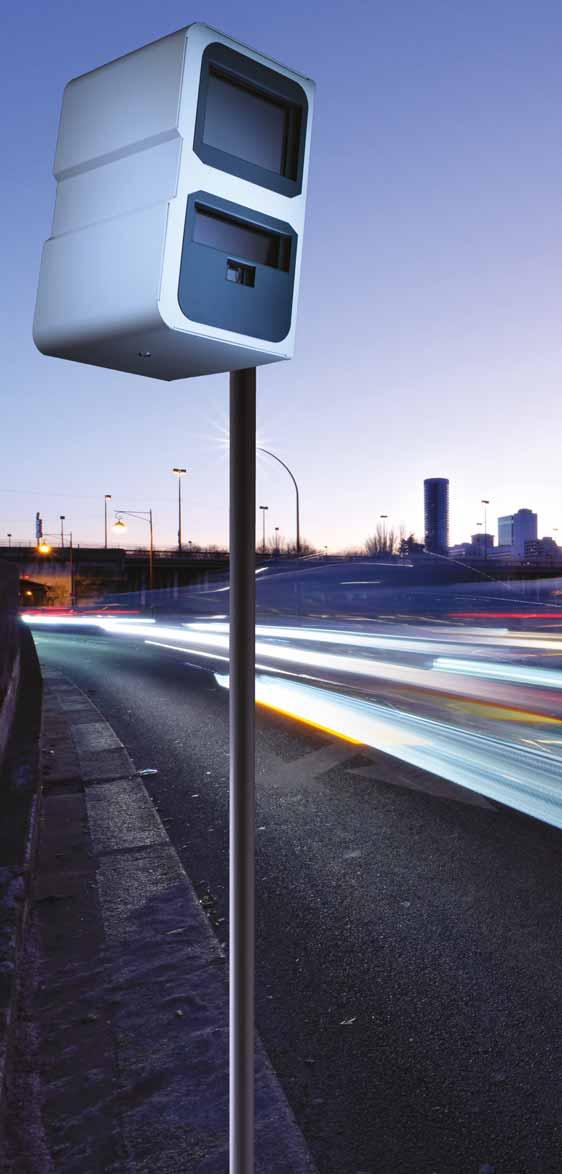
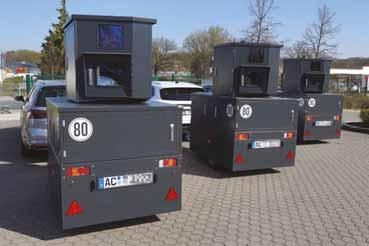
> Non-intrusive system including high positioning tolerance
> Decoy function to strengthen the deterrent and educational effect on users
> Stationary solution for enforcement of multiple road traffic offences
> Smart traffic enforcement through 3D-LiDAR technology
ANPR CAMERAS CONSIDERED FOR SEVERN BRIDGE RESTRICTIONS
England’s road agency National Highways is considering using numberplate recognition cameras to enforce a forthcoming weight limit for heavy trucks using the Severn Bridge.
The suspension Severn Bridge, which opened in 1966, carries the M48 motorway over the Severn River which separates England and Wales. National Highways said there has been concern about the state of the bridge’s cables since inspections in 2022 and 2023. Further laboratory testing has revealed that the main cables are deteriorating.
The weight restrictions come into force May 27 which means heavy
goods vehicles will have to use the nearby 30-year-old cable-stayed M4 motorway Prince of Wales Bridge to travel between England and Wales. The weight restriction will remain in place for an estimated 12 to 18 months, depending on further investigations and while National Highways develops and installs a medium-term solution.
“While the bridge remains safe, it was not designed and built for today’s Pope, programme delivery manager for National Highways. “Vehicles have got
greater load on the cables.
“As with all our structures, we will continue to monitor the bridge and ensure it remains safe for users.”
The Severn Bridge carried around 32,000 vehicles daily in 2024, 3,270 of which were heavy goods vehicles over 7.5 tonnes, meaning around 10% of of Wales Bridge once the restrictions are in place.
The size and weight of heavy goods vehicles - trucks - have increased demands, some rising from 22 tonnes to 44 tonnes.
HAYDEN AI NOW HAS EYES ON BIKE LANES
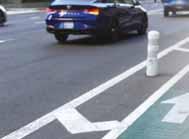
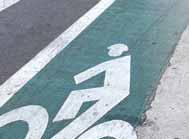
Automated bike-lane enforcement has come to the Californian city of Sacramento. One hundred Sacramento Regional Transit (SacRT) buses are already equipped with Hayden AI's cameras to identify and report vehicles illegally parked along bus stops - and now this technology will be used to target drivers who should not be in bike lanes too.
It works in exactly the same way: when a violation occurs, the system captures a short video and photo of the vehicle’s licence plate, along with the time and location.
Initially, drivers received warning
begin from Friday 13 June.
to enforce bike lanes in this way. As with bus-stop enforcement, Duncan Solutions is providing the violation-processing software.
Assembly Bill 361 (AB 361) authorises California cities to use forward-facing cameras for enforcing parking violations in bike lanes and transit zones.
country to use this technology to help keep our bike lanes clear,” said Staci Hovermale, parking services manager for the City of Sacramento. “This tool helps us enforce existing parking rules more effectively, improving safety for cyclists and ensuring everyone shares the road responsibly.”
“Keeping bike lanes clear is an important part of making Sacramento a place where everyone can thrive,” says SacRT general manager/CEO Henry Li. “This programme will help improve safety and travel times for everyone on Sacramento roads, no matter how you travel around.”
NJ TRANSIT TO INSTALL CONDUENT 3D FARE GATES
Conduent Transportation is to install its 3D fare gates at two stations in New Jersey, US.
The new gates, which are nearly eight feet tall, are at the Secaucus Junction and Newark Liberty International Airport stations on NJ Transit's network.
They will be put in place in the coming months, and the contract is for 72 gates to be installed in all, as part of Adam Appleby, group president, public sector
modernises fare collection and helps ensure fair access
The contract with NJ Transit follows a similar installation for transportation agency Septa in Philadelphia, which is for 100 gates at nine stations. This deal followed a successful pilot programme at one station, where the integration of 3D fare gates
GOTCHA WITH GENETEC’S AUTOVU
management, access control and ANPR, has launched AutoVu ANPR Analysis
based forensic search capabilities within Genetec Security Center. Users can quickly narrow down a pool of suspects cohorts. By eliminating manual data for ANPR at Genetec, based in Montreal, Canada. “With just a few clicks, they can data that would otherwise take hours or
AutoVu ANPR Analysis Reports offers two key functionalities. With the cohort analysis
that may point to coordination, accomplices seconds, across multiple cameras.
as organised retail theft, this is especially linked to multiple incidents. Cohort analysis getaway car, is consistently nearby, helping of suspects.
Meanwhile, the time and speed
a crime scene. It does this by comparing
simply select cameras located within a
The system then generates a report cameras, along with their estimated immediately spot anomalies, including where most were going 30mph. The system does this without sifting through thousands of licence plate reads. In incidents such
Driving Road Safety and Security
Jenoptik provides innovative and sustainable smart mobility technology and services.
As an end-to-end solution provider, we support our customers with the provision of roadside equipment and software, including integration and installation through to full-service operation. Our strong global presence and installation base is supported by a reliable partner network.
With innovation as our driving force, Jenoptik is a world-leading enabler for smart mobility, making roads, journeys and communities safer around the globe.
Follow us! jenoptik.com/markets/public-safety
assessments of their decisions. Road users receive accurate and timely information on journey times and short-term traffic developments, allowing them to make more informed decisions. The solution also supports transport coordinators and urban planners, from tasks such as coordination of roadworks to the development of urban infrastructure, like cycle paths, for example. Haas believes #Transmove “is a truly innovative and forward-looking project that can serve as a model for many other cities”.
Transition time
The City of Hamburg – host of the UITP Summit 2025 – has been working with PTV Group to make the most of technology to enhance urban mobility, and reach climate goals…
Like many cities all over the world, Hamburg in northern Germany is looking at ways of moving people around more efficiently, while reducing transport’s impact on the environment.
“The digitalisation of mobility is a key issue,” explains LSBG programme manager Dr. Melanie Mergler. Part of the Ministry of Transport and Mobility Transition, LSBG is responsible for a large part of Hamburg's transport infrastructure, including roads and bridges.
“In LSBG's DigiLab, we have been working on forward-looking projects such as Congestion Forecast since 2018 and #Transmove since 2020,” Mergler continues.
In the #Transmove project, LSBG collaborates with PTV Group and WPS –Workplace Solutions to develop a software solution for intelligent traffic management. It aims to enhance urban mobility, improve accessibility for both residents and visitors, and minimise the negative impacts of traffic.
“Traditional mobility forecasting already leverages models and data for tasks like traffic signal optimisation and coordinated traffic light control,” Mergler continues. “What sets #transmove apart is its integration of state-ofthe-art technologies - further developed and combined in a novel, innovative way.”
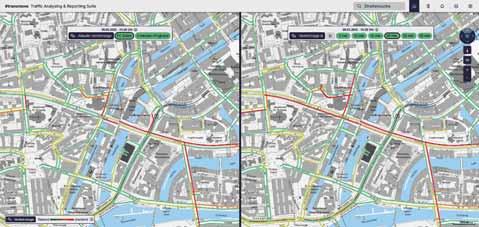
This is where PTV Group’s expertise in traffic modelling comes in. The solution takes real-time data from multiple sources into a unified mobility management platform. “The underlying software uses agent-based
modelling, AI techniques, real-time traffic modelling, and scenario simulations,” explains Christian U. Haas, CEO at PTV, part of Umovity. “This results in a highly capable system that supports both short-term traffic management decisions and medium- to long-term mobility planning.”
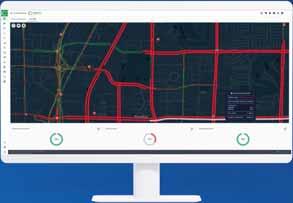
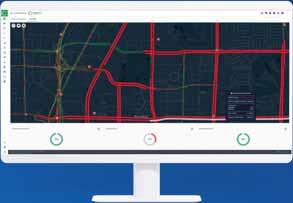
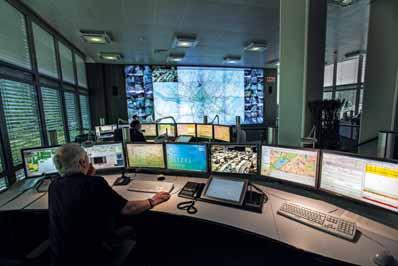
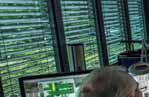
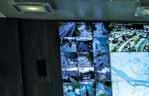
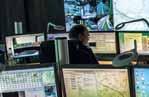
#Transmove is already being used in Hamburg's police traffic control centre and the public transport operations centre. Both benefit from real-time information on the current and forecast traffic situation as well as actionable recommendations - such as optimised traffic signal plans and impact
ABOVE:
#Transmove is being used in Hamburg’s police traffic control centre BELOW: The #Transmove interface
Hamburg’s Digital Mobility Strategy is aiming to achieve a ‘mobility transition’ by 2030 to meet climate targets. Mergler says that modal shift from private motor vehicles to more environmentally-friendly modes such as “public transport, walking and cycling as well as on-demand and sharing offers, is of central importance for achieving these goals”.
The focus remains on integrating mobility services and providing and utilising valid data. “The path to a holistic transport system lies through the digitalisation and automation of traffic management,” she adds. “The focus is on the bundling of information, modern technologies and geo-referenced data through to a mobility operating system.”
This mobility operating system improves traffic flow by networking the traffic control and operations centres via a traffic management system. “Mobility capacities are optimised by means of real-time information, traffic management measures and the prioritisation of public transport,” she suggests. “By bundling information within a mobility operating system, traffic disruptions can be minimised and resolved more quickly, traffic flow can be optimised and thus the quality of life in Hamburg can be significantly improved.”
It will provide “the digital backbone of the city's evolving transportation landscape”, she adds. “By bringing together mobility planners from various domains, it will enhance efficiency, reduces congestion, and promotes sustainable urban travel.”
Haas says this “closely aligns with our vision of a dynamic multimodal network management system—one that merges management, operational planning, and decision-support tools into a unified platform”. ITS
Discover SWARCO McCain’s legacy of innovative Intelligent Transportation Solutions, including Traffic Management Software, ATC Controllers, Dynamic Message Signs, and our versatile and dependable ATC Cabinets.
Driven by Innovation and Global Expertise SWARCO McCain
mccain.swarco.com
Intersection-level performance insights without connectivity
The new set of probe data-based performance metrics within ClearGuide® helps agencies reduce congestion by monitoring traffic signal performance and identifying deterioration at the intersection, without reliance on infrastructure.
iteris.com/signal-trends
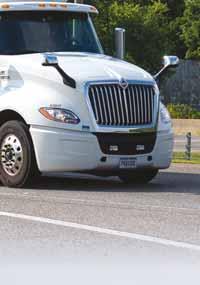
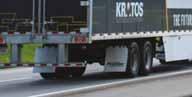
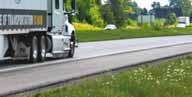
Follow the leader: the duo of tractor-trailer units is part of the I-70 Truck Automation Corridor Project
Platooning with Ease on the I-70
What would happen to truck platooning - a nascent technology - if the weather turns nasty? The I-70 Truck Automation Corridor Project in the northern US should provide some answers, reports David Arminas…
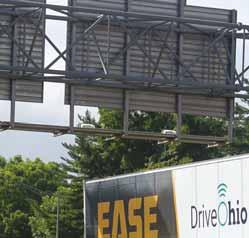
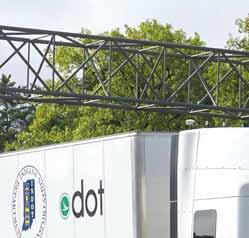
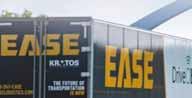
Most drivers on the Interstate 70 hardly notice two large trucks trundling closely together along the four-lane highway between Ohio and Indiana. But the following truck from Ease Logistics is at times driving semiautonomously, platooning behind a lead truck, also from Ease. The pair of vehicles are regularly travelling the I-70 between Columbus, Ohio, and Indianapolis, Indiana - a 175-mile (280km) trip - delivering shipments for Ease.
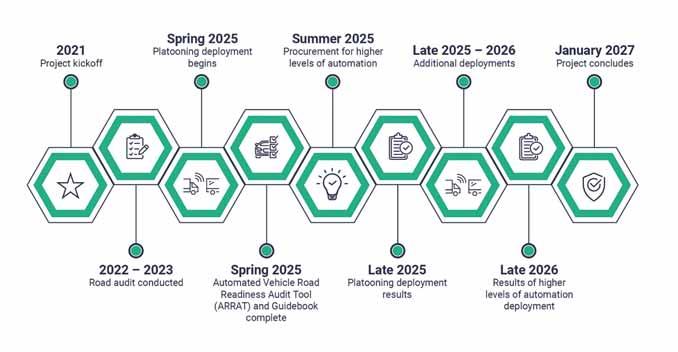
The duo of tractor-trailer units is part of the I-70 Truck Automation Corridor Project that started 14 April and will continue for several months. It is a collaboration between Ease, the DriveOhio initiative from the Ohio Department of Transportation (ODoT) and Indiana DoT. The goal is to advance the adoption of truck automation technologies in the logistics industry across the US Midwest states.
Funded in part by a grant from the US Department of Transportation, the multiyear $8.8 million project aims to deploy varying levels of automation - in this case Level 2 - and integrate these technologies into truck fleets’ daily freight-hauling
operations. But the majority of automated vehicle testing to date has been done in regions with warmer and more predictable weather. It’s crucial to assess technology performance in adverse weather conditions to deliver the safety benefits of the platooning technology.
“Everything we do at ODoT is driven by safety,” says ODoT director Pam Boratyn. “We’re committed to reducing deaths on our roadways and vehicle automation technologies can be part of the solution. Many vehicles on the road today have some degree of automated driving systems including adaptive cruise control, lane-keep assist and automatic braking. All of these features are designed to improve safety and reduce driver stress.”
Lower stress environment
Truck automation technology is one of many safety efforts underway, notes INDoT commissioner Lyndsay Quist. “In partnership with Ohio, our goal is to create a safer, lower-stress environment for all drivers.”
The Ease Logistics trucks are equipped with platooning technology provided by Kratos Defense that electronically links the two vehicles. It allows the driver of the lead
vehicle to control the speed and direction of the second truck, enabling it to precisely follow the path of the leader. During portions of the I-70 trips, the following truck automatically steers, accelerates and brakes as part of testing the feature that will create safe, efficient operation and consistent vehicle coordination.
However, as a back-up during the runs, professional drivers remain in the driver’s seat of both trucks throughout the platooning deployment and can turn off the technology system and take over if needed.
“We’re committed to driving innovation in logistics with safety at the core of everything we do,” says Peter Coratola, Ease founder and chief executive. “Our work on the I-70 project is a clear example of that commitment. We implemented a ‘crawl/walk/run’ pre-deployment strategy that gradually increases the complexity and testing conditions.”
In partnership with DriveOhio, ODoT and INDoT, the project team first mapped routes without automation - the crawl - to identify GPS dead zones and identify road readiness. “We then fine-tuned systems with unloaded trailers - the walk - and finally tested with fully-loaded trailers - the run - to finalise
calibrations,” explains Coratola. “This phased method minimised risk, enhanced system performance and ensured safety and efficiency in real-world operations.”
Because the current I-70 project is the second involvement by Ease in deploying platooning, Coratola said there was no shortage of willing drivers who were aware of, and confident in, this type of technology. “We had four of our seasoned drivers sign up to be trained on the Kratos technology and go through over 250 hours of hands-on training before driving on open roads. Ease drivers see this as a way to enhance their skillset and be a part of something transformational in our industry. Importantly, the driver in the second truck is not just ‘riding’ along. They are in control and monitoring at all times.”
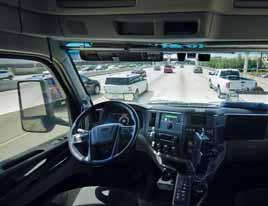
The trucks for the I-70 project are equipped with cameras and sensors for object detection that enable the following vehicle to automatically adjust its speed, or stop, if another vehicle or object moves in between the trucks. Because the following truck follows the lead truck at a closer distance than would be typical, both trucks have a purple light on the cab that is illuminated when they’re in platooning mode to alert law enforcement that they are digitally connected.
The local police agencies are on board with the project. “This technology offers a complete safety system with redundancies that could make roadways safer. It is necessary that we continue to explore improving roadway safety,” says Ohio State Highway patrol captain Chris Kinn. “Unlike human drivers, automated vehicles do not drive impaired, text while driving, fall asleep at the wheel or recklessly speed. The goal of this technology is to take the human error out of the safety equation.”
Ease became involved in platooning work through an RFP (request for proposal) from DriveOhio to test autonomous truck
The road ahead in Ohio
Ohio is home to dozens of public and private entities all involved in the design, development, testing, use and regulation of automated, connected, electric and advanced air mobility technologies. DriveOhio, the state's centre for smart mobility and part of Ohio DoT (ODoT), fosters cooperation and collaboration within the transportation sector and offers companies faster access to resources.
Current work includes the 33 Smart Mobility Corridor - a 35-mile stretch of US Route 33, northwest of Columbus - which serves as a real-world proving ground for automated and connected vehicle technology. ODoT and local governments have equipped the road with fibre-optic cable and roadway sensors that instantaneously link researchers and traffic monitors with data generated from communication units installed in vehicles and along the roadway.
The 432-strand fibre network allows automotive testing, research and development and manufacturing facilities to deploy connected and automated vehicle technology on the road. Dozens of roadside units deliver real-time information to vehicles equipped with on-board units, enabling drivers to make safer decisions. ODoT is transforming the corridor from a facility to test dedicated short-range communications (DSRC) devices to one for cooperative Vehicle to Everything (C-V2X) devices that use a cellular signal to transmit messages instead of Wi-Fi.
technology in rural Ohio. “When the opportunity came up to expand this test with a different set of technology along the I-70 corridor between Ohio and Indiana, we jumped on board,” says Coratola.
For the I-70 project, it was important for the project that the routes be normal freight routes in order for Ease to gather data on how the platooning trucks
perform versus a standard operating tractor-trailer. For most of the runs, both trucks are carrying freight. “This gives us the best data for real-world scenarios,” said Coratola.
“Ease has always been a human-driven, tech-enabled company. As part of our innovation priorities, we wanted to not only be in the conversation about autonomous
Timeline for the truck-platooning test programme
Kinetic®
Mobility MOBILITY REIMAGINED.
technology and vehicles, but be a real part of it, see it in action, understand it and continuously improve. We are not going to sit on the sidelines and let others decide what is best for us and our customers.”
Platooning as a strategy
Founded in 2014, the young company has a history of ensuring it is part of the platooning future. Just before the launch of the I-70 project, Ease partnered with DriveOhio, ODoT, the Transportation and Research Center and Bosch to deploy automated and connected trucks on customer freight shipments as part of the Ohio Rural Automated Driving Systems (ADS) - a first such project in the US. Ease collected data to determine how automated semi-trucks can enhance safety for drivers, passengers and travellers in these settings. Ease customers which chose to participate had their freight delivered via AI-enabled trucks.
The focus for the ADS project was to introduce the technology into real-world conditions conducted across 32 counties in the eastern and southern regions of Ohio. The two trucks were electronically linked; the lead truck driver’s braking and acceleration were synchronised to the following truck. Using Vehicle to Vehicle (V2V) communication and automated driving systems, the driver in the following truck semi-automatically maintained a close, consistent formation with the lead truck. This meant that the platooning truck driver remained engaged, would monitor the system and be ready to take control if necessary.
A very helpful grant from the ODoT took care of the cost of the technology. “Ease contributed thousands of hours of work over the past few years to the ADS and I-70 project and has one full-time project manager on staff coordinating all the parties involved,” says Coratola. “It’s a commitment of time, money and passion that we are proud of.”
Ease seeks to act as a catalyst for meaningful change and establish itself - and the state of Ohio - as leaders in transportation innovation, which means investing heavily in smart and autonomous mobility technologies. “The advent of automated trucking is revolutionising the transportation landscape and supply chain management, influencing how goods are transported and how people commute,” says Coratola. “The findings from these endeavours will greatly influence the nationwide implementation and acceptance of automated trucking technology in the US.” ITS
• Later this year, ODoT and INDoT will release RFPs for additional deployments of automated trucks.
Aurora starts self-drive delivery
Aurora Innovation recently launched its commercial self-driving trucking service in Texas, with regular driverless customer deliveries between Dallas and Houston.
lives by handling the lengthier and less desirable routes.”
To date, the Aurora Driver has completed over 1,930km (1,200 miles) without a driver, and the company plans to expand its driverless service to El Paso in Texas and Phoenix in Arizona by the end of this year.
“We founded Aurora to deliver the benefits of self-driving technology safely, quickly and broadly. Now, we are the first company to successfully and safely operate a commercial driverless trucking service on public roads,” said Chris Urmson, CEO and co-founder of Aurora.
Aurora’s flagship product, the Aurora Driver, is an SAE L4 selfdriving system that is being deployed firstly in long-haul trucking. Aurora’s launch customers are Uber Freight, a technology company powering intelligent logistics, and Hirschbach Motor Lines, a carrier that delivers time- and temperature-sensitive freight. Both companies have had long-standing supervised commercial pilots with Aurora.
Uber Freight and Aurora started working together more than four years ago, noted Lior Ron, founder and CEO of Uber Freight. "Moving autonomous commercial freight without anyone behind the wheel is a historic step forward in our mission to build a smarter and more efficient supply chain, and one we’re proud to lead alongside Aurora.”
Richard Stocking, CEO of Hirschbach Motor Lines, says: “Transforming an old-school industry like trucking is never easy, but we can’t ignore the safety and efficiency benefits this technology can deliver. Autonomous trucks aren’t just going to help grow our business, they’re also going to give our drivers better
The Aurora Driver is equipped with sensors that can see beyond the length of four football fields, enabling it to safely operate on the highway. In over four years of supervised pilot hauls, the Aurora Driver has delivered over 10,000 customer loads across three million autonomous miles. It has also demonstrated capabilities such as predicting red-light runners, avoiding collisions and detecting pedestrians in the dark - hundreds of metres away.
Aurora said its Verifiable AI approach to autonomy blends powerful learning models with guardrails to help ensure the rules of the road are followed, like yielding for emergency vehicles.
Launch trucks are equipped with the Aurora Driver hardware kit and numerous redundant systems including braking, steering, power, sensing, controls, computing, cooling and communication, enabling them to safely operate without a human driver.
Aurora said it is working with industry leaders across the transportation sector including Continental, FedEx, Hirschbach, NVIDIA, Paccar, Ryder, Schneider, Toyota, Uber, Uber Freight, Volvo Trucks, Volvo Autonomous Solutions and Werner.
Most US states today allow for driverless vehicles, including New Mexico and Arizona. Greg Abbott, Texas state governor, said his state continues to attract emerging industries because it offers an environment that welcomes entrepreneurs and encourages innovation. “Texas ranks No. 1 for technology and innovation and that continues as we welcome America's first self-driving trucks,” he said.
“These new, autonomous semis on the I-45 corridor will efficiently move products, create jobs and help make our roadways safer.”
Data provides structural support
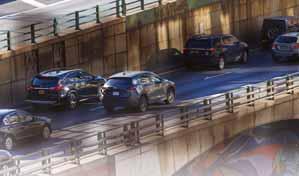
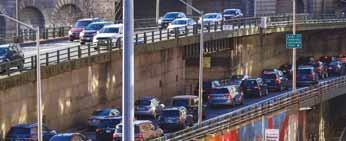
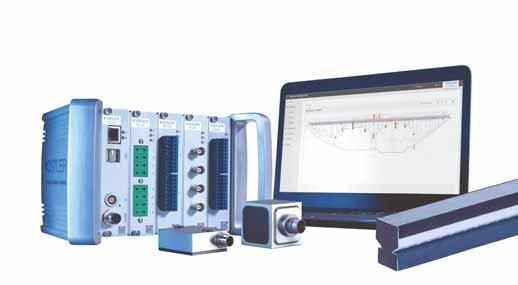
Thousands of bridges in the US are ageing and in need of care and attention. Kistler explains how its WiM technology is helping to preserve New York’s famous Brooklyn-Queens Expressway…
as a reliable basis for a predictive analysis of how funds should be best invested. Long-term bridge monitoring provides more information, enabling authorities and bridge owners to continuously and reliably monitor the condition of bridges and support the planning of maintenance activities through to
WiM combined with SHM gives bridge engineers an even better solution, Kirkpatrick
engineers have the products to monitor bridge movement, vibration, and defl and on the other hand, they can collect c data from overloaded trucks in real time. This helps in the subsequent step of reliably calculating the remaining life expectancy of a bridge, rather than just using load assumptions based on standards.” It also provides bridge owners with critical information, such as whether c can be safely diverted to one side of
AI technology makes it possible to aggregate and analyse large amounts of data, c management that could help keep roads, highways and bridges - as well as everybody using themsafe. “In the future, AI in combination with a network of cameras could provide even more data,” concludes Kirkpatrick. “For instance, transport authorities could discover exact routes taken by overloaded vehicles, or track down uninsured motorists and send them
Premium Accuracy Detection
We’re Here for You — Every Step of the Way
At Sensys Networks, we don’t just sell traffic detection solutions — we’re your dedicated partner from start to finish.
With decades of experience in the traffic industry, we bring a wealth of knowledge to guide your project to success.
We gladly provide:
Expert Design Assistance
Comprehensive Training
Responsive Technical Support
Faster Lead Times
Best-in-Class Warranty
We understand that every project is unique, which is why we offer personalized support, tailoring our technical, design, and installation assistance to your specific needs.
Let’s work together to move traffic forward.
sensysnetworks.com/partnership-driven
Not just a buzzword
Artificial intelligence is coming to ITS – but how do we best use it? What’s it for?
Ekin Smart City Technologies, Verra Mobility and Flow Labs answer Adam Hill’s questions…
It won’t have escaped your attention that artificial intelligence is having something of a ‘moment’ and, like every other industry in the world, intelligent transportation is working out how to use it most effectively. So let’s start with a basic question: what are the main problems that AI can help solve in ITS?
“The challenge we’re facing today transcends basic congestion,” says Akif Ekin, CEO & founder at Ekin Smart City Technologies. “Cities are grappling with overwhelmed road networks, rising accident rates, and serious inefficiencies in transport operations. Traffic delays result in economic losses — billions in wasted fuel and lost productivity — and they degrade public safety by delaying
emergency response times. This is no longer just a transportation issue. It’s a systemic, cross-sector problem affecting quality of life, economic growth, and urban resilience.”
flow, you reduce idling time and gas use, which helps the community for a variety of reasons. All of these items are interrelated and work to improve several problems simultaneously.”
Promise of AI
For Steven Crutchfield, senior vice president, MD of international at Verra Mobility, the first issue is safety, particularly in terms of reducing dangerous driving behaviours. “The second thing would be efficiency,” he says. “AI can sense traffic congestion and then help redirect traffic in those locations. It can also help when emergency management officials need to get somewhere fast – by either redirecting them to a different route or clearing the first one through redirects. These first two assist in helping to solve another problem – pollution and cleanliness. By improving traffic
The promise of AI in transportation has always been alluring: fewer crashes, faster commutes, cleaner air, suggests Jatish Patel, CEO and founder of Flow Labs. “But for many years, we lacked the essential ingredient to make it happen: good data,” he says. “Today, we face the opposite problem. Cities are drowning in data, from GPS pings and traffic cameras to signal timing plans and crash records - but often can’t make sense of it quickly enough to act. This is where AI is already transforming traffic management
AI can analyse patterns in real time and anticipate congestion or violations before they escalate
Akif Ekin
Ekin Smart City Technologies
The big insight is just the sheer amount of different factors AI can take into account when it comes to decision-making
““ “ “ “ “
Steven Crutchfield
Verra Mobility
What cities really need isn’t more data: they need better decisions, made faster
Jatish Patel Flow Labs
and where it’s heading next. What cities really need isn’t more data. They need better decisions, made faster. This is where AI, especially spatial-temporal machine learning, has unique power. It can ingest high volumes of variable-quality data, correct for inaccuracies, and provide predictive insights in real time. Rather than just flagging problems after they occur, AI can diagnose root causes, simulate alternatives, and recommend interventions, often within seconds.”
This is welcome, because city and transport authorities are under immense pressure, points out Ekin. “They’re being asked to reduce congestion, improve safety, and cut emissions — all while operating with ageing infrastructure and tight budgets,” he says. “In many cases, cities are still relying on reactive approaches and decade-old systems that lack real-time adaptability. The demand is growing, but the tools haven’t kept up — leading to a widening gap between what’s needed and what’s possible with current resources.”
What AI does is to introduce predictive intelligence and automation into traffic systems. “Rather than simply recording what has already happened, AI can analyse patterns in real time and anticipate congestion or violations before they escalate,” Ekin says. “It enables faster incident detection, dynamic traffic signal optimisation, and automated enforcement without human bias. The result is not just smoother traffic flow, but safer, fairer, and more efficient cities.”
For Crutchfield, AI-powered traffic management is another tool, not a one-size solution. “It makes work streams a lot more efficient and enables us to dive deeper and get more meaningful and actionable insights,” he says. “One example is addressing obscured licence plates where drivers deliberately break the law. These enforcements are there for a reason – to have compliance on the roadways and to keep people safe. With AI, even when plates are deliberately obscured, systems can look for the signature on the vehicle themselves, including markings or unique damage, to maintain enforcement capabilities. This puts everyone on the same playing field and held accountable to the law. Another example would be observing and enforcing (where necessary) driver behaviour, such as using mobile phones while driving or correctly using seatbelts. Initially, this information could be used for better driver education and enforcement to ensure drivers are using seatbelts and are not distracted by mobile phones while driving.”
Legacy systems
Some confusion arises on a couple of points: 1) what will AI do which is not done by legacy systems? And 2) don’t we already use some AI in these systems? “The traditional model for managing traffic relied heavily on hardware-centric solutions: sensors in
cabinets,” says Flow Labs’ Patel. “These systems are expensive to install and maintain, take years to deploy, and often deliver incomplete or low-resolution data. Worse still, they don’t scale well, particularly at a time when transportation departments are being asked to do more with shrinking budgets.”
He sees a fundamental shift from hardware-based infrastructure to softwarefirst intelligence. “Instead of laying more devices in the ground, we use geospatial AI [GeoAI] to harness and fuse existing data streams, regardless of their source or quality, into actionable insights. This not only lowers costs and deployment time but also makes advanced traffic management accessible to cities of all sizes.” Flow Labs views GeoAI as a new kind of infrastructure, rather than an add-on; what once required tens of thousands of dollars in equipment and weeks of field set-up can now be achieved through software that deploys in days, and at a fraction of the cost, Patel argues.
“While some legacy systems use rudimentary algorithms or rules-based logic, true AI goes far beyond that,” insists Ekin. “AI systems can learn from millions of data points, adapt to changing conditions, and optimise themselves over time. For example, traditional enforcement cameras might capture a red-light violation — but an AI system can recognise nuanced behaviours, distinguish between emergency and civilian vehicles, and reduce false positives through contextual awareness. Also, legacy systems typically function in silos — AI breaks these down by integrating enforcement, traffic
impact into one continuous loop of insight and action.”
AI can do calculations for you in real time, or in any computer model run that you want, adds Verra’s Crutchfield: “That enables you to make quick, informed, and dynamic decisions. Rather than using historical data, AI can look at a series of its own parameters and quickly determine that a current traffic situation is caused by an x-incident or yincident. We've been using AI for many years now; I think the big insight is just the sheer amount of different factors AI can take into account when it comes to decision-making. AI helps because you're not just looking at traffic flow, you're looking at the environment around you, how many vehicles are involved, the people impacted, and the infrastructure.”
Speed and accuracy
The speed and accuracy that AI enables is unprecedented, he adds: “Therefore, unsafe or incorrect use of the roadways and transport infrastructure can be easily monitored and identified. Examples could be unauthorised driving in dedicated bus lanes or peak-hour flow lanes, unsafe driving around public transport systems like buses and trams, real-time erratic driving alerts to emergency services, tail-gating/driving too close on major arteries, illegal/unsafe u-turning and even impeding traffic by driving too slow.”
US state agency deployments in places like Florida, North Carolina and Virginia are proving that AI can modernise entire signal systems without the need for costly new infrastructure. “In North Carolina, what once took 30 days of manual labour, assembling controller data, cross-referencing
AI can be an aid to enforcement, thinks Ekin
spreadsheets, and writing signal performance reports, now takes just 30 seconds,” Patel says. “With real-time analytics deployed at scale across more than 2,500 intersections, engineers now spend less time wrangling data and more time solving real problems. These gains aren't just operational, they're financial. Analytical tasks that once required dedicated consultants or extensive staff hours can now be completed instantly, helping the state reduce programme costs while expanding its capabilities. And as the next evolution takes shape, AI-powered tools will begin to automate signal retiming itself, transforming a task that once cost thousands per intersection into a fast, software-led process measured in hundreds.”
Ekin has deployed AI-powered mobile and fixed systems in over 40 countries.
“Our solutions help cities automate speed enforcement, monitor illegal parking, and analyse traffic flow in real time,” says Ekin.
“One standout case is our work in the US East Coast, where our bike-mounted enforcement solution helps cities maintain safety in congested downtowns — all without the need for new infrastructure. In Europe and the Middle East, cities use our unified AI platform to manage traffic and public safety across hundreds of intersections, dramatically improving both compliance and commuter experience.”
Verra’s Crutchfield says: “AI can help with road maintenance and help identify when there are problems like roadway debris or potholes. Cities can preemptively get ahead of maintaining their roads or infrastructure, which could cause not just inefficiencies but potential danger safety
ITS devices and controllers is combined with high-resolution probe data and processed through machine learning models that identify and correct for detection failures and gaps in coverage. “The result is not just cleaner data, it’s a far more accurate picture of traffic operations in real time,” says Patel. “Whether calculating turning movement counts or measuring the impact of red-light running policies, FDoT is now using this enhanced dataset to guide decisions across hundreds of signals, with plans to expand the system to more than 2,000.”
Integrated solution
hazards. AI has a lot of potential to assist us, but it’s important to know that it’s one tool in the tool belt. Using it as part of the road safety toolkit helps to create a more impactful, efficient, and safer community.”
Also, AI is only as effective as the data it’s built on, cautions Patel. “In Florida, challenges like device malfunctions, power outages, and network instability made reliable traffic data hard to come by, especially in regions where physical infrastructure was incomplete or ageing.” To tackle this, Florida Department of Transportation partnered with Flow Labs to launch an integrated platform - called Heidi – where data from existing
And unlike traditional methods that rely on costly field studies or fixed-site sensors that can run upwards of $50,000, this integrated solution delivers actionable data at a scale and cost that was previously out of reach. In major cities like Seattle and Washington, DC, AI is helping integrate multimodal data, prioritise safety interventions, and better understand travel patterns, Patel continues. “Meanwhile, in smaller municipalities like Brownsville, Texas and Grand Forks, North Dakota, AI is levelling the playing field, providing access to the same advanced capabilities once reserved only for the largest and best-funded cities.”
All this means that AI is not just a buzzword, it’s a practical tool for solving real-world challenges at scale, with real budget impact, says Patel. “Whether reducing per-intersection study costs from four figures to double digits, or compressing project timelines from months to weeks, the financial efficiency of AI is proving as transformative as its technical capability,” he concludes. “The future of transportation won’t be defined solely by the vehicles on the road or the sensors in the pavement. It will be defined by how smartly, how quickly, and how fairly we manage the systems behind them.” ITS
Ghostplates are a growing problem – how can AI help identify motorists who don’t want to be identified? Chris Shepherd of MAV Systems has some thoughts…
Deliberately obscured licence plates could be a thing of the past
Innovation without the chaos
Effective governance is required to ensure that artificial intelligence remains an asset rather than a liability, says Rafael Hernandez of IntelliRoad. He lays out his case here…
AI
-driven vehicle licence plate image review systems have a transformative potential in tolling. Yet while AI-driven automation offers unparalleled efficiency in managing large volumes of data, it is essential to recognise that, without proper governance, AI can introduce as many risks as benefits. As AI adoption accelerates, oversight isn’t optional - it’s essential to prevent errors, protect privacy and maintain public trust.
AI should be developed with ethical considerations built into the software design. Humans must remain an integral part of the processing workflow to ensure quality control, proper calibration and continuous improvement. Additionally, privacy concerns must be addressed to protect customer data from misuse or exposure.
Practical evolution beyond legacy systems
Legacy technologies like fingerprinting have served the tolling industry for over two decades. However, modern tolling systems face significant operational inefficiencies due to high traffic volumes, increasingly complex licence plate types, and the need for realtime responsiveness. AI-driven image-review technologies have revolutionised tolling operations by offering real-time insights and
significantly higher accuracy rates. However, not all AI systems are created equal. Optical character recognition (OCR), often deployed at the in-lane level, assesses image quality but lacks the precision required for financial transactions due to technical limitations and concerns regarding personally identifiable information (PII) exposure, leading to inefficiencies and potential privacy risks. In contrast, ALPR is specifically designed for accurate, image-based transactions, making it the more reliable choice when governed properly. The risks of misclassification and unauthorised access to vehicle data highlight the importance of using AI responsibly and implementing governance measures to safeguard customer privacy.
Ensuring responsibility in AI implementation
Unmanaged AI can amplify efficiency but also magnify risks. Effective governance ensures AI remains an asset rather than a liability. To achieve this, three key principles must guide AI implementation in tolling operations:
Ethics in software design
AI must be developed with ethical considerations from the start to fairness, transparency, and accountability in automated decision-making.
Human oversight in workflows
AI should not operate in isolation. Humans must be actively involved in reviewing and validating AI outputs to ensure high-quality results and continuous system improvement.
Data privacy and security
AI systems must comply with strict, transparent data protection policies to prevent customer data misuse and unauthorised exposure.
Operational
and financial risks
Unregulated AI in tolling image review can lead to cascading problems across an organisation. Consider the domino effect of a single error in image review:
Customer impact Misread plates lead to incorrect billing, sparking unnecessary customer disputes.
Operational strain Call centres face higher volumes of complaints, leading to longer wait times and higher staffing costs.
Financial drain Incorrect DMV lookups and misdirected collections waste resources and damage trust.
Investing in a best-in-class image-review process isn’t just a technical upgrade - it’s a proactive strategy to address potential issues
at their root, reducing downstream costs and customer frustrations. Human auditors play a crucial role in monitoring and refining machine learning workflows, ensuring data integrity and maintaining business profitability. AI should not replace human expertise but rather augment it to drive more efficient, customer-centric operations.
New era of human + AI collaboration
Combining ALPR with a manual imagereview (MIR) process creates a powerful synergy, enabling seamless error correction and predictive analytics. When designed with governance in mind, AI-powered systems can identify patterns and anomalies in real time, preventing misreads and reducing customer disputes.
However, AI should not operate independently. Software development must consider the necessity of human involvement in AI workflows, ensuring a continuous exchange of learning between AI and human, where both parties learn and improve together. This approach ensures AI is a support system rather than a replacement for human expertise.
Preventing - not creating – a crisis
The goal is not to react to a crisis but to prevent one from occurring in the first place. AI governance is the key to
‘Modern tolling systems face significant operational inefficiencies due to high traffic volumes’
maintaining control over tolling operations and ensuring a responsible AI approach. By embedding ethical design principles, integrating human oversight, and enforcing strict data-privacy measures, tolling agencies can leverage AI for efficiency while mitigating risks.
Ultimately, it is up to industry leaders and policymakers to ensure that AI enhances, rather than disrupts, tolling operations.
safeguarding customer privacy. The future of tolling depends on our ability to balance AI’s transformative potential with human-driven oversight and ethical governance. ITS
ABOUT THE AUTHOR: Rafael Hernandez is vice president, tolling, at IntelliRoad
Lyon, France
September 14-16, 2025
Be there this September as global transportation leaders gather in Lyon, France — register now at ibtta.org/lyon
2025 IBTTA PROGRAMS AND EVENTS
JUNE
Communications, HR & Legal Workshop
June 1-3, 2025 | Portland, OR www.ibtta.org/portland
JULY
Maintenance, Engineering & Roadway Operations Workshop and IBTTAFoundation Annual Service Project
July 26-29, 2025 | Detroit, MI www.ibtta.org/detroit
SEPTEMBER
Global Tolling Summit
September 14-16, 2025 | Lyon, France www.ibtta.org/lyon
OCTOBER
Fall Board of Directors & Committee Meetings
October 10-11, 2025 | Denver, CO
93rd Annual Meeting & Exhibition
October 11-14, 2025 | Denver, CO www.ibtta.org/denver
Follow us on for the latest news. www.ibtta.org
Get yourself connected
Workzones need to be safer for drivers and workers – and the technology exists to harmonise safety with mobility needs, says Swarco’s Daniel Lenczowski
Iremember the pre-dawn chill of 2010, lacing up steel-toe boots for my first shift as a young engineer on site.
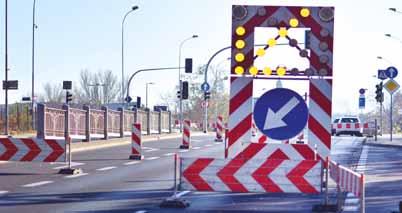
Back then, construction zone safety relied heavily on high-visibility vests, handheld stop signs, and the fragile hope that drivers would see and react to orange cones. Fifteen years later, prompted by US National Work Zone Awareness Week and its crucial call to “Respect the zone so we all get home”, reflection on that era reveals a great transformation. The rise of cooperative intelligent transport systems (C-ITS) is fundamentally changing how we protect both workers and motorists.
At the heart of this technological revolution lies the decentralised environmental notification (DEN) service and its DEN messages (DENM) - emerging as a digital guardian for high-risk workzones.
Critical role for DEN & DENM
C-ITS represents the frontier of road safety technology, enabling vehicles and infrastructure to communicate in real time to prevent accidents and save lives.
Construction zones present unique hazards, with workers in close proximity to fast-moving traffic, temporary road layouts and unexpected obstacles. The strategic implementation of DENM-based warning systems has shown remarkable potential to reduce accidents and fatalities in these high-risk areas.
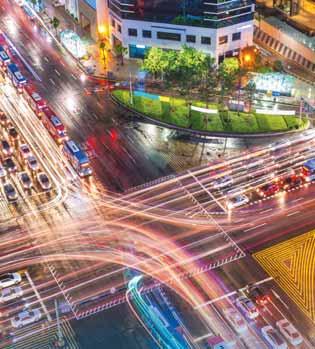
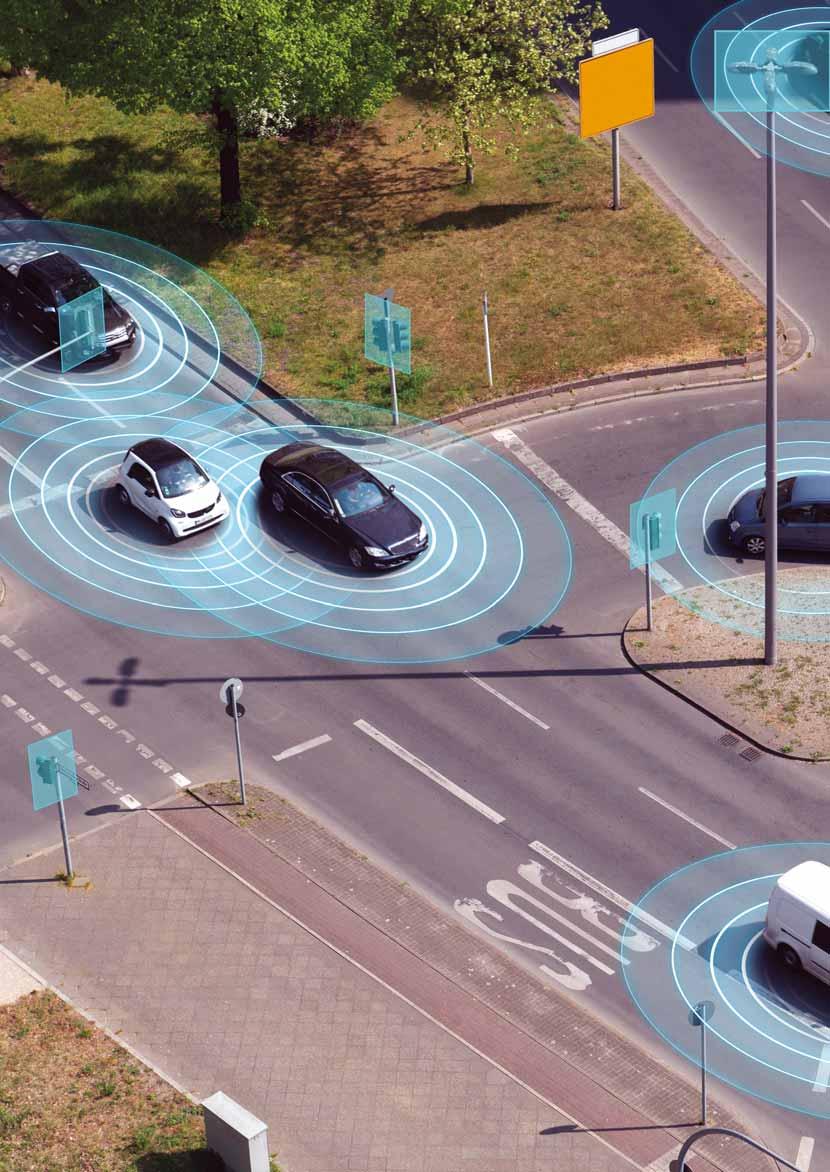
DEN is designed to provide real-time situational awareness through Vehicle to Everything (V2X) communication channels. At its core, DEN enables the timely dissemination of critical road event information to all relevant road users within a specific geographical area through standardised DENM. The DEN service operates within the broader framework of C-ITS, which facilitates communication between vehicles, infrastructure and other road users. This service is particularly significant because it transforms traditional reactive driving into proactive safety management. Instead of drivers reacting to visible hazards, the system enables anticipatory responses to dangers beyond the line of sight.
The European Telecommunications Standards Institute (ETSI) has developed
Early warning leads to smoother traffic flow, reduced collision risk, and ultimately, fewer fatalities among both drivers and road workers
comprehensive standards governing the DEN service - specifically ETSI EN 302 637-3, which defines the DENM format and transmission protocols. This standardisation is crucial for ensuring interoperability across different automotive manufacturers, infrastructure providers and regional deployments.
Unlike static warning systems, DEN services provide dynamic notifications that adapt to evolving road conditions. When a hazardous event occurs, DENMs can be triggered automatically by sensors, manually by authorised personnel, or through on-board vehicle systems. These messages are then propagated through the network, reaching vehicles that might be affected by the hazard well before they encounter it physically.
Technical architecture of DENM DENMs follow a sophisticated structure designed for maximum information utility while maintaining bandwidth efficiency. Each message contains several mandatory components, including a header with management information, a situation container describing the event type, a location container with
precise geographical references, and an optional container with supplementary details.
The technical structure of DENMs is oriented around event-causation codes that categorise the nature of the hazard. For construction zones specifically, dedicated cause codes (like "roadworks" - code 3) enable receiving systems to properly interpret and present the information. The messages also contain crucial data such as the event position, detection time, relevance area and event duration.
What makes DENMs particularly valuable is their capacity to include detailed information about construction zone configurations, including lane closures, speed restrictions, altered road paths and the presence of workers. This granularity enables drivers and advanced driver-assistance systems to prepare appropriately for the specific conditions ahead.
The transmission of DENMs follows sophisticated protocols to ensure timely delivery and prevent network congestion. Messages are repeated at intervals appropriate to the urgency of the situation, with critical safety notifications receiving higher transmission priority. DENM repetition and termination mechanisms ensure that information remains current, with updates or cancellations issued when conditions change.
Workzone safety
Construction zones present unique hazards on roadways, with statistics showing an alarming rate of accidents in these areas. In the US alone, workzone crashes result in approximately 800 fatalities and 42,000 injuries annually, with similar concerning statistics across Europe. These zones combine multiple risk factors: unexpected lane changes, temporary traffic patterns, reduced lane widths, the presence of workers, and often compromised visibility due to equipment and barriers.
DENM technology addresses these specific challenges through targeted warning applications. When approaching a workzone, vehicles equipped with C-ITS capabilities receive advance notification via DENM, providing details about the nature of the construction, affected lanes, speed restrictions and the presence of workers. This early warning significantly extends the driver's perception horizon beyond visual range, allowing for smoother deceleration and lane changes.
The safety applications enabled by DENM in construction zones can be categorised into several specific use cases. Road works warning (RWW) messages alert drivers to upcoming construction activities and any associated hazards. Temporary speed limitations are communicated with exact geographical bounds. Lane closure and altered traffic-flow notifications help
drivers prepare for required manoeuvres. Additionally, special hazard warnings related to construction equipment movements, material spills or worker proximity to traffic can be immediately propagated. Research has demonstrated significant safety improvements through these applications. A study conducted across several European test sites revealed that DENM-enabled workzone warnings reduced hard-braking events by 61% and near-miss incidents by 37%, while improving average compliance with temporary speed restrictions by nearly 24%. These outcomes directly translate to enhanced safety both for drivers and for vulnerable road workers.
systems combine both technologies to maximise coverage and reliability. The integration with traffic management centres enables human verification of automated alerts and centralised coordination of messaging.
Stakeholder engagement has proven crucial to successful deployments. Construction companies are increasingly incorporating C-ITS technologies into their safety protocols, equipping work vehicles with transmitters that automatically generate DENMs when active. Road authorities are developing standard operating procedures for message triggering, verification and termination aligned with construction activities. Meanwhile, automotive manufacturers are expanding their vehicles' capabilities to receive and meaningfully present DENM information to drivers.
Technical challenges and standardisation efforts
Despite its promising benefits, implementing DEN services for construction zone safety faces several technical challenges. Message prioritisation represents a critical issue - in areas with multiple simultaneous events (like a construction zone during adverse weather), the system must intelligently manage which notifications take precedence to avoid overwhelming drivers with information.
Security concerns also remain paramount, as the system must prevent malicious actors from injecting false notifications that could create safety hazards or traffic disruptions.
Current deployments and strategies
Across Europe, North America, and parts of Asia, several large-scale deployments of DEN services targeting construction zone safety have demonstrated impressive real-world effectiveness. The European C-Roads project, spanning multiple countries, has implemented DENM-based workzone warnings along thousands of kilometres of highways, with participating vehicles receiving standardised notifications regardless of national boundaries.
In the US, the Work Zone Data Exchange (WZDx) initiative has established frameworks for sharing construction zone information that can be translated into DENM. The project has enabled several state departments of transportation to broadcast real-time workzone data to connected vehicles, navigation providers and mobility applications.
Implementation approaches vary, based on regional infrastructure capabilities. In advanced deployments, roadside units (RSUs) are installed along construction corridors to broadcast DENMs directly. Alternative approaches leverage cellular networks to distribute messages over wider areas. Hybrid
Interoperability across different vehicle manufacturers, infrastructure providers, and national implementations continues to present some challenges. While ETSI standards provide the foundational framework, practical implementations often require additional specifications and national profiles to ensure seamless functionality. The harmonisation of these profiles across regions has been a focus of international working groups seeking to create truly borderless safety systems.
Another significant challenge involves accurate positioning and location referencing. Construction zones frequently involve complex geometries that may change daily, requiring precise geographical representation in DENM messages. Advanced mapping techniques and dynamic location-referencing methods are being developed to address these limitations, enabling more granular representation of workzone boundaries and hazard locations.
The European C-ITS Platform and the US Department of Transportation have both developed detailed specifications for DENM implementation in workzones, addressing these challenges through standardised profiles. The European C-Roads Platform has established harmonized specifications for C-ITS services, including DENM, to ensure cross-border interoperability. Similarly, the
SAE J2945 family of standards in the US provides detailed implementation guidance for workzone safety applications.
Future directions, emerging innovations
The evolution of DEN services for construction zone safety is advancing rapidly, with several promising developments on the horizon. Integration with automated driving systems represents perhaps the most transformative potential, as automated vehicles can not only receive DENM warnings but also respond to them automatically with appropriate speed adjustments and lane positioning.
Enhanced sensing technologies are enabling more sophisticated event detection. Artificial intelligence algorithms analysing camera feeds can automatically identify changing workzone configurations and worker positions, triggering appropriate DENMs without human intervention. This capability is particularly valuable for mobile workzones or maintenance activities that progress along roadways throughout the day.
Augmented reality applications are beginning to emerge as a compelling interface for DENM information. Using windshield displays, warnings can be visually overlaid on the driver's field of view, highlighting exactly where hazards exist and what actions are recommended. These intuitive interfaces help bridge the gap between receiving a notification and taking appropriate action.
The incorporation of bidirectional communication is also gaining traction, allowing vehicles not only to receive DENMs but also to contribute to them. For instance, if multiple vehicles detect unusual braking patterns near a construction zone, this collective intelligence can trigger or modify DENMs to warn approaching traffic about potential congestion or incidents.
As 5G networks continue to expand, the transmission capabilities for DENMs
will only improve. Higher bandwidth, lower latency and network-slicing capabilities will enable more detailed messages, faster delivery, and dedicated communication channels for safety-critical information. This infrastructure improvement will be particularly valuable in dense urban environments where construction activities frequently affect multiple road users.
Conclusion & a personal reflection
The integration of DEN services and DEN messages into construction zone management represents a significant advancement in road safety technology with measurable impacts. The ability to provide drivers with timely, relevant, and accurate information about upcoming workzones fundamentally changes how they interact with these high-risk environments. Early warning leads to smoother traffic flow, reduced collision risk, and ultimately, fewer fatalities among both drivers and road workers.
As C-ITS technologies continue to grow in the vehicle fleet and infrastructure expands to support them, the potential safety benefits will only increase. The gradual evolution toward connected and automated mobility will further enhance these systems, creating a safety ecosystem where vehicles automatically respond to construction zone notifications before human perception would even register the hazard.
For transportation agencies and construction companies, investing in DENM capabilities represents not just a technological advancement but a fundamental ethical imperative. The cost-benefit analysis consistently shows positive returns when accounting for both direct accident costs and indirect benefits like improved traffic flow and worker productivity.
The path forward requires continued collaboration among standards bodies, technology providers, infrastructure managers, vehicle manufacturers and policymakers. By committing to interoperable systems, transparent data sharing, and human-centred design principles, we can realise the full potential of DEN services
to transform construction zones from hazardous necessities into examples of how technology can harmonise safety with mobility needs. As we build tomorrow's roads, DENM technology ensures we can do so while protecting those who work and travel on them today.
As I look at old photos of muddy boots and sunrise coffee breaks, I’m reminded how far we’ve come - and how much further we can go. C-ITS isn’t just about smarter cars; it’s about protecting lives, whether you’re behind the wheel, installing traffic lights or holding a stop sign. I still remember the anxiety of watching cars barrel past our cones, inches from the crew. Today, DEN messages act as a digital shield. But technology alone isn’t enough.
When you see those orange signs:
• Slow down early: Sudden braking endangers everyone.
• Put your phone down: That notification can wait.
• Be patient, thank a worker: They’ve likely been on site since dawn.
To the engineers refining these systems and the crews braving the asphalt: thank you! And to drivers: let’s honour their work by staying alert. Because at the end of the day, we all want to get home safely. ITS
THE AUTHOR:
ABOUT
Daniel Lenczowski is CCAM sales executive at Swarco
Slow down, folks…
Clearing the road
Technology is one of the main tools in cutting congestion quickly and effectively. But it can’t just be about making things better for car drivers, explains TomTom’s Andy Marchant…
Traffic remains a universal challenge. Cities across the world must constantly manage congestion to allow vehicles and people to move freely, with ease and with minimal impact on air quality.
Those responsible for road infrastructure are local authorities and urban city planners. At the same time, these decision-makers are grappling with the impact and complexities of population growth, climate change and funding cuts.
Yet, innovative approaches to city infrastructure and road planning remain vital. The alternative is traffic congestion negatively impacting local economies and quality of life.
Technology is one of the biggest tools we can use to tackle this challenge quickly and effectively. Urban planners can utilise realtime data for a clear view of road conditions – both past and present. This will empower them to minimise bottlenecks and improve flow while providing the insights necessary to transition to multi-model transportation networks with minimal disruption.
So, how can city planners get started on their transition to smarter, more resilient road networks? Particularly at a time when many are being tasked to do more with less.
Traffic Index captures how people, goods and vehicles flow around cities each year. In 2024, before the introduction of the congestion charge, New York was found to have the slowest-moving traffic of any city in the US.
Global gridlock problem
On average, it took drivers just over 31 minutes to cover a typical 10 km trip. When traffic is free flowing, it is just 24 minutes.
Meanwhile, TomTom’s latest analysis revealed that, across 2024, London was found to be the slowest-moving city centre in Europe, based on actual average travel times. The story gets worse during commuting hours, with the average 10 km journey during the morning peak hours taking 39 and a half minutes. In the evening, it takes 40 minutes.
While traffic in London and New York is consistently bad, we must head to Asia to see the single worst day of traffic. Sapporo, Japan, witnessed its worst day of traffic on 17 January 2024, when travel times reached a staggering 47 and a half minutes for a 10 km trip.
This gridlock reflects several factors that city planners simply cannot control. After all, traffic doesn’t always react as you might expect; it’s unpredictable. Firstly,
local authorities and urban planners have limited control over factors like residential and workplace locations. Secondly, commuter numbers are creeping back to pre-pandemic levels, compounded by a lack of viable alternatives to car travel in many cities across the globe. Thirdly, congestion will worsen in tandem with more cases of extreme weather conditions.
Looking ahead, city planners must harness mapping data to address the traffic issues they can influence — improving road networks, reducing congestion and ensuring smoother traffic flows.
Harnessing data-driven, multimodal transport networks
To solve congestion, we need to think about traffic beyond cars. Traffic shouldn’t just be about managing cars or making the situation better for cars - we need more than that.
The Traffic Index highlighted that cities which focused on stimulating new modes of transport to develop a more balanced transport network have reduced congestion. The typical examples are Amsterdam and Copenhagen – both cities are world leaders in multimodal transport networks, with locals regularly using a combination of cars, buses, trams, bikes and their feet to get around.
This modal split is something that must
TomTom’s
happen for the good of our cities. Reducing congestion isn’t about building more roads or rebuilding road networks for cars, it’s about giving space back to other modes of transport. To enable this transition, smart decisions need to be made. Standardised data will be central to helping city councils, governments and urban planners make the best-informed decisions to improve the flow
of multimodal transportation in their cities. A mapping partner can provide real-time visibility by leveraging a large volume of data from road networks and connected devices. Ideally, they should draw data contributions from up to one in three vehicles in your city.
This level of data penetration will ensure highly accurate measurement and
reliability for all stakeholders. Above all, the accuracy and granularity of this data will enable better-informed decisions. From pinpointing congestion hotspots and identifying underused roads, to rerouting vehicles and addressing emergency road closures, real-time data will ensure these decisions are timely and effective. Local authorities and city planners will drive meaningful change by harnessing real-time data on city-wide traffic conditions and comparing this with year-round data.
Building smarter cities
In the smart cities of the future, congestion will be a thing of the past, efficiency will be the norm, and multimodal transport will be commonplace. To enable this future, effective traffic management will remain a critical element of urban planning. How effective it is, though, depends on data. Only with a single view of city infrastructure for data-driven decision-making will cities become thriving urban environments that are more liveable, sustainable and efficient. ITS
10 years on, where’s MaaS heading?
Where are we now with Mobility as a Service? Roelof Hellemans of MaaS Alliance takes a look back over the last decade – and looks ahead to how the industry needs to be thinking in future
To change complex systems with multiple stakeholders and differing priorities, we need innovators and change agents to push the limits of perceived norms and to challenge the status quo. In the world of mobility that we found ourselves 10 years ago - with stovepipe solutions and unconnected and separate systems and mobility providers - a select group began a laborious task that required strong leadership, vision and the courage to become an ambassador of improvements. That is the catalyst and how Mobility as a Service (MaaS) was born…
Ten years later, where do we stand with the concept of MaaS? Did we deliver what we promised, or did we overpromise? Were the expectations too high? It goes without saying that the concept of MaaS has become an integral part of every journey for every user: from planning to booking to payment. This integration is ingrained in the daily lives of individuals, with the promise of further improvement and impact for every user. One thing is for sure, MaaS has not matured yet - and we are approaching the rebellious teenage years of MaaS; so watch out! Unfortunately, the learning curve has been steep and the successful business models are still evolving. But this does not mean that the vision of MaaS has failed. It is evident that MaaS has been the accelerator
of technical improvements within the mobility industry. MaaS has shown itself to be the spark and the kickstart to shake up several ‘immobility’ industries that are known as conservative, risk-averse - and fiscally-challenged.
Definitions and roles
I personally experienced many difficulties and challenges with the concept of MaaS. From the first moment, we all had our own definition of the concept - but most of these discussions were about the ownership of MaaS. An example: some say that the backbone of MaaS is public transport. Others say that the backbone of MaaS is the user. The definition changes based on how you view the world. What doesn’t change is that we must all see that MaaS is the output of processes that serve the user.
There are also external misperceptions of MaaS that are very hard to change. It is not only expectations which are high: every year, there is a publication of the market value of MaaS that is shockingly high.
Fact: the business model is still in evaluation. MaaS is not solely about making revenue, it is not about commercial cowboys capturing market share at all costs, or about who will dive in and take it all. MaaS is a way of thinking to reach sustainable mobility goals.
What I learned about MaaS is quite
simple: MaaS is a tool to influence mobility and the services to provide all options for all users. MaaS is the output of the mobility process:
• Corporate: to serve mobility between employers and employees
• Government: to serve mobility between public authorities and inhabitants
• Consumers: To serve mobility between point of interest / destinations and consumers
What kind of a tool is it? The evolution of the tools, data sharing and connectivity between providers and the consumer has been vast – but it’s the tip of the iceberg. This digitalisation is the enabler for the opportunities for the mobility sector. We should start innovating and use techniques that we have developed in the past years to improve the services to serve the needs of users.
An important element is trust. Or to put it directly on the table, the lack of trust. There have been many stars of the mobility community that have shined so bright, promised so much, and then just as fast faded into non-existence - but this would always be the case if there is a billon-euro market waiting to be captured. These often high-profile failures have led people to question the future of MaaS and whether it is all anchored on these
commercial opportunities.
Looking back over the past 10 years, this is not the truth of the case. It has been proven to be a wrong starting point for every discussion. ‘Winning’ in this market is not only a commercial equation, it is a balance between the competing needs of all stakeholders and the users – a floating tide lifts all ships – and as such, a successful MaaS must
be the tool that will have multiple owners, but will also serve the needs of all.
A community that believes in the user and delivering sustainable benefits and services for all is the only way forward. The misguided belief that change is bad and that ‘I know best’ will keep us in a vicious circle that will stall on mobility improvements and anchor our future generations to the same
disconnected, unoptimised and unsustainable solutions we use today.
Curve of the upcoming business models
The initial MaaS business models focused on achieving revenue: the Netflix for mobility. This approach has shown itself not to be successful. The tipping point, I believe, is
getting closer. The upcoming generations are creating the demand and supply for equitable access to sustainable mobility. This is a matter of time, but we need to shape the mobility market to be ready to fulfil these needs.
The evolution of MaaS has begun, as we learn from the past and now shape the future. The business model around corporate MaaS is taking off and proving to be very interesting for employers and employees. We see the MaaS-government model also as a good example. There is good progress being made with all actors to bridge the needs of public authorities and to manage their public domain. The success factors are set, the roles within the public domain are clear and success is approaching with speed.
But there is still much work to be done – we cannot coast or stop the acceleration. A big issue and main challenge for all players is the money factor: the cost to set up and maintain the solutions.
Providing better transport options for future generations is a key concern
all believe will drive the long-term success of MaaS.
We spoke of trust earlier – or, more rightly, the major challenge of gaining that trust; to be open for collaboration and to prove that the outputs we are moving to fulfil the user needs, the political goals, and commercially sustainable operations – in that order!
The price to have open data is relatively high. For public authorities, it is a regulated obligation to offer open data to the market: the bill is covered essentially by the user of the system - the tax payer.
In every public tender for a public transport concession, there is also the obligation to make the data available as open data. This means an initial capital expense to set up the mobility services, to connect and integrate with mobility service providers, with open and commercial data sources, with ticketing and booking providers, with payment providers. The need to create a positive user experience is much higher than is traditionally expected for a single mode of mobility; then you need to maintain this on a monthly basis.
This level of bespoke integration, data management and connectivity at a local level means we need to drive the concept of MaaS by striving to create an open mobility market managed by the public authorities, to collaborate on achieving the required political goals and social outputs, while delivering the underlying core elements of MaaS.
Aligning on creating sustainable impact
So how do we procure these systems that are interoperable, connected to the world and providing the core tenet to drive smart, equitable and sustainable mobility? Well, that’s what we’re doing now. We need to focus on supporting governments and public authorities as they scope the tender to connect with all mobility service providers. The conditions to connect all suitable players should be easy, flexible and focused on the required output. The common goal is to work together to achieve sustainability. All mobility propositions should be aligned on achieving this. The mobility options offered should be a better alternative than owning your own mobility.
The good thing about MaaS is that it is the starting point of the digitalisation and
forcing function for the mobility sector. I noticed that from the moment we started to run this race called MaaS: it is shifting the entire mobility sector – it may be perceptions and technical standards over the last 10 years, but the future will enable wholesale movement to create better mobility for all. We should be humble on this. MaaS is not owning anything: we can only support and provide the tools and services needed by the mobility sector. MaaS is all about managing user needs, to serve the government, corporate and consumer propositions to create a better future for our kids. That’s the definition of MaaS we’ve evolved to over the last 10 years, but it’s the vision that we
MaaS will continue to evolve towards the realisation of an ‘open mobility ecosystem’ in which we can support and influence all mobility modes, for all people, at all places, at any time. We will knock down mobility silos; we will facilitate the direct tools for public authorities to procure and then provide every single user with the personal need to travel; we will optimise transport options for both public and private providers; we will work with agencies and cities to stimulate active sustainable mobility; we will provide the tools to make sure every single person will have access to mobility, at any location, at any moment of time - and for it to be affordable and reachable for every person.
We have a lot to do: the first 10 years were shocking and shaking things up - now we need to collaborate to create at least the same impact in the next 10 years. ITS
What is the open mobility ecosystem?
To make it very easy: the ‘open mobility ecosystem’ (OME) is like the Internet of Mobility. The Internet for all and by all. But to make this work, we need to agree and collaborate on the framework:
1) Aligning to speak the same language
2) Offering the right mobility tools and services
3) Sharing the knowledge and lessons learned from the market
4) Helping all to implement and deploy their directions and solutions
The MaaS Alliance is a neutral and non-profit organisation working together with all stakeholders within the mobility industry to act as the catalyst in achieving the required
output from the OME. We focus on the mobility tools and services; the actual deployment is done by, and within, the actual responsible authority or organisation. By creating a neutral environment of trust, we can align and collaborate on reaching common goals, focus on the output and work together to produce the best possible results. We believe that every single person has a right to travel at every moment of time, at any location, by accessible and affordable means which are also sustainable, to maintain a green future for the upcoming generations. By facilitating the OME, by aggregating on the tools and services and by collaborating on the outputs, we catalyse the opportunities to provide the input to make a positive change and to provide a better future.
ABOUT THE AUTHOR: Roelof Hellemans is secretary general of MaaS Alliance
The toll fatigue paradox
Why does the most transparent funding mechanism – the simplest, clearest and most intuitively logical – face the strongest public resistance? Tim McGuckin ponders the reasons…
Imagine your daily commute involves three separate toll facilities, each representing a small financial decision—a moment of conscious spending. This happens twice daily, four to five days a week, month after month. While these toll facilities are well-maintained, well-patrolled and reliably save you time compared to tax-funded roads, the costs still accumulate.
This scenario unfolds daily across where I live: Northern Virginia, US. Commuters using the Dulles Greenway pay up to $5.80 during rush hour to travel the 14-mile private toll road. Those continuing to the Capitol Beltway (I-495), Arlington or DC face additional tolls on the Dulles Toll Road and, potentially, I-66 inside the Beltway (if they are solo drivers). In 2023, the Dulles Greenway's owners sought an increase in their peak toll to $8.10—a request that state regulators denied due to significant public objection. For these residents, the prospect of paying over $16 per day for a portion of their commute creates both financial strain and a psychological burden.
numbers of tolled facilities and rising fees. As urban regions expand and infrastructure needs mount, tolling has become an essential financing tool that will only grow more prevalent. The psychological impact of this hidden tax on our mental bandwidth – its impacts and ways to counter it – is what I address today.
When visibility becomes liability In the realm of public policy and most aspects of our lives, the simplest solution is often the best one. This idea, sometimes called the principle of parsimony or the K.I.S.S. principle ('Keep It Simple, Stupid'), suggests that simpler solutions tend to be more effective and sustainable. In the context of transportation funding, though, we see a fascinating paradox: the most transparent funding mechanisms – the simplest, clearest and most intuitively logical – seem to face the strongest public resistance.
Welcome to "toll fatigue”. The term describes the growing weariness that drivers experience when confronted with increasing
pike (or barrier) that was physically turned aside to grant passage, but only after the fee was paid.
Still, the mechanism's very transparency contributes to its political vulnerability. Tolls present us all with an immediate, visible cost for the choice we made to use a particular road. This is different from fuel taxes, which are buried within the price you pay at the pump, or vehicle registration fees you pay once a year.
Tolling is one of the most transparent and direct road funding mechanisms available. It works. The Romans understood this fundamental truth when managing their vast network of roads, bridges and mountain passes. America's first quality thoroughfares were toll-supported ventures. The term "turnpike" emerged from the practice of a
Meanwhile, the opaqueness of traditional transportation funding mechanisms inadvertently shields them from similar scrutiny. Few drivers know what portion of the price per gallon they pay is the tax, let alone how those funds are distributed or spent. The same goes for registration fees. This lack of transparency - rather than hurting - actually helps the agencies that manage these funds avoid the direct public disdain that tolling seems to face.
Subscription economy meets the open road
Toll fatigue doesn't exist in isolation—it's part of a broader pattern of consumer exhaustion with small, frequent payments that have only accelerated in the digital age.
Think about how many subscriptions you have today—streaming services, software
Few drivers know what portion of the price per gallon they pay is the tax, let alone how those funds are distributed
Tim McGuckin
applications, meal deliveries, monthly box subscriptions, mobile phone plans. My household has at least a dozen. Twenty years ago, or less, most of the things these subscriptions pay for today were one-time purchases, or purchases paid for with a cheque in the mail. There was friction – you had to go out of your way to purchase the item. Today's economy has fundamentally shifted us toward recurring payment models: "Set and forget."
Tolling has followed a similar evolution. Where drivers once stopped to hand cash to a toll collector or drop coins in a basket—visible, deliberate transactions—today's electronic toll systems automatically deduct small amounts from your (pre-paid) account and auto-replenish without conscious action from the driver. The transactions happen in the background, convenient but less noticeable.
Psychology behind the resistance
Have you ever felt mentally exhausted after a day of making many decisions, even if none were particularly difficult? Psychologists call this "decision fatigue," and it's a welldocumented phenomenon. In a tolling context, consider a commuter facing three possible options to get home: a free highway with heavy traffic; a $6 toll road with moderate traffic; or a $15 express lane with light traffic. This decision point, encountered daily, creates what psychologist Daniel Kahneman calls "cognitive taxation" (Google "System 1 and System 2 thinking"). Kahneman, who won the Nobel Prize in Economics for his research on judgment and decision-making, demonstrated how these repeated mental calculations deplete our cognitive resources and contribute to mental fatigue.
As the number of small charges in our lives increases, we become more sensitive to each additional payment. For instance, a driver might choose a route that takes 20 minutes longer to avoid a $6 toll, effectively
valuing their time at less than $18 per hour— well below what most people would consider their time to be worth. Yet this decision makes emotional sense in the context of toll fatigue, where it's not just about this single toll but resistance to "yet another charge”. Resistance that sometimes manifests into action, including political action.
Captive consumer problem
Unlike many subscription services, transportation is essential. Inelastic. Many commuters have limited route options. This makes avoiding the toll difficult or impossible. When Netflix raises prices, one can cancel. When tolls increase on the only fast route connecting home and work, people have few alternatives. This lack of choice amplifies frustration and resistance. Additionally, toll increases often feel disconnected from visible improvements. When your streaming service raises prices, you typically get new content. When the toll increases, the road typically
Today's economy has fundamentally shifted us toward recurring payment models: ‘Set and forget’
looks the same. This value perception gap contributes significantly to toll fatigue.
External costs of transportation choices
Transportation choices generate numerous externalities – the unpaid costs or benefits that one's actions impose on others. A driver's decision to live 40 miles from their workplace, while potentially reducing their housing costs, creates external costs through increased congestion, emissions and infrastructure wear that aren't fully captured in their private transportation expenses. Tolling represents an attempt to internalise these externalities by making users pay more directly for their infrastructure impact. However, the very clarity of this connection may make these mechanisms more difficult to implement politically, despite their fairness and economic efficiency. So how might we address this? (See box, p41: Practical solutions for toll fatigue).
Bridging the gap
Addressing toll fatigue while maintaining sustainable transportation funding requires a balanced approach that recognises both economic realities and consumer psychology. Let's face it - nobody loves paying tolls. But getting past toll fatigue isn't impossible. A thoughtful approach includes:
• Better education about true infrastructure costs across all funding mechanisms
• More transparent communication about where toll revenue actually goes
• Clearer connections between what drivers pay and the improvements they see
The challenge isn't just designing economically efficient funding systems—it's about perception. Ironically, the funding methods that are most transparent (like tolls) often
A driver might choose a route that takes 20 minutes longer to avoid a $6 toll
Chaoss|
face the strongest pushback, while less visible approaches fly under the radar despite their inefficiencies.
Think of toll fatigue as valuable customer feedback, not an insurmountable obstacle. Just as subscription services have evolved to address similar consumer concerns, the toll industry can adapt to create a more userfriendly experience.
Of course, customer education isn't a new concept to toll agencies or the International Bridge, Tunnel and Turnpike Association (IBTTA). These organisations have long recognised the importance of communicating value. The key to moving
‘Think of toll fatigue as valuable customer feedback, not an insurmountable obstacle’
Toll fatigue describes the growing weariness that drivers experience when confronted with increasing numbers of tolled facilities and rising fees
forward isn't just implementing new educational strategies but enhancing existing ones to more effectively address the psychological aspects of toll resistance.
The future of tolling lies not just in technological advancement but also in the thoughtful implementation of communication
programmes that respect user psychology and preferences. When agencies consistently demonstrate to drivers the tangible benefits they receive for their money, that psychological barrier begins to diminish. By proactively addressing toll fatigue, the industry can ensure that the benefits of user-funded infrastructure continue to be realised without creating unsustainable resistance from the very users these systems are designed to serve. ITS
Practical solutions for toll fatigue
1. Education
Most drivers have little understanding of what it costs to build and maintain major transportation infrastructure. Educational campaigns that consistently communicate these costs can improve public understanding and acceptance. For example, few drivers know that a single highway interchange often costs $30100 million, a new bridge can exceed $1 billion, or that road maintenance costs typically run $25,000-30,000 per lane-mile annually. An educational campaign could highlight how toll revenue directly funds specific improvements and maintenance. Something like: "Your tolls at work - widening from four to six lanes between exits 75-93, completed October 2025, $87.5 million."
2. Time savings and reliability data
Abstract concepts like "reduced congestion" usually fail to resonate with drivers. Concrete data showing time
savings and reliability improvements do a better job at helping drivers make informed decisions. For our fictional express toll lane, the operator could share actionable information such as:
• Average time savings of 12-17 minutes during peak periods
• 90% reliability for maintaining speeds above 45 mph
• Trip time variability reduced by 83%
When drivers understand that a toll might save them 15 minutes and make travel times predictable, the value proposition is clearer. Time savings displays on dynamic message signs sited before entry points help reinforce this value at the decision point.
3. Revenue allocation transparency Customers are more accepting of tolls when they understand how the revenue is used. Transparent communication
about revenue allocation builds trust and reduces resistance. Many toll agencies publish detailed annual reports showing exactly how toll revenue is spent, with clear graphics breaking down percentages allocated to operations, maintenance, debt service and capital improvements. This transparency helps users see the direct connection between their payments and the facility's condition.
4. Loyalty and frequency programmes Rewarding drivers for their consistent contribution to the facility can reduce the perceived burden of paying tolls. Many facilities, including Dulles Greenway, offer volume discounts that can reduce per-trip costs significantly. Other agencies offer more creative approaches such as unlimited use for a fixed monthly fee and partnership rewards with local businesses near toll facilities.
ABOUT THE AUTHOR: Tim McGuckin is a transportation technology & policy consultant
From traffic light phasing and GPS to the birth of the ITS World Congress, via Talking Heads, we look at the last quarter of the 20th century...
55mph & BRT
The US Emergency Highway Energy Conservation Act prohibited speeds higher than 55mph (89 km/h) on interstate roads. This was part of a bid to save fuel in response to the 1973 global oil crisis. Also, the Brazilian city of Curitiba implemented a bus rapid transit system - one of the first in the world and still probably the most famous. The long buses stop at elevated tube-shaped stations to allow for platform-level boarding
Driverless cars
Eureka Prometheus (PROgraMme for a European Traffic of Highest Efficiency and Unprecedented Safety) project, involving academic institutions and car manufacturers, advances the development of autonomous vehicles. Research areas included using computer systems for driver assistance, Vehicle to Vehicle communication and artificial intelligence
Duel, a frankly terrifying TV movie about a car driver pursued by a killer truck, is released, directed by a young fellow called Steven Spielberg BACK IN 1971
Congestion charge
Designed to reduce traffic at peak hours by 25-30%, the world’s first urban congestion charging programme was introduced: under the Singapore Area Licensing Scheme (later called the ERP), vehicle owners pay for driving into the central business district. It cost S$3 per day or S$60 per month to enter the restricted zone, with exceptions including buses, motorcycles, emergency vehicles and cars carrying at least four passengers. The fine was S$50
Talking Heads' Road to Nowhere comes out: 'A resigned, even joyful look at doom' (said the man who wrote it) BACK IN 1985
Our first issue (right) deals with a few topics which are still familiar to all of us in the industry: passenger information systems (could be better); congestion (better in some ways); political gridlock (hmmm….) ITS International’s clothes have changed over the years, but our role remains much the same: it’s simple - we are the interface between those who actually know, and those who need to know
The first production car with a built-in GPS navigation system was the Mazda Eunos Cosmo BACK IN 1990
First-ever
World Congress 1994
In response to fatalities, a programme began in London to increase pedestrian crossing times by two to six seconds to improve safety – bringing times in line with the rest of the UK
Held in Paris, the three-day event was supported by the European Commission and the French government, and had a strong focus on the automotive industry. “We realised that there was a lot of unmet demand for this sort of event," says industry veteran Eric Sampson. In the same year, trade organisation IVHS (Intelligent Vehicle Highway Systems) America changed its name to the one we know now: ITS America
HAVE YOUR SAY
In the July-August issue we'll cover 2000-2025... What ITS innovations would you put on your timeline? And what ones have we missed? Message me here...
@adamhillwriter
Ekaterinabelova Dreamstime.com
Modern history
Shakespeare's Verona was a place of star-cross'd lovers - today, it's the traffic which is more of a problem. Euichul Kim of Bitsensing takes up the story...
Technology is set to reshape city streets around the world this century, with AI and sensor networks enhancing road safety, cutting pollution and curbing congestion. ITS technology is forecast to grow rapidly in the coming decade, from $48.61 billion last year to $170.94 billion by 2034. AI as well as Internet of Things (IoT) sensors will be key to this. Street-level sensors collect vast amounts of data to be processed and analysed by AI, helping city leaders to make the right decisions when it comes to getting traffic moving. To get the most out of such systems, city leaders must be unafraid to try cutting-edge technologies such as radar sensors, which can help to make sense of traffic, boosting safety and offering insights to make streets smarter.
The adoption of ITS will be crucial to paving the way for cleaner, more sustainable transport, and will usher in the arrival of technologies such as fully self-driving cars. Addressing the complex urban mobility challenges of today and tomorrow requires careful planning around which sensors to deploy in order to detect incidents, for
example, or detect the amount and type of traffic going through a certain junction. Making the right choices now will create the foundation of tomorrow’s most efficient cities.
Street-level sensors will be the linchpin of ITS systems, offering the Big Data that AI traffic algorithms depend on to curb congestion and prevent accidents, and helping to do everything from managing air pollution levels to dispatching emergency vehicles faster. This is where radar-based sensors can really make a difference.
Why radar works better
Many current sensor technologies are inadequate when it comes to delivering data for ITS systems. Loop coils are still the most widely-used traffic sensors in many cities around the world, but they have distinct limitations. While the sensors themselves are relatively cheap, they are installed under concrete in an expensive and invasive procedure, last only a few years, and do not deliver information such as what type of vehicle has driven over them, or at what speed. Likewise, camera systems have their own issues, including concerns over
ABOVE: The junction around Verona’s 16th century Porta Nuova has five entrance lanes and six exit lanes forming the main artery for the city
privacy. Cameras are useful for detecting issues such as drowsy drivers, but cameras become less accurate and useful in low-light conditions or weather such as heavy fog. Camera sensors also have difficulty providing real-time insights or analysis due to the heavy computational load. Today’s advanced radar systems have none of these limitations and are able to detect not only the number of vehicles, but also their type and their speed. Radar sensors are just as precise regardless of whether it is day or night, and work whatever the weather. They are also relatively cheap, meaning that these sensors are highly scalable for use in city-wide ITS systems.
Putting radar to work
In the Italian city of Verona, the Porta Nuova gate was built between 1532 and 1540 and designed by architect Michele Sanmicheli, and still stands today. The junction around
the gate has seen high traffic congestion for decades, with five entrance lanes and six exit lanes forming the main artery for the city.
In partnership with the City Of Verona (Comune di Verona) and Famas Systems, Bitsensing deployed TraXight, our companion solution for ITS to our existing Traffic Insight Monitoring Sensor (Timos) hardware product. TraXight was created to visualise all the rich data from Timos.
For Verona’s city leaders, radar has been key to gaining full understanding of what vehicles are driving through the Porta Nuova, with a view to reducing pollution, cutting congestion and improving road safety by monitoring dangerous driving – and also preserving a historic site.
The city of 700,000 inhabitants installed 10 sensors integrating both camera sensors and radar around the junction. Offering city leaders continuous, reliable real-time traffic data, the radar sensors use ‘point clouds’ to categorise vehicles as cars, motorcycles and trucks, with the sensors able to identify up to 256 vehicles at a time within a range of 300m. Using 4D radar imaging, the sensors deliver information including queue length, traffic volume, and turning movements, as
well as illegal manoeuvres, empowering authorities with data delivered by clear dashboards and helping the city to finally understand and deal with its issues around congestion.
TraXight is also a part of the K-City Network Project by the Korean Ministry of Land, Infrastructure, and Transport, which launched in 2020 and is aimed at creating smarter cities worldwide, through partnerships with South Korean-based technology companies. Bitsensing installed 120 sensors along an 81km stretch of South Korea’s Nonsan-Cheonan Expressway, along with sensors on other highways, tunnels and roadways.
Building the streets of the future
The information provided by radar sensors also offers the potential to improve road safety. With previous generations of sensors unable to detect cars in foggy and low-light conditions, radar sensors can offer traffic authorities information on not just how many vehicles are in an area, but what types and what speeds they are going. By understanding, for example, how many vehicles are travelling fast along a foggy motorway at
night, traffic managers can move towards a predictive approach to accidents, alerting emergency services that a problem might be about to occur.
Advanced radar sensors will be a foundational technology in making tomorrow’s streets safer, less congested and less polluted. For traffic officials and city leaders, radar sensors will form a crucial part of the ITS systems that will reshape the way people travel, with a predictive approach to accidents, and real-time traffic reporting which will keep streets less congested and air safer to breathe. In the cities of the future, radar will be the ‘eyes’ that watch the roads to keep us all safe. ITS
ABOUT THE AUTHOR: Euichul Kim is vice president of Industrial Business Center at Bitsensing
ABOVE LEFT: Radar has been key to gaining full understanding of what vehicles are driving through the Porta Nuova
ABOVE RIGHT: Bitsensing says after deployment (bottom image) there is faster traffic flow and lower emissions
www.tattile.com
THE WORLD’S LEADING EVENTS ON MOBILITY & TRAFFIC TECHNOLOGY
17 – 19 JUN 2025
AMSTERDAM 10 – 13 MAR 2026 3 – 5 JUN 2026 CHINA / SHANGHAI
Mark your calendar for Intertraffic events around the globe, the premier gatherings for traffic and mobility professionals worldwide. Whether you’re a visitor seeking cutting-edge solutions or an exhibitor aiming to showcase innovations, Intertraffic offers unparalleled
GET READY TO SHAPE THE FUTURE OF MOBILITY!
opportunities to network, learn, and grow your business. Don’t miss the chance to make your mark in achieving smart, safe, and sustainable mobility for all. This is where the future happens! Get in touch with our team on intertraffic@rai.nl or check out www.intertraffic.com.
VIX TECHNOLOGY WINS LONDON PASSENGER INFO UPGRADE
Transport for London (TfL) has chosen Vix Technology to deliver the largest real-time passenger information (RTPI) display upgrade in London in over a decade.
from Vix aims to modernise the UK
could deliver future initiatives. Among the next-generation LED, e-paper and TFT complete in 2027. The upgrade includes
display types from different vendors in
system is the largest implementation of the RTIG T047 standard for display management, noted Michael Hart, Vix chief smarter, more connected transport www.vixtechnology.com
Cross Zlin p23 www.cross-traffic.com
Daktronics p33 www.daktronics.com/tmc
ESRI IBC www.esri.com
IBTTA p26 www.ibtta.org
Intelliroad p23 www.intelliroad.io
Intercomp p31 www.intercompcompany.com
Intertraffic p48 www.intertraffic.com
ITS World Congress p38 www.itsamericaevents2025.com/ropl
Develop and oversee the execution of global go-to-market strategies to drive growth within the transportation domain, specifically the roads and highways markets. You will be responsible for driving awareness and demand by positioning Esri GIS technology as the solution for the existing needs and emerging trends of the transportation industry.
Industry Solutions Manager Transportation, Roads, and Highways
G6507488
From traffic and infrastructure management to digital tolling, we develop cutting-edge technologies to support road operators and service providers in improving performance and reshaping highway and urban mobility. Every day, everywhere.
TOLLING
www.movyon.com/en
TRAFFIC & SAFETY MANAGEMENT
SMART ROADS ON BOARD UNITS INFRASTRUCTURE MANAGEMENT