The ITS sector has welcomed the US Federal Communications Commission (FCC) decision to grant a joint waiver request to deploy cellular Vehicle to Everything (C-V2X) technology in the upper 20 MHz part of the 5.9 GHz band.
Various car manufacturers, US departments of transportation and ITS tech companies signed the request, and now it will
5.9 GHz POTENTIAL UNLEASHED BY FCC
be easier for them to deploy C-V2X, which allows vehicles to communicate with one another and with road infrastructure.
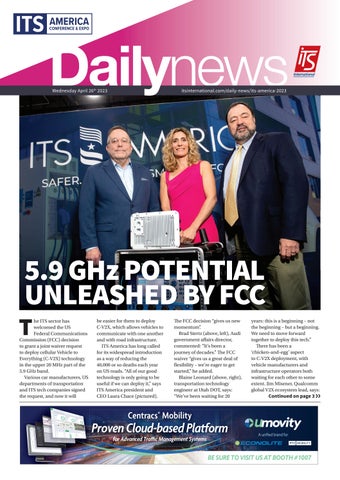
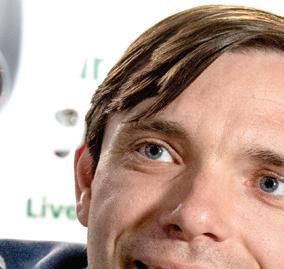
ITS America has long called for its widespread introduction as a way of reducing the 40,000 or so deaths each year on US roads. “All of our good technology is only going to be useful if we can deploy it,” says ITS America president and CEO Laura Chace (pictured).
e FCC decision “gives us new momentum”.
Brad Stertz (above, left), Audi government a airs director, commented: “It’s been a journey of decades.” e FCC waiver “gives us a great deal of exibility – we’re eager to get started,” he added.
Blaine Leonard (above, right), transportation technology engineer at Utah DOT, says: “We’ve been waiting for 20
years: this is a beginning – not the beginning – but a beginning. We need to move forward together to deploy this tech.” ere has been a ‘chicken-and-egg’ aspect to C-V2X deployment, with vehicle manufacturers and infrastructure operators both waiting for each other to some extent. Jim Misener, Qualcomm global V2X ecosystem lead, says: Continued on page 3
THE CLEAR CHOICE FOR TRAFFIC MANAGEMENT
SYNAPSE ITS SPARKS URBAN MOBILITY INNOVATION
Urban mobility is changing – fast. Electri cation is surging, automated vehicles are hitting the streets, and micromobility is suddenly everywhere.
While vehicles are an easy focal point of the transformation, the fact is they’re only part of it. e other, just as critical, part is the transportation infrastructure these vehiclesand people - connect to.
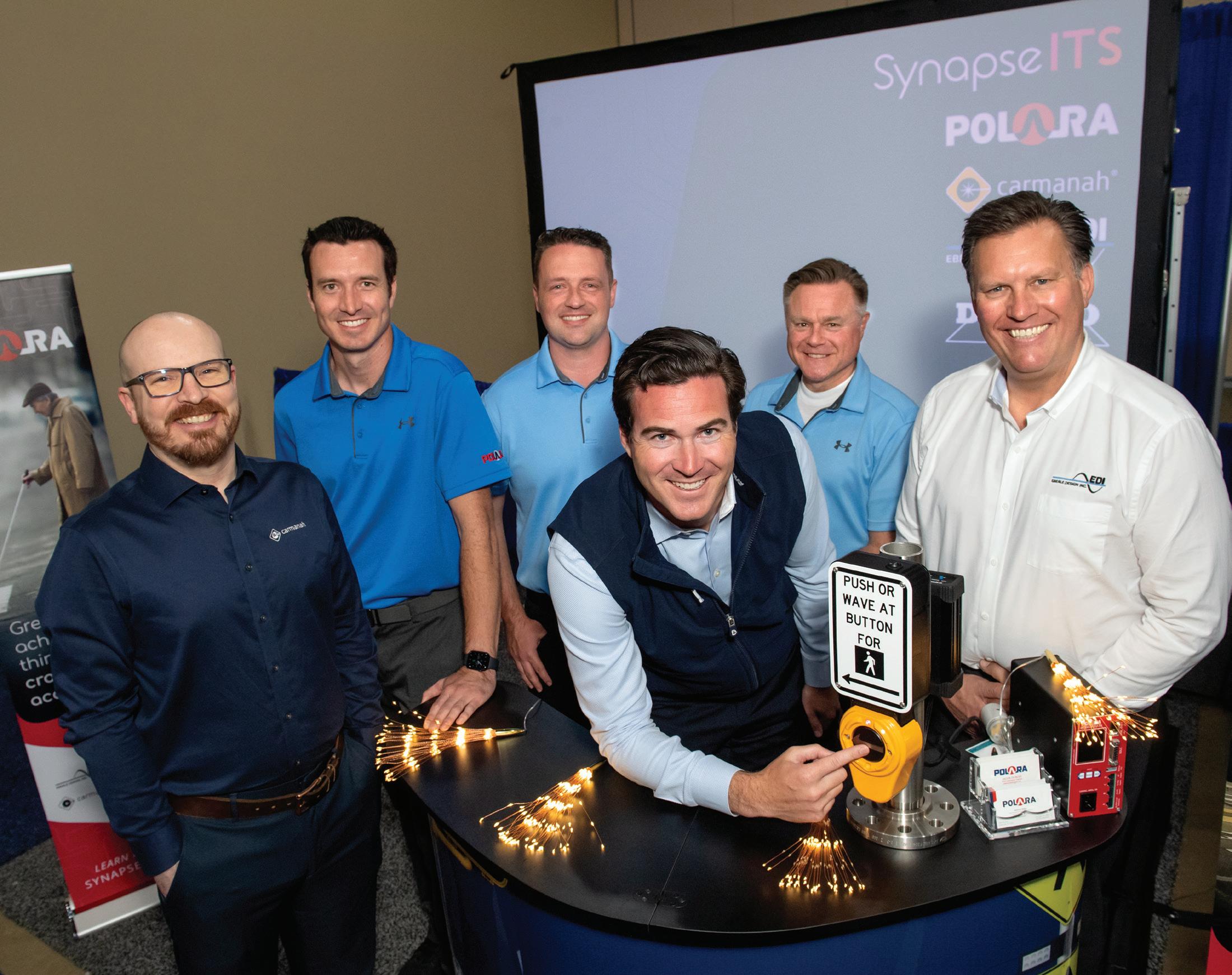
at’s the focus of Synapse ITS, a comprehensive new transportation technology platform from private equity rm Vance Street Capital, conceived to spark
innovation and help cities actualise the vast bene ts of data, connectivity, and enhanced safety.
Uniting the industry-leading brands Eberle Design Incorporated (EDI), Polara Enterprises, Carmanah Technologies and Diablo Controls, Synapse ITS leverages the expertise and pioneering spirit of each business to deliver high-performance systems that are both technologically advanced and simple to install and use.
From intersections to highways, crosswalks to parking areas, Synapse brands
5.9 GHz POTENTIAL
Continued from cover
“ ink about it as a virtuous circle. Both sides have to complete their part of the circle. But this [decision] allows this to happen.”
e Infrastructure Investment and Jobs Act has also made signi cant money available for agencies to invest in innovation.
have a decades-long reputation for setting the standard by which others are measured.
Now, as apps, software and connectivity open the door to new possibilities, Synapse ITS is once again leading the way with new physical and digital tools that help agencies increase safety, optimise resources and meet Vision Zero goals. To see what’s next in transportation technology, visit Polara (Booth 400) and EDI (Booth 1200).
▶ Booth 1200
www.synapse-its.com
UNLEASHED BY FCC
“ ere is a historic amount of funding potentially available for this too. So it comes at a very good juncture for the FCC - not only to be a champion, but also to precipitate change themselves,” Misener adds.
Bryan Mulligan, president at Applied Information, says,
" e industry has said C-V2X is ready to deploy. Now it is time to deploy."
Andres Castrillon, director, government a airs at Qualcomm, told Daily News, “It marks a real turning point in the industry’s e ort to utilise connected vehicle technology
to reverse the rising fatalities on our roadways. We've got a really serious public health crisis on our roadways. Technology can help. is is the rst step in doing so. is is a really important milestone on the road towards broad scale deployment, coast to coast.”
Steve Sandbo of Vance Street Capital with the management team from Synapse
DENSO SHARES CONNECTED SERVICES VISION
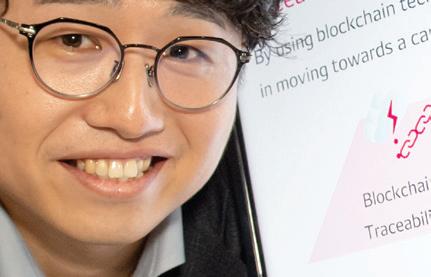
From blockchain to V2X, Denso is here with demonstrations showing how it supports a connected world for cleaner, safer, and more e cient mobility.
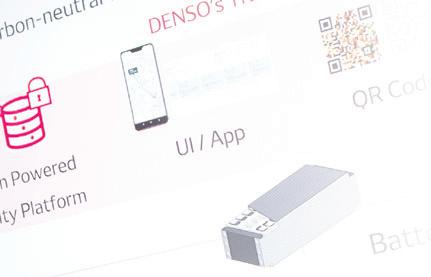
For instance, one demonstration will outline how Denso is using blockchain technology and advanced QR codes to increase the carbon footprint traceability of vehicle batteries. is helps build trust and reliability in supply chains and contributes to greater sustainability as electric vehicles proliferate.
products can help address an array of mobility issues. ese range from tra c congestion to pedestrian safety, collision avoidance, emergency vehicle prioritisation and more.
Another demo, run by Denso Products and Services Americas, the company's aftermarket unit, showcases how the company’s V2X on-board unit and road-side unit
"Denso has two great causes: Green - achieving carbon neutrality by 2035, and Peace of Mindcreating a safe and seamless world for all," said Roger Berg, VP of North America R&D at Denso. "ITS America Conference & Expo is a great opportunity to not only share how we're implementing connected technology to meet these goals, but also to meet potential partners with similar priorities who can help accelerate our journey."
▶ Booth 1416 www.denso.com
Flow Labs finds the funds
If success is defined by demand, Flow Labs says the company is on its way. The “find issues, fix problems, fund projects” company has three speaking slots throughout the week at the ITS America Congress & Expo. It will also unveil a lowcost pedestrian safety module in the Education Theatre on Wednesday.
Flow Labs’ hardware-free AI platform analyses, monitors and optimises tra ic flow at an intersection or across a city in seconds. Flow Labs says it reduces crash risk by 51%, travel times by 24%, and emissions by 21%.
Importantly, the reductions are data driven because Flow Labs says it has the best signal, sensor and connected vehicle data transportation. The platform collects 10 times the data of detectors, is 94% accurate and costs 1/300th the price of traditional solutions.
The company’s platform captures intersection data and identifies dangerous and ine icient intersections, generating timing plans to reduce crashes, build e iciency and lower emissions.
The “fund” part of Flow Labs’ mantra “find, fix, fund” is particularly important because the company says it knows where the grants are and it can help its customers find ways to pay for the service.
▶ Booth 1617 www.flowlabs.ai
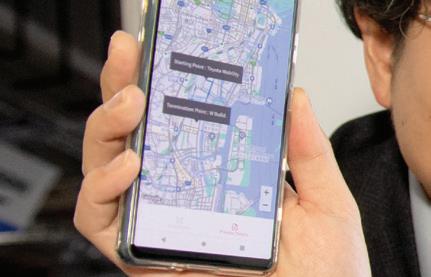
Shinnosuke Tanaka of Denso
SEE MOBILITY THROUGH A NEW LENS.
Ready for a safer, more efficient intersection experience? See your corridors in a new light with our AC3 and FE3 cameras!
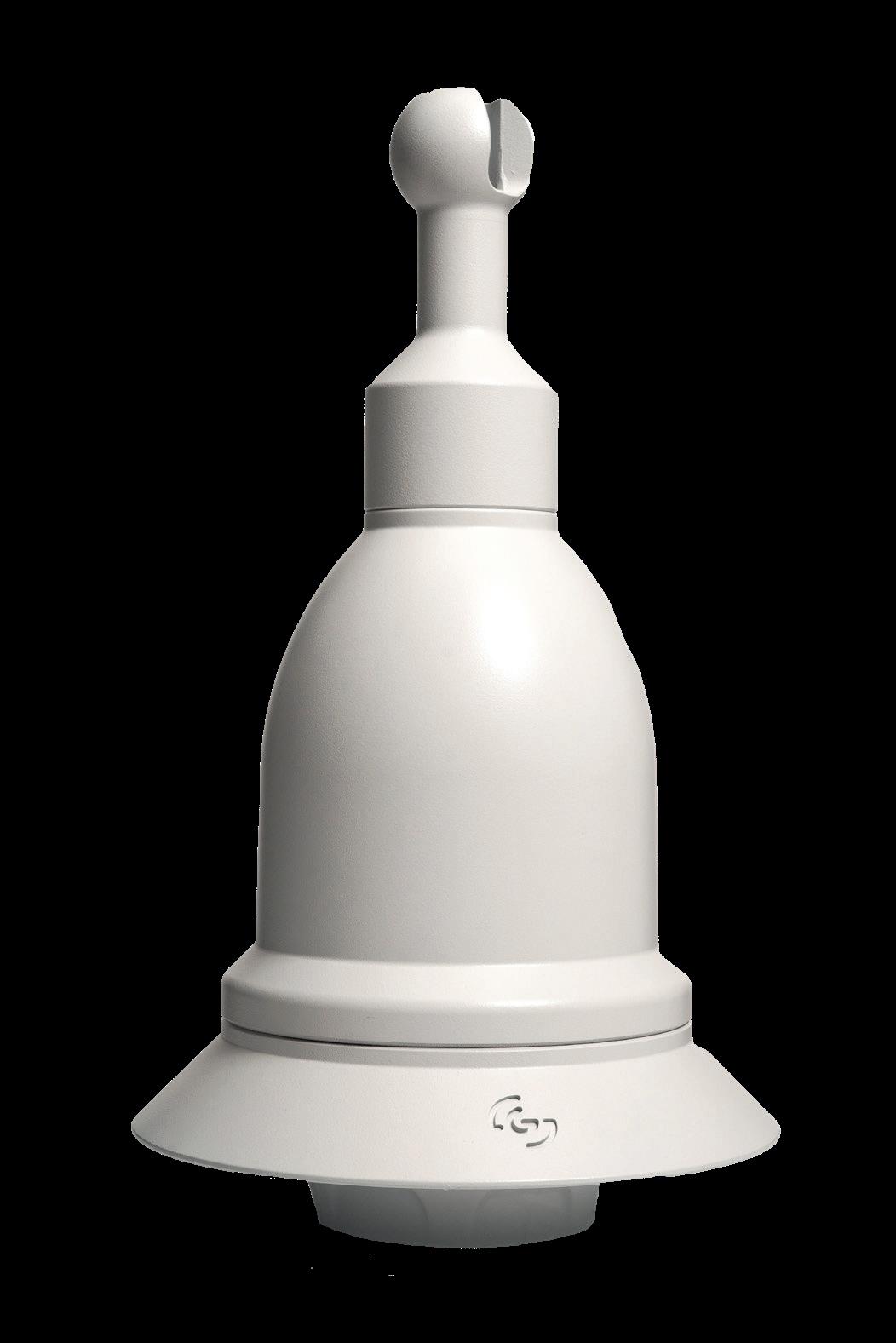
Iconic design meets modern technology. Cubic’s Gridsmart bell camera that you know and trust is now equipped with High Dynamic Range (HDR) technology for improved visibility and image quality in low-lit areas. Our AC3 approach camera now includes state-of-the-art image stabilization for advanced detection. Save time, money and upkeep while ensuring a safer and more efficient intersection experience for all vulnerable road users.
Upgrade your intersection management with Cubic today!
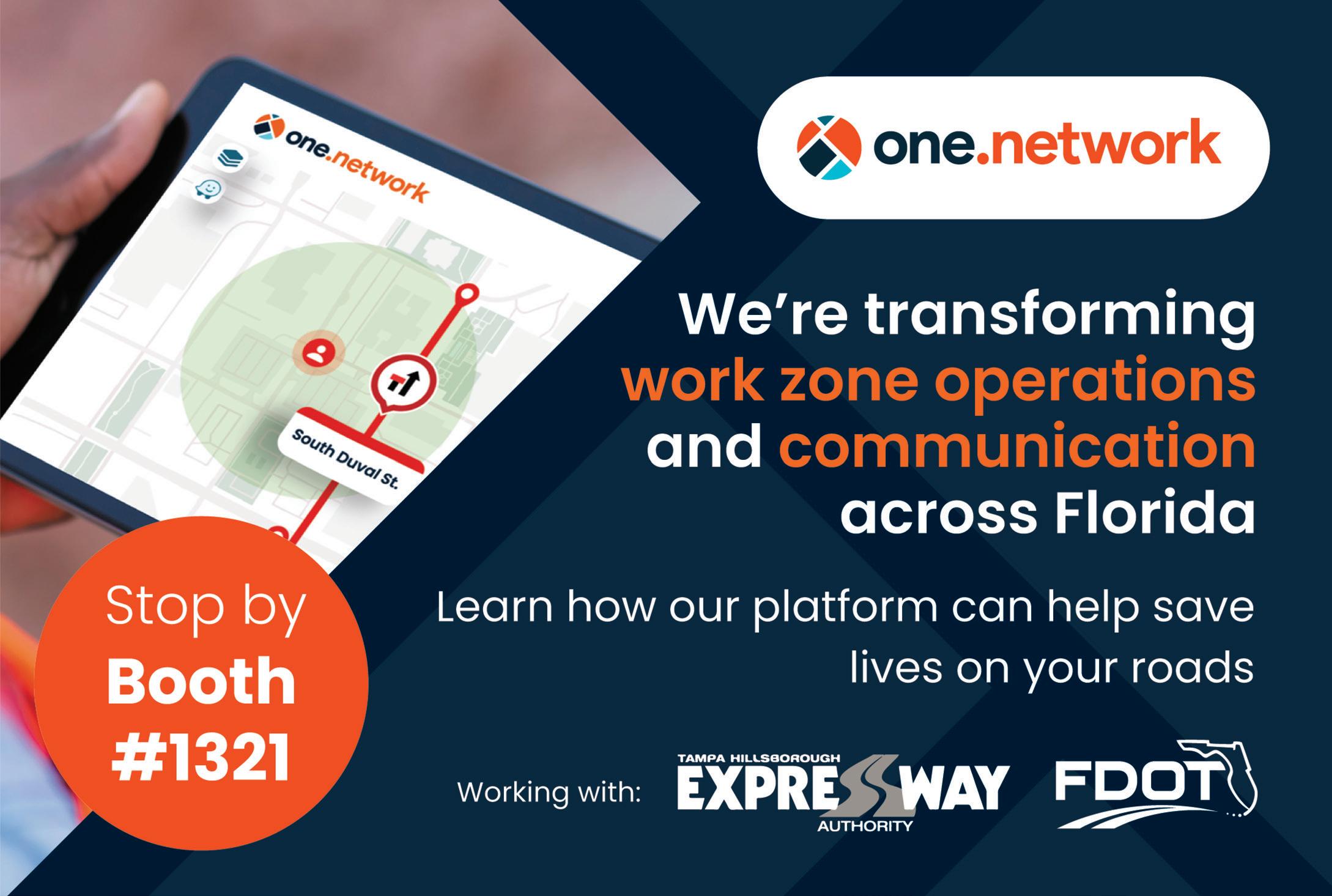
Tampa chooses One.network for real-time info solutions
Tampa Hillsborough Expressway Authority
(THEA) has chosen One. network to provide the agency with tra c management, work zone noti cation and construction planning software solutions. e collaboration will provide Tampa and Hillsborough County residents with real-time information on work zones, planned events and road disruptions.
THEA is one of only 10 organisations designated a connected and autonomous vehicle test bed by the US Department of Transportation (USDOT), and will deploy the One.network platform in two phases to address a number of scenarios.
e initial phase will
provide immediate bene ts from modules including One. network’s tra c management platform, a real-time digital mapping solution and Live Link. It allows authorised workers to update lane closures and schedules right from the work zone.
In phase two, THEA will deploy Plan Share, allowing construction rms to streamline and simplify the permitting process, explained James Harris, One.network’s founder and CEO.
THEA manages the Selmon Expressway in Tampa. But because one.network is already ingesting data from the city of Tampa and Hillsborough County, the project will provide residents with continuous
regional information streams across jurisdictions. According to One.network, the agency was looking for a holistic solution, and this agreement delivers on its goal to constantly improve its connected vehicle and communications strategies as new technologies emerge. As part of the agreement, One.network will build a Work Zone Data Exchange (WZDx) feed for THEA and deliver work zone data to the Federal Highway Administration’s national repository of work zone data. It will be shared with other agencies and third parties across the nation. Florida Department of Transportation’s (FDOT) state-wide Lane Closure Noti cation System is already powered by One.network’s Live
Link software, providing GPS companies with real-time work zone data throughout the state. Tra c management software from One.network displays real-time work zone, planned event and incident information on an intuitive digital map. e company said that Live Link is a rst of its kind programme that allows work zone crews to close lanes right from the roadway, sharing that data with GPS providers including Google, Waze and other companies in their native formats. Plan Share provides road construction rms and utilities with a comprehensive yet simple platform to plan and permit road construction projects.
▶ Booth 1321
https://us.one.network/
Transform your constituents' experiences, modernize operations, and reduce costs by bringing Google to the mission of transportation agencies.
Attend our session on Operationalizing Equity in Transportation on: April 26 from 8-9:30am
Want to meet with Google transportation and public sector leaders?
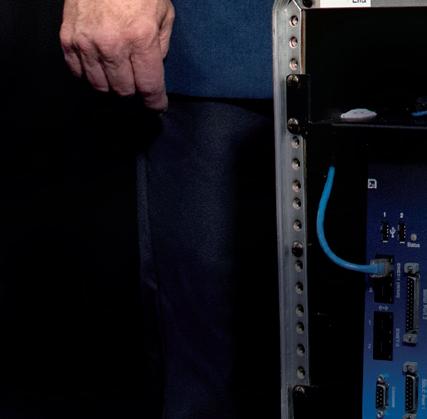
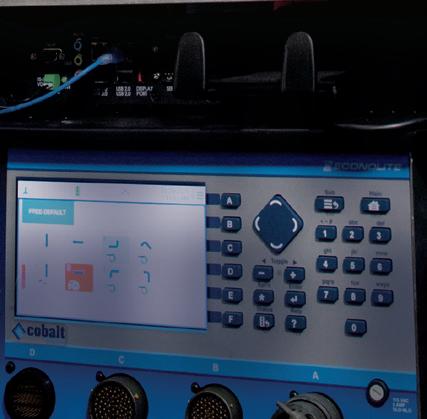
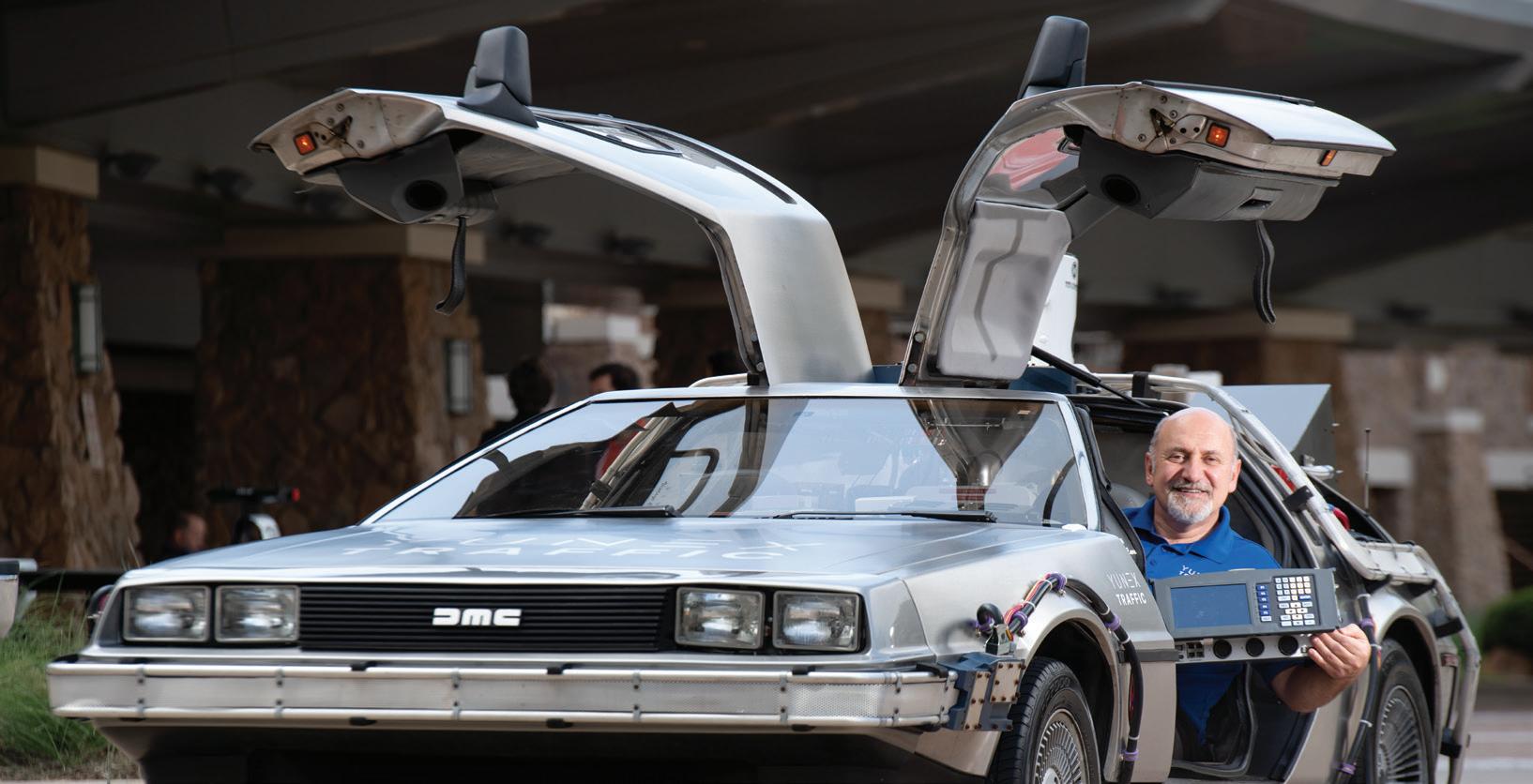
Yunex Tra c has chosen the ITS America Conference & Expo for the launch of its Yutra c Blade Advanced Tra c Controller Platform for the US market. is next-generation controller platform is capable of easily and e ciently managing tra c with the highest level of security.
Like the iconic Delorean ‘Back to the Future’ car, the new Yutra c Blade controller is ready for the future of tra c control. It’s dual-core processor and powerful engine allows for the controller to expand and manage tra c control applications of today and those that haven’t even been developed. It is powerful enough to run multiple advanced solutions and advanced enough to grow and expand with technology.
Its scalable architecture and powerful computing engine simplify complex intersection management and consolidates tra c solutions into a single platform, allowing the system to grow and expand as future
YUNEX TRAFFIC GOES “BACK TO THE FUTURE”
technologies are adopted.
e device features a 7” colour touchscreen monitor, hot swappable dual power supplies and customisable analytics stored directly on the controller.
Among its capabilities, the Yutra c Blade can manage
C-V2X technologies and applications such as pedestrian and wrong-way detection, provide travel time and origin and destination data, using its WiFi capability. Yunex says that it is the only controller on the market that arms tra c
Iteris Managed Services Maintenance of Traffic
Iteris MOT is Revolutionizing Work Zone Closure Planning
Data-driven solution for analyzing and improving traffic maintenance during construction projects.
engineers with historical intersection data and advanced analytics. ey can optimse timing plans without the need for expensive third-party reporting solutions.
▶ Booth 601 www.yunextra ic.com
Iouri Nemirovski of Yunex
CUBIC HDR ENHANCES GRIDSMART CAMERAS
Cubic Transportation Systems (CTS) is in Grapevine to showcase the latest improvements to its Gridsmart cameras product line that allow tra c professionals to detect and track vehicles and pedestrians with more clarity than ever.
Higher-quality imaging and image stabilisation give tra c agencies better insight into roadway and intersection conditions. Built with durability, the enhanced cameras provide
all road users with a safer and more e cient intersection experience.
“While it’s exciting to be leading new applications of technology and AI, Cubic always remembers that transportation is about people - people moving safely, freely and e ciently,” said Je Price, VP and general manager, Cubic ITS.
“ ese third-generation cameras have capabilities that improve image quality in challenging conditions, empowering tra c agencies
Calling all ITS future leaders
ITS Texas, in collaboration with Southwest Research Institute (SWRI), is hosting a Future Leaders Program designed to bring students, emerging leaders and young professionals to the ITS America Conference & Expo. As part of the program, ITS Texas is providing students with the opportunity to get career advice, find a mentor and get their resume reviewed at the ITS Texas Booth April 26 from 3:00pm until the end of the show. ITS Texas also holds a meeting annually which brings together the membership, presenters and exhibitors for two and a half days of exciting and informative sessions and presentations. Typically starting on a Wednesday with technical training and finishing on Friday with a business lunchtime, the meeting locations are rotated around the state of Texas. This year’s meeting will be at the Hilton College Station on November 15-17.
▶ Booth 1523
www.itstexas.org
with an improved product for road safety.”
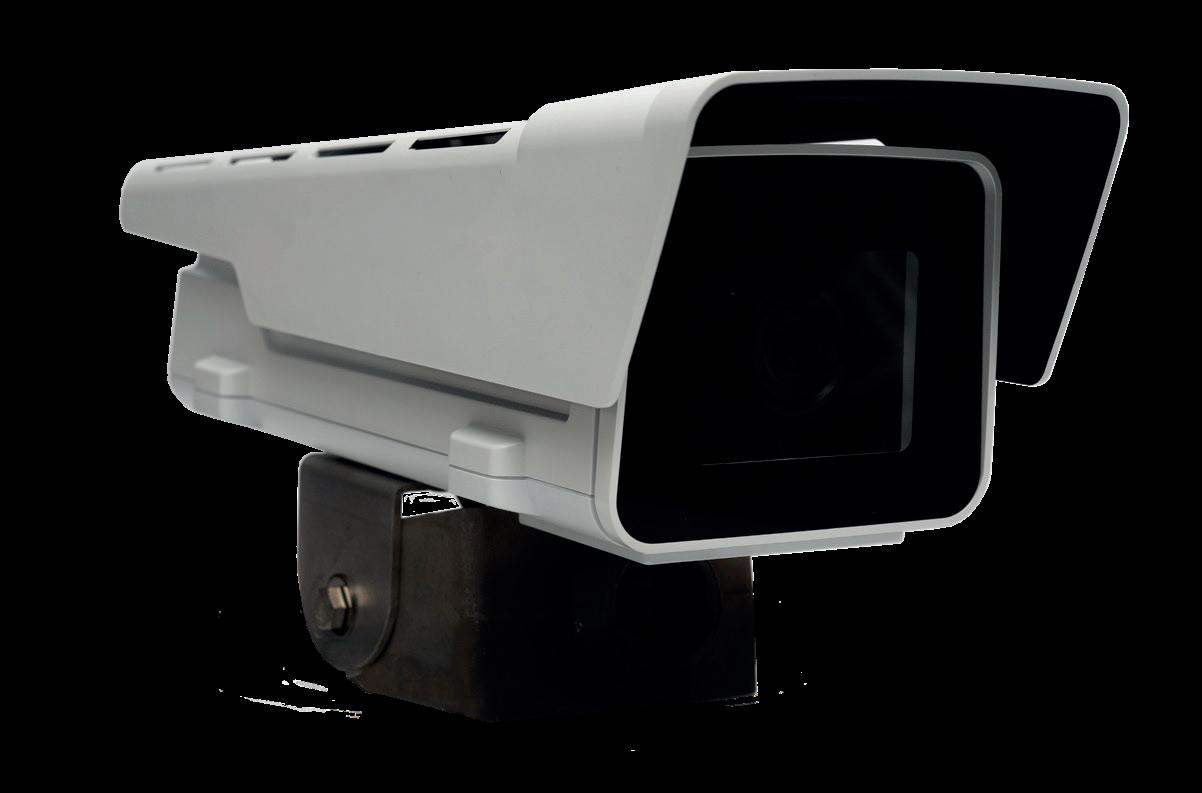
e enhanced Gridsmart cameras continue the evolution of Cubic’s ITS portfolio of congestion management solutions. e FE3 is an enhancement of the Gridsmart iconic sheye camera and now includes multi-exposure high dynamic range (HDR) technology that improves image quality in challenging, variable lighting conditions. For advanced detection, the AC3 camera delivers state-of-the-art image
stabilisation, improving range and accuracy even in high winds.
Visitors will recognise the iconic bell of the FE3 and the familiar form of the AC3 hardware with the same mounting kits as previous generations, including pole assemblies and junction boxes.
ese enhanced cameras will begin shipping at the end of April and require Gridsmart software version 23.1.
▶ Booth 629
www.cubic.com
Ride the Mecwave with Harman
Harman’s Savari Mecwave is a multi-access edge computing so ware platform that enables automakers, network operators and government agencies to deploy next-gen features and reimagine connectivity. It does so by harnessing V2X capabilities and ultra-low latency applications. MECWAVE leverages 5G cellular edge networks to enable a variety of real-time shared services and applications that enhance safety, mobility and infotainment experiences using in-vehicle, roadside and third-party data. Applications like Collision Core, Virtual Roadside Unit and On-Demand Video Streaming can be deployed on a number of connected devices such as TCUs, automotive a ermarket devices, smartphones, wearables and more.
▶ Booth 729
https://car.harman.com
Swarco McCain showcases tra ic management systems
Swarco McCain makes its ITS America Conference & Expo debut under the all-encompassing One Swarco umbrella.
Part of the Swarco group since 2016, San Diego-based transportation technology rm Swarco McCain designs, develops and manufactures ITS and tra c control products to promote increased roadway safety, improved tra c e ciency and more sustainable communities.
e main focus of Swarco McCain’s o erings on its booth are the company’s industryleading tra c management software solutions.
ese include Transparity tra c management system (TMS) that enables transportation professionals to proactively manage tra c ow and promote mobility through real-time tra c data collection and management tools.
Built around user input and decades of industry expertise, the modern architecture of Transparity TMS is designed to meet the demands of today’s transportation network and
ANTAIRA
adapt with customers’ needs as they evolve.
Also being showcased is the Omni eX Intersection Control Software, a revolutionary tool for managing the most demanding tra c control applications. e software provides a single solution for any infrastructure and, when integrating with
BOOSTS POWER
Antaira is showcasing its latest Ethernet switch at the ITS America Conference & Expo in Dallas this week—highlighting its ability to power high-power cameras with up to 95 watts per port.
According to Joe Cook, national ITS sales manager for the company, the LMP-1204GSFP-bt-24-T-BOS managed light layer 3 industrial switch powers equipment on first responder vehicles up to 95 watts from 12VDC, solar applications up to 180W from 24VDC and tra ic
cabinets up to 240 watts from 55VDC.
The switch also comes with a refreshed management UI that allows users to easily implement features such as Ping Alive that automatically reboots power to connected edge devices, Safe PoE Disable that turns on or o power to a single PoE port and Persistent PoE that provided powered devices with uninterrupted power in the event of a firmware upgrade.
▶ Booth 904
www.antaira.com
Transparity TMS, enables complete ITS functionality by controlling all NTCIP devices through one system.
Visitors should also check out Swarco MyCity a new modular tra c management platform for ITS. It is the smart city solution when it comes to urban mobility management and is designed
to solve the most pressing challenges in multimodal mobility.
It does this by tightly integrating common transportation services via an ultra-modern cloud computing infrastructure.
▶ Booth 1001
www.mccain.swarco.com
No blind spots with Arity
Reducing accidents on the road requires a clear and accurate view of the behaviours that lead to crashes. Arity’s Mobility Intelligence solutions allows highways agencies and DOTs to swi ly diagnose the riskiest road segments so the right remedies can be implemented as soon as possible.
Arity’s Mobility Intelligence solutions go beyond simple and limited data that tells a DOT that crashes happened. Instead, DOTs get abundant location-specific insights into exactly how and why the event occurred.
The facts speak for themselves: More than 30 million first-party telematics connections, over 90 million continuous mobile trips per day and around 1 trillion miles covering all regions and road types without vehicle age or model bias. This is based on mobility insights informed by more than 15 years of understanding insurance risk.
▶ Booth 1611 www.arity.com
Steven Atkins of Swarco McCain
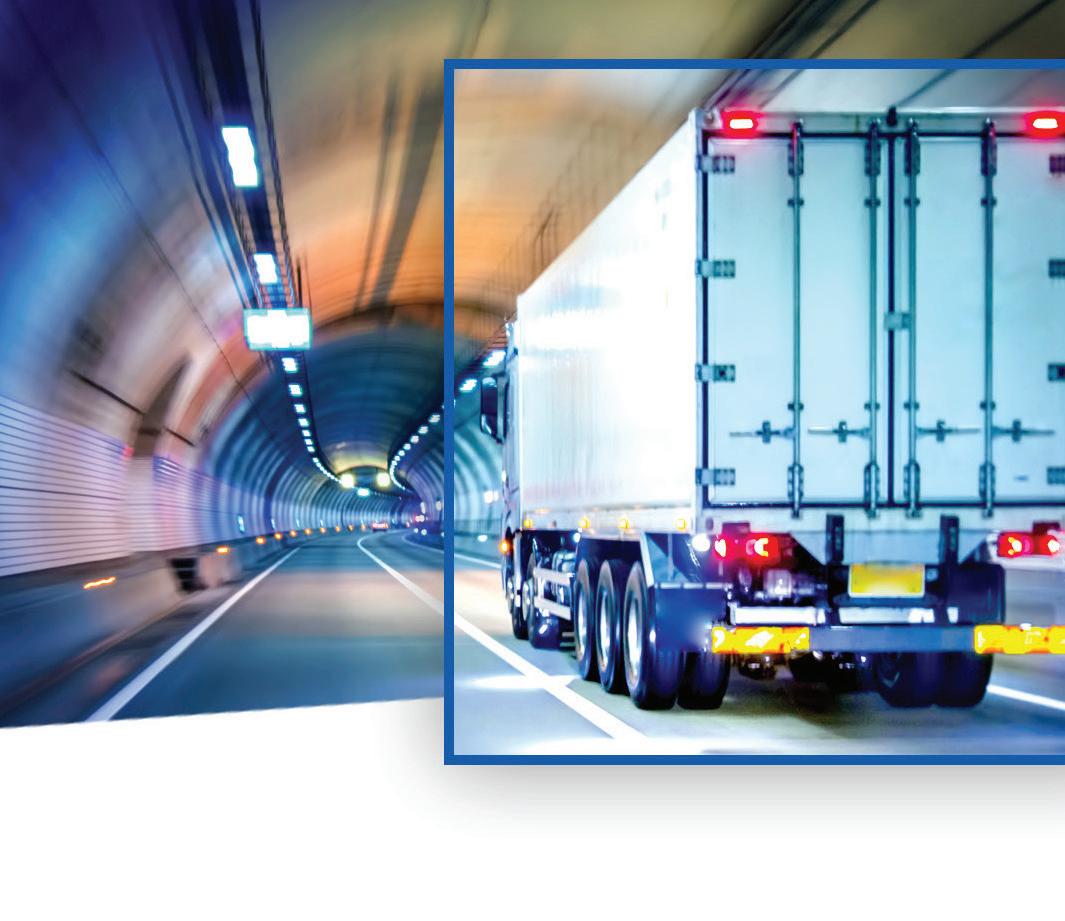
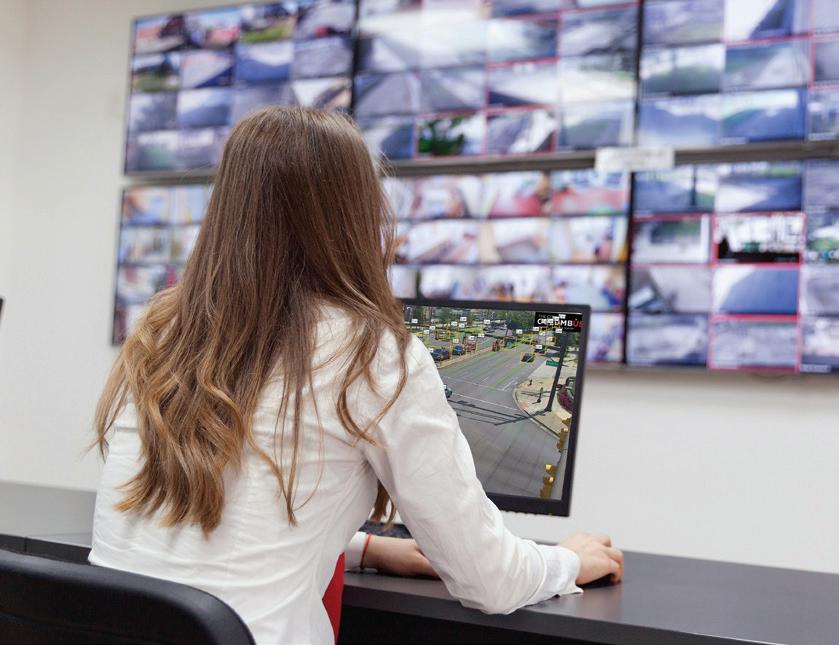
Automatic Incident Detection
Citilog Automated Incident Detection leverages
Artificial Intelligence and the latest developments in Deep Learning to automatically identify incidents in real time on your roadways with ten times less false postivies:
• Wrong way driving
• Stopped vehicles
• Smoke in tunnels
• Pedestrians
• Debris
• Slow vehicles
• Congestion
Our intelligent solutions optimize operations and reduce response times for traffic operators, providing a safer road for the travellers they serve.
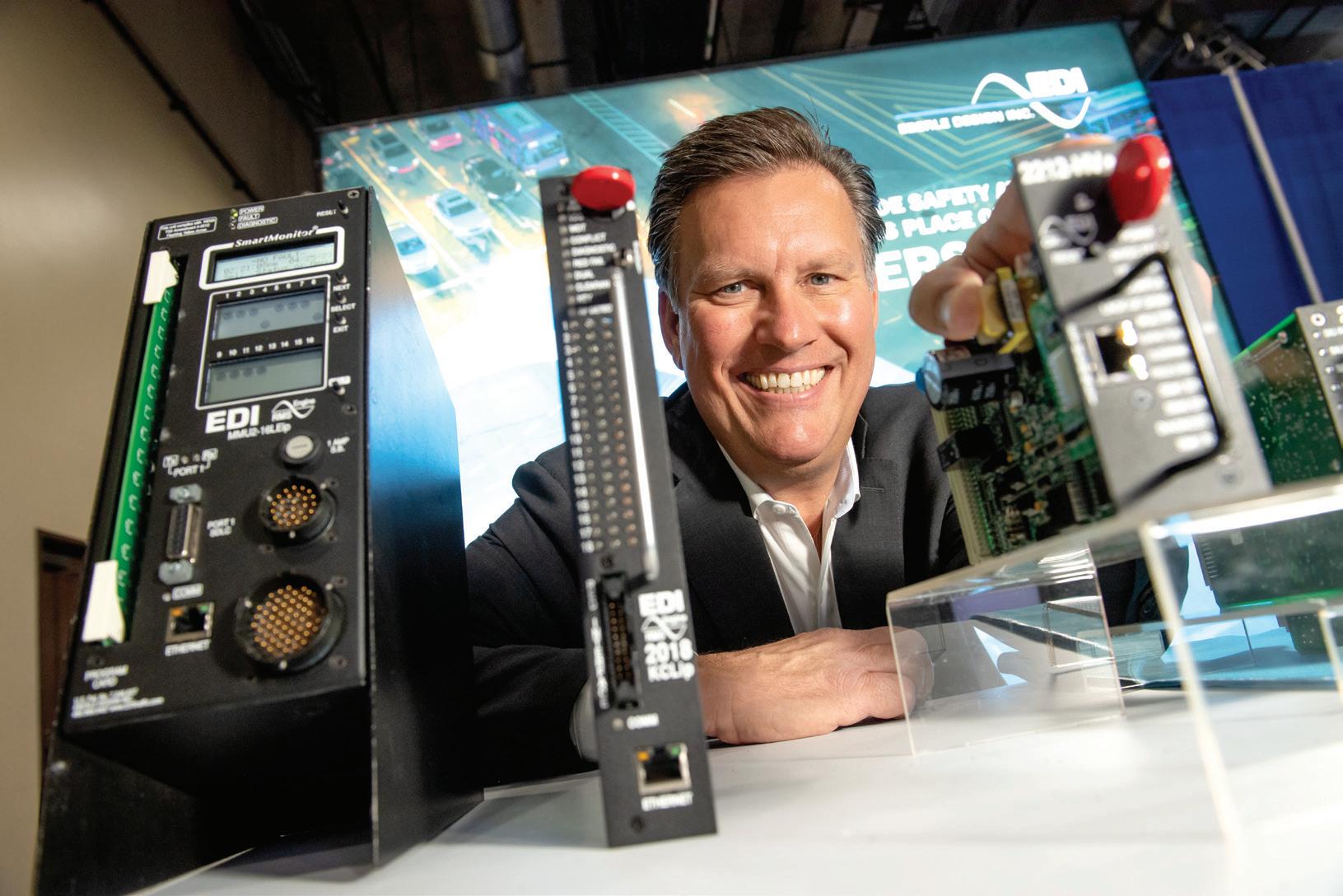
EDI USHERS IN NEW SAFETY ERA
Traffic control has evolved dramatically over the past century, and it’s reinventing itself once again as cities become more connected while environmental sustainability, multimodal transportation, autonomous vehicles and Big Data take hold.
While conventional traffic cabinets like the NEMA TS-1, NEMA TS-2, ITS v1, and Caltrans 33x served agencies well in the past, they can’t support the increasingly sophisticated needs of current and future smart cities.
Combining the latest standards and technological advancements, EDI says its advanced transportation controller cabinet components (ATC) deliver increased reliability, functionality, and ease of maintenance – and that’s just to start. Its compact size and modular design make it a breeze to install, configure and expand while its highdensity components can be arranged (and rearranged) to accommodate a broad
range of intersection types and operations. It also offers a significant safety upgrade, for both drivers and technicians. Its CMU current load monitoring detects a dark approach immediately, and its majority low-voltage components make installation and maintenance
Sensys Networks for critical traffic safety applications
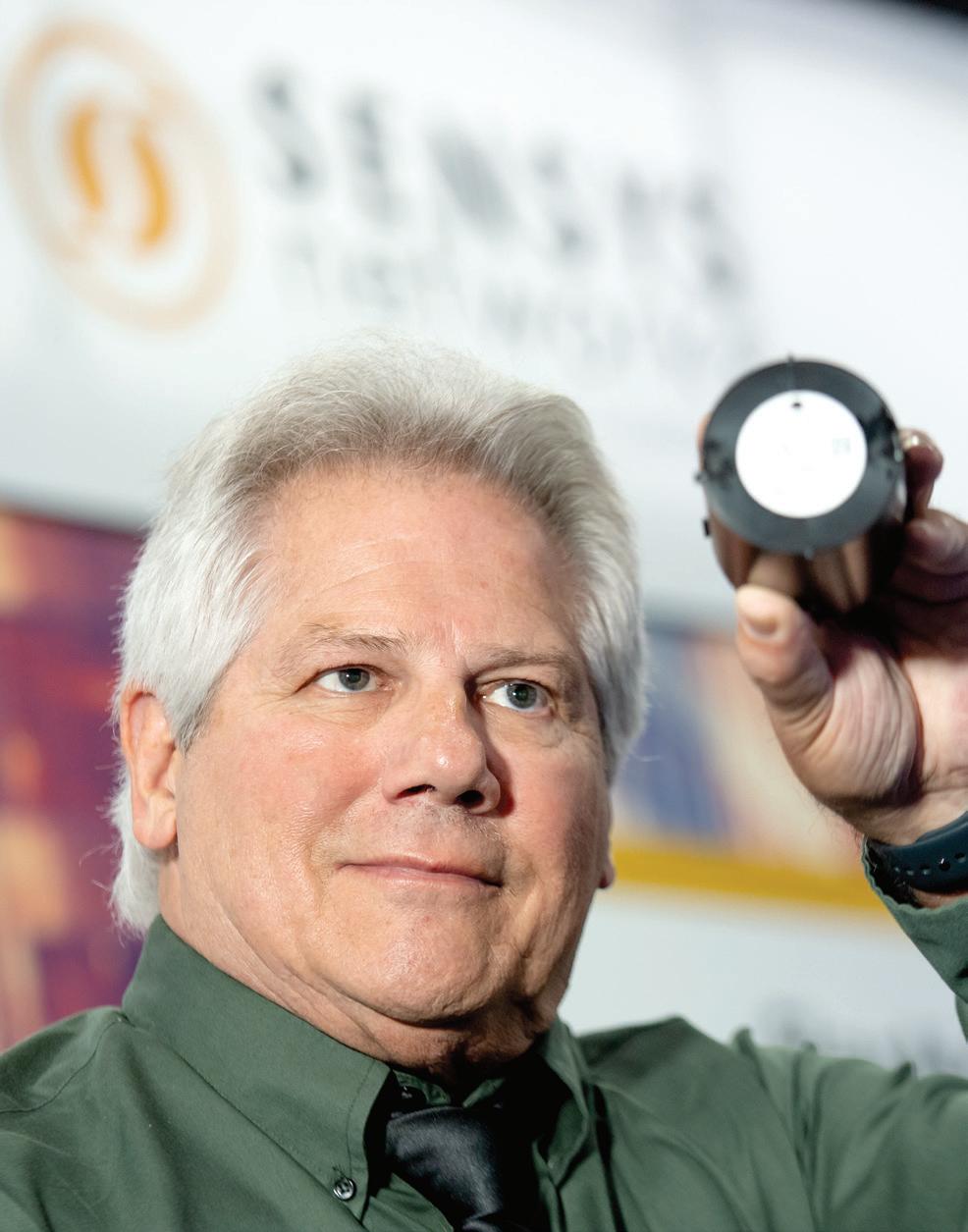
Sensys Networks’ US supply chain qualifies for federal funding that favours key traffic safety applications. The company is here in Dallas to highlight how its products provide results around the world and point out that in the US, funding is set aside specifically to implement traffic safety solutions. The Infrastructure Investment and Jobs Act of 2021 provides an additional $32.5bn dedicated to traffic safety over five years.
Examples of how municipalities are improving safety with Sensys traffic detection include Mayetta, Kansas, where vehicles are detected on side streets by FlexMag wireless sensors at the stop bar to trigger flashing crossing signs upstream of the intersection, warning approaching vehicles. Virginia uses automated incident detection AI
much safer. Add to that true LED compatibility that can support the latest ultra-low-power LED signals, and EDI says it’s no surprise the ATC standard has had the fastest adoption rate of any cabinet standard in history.
EDI says it remains committed to driving forward innovations
to alert operators, law enforcement and drivers when vehicles have crossed barriers going the wrong way on express lanes. Meanwhile, the UK employs realtime speed data from FlexMag wireless sensors on managed motorways to set dynamic speed limits to reduce injury accidents by 13%: FlexMag also powers speed enforcement systems on roadways in Saudi Arabia.
In Victoria, Australia ramp queue flushing is used to actively clear backups from highways and avoid high-speed rear-end collisions. Automated incident detection is also used on New York State bridges to detect crashes within seconds and scramble emergency response personnel to avoid secondary crashes and provide medical help.
▶ Booth 621
www.sensysnetworks.com
in life-saving technology, now alongside its partners at Synapse ITS, a transportation technology platform focused on increasing roadway safety, efficiency and accessibility through innovative infrastructure.
▶ Booth 1200
www.editraffic.com
John Shearer of EDI
Tad Carter of Sensys Networks
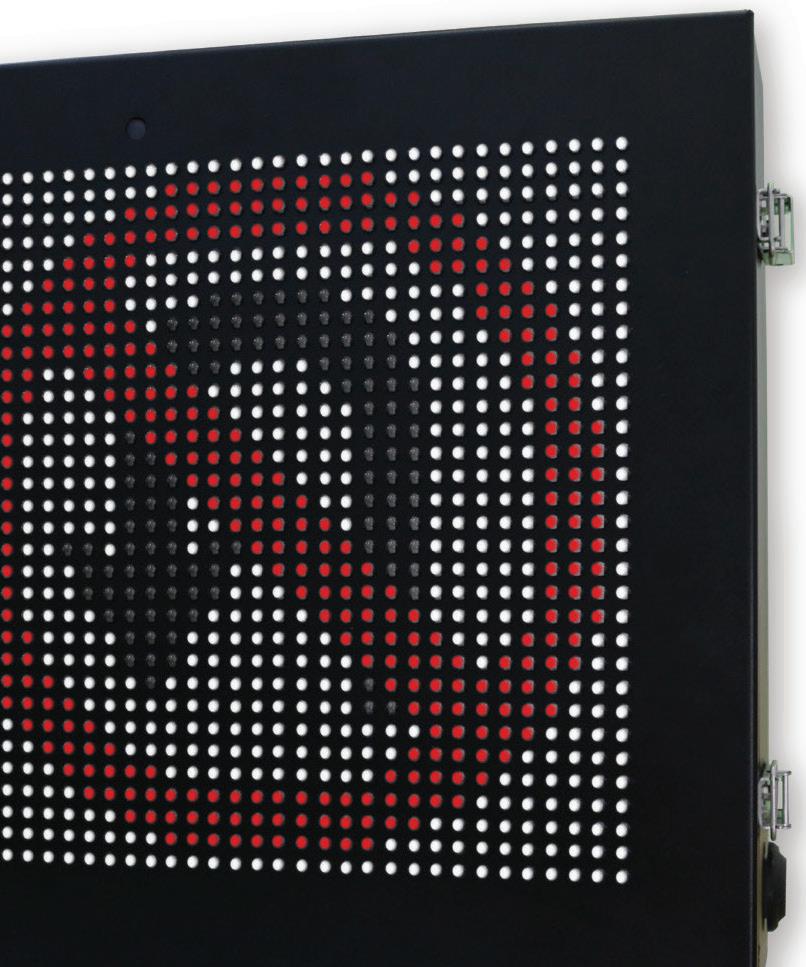
Dynamic Message Signs
SWARCO McCain Inc.’s Dynamic Message Signs utilize powerful and innovative components like integrated 3-in-1 LEDs combined with SWARCO’s precision-optic technology resulting in the highest visibility and lowest total cost of ownership in the transportation industry. Choose from our expansive portfolio of sign solutions:
• Dynamic Message Signs (DMS)
• Changeable Message Signs (CMS)
• Variable Speed Limit Signs (VSLS)
• Lane Control Signs (LCS)
• Blank-Out Signs (BOS)
View all sign offerings on the
Dynamic Message Signs product page
mccain.swarco.com/dms
Viva is demonstrating its new AI-powered 3D collision detection technology at the ITS America Conference & Expo in Dallas.
Called Near Miss, the AI smart road safety solution is being piloted by New York City DOT with 12 sensors deployed around multi-modal intersections in Manhattan, Brooklyn and the Bronx.
The Near Miss sensor collects width, height, length, speed and direction data to determine the trajectory of vehicles, bicyclists and pedestrians as a way to calculate the probability of a collision. DOTs can then use this data to identify event hot spots and take appropriate action to prevent them.
Near Miss can also use the data to predict how proposed solutions will impact the rate of collisions, allowing DOTs to first try cheaper, less disruptive solutions—such as additional
VIVA HOPES FOR A NEAR MISS
signage or tra ic light timing— before implementing more disruptive solutions.
According to Peter Mildon, Viva’s co-founder and Chief Operating O icer (COO), data collection and video analysis is
conducted on the end device rather than in the cloud or a remote server. When accessed, the captured video is blurred out to protect driver and pedestrian privacy.
“Near Miss is a diagnosis tool,
The ultimate sensor in ITS.
Transforming data into intelligence
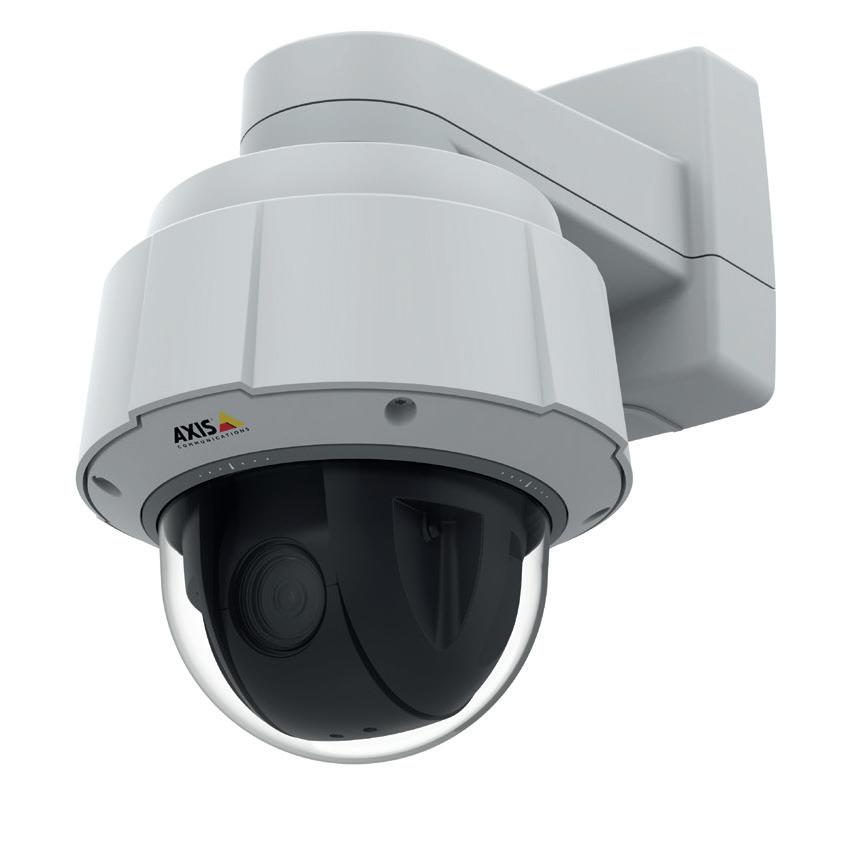
With traffic management centers constantly working to keep traffic moving safely and efficiently, there is an ongoing intense pressure to meet the challenges of the road. Did you know you can leverage the power of your networked devices to provide valuable insight? By combining the high-quality video from IP cameras with ITS-specific applications, the camera can become the ultimate sensor in ITS, working to turn raw data into useful intelligence. This gives TMC’s a real-time advantage to understand what’s happening on the road.
Download the free eBook to learn about the IP camera as the ultimate sensor: www.axis-communications.com/ ultimate_traffic_sensor
Learn more about intelligent traffic solutions, visit: axis.com/traffic
not a big brother tool,” Mildon said. “We want to prevent collisions before they happen rather than punish people for violations a er the fact.”
▶ Booth 1140 www.vivacitylabs.com
Peter Mildon of Viva
Stuttgart pushes high-speed cameras
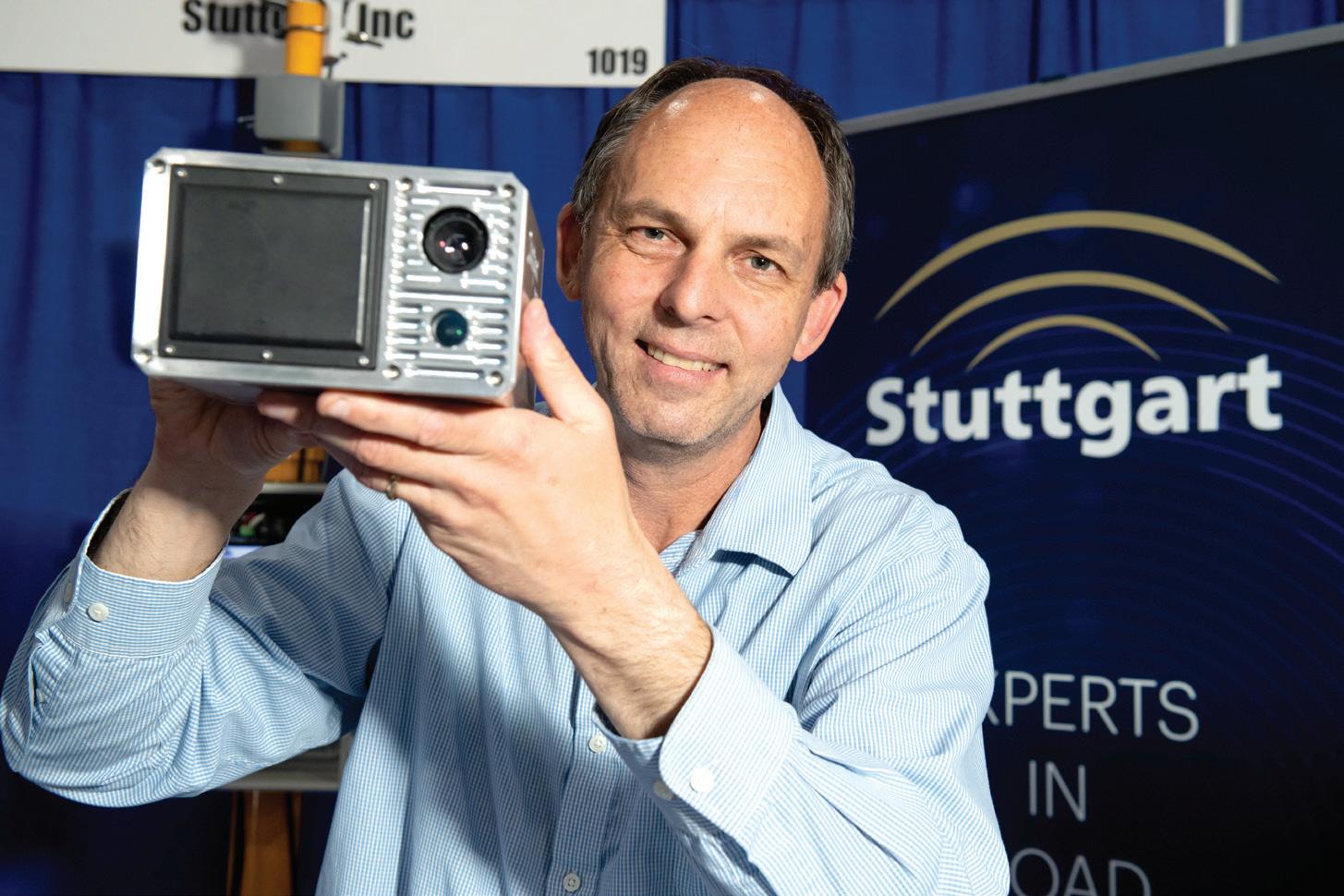
Eliminating the need to get out of vehicles to issue tickets for speed violations has the potential to save police officer lives, says Gerhard Lamprecht, CEO of Stuttgart, a manufacturer of transportation safety products.
Lamprecht’s company hopes to do just that by combining radar enforcement with high-speed cameras.
The Stuttgart Model S is the company’s latest megapixel radar moving violation enforcement camera, featuring a quad-core CPU and an ultralight, compact design that can be mounted on a tripod or the dashboard of any police cruiser. Speed enforcement officers can then set triggers based on grace speeds to automatically capture violators that exceed the speed limit without getting out of their vehicle and into traffic.
The Model S has a digital beam forming radar able to simultaneously track each vehicle on the road, as well as its speed, acceleration and lane. It includes a 20-48 megapixel camera for day and night photos as well as a 8 megapixel video camera. In addition to its 8 CPU cores, it also has a
neural processor for a machine learning engine to assist with offence classification.
The mobility of the cameras improves efficacy of speed enforcement by making drivers aware of police presence and by
allowing officers to focus on roadways where speeding is excessive to the point of reckless driving.
▶ Booth 1019 www.stuttgart-usa.com
Gerhard Lamprecht of Stuttgart
“We need to end this streak of
Idaily death”
t’s a sobering fact that the state of Texas has seen at least one person killed every day on the roads since 7 November, 2000. For that reason, Texas DoT created its #End eStreakTX campaign in 2015 to raise awareness about a grim run that has impacted families and entire communities across the state.
“ e reality is this,” says Texas DoT executive director Marc Williams. “We need to end this streak of daily deaths on Texas roads.”
#End eStreakTX began mostly as a grassroots, word-of-mouth campaign. But it has grown, with TxDoT providing more funding to safety projects and dedicating millions of dollars for improvements along Texas roadways.
Team e ort required
In May 2019, the Texas Transportation Commission voted to adopt two substantial goals regarding system safety: to halve the number of deaths on Texas roadways by 2035 and to have zero tra c deaths by 2050. But this will only be achieved with a team e ort between TxDoT and drivers themselves.
“It’s a change in behaviour that is needed to help everyone get home safely,” says Williams. “Social media has several platforms that allow us to have conversations with other Texans and to engage them in a
Texas DoT’s road safety campaign #EndTheStreakTX is part of a plan to reduce tra ic deaths to zero in the Lone Star State by 2050. The agency’s executive director Marc Williams explains why it’s needed…
way that resonates.”
With more than 325,000 followers on Facebook, more than 450,000 on Twitter and 8 million more on NextDoor, this is clearly happening – not least through celebrity endorsement.
“We all know our sports teams and pro sports players have in uence, especially here in Texas,” Williams says. “Getting several of our pro teams involved to partner with us to help share our messages is a big step in reaching as many people as we can - to share messages that stick. We’re lucky because we’ve had great partnerships this past year with several professional teams - from the Texas Rangers and Dallas Cowboys to Nascar driver Joey Logano. We hope it continues.”
NextDoor, in particular, has proven to be an additional valuable asset when it comes to reaching the public. “It’s helped us reach an even broader audience for those who don’t use the traditional social media platforms like Facebook, Twitter and Instagram,” explains Williams.
Connecting Texas 2050
TxDoT has a vision for where it wants to get to, developing a long-range transportation plan called Connecting Texas 2050. “ is is yet another way for us to engage with the public,” Williams explains. “With unprecedented population growth, increasing demands on our transportation
system, and technological innovations reimagining how we move, TxDoT wants to hear from the travelling public as the agency looks toward 2050. No matter where you work, live or how you get around, this plan impacts everyone in Texas. at’s why we want to reach out to all Texans to hear their priorities in what transportation will look like in 30 years.”
e agency is organising a state-wide virtual public meeting and regional in-person open houses, and social media posts help get the word out to encourage people to attend those meetings and give their feedback and goals for 2050.
Texas is an incredibly diverse and beautiful state that borders a gulf, holds deserts, forests, mountains, hills and the northern plains where winter weather is common every year. is is a big challenge for TxDoT’s engineers.
“ roughout these di erent climates, TxDoT is responsible for maintaining 80,000 miles of road and supporting aviation, maritime, rail and public transportation across the state,” Williams concludes.
“Each individual region brings di erent climate challenges as we work to maintain our infrastructure and build improvements. at’s why we have engineers and experts who work on di erent strategies throughout the state to make sure our roadways are smooth and safe for the travelling public.”
“Digitalisation opens up the opportunity to quickly see where problems exist”
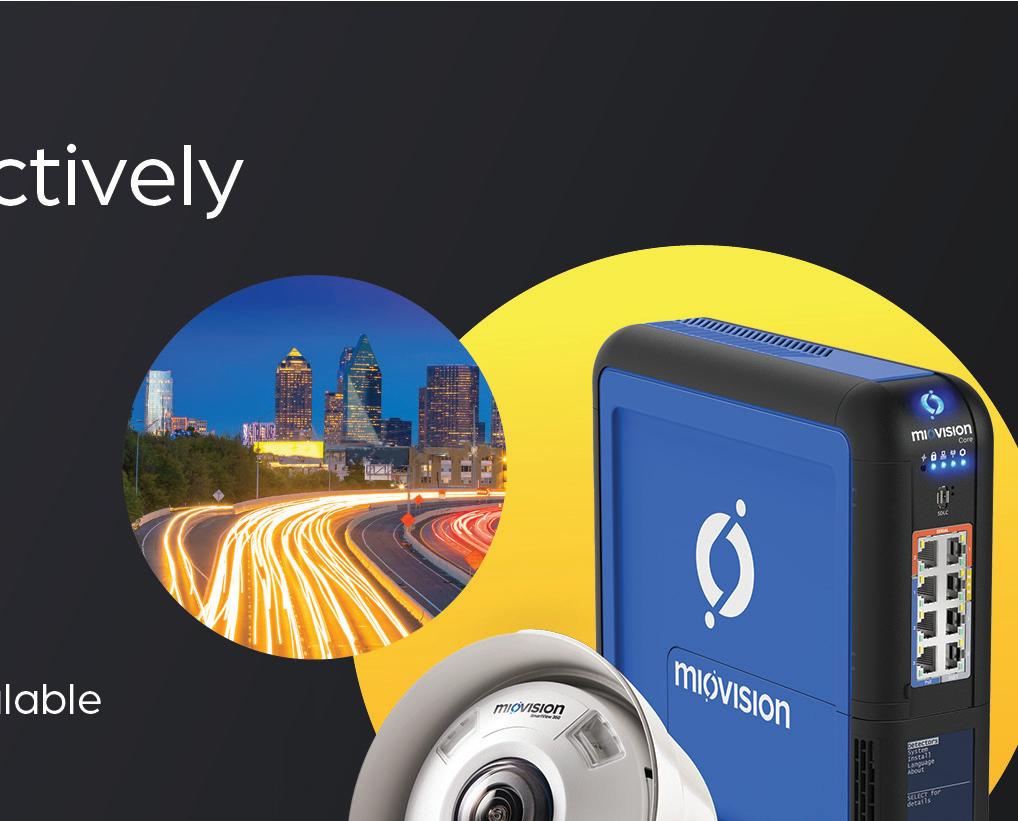
Kurtis McBride, Miovision co-founder and CEO, talks about the importance of data – and why one bit of hardware capable of running a range of software solutions could be the future of transportation
How much of road safety is in design, and how much traffic management, do you think?
The first step to answering that question is to know where high risk areas exist. Data can help. Once they know where a high risk area exists, a traffic engineer can apply their expertise to then explore causes and mitigations – whether that’s road design, poor signal timing or something else.
How will digitalisation of infrastructure help in this regard? What are some of the challenges here?
Digitalisation – the shift towards flexible hardware that can run a range of software solutions – opens up the opportunity to quickly see where problems exist. A near miss, in traffic data terms, is two road users occupying a specific zone at the same time. CO2 emissions from fossil fuel-powered vehicles correlate in a predictable way with acceleration and speed. Reducing stops and starts can reduce emissions. We know how to measure these things – access to that kind of data across a traffic network gives traffic engineers a much clearer picture on where there’s opportunities to make improvements that will have a real, measurable impact.
Climate change is perhaps the most pressing issue of our age – how can ITS technology help us to decarbonise transportation?
I think there are two main opportunities. The first is to support growing policy trends to encourage more efficient modes of transportation – walking, cycling and transit. That involves a significant traffic management shift from simply trying to move as many vehicles as possible to
balancing the needs of very different road users. Being able to measure the impact of changes on all road users – to pilot new ideas and ensure that larger initiatives are having the desired impact – is critical to getting these changes right.
The second is the opportunity to keep existing, fossil-fuelled vehicles moving at a moderate speed with fewer stops, because we know that this reduces fuel consumption, which in turn reduces CO2 emissions and other pollutants. It doesn’t hurt that it’s also a much more pleasant driving experience!
You’ve spoken recently about the industry moving towards a ‘software-first paradigm’; can you expand on this? Traffic infrastructure – particularly traffic signals – have traditionally been hardwarecentric. Each function is provided by dedicated hardware. That hardware is fairly expensive and therefore has a fairly long replacement cycle – about 25 years.
That worked when traffic engineers were mostly trying to accomplish one thing –moving vehicles quickly and safely. But, transportation policy now has multiple
goals – and will soon need to accommodate emerging changes like the advent of autonomous and connected vehicles.
If every time we want to support a new policy or add a new feature, we plan to roll a truck out to an intersection to install a new bit of dedicated hardware – well, that can’t possibly scale to meet today’s needs. It’s too expensive and it will take far, far too long to implement at every intersection.
Of course, we’ve solved this problem in other realms already. The functions you have on your smartphone all used to be separate devices too: a camera, a typewriter, a Rolodex, a calendar, a music player, a map and more. We don’t carry all those devices around – we carry one, flexible bit of hardware that is capable of running a whole range of software solutions that can be downloaded quickly and easily from an app store.
Imagine that paradigm applied to traffic infrastructure – install one piece of flexible, connected hardware, then download software solutions to address whatever policy goal you are trying to achieve. That’s where I think the industry is headed.
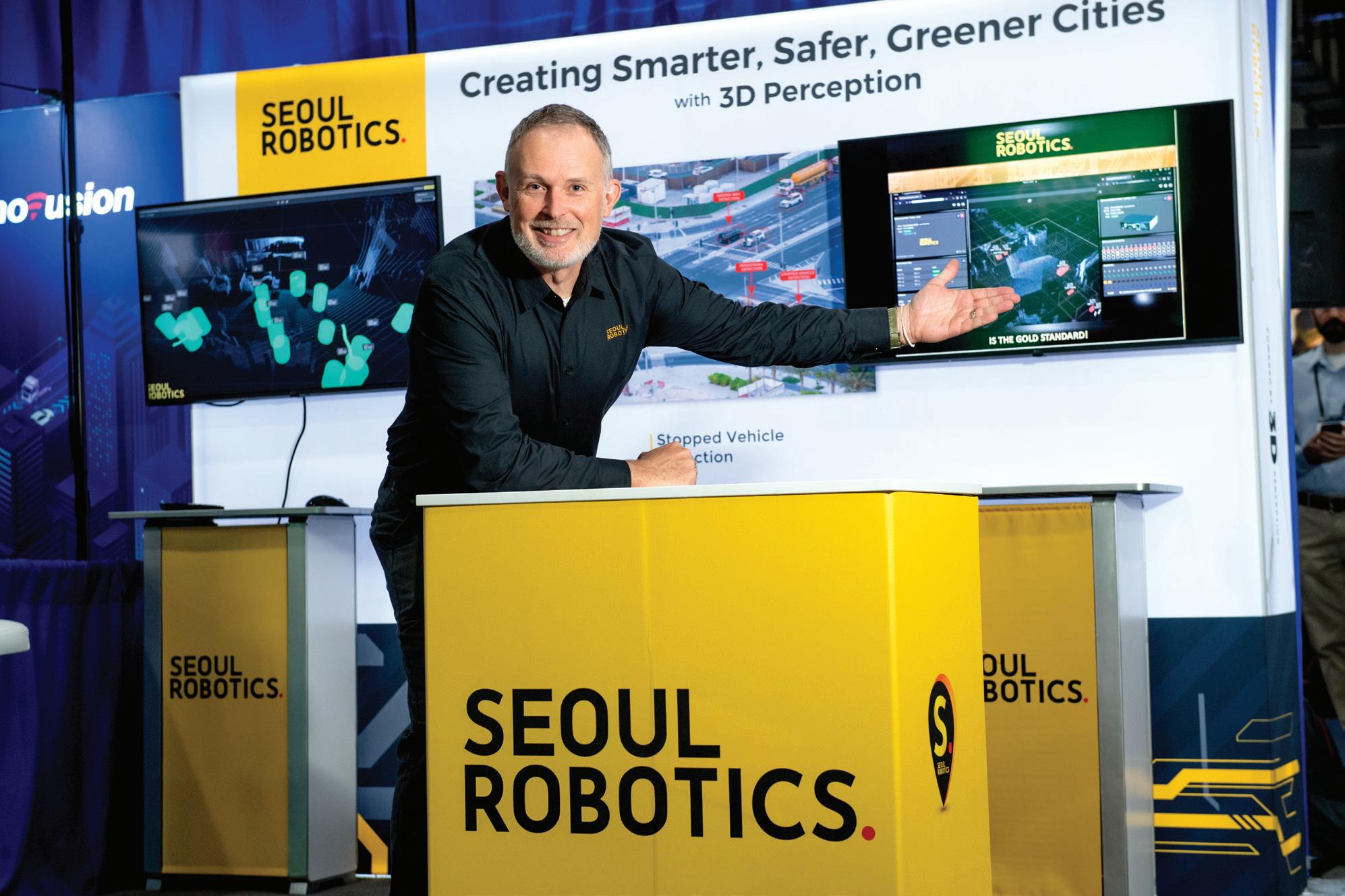
PERCEPTIVE TRAFFIC INSIGHTS FROM SEOUL ROBOTICS
Seoul Robotics has unveiled a comprehensive end-toend intersection traffic solution here in Grapevine. This cuttingedge system transforms raw data from infrastructure-based 3D sensors to provide actionable insights that drive real-world outcomes for urban mobility. By utilising this technology, municipalities and DOTs can leverage 3D perception data to make informed decisions that have a profound impact on roadway operations, such as optimising traffic signal
controllers and deploying digital messaging signs.
The new solution is powered by Seoul Robotics’ patented 3D perception platform, Sensrtft, the industry’s most accurate 3D perception software. It leverages deep learning AI to track, detect and identify pedestrians, vehicles and bicycles simultaneously within 4cm for maximum reliability in ITS deployments. Equipped with dynamic weather-filtering capabilities, Sensr ensures the highest level of accuracy day or night, even in the harshest
conditions. Seoul Robotics is a leader in smart city mobility, transforming the way cities move by powering deployments such as the largest smart intersection network in the US, and capturing insights on vehicle movement to detect incidents like wrongway driving. Visitors to the company’s booth will have an unmissable insight into how the company’s technology will revolutionise the way cities mobilise across the globe.
▶ Booth 1222 www.seoulrobotics.org
Caught
the iNET
Parson’s smart mobility platform, iNET - short for Intelligent NETworks - helps improve the management, efficiency, effectiveness, sustainability and safety of transportation networks.
It does this, says Parsons, by monitoring and recommending actions using real-time traffic monitoring, predictive analytics, active traffic management, integrated corridor management, dynamic device control, intelligent decision support, artificial intelligence, connected and autonomous vehicle integration, mobile applications and freelanguage voice response.
The cloud-based system is also sharable. It can be operated by multiple agencies simultaneously, allowing for seamless inter-agency cooperation and more efficient operations.
Parsons says iNET has been making a difference for customers in more than 40 cities, making it the most operated traffic management software in the world. It has been shown to reduce accidents by 40% while increasing traffic flow by 22%. Overall freeway delay is reduced up to 30% and throughput is increased up to 28%.
Importantly, the arrival time of emergency responders is faster by 15% and on the environmental side, carbon monoxide and other emissions-related pollutants are cut by as much as 30%.
▶ Booth 1107
www.parsons.com/ products/inet
SmartCTY trio showcases trio of traffic management solutions
Exhibitor SmartCTY Technologies will be showing off three ITS solutions at this week’s ITS America Conference & Expo in Dallas.
The SmartCTY Traffic and Analytics Tools (STAAT) works with Trafficland’s nationwide CCTV footprint to provide transportation
agencies and businesses with the data they need to mitigate congestion, reduce carbon emissions, eliminate road hazards, improve safety and ensure resilient supply chain infrastructure.
The Traffic Misery Index (TMI) collects citizen sentiment and geospatial analytics to engage
with constituents about planned or on-going projects, and the Smart Exit and Entrance Ramp (SEER) Tool helps agencies ease traffic flow for vehicles entering and exiting highways.
▶ Booth 501 smartcty.com
Steven Sheffield of Seoul Robotics
The Advanced Transportation Controller (ATC) traffic cabinet is equipped with a fail-safe design that prioritizes the safety of both drivers and workers. Thanks to load current monitoring, the system can detect a dark approach instantly, resulting in improved safety for motorists. Additionally, the ATC cabinet features unexposed high voltage components and low voltage cabinets, which not only promotes technician safety, but also ensures the safety of citizens in the event of downed wires.
See all the power of ATC at www.editraffic.com/atc-cabinet
IStreetLight's intelligence is vital for EV planning
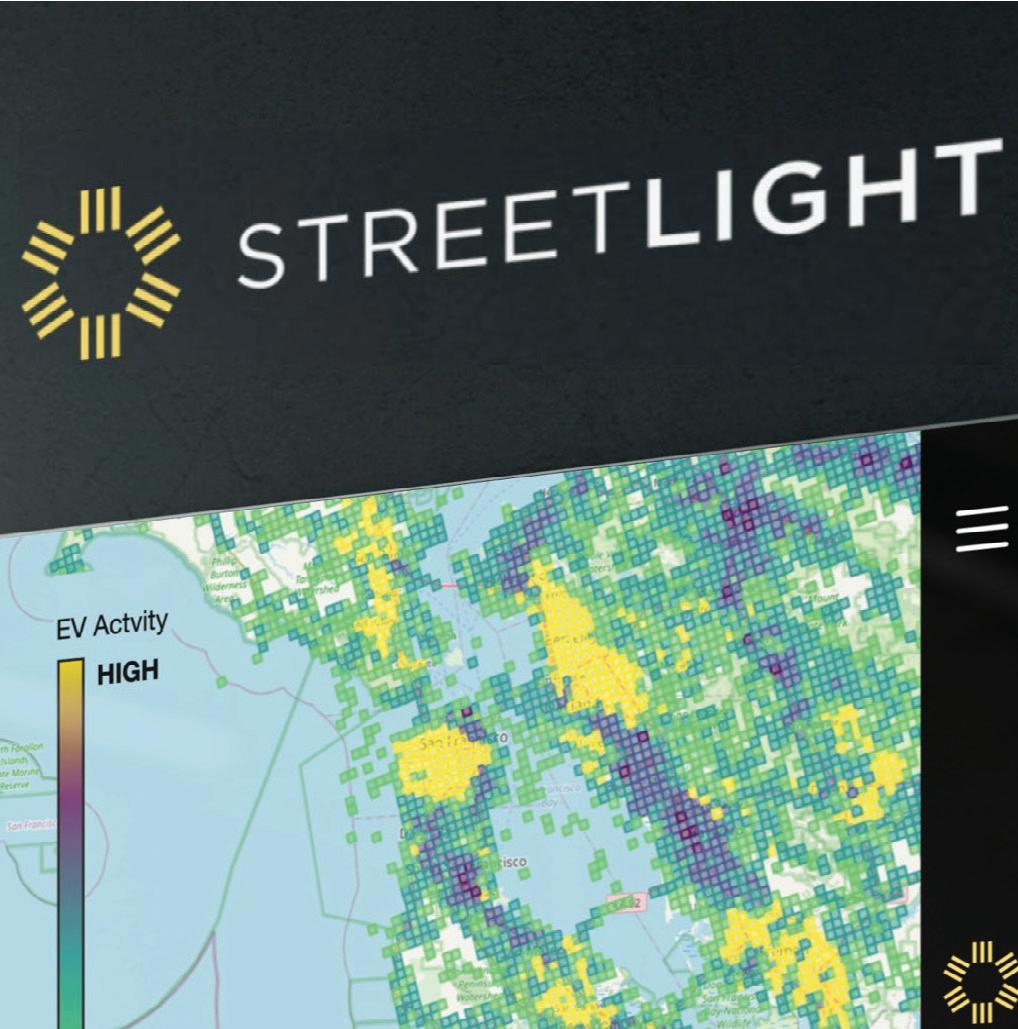
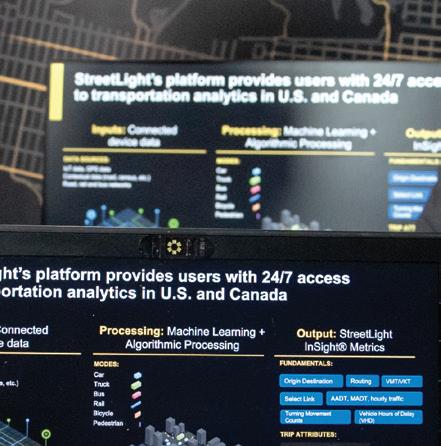
t is not an exaggeration to say that the electric vehicle sector is a revolution in progress. It promises to reduce transportation emissions dramatically, create a new market and change driving habits. But only if public agencies, charge point operators and commercial properties locate their chargers in places where people can actually use them. As StreetLight is demonstrating at the ITS America Conference & Expo
this week, its transportation intelligence for EV infrastructure ensures that operators can place chargers based on critical driving behaviors.
In Nevada, StreetLight’s software powered Jacobs’ work on the state's charger deployment plan and funding request. e team is also overlaying StreetLight’s demographic metrics to support NDOT's public outreach, promoting equitable distribution of funds, and
meeting current Justice40 requirements.
StreetLight has rolled out its EV infrastructure solution at a time when demand for chargers has never been higher. e U.S. has set a goal of more than 500,000 public EV chargers, and federal money from the Bipartisan Infrastructure Law is available to support that growth via NEVI funding and the Charging & Fuelling Infrastructure grant.
“Transportation intelligence
ensures you place your EV chargers where they are needed most by providing critical insights into travel demand patterns,” says Streetlight’s Brent Fine. “ is includes trip purpose and length; demographics of travelers; vehicle dwell time at di erent locations; relative activity of EV trips compared to non-EV trips; and existing charger deployment.”
▶ Booth 1119
www.streetlightdata.com
AMAG AND P3MOBILITY DELIVER MORE SAFETY FOR VRUS
AMAG - Advanced Mobility Analytics Group - and P3Mobility have teamed up to deliver augmented perception with J3224 Sensor Data Sharing Messages to boost safety for vulnerable road users (VRUs).
The detection of VRUs is enabled by the SMART Platform from AMAG which uses research-tested computer-vision machine learning models and video analytics at the edge and in the cloud to detect, classify, track, analyse and alert tra ic engineering, operations, planning and road-users to critical safety and operating risks.
P3Mobility successfully integrated with AMAG’s computer vision-enabled SMART Platform to create and broadcast SAE J3224 Sensor Data Sharing Messages (SDSMs) for
cooperative perception. The SDSMs are being broadcast at the University of Michigan’s Mcity Test Facility, a connected and automated vehicle proving ground.
The so ware platform from P3Mobility - a digital infrastructure project development firm which provides consulting services and a so ware platform that enables a sustainable commercial business model in the V2X ecosystem - enables V2X Roadside Units (RSUs) to broadcast SDSMs in real time. This allows both autonomous vehicles and human drivers to receive information on VRUs that may be out of sight of the vehicle.
Broadcasting these messages is important for the growth of the V2X ecosystem because the majority of VRUs – such as pedestrians
and bicyclists – are not able and are not expected to have devices that directly communicate with V2X infrastructure and vehicles. The SAE J3224 message standard establishes a common message format for V2X participants to share and build consensus on detected VRU presence. This enables vehicles, drivers and infrastructure to enhance VRU safety.
“We are very excited to be partnering with AMAG to deliver this new capability. Vulnerable road user safety is a crisis in the United States where pedestrian tra ic fatalities are at a 40-year high,” said Jeremy Ward, director of operations at P3Mobility. “Delivering these safety messages will pave the way to safer roads for all.”
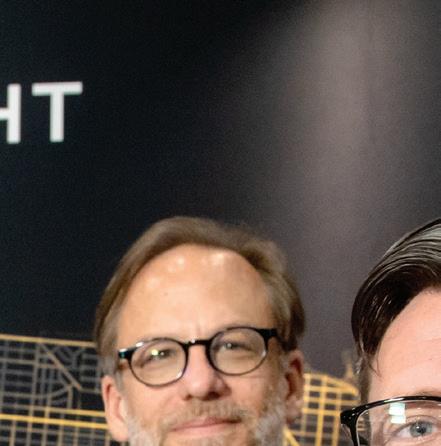
Le -right: Brent Fine, Brien Green and Nathan Shay
Detection and data for intelligent transportation systems
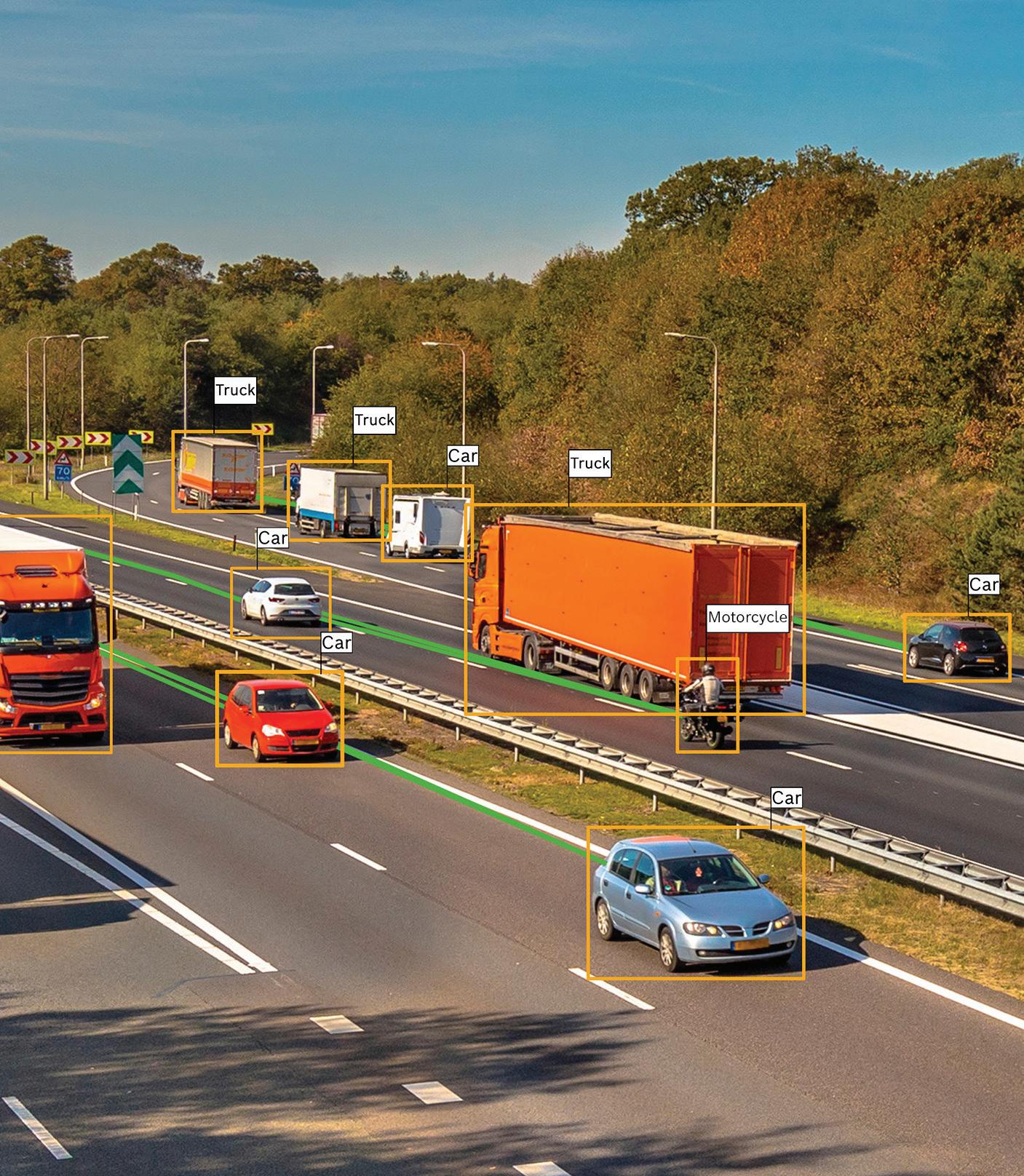
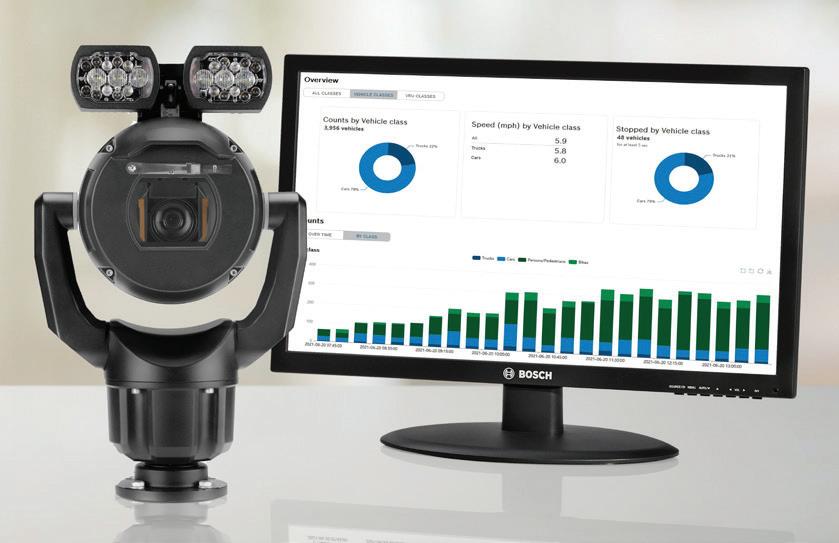
Bosch empowers you to build a safer transportation ecosystem with analytics-driven video solutions. With neural network deep learning AI on-board, Bosch intelligent cameras enable video-as-a-sensor solutions delivering highly accurate incident detection and valuable data insights on roadway usage and traffic flow for better highway and urban infrastructure planning.