

‘Forever chemicals’ still an enigma
By Inside WasteAUSTRALIA’S waste and recycling industry needs clarity on the environmental and human health concerns of forever chemicals.
There are fears that conflicting messaging about per and polyfluoroalkyl substances (PFAS) is stifling investment and threatening the viability of some sectors.
While PFAS are still being used in the manufacture of hundreds of everyday items globally, the waste industry is grappling with regulations and product specifications that one expert says are unreachable.
Describing the waste sector as a “passive receiver” of PFAS, David Burns, Chief Technical Officer at EPOC Enviro, said landfills and wastewater treatment facilities have become the new front line to prevent dispersion of PFAS risk.
“Our landfills are already a dumping ground for PFAS,” Burns said. “Upstream is trade waste treatment, but there’s


also so much PFAS in people’s homes, businesses, and factories that haven’t even become waste yet.
“We’re going to be having PFAS coming into landfill and sewage treatment plants for the next 50 years, and there’s a massive disparity between our regulators applying a set of criteria on one group versus another.”
Burns was one of three industry experts who led a workshop on the prevalence and persistence of PFAS chemicals in everyday products and the environment during the recent Waste 2024 conference in Coffs Harbour.
The workshop looked at various sources and management strategies for contamination in water and soil, including geosynthetic materials, active feedback, and natural vegetation.
They also highlighted the challenges and opportunities related to waste management in Australia, including the potential for technologies to accelerate the removal of waste and environmental impact.
PFAS are a complex group of chemicals that have been used in consumer products globally since the 1950s. Because they’re effective at resisting heat, stains, grease, and water, PFAS have been used to keep food from sticking to packaging or cookware, make clothes, and create firefighting foam.
Because of their persistence in the environment, PFAS are often referred to as forever chemicals. According to PFAS Free, a project run by Fidra, an environmental charity group working to reduce chemical and plastic pollution, some forms of PFAS can take more than 1000 years to degrade.
PFAS can be released into the environment at every stage of a product’s lifecycle, including during chemical manufacture or transferring from packaging into food.
Even after disposal, the chemicals can leak from landfills and contaminate recycling.
(Continued on page 18)
28 Stewardship scorecard
Recyclables from landfill
Going full Sircel
IT’S a long way from doing audits on behalf of an accounting firm to being one of two segment executive general managers of resource recovery heavyweight Cleanaway. And in her spare time, Tracey Boyes, whose roles is as stated, is also chair of the board for CDS operator TOMRA Cleanaway. To say she is busy is an understatement. But Boyes wouldn’t have it any other way.
Before joining Cleanaway, Boyes worked in multiple industries, with the most recent being energy for 13 years – first with Contact Energy in New Zealand, then with Origin Energy. Over time, her titles have included chief risk officer, breakeven transformation lead, and general manager future fuels and future growth. When she joined the energy industry, she didn’t think it would be overly exciting.
“I worked in the energy industry and loved it,” she said. “I remember when I joined that industry thinking ‘Energy? Boring.’ But it turned out to be absolutely fascinating because it was going through this big transition. And when I was thinking about making the leap into Cleanaway, part of the attraction was it was another industry that was going through a big transition.”
Boyes made the leap after being asked by her former boss at Origin, Mark Schubert, to come onboard after he joined Cleanaway as its CEO. Unlike most of the executive team who reside in Melbourne, Boyes is Brisbane based. Something that didn’t faze Schubert when he offered her the role.
“He said I’d be in an aeroplane most of the time anyway,” she said. “He wasn’t wrong.”
(Continued on page 24)

ISSUE 120 | JUNE/JULY 2024
Picking Stations | Trommel Screens | High Torque Shredders | Grinders | Food Depackers focusenviro.com.au PROCESSING SOLUTIONS DISCOVER MORE
PP: 100024538 ISSN 1837-5618 Image: SergeiShimanovich/shutterstock.com
36
42
Boyes bouyed by industry trajectory

3-Stage Grinding Process
Provides Faster Reduction
Astec - Peterson's powerful up-turn 3-stage grinding process provides better fracturing of material and a more consistent product, giving you just the product your buyers are looking for.
The Impact Release System
Protects Your Investment
Astec - Peterson's patented Impact Release System's air bags provides uniform grinding and protection from contaminated feedstock, a feature unique to Astec - Peterson grinders.
Land clearing, mulch, compost, asphalt shingle tiles, scrap wood, biomass, green waste-we can handle it am
www.komatsuforest.com.au

The Impact Cushion System
The Second Line of Defence
Urethane cushions and shear pins help protect the mill from catastrophic damage in the event of a severe impact from contaminants in the feedstock.
Astec - Peterson offers horizontal grinders from 433-839 kW, offering grinding solutions with output at the lowest cost per ton. Visit us at www.astecindustries.com and see why we have been leading the industry for over 35 years!
2710D Horizontal Grinder
5710D Horizontal Grinder
6710D Horizontal Grinder
Largest
Portable 6 Efficient Engine 433 kW or 570 kW Length 1612 cm Weight 30900 kg Feed Opening 153 x 81 cm
High Production with Consistent Sizing Engine 722 kW Length 1800 cm Weight 42184 kg Feed Opening 152 x 102 cm Astec - Peterson is represented by Komatsu Forest in Australia and New Zealand, providing industry-leading product support and expertise.
Grinder with Highest Output Engine 839 kW Length 1860 cm Weight 48987 kg Feed Opening 168 x 127 cm Komatsu Forest Pty Ltd. 11/4 Avenue of Ame ricas Newington NSW 2127 Australia T: +61 2 9647 3600 E: info.au@komatsuforest.com Komatsu Forest Pty Ltd
Chief Operating Officer
Christine Clancy christine.clancy@primecreative.com.au
Managing Editor
Mike Wheeler mike.wheeler@primecreative.com.au
Brand Manager
Chelsea Daniel chelsea.daniel@primecreative.com.au
Design Production Manager
Michelle Weston michelle.weston@primecreative.com.au
Design Blake Storey, Bea Barthelson
Client Success Manager
Glenn Delaney glenn.delaney@primecreative.com.au
Head Office
Prime Creative Pty Ltd
379 Docklands Drive
Docklands VIC 3008 Australia
p: +61 3 9690 8766 enquiries@primecreative.com.au www.insidewaste.com.au
Subscriptions +61 3 9690 8766 subscriptions@primecreative.com.au
Inside Waste is available by subscription from the publisher. The rights of refusal are reserved by the publisher
Articles
All articles submitted for publication become the property of the publisher. The Editor reserves the right to adjust any article to conform with the magazine format.
Copyright
Inside Waste is owned by Prime Creative Media and published by John Murphy. All material in Inside Waste is copyright and no part may be reproduced or copied in any form or by any means (graphic, electronic or mechanical including information and retrieval systems) without written permission of the publisher. The Editor welcomes contributions but reserves the right to accept or reject any material. While every effort has been made to ensure the accuracy of information, Prime Creative Media will not accept responsibility for errors or omissions or for any consequences arising from reliance on information published. The opinions expressed in Inside Waste are not necessarily the opinions of, or endorsed by the publisher unless otherwise stated.
Lessons learned
WE turn to Europe a lot when it comes to the direction we want the resource recovery sector to take. Why? Simply put, they are way ahead of us in many areas. Whether it be energy-from-waste facilities, product stewardship or landfill levies, the EU leads the way.
One of the key issues that needs addressing is designing waste out of packaging. At a recent WMRR-sponsored webinar, Sweden’s Anna Larsson outlined Europe’s journey, which involves penalties if parties do not comply with legislation This legislation includes provisos aimed at Extended Producer Responsibility (EPR) when it comes to packaging. This means in some jurisdictions, new packaging (and products) must have a certain amount of recovered materials in them – and those materials must have had impurities removed. Larsson said that such legislation has led to “strong motivation for all market actors to improve ecodesign, improve collection and improve recycling processes”
We also talk to Sally Quinn from Green Collect. Long before social licence became buzzwords, Quinn’s organisation was trying to help those who have trouble helping themselves by providing


employment in our sector. Started more than 20 years ago, the organisation employs at risk youth, people who have had contact with the justice system, refugees and people with disabilities.
While most follow the mantra, reuse, recycle, reduce, to Quinn’s mind the former is the most important part of the equation. Green Collect uses recycling as a last resort.
Finally, check out our thought leadership piece with Cleanaway’s Executive GM of solid waste services Tracey Boyes. Boyes has been with the company for two years after spending the best part of 15 years in the energy sector.
It’s been a hectic time for Boyes having to navigate a new industry, but it’s one that she is finding intriguing. She sees that it is in a state of flux and many issues need addressing. Making sure the circular economy is up and running and decreasing its carbon footprint are two of Cleanaway’s ongoing goals. Boyes says partnerships are the key, and the company has already built a few with the likes of Asahi, Coca Cola and The Pact Group. Boyes finds the whole industry exciting and can’t wait to see where it leads her and Cleanaway.


Daily news updates at www.insidewaste.com.au 4 INSIDEWASTE JUNE/JULY 2024
Editor’s Note // Recycling the tricky stuff made easy for councils, businesses and individuals We have a solution for 100+ items: Soft plastics, e-waste, textiles, polystyrene and more Join the 20+ councils, 900+ businesses and 60,000+ Recycle Heroes who signed up! We collect from: Councils: CRCs, public community recycling hubs Businesses: head office, distribution centres Residents doorsteps RecycleSmart recyclesmart.com Mikey at 0421 612 302
Nominations open for 2024 Waste Awards
NOMINATIONS are open for the 2024 Waste Innovation and Recycling Awards (WIRA). On the back of a successful 2023 event, the 2024 awards are expected to garner even more interest as the waste and resource recovery sector ramps up new infrastructure to meet the many recycling and diversion targets set by both federal and state governments.
Held in conjunction with the Waste Australia Expo, the awards will take place in Melbourne on October 23, 2024, with a venue yet to be finalised.
Industry heavyweights Veolia, REMONDIS, Visy and Re-Group have already signed on as sponsors, with more looking to join the event.
Categories for the Waste Innovation and Recycling Awards include Outstanding WARR Project (Metro), Outstanding WARR Project (Regional/ Rural), Operational Excellence,
Innovation, Outstanding Facility, Young Professional, Woman of Waste, Community Engagement, WIAR Workplace of the Year, and Leader of the Year. The 2023 awards had a list of outstanding nominations and finalists in all categories, and organisers expect the 2024 event to exceed those numbers.
“The 2023 awards night was a highlight of our events calendar,” said Awards Manager Chloe Armstrong. “It is a very competitive industry, which was evidenced by the quality and number of nominations we received. It is not only a great event to highlight some of the inspiring ideas, people and innovations happening within the industry, but also an ideal opportunity to network with peers and friends.”
Nominations can be found at https://www.wasteawards.com.au/ nominations/


News // Daily news updates at www.insidewaste.com.au 6 INSIDEWASTE JUNE/JULY 2024
What can you do? BESTSMALL CONSULTANCY Call 02 8541 6169 or email info@mraconsulting.com.au mraconsulting.com.au Contact our award-winning team today to find out what you can do. With the right Government policies, our sector can reduce Australia’s 464MT of annual greenhouse emissions by up to 10%. How? Better recycling Organics diversion from landfill Soil sequestration via compost and biochar Better gas capture on landfills Energy from Waste Electric collection trucks 1 2 3 4 5 6
COG general manager Sarah Doyle with Leader of the Year REMONDIS’ Chris Wade. Image: Prime Creative Media

AWRE ready to tackle key industry issues
THE Australasian Waste and Recycling Expo (AWRE) is back for its 15th year, taking place at ICC in Sydney July 24-25, 2024. Presented by Diversified Communications, the exhibition, featuring the AWRE Summit, brings together policy makers, professionals, educators, and industry thought leaders to share ideas and solutions for a cleaner, more sustainable future.
The event makes a welcome return as Australians grapple with the increasing complexities surrounding waste and recycling, compounded by the collapse of soft-plastic recycling firms such as REDcycle. While the recycling rate in Australia is improving, the amount of waste generated continues to increase as the population grows, according to the 2022 National Waste Report AWRE 2024 will serve as a forum for leaders and professionals in the waste and recycling industry to convene, showcase

and discover the latest innovations, and collaborate on initiatives to reduce Australia’s waste production and move toward a more circular future.
With inspiring talks from leading experts in the sector, including Suzanne Toumbourou, CEO of the Australian Council of Recycling, and Brett Lemin, Executive Director of Waste Contractors & Recyclers Association of NSW, the two-day live
ANNEXURE A
Virendra Nath is Convicted and Penalised for Improper Storage of Tyres at Premises in Revesby, NSW
Virendra Nath has been prosecuted by the Environment Protection Authority (“EPA”) for four offences of contravening an environment protection licence (“EPL”). The prosecutions were brought after BSV Tyre Recycling Australia Pty Ltd (“BSV”), of which Nath was one of two directors, stored waste tyres and waste tyre products in contravention of its EPL at its premises in Revesby, NSW. The offences occurred on 30 March, and between 30 March and 26 July 2022, respectively.
Waste tyres and waste tyre products represent a fire hazard if not stored in a proper manner. If waste tyres and waste tyre products catch alight, they are capable of causing actual harm to the environment. In this case, although no fire occurred, the offences caused potential harm to the environment. This included potential harm to air quality, nearby land and waters, human health, and property on neighbouring premises
On 16 February 2024, the Land and Environment Court of NSW convicted Nath of four offences of contravening the EPL, by virtue of being a director of BSV at the time that BSV contravened its licence, and ordered Nath to:
(1) pay fines totalling $65,000;
(2) pay the EPA’s legal costs as agreed or assessed; and
(3) cause this notice to be published at his own expense.
event helps form new connections and build strategies for a more sustainable and profitable economy.
“We’re at a critical time when the decisions we make can have a real impact on the future of our environment and economy,” said Ali Lawes, Event Director of AWRE.
“AWRE is an opportunity for the brightest minds in recycling and waste
innovation across Australasia to come together, discuss the actions and find the solutions we need to implement today to build a brighter tomorrow. We look forward to seeing our returning attendees and new faces in Sydney this year and opening the floor for dynamic conversation.”
Also returning in 2024, the Innovations Pitch Fest provides a showcase opportunity for fledgling solutions for the waste and recycling industry to be presented by the individuals and companies leading them. The Innovation Pitch Fest will feature a line-up of 2024 Innovation Zone exhibitors. Directly after the pitch, judges will provide feedback criteria, including consumer need, innovation, point of difference, go-tomarket strategy and product sustainability.
The winner of the Innovations Pitch Fest will receive a fully subsidised stand at the 2025 Australasian Waste and Recycling Expo.
Dial-A-Dump (EC) Pty Ltd convicted and fined for the emission of rotten egg gas odour from the Bingo Eastern Creek Landfill, impacting community members
Dial-A-Dump (EC) Pty Ltd (“DADEC”), a fully owned subsidiary of Bingo Industries Limited, was prosecuted by the NSW Environment Protection Authority (“EPA”) for causing the emission of offensive odour from the Bingo Eastern Creek Landfill (“landfill”).
Between 26 March and 16 June 2021, a rotten egg gas odour associated with landfill gas was emitted from the landfill. This impacted residents in nearby suburbs including Minchinbury, Eastern Creek, and Horsley Park.
The landfill gas contained hydrogen sulfide gas, which has an unpleasant rotten egg odour. In addition to the unreasonable interference with their comfort, affected residents suffered symptoms as a result of exposure to the odour, which varied from person to person, including throat and eye irritation, coughing, breathing difficulties, headache, nausea, insomnia, stress and anxiety. There is no evidence of any long-term health effects as a result of the odour.
During the offence period, DADEC had not installed a landfill gas extraction and treatment system of sufficient capacity to extract landfill gas and to treat it to remove malodorous compounds.
Dial-A-Dump is sincerely remorseful for the impact of the odour on the community. Since the commission of the offence, Dial-A-Dump has spent over $6 million on a range of measures to control and prevent future odour issues, including to install and commence operation of a permanent landfill gas extraction and treatment system in the landfill.
On 20 March 2024 the Land and Environment Court of New South Wales convicted DADEC for causing the emission of the offensive odour and ordered that it:
1. pay a total monetary penalty of $280,000, half of which is to be paid to the EPA and half of which is to be paid to Blacktown City Council for the purposes of a specified project for the restoration or enhancement of the environment for the benefit of the community affected by the commission of the offence;
2. pay the EPA’s investigation and legal costs;
3. at its own expense, publish this notice in The Sydney Morning Herald, Blacktown News and Inside Waste magazine, and put a pinned post of this notice on Bingo Industry Ltd’s Facebook and LinkedIn pages; and
4. provide notice of the outcome of the proceedings to street addresses in the area affected by the commission of the offence.
The Court’s judgment may be accessed at https://www.caselaw.nsw.gov.au/decision/18e535e7515e1cf6b45fd36e

News // Daily news updates at www.insidewaste.com.au 8 INSIDEWASTE JUNE/JULY 2024
**********
AWRE 2024 will provide industry with a platform to showcase and discover initiatives to move Australia toward a more circular future. Image: Diversified Communications
The Impaktor 250 evo is the perfect combination of shredder and crusher. Its compact dimensions, low weight, and quick setup times make it a game changer in waste processing efficiency.
For those interested in sustainable waste management, explore the possibilities with the ARJES Impaktor 250 evo.
E: sales@triconequipment.com.au www.triconequipment.com.au
T: 1300 859 885
CRUSH | SCREEN | CONVEY | WASH | RECYCLE | PARTS | SERVICE Michael Tripolone 0417 281 795 | Paul Knauer 0488 012 384 | Chris Mulally 0488 288 374

fires, including those caused by lithiumion batteries. The company is also going to showcase its waste chutes, which are designed for high-rise buildings. Then there is its Bramidan range of balers that are available in an array of configurations and are ideal for several waste streams, including e-waste.
In addition to these highlighted products, Wastech Engineering offers a comprehensive array of innovative solutions tailored to meet diverse industrial needs. From cutting-edge waste management technologies to advanced recycling systems, its showcase encompasses a wide spectrum of offerings aimed at enhancing efficiency, sustainability, and safety across various sectors. Visitors can explore a full suite of solutions, including state-of-theart waste compactors, shredders, and much more.
“We see this as a premier event, the first of its sort in Australia,” said Russ. “We’re really keen to demonstrate what we’re offering as an industry leader – the best-in-class products and services.”
It is having support like Wastech Engineering that gives Freeman confidence the event will be a success. The market reaction has been positive, too.
“It’s given us confidence to push on with it when others say they think it’s a great thing,” said Freeman. “We’re in an industry where some companies have their own demonstration days, but they’re all across different states and parts of the country and at different times. We’re saying, ‘Look, let’s do a consolidated demonstration day where it’s an efficiency of scale where everyone comes
together’.
machinery over the course of a couple of days without having to go to a variety of different events.”
Daily news updates at www.insidewaste.com.au 10 INSIDEWASTE JUNE/JULY 2024 is designed to prevent and help put out
The Fire Rover will be on display at the event. Image: Wastech
It’s that efficiency of scale that is getting people excited because they can see a lot of different plant and


skala.com.au/environmental 02 4905 0650 • WINDROW TURNERS • SH REDDERS • STAR SCREENS • DRUM SCREENS SALES TECHNICAL SUPPORT SPARES ORGANICS PROCESSING EQUIPMENT YOU CAN RELY ON
Smoothtubes The First Plastic Chute in Australia!
SmoothtubesTM boast significantly less vibration when compared to steel, ensuring quieter and cleaner operations.
With a seamless flow from intake doors to collection point, enjoy unparalleled efficiency and environmental consciousness.
Ideal for garbage, linen, and recycling in high-rises. Upgrade to SmoothtubesTM for a quieter, cleaner, and greener solution.
Experience the SmoothtubesTM plastic waste chute today!


1800 465 465 info@wastech.com.au wastech.com.au
* For internal use in Residential High Rise Apartment buildings * TM
Innovating, motivating, and educating
COSTA Georgiadis, the host of ABC’s Gardening Australia, opened Waste 2024 at Coffs Harbour with a challenge.
He urged attendees to redefine their relationship with waste, start digging beneath the surface and recognise waste is a design problem.
“We have to say no to wiping up other industries mess. We’re not a maintenance industry,” Georgiadis said. “It’s only when we shift the relationship with waste that we can start to develop systems to become circular.”
Georgiadis kicked off three days of panel sessions, workshops and discussions that aimed to ignite the sector’s thinking.
Circular economy and collaboration were front of mind of the more than 700 delegates, 60 councils and 80 exhibitors were part of this year’s conference.
Those themes were strengthened by Fiona Glenn, General Manager of the Sebastian Foundation. Through a partnership with E-Thread, a circular economy fashion recycling program, the Sebastian Foundation is preventing landfill and using the proceeds to fund community youth mental health programs.
“It supports sustainable, generational change,” Glenn said.
Generational change is also what’s needed to permanently reduce total waste generated nationwide.
Leanne Wiseman is an Australian Research Council (ARC) Future Fellow and a Professor of Law at Griffith University. She highlighted the importance of having the right to repair products and said the expansion of the right to repair movement over the past 10 years has reinforced repair and repurpose as part of waste prevention.
“It’s about keeping our products in use for longer and out of landfill,” she said. “Repair is a first responder ... it extends the lifespan of products, saves money, opens service and repair markets, reduces waste and the need for new resources.”
Circularity was the key word on the second day of the conference – from how the Environment Protection Authority New South Wales (NSW EPA) is transitioning to a circular economy to the need for a national infrastructure plan and what the data is telling us.
Anne Prince, the Director of APC Waste Consultants, is a veteran of the industry and has led the delivery of more than 1000 projects for APC over 25 years.

“Data provides the foundation for evidence-based decision-making that underpins and informs public policy and planning,” Prince said. “It tells us where we are, what we got right, and where to focus our future endeavours.”
The story of what Australia is discarding in landfills made for some sobering thoughts. The overall commercial and industrial recycling rate for 2021-22 was 49 per cent, with a target of 80 per cent by 2030.
Tony Chappel, the CEO of NSW EPA has played a critical role in delivering the EPA’s Climate Change Policy and Action Plan and is committed to working with each sector to reduce emissions while driving new opportunities.
NSW EPA has implemented several strategic policies while working with stakeholders on new approaches for the industry, this includes implementing the NSW Waste Infrastructure Plan, reviewing the waste levy, addressing problematic plastics, and improving food and organic garden waste management.
Joan Prummel, the International Circular Economy Advisor at the Dutch Ministry of Infrastructure and Water Management, is no stranger to accelerating circular economy initiatives.
He called for recognition of the importance of designing products with recycled materials, reducing waste through extended producer responsibility, and promoting recycling and separation of materials.
Bronwyn Voyce agreed. The founder of Civic Futures Lab, an impact lab for government, ASX, and SME leaders seeking to address climate risk and accelerate the global transition to a circular economy, said business as usual is the enemy of sustainability and circular economy.
“We must look at it differently. We need a bipartisan approach to this national strategy.”


// News Daily news updates at www.insidewaste.com.au JUNE/JULY 2024 INSIDEWASTE 13
Heavy duty floor topping & repair system for waste handling sites Call us for more information NO DOWNTIME FLOORING 02 8840 8888 enquiries@ascoatings.com.au | www.ascoatings.com.au >Leachate Resistant >Industrial Strength >High Impact Rating >Rapid Cure Times >Joint Repairs
More than 80 exhibitors attended Waste 2024. Image: Impact Enviro




From the CEO’s desk
Controlling consumption key to reducing waste streams

Can Australia really embrace the necessary structural reform we need and move beyond our current linear BAU (Business as Usual) approach to tackle the symptoms of overproduction and over-consumption? Or will we simply continue to focus lower down the hierarchy and hope we can keep recycling our way to 2030?
Environment Ministers will meet for the second time this year on 7 December, following the first 2018 Meeting of Environment Ministers (MEM) in April, which was in part a response to the import restrictions driven by China’s National Sword Policy and the effects this policy has had across the Australian waste and resource recovery (WARR) industry. Key decisions derived from the April MEM include:
This is a key conversation that Australia needs to have and will be one that will be explored at WMRR’s circular economy conference ENVIRO in Brisbane in June.
•Reducing waste generation, endorsing a target of 100% of Australian packaging being recyclable, compostable or reusable by 2025, and developing targets for recycled content in packaging.
In 2005, the Australia Institute wrote that “Australians seem to live with a contradiction. They express concern about the environment yet live materialistic lifestyles that result in high levels of waste”
• Increasing Australia’s domestic recycling capacity.
• Increasing the demand for recycled products.
This statement is still as true today as it was in 2005. We love to consume. Look at clothing, where on average we buy 56 pieces a year.
• Exploring opportunities to advance waste-to-energy and waste-to-biofuels.
biodiversity management. There is strong inspiration to draw upon globally, such as the WRAP UK: Net Zero Why Resource Efficiency Holds Answers campaign. What better time to tackle consumption than when we are struggling with a cost-of-living crisis? Australia has done this well before – does anyone else remember Norm and “Life Be in It”?
Focusing behavioural campaigns on avoidance and consumption (as opposed to what goes in which bins) to look at what we buy and whether we need it, gives us a real chance to have an impact on extending lifespan, reducing waste generation and preferencing Australian products made from Australian recycled materials, including explaining why we should.
industry however the Queensland Government has embarked on the development of a waste management strategy underpinned by a waste disposal levy to increase recycling and recovery and create new jobs. The State will re-introduce a $70/ tonne landfill levy in March 2019. There are also strong attempts to use policy levers (levy discounts and exemptions) to incentivise the use of recycled material and make it cost competitive with virgin material. However, little has been done to establish new markets and Government has not taken the lead in the procurement of recycled material. There are grants available for resource recovery operations in Queensland although no monies have been allocated to assist in 2018. This is troubling as Queensland rolled out its Container Refund Scheme on 1 November, which will likely impact the cost and revenue models of the State’s MRFs – as we have seen most recently in NSW.
WESTERN AUSTRALIA
Thinking differently about lifecycle and consumption also means we can create opportunities for new business models, such as sharing and re-use, to replace more traditional linear ownership models. For example, in Scotland consideration is being given to banning the disposal of unused goods and incentivising the return of used products for refurbishment or resale. In France, a ‘right to repair’ exists for some electronic/electrical items (like smartphones, televisions and washing machines) and clothing.
•Updating the 2009 Waste Strategy by year end, which will include circular economy principles.
One year after this report was published, Australia generated just under 44 million tonnes of waste or a tick over two tonnes per person. By 2021, this was just under 76 million tonnes or nearly three tonnes per person. We remain one of the highest generators of waste per capita globally.
This rise is driven arguably by consumption. Consumption for me, is the real elephant in the room when it comes to creating a circular economy, as to date we really have been silent on it and its impacts on the planet and achieving all the 2030 targets.
It is time to take stock and examine what has been achieved since these decisions were announced. Now, seven (7) months may not seem like a long time, however in that time we have seen further markets close (Malaysia, Indonesia, Vietnam) and if you are an operator under continued financial stress, seven (7) months could make or break you.
In 2018, we did commit nationally to reduce waste generated by 10 per cent per capita by 2030. Regrettably, we have done little to really address this, with generation continuing to increase, meaning we now need to reduce the amount of waste generated by 18 per cent per capita to achieve the target.
Following the April MEM, we have had three (3) states step in with varying degrees of financial assistance for industry (councils and operators). This should be expected considering almost all states (except Queensland and Tasmania) have access to significant waste levy income each year. On the eastern seaboard, Victoria has approximately $600 million in waste levy reserves in the Sustainability Fund and NSW raises more than $700 million per annum from the waste levy. There is certainly no lack of funds that can be reinvested into our essential industry.
So far, we have not joined the dots between the materials and products we consume, how we consume and how we manage it through its life cycle. Other nations are ahead of us, making the links between consumption, carbon, and biodiversity. Readers may have even noticed the COP 27 and COP 28 focused heavily on this link, given some 50 per cent of global greenhouse gas emissions and 90 per cent of global biodiversity loss and water stress is caused by resource extraction and processing.
Funding helps but as we know, the money goes a much longer way with Government support and leadership, as well as appropriate policy levers.
VICTORIA
Those of us in the WARR (Waste and Resource Recovery) industry could recite in our sleep the waste management hierarchy. At the top is avoidance, which is the best thing we can do for the planet. We need to start a national conversation about how to manage consumption right now if we are genuine about both reducing our draw down on the natural environment and reducing waste generated including
Victoria has arguably been the most active and earnest in supporting the industry post-China, with two (2) relief packages announced to support the recycling industry, valued at a total of $37 million. The Victorian Government has also gone
This does not mean we are losing economic prosperity by pivoting away from retail sales – rather it means we are adapting business models and saving money, as well as reducing emissions and the strain on the planet’s resources.
The Western Australian Government set up a Waste Taskforce in direct response to the China National Sword. As part of this announcement, the State Government urged all local councils to begin the utilisation of a three (3)-bin system - red for general waste, yellow for recyclables and green for organic waste - over the coming years to reduce contamination. While this taskforce is a step in the right direction, we are yet to see any tangible results from it or any funding for industry. In October, the WA Waste Authority released its draft Waste Strategy to 2030, which comprises a comprehensive and detailed roadmap towards the State’s shared vision of becoming a sustainable, low-waste, circular economy.
A Monash University study released last year found 51 per cent of Australian shoppers say sustainability is a crucial factor when making a retail purchase. How many people really think – can I darn those socks, or do I just buy a new pair? Can that toaster be fixed, or do I just buy a new one? Is it driving behaviour change? The United Nations’ E-waste monitor in March 2024 warned electronic waste is growing five times larger than e-waste recycling. This is truly alarming.
COMMONWEALTH
And this is where government and business need to work together to make it easier for consumers to make better, more informed choices. I am sure the 51 per cent of people mentioned above do really want to do the right thing, but in many cases, it is simply not easy.
Without a ‘right to repair’ here in Australia, buying a new toaster can be cheaper than getting it repaired, especially if you have got to drive halfway across town to the repair shop or spend a fortune on postage. Online shopping has made purchases so easy you do not even have to get off the lounge suite or out of bed.
Following the MEM in April, Australia now has a new Federal Environment Minister, Melissa Price, who in October reiterated to media MEM’s commitment to explore waste to energy as part of the solution to the impacts of China’s National Sword, which is troubling (EfW is not a solution to recycling). The Commonwealth has also backed the Australian Recycling Label and endorsed the National Packaging Targets developed by the Australian Packaging Covenant Organisation (APCO), which has to date, failed to incorporate industry feedback in the development of these targets. To the Commonwealth’s credit, there has been significant coordination in reviewing the National Waste Policy, with the Department of Environment bringing together industry players and States during the review process.
As the Zero Waste Scotland Circular Economy and Waste Route Map to 2030 states, we need to be “challenging the current approach to consumption and production by mainstreaming reuse and repair and incentivising and promoting sustainable choices”. It even argues rather than just setting waste reduction targets, consideration should be given to setting consumption reduction targets. Have we seen anything like this policy courage yet in Australia? Nope. We are too busy thinking that if we regulate recycled products, we are creating the mythical circular economy
The updated Policy will now go before Environment Ministers on 7 December. The Commonwealth can play a key role – one that goes beyond the development of the National Waste Policy. WMAA is supportive of the Federal Government maximising the levers it has, including taxation and importation powers, to maintain a strong,


news
WMRR: Suite 4.08 | 10 Century Circuit | Baulkham Hills NSW 2135 | t: 02 8746 5000 | e: info@wmrr.asn.au | w: www.wmrr.asn.au
WMRR: Suite 4.08 | 57 St Johns Road | Glebe NSW 2037 | t: 02 8746 5000 | e: info@wmrr.asn.au | w: www.wmrr.asn.au enviro conference 2024 26-27 june 2024 bcec brisbane early bird closing soon book at WMRR.ASN.AU Daily news updates at www.insidewaste.com.au 16 INSIDEWASTE JUNE/JULY 2024
Call: Email: Visit: 03 9706 8066 sales@appliedmachinery.com.au appliedmachinery.com.au genoxmachinery.com.au At Applied, our number one priority is ensuring that our customers across the country get the machinery they need, with the support they expect. With nearly 30 years’ experience, and thousands of satisfied customers across the country we’re here for the long term. We’re a true machinery partner – just ask Steve Morriss. Real Service. Real Support. Real People. That’s Applied Thinking. “ANY ISSUE IS FIXED STRAIGHT AWAY. THAT’S THE BENEFIT OF A LOCAL SUPPLIER WITH FULL TECHNICAL SUPPORT AND BACK-UP.” STEVE MORRISS, CLOSE THE LOOP, SOMERTON, VIC
Forever chemicals still an enigma


(Continued from front cover)
IN Australia, an increased PFAS level has been detected at sites including airports, defence bases, and firefighting training facilities.
The Department of Climate Change, Energy, the Environment and Water (DCCEEW) plans to introduce national controls for PFAS chemicals from 1 July 2025. These controls, introduced under the Industrial Chemicals Environmental Management Standard (IChEMS), will apply bans, restrictions and risk management measures to importers, manufacturers and users of PFAS chemicals.
According to David Springer, Commercial Manager for Envirolab, one of Australia’s largest privately owned environmental laboratories, there are between five and 15,000 PFAS chemicals.
As president of ELIG (Environmental Laboratories Industry Group) and vice president of AHCA (Asbestos and Hazardous


Daily news updates at www.insidewaste.com.au 18 INSIDEWASTE JUNE/JULY 2024 Cover Story //
PFAS was commonly used in firefighting foams because it helps the foam flow rapidly over the fuel surface. Image: Jana Shea/shutterstock.com


Daily news updates at www.insidewaste.com.au JUNE/JULY 2024 INSIDEWASTE 19 // Cover Story JCB WHEEL LOADERS 1300 522 232 jcbcea.com.au PROVEN RELIABLE AND PRODUCTIVE The JCB range of wheel loaders are built to be strong, reliable and provide comfort for long days in the cab. Designed for ultimate productivity, and offering superb performance the JCB wheel loader range features best-in-class comfort, visibility, safety ergonomics and superior serviceability plus a whole lot more.
David Springer, Commercial Manager for Envirolab, highlighted the widespread presence of PFAS chemicals in everyday products. Image: Impact Enviro


Invest in quality machines that are backed by a national parts and service footprint for the ultimate
From material handlers, to trommels, stackers, grinders, screens, dozers and more. Our industry specialists will create a personalised solution for your business. Onetrak, the exclusive national distributor for Fuchs, Tigercat, Anaconda, Dressta, Hidromek and Striker.
Call 1300 727 520 contact@onetrak.com.au www.onetrak.com.au SALES • SERVICE • PARTS • RENTAL COMPLETE WASTE EQUIPMENT SOLUTIONS.
done.
TRANSFORM YOUR OPERATION.
peace of mind, so you can get the job

Materials Consultant Association), Springer’s current interests are PFAS in consumer goods and blood.
He said that while PFAS have been studied extensively, people will be surprised to know where they have been found.
Over the past few years, Envirolab has tested hundreds of samples for PFAS in a range of matrices, including biosolids, wastewater, clothing, food, cosmetics, packaging, animal tissue, and blood.
Of the known PFAS chemicals, regulators are primarily interested in PFOS (perfluorooctanesulfonic acid), PFOA (perfluorooctanoic acid), and PFHxS (perfluorohexanesulfonic acid). Laboratories commonly test for 28 varieties. Envirolab testing can include up to 40 compounds using a TOPA (Total oxidisable precursor assay) analysis.
“We’re looking for the hidden PFAS in products,” Springer said.
He said testing by Envirolab found 40 parts per billion (ppb) of PFOA in an eyeliner pencil. That rose to 480 ppb when the pencil was tested for 28 PFAS and 600 ppb using TOPA. Makeup rose from 20 ppb to 700 when using TOPA.

“And where does this makeup end up?” Springer said. “It’s all washed off in the shower and ending up in biosolids.
“A random sample of biosolids found 95 ppb. Once we applied the TOPA technique, we were pulling out 250 ppb. Biosolids, which should then be spread onto farmland and forestry, are a little bit of a problem.
“With a growing emphasis on the circular economy, reuse and recycling poses challenges when unknown quantities of PFAS compounds are already present within the cycle.”
Gayle Sloan, Chief Executive Officer of the Waste Management and Resource Recovery Association of Australia, who moderated the workshop, highlighted the extent of that problem for the compost industry.
Sloan said the Queensland Government has set a PFAS limit of three points per billion on finished compost products. These products must also be tested using TOPA analysis.
“I can’t see that happening,” Springer said.
“Before this session, we did a blood test of the presenters. I have


Daily news updates at www.insidewaste.com.au JUNE/JULY 2024 INSIDEWASTE 21 // Cover Story OFFICIAL AUSTRALIAN DISTRIBUTOR Robust & Reliable Shredding Machinery for any application 39 Arbor Way, Carrum Downs, VIC 3201 info@cemactech.com + 61(0)3 8400 6066 cemactech.com More than 1,200 machines delivered annually worldwide 42+ years of experience 40k+ machines sold
Charmaine Cheah, Senior Engineer, Huesker Australia, outlined latest technology. Image: Impact Enviro
THE LOW SPEED SHREDDER CHANGING THE GAME
INTRODUCING MORE VERSATILITY TO VERMEER’S ORGANIC RECYCLING RANGE.
The single-shaft LS3600TX is the first low speed shredder from Vermeer, delivering high torque and featuring exclusive innovations that efficiently process contaminated waste streams and help protect critical machine components. Plus, unparalleled access to the rotor, comb and engine compartment addresses longtime industry maintenance issues. It’s time to step into the future of low speed shredding equipment. Contact your local Vermeer Australia team today.
VERMEERAUSTRALIA.COM.AU | 1300 VERMEER Vermeer and the Vermeer logo are trademarks of Vermeer Manufacturing Company in the United States and /or other countries. Product specifications are subject to change by OEM. © 2024 RDO Equipment Pty Ltd (trading as Vermeer Australia). All Rights Reserved.


six ppb of PFAS in my blood. David Burns has six and Charmaine (Cheah, Senior Engineer, Huesker Australia) had three ppb. We’ve done a lot of blood testing on people, and that is the level that I would expect.
“It’s everywhere.”
One of the most significant concerns is the high mobility of PFAS within water, which means it can travel long distances.
Burns said that once PFAS enters the waste network, it is unintentionally dispersed back into the community. He showed how the sewage treatment plant links to landfill operations and compost.
“We know what’s in the red bin is going to landfill and leachate from landfill goes to the sewage treatment plant,” he said.
“But you’ve got to remember that the solid waste from the sewage plant becomes biosolids for compost. What can’t be used in biosolids goes back to landfills to create more leachate and continues to cycle through the waste network.
“We have to have waste treatment at the landfill before the leachate goes to the sewer system, and you’re going to have to have treatment in the sewer system.”
Burns said US waste management companies have identified foam fractionation as the front runner in treating PFAS in wastewater and landfill leachate.
In addition, new landfill design and management strategies that segregate commercial and industrial waste from biodegradable waste show promise of reducing PFAS contamination.
Dr Charmaine Cheah, a senior engineer with Huesker Australia, discussed the limitations of current material systems, including
using activated carbon to treat contaminated soil and its inability to remove short-chain PFAS.
Studies reveal that activated carbon effectively removes long-chain PFAS but not shortchain. Cheah proposed using an active geosynthetic material to capture contaminants in landfills. Tests in Germany and Australia have proven the material’s remediation capabilities.
The system can capture and reuse contaminated material as a filter, reducing waste and environmental impact. Huesker is currently designing customised solutions for stormwater management in airports using the material.
There was also questions about the potential for Australian native
grasses to clean water in wetlands, using supercritical water oxidation to destroy PFAS, incineration, and biochar.
The frustration of those in the industry was probably best summed up by one statement from the audience: “We need a process where we can get rid of this stuff. Give us a solution.”
Sloan said the workshop was designed to alert, not alarm, but it was clear one of the difficulties facing the waste sector was the conflicting approaches to PFAS and its impacts.
She said recycled products were subjected to standards, regulations, and enforcements not imposed on virgin and other products, stifling a transition to a circular economy. At the same time, hazardous
materials are readily available in everyday products.
“As a sector, we’re continually told you can’t make products with that,” she said.
“You can buy as much PFAS as you like at a pharmacy, but don’t make compost with it.
“So, I guess that’s the question. Is it dangerous, or isn’t it? You cannot keep putting a product on the market showing PFAS levels way beyond what we do. Is it a problem, or is it not? Give us clarity.”
Sloan reiterated a common thread from the conference – the conversation has to move from waste disposal to product design.
“We’ve got to stop solving everyone else’s poor design issues and start saying, stop making it in the first place.”

Daily news updates at www.insidewaste.com.au JUNE/JULY 2024 INSIDEWASTE 23 // Cover Story
Industry experts say proposed regulations for PFAS in organics processing are unreachable.
Image: Krisana Antharith/ shutterstock.com
PFAS are found on many common household items, including non-stick cookware.
Image: Artiom Photo/ shutterstock.com
Cleanaway’s Boyes excited about resource recovery industry’s trajectory
Boyes admits there is a lot of work that needs to done in the waste space but that’s what makes such an exciting work environment. Image: Cleanaway
(Continued from front cover)
BEING executive general manager of solid waste services means she leads a team of 4,700 across more than 200 sites throughout the country.
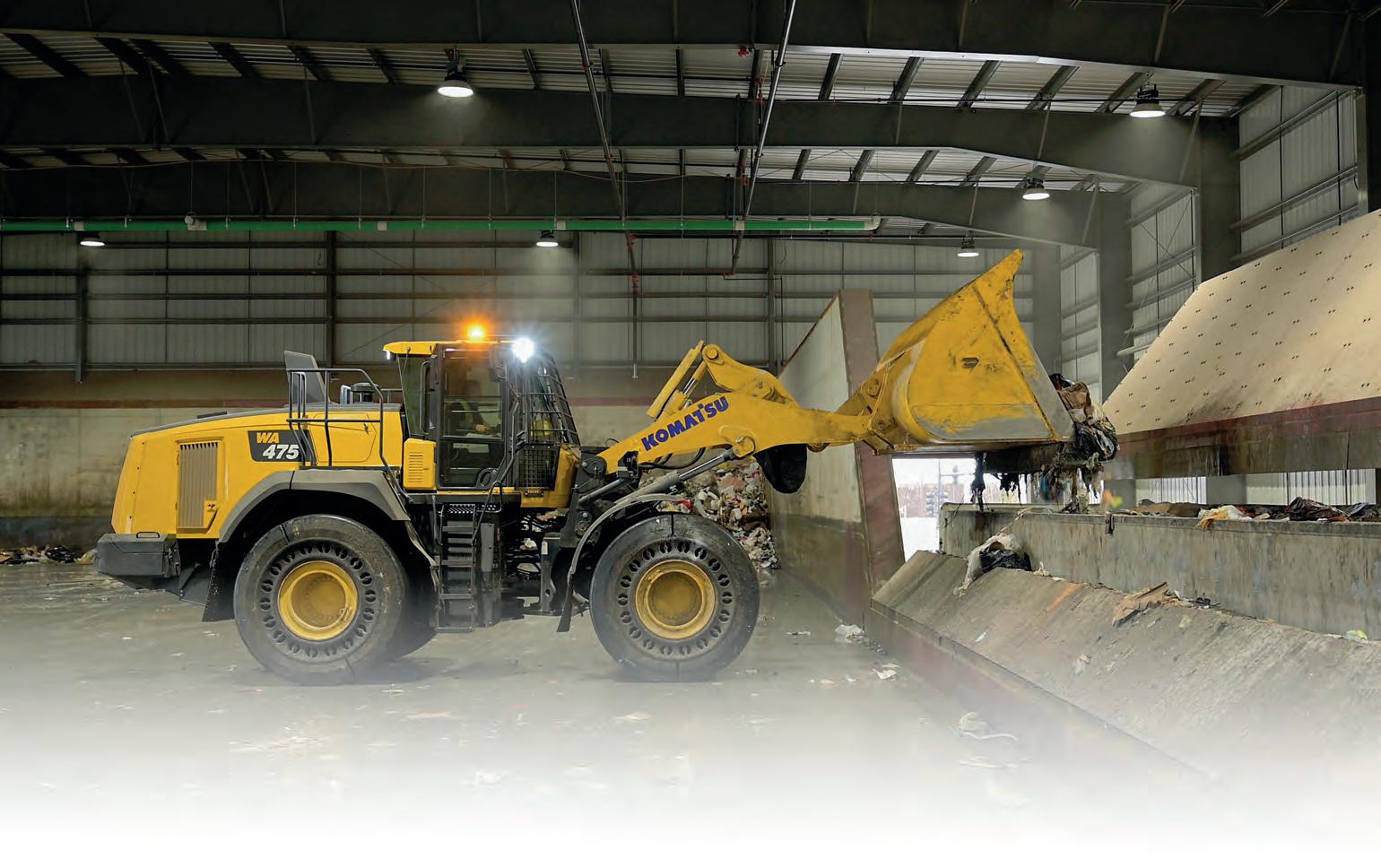
It is a diverse role that answers to more than 100,000 business customers and services millions of residential homes. Activities include collections from C&I, CDS and municipal customers, through to transfer stations, material recovery facilities, organics facilities, landfills, as well as landfill gas capture and monetisation.
“I have different general managers who look after each state, and two who look after national verticals,” she said. “We’re very


much about having the integrated value chain from end to end and making that network sing – it’s what sets us apart from many of the smaller players.”


Cleanaway offers its customers the full spectrum of a total waste management solution. Part of Boyes’ remit is to continue to grow and evolve that network as the company transitions from landfills to other resource recovery assets. The core of her role is also making sure the operation is running smoothly and that the company hits its safety, diversity and P&L targets.
It didn’t take long for Boyes to get into how the industry worked and what it is trying to achieve.


Daily news updates at www.insidewaste.com.au 24 INSIDEWASTE JUNE/JULY 2024 Thought Leadership //
This premium event will bring together leading manufacturers and suppliers in one location to showcase the latest equipment and technology in action. AUSTRALIA’S FIRST LIVE DEMONSTRATION EXPO FOR THE WASTE AND RECYCLING INDUSTRY! 18-19 SEPTEMBER 2024 SYDNEY DRAGWAY, EASTERN CREEK Supported by: Major Sponsor: EXHIBIT | SPONSOR | ATTEND Don’t miss out! expo@impactenviro.com.au | 02 6583 8118 www.equipmentinactionexpo.com.au


A few people ribbed her about joining Cleanaway and being a garbo, but straight away she clicked that waste wasn’t something to be thrown away, but a resource that can be reused or recycled.
“What a great chance to take something that otherwise would be thrown away and turn it into something else, rather than continuing to extract virgin resources,” she said.
When it comes to the practicalities of working in the sector, Boyes has seen some of her competitors move to a nationalbased footprint, but she still has state-based managers. And for good reason.
“I know some other companies like us have moved to national verticals,” she said. “They’ll have a collections person and a post collections person etc. But the different jurisdictions are so different when it comes to regulations, facilities and competitors, and the value we create is from hanging together this integrated network of assets for our customers. We think it works better for us to have statebased managers.”
What is the end goal for Cleanaway though? What are its main objectives? Of no surprise is the ability to make sure a circular economy is a reality; not something that is not talked about, but nothing gets done, said Boyes.
Cleanaway wants to be known for having low carbon/high circularity solutions for its customers. However, getting there can be challenging –investment doesn’t come cheap for any players in the market.
Boyes knows that landfill levies and repurposing/recycling products into new items is part of the solution. However, there is also an expectation from society that resource recovery/waste companies and many customers – especially the bigger players –will do the right thing in terms of making sure there is no adverse effect on the environment due to a company’s activities. Cost plays a part in peoples’ decision-making –something not lost on Boyes, who acknowledges that in general terms an item made of virgin stock is often cheaper than its counterpart that has been repurposed.
“It’s a choice everyone has to make,” she said. “We have found ways to stitch it together if you’ve got a group of like-minded people. A great example is the container deposit schemes. Where we’ve partnered with TOMRA, a global expert, who provides all the technology at the front end to get that nice, clean product. We’re the expert on logistics and sorting and recycling.”
Cleanaway also has another joint venture with Pact Group, Asahi and Coca Cola Europacific under
to improve on current systems and expand into other markets.
“What we’re really focused on is – where else can we take that model?” she said. “When we think about Victoria, we think; how can we make that network hum? We continually have to make tweaks to the collection points and logistics to make it work well for our customers – who are always top of mind.”
TOMRA Cleanaway is the Network Operator of the West Zone in Victoria and recently celebrated 200M containers through the West Zone, which coincided with the six-month anniversary of scheme commencement. This achievement, and the overall performance to date, makes Boyes believe they have got the current configuration right.
Meanwhile in NSW, working closely with scheme partners TOMRA Cleanaway, redemption rates are currently approaching the 70 per cent mark and the group is keen to exceed this benchmark in the near future.
One topic that was touched upon was women in the industry.
the entity that is Circular Plastics Australia. Plastic bottles come in from recovery facilities or CDS’s, are reprocessed into food grade plastic pellets and flake, and then those organisations take them and turn them back into bottles and packaging again.
“We’ve managed to make this neat, circular loop for that stream,” said Boyes. “And it’s trying to figure out how we keep making those loops for the other streams as well. Partnerships have got to be a big part of it.”
Speaking of which, Cleanaway and Viva Energy recently announced a collaboration to turn soft and other hard-to-recycle plastics into feedstock for food-grade plastic resin.
“We’re working with them through their refinery to turn those soft plastics into the resin that can be used again in the food industry,” she said. “And that makes sense, because we’re not going to invest in a refinery, knowing that someone’s already got one. Together, we can solve this issue.”
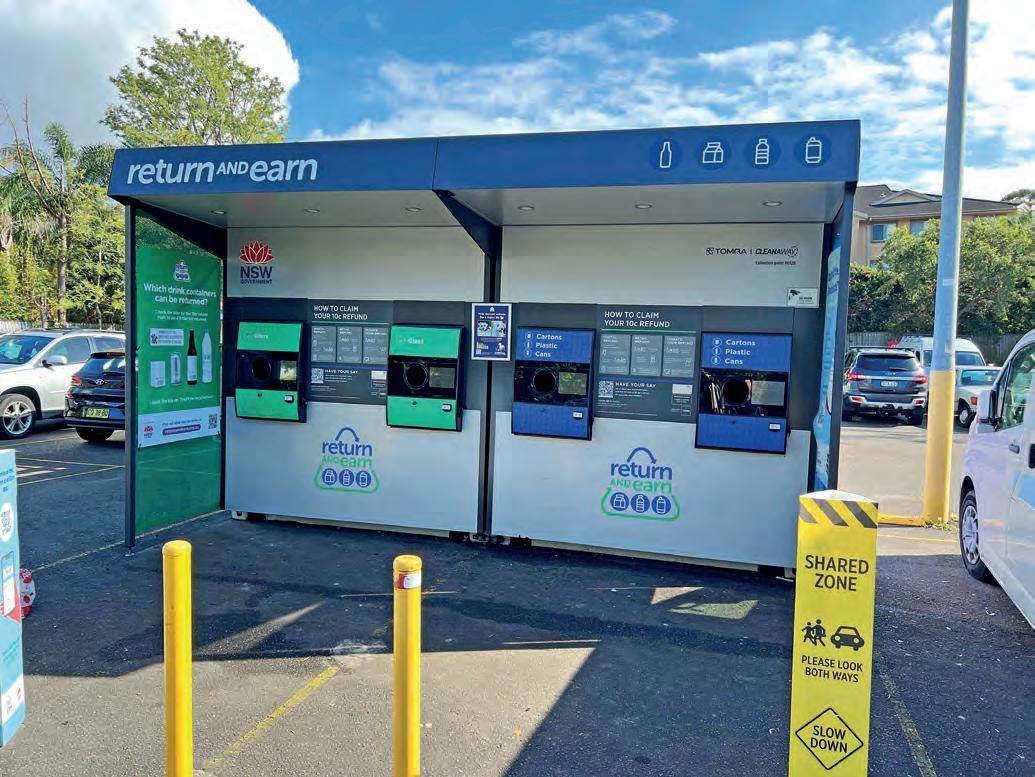
As for Boyes’ role as chair of the board for joint venture entity TOMRA Cleanaway, there is plenty happening in that space, too. As the proud network operator in NSW for Return and Earn, and network operator for the West Zone for CDS Vic, Victoria’s container deposit scheme, TOMRA Cleanaway is always looking at ways
Impact Enviro CEO Greg Freeman said that when he started the Coffs Harbour Waste Conference in 1996 there were only a couple of female delegates. At the last event it was bordering on an almost even split. It is a subject that is not only particular to the waste industry – most of the traditionally maledominated industries are seeing more diversity in many different arenas including gender. Being one of two segment executive general managers in one of the biggest resource recovery companies in the country, Boyes knows that the industry will benefit if there is a more diverse representation of people within the industry, gender being just one.
“It’s easy for me in this position to open doors, but I expect that’s not true for all other women in the industry,” she said. “When I came in, I was the first EGM Cleanaway ever had running an operational part of the business. There had also never been a female general manager here. There are three now. Overall, there are two operational EGMs and 10 GMs. The landscape is changing, but women also have to come to the party when these roles are advertised.
“We find that sometimes when we go to market, there’ll be zero females who have applied. Recently our recruitment team changed the vernacular because we were finding that external recruiters were selling us as a waste company, but we’re all about resources and sustainability.
Daily news updates at www.insidewaste.com.au 26 INSIDEWASTE JUNE/JULY 2024 Thought Leadership //
Tracey Boyes with Daniel Wright, Landfill Manager Cleanaway at Kemps Creek Landfill. Image: Cleanaway
And once people get their heads around that, it becomes a really exciting company and industry to want to join.”
Gender equity is not something to which the company pays lip service. Recently, in Sydney the company invited all the women in its NSW solid waste services business unit to a conference on International Women’s Day.
“We diverted the phones from our New South Wales customer call centre lines to the other states to look after for the day, and we had other drivers and operators picking up the frontline work,” said Boyes. “Out of 220 women in the business unit, we got 180 to attend, which was great. The idea of that session was to showcase to everyone the different careers available within the company.”
Like any C-suite executive, Boyes is aware how important it is to have a life/work balance. Not long after Boyes and her husband arrived on the shores of Australia from New Zealand they decided that he would be a stay-at-home dad. It is a perfect dynamic, she says, because she loves her career, and a career was
with the family and with the kids and it’s all quality time. It’s also really practical, because if somebody says to me ‘we need you in Sydney
SHAPE THE FUTURE OF RECYCLING WITH ACOR
Australia’s recycling sector is a powerhouse, diverting waste and creating valuable resources, closing the loop in a circular economy. As a collective force, it contributes almost $19 billion to the economy, supporting over 94,000 jobs. The Australian Council of Recycling (ACOR) is the peak industry body for this crucial sector. We represent a diverse membership, encompassing all aspects of resource recovery, recycling, and remanufacturing. From MRFs and CDS operators, to C&D and metal recovery, to tyre, battery and textile recyclers, to glass, plastic, and paper remanufacturers, ACOR brings the entire industry together.
tomorrow’, I can go to Sydney tomorrow without having to worry about making sure the kids are going to be looked after.”
Looking ahead, what does Boyes see when it comes to the resource recovery sector and its place in the wider Australian landscape?
“One of the other things I’ve noticed coming into the resource recovery space is that it is ready
for a fresh perspective,” she said. “It feels to me like the whole industry is going through this big maturity curve.
“Neither myself nor Mark have come in to just keep the wheels turning and just incrementally improve Cleanaway or the industry. We want to really push the ball along and show that the industry can be something quite different.”

Join a network of industry leaders
ACOR fosters collaboration and thought leadership among its members. Whether you’re in metal reprocessing, e-waste recovery, or plastic recycling, ACOR connects you with a network of committed enterprises working towards a common goal: a thriving circular economy.
Make your voice count
ACOR is a powerful advocate for the recycling industry, actively shaping government policy and regulations. As a member, you’ll have a direct impact on ACOR’s policy agenda, helping to shape the future of Australian recycling.
Daily news updates at www.insidewaste.com.au JUNE/JULY 2024 INSIDEWASTE 27
Join the Movement. Visit acor.org.au/membership to learn more about ACOR membership.
As well as being an executive GM at Cleanaway, Boyes is also chair of the board for TOMRA Cleanaway, which runs the NSW container deposit scheme. Image: TOMRA Cleanaway
Which product stewardship schemes are effective? Not many.
 By Mike Ritchie
THE Evaluating Product Stewardship benefits and effectiveness – Summary Report, May 2023 (Institute for Sustainable Futures; ISF) fails to reveal many of the systemic problems suffered by Product Stewardship (PS) schemes in Australia.
As such the report could be accused of “greenwashing product stewardship” and that would serve no-one’s interest.
While trying to be fair to ISF and the significant body of work it has put together, its conclusions don’t seem to reflect its own data.
This article tries to provide a realistic peer review of the report and what is working and not working regarding Product Stewardship in Australia. It is directed towards the Commonwealth Government, which commissioned the original review.
In short, product stewardship schemes are nowhere near as effective as the 288 page ISF report concludes.
Apart from a couple of successful
schemes, most are:
a) failing to measure their effectiveness;
b) failing to report their effectiveness; and/or
c) failing to achieve their primary goal of diverting materials from landfill for reuse or recovery.
I am a big supporter of well-run product stewardship schemes because they can be very effective mechanisms for capturing specific materials back into the productive economy.
For example, the various Container Deposit Schemes (CDS) have a current capture rate of more than 70 per cent and growing. They report their data and have effective governance arrangements. They could do even more heavy lifting with the right policy settings.
Unfortunately, that is not true of many product stewardship schemes in Australia.
But before I go there, let me describe what the report did well. The report:
• identified 106 separate schemes, most of which are voluntary and small scale;
• summarised the benefits of well-run
product stewardship schemes;
• defined different types of schemes;
• reviewed public engagement data; and
• set up a matrix of assessment of the “effectiveness” of product stewardship schemes across 33 different metrics.
And this last metric is the source of my criticism. The report allows schemes to decide which of 33 different metrics they want to report and evaluate their “effectiveness”, against. In short, it allowed schemes to “mark their own homework”.
ISF defined “effectiveness” as meeting the goals as set out by each scheme. So, if achieving brand recognition, community knowledge or number of visits to a web site was set as a goal, then a scheme could score well for ‘effectiveness’ even if it was recovering a tiny percentage of materials being Placed On Market (POM).
In my view, the report authors have confused “effectiveness” with “indicators of participation” (brand recognition, brand support, participation,
number of collection points etc.) and scored accordingly, even if the scheme is ineffective from a resource recovery perspective.
The report actually identifies this weakness:
“.. there was limited data to assess the effectiveness of product stewardship initiatives (i.e. performance in meeting objectives)” (p17). “For example, tonnes of waste products collected for recovery and materials recovered were not always reported in the context of total waste arising. Without this data it is difficult to determine how effective the initiative has been in increasing recovery or diverting waste from landfill.” (p17) Surely that is the whole point of product stewardship schemes. Product stewardship is not cheap, so we need to be sure schemes are being effective. Don’t be fooled. We all pay for product stewardship through the pricing we pay for goods. This means effectiveness is important to our hip pockets.
Here are some of the report’s conclusions:
Daily news updates at www.insidewaste.com.au 28 INSIDEWASTE JUNE/JULY 2024 Product Stewardship //
Paint product stewardship is an example of a voluntary scheme that works well. Image: RymanStudio/ shutterstock.com
- product stewardship benefits = 366,000t of used televisions, computers, mobile phones, tyres, hospital PVC, paint etc;
- the benefits of product stewardship initiatives are significant and wideranging;
- product stewardship has…resulted in the diversion of waste from landfill and increased recovery of materials available for new manufacturing; and
- there are also significant opportunities to increase product stewardship activity.
All true statements but in the context of 106 schemes, misleading. Only a handful of schemes contributed meaningfully to the 366,000 tonnes of recovered materials. In short, product stewardship in Australia is not a single entity. It is a multitude of schemes some of which are effective and many of which are not.
So MRA has reviewed the data (106 schemes) and here is what we draw from the same information:
• 11 (only) schemes r (see definition in box). 11 out of 106 or 10 per cent.
• 53 (including the above 11) report ancillary information eg the recycled content of the product’s POM, or the rate of recycling of the materials once collected. But these are not measures of effectiveness.
• 53 provide no data at all.

Of those that report actual effectiveness:
• Mandatory/co-regulatory product stewardship schemes (eg. CDS schemes and oil) have a 54 per cent average effectiveness
- 90 per cent of established mandatory schemes report effectiveness properly.
- The most effective mandatory scheme is the SA CDS, with an effectiveness of 77 per cent.
• Voluntary schemes are a mixed bag.
- Only 4/96 report effectiveness properly.
- Paintback (83 per cent) and Tyre Stewardship (70 per cent) are the outstanding voluntary schemes.
- The remaining 94 voluntary schemes have an average effectiveness of 4 per cent with a range from 0.3 per cent to 16 per cent.

- 53 don’t report any data (and probably don’t know what their effectiveness is).
Conclusions:
- Only nine out of 106 schemes have effectiveness above 50 per cent (CDS, oil, APCO- mandatory/coreg; plus paint and tyres – voluntary).
- The rest (97/106 or 92 per cent of schemes) have an average effectiveness of only 4 per cent (or don’t report at all).
The low performance of voluntary schemes should have been part of the report findings and the subject of policy discussions.
We reached out to the authors of the report to give them the chance to comment on our analysis. The response was a recognition of the absence of data. “The research findings support our conclusion that data gaps and poor quality data limit a comprehensive assessment of effectiveness at this stage”. The authors are currently finalising a Practice Note to help schemes address the issue of poor quality data.
As such, it is a pity the report gave such a ringing endorsement to PS generally. Such as its conclusion: “The benefits of product stewardship initiatives are significant and wideranging” is only true for nine out of 106
schemes. As for the other 97 schemes, the report could have concluded that there are real questions about efficacy, costs and benefits, that need to be answered. This would have been more accurate.
No-one would disagree with the general sentiment of the report that product stewardship is worthy and that there are benefits of encouraging consumer participation in such schemes, but scheme ‘willingness and effort’ is not a substitute for effectiveness (given that we are all paying for it).
The real question the report should have addressed itself to in the conclusions is: What differentiates effective from ineffective schemes? Is it because:
- costs are too high compared to landfill? ie willingness to pay; - costs are so high per unit, that expansion would be too expensive?; - free-riders are stalling uptake by legitimate players?; and - single company schemes lack a mechanism (or desire) to scale? Don’t get me wrong, product stewardship can and should be a key part of our circular economy interventions. It has the potential to drive improvement in the recovery and reuse of specific materials. Product stewardship is also likely to expand rapidly in future.
Therefore, a proper policy analysis should start with comparing the effectiveness of different schemes to determine how we should lift our game.
The Recycling and Waste Reduction Act 2020, which empowers all product stewardship in Australia, is pretty clear about the goals of product stewardship (inter alia):
• To reduce the impact on human and environmental health of products, waste from products and waste material...
• To develop a circular economy that maximises the continued use of products and waste materials...
The point is that effectiveness is measured by how many items are recovered and kept out of landfill. Effectiveness per cent is best defined as = Recovered T/POM T x 100. That is, the percentage of materials captured by the scheme, compared to what has been placed into the economy (POM).
Daily news updates at www.insidewaste.com.au JUNE/JULY 2024 INSIDEWASTE 29 // Product Stewardship
The effectiveness of a good product stewardship scheme is important to consumers’ hip pockets. Image: Milleflore Images/shutterstock.com
The benefits of product stewardship initiatives are significant and wide-ranging for nine out of 106 schemes. Image: Martha Almeyda/ shutterstock.com
Social enterprise leading the way for circular outcomes
By Inside WasteSTARTED more than 20 years ago by Sally Quinn and Darren Andrews, Green Collect’s remit has been to provide new employment in the resource recovery sector for people who face barriers to employment while also creating a resource recovery collection point for a variety of problematic waste streams.
In 2001, its first pilot project focused on the hospitality industry, which led to more than 4.5 tonnes of cork being diverted from landfill. Today, the enterprise delivers circular solutions for a diverse range of resources, predominantly office waste streams, including office furniture, electronics and desktop items while also fulfilling its original mission to create high quality employment for those previously unable to enter the labour market due to disability, language barriers and disadvantage.
“Extending the lifespan of resources is one of our main goals, particularly in relation to office items,” said Quinn. “We process all items with great care, testing and refurbishing to make sure items can get back into circulation. We’re also creating products out of materials that are torn down so that they can be reused again in their current form, rather than going through an energy-intensive
recycling process.”
Quinn highlights the important differences between the words reduce, reuse, and recycle. She states Green Collect’s main purpose is to work progressively down the waste hierarchy, prioritising finding suitable reuse outcomes for millions of individual items, over lower value resource recovery outcomes such as recycling and energy recovery.
“From something as small as a paperclip through to a whole office building, we can deliver the highest circular outcomes for each of the items,” she said.
The organisation also delivers recommerce services, selling products that come through its doors – much like a second-hand store of old – but concentrating on high impact office procurement. Green Collect’s showroom and three stores, including an online store, present a range of furniture, electrical and stationery options for those wanting to achieve social procurement targets. Through Green Collect it’s possible to set up an entire office with quality reused items and in doing so to achieve measurable social and environmental outcomes.
“We have about 40 staff who work to identify the best outcome for all of those things,” she said. “There’s a real kind of

buzz of innovation with the work that we do with materials to achieve those ends.”
Quinn has recognised the changing mindset of organisations over the past few years, with social license and responsibility receiving higher value than ever before. The effects of this shift towards sustainability and accountability has helped Green Collect’s mission reach a more diverse client base with growing and complex needs.
“Corporates undertaking a massive fit-out won’t necessarily look at purchasing second-hand; instead, their sustainability focus might be on supply chain and materials use. However, many of these companies are looking for better environmental outcomes when it comes to end of life solutions for assets and office de-fits.” she said. “For office fit-outs, we’re seeing more and more SMEs wanting to purchase sustainably and save money, and expressing their values through the way they set up their offices.”

Since its inception, Green Collect has been dedicated to training and supporting employees who might not fit into mainstream working environments, but have found a home in the way Quinn’s organisation does business.
“About 60 per cent of our workforce is made up of people who would usually be shut out from the mainstream labour market,” she said. “That includes at-risk youth, people who’ve come as refugees, and people with disabilities. We don’t distinguish between who’s who but value our diversity as an asset to the business and our organisational culture. We are committed to removing barriers so that anyone who wants to work can do so. By focusing on people’s strengths and passions it’s not hard to find people whose values are aligned with ours, especially in this time when people are acutely aware of our climate crisis and want to work in organisations that are working for a better world. We have about 80 staff, with the majority bringing lived experience of disadvantage, which often means they have high-level problem solving skills and resourcefulness.”
Looking to the future, is Green Collect looking to expand into different waste streams? Quinn said that research and innovation is at the core of Green Collect and that they’re continually looking at ways to recover a wider range of product types and how to divert them to higher value circular economy outcomes. While
concentrating its business on those items found in the office environment, it also works with local government to enable households to avoid sending hard-torecycle items to landfill. It facilitates council recycling stations whereby constituents can bring in small electronic items, stationery, X-rays and other items that can’t go in a comingled council bin and shouldn’t go to landfill.
“We’ve doubled our operation in the past three years,” said Quinn. “We have scaled, and we’re continuing to do that, because there’s a growing commitment in all sectors for social and environmental sustainability and increasing demand for our services. No one quite does what Green Collect offers in bringing together a ‘people and planet’ approach that delivers tangible social and environmental impacts. We report back to our customers for their ESG reporting around job creation and training. We also report on C02 emissions avoided and waste diverted from landfill.”
One of Green Collect’s recent expansions has been to partner with TOMRA Cleanaway in Victoria for Victoria’s Container Deposit Scheme, CDS Vic. The scheme rewards participating Victorians with a 10c refund for every eligible drink bottle, carton and can returned to a CDS Vic refund point.
Through this partnership, Green Collect has been able to diversify its service offering and provide a bulk drink container processing facility called a depot. Depots enable customers with commercial quantities of drink

Daily news updates at www.insidewaste.com.au 30 INSIDEWASTE JUNE/JULY 2024 Social Licence //
Green Collect’s Sally Quinn says the organisation looks to finding reuse outcomes for millions of items.
Green Collect is more interested in reusing products than recycling them.
containers to gain their refunds and have their materials processed quickly and conveniently.
“For customers or businesses with large volumes of containers, dropping by a depot is a great option in preference to the reverse vending machines, plus it’s super interesting to see the scheme operating at scale,” said Quinn.
“Depots are specifically designed for customers who are looking to raise funds or trying to derive an income through CDS Vic, where they can bring in larger volumes. It’s also a fantastic opportunity for commercial venues to gain or donate some money out of their waste items.”
When asked about the decision to get involved in CDS Vic, Quinn said that as a leading social enterprise, Green Collect was keen to be part of delivering on the Victorian government’s objective to achieve positive social and environmental impacts through the scheme. Green Collect’s position is unique, as a leading circular economy practitioner and as a social enterprise, as it strives to create systemic changes in different facets of the sustainability landscape, which includes this partnership with CDS Vic.

“While we trade to create jobs and create impact, our main purpose is to create a more inclusive and sustainable world,” she said. “We want to see all
people and resources valued and respected, and this purpose is at the heart of all our business, operational and employment practices. If we want healthy people, we need to have a healthy planet, and so Green Collect’s mission is all about realising the potential of all people and all resources. In doing this work every day we’re getting closer to eliminating the notion of waste through delivering services that lead to regenerative ways of living and working.”

Daily news updates at www.insidewaste.com.au JUNE/JULY 2024 INSIDEWASTE 31 // Social Licence
Employees come from all walks of life and have a passion for making sure products can be reused and not thrown into landfill. Images: Green Collect
Office supplies are just some of the resources collected by Green Collect.
Green Collect has 40 staff looking to find outcomes for used products.
How prepared are we?
By Inside WasteSTEVE Krieg thought he was prepared.
The mayor of Lismore, a vibrant city in the northern rivers region of New South Wales, had learned lessons from the past and taken precautions.
“We thought we were good,” he told a rapt audience at a Disaster Waiting to Happen panel session at the recent Waste 2024 conference in Coffs Harbour.
“We were wrong.”
In 2022, Lismore experienced the biggest flood in its recorded history and the costliest disaster in Australia’s history. According to the Insurance Council of Australia, the cost of the devastating floods was about $6.5 billion in May 2024 and climbing.
In February 2022, almost 15 metres of flood waters enveloped the region. In March of the same year, a second severe weather event lashed the region, with waters peaking at 11.4 metres.
The trail of destruction included thousands of houses, an estimated 75,000 tonnes of flood debris, including building materials and 55 tonnes of asbestos. Car bodies and aeroplanes were wedged in trees.
At the height of the flood, there was a shark warning as thousands of livestock carcasses attracted bull sharks that swam upriver from Ballina.
The recovery is ongoing, and Krieg said the floods will have implications for the region for at least a decade.
“We know Lismore floods,” he said. “The previous record height was 12.4 metres in 1974, so we gave ourselves a little bit of room to move above the previous maximum flood height and protected sites to 12.5 metres.
“When discussing disaster preparedness, Lismore thought ‘we’re pretty good’. We thought we were safe. But 14.5 metres was something Lismore was not ready or prepared for.”
“So, is anyone really prepared for a disaster?” he asked the panel.
The answer? It’s not a one-sizefits-all approach. While no one can confidently say they are fully prepared, the increase in severe weather events is prompting councils and organisations to focus on preparedness and prevention.
Susan McDonald is Senior Project Officer of the Hunter Joint Organisation, which represents 11 councils in the Hunter region. She said councils with previous exposure to an event will most likely be better prepared.
“It’s hard for people to understand unless they’ve been there,” McDonald said. “As humans, we don’t like to think about the bad stuff. And often, there aren’t the resources to prepare for a ‘maybe’.”
When disaster strikes, it results in a sudden increase in the volume and hazardous nature of waste. This places
communities at risk of health impacts, overwhelms local infrastructure, and pollutes local environments, as well as placing an additional financial burden on communities and councils.
McDonald is taking a regional approach to disaster management, working with the Hunter councils to better understand and prepare for waste generated by disasters. The project centres around diversifying and recovering materials from disaster waste to protect the region’s landfill capacity and early identification and approval of temporary sites for disaster waste disposal.
She hopes developing a Regional Disaster Waste Management Plan will provide a framework for other Local Government Areas and help create a memorandum of understanding for collaboration among councils because “disasters don’t stick to boundaries”.
Much of the ground-level preparedness, such as co-ordinating


Daily news updates at www.insidewaste.com.au 32 INSIDEWASTE JUNE/JULY 2024 Disaster Recovery //
“There needs to be more conversation about real mitigation measures. We need to ensure that we have the critical infrastructure, the satellite landfill sites and the transfer stations, to handle huge amounts of waste.”
waste flows, sharing equipment, and increasing infrastructure capacity, is being delegated to councils and local government.
However, integrated planning needs to be improved, according to Tanya Henley, Principal Consultant with MRA Group. She said there needs to be more oversight and a shift in focus to ensure that logistics contingencies are put in place.
“Currently, about 97 per cent of disaster funding is reactive –happening post-event. Only three per cent is spent on proactive measures.
“There needs to be more conversation about real mitigation measures. We need to ensure that we have the critical infrastructure, the satellite landfill sites and the transfer stations, to handle huge amounts of waste.”
According to Mike Haywood, principal consultant at Sustainable Resource Solutions, South Australia has done this well.
In 2015-17, Haywood helped develop Australia’s first disaster waste management plan for Green Industries SA.
He said that when you work on a document titled South Australia’s Disaster Waste Management
Plan, you hope that you will never need to implement any of what you have developed.
But in December 2019, just a few days before Christmas, the Adelaide Hills and Kangaroo Island were hit by fire storms that destroyed almost everything in their wake. By the end of December, a State Disaster and Declaration was enacted.
The Disaster Waste Management Scoping Study, Guidelines, and Capability Plan were all enacted. Haywood led the ground recovery team, working toward handing back a safe and cleared site to affected ratepayers.
He said having strategies in place meant they had the right people at the table to respond immediately. Everyone knew what they should do, where they should be and when.
When is the disaster declaration? When are the different state agencies coming in? What are the eligibility criteria from that response point of view? What are the different eligibility criteria? Making sure that each of the agencies understands exactly where they stand and where they fit.
However, even then, they learned they needed to be flexible.
“We quickly identified we would
need to contact affected residents and set up a recovery centre, build a team, work out how to handle asbestos and chemical contaminated waste, and disposal sites and options,” Haywood said.
“Waste is usually very controlled. It’s a very controlled and regulated space. But during a post disaster, you can’t control it. In disasters, realism is where we need to come from, rather than ideology.”
There was acknowledgement that every incident is different; bushfires consume a lot of waste, while floods have long-term impacts.
“We learn as we go,” said Christy Groves, Disaster Recovery and Resilience at New South Wales Environment Protection Authority.
“The principles around prevention, preparedness, response and recovery are all intertwined, but the better we respond, the less long-term impacts.”
Addressing the long-term impacts was not all about waste disposal and infrastructure. The emotional toll on communities also needed to be considered.
Tracy Chalk, Manager of Waste and Resource Recovery for Penrith City Council, said the emotional and empathetic impact is often only realised once it happens.
It isn’t necessarily waste being clean up after a disaster. It’s people’s personal belongings and livelihoods sitting in the street.
With every disaster, there is very much an emotional toll.
Daily news updates at www.insidewaste.com.au JUNE/JULY 2024 INSIDEWASTE 33 // Disaster Recovery
The cleanup from the 2022 floods at Lismore, said to be the costliest disaster in Australia’s history, is ongoing. Image: ModernNomads/shutterstock.com
Lismore was enveloped by almost 15 metres of flood waters in February 2022. Image: Cloudcatcher Media/ shutterstock.com
RecycleSmart ramps up offerings with commercial waste
By Inside WasteRECYCLESMART is in its fifth year of being a champion of getting Australia on track to transition to a circular economy. It is a company that started out with modest goals but h as now hit the accelerator as it starts to expand its offerings into the market.
The company initially offered small-size collections of varying waste streams – from 60 litres up to 240 litres – aimed at businesses with office waste rather than commercial.
Dr Amitoj Singh is RecycleSmart’s
exposure to the wider community by servicing council libraries, town halls and even community recycling centres.
“We covered off a lot of waste streams, but our offerings left out a chunk of this equation, which is your operational waste,” he said. “We’re talking about manufacturers, construction companies, any other kind of industrial operation where there is operational waste that ranges from cardboard to plastic to timber.”
Singh said that RecycleSmart realised there is a certain gap
troublesome waste streams can be more expensive compared to other waste contractors, due to more effort needed for recycling the problematic kind of materials. That’s why the company entered the commercial field of recycling for businesses. The service has been going for about six months, and the feedback from businesses and councils has been positive, according to Singh.
“Some councils were saying to us, ‘we want something that you would deliver at your community recycling centre because you’ve
One of the key selling points was pointing out the value proposition that dealing with a single contractor instead of several operators over such waste streams was beneficial for several reasons, including that it covers off on several waste streams at once with a single point-of-contact.
“The councils would have to go through a tender arrangement with each one,” said Singh. “The internal resourcing that they end up putting into it would be significant as well.”

As for the scale of the service, as mentioned, RecycleSmart used to offer collections up to 240 litres. That service still stands, but this expanded offering includes vans and trucks capable of moving up to 20,000 litres of waste, or a semi-trailer truck that can manage 20 tonnes.
“To put that in context, a semitrailer can easily hold 36 bales of soft plastics, with each bale being about 300 kilos,” said Singh. “It’s been phenomenal,” he said. “In the past six months since we’ve started the service, seven councils have joined up.”
Singh is optimistic about the future. There are a few issues that need to fall into place for everything to work, such as machinery that will help to process larger quantities of products. RecycleSmart has a good relationship with processors such as APR and Close the Loop, which is integral for the processing to be successful.
“We want to expand from just processing soft plastics,” he said. “For example, we have added
“For example, we have added polystyrene to the list. E-waste is another one. There’s a lot of manufacturing plants out there that have a lot of e-waste and equipment gathering dust. It’s about looking at the value proposition for those things.”
Daily news updates at www.insidewaste.com.au C&I Waste //
Safety briefings are part of RecycleSmart’s DNA. Images: RecycleSmart

polystyrene to the list. E-waste is another one. There’s a lot of manufacturing plants out there that have a lot of e-waste and equipment gathering dust. It’s about looking at the value proposition for those things.”
Singh said the company is also aware of mistakes made by those offering similar services and will not overextend itself when it comes to processing materials.
“At the moment we’re only taking what we can get processed, which is where we want to be,” he said. “We have the means to report back to all our businesses and councils using real time traceability. There are solid consolidation points across different geographies. This is where materials are collected – whether it’s from a business or council – then it goes into one of our main consolidation points in Mascot or Artarmon in Sydney. At any point, at any given time of the day, we can tell our customer that we are holding ‘X’ amount of a particular waste steam. Once we have enough for shipment, we’ll send it out to be recycled.”
Singh said the company is constantly looking for warehousing
as the business ramps up. The company is also carrying out projects on behalf of other entities. This includes working with Transport for Tomorrow, which is replacing wooden railway sleepers with concrete versions. In this instance, there was no need to store the used wooden sleepers.
“They contacted us to see if we could do something about getting rid of them,” he said. “We found a recycling program, which meant in that case we didn’t have to store the goods ourselves. We just took them directly from the producer to the consumer.”
RecycleSmart’s future is looking bright as it sets out to expand to most populated centres around the country.
“We have been on a quest for a nationwide launch since last year,” said Singh. “We launched in South Australia recently. We’ll soon be in Western Australia and Tasmania. And after that, once we have consolidation points, as well as operation capacity in each of these regions, we can consolidate materials and send them where they need to be sent.”

Maximise Recovery... Reduce Landfill


EDDY CURRENT SEPARATOR


Daily news updates at www.insidewaste.com.au JUNE/JULY 2024 INSIDEWASTE 35 // C&I Waste 613 8401 7400 | Eriez.com.au
Costs
• Powerful rare earth magnets • Greater launch force • High frequency pole change rate • Superior fine & micro fine separation OVER BELT SUSPENDED MAGNETS
Eriez equipment provides the recycling industry with the necessary tools to recover mixed metals
comingled waste. See us at Australasian Waste & Recycling Expo 26-27
• Effectively recover ferrous metals • Twin pole design • High strength magnetic circuit • 12’ Suspension height
from
July, Sydney Stand D39
Consolidating materials is one of the key processes that RecycleSmart instigates.
Accelerating recyclables from landfill: Australia’s next leap towards a circular economy
By Helen MillicerWITH two years under its belt the Albanese government has only one year to go until the election. As the Prime Minister has flagged, the nation stands at a crucial crossroad for its economic and environmental prospects. The government already has a full agenda of committed reforms, including establishing a national EPA and cutting emissions. Having conducted many reviews, it also has a full dance card of additional potential reforms. The question is how many of these reviews will result in meaningful reforms before the election? What are the priorities? And is there sufficient support for these reforms to be widely accepted for Australia to achieve circularity, low emissions, and a higher productivity future?
Australia is among the worst performing nations on high consumption, high emissions and high waste to landfill. It is a monumental task to turn around our lax systems that enable this high level of waste and loss. This is also a challenge at a time of high living costs and growing social inequity.
Voluntary vs mandatory levers and tipping point for success
Research has shown that Australia has
Far exceeded the recovery and recycling targets for WEEE prescribed by the EU. Return and collection rate for waste equipment from private households and businesses of 45% of the amount placed on the market in the preceding three years.
Varies by province: Ontario has a target of 70% 2025 and beyond. (Regs for recycling of electrical and electronic Equipment (EEE) and batteries under the Resource Recovery and Circular Economy Act, 2016)
Table 1. Shows that Germany is streets ahead, and even Canada already has more strategies, nuanced targets and metrics than Australia.
voluntary programs with relatively weak impact that mean even good initiatives struggle to succeed, let alone pass the tipping point to become mainstream practice.
The Enabling Design for Environmental Good report, completed in 2022 and published in 2023 by the Australian Government, has recommended and informed a raft of policy and regulatory reviews. Coauthored by RMIT, Arcadis and myself, we noted poor policies, economics, regulations and training/education as four levers requiring attention. It
focused on four priority sectors (building, electronics, textiles and plastics). Our 10 recommended actions are all now included in national government policy reviews: product design, recyclability, standardisation, stewardship, procurement, traceability, supply chains, training and reporting (See figure 1).
Positively, the reforms are starting to flow. The Government has just announced that a mandatory Environmentally Sustainable Procurement (ESP) Policy will come into effect on Australian Government procurement from 1 July 2024. Starting

with construction, it will encompass furniture, ICT and textiles from July 2025. Notably this step has received little if any response or praise from industry sectors such as civil construction or building. Interestingly, the calls for such improvements and regulations tend to come from industry groups, in waste and recycling.
ACOR’s recent incisive report specifically on stewardship schemes list six improvements desired by its recycler members, principally via regulated mandatory membership, improved product design, governance, and reporting.
To see how far we need to go to just catch up, it is useful to compare our policies and programs with both Canada and Germany.
Comparative Analysis with Germany and Canada
Table 1 provides a sobering comparative snapshot of sample recycling and recovery targets. Germany has already reached their 2025 target of 55 per cent of recycling material back into product again. It is important to note EU countries report both recovery and recycling, and recycling is the metric of material made back into product. Australia does not report or measure this in any sector other than in packaging.
As these tables show there is room for improvement in Australia’s strategies, policies, economics, regulations and industry training/reporting.
Daily news updates at www.insidewaste.com.au 36 INSIDEWASTE JUNE/JULY 2024 Landfills //
TARGETS GERMANY CANADA AUSTRALIA Recovery and/or recycling rates Recycling of MSW 55% by 2025, 60% by 2030 and 65% by 2035 Reduce MSW by 30%, from a 2014 baseline of 699 kilograms per person by 2030. 80% average resource recovery rate from all waste streams following the waste hierarchy by 2030 Plastic packaging recovery &/or recycling Recycling 50% by 2025 50% by 2025 (2021 Circular Plastics Roadmap) 50% recycled content in plastic products by 2030 70% recovery by 2025 Glass packaging recycling 70% by 2025 Varies by province eg. British Columbia 98% by 2022 50% by 2025 Paper and Cardboard packaging recycling 75% by 2025 Varies by province eg. British Columbia 90% by 2022 60% by 2025 (paper) Electronics
None COUNTRY TARGETS
1 2 3 4 5 6 7 8 9 10 Circular Australia Strategy for eco-design product Improve Stewardship and introduce EPR Activate Reuse and Repair Reset Program Align product standards and specifications with global best Establish Eco-Design Innovation Fund for national circular, supply chains Accelerate recycling by raising landfill fees on priority products Financial and regulatory mechanisms addressing negative externalities Buy for Good Program procurement for government and industry Learning and Upskilling Program for Environmental Good Public education Figure 1. Demonstrates the overarching levers that bring about the change. Some have greater impact in some sectors and products than others (details available in the report). 1One Planet Consulting (2023) Enabling Design for Environmental Good: Recommended actions and priority sectors CROSS CUTTING LEVER RECOMMENDATIONS1
Germany
Germany is a leader with a strong focus on eco-design products, manufacturing, repair, resource recovery and recycling. This is partly because Germany is determined to remain a highly efficient, diversified economy and global leader in innovation. Germany’s success can be attributed to its combination of strong policies, strategic plans that include phased landfill bans, mandatory programs including green procurement, labelling and EPR stewardship, strong public-private strategic planning, supply chain collaboration and investment, as well as public engagement.
Case Study 1
Hamburg City State in Germany has implemented an effective sustainability agenda, including a mandatory green procurement scheme and strong industry-government collaborative strategies, partnerships and professional training on circularity and GHG reductions. They are part of a nationwide network of free drop-off recycling facilities, and national laws require manufacturers to receive products at end-of-life, which is helping drive better eco-design.
Case Study 2
In 2023, Kiel was certified as Germany’s first Zero Waste City as it progresses to implement 107 innovative measures to reduce waste. These include provision of grants of up to €200 to residents to opt for cloth nappies over disposable ones, distribution of free reusable shopping bags, and a requirement for retail and restaurants to offer reusable vs singleuse containers and packaging. The city will be audited by the EU program again in three years to qualify for recertification.
Canada
With its similar landmass, population and provincial management of circularity and waste, Canada serves as a valuable benchmark comparison to Australia. Yet, Canada still surpasses Australia by advancing initiatives such as promoting circularity, remanufacturing and valueretention policies and systems. This

progress is evidenced by the development of a national eco-design strategy, mandatory green procurement and the establishment of federal-level rights to repair laws.
Case Study
In 2020, Ontario implemented Extended Producer Responsibility (EPR) requirements through the broad Electrical and Electronic Equipment Regulations under the province’s own Resource Recovery and Circular Economy Act. Producers responsible for collecting and recycling goods at the end of their lifecycle have the option to recover these costs by imposing visible “resource recovery fees” on consumers.
Fast-track circularity: keeping Australia globally competitive
Timing is tight. There are several reasons for Australia to quickly switch policy and regulatory paths from linear with high losses, to circular and retaining value. Aside from Australian environmental, social and economic benefits (retraining, diversified economy, etc) the fact is this is a global movement. From Japan to Malaysia, from EU to US, circular economy and low emissions are now integral to national and industry strategies that address supply, demand, national sovereign risk and provide for stable societies and government. National sovereignty competition appears to be growing to counterbalance globalised unchecked environmental pollution.
Increasingly policies, laws and financial instruments are being used in these nations toward those nations, manufacturers and brands that fail to meet environmental standards.


This new order for a safe climate includes the development of new trading rules (like EU Carbon Pollution Adjustment Mechanism), and financial incentives (like the US Inflation Reduction Act stimulating major investment in clean tech). Australia must develop clear industry strategies that integrate both circularity and low emissions and gain the backing of industry groups.
In conclusion, our success will not come with continued lax targets, voluntary measures, or by confusing recycling for circularity, or even with a mountain of good will and public education programs. Our success will come from robust policies, firm, specific and equitable mandatory regulations, broad-scale financial incentives and levies, and workforce education and training on circularity and zero emissions.
Note: References available in the online version of this article.
Daily news updates at www.insidewaste.com.au JUNE/JULY 2024 INSIDEWASTE 37 // Landfills
INITIATIVES GERMANYCANADAAUSTRALIA Mandatory recycling targets at national and state level 33 3 Voluntary targets National Eco-Design for a Circular Strategy (1) 3 2023 Strategy 2021 CE Roadmap 3 2023 Action Plan 5 Mandatory Packaging Extended Producer Responsibility (EPR) Regulations (2) 3 3 set per province V Reuse & repair program (3) 3 EU right to repair policy 3 set per province 5 National funding for eco-design Innovation and Research (5) 3 Funding for climate change initatives. Innovation grant Bans and/pricing at Landfills (organics & mixed loads) (6) Banned landfilling of unsorted waste and waste with a Total Organic Carbon content (TOC) above 3% (introduced 1993, fully implemented 2005). Price for mixed loads Per province: Calgary: AUD$128/ tonne Toronto: AUD$199/ tonne $45-105/tonne of waste in urban areas $42-$102/ tonne in rural areas Mandatory green procurement by public services (8) covering efficiency, reuse, repair, recyclability, GHG emissions, toxicity, pollutants. 33 Just introduced for Aust Gov, 1st for construction Professional / workforce education/ training on circularity, eco-design and GHG (9) 3 3 3 Public Awareness and Participation (10) 3 3 3 POLICIES AND PROGRAMS THAT SUCCESSFULLY MAINSTREAM CIRCULARITY Table 2. Shows what works, and therefore measures for us to embrace in Australia. These items are listed in the order that they appear as recommendations in the Eco-Design Report published by the Australian Government, and with some national targets for illustrative purposes.
Helen Millicer, GAICD, Churchill Fellow, is CEO of One Planet Consulting.
Above: Canada’s progress in the waste landscape is evidenced by the development of a national Eco-design Strategy and mandatory green procurement. Image: Alberto Masnovo/ shutterstock.com Germany’s success in the waste space can be attributed to its combination of strong policies and strategic plans. Image: Animaflora PicsStock/shutterstock.com
Figure 2. Innovators to Mainstream: Cumulative measures accelerating Eco-Design. Adapted by Millicer from Rogers (1962, 2010)
Beyond the hype: making product stewardship work for Australia
By Suzanne ToumbourouTHE RECYCLING sector is growing and is an important part of Australia’s economy; contributing almost $19 billion a year in economic value and supporting over 94,000 jobs, while helping to meet Australia’s waste reduction and resource recovery targets.
Product stewardship – where manufacturers or brands take responsibility for their products over their entire lifecycle, including end-of-use –can help the recycling sector to thrive further, but we need to get it right. You wouldn’t put contaminated material in your recycling bin and expect a high value outcome. Product stewardship, like the quality of our recycling stream, is only as good as what goes into it. We need to move beyond the hype and create a framework that delivers real results.
The Australian Council of Recycling (ACOR) is an industry forum for resource recovery, recycling and remanufacturing. We represent recyclers, as they seek to meet and exceed Australia’s resource recovery targets and lead Australia’s circular economy transition. We know that product stewardship programs can have enormous benefits, helping to move the economy towards the circular model that would help solve our climate and resource challenges, while delivering jobs and productivity. But it’s up to us all to make sure these programs deliver genuine outcomes for Australia’s people, environment and economy.
The most well-known product stewardship programs are the various container deposit schemes, which now
operate around the country. Generally, consumers pay a few cents extra on the cost of their bottle or can, and then claim this back via drop-off at a collection point. These schemes have raised return rates to a national average of almost 70 per cent, while maximising recycling outcomes, reducing litter, supporting jobs and fundraising for community groups. While more could be done to increase return rates (Germany gets 98 per cent on theirs) they are a great start. Container deposit schemes will soon operate in every Australian state and territory. Recyclers have identified the need for a nationally harmonised approach to support better efficiency and impact, including targets, higher deposit rates, broad collection network coverage, strong marketing, appropriate eligibility settings, and robust governance and accountability.
It is vital for recyclers to have a voice in how product stewardship schemes operate. After all, they’re the ones doing the hard yards of resource recovery and remanufacturing. There are three crucial elements to recycling: collection, processing and end markets. While some Australian product stewardship programs have delivered remarkably well at the collection end, some are doing less well in the other two areas.
Our new report, Recyclers in Product Stewardship: Challenges, Priorities and Recommendations from the Recycling Sector, shows the steps we must take to ensure these programs deliver real outcomes in recycling and waste reduction. Most of us have heard a cynical comment about recycling: “They don’t really recycle those you know.” “Don’t

bother sorting it, it all goes into the same place.” If you work in the recycling sector this can hurt to hear, but we need to be realistic about how community members might gain a negative perception of recycling activities. Substandard schemes are no good for anybody. Negative PR from a less-than-optimal program is a threat to the credibility of the recycling industry. This could happen when product stewardship is driven by marketing and PR, or where collection happens but not much else, presenting a reputational and operational risk to our entire sector.
Our report shows that we need to rethink and restructure product stewardship to align with circular economy principles and efficient markets. A scheme must not be seen as an end in itself: it must be a means to delivering sustainable and economically viable

circular outcomes, in partnership with the entire supply chain.
While product stewardship is valuable, it shouldn’t be the sole mechanism. Where mature recycling markets exist, options such as landfill bans, export regulations and stronger enforcement of existing regulations can be more cost-effective.
Importantly, effective product stewardship schemes should support infrastructure and markets for recycled materials, promote proper collection, and enhance producer responsibility. They are most suitable for new recycling supply chains or low-recycling-rate scenarios, rather than retrofitting mature markets.
Clarity from the Australian government about intervention in recycling, along with a defined “Trigger Framework” would also foster investment confidence by establishing transparent criteria for starting a scheme.
Ensuring equitable risk distribution across the supply chain and adequate funding to cover the real costs of recycling are essential for genuine recycling outcomes. Duplicate schemes are also a potential issue. More than one set of infrastructure doing the same thing just raises costs across the board, without delivering value to the community.
Next, we need to encourage design for recycling and reuse. That means ensuring products are designed with every stage of their life cycle in mind, and that we maximise what we get from them once they reach the recycling stream. We all know the saying “Reduce, reuse recycle.” It’s true that reduction and reuse are crucial to meet environment goals, but the fact is that every product reaches an ‘end of use’. Most products will eventually
Daily news updates at www.insidewaste.com.au 38 INSIDEWASTE JUNE/JULY 2024 Product Stewardship
End markets need to be found for products after they have gone through the recycling process.
Image: BlockTexx
Effective product stewardship schemes should support infrastructure and markets for recycled materials. Image: BlockTexx
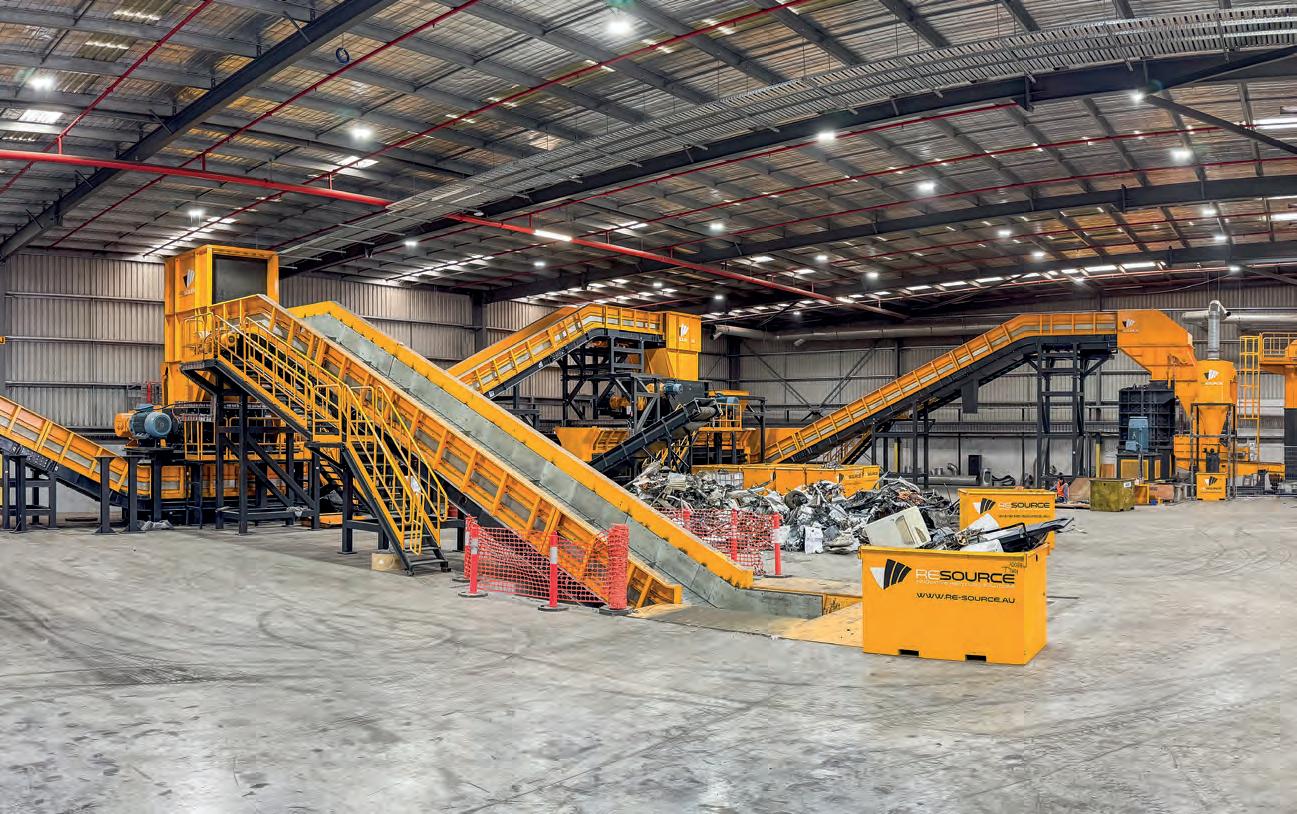
they are designed for recoverability and recyclability.
The next piece of the puzzle is creating market demand for recycled materials to ensure the viability of recycling operations. Recyclers are manufacturers: producing products. These products need a genuine market at the end of the process. Done right, government signals can benefit the industry. For example, the UK government has mandated a minimum percentage of recycled polymers in all plastic products. Products that contain less than 30 per cent recycled plastic attract an extra tax. This creates certainty for the industry, increases investment in the sector and ensures a market for recycled plastics – noting that it is fundamental that we drive demand for domestically produced recycled materials to ensure the viability of the Australian recycling sector.
This includes access to overseas markets. There are unintended consequences of well-meaning laws aimed at stopping us from exporting our mess to developing countries. Australian recyclers have invested in equipment and know-how to recycle recovered plastics into finished goods, yet our laws restrict us exporting these products, seeing them as “waste” when they are just like any other commercial product for sale. The upshot? You can import a brand-new virgin plastic bottle into Australia, but you can’t export an Australian-made recycled pellet without navigating an expensive and prohibitive level of red-tape. This is uniquely self-sabotaging and needs to change.
Our report also demonstrates that we need to enhance collection infrastructure and consumer incentives. Schemes lacking incentives for consumers to return items to away-from-home collection points, or lacking a comprehensive and well-promoted collection network,
proliferation of electronic devices, including disposable items like vapes with sealed batteries, exacerbates this issue, compounded by inadequate consumer education about safe disposal.
There is widespread confusion about which products contain batteries and which stewardship schemes apply to different electronic items. Despite various existing voluntary and co-regulated schemes, such as B-cycle, Mobile Muster and the National Television and Computer Recycling Scheme, many products aren’t accepted, leading to gaps in collection infrastructure and community confusion about disposal options. Without comprehensive access to safe disposal and compelling incentives for consumers to return items, risks to human health, the environment, and the entire recycling system, persist. To address these challenges, a holistic approach to e-product stewardship is essential, including collection access, consumer incentives, and refund or deposit schemes to encourage proper disposal practices and maximise recycling outcomes.
The next thing on the list sounds like red tape, but it’s essential: implementing robust governance structures that ensure accountability and transparency, with representation across the entire supply chain. In particular, recyclers must be at the table in product stewardship governance to ensure real recycling outcomes are being achieved. Additionally, there are currently multiple ways to define and measure concepts like “recycling”. Some only count what is collected, while others count what’s actually recycled. Instead of comparing apples with oranges, we need to be sure there is an Australia-wide set of measures, so we know who is doing what and what outcomes have

resulting in excessive costs and inefficiencies for recyclers and brand owners. Moreover, schemes’ own accreditation systems for recyclers can foster conflicts of interest, prioritising cost-cutting measures over quality results – undermining confidence and hampering investment in recycling capabilities.
ACOR has outlined the value of a national Australian Recyclers Accreditation Program, which can provide independent, objective, and consistent assessments of recycling sites’ operations to ensure specified standards are met sustainably and securely. Alongside addressing
is essential to drive circular economy objectives, define ‘end of waste,’ and bolster investment confidence in recycling. Recycling is the critical link that closes the loop in a circular system. We have targets to meet and resources to conserve, but we can only achieve real-world results if recyclers are engaged in ensuring product stewardship schemes deliver on their promises. Working better together, we can transform product stewardship from a slogan into a powerful tool for a thriving Australian circular economy.
Suzanne Toumbourou is the CEO of ACOR.
Daily news updates at www.insidewaste.com.au JUNE/JULY 2024 INSIDEWASTE 39
Tyres are just one of many waste streams that need a proper product stewardship outcome. Image: Tyrecycle
Infrastructure is key if Australia is going to have a circular economy that is going to work properly. Image: ReSource

The twin threats plaguing e-waste and lithium-battery recycling
By Inside WasteBATTERY-OPERATED electronic devices have become an integral part of everyday life in Australian households. From smartphones and tablets to micromobility, embedded batterypowered consumer products include headphones, smart watches, electric toothbrushes, shavers, battery-operated toys, drones, e-scooters, e-bikes, portable power-banks, and especially single-use vapes. This short list is only scratching the surface, with most of these products powered by various types of battery chemistries from single-use alkaline to embedded rechargeable lithium-ion batteries.
Despite the availability and use of these products for many years, products with embedded batteries have not been declared a priority waste. This is where producer responsibility programmes can be appointed and made responsible for the costs of collection, transportation and recycling to reduce waste to landfill. This is especially true for the hazardous materials found in embedded lithium-ion batteries and the fire risk they pose when crushed at kerbside waste
and recycling collections.
Current e-stewardship programs include televisions, computers, printers, mobile phones and loose household batteries. The programs limit eligibility of other embedded lithium-ion battery products not specifically listed in their respective schemes for recycling. This leaves consumers guessing how to recycle their unwanted end-of-life battery-operated products. A number are incorrectly disposed in general waste and kerbside recycling bins, where embedded batteries are likely to be crushed.
Lithium-ion batteries in compactors, MRFs, transfer stations and landfills can suffer a thermal runaway condition that can result in a fire. The risk to waste management industry assets is increasing with improperly discarded products found in every waste stream.
Ecocycle, a recycled materials specialist, has been instrumental in highlighting the urgent need for specialised collection and recycling options of embedded lithium-ion battery devices. It is taking steps in mitigating environmental impacts, and for the reclaiming of critical minerals and other valuable resources currently lost to
landfill. Through its subsidiary, Ecobatt, it operates company-owned household battery collection kiosks equipped with smart sensor technology for effective fill, temperature monitoring, and collection scheduling of batteries. The kiosks are strategically placed in more than 6,000 locations including supermarkets, hardware stores, other retail outlets, council buildings, and libraries across the country.
While the purpose of these battery kiosks is the collection of household batteries, they also inadvertently receive single-use vapes and other battery embedded products as frequent by-catch with recycling costs absorbed by Ecobatt. Ecocycle is advocating for government funding to support these recycling efforts with national product stewardship. Despite its initiatives, integrating endof-life, single-use vapes – for example – into an extended product stewardship program where importers, retailers and consumers contribute to industry-led recycling efforts, remains a challenging goal for local, state and federal governments alike.
Without urgent intervention to minimise the risks of the range of
consumer lithium-ion battery products and the advantages of existing recycling expertise infrastructure nationally, the risk of adverse battery-related fires will continue to exponentially increase year on year. Embedded battery products must be segregated from other general waste and recycling streams. Not only are general waste collection services at a constant risk, but so are recycling facilities as evident by the loss of Canberra’s only recycling centre in 2023. It was reported to have been destroyed by a lithium-ion battery “thermal runaway” event igniting a fire resulting in a total loss. The public must be made aware that all batteries store electrical energy in chemical form and are predominantly safe up until their disposal.
Physical damage to the internal structure of a lithium-ion battery during kerbside waste collection and processing can result an immediate adverse reaction, or as found in Canberra, occasion in a delayed chemical reaction that may result in a battery-related fire. This is especially a high risk in close contact with other combustible materials.
Thermal-runaway events in the waste
Daily news updates at www.insidewaste.com.au 40 INSIDEWASTE JUNE/JULY 2024 E-waste //
Everyday devices that need batteries have exploded in the past three decades. Image: Ecocycle
and recycling industry are caused by the inadvertent physical abuse conditions experienced by embedded lithium-ion battery products, like single-use vapes and other small consumer products incorrectly placed in kerbside general waste or recycling bins.
For example, Fire and Rescue NSW in their SARET Research Team report for 2022 and 2023 on lithium-ion battery incidents, list six battery-related fires at waste/recycling facilities and 20 fires involving waste collection trucks.
At the same time, 76 micromobility e-bike and e-scooter-related fire incidents were recorded. While the frequency of lithium-ion fires may be relatively small when compared to their market prevalence, their end-of-life consequences can be costly, endanger human life and the environment.
Ecobatt’s range of battery transport bins and household battery collection kiosks equipped with smart sensor technology reduce the risk of loose battery and embedded lithium-ion battery product collections. Continuous development with patented technology in collection bins and fire containment provisions further emphasises Ecobatt’s commitment to safety solutions for the reduction of even rare adverse events.
At present, household battery recycling is estimated at just over 12 per cent and recycling rates are projected to grow in single digits, while every month millions of single-use vapes are still disposed with countless other embedded battery products. The perceived lack of incentives for consumers to recycle embedded battery e-waste appropriately highlights an urgent need for enhanced government focus and industry support.
Raising consumer awareness, extending producer responsibility, and investing in leading recycling technologies are fundamental strategies. Companies like Ecocycle and Ecobatt are at the forefront of these initiatives, playing a role in advancing the proper recycling of all e-waste and their embedded lithium-ion batteries. These efforts are not only essential for environmental preservation but also for recovering critical materials that are currently lost at landfill. The risk of underground landfill fires is projected to increase as the quality of lithiumion batteries self-discharge rate is continuously improved.
The demand for rechargeable battery products is expected to soar, driven by innovations in consumer technology, as well as the automotive, medical, and industrial sectors. Consumer goods equipped with efficient lithium-ion batteries and their residual energy capacity, represent the largest proportion of improperly disposed e-waste products at landfills, highlighting a critical area for improvement in waste management.
Landfill bans for e-waste are in place in Vic, SA and WA, but battery fire events continue to be reported.
Although state government agencies are actively involved in recycling initiatives, the burden of investment in collection, recycling and specialist processing equipment is difficult to sustain by the recycling industry alone. The economic difficulties are demonstrated with some recyclers either exiting the market or falling into voluntary administration. A successful circular economy requires government support and is commendable with emerging policies, but incorrect consumer disposal is persisting. Without targeted education, the financial risk and the risk of battery-related fires posed by end-of-life e-waste not included in current product stewardship schemes is escalating. The industry is already burdened with sharp increase in insurance premiums, which are now virtually impossible to avoid.
To mitigate the risks associated with all consumer e-waste, prioritising their proper recycling is essential. Ecocycle and Ecobatt stand at the forefront of industry to ensure the safe collection and handling of loose and embedded lithium-ion battery products. With years of experience in the responsible recycling of various battery chemistries, the group is well-versed in the potential risks associated with batteries and adhere to stringent protocols to prevent mishaps during collection, transportation, and recycling processes.
Recently, the Victorian Government acknowledged the significance of advancing recycling initiatives by awarding two grants totalling $3.5 million to enhance lithium-ion processing and recycling capabilities. This funding, distributed as part of the third round of the Circular Economy Infrastructure Fund Hazardous Waste initiative, includes a substantial $2.5 million grant to Ecobatt. While this represents a commendable step forward, it is clear that Australia still has a considerable journey ahead. Additional funding is crucial to enable those in the material recycling industry to effectively keep pace with escalating hazardous battery waste demands.
The primary challenge in recycling e-waste containing lithium-ion batteries lies in their complex material composition. This necessitates specialist equipment and controlled processes for effective commodity separation with implementation in reduction of secondary waste generation and targeted off-gas treatment. Ecocycle and Ecobatt’s national recycling infrastructure already plays a pivotal role in addressing the household battery waste crisis, offering an environmentally responsible disposal option to consumers


and industry alike. With planned process expansions and additional funding support, Ecocycle and Ecobatt are poised to improve Australia’s capability to manage current and future consumer e-waste battery volumes. This includes end-of-life embedded lithium-ion products, enhancing a crucial segment of the country’s recycling recovery for critical minerals towards environmental sustainability.
Increasing consumer and institutional awareness through targeted educational campaigns and resources is crucial in transforming recycling behaviours and ensuring the long-term success of these initiatives. It is imperative that current consumers nurture a culture of recycling, starting at an early age with primary school education campaigns and embedding sustainable practices into the fabric of society. By prioritising environmental stewardship and adopting advanced recycling technologies, Ecocycle and Ecobatt are not just addressing immediate environmental challenges but are also paving the way for future generations.
Giving support to organisations that achieve effective management of e-waste and battery recycling demands with a collaborative approach, and seeking regulatory support, government funding, industry collaboration and
effective community engagement are exemplary.
Such strategies are key to addressing the challenges of not just single-use and rechargeable consumer batteries in e-waste, but also the paramount safe collection, transportation and processing of their embedded lithium-ion batteries.
Collection of any consumer e-waste or household batteries should not be excluded from existing national e-waste or battery product stewardship programs in any state or territory.
Urgent funding for recycling of all consumer e-waste products at end-oflife must be resolved to diminish the fire risk embedded batteries pose to the waste industry with government intervention nationally. The Ecocycle group is focused on ensuring the protection of our environment promoting a circular economy with its specialist battery and associated e-waste collection and recycling capabilities, investments in fire mitigation products, and battery bulk transport and processing equipment. Ecocycle and Ecobatt are committed to environmental health, sustainability and community safety. By highlighting the risks of incorrectly disposed end-of-life embedded batteries in e-waste they demonstrate their dedication to industry leadership and consumer awareness.
Daily news updates at www.insidewaste.com.au JUNE/JULY 2024 INSIDEWASTE 41 // E-waste
Lithium-ion battery fires can be devastating in a short amount of time. Image: Santi S/Shutterstock.com
Vapes are just one product with batteries that are starting to become a hazardous waste stream. Image: Ecocycle

Coming full Sircel
By Inside WasteSIRCEL is a green-technology company whose primary focus is the eradication of electronic waste from landfill. Driven by the need to do its part in creating a circular economy, the company is run by Anthony Karam. A former corporate lawyer, Karam started on this journey in 2017 after experiencing the enormous e-waste dumps of West Africa. That, coupled with his past experience, lit a fire within him to find a better way of dealing with e-waste.
Currently Australia generates one of the highest amounts of e-waste per capita in the world – 21kgs per person.
Angie Bradbury is Sircel’s Marketing Director, and these are busy times for the resource regeneration business. It has recently bought the assets of Scipher Technologies, one of the early pioneers of e-waste recycling in Australia. This acquisition means Sircel is stepping up a gear or two, becoming he most significant player in the Australian e-waste space.
“We’re thrilled to take on the processing facilities of Scipher in Melbourne and ensure the capability is not lost to the sector,” said Bradbury. “This acquisition, along with our other sites in Parkes (NSW), Villawood (Sydney) and a recently opened site in Yatala (Qld) means that Sircel is now the largest player in the e-waste space.”
With substantial plant and machinery now under its purview, is there enough
e-waste to keep Sircel busy? Absolutely, said Bradbury.
“There’s still a lot of education needed about e-waste and what happens to it. Still today, a significant percentage of e-waste collected is being shipped overseas or sent to landfill with only a small amount of its value recovered,” said Bradbury. “Sircel’s spent the best part of a decade, and tens of millions of dollars developing a largescale, end-to-end process that sees up to 100 per cent of the valuable commodities extracted and returned to the circular economy. It’s a game-changer.
“We’re particularly excited about Sircel’s newly acquired capability to process TVs with our new bespoke plant equipment, as it adds increased capacity to our solutions. Importantly, it also means that Sircel will continue the important conversations with the Victorian EPA on the establishment of Australia’s first solar panel processing capability at our Parkes facility in NSW, situated in the designated Recycling Special Activation Precinct.”
While there is a lot of excitement about expanding its business, Sircel is also aware that – like most companies in the resource recovery sector – it needs whole-of-system buy-in to make it really work. Not just processors like themselves, but government and communities, too. It succinctly outlined some of the barriers to a circular economy, but also suggested solutions, in April 2024 in a submission
a single, nationally consistent, legislative and policy framework for the treatment of e-waste.
The lack of consistent regulatory frameworks, changes in licencing standards from state to state and inconsistent application of government grants and programs do not provide a long-term, risk-managed environment to provide certainty for the massive investment in plant and technology needed to solve this crisis.
The framework should ensure accreditation (and auditing) of standards to ensure that feasible alternatives exist, we are dealing with our waste stream within Australia, and parties are not finding loopholes to ship the problem overseas. The framework needs to support the sustainable and circular economy options to manage waste, not leave open the cheapest and most environmentally damaging options, such as landfill or the wallets of underdeveloped nations in the region.
Bradbury gives a practical example of one product that could benefit from such legislation – copper. At the recent Impact X Summit held in Sydney in April, Sircel CEO Karam gave the audience a rundown of how much copper is thrown away.
to the Waste Reduction and Recycling Senate Enquiry.
In part, it said: Electronic waste (e-waste) should be treated as its own discreet category – no longer rolled up in a broader “waste” discussion. End of life electronics may have no perceived value as a scrap mobile phone or decommissioned telecommunications exchange, but these devices hold valuable metals and materials that can and should be returned to the circular economy. The Australian Government (and State Governments) need to urgently establish
“In 2022 there was 62 million tonnes of e-waste generated globally,” he said. “Our statistics tell us that about 13 per cent of general e-waste is copper. That means 8.6 million tonnes of copper was potentially thrown away as waste in 2022. The world only mined 21 million tonnes of copper, in 2022 so 36 per cent of global copper that was mined that year was potentially buried as waste. That’s about AUD$133 billion at current prices.”
If there was legislation around how such costly elements need to be recovered, then the resource would not end up in the ground.

Daily news updates at www.insidewaste.com.au 42 INSIDEWASTE JUNE/JULY 2024 E-waste //
Sircel’s Parkes’ facility isvcapable of processing up to 20 tonnes of e-waste a day.
Angie Bradbury (right) said new legislation around the NTCRS accepting small appliances is a good start to addressing all forms of e-waste that need processing. Images: Sircel
NTCRS
Then there is the controversial National Television and Computer Recycling Scheme (NTCRS). Thought by a large sector of the resource recovery industry as outdated – not least because of what it doesn’t include in the scheme – there has been some (slight) movement with it recently.
“The federal government’s extension of the NTCRS scheme to include small electrical appliances is a good start,” said Bradbury. “The amount of waste that’s currently the obligation of the manufacturer that is under the scheme will expand by about six or seven times. That’s a good thing.”
However, legislation aside, Bradbury is a big fan of education – getting consumers not to think of resources such as electronic goods as waste. She goes so far as to say that we should get rid of the word waste altogether for the category and refer to the recoverable parts as resources.
“The key thing for us is that people need to be asking better questions about what happens to their discarded electronics,” she said. “Just because you put it in a bin or a bag at the zoo or a designated ‘recycling’ bin, it doesn’t mean it’s going to end up in the right place. We need greater transparency.
“We need to be able to track what’s happening with e-waste all the way through the process. And we absolutely need to do a better job at shutting down the bad faith actors.”
Practical considerations
From a practical aspect, people also need to get their head around how e-waste is broken apart. Bradbury said it’s not only impractical, but uneconomical, to disassemble parts manually. Sircel has invested in mechanical processes right from the beginning, with no manual dismantling apart from triage of batteries and any non-recyclable materials that may be present. They then use a range of source separators to extract the varying metals.
“The e-waste is triaged, and we take out things like lithium-ion batteries before they go through the processing facility,” she said. “You’ll get tonnes of waste at a time going straight into the shredder and going through the plant in less than 50 minutes.”
And Sircel’s Parkes site is huge. It has the capacity to process about 20 tonnes of product a day. Bradbury believes that if people could see the scale of the operation, they would realise how big this e-waste stream is compared to what they think it might be.
“When people imagine e-waste facilities, I think they see some guys with screwdrivers sitting around dismantling things,” she said. “If they could see the Sircel facility they’d see these massive

hook bins of e-waste being delivered, then tonnes of product being tipped into the top of a hopper.
“Once in the hopper, the product goes through a series of size reduction and separation processes that will reduce the e-waste eventually down to less than a one-millimetre fraction, separated into various streams. Magnetic separation of ferrous material sends steel back to the steel industry and further separation of non-ferrous material provides aluminium back to the aluminium industry. The importance of recycling these metals is beyond just resources, consider that these are two highly energy intensive industries where turning virgin iron or aluminium ores into metals produces considerable CO2 footprints.”
When it comes to end markets, Bradbury says vendors are ready and willing buyers of the recovered commodities, which brings up an interesting point from Bradbury.
“We’ve got to stop thinking about the cheapest economic solution and start thinking about the best solution,” she said.
“You can compare the costs of mining a tonne of virgin copper, versus extracting a tonne of copper out of cables from telecommunications sites. With the latter, we pull the cable out, take the plastic off the outside, and use our copper granulator to produce high-grade copper. There’s some labour required to extract the cables onsite, some transport costs, and less than an hour to move through the processing plant to spit out the copper at the other end.
“Compare that to digging a massive hole in the ground – the environmental, processing, logistical and management
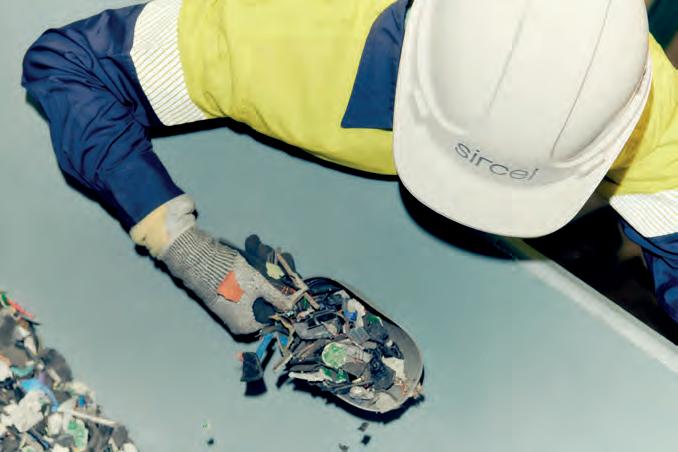
costs – it means it’s substantially better to extract it from e-waste than to dig it out of the ground.”
Then, as mentioned, there is the educational aspect. Not just explaining the wrongs and rights of putting e-waste into landfill or not processing it properly, but also how other avenues can save local councils money in the long run.
Bradbury references several councils in regional NSW that had a waste contractor collecting their e-waste via a scheme funded by the state government. However, that funding did not cover both logistical and processing costs, leaving the councils out of pocket and with no ethical solution to processing e-waste.
After hearing this, Sircel hosted the regional NSW councils at their Parkes facility, and offered to process the e-waste if they could cover the costs of shipping.
“We knew exactly how much
e-waste they’d been generating over the past three years. We did some sums for them regarding current landfill costs in New South Wales. If they sent it to landfill, it was going to cost them $18,000. Whereas if they engaged us to pick it up from them three times a year, it was going to cost them $4,500.
“Councillors have got to understand that they’ve got an obligation to their ratepayers to do the right thing, and to invest in a better solution. That’s the education piece we have to do. Every time we get to engage with a regional local council, the responses that we get when we bring them out to the plant is overwhelmingly positive.”
A site visit proves that Sircel is here to make better possible.
A “better” future is one where e-waste means no waste at all. And to make this future a reality, real activation and agitation for change at a policy and legislative level needs to happen now.
Daily news updates at www.insidewaste.com.au JUNE/JULY 2024 INSIDEWASTE 43 // E-waste
E-waste such as circuit boards have a lot of materials in them that can be recovered and reused.
Sircel’s plant shreds e-waste and then puts the various off-takes into their waste streams to be recovered.

Recycling of plastic not sufficient to meet targets
By Walter TappeinerPLASTIC is ubiquitous in our society; much of it is produced to serve as short-lived, single-use commodity item. When considering worldwide plastic usage since the beginning in the 1950s, more than 8 billion tonnes of plastic were produced, of which about 2 billion tonnes are still in use.
Each year more than 400 million tonnes of new plastic are added, of which on average about 12 per cent are recycled. Recycling figures vary across countries. In several European countries 45 to 50 per cent of plastic waste is recycled and repurposed. More than three billion tonnes of plastic produced and used to date were sent to landfills or have become litter. Because complete degradation of many plastics takes hundreds of years, plastic in landfills and as litter keeps on accumulating, eventually leaching harmful substances into soil and water. This has the knock-on effect of degrading our environment and with it the quality of our life and that of future generations. Because of this threat, user organisations and the public focus increasingly on how to reduce use of plastic and how to improve collection and recycling of plastic waste for sustainable circular use.
Increasing collection and recycling of plastic waste is not sufficient. To achieve a broader circular use of plastic, effective integration of recycling and
“Each year more than 400 million tonnes of new plastic are added, of which on average about 12 per cent are recycled. Recycling figures vary across countries. In several European countries 45 to 50 per cent of plastic waste are currently recycled and repurposed.”
commercial repurposing of various grades of plastic recyclate is needed.
Use of plastic recyclate in asphalt pavement is one example that needs more attention. There are several approaches to such use. Based on the method of addition, we have the Wet method, which requires blending of plastic with bitumen and the Dry method, whereby plastic recyclate is added directly to hot aggregates or asphalt mix at the mixing plant.
Based on the method of interaction of recycled plastic with asphalt pavement components, some practitioners suggest three concepts: Wet, Dry, and Mixed. Wet requires high shear blending of plastic recyclate with bitumen to produce polymer modified binder (PMB).
The Dry method comprises adding hard plastic recyclate that does not melt at typical asphalt mixing temperatures (such as PET). The added hard plastic recyclate is presumed to act as partial aggregate replacement.
The Mixed method is based on adding dry plastic recyclate that melts at typical asphalt plant mixing temperatures, whereby multiphase
conditions are assumed to occur –some plastic may be in direct contact with aggregates; some is integrated into bitumen that is added subsequently; and the balance is likely to remain in the asphalt mix as partially molten plastic lumps. The ratio of these three phases depends on composition and dosage of plastic used, and on asphalt mixing conditions (temperature; time; shear rate). At a mixing temperature of 180°C, the viscosity of standard PMB grades ranges from about 0.4 to 0.8 Pa.s. The viscosity of molten plastic, at the same temperature, is several hundred Pa.s.
At such, mixing temperature, and the typical short plant mixing time for a uniform coating of aggregates with 2 per cent, molten plastic is not feasible. Based on Wet blending experience, several hours of high shear blending, and subsequent controlled curing, are required to ensure effective interaction of bitumen and recycled plastic. This is necessary to produce high-performance PMB grades. Recycled plastic has been used for PMB production since the late 1980s with variable success, primarily because too little attention was paid to
the interaction of various types of plastic with bitumen components. Due to differences in properties of recycled plastic and of bitumen composition, a generalised method of formulating and producing PMB with recycled plastic is not viable. Austroads Research Report AP-R663-21 Use of Road-grade Recycled Plastics for Sustainable Asphalt Pavements, Towards the Selection of Road-grade Plastics – An Evaluation Framework and Preliminary Experimental Results states correctly that:
l the selection of the plastic recyclate and optimum compatibilisers is linked to the process of engineering plastic-modified bitumen and is best considered by experienced asphalt binder suppliers who can modify the formulation to achieve the desired properties; and
l that although the process of blending polymers with bitumen is relatively well known, the incorporation of recycled plastic involves a series of complex relations between the recycled polymer and the bitumen, which requires thorough laboratory testing to enable a detailed assessment.
Since the early 2000s, experienced research teams in several countries have carried out research on the inherent interaction potential of different types of plastic with bitumen components. Plastic recyclate properties such as molecular mass,
Daily news updates at www.insidewaste.com.au 44 INSIDEWASTE JUNE/JULY 2024 Innovation //
branching, crystallinity, and melt viscosity were considered. One of the key findings is that Linear Low-Density Polyethylene (LLDPE) interacts more effectively with bitumen than most other types of plastic.
LLDPE is produced by copolymerising ethylene with a shortchain alpha-olefin (butene, hexene, octene). The flexible alkyl branches of these alpha olefins lower the packing density and crystallinity of LLDPE, which improves interaction with the oily bitumen components and PMB performance. When correctly blended with bitumen both virgin and recycled LLDPE can form a polymer network in bitumen resulting in co-continuous phases of polymer that has absorbed oily bitumen components and of the residual bitumen. Most plastic films used in agricultural and horticultural applications, as well as packaging material, contain LLDPE. Selecting suitable sources of plastic waste and processing them separately from other mixed plastic waste offers benefits.
In many regions, greenhouses are covered with plastic film. Plastic film is also used for tunnels, silage, and mulch. About 80 per cent of the more than 50,000 tonnes of plastic film used each year in Spain’s Almería region is recycled and repurposed, including use for PMB production. In the whole of Spain, 230,000 tonnes of agricultural film are used annually, 45 per cent of which is currently recycled.
To broaden commercial repurposing of plastic recyclate, and to increase circular use of plastic, collaborative schemes should be developed that combine collection of used plastic film, its processing, and its use as an economic resource. This can be supported by extended producer responsibility. Asphalt technologies and user agencies are often reluctant to use recycled polymers in asphalt binder and mix because of the stigma surrounding the word ‘recycled’. When used to produce standard grades of PMB, such reluctance is unwarranted. Clause 5.2 of the U.S. standards ASTM D6373, ASTM D8239, AASHTO M 320, and AASHTO M 332, all of which cover performancegraded (PG) asphalt binders, states that additives for PMB production can be used in virgin or recycled condition, when they are capable of being dissolved, dispersed, or reacted in asphalt binder with the objective of improving its performance.
When recycled polymers are used for PMB production, the same quality control testing is carried out as for commercial PMB grades produced with virgin polymers.
Similarly effective quality control is
To achieve a circular economy with plastics, there needs to be commercial repurposing of this troublesome waste stream. Image: alba_alioth/shutterstock.com
usually not carried out when adding recycled plastic directly to aggregates or asphalt mix. When the Mixed method is used at project level, little is known about the distribution of polymer phases in the mix. Consideration can be given to adding plastic recyclate directly at the hot mix plant for use in local and other secondary roads where mixed phase conditions and mixed performance are acceptable.
Using plastic recyclate that interacts well with bitumen and blending it with bitumen so that applicable standard PMB specifications are met, is sustainable based on performance and provides economic and environmental benefits.
Sustainability can be further increased by adjusting PMB formulation to meet asphalt binder stiffness requirements for use in high-modulus asphalt mix, which allows reducing pavement layer thickness, and with it, the use of natural resources.
Walter Tappeiner is an Austrianbased civil engineer who specialises in formulation, production, and quality management of polymer modified asphalt.
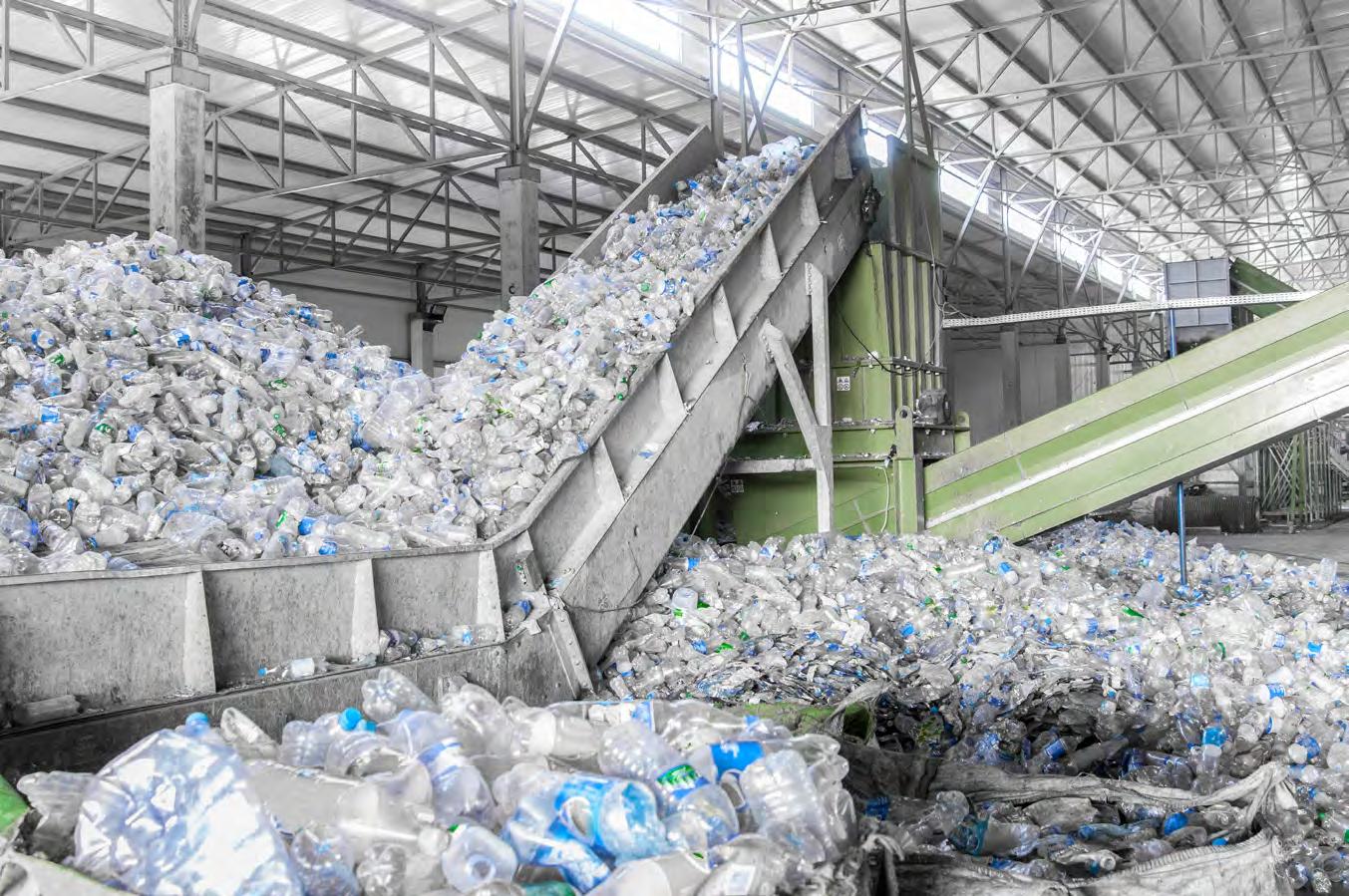
Daily news updates at www.insidewaste.com.au JUNE/JULY 2024 INSIDEWASTE 45 // Innovation
Three concepts can be used when it comes to the interaction of recycled plastics with pavement components – Wet, Dry, and Mixed. Image: stock/ shutterstock.com
Should Australia take the European path to EPR regulation of packaging?
By Jack LloydAS THE Australian Government strives toward a circular economy, many within the industry question whether product stewardship schemes should be regulated. Regulation through legislation would change the landscape of Extended Producer Responsibility (EPR), much like it has in Europe. It would introduce mandated obligations, and in some circumstances, would take the organisational responsibility away from the extended producer and hand it to local government.
At the launch of the National Clothing Product Stewardship Scheme in June 2023, Minister for the Environment and Water, Tanya Plibersek, acknowledged that regulation is possible in Australia if producers don’t meet commitments.
“If companies choose to pull out, or free ride on the work of others, then I have no problem stepping in and regulating directly. The alternative to this program isn’t a weaker scheme with a lower levy, it’s government regulation,” she said.
EPR is where producers who put products or packaging items on the market assume the responsibility for those products’ end-of-life treatment.
EPRs require producers to establish systems – whether it be in-house or by interacting with another entity – to collect and recycle their products.
EPRs are seen by some as an essential ingredient of a circular economy, which itself is designed to tackle global issues such as climate change, waste and pollution.
Current attitude toward EPR regulation in Australia
An imposed regulation of EPRs in Australia has garnered much attention recently. Will they let product stewardship schemes play out by themselves, or will the failure to reach landfill and recycling goals force the government to regulate EPRs through legislation? With tyres, plastics, and mattresses added to a stewardship priority list, Plibersek said that government departments are edging closer to imposing regulations on packaging.
While many agree with the sentiment that legislation would help to encourage a circular economy, some believe voluntary schemes can work, too.
In a piece published in Inside Waste last year, chief executive officer of the Australian Telecommunications Association Limited (AMTA), Louise
Hyland, provided push back to the idea of EPR regulation. She said the telecommunication industry’s product stewardship scheme, MobileMuster, is a fully functioning, voluntary scheme that works between phone manufacturers, retailers, and the public. While the government moves closer to regulating the EPR of electronic products, Hyland describes MobileMuster as a “prime example” that stewardship schemes can function while still being voluntary.
“The free mobile phone recycling scheme recovers and repurposes 99 per cent of glass, plastic, and metal materials used in mobile phones, batteries, chargers, modems, and smart devices (from those collected),” Hyland said.
“This relies on a collective responsibility that the mobile industry has voluntarily embraced for more than 25 years, with each member doing their bit to help the environment.”
However, in the MobileMuster Annual Report 2023, the entity stated that it had a 12 per cent collection rate.
Regulation of EPRs may seem unnecessary to many, including Hyland, but in Europe, the EU has already put in place obligations to help each country in meeting its commitments. On the continent, producers are currently


Swedish container collection schemes have been going since 1984. Image: appleyayee/ shutterstock.com
obligated to take more responsibility for the waste they create. EPR regulations act as an example that could either make or break the implementation of legislation in Australia.
The regulation of EPR in Europe
The EU EPR regulations and obligations for its many member countries, has seen countries like Sweden taking on an increased commitment to a circular economy.
At a recent online seminar sponsored by WMRR, the director of the circular economy project development for Reloop Platform, Anna Larsson, provided an outline of packaging EPR regulation and its history in Europe.
Larsson said obligatory legislation that comes from the EU headquarters in Brussels relates to the EPR of packaged waste, electronic waste and batteries. However, some countries can have unique obligations. For example, France and Portugal have furniture collection schemes that only relate to those countries. Fees for the cost of EPR, alongside penalty fees for those who do not comply with the obligations, are imposed by each member state.
“It is a penalty for not executing EPR obligations. For example, this could include an importer that is not linked to any of the packaging recovery organisations, or for the producer responsibility organisation (PROs) that
Daily news updates at www.insidewaste.com.au Packaging Design //
Designing packaging to be easily recycled is one of the key must-dos in the EU. Image: Chaosamran_ Studio/shutterstock.com
does not comply with the recycling targets,” Larsson said.
PROs help producers comply with requirements by taking part in legislative requirements on behalf of producers.
Current and future legislative policies in Europe
“So that has become a very strong motivation for all market actors to improve eco-design, improve collection and improve recycling processes.”
Case study: EPR in Sweden
Larsson said that while EPR is one instrument to encourage a circular economy, there are others in the EU that are also utilised. One is minimum recycling targets combined with a new calculation method (more on that later). There is also a mechanism related to fiscal instruments.
“An example of that is the plastic bag ban,” she said. “Consumers are charged a certain fee for bags with the objective to reduce the use of single-use plastic bags in the market.”
She said another “powerful” policy instrument to secure a circular economy is the need for a minimal amount of recycled content included in a new product or new packaging – there must be a high element of recovered materials.
“It’s not enough to recycle a certain amount . . . the amount has to be 50 per cent pure after the removal of impurities has taken place and is about to enter the recycling processes,” said Larsson. “The difference between collection targets and the actual amounts of substrates that go into the recycling processes can be as high as 40 per cent.
When it comes to the aforementioned new calculation methods for collection targets, criteria can differ depending on the type of stream. For example, glass needs to sorted by colour, paper by treatment method and plastics by polymers.
Larsson talked about the goal behind the legislation that forces producers to create recyclable products. Currently, in Europe, up to 30 per cent of all packaging is non-recyclable.
Larsson described her home country of Sweden as a good case study of a packaging EPR scheme as it has one of the oldest schemes, which was implemented in 1994. It was based on the organisational and financial responsibility of producers. The system covered off on packaging except for single-use beverage containers made of plastic and aluminium.
Initially, the system required citizens to visit collection points with collected containers. This has now changed, with producers having lost organisational responsibility.
“Twenty per cent of plastic packaging that is based on the market is materially recycled.”
“The European Union, through packaging and packaging waste regulation, would like to impose the concept of essential requirements and eco-modulation,” she said. “Essential requirements basically forbid packaging that is not recyclable or not reusable into the market in the EU. Eco-modulation will entail that there are several grades of recyclability. According to these categories, producers and importers will pay their fees to the producer responsibility organisations. So far in Europe, only deposit systems for beverage containers have been 100 per cent implemented using both concepts.”
“It has now been taken over by municipalities,” said Larsson. “Producers and importers, through their PROs, pay the Ministry of Finance, which later redistributes the financing for collection of packaging. In addition, in Sweden, we have had the deposit system for singleuse beverage containers made of metal since 1984 and plastic bottles since 1994.
“Twenty per cent of plastic packaging that is based on the market is materially recycled.”
Larsson said poor recycling ultimately led the Swedish government to regulate EPR systems. This is when responsibility for stewardship schemes changed from
producers to municipalities. Municipalities were compensated for the collection cost by the producers. As of January 1, 2024, municipalities have taken over collection. On that date, it became obligatory to have capture collection, which means that packaging waste will be separately collected from each household. Most older collection points will disappear by 2027 and will also be the end of operational responsibility of PROs.
Fees for producers and importers can vary depending on the packaging type being recycled. For example, net cost after material sales for collecting recyclable plastic is $1.14 a kilogram, plastic with limited recyclability is $1.45 a kilogram, while non-recyclable plastic is $1.65 a kilogram. Paper, wood, glass, steel and other materials vary between a low of $0.0075 to the aforementioned $1.65.
Larsson said the Swedish Government acknowledged an issue in recycling and subsequently addressed it with this legislation that cuts out middlemen.
Europe has also introduced a policy to not only mandate compulsory levels of product and packaging collection by producers, but to mandate the levels of recyclability these products have in the first place. Europe presents a path in what they think is an important building block of a circular economy. However, should any of this legislative process be imposed on EPRs in Australia? Or will the model framework be ignored? Time will tell whether this will be the case.
Daily news updates at www.insidewaste.com.au JUNE/JULY 2024 INSIDEWASTE 47 // Packaging Design
Scalping screen makes light work of C&D waste
THE Mornington Park Waste Transfer Station is a privately owned company, located in the Mornington suburb of the City of Clarence, which is part of greater Hobart in Tasmania. It is predominantly a residential suburb, but it also houses an industrial estate. It has a population of 2265 with 10,000 vehicles visiting the transfer station every month.
The transfer station is run under contract with the Clarence City Council. It accepts kerbside waste, a range of rubbish from the public, along with commercial waste including construction and demolition material. It also has a Hydrowater Treatment facility onsite, which has had a recent upgrade to allow for the receipt, storage, treatment and disposal of up to 30,000 tonnes of material per year.
With a focus on ‘cleaning up’ the recycling process and practicing what they preach, the site recycles much of its own product to enhance the waste disposal experience for customers and minimise the amount of waste sent to landfill.
The transfer station’s process for the construction and demolition material begins with pre-sorting. A material handler separates the larger timber, steel and plaster board, stockpiling them for

further metal recovery, and produces a fines product and rubble. Additionally, it has a camera system that keeps an eye on the screen.
The Anaconda DF410 scalping screen was bought as a replacement to an old screen. The team put together a business case for processing of the C&D waste so they could replace the old screen. This
moisture in the product without causing issues and works easily in confined spaces. The machine is well designed and constructed with easy access for maintenance. Additionally, he mentioned that it has high fuel efficiency, and the operators find it easy to use and reliable. When asked how many tonnes per hour could be put through the plant
and rehabilitation of the site providing areas with replanted native species and landscaping. The rubble is mainly used for haul roads. They work with a couple of concrete recyclers in the area to process the concrete. If you are fortunate enough to have this as your local transfer station you will see the great work they do, in providing a more appealing site rather


Equipment News //
The Mornington Park Transfer Station is processing a range of waste streams for the City of Clarence. Images: OneTrak
The Anaconda DF410 scalping screen separates material into three different streams.
WASTE INNOVATION & RECYCLING AWARDS
Recognising excellence across the waste and resource recovery sector. Sponsorship opportunities are now available for 2024.
www.wasteawards.com.au


23 OCTOBER 2024 | MELBOURNE
CONTACT CHELSEA DANIEL chelsea.daniel@primecreative.com.au +61 425 699 878 SPONSORS
JCB Excavator works hard and is easy to use
By Inside WasteWHEN Skips and Scrap director Grady Kamper needed to expand his business, he decided one item of machinery that would help him realise that ambition was an excavator. But not just any excavator. He chose the JCB JZ140. Why?
“We needed something new and reliable and JCB was pretty quick to have it in stock,” he said. “For the waste industry it was the best product for the most competitive price. JCB was a top tier company that we were dealing with, and have a great reputation in Europe. We could also get it fitted with reverse fans and all those sorts of things, which are applications that we need in the waste industry. You can’t have an excavator working inside a shed without a reverse fan. It definitely impacts the life you get out of the machine.”
Another feature that Kamper and his team like is the cab, due to its comfort. Then there are the safety aspects, which are also important to a business where hazardous situations arise.
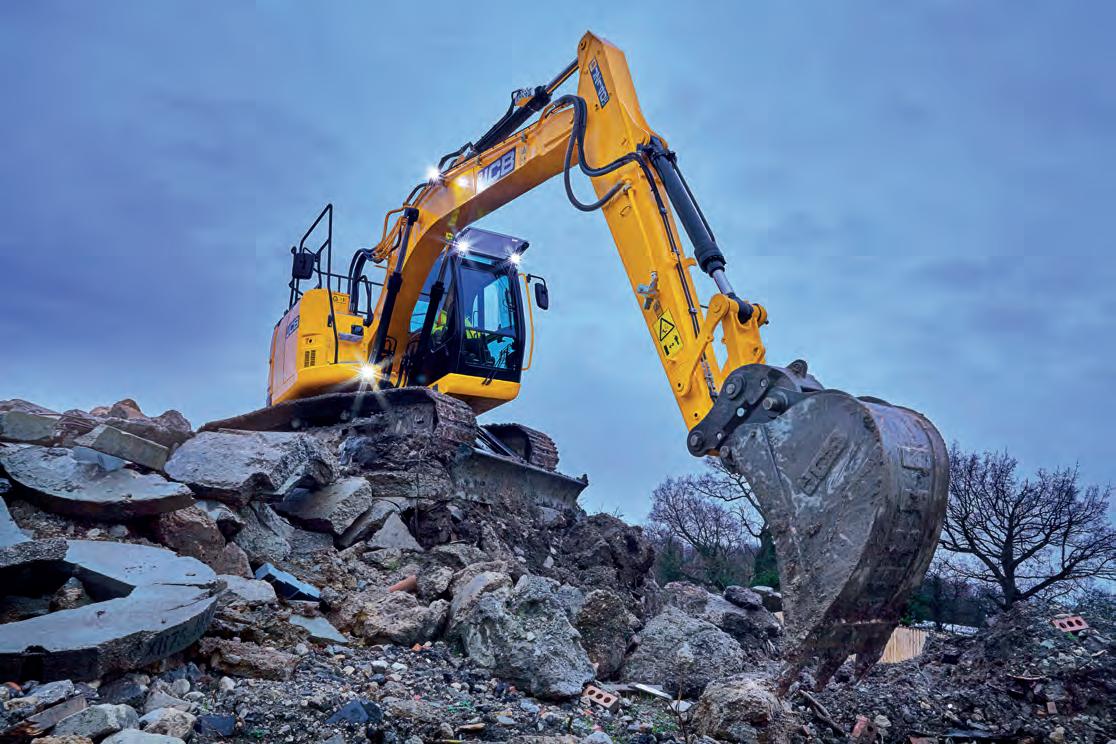
“Its dual safety application is important,” said Kamper. “This feature works whereby you have to pull down a lever and press a button, which really makes the operator aware of what’s happening around them. This feature doesn’t allow for as many mistakes. Another feature is the height of the machine,
which means it is good for loading trucks. It’s also got a really heavy counterweight, which is great when you’re operating.”
Its JZ140 EcoMAX T4F, Stage IV engine has been tested for 110,000 hours in 70 machines across a range of challenging applications. The

undercarriage of the machine is a welded X-frame construction for long-term durability. It has a reinforced boom and dipper made of high tensile-strength steel, with internal baffle plates aimed at giving long life durability. Finally, its high-strength rigid upper frame provides maximum durability and support, while its stiff durable door design offers added strength and rigidity. None of this is lost on Kamper.
“I’d recommend it to anyone whether they’re on a civil works site or they were in the waste industry,” said Kamper. “I’ve found myself a little bit more comfortable in the JCB than I did in some other wellknown brands that I’ve used before.”
Ease of use is another feature that Kamper is happy with. The machine’s 7-inch colour multifunction display is easy to read in all light conditions, provides instant operational information, and has a customisable home screen.
There is also a climate control option that offers a precisely controlled cab temperature with
fresh or recirculated air, while the demisting/defrosting functions keep a JZ140 excavator’s front window clear.
“It’s very easy to learn how to use it,” said Kamper. “We use a hydraulic 360-rotating demolition grab on it, which works a treat. It’s fantastic and easy to operate.”
Another feature is its new basic tool select system, fitted as standard, that allows the operator to set up the single direction auxiliary and hammer circuit to match the flow requirements. The selected flow is achieved by automatically adjusting the engine revs when the hydraulic service is operated.
As for back-up service, well, Kamper said he hasn’t needed any yet. However, his dealings with JCB have been great and he can’t recommend them enough in terms of how they’ve supported Kamper during purchasing.
“(JCB Territory Manager) Sam Coombe has been great,” he said. “He was one of the reasons why we went with JCB, and he’ll be a reason why we continue to use JCB.”
Daily news updates at www.insidewaste.com.au 50 INSIDEWASTE JUNE/JULY 2024 Equipment News //
Safety features of the JCB JZ140 are appealing for the waste industry. Images: CEA
The height of the JCB JZ140 makes it ideal for loading trucks.
Shredder makes light work of production waste
By Inside WasteSAVING money, efficiencies and being a fan of a circular economy were several reasons why Laminex decided to invest in a WEIMA WLK 2000 shredder.
Laminex is a company that specialises in finishes for cabinetry, panelling, benchtops and furniture. This type of working environment brings with it waste in the form of wood – both treated, untreated and laminated.
Stuart Manford is the company’s manufacturing manager, componentry. He is a busy person, which is why having a system in place to shred and recycle offcuts and the various other unwanted wooden components was important. Enter the WEIMA WLK 2000, which is distributed in Australia by recycling and resource recovery specialist CEMAC technologies.
When Laminex decided it needed a new piece of equipment, Manford said the WEIMA wasn’t first on its list – until his team saw it in action.
“I took my maintenance team down to Melbourne on a day trip to have a look at this ‘Australian’- made shredder,” said Manford. “It was then that I remembered Jonathan Tan from CEMAC technologies who I had spoken to in the past. I rang him, told him we were in Melbourne, and could we come and have a look at his shredders.
“The team then had a tour of his place. We looked at the WEIMA shredder and the maintenance team looked at me and said there’s no comparison between this and the other one. It was a little more expensive, but the quality was the selling point.”
Other key selling points were its ease of use and how the machine itself works. Manford said that the shredder is driven via a powerful motor via pulley and gearbox. The belt drives the shredding shaft, which is equipped with various rows of pre-machined notches, in which the teeth are screwed onto welded knife holders. The teeth shred the wood against a bed blade. To complete the setup, Laminex has two bins that take all the offcuts, which are dumped into the chute of the machine.
“The shredder then essentially just chops it all up,” said Manford. “The rotating teeth come and chew away at it. And there’s the ram pusher within the shredder, which retracts and comes back again. This doesn’t allow anything to jam or settle above the shredding

spaces for things to fall in and then it pushes them against the teeth, repeating the process so more material falls, until it’s done. It’s a very clever design and very simple.”
Once the material is shredded, it drops out of the bottom of the machine and then up a conveyor.
The machine can chew through up to six tonnes an hour, which is more than Laminex needs currently. The company decided on the bigger model of shredder because of the number of plants Laminex has, which includes the componentry space in Ballarat, as well as a pressing plant that decorates particle board and MDF.
The shredder has also been instrumental in the amount of waste the company can handle compared to how the waste was disposed of previously.
“We used to be able to get six pallets worth of wood waste into one of those bins attached to the shredder,” said Manford. “I think we now get 30 pallets worth into the bins and that was all dried timber so none of it was treated. Once shredded we put the mulch on the garden.”
There are several other reasons why Laminex is happy with how the shredder has helped its business. Manford explains.
“The first step for us was to reduce costs and that’s by utilising the full space of our bins,” he said. “That was step one. Step two was having a discussion with a brick manufacturing

company that was looking for biomass to burn for its kiln process.”
Now that Laminex has had the shredder onsite for three months, it’s going to get back in touch with the brickmaking company to see if it still wants the biomass. If it does, it will have another outcome Laminex is keen to cross of its ‘to-do’ list – avoiding landfill altogether. As for the back-up service, Manford cannot speak highly enough of the staff at CEMAC technologies.
“CEMAC has been amazing. As a sales rep Jonathan has been all over it,” he said. “His phone calls are just enough to remind you that he’s there and to help, but not enough to annoy you. They
recently brought one of their technicians, who was out here from Germany, to come and have a look at the install. They spent half an hour to an hour with our maintenance fitter and onsite electrician so we could ask them questions they’ve had since the install. They’ve been quite generous.”
As for ease of use, Manford said that there was minimal setup from Laminex’s end of the arrangement.
“We ran pneumatic air to the location, and we ran power cables to it,” he said. “We had breakers, and everything installed on our walls ready to go for when the machine was delivered. And then it was essentially plug and play.”
Daily news updates at www.insidewaste.com.au JUNE/JULY 2024 INSIDEWASTE 51 // Equipment News
The WEIMA WLK 2000 shredder’s quality was one selling point when it came to Laminex buying the machinery. Images: CEMAC
The WLK 2000 shredder makes short work of fibre board.
Tyre waste is no laughing matter
CHALLENGES and discovery were key ingredients for a young Dr Linda Mitchell growing up in Parramatta, Sydney. As the aspiring scientist explains it, she was into “a little bit of everything”. This included chemistry, physics, agriculture and creative subjects. But it was the sciences that really held her interest and why she studied maths, physics and chemistry at university.
After gaining a Bachelor of Science at the University of Sydney, Mitchell went on to get her PhD in Chemistry with a thesis titled Fluorescent Sensor Arrays to Monitor Heavy Metals and Therapeutic Drugs in Biological Systems.
Soon after getting her doctorate in 2021, Mitchell landed a position with Tyre Stewardship Australia (TSA) as its Science and Innovation Advisor. She moved to the role of Science, Research and Innovation Manager in 2023.
Mitchell knows there is a lot of work to do in the tyre reuse/recycling space, and her interest in doing the right thing by the environment was piqued at a young age.
“I’ve always been a bit of an environmentalist – I’ve always had an inherent value in not wasting things and making sure I’m doing the right thing by the planet,” she said. “I belonged to the Scouts when I was growing up. One of the things that was instilled in me throughout my time there was that when you go camping you leave no trace behind in the place you have been camping and hiking. You don’t damage the world around you. You want to protect it as much as possible. I’ve always been passionate about it.”
Mitchell’s PhD tended towards research, and analytical chemistry around detection of contaminants and heavy metals. She said it bounced and danced around the edges of the waste sector without being embedded in the industry.
“And then, at the end of my PhD, COVID struck. I was seeking out internships, and I saw this one at TSA pop up,” she said. “The internship was about understanding chemicals of concern and microplastics of tyre recovery. It loosely linked with some stuff that I’d already been thinking about and doing. I was like, ‘well, I don’t know a lot about tyres, but I do know a lot about chemistry’, and I was curious to find the overlap.”
What does a typical week/month look like for Mitchell in her roles as science, research and innovation manager?
“I’m the lead scientist at TSA,” she said. “Some of my day would be taken up with anything from a super technical

come to me and see whether I know the answer. And if I don’t, then maybe I can find the answer, or talk to the right people who might know the answer. It’s emails and engagement and meetings.”
Mitchell also does a lot of research around tyre materials and how impactful they are on the environment.
Whether it’s their chemistry, a lifecycle assessment, or new and emerging ways to process tyres, they are some of the projects that I’ve been working on,” she said. “It could also be writing reports, working with consultants to develop reports, or working with researchers to conduct cutting-edge research relating to tyres. We’re all about supporting and educating the industry.”
And what does Mitchell like about the job? One of her biggest loves is when she shares a scientific fact or piece of information with somebody, and they get it.
“I like that I’m helping people to understand the value of tyres and the value of this material,” she said. “It’s an interesting, complex material. We all use tyres, but nobody really understands them. I like that I can help that understanding. And that’s what we’re trying to do in a circular
One of the challenging aspects of her job is trying to develop information for different audiences, but bring everybody along the same journey. It can be a hard task because there will be people with different values, opinions and prior knowledge on any number of topics. For example?
“Information can be taken in different ways and shapes that you don’t expect.” she said. “Sometimes it’s hard when you have the right information, but then it is misinterpreted, which is definitely a challenge for any scientist with an academic background to translate research to industry.
“It’s about always working towards communicating factual information, in the right context, and considering your audience and how they will engage with the research.”
As for the future, one of the issues facing the industry is getting institutions, people and some parts of the industry on board.
“We’ve been working on this challenge around creating value in new tyre materials for a long time,” she said. “Tyres are collected, processed and then turned into new materials. There’s a valuable product that comes out the end of that. What’s
challenging is getting research in that process implemented. There’s a long pathway and a long roadmap to implementing and seeing that circular economy in action.”
Mitchell said that tyres are a heavily engineered, valuable and strong material, so the opportunities to get this valuable resource back into the circular economy should be plentiful.
“The markets and the opportunities that we are looking to take these products made from tyres are infrastructure, roads and pavements, and back into rubber products,” she said.
“And these are really tight, established industries that have technical expectations for their products. Yes, we do this research and development, but there are still many steps to get those materials embedded in those applications.
“I’d like tyres not to be seen as a waste material. I think the materials in them are so valuable. I’d love to see more collected and recovered, and not end up anywhere else.”
And what about outside the purview of her job? What else does Mitchell like to get up to? As mentioned, communicating around trying to share the story of tyres and their place in the resource recovery landscape is key for her. So much so, she instigated a couple of interesting ways of spreading the word.
“I did some stand-up comedy around tyres and rubber,” she said. “And that led to doing a podcast with Dr Karl (Kruszelnicki), around tyre chemistry. Just talking about this topic led to a lot of people reaching out to me and asking questions about tyre science and resource recovery. There’s so much reach that we can achieve by building a rapport with people outside the industry – we can really connect with people in all different walks of life. It’s really what I love doing.”
Does Mitchell have any more plans to do stand-up comedy in the future, spruiking the good, the bad and the ugly when it comes to tyres and their place in the resource recovery landscape?
“If I could spend one day of my week writing comedy, then I would, but I have a lot of work cut out for me at TSA,” she said. “It takes a lot of time to do that sort of engagement and that’s why people do it full-time. That was last year’s big project. This year, there’s a lot going on at TSA, and I’m excited to continue using my skills and passions as a scientist for better outcomes for used tyres.”
Daily news updates at www.insidewaste.com.au 52 INSIDEWASTE JUNE/JULY 2024 Young Professional //
Dr Linda Mitchell and Dr Karl Kruszelnicki discussed tyre chemistry on Dr Kruszelnicki’s podcast. Image: Linda Mitchell
AGRICULTURE FARMING EDUCATION WASTE
MANAGEMENT RESOURCE MANAGEMENT
CONSERVATION MANUFACTURING RESOURCES
ENERGY HEALTH & SAFETY INFRASTRUCTURE
ENGINEERING MINING CONSTRUCTION
QUARRYING AGRICULTURE FARMING EDUCATION
WASTE MANAGEMENT RESOURCE MANAGEMENT
CONSERVATION MANUFACTURING RESOURCES
ENERGY HEALTH & SAFETY INFRASTRUCTURE
ENGINEERING MINING CONSTRUCTION
QUARRYING AGRICULTURE FARMING EDUCATION
WASTE MANAGEMENT RESOURCE MANAGEMENT
CONSERVATION MANUFACTURING RESOURCES
ENERGY HEALTH & SAFETY INFRASTRUCTURE
ENGINEERING MINING CONSTRUCTION
QUARRYING AGRICULTURE FARMING EDUCATION
WASTE MANAGEMENT RESOURCE MANAGEMENT

SEARCH FOR TOP INDUSTRY TALENT THROUGH OUR JOBS BOARD.
CONNECT WITH ALIGNED CANDIDATES.
BOOST YOUR CHANCES OF FINDING SKILLED APPLICANTS.
SCAN TO CREATE AN ACCOUNT TODAY AND DISCOVER YOUR PERFECT MATCH!
Astec Peterson 5710D Horizontal Grinder
Engine: Caterpillar C27 Tier II (Optional C32 Tier II)
Horsepower: 772kW
Feed Opening: 152cm x 102cm
Operating Length: 18.47m
Weight: 43,091Kg
More: The 5710D is designed for operations requiring high production and frequent moves between jobs. With a large feed opening, combined with Peterson’s high lift feed roll, it can readily produce a wide range of material.
The Peterson horizontal grinders are more productive since less energy is required to reduce the wood with their unique features. The difference in profitability at the end of the year can be dramatic with lower fuel consumption, and higher mulch yield.
Contact Name: Brenton Yon
Phone Number: 0418 816477
Webpage: info.au@komatsuforest.com
Email: brenton.yon@komatsuforest.com

Wood Hog Horizontal Grinder 2400XT / 3000XT / 3400XT / 6400XT
Unit Dimensions: Machine dependent
Weight: 14,000 – 48,000Kg
Price: Please call for pricing details
More:
Drive type: Electric or Diesel Hydraulic (275 – 1200HP) No. shafts/speed: Single Mill

Presto High Force Auger & PZZ cardboard crusher
Unit Dimensions: 2170L x 1350W x 600H mm
Weight: 720Kg
Feeding Volume: .5 m3
Price: POA
More: Combined with the Presto SPN High Force Auger, the PZZ Cardboard Crusher handles large format cardboard and cardboard pallets easily, allowing you to more than double your compaction and halve your transport, all in one combination.
Name: Wastech Engineering
Phone Number: 1800 465 465
Webpage: https://wastech.com.au/ Email: info@wastech.com.au

Permanent Deep Field and Electromagnetic Scrap Drums
Using our sophisticated design software and unique magnetic circuits, Eriez provides permanent and electromagnetic scrap drums with deeper magnetic fields to reclaim ferrous materials in automotive shredder residue (ASR), materials recovery facilities (MRF), municipal solid waste (MSW), scrap metal yards, wood waste, slag, incinerator bottom ash, foundry sand and minerals processing applications.
Permanent Deep Field Magnetic Drums
This design uses permanent magnets and bucking poles to project a deep magnetic field capable of removing ferrous from distances of up to 15 inches (380mm). The permanent scrap drums are ideal for applications with limited or unstable electrical power.
Electromagnetic Scrap Drums
The All Electro Agitator type uses a deep field rectangular core pickup magnet to reach out and grasp the ferrous, and a second rectangular-core agitator magnet to flip or agitate the ferrous, cleaning it of contaminants such as loose mud, paper, fluff and trash. Eriez also builds a non-agitating transfer design that uses a deep field radial pickup magnet and pole shoes to convey or transfer the ferrous around the drum shell to the discharge area.
Company: Eriez
Name: Jonathan Schulberg, Business Development Manager – Heavy Industry, Eriez-Australia
Phone Number: 814 835 6000
Email: jschulberg@eriez.com

Product Profiles // Daily news updates at www.insidewaste.com.au 54 INSIDEWASTE JUNE/JULY 2024
KOMATSU FOREST PTY LTD
ERIEZ
WASTECH ENGINEERING
MORBARK
TARGO 3000
Unit Dimensions: WorkingL/W/H -13800/2990/3400
Weight: 30,000Kg
Price: Please call for pricing details
More:
No. shafts/speed: Single Shaft (21 or 42 Teeth)
Hopper Size: 4.5m3
Phone Number: 1800 182 888
Webpage: www.lincom.com.au
Email: sales@lincom.com.au

MRW 2.85g / MRW 2.1010g
Unit Dimensions: Working - L/W/H - 12370/2560/3020 & 14090/3000/3200
Weight: 26,500Kg/40,000Kg
Price: Please call for pricing details
More: Hopper Size: 3.0/4.5m3

Vermeer LS3600TX Low Speed Shredder
Gross horsepower: 456 hp (340 kW)
Make and model: CAT C13B T4F/STAGE V
Transmission type: Reversing dual clutch
Sound power: 111.9 db(A)
Max. dimensions (transport): L 8.5m x W 2.5m x H 3.5m
Max. high speed: 1.7 mph (2.7 km/hr)
Infeed hopper capacity: 10.2 yd³ (7.8 m³)
Feed opening: 88 in x 145.75 in (225 cm x 370 cm)
More: The single-shaft LS3600TX is Vermeer’s first low speed shredder, featuring exclusive innovations that efficiently process contaminated waste streams and help protect critical machine components, including fullfunction remote, double-ended comb teeth and serviceable belly conveyor. Unparalleled access to the rotor, comb and engine compartment addresses long-time industry maintenance issues.
Name: Vermeer Australia
Phone number: 1300 VERMEER (837 633)
Website: vermeeraustralia.com.au
Email: enquiries@vermeeraustralia.com.au
Titan 950
Weight: 38,500Kg
Throughput up to 100 t/h depending on material
Price: Contact Tricon for more information on pricing
More: The TITAN can be used for numerous applications including in the construction and demolition industry, shredding of mixed scrap, car bodies (limited to material thickness of 3mm), car and truck tyres, processing of domestic and commercial waste, as well as, in composting and wood processing plants.
Name: Tricon Equipment
Phone Number: 1300 859 885
Webpage: www.triconenvironmental.com.au
Email: sales@triconequipment.com.au


Daily news updates at www.insidewaste.com.au JUNE/JULY 2024 INSIDEWASTE 55 // Product Profiles
NEUENHAUSER
VERMEER
PRONAR
ARJES
Eriez Suspended Electromagnets
Unit Dimensions:
Weight:
Capacity (in weight):
Price:
More:
The Suspended Electromagnet provides tramp metal collection from conveyed materials. The electromagnet is typically mounted or suspended over a conveyor belt to remove large pieces of tramp metal that represent a hazard to downstream crushers, mills, pulverizers and grinders. Suspended electromagnets also remove sharp metal that can damage or tear expensive conveyor belts, especially at transfer points. Product purity is enhanced with the separation power of the suspended electromagnet.
Features & Benefits:
• Exclusive oil expansion tank prevents condensation and protects against hot spots to extend coil life
• Aluminum or copper coils use Nomex insulation and fiberglass spacers to prevent shorts
• Five-year warranty on coil assembly
• Adjustable oil expansion tank design for any installation angle is mounted with slotted brackets, allowing the user to rotate the tank so the moisture drain is always on the low side
Impaktor 250 evo
Weight: 13,400Kg
Throughput up to 100 t/h depending on material
Price: Contact Tricon for more information on pricing
More: The Impaktor 250 evos capabilities as a shredder and crusher can help companies process waste more effectively and efficiently, reducing waste volume and making it easier to handle and transport.
Name: Tricon Equipment
Phone Number: 1300 859 885
Webpage: www.triconenvironmental.com.au
Email: www.triconequipment.com.au

Presto PET Bottle Perforator
Unit Dimensions: max. 2175L x 1320W x 655H mm
Weight: max 1500Kg
Feeding Volume: .8 m3
Price: POA
More:
• PRESTO PET bottle perforators allow you to destroy PET bottles and prepare them for compaction.
• The use of the system in combination with other PRESTO compactors leads to optimum compaction results.
• PRESTO PET bottle perforators can be fed manually, by a forklift, conveyor or wheel loader.
• Other plastic containers can also be perforated effectively.
• Lift lugs now include two side-by-side holes to allow for simultaneous hoisting and installation of the suspension gear
• 23 magnet sizes, 69 standard models and hundreds of special designs available for unique applications
• Special options, including:
- CSA approved designs for both manual and self cleaning units
- Upgraded coil design for elevations greater than 3,000 feet above sea level
- High fire point coolants
- Zero speed switches
- Dust covers
- Pulley guards and controls
- Permanent extensions and monitoring devices
- Force-cooled units available for high temperature applications
Company: Eriez
Name: Jonathan Schulberg, Business Development Manager – Heavy Industry, Eriez-Australia
Phone Number: 814 835 6000
Email: jschulberg@eriez.com

Unit Dimensions: Machine dependent
Weight: 11,000 - 25,000Kg
Price: Please call for pricing details
Phone Number: 1800 182 888
Webpage: www.lincom.com.au

Name: Wastech Engineering
Phone Number: 1800 465 465
Webpage: https://wastech.com.au/
Email: info@wastech.com.au


Product Profiles // Daily news updates at www.insidewaste.com.au 56 INSIDEWASTE JUNE/JULY 2024
ARJES
MPB 14.44 / 18.47 / 20.55 / 20.72
PRONAR
WASTECH ENGINEERING
ERIEZ
UNLOCK A WORLD OF INSIGHT AND OPPORTUNITY BY SUBSCRIBING TO INSIDE WASTE PREMIUM Corporate subscription $445 5 members Inside Waste News & Networking twitter.com/InsideWaste or visit www.insidewaste.com.au/subscribe SUBSCRIBE NOW at subscriptions@primecreative.com.au Individual subscription $295
Not all waste streams are equal

Hi Sir,
Well, it appears that you might be able to teach a dog new tricks – with the emphasis on ‘might’.
This Great Southern Land is but a pup in the waste stakes. I’ve harped on endlessly in my diatribes back to you and other stalwarts of Old Blighty about some of the frustrations I have when delving into the resource recovery industry down here.
I won’t drone on by going over old ground, but I do have some good news. Proactivity. If the mountain won’t come to you-know-who, then it’s time youknow-who went to the mountain.
It was pleasing to see the industry itself taking the initiative by inviting (albeit via trusty Zoom) a European perspective on Extended Producer Responsibility (EPR). Ah, yes, three words
that send shivers down the spine of CEOs trying to maximise their oligarchs, er shareholders, earnings.
In this case, it was the Swedish experience. When comparing a rather comprehensive (although some ubergreenies would say it is still a work in progress) Swedish/EU take on such matters, Australia seems a bit behind the times. Not to be too understated, but as a colleague pointed out, the European attitude to EPR compared to Australia’s is the difference between a flintlock and my trusty Walther PPK – they both do the job, but one is somewhat more efficient and effective than the other.
One such effort is whereby one of the key policy instruments is that any new product or packaging, must have some sort of recovered material element within that product. The person
taking the lead in the webinar was Anna Larsson, herself Swedish. As she pointed out, making these kinds of policies act as “strong motivation for all market actors to improve eco-design.” You can say that again.
A side issue, but one that is interesting nonetheless, is that when the Swedes sought to regulate EPR systems it was decided that the municipalities themselves would take the lead. In Aus-speak, councils led the charge. It was no longer in the hands of the waste producers themselves, another third-party, or a combination of the two. As Larsson pointed out, they got rid of the middleman. It also led to a lot more accountability.
Finally, they did something that will sort the men from the boys. They decided that not all waste streams are
created equal. The fees producers and importers must pay for the recycled packaging depends on the material. They are charged anywhere from $0.007 cents a kilo up to $1.65.
I hate to say this, because it becomes a bit of bore, but I think it would behove our antipodean friends to think that maybe – once in a while – Europe does have an idea or two worth considering in the EPR and packaging stakes.
Don’t get me wrong, there are those down here who have been spruiking similar themes for some time. Maybe those in the halls of power will realise one day that while all new laws are not good laws, some are necessary if you want a truly circular economy to become a reality.
Speak again soon
JB

Wasted Space //
Image: hyotographics/stock.adobe.com Daily news updates at www.insidewaste.com.au 58 INSIDEWASTE JUNE/JULY 2024


So Does Perth.

Our solutions are based on efficient and environmentally sound in-house technology, and cover the entire life cycle of an Energy-from-Waste facility. Our proven technologies have been part of more than 700 plants worldwide. As a global leader in energy from waste we are proud to be able to say: We deliver. Check our references. Waste is our Energy www.hz-inova.com
London,
Rely on Our Energy-from-Waste Technology.
Oslo and Dublin
Oslo, Norway Dublin, Ireland
London, United Kingdom
Rockingham, Australia
DELIVERING A GREENER FUTURE
Komptech CEA is a leading supplier of machinery and systems for the treatment of solid waste through mechanical and mechanical biological treatments, as well as the treatment of biomass as a renewable energy source. Komptech CEA is proud to provide innovative solutions for handling waste and biomass.
Komptech CEA’s extensive range of products cover all key processing steps in modern waste handling. At Komptech CEA the focus is always on innovative technology and solutions ensuring maximum benefit to the customer. With local representation throughout Australia and National Parts Distribution Centre Komptechg CEA has the expertise and aftersales support to confidently support your business needs.
Like to know more? why not speak to one of our team today?

SHREDDERS TROMMEL SCREENS STAR SCREENS WINDROW TURNERS

TERMINATOR
Where Function Meets Technology
A slow-running, single-shaft shredder suited to all types of waste.


CRAMBO
Less Fuel, More Power
Ideal for shredding all types of wood and green cuttings.

MULTI STAR
Screening with a Star
Makes waste wood and biomass processing highly efficient.

NEMUS
Robust and Reliable
Combining the practic proven virtues of its predecessors with new solutions for even greater performance.
TOPTURN X
The Ideal Combination of Performance and Design
With a sturdy frame, powerful hydraulics and large drum, the Topturn X is ready to handle any work situation.

HURRIKAN S
Enhancing the quality of the recyclable output.
Providing effective removal of plastic film from screen overflow.


komptechcea.com.au 1300 788 757