ITS World Congress All-Access Innovation News Issue 2
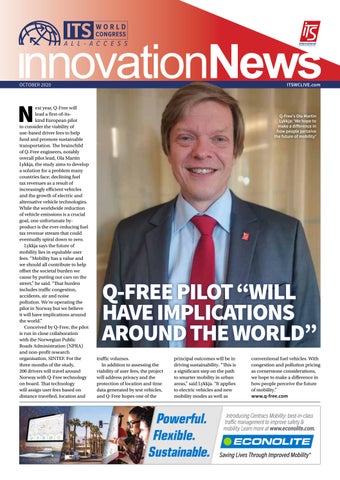
Next year, Q-Free will lead a first-of-itskind European pilot to consider the viability of use-based driver fees to help fund and promote sustainable transportation. The brainchild of Q-Free engineers, notably overall pilot lead, Ola Martin Lykkja, the study aims to develop a solution for a problem many countries face; declining fuel tax revenues as a result of increasingly efficient vehicles and the growth of electric and alternative vehicle technologies. While the worldwide reduction of vehicle emissions is a crucial goal, one unfortunate byproduct is the ever-reducing fuel tax revenue stream that could eventually spiral down to zero.
Lykkja says the future of mobility lies in equitable user fees. “Mobility has a value and we should all contribute to help offset the societal burden we cause by putting our cars on the street,” he said. “That burden includes traffic congestion, accidents, air and noise pollution. We’re operating the pilot in Norway but we believe it will have implications around the world.”
Conceived by Q-Free, the pilot is run in close collaboration with the Norwegian Public Roads Administration (NPRA) and non-profit research organisation, SINTEF. For the three months of the study, 200 drivers will travel around Norway with Q-Free technology on board. That technology will assign user fees based on distance travelled, location and
Q-FREE PILOT “WILL HAVE IMPLICATIONS AROUND THE WORLD”
traffic volumes.
In addition to assessing the viability of user fees, the project will address privacy and the protection of location and time data generated by test vehicles, and Q-Free hopes one of the
principal outcomes will be in driving sustainability. “This is a significant step on the path to smarter mobility in urban areas,” said Lykkja. “It applies to electric vehicles and new mobility modes as well as
conventional fuel vehicles. With congestion and pollution pricing as cornerstone considerations, we hope to make a difference in how people perceive the future of mobility.”
www.q-free.com
Q-Free's Ola Martin Lykkja: 'We hope to make a difference in how people perceive the future of mobility'
Ohio has many entities involved in autonomous and connected technologies, and DriveOhio, the centre for smart mobility, brings them under one umbrella. Projects across the state are driving its preparation and leadership for the future of mobility, and Bosch is a key partner.
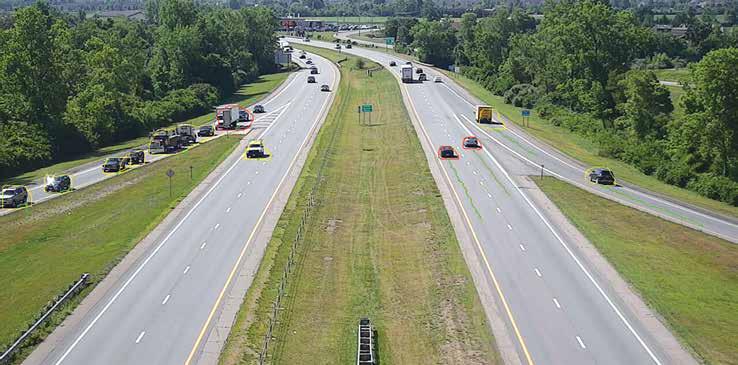
The Ohio Department of Transportation has created a SmartLane on I-670. Bosch IP cameras with video analytics detect anomalies, such as stopped or slow vehicles, and are used by traffic monitors during congestion to ensure the SmartLane is free from hazards before opening it. Dynamic message signs communicate SmartLane status to drivers.
The 33 Smart Mobility Corridor is a proving ground for autonomous and connected vehicles. At a corridor interchange, intelligent Bosch IP cameras detect incidents, such as an exit ramp queue, slow or stopped vehicles,
Innovation in progress: DriveOhio takes the lead in ITS
objects in the road, or wrongway drivers. Integration with MH Corbin technology enables events detected by the cameras to trigger messages to smart vehicles or dynamic message signs to notify drivers.
In Marysville, Ohio, intelligent Bosch IP cameras detect pedestrians in the road and
trigger MH Corbin technology to send alerts to approaching smart vehicles via dedicated short-range communications. The cameras also transmit GPS coordinate data through the MH Corbin Roadside Controller to vehicles' map displays, showing signal state and timing alongside vehicle and pedestrian
movements.
And there is more to come. A team led by DriveOhio was awarded a grant to deploy automated transportation solutions on Ohio’s rural roads and highways, and Bosch will be an important partner in this initiative. www.us.bosch.com
INTERCOMP'S NEW PORTABLE WIM PRODUCTS
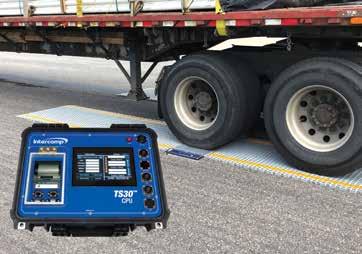
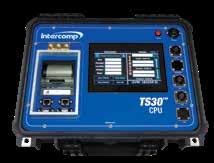
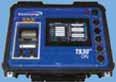
Adding to its portfolio of portable scales for vehicle weighing, Intercomp has now released the LS788-WIM portable weigh-inmotion (WIM) scales along with the company’s TS30 CPU touchscreen indicator. The scales are based on the same strain gauge load sensing technology incorporated in Intercomp’s vehicle scales and sensors, to take advantage of the inherent accuracy and stability of the solid-state technology. Used in applications ranging from portable weight enforcement efforts to industrial check weighing while monitoring axle and gross vehicle weights (GVW),
Publisher / MD
Andrew Barriball
CEO
Roger Adshead
Editor
James Foster
Editorial team
Adam Hill, David Arminas
the LS788-WIM portable scale takes scale design to a different level. Lowering the scale platform
the low profile scale is deployed with roll-out ramps and a wireless indicator, allowing vehicles to
McQueen, Fulvio Bonfiglietti, Yvonne Tindall
Simon Ward, Andy Taylder
scale height without incident. The scales are solar powered with cable-free communication to the CPU, and capable of operating in either WIM or static modes. Released alongside the LS788WIM, is the TS30 CPU touchscreen indicator, capable of operating sets of Intercomp wireless scales. With an intuitive touchscreen interface, users easily conduct vehicle weighing, customise and save records, and print via the integrated printer. Fitting in the back of a vehicle, the portable scales and indicator allows for weighing wherever it is required. www.intercompcompany.com
Sales team
Dan Emmerson, Graeme
SIEMENS IS DEVELOPING WIDE-RANGING NEW AI APPLICATIONS
Many people associate artificial intelligence (AI) only with autonomous driving but now agencies can put AI to good use even before technologies like autonomous driving become commonplace. In fact, Siemens Mobility’s Digital ITS Lab in Austin, Texas is already
developing everything from crash-avoidance measures, “green wave” traffic optimisation and licence plate recognition to planning e-bicycle stations and pop-up event traffic management.
“In one new example, Siemens AI can generate a customised risk score for each
intersection which immediately helps determine the most dangerous intersections in a city,” said Laryssa Parker, head of Siemens Mobility ITS Digital Lab Americas. Previously, this could only be determined by manually compiling and analysing incident reports.
Importantly, the AI system can
help recommend appropriate mitigation measures, like putting in stop signs, protected left-turn lanes, or retiming traffic signals.
A new area where AI has recently made a difference is in the management of traffic around unscheduled, mass gathering events, such as protests. Through Siemens’ Eventflow programme, AI searches the web for formal and informal information about these and other unofficial events, helping an agency to plan safely around it. For example, the information can enable an agency to quickly develop important signage to be deployed and nearby transit routes posted online, or even pushed to a web-mapping service, so people can make their way to and from the event safely and more easily.
Importantly, while AI automatically turns data into decisions or recommendations to solve virtually any transportation problem occurring today, its ability to self-learn keeps it evolving and able to address new problems and scenarios in the future.
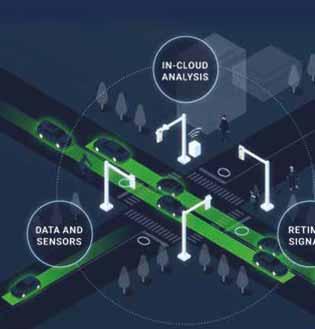
Parsons’ Intelligent Intersections solution uses advanced analytics and algorithms to reduce congestion and improve mobility around cities. By gathering data already being generated at the intersection, the solution builds a dashboard of information. Traffic engineers can use the dashboard to visualise information in real-time, identify hotspot priorities, and drill down to automated traffic signal performance measures (ATSPM), allowing for more effective decision making.
In addition to the dashboard, the Intelligent Intersections solution can help cities improve signal congestion through more effective signal timing. Retiming traffic signals can reduce congestion by as much as 40 per cent, which in turn reduces fuel consumption and
improves productivity. However, retiming is traditionally a time-consuming, expensive, and labour-intensive manual process, which most cities only budget for approximately once every five years.
With no new hardware required, the Intelligent Intersections solution applies proprietary algorithms to existing timing plans and GPS traffic data, providing signal retiming recommendations every eight to 12 weeks. With these automated signal retiming recommendations, cities can better adjust to changing traffic conditions by retiming signals far more frequently – reframing the manual process to a seamless exercise that can be completed in minutes.
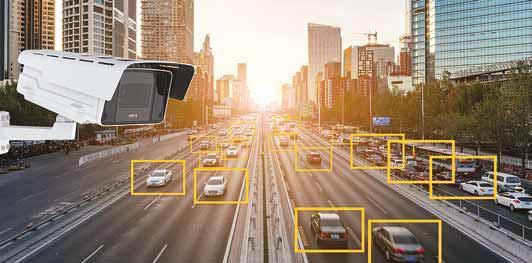
Transforming ffic management centers constantly working to keep traffic moving safely and effi With traffic ciently, is an ongoing intense pressure to meet the challenges of the road. Did you know you can there is verage the power of your networked devices to provide valuable insight? By combining the lever high-quality video from IP cameras with ITS-specific applications, the camera can become the h ultimate sensor in ITS, working to turn raw data into useful intelligence. This gives TMC’s a real-time advantage to understand what’s happening on the road.
Download the free eBook to learn about the IP camera as the ultimate sensor: www.axis-communications.com/ultimate_traffic_sensor
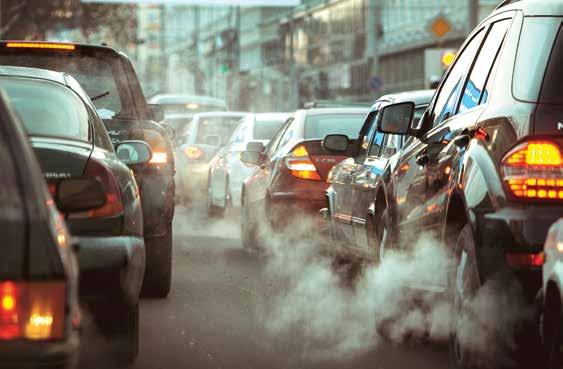
The impact of the Covid-19 pandemic on the transport sector showed a significant reduction of traffic, greenhouse emissions and air pollution all over the world. However, as the economy recovers, traffic, emissions and air pollution are expected to rebound to pre-pandemic levels or may become even worse.
The road transport sector is a major contributor to greenhouse emission and air pollution and responsible for causing climate change, illness and death, especially in cities. Not taking immediate action to tackle these serious problems will have irreversible consequences for the environment, people’s health and life quality, exceeding the socio-economic impact of the current health crisis by far.
According to Jenoptik, road pricing is a very effective traffic demand management tool that can help reduce emissions and air pollution while improving congestion and road safety as shown in London, Stockholm, Milan and Singapore. Indeed,
The role of road user charging in a post-Covid world
the new environmental report of the German advisory council on the environment suggests implementing a charge for the distance driven in cities and on all roads to enforce the climate policy in Germany and Europe, respectively.
Jenoptik says its highend technologies for road user charging allow system operators to apply different pricing methods based on
distance, cordon, zone or time and differentiate the road user charge according to environmental vehicle characteristics.
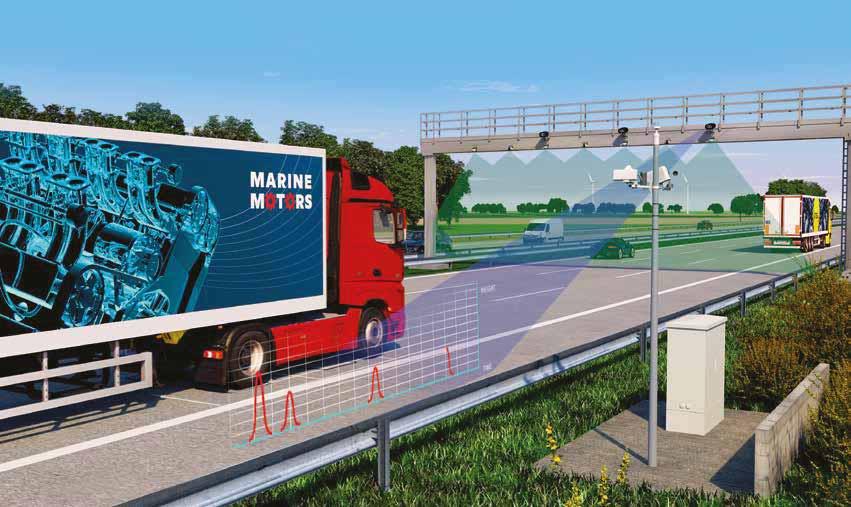
For dense urban areas, highly efficient automatic number plate recognition (ALPR) technology has been the main choice. Jenoptik provides advanced clean air solutions based on ANPR technology. These include smart picture
processing with sensor fusion, comprising video capture and axle-based classification, and a highly featured back-office solution with real-time analytics. These solutions provide traffic managers with a valuable and highly cost-effective tool to address pollution levels and deliver real society benefits by managing effectively the greatest challenge of the next decade. www.jenoptik.com
REAL-TIME WINTER VISIBILITY FROM ESRI
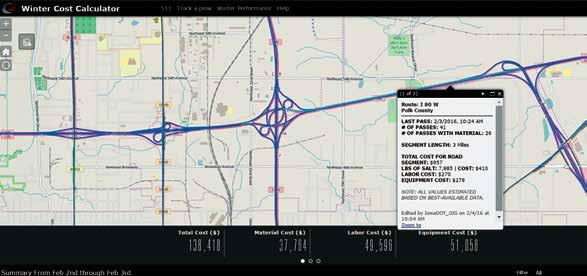
Keeping the roadways clear during the winter months has become smarter and more transparent at the Iowa Department of Transportation. Not only does the DOT equip its snowploughs with GPS, but also brings together information from sensors that detect the operation
of the truck’s salt spreader, plough position, and engine status, along with forward-facing cameras mounted on the trucks. In addition, each plough is equipped with infrared sensors to record surface temperature on the roadway. This, along with data from a network of 75
weather stations at key locations on the road network, helps track the pavement temperatures at different depths, as well as the temperature of bridge decks. This information is fed back to a central winter operations command centre, where it is displayed in their Esri-based
geographic information system (GIS), allowing the maintenance staff greater visibility and control of their snow operations.
In turn, this information is served back out to the public, giving them a realtime understanding of current conditions, and help to make better driving choices. But Iowa DOT takes this visibility one step further and also provides a view of the cost to keep the roadways clear, section by section. Through a series of Esri-based GIS dashboards, the public has a comprehensive view of the department’s winter operations. As John Selmer, the director of strategic performance said, “Giving the public an understanding of the cost of a storm allows us to have more meaningful discussions. We can create a better dialogue about levels of service and what it takes to keep the roads clear.” www.esri.com
Making our roadways, and everything on them, smarter
Cirrus by Panasonic: Connected Vehicle Technology Solutions
Cirrus by Panasonic is helping our transportation partners use connected vehicle technology to identify and respond to traffic incidents faster and deliver critical safety alerts to travelers. We implement reliable field deployment solutions and offer an open data management platform to help agencies make the most of every dollar.
Learn more
WORLD’S FIRST AND ONLY
OIML R134-certified low and high speed weigh-in-motion systems for enforcement and tolling applications
From 5 km/h to 120 km/h for HGVs (Heavy Goods Vehicles) and from 5 km/h to 140 km/h for LGVs (Light Goods Vehicles)
With only 3 rows of OIML-certified Lineas® sensors
Temperature range -30°C to +75°C with up to 85% RH
Rugged design for harsh (hot and cold) environments
Certified by:
Swiss Confederation
Federal Institute of Metrology METAS
ITS America 2021 Annual Meeting focuses on reimagining transportation
Programming explores the deployment of intelligent transportation technologies that saves lives, improves mobility and promotes sustainability.
The ITS America 2021 Annual Meeting is scheduled to take place May 17 –20 (Education: May 17 – 20 | Exhibit Hall: May 18 – 20) in Atlanta, Georgia at the Georgia World Congress Center. The event will explore the theme “Reimagining Transportation,” and participants will discuss technology as a foundational piece of a new 21st century transportation system and re-designed cities. It will bring together the intelligent transportation community for four days of thought-provoking education, networking, hundreds of solutions on the expo floor, real-world technical tours and demonstrations, and emerging technologies that will enable a better future transformed by intelligent mobility.
The ITS America Events Team at Reed Exhibitions, in collaboration with ITS America, will produce a conference programme with relevant and critical topics covering connected and automated
technologies, equity and accessibility, innovative uses of big data, pandemic impact on transportation, traffic management, supply chain and logistics, cyber/physical security, incentivising people to move differently and more.
An opportunity
There is no question that Covid-19 has fundamentally changed how people across the world think about transportation, from personal mobility to delivery of goods to the urgent need for sustainability. As we emerge from this pandemic, what does transportation look like in the United States and across the world? We have an opportunity now to help shape a safer, greener, smarter future by making smart investments that can have a positive impact on mobility, commuting patterns, supply chain and the delivery of goods.
As we look toward 2021, we are excited
to bring the ITS America 2021 Annual Meeting to Atlanta. The Atlanta metro area is a hotbed for transportation innovation and exemplifies the theme “Reimagining Transportation.” At the end of 2019, Atlanta Mayor Keisha Lance Bottoms created a new city transportation department and announced $200 million in mobility infrastructure projects with the goal of eliminating traffic fatalities in three years.
On the technology front, suburban Peachtree Corners is home to an automated vehicle test track and Tortoise will pilot the world’s first remote-controlled shared e-scooters there. Another first is north of Atlanta in Alpharetta, home to the Infrastructure-Automotive Technology Laboratory (iATL), the world’s first facility for developing connected vehicle applications for both vehicles and traffic control devices. In addition, the Georgia Department of Transportation has deployed connected vehicle technology to more than 400 locations across metro Atlanta with plans in the works to connect an additional 1,000 sites.
“2021 marks a pivotal point in history for the ITS community to take on an increasingly essential leadership role”
Will Wise, Group Vice President, Reed Exhibitions
The city also boasts the Atlanta BeltLine, one of the country’s largest urban redevelopment programmes. Its goal is to deliver “transformative public infrastructure that enhances mobility” and features pedestrian friendly transit, paved multiuse trails, and improved streetscapes.
In West Georgia, an 18-mile stretch of I-85 includes solar-powered vehicle charging and solar-paved roads in pursuit of the ‘net-zero’ highway – one with no deaths, waste, or carbon.
A fitting venue
Atlanta will be a fitting venue to convene leaders from North America and beyond to explore how technology continues to transform the movement of people, data and freight.
“2021 marks a pivotal point in history for the ITS community to take on an increasingly essential leadership role. Public-private partnerships and collaborations, advocacy for aggressive infrastructure expansion budgets and job creation, and embracing innovation are major opportunities. Atlanta is the ideal location for the 2021 event,” said Will Wise, Group Vice President, Reed Exhibitions.
that will take place throughout the Atlanta
“The metro Atlanta region has been a leader in deploying innovative and lifesaving technologies,” said Shailen Bhatt, President & CEO, ITS America. “We are looking forward to welcoming transportation industry colleagues from around the country and sharing information that will help us work toward a safer, greener, smarter future.”
In addition to delivering a world-class education programme, the ITS America 2021 Annual Meeting will showcase hundreds of technology and solution providers from across the globe, including: ADEC Technologies, Advantech, Axis
Communications, Bosch Security Systems, Cubic Transportation Systems, Daktronics, Eberle Design, Econolite, Genetec, International Road Dynamics, ITS AsiaPacific, ITS Japan, Kapsch TrafficCom, Merit Lilin, Parsons, Smartmicro, Sensys Networks, Southwest Research Institute, TransCore and more!
Successful programmes and features from the 2019 show in Washington, DC will be brought back in 2021, including the Women in ITS Breakfast, State DOT Roundtable discussion, Best of ITS Showcase Reception, Emerging Leaders Program and a variety of technical tours and demonstrations
New for 2021 - ITS America Events and ITS America will add a hybrid/digital access component to the event, which will include live streaming of selected sessions and keynote presentations. Reflecting the new long-term model for Reed Exhibitions events, the event organisers want to ensure parts of the Annual Meeting are available “remote-live” to the entire ITS Community, knowing that travel may still be difficult. As part of the commitment, and prioritisation of the safety and well-being of everyone at the event, the ITS America Events team created a Health and Safety Task Force to develop and implement policies and best practices around Covid-19 protocols and best practices for the in-person event. Along with the GBAC Star-rated Georgia World Congress Center venue and team, there is a focus on five operational pillars related to health and safety which includes: Show layout/logistics, including floorplans, and recommended booth guidelines; Physical distancing, including capacity and flow of people; Health screening and medical response; Cleaning, sanitisation, and personal protective equipment; and Conference, special events, and talent handling protocols.
Please join us and other transportation and community leaders and influencers as we discuss and explore the deployment of intelligent transportation technologies that saves lives, improves mobility, promote sustainability, and increases efficiency and productivity – “Reimagining Transportation.” www.itsamericaevents.com/ atlanta-2021/en-us.html
TagMaster’s
www.tagmaster.com
Stronger together: The importance of partnering with academia
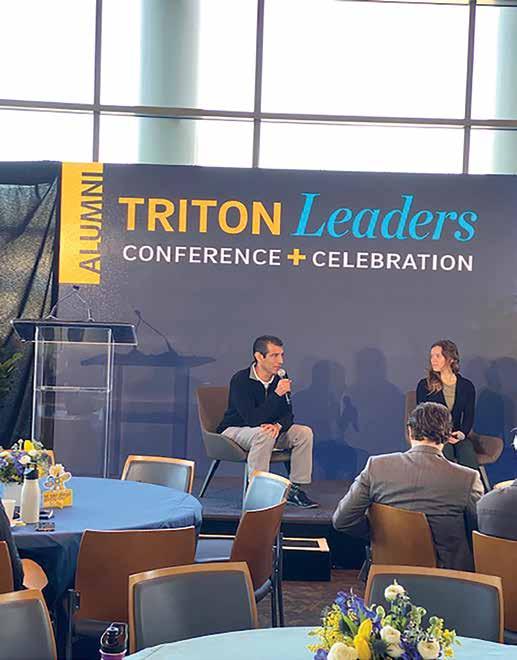
Matt Newsome used to be an entry level mechanical engineer with Cubic. Thirty years later, he is the general manager for the west region of North America.
As companies across America celebrated their future leaders during the National Intern Day on July 30th, I reflected back to realise how important an internship continues to be - even in today's environment.
Here are my thoughts on the importance of fostering strong partnerships between the corporate and academic worlds.
Variety is good
I did a few different internships in my time. I first tested my skills in leadership during an internship on campus, where I served as an orientation leader for the incoming freshmen at UC San Diego. It was an eyeopening experience: to find myself in charge of a group of people and be able to really hone in on the skills that I now use every day.
My most diverse internship was for an entomology business where I worked with a researcher studying the use of pesticides vs live insects on plants. While I spent a lot of time watching bugs eat other bugs, the
whole experience gave me a completely new perspective.
Even though I knew I wanted to be an engineer and work in the tech sector, finding myself in a completely new territory, and being able to navigate it successfully, gave me new-found confidence and opened my eyes to the breadth of opportunities available to new graduates.
I did also end up interning for a tech
company within the military sector and that experience fortified my dedication to technology and commitment to engineering.
The
value of partnership
We partner with many different universities around the globe. Some examples are the University of California in San Diego (UCSD), San Diego State University (SDSU), University of California Los Angeles
"I’m very proud of the commitment that our employees are making to partner with universities to solve engineering-related challenges that will help us in fulfilling our company’s purpose – innovating to make a positive difference in our society."
Matt Newsome, vice president and general manager, Western Region, Americas, Cubic Transportation Systems (CTS).
University of California in San Diego
(UCLA), UC Berkeley, Brown University, Massachusetts Institute of Technology (MIT), Ohio State University, University of Brisbane, as well as several universities in the UK. Our involvement with the academic world is very diverse.
We participate in several Corporate Affiliates Programs - UCSD’s CAP is one of them. By way of this partnership, we are able to accelerate our R&D, effectively recruit, and shape the curriculum of our future workforce.
We also partner with universities to help shape their curriculum towards the real-life needs of the workplace and balance out the often heavily theoretical coursework with practical knowledge. We’re currently working with UCSD to help define the future of systems engineering and develop the curriculum for this much-needed programme.
They lend us access to their labs, students, and professors to help us innovate faster and better serve the local community, while also providing us with a talent pipeline for years to come. UCSD students that are part of the Engineering Team Internship Program, are able to partner with Cubic on projects related to our business and technologies.
To date, several interdisciplinary teams of students worked on various projects to support our transportation business, helping innovate in areas such as data tracking, transit applications, and more.
Last but not least, we’re involved in a number of philanthropic projects around the world. For instance, we’ve offered support for UCSD’s planned new engineering building project, Franklin Antonio Hall, becoming the first corporate partner to be recognized within the hall.
The relationship between the corporate world and community
I believe in giving back. Universities are designed to not only help students become better educated but to make them better human beings overall and help them make a positive impact on the local community. As like-minded people join the workforce, this desire to give back eventually translates to the company itself. I’m very fortunate to work for a corporation that’s committed to giving back.
As a UCSD Alumni Board Member, I mentor a number of students and help set up programmes such as “Meet the Boss,” where students have the ability to attend a Zoom Q&A with an industry leader.
Interaction with the graduating senior class starts with getting involved Day 1 with Capstone projects. We work with the institutions to identify a challenge for the students to solve and in turn, the project serves as one of their final core classes.
About Matt Newsome
Matt Newsome is vice president and general manager, Western Region, Americas, for Cubic Transportation Systems (CTS). He is responsible for overall performance of CTS programmes in the western region of North America including Clipper Card in the San Francisco Bay Area, the TAP programme in Los Angeles, and the Compass Card programmes in Vancouver and in San Diego, which share the same name but are unrelated.
Previously, Matt was senior vice president and general manager of Cubic Transportation Systems, Americas, since 2014.
He began his career at Cubic in 1991 as a mechanical engineer. He previously was a programme manager and director of Product Marketing followed by a transfer to Cubic's European headquarters in London where he was the UK sales and marketing director.
On a personal level, I’ve also set up the Newsome family scholarship, which offers financial help to undergraduate students.
The importance of being challenged
Several years ago I told a story that I continue to tell today. While speaking at an alumni event, I confessed I got an “F” in college. My positive detention was to be an orientation leader at UC San Diego.
Turns out this severe chastisement was the best thing that ever happened to me. I came out of my shell and discovered the importance of social skills in life, in getting hired, and in becoming a leader.
The dean who gave me my first thirty lashes and harsh sentence is still my lifelong mentor.
Fresh perspectives
Cubic is a company of innovators; the spirit of discovery and entrepreneurship among our employees is strong. By working with academia, we can find new ways of solving problems. Universities are heavily focused on research with the goal of thinking outside of the box, which can help give our company a completely new perspective. At the same time, partnering with universities can help keep us honest.
The innovations and technologies we work on have a real-life impact on our cities and our communities and we need to look to those communities to provide us with valuable feedback and help us constantly improve.
Finally, the academic world is often at the forefront of addressing issues such as diversity and inclusion and by partnering with universities on talent pipeline and recruitment programmes, we’re able to check ourselves against unconscious bias and increase the diversity and inclusion of our hiring process, leading in turn to a more diverse and happier workforce, and helping give us a competitive edge.
Internship challenges due to Covid-19
The pandemic has put some of our programs on pause, but Cubic continues to give back. I know many of my colleagues offer regular mentoring opportunities to students through Zoom calls. In these uncertain times, students are desperate for mentorship and feedback and we’re continually looking for ways in which we can support them, even though we can’t meet face to face for the time being.
TAKE BACK CONTROL
Getting the optimal performance from your network is the role of operations. With Esri’s location intelligence, bring together real-time information from disparate sources to help you keep your system operating at peak performance. You need technology that
Gives you a single, comprehensive view of your network, integrating your sensors; cameras; and weather, traffic, and construction data for real-time situational awareness.
Brings greater actionable intelligence to your traffic operations center.
Helps you understand and analyze your traffic patterns to plan for future growth.
Learn how you can take back control and tackle your mobility challenges using Esri technology. go.esri.com/take-control
ITS WORLD CONGRESS ALL-ACCESS – AN INSIDE LOOK
Jaime McAuley, event director, Reed Exhibitions, outlines highlights of the ITS World Congress All-Access since its launch on 16 September. hts of er.
The ITS World Congress AllAccess, brought to you by premier sponsor, Amazon Web Services (AWS), paves the way for innovation, thought-leadership and valuable insights that improve mobility, promotes sustainability, saves lives and increases efficiency.
The virtual education event series has attracted over 2,100 intelligent transportation professionals from across the globe, ranging from public sector agencies and MPOs to educational institutions and mobility-on-demand organisations. The event kicked off on 16 September with the first session on “AV Shuttles in the US – Lessons Learned from Planning to Deployment” with close to 400 attendees tuning in and listening to the session.
Following the first week, there were multiple webinars including “Automated Bus Consortium Program,” “SOS--Save Our Spectrum -- the 5.9 Ghz Band and V2X,” “Does MaaS Contribute To Sustainable Transportation?” and “Transit Rethink: How Does Transit
Adapt to a Future That Includes onDemand Services?” Each webinar attracted hundreds of ITS professionals with the overall attendance for the event growing more and more each day. The ITS Community can still register for ITS World Congress All-Access, login to the Knowledge Center and watch all the past educational sessions on-demand. They can also view sponsor showcase pages providing solutions that help the industry prepare for the future.
The Knowledge Center Showcase Pages include a wealth of information from a variety of leading companies in the industry. There is also a full sponsorship directory which includes valuable information about all of the ITS World Congress All-Access supporters and sponsors.
We encourage the entire ITS community worldwide to sign up for ITS World Congress All-Access and continue to access the digital education series content to learn about advancements, research and innovative ways to deploy intelligent transportation technologies.
The information will be available through the remainder of 2020 and includes educational content on connected and automated vehicles, equity, data, sustainability, vehicle-to-everything, mobility-on-demand, pandemic impact on transportation, traffic management, workforce and more! www.itsamericaevents.com/its-allaccess/en-us.html
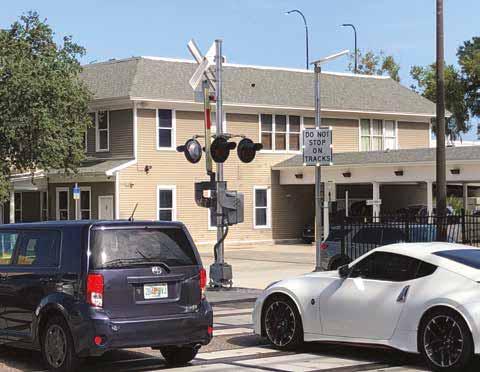
Do not stop on the tracks detection system
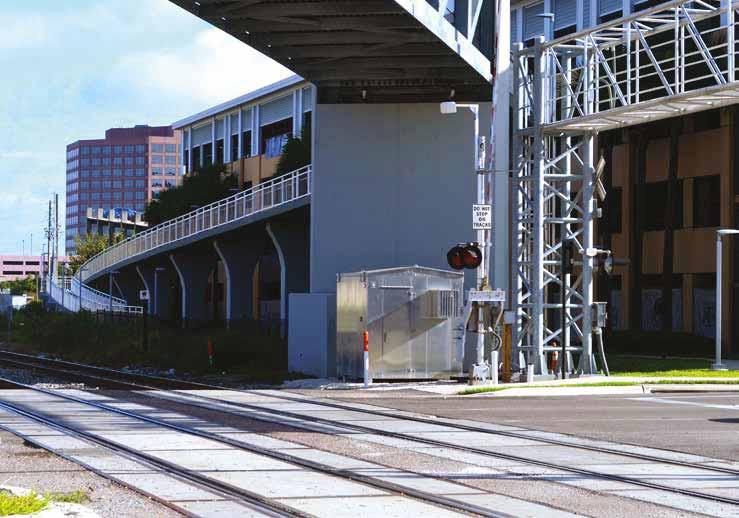
Stopping on the crossing island inside the railroad gates is a serious safety concern at any time and stopping directly on the tracks can have unyielding consequences. Today, Island Radar is using its sophisticated multiple radar sensor to detect motorists that delay or queue on the railroad tracks, initiating a ‘Do Not Stop on the Tracks’ warning system.
Inattentive driver behaviour around railroad crossings can lead to unintentional queueing. The ‘Do Not Stop on the Tracks’ detection allows traffic managers to warn drivers with a reminder to take immediate action and serves as an opportunity to promote a long-term precautionary driver conditioning message.
The Island Radar ‘Do Not Stop on the Tracks’ detection system utilises the same hardware as the Federal Rail Administration (FRA) approved Island Radar Vehicle Detection System. Designed to alert and inform road traffic managers and motorists alike, the system is a non-intrusive sensor that identifies and holds the detection of a delayed or stopped driver on the crossing. Through contact closure relays, the Island Radar ‘Do Not Stop on the Tracks’ Detection system alerts message signs located at the crossing.
Island Radar says its detection systems are proving to be the safe, smart, and simple choice for providing driver feedback information at railroad crossings. www.islandradar.com
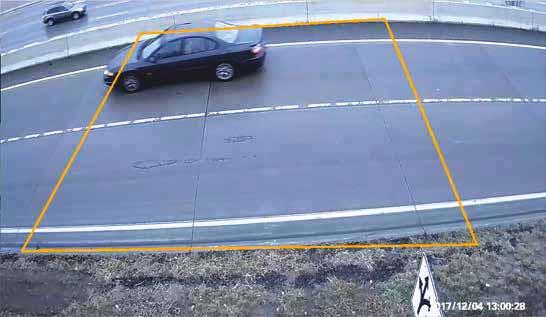
Call to action: Stop wrong-way drivers
Wrong-way driving continues to be a critical issue for many states around the country. Every single day there is a death caused by a wrong-way driver. This problem needs a solution because roadway users have the right to be able to travel on the road knowing they will be able
to return home safely.
Image Sensing Systems is transforming how wrongway detection systems are implemented by removing
the uncertainty of wrongway driver detection. “No roadway manager should have to question the validity of a wrong-way notification when it is received,” said Seth Anderson product manager at Image Sensing Systems.
“Creating a successful wrongway system is about more than meeting performance targets: it’s about removing that layer of uncertainty and allowing those responsible to focus on resolving the situation. Our methodology provides the accuracy and reliability at the highest levels needed to put trust in the system,” he added.
Image Sensing Systems is inviting roadway managers and agencies to be part of the solution by helping to refine its product, by setting up evaluation sites.
www.marketing.imagesensing. com/wrong_way
The deployment of Phase 1 of the “connected vehicle ecosystem project,” a partnership between UDOT and Panasonic, has recently been completed and subsequent phases have now begun.
The scope of the first phase of the UDOT partnership with Panasonic centres on enabling data collection on Utah roadways around specific use cases to impact greater safety and mobility. There are three key aspects to the deployment: vehicles; roadways; and a cloud platform.
To collect the data, Panasonic
UDOT-PANASONIC CONNECTED VEHICLE ECOSYSTEM PROJECT NOW BUILDING ON SUCCESS
has installed connected vehicle technology roadside units (RSUs) on select Utah roadways, including the I-80 corridor, as well as connected vehicle technology onboard units (OBUs) in a small fleet of UDOT vehicles to begin generating data.
Cirrus by Panasonic, a cloud-based traffic data management platform, collects, analyses, and shares critical and complementary roadway data.
The platform provides the ability for UDOT traffic operators to be notified of real-time traffic, incident and weather events happening on Utah’s connected
roadways. Panasonic worked closely with UDOT’s traffic operators and other core user groups to determine UDOT's greatest needs and challenges, then collaborated to create the UDOT connected car ecosystem.
The goal of the UDOT V2X deployment is to bring real-time situational awareness of roadway incidents and conditions as well as prepare UDOT to leverage the data from connected vehicles expected to be on the roadways within the next five years.
Because V2X technology is new and constantly evolving, one of the biggest challenges faced
by States and localities deploying V2X software is maintaining V2X hardware. As part of the UDOT project, Panasonic has developed software that provides real-time monitoring of the health of all RSUs and OBUs deployed on Utah roadways and fleet vehicles. Panasonic’s dedicated Operations and Maintenance team monitors these V2X hardware units 24/7 and can push software updates remotely or initiate work-orders for on-site maintenance when required.
www.na.panasonic.com/us/ smart-mobility/cirrus
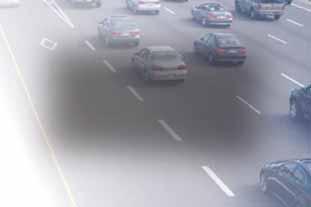
Worldwide, cities are increasingly seeing the need to implement high occupancy (HOT), express lane and road congestion tolling as they cope with rising costs associated with maintaining safe roads and highways for their citizens, while also improving road usage experiences.
Cities and states face ongoing challenges in balancing funds and budgets for public infrastructure development and maintenance. Implementing high occupancy and express lane tolling and congestion charging are seen as a viable way to manage and fund these smart city initiatives.
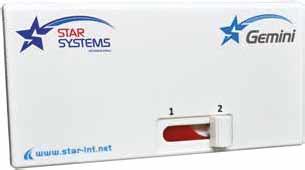
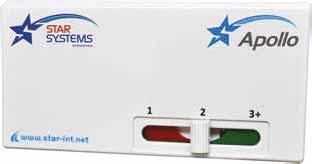
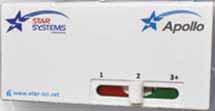
Many organisations are handling HOT and express lane and congestion tolling by using multiple-mode transponders in vehicles which allows a driver to self-declare the number of occupants travelling in the car. Products such as Star Systems International’s Gemini and Apollo multi-mode transponders are two new products that make
Apollo / Gemini multi-mode tags are ideally suited for HOT / HOV managed lanes and other ITS applications requiring multiple modes in a single on-board unit
Lift-off for Star Systems’ Gemini and Apollo
this very simple to implement for governments and toll operators.
HOT lane, express lane and congestion tolling are now helping cities become smarter and financially more stable. Companies like Star Systems International are focusing on enabling smart city initiatives by developing and providing
high performance, accurate, dependable products, and economical smart city devices. Smart city applications such as HOT and express lane and congesting tolling in turn provide citizens with better and safer roads along with improved commute experiences. Governments are also benefiting
from much-needed added revenues and controls for their road infrastructure.
Star Systems International also provides smart city enabling products such as its Titan, Tarvos and Procyon Readers and Transponders for all type of AVI Applications. www.star-int.net
Moving the Mark for Mobility
Our vision is to make mobility easy and accessible to all. Our portfolio of products empowers transport agencies to make transportation safer and more efficient for drivers, equipment installers and maintainers, public transport users, and vulnerable road users. Whether your focus is an intersection, a corridor or an entire city, Cubic can help you optimize your network. Getting you There. Smarter.
FRANCE IS GEARING UP FOR MULTI-VIOLATION CONTROL
Road safety is obviously a priority for authorities around the world, and France is no exception. While the mortality on roads rate has been decreasing significantly this past decade, the figures are still a big concern. In fact, the improvement mainly concerns the extra-urban areas, but the number of accidents has increased in urban areas, with pedestrians and cyclists the most affected.
In 90 per cent of accidents, the "behaviour" component was present so educational, preventive and repressive measures have been taken to deal with the behaviour likely to generate accidents. Consequently, the French government has been requesting the leading actors in the road safety field to monitor more violations.
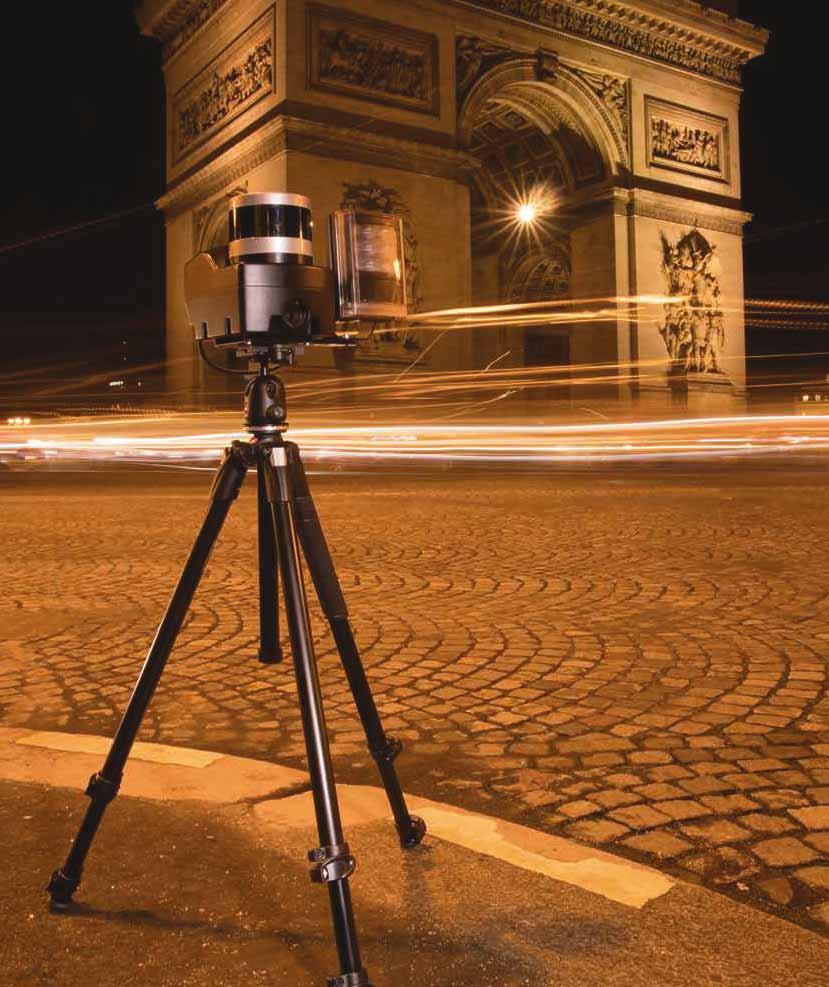
Parifex, through its contract with the French government, has developed
a solution based on 3D Lidar technology and artificial intelligence (via image processing). The combination of both technologies allows maximum benefit from each, and the ability to monitor an impressive number of driving behaviours. This next-
generation, non-intrusive system, is indeed able to monitor speed and red light enforcement, tailgating, reserved lanes, priorities, stop signs, seat belt use, and phone use. Additionally, it can differentiate between five categories of vehicle.
This system is currently being tested in France by the state (as part of the contract - the experimentation phase) and by the beginning of 2021 the installation of about a thousand units ordered will start.
www.parifex.com/en
HDOT, University of Hawaii and Econolite partner to deploy connected vehicle pilot programme
On August 4, 2020, the Hawaii Department of Transportation (HDOT) announced the launch of a connected vehicle corridor along Ala Moana Boulevard and Nimitz Highway, stretching from the Daniel K. Inouye International Airport to Waikiki. The deployed technology provides enhanced traffic flow, improved and reliable mobility, and safety-related alerts for motorists, cyclists,
and pedestrians through a free mobile application.
The connected vehicle pilot is part of a research project with the University of Hawaii (UH), Mānoa College of Engineering and Econolite to determine the capabilities of the latest connected traffic control systems, using Econolite’s cloud-based Centracs Mobility to optimise corridor efficiency.
“For this project, we wanted
to make sure we push forward on mobility for everybody. To push more dependability on one of our busiest corridors in the state,” said Ed Sniffen, deputy director for highways at HDOT.
“We service 50,000 vehicles per day on a system where we have visitors coming from the airport to Waikiki, our residents coming to work in town, and significant freight movement due to our harbours along the corridor. We
wanted to make sure that we could make this as efficient as possible, not only for the drivers but also for the pedestrians and cyclists that use it.”
The project included a deployment of 34 new Cobalt ATC controllers; 720 detection zones; Centracs ATMS; SPM with Edaptive; cybersecurity; and CAV applications and integration with TravelSafely App. www.econolite.com
Cubic’s cross-mode collaboration
Tthe increasing need to build its transportation management infrastructure to aid Mérida’s quest to join the next generation of smart cities. Private vehicle traffic and bus transit are major components of Mérida’s transportation network and they realised the importance of giving transit signal priority and realtime passenger information to improve the traveller experience.
Together, in partnership with Vixionere SAPI de CV, Cubic will provide the Yucatán State Government with advanced traffic management technologies to manage urban mobility for the city’s one million residents. The solutions consist of Cubic’s Trafficware ATMS (advanced transportation management system), a standalone central
management system that will funnel all of Mérida’s traffic data to a single repository for a real-time, integrated view of traffic flow. The system will receive data from more than 300 Trafficware traffic signal cabinets and adapt seamlessly to ever-evolving transportation flows.
Cubic’s ATMS will also integrate data from more than 60 intersections through SynchroGreen real-time adaptive traffic signal control
technology, a software platform for traffic signal coordination and synchronisation, based on current traffic patterns.
The transit signal priority software will coordinate with NextBus, real-time bus positioning information, to give signal priority to transit vehicles. By utilising NextBus’ predictive bus stop arrival software, the system will analyse whether the transit vehicle is ahead or behind schedule and appropriately
manage the signal to ensure the transit vehicle maintains its schedule. This coordination improves the probability of transit vehicles arriving on green, minimising transit vehicle stops and delays and increasing on-time performance.
Cubic’s technology will allow Mérida to bridge public and private transportation and improve the utilisation of its roadways and transit networks. www. cubic.com/solutions
h he State of f Yuca á tán n saw w
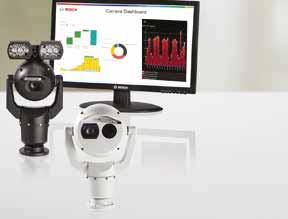
Bosch empowers you to build a safer transportation ecosystem with analytics-driven video solutions. Bosch intelligent IP cameras enable video as a sensor technology that delivers automatic incident detection highway and urban infrastructure planning.
McCain is putting its smart city commitment into action with the development of MyCity, an intelligent transportation and mobility platform that breaks down silos, creates networks of opportunity, and embraces the future of cloud solutions.
MyCity is a user-friendly and modern interfaced platform that allows cities to take full advantage of the different solutions they have. While the platform will offer a full set of transportation and mobility solutions ‘off-the-shelf’ , McCain says it will continue adding level upon level of additional functionality to help solve the transportation and mobility problems of today and in the future. MyCity cornerstones include automated analytics and predictive elements that will change the way cities and agencies operate. In addition, the platform will take advantage of the full benefits of the cloud with greater storage and processing power of data while
BREAKING DOWN SILOS WITH MYCITY
providing useful and distributed information.
“MyCity is a technological leap forward for our company and is creating excitement in the industry on a global level,” said McCain COO, Greg McKhann.
Exchanging information rapidly and being able to share it securely and easily with third party vendors or a defined group is key to MyCity’s design and value. It’s a software
platform that allows a multitude of components residing within the network to communicate seamlessly, providing simple access to things like automated signal performance measurements and advanced signal performance analytics. Users can assess the performance of an individual traffic signal quickly and effectively, or the traffic systems within an entire city or region.
Today, many cities operate their traffic networks in silos, but traffic, congestion and gridlock don’t exist in silos. McCain says the smart city transportation and mobility model that MyCity operates in will break down the silos and connect agencies with the information they need to act in ways that were not possible before.
www.mccain-inc.com
Easy roadside installation
High-speed traffic data on three lanes
Bidirectional traffic data
The iTHEIA™ Artificial Intelligence (AI) traffic data system provides real-time, video-based traffic counting and classifying. This system relies entirely on AI to perform traffic counts right at the roadside, so there is no need to upload video for third-party processing.
Saved video and images provide a convenient tool for quality control/assurance
Reliable performance day or night in all weather and traffic conditions
Portable or permanent installation options
Data output in standard formats
TDS highlights upgraded WIM enforcement
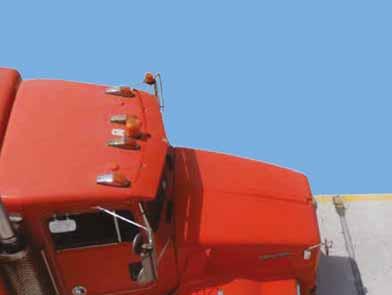
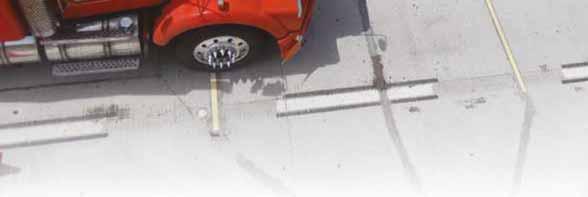
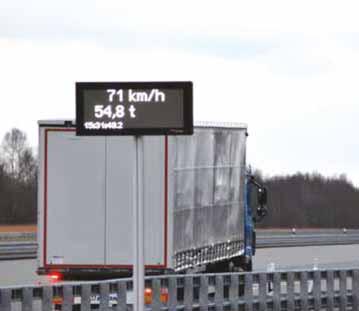
Germany-headquartered Traffic Data Systems (TDS) says it is still the only manufacturer in the world capable of supplying low- and high-speed weigh-in-motion (WIM) systems complying with the OIML R134 standard for enforcement and tolling applications.
The latest design of its WIM-DSP 32/ TMCS-IP WIM enforcement/tolling system is now available. The system also comes in a solid, all-aluminium enclosure to protect against dust and water, called TMCS-IP, similar to TDS’s proven WIMDSP 32.
TDS is also promoting its collaboration with the city of Hamburg – host of the ITS World Congress in 2021 - to
set up Germany´s first fully automated WIM enforcement system to be certified by the Federal Institute of Metrology
(METAS), Switzerland. The company also hopes that the system will be given the green light by PTB, the German
metrological institute.
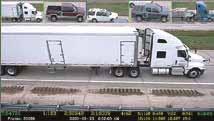
This highway installation will not only be equipped with WIM sensors, but also with ANPR and overview cameras, laser scanners and profilers, as well as a fully-equipped road weather information system (RWIS). Meanwhile, TDS points out that it is currently capable of providing OIML R134-certified low-speed and high-speed WIM systems for a speed range of 5 km/h to 120 km/h for HGVs (heavy goods vehicles) and for 5 km/h to 140 km/h for LGVs (light goods vehicles). Accuracies of ±5% (initial verification) and ±10% (in service inspection) according to OIML R134 have been achieved (temperature range -30°C/+75°C with a relative humidity of up to 85%).
TDS’s latest research and development aims to improve accuracies to ±2.5% (initial verification) and ±5% (in service inspection).
www.traffic-data-systems.com
NEXT GENERATION TRANSPORTATION TOLLING, ENABLED BY THE CLOUD
Toll operators are recognizing that facility and data resiliency are the key to navigating the
current environment while preparing for any future disaster scenario or challenge. Cloud
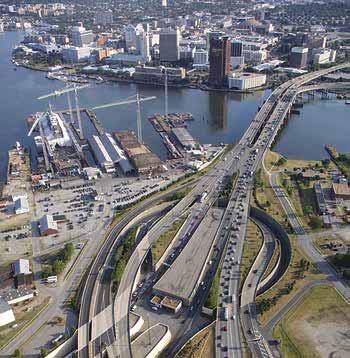
services can help state and local governments, including departments of transportation, better serve their customers. For example, in Virginia, Elizabeth River Crossings (ERC) operates and maintains the two tunnels connecting the cities of Norfolk and Portsmouth, the MLK Expressway, and approximately 51 miles of highway, providing multiple travel options for commuters in the area. ERC is operated under a 58-year public-private partnership with the Virginia Department of Transportation (VDOT). ERC needed to improve the quality of services to its expanding customer base, and management recognized a need for both facility and system resiliency for uninterrupted quality service.
Their journey began with the assistance of AWS Partner Network (APN) Partner
Cognizant, who migrated the on-premises back office, external website, and all databases to Amazon Web Services (AWS). System uptime and performance improved by converting ERC’s Oracle database to Amazon Relational Database Service (Amazon RDS).
“Our decision to migrate and modernize on AWS has improved our customer service and reduced cost of operations, satisfying toll road users and our investors,” said Doug Wilson, CEO, ERC. “It has also provided a path to innovate how toll systems operate by using AWS services.”
ERC is accelerating the delivery of the call centre modernisation, implementing Amazon Connect as a part of its next-generation back office. www.aws.amazon.com/ stateandlocal/transportation/
Improve future mobility.
With our competence in Road User Charging
Follow us on LinkedIn and Twitter and get more information about JENOPTIK Light & Safety -
AXIS COMMUNICATIONS LAUNCHES NEW DEEP LEARNING CAMERA
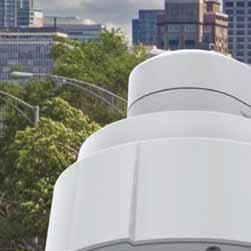
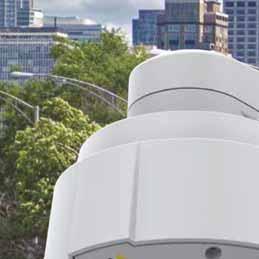
To add to its broad portfolio of traffic products, Axis Communications has launched the new AXIS Q1615 Mk III Network Camera. With the proprietary Axis ARTPEC chip, this top-of-the-line camera combines exceptional image quality with powerful AI-accelerator processing capabilities, thanks to a deep learning processing unit (DLPU). Adding this DPLU power to the camera allows third parties to add advanced deep learning applications and analytics right on the camera. An example of the edge-based applications includes automatic incident detection, vehicle counting and anomaly detection in traffic patterns.
With up to 120 fps in HDTV 1080p, the camera captures excellent detailed images of fastmoving objects and people. The
camera features Axis Lightfinder 2 0 and Axis Forensic WDR for high-quality colour images even when in near darkness and in blinding light conditions. Additionally, the AXIS Q1615 Mk III Network Camera also has a Trusted Platform Module (TPM) that is FIPS 140-2 level
the camera, including a video of the device in action, is available at this link.
Axis Communications is a leader of IP-based products and solutions and offers a purposebuilt portfolio for roadside surveillance. With a focused suite of traffic products that
and licence plate capture cameras, combined with analytics for real-time alerts, Axis makes it easier to manage a safer and more efficient road. Detailed information on the AXIS Q1615 Mk III Network Camera, and a video of the device in action, is available at
LADOT wins parking innovation award for Conduent-enabled scheme
Los Angeles Department of Transportation’s (LADOT) initiative - with Conduent - to help low-income motorists has been given an award for innovation in its approach to parking in the city. The agency's efforts to help drivers from economically disadvantaged communitiesespecially those hit by Covid-19 - led the National Parking Association to name it 2020 Innovative Organisation of the Year.
LADOT's Community Assistance Parking Program (CAPP) allows individuals to pay off open or unpaid parking citations in the form of community service - or agree to receive services such as job training or substance abuse counselling.
Since 2017, 3,600 citations have been resolved via CAPP, while another 9,000 people have
taken advantage of extended payment terms for fines if they are impacted by unemployment or have other difficulties paying.
LADOT says this has led to a 90 per cent payment rate - compared to just 40 per cent with a standard three-month plan.
"We are pleased to implement socially-oriented parking policies geared toward alleviating the financial strain for disadvantaged residents," said Ken Husting, principal transportation engineer, Bureau of Parking Management at LADOT.
Conduent Transportation is behind the parking scheme.
“These two programmes have shown to be vitally important for motorists who need help or have fallen on hard times," says Holly Cooper, the firm's general manager, public safety & curbside management solutions.
Conduent also provides dynamic pricing solutions for the LA Express Park on-street parking scheme.
The company says it is the third consecutive year that an initiative in which it is involved received the innovation award.
Last year it went to the Division of Parking Services in Columbus, Ohio, while in 2018 it was won by the District Department of Transportation’s ParkDC programme to improve on-street parking in Washington, DC. www.conduent.com
In recent years, there has been a huge growth of interaction with a range of technical systems, such as touch screens when ordering food, buttons in an elevator or when entering pin codes at the grocery store, to list just a few.
However, in a Covid-19 world, people are much more concerned about what they touch and how to avoid situations where there is a risk of catching or spreading virus. The car parking industry is a case in point. Now, everyone wants a smooth, touchless parking experience when entering, exiting, or paying at terminals.
One of the most used and cost-efficient, easy-to-use
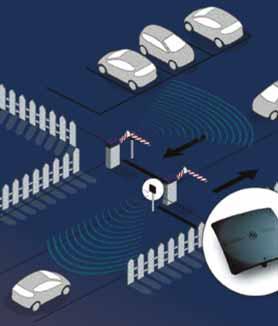
touchless technologies for parking and access control is long-range RFID readers. TagMaster hands-free RFID systems have been a key element in contributing to safer and healthier vehicle access solutions for over 25 years.
TagMaster’s long-range RFID solutions are completely hands-free, so drivers don’t have to touch any buttons, swipe any cards, or present any credential to an attendant or gate guard.
A touch-free RFID solution keeps people in their cars. Drivers don’t have to roll down their windows. All traditional distractions with key fobs, cards, or phone apps
are eliminated. Furthermore, Tagmaster’s solutions were built with safety as a focus. Drivers don’t need to stop and interact with equipment or a person, something very comfortable and safe during early morning and afterhours access. They drive right through with their windows up and doors locked.
By installing a touchless parking system, employees, clients, and visitors will stay healthy, feel safe and get
peace of mind. The trend of using touchless parking systems, such as TagMaster’s Long-Range RFID Readers, has already started but is now massively accelerating to become ‘the new normal’ in parking.
www.tagmaster.com
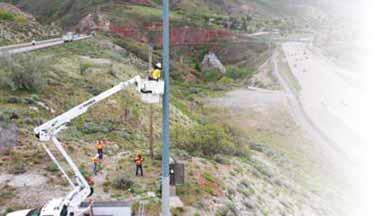
CALTRANS DISTRICT 03 CITES BENEFITS OF MG SQUARED CLDS
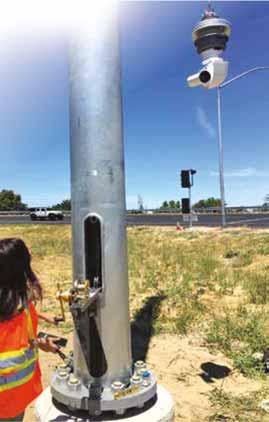
The TMC Team at Caltrans District 03, have successfully deployed numerous camera lowering devices (CLDs) from MG Squared (MG2).
According to Caltrans, the motivation behind their implementation of the MG2 lowering devices include ground level camera maintenance which enhances the safety of both technicians and road users by eliminating the need for lane/ shoulder closures and a boom truck for access. Also, pole heights can be extended well beyond a typical bucket truck, enhancing situational awareness without compromising maintainability. In contrast to other Caltrans locations utilising a traditional high mast (Halo) light fixture device to lower cameras for access, the MG2 CLD allows ancillary devices to be mounted to the camera pole beneath the camera providing more ITS functionality of the pole.
A few notable locations within
Caltrans District 3 reaping the benefits of the MG2 CLD include I-5/Metro Air Parkway Interchange Improvement; Route 50; Route 80; and Route 99.
While these particular installations have been on 50ft and 60ft poles, Caltrans has future plans for a custom pole up to 90ft with the potential to allow as many as three CLDs per pole. This can be very helpful when
Ertico’s mission is to bring the ITS community the same energy and engagement of previous face-toface Congresses, yet in just one click. Participants will access an entirely virtual event with the 3D setting of an interactive platform and a range of tools to facilitate engagement, networking and debate with ITS key players.
The rich programme includes 20 high-level speakers and keynotes, 24 sessions on different themes, more than 200 papers and presentations, as well as more than 20 interviews and satellite events.
Four high-level sessions will address the essential pillars at the foundation of the event’s motto: resilient, innovative, green and visionary mobility.
Resilience is a powerful tool to handle and accommodate
disruption ensuring highquality performance in the transport and mobility of people and goods. Representatives from both the public and the private sectors will debate to identify measures to create a more resilient mobility, to deal
with cybersecurity and safety challenges and deliver services efficiently and more securely. Innovation is key to the development of new mobility solutions that meet users’ demands and evolve the needs of society. This session will
brainstorm on identifying gaps and alternatives to facilitate innovation in transport through cross-sector collaboration and new technologies.
Sustainability is the goal and a pre-requisite of our modern times, and fits into the wider context of the European Green Deal. Speakers from the European Commission, the public sector and industry will address the challenges and outline the solutions to achieve cleaner, greener and hence smarter mobility.
Visionary is the word that sums up the future of mobility: the latest trends and technology developments used to transform challenges into opportunities and make the transport system even more inclusive, cooperative and up-to-date. www.virtualitscongress.com
AECOM has transferred the part of its business that operates and manages customer service centers and cash collection operations of toll roads to its affiliate, Shimmick.
With 25 years of history demonstrating its ability to identify solutions to complex challenges and delivering unparalleled service to toll agencies and their customers, Shimmick stands ready and committed to bringing knowledge and understanding to the design, implementation and ongoing operation of your system.
Same Team. Same Experience. Same Results. Shimmick, an AECOM company.
For more information, please contact Mike Pellegrino at michael.pellegrino@aecom.com or Rowdy Kemnitz at rowdy.kemnitz@aecom.com
AI-powered, video-based traffic count and classification
IRD has announced its iTheia video-based traffic counting and classifying system that uses artificial intelligence (AI). Instead of classifying vehicles based solely on axle spacing or vehicle length parameters, iTheia classes vehicles based on visual input and a machine learning algorithm.
The system is easy to install on existing poles at the roadside. iTheia easily handles three lanes' classification in a single direction, or four lanes' bidirectional at highway speeds. IRD’s testing indicates that iTheia outperforms road tube counters for count accuracy in bidirectional applications, despite being a non-intrusive solution.
IRD claims that iTheia can outperform radar systems when classifying vehicles into six size-based classes and that the system outperforms radar when counting traffic in highly congested or stop-and-go
applications, iTheia is capable of classifying vehicles based on the standard 13-category FHWA class definitions used in the United States.
Software is provided with iTheia for selecting the classification scheme, initiating counts and exporting data. A
operation.
Data is delivered in standard formats, suitable for import into most traffic data and analysis systems. Video is also saved for quality control purposes, with each vehicle separately captured and placed in order at the top of the video with the
video.
Top features of iTheia include no video uploading for thirdparty processing; bidirectional traffic data; safe and simple operation; and reliable performance day or night in all weather conditions.
www.irdinc.com
ORIUX’S SOLUTIONS ALLOW CITIES TO MANAGE TRAFFIC FROM ANYWHERE
As we continue to live and work under the “new normal”, the use of mobile technologies has become more important than ever. Web-based systems have allowed us to perform our dayto-day tasks wherever we may
be, without exposing ourselves to unnecessary risks.
Oriux, the evolution of Peek Traffic, has been providing agencies across North and Latin America with solutions such as Spinnaker, a completely web-
based ATMS software allowing users to access real-time traffic data, and to monitor and manage traffic from anywhere. Another solution is a web server application to remotely and securely access and configure Oriux’s line of ATC controllers through any mobile device with a compatible browser, including Edge, Google Chrome and Apple Safari.
Spinnaker has been designed to provide users with the most user friendly and intuitive interface. This interface uses modern technologies, like HTML5 and Javascript, allowing it to be viewed through a web browser on multiple mobile devices and operating systems (Windows, MacOS, Android, iOS,
iPadOS and Linux), without the need to install any type of local application.
The web server application to access and configure Oriux’s line of ATC controllers is included in GreenWave, Oriux’s Linux-based local intersection software. The company says GreenWave features the most advanced light rail train preemption and transit signal priority features in the traffic industry.
To date, Oriux has deployed more than 60,000 ATC controllers around the world and installed more than 50 central software system products, managing over 5,000 intersections across the US, Canada, Latin America and the Caribbean. www.oriux.com
SHIMMICK’S FIVE-STAR APPROACH TO QUALITY
Quality is a word that’s often overused and often underdelivered. That’s because many quality programmes are shrouded in a veil of vagueness with no semblance of qualification. Why is that? Embracing the principles of Lean Six Sigma, a company can employ methodologies proven to consistently and efficiently deliver a high level of service performance. It’s an approach that removes wasteful decision-making, maximises reliability, increases productivity, and focuses on continuous improvement. A Lean Six Sigma-based approach sets the benchmark for quality excellence through the application of systematic methods that provide
measurable results - results that validate your services meet the gold standard for quality.
According to Shimmick’s director of operations and management, Rowdy Kemnitz: “An organization that centres their quality program around Lean Six Sigma principles mitigate risks associated with change and builds a culture that promotes ownership, efficiency, and improvement. To underscore our commitment to delivering quality across our operations, we certify our project supervisors and managers as Yellow and Green Belts, and our quality managers as Black Belts. You can’t just say you are committed to quality; you must demonstrate it. At Shimmick, we work with our clients in a proven, systematic
manner to make quality and continuous improvement more than just a catchphrase."
Shimmick has over 25 years of experience in operating and managing toll systems, customer service centres, walkin centres and manual lane collections. Delivering quality and continuous improvement based on Lean Six Sigma practices will result in improved processes
and efficiencies for our clients, but most important, it delivers improved customer experiences for their customers.