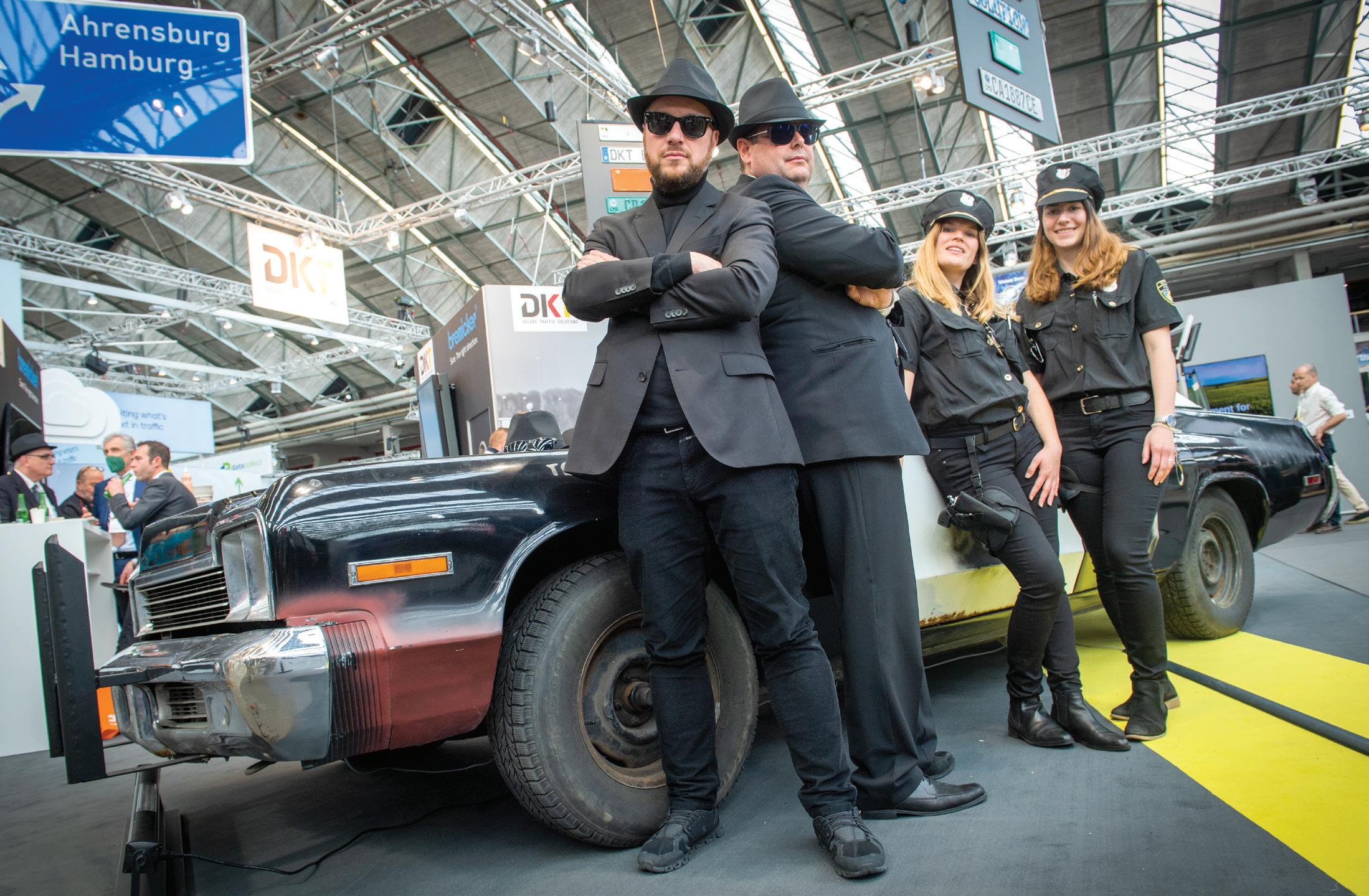

In e Blues Brothers, Jake and Elwood Blues famously stole a police car as they attempted to raise the necessary money to keep open the orphanage in which they had been raised.
e brothers might have had a harder task if DKT’s RFID vehicle tags had been around when the lm was made in 1980.
e German company’s UHF/ HF RFID technology, embedded in licence plates or imprinted into a small adhesive patch that can be attached to the vehicle’s windscreen, can be read from any suitable reader, whether mounted on a gantry over a road, or by a handheld reader.
e vehicle’s registration
and other information, such as whether the car is licensed or insured, can be called up on an Android phone and DKT’s CarCon app solution, for example. at makes the theft of a car tted with the technology very much harder. DKT has brought the original police cruiser from the Blues Brothers
lm to the show to demonstrate its technology. Mercifully for the brothers, the RFID technology was absent in the 1980s. Otherwise, the orphanage might never have been saved. And that would have made a very di erent sort of movie.
▶Stand 01.319V
www.dkt-international.com



Those who use infrastructure should also contribute to its maintenance.
VITRONIC tolling systems allow for dynamic and flexible pricing models –for a fair funding solution.

Visit us in hall 1, booth 108A










Publisher / MD
Andrew Barriball
CEO Roger Adshead
Project manager
Paul Derby
Editor
James Foster
Editorial team
Adam Hill, David Arminas, Alan Dron, Liam McLoughlin
Sales team
Dan Emmerson, Graeme McQueen
Design
Andy Taylder, Simon Ward
Photography
James Robbins, Ian Billinghurst, Tom Gordon
Production
Nick Bond
IT & website director
James Howard
Website + Social Media
Sarah Biswell, Tatyana Mechkarova
Office manager
Kelly Thompson
Printed by NPN Drukkers
Contact us
The Daily News office can be contacted at media@ropl.com
Published by

C©Route One Publishing Ltd 2022
Second Floor, West Hill House, West Hill, Dartford, Kent, DA1 2EU, United Kingdom
Tel: +44 1322 612055 www.ropl.com

arrida Technologies, a specialist in automatic licence plate recognition (ALPR) cameras for traffic and parking applications, is here with what the company says is the best optimised LPR engine from edge device to the cloud. Moreover, the company says it has the fastest reading rates and highest possible LPR accuracy, AI-based vehicle identification and cross-platform optimised software. Visitors to Intertraffic are invited to try out Carrida Technologies’ LPR software and edge devices in a live demo at the company’s stand.
Special to Carrida is the unmatched Carrida LPR engine, that can be flexibly deployed as OEM library, webGUI solution for any edge device, or as an App for Android handhelds.
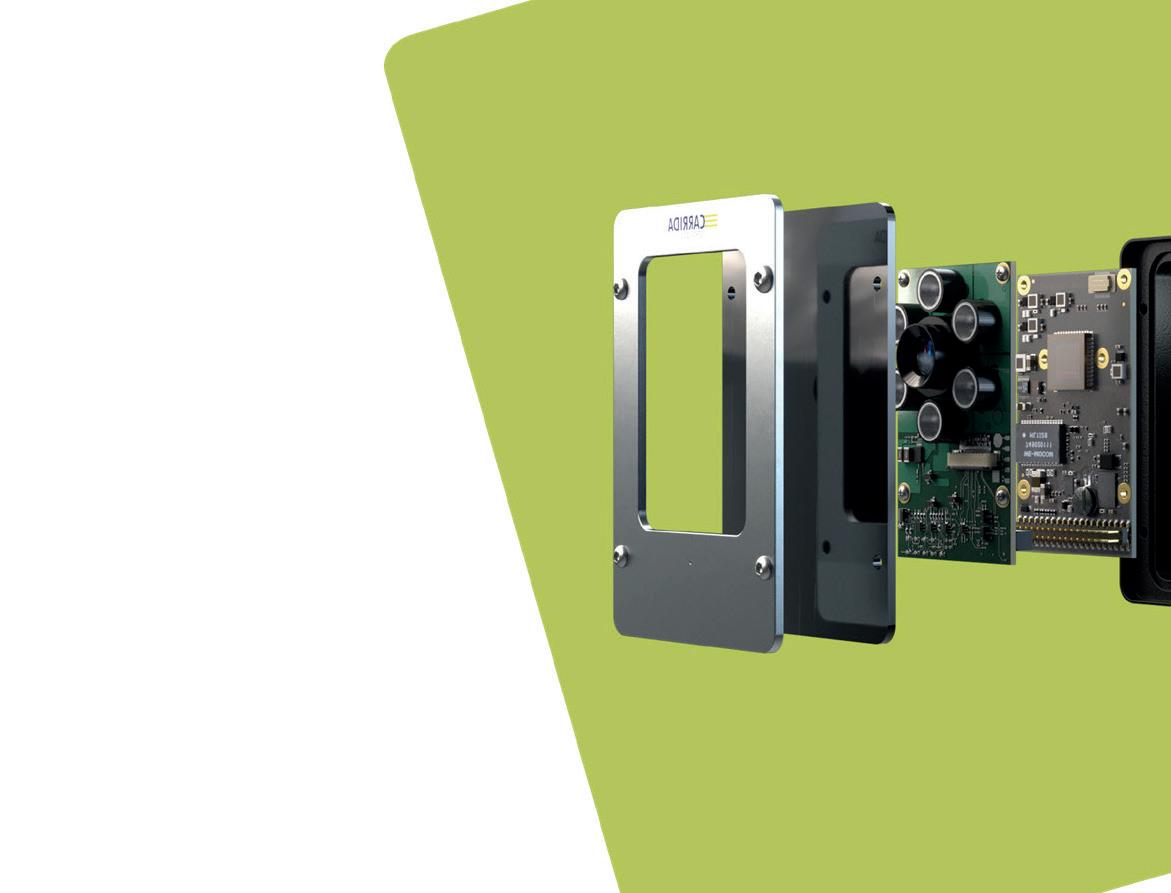
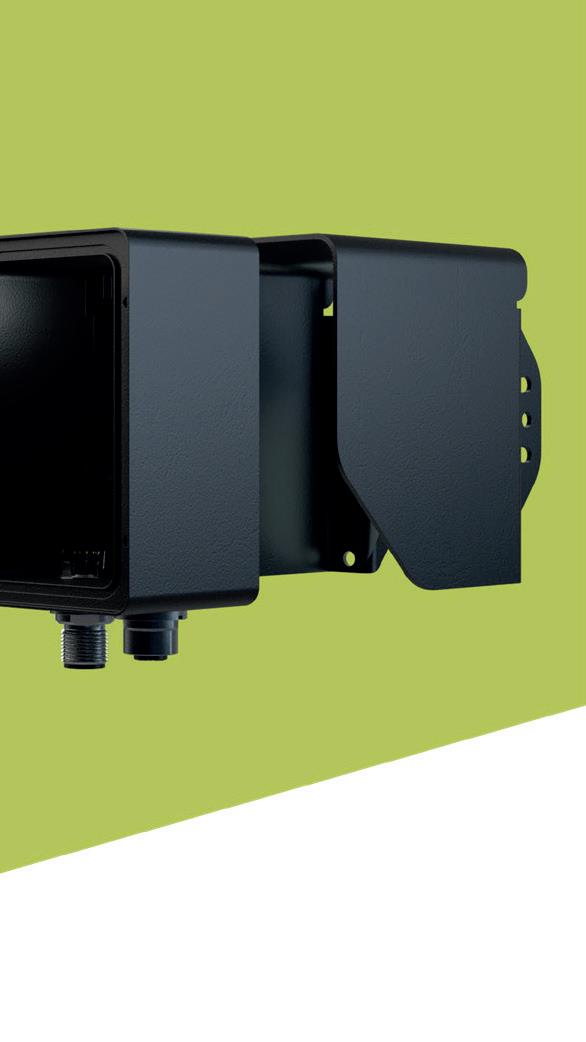
Carrida is also showcasing its latest and ultra-compact standalone Carrida Cam Dragon+ with onboard processing, as well as components for easy, quick, and cost-effective development of individual ALPR applications. This next-generation ALPR camera is hardly bigger than a credit card. It perfectly matches the Carrida LPR Engine including onboard LPR and
make and model recognition and is available as ready-to-use edge device or electronics kit for individual developments.
Meanwhile, the Carrida SDK is highly optimised and uses the same library, feature set, and programming interface for any hardware, from PC based systems with USB, GigE or IP Camera to server applications to edge devices.
It is fast and easy to implement and the ideal basis for stationary and mobile traffic solutions.
▶ Stand 05.258
www.carrida-technologies.com
WB Group is showing its SmartEye ST1 cabinet solution traffic enforcement device. The SmartEye ST1 logged its initial sales to Portugal last year and packs multiple features into a single unit.
The cabinet houses an infrared illuminator, IP camera, 3-D radar and video, and is capable of handling multiple types of traffic violations. It can track up to 32 vehicles simultaneously and capture a vehicle’s registration plate, country, make and model of vehicle.
High-resolution photo evidence and optional
high-definition video can be shot, providing evidence of such offences as red light or speed violations, or whether a vehicle has strayed into a restricted lane.
WB Group is also showing its Smart Energy Management System (SEMS), intended to manage electricity consumption at vehicle charging stations. SEMS features a modular, expandable design that offers fast charging.
▶ Stand 05.310 www.polcam.com

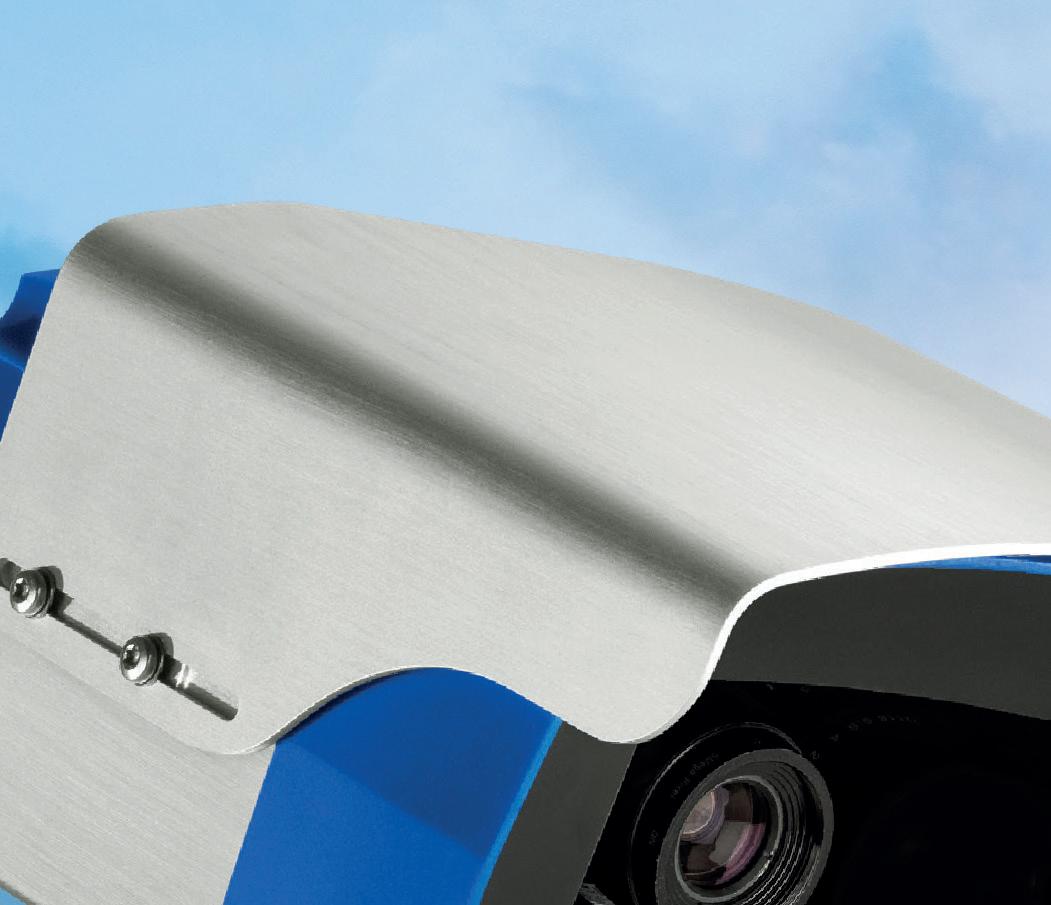
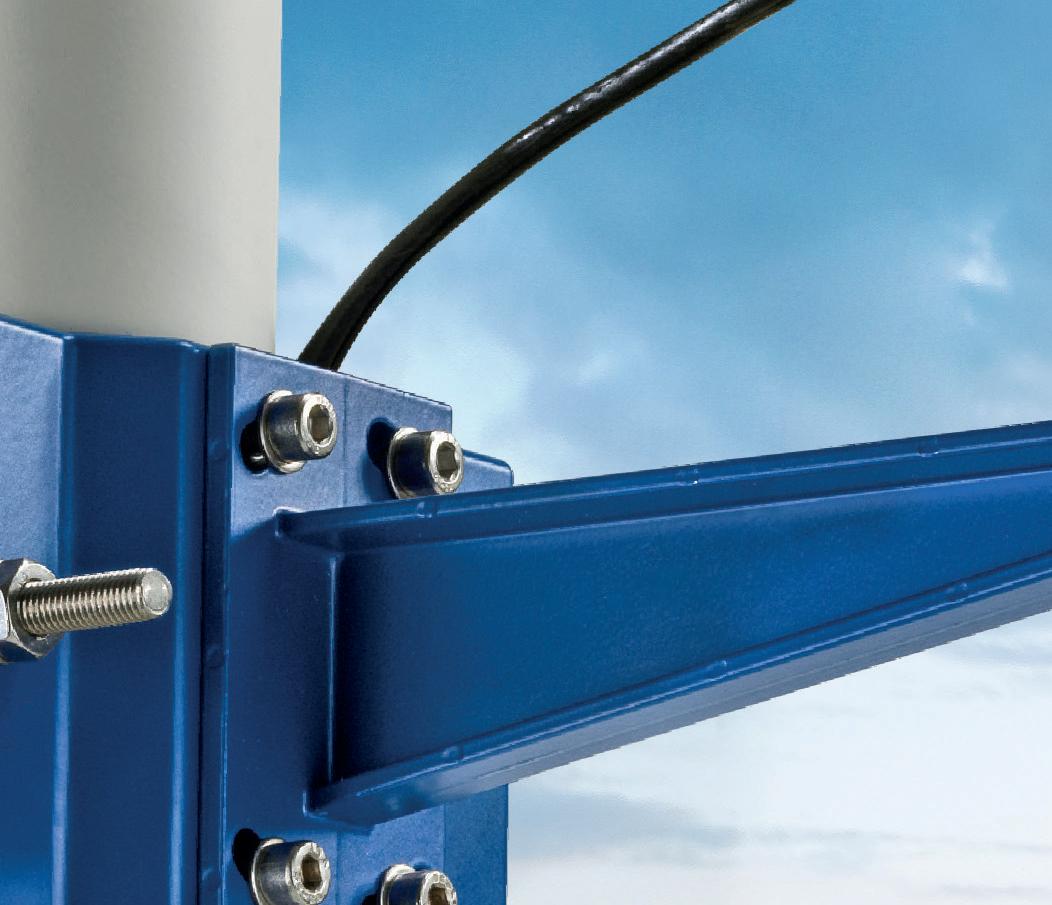
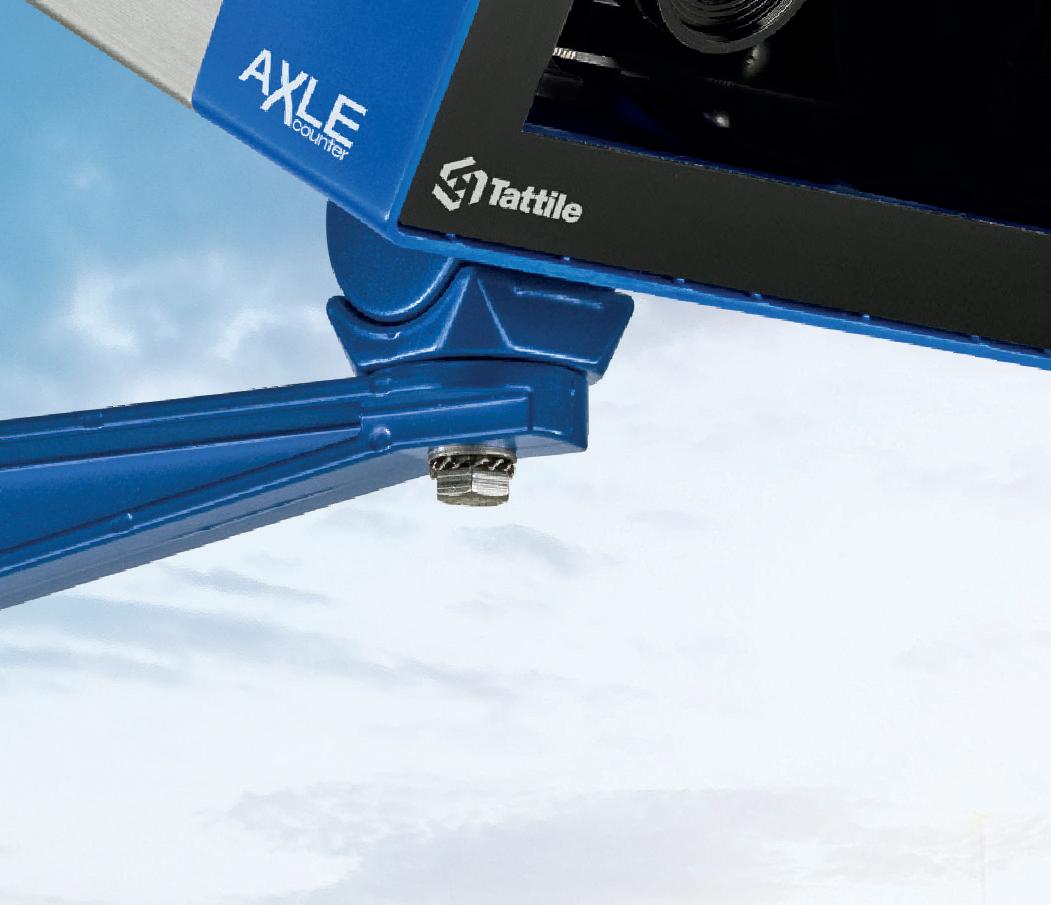


























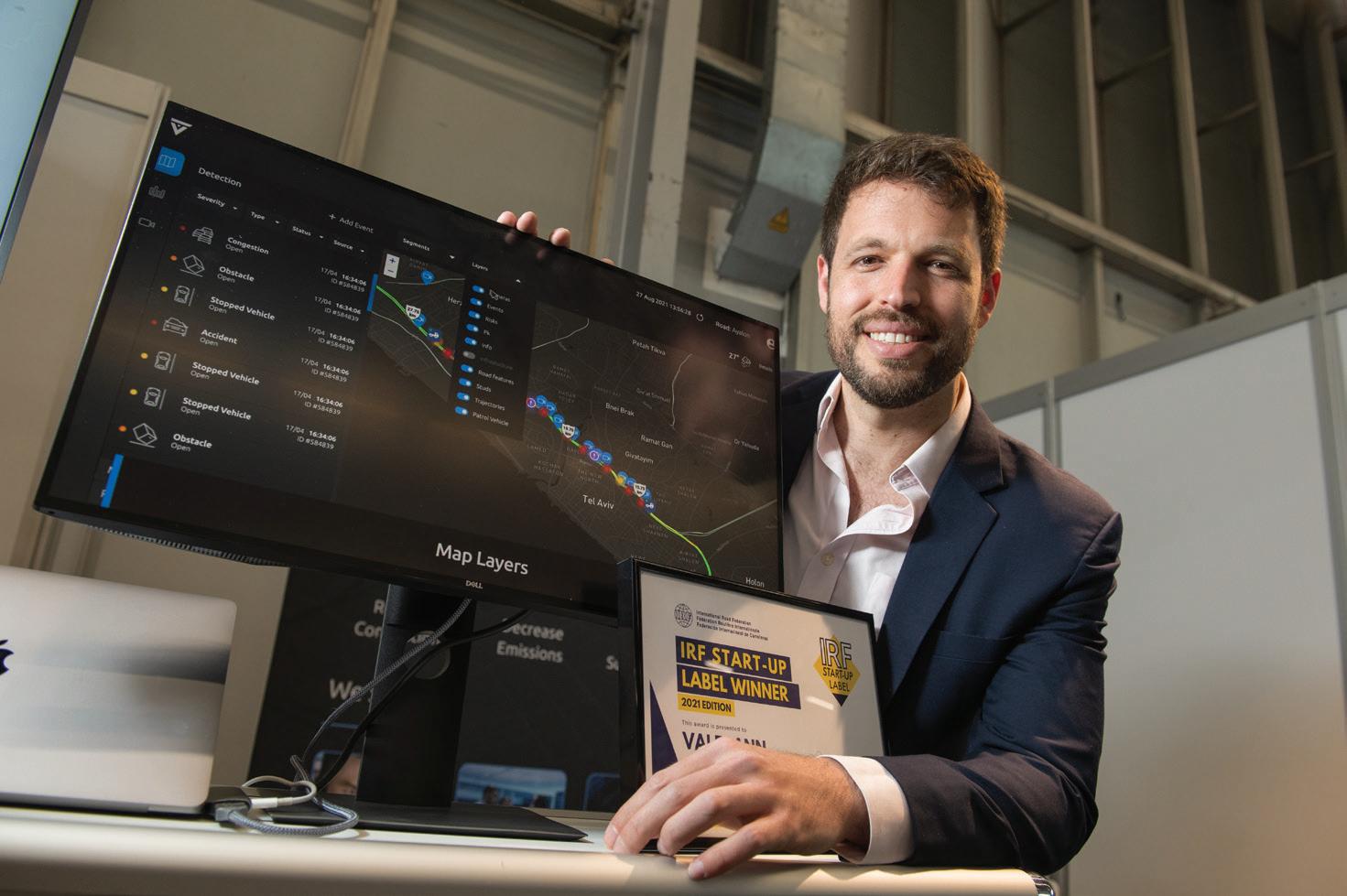
Data can enrich road operators with valuable information about road conditions, reducing traffic and the number of accidents that occur. Visitors to Intertraffic can see how Valerann is pioneering the integration of this data with its ground-breaking and innovative Lanternn by Valerann solution. It empowers road operators with intelligence that significantly increases the safety of roads.
The system integrates data from all major sources including roadside, data from vehicles and from road users through its proprietary real-time fusion engine which analyses real-time and historical data.
By applying artificial intelligence, machine learning, big data technologies and data fusion techniques, Lanternn by Valerann reveals the most important events and trends impacting the road. This expedites response and ensures safer resolution by road network operators.
At the heart of Lanternn by Valerann is data fusion which is a significant step forward from simple data integration.
The system eliminates ‘noise’ by fusing event detections from multiple sources into one alert and uses contextual data to verify these events. It also leverages historical data to automate response process planning
and recommendation for course of action. Valerann says this adds significant value to the road network control centre at all levels to include operational management as well as long term process and infrastructure implementation decisions.
By launching this modular, easily upgradeable, tailored intelligent traffic
management solution Valerann says it offers a different perspective to the ITS industry. It places road network operators at the centre of the transportation ecosystem, enabling them to access meaningful insights about their managed asset.
▶ Stand 05.370 www.valerann.com
Besides loop-based traffic counters/ classifiers, Traffic Data Systems (TDS) is focusing on its OIML-certified Weigh in Motion (WIM) system for enforcement and tolling applications.
But more than that, the company is addressing the issue of device certification. In cases where customers opt for the wrong or improper OIML R134 certification, WIM systems will not be legal for enforcement and tolling, which also results in reputation damage for the correctly-certified systems.
As Florian Weiss, CEO of TDS points out, although there are several manufacturers of WIM systems, only very few fulfil the requirements of OIML R134. The problem, even within the EU, is that certifications of certain metrological institutes are not recognised by other metrological institutes.
Weiss states that there is no confusion with certification for TDS’s WIM systems. For instance, the TDS TMCS-IP /WIM-DSP 32 has
been certified by Metas in accordance with the requirements of OIML R134-1.
The system fulfils the requirements of OIML R134 Class F/10. This corresponds to a maximum measuring error of ±5% (initial verification) or ±10% (in-service inspection).
“TDS was the first manufacturer in the world to have a certified and verifiable low and high-speed WIM system with only three rows of sensors,” Weiss proudly states.
“This not only covers the requirements of OIML R134-1 (Class F/10), but also the speed range from 5 km/h to 120 km/h for heavy goods vehicles required by the German TLS 2012 standard, Technical Conditions of Supply for Roadside Remote Stations (temperature range: -30°C/+75°C at up to 85% relative humidity). For light goods vehicles, the certified speed range is 5 km/h to 140 km/h.”
▶ Stand 01.517
www.traffic-data-systems.com

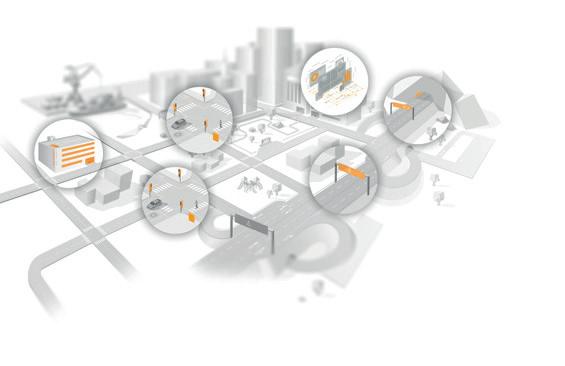
People, Traffic, Environment –a liveable city for all.

SWARCO’s well-thought-out Urban Mobility Management provides intelligent, sustainable traffic solutions.
From smart intersections to the connected Smart City: With systems from SWARCO, you are well-prepared for the future.














For this year’s comprehensive Intertra ic summit and seminar knowledge programme, head for Hall 7. That’s where you will find, on four separate stages - Summit Theatre 1, Summit Theatre 2, and Summit Theatre 3, plus Intertra ic On Stage - presentations, seminars and workshops taking place simultaneously.
This three-page feature provides a brief summary of each presentation happening today to enable you to make the most of the many opportunities to discover new trends, best practices, the latest developments and solutions on smart mobility, infrastructure, tra ic management, road safety and parking and much more.






▶ 11:30 - 12:30
OPEN STAGE
Next-generation tra ic management and analytics
Mobility services are undergoing spectacular changes with the introduction and widespread use of cloud communication and connected vehicle technology. This session will present the current state of the art in responsive and fully adaptive tra ic management solutions. It will also highlight opportunities to leverage the vast amounts of data captured by sophisticated tra ic management systems to alleviate urban congestion and deliver sustainable road mobility.
▶ 11:45 - 12:30
THEATRE 1
▶ 12:30 - 13:00
THEATRE 3
The innovation of Anas road safety barriers: The NDBA, The TS0 barriers and the DSM barriers

A broad conception of prosperity Soon, solutions to transport and mobility problems will no longer be designed to serve a single goal but rather to contribute to several, above all accessibility, safety, the living environment and public health. The Netherlands Environmental Assessment Agency (PBL), the Netherlands Institute for Transport Policy Analysis (KiM) and the Netherlands Organisation for Applied Scientific Research (TNO)/Ministry of Infrastructure and Water Management (I&W) have studied this issue and will discuss it with one another and the audience, starting from three brief pitches.
▶ 12:00 - 12:30
THEATRE 2
Urban tra ic management via access rights
The use of countermeasures such as low emission zones, congestion charging, and advanced curb side management have proven to be e ective in battling the impact of tra ic. However, cities must overcome some obstacles before they can be implemented. BeMobile has developed an urban access control centre that enables cities to give only access to those vehicles and modes of transport that should get access.

▶ 12:45 - 13:45
OPEN STAGE
Transforming city planning by using 3D modelling technology and community engagement
NDBA concrete safety barrier is being installed on the Italian roads network managed by Anas. The new restraint system presents di erent advantages: installation is easy and it has low maintenance costs because the road restraint system can be placed directly on the road pavement surface or on new/existing concrete structures. Anas TS0 safety barriers have been developed to guarantee the install ability and proper functioning, at the roadside, in the presence of embankments with poor mechanical and geometric characteristics. TS0 barriers guarantee a simple installation as they are composed of a limited number of elements that di ers very little according to the type of barrier.
▶ 12:45 - 13:15
THEATRE 1
Creating a mobility, parking, and economic system
By merging mobility and parking services in a single exposure, improved user experience, and maximising consumer satisfaction is a reality. The result is enhanced economic growth, e icient delivery of services, and improved quality of life within the urban core. In the US, Detroit has been a natural player in the urban mobility and cloud industry for many years, and its systems collect vast and various amounts of data.


▶ 12:45 - 13:15
THEATRE 2
Environmentally-friendly intersection controls
At today’s intersections, tra ic lights are switched by a tra ic light controller via an electrical interface. This results in tra ic lights with little maintenance e iciency, value added functionalities cannot be implemented, and energy e iciency has still room for improvement. At the same time, tra ic controllers – and consequently intersection controls as a whole – are under constant pressure to be more environmentally friendly and consume less energy. Using the principle of distributed intelligence, it becomes possible to reduce the amount of energy used at an intersection while the e iciency using LEDS with minimum power remains.

First showcased here at Intertra ic 2022, a 3D model, especially developed for the municipality of Hilversum, can be used to create three-dimensional digital representations of mobility measures. In this interactive session the municipality of Hilversum and consultancy agency Connected will share best practices on how you can use this 3D model to visualise your policy and reach (smart) mobility, sustainability, and liveability goals.
▶ 13:15 - 14:00
THEATRE 3
Making an Impact: case study of the world's first illegal mobile phone use enforcement programme
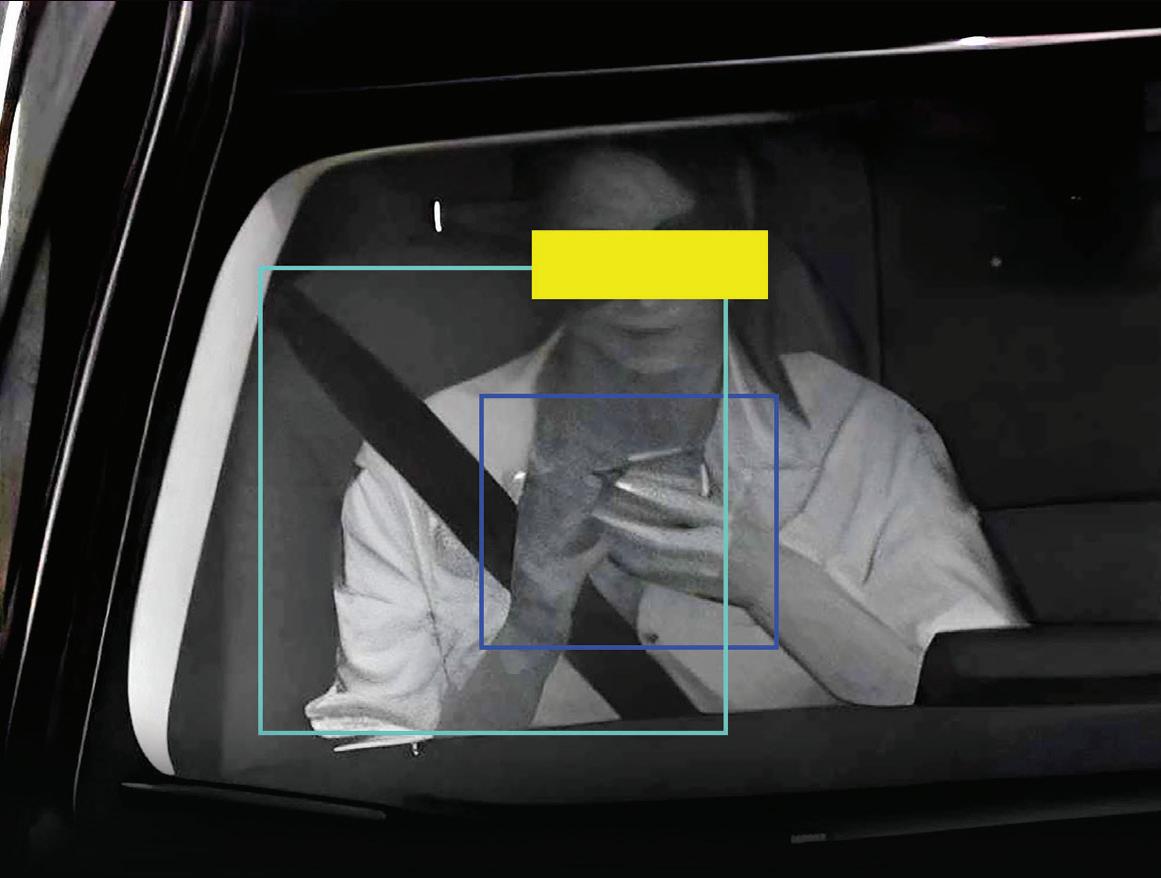
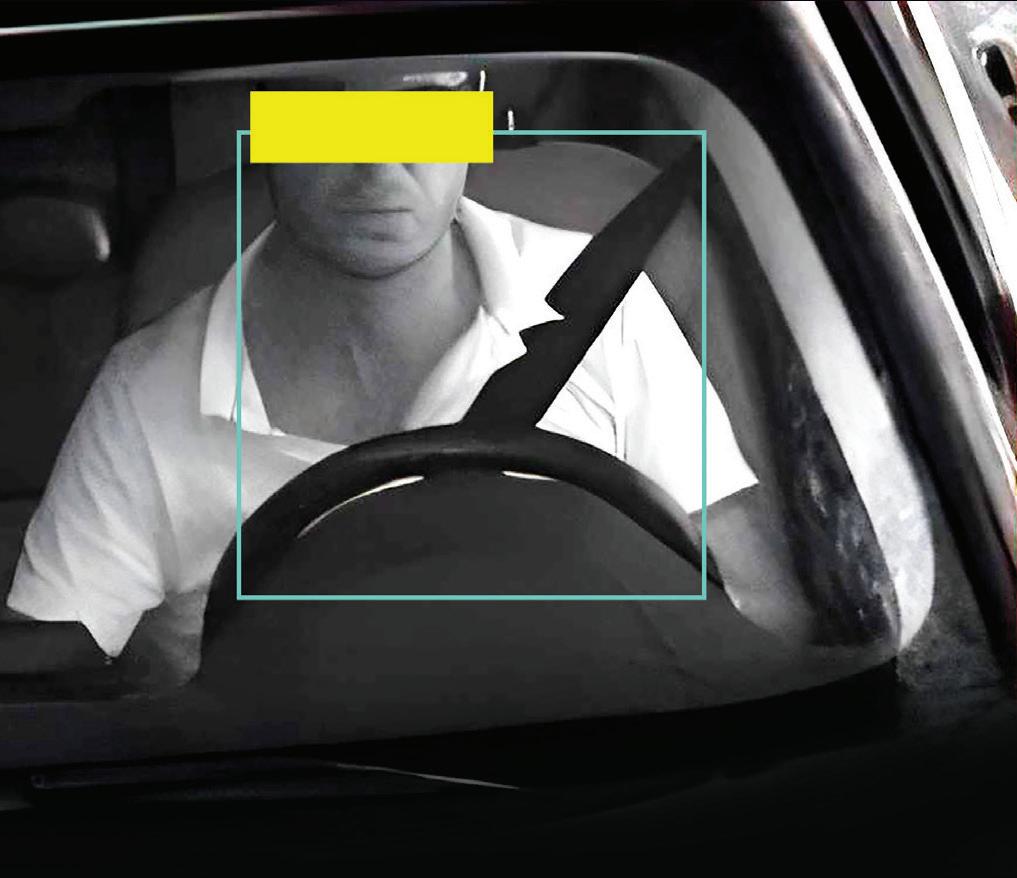
Australian start-up Acusensus, has developed world-leading technology to capture the illegal use of mobile phones by drivers. This presentation will provide a case study on the world’s first illegal mobile enforcement programme which began in 2019 in New South Wales, Australia as well as other key Acusensus projects in India, South Africa, Spain, United States and the United Kingdom. Key insights, data and trends will showcase how the ‘HeadsUp’ solution has made a real-world impact to significantly change driver behaviour and in turn save lives and address the trauma and loss resulting from this dangerous driver behaviour.
▶ 13:30 - 14:30
THEATRE 1


Mobility as a Service : how Visa and “Pay-AsYou-Go” are helping make cities smarter Pay-As-You-Go is helping transportation networks to be more e icient, accessible and resilient and also deliver a more open, multimodal and seamless customer experience that is largely enabled by secure, frictionless fare payment and collection systems. Today, the challenge is to address the new flexible working/travel patterns of consumers ‘tackling societal change’ but also the post-pandemic needs for greater hygiene and less contact.



Weather impacts safety. That’s why road maintenance professionals and weather services around the world rely on Lufft. Our comprehensive monitoring portfolio ranges from non-invasive and mobile road weather sensors to weather stations and software.
Lufft is a well-established and proven OTT HydroMet product brand for meteorological monitoring solutions.
www.lufft.com
Visit our booth 01.301





▶ 13:30 - 14:30
THEATRE 2
The digital road operator: tra ic management in the Google era
How can we keep ahead of smart mobility developments and implement them in our daily business, when there are so many everyday challenges: keeping the roads safe, managing incidents and optimizing tra ic flow? This session will share successes, lessons, challenges and opportunities in using new possibilities of Smart Mobility for safe tra ic management. Join the conversation and build the next generation tra ic management together.
▶ 14:00 - 14:30
OPEN STAGE
Open data and Urban Tra ic Control –
Improving the tra ic flow of one of the UK’s biggest and most iconic cities
In this session, TRL So ware will share it is working with Transport for Great Manchester, to demonstrate how incorporating open data and the latest UTC (Urban Tra ic Control) so ware can reduce congestion and improve air quality in one of the UK’s largest and most iconic cities.
▶ 14:45 - 15:15
▶ 14:45 - 15:30
THEATRE 2
Solving complex challenges for improved safety and mobility outcomes
This session will explore the versatility and e ectiveness of technology solutions to change dangerous driving behaviours, increase accessible mobility, and deliver scalable, equitable compliance outcomes. It will discuss how transparent, data-driven programmes enable a higher order of automated tra ic enforcement that enriches lives and serves communities at their highest point of need.
THEATRE 1
From transit fare collection to mobility transactional engines: a natural evolution Current requests for proposals from significant public transport authorities are asking for transactional features (to sell, validate and inspect fares), informational features (passenger information, route planners) and mobility intelligence. The question is: what needs to be put at the centre of this all-in-one mobility scheme? Hear what industry players and consultants have to say about the new role of transactional players for mobility allin-one.
▶ 14:45 - 15:15
OPEN STAGE
Smarter on the road with smart cameras
▶ 15:00 - 15:45
THEATRE 3
Solving communication challenges in Smart Mobility from a Telco perspective
▶ 15:30 - 16:00
OPEN STAGE
Dutch language session: Datagedreven werken: het dashboard deelmobiliteit als sturingsmiddel
▶ 15:30 - 16:15
THEATRE 1
The golden key to success: MaaS in the countryside
Can video analysis by applying artificial intelligence make our tra ic smarter and safer? The use of smart cameras increases the availability of the rush-hour lane. It shortens the time until an incident is discovered and can prevent possible follow-up accidents. These are important goals of Rijkswaterstaat. That is why last year a pilot was set up on the A13 highway between Del and Rotterdam: 'Smart cameras A13'. In this session, results of this research will be shared.
▶ 16:00 - 16:30
THEATRE 3
Find and exchange mobility data
In the Netherlands, the National Access Point Mobility Data (NTM) coherence in public and private mobility data, laying the foundation for solutions regarding road safety and multimodal accessibility. This session will introduce attendees to the NTM, its purpose and functions. The added value of the newly established NTM will be highlighted by an example from Groningen.
The Netherlands has an excellent infrastructure, although this will be mostly acknowledged by those who live in urban areas. For people in the Netherlands living in more rural areas without a car, it can be hard or take a long time to get somewhere. Connected’s Mobility-as-a-Service (MaaS) concept di ers significantly from other MaaS concepts that mainly focus on urban areas. In this session we will share experiences of our concept which was extensively studied in the province of Flevoland.
▶ 15:45 - 16:30
THEATRE 2
Next-generation environmental tra ic management
Yunex Tra ic has combined its tra ic management system with the simulation capabilities of Aimsun and an emission model. By combining real-time tra ic, air quality and incident data with a digital twin that also simulates public transportation, operators are empowered by providing them a comprehensive understanding of transportation and environmental landscapes to e ectively manage mobility.
▶ 16:15 - 17:15
OPEN STAGE
Dutch language session: Hoe kan onze behoudende bouw-en infrasector de ambitieuze veranderopgaven van groei en duurzaamheid succesvol invullen met digitalisering?
▶ 16:30 - 17:15
THEATRE 1
Urban strategy: Digital City Twins to optimise urban mobility
TNO’s Urban Strategy Digital City Twins supports public and private stakeholders to shape todays and future mobility. As one of the main development and application partners, hear how Amsterdam uses Urban Strategy to build scenarios and strategies for a wide range of challenges.
▶ 16:45 - 17:15
THEATRE 3
Lessons learned from Socrates2.0 - structure follows strategy, tailor-made follows standardisation
In Socrates2.0 pan-European project road authorities, ITS companies, service providers and car manufacturers have worked together on a new, interactive way of tra ic management. By sharing data and introducing tra ic management in navigation services, a win-win-win situation for all stakeholders in the tra ic management ecosystem arises.
▶ 16:45 - 17:15
THEATRE 2
Weather and air quality information in optimising smart tra ic management - use cases and enabling technologies
Optimising tra ic management and road maintenance depends on accurate and reliable road weather and air quality information that empowers smart planning and operational decisions. Utilizing real-time data from advanced measurement technologies and numerical forecast models, this presentation will demonstrate how instantaneous road and weather data provides transportation agencies, cities, and tra ic management companies with comprehensive, real-time awareness of their road networks - in any season or situation.



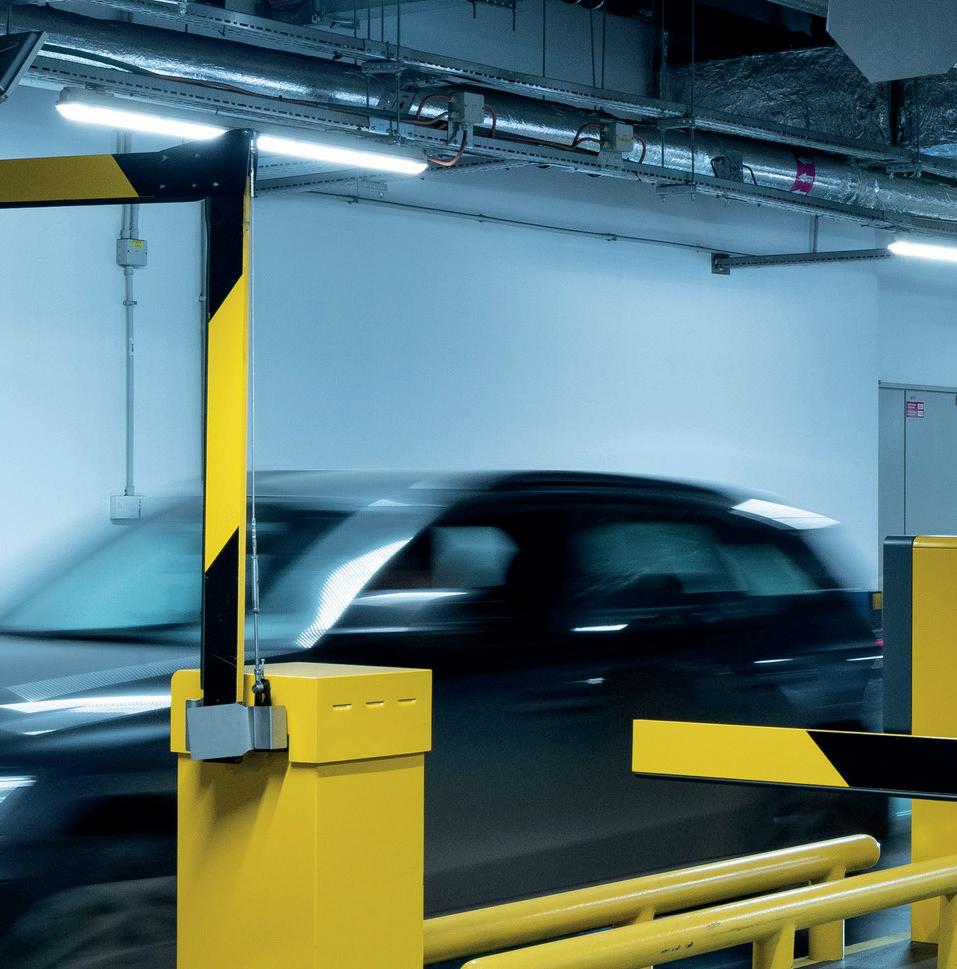


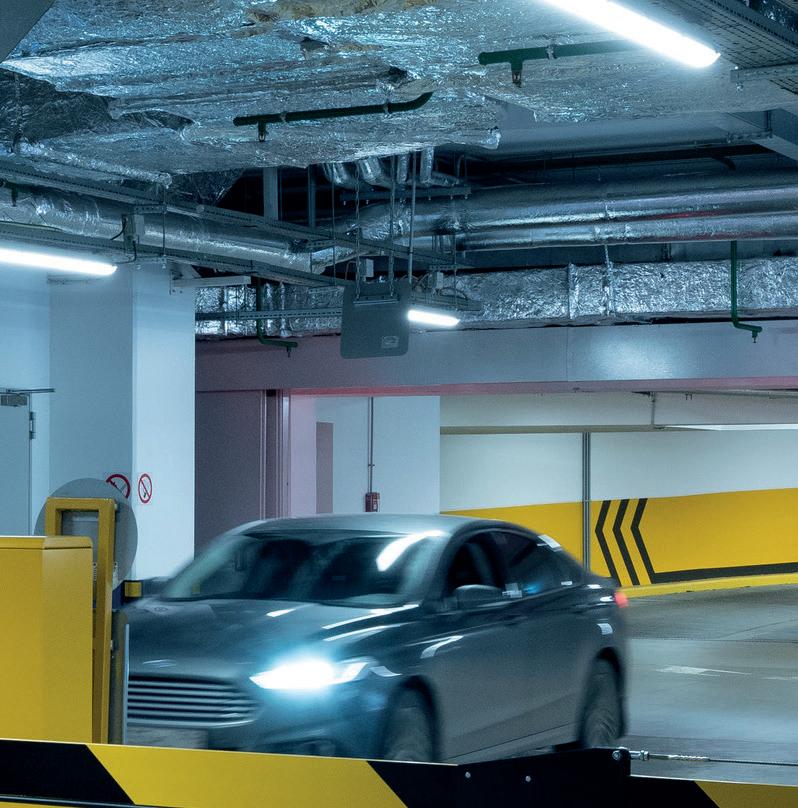


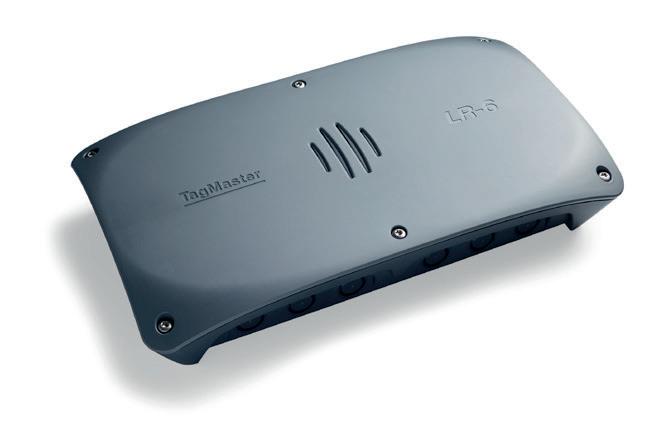
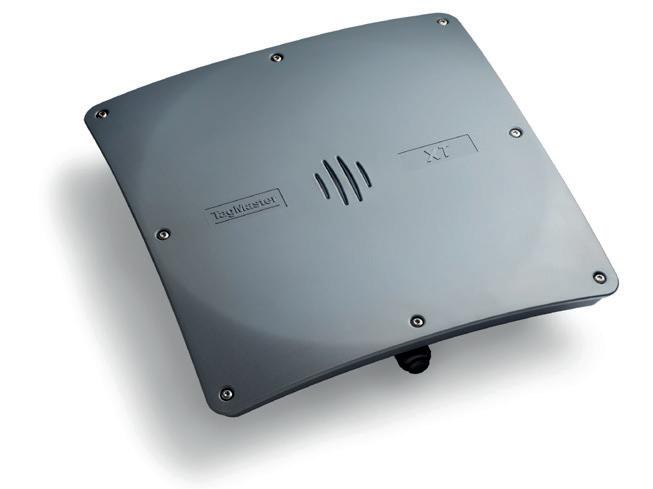
Whether you’re managing parking, barriers, gates, ports, terminals or industries, TagMaster’s Long Range RFID Readers provide secure and seamless vehicle access.
TagMaster’s Long Range RFID Readers are easy to install and are compatible with all major access control systems - no converters needed. With reading distances up to 14m / 46ft, access is smooth, and your traffic flow is optimized.
This unmatched security and quality mean you’ll have a reliable and cost effective access solution that streamlines your operation for many years to come.
Simply put, we deliver the best long range RFID readers in the world.

Lidar technology is growing in importance in tra c management. It o ers reliable and precise object detection in any light or weather, with an accurate 3D image of the environment (unlike cameras), in high resolution (unlike radar), all while maintaining personal privacy.
Ouster is here at Intertra c displaying its Lidar solutions. “We’re a relatively young company,” says Itai Dadon, VP smart infrastructure. “We’re at the beginning of a journey to become an integral part of the global ITS industry. And it’s wider than ITS: Lidar is extremely useful in public transport, ITS, parking and tolling.”
Dadon sees part of his company’s role as educational: “It’s very important, a fundamental part. What is a Lidar? People are always very keen to hear about new technology and innovation – but they need to understand the ‘why?’”
Essentially, Lidar detects by sending out laser pulses: it can be used to track multiple objects, create digital twins, or enable connected vehicle programmes. One of the products Ouster is showing here is to warn car drivers that a pedestrian is crossing the road. When a person enters a speci c area of the pavement to cross, lights ash in the road.
“It’s a preventative way of protecting people when they’re about to cross the street,” Dadon says. “Not when they’re crossing the street. A lot of people here at Intertra c are on a mission to save lives. Obviously, there’s a business to make but they’re also passionate about the social, environmental and economic aspects: we’re talking in three dimensions. And these three


















dimensions are not independent silos.” ey can all intersect to create bene ts, he believes. “And when we’re not talking about the technology, that’s when the magic happens!”
He is impressed with his experience of

Intertra c Amsterdam. “ ere is dealmaking going on every 10 minutes,” he says. “It’s been fantastic – we’ve rebooked for the next one.”
▶ Stand 07.415
www.ouster.com
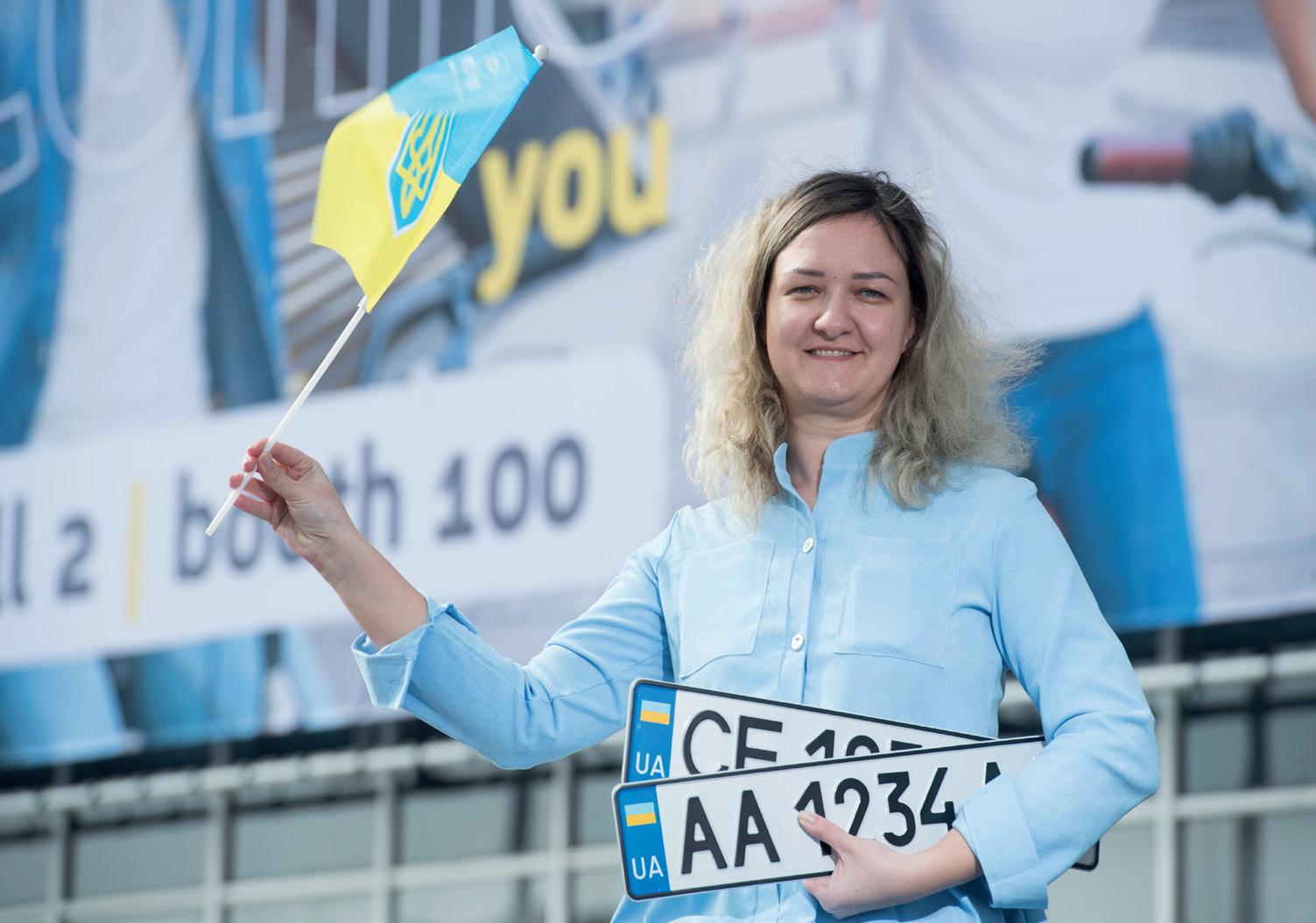
For some people, getting to Intertra c involves a complicated trip. But delayed planes and missed connections are put into perspective by the journey that one exhibitor has had to get here: Avtovin is based in the city of Chernivtsy – in
e country was invaded by Russian forces in February, and it would have been understandable if Avtovin had cancelled its trip to the Netherlands. But the company was determined to come and sta – plus executive director Nataliia Bitsukova's two young children – travelled with equipment in a bus and a car, with one trailer.
“We don’t want to stay home – we don’t want to hide,” says
Bitsukova. “We’ve wanted to do this for ve years. We want to nd new connections. We hope to develop the economy of our company – and our country. It was very di cult, but we managed to get here.”
Avtovin is in the licence plate business: it manufactures blanks, including the frames for them, and is displaying three types of embossing press at Intertra c.
When Intertra c is over, the sta will be returning to Ukraine. “We’re going back; we hope to nd clients who won’t worry about working with us,” Bitsukova adds. Chernivtsky is 50km from the Romanian border. “For now, it is safe,” she says. ▶ Stand 05.458 www.avtovin.com.ua














With growing demands for sustainable, equitable and safe mobility, PTV Group empowers your resilience with innovative technology. With PTV Group, you achieve clarity to improve mobility - and adjust it to today’s needs. Apply world-leading solutions for data analysis & visualization, modeling and simulation. Whether you’re planning public transit services, building a network of bike lanes, reducing emissions and car use, or protecting commuters in times of pandemic – PTV Group has the planning technology for you. Experience our solutions at Intertraffic Amsterdam in hall 2 at booth 216 and #JointheConversation
ptvgroup.com


















Michael Ganser


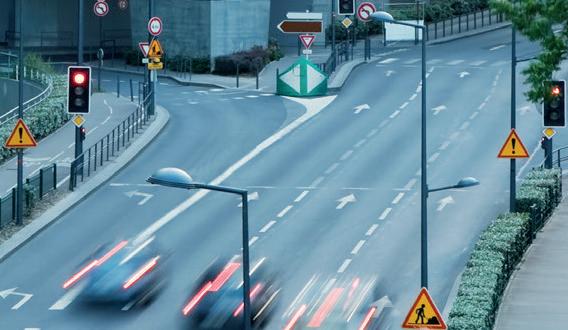
Kapsch is taking drivers’ desire for smoother, faster urban journeys into its latest plan to improve tra c ows in Vienna.
e Austrian capital is moving towards ‘tra c management 2.0’, said Gerd Gröbminger, Kapsch’s vice-president sales, central, eastern and northern Europe.
“ e idea is to enrol the car driver into the tra c management equation, helping them to make better decisions.”
One of the rst steps in creating the new tra c management system, Green Light
Optimal Speed Advisory (GLOSA) has already been implemented at around 80 intersections in Vienna, said Gröbminger. is is hooked into existing tra c lights and gives their current status, as well as their status in the immediate future. is connects into an app, jointly developed by Kapsch and Gevas, in individual vehicles that knows their position and how quickly they are moving.
Typically, a driver approaching a green light will speed up, to try to beat the signal before it changes to red. Kapsch’s innovation will tell the driver whether or
not he can reach a green light in time. If not, the driver will know there is no point in accelerating, only to have to slam on his brakes. is stop-go driving is one of the main contributors to emissions.
is smoothing out of vehicles’ speeds helps to increase the overall speed of urban tra c. Changing the behaviour of even a small percentage of drivers in this way will have a disproportionately bene cial e ect on tra c ow, said Gröbminger.
▶ Stand 01.229
www.kapsch.net
Cepton’s stand features its new Nova sensor, which is scheduled to become part of the world’s largest automotive contract in some of next year’s General Motors line-up of vehicles.
Nova is the latest model in Cepton’s range of Lidar sensors. It scans for around 30m, with a eld of view of 120o x 60o, using a ‘point cloud’ of lights to detect and de ne
any object, its direction of movement and speed. Nova is now available following a threeyear quali cation and testing process.
When mounted around a vehicle as part of its sensor suite, it gives all-round coverage of a vehicle, providing the driver with awareness of conditions around him. Nova can also be installed in lampposts at
intersections, to provide a ‘picture’ of the junction. For high-volume automotive contracts, Nova has a target price of under $100.
US-based Cepton works with Tier 1 automotive company Koito of Japan, which manufactures vehicle lights. e company supplies components to Koito, which assembles and then provides the nished
sensors to vehicle OEMs.
Lidar sensors also have static uses. “ e ‘smart city’ area is very interesting for us,” said Klaus Wagner, Cepton’s director, product management and marketing. Lidar “can be used for everything from detecting tra c ows to and monitoring intersections for safety”.
▶ Stand 05.458A
www.cepton.com

Start using your traffic data in the fast lane


At Miovision™, we take your traffic data and turn it into actionable insights. This allows you to quickly and easily identify signal timing issues, analyze signal timing strategies, and reduce re-timing cost. Visit Miovision at to learn more about our newest solutions. booth 05.218















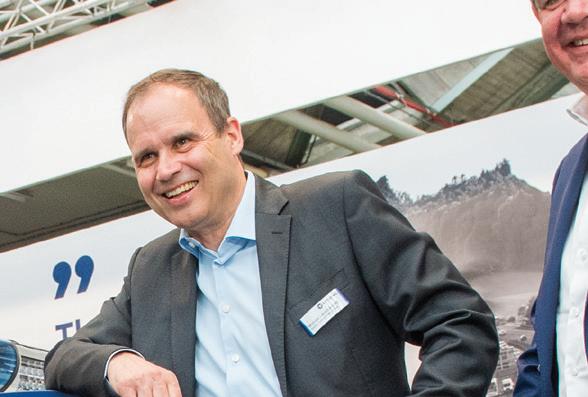



Vialis, a Royal VolkerWessels company, and Vitronic have announced they will collaborate in the eld of truck taxes. e announcement was in response to a proposal for a Heavy Goods Vehicle Charge. e Netherlands will also introduce a levy based on usage, comparable to Germany and Belgium. e
proceeds will ow back into investments in climate and sustainability goals to be implemented within the transport sector. is collaboration has resulted in a strong combination based on knowledge and expertise. Vialis has extensive experience in the eld of mobility and infrastructure solutions that contribute
to a better living environment. Vitronic has built up a leading position all over the world through its technological toll solutions.
▶ Stand 01.108
www.vitronic.com
▶ Stand 02.210
www.vialis.com
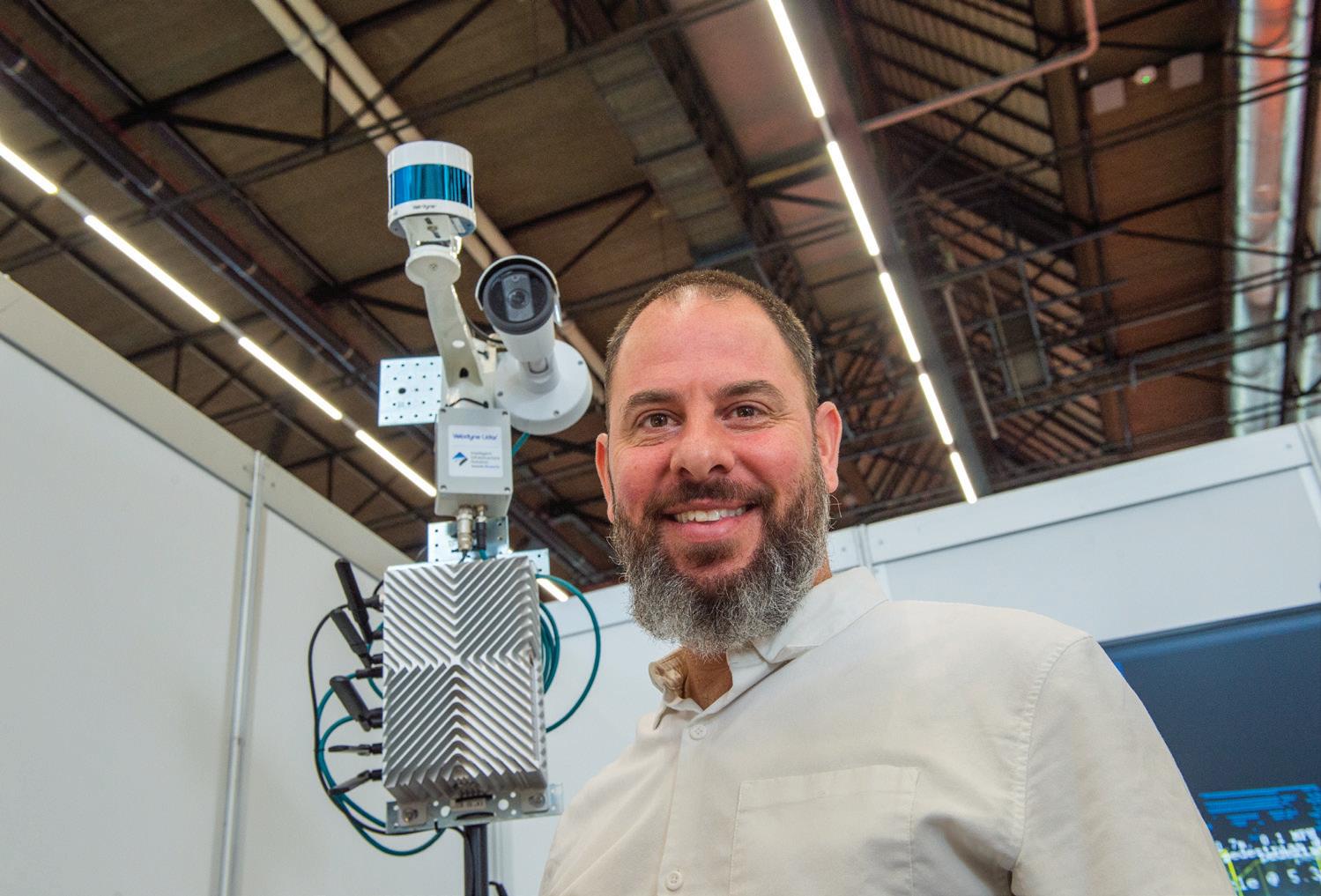
Bluecity’s high-resolution 3D Lidar sensor and AI perception software detect vehicles, bicycles and pedestrians with pinpoint accuracy in real time. is enables the company to provide accurate and reliable multimodal tra c data for tra c operations, infrastructure planning and road safety improvements.
Fresh from winning the prestigious SXSW Innovation Award 2022, Bluecity’s solution provides advanced safety analytics and signal performance measures to gain instant insights into tra c patterns, enabling agencies to optimise tra c ow.
e solution integrates with tra c controllers to reduce congestion and as a result, to cut
emissions – an issue which is close to the top of the agenda for cities worldwide.
Recently, Bluecity was chosen by authorities in Russelheim, Germany, for digital monitoring
and reporting of trucks. Fully GDPR-compliant and reliable in all weather and lighting conditions, the solution detects and identi es vehicles that are banned on city streets to ease road congestion and thus reducing air and noise pollution.
In Helsinki, it was piloted in 2021 to monitor and count tra c ows at a junction, as well as to improve tra c safety. e solution produced detailed information about tra c, such as the number of vehicles, pedestrians and cyclists, their speeds, their exact paths and impending dangers. C-ITS service messages also warned drivers about a risk of collision they couldn’t see.
▶ Stand 06.215
www.bluecity.ai











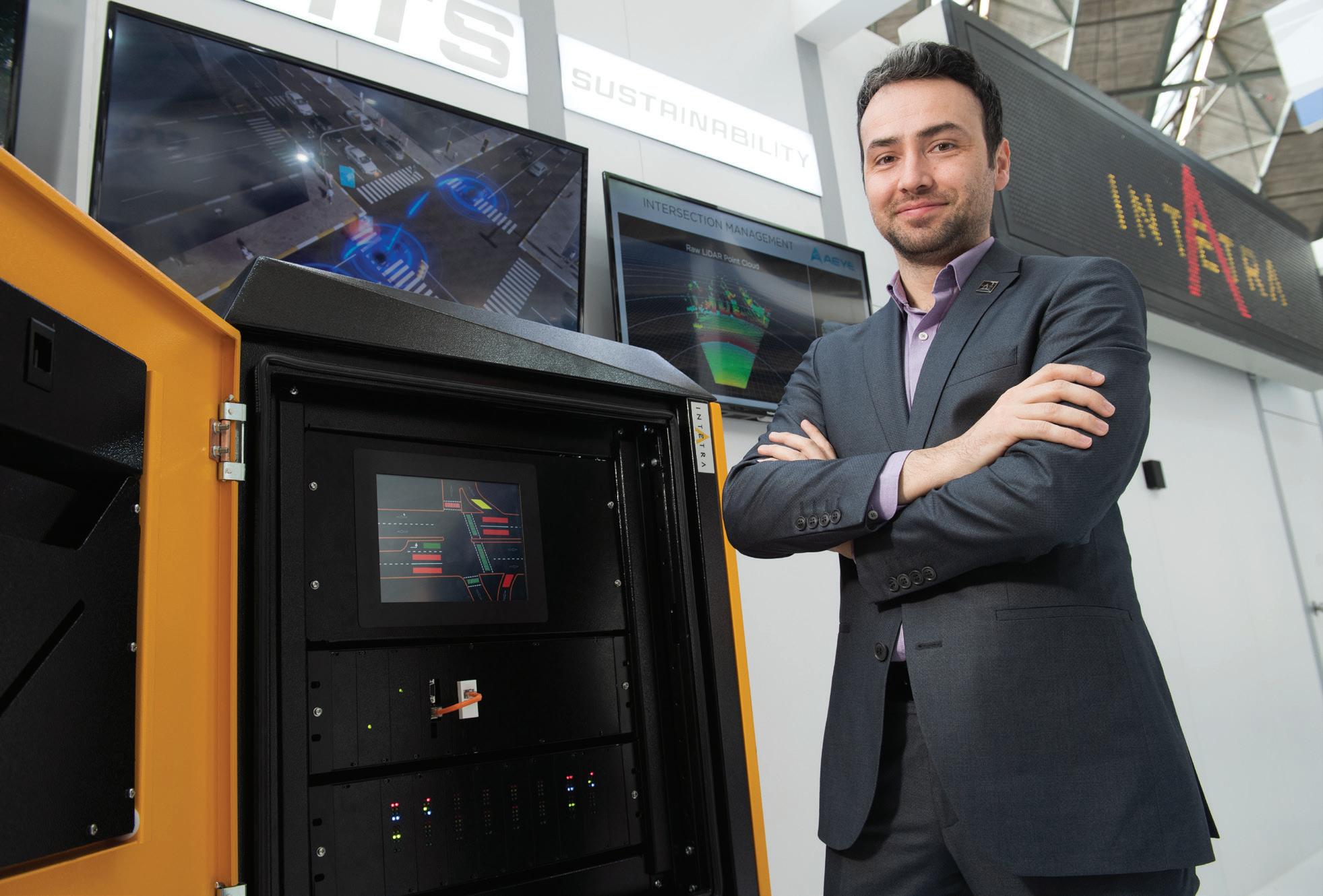
ntetra is using Intertraffic as the launch platform for its new adaptive traffic signal controller.
The company says that the new controller has the ability to operate as part of a cooperative intelligent transportation system (C-ITS) that can also communicate with vehicles and other infrastructure devices.
The new-generation intersection control unit has been designed to be userfriendly for the technicians who will install and maintain it, said R&D manager Tufan Yilmaz, with features such as ease of cabling and commissioning. Programming is also facilitated with what the company describes as an easy and tactile
programming interface.
Among the unit’s features are the ability for it to be programmable for up to 32 groups that can be divided to small intersections, allowing a single device to control multiple intersections.
Different types of management methods are available, depending on the
infrastructure available locally. Semi-actuated and fully actuated modes can be used with loop sensors, while the fully adaptive mode can be used with the help of camera-based artificial intelligence software.
Besides central control of the units, local programming and management of the device is also available via a 10-inch display or with an operator laptop connected through ethernet. The intersection control unit’s features include the ability to prioritise emergency and public transport vehicles, with the help of V21 connection and event detection solutions.
Besides its connectivity solutions the device is C-ITS ready and can transmit current light situations to onboard vehicle units through the roadside unit. To keep pace with developments in traffic lights, the control unit can work with 42V traffic lights as well as the regular 220V units.
Event detection capabilities include detection of pedestrian age and dangerous situations, as well as accident and weather detection.
▶ Stand 01.304
www.intetra.com.tr
Drivers never know if there will be a parking space by the time they get to the parking lot, right? Wrong.
With the PGx Travel Time Pack from French manufacturer Lacroix, municipalities and parking lot operators can now not only provide drivers with the number of parking space available but inform them how long it will take
to arrive there. The system uses a network of dynamic electronic panels installed along strategic urban routes to indicate parking spaces available. Also, using Lacroix’s BlueVia sensors and WebVia software analysis, it also tells drivers how long the journey will take to the parking lot from that information sign. Importantly, the journey time is in real time,
meaning it will be less or more depending on the traffic situation.
If two or more electronic information panels are on the same post, then drivers can choose the parking lot that it either less full or is closest in driving time – or both!
▶ Stand 02.118
www.lacroix-city.com





















AGD 343
HIGHWAYS MONITORING RADAR
AGD 343
HIGHWAYS MONITORING RADAR






AGD 343
HIGHWAYS MONITORING RADAR







Accurate flow measurement for highways tra ic profiling and incident detection
• Enhances highways safety, capability and e iciency
AGD 343





• Measures speed, range and length of passing vehicles
• Mounts as close as 2m from the edge of the carriageway
HIGHWAYS MONITORING RADAR
• Looks across both carriageways - up to 10 lanes
• Simple to install, set up and configure with AGD Touch-setup/Align
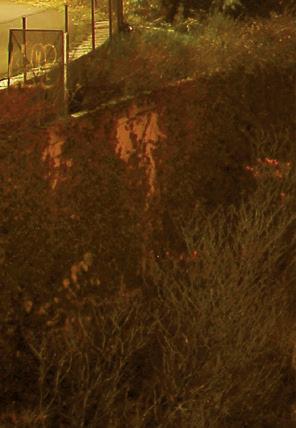
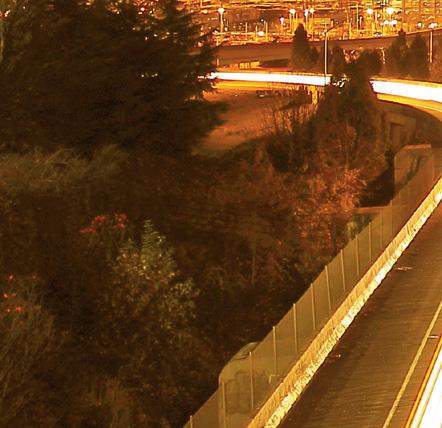
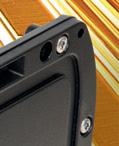
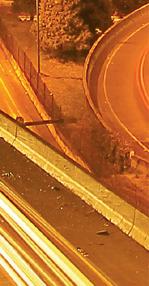
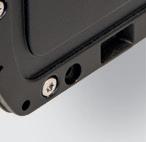
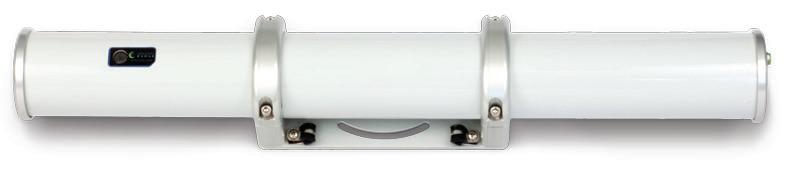
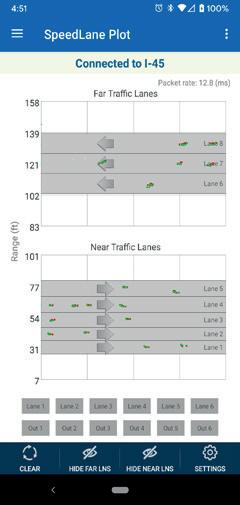
For informed decision-making and real-time tra ic flow monitoring, choose AGD’s 343 Highways Monitoring Radar. Developed using AGD’s proven enforcement-grade radar and measurement techniques, this easy-to-integrate tra ic flow monitoring solution is designed for tra ic profiling and incident detection. It measures speed, range and length of passing vehicles and provides detailed information on whether tra ic is free-flowing, slowing or starting to queue.
The AGD 343 looks across both carriageways - up to 10 lanes - to detect vehicle travel in approaching and receding directions. Ideal even when space is at a premium, it can be mounted as close as 2m from the highway, providing information for the lane immediately below the radar, as well as the lane at the furthest point.
DataCollect Traffic Systems is exhibiting two recentlyreleased products in Amsterdam.
AirGreen is a low-cost Internet of Things air quality sensor that collects environmental data nearly in real time. It measures nitrogen dioxide (NO2), ozone (O3), particulate matter (PM10 and PM2.5), carbon dioxide (CO2), temperature, air pressure and humidity – as well as noise measurements.
With AirGreen, cities and municipalities are able to collect environmental data in a scalable manner and on demand, with a self-learning model allowing customers to receive air quality predictions after one year.
Meanwhile Argos is an AI-based traffic counting and classification system which can either be used for mobile, short-term measurements or as a permanent real-time traffic counting and classification system.
It is designed for junctions, roundabouts and multi-lane roads, and even if Argos uses a camera for object detection, no video recording is necessary as the data is directly being processed on board – making it
It can count and classify 10 vehicle classes (bicycles, motorbikes, cars, cars with trailer, transporters with or without windows, trucks, semi-
buses) and also pedestrians.
AirGreen and Argos data files are analysed in DataCollect´s new cloud, www. mytrafficdata2.com, merging
which allows statements about the correlation between traffic volume and environmental pollution.
▶ Stand 01.429 www.datacollect.com
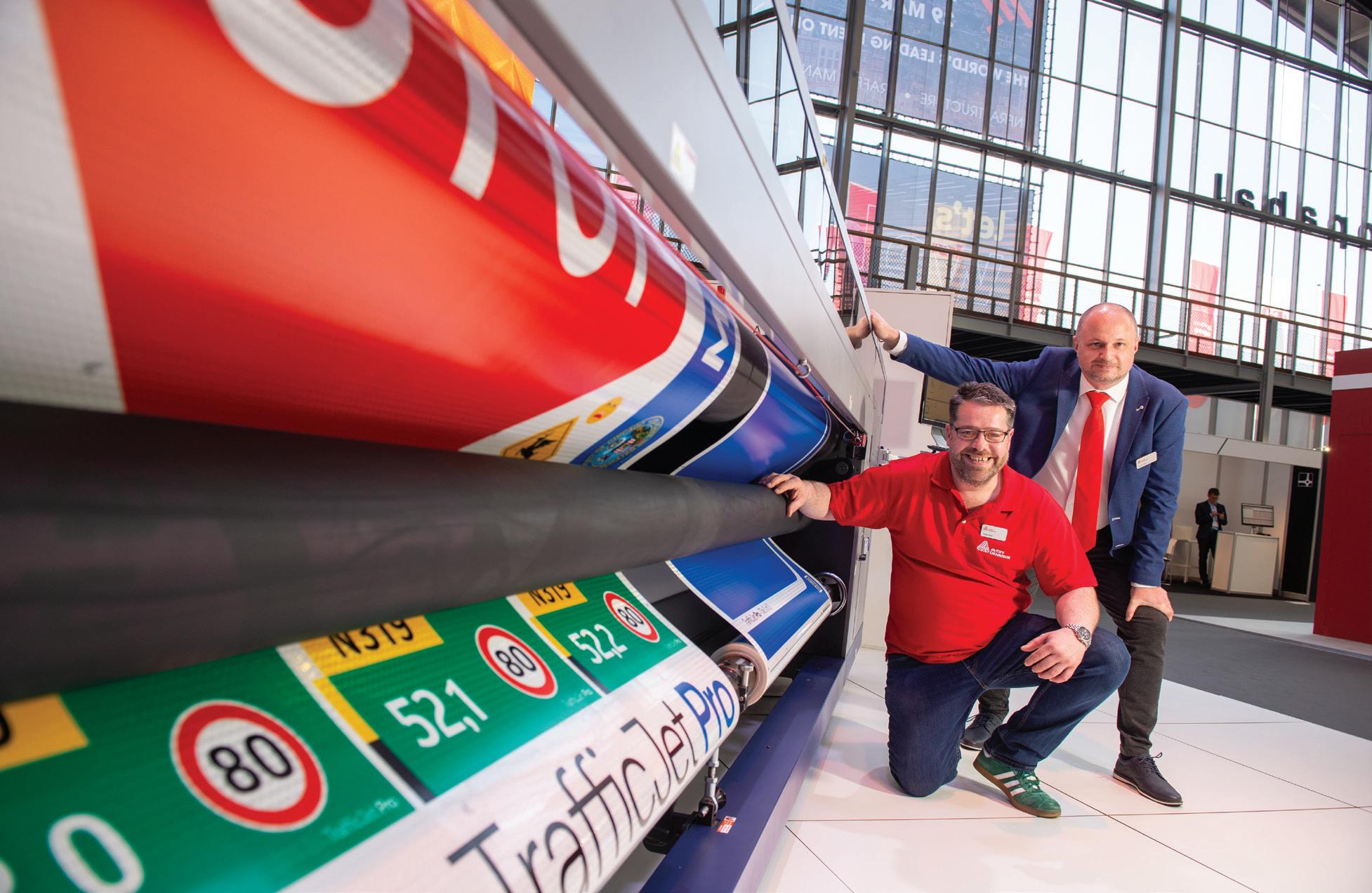
Follow the workflow of a modern sign shopfrom printing to lamination to cutting - during demonstrations of Avery Dennison’s TrafficJet Pro.
Speed and simplicity arethe hallmarks of TrafficJet Pro, the company’s new digital print platform for traffic sign printing, inspired by the industry’s demand for sustainable traffic sign production and improved sign durability. It eliminates the traditionally wasteful and hazardous screen printing process. Featuring dual roll-print capabilities, the TrafficJet Pro can print up to 79m²/hour. Learn about the sustainable advantage of digital printing and see both the TrafficJet Pro and TrafficJet Xpert in action at the company’s stand.
Avery Dennison is also launching AD.Live, a new travelling series dedicated to showcasing new trends, best-practices and other topics in the traffic and safety industry.
Stand 01.501 www.averydennison.com



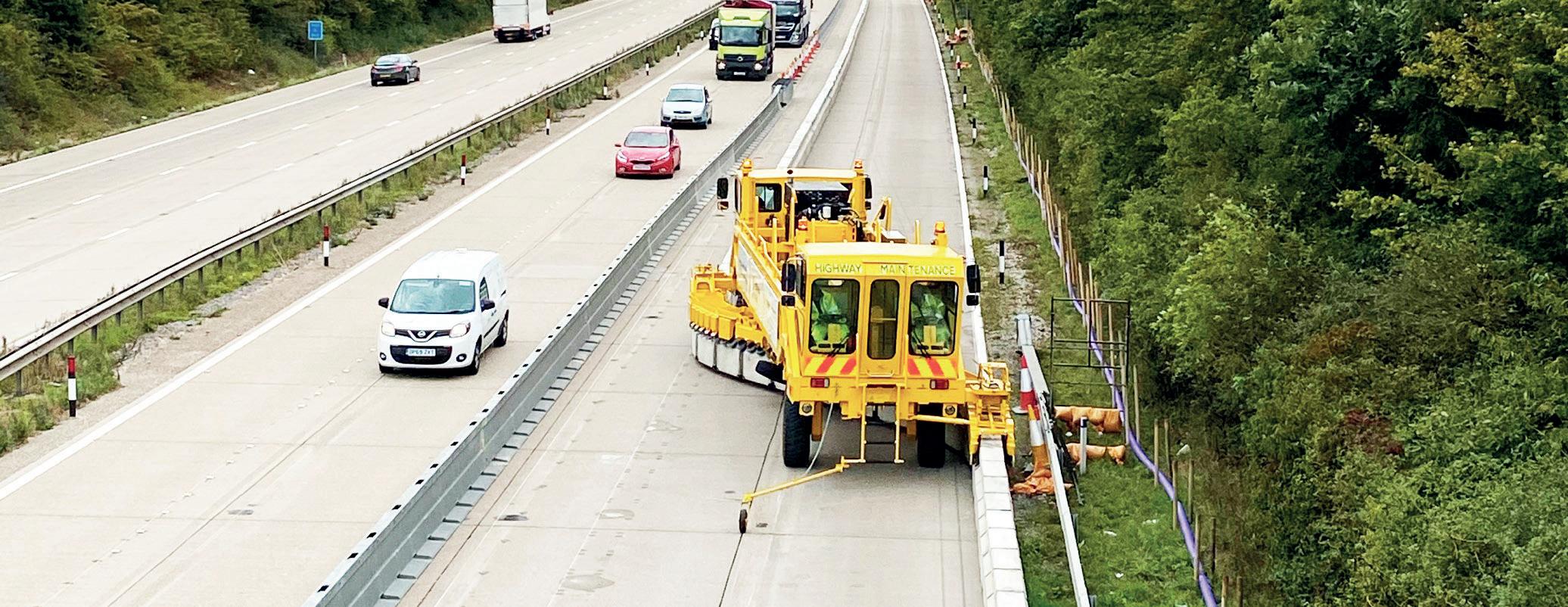

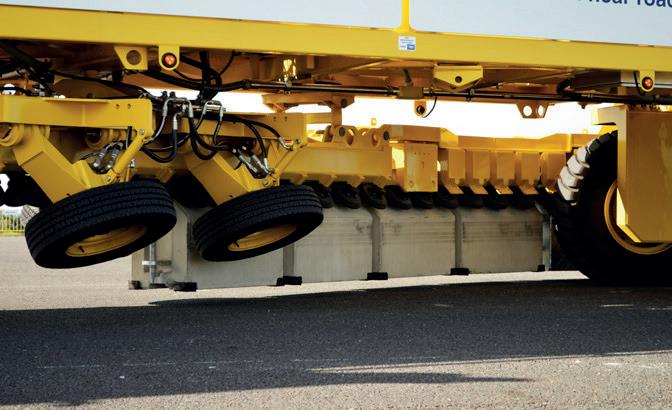
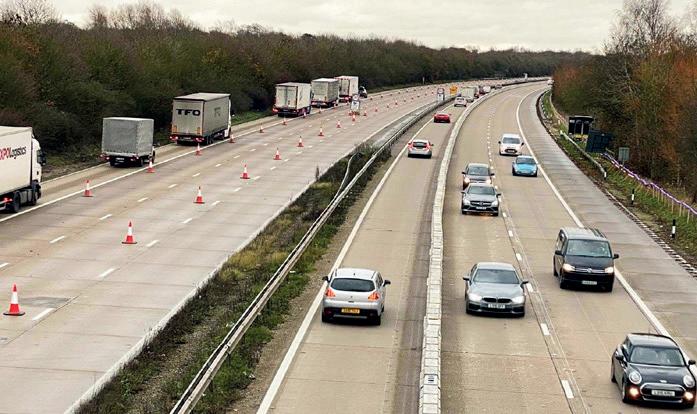



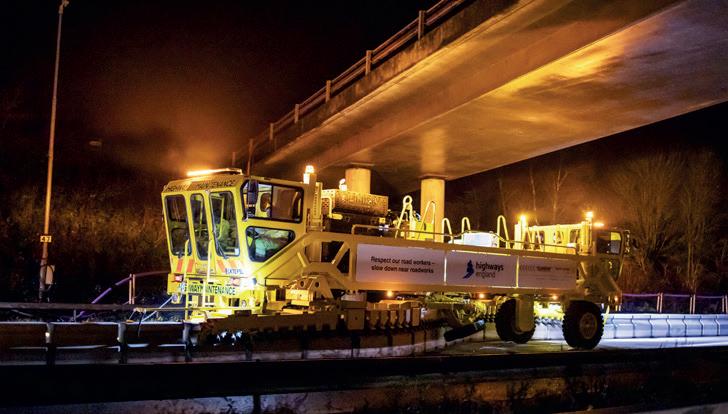

With the 185A barrier from Rebloc, comes the world´s rst extensively tested and fully EN 1317-1/2 compliant safety barrier with the highest containment levels H4a and H4b.
It has a working width of W1 and W2 and has an outstanding VI2 vehicle intrusion level. All this from a barrier that is 1.85m high,




only 0.57m wide and needing a footprint of just 0.8m. is makes the system suitable for an array of bridge types.
e anchored barrier o ers the best protection against errant vehicles, prevents the vehicle from breaking through or projecting over the barrier. Damage to the bridge structure is limited and – importantly – driver and passenger safety is




greatly enhanced. Due to its modular design and a patented coupling system, the Rebloc 185A is quickly and e ortlessly instal led on site irrespective of the season or weather conditions.
Fast and e cient installation shortens the time of restrictive measures for tra c.

▶ Stand 08.448 www.rebloc.com







Two eyes are better than one and Viscando has taken this to heart – heart of their 3D and AI tra ic sensing technology, that is. The Swedish company’s sensors work in exactly the same way as human vision, explains Amritpal Singh, founder and chief executive of Viscando.
Installed at an intersection, the OTUS3D sensors –developed for the defence aviation sector - have two ‘eyes’ that capture movement of vehicles, pedestrians, cyclists and other vulnerable road users.
Data is collected and with the help of artificial intelligence is presented in real time to users of the system. But beyond that, the system’s visualised presentation called Tra ic Insight – not in real time provides images of movements over time - along with graphs and tables.
With this visualised data and presentations, decisions can be made by municipalities about changes to road layouts to improve safety for all road users, says Singh. Importantly, municipalities can monitor these changes to see how e ective they have been and has the new road layout actually resulted in safer practices.
▶ Stand 05.333
www.viscando.com
Aimsun is at the show celebrating its success last month in winning an award for its latest project in Sydney, Australia.
The company’s Aimsun Live system uses simulation and Artificial Intelligence to predict tra ic on the city’s busiest motorway, which handles around 200,000 vehicles a day.
“It allows the operators to manage a smart motorway, so that if it detects an incident, it tells them what tra ic conditions will be in 15, 30, 45 and 60 minutes in advance,” said Scott Aitken, managing director of Aimsun’s Australia/New Zealand region. Control centre sta can tweak their response plans to
the incident using five di erent options suggested by the Aimsun Live system, optimising factors such as the reduction of congestion, reduction of emissions or maintaining tra ic flows. “They have KPIs that show how each of the response plans ranges against each other.”
The Live so ware has been
around for about 10 years, said Aitken, but is refined for each deployment. Around 15 cities now use the system, Sydney being the most recent. It is incorporated into an Advanced Tra ic Management System by a system integrator.
▶ Stand 02.312 www.aimsun.com
The World’s most effective air pollution control barrier. Removing up to 50% NOx, VOC and PM 2.5 & 10 instantly.

Freedom of choice is what the modular CrossWIM weigh-in-motion system from the Czech manufacturer Cross Zlin is all about. Freedom to choose an application for the Cross Zlin system and freedom to choose what road weighing sensors you use from ve or more other manufacturers if desired.
Agencies and authorities are no longer bound by previous sensor choices in order to upgrade and expand their existing systems, said Vaclav Blahnik, product manager for telematics with Cross Zlin. Importantly, variability is enhanced by accurate evaluation of temperature-compensated sensor signals, based on installed temperature sensors under the road surface.
Typical accessories include licence plate recognition, vehicle size measurement, variable message sign operation, and overview cameras. Also, if greater precision of measurement is needed for direct enforcement – weighing accuracy to around 5 per cent is gained by adding skewed piezo thresholds. ▶ Stand 01.307 www.cross-tra ic.com




















If it exists, then Metalesa’s new Metaurban Smart parapet containment system can measure it to provide the highest standard of road safety. Metalesa, a family-owned Spanish company, says its soon-to-be-available



Metaurban Smart is a breakthrough in the urban equipment sector. It will inspire others to imagine how the IoT can transform static road elements into active digital members of the smart-city ecosystem. The system can
create a modern image of the city that includes an elegant and aesthetic appearance.
Metaurban Smart is a sensor system that is added to road furniture – including road safety barriers and other vehicle restraint systems. Through signalling, electronics and so ware, it detects situations between road users and alerts them to potential accidents.
Metalesa’s solution already includes functionality for detecting situations such as proximity of cyclists to vehicles and distance to intersections and can manage signalling to accommodate tra ic management. A fully tested infrastructure system, using embedded LEDs, can operate autonomously 24/7, thanks to its secure, open and scalable control architecture.
Metaurban Smart combines the best knowledge of vehicle restraint systems with an innovative technology to provide users with a greater road safety experience and to turn cities and peri-urban roads into safer and gentler places to live in, promoting sustainable mobility. A complete product-specific website will be available in several languages from April 29. ▶ 08.263 https://metalesa.com/en









Measurement specialist Vaisala is well-known for its roadside weather stations that monitor carriageway conditions. But what if you’re a small city or municipality that does not need one of the company’s top-of-the-line solutions?
The Finnish firm is launching at Intertraffic a new idea that it believes will appeal to smaller cities: a slim, black cylinder that can be embedded in the roadway to provide critical weather data.
The Vaisala Ground Cast contains a sensor that lies flush with the road surface, together with a battery power source and communications device to transmit details of the road conditions to a control centre.
Ground Cast is around 30cm long and designed to slot into a hole drilled into the carriageway. The sensors measure road surface temperature, whether the road is wet or dry and the amount of salt, or other de-icing material, that remains on the road. “This tells you if you need to go out to treat the road,” said Vaisala’s sales director, roads business Europe, Erik Sucksdorff.

artillery,’” said Sucksdorff.
While the company’s full-scale weather stations are typically used on major routes, the Ground Cast is ideal for regional roads or city streets. “You can drop this into locations that are not covered by the ‘heavy
The container also measures temperatures below road surface. This can tell operators if, for example, there is enough residual warmth in the ground to melt autumn snow, thus reducing the need to treat roads at that time of year. Conversely, if light snow falls in early spring, low underground temperatures may require the road to be treated, even if
the amount of snow or ice is slight.
The Ground Cast has a guaranteed life of three years and can be replaced thereafter. Pilot projects using the device have been undertaken in Viborg, Denmark and in several Nordic nations, as well as the UK and France. It is scheduled to be installed in the Netherlands shortly.
▶ Stand 05.122 www.vaisala.com
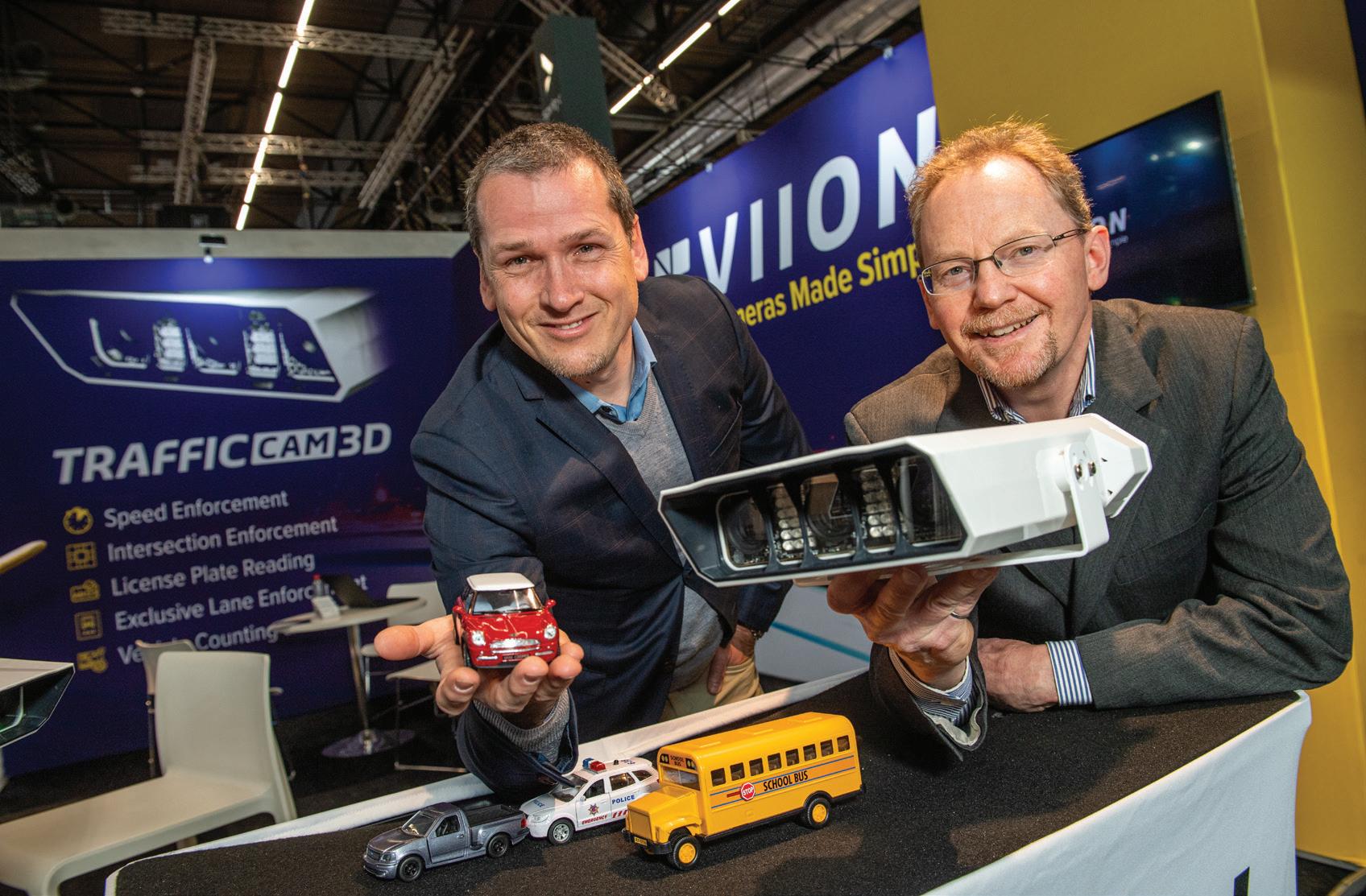
Viion Systems is showing what the company describes as the first enforcement camera to feature Artificial Intelligence (AI) running inside the device.
The camera can detect a range of traffic offences, including seatbelt detection, HOV lane occupancy and advanced vehicle classification. In the seatbelt detection mode, for example, if a driver or passenger is seen not to be wearing a belt, a fine is automatically prepared.
The system is built around Viion’s existing TrafficCam 3D model. While cameras have used AI before, said Viion’s president, Michael Kelly, the AI element has always previously been housed in external ‘back of house’ servers, with the imagery needing to be
transmitted to a control centre for processing.
The advantage of having AI within the camera is scalability, said Kelly. Creating a large network of hundreds, or even thousands, of cameras needs a huge amount of processing power to handle all the data feeds arriving simultaneously. Installing AI within the camera means that “You don’t need a supercomputer or huge bandwidth to deal with it.”
“To our knowledge, it’s the first time this technology has been put in the camera,” said Kelly. Going down this route means that only information that is important –violations – is sent to the control centre.
▶ Stand 05.414 www.viionsystems.com
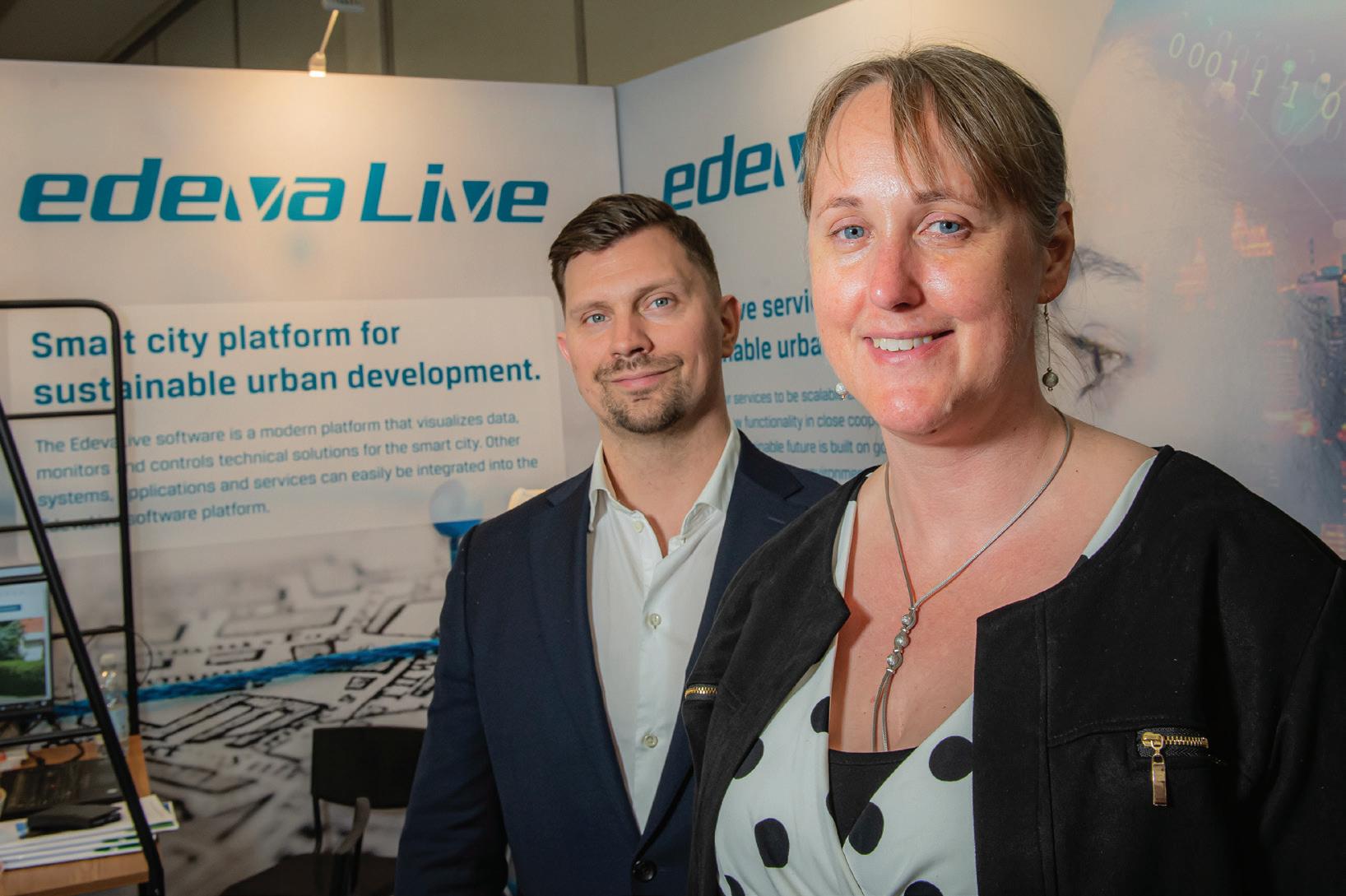
Actibump, an active speed bump, is now available worldwide after a decade and 100 installations in the Nordics. A special demonstration is available to visitors at the stand of Edeva, which developed and manufactures Actibump. During Intertraffic the accompanying software platform will be shown live.
The Actibump achieves the compromise between accessibility and traffic safety. It consists of the active - moveable - speed bump and a software platform called EdevaLive that monitors the hardware and collects and presents data from sensors on site.
The visible part of the Actibump is a hatch integrated into the road surface. A radar measures the speed of oncoming vehicles and when a speeding vehicle approaches, the hatch lowers a few centimetres, creating a dent in the road, giving the driver a physical reminder of the speed limit. It leads to a behavioural change where drivers stop speeding since all you need to do to avoid the inverted speed
bump is to stick to the speed limit.
For all drivers abiding by the speed limit the hatch remains level with the road surface and doesn’t affect the vehicle. This means that buses and emergency vehicles get better accessibility compared to regular speed bumps,
Anas is showcasing its technologies in the field of passive safety with particular attention on its new concrete central reservation barrier system, the National Dynamic Barrier.
The full range of the Anas road safety barriers is designed to safeguard and protect all road users, especially the most vulnerable, such as motorcyclists. Other innovations include steel barriers designed for extreme installation conditions – unfortunately, a recurring situation – called H2 and H3 TS0.
Roads of the future will also be in the limelight at the Anas stand, featuring Anas Smart Road technology for the development of Smart Mobility and the future use of autonomous vehicle driving scenarios.
bus drivers and passengers get a comfortable ride, and vulnerable road users get a safe passage.
Additional sensors can be installed in the Actibump or at the Actibump installation site to get data regarding vehicle types, vehicle weight, noise levels, air quality, temperature and ground
The project is aimed at improving road safety and making traffic flow more efficiently. It is based on a complex digital platform that is deployed on the road network as what could be called a ‘nervous system' with the support of technologies such as IoT (Internet of Things), AI (Artificial Intelligence), Big Data and advanced sensors through the development of the national ultra-broadband network.
Also present on the stand will be the company’s Technology Access Point and the Technology Energy Gate – both essential technologies for achieving tomorrow's sustainable mobility.
▶ Stand 07.219 www.stradeanas.it
vibrations. Other sensors can be added on request.
The Actibump won the Swedish Quality Innovation Award in 2021 and is a prize winner in the international Quality Innovation Award 2022 as well.
▶ Stand 02.109
www.actibump.com
Hog Technologies sniffs out growth
Hog Technologies has announced an expansion of its product lines, offering brand-new solutions to the road and highway industries. The company has continued to innovate its product lines with several new offerings including the Epoxy Hog, Crash Hog, Mini Hog, Grinder Hog GH2.0 and Broom Hog. Hog provides solutions for the road and highway industry with equipment specialising in road marking removal and rejuvenation, surface preparation and retexturing, grinding, grooving, rumble strip cutting, pavement marking in thermoplastic, waterborne paint, plural component, and 3M tape, hard surface cleaning, and more.
▶ Stand 07.405 www.thehog.com






Want to give it a try? Come by: Intertraffic Amsterdam: #05.258
CAM Dragon+
On-board ALPR processing









AI make&model recognition Accuracy >99 % Only 62 x 91 mm Plug & Play setup Ready-to-use or electronics kit


Find the perfect ALPR solution for your project! www.carrida-technologies.com
Australian company
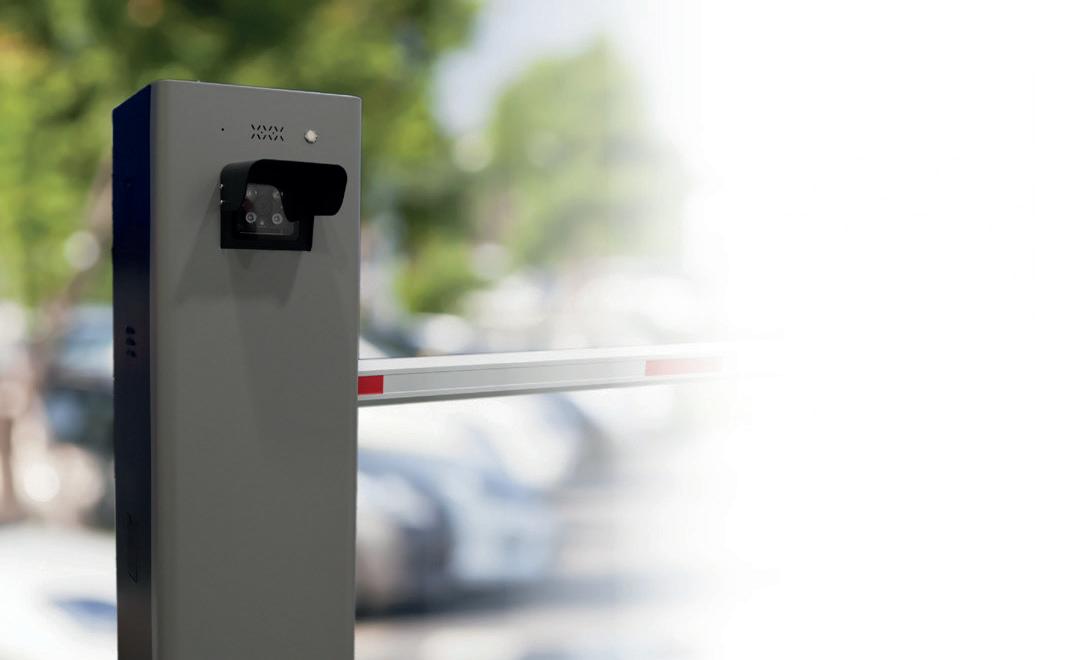
Braums is here to highlight signi cant expansion over the last few months. e company was appointed exclusive distributor for smartmicro in 2021. It also developed the Braums R2X and is highlighting the Braums Sense family for smart tra c and intersection management. It utilises smartmicro modern, above ground detection tra c sensors preserving the road surface.
Earlier this year, smartmicro extended Braums’ territory to include parts of Asia and all of the South Paci c. To support the growth of Braums globally, at the beginning of this month, the company opened its rst o ce in Singapore, getting feet on the ground to support the growth and success of its distribution partners in the region.
Braums is Australia’s leading LED tra c light manufacturer and provides pedestrian, roadway, and urban lighting,





smart city solutions and parking management systems across Australia and around the world. Combined with the company’s intelligent
smartmicro above-ground detection technology, Braums is now delivering integrated tra c management solutions to make tra c ow and
intersection management in Australia smarter, safer, and more e ective.
▶ Stand 05.418
www.braums.com.au


Urbiotica is showing its Artificial Intelligence (AI) based U-Spot Visio singlespace parking detection so ware at the show. The Spanish company says that the main challenge for U-Spot Visio was monitoring a large number of parking spaces with a single camera. The ability to do so makes it ideal for large parking lots, such as park & ride areas, shopping malls, airports or hospitals.
The company has also developed an enforcement solution for kerbside management, taking into account restrictions on loading and unloading, or parking for people of reduced mobility. This identifies users parked in each space and generates alerts when fraudulent use is detected. The system is based on the U-Spot M2M in-ground parking sensor, which uses
magnetic technology to detect in real-time the entry and exit of vehicles, as well as the duration of the session, with no need for a gateway to transmit the data. Through the app, sta can consult the information and be alerted in case of fraud.
There are already 2000 smartly managed parking spaces in Spain and international projects are on the way.
Urbiotica manages and controls the use of the parking spaces reserved for PRM by guiding authorised users to spaces that are free and at the same time alerting sta when unauthorised users take spaces. This acts as a strong deterrent to motorists, who become aware that they are being monitored.
▶ Stand 12.611
www.urbiotica.com


Every journey is different. As we move around, the means of which we travel and the apps that support us, are constantly evolving. Whether it’s for work or leisure, parking is often an integral part of that journey. As such, it should be simple and stress free.
WPS has developed an open and adaptive platform, supported by a broad partner marketplace, which offers a flexible, scalable and more economical approach to parking management. An exciting platform that brings together existing and new equipment, both our own and third party. Visit our booth to learn more.
Sterela says that its GlobalWIM High Speed Weigh-In-Motion solution is now type-approved for direct enforcement in Wallonia, the French-speaking region of Belgium. The metrological optimisation of the system has been successfully achieved and the first site is now legally operational.
Without having to intercept the vehicle, the Sterela system now legally weighs moving vehicles to detect and enforce overloading offences. The company says that this is a world-first with regards to a WIM system’s accuracy and confidence levels.
The GlobalWIM solution can be interfaced with third party applications or comes as a complete automated solution, including the back-office software that interfaces with the platform issuing fixed penalty notices to offending drivers.
The Sterela solution is ready to follow the type approval process of any country seeking to
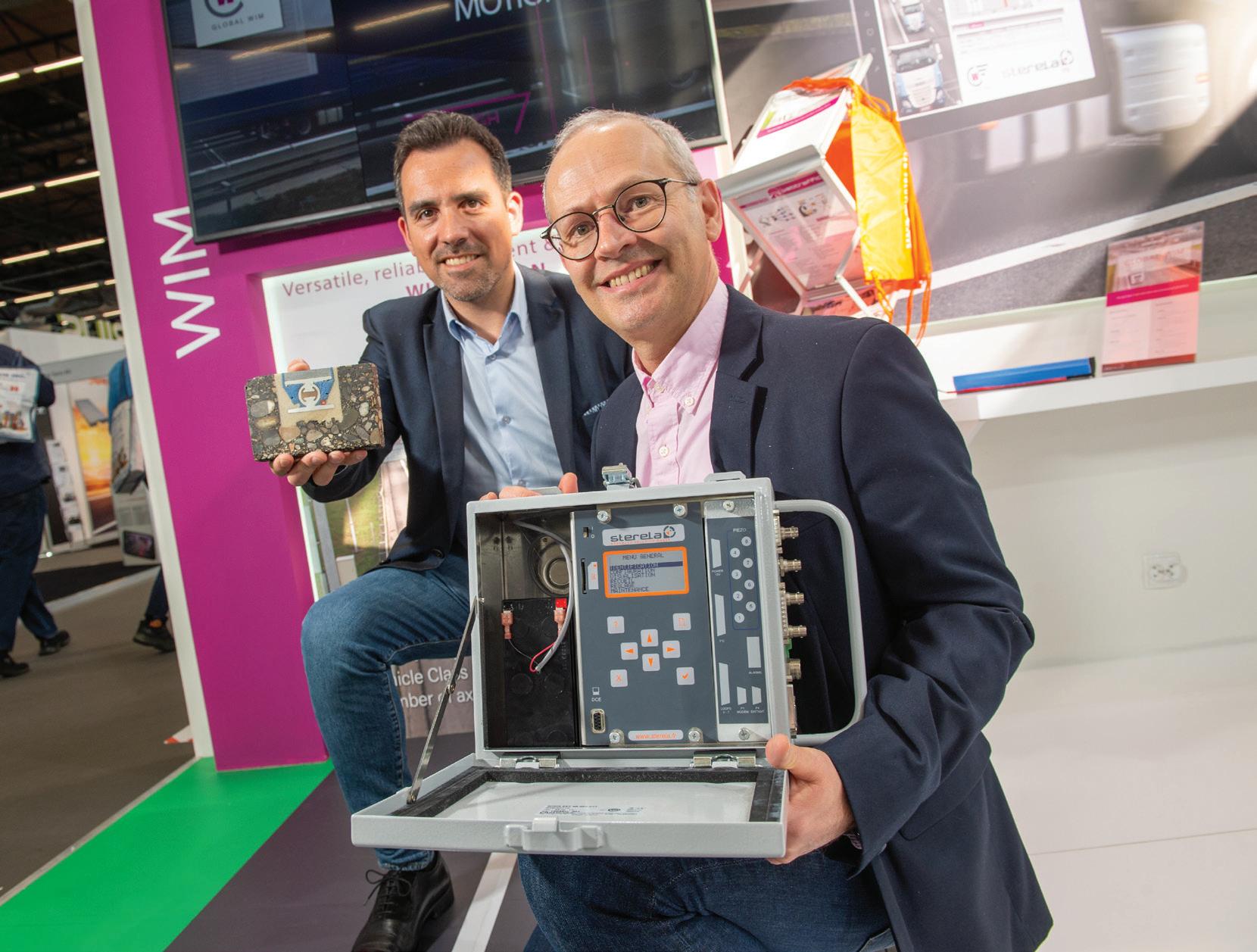
implement direct enforcement.
Visitors to the Sterela stand will also see the company’s counting systems that will provide road authorities the data and the intelligence needed to
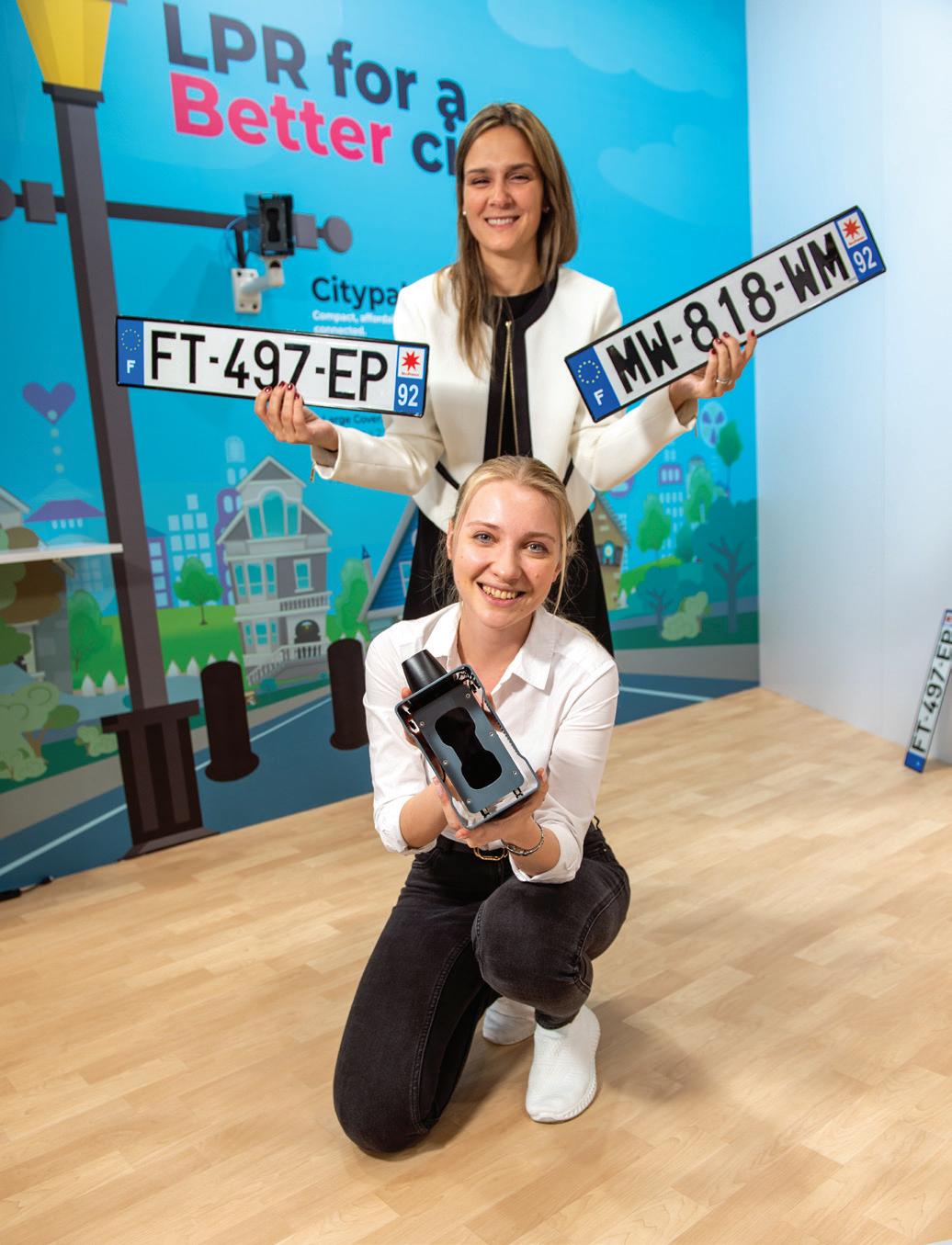
Survision is showing off a book-sized enforcement camera at Intertraffic which can be used for city tolling and for the increasingly important application of enforcing urban low-emission zones worldwide.
The company says its Citypak 5 keeps the spirit of all Survision cameras: there is no trigger, it is allembedded (no server and no heavy videos transmitted), it has highperforming IA-based firmware and can be used in environments where there tends to be a lack of alreadyavailable wired backbones.
As city authorities are increasingly concerned about the air quality which their citizens breathe in each day, many are turning to some form of restriction on motor vehicles – and these restrictions need
enforcing with pinpoint accuracy.
As well as being particularly compact – and therefore offering discreet and unobtrusive installation
- Citypak 5 offers wide aiming (up to 7 metres or two lanes) and at long distance (up to 35 metres) and directly embeds a 4G connection, allowing the real-time concentration of data in the Cloud.
When it comes to functionality and practicality, it has a protective front cover to reduce cleaning intervals and supplies real-time technical supervision data to make sure it is permanently performing at 100% of its capacities, the company insists. It is also the price of a standard LPR access control camera, Survision says.
▶ Stands: 12.200 & 05.351 www.survisiongroup.com
make informed daily decisions regarding road network management. There are both permanent and temporary solutions to count and classify all types of
vehicles, including cyclists, on any type of road - from mixed traffic carriageways to dedicated cycle paths.
▶ Stand 05.260
www.sterela-its.com




























The rise of walking and cycling in our urban areas is a key component of post-Covid life as some street space has been reallocated away from cars.
But this brings its own challenges in terms of safety, and vehicle detection specialist Capsys is unveiling a new detection solution to address the safe and smooth integration of active mobility into urban areas.
A major market player for over 30 years, Capsys remains a family-owned company which has enhanced its technology portfolio to cover the full range of detection applications, according to the needs of its customers and to developments in the industry and wider society.
At Intertra c 2022 it is
presenting a variety of other new solutions too: in addition to its active travel products, these include a high-performance range of multi-application radars and a new con guration application, Cap’Mobile, to make installation simple, remote and exible.
As well as urban tra c control, Capsys also works in public transport management, with tra c light priority for buses and emergency vehicles, as well as track switching control for tram and tram-train networks.
With a high focus on technology and ingenuity, turnkey solutions also make up an important part of its activity, Capsys says. ▶ Stand 01.505 www.capsys.eu












Advances in battery and electronics technology have opened up a new market for Swedish company Sensebit.
The company’s Flex sensor takes advantage of much longer battery life and electronics with greatly reduced power requirements to transform what
had been a road sensor with a one-year life to one that will last for up to a decade.
This has transformed the product and marketplace, said CEO Fredrik Zettergren. Traditionally, customers wanted permanent measurement stations, but costs meant that

Vegard Thomassen VP Norway and Denmark Operations

Marco Sinnema Product Manager Intrada
they could usually a ord only a small number of these, together with larger numbers of temporary measuring stations.
Now, instead of paying €15,000 for a permanent station, they can pay roughly one-tenth of that for a product whose lifespan



makes it e ectively a permanent installation.
Flex measures factors such as vehicle speed and type of vehicle, time-stamping them. Sensebit has now sold Flex to 13 countries.
▶ Stand 01.530 www.sensebit.se
Mingle with us and join our live sessions on Tuesday, Wednesday and Thursday


Mats M. Bjerke R&D Engineer





















Visitors to the Skidata stand are being challenged to think about what makes a perfect parking experience. From finding a parking spot to having your vehicle cleaned while you go shopping, Skidata systems meet the highest expectations and look to the future. The company says that its customers can benefit from EV charging and parking fee payment with a single identifier.
Car park operators can monitor all their car parks remotely and use detailed reporting features to manage occupancy levels and generate value-focused business forecasts. Skidata says that operators will also increase revenues by seamlessly integrating EV charging into their parking system so that payment of parking fee and charging fee is undertaken in a single transaction. Importantly, they will be able operate independently from other EVcharging network operators and keep control.
With the cloud-based sweb Platform, Skidata offers the foundation to fully exploit the potential of digitalisation and to implement new business
ideas. The open interfaces and simple integration possibilities offered by the Skidata system architecture make it all possible. With the company’s consulting, implementation and service, all parking needs can be found at a single source. The company’s smart Parking.Logic software controls your entire facilities.
Intelligent and secure access management systems provide the highest level of comfort for guests and professional data and report management provides management with the reliable key figures need for strategic decisions.
The targeted optimisation of operational processes increases
A new project bringing together MercedesBenz and the Netherlands’ ministry of infrastructure and water management (Min I&W) aims to deliver more accurate data on roads.
The two-year intelligent road monitoring project, which is now under way, will use data from Mercedes-Benz vehicles to increase knowledge in areas such as winter management, asset management and road safety. It will cover a road network of more than 130,000km in the Netherlands.
The aim is to produce actionable data. For example, said Dick Ottevanger, programme manager for smart mobility at the Rijkswaterstaat, part of the Min I&W,
plans for improving or repairing roads were known for the year ahead, “but cars can actively deliver everyday information on the condition of a road. That’s a big difference.
“The question is, what can we do with this data? Can contractors handle all this information? Is it too much?”
The project is a pilot programme, said Ottevanger. In future, vehicles other than Mercedes-Benz models might be enrolled in the scheme and it could be applied to organisations such as the country’s provinces and municipalities.
“Winning this important reference project in Europe for intelligent road
efficiency and a wide range of marketing and sales channels increases turnover. The seamless integration of third-party systems also ensures high flexibility of operations.
Find out more at the Skidata stand.
▶ Stand 02.100
www.skidata.com
monitoring marks a major step for Mercedes-Benz in our clearly stated aim to ‘Lead in car software’, said Daniel Deparis, head of urban mobility solutions at Mercedes-Benz Group.
The use of the anonymised data from intelligent, connected vehicles in the company’s range “will be able to deliver action-guiding insights and thereby aid responsiveness and decision-making in critical infrastructure projects”. Potholes, icy roads and abrasion of road markings are among the road problems that could be reported by the vehicles.
▶ Stand 02.200
www.metropoolregioamsterdam.nl



As city populations grow, so does car ownershipand so does the burden on urban tra c systems. What these built-up areas need is intelligent tra c systems – and Hikvision says it can help by removing bottlenecks that have long troubled authorities and drivers to keep tra c owing and help people get where they need to be in a smarter and smoother way.
e company’s basic Intelligent Tra c System solution rests on speci c data to enable ve pillars of action: speed detection, intersection monitoring, illegal parking, event detection and tra c ow optimisation.
On its stand, Hikvision has set up a model of city streets surrounded by vision equipment. e company is showing its wide product range, including one of the newest additions, the All-Rounder Tra c Incident Detection camera.
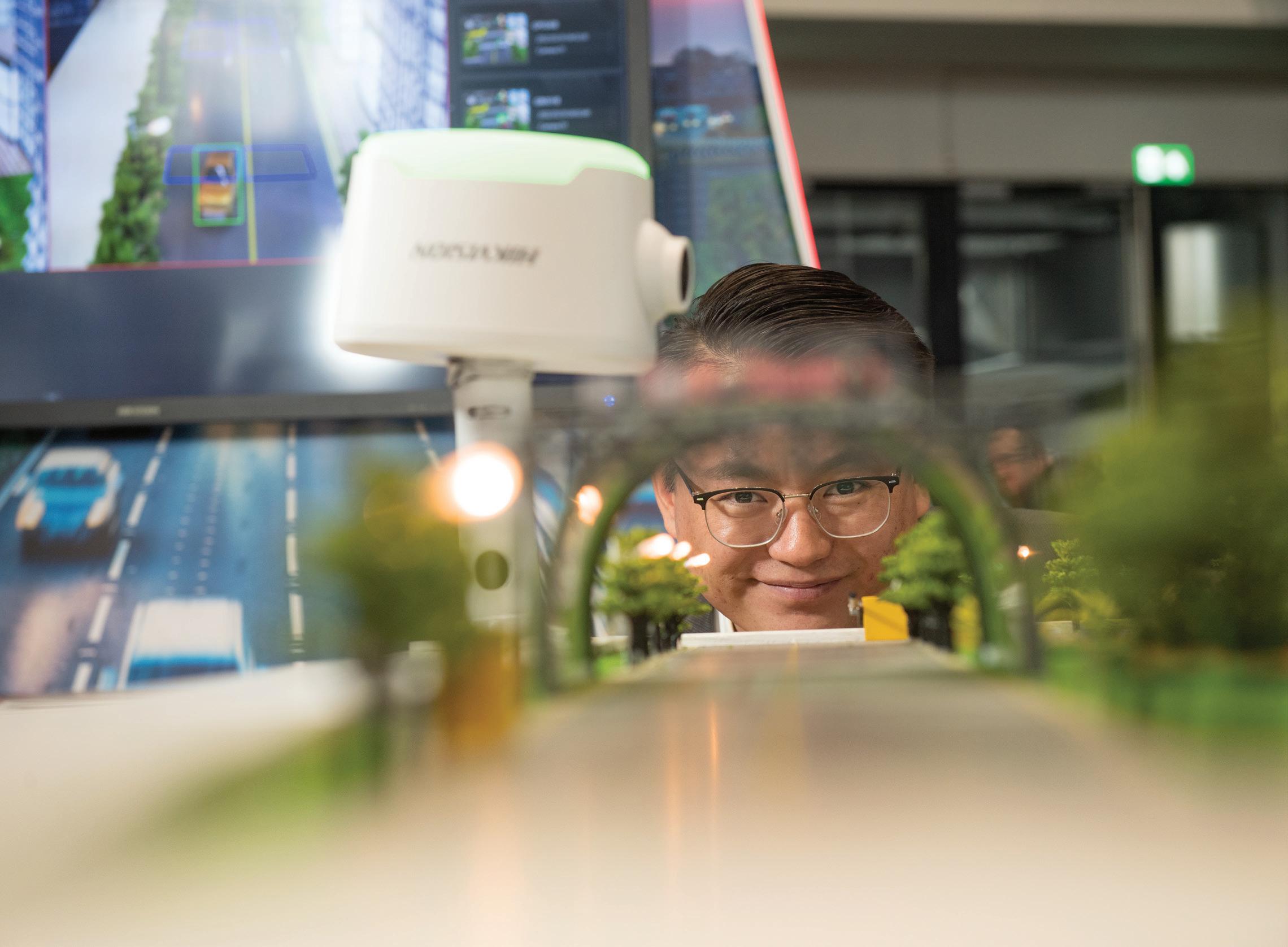
“We want our customers to know that our products can provide these solutions,” says Tony Zhang at Hikvision. “We have cameras for ANPR, parking and violation detection.”

ere is also a tunnel on the model to illustrate Hikvision’s incident detection abilities, with ANPR cameras at each end and AI systems capability.
To optimise tra c ow, smart







tra c signal control can greatly ease congestion. ese systems can collect tra c information at crucial intersections and on highways to provide videobased vehicle detection services,
WIM Pro 3.0 is the latest upgrade by ITS so ware producer APM of its proven weigh-in-motion system with an eye to automatic ticketing of drivers.
“The beauty of our system is that it can use a highway authority’s or a bridge owner’s existing WIM sensors which can be anything from quartz to piezoelectric and many others,” says Dawid Brudny, financial director of APM, based in Poland. “This makes WIM Pro 3.0 universal.”
APM designs the system, installs it and monitors it, all with its own iWIM Data Logger. Highway authorities need not splash out on expensive sensor hardware or APM can plan a completely new system and use sensors that are on the market.
The system enables vehicles to be preselected so that only those previously identified as overloaded are weighed on certified scales. The authorities controlling the vehicles can analyse the data provided by the system via a web browser or a mobile application.
More than 50 of the systems have been
including detection and statistics of tra c ow, average speeds, space and vehicle progress, vehicle type and queue length. ▶ Stand 05.303 www.hikvision.com
installed in Poland and recent contracts include Kuwait, Dubai, Brunei and Ukraine.
Visitors to the APM stand will also see demonstrations of Control Pro, a so ware platform that can manage multiple ITS services and road maintenance information on motorways and other high-speed roads. Control Pro uses easyto-implement mechanisms to integrate existing ITS components and allows expansion with new devices. System so ware allows an integration of various detection, monitoring, and control subsystems, creating a multimodal tra ic management platform.
The most commonly used subsystems managed by Control Pro include variable message signs, meteorological systems, CCTV cameras, CB radio and automatic number plate recognition cameras. At the moment, around 400km of motorway are covered by Control Pro and APM is looking for expansion along panEuropean road networks.
▶ Stand 02.328
www.apm.pl
When the red lights go o , it’s time to go racing! Intertra c is a great place for games: they’re a good way of illustrating some of the serious points behind smart mobility. And if you’ve ever wanted to be Charles Leclerc, or Lewis Hamilton, or Carlos Sainz – or maybe even Max Verstappen, then now’s your chance.
On the Amsterdam Metropolitan Region stand at Intertra c there is a travel game in which you can try to virtually get from RAI Amsterdam to the worldfamous Formula 1 racetrack at Zandvoort in the quickest, smartest way possible. e point is to highlight how
di erent modes can help reduce congestion.
Along the way, you will have to answer questions on mobility and data – some of them are easy, some not so easy, but all of them come with three choices. Whoever gives the best answer will get there the quickest – and there are prizes for those who manage to get onto the podium.
“It’s a race between di erent modes of transport,” explains Anna Beerekamp from Metropolitan Region Amsterdam, who helped to develop the game. “In the game you can choose.”
She explains that it was inspired by real-life travel
World’s leading traffic management provider


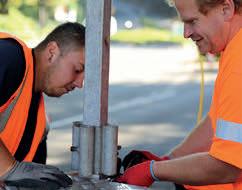
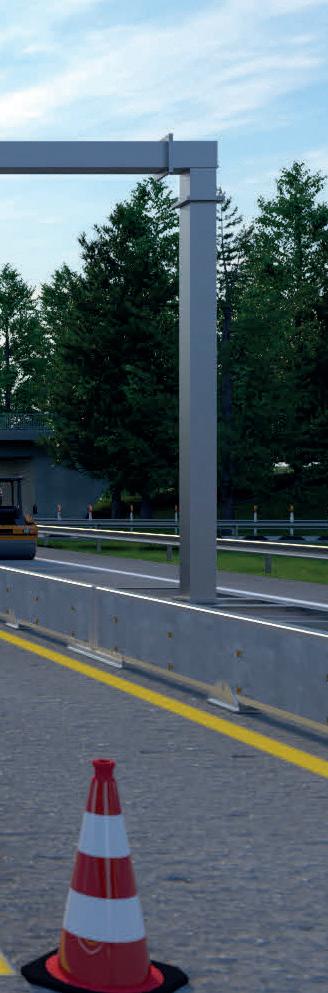
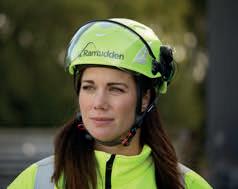
Work Zone Safety Group of companies (WZSG) operates traffic services companies in 11 countries with over 4,000 employees including AVS (Germany), Chevron Traffic Management (UK), Fero (Belgium, Netherlands) and Ramudden (Nordics), as well as HRS (UK), a company focused on digitalizing mobility and safety in work zones. https://www.wzsgroup.com/


arrangements for last year’s Grand Prix at Zandvoort, when racegoers were encouraged to come by public transport or even bicycle. “We had the biggest temporary biking stall in Europe,” she says. “It was mainly closed o for cars but there was no issue with that. People were encouraged to leave their vehicle and rent a bike.”
e same arrangements will be in place for the Dutch Grand Prix in September 2022. “And I hope Verstappen wins again!” says Beerekamp. You might not be getting there at 200mph yourself, but go and try your luck in hall 2.
▶ Stand 02.200 www.vervoerregio.nl
Emovis is showcasing its latest toll-based mobility solutions. The Covid pandemic has accelerated the transition to cashless tolling and the drive towards digital charging methods. Last year, the company successfully delivered the UK’s first pay-by-plate tolling system on the Mersey Tunnel. Not only does this solution greatly improve the customer journey experience by automating the toll plaza crossing, but it also lowers the road operator’s operating costs by eliminating the need to invest in tag-based roadside equipment.
Earlier this year, Emovis signed its 4th road user charging (RUC) contract in the US with Virginia Department of Motor Vehicles to implement the Mileage-Based User Fee programme.
▶ Stand 02.134 www.emovis.com

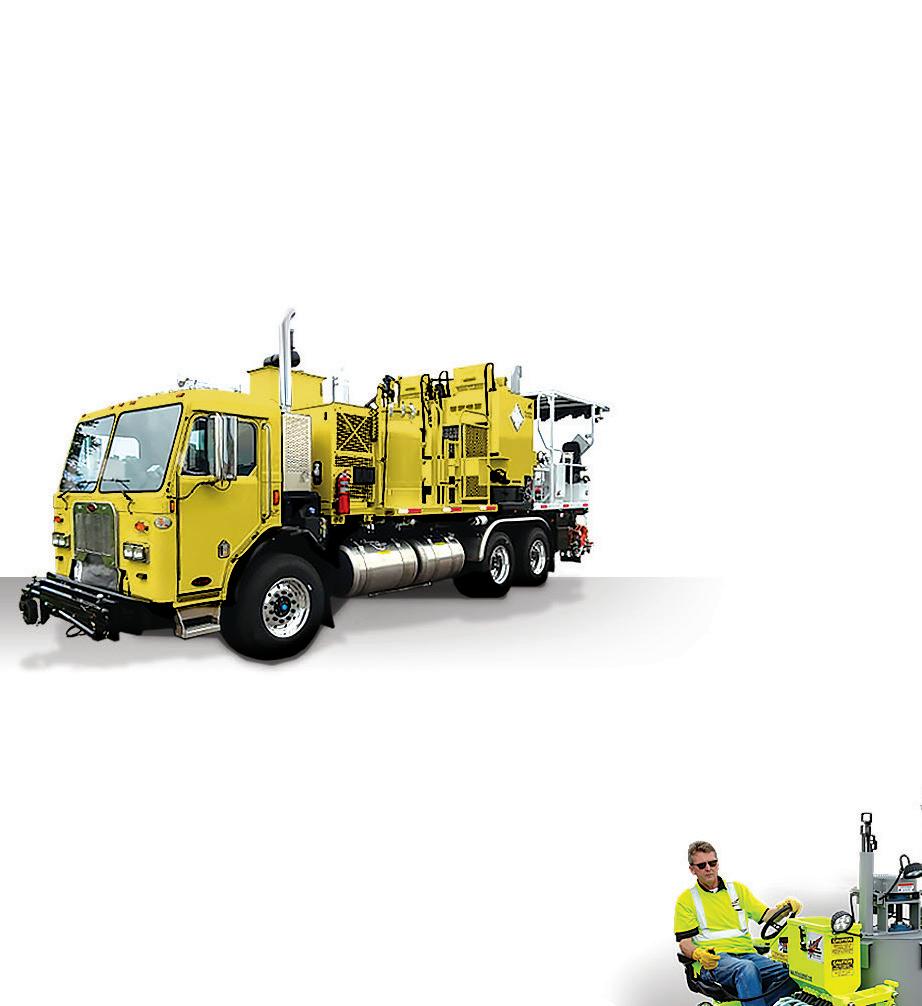

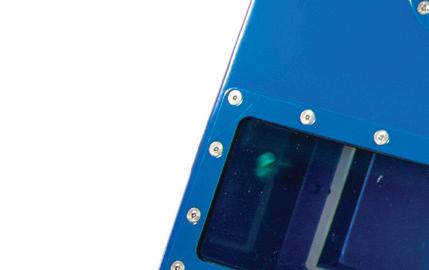
Road authorities globally are under pressure to improve the quality of road markings in preparation for connected and autonomous vehicles (CAV). e safety systems, such as lane departure warnings, rely on quality road markings to operate correctly. As such, road marking surveys are now safer and more cost e ective thanks to the innovative RetroTek-D mobile retrore ectometer, from Re ective Measurement Systems. RetroTek-D uses the latest machine vision and LED projector technology combined with powerful GPS tracking reporting software to radically transform retrore ectivity road marking surveys for operators. e front-mounted mobile RetroTek-D system is the rst full-lane-width vehicle mounted retrore ectometer that can operate day or night and which






is certi ed to EN1436 and ASTM E 1710 standards. It can record retrore ectivity and day-contrast measurements for left, right and centre lane road markings and also re ective pavement markings (RPMs/road studs) in one survey. is can reduce survey costs by up to 50%.




survey costs by up to






of accuracy in




as handheld


normal road tra c

gathering all the data digitally to pinpoint road marking failures.

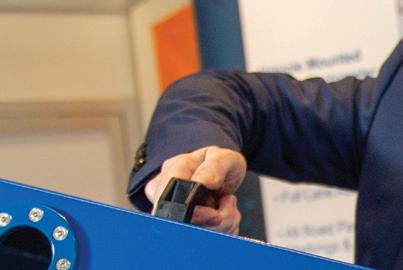
e RetroTek-D has been independently certi ed to provide the same level of accuracy in retrore ectivity measurement as handheld devices, but at normal road tra c speeds. is eliminates the need for road closures or tra c disruption while simultaneously gathering all the data digitally to pinpoint road marking failures. ▶ Stand 01.163 www.reflective-systems.com



















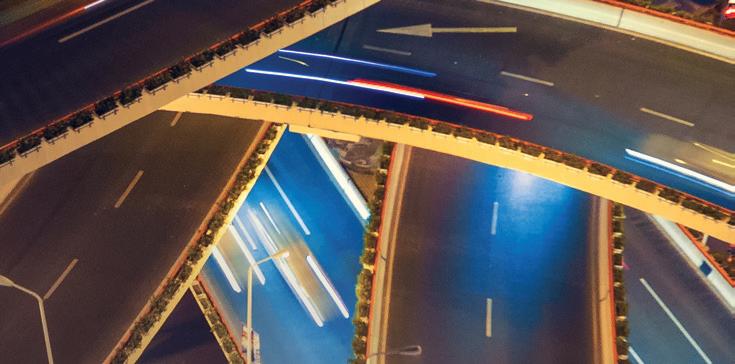




There are ways that we can harvest power from the world’s roads – without necessarily building new infrastructure. David Crawford investigates some of these new approaches
Major technologies available for harvesting energy from the world’s existing road infrastructure come under the microscope in a wide-ranging investigation carried out by the Department of Engineering at the UK’s Lancaster University.
In a review carried out for the Basel, Switzerland-based open-access Multidisciplinary Digital Publishing Institute (MDPI), a team led by Professor Mohamed Saa de nes the most important factors in
Piezoelectric (e.g. from impact of tyres on roads; pedestrians on footways and in metro stations)
Thermoelectric (e.g. from heat absorbed by roads)
Electromagnetic (e.g. from speed bumps)
Photovoltaic (e.g. from solar panels)
Source: MDPI
appraising available solutions. ese are costs, product durability and compatibility with standard paving materials such as asphalt and concrete. ( e respective advantages and disadvantages are summarised in table 1).
e exercise forms part of the €3.88 million ($4.5 million) Saferup (Sustainable, Accessible, Safe, Resilient and Smart Urban Pavements) programme, nanced by the European Commission’s Horizon 2020 fund and led by the University of Bologna.
Good mechanical properties; Easy installation Performance not weather-dependent
Easy installation
High power output
Relatively low maintenance cost
Average power output
Very low power output
Expensive fabrication and maintenance
Very low power output
Weather- and temperature-dependent
Influencing tra ic flows
Weather-dependent
Expensive fabrication and maintenance; Fragile, not necessarily mechanically compatible with roads
It re ects the fact that, as an available source, urban pavements comprise almost 40% of the area of European cities - as well as providing their main means of travel. Other partners come from Austria, France, Germany, Italy, Latvia and Spain.
e Lancaster team concludes that all of the systems that it has looked at (see table 1) have the potential to recover at least part of the inherent energy that is otherwise being wasted. But it warns that, with so much current activity still in the development phase, and given the standard of current evaluations of the maturity of the technologies, more work is needed to ll the knowledge gap that exists between the current situation and the eventual arrival of fully-tested operational forms.
Not least signi cant is the need, so far unrealised, for fully comprehensive comparative nancial appraisals that take into account both long-term performance criteria and the e ects of interactions with the physical properties of the roadways being used for the harvesting. Without these, it remains impossible to determine the most bene cial operational form for each potential user case.
Of the available solutions, the team is also looking more closely at the viability of piezoelectric installations, with initial tests
on 1.6km (one mile) stretches of road in both Italy and the UK.
The target is the feasibility of recovering between one and two Mw per km under normal traffic volumes of between 2,000 and 3,000 vehicles per hour, and to store the energy being produced in batteries to power streetlamps, traffic lights and electric car charging points.
The main challenge, according to Saafi, is to avoid affecting the performance of vehicles in terms of gas consumption and safety.
Meanwhile, electromagnetic systems that take advantage of the need for speed bumps to encourage safer driving enjoy, as the team points out, the advantage of being “an established form of interaction with the pavement in terms of mechanical performance”. But, it stresses, they need good insulation and regular monitoring for fatigue and corrosion.
Solar systems, using integrated panels, can benefit from widespread public awareness of their capabilities and emerge as currently the most developed available offer, with a high level of technology readiness.
The 2010s witnessed a surge of interest in highway applications and, in 2014, a publicprivate consortium led by Netherlands transport technology institution TNO built what it claimed as the world’s first solar cycling route, 100m (330ft) long.
Further schemes followed there and in France, and 2018 saw the foundation of specialist company SolaRoad to develop the technology commercially. Total costs were envisaged as likely to be comparable to those of regular roads, with higher initial levels of investment being offset by sales of the electricity generated for use in homes and businesses.
Other uses envisaged include streetlighting, illuminating bus shelters, heating, and powering WiFi access and charging points for electric bikes or mobile phones.
But prospects of extending the concept to major traffic routes met with cost problems arising from panel fragility and repair needs, weather dependence and the shadowing effect of passing vehicles – as with a scheme aimed at establishing a solar bus lane. Subsequently, implementation target areas have shifted towards low-traffic application areas such as business parks, access routes, piazzas and railway station platforms – as well as further cycle paths.
To overcome earlier durability issues, the panels now have non-slip, wear-resistant, transparent coatings and are mounted on concrete slabs, giving a load-bearing capacity of up to 12 tonnes, and are designed
to provide skid-resistance for both traffic and pedestrians. The company claims that, in local conditions, the system produces solar power of up to 136 kWh/ m² / year –an efficiency rate of 75% compared with that of roof panels installed on buildings. It also maintains that the overall costs remain comparable to those of constructing conventional roads thanks to sales of the energy generated.
As evidence of continuing interest, in July 2021 the Netherlands province of Utrecht, which aims to be energy-neutral by 2040, opened a 330m (1000ft) solar cycle path. The energy this generates is being supplied to the local electricity grid - as well as being available for road lighting and surface heating - and an expanded local network is on the drawing board.
Local officials have stressed the dual use
of the pavement space as avoiding the loss of open land to meet power-generation needs – a factor increasingly being seen as boosting public resistance to solar parks and wind farms. (Symbolically, the opening took place on the day that the EU launched new emissions-cutting legislation).
Meanwhile another Netherlands-based company, Soluxio has developed flexible solar panels for wrapping round existing streetlighting posts, to enable them to generate their own energy needs off-grid, with in-built microcontrollers for remote management and lithium batteries. In a parallel gesture to environmental concerns, wildlife-friendly versions minimise the disruption of natural habitats.
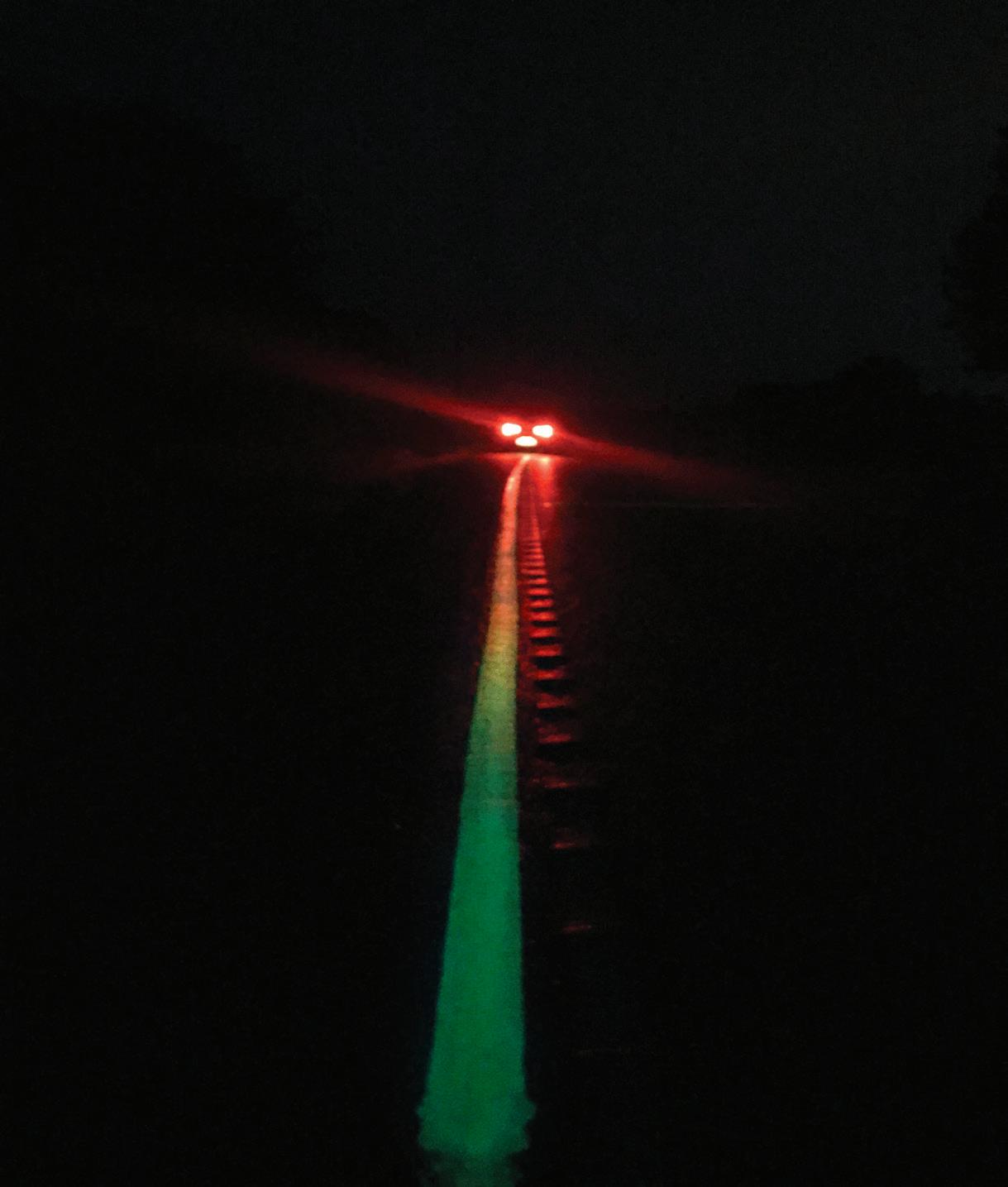
In a similar add-on approach, UK-based sustainability specialist Nevana Designs has created a spray-on coating designed to make otherwise normal pathways glow in the dark as an alternative to the deployment of physical streetlighting infrastructure with its ongoing energy costs.
The light-responsive formula enables the absorption of UV rays during the day for later emission as a soft blue glow for up to 10 hours. A sister product, a polymer-based thermoplastic line marking, helps those driving at night to view the road ahead beyond the extent of their headlights.
With an estimated 300 million-plus streetlights currently operating worldwide, a tally expected to top 350 million by 2025, the market for such innovations is potentially huge. Nevana’s Hamish Scott told ITS International: “The cost comparison with conventional street lighting makes you start to wonder why we would persist with it when the answer is to turn it off”.
This article was first published in ITS International. For your free subscription to ITS International or its sister publication, World Highways, go to www.roplreg.com or visit stand 01.105, Route One Publishing.
Source: SolaRoad

We get the best out of your parking space and turn your parkers into fans! With the new Designa CONNECT series, you can offer your visitors even more service and userfriendliness and, as a car park operator, have a reliable source of profit. Use the seamless interaction of barriers, lane devices, tickets, pay stations, sophisticated software and web-based services from one single source. A fully networked system that can be easily expanded and customized at any time. Future-driven and ingenious for smart parking management.
Smarter solutions for a digital planet.








How can smart mobility move the world forward?
At Verra Mobility, we believe that connection is at the core.
Smart mobility is fundamentally about making cities more habitable. Roadways and transportation systems enable us to travel to and from work, to send our children to school, and to visit loved ones.
Roadways are the connectors that bring us together and enable us to experience the world.
Today, we at Verra Mobility are investing in urban and motorway mobility solutions to ensure that the road ahead is smarter and safer. Our end-to-end solutions seamlessly connect people, technology and data, with security and data privacy at the core of all that we do.
VISIT US AT BOOTH 01.303 Let’s move the world forward together.

We operate at the center of a complex and ever-changing transportation ecosystem. Like technology, our scale to drive outcomes is constantly accelerating; our innovation is always evolving. Verra Mobility moves the world forward.
Visit us at Booth 01.303 to see how we are building smart solutions for safer communities.











With SiWIM, from Cestel, you get double value for your money. Law enforcement agencies get traditional highly accurate weigh-in-motion tra c circulation information about heavy trucks. Meanwhile, bridge owners get data on how their asset is reacting to the passage of vehicles. Sensors are located in the middle of a bridge’s span where the exing of the span

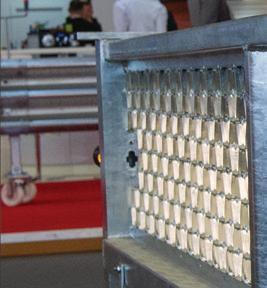
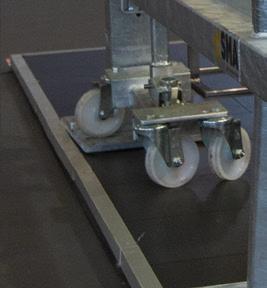
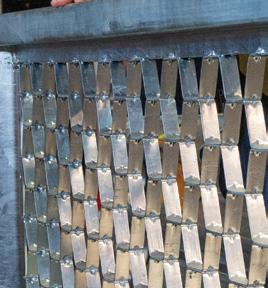
is at its greatest, explains Sara Zerko, from Cestel’s marketing department. Relationships between bridge deck vibrations and the trucks tells the real story about both the truck as well as the bridge. e data is analysed by Cestel and information is sent via an app to the bridge owners or the local law enforcement organisations.
De ections of a bridge’s span are recorded and can be used


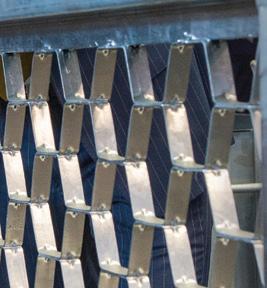
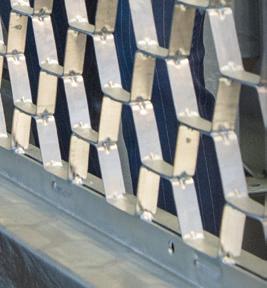


to calculate deterioration of the asset in several ways. is allows planned maintenance programmes to be developed based on the amount of tra c using the bridge. Tra c volumes could be controlled to extend the life of the road surface, for example.
SiWIM’s hardware is based on simple strain gauges, precise ampli ers and fast signal converters. Cestel’s

software, developed inhouse, covers all the areas of the measuring process and presents the end-user with a comprehensible, readable report. e result is weighin-motion law enforcement coupled with e cient strategic asset management. A win-win solution for everyone, notes Cestel, based in Slovenia.
▶ Stand 01.227
www.cestel.eu
SMA Road Safety is showcasing a range of hybrid tools for its safety barriers to protect motorists and communicate with operators and road users in the event of an accident
Its Geronimo tool provides inservice performance evaluation and records video of an impact against the frontal crash barrier, alerting the police and rescue services in real-time.
The Andromeda bridge rail is equipped with a system of distributed sensors that alert motorists a er an impact. With installers and maintenance
managers in mind, Italy-based SMA has also launched the Smart App that connects smartphones to the barriers to access product information (installation and repair procedures, spare parts list).
To improve safety in tunnels when there is an accident, SMA is proposing an active and passive safety system that is designed to significantly speed up the evacuation process. All the solutions are being showcased here at Intertra ic.
▶ Stand 08.334
www.smaroadsafety.com
In Auckland, New Zealand, State Highway 20B connects the city of 1.6 million people with the rest of the nation and the international airport, one of
only two roads leading there
In Auckland, New Zealand, State Highway 20B connects the city of 1.6 million people with the rest of the nation and the international airport, one of only two roads leading there.
In a joint initiative between government and Auckland International Airport, Waka Kotahi NZ Transport Agency led a project to improve the tra c ow rates to and from the airport. is was not simply a widening project. Instead, a completely new road was to be built using the old alignment.
From the very beginning, the project had an ambitious time frame – 19 months were allowed for the construction phase.
“In order to meet our 2021 time-frame, we had to juggle a few balls to make it work,” said Ameer Bahho, Waka Kotahi project manager. “We were required to look outside the box when it came to construction. It’s a story of collaboration and teamwork, to work as one to achieve the desired result.”
James Rooney, technical director for designers Aurecon, said the solution was found thanks to the one-team approach between the contractor, designer, and clients.

“ ere were no walls between divisions, and we approached the project with open minds and honesty.”

In fact, Rooney says the contract was rewritten to become a cost-reimbursement contract. “It’s like a mini-alliance but with fewer overheads,” he explained.
pavement redesign, facilitated by GPS machine control from Trimble.
Instead of the usual three stages of road building, where rst one side of the road is constructed, then the other, before the middle is completed to tie them together – the new approach entailed just two stages.
Project manager Richard Anthony, of contracting rm Fulton Hogan, said: “We started by doing a traditional widening on one side, with a temporary pedestrian and cycle path running down alongside, but once we reached a certain stage, we started working in the middle of the road, which is quite unusual."
is was not an overlay or a mill and replace, he said. “We had a complete change of level in places, of up to 1.6m.”
e project began in January 2020, but within a few months, the outbreak of Covid-19 meant the project team quickly adjusted to new health and safety rules, instigating social distancing and other safety measures onsite. Anthony says lower tra c demands meant that rather than working behind cones and enclosures, “we started closing the road at night, which allowed us to create a much safer working environment by eliminating the live tra c aspect. It also improved e ciency.”

e solution that would deliver the desired time-saving result was a surface
than expected. However, the mill would cut to the correct level for the new pavement to be laid at 390mm thickness.
“It would auto-adjust as needed. is meant we were putting the correct thickness of pavement back in, so when it came to laying the nal level (two layers of asphalt), it was straightforward.
“With the Trimble technology we could achieve accuracy of 10mm or better, in fact, we were usually within 5mm, which, considering the size and type of equipment we were using, was amazing."
With the machine control technology, the milling machine was able to cut accurately to the correct depth, allowing the precise thickness of asphalt to be paved on top. Anthony is quick to stress that collaboration between the players is what has led to the success of this project. “We had a couple of big but simple ideas, plus 100 other small ones, that enabled us to deliver.

However, Anthony said that the new road and the old road didn’t align at all: “ is made things exciting. But this is where the Trimble technology came into its own.”


“Doing the project in two stages saved about three months and installing wick drains in the ll over the poor soils near the Manukau Memorial Gardens reduced the settlement time from three months to just one. Together, these two initiatives saved ve months on the programme.


e 2m-wide mill would take out up to 400mm of the old road, in places right down to the clay, where the original lime-stabilised base was in good condition – in fact, better

“But the collaboration between the team can’t be underestimated. Having Aurecon on board and onsite helped us to make quick sensible decisions. Working closely with Trimble and utilising its total station control to get the millimetre tolerances we required was paramount.”
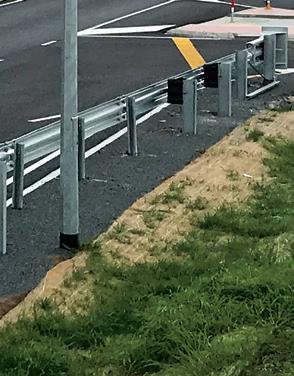







Acusensus, the enforcement solution for illegal and dangerous driving behaviour, has a personal tragedy behind it.
“Two things happened in 2013,” says MD Alexander Jannink, who founded Acusensus. “First, my friend James was run over and killed.” The driver was texting at the time of the collision. The second thing was that Jannink noticed road fatalities worldwide were going up. “Over the next couple of years, there was an increase, a year-on-year rise,” he says. “So, by 2016 the average fatality rate was up 16% after decades of decline.”
The big change was the rise
of the smartphone – a new form of driver distraction was killing people. Jannink did something about it, creating the Heads Up solution. It can be mobile or fixed, and takes multiple scans of each vehicle along a given point. It creates high-resolution images which – crucially – can see through the windshield to determine whether a driver is using a mobile phone or not wearing a seatbelt. “It has to stand up in court,” explains Jannink. “Our AI system looks in real time to determine whether there is an offence.”
The company partnered with the New South Wales government to roll out the world’s first mobile phone
Human beings are unpredictable. Which gives drivers a problem when approaching a junction where pedestrians are crossing.
“With a vehicle, you can understand its speed and its steering limitations. But people…we can stop, we can turn on a dime, we can change our mind,” said William Muller, vice-president business development at Seoul Robotics.
With that in mind, the company is combining its 3-D perception software with Lidar to help gain a more accurate classification of objects in a roadway. “We’re using Lidar as the sensing technology, but without the 3-D perception software it’s just like a camera, so it doesn’t have much value,” he explained.
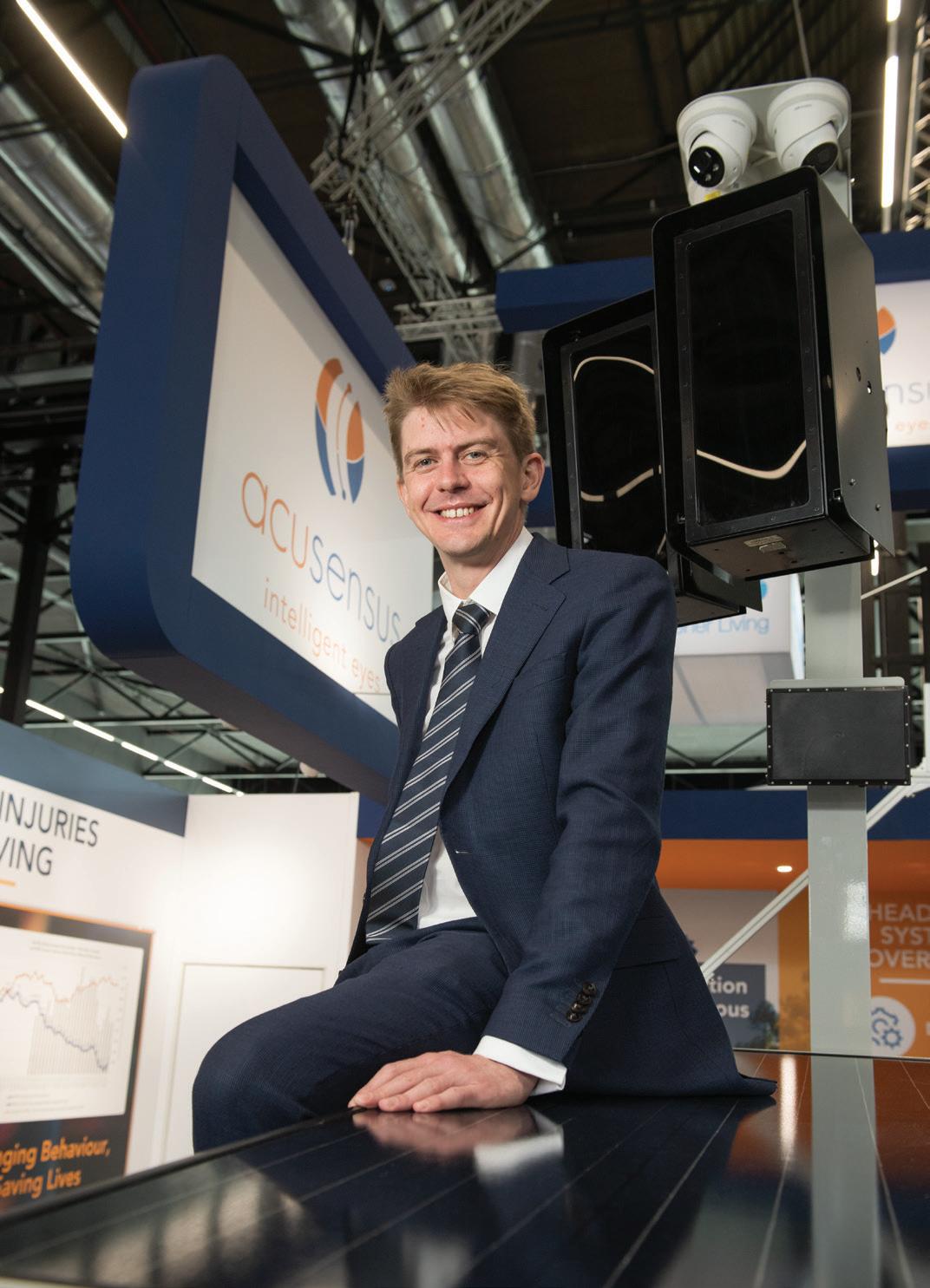
detection camera programme, and Acusensus’ solution overall impressed the Intertraffic Awards jury so much that it was given the Intertraffic Inspiration Award.
"It's hard to think of a solution which is more inspirational than this: everyone in the
industry wants to reduce road deaths – Acusensus actually does something practical about it,” said the jury report. “Driving behavioural change on driver device use is one of the key issues of our times."
▶ Stand 05.317 www.acusensus.com
Classifying and detecting the movements of objects in a roadway is particularly problematical in urban areas, where there is increased need to
understand the flow, movement and behaviour of vehicles, people and bicycles. Using 3-D perception software brings that much-needed accuracy.
The imminent arrival of autonomous vehicles on city streets makes the ability to look ahead even more important.
Data from Seoul Robotics’ products, which are being trialled in cities including Chattanooga and Michigan City in the US, will have the potential to be fed to autonomous vehicles and give them forewarning of pedestrians in the roadway, even though they may not be within the line of sight, so the vehicle can effectively see round corners and be aware of pedestrians crossing the road.
Several of the pilot schemes are at an advanced stage and scaling them up will be the next step.
▶ Stand 05.466
www.seoulrobotics.org