
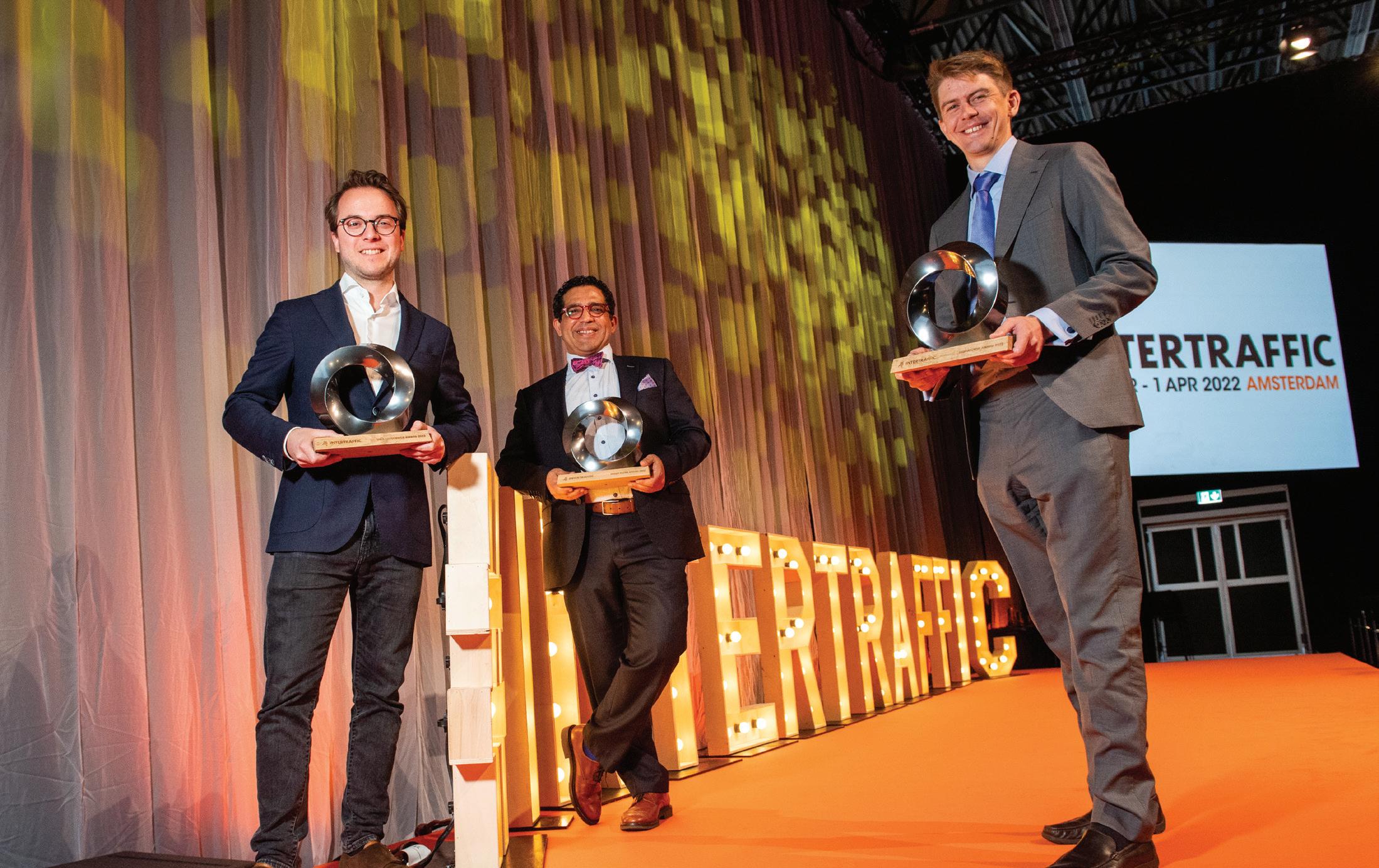


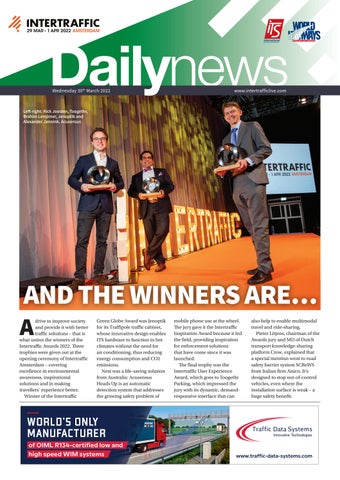
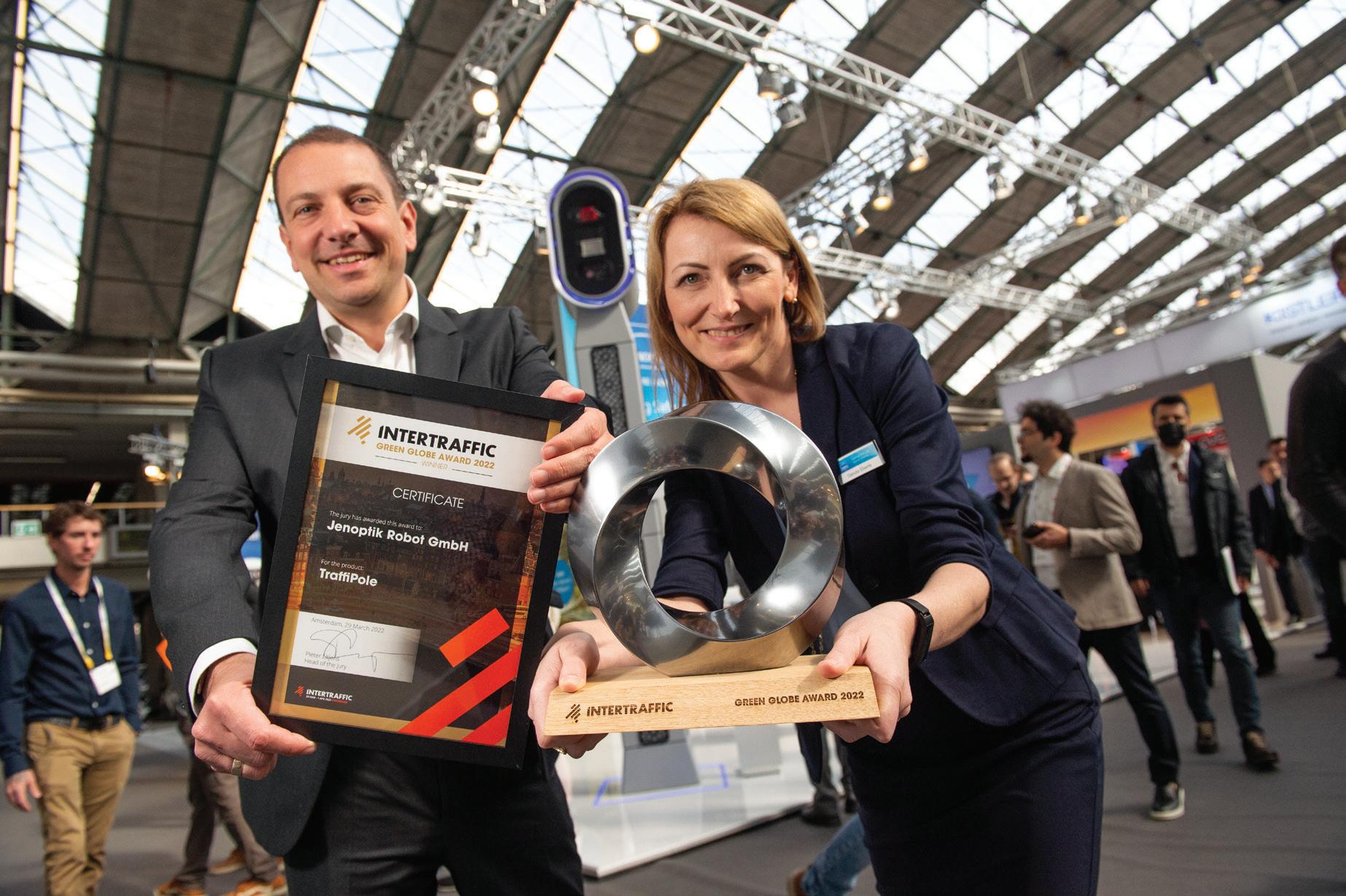
Adrive to improve society and provide it with better tra c solutions – that is what unites the winners of the Intertra c Awards 2022. ree trophies were given out at the opening ceremony of Intertra c Amsterdam – covering excellence in environmental awareness, inspirational solutions and in making travellers’ experience better. Winner of the Intertra c

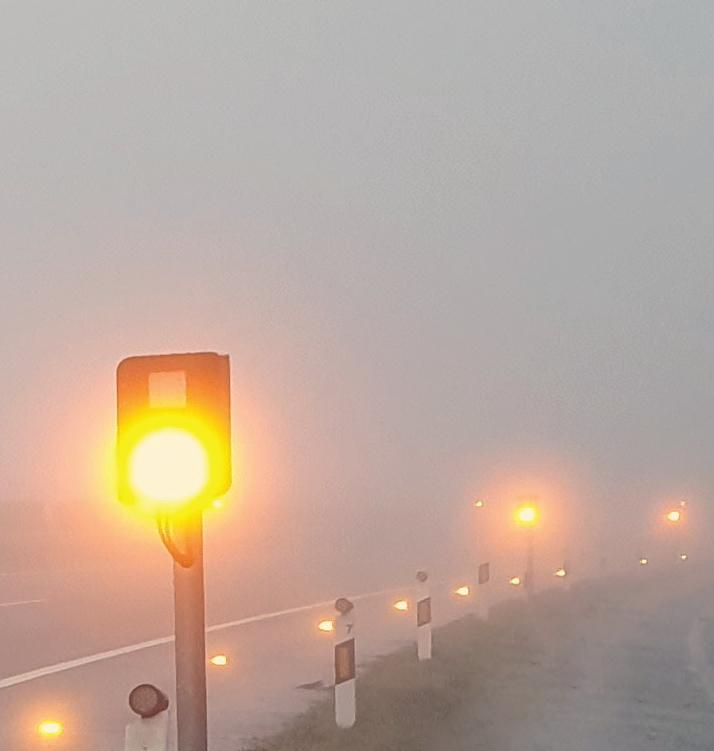
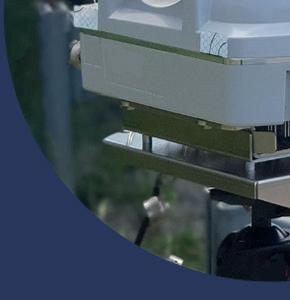
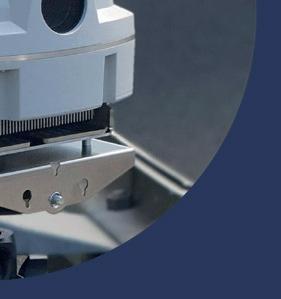
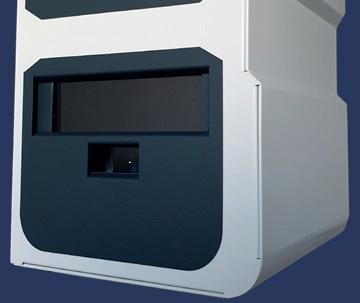
Green Globe Award was Jenoptik for its Tra pole tra c cabinet, whose innovative design enables ITS hardware to function in hot climates without the need for air conditioning, thus reducing energy consumption and CO2 emissions.
Next was a life-saving solution from Australia: Acusensus
Heads Up is an automatic detection system that addresses the growing safety problem of
mobile phone use at the wheel.
e jury gave it the Intertra c Inspiration Award because it led the eld, providing inspiration for enforcement solutions that have come since it was launched.
e nal trophy was the Intertra c User Experience Award, which goes to Toogethr Parking, which impressed the jury with its dynamic, demandresponsive interface that can



also help to enable multimodal travel and ride-sharing.
Pieter Litjens, chairman of the Awards jury and MD of Dutch transport knowledge-sharing platform Crow, explained that a special mention went to road safety barrier system SCReWS from Italian rm Aisico. It’s designed to stop out-of-control vehicles, even where the installation surface is weak – a huge safety bene t.










Publisher / MD
Andrew Barriball
CEO
Roger Adshead
Project manager
Paul Derby
Editor James Foster
Editorial team
Adam Hill, David Arminas, Alan Dron, Liam McLoughlin
Sales team
Dan Emmerson, Graeme McQueen
Design
Andy Taylder, Simon Ward
Photography
James Robbins, Ian Billinghurst, Tom Gordon
Production
Nick Bond
IT & website director
James Howard
Website + Social Media
Sarah Biswell, Tatyana Mechkarova
Office manager
Kelly Thompson
Printed by NPN Drukkers
Contact us
The Daily News office can be contacted at media@ropl.com
Published by
Digital technologies are rapidly transforming the traffic technology industry. Innovations like artificial intelligence (AI) and the Internet of Things (IoT) have the potential to improve everything from pricing models and traffic management to safety and emission reduction.
©Route One Publishing Ltd 2022
Second Floor, West Hill House, West Hill, Dartford, Kent, DA1 2EU, United Kingdom Tel: +44 1322 612055 www.ropl.com
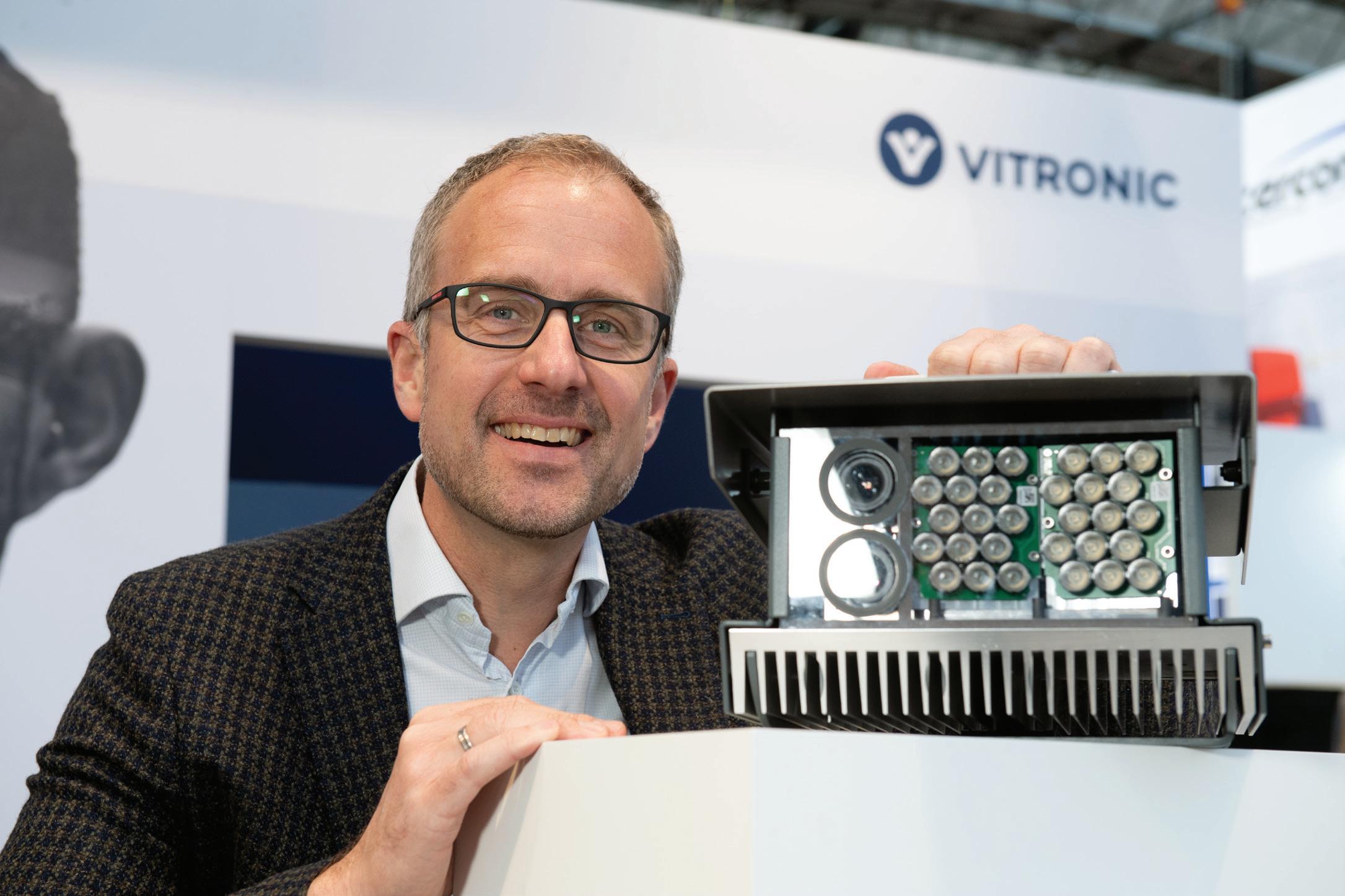
In this context, Vitronic points out that tolling is playing an increasingly important role in future mobility – reducing congestion and contributing to new mobility. The company says that it enables a new level of tolling through 360° technology and comprehensive tolling expertise, including image/video-based tolling (AI detection), and both mobile and

stationary automatic control. Vitronic’s new development is mobile toll enforcement vehicles which are fitted with an enforcement bar. This mobile, fully automatic licence plate reading, and classification system can recognise licence plates in four directions. Even at high speeds, the system achieves a very high recognition rate – meaning the detection, identification, and classification of vehicles can be carried out automatically from a moving vehicle.
In addition to optimising traffic flow and reducing emissions, Vitronic says the safety of all road users must be considered, especially vulnerable road users (VRUs).
With the number of VRUs increasing in urban centres, cities need, in addition to speed and red-light enforcement, intelligent technology and traffic concepts to help protect them. Visitors to the Vitronic stand will have an opportunity of seeing how machine learning and AI can be used to increase safety at crosswalks. A convolutional neural network (CNN)-based system monitors the crosswalk and automatically distinguishes between pedestrians, cyclists, and motorised road users. If a vehicle disregards a pedestrian’s right of way or endangers them, a violation is issued.
▶ Stand 01.108 www.vitronic.com
ITSUP – a space specifically given over to new companies – made its debut at Intertraffic four years ago and is back in hall 6. “Start-ups are the companies of the future,” says Intertraffic director Joyce de Winter. “Let’s inspire the industry!” Powered by Swarco and Connekt, it gives start-ups access to connections with the
whole industry. Christoph Stögerer, Swarco VP products & solutions, says: “People engage with each other, get to know each other; innovation happens when the brightest minds really team up, working together.” Tom van Damm of Connekt adds: “Start-ups add value, speeding up innovation in our sector.”




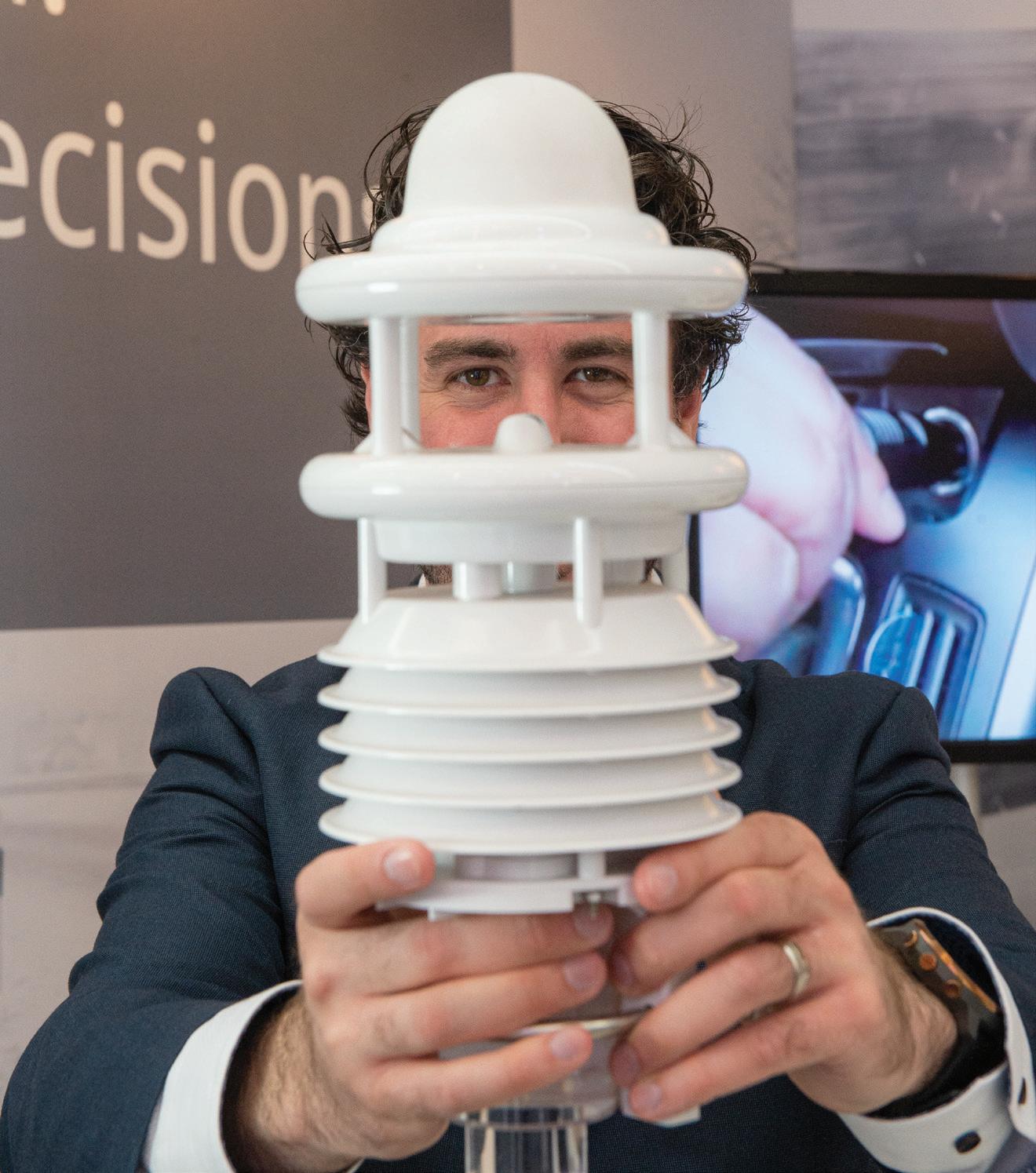
OTT HydroMet, global provider of environmental monitoring solutions in water and weather applications, is here in Amsterdam to focus on its Lu t brand with a range of systems. ese include a rain sensor, visibility sensors, and the award-winning Marwis mobile road weather sensor.
Professionals around the world rely on Lu t’s stationary or mobile road weather information systems (RWIS). ey are used for ice and water lm detection as well as for tra c control or management systems (VMS), by road maintenance depots, and operation managers to monitor road conditions, friction, temperatures, visibility, and more.

e data gathered by rstclass monitoring instruments is used to design e cient operational plans and to keep roads free from snow, ice, or water lm layers to protect from dangerous tra c situations.
As a leading provider of innovative and easy-to-integrate solutions, OTT HydroMet o ers customisable options for road weather applications through its Lu t brand. Visitors will be able to see all instruments needed for a state-of-the-art RWIS from one source as well as measurement principles for road sensors with optical, embedded, stationary, and mobile options.
Also being featured is a variety of modern data loggers and telemetry technologies leveraging satellite and cellular transmitters, to collect, send,


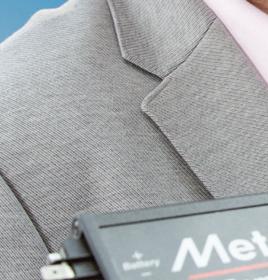
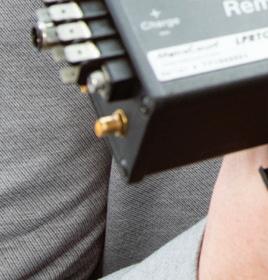

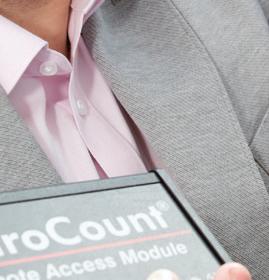






view, and manage critical water data remotely.
Visitors will also be able to learn about powerful client servers and the exible cloudbased software ViewMondo that allow data to be collected and automatically integrated for continuous and near real-time access
▶ Stand 01.301 www.lu .com
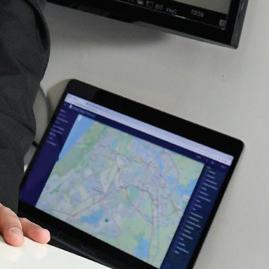
MetroCount has released its new RoadPod VM tra ic monitoring system. The product uses solar-powered magnetometers embedded in cat’s-eye studs installed in arrays along the middle of a tra ic lane.
RoadPod VM captures and transmits data on each vehicle that passes the sensors, providing speed, length-based classification, volume and direction.
The system time-stamps each vehicle and sends information in real time to MetroCount’s Atlyst analytics dashboard, where data is clearly displayed on an interactive map.
The company says RoadPod VM can also reduce the need for tra ic management – such as lengthy workzones – during installations due to extremely fast sensor placement.
It is currently being tested by multiple organisations in conjunction with VMS signs, where it can also warn drivers of congestion ahead, speeding, driving too close to the vehicle in front and other safety-related issues.
The culmination of five years’ R&D, the product has been tested with the City of South Perth, New Zealand Transport Authority and Main Roads Western Australia.


It can provide this data to toll providers, tunnel management, car parks and drive-through, providing year-round data for local and state governments who only have expertise in installing short-term tra ic monitoring systems.
MetroCount says it can be installed in just five minutes, with solar power meaning it is 100% o -grid, while filtering and sharing allows operators to enjoy easy data analysis.
▶ 01.212 www.metrocount.com




For this year’s comprehensive Intertra ic summit and seminar knowledge programme, head for Hall 7. That’s where you will find, on four separate stages - Summit Theatre 1, Summit Theatre 2, and Summit Theatre 3, plus Intertra ic On Stage - presentations, seminars and workshops taking place simultaneously.
This three-page feature provides a brief summary of each presentation happening today to enable you to make the most of the many opportunities to discover new trends, best practices, the latest developments and solutions on smart mobility, infrastructure, tra ic management, road safety and parking and much more.






▶ 11:45 - 12:15
OPEN STAGE
Active speed bumps to promote active mobility
This presentation will look at the Actibump, an active speedbump that is only a speed bump for those who speed. The Swedish Transport Administration is using it to secure safe passage for vulnerable road users in rural areas where a lot of goods are transported by heavy vehicles. The Actibump system for speed reduction maintains accessibility and has resulted in a decrease in speeding from 75% to 5% in two months.
▶ 11:45 - 12:30
THEATRE 1
The latest on autonomous driving
In this session, senior executives from the Dutch Ministry of Infrastructure and Water Management will brief attendees on the importance of self-driving transport for the Netherlands, the latest developments and the opportunities.
▶ 12:30 - 13:00
THEATRE 2
Data-driven tra ic management combining analytical models and machine learning
▶ 12:45 - 13:30
THEATRE 1
Preparing for autonomous mobility at TRL’s Smart Mobility Living Lab in London TRL’s Smart Mobility Living Lab (SMLL) in London, Europe’s only mega city, is using public and private roads to develop and validate new mobility and transport in a fully connected environment. This session will share insights on how the TRL is trialling autonomous mobility in a truly holistic fashion in a real-world test environment.

To cope with congestion, road accidents and increasing pollution levels are among the biggest urban challenges worldwide. To tackle these, future-oriented cities like Rome, Vienna or Taichung rely on PTV’s so ware for real-time tra ic management. Big data is a key element here. This solution presentation explains how machine learning combined with proven o line tra ic modelling enables management of the entire tra ic network with live information. The system also allows reliable tra ic forecasts up to 60 minutes in advance.
▶ 12:30 - 13:00
THEATRE 3

▶ 13:15 - 13:45
THEATRE 3
Security bollards for tra ic management and protective measures for events Access security in cities is becoming more and more important. But what will such security look like in the future and how will it be managed? Access protection with di erent systems of tra ic bollards and high-security bollards should be in line with the specific requirements of the city.
▶ 13:15 - 13:45
OPEN STAGE
The legibility of tra ic signs under LED headlight illumination LEDs have become the dominant type of headlight. This presentation will discuss the value of modelling sign luminance levels for agencies that are concerned about the legibility of their tra ic signs under LED headlight illumination. The session will also speculate about a future where sign luminance levels are varied with driver needs, a possibility that is suggested based on current development trends in ‘driver assistance’ headlight systems.

Smart city: sustainable solutions for the evolution of urban mobility Movyon has implemented dynamic lane management, an AI-based system for tra ic optimisation, and truck/van/buses and commercial vehicle tracking and some pilots in the small municipalities. New concepts in inner cities have been identified, with case studies for Genova towards a smart city and control room capabilities to control and aggregate smart city functions.
▶ 13:45 - 14:15
THEATRE 3
Road marking to improve road safety - best practices from Georgia and Caucasus Elite-Technology is one of the largest businesses in road marking and infrastructure in Georgia and throughout the Transcaucasia. The company will introduce its technological road marking advantages, which are frequently carried out in severe weather conditions like snow and rain, high humidity and frost.
▶ 13:45 - 14:45
THEATRE 1

Smart vehicles: a three-pronged approach towards road safety and sustainability
It is essential that road authorities take an integrated and systematic approach to embed smart vehicles into our tra ic systems. There are three central principles that will drive successful adoption: trust and acceptance, network and road design and information systems. The session will start with an introductory presentation covering the aspects of the three ponged safe system approach. Panelist are representatives from iinternational road authorities, automotive parties and human factors/driver education institutes.
▶ 14:00 - 14:30
OPEN STAGE

▶ 13:15 - 14:00
THEATRE 2
What does Google o er tra ic professionals, and what not?
What data source can be used for what usecase? Four solution examples and use-cases with di erent tra ic-data sources are shown to emphasise that every mobility situation has a di erent data-source as best fit - from the Google Maps tra ic insights tool ODIQ, to custom made dashboards using TomTom, Big Query Geo Viz, telco data and more. These four solutions show common tra ic issues where big data has provided insights to truly understand what is happening where and when?


Intelligent intrusion detection systems, the key to operating a critical infrastructure environment according to cyber security regulations
Critical infrastructure facilities are of particular interest to cyber-attackers worldwide. For this reason, legislators have tightened the laws and regulations for securing critical infrastructure. What does this mean for the user and how complex is an installation of an Intrusion Detection System (IDS) in a critical infrastructure system? This presentation will show the simple implementation of a tra ic light infrastructure system with an IDS, based on given norms and standards, and a case study.
▶ 14:15 - 15:00
THEATRE 2

AI-driven intersection safety diagnostics and proven countermeasures using retroreflective materials
AI-driven safety diagnostics technology measures five variables for every risk event: speed, angle, generalised temporal separation, user vulnerability, and order of interaction. In this project, near-misses at intersections are used to proactively identify opportunities for safety improvement, by applying AI analytics to video feeds from existing tra ic cameras. Based on the detected risks, cities can be helped to visualise implementation of reflective materials on safety countermeasures for all road users.










Every year, nearly 1.3 million people die around the world due to road traffic crashes. Road safety has a direct and dramatic impact on communities and the people that inhabit them.
Safety is changing with new and emerging technologies like automation and Artificial Intelligence and innovative concepts like smart roadways and autonomous vehicles.
It is a pivotal moment to deploy and evolve safety and compliance initiatives.
At Verra Mobility, we believe that the future of traffic safety is human-centric. It is rooted in outcomes, rather than stop-gap solutions. It serves your needs with end-to-end solutions.
Verra Mobility is a trusted partner and solutions provider
JOIN OUR SUMMIT SESSION

with decades of leadership in traffic safety. We are committed to partnering with cities, governing bodies, and communities to change dangerous driving behaviors, deliver scalable and equitable compliance outcomes, and ultimately save lives.
Join our Summit Session: “Solving Complex Challenges for Improved Safety and Mobility Outcomes” to learn more.
Solving Complex Challenges for Improved Safety and Mobility
Thursday, 31 March | 14:45 - 15:30 | Summit Theatre 2, Hall 7
▶ 14:30 - 15:15
THEATRE 3
Next generation parking guidance: announcing new innovation from ParkHelp Attendees at this session will leam about the latest innovations in parking guidance, connectivity, and integrations, and how ParkHelp will revolutionise the way people use parking today. During the session, answers will be provided to the questions of what challenges today's parking guidance systems have introduced, the problems facing parking in the future, and the company’s vision and new innovations for meeting these challenges.
▶ 14:45 - 15:15
OPEN STAGE
Argo: extended platform for managing and monitoring the life cycle of infrastructures
Movyon created Argo, a single solution that covers the complete digitisation of infrastructure assets, a database for management, governance and control of data and processes, a Mobile App to support inspection in the field, integration of data collected from various sources (IoT sensors and drones) for monitoring, and AI algorithms for defects’ analysis and recognition.
▶ 15:00 -15:30
▶ 15:15 - 16:00
THEATRE 3
Parking facility access with cameras from the end user perspective
This session by EasyPark elaborates on parking facility access with cameras from the enduser perspective and the impact on a parking business.
▶ 15:30 - 16:00
OPEN STAGE
THEATRE 1
Increasing safety for the self-driving road ahead
TomTom has developed a revolutionary and industry-first push service that sends detected hazard alerts to a vehicle in under five seconds. Drivers and vehicles are notified faster, so they can anticipate the road ahead and navigate it safely.
▶ 15:15 - 15:45
THEATRE 2
Sensor fusion and AI for safer and smoother tra ic signal control
Artificial Intelligence: the key to optimising road asset management
Road maintenance is an ongoing e ort that can strain resources and budgets. This presentation will delve into how AI is being applied to pavement condition inventory to deliver new e iciencies and business outcomes that improve road asset management.
▶ 15:45 - 16:15
THEATRE 1
TAVF - test track for automated and connected driving in the City of Hamburg
This presentation will focus on a test track for automated and connected driving (TAVF) in Hamburg. Since 2018, it has been upgraded for infrastructure-to-vehicle (I2V) and vehicle-toinfrastructure (V2I) communication. The track enables vehicle manufacturers, technology companies and research institutions to test ITS applications, safety, and assistance systems as well as automated and connected driving functions in the real tra ic environment on public roads.
Teledyne Flir will present how fusing di erent sensing technologies and AI can improve tra ic flow while enhancing safety at intersections and urban environments. Combining the strengths of real-time AI with vehicle-toeverything communication helps predict tra ic and prevent congestion by acting upon inputs from sensors and data processing algorithms in real-time. Several use-cases and applications of sensors in a connected and autonomous world will be presented.
▶ 16:00 - 16:30
THEATRE 2
Optimising tra ic through cloud technology - for cleaner and greener cities
The Flowtrack tra ic optimisation solution collates and analyses data in real-time, to forecast and improve tra ic flow at network level. This enables cities to reach policy goals such as greater accessibility, improved air quality and liveability. This presentation will share the insights from two applications of Flowtrack in the Netherlands which have reduced tra ic stoppage by 30-40% and reduced carbon emissions by over 10%.
▶ 16:15 - 17:15
OPEN STAGE
Introductie van 30 km zones en duurzame inrichting van de fysieke leefomgeving
▶ 16:30 - 17:30
THEATRE 1
Innovating collaboration: how smart mobility innovation thrives by open collaboration
This session will focus on how new and open forms of collaboration can be key when it comes to accelerating smart mobility innovation. Dutch smart mobility innovation parties, government, knowledge institutes and private parties are joining forces to further develop and expand the existing test facilities. The objective is to make them widely accessible to achieve a unique research climate with which the Netherlands can perpetuate its position in the field of smart mobility.
▶ 16:00 - 16:30
THEATRE 3
How merging a multi-vendor parking landscape improves hospitality driven customer journeys
A new, greener, and cost-e ective parking solution has been created through reusing and upgrading the available parking equipment from multiple vendors. This presentation will provide insight on how WPS delivers an e icient hospitality driven solution which has the flexibility to adapt to ever-changing demands and needs.
▶ 16:45 - 17:15
THEATRE 2
In-car tra ic management using C-ITS, a first step to autonomous driving
The future of tra ic management is automatic, data-driven, and cooperative. Guided by AIdriven algorithms, this cooperation will ensure a safe, sustainable, and green tra ic situation. But what happens when an ambulance approaches; an automated car is stuck behind a slow-moving vehicle; or how will weaving manoeuvres be executed e iciently? BeMobile aims to take a central role with its stateof-the-art tra ic management platform and its long-range C-ITS cloud-based platform.
In cities, 70% of people killed or seriously injured in road accidents are vulnerable road users. VITRONIC provides intelligent technology and traffic concepts to help protect them.


Visit us in hall 1, booth 108A








We get the best out of your parking space and turn your parkers into fans! With the new Designa CONNECT series, you can offer your visitors even more service and userfriendliness and, as a car park operator, have a reliable source of profit. Use the seamless interaction of barriers, lane devices, tickets, pay stations, sophisticated software and web-based services from one single source. A fully networked system that can be easily expanded and customized at any time. Future-driven and ingenious for smart parking management.
Smarter solutions for a digital planet.
As visitors to Jenoptik’s stand will see, the company provides innovative and sustainable smart mobility solutions, including technology and services for road safety, public security and road user charging. They can experience the company’s brand new videobased camera family covering a wide range of applications in road safety, civil security and commercial use.
“Highest image quality, powered by the latest processor technology leads to exceptional capture and read rates and ultrafast processing time, covering multiple lanes of traffic,” says Tobias Deubel, VP global sales at Jenoptik. “Our powerful data management solutions then turn data into knowledge with automated data processing and real-time analytics. The high-performance back-office software uses deep learning and AI, to enable make, model and colour (MMC) detection and advanced video analytics
for monitoring moving vehicle offences such as illegal turns.”
Also shown are the latest additions to the top-end high performance TraffiStar product
portfolio, widely known in the market for its reliability and flexibility of use in various road safety applications.
“One real highlight is our new
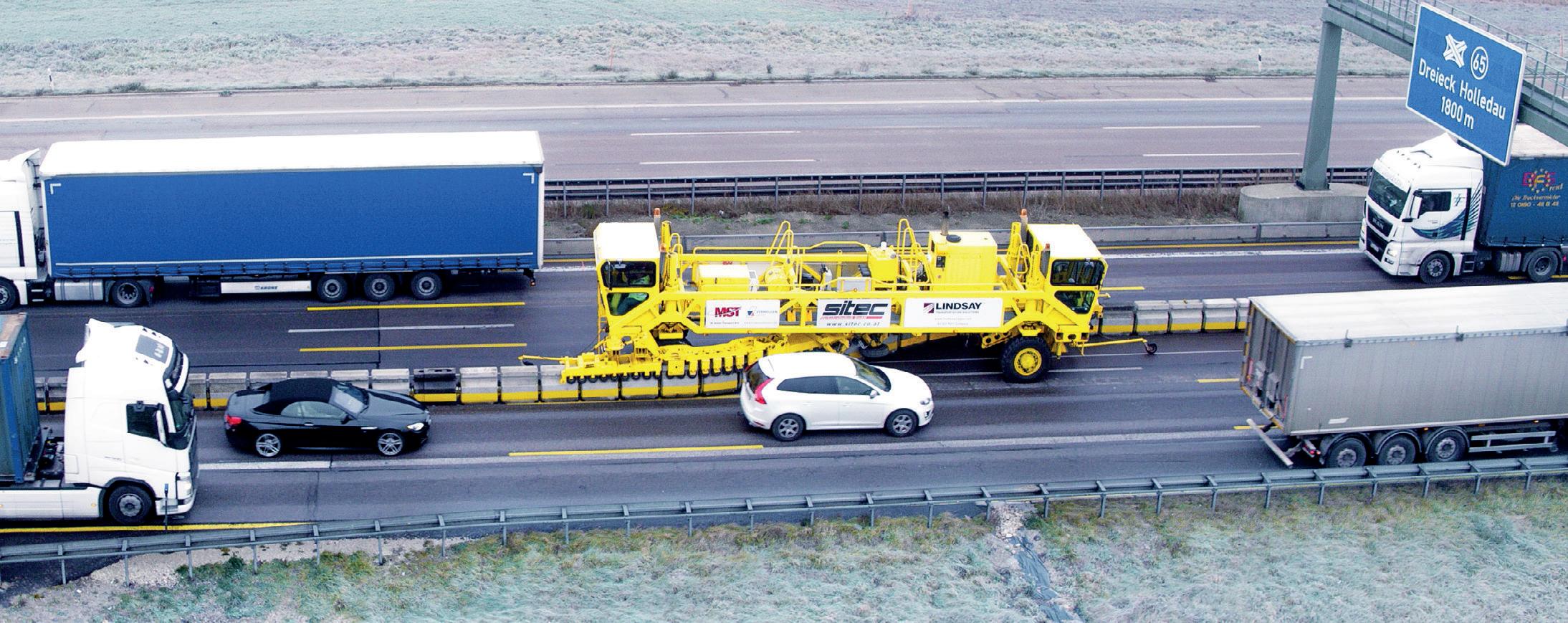
Saferoad has added a new median crossing to its SafeStar range of emergency opening guardrails.
The new opening features a H2 containment level and W4 working width. The system has a minimum opening length of 36m and can be easily adapted to local conditions in 4.5m or 9.0m modular units.
The emergency opening can be opened in 15 minutes by two people without specialist tools, while the integrated 4.5m-long emergency gate can be opened in less than two minutes when there is an emergency and time is critical.
SafeStar is an open median crossing erected on posts. Its open
design is designed to reduce the risk of water accumulation and aquaplaning after heavy rainfall, and open guardrails also provide crossing opportunities for small animals.
Saferoad says that, according to studies, motorists prefer open systems because closed walls create uncertainty and increase the risk of accidents.
The company adds that the use of standard components from the SafeStar product family ensures easy connection to existing vehicle restraint systems and simplifies assembly, maintenance and repair.
▶ Stand 08.234 www.saferoad.com
sustainable design TraffiPole
Intertraffic Green Globe Award.
enables efficient air circulation,
conditioning even in very hot climates,” says Danuta Eberle,
provision of roadside equipment
provides attractive and tailortechnology, software, services and operation that keep up-front investments, financial risk and personnel management to a minimum for customers.
▶ Stand 01.416 www.jenoptik.com
Custom is showing the latest evolution of its PP54 ticket printer and reader. The PP54 has been on the market for around three years, but the company’s policy of regular updates to its equipment has seen the printer undergo recent modifications.
The new PP54 EVO features improvements as a result of customer feedback, including the device’s internal belts being made from stronger material and the cutters separating individual tickets being upgraded.
“This improvement cycle is typical of our products,” said Peter Söderlund, Custom’s business development manager. The latest version, which is designed to operate primarily in standalone mode, with no attendants, is designed to operate in extremes of temperatures. The PP54 EVO was launched at the end of last year but is having its first major showing at Intertraffic.
▶ Stand 12.132 www.custom.biz



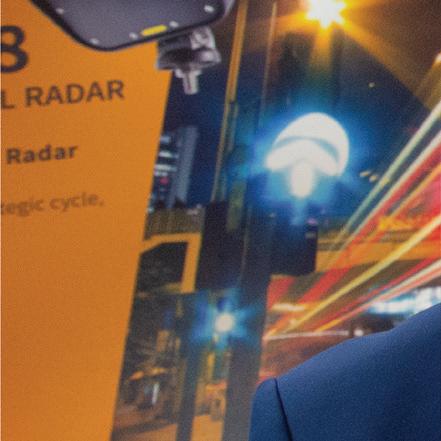









AGD Systems, a leading UK manufacturer of ITS products, providing innovative solutions worldwide, is leading by example as visitors here will nd.
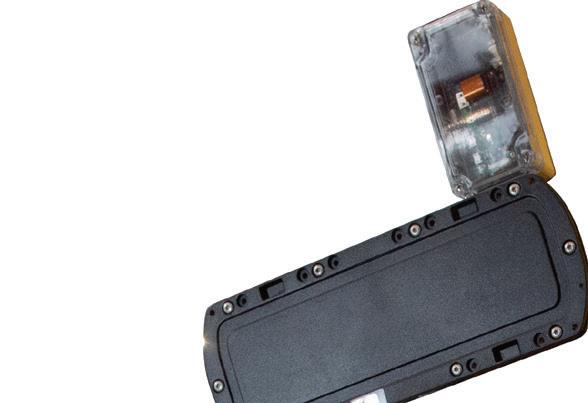
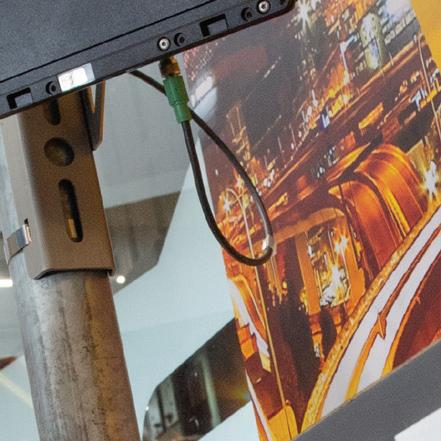
When the Ministry of Transportation in Nova Scotia, Canada, was seeking an e ective solution to its outdated vehicle monitoring and tra c ow systems, AGD had the perfect o ering. A partnership lasting more than two generations with AGD’s Canadian distributor, North Line Canada, led to the recommendation of their AGD343 Highways Monitoring Radar.
Kelly Lake Compliance Station on Veteran’s Memorial Highway route 102
was the chosen test site. One of the core challenges of this highway was that it spanned almost 90 metres with multiple lanes in both directions, divided by a large, grassed median. A radar which could accommodate an elevation di erence of over one metre between north and southbound lanes was vital.
Jim Sheehan of North Line Canada, saw the AGD343 product as ‘an obvious choice as a solution to their very speci c needs.’ Following o cial trial approval, North Line got to work, completing the installation in under 45 minutes, with all tra c monitoring fully functional within 15 minutes of nal commissioning.



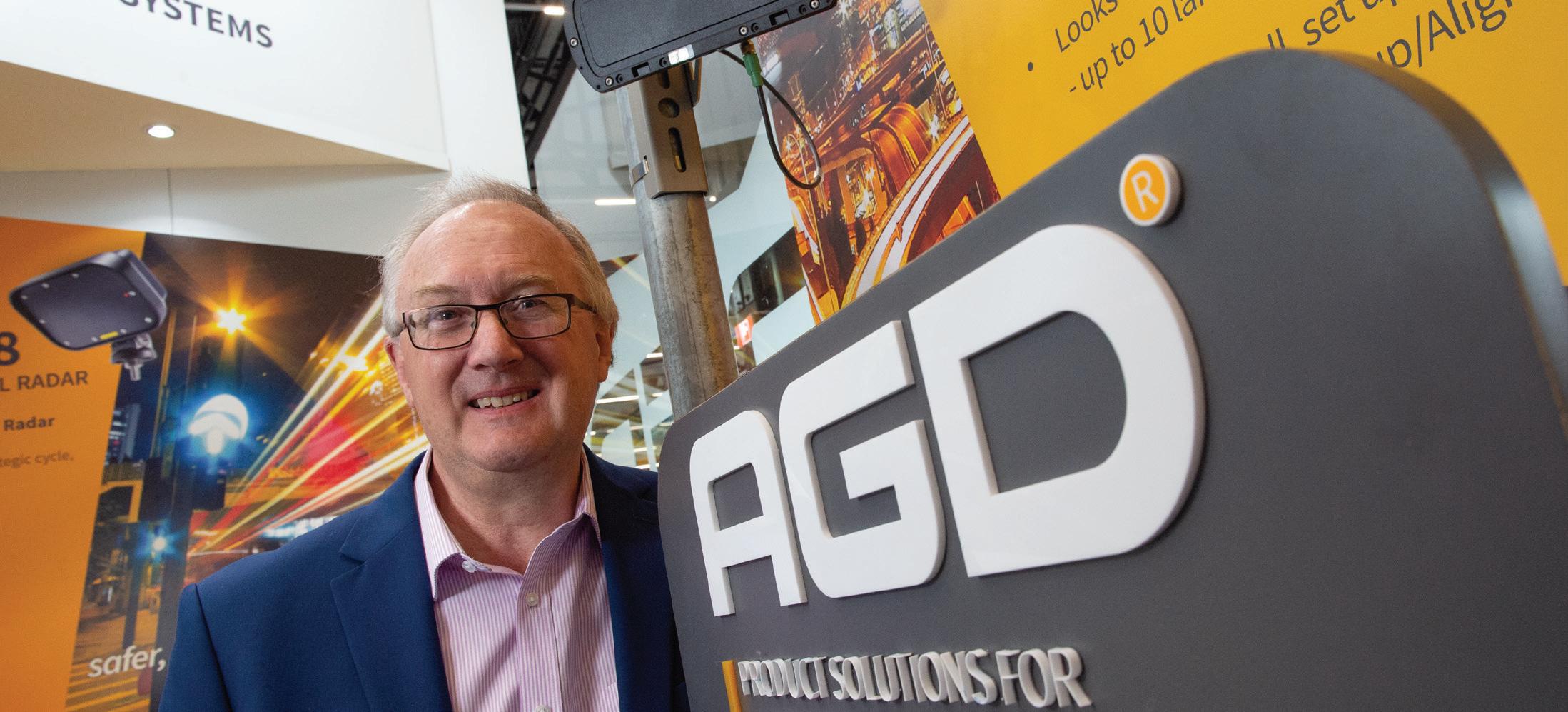
e trial was a success, with Nova Scotia’s Highways Division going on to order additional units for other test sites. And North Line continues to recommend the AGD343 to various customers, with orders already building up for the rest of 2022.
At the AGD stand in Hall 5, visitors can nd out more about the AGD343, and the other products, which make up a range of innovative and globally compatible systems designed to make travel safer, greener, and more e cient. Visitors can also be among the rst to learn of AGD’s exciting new o ering to the ITS sector, coming soon.
▶ Stand 05.428 www.agd-systems.com



Every journey is different. As we move around, the means of which we travel and the apps that support us, are constantly evolving. Whether it’s for work or leisure, parking is often an integral part of that journey. As such, it should be simple and stress free.
Introducing the new standard
WPS has developed an open and adaptive platform, supported by a broad partner marketplace, which offers a flexible, scalable and more economical approach to parking management. An exciting platform that brings together existing and new equipment, both our own and third party. Visit our booth to learn more.
How can we help remove the complexity and
us


“
Lane markings are currently read by two kinds of sensors: camera and lidar. However, road markings lack uniformity. Improving uniformity is a prerequisite to increase the reliability of readings by di erent types of sensors,” says Harald Mosböck, VP Europe & APMEA (Sales & Contracting) of the Swarco Road Marking Systems Division and VP of the European Road Federation (ERF).
EU Member States have to ensure that road markings and road signs are properly designed and maintained in such a way that they can be easily and reliably recognised by both human drivers and vehicles equipped with driver assistance systems or higher levels of automation. One recommendation elaborated

by the ERF is the ‘150 x 150 formula’. It was created taking into account only the human eye, with the goal to improve road safety.
Interestingly, several studies proved that what is good for the human eye to support safe and comfortable driving also works very well for machine vision. e ‘150 x 150 formula’ recommends a line width of 150 mm and a retrore ectivity (RL) > 150 mcd/ m²/lx under dry conditionsRL > 35 mcd/m²/lx under wet conditions).

“We do need better performing lane markings on the road networks,” says Mosböck. “Once we have achieved a level which is most suited for the human eye, then it will work for automated vehicles as well.”
▶ Stand 02.236
www.swarco.com




Villages and residential suburbs can be good places to live, but o en lack public transport facilities. Buses tend to be infrequent and, where they exist, o en require public subsidies.
Shotl aims to solve that problem through its first mile/last mile on-demand mobility service that will allow public transport
operators to run fleets of small buses or minivans that can be dynamically routed in real time.
The Spanish company’s solution uses three interlinked apps. Passengers submit a trip request, including the number of passengers and the locations from which they should be picked up. The app will then provide a pick-up time and an
estimated arrival time at the destination. A corresponding app for the bus or van driver will direct them to pick-up and drop-o points, choosing the best route and, where there are several vehicles in an area, match routes with vehicles.
Fleet and operations managers, meanwhile, have access to a central console
that allows them to monitor operations in real time, check fluctuations in demand and manage vehicle availability.
Supervisors can also monitor the progress of each trip and handle requests from people who do not have access to the app and telephone to arrange a pick-up.
▶ Stand 02.115
www.shotl.com


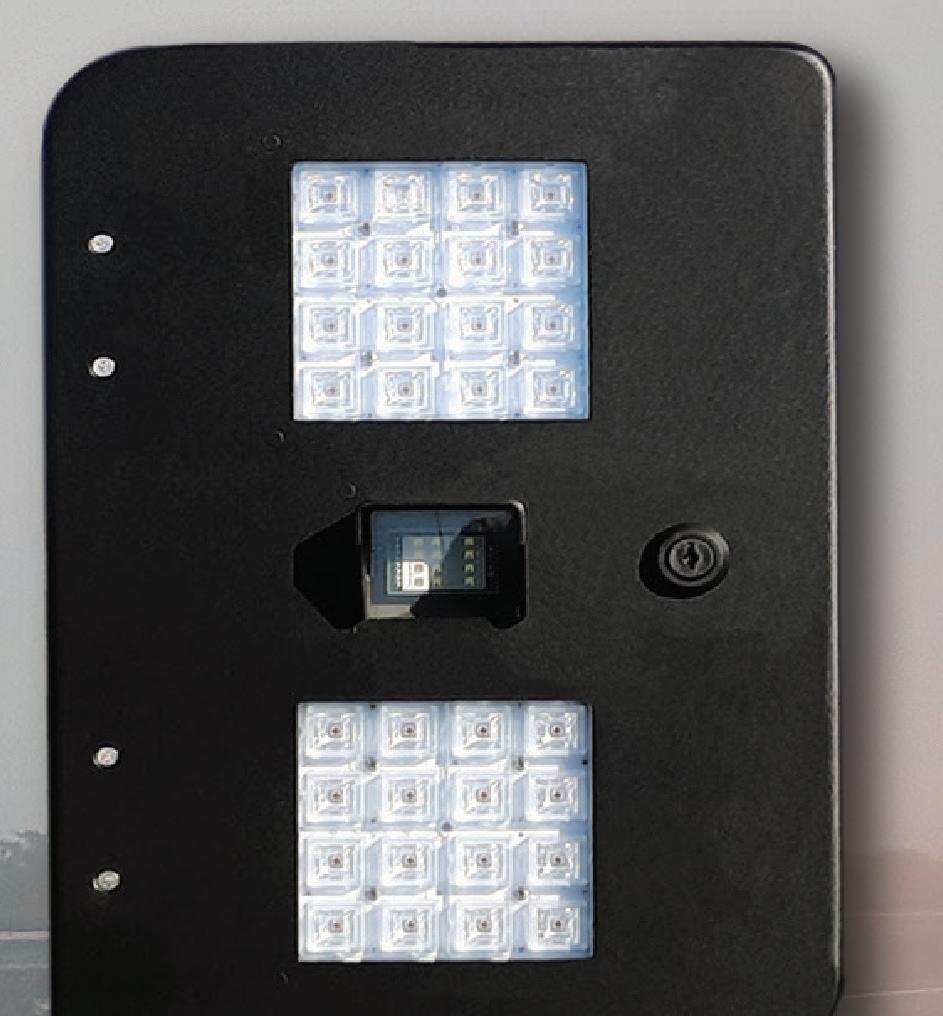


































Designa is here in Amsterdam with a brand new, fresh design and showing for the rst time all the devices of its new Designa Connect series. Visitors will be able to see the seamless interaction of barriers, lane devices, pay stations, licence plate recognition cameras, sophisticated software, and web-based services from one single source, live on-site. ey are invited to explore the company’s design-awardwinning products with one of its global team.
e Connect series is a fully networked system that can be easily expanded and customised at any time. Future-driven, it is adapted to current and future requirements of parking management systems such as the integration of an e-charging station.
With the Connect series, users have a solid and high-quality device platform on which to give room to all their requirements. A central database - in the cloud, as a server or virtualised - with open interfaces to thirdparty providers, allows new business areas for parking operators. Connect is a scalable system that grows with customers’ tasks.
With the new Connect series, Designa says
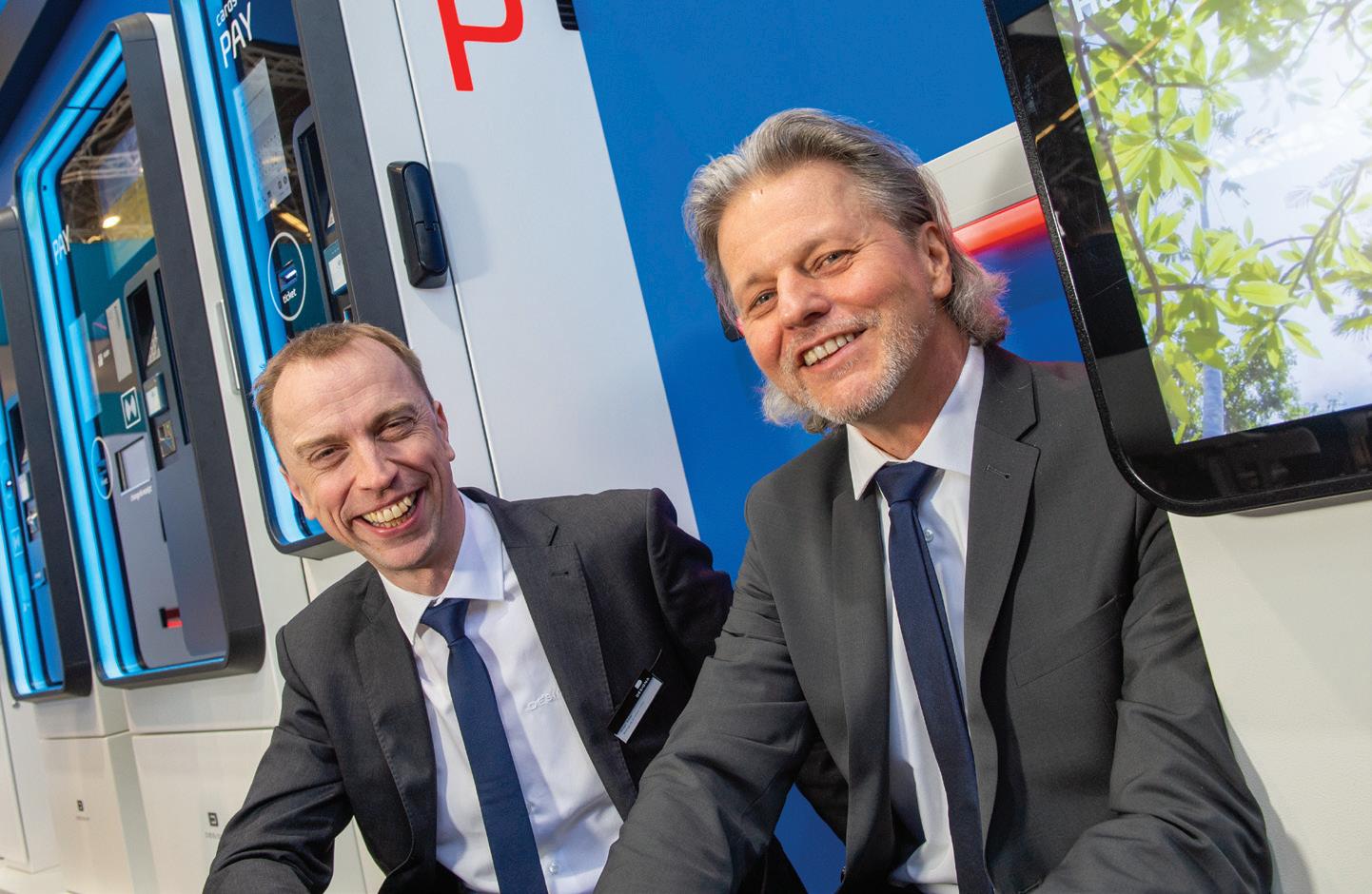
it gets the best out of customers’ parking spaces and will turn their parkers into fans! Users will be able to o er their customers even more service and user-friendliness and,

as a car park operator, have a reliable source of pro t and the tools to increase revenue.
▶ Stand 12.101 www.designa.com
Q-Free Tra c design, a Slovenian subsidiary of Q-Free, has recently deployed a new version of central highway ATMS application software to manage tra c on motorway networks.
e new application is already in its 3rd generation: the previous two have been operational since 2004.
As visitors to the Q-Free stand will see, it is an integrated solution to manage highway tra c through real-time information collection, processing, and analysis. It then disseminates to end users, in real time, about the road condition, tra c situations, incidents, and weather conditions on motorways.
Modularly based, the nextgen software comprises the schematic overview of the highway section with additional modules in charge of automatic
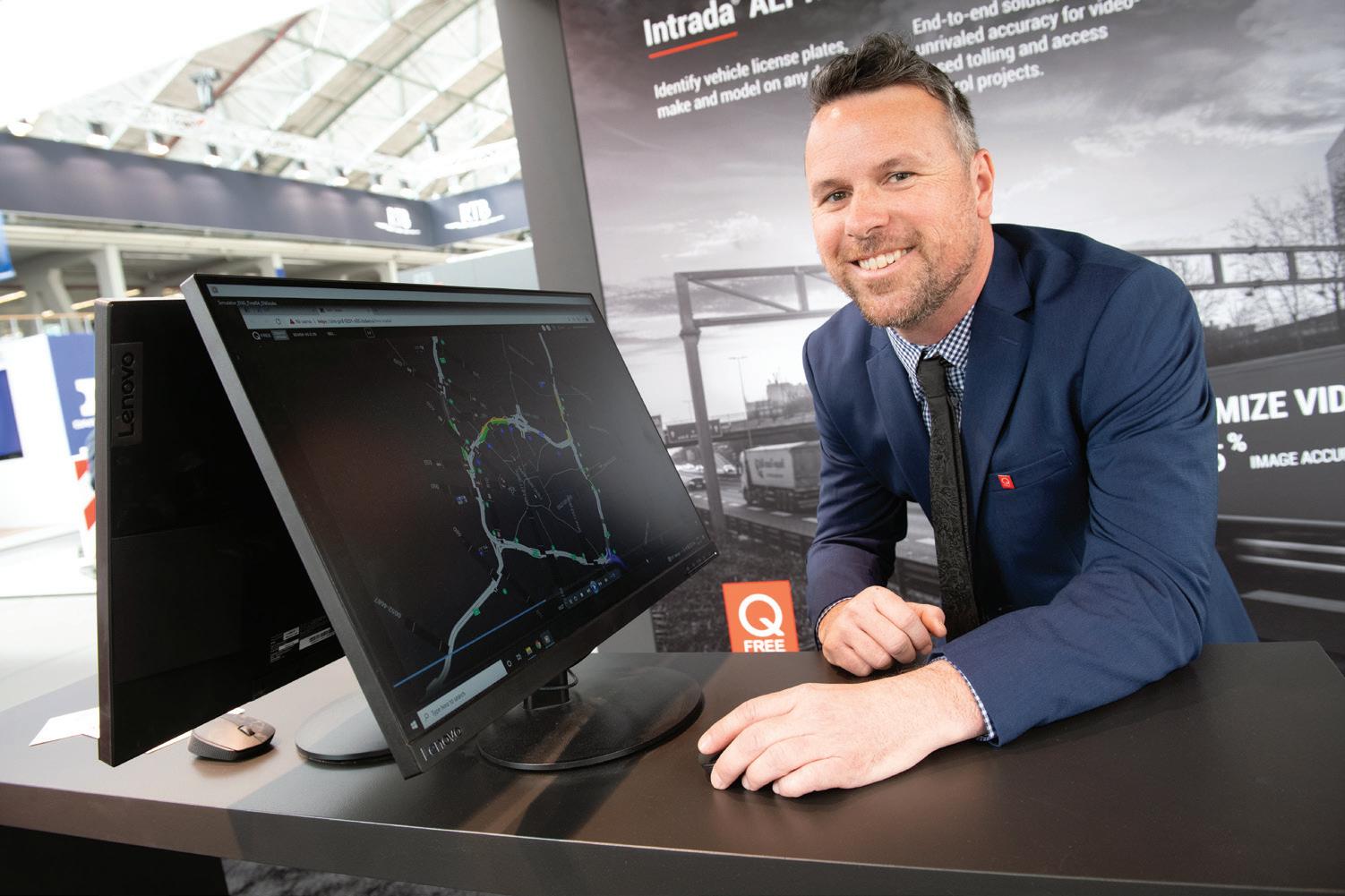
speed harmonisation, CCTV video surveillance, and weather data collection. e system also manages emergency SOS call boxes and variable message sign
Using the latest state-of-the-art technologies, the application is built in accordance with the latest trends and best practices in IT.
e purpose of the central highway ATMS application is to enable motorway operators and concessionaires to monitor a complete motorway by various sensors and technologies. It also allows for customisation based on the needs and requirements of various motorway operators. For proper training of tra c control centre supervisors, a special computer simulator module has been developed. e instructor can generate various tra c events that the tra c supervisor needs to properly manage to ensure maximum safety and smooth tra c ow. Based on the simulation, a statistical comparison of selected tra c ow parameters is performed, which is used to evaluate the tra c supervisor's actions.
▶ Stand 01.215
www.q-free.com
Hazen.ai is announcing a revolutionary new 3D video analytics engine that transforms an ordinary video camera into a sophisticated 3D sensor for advanced traffic analytics. And it is demonstrating the system on its stand here at Intertraffic.
Leveraging the latest computer vision and deep learning technology, Hazen.ai’s 3D analytics engine senses each vehicle, pedestrian, or cyclist as an object on a threedimensional environment map. The proprietary patent-pending technology can provide live real-time 3D sensing capability at the edge, by processing a video feed from an off-the-shelf IP video camera.
“3D video analytics gives us the best of both worlds,” says Muhammad Amin, CTO of Hazen.ai. “We have engineered it to give radar-like capability while maintaining the unique advantages of vehicle trajectory analytics. It is sort of like the 3D map view you see in a Tesla car, but from roadside-mounted video cameras.”
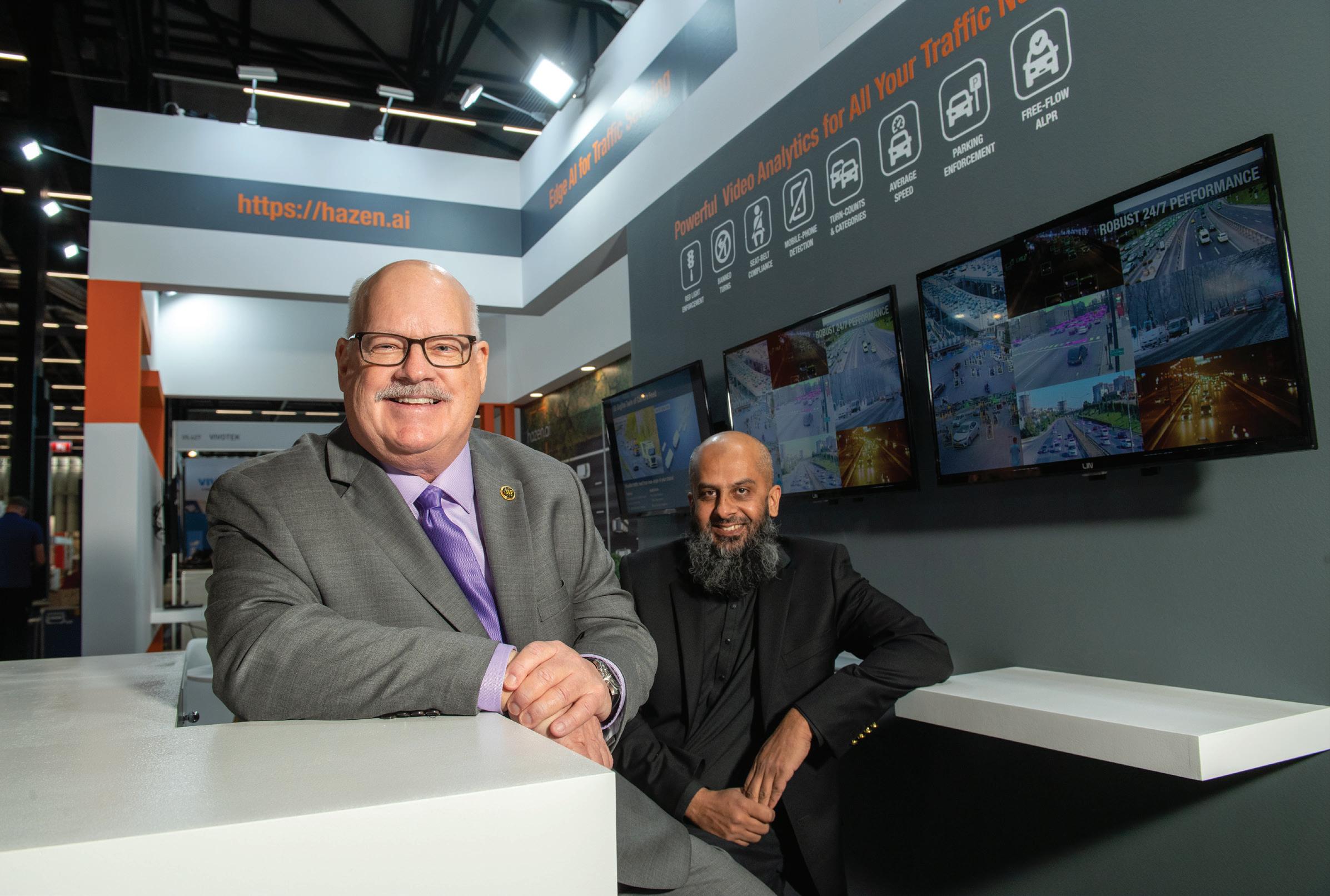
Hazen.ai’s team is calling the new technology “a digital twin of your traffic camera feed”, and indeed it does feel exceptional and different when viewed in their demo. The engine can provide a view of the traffic feed from an angle of your choice
in real-time. Without the need of any additional sensor, the engine provides a live view of the traffic that ensures accurate positioning of vehicles on the road and relative to each other.
“We believe this is a
Pi-Lit Technologies, from the US state of California, has brought to Intertraffic two of its newest Ground Truth sensors. The Impact Detection System monitors critical safety infrastructure for both minor and major impacts that may otherwise go unreported.
Any impact with a crash cushion, guardrail, end terminal, cable barrier and more should be inspected. But many go unreported for weeks, despite the asset possibly being compromised. The industry currently has no formal reporting mechanism. However, the Impact Detection System by Pi-Lit reports via text message, email and IMS systems.
revolutionary step in traffic sensing,” says Sohaib Khan, CEO of Hazen.ai. “There is so much more that you can do with 3D sensing. It provides an accurate understanding of the vehicle orientation, its position relative to other
Using its industry-recognised mesh network, Pi-Lit now connects all of its temporary traffic control lamps and road LED flares to cloud services through Pi-Link, a cellular gateway to Waze, Google Maps, industry dispatch or government incident management systems. All of Pi-Lit's devices are now ‘smart’; they adhere to the standardised Work Zone Data Exchange data format. These smart lamps report battery status, operating condition, impact and blow-overs and GPS (GNSS) location. Your text message will tell you that a delineator has blown over before the inspector will call you.
▶ Stand 08.741
www.pi-lit.com
vehicles, its ground footprint, dimensions and more. All this is not possible with just 2D rectangular bounding boxes that most deep learning engines provide.”
▶ Stand 05.419 www.hazen.ai
SunfireFuel Cell’s Remote 400 provides off-grid power to stationary or semi-mobile applications. An integrated IP interface for telemonitoring and long maintenance intervals enable unattended operation for more than a year.
This makes Sunfire-Remote 400 ideal for use in secluded areas. Reliably, the compact unit operates at a temperature range from +55C to -20C, but can be as low as -40C if a customer specifies the range.
The Remote 400 can power traffic lights and barriers at level crossings during wintertime. Combined with photovoltaic systems, SunfireRemote 400 ensures the operation of several microwave radio stations in Alaska. In Tibet, Sunfire-Remote 400 has supplied the Mount Everest Base Camp with energy. For this purpose, two units were adapted to operate at high-altitude.
▶ Stand 07.402
www.sunfire-fuel-cells.de























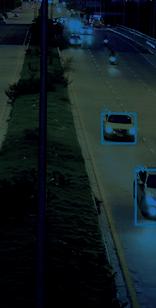
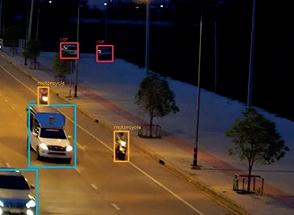


Dedicated to critical infrastructure such as Tunnels, Bridges and Highways.
Citilog Automated Incident Detection leverages Artificial Intelligence and the latest developments in Deep Learning to automatically identify these incidents in real time on your roadways:
• Wrong way driving
• Stopped vehicles
• Smoke in tunnels
• Pedestrians
• Debris
• Slow vehicles
• Congestion
Our intelligent solutions optimize operations and reduce response times for traffic operators, providing a safer road for the travellers they serve.

Idemia is here to showcase its road safety solutions which combine the best technologies on the market -Doppler, lidar, and video analytics- into a single solution.
Recognised for their e ciency and performance, Idemia products provide accurate speed measurement with integrated video analytics. e company’s solutions can classify di erent types of vehicles and enable in-cabin vision to detect the use of smartphones and whether or not a person is wearing a seatbelt.
Idemia says its end-to-end collection of xed and mobile solutions can be adapted to any environment and are suitable for a broad range of use cases. e company’s Mesta Control is a back-o ce solution where law enforcement, tra c management and public security are integrated in a single platform. Idemia says its Mesta Fusion provides the highest violation detection rate on the market for complex violations such as tailgating, overtaking, forbidden trajectories and yellow box
Jean-Paul Baldacci












o ences, among others. Meanwhile, Mesta Compact is an advanced multi-violation compact device that is particularly suited to urban and rural environments. Mesta
Finally, the Mesta Flow advanced tra c law

enforcement system monitors the average speed of a large network of multiple control sections.
▶ Stand 05.108 www.idemia.com
There is a warning panel for customised configuration, a crash absorber and a docking station that can be fitted to any service vehicles. The system is folded up and is out of the way during transportation. Once on site, the service vehicle is moved into the relevant position, the crash absorber is folded down via electrohydraulic action and
Another unique benefit: the crash absorber can already be folded down and up again during transportation. In this way, the transport vehicle comes to a standstill while already being secured and can equally start again. Transport vehicles starting from a weight of 7.5 tonnes are recommended –even mandatory in Scandinavia, Belgium and the Netherlands, Slovenia, Hungary, Croatia
Defender is based on the time-tested Nissen RAMBO II that can now be easily – and quickly - brought to CEN/TS 16786 standard by means of the company’s tool kit in only a
Navtech is returning to Intertra c to highlight ClearWay, the company’s ITS solution and how it is enhancing safety on highways around the world.
e next-generation ClearWay Radar is the service-free solution keeping roadworkers out of harm’s way and lowering lifetime costs
Navtech’s unrivalled highde nition radars have a proven track record in projects across the world. ClearWay, continuously monitors highways with a 360° eld of view, and long-range detection. It is improving safety in countries from Sweden to Australia. Importantly, ClearWay is una ected by fog, snow, rain, or darkness.
To further enhance safety and improve performance the next-generation radar makes ClearWay a completely servicefree solution. Having listened to its customers and understanding how they use ClearWay, Navtech says this improvement will deliver signi cant bene ts and will have a






positive impact on safety, cost and the environment.
With no need for people to remove Navtech radars from the roadside for servicing, less time is spent by roadworkers on the side of roads or in tunnels following installation. Reduced roadside works and tunnel closures also


mean a lower lifetime cost of the system saving on both tra c management costs and service parts.
e completely servicefree solution enhancement has been made possible by Navtech investing in the design of a bespoke drive solution for this next-generation radar. e company is so con dent in its performance, that it comes with a lifetime mechanical




warranty for full peace of mind.
Visitors to Intertra c can see the enhanced ClearWay on the company’s stand and also get an in-depth, global view on ursday from 10:30 - 11:00 in Summit eatre 2 during the Navtech session - How Automatic Incident Detection technology is changing intelligent road infrastructure. ▶ Stand 05.422 www.navtechradar.com
RoadVista is increasing its range of reflectometers with the introduction of the StripeMaster 3 for comprehensive pavement marking asset management. This updated retroreflectometer is lighter, smaller, and easier to carry with a spring-action handle that easily opens for quick and easy set up.
US-headquartered RoadVista says that, with tra ic increasing and autonomous vehicles becoming more prevalent and integrated, its retroreflectivity measurement tools help create safer roads for operators, as well as human drivers and machine vision for autonomous vehicles.
RoadVista’s Laserlux G7 mobile pavement retroreflectometer provides road stripe assessment at highway speeds and is designed to enable operators to attain real-time measurements of road striping in real-world conditions. Measurements can be taken with the flow of tra ic , day or night.
The Laserlux G7 (LLG7) features the Squid Mount mounting system and can be mounted to virtually any vehicle, providing the opportunity to test on both sides of the vehicle for fulllane road testing. The Laserlux G7 Vision enables testing in the infrared spectrum providing road marking machine vision visibility data for ADAS sensors such as LiDAR. Real-time and downloadable data is available for analysis.
▶ Stand 03.326
www.roadvista.com






















































































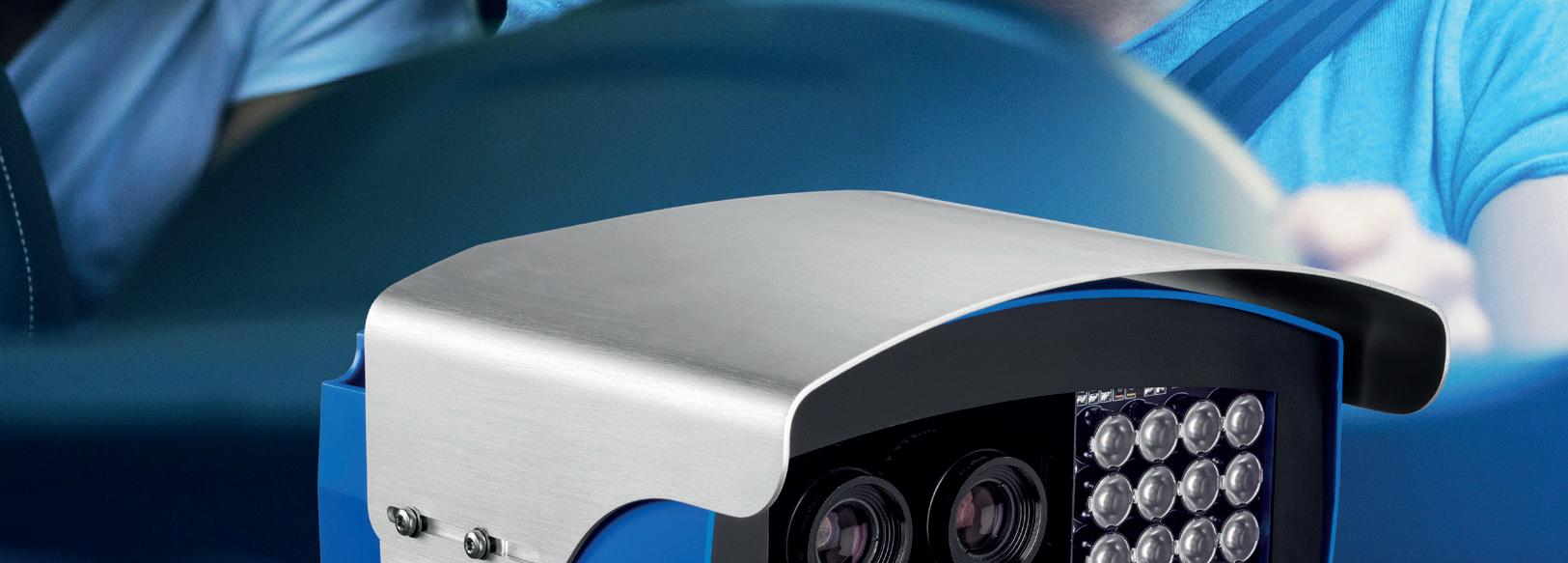
Intertra has launched a new camera that verifies if the driver and front-seat passengers wear a seatbelt. In addition, the camera detects if the driver is using a mobile phone while driving, reads the licence plates and recognises the vehicle's make and model. As an option, the camera can also detect the speed of the vehicle and count the number of occupants sitting in the front seats. The system

operates day and night, in all weather conditions.
Mobile phone use and driver distraction are major causes of road crashes and contribute to almost 20% of serious injuries. Research shows that using a mobile phone while driving quadruples the risk of crashing. The use of a mobile phone while driving is just as dangerous as drink-driving.
Failing to wear a seatbelt


also has significant impacts on the outcome of a crash for drivers and passengers. Vehicle occupants not wearing seatbelts have a much lower chance of surviving a crash than those who wear their seatbelts. Wearing a properly adjusted seatbelt improves the chance of surviving a crash by 200%.
Intertra says it is committed to protecting the privacy of drivers and passengers and


works closely with police forces to ensure that the camera operations comply with privacy legislation.
People are not identified using the images as the camera masks the faces of the driver and passengers. If no o ence is detected, the camera automatically deletes the images.
▶ Stand 01.506
www.intertra .com
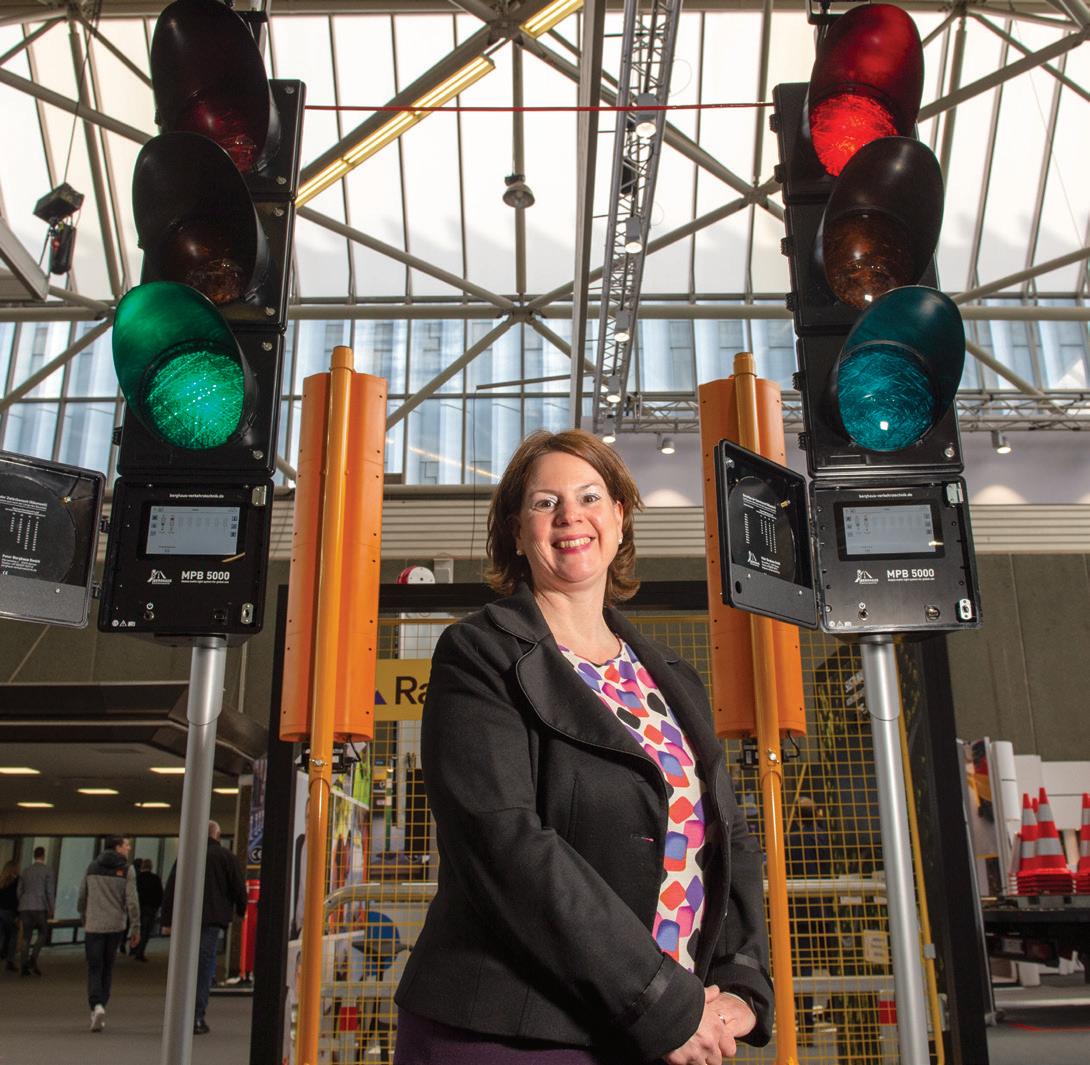
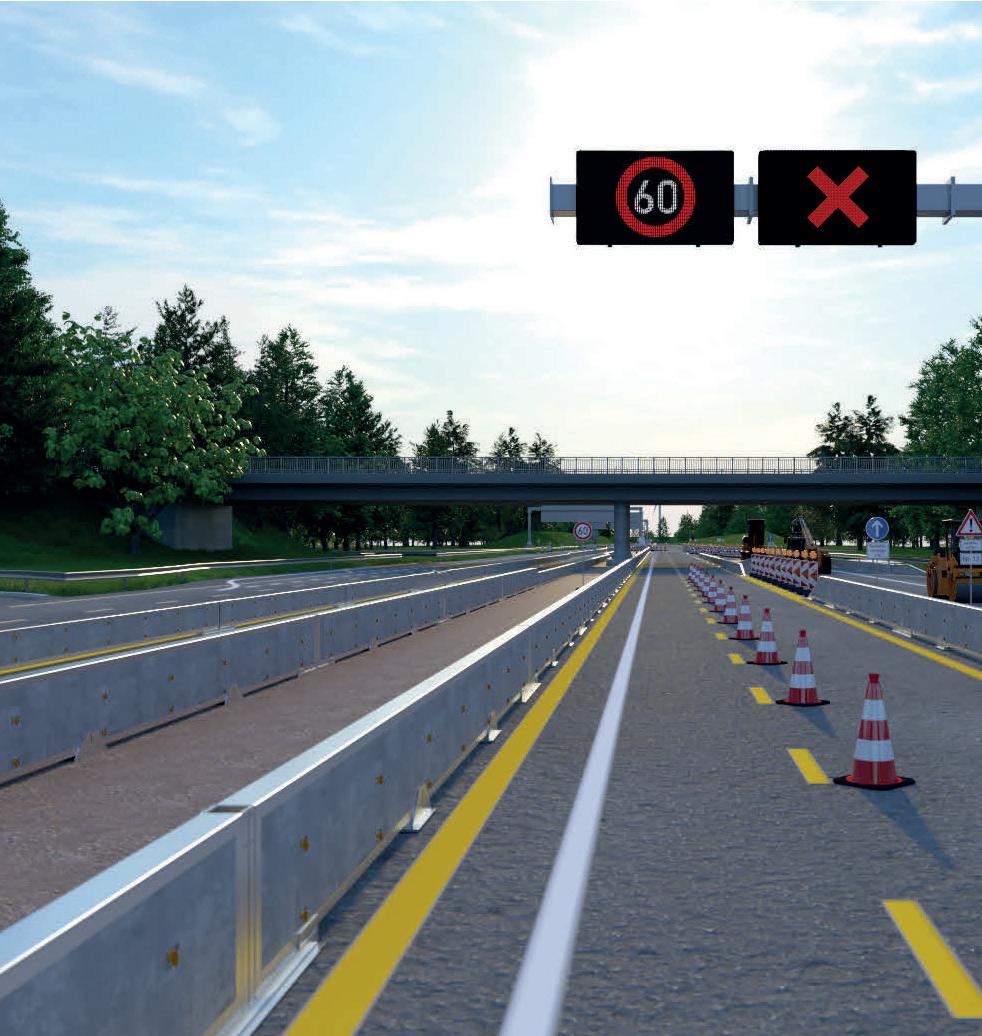
The Work Zone Safety Group of companies is the largest temporary tra ic and safety solutions specialist in Europe. It operates tra ic services companies in 11 countries with over 4,000 employees, including AVS and Berghaus (Germany), Chevron Tra ic Management (UK), Fero (Belgium, Netherlands) and Ramudden (Nordics, Canada), as well as HRS (UK), focused on digitalising mobility and safety in work zones in urban and rural areas and on highways.
With the group’s comprehensive portfolio of services for professional tra ic safety, as visitors to the Work Zone Safety Group’s stand will see, it ensures that all road users pass safely through the danger zone of a construction site - and that the construction site functions as smoothly as possible.
For 60 years the group has had a pioneering spirit at its core, and it develops and produces its own products for tra ic safety. The Work Zone Safety Group relies on the highest quality standards for its products: everything o ered to its customers has been tested hundreds of times by its teams in the field.
With the Work Zone Safety Group’s sustainability programme, the group takes care of safety, its teams, equipment, and the environment – so that everyone gets home safe and sound.
▶ Stand 08.100
www.avs-verkehrssicherung.de

















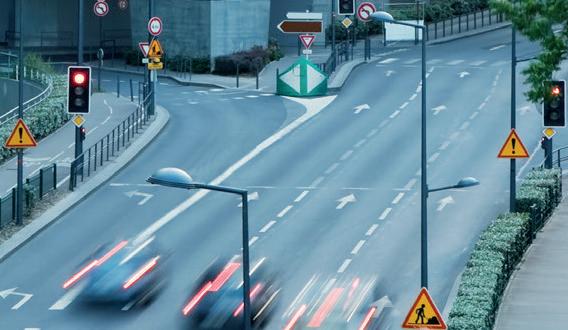
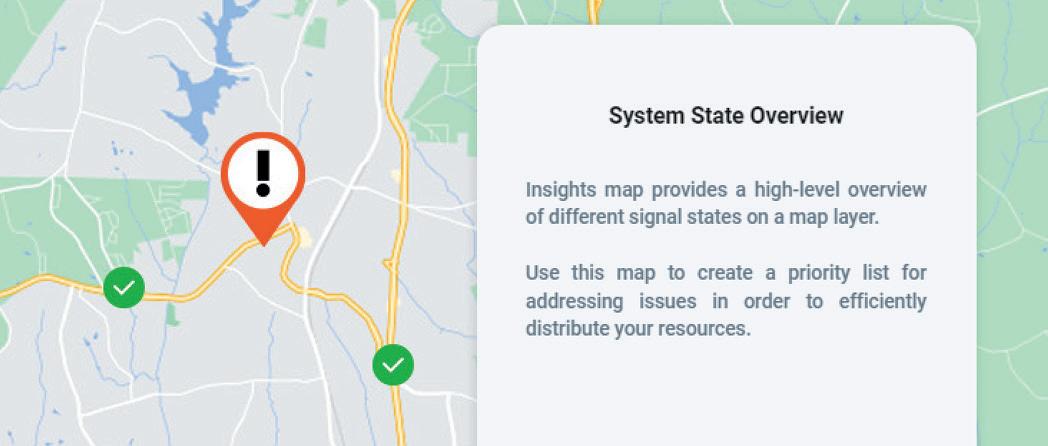
At Miovision™, we take your traffic data and turn it into actionable insights. This allows you to quickly and easily identify signal timing issues, analyze signal timing strategies, and reduce re-timing cost.


Visit Miovision at to learn more about our newest solutions. booth 05.218



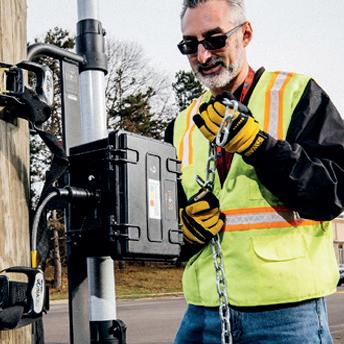










International Road Dynamics (IRD) is here at Intertra c to showcase its new local subsidiary, IRD EU.
e main aims are to highlight the company’s product and service o ering, establish and grow relationships, and pave



the way for further acquisitions in four key strategic areas — commercial vehicle safety and enforcement, advanced tra c management for highways and cities, road tolling, and smart cities. e new entity, announced late last year, is led
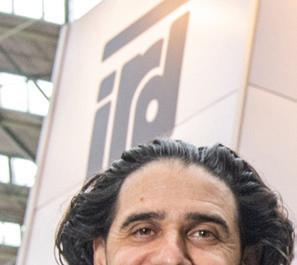
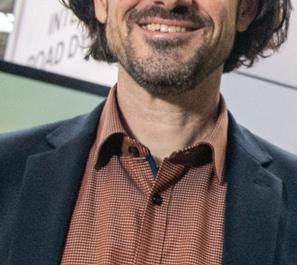



by Heimo Haub, a veteran of the European tolling sector. As managing director, he will build the senior management team and then drive local strategies and opportunities.
IRD EU, says Haub, re ects a desire to be at the heart of one








of the world’s fastest developing ITS markets with an entity that o ers both a distinct identity and greater regional cohesion.
Ultimately, it means better service for both existing and new customers.
“IRD EU will facilitate access to our technologies and signi cantly improve our service base,” says Haub. “We want to maintain our dominant position in commercial vehicle enforcement and help to drive the market here.
At the same time, we want to underline that we already have a signi cant presence in Europe, with group companies Icoms Detections, Sensor Line and VDS.”
“We manufacture locally, install locally and service locally,” Haub continues. “We’re keen to discuss future acquisitions and expansion as part of our longer-term goal — safer, more e cient roads and a safer, greener, trusted world.” ▶ Stand 01.116 www.irdinc.com
Congestion, gridlocked tra ic, accidents: as a solution to the tra ic problems in our cities, all eyes are on electric and autonomous driving.
There is constant talk about technological innovations that are being developed in vehicles for this purpose. So much focus is on developing the smart car of the future. But what about the dumb road of today? Wouldn’t it be a quicker win to smarten up infrastructure for tra ic already today?
In line with this logic, Yunex Tra ic is here to show how it is committed to putting an end to stupid roads - and making tra ic smart. For everyone.
For the experts in intelligent tra ic systems, this means thinking about tra ic management in a connected way
and orchestrating tra ic around everyone's needs. With solutions like environmentally sensitive tra ic management and new adaptive tra ic light controls, they herald a new generation of











tra ic management. The result: better quality of life in cities thanks to more security and reduced emissions.
With the broadest global endto-end portfolio in intelligent









tra ic systems for adaptive tra ic control and management, highway, and tunnel automation, as well as intelligent solutions for V2X and road pricing, supported by world-class customer service, Yunex Tra ic is well equipped to make this mission come true.
Here at Intertra ic, visitors are invited not only to see the ground-breaking solutions at the Yunex stand, but to experience them with VR-installations and live demonstrations.
In addition to the technological highlights, Yunex Tra ic o ers a variety of culinary delights, including premium co ee served by a barist which Yunex Tra ic says might just be the best co ee at the event.
▶ Stand 01.327
www.yunextra ic.com
Traffic incidents are the biggest contributor to nonrecurring congestion. Combined with natural bottlenecks at tunnels, bridges and highways, incidents ranging from debris on the road to vehicle accidents are every driver’s worst nightmare.
Citilog, the inventor of and a market leader in automatic real-time incident detection, says it is 100 per cent focused on minimising these high-impact problems.
Rather than rely on manually monitoring video feeds or reports from drivers, Citilog’s automated incident detection (AID) system identifies a range of events and incidents by leveraging deep learning to enhance the accuracy of video analytics.
The system is ‘trained’ with a large dataset of real-world traffic video clips to identify vehicles and set them apart from shadows and reflections. This reduces false positives and delivers unparalleled accuracy. These highly accurate detections enable traffic operators to act immediately, thus improving response times and relieving traffic build ups.
“Our proven software and unique accuracy turn cameras into automatic, state-of-the-art
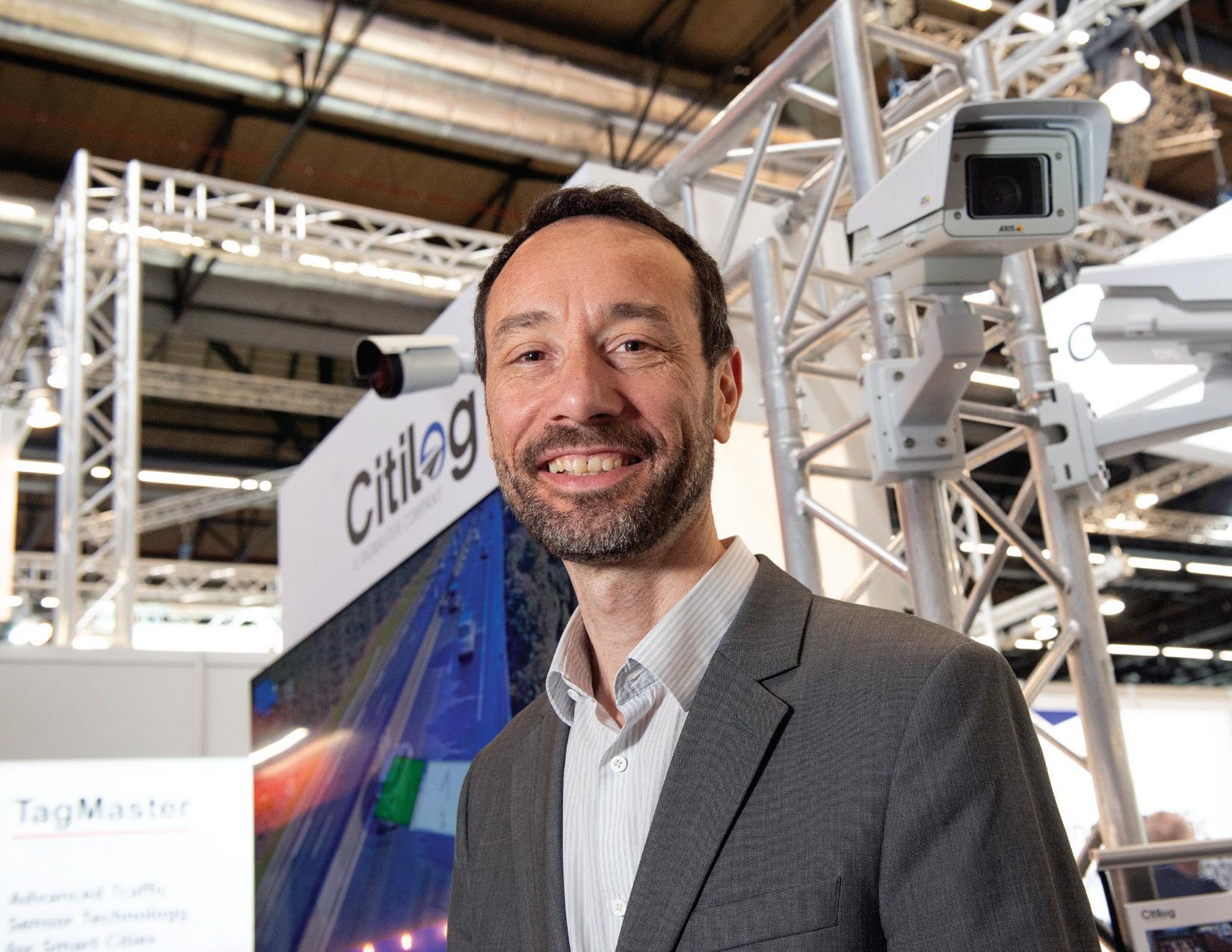
incident sensors,” says Eric Toffin CEO, Citilog. “For 25 years we have helped more than 2,000 customers in over 50 countries to create intelligent camera networks to dispatch emergency services and minimise the impact on city and highway traffic.”
The analytics software provides incident detection with
Theia Technologies, exhibiting for the first time at Intertraffic, is showcasing its award-winning family of 4K Day/Night NIR corrected lenses used for ANPR/ LPR, tolling, parking and other ITS applications.
The motorised versions are unparalleled because they provide a rare combination of high 300lp/mm resolution, excellent NIR correction, motorised zoom and focus. Moreover, they come in a compact, lightweight assembly allowing remote set up and licence plate capture at significant distances.
alarms and associated video evidence within seconds of an occurrence.
One of many customers, the New York State Bridge Authority has been using Citilog since 2016 to enable its small team of operators to increase their situational awareness. Instead of discovering traffic incidents several minutes after they occur,
the Citilog AID system sends an alert within seconds. They can then dispatch emergency services (in the case of an accident), crews to assist with disabled vehicles or debris cleanup, or inform drivers via VMS of slowdowns or alternate routes. ▶ Stand 05.134
www.citilog.com www.tagmaster.com
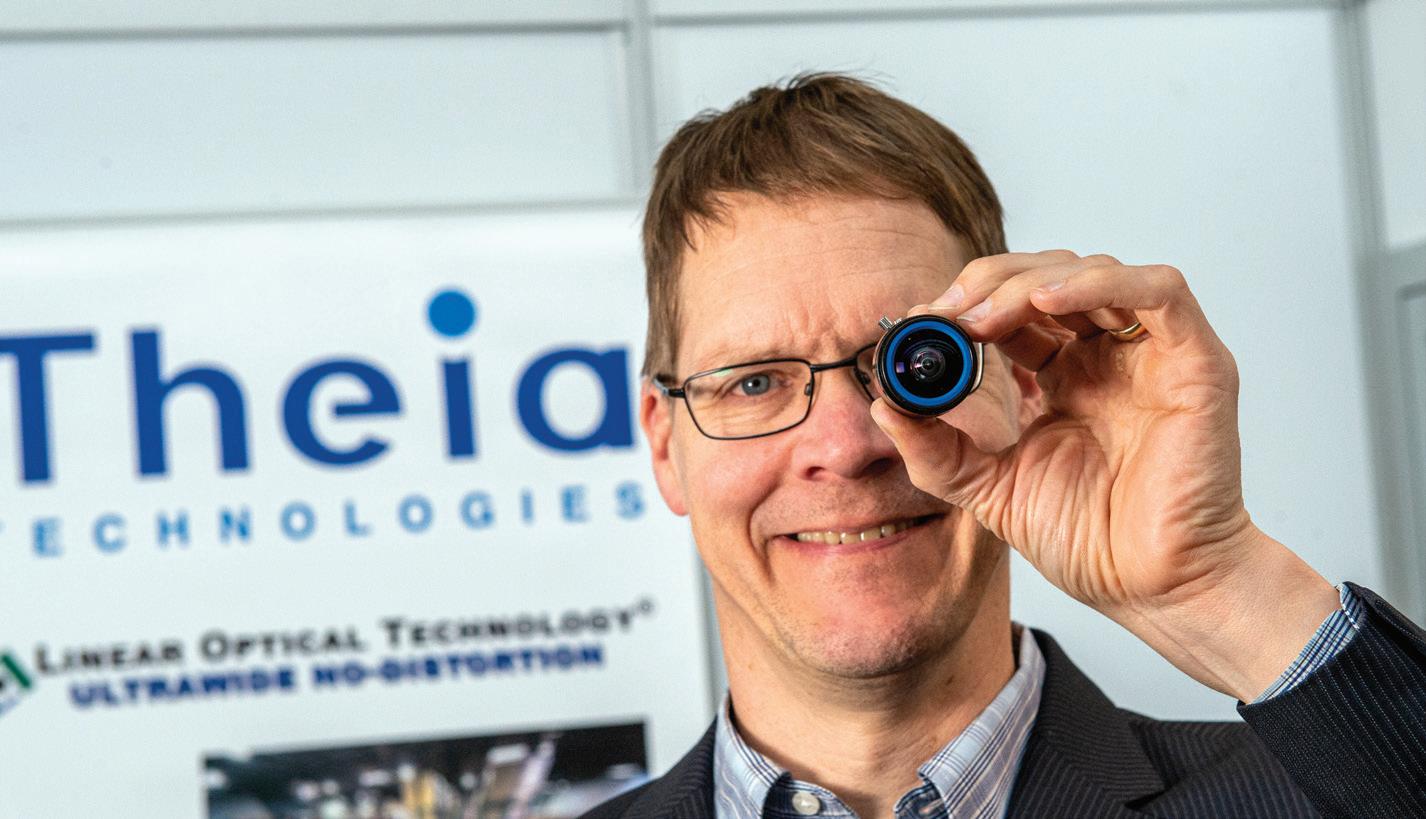
In addition, Theia is debuting for the Intertraffic audience, the company’s patented Linear Optical Technology which
corrects barrel distortion without the use of software or its inherent latency. The technology enables a family of megapixel
lenses offering horizontal fields of view up to 135o with very low distortion while improving the resolution at the image edge
compared to typical wide-angle lenses.
The lenses provide great peripheral vision for situational awareness in navigation and remote operation of vehicles and robots used in a variety of ITS applications from logistics to assisted and unmanned vehicles. The lenses can be used to capture wide areas at short distances such as in under-vehicle surveillance and shipping container identification, among many other imaging tasks.
Visitors to the Theia stand who take a survey will qualify for a free lens sample – while supplies last!
▶ Stand 01.353
www.theiatech.com





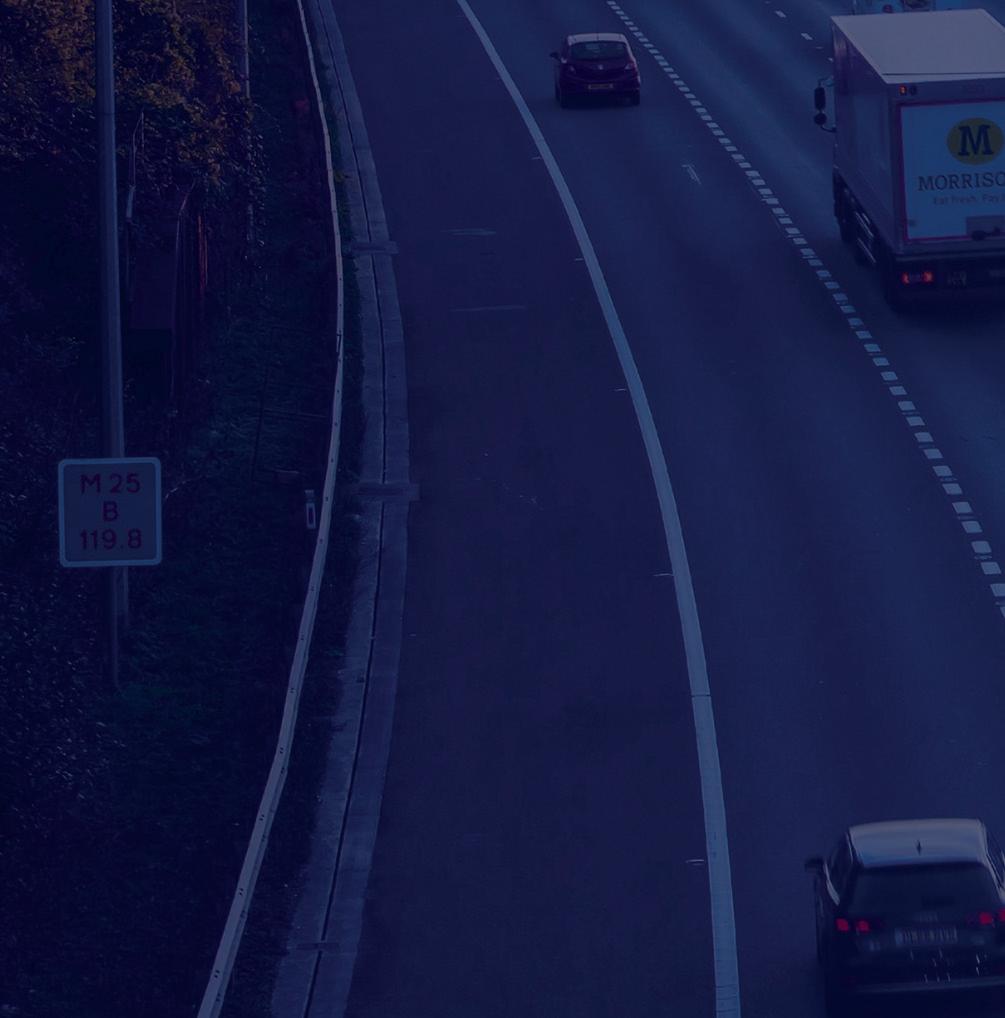



















Research has proven that tra c congestion results in an increase of air pollution which harms both drivers in tra c jams and those who live near congested roads.
e Covid pandemic underlined these results even further when cities which were under lockdown exhibited a signi cant improvement in air quality.
Tra c congestion is such a major cause of air pollution so it is only natural that a resolution to this problem is to improve the tra c ow on congested roads.
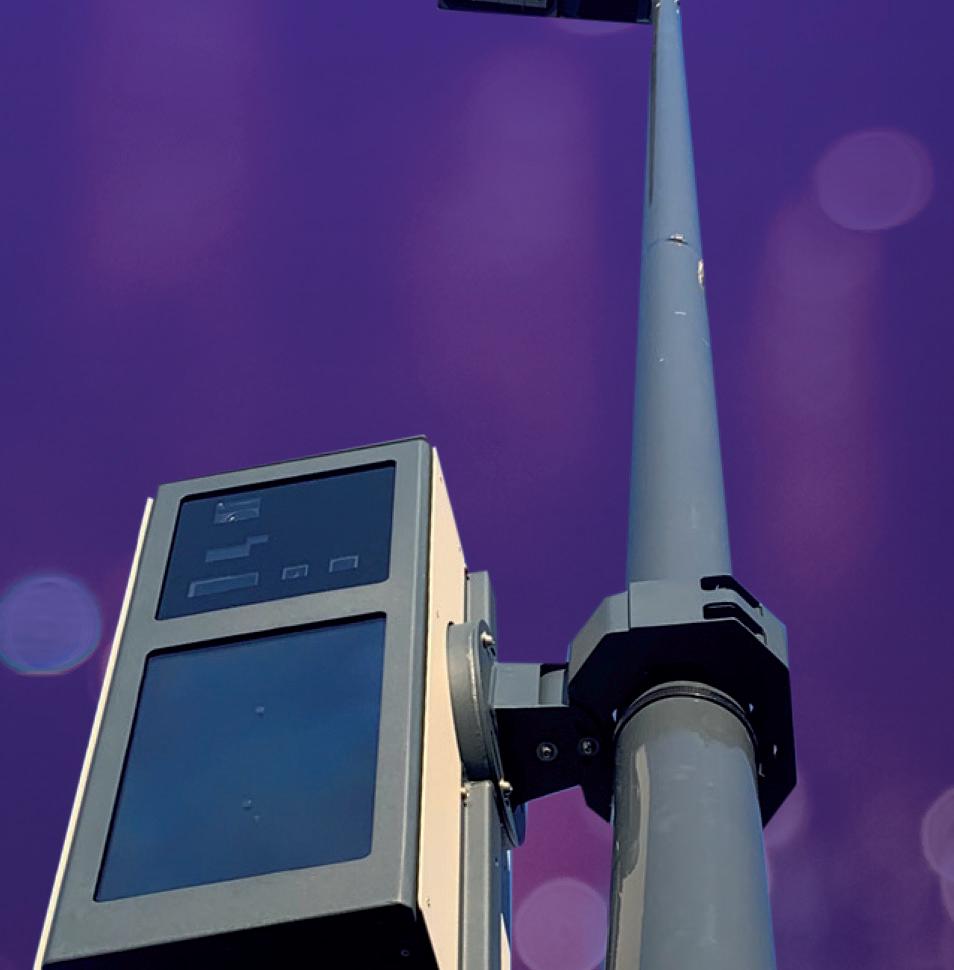
Exelerate Smart Tra c control is an Israeli-based company which develops Falcon, an innovative tra c light management platform with a mission to allow cities to independently manage their




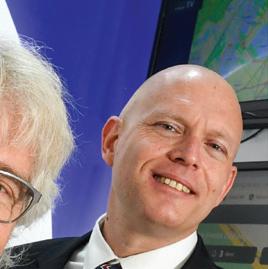

to exhibit a joint, deployable solution to tackle the reduction of air pollution because of tra c congestion. Atos is present in a wide range of cities providing digital services for the city's needs and has access to data collected from city-wide air pollution sensors.

Le Albert Seubers, Atos and Ziv Neuman, Exelerate


tra c infrastructure.
Atos is a global leader in the eld of communication and digital transformation with a

turnover of over €11 billion and over 100,000 employees worldwide.
Atos and Exelerate are here
Exelerate's software and algorithms control tra c lights based on information received from various sources. Together, Exelerate and Atos have combined forces to create a connection between air pollution readings and tra c light management, allowing automatic adaptations in tra c in response to changes in local pollution.
▶ Stand 02.129
www.exelerate.com













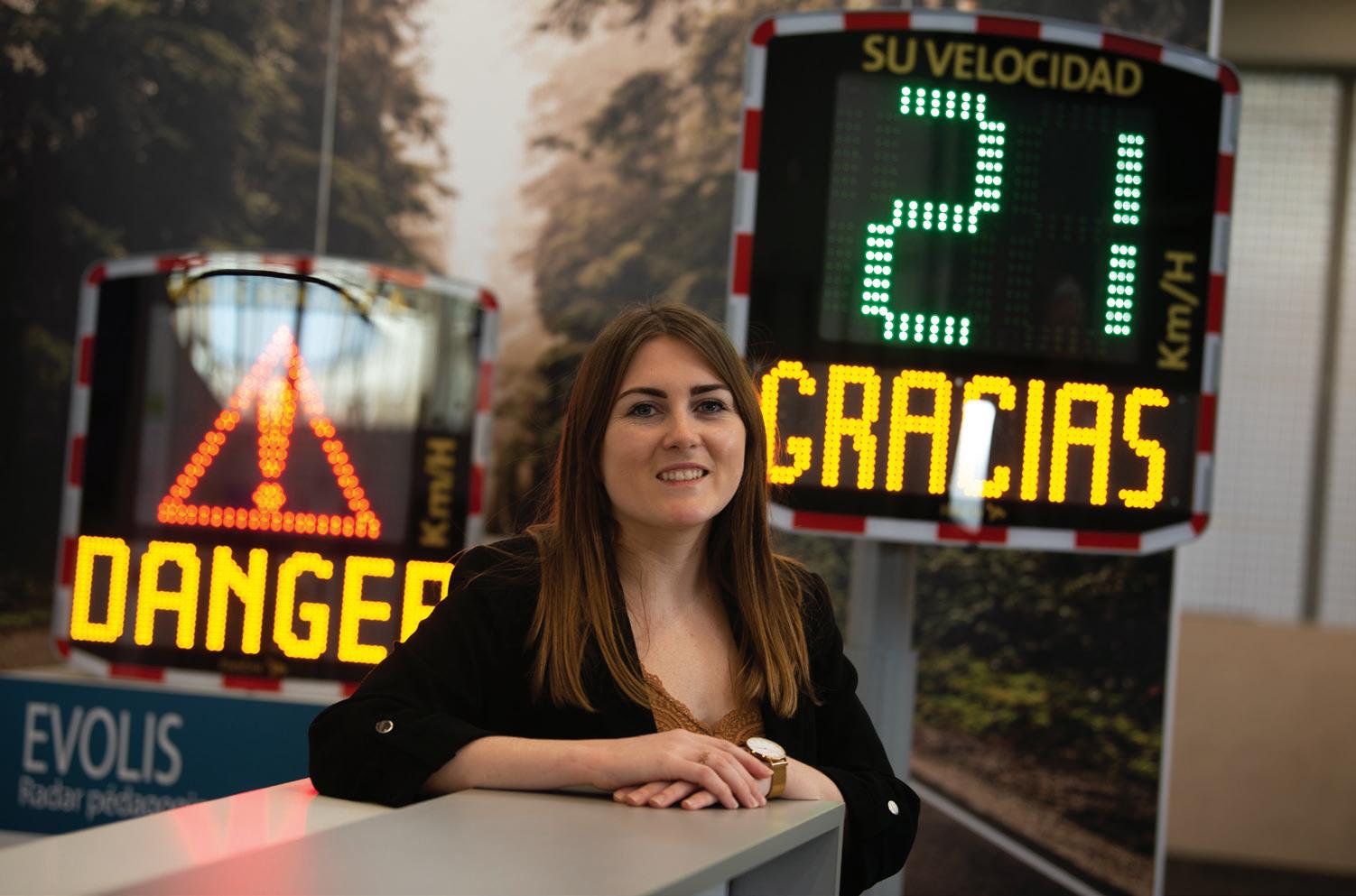
France-headquartered Élan Cité Group is here at Intertra c to focus on the success of its technology and its track record. For instance, the company says its Evolis radar speed sign is the global benchmark with over 20,000 installed and is the world’s best-selling radar speed sign on the market.
Élan Cité says such sales volumes are proof of the optimal technology, display visibility, accuracy of detection and reliability of the Evolis as well as quality of data management and programming software.
Importantly, the economies of scale generated by large volume production allows the company to o er ultra-competitive pricing across its entire product range. Since 2005, Élan Cité has designed and manufactured urban communication and tra c management systems and says it works with over 10,000 local authorities, worldwide.
All of the company’s production is based entirely in France and all sub-contractors involved in the process are certi ed ISO 9001. Élan Cité says this proven manufacturing process is subject to strict
controls which allows the company to guarantee an optimal quality of its products.
Other bene ts of its products include easy installation and operation, with customer support at all stages of a project. Overall,
World’s leading traffic management provider


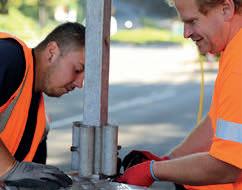
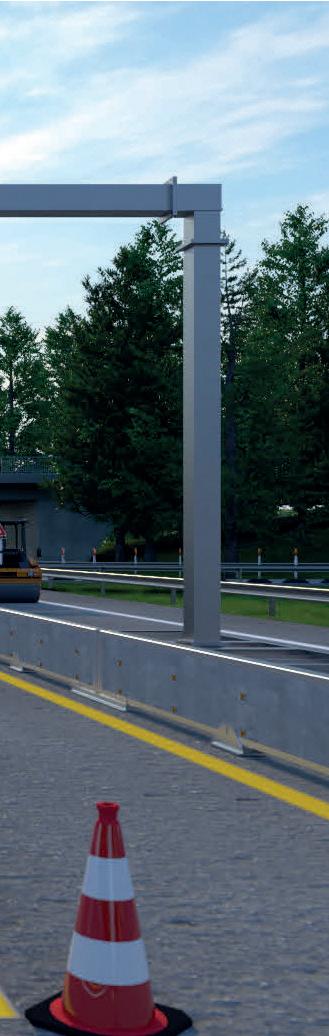
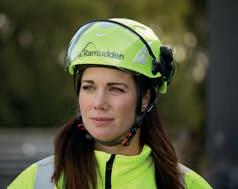
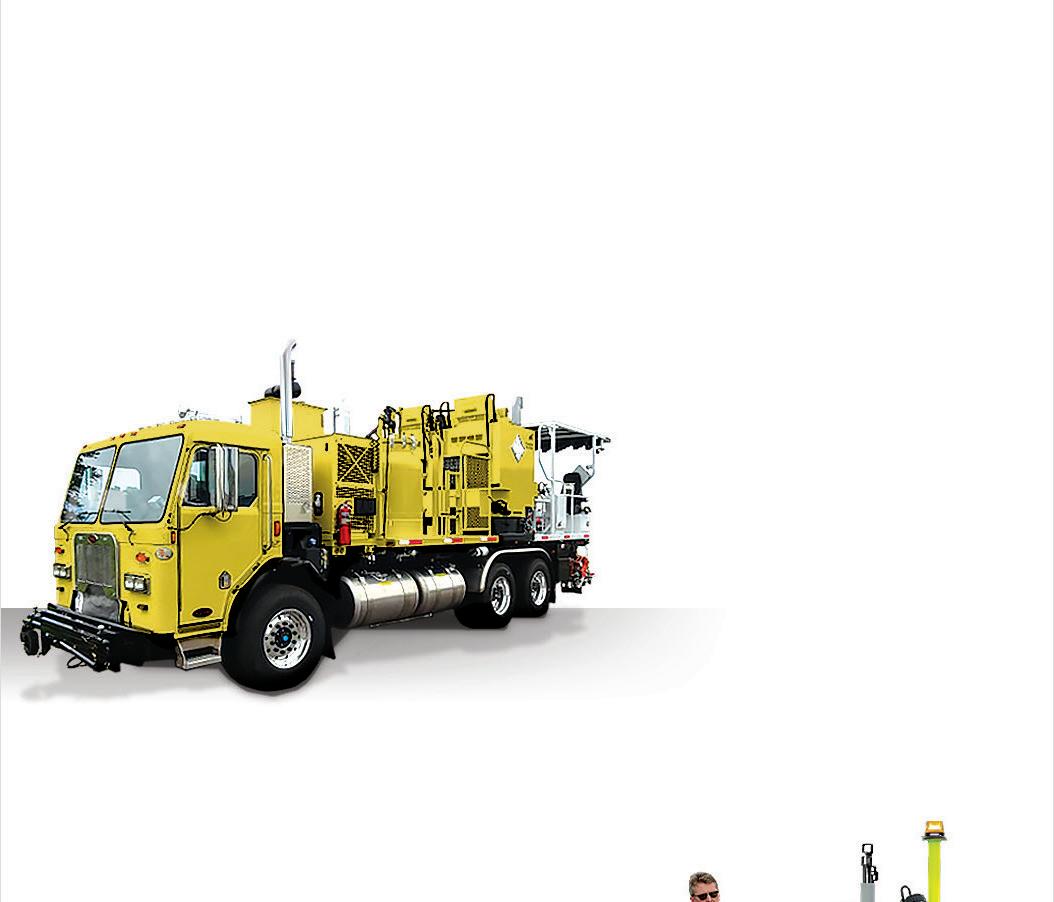
Work Zone Safety Group of companies (WZSG) operates traffic services companies in 11 countries with over 4,000 employees including AVS (Germany), Chevron Traffic Management (UK), Fero (Belgium, Netherlands) and Ramudden (Nordics), as well as HRS (UK), a company focused on digitalizing mobility and safety in work zones. https://www.wzsgroup.com/


Élan Cité says its mission is to ensure value for money, product e ciency, reliability, and durability.
▶ Stand 05.266 www.elancite.fr


Adaptive Recognition, formerly known as ARH, is best known as the innovator behind the globally recognised Carmen ANPR software. e company is here to demonstrate its expertise and solutions. As Adaptive Recognition points out, because of its long-term partnerships with tra c monitoring solution providers worldwide, it closely follows the evolution of this market and gets direct feedback from system integrators working in the eld.
”We know that it is a shared frustration that ANPR cameras often fail to deliver on the manufacturers’ promises,” says László Kis, CEO of Adaptive Recognition. ”Our mission is to provide reliable products that integrators can base their solution on with con dence,” he added.
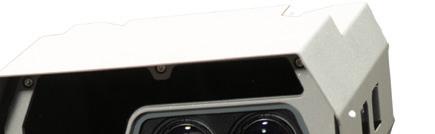
Adaptive Recognition is showcasing Vidar, its all-in-one tra c monitoring device which is suitable for low- and high-speed tra c monitoring. It features an in-built spot laser combined with PlateFinder software. e two triggers support each other to rule out the possibility of missed vehicles, yielding the same level of reliability as external triggers.

















Low-quality images are also a thing of the past as Vidar encompasses two fully autonomous cameras with motorised zoom, focus, and iris. Global-coverage ANPR is provided by Carmen running onboard the camera.
Adaptive Recognition points out that it also o ers solutions to clients who do not wish to invest in a dedicated ANPR camera but would rather add ANPR function to an
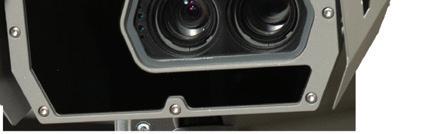
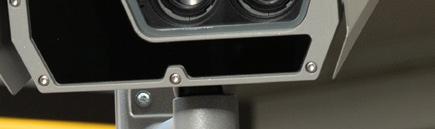








IP camera or upgrade an existing system. e Carmen software comes in multiple onpremise and cloud-based versions. On the company’s stand are the latest additions to the Carmen family: Carmen Nano, specially developed for NVIDIA Jetson-based systems, and Carmen Box, a standalone device for video-based ANPR. ▶ Stand 01.132 www.adaptiverecognition.com
Verra Mobility has long been known as a safety specialist but is increasingly pivoting its existing technology towards smart mobility as well. “Technology which you used to drive safety outcomes can also be used to drive mobility outcomes,” says Michael Tooker, senior vice president of product solutions.
Verra’s roots are in safety, with applications such as red-light running, but customers need other things from the company, Tooker says: “Congestion is a high point of need.” By enforcing bus lanes with fixed and mobile solutions, for instance, you can improve commuting times and therefore drive bus ridership –which in turn helps to ease tra ic jams and cut pollution.
Equally, if you’re already keeping an eye on bus lanes, it is not a stretch to protect vulnerable road users as street space is reallocated and more modes are expected to share thoroughfares. “Bike lane
enforcement is a space we’re leaning into,” says Tooker. He also sees other potential opportunities in the growing trend towards micromobility, which ticks Verra’s boxes: urban environments, municipal customers and a stretch of kerb to manage.
Speed enforcement is a further area which Verra is looking at. “Customers want to solve specific use cases, especially with vulnerable communities,” Tooker says. Enforcing safety in school zones is one example here.
The company is also considering a concept Tooker calls, “the highest order of enforcement”, bringing together edge technology and back-o ice functions.
“Just because you can enforce everything doesn’t mean you should,” he says. “But if you can deal with the most egregious o enders, you can have the highest impact.”
▶ Stand 01.303
www.verramobility.com

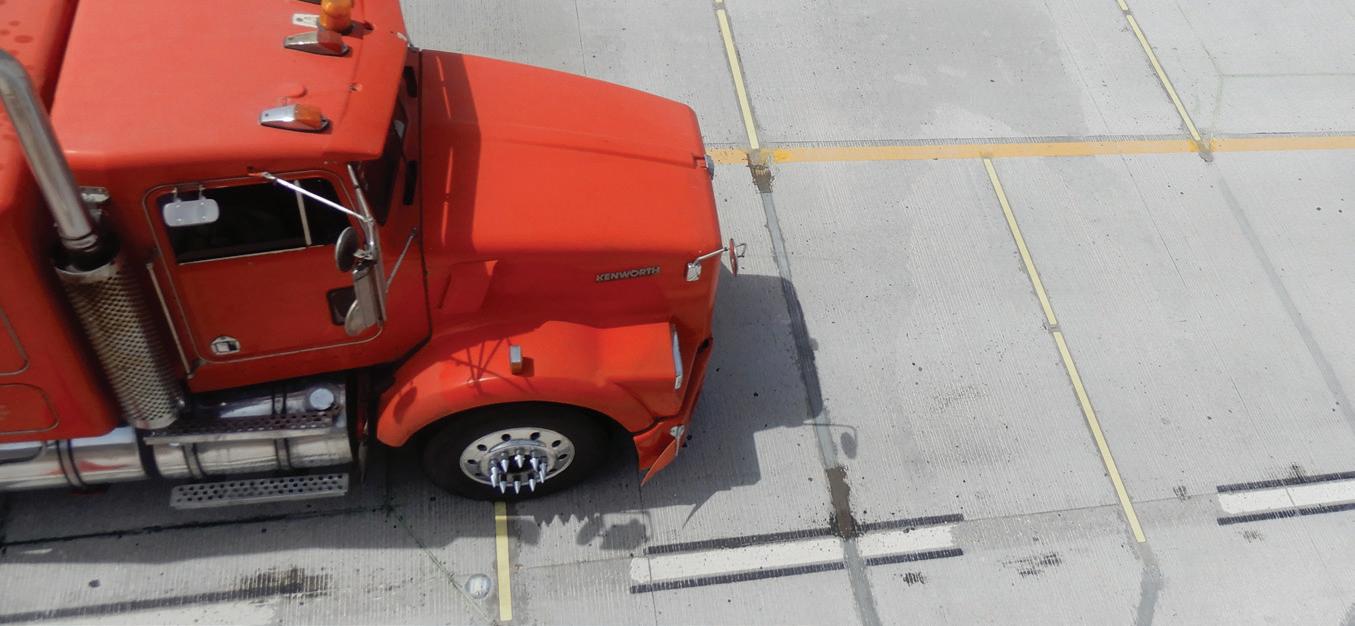
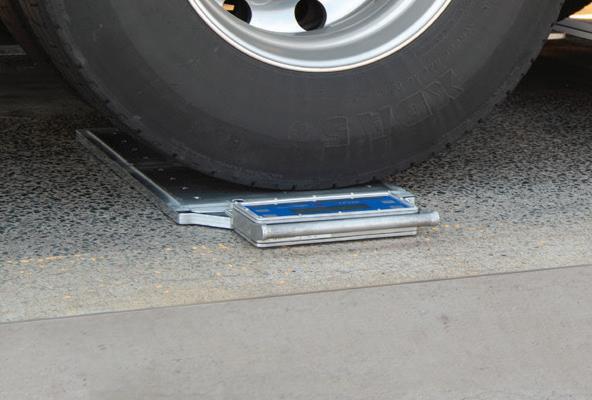
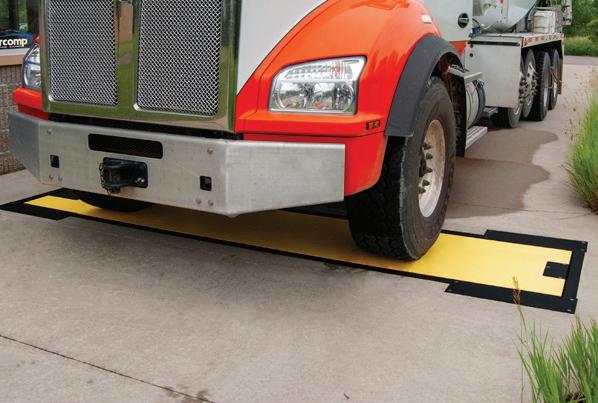
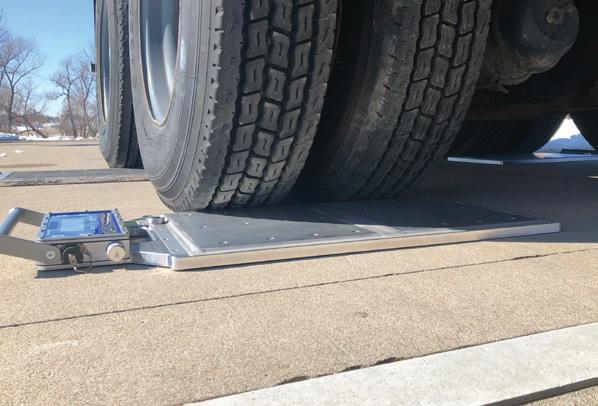

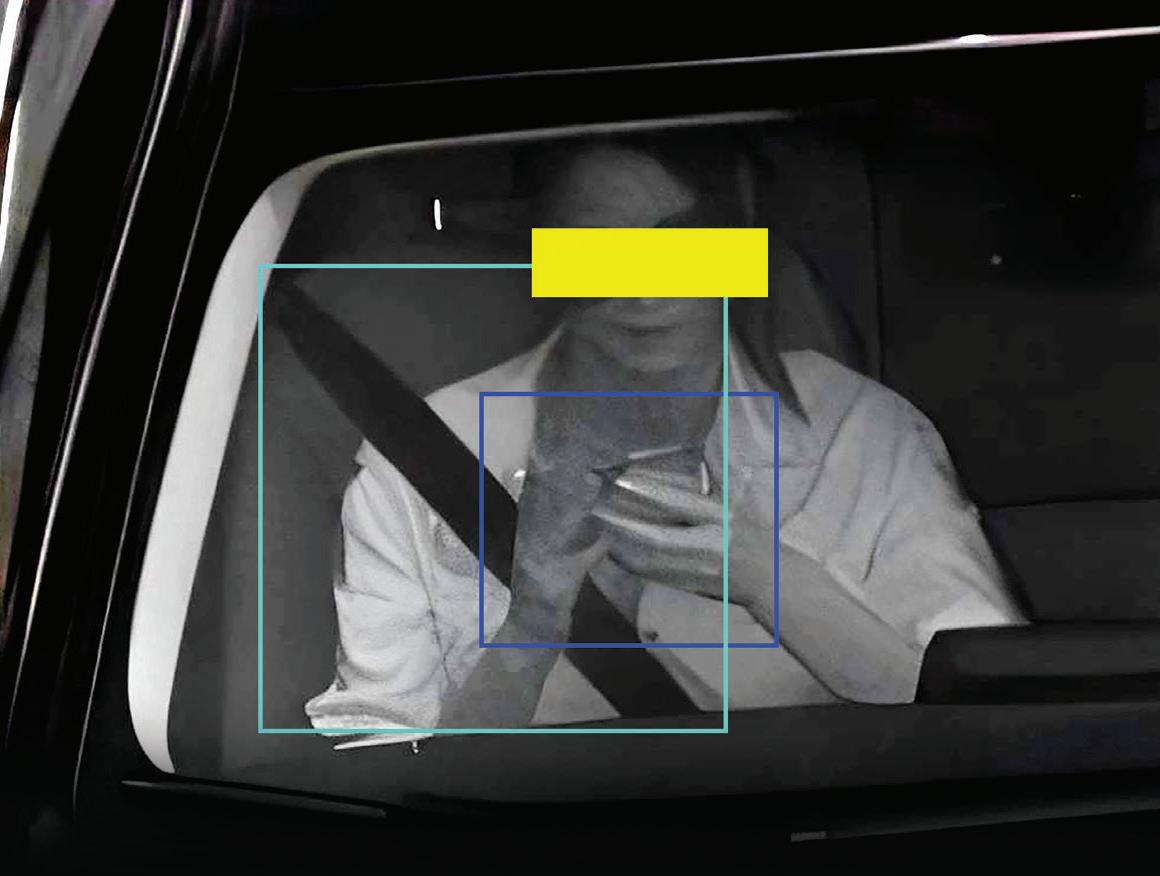
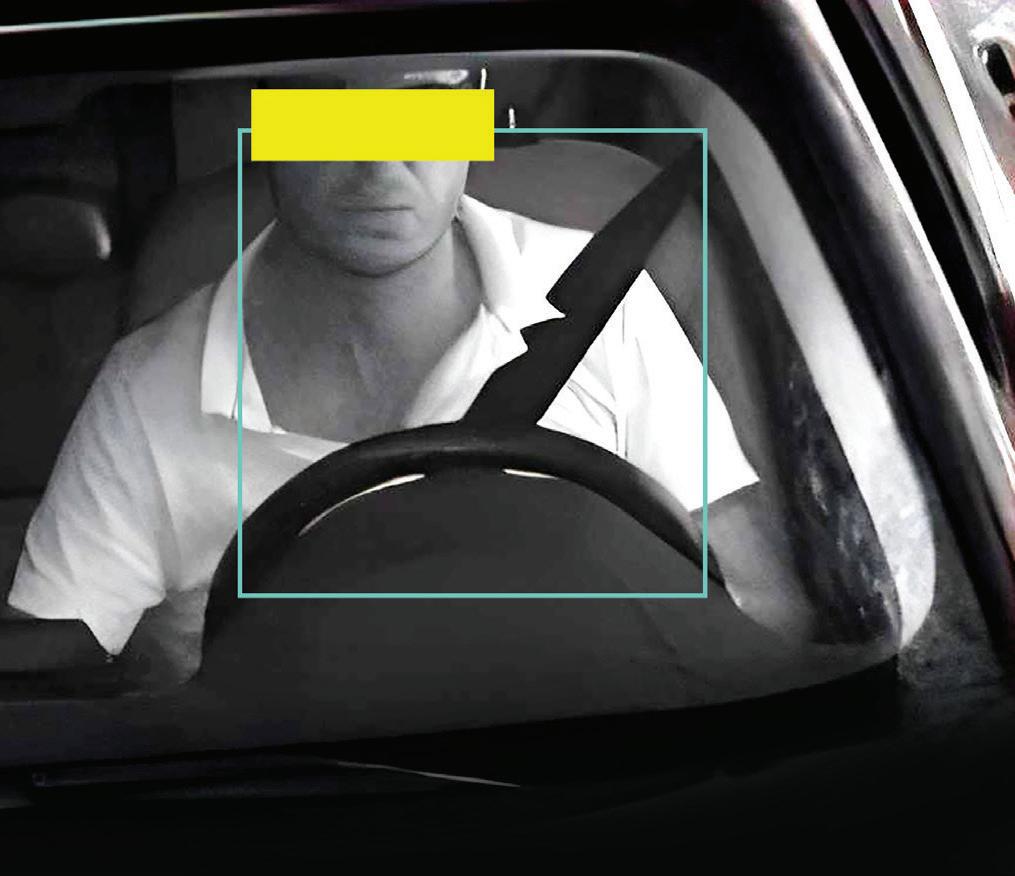


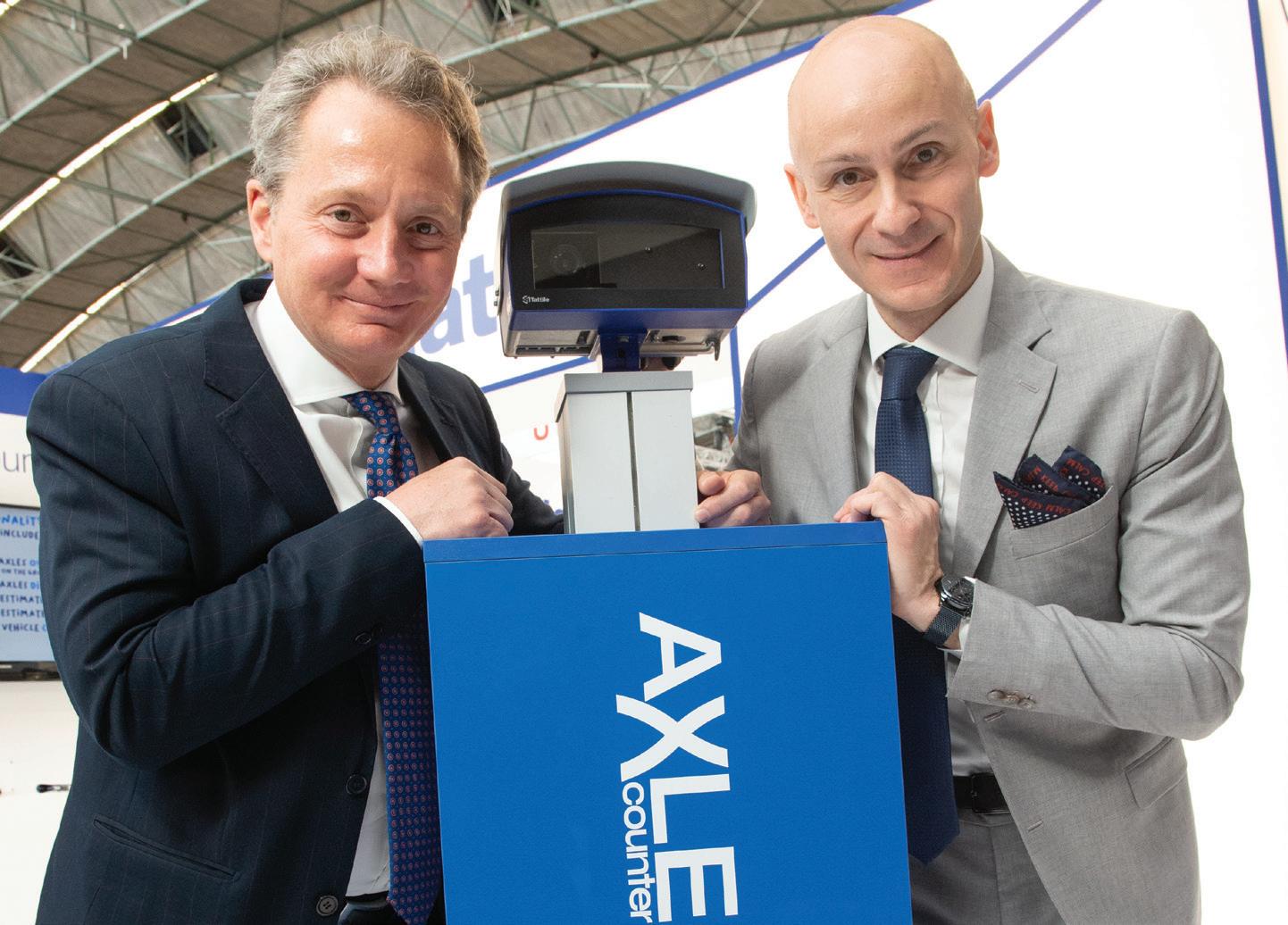
Areal exhibition highlight at the Tattile stand is the nal version of the Tattile Axle Counter and the launch of the ground-breaking Inside Inspection, which detects and counts vehicle occupants.
Tattile Axle Counter lls the missing link of automatically providing all relevant vehicle information for a variety of applications, including tolling. Full onboard processing makes any other external devices unnecessary, says Tattile.
A key feature is the embedded intelligence enabling the system to e ciently support critical tra c conditions such as recognising stationary and queued vehicles as well as slow moving queues. In addition, automatic vehicle detection guarantees a detection rate of 99.5 per cent of all passing vehicles, and the accuracy at high-vehicle throughput, such as on busy highways, is outstanding. Tattile says its axle counter can count up to 2,400 vehicles per hour and a peak of one vehicle per second for up to 60 seconds in extreme dense tra c periods. e maximum vehicle speed for correct measurement is 250km/h.
Meanwhile, Inside Inspection is an important, ground-breaking innovation in high occupancy vehicle tolling enforcement as well as seat belt and phone use enforcement. Additionally, it provides a tool

for statistical data collection for safe driving behaviour and security applications.
Inside Inspection uses an arti cial intelligence (AI) algorithm for best performance in detection and recognition of front seat vehicle occupants. ere is optional
on-edge face detection as well as triggered operating mode. Tattile says Inside Inspection provides identi cation of all passing vehicles without an external trigger.
▶ Stand 01.537 www.tattile.com
e world changes – now it’s time to change mobility. With innovative technology, PTV Group empowers cities and tra c professionals, managers, and operators to achieve clarity in improving mobility - and adjust it to today’s needs.
Here at Intertra c the market leader for mobility software is presenting its latest solutions for analysing, evaluating, and visualising data and its stateof-the-art tools for shaping and operating sustainable, safe, and e cient mobility.
Visitors to PTV Group’s stand will discover how nextgeneration tra c management helps to improve tra c ow and capacity, and thus increase road safety and reduce emissions.
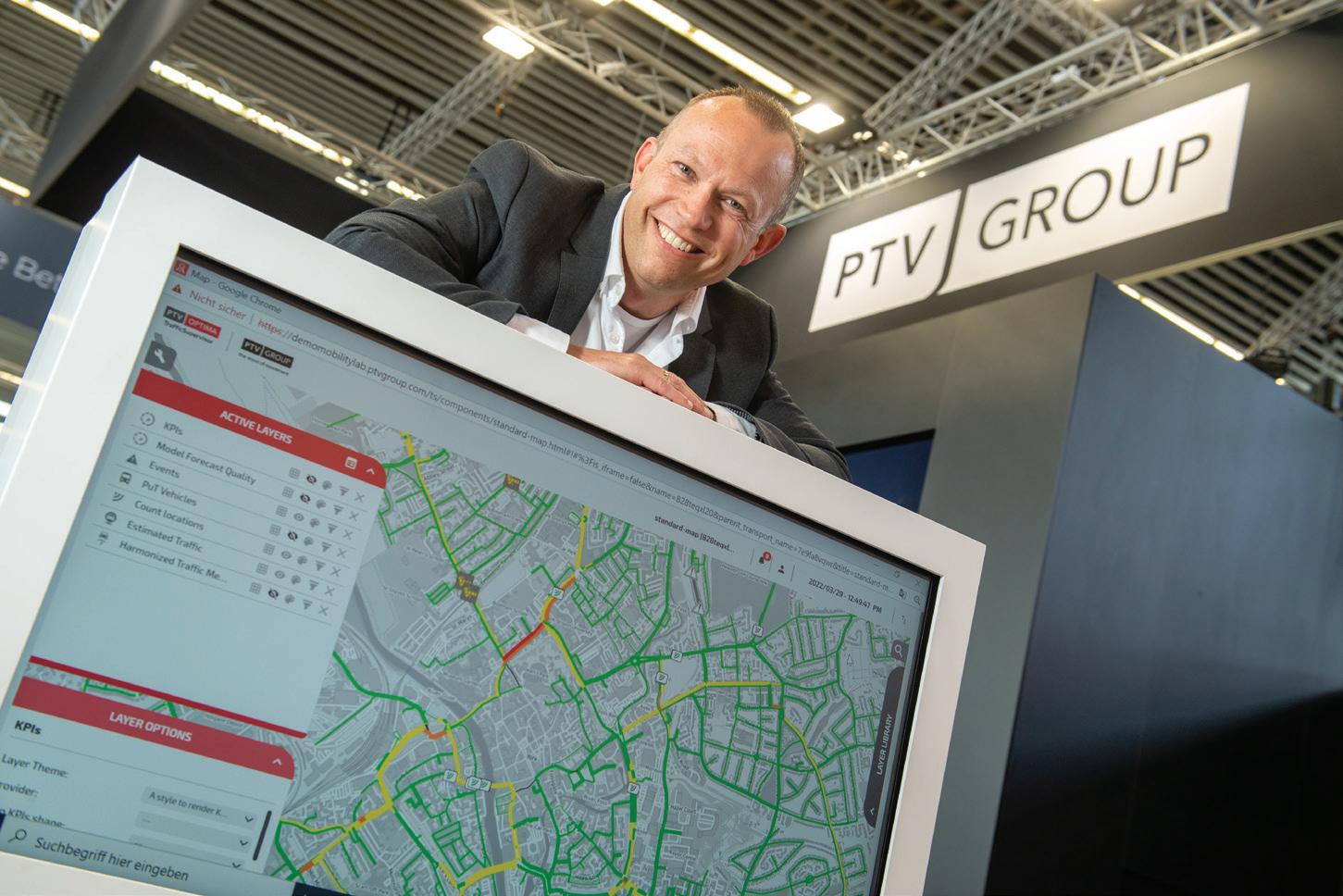
Future-oriented cities like Taichung, Vienna, or Rome already rely on PTV’s realtime solution which combines
tra c modelling. anks to this combination, PTV Optima enables operators to manage the entire tra c network and make reliable tra c forecasts up to 60 minutes in advance. Real-time
presentation within the summit programme today (Wednesday) at 12:30pm in Summit eatre 2. Another highlight at PTV’s stand includes the group's cooperation with Bosch for better
air in cities. By integrating precise emissions data from Bosch into PTV Vissim, the tra c simulation tool, the e ects of planned tra c measures on vehicle emissions can be evaluated easily.
Eric Lindzus, product owner, air quality solutions at Bosch, and Jochen Lohmiller, principal product manager for Micro Simulation Mobility at PTV, will present the tool in a product demonstration today at 3:00pm and tomorrow, ursday, at 11:00am at the PTV stand.
Moreover, PTV Group will be focusing on the topic of multimodal tra c planning and EV charging infrastructure planning. Software solutions help to plan charging points in line with demand while taking power grid capacities into account.
▶ Stand 02.216 www.ptvgroup.com
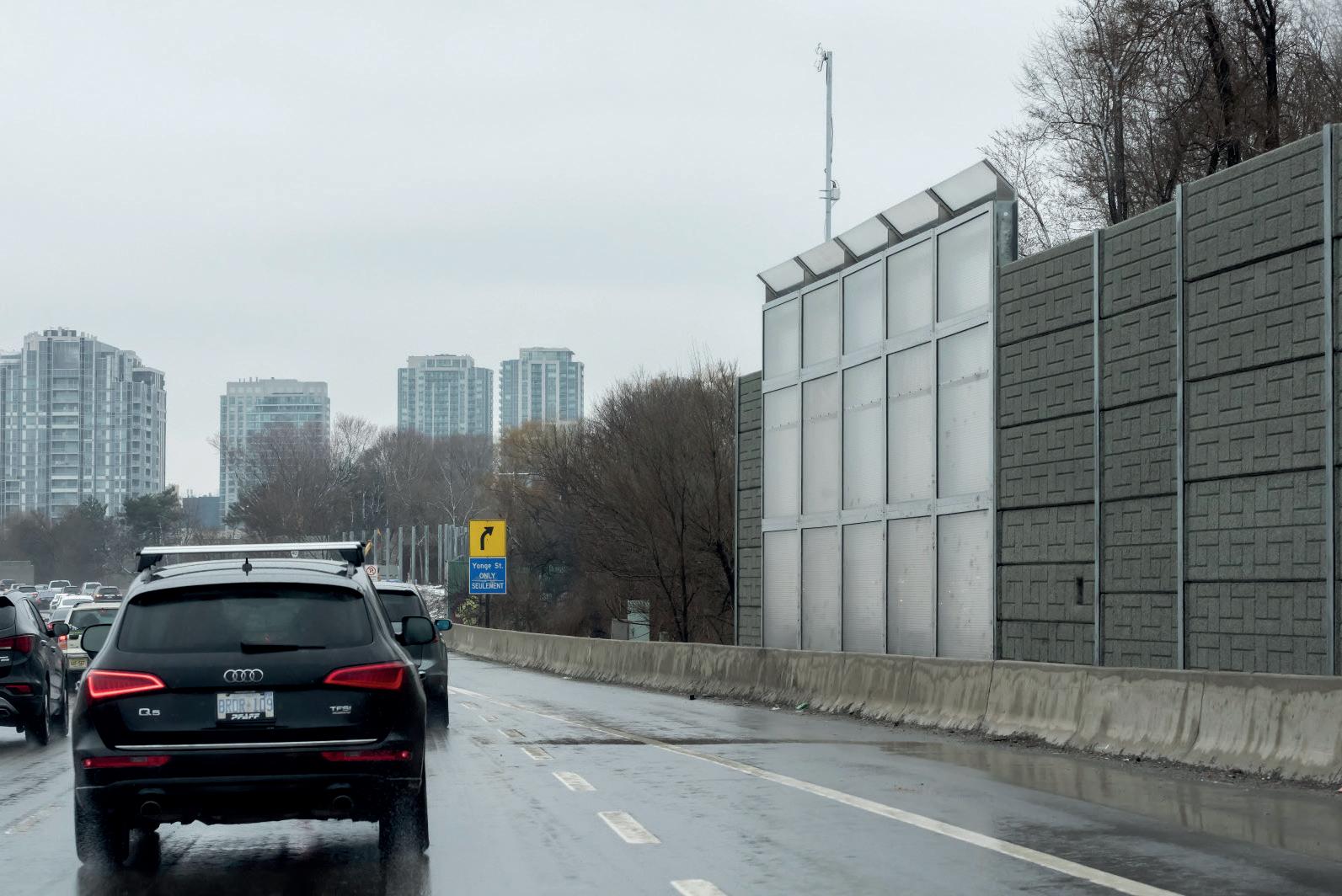

• 10 years development with unique technology & design IP Protected
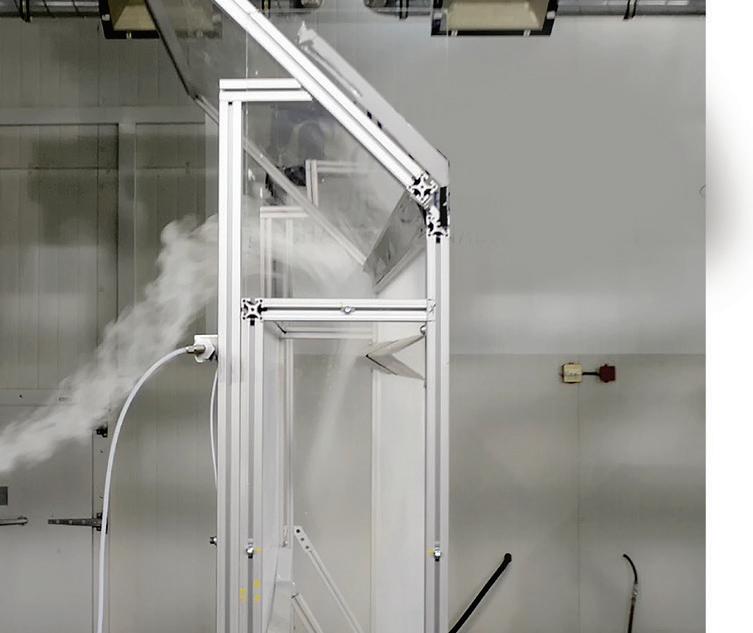
• Unique Aerodynamic design and Photo Catalytic coating developed from Ground Up (Due to failure of other photocatalysts)
• Coating works in UV & Visible Light
• Full Lab Test Results in Solar & Wind Tunnels
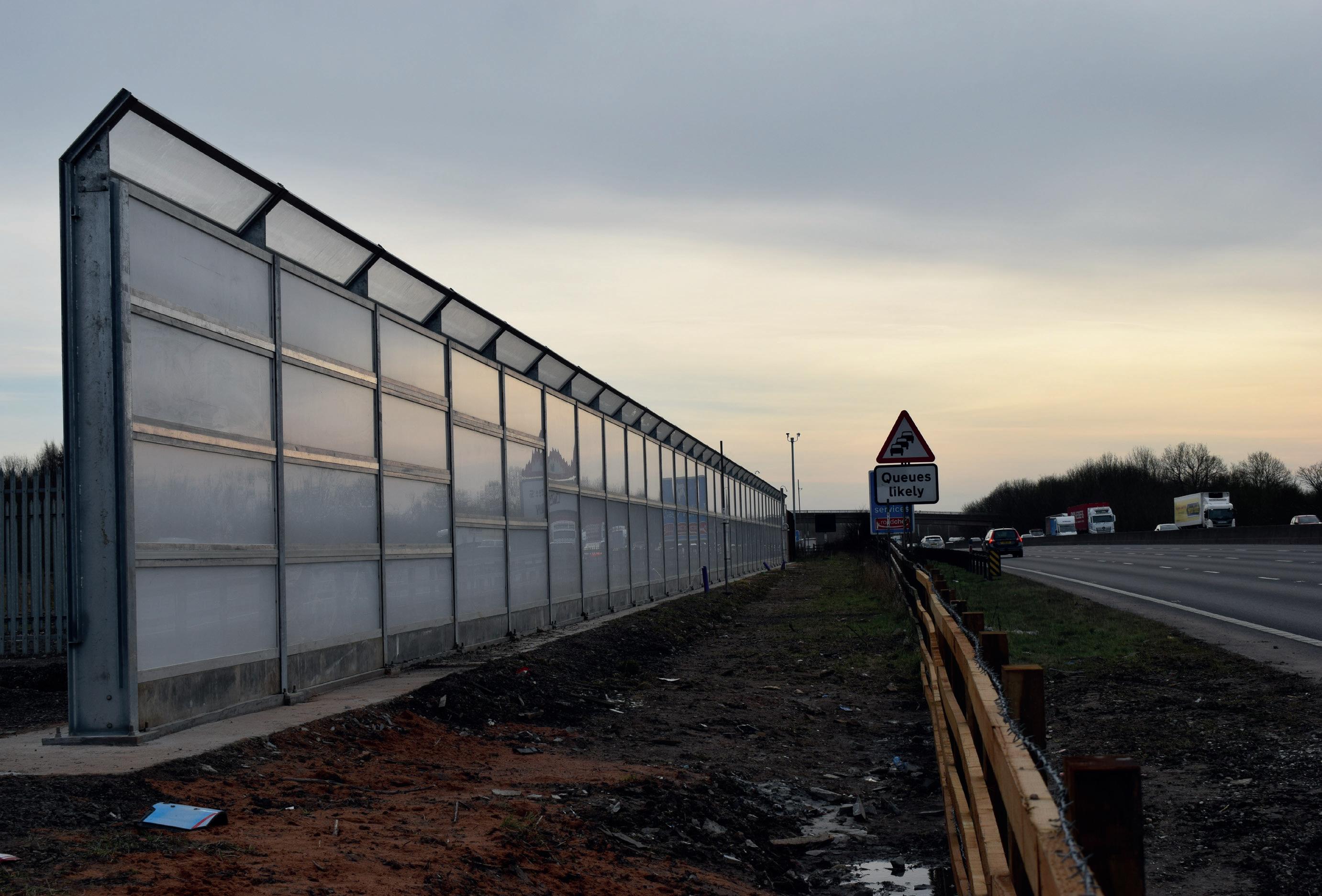
SmogStop Trial on the M1 working with National Highways

SmogStop is the most effective air quality barrier for highways and road
• In Field Results comparable with Lab results
• Handles NOx & VOCS
• 1 Km of barrier reducing approx. 16 ton of NOx per annum.
That’s like 200,000 cars removed from that 1 km road per DAY!!

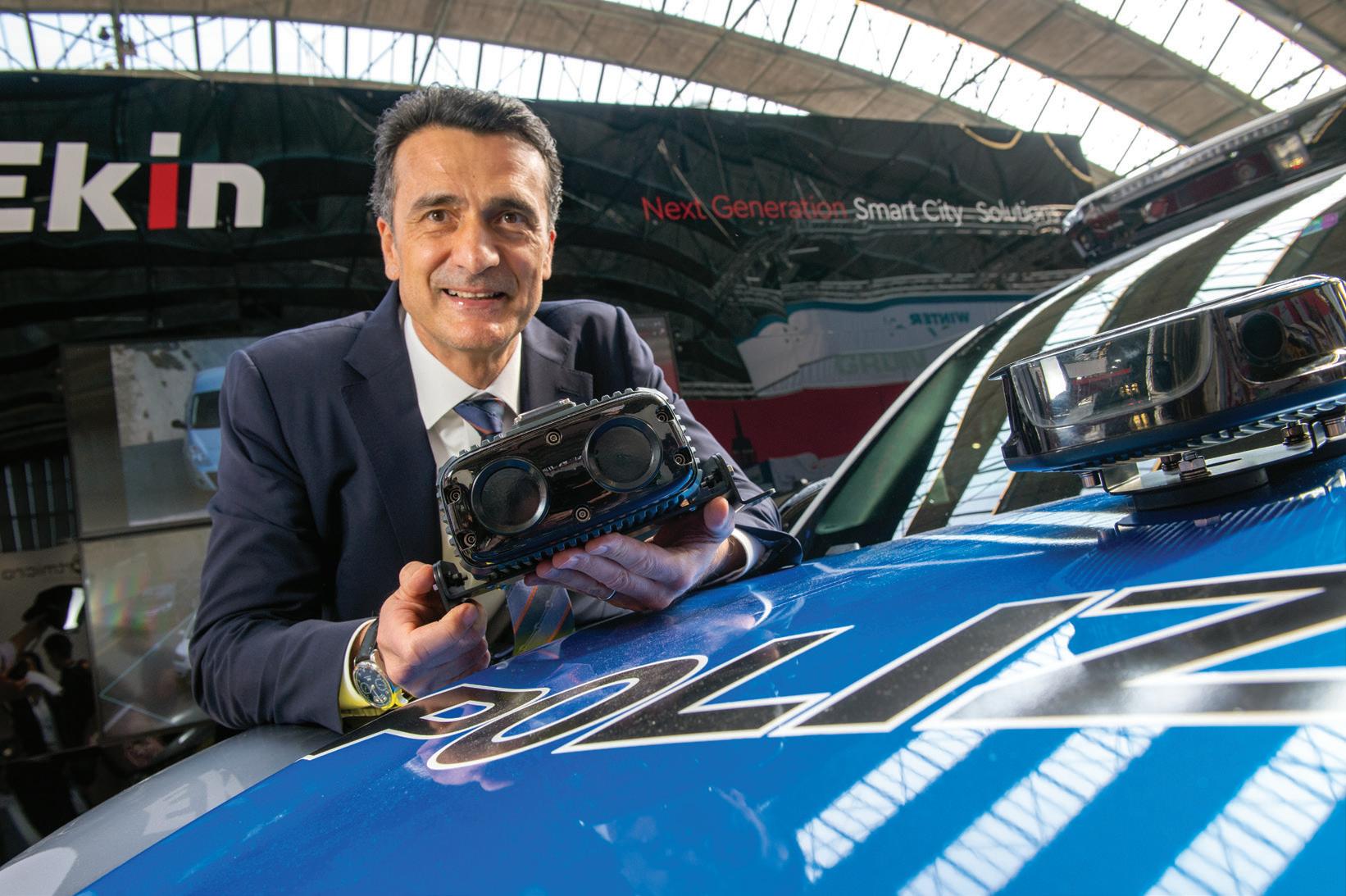
bikes, and motorbikes. It is capable of identifying licence plates in low-light situations, inclement weather, and hazardous traffic conditions, providing highly accurate ANPR while on the move.
The Ekin Spotter is a smart city pole that incorporates innovative modules with multiple applications and advanced features, such as eco-city, traffic monitoring, and 24-hour surveillance. All the data gathered from mobile and fixed solutions are controlled by a cloud-based central management platform that provides an exclusive all-in-one user experience.
Ekin is delighted to return to Intertraffic and welcome partners and visitors to its stand to showcase the company’s latest innovations that support cities globally to improve safety, efficiency, and sustainability.
Using advanced AI analytics in a micro-sized all-embedded
solution, Ekin’s innovations are paving the way for an efficient all-in-one platform that provides cities with an integrated solution that evolves to meet the needs of both the customer and the communities.
Ekin’s multi-function mobile and fixed solutions are on display, including advancements
such as Micro Patrol and the most recent Spotter modules. Visitors can see first-hand how cutting-edge technology, combined with an elegant design, is transforming the future of smart cities.
The Micro Patrol offers parking and traffic management in a compact solution for vehicles,
Ekin says it is leading the way in automation and AI-driven hardware and software that offers fully integrated, modular, and easily upgradable intelligent traffic management systems. They meet and exceed the needs of smart cities.
▶ Stand 01.343
www.Ekin.com
Image Sensing Systems has introduced Autoscope IntelliSight, a new product in its Autoscope video detection system range, which uses artificial intelligence and machine learning to improve detection performance.
For decades, Autoscope has been serving cities around the world, moving traffic safely and efficiently by delivering accuracy, reliability and high performance.
The company says Autoscope IntelliSight moves the game on, “taking video detection to new heights by offering the most advanced detection algorithms with AI and machine learning on the market today”.
The camera and processor provide high performance vehicle detection, bicycle and pedestrian detection and enhanced traffic data collection in real time.
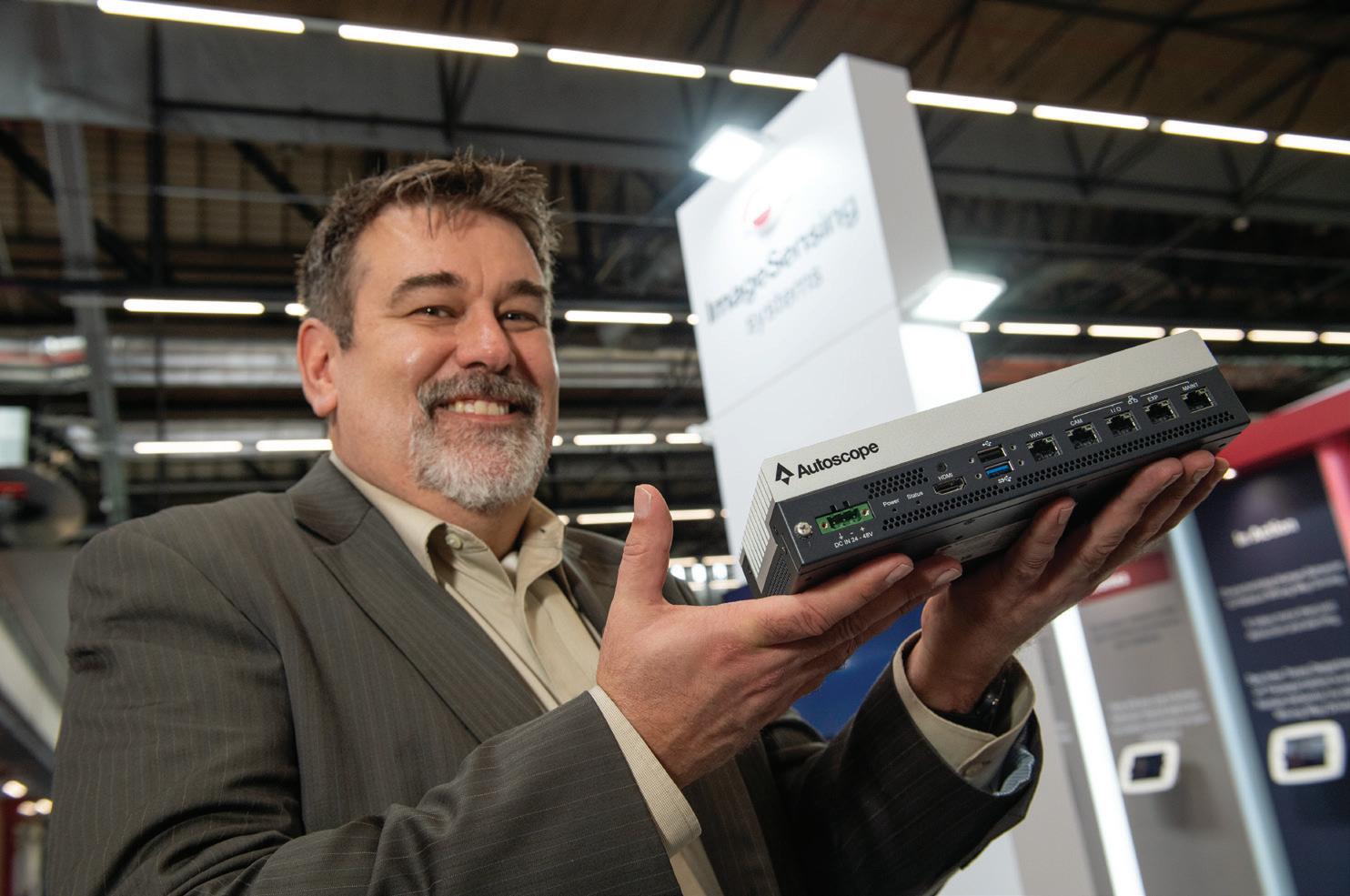
Image Sensing Systems says it is also smart city-ready with connectivity to other systems. It adds that the performance of IntelliSight is robust and reliable and is based
enable future capabilities and solutions.
“The future is now, with Autoscope IntelliSight,” said Rick Maus, senior product manager – Autoscope. “This new platform
behaviour insights, robust data, simple setup and smart city-connected technology.”
▶ Stand 05.150 www.imagesensing.com
People, Traffic, Environment –a liveable city for all.

SWARCO’s well-thought-out Urban Mobility Management provides intelligent, sustainable traffic solutions.
From smart intersections to the connected Smart City: With systems from SWARCO, you are well-prepared for the future.













Visionary innovator
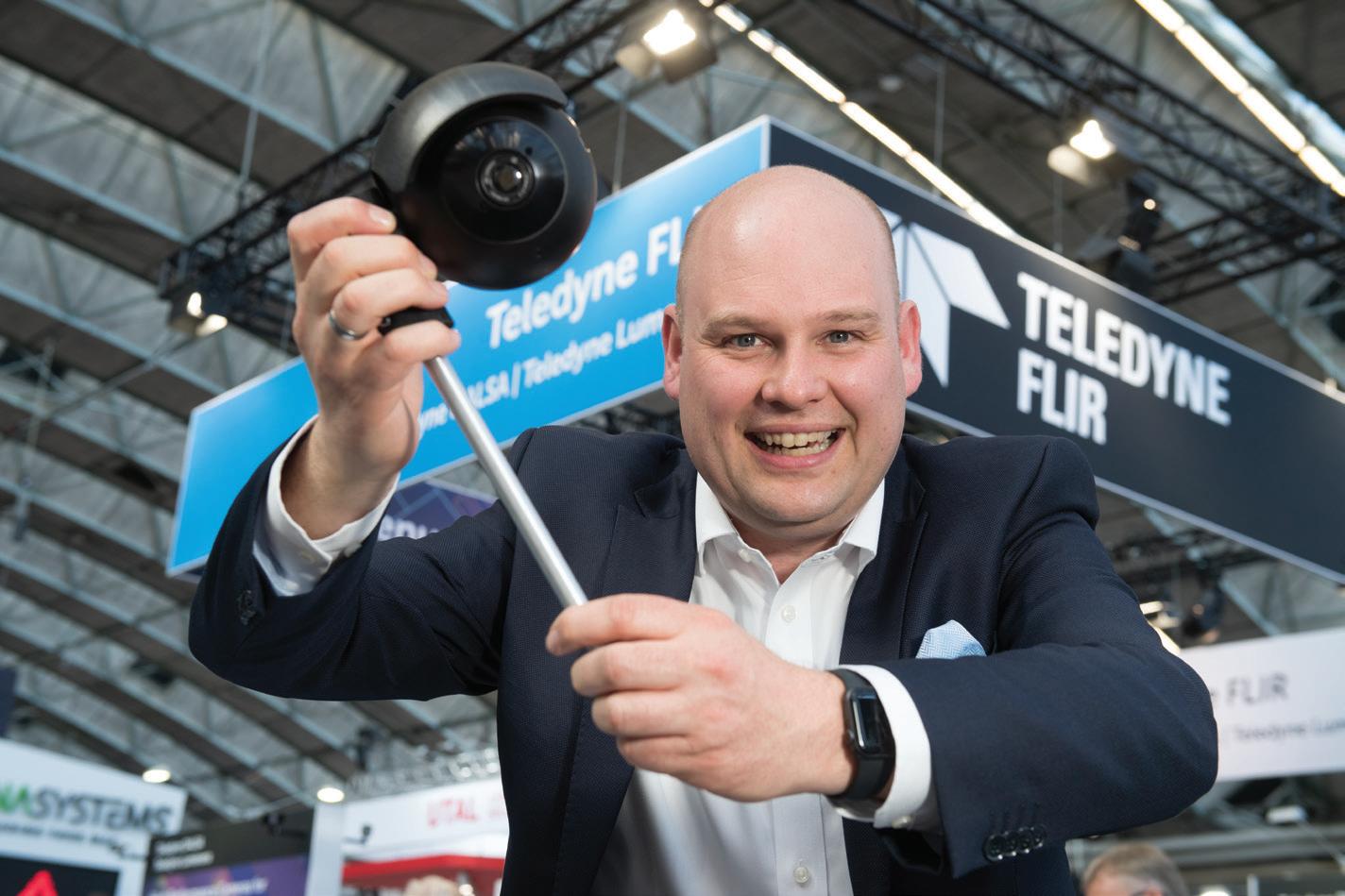
Teledyne Flir has revolutionsied tra c system cameras, as visitors to the company’s stand here will see.
Two ground-breaking innovations, based on arti cial intelligence (AI), are being featured – the Flir ermiCam AI with thermal imaging and the Flir Tra Cam AI visible camera.
When combined with the Flir Acyclica cloud platform, cities can apply the AI-camera data to predict tra c, prevent congestion and potential accidents, and create safer roads for drivers, cyclists, and pedestrians, 24 hours a day ese AI-enabled cameras help control tra c dynamically at the edge through realtime data capture and processing, and provide input to tra c signal controllers at intersections, which improves
tra c ow and safety in the moment.
With the ability to capture heat energy data through a thermal sensor within the
ermiCam AI, and a visible low-light, high-de nition sensor within the Tra Cam AI, cities’ tra c signals have complete and continuous monitoring,
WPS has developed an exciting new platform that brings together existing and new equipment, both its own and third party, so ware applications and operator services. The platform can deliver a seamless parking solution, to help solve various challenges faced by businesses who rely on e icient parking to help increase customer satisfaction.
WPS says that with this more open and adaptive approach, it is removing the need to replace perfectly functioning proprietary equipment, whilst continuously improving both the parking and operator experience. The new platform is supported by a broad partner marketplace and o ers a flexible, scalable, and more economical approach to parking management.
Up until now, the only way to remove complexity and increase customer

experience was to dispose of the existing parking solution all together, and invest in a new, proprietary parking solution.
But this has now changed. WPS’s new approach makes better use of the ‘cloud’, extending the lifecycle of a user’s current hardware, add or remove equipment to their parking operation, based on their customer’s wishes. The result is improved the operatorexperience, delivering a smarter, more convenient solution to complex journeys.


The scalable platform makes use of an approved partner marketplace delivering a wide range of so ware applications and operator services to help deliver specific customer journeys.
▶ Stand 12.233
www.wpsparking.com

in all weather conditions and even through smoke for tunnel monitoring.
e cameras are also WiFi enabled for travel time calculations and other origindestination applications. In the future, the cameras can be retro tted with 5G cellular antennas to support vehicle-toeverything (V2X) connectivity, which will further improve road safety.
Also being featured on the stand is the Flir Dual AID, a complete thermal, visual and analytics solution for automatic incident detection, data collection and early re detection.
Additionally, the Flir Tra One, an all-in-one sensor for tra c monitoring and dynamic tra c signal control, is being highlighted.
▶ Stand 01.335
www.teledyneflir.eu/tra ic




























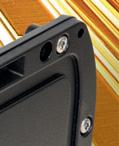
AGD 343
HIGHWAYS MONITORING RADAR
AGD 343
HIGHWAYS MONITORING RADAR







AGD 343
HIGHWAYS MONITORING RADAR






Accurate flow measurement for highways tra ic profiling and incident detection
• Enhances highways safety, capability and e iciency
AGD 343







• Measures speed, range and length of passing vehicles
• Mounts as close as 2m from the edge of the carriageway
HIGHWAYS MONITORING RADAR
• Looks across both carriageways - up to 10 lanes
• Simple to install, set up and configure with AGD Touch-setup/Align
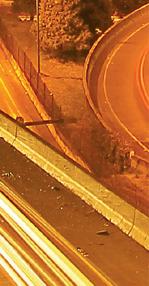
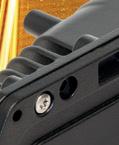
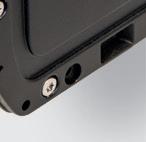
For informed decision-making and real-time tra ic flow monitoring, choose AGD’s 343 Highways Monitoring Radar. Developed using AGD’s proven enforcement-grade radar and measurement techniques, this easy-to-integrate tra ic flow monitoring solution is designed for tra ic profiling and incident detection. It measures speed, range and length of passing vehicles and provides detailed information on whether tra ic is free-flowing, slowing or starting to queue.
The AGD 343 looks across both carriageways - up to 10 lanes - to detect vehicle travel in approaching and receding directions. Ideal even when space is at a premium, it can be mounted as close as 2m from the highway, providing information for the lane immediately below the radar, as well as the lane at the furthest point.

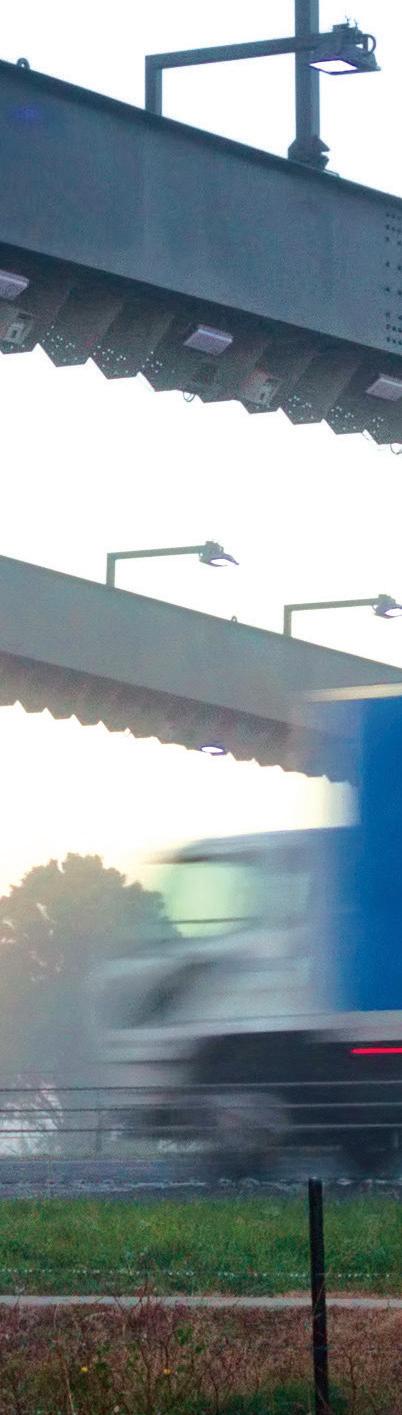
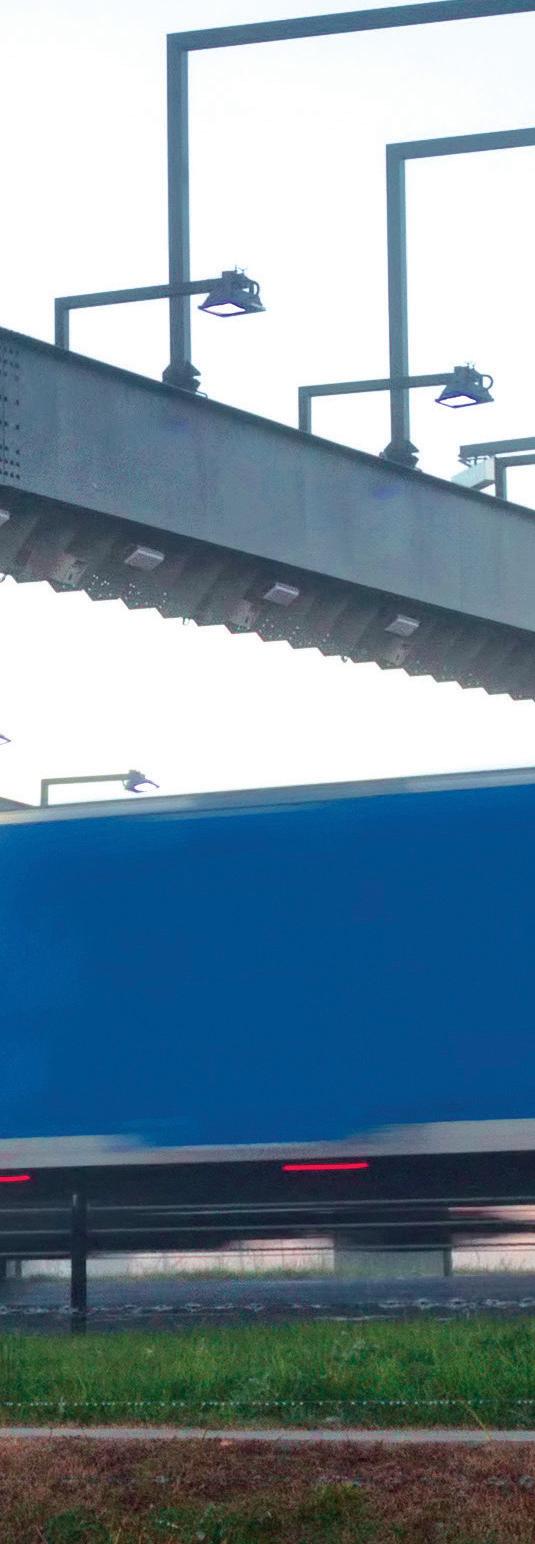
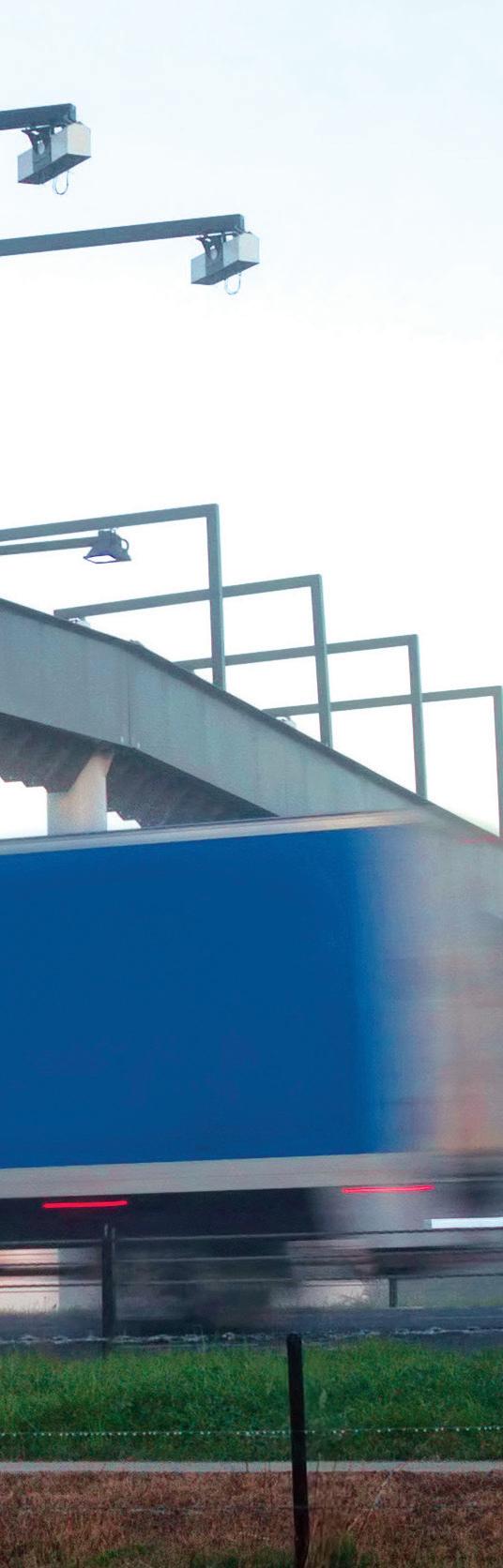


With growing demands for sustainable, equitable and safe mobility, PTV Group empowers your resilience with innovative technology.
With PTV Group, you achieve clarity to improve mobility - and adjust it to today’s needs. Apply world-leading solutions for data analysis & visualization, modeling and simulation. Whether you’re planning public transit services, building a network of bike lanes, reducing emissions and car use, or protecting commuters in times of pandemic – PTV Group has the planning technology for you.
Experience our solutions at Intertraffic Amsterdam in hall 2 at booth 216 and #JointheConversation
ptvgroup.com


Transforming our transport systems to achieve net-zero mobility o ers a huge opportunity for positive global change


The solutions we need to accelerate carbon-free transport are known, available and ready to be deployed. Tim Gammons from Arup explains what the ITS industry can do now to help…
When it comes to the climate impact of transport, the numbers are stark: moving people and goods around the world generates around a quarter of annual global carbon emissions.
is gure – from the World Resources Institute – continues to grow and is why transport is one of the most urgent areas for decarbonisation. What’s more, transforming our transport systems to achieve net-zero mobility o ers a huge opportunity for positive global change in cities and energy systems, such as by decreasing pollution.
Discussions around transport at Cop26 largely focused on the transition to zero-emission vehicles (ZEVs), with plans to address priorities including charging infrastructure, standards and regulations. e desire to transition to zero-emission HGVs and ZEVs is a truly global phenomenon.
Other important areas of decarbonisation were also discussed, noting that future sustainable road transport needs wider system transformation, including support for active travel, public and shared transport, and addressing the impacts from vehicle production, use and disposal.
But as the dust settles in Glasgow – and
international commitments begin to turn into real-world action – many industrywatchers will be looking for an increased emphasis on means of decarbonisation beyond ZEVs.
e good news is the solutions we need to accelerate carbon-free transport are known, available and ready to be deployed. Governments, businesses and transport users can achieve rapid decarbonisation at scale, provided they work closely together. But to be successful, all parties must approach mobility with a new, more holistic approach.
At Arup, we have been considering a number of approaches in developing lowand zero-carbon transport systems. We understand there is no one-size- ts-all approach: each place faces its own unique challenges – something brought home to us all by hearing rst-hand the impact of climate change on countries around the world at Cop26.
Arup is working with Cardi Council to help it double the amount of cycle trips made within the city by 2030, as part of its goal of making walking or cycling the most popular modes of transport across the Welsh capital.
Technology is already driving radical changes in transport and we can encourage changes in behaviours and more
sustainable travel to increase the pace of decarbonisation. e UK government’s recently published Transport Decarbonisation Plan sets out the range of actions needed to decarbonise the country’s transport system by 2050.
It recognises that technology can have profound implications for users and businesses, from digital connectivity, arti cial intelligence, automation, and data innovation, to help us better understand people’s di erent needs and preferences – including motivations for, and barriers to, using these technologies.
e ITS community does, of course, have a signi cant role to play in the transition to zero-emission vehicles. But we can o er so much more across many areas of the transport system to achieve rapid decarbonisation. To this end, Arup has identi ed eight ways in which ITS professionals can support decarbonisation across the transport sector.
Intelligent mobility includes numerous tools which make behaviour change – and, in time, cultural shift – possible. Easier, cheaper, exible and faster modes of transportation are crucial to move away from a deeply-entrenched reliance on cars. Intelligent mobility provides the
type of digital infrastructure needed to influence travellers’ decision-making to favour more sustainable modes, including real-time travel information, e-ticketing, trip planning, and enhancing demandresponsive transportation, public transit and micromobility.
2. Deploy ITS to increase attractiveness of active mobility
Technology and services can play an important role in increasing the uptake of active mobility by improving safety, accessibility, and convenience. ITS can be deployed in several ways, including monitoring traffic to inform planning and routes, providing wayfinding apps or kiosks, managing traffic to prioritise active travellers, and using 5G to enable data exchange b etween smartphones and intelligent mobility infrastructure such as micromobility docking stations.
3.Embrace Mobility as a Service technology
Through an integrated digital platform that includes e-ticketing, dynamic trip planning, and live tracking, MaaS enables travellers to change their travel behaviour by matching their transportation mode to their trip type, rightsizing their trip based on their specific need (time, cost, route, etc). Such technology has implications network-wide by leveraging unused capacity and re-purposing it, providing efficiencies for both the individual and the system. In the last century, travellers were stuck with the mode they originally selected, most often a car. With public transportation at its heart, a 21stcentury MaaS system reveals the benefits of multimodal journeys using active, shared and demand-responsive transportation, ultimately getting people out of their cars.
Achieving net zero by 2050 means ZEVs must be adopted faster. A Northwestern University study found that if electric vehicles replaced 25% of combustionengine cars currently on the road, the US alone would save approximately $17 billion annually by avoiding the harm from climate change and air pollution. Scaled globally and across all motorised transport, ZEVs have the potential to shift the trajectory on climate change if supported by renewable energy advancements and several market and government interventions.
5.
Transit networks and operators are buying buses and trains which will come online 1015 years from now. However, the time to start investing in electric transit options is now: not only to signal that demand exists, but to ensure the fleets of the future are not reliant on the outdated and polluting technology of the past. China serves as an important proof point for what’s possible: it has more than 400,000 electric buses – about 99% of the world’s total – because a decade ago it began subsidising the electrification of public transport. By contrast the US only has a few hundred electric buses.
6.
Charging facilities must be widely available and equitably distributed across the network to ensure everyone can reap the benefits of ZEVs. Arup worked with the LA Cleantech Incubator to develop a standard framework for equitable and robust ZEV infrastructure deployment, highlighting the need for inter-agency collaboration and availability
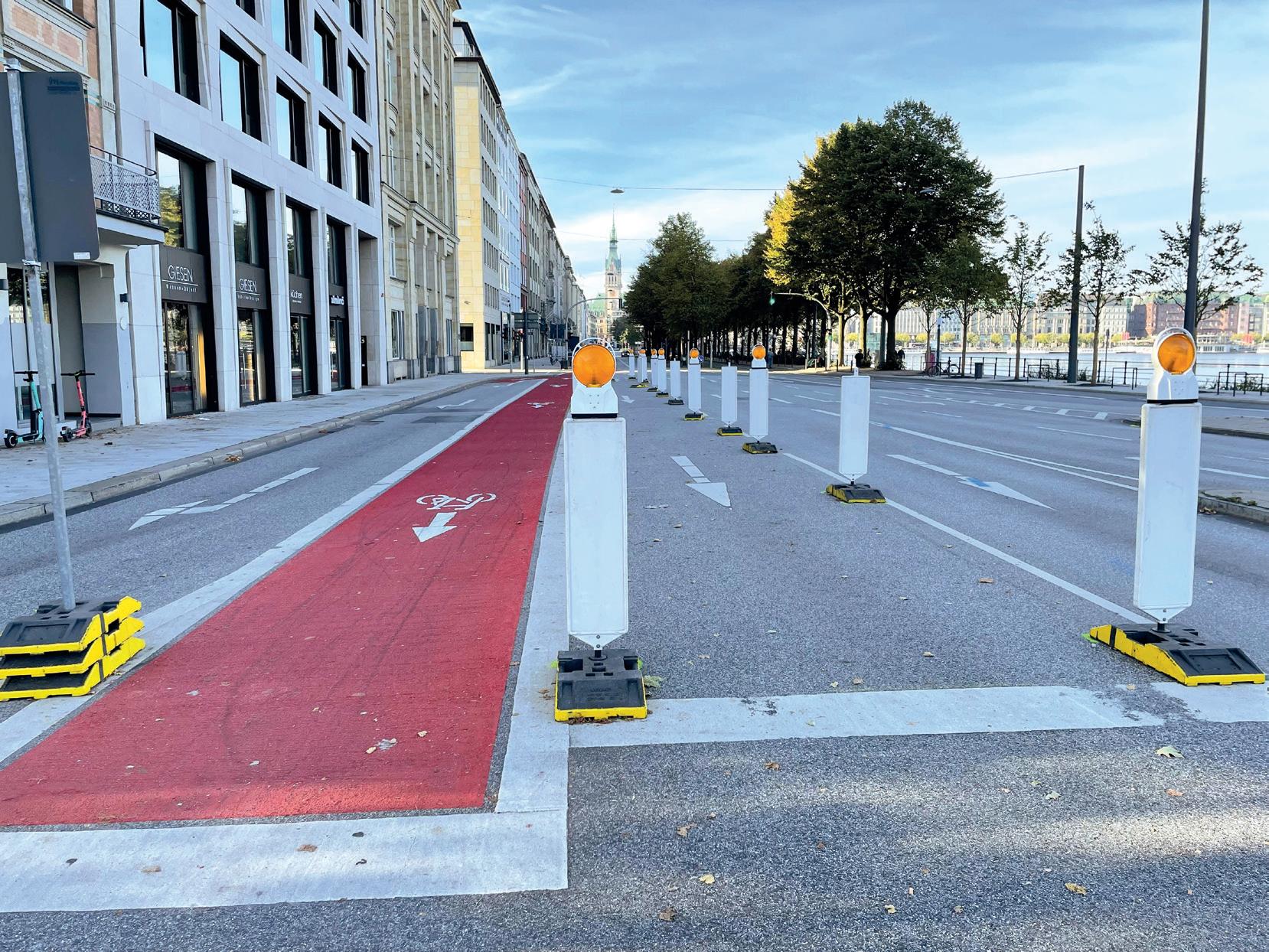
of renewable energy sources. Ageing electric grids are also a major barrier, but recent intelligent mobility advances are modernising grids through cutting-edge controls which work together to deliver electricity more efficiently. Smart charging from renewable sources, meanwhile, ensures charging time responds to the amount of power available through the grid.
7. Incorporate demandresponsive transportation into the network
The availability of demand-responsive transportation, specifically minibuses (aka jitneys) and transportation network companies, holds tremendous promise for filling gaps in transportation networks globally. Taken alone, demand-responsive transportation is expensive and transports fewer travellers than other forms of public transportation. The potential of demandresponsive transportation to contribute to net-zero goals is unlocked when it complements other forms of mass transit. It can provide critical first- and last-mile connections that otherwise pose barriers to mode shift, feeding travellers into sustainable modes like rail or bus and bringing down the externalised cost of transit trips network-wide.
8. Mandate autonomous vehicles to be zero-emission
Autonomous vehicles (AVs) present the most dramatic change to transportation since Henry Ford made cars affordable for the masses. This looming disruption in the intelligent mobility landscape presents a huge opportunity for policymakers to change course on climate change by mandating that AVs are zero-emission. The conventional wisdom is that AVs won’t be privately owned – at least initially – and will instead function as shared mobility. Without such a mandate, AVs could be environmentally catastrophic as they drive empty passenger miles while passengerless, through increased demand for road capacity which causes congestion and increased emissions; and if they are charged by non-renewable energy. Clearly, there is no silver bullet in decarbonising the transport system, but post-Cop26, ITS should be at the heart of efforts to ensure the industry plays its part in meeting ambitious goals to tackle the climate crisis.
Repurposing roadspace to encourage cycling uptake will play a part in decarbonisation
This article was first published in ITS International. For your free subscription to ITS International or its sister publication, World Highways, go to www.roplreg.com or visit stand 01.105, Route One Publishing.



















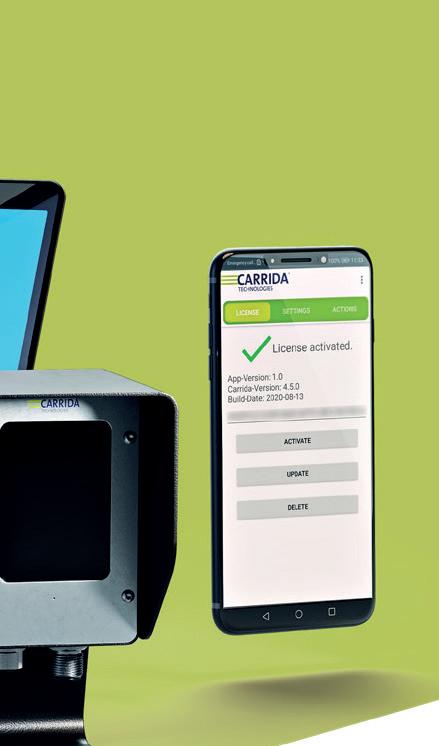

Intertraffic 2022 marks a strategic stepping-off point for traffic safety enforcement and compliance specialist Truvelo. The unveiling of the Violation Management System (VMS) completes the journey from developer and supplier of class-leading enforcement systems to complete end-to-end solutions and services provider. It also radically shifts the centre of influence in the enforcement sector by broadening the scope of offence-handling options.
The VMS is a state-of-the-art electronic back office capable of processing all types of enforceable driving and parking offences, both criminal and civil. It also provides a highly credible traffic data management capability — useful when trying to build the case for new installations or enforcement regimes.
“What we’ve created is an
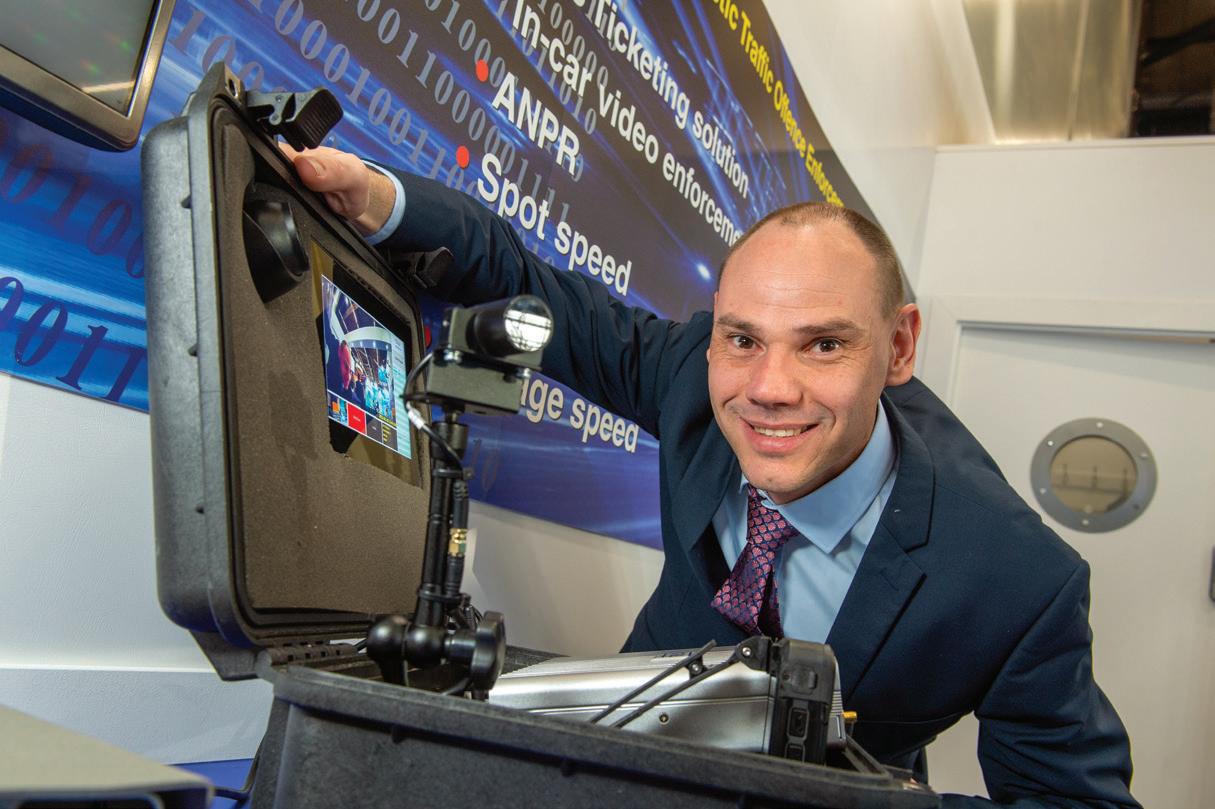
offence-management solution which exceeds the performance of anything else on the market,” says Calvin Hutt, Truvelo (UK)’s sales and marketing director.
“The VMS can accept inputs from many different manufacturers’ products. It can be supplied as an internal
private cloud version which will operate on servers behind customers’ own firewalls; or as Software as a Service direct from Truvelo using any cloudbased environment, including police service-approved Amazon Web Services and Microsoft Azure.”
Data is treated and managed in accordance with UK Home Office guidelines and in line with similar standards in other countries. As well as receiving inputs from different manufacturers’ systems, the VMS can communicate with, and to, any other third-party backoffice system. This guarantees interoperability with solutions already in use, as well as a migration path from any other back-office system to the VMS.
“The VMS is already in service and generating citations for numerous police departments in the southern US and South Africa,” Hutt continues. “The next step for us is to demonstrate to others in the market, both police and civil, why the VMS is so different and the best choice for their enforcement-handling needs.”
▶ Stand 05.405 www.truvelouk.com
Closer cooperation to share best practice, research and innovation is the aim of both IRF Geneva and Ertico-ITS Europe whose heads signed a memorandum of understanding at Intertraffic.
Susanna Zammataro, director general of IRF Geneva, and Joost Vantomme, chief executive of Ertico, put pen to paper at the Ertico stand as the first step towards formalising the relationship.
“Partnerships are part of our DNA,” Zammataro told The Daily News. “With this agreement we are enlarging our reach, bringing our two organisations together to exchange knowledge and expertise. There will be more regular institutional contact, events and activities. So, watch this space.”
“We’ve been working with
the IRF Geneva for some time now but this MoU formalises our working relationship,” said Vantomme. “It’s about spreading best practice, joint projects also, consortium building and
conferences. People used to think about a road being just a road, but now it’s about data gathering.
The MoU should help move this ahead.”
Later today Zammataro
will mark the launch of its IRF Committee on Innovation during a workshop on how innovation is driving the future of sustainable mobility. The Committee on Innovation will consist of subgroups to share expertise and knowledge and to tailor solutions – both policy and technical – to the pressing issues facing the sector.
The Committee on Innovation will be officially launched by Matthew Baldwin, deputy director general of the European Commission. Other speakers include Christoph Bergdolt from SWARCO, Shawn Lowry at 3M in the US, Clarissa Han with ARRB in Australia and Paul O’Hanlon from the Holcim Innovation Center in France.
▶ Stand 05.460 www.ertico.com




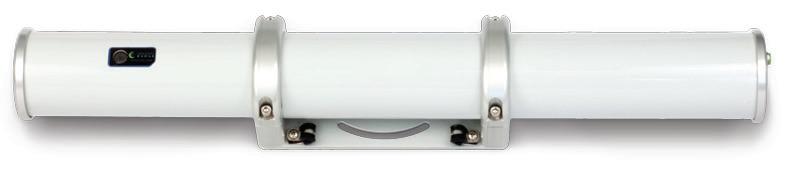



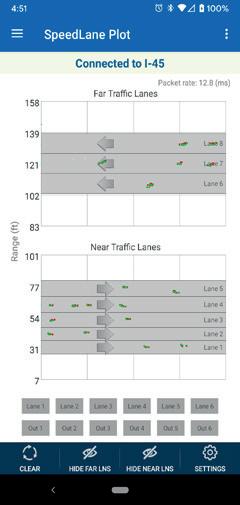


Is this nally cycling’s moment? e Urban Mobility Framework published by the European Commission in December 2021 prioritised cycling and other ‘active modes’ of transport in cities.
Twenty-one of the 27 EU states also included cycling in their bids for a share of the EC’s €672.5 billion Recovery and Resilience Facility to help rebuild economies post-Covid.
“ e investment had to be spent quickly to give economies a boost and we argued that making cycle lanes available was a perfect, shovel-ready investment,” said Jill Warren of the European Cyclists' Federation (ECF).
Italy, for example, put €600 million in its plan for cycling infrastructure, both touristic and urban. And 300 European cities announced 2,600km of cycling improvements.
“We lobbied very hard to say that if the EC was really serious they had to do more for cycling; electric vehicles themselves won’t get you there,” says Warren. “You need more cycling if you’re really going to reduce CO2”
Chris Bruntlett of the not-for-pro t Dutch Cycling Embassy also believes there has been undue focus over the past 20 years on electric cars as a ‘ x-all solution’ to the problem of pollution.
e relatively small amounts spent on walking and cycling could bring considerable ‘bang for the buck’, he noted.
Covid merely accelerated a trend: cities had realised that vehicles lled new road lanes and car parks as soon as they were built. at meant that some of Europe’s busiest cities, such as Paris, Milan and London, were among the fastest to diversify their tra c networks.
In January this year, Milan announced a €225 million Cambio cycling mobility plan consisting of cycling routes in four concentric rings around the city centre, together with 16 cycling corridors stretching out from the hub. And some cities had already started to prioritise cycling before the EC resiliency
Cities
including Paris, Milan and London have all announced serious expansions to their bicycling infrastructure - the era of active travel is here, finds Alan Dron
document appeared. Paris mayor Anne Hidalgo had announced her intention to cut car parking in the French capital by 60,000 spaces. Perhaps signi cantly, that had not harmed her re-election.
Warren said that it was a myth that if a city removed car parking spaces from downtown areas that business would be adversely a ected. In fact, she said, business increased because the area became a more pleasant one in which to shop - and cyclists tended to
The Netherlands is o en thought of as the archetypal cyclist-safe location – but it was not always like this, points out Jill Warren, CEO of European Cyclists' Federation. “In the 1950s, ‘60s and early ‘70s, these cities became absolutely dominated by cars.” That led to increasing numbers of children being killed in tra ic incidents, which in turn led to major protests. Gradually, the situation changed, and Dutch cities became the cyclistfriendly urban environments one sees today. Such measures not only made cities safer,
but contributed measurably to residents’ physical and mental fitness, with reductions in conditions such as depression, she said. And cities with these factors, such as Copenhagen and Vienna, regularly featured in Top 10 lists of the world’s most liveable locales.
Chris Bruntlett of the Dutch Cycling Embassy argues that the practical nature of the Dutch helps cycling’s cause: “The Dutch cycling industry tends to focus on the ‘how’ and makes it happen.”
spend more.

Paris, after issuing a $174 million ‘Plan Velo’ cycling blueprint, is now embarking on a $290 million ‘Plan Velo: Act 2’ that will increase secure cycle parking in the city, encourage more children to take to bicycles and provide funding to maintain cycle paths.
At the start of the pandemic, “the fear was that people would just jump in their cars, to avoid crowded public transport systems”, Bruntlett said. “ at led to many 20-year plans to increase cycling facilities being telescoped into ve years.”
Creating a safe infrastructure – which means physically separating cyclists from motorised tra c – is an essential prerequisite to get more people onto two wheels, Bruntlett concludes: “You have to provide cyclists with a comfort level that makes them feel they aren’t risking their lives every time they cycle.”
A longer version of this article was published in ITS International. For your free subscription to ITS International or its sister publication, World Highways, go to www.roplreg.com or visit stand 01.105, Route One Publishing




























It’s a world- rst for the cable barrier Safence 4RC-96, according to Blue Systems, the guardrail’s manufacturer.
On display at the company’s stand, the Safence 4RC-96 cable barrier is showing o its prestigious International Environmental Product Declaration credentials, issued by the KTH Royal Institute of Technology, a public research university in Stockholm, Sweden, and the country’s largest technical university.
An EPD is given based on an objective report that tells the lifecycle story of a product. It provides information about a product's impact on the


environment, such as global warming potential, smog creation, ozone depletion and water pollution. e quality mark communicates to buyers what a product is made of and how it impacts the environment across its entire lifecycle.
e Safence 4RC-96 barrier not only has the smallest environmental footprint on the market but also demonstrates exceptionally low occupant risk, all the while maintaining a low price. All this makes Safence 4RC-96 the world’s rst fully EPD compliant and assessed guardrail system.
▶ Stand 08.140 https://bluesystems.se
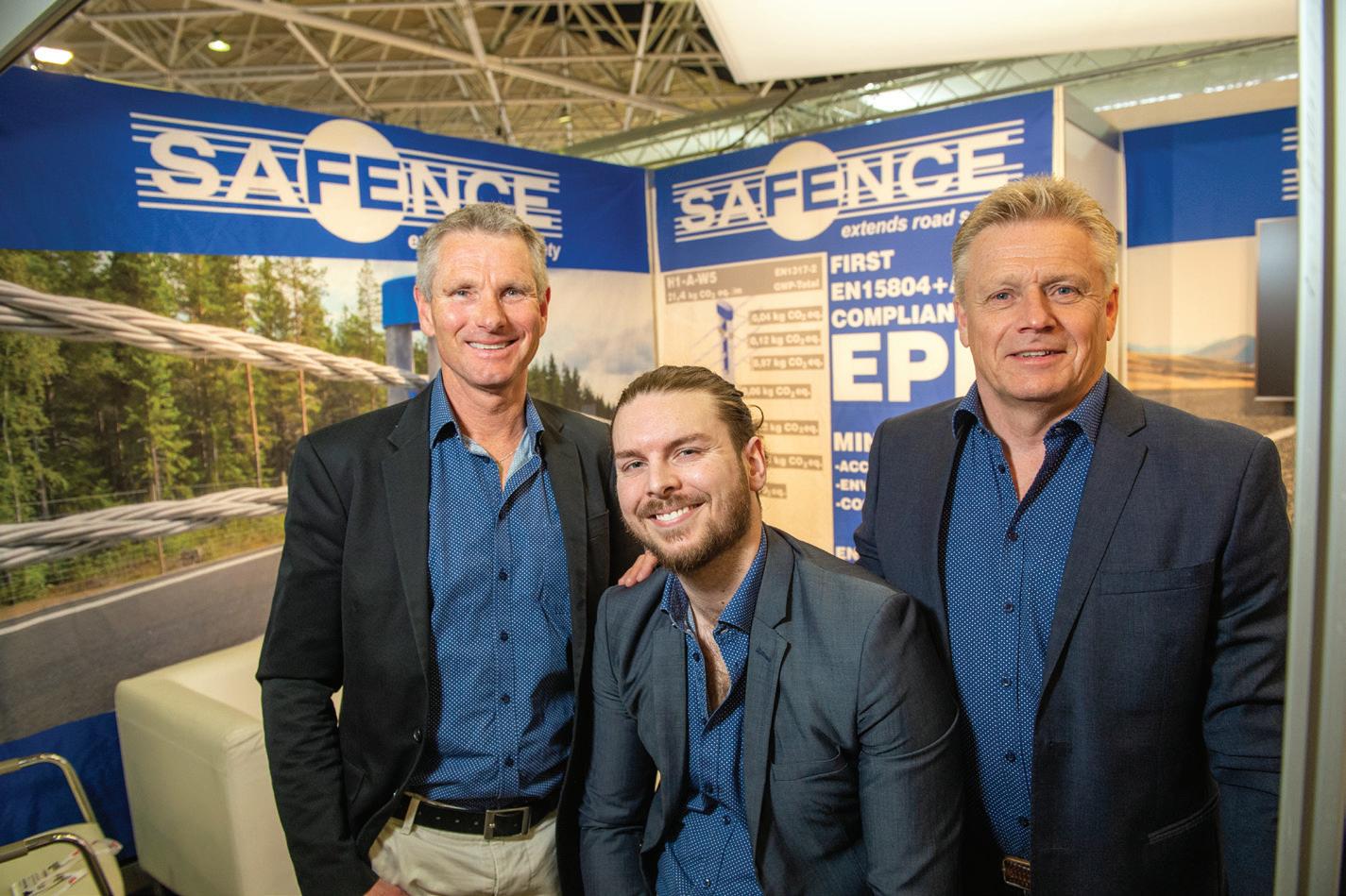



France-based crash barrier company Tertu has successfully performed a crash testing programme to meet the US MASH (AASHTO Manual for Assessing Safety Hardware) standard.
The test met the MASH level TL 2 standard and used a 2.2-tonne pick-up at 70km/h and a 1,100 kg car at the same speed, at impact angles of 25°.
Tertu says its T-MASH 18 device has become the first European-designed model of this type complying with all MASH requirements.
First orders have been already shipped to Australia and installed in Queensland, close


to the Gold Coast residential and tourist region. The barriers are particularly adapted to be environmentally friendly and suited to the rural scenery of such areas.
In October 2020 the T-MASH 18 was added to the list of permanent road safety barrier systems accepted for use in New Zealand. In addition to the USA, MASH standards are also used in Singapore, UAE, Canada and Mexico.
The new system will be presented to international visitors on Tertu’s stand during Intertra ic.
▶ Stand 08.218 www.tertu.com
Swedish firm MetSense specialises in innovative sensor solutions for operators which need to take winter road maintenance seriously. The company is showing o its flagship 2DRoad, a noninvasive weather camera which o ers a full multi-lane description of road conditions, with a detection area up to 6x6m and a 64x64 = 4096-pixel resolution.
2DRoad distinguishes between eight road surface conditions, estimates road surface friction and measures road surface temperature. It can also be equipped with a range of expansion sensors, turning it into a full-fledged weather station.
MetSense products enable mobile and stationary monitoring of parameters such as road surface status, road surface friction, road surface temperature, freezing point and more.
As well as the 2DRoad weather camera, its sensors include the embedded freezing point detector MetSalt and various versions of the laser-based non-intrusive road condition detector MetRoad, as well as MetRoad Mobile and the upcoming MetRoad Stationary and MetRoad IoT. ▶ Stand: 05.453 www.metsense.com
Weather impacts safety. That’s why road maintenance professionals and weather services around the world rely on Lufft. Our comprehensive monitoring portfolio ranges from non-invasive and mobile road weather sensors to weather stations and software.
Lufft is a well-established and proven OTT HydroMet product brand for meteorological monitoring solutions.
www.lufft.com
Visit our booth 01.301






Jenoptik’s road safety solutions make roads safer, worldwide. We identify, capture and validate traffic violations with the latest hardware and software technologies, offering a complete range of solutions for the management of traffic offences.
Our portfolio comprises intelligent systems and components for all aspects of road traffic, such as speed measurement (spot speed, average speed, section speed control), red light monitoring and many other applications. Follow us! jenoptik.com/road-safety