P: +61 3 9690 8766 subscriptions@primecreative.com.au Infrastructure is available by subscription from the publisher. The rights of refusal are reserved by the publisher.
Editor’s welcome
The speed of digital transformation has a way of turning “someday” into “yesterday” before we’ve had a chance to adjust our mental models.
I recall sitting at a computer in a newsroom years ago, listening to industry chatter about the full automation of newspaper pagination. At the time, it felt like a distant, hypothetical milestone – something that was surely decades away from being a practical reality.
Yet, almost overnight, the technology matured, the shift occurred, and it became the invisible standard.
This relentless pace of change has now pervaded every corner of the infrastructure sector. What were once considered optional innovations are now the foundational layers of networks.
Earlier this year, I had the opportunity to attend Geotab Connect in Las Vegas, where Geotab Founder and Chief Executive Officer Neil Cawse addressed this exact phenomenon.
Even as a pioneer of connected vehicle technology, Cawse spoke candidly about the “vertigo” caused by exponential growth.
He shared his own observations on the trepidation that often accompanies such rapid shifts, noting that many leaders feel overwhelmed by the rise of Artificial Intelligence (AI) and the legitimate fears surrounding data privacy or the potential for job displacement.
It was a refreshing moment of honesty; acknowledging that even
the architects of change feel the speed of the ride.
However, his primary message was a powerful call to action: we can no longer afford to be sideline observers. Cawse challenged the industry to move past future-talk and embrace AI not as a threat or a surveillance tool, but as a partner and an extended mind for the fleet sector.
As evidenced throughout this issue, companies across the board are taking up that mantle and embracing digital technology to solve realworld challenges.
Whether it is leveraging intelligent transport systems, managing increasingly complex infrastructure, or building trust in AI, the shift is palpable.
The infrastructure industry is no longer waiting for a digital future – it is actively building it, ensuring that our most critical systems remain resilient in a world that refuses to slow down.
Lisa Korycki Editor, Infrastructure Magazine
Infrastructure acknowledges Aboriginal Traditional Owners of Country throughout Australia and pays respect to their cultures and Elders past, present and emerging.
INFRASTRUCTURE STARTS WITH ACCURATE DATA
Across transport, utilities and government, infrastructure decisions rely on trusted location data.
1Spatial ensures your spatial and asset data is accurate, consistent and fit for purpose, so you can plan, build and maintain with confidence.
New design solutions for steel bridges
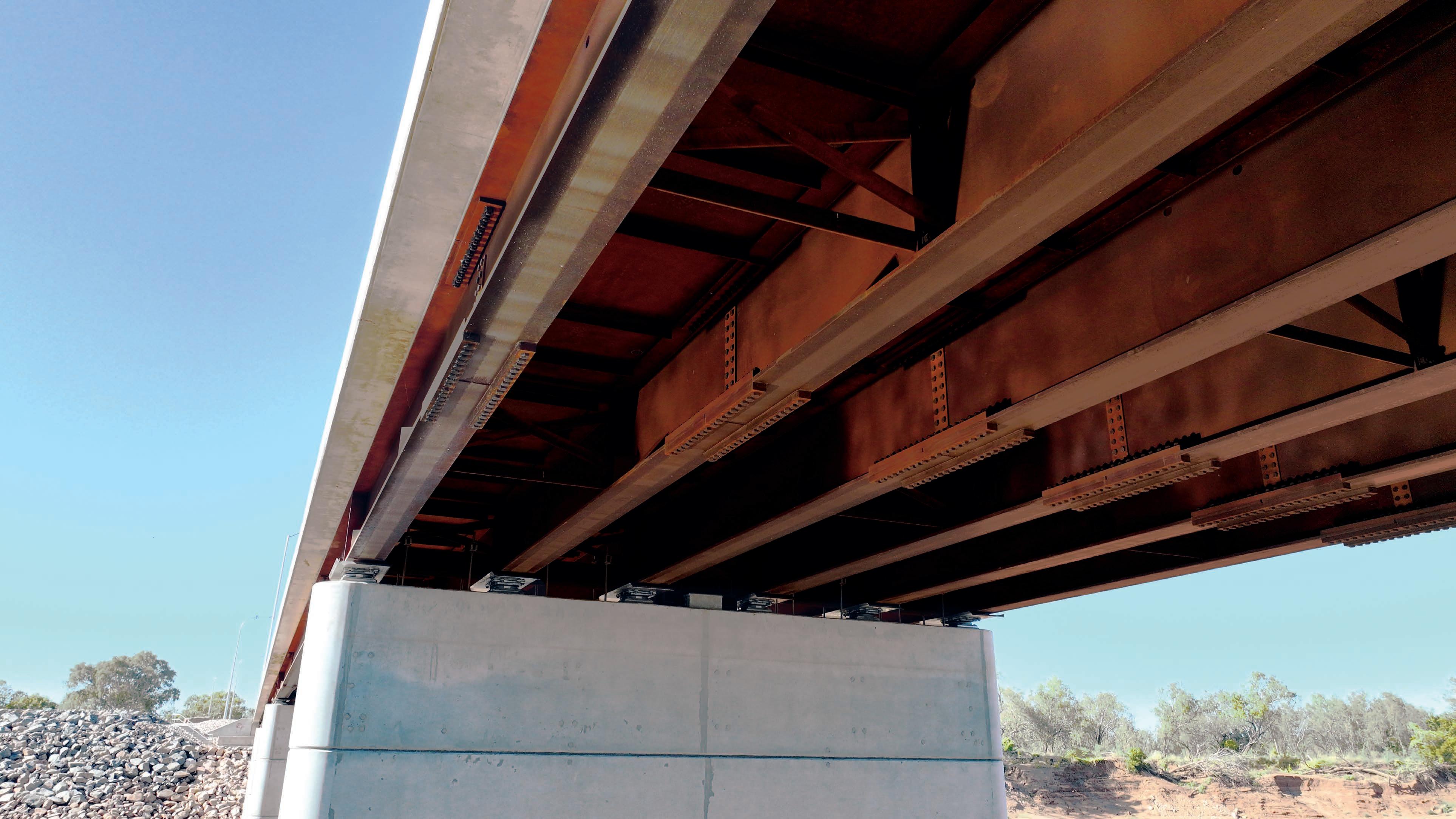
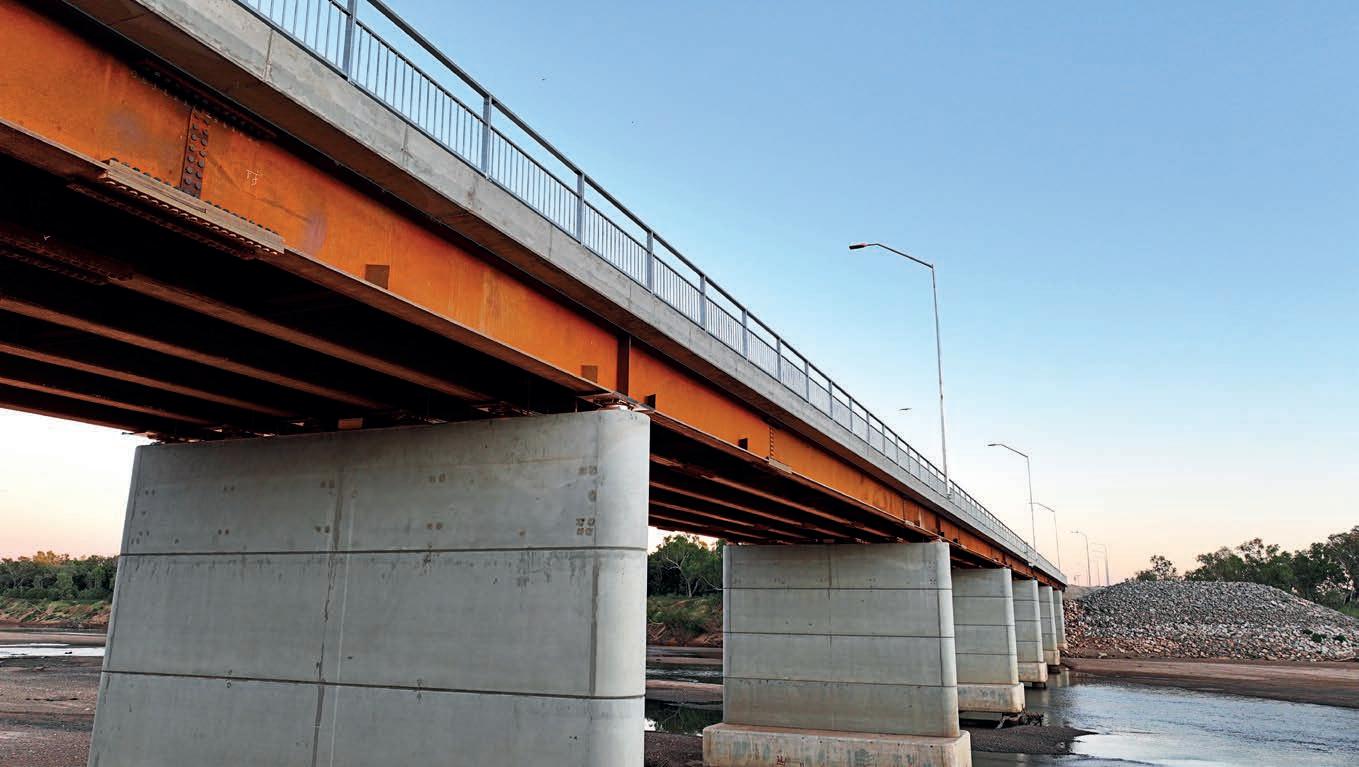
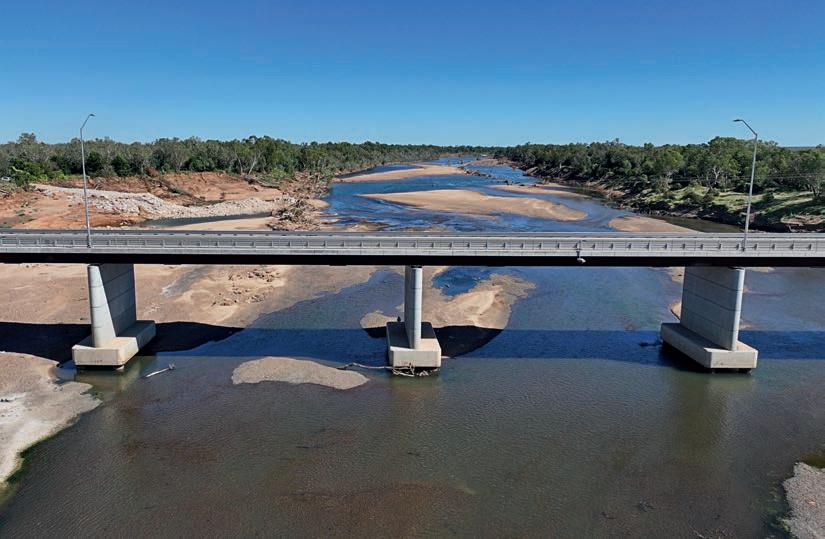
Featuring comprehensive charts, tables, photos and illustrative diagrams, the new Composite Steel Road Bridges Technical Guide provides early-stage guidance for the preliminary design and evaluation of composite steel road bridges.
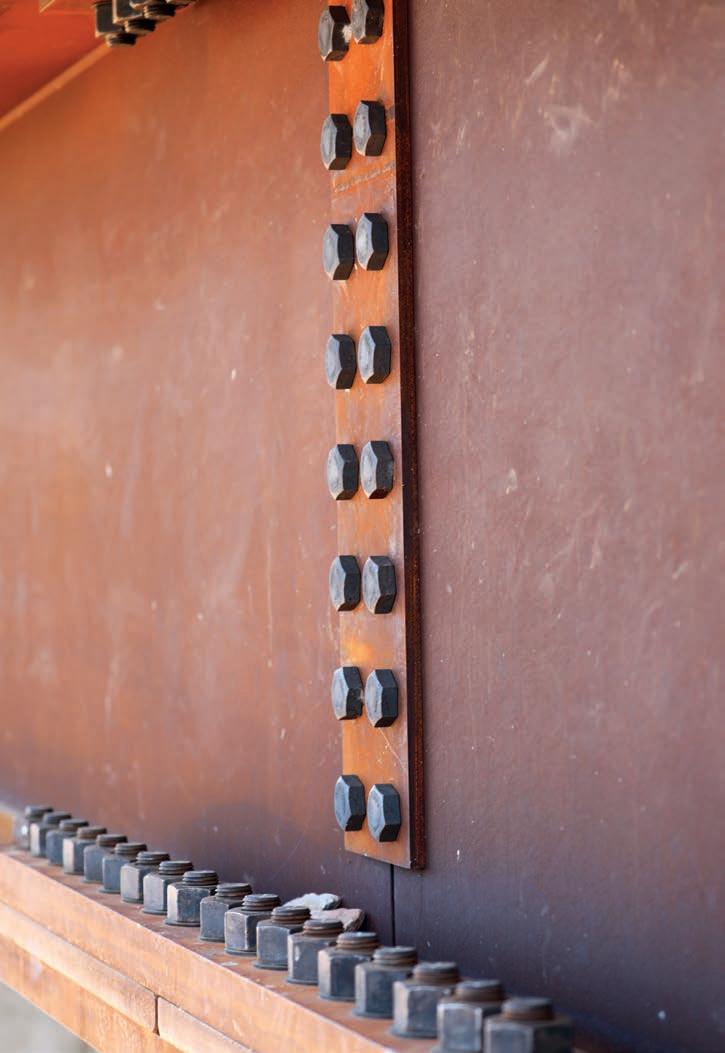
The new Weathering Steel Design Guide for Bridges collates essential guidance for the application of REDCOR®
Scan QR code to download
Is work-life balance more important than pay?
While
skills shortages remain a persistent constraint on project delivery,
a recent report has found that, for many workers, how a job fits into their life now outweighs what it pays.
Work-life balance is emerging as a decisive factor for retaining talent across infrastructure and construction, according to findings from the 2026 Workmonitor report.
The report by Randstad, is the 23rd annual, in-depth study of more than 28,000 workers and employers across 35 global markets.
It found the shift toward worklife balance is not occurring in isolation but is unfolding against a backdrop of economic pressure, technological change and evolving career expectations.
BALANCE TAKES PRIORITY
Data from the report indicates that more than half of construction and engineering workers nominate worklife balance as their primary reason for staying in a role – more than double the proportion who point to pay and benefits.
Clayton Colbert, Director of Engineering and Construction at Randstad Australia, says the findings underline a broader shift in how employees define value in their careers.
“Work-life balance has become one of the most powerful tools employers have to attract and retain talent,” he says.
“In a sector facing ongoing skills shortages, organisations that can offer flexibility and support employees’ lifestyles will have a clear advantage, particularly when it comes to retention.”
Colbert says the implications for infrastructure employers are significant.
Historically, competitive salaries and long-term job security were sufficient to attract skilled workers. However, the data suggests these factors are no longer enough on their own. Workers are increasingly weighing whether roles allow them to manage personal commitments, maintain wellbeing and sustain long-term careers without burnout.
This shift is reflected in the experiences of workers on the ground. Brisbane-based carpenter, Maka Makatoa, says balancing work with family life has become a central consideration in how he approaches his career.
“Work-life balance is really important to me, especially now that I’ve got two young daughters at home,” Makatoa says.
“In construction, there’s always the option to pick up extra hours or weekend work, and a lot of the guys I work with are happy to do that, particularly if they don’t have kids. But for me, it’s a constant balancing act. I want to provide, but I also don’t want to miss out on those early years with my girls.”
Makatoa says the physical demands of construction also make downtime essential.
“The job is physically demanding as well, so having time to rest and recover matters, not just for me, but so I can show up properly for my family when I get home,” he says.
A majority of workers report having flexibility over when they work, though fewer have control over where they work from. Colbert says this gap points to an opportunity for infrastructure
organisations, particularly those with office-based or hybrid roles, to expand flexibility beyond traditional site constraints.
“It’s not just about offering a job anymore, it’s about offering a lifestyle,” Colbert says.
ECONOMIC PRESSURE RESHAPES BEHAVIOUR
While work-life balance is rising in importance, the data indicates financial pressures continue to shape workforce behaviour in complex ways.
A significant proportion of workers are increasing their hours or taking on additional roles to manage the rising cost of living.
Colbert says this dual dynamic –prioritising balance while working more – reflects the tension many workers are experiencing. On one hand, they are seeking greater control over their time and wellbeing. On the other, economic realities are pushing them to extend their working capacity.
The report indicates that globally, about 40 per cent of workers have taken on a second job, while more than a third are increasing their hours in their primary role. In Australia’s construction and engineering sector, similar patterns are evident, with many
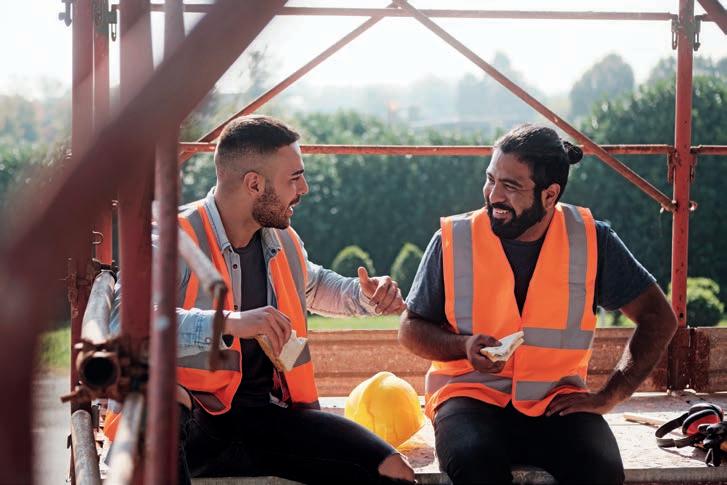
More than half of workers surveyed stated that work-life balance is more important than salary when considering staying in a role. Image: Diego Cervo/stock.adobe.com
workers signalling an openness to side roles or additional income streams.
Makatoa says this trade-off is a reality for many in the industry, particularly those supporting young families on a single income.
“In theory, I’d say work-life balance is more important than salary, especially if both my partner and I were working full-time,” he says.
“In an ideal world, I’d choose the flexibility and time with my family. But right now, I’m the only one earning, while my wife is a stay-at-home mum taking care of our young kids under four years old. So, salary becomes a big factor.”
He says the long-term physical impact of construction work also weighs into decisions about taking on additional hours.
“It’s a bit of a trade-off though – you need enough income to support your family, but you also don’t want to burn yourself out,” Makatoa says.
“I’ve seen what can happen in this industry long-term. My brother-in-law worked as a builder from when he was 16, and by his late 40s he had to stop completely because of back issues. He’s had surgery and can’t go back to construction at all. That sticks with you.”
Makatoa says rising living costs have recently pushed him to extend his working week.
“The cost of living keeps going up, petrol, groceries, everything. And when you’ve got a young family, you feel that pressure straight away,” he says.
“Lately, I’ve been working most Saturdays doing a side job on top of my regular Monday-to-Friday work, just to bring in extra money. This is pretty common in the construction industry, especially around busy periods like Christmas – there’s always extra work available, so it's hard to turn it down.”
He says the additional workload comes at a personal cost.
“But that’s where it gets tough, because you end up sacrificing time with your family to stay financially comfortable. Working six days a week in construction is demanding mentally and physically,” Makatoa says.
“You’re constantly learning and perfecting your craft, whether you’ve been in the industry for a couple years or a decade. On the physical side, you’re bending, lifting, cutting – the works. But you push through because you have to, for progression, salary increases, for your family – but you’re always aware that it’s not something you can keep up beyond 40 years old.”
Colbert says that for infrastructure employers, this presents both a risk and an opportunity. Increased workloads and multiple job commitments can lead to fatigue, reduced productivity and safety concerns, particularly in physically demanding environments.
At the same time, organisations that can offer flexible scheduling, predictable hours and supportive workplace policies may be better positioned to mitigate these risks.
Trust and relationships also play a critical role. The research shows a strong majority of workers report positive relationships with their managers and feel trusted by their employers. These factors are increasingly important in maintaining engagement, particularly as workers navigate competing pressures on their time and energy.
The findings suggest that while financial incentives remain important for attracting talent, retention strategies must account for the broader realities of workers’ lives.
SKILLS, TECHNOLOGY AND THE FUTURE OF WORK
Beyond immediate workforce pressures, the report highlights longer-term shifts that are equally relevant to the infrastructure sector. Chief among these is the growing role of technology, particularly artificial intelligence (AI), in shaping how work is performed.
Most employers have invested in AI in the past year, and many workers report increased exposure to and confidence in using new technologies. However, expectations around AI remain mixed. While some see it as an opportunity for productivity and skill development, others are uncertain about its impact on their roles.
Colbert says this uncertainty reinforces the importance of training and upskilling. The research shows that many workers are already taking proactive steps to future-proof their
skills, particularly in technologyrelated areas.
Employers that support this through formal training, career development pathways and access to new tools are likely to see stronger engagement and retention.
Colbert says investment in people is a critical part of the equation.
"Our research tells us employees are open to upskilling, particularly when it comes to technology,” he says.
For infrastructure organisations, this aligns with the broader need to build capability in areas such as digital engineering, data analytics and automated systems. As projects become more complex and technology-driven, the ability to develop and retain skilled workers will be a key differentiator.
At the same time, the report points to a broader redefinition of career paths. Many workers no longer see linear progression within a single organisation as the default. Instead, they are seeking diverse experiences, greater autonomy and roles that align with their personal values and goals.
Flexible pathways, varied project opportunities and a clear commitment to employee wellbeing are becoming essential components of the employee value proposition.
A CHANGING EQUATION FOR EMPLOYERS
Colbert says, taken together, the findings paint a picture of a workforce in transition. Economic pressures, technological change and evolving expectations are converging to reshape what workers want, and what employers must provide.
For Australia’s infrastructure sector, the message is clear. Addressing skills shortages will require more than competitive salaries or recruitment drives. It will depend on creating workplaces that recognise the importance of balance, support ongoing development and adapt to the realities of modern work. Despite seeking better work-life balance, many are working longer hours due to fi nancial pressures. Image: Nicholas Felix/ peopleimages.com/ stock.adobe.com
Whether you’re taking your very first steps into structured asset management or looking to elevate an already sophisticated program, Brightly offers a solution that’s intuitively simple yet robust enough to evolve with your every need. Find out how at brightlysoftware.com/future-ready
As artificial intelligence (AI) moves from experimentation into the heart of major infrastructure and construction projects, the conversation is no longer about what AI can do, but whether it can be trusted to support decisions where the consequences are real.
In asset intensive environments, failure rarely occurs inside a single system. It happens at the handovers between design, construction, operations and long-term protection –when context is lost, data fragments and decisions are made without a complete picture.
According to Marcus Haynes, Industry Principal APAC at Octave, closing these gaps requires more than new tools. It demands a governed, enterprise grade approach to intelligence that carries trusted data across the entire asset lifecycle.
Octave helps infrastructure owners and EPCs (Engineering, Procurement, and Construction contractors) move beyond disconnected workflows by turning fragmented information into contextual, decision-ready intelligence;
supporting safer outcomes, stronger accountability and confidence at scale as AI becomes embedded in the physical world.
Haynes says the main hurdle for AI in the industry is the risk of inaccuracy, often referred to as "hallucinations." While a chatbot making a mistake on a travel itinerary is a nuisance, a mistake in a structural safety report or a power grid design is a catastrophe.
“We know there's a problem with hallucinations,” Haynes says. “There is high confidence and low accuracy and people might take that as a factual piece of information. So, there's a risk of the outputs being wrong.
“In our industry, if you get something wrong, it's not just a bad recommendation; it could be a safety issue or a massive financial loss.”
To mitigate this, Haynes advocates for a "walled garden" approach where AI operates only within a secure, governed environment. By using a private instance of a large language model that only accesses a specific company’s verified data, organisations can ensure that the
intelligence being generated is grounded in reality rather than digital guesswork.
“People are worried about their intellectual property,” Haynes says. “If they put their data into ChatGPT, it's public. So, we're creating a secure environment where they can manage their data, and it's their data, a curated single source of truth from start to finish.
“That is the only way you can get an executive or a regulator to trust the system."
Octave is playing a pivotal role in bridging this trust gap by digitising legacy information and providing the governance framework necessary for meaningful decision-making.
By helping organisations transition from paper-based records to secure digital platforms, Octave ensures that data is not just collected but is auditable and useful for longterm analysis.
“We're helping clients with much, much better decision-making through visual intelligence and analytics," Haynes says.
“At the moment, it's all on paper, and we can help to digitalise it. We
do that through the governance piece to ensure that when an owner looks at a dashboard, they can trust the information behind it. It's about taking that fragmented data and turning it into a reliable asset for the entire life of the project."
He says the scale of modern infrastructure projects, especially in the energy sector, demands a move away from fragmented workflows. Australia is seeing an influx of investment into renewable energy zones and grid upgrades which involve an array of stakeholders, each generating mountains of documentation.
Without a standardised digital ecosystem, the handover from construction to operations often results in a loss of vital information. Haynes says that many projects are still stuck in legacy mindsets.
“If we look at the energy transition, there's a lot of work to be done," he says. "And we're seeing that the data is not there. Or it's there, but it's not in a format that's useful. It's in PDFs, it's in Excel spreadsheets, it's in people's heads. That's a risk for the owner, because they don't know what
they've got, and they don't know how to maintain it once the contractors leave the site.”
He says standardised digital handover and intelligence-driven workflows are not just about efficiency; they are about long-term public accountability.
When an asset owner receives a completed project, they need to trust that every bolt, weld, and sensor is documented correctly.
AI can help bridge this gap by automating the validation of data as it is collected on-site. Instead of waiting until the end of a multiyear project to find errors, digital systems can provide real-time assurance. This creates a transparent record throughout the asset's entire lifecycle.
However, the human element remains the most important part of the governance piece. For Haynes it’s clear that AI is a tool to support decision-making, not a replacement for professional judgement.
“AI is not a silver bullet," he says. “It's a tool to help people make better decisions. But you need to have the right data, and you need
to have the right governance in place. Because at the end of the day, someone needs to be responsible for the decision, and that person needs to know the data they are looking at is 100 per cent accurate."
He says the successful integration of AI into construction depends on moving from experimentation to enterprise-grade reliability. This involves a shift toward curated data sets and secure platforms.
"I think the big thing is trust," Haynes says. "How do we trust the data? How do we trust the output? And that comes back to the governance and the curated data.
“If you have those two things, you can start to build that trust and then you can start to see the benefits of the technology in terms of productivity, safety and the quality of the projects being delivered.
“Without that trust, the technology will always be sitting on the sidelines of the truly important work.”
Marcus Haynes, Industry Principal APAC at Octave. Image: Octave
Visual intelligence and analytics can help clients make better decision-making. Image: Andrey Popov/stock.adobe.com
Smarter inspections, real business value
Given all the time spent on inspections, it is worth making sure they’re delivering benefits to business operations and customers. CSM Business and Mobility o ers a quick guide to achieving this goal.
For many Australian infrastructure firms, the daily inspection is often viewed as little more than a necessary burden of compliance.
"Businesses conduct inspections to ensure assets, equipment, and processes operate safely, reliably, and in compliance with regulations," says CSM Business and Mobility’s Robert Ward.
However, there is a growing divide between organisations that treat these processes as mere busywork and those that leverage them to generate business value.
Ward says moving beyond a paper-based mindset is the first step toward operational efficiency and the foundation of any high-performing inspection starts with a clear understanding of the 'why'.
"What purpose does it serve? Who is filling it in? What is done with the output?” Ward says.
“Someone might answer the purpose of the inspection is to comply with regulations and the output is filed away in case of a lawsuit. But, especially in the age of Artificial Intelligence (AI), there is a lot of scope to extract the information locked up in these checklist forms and turn them from reactive records into proactive outcomes.”
Creating an effective tool requires collaboration between those who know the assets and those who handle the tools.
Ward breaks this down into two critical groups: subject matter experts and the checklist users themselves. Subject matter experts are the people who know the asset or topic area that is the subject of the checklist. They may know the asset itself, for example the intricacies of a railway switchgear, or they may know the servicing of an asset, such as how to accurately take a measurement.
Inspection checklist users are the people who will use the checklist, such as a maintenance technician who knows the logical way to work through the inspection to avoid double-up on activities and get the most accurate readings.
Ward says the technical design of questions significantly impacts data quality. Effective forms avoid ambiguity by demanding specific, factual answers.
“Instead of asking if a guardrail ‘looks okay,’ a professional checklist asks if it is ‘securely fastened with no visible damage’,” he says.
“Ask the question so it’s clear what type of answer is required. Good measurement questions, like recording gas line pressure in kPa (kilopascals), or specific rating questions for cabinet conditions, ensure high quality.
“Electronic checklists can even include validations to make sure the
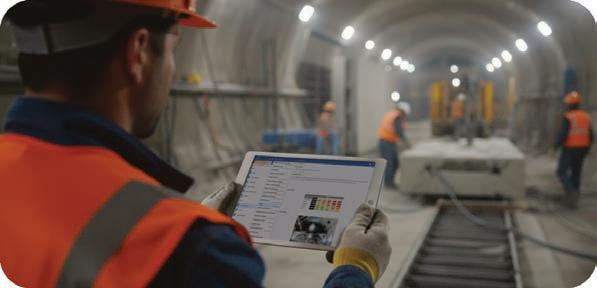
Technology can help businesses get the most out of daily inspections. Image: Rawpixels stock/shutterstock.com
answer aligns to the expected type, preventing mistakes before the inspector even submits a value.”
Conciseness is equally important for inspectors working in demanding field conditions. Ward says that keeping wording action-oriented minimises fatigue.
For example, “Is there any fraying on the wiring?” is far more effective than a long-winded request to “examine the wiring and ensure no signs of degradation”.
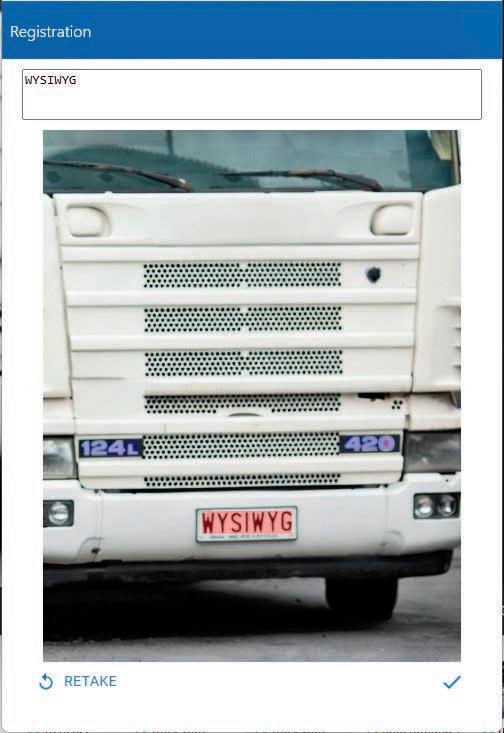
Organisations should also align the answer type to the specific information needed. While a picture can tell a thousand words, it is a slow substitute for a simple yes/ no response. Conversely, optical character recognition (OCR) is often a faster and more accurate way to capture text codes than manual typing.
The layout of the checklist must also follow the natural flow of the work. This means organising questions by physical movement – such as outside-to-inside – or by process flow, moving from shutdown and isolation to inspection and eventual start-up.
“Sectioning makes the checklist easier to navigate, supports faster training, and improves the quality of recorded data," Ward says.
“Electronic questionnaire show/ hide rules can apply to whole sections as well as questions, making checklist configuration faster and easier. Inspectors work faster and more accurately when the checklist feels predictable, so be consistent in style, layout, format, and answer types throughout the form.”
Technology can help get the most out of these best practices, which is where CSM Business and Mobility steps in.
The Australian-based consulting and software implementation company specialises in mobile-first solutions and can liaise directly with companies to help optimise vital business processes.
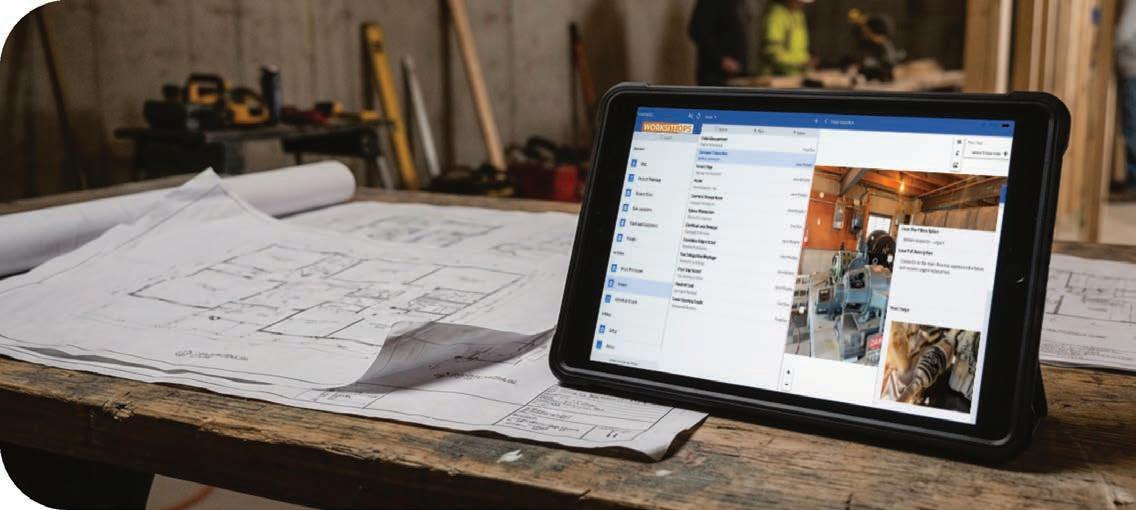
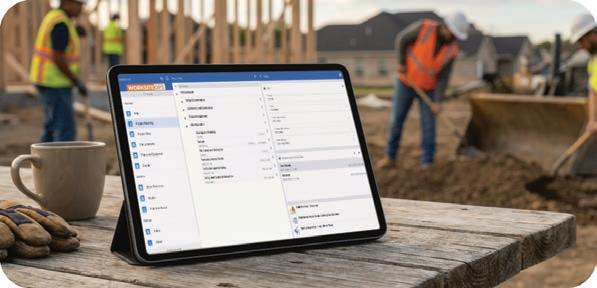
As well as advice and design for field service system implementations, it offers the WorksiteOps work execution system for mobile devices which includes best-in-class inspections handling, AI assistance, full offline completion, and advanced scenarios such as OCR, context-based checklists, and output reports.
Ward says that by adhering to these universal best practices, infrastructure firms can move
from merely documenting the past to proactively protecting their future performance.
"The limitations of an inspection checklist will only be truly revealed by live use in the field," he says.
“Too often, a good checklist at the time of implementation is regularly updated to become a great checklist over the first three months, and
then slowly deteriorates to become a terrible checklist over the next five years.
“Avoid this by creating a structured review process that takes place every six to 12 months, implement any changes, and then be content until the next review cycle. This rhythm also avoids change fatigue from responding to every new suggestion and tweak.”
Building an inspection checklist
» Define the purpose: Understand what goal the inspection serves, who will complete it, and how the results will be used.
» Collaborate: Engage subject matter experts who understand the asset and the technicians who will perform the work.
» Design for factual answers: Write clear, specific questions that remove ambiguity.
» Focus on one item at a time: Ensure each question covers only a single component to avoid confusion and ensure comprehensive data collection.
» Optimise for the field: Use concise, action-oriented wording and ensure the layout follows the natural physical or process flow of work.
» Leverage electronic features: Use digital tools to conditionally show or hide questions, pre-fill data where possible, and include required reference ranges or past measurements at the point of use.
» Maintain consistency: Keep styles, layouts, and answer formats predictable throughout the form so inspectors can work faster and more accurately.
» Implement a review cycle: Establish a structured process to review and update the checklist every six to 12 months.
» Use technology and AI: Use AI to help draft better questions or validate your checklist against best practices to ensure high-quality outputs.
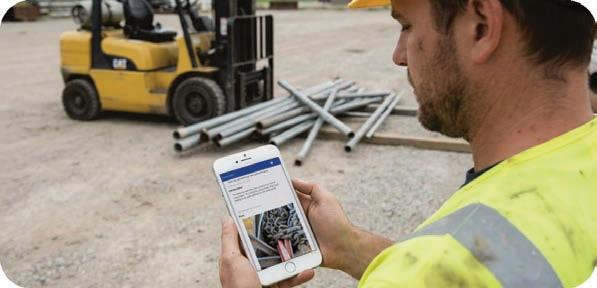
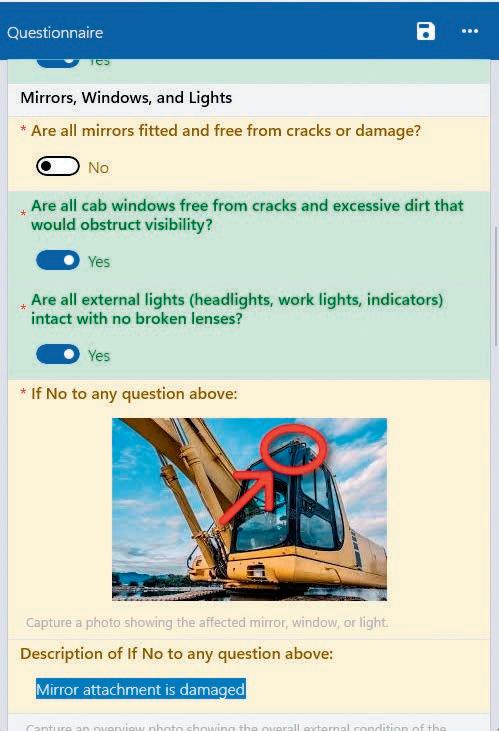
Example of an excavation inspection checklist on a phone. Images: CSM Business and Mobility
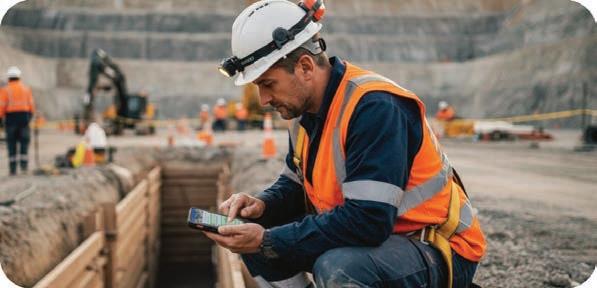
Optical character recognition is often a faster and more accurate way to capture text codes than manual typing.
New Standard for VRLA Performance in Critical Infrastructure
Introducing Yuasa UXL GEN2. Engineered for critical infrastructure. Designed for decades of service.
DC power systems are critical to protection, control and safety across infrastructure networks.
Increasing temperatures and extended service life are accelerating VRLA battery degradation. Asset owners are seeking solutions that deliver predictable, reliable performance in real operating environments.
Yuasa UXL GEN2 has been developed to address these challenges.
Engineered as an evolution in long-life VRLA technology, GEN2 delivers improved lifecycle performance and reliability under real operating conditions.
GEN2 is engineered to deliver:
E xtended service life across critical infrastructure applications
Stable performance at elevated operating temperatures
Reduced lifecycle cost pressures through improved efficiency
Long-term reliability in regulated and high-demand environments
Built for Australian operating conditions. Supported nationally. *Design life based on specified operating conditions
Speak to our team for more information visit www.intelepower.com.au or call: 1300 364 877
Powering smarter, safer transport through IoT
Intelligent Transport Systems Australia Chief Executive O cer Susan Harris explores how the Internet of Things is transforming transport from reactive maintenance to predictive, data-driven systems.
The Internet of Things (IoT) has moved well beyond experimentation in transport. Today, connected sensors, devices and platforms are fundamental to how modern transport networks are operated, maintained and improved.
Across Australia, IoT is increasingly the invisible infrastructure enabling safer roads, more reliable assets and smarter, faster decision-making.
At Intelligent Transport Systems (ITS) Australia, we see IoT not as a standalone technology, but as a critical enabler of intelligent transport systems. That view underpins our five-year strategy, which is focused on accelerating the deployment of technologies that deliver real-world safety, productivity and sustainability outcomes at scale.
For decades, transport infrastructure has largely been managed through periodic inspections and reactive maintenance. IoT is fundamentally changing that model.
Across our membership, connected sensors are now embedded in roads, bridges, tunnels, rail corridors and roadside assets, providing continuous insight into condition, usage and performance.
This allows infrastructure owners and operators to move from reactive responses to predictive, data-driven intervention, reducing unplanned outages, improving reliability and extending asset life.
It supports a core strategic priority of building future-ready infrastructure, where investment decisions are guided by evidence rather than assumptions.
Safety is central to everything we do, and IoT plays a critical role in delivering safer outcomes on Australian roads.
Connected roadside devices, vehicle telematics, smart cameras and environmental sensors now provide the real-time visibility required to detect hazards, manage
congestion and respond rapidly to incidents.
Across the ITS ecosystem, members are applying IoT-enabled solutions to support incident detection, dynamic traffic and lane management, congestion and crash alerts, and technology-enabled enforcement. When these systems are integrated effectively, they help reduce secondary crashes, improve emergency response times and shift road safety from a reactive to a preventative model.
However, connectivity alone is not enough. IoT’s true value lies in what happens beyond data collection.
Increasingly, connected data is being combined with advanced analytics, artificial intelligence and machine learning to deliver actionable intelligence for operators and decision-makers.
Across our membership, IoT data is being used to predict network disruptions, model the flow-on effects of incidents, optimise public transport performance and support better operational decisions during major events. This aligns directly with our strategic focus on data-driven decision-making and ensures IoT investments deliver measurable outcomes.
One challenge of widespread IoT deployment can be the lack of harmonisation; isolated pilots, proprietary platforms and inconsistent data standards that limit the ability to scale solutions across jurisdictions and modes.
Addressing this is a core priority of ITS Australia’s strategy. We advocate strongly for interoperability, harmonised data and trusted data-sharing frameworks, recognising that IoT delivers its greatest value when data can be shared securely and consistently across agencies and networks.
ITS Australia also plays a convening role in accelerating uptake. Through conferences, awards, abstract
programs and international engagement, we provide platforms for members to showcase real-world deployments and lessons learned. These examples demonstrate how IoT is already delivering outcomes across urban, regional and freight networks, helping the sector move confidently from pilots to scalable deployment.
As transport becomes increasingly connected, IoT must be treated as critical infrastructure in its own right. Cybersecurity, resilience and governance will be essential to maintaining trust in connected systems.
Over the next five years, IoT will underpin connected and automated vehicles, smart infrastructure and data-led transport policy. Through its members and leadership, ITS Australia will continue to support IoT deployments that deliver safer roads, more efficient networks and a more intelligent transport system for Australia.
Susan Harris, Chief Executive O cer of ITS Australia. Image: ITS Australia
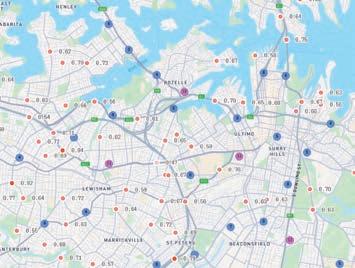
Near-miss road safety events across Sydney. Image: CompassIoT
SENSE 600® Australian made sustainable steel
Award-winning steel innovation shaping the future of construction.
Uses up to 16.7% less raw material than our standard 500N reinforcing steel and made from 100% scrap metal.
At InfraBuild, we are leading the charge to decarbonise infrastructure, without changing the way you work. SENSE 600 , our new reinforcing bar innovation, brings you lower Scope 3 emissions without compromising on performance or quality - all while integrating seamlessly into your existing workflows. Together, we can create a construction industry where sustainability isn’t just an option - it’s the standard.
It just makes SENSE
Delivering a lower embodied carbon solution when used in place of our equivalent load capacity standard 500N reinforcing steel.
Confidence from third-party certification from GECA (SSPv1.0i-2019) and meets Australian Standard AS/NZS 4671.
1Spatial provides a framework of business rules that act as a gatekeeper for data integrity. Image: Andrey_Popov/shutterstock.com
Location, location, location
1Spatial Country Manager, Andrej Mocicka discusses how spatial technology and business rules address trust issues with artificial intelligence, ensuring infrastructure data remains accurate, reliable, and fit for purpose.
The spatial industry is often perceived as a relatively young field, synonymous with satellites, modern Global Positioning Systems, and digital mapping. However, the discipline of measuring and managing location data has been around since the pyramids were built, says Andrej Mocicka.
Mocicka, the Country Manager for software development company
1Spatial Australia (a VertiGIS
“We’ve been doing AI for many, many years before it became a thing, because we were using the technology to help us make decisions.” - Andrej Mocicka, 1Spatial Country Manager
company), says that while the tools have evolved, the spatial industry has always been about understanding where things are and how they interact with their environment.
At its core is providing the context necessary for critical decision-making – identifying where an event happens, where an asset exists, and where a future project should be.
“Spatial data is fundamental in any, if not all decisions that are being made,” Mocicka says.
“Modern businesses use spatial technology to drive better decisions. By analysing demographic and socioeconomic data geographically, companies – from fast-food chains selecting new sites to logistics teams optimising routes – can accurately predict success and understand the impact of location on their operations.
“It helps unlock the value of location data to create a safer, smarter, and more sustainable world.”
As the volume of data collected continues to grow, Mocicka says the challenge for the infrastructure sector has shifted from a lack of information to a lack of trust in that information.
He says the integration of artificial intelligence (AI) is the most significant pain point for customers today. Organisations are grappling with how AI will impact their operations and whether the answers it provides can be trusted.
“The problem with AI is it won’t tell you, ‘I don’t know’,” Mocicka says. "It’ll keep going, and, even if it doesn’t know something, it will still give you an answer – even if it’s wrong.
“That, to me, is probably the biggest challenge – making sure that when you use AI or when you use data, that you know that it is fit for purpose.”
To address this, 1Spatial provides a framework of business rules that act as a gatekeeper for data integrity. Rather than blindly following an automated output, users can create specific requirements that information must meet before it is accepted.
The software runs the data through these rules and reports exactly where it fails to comply, allowing for either manual correction by the data custodian or automated fixes.
Mocicka says this ensures that as more data is collected, businesses can separate the “chaff from the weeds”.
1Spatial’s use of FME (Feature Manipulation Engine) technology allows it to bring in more than 480 different data formats and perform more than 500 transformations, converting data into a single, standardised, and trustworthy format.
One example is the company’s Geospatial Data Validation Hub, or GDV Hub. The hub allows developers and construction firms to submit subdivision data to local councils, where it is automatically validated against required standards.
“Once it passes, the authority receives the data with that authentication certificate," Mocicka says. "They can then take that data without having to go and check it themselves.
“Imagine the bad old days when you had to do this manually, go and physically check everything off."
Despite the efficiency of automated systems, Mocicka remains an advocate for human oversight in the decision-making process. He views AI not as a replacement for expertise, but as another tool in a long line of technological shifts he has witnessed over his 45-year career.
He notes that while people are naturally drawn to the path of least resistance, allowing a machine to make final calls without human context is where the real danger lies.
"What is important is for people to understand that it’s just the tool," Mocicka says. "It should not be used as the decision maker; the person, the human being, should still be the decision maker, based on them having an understanding of what the information is going to be used for.
“We’ve been doing AI for many, many years before it became a
thing, because we were using the technology to help us make decisions. We were using software to automate processes, but it’s that understanding that helps us to make better decisions.”
This extends to how 1Spatial interacts with its clients, focusing on distinguishing between what a customer wants and what they actually need to solve a problem.
Mocicka uses the analogy of a client wanting a Rolls Royce when they only need a car to get from one place to another. By asking targeted questions, the 1Spatial team helps organisations identify the most efficient technological path forward, even if that means admitting their specific tools aren't the right fit.
This commitment to credibility and technical support has allowed the Australian arm of the business to grow from a team of seven to 15 people over the past eight years, providing solutions that make data fit for purpose.
As the industry continues to evolve through cloud computing and more sophisticated AI agents, the focus remains on streamlining processes so that the resulting data is reliable.
For Mocicka, the excitement of the role comes from this constant dynamic shift and the opportunity to use new tools to help customers resolve long-standing challenges.
"The industry itself is always very dynamic; there’s constant shifts and changes," he says. “We're about making data fit for purpose, making it trustworthy, and making it useful for people to use.”
To find out more visit: 1spatial.com/au
Andrej Mocicka, Country Manager, 1Spatial (a VertiGIS Company).
Across the infrastructure sector, asset owners and operators share a common challenge: how to move beyond reactive, year-to-year budget cycles and make well-justified, strategic investment decisions.
For those managing diverse built environment portfolios – facilities and infrastructure critical to national or regional operations – this is not merely an aspiration. It is an operational necessity.
Yet the path from reactive maintenance to strategic asset management maturity is rarely linear, and it seldom begins with perfect data.
The good news is that it doesn't need to.
START WHERE YOU ARE
One of the most important principles in advancing asset management maturity is resisting the temptation to wait for ideal conditions before acting.
Many organisations with extensive, long-standing portfolios find their asset information dispersed across multiple systems and maintenance provider databases. This fragmentation can feel paralysing –but it doesn't have to be.
A phased, system-by-system approach offers a practical and effective alternative. Rather than attempting to consolidate everything at once, organisations can begin by focusing on individual engineering systems – exploring each in depth before integrating findings into a broader portfolio view.
This staged methodology delivers early insights, builds internal confidence, and demonstrates that a clear, evidence-based understanding of long-term asset needs can be progressively constructed, even in a complex data environment.
The guiding principle here is straightforward: getting the data aligned matters more than getting it perfect. Progress over perfection is what drives momentum.
A CONSOLIDATED LIFECYCLE MODEL
As each system is examined in detail, the focus should be on understanding lifecycle behaviour, defi ning intervention logic, assessing asset criticality and consequence of failure, and translating raw asset condition data into predictable renewal timings and lifecycle demand.
This is where purpose-built asset management tools for lifecycle modelling and work planning become genuinely transformative.
Rather than simply forecasting expenditure, these tools create a structured environment in which teams can test strategy, model different intervention approaches, and build an evidence base that supports confident, long-term planning.
The shift from spreadsheet-driven guesswork to scenario-based analysis is a significant step forward in any organisation's asset management maturity journey.
SHIFTING THE CONVERSATION
Perhaps the most powerful outcome of a mature asset management approach is the ability to change the nature of conversations with executive leadership.
When organisations can model and present distinct funding scenarios – comparing an ideal renewal program against the consequences of maintaining current budget levels or demonstrating how a stabilised investment pathway reduces costly peaks and troughs – the discussion fundamentally shifts.
Instead of debating line items in an annual budget, stakeholders begin to engage with longer-term questions around portfolio condition, operational risk, and sustainable investment.
Presenting these scenarios sideby-side gives decision-makers a clear, accessible framework for understanding the real consequences of funding choices, moving the conversation from short-term cost management to long-term value creation.
PRINCIPLES FOR THE INFRASTRUCTURE SECTOR
Strategic asset management is not merely about keeping assets maintained. It’s about optimising investment, ensuring operational continuity, and securing the longterm resilience and performance of critical infrastructure.
For organisations willing to embrace a phased, evidence-based approach – tackling complexity incrementally, prioritising data alignment over perfection, and investing in scenario modelling capability – the journey from reactive cycles to strategic clarity is not only achievable. It is transformative.
To learn more, visit brightlysoftware.com
Tackling copper theft on critical networks
Copper theft is emerging as a persistent threat across Australia’s road networks. From lighting to intelligent transport systems, the impacts extend far beyond the loss of cable, putting safety and reliability at risk.
Across Australia’s road networks, a growing and often underreported issue is undermining the safety and reliability of critical infrastructure.
Copper theft, often driven by fluctuating commodity prices and broader economic pressures, is increasingly targeting transport assets, with consequences that extend well beyond the immediate loss of materials.
Underground conduit networks are accessed, cables are removed or stripped on site, and entire circuits are taken offline.
The result is often widespread outages - darkened motorway sections, inactive traffic monitoring systems, and disabled communication links that would otherwise support rapid incident response.
For asset owners and operators, the challenge is not just the replacement cost of stolen cable. It is the disruption to essential services, the safety risks for road users, and the operational strain of restoring systems under tight timeframes.
As transport networks become more interconnected and reliant on real-time data, even a single point of failure can have cascading impacts.
A GROWING RISK TO NETWORK SAFETY
“These incidents are no longer isolated,” says Michael Willey, Head of Projects, Transport at Service Stream.
Service Stream is a leading national provider of essential infrastructure and network services and has a strong track record in delivering complex Intelligent Transport Systems (ITS), electrical and minor
civil projects across Australia. Its projects team combines engineering, design and construction expertise with a focus on practical, customerdriven outcomes.
“Copper theft incidents are occurring across jurisdictions, affecting both legacy infrastructure and newly installed assets,” says Willey.
“For asset managers, this introduces a persistent risk that requires more than reactive maintenance.”
A key concern is the direct impact on road safety.
Lighting systems, for example, are strategically installed in highrisk areas such as interchanges, ramps and curved sections of road. When these systems fail, visibility is reduced precisely where it is needed most.
Similarly, ITS assets, including cameras, variable speed limit signs and message boards, play a critical role in managing traffic flow and responding to incidents. When power is lost, so too is the ability to monitor conditions and communicate with road users in real time.
Willey says that addressing this challenge requires a shift in approach.
“Rather than treating copper theft as a maintenance issue, it must be considered within a broader asset management and risk mitigation framework.
“Engaging early in a project lifecycle allows design decisions to better account for constructability, budget constraints and long-term asset resilience, ultimately reducing vulnerability to theft.”
FROM REACTIVE FIXES TO PROACTIVE SOLUTIONS
Drawing on Service Stream’s experience across complex tunnel and motorway environments, Willey highlights the importance of careful planning and coordination, particularly where access is limited and works must be undertaken during short road closures. In these conditions, maximising productivity and delivering the right solution first time is critical.
In response to copper theft, the company advocates for a tailored, end-to-end approach that combines investigation, design, supply and installation.
“Early site assessments can inform a range of mitigation strategies, enabling asset owners to select solutions that align with operational requirements and budgets,” Willey says.
One of these is the transition from copper to alternative materials such as aluminium cabling. While this requires careful design consideration, it can be one of the most effective deterrents, removing the primary incentive for theft and providing a long-term solution for many installations.
The value of physical security measures, including locked pit lids, protective cages around distribution boards and the use of sand to isolate and conceal cabling can also not be overlooked.
Willey says a combination of these measures is typically the most effective way to deter theft.
Monitoring technologies are another key component. ClosedCircuit Television (CCTV) networks
and alarmed systems enable realtime surveillance and rapid response, while also acting as a deterrent through visible and audible warnings.
Despite these measures, Willey acknowledges that some level of theft remains unavoidable. In these cases, rapid remediation is essential to minimise downtime and restore services as quickly as possible.
Service Stream’s national footprint, supplier network and in-house design capabilities allow for fast mobilisation and efficient delivery of repair works.
BUILDING
RESILIENCE INTO FUTURE NETWORKS
Willey says that there is an opportunity to improve infrastructure outcomes during remediation.
Upgrading to energy-efficient LED lighting, for example, can reduce power demand while delivering improved performance. Similarly, reviewing system loads and configurations can enhance overall reliability.
However, it notes that a broader industry response is required. As copper theft continues to rise, there is a need for greater standardisation, particularly around the use of alternative materials and system designs.
Willey says consistent standards would enable faster decision-making and ensure replacement components are more readily available.
Looking ahead, he believes advances in intelligent transport technologies will play a key role in improving asset protection and
network resilience. The integration of sensors, data analytics and real-time monitoring systems is expected to enable earlier detection of faults and potential tampering.
Willey also points to the growing role of digital twins and connected infrastructure in simulating network disruptions and coordinating responses. These technologies, combined with increased connectivity between vehicles and infrastructure, are expected to support a more adaptive and resilient transport system.
As these capabilities evolve, Service Stream anticipates that infrastructure will become increasingly self-monitoring, with the ability to detect issues and respond dynamically. However, realising these benefits will require ongoing investment and close collaboration between asset owners, designers and delivery partners.
Ultimately, addressing copper theft is not just about replacing stolen materials, but about protecting the safety, functionality and reliability of critical transport networks.
A holistic approach, combining design innovation, physical security, smart monitoring and rapid response, will be essential to reducing risk and building more resilient infrastructure into the future.
To find out more, visit servicestream.com.au
Service Stream.
Select’s green fleet evolution
Select Plant Australia brings together electric, hybrid and battery-powered plant to help contractors lower fuel use and emissions, while keeping projects moving.
Sustainable plant is not a silver bullet for the construction industry’s challenges, but it is becoming a practical and increasingly important part of how projects are delivered.
As Business Unit Leader at Select Plant Australia, Ruairi Mawn is watching the Australian infrastructure sector navigate the shift toward a lower-carbon future.
He says that for years, the conversation around electric and hybrid machinery was stalled by a lack of trust. The industry was plagued by doubts around whether sustainable equipment
could withstand the rigours required to support the Australian construction environment.
That position is now evolving.
“What’s changed is the level of confidence,” Mawn says. “We’re not debating whether the technology works anymore. The focus is on where it delivers the most value and how to integrate it properly into projects.”
This is being driven by more than just corporate stewardship; it is now based on proven performance, a response to rising fuel volatility as evidenced by global tensions in the Middle East, and the need
to meet increasingly stringent sustainability targets.
Mawn believes there is also a growing recognition that plant and equipment is a critical lever in achieving better project outcomes, both for the contractor, client and the community in general.
"Lower noise and carbon emissions, smoother operation and higher comfort levels for operators are things that show up from day one,” he says. “It has been rewarding to visit sites and speak to the teams that benefit from these assets, and the feedback has been consistently positive."
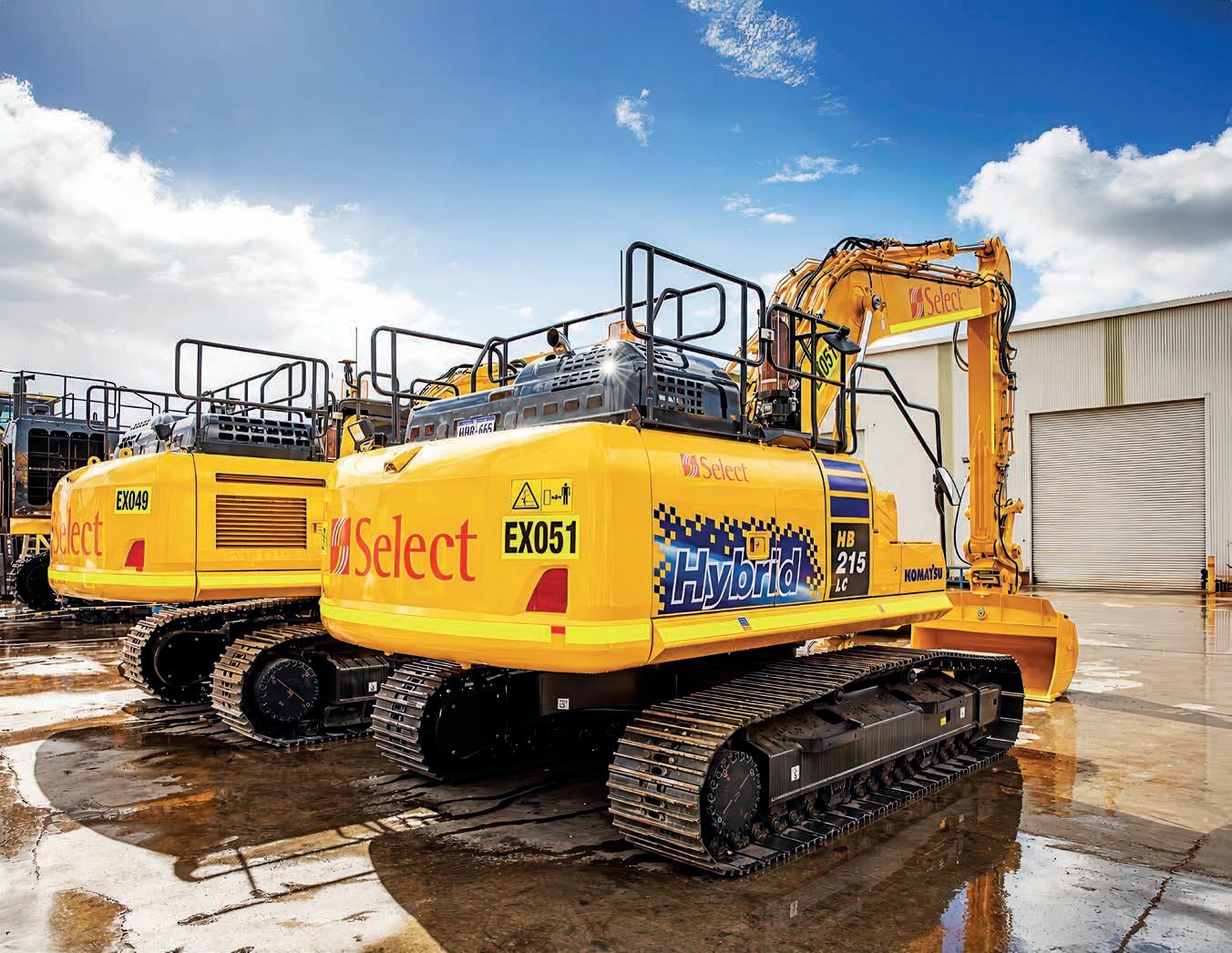
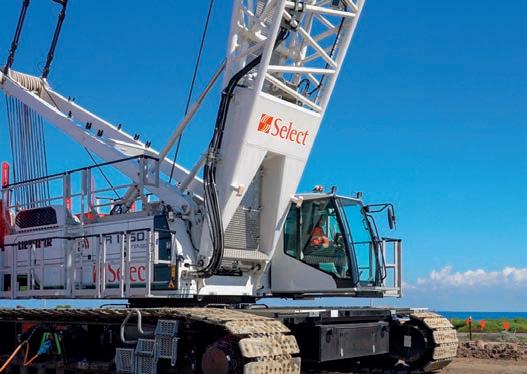
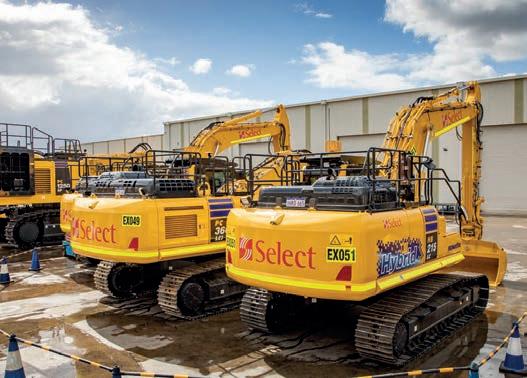
Select o ers a range of electric and hybrid excavators, cranes and vehicles. Images: Select Plant Australia
The shift to green assets is also transforming how projects are planned and delivered.
Unlike diesel equipment, which can often be deployed with minimal integration, electric and hybrid plant requires a more deliberate approach.
“It forces a different level of thinking,” Mawn says. “You need to be more considered about how equipment is used, when it’s used, and how power is managed across the site.”
Select’s growing fleet reflects that shift. Its offering now includes a mix of electric and hybrid excavators, cranes, material handling, vehicles and ancillary equipment, backed by battery storage and site power solutions designed to maintain productivity across a full shift.
In many applications, performance and distance from power sources is no longer a barrier even for some of the larger equipment.
Mawn says the operational reality of these machines is often a surprise to those accustomed to the roar of a diesel engine. From a maintenance perspective, the shift also introduces changes.
“In terms of longevity and service, electric power systems reduce mechanical complexity, which can lower wear and maintenance requirements.
"We’re not debating whether the technology works. The focus now is where it delivers most value and how to integrate it properly into projects.” – Ruairi Mawn, Business Unit Leader, Select Plant Australia
"Service models do change, but with the right partnerships and training, reliability remains high," he says.
Select leverages nearly 20 years of experience in the Australian market, alongside global insights from other regions where sustainable assets have already been scaled, to support client objectives.
Mawn says what differentiates the company’s approach is a focus on practicality over novelty. The selection of assets is based on rigorous assessments to ensure that every electric or hybrid machine delivers reliability and productivity that is equal to, or better, than diesel.
He says it’s this evidence-based approach that has allowed site teams to trust the technology.
"Once teams see the equipment perform under real conditions, the conversation changes,” he says. “It becomes less about risk and more about opportunity.”
Ultimately, the pace of adoption will come down to leadership across the sector.
“There’s pressure on every project to do more with less impact,” Mawn says. “But the industry tends to default to what it knows. Change only happens when people are prepared to lead it.”
For Select, that responsibility is clear.
“Our role is to make the transition practical,” he says. “Sustainability is part of the legacy we leave behind through the projects we support.
"Every decision we make today influences the communities and environments that remain long after construction ends.
"If we keep that perspective front of mind, the path forward becomes clear.”
For more information, visit selectplant.com.au
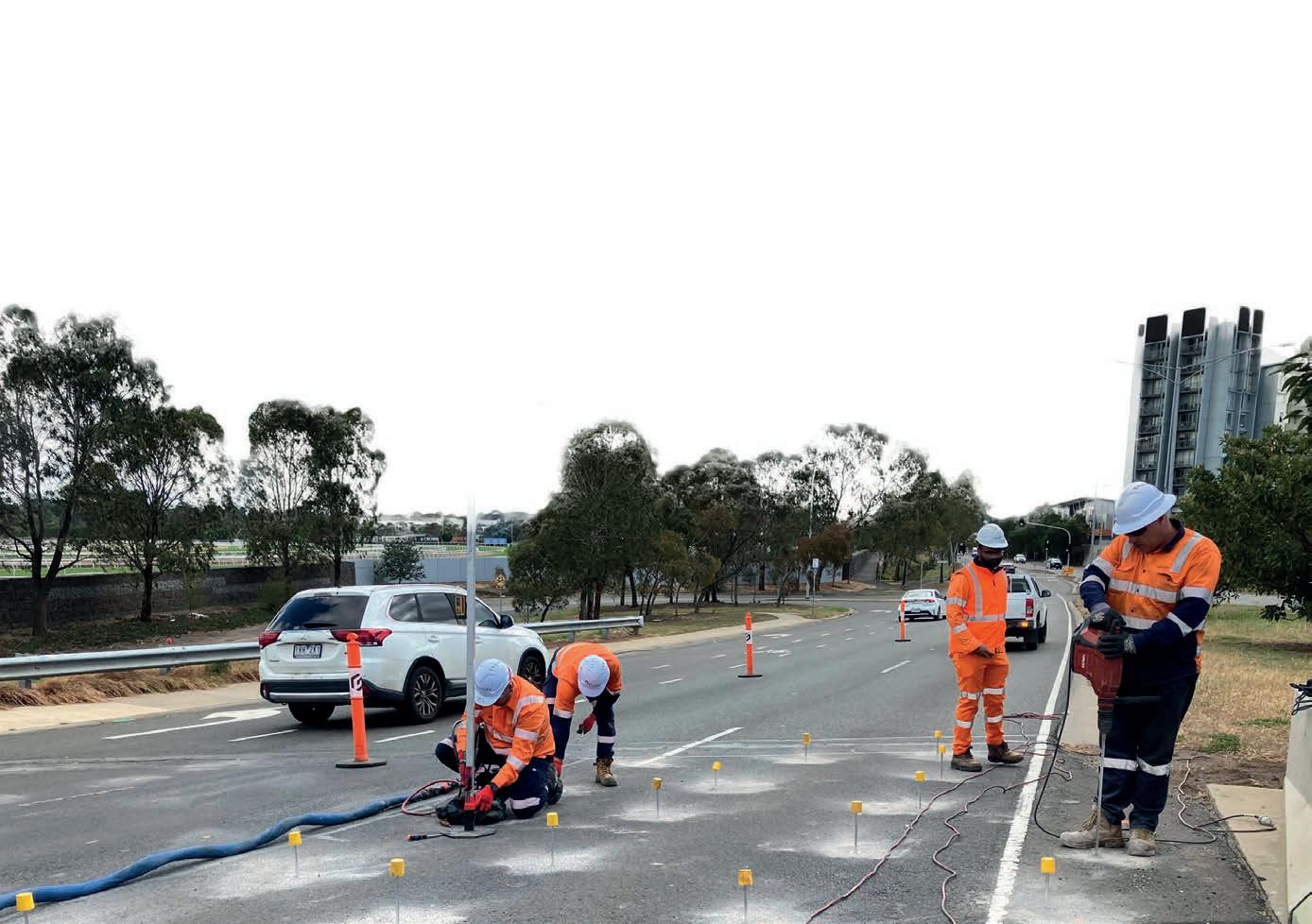
Building structural stability in an era of increasing climate pressure and ageing infrastructure requires a shift in perspective that starts well below the pavement or foundational slab.
As Australia continues to invest in its built environment, the challenge of maintaining and rehabilitating existing assets is just as critical as new construction.
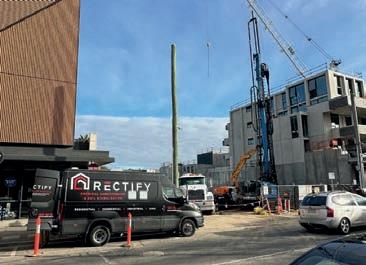
It is here that Rectify Group is emerging as a primary partner for engineers, insurers, and construction professionals by redefining what it means to preserve structural integrity.
The company has carved out a niche in the business-to-business (B2B) market by focusing on ground engineering and structural remediation, offering a proactive alternative to demolition and rebuilding.
Business Development Manager Dr Philip Irwin says the ground beneath a structure is often its most overlooked component.
He says reactive repairs to foundation instability or subsidence
are notoriously expensive, yet many asset managers wait until cracks appear before acting – a mindset that needs to change to ensure the longevity of assets.
“Early intervention is fundamental because most structural deterioration is progressive and typically driven by underlying factors such as ground movement, water ingress, or material degradation,” Irwin says.
"If these root causes are not addressed early, they tend to accelerate over time, leading to more extensive damage, higher repair costs, and increased disruption to operations.
“By intervening early, Rectify Group can stabilise ground conditions before significant settlement occurs and arrest water ingress before it drives corrosion and concrete degradation. Ultimately, early intervention shifts asset
management from a reactive to a proactive model, delivering significantly better long-term performance and whole-of-life cost outcomes.”
He says proactive maintenance is particularly important for complex B2B environments where operational continuity is a requirement.
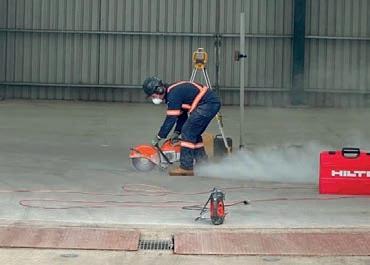
Rectify Group works closely with a range of stakeholders, including Tier One and Tier Two contractors, government bodies, and engineering consultants. It combines a deep geotechnical understanding with precision injection techniques, allowing for soil densification and controlled lifting without the heavy machinery and excavation typically associated with traditional underpinning.
Irwin says that for a busy rail corridor, an operational warehouse, or a critical road bridge, these
non-invasive techniques mean the difference between a minor maintenance window and a weekslong shutdown.
In a recent project involving bridge support elements, Dynamic Cone Penetrometer testing (an in-situ method used to measure soil strength, compaction, and bearing capacity by driving a steel cone into the ground), revealed that weak, variably compacted fill was causing rotation and settlement in the structure.
Instead of suggesting a major reconstruction, Rectify Group developed a staged methodology using deep injection polyurethane resin to stabilise the underlying soils.
Irwin says this targeted intervention restored the bearing capacity beneath the bridge and mitigated the risk of future creep, effectively extending the functional life of the asset while working within the constraints of a live environment.
He says this technical precision is also what has made the group a preferred partner in the insurance remediation sector. The company provides detailed site assessments and transparent reporting that aligns with the strict requirements of loss adjusters and engineers.
By diagnosing root causes rather than just treating visible defects such as surface cracks, the company provides stakeholders with a level of confidence that the repair is a longterm solution rather than a fix.
Irwin views this specialised expertise as a necessary complement to the broader construction industry.
“Rectify Group’s long-term vision is to become a leading specialist in asset preservation and ground engineering solutions across Australia’s infrastructure sector,” he says.
“Rather than focusing solely on repair, the business aims to position itself at the forefront of preventative maintenance strategies and noninvasive ground improvement technologies. The goal is to support asset owners in maximising asset life, minimising disruption, and reducing capital expenditure, particularly as infrastructure networks continue to age and demand increases.
“This niche positioning allows Rectify Group to complement Tier One contractors, engineers, and asset owners by providing specialist expertise not typically held in-house".
By reducing the reliance on new materials and minimising waste through the preservation of existing structures, the company also supports broader sustainability goals within the built environment.
In a market often dominated by large-scale replacement projects, Rectify Group advocates for "smarter, not larger" solutions. This is becoming increasingly relevant as infrastructure budgets tighten and the need for climate-resilient structures grows.
Irwin says the ability to work within occupied buildings or operational facilities allows asset managers to maintain their revenue streams while simultaneously addressing structural risks before they escalate.
As Rectify Group continues to bridge the gap between engineering theory and site-driven practicality, it is helping to shift the Australian infrastructure sector toward a more sustainable and resilient lifecycle model.
“In a market often driven by largescale construction and replacement, Rectify focuses on extending asset life through precision intervention and delivering cost efficiency through smarter, not larger, solutions,” Irwin says.
“As infrastructure networks age and budgets tighten, this focus on asset preservation over replacement becomes increasingly valuable, positioning Rectify Group strongly within the evolving infrastructure landscape.”
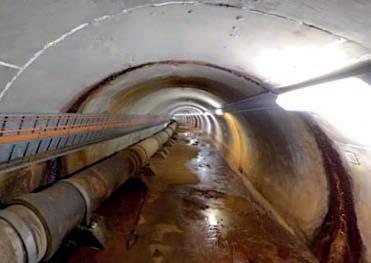
Rectify Group diagnoses root causes rather than just treating visible defects.
A new benchmark in VRLA performance
Yuasa UXL GEN2 sets a new standard for performance, reliability and lifecycle outcomes in critical DC power systems.
Across transmission, distribution and essential infrastructure networks, DC (direct current) power systems underpin protection, control, communications and operational safety. These systems must perform predictably during fault conditions, outages and abnormal events, often after years of continuous float operation.
As infrastructure environments become more demanding, traditional assumptions around battery performance are being challenged.
Elevated ambient temperatures, non-air-conditioned installations and extended service life expectations are accelerating degradation in long-life valve regulated lead acid (VRLA) batteries, introducing variability into systems where reliability is critical.
In response, asset owners are increasingly focused on technologies that deliver measurable lifecycle performance under real operating conditions. Predictability, thermal resilience and long-term reliability are now fundamental requirements for infrastructure systems supporting critical operations.
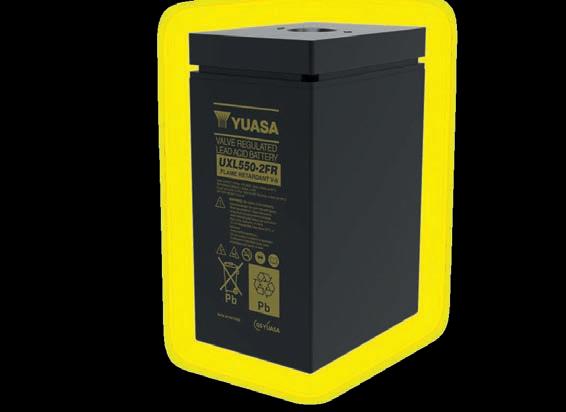
Yuasa UXL GEN2 has been developed as an engineering-led evolution to meet these requirements. Designed for critical DC power applications, it focuses on improving how VRLA batteries perform over extended service life, particularly in environments where temperature, access and maintenance constraints influence asset reliability.
Lifecycle performance is a key consideration in modern infrastructure. For many operators, total cost of ownership is driven not by upfront cost, but by reliability, replacement frequency and intervention risk.
Systems requiring frequent maintenance or premature replacement introduce operational disruption and increased lifecycle cost.
GEN2 addresses these challenges through targeted advances in VRLA
battery design, delivering extended service life and more predictable electrical performance across longduration float applications.
With a 20-year design life at 25 degrees Celsius and a 10-year design life at 35 degrees Celsius, it is engineered for both controlled and non-air-conditioned environments.
This extended design life supports alignment between battery replacement cycles and broader power system lifecycles, reducing interventions and improving longterm asset planning.
Improvements in material stability and internal design also help mitigate thermal stress, corrosion and resistance growth, ensuring consistent performance over time.
Thermal performance remains critical in Australian and New Zealand operating environments, where elevated temperatures place sustained stress on standby power systems.
Engineering for these conditions requires a focus beyond laboratory performance, ensuring systems maintain stability under realworld constraints.
GEN2 is designed to deliver reliable performance in these environments, supporting operation across remote and unmanned installations where maintenance access is limited and system failure is not an option.
Compliance and lifecycle assurance are also key considerations.
As infrastructure systems are increasingly governed by regulatory frameworks, operators require confidence not only in performance, but in how that performance is supported over time.
GEN2 incorporates a warranty structure aligned to operating temperature, supporting greater transparency and confidence in long-term lifecycle planning. By linking performance expectations to environmental conditions, asset owners are better equipped to manage risk and ensure compliance.
From a commercial perspective, these improvements translate into measurable lifecycle benefits. By extending service life and reducing degradation, GEN2 delivers up to a 33 per cent improvement in total cost of ownership compared to previous platforms.
As infrastructure networks continue to evolve, the role of standby power systems in maintaining stability and resilience will increase. Yuasa UXL GEN2 represents a step forward in how VRLA battery performance is engineered for real operating conditions, supporting reliable, compliant and long-term DC power solutions.
For more information, scan the QR code:
The Yuasa UXL GEN2 is designed for long-term reliability. Image: Century Yuasa
Sustainability meets safety
A level crossing removal project in Melbourne’s west has demonstrated how materials choices in major infrastructure can deliver significant reductions to emissions without altering design or construction methods.
Asimple material change has delivered an approximate 20-tonne reduction in carbon dioxide emissions on a Level Crossing Removal in Melbourne’s west.
The change is driven by an Australian innovation on a crucial construction component – reinforcing steel – and is highlighting a pathway to industry-wide decarbonisation.
An Australian-made product, SENSE 600 reinforcing steel delivered by InfraBuild, was used in the deflection walls of the new road bridge at Hopkins Road, Truganina. The Level Crossing Removal Project is part of the Victorian Government’s Big Build initiative, which has been guided by both a “recycling
first” and a lower-carbon-material selection strategy.
SENSE 600 offers a clear alignment with both guiding principles.
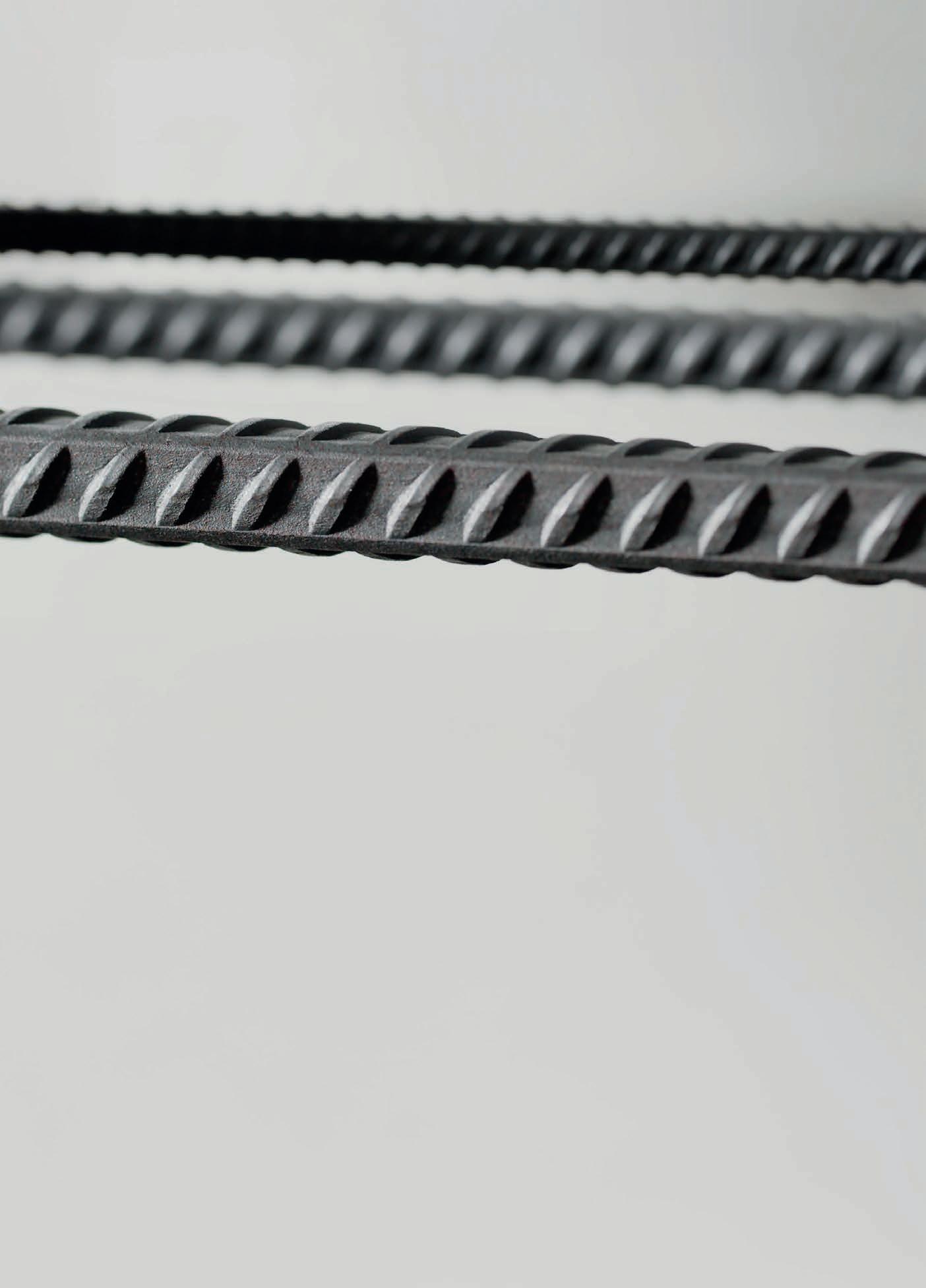
Its design is the result of an Australian innovation as well as Australian manufacturing: SENSE 600 was designed to deliver the same performance as standard 500N grade reinforcing steel, while using up to 16.7 per cent less raw material.
For the team behind the new Hopkins Road project, rethinking material selection and use was key to success.
It’s a sentiment echoed by InfraBuild Chief Executive Officer, Francisco Irazusta, who says, “SENSE 600 gives our customers a clear advantage. It delivers the strength
they need while reducing the amount of steel required, improving both efficiency and embodied carbon outcomes”.
While the carbon saving is significant, the change in process is not.
SENSE 600 was able to be substituted into existing designs at Hopkins Road with ease, where both 500N and 600N reinforcing grade was specified for the same bar lengths.
Irazusta says the direct nature of the substitution for this application also makes calculating the embodied carbon saving simple: SENSE 600 can offer up to 49 per cent less than the Australian reinforcing steel standard (Versus NABERS Emissions Factors Database, Reinforcing Steel, v2026.1).
In the same way that SENSE 600 embeds carbon reduction into existing designs, the way it is manufactured builds circularity into its very composition.
Irazusta says InfraBuild’s approach to recycling and reducing emissions in fabrication answers the questions that often arise when discussing steel’s manufacturing footprint.
Traditional blast furnaces used to convert raw materials into steel are responsible for the vast majority of steel’s carbon footprint, making recycling a crucial part of its re-imagination as a lowercarbon material.
Steel is generally considered to be an infinitely recyclable material: a recycled product is
generally just as strong as its nonrecycled counterparts.
InfraBuild, recycles about 1.4 million tonnes of scrap metal annually in its Electric Arc Furnaces (EAFs), which offer a lower-emissions alternative to traditional blast furnaces.
The reduction in emissions can be significant – up to 86 per cent some cases. While blast furnaces are primarily fuelled using processed coal, electrical arc furnaces are powered by electricity and represent a pathway to steel created with renewable energy. Irazusta says InfraBuild is Australia’s only steelmaker, at present, using EAFs.
"With energy savings and material circularity at the fore, this new approach to steel manufacturing also helps project managers avoid delays that come with global supply chain stress,” he says.
“This is especially important for projects like the Level Crossing Removal Project, whose completion is due by 2030, with over 100 removals left to go.
“Combined with our Electric Arc Furnace steelmaking and national manufacturing footprint, it allows us to offer a more valuable and sustainable solution for major infrastructure projects.”
Informed by these energy efficiencies and manufacturing advantages, SENSE 600 is being used in another level crossing removal project. Irazusta says it’s projects such as these that represent the role Australian industry can play in creating safer, lower-carbon communities, and show that a simple change can make a profound difference.
He says the project at Hopkins Road sets an exciting precedent for future large-scale construction projects all over Australia, highlighting a pathway to industrywide decarbonisation.
To find out more about SENSE 600, scan the QR code.
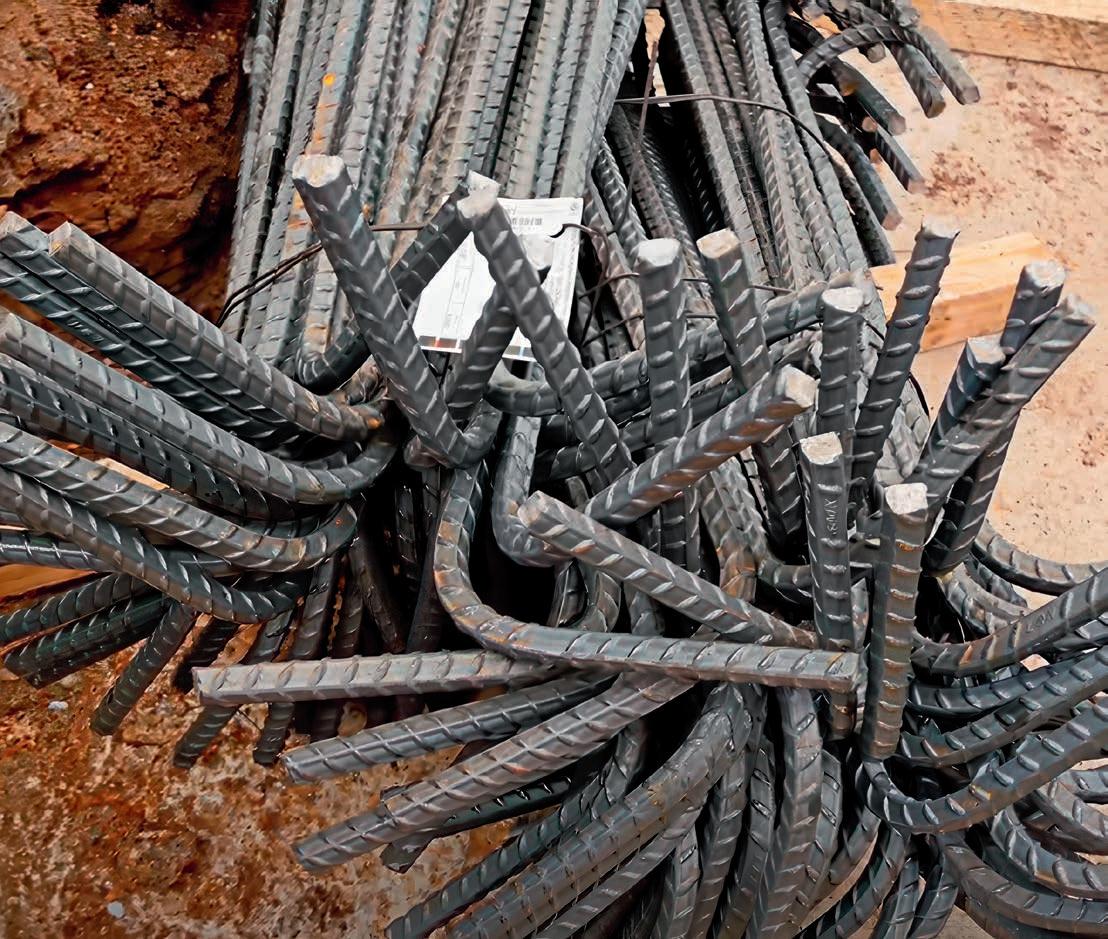
SENSE 600 reinforcing steel uses up to 16.7 per cent less raw material.
SENSE 600 reinforcing steel, was used in the deflection walls of the new road bridge at Hopkins Road, Truganina in Melbourne’s west. Images: Fulton Hogan / LXRA
Eyes on the Pacific
Australian businesses are being urged to explore opportunities in the Pacific as governments in the region plan a major wave of infrastructure projects.
The Australian Trade and Investment Commission (Austrade) estimates a US$2 billion pipeline across energy, water, social infrastructure and transport sectors over the next two years, offering a compelling growth avenue for Australian contractors.
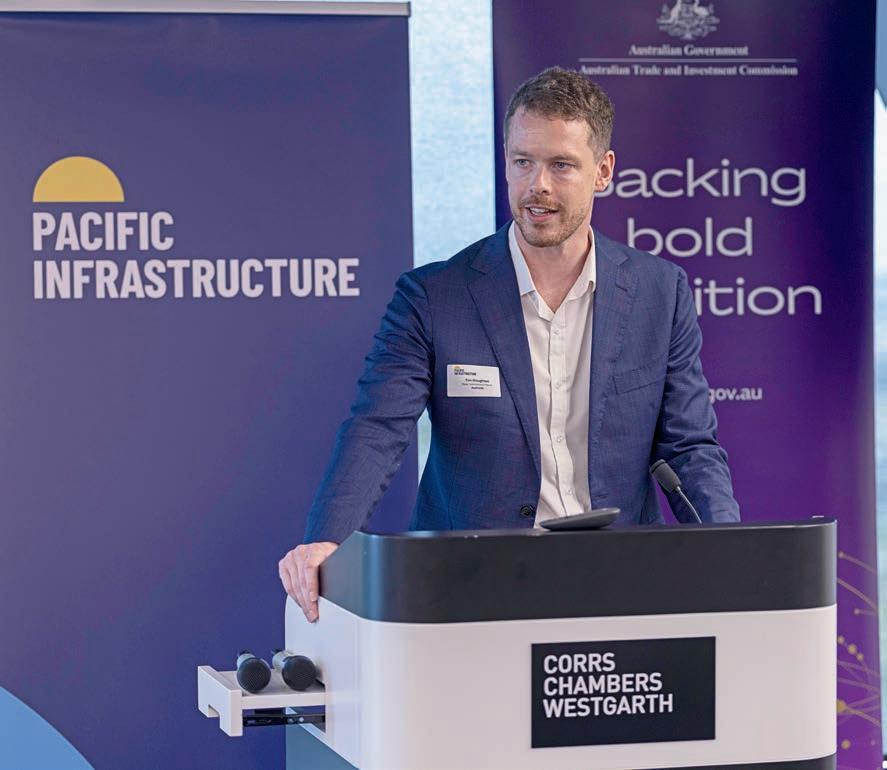
Tim Houghton, Australian Trade Commissioner for the Pacific, says Australian companies are well-placed to enter the market if they can navigate the region’s complexities.
“When I first came into this role two and a half years ago, the visibility of projects and opportunities was really limited,” he says.
“Companies would often only see projects once they were tendered. Suddenly, you had four weeks to figure out how to, say, build a hospital in a Pacific country. You need lead time, you need information. That’s what Austrade is trying to provide, so businesses can make informed commercial decisions.”
SECTORS AND OPPORTUNITIES
At Austrade’s Pacific Infrastructure Roadshow in Melbourne earlier this year, Houghton announced the prelaunch of a new platform that allows companies to search projects by country, sector, and value, and access a directory of potential local partners to help them enter the market.
“While it’s not easy money, there is space for new players,” Houghton says.
Austrade reports that smaller-scale civil works, particularly projects in the US$10-50 million range, are currently under-supplied. Houghton says that many projects of this size in countries such as Nauru or the Solomon Islands lack experienced bidders, creating a potential entry point for Australian firms.
Larger-scale projects, such as port upgrades, are in early scoping stages but could reach up to US$180 million.
“The sweet spot for a civil works firm is right there,” he says. “There aren’t heaps of suppliers, and we want to see more Australian companies involved.”
While diversification into the Pacific provides a commercial buffer against domestic competition, Houghton emphasises that social impact is an equally powerful motivator.
“Once you’re in the Pacific, the real reward is social impact,” he says.
“Building transport linkages allows families to visit each other and gives communities access to health supplies. Constructing a birthing centre, for example, fundamentally changes healthcare delivery. That impact is profound.
“The financial gains are important, but the social benefits are extraordinary.”
NAVIGATING CHALLENGES
Despite the opportunities in the Pacific, Houghton acknowledges that barriers exist for Australian
companies. Jurisdictional and regulatory risks, local engagement requirements, and logistical challenges can complicate projects.
“A lot of these locations are remote,” he says.
“There’s no hardware store nearby. If you forget a bolt, you have to put it on a barge and send it over. Logistics is a core part of the business model. Some successful civil works contractors even describe themselves as logistics businesses with a construction face.”
While entering new markets carries inherent risks, many projects are backed by development partners and supported by export credit agencies, helping to underpin funding and procurement.
“A lot of these projects are supported by organisations like the World Bank and Asian Development Bank, so the funding is there and the processes are clear,” Houghton says. “There are also mechanisms, including through Export Finance Australia, that can support Australian businesses entering the market.”
He says partnerships with local businesses are critical to mitigating risk. Local labour and engagement are often required by procurement frameworks, and Australian firms need to develop relationships with local stakeholders.
Collaborating with Austrade and other experienced Australian contractors can also help firms
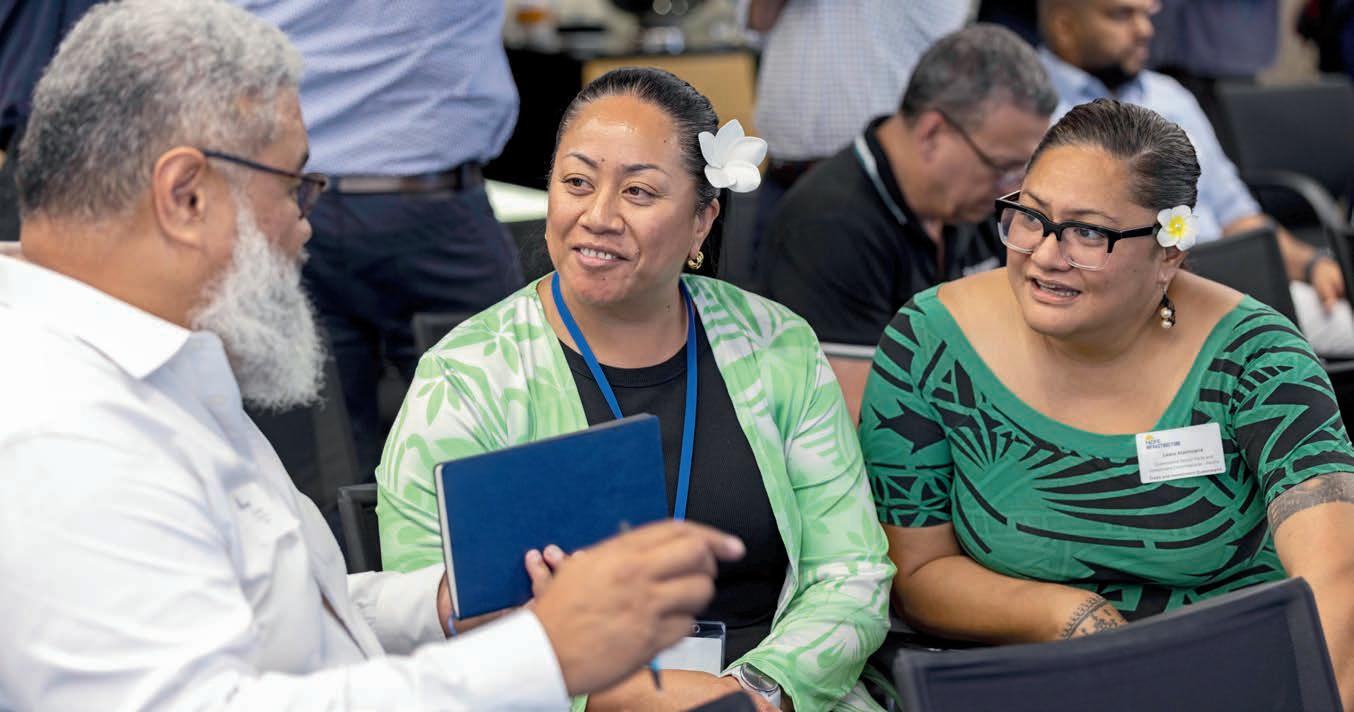
The roadshow encouraged collaboration between contractors, Austrade and other investment bodies.
navigate early market engagement and contracting processes.
“Early engagement is a step change over the past few years,” Houghton says. “The region is looking for more competition, and we want to make it as achievable as possible.”
Houghton says Australia enjoys a unique advantage in the Pacific. Unlike markets further afield, where Australian expertise must first justify its credibility, Pacific countries already look to Australia for technical capacity.
“They don’t ask, ‘Why Australia?’ because it’s understood,” he says. “The conversation moves straight to ‘How do we do business?’ That gives Australian firms a leg up and allows them to focus on project delivery rather than proving themselves.”
BUILDING CAPACITY
Austrade has also been tracking trends in the region to guide Australian businesses. Smaller contractors, particularly those focused on civil works in the $1050 million range, are in demand, while larger packages are limited and competitive.
“Some sectors, like port upgrades, will eventually have very large projects,” Houghton says. “But the immediate need is for mid-size suppliers. If firms position themselves in that space, there’s strong potential for success.”
GROWING INTEREST
Interest from Australian industry is steadily increasing. Houghton says that recent Austrade events attracted record numbers of attendees.
“In Brisbane, we had 120 seats filled in three days. A year ago, that would have been unheard of. In Sydney and Melbourne, interest has also grown significantly,” he says.
He describes witnessing projects come to life across the Pacific as the most rewarding aspect of his role.
“Being out in the region and seeing buildings, roads, and airports being built is incredible. That’s where the real impact happens. It’s not just numbers on a page; it’s real change for people.”
He anticipates that interest will continue to increase as Australian firms become more aware of the benefits and have tools to navigate the market.
“The appetite is there. The benefits, both commercial and social, are clear. Now it’s about supporting
businesses to step into the region with confidence.”
For Australian companies, the Pacific represents both a diversification opportunity and a chance to make a tangible difference.
While entering new markets always carries risk, Houghton says that with the right preparation, partnerships, and support from organisations such as Austrade, firms can both succeed commercially and contribute meaningfully to regional development.
“The Pacific is a place where Australian expertise is valued, where there’s genuine demand for civil works, energy, water, and transport infrastructure, and where the social impact of each project is profound,” he says.
“It’s an opportunity for Australian companies to grow, innovate and leave a legacy.”
To access the new Pacific Infrastructure platform, visit pacificinfrastructure.org
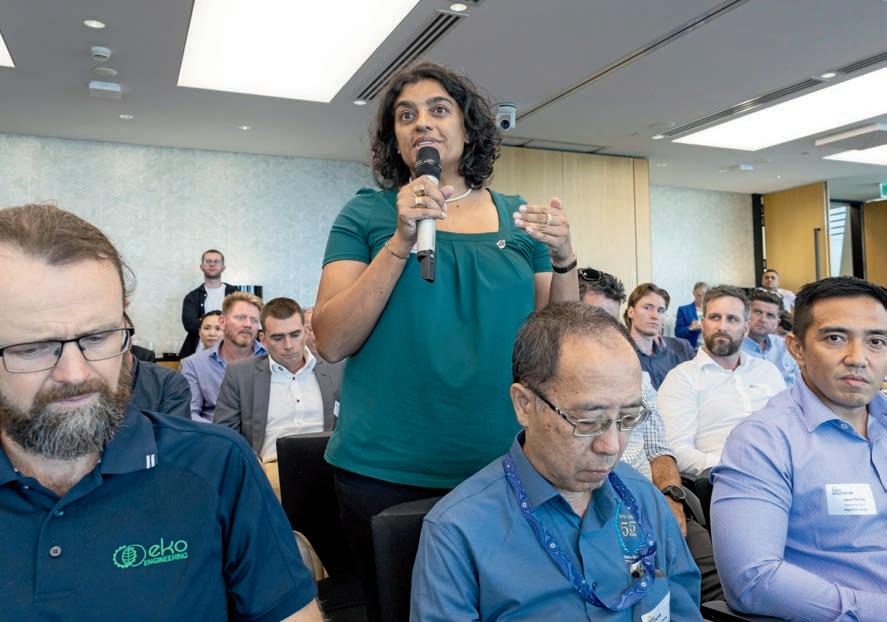
The audience engaged with the roadshow speakers, asking insightful questions.
Tim Houghton speaking at the Pacific Infrastructure Roadshow. Images: The Australian Trade and Investment Commission
On December 10, 2023, more than six months ahead of schedule and only 11 months after a catastrophic flood, the New Fitzroy River Bridge, in the Kimberley region of Western Australia, was officially opened.
BlueScope’s National Engineering Manager – Infrastructure, Rob Danis, says that this was a phenomenal achievement and a testament to the unprecedented collaboration between the local Indigenous community, local workers, alliance partners, suppliers, manufacturers, and fabricators.
Crucially, Danis explains, the decision to adopt a progressive construction methodology incorporating a prefabricated composite REDCOR® weathering steel girder superstructure, constructed using an incremental launch method, contributed to the outcome.
In late December 2022, ex-tropical cyclone Ellie triggered a once-in100-year flood event that saw the Fitzroy River rise an unprecedented 15.8 metres. As flood waters subsided, irreparable damage to the Fitzroy River Bridge and 500 metres of the Great Northern Highway became apparent.
This vital infrastructure is a key commercial transit route for the East Kimberley and Northern Territory, and a crucial link for local, regional and remote Indigenous communities. Its reconstruction was an economic and social imperative, prioritised by State and Federal Government
with funding through the Disaster Recovery Funding Arrangements.
The contract to design and construct the new bridge was awarded to the Fitzroy Bridge Alliance, comprising Main Roads WA, Georgiou Group, BMD Constructions, and engineering company BG&E Group.
BRIDGE DESIGN –CONCRETE VS STEEL
Typically, in Australia, road bridge sub- and superstructures are constructed using concrete. For the New Fitzroy River Bridge, the design and construction teams identified early that, given the region’s climatic
conditions and isolation, there were impediments to using concrete, including the timely availability of prestressed beams and the high cost of freighting heavy concrete beams over long distances.
The team concluded that a composite steel superstructure was the best option. The Kimberley is a semitropical region with distinct wet and dry seasons, so the construction methodology needed to enable substructure works during the dry season while allowing superstructure works to continue through the wet season.
An incremental launch method using steel in the superstructure
The new bridge reforms a vital transit connection following flood-damage.
made this possible, and was a key factor in the bridge’s early completion.
BLUESCOPE’S REDCOR WEATHERING STEEL
Alliance partner and client, Main Roads WA, raised concerns about the ongoing maintenance of a steel superstructure, particularly given the remote location. To address this, Danis recommended REDCOR weathering steel.
REDCOR weathering steel is a high-strength structural steel that develops a stable oxide layer on the surface known as the ‘patina’. When used in appropriate environments, the patina enhances corrosion resistance and does not require any protective coating during the bridge’s expected 100-year lifespan. It is also known for its distinctive evolving
appearance brought about by the patina that develops over time when exposed to alternating weather cycles. With time, the protective layer’s appearance evolves from deep orange to dark brown and a rich purple, complementing the surrounding Kimberley landscape.
Danis worked with the BG&E team to provide technical guidance on material selection, beam sizing, connections, flange and web details.
The use of REDCOR weathering steel as sacrificial formwork within the bridge’s road deck provided a stable platform for rebar placement in preparation for the deck’s concrete pour, and further helped to reduce the project’s overall timeline.
DELIVERING PROJECT EFFICIENCY
While substructure works at Fitzroy Crossing progressed at pace,
BlueScope’s Welded Products facility in Unanderra, New South Wales, simultaneously began processing the 1200 tonnes of REDCOR weathering steel plate for the prefabricated superstructure.
The structure comprised 100 welded I-beams made from WR350Bgraded weathering steel plate, with 40-millimetre (mm) Base Metal Thickness (BMT) flanges and a 25mm (BMT) web. Each assembled beam was 18 metres long, 1.2 metres deep, 0.5 metres wide, and weighed approximately nine tonnes.
Assembling these components to create the finished I-beams required more than 6400 lineal metres of sub-arc welding which took just over two months to complete and stringently test to ensure compliance with Australian standards.
The finished I-beams were then transported by rail to Civmec, a fabrication and construction contractor in Henderson, Western Australia, where they were transformed into prefabricated modules.
This phase involved pairing the beams with support and intermediate braces, fabricating hundreds of connecting plates, pre-drilling precision holes to support site assembly, and welding brackets for additional lateral, shear, and transverse restraint.
The modules were capped with a 10 millimetre REDCOR weathering steel plate to provide the sacrificial formwork, before being trucked to the site and craned onto the concrete casting bed for the superstructure’s final assembly.
Danis says the Fitzroy River Bridge is the longest road bridge in Australia to incorporate welded ‘I’ girder beams made from REDCOR weathering steel.
Its official opening on 10 December 2023 – more than six months ahead of schedule and only 11 months after the flood – was an outstanding achievement, given the complexity of the build, the challenging weather conditions, and the remote location.
As a further endorsement of its success, Main Roads WA commissioned the rebuilding of the nearby Brooking Channel Bridge, replicating the basic design and construction methodology used on the New Fitzroy River Bridge.
To find out more about REDCOR, visit steel.com.au
Hobson Engineering bolts on the new Fitzroy River Bridge.
In civil construction, no two projects are ever truly the same.
Ground conditions shift, footprints tighten, services clash, and designs evolve often well after procurement has begun.
What starts as a straightforward specification can quickly become a series of adjustments, each one carrying implications for time, cost, and constructability. Yet too often, projects are forced to adapt to available products, rather than products being designed to suit the project.
That’s where custom precast changes the equation.
Civilcast is an Australian company specialising in the supply of stormwater, water, and sewer infrastructure products. New Product Development Manager Brian Lee says the company’s custom precast capability is built around a simple idea: the solution should fit the job, not the other way around.
“It begins with understanding the full picture not just the drawings,
but the constraints behind them,” Lee says.
“Site access, installation methodology, sequencing, load requirements, and interfaces with other trades all play a role in shaping the final solution.
"From there, designs are translated into precast elements that are not only structurally compliant, but practical to manufacture, transport, and install. Because a drawing is only part of the story.”
Lee says true value lies in bridging the gap between engineering intent and on-site reality. It’s about asking the right questions early: How will this unit be lifted? Where are the connection points? What tolerances are critical? How does it integrate with adjoining infrastructure?
By resolving these considerations upfront, Civilcast helps remove uncertainty before it reaches site minimising rework, reducing
"Ultimately, custom precast isn’t about doing something di erent for the sake of it. It’s about doing what’s right for the project"
installation time, and improving overall project flow.
Lee says its collaborative approach is where custom precast delivers its greatest advantage.
“Rather than a transactional supply model, it becomes a partnership working alongside engineers, contractors, and project managers to refine and optimise outcomes.
“In many cases, this leads to smarter solutions: consolidating multiple components into a single precast unit, simplifying installation sequences, or designing for repeatability within a project to drive efficiency at scale.
“Custom doesn’t have to mean complex, it can mean considered.”
Importantly, he says custom precast is no longer reserved for highly specialised or one-off structures. It is increasingly being used as a strategic tool to manage risk and improve productivity.
By tailoring components to suit exact site conditions, projects can reduce the need for on-site modifications, avoid clashes, and maintain tighter control over quality. The result is a more predictable build – something every project team is striving for.
Of course, flexibility only works if it’s backed by reliability.
Civilcast’s custom capability is supported by established manufacturing processes, experienced teams, and a commitment to delivery.
Lee says that means engineered solutions are produced with consistency and delivered in line with project programs. It also means having the capacity to respond whether that’s scaling production, accommodating design changes, or coordinating with evolving site requirements.
And critically, it’s supported by a reliable stocked range of standard products, ensuring that while custom elements are being designed and manufactured, the broader project doesn’t lose momentum.
Lee says it’s a balanced approach that reflects the realities of construction: some elements require precision tailoring; others require immediate availability.
“Ultimately, custom precast isn’t about doing something different for the sake of it. It’s about doing what’s right for the project,” he says.
“It’s about removing friction before it occurs, aligning design with delivery, and ensuring that what arrives on site works first time.”
Custom precast concrete pits unloaded at Western Sydney Airport project.
Custom precast pit with penetrations (left) being installed at Western Sydney Airport project. Images: Civilcast.
Geogrids creating smarter outcomes
As infrastructure demands intensify, geogrids are emerging as a critical tool for delivering stronger, more e cient and sustainable assets.
Australia’s infrastructure sector is under increasing pressure to deliver projects that are cost-effective, durable and resilient to changing environmental conditions.
Ageing assets, rising traffic volumes and more frequent extreme weather events are all contributing to a more complex delivery landscape.
At the same time, asset owners are placing greater emphasis on wholeof-life performance, shifting the focus beyond initial construction to how infrastructure performs over decades.
Dennis
Grech,
Chief Executive Officer and Managing Director of Geofabrics,
says these converging pressures are driving a fundamental change in how projects are designed and delivered.
“There has been a clear shift away from traditional overbuild approaches toward smarter, engineered solutions,” Grech says.
Materials that can achieve long-term performance with fewer resources are increasingly in demand, with geosynthetics such as
Geofabrics Geogrid playing a central role in that transition.
REINFORCING PERFORMANCE
Geogrids are engineered polymer grid structures designed to reinforce soil and aggregate. By interlocking with surrounding materials, they create a mechanically stabilised layer that improves the strength and stiffness of the ground.
Grech explains that this interaction between the grid and aggregate is key to their effectiveness.
Geogrids are enabling projects to be delivered where ground conditions would once have been considered too challenging.
Images: Geofabrics Australasia
"Cost e ciency remains a central concern for infrastructure delivery, and geogrids are increasingly being recognised for their economic advantages."
“When placed within a pavement or foundation layer, the Geofabrics Geogrid range distribute loads more effectively and prevent lateral movement of aggregate,” he says.
“That allows infrastructure to perform better, even when built on weak or variable soils.”
This capability is particularly valuable given the prevalence of poor ground conditions across many infrastructure projects. Roads, rail corridors and port facilities are often constructed on subgrades that are not naturally suited to supporting modern loads.
Geogrids address this challenge by increasing bearing capacity and controlling settlement, while also reducing rutting and deformation in pavements. They can also help mitigate the impacts of water ingress, which remains one of the leading causes of pavement failure.
“When used alongside other geosynthetics such as Bidim Green and Megaflo Green, the Geofabrics Geogrid range contributes to more resilient pavement systems that better manage moisture and environmental conditions,” Grech says.
Beyond performance, geogrids also offer practical construction advantages. They enable projects to proceed in diffi cult ground conditions where traditional methods might otherwise require extensive excavation or ground replacement, reducing both cost and disruption.
COST AND SUSTAINABILITY BENEFITS
Cost efficiency remains a central concern for infrastructure delivery, and geogrids are increasingly being recognised for their economic advantages.
Grech describes them as “a classic example of spending a little to save a lot”, noting that their ability to improve load
Dennis Grech, Chief Executive O cer and Managing Director of Geofabrics.
distribution and stabilise weak ground can significantly reduce the need for imported fill and thick aggregate layers.
In some applications, geogrids can reduce aggregate thickness by up to 30-50 per cent, translating directly into lower material costs and reduced transport requirements. This is particularly beneficial in remote or logistically challenging locations.
“They also accelerate construction,” Grech says. “Installation is straightforward, and because less material is required, projects can move faster.”
However, the most significant savings are realised over the lifecycle of an asset. Reduced maintenance requirements, fewer failures and extended service life all contribute to a lower total cost of ownership.
Sustainability is another key driver behind the growing adoption of geogrids. By reducing the volume of quarried materials required, they help lower the environmental impact of construction. They also enable the use of lower-quality or recycled fill materials, further reducing reliance on virgin resources.
“Because Geogrids extend asset life and reduce maintenance interventions, they help cut emissions over the entire lifecycle of infrastructure,” Grech says.
This alignment with sustainability goals is becoming increasingly important as the sector works toward more circular approaches to construction.
SUPPORTING INNOVATION AND FUTURE DESIGN
The role of geogrids is also evolving as engineers integrate them more fully into the design process. Rather than being treated as optional addons, they are now being incorporated from the outset, enabling more efficient and optimised solutions.
“What has changed is that Geogrids are becoming integral to
design,” Grech says. “Designing with geosynthetics from the beginning allows engineers to make better use of materials and site conditions.”
Advancements in product design are further expanding their capabilities. New Geofabrics Geogrid configurations can distribute loads in multiple directions, providing enhanced stabilisation in complex ground conditions.
These innovations are enabling infrastructure to be delivered in locations and environments that would previously have been considered too challenging or cost prohibitive.
Real-world applications are already demonstrating the impact of these solutions. Grech points to projects where geogrids have enabled significant reductions in pavement thickness, even in very soft ground conditions, helping to avoid delays and reduce costs.
In other cases, they have allowed construction to proceed without the need for deep excavation, reducing environmental disruption while maintaining performance outcomes.
Looking ahead, Grech expects the role of the Geofabrics Geogrid range and other geosynthetics to continue to grow as infrastructure demands increase.
“As conditions become more challenging, the need for smarter, more efficient solutions will continue to rise,” he says.
Greater integration into standard design practices, supported by improved data, modelling and performance tracking, is likely to further embed these materials across the sector.
Ultimately, the focus remains on delivering infrastructure that is stronger, more cost-effective and more sustainable. As projects face mounting pressure to do more with less, geogrids are well positioned to play a key role in meeting those expectations.
Glass façades: Curtain wall design and construction
Engineering Training Institute Australia (ETIA) Director, Paul Uno reflects on the evolution of curtain wall systems in Australia, from early brick façades to today’s high-performance glazing.
The term ‘Curtain Wall’ may be unfamiliar to some engineers in the marketplace. It is an expression that was coined many years ago to represent the glazing and metal framing that provides a lightweight façade to high rise structures.
When we look at high rise buildings and apartment towers in Australia today, we take for granted that the façade will primarily be glazing
supported by aluminium sections. However, this system of façade construction has only been in the Australian marketplace since the late 1950s. Prior to this, buildings were not excessively high (usually less than 12 storeys) and thus heavy brick masonry was a very common façade in low to mid rise construction.
This system took off in major Australian capital cities in a big way in the 1980s when an American
company called Cupples and H.H.Robertson (named after Harold Hansard Robertson, a Canadian American industrialist) started producing curtain wall panels in Australia.
I was fortunate enough to have worked for HHR-Cupples at the time the transformation took place. I was also appointed the structural curtain wall engineer, as well as the NATA (National Association of Testing Authorities) signatory, for the façade test rig on site.
CODES
AND TESTING
Testing of façade panels today is not carried out in Australia to the degree it used to be. The HHR curtain wall test rig that I oversaw was the largest in the southern hemisphere at the time (being 11 metres high x 9 metres wide x 2 metres deep). We were able to perform wind pressure tests on test façades to pressures of 10 kilopascals (kPa), water penetration tests, as well as air permeability and deflection tests.
The highest profile project I worked on at the time, in 1984, was the State Bank in Martin Place, Sydney. Until recently, this site was the location of the Channel 7 studios. Having visited this site recently, I was impressed to see how modern and classy the building still looks after 40 years.
One distinctive aspect of that project (as with most projects during those years) was the fact that all the glass, aluminium and granite stone panelling was manufactured or came from Australia, nothing was imported in those days.
We designed the aluminium sections to Australian Standard AS1664 and the glazing panels to AS1288, both of which still exist today, albeit in Limit State format. In
Engineering Training Institute Australia (ETIA) Director, Paul Uno.
The glass façades of modern urban structures are required to resist high wind conditions and minimise noise.
fact, AS1288 was revised in 2021 to reflect new research done in this area.
The Aluminium Standard AS1664 was, and still is, heavily based on the American Aluminum Association guide called ‘Aluminum Design Manual’ or ADM (2020). A new version of ADM is due to be released in 2026.
WIND PRESSURES
The wind pressures (and wind velocities) we used to test the Martin Plaza building were derived by Dr Bill Melbourne, who was based in Melbourne coincidentally.
He provided us with wind pressures applicable to this site and building profile (which were less than the conservative velocities that would have been obtained using the Wind Standard at the time, i.e. AS1170.2 1983).
Most engineers involved in wind design know that the greatest wind pressures are found on the corners of buildings where local effects produce suctions often two to three times higher than pressures elsewhere on the façade.
This building was designed to withstand wind pressures in the order of 2.2kPa and was proof tested accordingly in the 11-metre-high test rig at Chipping Norton, New South Wales.
ACOUSTIC REQUIREMENTS
Another building I worked on was the ABC studios in Ultimo, Sydney, New South Wales. The glazing for this project relied heavily on reducing the sound transmission from external sources.
The specification called for STC (or Sound Transmission Class, a numerical rating that measures how effectively building materials and assemblies airborne sound transmission) values in some areas in the order of 37. Considering that a 100 millimetre (mm) concrete panel achieves an STL (Sound Transmission Loss) of around 44, it could be expected that achieving a loss of 37 decibels (dB) for glass would have required a relatively thick panel.
As it turned out, some of the options considered for this job was a composite single panel system comprising 6 LAM (laminated) / 6 Mono / 6 LAM, where the polyvinyl-butyral interlayer (PVB) in both laminate panels was 1.14 millimetres in thickness, and which would have achieved an STC of around 39 dB.
One alternative was a doubleglazed system comprising 5mm
mono / 50mm air gap / 10mm mono (total thickness of 65mm and total mass of 32 kilograms per square metre) which would have achieved an STC of 41.
It requires some fairly thick (and heavy) glass panels to provide enough mass to minimise sound transmission across the glazing section.
Today the acoustic ratings are in terms of Rtw + Ctr, where Rtw is the Weighted Sound Reduction Index and Ctr is the spectrum adaptation term for traffi c noise. It tells engineers how well the glass reduces everyday city noise, not just laboratory-style sound frequencies.
Rw + Ctr is generally more representative of actual urban performance expectations, compared to older measures such as STC, especially for façades along roads and airports.
The other significant glazing project I was involved with was sizing the glass and RHS (Rectangular Hollow Section) steel sections for the skylights on Parliament House in 1985. The primary aspect of this job was structural design to resist dead loads, live loads and wind actions.
Dead loads are the permanent, constant weights of the building components themselves, whereas live loads are temporary or variable loads, anything that can change over time or during use. Wind actions refer to the pressures and suction forces created by wind on the building envelope.
THERMAL EFFICIENCY
The other important aspect of any curtain wall design (besides structural and acoustic requirements) is thermal effi ciency, i.e. keeping heat out or in, depending upon the geographical location and the Building Codes/Standards that apply.
When I received the curtain wall specification for the Sydney Airport Centre in the 1980s, it nominated a transmission coefficient (or U value) of 6.4 watts per square metre per Kelvin and a visible light reflectance less than 20 per cent.
These days the technical requirements for glazing are much more detailed and more stringent than 30 years ago. Solar Heat Gain Coefficient (SHGC) is a more commonly quoted value that is required to be satisfied by a glazing system.
HOW YOU CAN LEARN MORE?
Engineers who do not have expertise in these aspects of curtain wall design can attend a two-day Glass and Aluminium Façade Design Workshop conducted at the Engineering Training Institute Australia (ETIA).
The next course will be livestreamed on Tuesday 11 and Wednesday 12 August 2026.
For more information, visit etia.net.au
The State Bank at Martin Place, Elizabeth Street, Sydney. Images: Engineering Training Institute Australia.
A glass facade at 127-141 Walker Street in Sydney.
Shaping future transport
ITS Australia’s Global Summit 2026 puts transport technology delivery in focus.
Transport agencies and infrastructure operators are under growing pressure to improve safety, efficiency and sustainability across existing networks. As a result, intelligent transport systems are no longer seen as optional innovations – they are becoming essential infrastructure.
The key challenge has shifted from whether technology should be used to how it can be delivered, integrated and managed effectively at scale.
These issues sit at the centre of the ITS Australia Global Summit 2026, returning to Melbourne from 22–24 September at the Melbourne Convention and Exhibition Centre.
Building on more than a decade of growth, the rebranded Global Summit reflects both the maturity of the transport technology sector and its increasingly international reach.
The event will bring together senior leaders from road authorities, government, industry, research and technology providers. Delegates are expected from across Australia, New Zealand, Asia Pacific, Europe and North America, and while the Summit has a strong global outlook, the program remains focused on local experience, with a clear emphasis on real-world delivery, operational results and infrastructure performance.
That approach is reflected in a program of more than 50 plenary and breakout sessions, covering topics such as smart infrastructure and data ecosystems, sustainable and inclusive transport, electric, connected and automated transport; future mobility; governance frameworks; freight and services.
Industry practitioners play a central role in the program, ensuring discussions move beyond theory to focus on what is being delivered now and where challenges still exist.
A large-scale exhibition runs alongside the conference, showcasing the full breadth of the transport technology sector.
From established international suppliers to emerging specialists, the exhibition highlights how quickly the industry is evolving and how digital systems, physical infrastructure and operations are increasingly coming together.
For many attendees, the exhibition has become an important space for discussion, collaboration and problem-solving.
The 2026 Global Summit follows a strong 2025 event, which highlighted growing interest in practical, delivery-focused conversations and closer collaboration across sectors.
With its expanded global positioning, the 2026 Summit is
expected to build on that momentum, offering clearer insight into how intelligent transport solutions can support infrastructure owners and operators dealing with increasing demand and complexity.
As an official media partner of the ITS Australia Global Summit 2026, Infrastructure magazine will be closely covering the ideas, discussions and innovations emerging from the event, reflecting its ongoing focus on infrastructure delivery, performance and future readiness.
For organisations working across transport, infrastructure and mobility, the Summit offers a valuable opportunity to engage with the sector – whether through sponsorship, exhibition or attendance.
ITS australia global summit
22–24 September 2026
Melbourne Convention and Exhibition Centre (MCEC)
For more information on registrations, sponsorship and exhibition options, visit itsaustraliasummit.com.au
Specialists in Intelligent Transport Systems (ITS) and tunnel environments, driving value from design through to delivery
Contact us at info@servicestream.com.au for more information or visit our website
servicestream.com.au
Making the cut
As the 2026 Women in Industry Awards approach, two 2025 winners reflect on the impact of recognition.
For more than 10 years, the Women in Industry Awards have recognised the achievements of women across industries, from transport and logistics to mining, engineering and manufacturing.
In Australia, these sectors have long been male dominated. In 2024, BuildSkills Australia reported that women make up just 2.9 per cent of the construction workforce, while broader industry analysis has highlighted ongoing pay gaps and social exclusion in sectors such as mining.
Against this backdrop, the 2026 Women in Industry Awards will once again spotlight the women reshaping these industries. The event will be held at Doltone House Darling Island Wharf in Sydney on June 18,
continuing its mission to elevate women’s contributions and create lasting change.
That mission is evident in the experiences of 2025 winners Eileen Breen, Co-Founder of NTEX, and Jennifer Clements, Director and Principal Consultant at Consultex.
Breen took home the Industry Advocacy Award for her work driving sustainability and circular economy outcomes in the Northern Territory. Her journey into the sector was not conventional but rooted in a lifelong connection to the land.
“I’ve always been a sustainably oriented person,” Breen says.
“Though I admit I never thought I’d end up in this industry. My background is in horticulture and land management. My parents were
farmers, and they instilled in me a strong connection to land.
“To me, caring for country has always been crucial.”
That philosophy underpins NTEX, a demolition, environmental remediation and resource recovery company that converts construction waste into reusable materials for civil projects.
Operating out of its ‘NTEX Code Red’ facility in Darwin, the business also delivers offshore decommissioning, disaster waste management and employment programs for Indigenous youth.
“I’ve been able to bring that side of work to NTEX with a small Aboriginal group called Grassroots Action Palmerston Aboriginal Corporation,” Breen says. “We provide employment pathways and skill sessions for Indigenous youth, and currently have a 23 per cent Indigenous workforce, which we are very proud of.”
For Clements, who was named Rising Star of the Year in 2025, the awards recognised a different but equally critical contribution to the industry. Through Consultex, she has
focused on bridging the gap between compliance and construction delivery.
“The award was really a reflection of the growth and evolution of Consultex over the past few years,” Clements says. “We’ve built a business that doesn’t just tick the box on compliance, we’re actively involved in making a genuine difference for our clients.
“What stood out was our ability to bridge the gap between compliance and construction, ensuring systems aren’t just documented, but actually implemented on site in high-risk, real-world environments.”
Clements says the recognition was particularly meaningful given the often-unseen nature of compliance and safety work.
“Personally, it was incredibly rewarding and a big honour,” she says. “A lot of what we do in safety, compliance and construction management can be behind the scenes. It’s not always visible, but it’s critical.
“To be recognised at that level meant a lot, especially as someone who has built this business from the ground up.”
She added that the award reflected the broader efforts of her team.
“Consultex isn’t just me, it’s a group of highly capable people delivering work across multiple states and industries. The award recognised the way we operate as a team, stepping into projects, supporting clients under pressure, and delivering both compliance outcomes and construction support simultaneously.”
For both winners, the impact of the awards extended well beyond the night itself.
“Winning this award was very exciting,” Breen says. “Being a finalist was an honour in itself, and being in a room with some amazing women in all sorts of industries was incredible.”
She says the recognition has helped elevate conversations around waste and sustainability.
“With the platform my award gave me, I’ve been able to get people in the Northern Territory thinking more positively about the opportunities that can come from waste,” Breen says.
Similarly, Clements says the awards play a broader role in shaping the future of industry.
“The Women in Industry Awards are incredibly important,” she says. “They highlight the breadth of roles women are playing across
sectors that have traditionally been male dominated.
“The impact goes beyond recognition. It creates visibility, builds confidence, and shows the next generation that there are real opportunities to lead and succeed in these industries.”
Both leaders also point to the importance of persistence in navigating these sectors.
“Any woman who is climbing the ranks in her industry, and particularly a heavy industry, will have experienced challenges,” Breen says. “You don’t get to move up in these spaces without being persistent, creative, and what some may call ‘difficult’.”
Clements echoed that sentiment, encouraging more women to enter and lead within these fields.
“There is absolutely a place for more women in industries like construction, safety and engineering,” she says. “There are still barriers, but they are shifting, and the more women who step into these roles, the more that change accelerates.
“You don’t have to fit a mould to succeed in this industry, you just need to back yourself, stay
consistent, and be willing to put in the work.”
Looking ahead to the 2026 Women In Industry event, Clements says she is eager to return.
“For me, it’s about the people and the stories behind the work,” she says. “Hearing what others are achieving across the industry is always inspiring.
“It’s also a great opportunity to connect with like-minded professionals who are passionate about improving standards across industries.”
Breen offered similar advice for future winners, urging them to make the most of the opportunity.
“The awards aren’t just a time to celebrate, they’re also an opportunity to amplify and build,” she says. “These capable women can and should grow their influence and positive impact in their industries through their victories.”
As the 2026 Women in Industry Awards draw closer, stories like Breen’s and Clements’ underscore the importance of recognition, not just in celebrating success, but in driving lasting change across Australia’s infrastructure and construction sectors.
Breen is the Co-Founder of demolition operator, environmental remediator and resource recovery solutions provider, NTEX. Image: NTEX
The Strait of Hormuz crisis did not break Australia's road construction sector, but it exposed vulnerabilities. Now Australia has a choice about how to fi x it, writes Tony Aloisio, Chief Executive O cer of the Australian Flexible Pavement Association (AfPA).
Australia's road construction and maintenance sector continues to deliver through the most severe input cost shock in a generation.
Road repair and resealing programs have pressed on across every state and territory. Asphalt works on the Coffs Harbour Bypass have continued, Bruce Highway upgrade works in Queensland have held their schedule, and North East Link in Victoria has kept moving.
Road repair crews mobilised into Cyclone Narelle disaster recovery, across Queensland, the Northern Territory and Western Australia. At the precise moment bitumen supply was tightest and diesel was most expensive, the sector did not stop.
The current supply and fuel crisis is holding a mirror up to the way Australia governs its most critical physical asset – the 1.37-millionkilometre road network that underpins virtually every supply chain in the national economy. What that mirror is showing us should inform policy, contracting and planning decisions for the next decade.
OUR FUEL RESERVE
Our fuel reserve position is a policy we chose to live with.
When the Strait of Hormuz effectively closed on 2 March 2026, Australia held about 34 days of diesel.
The International Energy Agency requires member nations to hold a minimum of 90 days. We have not met that threshold since 2012.
We have made a series of policy decisions, about the cost of strategic reserves, about the commercial structure of fuel supply, about the risk appetite of a country that imports over 80 per cent of its refined fuel, that produced this outcome. None of those decisions were secret. They were calculated choices.
The Hormuz crisis stresstested those choices and found them wanting.
The government released emergency reserves, appointed a National Fuel Supply Taskforce, and entered company-by-company agreements to direct more supply to regions experiencing shortages. All of that worked, in the sense
that the sector did not grind to a halt. But it worked through improvisation under pressure, not through preparedness.
For road construction, the stakes are clear. Asphalt plants run on diesel. Pavers, rollers, profilers and sprayers run on diesel. Every truck moving materials from plant to site runs on diesel.
A 78 per cent price increase in 21 days, the figure the Melbourne terminal gate recorded between 3 and 24 March, embeds into the cost of every tonne of asphalt produced and every square metre of pavement laid.
The industry absorbed that increase because it had no choice. But absorption has limits. And the structural vulnerability that made absorption necessary has not been resolved.
CONSTRUCTION CONTRACTS
Australian road construction and maintenance contracts include riseand-fall provisions for bitumen. This is not a concession; it is a recognition of reality.
Bitumen is a globally traded commodity; its price linked to crude oil markets that move on forces entirely outside any contractor's control.
The industry and its government clients agreed, long ago, that it was neither fair nor functional to require contractors to carry price risk they cannot manage. That principle is embedded in standard contract conditions across every jurisdiction.
Diesel has no equivalent protection. Fuel costs are tendered as fixed rates, on the assumption that movements will be moderate and predictable. For most of the past decade, that assumption held. It does not hold when the first effective closure of the Strait of Hormuz in the history of the global oil market produces a 78 per cent price movement in three weeks.
While other sectors, in the face of this uncertainty, have reduced capacity and cut workforce to protect balance sheets, the road construction sector did not. Programs continued. That was the right call, and a more courageous one than it appears from the outside. But courage sustained on uncertainty is not a policy.
The precedent for resolution was established four years ago. In March 2022, the Queensland Department of Transport and Main Roads added fuel as an Affected Material under annexure contract provisions, enabling contractors to claim extraordinary fuel cost increases on an open-book, transparent basis.
That mechanism worked, and it provides the clearest available model at the time for what a fair and functional response looks like.
What this crisis has made plain is that a patchwork of jurisdictionby-jurisdiction responses, each developed independently, under operational pressure, at different speeds, is not a sufficient answer to a national supply shock.
What industry needs is not a guarantee that disruptions will not happen again, it is the certainty of knowing what framework it is operating within when they do.
The case for a national, consistent diesel escalation framework on road construction contracts is not new, it is simply more urgent. The current crisis has provided both the evidence and the momentum.
The opportunity is to embed the reform permanently, not just for the duration of the disruption.
BITUMEN SUPPLY AND SPECIFICATION
This is the least visible of the three vulnerabilities, but in some ways the most instructive.
Australia's bitumen supply chain operates on a just-in-time model built entirely on the assumption of stable, continuous supply.
Bitumen reserves are negligible About 98 per cent is imported, compared to around 40 per cent in 2011-12.
There has been a systemic change within the industry in that time. The system works, until it doesn't. Furthermore, Australia operates to a unique C-class bitumen specification under AS2008. The majority of the world uses penetrationgrade specifications.
"Resilience built on individual competence, flexibility, and good faith is a significant strength and a key factor in managing extraordinary events"
When the international refineries that supply Australian C-class material cancelled commitments or invoked force majeure in March, the sector was sourcing alternative supply from global markets, quickly, at significant premium cost, that does not necessarily meet the Australian standard as written.
Road authorities faced a decision that no policy framework had anticipated: accept specification flexibility to maintain program delivery or hold to AS2008 and risk construction pauses on live programs.
There was no established protocol. There was no pre-agreed testing regime for alternative materials. There was no graduated decisionmaking framework.
Road authorities have made sensible, pragmatic decisions. They assessed the available material, took technical industry advice, and enabled continuity.
That is to their credit. It happened because experienced professionals
made good judgements under pressure, not because the system was designed to handle it. In a longer or more acute disruption, the absence of a formal protocol would become a significant delivery risk.
The question that government and industry must now consider, is whether Australia should move toward alignment with international penetration-grade standards, or develop a formal, pre-approved protocol for accepting internationally specified material during declared supply emergencies.
At its core, this is a technical question that requires careful consideration by AfPA, Austroads, road authorities and the engineering community.
That conversation is underway. What is clear is that the current position, in which supply resilience depends entirely on an unbroken chain of C-class material from a small number of international refineries, is not adequate for an infrastructure sector of this scale and strategic importance, with virtually the entirety of its bitumen being imported.
WHAT THIS CRISIS PROVED
The crisis has put on display a sector which demonstrated genuine resilience and genuine commitment to continuity through a collaborative, trusted partnership.
None of what has been described above is a critique of government, of road authorities, or of the major contractors who absorbed extraordinary costs to keep programs running. Bitumen suppliers and contractors moved at speed to source alternative bitumen supply from new global markets, accepting significant premium costs in the short term to protect delivery programs.
Small contractors and haulage operators absorbed fuel increases that hit them directly and immediately, without certainty of contractual relief. Road authorities engaged openly and pragmatically, and the direction across all jurisdictions was constructive.
The point is not that anyone failed. The system performed well despite its structural gaps, not because of them. Resilience built on individual competence, flexibility, and good faith is a significant strength and a key factor in managing extraordinary events but is not the same as resilience built on sound policy, fit-for-purpose contracts and preestablished protocols.
We can’t build everything at once
Adam Copp, Chief Executive O cer Infrastructure Australia explains why Australia needs a more disciplined infrastructure pipeline.
From the productivity of our economy to the liveability of our cities and regions, Australia’s future depends on having the right infrastructure in place at the right time.
After more than a decade of unprecedented investment in major projects, one reality is now unavoidable: we do not have the capacity – financial, workforce or market – to build everything, everywhere, all at once.
The need to think more strategically about what we invest in, and when, sits at the heart of Infrastructure Australia’s mandate. It’s also the reason we have released the new Infrastructure Priority List – a targeted, evidence-based list of 68 nationally significant infrastructure proposals that should be considered by the Australian Government for planning or delivery investment now and over the next ten years.
It narrows the field to those investments that are of the highest priority for our nation, providing greater clarity to governments and industry on pipeline sequencing and identifying when and where infrastructure investment can most effectively advance our national objectives.
This is not a wish list or a catalogue of aspirations. It is a deliberately targeted blueprint based on Infrastructure Australia’s top-down view of the nation’s infrastructure gaps and opportunities.
Its strength lies in how it was developed. The Infrastructure Priority List is the culmination of two years of rigorous analysis, evaluation and consultation across all levels of government and the private sector. Each proposal has been assessed against demonstrated need, expected benefits and deliverability.
The result is a disciplined tool for prioritising investment across five key areas of national opportunity, as identified by Infrastructure Australia:
· High-productivity freight networks
· Ports capacity and connectivity
· High-capacity transport for growing cities
· Secure, sustainable water for growth
· Delivering a net zero and clean energy economy
Whether it’s upgrading critical freight corridors to strengthen our trade competitiveness, expanding port and transport capacity to support growing cities, or investing in water and energy systems that
“Each proposal has the potential to lift productivity, improve liveability, support Australia’s energy transition or build resilience into our critical infrastructure networks.” – Adam Copp, CEO, Infrastructure Australia
underpin long-term economic resilience, each proposal has the potential to lift productivity, improve liveability, support Australia’s energy transition or build resilience into our critical infrastructure networks.
Importantly, the Infrastructure Priority List is also about sequencing and certainty. Not just for governments, but for industry participants planning capital deployment, workforce pipelines and investing in skills and capability over the medium to long term.
Infrastructure Australia’s Delivering Net Zero Infrastructure: Workforce Report and 2025 Infrastructure Market Capacity Report also underscore that meeting rising expectations and demands – including the transition to net zero – requires investment sequencing that aligns ambition with workforce capability, productivity and confidence.
Since the Infrastructure Priority List was released in March, it has been encouraging to see it welcomed, debated and scrutinised across the sector and at all levels of government.
That conversation is exactly the point. Ultimately, the Infrastructure Priority List is one of several inputs the Australian Government will consider in making its investment decisions.
We’ll continue to engage across the sector to sharpen the conversation, improve coordination and guide the decisions needed for a more stable and deliverable infrastructure pipeline.
In a constrained market, success will depend on recognising that we cannot build everything, everywhere, all at once – and on having the discipline to prioritise investment in the projects that will materially advance our nation and communities.
BUILT
In civil construction, there’s no room for error— and no time for delays. When standard product won’t cut it, we deliver engineered precast solutions designed to your exact requirements - supported by a reliable stocked range of standard product to keep your project moving.
Improving rail connectivity to shift more freight onto rail is a top priority in Infrastructure Australia’s 2026 Infrastructure Priority List Image: Denis Belitsky/shutterstock.com
The National Transport Commission on why rising freight demand needs a better connected, more productive rail system.
Improving rail connectivity is now a top infrastructure priority as governments look to lift the capacity, reliability and resilience of critical freight corridors. The National Transport Commission (NTC) is working with industry and governments to meet this challenge through the National Rail Action Plan (NRAP).
Interstate freight networks are vital to Australia’s economy enabling the efficient movement of goods across the country, supporting industry and major exports. The already significant task is projected to grow by up to 26 per cent by 2050, reaching about 964 billion tonne-kilometres.
Meeting this demand, while easing road congestion and achieving governments’ decarbonisation targets, will require rail to carry a greater share of the load.
The current fuel crisis and the challenges faced by supply chains, businesses and consumers, highlights the importance of rail as one of the most fuel-efficient ways to move freight and passengers especially over a long distance.
Infrastructure Australia (IA) recognises the urgent need to shift more freight onto rail, and for better planned and coordinated investment. To support this, it has made improving rail connectivity, efficiency and reliability a top priority for the next two to four years in its 2026 Infrastructure Priority List.
In particular, the list notes the importance of having interoperable digital signalling and train control systems across the major interstate freight and passenger networks which make up the National Network of Interoperability (NNI).
“The Infrastructure Priority List is Infrastructure Australia’s view of the highest priority, nationally significant proposals that the Australian Government should consider for investment over the next 10 years,” says IA’s Chief of Project Advisory and Evaluation, David Tucker.
“The national interoperability of digital signalling and train control proposal will support a safer, more reliable and productive national rail system, while improving supply chain efficiency and capacity.
“It will encourage more freight to move from road to rail, reducing emissions and easing the impact of heavy vehicles on road networks.”
A NATIONAL APPROACH TO DIGITAL TRAIN CONTROL
The proposal focuses on the NNI, developed through the NRAP to identify the rail corridors and interfaces where interoperability across networks is critical for the Australian economy.
By bringing together eight networks and treating them as a single system, it is helping to get alignment and consistency across Australia’s railways. Ensuring the consistent deployment of digital signalling and train control systems across the NNI is a key element of the NRAP.
“There’s a lot that needs to be done but having all Australia’s infrastructure and transport ministers agree on a single digital train control standard – the European Train Control System (ETCS) – for these important corridors was an historic step towards a more connected railway,” NTC Chief Executive Officer, Michael Hopkins says. “Our task now is to make this work on a national level.
“European experience shows there is a risk that as the new ETCS technology is deployed, individual networks will adapt the system to suit their own environment. If this happens, we’ll end up with even greater barriers to interoperability, lower safety and lower productivity outcomes.”
To avoid this, the NTC has been working with the Australian Rail Track Corporation (ARTC), governments and industry to plan how to roll out ETCS consistently and in the most cost efficient way across Australia’s diverse network – from busy urban centres to very remote corridors in the outback where there’s no signalling and in some locations no power.
The NTC has a coordination role in the trackside and rolling stock strategies and facilitation of a cost sharing approach, while the ARTC leads work planning for an ETCS solution with a particular focus on the non-urban freight environment. This takes a whole-of-system view,
including track infrastructure, rolling stock, network control and system integration.
“The focus is on identifying a scalable approach balancing safety, performance and cost, while maintaining commercial viability over the short, medium and long term,” ARTC, Chief Interoperability and Development Officer, Adrian Teaha says.
“It’s a long-term transformation, requiring a phased pathway that recognises existing systems and constraints, incorporates interim solutions and allows for the adoption of emerging technologies over time.”
COORDINATING A NATIONAL APPROACH
While interoperability is critical, Teaha says if rail’s freight task is to grow and remain competitive, it cannot be addressed by any single organisation.
“NRAP is an important mechanism for bringing governments and industry together around the shared challenge of improving the efficiency and effectiveness of Australia’s rail network.
“Importantly, this extends beyond the rail corridor, ensuring the movement of goods and people aligns with the national interest and remains cost effective.
“NRAP provides a framework to support that alignment, helping to establish common priorities, guiding principles and a more coordinated path forward.”
Australian Railway Association (ARA) Chief Executive Officer, Caroline Wilkie, agrees.
"A lack of interoperability across Australia's rail networks is the single biggest drain on the industry's productivity,” she says.
“National Cabinet's identification of this issue as a priority gives us a once in a generation opportunity to take action and supercharge our industry.
“The ARA has worked closely with NTC on initiatives to improve interoperability as NRAP has been implemented and we look forward to continuing this focus as we enter a new phase of national rail reforms.”
For more information, visit ntc.gov.au/transport-reform/ national-rail-action-plan
Australian Railway Association, Chief Executive O cer, Caroline Wilkie. Image: ARA