





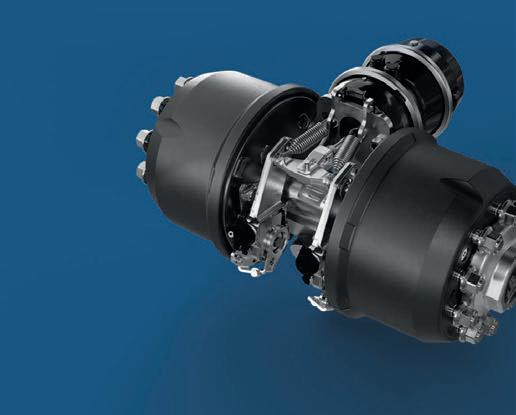
The 800,000 km on-road guarantee for the new BPW 7t universal swing axle will take you around the world 20 times.
BPW‘s reliable swing axles enable low-loaders, semi-trailers and vehicles for special transport tasks to operate safely and smoothly with heavy and bulky loads in difficult terrain. The new swing axle is available as a 6 or 7-tonne axle and impresses with its compact design, high load capacity and maximum flexibility – for greater cost-effectiveness in use.
YOUR BENEFITS:
Service friendly thanks to maintenance free wheel bearing
Safe and efficient thanks to ECO Drum Brake


— Customer specific base plates for perfect vehicle integration more information: bpw.de/en/swing-axle


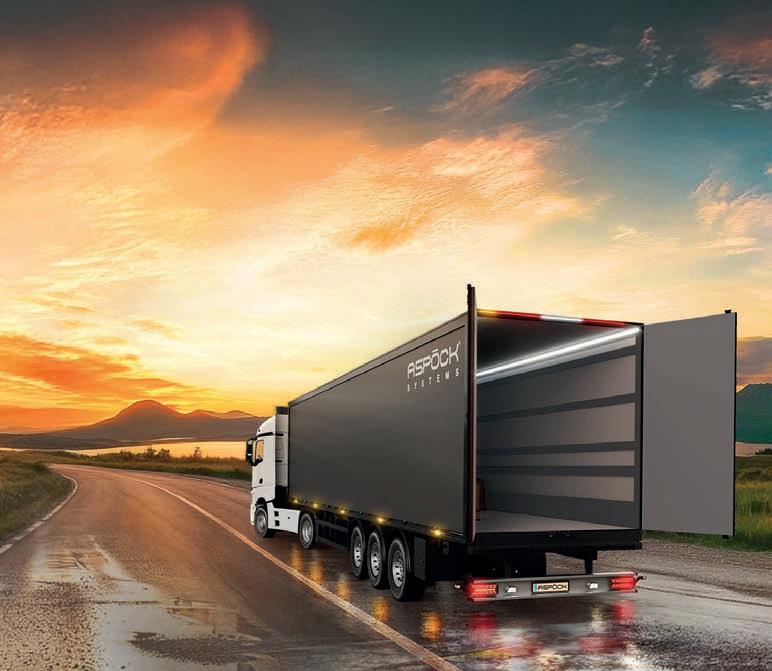
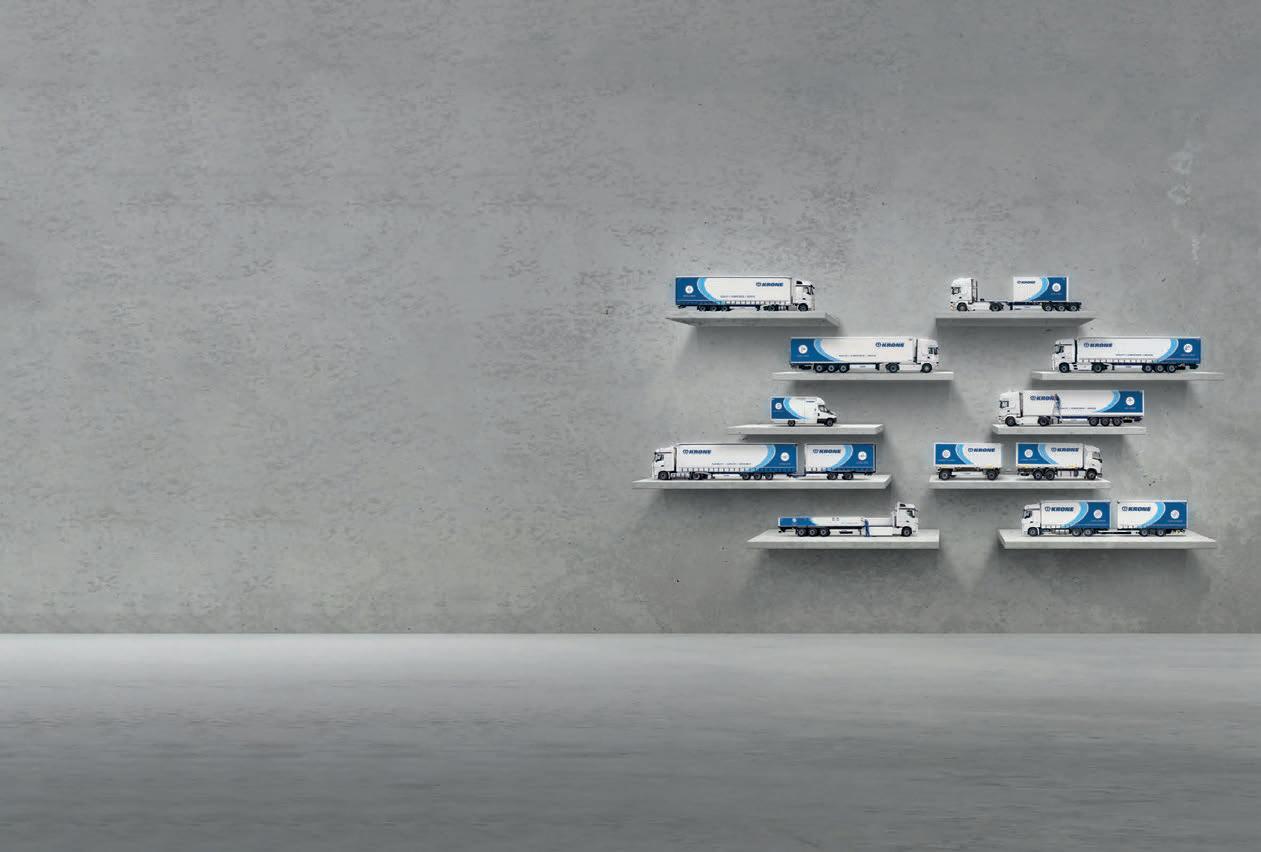
With the launch of its ambitious Stellar Plan, CIMC Vehicles is poised as both the world’s largest semi-trailer builder and pioneer in intelligent manufacturing.
Ermax

Our industry has rarely operated in calm waters, but the current geopolitical climate is creating a new level of uncertainty and economic pressure on manufacturers and operators. With tensions continuing to simmer in the Middle East, particularly surrounding the ongoing strategic and military friction between the US and Iran, the rami cations for transport, logistics and trailer manufacturing are signi cant. For trailer builders, component suppliers and eet operators, the issue is not simply political chest thumping in a distant region. e Middle East remains central to global oil production and shipping lanes, and any escalation in con ict or disruption to trade routes has the capacity to send fuel prices sharply upward almost overnight. at inevitably ows through the entire freight task. Higher diesel costs increase operating expenses for transport companies, place pressure on eet renewal cycles and o en delay investment in new trailers and equipment. At the same time, ongoing instability also impacts supply chains for raw materials, steel production, component manufacturing, and international shipping. OEMs continue to navigate a di cult balancing act involving in ationary pressures, energy costs, labour shortages and tightening environmental regulations. Add geopolitical uncertainty into the equation and it becomes increasingly clear why many OEMs are focusing more heavily on refurbishment,
lifecycle management and modular trailer design strategies to protect margins and maintain production exibility. Despite these challenges, the trailer industry remains remarkably resilient and innovative. Across Europe and increasingly throughout global markets, manufacturers are accelerating investment into lightweight trailer technology, electri cation compatibility, aerodynamic improvements, digital telematics and sustainable manufacturing processes. e sector is evolving rapidly, even amid economic and geopolitical headwinds. at evolution will once again be highlighted in the forthcoming annual Global OEM Ranking list, produced by Global Trailer and published each September. e ranking has become an important benchmark for the international trailer manufacturing sector, providing valuable insight into production volumes, market trends, mergers, acquisitions and the shi ing dynamics among the world’s leading trailer OEMs.
For manufacturers, participation is critical. e ranking is not merely a league table; it serves as a snapshot of the health, scale and direction of the global trailer industry. It is an important opportunity to showcase their standing within an increasingly competitive international market.
CHAIRMAN
John Murphy john.murphy@primecreative.com.au
CEO Christine Clancy christine.clancy@primecreative.com.au
INTERNATIONAL SALES
Ashley Blachford ashley.blachford@primecreative.com.au
MANAGING EDITOR
Luke Applebee
luke.applebee@primecreative.com.au
EDITOR
Paul Lancaster paul.lancaster@primecreative.com.au
HEAD OF DESIGN
Clayton Hawley
DESIGN
Laura Drinkwater
CLIENT SUCCESS MANAGER
Ben Sammartino ben.sammartino@primecreative.com.au
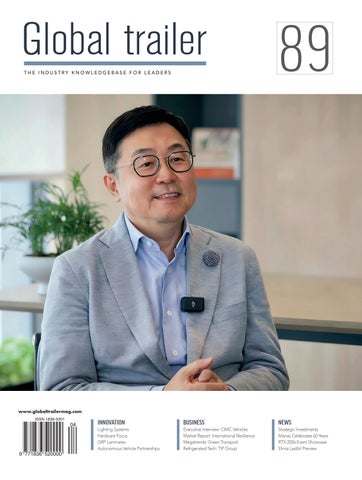
COVER Image: CIMC Vehicles.
HEAD OFFICE
Prime Creative Pty Ltd
379 Docklands Drive
Docklands VIC 3008 Australia
+61 3 9690 8766 info@primecreative.com.au www.globaltrailermag.com
SUBSCRIPTIONS
+61 3 9690 8766 subscriptions@primecreative.com.au
Global Trailer is available by subscription from the publisher. e rights of refusal are reserved by the publisher.
All articles submitted for publication become the property of the publisher. e Editor reserves the right to adjust any article to conform with the magazine format.
Global Trailer is owned by Prime Creative Media and published by John Murphy. All material in Global Trailer is copyright and no part may be reproduced or copied in any form or by any means (graphic, electronic or mechanical including information and retrieval systems) without written permission of the publisher. e Editor welcomes contributions but reserves the right to accept or reject any material. While every e ort has been made to ensure the accuracy of information, Prime Creative Media will not accept responsibility for errors or omissions or for any consequences arising from reliance on information published. e opinions expressed in Global Trailer are not necessarily the opinions of, or endorsed by the publisher unless otherwise stated.
FOLLOW US Global Trailer Magazine


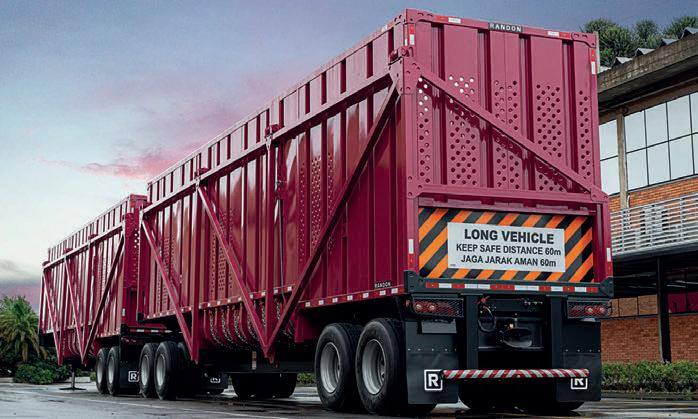
Brazil-based OEM, Randon, has completed its first export of semi-trailers to Indonesia which marks its entry into a new market with products designed for sugarcane transport operations.
The shipment includes road train and mega road train configurations developed for the sugar-energy sector, supporting the production of sugar and bioethanol. The mega road train combination can transport up to 144 tonnes of cargo and operates with a Gross Combination Weight (GCW) of 211 tonnes.
The combinations differ from conventional transport configurations by utilising two sets of reinforced semi-trailers and trailers connected by a specialised dolly system.
According to Randoncorp Managing Director – United States, Renato Franco, the company’s export capability and technical support network were key factors in securing the Indonesian deal.
“We count on the full support and guidance of our technical teams to assist the client at the destination for product assembly,” said Franco.
“Furthermore, the portfolio of robust

solutions for agribusiness, especially due to the tradition in developing products for the sugarcane segment, also contributed to the success of the business.”
Franco also highlighted Randon’s expertise in exporting semi-trailers in multiple formats, including SKD (Semi Knock-Down), CKD (Completely Knocked Down) and CBU (Completely Built-Up), allowing products to be delivered partially disassembled, fully disassembled or fully assembled depending on customer requirements.
Randon is currently shipping prototypes for testing by its Indonesian partner between May and June, with deliveries from the contracted order of approximately 174 units expected to commence in July.
The DP World-operated Batangas Integrated Port in the Philippines has been named the world’s first READY Port, marking a new global benchmark for disaster preparedness and humanitarian logistics with direct implications for freight, rolling cargo and supply chain continuity.
The READY Port (Resilience, Emergency Action and Disaster-ready) program, supported by the World Food Programme Logistics Cluster, is designed to strengthen ports so they can maintain operations and support rapid humanitarian response during crises such as typhoons, flooding and other climate-related disruptions.
The outcome of a three-day workshop at Batangas has been consolidated into a Port Readiness Action Plan aimed at improving resilience across Philippine ports and potentially scaling globally.
The Batangas Integrated Port, operated in partnership with Asian Terminals Inc., serves as a key national gateway for international and domestic cargo, including rolling freight, passenger movements and inter-island distribution across the Visayas and Mindanao.
“This collaboration with WFP and our partners reflects our shared commitment to building resilient port infrastructure that serves not only as gateways for trade, but also as vital lifelines for communities during times of crisis, said DP World CEO & Managing Director Asia Pacific, Glen Hilton. He said by leveraging its integrated ports and logistics capabilities and its global network, DP World is ensuring humanitarian assistance can move swiftly and efficiently in support of disaster response.
Manuel Cabochan III, Department of Transportation Assistant Secretary for Special Concerns, said disaster preparedness requires “a whole-ofgovernment and whole-of-society approach where national agencies, port operators, logistics providers, humanitarian organisations, local government units, and development partners work together towards a common goal”, underscoring the importance of the READY Port.

Van Moer Logistics has expanded its freight forwarding capabilities through the acquisition of the airfreight division of Ziegler Belgium.
The acquired business operated as a certified IATA freight forwarder at Brussels Airport and has developed significant expertise in international air cargo. Van Moer said all activities will continue under its ownership, ensuring a seamless transition for customers.
The company described the acquisition as “another important step” in its vision of “The Perfect Flow”, enabling it to offer customers integrated logistics solutions across road, rail, inland waterways, sea freight and now air freight.
“For many customers, logistics no longer stops at the boundaries of a single transport mode,” the company said in a statement. “Thanks to this acquisition, we can now offer air freight services entirely in-house and support our customers even better with their international supply chains.”
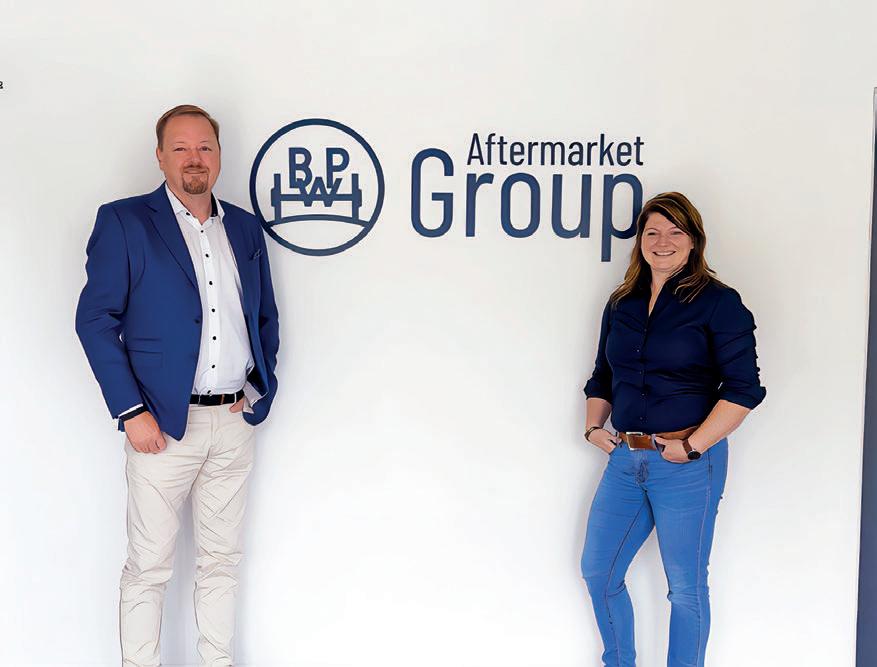
BPW’s extensive European sales and logistics network.
Van Moer added that the deal supports its broader ambition to expand forwarding activities and move closer to a fully integrated logistics and forwarding offering.
What once started with a single truck has grown into a logistics group employing more than 2,200 people, operating 500 trucks, 15 inland vessels, 850,000 m² of warehouse space and more than 40 locations across Belgium.
Krone Trailer has reinforced its aftermarket operations by partnering with the BPW Aftermarket Group to distribute genuine spare parts through
The agreement builds on a long-standing relationship between the two companies and will see Krone genuine parts supplied through more than 150 BPW Aftermarket Group locations across approximately 20 countries.
According to Krone, the arrangement is designed to improve parts availability for workshops, dealers and fleet operators while reducing delivery times through BPW’s established logistics infrastructure.
“With the BPW Aftermarket Group, we are gaining a strong partner with high market penetration in the independent spare parts sector,” said Krone Trailer Managing Director of Service, Ralf Faust.
“Through integration into the Europe-wide
network, our customers will benefit in particular from improved parts availability and significantly shorter delivery times.”
Faust said the partnership would also strengthen Krone’s international aftermarket presence by complementing its existing distribution channels with an additional sales network.
BPW Aftermarket Group CEO, Peter Svensson, said the collaboration would enhance support for customers across the commercial vehicle sector.
“We have a long-standing partnership with Krone, which we are now specifically expanding in the aftermarket,” he said.
“Together, we are laying the foundations for an even more efficient and flexible supply of spare parts to our customers.”














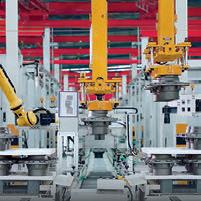










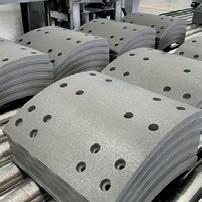

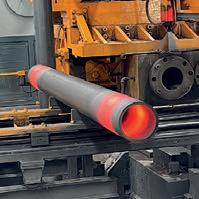








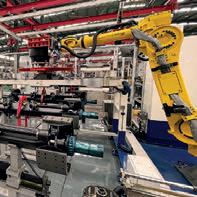
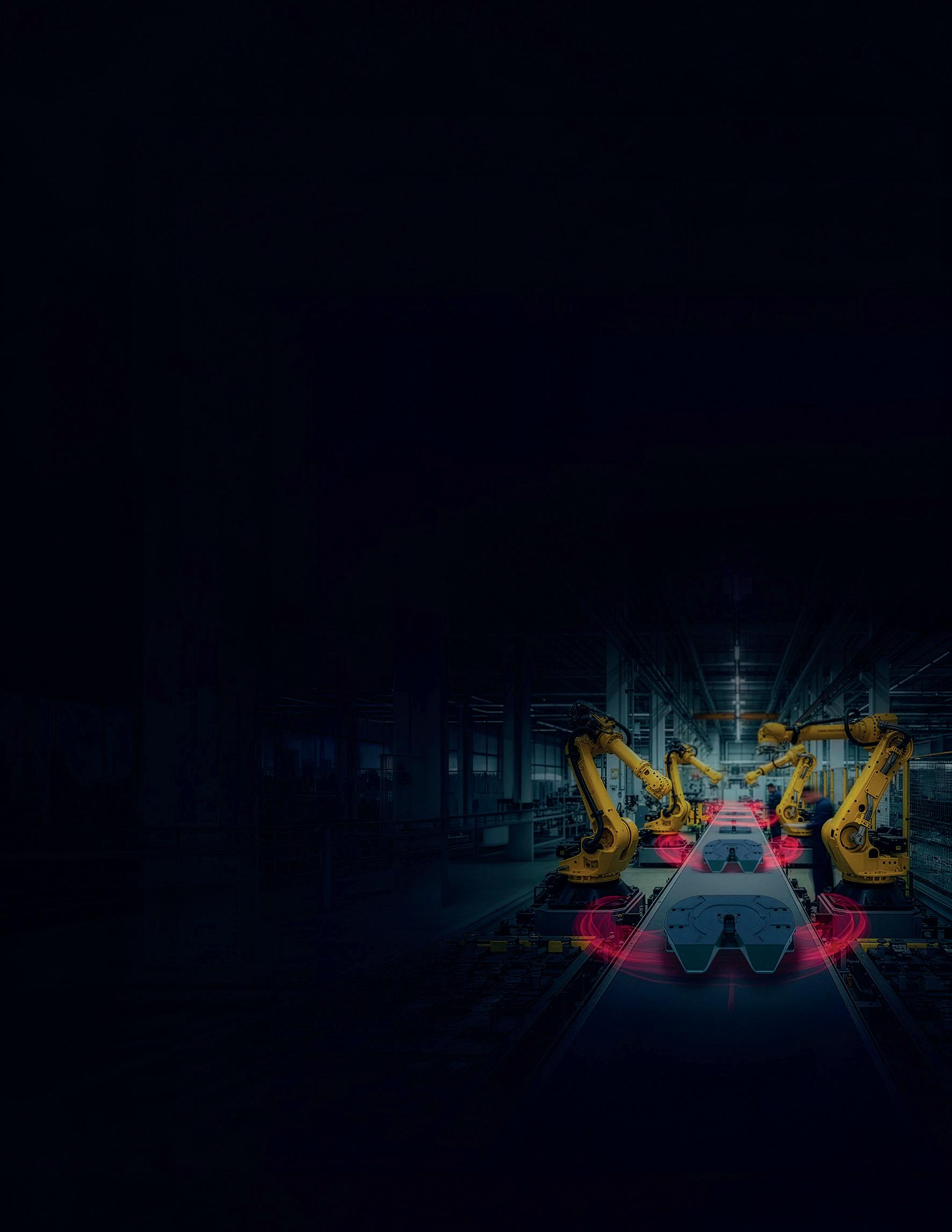
A state of the art, upgraded and fully integrated global manufacturing centre of trailer systems and On/Off highway systems. Expertly designed and engineered with worldwide accessibility, offering you private label and OEM manufacturing solutions.
Drawing upon decades of expertise spanning Asia, Australia US, and in Europe, Fuwa stands as a global manufacturing powerhouse, unrivalled as the foremost network of specialists in truck and trailer components across the globe.





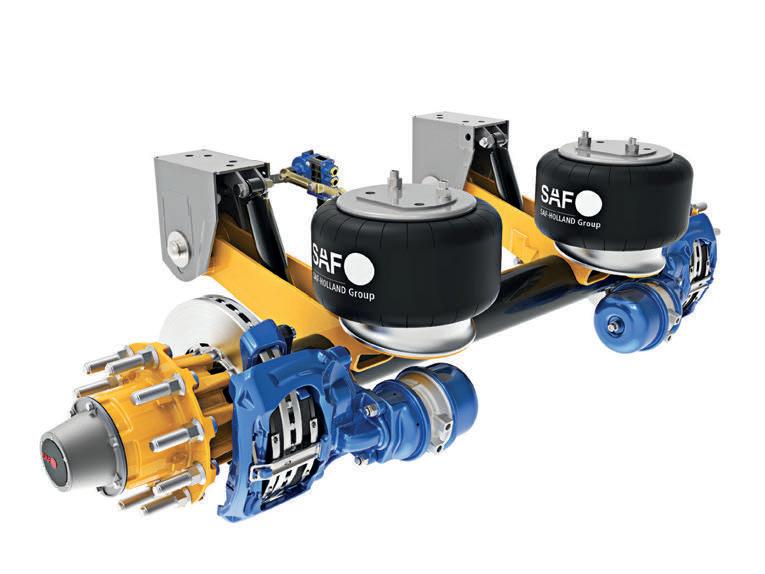
SAF-Holland has completed its CBXA AeroBeam fixed frame suspension portfolio with the launch of the new CBXAS25 and CBXAS30 models, extending the range’s capacity offerings for a broader range of trailer applications.
The new suspensions join the CBXAN23 and CBXAS23 models introduced in 2022, creating a complete CBXA AeroBeam Series lineup with 23,000lb (approx. 10.4 tonnes), 25,000lb (approx. 11.3 tonnes) and 30,000lb (approx. 13.6 tonnes) capacity options.
According to SAF-Holland, the CBXA AeroBeam Series is the lightest top-mount fixed frame trailer air suspension range in its class and has been engineered to balance strength, durability and weight reduction for both highway and vocational applications. The expanded suspension family is
haulage, refrigerated, platform and specialty trailer segments.
“Our commitment continues to be designing products that help fleets improve efficiency, durability and overall trailer performance,” said SAF-Holland Americas Senior Product Manager – Trailer Axles & Suspension Systems, Lance Gage.
“With the addition of the CBXAS25 and CBXAS30, the CBXA family now provides customers with a complete range of lightweight fixed frame suspension solutions engineered for today’s demanding transportation environments.”
At the core of the suspension range is SAF-Holland’s AeroBeam design, which incorporates a lightweight cast steel trailing arm beam intended to reduce overall system weight while maintaining structural durability and service life.
The design also features integrated
quality and increasing undercarriage clearance while protecting suspension components from road debris.
SAF-Holland said maintenance requirements have also been reduced through the use of a pivot connection tension control bolt that maintains proper clamp force without the need for routine re-torquing. This is designed to minimise premature bushing and frame bracket wear while helping to reduce tyre wear.
The CBXA AeroBeam Series additionally incorporates the patented SwingAlign axle alignment system, allowing technicians to perform axle alignment adjustments without disassembly or replacement components. For braking performance, the suspension is supplied as standard with SAF-Holland’s P89 air disc brake system, while the P89 PSP7 air disc brake is available as an option. A key feature of the range is its 5.75-inch diameter axle, which SAFHolland reports is 19 per cent more rigid than competing axle designs. The increased rigidity is intended to reduce axle deflection, improving tyre life and overall durability. The new CBXAS25 and CBXAS30 models utilise a 25K-rated axle and are offered exclusively with parallel spindle configurations.
The suspension series is available with multiple frame bracket options, including weld-on, weld-on with wing and bolt-on configurations, enabling compatibility with a wide range of trailer chassis designs. Ride heights from 14 to 17 inches, axle track widths of 71.5, 77.5 and 83.5 inches, and an optional Posi-Lift system are also available.
XPO has unveiled a new fleet of patriotic trailers celebrating the US’ upcoming 250th anniversary, with the units built at the company’s manufacturing facility in Searcy, Arkansas.
The trailers feature branding inspired by the American flag and will operate across the US transporting freight for XPO customers. Drivers selected to haul the commemorative trailers include military veterans and operators who have achieved more than one million consecutive safe driving miles.


XPO Chairman and CEO, Mario Harik, said the initiative recognises the role transport operators play in the nation’s economy.
“The trucking industry is the backbone of the American economy,” he said.
“As we approach the nation’s 250th anniversary, we’re proud to recognise the drivers and freight transportation professionals who help deliver the goods we all depend on every day. These trailers are a tribute to their hard work and dedication to keeping America moving.”
The trailer fleet was officially
unveiled during an event at XPO’s Searcy manufacturing facility. The OEM said it is the only freight transportation provider in the US that manufactures its own trailers, with more than 100,000 trailers produced at the site since operations began in 1994.
According to the American Trucking Associations, trucks move more than 70 per cent of the nation’s freight by weight each year. XPO is among the largest less-than-truckload carriers in the US, transporting approximately 16 billion pounds of freight annually.

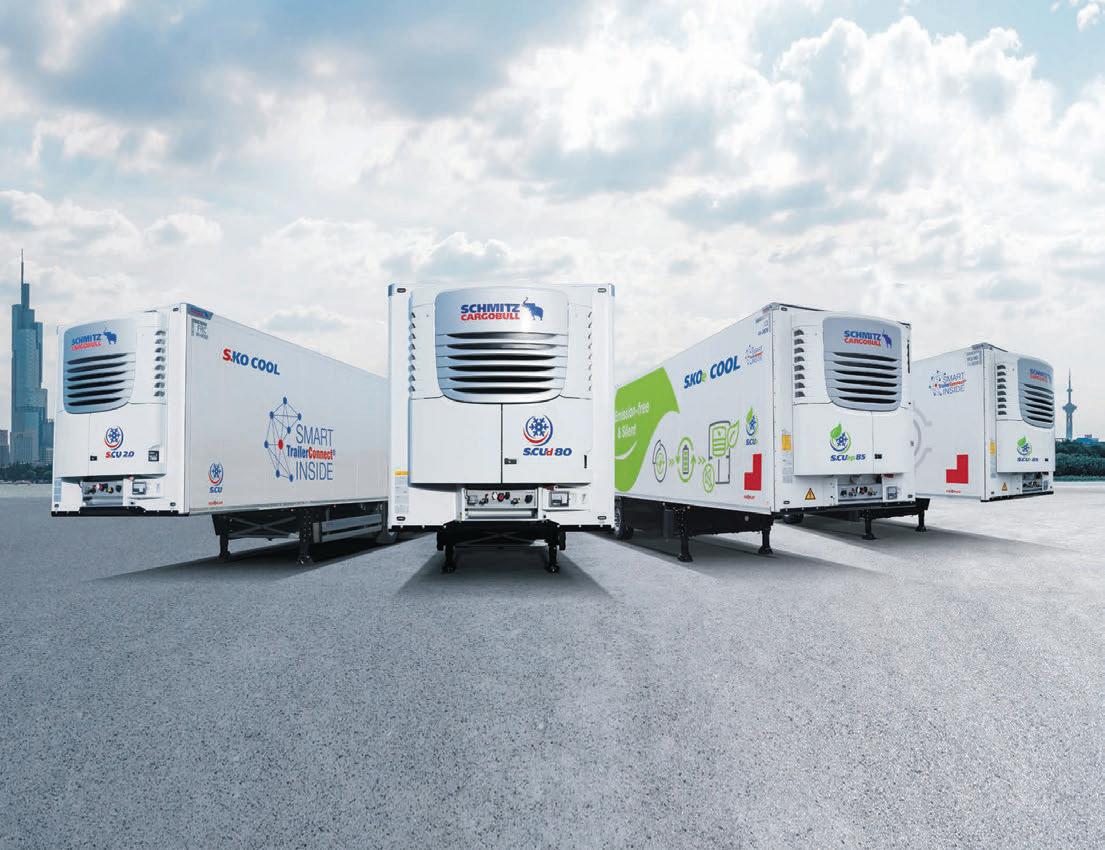
the S.KO COOL reefer
Transport temperatured goods more cost-effectively. The vapour diffusiontight FERROPLAST® body together with the efficient S.CU cooling unit and the smart TrailerConnect® telematics system ensure optimised and reliable transportation. Also available fully electric as S.KOe COOL.

Schmitz Cargobull has increased its investment in Freighter Group, taking a 72 per cent majority shareholding in the Australian trailer manufacturer.
The move marks an expansion of the long-standing partnership between the companies.
Building on the strategic partnership announced in April 2023, the majority investment gives Freighter Group direct access to Schmitz Cargobull’s global engineering, production and connected fleet technologies while preserving the company’s established Australian manufacturing identity.
“We have been supporting Australian customers for 15 years and by increasing our stake in Freighter Group, we are reaffirming our long-term commitment to the Australian market,” said Andreas Schmitz, CEO of Schmitz Cargobull.

The upgraded infrastructure enables the integration of Schmitz Cargobull engineering and production technologies with Freighter Group’s Australian-built trailer platforms.
Beyond manufacturing, Freighter Group said it will continue expanding its aftermarket service and parts network to strengthen customer uptime and improve access to local and international supply chains.
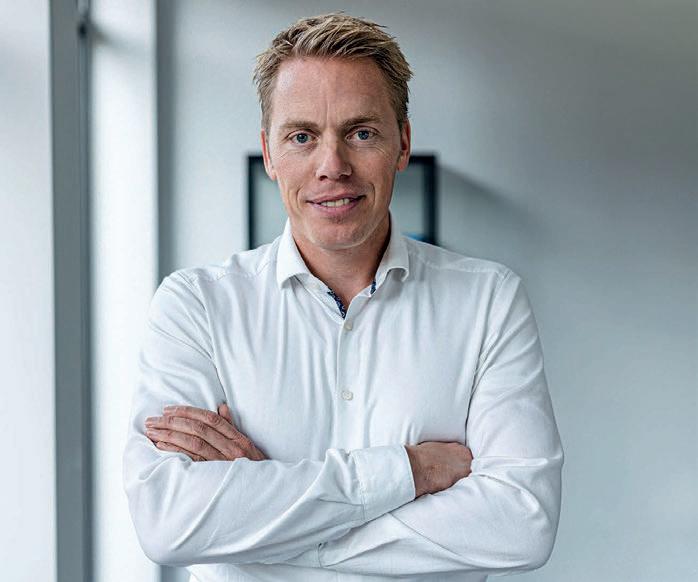
The ownership transition coincides with a leadership change, with Michael Temminghoff appointed CEO effective immediately.
Temminghoff brings more than 15 years of experience within Schmitz Cargobull and will lead Freighter Group through its next stage of development.
“I am honoured to lead Freighter Group at such a pivotal moment,” said Temminghoff.
“This step is also testament to our belief in the strength of the local team.
“Our role is to support and enable the continued development of Freighter Group – providing access to global expertise, technology and networks, while the Freighter team continues to shape the business with its deep local knowledge and customer focus.”
Schmitz Cargobull brings expertise in refrigerated transport, cold-chain solutions, large-scale production and digital fleet systems designed to improve uptime, operational reliability and cost efficiency.
The ownership expansion follows substantial investment in Freighter Group’s manufacturing operations, including the approximately €30.8 million upgrade of its Ballarat facility, transforming the site into an advanced production hub.
“The synergy between Schmitz Cargobull’s global scale and Freighter Group’s local expertise is an exciting opportunity. Our role is to build on the strengths of the local business, supported by global capabilities and experience, and to help the team unlock its full potential – while further strengthening the quality and reliability our customers expect.”
“The business enters this new chapter on a strong footing, thanks to a period of intense modernisation that has prepared the workforce and the facility for hightech production,” he said.
Temminghoff added that the commitment of the local workforce had laid the foundations for continued growth as the market evolves.
Freighter Group will continue operating under its established brand as it develops the next generation of trailer solutions for the Australian transport industry.
Toll Group has appointed Robert Reiter as Group Managing Director, effective 1 July 2026. Reiter’s new role is in addition to his current position of President of Global Forwarding.
As Group Managing Director, Reiter will be responsible for setting the strategic direction of the business and driving performance across Toll’s operations. He will work with the Board and Executive Leadership Team to strengthen competitiveness, improve performance and support long-term growth.
Since joining Toll Global Forwarding in August 2025, Reiter has led a range
of initiatives focused on customer engagement, operational improvement and business transformation. He brings extensive experience in global freight forwarding and contract logistics, having held senior leadership positions with Kuehne + Nagel, Panalpina, DB Schenker and DHL.
Toll Group Executive Chairman, Thomas Knudsen, said Reiter’s appointment reflects confidence in his ability to lead the company through its next phase of growth.
“Robert is a proven leader with deep knowledge of our business, customers and operations,” said Knudsen.
“His appointment as Group Managing
KRONE offers optimum solutions for all transport requirements with trailers that set standards in terms of innovation and quality. The simple and safe handling, the tested construction components, the first-class workmanship and the long-term protection provided by the KTL-plus powder coating make KRONE vehicles an investment that definitely pays off.
Director reflects our strong confidence in his leadership and his ability to drive the Group’s continued growth, performance and transformation.”
Reiter said he was looking forward to building on the company’s momentum.
“We have strong capabilities, dedicated people and significant opportunities ahead,” he said. “I look forward to working closely with our teams, customers and partners to continue delivering strong outcomes for our customers and stakeholders.”
A transition plan has been established to ensure continuity for customers, employees and business partners as Reiter takes on the role.
Find out more now!



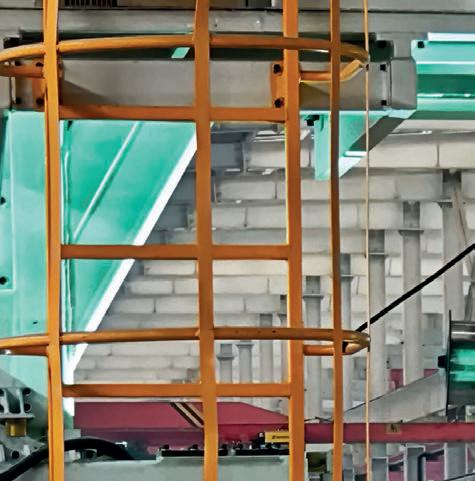
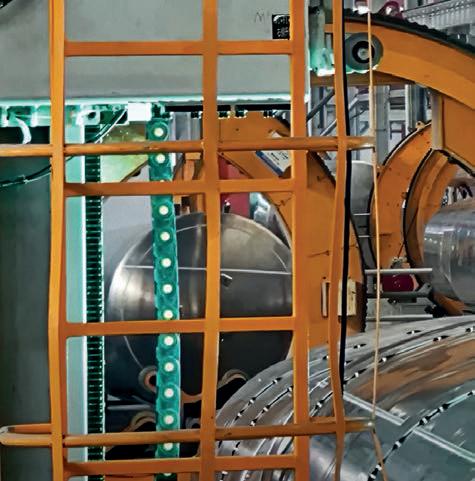
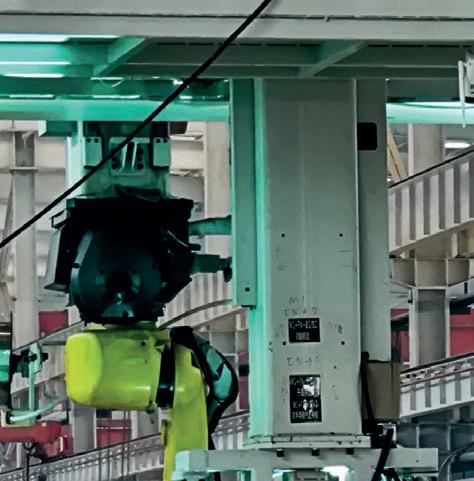
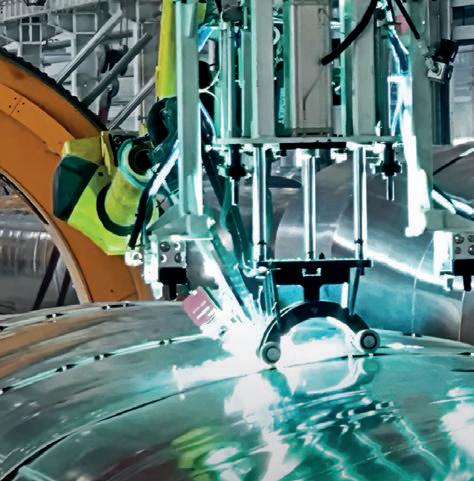
For decades, the international trailer manufacturing industry has seen incremental improvements with stronger materials, better aerodynamics, more e cient production systems and digital integration layered on top of established mechanical architecture. But every so o en, a company emerges with ambitions that extend beyond optimisation and into reinvention.
at is the direction CIMC Vehicles now appears determined to pursue.
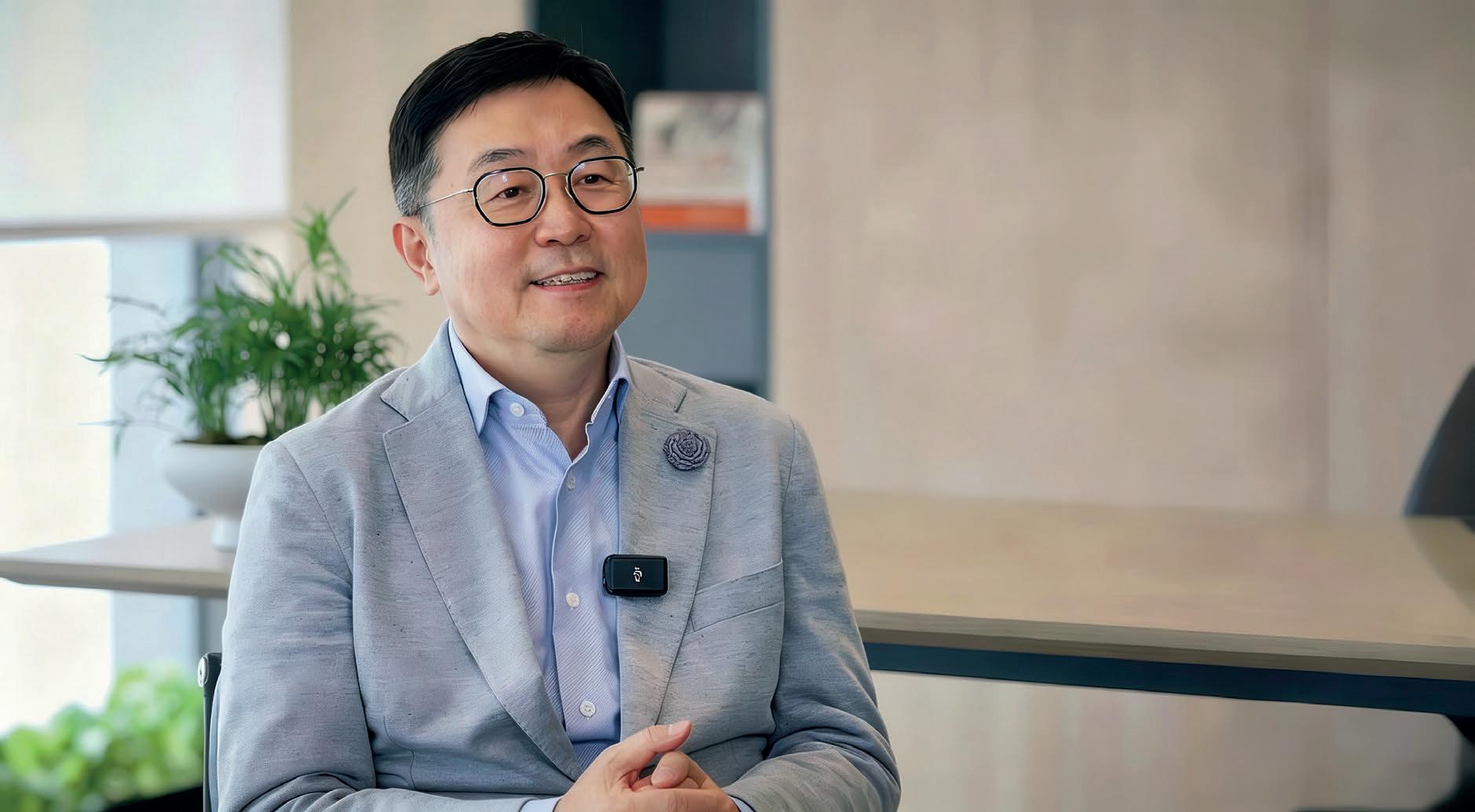
e OEM’s leadership has spent the past several years executing what Chairman and CEO, David Li, describes as a ‘self-revolution’ under the organisation’s Star-Chained Plan – a program focused on restructuring production systems, improving manufacturing e ciency and redesigning operational capability from the ground up. Now, with that phase completed, the company is shi ing into a much broader strategic agenda through the newly unveiled Stellar Plan.
e implications stretch well beyond China.
At a time when global trailer manufacturers are grappling with labour shortages, electri cation uncertainty, automation challenges and supply chain volatility, CIMC Vehicles is pursuing a long-term vision that combines intelligent manufacturing, electric transport ecosystems and large-scale global expansion.
e scale of the ambition is di cult to ignore.
According to Li, the Star-Chained Plan was originally launched as an attempt to address structural ine ciencies within the business. What emerged instead was a wholesale transformation of production philosophy.
“We had to make reductions rst,” he said. “We required all employees to be reassessed, rede ning every workstation, work section and even the entire factory.” is approach became central to the company’s operating methodology. Rather than simply adding new systems on top of existing processes, CIMC Vehicles focused on eliminating ine ciencies rst – a principle Li summarised as ‘deduct 10, add 3’. at philosophy appears to have delivered substantial results.
Over the past three years, CIMC Vehicles achieved compound annual growth exceeding 30 per cent while sales volume reportedly increased 2.2 times. More signi cantly, the company says the restructuring process improved working conditions inside upgraded facilities, reducing physical strain on workers while simultaneously increasing productivity and performance-based income.
For the broader trailer manufacturing sector, this is perhaps the most important aspect of CIMC Vehicles’ transformation.
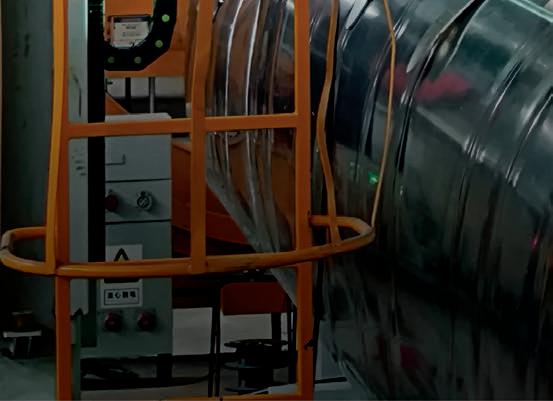
Globally, manufacturers continue facing pressure from rising labour costs and increasingly complex production demands. Traditional trailer manufacturing processes remain labour-intensive despite advances in robotics and automation. By redesigning production systems around intelligent manufacturing principles rather than simply modernising legacy structures, CIMC Vehicles is attempting to create a fundamentally di erent operational model.
e next challenge is whether that model can scale internationally. at question sits at the centre of the Stellar Plan.
Li described the new strategy as the post-Star-Chained phase, a program designed to replicate CIMC Vehicles’ manufacturing and operational systems across multiple global regions between 2026 and 2030. e focus areas include the Global South, Europe and North America.
Importantly, the Stellar Plan is not merely an export growth strategy. It is intended to serve as the framework for what Li calls the company’s ‘third venture’, combining intelligent manufacturing capability with electri ed transport architecture and new operational ecosystems.
In many respects, this represents a broader shi now occurring throughout the commercial vehicle sector.
For years, electri cation discussions in heavy transport focused almost entirely on heavy-duty truck OEMs. Trailers o en remained secondary considerations – passive assets attached to increasingly sophisticated tractors. at thinking is now changing.
CIMC Vehicles is among a growing number of manufacturers recognising that the future freight ecosystem may depend just as heavily on intelligent trailers as it does on advanced tractors.
e company’s “EV-RT” concept re ects this shi .
Under the EV-RT model, semi-trailers themselves become active components within an electric transport ecosystem. Trailers incorporate batteries and electric drive axles, working in conjunction with electric tractors to form integrated electric tractor-trailer systems.
Li compares the concept to high-speed rail architecture, where traction and control systems are distributed throughout the train rather than concentrated solely at the front.
“ is can be seen as a high-speed rail model applied to highways,” he said.
“EV-RT” – short for EV Road Train, the logic behind the concept is compelling.
Electric freight transport continues to face several structural limitations, including battery weight, range anxiety, charging infrastructure constraints and e ciency challenges under heavy loads. Distributed electric drive architecture potentially o ers solutions to several of these issues by sharing propulsion and regenerative braking responsibilities across both the tractor and trailer.
But the larger signi cance of the EV-RT strategy lies in what comes next.
CIMC Vehicles believes integrated electric trailer systems may eventually support highly automated platooning operations, where multiple tractor-trailer combinations travel together with only the lead vehicle requiring a driver.
In Li’s vision, the rst unit of EV-RT would lead a convoy while following units operate autonomously.
is concept has existed in various forms across the transport industry for years. However, widespread commercial deployment has remained elusive due to regulatory complexity, technological limitations and operational practicality.
CIMC Vehicles
Chairman
and CEO, David Li.

What makes CIMC Vehicles’ approach notable is its focus on solving operational pain points that are o en overlooked in broader autonomy discussions.
Li speci cally identi ed loading and unloading procedures as a major challenge preventing true autonomous freight functionality. Current trailer systems still require signi cant manual interaction during coupling, uncoupling and cargo operations – tasks that are di cult to automate e ciently.
As a result, CIMC Vehicles is pursuing ‘oneclick automated truck bodies’.
e objective is straightforward but potentially transformative – automate securing and releasing functions to enable seamless operational integration between electric transport systems, autonomous driving technology and trailer equipment.
To accelerate development, the company has established an Intelligent Up tting Research Institute focused on making the concept commercially viable.
is matters because the freight industry’s future will likely depend less on isolated technological breakthroughs and more on system integration.
Autonomous trucks alone cannot solve freight e ciency challenges if loading docks, trailers, logistics hubs and operational processes remain heavily manual. Similarly, electric trucks cannot fully optimise energy performance without intelligent trailer integration.
CIMC Vehicles appears to recognise that reality.
Its broader strategy increasingly positions the company not simply as a trailer manufacturer, but as a participant in a future freight operating ecosystem spanning equipment, infrastructure and services.
at distinction is critical.
Historically, trailer manufacturing has o en operated as a relatively fragmented industry segment positioned downstream of major truck OEM innovation cycles. While leading manufacturers introduced advancements in durability, safety and design, the trailer itself remained a largely reactive component within broader transport system evolution.
Now, trailers are becoming strategic technology platforms in their own right.
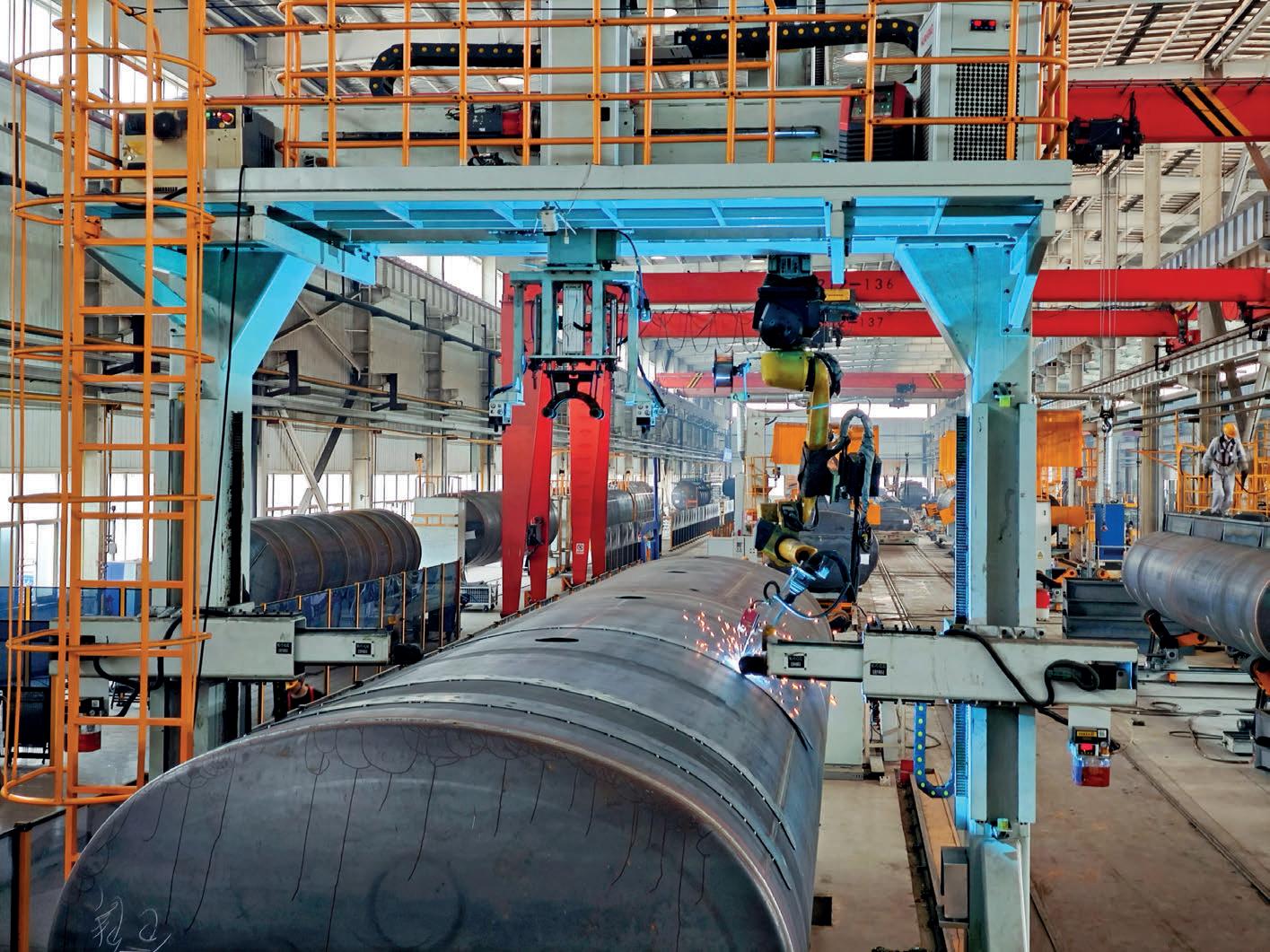
An overhaul of CIMC Vehicles’ production saw more than 30 per cent compound annual growth over the past three years.
predictive maintenance and energy management systems are rapidly changing how eets evaluate trailer assets. e rise of connected logistics ecosystems is also creating new opportunities for manufacturers capable of integrating hardware, so ware and operational intelligence.
CIMC Vehicles is attempting to place itself at the centre of that transition.
e company’s leadership openly acknowledges that manufacturing capability alone will not determine success. Li repeatedly emphasised leadership development as a critical challenge moving forward, noting that organisational capability takes time to build.
“A thousand soldiers are easy to nd, but a capable general is hard to come by,” he said.
That observation reflects another reality confronting industry. Technology adoption is accelerating faster than workforce transformation.
Trailer builders across multiple regions are investing heavily in automation, AI systems and digital production infrastructure, but many still struggle to develop the managerial, engineering and operational expertise required to integrate those systems e ectively at scale.
CIMC Vehicles said its Star-Chained Plan delivered compound annual growth exceeding 30 per cent over three years, while overall sales volume increased 2.2 times.
e companies that successfully bridge that gap will likely de ne the next era of trailer manufacturing leadership.
Li is adamant that CIMC Vehicles can become one of them.
Over the next ve years, Li expects the company to evolve into what he describes as a “respected intelligent manufacturing company” within China’s industrial sector. Yet his comments also suggest ambitions extending far beyond manufacturing itself. e company sees future opportunities not only in semi-trailers and EV-RT systems, but also in supporting infrastructure such as operation stations and producer services linked to freight ecosystems.
at signals a broader platform strategy increasingly common among major industrial companies globally.
Rather than competing solely through product sales, manufacturers are pursuing recurring operational revenue streams tied to maintenance, infrastructure, so ware integration and ecosystem participation. In transport sectors undergoing rapid technological disruption, these service-oriented models o en provide greater long-term stability and customer retention than equipment manufacturing alone.
For the trailer industry, this transition may become especially important.
Margins across traditional manufacturing segments remain under pressure globally due to commodity price volatility, pricing competition and cyclical freight demand. Intelligent ecosystems and service integration potentially o er pathways toward stronger long-term pro tability and strategic di erentiation.
e challenge, of course, is execution.
Many ambitious mobility concepts fail not because the technology itself is impossible, but because commercial adoption proves slower, more expensive or more operationally complicated than anticipated.
Electric heavy transport still faces infrastructure barriers in many markets. Autonomous freight regulation remains inconsistent globally. Fleet operators continue prioritising cost certainty and operational reliability over experimental innovation.
Freight transport is moving toward a future de ned by connected systems, electri ed operations and intelligent infrastructure integration. e question is no longer whether the trailer industry will change, but which manufacturers will help shape the change.
CIMC Vehicles is among those ambitious companies.
www.cimcvehiclesgroup.com
Geopolitical tensions, regional con icts, trade disputes, economic nationalism, supply chain disruption, energy insecurity and diverging regulatory frameworks are creating a more fragmented global economy.
For the logistics and trailer sectors, this is prompting a strategic shi . Manufacturers are exploring alternative trade routes, regional production hubs and more resilient supply chains to sustain growth in an increasingly uncertain environment. e commercial trailer industry has long bene ted from globalisation. European manufacturers established production facilities across Eastern Europe, Asia, the Middle East and Africa. Component suppliers built extensive international networks, Chinese manufacturers expanded export ambitions, and North American OEMs pursued e ciencies through global sourcing.
Recent events have exposed vulnerabilities in that model with the Covid-19 pandemic highlighting dependence on global supply chains as shipping bottlenecks, factory shutdowns and component shortages disrupted trailer production worldwide. e con ict in Ukraine have further a ected steel markets, energy supplies and transport networks across Europe. More recently, escalating tensions between major economic powers and instability in the Middle East have increased uncertainty around trade ows, energy prices and manufacturing costs. As a result, trailer manufacturers are no longer focused solely on e ciency. Resilience and adapability have now become critical. Regional con icts are already reshaping transport corridors. In May, logistics provider Rhenus Group activated an overland route linking Europe and the Middle East via Jordan to maintain reliable supply chains. Connecting Türkiye and Europe with destinations across Saudi Arabia, Kuwait, the UAE, Qatar, Bahrain and Oman, the corridor handled more than 190,000 kilograms of cargo during its rst month of operation.
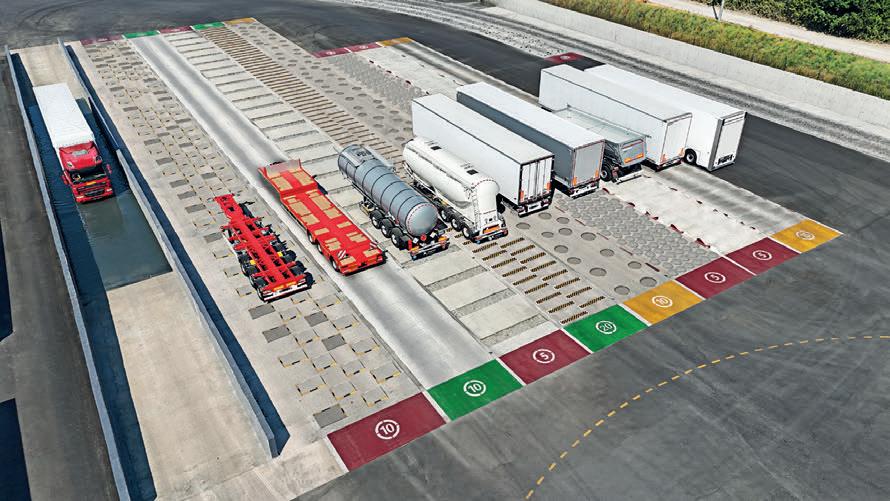
As alternative trade routes gain importance, Türkiye and Central Asia are emerging as key logistics nodes. With its strategic location, stable economy and manufacturing base, Türkiye is increasingly viewed as a hub linking Europe, the Middle East and Asia. OEM, Kässbohrer operates a state-of-the-art trailer testing facility at its Adapazarı Mega Campus in Türkiye, alongside a major R&D centre in Gebze. e Adapazarı facility is Europe’s rst trailer OEM-owned outdoor trailer test track.
e move towards regionalisation is also visible elsewhere in Europe. Kögel Trailer GmbH has upgraded its Czech Republic facility, while Schmitz Cargobull has realigned its Central European sales structure. Together, these developments re ect the growing importance of what many are calling the ‘Central Corridor’. Growth in cold-chain logistics across Africa and the Middle East is also creating opportunities. Trailer manufacturers and operators are increasingly pursuing decentralised, market-speci c strategies. Demand is rising for curtainsiders, atbeds, lowbeds, tankers and tippers, particularly as reconstruction and infrastructure development drive freight activity. Krone Trailer recently collaborated with Schwarzmüller Group on the development of tipper trailers, highlighting this trend.
Perhaps the most signi cant structural change facing the trailer industry is the transformation of global supply chains. Today, manufacturers are focusing on supplier diversi cation, regional sourcing, strategic stockholding, digital visibility and inventory resilience.
According to Schmitz Cargobull CEO, Andreas Schmitz, current global conditions reinforce rather than change the company’s strategy.
“We rely on our exible production network, strong partnerships and continuous investment in productivity and product development,” he said. “ is setup helps us react quickly to demand uctuations and maintain reliable operations under changing conditions.”
Commercial partnerships are also becoming increasingly important.
“We are expanding our network of strategic partners to complement our portfolio and provide regionally adapted solutions,” Schmitz said. “ is allows us to combine industrial scale with specialised expertise and respond to di erent transport requirements.”
Trailer OEM, Wielton S.A. said that in increased geopolitical uncertainty, transportation sector opeators and trailer manufacturers must demonstrate a high degree of adaptability. “ is includes, among other things, the exible adjustment of sales strategies, supply chains, and product o erings to changing market conditions,” said Radosław Miszkiel, Wielton’s Director For Customer, Brand And Sales.
“An example of how the Wielton Group has adapted its operations to geopolitical con icts is the reorganisation of its sales channels and operational structure, including the suspension of sales and operational activities in markets subject to sanctions due to the war between Russia and
Ukraine, and a focus on European and alternative markets.”
For many OEMs, resilience is now viewed as a competitive advantage. Manufacturers capable of maintaining production continuity during periods of disruption are likely to enjoy stronger customer con dence and potentially gain market share.
A similar approach is being taken by KRONE Trailer, with its Managing Director of Sales and Marketing, Dr. Frank Albers, saying: “We are monitoring geopolitical tensions, regional con icts, and trade disputes very closely because they have a direct impact on supply chains, markets, and investment decisions in the transportation industry.
“KRONE is addressing this development with a resilient, long-term strategy: a strong European production base, stable supply and service networks, and close customer relationships in international markets.” It is applying such approach across the entire KRONE Group, including its brands Schwarzmüller, Knapen, and Hü ermann. “Our goal is to remain a stable partner to the transport and logistics industry even amid changing global conditions,” said Albers.
Europe remains the world’s most sophisticated trailer market, but it also faces signi cant challenges. OEMs must navigate stringent environmental regulations, rising labour costs, energy volatility and increasing competition from emerging manufacturing regions.
e European Union’s Green Deal and wider decarbonisation agenda are reshaping production processes. Manufacturers are under pressure to reduce emissions not only from their products but also from their operations. Customers are also demanding stronger sustainability credentials, including lower-carbon materials, circular economy initiatives and improved eet e ciency.
is is driving investment into lightweight designs, alternative materials, refurbishment programs, electri ed trailer technologies, telematics and digital solutions. However, compliance with increasingly complex regulations adds cost and operational pressure.
As a result, many manufacturers are balancing domestic production with strategic operations in lower-cost regions while maintaining quality and regulatory standards.
e outcome may be a more regionalised European manufacturing model rather than a fully global one.
TIP Group said the current geopolitical and macroeconomic environment is creating new opportunities within transportation and logistics. “It is strengthening our strategy to remain focused on eet lifecycle management, including refurbishment and digital services as key strategic levers,” said TIP Group Vice President Global Sales and Marketing, Rogier Laan.
Supply chain volatility and trade disruption are increasing cost pressures and reducing predictability, prompting operators to optimise asset utilisation more rigorously, TIP said.
“Our customers are seeking solutions that balance cost e ciency with operational resilience,” said Laan. “We see a growing preference for refurbishment, lifecycle strategies and digital capabilities.”
He noted that refurbishment is increasingly becoming a board-level strategic consideration because it reduces capital expenditure, extends asset life and supports sustainability objectives.
ere are signs of improvement for the European trailer market. A recent ING report forecasts that European trailer sales will return to growth in 2026 following three years of decline. It highlighted the continued growth of the trailer rental and leasing market, led by companies such as TIP and PNO, as operators increasingly recognise the total cost of ownership bene ts of leasing.
According to ING, Schmitz Cargobull maintained approximately 31 per cent of the German semi-trailer market in 2025, followed by Krone with 23 per cent and Kögel with nine per cent. Krone remains particularly strong in curtainsider trailers, while Schmitz continues to dominate refrigerated trailer sales. Krone also strengthened its market position through the acquisition of Schwarzmüller.
In North America, industrial policy is increasingly encouraging domestic manufacturing and supply chain localisation. Governments and industry stakeholders are pursuing
greater self-su ciency across critical sectors. For trailer manufacturers, this could lead to increased domestic sourcing, greater investment in automation, expanded manufacturing capacity and reduced dependence on overseas suppliers.
North American eets continue to require large volumes of dry freight, refrigerated and specialised trailers. At the same time, labour shortages remain a persistent challenge. As a result, automation, robotics and digital manufacturing technologies are expected to play a growing role in maintaining competitiveness.
Despite fluctuations in demand, North American manufacturers may emerge as leaders in highly automated trailer production, helping o set rising labour and operating costs.
e Middle East is also becoming increasingly important within the global logistics landscape. Large-scale infrastructure investment, economic diversi cation and expanding trade corridors are creating strong demand for transport equipment throughout the region.
Gulf countries, including Saudi Arabia and the UAE, are investing heavily in logistics hubs, industrial zones and freight infrastructure as they seek to reduce dependence on hydrocarbons and broaden their economies.
While geopolitical instability remains a concern, long-term demand fundamentals remain strong. Manufacturers that establish local partnerships, a ersales networks and regional assembly operations may be best positioned to capture future growth.
Asia remains perhaps the most dynamic region in uencing the future of trailer manufacturing.
Chinese manufacturers have already established strong positions through infrastructure investment and development projects, as that nation continues to be a manufacturing powerhouse while India, ailand, Vietnam and Indonesia are developing stronger industrial ecosystems and expanding manufacturing bases.
The trailer industry is entering a more fragmented era. Globalisation is giving way to a model built on regionalisation, resilience and exibility. Manufacturers that diversify supply chains, invest in technology and adapt to changing trade patterns will be best positioned to succeed.
www.globaltrailermag.com




































LANGVER ENGINEERING HAS BUILT A GLOBAL REPUTATION BY MASTERING
ONE PRODUCT CATEGORY WITH A LEVEL OF FOCUS UNMATCHED IN THE TRAILER INDUSTRY.
La ngver Engineering has spent more than five decades refining a single discipline so thoroughly that it has become a benchmark for curtainsider tensioning systems worldwide.
Founded in 1971 in irsk, North Yorkshire, the company has grown from a specialist British manufacturer into a global supplier serving trailer builders and eet operators across Europe, Australia and beyond. Yet despite its international reach, Langver has remained committed to one principle: specialisation.
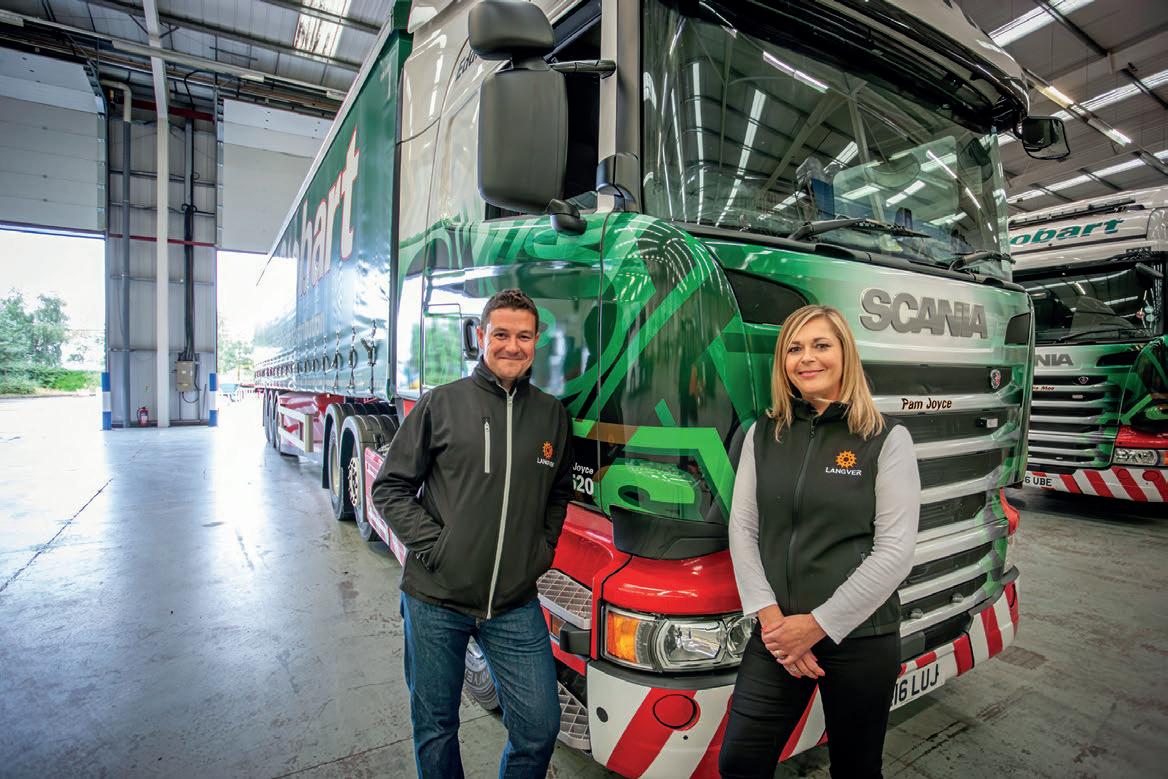
Joint Managing Directors, Scott Taylor and Claire Matten, attribute the company’s success to a singular focus on designing and manufacturing curtainsider tensioners.
“Langver Engineering is at an exciting point in its history,” said Taylor. “We have been manufacturing curtainsider tensioners for over 50 years and, while our roots are rmly in the UK, we are now a genuinely global business.”
Taylor said Langver’s market position stems from doing one thing exceptionally well.
“We do not try to be all things to all people,” he said. “We design and manufacture curtainsider tensioners, and we do it better than anyone else.” e origins of that philosophy can be traced to the company’s rst product, the R26 tensioner.
“Our very rst product, the R26, set the template for everything that followed,” said Matten. “Precision-engineered, built to last and designed around the real demands of trailer operators.”
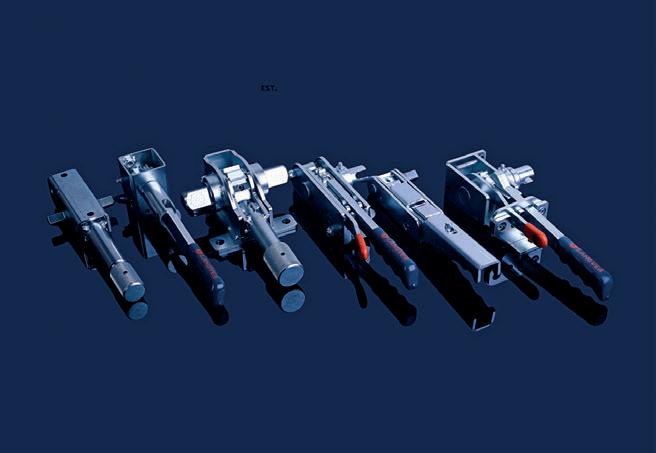
Over the years, the company introduced the R45, R44 and R55, each re ecting ongoing re nement and a deeper understanding of operating conditions. A management buyout in 2005 strengthened Langver’s independence, while
expansion into a second facility in 2016 signalled growing demand.
Today, Langver supplies around 90 per cent of the UK curtainsider tensioner market.
International growth has been built on long-term relationships and a reputation for quality. at ambition is re ected in the company’s approach to product development.
“When your entire business is dedicated to one product category, you develop an unrivalled understanding of how those products perform in the real world,” said Taylor. at knowledge extends to the stresses tensioners face on long-haul routes, wear patterns over time and di ering regulatory requirements across markets.
“We have seen most scenarios before,” Taylor said, “and where we haven’t, our engineering team has the concentrated expertise to solve the problem quickly.” e value of that expertise has increased as eet operators face pressure to reduce downtime and maintenance costs while regulators tighten compliance requirements.
“We have seen meaningful changes in the regulatory and compliance landscape,” said Matten, highlighting TIR compliance and load security standards as key considerations.
Environmental regulations have also in uenced product development. Anticipating restrictions on Hexavalent Chromium, Langver developed its proprietary Langard coating several years before new requirements came into e ect. e trivalent passivation system eliminates Hexavalent Chromium while significantly improving corrosion resistance.
“It delivers over 600 salt spray hours for the standard product and over 1,000 for the premium version,” said Matten.
Langard is now applied across the company’s entire product range and has become a de ning feature of its engineering o ering.
Alongside its standard portfolio, including the R44, R45, R55 and the recently introduced E5, bespoke engineering has become an increasingly important part of the business.
“Bespoke work represents a very signi cant and growing proportion of our business,” said Taylor.
Langver’s fully in-house manufacturing model allows customised requirements to be addressed rapidly.
“If a dimension needs changing, our
Langard coating was developed ahead of upcoming European environmental regulations and delivers up to 140 per cent greater corrosion resistance.
engineering team can action it quickly and a revised product can be in production shortly a er,” said Taylor.
at exibility is supported by investment in CNC machining, robotic welding and laser pro ling technology.
Matten points to the R55 tensioner as an example.
“Every component, including the ratchet wheel, is laser cut, which delivers a level of precision and consistency that traditional fabrication methods cannot match,” she said.
Robotic welding eliminates variability in high-volume production, while CNC machining enables complex geometries to be produced to tight tolerances.
“Technology enhances our people. It does not replace them.”
e bene ts of in-house manufacturing became particularly clear during recent global supply chain disruptions. By controlling every stage of production, Langver has reduced its exposure to outsourced supply risks.
“Because we control every stage of the manufacturing process at our facilities in irsk, we are not exposed to the vulnerabilities that come with outsourced parts,” said Taylor.
As Langver’s international footprint has expanded, it has encountered a wide range of operating conditions. In Europe, TIR compliance and load security regulations are major priorities. e E5 range was developed speci cally for this market, combining single-handed operation, TIR compatibility and the Langard coating.
Australia presents a di erent challenge. Long distances, extreme temperatures and demanding road conditions place signi cant stress on trailer hardware, making durability and corrosion resistance critical.
Across all markets, however, customer expectations remain remarkably consistent.
“Customers want a tensioner that works reliably, lasts the distance, and is backed by a supplier they can trust,” said Taylor.
Product development is driven by eld experience rather than marketing cycles, with customer feedback providing a continuous stream of operational insight.
e E5 range follows the same philosophy.
“We engineered the E5 from the ground up to address all of those requirements simultaneously,” said Taylor.
Durability remains central to every Langver product. Material selection, manufacturing tolerances and surface treatments are all chosen to maximise service life.
“We are 55 years into our journey,” said Taylor. “We are more ambitious, more capable and more globally connected than at any point in our history.”
www.langver.com
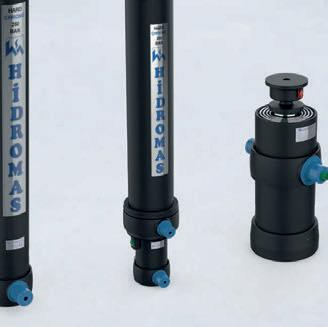
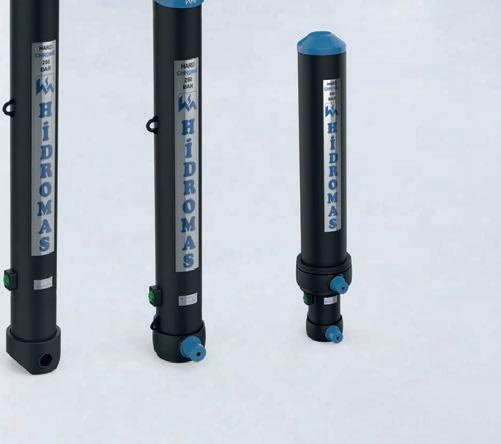
GLOBAL HYDRAULIC MANUFACTURER, HIDROMAS, HAS EXPANDED ITS OPERATIONS INTO AUSTRALIA.
Hidromas is a global hydraulic cylinder and components brand with a legacy spanning longer than 50 years across more than 70 countries. Established in 1975 in Konya, Turkey, the hydraulic manufacturing operation was built from the ground up and has since expanded across the world.
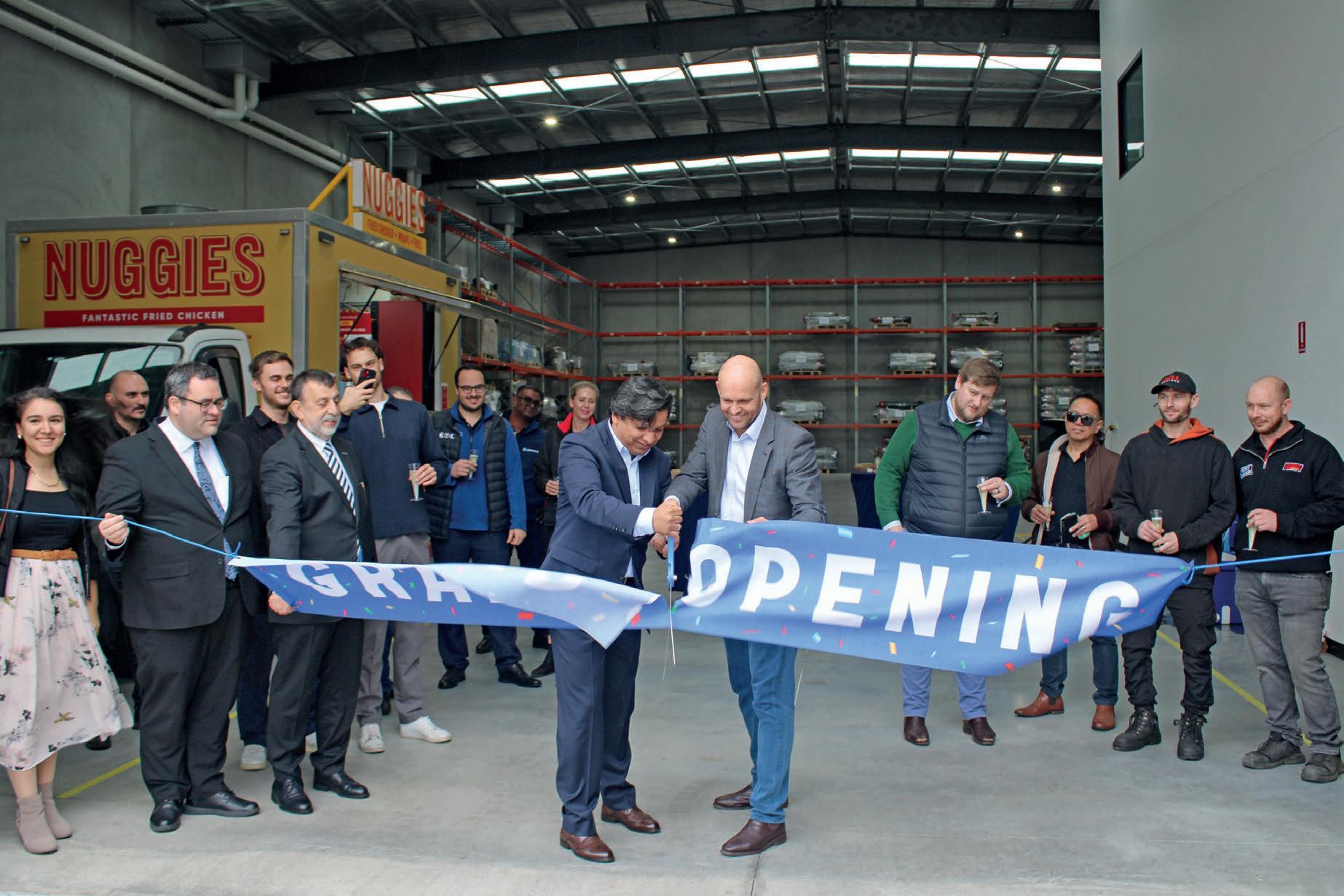
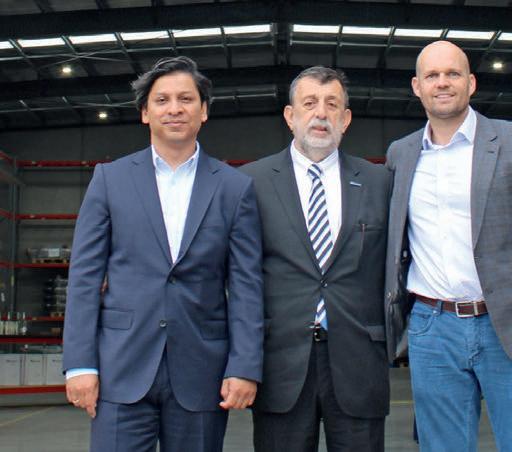
Last month, Hidromas Pacific officially launched its Australian operations by opening a new facility in Epping, Victoria. Speaking with sister publication, Trailer, at the grand opening, Managing Director, Andre Bremmer, said the company is committed to strengthening its position in a mature yet highly dynamic market.
“Opening a branch in Australia demonstrates the importance of this market within the Hidromas family,” he said. “ e brand has been successful in this market for over 20 years, and we are cementing it with our presence.
“Expanding into Australia provides the Hidromas company with greater stability, so taking this step and ensuring we can continue support our customers e ectively was essential.”
Hidromas has traditionally exported its telescopic cylinders and hydraulic products into Australia via an arm of distributors and suppliers.
e product has proven itself in the local market over the last two decades, building up a portfolio of customers that have placed their trust the equipment across many demanding sectors such as agriculture, construction and mining.
Having a physical presence in Australia, Hidromas Sales and Marketing Manager, Siraj Hasan, told Trailer, will now present the brand with more stability and a basis to increase its product o ering and service level.
“Australia has always been one of Hidromas’ biggest export avenues and most stable markets,” he said. “It’s a very mature market. at being





said, sustaining business in this country is a huge bene t because it proves you can do it in other markets as well.”
Hidromas Paci c is planning to improve its network and distribution capabilities in Australia while increasing its product o ering and service level. Ultimately, it aims to become a one-stop shop for the end user.
“We want to be more responsive to inquiries and feedback,” Andre said. “So, we will be improving our service abilities and directly representing our own brand and product here.”
Hidromas Paci c’s Melbourne facility was strategically chosen due to its close proximity to customers and prime location near the Hume Highway. Measuring in at around 700 square metres, it simpli es the local operation’s supply chain and stock management to large extents.
With a foundation now set in stone, Hidromas Paci c is focused on expanding its product range and exploring further growth opportunities in Australia. Andre said it will achieve this by drawing on more than 50 years of expertise and development globally.
“We project further expansion in Australia a er over the next few years,” he said. “We have an expansion plan for other countries as well. We have been a pretty conservative company until now, but we have identi ed a lot of opportunities for Hidromas here and elsewhere.”
www.hidromas.com.au

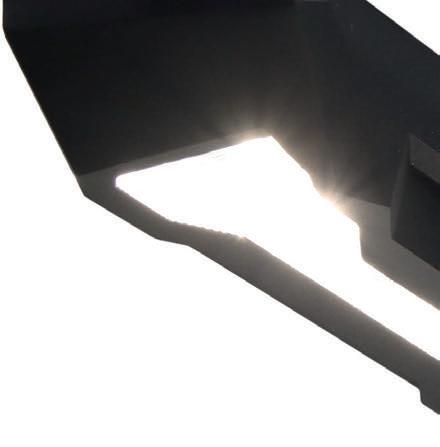

For commercial vehicles, operational scenarios extend beyond transportation and include cargo loading and unloading, on-site manoeuvring, and various stationary work environments. Many operational risks arise from situations where personnel and vehicles work in close proximity.
Under these conditions, spatial awareness and environmental visibility have become critical factors for ensuring both operational safety and e ciency. ese scenarios are particularly prevalent in logistics hubs, urban last-mile delivery zones, warehouse yards, as well as trailer coupling or reversing operations, where vehicles must operate within con ned geometries and dynamic pedestrian environments.
Under low-light or night-time operating conditions, conventional vehicle lighting systems o en fail to provide su cient illumination around the vehicle’s work area. is is because excessive peripheral lighting during normal road driving may a ect the visibility of other road users and increase driving risks.
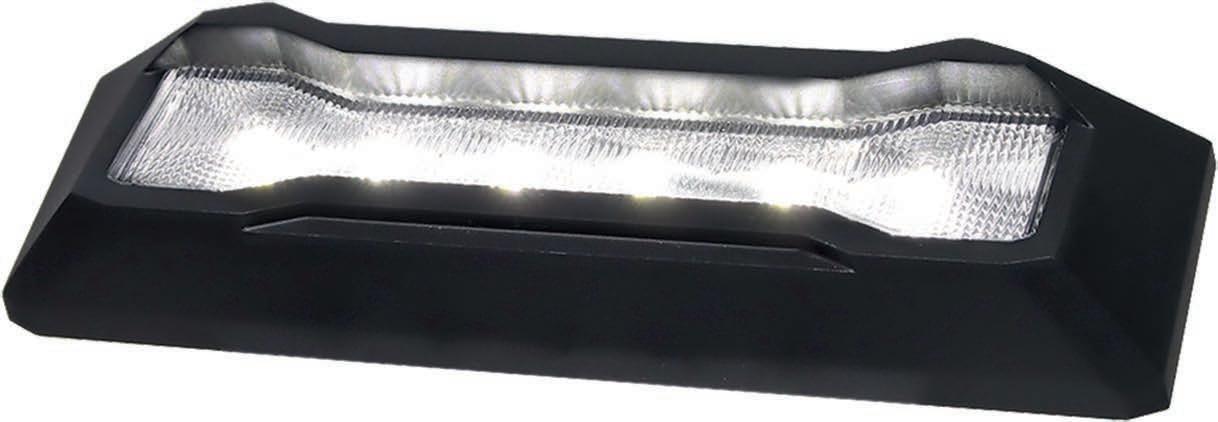
In these situations, a Manoeuvring Lamp provides additional illumination for lowspeed operations and stationary work scenarios, helping drivers improve environmental awareness and operational safety.
To prevent misuse in high-speed driving conditions, regulations clearly de ne vehicle speed limits when the lamp is activated, ensuring a balance between operational visibility and road safety.
Trailer manoeuvring, work and low-speed auxiliary lighting system
To address the persistent visibility challenges inherent in trailer operations, particularly in con ned spaces, low-light conditions, and hightra c work environments - Lucidity Group has developed a purpose-built trailer manoeuvring and work light system speci cally engineered for trailer applications.
e system incorporates a wide ood beam optical design that extends illumination coverage into the vehicle’s lateral blind zones, signi cantly improving spatial awareness around the trailer perimeter. By delivering a more controlled and evenly distributed light pattern, it enables drivers to detect obstacles, pedestrians, and surrounding infrastructure with greater clarity and response time. is enhancement directly contributes to improved operational safety in manoeuvring situations, where precision manoeuvring is critical and limited visibility is a primary risk factor.
Trailer manoeuvring and work light system was developed with careful consideration of real-world vehicle installation requirements and overall vehicle design integration.
To preserve the vehicle’s original styling, the lamp was engineered with an ultra-compact and slim pro le, minimising the visual presence of
additional lighting equipment on the trailer.
During development, wide-area oodlight simulations were conducted based on the full trailer length to optimize lamp positioning and illumination coverage. Despite its lightweight and compact design, the system delivers broad lighting distribution with minimized dark zones and blind spots, enhancing visibility across the entire trailer operation area.
Unlike conventional lighting systems that rely on discrete illumination points and o en result in fragmented brightness distribution, this solution is engineered with an advanced optical architecture that delivers a highly uniform and wide beam spread. By precisely controlling light di usion and projection angles, the system e ectively eliminates the dark zones typically found between individual lamps, ensuring a seamless and continuous lighting corridor along the full side pro le of the vehicle. is optical optimisation signi cantly enhances lateral visibility during low-speed operations such as loading, turning, and con ned-space manoeuvring, where peripheral awareness is critical. By reducing visual discontinuities and improving spatial recognition for both surrounding road users and operators, the system directly contributes to accident risk mitigation and operational safety enhancement in commercial vehicle applications.
The Lucidity Group was founded in 1981 and since then has been committed to producing innovative, quality products and providing outstanding service to exceeds customers’ expectations.
The company is located in the Tainan Technology Industrial Park, Taiwan, and is an IATF16949-certified manufacturer.
In addition to its headquarters and manufacturing facility in Taiwan, Lucidity has subsidiaries in Europe and Australia to ensure global and local support are readily available, delivering an efficient and personalized customer experience.
Lucidity believes that vehicle lighting not only plays an important role in ensuring driver safety, it also provides a unique accent for each vehicle and contributes to its overall style.
Hence, Lucidity Group has a wide range of product lines including LED and incandescent lights, conspicuity treatments, wiring harnesses and more. Its R&D team develops more than 50 new products annually to give its customers advanced lighting options. In addition to its focus on product innovation, manufacturing competencies and quality systems, Lucidity is dedicated to improving society through its commitment to corporate social responsibility.
As an industry pioneer in bringing LED technology to the commercial vehicle lighting industry, Lucidity continues to lead through advanced automation systems to boost production capacity, minimise resource waste, and contribute to environmental sustainability.
With over 45 years of experience in product development and manufacturing, Lucidity has learned the importance of listening closely to its customers, understanding their challenges, and delivering the most effective solutions. Driven by this commitment to customer satisfaction, the Lucidity team has always got your six.



FOR MORE THAN 70 YEARS, DANISH LIGHTING SPECIALIST ERMAX A/S HAS WORKED CLOSELY WITH TRAILER MANUFACTURERS, BODY BUILDERS AND OEM CUSTOMERS TO DEVELOP NEXT GENERATION LIGHTING SOLUTIONS BY COMBINING FUNCTIONALITY, BRANDING AND INNOVATION TO MEET DEMANDING REAL-WORLD CONDITIONS.
What began as a supplier of reliable lighting and cable systems for heavyduty vehicles has evolved into a modern development and manufacturing company focused on advanced LED technology, customer-speci c solutions and OEM integration. Today, Ermax develops and manufactures lighting systems, cable systems, junction boxes, and electronic control units for trailers, trucks and agricultural vehicles, supplying individual components and complete readyto-install lighting systems.
As part of the BPW Group, Ermax combines Danish development and assembly expertise with a strong international production and logistics network. is gives customers the exibility of close technical collaboration together with the security of scalable global supply.
roughout the company’s history, one principle has remained unchangedlighting solutions should never be a compromise between functionality, durability and design.
at philosophy continues to shape the company’s newest developments.
In recent years, Ermax has seen increasing demand from trailer manufacturers looking for more than traditional rear lighting. While safety, visibility and durability remain essential, many OEM customers are also looking for stronger visual identity and product di erentiation.
is development led Ermax to focus on customised rear lights with integrated customer logos – a solution where branding becomes an active part of the lighting design itself.
Instead of simply placing a logo sticker on the vehicle, the customer logo is integrated directly into the rear lamp and illuminated as part of the positioned light. e result is a unique combination of functionality, branding and lighting technology.
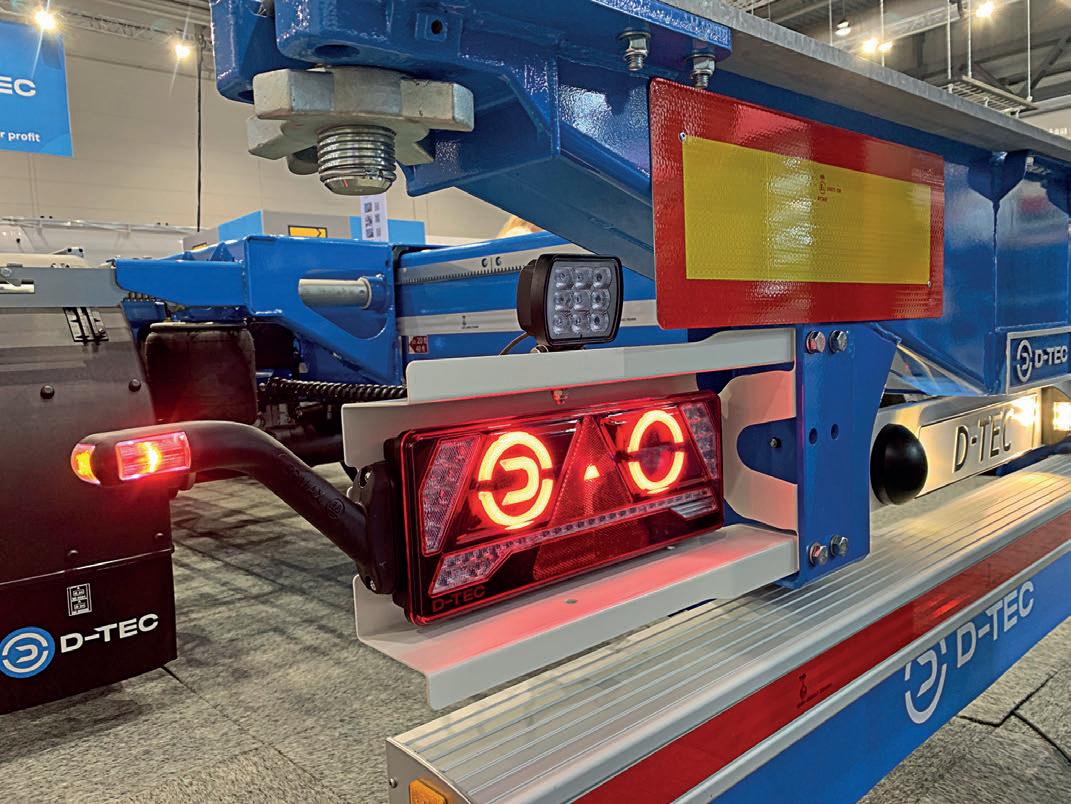
One example is the collaboration between Ermax and the Dutch trailer manufacturer D-TEC, where a customised rear light solution was developed featuring the D-TEC logo integrated directly into the lighting signature.
e concept creates a distinctive visual identity for the trailer manufacturer while still ful lling the practical requirements expected from modern commercial vehicle lighting. During daylight, the logo becomes a natural design element within the rear light, while in darkness, it transforms into an illuminated brand signature visible on the road.
For trailer builders operating in an increasingly competitive market, this creates new opportunities to strengthen brand recognition and visual di erentiation.
At the same time, the solution remains rmly rooted in OEM requirements. e lights are developed to withstand demanding operating conditions including vibration, moisture, road salt and temperature variations. Robust materials, advanced LED technology and extensive testing ensure long-term reliability and performance.
Ermax Managing Director, Kristian Olsen, said the growing interest in integrated logo lighting re ects a broader market trend, where lighting is no longer viewed only as a technical necessity but increasingly as part of the vehicle’s overall identity and design language.
e development also demonstrates how close collaboration with customers continues to play a central role in Ermax’s innovation process – a principle that applies to the entire BPW Group.
“We see the best results when functionality and customer identity are developed together. e goal is not only to create a light that performs well, but a solution that strengthens the customer’s own product and brand,” said Olsen.
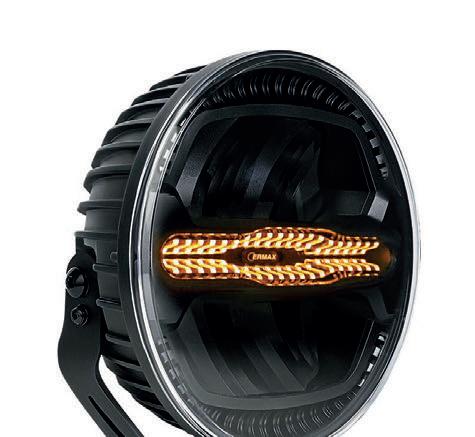
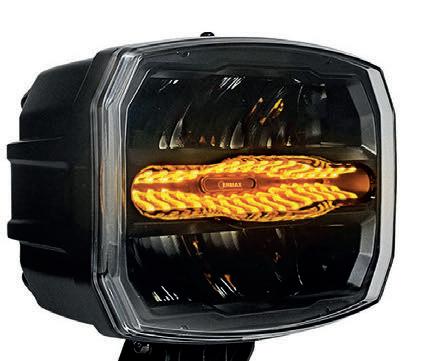
While customised rear lighting has been a major development focus in recent years, Ermax is now taking another strategic step forward, by expanding its lighting portfolio with an entirely new product range positioned at the front of the vehicle – entering the driving light segment under the concept: Lighting without compromise
extension of Ermax’s existing expertise within commercial vehicle lighting, while also marking the company’s ambition to move “to the front” with new technologies and product categories.
Designed speci cally for demanding heavy-duty applications, the new range combines powerful illumination, durable construction and straightforward installation solutions.
For professional drivers, lighting quality is about far more than appearance. Longdistance transport can involve driving distances in darkness, rain, snow and changing road conditions where visibility directly impacts safety, comfort and fatigue levels.
e new Ermax driving lights are therefore developed with a strong focus on optimised light output, e cient beam patterns and real-world driving performance.
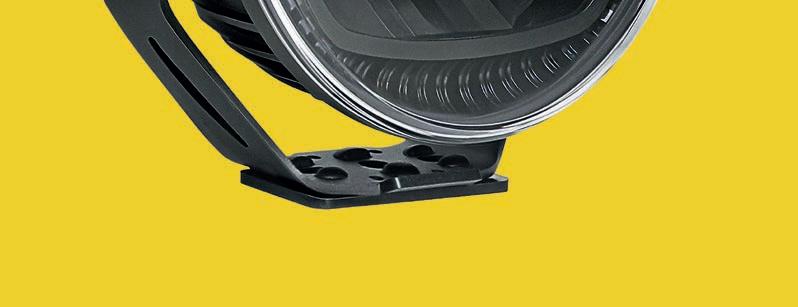
At the same time, installers and distributors increasingly demand solutions that are easy and e cient to work with. Ermax has therefore placed signi cant emphasis on practical installation, robust connectors and complete solutions that simplify mounting and reduce installation time.
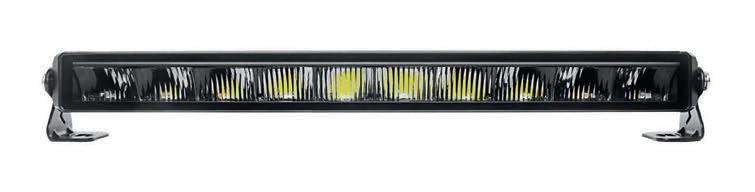
e new range includes driving lights, LED light bars and additional front lighting solutions developed for commercial vehicles operating in harsh Nordic and European environments.
Durability has also been a key priority throughout the development process. e products are designed using robust aluminium housing, impact-resistant polycarbonate lenses and sealed constructions suitable for demanding outdoor applications. Ermax’s approach has been clear from the beginning - to develop premium-quality lighting solutions without unnecessary complexity.
“Customers should not have to choose between performance, durability and easy installation. Our goal is to deliver solutions that combine all three,” said Olsen.
Modern LED technology also o ers lower power consumption and longer service life compared to traditional lighting solutions, supporting reduced maintenance needs and improved operational reliability.
For Ermax, the new driving light range is seen as the next step in its ongoing development as a full-range lighting partner for the commercial vehicle industry, with
With more than seven decades of experience, Ermax believes the future of commercial vehicle lighting will increasingly combine advanced technology, intelligent functionality
And as the company expands its portfolio into new product areas, the ambition



IN TRANSPORT, RELIABILITY, FLEXIBILITY AND COST-EFFECTIVENESS ARE KEY TO SUCCESS – ESPECIALLY WITH GROWING DEMANDS AND INCREASING COMPLEXITY. KRONE MEETS THESE CHALLENGES WITH A COMPREHENSIVE PRODUCT AND SERVICE PORTFOLIO THAT GOES FAR BEYOND THE DEVELOPMENT OF TRAILERS.
As a holistic system provider, KRONE o ers intelligent vehicles, digital tools and well-designed services. Everything from a single source, everything with a clear goal: to make everyday life easier, more e cient and more economical for transport companies.
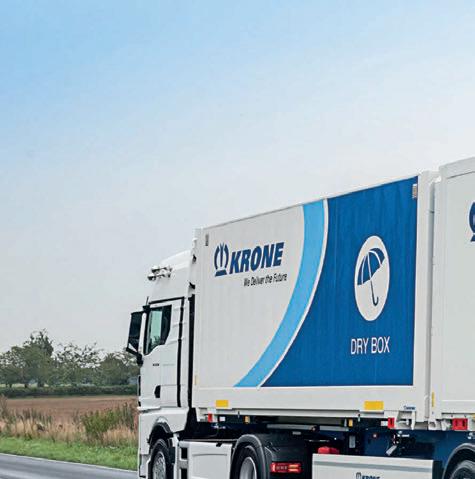
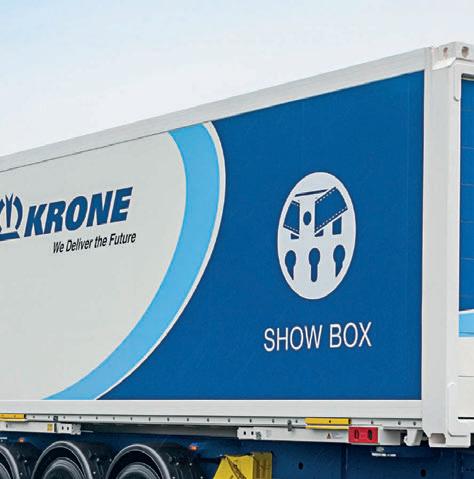
At the heart of KRONE’S vehicle portfolio are its proven models of Liner series that cover all the requirements of modern freight transport – from temperature-controlled transport with the Cool Liner to the Dry Liner for dry freight and the versatile Pro Liner. ese versatile trailers can be con gured in countless variations to suit client requirements. Specialisations such as the Paper Liner or the Coil Liner o er tailormade solutions for sensitive or heavy loads – each with sophisticated load securing and technical features that simplify everyday work.

“Our comprehensive transport solutions set new standards with innovative technology and outstanding quality,” said KRONE Managing Director of Sales and Marketing, Dr Frank Albers.
“Whether in production, equipment or handling – for us, everyday practicality for our customers is the top priority.”
“KRONE has recently turned its attention to its lighting portfolio and presents a newly developed round rear light and LED light strips for cargo area lighting.”
Its current focus is on a newly developed round rear light and LED light strips for cargo area lighting. e systems contribute to safety in tra c and during loading and unloading.

e new KRONE round light replaces the previous three-chamber round light. Now, the three central light functions of taillight, brake light and indicator are no longer separate, but combined in a single light chamber. Moreover, the new design o ers a homogeneous illumination
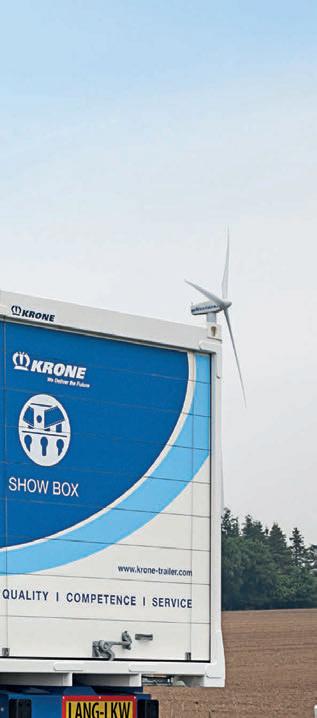
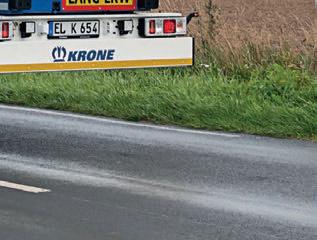
of the taillight, so that individual LEDs are no longer visible. And controlled heat generation provides a de-icing function, allowing troublefree operation even in colder regions. ese functions are supplemented by separate reversing lights and triangular re ectors.
“With the new lighting systems, we are consistently pursuing our goal of harmonising functionality, economy and design,” said KRONE Trailer product expert, Georg Bergmann. ‘Especially when it comes to safety-relevant components such as vehicle lighting, it is important to have well-thought-out technology that works reliably in everyday use and at the same time o ers added value for our customers.
KRONE recognises that data is the key to efficient fleet management. With KRONE Telematics, eet operators receive all relevant vehicle data in real time - from location and temperature to load compartment utilisation. is enables optimised route planning, increases safety and reduces operating costs.
At a time when transport companies need transparency, KRONE Telematics o ers services that are exible to the customer’s eet and core business.
Additionally, the KRONE Smart Assistant makes everyday life easier for dispatchers and enables smooth work ows. e Smart Assistant works via a QR code on the trailer, which is scanned with a smartphone, opening a messenger-based system via WhatsApp, Telegram or Viber. In just a few seconds, drivers can report damage and document it with photos, digitally record handover, report accidents in a structured manner or access documents.
With its new digital portal mykrone.blue, KRONE o ers its customers a central platform where all information, services and vehicle data are intelligently bundled. From contract management and live eet view to telematics, eet managers get a complete overview of their vehicles and processes with just one login. e digital system is tailored precisely to the requirements of transport companies: intuitive to use, available around the clock and maximally transparent. e relevant data is already available online when the vehicle is handed over, saving time and enhancing administrative duties.
“With mykrone.blue, we are creating a digital space where our customers can nd everything
they need for e cient and transparent trailer operation,” said mykrone.blue GmbH Managing Director, Maximilian Birle.
As a result, KRONE o ers a service concept that covers the entire life cycle of a trailer. Spare parts supply, maintenance, telematics and breakdown assistance all work together for maximum operational readiness and minimum downtime.
e KRONE Parts online shop provides access to around 70,000 spare parts, and with intelligent links to chassis numbers, it is even easier to place orders for the precise parts needed. Moreover, KRONE’s Trusted spare parts brand expands the range with cost-e cient wear parts that o er an economical alternative to the original with delivery being fast and reliable within 24 hours, reducing down-time.
KRONE’s modular Fair Care service allows maintenance packages to be put together individually – including predictable costs, regular checks and 24/7 breakdown service. “ is not only saves our customers valuable time, but also optimises their cost control,” said KRONE Trailer’s Service Managing Director, Ralf Faust.
As a result, KRONE is more than just a trailer manufacturer, but a strong and reliable partner to the transport and logistics industry.
With well-designed vehicles, pioneering digitalisation and comprehensive services, the company creates real added value for its customers – day a er day, journey a er journey. Its strategic partnership with Schwarzmüller also signi cantly expands the product portfolio.
In future, customers will bene t from an even wider selection, ranging from standard trailers to specialised vehicle solutions for the most demanding transport tasks, such as tippers and tankers.
www.krone-trailer.com/en/

For nearly 50 years, Aspöck Systems has pursued a simple but ambitious idea: reduce complexity by integrating lighting functions into complete systems. Today, that philosophy is taking a signi cant leap forward with the introduction of the FlexLED range, a family of LED strip solutions designed to minimise components, simplify installation and create new possibilities for trailer design. e concept behind FlexLED is remarkably straightforward. Instead of relying on multiple individual lamps, re ectors, wiring harnesses and connectors, trailer manufacturers can now integrate lighting functions into continuous LED strips powered by a single cable for each functional area. Side marker lights, multifunction rear lighting, interior illumination and even number plate lighting can all be incorporated into streamlined, integrated solutions.
From components to complete systems
While the technology may appear highly contemporary, its origins can be traced back almost half a century.
In 1977, company founder, Felix Aspöck, looked at the vehicle lighting systems of the day and saw unnecessary complexity. Traditional trailer lighting relied on numerous individual components, each requiring separate installation processes, dedicated wiring and additional assembly e ort.
Rather than accepting this fragmented approach, Aspöck envisioned a more e cient solution. His idea was to combine multiple lighting functions into integrated systems that would simplify installation while improving functionality and reliability. at systems-based philosophy became the foundation of Aspöck Systems’ growth. Over the following decades, individual lighting functions evolved into multifunction lamps, standalone components became complete lighting systems and complex wiring arrangements were transformed into coordinated vehicle-wide solutions. e company also developed a reputation for creating tailored lighting systems that balanced functionality, ease of installation and visual appeal. FlexLED represents the latest step in that evolution.
With FlexLED, Aspöck Systems is extending its longstanding systems approach beyond individual lamps and into continuous lighting architecture. e technology allows trailers to be equipped with integrated LED strips around
large sections of the vehicle, reducing the need for numerous individual lighting units while maintaining compliance with regulatory requirements.
According to Aspöck, this creates opportunities not only for simpli ed assembly but also for entirely new approaches to vehicle design. Lighting can now become an integrated part of the trailer structure rather than an accessory mounted onto it a er construction.
FlexLED SML – rethinking side marker lighting
One of the most notable applications is FlexLED SML, which provides side marker lighting through clearly encapsulated LED segments positioned within a continuous strip. Instead of installing multiple individual side marker lamps along the vehicle side, manufacturers can create a seamless lighting solution powered by a single cable connection.
e result is a cleaner appearance and reduced installation complexity, while maintaining the visibility requirements essential for trailer safety.
FlexLED Multifunction is a new rear lighting architecture
At the rear of the vehicle, FlexLED Multifunction takes a similar approach. Its di usely encapsulated design creates a uniform light signature while combining several functions within a compact package.
e company’s development roadmap extends
this concept even further. Future versions are expected to enable larger sections of the trailer rear to be equipped with FlexLED technology, integrating stop lamps, tail lamps, indicators and additional lighting functions into a single continuous system.
Supporting aerodynamic design
As trailer manufacturers face increasing pressure to improve vehicle e ciency, every aspect of design is being examined for opportunities to reduce drag and improve aerodynamic performance.
FlexLED strips contribute to this objective by enabling slimmer and more integrated lighting solutions. Because the strips can be incorporated directly into vehicle pro les and structural components, they allow designers greater exibility when developing streamlined trailer bodies.
FlexLED and the VECTO e ciency challenge is capability may become particularly relevant as manufacturers continue adapting to regulatory
By reducing the protrusions and packaging constraints associated with traditional lighting units, FlexLED o ers another tool for engineers seeking to optimise vehicle aerodynamics without compromising safety or functionality.
Bringing continuous lighting inside the trailer
e potential applications for FlexLED extend well beyond exterior marker and rear lighting.
Within the trailer body, FlexLED Interior provides uniform illumination for load compartments and vehicle interiors. Continuous lighting can improve visibility throughout the cargo space while reducing the number of separate xtures required.
Even number plate lighting can be delivered through FlexLED technology, further supporting the goal of reducing component count across the vehicle.
Lighting as a design feature
e broader signi cance of this approach lies in how lighting is incorporated into the overall vehicle architecture. Rather than being treated as a separate system, lighting becomes a design element integrated from the earliest stages of vehicle development. is opens the door to distinctive lighting signatures, brand-speci c styling cues and customised design features that can help manufacturers di erentiate their products in a competitive market.
For trailer builders, lighting can become an extension of brand identity rather than simply a functional necessity.
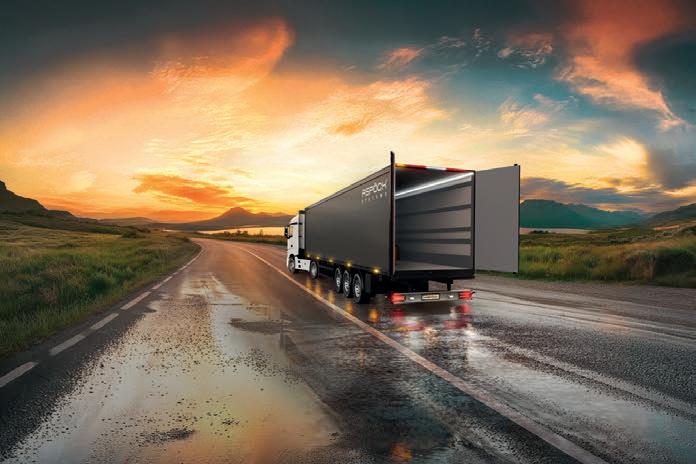
FlexLED products are developed, tested and manufactured in Austria, with compliance to UN-ECE R10 and R148 regulations for international use. Images: Aspöck Systems.
Aspöck UK showcased the latest developments at the Road Transport Expo in England from 30 June to 2 July, while Aspöck Norden will join the company at Elmia Lastbil in Sweden from 19 to 22 August. The exhibition calendar will culminate at IAA Transportation in Hanover from 15 to 20 September, where the lighting specialist will once again present its latest technologies at one of the commercial vehicle industry’s most in uential international trade fairs.
Safety, compliance and visibility
Despite the emphasis on design and integration, safety remains at the core of the FlexLED concept.
Aspöck Systems has long focused on improving vehicle visibility, and continuous LED lighting o ers new ways to achieve that objective. e uniform distribution of light helps improve vehicle recognition while creating clear visual signatures that can be readily identi ed by other road users.
e technology is designed to provide glare-free illumination while ensuring the trailer remains highly visible in a wide range of operating conditions.
To support global deployment, the FlexLED ECE range complies with the requirements of UN-ECE R10 and R148 regulations. All photometric measurements and testing are conducted within the Aspöck Group’s own laboratory facilities, allowing development, validation and quality assurance to remain closely connected.
For eet operators and vehicle manufacturers alike, this combination of safety, e ciency and contemporary design is central to the appeal of the technology.
The next chapter in integrated lighting
Aspöck Systems continues to develop and manufacture FlexLED products in Austria, close to its corporate headquarters. e company views this proximity between development, testing and production as a key advantage. Engineers, laboratory teams and manufacturing specialists can collaborate closely throughout the product development process, supporting rapid innovation cycles and continuous re nement.
As the commercial vehicle sector continues to grow, technologies that combine e ciency, safety and design exibility are likely to play an increasingly important role. With FlexLED, Aspöck Systems said it has opened the next chapter in integrated trailer lighting.
www.aspoeck.com


Engineers at FORVIA HELLA’s unique light testing facility evaluate advanced lighting systems under realistic road conditions.








FROM A SMALL LAMP MANUFACTURER IN LIPPSTADT TO A GLOBAL FORCE IN LIGHTING AND ELECTRONICS, FORVIA HELLA’S 127-YEAR ENGINEERING JOURNEY POWERS TODAY’S TRAILER INNOVATIONS. THE RESULT: PROVEN LIGHTING EXPERTISE, RIGOROUS VALIDATION AND DEPENDABLE PERFORMANCE ACROSS GLOBAL FLEETS.
FORVIA HELLA’s roots reach back to 1899, when Sally Windmüller founded Westfälische Metall Industrie in Lippstadt, Germany, and set a course de ned by practical innovation. Early milestones, like the acetylene “System Hella” headlamp, established a reputation for quality that still shapes the company today. As part of the FORVIA Group, FORVIA HELLA combines century-long lighting know-how with modern electronics and so ware capabilities – translating legacy into engineering depth for trailer programs worldwide. “Heritage matters because it stands for proven reliability, quality and durability – values that matter most when trailers need to perform under the toughest conditions,” said Andreas Reitz, Global Sales Director for the Trailer segment at FORVIA HELLA.
For trailers, that depth shows up in how solutions are conceived as systems rather than single components. Rear light signatures are developed for clear recognition, side marker layouts are tuned for long combinations, reversing and work lights support safe manoeuvring and loading, and cabling and connectors are engineered to survive vibration, salt spray, temperature swings and high pressure cleaning. is approach is built around the trailer duty cycle, not based on generic carry-over solutions. It re ects FORVIA HELLA’s role as a system supplier for trailer applications, combining lighting and electronics into fully integrated solutions. “We start with the use case on the road and work backward into design and validation,” noted Reitz. “ at’s how we ensure visibility, long-term operation and seamless integration into OEM speci c electrical architectures.”
The Lippstadt light tunnel: where ideas meet evidence Few places make this approach as tangible as the 140-metre light testing facility in Lippstadt. In a fully controlled, repeatable environment, engineers assess beam patterns, viewing ranges and homogeneity without the variability of daylight or weather. Re ective roadside poles, pedestrian targets and distance markers every twenty metres recreate a realistic roadway, allowing side by side comparisons that turn design choices into measurable outcomes. For trailer manufacturers, the tunnel is where rear lamp concepts,
side marker positions and reversing illumination are re ned to support conspicuity, safety and compliance across key markets. “Validation you can see – that’s the value of the tunnel,” said Reitz. “It accelerates decision-making by making performance measurable, repeatable and directly comparable.”
R&D to production: closing the loop on quality e same discipline extends from R&D into production. Environmental testing covers dust and water ingress, temperature cycling and vibration – the stresses that de ne trailer operations. Functional safety processes from automotive electronics inform the way lighting and electronic systems are designed and released. Manufacturing adds traceability and audits, linking prototypes and series production in a closed loop of continuous improvement. e outcome is a product lifecycle where development, validation and quality assurance reinforce each other – ensuring that performance proven under test conditions is consistently delivered in realworld trailer operations.
SOE: built around the trailer customer
Special Original Equipment (SOE) is built around the trailer customer. As part of the FORVIA HELLA Lifecycle Solutions Business Group – alongside Independent A ermarket and Workshop Solutions – SOE sits at the centre for trailers and special vehicles. It connects technology leadership in lighting and electronics with application-speci c requirements, turning robust designs into durable, market ready systems. What sets FORVIA HELLA apart is a clear USP

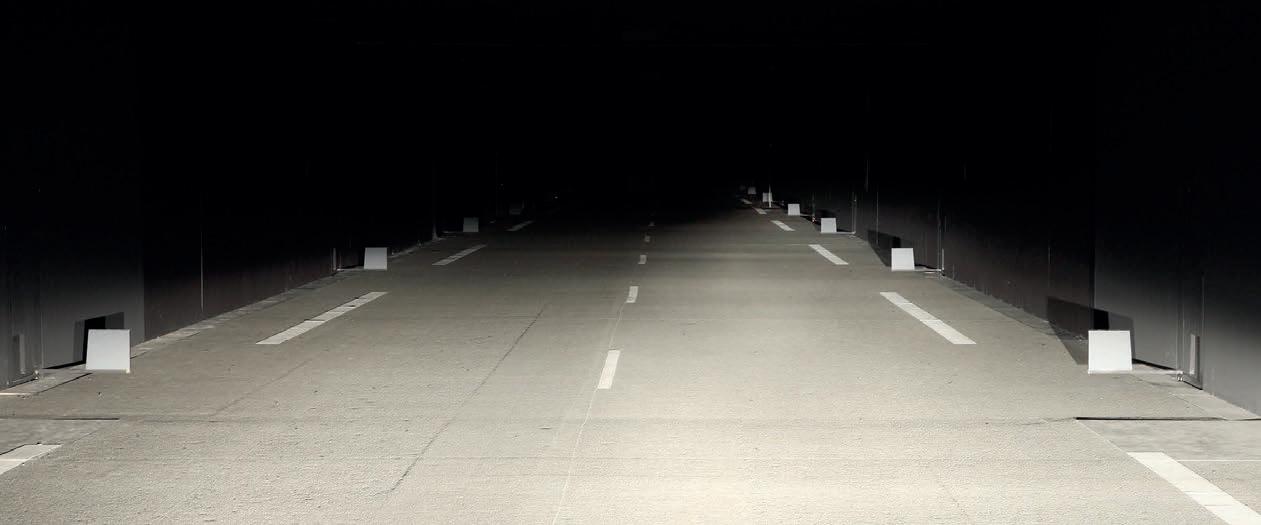
(Unique Selling Point) for commercial vehicles and industry applications: in house development, production, and sales organisations aligned to commercial vehicles and industry applications (CVI) priorities such as robustness, functional safety, long lifecycles, and regional market proximity. is integrated setup shortens paths from idea to application and keeps decisions close to customers.
Drawing on core automotive experience while developing sector speci c solutions, the SOE teams focus on original equipment for trailer OEMs and eets. e portfolio spans full LED rear lamps with homogeneous light signatures and integrated failure monitoring, electronic systems, and work lamps for safe manoeuvres and loading zones, side marker and licence plate lamps that enhance conspicuity in all conditions, and advanced cabling systems designed for robust electrical architectures and straightforward serviceability. Beyond the hardware, engineering support and application know how help bridge concept studies into series ready designs. “Our role is to make integration simple and reliability predictable,” said Reitz. “ at’s what OEMs and eets ultimately measure us by.”
Global scale, local collaboration
Underlying these capabilities is a global footprint paired with local collaboration. FORVIA HELLA’s international presence enables responsive support and dependable logistics, while development stays close to customers to address regional regulations and platform speci cs. Within the Lifecycle Solutions Business Group, the Independent A ermarket complements this with a broad
a ermarket o ering for workshops and eets, reinforcing availability and service over the vehicle lifetime. Together, these strengths help OEMs meet visibility requirements, simplify compliance checks and improve uptime – bene ts that translate into predictable costs for operators.
From lighting legacy to integrated systems performance e company’s history is part of the story, but only as a proof point for what matters now: engineering that turns intent into dependable performance. In the 1960s, international expansion began with the rst overseas factory; in 2022, the creation of the FORVIA Group brought complementary technology and industrial strengths together; today, FORVIA HELLA applies that scale and expertise to the speci c demands of trailers - combining lighting and electronic systems into integrated solutions. “Light is our legacy,” as Reitz put it, “but our mission remains the same as in 1899: to make mobility safer, more e cient and more reliable – now combining lighting and electronics into


• FORVIA HELLA – 127 years strong – traces its origins to 1899 and the pioneering vision of Sally Windmüller.
• FORVIA HELLA’s Special Original Equipment (SOE) division develops and manufactures innovative lighting and electronic products for trailers and a wide range of other segments.
• Europe’s most advanced lighting test facility – a 140-metre light tunnel – is located in Lippstadt, Germany.
AS EUROPEAN EMISSIONS REGULATIONS TIGHTEN AND SUSTAINABILITY EXPECTATIONS RISE ACROSS THE COMMERCIAL
VEHICLE INDUSTRY, BRIANZA PLASTICA IS POSITIONING ITS LATEST LOVOC GRP LAMINATES AS A PRACTICAL SOLUTION FOR MANUFACTURERS SEEKING COMPLIANCE WITHOUT COMPROMISING PERFORMANCE.
New LoVOC grp laminates by Brianza Plastica are a concrete solution to the latest European regulations. Environmental responsibility has become a de ning factor in the commercial vehicle sector, in uencing everything from vehicle design and manufacturing processes to material selection and supply chain management. With European legislation increasingly focused on reducing industrial emissions and improving workplace safety, manufacturers are under growing pressure to adopt materials that support both regulatory compliance and long-term sustainability objectives.
Italian composite materials specialist, Brianza Plastica, has responded to these evolving requirements with the introduction of its new LoVOC laminate range. Developed through extensive research and product engineering, the latest generation of glass bre reinforced plastic (GRP) laminates has been speci cally designed to reduce Volatile Organic Compound (VOC) emissions while maintaining the performance characteristics
required by commercial vehicle manufacturers.
e launch re ects a broader industry trend towards cleaner production technologies and environmentally responsible materials. VOC emissions have become an increasingly important area of focus across Europe due to their impact on air quality and worker health. By signi cantly lowering emissions during both manufacturing and application processes, Brianza Plastica’s LoVOC technology o ers vehicle builders a practical pathway to meeting stricter environmental standards.
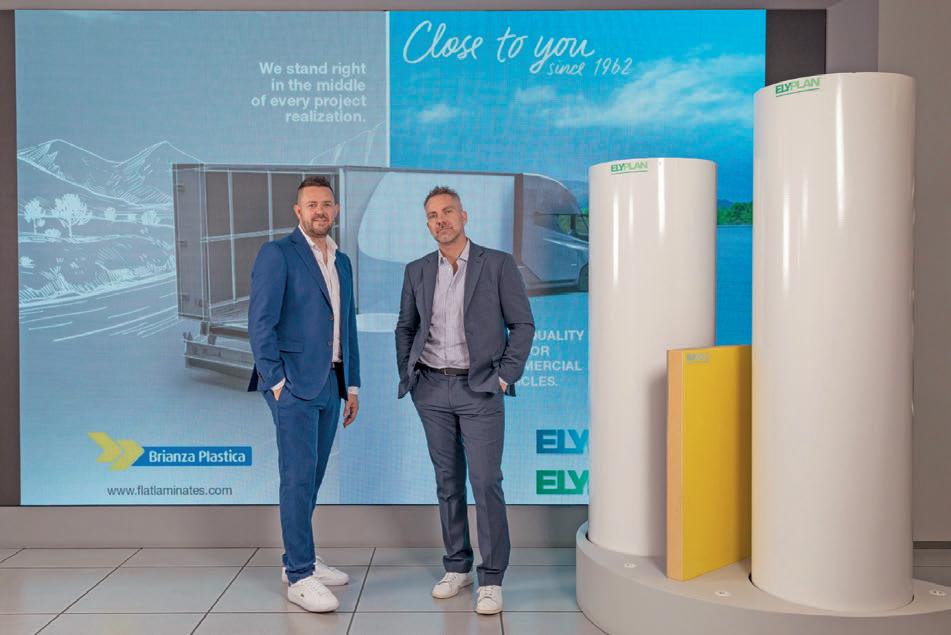
e innovation stems from a resin that reduces VOC emissions at multiple stages of production. e result is a GRP laminate developed to meet sustainability and regulatory requirements while supporting manufacturers’ environmental goals.
Importantly, the LoVOC feature is not con ned to a single product. It is already available across several established product families, including Elyplan Standard, Elyplan Extra-Glass and Elyplan Design Style. is allows customers to integrate lower-emission materials into existing vehicle programmes without the need for signi cant design changes or process modi cations.
As regulatory requirements continue to evolve, solutions that balance environmental performance with durability, strength and production e ciency are expected to become increasingly valuable. Brianza Plastica believes its LoVOC range represents exactly that balance.
Meet Brianza Plastica at IAA 2026 – Hall 27, Stand A22
Brianza Plastica will be presenting its latest innovations at IAA Transportation 2026, one
of the world’s most in uential exhibitions for logistics, commercial vehicles and transport technologies.
Taking place in Hanover from 15-20 September, the event will provide visitors with an opportunity to explore the company’s latest developments in composite materials, including the new LoVOC laminate range.
Representing Brianza Plastica at Hall 27, Stand A22 will be Davide Verde, Regional Sales & Product Development Manager, and Andrea Bollani, Regional Sales and USA Development Manager. Both will be available throughout the exhibition to discuss customer requirements, product applications and tailored development projects.
e company intends to highlight not only its latest product innovations but also its ability to provide comprehensive technical support throughout the development process. Services include customised product design, colour matching, performance testing and technical consultancy, helping customers identify the most appropriate laminate solutions for their speci c vehicle applications.
Manufactured entirely in Italy and supplied globally, Brianza Plastica’s products continue to serve customers across both commercial and recreational vehicle sectors.
Brianza Plastica: GRP laminates for highperformance commercial vehicles
Founded in 1962, Brianza Plastica has established itself as one of Europe’s leading manufacturers of GRP laminates. Over more than six decades, the company has developed a reputation for combining technical innovation with manufacturing expertise and customer-focused service.
Today, production is carried out across ve facilities located exclusively in Italy. e company employs both continuous and discontinuous manufacturing technologies, enabling it to o er a diverse portfolio of products suited to a wide range of vehicle construction requirements.
e growing adoption of GRP laminates across the transport industry reflects the material’s signi cant advantages over traditional alternatives such as aluminium. Reduced weight, improved corrosion resistance and enhanced design exibility have made composite materials
increasingly attractive for commercial vehicle manufacturers seeking e ciency gains and lower lifecycle costs.
Among Brianza Plastica’s key product families are Elycold and Elyplan, each developed to address speci c performance and manufacturing requirements.
Elycold laminates are produced using a discontinuous process at ambient temperature, resulting in excellent surface quality, atness and aesthetic consistency. Products within the range, including Elycold Lite and Elycold Extra-Glass, combine low weight with high rigidity and impact resistance. ese characteristics make them particularly suitable for sidewalls and interior applications in refrigerated and temperature-controlled vehicles, where structural performance and appearance are equally important.
e Elyplan range is manufactured using a continuous lamination process and is available in both roll and sheet formats. Depending on application requirements, products can be supplied with or without gelcoat nishes. Elyplan laminates are valued for their dimensional stability, manufacturing e ciency and competitive cost pro le.
One of the standout products in the portfolio is Elyplan Extra-Glass, which combines lightweight construction with tensile strength reaching up to 230 MPa. Such characteristics make it well suited to vehicle applications where durability and weight reduction must be carefully balanced. Advanced gelcoat technologies and premium raw materials also contribute to long-term resistance against yellowing, moisture penetration and condensation.
Fire safety remains another major area of development for the company. In response to increasingly stringent safety requirements across the transport sector, Brianza Plastica has expanded its ame-retardant laminate o ering with Elyplan FP400.
At just 0.8mm thick, FP400 is described as the thinnest ame-retardant GRP laminate capable of achieving B-s1-d0 re classi cation. e product delivers high levels of re resistance while maintaining a lightweight pro le, making it particularly suitable for interior vehicle applications where space constraints and safety considerations are critical.
FP400 joins an established family of re-performance laminates that includes Elyplan FP220 and Elyplan FP230. FP220, produced at a thickness of 2mm and certi ed to B-s1-d0 standards, features a surface treatment that enables customers to apply a wide variety of topcoat nishes, including polyurethane-based paints. e FP230 range is available in both 2mm and 1.5mm variants, o ering classi cations of C-s2-d0 and D-s2-d0 respectively.
Together, these products demonstrate the company’s continued investment in research and development and its commitment to meeting the increasingly specialised demands of vehicle manufacturers.
In 2026, Brianza Plastica celebrates the anniversary of its San Martino di Venezze production site and the Elycold product
Twenty years ago, the company began production of Elycold breglass laminates at its San Martino di Venezze facility. Since then, the site has undergone continuous expansion and modernisation, re ecting both growing market demand and the company’s commitment to technological advancement. e product line has since expanded considerably.
Today, Elycold products are supplied to customers throughout Italy and abroad. As sustainability, safety and performance become increasingly interconnected priorities within the commercial vehicle industry, the company’s latest LoVOC initiative represents the next stage in that evolution – combining environmental responsibility with the technical performance that manufacturers continue to demand.
www. atlaminates.com
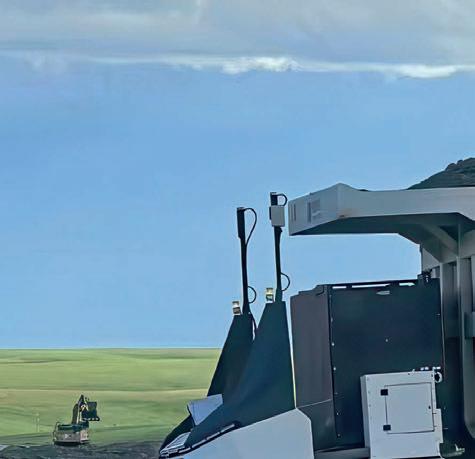
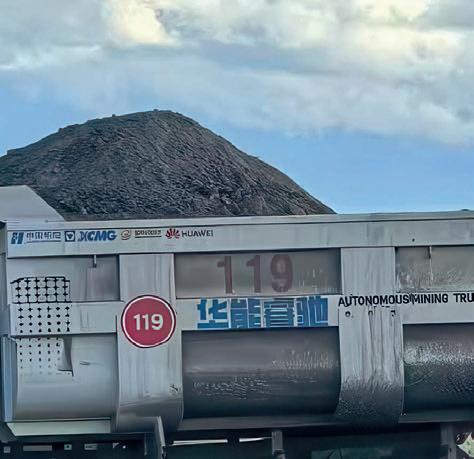


AS AUTONOMOUS AND ELECTRIC TRUCKS ACCELERATE INTO MAINSTREAM USE, PARTICULARLY IN CHINA’S INNER MONGOLIA MINING SECTOR, GLOBAL SUPPLIERS ARE FORGING DEEPER, MORE INTEGRATED PARTNERSHIPS TO DELIVER THE TECHNOLOGIES NEEDED FOR THIS NEXT PHASE OF HEAVY VEHICLE EVOLUTION.
Hyva and XCMG co-created a solution – DTS Tip by wire – based on DTS (Digital Tipping Solutions) architecture for autonomous tipper body control on EV trucks, which were comprised of unmanned tippers and no cabins. Currently there are 100 of these autonomous trucks running, and the eet is planned to be further expanded in the future.
e product features include speci c body control (for tipping operation) and a smart speed lowering adjustment depending on sticky load amount. ese are combined with payload monitoring, as well as remote diagnosis, and over-the-air update of new so ware features all based on customer request and compliant with local regulations.
As a result of this initial success, Hyva said it is looking to expand this partnership with XCMG as well as other OEMs and end-users, as well looking at similar initiatives in other global spheres.
In May 2025, 100 all-electric unmanned mining trucks were used in the Huaneng Yimin Open-Pit coal mine, which is located near Hulunbuir, Inner Mongolia in the far north of China.
As a result, the mine became the world’s rst mining site to operate a eet of 100 zero-carbon emission, fully autonomous electric haul trucks.
e Yimin mine is the second-largest openpit, coal mine in China and the world’s largest coal producer. It is estimated to cover more than 177 km².
With Yimin’s temperatures dropping to -36°C, electric vehicles can experience reduced range and slow charging, therefore a ecting performance.
Previously, the mine would utilise about 300 trucks, operated by 1,200 drivers, to run 24/7 but greater focus on driver safety, as a result of heavy fog, snow, rain frequent dust storms and haulage-truck incidents, spearheaded the change to autonomous trucks.
e need to remove drivers from hazardous environments and improve productivity in extreme working conditions led to a committed focus on driverless vehicles.
XCMG and XCMG Machinery Chairman, Yang Dongsheng, said: “This initiative represents a convergence of energy, technological, equipment and commercial revolutions.
By partnering with industry leaders, XCMG has delivered a world-class blueprint for global green, intelligent mining. Starting with autonomous electric trucks, we will expand to unmanned excavators, drilling rigs and loaders, creating a comprehensive zero-carbon, unmanned mining ecosystem.”
Hyva’s partnership with XCMG builds on a longstanding relationship in hydraulic systems, but is now moving into far more advanced territory – supporting the development of autonomous and electric trucks through Hyva’s digital tipping technologies.
According to Malik Chitour, Hyva’s Head of Digital Business Development, the timing is no coincidence.
“ ese trends are developing very rapidly,” he said, pointing to the deployment of more than 4,000 autonomous and electric trucks already operating across China’s mining sector. e momentum is being driven by a combination of sustainability targets, the push for higher e ciency, and the harsh realities of operating in remote, high-risk environments.
While the scale of adoption in China is notable, Hyva’s journey into autonomous vehicle technology has been building for several years. e company has quietly developed both hardware and software solutions through smaller pilot projects in China and Europe, re ning its approach and building the technical foundations now being deployed at scale.
Rather than attempting to leap straight to full autonomy, Hyva has adopted a staged development strategy. Its focus is on delivering a suite of solutions that provide incremental levels of assistance – allowing systems to be tailored to speci c applications and customer needs.
“Our philosophy is to adapt solutions to the application and the customer’s key pain points,” Chitour explained. at philosophy is now being tested and proven in one of the world’s most advanced
“THIS INITIATIVE REPRESENTS A CONVERGENCE OF ENERGY, TECHNOLOGICAL, EQUIPMENT AND COMMERCIAL REVOLUTIONS.”
XCMG AND XCMG MACHINERY CHAIRMAN, YANG DONGSHENG
and rapidly evolving markets. China’s push into autonomous trucking has been underpinned by strong government support, a highly developed electric vehicle supply chain, and a culture of rapid iteration and deployment. e result is an environment where new technologies can be implemented, tested and scaled at a pace rarely seen elsewhere.
Within this landscape, Hyva’s collaboration with XCMG has become a signi cant milestone. e project brings together expertise from across the company, with regional teams in China working closely alongside global research and development, product management and business development functions. e outcome is a fully integrated solution designed to meet the speci c demands of autonomous mining operations.
At the centre of Hyva’s contribution is its core strength: tipping solutions. Long recognised as a global leader in hydraulic tipping systems, the company has extended this capability into the digital domain, combining mechanical engineering with advanced electronics, sensors and so ware.
e result is its ‘DTS Tip By Wire’ system, a technology designed to enable fully autonomous control of a truck’s tipping body. Integrated directly with the vehicle’s operating so ware, the system replaces traditional manual controls with a so ware-driven solution capable of precise, repeatable operation.
e system combines a hydraulic setup, including tipping cylinders and associated components, with an electrically controlled valve developed in-house by Hyva’s engineering team. is is supported by a network of sensors and a central controller, forming a complete Internet of ings (IoT) solution.
Together, these elements allow the system to manage both tipping and lowering functions with a high degree of accuracy, while also optimising speed and safety. is is particularly important in mining applications, where uneven terrain and challenging loads can create additional risks.
“One of the key challenges is dealing with sticky loads that remain in the body a er tipping,” Chitour noted. “ e system is designed to manage those situations safely and e ciently.”
Connectivity is another de ning feature. e system includes remote diagnostic capabilities and supports over-the-air so ware updates, allowing operators to monitor performance, troubleshoot issues and implement improvements without the need for physical intervention. is capability, which is enabled based on customer demand and in compliance with local regulations, is critical in remote mining environments, where access can be limited and downtime costly.
e solution has also been customised in close collaboration with XCMG and its end customers, highlighting the growing importance of co-creation in the development of advanced technologies. Rather than delivering o -theshelf products, suppliers are increasingly working alongside manufacturers and operators to tailor solutions to real-world conditions.
“ e co-creation model is very powerful,” said Chitour. “It accelerates the
adoption of innovation because you’re developing solutions together with the end user.”
is approach also addresses one of the industry’s most persistent challenges: the gap between innovation and execution. While new ideas are plentiful, bringing them to market in a scalable, reliable form is o en far more di cult.
“A lot of innovation concepts fail because of execution, not because the idea is wrong,” said Chitour.
To overcome this, Hyva has adopted an agile development methodology, designed to streamline the process from concept to deployment. By embedding this approach across the organisation, the company aims to accelerate time-tomarket while ensuring solutions are robust enough for large-scale use.
e XCMG collaboration also sits within a broader technological ecosystem that is reshaping heavy industry. Advances in 5G connectivity are enabling realtime communication across mining operations, while electric vehicle platforms are being supported by innovations such as battery-swapping systems that can reduce turnaround times to just minutes.
At the same time, the scale of deployment is increasing rapidly. Some operations are already running eets of fully autonomous, cab-less trucks, with plans to expand signi cantly in the coming years. For suppliers like Hyva, this creates both
an opportunity and a challenge –requiring solutions that can scale alongside these developments.
Looking ahead, the company sees strong potential for further growth in autonomous and electri ed applications, not only in mining but across other sectors. As part of the JOST Group, Hyva is exploring opportunities to extend its technologies into transport and agriculture, applying the same principles of integration and co-creation. e collaboration with XCMG is expected to continue evolving, with both companies working on new projects and expanding existing solutions. Similar partnerships are also being pursued with other original equipment manufacturers in China and beyond.
www.hyva.com
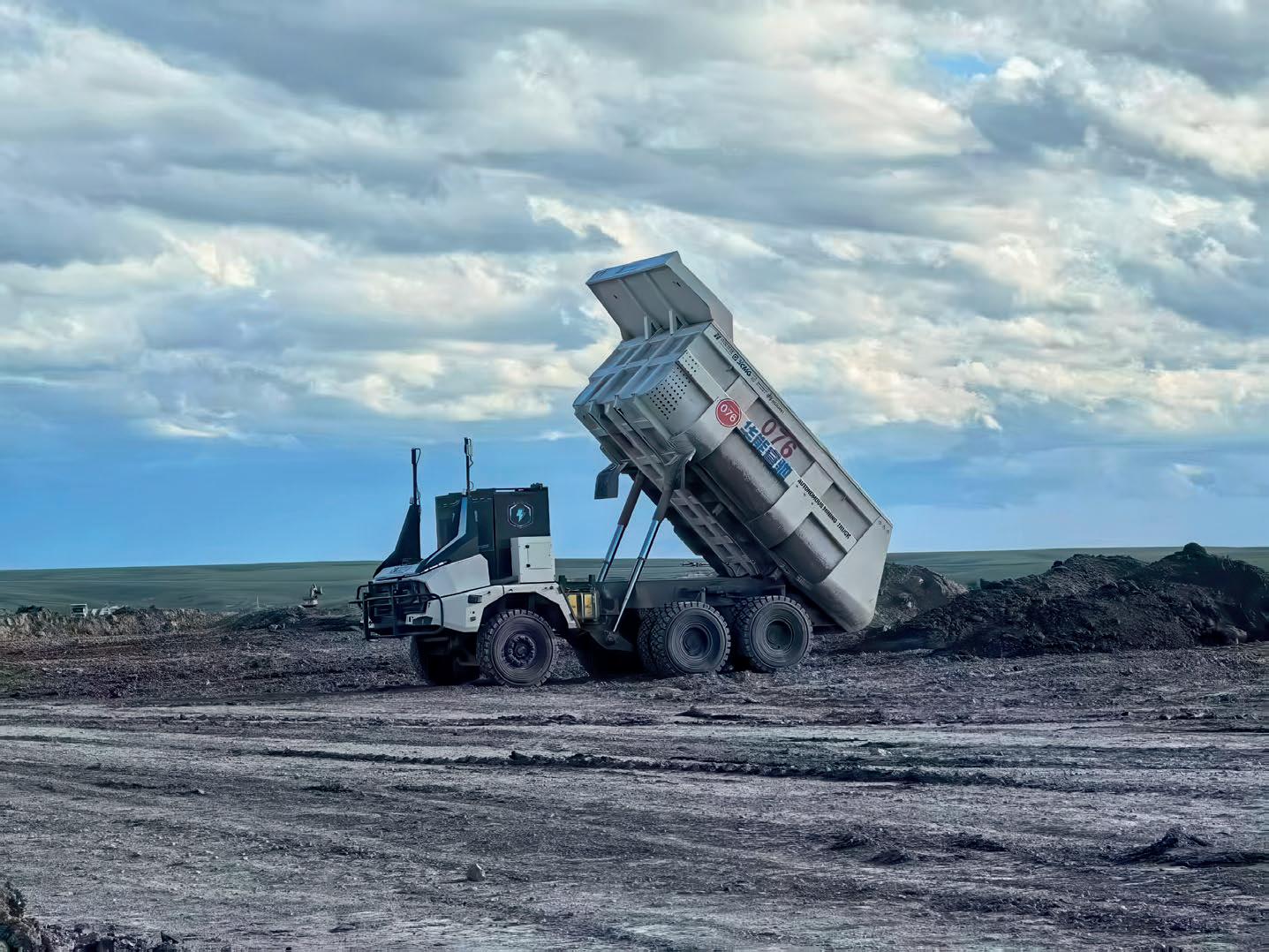
A world- rst deployment – 100 fully autonomous, zero-emission electric haul heavy vehicles operating at an open-pit coal mine in China.
15-20/09/2026
Hannover
VISIT US: Hall 27, Stand A22
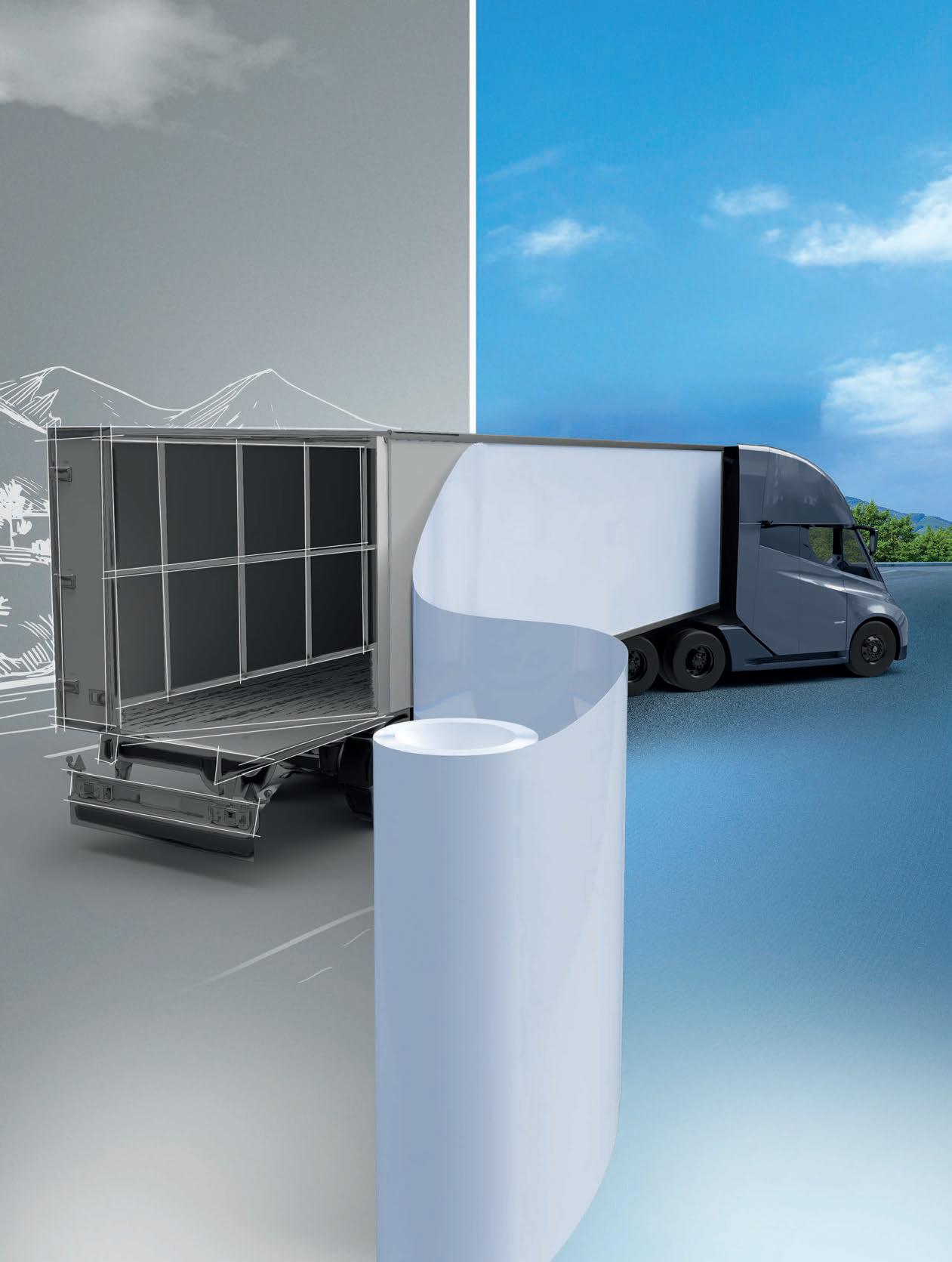
ELECTRIC REFRIGERATION MUST DELIVER OPERATIONAL AND FINANCIAL PERFORMANCE TO SCALE SUSTAINABLY IN AN INDUSTRY DOMINATED BY DIESEL. TIP GROUP’S BENELUX COMMERCIAL DIRECTOR, CLAUDIO MORETTI, AND SOURCING MANAGER, ARJAN VERSLOOT, EXAMINE E-REEFERS AND WHAT OPERATIONAL OF REALITY ZERO-EMISSION REFRIGERATED TRANSPORT LOOKS LIKE IN PRACTICE.
Implementing electric refrigeration, or e-reefers, is like a complex jigsaw puzzle requiring tailored solutions, TIP Group’s Commercial Director for Benelux, Claudio Moretti, said. “ e moment those puzzle pieces – the route, the load, and the infrastructure – t together, the results can be very compelling. at’s when the solutions show a tangible di erence and the technology proves its value,” he said.
Moretti explained that although e-reefers are the inevitable future of refrigerated transport, they are not necessarily the right solution for everyone yet.
“Route pro les, dwell times, loads, infrastructure access and vehicle con guration all determine whether the solution works, or doesn’t,” he said.
“Look at our test with a major supermarket chain using a regenerative axle; because it was used for urban distribution, with constant braking and accelerating, the generator was able to keep the battery fed continuously. e result was remarkable; based upon this solution, the unit ran for fourteen months without ever needing to be plugged in.”
Sourcing Manager, Arjan Versloot, provided another example of a logistics company distributing medicines to pharmacies. “ ere, you see how a battery-only solution can
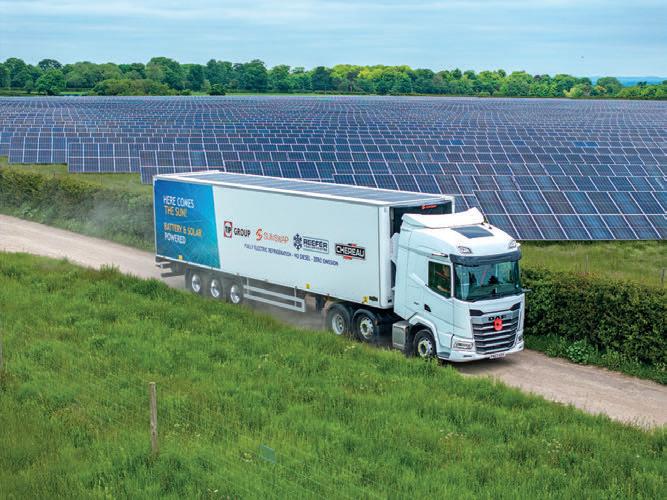
“ ose trailers are already at the dock at night for loading and unloading, exactly where the charging infrastructure was located. ey are deployed for distribution during the day and go straight back on the charger upon return.
“Because those routes are so predictable and the charging window is fully integrated into the operation, the return on investment is very favourable without the need to invest in regenerative axle technology.”
Versloot cautioned that it is a trap for operators to believe that an e-reefer can be deployed anywhere. “While a diesel engine can handle almost anything, with the only variable being fuel consumption, electric cooling requires a sharp focus,” he explained.
“With diesel, it doesn’t really matter how you use it; the engine will pull through. But with a fully electric solution, the size of your battery pack is directly linked to your operation. If the routes aren’t predictable or the right charging options are missing, the solution quickly reaches its limits.” is is where the TIP expertise comes to the fore, where it is increasingly taking on the role of advisor to customers keen to electrify their eets. is can result in a series of probing questions being asked, such as load details, frequency of door openings, transport routes, infrastructure needed.
“Today, everything has become a custom solution. And that customization starts with how you view energy within your own eet,” Moretti said.
Versloot said the transition to e-reefers requires a fundamental shi in the mindset of both planners and drivers, requiring greater awareness of battery consumption and capacities. “Technically, the machine cools the same areas a diesel-powered unit, but the real di erence lies in the nite capacity of the battery. If doors are le open unnecessarily, the cooling motor must compensate for that loss,” he said.
“While a diesel engine pulls that e ortlessly from its reserves, with a battery, you suddenly become acutely aware of every kilowatt. You simply don’t have a bu er to absorb waste if you need to nish the route without opportunity charging.”
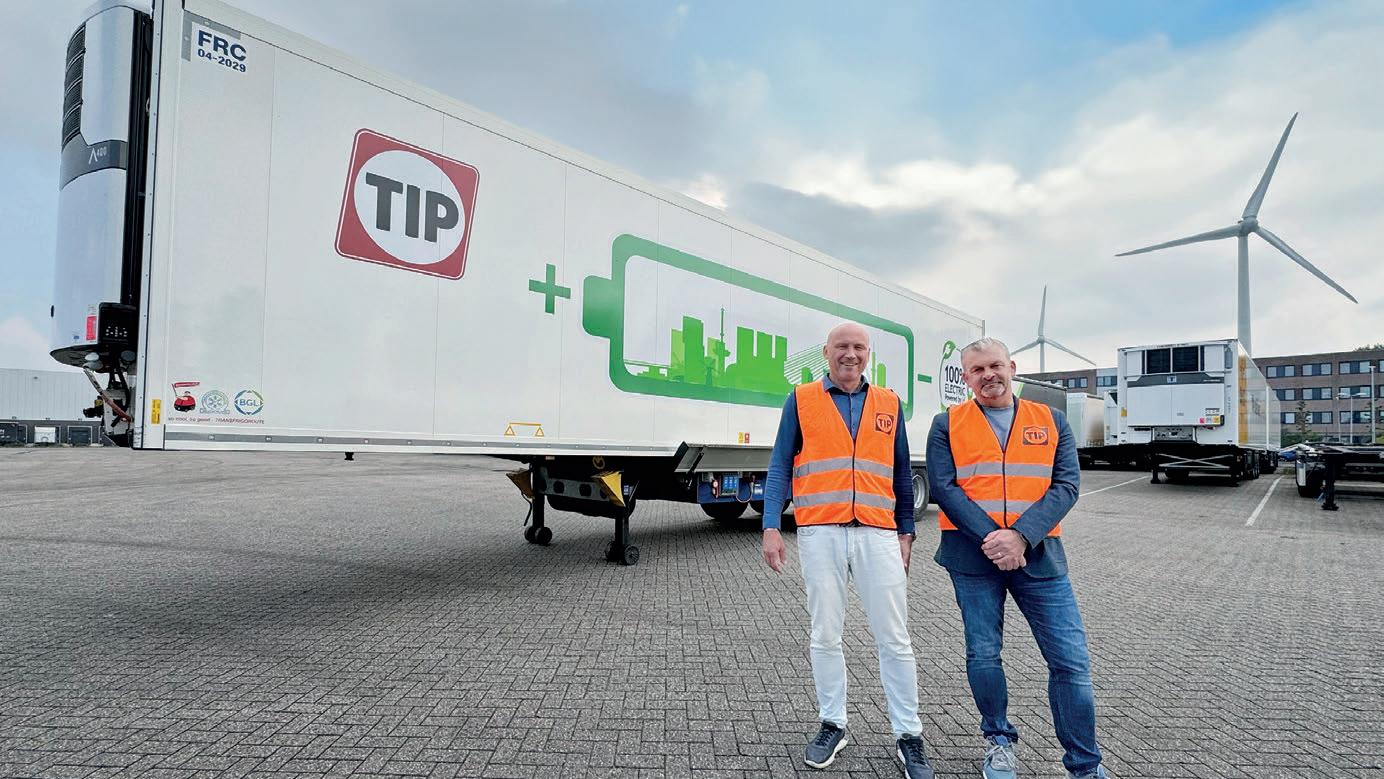
E-reefers are the way forward for TIP Group. Images: TIP Group.
As a result, everyone in the chain must be aware of a much higher level of e ciency and planning. “I don’t see that as a limitation, but rather as a positive incentive to handle energy more intelligently. Technology simply asks people to manage their
energy use more e ciently than they were used to,” said Versloot.
While that change in mindset is essential, the technical transition shouldn’t be a barrier to the adoption of e-reefers. A common misconception is that complex charging stations are required immediately. But smaller steps can be taken.
“For an e-reefer, a standard CEE connection, the industrial plug that almost every facility already has, is o en enough,” said Versloot.
“It’s simply a matter of discipline: virtually all modern cooling engines already have a standby function, so as soon as a unit is stationary for loading or unloading, it should be plugged in.”
e success of e-reefer connections will largely depend on the number of units being charged and the size of the connection to the grid, which is not limitless.
One issue that has been a stumbling block to the wider adoption of e-reefers is the TCO.
“We’ve seen a clear shi . While sustainability was initially the primary driver, rising fuel costs have become a key business consideration,” Versloot explained.
“With diesel prices largely beyond companies’ control and electricity increasingly attractive –particularly when combined with self-generation – the economic case has become more compelling.”
Reducing dependence on diesel can signi cantly improve cost e ciency and strengthen operational margins, especially when combined with a range of additional bene ts that are o en overlooked, Versloot added.
ose bene ts include free energy, where “customers with solar panels on their roofs o en have surplus energy. If you can put that into your e-reefers, the business case becomes signi cantly stronger,” said Versloot.
ere is also the issue of residual value of electric units, which is proving to be higher in practice than initially estimated. en there is the elimination of maintenance on the diesel engine part, as workshop visits for engine-related issues will be a thing of the past.
TIP has found that, like most new operations, the adjustment to implementing e-reefers in eet operations is resolved through on-the-road experience.
“ e single biggest advantage is peace and quiet; the noise level is so low that you can deliver in the middle of a residential area early in the morning without disturbing anyone,” Moretti said.
“ at’s not just pleasant for the driver and the neighborhood, it o ers a clear commercial opportunity. Fleets gain wider access to urban areas and greater operational exibility, while the silent, emission free unit also creates positive visibility for the company.”
Moretti explained that although the initial purchase price of an e-reefer may be higher than diesel-powered vehicles, the investment creates meaningful commercial value over time.
TIP maintains that in order to see the bene ts of electri ed refrigeration, operators should experience it rst-hand with the right guidance.
“At TIP, we help operators make the right decisions. We do that based on the vast amount of data from all our pilots and our years of eld experience. Because we are brandindependent, we can o er all possible brands and technologies, looking purely at what is the best solution for your speci c operation,” said Moretti.
“ e easiest and practical rst step is to start with a test unit; it allows you to experience the technology yourself in your own operation before making a nal commitment.”
www.tip-group.com/en/ eet/e-reefer
FOR 60 YEARS, MANAC HAS STOOD AS A DEFINING FORCE IN THE NORTH AMERICAN TRAILER INDUSTRY, BUILDING A LEGACY GROUNDED IN DURABILITY, PARTNERSHIP AND AN UNWAVERING COMMITMENT TO ITS CUSTOMERS.
From its founding in 1966 in Saint-Georges, Québec, Manac has grown from a small regional operation into one of North America’s most respected trailer manufacturers. Yet despite nearly six decades of growth, the company remains guided by the principles established by founder, Marcel Dutil, who launched the business at just 24 years old.
Today, those values continue under President and CEO, Charles Dutil, creating a blend of heritage and innovation that has shaped Manac’s evolution.
In its early years, Manac carved out a place in a developing Canadian trailer market by focusing on durability and customisation rather than competing on price alone. Operators in forestry, construction and freight o en required specialised equipment, and the company built its reputation by listening closely to customers and tailoring products to real-world applications.
Re ecting on the company’s history, Charles Dutil said de ning moments are rarely singular events.
“So many steps were taken by so many dedicated people before our generation of leaders, it is not an easy answer to provide,” he said.
Several milestones stand out. e introduction of an FRP open-top chip van helped pave the way for the rst generation of dry vans, while the establishment of a direct sales presence in Eastern Canada strengthened customer relationships and reinforced Manac’s market position.
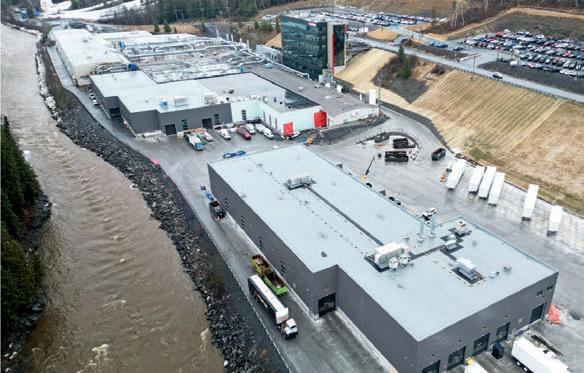



As freight demands diversified through the 1970s and 1980s, Manac expanded its manufacturing capabilities and product range to include atbeds, vans and specialised trailers. Unlike some competitors, however, the company pursued growth cautiously, ensuring increased production never came at the expense of quality. at disciplined approach proved valuable as Manac expanded into the US. Rather than targeting low-cost, high-volume segments, the company focused on customers seeking durable, high-performance equipment.
“I believe our team has a strong understanding of the value we deliver to our customers,” Charles Dutil said. “We do not position ourselves for lowprice buyers seeking lower-speci cation units with short replacement cycles.”
A major milestone came in 2002 with the acquisition of CPS Trailers in the US, strengthening Manac’s foothold south of the border and signalling its commitment to becoming a North American manufacturer.
Today, Manac has a strong presence across Canada and the eastern United States, although Charles Dutil believes there remains signi cant opportunity in western and southern US markets.
Like many long-standing manufacturers, Manac has weathered economic downturns, volatile steel prices and recent supply chain disruptions. roughout those challenges, the company has prioritised long-term relationships.
“The respect of every business partner is critical to our long-term success,” Charles Dutil said. at philosophy extends to customers.

During the unprecedented demand surge of 2022 and 2023, Manac chose to prioritise longstanding clients rather than maximise short-term pro ts through new buyers or auction sales.
“With over 90 per cent of our annual sales coming from multi-year, repeat customers, this approach has proven e ective,” he said.
Such decisions re ect a de ning characteristic of the company: a willingness to sacri ce immediate gains in favour of enduring partnerships.
Behind Manac’s longevity is a workforce that has developed alongside the business. Generations of tradespeople, engineers and industry professionals have contributed to its growth, creating a culture built on continuity and expertise.
“A colleague is the only asset in any business that gains value with time,” Charles Dutil said. at mindset shapes the company’s approach to recruitment and retention, with many employees following family members into the organisation.
“It is especially rewarding to welcome new employees who are joining the company as second or third generation colleagues,” he said. e trailer industry itself has undergone signi cant change over the past three decades. rough the 1990s and early 2000s, Manac incorporated lighter materials, improved aerodynamics and enhanced safety features in response to e ciency demands and regulatory requirements.
Today, digitalisation is reshaping how trailers are designed, monitored and maintained.
“Digitalisation and smart trailer technology are playing an increasingly important role in our product strategy as customer demand for connectivity grows,” Charles Dutil said.
Sustainability has also become a growing priority. Lightweight designs and aerodynamic
improvements reduce fuel consumption, while advances in materials contribute to longer service life.
ree of Manac’s four manufacturing plants are located in Québec, providing access to renewable hydroelectric power and lower-carbon aluminium production.
“ is clearly positions Manac as a leader in sustainable product o erings in North
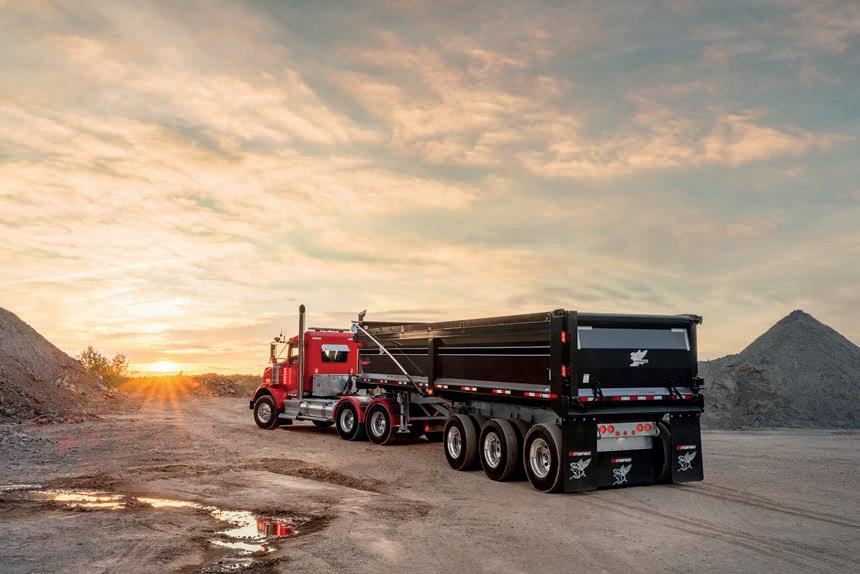
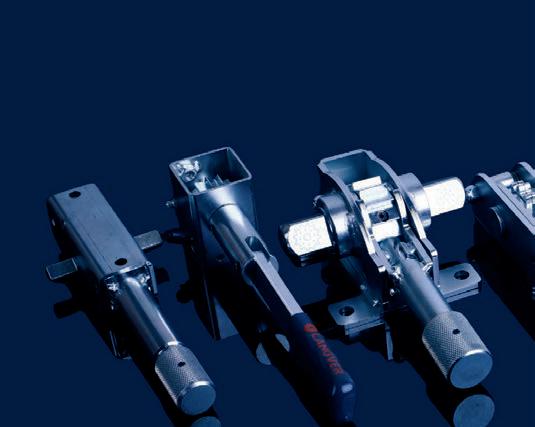
en trailer manufacturers demand tensioners t at perform wit out compromise t e specif angver. recision engineered in t e entirel in ouse to our e act specification. ecause no two trailers are identical and neit er are our solutions.
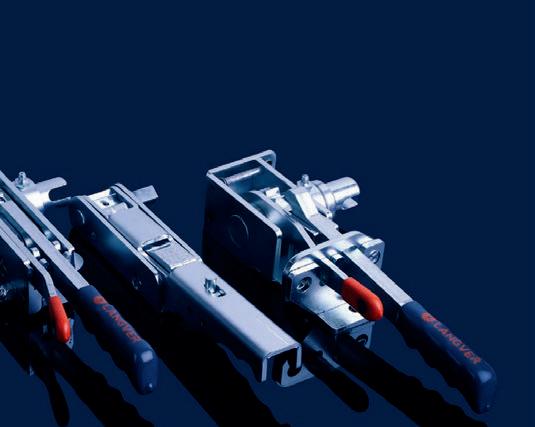







MODERN TRANSPORT FACES MANY NEW CHALLENGES – THE NEED TO INCREASE EFFICIENCY AND REDUCE FUEL CONSUMPTION, WHILE COMPLYING WITH NEW REGULATIONS AND MEETING THE GROWING DEMANDS OF THE LOGISTICS MARKET. THE SOLUTION CAN BE FOUND IN THE EVO – A NEW GENERATION OF SEMI-TRAILERS FROM THE WIELTON GROUP.
Wielton’s EVO range of trailers combines innovative technologies, standardised construction, functionality and high-quality and innovative materials, designed with the daily work of hauliers in mind.
e EVO trailer range was rst launched in 2025, with Wielton’s EVO curtainsider sem-trailer the rst to be unveiled to the transport world. Wielton sees its new EVO closed-box semi-trailer as not just another trailer product, but a step towards the future of transport.
With its lighter design, optimised load space and modern solutions, Wielton sees this new semitrailer as setting new standards in the transport industry. It stands out due to its well-thought-out design focused on functionality and e ciency, the trailer OEM said.
e EVO closed-box semi-trailer is the third
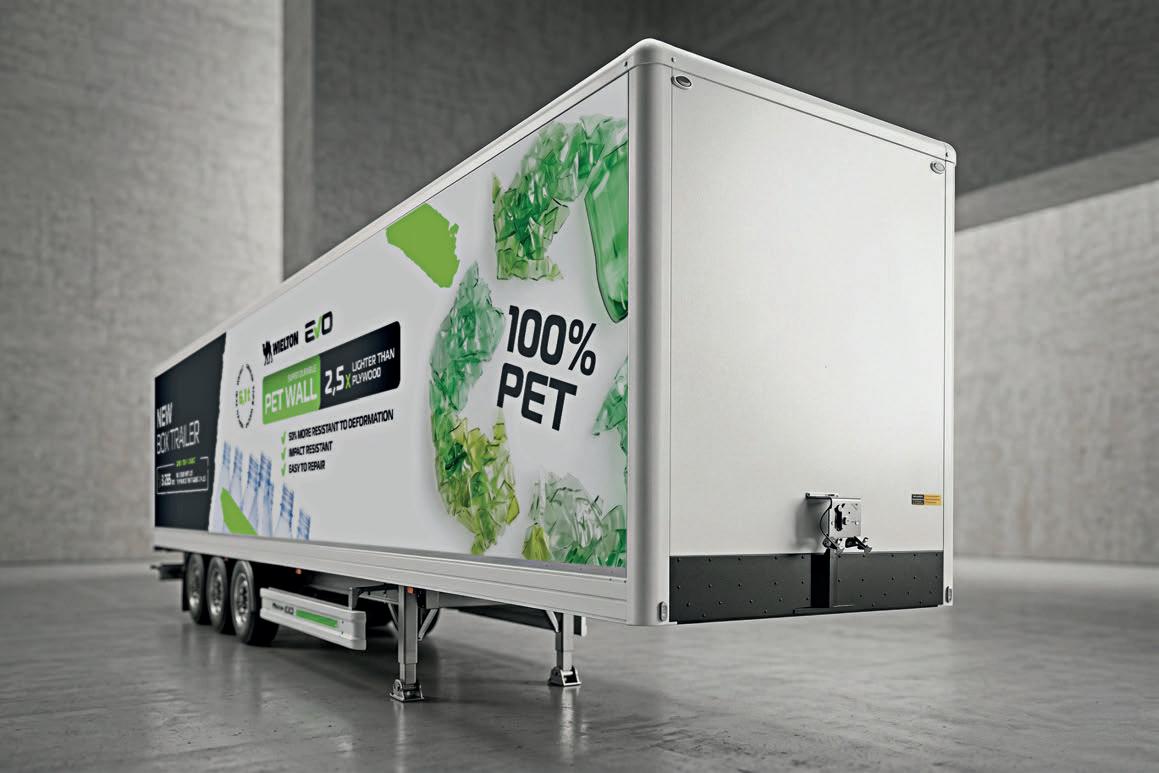

solution from the Wielton Group in the series, following the curtainsider semi-trailer and the BDF trailer, and was o cially unveiled to the transport world at the 4Poland transport solutions fair, held near Warsaw in June.
Wielton declared that the new EVO semitrailer has been designed to improve customers’ TCO in line with their needs and expectations, which is becoming increasingly important given the current rise in transport costs.
e vehicle, with a tare weight of 6,100 kg in the basic version and an internal height of 2,725 mm, can transport 33 Euro pallets at once. Its reduced weight directly translates to lower CO2 emissions, lower operating costs, higher pro ts and more streamlined eet management.
A key objective of designing the new EVO semitrailer was ensuring its lightweight construction.
Wielton said the vehicle’s weight was gradually reduced during successive prototyping stages until optimal parameters were achieved.
e low tare weight of the base model was achieved using a lightweight, but robust, frame design and through a collaborative process using innovative solutions, such as materials made from recycled bottles. As a result, the walls of a single EVO van are made from 3,265 recycled PET bottles.
Using a unique technology for blending different materials, developed by Wielton engineers, a wall material has been created that is 2.5 times lighter than plywood, 50 per cent more resilient to deformation, is impact-resistant and importantly is Eeasy to repair.
“In line with the EVO concept, the closed-box semi-trailer has been designed as a structure
with a high degree of repeatability and standardisation, which facilitates production, servicing and operation in large eets,” said Wielton Group CEO, Paweł Szataniak.
“ e use of lightweight structural components and modern, yet durable walls, with a core made from a layer of recycled PET bottles, has made it possible to reduce the tare weight without compromising structural rigidity and strength.
“ is solution is designed for hauliers who expect reliability over the vehicle’s long service life and consistent performance.”
Additional innovations employed by the Wielton engineers has been the use of a 30 mm waterproof plywood oor with a load capacity of seven tonnes, an aluminium frame and roof with cross-members - all ensuring the structure’s strength and rigidity.
e semi-trailer’s aluminium rear doors, tted with two locks and rigid hinges, are secured by wind guards when open, while the vehicle features durable BPW axles, Aspöck lighting, eight ferry tie-downs and 34 internal load-securing tie-downs (17 on each side), guaranteeing e ective load security.
Featuring cataphoretic painting, the vehicle’s steel frame has long-lasting, e ective anti-corrosion protection. It is also equipped as standard with Aberg Connect telematics solutions to streamline eet management, data analysis and remote diagnostics of the semi-trailer. Accessories are also available to upgrade the semi-trailer, including wheel guards or boxes.
“ e new EVO closed-box semi-trailer is the result of a consistent approach to sustainability, which at Wielton begins with the real needs of our customers,” said Wielton S.A. Product Strategy Manager, Dariusz Deszczka.
“ is means not only reducing our environmental impact, but above all designing solutions that are more e cient in day-to-day use.”
Implementing the optimal data and telematics systems are vital for transport companies when dealing with the intricacies involved in purchasing and nancing vehicles and equipment in an increasingly digital environment.
In Wielton’s case, its EVO series semi-trailers can be purchased directly from its website. e formalities related to nancing the purchase can also be completed online. Added to this is Wielton’s digital con guration of accessories, as well as constant control and monitoring of the semi-trailer meaning that Wielton’s fully digitalised ecosystem signi cantly simpli es the running of a transport business.
A key part of the EVO digital ecosystem is the parts shop, ensuring constant access to components without the need to leave the premises.
e Wielton Group has also included the option of an extended warranty, which provides additional protection for the user. It covers all faults and breakdowns not related to the natural wear and tear of the trailer, resulting in greater certainty of the vehicle’s running costs. e warranty can be exibly extended by 12, 24 or 36 months.
“EVO is not a single product, but a coherent concept designed to support the growth of transport businesses,” said Paweł Szataniak.
“At a time when every decision a ects pro tability, we need solutions that help optimise processes whilst raising working standards. at is precisely what we are focusing on.”
e EVO range epitomises Wielton’s product philosophy – one based on standardisation and simpli ed con guration, which translates into faster production, greater vehicle availability, shorter delivery times and competitive pricing.
e company says these hallmarks, combined with its the digital purchasing process and transparent speci cations that streamline the entire ordering process, make the EVO a standout performer in the transport sector
www.evo.wielton.com/en
The Road Transport Expo (RTX) has quickly become one of the most in uential gatherings in the UK’s commercial vehicle landscape, but its h edition, which ran from 30 June to 2 July 2026 at NAEC Stoneleigh, signalled a shi in scale and ambition. What began in 2022 as a bold new entry in the exhibition calendar has matured into a sprawling, multi-zone showcase for the technologies and equipment in uencing the future of road transport. As RTX show Director, Vic Bunby, said: “ is year’s show expanded its footprint even further to bring you more of the latest vehicles, eet equipment and services you need to keep your business running smoothly.”
e 2026 edition was particularly notable for the depth of trailer-sector innovation on display, and for the commanding presence of Kässbohrer, whose heavy-duty portfolio arrived in the UK with renewed momentum, expanded capability and a clear message: engineering excellence remains the backbone of modern eet performance.
Kässbohrer, together with its UK partner MM Acquisitions Ltd, leveraged RTX as a strategic platform to reinforce its growing in uence in the British heavy-haulage and
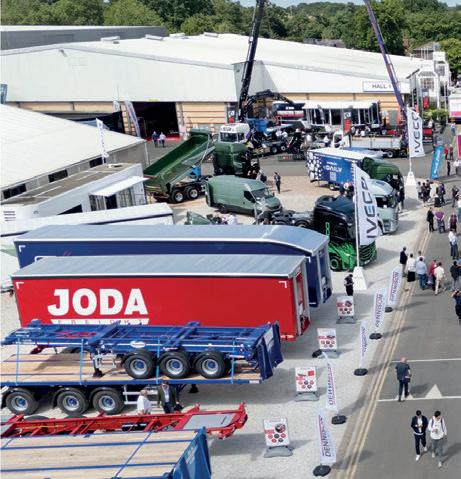
construction sectors. e manufacturer presented four vehicles engineered speci cally for UK operators: the K.SLL 2 low-loader, the K.SKS 32m³ steel tipper, the K.SLS 3 xed low-bed, and the K.SLA 4 extendable low-bed. Each re ects
Kässbohrer’s philosophy of continuous dialogue with operators and its ability to translate eld experience into robust, durable and e cient equipment.
This year, more than 350 exhibitors represented, spanning OEMs, trailer builders, component suppliers, technology innovators, fuels and infrastructure providers and a ermarket specialists. Live demonstrations, ride-and-drive sessions and expert-led seminars anchored the event, o ering visitors a practical and strategic view of the challenges and opportunities ahead – from decarbonisation and compliance to skills shortages and operational e ciency.
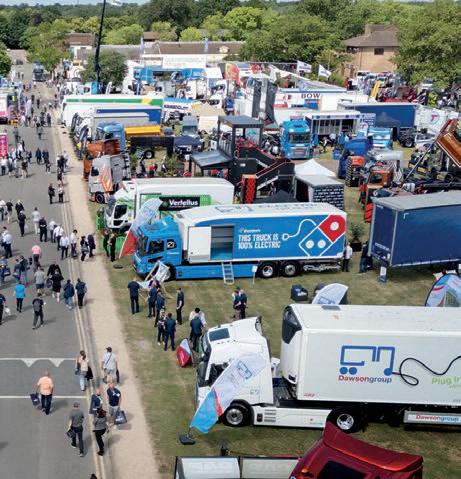
than 350
and 14,000



But it was Kässbohrer’s heavy-duty engineering that set a benchmark for the trailer sector this year, and its presence was one of the show’s de ning attractions.
Kässbohrer entered RTX 2026 with a clear claim: its low-bed, low-loader and tipper ranges have been among Europe’s top two choices for the heavy-duty transport sector for ve consecutive years. is position is underpinned by rigorous engineering validation, including approval for 1,000,000 km of normal use at leading European R&D centres and testing at the industry’s rst OEM-owned outdoor test track. is level of veri cation is a commercial differentiator. Kässbohrer’s investment in metallisation, validated through 3,800 hours of salt-spray testing with no red rust formation, reinforces its reputation for corrosion resistance and long-term structural integrity.
e company’s low-bed range is also notable for o ering Europe’s highest number and capacity of lashing rings, a critical factor in secure load handling across varied machinery
pro les. Combined with options such as wheel recesses, excavator arm recesses, side extension brackets and wider chassis con gurations, the range is engineered to accommodate the full spectrum of construction machinery.
is year, Kässbohrer’s spotlight shone on four agship models. e K.SLL 2 low-loader is arguably the star of Kässbohrer’s RTX line-up. Engineered with advanced manufacturing processes and premium components, it o ers the lowest platform height in Europe, with just 100 mm ground clearance. is enables operators to transport tall and heavy goods while maintaining compliance and operational exibility.
Its detachable gooseneck and front-loading capability signi cantly shorten loading and unloading times for bulky loads, while its 6,810mm pool length and 24-tonne king-pin capacity provide a versatile platform for abnormal goods without requiring additional permits. e model’s extendability, up to 5,550mm, further enhances adaptability across varied load dimensions.
With 12-tonne hydraulic axles and a 42° steering angle, the K.SLL 2 delivers exceptional manoeuvrability in tight or uneven environments. For operators seeking precision handling, maximum height clearance and long-term durability, it represents a compelling proposition.
e K.SLS 3 xed low-bed is designed for the e cient transport of work machinery, combining a remarkably low tare weight, starting from 7,800kg, with high payload e ciency. Kässbohrer o ers more than 40 ramp options with capacities up to 60 tonnes, allowing operators to tailor the vehicle to speci c loading requirements. Safety is a de ning feature. With up to 32 lashing rings (6-13.4 tonnes capacity)


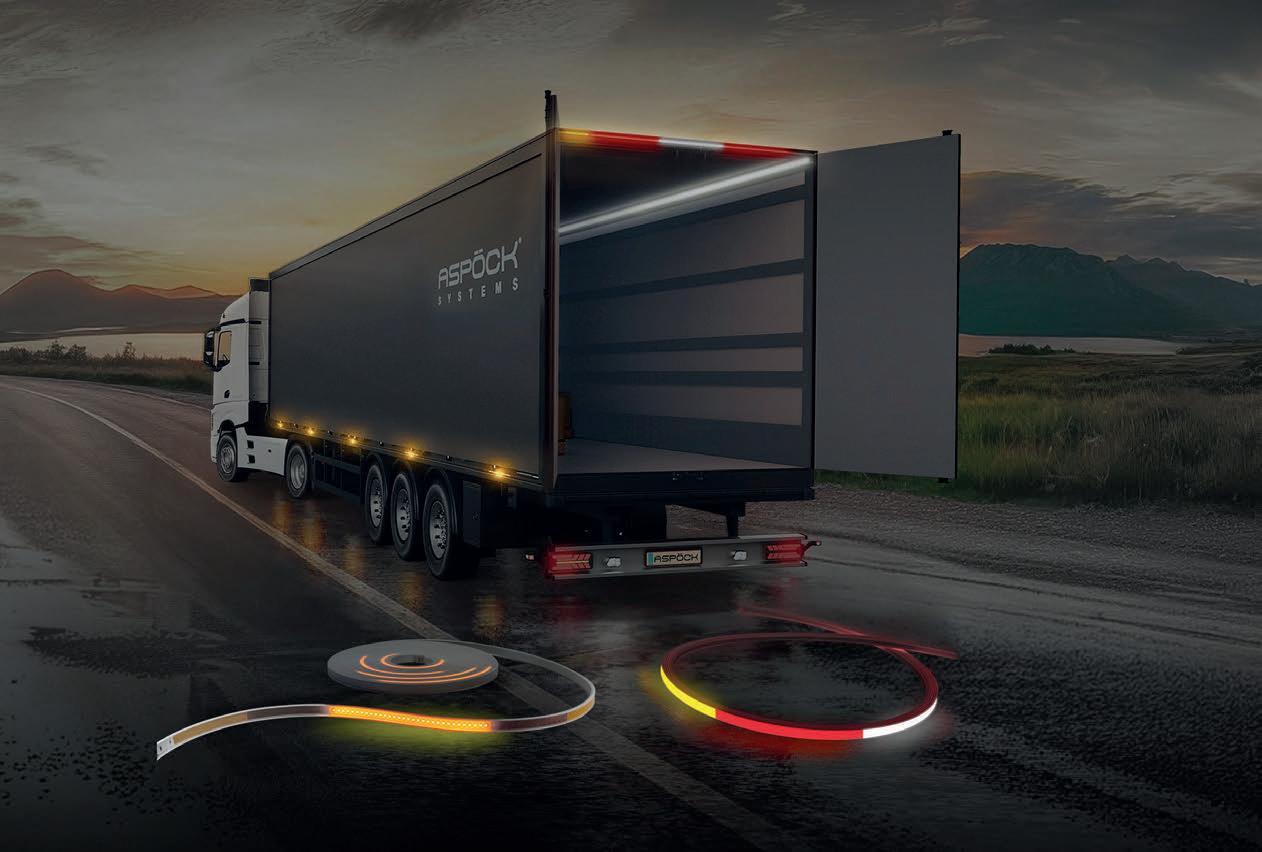

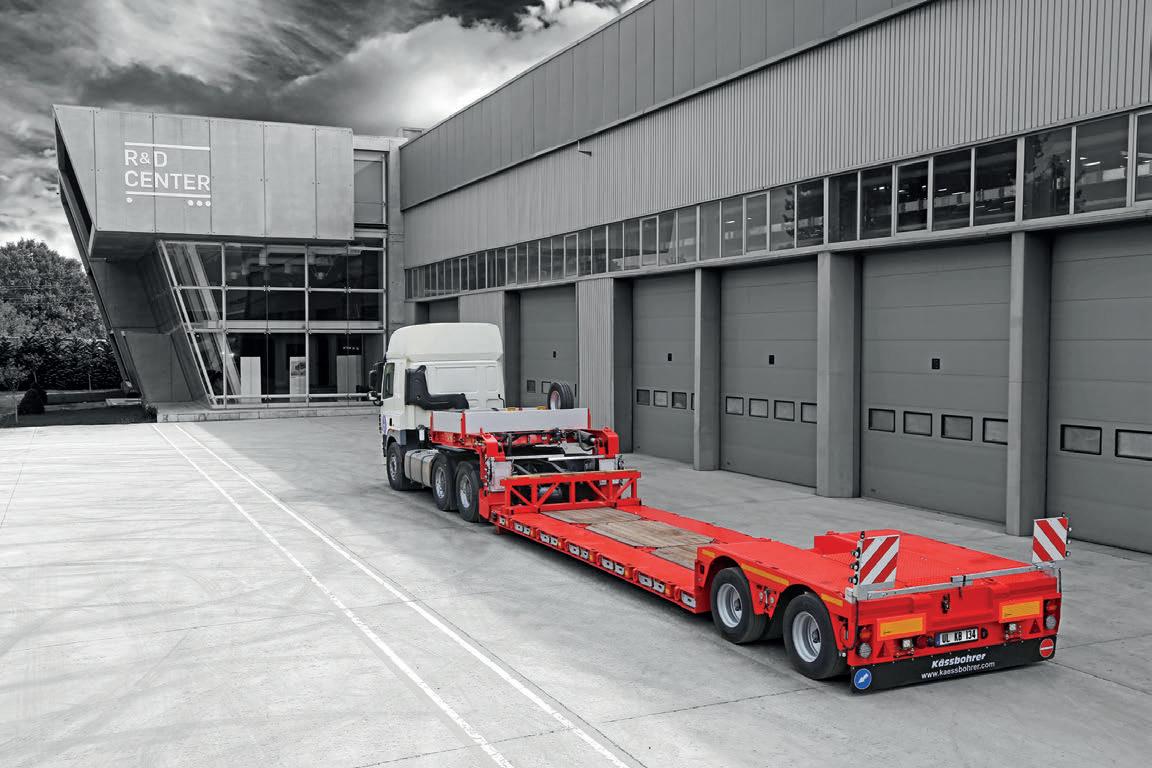
and integrated container locks, the K.SLS 3 ensures secure and fast load handling.
e availability of a hydraulic gooseneck ramp and a jumbo version with a 770mm platform height further expands its versatility.
Its robust construction and premium materials reduce workshop downtime and maintenance costs, making it a practical choice for eets transporting scissors li s, forkli s, telehandlers, cleaning machinery and short-wheelbase loaders.
e K.SLA 4 extendable low-bed is engineered for operators requiring maximum payload e ciency without compromising exibility. With a tare weight of 11,570kg, it
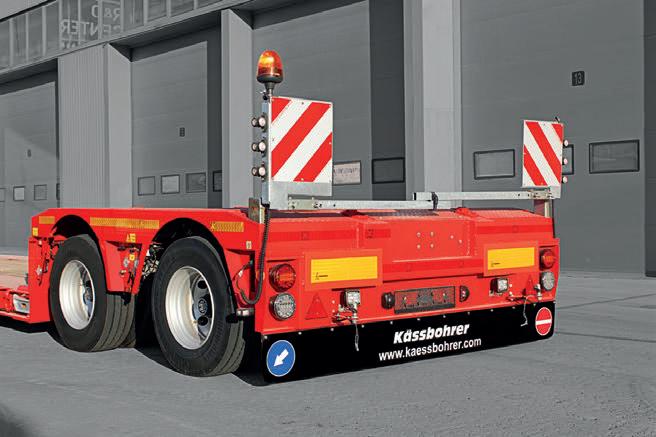
increases payload capacity for heavy goods while o en eliminating the need for special transport permits, a signi cant operational advantage.
e model extends up to 6,200mm, and its container locks and lashing rings (up to 10-tonne capacity) are strategically positioned across the gooseneck, platform and side raves for optimal load distribution. As with the K.SLS range, more than 40 ramp options are available.
Kässbohrer’s 32m³ steel tipper, the K.SKS, rounded out the OEM’s RTX showcase.
Engineered for bulk material transport in demanding conditions, it features a tare weight from 5,935kg, 4mm HB450 side walls, a 4mm TUF500 oor, and a high-strength S700MC chassis treated with KTL coating for corrosion resistance.
Its U-shaped oor design ensures residue-free unloading, while a ve-stage hydraulic cylinder operating at 250 bar delivers reliable tipping performance. Compatibility with 4×2, 6×2 and 6×4 con gurations, combined with Kässbohrer’s one-touch brake system and integrated tilt
alert, positions the K.SKS as a safe and e cient solution for construction and infrastructure operations.
RTX 2026 also brought a wave of innovation from across the trailer and transport ecosystem.
JOST World unveiled its expanded portfolio of intelligent transport and hydraulic solutions from JOST, Hyva, ROCKINGER and TRIDEC.
e showcase highlighted integrated systems for coupling, steering, li ing and loading to improve safety, e ciency and reduce total cost of ownership. Key innovations include the JOST KKS automatic coupling system, advanced axle and steering technologies, Hyva li ing and ePTO solutions, and ROCKINGER towing hitches, TRIDEC wheel suspension and brake systems. e company emphasised integrated modular solutions are addressing driver shortages, sustainability pressures operational complexity while supporting eets and OEMs safer smarter transport systems.
Meiller-Boweld arrived with its largest UK showcase to date, spanning two stands and
featuring six agship products. Highlights include the Volvo 8x4 Taperlite Tipper, the Renault 8x4 Tridem Putzmeister P9 Cement Mixer which marks a new partnership with Putzmeister as well as the MAN 8x4 Mightylite Grab Body with Pal nger crane. On the trailer side, the Meiller Grandload Tipping Semi Trailer, winner of Germany’s Construction Product of the Year 2026, makes its UK debut. e company also unveil ed a redesigned SL14 Skip Loader tailored for UK operators with new lever controls.
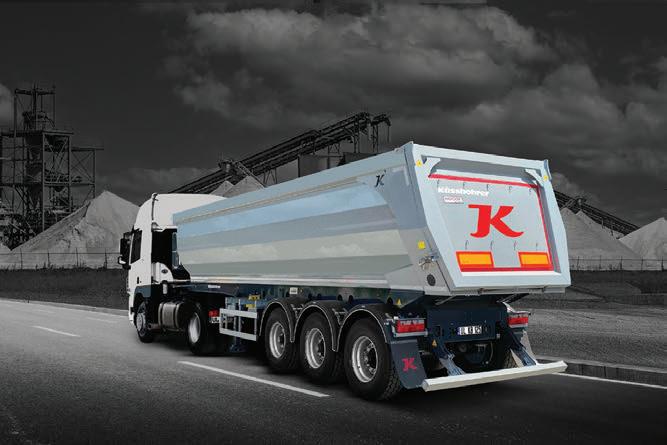
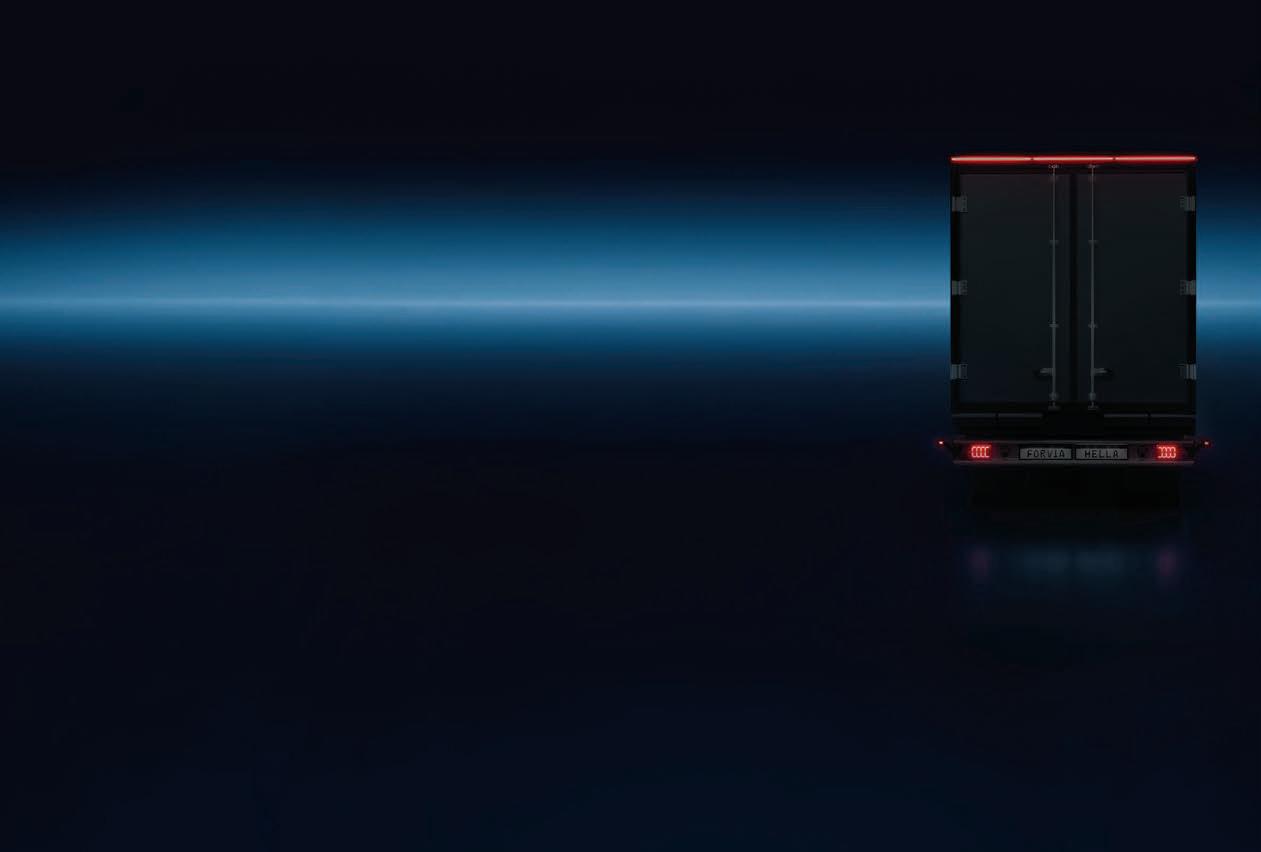
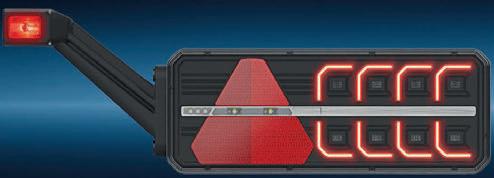



“THIS YEAR’S SHOW EXPANDED ITS FOOTPRINT EVEN FURTHER TO BRING YOU MORE OF THE LATEST VEHICLES, FLEET EQUIPMENT AND SERVICES YOU NEED TO KEEP YOUR BUSINESS RUNNING SMOOTHLY.”
RTX 2026 SHOW DIRECTOR, VIC BUNBY
e announcement that Meiller-Boweld’s new Deeside facility is fully operational underscores its commitment to UK production capability.
Michelin’s stand featured the debut of the MICHELIN X Multi D2 295/80 R22.5, o ering up to 15 per cent more mileage and 7.0 per cent lower rolling resistance than its predecessor. e company also highlighted its sustainability-focused retread strategy, with all UK retreads produced locally in Stoke-on-Trent.
Beyond tyres, Michelin Connected Fleet demonstrated AI-enabled tools including the MICHELIN AI Assistant, AI cameras and automated inspection systems designed to improve safety, decision-making and operational e ciency. As CEO, Sophie Foucque, noted: “Customers shouldn’t be afraid of their data … MICHELIN Connected Fleet provides the tools to achieve this.”
Colson Trailers returned with a comprehensive line-up led by its 35yd³ Heavy Duty
Pal nger UK launched its new Builders Merchants crane family – the BM18, BM26 and BM32 – designed for li -and-place operations across varied environments. Features include internally routed hoses, a compact TEC reel, high-speed boom extension and six-function radio remote control.
BPW debuted the BRAKE TRAK PRO, a DVSA-compliant brake performance monitoring platform with optional tyre pressure monitoring, brake wear sensors and wheel-station sensing. e company will also present its AirSave automatic tyre in ation system and ePower electric drive axle for refrigerated transport.
Schmitz Cargobull previewed a new dry-freight Box Van featuring lightweight sandwich panel technology. e manufacturer will also showcase the S.CU dc90 cooling unit, which o ers 6.0 per cent more cooling capacity and 21 per cent faster pull-down time than its predecessor, while supporting ePTO operation and low-GWP refrigerant R454A.
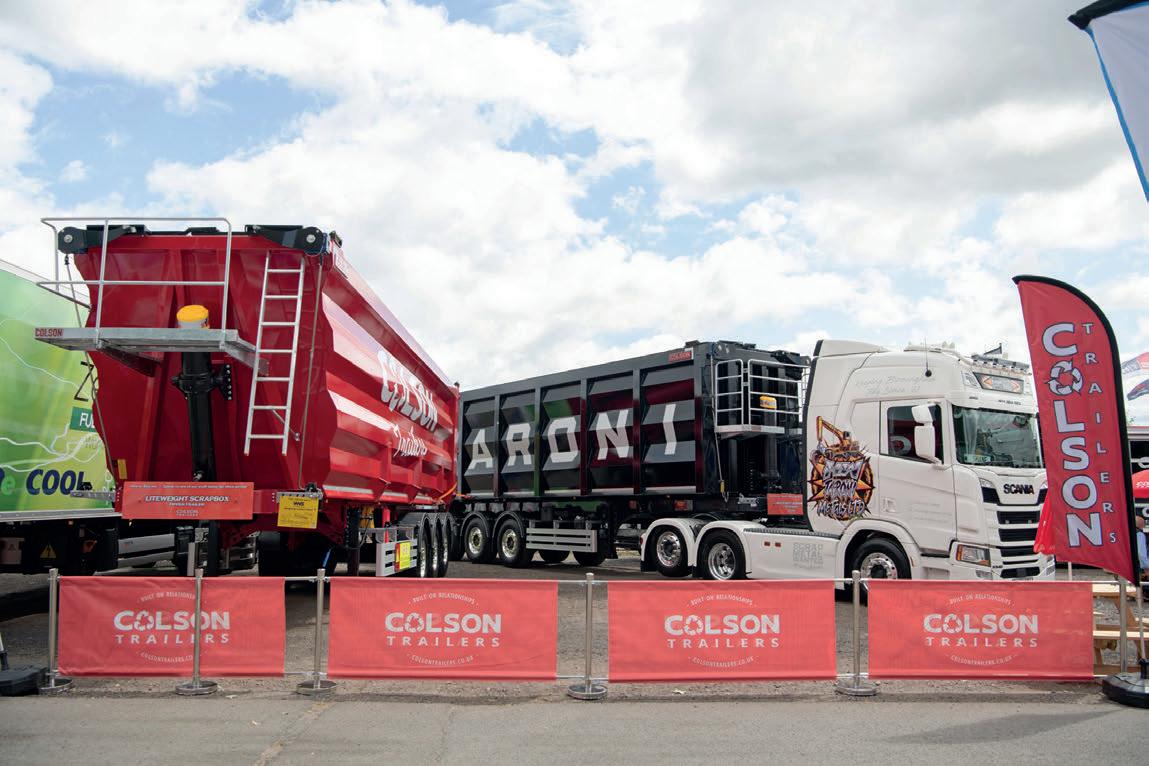
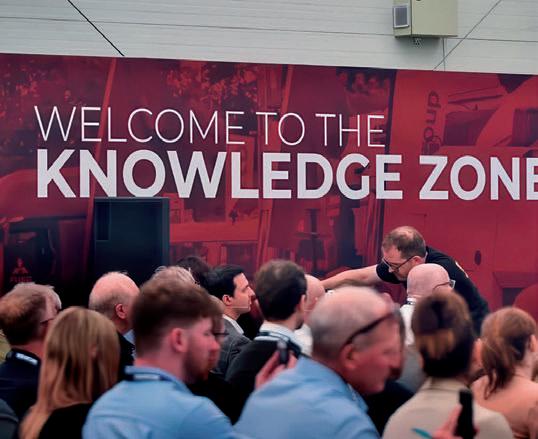

LAMILUX presented its GRP material solutions, including Sunsation for UV-resistant exterior walls, High Impact for interior durability, Anti Slip ooring, and AntiBac antibacterial surfaces for hygiene-sensitive applications.
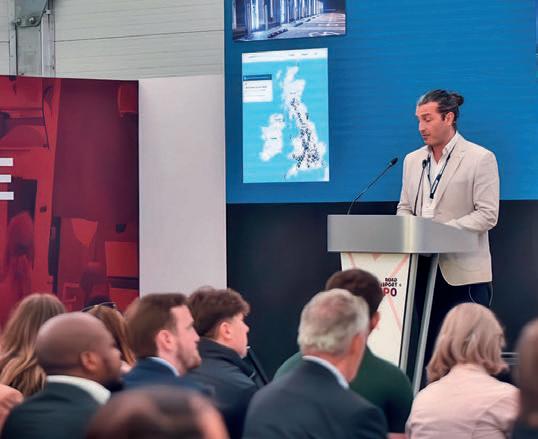
RTX’s growth mirrors the rapid evolution of UK’s transport sector. With more than 14,000 visitors attending, it has become a focal point for discussions on decarbonisation, digitalisation, eet resilience and the future of heavy-duty transport.
www.roadtransportexpo.co.uk

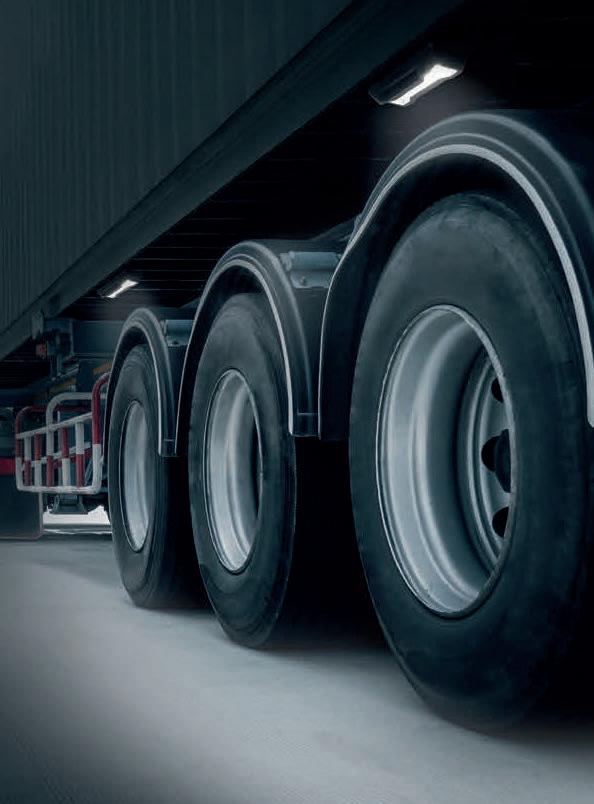

ELMIA LASTBIL IS THE LEADING STAGE FOR THE TRANSPORT AND HAULAGE INDUSTRY IN THE NORDICS. EXHIBITING HERE MEANS VISIBILITY AMONG MORE THAN 30,000 INDUSTRY-FOCUSED VISITORS FROM SWEDEN, THE NORDIC REGION, AND ACROSS EUROPE.
For four days in August the town of Jönköping in the middle of southern Sweden comes alive to the hum of engines and the cacophony of thousands of visitors who gather in the spirit of commercial heavy vehicles to talk about the transport industry.
is is Elmia Lastbil – northern Europe’s centre of discussions, showcases, presentations and networking relating transport, distribution, and logistics, that integrates a special focus on the transition driving innovation and new solutions within the transport industry.
e rst commercial vehicle fair at Elmia in Jönköping was held in 1983, and since then it has continued to attract and entrance many industry stakeholders and the wider transport-loving public.
Held during the Scandinavian summer, from August 19 to 22, 2026, the premise of the trade fair remains unchanged in its 43-year history – that is to gather everything involving commercial vehicles and the haulage and transport industry in one place. But it has kept up with society and technology, integrating high-technology IT systems, interactive displays and even a competition for Sweden’s Best School.
With up to 400 exhibitors and more than 100 accredited journalists, Elmia Lastbil is renowned as a central hub for business, product launches, and insights into future trends.
Decision-makers from companies of all sizes attend, creating strong opportunities to build long-term relationships and drive sales.
As it has developed over the years, Elmia Lastbil has become to be seen as a key meeting place for the Nordic transport sector, showcasing innovations, o ering live demonstrations and driver competitions, and attracting thousands of industry professionals.
Elmia Lastbil 2024 has established itself as the most important meeting place for the transport and haulage industry in Sweden and the Nordic region due to its approach to hot-button and vital issues a ecting the transport sector and the broader society. e topic of sustainability is always at the top of the exhibition agenda for the Nordic transport and haulage industry, and this year will be no di erent, with many OEMs and industry members keen to learn about and share their perspectives on this global issue. Sustainability’s ongoing relevance to transport has been emphasised by truck manufacturers Volvo Trucks Sweden, Scania Sweden, and Mercedes-Benz Trucks Sweden continuing to be heavily involved in the exhibition.
Volvo Trucks Sweden is maintaining its focus of attaining a level of 100 percent fossil-free by 2040 in accordance with the Paris Agreement. e OEMs will be joined by Industry representatives, politicians, and other leading manufacturers to discuss and debate the topic of sustainability during the event.

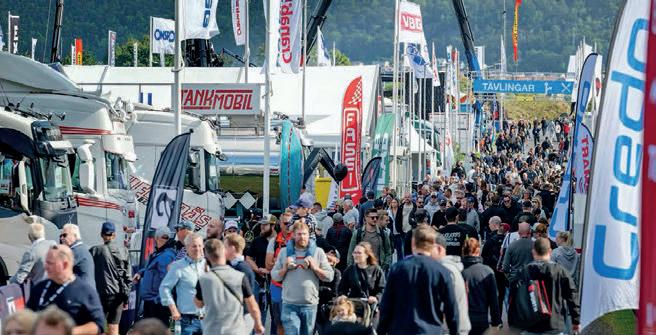
Aligned to the topic of sustainability, the exhibition will see a continuing focus on a green transition within transport by focusing on themes such as electri cation and alternative fuels for a fossil-free road transport sector.
Elmia Lastbil 2026
• Held biennially
• Expected visitors: 31,000 +
• Expected exhibitors: 371+
• Countries represented: 15
• Total area: 75,000 sq.m.
• Visitors from transport schools: 3,000+
e global topic of driver shortages in transport will again be a major focus of Elmia Lastbil, where it will explore the need for skilled labour, while boosting the industry’s general appeal, As in previous years, the event will invite thousands of students from high schools and adult education programs to get a rst-hand experience of the road transport industry.



Continuing a humanitarian tradition, a charity auction will be held at Elmia Lastbil in collaboration with Budi Auktioner & Värderingar and the aid organisation Sam-Hjälp.
e aim is to raise additional funds for war-torn Ukraine while engaging the entire industry in a united e ort.
e past interest and engagement from exhibitors and visitors have been strong, and ahead of this year’s event, the ambition is to contribute even more.
“Elmia Lastbil is a meeting place for the entire haulage industry, but also a platform where we can make a di erence together. at the charity auction is being held for the third fair in a row demonstrates the strong commitment within the industry. We are proud to help make this initiative possible,” said Elmia Lastbil Exhibition Manager, Björn Swenning.
Budi Auktioner & Värderingar Founder and Appointed Valuer, Johannes Winberg, said: “It feels fantastic that, for the third fair in a row at Elmia Lastbil, we can create a charity auction together with both exhibitors and the fair organiser. Over the past two years, we have been able to contribute nearly half a million kronor for Ukraine — and this year we’re aiming to set a new record.”
Elmia Lastbil is a joint event between Elmia AB and Trailer Magazine, the latter being the organiser of the popular Nordic Trophy competition, which will see trucks from the Nordic region compete for top honours.
“Elmia Lastbil continues to create opportunities for everyone in the transport and haulage industry to meet, build relationships, and discuss the future,” said Elmia Lastbil Business Manager, Björn Swenning.
www.elmia.se/en/lastbil

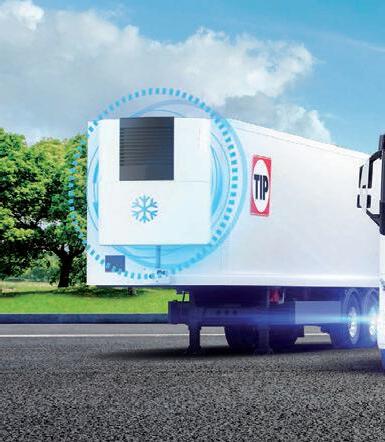



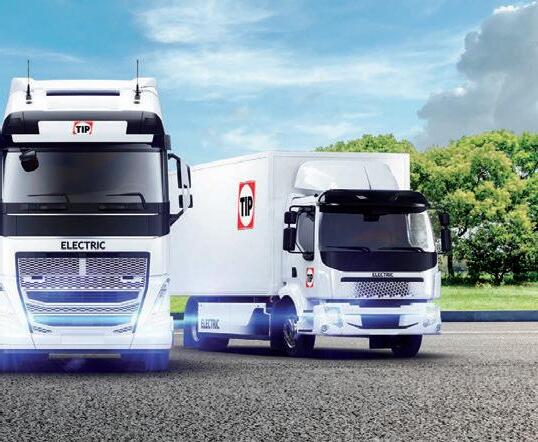




Image: A_Medvedkov/stock.adobe.com


Pasay City, Philippines
The Auto Parts and Vehicle Expo, in conjunction with Philippines Bus and Truck 2026, is dedicated to the auto parts and vehicle sector in the Philippines, including motorcycles, commercial, electric, and specialty vehicles. www.apvexpo.com

Image: Govan/stock.adobe.com

Image: Adonis Abril /stock.adobe.com


Buenos Aries, Argentina
The 14th international exhibition of equipment and technology for freight and passenger transport. The threeday event will feature about 390 exhibitors and host over 25,000 visitors. It will be held in conjunction with Expo Logisti-K.
www.expotransporte.com.ar

Image: Igor/stock.adobe.com

2026 12-14 AUGUST 2026
Ningbo, China
China’s only export-oriented trade fair for auto parts and aftermarket industry, connecting with high-quality original suppliers, selecting cost-e ective products. It will relate to passenger vehicles, commercial vehicles/trucks/engineering vehicles, new energy vehicles, and other vehicle types. Expo.capafair.com/en
17-19 AUGUST 2026
São Paulo, Brazil
The 34th Fenabrave Congress and Expo will be attended by owners, directors, and managers of automotive dealerships from across the country, representing the passenger cars and light commercial vehicles; trucks, buses and road equipment; agricultural machinery; and motorcycles.
www.congresso-fenabrave.com.br
Image: Creative Images/stock.adobe.com


2026 FTR TRANSPORTATION CONFERENCE
31 August – 3 September 2026
Indianapolis, USA www.ftrconference.com
IAA TRANSPORTATION 2026
15-20 September 2026
Hanover, Germany www.iaa-transportation.com
Jakarta, Indonesia
The exhibition highlights breakthrough innovations in electric vehicles, smart mobility, and green transportation, featuring top brands and emerging disruptors shaping the future of mobility. https://mobility.inti.asia/

Image: Dudlajzov/stock.adobe.com

19-22 AUGUST 2026
Jönköping, Sweden
Key issues regarding transport, distribution, and logistics will be addressed at this event, with a special focus on the transition driving innovation and new solutions within the transport and heavy vehicle sectors.
https://www.elmia.se/en/lastbil
MEGATRANS 2026 16-17 September 2026 Melbourne, Australia www.megatrans.com.au
INNOTRANS 22-25 September 2026 Berlin, Germany www.innotrans.de/en
BAUMA CONEXPO INDIA 2026 15-18 September 2026
New Delhi, India www.bcindia.com
AAPEX 2026
3-5 November 2026
Las Vegas, Nevada www.aapexshow.com
VTM 23-25 November 2026 Torino, Italy www.italy.vehiclemeetings.com
AUTOMECHANIKA SHANGHAI 2-5 December 2026 Shanghai, China www.automechanika-shanghai. hk.messefrankfurt.com
WITH INCREASED REGULATORY REQUIREMENTS AROUND THE GLOBE, ESCALATING COSTS, AND THE PROLIFERATION OF GREEN INITIATIVES IN TRANSPORT, THERE IS INCREASED PRESSURE TO IMPLEMENT AND INTEGRATE STRUCTURAL CHANGES IN TRAILER PRODUCTION. AS A RESULT, HERE IS A STRONG PUSH TO UTILISE RECYCLED MATERIALS IN COMMERCIAL TRAILER PRODUCTION.
IAs environmental regulations tighten and sustainability targets accelerate globally, trailer manufacturers are under growing pressure to transform how commercial trailers are designed, built and maintained.
European regulators continue to drive signi cant change across the transport manufacturing sector, with stricter emissions targets and circular economy policies reshaping trailer production strategies. Increasingly, manufacturers are being encouraged to reduce reliance on virgin raw materials while improving recyclability, extending product lifecycles and lowering overall environmental impact.
e result is a strong industry-wide push toward the use of recycled materials and refurbished components in commercial trailer manufacturing.
While sustainability discussions in heavy transport have traditionally centred on engines and alternative driveline technologies, attention is now rapidly shi ing toward the trailer itself. Manufacturers are being challenged to examine the environmental footprint of trailers from initial production through to refurbishment, reuse and end-of-life recycling. is has accelerated the adoption of recycled aluminium, recycled steel and composite materials in trailer production, alongside a growing emphasis on remanufacturing and component refurbishment programs.
A number of major trailer OEMs and component suppliers are already investing heavily in circular economy initiatives. Companies such as TIP Group, Krone Trailer, Kögel Trailer and Wielton, to name a few, are increasingly focusing on refurbishment programs designed to extend trailer service life and reduce waste.
Trailers builders are turning to more recycled materials due to regulatory pressures.

Image: Kadmy/stock.adobe.com
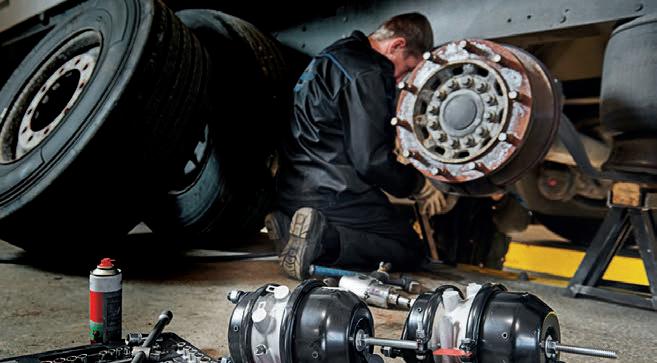
Rather than replacing complete trailers or assemblies, many operators are refurbishing axles, suspension systems, braking components, chassis sections and body elements to minimise material consumption and reduce lifecycle emissions.
Component manufacturers are also playing a signi cant role in the transition. Suppliers such as BPW are expanding remanufacturing and refurbishment capabilities, supporting eets and OEMs seeking more sustainable maintenance and repair pathways.
The move toward refurbishment is being driven by both environmental and commercial pressures. Fleet operators are facing increasing expectations from customers and supply chain partners to demonstrate measurable sustainability outcomes, while also managing rising production and operational costs.
At the same time, advances in manufacturing technology and material engineering are making it increasingly viable to reuse and refurbish key trailer components without compromising durability, safety or performance.
Recycled aluminium continues to gain traction due to its ability to signi cantly reduce energy consumption during production while still delivering the lightweight performance bene ts valued by freight operators. Similarly, recycled plastics and composite materials are being incorporated into non-structural components including mudguards, aerodynamic kits and ooring systems.
Many manufacturers are also redesigning trailers using modular construction principles, allowing individual sections and components to be more easily repaired, replaced or recycled. is approach aligns closely with broader circular economy objectives, which prioritise keeping materials and products in use for as long as possible.
Industry analysts believe the trend is only expected to accelerate as sustainability reporting requirements tighten and environmental performance becomes an increasingly important factor in eet procurement decisions.
For trailer manufacturers and suppliers, the shi represents more than a temporary green initiative. It marks a broader structural transformation in how commercial trailers are manufactured, maintained and managed throughout their operational lifecycle.
www.globaltrailermag.com











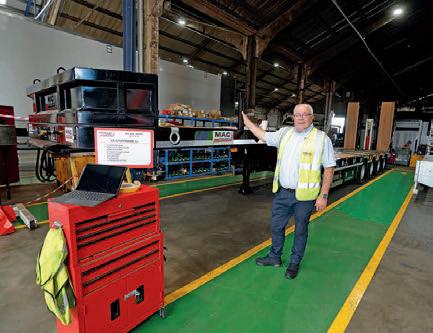















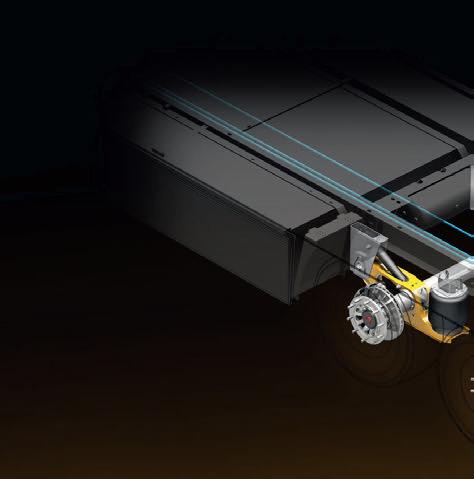



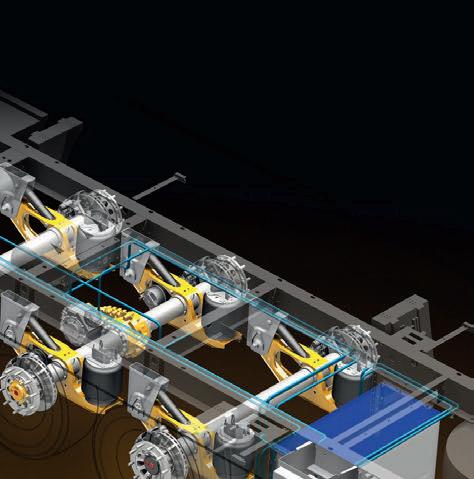
Visit SAF-HOLLAND
IAA Transportation: Hall 26, Booth A10

Heavy transportation traffic becomes electric, green and quiet with the recuperation axle SAF TRAKr
Every great E-Mobility concept begins with a first step: the new e-axle system from SAF-HOLLAND – the innovative technology for the electric transformation. safholland. com