












































































































































































EDITOR, Mike Woof mwoof@ropl.com




“Germany now has a massive problem with its road infrastructure.”
Germany’s famous Autobahn network has long been known for delivering high-speed connectivity. With no speed limits imposed on certain stretches, drivers from all over the world have marvelled at being able to travel at speeds that would result in heavy nes elsewhere.
But Germany now has a massive problem with its road infrastructure, following years of neglect and insu cient maintenance. Recent studies show that much of the Autobahn network is reaching the end of its service life, with many key bridges built in the 1960s and 1970s in need of upgrades or replacement.
e state of North Rhine-Westphalia has a particular problem with highway bridges and a recent survey revealed that 2,440 highway bridges are in poor condition. is data on the state of road bridges in North Rhine-Westphalia has been compiled jointly by the Bridge Monitor of the NRW Chamber of Commerce and Industry and RWTH Aachen University.
North Rhine-Westphalia compares unfavourably with other German States. In Bavaria just 10% of bridges need upgrading while in Rhineland-Palatinate 14% of bridges require upgrading and in BadenWürttemberg the gure is 19%.
e state of North Rhine-Westphalia has a heavy concentration of population and includes key cities such as Cologne, Düsseldorf, Dortmund and Essen in close proximity. Understandably, with such a large population in the state, the road network is used heavily and tra c jams are frequent.
e explosive demolition of the Rahmede Valley Bridge in the state was carried out in 2023 due to its poor condition. However, it will take until 2027 to complete, with tra c being able to use part of the new structure from 2026.
Other developed nations share this problem of degraded roads.

Connect with me for regular industry related posts and discussions... Global Highways Magazine
Editorial Editor Mike Woof
Deputy Editor
David Arminas
Sub-Editor Kevin O'Shea
Editorial Contributors
Shem Oirere, Kristina Smith, Mauro Nogarin, Eugene Gerden, Partha Basistha, Lucio Garofolo
Editorial Consultant Geo Hadwick

Designers
e UK’s motorway system is, broadly speaking, in fair condition but the same cannot be said for the country’s local roads. Years of underinvestment, especially after 14 years of local councils su ering budget cuts, has meant that many local roads in cities, towns and villages in the UK are full of potholes. Worse still, the available budget has been used poorly in many cases, with short-term repairs being used rather than long-term solutions. End
Simon Ward, Andy Taylder
Production Manager
Nick Bond
O ice Manager Kelly Thompson
Data & Marketing Manager
Alan Cansick
Web Manager Sarah Biswell
Managing Director Andrew Barriball
Chairman Roger Adshead
Email [initialsurname]@ropl.com (eg: radshead@ropl.com)
Advertisement Sales
Sales Director Graeme McQueen
Tel +44 1322 612069
Email gmcqueen@ropl.com
Sales Director Dan Emmerson Tel +44 1322 612068
Email demmerson@ropl.com
Italy Fulvio Bonfiglietti
Tel +39 339 1010833
Email bonfiglietti@tiscali.it
Asia / Australasia
Roger Adshead
Tel +44 7768 178163
Email radshead@ropl.com
Printed by Warners (Midlands) PLC
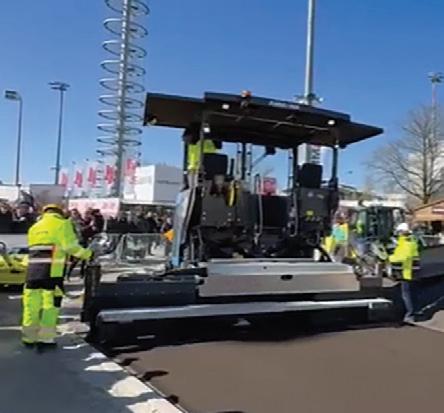

A selection of the editor's top stories from this months online and social media channels... Ammann's new electric paver attracted attention at bauma Scan to watch video globalhighways.com
Sophisticated weighing with Outset Scan to watch video globalhighways.com

latest in asphalt paving at World of Asphalt Scan to watch video Global Highways Magazine

Germany’s world-famous Autobahn highway network needs investment, with many ageing concrete bridges in need of replacement
Massive investment for Florida transport; Fayat buying Mecalac; Nigeria’s coastal highway; Newark Bay Bridge upgrade; roads and bridges for Vietnam; new expressways in Philippines
Success for Bechtel and ENKA joint venture with Morava transport corridor 16 IRF
Training and accreditation for road safety auditors in Australia and New Zealand; India’s road safety challenges
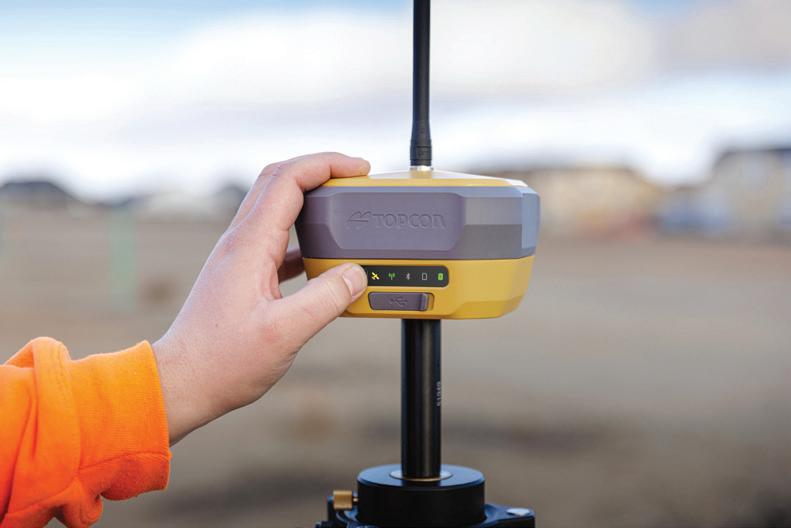
Improved connected construction technologies from Agtek, Caterpillar, Leica Geosystems, Hitachi, Smart Construction, Topcon, Trimble and XWatch will help make construction more e icient
20 HIGHWAYS MANAGEMENT & SAFETY
New safety barriers to keep drivers safer; better signage sends a message; noisy vehicles can be identified


Ammann’s all-electric asphalt paver is proving its worth in a range of applications across Europe. See page D1




BETWEEN PAGES 17-20
D1
Ammann’s novel electric paver has been proving its worth on a series of projects in Europe




The recent World of Asphalt exhibition in St Louis Missouri was the launchpad for several new technologies for the North American road construction market
Quarry Manufacturing & Supplies (QMS) has supplied a massive aggregate plant for a customer in Romania; Sophisticated DL420CVT-7 wheeled loader from Develon


















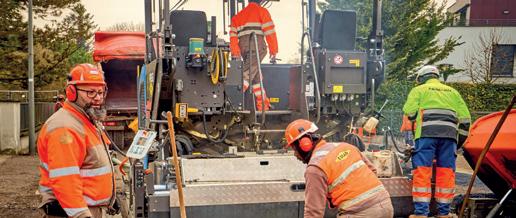
















28 bauma REVIEW


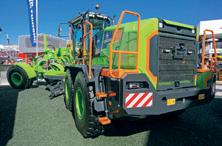
A massive array of innovative construction technology was unveiled at the world’s largest exhibition in Munich, Germany

D18
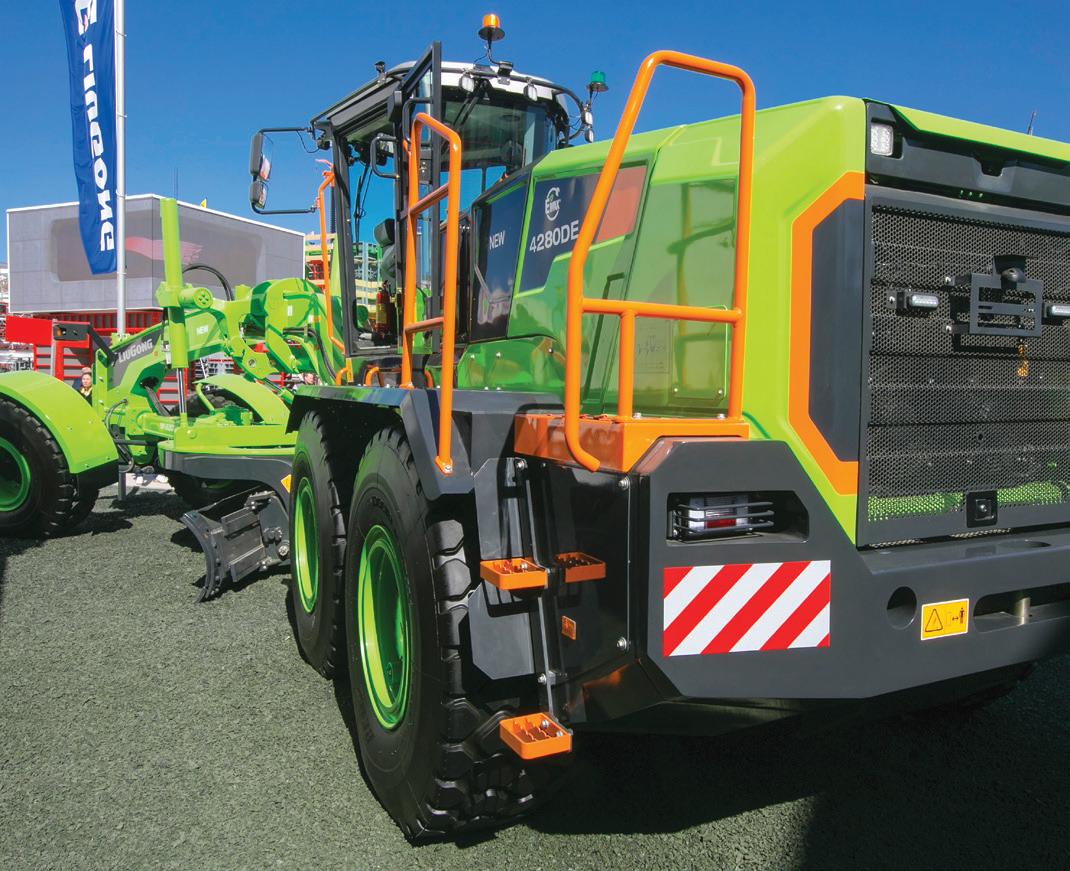
Versatility is claimed for the new wheeled and short tail excavators coming to market
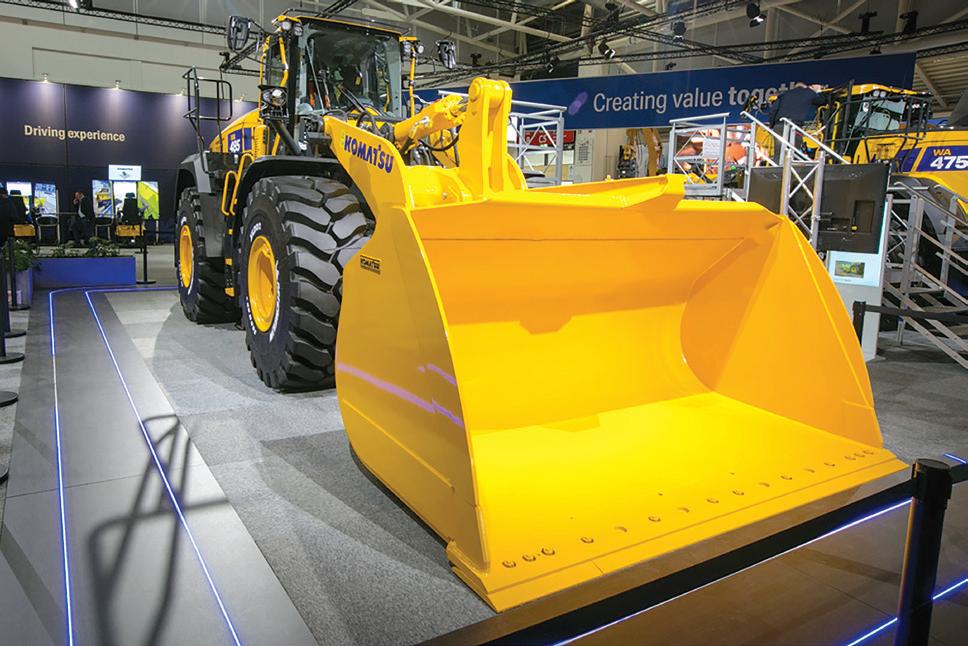
New paver designs will o er increased performance and versatility for contractors, while improved product quality and production e iciency is being achieved with the latest plants
36 DEMOLITION
New heavy-duty, long reach excavators and ruggedised excavators are now being o ered for demolition works
Milling productivity is improving with the latest generation of machines and attachments
New concepts in earthmoving machines will deliver high e iciency for contractors
Upgrading an ageing suspension bridge; better bridge anchor systems
Further humorous road-related stories from around the world
During the rst days of bauma, there were concerns over US tari s. But as the week progressed these were quickly overshadowed by the vast array of new machines and technologies, not to mention reports of healthy sales numbers on the show oor.
Electri cation was everywhere, with just about every major equipment type now available in an electric version. Many models have been designed as electric from the ground up. Companies are also working at out to make other fuels just as viable, with many concepts on show at bauma for the rst time.
Electri ed equipment has usually been spoken about in terms of urban and night-time working. Increasingly, however, it is discussed in the context of autonomous operation because of its greater aptitude than diesel-hydraulic operation. Autonomous operation, while saving on operator costs, was also spoken about in the context of the continuing shortage of machine operators. Apparently, the younger generation no longer want to work in noisy vibrating machines on dirty construction sites. Autonomy can provide an attractive gateway into the industry for this potentially new generation of operators.

An exclusive interview with Develon’s senior executive highlights key developments from the firm



Subscription rates & enquiries
Global Highways, is published 6 times a year by Route One Publishing Ltd. Global Highways is available on subscription at the rate of: UK£135 (US$225,€155) per annum.
Single copies £20 (US$33,€23).
Tel +44 1322 612079
Fax +44 1322 788063 Email subs@ropl.com
The 2025 US annual subscription price is US$225.00 Airfreight and mailing in the US by agent named Air Business, c/o Worldnet Shipping
Inc., 156-15, 146th Avenue, 2nd Floor, Jamaica, NY 11434, US. Periodicals postage paid at: Jamaica, NY 11431
US Postmaster: Send address changes to Global Highways, Air Business, c/o Worldnet Shipping Inc., 156-15, 146th Avenue, 2nd Floor, Jamaica, NY 11434, USA. Subscription records are maintained at Route One Publishing Ltd, Second floor, West Hill House, West Hill, Dartford, Kent, DA1 2EU, UK. .
Air Business Ltd is acting as our mailing agent.

Of course, autonomous operation is possible only using very sophisticated machine control. Wider collaboration between established technology providers to create a single eco-system that works across brands will bring the cost of entry down. Also, onsite safety is another advantage of autonomous operation. ese trends and developments will be explored in depth in our upcoming annual publication, Global Outlook on Construction Equipment & Technology, to be published in June. It will include numerous interviews with experts and industry leaders, in combination with embedded videos and additional content in the digital edition. Not to be missed!
If you are interested in participation, please contact Graeme McQueen at gmcqueen@ropl.com for more information.

















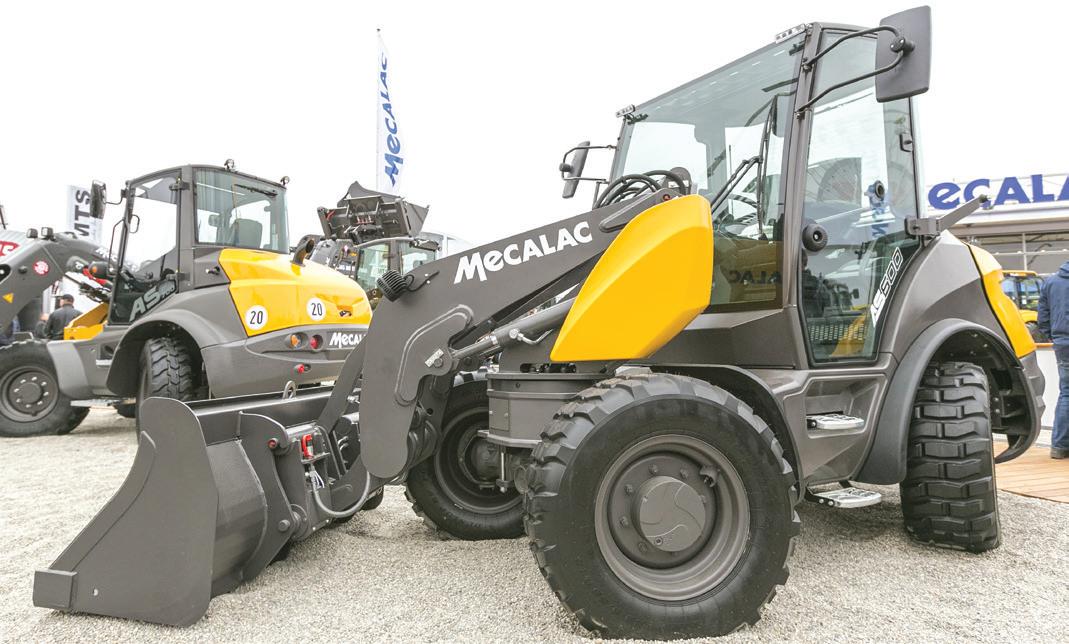
e FAYAT Group is in the process of buying the entire share capital of fellow French rm MECALAC Group. e deal still has to obtain the necessary regulatory authorisations from the anti-trust authorities before it can be nalised.
The Moving Florida Forward initiative will see $66.1 billion in transportation investments for the next five years.
Florida Department of Transportation (FDOT) has major plans to improve the state's highway system. e projects include expanding Interstate 75, adding express lanes on Interstates 4 and 275, and redesigning the Golden Glades Interchange on Interstate 95. Work has now started on 51km of new auxiliary lanes to be added to I-75, from State Road 44 in Wildwood to State Road 326 in Ocala. is latest Moving Florida Forward project has been fully funded and is beginning 10-15 years ahead of schedule.
e expansion of lanes and the addition of express lanes along I-4 in Polk and Osceola counties will reduce congestion and streamline tra c for people driving into Orlando. e addition of regular and express lanes on I-275 in Pinellas County, which is projected to reduce travel delays by up to 85% and will add capacity along a major hurricane evacuation route. One of the projects is for a redesign of the Golden Glades interchange on I-95 in Miami-Dade County

to enhance connectivity between major road corridors in the region.
e reconstruction of the Fruitville Interchange on I-75 in Sarasota County will deliver a “Diverging Diamond” design, which will increase volume capacity by 40,000 vehicles and reduce the number of con ict points between vehicles getting on and o the interstate and opposing tra c. e widening of US 98 in Bay County is designed to improve capacity for drivers in Panama City Beach.
e realignment of US 301 from CR 470 to Florida’s Turnpike in Sumter County is projected to increase mobility and reduce delays by up to 94% during peak hours.
However, the two parties have signed an agreement for FAYAT to acquire MECALAC Group, the parent of the MECALAC Group. e MECALAC brand is well known for its wide range of compact construction machines.
e FAYAT Group has said that it hopes to obtain the required regulatory authorisations so that it can nalise the acquisition of the MECALAC Group before the end of the rst half of 2025. is move follows on from FAYAT Group acquiring a controlling interest in asphalt plant specialist Asphalt Drum Mixers LLC (ADM), based in Huntertown, Indiana in mid2024.
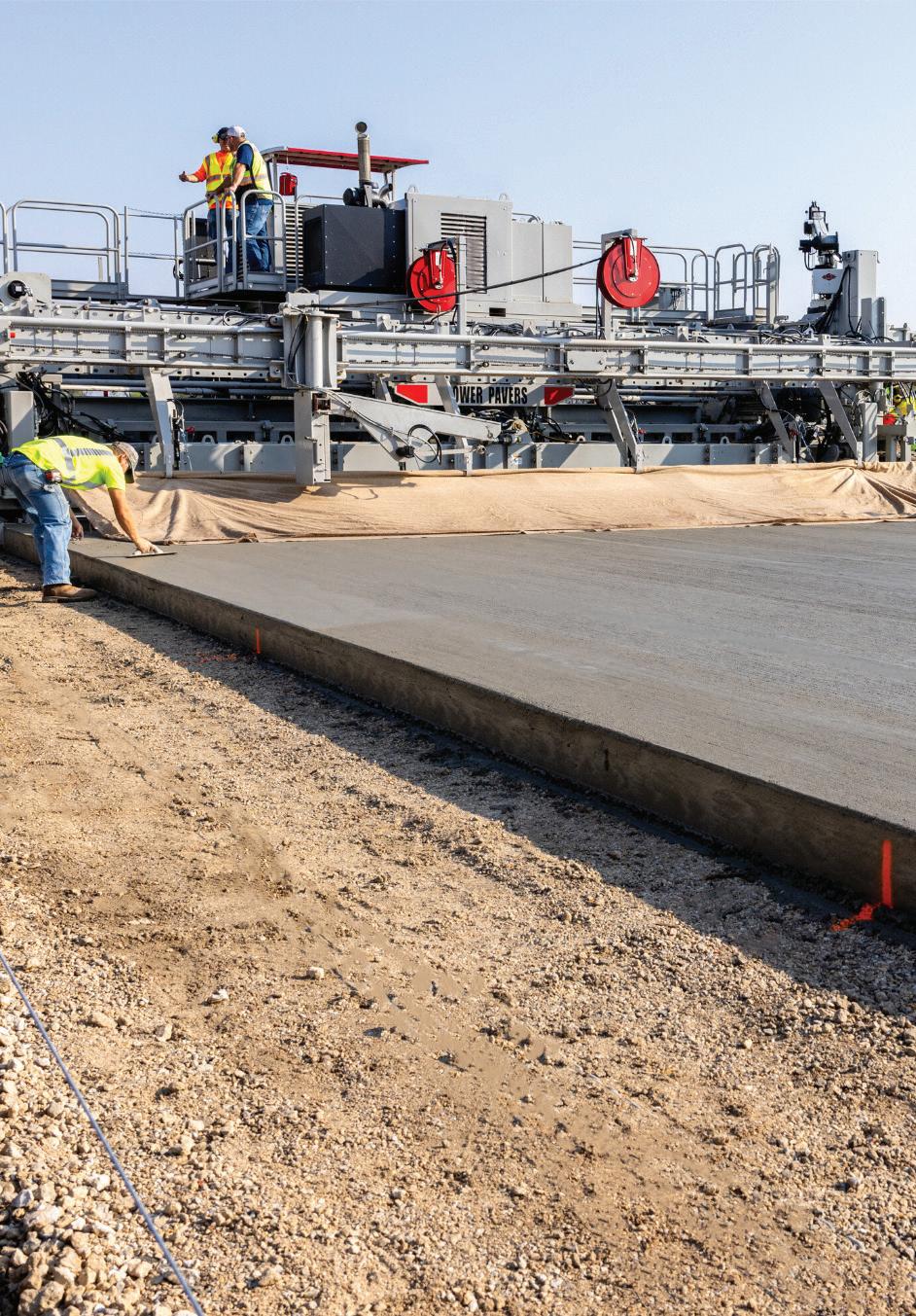
Building the new Coastal Highway linking Nigeria’s former capitals of Lagos and Calabar is expected to cost in excess of $10 billion. Construction is underway at present on the rst sections with work being carried out by contractor Hitech Construction. e project is expected to deliver major economic gains for Nigeria. Although the project has been criticised by some for its cost, it will speed transport across Southern Nigeria. Concrete is being used to build much of the highway.
























Fluor Corporation has been awarded the construction contract for the State Highway 6 (SH 6) project in College Station, Texas. The $671 million package of works was awarded by the Texas Department of Transportation (TxDOT). SH 6 is a vital north-south highway that serves as a major commuter route for Bryan, College Station, Texas A&M University, Brazos County and the surrounding region. It is also part of the Texas Highway Freight Network, the Texas Highway Trunk System and is a Hurricane Evacuation Route. Fluor will reconstruct and widen the 19km stretch of highway from two lanes to three in each direction. Construction is scheduled to begin in Summer 2025.

Connected Worksite – The Digital Path to Sustainable Roadbuilding. Ammann and digitalisation expert Q Point jointly provide an integrated solution for all phases of the asphalt process. This combination
Approval has been given for the first stage of the Newark Bay Bridge upgrade.
The work is expected to cost as much as $11 billion in total and includes widening work for the Turnpike extension running through Jersey City.
e approval process has come via the New Jersey Turnpike Authority board, although it has been agreed with New Jersey Department of Transportation and Hudson County. Replacing the existing four-lane bridge, which is ageing, with twin structures each carrying four lanes is expected to cost over $6 billion.



Data shows that the New Jersey Turnpike carries the heaviest tra c volumes of any tolled road in the US. e 13km Newark Bay-Hudson County Extension would be widened from four to eight lanes, boosting capacity.
ere are concerns over the environmental impact of the project as well as increased tra c volumes. Given the congestion pricing scheme and the way it has helped reduce vehicle tra c and increased the use of public transport, there are questions as to whether the widening work is required.




have been cut by an average of 48% according to research. Whether the congestion pricing scheme will be allowed to continue remains in doubt though.
e 1.8km Lueg Bridge forms part of the busy A13 Brenner Highway. Carrying around 32,000 vehicles/day, the bridge is now 55 years old and this complex structure is no longer able to cope with present-day tra c volumes.





The new highway that will connect Ho Chi Minh City (HCMC) with the Mekong Delta could cost from $1.49 billion to $2.43 billion, depending on which of the three routes is selected. The route will feature four lanes in either direction and cut the distance by road between the city and the port area on the Mekong Delta, reducing journey times considerably. The three alignments have been put forward by the HCMC Department of Transport and are being considered by the Department of Construction. And in Hanoi, plans are in hand for the construction of the Tu Lien Bridge. The project will span the Red River linking Nghi Tam with Truong Sa and also includes the construction of access roads. The alignment and design for the bridge and connecting roads are being finalised and construction is expected to commence in the second quarter of 2025.
San Miguel Corp (SMC) will build two tolled expressways in the Philippines, with the projects costing US$5.16 billion in total. e projects were awarded to SMC by the Toll Regulatory Board (TRB). Work is due to commence shortly. e projects are for the Southern Access Link Expressway (SALEx) and the Northern Access Link Expressway (NALEx). e former is an elevated route that comprises the Metro Manila Skyway and the Shoreline Expressway. e
$2.615 billion SALEx forms
part of the Greater Capital Region Integrated Expressways Network, which will help address Manila’s chronic congestion. Construction for this elevated expressway will include three sections for the Metro Manila Skyway and Shoreline Express. Meanwhile, the $2.545 billion NALEx also forms part of the Greater Capital Region Integrated Expressways Network. is route is intended to improve transport from the New Manila International Airport and Metro Manila as well as Tarlac City from Pampanga.

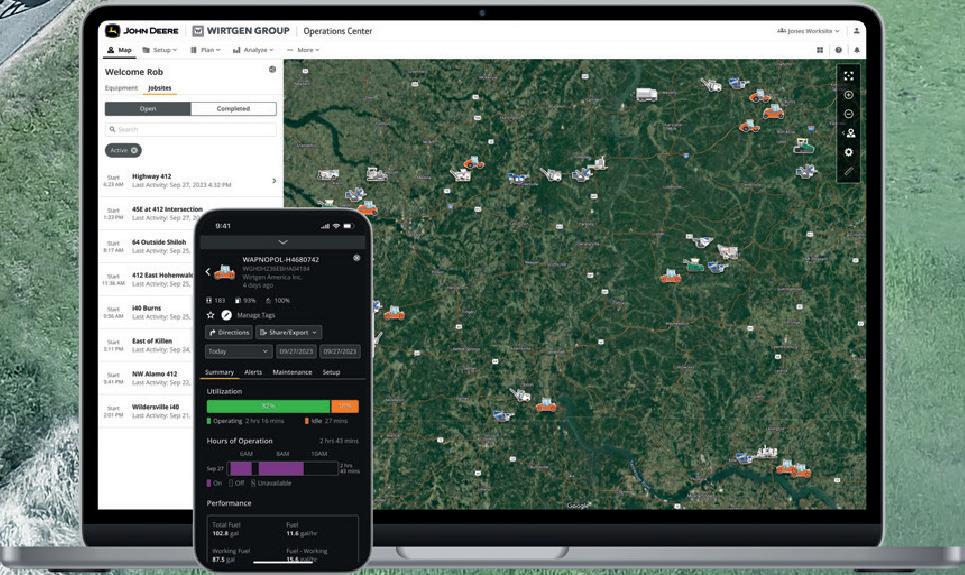










Topcon Positioning says that its new HiPer XR system o ers more capabilities for GNSS duties

The HiPer receivers suit duties in survey applications, including engineering design, and cadastral projects. ese versatile tools can also be used for construction site layout/stakeout, grade checking, and material volume calculations. HiPer receivers can also be paired with robotic total stations for Hybrid Positioning. e system supports all major satellite constellations, including GPS, GLONASS, Galileo, BeiDou, IRNSS, QZSS, and SBAS.
e tools allow users to measure building edges without using an o set, or stretch to otherwise outof-reach points using Topcon Integrated Levelling Technology (TILT). is novel technology allows the HiPer XR, HR and VR receivers to compensate for rods that are not exactly vertical.
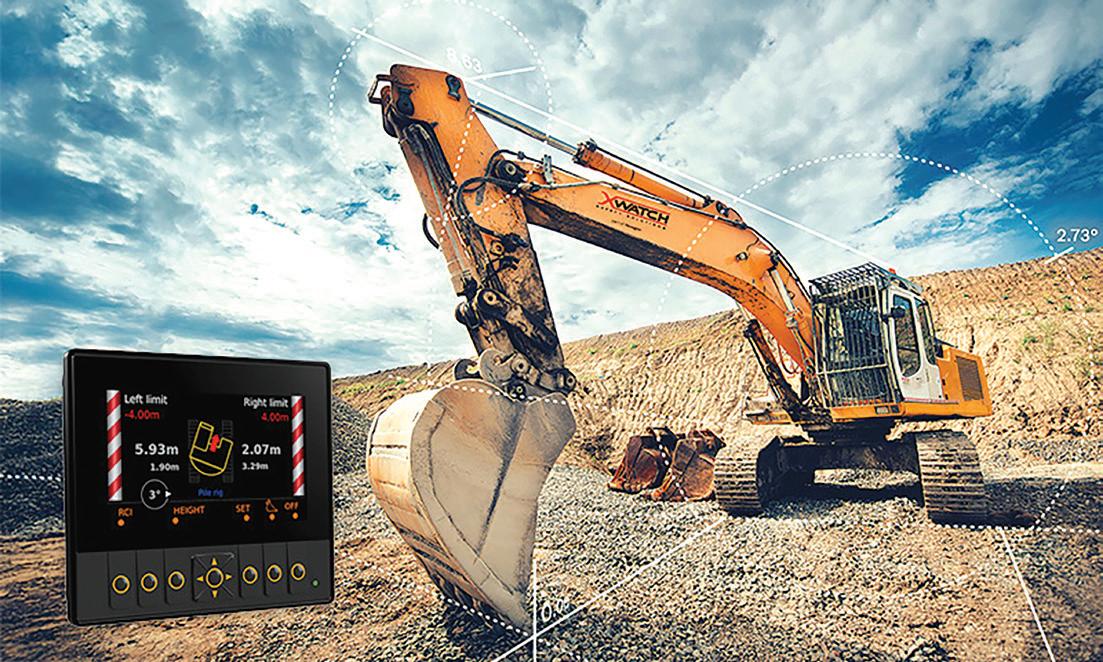
Part of the Hexagon Group, Xwatch is introducing an upgraded system that is said to boost site safety. The firm says that its new package is simpler, more intuitive and easier to adopt than the company’s previous generation system. Installation is quicker than before, taking 30% less time while the new system is also more adaptable and userfriendly, reducing downtime for plant hire companies and contractors.
The improved solution retains the capabilities of earlier version, including height and slew restriction, Rated Capacity Indicator (RCI), and the full suite of Xwatch safety features across the XW1, XW2, XW3, XW4, and XW5 models.
However, new features

ABOVE
Topcon’s latest HiPer XR tools o er accurate GNSS capabilities
include the novel proportional motion control when driving electric over hydraulic valve blocks, which delivers a significant breakthrough in precision and e iciency. Graphics have been reworked for a more visually friendly and intuitive monitor interface in various languages. The MK2 version is also telematics-ready for connected construction sites and is more compact, freeing up in-cab space.
The new system retains the proven rated capacity indicator (RCI), which o ers real-time monitoring of load weight, boom length, radius, and other critical parameters. This helps ensure that li ing operations remain within safe limits, preventing overloading and potential accidents. The system o ers

e sophisticated signal integrity protection, antijamming and anti-spoo ng capabilities also ensures that data is reliable, even in areas with interference or tampered signals.
e latest version has a calibration-free and magnetic interference-immune integrated IMU that o ers advanced TILT (Topcon Integrated Leveling Technology) compensation of up to 60° for precision measurements on challenging sites. New features include the unit being calibration-free. It can be used as a base or rover or through an RTK correction service, such as Topnet Live. Its rugged, water-resistant construction is said to ensure durability in harsh conditions. End www.topconpositioning.com
visual and auditory alerts if the equipment approaches or exceeds the maximum rated capacity, allowing operators to take corrective action.
The RCI from Xwatch features an intuitive and easy-to-use interface, making it simple for operators to monitor all the
necessary data. Xwatch Safety Solutions' RCI systems can be customised to fit the specific needs of di erent types of machinery and operations. This versatility means it can be used for various construction applications.
www.hexagon.com
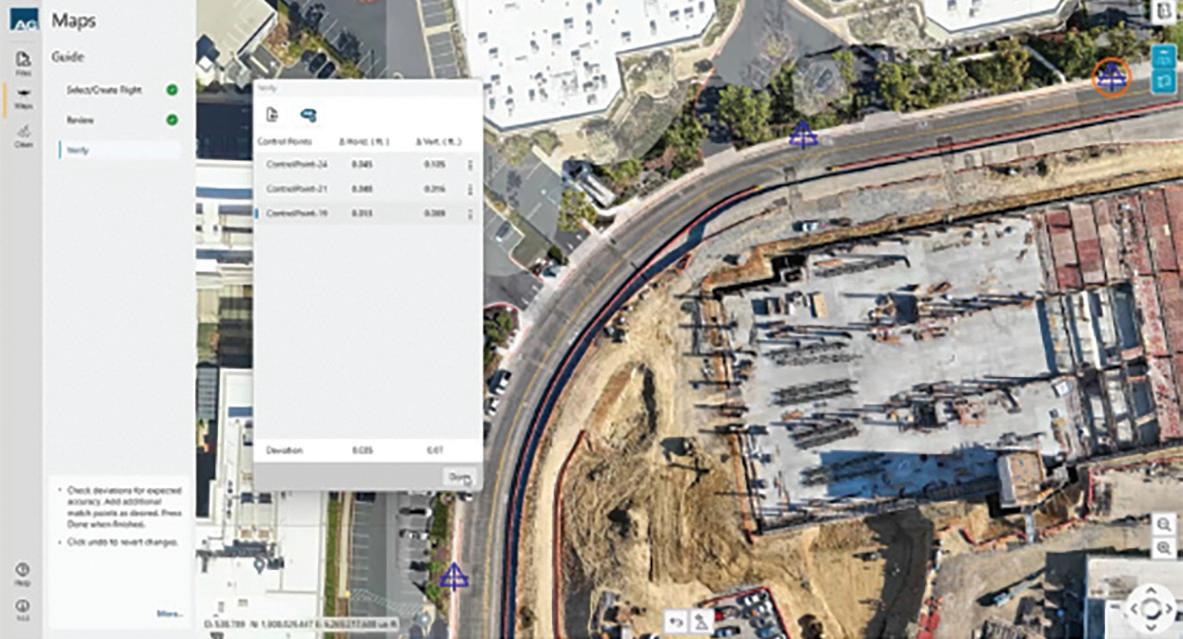
AGTEK, part of Hexagon, is introducing Reveal Maps, the latest innovation in its Reveal platform. is new application allows heavy construction professionals to generate 3D point clouds and orthomosaic maps from RTK drone ights through simple, intuitive and veri able work ows.
Once a drone ight is complete, processing the captured data with Reveal Maps is straightforward. Users drag and drop the images into Reveal Maps. Data is then processed, generating a precise point cloud and orthomosaic TIFF. Location is veri ed, aligned to the jobsite’s real-world coordinates and elevations.
e rm says that the tool can provide construction professionals with a powerful tool that simpli es complex tasks while delivering veri able results. e Reveal Maps package provides an accessible way to integrate drone technology into work ows.
When used in conjunction with Reveal Clean, the point cloud generated by Reveal Maps is upgraded using advanced AI that automatically separates heavy
Trimble and GroundProbe are introducing a new tool that will enable geotechnical customers to purchase a comprehensive slope stability monitoring portfolio from a single point of contact. GroundProbe customers can also purchase Trimble monitoring solutions to complement GroundProbe's range of sensors and software. e system can assess slope stability, with integration between Trimble and GroundProbe sensors and software for smooth data ow. Incorporating the necessary mine monitoring sensors into one environment helps professionals visualise a picture of site conditions to improve decision-making on slope stability risks and site safety.
E ciency, reliability and safety can be improved in extreme site conditions due to e ective slope stability monitoring. www.trimble.com





RIGHT
E icient processing of data from drone flights can be achieved using the new tool from AGTEK
construction objects, such as machinery, which can then be removed or edited to produce bare earth models quickly.
ese models suit tasks such as calculating volumes and planning grade work. e streamlined processes deliver a high degree of accuracy and allow for precise mapping, planning, and decision-making on construction projects. e Reveal platform combines the latest drone technology with advanced AI and intuitive software to streamline the management of construction site data. End www.agtek.com
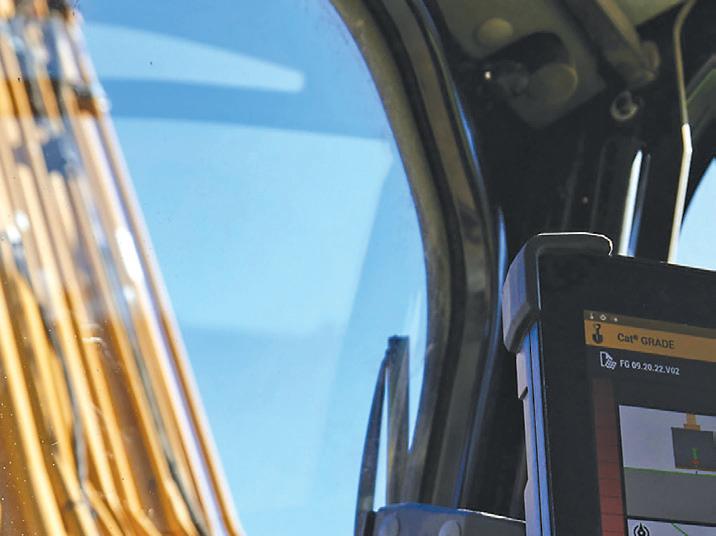
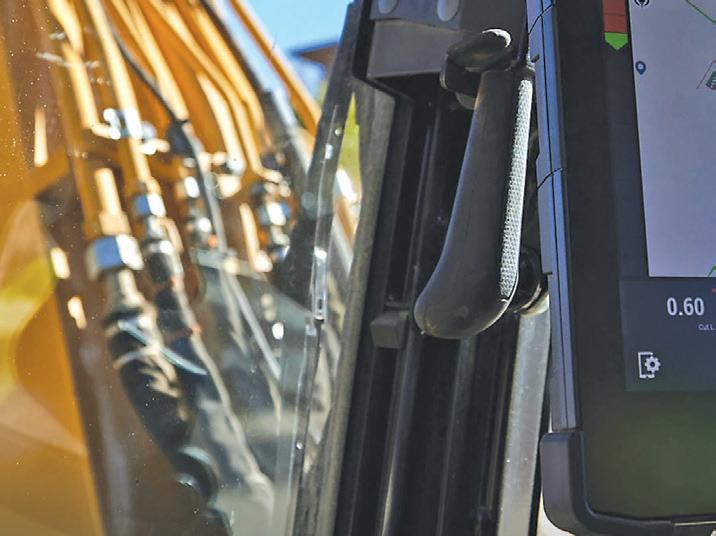



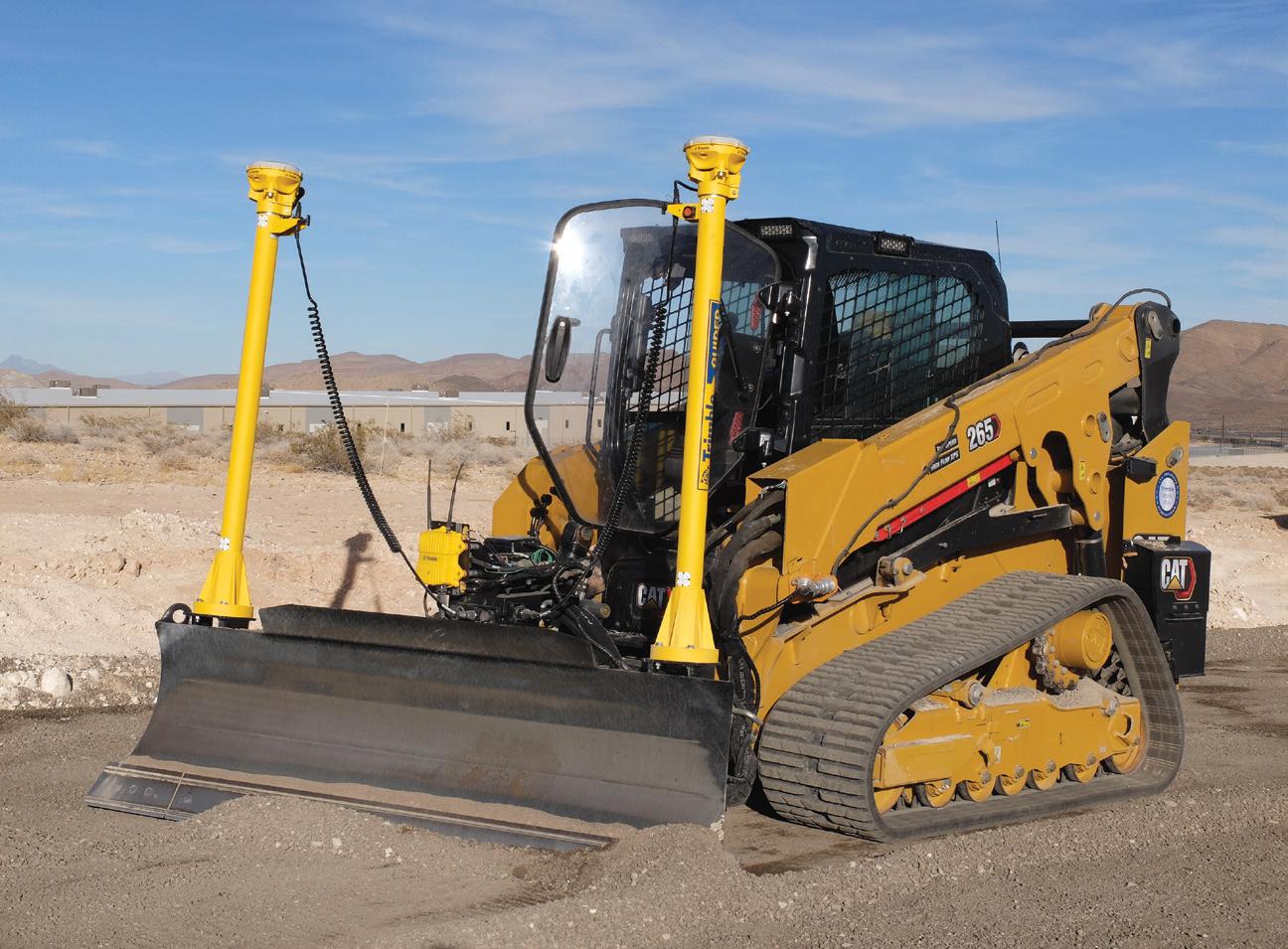
Caterpillar is o ering improved functionality for customers with its latest grade control options
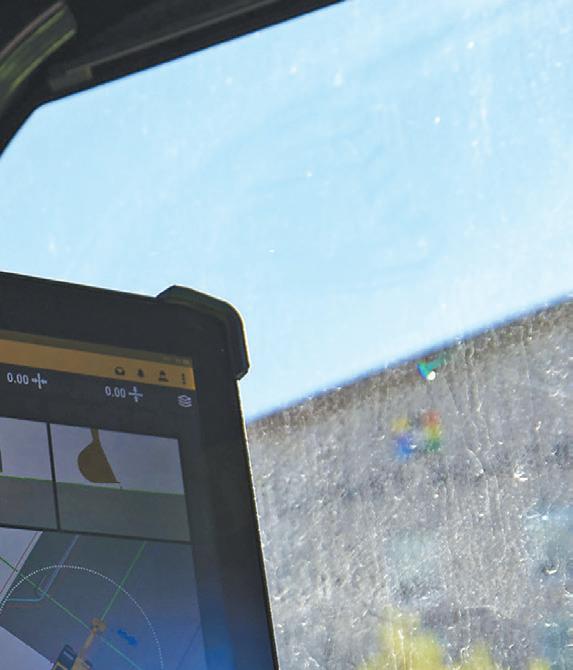
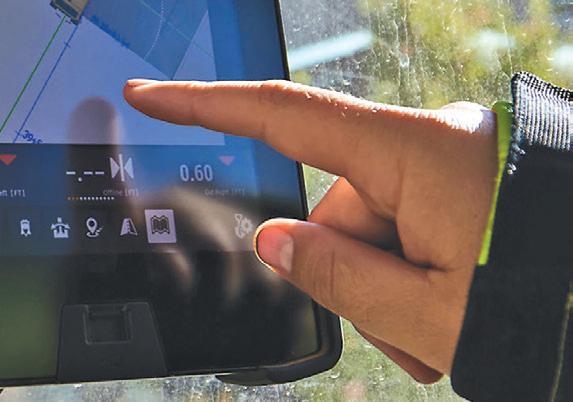
Caterpillar continues to widen its array of grade control options for customers, o ering new functionality and performance. The company says that its latest Cat Grade 3D system delivers high precision, allowing users to achieve high quality without need for reworking. The Cat Payload for Excavators package similarly helps to track productivity accurately.
Meanwhile, the firm’s latest Cat Command technology meanwhile enables remote machine operation from a safe distance. Operators can control equipment in a safe and comfortable environment while the machines can be working in areas that may be unsafe or are remote and di icult to access, such as in deserts or at high altitude. www.cat.com



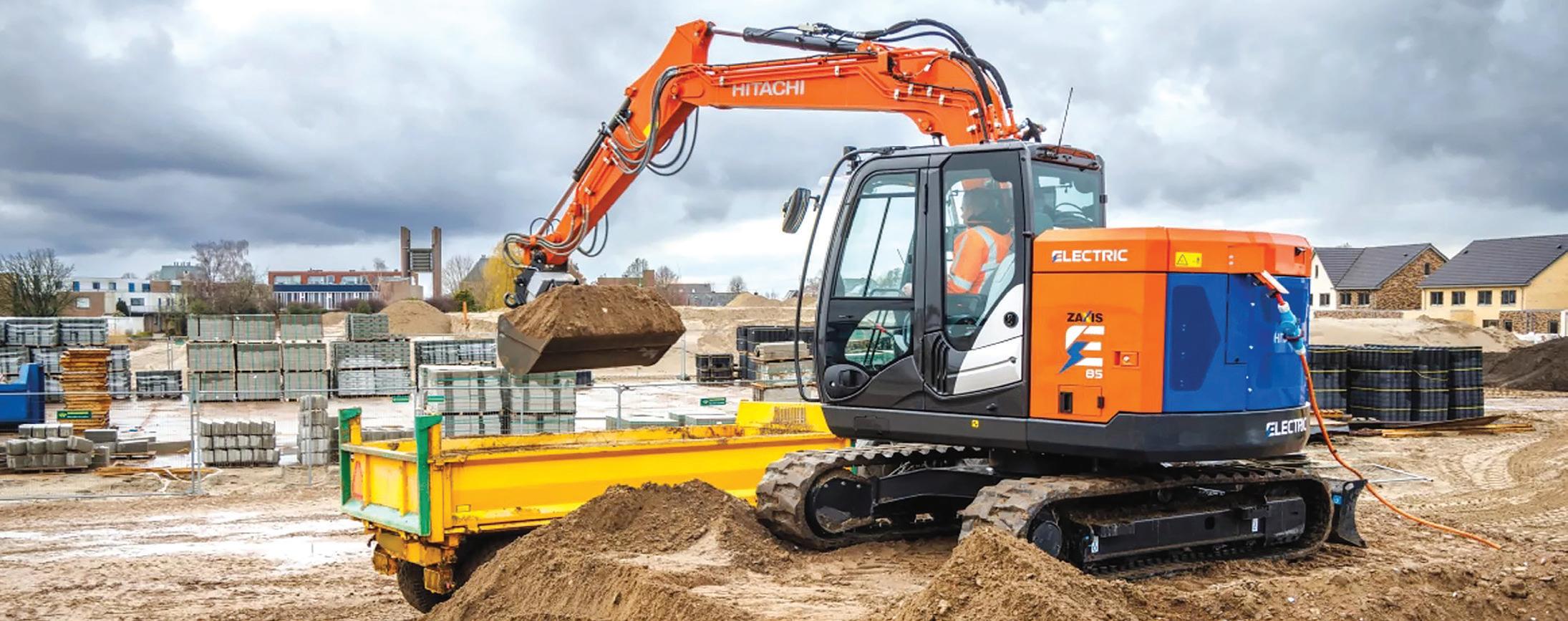
Hitachi is now o ering digital solutions for construction that can help address issues such as the high cost of materials, a shortage of skilled workers and project delays caused by unexpected disruptions.
Key innovations include the XR smart glasses developed in collaboration between Hitachi Construction Machinery and Hololight. This highly durable and advanced accessory allows site technicians to receive remote support from their service desk with a visual aid, using XR technology.
Another recent development is the all-inone fleet management tool, CONNECT. This
provides access to the latest performance data on Hitachi construction machinery, as well as other brands of equipment. Users can gain a complete view of a fleet, generate custom reports on key metrics such as idling time, fuel consumption or CO2 emission. Users can also set up geofences to analyse productivity.
The CONNECT platform can be accessed via smartphone or tablet and is available in 24 languages. It is also integrated with Hitachi Global e-Service and the ConSite service solution.
HCME is also developing existing
digital o erings. The ConSite applications o er comprehensive machine health management, with features including an oil condition monitoring sensor. Further updates are being made to the Hitachi telematics API, with the introduction of 10-minute and 60-minute data frequency options. Customers gain near real-time insights and a more accurate view of fleet operations. Remote data frequency adjustments are possible through Global e-Service, boosting e iciency and machine management.
www.hitachicm.eu
Trimble is now o ering an improved Reality Capture platform service, allowing e ective collaboration and sharing of massive reality capture datasets. Data captured with 3D laser scanning, mobile mapping and uncrewed aerial vehicle (UAV) systems can all be handled. e service is available as an extension to the cloud-based Trimble Connect common data
BELOW
Using new reality capture technology from Trimble can deliver greater e iciency for construction works
e Trimble Reality Capture platform service o ers a secure and intuitive web-based solution for point clouds and 360° imagery. It allows professionals across construction, surveying, transportation infrastructure and utilities to collaborate on complex reality capture projects faster and easier, while maintaining data integrity by retaining accuracy. is new service improves secure access to reality capture data, including massive datasets captured by mobile mapping by terrestrial laser scanners like the Trimble MX series and Trimble X9, as well as data from third-party hardware. e Trimble Connect system helps to integrate data across Trimble connected software solutions, including Trimble ProjectSight construction management software, SketchUp 3D modelling tool and Tekla structural BIM software, as well as third-party system integrators.
e Trimble integrated Microsoft Azure Data Lake Storage and Azure Synapse Analytics tools help to reduce the time ingesting, storing and processing massive datasets. e service is designed to optimise and synthesise data of all sizes for e cient management and use of reality capture data throughout connected work ows. End www.trimble.com
According to Smart Construction, digital twins can help boost pro tability within construction. With pro t margins tight across the construction industry at an average of just 6% and many operations working at a loss, many businesses are vulnerable to unforeseen project issues.
For a construction project to be pro table, site managers must consider delivery time, changing costs throughout the project lifetime and any unexpected onsite issues that might cause delays.
But the construction industry is now adopting digital solutions to transform its operations and increase pro tability. Digital twins can be bene cial to project leaders, reducing the amount of time sta are required onsite, whilst improving safety and allowing decisions to be made virtually.
Digital construction improves pro tability in several ways, including freeing up time for the site manager. By reducing commuting time and improving the e ciency of data and le transfers, site managers can spend less time on administration tasks.
is increases capacity to work across sites and oversee a larger portfolio of construction or earthmoving projects, as well as spending more time liaising with suppliers and clients to ensure accuracy and prevent potential errors.
Digital construction tools also grant stakeholders access to view a jobsite virtually, alleviating the need to travel multiple times a day, saving fuel and commuting costs across all outputs.
For Sina Motsch, site manager for HEITKAMP Corporate Group, it is crucial that she makes use of site information e ectively.


For the latest news, extended features and videos relating to Construction Technology visit the website globalhighways.com

By utilising Dashboard by Komatsu Smart Construction Dashboard, Sina was able to collect asbuilt data and generate an accurate digital twin that was automatically updated as the site changed daily. Using a digital twin of the project site enabled Sina to discover delays, developments or potential issues across the jobsite without having to visit in person. rough Dashboard, project managers can track materials and progress as it happens, resulting in a wider status understanding and informing quick decision-making.
www.smartconstruction.io
Digitalisation is the way ahead for the construction sector. This can deliver improved e iciency, reduced waste, higher quality and can manage project costs, while also improving on sustainability. Michael Gomes is vice president of Global Sustainability and CSR at Topcon Positioning and is convinced that technology shows the way ahead for the construction industry. Moving towards digitalisation will help construction firms achieve their project goals more quickly. And the digital data layers can also show accurately what is being achieved.
He said, “Digital data layer prove the act of sustainability. They prove the value in a world where information is everywhere; the proof becomes more important.”


Gomes continued, “We make tools that help you in the digitalisation of workflows.”
The cost of this technology used to be prohibitive for all but the largest firms. But steady advances have also helped reduce the cost of advanced technologies such as 3D machine control packages, with the result that these are now a ordable even for small contractors for use on compact equipment, according to Gomes. He said, “The technology is not just for the large machines. You can get it on skid steer loaders and mini excavators now.” Gomes explained that this is making substantial changes for users, “The machine becomes intuitive, so I don’t have to be.”
The system can highlight the value of an operator too, not just showing productivity as in the past. It can reveal the quality of working, the time taken, fuel burned and provide a more comprehensive quality assessment.
www.topconpositioning.com
Bechtel and ENKA each boast rich histories, and together, possess nearly 200 years of combined experience—an impressive feat in today’s competitive landscape

For 35 years, the joint venture has tackled some of the industry’s most challenging motorway projects.
e Morava Corridor Motorway Project’s program management exempli es a commitment to excellence, representing a complex endeavour that few can undertake.
e Morava Corridor Motorway Project is a 112km dual carriageway designed for speeds up to 130km/h, connecting Pojate and the A1 through Kruševac to Preljina, north of Č ačak. Running along the West Morava River valley, it links central Serbia with Pan-European Corridors 10 and 11, facilitating connections to Bosnia, Montenegro, and North Macedonia. By improving the ow of goods and people, it will enhance safety, reduce transportation costs, shorten travel times, boost trade, attract investment, and stimulate economic growth, making it a key driver of regional prosperity.
e project management team has extensive expertise in environment, safety and health (ES&H), engineering, construction, quality assurance
and control, procurement, project controls, nance, human resources, public relations, community relations, and sustainability. e team is dedicated to delivering this vital project of national importance for the Serbian Government.
e 112km motorway is elevated to 4.3m in most sections to prevent ooding. e project encompasses 3,647,448m³ of excavation for motorway works, 12,017,032m³ for river regulation, and 36,875,058m³ from borrow pits. It includes 20,975,470m³ of gravel ll, 1,835,026.92m³ of subgrade, and 1,240,261.77 m³ of subbase material. e partners will lay 1.23 million tonnes of asphalt, construct 37 overpasses, build 78 bridges, and install 236km of drainage systems with 202 oil separators.
Final touches include 478km of guardrails, 230km of wire fencing, 150,000m² of road markings, and 2,400 tra c signs to ensure safety and e ciency. e motorway boosts Serbia's appeal to investors by integrating smart features and a 5G digital corridor for enhanced communication and operational e ciency. Situated
on the Morava River's oodplain, it utilises innovative hydrotechnical solutions to manage water ow and reduce ood risks in surrounding areas.
At Bechtel-ENKA, sustainability drives operations on the Morava Corridor Motorway, and the eet’s e ciency re ects this commitment to reducing the climate footprint. By strategically locating borrow pits and waste
areas close to sites, the partners cut operational cost, minimised equipment travel, and reduced fuel use and greenhouse gas emissions, contributing to climate change mitigation.
From 2020 to 2024, the partners employed 11,324 individuals from 32 nationalities. e current workforce exceeds 4,000 employees, comprising 48% Indian nationals, 24% Turkish, and 27% Serbian. To support the diverse workforce, the partners launched a mental health action plan to prioritise well-being and safety. e human resources, ES&H, public relations, and camp management teams collaborate to organise inclusive events that build community, celebrates diversity, and promotes wellness.
In December 2023, the rst three sections of the motorway, totalling 27km, opened to public tra c ahead of schedule and the partners are on track to deliver the next 30km to the customer by year-end. End
Quote Response: The Role of the International Road Federation in promoting best practices globally
“ e International Road Federation (IRF Global) is a crucial advocate for best practices in global road development, championing excellence and sustainability. e Bechtel-ENKA Morava Corridor Motorway Project views the IRF as an inspiring leader that fosters innovation and knowledge sharing, empowering us to address today’s challenges. We are honoured to receive the prestigious Program Management Award from IRF, recognising our commitment to leading industry trends, continuous improvement, and elevating project management standards”
Shawn MacCormack
Bechtel-ENKA programme manager for the Morava Corridor Motorway Project
































At the occasion of the 4th Global Ministerial Conference on Road Safety recently hosted in Marrakech (Morocco), the International Road Federation (IRF) and the National Transport Research Organisation (NTRO) announced a partnership. e two bodies will deliver training and accreditation for road safety auditors in the Australia and New Zealand. In response to the growing need for high-quality road safety audits, this partnership will enable professionals trained by NTRO to gain international accreditation and be listed in the IRF International Registry of
Road Safety Auditors.
Accessible via the IRF website at www.irfo cial.org, and made possible thanks to the support of TotalEnergies Foundation, the IRF International Registry of Road Safety Auditors aims to establish a global standard for the training and accreditation of road safety auditors. e registry sets clear internationally recognised certi cation standards to ensure consistency and quality in road safety audits worldwide. is initiative enhances transparency and ensures that auditors meet stringent professional quali cations on a global scale.
“Following the partnership
with the UK Society of Road Safety Auditors (SoRSA) and with the Spanish Association of Road Safety Auditors (ASEVI), this new partnership is another important step forward in our global e orts to ensure high-quality road safety audits that ultimately will result in safer roads for everyone” said Susanna Zammataro, IRF Director General.
Michael Caltabiano, chief executive o cer of NTRO expressed " is partnership with the IRF underscores our commitment to advancing road safety in Australia and beyond. By aligning our training programmes with the IRF’s
international accreditation framework, we are equipping road safety professionals with the skills needed to make a tangible di erence in reducing road trauma and in saving lives.”
As a globally recognised leader in road safety, the IRF brings over seven decades of experience in supporting governments and organisations in training and certi cation of road safety auditors. With its extensive network spanning all continents, the IRF is wellpositioned to support global e orts aimed at preventing road crashes and saving thousands of lives. End
Union minister Nitin Gadkari inaugurated the Global Road Infratech Summit & Expo 2025 (GRIS) in New Delhi, organised by the International Road Federation – India Chapter (IRF-IC) on 6–7 March. Centred on Vision Zero: Sustainable Infratech and Policy for Safer Roads, the event united policymakers, industry leaders, and experts to address road safety and infrastructure innovation.
Gadkari emphasised India’s goal to halve road accidents by 2030, citing poor engineering, inadequate signage, and awed road design as key causes. Urging immediate action, he tasked IRF with drafting evidence-based solutions for implementation, stressing collaboration to incentivise contractors to adopt safer practices.

From le to right: Mr Akhilesh Srivastava, executive vice president IRF-IC; Susanna Zammataro, director general, IRF; Mr K K Kapila president (Emeritus), IRF & founder president, IRF India Chapter; Shri Nitin Gadkari, Union minister for Road Transport and Highways; Hamdi Aydin, treasurer, IRF
IRF director General Susanna Zammataro called road safety a “moral imperative,” highlighting IRF’s global partnerships and data-driven strategies to accelerate progress. IRF India Chapter president Emeritus Kiran Kapila underscored adapting international best practices to local challenges.
e summit reinforced IRF’s commitment to fostering knowledge sharing and sustainable mobility, aiming to bridge policy gaps and empower safer infrastructure development nationwide. End

The International Road Federation (IRF) showcased its leadership at the 4th Ministerial Conference on Road Safety (15–21 February 2025) in Marrakech, hosted by the World Health Organisation (WHO) and Morocco’s National Road Safety Agency (NARSA). Aligned with the UN Decade of Action for
Road Safety 2021–2030, IRF steered discussions on halving global road deaths by 2030.
IRF co-hosted four high-impact sessions, including a workshop with Abertis at the World Youth Assembly, where IRF Young Professionals pushed for integrating safe road design into sustainable mobility
systems. A packed side event with iRAP and PIARC promoted the Ten Step Plan for Safer Road Infrastructure, a UN-endorsed framework advancing Global Targets 3 and 4. Tanzania Ten Step awardwinning project demonstrated its real-world success. IRF further led a UNESCWA roundtable with leaders
For more information, on all of these stories visit the IRF website at www.irfo icial.org
or contact IRF directly via email at info@irfo icial.org
from Mauritania, SSATP, and EBRD advancing the Safe & Inclusive Road Design initiative in North/ West Africa and Central Asia. The project prioritises protecting vulnerable road users through updated design standards and regional cooperation.
In a joint session hosted with PIARC, IRF championed life-saving measures like road safety audits and stressed the need to invest in building local capacity.
To accelerate progress, IRF announced a collaboration with Australia and New Zealand’s National Transport Research Organisation (NTRO) to train and accredit road safety auditors in both countries. These actions underscore IRF’s unwavering commitment to turning policies into safer roads and saving lives worldwide.



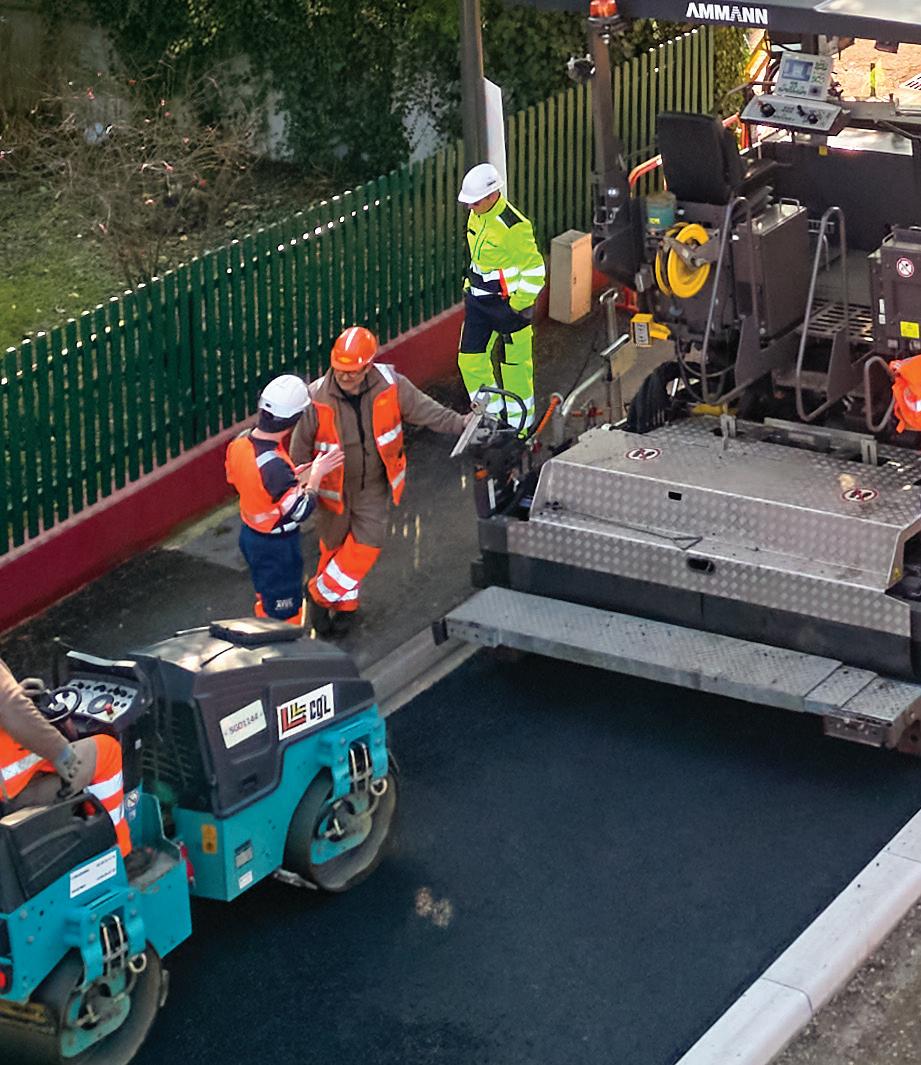
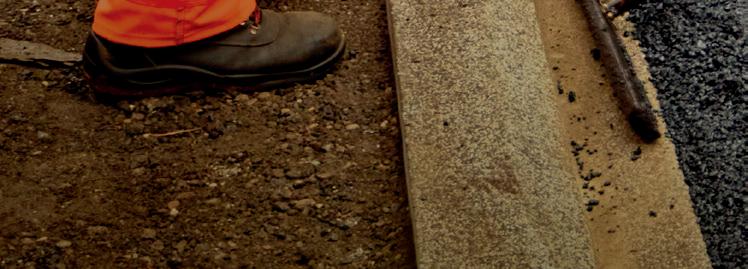
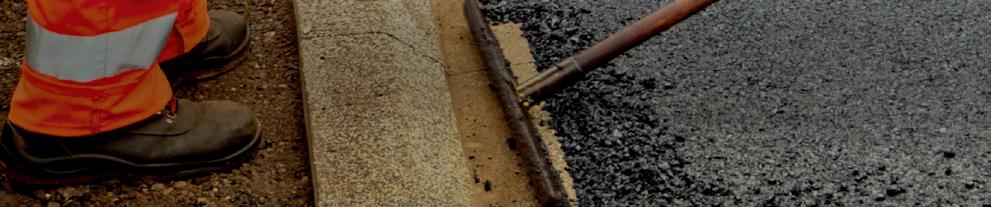
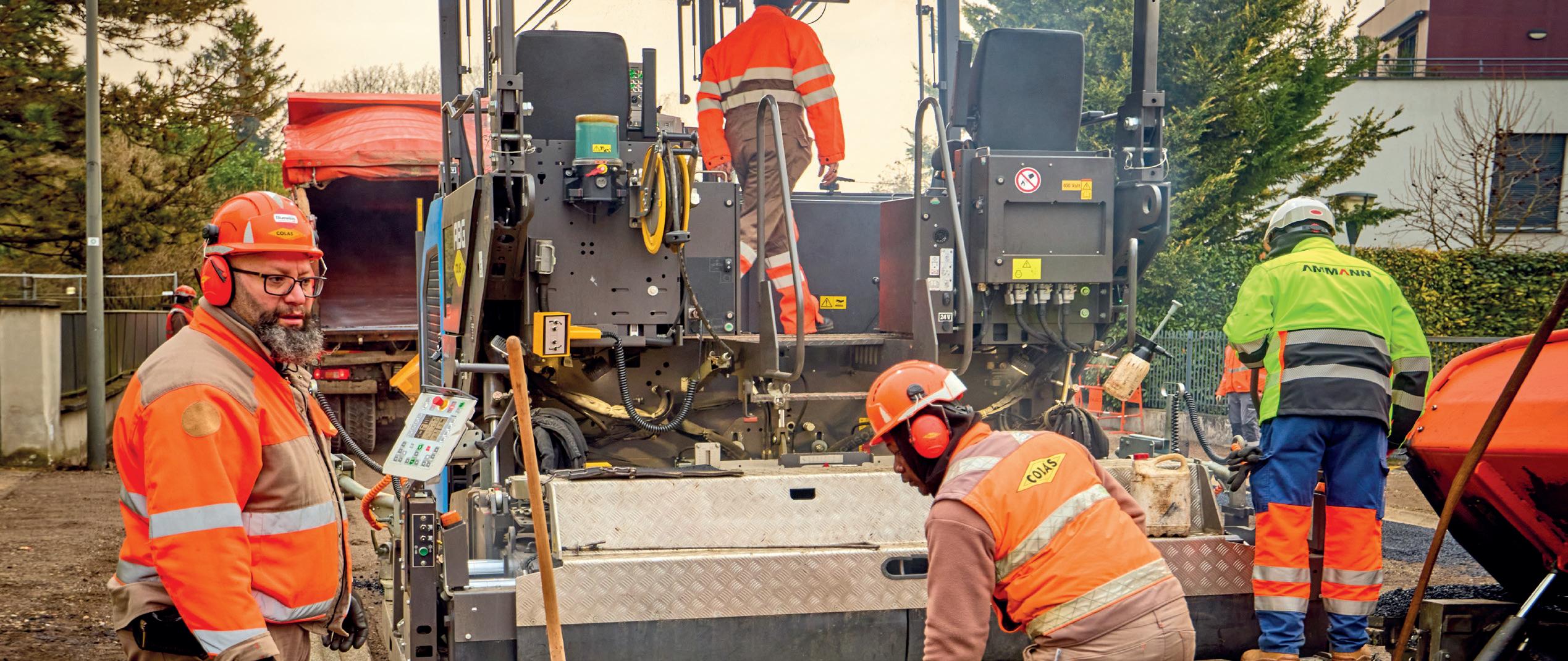
For the paving crew, the electric machine operates the same as a conventional diesel machine

Colas puts Ammann’s eABG4820 electric paver through its paces in Strasbourg
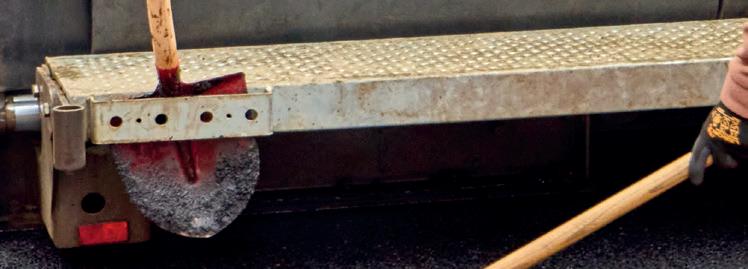
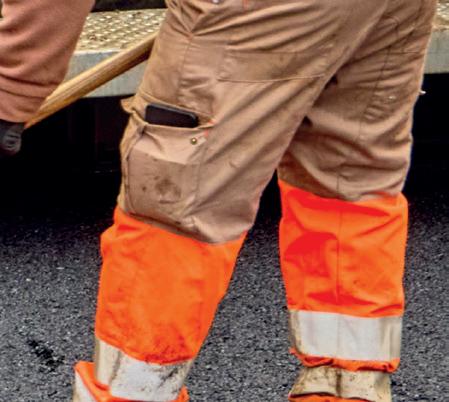
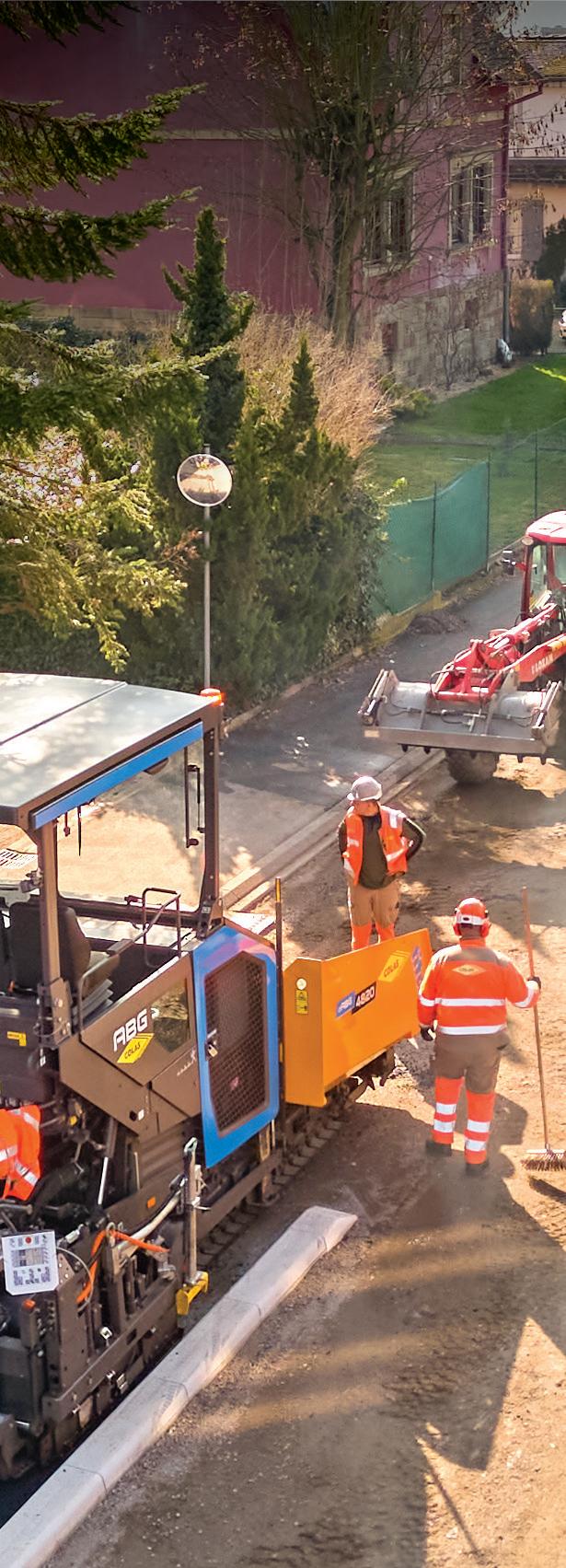
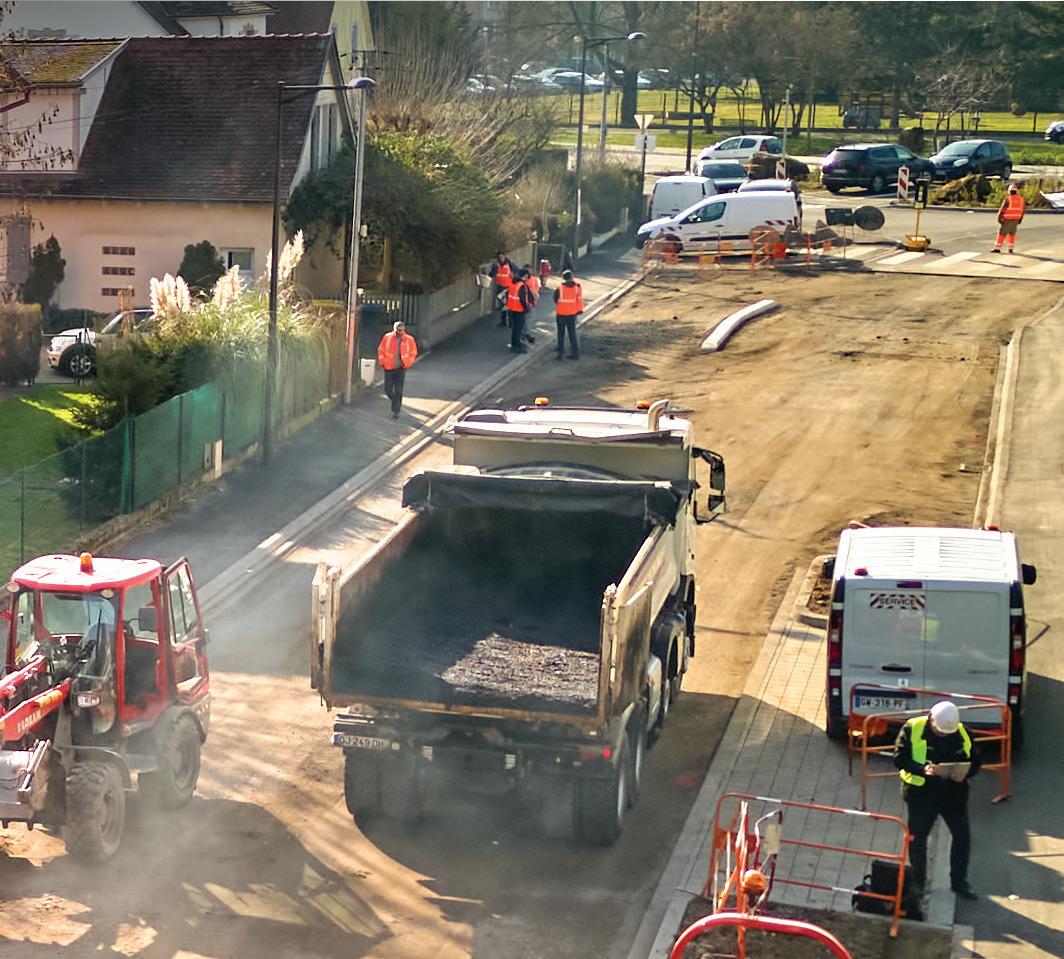
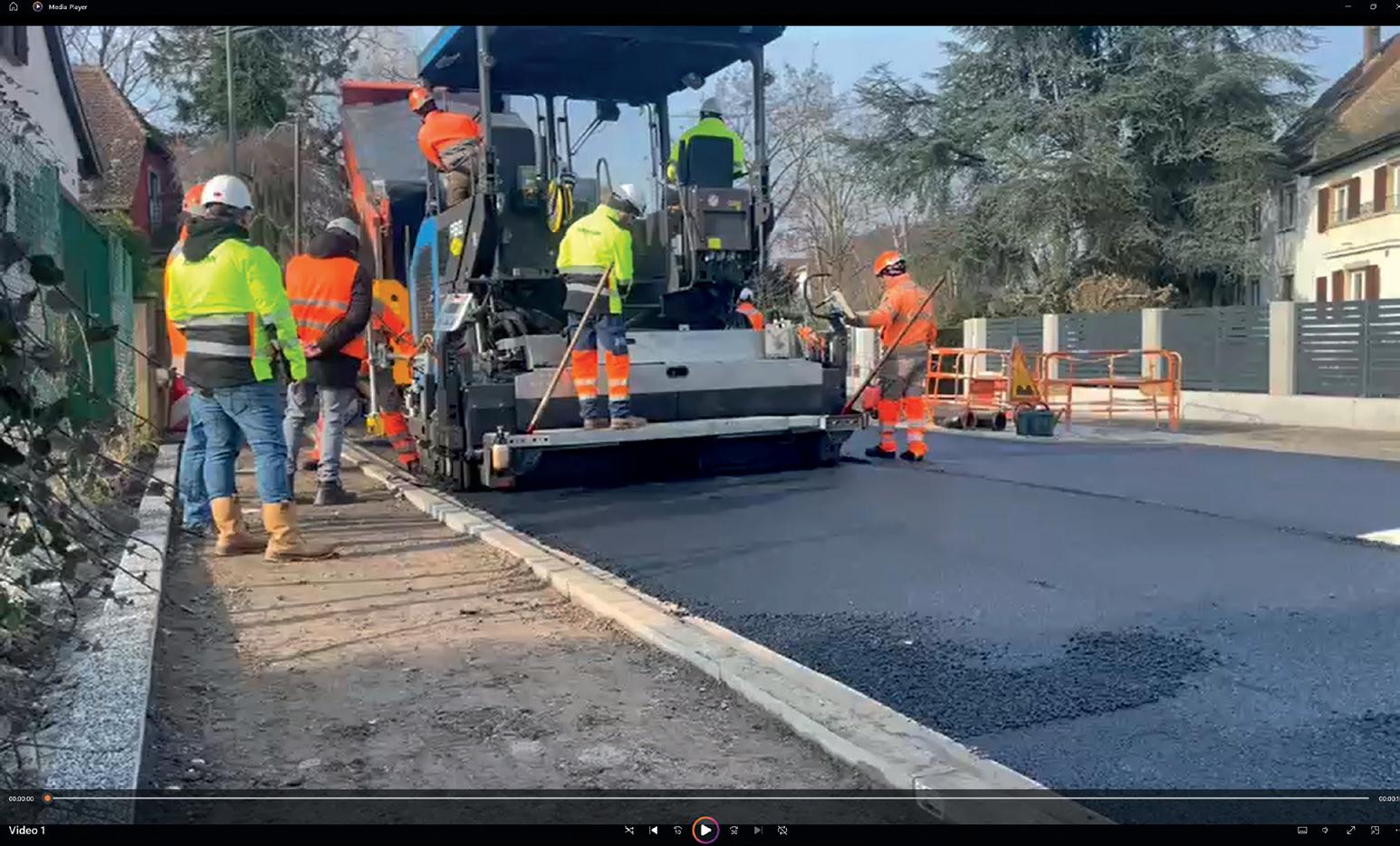
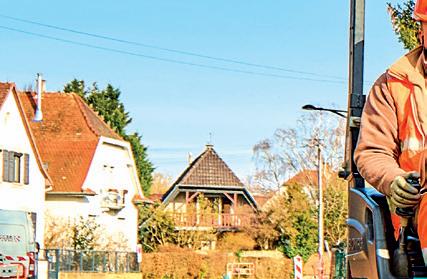
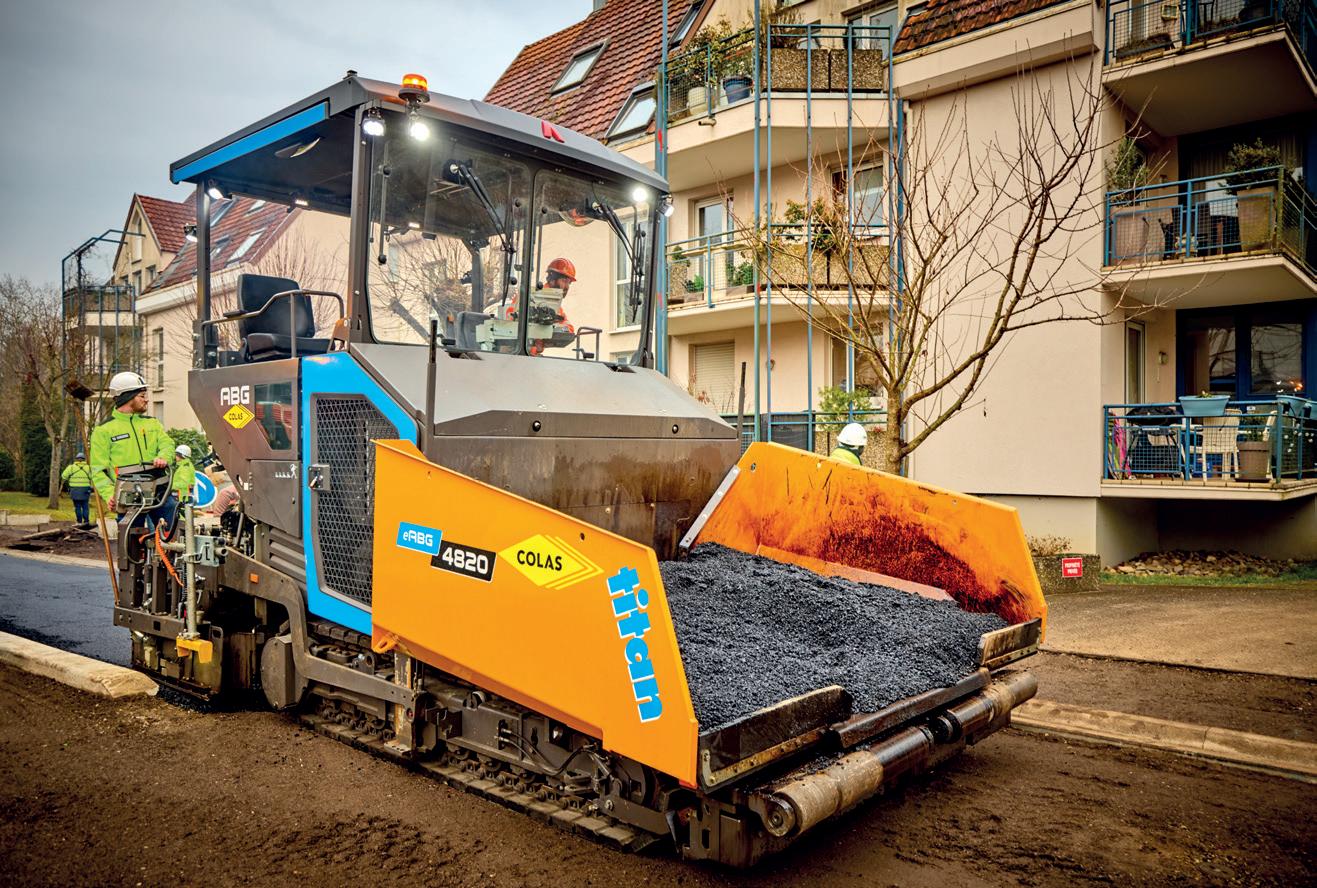
On a residential street in the Northeast of Strasbourg, a paving crew from Colas is hard at work. e road is being remodelled to accommodate a two-way bicycle lane, and this is one of the nal steps in the scheme.
is road is also a test bed for Ammann’s new electric paver, the eABG4820, which has been in development for around three years now. It o cially became part of the Ammann family in July 2024 when Ammann acquired the ABG paving product line from Volvo Construction Equipment and is scheduled to go into production in late 2024.
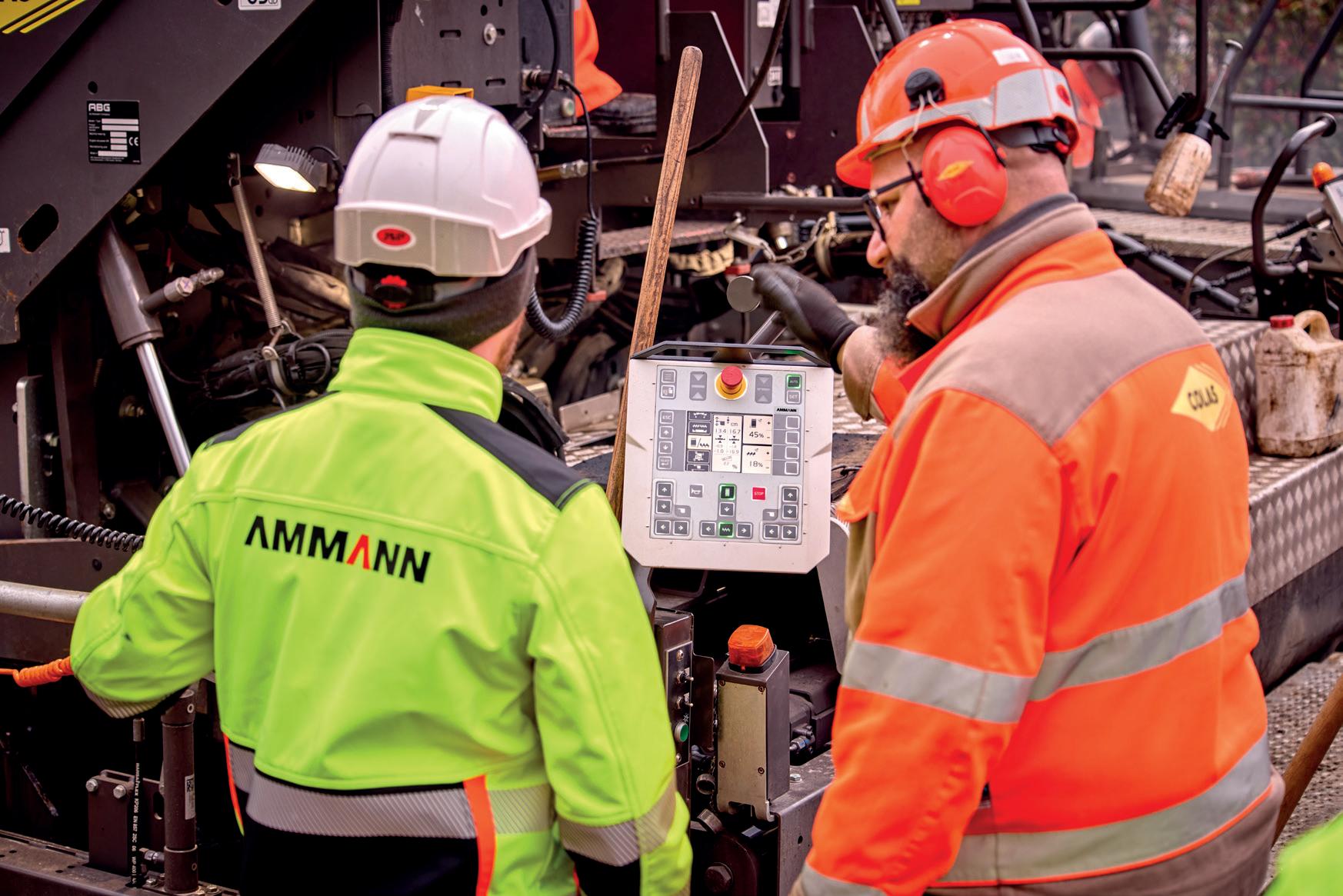
e electric paver has many similarities with its diesel sister, the ABG 4820, a 2.5m-wide paver that can accommodate a screed length of up to 6.5m. It looks the same, has the same screed, the same user interface – Electric Pavement Management 3 (EPM3)and the same street-level control panels at either side. However, it weighs in at around 1 tonne heavier.

Internally, there are huge di erences: “We took out the diesel engine and whole drive system and added two electric motors to give good and e cient power balancing,” explains Hans-Juergen Vogel, product manager at Ammann. “Also, we have made tweaks to the hydraulic system so that it will work well with the two motors. e machine software, everything that relates to the control of the machine, is also new.”



In developing the eABG4820, engineers were able to deploy some of the tried and tested electronic components developed by Volvo for its other electric construction plant. Volvo Penta will continue to supply these components to Ammann in a partnership deal.
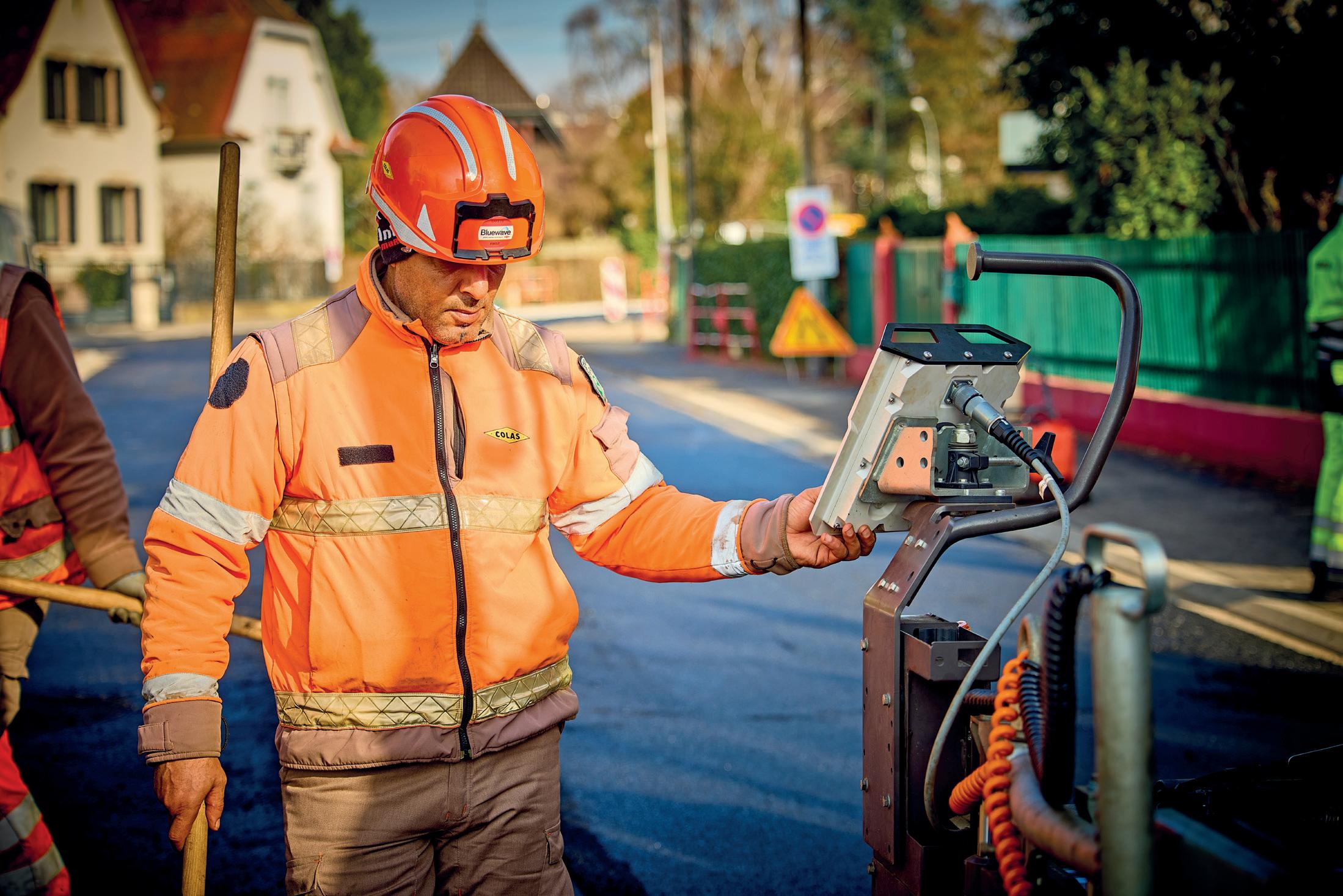
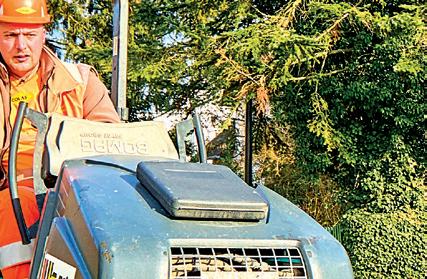
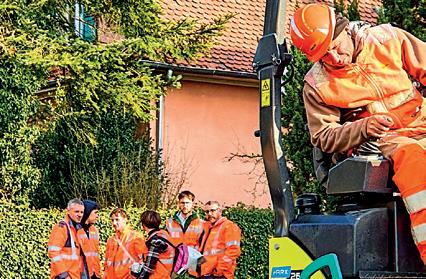
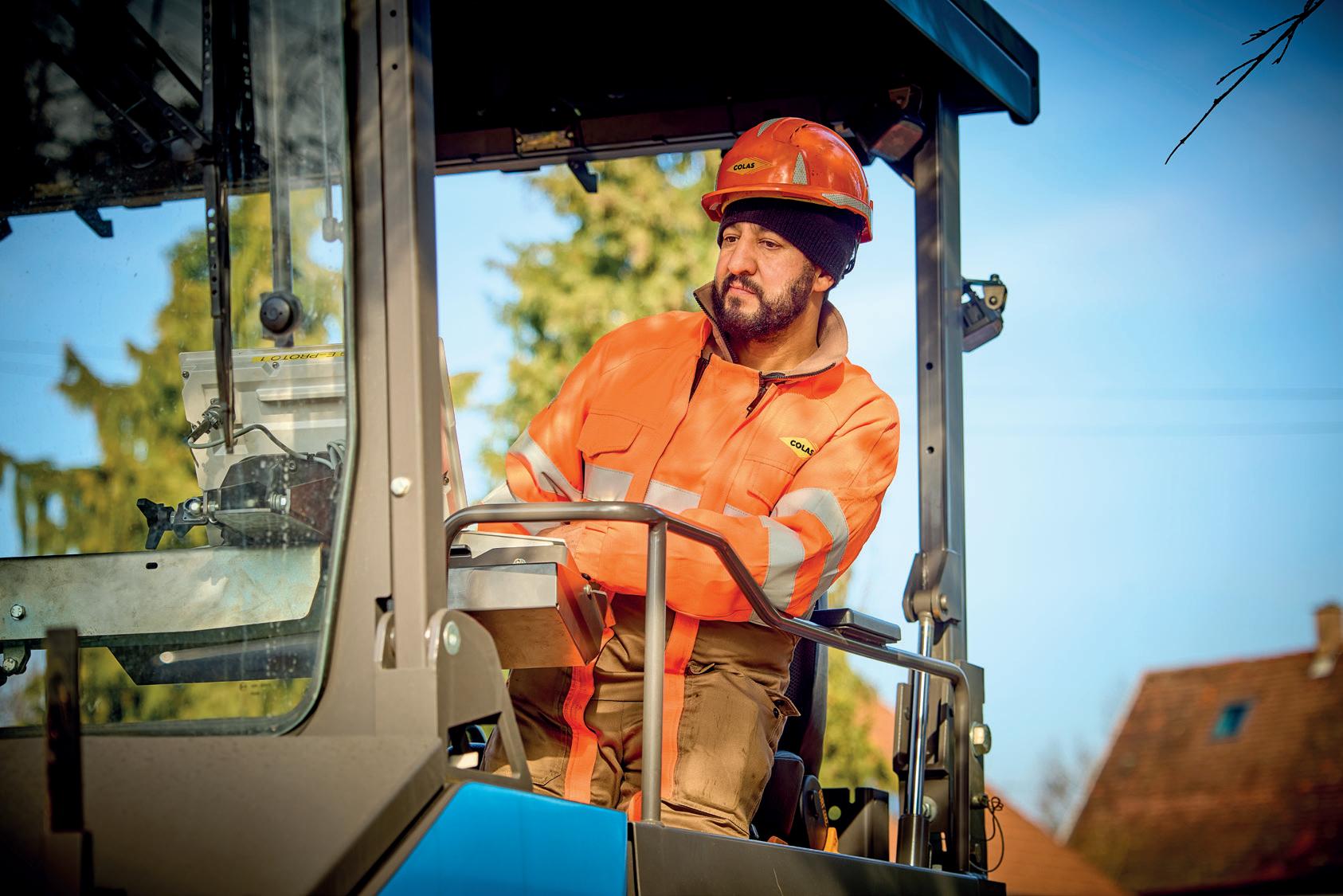
Colas’ paving crew in Strasbourg seem very happy with the machine. Several of them volunteer to talk to camera about how they find working with the electric paver. The crew say that they find the machine easy to use and that the low noise levels make it easier to communicate and create a less stressful work environment.
“Our teams have met no issues using the Ammann electric paver over the few test days on several works sites,” says Tony Masson , regional equipment manager for Colas. “There is no technical difference in use compared to a classical paver, except that the electrical consumption has to be carefully monitored.”
The big question for any electric vehicle is how long it will last without the need for recharging. Amman says that the eABG4820 will run for between six and nine hours, depending on how it is being used. It can be charged overnight at a contractor’s depot using an AC electricity supply or a DC supply – such as a power unit - could charge the 210 kW-hour capacity battery in around 1.5 hours.
“Just like switching to electric cars, transitioning projects from fossil fuels to electric power does require a change of mindset,” says Judith Ronden, global strategic account manager in Ammann’s roads division. “Sometimes it will require more preplanning or a different approach to logistics.”
Vogel cites a paving job in Sweden, conducted at very low temperatures. The paver worked for 10 hours, in two five-hour stretches with a two-hour break to charge – while the crew took a lunch break - using a power unit onsite.
For Colas in Strasbourg, paving on two consecutive days in Strasbourg, there were logistical considerations. “The challenge is the need to transport the charged paver in the early morning
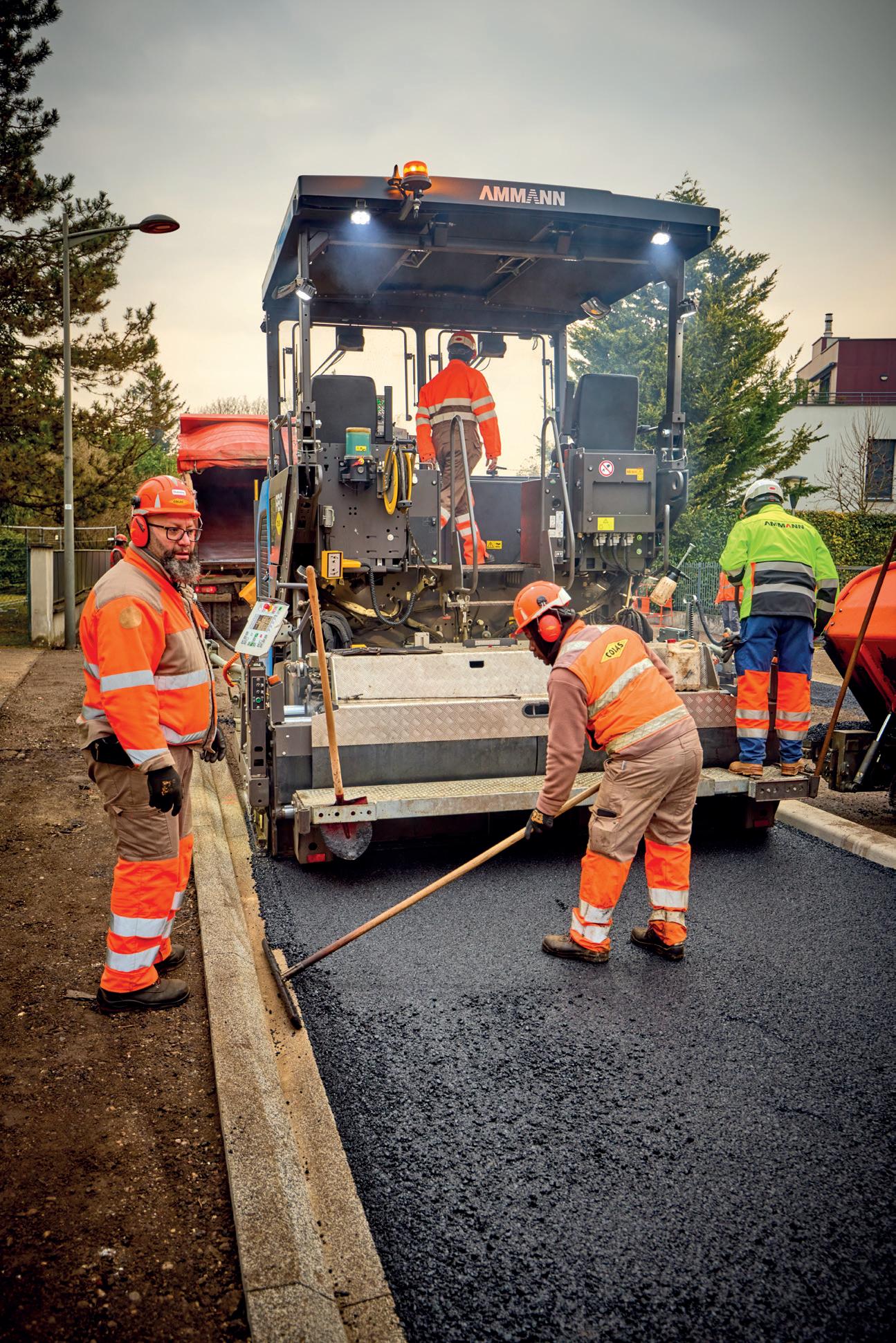
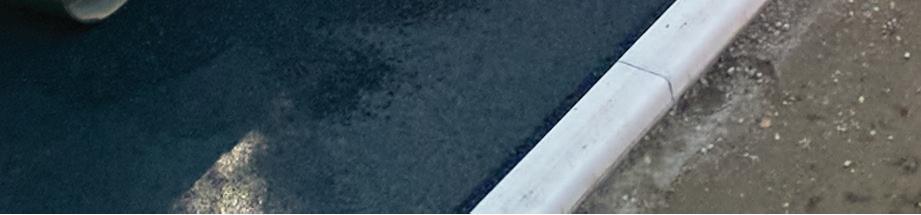
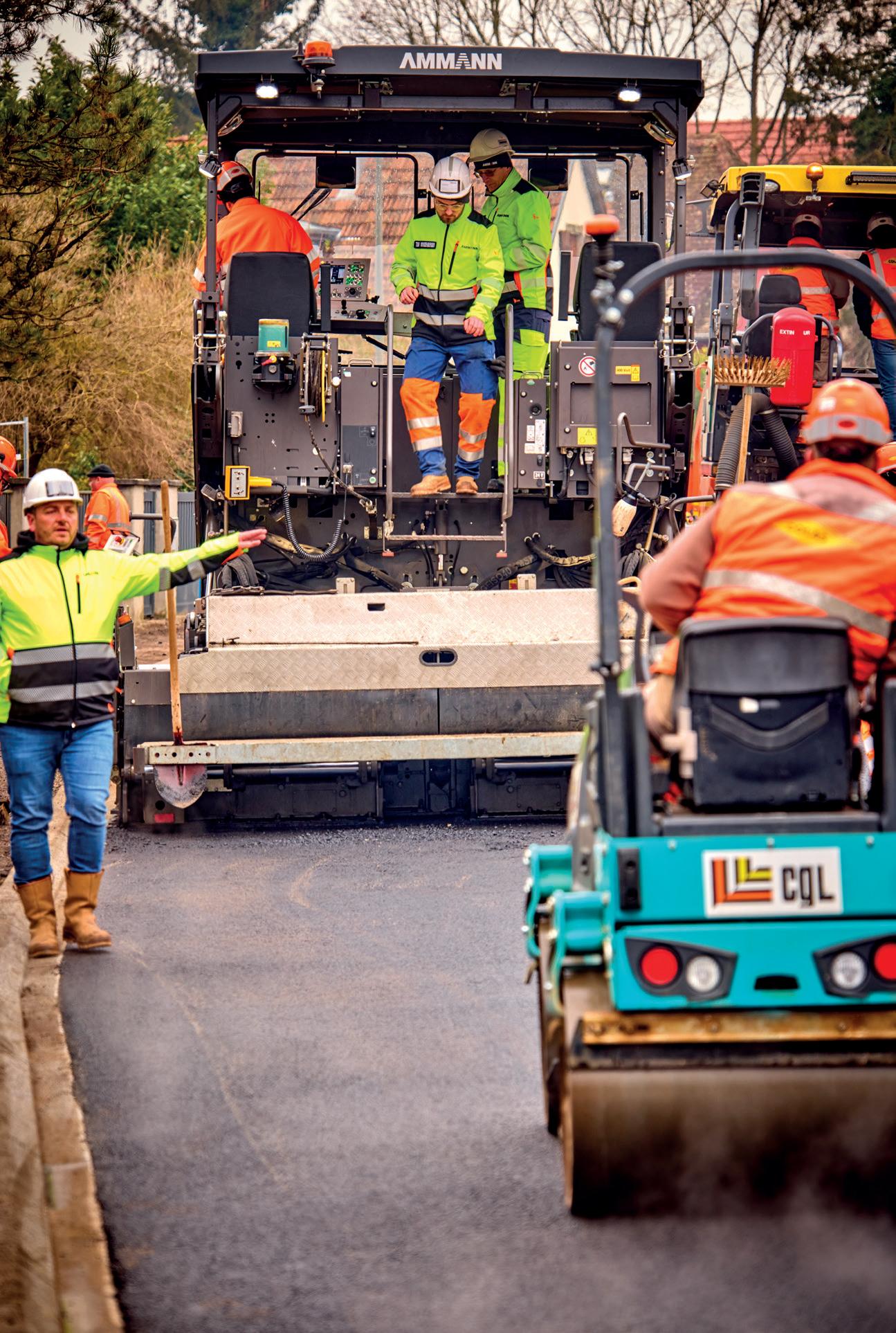
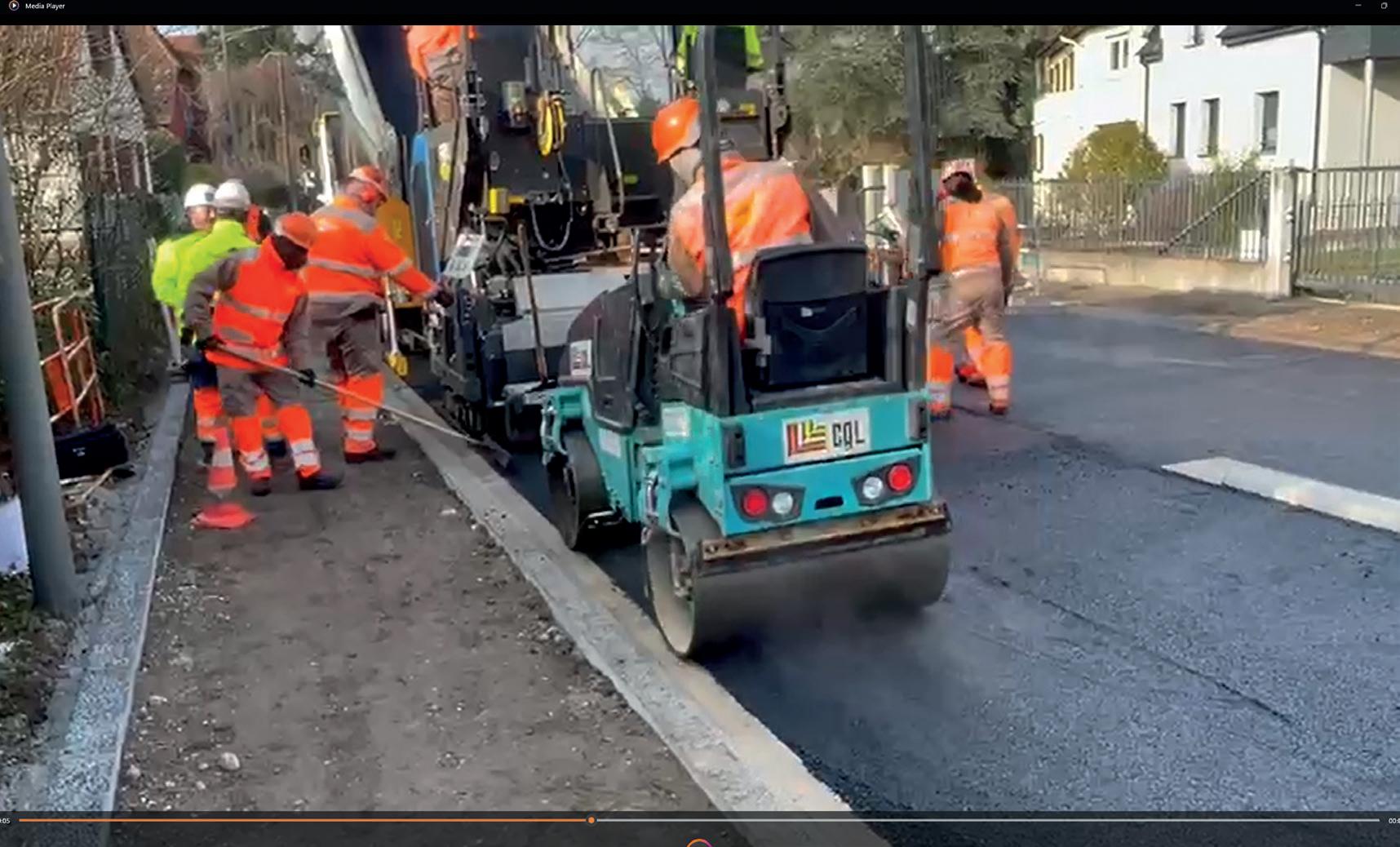
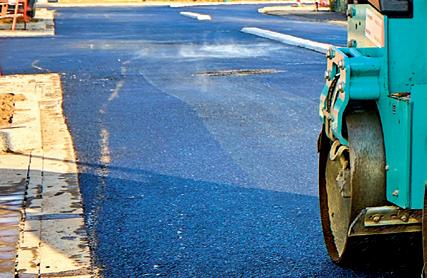
ABOVE: The paving operation itself was conventional, including the mix used, with the equipment being the key differentiator
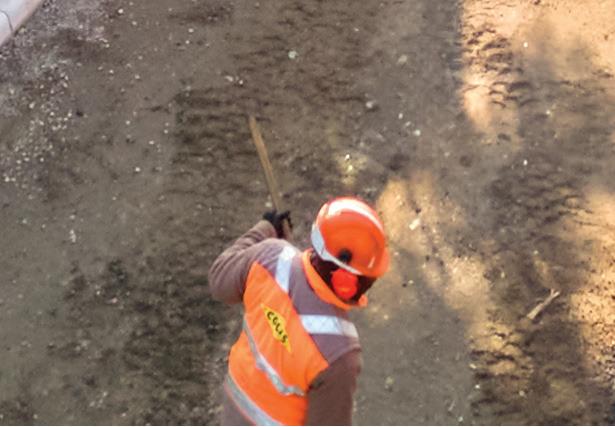
LEFT: The paving crew continuously monitored performance and collected data
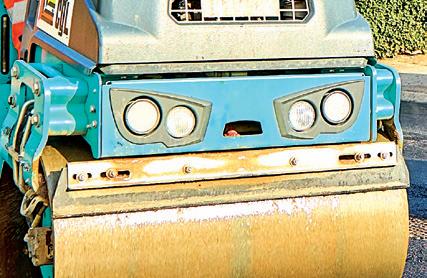
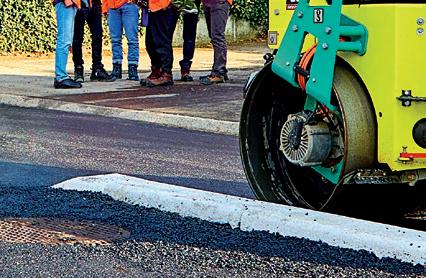
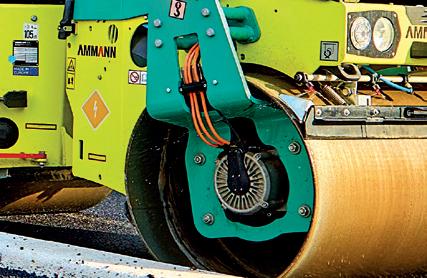
RIGHT: Compaction equipment, including an all-electric unit, from Ammann was also used for the paving job




















































from the works depot to the worksite for use and transporting it back to the agency at the end of the day in order to charge its batteries overnight as we
ABOVE: The use of the electric paver was in line with Strasbourg’s local government’s green focus
BELOW: Several trials have been carried out with the electric paver
maintains the required temperature of the hot-mix paving before application - as the energy autonomy of the paver is limited by the batteries.”
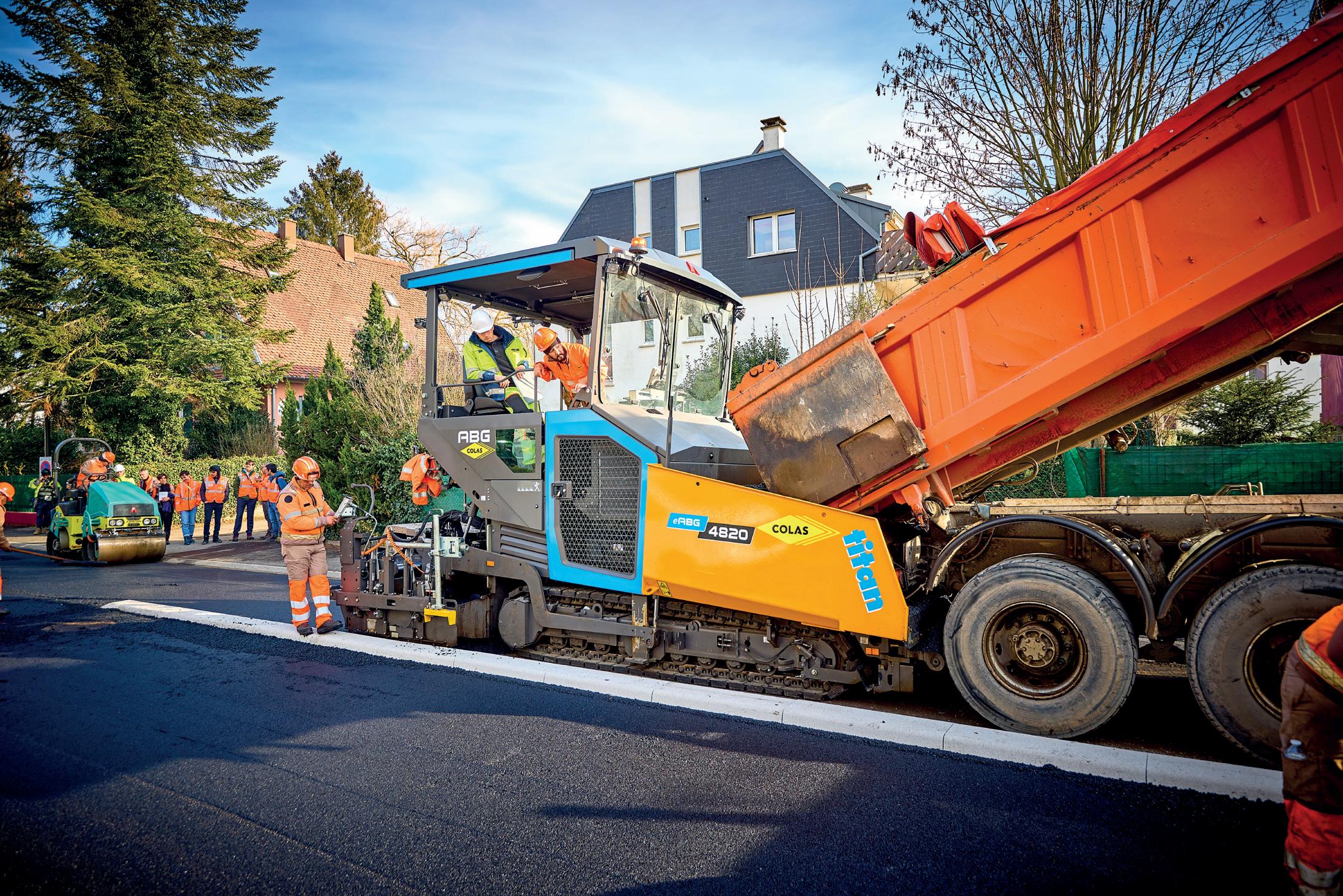

Using the electric machines has been a learning experience for Colas










“For urban job sites like this one, electric machines make sense,”
Michael Neujahr Regional sales manager, Ammann







Strasbourg is a particularly appropriate location for Colas to be trialling Ammann’s new electric paver, the eABG4820. The city is headed up by a green mayor, Jeanne Barseghian of Les Écologistes party, whose goals when she was elected in 2020 included the exclusion of diesel vehicles from the city centre and the creation of new cycle paths.
The remodelling of the 320m-long Rue Mélanie in Strasbourg, where Colas is paving, will create a two-way cycle path on the road, which leads to the Parc de Pourtalès, providing a missing link in a major cycling route. The road is being divided into two halves: one for cyclists, one for motorists, with small concrete islands dividing the two. Rue Mélanie is a residential
road, so using electric equipment which is far quieter than its diesel equivalents, and which does not produce harmful fumes, is particularly beneficial here. “For cities that have low emission zones, using electric plant on jobsites really helps,” says Judith Ronden, global strategic account manager in Ammann’s roads division. “Being able to o er that is opening up new opportunities for our customers.”
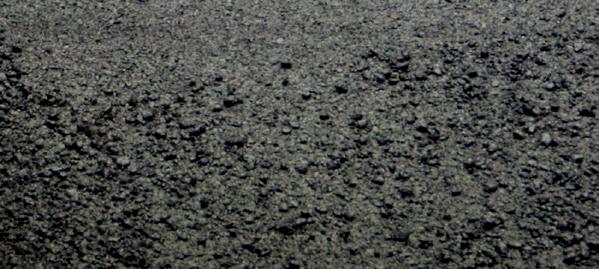
Colas is using the eABG4820 paver to lay asphalt over a 3m-wide lane, at a depth of around 250mm. The asphalt is BBSG 2 0/10 (Béton Bitumineux Semi Grenu), a standard hot-mix asphalt containing 40% recycled asphalt.
Alongside the electric paver,
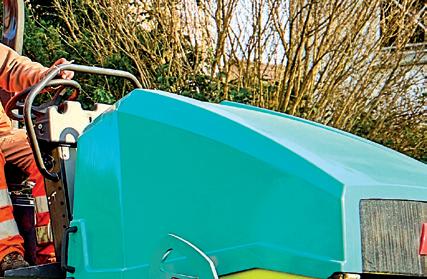
the team is working with a 2.5tonne electric Ammann roller, the eARX 26-2, which is preseries and launched at bauma. “This is a fully electric roller, without any
hydraulic components,” says Hans-Juergen Vogel, product manager at Ammann. Vogel. Electric motors power both the main drive and the vibratory circuits.
With the electric paver, the screed is silently heated from the battery – but that takes energy away from the paving process. Ammann may develop a separate battery pack for its electric paver which would serve the screed and conserve energy in the main battery for running the paver, says Vogel.
ere is quite a lot of stopping and starting for the paver on the Strasbourg project, due to some issues with the ow of asphalt deliveries. When the crew stops for a late lunch, there is still 48% of charge on the battery left.
Trials such as this one, conducted over the past 12 months, have helped Ammann to ne-tune the design of the paver. Most of the changes so far have been related to the charging arrangements, says Vogel. For instance, contractors have suggested charging points on both sides of the machine rather than just one.
“We don’t know yet whether construction companies will want to take care of the energy supply themselves or whether they expect it to come from the OEM,” says Vogel. “We're trying to nd out from trials how they want to handle this. It needs to t in with their operations.”
Future developments are likely to include the provision of more information on battery performance, says Vogel. “Customers are asking for more features and information about charging which could perhaps be delivered by an app. is is something that will come in the future.”
Working noise on the electric
In the meantime, Ammann will be hoping to make its rst sales of the eABG4820 at bauma in April 2025. e electric machines will be considerably more expensive than their diesel counterparts; Ammann won’t say yet how much more expensive.
With sales secured, production can theoretically begin. “We need to understand how we can integrate this machine into our production in Hameln (Germany),” says Vogel. “Fifty to 60 percent of the
is lessened by comparison to a diesel
machine is standard but the whole electric system with the traction and batteries is new. We will have to see how big the demand is before we look at modifying the production line.”
As well as providing valuable data for Ammann’s development team, projects like this one in Strasbourg help because they boost con dence for the users, says Vogel: “We have found that after we carry out these trials with our customers, there is more interest, because we can show them that it works.” End
www.ammann.com www.colas.com
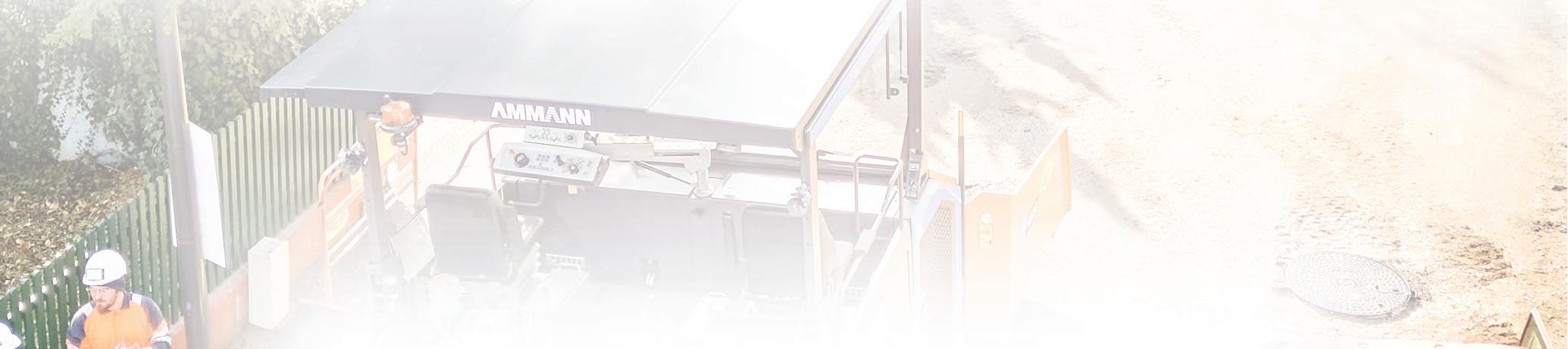
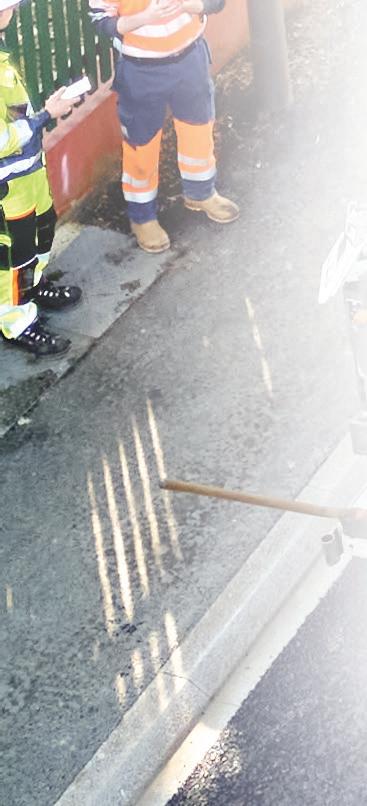

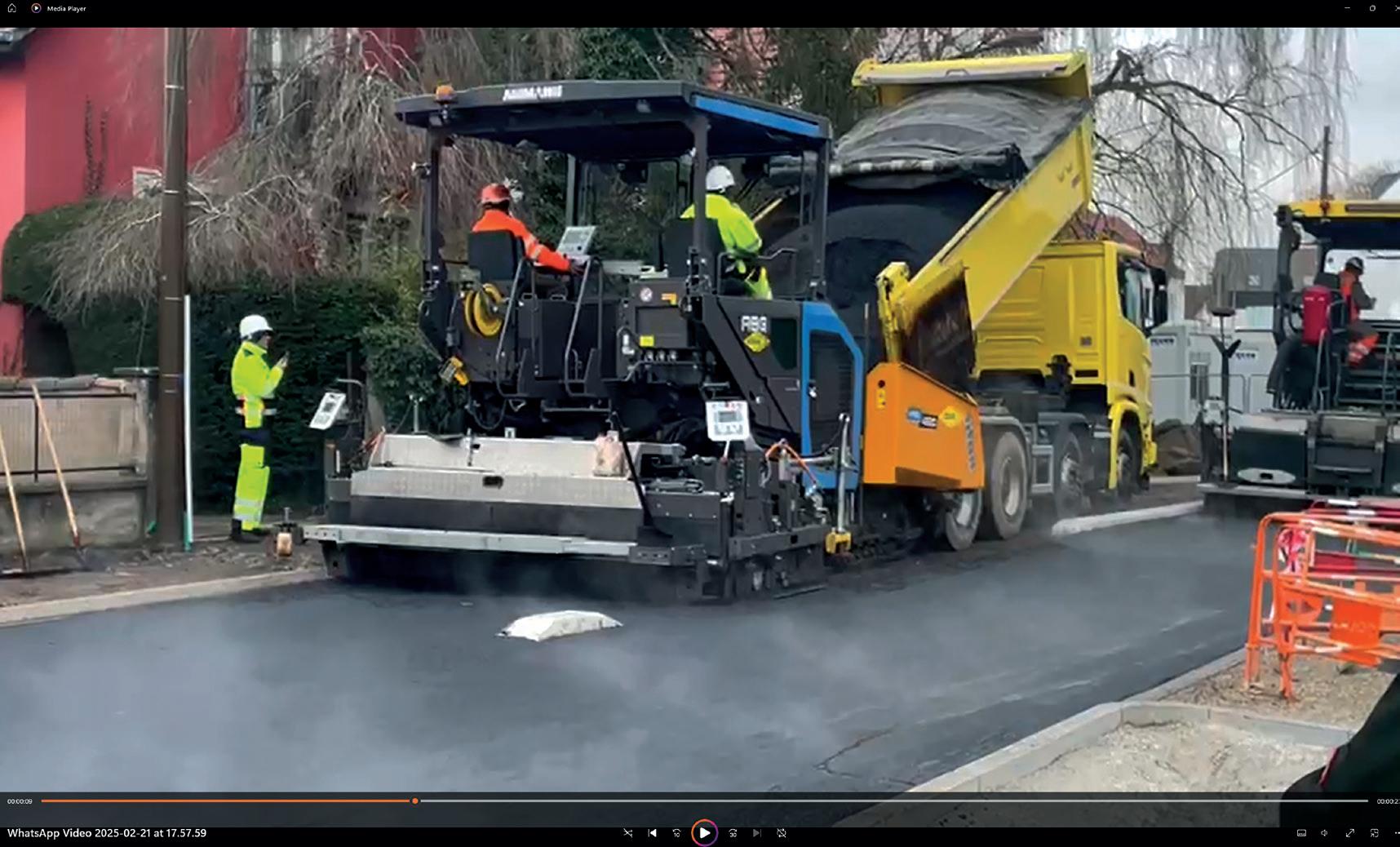


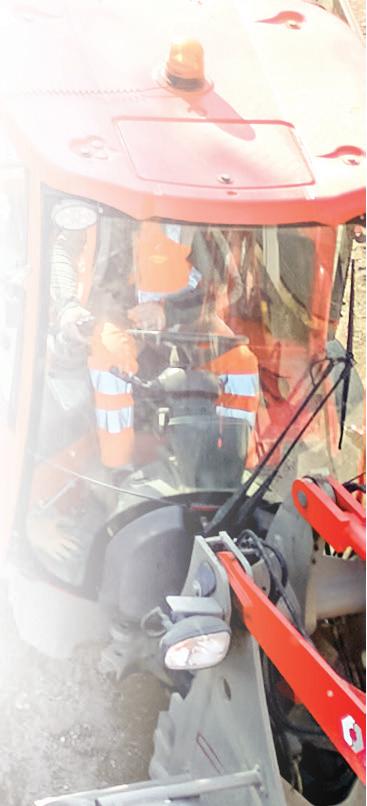

For the paving crew, the electric machine operates the same as a conventional diesel machine


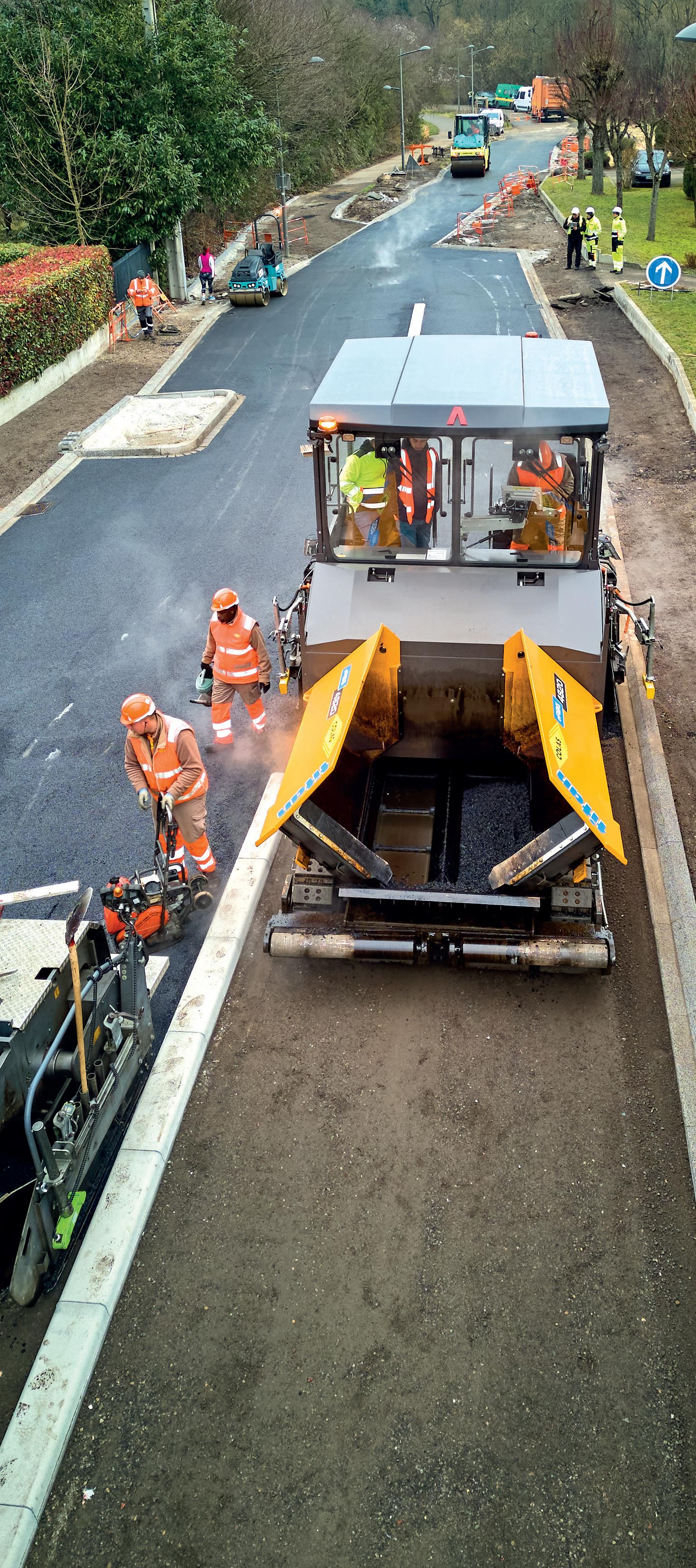
The Ammann eABG4820 paver at work in Strasbourg is one of two prototypes which are being put through their paces on various projects around Europe. As well as trial projects in France with Colas, the prototype machines have been tested by several other contractors in the Nordics and the Netherlands with planned projects in Luxembourg and Switzerland.
The impetus for transitioning away from diesel fuelled plant to electric ones comes from global, national and company commitments to reduce carbon emissions – in a bid to slow the rate of global warming.
“The main driver for our customers is to cut their carbon footprint,” says Judith Ronden, global strategic account manager in Ammann’s roads division. “Because this is still a prototype, our customers are taking a risk by carrying out these projects, but they are willing to do that because it is an important innovation.”
Clearly, the carbon savings achieved by switching from diesel to electricity depend on the way that electricity is generated in the country where the equipment is being operated. France, for instance, generates 92% of its electricity through nuclear, wind and solar power.
Most European countries are working hard to increase the proportion of ‘green’ energy they produce. The European Union (EU), under its Renewable Energy Directive, has set a renewable energy target of 42.5% - up from a previously set goal of 32%.

“Colas is also working to reduce carbon emissions by making processes and technologies more energy e cient”
Some paving contractors have set their own, ambitious carbon reduction targets. For example, Colas aims to reduce its direct carbon emissions by 46.5% by 2030, compared to 2020. It is also looking to cut the carbon emissions of its entire value chain –which accounts for 85% of the group’s total emissions – by 30% over the same timeframe.
As well as switching to electrically powered vehicles and plant or lower carbon fuels such as hydrogenated vegetable oil (HVO), Colas is also adopting lower carbon materials and technologies. These include switching from hot mix to warm mix or cold mix, using biobinders to replace a proportion of the bitumen in an asphalt mix and the use of recycled asphalt planings (RAP) and in-situ recycling.
Colas is also working to reduce carbon emissions by making processes and technologies more energy e icient. And it is trying to promote more sustainable behaviour by providing information and training to its employees.
Working with companies such as Ammann to help develop a new generation of electric paving equipment, and to establish new ways of working to get the best from greener technology, clearly fit well with Colas’ carbon reduction strategies.
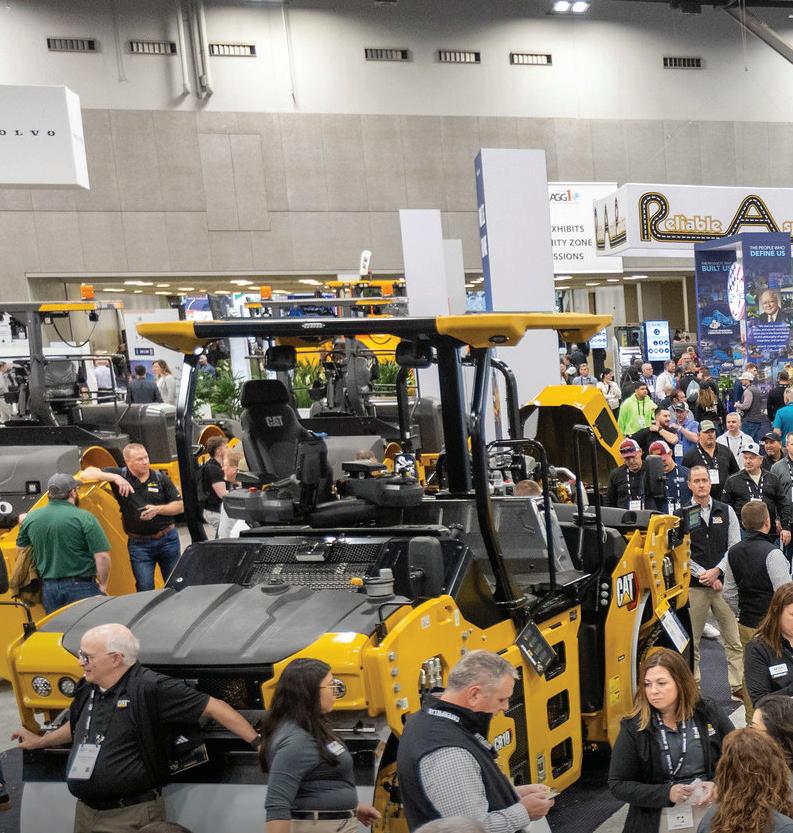


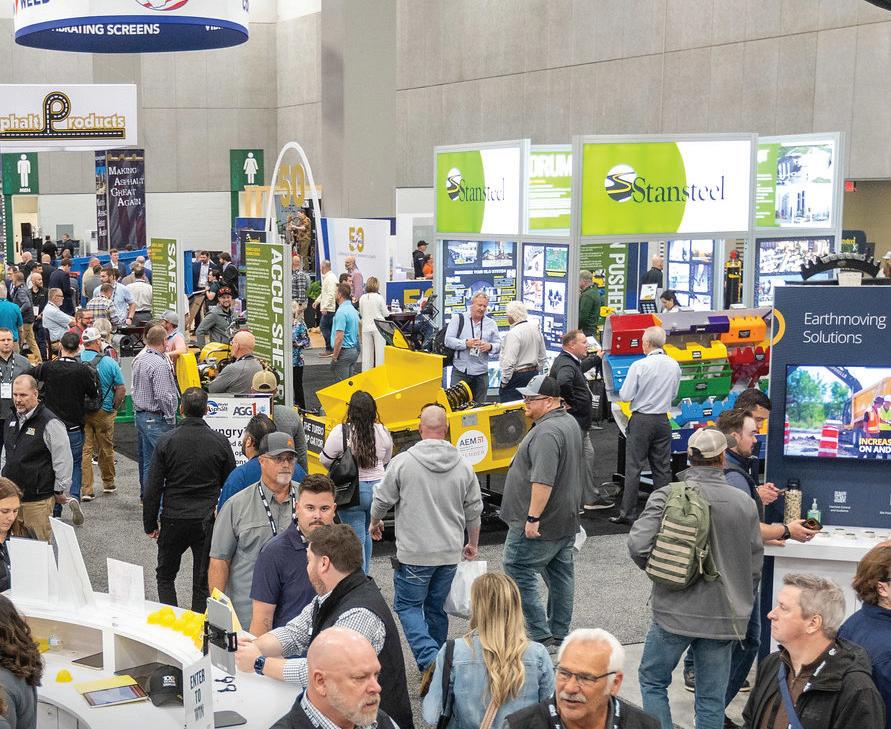


The recent World of Asphalt exhibition in St Louis Missouri was the launchpad for several new technologies for the North American road construction market - Mike Woof writes
e Fayat Group has developed its operations in the North American market for asphalt plants since it acquired the ADM business. e company says it has been working to adapt some of the European technology it has developed for batching plants for use in its North American continuous asphalt plant systems. Technologies being transferred for the North American market include systems for emulsions and also PMB solutions, as well as foamed bitumen.
Fayat is keen to retain the well known name of ADM in North America but to develop the business both in scale and through the o ering of new technology. Some of the systems developed for the Ermont continuous plants from France are being applied to ADM, particularly the sophisticated control systems that help ensure high-quality mix production. is helps to deliver a high level of connectivity, allowing production data from the plant to be incorporated into construction BIM processes for example.
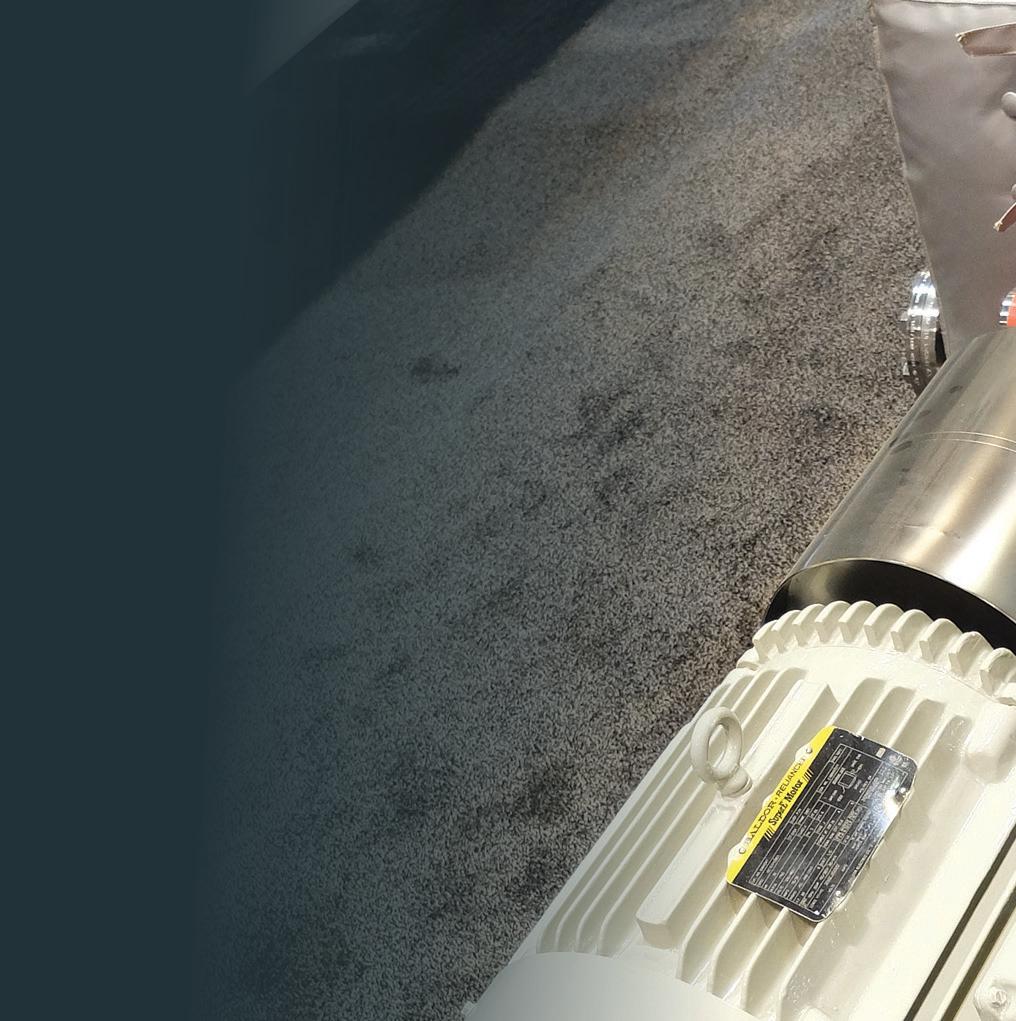


Electric bitumen storage systems that help reduce carbon footprint can also be o ered by ADM, as well as technologies allowing the use of 50% RAP in the feed. ADM will target the market for plants with capacities of 120-400tonnes/hour at rst. www.admasphaltplants.com
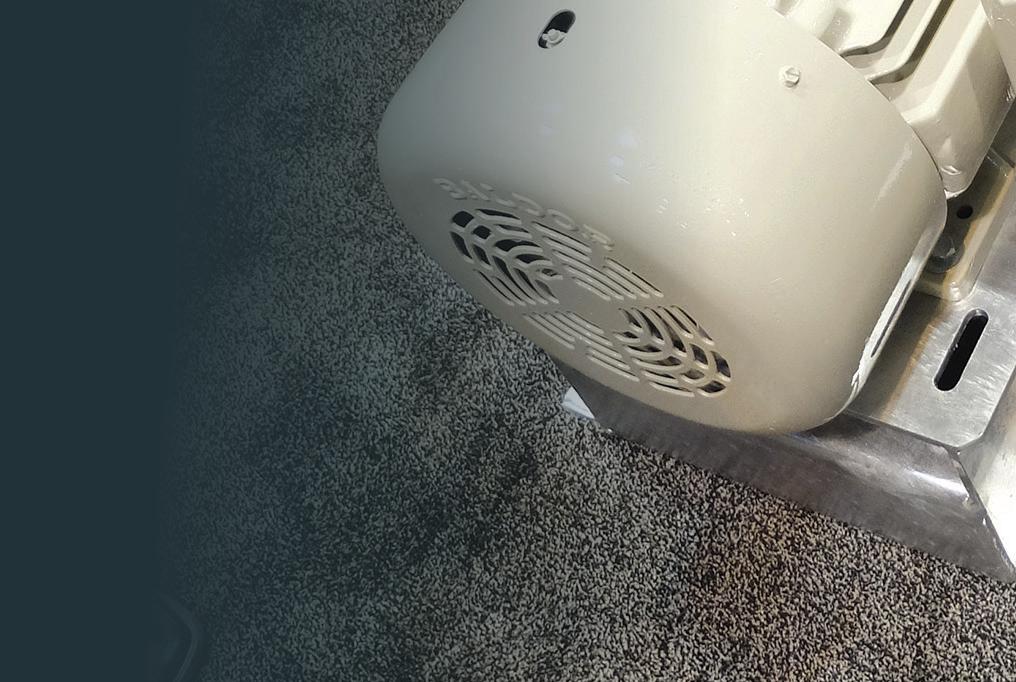
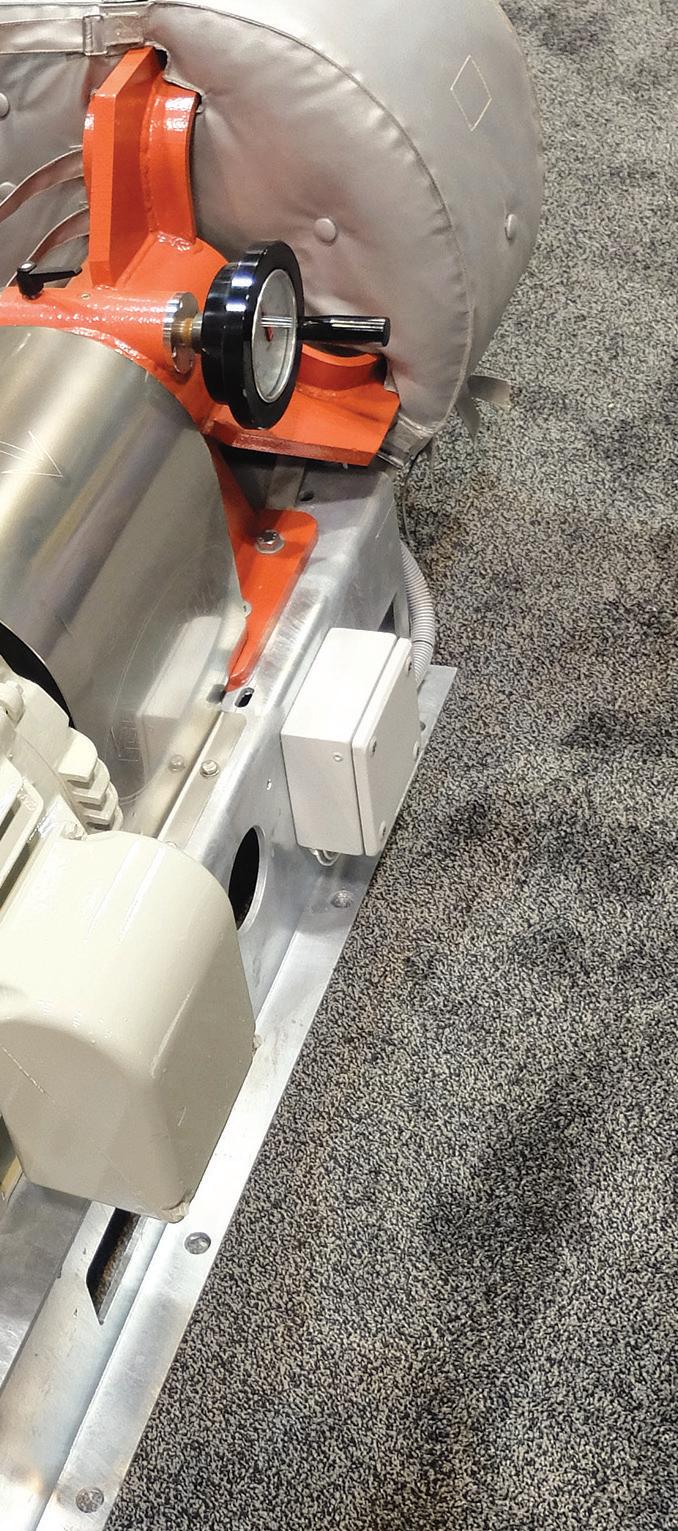
Foamed bitumen systems are amongst the technologies o ered to the North American market by ADM

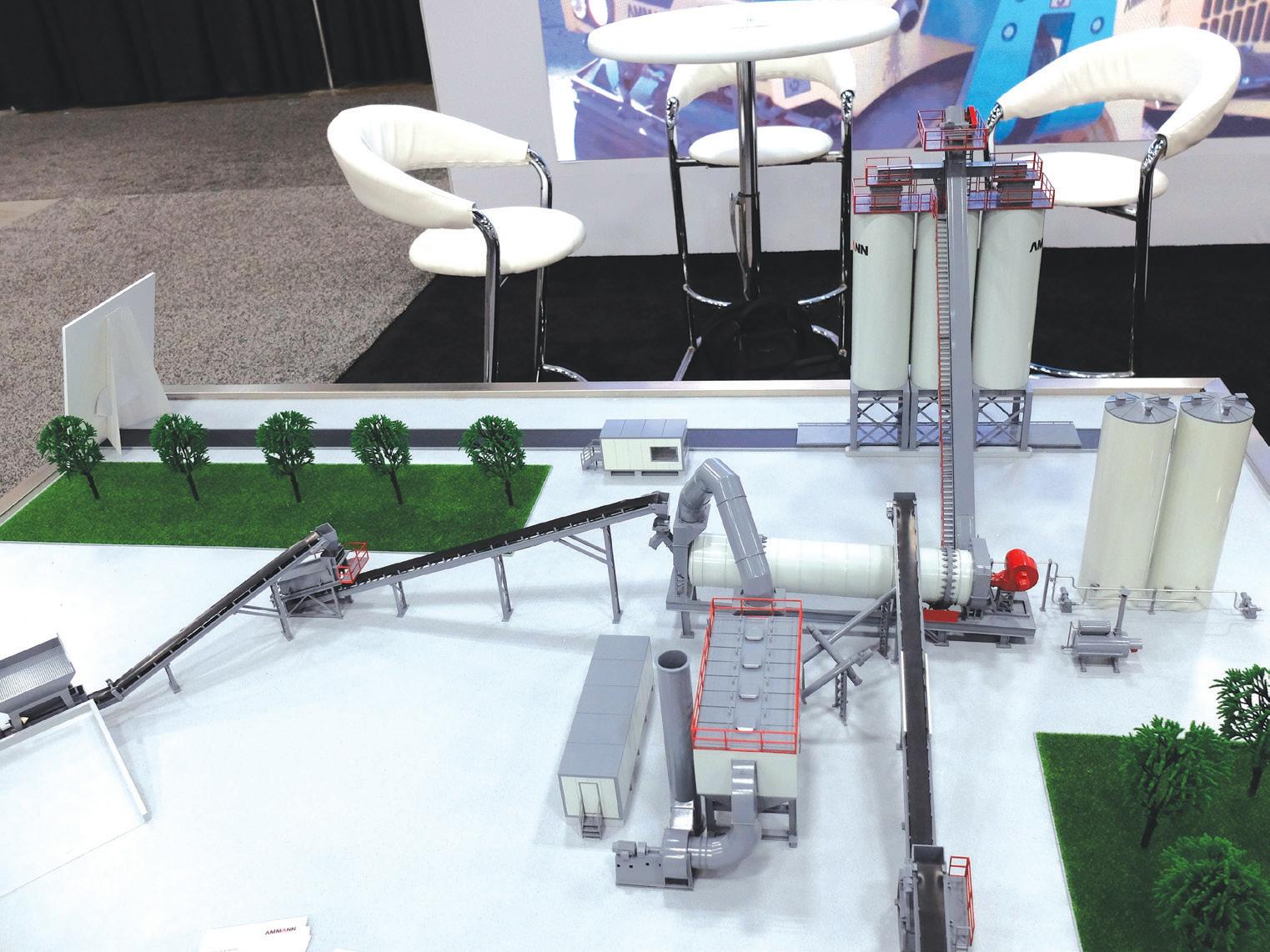
Ammann has been developing continuous asphalt plant technology for the North American market. e rm has been utilising technology developed for its European batching plants and compact continuous plants in the project to develop a large capacity asphalt plant for North America. e product from this development programme is the rm’s ACC Alpine plant, with the rst unit being supplied to a customer in Florida. e ACC Alpine plant is o ered with a wide range of options, in stationary and portable format and with a choice of capacities of 300, 400, 500 and 600tonnes/hour. Customers can select di erent material feeds, reverse air or pulsed baghouses, electrically-heated tanks and silos of 100, 150, 200, 250 or 300tonne capacity. e plant can use up to 50% RAP with a single feed or up to 60% with a twin feed system, while it can also be used to produce warm mix or mixes containing crumb rubber (as used in Arizona and New Mexico in particular).
At the moment, the plant is being tted with a bought-in burner system but Ammann is developing its own burner design for use with this high-capacity continuous plant.
www.ammann.com
ACC Alpine
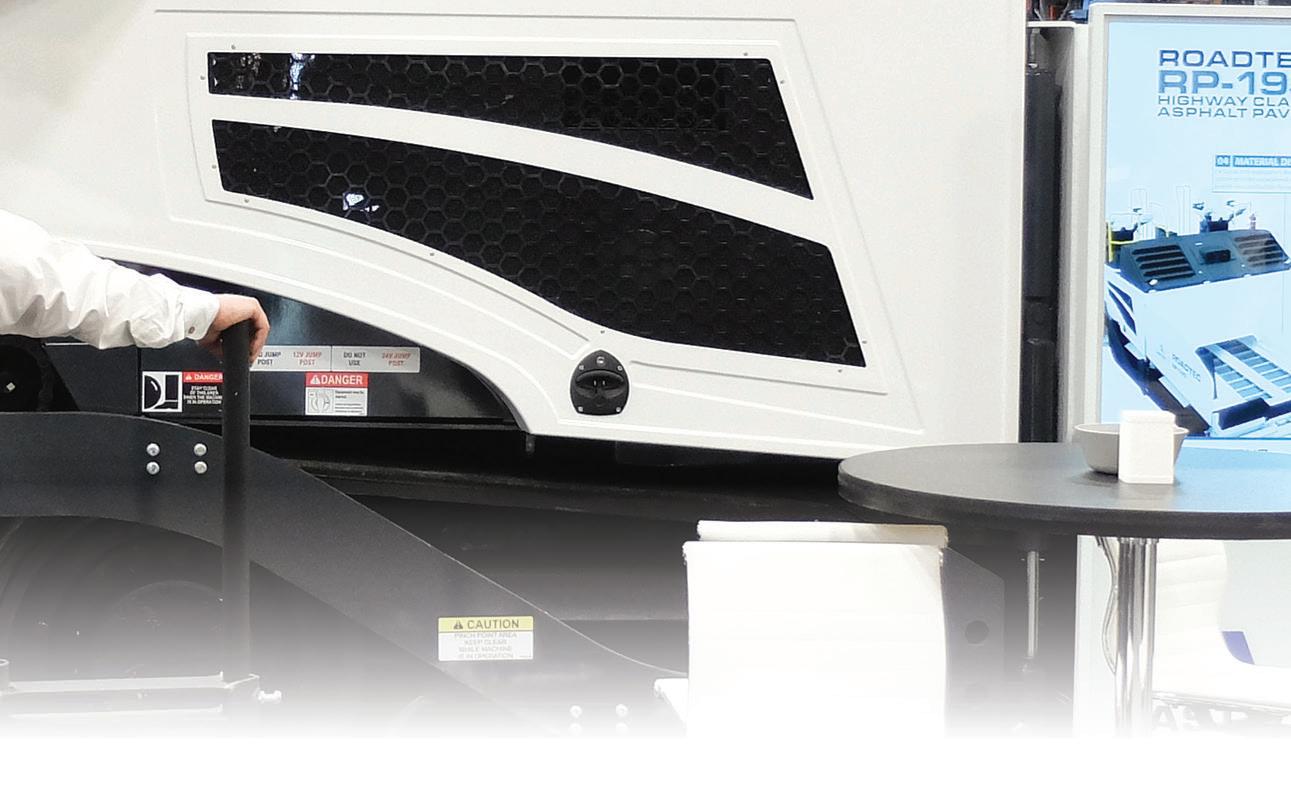
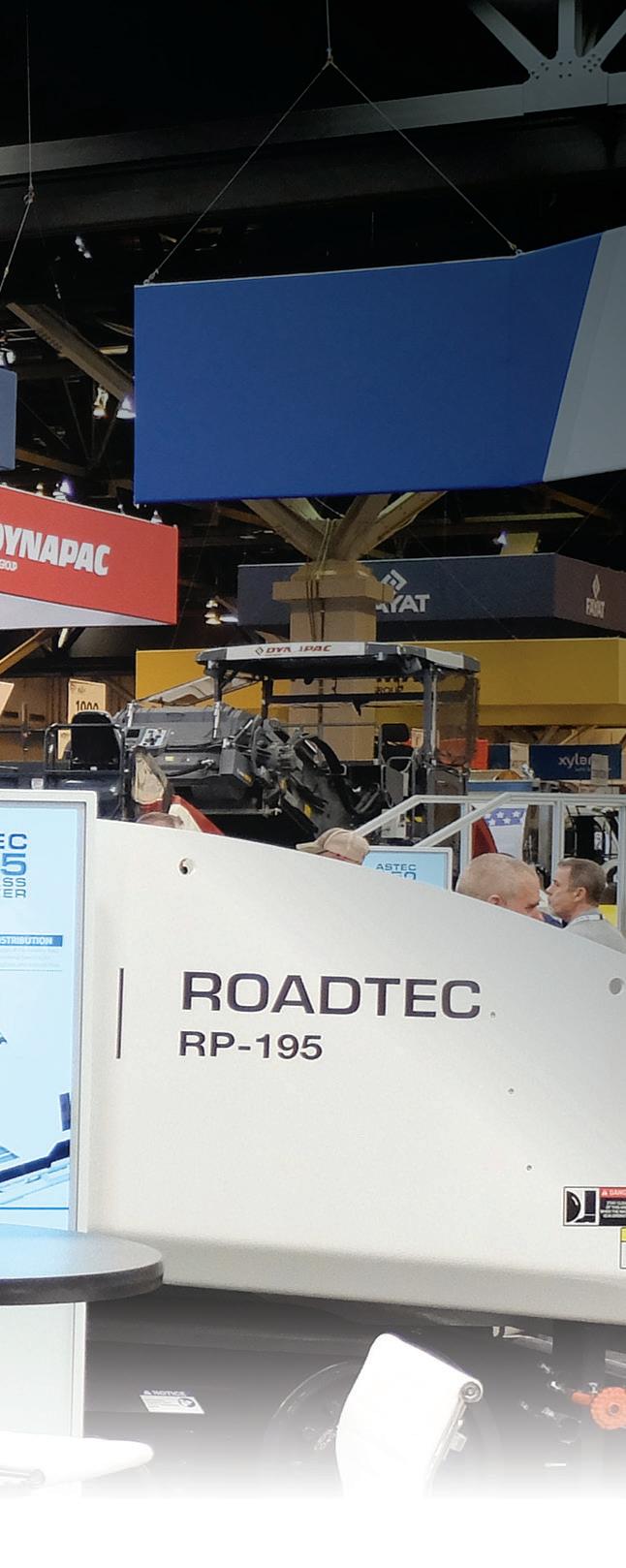
latest RP-195 asphalt
o ers improved performance
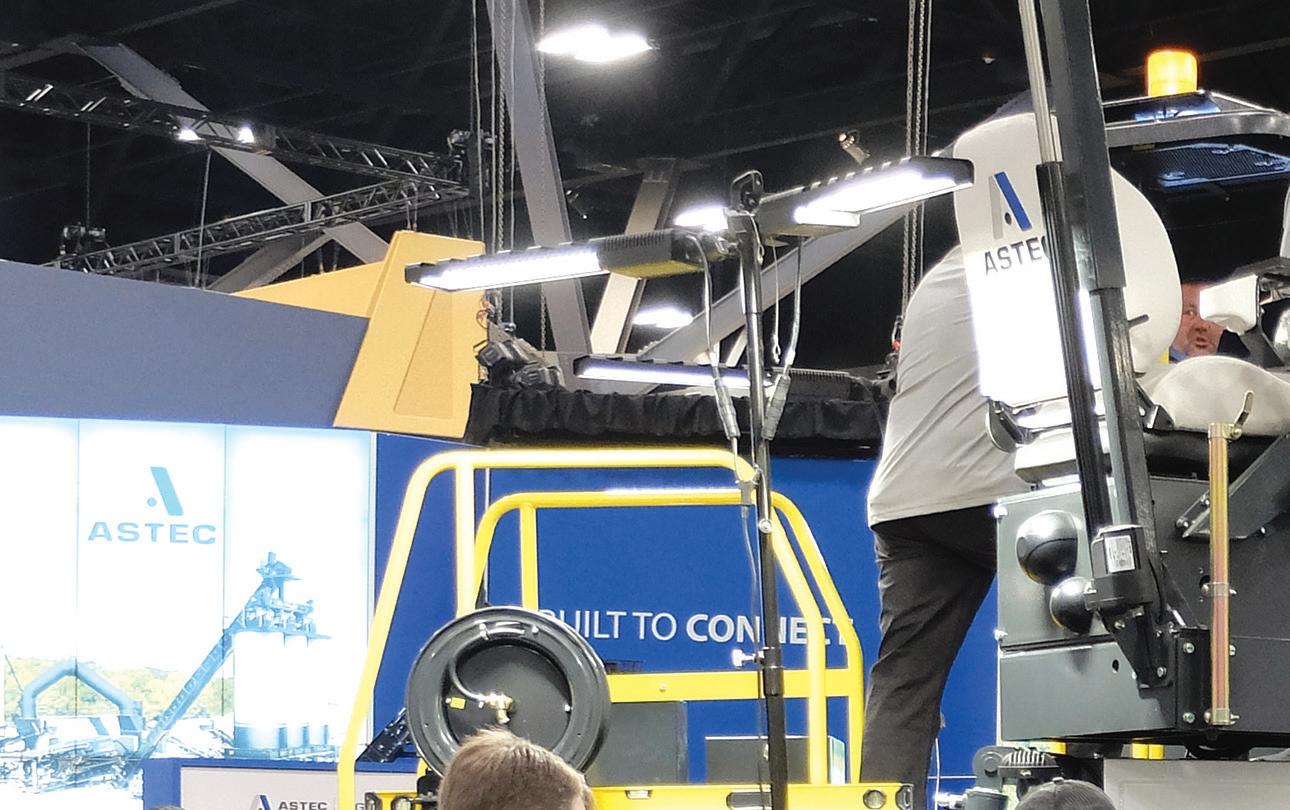
Astec says that its latest RP-195 asphalt paver model o ers improved performance over the earlier generation machine. A key feature is the new EZR3 screed from sister firm Carlson, which is said to o er better paving versatility and quality. The new screed has reduced deflection and is said to help optimise mat quality, while also allowing wider paving. The machine also has the firm’s new

SmartEdge system, helping to improve paving accuracy and longitudinal joints. This new version of the RP-195 is said to o er increased productivity as well as having a more balanced design, a smoother ride for the paving crew and better material distribution in the hopper.
Meanwhile, the firm has also upgraded its Shuttle Buggy material transfer vehicle. The
new version of the SB 3000 Series II has more wear plates at critical points inside, reducing maintenance needs and extending working life.

A key feature also is that the engine is now mounted at the rear of the machine rather than centrally as in the past, which makes maintenance considerably easier. www.astecindustries.com
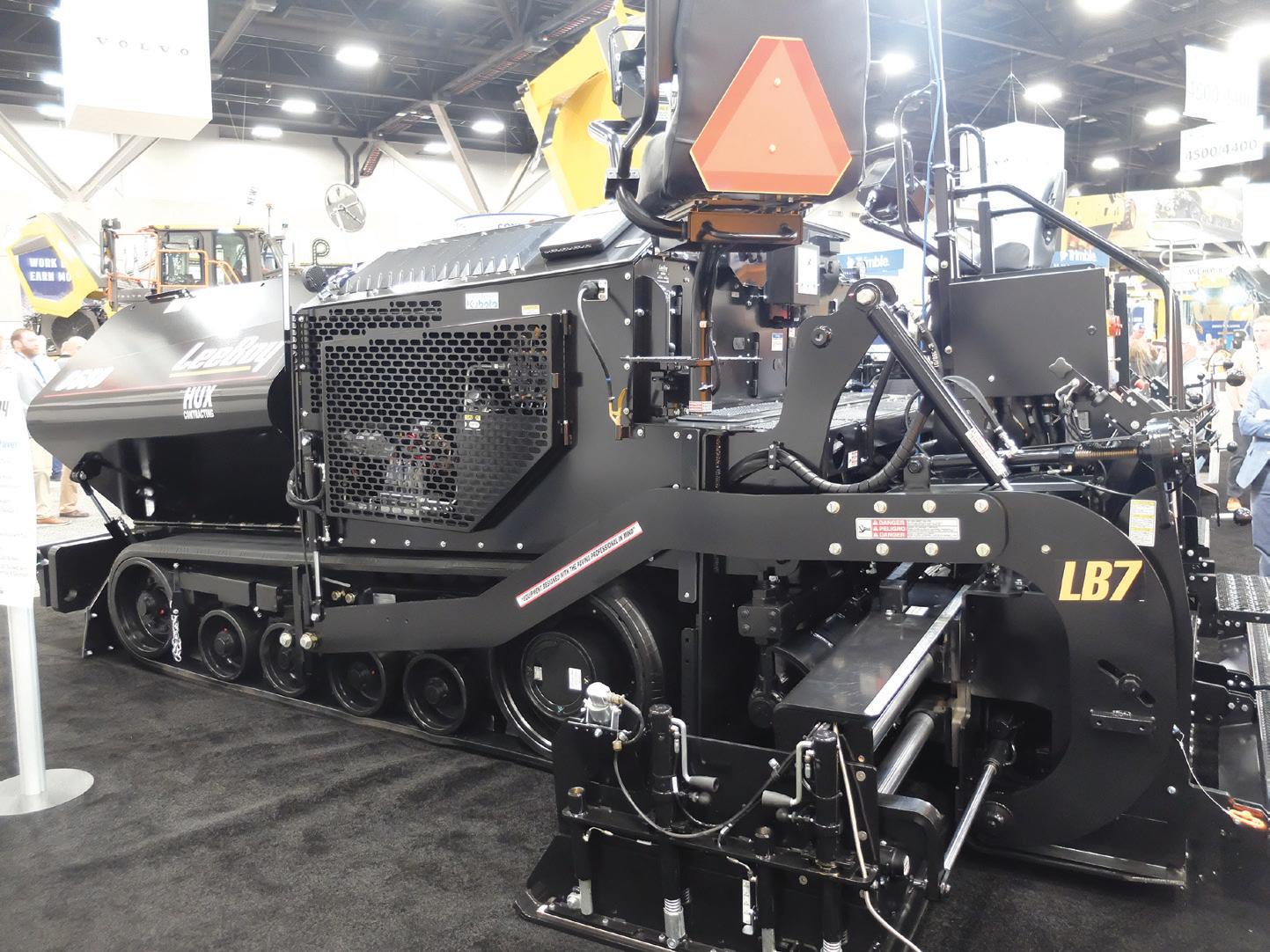
LeeBoy is now o ering its 8680 asphalt paver with the latest LB7 screed as an option. is screed weighs 3.4tonnes, compared with the 2.4tonne LB5 screed o ered as standard.
e larger LB7 screed allows maximum paving width of 4.7m and features four independently useradjustable heat zones, so that the operator can deliver precise heat to the required zone. e screed has spring-loaded end gates providing

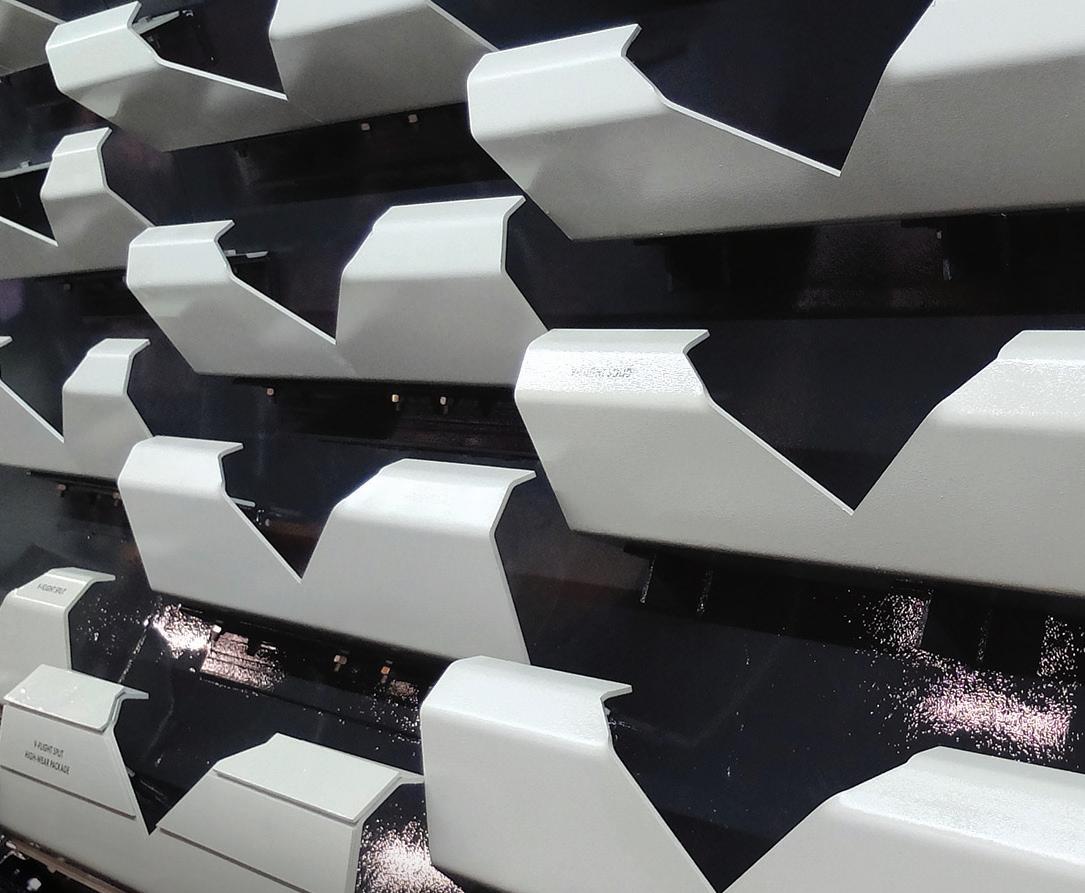
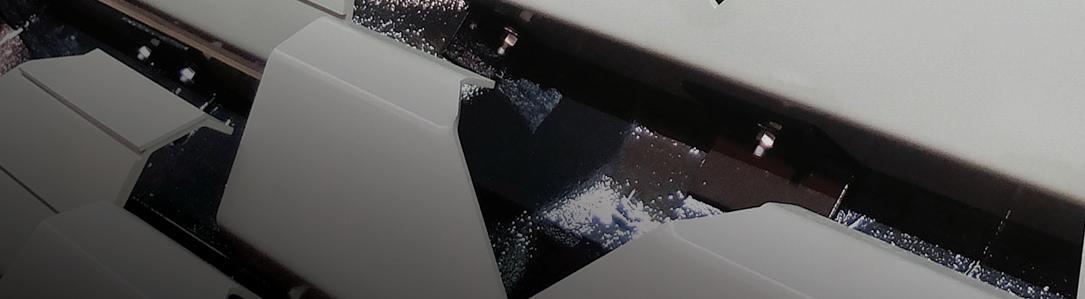
Astec has been developing its novel V-shaped ight design. ese are installed inside asphalt drums and can be con gured optimally to further boost mixing e ciency. e V-shaped ights are said to improve the distribution of material inside the drum during heating, delivering a more homogenous mix. A recent development that has allowed the bene ts of the V-shaped ights to be further optimised has been a sophisticated modelling system. is utilises virtual reality to show the behaviour of material inside the drum during production. According to the rm, this greater understanding of the way the materials behave during mixing can be used to help optimise the speed of the drum, so as to maximise drying e ciency.
www.astecindustries.com
downward pressure needed when joint matching or against curb and gutter. In addition, the augers and conveyors are automatic, speed adjustable, and reversable through the screed control boxes.
Power for the 8680 model comes from a Kubota diesel rated at 157kW, which meets Tier 4 Final standards, while the machine has a 14tonne capacity hopper.
www.leeboy.com
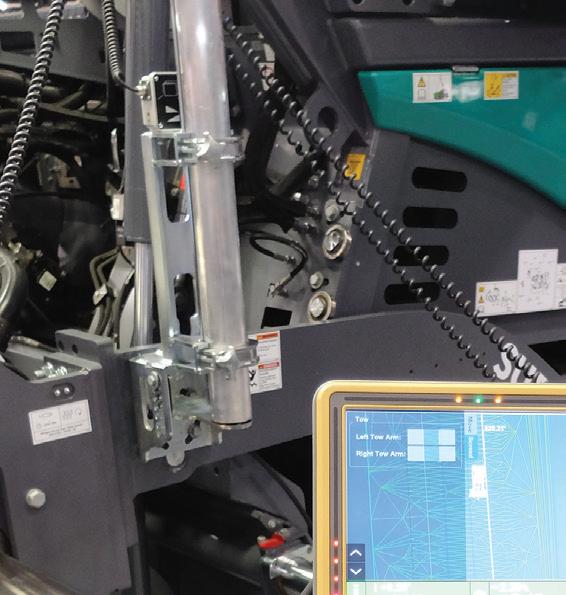
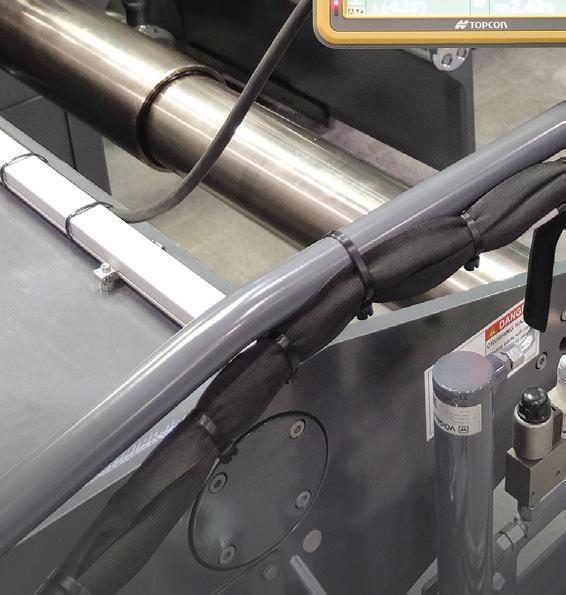
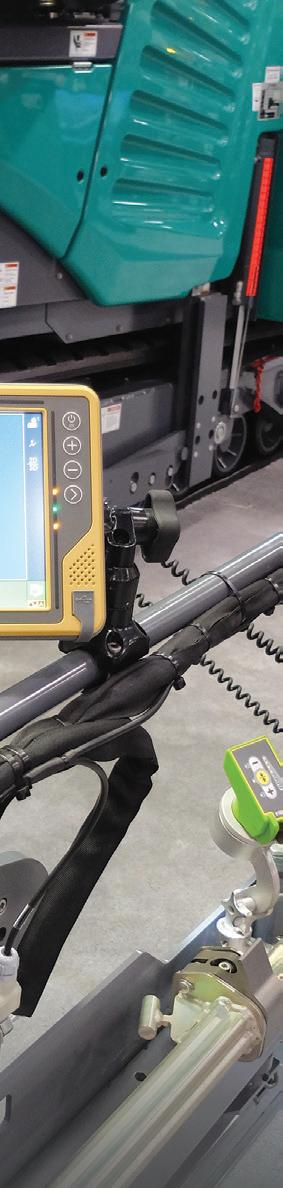
A novel feature of the latest paving machine interface from Vögele is that it allows machine control packages from di erent suppliers to be used on the same machine. This ensures that contractors with a range of tools from varying suppliers can continue working, no matter whether systems from Leica Geosystems, Topcon or Trimble are being utilised. The interface ensures that data from all three of the major suppliers can be used. www.voegele.info

The new CP28 compactor from Dynapac is said to be the heaviest rubber tyre roller on the market at present
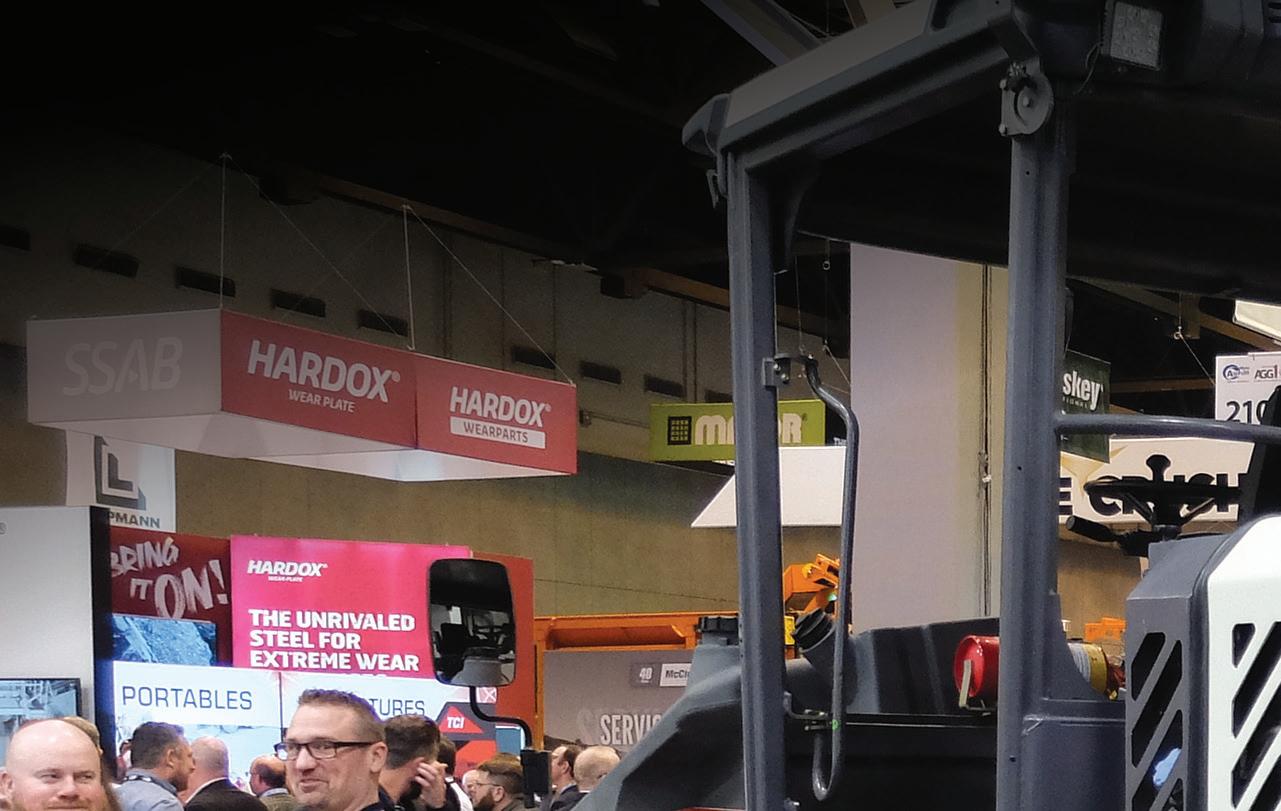
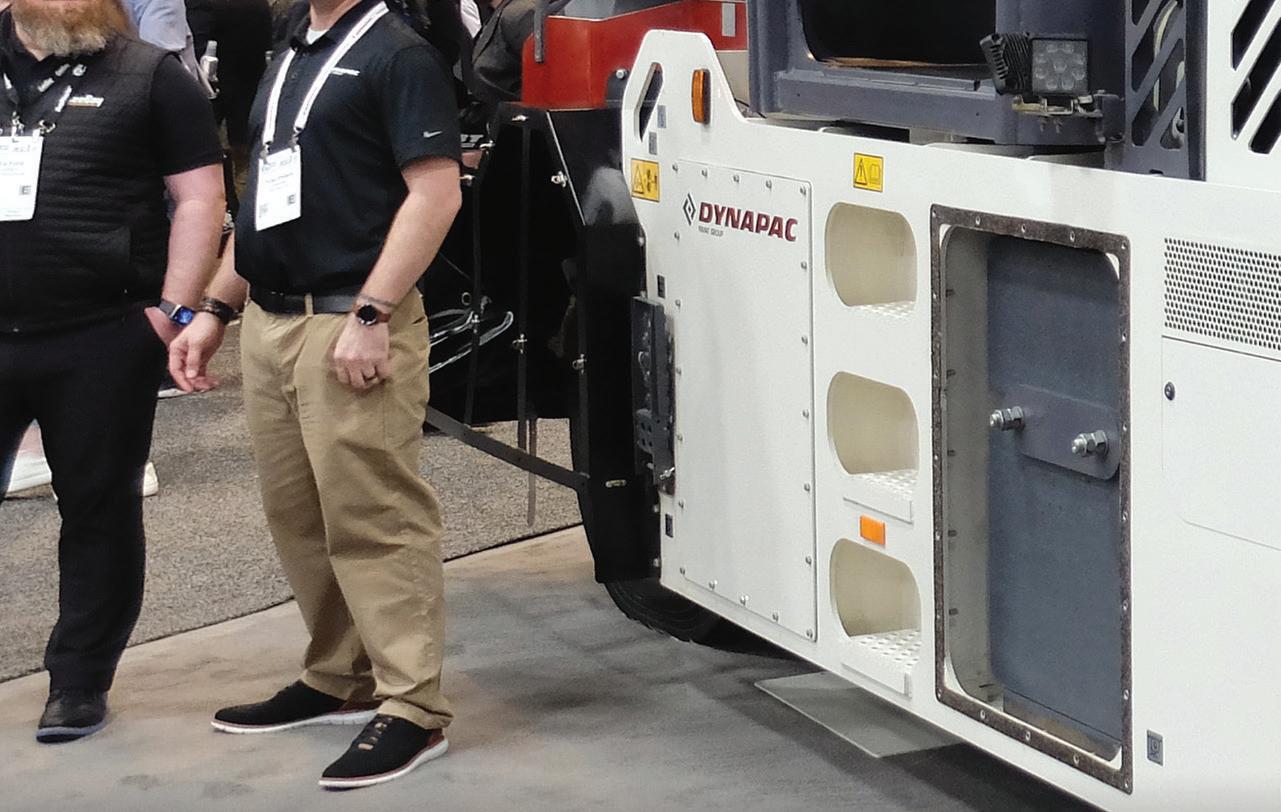
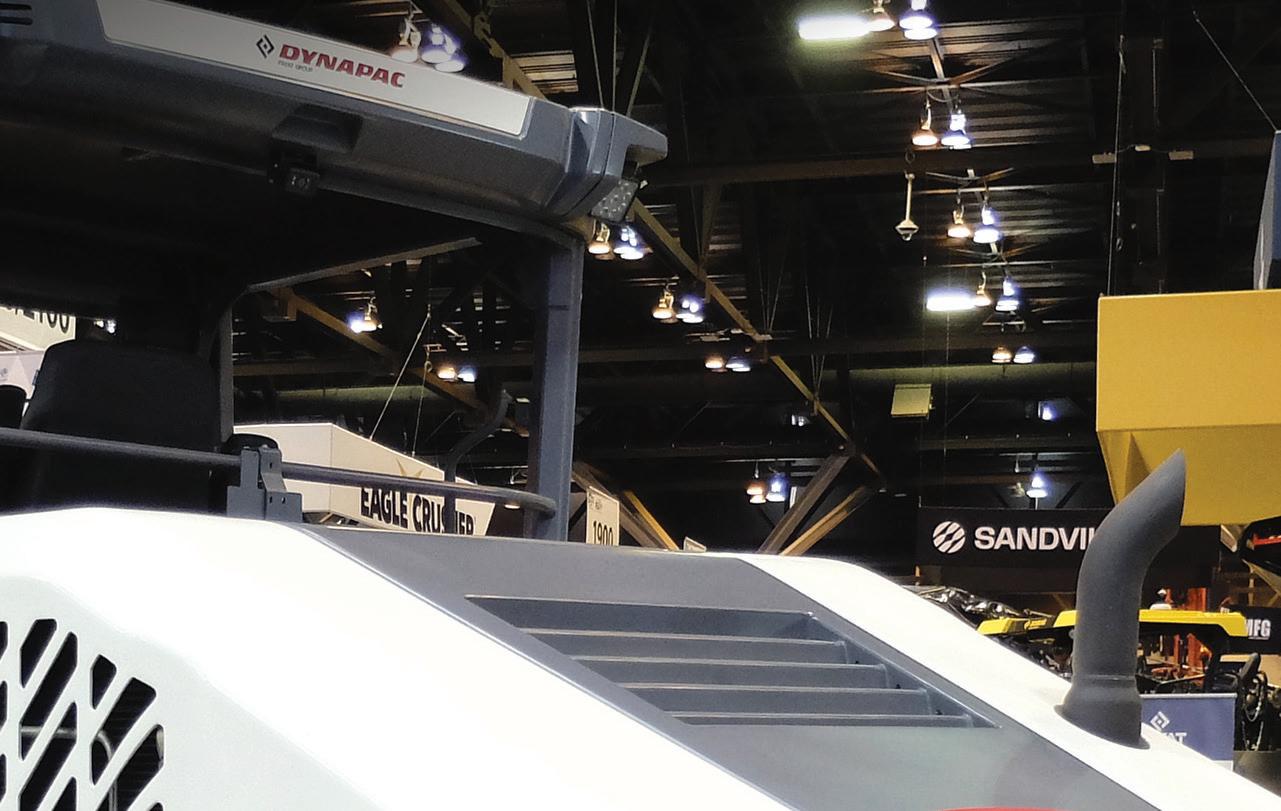
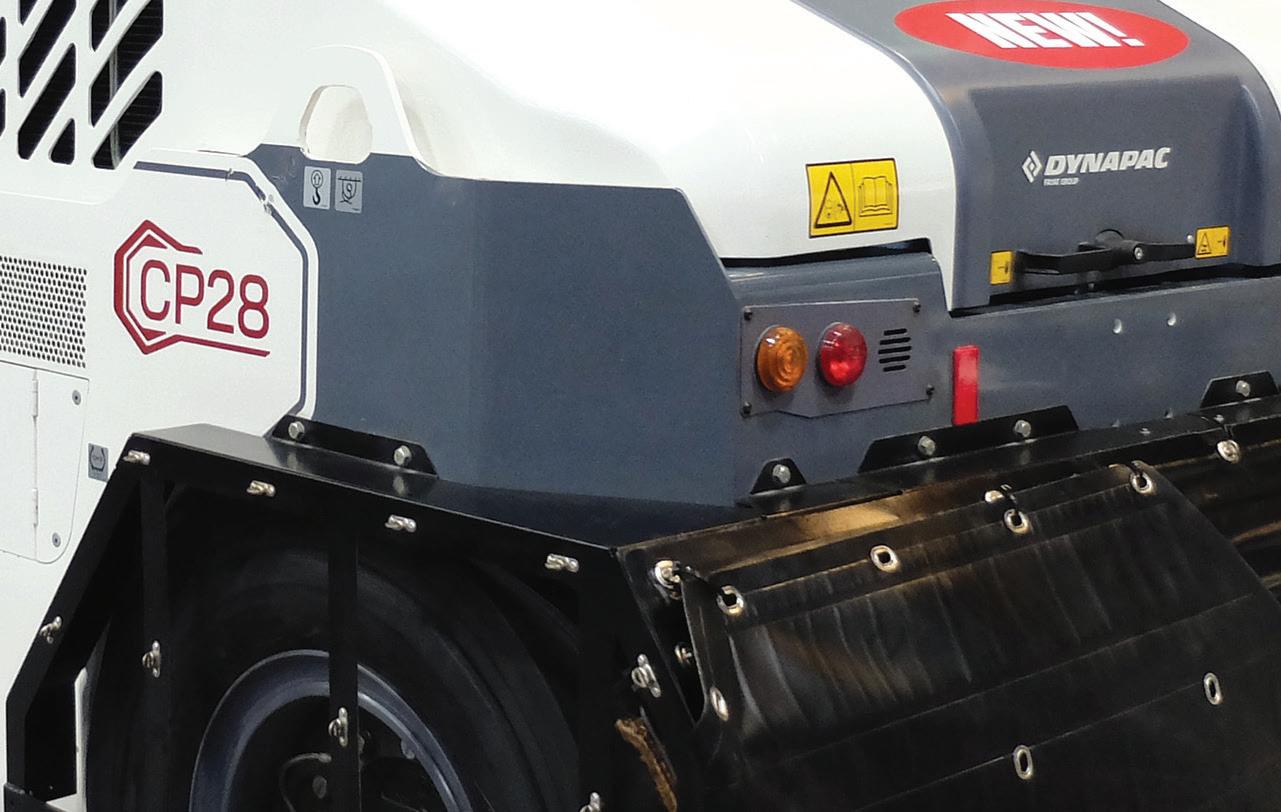

Dynapac’s new CP28 rubber tyred compactor is said to be the largest such machine now on the market. Weighing up to 28tonnes when fully loaded with steel ballast, the machine can deliver e cient compaction for nishing or chipseal purposes.
Loading or removing the steel ballast is said to
be quick and easy and the machine has a 12.7tonne minimum operating weight for compaction duties.
New controls, new sightlines and a new braking system are said to make the machine easy and safe to operate. e improved suspension system is said to help optimise performance
e innovative Smart Compact Pro system developed by HAMM can provide density reading in real time as the asphalt compactor is operating. is can help boost compaction productivity and quality, ensuring that there is no over-compaction that can use more fuel and time and also crush stone. It also ensures that the mat meets required density speci cations, boosting quality. Results can be checked with a Troxler nuclear gauge but HAMM believes that this new system will minimise the need for coring in the future, reducing costs for road construction operations. e unit can be calibrated using a Troxler system and is then ready for use. e system can also be used alongside the rm’s existing mapping tools, boosting the quality of data collection from road construction operations. www.hamme.eu
while the operator can also adjust tyre pressures in real time from the cab.
Heat skirts keep the temperature in the mat while a sprinkler nozzle system for emulsion can be tted.
Lighting allows operation at night.
Also new from Dynapac is the CO 5200 Vi, a 12.9tonne
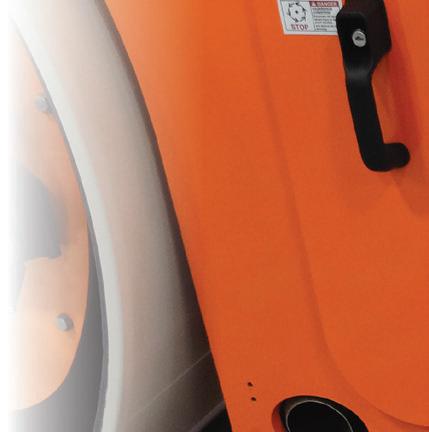

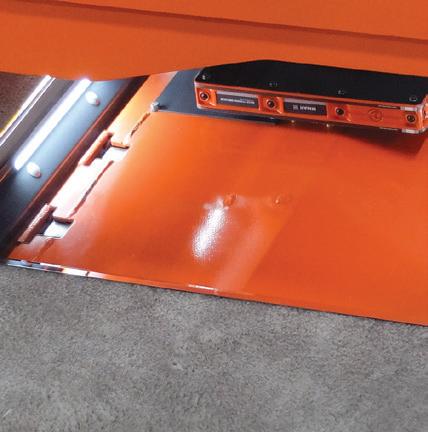

asphalt compactor with 1.8m-wide drums. e novel feature of this machine is that it features an oscilaltion type drum at one end for use on bridge decks, hot joints, thin lifts or in sensitive urban areas, as well as a conventional vibratory drum at the other end.
www.dynapac.com
HAMM says it can deliver accurate density measurement in real time

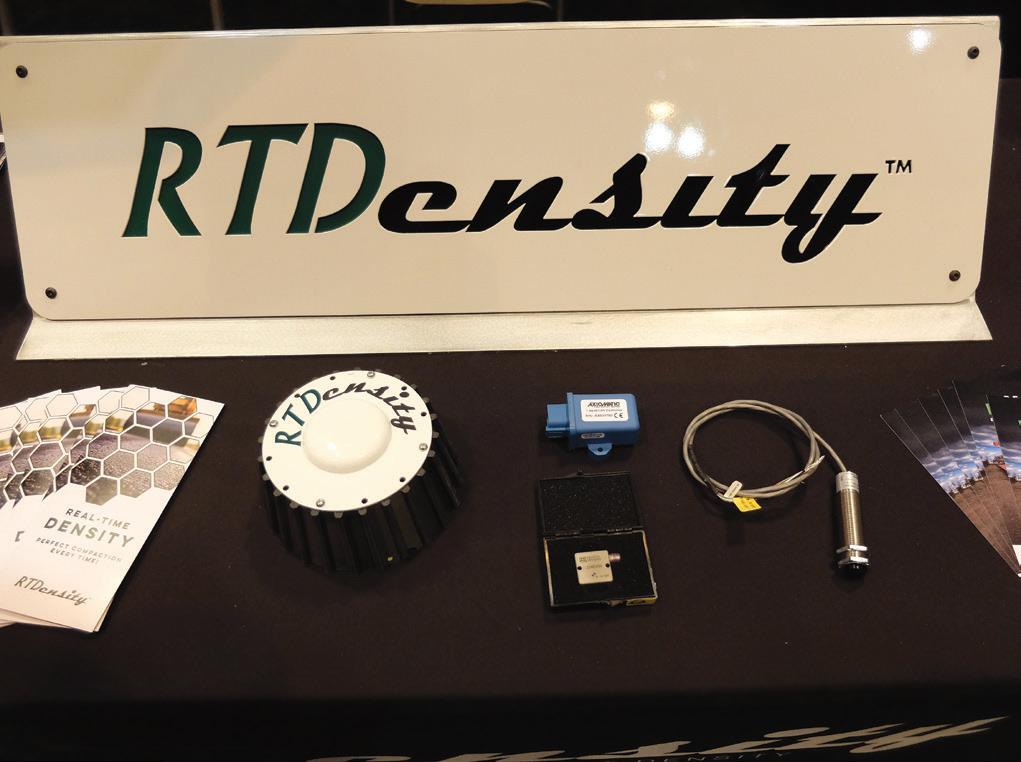
A sophisticated algorithm developed by Real-Time Density is able to determine the density of the asphalt mat as it is compacted. is innovative tool uses sensors that measure the temperature of the mat as well as having accelerometers mounted in the drums that measure vibration. e system is able to use this data to work out the density accurately with its machine learning algorithm according to the rm. e system can be calibrated at the start of the working shift to suit the
mix being used. e rm suggests that it should also be recalibrated each day.
Of note is that the system can be retro tted to any type of compactor using vibration. e rm says it is working on an algorithm that would allow the system to be used with asphalt compactors using oscillation also.
Because data from the accelerometer is key to the use of the algorithm, the system cannot be used with static rubber tyred rollers however. www.rtdensity.com
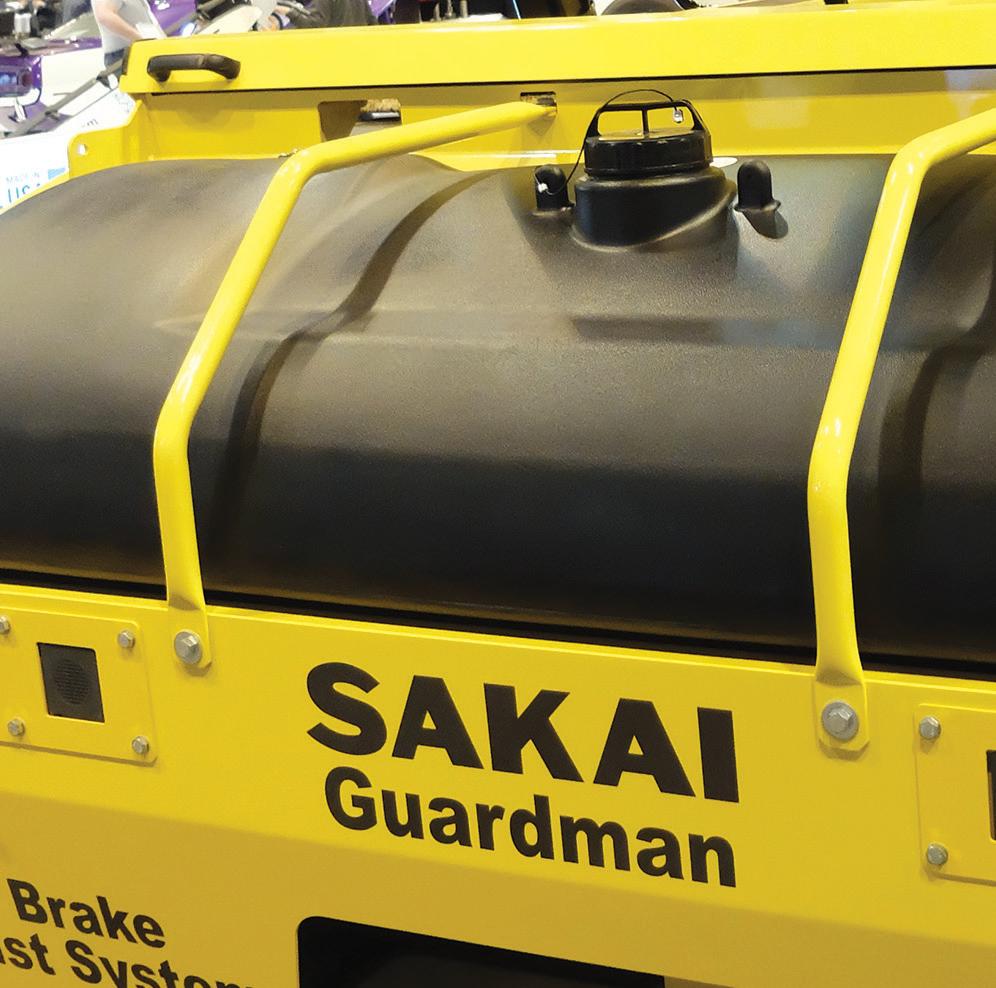
Sakai says that its latest technology can improve safety onsite for compaction machines. The system is a development of the firm’s existing Guardman technology. The latest version allows two compactors to operate in echelon behind the asphalt paver. The Guardman system is designed to detect the presence of objects or personnel in the way of the machine. A series of alarms will
alert the operator and eventually halt the machine if necessary, preventing injury or damage. The new echelon system however means that two compactors can operate closely to each other without risk.
Sakai sold the first machines in the US fitted with this new echelon safety system to the contractor Ajax Paving in Florida. www.sakaiamerica.com

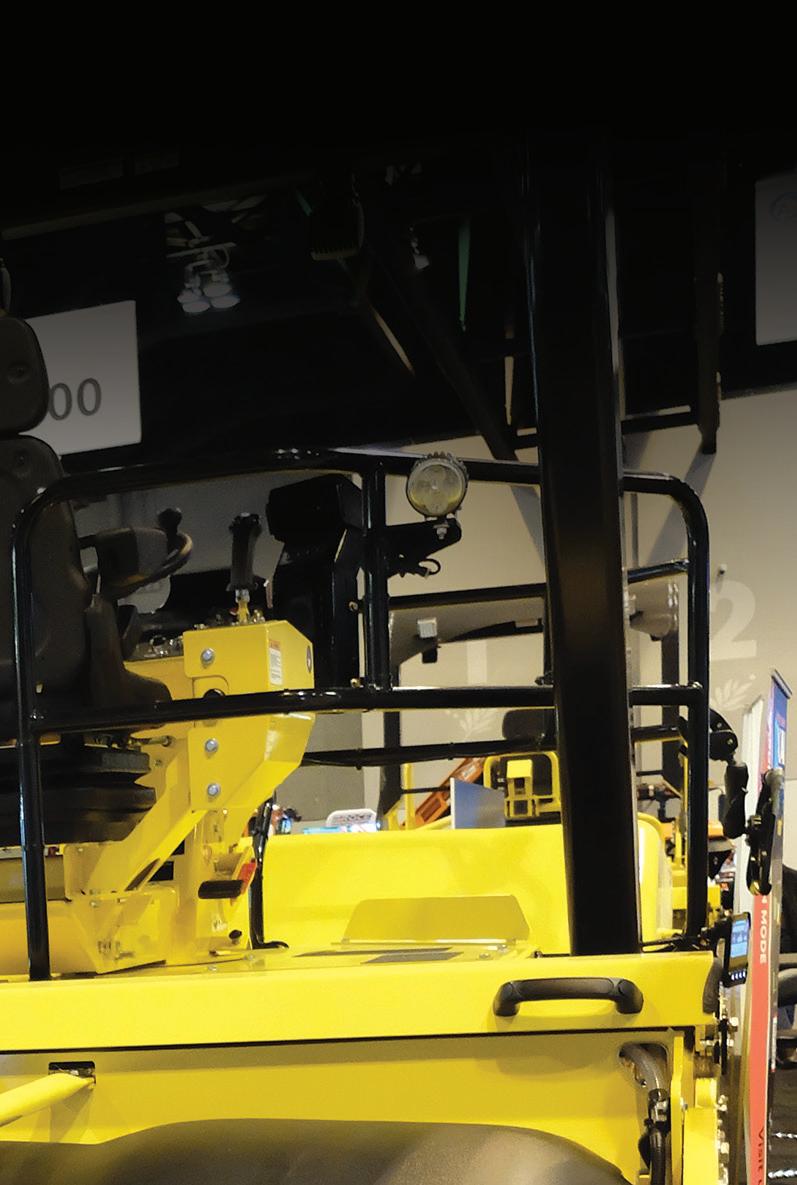
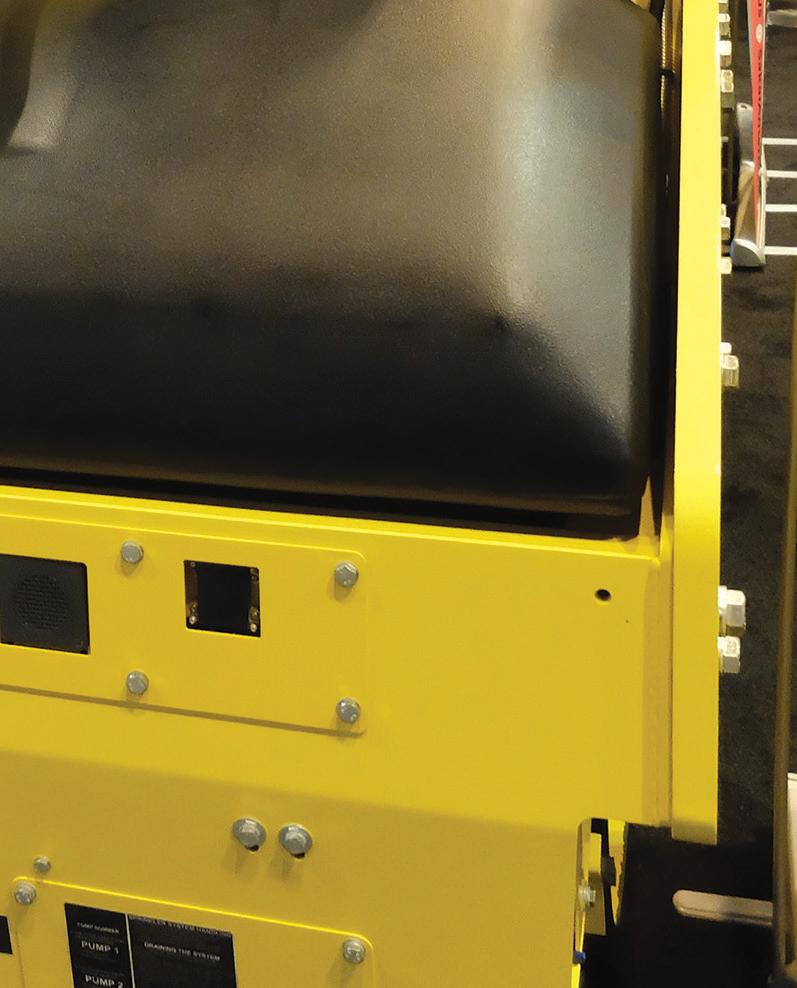
Powerful milling performance is claimed for the new W 210 XF milling machine from Wirtgen. A new feature of the machine is the use of a John Deere engine, delivering 580kW and which o ers reduced maintenance as it does away with the DEF, while still meeting Tier 4 Final emissions requirements. Lower fuel consumption, lower CO2 emissions and lower noise are also claimed for this engine compared with the unit being replaced.
e Wirtgen performance tracker on the machine is said to help optimise performance, as well as provide comprehensive operating data. Meanwhile, the FCS quick change system allows the milling drum to be changed quickly if required.
www.wirtgen-group.com
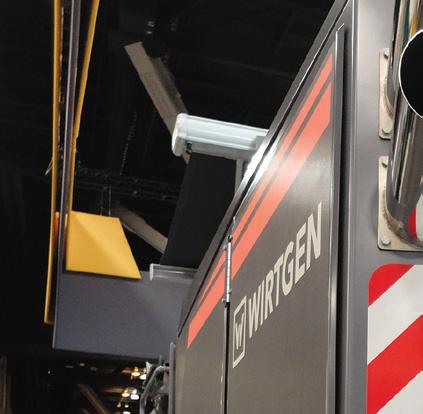
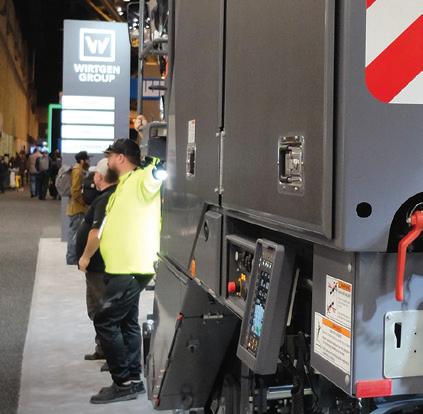
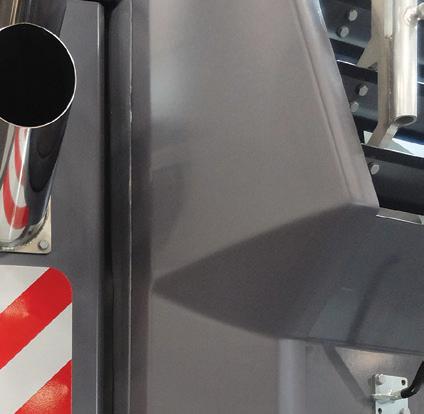
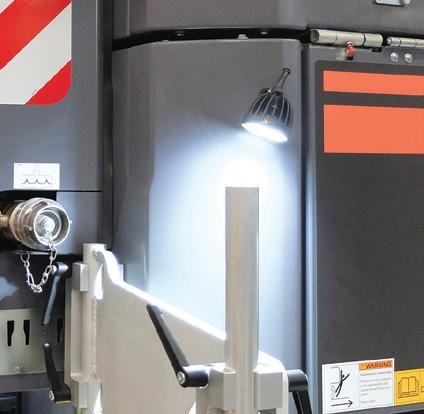
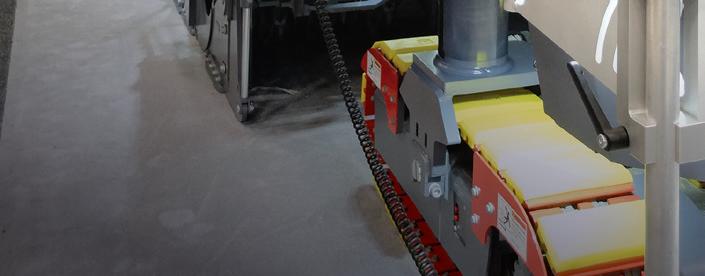
High performance is claimed for Wirtgen’s W 210 XF milling machine with its new engine

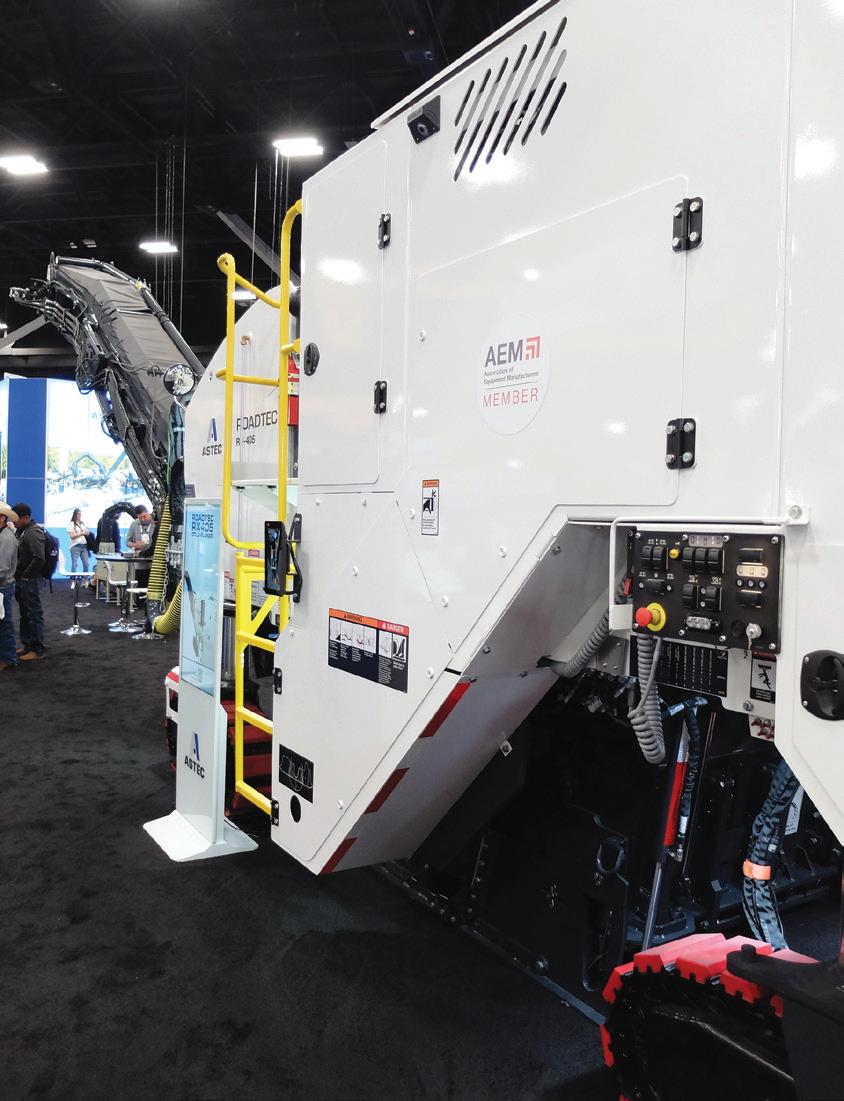

Astec’s latest RX405 milling machine is designed with a maximum 1.5m-wide milling drum. A quick change system is tted that allows users to change drums in just 45 minutes if smaller drums are required and minimum width is 600mm.
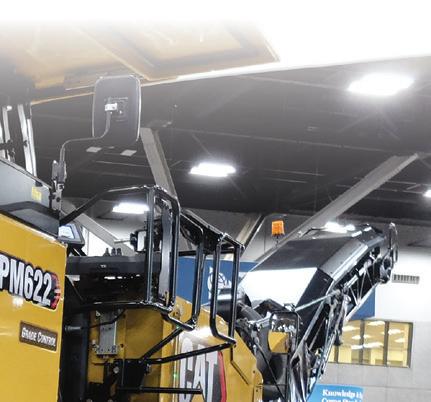
e new PM622 milling machine from Caterpillar is said to deliver e cient and productive milling performance. Power comes from a Caterpillar C18 diesel delivering 622kW and that meets Tier 4 Final emissions requirements. In operating con guration the machine weighs 31.56tonnes, which is said to give stability when milling with its 2.235m wide drum. Maximum milling depths of 330mm can be achieved.
e machine is grade control and 3D ready from the factory and is equipped with the rm’s VisionLink system, to ensure high e ciency.
New features include a better seal between the milling drum and conveyor, reducing dust, improved water distribution and new wear shoes for longer life. e machine also bene ts from better controls, an upgraded operator station, improved maintenance access and new LED lighting for night working. www.cat.com
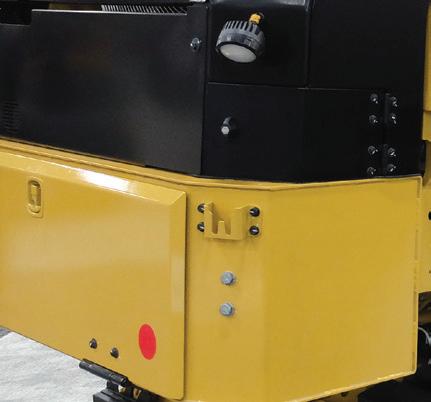
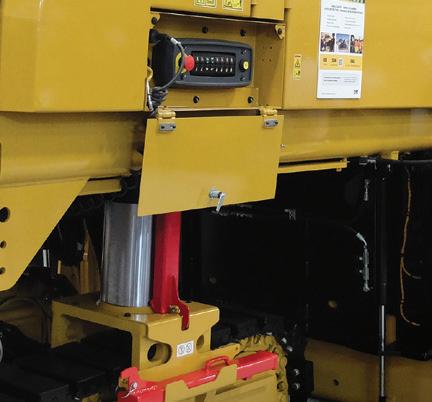
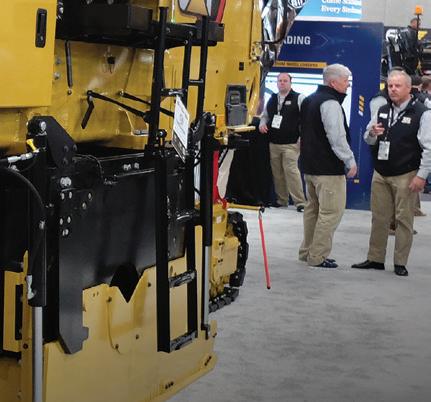















For safety, the machine has cameras mounted all round and the operator can see if there are obstacles or personnel getting to close to the working area. e machine weighs in at 21.6tonnes and has power from a Cummins diesel delivering 320kW and meets Tier 4 Final emissions requirements www.astecindustries.com







Caterpillar has upgraded its PM622 milling machine for higher performance









































































































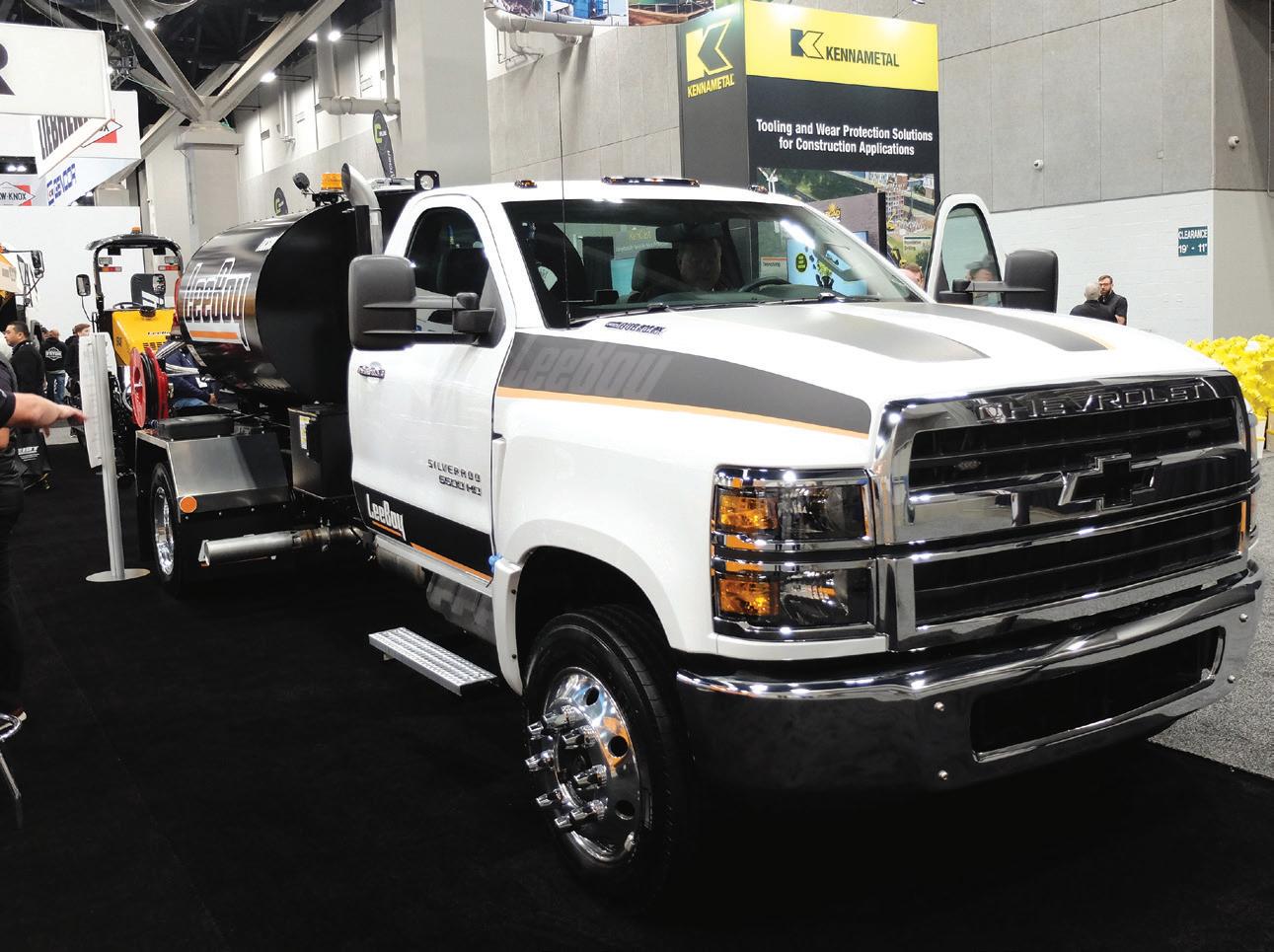
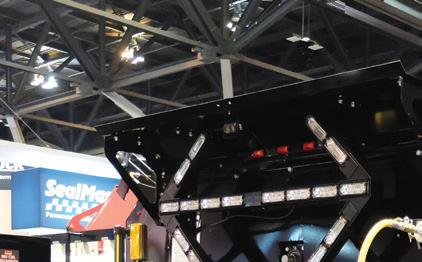
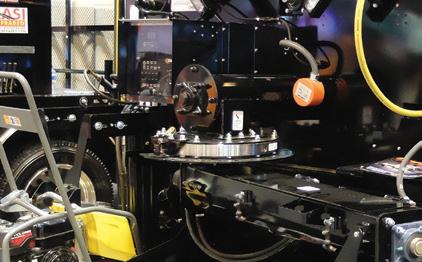
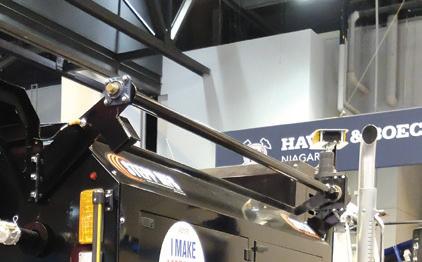
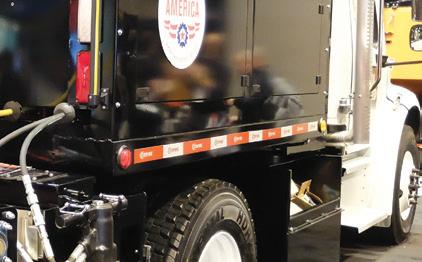


The new TDC600 from LeeBoy is said to o er e icient tack coat distribution. Power for the spreading system comes from a compact Kubota diesel that meets Tier 4 Final requirements and delivers 18.5kW. The machine features a 3.7m recirculating spraybar and has a washdown system, for e ective cleaning at the end of a shi . The machine has a 2,280litre tank, as well as a powerful pump and burner, while the in-cab control is wireless. www.leeboy.com
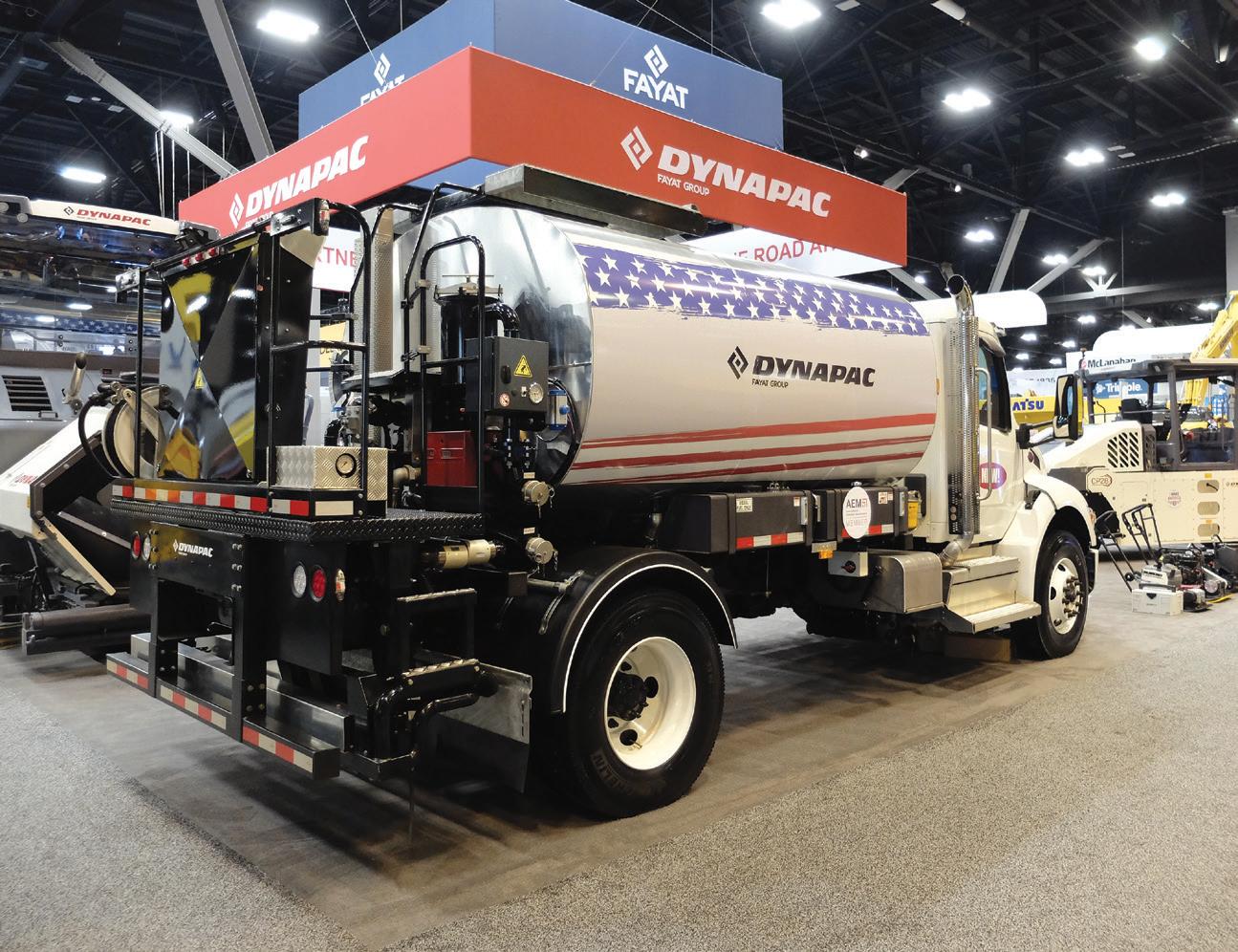
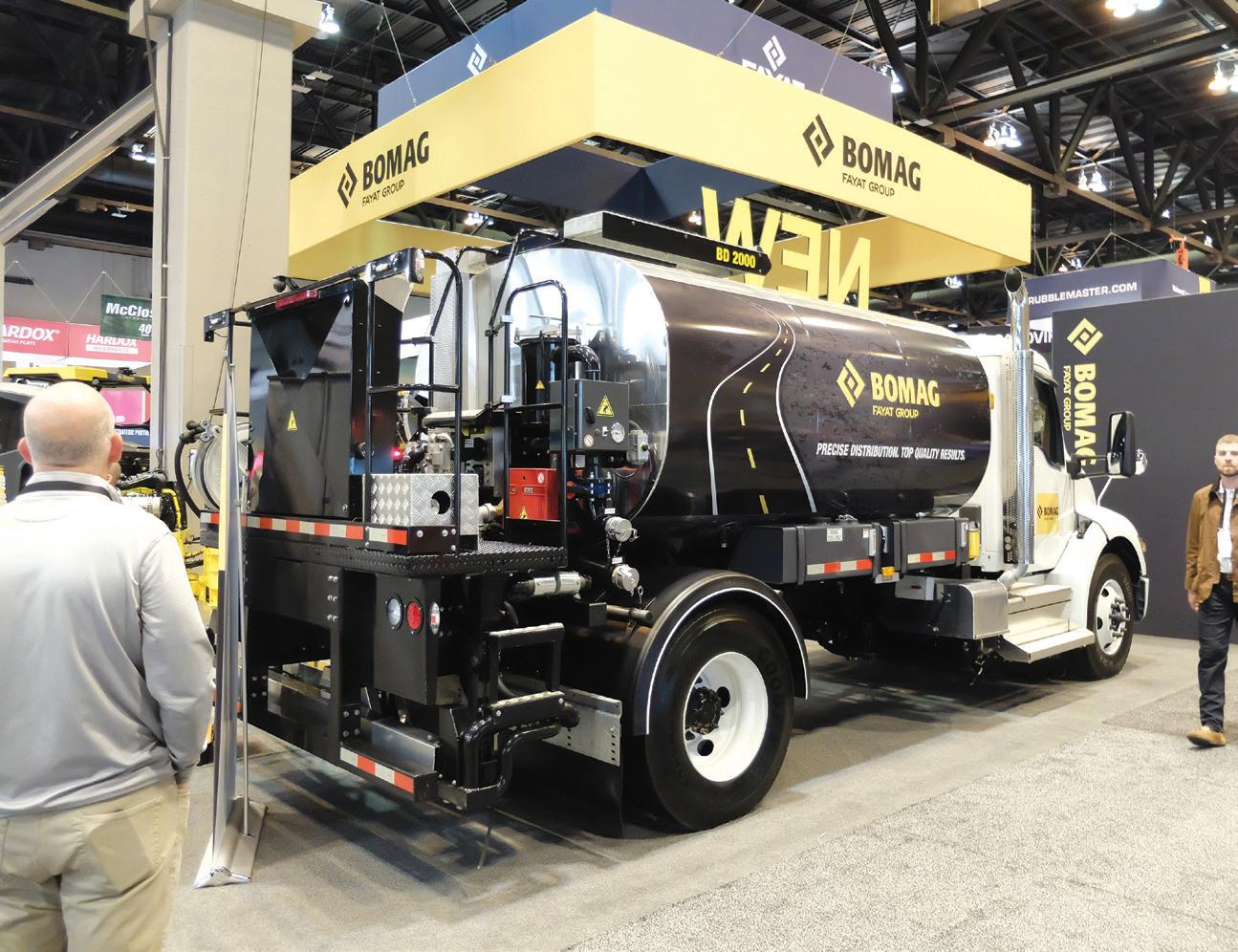
Sister rms BOMAG and Dynapac are both o ering distributor trucks for the US market through their separate sales channels. e machines have been designed and developed by Secmair, also part of the Fayat Group, and are built in the Fayat Group’s US facility.
ese machines are available with di erent size tanks of 3,800litres and 7,600litres capacity. Of note is that the smaller capacity versions can be driven without the need for a commercial driving licence (CDL), making it easier for contractors to hire operators.
e BOMAG models are the BD1000 and BD2000 while the Dynapac models are the DT1000 and DT2000. ese all feature 102mm of insulation to maintain material temperatures, automatic burners and advanced ushing systems.
e spraybars tted to all four variants can extend telescopically to 4.75m, with a computerised spray system, joystick control and large display in the cab for ease of use. e machines can be operated by a single person from inside the cab. www.bomag.com www.dynapac.com
VSS says that the new STPH 3.0 truck o ers improved road patching for contractors. With a total GVW of less than 12tonnes, the machine can be operated without the need for a commercial driver’s licence. This machine is said to o er an allin-one patching solution for filling potholes and is equipped with patching tools and a patching plate. Heating in the auger prevents material from sticking inside, while the machine is also said to be easy to clean out a er use.
www.slurry.com
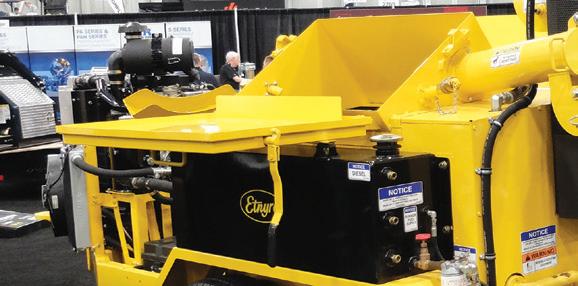
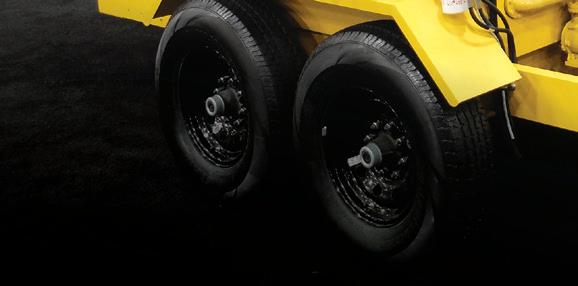
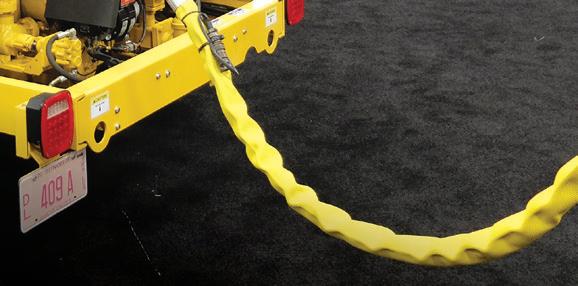

Etnyre’s latest crack repair trailer comes equipped with a powerful but compact compressor and is driven by an Isuzu diesel rated at 46kW, which meets Tier 4 Final emissions requirements. e machine is said to be versatile and able to cope with operations in a range of challenging construction environments. Di erent versions are available with material tank capacities of 95litres or 1,700litres, depending on customer need. is latest version has a new control system that makes it easier to use, while the design is also said to be easier and quicker to maintain. e spray hose and tank can be ushed out quickly after use, to ensure reliability. e compressor allows high pressure for blasting out loose material while the hose for the spray system is also heated, to prevent material build up. Meanwhile the material tank is said to o er fast heating up to working temperature, considerably quicker than competing models according to the rm. www.etnyre.com
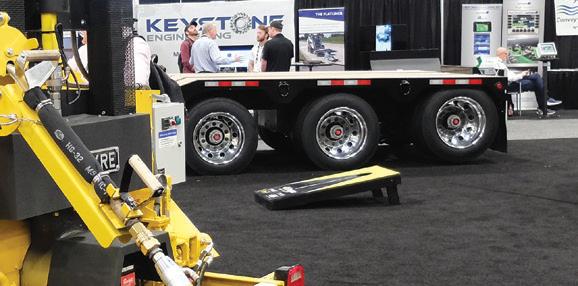
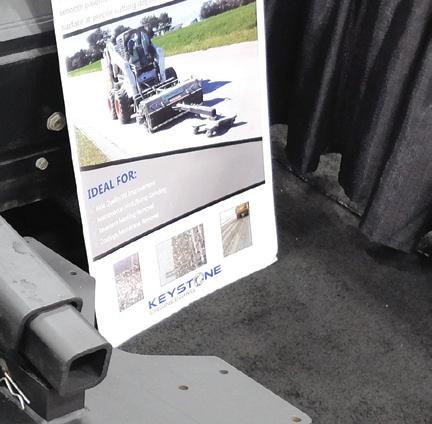
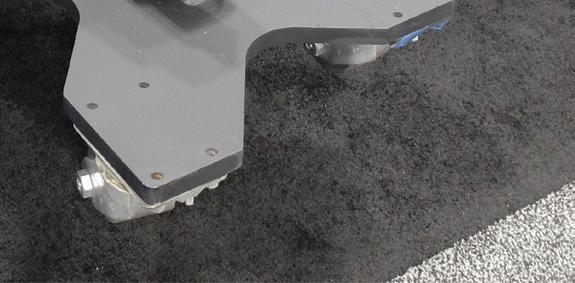
Keystone Engineering is widening its product range with the introduction of the Flatliner attachment, which can be tted onto a skid steer loader or compact tracked loader. is unit is designed to smooth road surfaces, removing bumps. Unlike competing systems however, it features cutters with at edges, which deliver a smoother surface without grooves when compared to competing equipment using milling type cutters.
Tungsten carbide or industrial diamond cutters can be used, with the former costing considerably less but wearing faster than the latter. e user can set the height to ensure that the unit only skims o the uneven top surface of a roadway. Meanwhile, special double round cutting teeth can also be tted if the machine is to be used to improve skid resistance at intersections. www.keystoneengr.com
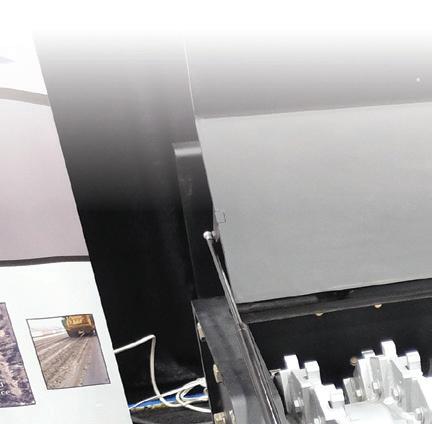
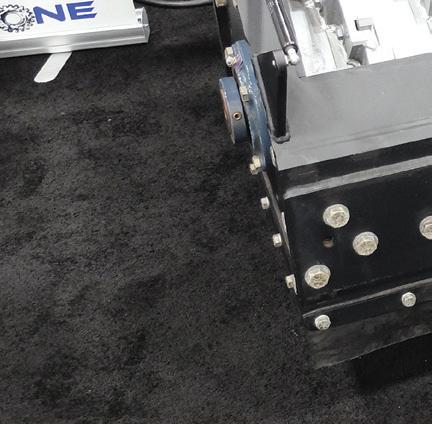
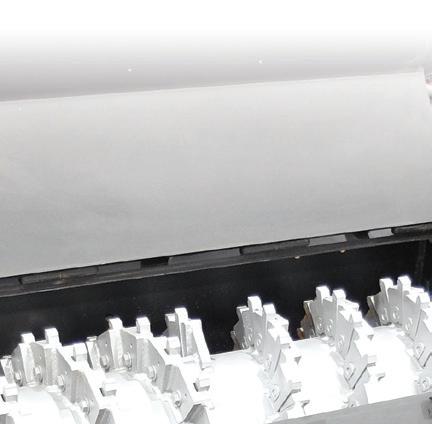
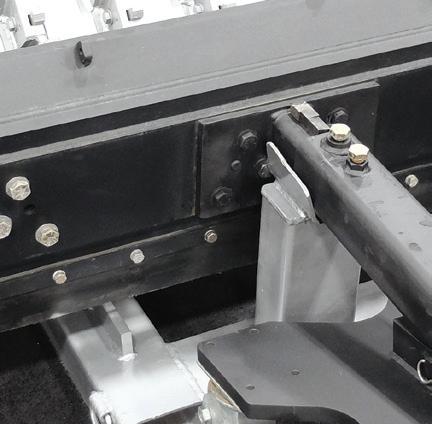
Keystone Engineering says that its new Flatliner attachment can deliver smooth road surfaces when fitted to a compact

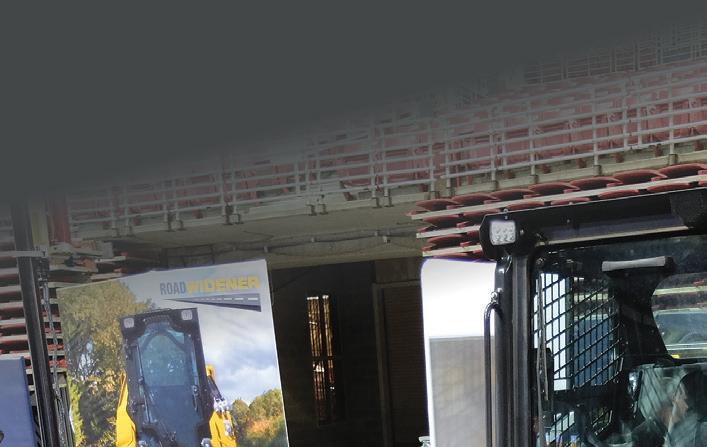
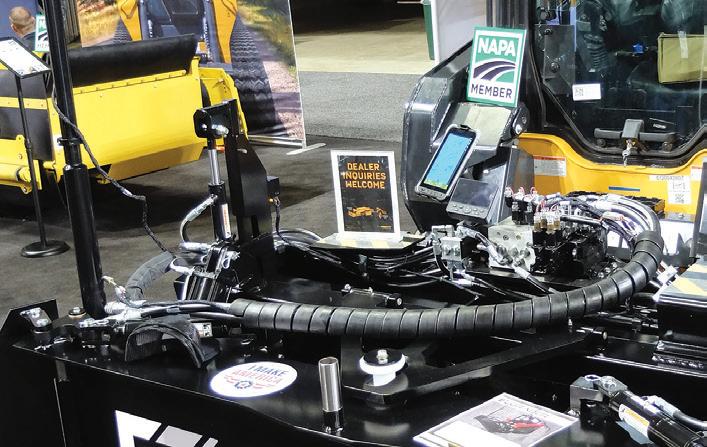
The EZ Grader attachment from Road Widener is said to be versatile and productive. Designed to fit onto a skid steer loader or compact tracked loader, the unit can deliver precise grading for small worksites. The unit comes equipped with 2D laser receivers as standard but is also 3D ready. Features include a built-in roller and deployable wings and the unit weighs 1.1tonnes. Road Widener www.roadwidenerllc.com

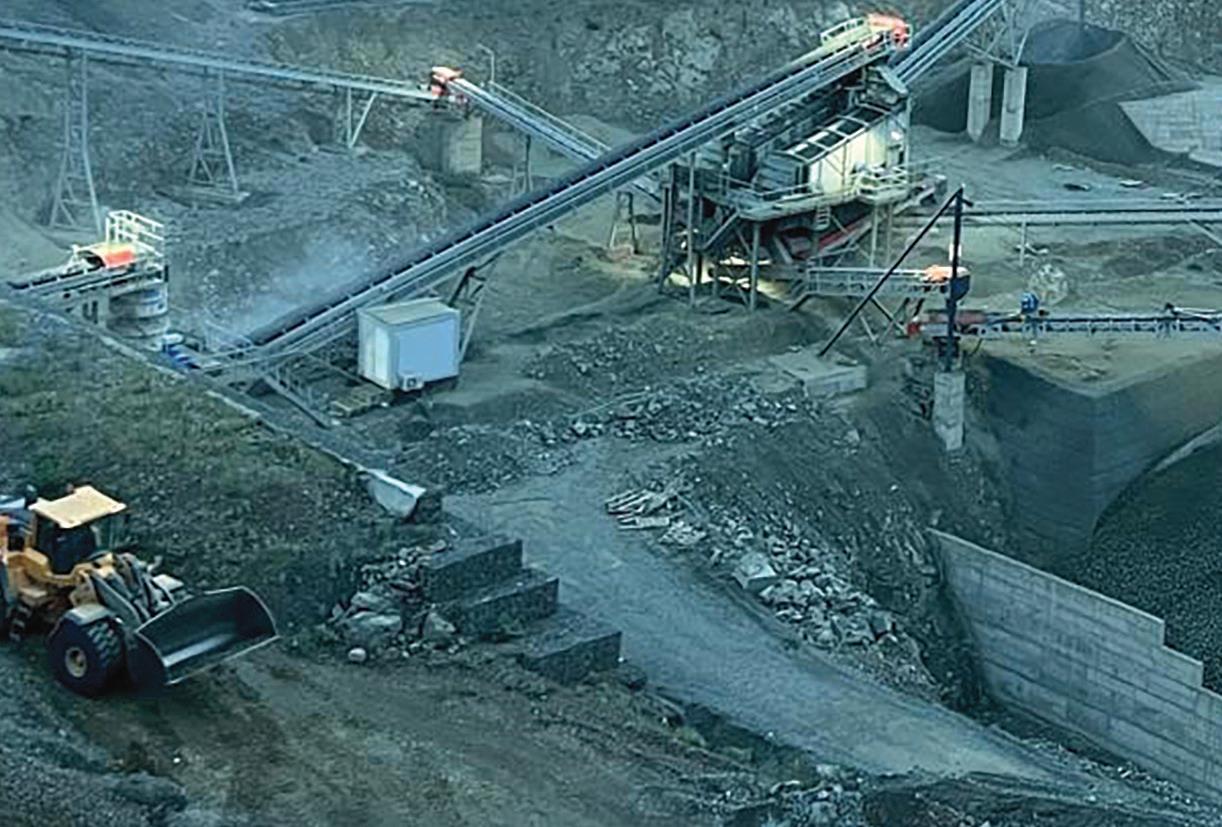

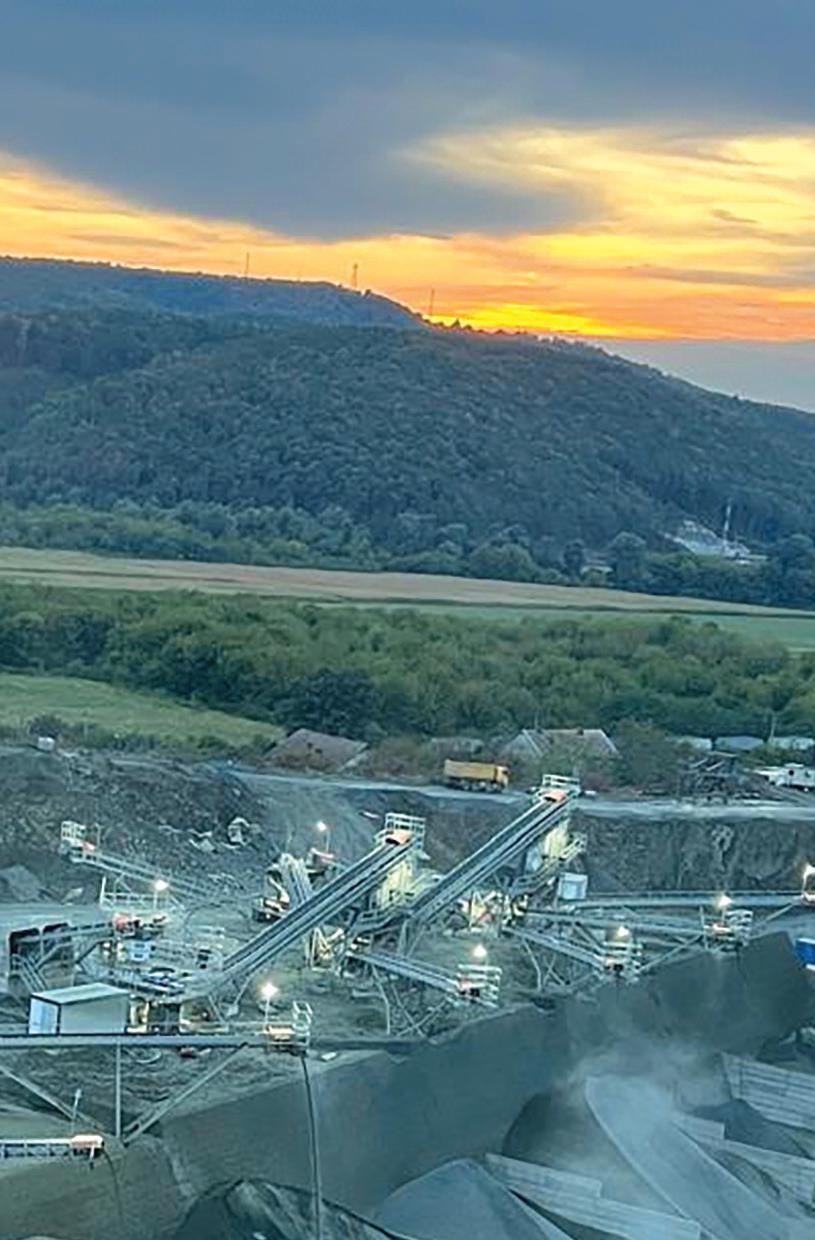
Quarry Manufacturing & Supplies (QMS) has supplied a massive 1,000tonne/ hour aggregate plant for a customer in Romania. e plant was installed and commissioned for customer Luscan Com with the assistance of Mirfo SRL, the partner of QMS for Romania.
e plant, located in Arad County, will be used to produce aggregates in a range of fractions for use on an array of infrastructure projects in Romania and Hungary.
Mirfo SRL has a well-established partnership with QMS to supply coste ective but advanced crushing and screening solutions. e rm designed and installed a bespoke aggregate plant at Luscan Com SRL’s Batuta Quarry, the largest stone quarry in Romania. Since Luscan took over the operation of the quarry in 2017, it has produced eight million tonnes of mainly diabase aggregates. Due to diabase’s structure, it is ideal when crushed for use as a construction aggregate. is has led to rock from the quarry being used on some of the largest road construction projects in Romania and Hungary.
In 2023 it was decided to update the plant with the construction of a third
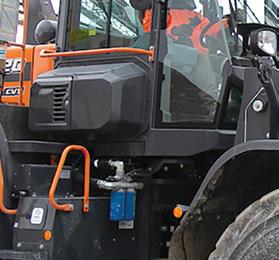
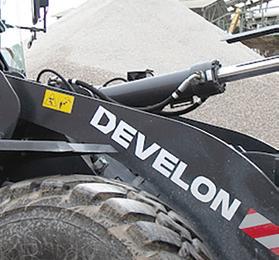
A sophisticated DL420CVT-7 wheeled loader from Develon, equipped with the company’s novel Transparent Bucket safety system, has helped to optimise the flow of gravel and milled material in the asphalt production process at a quarry in Albaredo (TV) in Italy, owned by the Trentin Group.
e Develon machine is helping to increase e ciency and safety for handling extracted and recycled materials at the site.
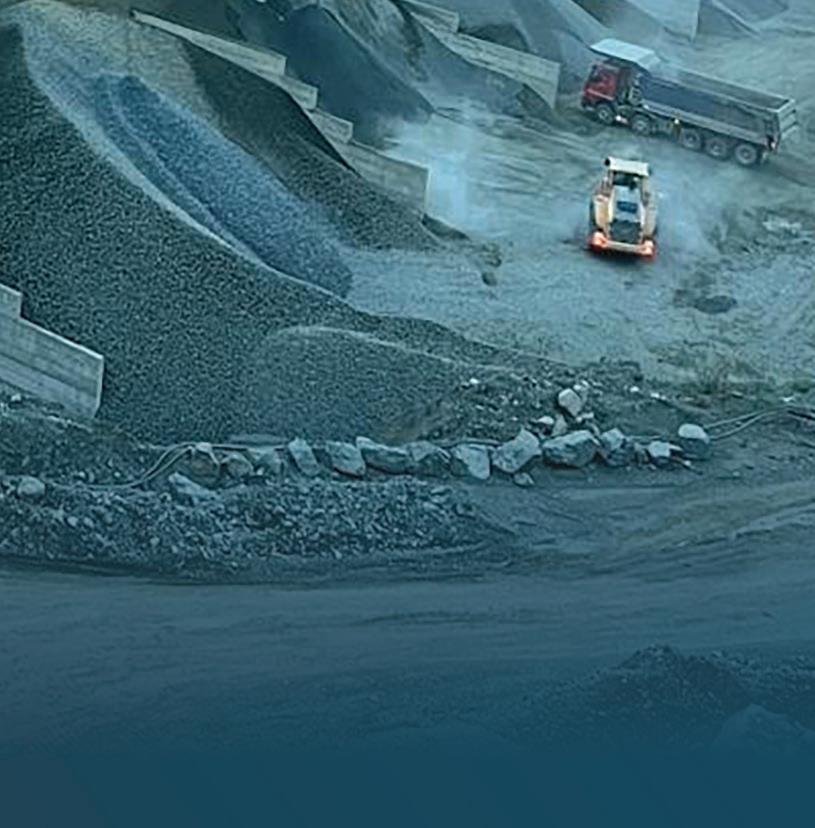
production line. e new line has been designed to produce the same amount of aggregates, but with 40% lower fuel consumption so as to reduce the facility’s carbon pro le.
At the same time, the haulage loading system is being automated, dispensing with some wheeled loaders, which will further decrease CO2 emissions.
Luscan required new equipment for its entire primary, secondary, tertiary and quaternary crushing. Along with this, the company also required screens and conveyors to produce 0/4mm, 4/8mm, 8/16mm, 16/22.4mm, 31.5/50mm, 0/63 mm, and +63mm fractions to be sold as the quarry’s main products. ese products will then be used for asphalt production and road construction as well as concrete and concrete precast production.
In order to ensure that Luscan would be provided with the best possible solution, Mirfo contacted QMS for advice on the most suitable equipment. After consulting with QMS, Mirfo supplied a selection of QMS cone crushers, screens and associated equipment. e full selection consisted of three cone crushers (B6, B4XC, B4); three 2x7m 3D screens; and one 2x6m 2D screen. www.qmsupplies.com
In the 70ha Albaredo quarry, Trentin Ghiaia extracts the gravel material located under the aquifer, which is washed, screened and crushed. The gravel is stored in piles divided according to grain size. Trentin Asfalti uses this material for asphalt production.
Transporting gravel e iciently and reliably is crucial and the Develon DL420CVT-7 wheeled loader, has proven up to the task. With a bucket load capacity of 4.5m3, smooth performance and low fuel consumption, the DL420CVT-7 has exceeded expectations.
The machine’s CVT transmission system has helped cut fuel consumption by up to 25%. Meanwhile the innovative clear bucket system has helped boost safety. The innovative system records images in front of the wheeled loader through cameras mounted high and low on the front and displays the combined images in real time on the monitor in the cab. The system also increases operational e iciency as it o ers a forward view during loading/unloading operations or during the transport of gravel.
www.eu.develon-ce.com/en/





Versatility is claimed for the new wheeled and short tail excavators coming to market - Mike Woof writes
Several of the major manufacturers are introducing new wheeled excavators or short tailswing models to the market at present. Of note is that di erent power options are also included amongst these, with rms o ering electric variants. Interestingly, models running on hydrogen are also under development, bene ting from technology developed initially for the automotive segment.
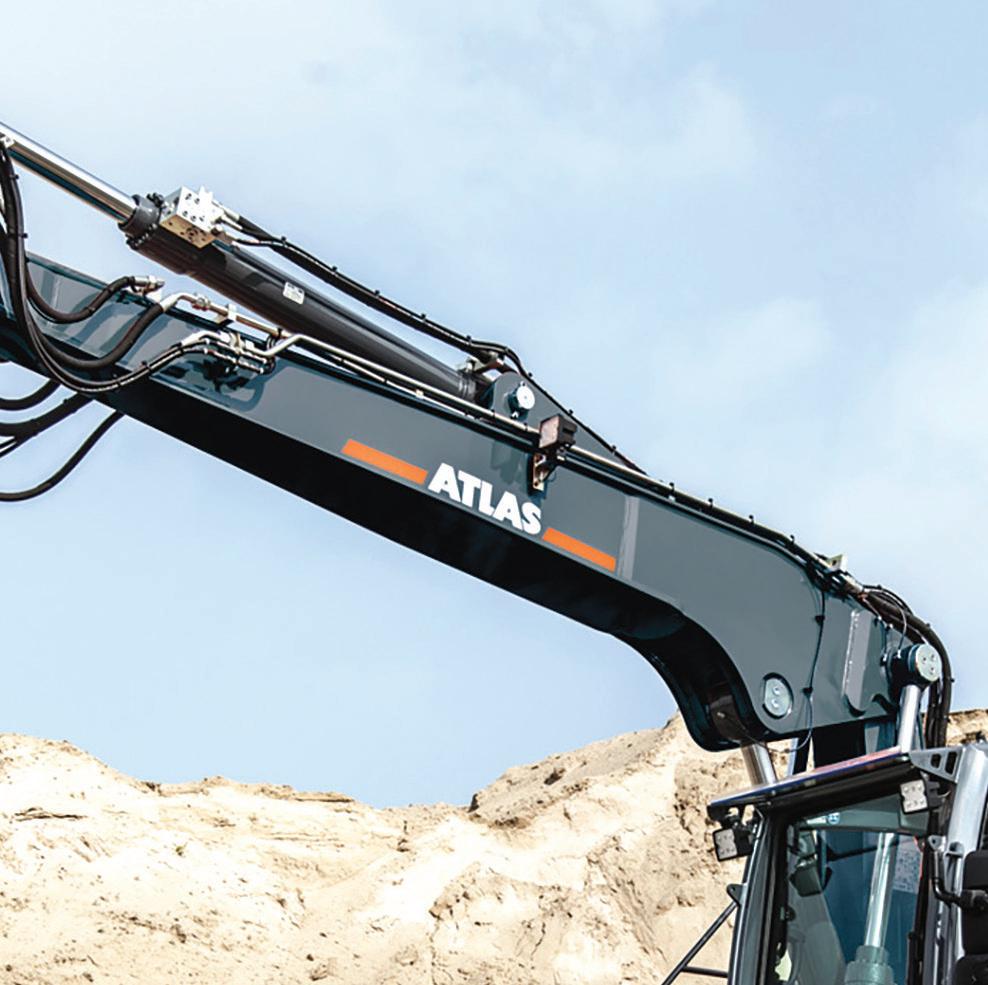
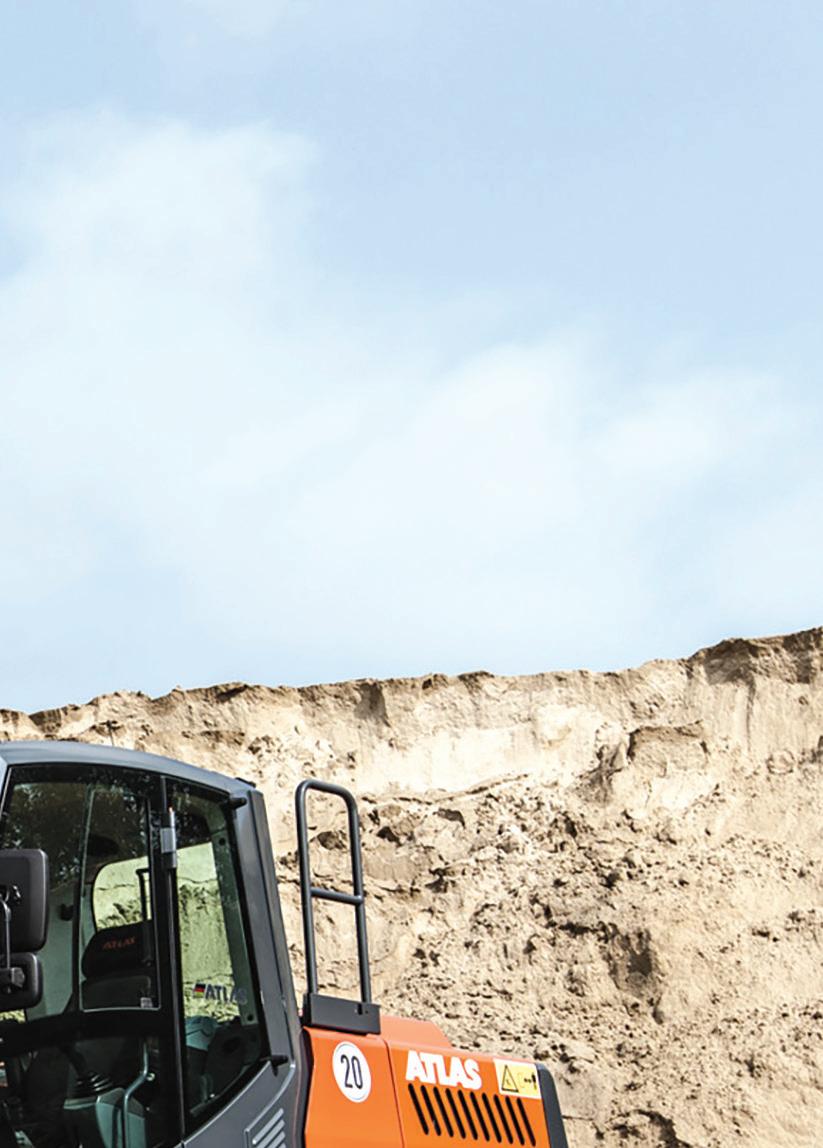
From ATLAS comes a wheeled excavator that has been redesigned and now bene ts from increased power, boosting performance. e 135Wsr has a tail swing radius of only 1,620mm, a swing torque of 40kNm, and a slew speed of 9rpm. e 135Wsr weighs from 13.9-15.2tonnes, its Deutz diesel meets the Stage V emissions requirements and delivers 95kW at 2000rpm, providing a traction of 82kN, a top speed of 35km/h and good o -road mobility. It is said to be highly fuel-e cient and also features a high visibility, low noise cab.
e 135Wsr can now be refuelled from the ground, with the option of using synthetic fuels. Automatic centralised lubrication for the upper carriage and arm equipment is o ered as an option. e 135Wsr can be tted with an optional split dozer blade with two halves that can be moved independently for use on uneven surfaces. Further boosting versatility are the outriggers designed for use in con ned work areas and the all-wheel steering and crab steering features.
Develon says that its BEV Zero-Emission 14tonne wheeled excavator is in development but has
ABOVE
ATLAS is o ering a new diesel-driven wheeled excavator although the firm will o er hybrid and electric models in the future
BELOW
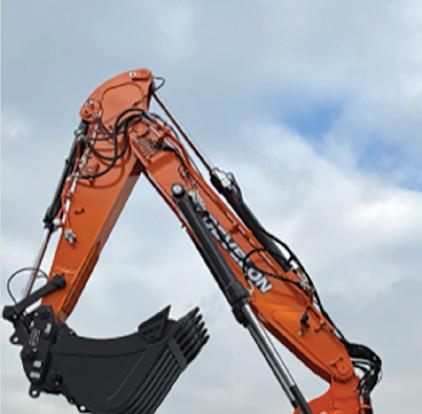
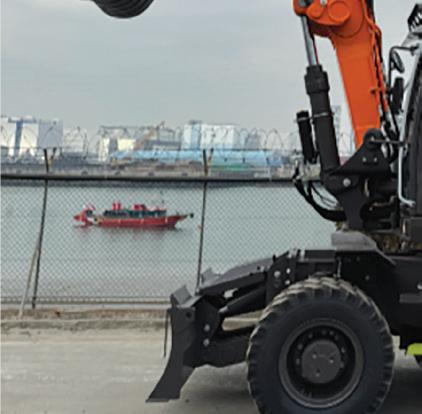
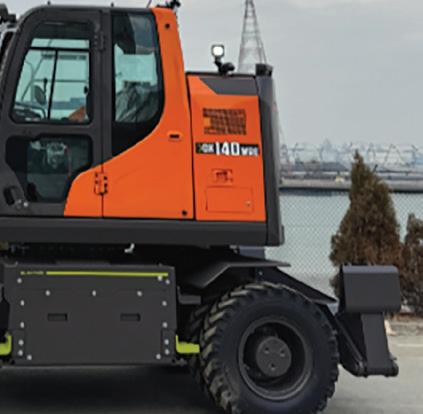
Develon has unveiled its battery electric prototype wheeled excavator, which can work for a full day on one charge

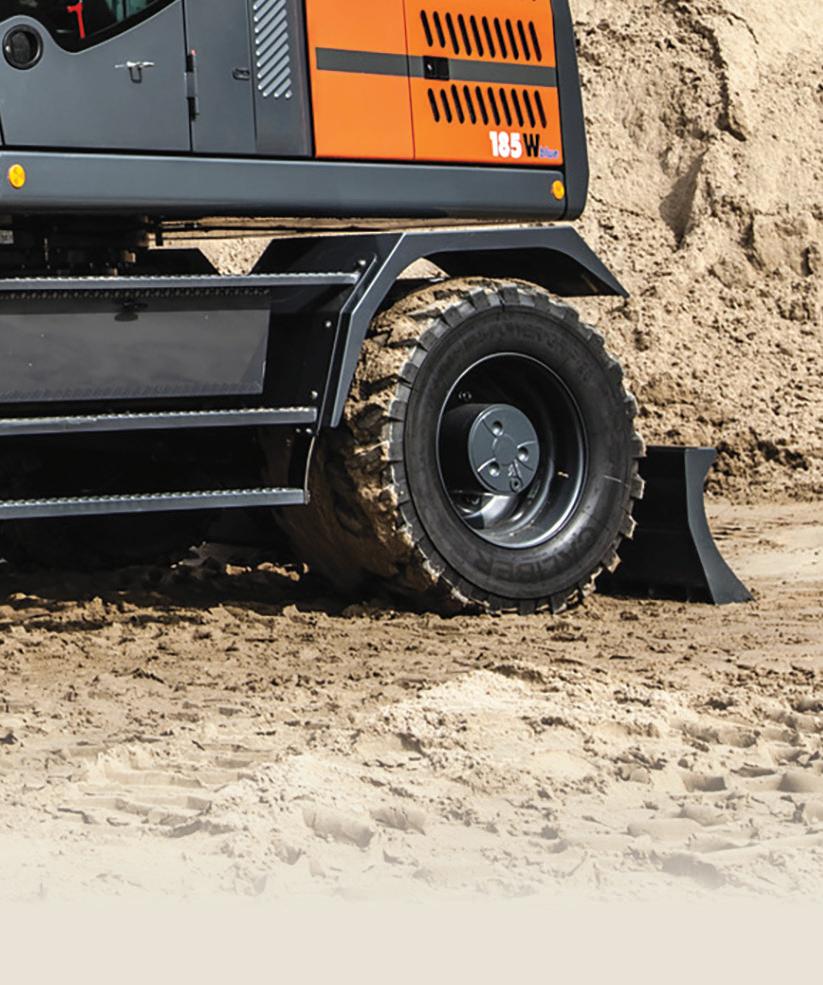
unveiled the prototype design. e machine is aimed at use in urban work and will be one of several BEV products from the rm.
e DX140WRE is intended to be the world's rst mass-produced medium-sized wheeled excavator that can work for more than 8 hours on a single charge. is will allow it to replace internal combustion engine machines. e battery capacity has been selected to meet this purpose.



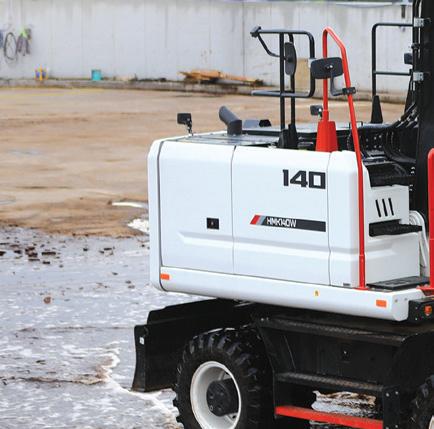
From Hitachi comes a series of the latest versatile ZXW7 wheeled excavator models.
ese short-tail swing ZX135W-7, ZX175W-7 and ZX220W-7 excavators are said to be able to handle a wide variety of applications. Attachments can be transported with the optional trailer package and can be changed quickly. All three models can be equipped with two-piece booms, boosting versatility.
e innovative HIOS hydraulic system increases front speed and achieves high levels of productivity, while low fuel consumption helps reduce running costs.
e all-new ECO gauge also helps to control fuel e ciency.
e smallest model, the ZX135W-7, has the same engine as the larger ZX155W-7 and a compact 360° swing radius for use in con ned spaces. e ZX175W-7 also has a high digging force and lifting capacity, boosting productivity.
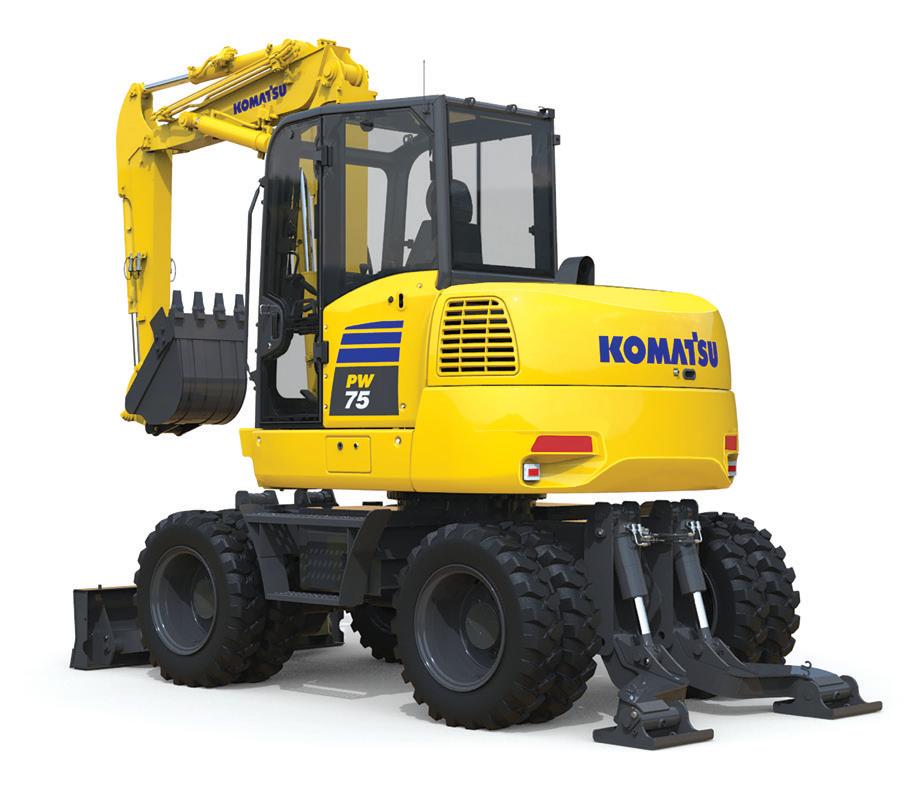
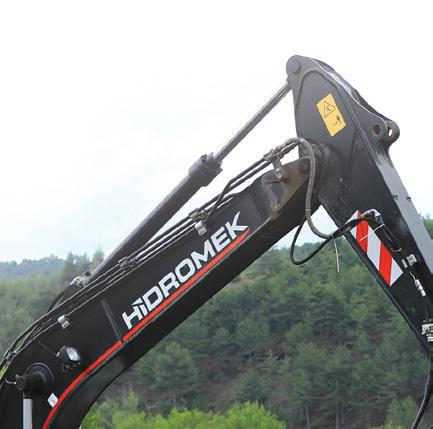
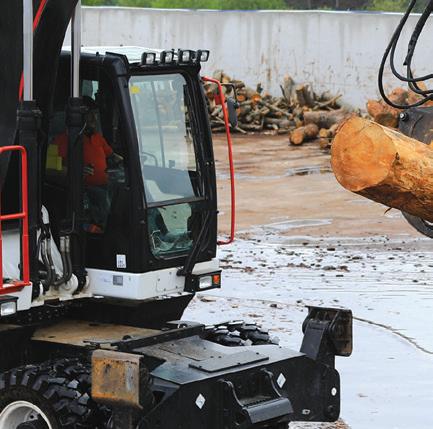
Hidromek says that its latest HMK 235 LCR shorttailed excavator model is designed for operation on compact sites. e rm is also o ering its latest HMK 140W wheeled machine. Both models share many of the operating features of the rm’s proven excavator range, while power comes from diesels that meet Stage V/Tier 4
e wheeled excavators feature low noise levels and vibration in the cab as well as good visibility due to large windows and the rm’s novel Aerial Angle camera system.
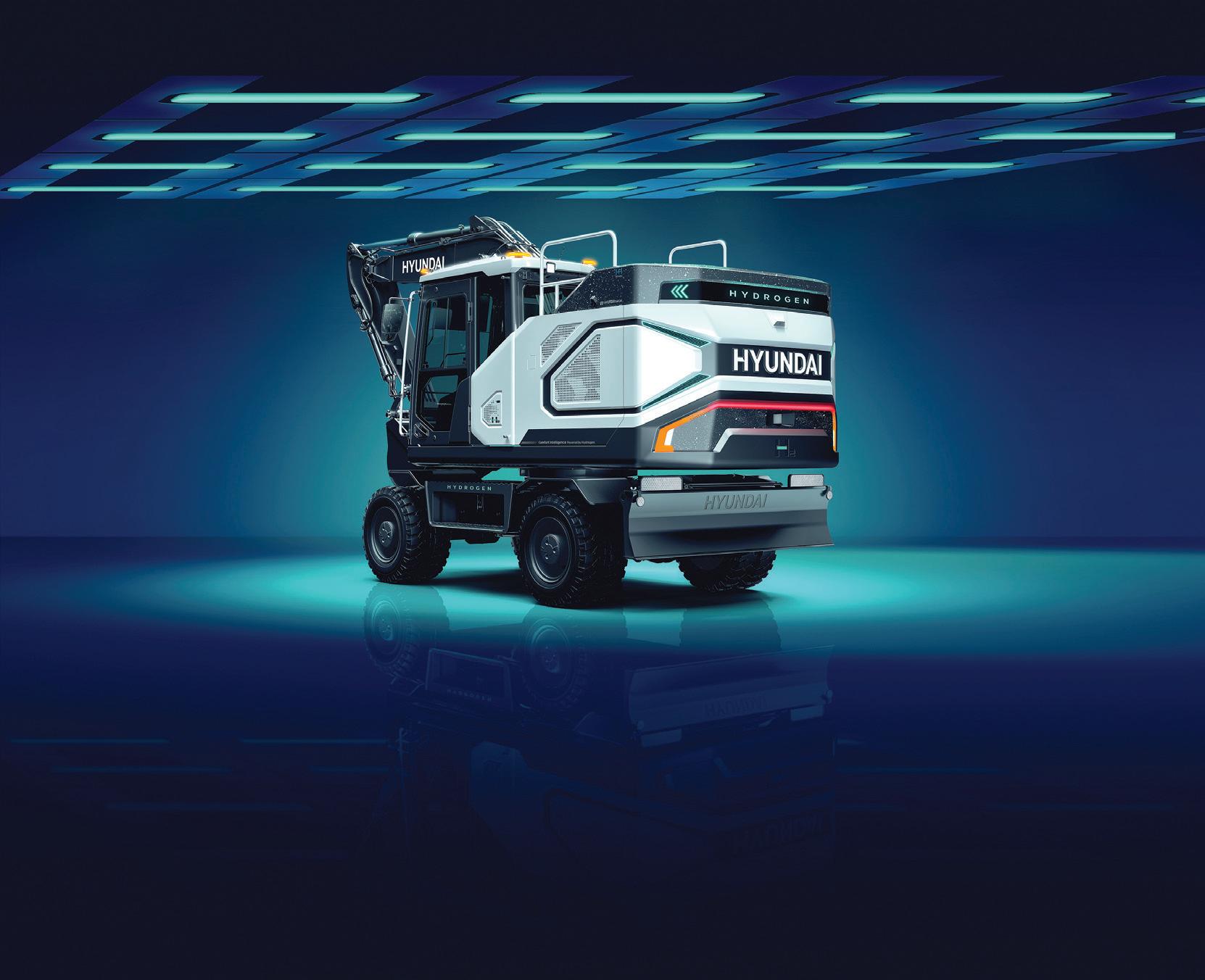
In pre-production form is the innovative HW155H hydrogen fuel cell-powered wheeled excavator from Hyundai. Fuel cells use a chemical reaction between hydrogen and oxygen in the atmosphere, to generate electricity, with the only emission being water vapour.
e fuel cell powers electric motors or electricallydriven hydraulic pumps. e HW155H o ers an operating speed and power similar to a conventional diesel-powered excavator, with enough fuel for a full working shift.
e project to develop a fuel cell for the HW155H has been a cooperation between Hyundai Construction Equipment and Hyundai Motor Company, which has a range of powertrain solutions for the automotive segment. Two cells have been designed, delivering 30kW and 50kW, with the HW155H using a combination of fuel cells to provide 70-100kW. ese fuel cells would suit a range of machines, including the 15tonne wheeled excavator.
e HW155H uses the fuel cell to power an electric motor, that then drives the hydraulic system. e hydrogen onboard storage has the capacity to allow a full eight hours of operation, with refuelling taking 10-20 minutes.
Hydrogen is a safe fuel, with an auto-ignition temperature higher than petrol or diesel. In the event of
Komatsu’s prototype PW74 wheeled excavator shares features with its larger siblings in the range
Versatility is claimed for Hidromek’s HMK 140W wheeled excavator
Hyundai’s pre-production fuel cell driven wheeled excavator o ers an innovative, low emissions solution
Final emissions requirements. e machines will be available with equipment such as a 360° camera system, 2D controls, attachment management technology and a load assistant package.
Komatsu is also unveiling its prototype 7.5tonne PW75 wheeled excavator, which shares features with the existing PW98MR and PW138MR models. is new tight-tail excavator is said to o er precise operation with any attachments and good driving characteristics on-road. e machine can work in a variety of utility applications with improved e ciency and can handle simple excavating tasks in narrow alleys, road construction sites and for sewer construction work.
Its swing boom design allows digging parallel to buildings or barriers and the two-piece boom design grants versatility. Features include low emissions operation with its 49kW Stage V compliant engine, high manoeuvrability, a maximum width of 2.08m, short tail radius and four-wheel steering as standard. It also o ers high travel speeds, a di erential lock as standard with a manual/automatic axle lock and control of travel direction and undercarriage attachments by switches on the control joysticks or the dashboard. Versatility is claimed due to the wide working diagram and hydraulic quick coupler, while customers have the choice of a mono-boom or two-piece boom. Safety related features include a rear-view camera, integrated attachment control and LED lights. End www.atlasgmbh.com eu.develon-ce.com www.hitachicm.com/eu/ www.hyundai-ce.eu www.hidromek.com.tr www.komatsu.com

Mathias Redlberger, chief executive of REBLOC Group, a global provider of precast concrete elements for vehicle restraint systems, explains the new Technical Specification CEN/TS 1317-7 for terminals

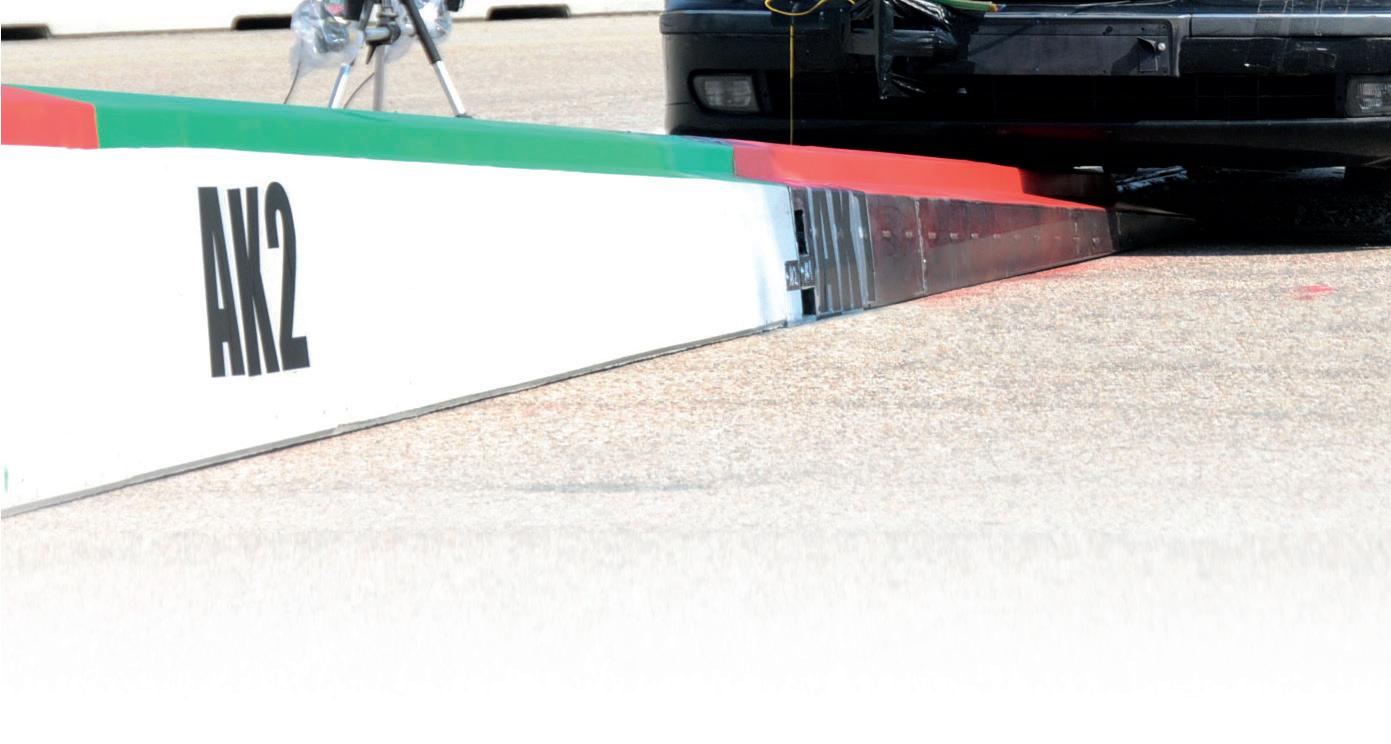
With the introduction of the new Technical Speci cation CEN/TS 1317-7:2023, introduced by the European Committee for Standardisation (CEN) in 2023, advancement has been made in road safety standards. Replacing the former Pre-Standard ENV 1317-4:2001, it provides a clear and binding framework for the performance characterisation and test methods of terminals (TE) for safety barriers.
e former scope has now been split into two documents:
• CEN/TS 1317-7:2023 – performance characterisation and test methods for terminals of safety barriers
• CEN/TR 1317-10:2023 – assessment methods and design guidelines for transitions, terminal and crash cushion connection - transitions
As a result of this division, CEN/TS 1317-7 now explicitly focuses on the terminals of safety barriers. is new focus enables a more detailed assessment and classi cation of the performance of terminals, providing a more precise evaluation framework.
A key element of the new document is the de nition of test methods, which specify the testing procedures. e test code (for example, TT1.3.110) speci es key test parameters. ‘TT’ stands for Test of Terminal, ‘1’ represents the approach (1-6), ‘3’ indicates the test vehicle mass of 1,500kg (1 = 900kg, 2 = 1,300kg, 3 = 1,500kg). e nal number represents the impact speed in km/h.
In the new speci cation, the former performance
The REBLOC TE 80XA_4.1, developed for end-ofbarrier applications (UTD = uni-directional terminal – departure), also meets T110/1 requirements
Image courtesy REBLOC
For the latest news, extended features and videos relating to Highway & Network Management visit the website globalhighways.com
classes (for example, P4) are now classi ed as restraint categories (for example, T110/1). Meanwhile, the location (such as, A) has been replaced by a direction category (for example, BDT = bi-directional terminal).
e de nition of lateral displacement has also been clari ed, specifying the maximum displacement of the terminal during an impact, both on the tra c side (S) and the departure side (T) of the installation. Additionally, the categories of terminals Z1, Z2, Z3 and Z4 have been newly de ned to ensure that the vehicle remains within the distances Za (approach side) and Zd (departure side) of the redirection zone dimensions.
To meet and even exceed these new standards, REBLOC has developed two innovative terminals. e REBLOC TE 80XA_17.9 is the rst precast concrete terminal compliant with restraint category T110/1 (BDT), designed for safe redirection in both approach and departure scenarios. It can be installed on various surfaces and prevents rear-end collisions in con ned tra c environments.
e REBLOC TE 80XA_4.1, developed for end-ofbarrier applications (UTD = uni-directional terminal – departure), also meets T110/1 requirements. Compact and cost-e ective, it’s ideal for spacelimited installations while ensuring controlled vehicle redirection.
Beyond standard compliance, REBLOC tested its terminal under extreme real-world conditions: a frontal, head-centered impact at 130km/h – well above standard requirements. Despite the increased speed, the terminal met all key performance parameters, proving its reliability for high-speed road networks. ese forward-thinking systems comply with the highest technical standards. ey also, importantly, signi cantly contribute to improved road safety by minimising impact severity and reducing the risk of
Today’s construction engine that is ready for tomorrow.
The Next Gen X15 for Off-highway is designed around Cummins’ industry-first, multifuel HELM™ platform. Diesel, biofuels, and hydrogen ready. The power to deliver performance with new levels of efficiency and emissions control. Built to let you choose how the future is powered.
Learn More
secondary collisions.
Innovation means not just meeting standards, but setting new ones. REBLOC’s innovative terminals not only meet the requirements of the new Technical Speci cation but also actively contribute to enhancing road safety through advanced technologies. ese new systems help reduce the risk of rear-end collisions, o ering a sustainable solution for safer roadways.
Innovation means not just meeting standards – but setting new ones. REBLOC’s innovative terminals not only meet the requirements of the new Technical Speci cation but also actively contribute to enhancing road safety through advanced technologies. ese new systems help reduce the risk of rear-end collisions, o ering a sustainable solution for safer roadways. End
Since the Technical Specification CEN/TS 1317-7:2023 is relatively new - coming into force only in 2023 - it needs some time until it is well established and fully understood by the sector. In brief, it is a binding framework for the performance characterisation and test methods of terminals for safety barriers. Before this technical specification was applied, the Pre-Standard ENV 1317-4:2001 was used as a framework. The Pre-Standard included terminals and transitions alike. The newly established specification provides a much more precise evaluation framework and more detailed assessment and classification of the performance of terminals. Some definitions have been amended and several new performance categories have been established. www.rebloc.com
TRL is partnering with University Hospital Southampton in the UK to reduce road deaths by linking health records and road tra ic crash data.
The English hospital and TRL have together been awarded £500,000 by the UK’s Department for Transport and the Road Safety Trust to launch what they say is a world-first initiative, the two-year Data Sustains Life project.
The Road Safety Trust is an independent grant-giving trust supporting projects and research to make UK roads safer for all road users - pedestrians, cyclists, mobility scooter users, car drivers, truck, van drivers and motorcyclists.
University Hospital Southampton in southern England services around 1.9 million people living in southern Hampshire county. TRL, the Transport Research Laboratory, is a former government agency that was privatised in 1996. It has more than 1,000 clients in countries around the world, o ering independent advice which is says is without influence from shareholders or finance companies.
BELOW
The goal is to use these new data to inform better policies and strategies to bring down the number of road fatalities and serious injuries
National Health Service. It aims to unlock patient data to develop new treatments and improve NHS e iciency, e ectiveness and safety.
The Data Sustains Life project will focus on the counties of Dorset and Hampshire as well as the Thames Valley region including London. TRL said that the process will be capable of being scaled in other regions and nationally with investment from statutory authorities. Findings are expected to inform both national road safety policies and global best practices.
“The concept of linking these di erent data sources was thought to be impossible, but every idea has its time,” said Hyde who is also a pre-hospital critical care consultant with the Air Ambulance service for the counties of Dorset and Somerset. “Enabled by the Wessex Secure Data Environment, this project will allow UK researchers to identify patterns, risk factors and critical points for intervention. The ultimate goal is to use these new data to inform better policies and strategies to bring down the number of fatalities and serious injuries.” www.trl.co.uk















Data Sustains Life aims to anonymously integrate wide-ranging data insights, providing a holistic view of the causes and consequences of road crashes in the UK. It will explore the relationship between road crashes and the resulting health outcomes, o ering an approach to improving road safety and coordinating the e orts of both the healthcare and transport sectors.














“By anonymously linking health data with road safety data, we can unlock new insights that will enable us to approach road safety with a fresh perspective,” said Phil Martin, head of transport safety at TRL. “Our goal is to ensure that no more lives are unnecessarily lost on Britain’s roads.”







care consultant at the hospital. It is linking data from



Data Sustains Life is a core part of a growing Prehospital Research and Audit Network (PRANA), led by Phil Hyde as principal investigator and a paediatric intensive care consultant at the hospital. It is linking data from ambulances, air ambulances, police, the Department for Transport and coroners, as well as the many interactions flowing through hospitals. This includes emergency care, intensive care, trauma care and rehabilitation registries.













PRANA is one of the first projects to use the Wessex Secure Data Environment platform, from the UK’s









The European Union Road Federation (ERF) has developed a practical guide for a quick inspection of road signs that includes a checklist
ERF’s ‘working group for road signs’ is recommending that the guide and checklistfree to download - is included in any existing tools for road safety inspection and audits that road agencies may have. Converted to a smartphone application, a digital checklist can automatically issue reports with pictures and geolocation data.
Clearly seen and up-to-date signage is important for both human and advanced driver-assistance systems (ADAS), notes the ERF, based in Brussels, Belgium. ADAS are technologies that assist drivers with the safe operation of a vehicle. rough a human-machine interface, ADAS increases vehicle and road safety by using automated technology, such as sensors and cameras, to detect nearby obstacles or driver errors, and can respond accordingly. ADAS can enable various levels of autonomous driving.
e European Union’s road safety initiatives led to a substantial decrease in fatalities, from 51,400 in 2001 to 19,800 in 2021. However, while the number of road deaths was halved during the rst decade, progress later stagnated. In 2021, fatalities increased by 6% compared to 2020, indicating the need for renewed e orts.

In its 2020 Sustainable and Smart Mobility Strategy, the European Commission con rmed its goal of achieving zero road fatalities by 2050 - the ‘Vision Zero’ objective - and halving the number of fatalities by 2030 compared to 2019 gures.
In January 2023, the Commission issued guidelines on the methodology for assessing road infrastructure safety. e guidelines noted that it is essential to evaluate whether road signs are placed at the most critical points of the road, such as upstream of intersections and curves. But they must also be immediately readable and understood by a driver.
A report by the European Court of Auditors, released in March this year, acknowledged progress in EU road safety. However, it stressed that EU member states needed to be more serious about the widely adopted safe system approach, a strategy to improve road safety. Otherwise, “halving fatalities and serious injuries between 2020 and 2030 and of getting both close to zero by 2050 are unlikely to be reached”. e ERF guidelines follow on from these indications by the European Court of Auditors that more needs to be done to ensure that signs are readable.
e European Union Road Federation is a nonpro t association which coordinates the views of Europe’s road infrastructure sector and acts as a platform for research and dialogue on mobility issues between stakeholders and institutional players. e organisation’s working group on signs advocates
for the correct deployment of signs ensuring their visibility and recognition during daytime, night-time, bad weather conditions and also to facilitate driving conditions for an ageing population. e guiding strategy is the safe road approach, adopted in many countries.
According to US Department of Transportation, the approach works by building and reinforcing multiple layers of protection to both prevent crashes from happening in the rst place and minimise the harm caused to those involved when crashes do occur. e safe roads approach di ers from a conventional safety approach because it focuses on both human mistakes as well as human vulnerability. Notably, safe roads will design a system with many redundancies in order to protect all road users - drivers, cyclists and pedestrians.
According to Brake, a UK road safety charity, road agencies can create self-explaining roads as part of the safe roads subsection. Self-explaining roads are designed so that the driver is aware of what is expected of them and behaves appropriately. Each class of road is immediately recognisable and understood , with its own carriageway width, road markings, signage and street lighting consistent throughout the route. e simplicity and consistency of the road’s design reduces driver stress and driver error, says the charity. End https://erf.be
ABOVE
Stop the rot: clearly seen and up-to-date signage is important for both human and advanced driver-assistance systems, notes the European Union Road Federation, based in Brussels
For the latest news, extended features and videos relating to Highway & Network Management visit the website globalhighways.com
Recent polling in the UK shows that 69% of respondents support measures to tackle noisy vehicles. But it also shows that awareness of noise cameras that detect excessively noisy vehicles is low
Recent polling in the UK shows that 69% of respondents support measures to tackle noisy vehicles. But it also shows that awareness of noise cameras that detect excessively noisy vehicles is low.
Independent polling from pollster Opinium Research, commissioned by Intelligent Transport Systems UK (ITS UK), has shown the majority of the public support measures to make it easier to enforce noise limits on road vehicles. e polling comes alongside a new report from ITS UK that sets out key recommendations for the UK government to support the use of noise camera technology.
e ndings of the independent survey of 2,050 individuals across the UK show that there is strong support for measures to make it easier to enforce against excessively noisy vehicles, with 69% in support and 16% opposing. Excessively noisy cars and motorcycles are ones that have been modi ed or driven in a way that creates additional noise.
e polling also shows that awareness of noise camera technology is low. According to the polling, two-thirds of the public (67%) have never heard of noise cameras. Meanwhile, 17% have heard of them but don't know any details. A tenth (10%) of respondents said they know at least a bit about noise cameras. Among those with access to a vehicle, awareness remains low at 28%.


A noise camera identi es excessively noisy vehicles and where necessary, issue a ne to deter drivers from
SoundVue system at work in New York City (below): it’s ANPR/ LPR cameras read the o ending vehicle's licence or registration plate and then all data is sent to the company's secure web server for review and action as appropriate Images courtesy SoundVue/


based upon sensors composed of either microphones or radar which can pinpoint a noisy vehicle as it passes by.
e camera will then take a recording accompanied by automated number plate recognition (ANPR) to identify the vehicle and to create a package of evidence for use by the relevant authority. One such manufacturer of noise cameras is Intelligent Instruments, a UK-based company which says their Soundvue systems are used in London and across four continents.
e company’s SoundVue system uses algorithms and arti cial intelligence to automatically detect excess noise from road vehicles. It captures precision noise level - to the Class1 accuracy standard of IEC 61672) and clear audio and visual data. A Halo microphone array identi es the dominant vehicle, even when other vehicles are present, and places an identifying marker upon it.
Meanwhile, the SoundVue system’s ANPR/LPR cameras read the o ending vehicle's licence or registration plate. All data is sent to the company's secure web server for review and action as appropriate. e company says that its partner organisations can integrate SoundVue technology into their own other platforms and it will provide full back o ce functions including identi cation of the vehicle owner, processing of nes and collection of revenue. According to the poll results, when noise cameras were explained to the respondents, support for their
further roll out is high with 62% in support and 20% opposing it.
Half of respondents think public awareness of laws around excessively noisy vehicles and their enforcement is too low (50%) with only a fth thinking it’s “about right” (20%).
e new report from ITS UK urges the UK government to take further action to support noise camera technology. e organisation sets out three recommendations. It wants the establishment a government-led noise group comprised of key industry stakeholders. ere should also be publication of overdue guidance for local authorities and a public awareness campaign,.


“However, since trials concluded last year, there has been little support from government for the roll out of this technology, with guidance for local authorities now overdue,” said Max Sugarman, chief executive of ITS UK. “ e UK has great expertise in noise camera technology, and so support for this growing sector will not only mean quieter streets for communities around the UK, it will also mean backing a key market that has the potential to be exported around the world.” End e report based on the poll can be found by going to the ITS UK website at: www.its-uk.org/noisecamera-polling. www.its-uk.org www.soundvue.com
Mont Blanc Motorways and Tunnel - ATMB - will have free-flow tolling under a 10-year contract awarded to Emovis, a subsidiary of Abertis Mobility Services.
Emovis will convert 58km of the A40 motorway in France into a free-flow tolling system that is set to be operational by spring 2027, replacing the current toll plazas. Five bi-directional toll gantries
will be installed along the route between the towns of Sallanches and Annemasse.
The project is “pivotal” for ATMB and its customers, said Christophe Dubois, director of networks and environment at ATMB. “The challenges are significant and we are counting on this well-established partner in the free-flow market to guide


us through this multi-dimensional transformation."
ATMB will benefit from Emovis’ free-flow and back-o ice operational solutions, developed over many years and deployed with numerous concessionaires worldwide, including in Chile, UK, the Netherlands, US, Qatar and Canada. Emovis said that the combination of these
solutions ensures the detection, classification and management of all vehicles passing under the gantries in the most automated way possible, leveraging artificial intelligence algorithms.
Emovis' maintenance and operations teams will manage the entire system in collaboration with ATMB during the 10-year contract period.
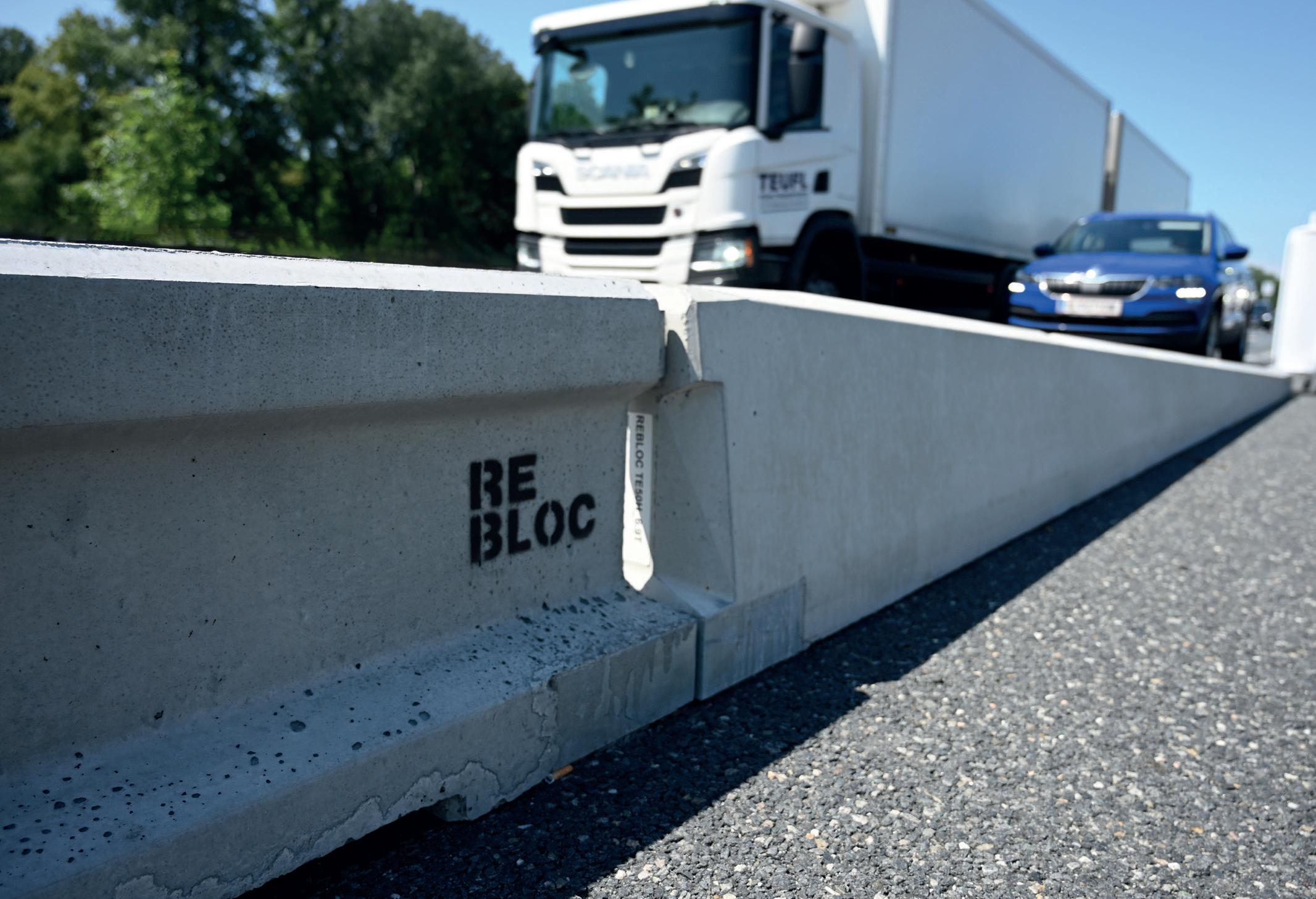


















Mark your calendar for Intertraffic events around the globe, the premier gatherings for traffic and mobility professionals worldwide. Whether you’re a visitor seeking cutting-edge solutions or an exhibitor aiming to showcase innovations, Intertraffic offers unparalleled






opportunities to network, learn, and grow your business. Don’t miss the chance to make your mark in achieving smart, safe, and sustainable mobility for all. This is where the future happens! Get in touch with our team on intertraffic@rai.nl or check out www.intertraffic.com.












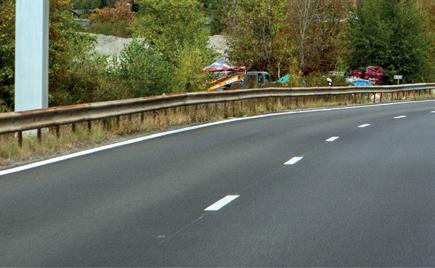

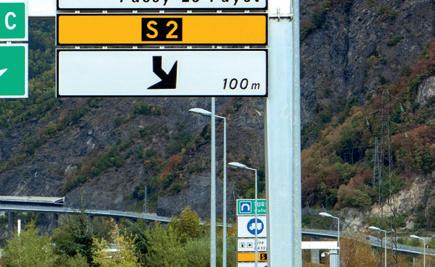
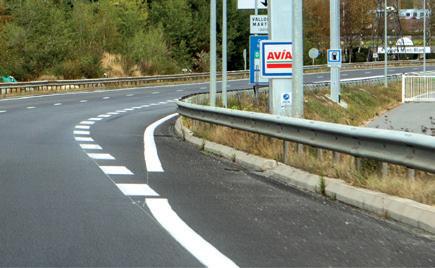
Emovis will replace toll plazas along 58km of the A40 motorway in France in order to create a free-flow tolling system to be operational by spring 2027
"We are more than a solution provider – we are a true partner, enabling ATMB’s seamless and successful transition to free-flow tolling," said Christian Barrientos, chief executive of Abertis Mobility Services - Emovis. "This partnership with ATMB further validates our expertise in free-flow tolling technologies. The new tolling system will not only enhance the user experience but also contribute to reducing emissions as vehicles will no longer need to stop at toll barriers."
The project is closely aligned with the

European Union’s commitments to corporate social responsibility, particularly in reducing CO2 emissions. Mont Blanc Motorways and Tunnel facilitates travel in the heart of France’s Haute-Savoie region, connecting Switzerland and Italy. ATMB is owned 91.3% by the French state and local authorities. It operates the Mont Blanc Tunnel in partnership with its Italian counterpart, SITMB, as well as the Autoroute Blanche (A40). Since 2010, it has also managed the Route Blanche (RN205). www.emovis.com
UTA customers can rely on their UTA One and UTA One next devices for journeys in and through Denmark










Denmark recently replaced the Europewide Eurovignette toll system with a kilometre-based system. In other Eurovignette member states - Netherlands, Luxembourg and Sweden - the current toll solution remains in place.


The Danish toll operator will not provide a national toll device. Instead, it will o er optional route booking in advance through a credit card. The new Danish toll can be settled with UTA Edenred’s UTA One and UTA One next toll devices. To do this, UTA customers will have to activate the toll context in the UTA Service Center. https://web.uta.com/en
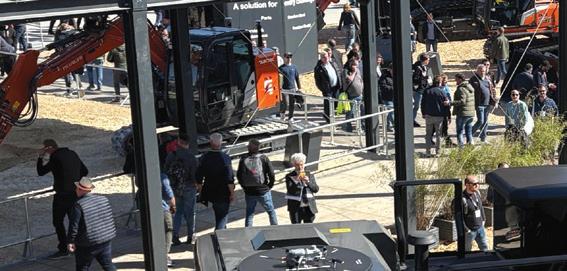
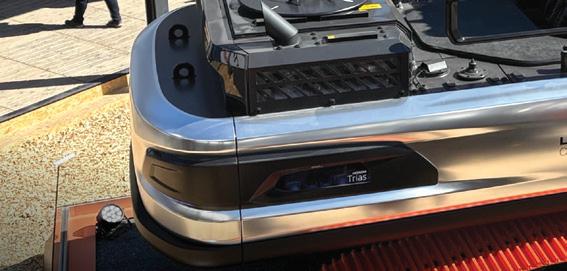

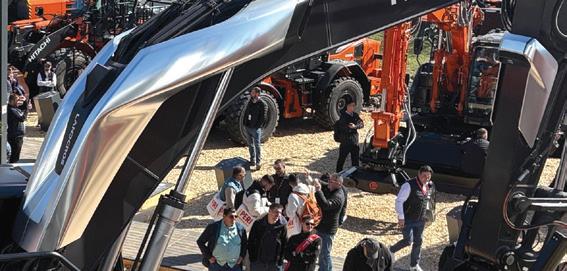
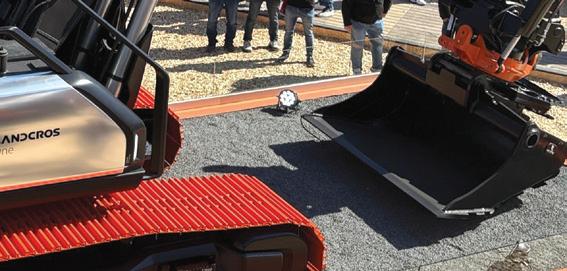

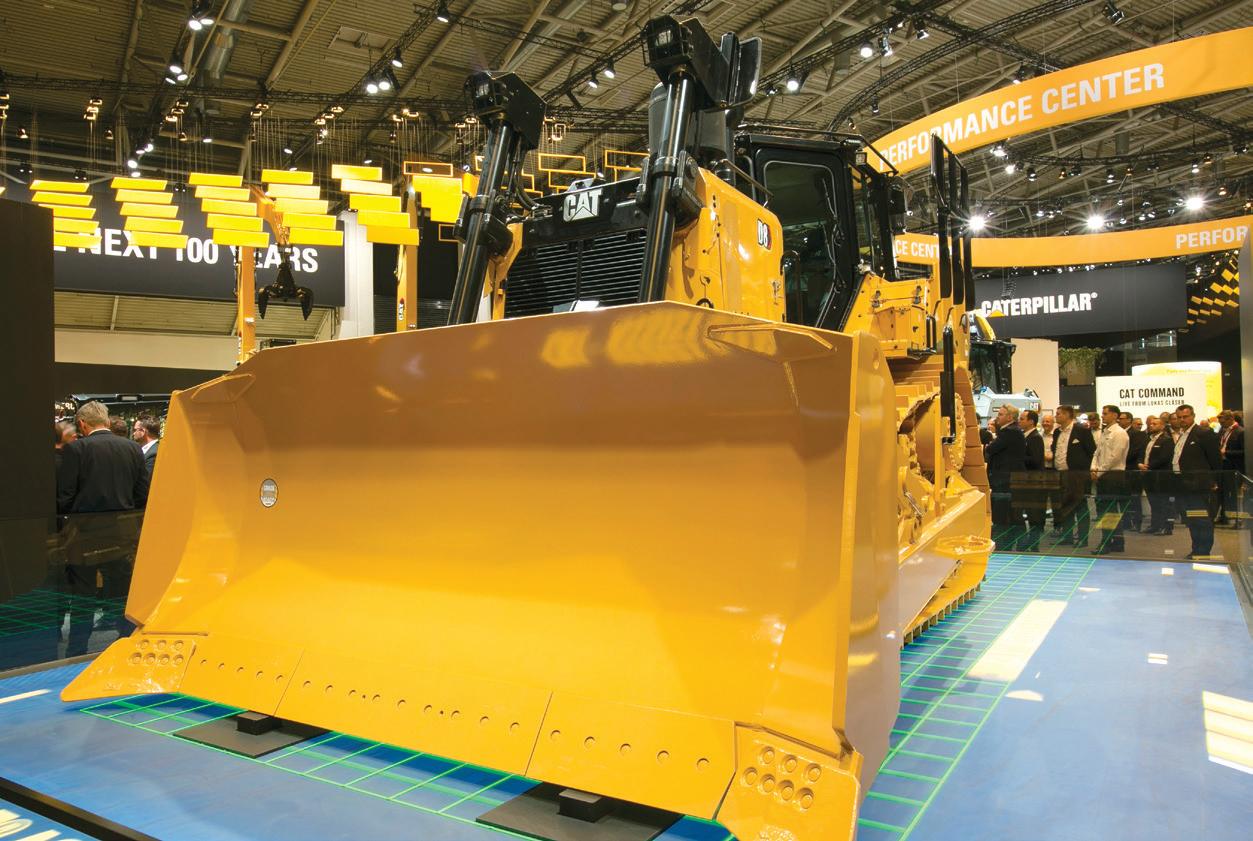





Caterpillar has launched the next-generation D8 dozer, part of its medium tractor range.
e machine features advanced technology designed to provide faster more accurate results. e next-generation design makes it easier for operators to transition to di erent machine sizes.
e future of connected eet management has arrived in the shape of Hitachi’s excavator concept, LANDCROS One.
It blends arti cial intelligence and gami ed ergonomics with autonomous and remote operation capabilities.
Komatsu Europe has premiered its new nextgeneration WA475-11 and WA485-11 wheeled loaders, which the manufacturer says represent a leap forward in performance and e ciency.
At the heart of new Dash 11 generation wheeled loaders is a newly developed Komatsu diesel engine which is characterised by extremely high torque in the low-speed range.
For all our bauma coverage and videos visit the website globalhighways.com
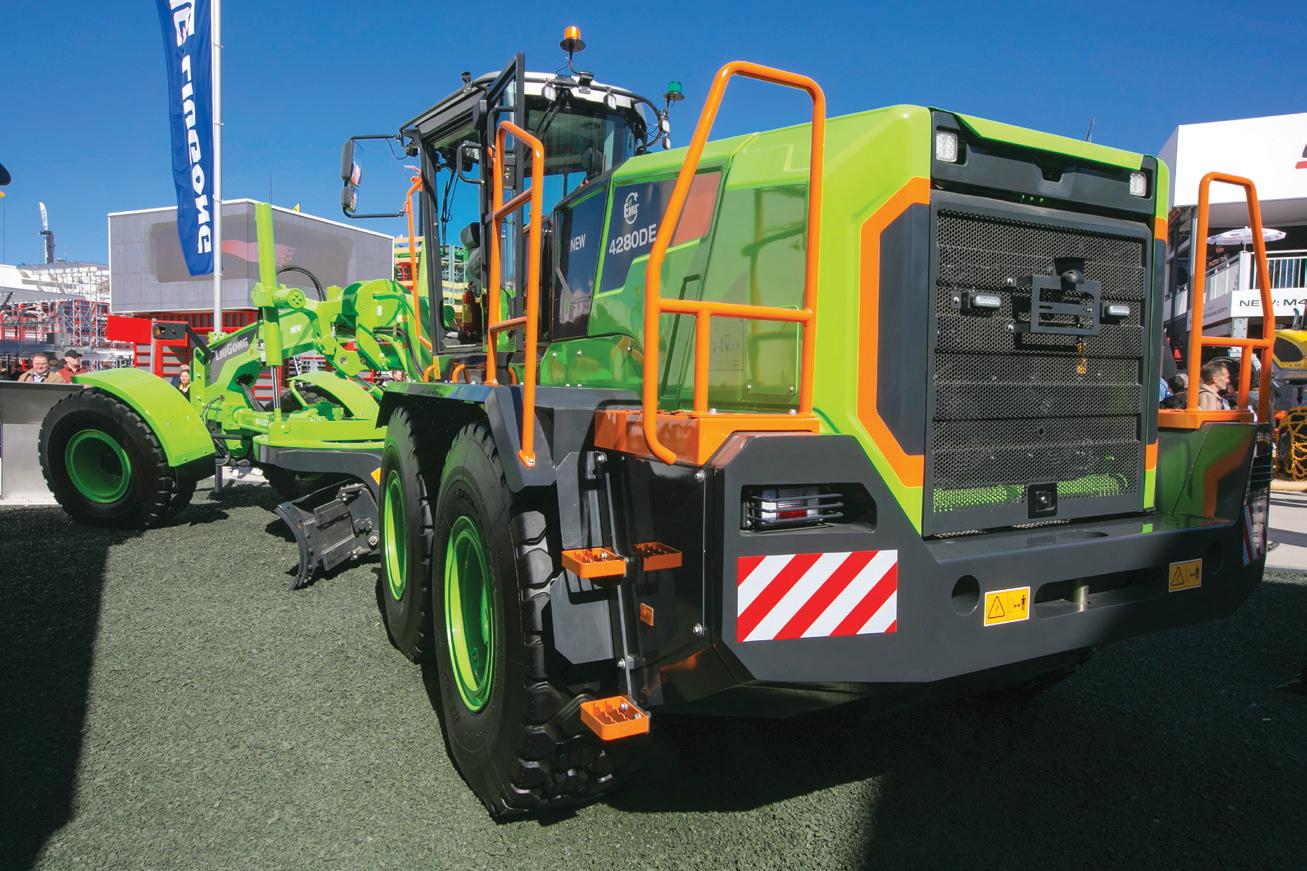


LiuGong’s commitment towards the future of battery-electric vehicles in the construction sector is exempli ed by its expanded portfolio, including the new 4280DE motor grader.
e battery-electric grader’s battery pack provides fast charging within 1.6 hours and allows normal working conditions between six to 10 hours. Meanwhile, the large capacity lithium-iron phosphate battery is safe and durable.
Fresh on the heels of launching its new articulated hauler range, Volvo CE has further expanded the line-up with the development of all-electric models.
e rm says that deliveries for the new A30 and A40 battery-electric machines will commence in 2026 in selected markets, with a full roll-out of these models globally in 2027 and 2028. End
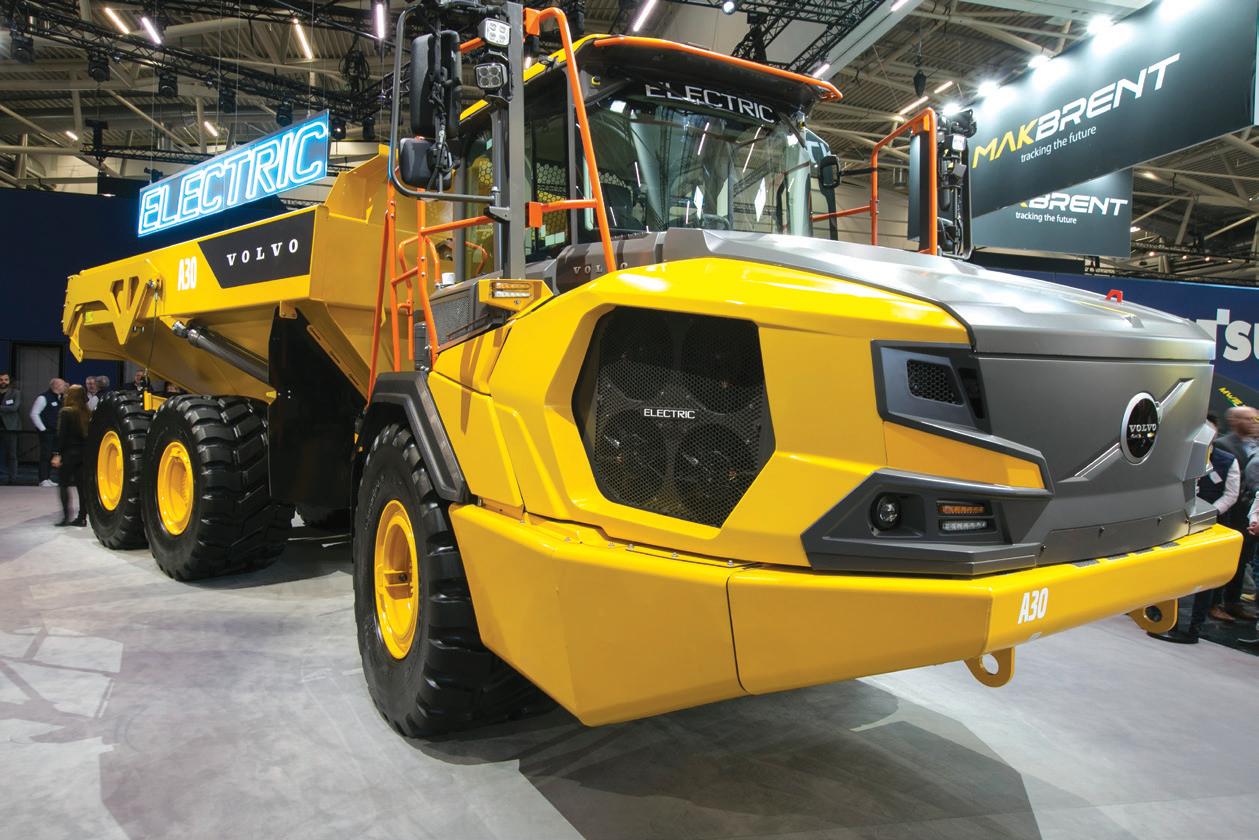



Ivan Di Federico is the new president and CEO of Topcon Positioning Systems and has strong views on how acceptance of digital technology is growing. He commented, “Digitalisation is the engine we see transforming many industries. e reason we see that is that it is possible!”
He continued that there has been a rapid acceleration in recent years in the use of technologies. Previously, digital technology and the sensors used were comparatively costly and this limited its implementation. He explained, “What has made the change is the smartphone. e huge volume of units being sold has meant that industry was able to reduce the cost of technology.”
According to Di Federico, construction processes or projects that would have been impossible before the widespread adoption of digital technologies are now becoming feasible. “ at’s the bene t you get from digital control of the project. You can anticipate trends. Now you can see if you will need extra machines while you will have early warnings if there are problems and you can also see options to x them.

on measuring the x, y and z axis and the time taken. is is what makes sense of digitalisation. All our products are designed so we don’t compromise on precise measurement. We start with a core measurement and expand on it.”
He commented that the rm’s long experience in precise measurement is helping in its journey, “We have changed the way things are done.”
Looking ahead, Di Federico believes that AI will have a profound e ect on construction, as with other industries. “AI will change work ows. It can bring an emotional attachment to the relationship with equipment. As we use AI, equipment will learn from us and correct our mistakes.”
He said that this will go beyond being a predictive tool and begin to understand the user and how the user works and will then be able to propose how work should be done. “Digitalisation becomes not just a technique but an interactive tool.”
He said that using digitalisation will help address ine ciencies in construction. “ ere is 30% waste in construction because of unforeseen problems. Digitalisation is the best weapon we have against

He said that using digitalisation will help address ine ciencies in construction. “ ere is 30% waste waste.”
Di Federico said that for the full bene ts of
digitalisation to be realised, there will have to be a change in perspective across industry as people do not typically see digitalisation in this respect. “We need to make sense of what we do in real life. We can add value to our customers. Digitalisation allows you to have a deeper control in space and time of these
need to make sense of what we do in real life. We can and unknown values.”
Meanwhile, digitalisation will also help deliver sustainability by reducing waste and increasing e ciency according to Di Federico. “We should be able to do much better determining sustainability and environmental assessments. e ability to calculate and measure things is the rst stage of
and environmental assessments. e ability to calculate and measure things is the rst stage of environmental compliance.”

“Digitalisation is the best weapon we have against waste"”
Ivan Di Federico President and CEO, Topcon Positioning Systems
Di Federico emphasised that sensors are the key and that digitalisation works best when sensors are highly accurate. “Our core technology is precision
and that digitalisation works best when sensors are highly accurate. “Our core technology is precision









Ammann is o ering a new range of pavers, with its all-electric eABG4820 model taking centre stage. Also new is the ABG5420 paver, which bene ts from a series of performance upgrades while retaining the rm’s highly e ective screed design.
e electric paver has many similarities with its diesel sister, the ABG 4820, a 2.5m-wide paver that can accommodate a screed length of up to 6.5m.
e innovative Smart Compact Pro system developed by HAMM can measure density in real time as the asphalt compactor is operating. is revolutionary technology can help boost compaction productivity and quality. It ensures that there is none of the over-compaction that leads to increased fuel consumption and time worked. It also ensures that the mat meets required density speci cations, boosting quality, without risking potential crushing of the aggregate.
e new Marini Evodryer Plus plant is said to o er customers a sophisticated plant capable of handling high percentages of up to 70% RAP in the feed, while featuring just one drum. is slots into the range between the more complex and costly parallel drum plants able to handle up to 80% RAP in the feed, and the simpler existing units with just one drum that can handle up to 60% RAP in the feed.
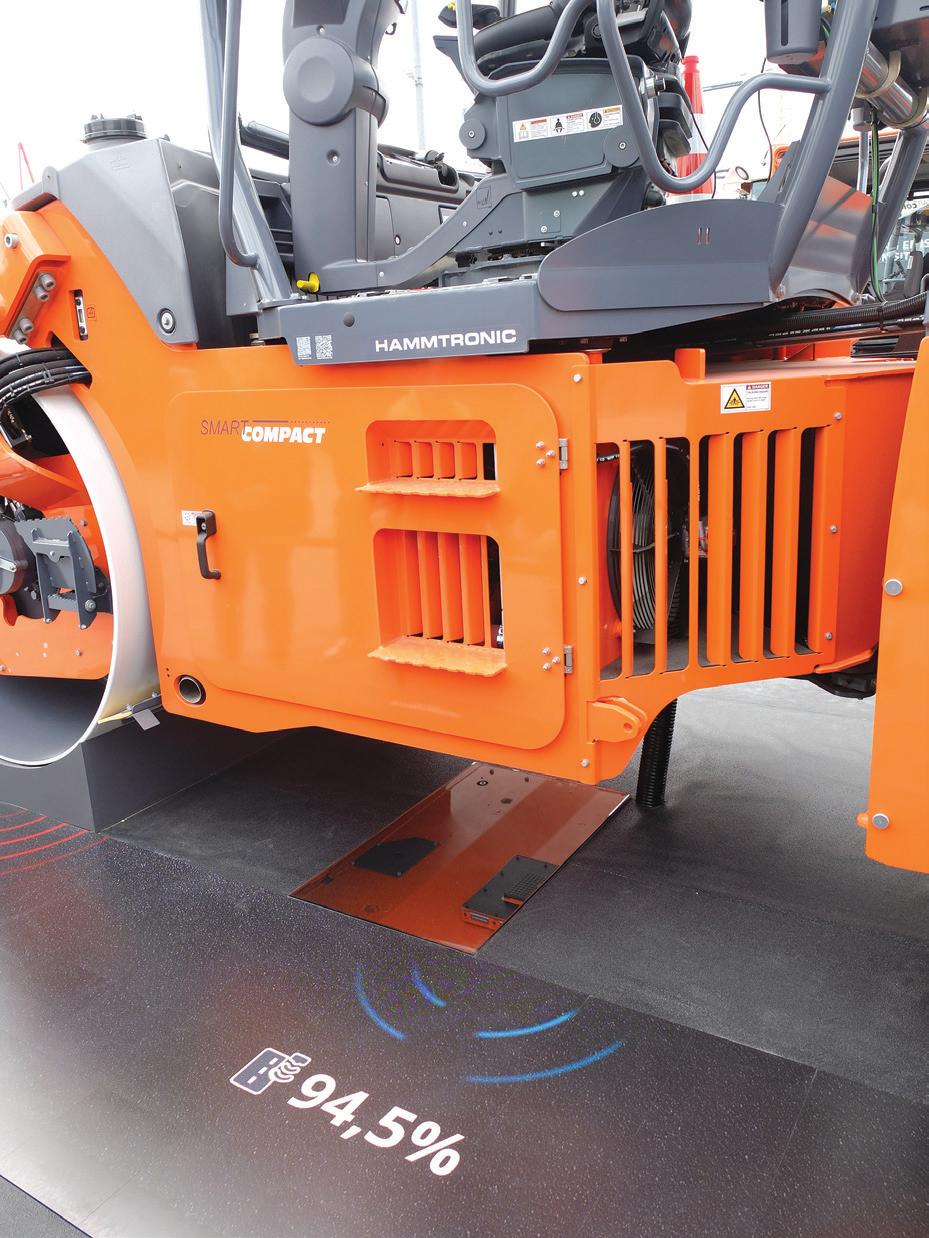
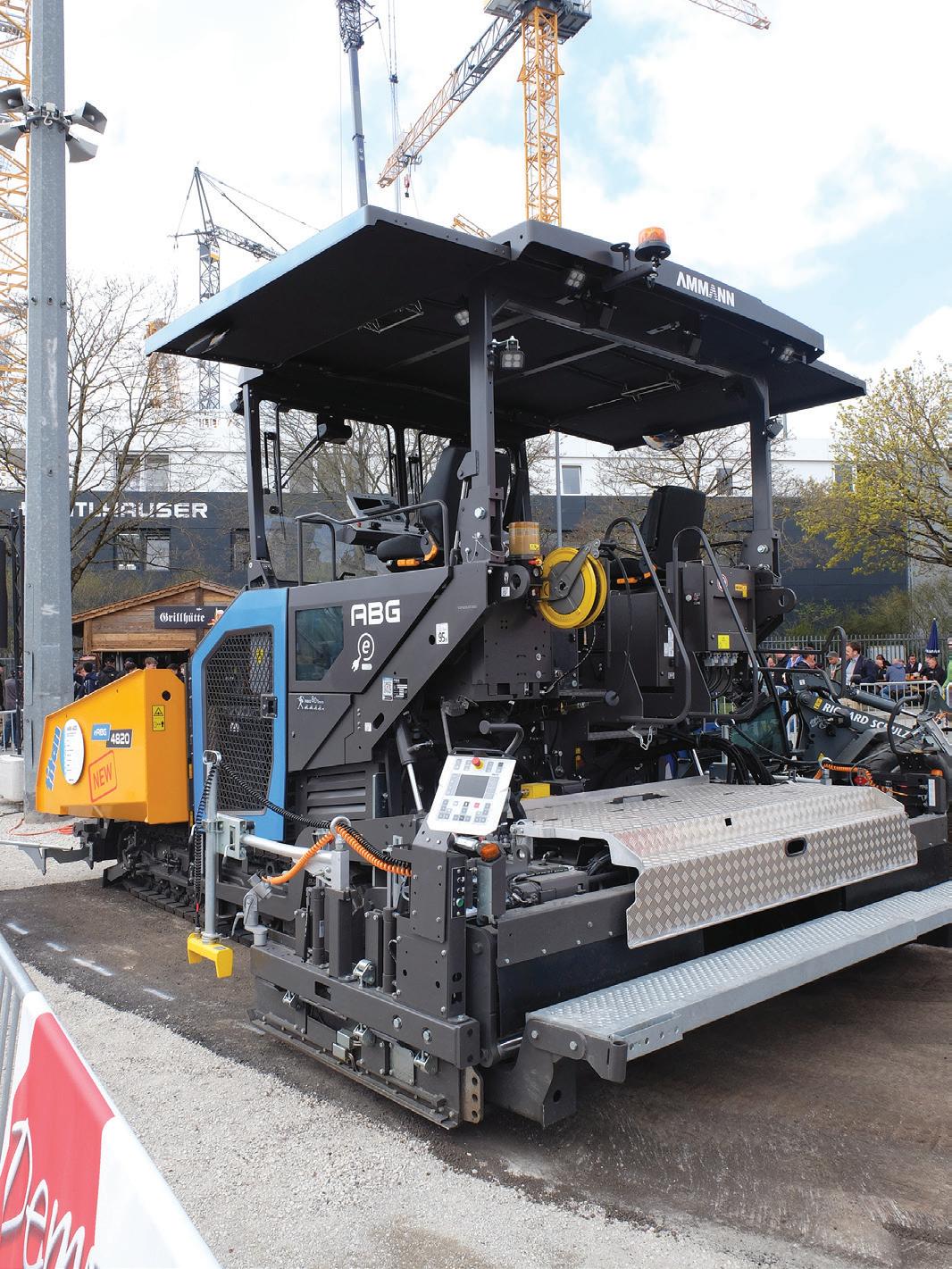
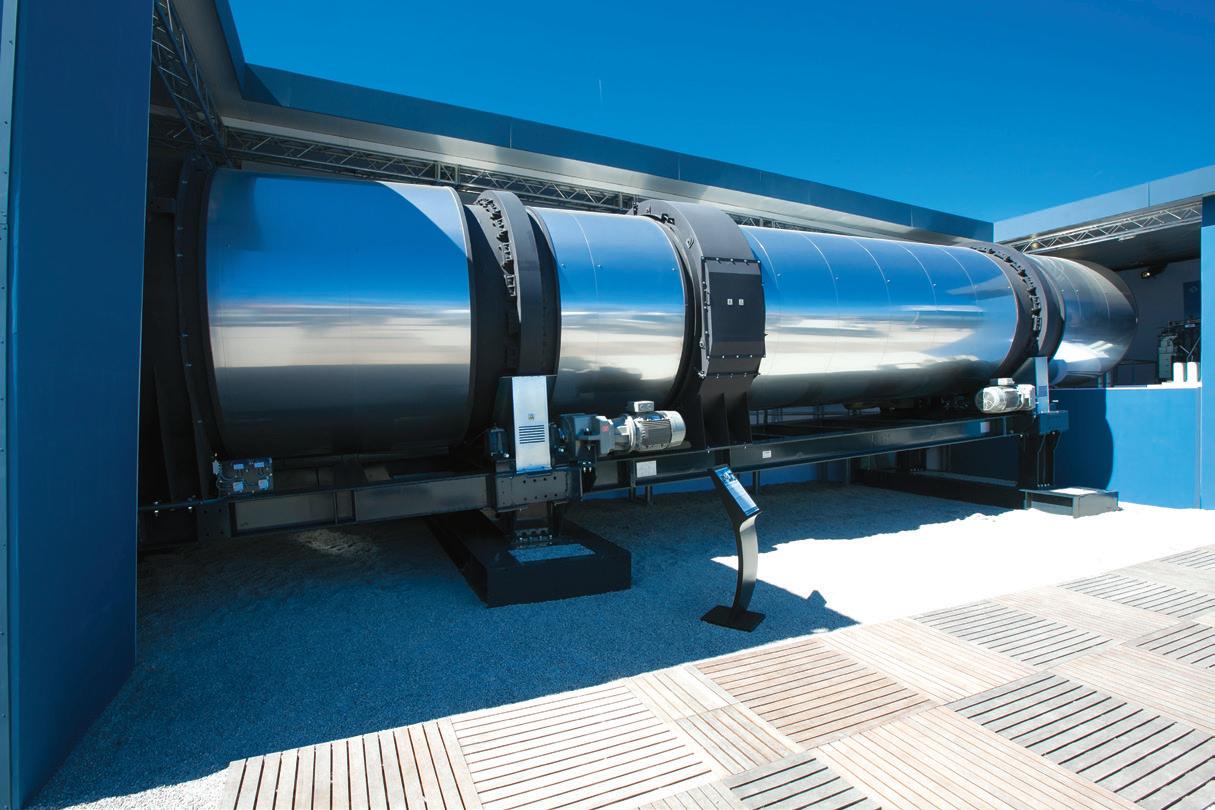
version of its successful 5700 slipformer, the 5704-D MAX, to the European market. is variant o ers high stability and extra versatility, suiting the needs of European customers. e machine is available with a 3.7m auger, 6m belt and 8.5m belt. e conveyor options can be switched quickly from left to right due to a special dual-swinging mount. End
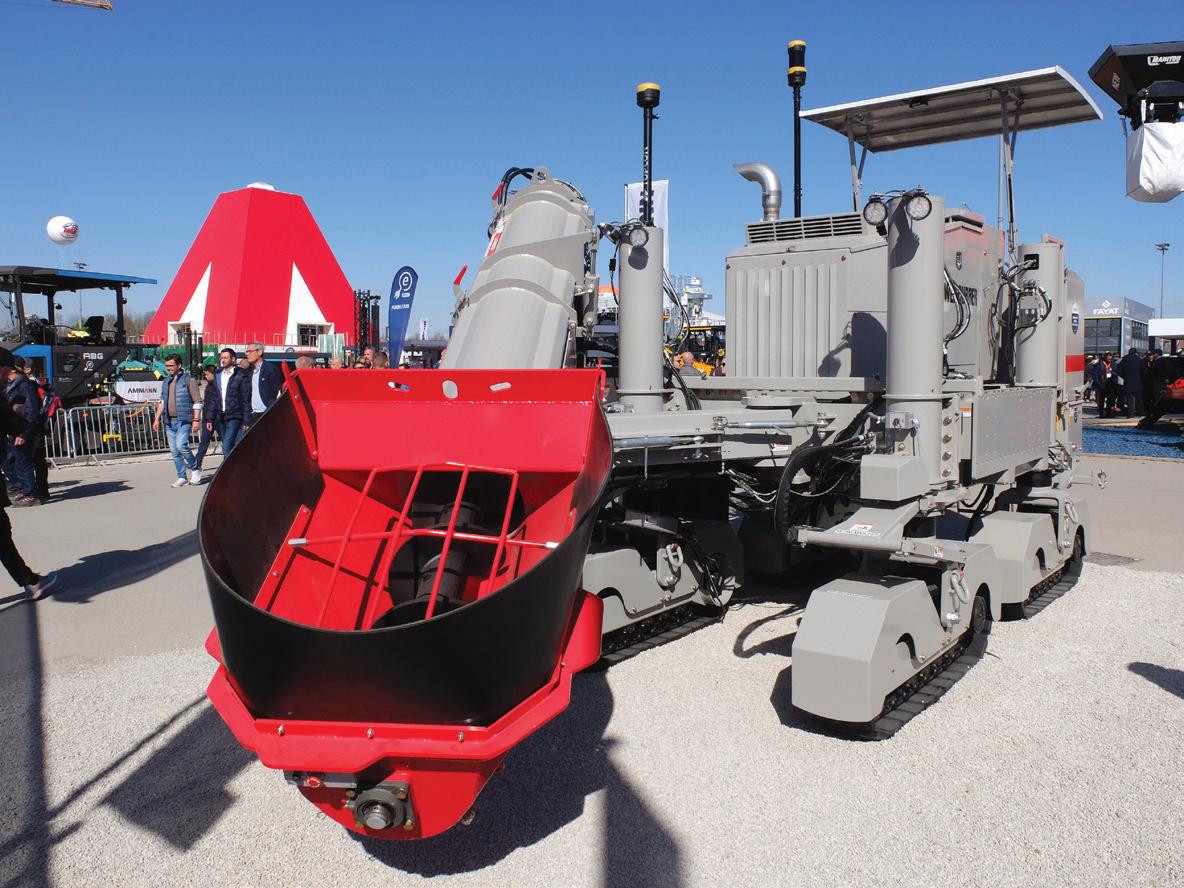
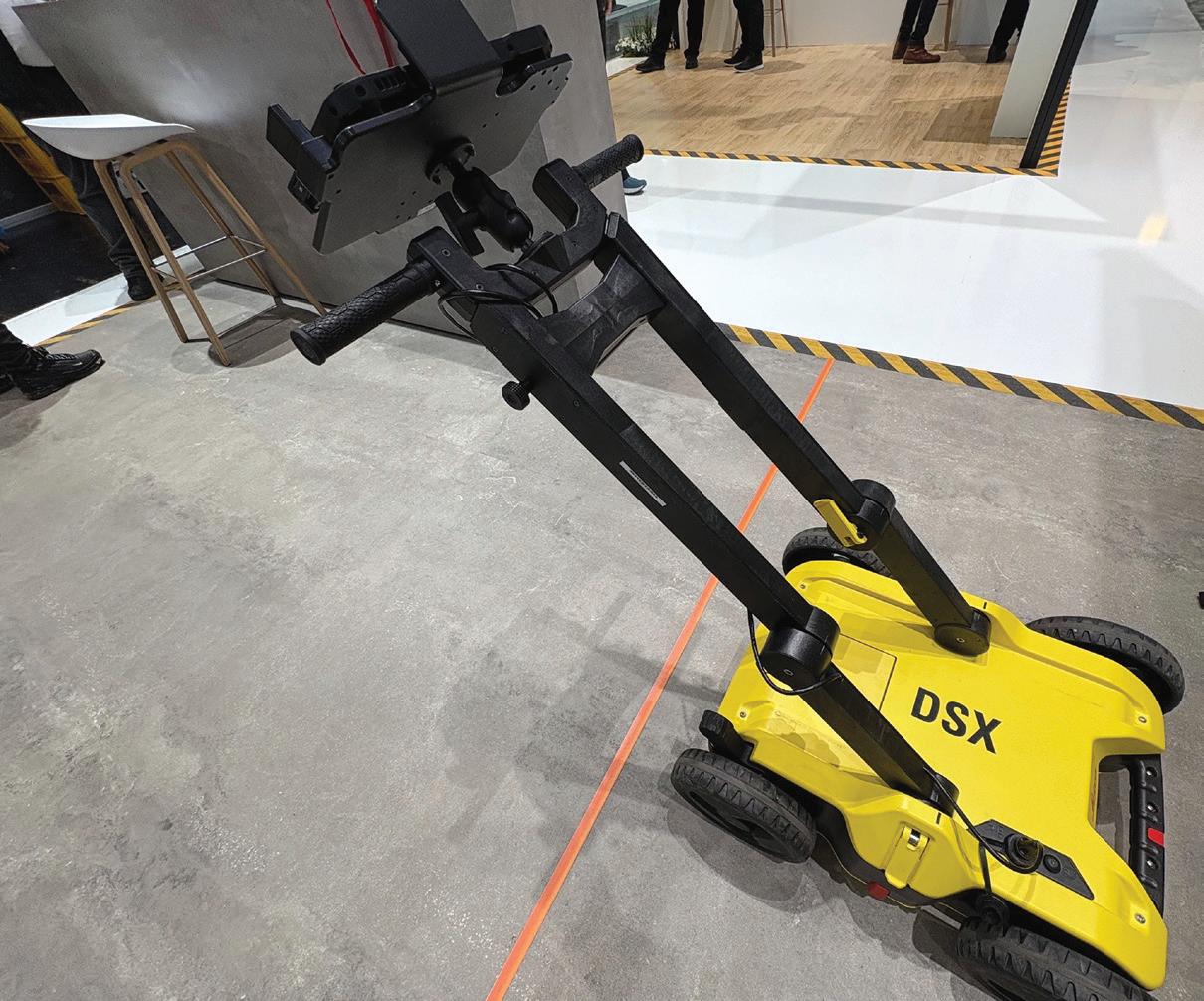

Emergency road repair work needn’t create yet another emergency by hitting unknown utility pipes and other systems.
Leica Geosystems says its DSX utility detection solution can quickly be walked over the area where work is about to start and immediately show an excavator operator any dangers that lie below.
e innovative Liebherr Remote Control System (LiReCon) system can be used on a range of machines from the rm, including crawler excavators, crawler dozers and tower cranes.
e LiReCon system consists of a state-of-the-art teleoperation stand equipped with the latest control technology. Several cameras provide real-time images from di erent perspectives, while microphones transmit the machine sounds. is comprehensive sensor technology enables machine operators to control the construction machinery from a safe distance.
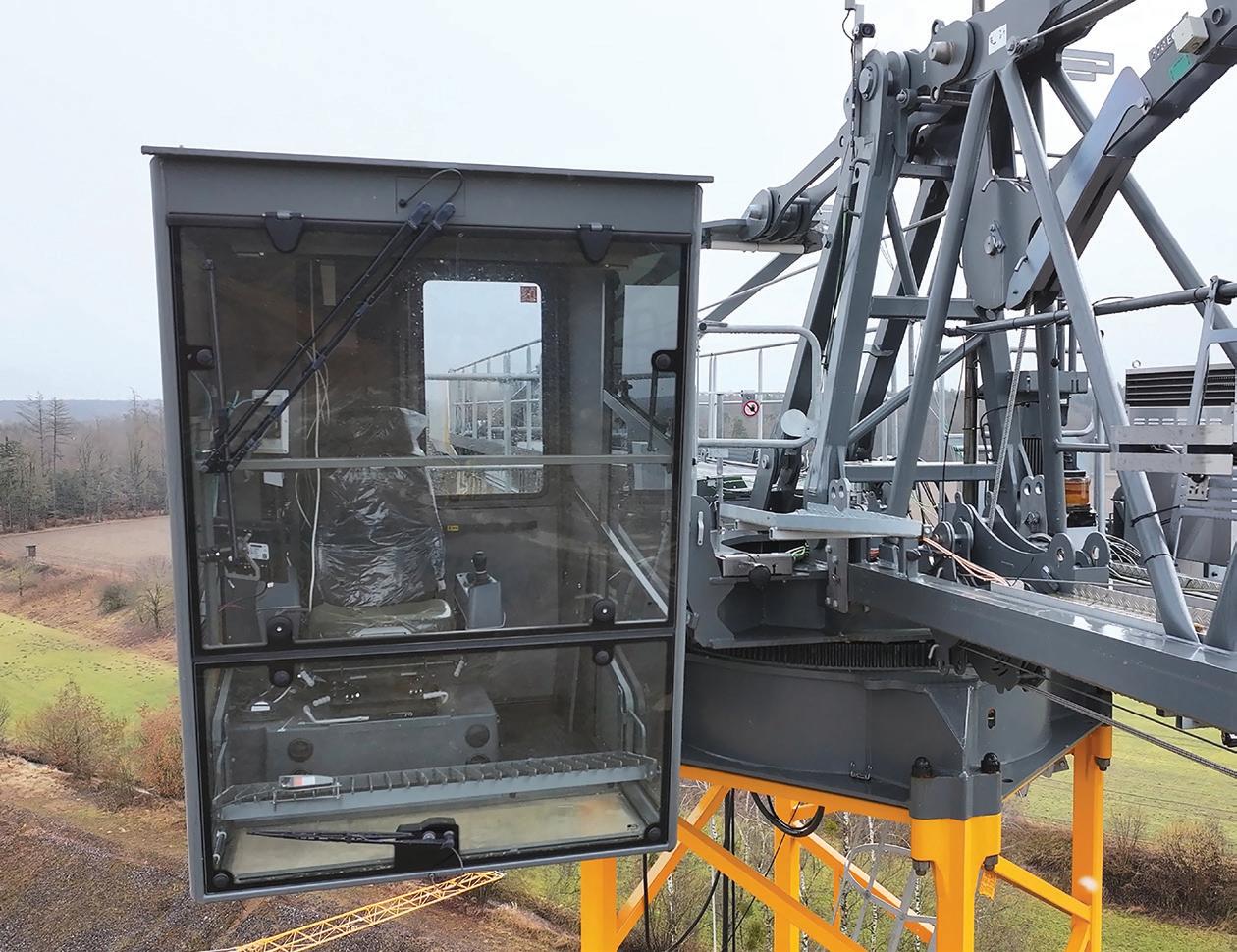
e HiPer XR, from Topcon Positioning Systems, is a robust high-precision GNSS receiver for surveying, construction and geospatial work. It delivers precision and e ciency, tackling all challenges with RTK accuracy and Dynamic TILT Compensation technology for e ortless measurements, even in di cult conditions.
Its anti-jamming capabilities ensure reliable performance, while the lightweight, rugged design withstands harsh environments.
Trimble has exhibited its advanced, remote roadbuilding technology.
e US tech giant demonstrated the system with a Vögele Super 2100-5 X tracked road paving machine.
Wagener, said the control system utilises two masts and if the road gets narrower, the width of the screed can be controlled remotely.


For all our bauma coverage and videos visit the website globalhighways.com
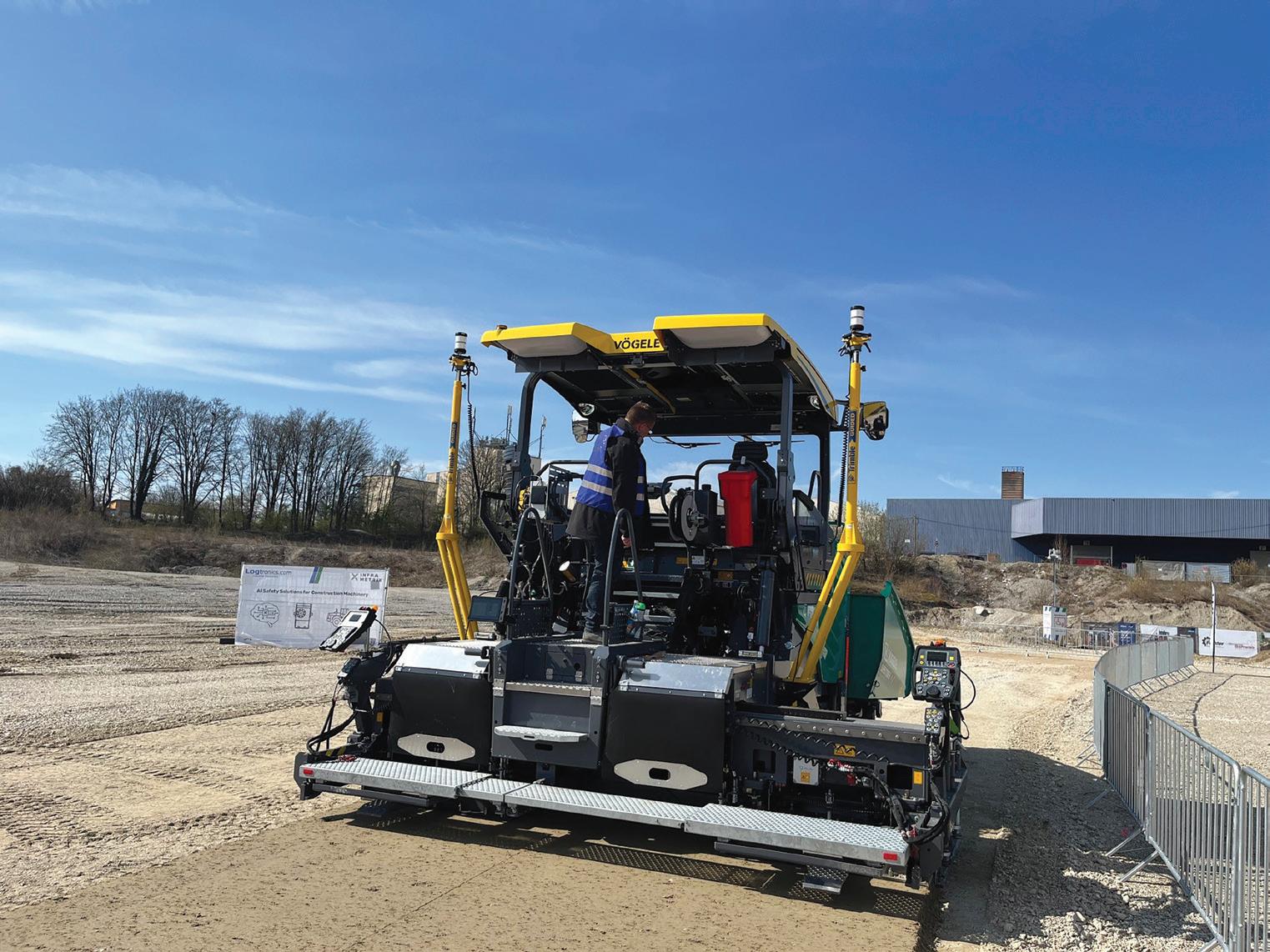
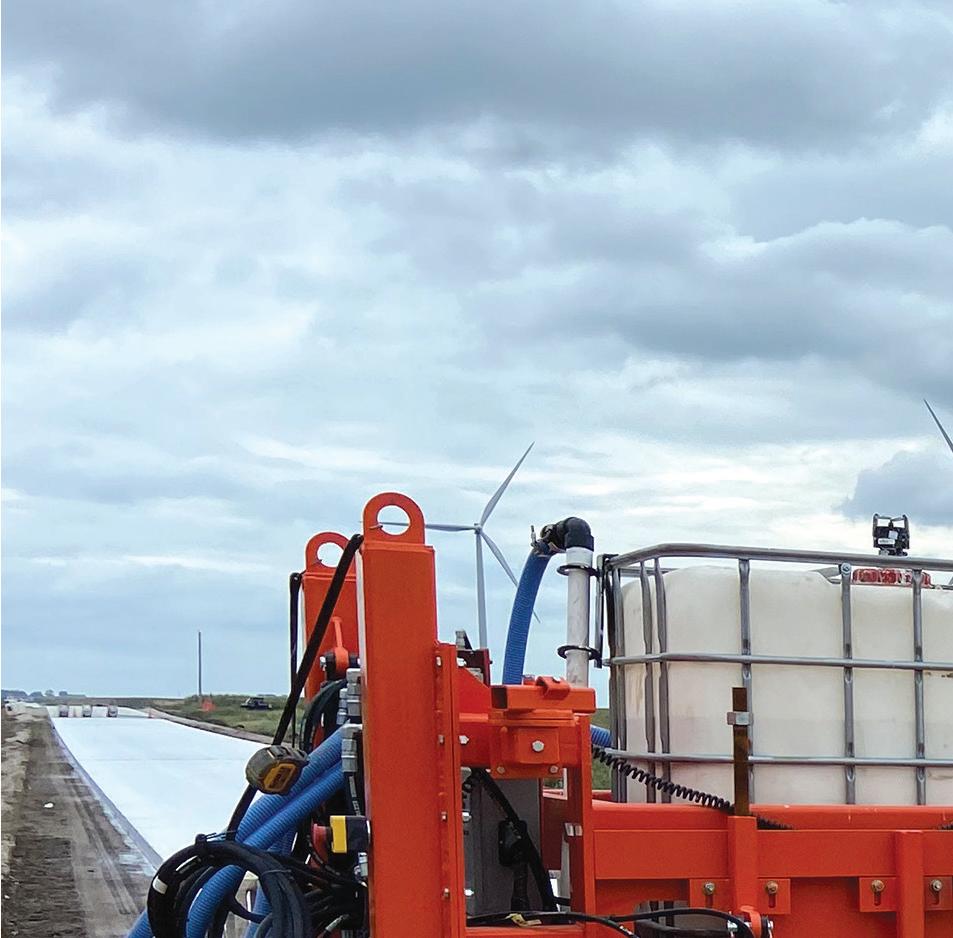
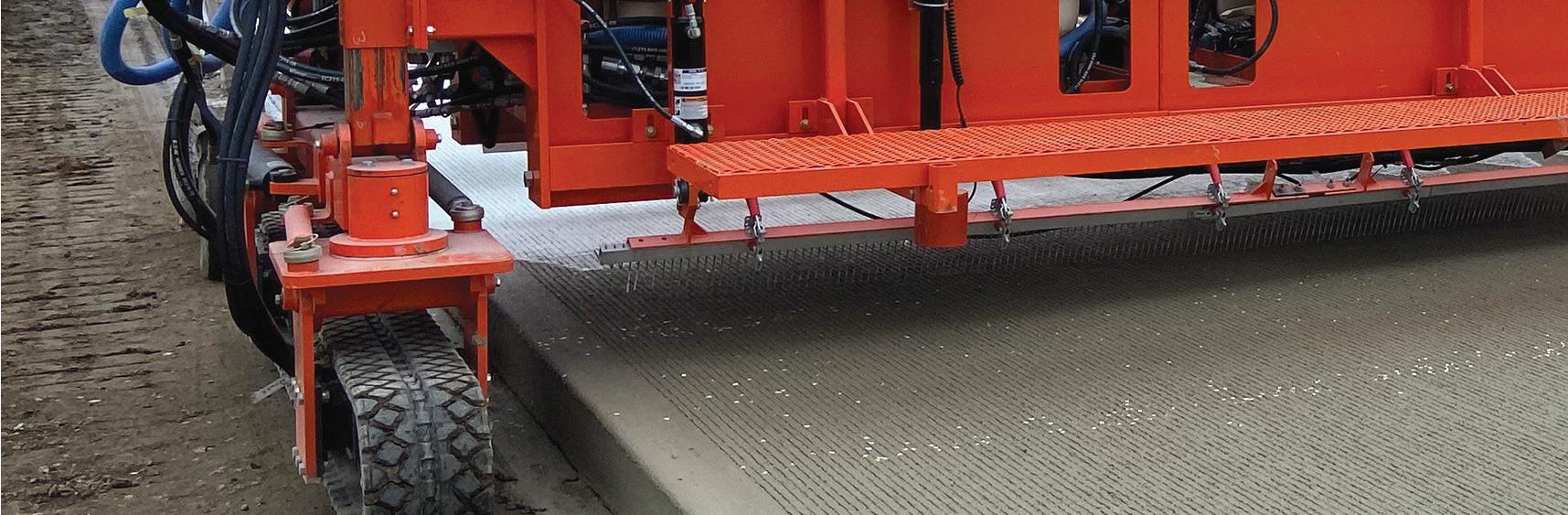

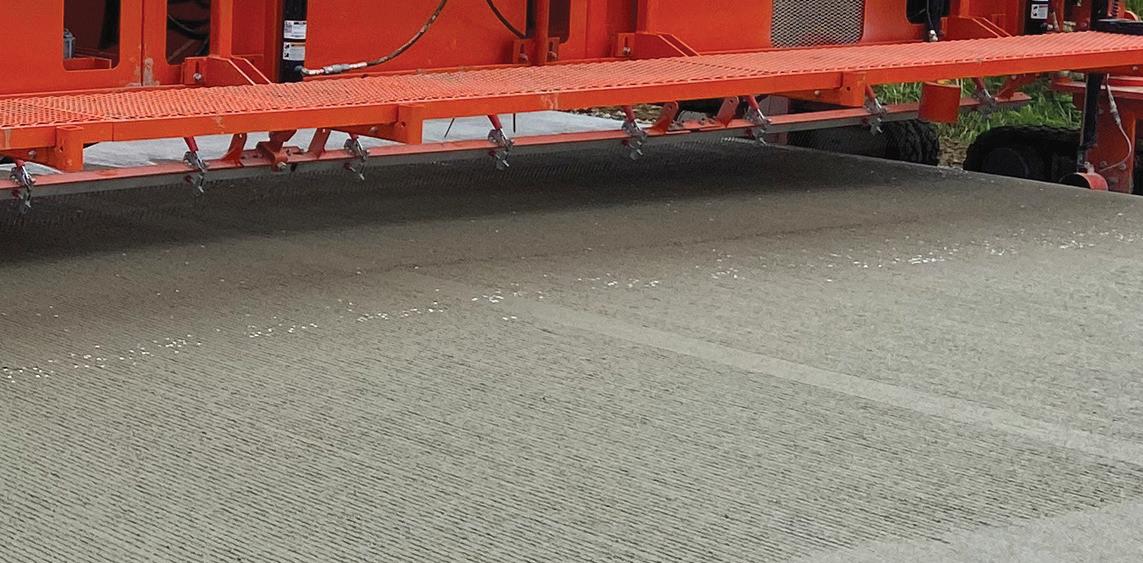
A new innovation is coming to market for texture cure applications in concrete paving from ETI Machines, based in Iowa in the US
ETI Machines says it is revolutionising the concrete paving industry with the introduction of its innovative TM-4 Machine, which features a novel texture curing add-on function.
Designed with e ciency and ease of use in mind, the TM-4 allows a single operator to manage setup, operation, and transport using a belly pack remote controller. e operation, setup and transport functions can all be managed by one person. At a time when skilled labour is both scarce and costly, ETI says that this innovation marks a signi cant step forward in paving technology.
In standard form, the TM-4 can be used for widths of 3.66-9.75m although options allow it to be used for greater widths if required. e TM-4 bene ts from a low-pro le design, eliminating the need to climb for hardware access or adjustments. Its modular frame enables quick width changes without requiring multiple machines or extensive labour, providing an adaptable solution for contractors.
Highly versatile, the TM-4 can have any option mounted where the users require. And according to ETI, the TM-4 o ers advantages over earlier generation machines as it o ers better visibility for the operator.
“ e needs were there, and designing a machine with multiple uses was the goal,” said Randy Bouillon, the developer of the TM-4. “ e rst TM-4 performed exceptionally well from the start and was successfully used across multiple widths throughout the year. Based on these results, ETI is excited to move into full production.”
As the machine is low to the ground, there is no need for an operator to climb up to access hardware and adjustments. e modular design of the machine also means that adding or removing frame sections to adjust the width is simple and straightforward.
Building on the strengths of existing machines, the TM-4 o ers a lower pro le and reduced cost while addressing a number of challenges. One key advantage
ABOVE
The ETI machine has been used successfully on a number of paving projects


is the elimination of blocked 3D signals, a common issue on previous designs, which can halt paving operations.

According to ETI, its new design functions as a hybrid between a conventional texture curing machine and a work bridge but features a stronger and more rigid frame than earlier machines. e rm says that its TM-4 features cutting-edge hydraulic systems and programming functions that are comparable to modern slipform pavers. e use of the latest electronics and diagnostics is said to ease operation and maintenance. e programming is inclusive and there is no need for expensive passwords or codes to unlock functions. Customers can buy the optional hardware and go to the display and choose the required operation. e front walkway allows easy access to the concrete surface for handwork or cleaning of the tine system brush. e rear walkway meanwhile allows access to the spray
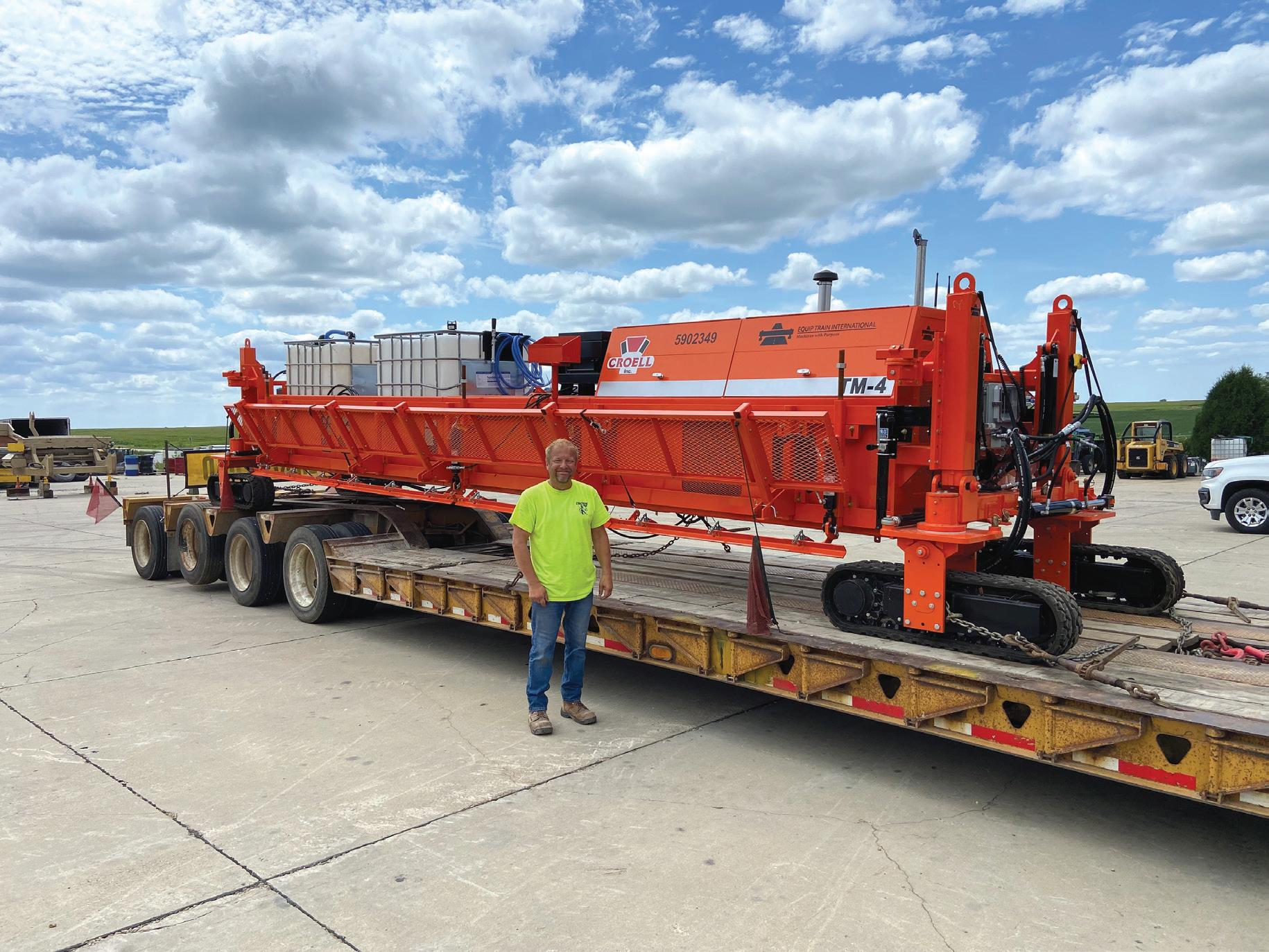
ETI has already had the machine running on rural highway overlays and interstate projects. e rst project the machine handled was for a project in Palo Alto county, IA where contractor Croell won a state concrete paving award for best county road project. e TM-4 was used on the job for an 8km stretch of 203mm-thick concrete that was 7.3m wide and also BELOW
e machine has a number of important features, which include advanced sensor compatibility that supports both stringline and sonic sensors for contactfree concrete surface interaction. ETI also says that the machine o ers e cient storage and maintenance with the frame housing the totes, allowing two when extended. at the totes are contained inside the frame instead of on top of the machine di erentiates the TM-4 from previous designs. In addition, the machine layout ensures that service points are accessible from
Versatility and manoeuvrability are said to be key features of Wirtgen’s new SP 33 concrete slipformer. is machine is available in both O set and Crosspave versions, allowing it to be con gured for a wide range of slipforming duties.
e machine is built on a modular design, boosting its versatility as users can set it up to handle a wide array of di erent slipforming applications. e machine can be used for paving monolithic concrete pro les such as kerbs and berms, rectangular pro les, concrete safety barriers up to a height of 1.3m, and drainage and gutter pro les.
When set up in the o set paving con guration, it can be used to pave concrete slabs with a pave width of up to 2.2m. But when operated in combination with a trimmer, it can even pave slabs up to 2.4m wide. e crosspave version meanwhile can pave slabs up to a width of 3m transversely in the direction of travel of the machine.
Both variants are controlled by the rm’s innovative operating system. e machine also features an ECO mode that monitors working load and parameters. is ensures automatic, load-optimised regulation of engine output for optimum e ciency and fuel economy, as well as minimising working noise. A further bene t of the machine is that it is equipped with Wirtgen’s AutoPilot 2.0. control system, which makes operation easier.
e machine has two crawler units with parallelogram swing legs at the front as well as a
Ammann is supplying a customer in the US with a European style tamper bar paver for use in RCC duties. The machine features a fixed screed allowing widths of up to 12m. However, the screed does not feature a heating system as this is not required for the RCC application.
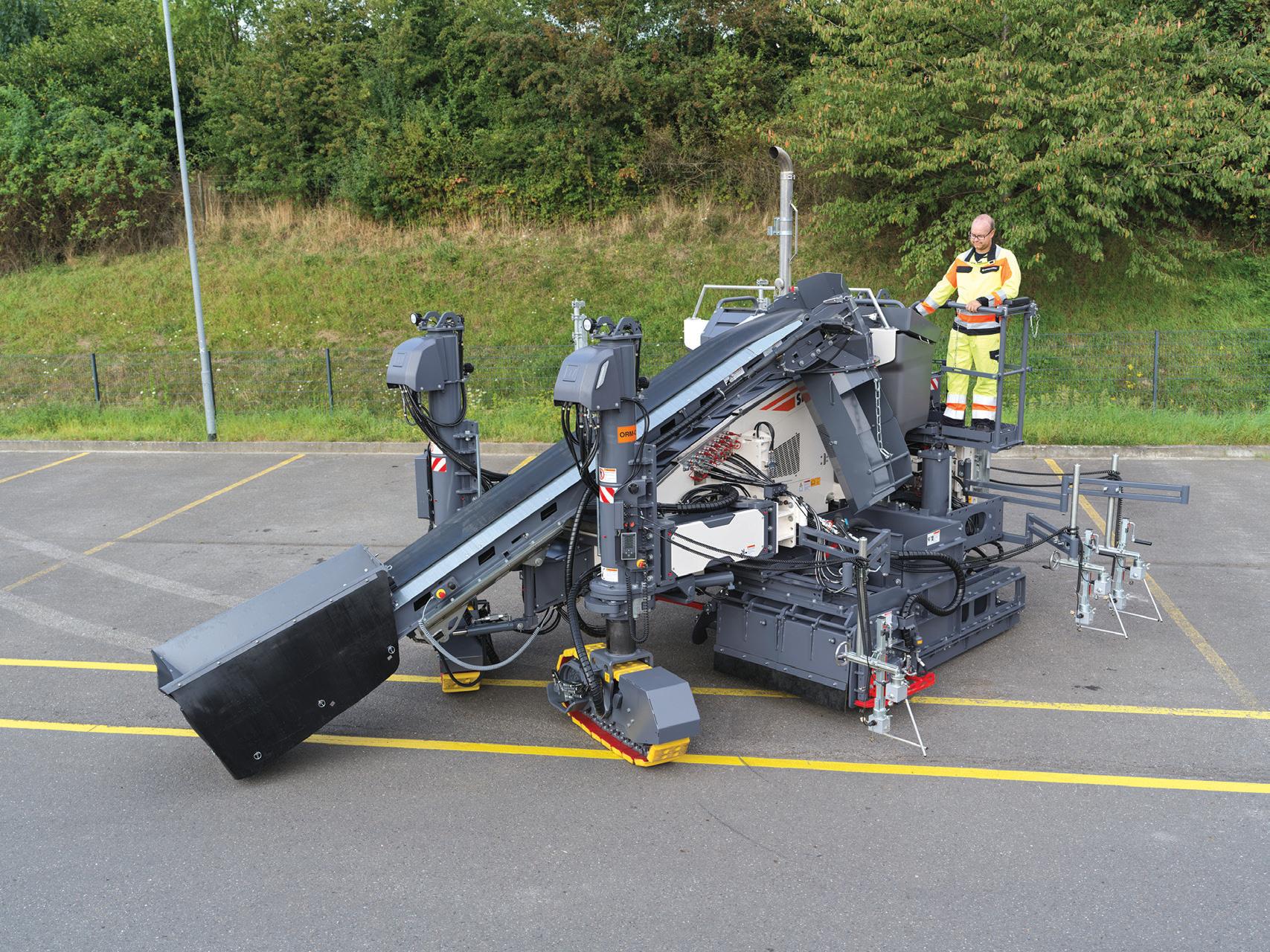
ABOVE
Wirtgen’s new SP 33 is said to o er versatility for slipforming operations
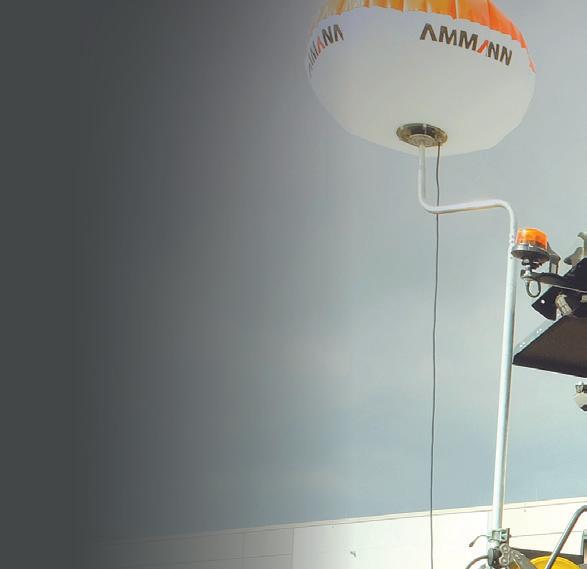
According to Ammann, the use of a tamper bar screed o ers strong potential in RCC works as the compaction the system delivers helps to ensure a quality surface and material density even before rollers are brought in to complete the compaction process.
Ammann also says that the special hardened steels used for the tamper bars on its screeds also ensures extended wear life for the RCC application, which features the use of abrasive materials.
www.ammann.com
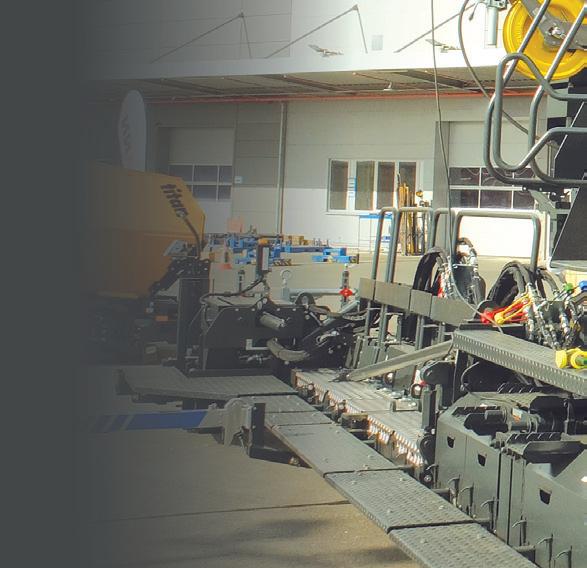
laterally adjustable crawler unit at the rear. According to Wirtgen, this allows zero-clearance installation and also ensures versatility. e crawler design is said to make the SP 33 highly suitable for use on construction sites that require a high degree of manoeuvrability as well as the ability to pave tight radii, as can be required in kerbing applications. End www.wirtgen-group.com
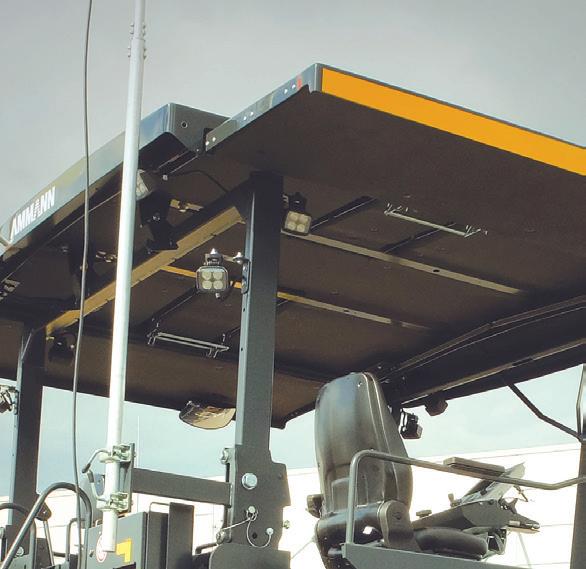
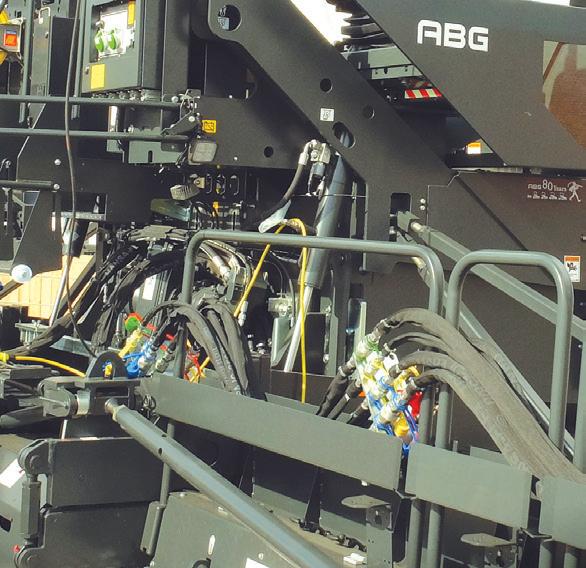
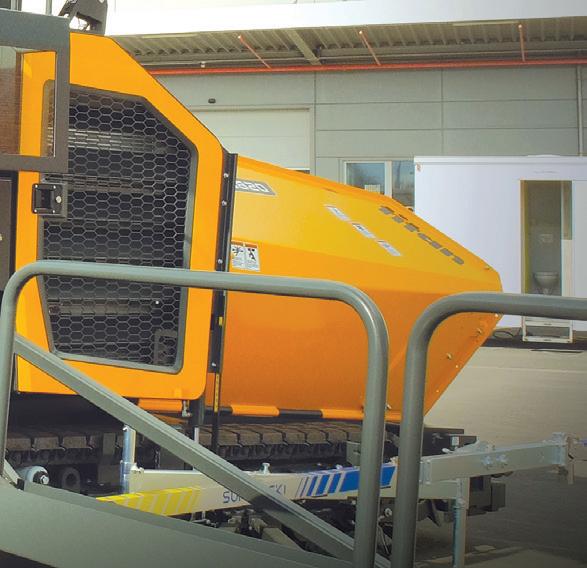
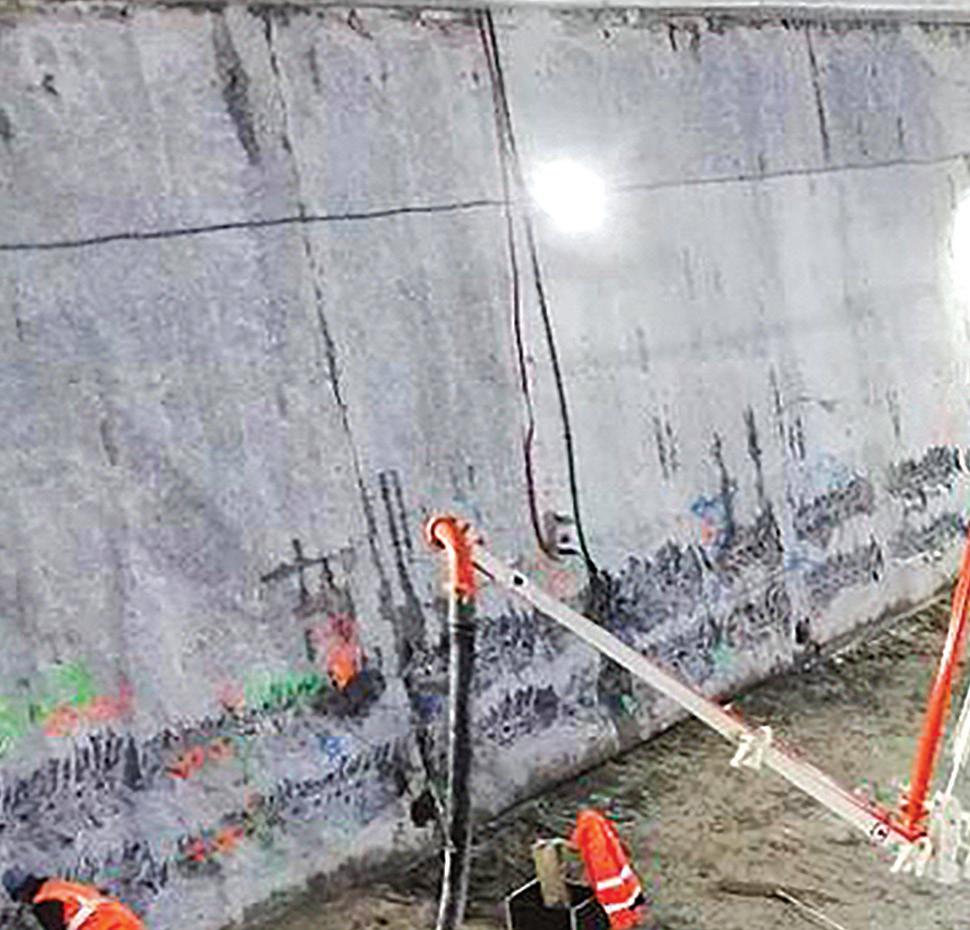
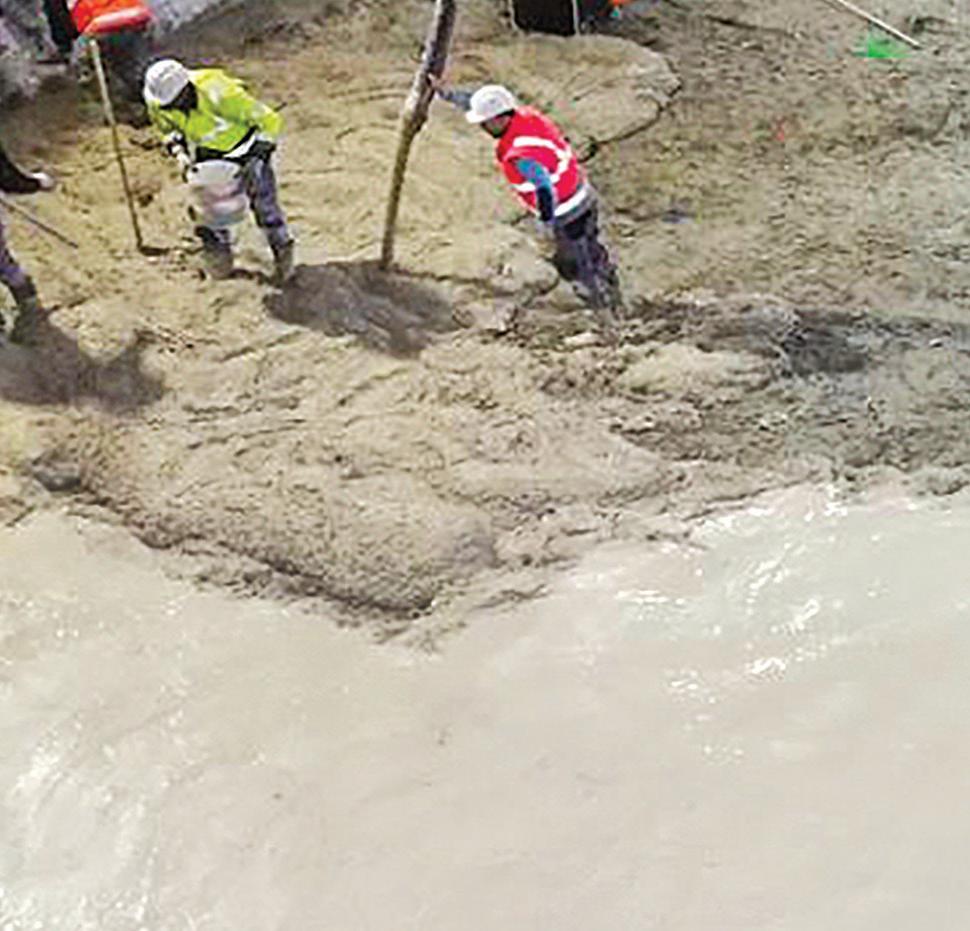
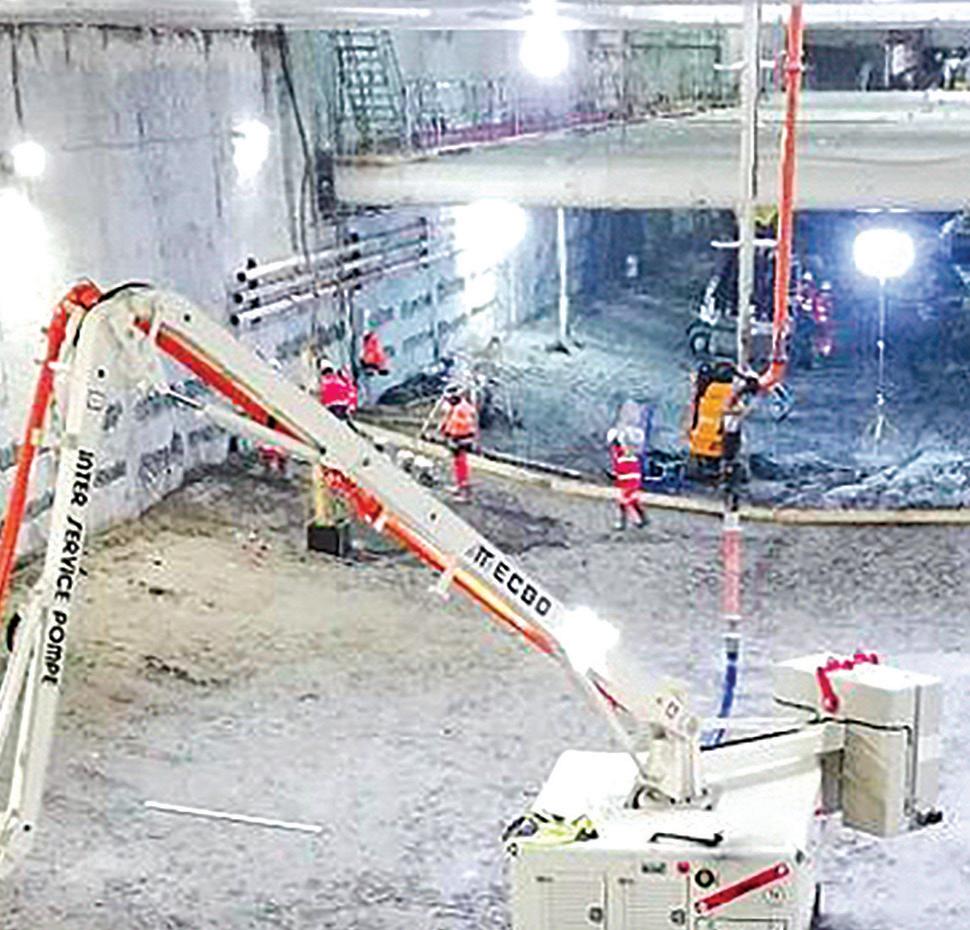

Mecbo America, a division of Blastcrete Equipment, is now introducing its Scorpion Concrete Crawler Boom. is unit suits contractors in piling, drilling, tunnelling or applications requiring a versatile arm for placing concrete where needed. e arm can be used by rms with a concrete pump needing to move material to spots that are di cult or unsafe to reach.
highway overpasses and is said to be nimble as it has no stabilisers. An operator can keep pumping concrete while the machine is moving, boosting speed and e ciency. In addition, extensions are available for customers needing a reach higher than 16m.
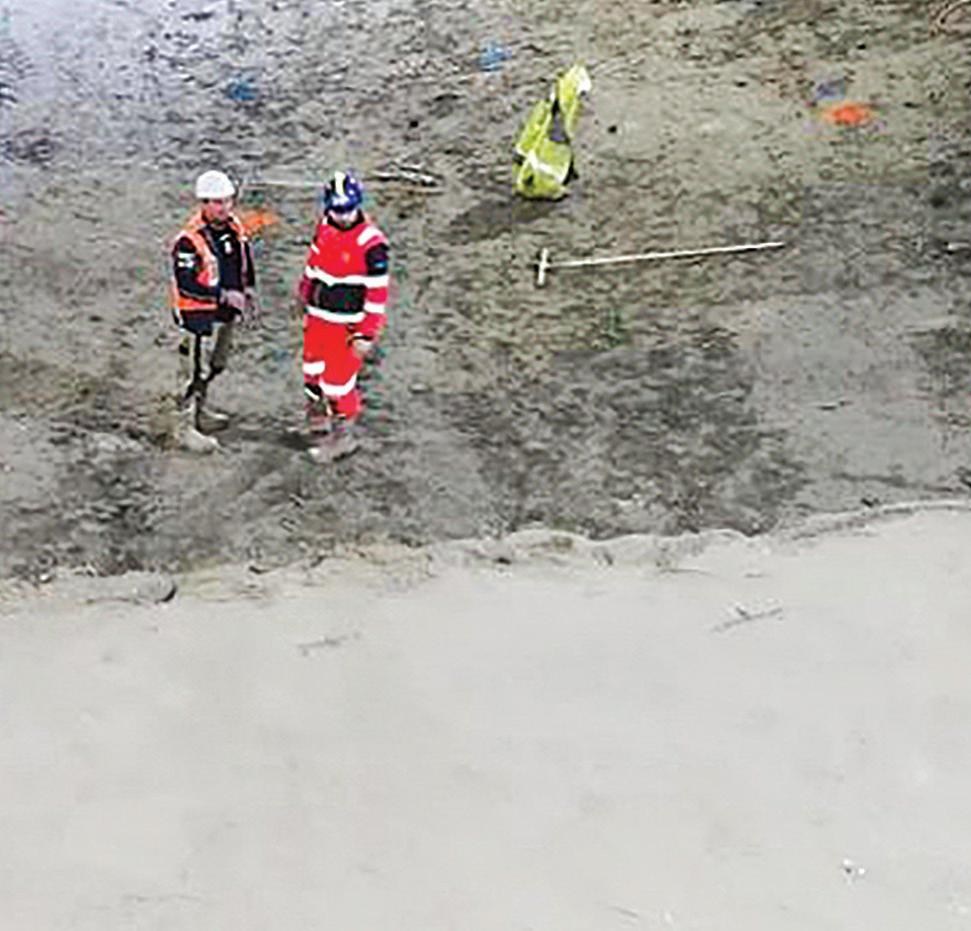
ABOVE
Mecbo now o ers a concrete boom for use in placing concrete


e 9tonne Scorpion has a reach of 16m vertically and 14m horizontally, with a rotational span of 370°. is allows operators to make just over a full turn while extending over structures and other di cultto-reach areas. e unit can be used for work on
All Scorpion Concrete Crawler Booms come with a handheld radio control to move the boom and undercarriage. Power supply selections include a 37kW electric motor or a 22kW diesel with a soundproo ng option. e arm folds up in a Z formation for transport. End www.mecboamerica.com



Meanwhile, the new K31L pump will meet market requirements for output and and 14m horizontally, with a rotational span of 370°. a 37kW electric motor or a 22kW diesel with a

concrete machines, as well as new models and solutions that simplify jobsite operations and boost safety.
Electric power is a key feature for machines being made available from CIFA in the future, with variants for the
Energya being made available that are electric. The firm is o ering a new range of truckmounted pumps with booms in the 20m segment, a new K31L truck-mounted pump with a 31m boom and a new shotcrete pump for underground operations called the Wombat.
CIFA is introducing innovative new solutions for concrete pumping and shotcreting
for safety. Sophisticated controls are said to optimise working, productivity and

In addition, the firm is o ering new options and features for machine control and operator safety.
The Wombat has been designed to o er high performance in applications such as tunnelling, while meeting the latest requirements said quality.
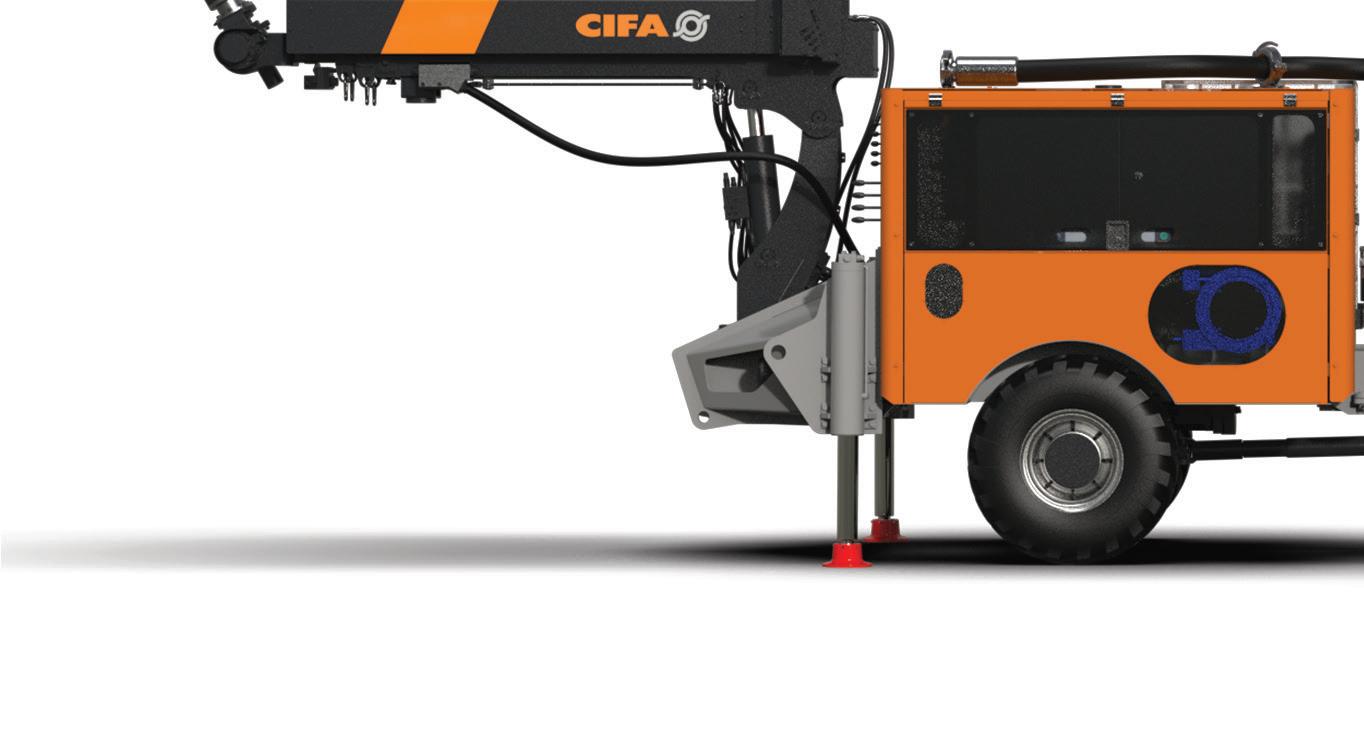

Meanwhile, the new K31L requirements performance.


High output and versatility are claimed for Liebherr’s latest Mobilmix concrete plant. e largest model in the range is equipped with a 4m³ twin-shaft mixer, delivering high production rates.
e plant features modular construction, which allows the user to suit plant con guration to the application and site dimensions.
Because the components are modular, this also optimises transport, reducing delivery times and assembly and commissioning. e modular design also ensures high parts availability.
High performance is claimed while Liebherr says that improvements in drive technology cut energy consumption by up to 30%.
Precise metering helps to boost weighing accuracy, allowing for a saving of up to 8kg of cement for every 1m3 of concrete produced, delivering signi cant gains in cost-e ciency for the user.
www.liebherr.com
Power Curbers is now o ering the latest four-track version of its successful 5700 slipformer, the 5704-D MAX to the European market. This variant o ers high stability and extra versatility, suiting the needs of European customers. The machine is available with a 3.7m auger, 6m belt and 8.5m belt. The conveyor options can be switched quickly from le to right due to a special dual-swinging mount. Transport is eased for the 8.5m conveyor option as it can be folded when required.








The latest version of the standard 5700-D still o ers a compact size, simple design, easy operation, and high productivity for kerb and gutter, pedestrian walkways, barriers, ditches, paving and tunnels.

Meanwhile, the firm has developed a Virtual Showroom for the SF-3404 paver from sister firm Power Pavers. This o ers a virtual reality experience, allowing users to virtually stand on the operator’s platform, view the machine’s controls, and operate the Dowel Bar Inserter. www.powercurbers.com
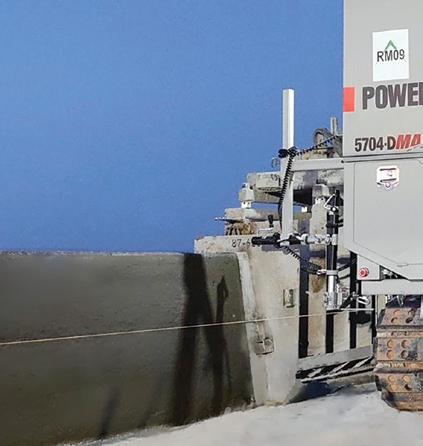

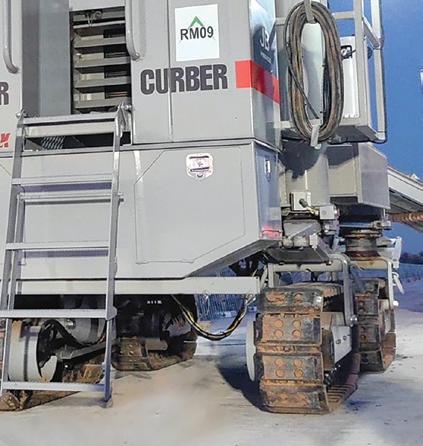

The new CBS Elba Concrete-Mixing Plant from the Ammann Group is a stationary unit that is said to o er high performance, versatility and sustainability. Engineered for medium- to high-capacity applications, it delivers exceptional results, producing up to 200m3 of compacted fresh concrete/hour. Its modular design ensures adaptability to diverse customer needs, making it the perfect choice for ready-mix and other demanding concrete applications. With advanced aggregate storage options, such as high-raised enclosed chambers for superior environmental protection, it is said to set a new standard in eco-friendly and e icient concrete production. Engineered for long-term durability and tailored to adapt to evolving industry needs, the plant is a future-proof solution for modern concrete applications. www.ammann.com

Extended reach excavators o ers versatility for demolition works, with new models now available - Mike Woof writes
The long reach excavator has become a well-used machine concept for demolition works over the last 20 years. ese have largely replaced the old fashioned crawler excavator tted with a heavy steel ball. Training is crucial for the safe use of long reach machines, with simulator systems available that can provide operators with the necessary skills away from the working site.
Long reach excavators allow more controlled demolition works when tted with attachments such as cutters, breakers or pulverisers. Tilting cabs and camera equipment ensure that operators can see the working area, even when the attachment is at maximum height.
Several key manufacturers are introducing new or improved long reach machines aimed at demolition duties. All of these share features such as ruggedised structures and extra protection for the operator as well as hydraulic systems.
Caterpillar is expanding its range of ultra-high demolition (UHD) excavators with the introduction of the new 330 UHD model. Standard features for the 330 UHD include the Stability Monitoring System with
light and sound indicators in the cab on the ultra-high front, as well as the Cat Payload and Cat Grade Control with 2D packages. As with other UHD machines in the Cat range, the new model bene ts from heavy-duty cab protection as well as a tiltable cab, providing a better view of the working area.
Also joining Caterpillar’s line-up for the UHD range is the introduction of the Variable Angle Boom option on the 340 VAB, which is designed to cope with demanding demolition sites.
From Develon comes a broader Special Application demolition excavator range with the addition of the new 22.5tonne DX140RDM-7. is new machine shares features with the rm’s three larger demolition models, which range in weight from 31-71tonnes.
Versatility is a key feature of the DX140RDM-7, which is said to o er multiple con gurations. e machine can handle a 1.5tonne attachment at 16m, while its hydraulically-adjustable undercarriage allows stability when working at height, as well as ease of transport between sites.
HİDROMEK is introducing two excavators that have been adapted for demolition work. e rm says that these models have been ruggedised to cope with demolition work. e largest of these machines will o er a maximum reach of around 24m while the smaller unit has a maximum reach of around 13m with its 7.7m boom and 3.3m arm.
Both machines are claimed to have superior performance for demolition sites and feature reinforced cabs and windshield protection.
Special application machines for demolition are produced in Germany by KTEG, a joint venture between Hitachi and Kiesel Technology. ese include the KTEG 390HR, which is based on a Hitachi ZX350, and equipped with an extendable undercarriage, additional counterweight and tiltable demolition cab.
e xed-mounted 23m high-reach boom allows an attachment weight of 3.5tonnes.
ABOVE
Caterpillar is extending its range of demolition machines with the introduction of the 330 UHD model
e versatile multi-carrier KMC400P can be equipped with various fronts including high-reach demolition, super long front, tele-dipper, earthmoving or crane application units. e Boom Quick Connect system allows a boom change within minutes out of the cab. A robust and durable design, it can handle a range of jobs on demolition environments.
e largest special application machine is the 180tonne KMC1200S, which suits large and challenging projects. It can handle a 3tonne attachment at 51m, 5tonnes at 44m or 15tonnes at 28m. A new main frame and slew ring provide heavyduty design for durability and reliability.
Komatsu now o ers the long reach PC390HRD-11 excavator, developed specially for demolition work. A key feature of the machine is the quick changeover of its K100 boom system. e tilting cab o ers high visibility, as well as additional protection measures to cope with the tough demolition application.
For the latest news, extended features and videos visit the website globalhighways.com
Power comes from a Stage V compliant diesel rated at 202kW and the machine can weigh from 45.75-61.8tonnes, depending on the speci cation being used. For medium reach demolition tasks, the machine can handle a 4tonne attachment, with a maximum attachment weight of 3.35tonnes for high reach work and 2.5tonnes for extended reach working.
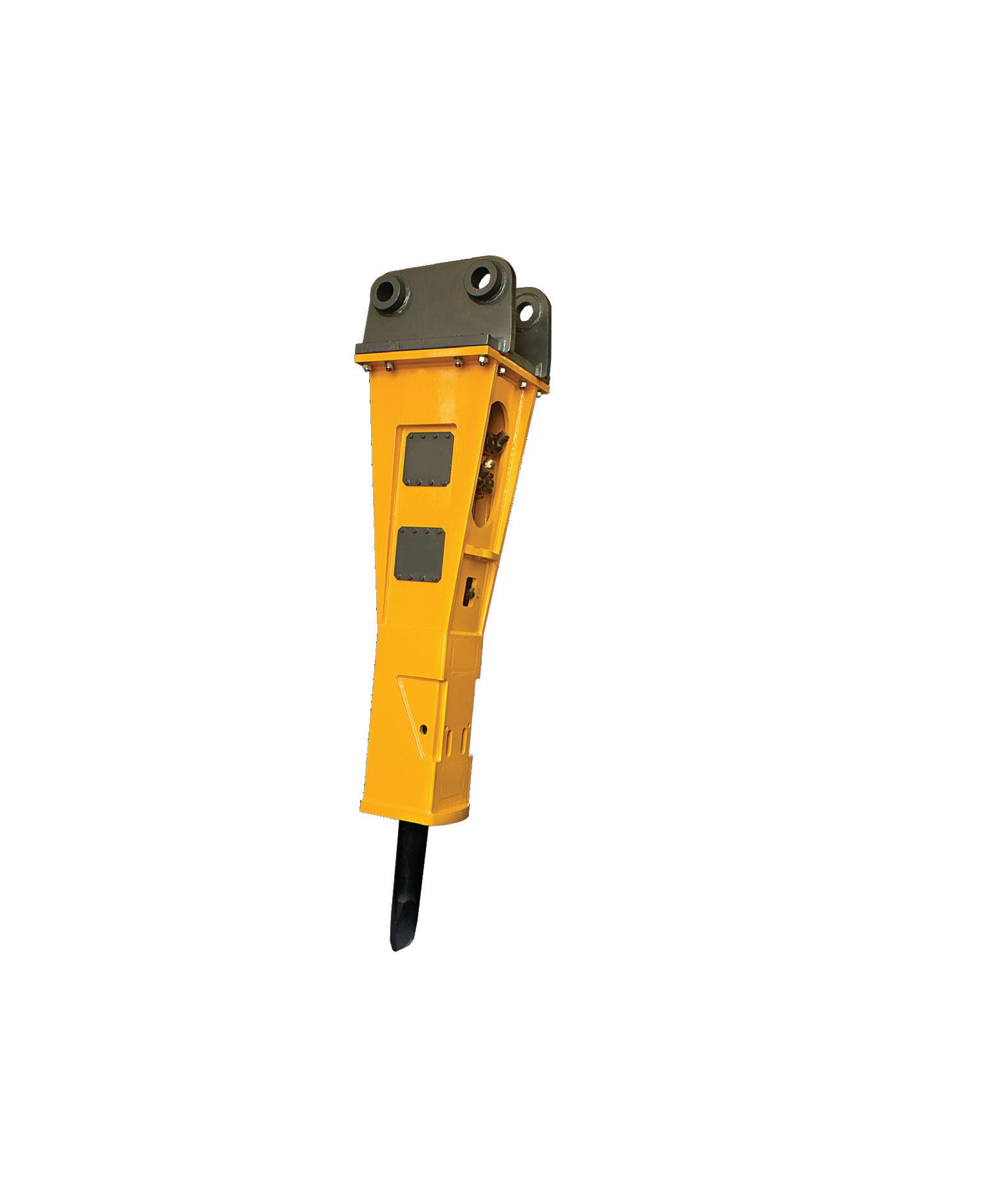
Other innovations from Komatsu are the K100 simulator package and three new demolition attachments. The simulator is based on the Komatsu PC490HRD excavator and features the firm’s novel K100 boom change system.
Developed by Oryx Simulations in close collaboration with Komatsu UK as well as expert operators, this simulator replicates the patented K100 technology with high accuracy.
The K100 Human Machine Interface (HMI) allows the operator to perform all boom change procedures. Three different booms in multiple configurations as well as specific scenarios for demolition work are designed and integrated in the simulator. The extra top screen is said to give a realistic view when working with the high reach or extended high reach configuration.
The digital recreation of machine environment offers a safe, convenient, and cost-effective training solution for demolition operators. Following the Komatsu step-by-step training approach, the demolition excavator simulator module guides the operator through the boom change process and demonstrates how to use the integrated K100 HMI system.
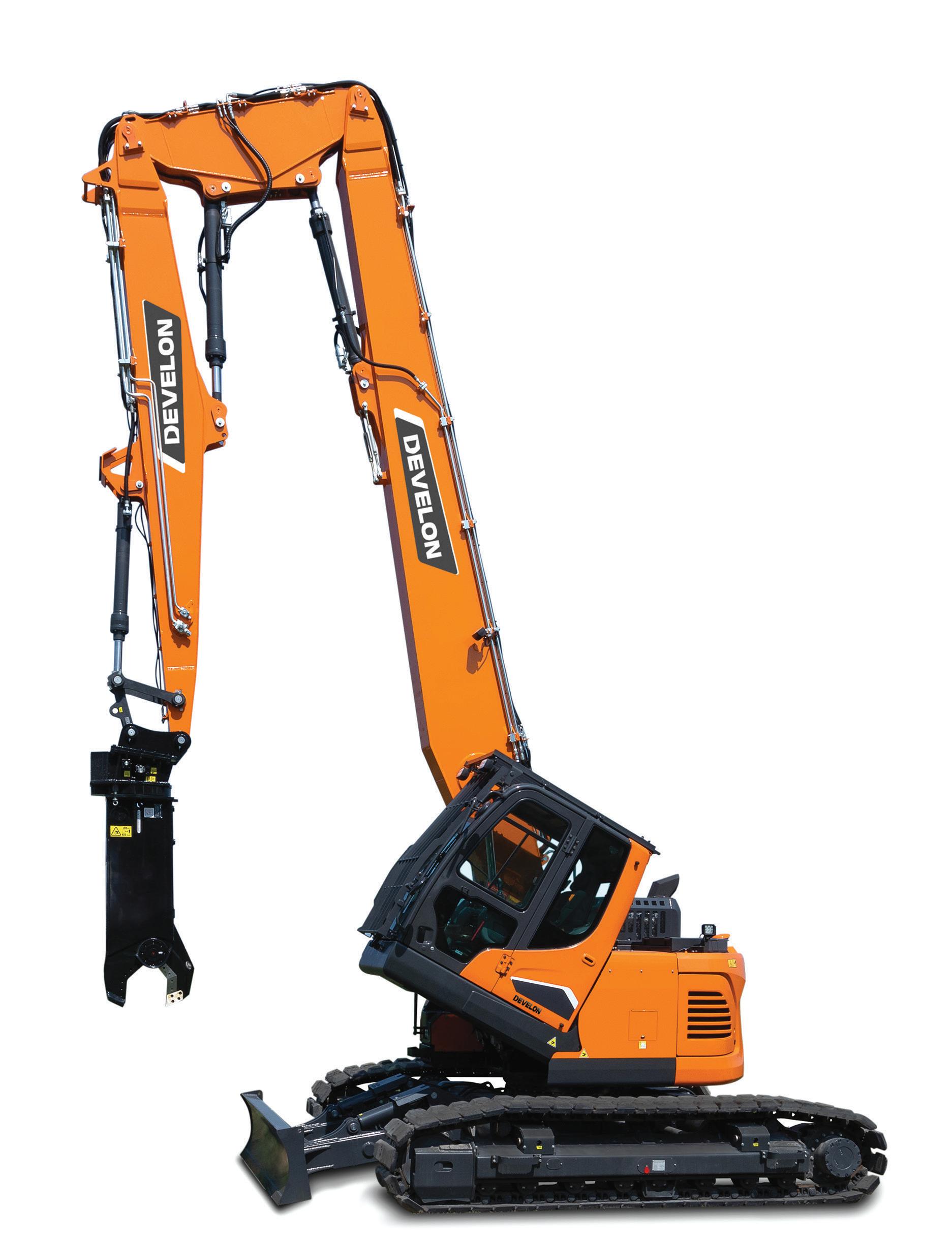
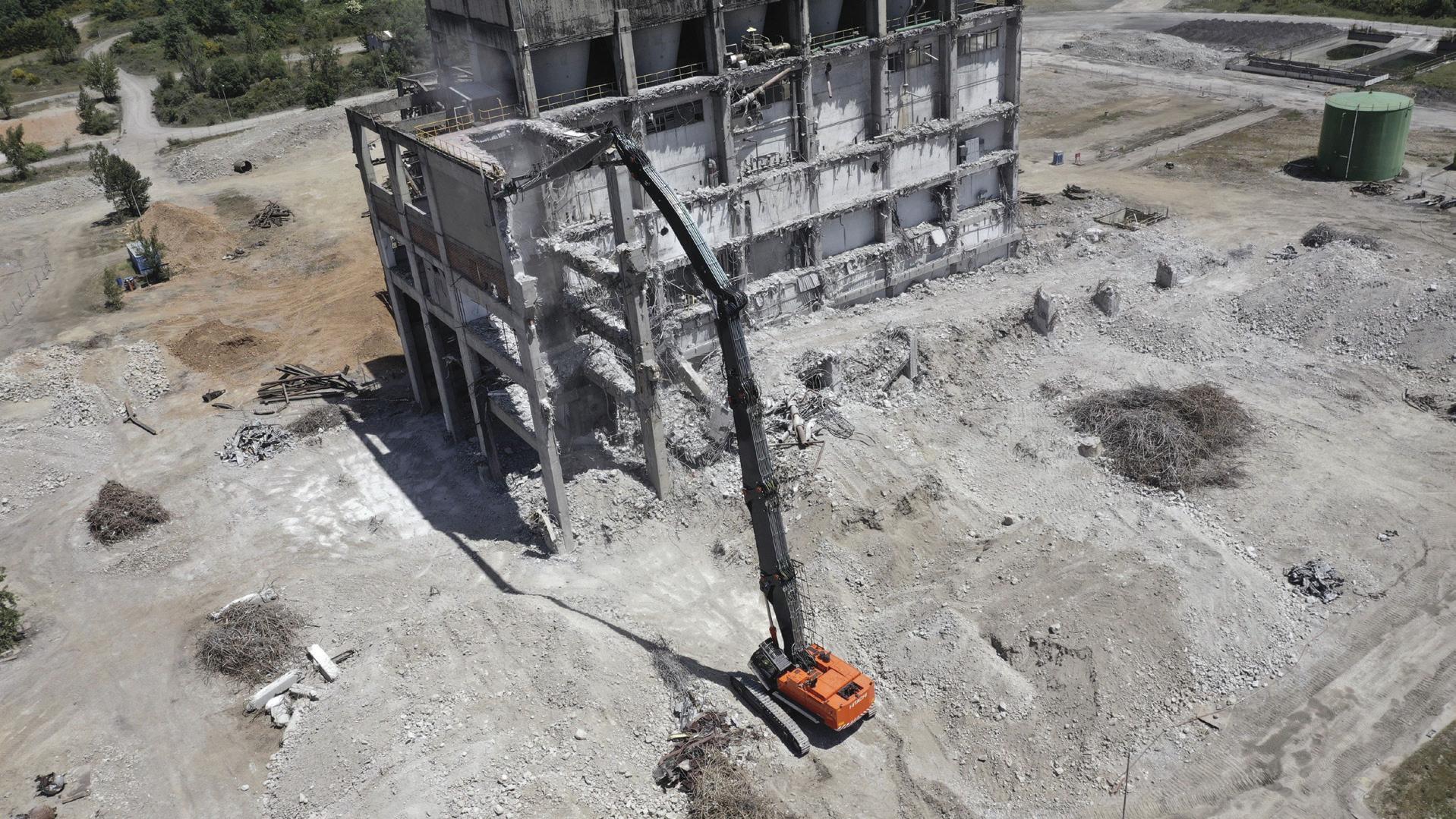
With simulated camera feeds and sensor simulation, the operator can practice changing the boom configuration in a realistic environment without danger. A total of nine different training scenarios featuring multiple tools and boom configurations are designed to simulate real-life jobsite situations in full motion, allowing operational techniques and skills to be learned, refined, and improved.
The firm is also broadening its attachment range with the addition of a new static pulveriser, rotating pulveriser and demolition crusher. The new demolition attachments are said to be highly efficient, offering performance and reliability. Short cycle times are achieved by large hydraulic components that maximise oil flow as well as a novel speed valve. High strength and wear resistance ensure long life through the use of Strenx 960 for the structure, Hardox for protection plates and alu-bronze bushings on the main hinge. End www.cat.com www.eu.develon-ce.com www.hidromek.com.tr www.hitachicm.com.eu www.komatsu.com
ABOVE
Hitachi’s powerful KMC1200S offers ultra-high reach for demolition jobs and has been developed in partnership with KTEG in Germany
LEFT
Develon’s DX140RDM-7 offers versatility for the tough demolition application
BELOW
Komatsu’s sophisticated demolition simulator allows operator training in a safe environment
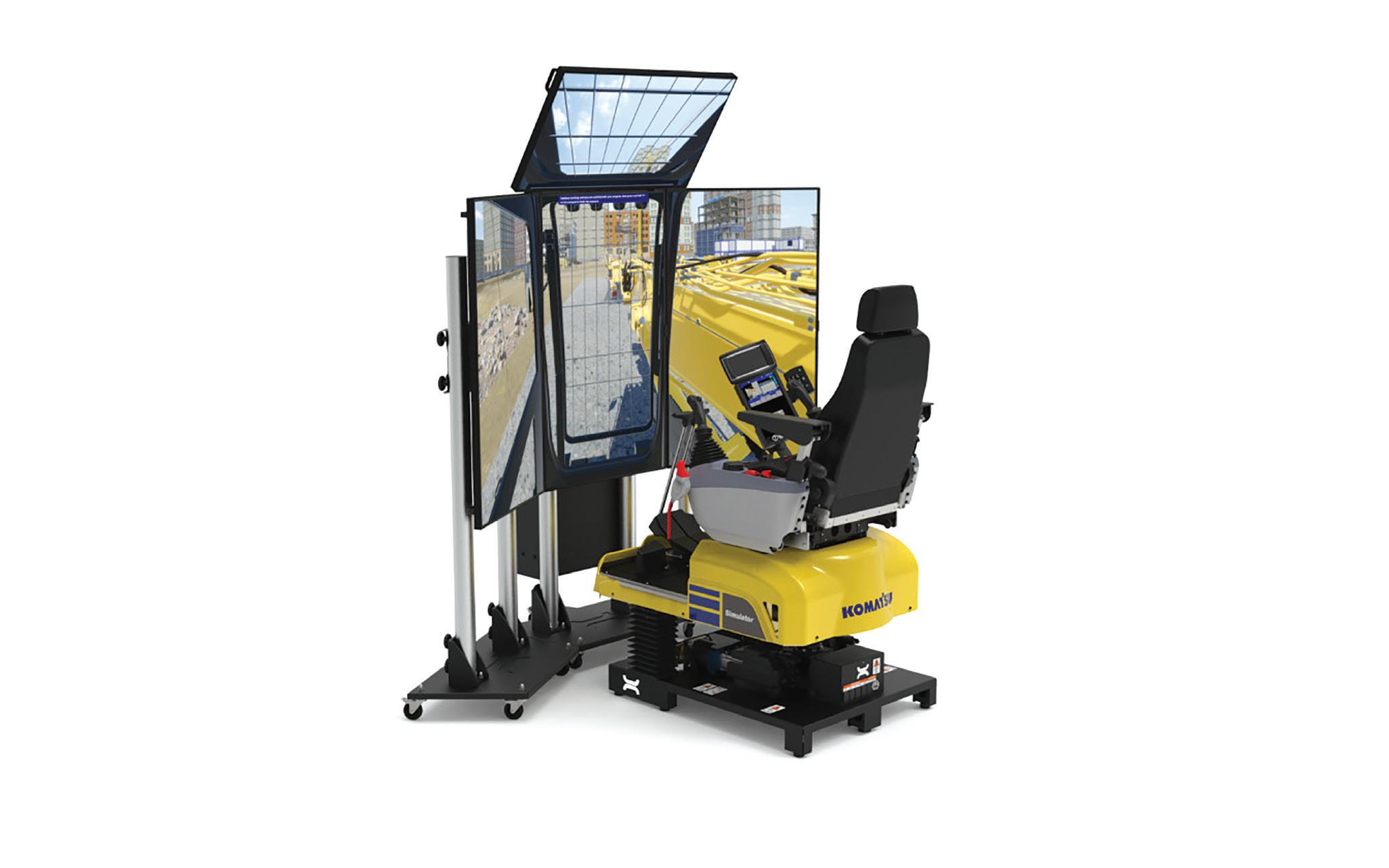
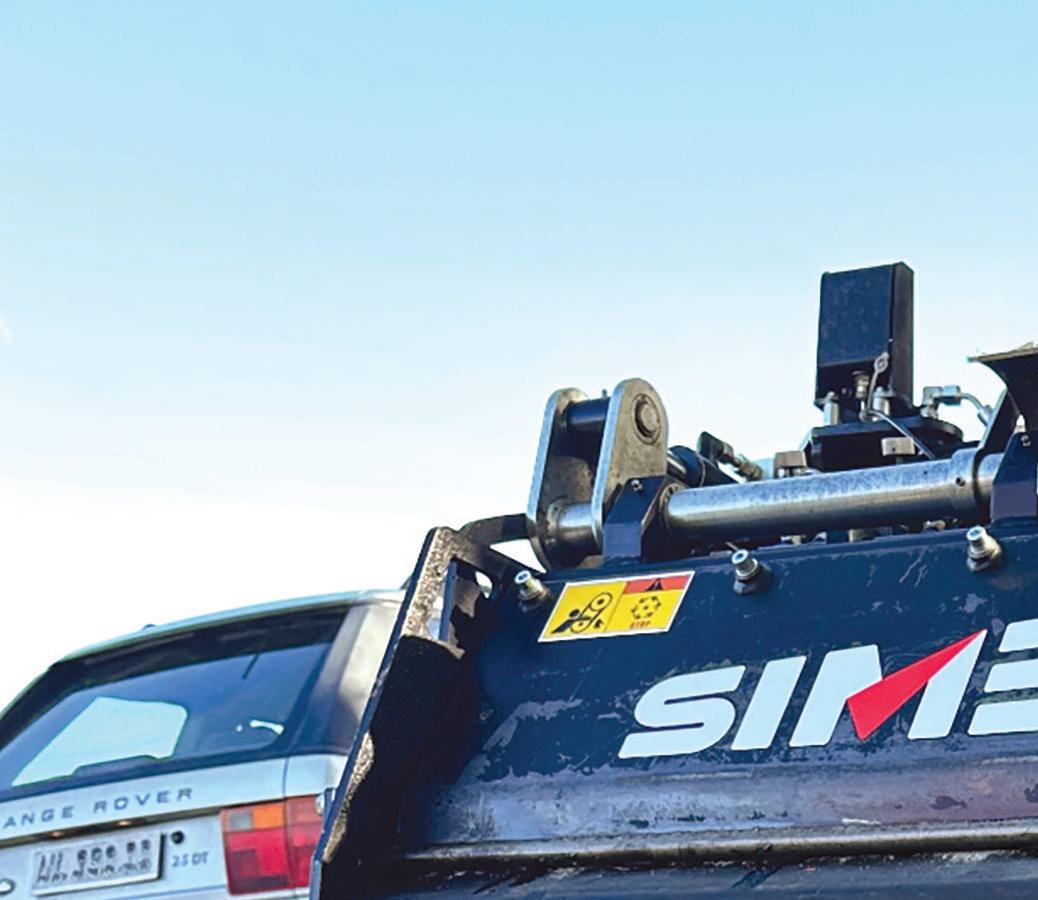
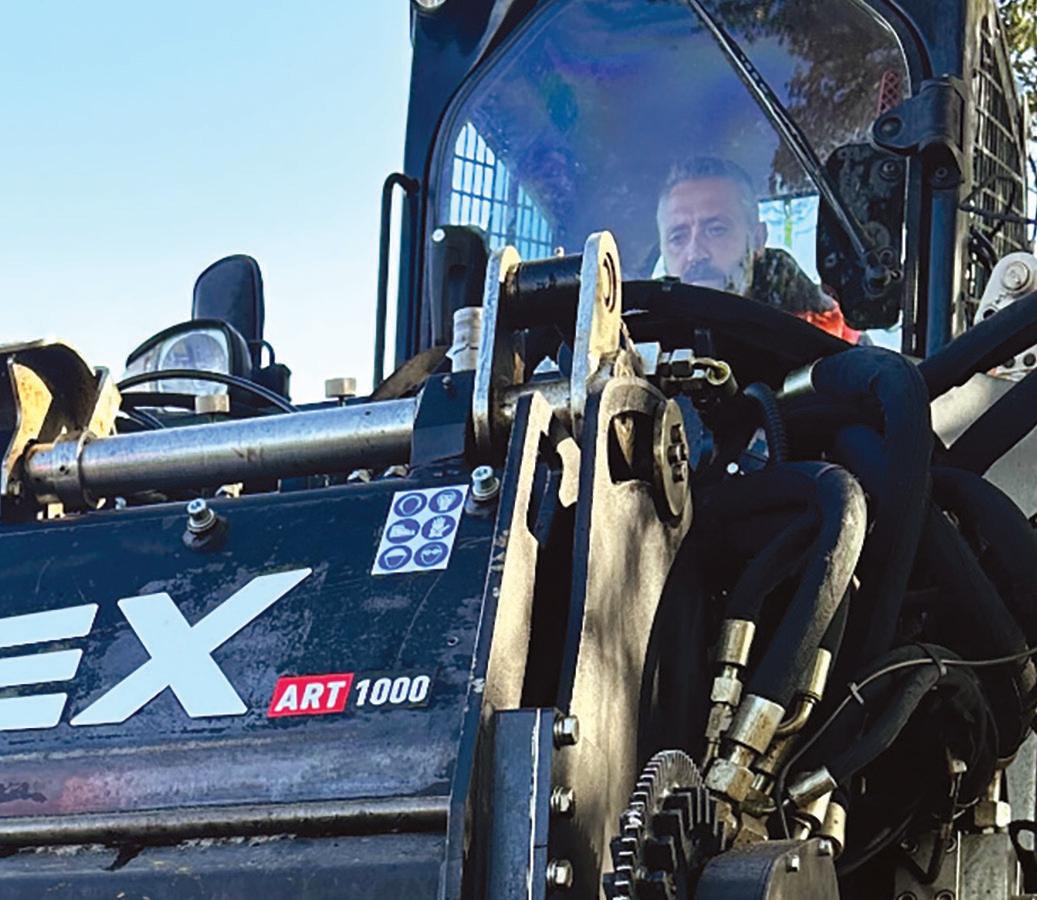
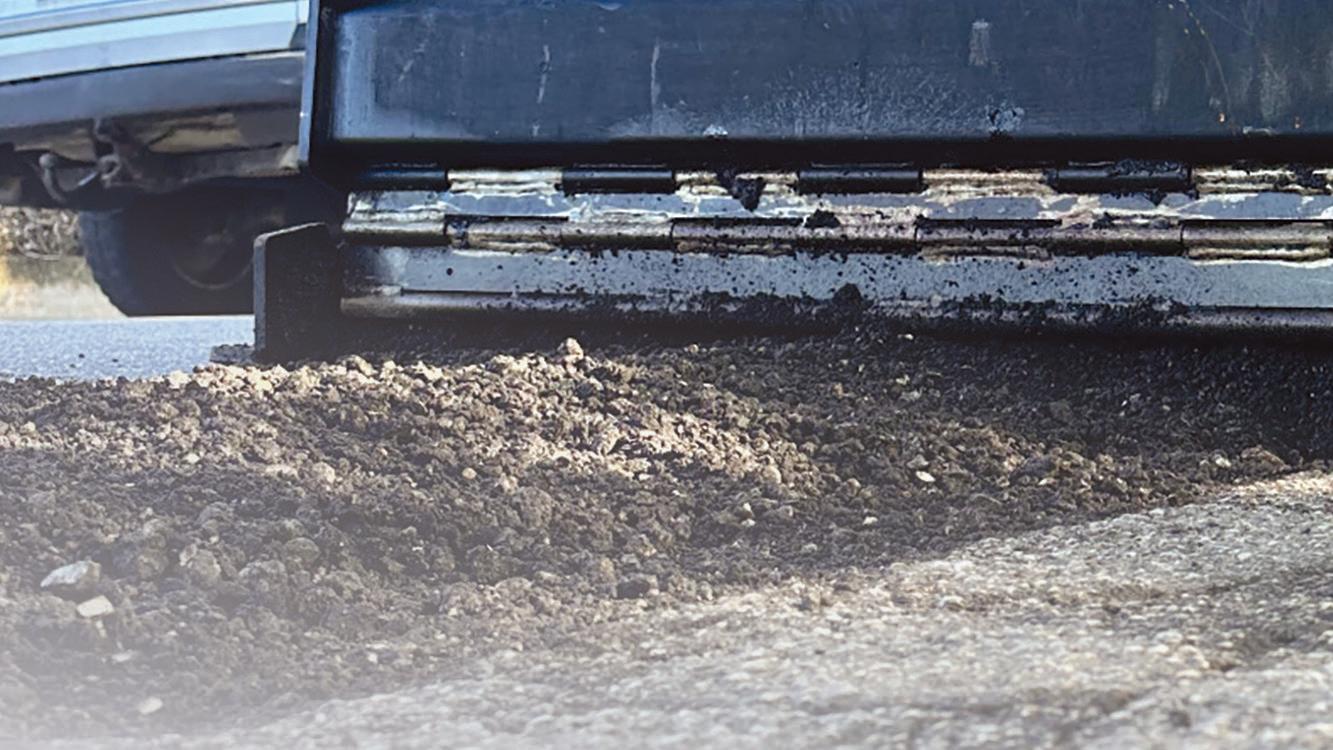
Simex has released the new GEN II version of its ART 1000 patented technology for in-situ regeneration of deteriorated asphalt

ABOVE
Simex ART technology avoids interruption of vehicular tra ic, ensuring the road is immediately passable a er restoration
(image courtesy Simex)
Simex ART technology focuses on surface-level interventions for the functional recovery of road deterioration. It does not require the removal of milled material or the addition of virgin bituminous mix, instead utilising only the existing onsite material. Most importantly, it avoids the complete interruption of vehicular tra c, ensuring the road is immediately passable after restoration.
During the milling phase, the equipment uses an eco-friendly chemical rejuvenator to cold-recycle the bituminous aggregate produced. Speci cally, ART consists of two drums: the rst for milling and mixing, and the second for crushing and disintegration.
In its working phase, the ART 1000 combines the following processes: milling of the deteriorated road section; controlled injection of rejuvenators proportional to the working depth and the carrier's speed; reduction of the milled material to the correct grain size; and nal mixing to create the recycled bituminous mix ready for compaction.

For the latest news, extended features and videos related to recycling visit the website globalhighways.com
After regeneration, the bituminous mix is deposited directly into the milled track and is ready to be levelled and compacted with a roller or vibrating plate.
Simex says that, as in the case of repairs after the installation of bre optics, the presence of cement mortars in limited proportions compared to the total volume of milled asphalt does not compromise the success of the nal restoration.
bene ts. ese include reduction of costs associated with the purchase and transport of new raw materials, utilising exclusively the bituminous mix available onsite, the recovery and regeneration of 100% of the onsite material, and fast and durable surface restoration.
In the past year, Simex has enhanced the onboard electronics of the ART 1000 to better meet the daily needs of road construction sites.


e Italy-based company adds that, in addition to the logistical advantages onsite and in terms of tra c ow, the ART 1000 technology o ers other key
e onboard electronics have been further developed with the addition of a new video interface to improve connectivity between the operator and the ART 1000 technology. is interface displays realtime values such as linear meters (progress), litres per metre (additive dosage), and actual litres (additive consumption). It is possible to manually set a precise amount of rejuvenator (with a sensitivity of 0.1 l/min) according to the manufacturer's speci cations and the site's environmental conditions.
e 100litre rear tank is now removable from the side, and thanks to a drainage cap located at the bottom, it can be easily emptied if necessary. Additionally, the lateral movement of the tank allows access to the second drum compartment (crusher) from above, for cleaning and maintenance.
e grille that determines the correct grain size of the material exiting under the second drum is also easily removable from the side for proper maintenance and cleaning at the end of the day. e removable tank and grille have been designed to ensure safe and easy access to the crusher drum of the equipment. End www.simex.it
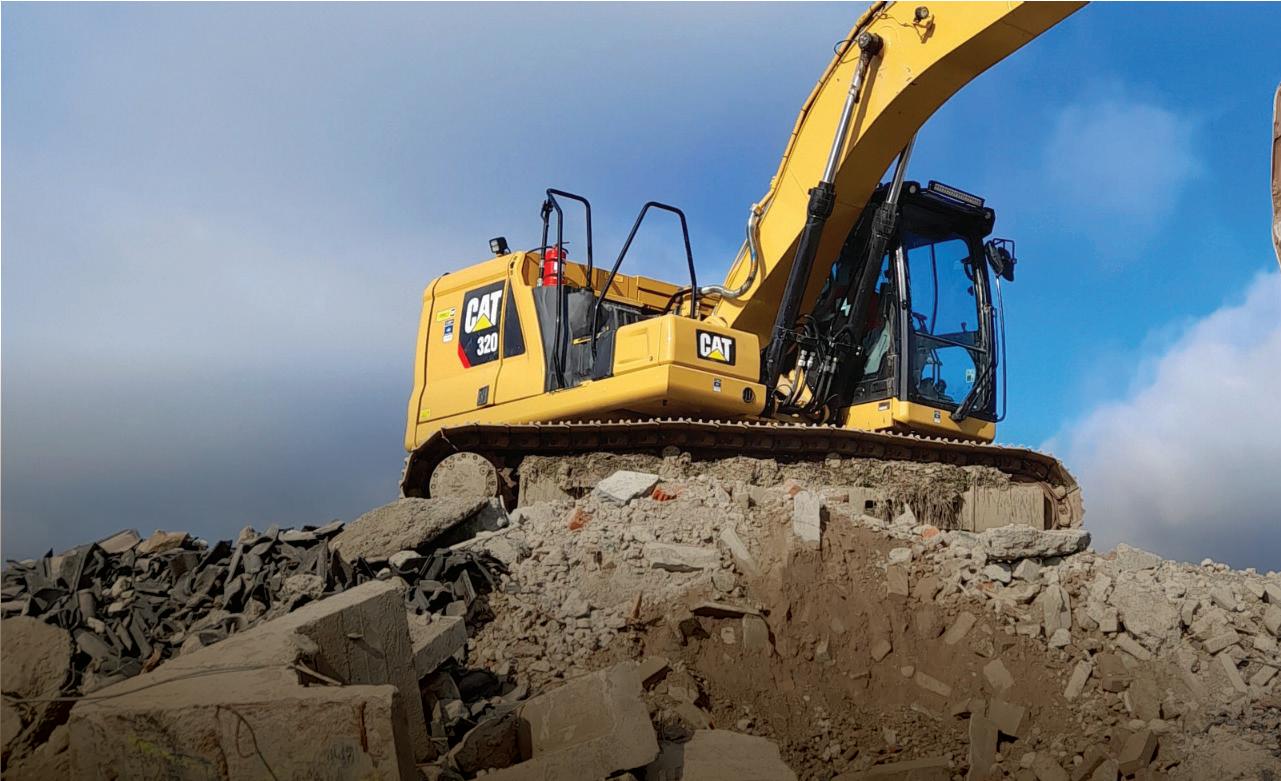
Recycling concrete is no longer an option - it’s a necessity as land lls everywhere are lling up and environmental concerns are growing. Construction and demolition companies themselves are increasingly subject to growing environmental restrictions.
Meanwhile, logistics are becoming more di cult and transportation costs for waste are rising. As the industry moves towards greater sustainability, the focus is shifting to how to handle concrete waste.


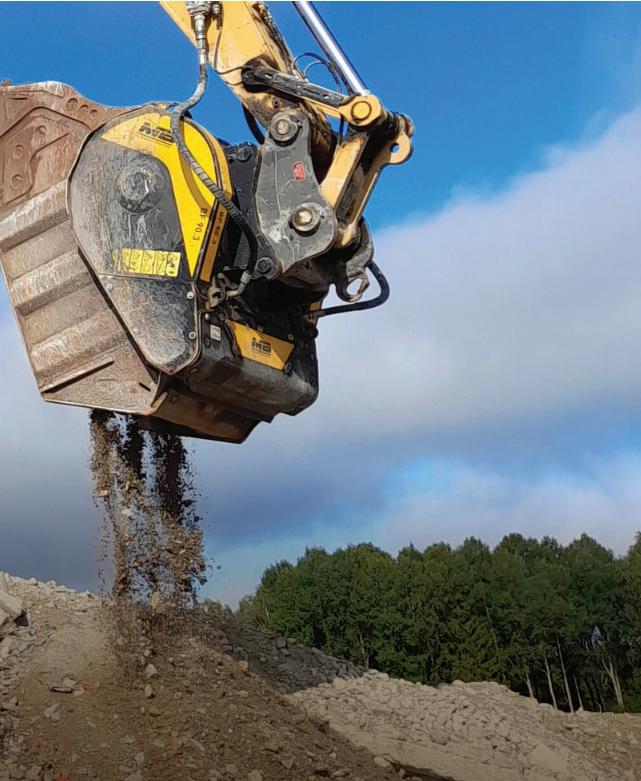
ABOVE
Attachment maker MB Crusher urges the construction sector to think “recycle, reuse, reinvent” in an increasingly environmentally conscious future
With that in mind, the future is clear, according to attachment maker MB Crusher – recycle, reuse, reinvent. Instead of viewing used concrete as debris, see it from a di erent point of view: that of the excavator operator who watches his MB Crusher unit transform rubble concrete into a valuable resource that will be integral to building new projects.
ose who choose MB Crusher attachments have found an easy and practical solution to turn waste


gipave® is a polymeric supermodifier composed of graphene, specific additives and hard plastics, which are reinserted into the production cycle through a new patented selection and recycling process. Thanks to the properties of graphene, gipave® modifies and improves the mechanical performance of all types of bituminous mixes, decreases the deformations due to the repetition of loads and improves the fatigue behaviour. This solution contributes to a substantial increase in the service life of the asphalt pavement compared to both traditional PmB technology (Polymer-modified Bitumen) and PmA technologies with “dry” method
roads towards sustainability
into a valuable asset directly onsite. For versatility, the MB Crusher bucket can be mounted on any brand of excavator in order to transform any demolition site into a recycling hub, easily moving material around as required. e powerful jaws easily break down reinforced concrete, separating even iron rebars. Once processed, the crushed material is ready to be used for back lling, roadbeds or new construction projects, reducing the need for fresh aggregates.
To sum it up, by using heavy machinery with an MB Crusher attachment, a contractor or site operator has a closed system to crush rubble into high-quality recycled aggregates.
MB Crusher o ers a broad range of units covering excavators - mini, midi or big - from 6.5 tonnes, transforming them from diggers to mobile crushers. ere’s an MB Crusher unit suitable even for loaders and skid steers. e future of construction isn’t just about building; it’s about rebuilding and rebuilding smarter. End www.mbcrusher.com
Wirtgen says that its new W 210 XF large milling machine is highly e icient and suits duties in challenging jobs.
High-performance and e iciency are claimed and the machine can be used for milling widths of 2-2.5m and to depths of 330mm. The W 210 XF is said to suit a range of duties such as surface layer rehabilitation, complete pavement removal and fine milling work.
Although powerful and productive, the machine is also said to be compact for its high-performance capabilities. The company claims that the machine can deliver high milling productivity for jobs where its relatively compact dimensions are required, such as on motorways, trunk roads and airports.
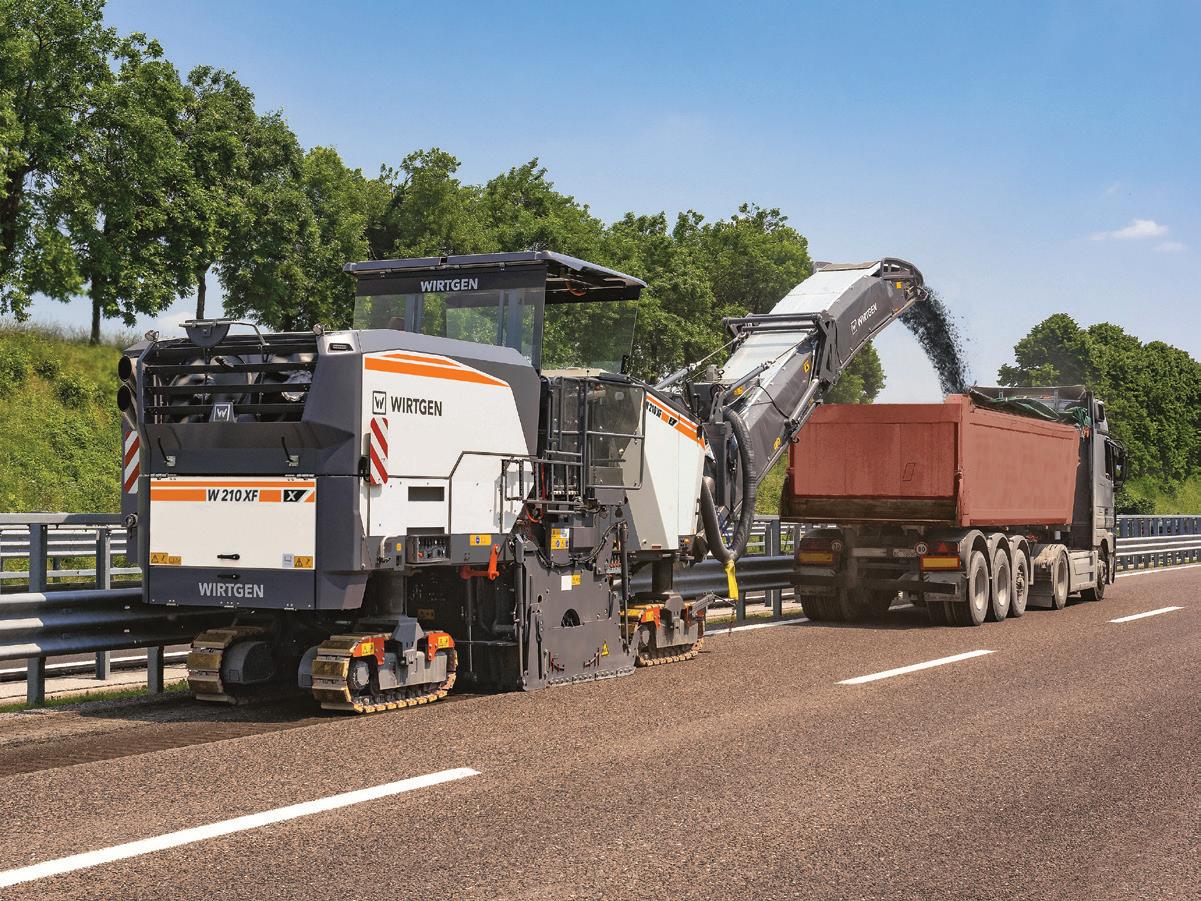
Wirtgen’s powerful new milling machine o ers increased output
The machine is also o ered with the sophisticated Wirtgen
Group Performance Tracker Milling package, which o ers automated documentation of milling tasks. The WPT Milling system allows a machine operator to view automated construction site documentation and display CO2
emissions for the construction site at a glance and in real time. In addition, the firm’s sophisticated Mill Assist machine control system allows a combination of e icient working and high productivity. www.wirtgen-group.com
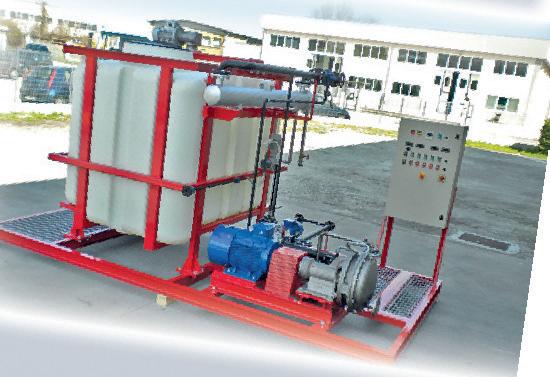






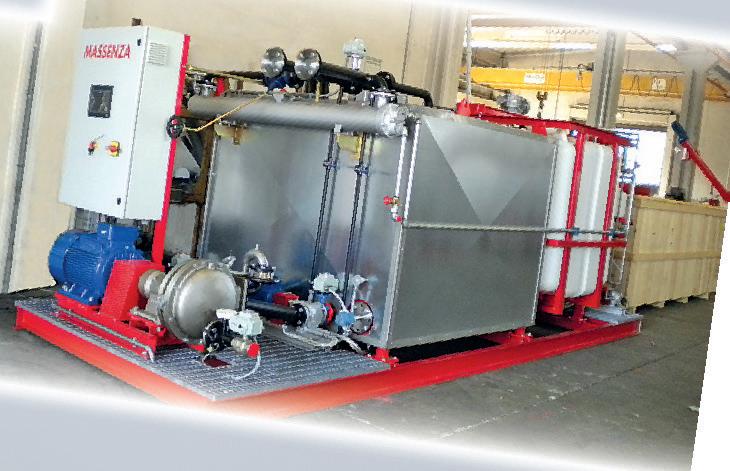



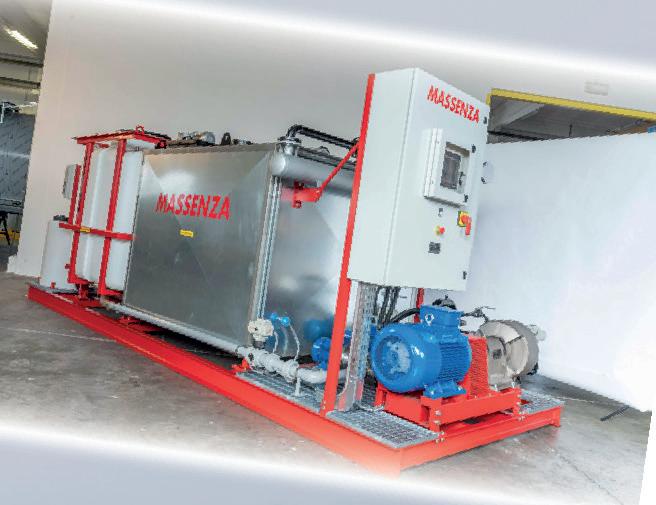






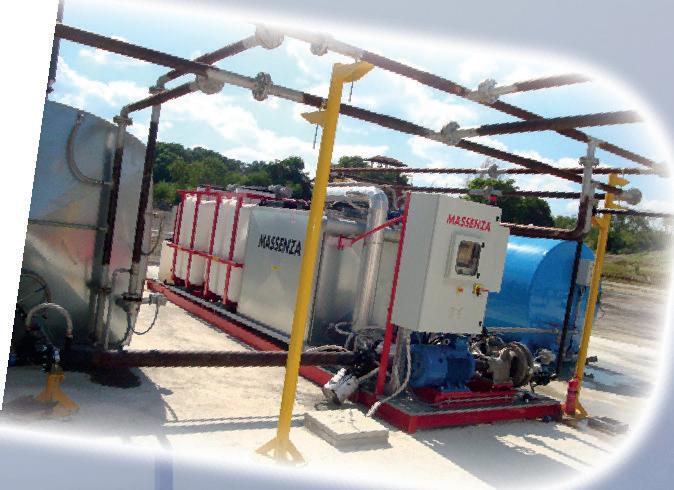







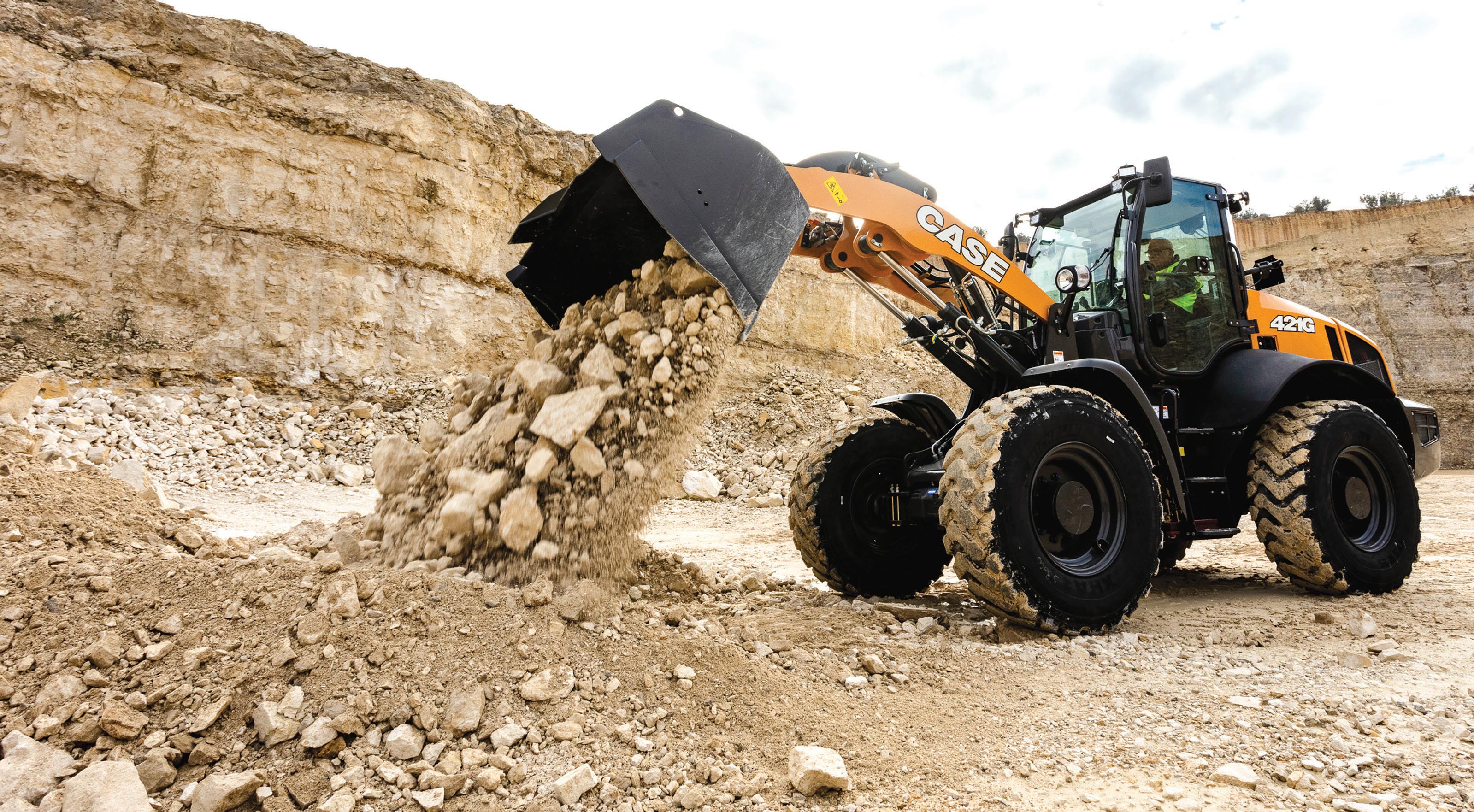
Original equipment manufacturers have launched a range of new excavators and wheeled loaders, including electric models and features such as autonomous driving, remote control advanced driver assistance and special applications. Liam McLoughlin reports
CASE is o ering advanced driver assistance systems for its wheeled loaders. ese are designed to enhance safety, e ciency and productivity on the jobsite. e new systems include better visibility, obstacle and hazard perception, AI-based driving assistance and semi to fullyautonomous loader operations.
To further support safety and productivity, CASE is also introducing advanced remote monitoring technology, providing remote machine assistance. is technology enables real-time monitoring of operational conditions and fuel consumption and facilitates predictive maintenance, ultimately reducing downtime and improving eet management.
Caterpillar has unveiled its 140 AWD Next Generation Motor Grader prototype. Weighing in at 20tonnes, this machine bene ts from a range of new technologies that boost productivity and nish quality.
e rm says that the 140 AWD Next Generation Motor Grader combines two existing platforms into a
common next generation platform for motor graders.
e result is a machine that provides customers a wider array of operating features, technologies and con gurations.
e cab design o ers excellent all-round visibility, making working easier and safer for the operator. High comfort is also claimed, while the machine bene ts from the latest ergonomic controls to minimise operator fatigue. e technology packages meanwhile help to optimise productivity and nish quality, as well as ease of use, allowing inexperienced operators to deliver precision working.
Hitachi is o ering a range of excavators that are specially modi ed for use in certain applications.
e ZX250LC-7 super long front (SLF), is assembled at the HCME factory in Amsterdam and suits duties such as dredging, loading and slope- nishing.
e boom and arm design combines strength and versatility, allowing an extended working range of 18m.
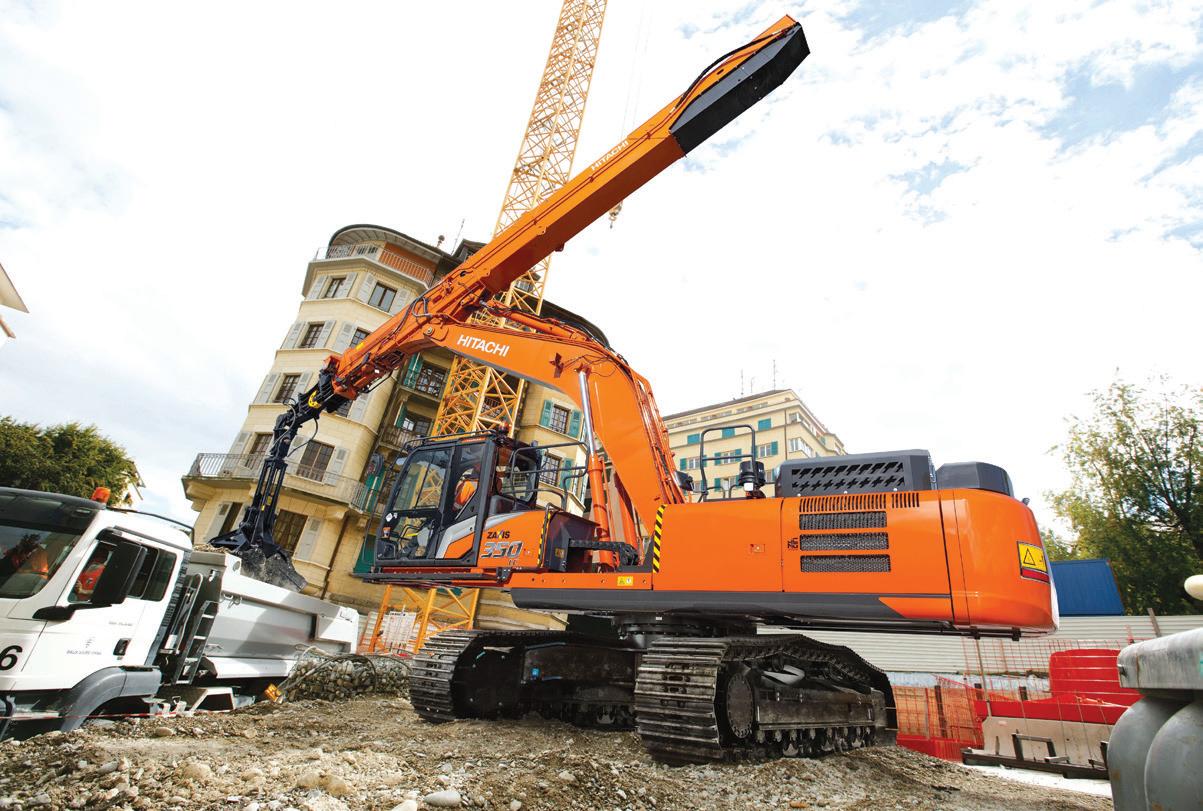
ABOVE
Smart technology is available from CASE to assist wheeled loader operators
BELOW (LEFT)
Hitachi is unveiling new excavators for special applications
BELOW (RIGHT)
Caterpillar’s prototype grader represents a new generation
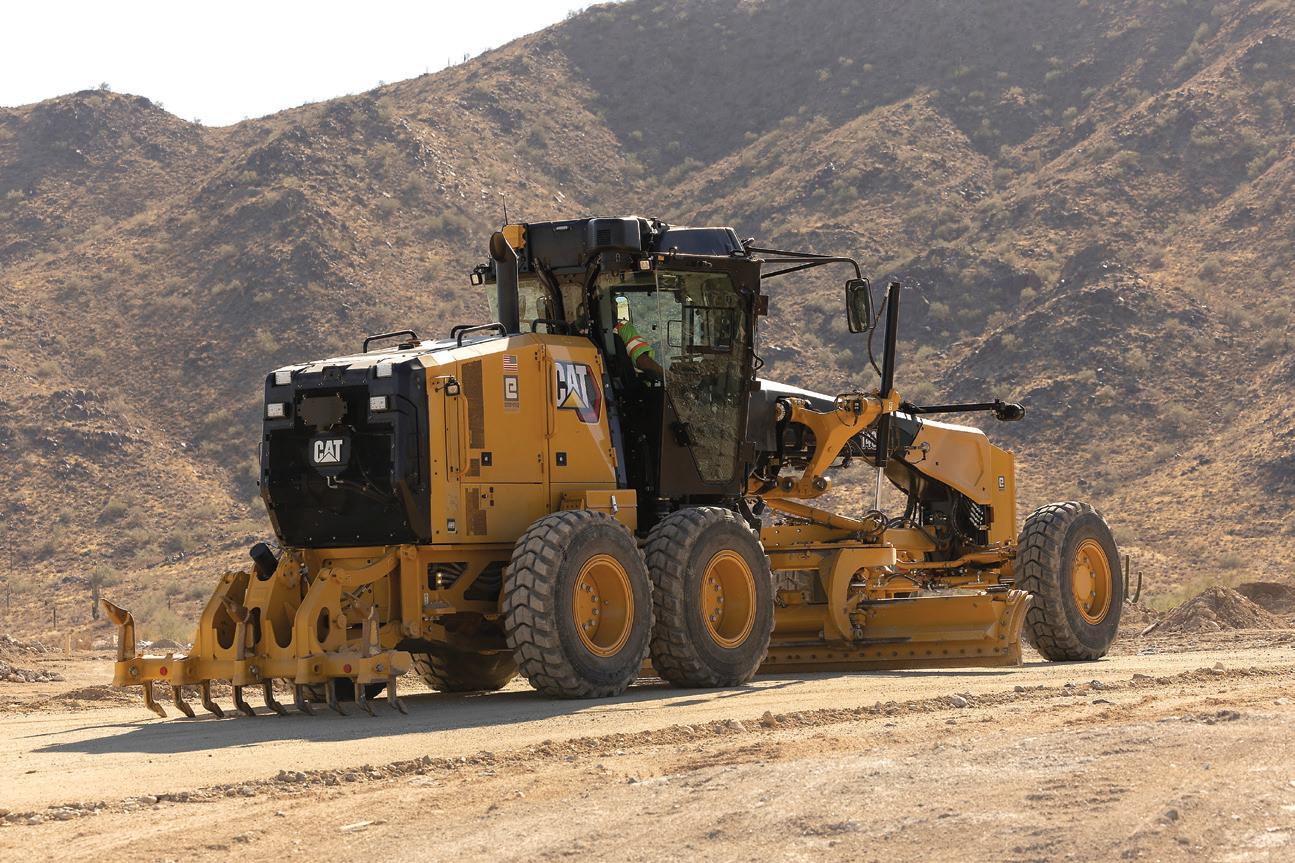
e ZX350-7 with clamshell telescopic arm (CTA) is supplied by Hitachi in Japan. Available with 30m reach, it can be used for removing material from below ground and features modi ed hydraulics, boosting productivity on complex excavation projects. e clamshell telescopic arm o ers high-speed extension and retraction, combined with a powerful pulling force, allowing it to work in con ned spaces. Unlike standard or long-reach excavators, it requires minimal swing room, suiting it for use in compact areas.
Hitachi says that its latest ZW-7 wheeled loaders o er high productivity and output while providing protective safety features and high-comfort cabs. High performance and e ciency are claimed, with uptime due to durable components and easy maintenance.
Stage V-compliant engines power the ZW180-7 and ZW310-7 wheeled loaders, which bene t from allround visibility and sophisticated systems.
Hyundai Construction Equipment claims that its powerful mid-weight dozer delivers best-in-class power and tractive e ort, precise grading and a range of smart technologies.
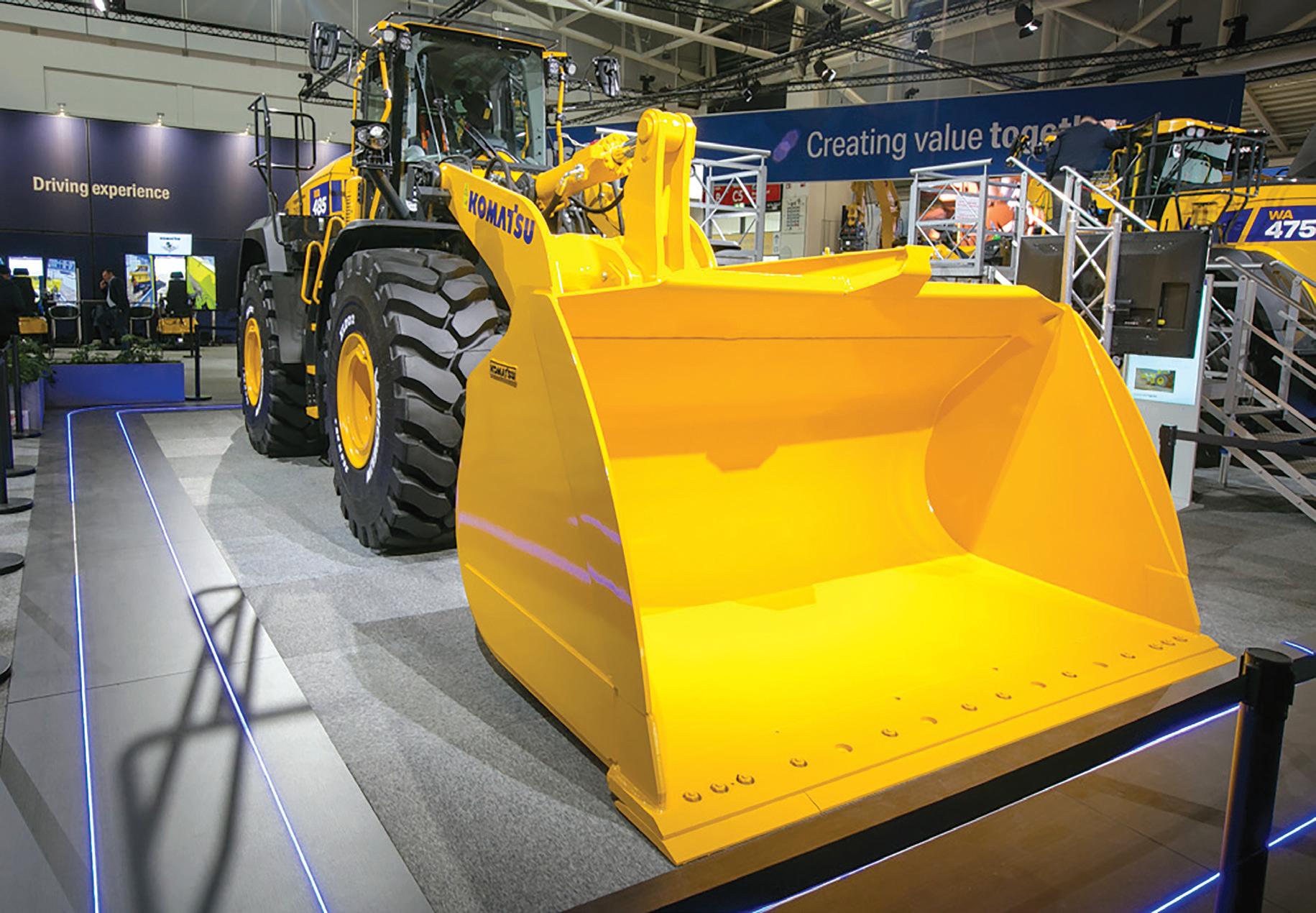
e new HD130 o ers fully electrohydraulic controls and 2D blade dozing assist function as standard. It also has a narrow nose with inline pre-cleaner and large windows for high visibility, as well as a 117kW engine providing best-in-class power output. e tilting cab allows access to major driveline components while the durable undercarriage o ers long service life.
Power comes from a proven Perkins 4.4litre diesel, delivering 710Nm of torque. An Eco Mode can be selected for lighter grading duties, lowering the hydraulic pump power output and reducing fuel consumption by 5%. Auto idle and auto shutdown features help to reduce fuel use over the working shift.
e machine has a reversible hydraulically-driven cooling fan for the engine and hydraulic oils, with an electrically-driven fan for the charge air cooler that can also be reversed to clean out the core.
e HD130A is equipped with Hyundai’s Hi MATE remote management system as standard. Using GPSsatellite technology, this telematic monitoring system provides customers with real-time machine operating
ABOVE
For the latest news, extended features and videos visit the website globalhighways.com
in performance and e ciency.
At the heart of the new Dash 11 generation wheeled loaders is a newly developed Komatsu diesel engine which is characterised by extremely high torque in the low-speed range. is new engine is combined with a Komatsu-designed hydro-mechanical-transmission (HMT), resulting in excellent performance, power reserves, fuel e ciency and ease of operation for all transport and loading tasks.
e WA475-11 demonstrates a 14% improvement in fuel e ciency over its Dash 10 predecessor, while the WA485-11 achieves a 29% increase in fuel e ciency compared to its predecessor WA480-8.
Compared to its predecessor, the WA485-11 has experienced a signi cant upgrade in payload and bucket capacity, says Komatsu.
Another new feature is the variable-power control, which enables the lifting speed to be controlled independently of the accelerator pedal. e company claims that it has never been easier for an operator to nd the right balance between traction and lifting power.
BELOW Hyundai’s new HD130A mid-sized dozer o ers high performance
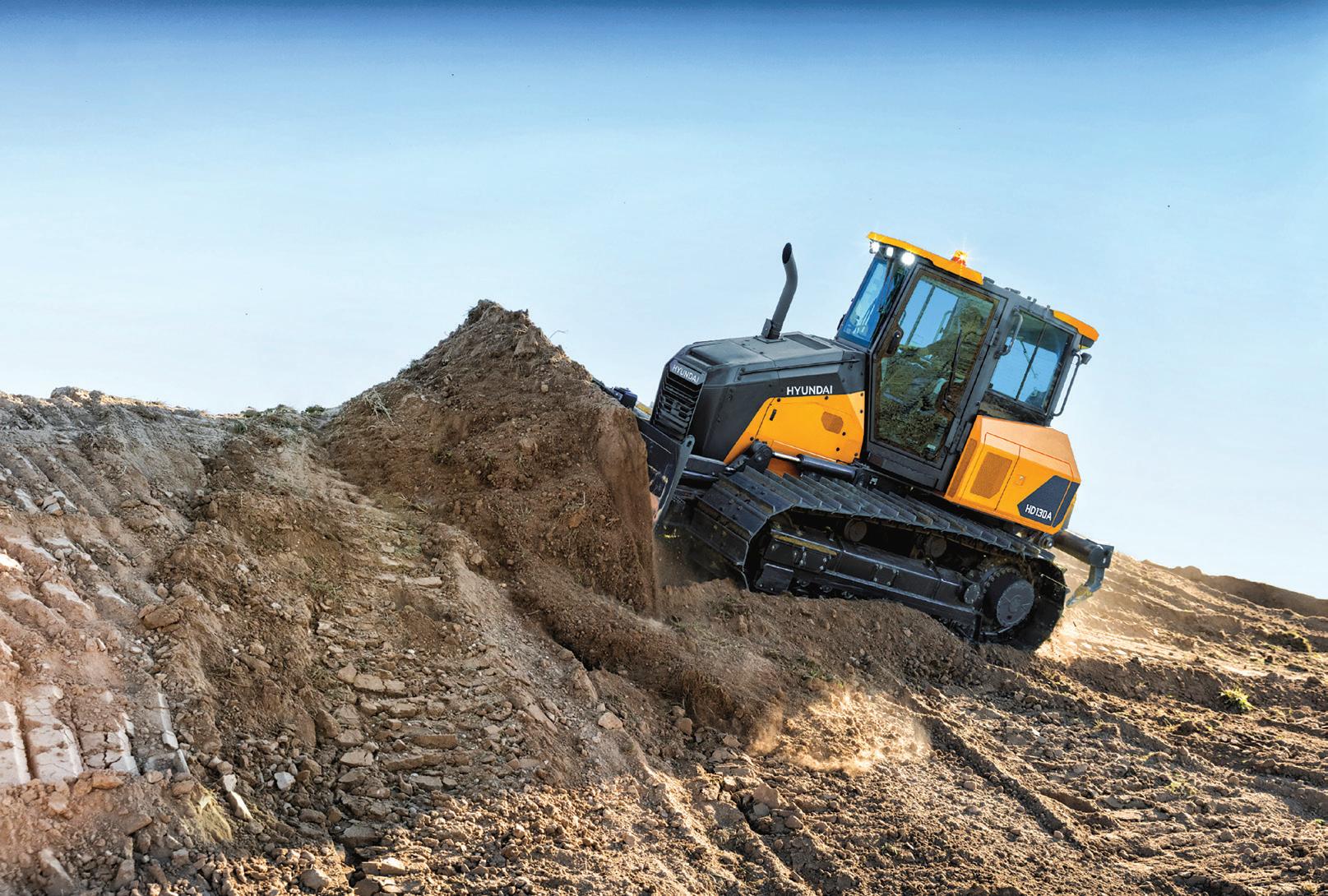
Both machines are also equipped with a rear-hinged door, angled steps and large handrails, while a new airsuspended seat dampens vibrations for a comfortable driving experience. e seat-mounted, electronic-pilot control levers with a new ergonomic design improve operating comfort and reduce operator fatigue.
e “automatic bucket lling” and other assistance functions further help the operator maintain productivity even during long shifts.
Komatsu Europe has also launched the allnew WA700 wheeled loader. Before commencing development of the WA700, Komatsu says its engineers actively collected customers’ input, identifying that safety, cost per tonne produced, CO2 emission, maximising uptime, and operator well-being were the key concerns of its customers.
e manufacturer adds that these insights were integral to the development process, resulting in a powerful machine equipped with advanced features and technologies, including unrivalled power and stability, substantial load capacity and bucket volume, and extreme durability.
Liebherr has demonstrated its innovative autonomous wheeled loader concept as well as a novel remote control dozer package. e autonomous driving system for wheeled loaders is called the Liebherr Autonomous Operations and has been developed in-house and allows machines to work without an operator in the cab. e system can be used in areas that would be dangerous for an operator, such as close to a high rock face in an extraction operation for example. e package uses an array of sensors and guidance systems to ensure that the machine can operate quickly and e ciently throughout the working day, without reducing productivity due to operator fatigue.
Meanwhile, the Liebherr remote control system (LiReCon) suits use on crawler dozers. e rm says that its new PR 776 G8 70tonne crawler dozer can be controlled remotely for greater versatility, also allowing its use in areas that would be dangerous for an operator to access. e control system is said to allow accurate and precise operation, without compromising productivity or e ciency. High output is claimed and the operator can be working in a comfortable area away from the noise and dirt of a challenging site. is further helps to boost output by reducing operator fatigue.
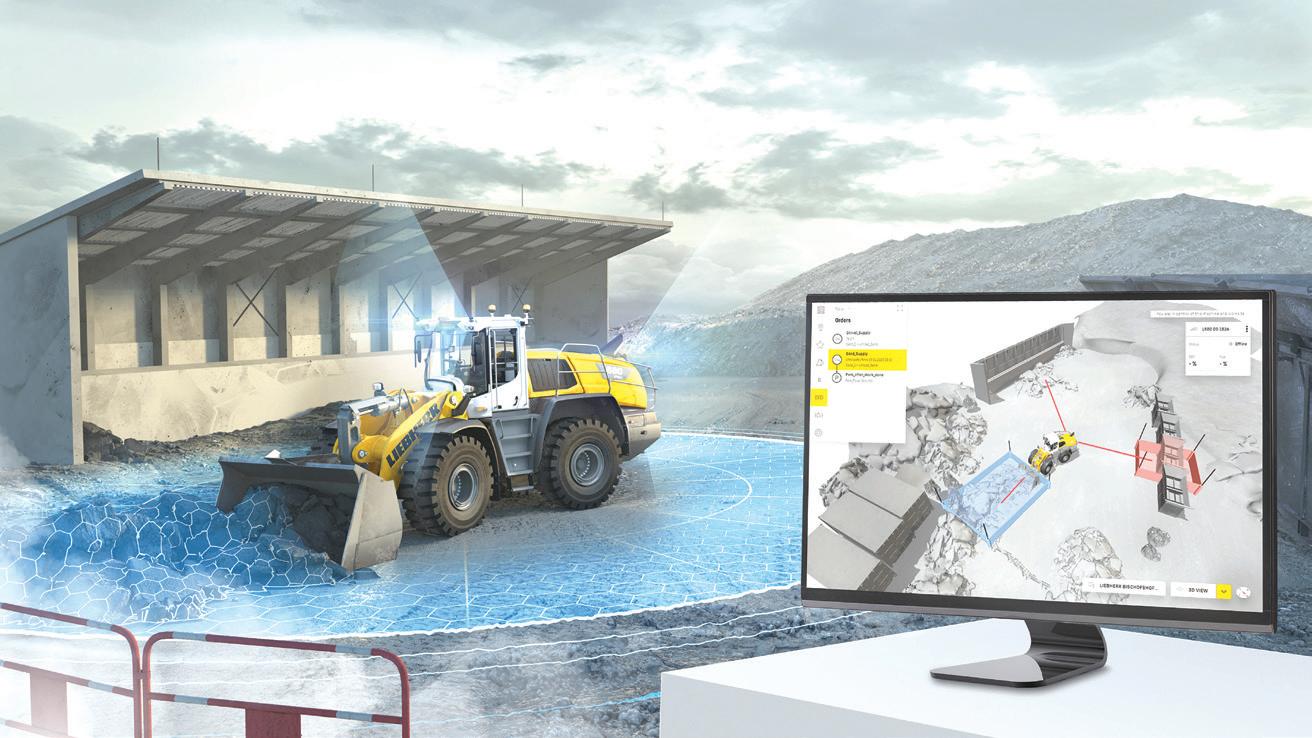
SANY says its commitment to sustainability and renewable energy is increasingly evident in its construction machinery. e manufacturer showcased the SW956E at bauma: a fully electric 20tonne wheeled loader, which combines high performance with ABOVE
Liebherr’s innovative autonomous wheeled loader and remote control dozer
sustainability.
Also at bauma, SANY unveiled the SY215E, a sustainable alternative in the 23tonne class. is fully electric crawler excavator features a 150kW electric motor and a 422kWh lithium-ion phosphate battery, providing an emission-free, low-noise solution for urban areas. End www.casece.com www.cat.com www.hitachicm.com www.hyundai-ce.eu www.komatsu.eu www.liebherr.com www.sanyglobal.com
The latest version of Caterpillar’s successful D8 bulldozer comes with an array of advanced technologies that the firm says are designed to provide faster more accurate results. Power comes from a Cat C15 engine that provides an increase in power to 271kW, boosting performance for a wide range of dozing, ripping and grading tasks. The engine is Stage V/Tier 4 Final compliant and drives through a fully automatic four-speed transmission with Lock-up Clutch (LUC) torque divider.


The machine’s next generation cab provides 17% improved visibility than the previous design and has integral rollover protection for safety but can be removed in around 30 minutes for servicing.

The touchscreen display has features to give operators an overview of the machine, technologies and helpful tips.
When the machine is in reverse, the standard high-definition rearview camera feed shows prominently in the display.
Assist technology features minimise operator input, boosting productivity for less experienced operators and decreasing e ort and fatigue.
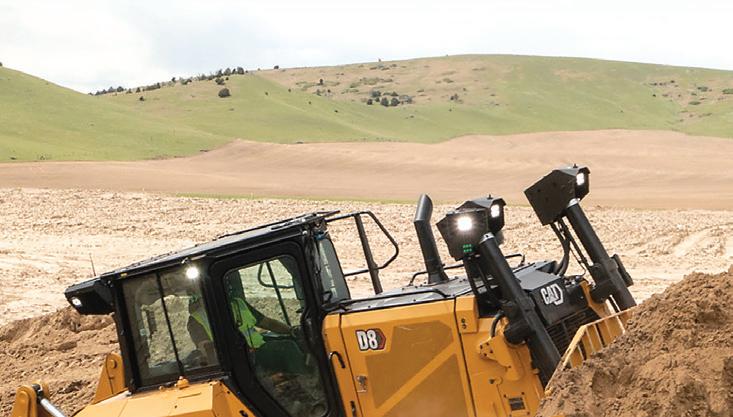
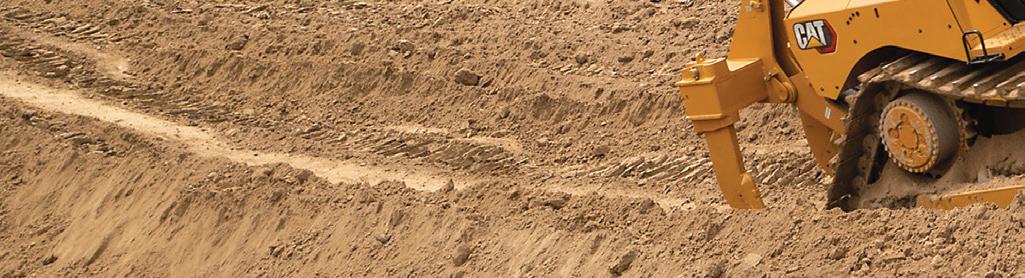
Featuring an external connector for a roof-mounted remote control unit, the new D8 dozer is remote control ready using the Cat Command for Dozing system for use in hazardous environments.

When equipped with the Standard Semiuniversal (SU) blade, the machine weighs in at 39.5tonnes, while in the LGP format with Semi-universal (SU) blade, the machine weighs 38tonnes. The semi-universal (SU) blade has a capacity of 10.3m3 while the LGP Semi-universal (SU) blade o ers a capacity of 9.9m3 www.cat.com
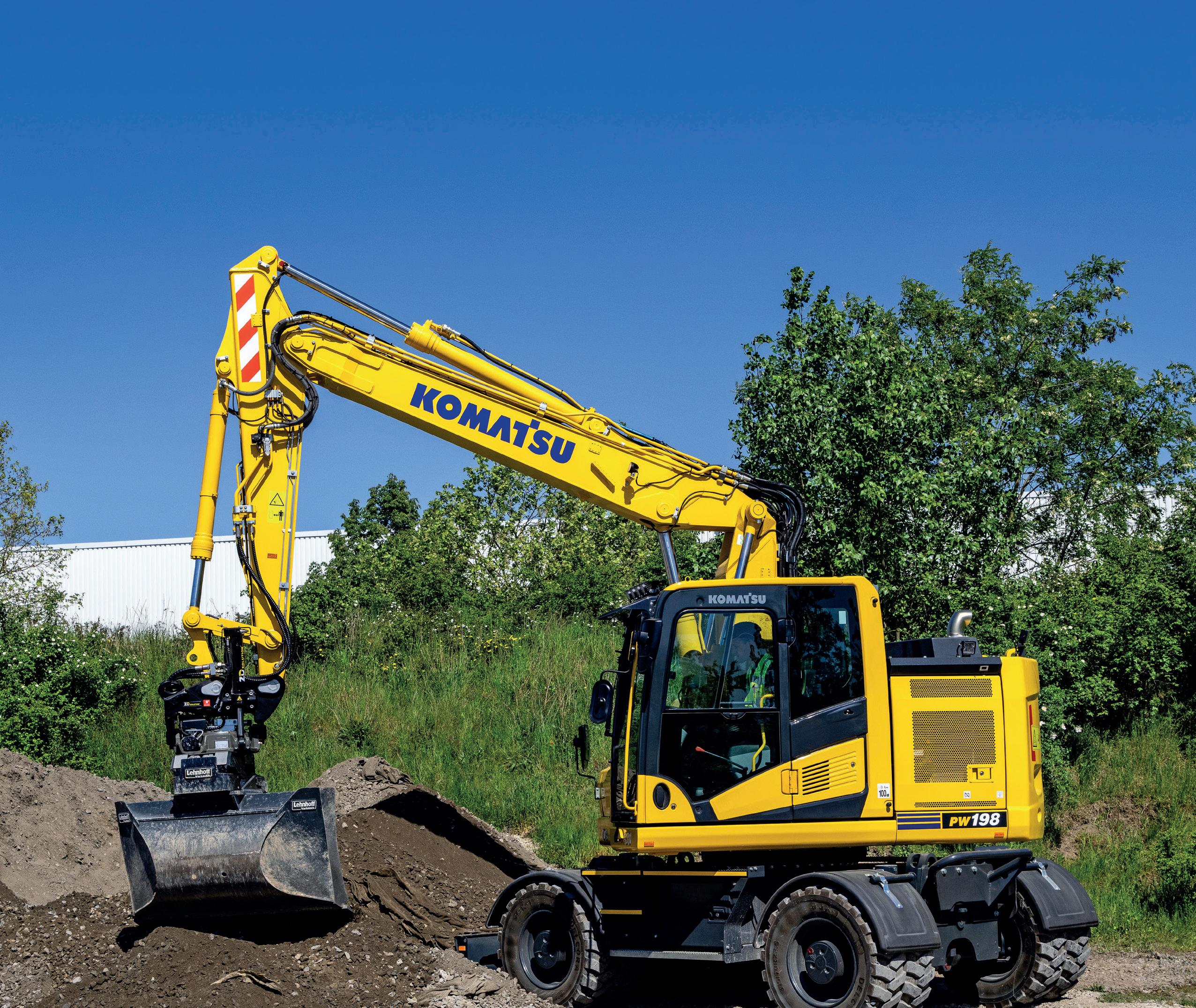





Our Dash 11 wheeled excavators are compact, powerful and versatile. Short tail swing radiuses allow safe working even in confined spaces. The two new models, PW168 and PW198, come factory-prepared for use with tilt rotators and 3D machine guidance retrofit systems. Additionally, their low transport height makes them easier to transport.
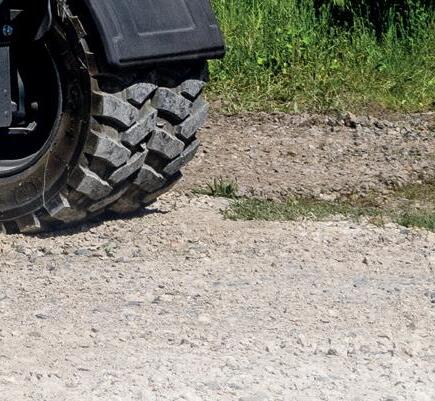
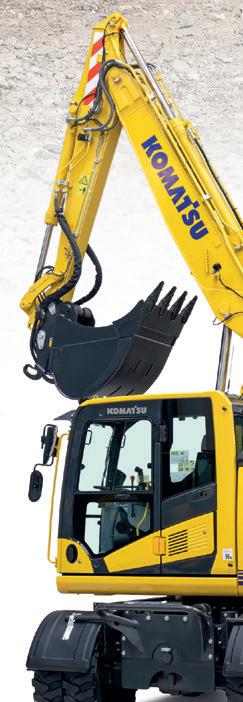
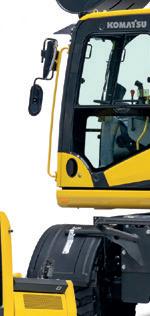
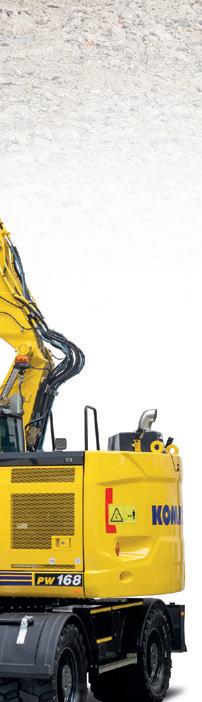

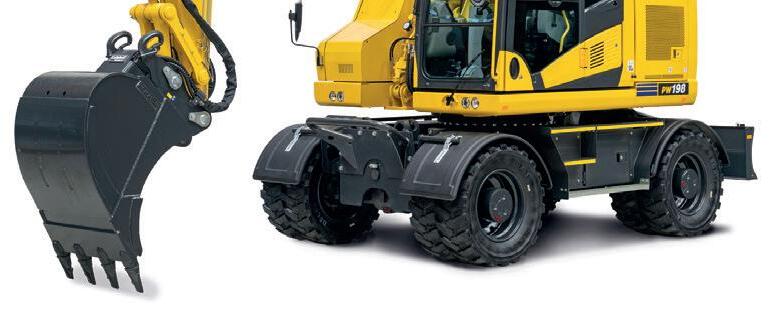








Global Highways editor Mike Woof has been talking to the boss of Develon about its future plans for growth and new products. Here’s what Young-Cheul Cho, CEO of parent company HD Hyundai Infracore, has to say:

GH: Which markets does Develon see as being the priority for sales?
DEVELON primarily targets developed markets, with a strong focus on North America and Europe. Europe is particularly signi cant as it serves as the initial market where new technologies are implemented and evaluated. To enhance its global competitiveness, DEVELON is actively expanding its dealer network and diversifying its product portfolio to meet the diverse needs of European customers across various sectors, including infrastructure construction, mining, urban maintenance, agriculture and landscaping.
In the second half of last year, DEVELON established its rst direct sales o ce in Mannheim, Germany. From this base, we aim to provide personalised services and marketing speci cally designed for our European customers. Additionally, we are consistently broadening our footprint in emerging markets like Brazil and India.
GH: What market share does the rm hold in Europe and what is the future target?

DEVELON currently holds a market share of less than 10% in Europe. We aim to exceed this threshold by launching our next-generation models. If these new models are successful, we may revise our growth targets upward based on our strategic assessments. e next-generation model integrates the technological expertise and knowledge of DEVELON and HYUNDAI, providing a level of quality and performance that is competitive with top-tier manufacturers on a global scale. Korean industries are gaining recognition in Europe for their outstanding manufacturing and production techniques. With these latest next-generation ‘-9’ models, we will continue to showcase the excellence of "K-Construction Machinery" and further strengthen our global presence.
"We have established a roadmap with the goal of achieving 95% eco-friendly products by 2040, with 80% of those being fully electric"








GH: Will the -9 models be available with the options of diesel and electric variants?
At this point, only diesel options are available. e DX20ZE-7 compact excavator is currently our only electric model. However, we plan to introduce mini electric excavators weighing 2tonnes and 3tonnes by 2026. Additionally, we will release the DX23E-7 model later this year, which has been showcased at bauma. Our goal is to electrify a representative model from each class, leading to a complete line-up of electric models, including a 14tonne mid-size wheeled excavator.
GH: What is DEVELON’s view on the potential of hydrogen as a fuel for construction machines?
We expect a shift towards eco-friendly, renewable energy sources, though the pace and approach will di er by time and region. Regarding hydrogen, we acknowledge the challenges that need to be overcome, such as developing the supply chain and assessing market feasibility, before we can successfully scale up the industry and its infrastructure.
DEVELON recognises the potential of hydrogen fuel and is dedicated to investing in research and development in this eld. At last year's Intermat, we unveiled our rst hydrogen fuel-cell powered, medium-sized wheeled loader, the DL250-FCEV (Fuel Cell Electric Vehicle). is innovative model utilises the world’s leading hydrogen fuel-cell technology, allowing it to operate for eight hours with performance comparable to that of diesel machines while requiring less than 30 minutes for a complete recharge.
Additionally, a prototype of our hydrogen combustion engine is in development and will be mounted on a 30tonne construction vehicle for veri cation purposes.
GH: What are the biggest changes DEVELON can make to improve sustainability in the construction sector?
To support the long-term vision and sustainable development of the construction industry, DEVELON aims to gradually increase the proportion of ecofriendly products in our sales. We have established a roadmap with the goal of achieving 95% eco-friendly products by 2040, with 80% of those being fully electric.
We are committed to providing eco-friendly, highe ciency construction machinery that complies with Stage V regulations while emphasising the commercialisation of electric mini excavators and hybrid excavators.
We are leading the way in developing and introducing carbon-free construction equipment that is based on battery-electric vehicles (BEVs) and fuel-cell electric vehicles (FCEVs). Our vision includes creating a line-up of BEVs, featuring a 14tonne wheeled excavator.
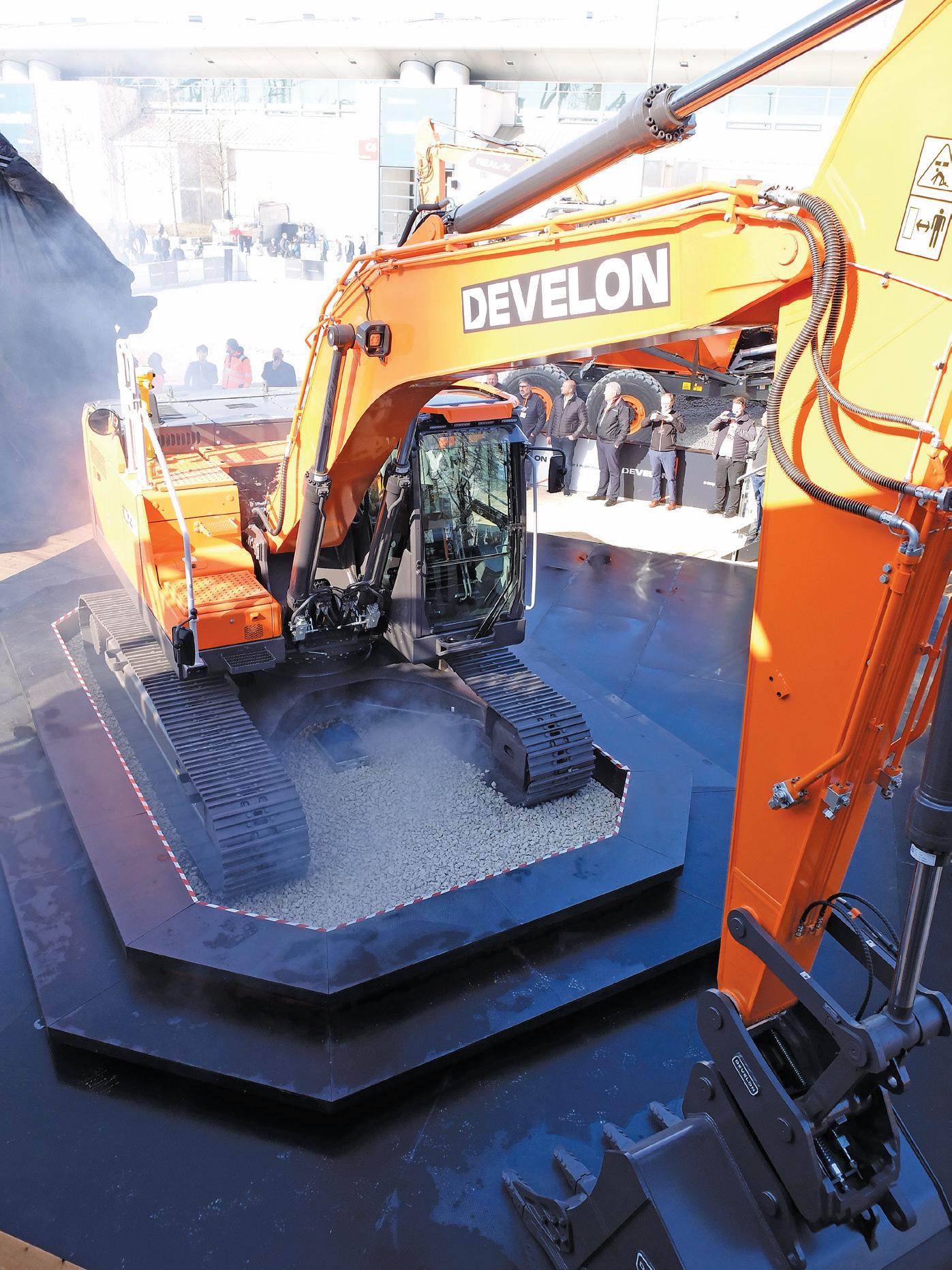
"We are committed to providing eco-friendly, high-e ciency construction machinery"
GH: Looking ahead, what are the technologies that will have the biggest impact on the construction machinery sector?
We rmly believe that the emergence of driverless, autonomous technology will not only transform construction machinery but also revolutionise the entire construction sector.
Unmanned, autonomous technology is set to play a vital role in lowering construction costs and reducing working hours while tackling the shortage of skilled labour. It is anticipated to boost productivity, especially in quarries where repetitive tasks are prevalent and in mines where accessibility can be di cult. Additionally, this technology will signi cantly reduce the risk of safety incidents by lowering the number of workers needed onsite, aside from management personnel.
For the latest news, extended features and videos visit the website globalhighways.com
During a keynote speech last year at CES2024, HD Hyundai, the parent company of HD Hyundai Infracore and Develon, presented its vision for "Xite Transformation," which outlines the group's goal of innovating land infrastructure. is vision emphasises the commitment to creating smarter construction sites by leveraging future technologies such as unmanned, autonomous construction equipment, digital twins, and eco-friendly electri cation technologies. End

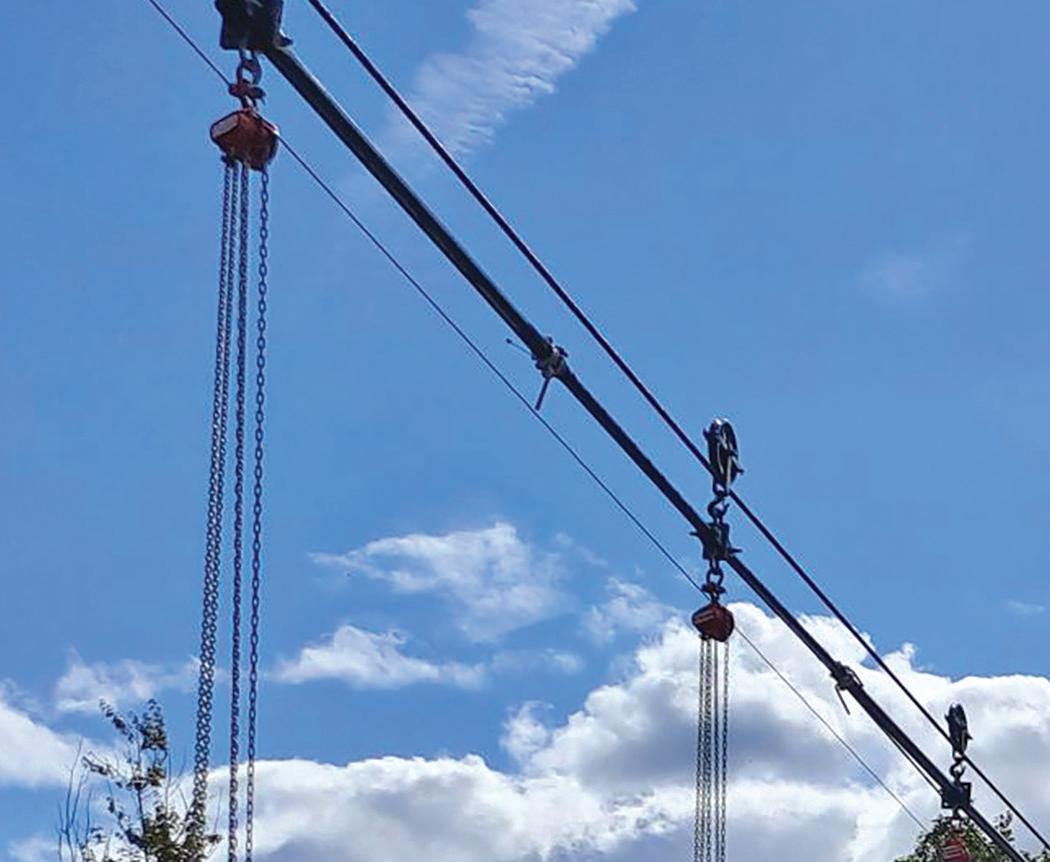
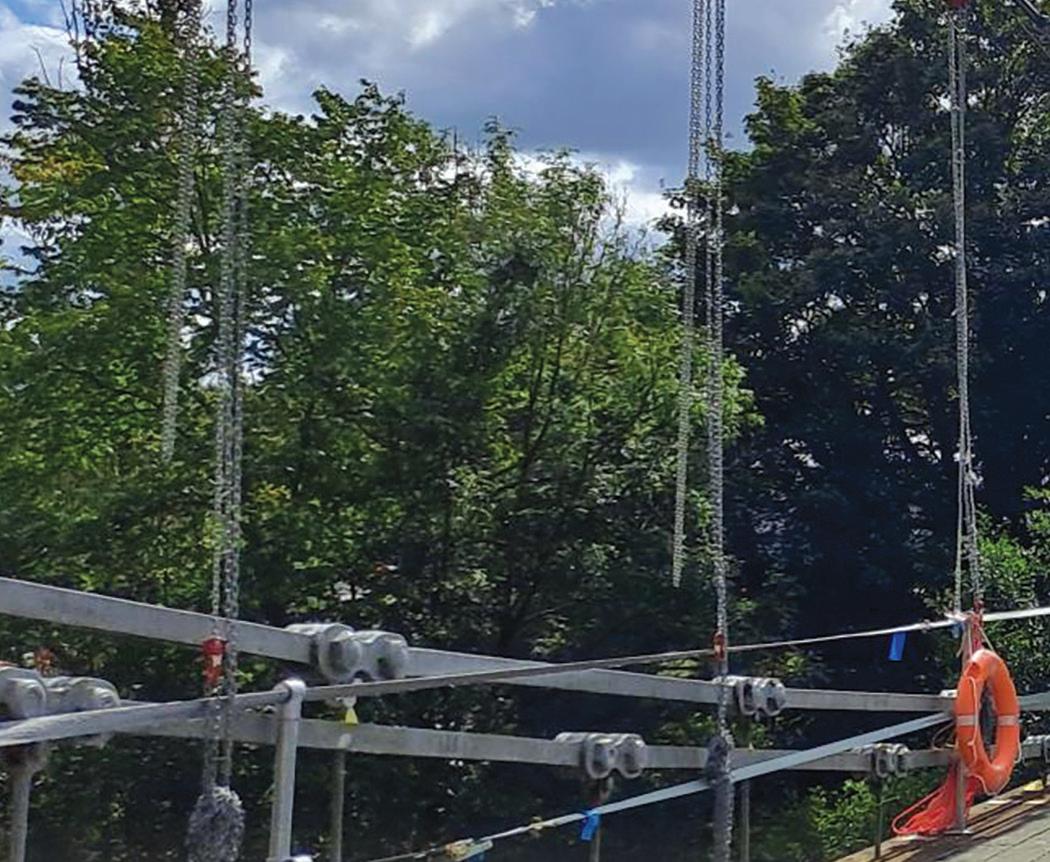

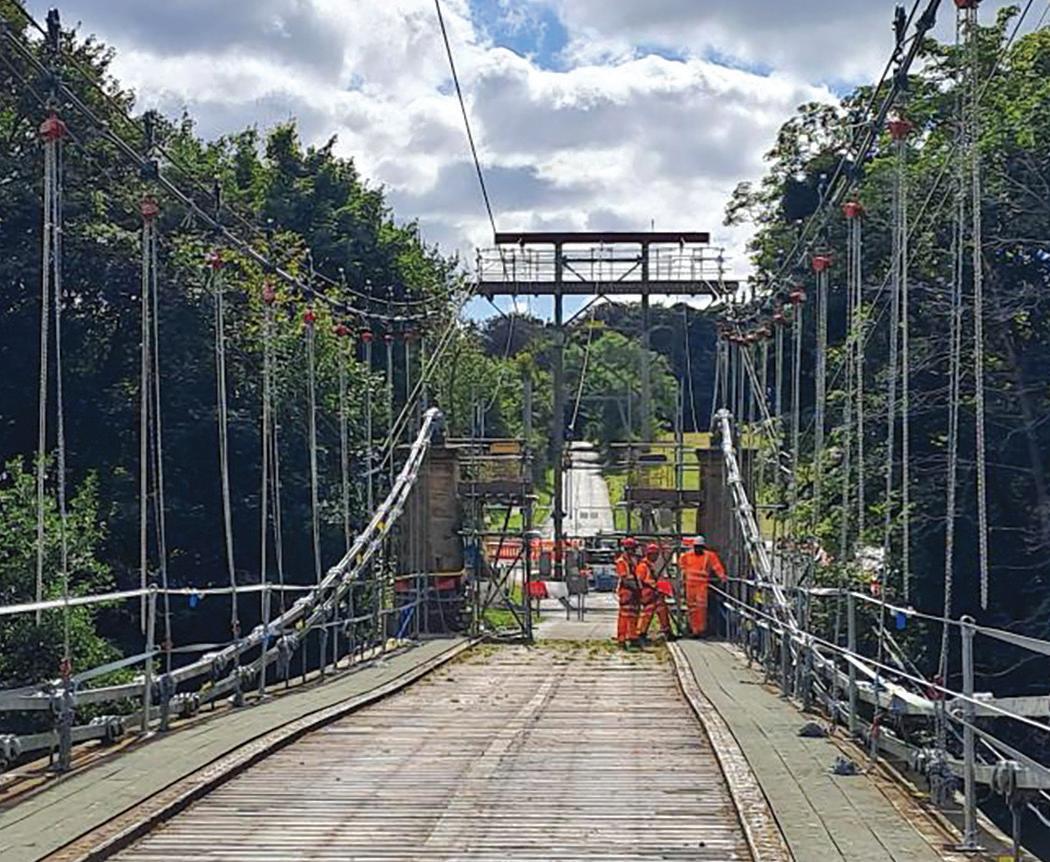


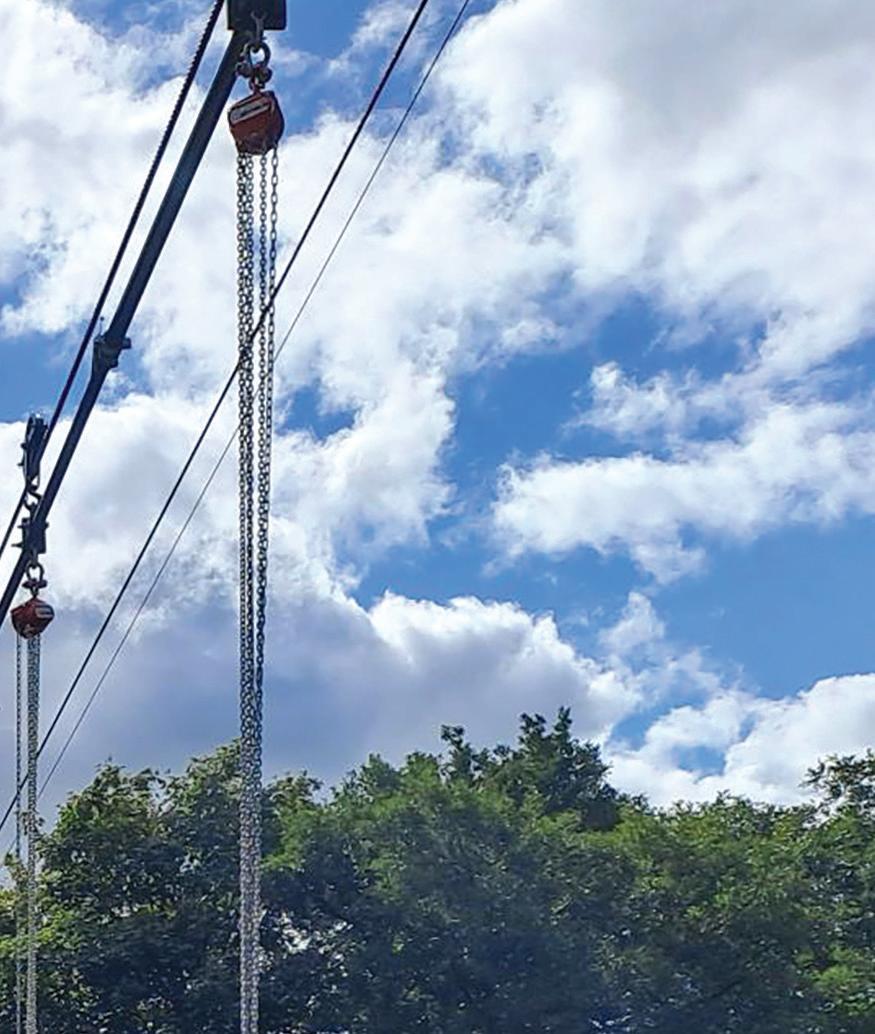
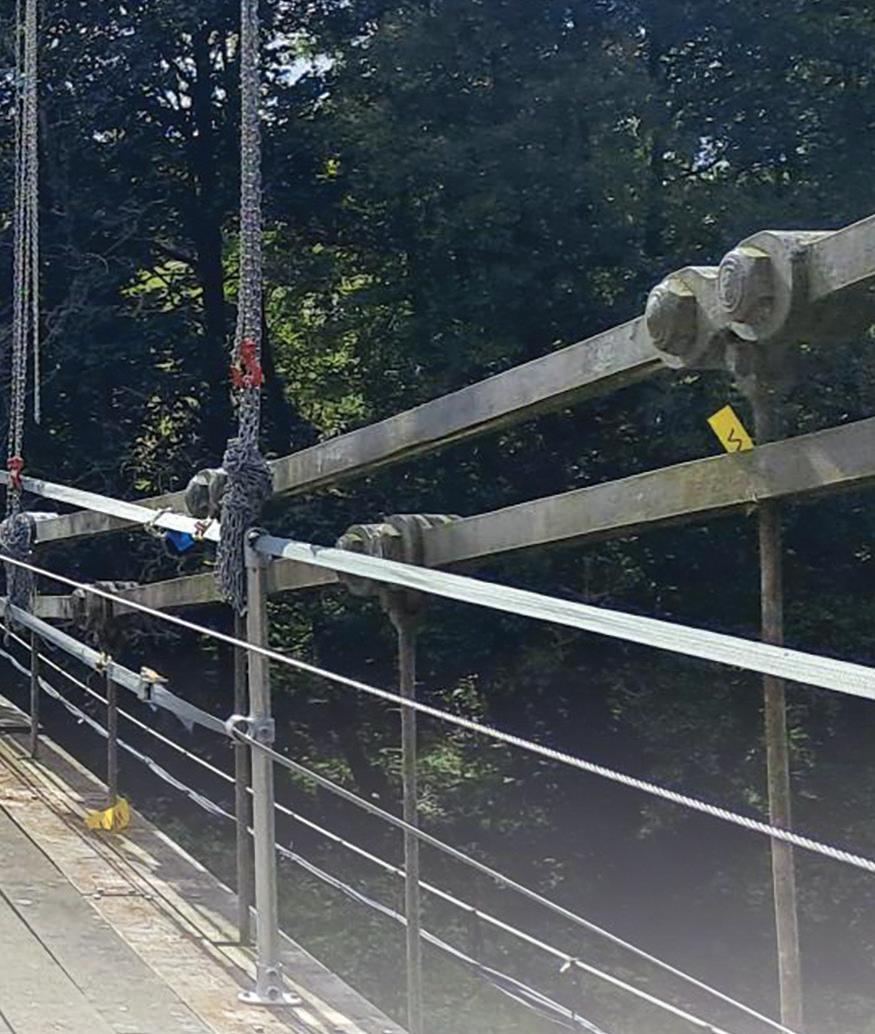




In England, the temporary cable crane structure - designed by CaSE Civil & Structural Engineering - used a range of Mabey Hire’s propping equipment, including the Mass 50, System 160 and Mat 125 products
Whorlton Bridge in England’s County Durham has had to be closed to tra c while a major programme of works is carried out. Every component is to be removed, refurbished and replaced.
To facilitate the works, a bespoke catenary system has been installed, with Mabey Hire’s adaptable and modular propping equipment used to construct the temporary structure.
Whorlton Bridge is one of the UK’s oldest road suspension bridges. e timber deck is supported by its original iron chains. Opened in 1831, it was originally designed to carry horse-drawn carts loaded with coal from Durham coal elds. As with many such historically important bridges, it has preservation orders on it regarding what can and can’t be done in order to maintain much of its original appearance.
After a routine inspection, the single-lane road bridge was formally closed to tra c in December 2020. Subsequent assessments concluded that the structure could not withstand the e ects of load combinations for pedestrians or vehicles, with the main chains and link pins also failing under loading.
A programme of works started in early 2024 following consent from Historic England, an executive non-departmental public body of the UK
ABOVE
Whorlton Bridge - one of the UK’s oldest road suspension bridges and with a timber deck supported by original iron chains – had to be completely dismantled and all components inspected, shotblasted, tested and repainted (image courtesy Maybe Hire)
government, tasked with protecting the historical environment. e entire structure of Whorlton Bridge had to be dismantled and all components inspected, shotblasted, tested and repainted. e parts will then be returned to their original position and as much of the original materials reused where possible.
VolkerLaser, as specialist bridge refurbishment contractor, was appointed by Durham County Council to carry out the structural rehabilitation works. ese were delivered in line with Historic England’s parameters and in coordination with the UK government’s Environment Agency.
Due to logistical challenges, it was decided that while the entire structure was dismantled piece by piece, a temporary catenary system would be installed to support the existing cables below the deck. Designed by CaSE Civil & Structural Engineering, the temporary cable crane structure used a range of Mabey Hire’s propping equipment, including its Mass 50, System 160 and Mat 125 products (see box).
“Working with CaSE Civil & Structural Engineering, we knew that we wanted a proprietary system that o ered an adaptable ‘o the shelf’ solution,” explained Chris McHutchison, senior project manager at VolkerLaser. “We were attracted to Mabey Hire not only for their comprehensive and readily available
product portfolio but also the detailed technical information made available. anks to the modular nature of the kit [temporary cable crane structure], we were able to easily interchange it with other systems, as well as minimise onsite fabrication due to the equipment arriving ready to install.”
e temporary cable crane is formed of two pivoted towers, which stand on the north and south sides of the bridge. It features ve suspended catenary cables, spanning around 95m between the two towers.
“While this was the rst time working with Mabey Hire in my current role at VolkerLaser, I have worked with them numerous times throughout my time in the industry,” said McHutchison. “Whorlton Bridge certainly… presented a lengthy and challenging early design process as a result of the bridge’s listed status. We had to clearly demonstrate our proposed plans and gain approvals from Historic England and other parties.”
Mabey assisted VolkerLaser with design and technical advice, including recommendations on what equipment would be best for the project requirements. Maybe has been working alongside VolkerLaser teams to gain sign-o on the proposed temporary works scheme. e cable crane was successfully installed onsite last September, with works to remove the timber deck, supporting beams, hangars and rods underway. e components will then be moved to a secure workshop for inspection and refurbishment.
With one of the largest range of temporary propping systems for hire, Mabey Hire’s solutions range from 100kN to 8000kN load capacities. ese are used to facilitate modular towers, façade retention schemes and propping and shoring.
Meanwhile, for over 30 years, VolkerLaser, based in the English city of Worcester, has been working to protect, repair, strengthen and refurbish the built environment for clients across the UK construction industry. e company’s structural solutions include bridge deck waterproo ng, expansion joints, concrete repair and cathodic protection works, steel repair



The Mass 50 system is made up of components which are compact enough to be manhandled if necessary. The robust design, from galvanised coldformed steel allows it to support loads of up to 600kN on a single leg. Projects can, therefore, be completed with fewer components and a saving on assembly time.
The Mass 50 system also has both mechanical and hydraulic capacity and can be supported with Maybe’s realtime monitoring system.
System 160 is a compact propping system for use in temporary works. It is suitable for use in propping, needling and formwork applications and o ers a
medium load capacity, supporting loads of up to 200kN. It’s design allows easy installation and use onsite.
Mat 125 is one of Maybe’s high-load propping systems. Robust and versatile, it has a capacity of 1,550kN per column and is, according to Maybe, ideal for projects such as bridge support and back propping.
With its high load capacity, the Mat 125 propping system can be used for individual propping or built into high strength towers and trusses. It is frequently used with Maybe’s Hymat Jacks to pre-load, strike or li from the top of props and is fully compatible with the company’s Mass systems.
and strengthening work, carbon bre and temporary works, jacking and bearing replacement. VolkerLaser also provides specialist lightweight decking and access solutions, as well as being specialists in long bridge and cable refurbishment.
BELOW
Mabey Hire’s adaptable and modular propping equipment was used to construct the temporary catenary system in order to support the existing cables below the bridge deck (image courtesy Maybe Hire)
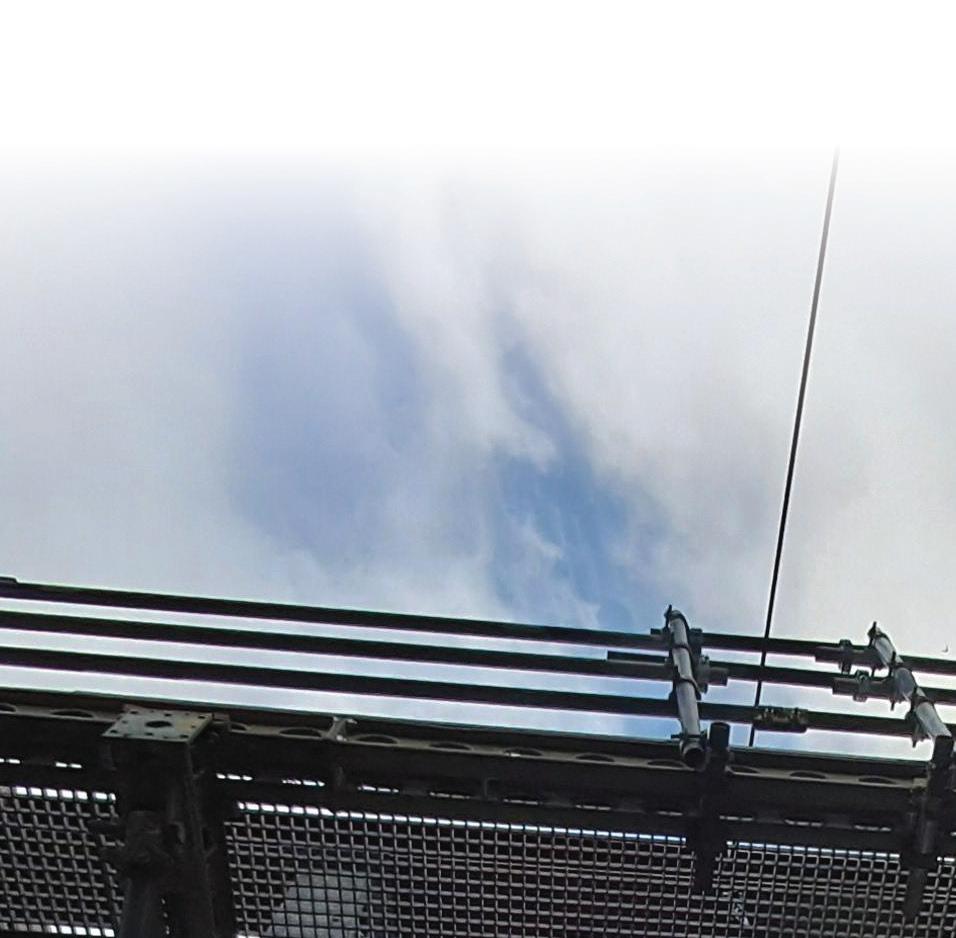

CaSE Civil & Structural Engineering was founded in Sydney, Australia, in 2017 and now has o ces in Australia’s Queensland, Victoria and New South Wales states as well as in New Zealand, US, Brazil, UK and Spain. e company’s many contracts include the Australian West Gate Tunnel Project worth AUS$2.7 billion - a partnership between the Victoria state government and Transurban and for which CaSE & Pike Design was awarded several bridge engineering and temporary works packages. End www.mabeyhire.co.uk www.volkerlaser.co.uk/en www.case.international/the-case-group

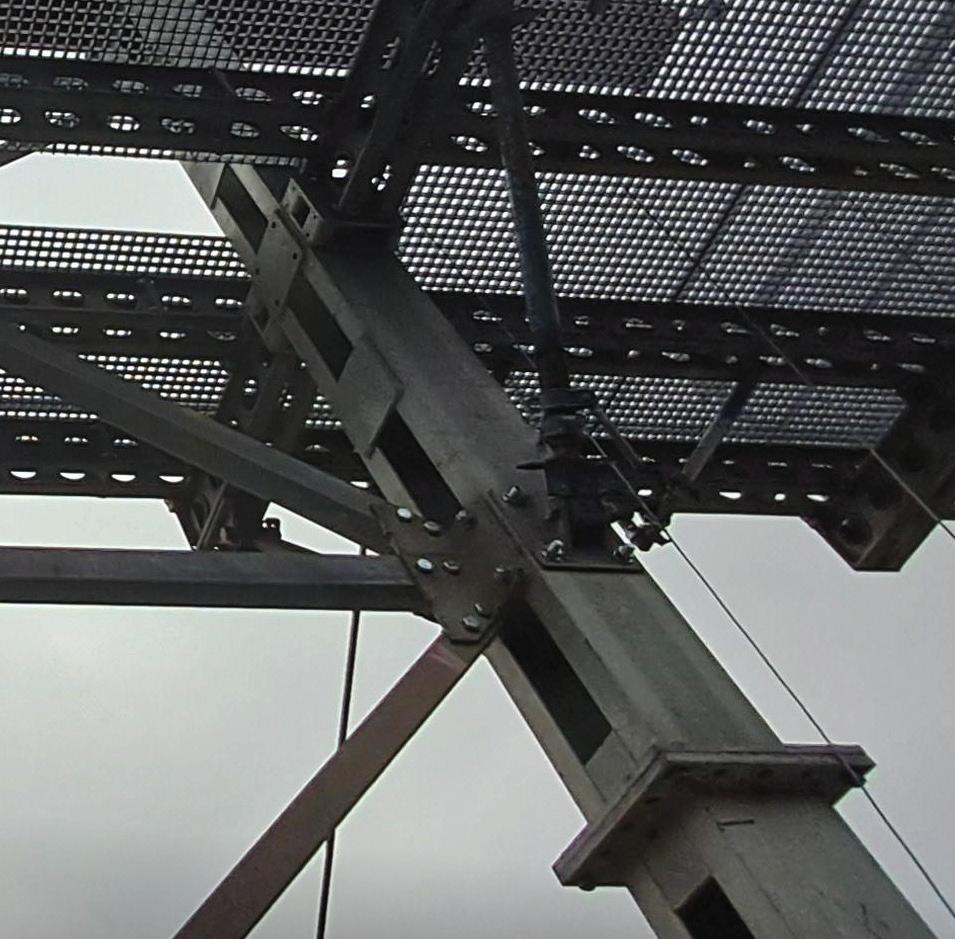

Fischer says that its concrete-to-concrete shear connector system FCC is ideal for repairing and reinforcing bridges, as well as other structures through concrete overlay.
Variable anchoring depths allow ideal adaptation to the acting load, according to the company, based in Waldachtal in Germany’s northern Black Forest.
The latest addition to the range is the fischer FCC-B bridge cap anchor (M16-24). This solution can be used in combination with the FIS EM Plus or FIS SB injection systems to permanently and securely anchor caps and edge beams on bridges and can be adapted to di erent construction site conditions.
The general design approval of the concrete connector FCC provides planners, structural engineers and users with certified safety when using the FCC-B as a bridge cap anchor together with the ETA-assessed injection mortars. The European Technical Assessment (ETA) provides an independent Europe-wide procedure for assessing the essential performance characteristics of non-standard construction products. The ETA o ers manufacturers a voluntary route to CE marking, when the product is not or not fully covered by a harmonised standard (hEN) under the Construction Products Regulation (EU) 305/2011.
The fischer Group of Companies generated sales of 1.11 billion euros in 2024 with a worldwide sta of 4,700 employees. The family-owned company runs 50 operational companies globally and exports to about 120 countries. It includes four divisions - fischer Fixing Systems, fischertechnik, fischer Consulting and fischer Electronic Solutions. www.fischer.group
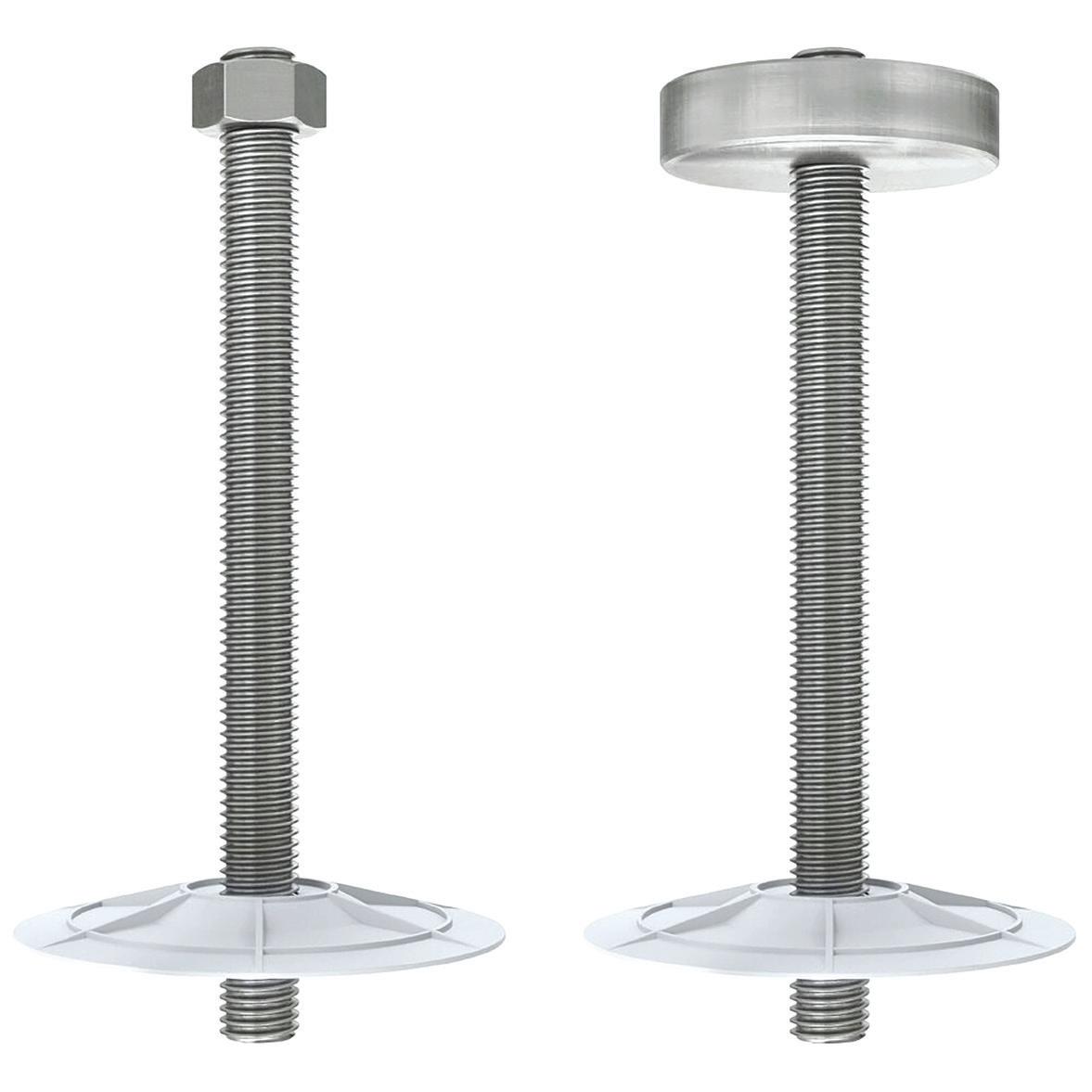
Caps and edge beams on bridges can be anchored permanently and securely with the fischer FCC-B bridge cap anchor together with the FIS EM Plus or FIS SB injection mortars (image courtesy fischer)





















































































































































































"Our Skidmarks page is highly rated by readers. Your input could help make this page even more entertaining. If you come across any amusing road-related stories, pictures or videos, email me at mwoof@ropl.com"
Mike Woof
A rather unusual motorcycle originally dating from 1922 came up for auction recently in the UK. Although featuring a conventional petrol engine, the Douglas motorbike was converted to battery power in 1942 during WWII, when fuel was rationed. ought to be the oldest electric motorcycle in existence, the bike can travel at up to 30km/h. Its three 6V lead-acid batteries allow three speeds and were said to be able to power the bike for a whole day without needing to recharge.
e UK’s busy M25 motorway had to be closed temporarily when a truck carrying milk overturned and spilled its load. Tra c ground to a halt as emergency services arrived to clean up the mess.
A woman in Melbourne, Australia had a nasty surprise when driving her car recently. She felt something moving on her leg, only to realise it was one of the world’s most venomous snakes. She managed to steer o the busy road and onto the hard
shoulder before jumping from the vehicle to escape the snake. Other people then called the police after passing and seeing the woman with no footwear and looking visibly distressed at the roadside. Luckily, she was not bitten by the snake, which was caught later by an experienced snake handler.
Police in Brittany, France were surprised recently when they discovered a mobile home parked in an extremely unusual way. e vehicle had somehow managed to swerve o a road and into a ditch. Bizarrely, the front of the vehicle was wedged in the ditch, with the rear axle well in the air and the mobile home canted forward at such an angle it seemed in danger of falling forward onto its roof. e driver was nowhere to be seen however, leaving the o cers who had found the vehicle somewhat ba ed. e driver was located a short while later and was not seriously hurt. e vehicle was recovered, though whether it can be repaired remains to be seen. And the police are still ba ed as to how the driver managed to
One owner only, light restoration needed – image courtesy of reader David Arminas

crash a mobile home in such an unlikely fashion.
A Tesla electric car went out of control in a car park in Sydney, Australia recently. e car was operating in autopilot mode and bashed into a series of vehicles, before plummeting from the car parking facility. e two occupants su ered only minor injuries from the incident. Meanwhile, in the UK an electric car owner was mysti ed when he received a bill for driving into the central low emission zone in London. He had owned the EV for two years but had recently been given a personalised plate for it by his family members. e
car was still registered as an EV but had not been picked up the system. He was able to claim a repayment, eventually.
















Encyclopædia Britannica, Inc. https://www.britannica.com/





A man in Utah bought a Subaru car recently from a dealership, only to discover that the vehicle had a number of faults. He was highly displeased at this, and all the more so, when he realised that the ‘sold as seen’ agreement for the purchase meant that the dealership would not accept the vehicle back and the money repaid. And nor would the dealership pay for any necessary repairs either. His response was to drive the car through the glass front of the dealership, abandoning the car there. Police were called immediately afterwards.




Italy’s famous Appian Way is now added to the Cultural Heritage list made up by the United Nations. The Appian Way dates back over 2,000 years to the Roman Empire and runs from the city of Rome to South Italy. The road was made infamous a er the third revolt of slaves (Third Servile War) in Roman times. Headed by escaped gladiator Spartacus, this revolt was eventually put down amidst great brutality. And the 6,000 surviving slaves were crucified along the route of the Appian Way as a warning.