

































































































































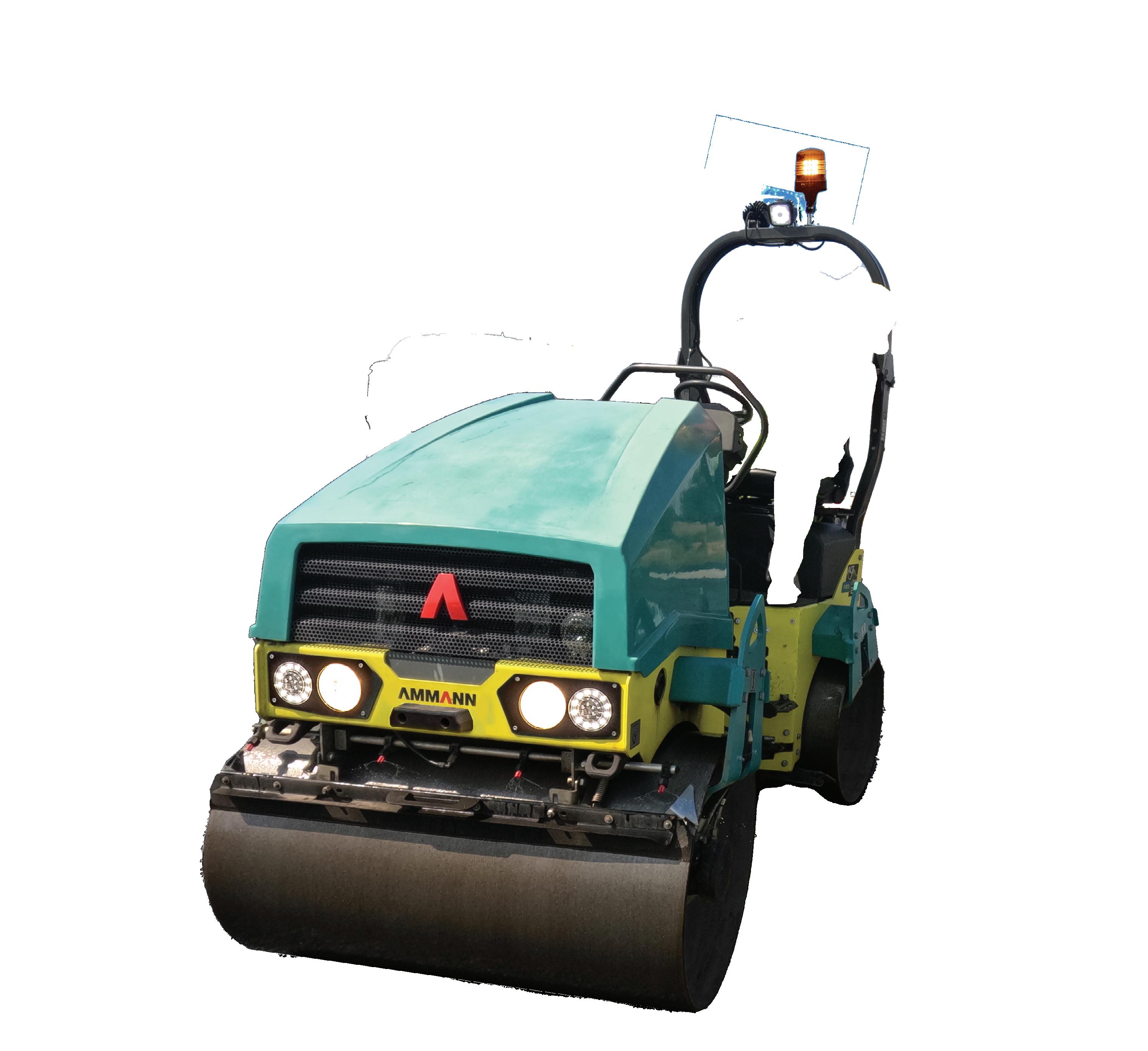
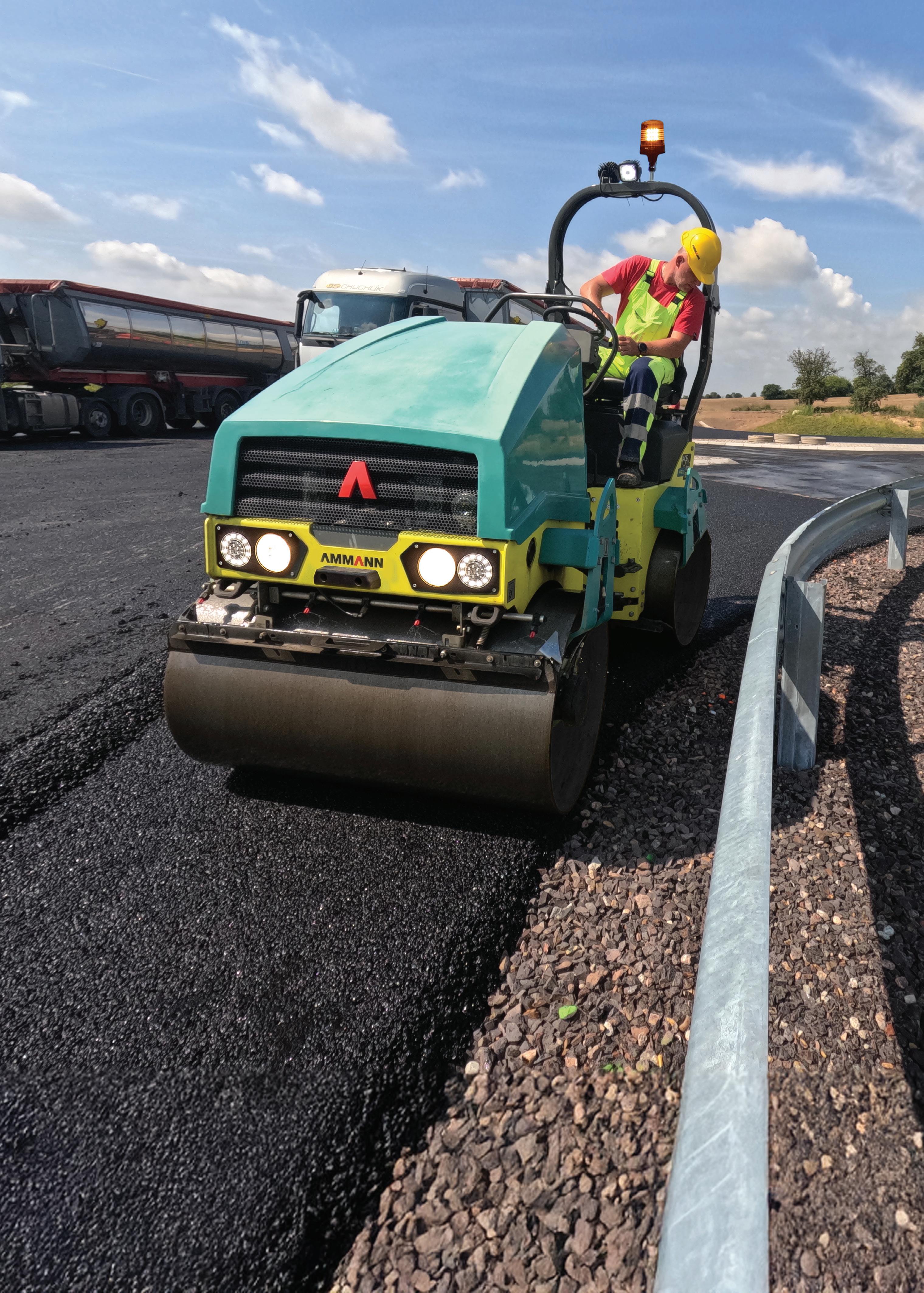
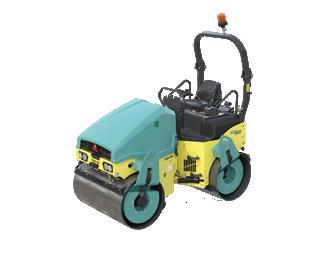
Ammann ARX Light Tandem Rollers excel in the open, where covering ground quickly is the goal. But other jobsites call for a compactor that can work tight against obstructions, such as curbs, without losing productivity.
OTHER KEY FEATURES:
• • Electronic drive lever for smooth starts and stops, especially important on asphalt jobs
• • Optional ACEforce , the Intelligent Compaction tool for optimal efficiency
• • Perfect all-around machine visibility and LED lights for safety on the jobsite




EEDITOR, Mike Woof mwoof@ropl.com




“Given the cost and technical challenges involved, there is a great deal of scepticism in Italy as to whether the Messina Strait bridge will ever be built”
very once in a while, a project comes along that is so incredible that it stands out on a global level. It might be because it is so incredibly costly. Or it might be because it is so challenging from a technical viewpoint. Or it might be because it o ers a solution to a transport problem that has been around for many years. e Channel Tunnel linking the UK with France, or the Øresund bridge between Denmark and Sweden or the cross-sea bridge connecting Hong Kong, Zuhai and Macau (HZMB) in China would all t that bill.
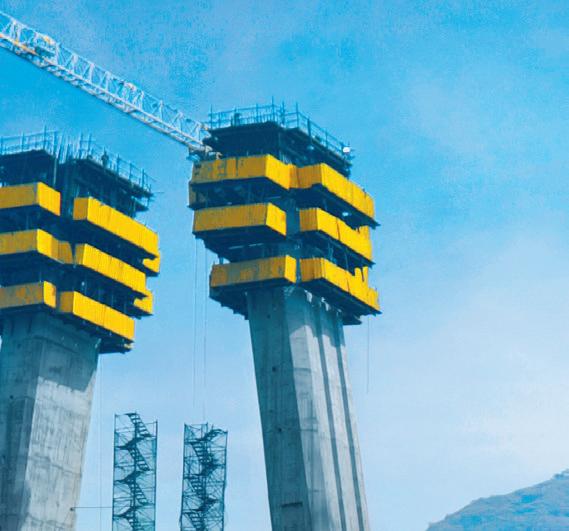
In the case of Italy’s Messina Strait Bridge project, it ticks boxes in all three categories. First proposed 2,000 years ago (yes, you read that correctly) in Roman times, a bridge linking Calabria in Southern Italy’s mainland with the island of Sicily would deliver a muchneeded, economic boost to two of the country’s most deprived areas. Tourism, which the bridge would boost considerably, is important for Calabria and even more so for Sicily. e link would also help develop industries in both regions.
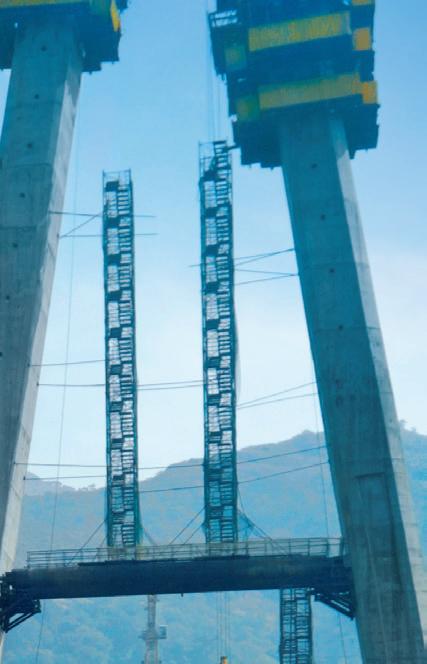
But building the bridge will require major technical challenges to be met. e Messina Strait has ferocious tidal ow and is also a busy channel for vessels, so it would mean no bridge supports can be in the channel. And this region of Italy also experiences severe earthquakes periodically, which the bridge would have to be able to withstand. e rigid nature and limits on span for cablestayed structures or box-girder designs mean that these would be unsuitable. e only practical solution will be a suspension bridge. However, this will have to be a suspension bridge like no other, with the longest central span and highest support towers ever. And it will cost an estimated €13.5 billion to construct.
e proposed 3.6km bridge will feature three tra c lanes in either direction as well as two rail lines and facilities for pedestrians and cyclists. Given the cost and technical challenges involved, there is a great deal of scepticism in Italy as to whether the Messina Strait bridge will ever be built. Some criticise the environmental impact such a bridge will have, while others say the massive cost will not be justi ed in economic terms.
e current Italian administration is keen on the project, while feasibility reports have been delivered. But the bridge project has been cancelled before. End

Editorial Editor Mike Woof
Deputy Editor David Arminas
Sub-Editor Elizabeth Kaye
Editorial Contributors
Shem Oirere, Kristina Smith, Mauro Nogarin, Eugene Gerden, Partha Basistha, Lucio Garofolo
Editorial Consultant Geo Hadwick

Designers
Simon Ward, Andy Taylder
Production Manager
Nick Bond
O ice Manager
Kelly Thompson
Data & Marketing Manager
Alan Cansick
Web Manager
Sarah Biswell
Managing Director Andrew Barriball
Chairman Roger Adshead
Email [initialsurname]@ropl.com (eg: radshead@ropl.com)
Advertisement Sales
Sales Director Graeme McQueen
Tel +44 1322 612069
Email gmcqueen@ropl.com
Sales Director Dan Emmerson Tel +44 1322 612068
Email demmerson@ropl.com
Italy Fulvio Bonfiglietti Tel +39 339 1010833
Email fulvio.bonfiglietti@ gmail.com
Asia / Australasia
Roger Adshead Tel +44 7768 178163
Email radshead@ropl.com
Printed by Warners (Midlands) PLC
03
Italy’s Messina Strait crossing has government approval, but 14 IRF
Certi ed learning opportunities from IRF Global; Conference & Exhibition from IRF Global 16
06




Melbourne’s new ring road; highway for Kenya; Volvo CE results; Francis Scott Key bridge demolition; Arizona transport upgrade; Vietnam expressway
10
Safety technology from Leica Geosystems; excavator digitalisation with Smart Construction; attachment guidance from Trimble; Topcon’s technology agreements
IRF Annual Conference; guidance for safe road design in Central Asia;
26
Resurfacing Jakarta Airport runway with Wirtgen; bio binder for Biggin Hill; resurfacing Ronald Reagan runway; SANY mill in the Maldives
31
Ammann’s new asphalt technology; Fayat’s new solutions; E-MAK expanding operations; relocating a Benninghoven plant























BETWEEN PAGES 25-26
KEY PROJECT REPORT P24-25 & D1-D6
A new cable-stayed bridge in India will be the centrepiece of an important bypass project that will boost safety and cut journey times
EUROFILE
NEWS D7-D8
EU reconsiders Chinese excavator tari s; Romanian bridge project; AtkinsRéalis and Jacobs win National Highways deal; Egis handling French project
EQUIPMENT D9-D10
Develon deal in Scotland; Engcon’s new tiltrotator; Epiroc’s advanced drilling rig
ONSITE D11
Tadano crane li s bridge sections on project near Zurich









Bridging India’s missing link










A new cable-stayed bridge in India will be the centrepiece of an important bypass project that will boost safety and cut journey times
See page 24







18



PTV for California; Q-Free tolling in the US; Yunex for Ann Arbor; SWARCO UK variable messaging; KIT bridge monitoring in Germany; Citilog’s tunnel safety; weigh-in-motion from Tra ic Safety Systems and Intercomp
NEWS D13-D14

NEWS D19-D24
Bengaluru road tunnel; Argentina restructuring road system; road works for the Philippines; new Morocco viaduct
EQUIPMENT D15-D17
Lintec plants for India; Hamm roller for Tier 3 markets; Atlas in Brazil; Volvo CE’s telematics o ering
The tower cranes used for the construction of the Gordie Howe bridge that will link Canada and the US have now been removed. Building the Gordie Howe Bridge that will connect Highway 401 in Canada with I-75 in the US has taken five years and the project is due for completion in late 2025. Meanwhile in New Jersey, plans are in hand for the new Newark Bay Bridge, which will cost an estimated $6.2 billion and form part of the New Jersey Turnpike. And in Canada, construction work is due to commence for Highway 413 to the east of Toronto.

36 ROAD RECYCLING
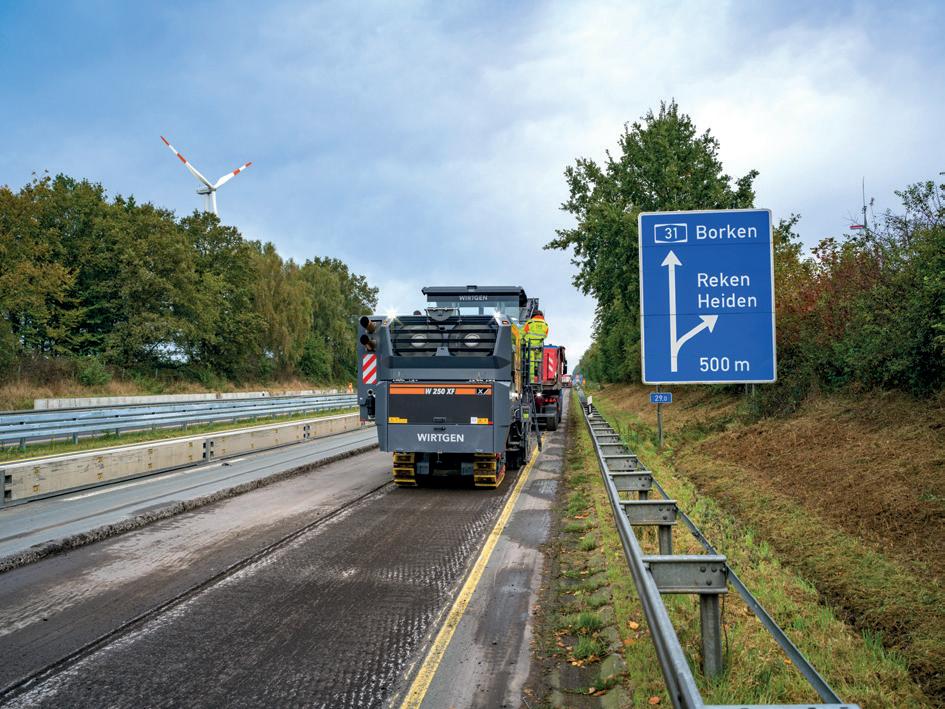
Wirtgen’s high-power recycler; Erbach o ers recycling solution; a new recycling attachment from ALLU

41 EARTHMOVING
Sophisticated earthmoving solutions from Caterpillar, Develon, Hitachi, John Deere, Komatsu, Liebherr




Electric compact machines from Hyundai and Volvo CE o er low-cost operation
44
CONCRETE PAVING & PRODUCTION
Sustainable concrete innovation; Wirtgen’s concrete milling system; concrete transport with CIFA; QMS o ers plant solution
Subscription rates & enquiries
Global Highways, is published 6 times a year by Route One Publishing Ltd. Global Highways is available on subscription at the rate of: UK£135 (US$225,€155) per annum.
Single copies £20 (US$33,€23).
Tel +44 1322 612079
Fax +44 1322 788063
Email subs@ropl.com
The 2025 US annual subscription price is US$225.00 Airfreight and mailing in the US by agent named Air Business, c/o Worldnet Shipping
48 ONSITE
Crusher upgrade from QMS to boost quarrying operation
Hydex adapts Rokbak haulers; Caterpillar’s service information
Further humorous roadrelated stories from around the world
Increasing levels of digitalisation are changing the face of the construction industry, with o -highway machines bene ting from the incorporation of sophisticated technologies. According to the Association of Equipment Manufacturers (AEM), there are three aspects of modern construction equipment that continue to evolve the latest, more technologically advanced machinery. AEM has published Guidance Documents to help ensure conversations and communications surrounding these topics are conveyed clearly, consistently, and accurately.
Similarly, the German construction machine manufacturing association, the VDMA, is looking at simplifying digital communications for construction machines. e MiC 4.0 working group is an association of leading companies from the VDMA and aims to deliver better digital communications for the construction machinery market.
e key issue is that the construction sector is not what it was. In the past, projects would follow plans set out on paper. Design errors could be complex and costly to x. Mistakes made by machine operators would require reworking, an additional cost that would extend the time needed for a job.
is is changing fast. Jobsites can be organised using building information modelling (BIM) processes. Meanwhile, new machines can be controlled remotely, semi-autonomously, with technology taking over basic tasks such as steering or attachment control. Digital data can be supplied to the machines from the digital plan, with data also being retrieved from entire eets of machines simultaneously.
In the recent past, machines used systems speci c to manufacturers. But this is changing, with organisations like the AEM and the VDMA working hard alongside the manufacturers and technology suppliers to ensure compatibility.
ere are issues, with cybersecurity being one key concern. But the moves made by the AEM are helping ensure the technology works e ciently and safely. e AEM says that its Guidance Documents will help industry professionals understand all the issues involved in this advanced construction technology.
Inc., 156-15, 146th Avenue, 2nd Floor, Jamaica, NY 11434, US. Periodicals postage paid at: Jamaica, NY 11431
US Postmaster: Send address changes to Global Highways, Air Business, c/o Worldnet Shipping Inc., 156-15, 146th Avenue, 2nd Floor, Jamaica, NY 11434, USA. Subscription records are maintained at Route One Publishing Ltd, Second floor, West Hill House, West Hill, Dartford, Kent, DA1 2EU, UK. .
Air Business Ltd is acting as our mailing agent.


Construction work for the first section of the ring road around Melbourne, Australia, will have to be ahead of schedule
This initial stretch of the $20.4 billion Outer Metropolitan Ring Road was due for completion in 2036 but will have to be ready by 2031 to avoid gridlock according to planners working for the city government. e Outer Metropolitan Ring Road will feature four lanes in either direction and will be 100km-long, linking the M80 in omastown with the Princes Freeway in Little River. e whole project is due for completion in 2046.

Meanwhile, funding for the $10.1 billion (A$15.4 billion) South Road Project in South Australia is being provided jointly by the Federal Government and South Australia Government. ree TBMs are being used for the project. When complete, the twin Northern Tunnels will connect James Congdon Drive with the motorway to the south of Grange Road. e River Torrens to Darlington (T2D) Project is the nal 10.5km section of the North-South Corridor.







Construction of Kenya’s new Western Highway Project is expected to cost $541 million. The highway project is being planned by the Kenya National Highways Authority (KeNHA). The 180km alignment will pass through Busia County, Siaya County, Kisumu County, Homa Bay County, and Migori County. The route will link Busia on Kenya’s border with Uganda to Muhuru Bay, which is located on the shore of Lake Victoria and close to Kenya’s border with Tanzania. The highway will also pass around Kisumu and Kisumu International Airport. The sections around the Homa Hills and Gwassi Hills may pose technical challenges.
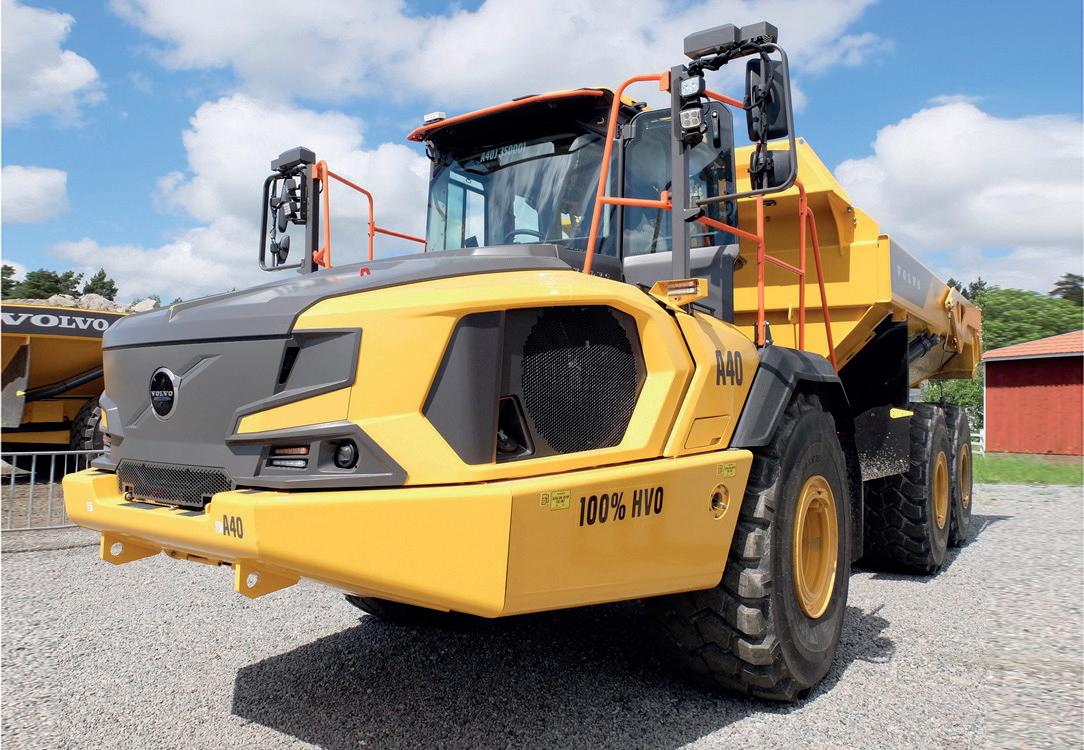
Volvo Construction Equipment (Volvo CE) says it is achieving good results amid industry challenges in Q2 2025. e rm has made several strategic announcements over the second quarter 2025 to stay closer to the customer and drive earnings resilience, as lower sales remain in Europe and North America. While order intake and deliveries have risen, and the total machine market has also grown, this second quarter has been impacted by a continuing decline in sales for Europe and North America due to market uncertainty.
In Q2 2025, net sales decreased by 6% to SEK 22,906 M (24,423). Adjusted
for currency movements net sales increased by 2%, of which machine sales increased by 2% and service sales were at. Adjusted operating income declined to SEK 2,993 M (3,888), corresponding to an adjusted operating margin of 13.1% (15.9).
e second quarter has seen net order intake increase by 24%, with orders for the Volvo brand increasing by 26%, driven by Europe and Asia. In Europe, dealer orders increased as inventory replenishment continued. Order intake in North America increased but continued to be on a relatively low level. Deliveries in Q2 were also 11% higher than in the previous year.













A budget worth $3.1 billion will tackle major road improvements for India’s tra ic-choked capital, Delhi. Six key road projects will be carried out by the National Highways Authority of India (NHAI), costing $2.75 billion. The work will stretch a total of 128km. An
additional 65km stretch for the Urban Extension Road II (UERII) will provide a link between the Delhi-Dehradun Expressway and Noida via Ghaziabad and Faridabad. A 17km road section will link the NH344M with Tronica City on Delhi’s north side. A 5km tunnel will link Mahipalpur with Nelson Mandela Marg.


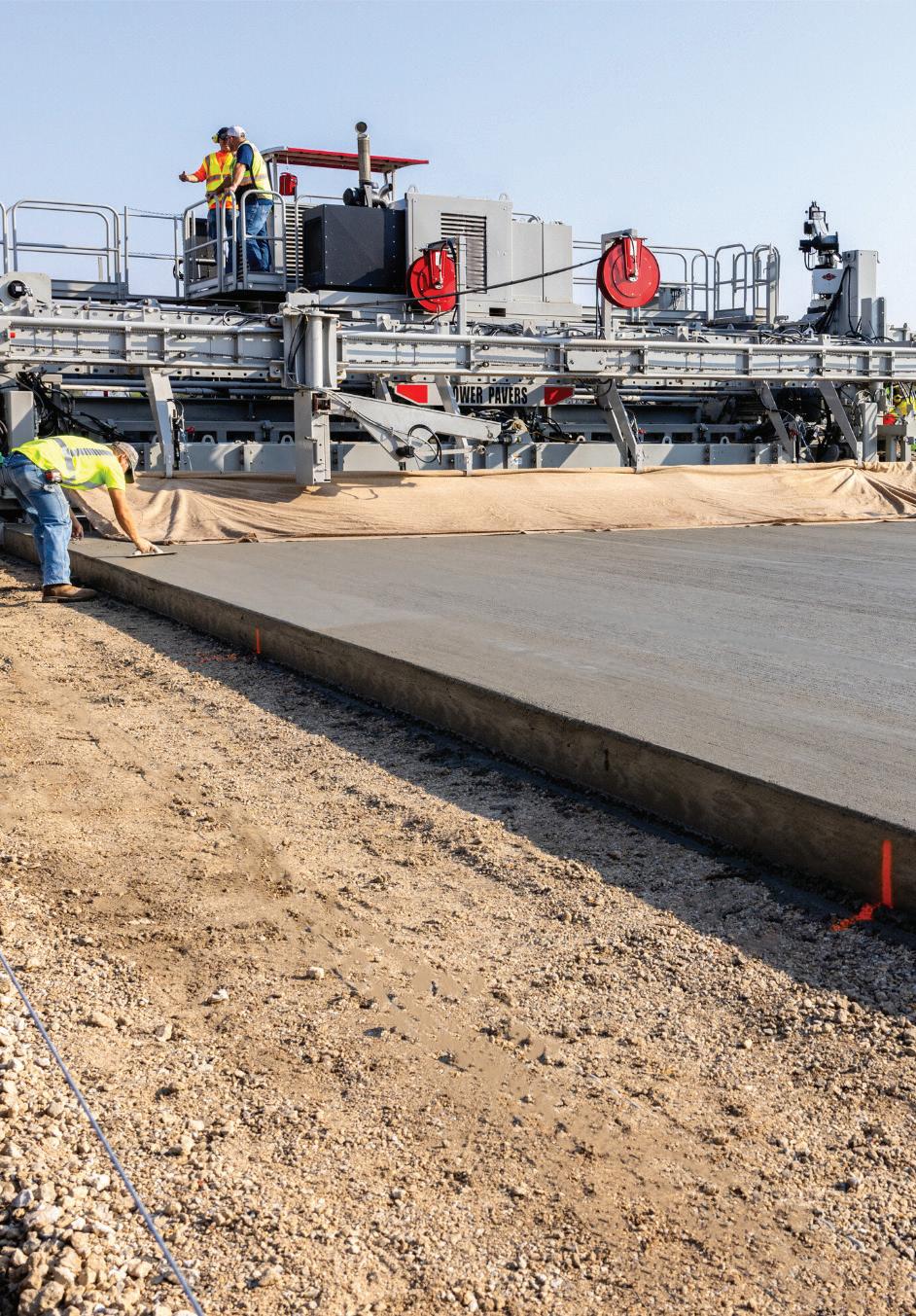







Demolition work is underway for the remains of the Francis Scott Key bridge link in the US and is being managed by the Maryland Transportation Authority (MDTA)






















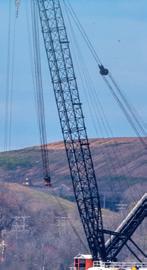








The bridge collapsed in March 2024 when it was struck by a container vessel. Warnings from the vessel’s crew meant tra c was stopped but six construction workers on the bridge were killed. e demolition work is expected to take several

months to complete. MDTA says that the work will require active tug and barge operations on the river.




a safer crossing for drivers than the earlier structure spanning the Patapsco River.











Construction of the new cable-stayed bridge is expected to cost up to $1.9 billion. Measuring around 3.2km in total, the new bridge will provid


A joint venture comprising STV and Michael Baker International will provide construction management and inspection services to Kiewit and Bridging Maryland




An $11.5 billion programme of works will be carried out to boost Arizona’s transport network over the next ve years. e 2026-2030 FiveYear Transportation Facilities Program will be carried out by the Arizona Department of Transportation (ADOT).
ADOT intends to invest $2.4 billion over the next ve years to improve or replace pavement and bridges on the state highway system. Highway pavement and bridge infrastructure






will be improved, boosting highway safety, e ciency and functionality. In addition to the resurfacing works and bridge upgrades, work will include intersection improvements, updates to points of entry and rest areas, smart technologies and new signals, signs and shoulders.
ADOT has also commenced work to reconstruct and widen I-10 between Kino Parkway and Country Club Road southeast of downtown Tucson.






Partnership, which is a joint venture of RK&K, JMT and WSP for the design-build project. e central span of the new bridge will be wider at 305m compared to the 213.4m of the collapsed structure. e bridge clearance will be 70m instead of the previous 56m.




© Tolu Owoeye | Dreamstime.com

A funding package worth $100 million is being provided by the ECOWAS Bank for Investment and Development (EBID) for Nigeria’s coastal highway project. The highway will provide an improved transport link between Lagos in the South-West of the country and



Calabar in Nigeria’s SouthEast. Lagos is close to Nigeria’s border with Benin while Calabar is close to the country’s border with Cameroon. This new highway project will also boost Nigeria’s international transport, especially with the development of the new route connecting Lagos with Ivory Coast’s former capital Abidjan, as well as improvements to major highways in Cameroon. The coastal highway project is expected to cost up to $10 billion in total to complete.
$1.53
Upgrade work is planned for the expressway connecting Ho Chi Minh City with Trung Luong and My Thuan. This project is expected to cost $1.53 billion, with the route being extended to a distance of 96km. Site preparation work is commencing in 2025. The construction work for the project will commence in 2026 and is expected to take until 2028 to complete.

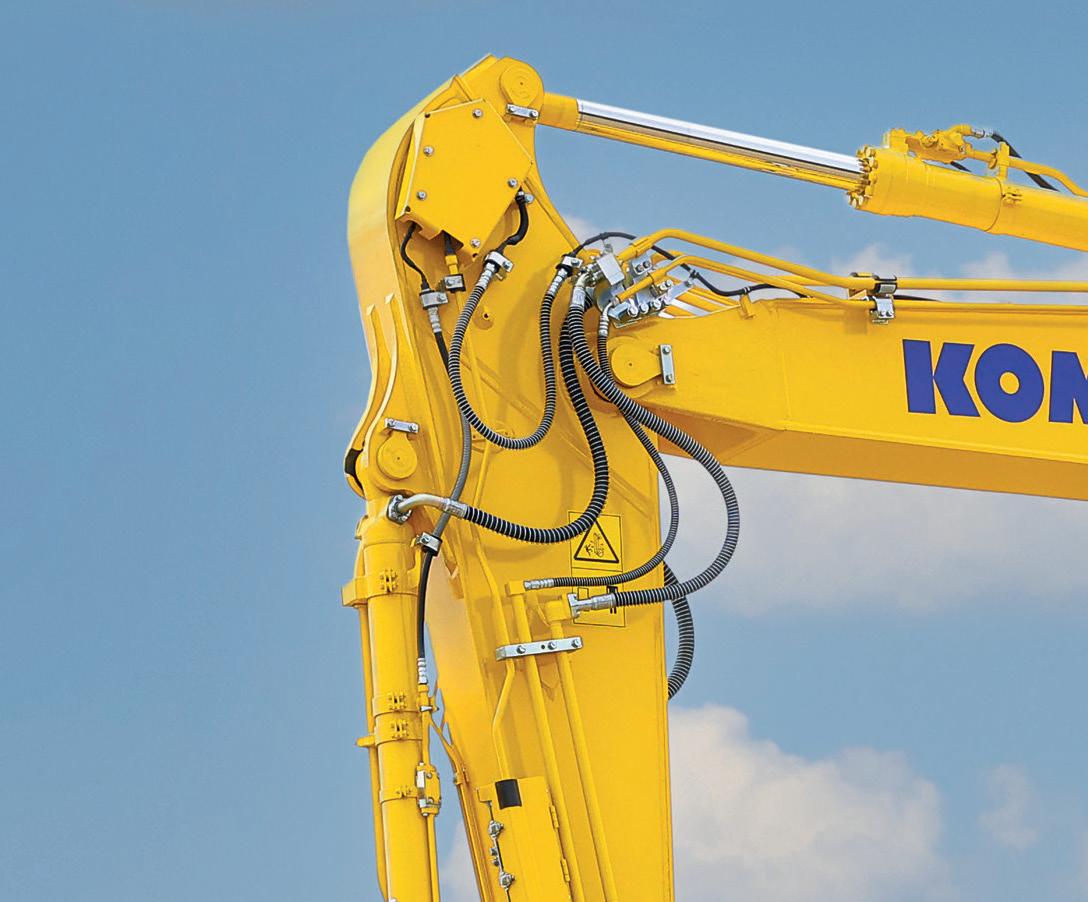
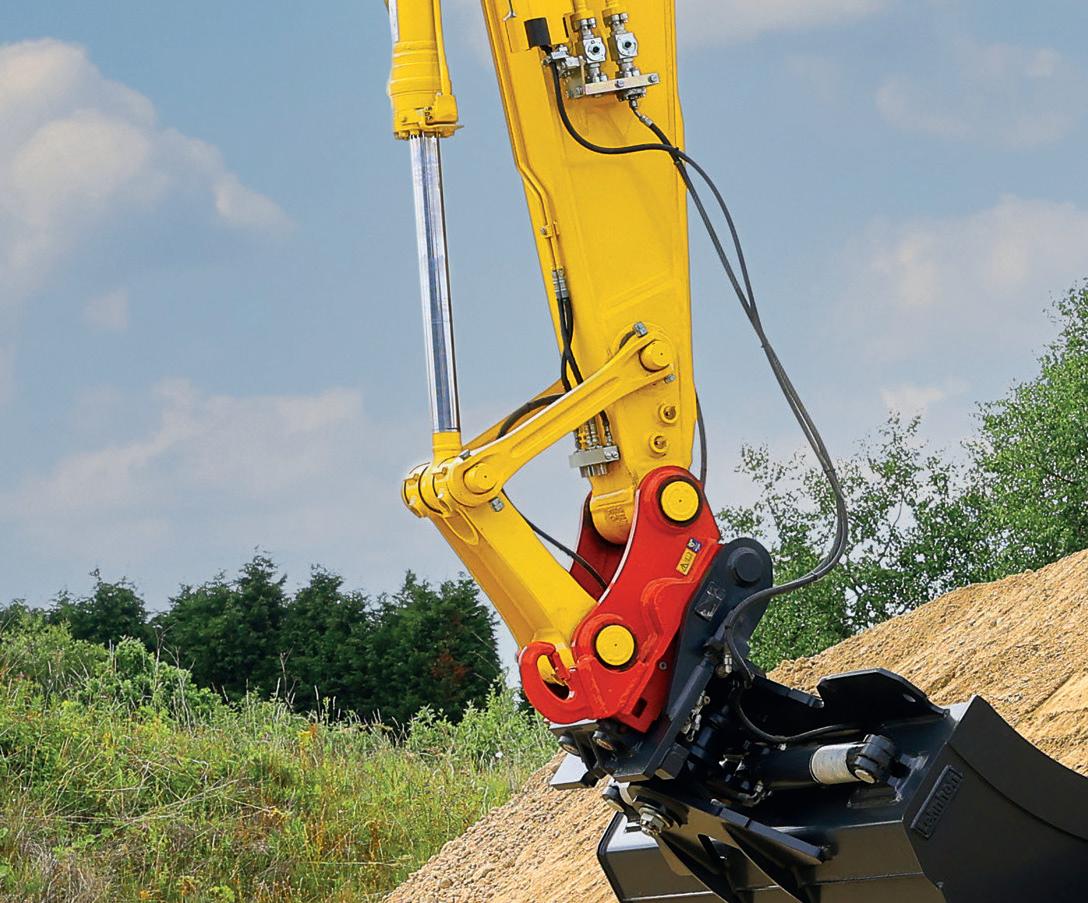

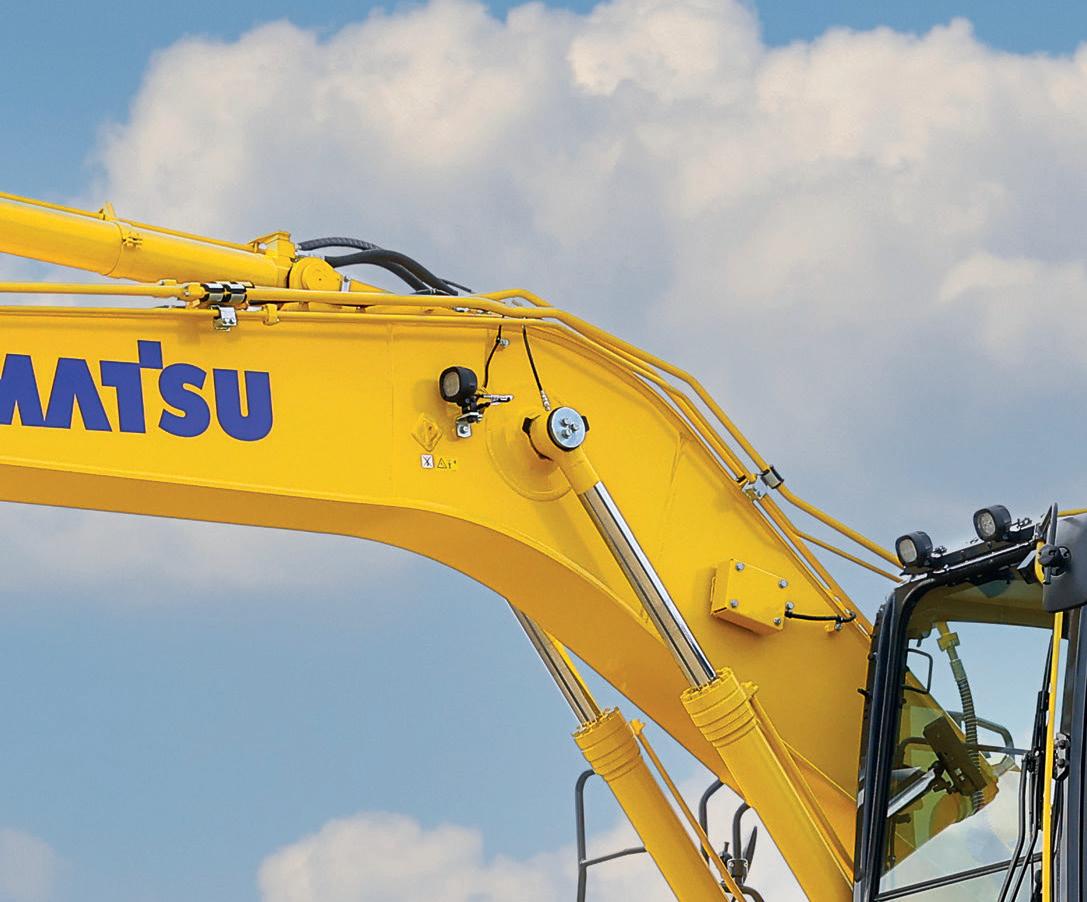
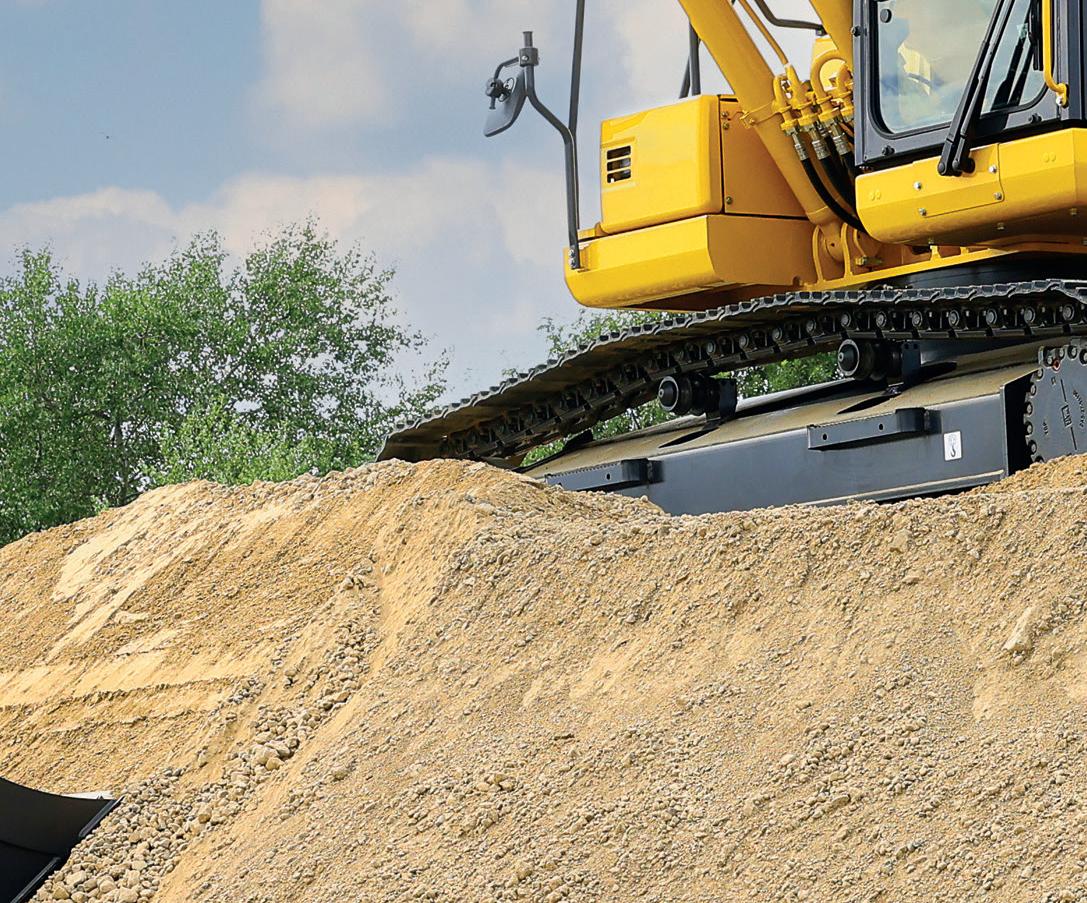

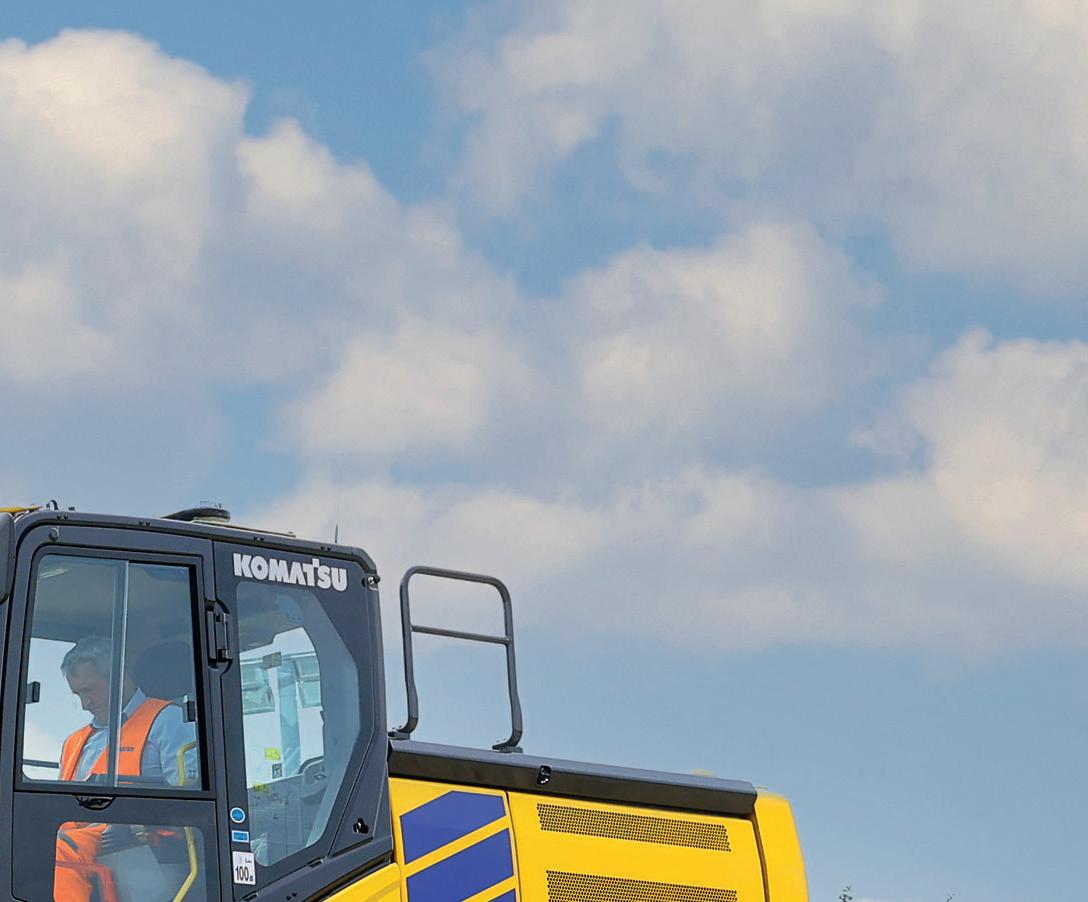




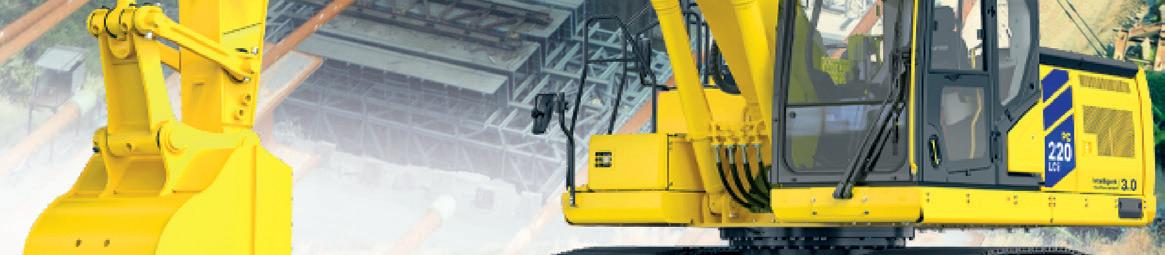
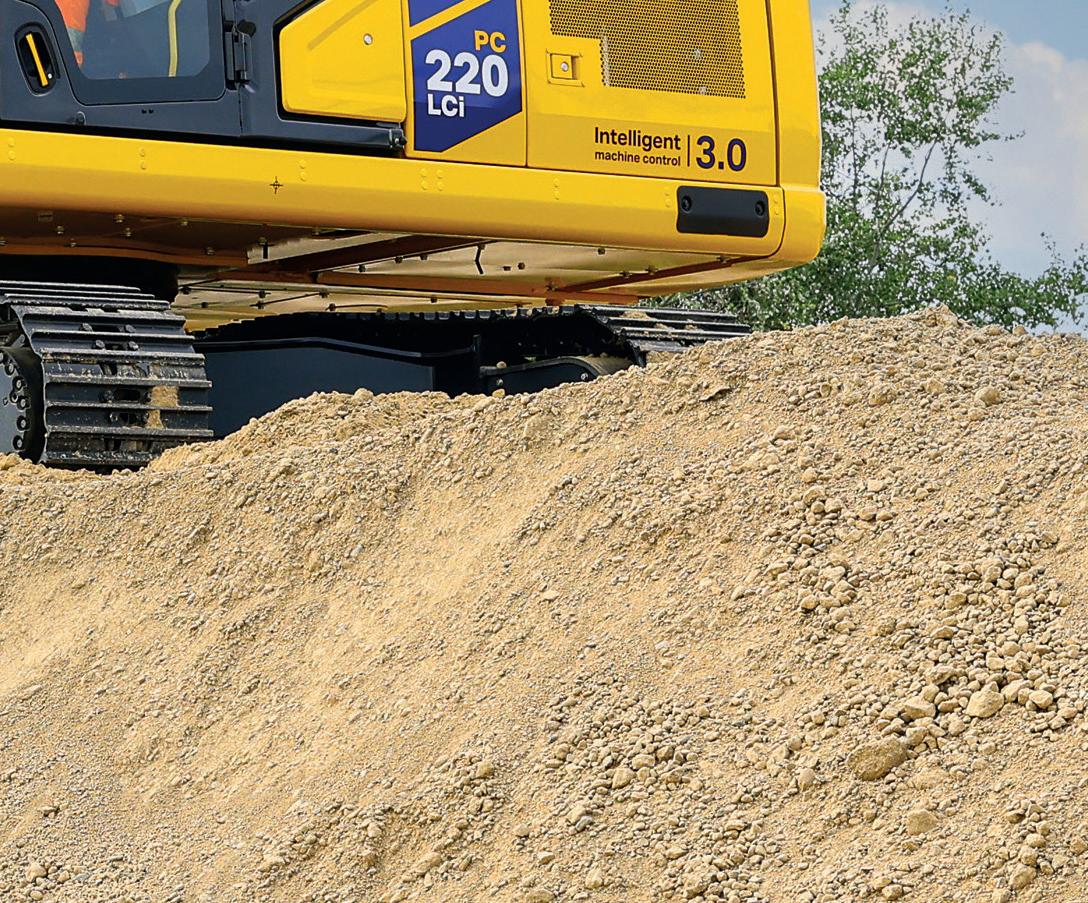
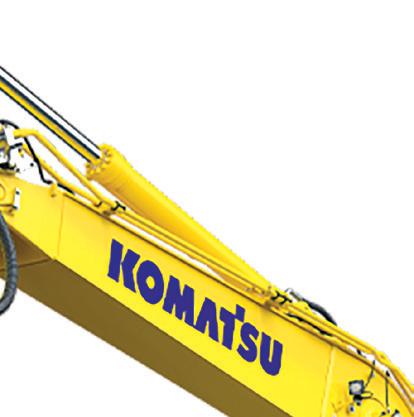
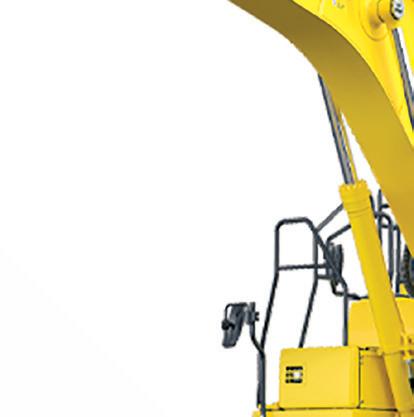
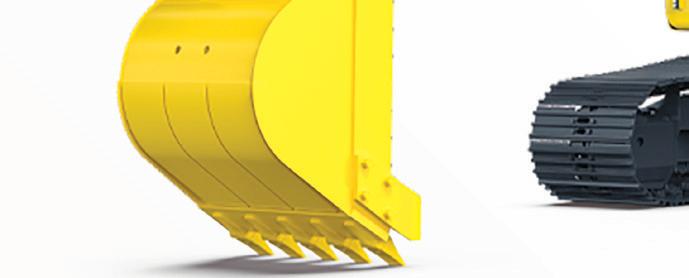
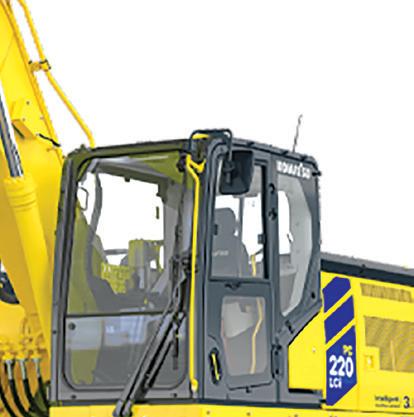
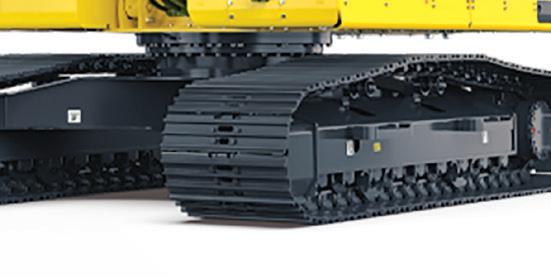
Introducing the most advanced excavator ever designed –the Komatsu PC220LCi-12. Built on the all-new powerful 129 kW high torque Komatsu engine and paired with the new high efficiency electronically controlled hydraulic system, this machine achieves 18% reduction in average fuel consumption, compared to the previous model. With the new generation intelligent Machine Control (iMC) 3.0 technology, this cuttingedge machine offers unique-in-the-market features such as auto-swing, swing-to-line and travel-along-line.





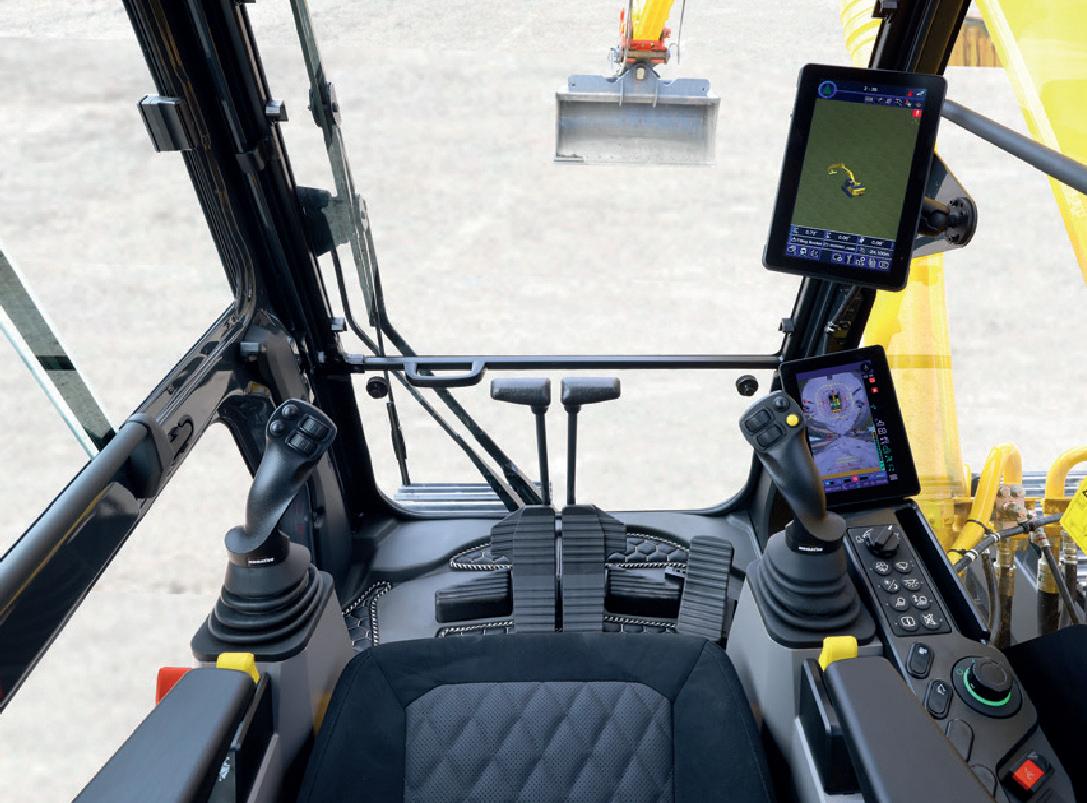












Leica Geosystems says that its new Xsight360 system can keep construction workers safe using AI-powered visual detection
The technology uses onboard cameras and edge AI to alert operators of hazards, surface operational insights, and deliver reports to optimise safety decision-making.
e system detects people or objects nearby and alerts the vehicle operator using sounds and visual cues. ese indicate the location and proximity of the hazard so that the driver can take evasive action. Video and alert data is transmitted to the cloud where agentic AI generates reports and recommendations for safety professionals.
e system’s visual AI models are trained for heavyconstruction operations and continuously improve performance through machine learning. e Leica CRS360 AI processor runs Presien’s advanced model to deliver low-latency operator alerts with minimal false alarms.
Utilising proven AI-detection technology, purposebuilt for construction environments, Leica Xsight360 mitigates risks in real time by detecting hazards to keep people safe on site. e system supports up to six cameras, providing 360°coverage on a construction machine to detect people, vehicles, and construction cones to boost safety.
Data is also sent to the Leica Xsight360 cloud platform, generating insights that allow managers to identify safety issues. e vast amount of video input is interpreted by AI and transformed into safety indexes, dashboards, and reports. Users can compare video footage to site-speci c safety policies, gaining an overview of regulation violations, so they can make better decisions.
e Leica Xsight360 solution minimises blind spots around machines and enables operators to stay alert with fewer job interruptions. In addition to increasing safety, the solution is easy to use and reduces incident-related project delays and costs.
“At Leica Geosystems, ensuring the safety of construction professionals is a top priority, especially as the industry advances towards automation. With our partner, we’ve developed an intelligent, adaptive system that enhances safety in the present with instant alerts and shapes future safety strategies through comprehensive reports,” said Neil Williams, president of Leica Geosystems’ Machine Control division.


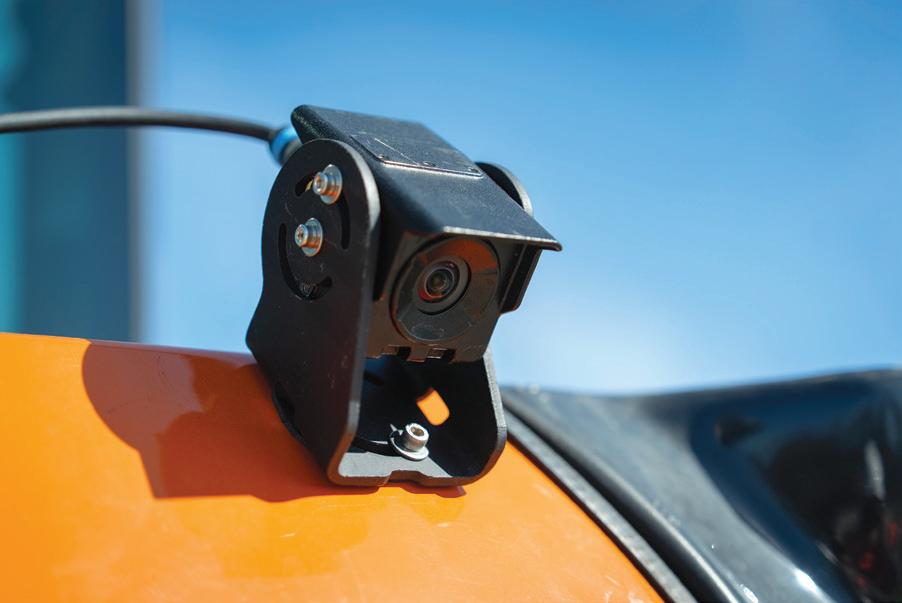
“Partnering with a global innovator like Leica Geosystems marks a signi cant step in our mission to bring AI to every machine. We’re proud to collaborate on a solution that empowers site teams and safety leaders to better protect people on the ground. Backed by years of industry experience, our tailored AI technology addresses the challenges of construction environments, delivering safety and productivity to the highest standards,” said Mark Richards, Presien’s CEO. End www.leica-geosystems.com www.presien.com
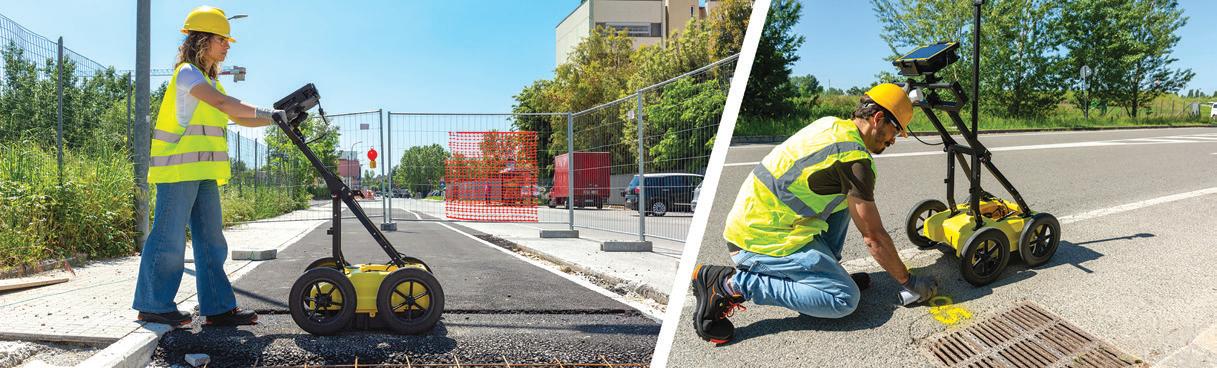
Leica Geosystems says that its new DS4000 utility-detection system can identify underground assets up to 60% deeper than conventional systems.
By integrating IDS GeoRadar’s patented Equalised Scrambling Technology (EsT), it detects underground utilities clearly at both shallow and deeper levels. It can even reveal smaller objects, such as fibreoptic cables.
Lightweight and portable, a single person can transport and operate the DS4000. The wheels can be swapped out, allowing a user to tackle flat surfaces and rough terrain. The antenna, which extends below the cart, is mounted on an automatic
ABOVE
Leica Geosystems is o ering a sophisticated tool that can help boost site safety
height-adjusting system that lowers it for detection and raises it to avoid obstacles, reducing the risk of damage.
The unit weighs 20kg and has a modular and compact design, a foldable handlebar for ease of use and storage and hot swap technology for the power supply that allows uninterrupted data acquisition.
The unit o ers real-time, on-site marking and digitalisation of detected anomalies, optimal field performance with easy polarisation switch (HH and VV) and an easy detection workflow with the Quick Scan mode and on-site reports.
www.leica-geosystems.com
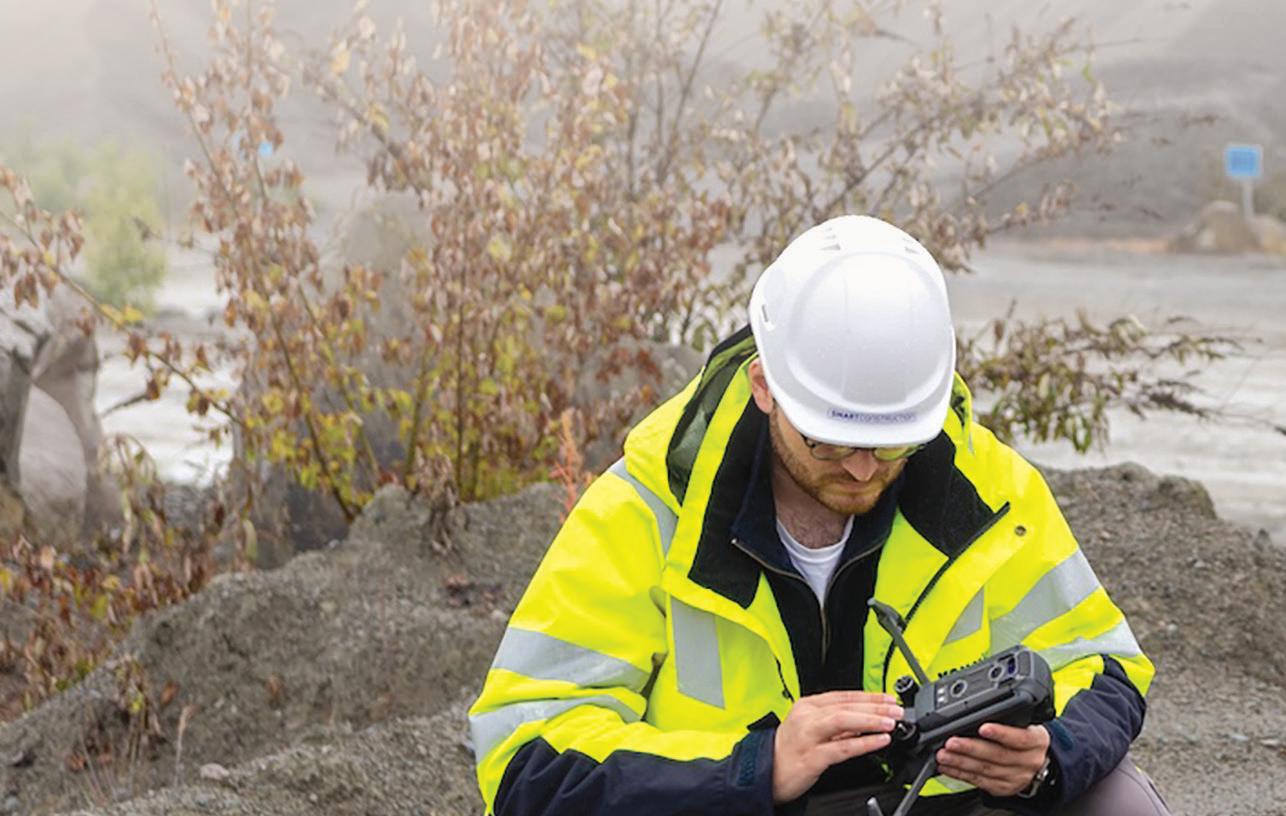
Bart Vingerhoets, senior commercial manager at Komatsu Smart Construction, discussed the bene ts of smart technology in construction, potential applications for this in excavators and how these innovations are changing the dynamics of jobsites.
Internet-connected hardware and arti cial intelligence (AI) are becoming increasingly important in construction and earthmoving, particularly for site management. With advances in technology, machinery such as excavators is becoming smarter, enhancing safety and e ciency on construction sites.
ere has been a signi cant push towards digitisation by excavator operators, construction companies and governments. Technology is not only improving the e ciency of excavators but is also increasing safety.
e earthmoving industry understands the bene ts of technology. In Europe, some regions were initially priced out of being early adopters of new innovations. However, with hardware solutions becoming more cost-e cient, adoption rates are on the rise. Smart Construction has seen this rst-hand, as 38% of its 3D Machine Guidance system sales took place in East and South Europe.
Customer demand varies depending on the region and client size. Many technologies initially adopted in West and North European sites are now being used elsewhere. In the early-adopter countries, the main concern is safety, along with a productivity increase.



At its core, digitally enabled hardware on excavators and machinery helps teams work more e ciently, make better decisions, and deliver stronger project outcomes.
Construction companies are seeking technological advancements to enhance pro tability, save time, and reduce costs. Every year, businesses become more eager to improve risk management, leading to enhanced safety on construction sites, which can be facilitated by digital solutions.
Excavator operators, who see the direct bene t of enhanced technology, experience numerous advantages from incorporating digital solutions into their day-to-day work, such as time-savings for site managers, enhanced problem solving and improved

ABOVE
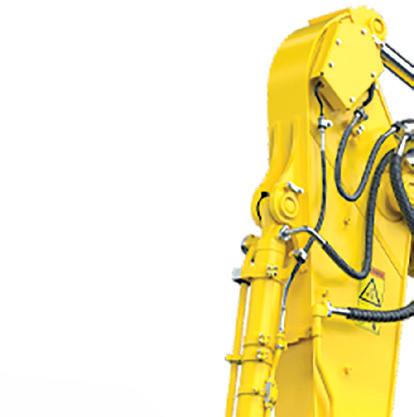
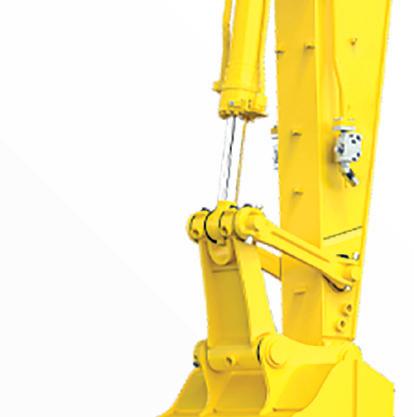
Komatsu’s innovative PC220LCi excavator benefits from the latest technology


BELOW
Using tools from Smart Construction can deliver projects more e iciently
e ciency in data and le transfers. is enables managers to allocate more resources to oversee multiple sites and communicate with suppliers and clients. Furthermore, digital construction allows stakeholders to virtually inspect jobsites, reducing the necessity for frequent on-site visits and creating a more e cient workforce with fewer errors and rework. e technology needs of excavator users and the construction workforce are expected to evolve over the next ve years due to several emerging trends and advancements in construction and heavy-machinery technology.
Due to the growth in digital-twin technologies, excavators and other earth-movement equipment will take a pivotal role in capturing survey-grade data. Having every bucket or blade move represented in a highly accurate model, such as Komatsu Smart Construction Intelligent Machine Control, means all members of the workforce can access remotely, adding signi cant productivity gains.

In 2025 and beyond, the adoption of smart technology and the use of AI on construction sites will continue to rise as more cost-e ective options hit the market. e global AI-in-construction market was estimated at £1.3 billion in 2023 and is projected to reach £9.1 billion by 2031. End www. smartconstruction.io
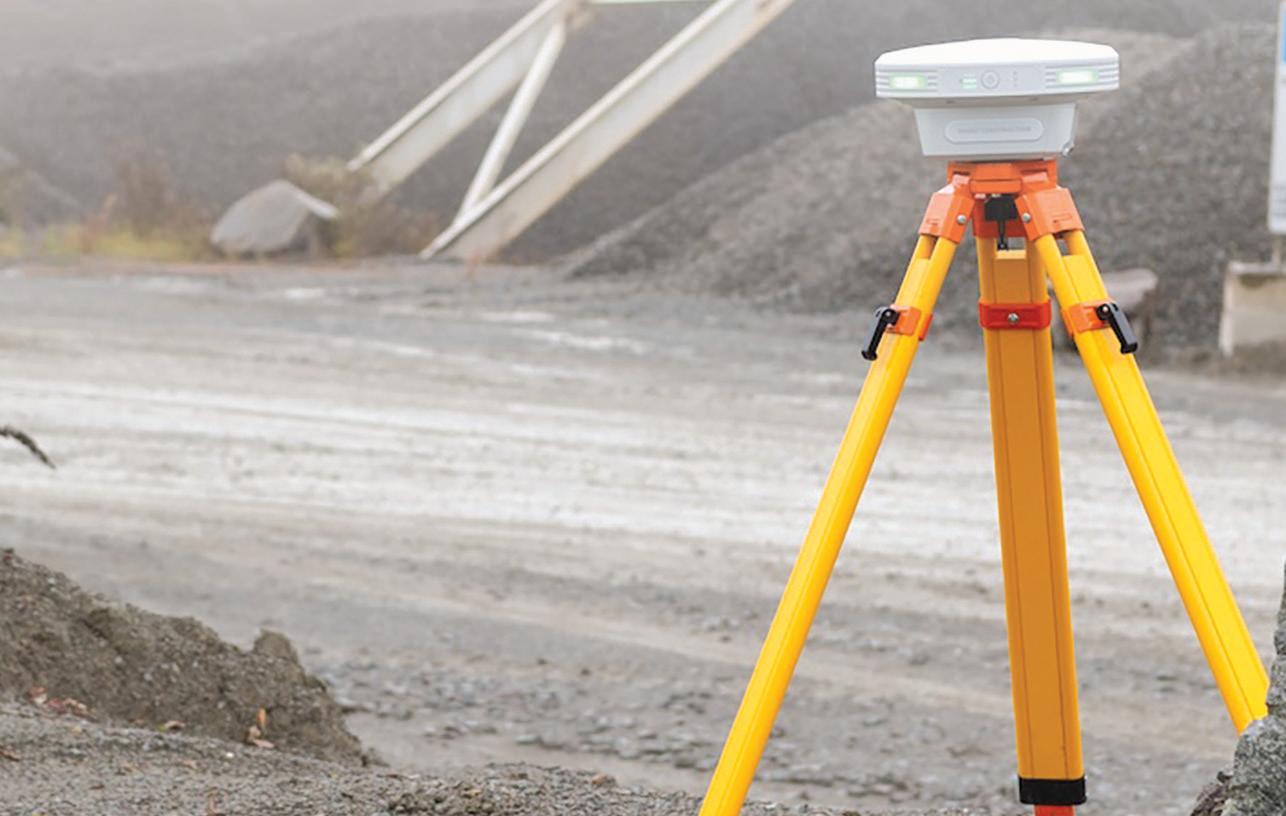



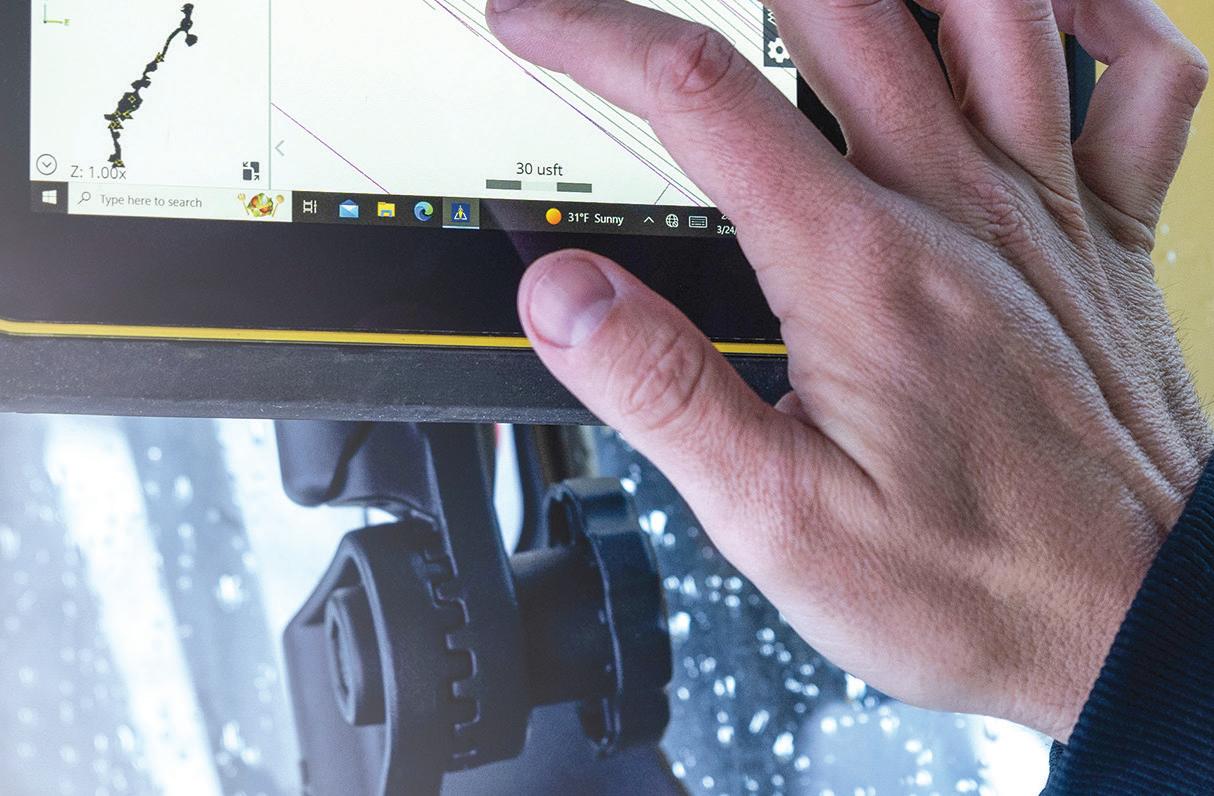
Trimble is o ering the Siteworks Machine Guidance module for tilt-bucket attachments. is system gives operators in-cab visibility of the cutting edge while working. It allows operators to achieve precision for duties such as grading and levelling, ditch cleaning and shaping, back lling and complex slope work. is allows for construction of contoured landscapes and e ective operation in con ned spaces, saving time and preventing mistakes.

is system extends the capabilities of the Trimble Siteworks Software, allowing eld operators to move from surveying and layout to on-machine guidance and operator assistance for tilt buckets and tilt couplers.
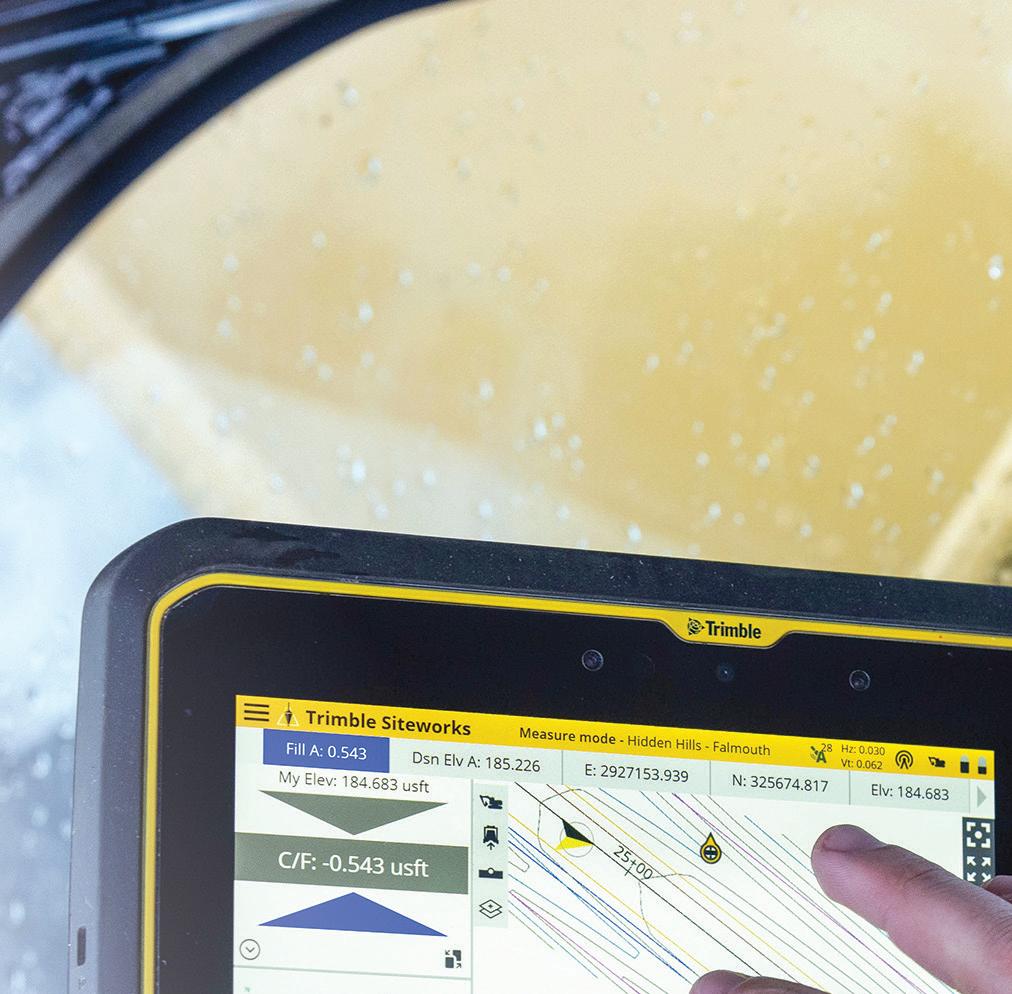

e Siteworks Machine Guidance system is designed to allow transitions between tasks. Operators can use the same system for surveying and machine control, moving it between machines and jobsites. is is achieved with a simple-to-install machine kit and the Siteworks Machine Guidance software module.
“Siteworks Machine Guidance is an all-in-one solution for both layout and excavation. By adding the bene ts of 3D guidance to the tip of a tilt bucket, operators understand where the bucket is in relation to the 3D model at all times,” said Elwyn McLachlan, vice president of Civil Solutions at Trimble. “ e operator can create constructible designs in the eld by measuring points with Siteworks as a GNSS rover, place it on the machine and dig to the design using full 3D machine guidance, and then take the technology o the machine again to capture the as-built. e

ABOVE
Using the new machine-guidance tool for tilt buckets allows operators to achieve greater precision









entire work ow is simple and e cient for one person to complete.”
e system includes the Trimble R780 GNSS Smart Antenna with tilt compensation, powered by the Trimble ProPoint positioning engine, and a compatible bring-your-own-device or Trimble eld tablet running Siteworks software.
In addition to increasing e ciency in the eld, contractors can share designs, access remote support and keep projects moving using Trimble WorksManager Software. When used in conjunction with a real-time Trimble correction service, such as Trimble CenterPoint RTX, contractors gain increased mobility. is eliminates the need for local base stations or VRS networks and helps achieve highaccuracy positioning worldwide via satellite or cellular/IP, even in remote areas. End
www.trimble.com
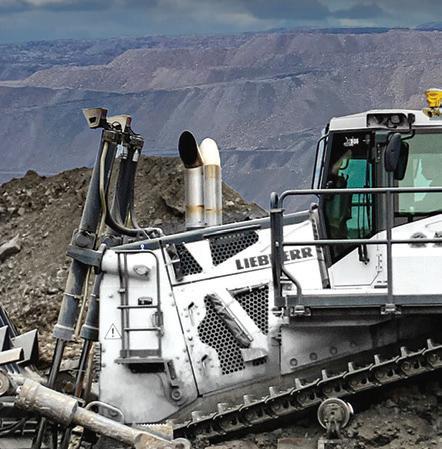
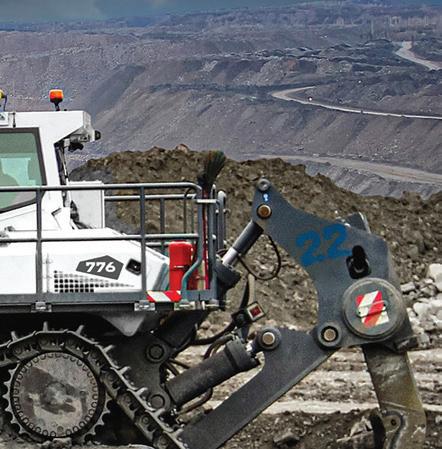
Customers for Liebherr’s latest PR776 Generation 8 dozers can now opt for a Trimble Ready factory option. This allows bulldozers shipped direct from the Liebherr factory to be pre-equipped with a Trimble Ready kit, reducing the time required for onsite installation of the Trimble Earthworks grade-control platform. Cutting cost and complexity, this factory-installed option boosts e iciency for dozer owners and operators.
The Trimble Earthworks-ready base kit includes mounting hardware, brackets and an integrated wiring harness, ensuring streamlined and e icient installation of Trimble Earthworks.
"By o ering a Trimble Ready option, we’re providing customers with a solution that enables quick and easy

installation of Trimble Earthworks," said Nico Schuchter, product manager for Liebherr. "As operators increasingly adopt construction technology on the jobsite, this new option delivers a more integrated and cost-e ective installation process for our mutual customers."

"A new Trimble Ready option for Liebherr PR 776 Generation 8 bulldozers is another way Trimble is enabling customers of all machine types to seamlessly connect their digital and physical worlds," said Scott Crozier, vice president, Civil Construction Field Systems at Trimble. "Our technology can now be more deeply integrated on-machine to simplify installation and maximise productivity for Liebherr customers, helping them accelerate their return on investment."
www.trimble.com




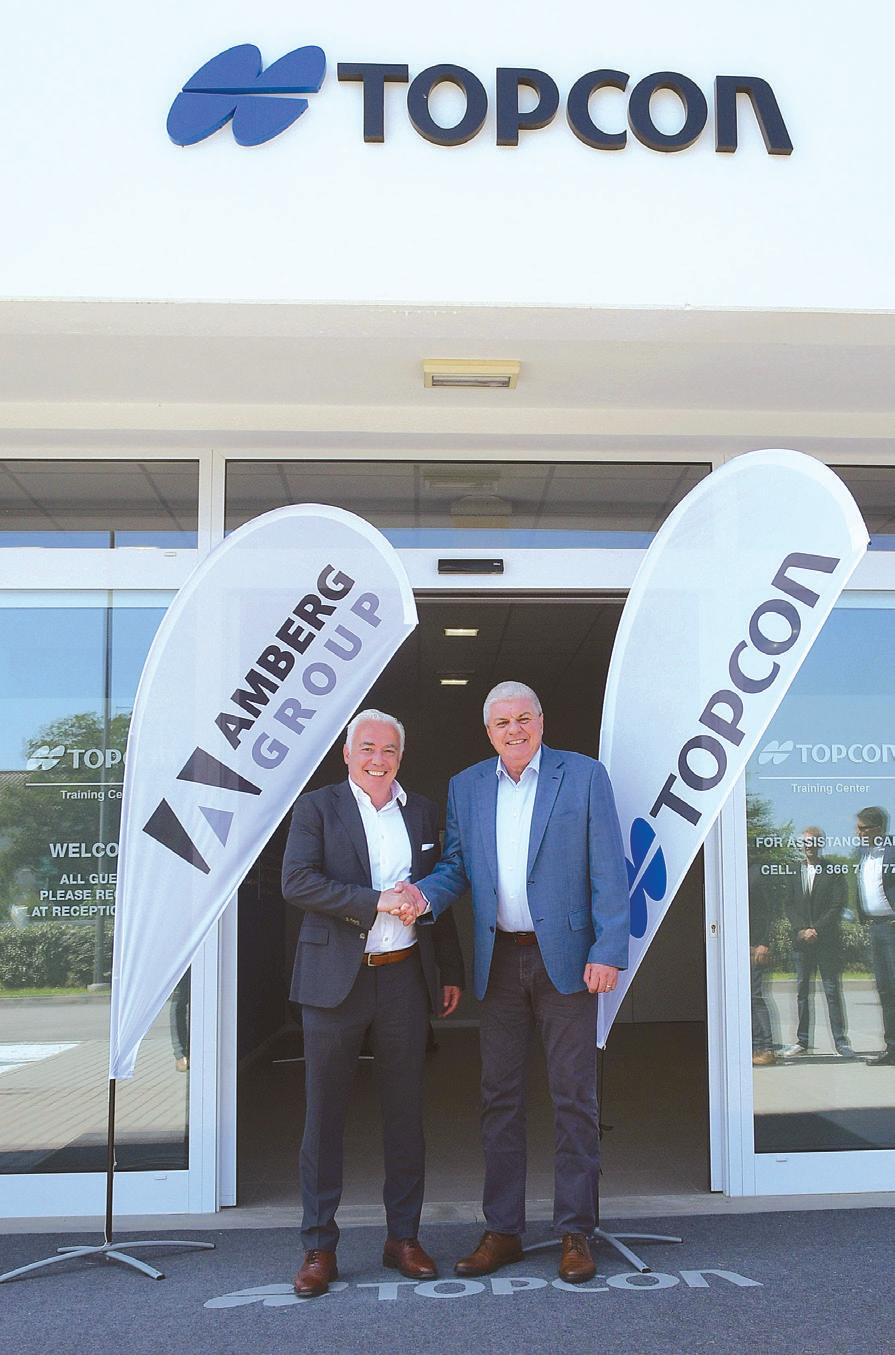
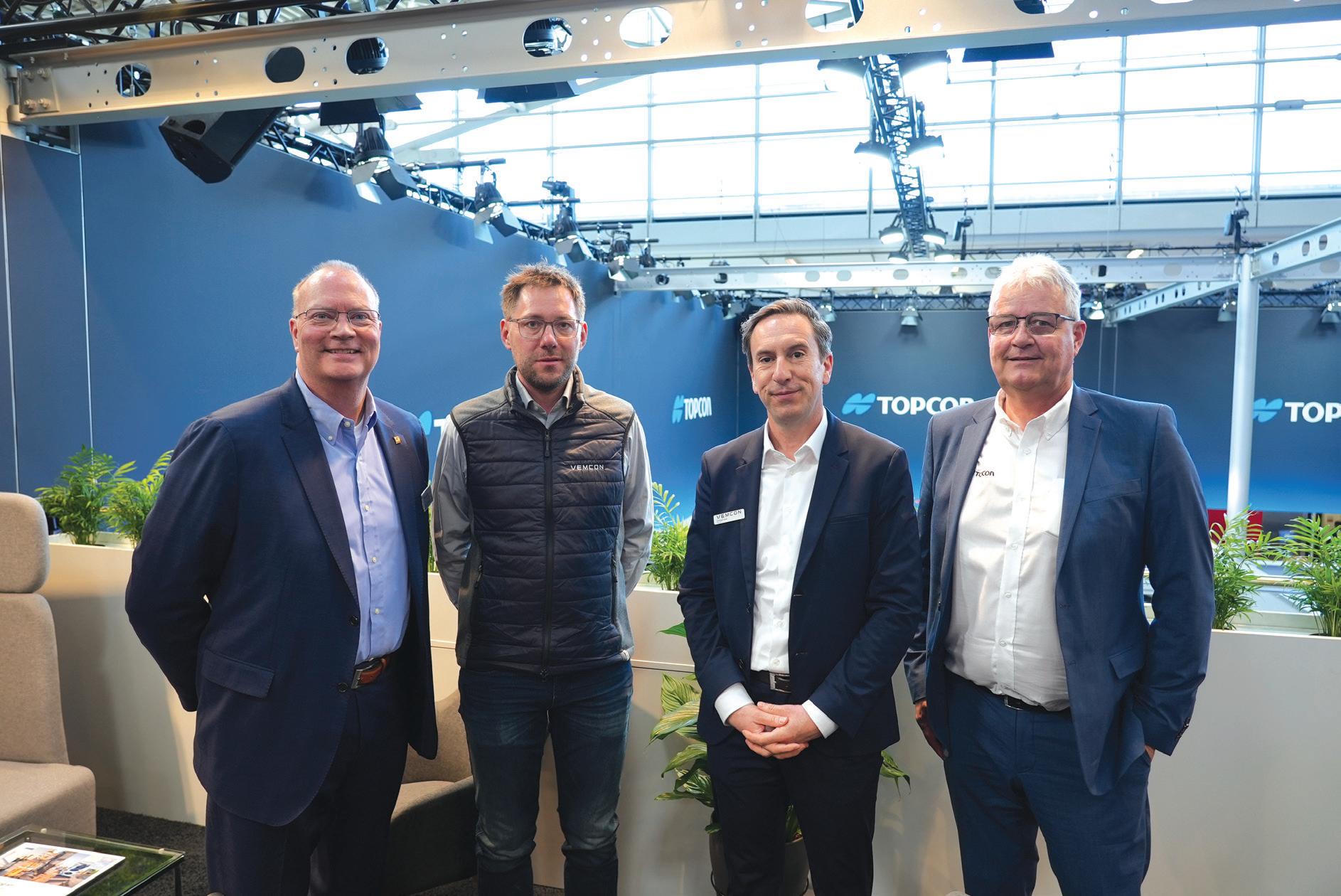
Topcon Positioning has signed key agreements with Vemcon and Amberg Technologies, specialists in smart excavator attachments and tunnel technology respectively.
e deal with Vemcon will provide access to advanced excavator-technology solutions across the EMEA regions and additional global markets.
Topcon says that the collaboration will bring together complementary strengths from both rms. Vemcon has expertise in 2D assistance systems that work with smart attachments, while Topcon has advanced 3D machine-control technology and a global GNSS network.
e deal will allow the partners to deliver a compatible upgrade path from Vemcon’s 2D solutions to Topcon’s 3D systems, o ering contractors a technology progression as their needs evolve.
e cooperation with Vemcon will allow Topcon to provide contractors with a comprehensive excavator-technology solution. Integrating technologies will o er customers the ability to advance from 2D to 3D systems while maintaining existing investment in smart attachments, according to Topcon.
For equipment where Vemcon’s 2D system is already installed, upgrading to Topcon’s 3D control is said to be fast and cost-e ective. e sensors are in place and the machine is calibrated, so contractors can scale their digital capabilities.
e Vemcon platform combines tool recognition, quick coupler control, and assistance features like 2D and scale and is 3D-ready by design. Combined with the Topcon technology, OEMs can select a smart, modular control stack that makes integration easy and paves the way for MiC 4.0.
e arrangement also presents opportunities for data integration between the systems from the two companies, with potential for future development
ABOVE LEFT
Topcon’s deal with Amberg will allow further access to measurement solutions
ABOVE RIGHT
An agreement with Vemcon provides Topcon with access to advanced excavator-attachment systems
of cloud-based solutions. is data-exchange capability could provide contractors with enhanced insights into machine performance and project progress, further improving operational e ciency.
“As contractors look to improve their bottom line through increased e ciency, this integrated approach o ers them a clear path to adopting increasingly sophisticated machine-control capabilities,” Murray Lodge, executive vice president at Topcon, said.
Both companies are exploring opportunities to expand availability across additional markets.
For excavator operators and contractors, the collaboration delivers the established bene ts of 3D machine control, including reduced staking costs, minimised rework, increased productivity, improved material management, enhanced operator capabilities, and simpli ed compliance with design speci cations.
For the latest news, extended features and videos relating to Construction Technology visit the website globalhighways.com
Meanwhile, Topcon Positioning and Amberg Technologies have initiated a close collaboration to enable interoperability between Topcon’s sensor solutions and Amberg Technologies’ software and hardware platforms for road and tunnel infrastructure applications. is marks the rst step towards o ering fully integrated solutions to the shared customers.
Amberg Technologies is a measurement-solutions provider for the construction of road infrastructure both above and below ground. e technology can also be used for the inspection and monitoring of existing linear assets in operation. It provides advanced surveying, sensing, measurement, monitoring, predictive tools and analytics, contributing to safer, more e cient and sustainable work ows. End www.ambergtechnology.com www.topconpositioning.com www.vemcon.de
As global infrastructure systems face increasing demands for sustainability, resilience, and digital integration, the need for targeted, high-quality training has never been greater. The International Road Federation (IRF Global) is responding with a line-up of certified programmes tailored to empower road and transport
professionals with advanced tools and knowledge.
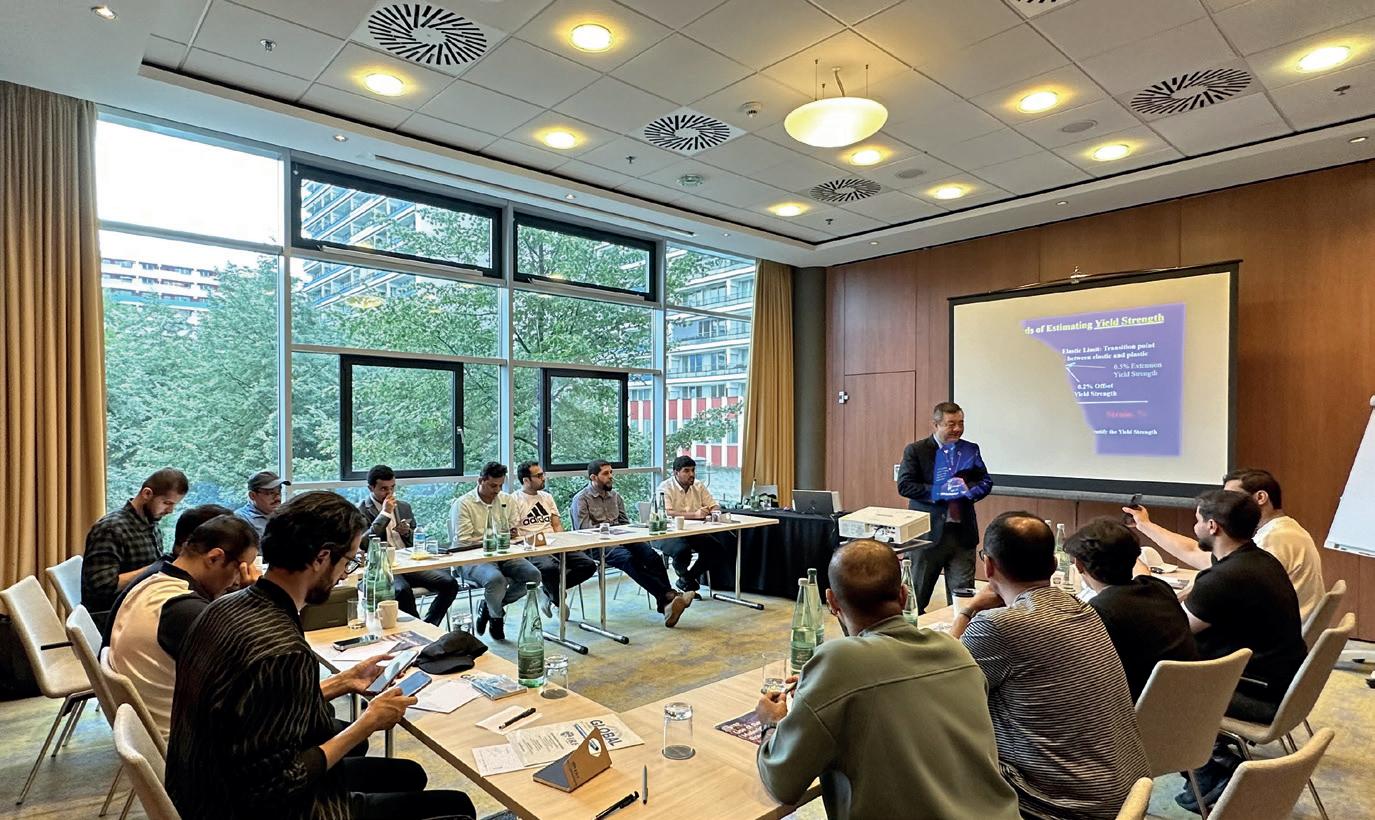
Starting in September 2025, IRF Global will deliver a series of in-person and online training programmes focused on high-impact areas including road operations, construction supervision, bridge inspections, geotechnical monitoring, road safety audits, and performance-






For more information and to register, scan the QR code or visit www.IRF.global






SEP 8–12 | KUALA LUMPUR, MALAYSIA
Road Operations & Maintenance in Road Transport Projects
Get hands-on with asset management tools, maintenance planning, and sustainable O&M practices.
SEP 8–12 | DUBAI, UAE
Construction Supervision for Road Projects
Explore FIDIC guidelines, contract management, EPC contracts, and supervision best practices.
SEP 15–25 | ONLINE
Bridge Management & Inspection
Covering everything from inspection basics to advanced bridge asset management concepts.
OCT 6–16 | ONLINE
Geotechnical Asset Management, Inspections & Monitoring
Practical approaches to monitoring slopes, walls, and critical geo-assets using technologies like LiDAR and InSAR.
OCT 13–23 | ONLINE
Road Safety Audits: From Concept to Results
Get certi ed in road-safety auditing with practical training aligned with WHO guidelines and IRF’s audit leadership programme.
OCT 20–29 | WASHINGTON, DC, USA
Performance-Based Contracts for Preserving Road Assets
Executive-level training on PBCs and their role in promoting sustainable, results-driven infrastructure development.
TAILORED TECHNICAL COURSES & STUDY TOURS BY IRF
In addition to our scheduled training programmes, IRF Global o ers customised courses and technical study tours designed to meet the speci c needs of your organization. Whether your focus is road safety, asset management, smart mobility, or infrastructure nance, we can deliver bespoke programmes anywhere in the world.
Contact us at training@IRF.global to start planning your customised course or study tour.
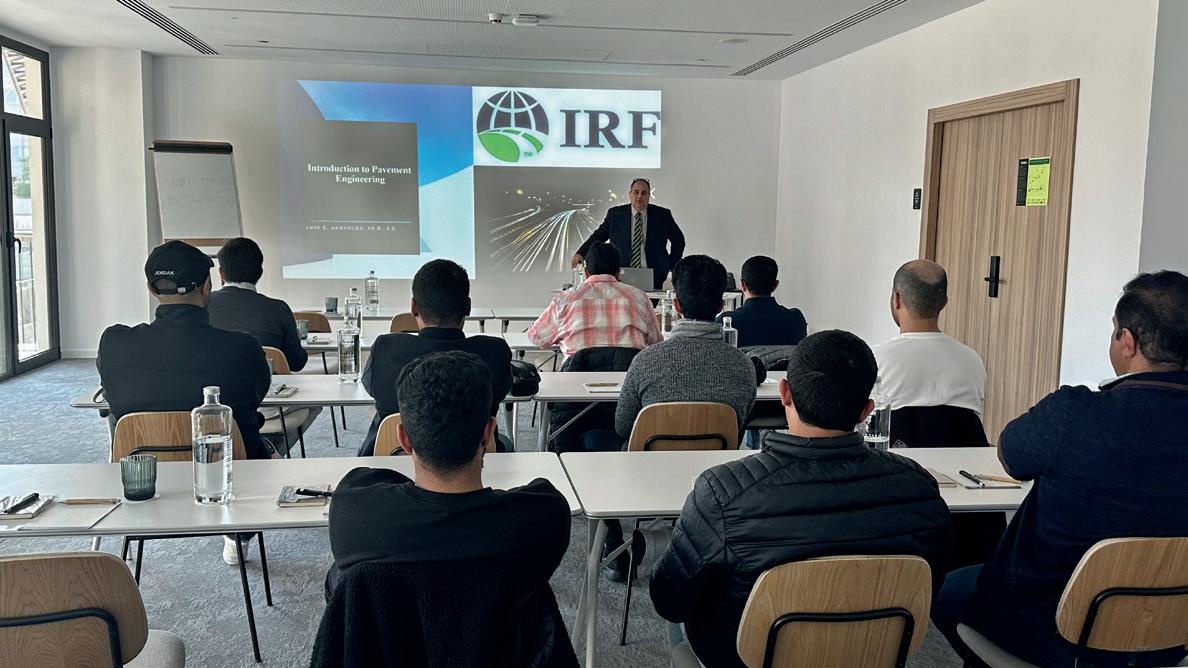

The International Road Federation (IRF) is pleased to invite you to its 2025 Annual Conference, taking place online from 2 to 4 December
Hosting the event virtually will allow broader participation from across our global network and provide a valuable space to exchange knowledge and ideas with leaders, experts, and policymakers worldwide.
e conference will focus on a range of topics that include climate-resilient and sustainable transport systems, inclusive and accessible mobility, and the speci c needs of both urban and rural areas. Sessions will also address road safety, the development of connected



and automated mobility, and approaches to funding and nancing sustainable


infrastructure. We look forward to welcoming participants from around the world to contribute


to these important discussions and help drive progress across the transport sector. End

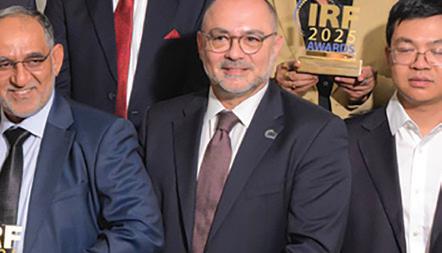



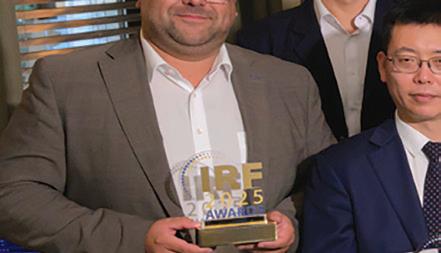
In a sector that must continuously respond to complex challenges, from reducing roadtra ic deaths to designing infrastructure fit for a changing climate, the International Road Federation (IRF) Awards have long served as a reference point for excellence. Recognised across the industry for their credibility and impact, these awards celebrate projects o ering tangible, forward-looking solutions.
In 2025 more than 100 entries from around the world were submitted across 12 categories. An international panel of experts carefully reviewed each project to


ensure winners meet the highest standards of innovation and relevance. The winners were announced during the International Symposium “Navigating the Future of Tra ic Management,” held in Athens.
Nivi Sharma, CEO of Bridges to Prosperity and winner in the Technology and Innovation Category, said : “This recognition reinforces the power of inclusive infrastructure innovation. We’re honoured to be part of a global community driving bold, data-driven change for access and equity. We’re here to learn, to listen, and to connect with others

who believe that rural access deserves a seat at the big table. We see this as a moment to contribute evidence, yes, but also to champion the voices of more than 1.5 billion people across the globe that too o en get le out of the transport story.”
We congratulate all awardees for their significant contributions.
Discover their projects on the YouTube channel @internationalroadfederation and learn more on the website www.irfo icial.org.
On 26 June 2025 a nal workshop in Tashkent marked the close of a collaboration between UNESCAP, iRAP, EASST and the International Road Federation (IRF) to review and improve road geometrical-design standards in Central Asia. e event also launched a new suite of guidance for road infrastructure designers in Kyrgyzstan, Tajikistan and Uzbekistan.
Since the project’s launch in March 2024, activities included kick-o missions, a stakeholder consultation in Tashkent, technical training for 70 engineers, and preparatory workshops to inform the guidance.
Opened by the deputy minister
of Transport of Uzbekistan and Mr Jean Todt, UN Special Envoy for Road Safety, the nal event celebrated the new resource package, which includes:
• A full project report and methodology
• iRAP star-rating results for regional standard cross sections
• Country-speci c road-safety design guidance
• Graphics illustrating safer road design
Developed with national stakeholders and supported by ADB, EBRD, EIB and the UN Road Safety Fund, the guidance complements – rather than


replaces – existing standards. It helps road engineers integrate international best practice into future projects, with a focus on early planning and a ‘Safe System Approach’ that protects all road users, especially the most vulnerable.
Safe road design saves lives and reduces economic losses from crashes. e new guidance addresses national standards, practical solutions like speed management and forgiving infrastructure, and the importance of stakeholder consultation in the design process.
Julia Funk, programme manager at IRF, commented: “At the International Road



Federation, we believe that no one should lose their life or health due to preventable road-design aws. is project reinforces our commitment to advancing safer infrastructure by supporting countries to integrate evidence-based, people-centred design into national practices. e resources developed are the result of genuine collaboration and mark a concrete step toward making roads across Central Asia safer and more inclusive.”
By aligning national standards with the UN Global Plan for the Decade of Action for Road Safety and CAREC’s regional strategy, the project supports long-term improvements with potential for broader regional impact. End











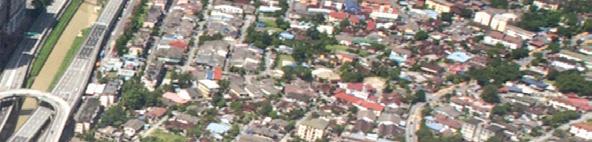



PTV Group is to produce a real-time, tra ic-predictive solution to improve transport planning in the Malaysian capital city of Kuala Lumpur.

In the rst phase, a city-wide model will be developed using PTV Model2Go and PTV Visum to give planners “a reliable, data-backed foundation for strategic decision-making", according to PTV, which is part of Umovity.
PTV Flows will enable a new tra c-prediction and -monitoring solution covering 130km of major citycentre routes.
Kuala Lumpur is the most populous city in Malaysia, having a population of just over 2 million people. Meanwhile, Greater Kuala Lumpur, also known as the Klang Valley, has upwards of 8.8 million people.
It will be commissioned by Dewan Bandaraya Kuala Lumpur and carried out in collaboration with tra ccontroller specialist Sena Tra c and Najna IngTech.
Q-Free has secured the first US contracts for its Kinetic Mobility advanced tra ic management system. The company, a provider of mobility solutions for smart city infrastructure, said the contracts cover three major metropolitan areas. One is with Transurban’s 95, 395 and Capital Beltway (495) Express Lanes near Washington, DC.
PTV Flows will enable a new tra ic-prediction and -monitoring solution covering 130km of major city-centre routes in Kuala Lumpur


Another is the E-470 Public Highway Authority’s toll road on the eastern perimeter of Denver city in Colorado.
The third is Cintra’s Lyndon B. Johnson (LBJ) Express and North Tarrant Express Lanes in the heart of the Dallas-Fort Worth region in Texas.
Q-Free says it's Kinetic Mobility is the first scalable advanced tra ic management system (ATMS) platform that integrates all ITS devices into a single decision-making dashboard across freeways, toll roads and arterial roads. This eliminates the need for patchwork solutions. Fully customisable, it o ers a selection of mix-and-match
tra ic management modules to give tolling operators the ultimate flexibility to create the perfect managed-lane system for their needs.
The Transurban deployment on the 95, 395 and Capital Beltway (495) Express Lanes near Washington, DC, is currently underway and will be the first deployment of Kinetic Mobility on a toll road in the US. The 95/395 Express Lanes are the longest reversible roads in the country and need intense tra ic management to maintain safety.


e cloud-based platform PTV Hub will support collaboration among stakeholders and o er dynamic visualisations to guide planning processes.

PTV said its work with Sena "creates opportunities to explore additional avenues in hardware integration, including sensors and radar systems, to extend the project’s reach and long-term impact".

“ e client’s decision to transition from legacy tools to the more advanced and user-friendly PTV solutions re ects Kuala Lumpur’s forward-thinking ambitions for improved mobility and a sustainable urban future,” said Ryan Wong Wenshen, PTV’s managing director for the Asia-Paci c region. End www.ptvgroup.com/en www.umovity.com


The Transurban contract award is for 12 years and includes deployment and maintenance of Kinetic Mobility, covering just over 105km (65 miles) of roads with 298 gates, 22 gantries and 349 detection points. Q-Free said that the partnership is especially meaningful because it builds on its long-standing collaboration with tolling provider Transurban on multiple projects in Australia. www.q-free.com

The northern US city of Ann Arbor is the first North American city to adopt the Yutra ic FUSION adaptive tra ic management system from Yunex Tra ic.
Since 2003, Ann Arbor, with a population of around 135,000, has used Yunex Tra ic’s adaptive solutions to manage tra ic e iciently, especially during Michigan football gamedays when the city's population quadruples. The adaptive solutions have optimised tra ic flow and saved the city thousands of dollars in retiming costs, which typically occur every three to five years.
“Adaptive technologies have been around for years, but historically they have been clunky and tedious to make the solution respond the way you

want,” said Marc Segal, head of US Adpative Solutions at Yunex Tra ic North America. “With Yutra ic FUSION, the menus, screens and workflows are intuitive, making changes easier than ever before.”
Following initial deployment in Ann Arbor, Yutra ic FUSION will be compared with existing
adaptive technology and tested in cases such as the accelerated deployment of city maintenance vehicles.
As connected and autonomous vehicle technology grows, having a signal system that can accommodate and respond to multi-modal tra ic is crucial. Yutra ic FUSION,
SWARCO UK & Ireland has installed variable
says the company, is the first multi-modal adaptive solution, designed to move people e iciently, not just vehicles. First installations in European cities have shown significant improvements compared to conventional tra ic control.
By using advanced data inputs and policy-driven controls, the system has the ability to prioritise vulnerable road users, reducing potential conflict points and fostering safer, more inclusive transportation networks.
Equally, public transportation stands to benefit significantly, as Yutra ic FUSION can enhance signal prioritisation for buses and trams, ensuring more reliable schedules and e icient routes.
www.yunextra ic.com
connecting roads, as well as cycling and walking routes.
Principal contractor GRAHAM needed to specify and install a digital signage system to provide realtime information on the bridge’s operational hours, as well as real-time information on tra c conditions, diversion routes or any road closures.
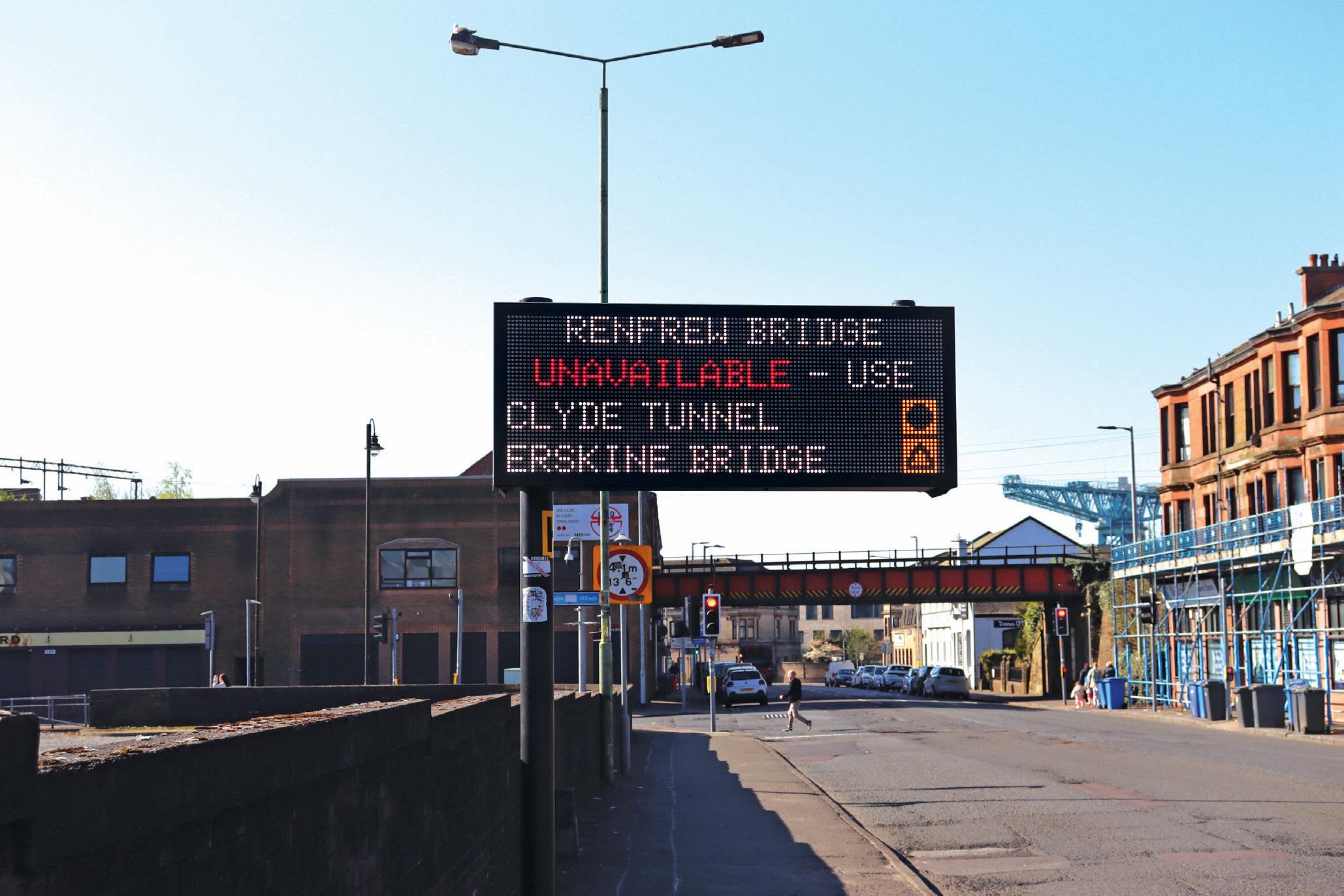
SWARCO UK & Ireland’s solution is a series of 24 RGB VMS on the approach to Renfrew Bridge at strategic locations either side of the River Clyde across Renfrewshire, the city of Glasgow and West Dunbartonshire Council region - all within a 3.5km radius. e intelligent, full-colour VMS can be used for multiple functions and to display multiple messages. Renfrewshire Council can remotely manage and update the information in real time via a dedicated PGS system that has been installed within the bridge’s
SWARCO says that the signs also feature the company’s lens technology which ensures the lowest power consumption and, in turn, provides a lower lifetime cost of ownership.
" e digital signage is invaluable in giving early notice of any closures, especially with signs being located in a 2.2-mile radius from the bridge, as this allows people to take an alternative route and reduces queuing at the bridge entrances," said Iain Nicolson, leader of Renfrewshire Council.
“By working in close partnership [with Renfrewshire], we were able to fully understand their requirements and successfully design and deliver a smart and reliable digital signage and tra c guidance system,” said John Pickworth, managing director of SWARCO UK & Ireland. End
www.swarco.com



The Karlsruhe Institute of Technology, KIT, will use acceleration sensors to gather vibration data in bridges in a bid to pinpoint structural degradation
TOP & ABOVE
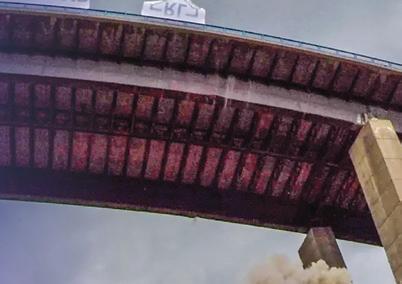
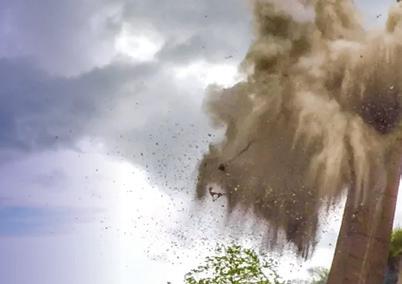
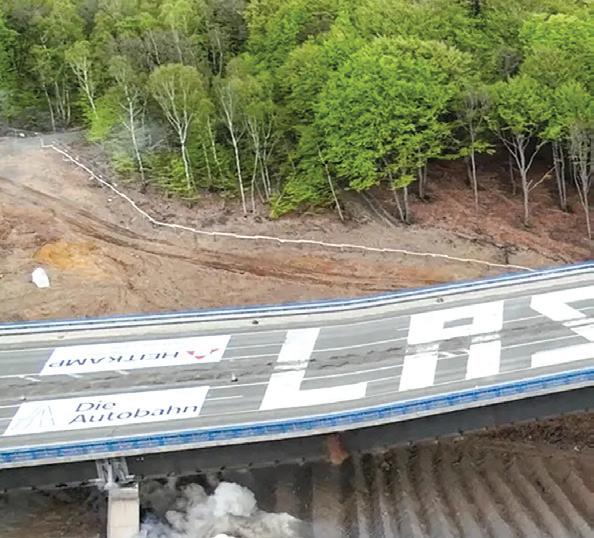
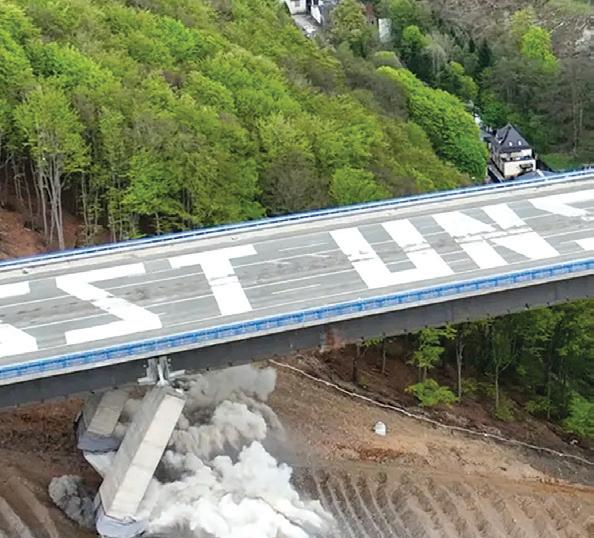
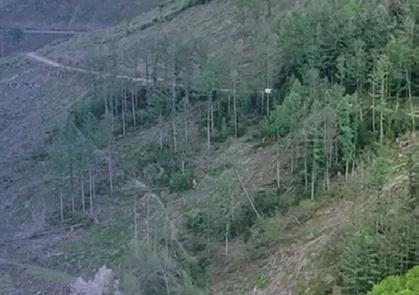
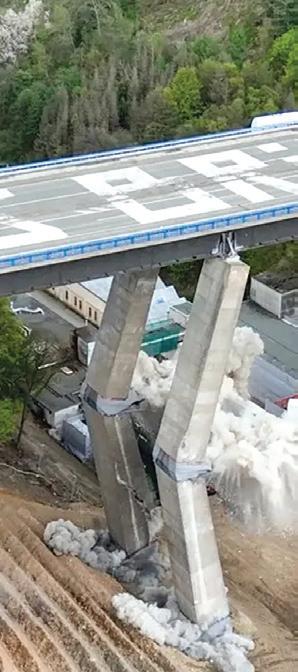
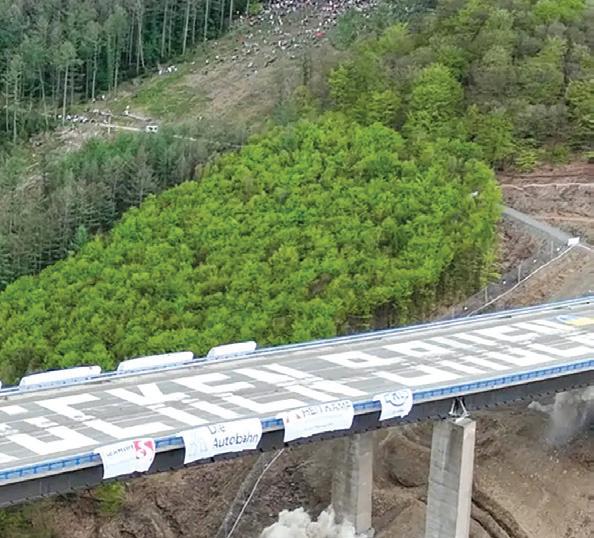
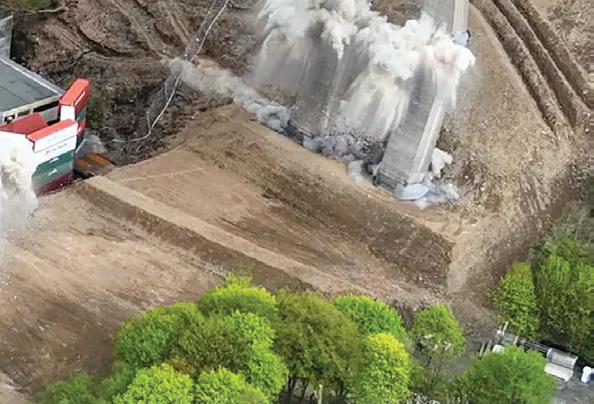
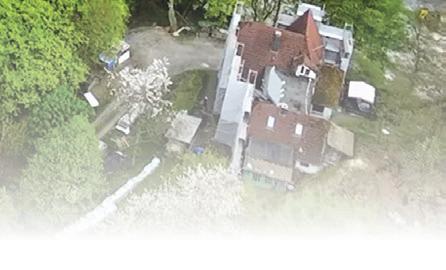
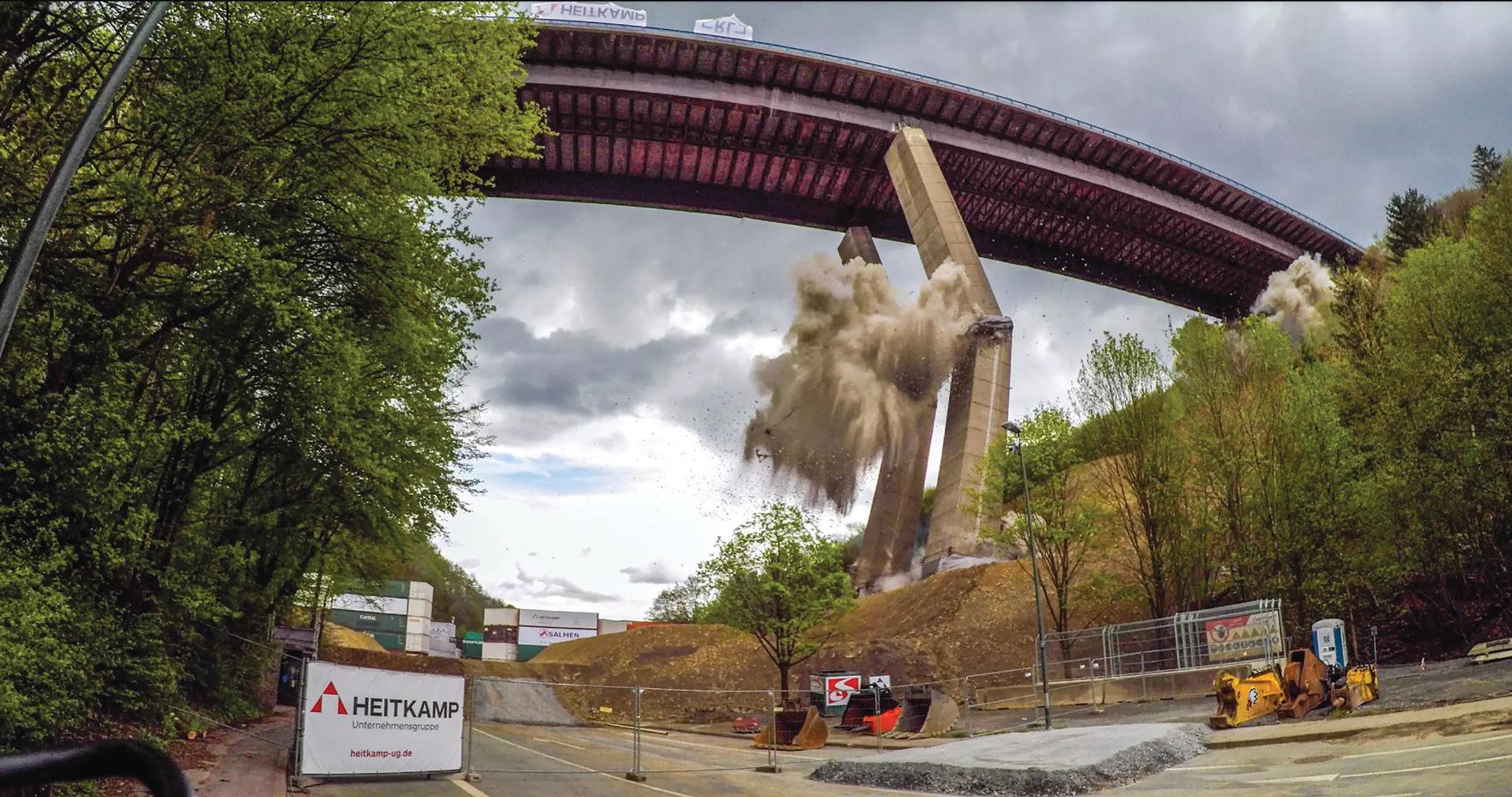
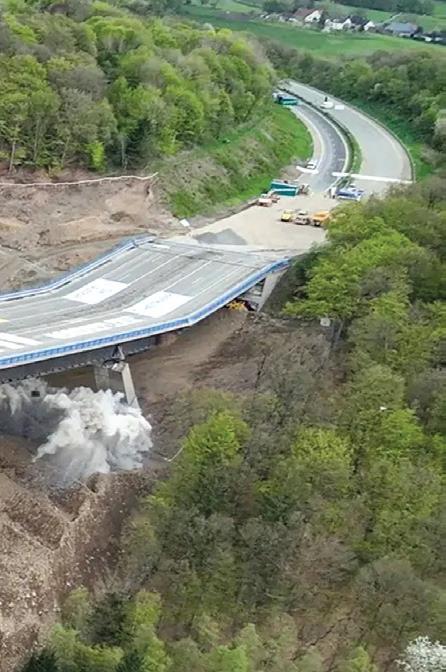
The concrete Rahmedetal Bridge, near the town of Luedenscheid, was closed to all tra ic in December 2021 and eventually demolished in a controlled explosion in May 2023 (image courtesy Autobahn Gmbh)
“If damage is repaired earlier, it relieves tra c, the environment and health”
Alexander Bonde Secretary general of the DBU
ermany’s Karlsruhe Institute of Technology (KIT) will start a bridge-monitoring study to determine if real-time structural vibration data can help prioritise maintenance.According to Germany’s Federal Ministry of Transport, there are almost 40,000 bridges in the federal highway network, of which 86 percent are made of reinforced and prestressed concrete. Many of these bridges date from the 1960s and 1970s and were built for signi cantly
Increases in tra c volumes – especially of heavygoods vehicles – have caused premature ageing of material . ere could be up to 4,000 bridges in such a state, says the ministry. Among these prematurely aged structures are the Rahmedetal Bridge near Lüdenscheid and the Ringbahn Bridge in Berlin which have already had to be closed - resource-intensive replacement structures are unavoidable there.
At the beginning of March, it was discovered that a crack in a load-bearing component of the A100 Ringbahn Bridge – opened in 1963 as part of the 21km-long circular road - had widened signi cantly. e bridge was demolished in April. According to Autobahn, the government autobahn agency, the bridge had carried around 230,000 vehicles daily.
e old 453m-long steel beam and concrete Rahmedetal Bridge near the town of Luedenscheid was closed to all tra c in December 2021 and eventually demolished in a controlled explosion in May 2023. e replacement parallel twin-deck bridge is expected to be open in the rst half of next year. e study by KIT is being funded by the German Federal Environmental Foundation (DBU). "We need methods in bridge construction to mitigate a wave of general overhauls that is already threatening," said Alexander Bonde, secretary general of the DBU.
Bonde noted that extensive repairs require a lot of concrete which, in turn, drives up emissions of the climate-damaging greenhouse gas, carbon dioxide (CO2). Global cement production alone accounts for
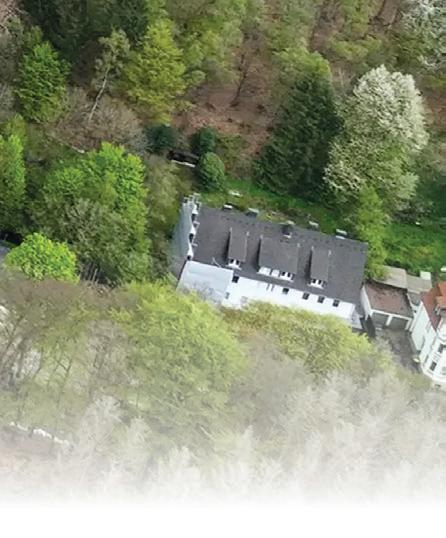
around 6-8 percent of global CO2 emissions. "If damage is repaired earlier, it relieves tra c, the environment and health," said Bonde. e full extent of the damage within a bridge is often visible only after demolition. Automated damage detection through systems such as vibration-data analysis, is one way to mitigate the need for late extensive repairs or even demolition.
Germany’s bridges already undergo a labourintensive and time-consuming main inspection every six years, followed three years later by a simpler inspection. Experienced engineers may examine the structures by doing a simple walking visual inspection, explained Alexander Stark, a professor of concrete structures within the Institute of Concrete Structures and Building Materials Technology at KIT. Sometimes, sections or parts are detached or forcibly removed to detect cavities, according to Stark who is project manager for the study. However, not all damage can be detected in this way. Stark said that investigations are currently being done using pressure sensors, drone cameras, ultrasonic measurements and computer simulations and models. e problem is that the engineers get a snapshot of only one part of a bridge. "We, therefore, urgently need practical, automated, real-time monitoring methods for bridges that can e ectively report the location and extent of damage."
e KIT study will explore this real-time monitoring using acceleration sensors. "Every supporting structure has a characteristic vibration behaviour that is in uenced by mass and sti ness,” said Stark. “If signi cant cracks occur in the concrete, the sti ness, and thus also the vibration behaviour, changes. is metrological evaluation of the entire bridge is intended to localise [pinpoint] crack formations and at the same time quantify them for the rst time - even before they are even visible and a regular inspection of the bridge is due.”
Knowing the exact location of an issue means that rehabilitation measures can be carried out quickly, precisely and cost-e ectively at an early stage. End www.kit.edu/english
With the help of Citilog’s early warning, o icials from ATMB (Autoroutes et Tunnel du Mont Blanc) were able to close the tunnel before a fire fully broke out. Thankfully, tragedy was averted in June when a fire broke out in the Vuache Tunnel in the Haute-Savoie region of the French Alps. Automatic incident detection systems from Citilog played their part in quickly alerting o icials about the incident which ensured a swi and e ective response from emergency services.
The twin-bore 1.4km-long tunnel was opened in 1982. It was in the southbound tunnel that a heavy-goods vehicle laden with plastic pellets caught fire. Because of Citilog’s early warning, o icials were able to close the tunnel - one of two bores - before the fire fully broke out. This prevented other vehicles from entering and avoiding what could have been a far more tragic situation.
ATMB (Autoroutes et Tunnel du Mont Blanc) is the company responsible for managing the French side of the Mont Blanc Tunnel that runs between France and Italy, as well as the surrounding alpine highways. ATMB plays a key role in ensuring safe and e icient cross-border transportation. This recent positive outcome is the result of a remarkably fast and coordinated response by ATMB’s operations teams and emergency services - and, crucially, of the automatic incident detection system that triggered the first alert.


Citilog is the major supplier of videobased automatic incident detection solutions for tunnels, bridges and highways, with more than 60,000 cameras installed world-wide.
Citilog says that its solutions turn cameras into AID sensors, creating a broad detection network where nothing is missed. No matter where an incident occurs, it will be detected instantly to reduce its impact on road users and help save lives and prevent secondary accidents. Its broad incident detection automatically identifies wrong-way vehicles, pedestrians and debris, smoke and occlusion, as well as lane changes, congestion and slow or stopped vehicles.
Citilog’s AID solution is deployable on a server or directly within the cameras, ensuring it meets all customers’ needs. It is compatible with central servers for future scalability and is completely cameraagnostic, allowing one server to handle up to 100 streams. It is deployable on Axis cameras as a cost-e ective alternative for distributed architectures.

The system’s video-analytics algorithms are trained to identify vehicles and remain una ected by shadows, reflected light, or moving vegetation.
Citilog says that its combination of pixel analytics and deep-learning algorithms enables a detection range of 300m – not achievable through deep learning alone.
In fact, tra ic through the dual-bore
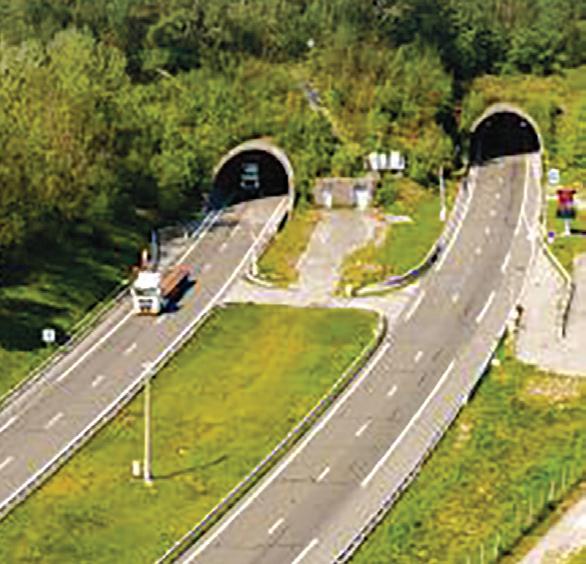
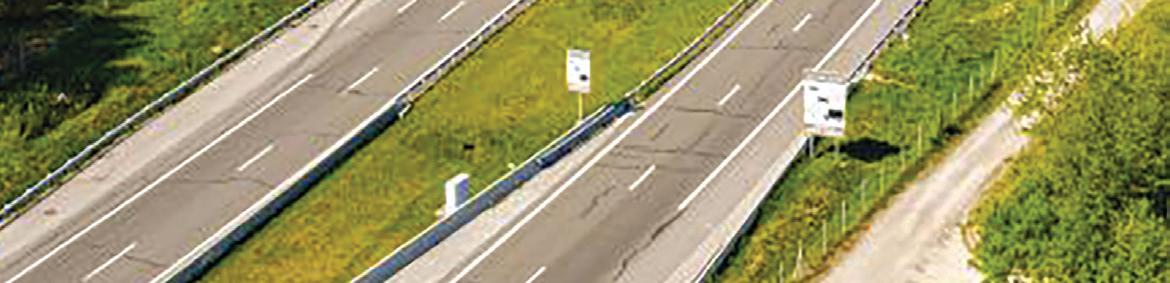
tunnel, part of the A40, resumed the next day when o icials reopened the other two-lane tunnel using one lane in each direction for vehicles. Meanwhile, as a safety precaution, ATMB reported that the transport of dangerous materials through the tunnel was forbidden until repairs to the damaged tunnel were completed and the restriction o icially li ed.
Since mid-2023 ATMB has been working in phases to upgrade the Vuache tunnel, including improving signage, installing LED lighting and ameliorating water ingress. The work - undertaken in the spring and autumn when tra ic volumes are lowest – is expected to end in 2029, according to ATMB. Citilog, which has o ices in Bagneux, France and Berkeley, California, will be in Atlanta for the ITS World Congress 2025 from August 24-28. Citilog is part of TagMaster, a provider of data solutions and advanced sensor systems for smart cities and intelligent transportation systems. www.citilog.com


• At 10:33 the incident detection system identifies a stopped vehicle; the ATMB control centre immediately activates tunnelclosure procedures
• At 10:38 the fire breaks out on the truck, but the tunnel is already closed; firefighters intervene swi ly, no other vehicles are involved and the driver is safely evacuated
• By 5:30am the next day, safe tra ic flow is restored through the una ected tube


Intercomp reports that its LS788-WIM portable weigh-in-motion scale has received NTEP certification for commercial vehicle weight enforcement
All devices sold in the US as "legal for trade" purposes must pass evaluation in order to get a National Type Evaluation Program (NTEP) certi cation.
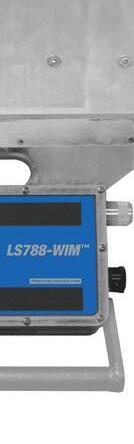
e LS788-WIM is the rm's latest low-pro le, highperformance strain gauge portable scale. Intercomp says it can be deployed by one person in under 15 minutes and ts easily in the back of a vehicle, making it ideal for rapid use at mobile enforcement sites.
Used with roll-up portable ramps, the system is only 22mm high but can also be used for static weight measurement.
e completely wireless LS788-WIM scales are powered by solar power and batteries.
Total system capacity is up to 9,979kg with an accuracy weight measurement of 2-3% when used dynamically at speeds of up to 16kph. For static measurement, weighing precision is ± 0.5%.
e LS788-WIM features Intercomp’s RFX wirelessready remote communication capabilities as standard, allowing the scale system to communicate weight data wirelessly to RFX-enabled WIM indicators, displays, or PCs.
With line-of-sight connectivity up to 90m, the technology operates pairs of portable axle scales while




protecting the safety of o cials on the ground who need no longer approach scales around moving vehicles to get a weight reading. Multiple scales can be operated simultaneously, while workers are kept apart from tra c.







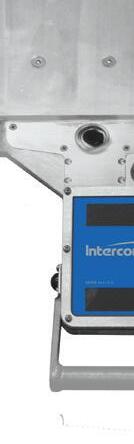
Intercomp adds that that 89cm-wide, low-pro le scale platform allows the LS788WIM to handle dual-tyred axles "with ease".
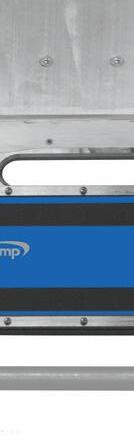

Last year Intercomp launched the LTR788 Dual Platform Scale, also NTEP-certi ed for commercial vehicle weight enforcement. Intercomp created the LTR788 scale for direct measurement of individual tyre loading in a dual-tyre con guration.


Historically, tyre failures within dual-tyre setups have occurred more frequently on inner tyres than outer tyres. However, it was also assumed that individual tyres in a dual-wheel con guration carry near equivalent loads. is was because there was no scale which could directly measure individual tyre weights. End www.intercompcompany.com


Powered by solar power and batteries, the LS788-WIM scale is completely wireless
Tra ic Data Systems has been awarded a bridge weigh-in-motion contract from the Hamburg Port Authority in northern Germany.

The Köhlbrand Bridge across the River Elbe is one of the most important transport links in the port of Hamburg. The reinforced concrete and prestressed concrete structure and steel cable-stayed bridge was opened in 1974. At 3.7km long, 135m high and with a clearance height 53m, the Köhlbrand Bridge is Germany's second-longest bridge.

has already been necessary several times."
The port authority put a WiM system out to tender for the first time in 2010 which was supplied by Tra ic Data Systems and operated for several years. Just a few weeks a er it went into operation, a ban on trucks overtaking was imposed and the maximum permitted speed was reduced from 80 kph to 60 kph.

However, 50 years of heavy tra ic have taken their toll on this bridge, according to Florian Weiss, founder of Tra ic Data Systems. "Today, not only significantly more - but also significantly heavier - vehicles pass the bridge than planned,” said Weiss. “That's 38,000 vehicles per day, 43% of which are heavy goods vehicles, so extensive renovation work

At the end of 2024, the authority put the renewal of the WiM system out to tender and this was again won by Tra ic Data Systems at the beginning of 2025.
Its WiM technology fulfills the requirements of OIML R134. In addition to overview and ANPR cameras, scanners that graphically display the profile of the vehicles will also be supplied. Installation of the WiM system is planned for this summer. www.tra ic-data-systems.net








+1 763-476-2531 intercompcompany.com


















































































































































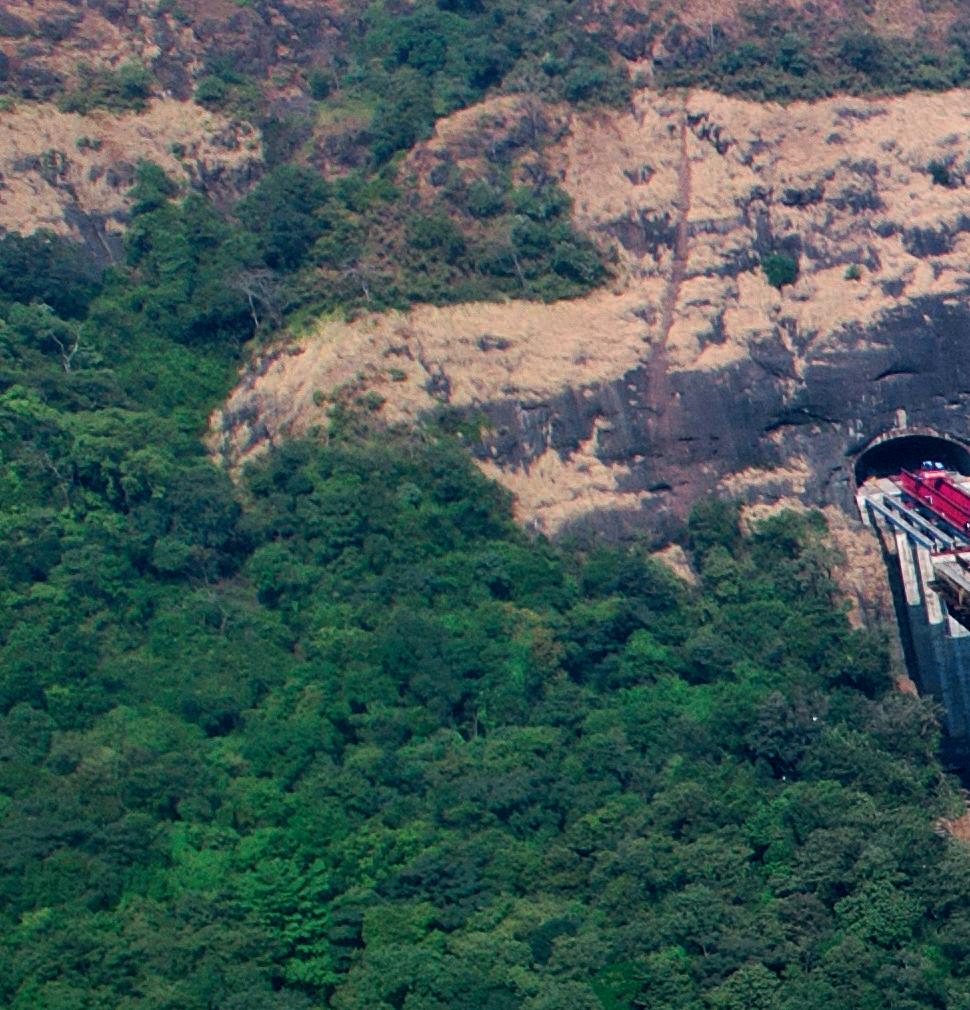

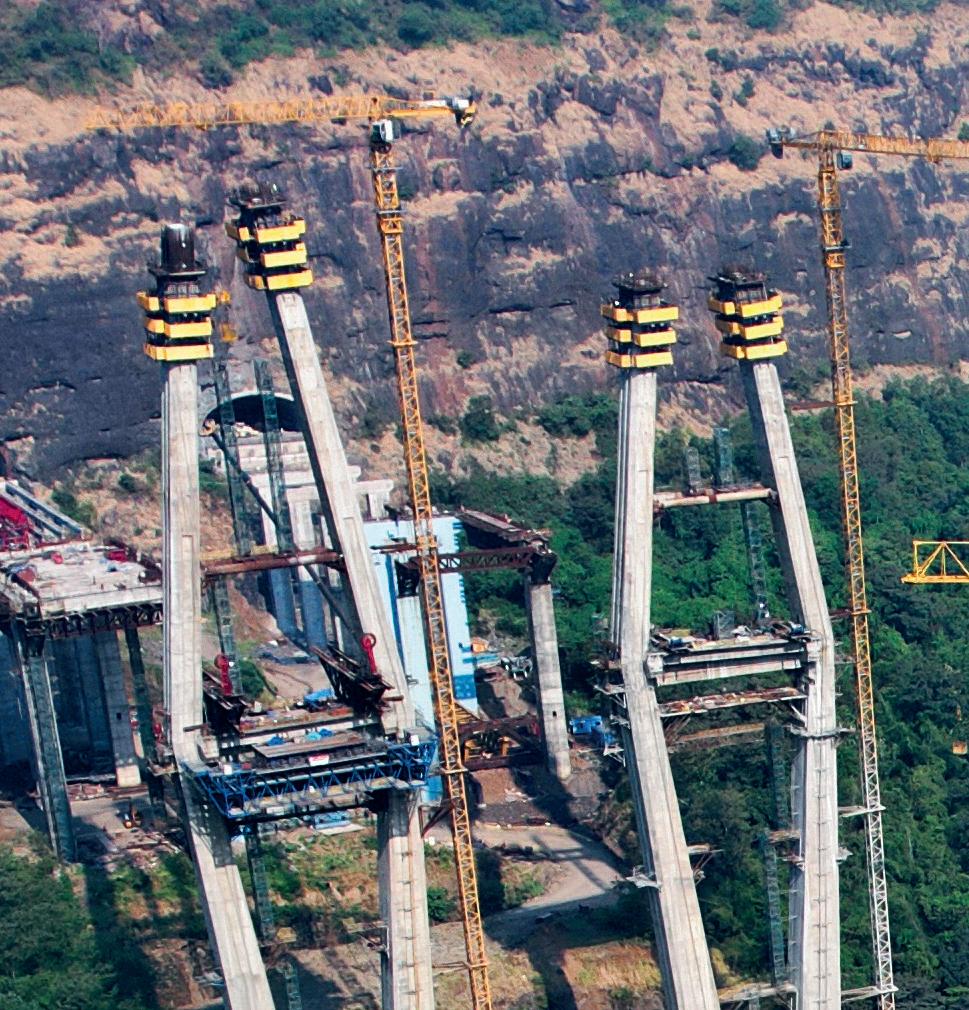

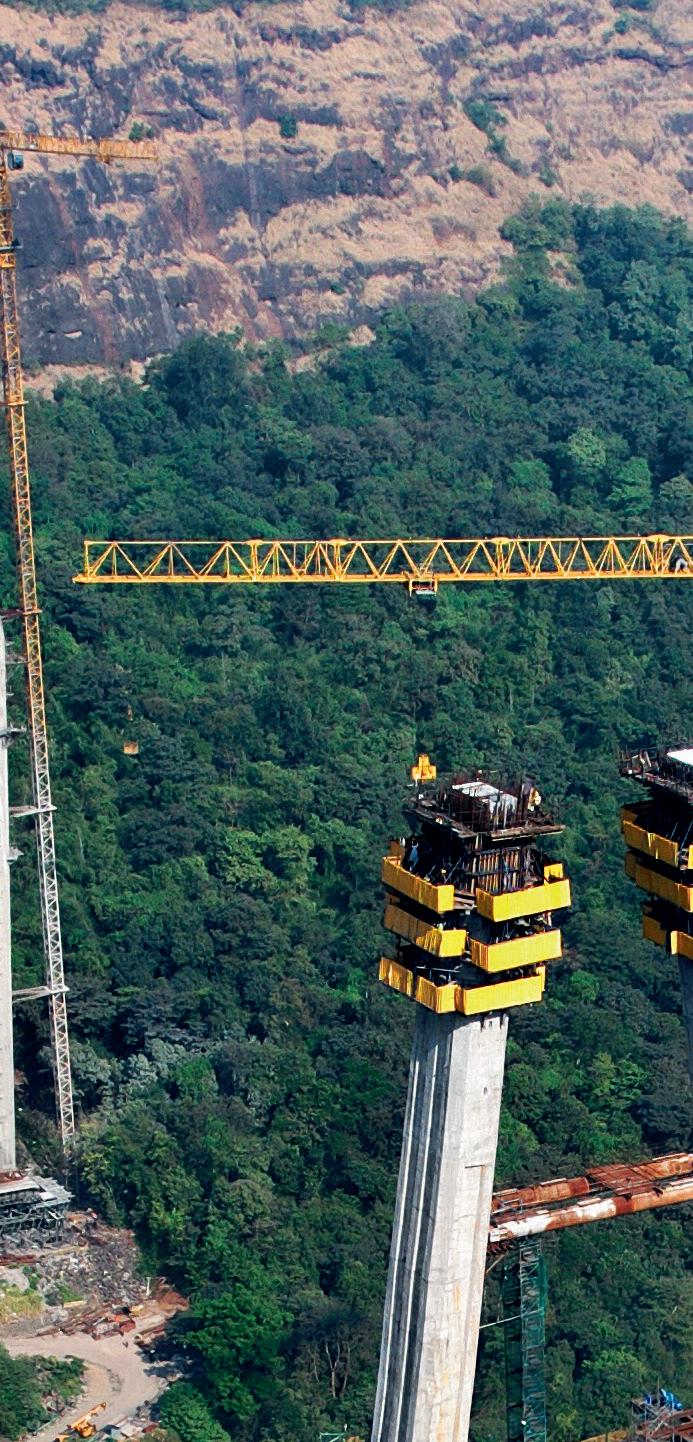











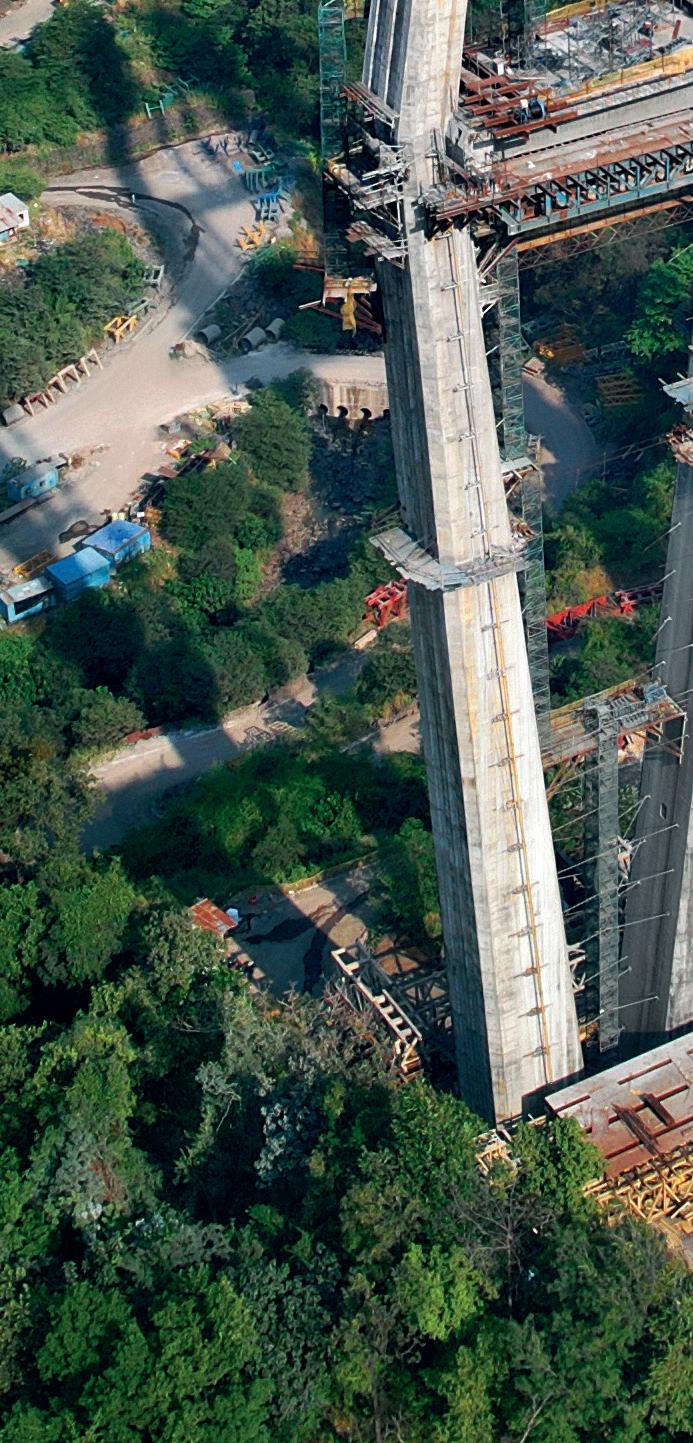

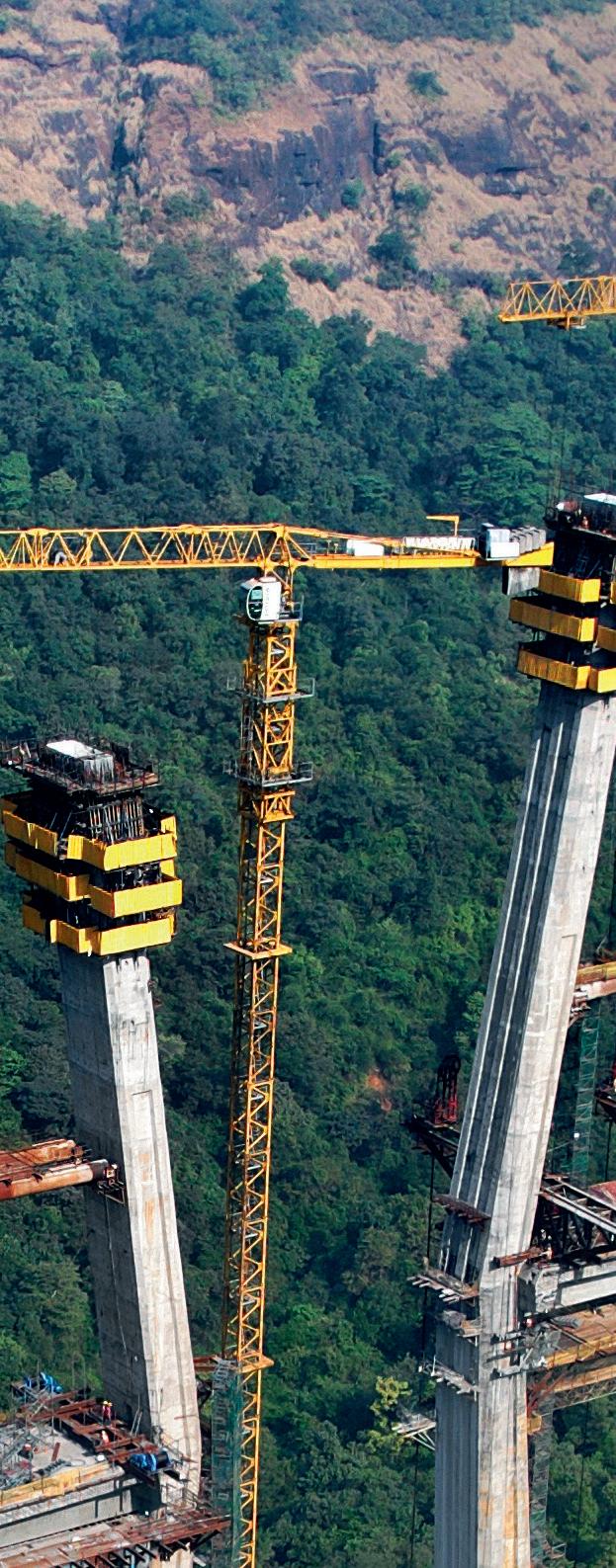


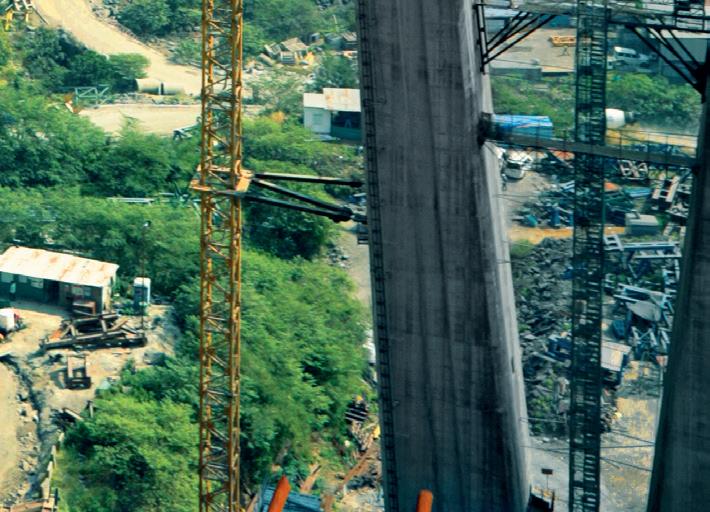
A new bypass in India is filling a key gap in the transport network, reducing journey times between two fastgrowing cities, as well as boosting travel safety
Anew expressway link project in India is providing a long-awaited transport connection in the country’s highway network and will deliver a much-needed upgrade. e Mumbai to Pune Expressway is a key road transport link for India’s highway system, connecting two major centres of commerce and habitation that are important for the country. It is one of the busiest routes in India, its tra c growth re ecting the nation’s fast-expanding economy.


e Mumbai-Pune expressway opened to tra c in 2002 and was named after the former chief minister, Yashwantrao Chavan. However, there has been a 19km section on the route, the Khandala Ghat, that does not meet the latest safety standards or tra c requirements and only now is this being superceded by a wider and safer bypass stretch.
Pune and Mumbai are around 147km apart and driving between the two cities will take around three hours at present, presuming that there are no delays due to extra vehicle numbers, crashes or landslides on the route. e tolled expressway linking the cities features three lanes of tra c in either direction and the increasing numbers of vehicles on India’s roads have resulted in the route su ering heavy congestion.







Runway resurfacing has been carried out successfully overnight at Jakarta Airport
Jakarta’s Soekarno-Hatta International Airport is now bene ting from a new runway surface, following the completion of repaving work.
e 3.6km-long by 60m-wide runway had to be repaved at night to minimise disturbance for the ights using the busy airport.
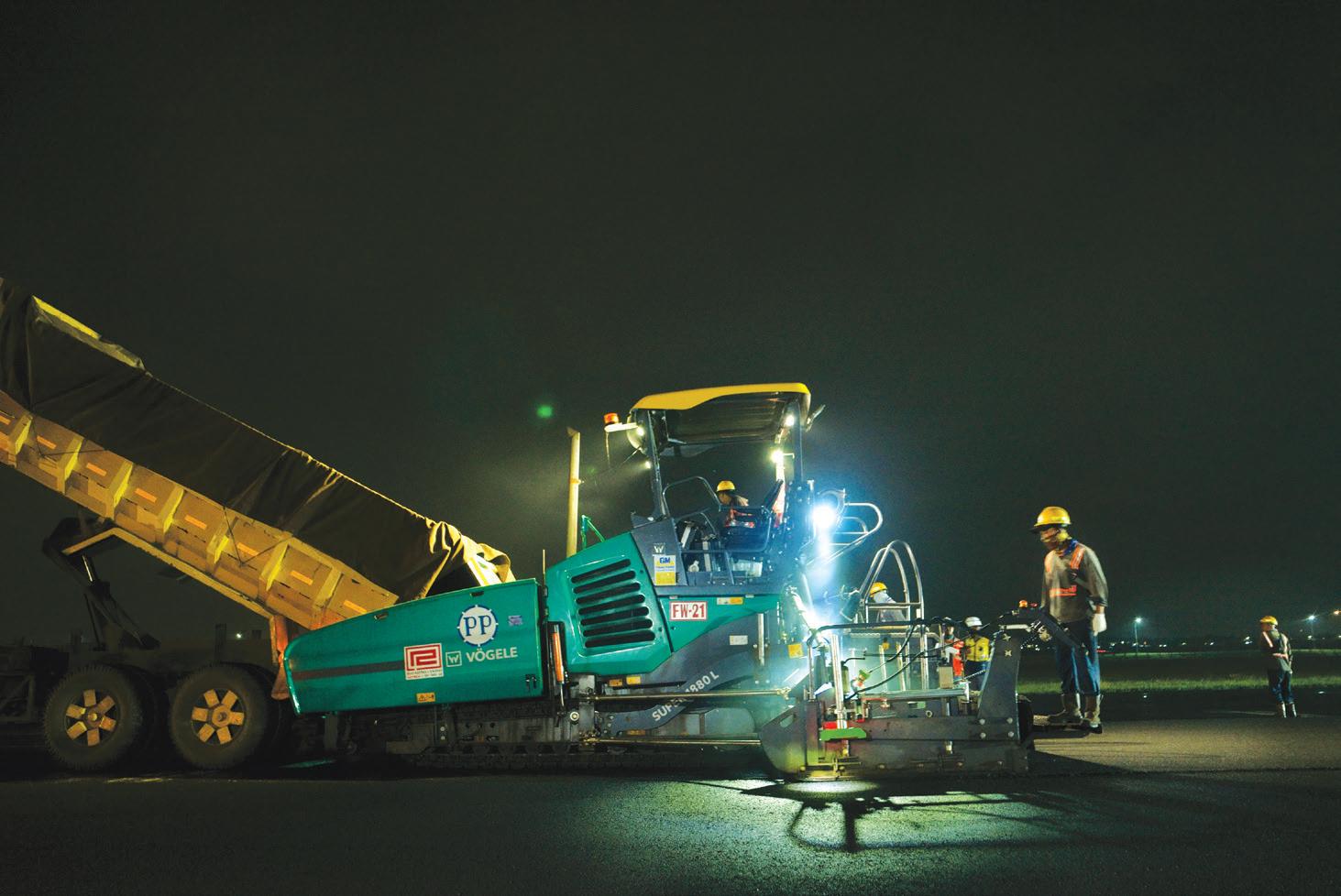
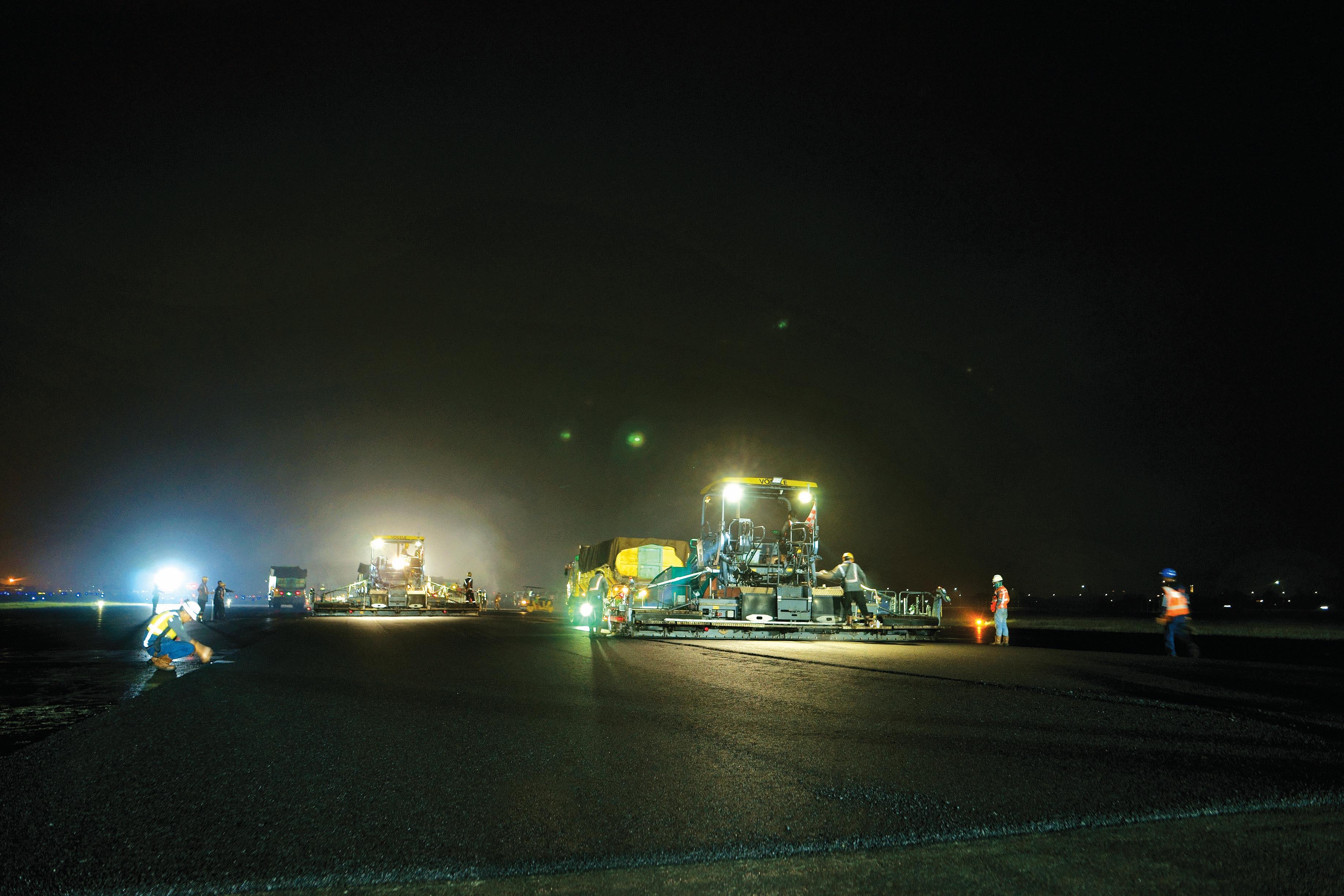
e lead contractor for the runway project, PT Roadmixindo Raya, opted to utilise two SUPER 1880 L pavers from Vögele for the work, with the machines working in echelon. Using the two pavers so close to each other allowed the surface to be laid ‘hot-to-hot’, ensuring an e ective bond at the joint and a longer life for the surface.
e work was needed to redevelop the facility because the number of passengers and aircraft movements at the airport in Jakarta has been increasing signi cantly over several years. is has resulted in the airport, Indonesia’s largest, undergoing an almost continuous process of modernisation and expansion.
One of the airport’s three runways was due for resurfacing work. However, the job presented challenges to the contractor because the work could only be carried out between 11pm at night and 5am in the morning, so as not to disrupt the busy ight schedule.
Reliable and productive machines were required to deliver the paving work within the tight timeslot available for the contractor. Two Vögele SUPER 1880 L pavers were selected by the contractor for the job. ese two pavers were able to deliver the high e ciency, productivity and quality required for the work to rehabilitate the runway.


ABOVE
The paving work was carried out within a strict schedule at night from 11pm to 5am
e two pavers were operated in echelon to pave four layers each. Because they operated in staggered format, one slightly ahead of the other, the asphalt could be laid ‘hot-to-hot. is is a key factor in ensuring a long-life surface because the hot asphalt forms a strong bond at the joint. e primary cause of early failure of asphalt surfaces is water penetration followed by joint failure and potholes. But with a hot-to-hot paving operation, this potential risk is eliminated, allowing a dense and stable bonding of the individual courses and providing long-term protection against the penetration of water.
e two pavers were set with screed widths of 8m each and paved four asphalt layers in total. e two base layers had thicknesses of 7-8cm, while a binder course of 8cm was laid and then a 2cm wearing course on top.
For the latest news, extended features and videos visit the website globalhighways.com
Because of the airport environment, the contractor had to meet very tough requirements regarding surface quality. At international airports, paving requirements are based on the strict regulations of two aviation authorities, the International Civil Aviation Organization (ICAO) and the Federal Aviation Administration (FAA). ese de ne a variety of parameters ranging from the mix quality and tensile strength to the surface quality and paving precision. Equally strict requirements apply to the formation of joints.
In addition to the strict quality requirements and the tight window, care also had to be taken to ensure that a su cient mix of the required quality was supplied continuously to the pavers.



“Precision allows us to better understand our surroundings, to see things we haven’t seen before…”

— Ivan Di Federico, President and CEO, Topcon Positioning Systems, Inc.




See what’s next at bauma 2025

Important features of the two SUPER 1880 L pavers from Vögele included the large material hoppers and high paving rate. e SUPER 1880 L pavers are powered by e cient six-cylinder diesels rated at 158kW. e paver operators were able to run the engine in ECO mode during paving situations that required less power. In this mode, nominal engine speed is reduced from 2,000-1,700rpm, lowering operating costs and noise emissions.
Maximum productivity was also a crucial factor on the airport construction site: “To make the best use of the working hours, the processes had to run smoothly. is was the only way we could keep to the schedule,” said Tadjus Tamsil, director at PT Roadmixindo Raya. He said that one of the key features of the Vögele tracked pavers is the large material hopper with a capacity of 15tonnes. Its considerable length and low material feed height enabled each tipper truck to easily dock with the SUPER 1880 L and quickly o oad the mix. “ is meant that the trucks were able to quickly transfer their loads of mix, enabling us to maintain a high laydown rate and work continuously without interruption.” Andrew Davian, project manager at PT Roadmixindo Raya, added: “ e fact that the SUPER 1880 L also made it easy to meet the required criteria for surface quality and paving precision was a huge relief for the paving crew during the demanding work through the night.”
e AB 500 TV extending screeds used on the project also played an important role in ensuring paving quality. e AB 500 has a basic width of 2.55m and can be hydraulically extended to a width of 5m. With bolt-on extensions, it enables pave widths of up to 8.5m. “Maximum quality and perfect grade and slope control are particularly critical on a project like this at the airport. e combination of the AB 500 and the tamper bar and vibration-compaction systems enable us to achieve outstanding pre-compaction and, consequently, a very high-quality result,” said David Gouw Tama Priatna, director at PT Roadmixindo Raya. In addition, the extending screed reached the speci ed temperature quickly and evenly due to the electric screed-heating system. is system heats all components that come into contact with the asphalt mix and ensures a particularly homogeneous surface structure.
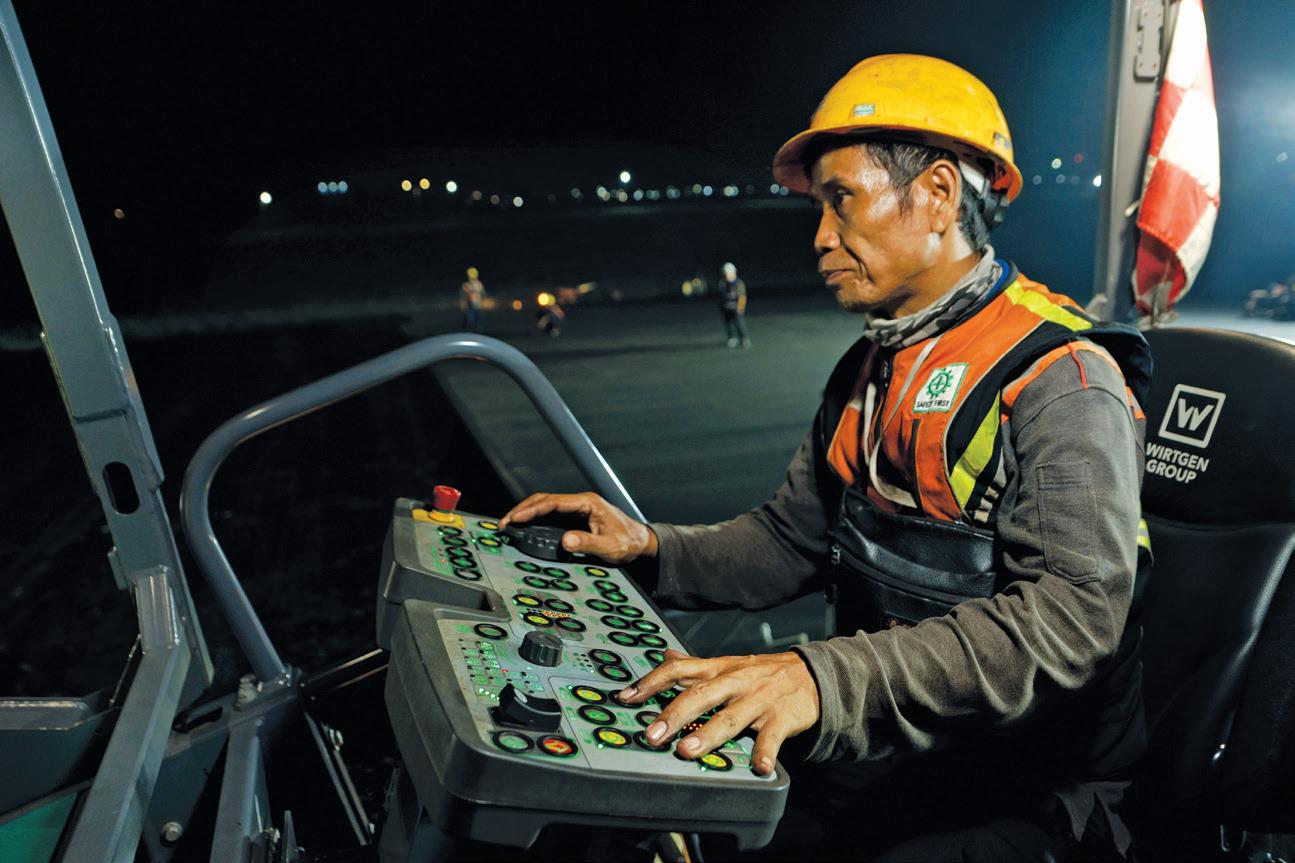
e intuitive ErgoBasic operating concept ensured precise paving results in Jakarta. It was developed on the basis of the proven ErgoPlus operating system from Vögele with the aim of being just as quick, precise and intuitive – but slimmed down to the most important
The paver crews were able to deliver a highquality surface. The large hoppers in the pavers were important for ensuring a continuous flow of material to the screed
paving functions. Vögele has also developed a system for automated grade and slope control to complement the ErgoBasic operating system, namely Niveltronic Basic. is system is fully integrated into the machinecontrol system and therefore tailored precisely to suit the SUPER 1880 L. ‘ErgoBasic is a major plus point of the Vögele paver. “ e operating concept enables quick and simple control and makes it easier for the paving crew to achieve precise results,” said Faisol Fuad, likewise director at PT Roadmixindo Raya. End www.wirtgen-group.com
The two pavers operated in echelon in a slightly staggered formation, with one just ahead of the other
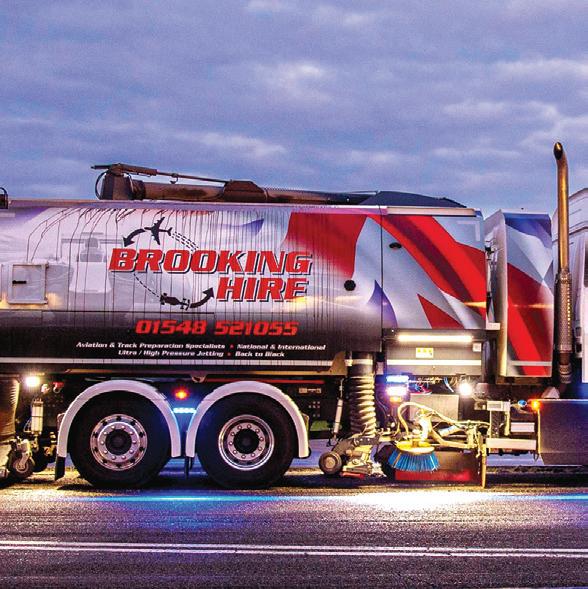

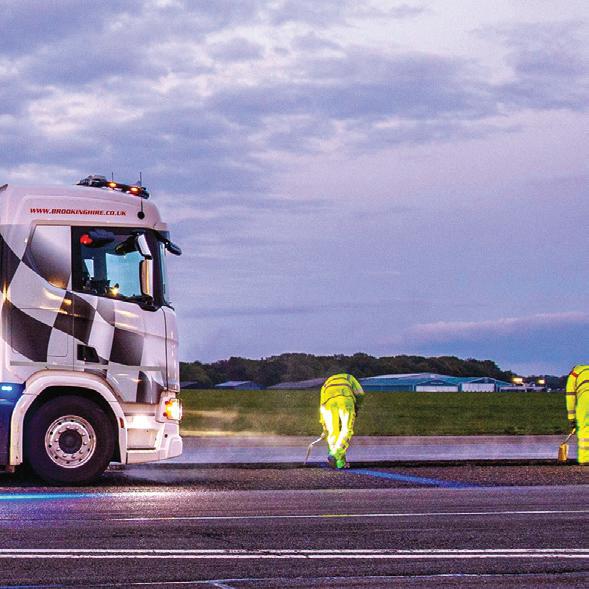
An innovative, non-crude oil-based asphalt binder is being trialled on the runway at London Biggin Hill Airport. This is the first airport in the world to trial the material on an operational taxiway.
Known as Bio-Bitumen, the asphalt binder is made from renewable resources, specifically a combination of naturally occurring hydrocarbon resin and an organic extract. The material was installed during a live demonstration, conducted by Associated Asphalt Contracting, together with partners, B2SQUARE - Bitumen Beyond Oil, attended by aviation and paving experts at the historic London Biggin Hill Airport.
Tony Embling, head of Technical Services, London Biggin Hill Airport, said: “It’s a significant milestone for the industry as
A SANY milling machine has proved its worth, carrying out planing work in the Maldives. The SANY SCM2000C-10R milling machine has been used for milling the surface of the runway at the Velana International Airport. The work formed part of the renovation and expansion project for Velana International Airport. The work was carried out on the 3.2km runway by the contractor, Beijing Urban Construction Group. The machine, equipped with load-adaptive technology and an intelligent assisted-driving system, was also able to deliver a milling production rate of 219.6m3/hour. https://www.sanyglobal.com/

we work to develop more resilient, lowerimpact infrastructure.”
Derek Lock, business development consultant, Associated Asphalt Contracting, said: “This is an opportunity to test durability, flexibility and surface performance in conditions far more demanding than traditional road surfaces. Through this project, we’ll be gathering valuable data from a real-world setting to support the use of more sustainable materials that meet the standards of aviation environments.”
Frank Albrecht, CEO, B2SQUAREBitumen Beyond Oil, added: “We’re presented with a great opportunity to demonstrate the viability of bitumen alternatives and highlight their commercial

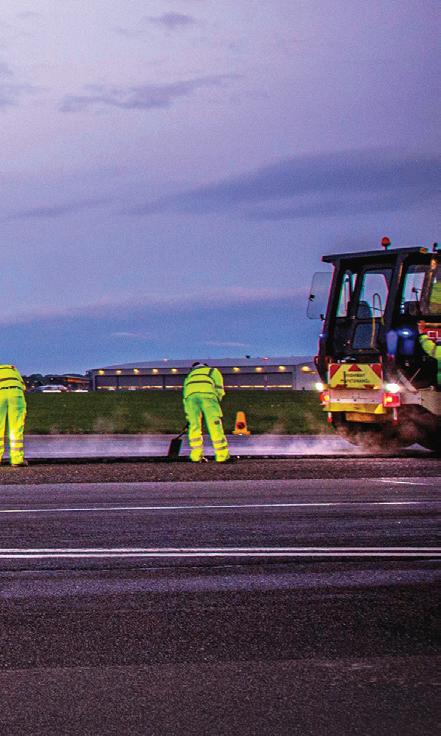

and environmental potential across the sector. By working in partnership with Associated Asphalt, and their client London Biggin Hill Airport, we’ve been able to progress beyond controlled testing to an operational taxiway, used daily by business aircra .”
London Biggin Hill Airport is the only dedicated business aviation airport within the capital and is home to more than 70 resident aviation companies. Located 19km from central London, it o ers extensive hangarage, support and maintenance services for business jets.
The historic airport dates back to the early days of aviation and was also the site of the first tests of radio communications between the ground and air.
Resurfacing work costing some $110 million has been completed at Ronald Reagan Airport in Washington DC. e project saw a eet of machines from the Wirtgen Group being used for the resurfacing project.
Wirtgen milling machines were used rst to remove the degraded runway surface, with the rst 5 Vögele pavers (Super 2100 models) supplied to a customer in the US then being used to lay the asphalt. A number of HD14 Hamm rollers were then used to compact the surface.
e tamper bar screeds for these pavers played important roles in delivering the necessary compaction density for the surface to meet the tight airport speci cations.
e pavers were selected specially for this job with the European-style tamper bar screeds instead of the US-style screed more commonly employed in North America. e strong, sti and dense mix required for this application is of a grade that is di cult to lay but the contractor, Lagan US, was convinced that the pavers would be able to meet the strict quality controls.
e airport has one of the busiest runways in the US and being able to deliver a quality surface e ciently was crucial to the project. Specialist contractor Lagan US has now completed repaving at Ronald Reagan International Airport in the US, with materials supplied by Holcim www.wirtgen-group.com

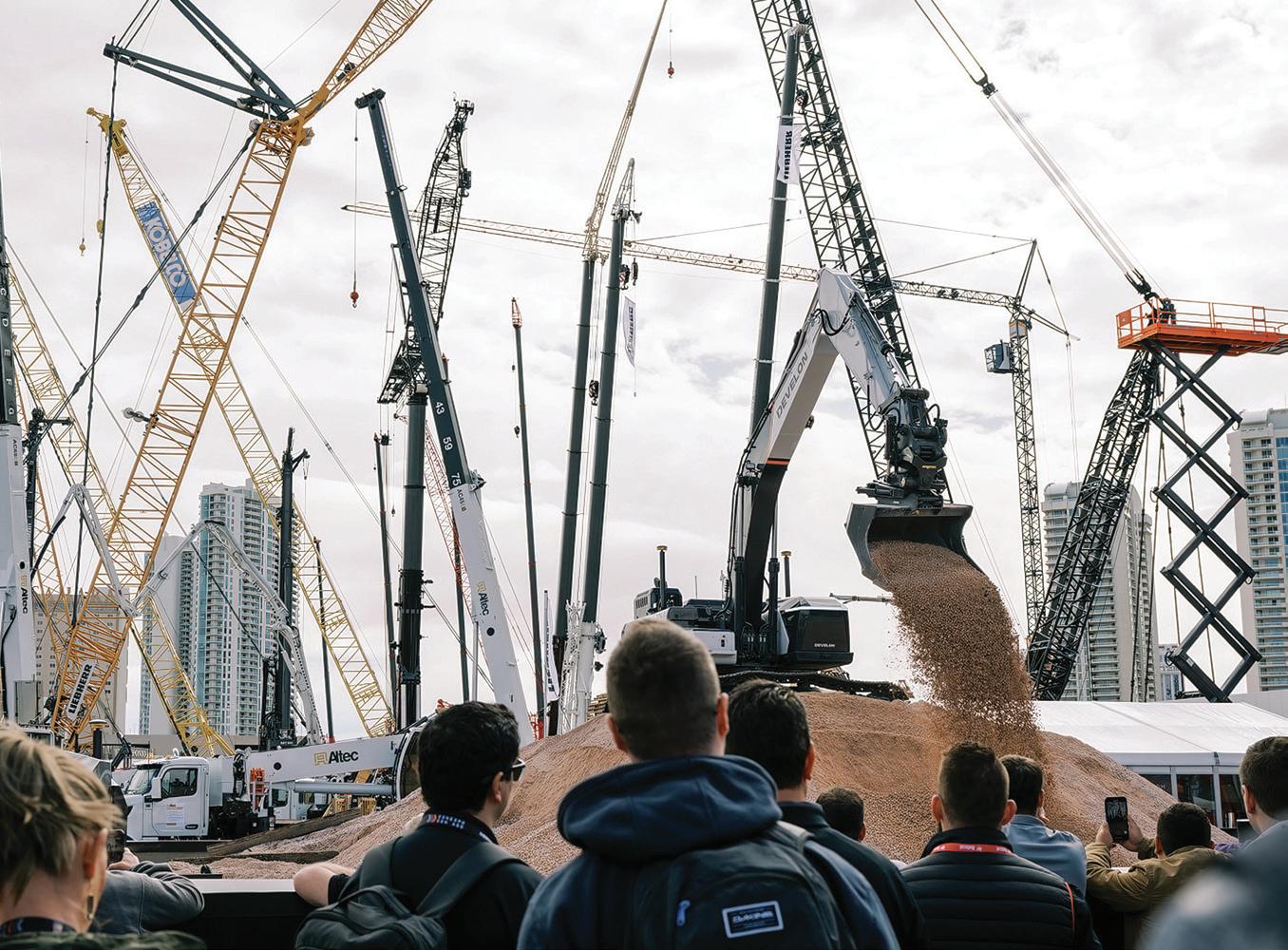

Ammann has introduced a wide array of new asphalt-plant solutions for both batching and continuous production types to suit a range of di erent applications. In addition, the firm is now o ering improved drum designs that allow the use of RAP in the feed
The most sophisticated is the high recycling technology (HRT) batch plant, a premium design that bene ts from advanced technology. is can incorporate up to 100% RAP, while featuring extremely low energy consumption and emissions. e double-drum system combines a virgin aggregate drum with either an RAH60 or RAH100 recycling drum. Indirect heating reduces fuel burn and emissions while avoiding the risk of damaging the materials. Heat distribution is homogenous, which prevents sticking, as does the vertical ow.
e HRT ABP series can deliver an output ranging from 240-400tonnes/hour, ensuring high-volume production is available for large-scale projects. Importantly, the HRT has been engineered so that future
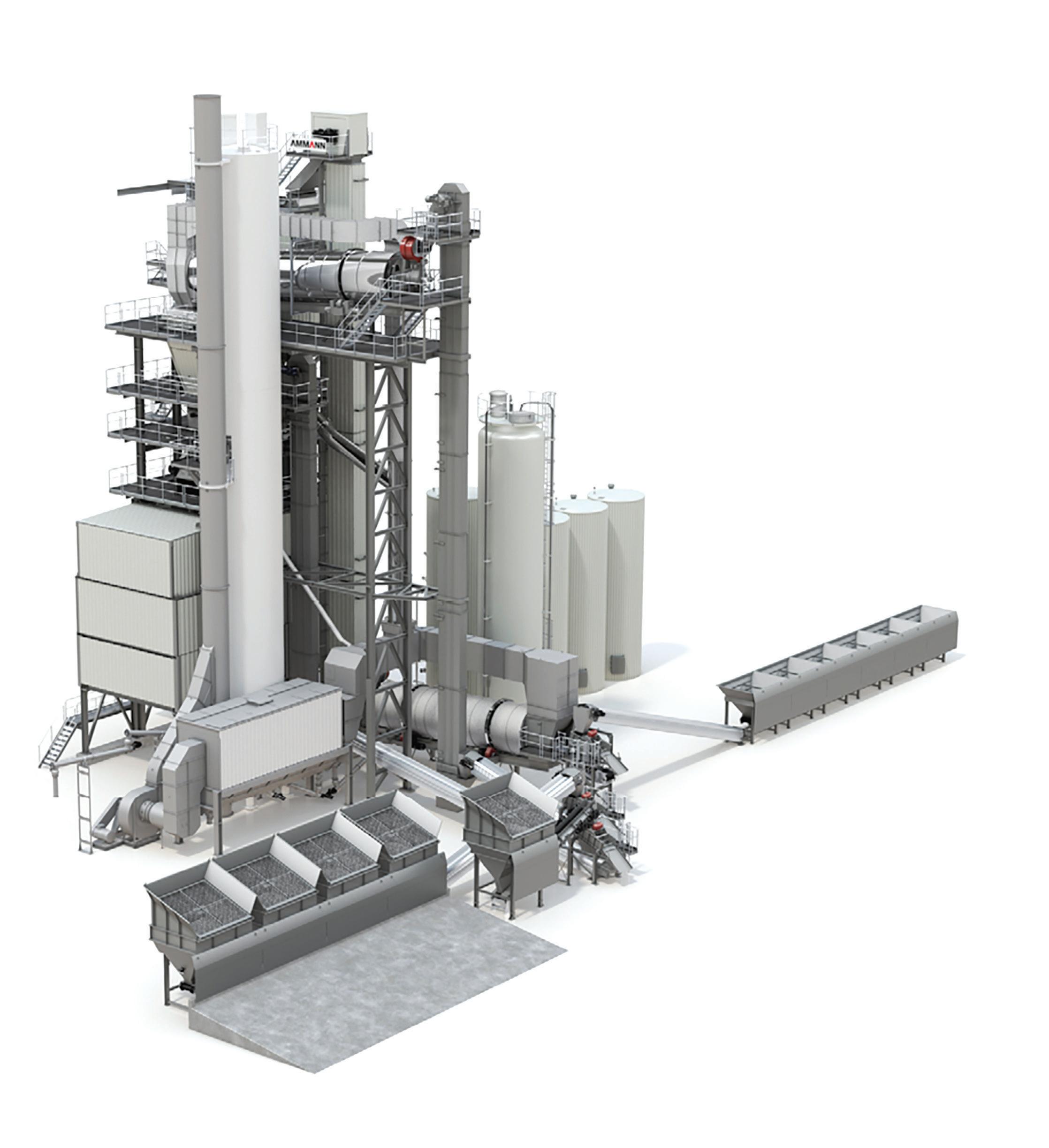
technologies can be integrated in the future. e plant is said to feature bene ts of both batch and continuous plants. It can utilise up to 100% RAP with the RAH100 dryer, or up to 50% RAP with the RAH50 2nd Generation.
e ABC SolidBatch plant o ers robust, reliable and high-production batching, while requiring a low initial investment. e plant can use up to 40% cold RAP in the mixer. An option for the plant is the new RAH35, which bene ts from a drum dryer with a ring for RAP. e plant is intended for customers who need to deliver results under tight deadlines. With its lowest cost of ownership, it represents the best value on the market. It also can be easily retro tted with the latest Ammann technologies.
e ABA UniBatch plant is designed so that it can be customised, while o ering versatility and performance. e plant o ers an output range from 140-400tonnes/hour, and the variety of con gurations ensure customers can specify what they need. All components are integrated and designed to reduce fuel burn and emissions. e rm says that its advanced RAP technologies enable the production of cold, hot and warm asphalt. Mixes featuring up to 100% RAP are possible. e ABA UniBatch plant is said to be future-optimised and includes features that can be easily retro tted so it can be equipped with the latest, most technologically advanced and pro table options.
ABOVE
Ammann is o ering an array of new asphalt-plant solutions
e ACP ContiMix 2.0 plant can produce cold, warm and hot asphalt mix and is a continuous type. e rm says that this plant is exceptionally e cient thanks to Ammann’s advanced technology for dryers, lters and energy usage. e as1 Control System is intuitive and brings further e ciencies.
Another new addition to Ammann’s continuous plant range is the ACM Prime 2.0. Mobility and a smart continuous- ow process are key features of this transport-optimised plant. It bene ts from a compact design that ensures the entire plant can be tted on one or two trailers. is makes relocation easy and e cient, while the plant also complies with all international transport codes.


Components are tested at the factory and most are pre-assembled on the chassis, which saves time when the plant reaches its destination. e separated drying, heating and mixing processes result in high mix quality. A novel, controllable outlet gate allows the lling height and the mixing time to be set depending on the recipe and output. e Prime 2.0 plant is able to produce up to 210tonnes/hour and use up to 40% cold RAP.
Ammann is o ering improved dryer drums in the shape of the upgraded RAH35, RAH50, RAH60 and RAH100. e RAH35 dryer features a recycling ring designed to incorporate up to 35% RAP. e dryer can be retro tted to any plant and requires a minimal investment. A special ring enables introduction of RAP into the most suitable area of the cylinder. e dryer protects RAP from high temperatures and releases low levels of emissions.
e RAH35 is available with a new-generation longnozzle Ammann burner, which allows introduction of RAP behind the ame. is further protects the RAP and lowers emissions.
For the rm’s second-generation RAH50 dryer drum, special steel grades are used to boost performance and durability. is dryer is capable of handling up to 50% recycled material and is claimed to be over 20% more energy-e cient than a conventional design. Emissions are low due to the matched burner and cylinder design which also includes Ammann’s patented system for gently heating RAP.
e RAH60 and RAH100 dryer drums can utilise up to 60% RAP and 100% RAP, respectively. Both technologies are being improved continuously. is includes design optimisation for further e ciencies: material usage; reduced maintenance and cleaning requirements; and the capability to utilise materials with increasingly high performances.
e systems recognise that temperature is a key factor when incorporating RAP. e recycled material
must reach the target temperature, but it is imperative that it has to be heated gently to prevent damaging the bitumen.
With the RAH60, RAP is heated in a traditional parallel ow dryer drum but at a lower temperature to protect the bitumen. en, in a second dryer, virgin aggregate is heated to high temperatures. e aggregate exits that dryer and mixes with the RAP, heating it in the process.
e RAH100 dryer features two connected sections. e rst is a high-technology, static, hotgas generator. e generator generates the hot air, which is transferred into the rotating second cylinder, consisting of a counter ow dryer.
e RAP enters the far end of the counter ow dryer but drops out before entering the hot-gas generator.
e RAP is heated indirectly without damaging the bitumen, while emissions are low and there is no need to overheat the virgin aggregates.
Finally, improved plant control and e ciency can be achieved using the latest as1 control system version 6.1, now available under Windows 11. e innovative Argon View user-interface concept makes the operation of the system simple, despite the range of functions. Various optional add-on modules can support production-related processes on the plant. In addition to the mobile applications such as the as1 PIP (Plant Information Point) or the as1 WLT (Wheel Loader Terminal), the new as1 PAA (Plant Asset App), a mobile solution for plant monitoring and for support in plant settings and troubleshooting, will be presented for the rst time.
Now, as1 OPC UA Server (Open Platform Communications Uni ed Architecture), a standardised software interface in the industrial environment, is supported. is allows the operating status of the system to be queried in real time and used for each user’s evaluations. End www.ammann.com
Turkish firm E-MAK is boosting its presence in terms of exports, including the highly competitive European market. Around 80% of the firm’s asphalt-plant solutions are now being exported, with Europe being a key target. The firm has supplied plants to Spain and more recently, to the UK.
The company is also planning to open new o ices in Europe, which will also o er sales and service facilities for its customers in this market. In addition, a new factory is planned in Turkey that will allow the company to further expand its production capabilities to meet anticipated demand.
At the same time, E-MAK has high hopes that its Challenger
range will help European customers to meet sustainability requirements. So far, 15 of the Challenger systems have been sold worldwide and E-MAK has high hopes for further sales. With its enclosed storage for up to four aggregate grades, the Challenger can reduce the heating requirements during the asphaltproduction process significantly. And with reduced heating needed, this slashes fuel costs while also cutting CO2 emissions by as much as 30%. This can allow customers to meet the increasingly tough environmental regulations governing asphalt plants in Europe. www.e-mak.com

For the latest news, extended features and videos visit the website globalhighways.com
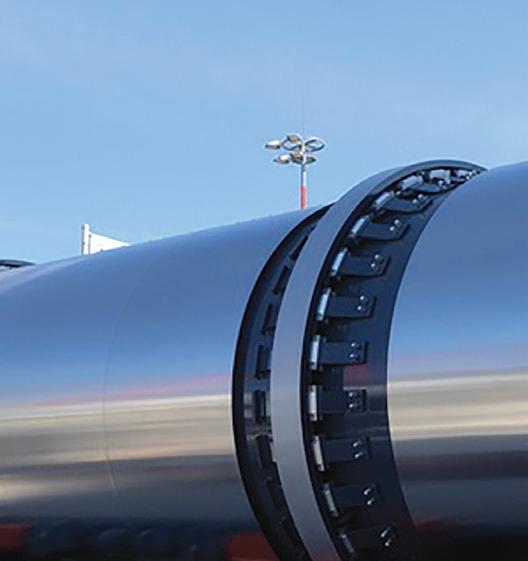
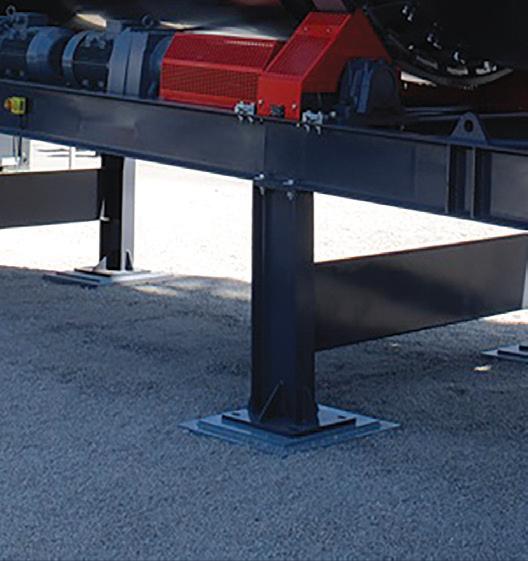

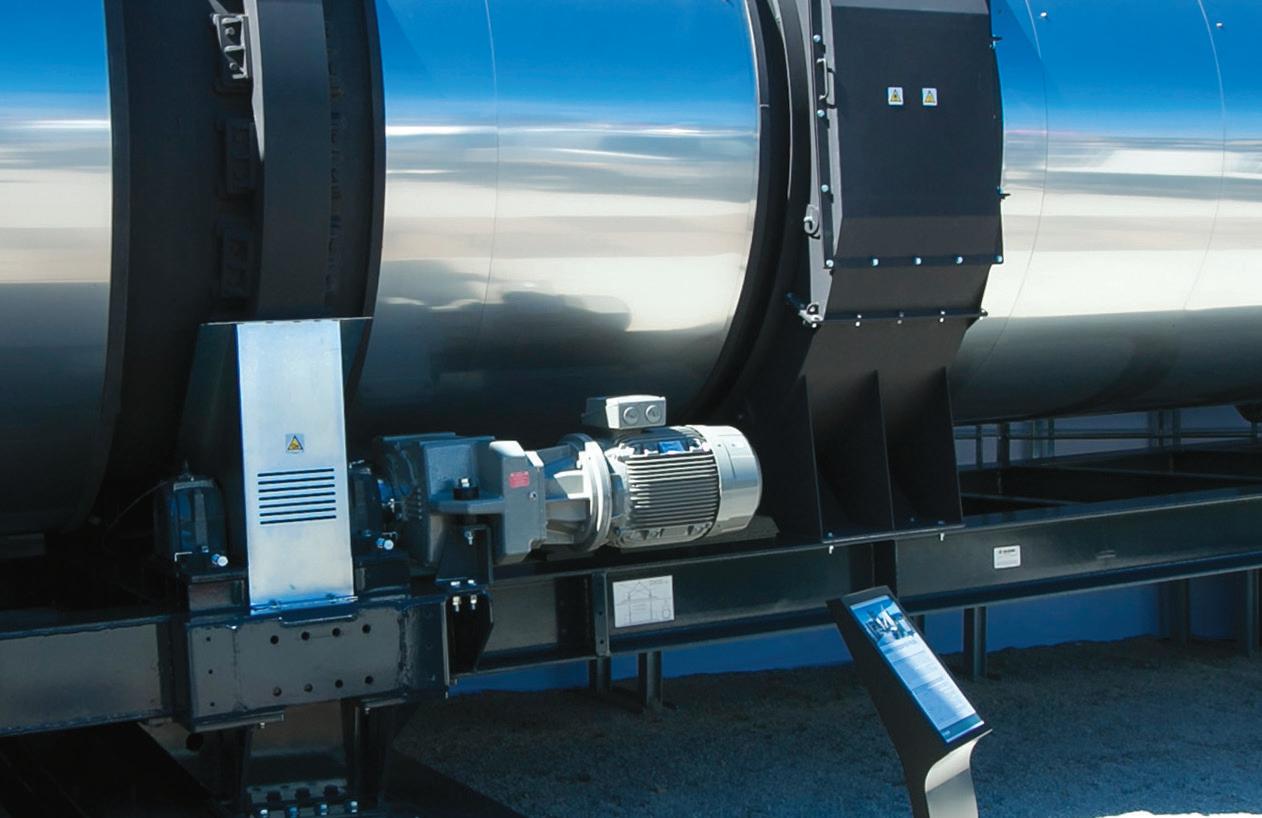

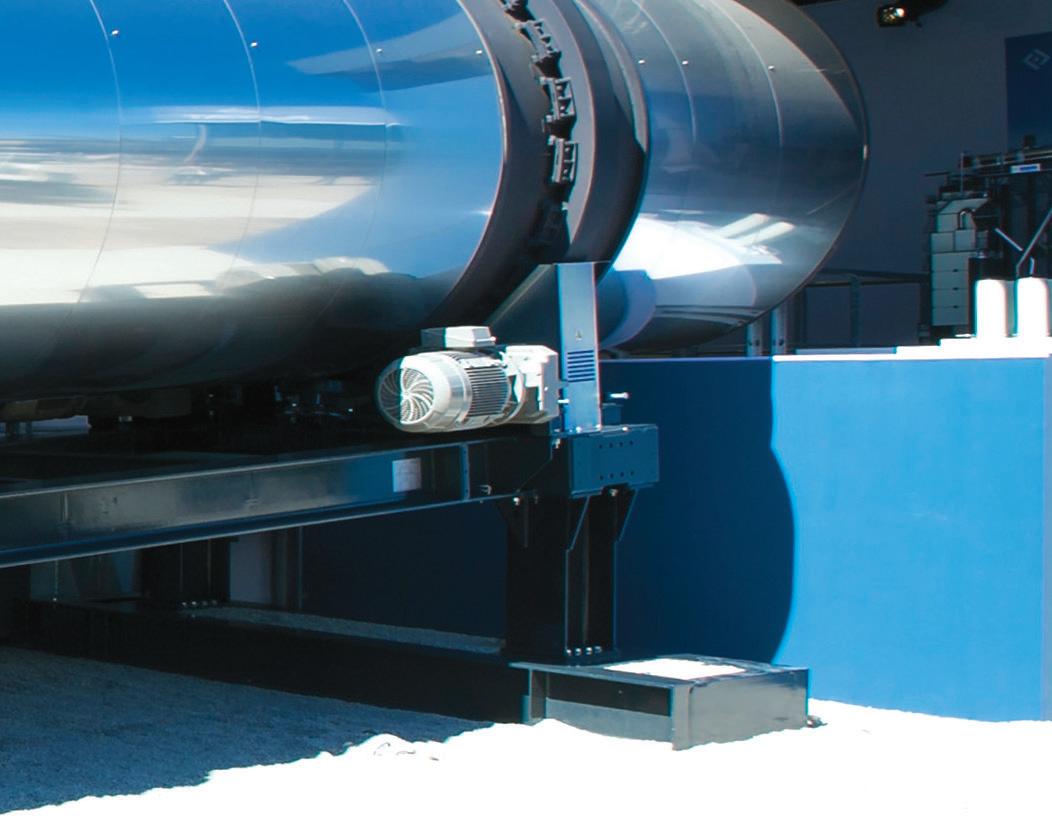

e Fayat Group is o ering a wide range of new solutions for delivering hot, warm and cold mix materials. e company’s Ermont and Marini divisions are o ering continuous and batching systems respectively, while it also has binder systems from its SAE business.
e Ermont range has developed its TRX inCity, which it claims is a highly compact continuous asphalt plant capable of using a high percentage of recycled materials in the feed with a single burner. e plant o ers high-quality asphalt production and can typically use up to 80% RAP in the feed for most road applications, or up to 100% for an application such as a parking area where tra c speeds will be lower and less of an issue.
Meanwhile, the rm says that the TRX Highway variant can use up to 70% RAP in the feed. e TRX Highway is a versatile development using technology from the existing TRX models but has been designed to make it easy to transport between sites, quick to commission once onsite and also speedy to move again once work is complete.
In addition, Ermont says that its new RF200 NEO2 asphalt plant features the rm’s proven RETROFLUX technology. is unit provides a versatile, eco-friendly solution for producing high-quality asphalt at reduced costs, with key features including precise dosing and extended mixing times. is plant can use up to 50% of RAP in the feed and although it is not intended to be mobile, the modular design makes it easy and quick to assemble onsite.
For the batch-plant market, a key introduction from Marini has been its new Evodryer Plus. It is a sophisticated plant capable of handling up to 70% RAP in the feed, without compromising quality. Of note is that it is equipped with just one drum. is slots into the range between the more complex and costly parallel-drum plants able to handle up to 80% RAP in the feed, and the simpler existing units featuring a single drum, which can handle up to 60% RAP in the feed. e rm says that the Evodryer Plus can use a high percentage of RAP in the feed but without

the cost of maintenance or energy consumption of a twin-drum plant. e key to the Evodryer Plus is the way the hot-gas generator is integrated into the single drum. e rm moved the dryer from the ground to the top of the plant as this eliminates the risk of sticky RAP causing blockages in an elevator and also reduces thermal dispersion.
Meanwhile, the drum has been extended by 3m and two small burners have been added, ring the hot-gas generator. is patented design heats the materials in the drum but without overheating. In addition, the discharge system features insulated hoppers to prevent sticking when there is a high percentage of RAP in the mix.
e Evodryer Plus suits medium-large production volumes with high RAP content but with just one drum, the plant is less costly to buy, has lower fuel costs and is simpler to maintain than twin-drum plants.
Another asphalt-plant innovation from the rm is its sophisticated control system called Marini Smart Plant, which has been developed in partnership with Bologna University. e system can be used to manage a complete operation and analyse data. Sensors are installed across the plant and the system uses these to determine optimal operation. e sensors also detect when components require maintenance, while providing operators with information on problemsolving. Of note is that this control system can be installed on any make of plant.
For the binder market, the SAE eTank is said to be an eco-friendly, high-performance storage container designed to meet stringent environmental standards. is is pre-assembled for easy installation. Its containerised format allows for easy and cost-e ective transportation and installation, reducing carbon footprint. e SAE Emulpack meanwhile, is a versatile solution for the continuous production of high-quality road binder emulsions. It is electrically-heated and can produce up to 40tonnes/hour in continuous mode or 15tonnes/hour in batch mode. End www.fayat.com
ABOVE Marini’s Evodryer Plus plant is said to o er customers an advanced asphalt-production system

“ e rm moved the dryer from the ground to the top of the plant as this eliminates the risk of sticky RAP causing blockages in an elevator and also reduces thermal dispersion”

Austrian firm Hilti & Jehle previously operated two Benninghoven asphalt plants at separate sites. But as part of a plan to boost e iciency, the firm opted to relocate one of these to the same site as the other. And with the newest of the plants being 14 years old, the company also decided to update both with the installation of modern technology.
The plan was to disassemble and then transport the TBA plant at the Nenzing site to the firm’s Götzis facility, 21km away in the Alpine Rhine Valley. Also included in the plan was the upgrading of both plants.
The project has been based on a sustainable approach, with individual components of the existing plants being reused while new, innovative retrofit solutions have been added. The upgrade process has been made easier by the modular design of the Benninghoven asphalt plants.
The location of the newly installed plant was a strategic choice. It is situated at the southern tip of Lake Constance, in proximity to Germany,

Liechtenstein and Switzerland. This allows asphalt mixtures to be delivered across various borders. Multiple countries mean di erent requirements for the mixtures and a greater variety of recipes, which can now be achieved with the updated plant and its more sophisticated control system.
A key stage was with the structured dismantling process in Nenzing. The individual parts of the asphalt-mixing plant were dismantled using a crane and li ing platform. The TBA plant in Nenzing was then combined with the plant in Götzis, a process made easier by the fact that the TBA plant was designed to be transportable.
In order to o er customers a large variety of recipes, the greatest possible number of di erent aggregate types and sizes has to be kept in stock.
The new layout enables the hot storage of di erent types of aggregate. There are now eight bins available for larger storage capacities and more varieties of finished asphalt, as well as for storing mastic asphalt. The bitumen tanks from Nenzing
have been positioned next to the existing bitumen tanks at the Götzis site.
By combining the bitumensupply systems from both plants and integrating an intelligent bitumen-control system, the facility can operate more flexibly in times of energy bottlenecks and fluctuating bitumen prices. The producer also has a wider range of options available for both plant volumes and asphalt mixes.
In addition to the existing cold recycling system, a recycling drum with a hot-gas generator has been installed to allow hot recycling. This new technology is to be used in the future and will help the producer to increase the percentage of recycled materials in the mix, without compromising on quality. The objective is to keep the emissions generated during asphalt production as low as possible.
A key upgrade is the new BLS4 control system, which is easier to use and o ers a wider array of product options as well as high output quality.
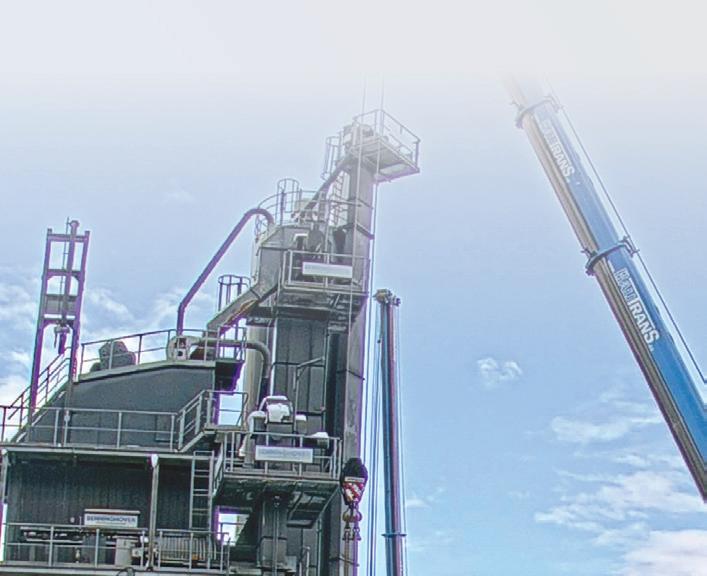
The weighing and mixing section has been expanded,
including an enclosure for the section with corrugated sheeting to protect against noise, dust and vapour emissions, and to reduce heat loss.
The cold feed unit now features a roof, which plays a crucial role. Reducing the moisture in the aggregate by just 1% saves 1itre of heating oil or the energy equivalent during heating of the aggregate.
The TBA plants are designed to be transportable and feature a modular concept, suiting them to both semi-mobile and stationary use. Combined with large storage capacities for the hot-bin section and the mixed-material loading silo, the retrofit options o er additional capabilities and high performance.
Benninghoven says that its innovative plant concept enables e icient integration of the plant throughout its life cycle. And with Benninghoven having provided its engineering expertise to ensure the plant move and upgrade went smoothly, the operation has proven a success for the client.

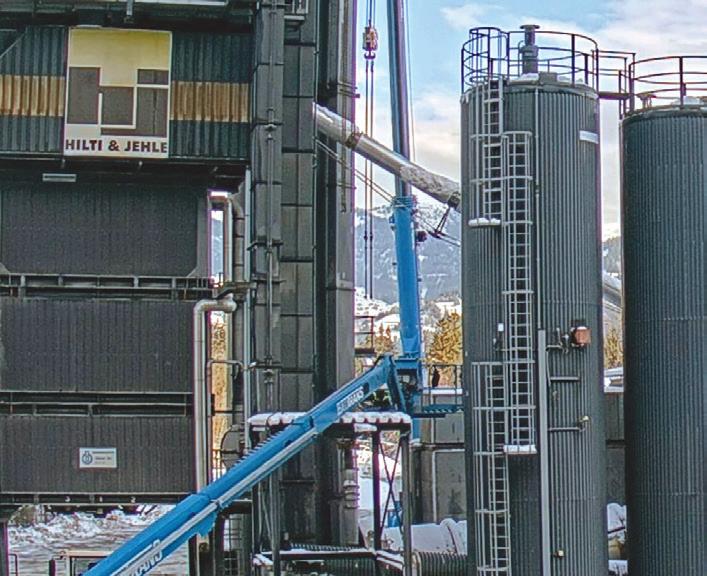
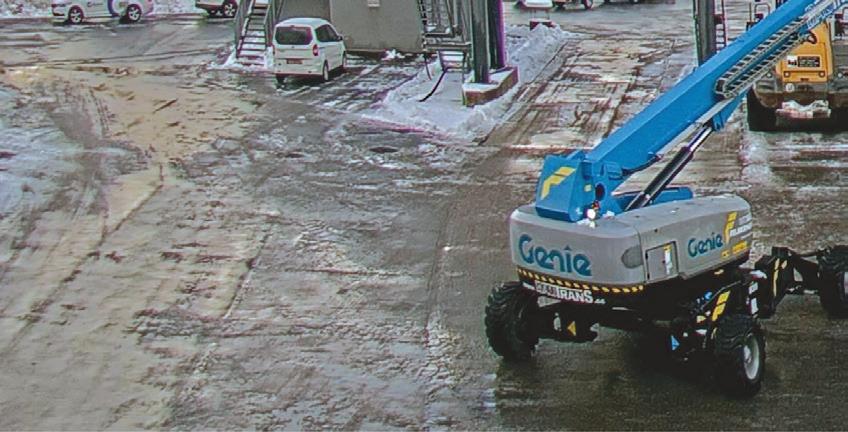
www.wirtgen-group.com
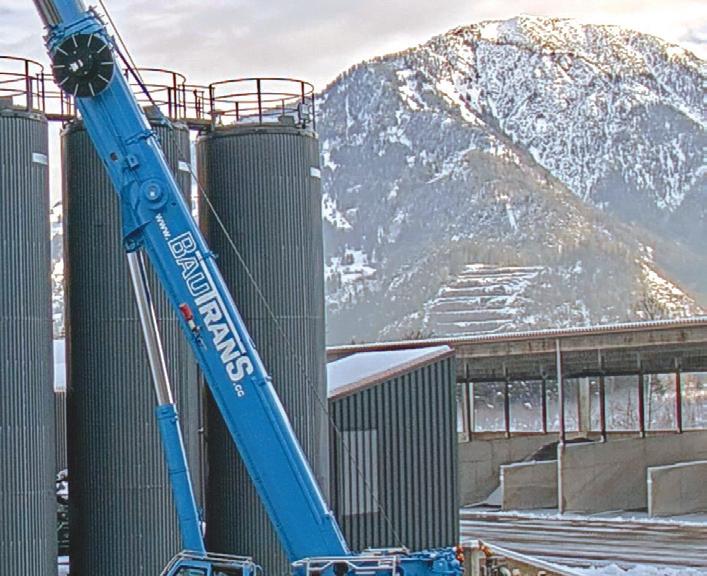
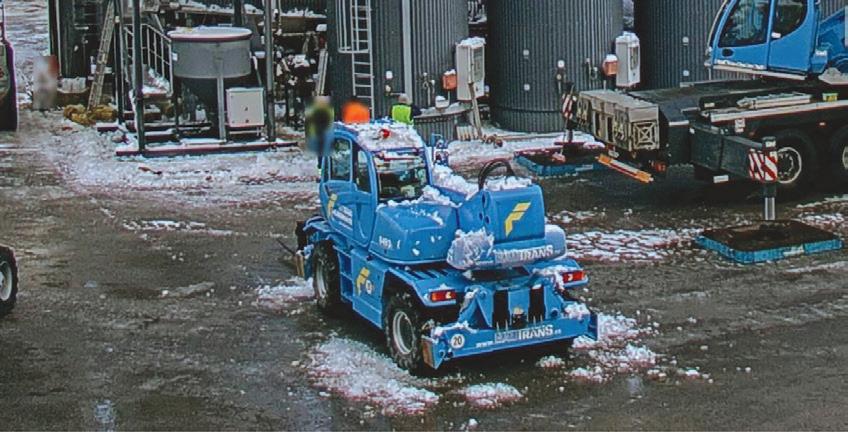

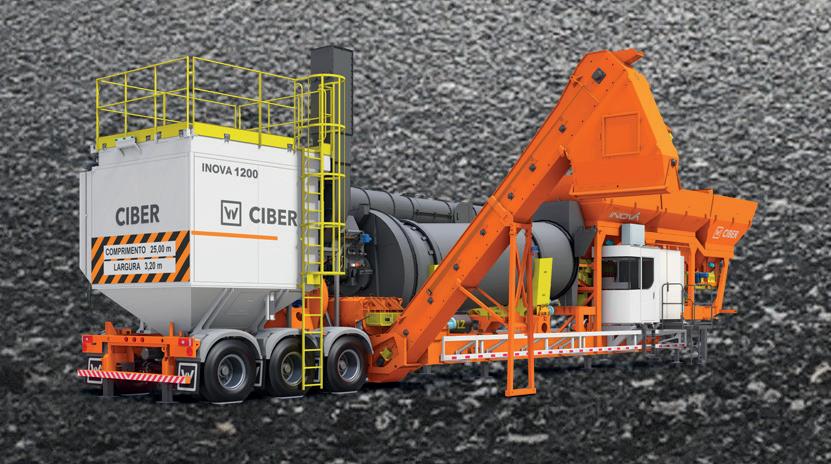

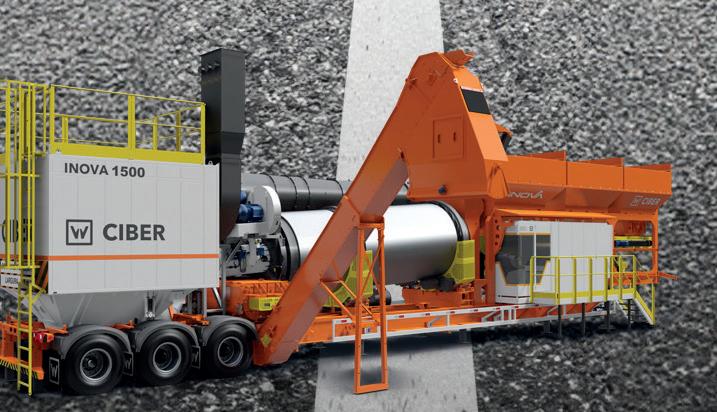

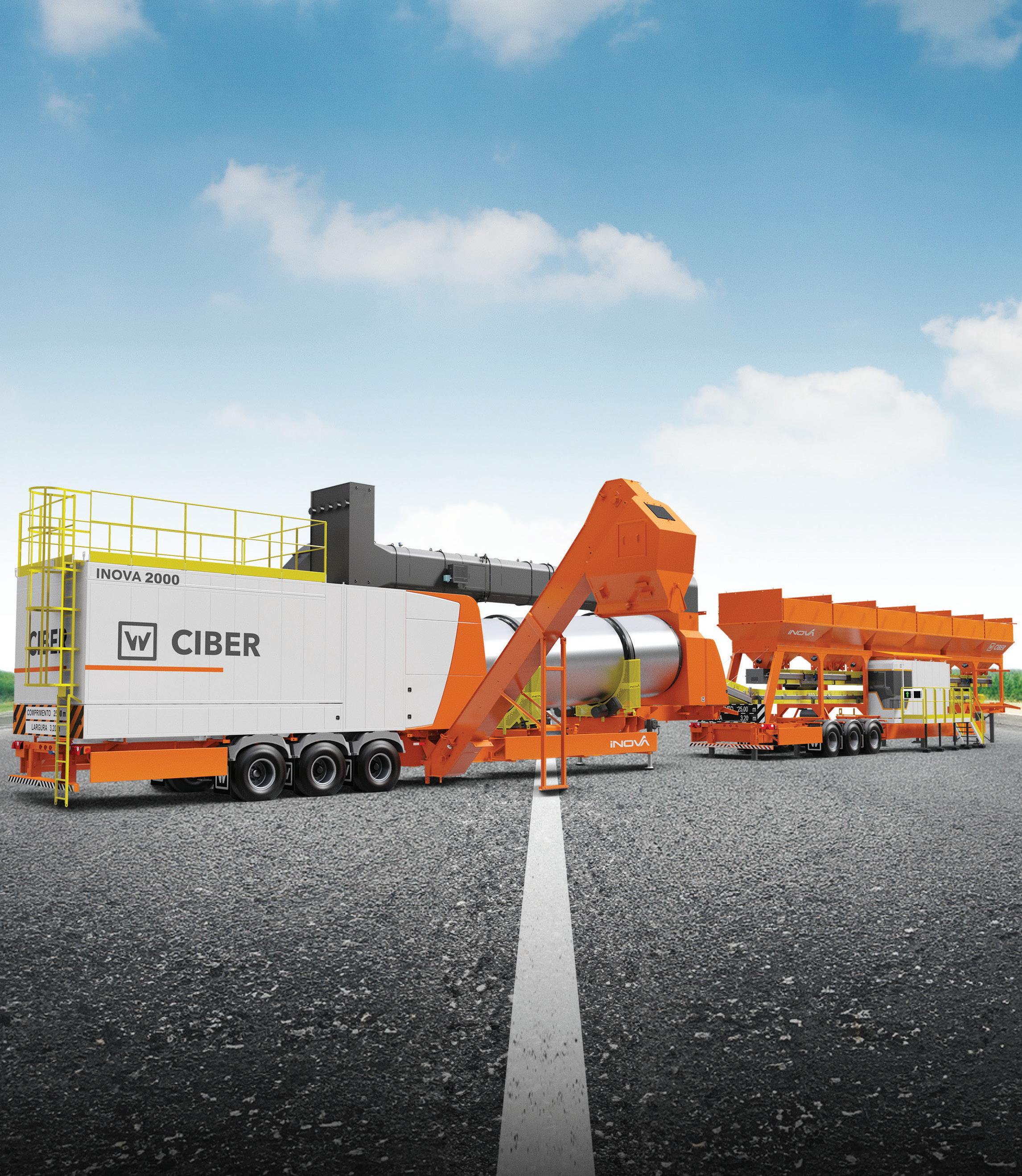
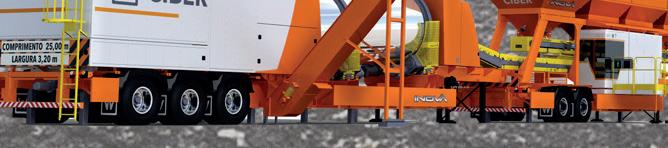
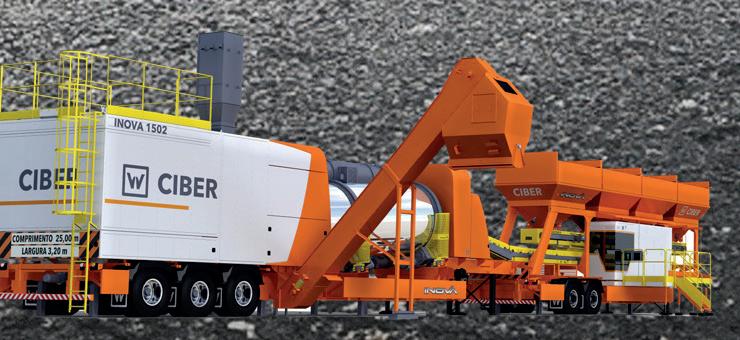

Con más de 60 años de experiencia en ingeniería de pavimentación, CIBER diseña equipos que aportan un valor real al campo de trabajo. La iNOVA 2000 representa lo más avanzado en plantas de asfalto continuas: alta capacidad de producción con alta eficiencia energética, control inteligente de la mezcla y un diseño robusto para operaciones de larga duración. Con un desarrollo tecnológico basado en el Grupo Wirtgen y soporte global, la iNOVA 2000 se adapta a obras urbanas, carreteras e infraestructuras pesadas, ofreciendo la máxima eficiencia y confiabilidad.

Wirtgen says that its latest generation WR series models o er higher e iciency and performance
The machines have been developed for cold recycling and stabilisation applications and feature an optimised operating concept and high productivity and mixing quality.
Powerful and e cient, the WR series machines suit a variety of applications ranging from cold recycling to soil stabilisation or consolidation in road construction.
e company also o ers the special WRC Rock Crusher and WRS 240 X model. e WRC 240 X is designed for crushing coarse rocks and stones while the WRS 240 X is a spreader variant.
e compact dimensions and low machine weight of the WR 200 X make it easy to transport from place to place. Meanwhile, the WR 240 X o ers both machine performance and weight to deliver high productivity.

e WR 250 X is the most powerful machine of the WR series with the highest productivity.
All three of the standard models o er working widths of up to 2,400mm. e WR 200 X has an engine rated at 305kW, while the top-of-the-range WR 250 X has an engine rated at 571kW. e machines feature an improved Duraforce milling and mixing rotor that ensures high mixing quality and productivity in all conditions while also minimising fuel consumption, CO2 emissions and wear.
A key bene t of the new cold recyclers and stabilisers is the revised and improved operating concept. A new multifunction joystick and ngertip control is said to o er ease of use. e machine has digital process monitoring and a large control display showing application-relevant information. e machine also has the latest Wirtgen Group CoPilot digital-assistance system, which suggests courses of action during the work in progress and o ers interactive tutorials.
e system also o ers self-training tutorials that help operators to familiarise themselves with the machine and its functions. Animations on the machine’s control panel enable the operator to exploit the full potential of the machine. Explanations of the steering modes, the functions of the multifunction joystick and transport and safety instructions are also provided. Operators are o ered visual recommendations for actions. e system guides operators through scenarios, detects commands and machine status and proceeds automatically to the next process stage.

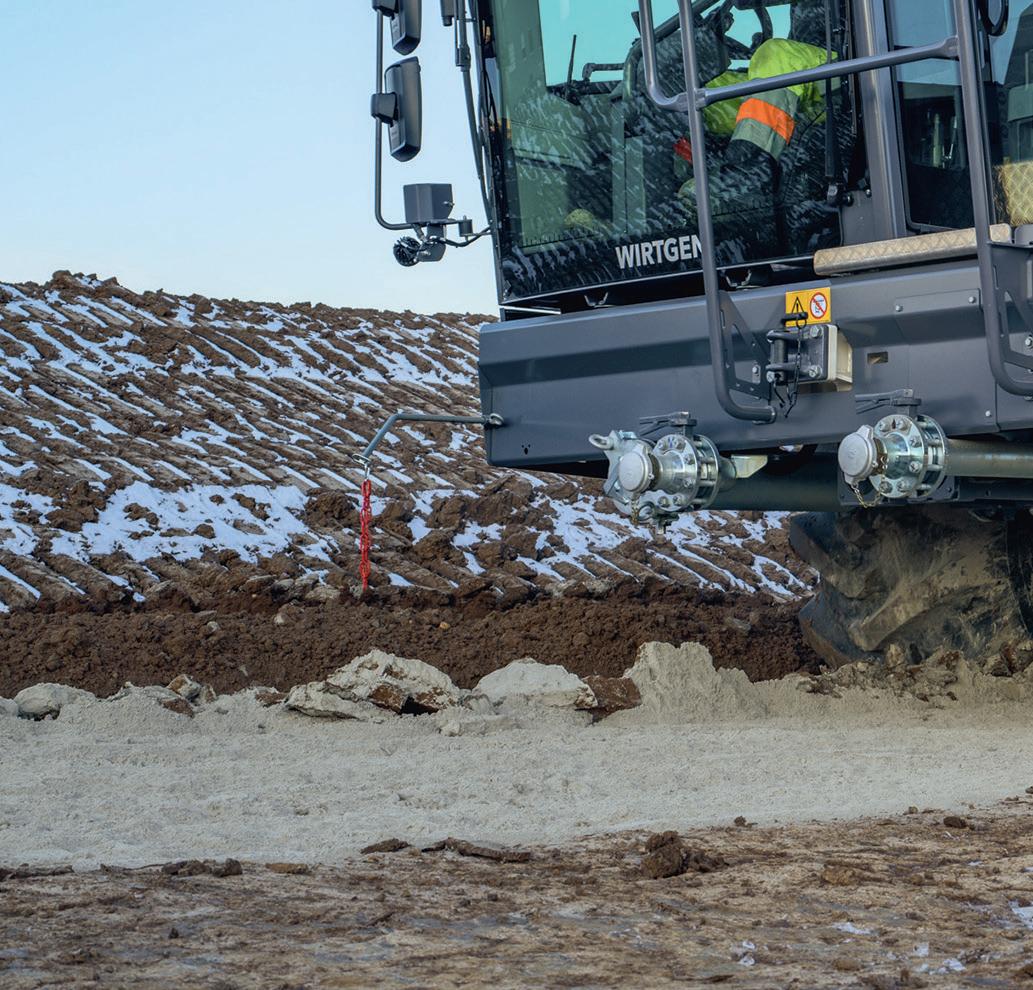
In addition, Wirtgen has installed digital-assistance systems and digital process monitoring. e AutoTracTM steering-assistance system steers the machine accurately using a previously calculated
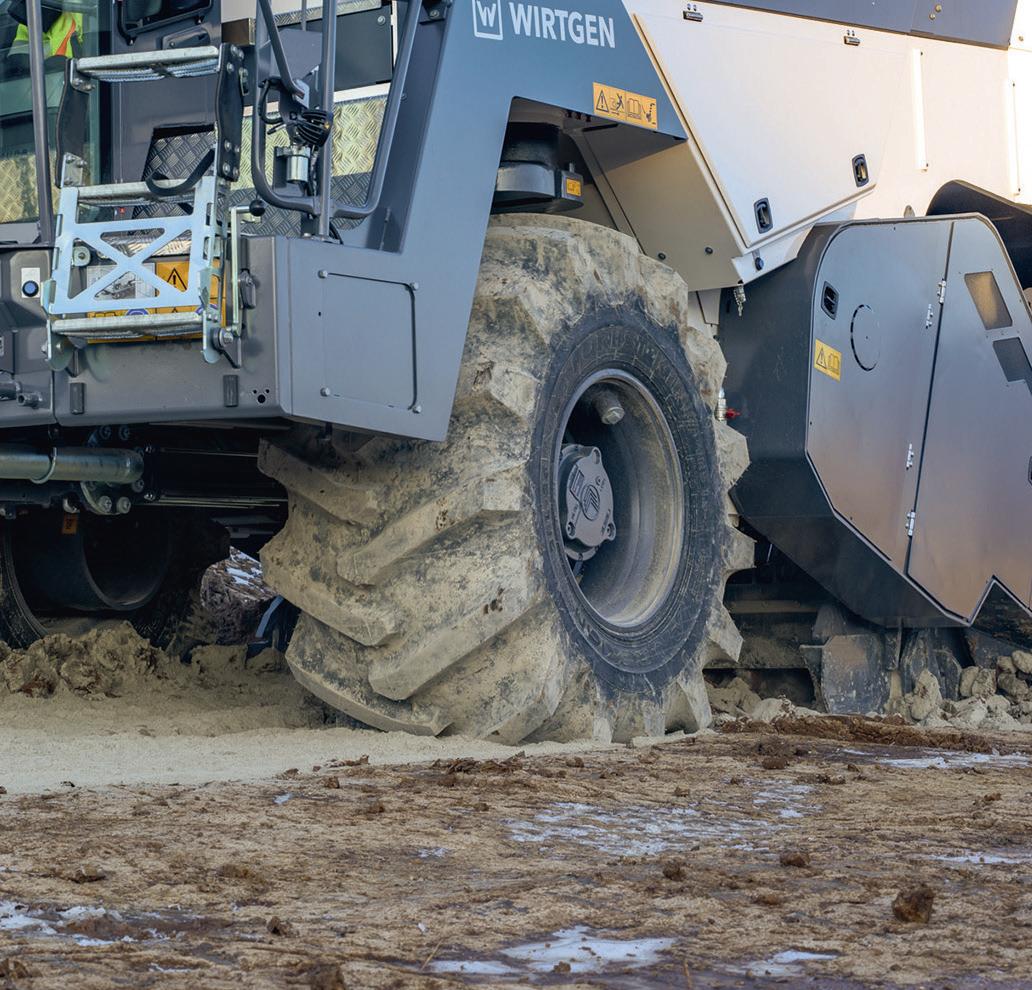

For the latest news, extended features and videos on recycling visit the website globalhighways.com

BELOW
With its new WR series models, Wirtgen says it o ers cutting-edge technology for all cold recycling and stabilisation applications
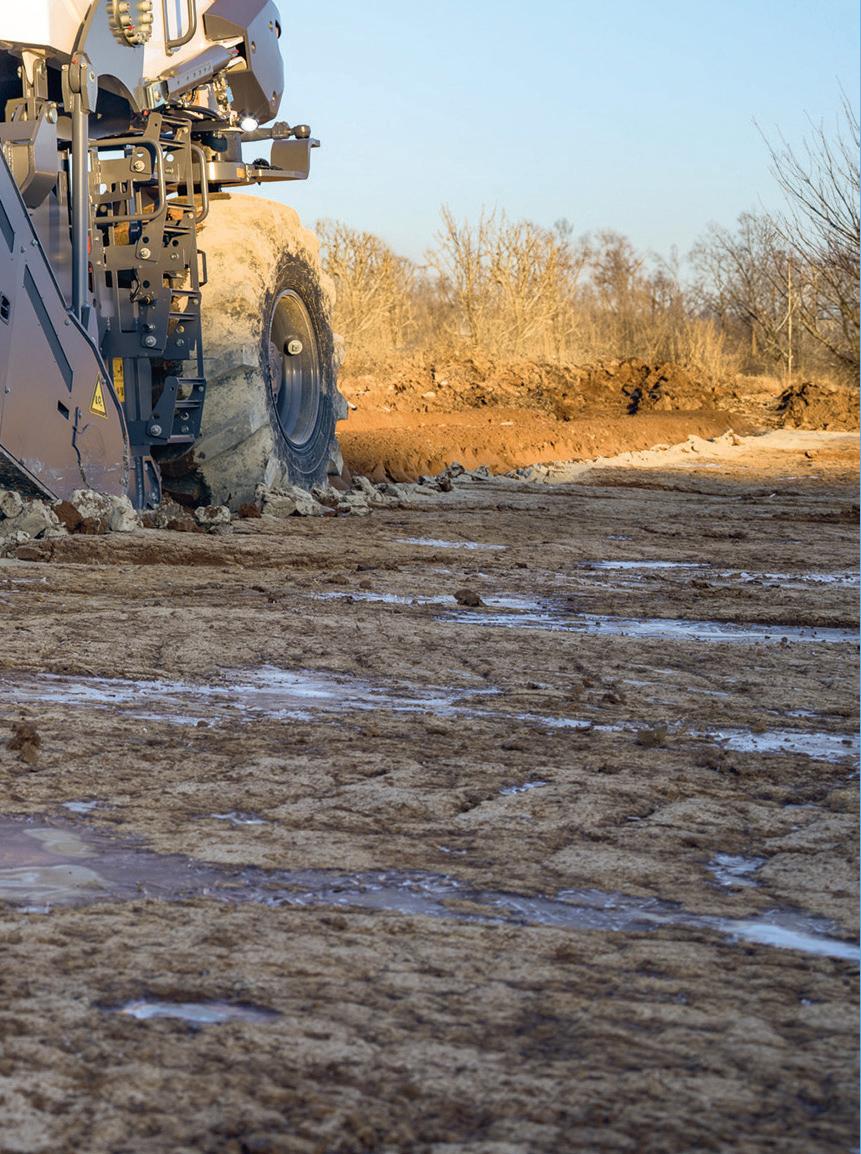
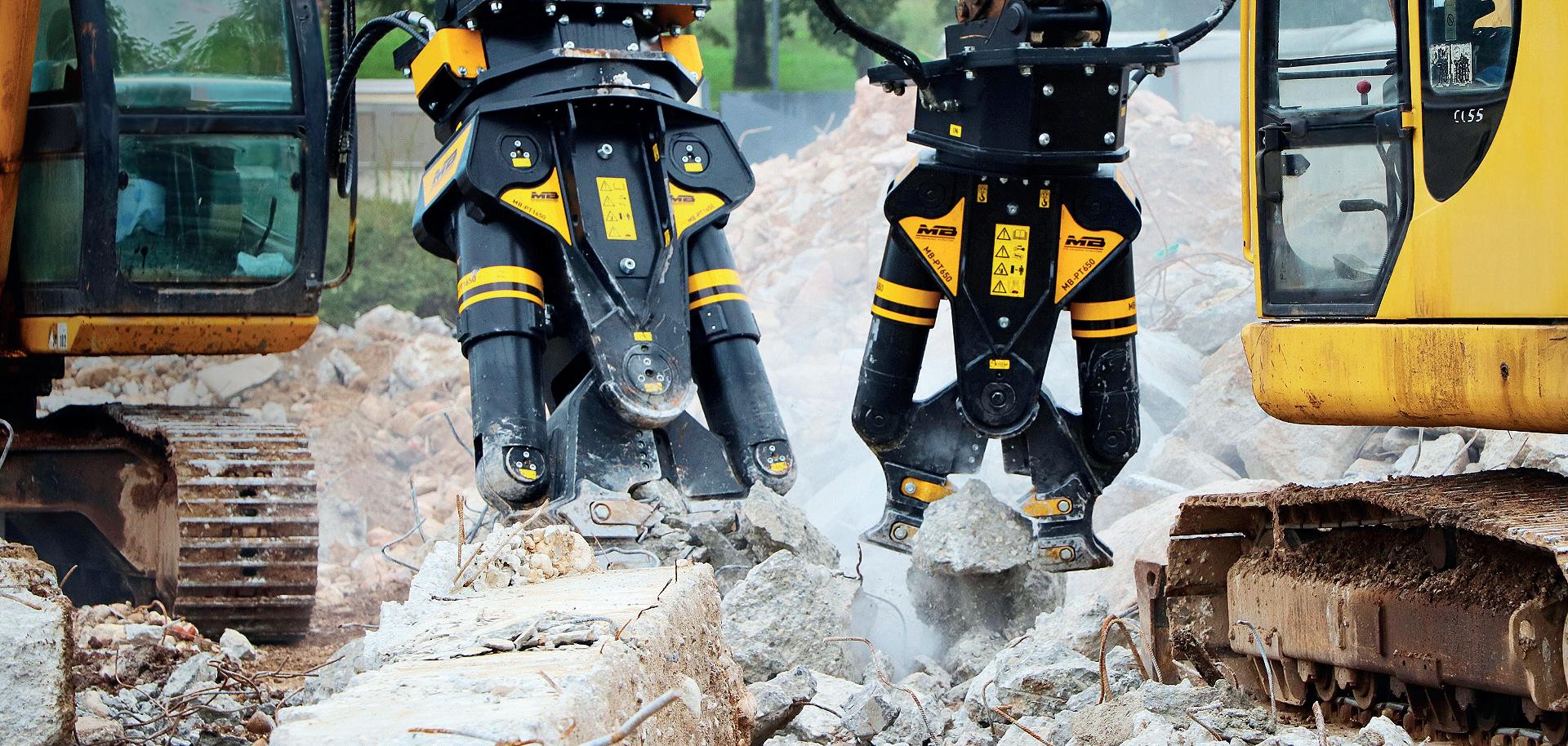


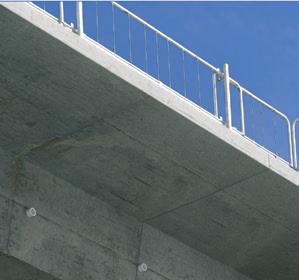






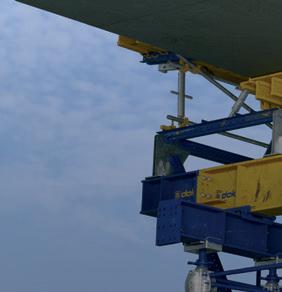

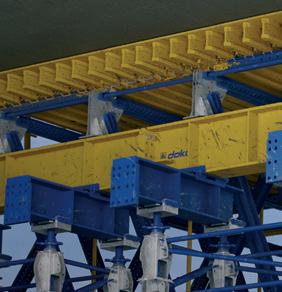















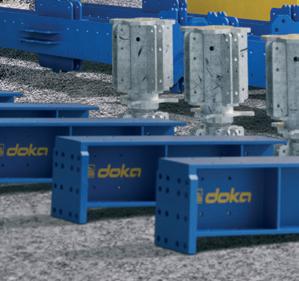

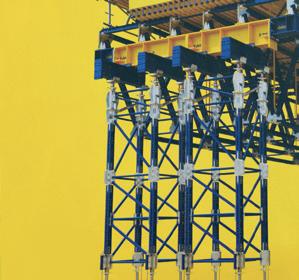









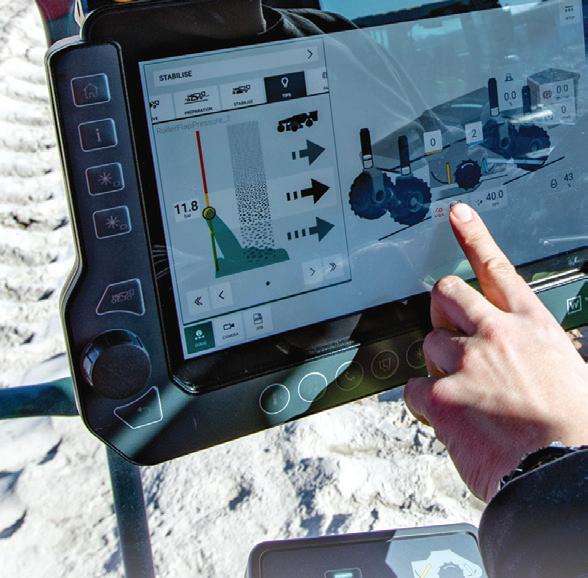

reference strip and a speci ed overlap of adjacent strips, while the Automatic Reverse function allows rapid reversing. e MIX ASSIST system allows automated functions to be con gured individually. It also allows operators to save a sequence of working steps as an automated process for later use. When using this tool, the system sets the cameras to focus on the relevant working area, reducing operator workload and improving productivity.
e Wirtgen Group performance tracker recycling (WPT Recycling) records relevant, location-speci c, construction-site parameters, providing the information as a eld report.
e special Rock Crusher WRC 240 X model crushes coarse rocks and stones found in hard-packed stone pavement layers and stony ground. It then mixes the resulting material in a single pass. With a working width of 2.32m and a working depth of up to 510mm, the WRC 240 X can achieve output rates of up to 600tonnes/hour.
e heavy-duty crushing and mixing rotor features HT18 toolholders and tools developed for the crushing process and achieves optimum results in stony ground. e crushing tools have large, impactresistant carbide cutting edges and holder bases with high-tensile steel wear protection. is delivers high utilisation and reliability, even in demanding applications. In addition to crushing rocks and stones with edge-lengths of up to 300mm and a uniaxial compressive strength of up to 200Mpa, the machine can also add and mix water and binding agents into the crushed material during the pass to produce base layers.
e WRS 240 X can spread binding agents in challenging terrain. It o ers a container capacity of 5.5m³ for spreading binding agents such as lime or
ABOVE
The new WR, WRS and WRC models from Wirtgen benefit from sophisticated digital controls, making operation more productive and accurate


cement. e WRS 240 X is suited to use on motorways and in applications with strict emission regulations. It also o ers e ective dust control and high all-terrain mobility. Binding agents can be spread reliably and precisely, especially on soils with poor load-bearing properties in challenging terrain. e WRS 240 X o ers the further option of pushing a binding-agent silo in front of the machine. e binding-agent silo can be kept permanently lled on load-bearing ground. End www.wirtgen-group.com
German company Erbacher Gistex is o ering a new system for soil stabilisation in road construction. This uses the biodegradable additive Gistrong in combination with a small quantity of cement. The technique is said to eliminate the need for costly and complex soil replacement.
Using this system, stabilised soil o ers the same properties as gravel and does not need to be removed and replaced with aggregates. The method also does away with the need for the disposal of excavated material. The company estimates that the method can save construction costs.
The firm says that its technique for soil improvement for road and path construction is revolutionary. The biological soil-improvement process uses GISTRONG, GISTRONG PLUS and GISTRONG PUL additives that are said to deliver impressive properties. The technology increases compressive strength, is hydrophobic and frost-resistant and is also resource-saving and durable.
In addition, the firm also o ers a stabilising mixture of binder and stabilising cement, which provides further stabilisation and strength of the road or path.
Gistex works closely with Stetter Service to provide high-quality soilimprovement solutions. www.gistex.de
ALLU says that its new asphalt bucket attachment can turn milled material into a highquality resource on-site, boosting versatility and e iciency for contractors.
This unit is said to be a powerful screening solution engineered for processing coldmilled asphalt and reclaimed asphalt pavement (RAP). The Finnish firm says that this allows RAP to be processed in a faster, cleaner and more cost-e ective way, directly on site. This purpose-built attachment can crush clumps, screen fines, and separate oversized particles in a single pass.
ALLU says that its asphalt bucket does the job of a mobile impact crusher, but at a fraction of the cost and with far less complexity on-site.

The asphalt bucket benefits from a special blade configuration, with design features on both screening and crushing blades. The firm says that this fine-tunes performance and delivers high-quality end product. This combination allows operators to process cold-milled asphalt directly at the source without additional crushing equipment. ALLU says that the blade delivers the right mix of crushing force and fine screening to process asphalt e iciently in a single step.

finished material below target size, reducing reprocessing costs and screening sizes down to 12mm.


The ALLU asphalt bucket is available in several sizes for 25–45tonne excavators and 15–30tonne wheeled loaders. With nominal screen sizes of 12, 16, and 25mm, the bucket can produce more than 95% of
Key features include one-step operation as the unit crushes and screens simultaneously, eliminating the need for separate pre-crushing or secondary equipment. It can help lower total costs because it reduces the reliance on mobile impact crushers, cutting fuel consumption, wear-part expenses, and

overall cost/tonne. In addition, the technology is proven and can deliver up to 250tonnes/ hour, with rapid drum changeouts due to the variable drum technology. Other features include a robust design with a serrated cutting edge and reinforced frame for aggressive asphalt processing. www.allu.net
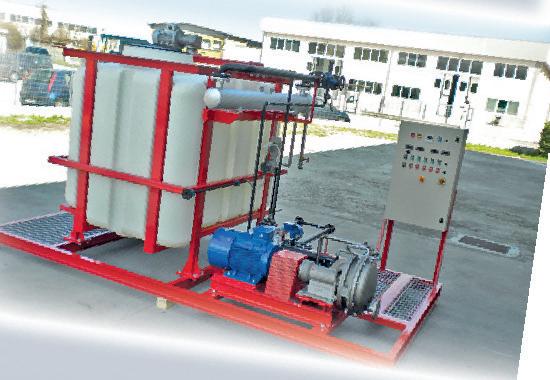







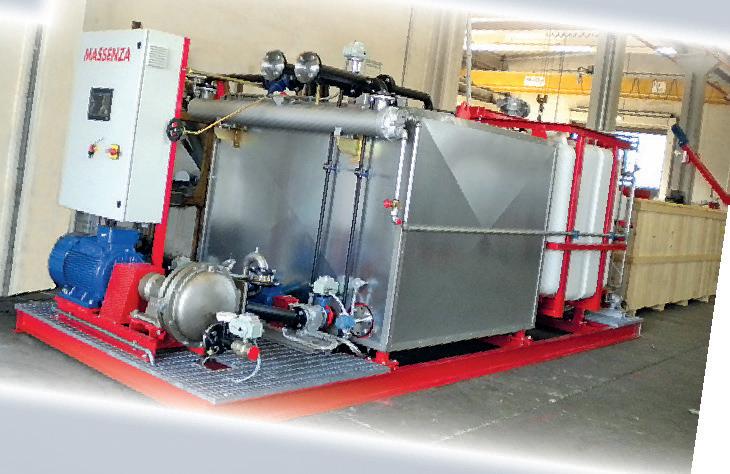



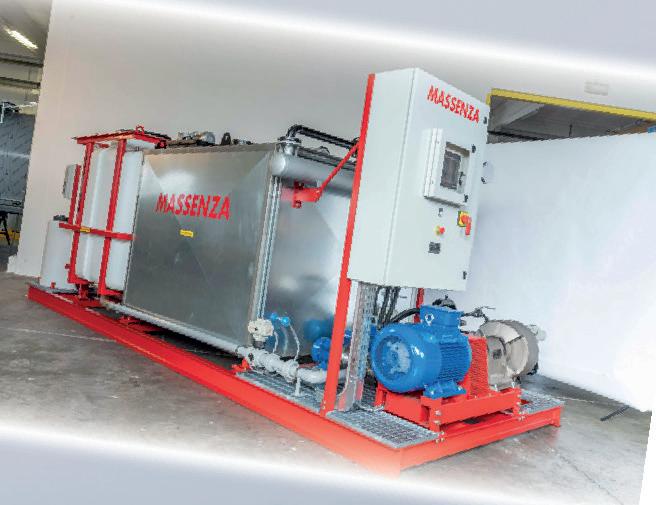





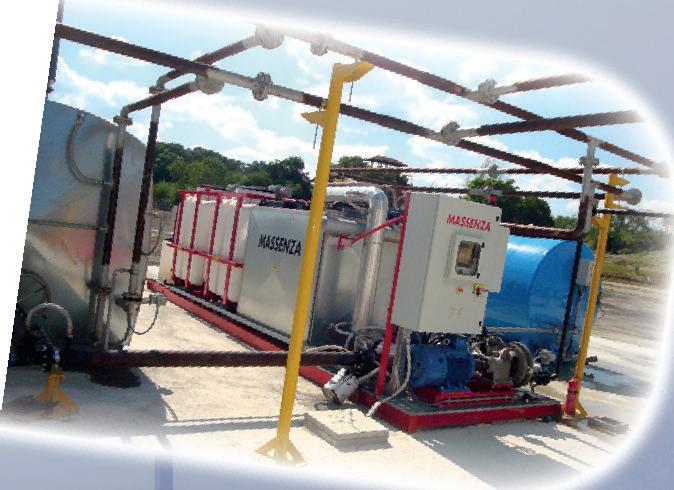
















































































































































































































































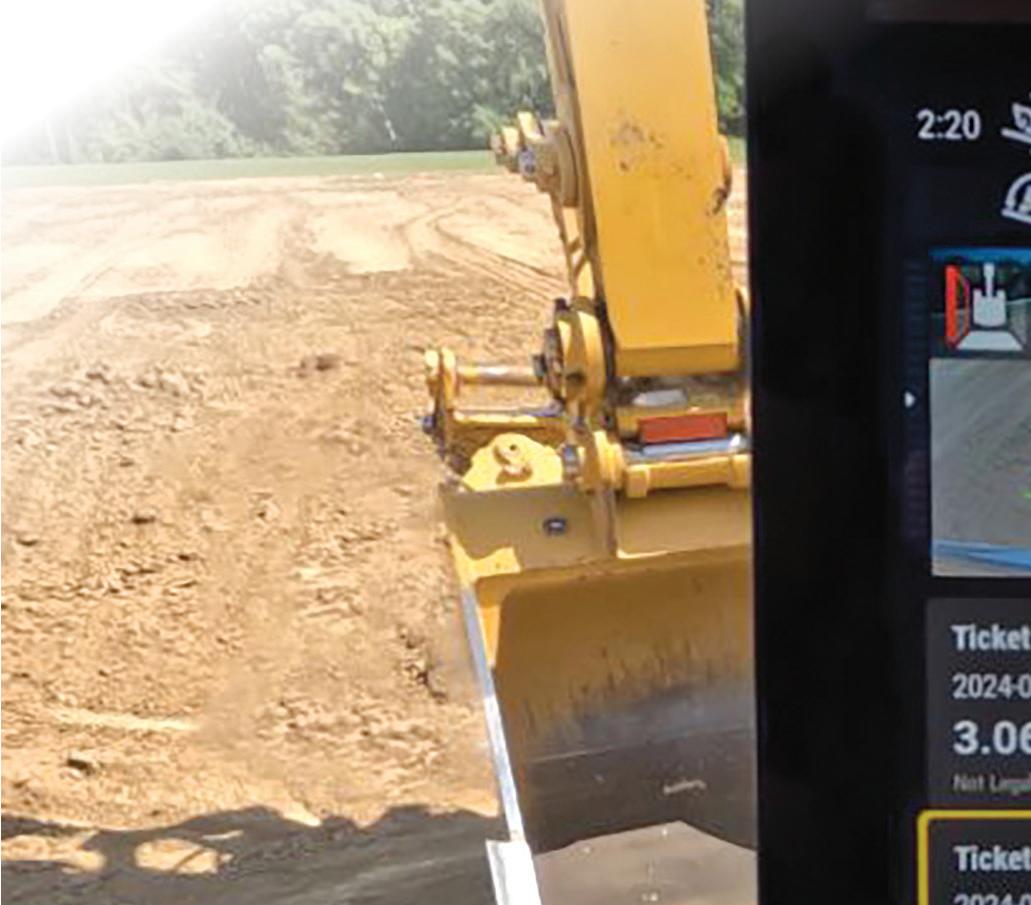
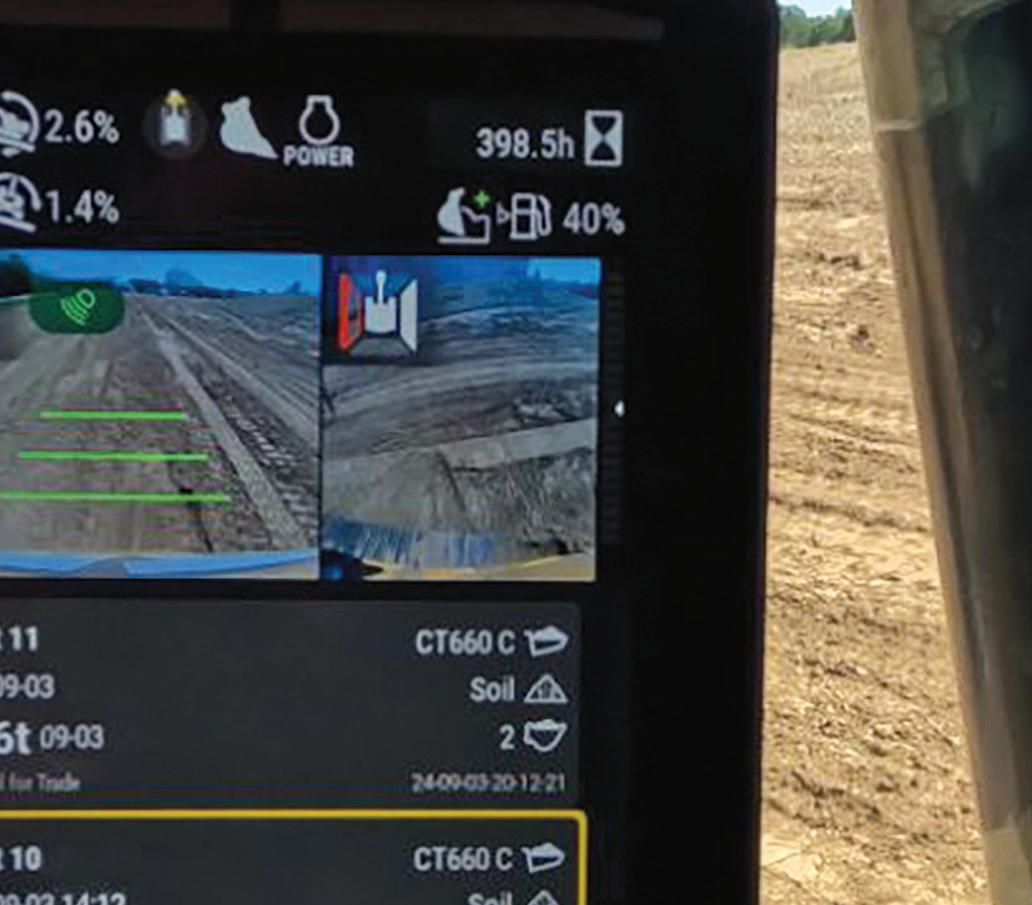
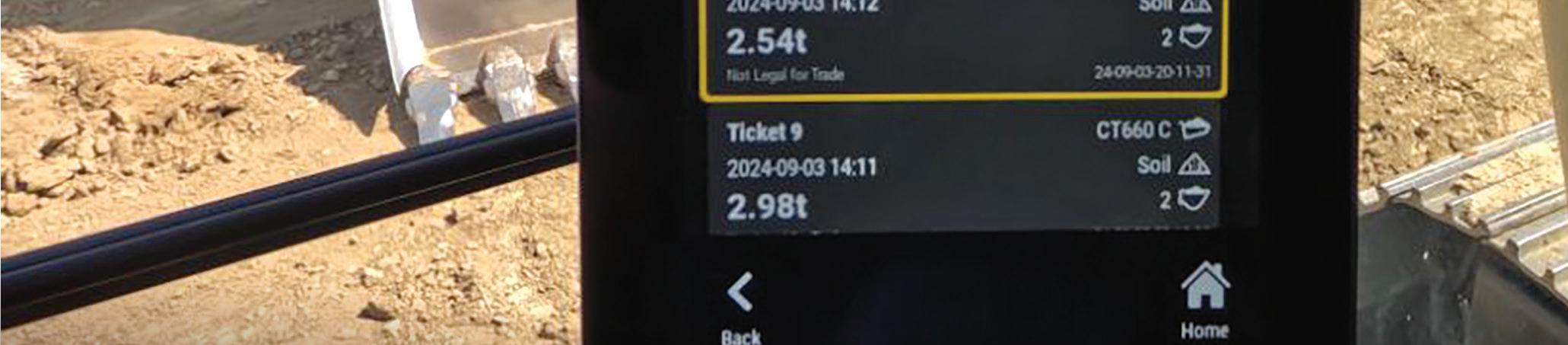



New technology innovations mean that smarter earthmoving technology is coming to market – Mike Woof writes
Earthmoving technology continues to move forward at a steady pace, with new systems that make excavators more e cient than ever before. Highly sophisticated intelligent machines are o ering contractors the bene t of connected technologies.
ese can deliver work faster and more accurately than was possible in the past while eliminating the need for reworking and cutting fuel consumption, as well as improving the environmental pro le of operations.
e recent bauma exhibition saw the unveiling of a range of technologies from an array of manufacturers for the earthmoving segment, and with a particular focus on the excavator sector.
Multiple updates are now being o ered for the Cat excavator range, including sophisticated grade technologies, a new user interface for quick navigation and an advanced payload option. ese updates apply to the rm’s small, medium, and large excavators.
e grade enhancements are now integrated into the standard Cat Grade with 2D package, provided through the rm’s partnership with Trimble. is 2D technology o ers real-time guidance for accurate vertical and horizontal control, ensuring that cuts and lls are made to speci cation, without undercutting or overcutting.
e system can eliminate the need for ground stakes in most applications. e touchscreen displays target grade with visual guidance plus height and depth. e integrated components are protected from damage, and 2D works with multiple bucket types, including digging, cleaning, grading and tilting.
Grade with 3D technology is a new factory-installed
option that can be ordered for excavators. is option includes the hardware required for the 3D system, installed and tested from the factory. Cat payload for excavators provides precise bucket-load information with on-the-go weighing to prevent overloading or underloading.
Operators keep track of material moved and can split tasks between truck loading in weigh mode and moving material around the site in stockpile mode.
e ability to input couplers and attachments into the system makes setting up work-tool combinations highly e cient by signi cantly reducing calibration time. Customers with excavators can upgrade the system to advanced payload for capabilities such as custom tags, daily totals and electronic ticketing. Combined with VisionLink, advanced payload enables customers to manage production targets remotely.
A highly sophisticated system for connected eet management has been unveiled in the shape of Hitachi’s excavator concept, LANDCROS One. is package is said to blend arti cial intelligence and gami ed ergonomics with autonomous and remoteoperation capabilities.
e concept bene ts from Hitachi’s sophisticated controls and digital interfaces to provide an intuitive operator environment. e design features a modular cab with optimised ergonomics intended to appeal to a younger workforce through gamifying operations and AI-assisted interfaces.
Integrated AI and automation systems can handle routine tasks and provide intelligent assistance during complex operations. e design integrates cameras,
ABOVE
New grade control systems are available for the latest Caterpillar excavators
For the latest news, extended features and videos on earthmoving and soil compaction visit the website globalhighways.com
sensors and advanced digital-assist systems that Hitachi has developed with strategic partners. e machine can be controlled remotely, enabling 24/7 operation through di erent time zones. ere is also an autonomous mode triggered by operator instructions for repetitive and predicted tasks. is is a concept technology for the moment but Hitachi is likely to introduce machines featuring similar systems in production models in coming years.
Komatsu claims that its new PC220LCi-12 is the most intelligent excavator on the market. e rm says that the new model builds upon a decade of experience, and millions of operating hours in integrated machine-control technology. is excavator is said to o er customers the latest in intelligent

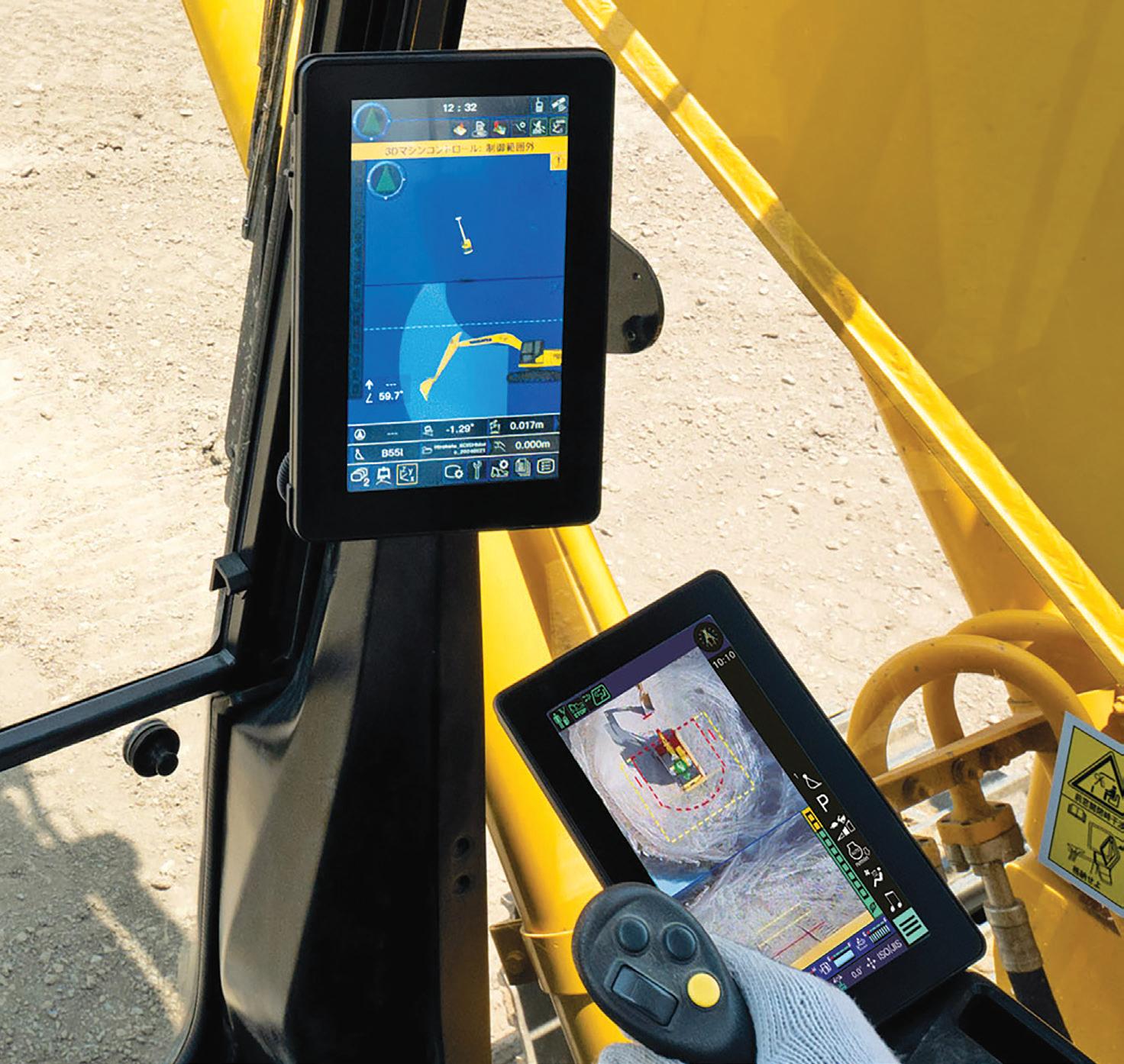
ABOVE
Komatsu claims its new PC220LCi-12 model is the most intelligent excavator on the market
BELOW
Hitachi’s advanced concept machine gives an idea of the shape of things to come from the firm for its excavator line
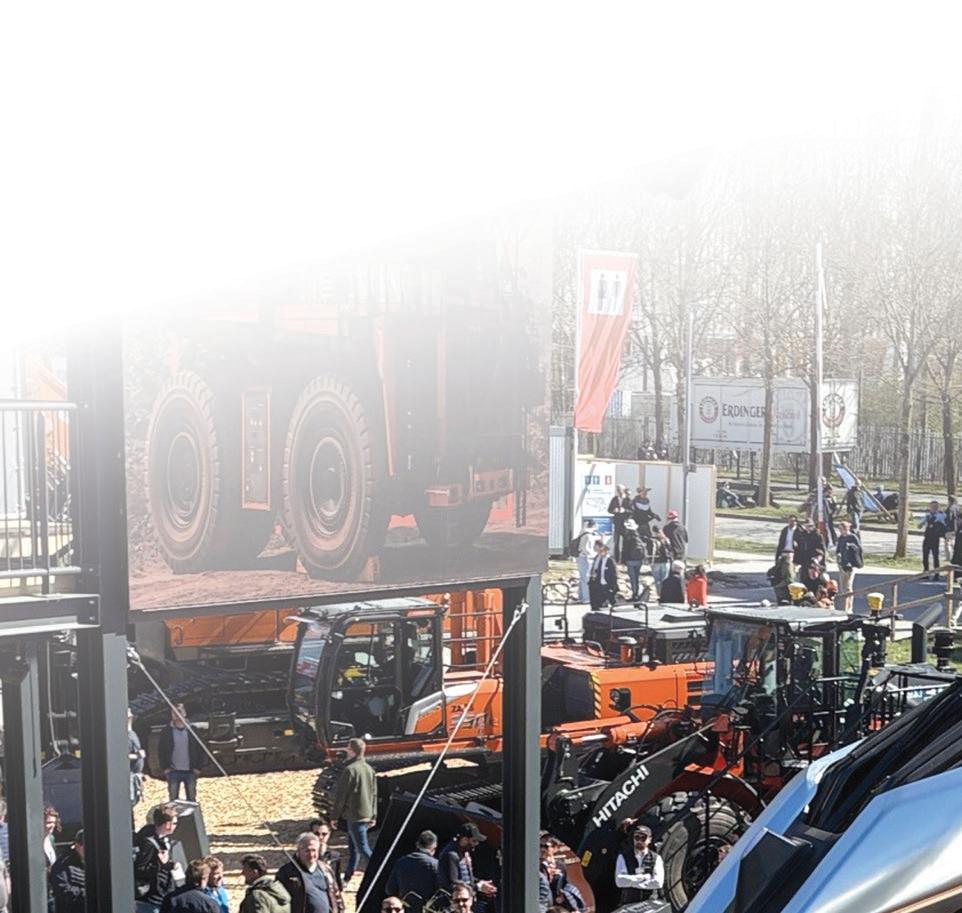
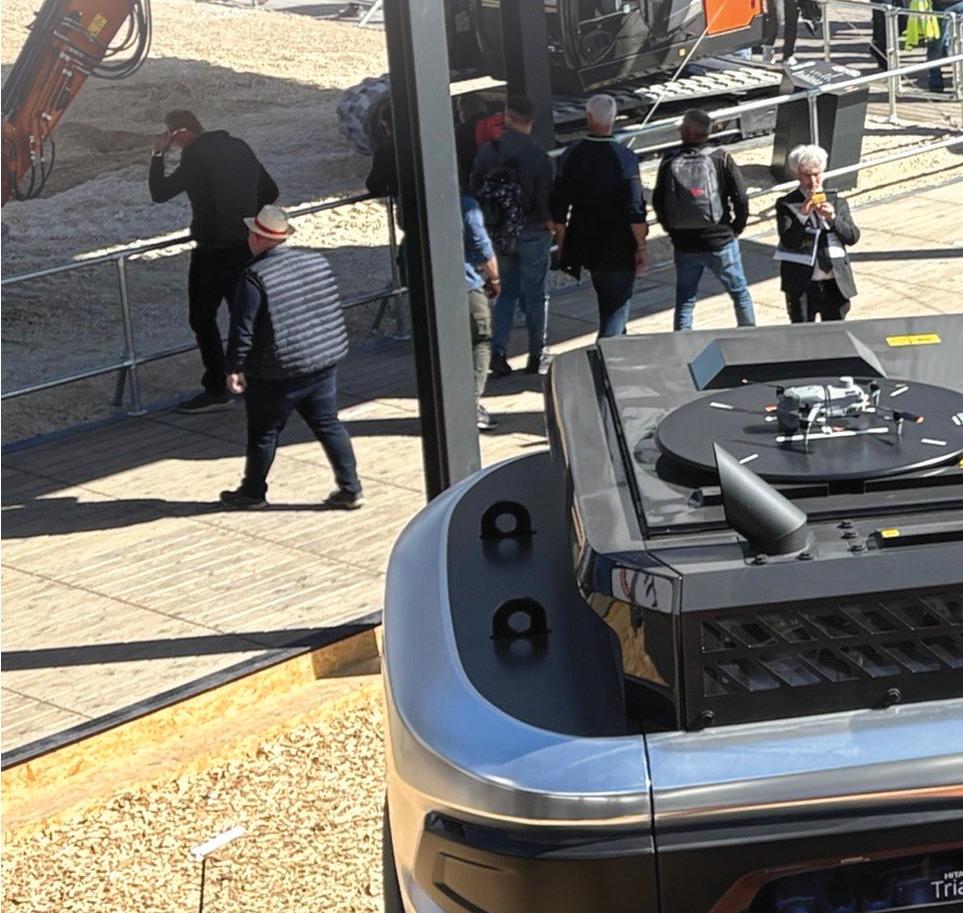
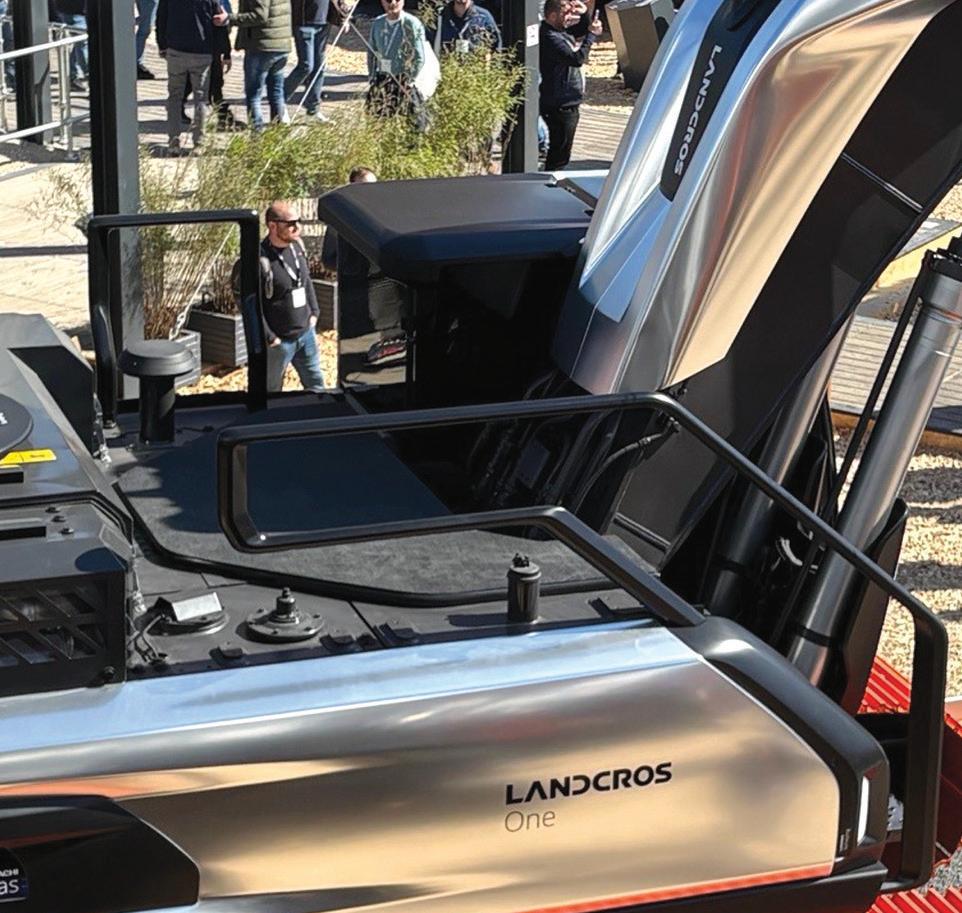
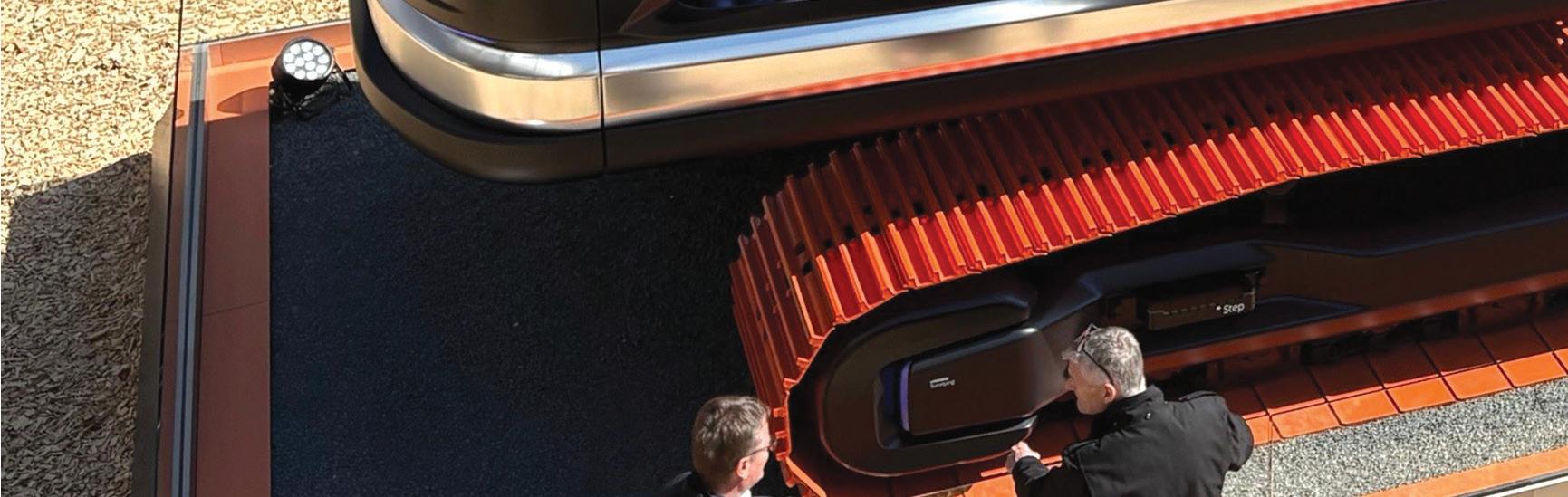

machine-control (iMC) 3.0 technology. In addition to setting new standards of productivity and e ciency, the machine has a new cab design that maximises operator comfort and connectivity that o ers solutions to make digital jobsite transformation easier.
e new PC220LCi-12 with iMC 3.0 o ers advanced features including 3D boundary, auto swing, swing to line, travel along line, tiltrotator integration and control, and advanced payload meter. It also assists with digitalisation of the jobsite through Smart Construction integration.
In addition, Komatsu’s Smart Construction 3D machine-guidance system is now compatible with the major tilt rotator brands, including Engcon, Steelwrist, Rototilt, and OilQuick. is ensures that operators can achieve greater e ciency, precision, and versatility on the jobsite.
e system provides real-time 2D and 3D guidance to enhance earthmoving precision, reduce rework, and optimise work ows and can be retro tted on excavators ranging from 13-120tonnes, including models from other suppliers.
is IoT solution collects as-built data which is visualised in a 3D digital twin within the Smart Construction dashboard. It provides actionable insights into project progress. Additionally, it includes a licence for the lifetime of the system, allowing remote le transfers and troubleshooting. Payload information is reported automatically to Smart Construction Fleet, improving operational tracking and machine productivity. End www.cat.com www.hitachicm.eu www.komatsu.com www.trimble.com
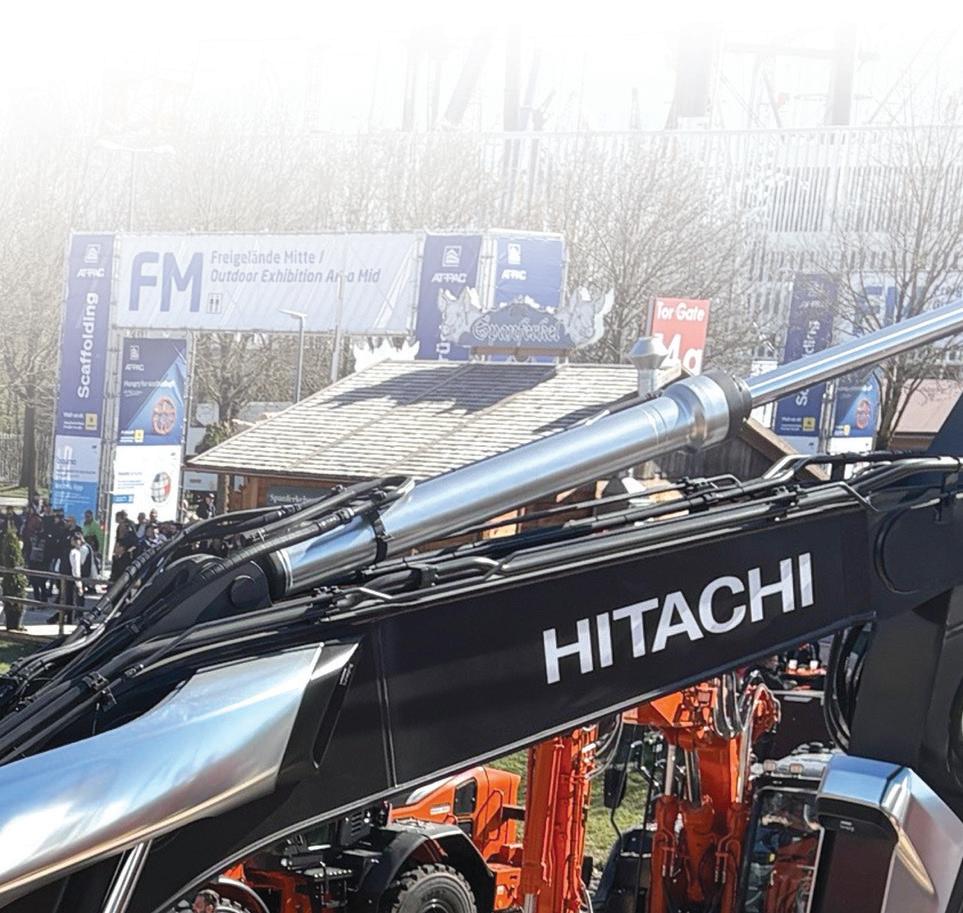
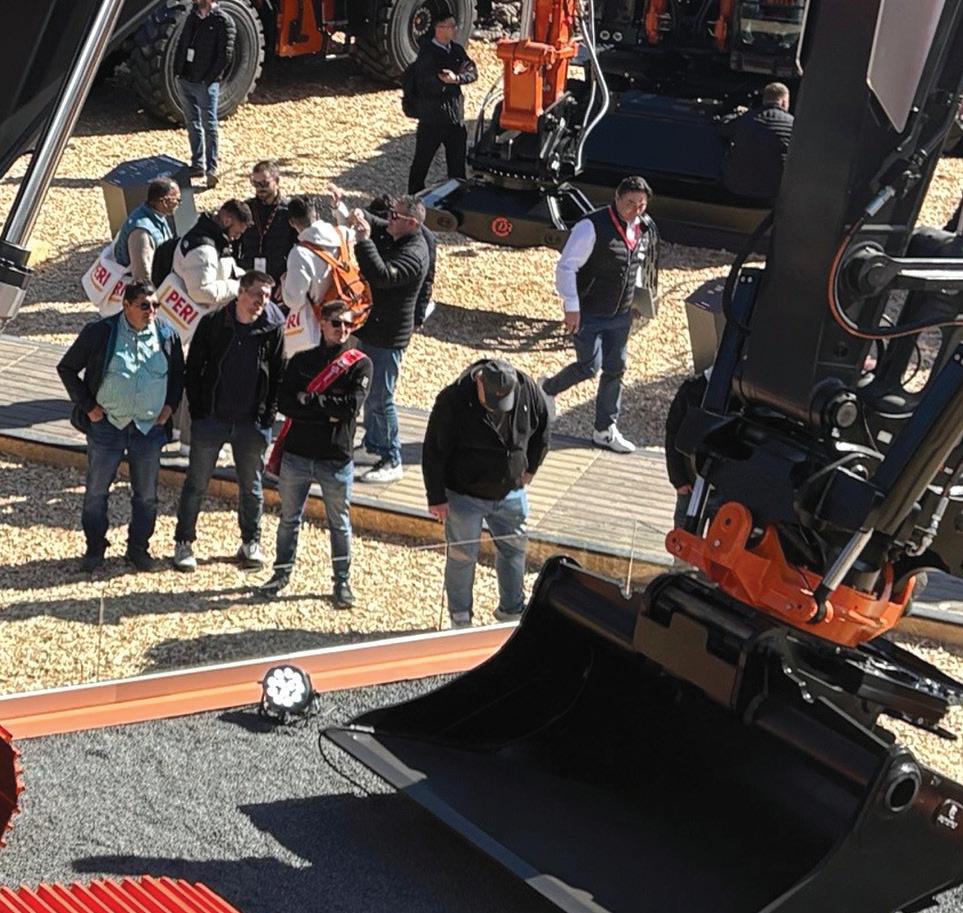



Advanced systems are now being o ered to optimise performance for wheeled loaders, as was seen at the recent bauma exhibition in Germany.
Develon’s improved Transparent Bucket safety system means that there are now blind spots in front for a wheeled loader operator. With the Develon transparent bucket function, a driver can check the blind spots in front of the bucket via the cab monitor, to increase safety and prevent accidents.
e new version of the system, Transparent Bucket 2.0, retains the functionality of the original system, but now o ers object detection (OD) and object recognition as well. e OD function, for example, uses AI technology to synthesise a red triangular exclamation mark in the centre of the object and display it on the monitor alerting the driver when an object is detected.
Customers for machines from John Deere will bene t from solutions such as SmartDetect and SmartDetect Digital, as well as the SmartWeigh payload weighing solution to enhance jobsite awareness and performance. ese tools will be available on the 744 X-Tier with e-drive wheeled loader, which o ers signi cant machine upgrades, compared to previous 744 models, including fuel savings, increased productivity and visibility to customers around the globe.
SmartDetect provides visual and audible alerts to the operator to increase situational awareness of people or objects around the machine. is system also provides a distinct audible alarm to alert the bystander. SmartDetect is currently available as an option on the 444-904 P-Tier and X-Tier Wheeled Loader models in the United States and Canada.
John Deere SmartDetect Digital is available now in the United States and Canada. SmartDetect Digital integrates seamlessly with the John Deere Operations Center to deliver real-time push noti cations for events. SmartDetect Digital also provides weekly reports on SmartDetect technology usage and detailed event summaries. Additionally, the system o ers customers event heat maps to optimise jobsite layout and supports safety-trend analysis for improved jobsite decision-making and risk management.
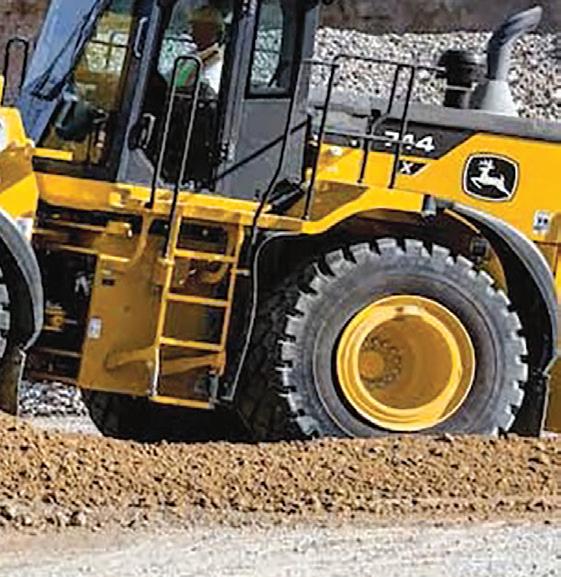
ABOVE
New digital packages are available for wheeled loaders from John Deere
BELOW
Customers for Liebherr machines can benefit from sophisticated remotecontrol options
SmartWeigh for mid-size and large wheeled loaders is also expanding into the European market, having been proven in North America. Designed and supported by John Deere, SmartWeigh is a payload weighing solution that o ers precise measurements, dynamic weighing capabilities and easy calibration.
Meanwhile, Liebherr is o ering its innovative autonomous wheeled loader concept, as well as a novel remote-control dozer package.
e highly advanced autonomous driving system for wheeled loaders is called the Liebherr Autonomous Operations and has been developed in-house. is autonomous solution allows machines to work without an operator in the cab. e system can be used in areas that would be dangerous for an operator, such as close to a high rock face in an extraction operation, for example. e package uses an array of sensors and guidance systems to ensure that the machine can operate quickly and e ciently throughout the working day, without reducing productivity due to operator fatigue. Safety technology ensures that there is no risk to site personnel.
www.eu.develon-ce.com www.deere.com www.liebherr.com
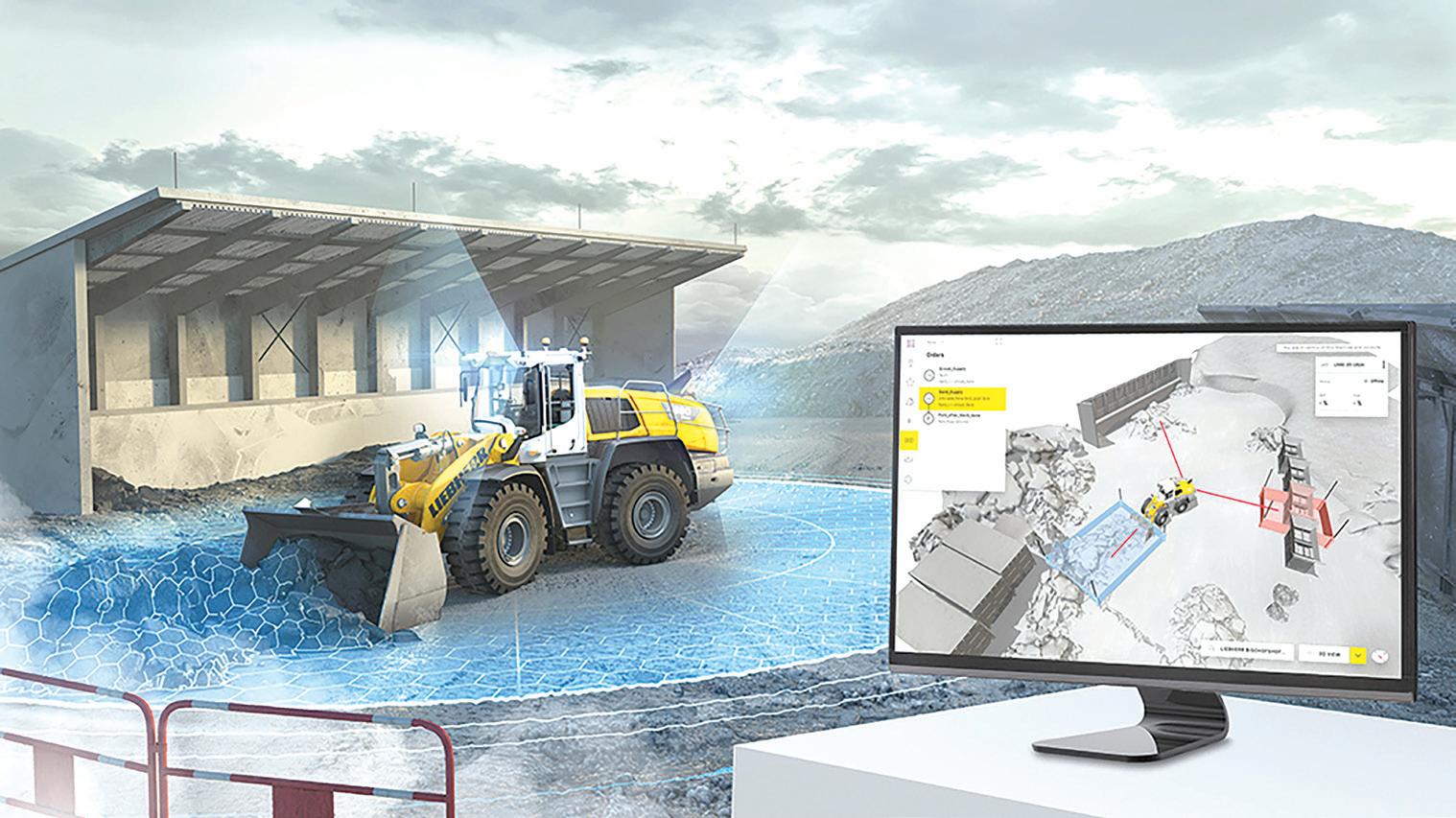








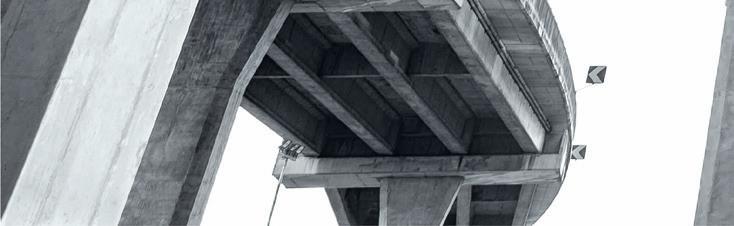






The findings from a new study reflect the sector’s alignment with the UK Concrete Sustainable Construction Strategy and its commitment to long-term net-zero goals
The UK precast and masonry sector has made progress on decarbonisation, waste reduction and resource e ciency, according to the Precast Concrete and Masonry Sustainability Report e latest report is for 2024 and was by MPA Precast at this year’s Precast & Masonry Expo in the city of Leicester in May. It is based upon 2023 data and highlights record use of low-carbon cementitious materials, a sharp rise in renewable energy use and the lowest levels of land ll waste recorded since reporting began.
e ndings re ect the sector’s alignment with the UK Concrete Sustainable Construction Strategy and its commitment to long-term net-zero goals. e strategy was set up by the sector in 2008 and sets clear goals and ambitions for delivery of a sustainable, low-carbon built environment in a socially, environmentally and economically responsible manner.
According to the report, over 62% of electricity used in precast and masonry manufacturing in 2023 came from renewable sources - up signi cantly from previous years. Use of low-carbon supplementary cementitious materials (SCMs), such as y ash, GGBS and limestone nes, reached 21.3% across all cements. is contributed to a 76kg O2e/m³ reduction in the embodied carbon of reinforced precast products compared to 2016 levels.
Graham Sargeant, chair of the Precast and Masonry Sustainability and Environment Committee, said there has been widespread progress. “In 2023, 82% of structural precast manufacturers used SCMs regularly and in signi cant quantities and 23% of members launched new green product lines.”
Environmental management and circularity also showed improvement. Over 99% of manufacturing
ABOVE
The aims of decarbonisation and resource e iciency run parallel as part of the UK’s commitment to net-zero concrete production





waste was recycled or reused. Meanwhile, average waste-to-land ll dropped to just 260g/tonne of product. Recycled and secondary aggregates made up 11.9% of total aggregate use. Mains water use per tonne fell by 7.5% compared to 2015.
Biodiversity and site stewardship initiatives expanded signi cantly, with 21.4% of sites implementing formal action plans - up from just 2.5% three years ago. Social outcomes were also a focus: nearly 90% of reporting companies made charitable donations and each member rm contributed an average of ve and a half weeks of voluntary community work.
ird-party sustainability certi cation is increasing. In 2023, 89.3% of production was covered by ISO 9001 and ISO 14001 management systems, while BES 6001 responsible-sourcing certi cation rose to 86% of production. Nearly a third of members now have thirdparty-veri ed Environmental Product Declarations, EPDs.
Carbon-intensity metrics were updated to align with the UK Concrete Strategy’s broader GHG reporting. Although reported emissions rose slightly to 11.42kg CO2e/tonne (up from previous CO2-only data), this change re ects the inclusion of all greenhouse gases and is not attributed to increased energy use.
MPA Precast and MPA Masonry represent over 130 companies across the UK precast industry. e report will support speci ers, auditors and clients in Whole Life Carbon Assessments using updated data across A1–A3 (cradle-to-gate), A4 (transport) and A5.3 (waste).
MPA UK Concrete is part of the Mineral Products Association (MPA), the trade association for the aggregates, asphalt, cement, concrete, dimension stone, lime, mortar and silica and sand industries. e full report is available free from the MPA Precast and MPA Masonry websites. End www.mpaprecast.org
https://mpamasonry.org
The ACTIVE DUAL POWER dual-engine drive - two 18 litre John Deere engines – allow Wirtgen’s big W 250 XF milling machine to deliver a combined peak power output of 900kW
With the new W 250 XF, Wirtgen presents a milling machine that impresses with high milling performance and simultaneously low speci c emissions.
Engine power output has been increased by more than 20% compared to its predecessor. e ACTIVE DUAL POWER dual-engine drive makes the milling machine even more powerful and versatile in use, according to Wirtgen. e two 18-litre John Deere engines can deliver a combined peak power output of 900kW.
Meanwhile, MILL ASSIST regulates the power output of the two engines according to demand to ensure e cient performance of the machine. In automatic mode, it consistently ensures the most favourable working balance between performance and costs. It also allows the selection of three working strategies that optimise the process in respect of costs, performance or quality.
e W 250 XF demonstrates its full potential especially in ‘performance-optimised’ mode. ere is a choice of three di erent engine power combination modes that can be selected to meet the requirements of speci c milling tasks. For instance, only one engine is used when removing concrete or brittle materials. When the task requires the removal of a surface layer and high surface quality, the second engine cuts in and operates in the part-load range.
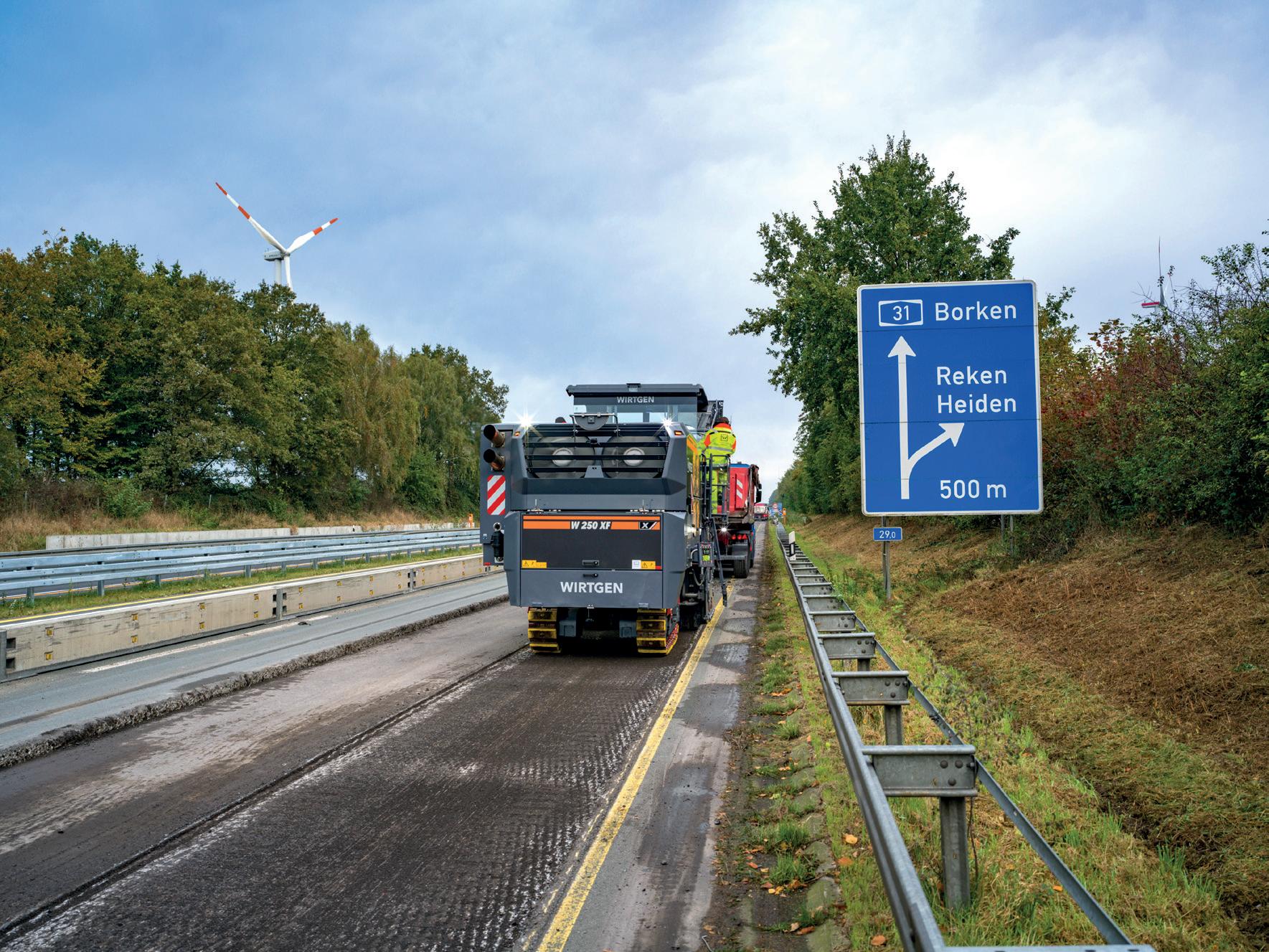
ABOVE
In combination mode 3, both engines operate synchronously and deliver the peak combined power output of 900kW. As both engines typically run within the low-speed range, their fuel consumption is correspondingly low.
Flexibility is one of the most critical requirements in day-to-day operations on construction sites. e milling drum of the W 250 XF can be exchanged for a Multiple Cutting System milling drum within just a few minutes. e ability to rapidly change to applicationspeci c milling drums with di erent tool spacings considerably increases machine productivity. At the same time, the choice of the ideal milling drum for a speci c application also reduces wear-related costs.
Exchanging the milling drum assembly enables the realisation of milling widths from 2.2-3.8m. With the aid of the quick-change system, the entire milling drum assembly can be changed in less than one hour.
In addition to machine control with MILL ASSIST, the automated documentation of milling tasks with Wirtgen Group Performance Tracker Milling - WPT Milling for short - also plays a major role. e operator is constantly informed about the machine and job parameters. When the work is completed, the data is transmitted to the machine owner who can use it for
With the Multiple Cutting System (MCS), Wirtgen o ers a wide range of di erent milling drums with a variety of tool spacings for the W 250 XF
fast and precise invoicing.
In addition to displaying construction site and machine data, the automated documentation also shows the CO2 emissions for the entire construction site. e John Deere Operations CenterTM presents all information in real time.
e LEVEL PRO ACTIVE levelling system was developed by Wirtgen speci cally for cold milling machines. Clearly readable control panels provide information and measured values from all currently connected sensors and ease the machine operator’s workload. e system is fully integrated in the control system of the cold milling machines and, as essential machine functions are directly interconnected, provides a high level of automation. e system also o ers numerous automatic and additional functions that make the machine operator’s job easier, for instance, automatic lifting for driving over manhole covers.
e cabin is constructed as a ‘positive pressure’ system in which the air is cleaned by a lter system and the temperature is controlled by an automatic air conditioning and heating system. It provides protection not only against noise emissions, but also against weather conditions such as wind, rain, sun, heat and cold. It also prevents dirt, dust and hazardous substances getting into the cabin. End www.wirtgen-group.com
CIFA has gone underground with the launch of the LIZARD, a compact and modular mining vehicle for transporting concrete, liquids and solid material.
e LIZARD – introduced at the bauma exhibition in March – is available in both diesel and electric versions. Key features include a lowpro le chassis and short wheelbase, combined with all-wheel drive (4WD) and four-wheel steering (4WS) to ensure superior performance on rough terrain. e rigid modular chassis is built for
Key features of Cifa’s LIZARD include a low-profile chassis and short wheelbase combined with all-wheel drive and four-wheel steering
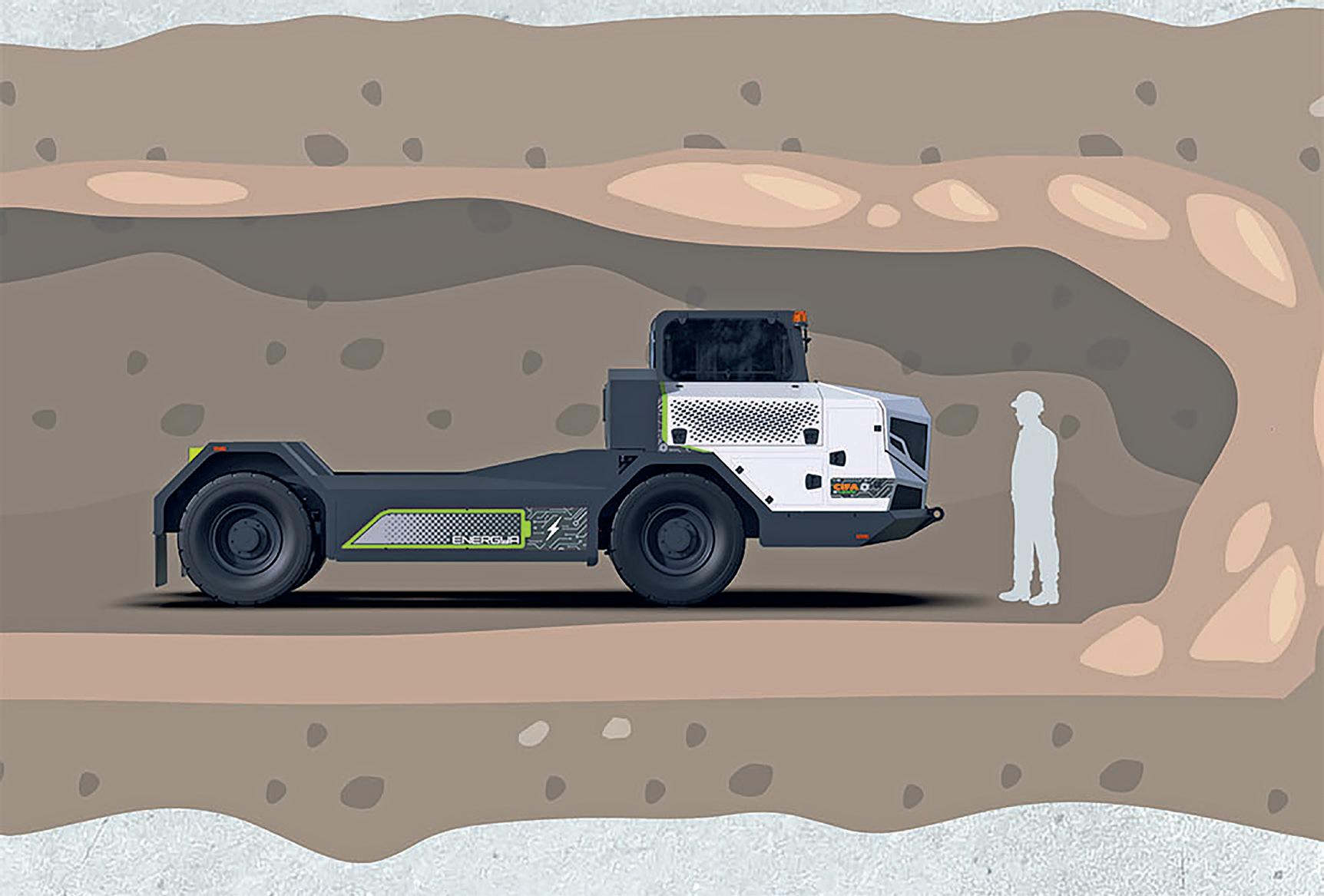
concrete, liquids and solid material.
e unit can also be equipped with low-
ensure maximum operator comfort, there is optional air conditioning.
For sustainability purposes,
low-impact solution, ideal for underground and also urban environments. www.cifa.com
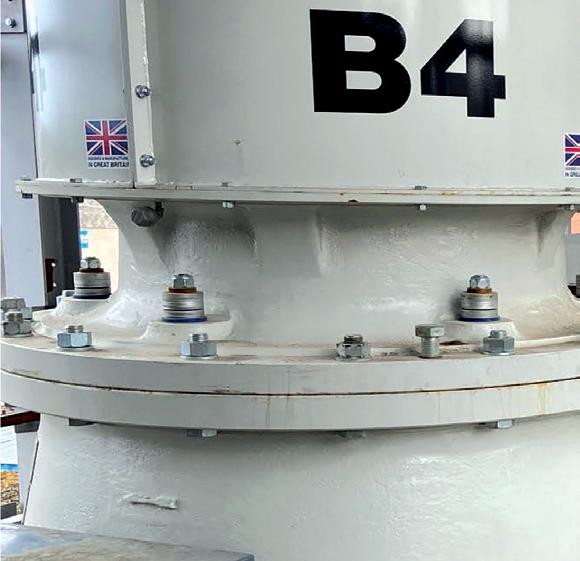

Through an array of wholly owned and operated quarries in Northern Ireland, FP McCann supplies its own and clients’ surfacing, ready-mix and precast plants with a wide range of heavy building materials. This includes an extensive range of quality precast concrete solutions for rail, power and infrastructure projects.
In order to improve its production capabilities, the company upgraded the plant at one of its quarries with two Quarry Manufacturing & Supplies (QMS) cone crushers, along with screens for accurate material grading. A er a series of site visits and assessing exactly what would provide the most cost-e ective and e icient solutions for FP McCann’s requirements, QMS proposed supplying two of its B-Series cone crushers alongside a variety of screens. In addition QMS provides parts, consumables and a ermarket care for the crushers, screens and most of the quarry operation.
assembly to drop, permitting the passage of tramp iron and other non-crushable material. The system then automatically returns the head assembly to its original position. This means the crusher operates at a definite setting with less setting dri and greater stability throughout the circuit.
QMS’s UK-made B-Series cone crusher range consists of di erentsized models that provide maximum productivity with reduced operating costs
QMS’s UK-made B-Series range consists of di erent-sized models that provide maximum productivity with reduced operating costs. The B-Series is manufactured with high-quality cast steel components and premium spherical roller bearings that directly contribute to reliability and high performance.
A key feature of the B-Series is its hydraulic system which provides automatic overload protection. It allows the head

The crusher setting is instantaneously maintained even a er passing a piece of uncrushable material, explained Jonathan Beck, managing director of QMS. “A blend of high motor power, large eccentric throw and increased speed give the B-Series greater capacity than other crushers of comparable size…. and can be configured to maximise production of premium singlesized aggregates. We are able to support our equipment with our own engineers and have the industry knowledge to adapt any plant to suit the quarry, mine or aggregate plant’s requirements.”
A key component of FP McCann’s new quarry plant consists of four screens - two 2m x 7m double-deck screens and two 2m x 7m triple-deck screens.
One of the key advantages of the screening equipment is the easy maintenance features and quick replacement of screening media, wear liners and spare parts. This design aspect allows for maximised uptime and the enhanced profitability of production, making QMS screens an asset for any quarry screen setup. https://qmsupplies.co.uk
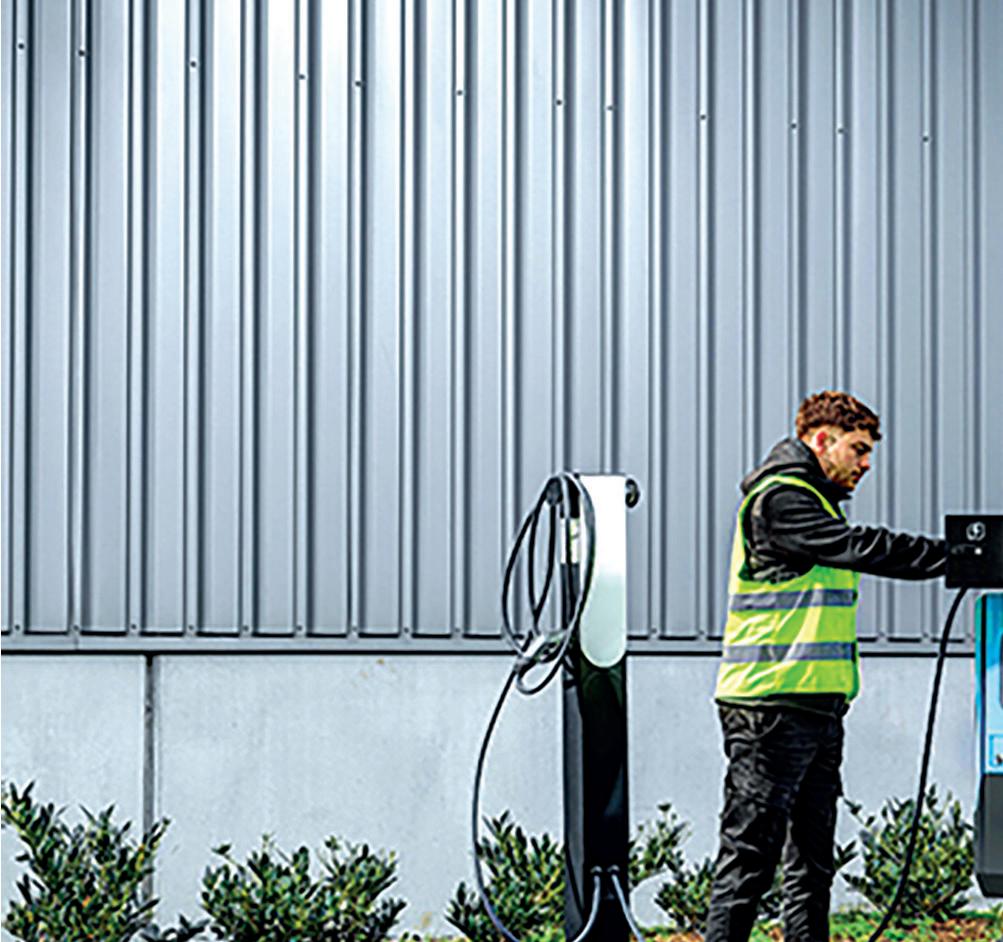
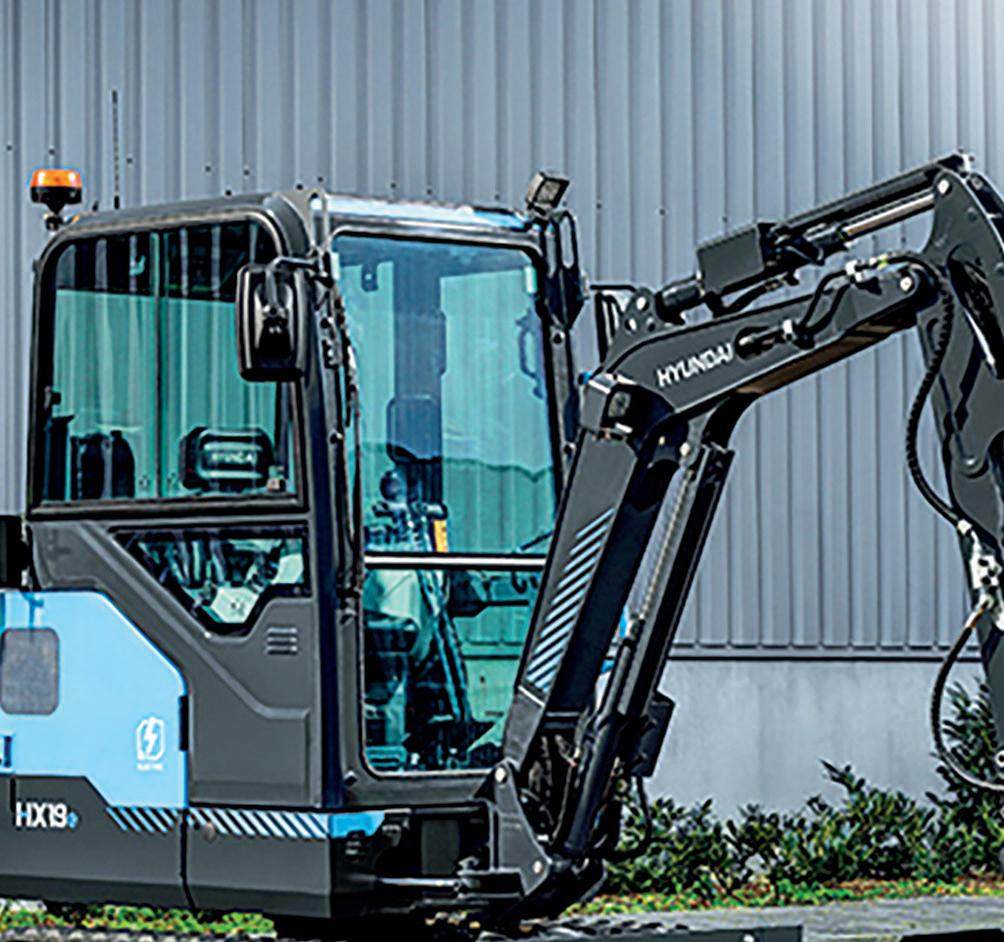


Electric mini excavators may cost more to buy but they make a lot of sense for rental rms as the running costs may be lower. For customers, an electric mini excavator ma mean higher rental rates but it will be less expensive to run. ey have the added bene t of being ideal for work on tight urban construction sites where contractual obligations may also stipulate low-emission machinery.
Hyundai Construction Equipment Europe, too, is committed to a sustainable and electric future with the launching of its HX19e, the company’s rst batteryelectric mini excavator. e new model weighs in at 2,296kg when equipped with a full cab and largecapacity battery pack. Hyundai CEE says the compact machine will provide the ideal digging solution for urban utilities, landscaping and gardening, tunnel and basement excavation and for many local authority tasks, such as cemeteries and sports facilities.
e HX19e will be o ered with a choice of two lithium-ion battery packs, delivering 32kWh and 40kWh capacity, which is claimed to be almost double the capacity of some competitor machines. e 40kWh battery will allow customers to work for up to nearly seven hours between charges, with a break-time top-up delivering full-shift useability. e machine is equipped with a widely used Type 2 connector, allowing customers to use existing EV charging infrastructure.
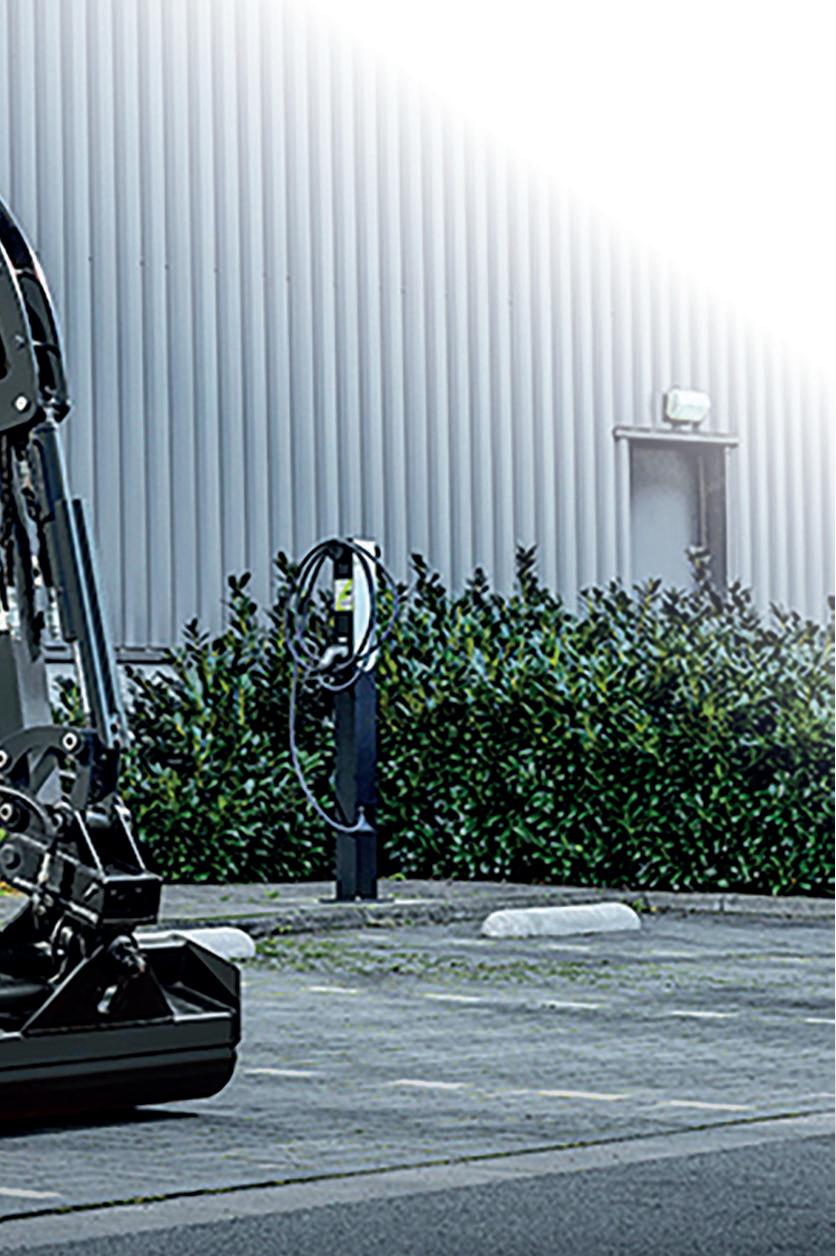

machine boasts the same 16kN bucket breakout force along with a slightly higher 9.4kN dipper arm breakout force. Maximum digging depth is 2,340mm and maximum digging reach is 3,940mm.
Meanwhile, Volvo CE says that its ECR25 Electric short-swing radius excavator is a true game changer: the electric compact excavator takes a proven concept and then adds battery-electric power. While getting the same performance as its diesel equivalent, the operator can recharge ECR25 Electric during their lunch break and operate for four hours straight, wasting no time to refuel speci cally.
Importantly, it operators on the standard electricvehicles (EV) charging protocol. It has multiple charging options and gets to 80% in less than one hour.
e operator can keep track of charging status, thanks to the Electric Machines Management App.
e 48V lithium-ion battery is maintenance-free and designed to deliver up to 2,000 full-charge cycles. e maintenance-free electric motor has an auto shuto and easy access to components. Greasing intervals are at 50-hour intervals and hoses are protected inside the boom and arm. End www.volvoce.com www.hyundai-ce.eu

e intelligent on-board charging unit can be used with 110V or 230V supply, o ering a full recharge time of 4.8 hours for the smaller 32kWh battery and six hours for the 40kWh. e HX19e is also equipped with a REMA DIN 320 connector, that permits rapid charging when a 380V and 44V supply is available. In this case a full recharge can take as little as two hours for the smaller battery and two and a half hours for the larger model.
e batteries power a 13kW electric motor, that in turn drives an open centre hydraulic system. is delivers similar performance to Hyundai’s dieselpowered HX19A mini excavator, which is powered by a 12.1kW engine.
ABOVE
The HX19e is suitable for urban utilities, landscaping and gardening, tunnel and basement excavation
BELOW
The 48V lithium-ion battery in Volvo CE’s ECR25 Electric is maintenance-free and designed to deliver up to 2,000 full-charge cycles



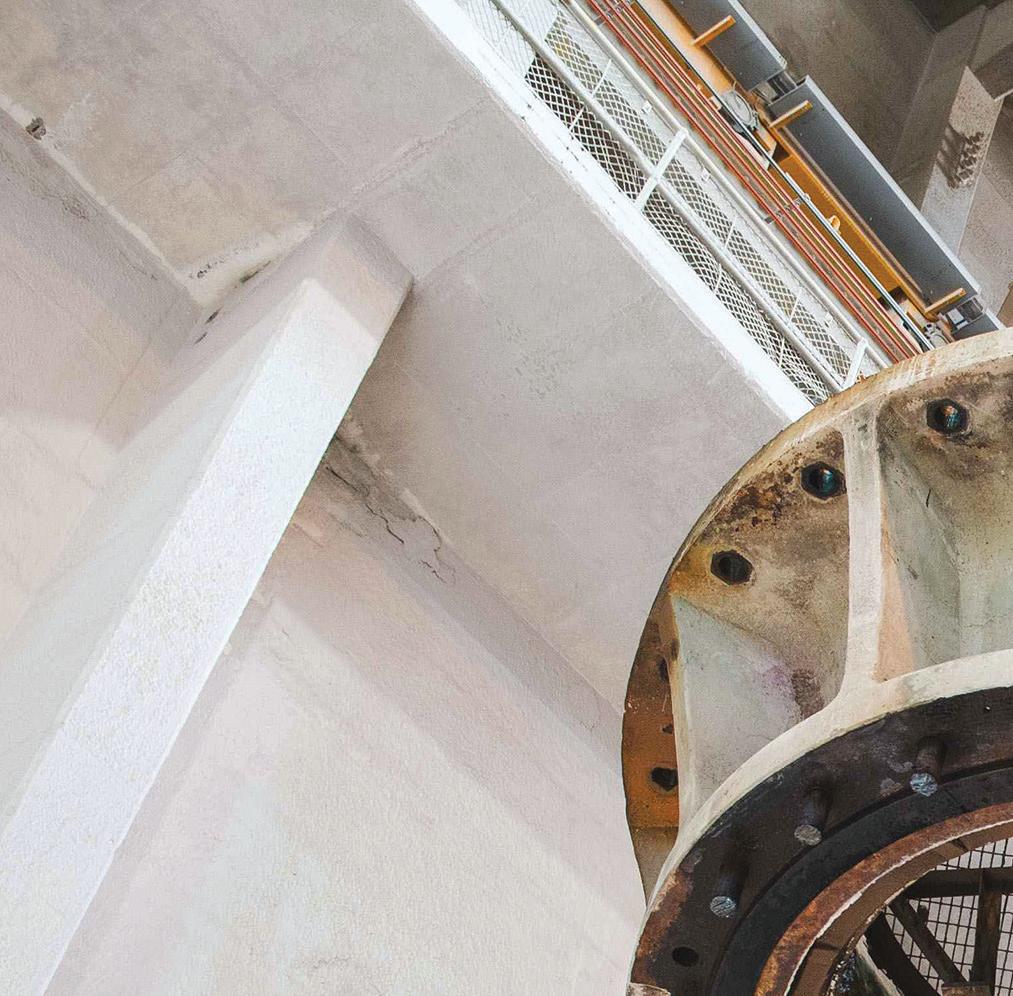
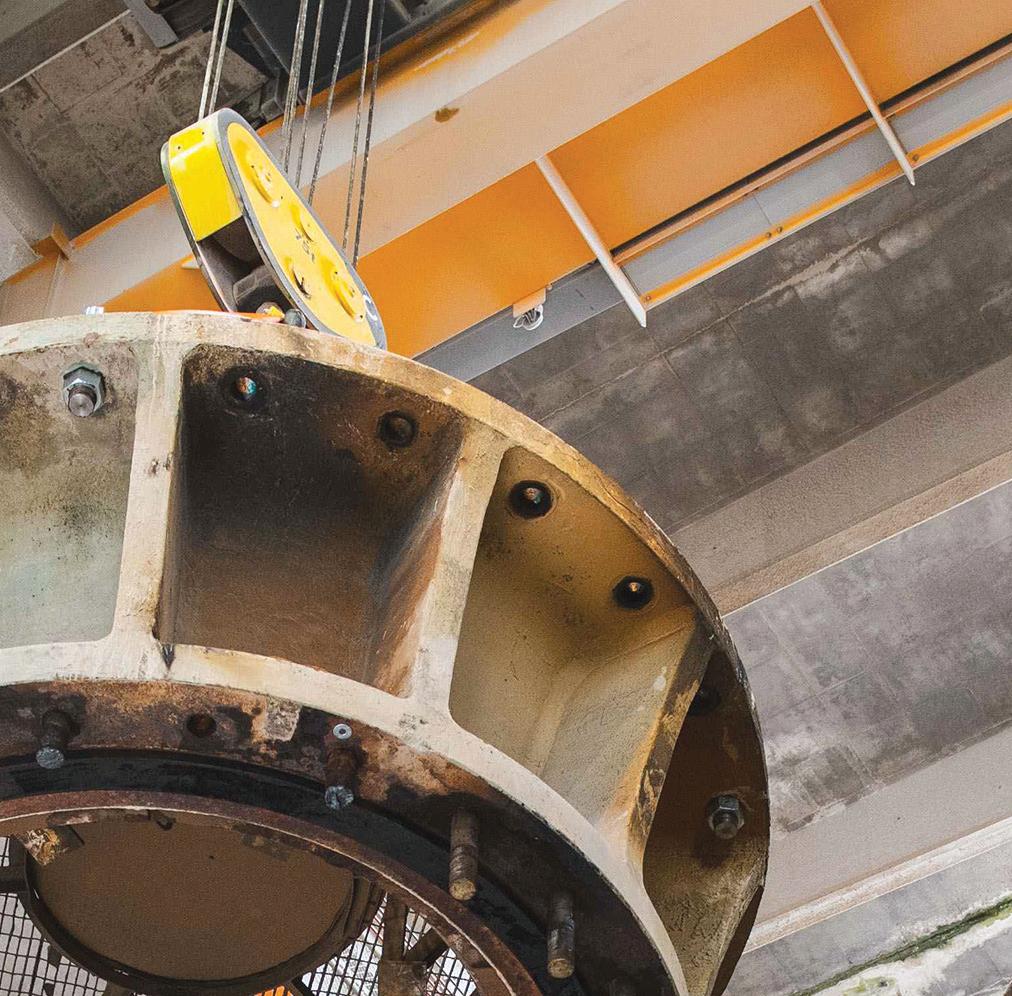
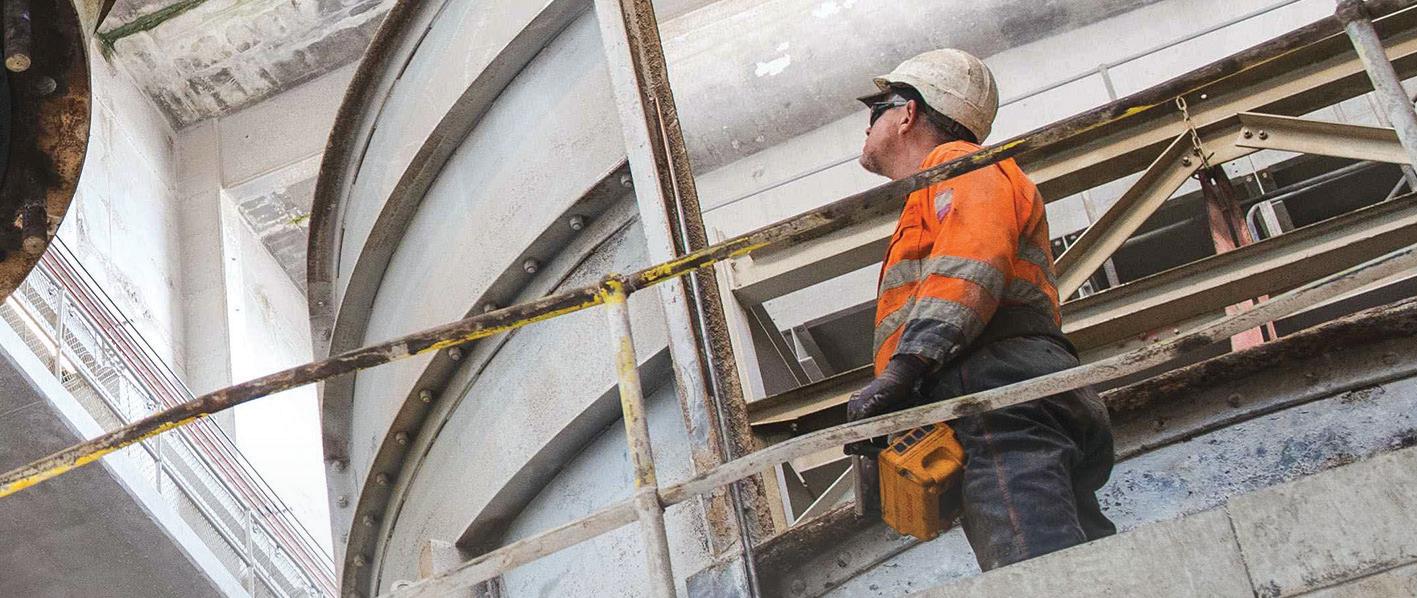


Breedon Group’s Hope Cement Works has recently upgraded its cement plant, the largest in the UK. e rm was keen to optimise production of quarried limestone required for cement manufacturing and has replaced its 1940s vintage Fuller Traylor primary gyratory crusher. e rm opted to install a new 1,250tonnes/ hour primary gyratory crusher, supplied by FLSmidth. Quarry Manufacturing and Supplies Ltd (QMS) was the lead partner in the installation, with the overall project being managed by the Projects Team at Hope.
Hope’s cement-manufacturing process starts in its quarries, which at Hope comprises two sources of limestone: high silica limestone and low silica limestone. e quarry’s upper beds have more of the high silica limestone.
Further down in the quarry is where the lower silica limestone is located. ere are currently 13 operational benches in total in the limestone quarry. In addition to the limestone material, shale is also used from an adjacent quarry on site.
More than half the cement that is made at Hope Works is transported in bulk via rail to depots in the Southeast (Dagenham and eale), West Midlands (Walsall) and the North of England (Dewsbury). Additionally, Breedon has import terminals to supply its customers in Northern England (Blyth and Runcorn), and in Scotland (Leith).

To optimise operations, Breedon installed a new gyratory primary crusher, replacing the previous Fuller Traylor crusher installed in 1952. Although this crusher had been serviced and maintained over the years, the body of the machine was completely original.
e project involved the installation of a single, new primary crusher and associated equipment which was installed on the limestone crushing line.

FLSmidth from all over the world. is took approximately ve weeks. e second stage was to remove the old primary Traylor gyratory crusher; this utilised QMS’ expertise and experience gained on working with gyratory crushers throughout the world. is took two weeks, working 24/7.
is line further consists of a twin line secondary and tertiary crushing stage, comprising state-of-the-art QMS B6 cone crushers. e task of pre-assembling the new FLSmidth crusher, demolishing and removing the old Traylor crusher, and nally installing the new FLSmidth crusher, was given to QMS, which worked in close partnership with the Breedon team at Hope and the contract partners and equipment suppliers FLSmidth.
George Close, UK sales director at QMS, explains: “Working closely with FLSmidth, we had to rst build up the new gyratory crusher. is was a time-consuming and exacting process, as we were working to tight deadlines and the crusher had to be assembled on site.
is site assembly was the rst time all the crusher parts had been together, as the components were delivered by
“ e third and nal stage of the project was the installation of the new crusher, this again further necessitated working round the clock, night and day, taking over ve weeks to complete. In addition, the new crusher has a QMS manufactured, bespoke stainless steel lubrication system which is now integral to the crusher’s operation.”
With a project of this scope and importance, QMS was not the only contractor involved. “Our task not only involved work at our end, but also working with the Projects Team at Hope, including FortunumPM, which acted as Client representative, as well as the other contractors whose work was essential to the success of the project. Other contractors on the installation included PCS UK, who handled all the electrical work, Tideswell Welding Services, who handled all the ancillary fabrication and welding (not involving the crusher itself), and Access Drilling Services, who handled all the signi cant concrete removal work,” added Close. www.qmsupplies.com

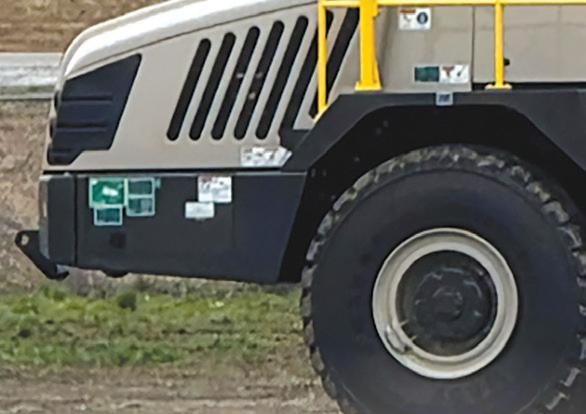
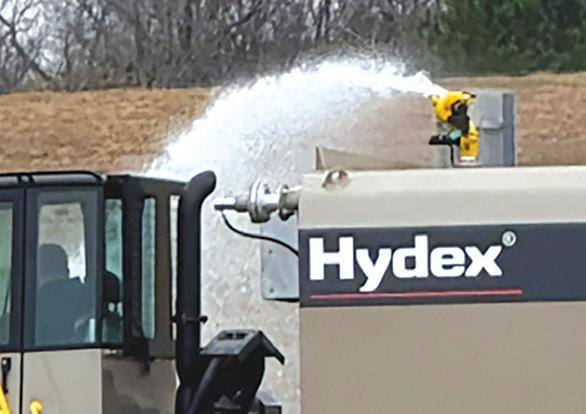
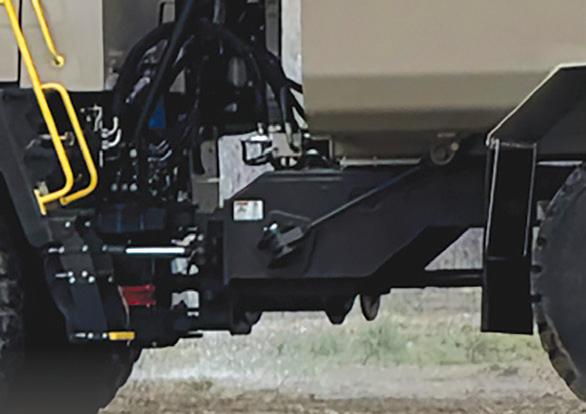
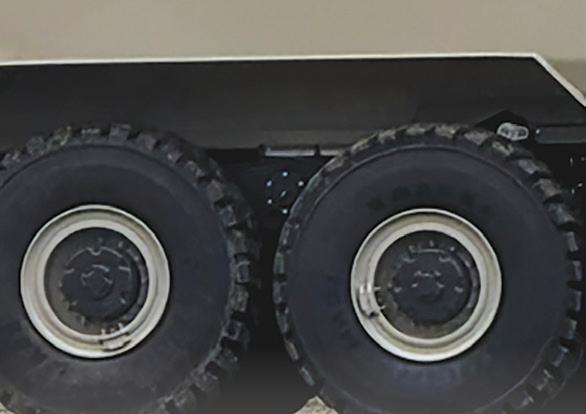

Hydex has adapted robust Rokbak RA30 and RA40 articulated haulers into high-capacity water trucks. As environmental regulations tighten, the need for dust suppression on large sites is growing.
A new venture between Hydex and Hills Machinery is using proven ADT technology to deliver e ective dust suppression.
At the core is a new watertruck range. Rokbak RA30 and RA40 articulated dump trucks (ADTs) are being tted with high-performance water tanks to be deployed across quarries
and infrastructure projects under the Hydex banner.
e rugged RA30 and RA40 are being used because they o er reliability in tough oroad environments.
e RA30, with its 276kW engine, now carries a 22,712.5litre (AWT6) water tank, while the 331kW RA40 is matched with a 34,068.71litre (AWT9) tank. Both are equipped with advanced spray and pumping systems for high-performance water distribution.
e idea came when Hills Machinery, a long-time Rokbak dealer based in North Carolina,
Caterpillar has launched a comprehensive library of how-to videos and articles for customers that prefer to do their own maintenance and repairs. This library includes a new series of DIY videos designed to help customers maintain Cat equipment. These how-to instructional videos provide simple, clear, and easy-to-follow instructions for common maintenance, repair, and inspection tasks. Developed by Caterpillar experts, the series instills confidence in customers so that they can perform these tasks.
Customers can view these short how-to videos, making it simple, clear, and easy for them to maintain their Cat equipment. They were developed in direct response to what people are requesting most for common repair and inspection items. They are designed to help save time and money and assist those who prefer to do their own maintenance.
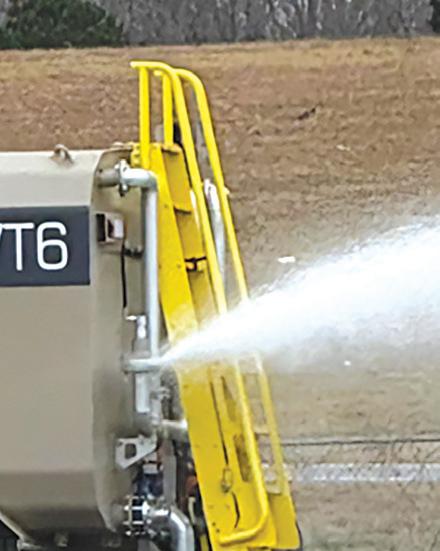
USA, saw how contractors were searching for reliable machines that could do more than haul.

Hydex is supporting the rollout through the existing Hills dealership network.
Each truck is backed by Hills Machinery’s Uptime Operations service which includes lifecycle eet management, real-time equipment monitoring and pre-stocked replacement parts, minimising downtime.
e tanks are engineered to meet demanding performance
The Caterpillar DIY video series serves as a supplement to the machine’s operation and maintenance manual (OMM) and boosts the confidence of visual learners to get the job done correctly.

e current library includes nearly 60 how-to videos produced in English with subtitles in 23 di erent languages, and Caterpillar continues to expand the variety of videos o ered.
As a complement to the DIY videos, Caterpillar has also developed a blog series covering the most popular maintenance tips. The articles break down inspection, maintenance and repair, and replacement information into easily understandable steps. www.cat.com

specs. Water is shot from an American-made Elkhart water cannon to distances of more than 64m, while operators can adjust pressure. Multiple spray bars and nozzles, including vertical, side, front bumper and rear dribble o er complete customisation, depending on site needs. A rear-mounted electric hose reel, Americanmade Berkeley hydraulic water pump and optional suction system for drawing water from lakes or reservoirs round out the functionality. www.rokbak.com www.hillsmachinery.com www.hydexuk.com









"Our Skidmarks page is highly rated by readers. Your input could help make this page even more entertaining. If you come across any amusing road-related stories, pictures or videos, email me at mwoof@ropl.com"
Mike Woof
A church in Sweden has had to take to the road to make way for expanding mining operations. Located in Kiruna in Northern Sweden, the wooden church, dating from the early 1900s, has been moved 5km over two days, using specially designed trailer units. Planning for the church move has taken eight years, with the work costing €42 million. e 672tonne, 32m-high church has had to be moved along with the rest of the town, which is home to around 17,000 people. e mining company LKAB is paying €900 million to relocate the town in stages, having established a new town centre in 2022.
A couple in London were rather annoyed when they got up one morning to discover that their Jaguar car had been stolen from where it had been parked in front of their home. e vehicle was tted with a tracker, however, so they were able to locate it quickly. ey informed the police of the location of the car but were told that o cers were too busy to recover it. Instead they arranged
for a recovery vehicle to pick up the car, which had some of its interior removed by the thieves in a bid to disable some of the electrical wiring.
Drivers in California had a close call recently when a light aircraft lost power and its pilot was forced to make a crash landing. e pilot managed to guide the single-engine Piper aeroplane onto a road and made a very short landing, fortunately without hitting any vehicles. However, the aircraft did smash into some poles at the side of the road, causing major damage to one of the wings. e occupants of the aircraft received only minor injuries, luckily, while no-one else was hurt. e incident did cause some tra c delays though.
Retired people in Italy, now nicknamed the "umarell", are described as those who stand and comment on things not being done properly. However, these people are now being encouraged in Italy to

Entitlement….. – image courtesy of Mike Woof
e world’s oldest known paved road is in Egypt and is thought to date back almost 5,000 years. Stretching 11km,
ancient tombs as well as more regular building works. Although the road surface is in poor condition due to its heavy use, repairs by the local authorities are unlikely for this historic route.





























A man in the UK and another in the US are proud owners of fairground bumper cars that are actually road-legal. The British bumper car was bought by the man’s wife as a present and a er a bit of work, was made roadworthy. The man in the US, meanwhile, managed to take the classic 1953 bumper car and use components from a small car to make it able to be driven on the road. Both owners are used to people responding with incredulity and amusement at seeing these unusual vehicles being driven on the road.



THE SUPER 1800-5 X
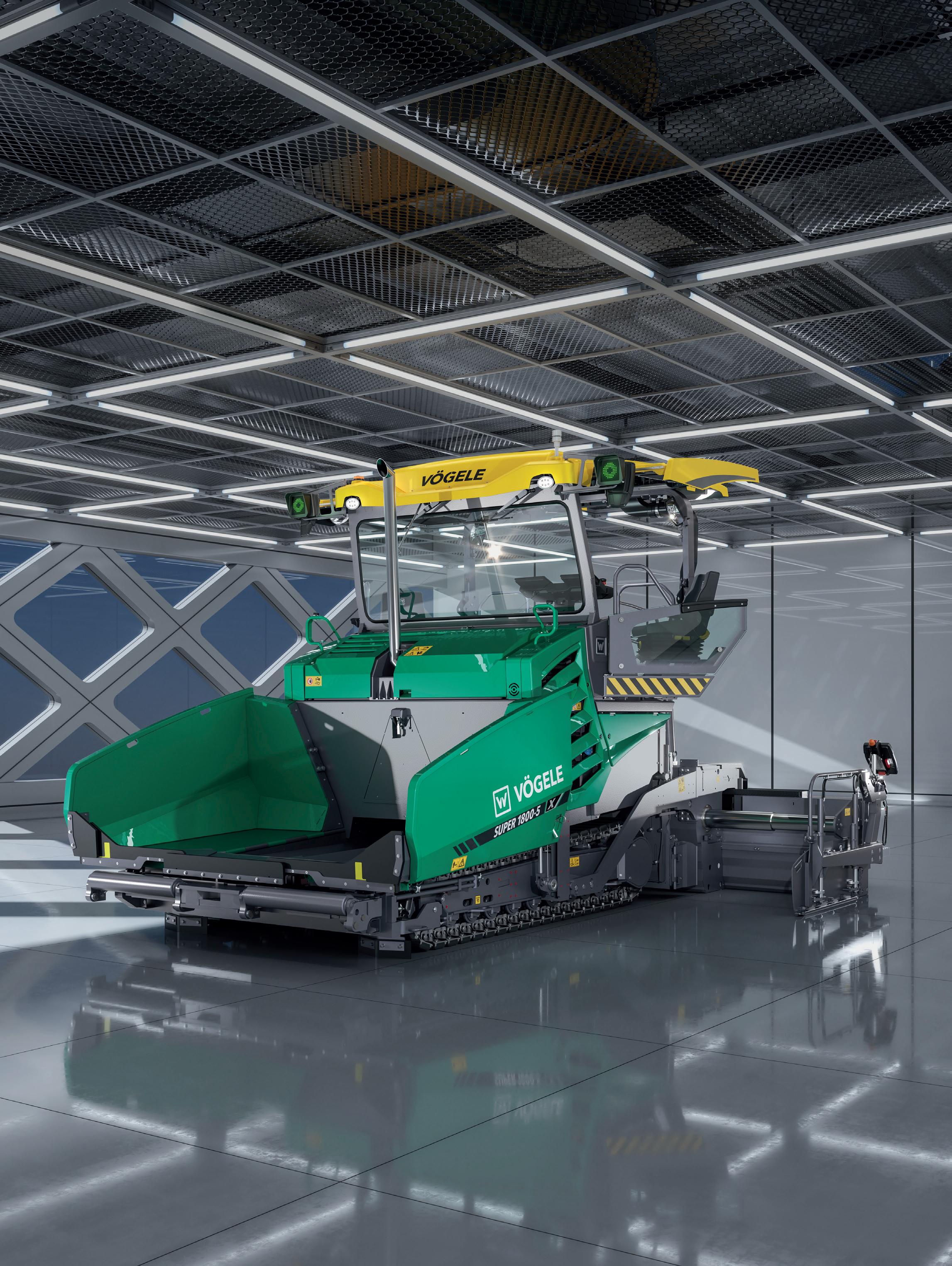
The 1800 class from VÖGELE is legendary. No other paver in the world is as popular with road construction professionals. The “Dash 5” generation instantly puts VÖGELE two steps ahead: the new SUPER 1800-5 X-Tier combines a huge range of applications and high performance with smart automatic functions, maximum user convenience and a particularly economical, quiet drive. With the SUPER 1800-5 X, you are perfectly equipped for technical, economic and environmental challenges.
www.voegele.info