



































































































































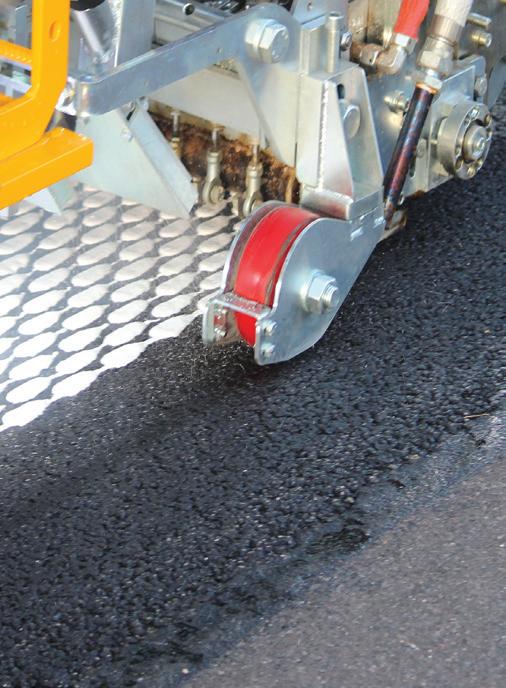
SWARCO SOLIDPLUS reflective glass beads make road markings more visible - and also more cost-effective! Thanks to their special glass formulation, the premium glass beads are exceptionally robust and durable. As a result, they extend the service life of markings and reduce the cost of re-marking. SWARCO SOLIDPLUS offers a dual benefit: the safety provided by excellent visibility and an optimised price-performance ratio.
SWARCO | The Better Way. Every Day.

FURTHER INFORMATION:



TA selection of the editor's top stories from this months online and social media channels...


EDITOR, Mike Woof mwoof@ropl.com




"Congestion pricing in New York City represents a major step in a country where transport is dominated by use of privately owned cars"
Connect with me for regular industry related posts and discussions...

Global Highways Magazine
Editorial
Editor Mike Woof
Deputy Editor
David Arminas
Sub-Editor Kevin O'Shea
Editorial Contributors
Shem Oirere, Kristina Smith, Mauro Nogarin, Eugene Gerden, Partha Basistha, Lucio Garofolo
Editorial Consultant
Geo Hadwick

Designers
he congestion pricing plan for New York City has been on, o , on and o again over several years, but has nally gone ahead in 2025. Approval was given for the pricing plan by the Federal Highway Administration (FHWA). e Metropolitan Transportation Authority (MTA) introduced the toll at US$9/day, down from the previous rate set at $15/day. e money raised by the congestion pricing scheme will be invested in the city’s transit system, providing it with a much-needed nancial boost.
New York City di ers greatly from other major centres of population in the US. It is one of the few US cities with a public transport system approaching anything like as extensive as seen in many (or most) European cities. Crammed into a comparatively small area, New York City is more densely populated than the majority of US cities, so it is less suited to heavy concentrations of motor vehicle tra c. Parking a car in New York City can be very problematic. And it is worth noting that a far lower percentage of New York City inhabitants own a personal motor vehicle than is the norm for US cities.
e need for congestion pricing in New York City is without question though, particularly given the high population density. According to the MTA, “Congestion Pricing will dramatically reduce tra c in the Congestion Relief Zone, transforming the area from gridlocked to unlocked. Less tra c means cleaner air, safer streets, and better transit.”
e MTA says that the city's inhabitants lose 117 hours on average sitting in tra c every year, costing them nearly $2,000 in lost productivity and wasted time. And more tra c also means more air pollution and associated health impacts.
e system will operate in part of Manhattan only. Vehicles entering the Congestion Relief Zone in Manhattan, in local streets and avenues at or below 60th Street, will be charged. e MTA says that introducing the toll will result in at least 80,000 fewer vehicles/ day entering the zone, relieving congestion in what has been the most congested district in the US. For drivers, the system will reduce tra c and make it easier to drive in the Congestion Relief Zone as it will result in fewer cars on the road. ose who still need to drive will have faster trips and spend less time in tra c. End
Simon Ward, Andy Taylder
Production Manager
Nick Bond
O ice Manager
Kelly Thompson
Data & Marketing Manager
Alan Cansick
Web Manager
Sarah Biswell
Managing Director
Andrew Barriball
Chairman Roger Adshead
Email [initialsurname]@ropl.com (eg: radshead@ropl.com)
Advertisement Sales
Sales Director Graeme McQueen Tel +44 1322 612069
Email gmcqueen@ropl.com
Sales Director Dan Emmerson Tel +44 1322 612068
Email demmerson@ropl.com
UK / Classified, North America
Dan Emmerson Tel +44 1322 612068

The Road Zipper can boost safety and capacity for drivers at the same time... Scan to watch the video globalhighways.com

Austria’s challenging highway bridge replacement...
Scan to join the debate Global Highways Magazine

Sssshhhhhh! - quiet concrete on UK trial...
Scan to read the article globalhighways .com
Email demmerson@ropl.com
Italy Fulvio Bonfiglietti Tel +39 339 1010833
Email bonfiglietti@tiscali.it
Asia / Australasia
Roger Adshead Tel +44 7768 178163
Email radshead@ropl.com
Printed by William Gibbons & Sons Ltd
Address
Route One Publishing Ltd, Waterbridge Court, 50 Spital Street, Dartford, Kent, DA1 2DT, UK. Tel +44 1322 612055
Fax +44 1322 788063 Global
Congestion pricing has finally been introduced for New York City’s Manhattan Island, and tra ic has been reduced
NEWS & CONTRACTS
George Washington Bridge repairs; Australia’s East Link sees costs spiral; Francis Scott Key Bridge replacement 16 IRF
Victoria Sheehan wins IRF Personality of the year award 2024
IRF Global: 2025 Fellowship Program
A $2 billion maintenance project is underway for the








Further humorous road-related stories from around the world 51 ONSITE
10 CONSTRUCTION TECHNOLOGY
Weigh-in-motion


Develon ADT for Scottish customer; Mobirex plant from Kleemann to German site 54 HIGHWAYS AND SAFETY EXTRA
Atlas Copco solar light towers; Himoinsa targets Europe 55 EQUIPMENT
Wacker Neuson’s versatile compact machines; National Pile Cropper’s e icient solution





Leica Geosystems o ers cable detection tool; Trimble’s subscription option; drone solution for Smart Construction; partnership for Topcon and u-blox


22 TOPCON EXCLUSIVE INTERVIEW

As Topcon’s former president Ray O’Connor steps down and his place is taken by Ivan Di Federico, we interview both on future trends


































































If a week in politics is a long time, imagine how long thirty-three years in publishing feels! Actually, every day is a new journey, and today it’s the launch of Global Highways, which succeeds World Highways, to fully embrace the modern publishing paradaigm.

26


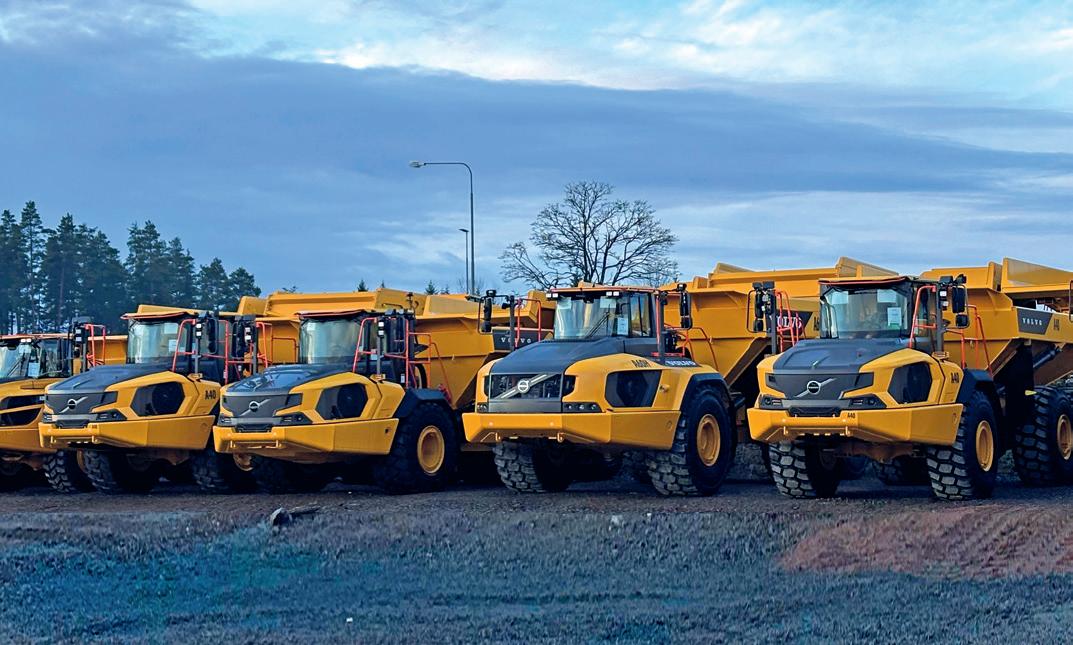
Volvo CE is introducing a new seven-model range of ADTs, including a brand new size class
33
ASPHALT PAVING
Low carbon paving; novel patching solution; compacting warm mix asphalt
38
ASPHALT PLANTS
Warm mix delivers energy savings for asphalt producers; a new asphalt plant for Tanzania
41 BITUMEN TECHNOLOGY
Fibenol introducing plant-based bitumen alternative; reduced carbon surfacing trial for the UK by Tarmac
Muon technology for bridge analysis; Peri’s digital partnership; steel Acrow bridge in Texas; Kistler monitoring Washington Bridge
Hydrogen fuel for combustion engines with Cummins and JCB; Volvo Penta’s electric power density solution; Hatz o ering digital engine management
Tarmac focuses on recycling partnership with Huyton
Subscription rates & enquiries
Global Highways, is published 6 times a year by Route One Publishing Ltd. Global Highways is available on subscription at the rate of: UK£135 (US$225,€155) per annum.
Single copies £20 (US$33,€23).
Tel +44 1322 612079
Fax +44 1322 788063
Email subs@ropl.com
The 2025 US annual subscription price is US$225.00 Airfreight and mailing in the US by agent named Air Business, c/o Worldnet Shipping
Inc., 156-15, 146th Avenue, 2nd Floor, Jamaica, NY 11434, US. Periodicals postage paid at: Jamaica, NY 11431
US Postmaster: Send address changes to Global Highways, Air Business, c/o Worldnet Shipping Inc., 156-15, 146th Avenue, 2nd Floor, Jamaica, NY 11434, USA. Subscription records are maintained at Route One Publishing Ltd, Waterbridge Court, 50 Spital Street, Dartford, Kent, DA1 2DT, UK.
Air Business Ltd is acting as our mailing agent.

Business publishing has changed beyond recognition over the last three decades. Content can be sourced so much more readily, and presented in a bewildering array of changing styles and formats, but trusted content has lasting value, especially when time is precious.
At its core, Global Highways brings all of our knowledge and expertise together, as a thoughtful and authoritative source, across all contemporary platforms. From the authority of print, to the immediacy of social, Global Highways provides ever-improving, ever more accessible content that is worth the investment of your time.
Get all the news, views, and in-depth reports you love from our award-winning writers, and their sources, by registering today on www.globalhighways.com. e digital version replicates the content of the printed version, and can be scrolled at leisure with the bene ts of added content, easy searchability, embedded links and insightful videos. We want to provide you with the best of all worlds and add value wherever we can.
We are opening this exciting new chapter in our publishing journey to take full advantage of all the changes over these past three decades. Words and opinions that used to take weeks to arrive at their destination are now available at the touch of a screen and, as the arti cial intelligence revolution gathers pace, we know that content will be brought together from multiple sources faster than ever before.
But, to use a familiar saying, “all that glistens is not gold.” We don’t rely on AI, and nor can you. Rather than taking content at face value, our expert editors sanity check it as they write, with the bene t of their personal industry connections. is process underscores the value and the credibility of our content. We call it Informed Authority.
Independent research has proven, time and time again, that the magazine format enables the reader to choose exactly how to consume the carefully curated blend of content it delivers. Readers still choose magazines to complement and broaden their professional knowledge and understanding. But, when it comes to speed, we are also their leading source for industry news, provided with immediacy and impact.
So … Global Highways’ digital channels, social media feeds, and email newsletters will tell you what is happening, as it happens, and the magazine will tell you why it is happening. Rest assured, we will o er you our informed and authoritative content in whatever format you would prefer to receive it.
Whether you are reading this rst edition of Global Highways in a print or a digital edition, we sincerely hope that you will enjoy the experience. We would certainly welcome your feedback. Email me at radshead@ropl.com End
Roger Adshead, Founder and Publisher
The $2 billion maintenance and repair project for the George Washington Bridge linking New York and New Jersey in the US is now more than 50% complete

Morocco will invest $765 million in expanding its motorway network between 2025 and 2027. By 2030, Morocco intends to have a motorway network extending 3,000km in total, compared with 2,000km at present.

e motorway network is managed by Société nationale des autoroutes du Maroc (ADM), which has set out the expansion plans. According to ADM, tra c volumes on the network increased by 8% for 2023 compared to 2022 and are continuing to grow.
Once complete the RabatCasablanca Continental Motorway will run between the Tamesna Junction on the Rabat Bypass and the Casablanca South Ring Road at Tit Mellil.
Four road projects worth nearly $2 billion are now under construction in Colombia, with the necessary financing packages in place. These form part of Colombia’s 5G infrastructure programme, with a further two projects expected to commence in the first six months of 2025.
Colombia’s National Infrastructure Agency (ANI) says that the other two projects are now at the pre-construction phase.
According to the Port Authority of New York and New Jersey, the replacement of the 592 steel suspender ropes on the George Washington Bridge is nearly nished.
e replacement of the 592 ropes that suspend from the bridge’s four main cables and hold up the bridge’s two roadway levels is the largest part of the project to rehabilitate, repair or replace major components of the world’s busiest vehicular bridge. e replacement of every suspender rope and the rehabilitation of the bridge’s four main cables are essential. As the New York and New Jersey region’s primary Hudson River crossing for large commercial trucks, the bridge is a crucial link in the
interstate highway network.
e suspender rope replacement project, scheduled to be completed by the end of 2026, includes the construction of a newly-built sidewalk on the bridge’s south side to improve safety and accessibility while increasing capacity for path users by separating pedestrians on the south sidewalk and cyclists on the existing north sidewalk.

Australia’s tolled East Link project in Victoria has increased in cost signi cantly since it was rst planned. e project was originally expected to come with a pricetag of $6.25 billion (A$10 billion) but now looks as if could cost as much as $16.24 billion (A$26 billion). is massive jump in the price has been attributed to a series of factors. Materials and labour have become far
more expensive, particularly in the wake of the COVID-19 pandemic. Environmental legislation has also been a factor in the increased cost. Webuild is part of Spark consortium working on the project. Webuild will design and build twin three-lane tunnels 6.5km-long, among other works. Once completed, it will be the longest road tunnel in Victoria.

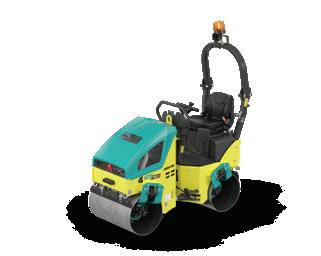
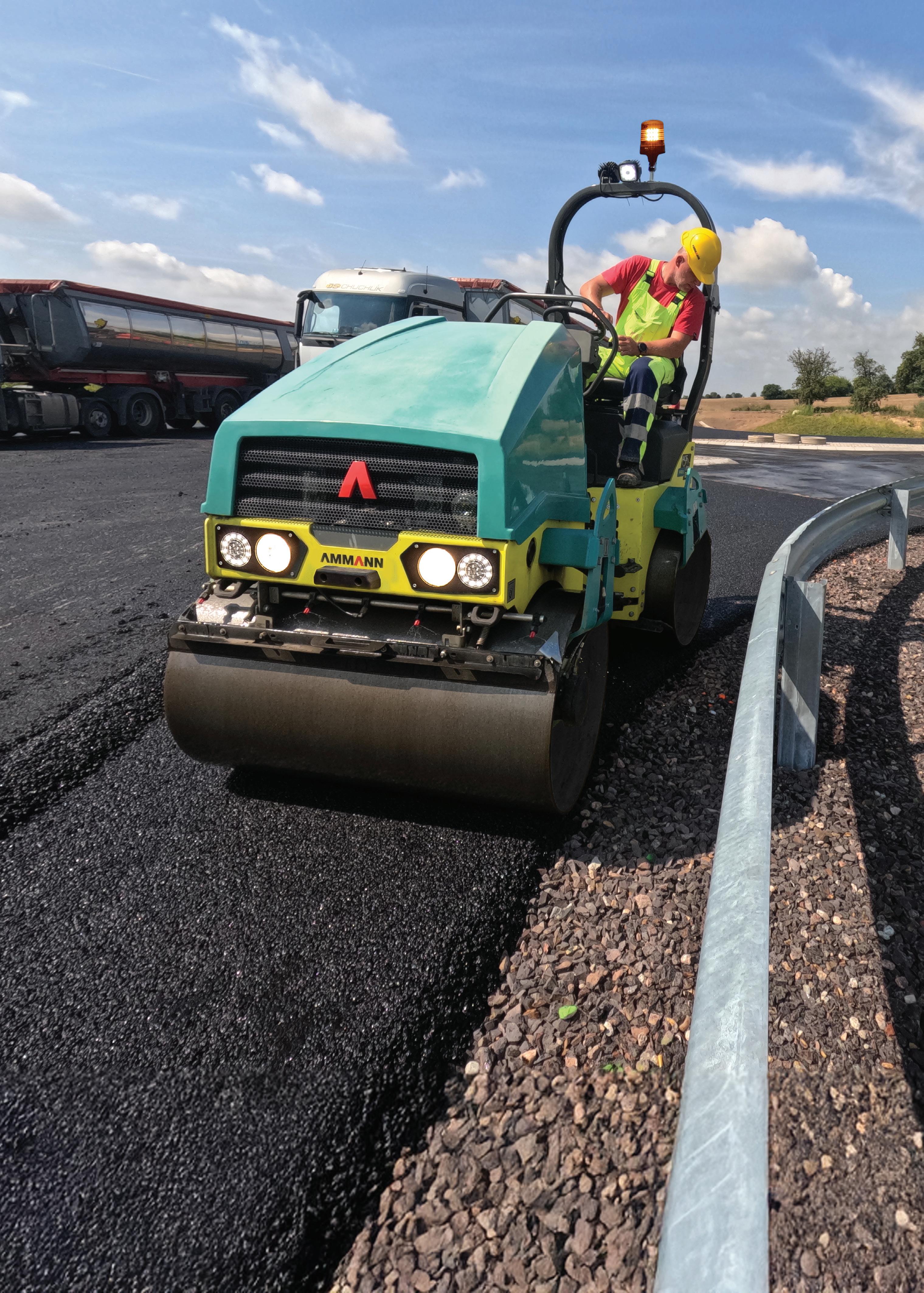
Ammann ARX Light Tandem Rollers excel in the open, where covering ground quickly is the goal. But other jobsites call for a compactor that can work tight against obstructions, such as curbs, without losing productivity.
OTHER KEY FEATURES:
• • Electronic drive lever for smooth starts and stops, especially important on asphalt jobs
• • Optional ACEforce , the Intelligent Compaction tool for optimal efficiency
• • Perfect all-around machine visibility and LED lights for safety on the jobsite


Contractors PORR and STRABAG are teaming up to carry out a challenging bridge replacement project in Austria for client ASFINAG. e two
rms will demolish the Lueg Bridge in Austria’s Tyrol region, replacing it with a new and improved structure.
e 1.8km Lueg Bridge forms part of the busy A13 Brenner
Highway. Carrying around 32,000 vehicles/day, the bridge is now 55 years old and this

The necessary funding is being secured for the construction of Indonesia’s new purpose-built capital, Nusantara. The Indonesian Government plans to spend $3 trillion to develop the second phase of Nusantara’s construction programme. This is around half of the budget set aside for the first phase of the project, which was carried out between 2022 and 2024. Construction is being carried out under a series of PPPs, managed by the Nusantara Capital Authority. Six road projects are included amongst the PPPs, as well as a series of infrastructure works for utilities and power supply.































Leica Geosystems is now o ering a new utility detection solution, the Leica DT100 Precision Locator and Leica DE100 Transmitter
Leica DT100, paired with the DE100 Transmitter, o ers a solution suited to duties in construction, utilities and telecommunications. e DT100 Precision Locator simpli es detection processes. Compact and lightweight, the precision locator is wellbalanced and comfortable for extended use, reducing operator fatigue.
e DE100 Transmitter’s powerful output and ability to deliver solid current — up to 1A— provides a strong signal. is is important for environments where cables or pipes may overlap. e display delivers
ABOVE: Leica Geosystems is now o ering a smart tool for underground detection
real-time feedback on current and voltage for swift decisions in the eld. Precautionary features provide quick voltage alerts to users and ensure safety for users onsite. e solution is delivered in a bag that holds essentials users need for smooth setup and operation.
e Leica DT100 is part of Hexagon’s Detection portfolio, integrating with other advanced hardware and software solutions like GNSS, ground penetrating radar (GPR) and Leica Geosystems’ on- eld and post-processing software. is integration facilitates accurate mapping of underground utility networks and streamlines the eld-to-o ce process. End www.leica-geosystems.com
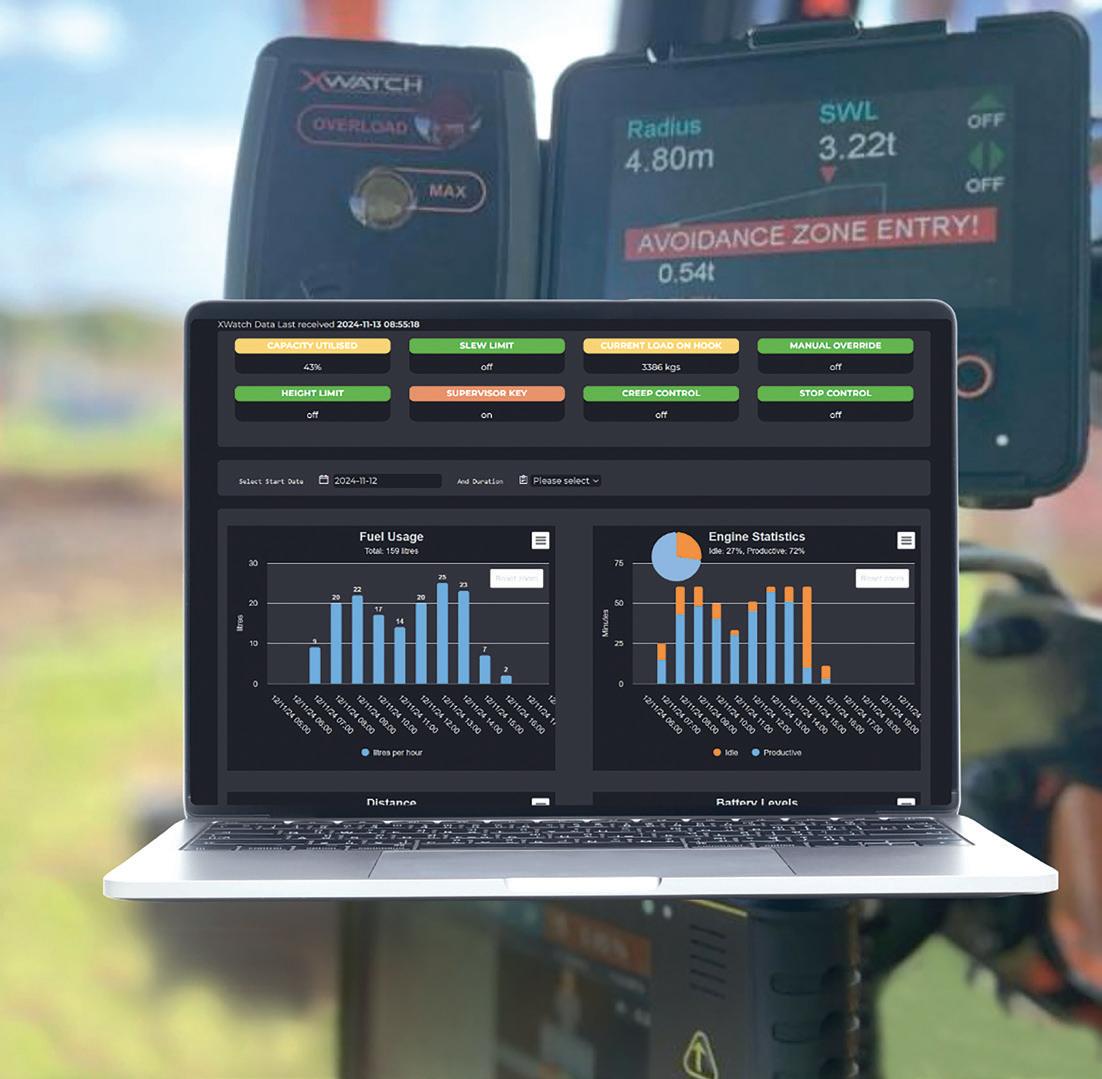
New capabilities are available to users of the Xwatch technology for construction machines. A partnership with PVS Data allows customers to add telematics data from equipment fleets. Tools from Xwatch Safety Solutions allow operators to set precise height, slew, and RCI limitations from the machine cab. The addition of advanced in-app telematics across the product range enables live visibility of key safety data, ensuring protection for operators, machines and site personnel.
The new D2 system from PVS Data allows users to manage machine hours, track fuel usage, and monitor load capacities for equipment from all suppliers. Businesses can access over 300 real-time data parameters. This collaboration between
PVS Data and Xwatch Safety Solutions brings functionality to fleet management. PVS Data’s cloud-based computing and live reporting provides access to telematics across an entire fleet. Site managers gain an overview of machinery equipped with Xwatch Safety Solutions. They can monitor height and slew settings, view the weight on the hook, confirm whether drive controls are active, and analyse overall capacity utilisation. Combining this safety information with data such as fuel usage, engine performance, fault reporting, idle and productive hours, and carbon dioxide emissions allows a construction site that operates more e iciently and safely. www.pvsdata.com www.xwatch.co.uk











































































































































































































































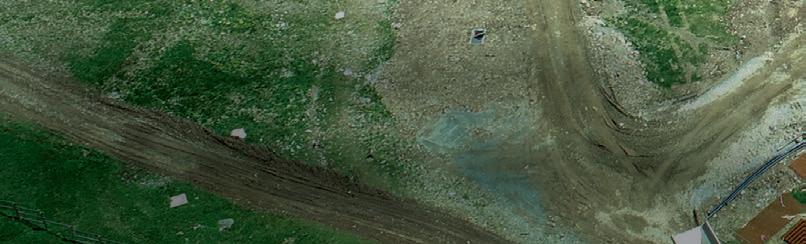
Earthmoving solution expert, Komatsu, has combined Artificial Intelligence (AI) to modernise its Smart Construction Edge solution, in partnership with Sony as part of the EarthBrain jointventure across Komatsu, NTT Communications, Sony Semiconductor and Nomura Research Institute, to champion digitalisation and advancement in drone surveying processes.
The innovative Edge solution enables experts and beginners to perform accurate drone surveys and process drone
flights into point clouds. The EarthBrain partnership works to optimise the construction processes through digital transformation to maximise productivity, improve worksite safety and environmental sustainability.
With its latest Edge evolution, Komatsu Smart Construction now o ers a terrain mapping tool utilising AI to remove obstacles, such as machinery and buildings, from drone surveys. This reduces the need for manual amendments once the data has been captured.
When the main surveyor of medium-sized Belgian earthmoving company, CROES VS, went on maternity leave, the company faced challenges to maintain its surveying capabilities making it di icult to carry out its projects with the same level of precision and e iciency.
CROES VS implemented the revised Edge technology and the workload gap was filled without the requirement of additional training or recruitment. The solution allows various team members,



including the marketing manager, to take on drone surveying tasks and capture survey-grade earthmoving progress, identifying challenges and opportunities within seconds.
Komatsu Smart Construction experts utilise digital tools to assist clients in earthmoving and quarrying by finding the optimum way of using resources for better productivity, quicker project completion, cost savings, improved safety, and reduced CO2 emissions.
www.smartconstruction.io
Blyncsy has achieved the Google Cloud ReadySustainability designation in the Google Cloud Partner Advantage Program. e award was based on Blyncsy’s AI-powered road maintenance and asset inventory technology, which is used by state Department of Transportation (DOT) agencies across the US to conduct automated roadway inspections. e system uses crowdsourced dash camera imagery combined with AI analytics. Insights provided by Blyncsy’s technology can supplant the need for state DOT operations and maintenance departments to conduct manual inspections of roadway conditions, reducing carbon emissions signi cantly.
e new solutions of the Google Cloud ReadySustainability partner program will help customers achieve reductions in carbon emissions. Google Cloud Ready - Sustainability will provide Blyncsy’s
For the latest news, extended features and videos relating to Construction Technology visit the website globalhighways.com
customers with proven partner solutions, powered by Google Cloud.
Blyncsy is the industry leader in providing intelligent roadway insights, automated asset management, and a near real-time status of road infrastructure to local governments and state DOTs. Blyncsy is the only company that utilises crowdsourced imagery from over 1 million vehicles already on the roads, machine learning, and arti cial intelligence to make roadways smarter, safer, more equitable, and more e cient.
"Arti cial intelligence is playing an important role in building a more sustainable world,” said Mark Pittman, Blyncsy CEO and Bentley’s Director of Transportation AI. “Our approach leverages this new technology to extend the useful life of our assets, reducing their carbon impact on the world and their nancial impact on our public agencies’ budgets.” End www.blyncsy.com



“Precision allows us to better understand our surroundings, to see things we haven’t seen before…”

— Ivan Di Federico, President and CEO, Topcon Positioning Systems, Inc.




See what’s next at bauma 2025
Trimble is now offering three new Trimble Works Subscription plans — Trimble Works Core, Pro and Premium. The firm says that these offer contractors a simple, low-risk way to scale operations, providing flexibility in selecting and utilising the right civil construction technology, hardware coverage and price point for their business needs. For contractors already using Trimble technology, the new subscription plans provide a method for keeping all machines on the same software version, enabling connected workflows for jobsite operations.
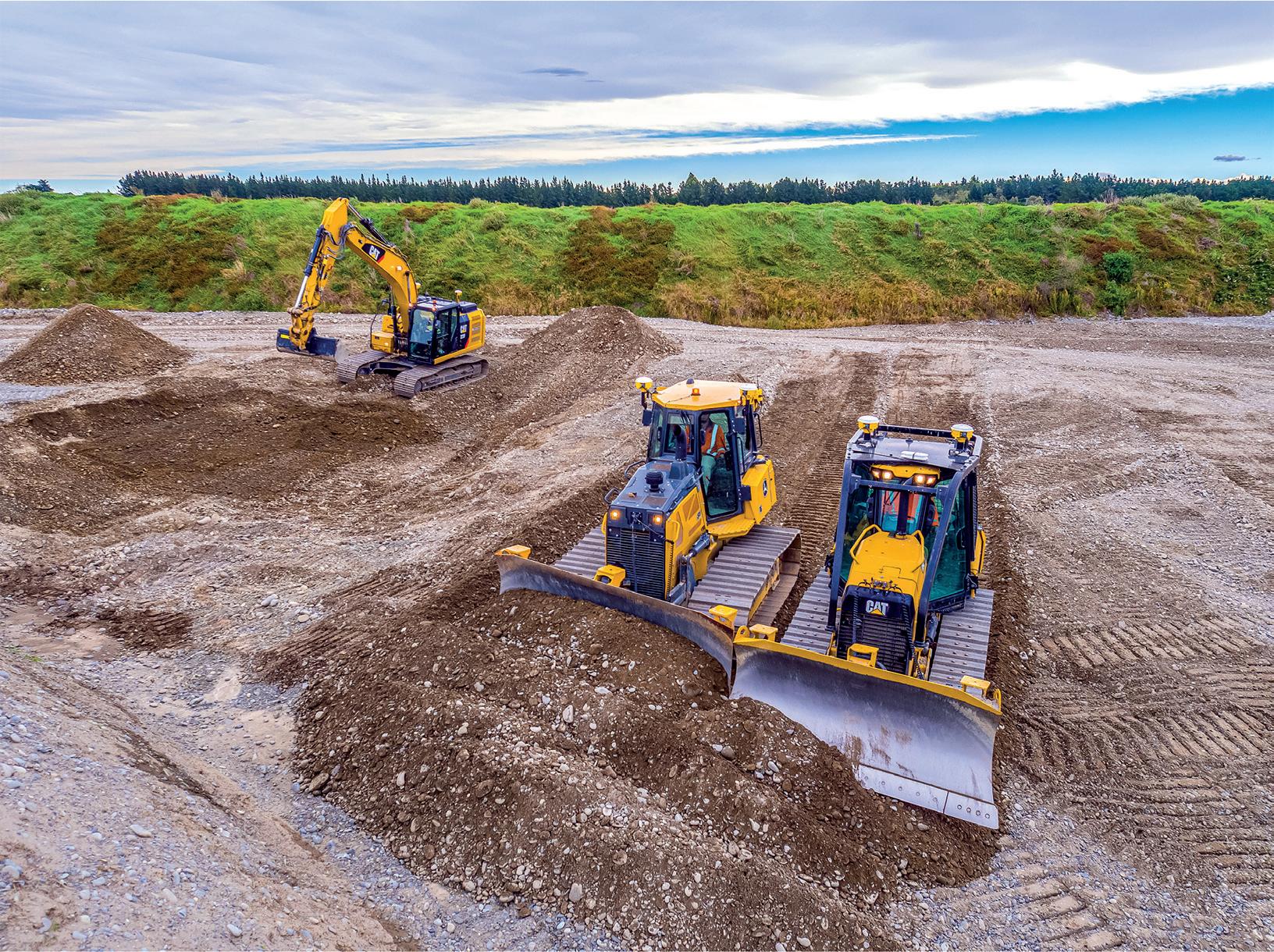
With each Trimble Works Subscription plan, contractors can purchase select civil construction software solutions, such as Trimble Earthworks Grade Control Platform and Trimble Siteworks Software. Device licensing, along with software and firmware maintenance are included for the subscription term. Each plan also includes Trimble WorksManager fieldto-office software to ensure the seamless integration between field operations and office management.
The Trimble Works Core plan allows customers to bring newly purchased or existing Trimble and supported non-Trimble on- and off-machine hardware components into their subscription. This simplifies managing and updating construction technology,
ABOVE
The new Trimble Works subscriptions are available worldwide through the Trimble SITECH distribution channel
a lower upfront cost.
Designed for contractors who want to drive efficiency by minimising technology downtime and eliminating unplanned repair costs, the Trimble Works Pro plan provides protection from technology hardware damage to help keep project timelines and budgets on track.
For contractors requiring increased technology protection and service, the Trimble Works Premium plan includes the benefits of Works Pro, as well as hardware upgrades at no additional cost. This plan ensures users have access to the latest technology, helps maximise uptime and minimise site disruptions. End www.trimble.com
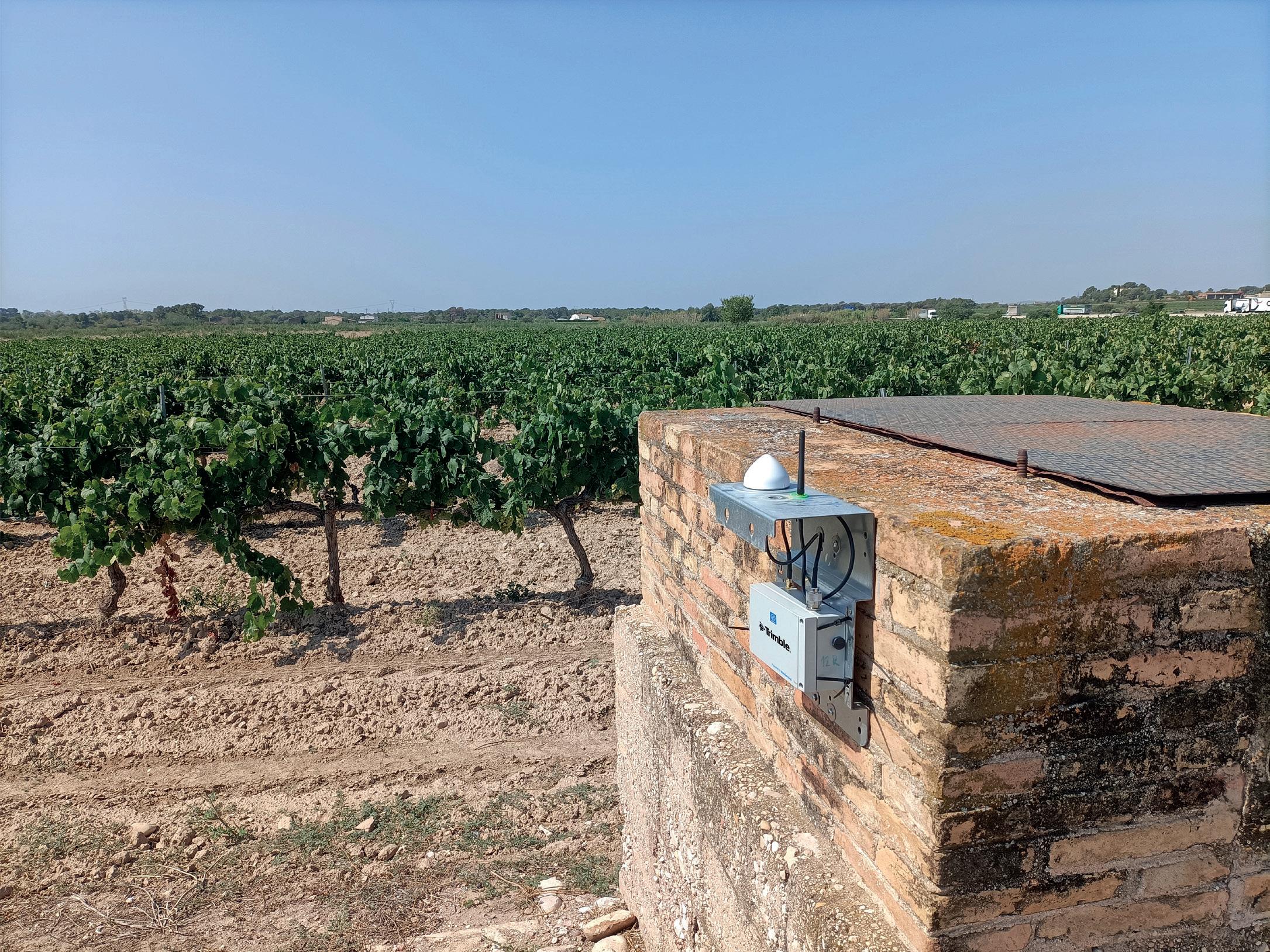
solution include ease of use with a user-friendly set-up and intuitive interface allowing rapid deployment of tens, hundreds or even thousands of sensors possible with minimal training. This reduces the time and cost associated with traditional GNSS-based movement monitoring systems while ensuring longterm sensor reliability. This solution leverages wireless IoT technology to minimise infrastructure costs, eliminating the need for extensive cabling and reducing maintenance expenses. It also reduces the number of components and accessories needed when compared to traditional systems. The GNSS Meter’s RTK technology and edge processing achieves reliable, millimetric precision, enabling deployment across a range of project types and environments. www.trimble.com


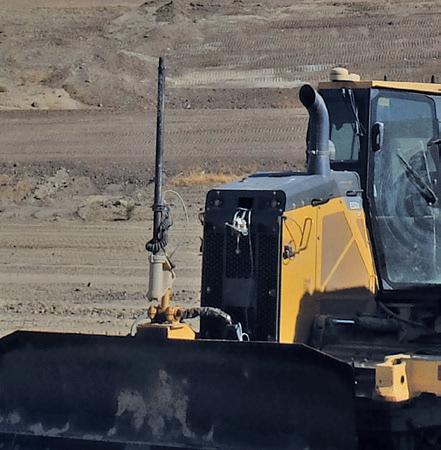
Topcon Positioning Systems and u-blox have established a strategic partnership to deliver a highprecision GNSS positioning service for the mass market, giving customers across the globe a blend of performance, pricing, and delivery options. is partnership comes at a time when the demand for GNSS precise positioning in a wealth of applications is surging, driven by the increased availability and reliability of the technology. e comprehensive suite of GNSS correction services with global coverage will cater to a broad spectrum of applications requiring precise positioning. ese include automotive, industrial, robotics, construction, agriculture, mobility, and more. ey integrate seamlessly with u-blox’s current and future hardware products, as well as services such as PointPerfect. e close collaboration between the two companies will enable u-blox to expand its portfolio, optimise development initiatives and operations, and leverage assets and global expertise to grow within the positioning service market.

A new partnership between Topcon and u-blox will delivers greater GNSS capabilities for a wide range of users, including construction – image courtesy of Mike Woof

“ e strategy driving this collaboration with Topcon is to grow the u-blox services portfolio to better solve the full range of problems and needs customers are facing,” said Eric Heiser, Head Business Unit Services at u-blox. “ is




announcement also aligns with the company’s long-term goal of growing our positioning business by becoming a signi cant provider of high-precision positioning services, making the future with us precise, smart, and sustainable.”


Ian Stilgoe, Vice President, Global Emerging Business, Topcon Positioning Systems said: “ is strategic partnership combines the high-volume, mass-market application products and knowledge of u-blox with the high-level precision GNSS services and expertise of Topcon. By working with u-blox, we’re not only expanding our global footprint, but also o ering scalable services that cater to a wider range of precision GNSS needs. Ultimately, this partnership allows both companies to provide more comprehensive solutions to a wider range of customers, addressing their positioning challenges more e ectively than either company could do alone. Whether it’s u-blox now extending highprecision RTK services or Topcon gaining wider reach in new markets, our combined portfolios create a compelling value proposition that will drive innovation and accessibility in GNSS positioning services globally.”

www.topconpositioning.com
www.u-blox.com
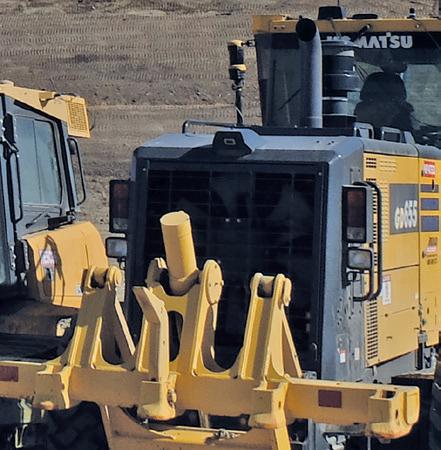

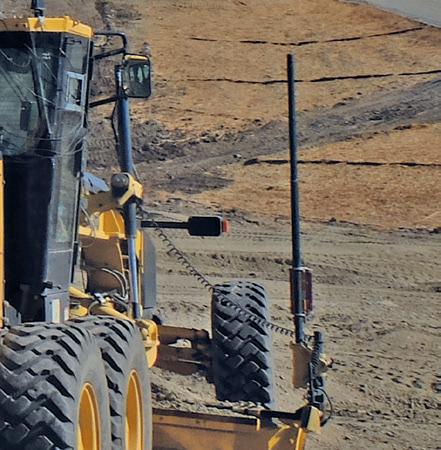

Overture Maps Foundation is launching 86 million road km of open, interoperable transportation data that is available for anyone to use. This o ers a middle ground between transportation map data that is either proprietary and subject to restrictions or open for anyone to use.
The firm, Overture Maps Foundation, was founded jointly by TomTom, AWS, Meta, and Microso under the Linux Foundation. The data the firm o ers has also been vetted, normalised, and improved upon like
proprietary data sources.
The dataset is already in use in Bing Maps, Facebook, Instagram, and Orbis Maps. The GA release, with its Global Entity Reference System, is built to drive innovation across a broad swathe of industries that rely on mapping services, including automotive, ride-sharing, logistics, navigation, local search and urban planning.
Overture has now achieved the GA release of enterprise-grade open map data for 2.3 billion buildings, nearly 54 million places of
interest, and now roads.
The data is delivered in a documented schema that allows developers to access it in a consistent way in their applications. To tailor the maps or analysis, developers can attach other spatial data to the entities in the base map via an identifier that makes data conflation easier. In that way, the Overture data acts as a common, shared backbone for an expanding catalogue of linked data.
Overturemaps.org
The IRF Board of Directors has bestowed the prestigious IRF Personality of the Year Award on Victoria Sheehan, executive director of the Transportation Research Board of the National Academies of Sciences, Engineering, and Medicine (USA)
The Personality of the Year Award has been conferred since 1951 to recognise eminent professionals with an outstanding track record of leadership and commitment to the transport sector. Over the years, the award has distinguished some of the world’s most in uential leaders for the impact that their work has had in supporting the development of safer and more sustainable transport networks that leave no-one behind.
“Victoria truly embodies the values that guide and inspire the work of our Federation: pragmatism, optimism, and a profound commitment to working in partnership with others to advance innovation and impact” commented Dimitris Mandalozis, president of the International Road Federation. “Her work has greatly helped foster collaboration across government agencies, the private sector, and academic institutions worldwide, thereby improving transportation systems both in the US and globally. is accolade crowns an exceptional career and recognises her important
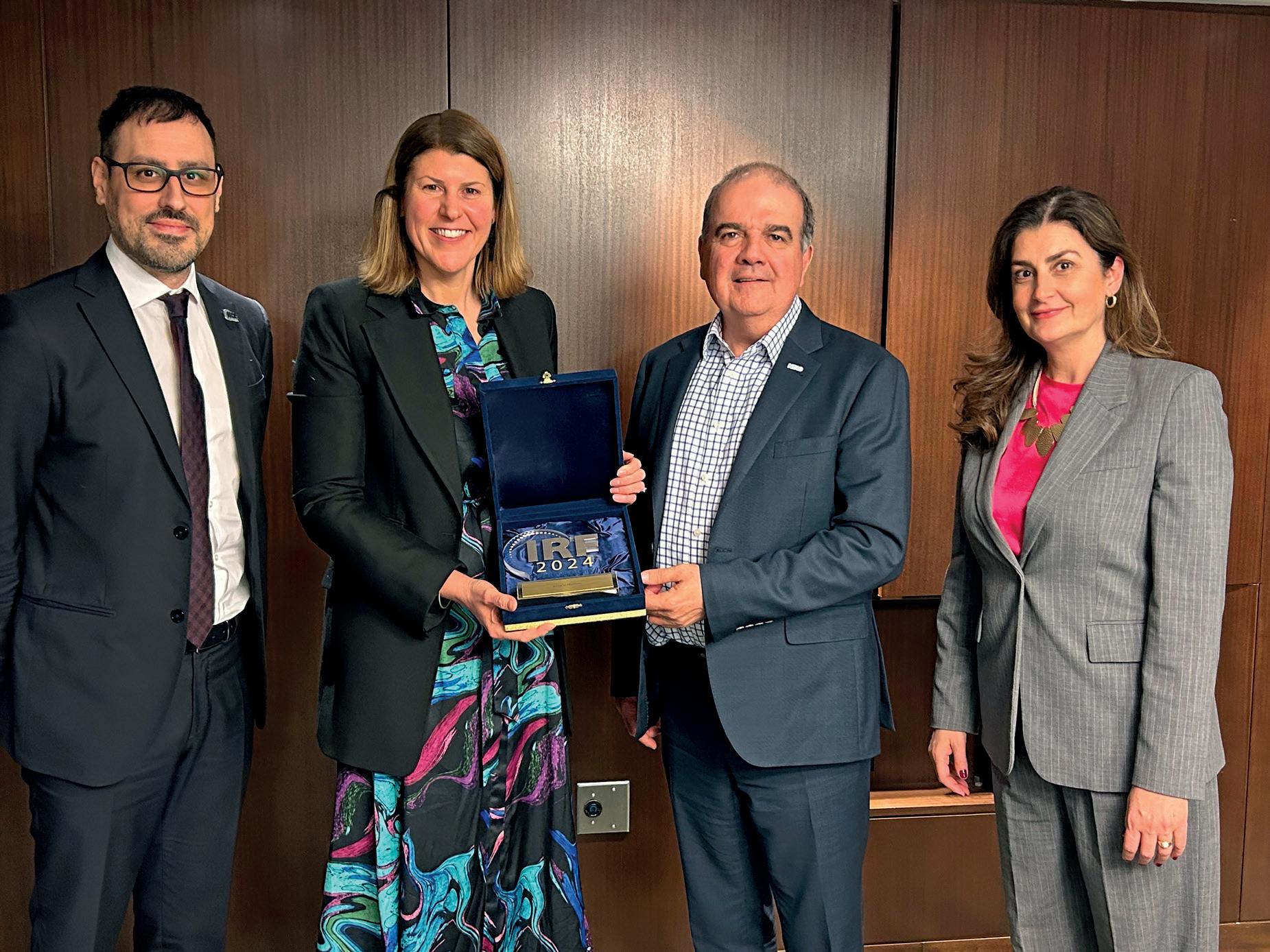
Victoria Sheehan, Executive Director of the Transportation Research Board (TRB), USA, receives IRF's Personality of the Year Award
anking the IRF for this recognition, Victoria Sheehan said: “I’m honoured and humbled to receive such a prestigious award. IRF and TRB have a strong partnership, with both organisations advocating for transportation solutions that

TRB in 2022, I have enjoyed collaborating with IRF and have welcomed the opportunities to expose their membership to the work of TRB.”
Victoria Sheehan, a Structural Engineer with a master’s degree from the University
“I’m honoured and humbled to receive such a prestigious award. IRF and TRB have a strong partnership, with both organisations advocating for transportation solutions that provide access and sustainable mobility for all. Since joining TRB in 2022, I have enjoyed collaborating with IRF and have welcomed the opportunities to expose their membership to the work of TRB”
Victoria Sheehan, Executive Director of the Transportation Research Board (TRB), USA
sustainable transport systems. At the Massachusetts DOT, she led strategic planning, highway performance, and the $3 billion Accelerated Bridge Program. Later, as head of the New Hampshire DOT, she developed its Ten-Year Plan for sustainable transport. In 2020–2021, Sheehan became the second woman to serve as President of the American Association of State Highway and Transportation O cials (AASHTO) in its 108-year history. Sheehan also plays an active role as board member in several key organisations in the sector. End
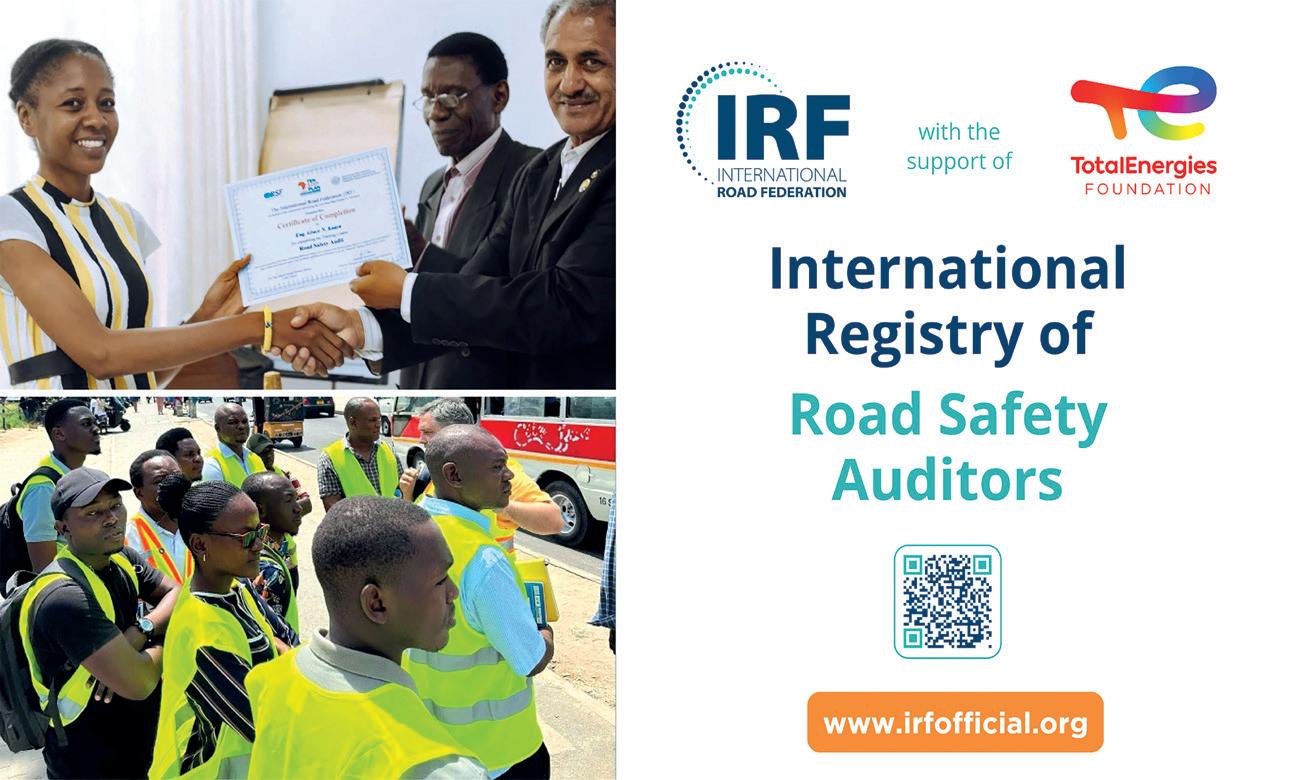
e International Road Federation (IRF) has launched an International Registry for Road Safety Auditors, establishing a global benchmark for training and certifying road safety auditors. Unveiled during the IRF World Congress 2024 in Istanbul, this initiative - supported by TotalEnergiesaims to enhance the quality and consistency of road safety audits worldwide.
With over seven decades of leadership in road safety, the IRF has been instrumental in supporting governments and organisations to train and certify auditors. is registry responds to the rising demand for highquality audits, particularly for infrastructure projects nanced by multilateral development banks (MDBs). By providing an accessible, transparent, and digital platform, the registry ensures that stakeholders can easily identify and verify the credentials of quali ed auditors, thereby enhancing transparency
and audit quality globally.
Accessible via the IRF website at www.irfo cial.org, the registry is managed by the IRF and operates as a comprehensive platform. Auditors can apply through a straightforward process that screens, veri es, and records their quali cations, certi cations, and experience before granting listing. MDBs, governments, and other stakeholders can use the registry to ensure that selected auditors meet international standards and strict professional quali cations.
“ is registry is a game-changer for global road safety,” said Dimitris Mandalozis, president of the IRF
“By setting clear international certi cation criteria, we are not only improving the quality of audits but also providing a vital resource for governments and organisations committed to safer
roads.”
e registry is part of a broader three-year project supported by TotalEnergies. It includes training and certi cation programmes, which have already taken place in Tanzania and Uganda, with further training scheduled in India. e initiative aims to accredit 450 auditors by the end of the project and foster the creation of national accreditation bodies, particularly in low- and middleincome countries.
“Our commitment to road safety is unwavering and that is why we are pleased to support this initiative. We believe that a true spirit of collaboration, of innovation, and proactive measures, are the recipe that will allow us to signi cantly reduce road tra c deaths and injuries," said Jacques-Emmanuel Saulnier, general delegate of the TotalEnergies Corporate Foundation, speaking at the launch event. End
For more information on the International Registry for Road Safety Auditors, visit the IRF website at www.irfo icial.org
or contact IRF directly via email at info@irfo icial.org
Come to the captivating city of Athens on 29 June – 03 July 2025 for the International Symposium “Navigating the Future of Tra ic Management” a premier event
bringing together managers, tra ic engineers, practitioners, and researchers from around the globe. The symposium will serve as a dynamic platform to explore and

discuss innovative practices, proven methods, and how technologies may assist agencies improving how they actively manage tra ic and tra ic on freeways, motorways, and tollways.
Industry leaders and specialists from around the globe are invited and will lead discussions on the challenges, research needs, innovative approaches, and opportunities to collaborate with other agencies and service providers to improve how they actively manage and control tra ic on the surface transportation system. The challenges show the need to team up with other international platforms worldwide and to look beyond traditional tra ic
management to improve safety, facilitate multimodal mobility, and tackling climate change. The Symposium discussions will be structured around five thematic tracks including: Governance and Organisational Challenges; Operational Strategies and Network Performance; Next Generation of Tra ic Management Systems and Services; Paying to Sustain Highway Networks; Sharing Tra ic Management Data Within the Roadway Digital Ecosystem.
For more information about the Symposium, visit the IRF website at www.irfo icial.org or contact info@irfo icial.org.



Since 1949, the International Road Federation (IRF Global) had sponsored over 1,500 graduate students from 118 countries through its Fellowship Program, empowering emerging professionals to shape the future of global transportation

In 2025, this prestigious program continued that legacy with a dynamic weeklong orientation in Alexandria, Virginia, and Washington, DC - designed to blend technical insights with hands-on leadership development.
e orientation began with team-building exercises and introductions, providing fellows
Early sessions outlined IRF’s global mission while preparing participants for the intensive leadership activities and networking opportunities that followed. One of the central highlights was the visit to the annual Transportation Research Board (TRB) Meeting in Washington, DC. ere, fellows engaged with the latest

and mobility innovations, while building invaluable connections with global experts.
As the week progressed, interactive workshops and group challenges kept the focus on collaboration and problem-solving. A particularly memorable experience was the Bridge Building Competition, an event that blended engineering ingenuity with friendly competition, fostering the creativity and resilience fellows needed to excel in their own professional journeys. Concurrently, leadership exercises emphasised strategic thinking, e ective communication, and cultural awareness - skills essential to driving meaningful change in transportation systems worldwide.

Further enriching the program was a visit to the World Bank, o ering rsthand insights

into the nancial and policy dimensions of infrastructure development. Casual dinners and social gatherings, including a Hat Exchange Night, brought fellows closer together, celebrating global diversity while forming lasting professional and personal bonds.
e program culminated in a graduation ceremony at IRF Headquarters. By this nal day, fellows had gained practical knowledge, expanded their professional networks, and honed leadership skills that would serve them well in their future careers.
ey now join a distinguished global community of IRF Fellows alumni, continuing to collaborate long after the orientation concluded - an enduring testament to IRF’s commitment to building safer, more e cient roads and transport systems for all. End


IRF Road Scholar Program
January 3-10, 2025
Washington DC, USA
Pavement Management (Online)
February 10-20, 2025
Road Safety Audits (Online)
March 3–13, 2025
Bridge Management & Inspection (Online) April 7-17, 2025
Road Infrastructure Asset Management
April 26–30, 2025
Washington DC, USA
Traffic Incident Management: Organizing, Planning and Implementing TIM Operations (Online) April 28–May 9, 2025
Practical Data
Science for Roadway Professionals (Online) May 5–15, 2025
Road Safety Professional® (Level 1)
May 19–23, 2025
Washington DC, USA
Construction
Supervision for Road Projects
May 26 - 30, 2025
Washington DC, USA
Road Operations, Maintenance & LifeCycle in PPPs
June 9-12, 2025
Kuala Lumpur, Malaysia
IRF PerformanceBased Contracts
Executive Seminar
June 16-25, 2025
Istanbul, Turkiye
LIDAR & AI for Road
Asset Management
June 30-July 3, 2025
Washington DC, USA
IRF Caribbean Regional Conference
July 7-11, 2025
TBD
Non-Destructive Testing of Infrastructure Assets –GPRs, Lidars, Thermal Photography, Drones
July 20-23, 2025
Prague, Czech Republic
AI Applications for Road Safety Inspections
August 18-22, 2025
Stockholm, Sweden
Pan American Highways Congress September 2025
Buenes Aires, Argentina
6th IRF Europe & Central Asia Regional Congress & Exhibition
Sep 29-Oct 1, 2025
Sofia, Bulgaria
IRF PerformanceBased Contracts
Executive Seminar
October 13-22, 2025
Washington DC, USA
Road Safety Audits: From Concept to Results (Online)
October 13-22, 2025
Next Generation
Vision Zero: Safe & Sustainable Roads 2025
November 2025
TBD
6th IRF Asia Pacific Regional Congress
November 11–15, 2025
Seoul, South Korea
IRF Global R2T Conference & Exhibition
December 9-12, 2025
Los Angeles, CA USA
(as of 01/17/2025)
For more information, please visit www.IRF.global/events





























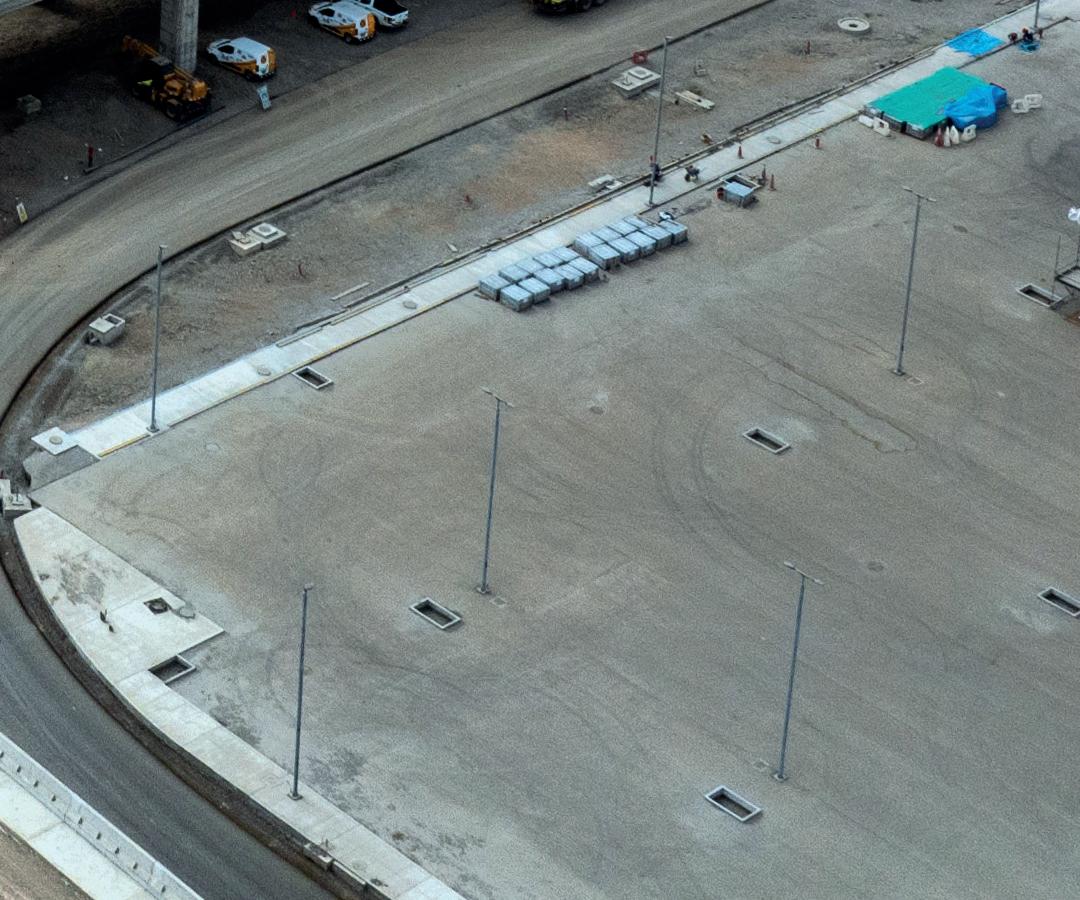




Peru’s capital, Lima, is to benefit from a massive new international airport, which will be one of the largest in Latin America
Sophisticated construction technology solutions have been playing key roles in the delivery of Peru’s massive Jorge Chavez Lima International Airport project.
e contract to build the new facility was awarded to the Inti Punku consortium, which comprises Spanish rm SACYR and Peruvian company Cumbra, to construct the US$2 billion airport project for Lima, capital of Peru.
Lima’s upgraded international airport will be one of the largest in Latin America and SACYR has a 51% controlling stake in the construction project, with Cumbra holding the remaining 49%. Meanwhile, the Spanish engineering rm Cemosa provided much of the design work for the project. e airport authority, Lima Airport Partners (LAP), has a 40-year concession to operate the facility. LAP is part of the Fraport Group, which operates over 30 airports around the world, with an 80.01% stake, and the International Finance Corporation, part of the World Bank Group with 19.99% stake.
e airport rst opened in 1960 and is already one of the largest and best-connected in Latin America, while the upgrade work will further boost its presence in the aviation sector. Named after Peru’s famous pioneering aviator, Jorge Chavez, the airport sits on a massive site. At its peak, up to 7,000 people have been working on the upgrade project. One innovative feature of the new facility will be the novel seismic isolation system for the airport terminal, which covers an area of 270,000m2, has ve levels and will have the capacity to handle around 40 million passengers/year when complete. is isolation system will ensure protection of the structure in the event of an earthquake, a necessary feature as Lima is in a zone known for seismic events.
ird-party investment for the construction of the Airport City will exceed $400 million in the rst phase, in addition to the $2 billion that LAP is investing in the Expansion Project overall.
Carrying out the project has brought advances to Peru’s construction sector, with the implementation of various new technologies. e project team has been utilising modern building information model (BIM) systems and advanced surveying, grade control and coordination systems. e scope of the project covers the earthwork, infrastructure and building construction for the new airport facilities, including a large parking lot and taxiways, asphalt paving in terminal and commercial areas, and the installation of underground utilities.
A key feature of the new airport is the new runway that measures 3,841m in length, long enough to be used by the largest commercial aircraft, and which also benefits from the latest lighting systems.
The runway has been paved with an asphalt surface 40cm thick, paved in three layers. To ensure optimum quality, the firm used two pavers working in echelon. This helped deliver a quality surface with a hot-to-hot joint, eliminating the risk of future water ingress and ensuring that there will be no future problems from freeze-thawing. Special grades of asphalt suitable for aviation purposes were selected for the project, meeting the US P401 and P403 standards. Similarly, aviation grade concrete meeting US standards was also used for the aircraft parking areas, which total around 70,000m2
Carlos Ruiz Miranda from SACYR has been acting as chief surveyor for the project. He said, “One of the main concerns was synchronising design data and information flow between the field and office to facilitate the execution of the project.”
He said that to further ensure a quality paved surface, the firm utilised Trimble’s PCS900 3D control technology on the asphalt pavers. This has been a significant step and commented, “This is the first time we’ve used it in Peru.”
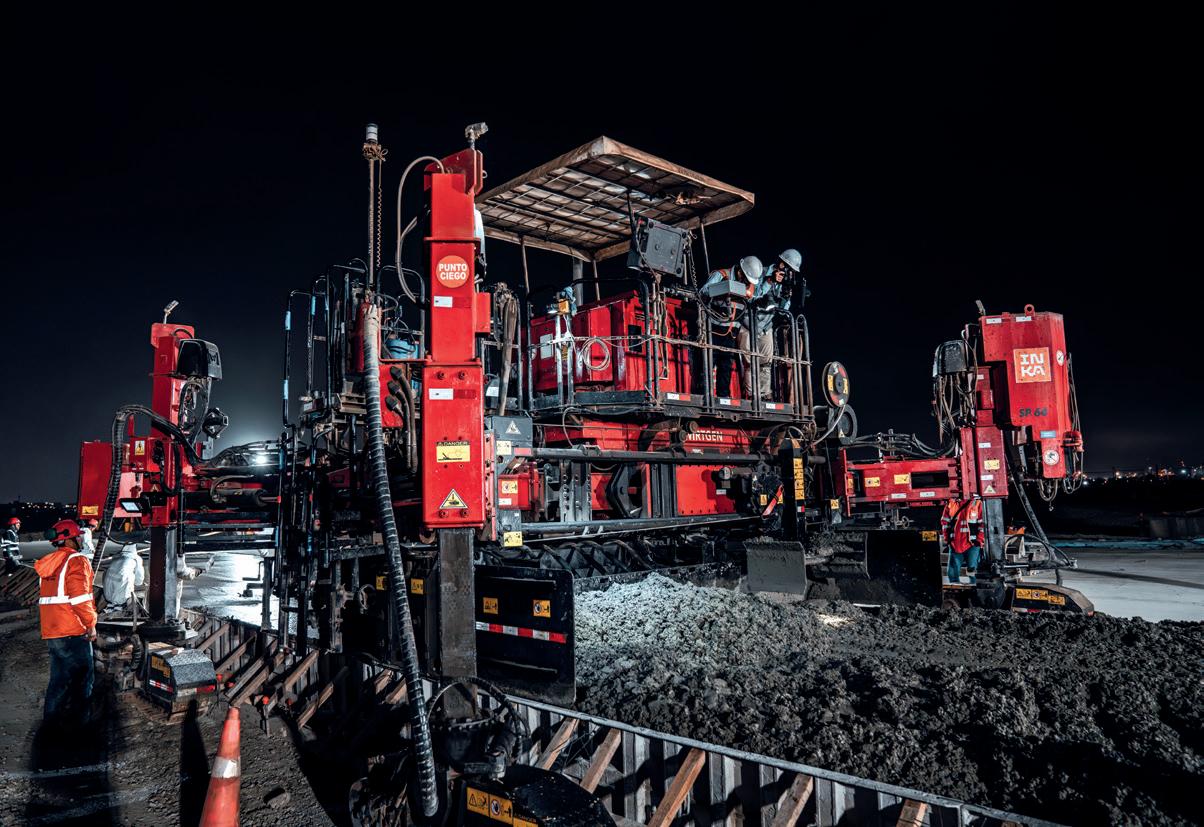
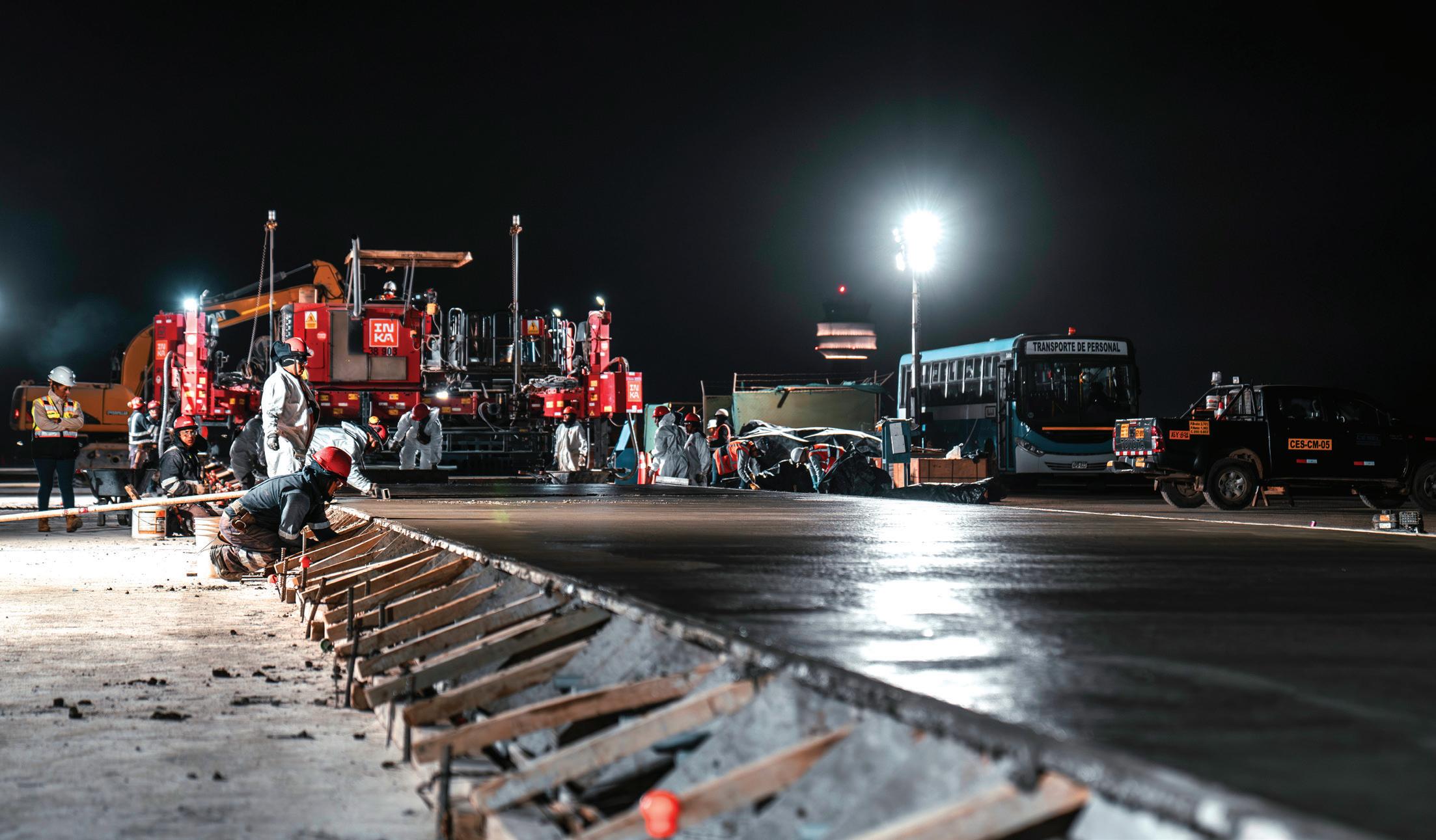
In addition, the PCS900 3D system has also been used on the concrete pavers carrying out the concrete surfacing work. Because this was the first time sophisticated 3D technology has been used in Peru, Trimble provided the training and support needed for the paving crew.
Building the new runway has been a complex process. He commented, “It took two years for all the earthmoving work and to complete the asphalt.”
In addition to being used for the new runway and the aircraft parking areas, 3D technology has also been utilised to deliver 10km of internal roads within
“One of the main concerns was synchronising design data and information flow between the field and office to facilitate the execution of the project”
Carlos Ruiz Miranda Acting chief surveyor, SACYR

BELOW:
the facility allowing for ground traffic around the site.
Ruiz explained that the use of 3D technology was not part of the original plan for the airport. He said, “They started with conventional techniques and then realised they could do it a better way.”
However, using this technology for the project has delivered distinct advantages for the construction partners. Ruiz said, “We increased production and reduced human error as well as cost.” He continued, “The levelling of the concrete is perfect.”
Data was delivered directly to the asphalt paving equipment as well as the concrete paver from the project team’s BIM Department, using Trimble Connect. Ruiz said, “We sent data to the machines and then recovered as-built data to our computers.”
In addition, Ruiz explained that utilising 3D systems meant that the construction team was also able to complete both the concrete paving and asphalt paving components of the project ahead of schedule.
The project was designed to the latest BIM standards, with around 2,700 active BIM models and including more than 80km of utilities that will be constructed by multiple contractors.
“With this many BIM models, trying to ensure that everyone in the field was working to the latest model or geometric modification, even just managing survey control, stakeouts and grade checking, was proving to be a challenge,” said Ruiz. “We needed a way to better share data.”
The engineering team utilised design review and cloud-based collaboration software to coordinate design. However, these tools do not have the features that connect the field and office, according to Ruiz. He led the implementation of a fully synchronised
FAR LEFT:
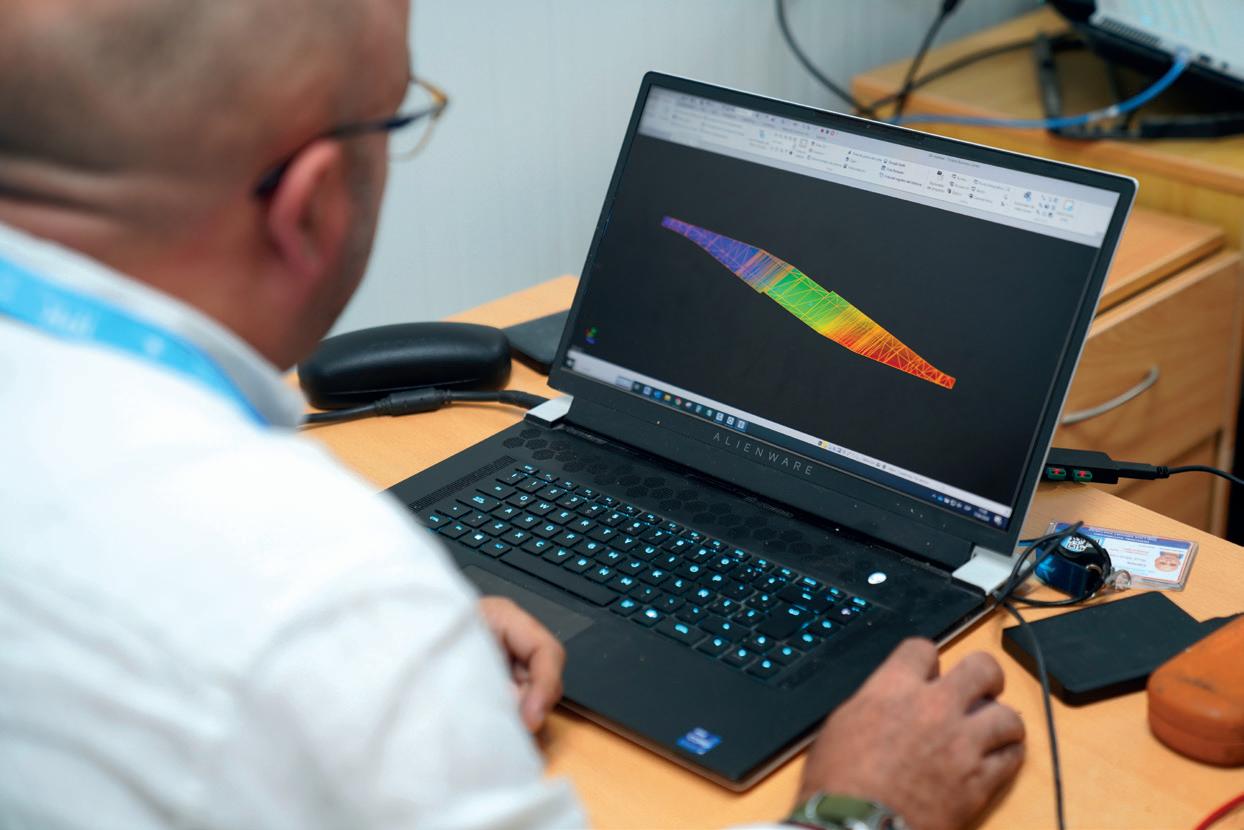
Use of sophisticated construction technology has optimised data flow for the project team
LEFT:
The technology has allowed the easy flow of data and design changes between the onsite team
BELOW:
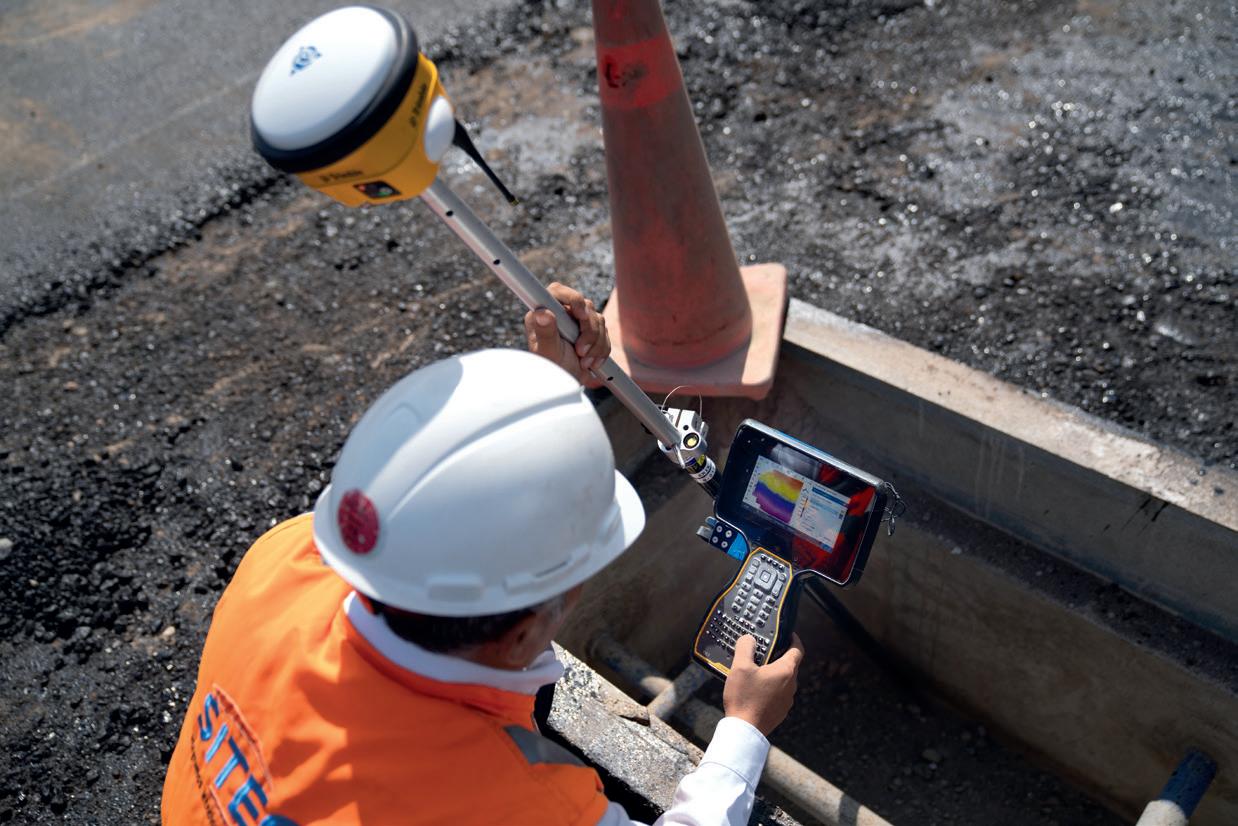
Carlos Ruiz Miranda, (acting chief surveyor, SACYR) takes accurate measurements across the site

project on track.
e rst step in his plan was to implement a cloudbased common data environment (CDE). He opted for Trimble Connect. Ruiz explained, “ is technology provides us with a centralised collaboration platform. It synchronises the right information at the right time, providing automatic interference reviews while supporting CAD analysis. e construction crew and eld surveyors have everything synchronised in that platform. Information is automatically available in near real time.”
is CDE became a central hub for managing data from eld solutions that might include laser scanners, uncrewed aerial vehicles (UAVs), grade control systems, total stations and GNSS systems that gather positional data to centimetre accuracy, and a range of heavy equipment from excavators to paving systems,
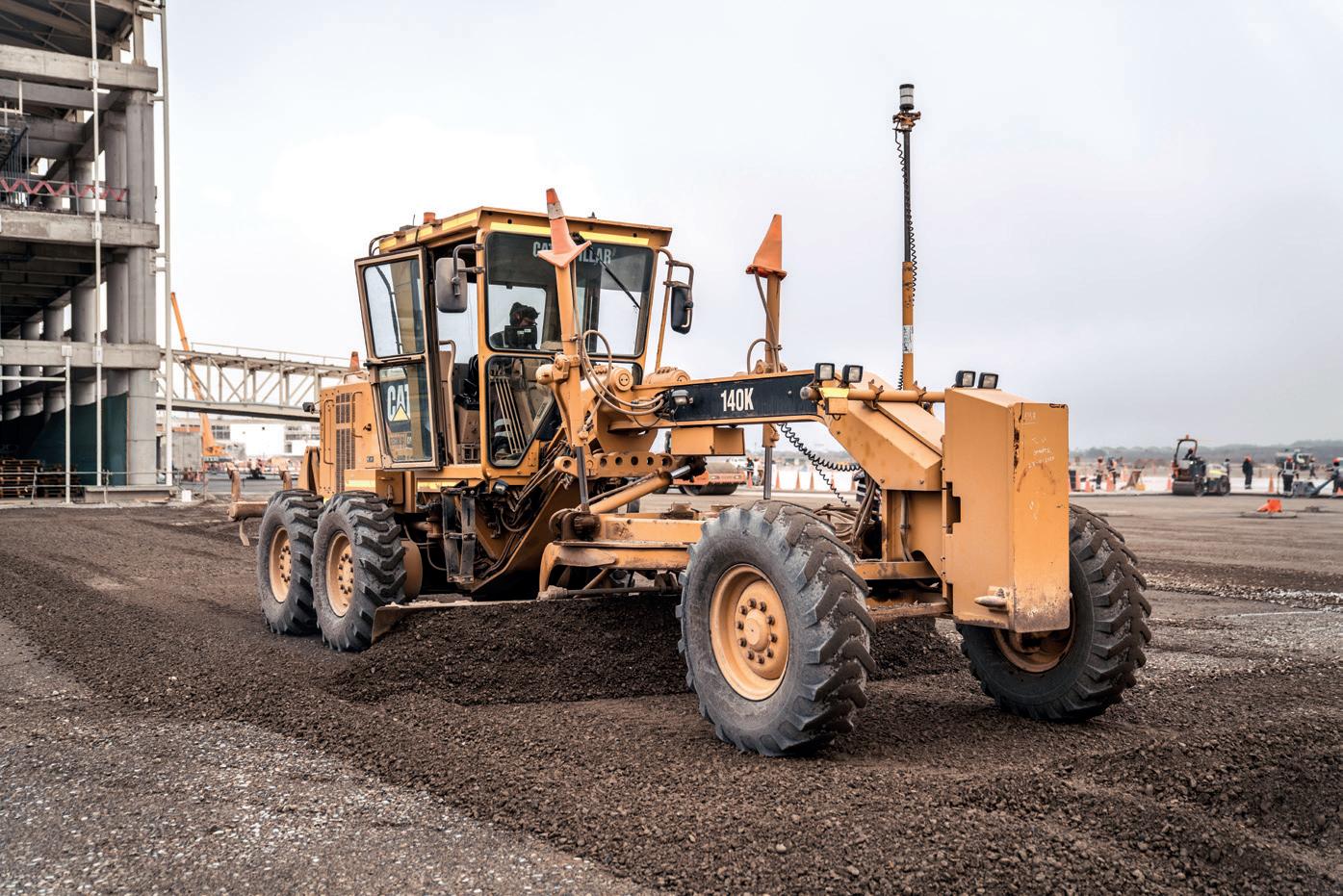
team employed the Trimble GCS900 Grade Control System guided by a Trimble Universal Total Station (UTS) on a Cat 140K motor grader to meet the strict tolerances on subbase and base layers and the Trimble PCS900 Paving Control System on an asphalt paver for improved accuracy and quality control.
Trimble WorksManager has been used for the transfer of data from the o ce to the machines at the jobsite. is ensures that current models were loaded on the machines and that the as-built conditions met the tight speci cations de ned by the owner. Trimble WorksOS Software tracked jobsite productivity.
“ e combined paving and grading systems allowed us to work in large areas with e ciency and accuracy,” said Ruiz. “We’ve seen a signi cant reduction in rework because the deviations from design grades are minimised. I showed the WorksOS layout report from
the PCS900 to my manager. It showed that our crews are paving to 10mm accuracy, well below the 18mm requirements. If there were issues, the near real-time data collection and reporting tools allowed us to identify and resolve them quickly.”
With so many pieces to this project in the terminal and surrounding areas, the SACYR survey team found that an essential technology allowing office-to-field data workflow has been augmented reality (AR).
“Initially, we tried using paper printouts to manually check for issues in the field; we tried Google Earth, but that was not satisfactory,” said Ruiz.
Instead, SACYR turned to Trimble SiteVision augmented reality software to collaborate and manage tasks between all the different groups and
ABOVE LEFT:
Using 3D systems for concrete and asphalt paving has delivered exceptional quality
ABOVE RIGHT:
A Caterpillar grader has also been equipped with the 3D systems for earthmoving works
BELOW:
The use of 3D systems on the concrete and asphalt paving equipment has been a first for Peru
insight into potential issues.
“Using Trimble SiteVision on infrastructure projects offers significant advantages,” said Ruiz. “It facilitates accurate, real-time visualisation of data, improving decision-making and planning and allows effective communication between teams, reducing errors and costs. In addition, it improves efficiency and precision in project execution, which translates into a higher quality result and shorter deadlines. In short, Trimble SiteVision is a valuable tool for optimising the management and execution of infrastructure projects.”
Tasks can be assigned and statuses tracked to help coordinate work across teams. He found that any issues or anomalies detected during construction can be more easily communicated and addressed. It helps


LEFT:
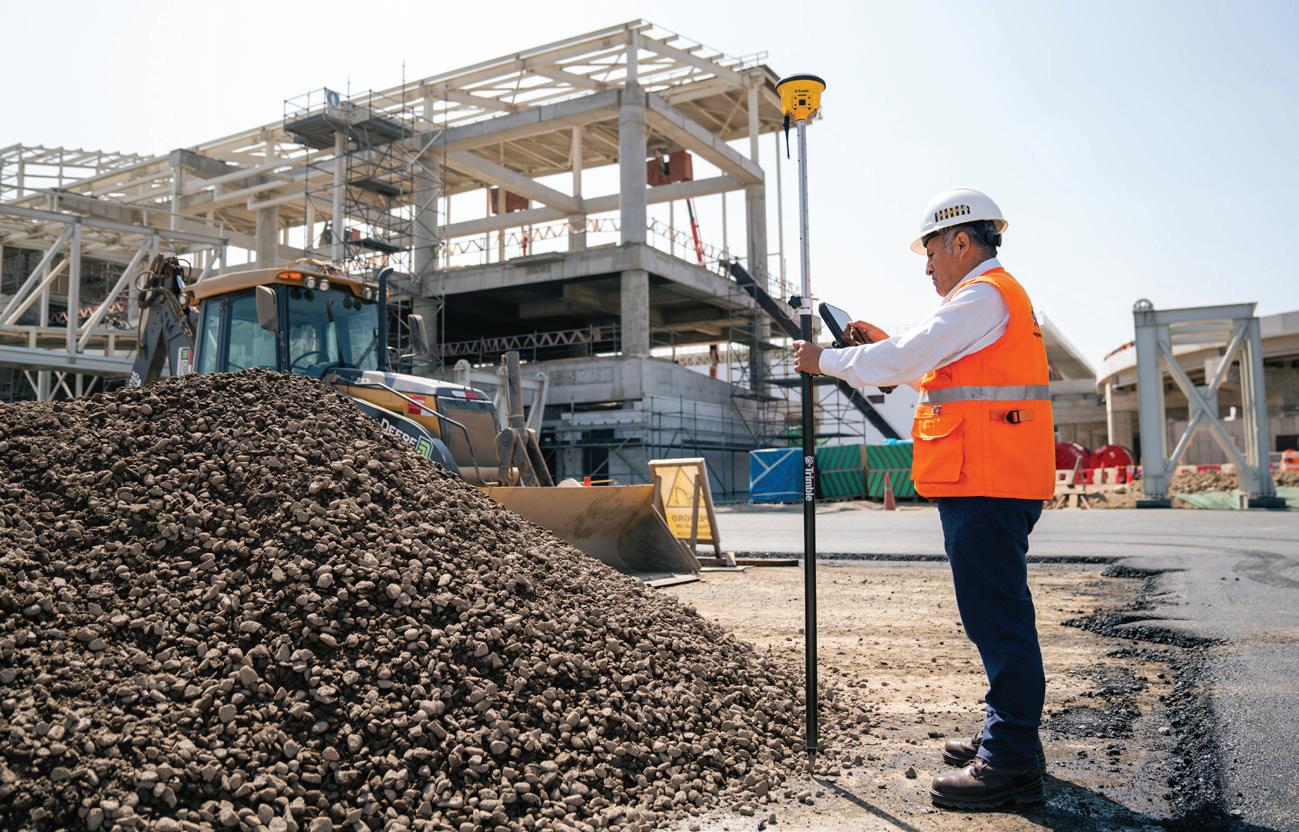
A surveyor uses a Trimble R780 GNSS Smart Antenna and Trimble TSC7 Controller to accurately compute progress and measure stockpile volumes
BELOW LEFT:
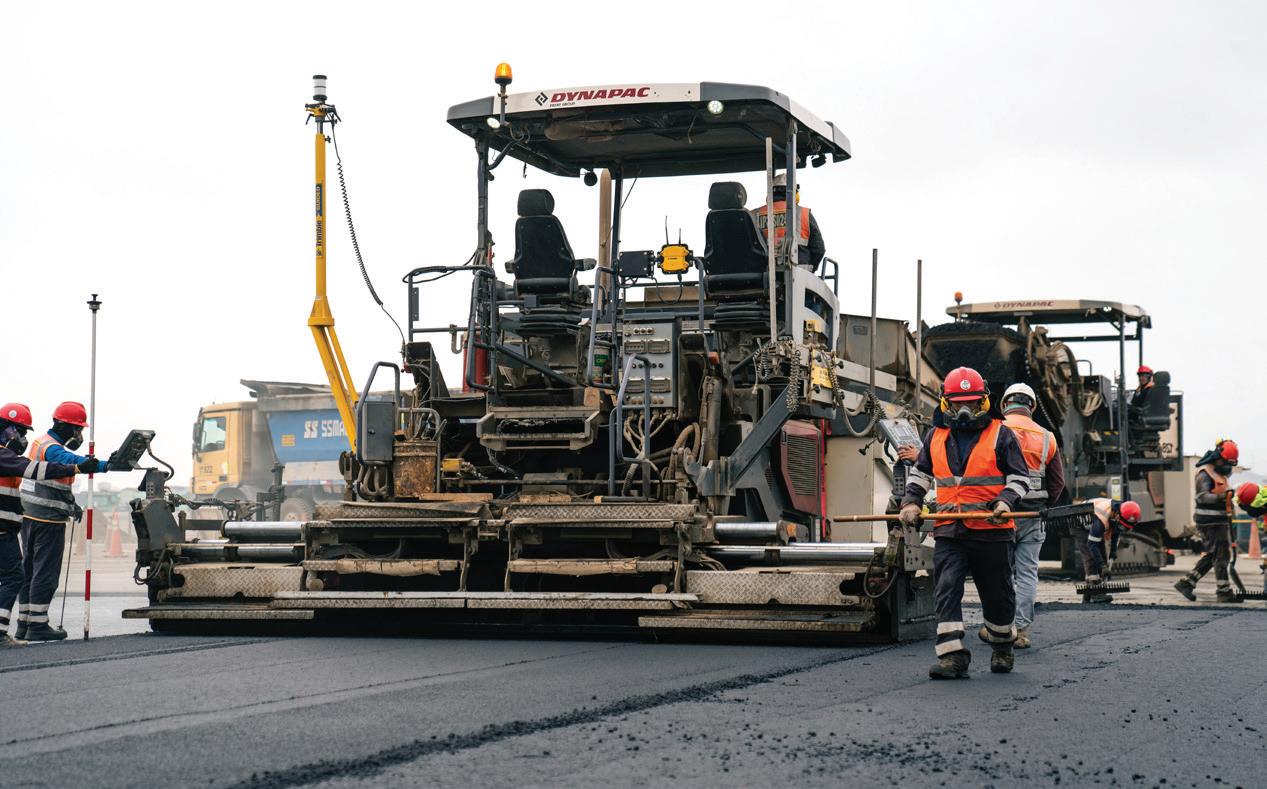
Construction workers monitor a Trimble PCS900 Paving Control System display to ensure a precise and smooth surface
BELOW RIGHT:
An asphalt paver, equipped with the Trimble Roadworks Paving Control Platform, working on the ramp area
BOTTOM:
A slipform paver paves the airport tarmac without a string line using the Trimble PCS900 Paving Control System to precisely achieve a smooth and even surface
“Using Trimble SiteVision on infrastructure projects o ers significant advantages”
Carlos Ruiz Miranda Acting chief surveyor, SACYR

“On this project, it is an important tool for managing the many moving parts and stakeholders,” said Ruiz. “ e visual interface provides a terri c oversight of project progress.”

Ruiz added, “ e use of technology on this project has helped us manage all the many pieces of this massive e ort in a more collaborative manner.
ere’s better organisation of the information in general, which has reduced human error and greatly improved access. Bottom line, the entire team is just better connected.”




● Trimble SiteVision So ware
● Trimble Connect Cloud-Based Common Data Environment
● Trimble X7 Laser Scanner
● Trimble SX12 Scanning Total Station

With the completion of the new runway, the existing runway is being closed for resurfacing with asphalt as well as the installation of new lighting. “To meet the new standards,” Carlos Ruiz commented. is paving work for the existing runway is scheduled to commence in June 2025.

● Trimble S Series Total Stations
● Trimble GCS900 Grade Control System
● Trimble PCS900 Paving Control System

When the upgrade of the existing runway is complete, the airport will have two runways that will be able to handle ights simultaneously and which will feature the latest aviation technology, boosting capacity as well as safety for travellers.


e geology of the site has not posed issues for the project team. However, Ruiz said, “ e biggest challenge came from the dimensions of the airport, which required a lot of work and a lot of documents.”


Design changes would have posed challenges given the size of the project but the project team used Trimble Connect to upload design changes and ensure that these could be implemented quickly to all partners.
















“Design changes would have posed challenges given the size of the project but the project team used Trimble Connect to upload design changes and ensure that these could be implemented quickly to all partners”
● Trimble SPS GNSS Base w Trimble TDL Radio
● Trimble SPS GNSS Rovers w Trimble T7 Tablets
● Trimble Business Center So ware
● Trimble RealWorks So ware


● Trimble Stratus So ware
● Trimble DA2 GNSS Smart Antenna
● Trimble Siteworks So ware
● Trimble Access So ware
● Trimble WorksOS So ware





● Trimble WorksManager So ware

Using integrated technologies for a major construction project in Peru has been a rst but has clearly shown the bene ts of using the technology. SACYR plans to use the experience gained from building the new airport for its next Peruvian mega project, the new bypass route around Lima. Construction of this new route will commence in late 2025 and will be carried out in partnership between SACYR, Acciona and Ferrovial, with the work expected to take nine years to complete. End www.sacyr.com www.trimble.com























Respondents across regions, industries and seniority levels say they are already using generative AI tools (Reported exposure to generative AI tools, % of respondents)
Source: The State of AI in 2023: Generative AI’s breakout year (August 2023), McKinsey and Company, 2023
Regularly use for work Regularly use for work and outside of work Regularly use outside of work Have tried at least once No exposure Don’t know
and professional services
Consumer goods/retail Energy and materials
Financial services
Healthcare, pharma, and medical products
Technology, media, and telecom
Note: Figures may not sum to 100%, because of rounding. In Asia-Pacific, n=164; in Europe, n=515; in North America, n=392; in Greater China (including Hong Kong and Taiwan), n=337, and in developing markets (including India, Latin America, Middle East and North Africa), n=276. For advanced industries (including automotive and assembly, aerospace and defence, and advanced electronics), n=96; for business, legal, and professional services, n=215; for consumer goods and retail, n=128; for energy and materials, n=96; for financial services, n=437; and for middle managers, n=339. For respondents born in 1964 or earlier, n=143; for respondents born between 1965 and 1990, n=268; and for respondents born between 1981 and 1996, n=80. Age details were not available for all respondents. For respondents identifying as men, n=1,025; for respondents identifying as women, n=156. The survey sample also includes respondents who identified as ‘nonbinary’ or ‘other’ but are not a large enough number to be statistically meaningful.
Inaccuracy, cybersecurity, and intellectual property infringement are the most cited risks of generative AI adoption (Generative AI-related risks that organisations consider relevant and are working to mitigate, % of respondents)1
Source: Global Survey on AI, McKinsey and Company, 11-21 April 2023
Generative AI adoption.
Looking at the year ahead, do you agree/disagree with the following statements?
Generative AI (tools such as ChatGPT) will be commercially disruptive
Strongly
1 Asked only of respondents whose organisations have adopted AI in at least one function. For both risks considered relevant and risks mitigated, n=913.
The impact of generative AI on productivity. Looking at the year ahead, how likely is it that generative AI will lead to increased e iciency of output production?
Emerging technologies will exacerbate long-standing challenges related to cyber resilience
Source: Global Cybersecurity Outlook 2024, Insight Report, World Economic Forum (in collaboration with Accenture), 2024
In the next two years, will generative AI provide overall cyber advantage to attackers or defenders?
What are you most concerned about in regards to generative AI’s impact on cyber?
Advance of adversarial capabilities –phishing, malware development, deepfakes
Data leaks – exposure of personally identi able information through AI
Increased complexity of security governance
Technical security of the AI systems themselves
Software supply-chain and code development risk – potential backdoors
Legal concerns of intellectual property and liability
The primary dataset used as the foundational research was a 23-question survey with eight demographic questions, the Global Cybersecurity Outlook Survey, which was launched in June 2023 and ran until October 2023. The World Economic Forum received 204 survey participants from 49 countries.
The cyber skills and talent shortage continues to widen at an alarming rate
Source: Global Cybersecurity Outlook 2024, Insight Report, World Economic Forum (in collaboration with Accenture), 2024
Does your organisation have the skills needed to respond to and recover from cyberattack?
Are resources or skills gaps the biggest challenge for your organisation when designing for cyber resilience?
organisations
Low-revenue organisations
Medium- and high-revenue organisations
Global average land-sea temperature anomaly relative to the 1961-1990 average temperature Source: Met O ice Hadley Centre, (OurWorldInData.org), 2023
NOTE: The gray lines represent the upper and lower bounds of the 95% con dence intervals
Global construction machinery market size by country or region 2018-2027
Source: Statista, 2024
World-wide cement production forecast 2030 Source: World Cement Association website, 13/2/24
Global Infrastructure Index 2023, 31 country study Source: May-June 2023, Global Summary, Ipsos 2023/Statista 2024
Q. Still thinking about infrastructure – the things we rely on like road, rail and air networks, utilities such as energy and water, and broadband and other communications – to what extent do you agree or disagree…?
“I don’t think infrastructure in [COUNTRY]...has been adapted enough to cope with future changes in the climate”
% strongly/tend to agree
Most people doubt infrastructure has been adapted for future changes in the climate Source: Global Infrastructure Index 2023, 31 countries, May-June 2023, Global Summary, Ipsos









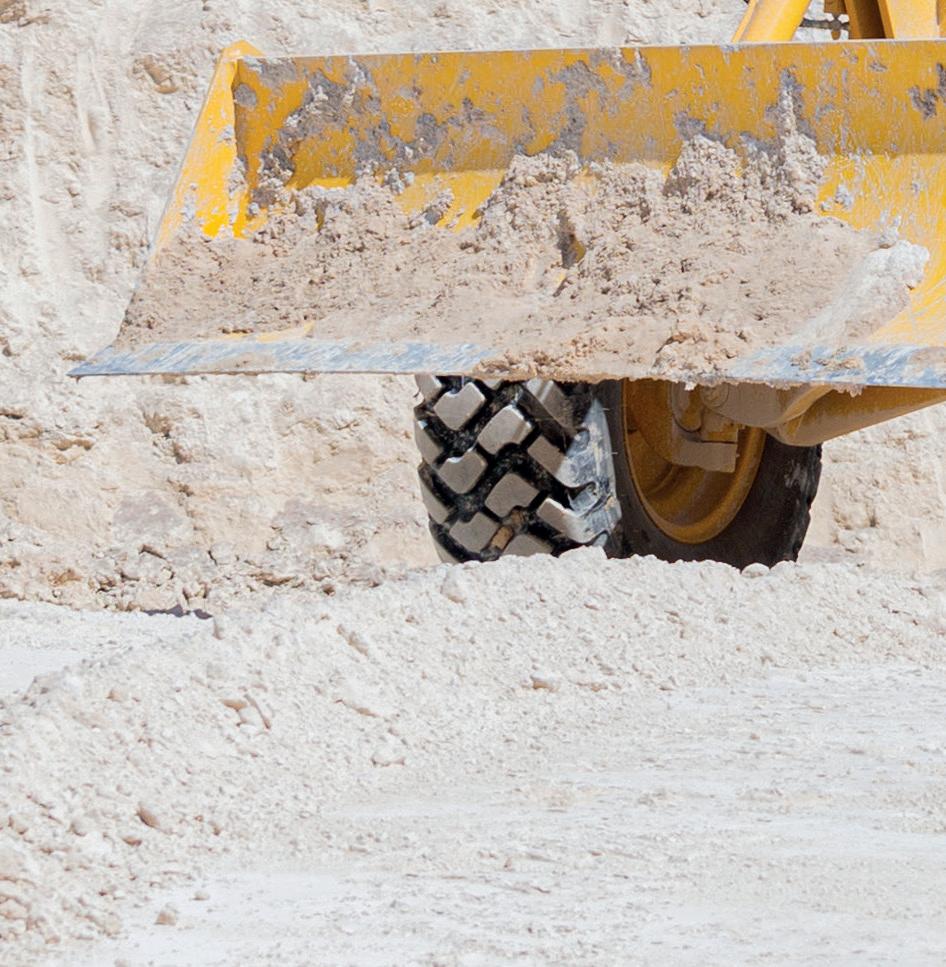





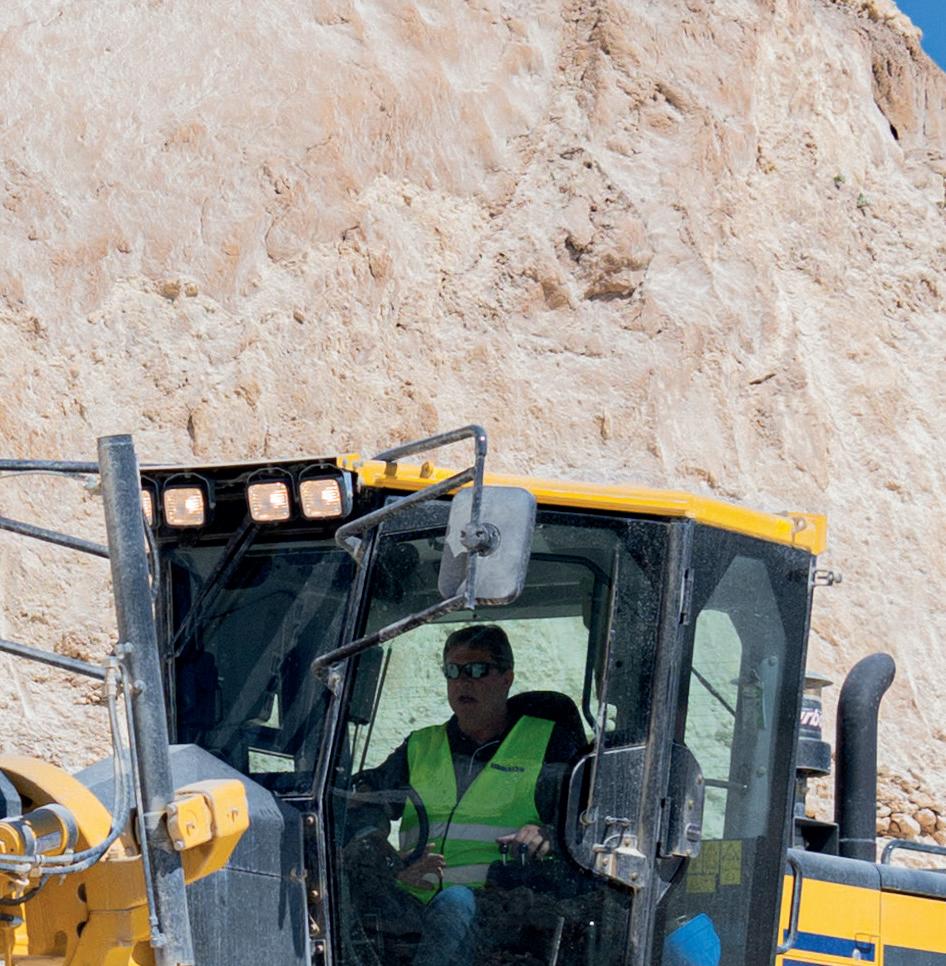
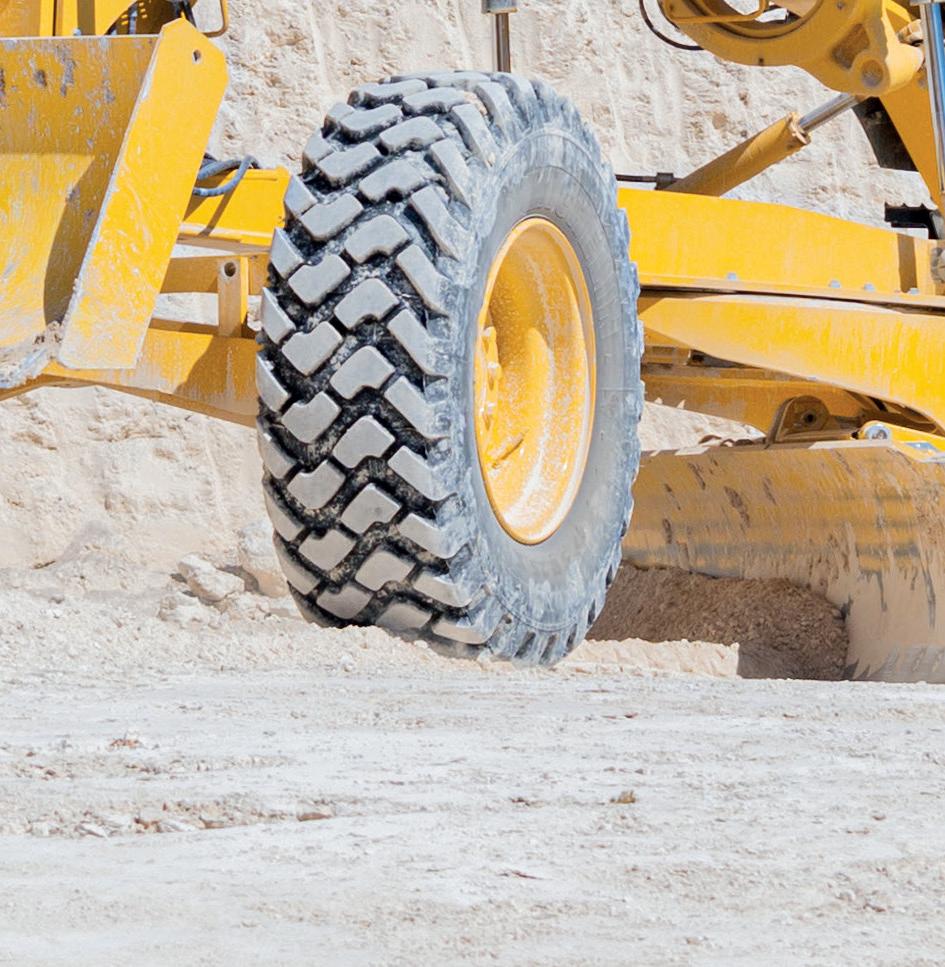

The latest Komatsu motor grader has a powerful EU Stage V engine, delivering 165 kW / 221 HP. The new fingertip controls are designed to reduce your arm movements by up to 90%. Combined with an updated transmission, a new stop-at-centre articulation and excellent visibility the Komatsu GD675-7 presents you with new choices and unbeatable value.



































Topcon has a legacy of innovation with positioning technologies, and is now translating these groundbreaking inventions into a ordable solutions - the democratisation of technology - to meet the needs of clients today. Ray O'Connor, formerly the CEO and President of Topcon Positioning Systems, is now Chairman. He and Ivan Di Federico, who is now President and CEO, explain what it takes to create a future built on a strong heritage. David Arminas reports.
GH: You both have years of experience in the industry and the sector and seen many changes. What might be the top strategic priorities for Topcon Positioning Systems going ahead in this particular age of fast-moving technology?
Ivan: It's always been at the heart of our strategies to look at the market and what our customers need. is is our top priority and is certainly something that we will continue to do. We pay a lot of attention to how the market is evolving and where the customers feel the most pain in their work ows, in what they do, day by day.
Ray: We have to gure out how we can drive the cost of this new technology to a lower price point. And focus on the training and the capability of people to use this equipment and make it easier for them to use it. is is critical for the success of the business overall. ere's not going to be any machines that don't have automation attached to them. So, as we go forward, we need to get the price and the training to where we need it to be. Every machine needs measurement equipment on it. Every machine. You need to know where the machine is all the time and what is the workload that the machine is doing.
Ivan: is will enable what we call the democratisation of the technology. Make it simple, make it at a cost for the customer that is a ordable so that each and every vehicle can have one piece of technology. And for every company to have the services that come with it in their cloud environment. is democratisation of technology is making technology much more accessible to companies and to individuals who become much more e cient in their processes.
GH: How would you describe the culture you've helped create at Topcon Positioning Systems to move forward these technological products and advances?
Ray: I've worked at Topcon for 32 years. We started as just a survey instrument company, but the dream and the goal was how do we take that technology and connect it to every machine so we can automate the work processes. We've had a tremendous culture of innovation, what we call TM1, to be the market number one. Bringing a unique technology to the marketplace and revolutionising the business, the process. We’ve had a tremendous culture of innovation, about solving the real problems in the industry related to
Scan/click
Fiercely productive, wildly efficient and built to thrive in your toughest environments.
INTRODUCING A NEW SPECIES OF ARTICULATED HAULER

The new generation of Volvo articulated haulers is here, including the alpha of the pack; the one-of-a-kind, full-suspension A50. Ready to tackle rough terrain in quarries, mines and on large construction sites. Check out the all-new Volvo ADT line-up designed to help you move more, cut costs and break through to higher profits. Made for the Wild.
Learn More

"A customer will feel a pain. It's up to us to really understand what that pain is"
measurement and all the new technologies that have come out in the past 10-15 years. And allowing that to drive price down. A big part of it is training and teaching people how to use the technology.
Ivan: You can see the precise results obtained by automating operations of machinery. is is really the strong element of our culture. To live a dream, to transmit this dream through engineering, through testing the parts, to the sales and marketing of these parts and then eventually to our customers and to the market in general. All in order to change the world.
Ray: I would also say we’re a little bit unique from a cultural standpoint. We grew this business up in Livermore, California, but we have a Japanese parent company with a lot of entrepreneurialism which is very helpful for us. We didn't have to get a return on investment in the rst week or the rst month or the rst year. We were investing for the long term of the business. I think that stands us in good stead here at Topcon and helped create the culture that we have inside the business.
GH: What are these market changes that you've seen over the years?
is something we have done very e ectively: invented products that have really revolutionised a eld because the products have been used to change the way customers do things. e litmus test of success is that if after they rst buy and use that product, they continue to buy it. If customers never revert to the old technology, then this is a sign that we really interpreted what was their pain point.
GH: Do you see new market threats, new competitors entering the sector, disruptive technologies?
Ray: Oh, absolutely. We create this new technology, move it out into the marketplace and other companies see that it creates more business. ere's always going to be followers. at's just a natural part of doing business. And we're very proud of staying on top of the technology. So, I think we're in great shape, even with more competition. To me, it's really good for the market and good for us as a business. It makes us stay sharp, but we have to be open enough to recognise and understand that we're not inventing every single solution. We see what competition is doing and we compete.
Thermal Mapper-
Document and view asphalt temperatures in real-time
Ivan: A customer will feel a pain. It's up to us to really understand what that pain is. We will consider what is redundant in what the customer is doing. What could be done better? e vast majority of the market tends to use what already exists to solve problems but they still feel the pain and they don't actually know how to x it. ey realise that they are doing something in a certain way and see how di cult it is. And we have to pick that up that and work with our product management team, with our engineers. is
GH: How will you drive innovation and new ideas moving forward to meet these changing market trends and needs by the customer?
Ivan: We have an advanced research team and we have several activities inside the company that bring us innovation, ashes of what the future can be. At this moment we have more than 5,000 patents, of which around 2,600 are probably active and we continue to generate patents at a very high rate, like ten or so a month. at's an indicator of our high level of R&D.



GH: What are two of the biggest obstacles facing Topcon Positioning Systems right now and how will you overcome them?
Ray: One of the biggest obstacles for us is getting people who really understand the business and the installation rates of technology, how fast we can get equipment on machines, that sort of thing, to show the bene ts of our technology. If we had a hundred more dealers with the expertise to do just that, it would really speed up our adoption rate. But this takes time and we are building this model as we go forward.
Ivan: Yes, that's probably the single biggest bottleneck for our business. But another barrier to market product acceptance can come from regulations. Right now, regulations about things such as communication standards and so forth are old. So, while the regulations may speak about how to transmit the radio waves, they don’t talk about standardisation for the sector now that we have moved forward with video and stu like that. Every time we have a standard, it opens up a much larger market and makes it possible for us and for others to try harder to innovate. More attention also should be paid by governments to enable the use of more open platforms.
GH: What's the coolest bit of technology that you've seen come out of Topcon Positioning Systems? What has been something that you think is extremely innovative?
Ray: Oh, wow! I can list a hundred components and technologies. I'd say one of the biggest is the IMUs, Inertial Measurement Units. When we rst started in the business, one IMU from Honeywell, I think, that


you'd put on a motor grader, cost $26,000. Today, we’re building those sensors for about $300. You're not going to sell a lot of motor graders if the cost of one component is $26,000 and the system is $100,000 to manufacture and you’ll then have to sell it for $200,000 or $300,000. You might sell a few but certainly not a lot. Fortunately, Topcon Positioning Systems is located on the edge of Silicon Valley [in California] and we are very much in touch with companies that are inventing and developing products and technology. You can even talk to the engineers that invented it. at's the bene t of having a location close to Silicon Valley. But Ivan is the engineer so from a technology standpoint this conversation could go on for four or ve hours probably.
Ivan: You know, I've been part of this, our history and technologies, for such a long time. I tend to have feelings probably like a mother for each and every one of our inventions. I'm very jealous and it’s very di cult for me to see who's the best kid because there is none, I can’t choose! I love them all. If I have to summarise this in one word, the best technology is always the next one that I'm working on! ere's a lot of love put into these products and we know them so intimately and once something is released, I'm always thinking of the next generation. And even two generations ahead. at's the beauty of this company. Topcon Positioning Systems allows me to do this.
GH: So, Ivan, what you're saying is that over the years, it's a case of your heart and soul is in the innovation, the product line and you're always thinking ahead to the next technical innovation, to the next baby, as you say.
Ivan: De nitely, yes! End
ABOVE
Topcon MC-Mobile compact machine solutions hardware and so ware
"I tend to have feelings probably like a mother for each and every one of our inventions"





Volvo Construction Equipment is looking to cement its position in the articulated dump truck (ADT) market with the launch of its new seven-model range
High performance coupled with increased driveline e ciency helps to cut cycle times as well as fuel consumption and the rm is bullish for sales success. “ is is the biggest articulated truck launch ever,” said the rm’s president, Melker Jernberg. Volvo CE says that these new ADTs o er a range of major gains over the models being replaced. And the new range also includes an all-new size class, the 45tonne capacity A50, which slots into the range between the proven A45 and A60 models. “It’s a brand new size class for us,” Jernberg commented.
e new transmissions help to reduce fuel consumption by up to 15% and coupled with the faster cycle times, this should help lower the cost/tonne for customers according to the rm.
e sophisticated hydraulic suspension is tted as standard on the larger machines in the range and available as an option on the smaller models. is provides a smoother ride for the operator, as well as reducing wear and tear on the machine.
Operator safety is always a high priority for Volvo CE and there are several improvements for the new generation trucks. ese include a bigger cab entrance for the operator, new hand rails, additional lighting around the machine and better camera systems. is last is a key feature, with a camera that shows forward view if the speed drops below 10km/h. In addition, the smart camera system shows the way ahead on the incab display automatically when the truck is climbing a steep slope and also switches automatically to a
"We are the world market leader in articulated haulers. e great thing about the articulated hauler is that it is versatile"
Melker Jernberg President, Volvo Construction Equipmen
BELOW
The A50 truck is an all-new size class for Volvo CE

rear view when the operator starts reversing. Another camera shows the articulation joint so that the operator can see if anyone is in the danger spot. is new launch follows in the wake of others from the rm, which has upgraded 35% of its range in recent months. Special models will be available as options in the future, including a 4x4 variant and low height cab models for use in tunnelling applications. To highlight the green credentials of these new models it's noted that the range is made from steel produced with a low carbon pro le, as well as featuring a high percentage of recycled steel.
Volvo CE produces 3,500 trucks/year and Jernberg commented, ”We are the world market leader in articulated haulers. e great thing about the articulated hauler is that it is versatile.”




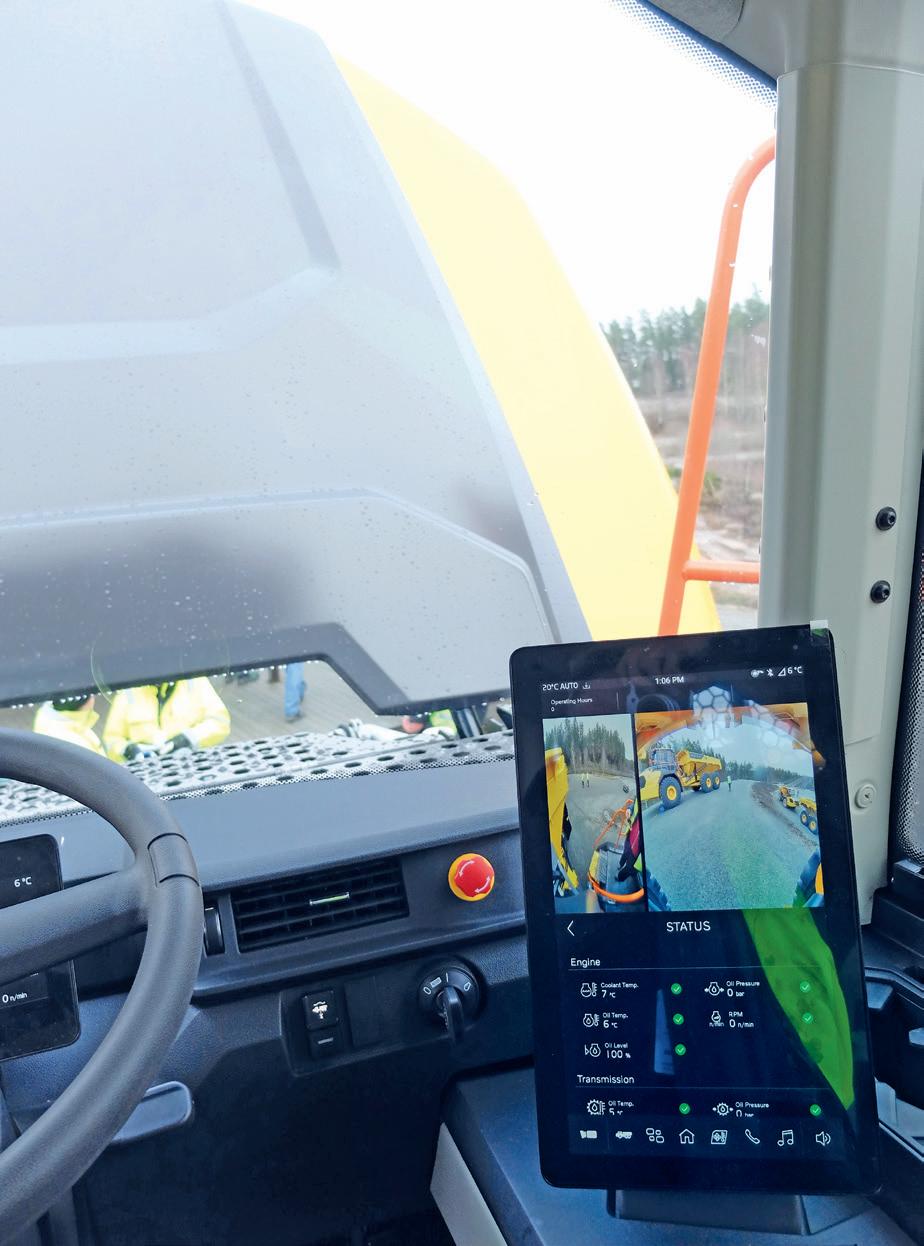


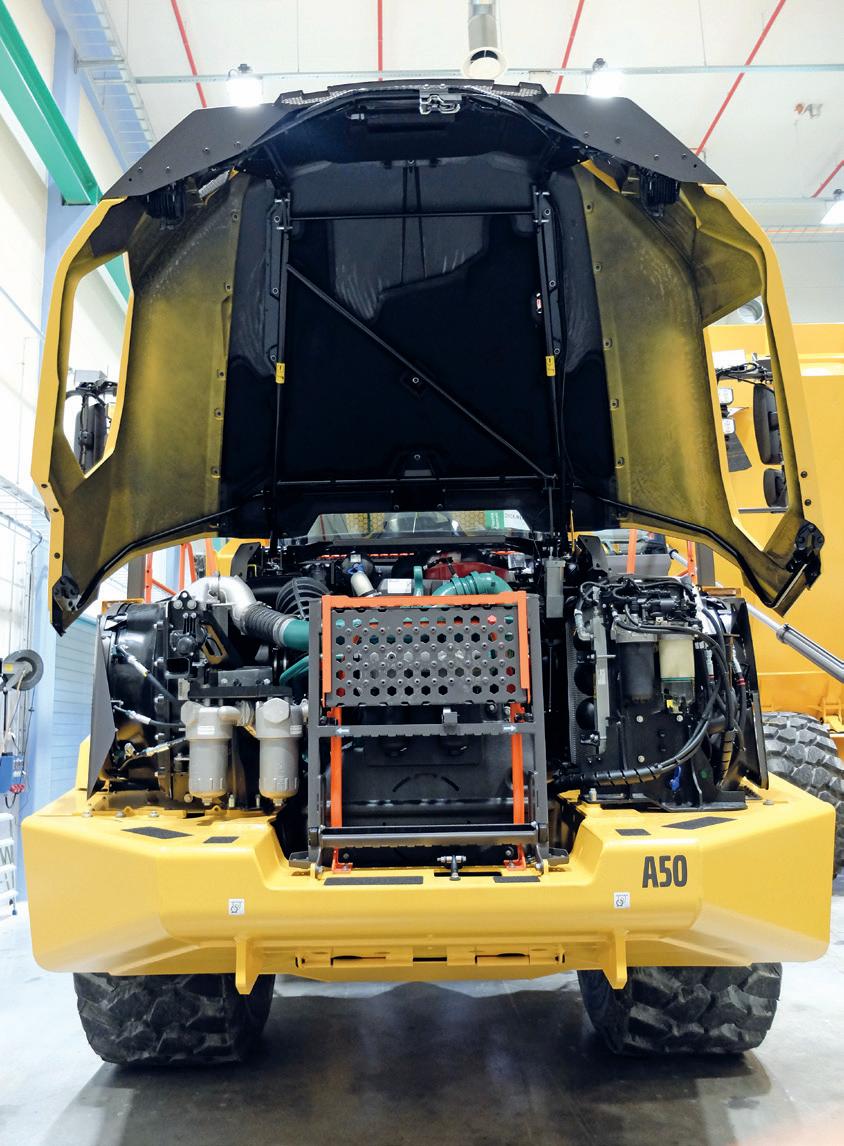
ABOVE: The engine and cooling system are all tucked neatly under a sloping engine cover that a ords good forward visibility LEFT: Volvo CE is introducing its new sevenmodel ADT range INSET: The camera system in the cab automatically shows the forward view if the speed drops below 10km/h and switches to a rear view when the driver engages reverse
Global Highways editor Mike Woof highlights key points of the new Volvo CE articulated hauler range... Scan to watch the video
Market demand for ADTs has changed over the years with the 36-41tonne capacity models dominating, compared with the 23tonne capacity machines that were favoured in the earlier years of the ADT. Jernberg commented, “ e A40 and A45 form the backbone of Volvo CE’s market.”
e new generation A40, A45 and A50 models are available now, with the A25, A30, A35 and A60 starting in production and available later in 2025.
As with other Volvo CE construction machines, build quality is optimised, with checks being made on the ADTs throughout assembly and again once the models are complete. Tina Taylor, head of quality commented, “At the test track we test every ADT we produce before we ship.”
For the moment, the ADTs all use conventional diesel power but the rm has been researching a prototype fuel cell machine. With a full range of allelectric machines planned by Volvo CE, an electric ADT will be available at some point, with a diesel electric hybrid also a future possibility. A variant with an internal combustion engine but fuelled by hydrogen is likely at some point also, although a hydrogen fuel cell model looks somewhat further in the future. Jernberg said, “We are investing more than ever in research and development.” End www.volvoce.com

The new line-up sees a range of improvements, the large, high-visibility cab being one of the most noticeable... Scan to watch the video

















Mark your calendar for Intertraffic events around the globe, the premier gatherings for traffic and mobility professionals worldwide. Whether you’re a visitor seeking cutting-edge solutions or an exhibitor aiming to showcase innovations, Intertraffic offers unparalleled






opportunities to network, learn, and grow your business. Don’t miss the chance to make your mark in achieving smart, safe, and sustainable mobility for all. This is where the future happens! Get in touch with our team on intertraffic@rai.nl or check out www.intertraffic.com.



Eliminating road fatalities across Europe demands a collective commitment from the entire road marking sector - both public and private. Collaboration and innovation are essential to building safer, more sustainable, and more e icient road networks, from major highways to local bike lanes. As a global leader in road markings, Geveko Markings is dedicated to this mission, actively supporting Vision Zero and striving for even greater road safety advancements

As a leading manufacturer and supplier of road marking materials, Geveko Markings has spent the past 100 years enhancing road safety with products designed to meet the highest standards of quality and durability - and they are committed to continuing this vital mission. With a clear focus on the future, sustainability and inclusive infrastructure, Geveko Markings continues its journey towards making the roads safer.
“We make sure that our product portfolio ensures the right t for diverse tra c and environmental demands”
systems (ADAS), the durability and visibility of road markings are becoming even more essential, serving as guides not just for human drivers but also for autonomous vehicles.

Moritz Bähr Geveko Markings
“At Geveko Markings, road markings are more than lines on asphalt. ey are lifesavers that increase safety and provide direction,” says Per Nielsen, business unit director for northern and central Europe. “While developing durable, high-performing materials is a complex process, our aspiration is simple. We are driven by a vision to create high-quality marking materials that guide, inspire and protect millions of people every day.”
Global commitment
e Vision Zero initiative has transformed the approach to road safety. It emphasises shared responsibility among governments, manufacturers and individuals. e European Union has adopted this ambitious initiative, aiming to eliminate road fatalities by 2050 through di erent strategies. ese include lowering speed limits, creating pedestrian-friendly infrastructure and incorporating advanced safety technologies.
Henrik Nielsen- orup, regional sales manager for the Nordic region, explains how Geveko Markings’ products exemplify this. “Our Type II markings deliver exceptional visibility in wet or dark conditions, ensuring safer navigation for both humans and ADASequipped vehicles. For example, we have developed a hot-applied thermoplastic which is applied in a unique droplet-shaped pattern and used with great success on Danish highways. is future-proof solution enhances safety in two ways. It provides high visibility in challenging conditions and delivers audible rumble noise and noticeable vibration when crossed to alert drivers.”
With advanced road marking solutions like these, Geveko Markings demonstrates how infrastructure improvements can play a critical role in advancing Vision Zero’s objectives for safer roads.


BELOW




Sustainability:



Road markings are a fundamental part of bringing these strategies to life as they maintain the orderly ow of tra c, helping reduce congestion and accidents. ey provide crucial visibility at night and during adverse weather, ensuring safety even in challenging conditions. With the rise of advanced driver assistance




Geveko Markings' materials help drivers on the 18km-long Great Belt road and rail suspension bridge that crosses the Great Belt strait between the Danish islands of Zealand and Funen image courtesy Geveko Markings
As the EU places increasing emphasis on sustainable transport, Geveko Markings is committed to developing more environmentally friendly solutions. e company is actively focusing on creating materials designed to reduce carbon footprints, aligning with the EU’s Green Deal objectives.




Road markings are essential for promoting sustainable transport modes such as cycling and micromobility. Geveko Markings’ products help create dedicated lanes and safe zones for bicycles


and e-scooters, making streets more inclusive and accessible. By supporting these sustainable transport modes, these markings contribute to healthier, lowercarbon urban environments and encourage the shift towards greener cities.
Clearly de ned spaces encourage people to choose sustainable transportation options, directly supporting Vision Zero’s twin goals of safety and sustainability, notes Arnaud Derasse, Benelux region manager. “ is approach highlights Geveko Markings’ commitment to innovating for a greener future while balancing road safety and encouraging a shift away from car dependency, lowering emissions and fostering more accessible urban spaces.”
Geveko Markings ensures rigorous testing and validation, including practical road trials, to establish quality and performance of all its products, explains Moritz Bähr, head of product management for Europe.
“Certi cation is our promise of quality. It guarantees that our materials meet all technical requirements, providing safer tra c ow for everyone,” says Bähr.
“By developing and continuously ne-tuning solutions like preformed markings, hot-applied thermoplastic and plural-component systems, we make sure that our product portfolio ensures the right t for diverse tra c and environmental demands.”
e European Union's focus on smart and selfexplanatory roads aligns closely with Geveko Markings’ goals. As the EU’s Expert Group on Road Infrastructure Safety (EGRIS) works toward standardised markings, companies including Geveko Markings play a critical

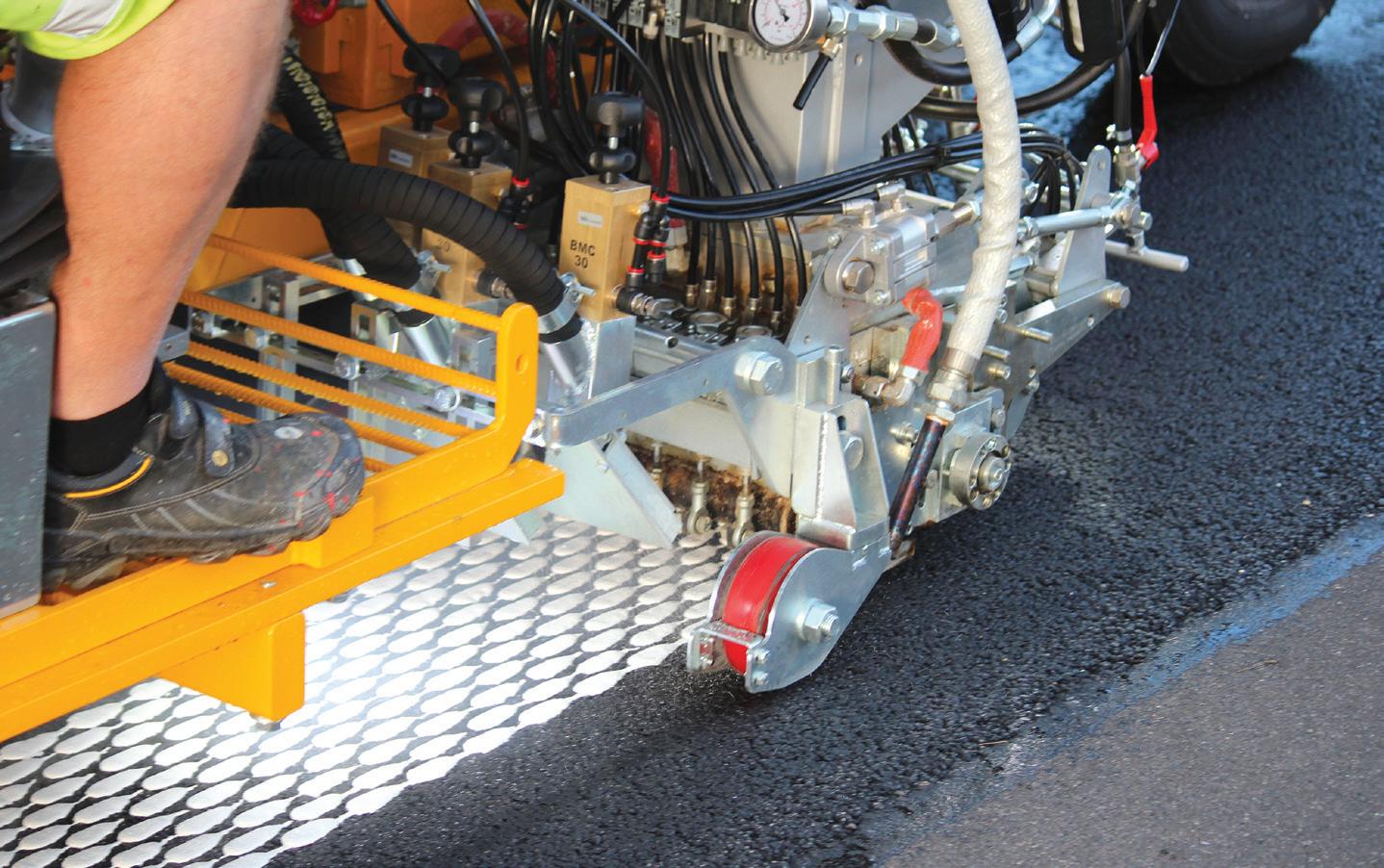
The Danish Road Directorate is in the process of replacing all lane markings on Danish motorways with Geveko Markings’ unique thermoplastic marking applied in a dropletshaped pattern image courtesy Geveko Markings
Surveys conducted by the Local Council Roads Innovation Group in the UK show that local councils often lack the necessary resources and expertise to implement cutting-edge road marking solutions. erefore, fostering collaboration across the supply chain and forming strategic partnerships with local authorities is crucial.
Geveko Markings exempli es the power of such partnerships, showcasing how private companies can support public authorities in realising ambitious objectives such as Vision Zero. “Our collaboration with lobbyist associations is vital to us,” says David Bryant, director and country manager for the UK and Ireland. “It focuses on increasing attention to road marking materials and the performance and testing of road marking products to continuously enhance road safety.” By working together, the road marking industry can make signi cant strides toward achieving a safer and more sustainable transportation environment for all.

At an e-charging station in Bergen, Norway, Geveko Markings demonstrated how PlastiRoute
SprayGrip can create a both eye-catching and functional result image courtesy Geveko Markings
Safety for everyone
Cities worldwide face an urgent need to update their infrastructure to accommodate increasing city centre tra c. One e ective solution is to encourage a shift from cars to smaller, eco-friendly transport modesmicromobility. For micromobility options to become reliable alternatives to traditional transportation, safety is essential. People need to feel secure when using them. is starts with well-designed spaces and dedicated lanes designed to accommodate a clearly de ned tra c separation with safe zones for vulnerable road users such as pedestrians and cyclists.
“Whether it be coloured areas, safe parking or clearly marked bike lanes, our markings allow vulnerable road users to ride safely at their own speed,” explains Alexander Sezer, country manager for Germany, Austria and Switzerland. “ is creates fewer risks of accidents without a ecting the ow of road tra c.”
Journey continues
e integration of ADAS, the push for net-zero transportation and Vision Zero commitments are the future of road infrastructure. Geveko Markings is poised to take part in this transformation to a safer and more sustainable tomorrow. “When we talk about our passion for road markings, it is not just about lines on the road,” concludes Nielsen. “It is a passion for futureproo ng tra c with ADAS. A passion for sustainable development with micromobility. And a passion for ensuring that all road users feel safe in tra c.” End • Produced in association with Geveko Markings www.geveko-markings.com
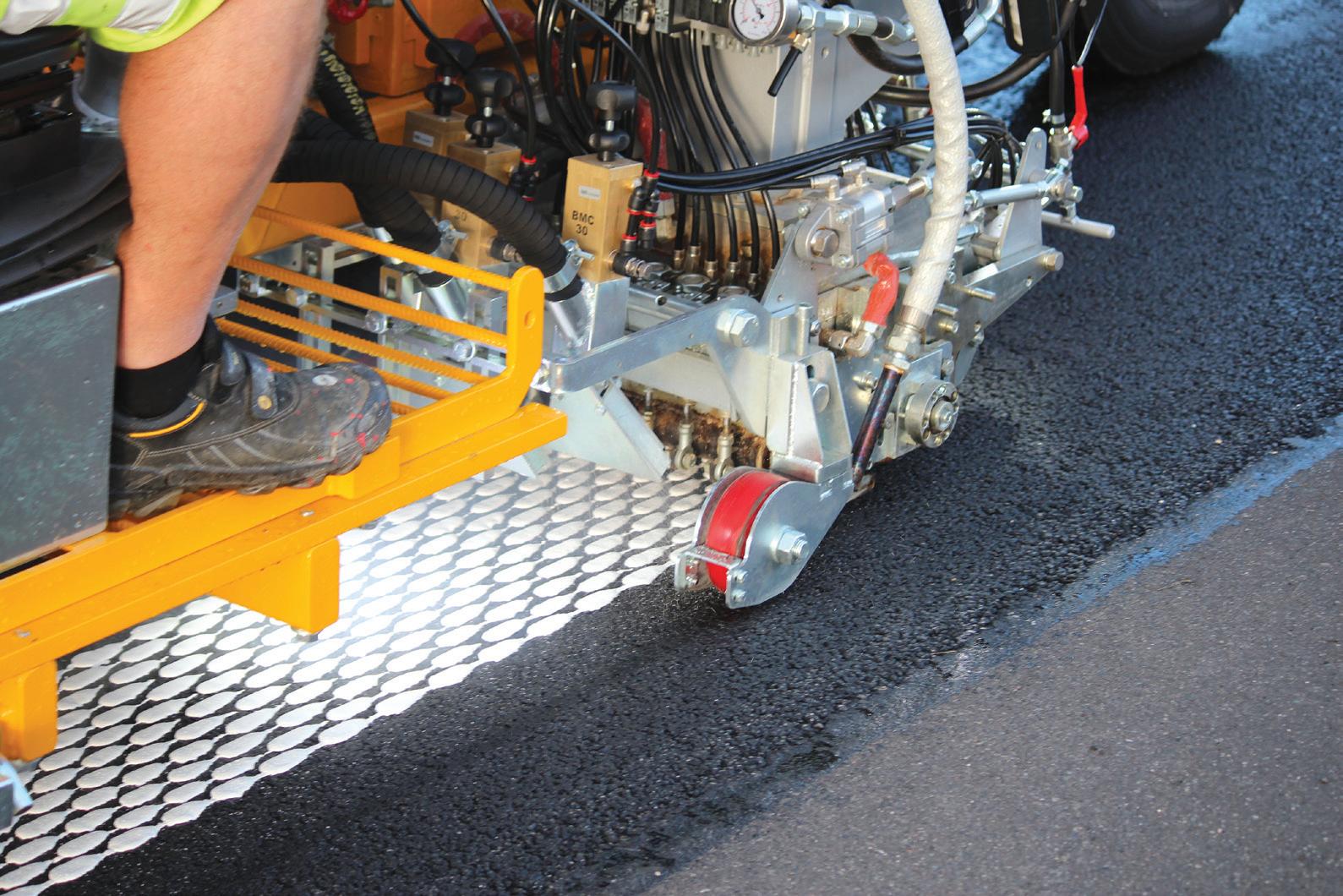
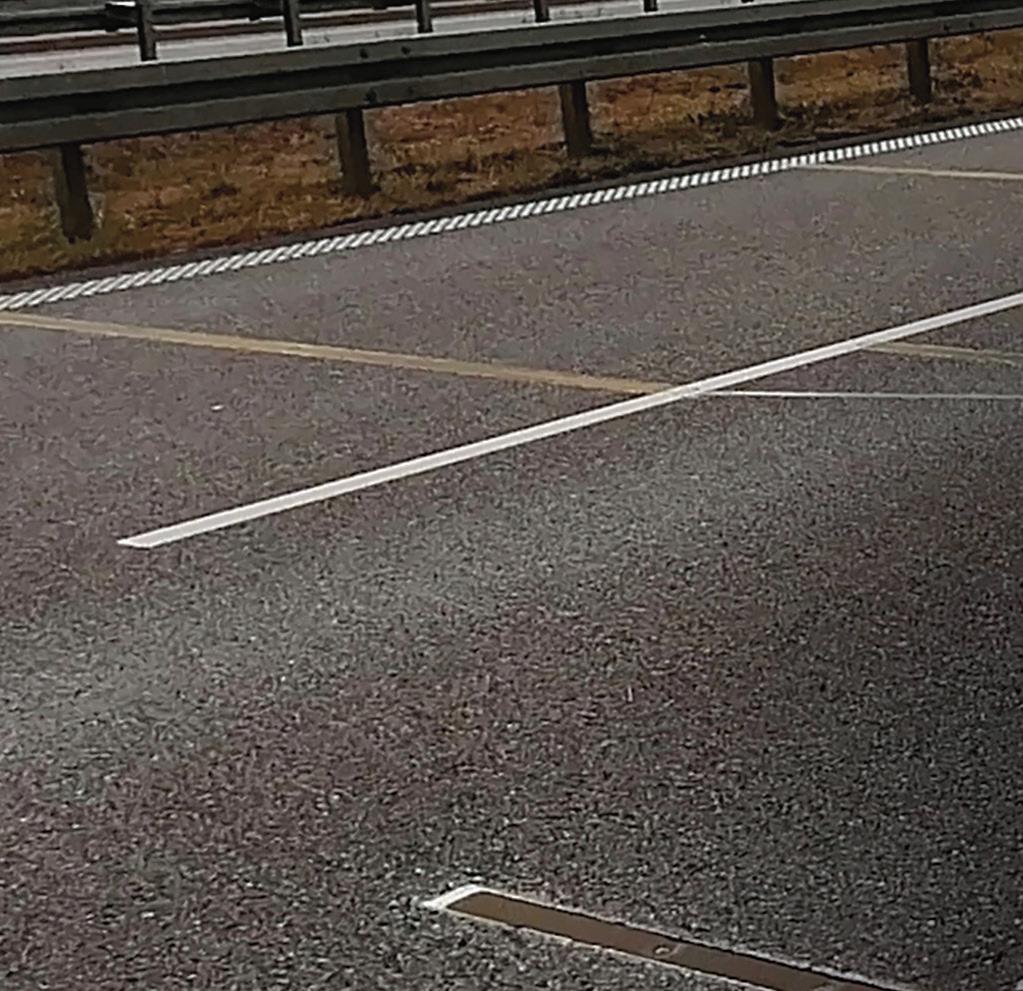


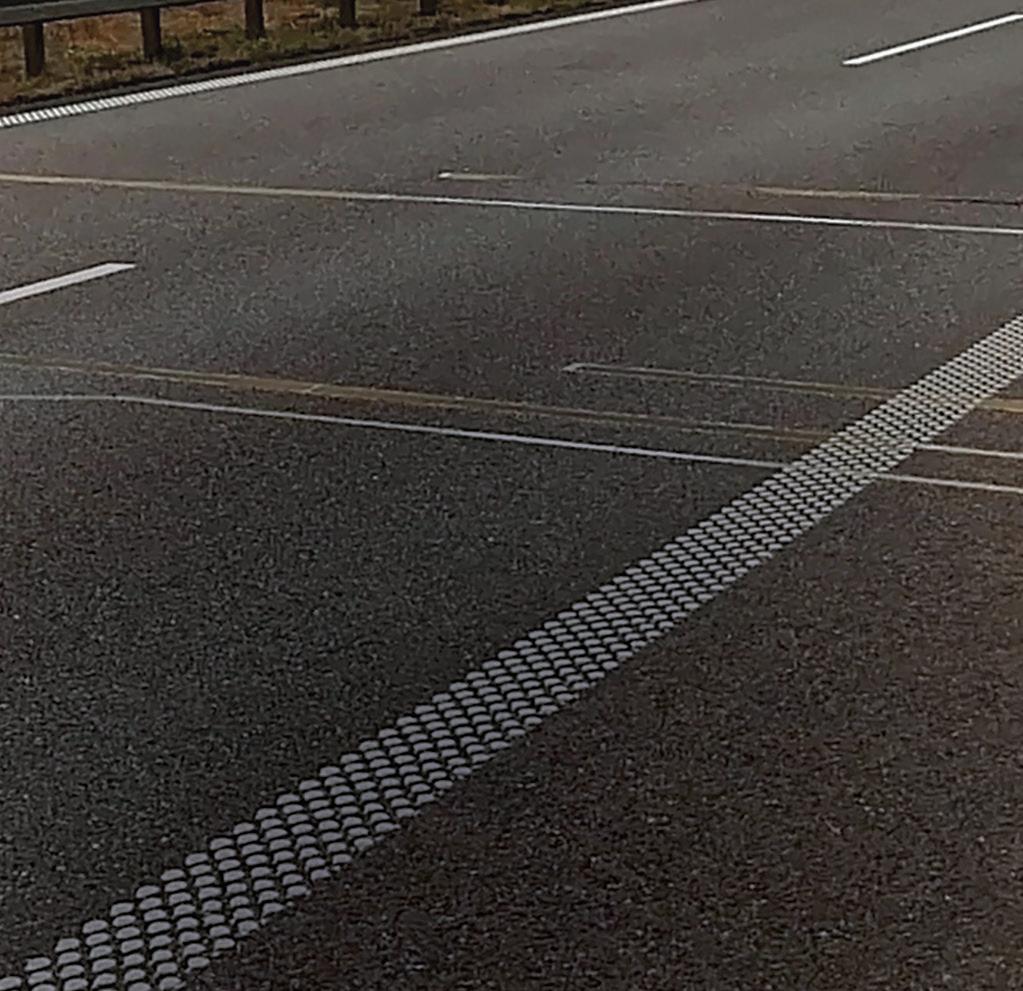
Vastly improving weigh-in-motion (WiM) technology can help combat overloaded vehicles and improve the safety of the world’s highways. ey can help road and bridge designers and also aid highway agencies and owners with enforcement of road weight restrictions.





Despite the benefits, including safer highways and possibility of automated legal weight enforcement, obstacles remain for faster uptake of weigh-in-motion, WiM, systems. David Arminas reports on the manufacturers’ perspective.







e market is increasing for these systems but obstacles remain. “Most tenders tend to rely on parameters that were in the distant past,” says Florian Weiss, chief executive and owner of Tra c Data Systems in Hamburg. “ e issue is really that the people writing the tenders are not familiar with the technology and they might use a consultant to write it.” is is the situation in Germany at least, where, he says, the market is at a virtual standstill.
“ e Q-Free Infomobility team is seeing signi cant growth for WiM systems globally,” says Oliver Bain, managing director of Q-Free UK and vice president of Q-Free Infomobility, the group being based in Trondheim, Norway. “Road authorities increasingly recognise the social and nancial bene ts, anything from statistical reporting to direct [law] enforcement.”
He says that fully automated enforcement systems are being adopted in more countries. “New operating models, such as data-as-a-service and the decreasing cost of obtaining WiM data and acting on it are making WiM systems more accessible to both local and central government departments.”
Infrastructure preservation and road safety are primary reasons for implementing high-accuracy WiM, explains Leonardo Guerson, WiM product manager and application engineer with Intercomp, headquartered in the US state of Minnesota. “ ese reasons are central to road enforcement e orts worldwide and WiM applications are prioritised in such contexts,” he says.



Another signi cant application that has gained momentum in recent years is the use of WiM data for pavement design and management. “Advanced pavement design methods, such as the United States (WiM) technology site-speci c load data into their algorithms,” says Guerson. “High-quality WiM data is essential for accurate calculations and ensuring a road service life that meets design expectations.”
“ e eld has witnessed notable advancements in sensor, hardware and software capabilities,” says Roy Czinku, vice president of ITS solutions and maintenance services at Quarterhill, headquartered in the city of Saskatoon in the Canadian province of Saskatchewan. “ anks to these improvements, WiM systems provide more accurate, reliable and repeatable measurements than ever before. We've also have seen improvements in how WiM handles vehicle dynamics and temperature variations. Improvements to connectivity have signi cantly expanded the scope of what WiM systems can achieve, particularly in terms of data accessibility and sharing.”

“High-quality WiM data is essential for accurate calculations and ensuring a road service life that meets design expectations”
Leonardo Guerson Intercomp


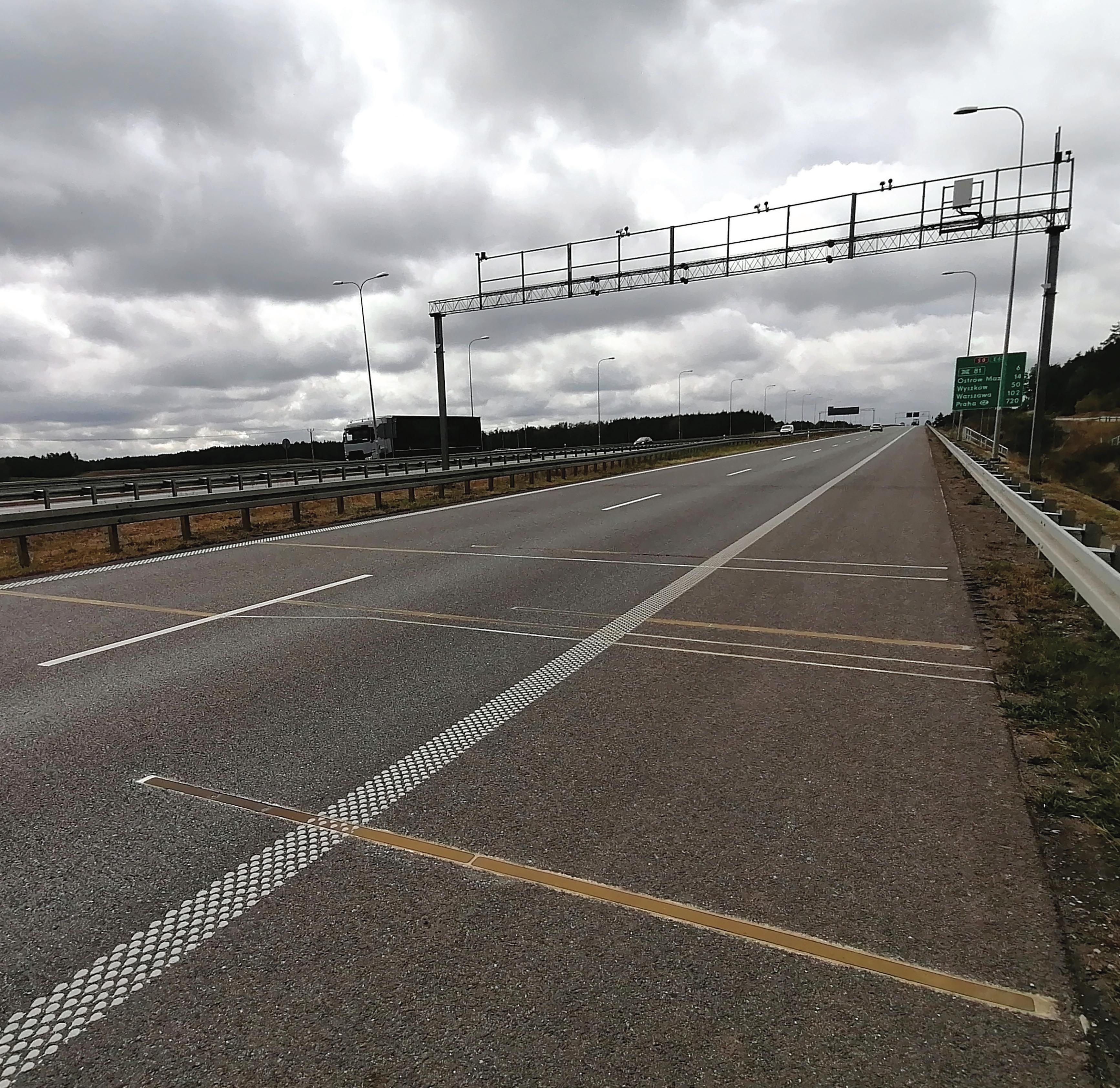
For the latest news, extended features and videos relating to Highway & Network Management visit the website globalhighways.com
Václav Blahnik, product manager of WiM technology at Cross, based in the Czech Republic, believes the primary reason for WiM adoption is the cost savings on road repairs. “ ese costs can be quanti ed and then presented to state authorities and the public, thus justifying the investment in the acquisition of WiM systems,” he says. “Increased safety is also a decisive factor but its demonstration is problematic because it is not easily quanti ed and is rather subjective in nature, involving many di cultto-grasp variables.”
Suppliers and manufacturers of WiM systems have believed, says Tra c Data Systems’ Weiss, that dynamic low-speed WiM as a legal weight direct enforcement tool would drive the market. But regulations covering their use are slow in coming. “You can use such systems in Germany, but not for legal enforcement, which is the key. To allow for this, rules, regulations and laws have to be changed. is is something that can take 10 to 15 years.
“You can use dynamic weighing for collecting statistics and preselection of vehicles to be statically weighed. But dynamic weighing for legal enforcement is where the systems can make money. We do not have the legislation to operate them.” Weiss says that Germany is not unique among European countries.
have an interest in critical enforcement and safety data.”
Czinku says there has been “an evolutionary shift in the funding model” for WiM systems. “For example, an as-a-service model o ers various levels of engagement ranging from purchasing full systems and managing them independently to adopting a hybrid approach or fully subscribing to a managed service.”
Advancements in technology, including tyre anomaly detection and vehicle-to-everything (V2X) communications, are enriching the WiM data ecosystem. is bene ts planners, road operators, drivers and safety and enforcement agencies. With the capacity for real-time data growing and technologies evolving to create interoperable networks, collaboration across jurisdictions and with a multiplicity of stakeholders are not just advantageous, but becoming necessary for overall system e ciency gains.
“ e eld has witnessed notable advancements in sensor, hardware and software capabilities”
Roy Czinku Quarterhill
Blahnik, from Cross, believes that for collaboration or cooperation there must be a legislative framework, especially for direct enforcement, where departments of transport set the rules. “In connection with it, the metrological authority must de ne clear metrological requirements and conditions under which such a WiM system can be operated,” he says.
Some form of collaboration between the private sector, departments of transport and local government authorities in WiM applications has always been important and is likely to remain so, says Guerson from Intercomp. “ is is because of a trend toward performance-based WiM contracts. WiM data collection is delivered as a service and all aspects of implementation are managed by a single company or a consortium of companies.”


Because WiM systems are getting more sophisticated and their data more accurate, it makes sense for the supplier and manufacturer to get much more involved in their use and performance. Wang Ping, WiM chief technical o cer of Vanjee Technology, based in Beijing, already sees a move away from the original contract type where departments of transport and local authorities fund construction and operation of a WiM system. e trend, he says, is for the private sector to build the WiM system and then help the departments and highway authorities to operate them.
While the nancial pressure on DoTs may be reduced, it also means that private sector companies - unless they are very good at similar services in other areas - will now be under a lot of performance pressure in terms of product and service quality, as well as funding, says Ping.
Guerson believes that this model has proven e ective globally, as the success of WiM applications depends on various
Guerson believes that this model has proven e ective globally, as the success of WiM applications depends on various factors, including site selection, installation, calibration, operation and maintenance.
General nancial constraints are also being felt more and more by infrastructure planners, roads operators and maintenance sta . It is something of a perfect storm for them. At the other end, they see road damage on the rise due to the increasing weight of personal and commercial vehicles. Payloads are up and heavy batteries are boosting the weight of the increasing number of electric passenger vehicles. In fact, this has in ated vehicle weights by around 25% in recent years, estimates Bain, from Q-Free.





“Consolidating responsibility within one party and managing these contracts based on performance typically results in improved higher and motor vehicle enforcement and weight compliance investment, toll
“Consolidating responsibility within one party and managing these contracts based on performance typically results in improved uptime and higher data quality.”
Quarterhill’s Czinku agrees. “Historically, government entities such as highway and motor vehicle enforcement agencies have been instrumental in running and authorising tra c data and weight compliance programmes. However, as we witness more roadways operating with private investment, toll authorities also
Even with some push-back from the public sector which has concerns over the cost, there are enough forward-looking authorities and agencies to make the market look favourable for suppliers and makers of WiM systems. Bain believes that the arguments for the installation of more WiM systems are inescapable. While the reasons for implementing WiM vary, more authorities and departments with di erent priorities are recognising its value. WiM is becoming more commonplace and used by a diverse range of customers to improve safety, reduce costs and make more informed infrastructure decisions. End https://www.q-free.com www.cross-tra ic.com/en/weigh-in-motion/ www.intercompcompany.com www.tra ic-data-systems.net/en/ www.quarterhill.com/products/wim-controllers www.vanjee.net is









Acutting-edge trial on the A64 has delivered the UK’s lowest carbon resurfacing scheme on the strategic road network without using carbon o setting. Tarmac, a CRH Company, and National Highways, together with supply chain partners, successfully reduced carbon emissions on the project by 75% compared to a traditional maintenance project of a similar scale, with over 260tonnes of carbon savings delivered.
e trial – the rst of its kind on the strategic network – was delivered on a 2.5km section of the A64 eastbound carriageway at junction 44 near Bramham in North Yorkshire.
Over a seven-day period the team, including HW Martin, Premier Roadmarkings, Kier and Mway Comms, combined an extensive range of innovative low carbon materials, use of innovative paving technology and plant equipment to deliver signi cant carbon savings.
Overall, 41.3% of the project’s carbon reduction total was delivered using low carbon raw materials, 14.7% from the transport of materials and the paving process,
ABOVE
A low carbon road surface has been laid on the A64 in Leeds UK
including the use of electric plant equipment, and 44% from employing sustainable manufacturing techniques.
A warm mix asphalt was used together with a pioneering ‘carbon sink’ bio-component binder from Shell, which locks carbon into the road. e lower layer of the pavement used 40% recycled asphalt planings (RAP) with a further 20% in the surface course to help reduce the need for primary materials.
Several zero emissions plant vehicles and prototypes were used including electric and hybrid road rollers and an electric bond coat sprayer, minimising noise and further reducing tailpipe emissions and CO2.
Tarmac’s Cross Green asphalt plant in Leeds, which supplied materials used on the project, used a combination of biofuel and electricity.
Other construction methods delivered bene ts including better pavement life and a high-performance, smooth pavement. is was achieved through continuous echelon paving, with asphalt laid across the entire road surface.
Eliminating joints reduces water in ltration and results in a durable road expected to last over 20%


longer than those constructed with conventional surfacing. It also requires less maintenance, reducing operational carbon in the longer term. In addition, the increased smoothness of the surface improves ride quality which reduces fuel consumption, lowering emissions and particulates from vehicles.
In addition, to assist with ultimate drive to net zero pavements a 150m stretch featured these technologies as well as a standard penetration grade binder and a small percentage of a negative carbon aggregate delivered the landmark achievement of the UK’s rst net zero pavement.
Brian Kent, National Technical Director at Tarmac, said: “ is trial sets a blueprint for low carbon delivery on the strategic road network and the requirements of decarbonising every element of highways maintenance. It demonstrates how shorter, more focused use of road networks can improve e ciency, boost productivity and minimise nighttime closures.
Angela Halliwell, Head of Carbon and Environmental Sustainability Strategy and Planning, National Highways, said: “We’re taking positive steps towards a more sustainable, decarbonised future. We hope this project will pave the way for industry-wide changes, resulting in signi cant carbon savings and improved road surfaces for drivers.
“National Highways has ambitious plans, backed by science, to decarbonise the road network. We aim to achieve net zero for our corporate emissions by 2030, for our maintenance and construction activities by 2040, and for our whole network by 2050. End
No matter how challenging your needs, BKT is with you offering a wide range of OTR tyres specifically designed for the toughest operating conditions: from mining to construction sites. Sturdy and resistant, reliable and safe, able to combine comfort and high performance.
BKT is with you, even when work gets tough.



A novel road patching system from Roadmaster is proving its worth at repairing roads in Iceland. e Icelandic Road and Coastal Administration (IRCA, or Vegagerðin) recently took delivery of the country’s rst Roadmaster spray patcher. e machine’s novel in-place aggregate and road surface preparation technology is said to deliver an optimal curing environment for repairs. is allows patching to be carried out below the temperature range usually considered for the spray injection patching technique.
With conventional systems, the drop in





ABOVE
Using the novel Roadmaster machine for pothole patching has allowed repairs to be carried out in Iceland later than previously possible
temperatures across Iceland means that surface dressing emulsion can only be used until July, after which the colder conditions prevent curing. Instead, maintenance operators switch to a binder with added ethyl ester, which lowers the viscosity of the mixture so that it can be applied at lower temperatures. However, this modi ed binder is prone to bleeding, which can require repairs, increasing maintenance needs.
Iceland’s northerly location presents challenges for road maintenance. e IRCA is responsible for the maintenance of 13,000km of roads across Iceland. e road system is modern but increases in heavy tra c have resulted in rising maintenance requirements and problems with bearing capacity.
Vegagerðin maintenance management leader Jon Helgi Helgason said that the new Roadmaster machine will extend the use of emulsion later in the year.











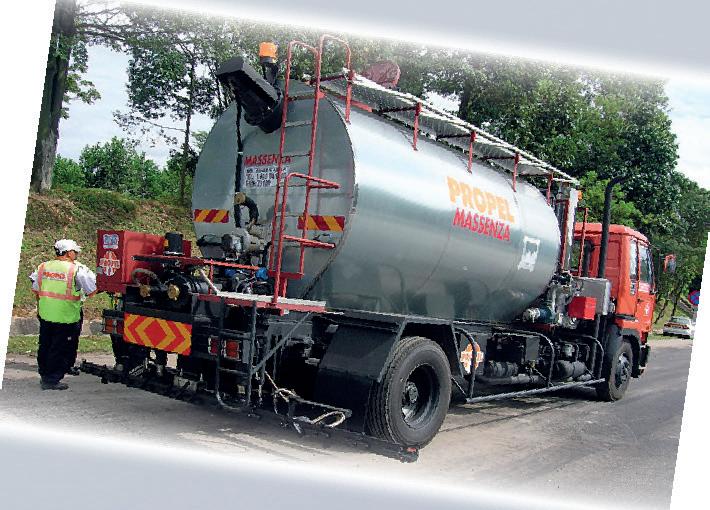


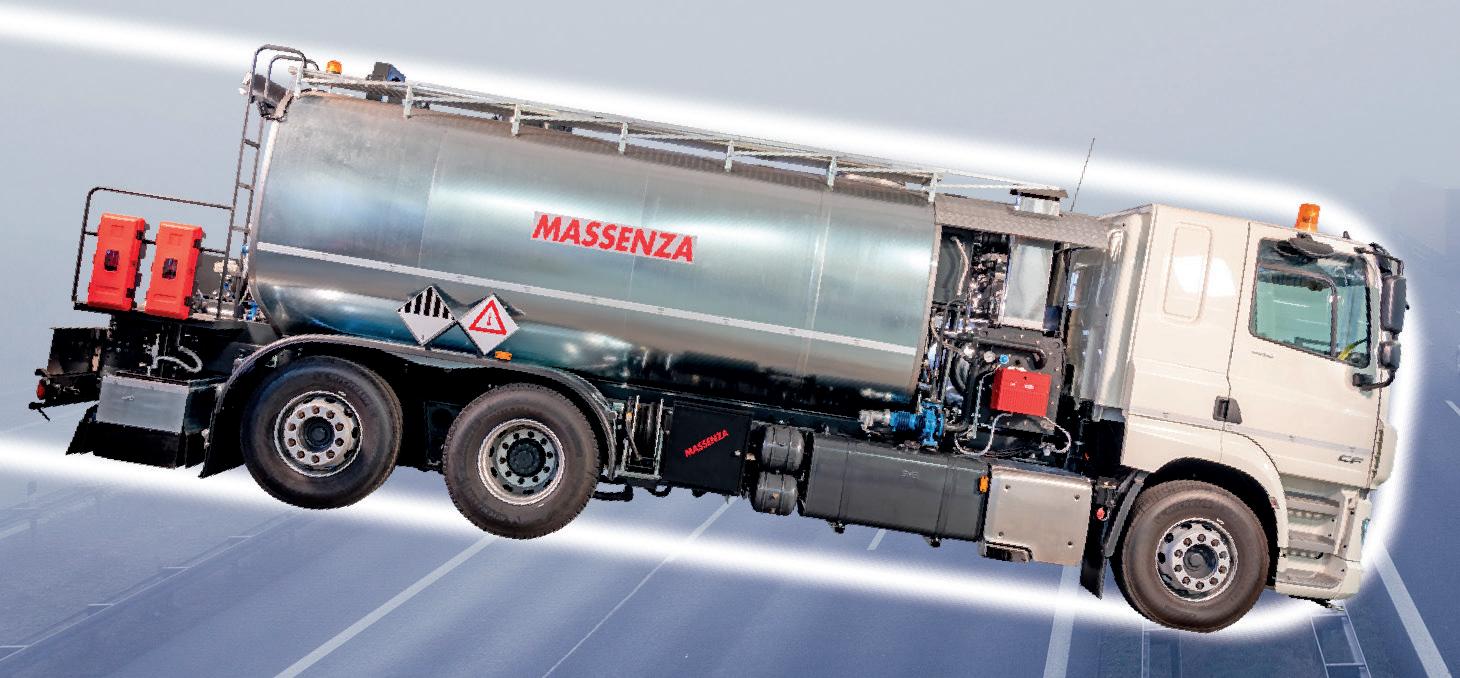

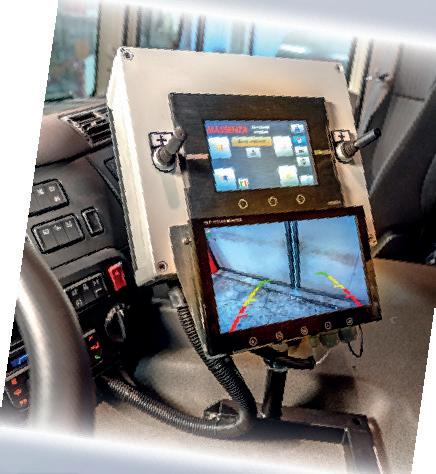



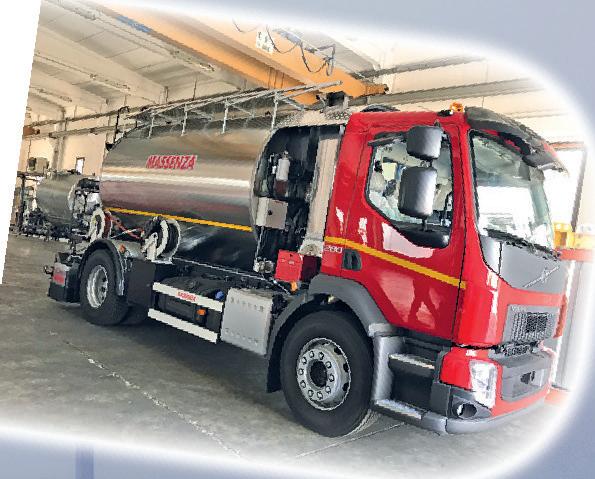











“ ere is a lack of knowledge of emulsion in Iceland”, he said. “Roadmaster will allow us to explore and test slowly. We will be able to use emulsion longer into the season.”
is is useful for the IRCA, which faces challenges each year to repair potholes caused by the repeated freeze thaw cycle during the winter months. According to Helgason, the prolonged seasonal use of emulsion
e sophisticated material delivery system also reduces wear on machine components while the circular surface heating technology is powered by recycling exhaust fumes. is provides a more sustainable option to alternative patching machines, which typically use a front-mounted gas burner to heat the road surface.
“We are impressed with the way material moves
Warm mix asphalts are becoming increasingly important in road construction and o er potential for saving energy and cutting CO2 emissions.
e lower levels of vapour and aerosol are also bene cial in terms of health and safety. However, compacting these types of asphalt means a shorter time frame in which to achieve optimum results. is is where the latest technology comes in with solutions to support the operator and ensure highquality surfaces.
An e ective method for compacting warm mix asphalt is with the proven oscillation system. As the oscillation drum remains in constant contact with the substrate, the compaction rate can be faster. As well as being gentler on materials than the vibration method, oscillation ensures that surface damage is avoided when compacting at lower asphalt temperatures. For compacting asphalt joints, oscillation also prevents damage to areas that have already cooled. Using oscillation increases the time available for compaction before asphalt rigidity increases and becomes di cult to work with.
According to Hamm, another solution for e ective compaction of warm mix materials is the rm’s Smart Compact compaction assistant, which controls the compaction energy and compaction modes in both drums on tandem rollers in the HX
ABOVE Hamm o ers compaction solutions for warm mix asphalt
For the latest news, extended features and videos relating to Asphalt Paving visit the website globalhighways.com
Helgason, who hopes to add another of the advanced

series. e system continuously monitors asphalt cooling as well as rigidity values. Smart Compact determines whether compaction should be static, use vibration or oscillation, and also selects the necessary compaction energy. is is said to prevent over-compaction, minimise surface damage and reduce the number of double passes. is increases compaction e ciency and optimises productivity, which adds value for use with warm mix asphalt.
Showing the information from compaction also helps to make e ective use of time. Hamm says that its Smart Doc digital solution shows operators compaction values, the number of double passes, asphalt temperatures, and other compaction parameters. Providing comprehensive compaction data allows operators to compact warm mix asphalts more easily, reducing unnecessary double passes, further boosting productivity. Smart Doc can be downloaded free of charge from the Google Play Store.
e rm’s HD 10e and HD 12e battery-powered electric tandem rollers can also be used to compact warm mix asphalts and the company o ers variants with an oscillation drum and tyres. ese can also be tted with thermal aprons, which stop the tyres from cooling down.
www.hamm.eu














The National Asphalt Pavement Association (NAPA) in the US is providing a comprehensive roadmap for reducing greenhouse gas (GHG) emissions associated with asphalt pavements

NAPA’s new report, e Carbon Footprint of Asphalt Pavements: A Reference Document for Decarbonization (SIP 109), takes a proactive roadmap for industry and agencies. is can help leverage federal funding in the Infrastructure, Investment, and Jobs Act (IIJA) of 2021, the In ation Reduction Act (IRA) of 2022, and other programs to reduce greenhouse gas (GHG) emissions.
Heather Dylla, PhD, vice president of Sustainability and Innovation at Construction Partners said: “Coinciding with the recent launch of the FHWA’s Low Carbon Transportation Materials Program Grants, this report emerges as a critical resource for agency engineers and asphalt mix producers. It holds the potential to foster vital discussions and collaborations across the industry, propelling us toward collective sustainability goals.”
With the ambitious goal of achieving net zero GHG emissions by 2050 (articulated in the industry’s e Road Forward initiative), one objective of the report is to identify technologies and practices that can be adopted or expanded to reduce GHG emissions associated with asphalt pavements. Average use of reclaimed asphalt pavement (RAP) in the US remains around 22%, according to data published by NAPA and FHWA. But a mix with 50% RAP can reduce cradle-togate emissions by 29% compared to a mix without any.
e report focuses on actions companies and agencies can take to reduce GHG emissions. e intended audience includes pavement engineers, asphalt mix producers, paving contractors, policymakers, and other stakeholders keen to lower embodied carbon emissions associated with asphalt pavements.
Authors identify major sources of GHG emissions throughout the life cycle of asphalt pavements, including raw material manufacturing, transportation, asphalt mixture production, pavement construction, use of pavements, maintenance and rehabilitation, and end of life.
e report outlines opportunities for asphalt mix producers and paving contractors to reduce GHG emissions. Actions to reduce emissions from asphalt mix production include improving energy e ciency, using cleaner fuels, employing recycled materials and the use of biobased materials that capture and store


CO2 for asphalt pavements. Improved construction practices can also extend the life of asphalt pavements, while better smoothness reduces vehicle fuel consumption and better scheduling reduces emissions from work zone congestion.
e report o ers guidance on implementing pavement design considerations, speci cations, and maintenance practices that prioritise sustainability.
ese include incentivising the use of materials with lower embodied carbon while allowing contractors to innovate and prioritise maintenance to deliver pavement smoothness and reduce vehicle fuel consumption.
Authors summarise tools available to industry and agencies, such as environmental product declarations (EPDs) and life cycle assessment (LCA) software, that can help quantify GHG emissions and improved decision-making.
“ is report details actions asphalt mix producers and laydown contractors can take to reduce the carbon footprint of the pavements we construct while making our businesses better,” said Ron Sines, PE, vice president for Sustainability & Decarbonization at CRH Americas Materials. “It highlights the need to collaborate with owners on project designs and speci cations to ensure innovations in materials and processes are employed quickly, maximising their bene ts. Most importantly, the report stresses the need to consider the entire asphalt pavement life cycle to ensure the best decisions are made.”
e report’s authors – Director of Sustainable Pavements Joseph Shacat; vice president of Engineering, Research, & Technology Richard Willis, PhD; and WAP Sustainability Director of LCA Technology Ben Ciavola, PhD – emphasise the importance of collaboration between industry, agencies, and academia to advance these strategies. ey also highlight the need for further research to quantify and reduce emissions from asphalt pavements.
“ is report serves as a critical resource for the asphalt pavement industry and other stakeholders in their e orts to lower emissions toward decarbonising infrastructure,” said NAPA president & CEO Audrey Copeland, PD, PE. End
“ is report serves as a critical resource for the asphalt pavement industry and other stakeholders in their e orts to lower emissions toward decarbonising infrastructure”
Audrey Copeland, PD, PE NAPA president & CEO
Click here to read NAPA’s new report globalhighways.com







Warm asphalt delivers energy savings and emissions reduction
Energy saving is one of the most important drivers for the growing importance of reducedtemperature asphalt in road construction. Reduced-temperature asphalts are mixes produced at temperatures of 110-130°C. In contrast, conventional hot-mixed asphalts are produced at 140-180°C, typically with hot bitumen at a temperature of 160°C as a binding agent.
Lower energy consumption means fewer emissions, CO2 in particular. According to the German Asphalt Association, a temperature reduction of just 30°C allows a saving of 0.9litres of heating oil/tonne of asphalt. At a daily production rate of 2,000tonnes of mix/day, this can save 1,800litres of oil and reduce CO2 emissions by 6tonnes. Savings achieved in the real world can be higher as the reduction in temperature is often 50°C or more.
e major contribution to energy saving and the reduction of emissions lies in asphalt production. e reduction of bitumen viscosity is a basic requirement for the production of asphalt at lower temperatures. Benninghoven has developed various solutions to temporarily reduce this viscosity. ese include precise metering systems for the addition of liquid and solid additives and the foamed bitumen module.
Mixing hot bitumen with water increases its volume many times over. Due to the surface energy released, the binding agent coats the aggregate e ciently during mixing. Benninghoven’s foamed bitumen module



can be installed as an extension to the weighing and mixing section. It consists of a bitumen pump, an expansion chamber, pipework, injection bars and a water metering system and the module can also be retro tted to existing plants.
ABOVE
Lower temperature asphalt grades reduce energy requirements
"With an extra material hopper, it is possible to bunker up to 45tonnes of material on the paver"
e advantages throughout paving begin before paving work begins. e use of mobile feeders is essential when working with reduced-temperature asphalts due to their ability to o oad an entire truckload of mix quickly. With an extra material hopper, it is possible to bunker up to 45tonnes of material on the paver. is enables non-stop paving and allows the broad time window needed when compacting reduced temperature asphalt. E ective conveyor heating also maintains the right temperature of the asphalt mix during transportation to the paver.
In addition, the components of the screed that handles the material are also electrically heated. e use of high-compaction screed technology is another bene t during paving, providing pre-compaction even before the rollers start work. In addition, Vögele has developed the WITOS Paving Plus and RoadScan technologies that assist in the processing of reducedtemperature asphalts.
Site logistics plays an important role for reducedtemperature mixes. Reduced-temperature asphalts in particular become resistant to compaction as viscosity increases, so it is essential to complete the process at the highest possible material temperature. As these

• See the Latest Equipment
• Learn Best Practices and Techniques
• Improve your Jobsite and Business March 25-27, 2025 | St. Louis, MO Use SAVE20 to Receive 20% Off your Admission to World of Asphalt
asphalts are produced at a lower temperature, efficient logistics are essential to ensure that the materials are compacted in time.
WITOS Paving Plus comprises five coordinated modules for the personnel involved in the process, from the mixing plant operator and truck driver to the site manager. RoadScan features an infrared camera that measures the temperature of the entire area behind the paver screed.
For compaction, a variety of solutions are available. Oscillation type compaction ensures permanent
An asphalt plant from Lintec is being used to supply materials for an important airport project in Tanzania, East Africa. A Chinese contractor, Power Construction Corporation of China (POWERCHINA), selected a Lintec plant for the New Dodoma Msalato International Airport.
POWERCHINA opted for the proven Lintec CSD2500B Containerised Asphalt Mixing Plant for the airport project. The firm is working on the construction of the new airport for Dodoma, intended to improve connectivity for Tanzania's capital and the wider East African region. The work includes the construction of a 3.6km-long by 60m-wide runway, as well as taxiways, and auxiliary airport roads.
The plant began production in September 2023 at the new airport site in the Masarato district, around 15km from the city centre. The plant is helping to supply materials for key facilities such as a new apron, taxiway, runway, and auxiliary roads. On September 13, 2021, the Tanzanian Government signed a contract to construct the airport investing US$54.74 million into the project, further supported by a $329.47 million loan from the African Development Bank (AfDB).
Construction is taking place in two phases, with the first phase focusing on the runway and terminal. The second phase will be implemented based on demand and once fully operational, the airport will accommodate 1.5 million
contact of the drum with the surface layer and enables fast compaction. This also prevents surface damage during compaction at low asphalt temperatures. The Hamm Smart Compact compaction assistant continuously regulates compaction energy and mode. The tool shows the operator whether compaction should be carried out statically, with vibration, or with oscillation and also selects the compaction energy, preventing over-compaction and surface damage while reducing the number of passes required. End www.wirtgen-group.com
passengers/year. The project is on track for completion by April 2025.
A spokesperson from POWERCHINA, said: “Several factors drove our decision to invest in the Lintec CSD2500B Containerised Asphalt Mixing Plant. Firstly, we prioritise safety and reliability in all our operations, and with Lintec & Linnhoff’s German-engineered equipment, we are confident in the highest standards of performance and quality. In addition, the Lintec CSD2500B’s containerised design ensures uninterrupted operations despite Tanzania’s challenging rainy seasons, while its modular construction delivers cost efficiency through low transport expenses and easy installation.”
The Lintec CSD2500B
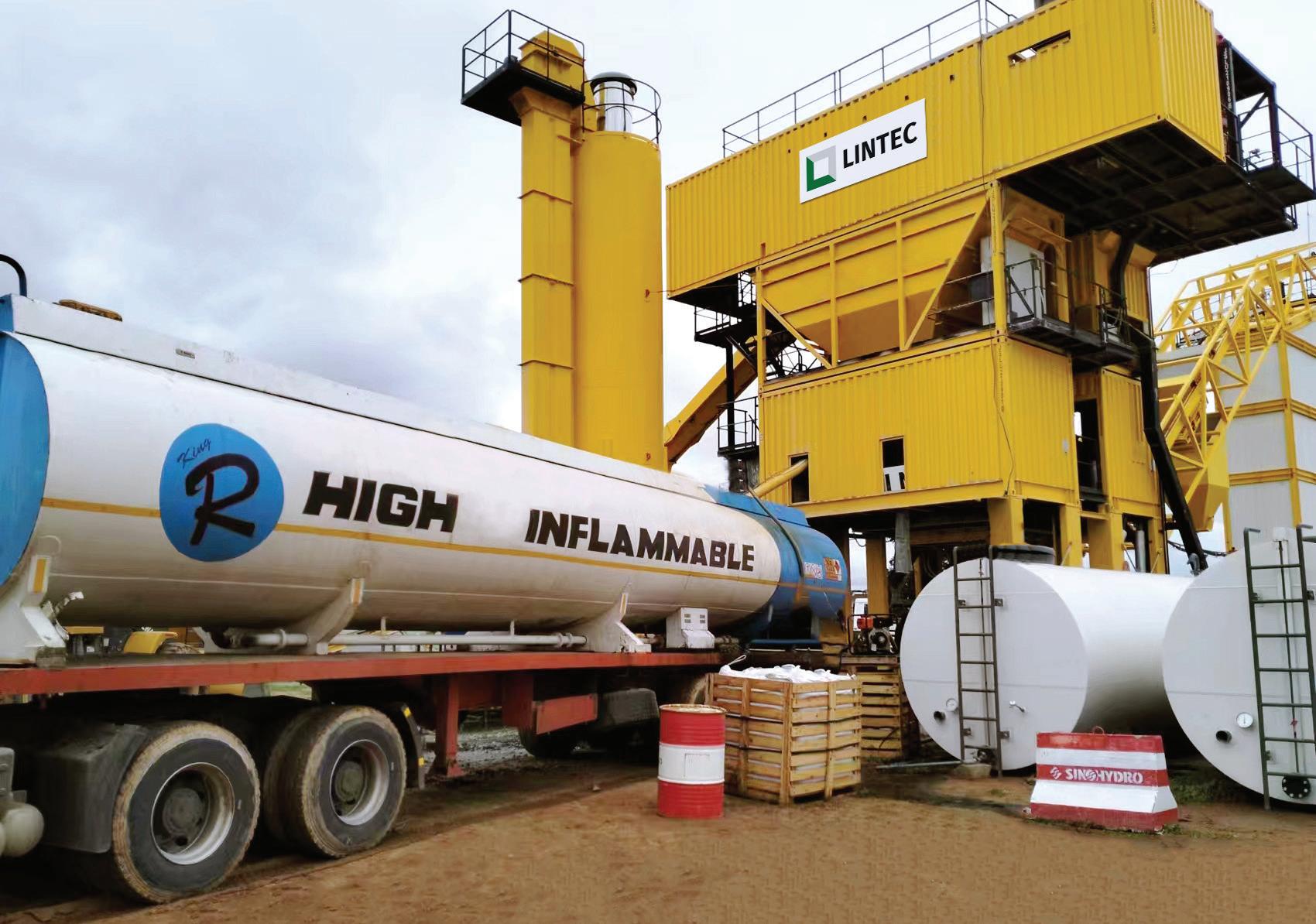
Containerised Asphalt Mixing Plant is well suited for airport infrastructure construction and the units have featured on other projects including Yap Island International Airport in Micronesia, and Sihanouk International Airport in Cambodia.
Built in ISO certified sea containers, the Lintec Containerised Asphalt Mixing Plants are the first of their kind in the industry, featuring a modular construction that allows for easy transportation and convenient installation. The Lintec CSD2500B model has a capacity of 160tonnes/hour and a batch size of 1650/1600kg. Additionally, the Lintec Containerised Asphalt Mixing Plants prioritise sustainability with pollution control units and optional recycling systems. The plants are easier to commission due to pre-assembly and testing at the factory. The modular design meanwhile ensures low shipping costs and transportation. In addition, Lintec’s novel double screen drum technology eliminates the need for hot elevator and vibrating screens while reducing the need for maintenance. Combining the heating and screening of the minerals in a single process unit offers the advantage of delivering energy savings. wwwlintec-linnhoff.com
LEFT
Chinese contractor POWERCHINA is using a Lintec asphalt plant on a project to build a new airport for Tanzania’s capital, Dodoma
Estonian company Fibenol launches its Lignova lignin and Tarmac achieves the lowest carbon resurfacing project yet for National Highways in the UK – Kristina Smith reports
Cleantech company Fibenol has commercially launched its Lignova lignin, produced in a specially designed biore nery. Lignin – an organic polymer found in plants - can be used to replace a portion of the bitumen in asphalt, reducing its carbon footprint and potentially improving its performance.
Lignova, which is extracted from wood, has already been deployed in trial pavement projects from parking lots to highways in eight countries between 2022 and 2024: Estonia, Latvia, UK, Sweden, Finland, Norway, Ireland and Japan. Fibenol hopes to announce its rst ever commercial highways project later this year.
“As most roads are procured by the public sector, the topic of how to reduce carbon and move to net zero is an important one,” said Reet Nõmmoja, sustainable solutions business development manager at Fibenol. “ e use of biobinders in asphalt goes hand in hand with the transition away from fossil fuels and chemicals.”

replacing 10% of the bitumen in the mix with Lignova would lead to a 33% reduction in related carbon emissions up to the point of laying. A 30% replacement would create a carbon negative asphalt mix, with -0.6% of the emissions of a regular AC 16 mix.
Asphalt producers and paving contractors have been experimenting with the use of lignin as a partial bitumen replacement for several years. A test section of road was laid in Zeeland in the Netherlands in 2015 and more recently there have been multiple trials in Finland and in Sweden.


e various trials have replaced between 5% and 25% of bitumen in the asphalt mixes with Lignova, although up to 30% replacement has been achieved in laboratory trials. Lignova is supplied in powder form and added to the mixer at an asphalt plant.
Research by Tallinn University of Technology has shown that for an AC 16 surface course asphalt,



"We convert over 90% of residual wood to Lignova lignin, wood sugars and speciality cellulose - for chemicals and materials industries"
Reet Nõmmoja Sustainable solutions business development manager at Fibenol





Research has suggested that the addition of lignin could improve the performance of asphalt by increasing its rutting resistance at high temperatures, reducing moisture-induced asphalt degradation and slowing down bitumen ageing due to oxidisation. is is being monitored in real life applications.

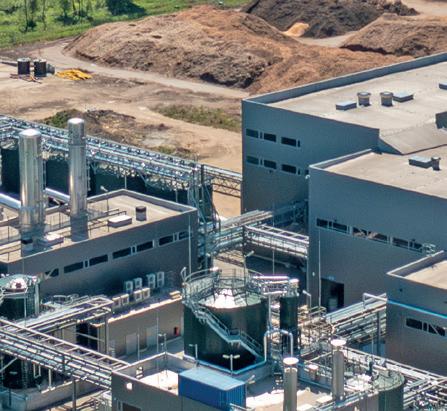


Recent trials of Lignova include a section of motorway in Stockholm, Sweden, laid by Svevia as part of its maintenance contract for the Swedish Transport Administration. And Peab Asfalt, which has been carrying out trials with lignin since 2020, laid a 500m test section on a heavily tra cked road in Vantaa, Finland in October last year using Lignova.
Fibenol, in collaboration with research institutions, hopes to conduct research this year which will show that asphalt containing Lignova can be recycled at end

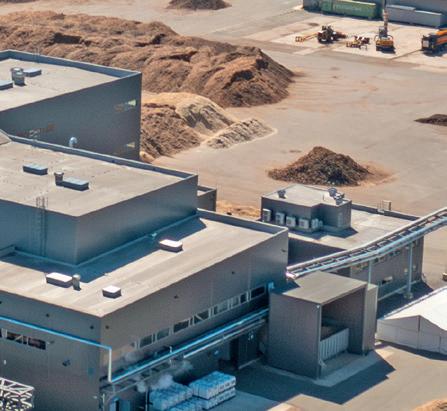

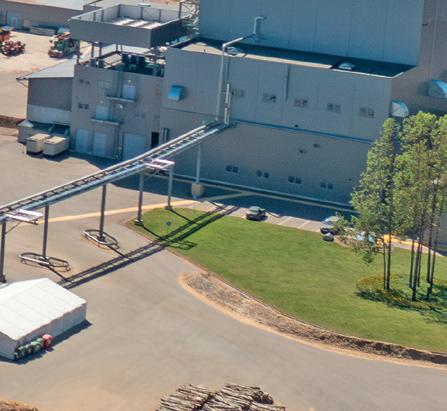
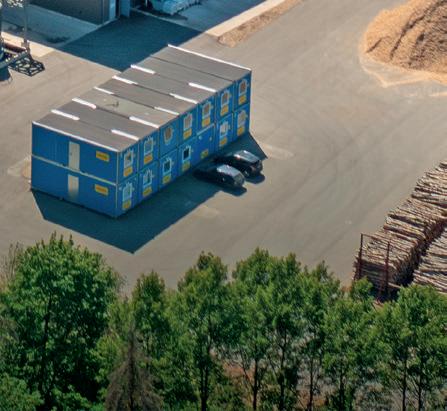
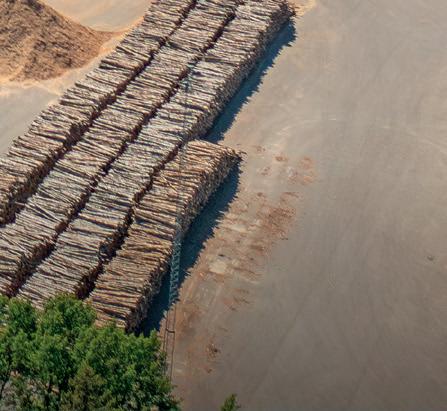




of life. “ e circular economy is very important, so we are working with universities and public authorities to show that this can be done,” says Nõmmoja. Lignova has been successfully used with asphalt mixes containing recycled asphalt planings (RAP).
Other commercially available lignin comes as a by-product of pulp and paper production. Fibenol’s patented biore ning technology, Sunburst, creates lignin which maintains its native lignin structure so that asphalt containing Lignova has no sulfur smell, and instead comes with a natural wood scent, says Nõmmoja .
e Sunburst process takes woodchips made from residual and lower-quality hardwood and converts them to a slurry in just 20 seconds by applying mechanical force, pressure and heat. Enzymes are then used to separate out the lignin, along with hemicellulose (wood sugar) and cellulose. “We convert over 90% of residual wood to Lignova lignin, wood sugars and speciality cellulose - for chemicals and materials industries,” says Nõmmoja.
Fibenol has around 15 research and development projects underway with research institutes, universities and industrial partners, all at di erent stages. Lignin for asphalt is the most advanced, followed by lignin for resins to be used in plywood and bioplastics. Other applications under development include the use of wood sugars in insulation and bioplastics, and specialty cellulose - a wood cream or paste - for use in packaging, paints and energy storage.
Fibenol opened its rst small-scale industrial



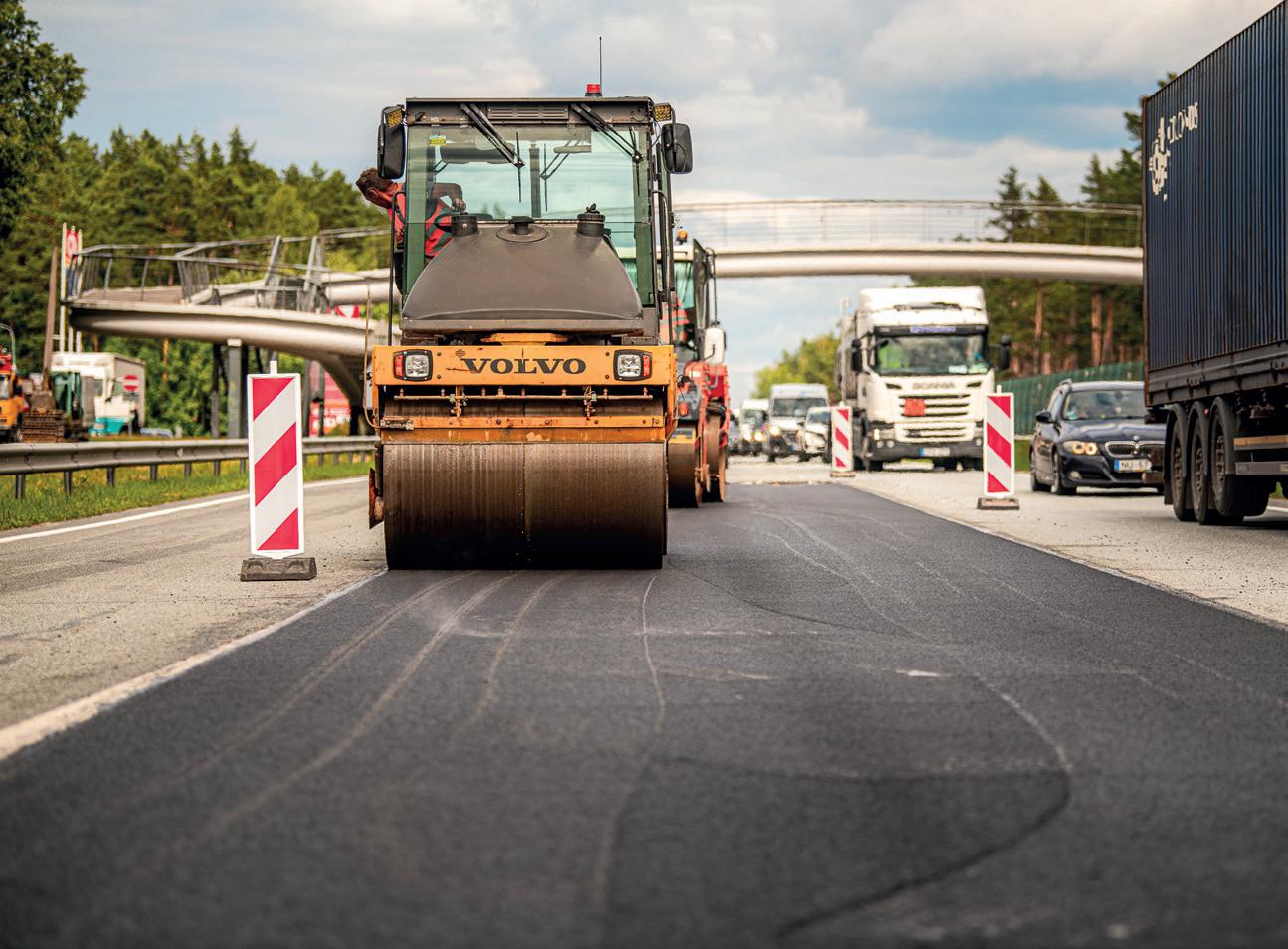
biore nery plant in Imavere, Estonia, in May 2024, producing 6500 tonnes of Lignova a year and has plans to double its capacity in 2027. It has also signed an agreement with the Latvian government for a €700 million large-scale biore nery using the Sunburst technology which will boost its production capacity 10 times, with commissioning planned for 2030. Fibenol plans to build further biore neries in other countries and to license its pretreatment technology globally. End




ABOVE
The Fibenol low carbon technology is already being proven in countries such as Estonia and Latvia
This low environmental impact solution reduces the temperature of production and laying of both new and reclaimed asphalt mixes, consequently decreasing atmospheric emissions and increasing sustainability.
BENEFITS
Reduction of production and laying temperatures
Laying of asphalt at significantly lower temperatures up to 40°C lower than traditional temperatures
Increase in the hourly plant production by up to 15%
Reduction of atmospheric emissions > -10.000 kg CO2eq/km
Energy savings > 280.000 MJ/km
roads towards sustainability
A 2.4km (1.5mile) trial resurfacing project for National Highways on the A64 in Branham, North Yorkshire in the UK (pictured), has reduced its carbon footprint by 75% compared to standard practice by combining lower carbon materials, production technologies and plant. National Highways says that this is the lowest carbon resurfacing it has achieved to date, without using o setting.
Tarmac supplied warm mix asphalt from its Cross Green plant in Leeds, which is powered by a combination of biofuel and clean electricity. e bitumen used in the asphalt mix was supplied by Shell, combining its AgeSafe and Carbon Sink technologies. e asphalt mixes also
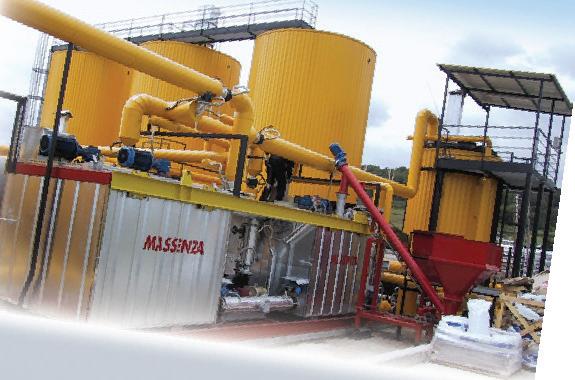
contained recycled asphalt planings (RAP): 37% in the lower layer and 20% in the surface layer. Tarmac deploys shelters to cover its RAP at the asphalt plant, preventing it from getting wet so that less energy is required to dry it out and get it up to the right temperature.
AgeSafe is a polymer modi ed bitumen (PMB) which contains additives including antioxidants and dispersants designed to inhibit the uptake of oxygen by the binder – which causes the bitumen to harden and become more susceptible to cracking. Carbon Sink sees the addition of a small amount of bio-based binder, which reduces the carbon footprint of asphalt since the plants used sequester carbon as they grow.



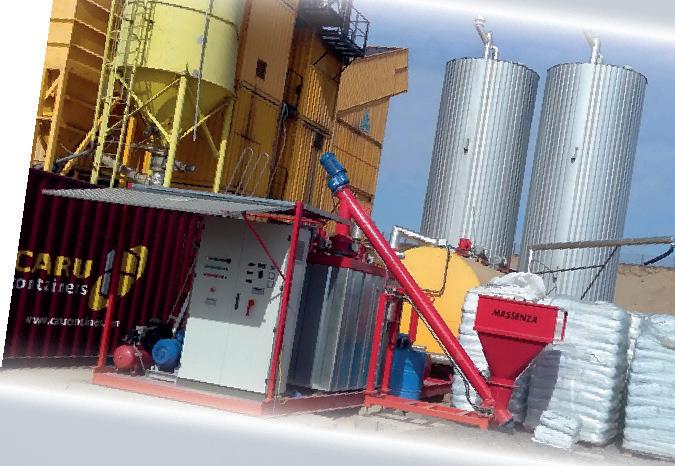


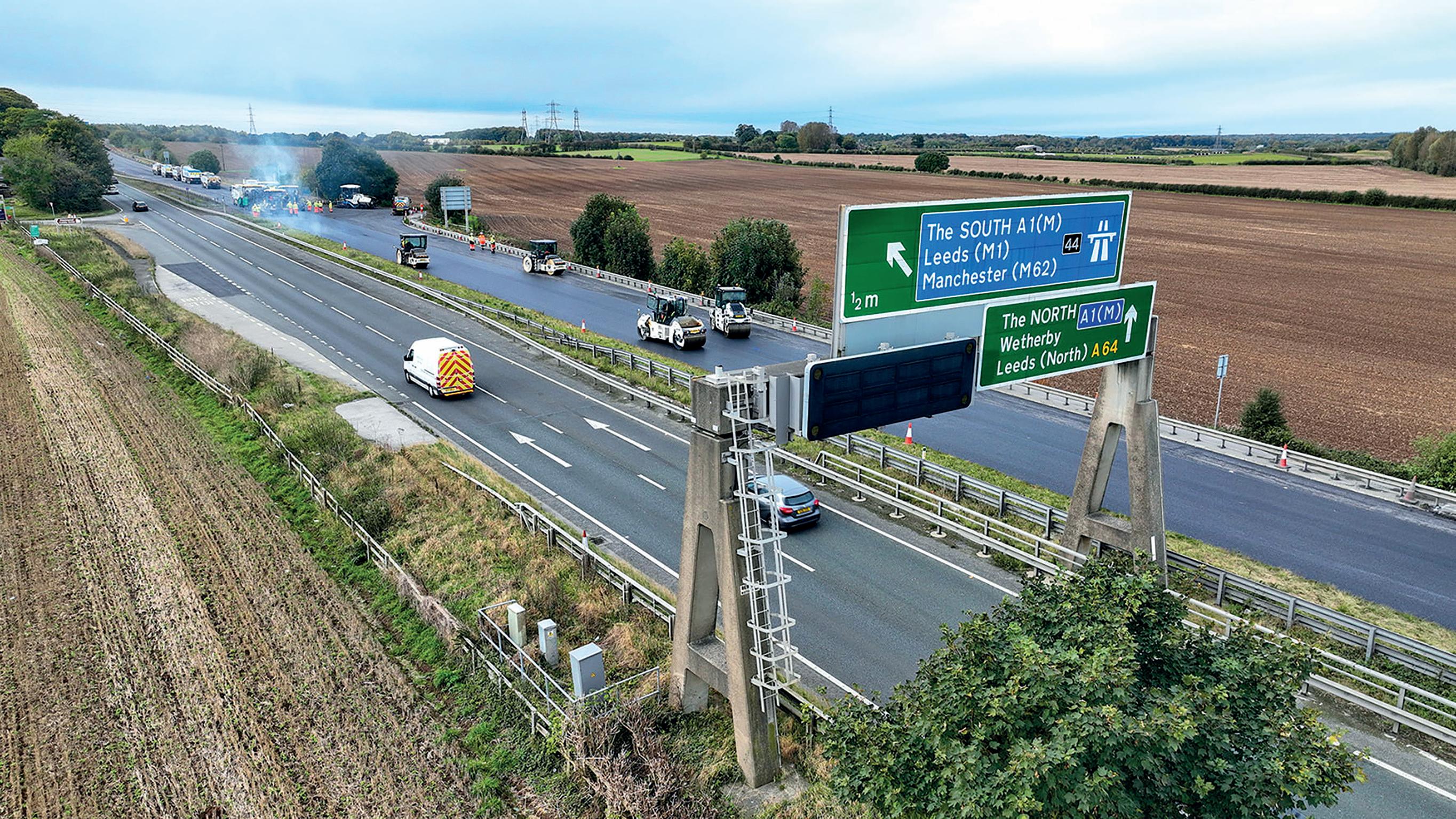



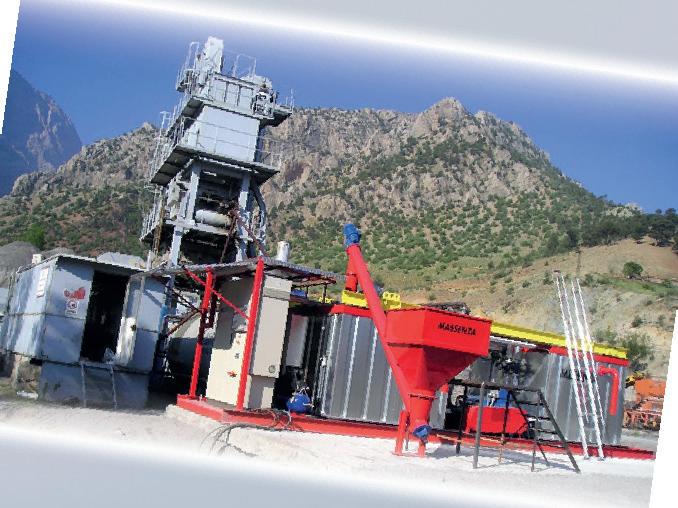





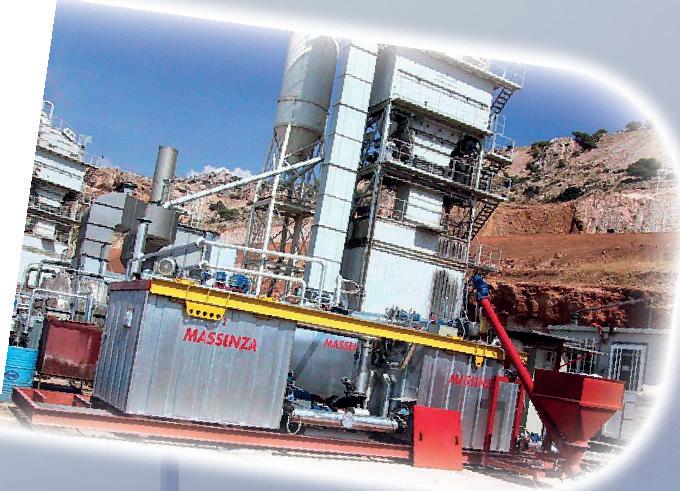














Mahon will work on reducing the size and improving the scanning speed of its muon detector technology to make it more portable and practical for real-world conditions (image courtesy Lynkeos/University of Glasgow)

Once the project’s initial research phase is complete, Lynkeos - a spinout from the University of Glasgow in 2016 - will work to bring the updated technology to market for bridges
Aresearch project using cosmic rays to measure structural integrity of the UK’s transport infrastructure has received a big cash injection from a research council.

Lynkeos will work to bring the updated technology to market.

David Mahon, a lecturer in nuclear and hadron physics in the University of Glasgow’s School of Physics and Astronomy, has been granted around US$584,000 from the government’s Science and Technology Facilities Council to support the project.
e aim is to reduce the cost and environmental impact of repairs to road and rail bridges by enabling earlier detection of structural problems.
e project is based around Mahon’s work in muography, a technique to measure cosmic rays in order to create detailed 3D images of the interiors of structures.
When the rays collide with the nuclei of the gases found in the planet’s atmosphere, the impact releases particles known as muons. Muons striking objects on earth are de ected very slightly from their course.
e amount of de ection depends on the chemical composition of the object they hit, with heavier elements causing greater de ection.
Measuring the de ection patterns over time, paired with sophisticated computer analysis, allows researchers to build up images of structures. Such images are impossible to produce using other nondestructive techniques including X-rays.
Lynkeos Technology, a spinout from the University of Glasgow in 2016, is already using muography techniques developed by Mahon and his colleagues to help the nuclear industry map the locations of pieces of radioactive waste stored in concrete- lled containers at some of the UK’s nuclear power plants. Once the project’s initial research phase is complete,
Over the next two years, Mahon will work on reducing the size and improving the scanning speed of its muon detector technology to make it more portable and practical for real-world conditions. In partnership with Transport Scotland, the detectors will be tested at a series of bridges across the city of Glasgow.
Mahon said there are more than 74,000 road and rail bridges across the UK, most of which are made from reinforced concrete. Many of which were built between 50 and 60 years ago and so are close to the end of their intended lifespan.
“Current inspection methods often require exposing steel substructure, which can lead to rust and further weakening when exposed to rain, so non-destructive testing methods which allows maintenance crews to see inside,” he said.
“Muography is a technique that’s already proven its worth in the nuclear industry and it seems ideally placed to enable non-destructive testing in transport infrastructure. is grant from the STFC will enable us to build on our previous achievements and build new, more portable test kits that can identify fatigue or defects at a much earlier stage than is currently possible,” he said. “Being aware of problems earlier, before they cause signi cant damage or disruption, could help bring the overall cost of repairs down.”
In addition to making the muon-detector technology more portable and power-e cient, the project will also nd new ways to harness the power of machine learning to speed up the process of taking cosmic ray measurements. End www.lynkeos.co.uk


“Current inspection methods often require exposing steel substructure, which can lead to rust and further weakening when exposed to rain, so non-destructive testing methods which allows maintenance crews to see inside"
David Mahon
Lecturer in nuclear and hadron physics in the University of Glasgow’s School of Physics and Astronomy
e German companies Vemaventuri and core sensing have entered into a partnership to drive digitalisation on the construction site.
Vemaventuri and core sensing will pool their expertise and jointly develop new products for the digitalisation of the construction site. By combining the strengths of both companies, innovative solutions will be created that will change the construction industry in the long term.
Vemaventuri, a wholly owned subsidiary of Peri, also based in Germany, specialises in solutions for monitoring and optimising concreting processes and increasing the e ciency of construction site work ows. By integrating sensor technology, the company said it can enable precise data acquisition and evaluation. is ensures greater safety and control on the construction site and makes a signi cant contribution to increasing e ciency.
Meanwhile, core sensing said it transforms mechanical components into intelligent, wireless sensor systems. With its intelligent and integrated sensor solutions, the company said that it is setting new standards in Industry 4.0, a term used to describe the current era of embedded connectivity, the ubiquity of technology in society that changes the ways humans experience and know the world around them.
In close partnership with customers from the construction, mining and production machinery sectors, among others, core sensing o ers full-stack solutions. Full-stack development is the process of developing both the frontend (user-facing) and backend (database and logic) of applications. Its solutions make it possible to use real time data from machines and systems to increase e ciency in terms of condition monitoring, reduce maintenance costs and develop new digital business models.
“We are very pleased about the partnership with core sensing,” said Michel Seeger, managing director of Vemaventuri. “Together, we can signi cantly advance digitalisation on construction sites and o er our customers innovative solutions for greater e ciency and safety.”
“ e collaboration with Vemaventuri gives us the opportunity to use our sensor technologies in a new eld of application,” said Christoph Miks, director of customer solutions at core sensing. “Together, we have already reached important milestones and I am convinced that we will develop forwardlooking and sustainable solutions that will set new standards in the industry and decisively advance digitalisation on construction sites.”
Vemaventuri and core sensing will be presenting their jointly developed solution at bauma, the international construction equipment show in Munich, Germany, April 7-13. End https://vemaventuri.io https://core-sensing.de/en www.peri.com/en
ABOVE RIGHT
Christoph Miks (le ) of core sensing, and Michel Seeger of Vemaventuri







Your solution for infrastructure and building construction projects. Just plug and play!
With UniKit, Doka offers a universal engineering kit for heavy loads. The logically structured and modular system grid can be individually adapted to customer needs and used for a wide range of applications, regardless of size. Paired with Doka’s formwork technology and services, UniKit is the perfect companion for bridge, tunnel, or power plant construction.
Doka GmbH | Josef Umdasch Platz 1 | 3300 Amstetten | Austria info@doka.com | www.doka.com /dokacom /company/doka /doka_international
The Rhode Island Department of Transportation has appointed Kistler, a supplier of dynamic measurement technologies, to monitor structural health of the Washington Bridge in Providence

ABOVE LEFT
The Washington Bridge in Providence, Rhode Island, will be outfitted with more than 100 structural health monitoring systems provided by Kistler (image courtesy Eli Zink, Mineral Media/Kistler Group)
ABOVE RIGHT
The Kistler team installs KiTraffic digital weighin-motion systems flush with the road surface (image courtesy Eli Zink, Mineral Media and Kistler Instrument/Kistler Group)
BELOW
KiTraffic digital weighin-motion system weighs trucks in real time and at any speed with a proven high accuracy (image courtesy Kistler Instrument/ Kistler Group)
Kistler said that when the installation is completed, the smallest state in the US will have the largest digital weigh-in-motion (WiM) site in the world, with 40 Lineas digital quartz sensors covering 10 traffic lanes.

Providence is one of the few cities in the US that is proactively using advanced technology. The north span of the Washington Bridge is being removed and a new span is planned. To keep traffic moving during the north span restoration, two traffic lanes were added to the south span.
The load rating on the south span is adequate, with the installation of structural health monitoring solutions from Kistler, the department of transportation can evaluate the health of the south span in real-time to assess any potential adverse impact from the additional traffic load and enable proactive mitigation of variations in its structural health.
Comprehensive sensor-based structural health solutions from Kistler offer real-time data for bridge structural condition monitoring to enable the Rhode Island DoT to perform predictive analyses and more timely preventative maintenance. Included is a customised Kistler digital WiM system to provide real-time evaluation and monitoring of precise bridge traffic load, as that information impacts the structural health of each bridge.

equipment - accelerometers, strain gauges, temperature sensors, inclinometers and a meteorology station - to measure, collect and interpret bridge health data. A WiM system will monitor specific load conditions.
For the structural health monitoring system, all hardware will be installed on the bridge based on engineers’ assessment of structures most likely to experience strain.
For example, while a bridge was built to vibrate and move, accelerometers can measure just how much and whether the movements are within the normal range specified for that structure. If undue stress is detected by the sensors in real time, the department of transport team can implement measures to preserve the bridge’s structural integrity and health.
The WiM system includes Lineas digital quartz sensors from Kistler placed just under the surface of the bridge’s roadway as well as charge amplifiers to condition electrical signals from the sensors and data loggers to process data in real time. LPR (licence plate recognition) cameras are positioned to identify trucks by their class size and monitor for overweight wheel, axle and gross vehicle weight (GVW) loads.
Importantly, the Kistler monitoring and WiM systems are connected to share critical data and paint a picture of the bridge’s overall structural health in real time. With this integrated data, bridge engineers and analysts can work with data on exact loads, axle weights and truck class to monitor the weight of trucks going across the bridge, as well as multiple measurements that assess the loads on the bridge structure to assess predictive maintenance requirements or be alerted to the need for emergency repairs. End www.kistler.com/INT/en









Hydrogen as a fuel for internal combustion engines is coming closer for the o -highway machinery sector
This clean fuel may well be used for applications where emissions have to be strictly controlled. But it may be some time before hydrogen is at a price where it can be used more widely for construction rather than speci c duties.
Various rms have been working on internal combustion engines able to run on hydrogen. Progress has been rapid in the sector.
Cummins is working on the UK Governmentfunded Project Unity in partnership with Holtex and the University of Manchester. e project is developing sophisticated digital technology that will enable optimised design of componentry for hydrogenfuelled engines.

technologies that will boost the development of green transport and power solutions.

ABOVE
JCB has been awarded approval for its hydrogen engines to be used in construction machines
BELOW
is development represents a marked change from the conventional process of using actual testing to determine component durability and reliability over time. e machine learning will focus on failure modes such as hydrogen e ects, water droplet erosion, and structural integrity.
is project will help speed the transition from diesel ICE to hydrogen powertrains in both onhighway and o -highway applications.
a facility at Hudders eld in the UK. e aim of the


Cummins is leading the project, which has £2.4 million of backing from the UK Government from a facility at Hudders eld in the UK. e aim of the project is to utilise machine-learning tools to analyse how key components will perform in use under load and over a long period, determining when or how they could fail. e use of machine learning will reduce the amount of physical testing needing to be carried out, speeding the development of reliable components.

Cummins is investing in research into clean power technologies for the future

Meanwhile, JCB has secured a ruling from licensing authorities allowing its hydrogen-fuelled engine to be used commercially in machines. e company says that 11 licensing authorities across Europe have given permission for the hydrogen engine to be sold across Europe, with authorities in other countries set to follow suit.





fail. e use of machine learning will reduce the amount of physical testing












sold across Europe, with authorities in other Germany, France, Spain, Belgium, Lichtenstein.
e Netherlands’ Vehicle Authority RDW was rst to provide certi cation. Other European bodies followed, including Great Britain, Northern Ireland, Germany, France, Spain, Belgium, Poland, Finland, Switzerland and









Data will be collected on the performance of components such as turbochargers and bearings operating under high loads and at high speeds.





e sophisticated simulations can then provide information to optimise component speci cations. e programme will investigate components used in both internal combustion engines and fuel cell stacks.


will investigate components used in both


round, APC25 provided the funding in partnership
e Advanced Propulsion Centre UK (APC)’s Collaborative Research and Development funding round, APC25 provided the funding in partnership with Innovate UK, a part of UK Research & Innovation.
e UK Government has invested in a series of


is makes JCB well placed to win orders for o -highway machines fuelled by hydrogen for use on sites where there are restrictions on emissions. e Lower ames Crossing project in the UK has speci ed that there will be no diesel machines onsite and that mobile equipment will have to be electric or hydrogen-fuelled.
electric or hydrogen-fuelled.
sites at an advanced stage.
JCB has produced over 130 hydrogen evaluation engines which are powering backhoe loaders, telehandlers and generators, with testing on customer sites at an advanced stage. End www.cummins.com www.jcb.com



Volvo Penta is o ering battery solutions with a high energy density that can be adapted to various battery energy storage system (BESS) requirements. e rm says that its BESS subsystems have a strong focus on compactness, e ciency, and transportability. e company claims comprehensive lifecycle support for its BESS systems, providing integration and reliability through application guidance, service agreements, and solutions such as remote monitoring and recycling programmes. e rm can also work with original equipment manufacturers (OEMs) to deliver battery solutions that meet energy demands, address spatial limitations, transportability, and energy density.
Volvo Penta says that it can deliver support to help customers t their BESS subsystem for e cient energy storage in stationary and mobile applications. e subsystem features an energy-dense battery pack with a favourable C-rate to support fast charging and discharging, along with a robust battery management system (BMS) that is aimed at optimising performance, battery longevity, and even cybersecurity.
Key components in the subsystem include a DC/DC converter for auxiliary power, a telematics gateway for real-time monitoring, and a thermal management system to maintain optimal battery performance in various environments. Electrical safety is ensured through high-voltage isolation monitoring and other protective features.
e CAN and DC interfaces, adapted from the Volvo Group’s platforms, ensure reliable data transfer and system optimisation. Volvo Penta's subsystem handles the DC portion of the BESS, while the OEM is responsible for the container shell, AC componentry, and set up, ensuring the system is tailored for the





intended applications. Volvo Penta’s BESS subsystem is also designed to withstand tough environments, o ering protection against dust and corrosion for reliable performance in challenging conditions. With ingress protection (IP) ratings and corrosion-resistant materials, it is built for durability and dependability in tough environments.
With an energy-dense design ideal for mobile applications, Volvo Penta’s containerised BESS is suited for no-emission zones or remote locations where electric machinery requires charging. Once discharged it can be relocated to an on-grid area for recharging, while ensuring uninterrupted activity at the site.
Volvo Penta's battery energy storage subsystem is designed to support grid stability in demanding applications such as construction, where capacity and frequency challenges can arise during electri cation. End www.volvopenta.com
ABOVE
Volvo Penta is now o ering high energy density power solutions
"It
is built for durability and dependability
in tough environments"
Hatz Digital Solutions is now o ering advanced engine management technology. e rm has developed real-time performance tracking and IoT systems for its engine range. Designed to maximise e ciency, productivity, and pro tability, the system provides vital information such as engine performance, location, maintenance needs, and error codes. All of the data is accessible using a browserbased dashboard.
With features like geopositioning, data transfer through a SIM card, and over-
the-air updates, Hatz engines can become data providers for optimised planning. e technology is said to be intuitive and powerful, o ering structured information that improves pro tability while ensuring availability and reliability. is solution is compatible with all electronically controlled Hatz engine applications, making it ideal for hire companies and construction professionals looking to re ne their operations. www.hatz-diesel.com
LEFT

Hatz now o ers a sophisticated engine management package









Sit in on our latest round table discussion on sustainability in the construction and aggregates industries with two world-class experts: Michael Gomes from Topcon and Jeremy Harsin from Cummins.








Scan/click below to watch the full interview













"Our Skidmarks page is highly rated by readers. Your input could help make this page even more entertaining. If you come across any amusing road-related stories, pictures or videos, email me at mwoof@ropl.com"
Mike Woof
Seatbelt use is banned on safety grounds for drivers using Europe’s longest ice road stretches 27km and is in Estonia, linking the port of Rohuküla on the Baltic Coast with Hiiumaa Island. is seasonal road is used in winter by cars and trucks to access the island, with seatbelt used banned in the event of people having to get out of their vehicles quickly should the ice give way. Drivers are told to travel either at speeds below 25km/h or at speeds from 4068km/h, to prevent resonances that could break the ice. e speed limits are enforced very strictly for safety purposes
A child managed to take control of the family car when his grandfather fell into a diabetic coma while driving along I-75 in the US state of Georgia. e 10-year-old child managed to grab the wheel and bring the car, which was towing a boat, to a safe halt in the hard shoulder. e child then called the emergency services for assistance, saying his grandfather was in a diabetic
coma. Police and paramedics rushed to the scene and were able to give the man an IV to stabilise him, while o cers were able to move the vehicle, and the boy's mother was able to collect him and take him home. Although the man usually wore a device on his wrist to alert him when his blood sugar levels fell too low, this had broken and he had called his doctor to provide a new one. O cers were so impressed with the boy’s response that they provided him with an award for his smart thinking.
A British woman resorted to appealing on social media for help after her husband and son decided to play a prank on her. ey set up a function on her Tesla car so that it would make a farting noise every time she left the vehicle and the self-locking mechanism activated. She did not know how to change the setting. e husband and son meanwhile were highly amused and refused to disable the setting resulting in the woman having to seek assistance elsewhere.

Vehicle modi cations can ensure a soft landing in the event of a rollover – image courtesy of reader Mehrdad

lucky escape recently when the car she was travelling in crashed. e car was being driven very quickly, with the driver swerving around other vehicles on a stretch of highway. However, the driver lost control and rammed into the barrier wall. e woman was not wearing a seatbelt and was ung from the vehicle by the force of the impact. Incredibly, she su ered only minor injuries.
A man in Scotland was caught by police with a blood alcohol level almost seven times the legal limit. He had fallen asleep at the wheel of his car after
having to be closed temporarily. However, when he appeared in court on the charge of drinkdriving he appealed against the mandatory ban, saying that he has health issues and because it is 1.5km to the nearest bus stop, the usual mandatory ban for the o ence would be di cult to cope with.




















A truck containing pies was stolen in the UK recently. After a search by police, the missing vehicle was located and recovered. However the pies were missing. It is not clear if police have been looking for thieves su ering from indigestion.



To those thinking electric cars are new, think again. In fact, the first six World Land Speed Records set by cars were all made by electric vehicles in the short period between 1898 and 1899, the last of these being made (most famously) by Camille Jenatzy when his torpedoshaped vehicle managed to top 105km/h. The next speed record was set by a steam-powered car and it was not until 1902 that a Mors car with an internal combustion engine and driven by William Vanderbilt was able to seize the eighth World Land Speed Record at 120km/h.
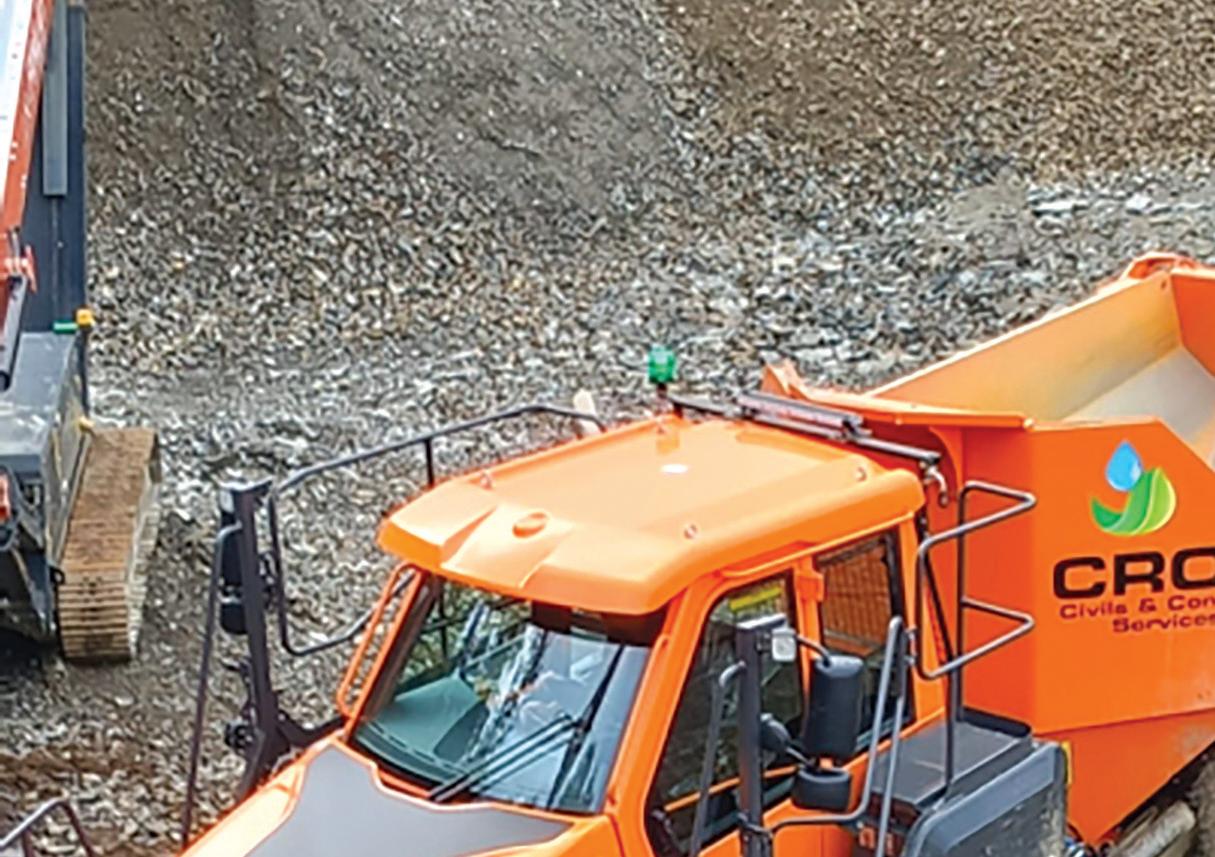
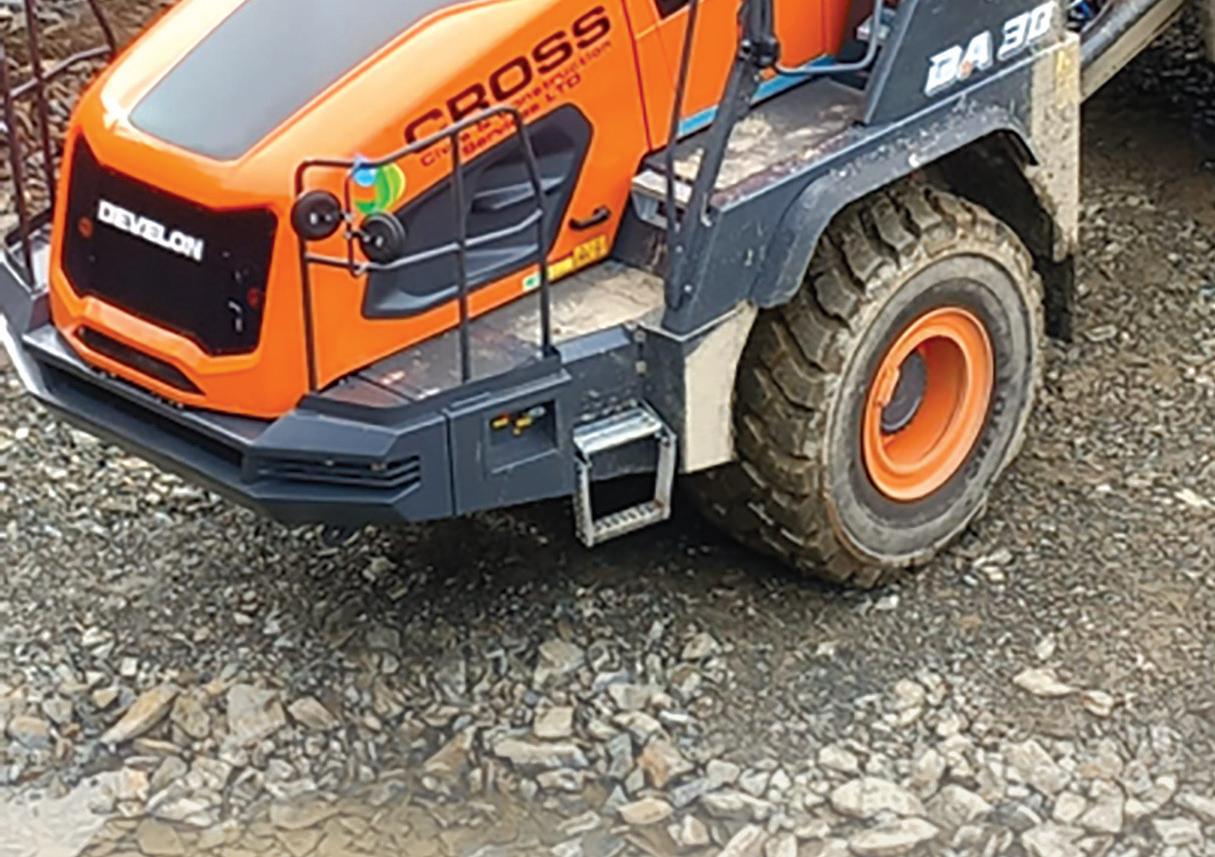

Cross Civils & Construction Services, based in Aberfeldy in Perthshire, Scotland has purchased a new Develon DA30-7 articulated dump truck (ADT). e new ADT is the rst from Develon at the company and was supplied by Castle Douglas-based James Gordon (Gordons), the new Authorised Dealer for the whole of Scotland for Develon, formerly Doosan Construction Equipment.
Kevin Cross, the owner of Cross Civils & Construction Services, commented:
“David Moir at Gordons, who I’ve known for a long time invited me over to try out the Develon DA30-7 ADT as a possible replacement for one of the machines in our eet. David and Gordons showed impressive attention to detail and understanding of our business needs, to ensure a very quick turnaround from placing the order to delivery of the new machine.
“I was convinced about the DA30-7 right from the start. It has a shorter turning circle and is very stable, with a lower centre of gravity compared to other
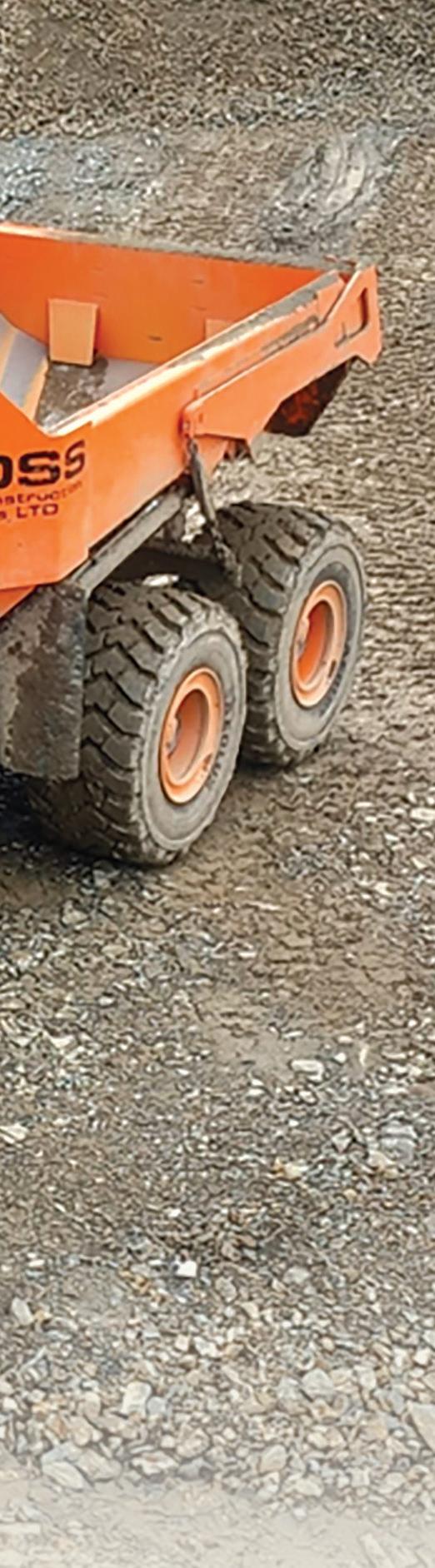

machines of its size on the market. e permanent six-wheel contact and drive o ers excellent performance on all the surfaces we have to work on, such as soft ground, uneven surfaces, steep slopes, tight turns or a combination of all of these di cult conditions.
“Due to work demands, the Develon DA30-7 became an addition rather than a replacement and brings the number of di erent brands in our eet to four".
"We utilise the DA30-7 in every part of our business, from our civils and housing development projects to working in our own quarry, where we produce sand and gravel.”
“Without doubt, the DA30-7 has proved itself to be the best machine we have and this is strongly supported by the two drivers who normally operate the machine between them.“
eu.develon-ce.com/en/
A new mobile impact crusher. MOBIREX MR 100i NEO from Kleeman, is being used by E+F Recycling at a site in Nordhorn in Germany for recycling concrete and rubble.
The unit is said to feature a robust design and versatility as well as a compact design that means it can also be used in tight spaces. A new feature of the plant is ‘Lock & Turn Quick Access’. This system enables the quick and tool-free opening of the crusher housing. Opening and closing only takes 30 seconds and simplifies access for maintenance, when jams need to be cleared or impact bars replaced. Safety and e iciency during operation are also improved.
Another highlight of the MR 100i NEO is the fully hydraulic gap adjustment and overload system. The gap adjustment as well as the zero point determination can be set accurately from the control panel. This means that manual measurement, loosening screws and the ultimate positioning are not necessary.
e overload system ensures that the machine is protected against damage from uncrushable material such as tramp metal.
When triggered, the pressure plate breaks so that the rocker arm can get out of the way. This protects the rotor, the rocker arm and the crusher housing. The pressure plate can be replaced by the operator onsite, which is cheaper than damaging the rocker arm or crusher.
The operation of the plant is userfriendly due to sophisticated functions such as the crushing gap setting and troubleshooting tools. In the future, the system will allow production data from the belt weigher to be viewed remotely.
www.wirtgen-group.com

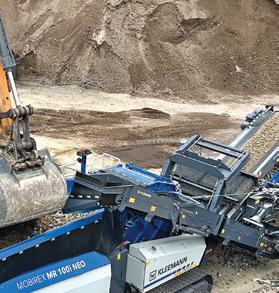
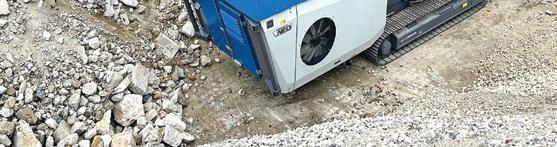




A new approach to procurement for road construction is driving a change to recycled materials and allowing savings on carbon emissions as well as cost. The partnership between Huyton Asphalt and Tarmac is delivering new solutions for clients in the UK
According to Liam Brown, commercial director at Huyton Asphalt, the road sector is seeing a growth in sustainability across the industry: “Price and quality are still part of procurement criteria but the importance of carbon saving and the ability to provide customers with new innovation and data-led guidance about materials is on the rise.”
In 2008 Huyton Asphalt formed a partnership with Tarmac that has become peer-to-peer collaboration focused on material innovation and data-led reporting.
Megan ompson, technical product support manager at Tarmac said: “Being able to identify and o er clients value-added solutions that move beyond a ‘tick-box’ criteria for sustainability has underpinned the partnership between Tarmac and Huyton Asphalt.
Huyton Asphalt has rolled out its Innovation Halo range of low carbon materials for its customers, which have been developed by Tarmac and include warm mix asphalt and surfacing products that use rubber from recycled tyres.
For one project, Huyton Asphalt delivered a major surfacing project in Deeside, North Wales involving over 17,000m2 of carriageway resurfacing. Over 9,000tonnes of Halo warm mix and 1,600tonnes of Halo Rubberpave was installed, including more than 2,600tonnes of recycled asphalt pavement (RAP). Using these materials, the team delivered a carbon saving of 57.3tonnes – a 13% reduction in emissions.
James Blennerhassett, managing director at Huyton Asphalt said: “Requiring less energy for production and application, warm mix asphalt reduces carbon emissions whilst maintaining quality and durability. It is typically produced at 20-40˚C lower than hot asphalt, reducing the embodied carbon of the material by 8-12%.

"Being able to identify and o er clients valueadded solutions that move beyond a ‘tick-box’ criteria for sustainability has underpinned the partnership between Tarmac and Huyton Asphalt"
Megan Thompson Technical product support manager, Tarmac

Warm mix has become a default product for Huyton Asphalt’s customers, but the technology is also being applied to other new innovations and environmentally sustainable asphalts. e company’s BBA approved Halo RubberPave material is helping to repurpose and recycle the rubber from end-oflife tyres (ELT) into the UK’s roads, contributing to a circular economy.
When combined with warm mix technology, it has been calculated to deliver an average saving of 3.5kg of CO2e/tonne compared to conventional asphalt. ompson commented: “For every kilometre of highway surfaced, rubber asphalt can reuse the
Scan for more information on Huyton Asphalt projects globalhighways.com
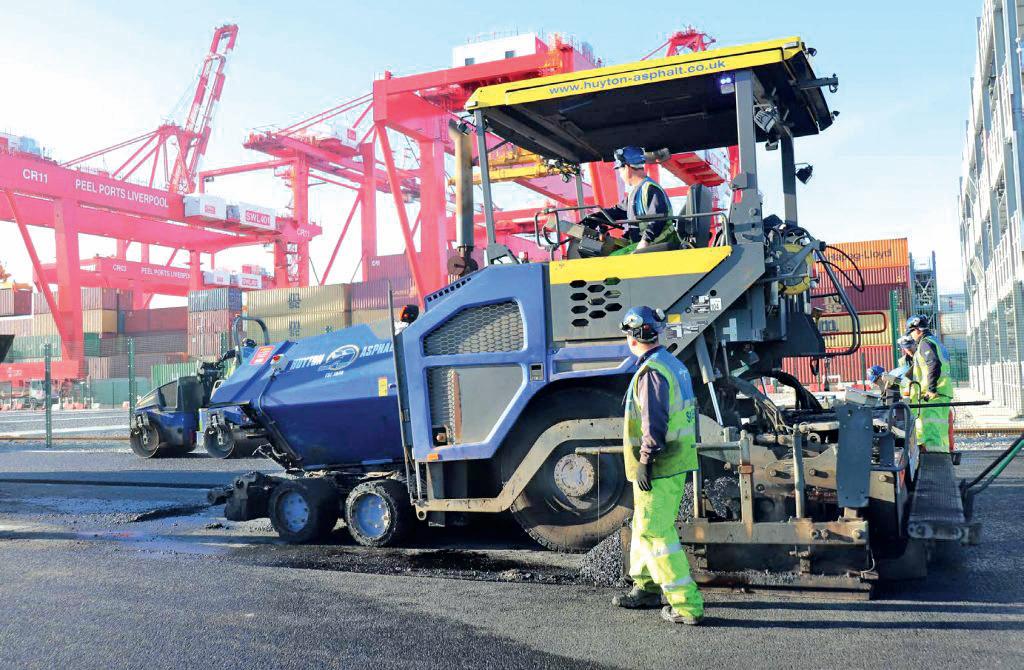
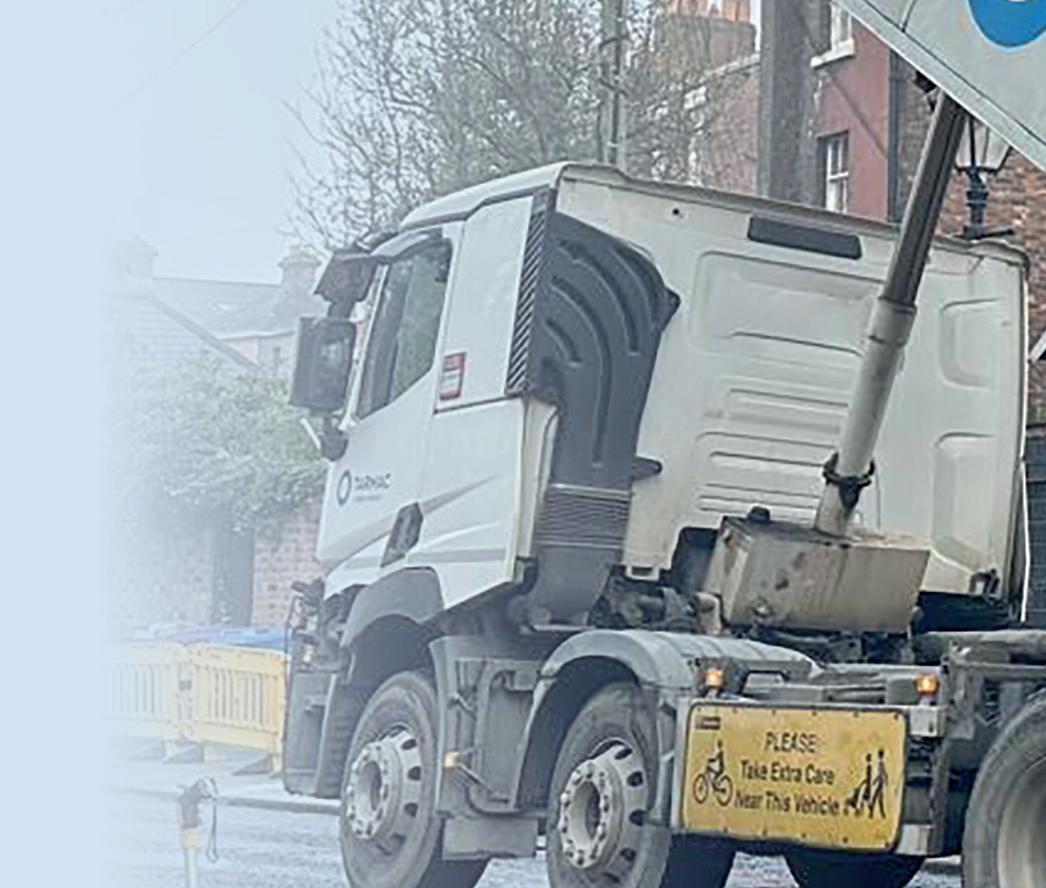
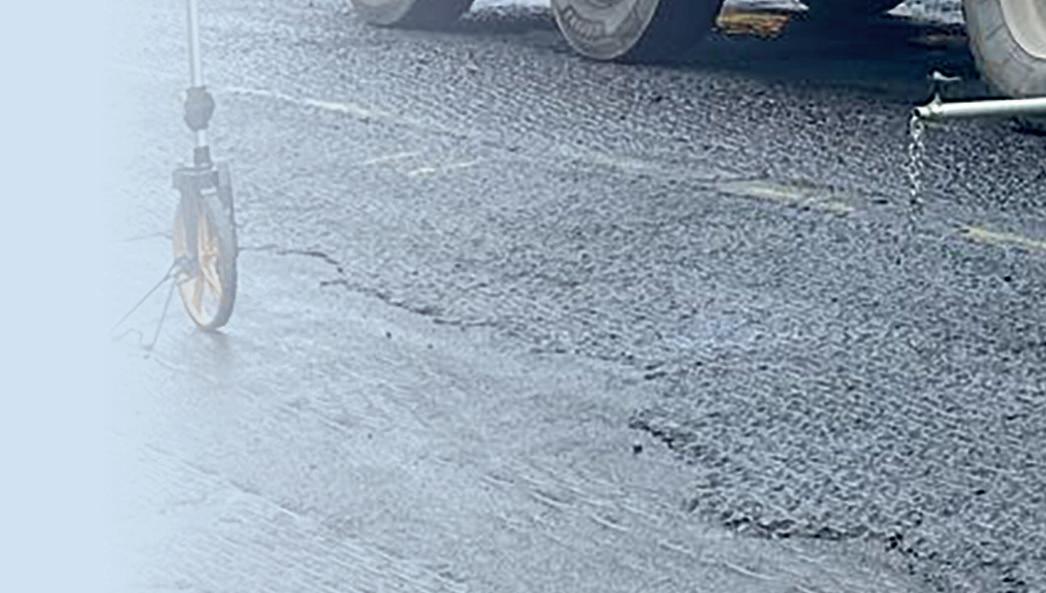

rubber of up to 750 waste tyres, helping to reduce the 120,000tonnes of rubber waste, including 500,000 tyres, that are exported from the UK annually.
“ e end material is a durable, high-performance asphalt using SMA technology that’s suitable for most locations.”
e partners are now looking to understand how new materials can bring opportunities to build carbon sinks into roads. Developed by Tarmac and championed by Huyton Asphalt, biogenic asphalt binder technology locks away carbon absorbed during the growth of the biomass element, turning the road into a carbon sink.
Since the asphalt can be recycled at the end of the pavement life, most of this carbon will not re-enter the atmosphere. According to available data, biogenic asphalt technology could reduce the carbon footprint of an asphalt mix by up to 40%.
Ian Carr, regional technical manager at Tarmac said: “Our close collaboration has also allowed us to look beyond asphalt too. Low carbon concrete is increasingly popular due to its sustainability credentials – in this instance it has achieved a 49.1% reduction in carbon emissions while maintaining the durability, strength and resilience of traditional concrete.”

"Working with Tarmac to provide detailed breakdowns of plant and products emissions demonstrates our commitment to deliver with reduced carbon front of mind"
Sophie Colleran
Sustainability manager, Huyton Asphalt

A data-led approach to plant and product-speci c carbon footprints allows local authorities and asset owners to make informed decisions about how funding is allocated across the network and enables projects to maximise sustainability bene ts.
Sophie Colleran, sustainability manager at Huyton Asphalt explained how this is taking shape.
“As councils work towards their net zero targets, they are understandably making more decisions based on data that provides clarity on embodied carbon and lifecycle impacts. Working with Tarmac to provide detailed breakdowns of plant and products emissions demonstrates our commitment to deliver with reduced carbon front of mind.” End www.huyton-asphalt.co.uk www.tarmac.com
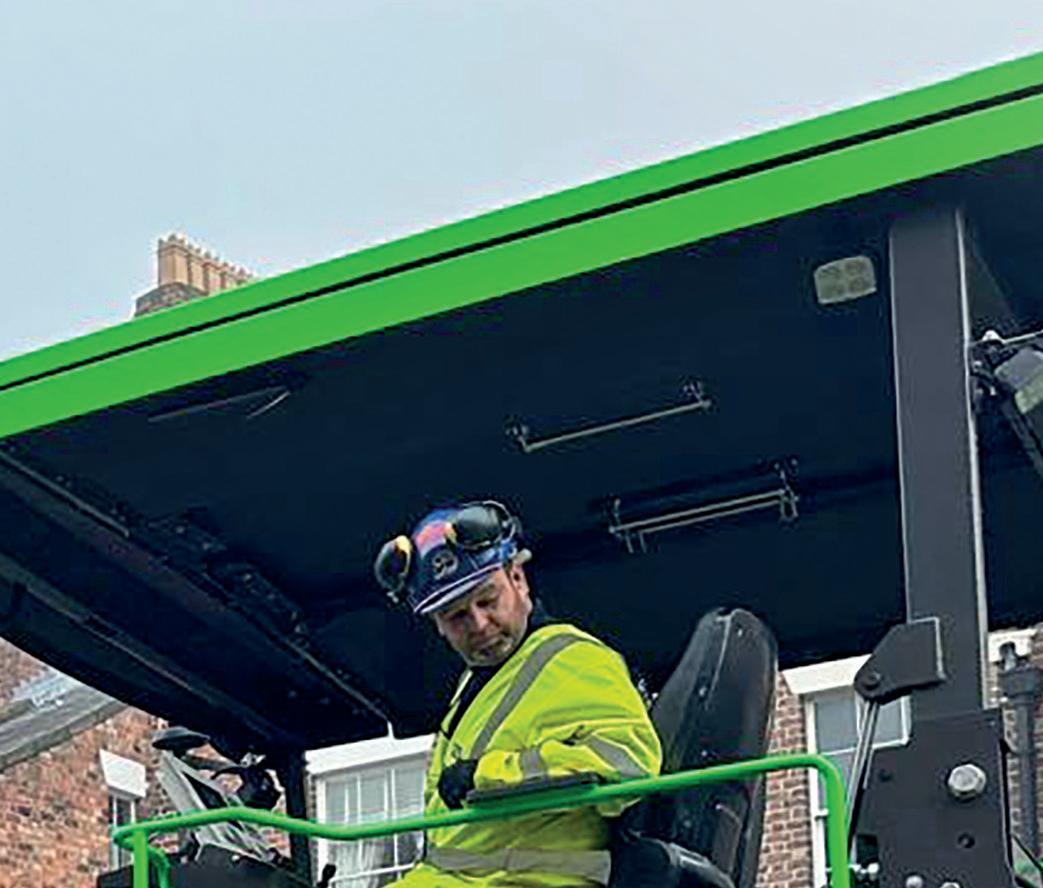
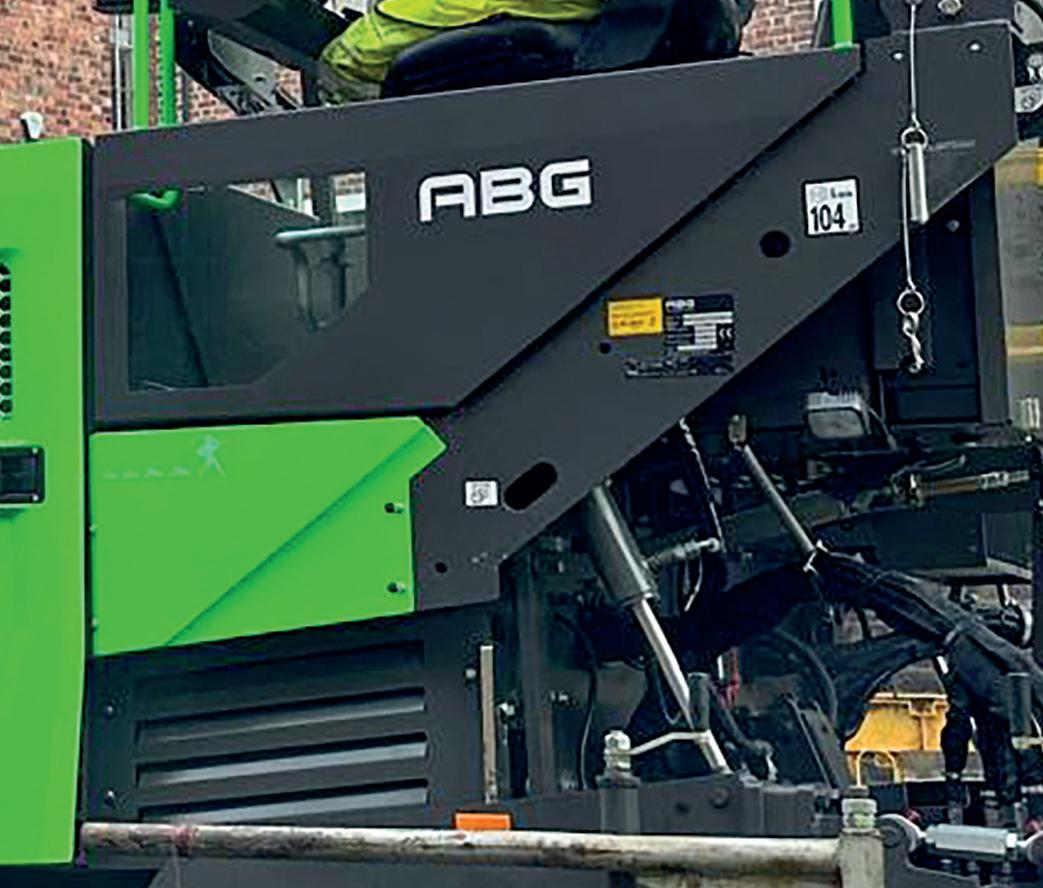
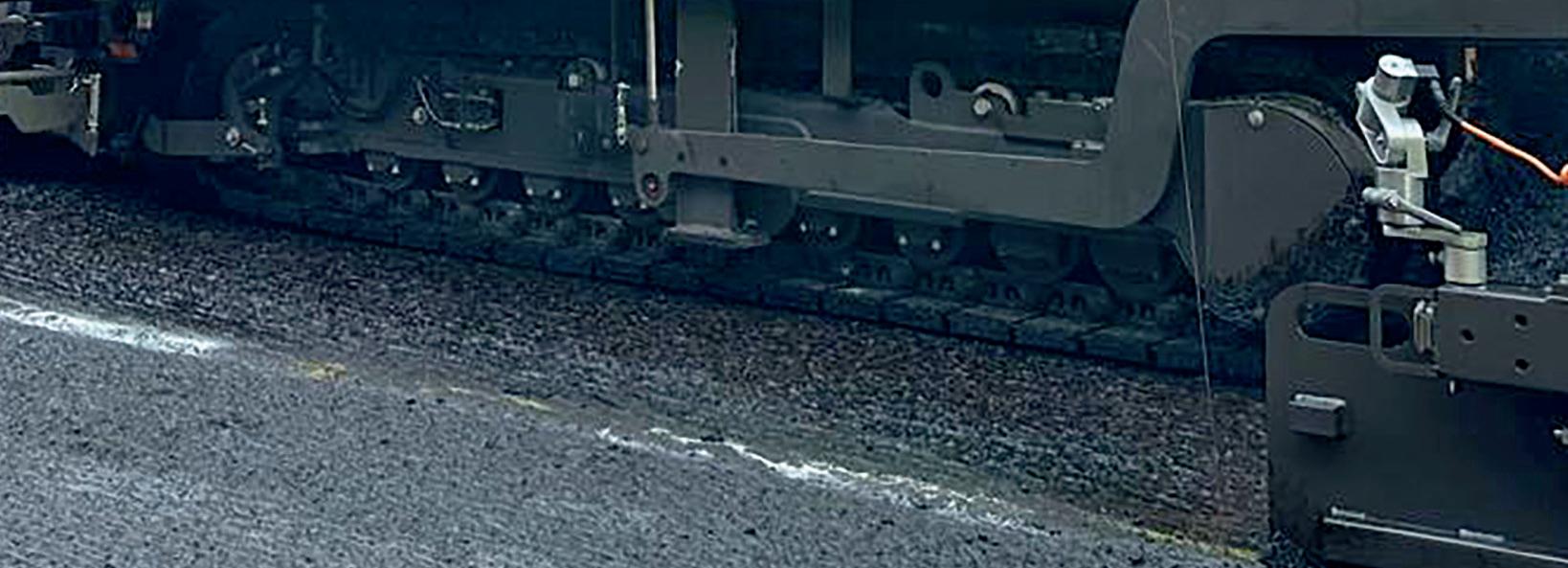





Atlas Copco says the second generation of its solar light towers, the HiLight MS 4 and MS 5, significantly reduce carbon footprint

The recently launched new models of the HiLight MS series are more compact than the rst generation of Atlas Copco solar light towers due to the solar panel design, explained Eric Tomin, product marketing manager for Atlas Copco’s Power and Flow division. ey are brighter thanks to the SMD High Lumen LED technology and o ers more autonomy and reliability with solar panels in parallel. If one panel has an issue, the battery continues to be recharged by the others. Each solar panel is equipped with one Maximum Power Point Tracking (MPPT) for e ciency and the units are protected by a robust HardHat canopy. e loading capacity is optimised to t nine units in a 40-foot High Cube container.

cubicle. e lithium batteries and solar panels deliver a minimum of 11 hours of autonomy, with recharging times as low as four hours for the MS 4 (with one battery) and ve hours for the MS 5.

Atlas Copco’s HiLight MS 4 and MS 5 o er light coverage of up to 3,846m² and 5,278m² at an average of 20 lux, with surfacemounted device (SMD) High Lumen LED lights providing 87,750 lumens from the MS 4 and 117,000 lumens from the MS 5.
With an increase in light coverage by 20% compared to traditional chip-on-board (COB) LED types, the superior lumen per watt ratio achieved by these light towers means that they o er greater lighting distribution and e ciency. Moreover, a 5kWh lithium battery contributes to up to 85 hours of autonomy with a dimming function and ECO mode that with a dedicated control
Recharging time can be signi cantly reduced to up to 2 hours and 36 minutes if the recharging is by solar panel with full sunshine, depending on the model. Moreover, both models feature remote monitoring capabilities to help contribute to increased safety and productivity. ey can operate in extreme temperatures, ranging from -20°C to 45°C. Safety and convenience are enhanced with features such as an E-winch, Earth Leakage Relay, E-stop and Photocell and AutoStart. Additional options include EU Road Homologation, AUS undercarriage version, and C5M painting.
Portable Power and Flow is a division within the Power Technique business of the Atlas Copco Group, and part of the Power Technique Business Area. Its mobile generators, energy storage systems, light towers and portable and industrial pumps, serve a wide range of industries such as construction, mining, wastewater and biogas. e division is headquartered in Rock Hill in the US and has development and manufacturing in Europe, China, the Middle East and Brazil. End www.atlascopcogroup.com



In addition to the recent launch of its European lighting tower factory, the Yanmar lighting company Himoinsa has appointed Iain Curran as business development manager. Curran brings over 20 years of experience in the power generation sector. His extensive knowledge of the rental market and experience in introducing hybrid units to the UK market will be crucial to driving the company’s growth plan in the lighting tower segment, mainly in the Europe-Middle East-Africa region.
The company’s goal is to strengthen its position in the lighting tower market as part of its growth strategy in the Mobile Power business unit. “It’s a pleasure to be part of Himoinsa and the mobile power project, where I’m confident that lighting tower products
will play a key role in the company’s growth,” said Curran. Himoinsa’s new lighting tower factory in Europe has a production capacity of 5,000 units per year – this is in addition to production at the company’s manufacturing plants in Asia and the Americas. The factory will produce diesel, hybrid and electric lighting towers.
New models such as the HBOX+ (diesel and hybrid versions) and HBOX+ 48VDC have been added, along with the recent launch of the HCOMPACT+ design. Existing versions, such as the AS4006, have also been updated with LED technology and the S5 engine, along with other adaptations tailored to specific markets such as Australia, Germany, and the UK. www.himoinsa.com

Wacker Neuson is now o ering new additions to its range of compact construction machines. e new compact WL250 and WL750 wheeled loaders are claimed to o er more e ciency and comfort.
ese are the rst models with the new nomenclature for the rm’s wheeled loaders. e bucket size can be determined by the product designation, with WL250 referring to a volume of 0.25m3
e WL250 wheeled loader has an operating weight of around 2tonnes and has an overall height of less than 2m, suiting it for construction applications in restricted spaces. e machine is said to feature a robust design and a low centre of gravity for stability when carrying heavy loads. e WL250 features direct hydrostatic drive for all four wheels.
e new WL750 wheeled loader has an operating weight of around 4tonnes and is said to be highly manoeuvrable.
Versatility is optimised due to the quick-change plate, which also maximises visibility. e WL750 bene ts from a new cab with wider access, more legroom and ergonomic controls.
Rear visibility is said to be good due to the panoramic rear windshield, which increases safety. e machine has an electronically-governed drive system with several operating modes to suit a range of duties.
e new TH625 is a compact telehandler said to o er high e ciency in use, featuring a high payload for its class at 2.5tonnes, combined with a lifting height of 6m. It is o ered with a choice of engines delivering 45kW or 55kW, as well as featuring fast and high material handling.

Due to its compact dimensions and good manoeuvrability, it can also be used in con ned spaces. e cabin is





National Pile Cropper (NPC) is introducing an upgrade to its Heavy Duty CFA Links to cope with the most demanding of projects. This has been developed following customer feedback. For dealing with augured (round) piles, NPC developed the CFA & HD range, which cuts circular augured concrete piles ranging from 300mm to 2,000mm in diameter. Specifically in response to meet customer demands, the latest version of the NPC Heavy Duty CFA Links have a new and improved design to help achieve minimal downtime for working to demanding timescales, in challenging conditions. Since their introduction, they have become the go-to option for the reduction of larger diameter piles, being able to crop piles up to and above 2m in diameter. The firm says that the NPC Heavy Duty CFA Links are larger than other croppers available. They provide more of
ergonomically designed and o ers good all-round visibility for safety and e ciency. e electronically-governed drive system bene ts from several operating modes to suit an array of working duties.
Like all Wacker Neuson telehandlers, the TH625 is also equipped with the driver assistance system Vertical Lift System (VLS).
e system prevents the machine from tipping in the longitudinal direction due to overload, boosting operating safety even with high payloads. It ensures greater safety on the construction site and also greater e ciency and ease of use.


www.wackerneuson.com


















the desired cropping power customers now require. This means that they are able to reduce piles of 2m in diameter, such as those found on large highways projects.













e rm says it also o ers segmental adjustment links to help provide a closer proximity to the pile.




















This enables the shape tuned chisels to penetrate and provide the necessary break. The units are modular in design, which is said to ensure versatility and allows them to be adjusted to suit required pile sizes with adjustments of 100mm at a time without any hydraulic interference. In addition, by using the provided li ing frame, restrictions are minimised. www.nationalpilecroppers.com