FEATURE GUAT E M A L A
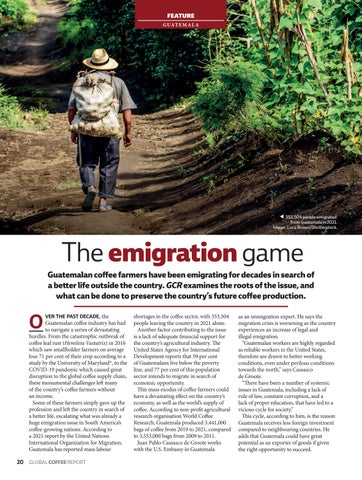
353,504 people emigrated from Guatemala in 2021. Image: Lucy.Brown/Shutterstock.
The emigration game
Guatemalan coffee farmers have been emigrating for decades in search of a better life outside the country. GCR examines the roots of the issue, and what can be done to preserve the country’s future coffee production.
O
VER THE PAST DECADE, the Guatemalan coffee industry has had to navigate a series of devastating hurdles. From the catastrophic outbreak of coffee leaf rust (Hemileia Vastatrix) in 2016 which saw smallholder farmers on average lose 71 per cent of their crop according to a study by the University of Maryland*, to the COVID-19 pandemic which caused great disruption to the global coffee supply chain, these monumental challenges left many of the country’s coffee farmers without an income. Some of these farmers simply gave up the profession and left the country in search of a better life, escalating what was already a huge emigration issue in South America’s coffee-growing nations. According to a 2021 report by the United Nations International Organization for Migration, Guatemala has reported mass labour
20 GLOBAL COFFEE REPORT
shortages in the coffee sector, with 353,504 people leaving the country in 2021 alone. Another factor contributing to the issue is a lack of adequate financial support for the country’s agricultural industry. The United States Agency for International Development reports that 59 per cent of Guatemalans live below the poverty line, and 77 per cent of this population sector intends to migrate in search of economic opportunity. This mass exodus of coffee farmers could have a devastating effect on the country’s economy, as well as the world’s supply of coffee. According to non-profit agricultural research organisation World Coffee Research, Guatemala produced 3,441,000 bags of coffee from 2019 to 2021, compared to 3,553,000 bags from 2009 to 2011. Juan Pablo Cassasco de Groote works with the U.S. Embassy in Guatemala
as an immigration expert. He says the migration crisis is worsening as the country experiences an increase of legal and illegal emigration. “Guatemalan workers are highly regarded as reliable workers in the United States, therefore are drawn to better working conditions, even under perilous conditions towards the north,” says Cassasco de Groote. “There have been a number of systemic issues in Guatemala, including a lack of rule of law, constant corruption, and a lack of proper education, that have led to a vicious cycle for society.” This cycle, according to him, is the reason Guatemala receives less foreign investment compared to neighbouring countries. He adds that Guatemala could have great potential as an exporter of goods if given the right opportunity to succeed.