
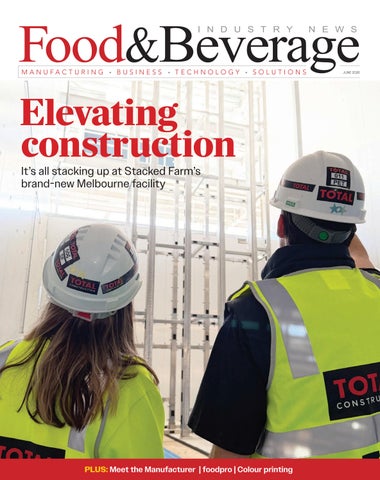
It’s all stacking up at Stacked Farm’s brand-new Melbourne facility




























IManaging Editor: Mike Wheeler
n the 2011 sports drama Moneyball, general manager Billy Beane, played by Brad Pitt, embraces an unconventional approach to baseball through computer-generated analysis rather than traditional selection methods. When challenged over his risky strategy, he responds with an iconic line – adapt or die.
It is natural to admire resilience. Resilience represents survival, persistence and strength. But there is another trait equally important – hope. With global crises, unpredictable weather, rising costs and external pressures affecting the food and beverage manufacturing industry, it is not always easy to find optimism in uncertainty. Yet Australian brands continue to step forward, leveraging manufacturing capability, product quality and innovation to create new opportunities.
This edition of Food & Beverage Industry News features three Meet the Manufacturers, all focused on adapting and finding solutions. Having survived across three generations, Calabria Family Wines continues to invest in automation and modern strategies. Built on family tradition, the company is expanding its market presence and customer reach. Grandvewe, a sheep milk cheesery, is set on a closed-loop production cycle to reduce waste. As a niche business competing against larger dairy brands, challenges have instead become opportunities for growth. Lick Ice Cream shares a similar outlook, believing long term availability of Australian-made premium products can help manufacturers emerge stronger.
To support businesses like these, industry events such as foodpro play an important role in showcasing automation, equipment, technology and software solutions that can strengthen Australian food and beverage manufacturing. Returning to Melbourne from 26-29 July, the event will feature more than 400 exhibitors. Among them are companies like
Trimatt Systems, which aims to make packaging more accessible and responsive for manufacturers. Summit Food Machinery will also showcase largescale machinery through live demonstrations.
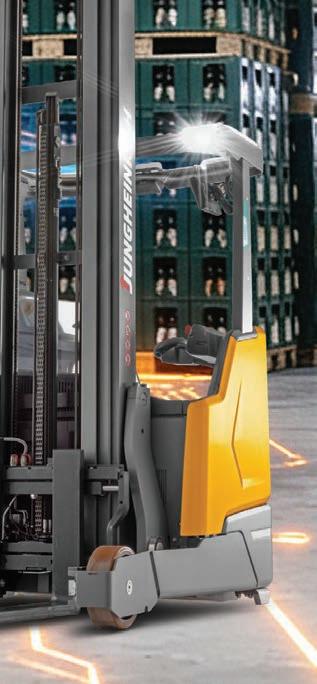
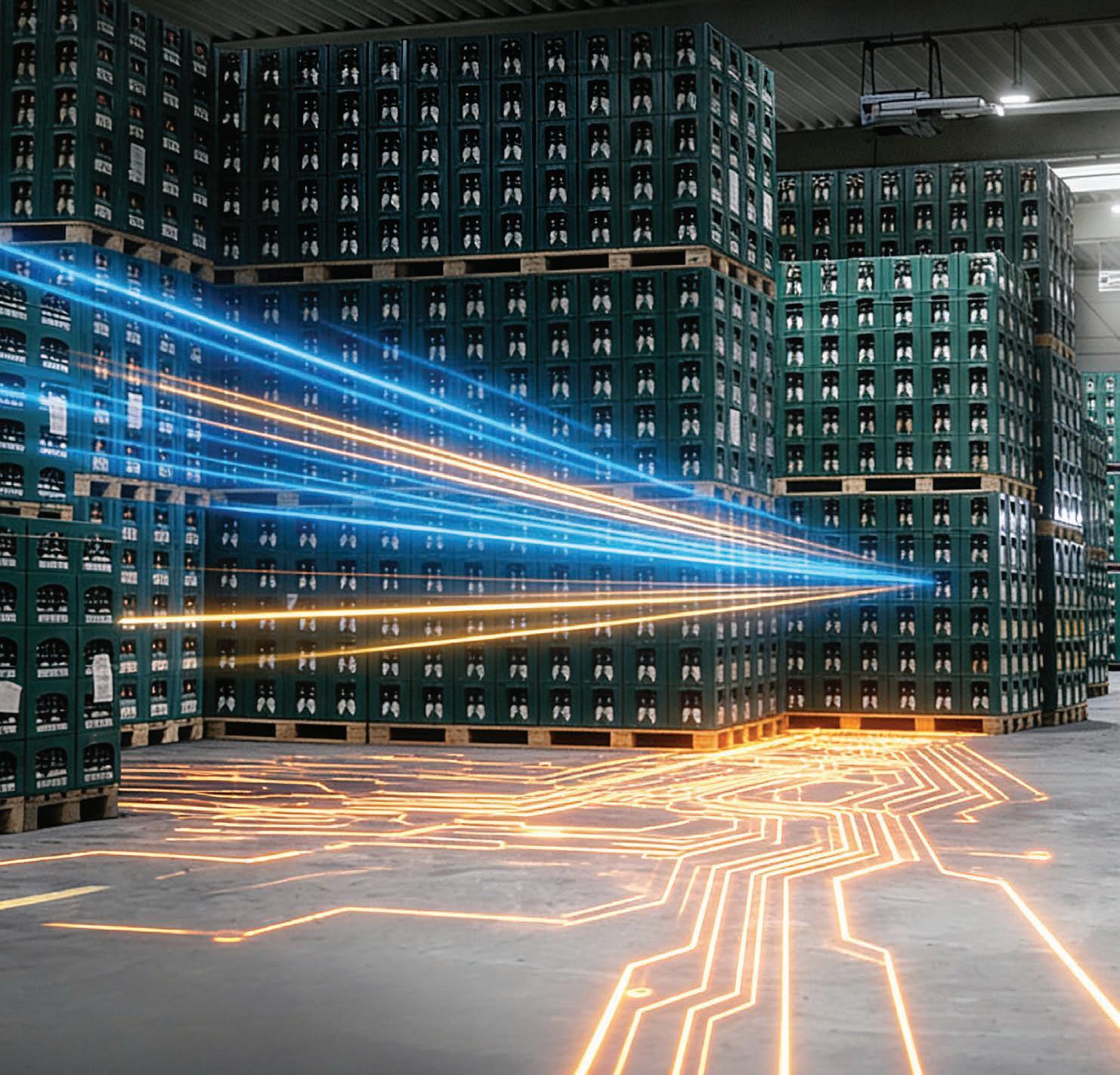
Part of resilience is time. While food manufacturers specialise in food production, managing ancillary operations and technical processes can become a challenge. Time to focus on important work becomes replaced with the secondary. Solution providers such as Jungheinrich and Eurocold help ease these pressures through short- and long-term rental solutions for lithium-ion technologies and refrigerated fleets.
Partnerships like these are built on trust, and trust begins with transparency and results. Construction partner Total Construction promotes a holistic and practical approach to keep projects aligned with long-term goals. AMS Instrumentation & Calibration builds confidence through technologies centred on accurate measurement and quality assurance.
Combatting contamination and maintaining hygienic food supplies, companies like CAPS Australia support businesses through oil-free air compressors. WAM Australia is attentive to production from start to finish, from raw material handling through to storage and transfer.
When communities come together, a different kind of strength emerges. Community-based food hub Box Divvy demonstrates this through its soft plastics recycling and local sourcing initiatives, helping strengthen food resilience at a local level. Likewise, when the Australian food and beverage industry works together, it can build renewed confidence and momentum for the future.
In the end, hope strengthens resilience, and at the heart of hope are the passionate people wishing for the success of the flavourful sector.
Happy reading! F
CEO: Christine Clancy
Managing Editor: Mike Wheeler
Ph: 041 557 2106
mike.wheeler@primecreative.com.au
Assistant Editor: Dae Hong david.hong@primecreative.com.au
Art Director: Michelle Weston
michelle.weston@primecreative.com.au
Sales/Advertising: Emma Murphy
Ph: 0403 500 544
emma.murphy@primecreative.com.au
Client Success: Cait Pillay
Ph: (03) 9690 8766
caitlin.pillay@primecreative.com.au
Cover
Image: Total Construction
Subscriptions AUS NZ O/S
1 year subscription99109119
2 year subscription189199 209 For subscriptions enquiries please email subscriptions@primecreative.com.au
Copyright
Food & Beverage Industry News is owned by Prime Creative Media and published by John Murphy. All material in Food & Beverage Industry News is copyright and no part may be reproduced or copied in any form or by any means (graphic, electronic or mechanical including information and retrieval systems) without written permission of the publisher. The Editor welcomes contributions but reserves the right to accept or reject any material. While every effort has been made to ensure the accuracy of information, Prime Creative Media will not accept responsibility for errors or omissions or for any consequences arising from reliance on information published. The opinions expressed in Food & Beverage Industry News are not necessarily the opinions of, or endorsed by the publisher unless otherwise stated.
© Copyright Prime Creative Media, 2023
Articles
All articles submitted for publication become the property of the publisher. The Editor reserves the right to adjust any article to conform with the magazine format.
Head Office
379 Docklands Drive
Docklands VIC 3008
Ph: +61 3 9690 8766
enquiries@primecreative.com.au
http://www.primecreative.com.au
Sydney Office

Suite 11.01, 11th Floor 201 Miller St North Sydney, NSW 2060, Australia Printed by: Brougham
865 Mountain Hwy, Bayswater VIC 3153 Ph: (03) 9873 5144
6 Meet the Manufacturer: Calabria Family Wines
Calabria Family Wines is balancing tradition with innovation.
10 Meet the Manufacturer: Grandvewe
Grandvewe combines cheese production with waste reduction.
14 Meet the Manufacturer: Lick Ice Cream
Lick Ice Cream has built its reputation on handmade techniques
18 Sustainability
Box Divvy diverts tonnes of soft plasticsfrom landfill each month
21 foodpro
More than 400 exhibitors will participate at foodpro 2026.
22 Construction
An automated vertical farming facility is nearing completion.
24 Sensors
Intelligent sensor technology improves efficiency, safety and traceability in food and beverage manufacturing.
26 Distribution
Eurocold redirecting focus from fleet ownership to performance.
28 Safety
SKF’s Food Line SRB is made for the extremes in manufacturing.
30 Printing
Trimatt Systems is preparing to make food colourful.
32 Automation
A flour manufacturer adopted VEGA’s Inventory System software.
34 Systems
System continuity is key element in dry food processing.
36 Lithium-ion
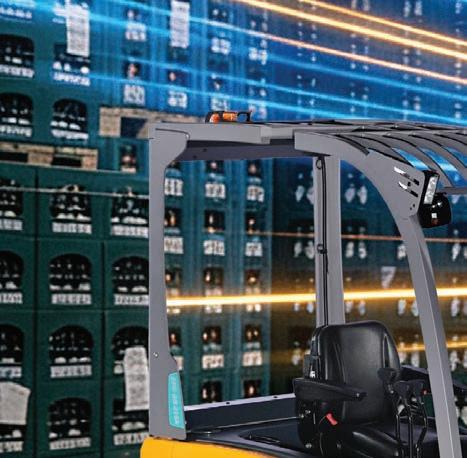
Lithium-ion technology helps build operational certainty.
38 Processing
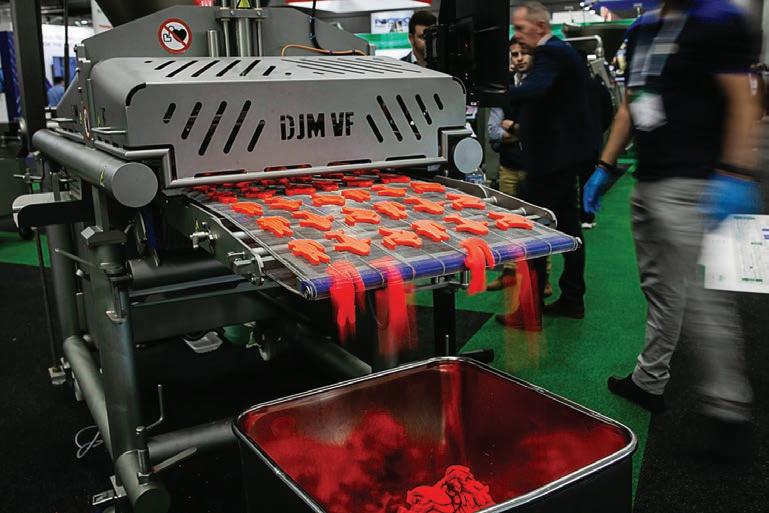
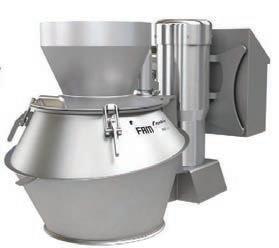
Summit Food Machinery will unveil its latest cheese shredding solution at an industry event this year
40 Compressor
CAPS Australia advocates for oil-free air compressors.
42 Calibration
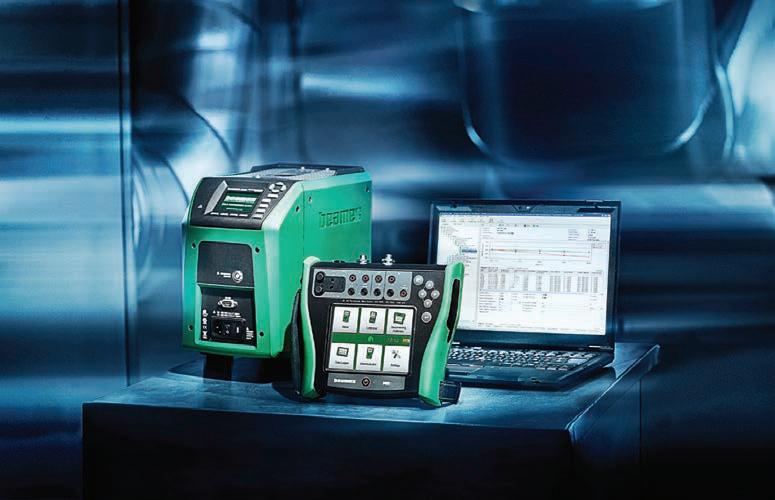
AMS is helping manufacturers improve process accuracy through Beamex.
44 MICE
2027 dates for the Melbourne International Coffee Expo has been announced.
46 AIP
The AIP will be hosting a week of education at ProPak Asia.
48 BULK 2026
The 2026 Bulk Expo will highlight the bulk handling sector that often operates behind the scenes.
49 Mercury Awards
Nominations for the Mercury Awards is now open
51 MegaTrans
MegaTrans 2026 is inviting the food and beverage industry to explore technologies around freight and logistics.



STAY OPERATIONAL. SKIP THE FUEL.













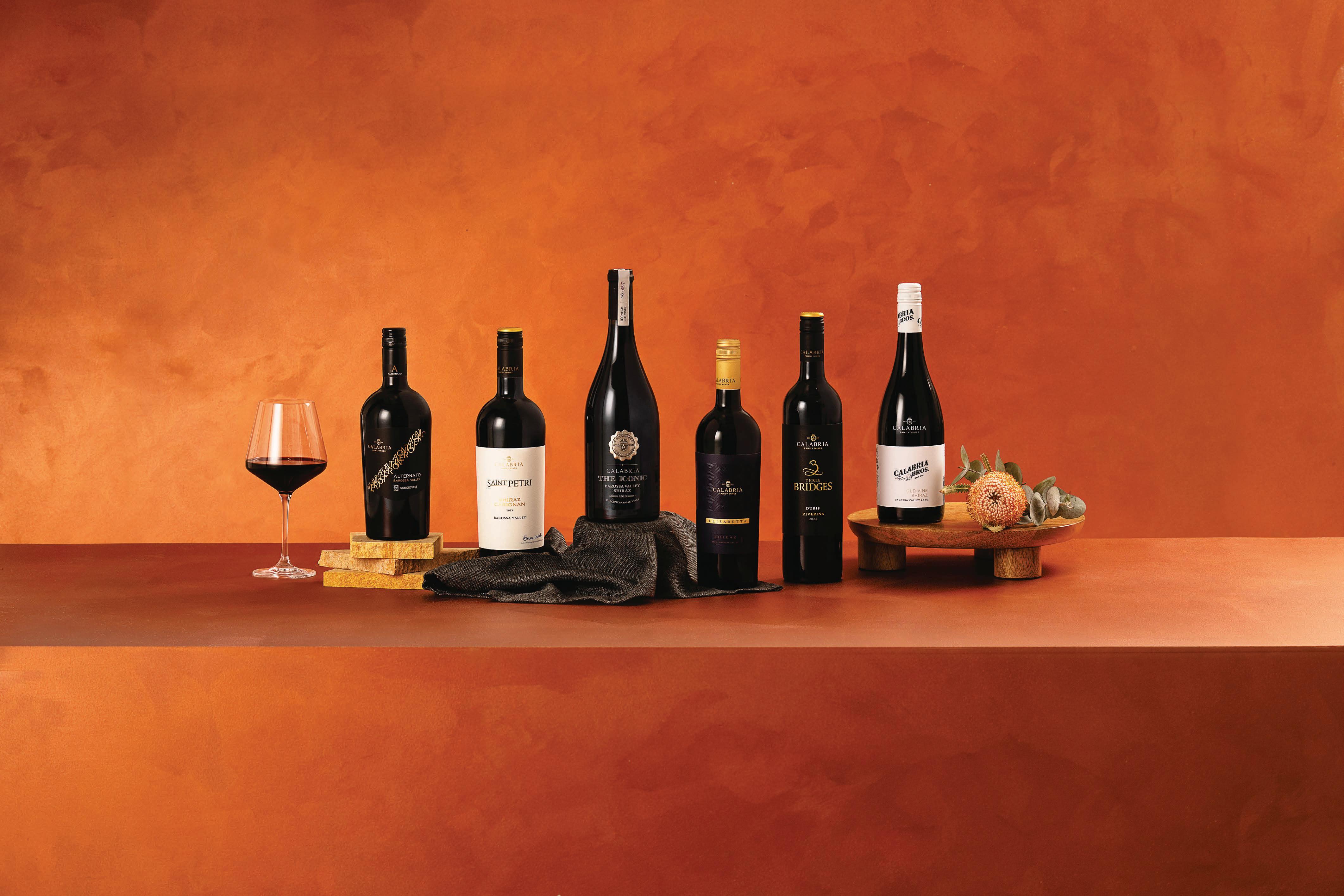
Calabria Family Wines has spent more than 80 years evolving alongside the Australian wine industry. Now led by the third generation, the business is balancing tradition with innovation.
The vehicle for growth lies in tradition for Calabria Family Wines.
Founded in 1945 by Francesco Calabria, the company began in the Riverina region of New South Wales. According to sales and marketing director and third-generation family member, Andrew Calabria, what started as homemade table wine for fellow European migrants transformed into a large-scale commercial operation.
“He came to Australia looking for a better life, and he started making wine as a hobby,” said Calabria. “That hobby turned into a commercial business as there were more European settlers in the market
looking for some table red wine.”
The second generation, led by Calabria’s father and uncle, expanded and reshaped the business.
“My dad transformed the table wine production,” said Calabria. “We went from light, easy-going reds to quality wine from the Riverina.”
While traditional table wines remained central to the portfolio, Calabria’s father also began experimenting with alternative grape varieties and premium wine production. Varieties such as Sangiovese and Montepulciano became part of the winery’s evolving identity, helping shift perceptions of what Riverina wines could offer. His father also drove a category called
“These alternate varieties were a passion for my father, and he really transformed the language in wine,” said Calabria.
Today, Calabria Family Wines operates as both a wine producer and distributor, representing a growing portfolio of local and international family-owned brands.
The business exports to more than 40 countries while also servicing domestic retail and hospitality markets. Calabria said the company’s scale now stretches well beyond
winemaking alone, incorporating vineyards, bottling operations, warehousing, distribution and cellar door experiences.
“We’re not just manufacturing wine – we’re growing grapes, turning it into wine and bottling it,” he said. “We run our own distribution centre and service hospitality customers across the country. We also run our own venues for our cellar doors and tasting rooms.”
Calabria Family Wines sources fruit both from its own vineyards and from long-standing growers before processing and bottling products in house. Its bottling facility is equipped with four packaging lines. The site handles both conventional wine bottles and alternative formats designed to stand out on shelves and engage consumer demographics.
“Innovation has definitely been the driving force to our business,” Calabria said.
“What we’re doing really well with is around different packaging.”
One of the facility’s two primary wine bottling lines can produce up to 12,000 bottles per hour using traditional bottle formats. A second line, operating at around 5,000 bottles per hour, is dedicated to non-traditional shapes and innovative packaging concepts.
“We’re coming up with concept packaging that is convenient,” he added. “It could be a small format, or it could be decorative bottles that aren’t traditional to wine.”
The company’s Belena range is one example of this strategy, featuring packaging that resembles premium spirit bottles rather than conventional wine formats.
Alongside packaging innovation, Calabria Family Wines is also investing in operational efficiency and automation across its facilities.
“We’re always looking at equipment efficiency,” Calabria said.
He emphasised the company’s direction to drive a paperless business. Automated picking systems are also being explored as part of broader warehouse and logistics improvements. Through more advanced automation across bottling and packaging lines through to its distribution centre, the business aims to not only reduce labour but to drive higher efficiency for its products.

A recent acquisition has further expanded its market presence and customer reach. In February 2026, Calabria Family Wines’ acquisition of House of Fine Wine and The Wine Company marked the next stage of integration and bringing its domestic distribution businesses together under a single market facing identity.
“The acquisition was a strategic decision to ensure we have strong relevance for our customers,”
Calabria said. “We understand that efficiency across all supply chains through to hospitality is important.”
In April 2026, the company confirmed House of Fine Wine as its unified domestic trading and distribution platform. The combined platform brings together portfolios and teams under the House of Fine Wine banner. This move aims to strengthen national reach and capability across on premise and independent retail channels.
“This is a natural and exciting next step following our recent acquisitions,” said Calabria. “By bringing our distribution businesses together under the House of Fine Wine name, we’re creating clarity for the market while building a platform that supports growth, investment and long-term partnerships.”
The company remains familyowned, with no changes to ownership, customer relationships,
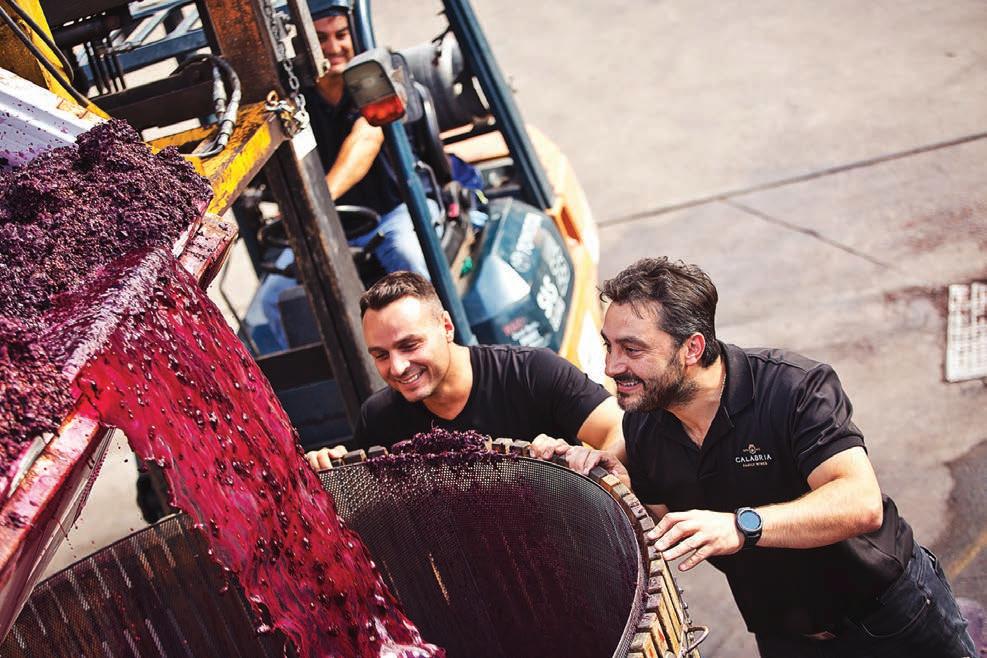
Leading the company as a thirdgeneration winemaker, the business is a personal endeavour for Calabria.
“As kids, I remember my brothers and sister playing hide and seek in the winery,” he said. “My dad would have us taping up boxes and putting the bottles into the boxes or carrying out boxes of wine to customers’ cars.”
When asked whether he knew that
a natural progression.
“It was never forced upon – we just wanted to be in the business,” he said. “While it wasn’t expected, we just felt a natural gravitation to want to contribute to the family business.”
Despite the scale of the operation today, Calabria said the company’s family roots continue to shape its culture and long-term decision making. Growing up inside the winery gave the third-generation direct connection to both the business and the sacrifices that built it.
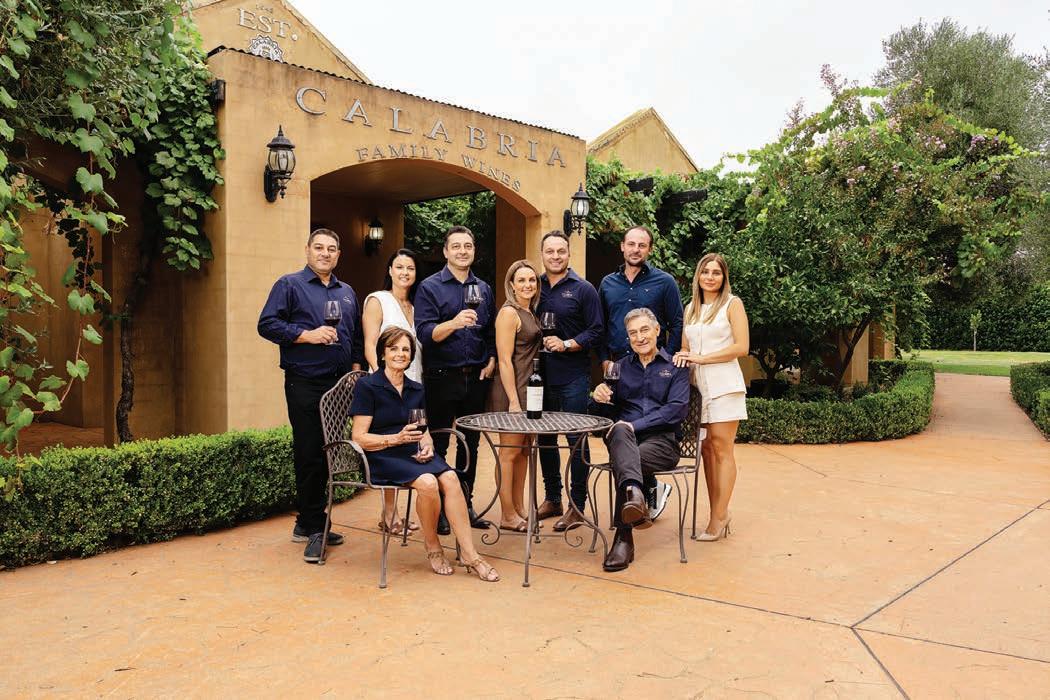
Those experiences continue to influence how the family approaches growth and investment. The business aims to make decisions for the long-term. This approach has also helped the business navigate periods of volatility across the wine sector, including export disruptions, changing consumer preferences and broader economic pressures.
“History tells us a lot and wine has been made for centuries,” Calabria said. “Sometimes hard decisions today are the best for the future.”
The company’s current strategy includes strengthening its export footprint, particularly across Asia. While established markets such as the US, Canada and the UK remain important, Calabria sees opportunity in markets like the Philippines and Singapore. Part of Australia’s advantage, he believes, is its international reputation which
The company is across vineyards, bottling operations, warehousing, distribution and cellar door experiences.
continues to position local producers well in overseas markets.
While optimistic about future opportunities, he acknowledged the challenges currently facing the broader wine industry. Rising costs, changing consumption habits and global uncertainty continue to pressure many producers.
“The Australian wine industry is struggling at the moment,” he said. “We need to continue to produce good quality wines, we need to innovate and we need to be unified.”
Innovation remains closely tied to preserving the legacy established by previous generations while preparing the business for the next. Now with a fourth-generation beginning to spend time around the winery, Calabria sees similarities between his own childhood experiences and those of his children today.
As the business continues to evolve, Calabria said maintaining a balance between heritage and future thinking will remain central to Calabria Family Wines.
“I have young kids and they come to work with me on the weekend,” he said. “Growing up within the wineries is a memory that will live a lifetime.
“It’s not always just about what’s the results for the financial year. We try to plan and make decisions for the long-term because this is our backyard. This is our home.” F

Grandvewe operates using small-scale equipment, with cheesemaking still relying on hands-on craftsmanship.
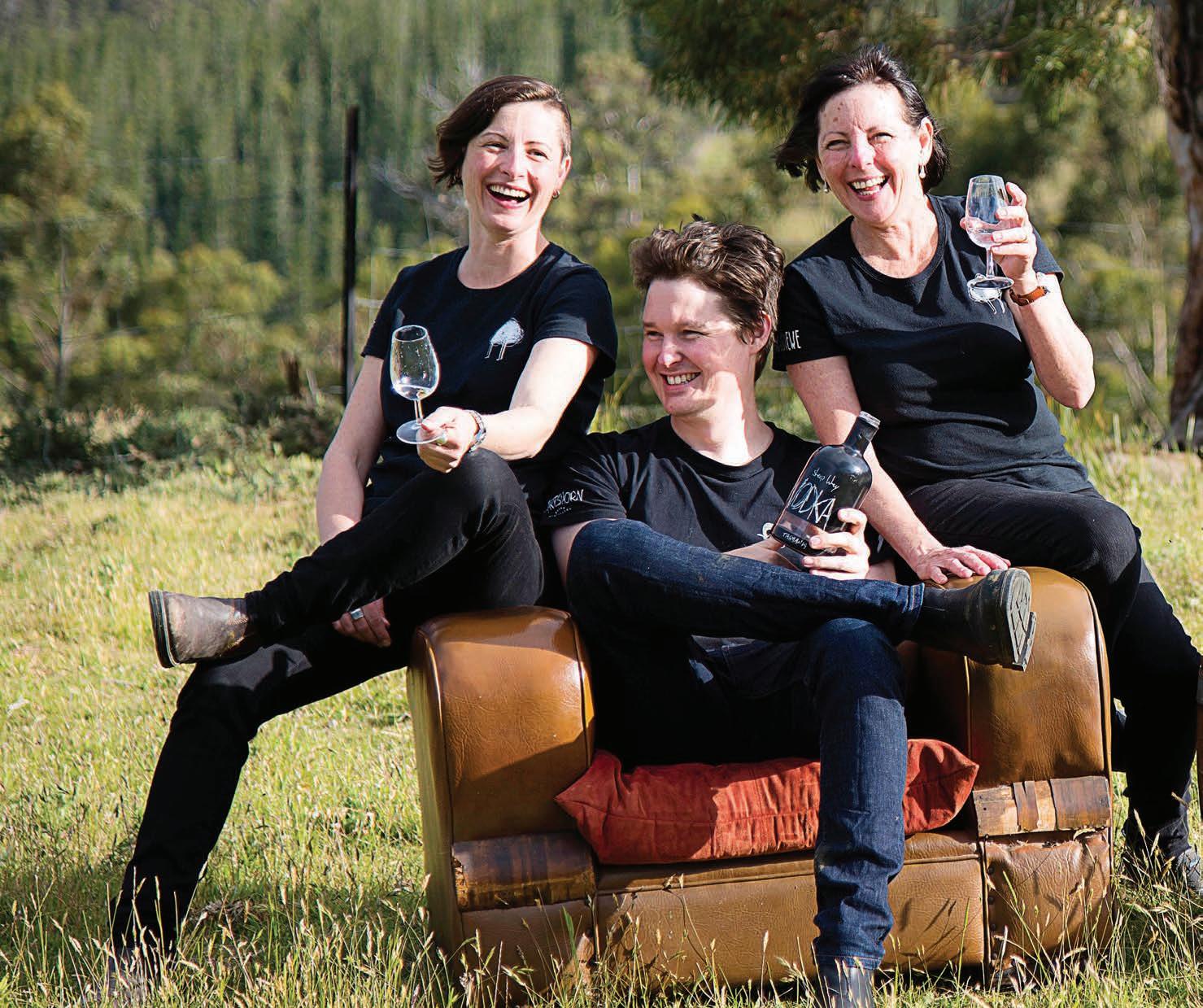

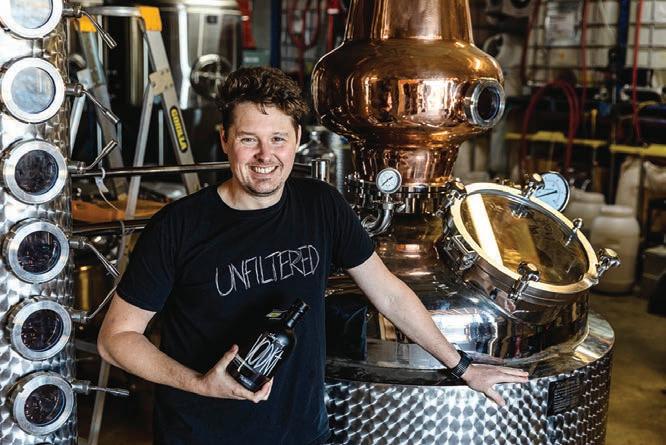
Grandvewe has built a specialised sheep milk business in Tasmania by combining handmade cheese production with waste reduction, distilling and sustainable packaging practices.
Cow and goat milk are commonly known. But what about sheep milk? Director of Grandvewe, Diane Rae, believes sheep milk remains relatively misunderstood in Australia despite its long history.
“Bizarrely, there are more sheep milked in the world than there are cows,” she said.
Rae highlighted how sheep milk is widely consumed throughout the Mediterranean and Middle East, where sheep dairy products are deeply embedded in food culture. She emphasised that sheep milk offers nutritional and digestive differences compared to conventional cow’s milk.
“The fats in sheep milk are monounsaturated and polyunsaturated fats,” said Rae.
“This means you don’t have the big, saturated fats that you have in cow’s milk.”
Rae explained that many consumers who struggle with cow’s milk products often tolerate sheep milk more easily, which she attributes to differences in proteins and fat structures. A lot of Australians are lactose intolerant and while goat milk offers an alternative dairy product, it has a distinct “animal” taste which discourages consumers from purchasing it.
Sheep milk, on the other hand, has a naturally sweeter and creamier profile compared to cow milk.
“If you just tasted the milk straight, it tastes like cow’s milk with about maybe half a teaspoon of sugar in it,” said Rae.
Grandvewe is a family-run sheep milk cheesery in Birchs Bay, Tasmania, specialising in sustainable sheep cheese production. When Rae moved from Queensland to Tasmania 25 years ago, the original plan was not to become one of Australia’s few sheep milk cheesemakers.
In the beginning, the move began with a vineyard project. However, changing environmental conditions on the property quickly redirected the business toward sheep farming and, eventually, cheese production.
“We planted 7,000 pinot vines on the property that we purchased,” said Rae. “I came up with the idea of running sheep through the vines to keep the grass down and keep the vines in check.”
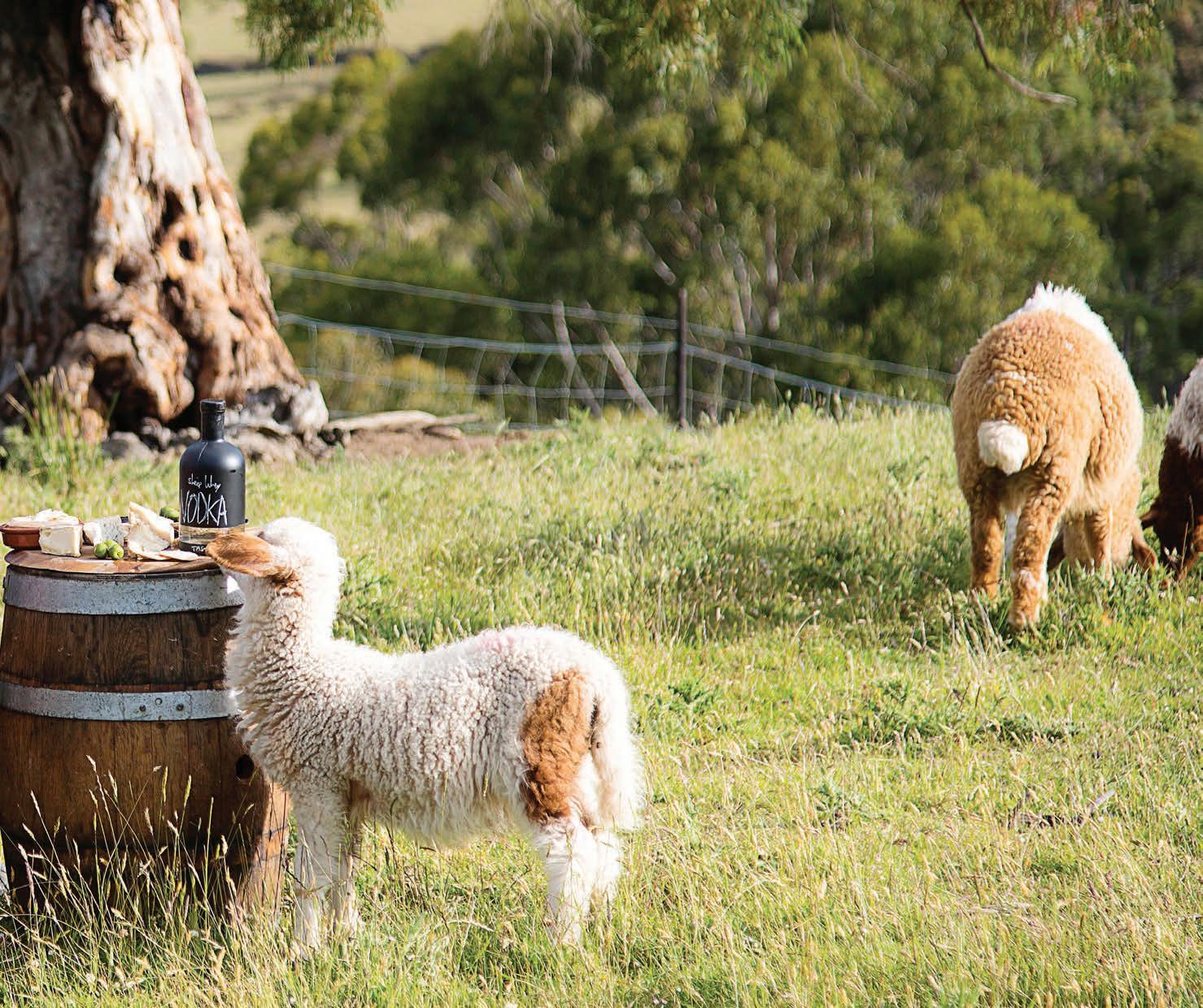
However, the vineyard struggled in the property’s windy conditions while the sheep thrived. Rae and her family began looking at alternative ways to build a business around the animals. She listed three options.
“One is to eat them. The other is for wool. And then the third is for milk,” she said.
At the time, sheep milk production in Australia was still largely untapped and only a small number of producers were making sheep milk cheese commercially. With the market wide open, Rae saw an opportunity.
From those beginnings, Grandvewe developed into a specialised manufacturer producing sheep milk cheeses, skincare products and spirits made from whey – the liquid byproduct left over from cheesemaking.
From the beginning, Rae said waste reduction became part of the company’s operating philosophy. The focus on byproduct utilisation eventually led to one of the businesses’ most recognised innovations. In 2016, Grandvewe fermented and distilled whey from its cheesemaking operations to create sheep whey vodka.
“We figured out how to ferment the whey, the waste product from the cheesemaking,” said Rae. “We then distilled it and created what is now the sheep whey vodka.”
Two years later, the vodka won World’s Best Vodka at the World Vodka Awards 2018. While the vodka brought wider attention to the business, sheep milk cheese remains




central to Grandvewe’s identity.
Additionally, Grandvewe has expanded into sheep milk skincare products due to the mineral content present in the milk.
“Sheep milk contains around three times the mineral content of goat’s milk,” said Rae.
As the business grew, Grandvewe faced another challenge. Suitable dairy sheep genetics were limited within Australia. Very early in the company’s development, Rae realised the business would need to develop its own breeding program to ensure long-term supply.
The business travelled overseas to study dairy sheep genetics before establishing its own line known as the Grandvewe Dairy Sheep.
Today, milk production is managed through a separate farming operation that milks approximately 450 sheep daily for Grandvewe.
“We had to create our own dairy sheep if we were going to succeed in Australia,” she said. “A farmer came along who said he was happy to milk for us. We then seeded his flock of sheep with our genetics. He now milks around about 450 sheep a day for us.”
That output produces roughly 500
to 550 litres of milk each day, which is then delivered to Grandvewe several times a week and processed on-site into cheese.
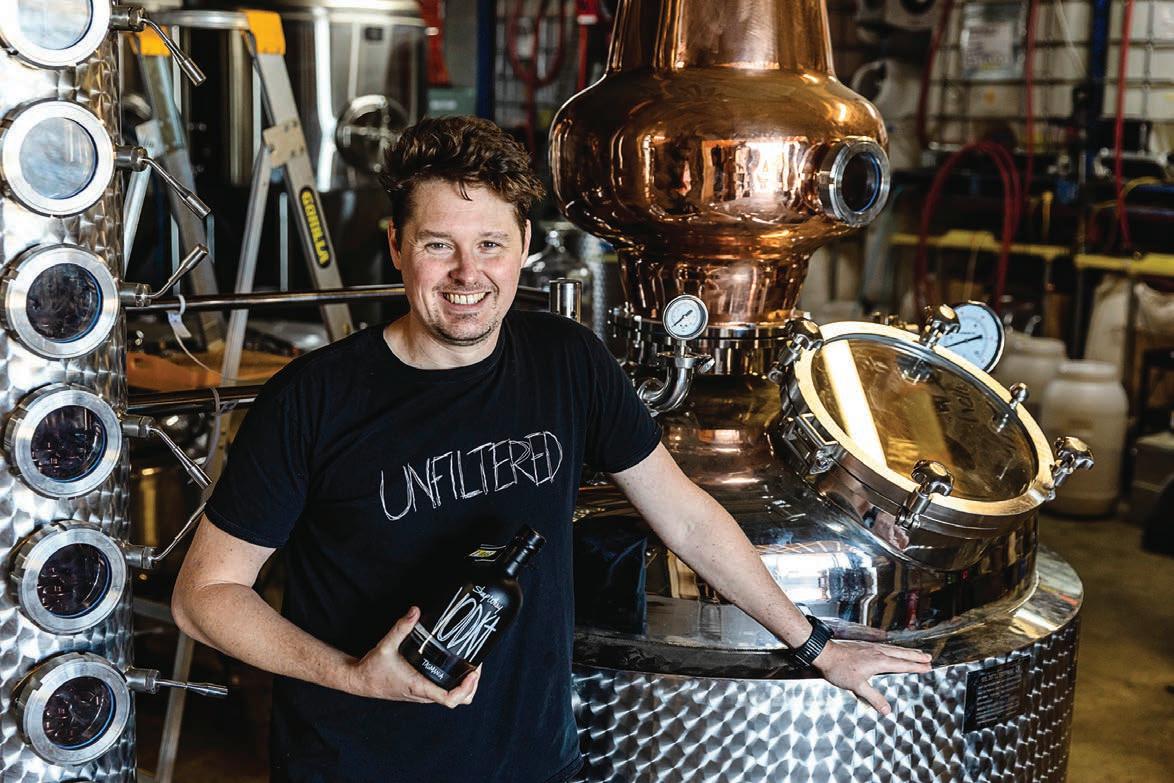
The manufacturing process remains manual. Grandvewe operates using small-scale equipment compared to larger dairy processors, with cheesemaking still relying heavily on hands-on craftsmanship.
The milk is processed in a 500-litre vat where it is heated, cooled and stirred before cheesemakers manually handle the curd.
“We then have our hands in there dealing with the curds,” she said. “Once you get a sense for the feel of the texture of the curd, it allows you to understand when the cheese is ready for hooping.”
Rae and her daughter are both qualified master cheesemakers and are involved in designing new products from scratch. From texture to flavour profile, cheeses are designed from scratch.
“We find a lot of joy in creating uses for the waste,” she said. “We can come up with solutions to what are normally problems. We don’t see them as problems but as an opportunity.”
One of Grandvewe’s recognised products is the Gin Herbalist cheese, which reflects the company’s circular production philosophy. The cheese combines cheesemaking, distilling and botanical reuse into a single production cycle.
First, the whey is sent to the distillery. After the whey is distilled into vodka, the vodka is used as the base for gin infused with Australian botanicals such as lemon myrtle, anise myrtle and wattle seed. Once the distillation process is complete, the leftover botanicals are returned to the cheesemaking operation rather than discarded.
“We then bring it back upstairs to the factory,” said Rae. “We roll the cheese in it, and then we mature the cheese for a minimum of 12 months.”
Over time, the flavours from the botanicals naturally move through the cheese during this process.
“The flavours in the botanicals are on the outside of the cheese and naturally percolate through the whole paste of the cheese,” said Rae.
The product later received recognition at the World Dairy Innovation Awards as Best Cheese
for a zero-waste lifecycle of the ingredients. It was also a gold medallist at 2025 Tasmanian Fine Food Awards.
Beyond ingredients, Grandvewe has also invested in reducing packaging waste. The business avoids plastic packaging where possible and repurposes incoming cardboard into protective packing material using an in-house shredding system. This shredding machine creates the cardboard into a waffle cone.
For cold transport, the business uses insulated wool packaging instead of polystyrene.
“We use what’s called the wool-cool system,” Rae said. “It keeps it cooler than using polystyrene.”
The system uses cleaned and felted sheep wool placed inside biodegradable packaging to maintain low temperatures during freight. As the business ships cheese across Australia, maintaining temperature for stable shelf life is important.
Despite growing interest in artisan and functional foods, Rae said one of the ongoing challenges for sheep’s milk cheese is consumer
perception around pricing. Unlike large-scale commodity cheese manufacturing, she said sheep milk production remains labour-intensive and small-scale, making direct price comparisons difficult.
“We don’t do broad-acre farming or use computerised machinery to make a product,” said Rae.
The advantage or opportunity that Rae sees in this niche market is direct engagement with consumers. Shows and events such as food and wine exhibitions allow Grandvewe to explain the cheesemaking process and educate customers about sheep milk. This connection with consumers remains essential in explaining the value behind the company’s product.
Rae emphasised that the business is not only focused on producing premium dairy products. Grandvewe also aims to demonstrate alternative pathways of manufacturing food with less waste and greater connection to production.
“Once we tell our story and they have a relationship between the cheese they’re eating and what’s gone into the cheese, it’s certainly more rewarding for us,” Rae said. F







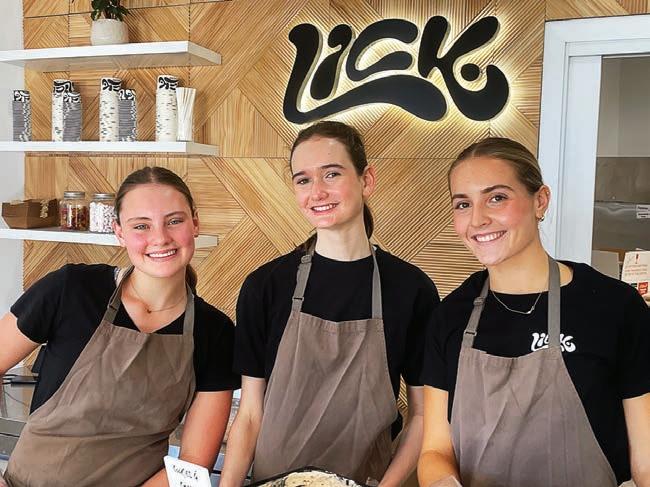
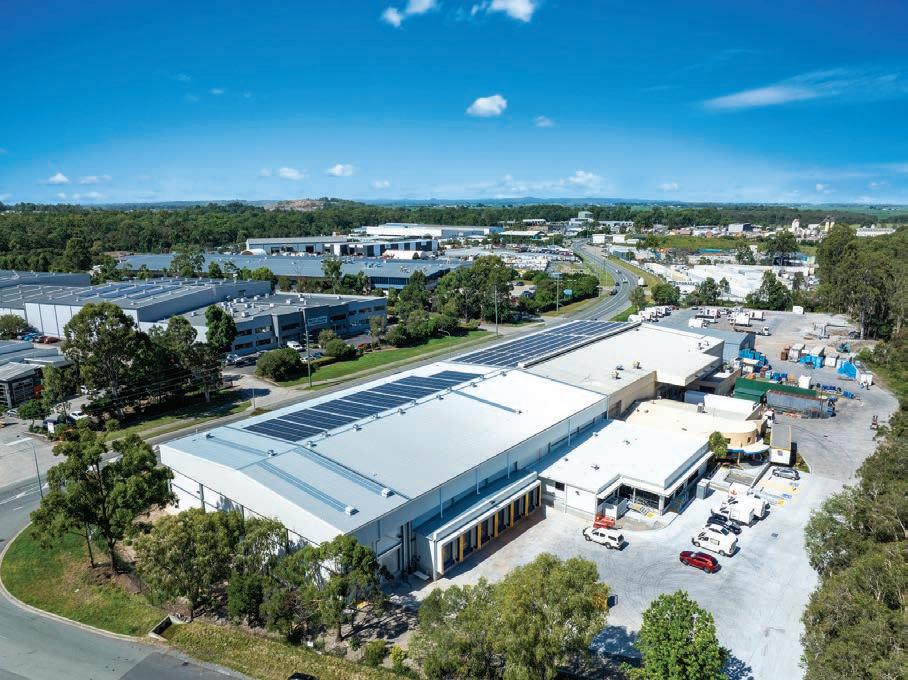
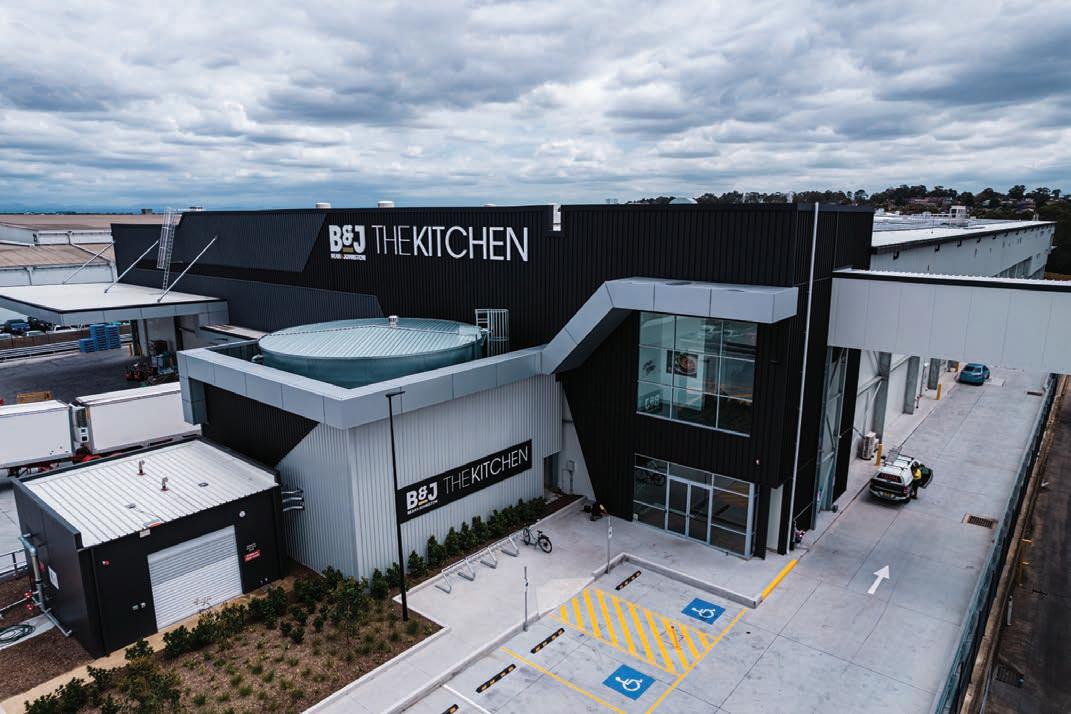
Queensland based Lick Ice Cream is focused on maintaining the handmade methods and premium ingredients that built the brand’s reputation.
Taking over Lick Ice Cream was not part of a long-term plan, according to owners Simon and Yvette West. What began as a search for an Australian manufacturing partner for a premium UK ice cream brand evolved into the purchase of a Queensland business that had a loyal following and untapped potential.
“We saw a huge opportunity for improvement,” said Yvette. “We really liked the product, but we did feel that the 18-year-old brand itself needed a bit of a freshen up.”

The couple relocated from Adelaide to Brisbane after purchasing the business, taking ownership of the factory, brand and operations. While the original intention was to partner with overseas investors, the opportunity changed direction at the last moment.
“At the 11th hour, the other partners pulled out,” said Simon. “Yvette and I took it lock, stock and barrel. We bought it and moved up from Adelaide.”
The decision drew on decades of business experience. Simon came from a background in food, wine and

export consulting after beginning his career with Procter & Gamble. Yvette spent years working in the couple’s consulting business while also managing a disability centre with more than 100 clients and 50 staff.
Those experiences now shape the way the company approaches manufacturing, staffing and longterm growth.
“We didn’t want to lose any quality or our handmade element,” said Yvette. “This meant that we wouldn’t sacrifice the process by making the manufacturing method easier.”

makes it unique
Unlike many large ice cream manufacturers that rely on continuous freezing systems and automated production lines, Lick Ice Cream has retained a more traditional method and approach.
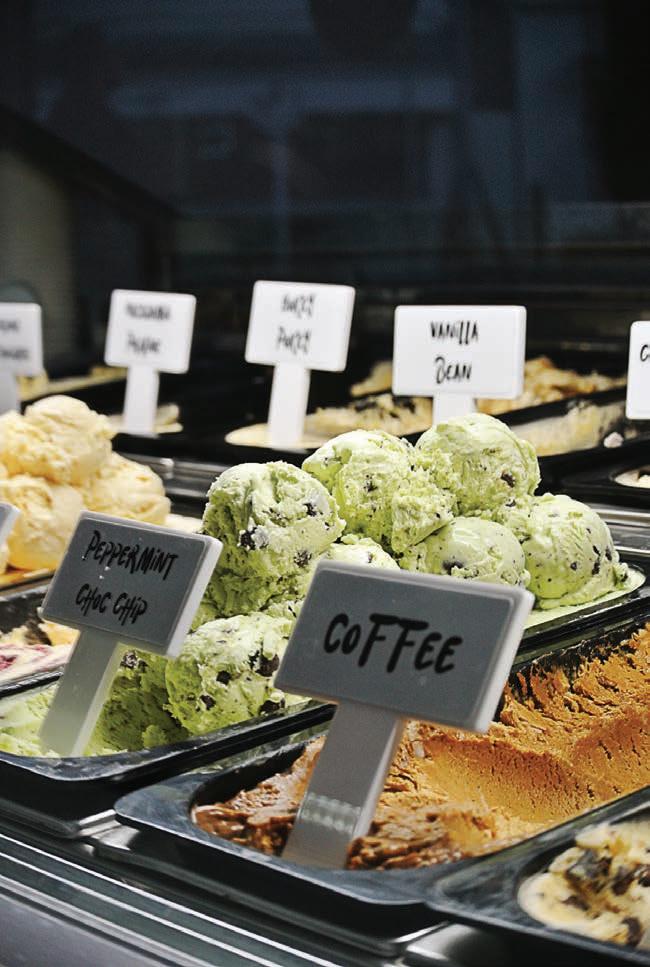
“We make it into almost like a creme anglaise or a custard type form and from there we freeze it in the pots,” said Simon.

The process uses 100 per cent cream, Australian egg yolk and in house flavour preparations. Lick Ice Cream avoids preservatives and


artificial flavourings while focusing on a dense and creamy texture.
Yvette described the process as “pot set”, a method that helps create the rich consistency that has become central to the brand’s identity.
“It’s very unique in taste,” she said. “It’s really thick, creamy and quite decadent.”
Maintaining that point of difference has become important as the company prepares to expand production capacity. Rather than shifting to conventional industrial methods, Lick Ice Cream is investing in equipment that scales up its handmade approach without compromising quality.
“We had a choice of going down the batch freezer or continuous freezer option,” said Simon. “However, we’ve actually decided to keep our unique selling point by doing it differently and enlarging our existing processes.”
The business is currently developing a new manufacturing line built around larger planetary mixers capable of producing more than 250 litres at a time. The upgraded process will improve consistency, output and workplace safety while still preserving the handmade characteristics of the ice cream.
“It’ll help with occupational health and safety,” said Yvette. “People aren’t lifting as much. We’re doing a lot more pumping, which helps with batch consistency and quality.”
The expansion also addresses rising international demand. According to Simon, export opportunities are beginning to emerge across Asia, particularly after trade missions supported by Trade and Investment Queensland. Visiting Japan, Taiwan, South Korea and China, he said discussions remain ongoing, with interest in the product extending beyond distribution partnerships.
“I would like in the next 12 to 18 months to have two export markets secured and running efficiently,” Simon said.
Domestically, the business continues to operate across a range of sales channels. Lick Ice Cream supplies supermarkets including Harris Farm, independent retailers, restaurants, hotels and convention centres.
The business also runs three retail stores in Brisbane and maintains consultative relationships with
distributors in New South Wales, the ACT as well as regional Queensland.
Restaurants remain an important part of the company’s identity.
Lick Ice Cream originally built its reputation by supplying premium products to high end restaurants more than two decades ago. One of its unique offerings is the ability to produce small batch bespoke ice cream flavours.
That flexibility has led to collaborations with regional producers and food businesses including Tommerup Dairy Farm, Moffatt Carrots and specialty bakeries. It has also resulted in some unconventional flavour development.
“One of the strangest ice cream flavours we’ve made was the Tasmanian Bruny Island Oyster, which was a collaboration we put together for Qantas and Apollo Motorhomes,” said Yvette.
Despite the novelty of some products, flavour development always comes back to balance.
“You can be creative, but at the end of the day, it’s about balance and putting in some subtle hints of some of those stronger flavours rather than overpowering it,” she added.

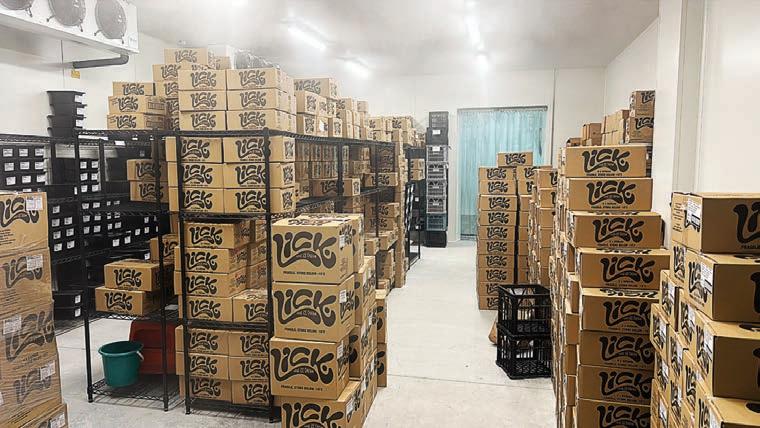
The company’s broad customer base has also strengthened its resilience in changing market conditions. However, like many food manufacturers, Lick Ice Cream has faced mounting pressure from rising ingredients and operating costs.
“Every single ingredient we have has increased dramatically,” said Yvette.
Cream and eggs have posed a challenge in recent years, especially during the egg supply shortages linked to the transition away from caged egg production. Pressure on consumer spending has also affected the company’s retail operations. Rising interest rates, fuel prices and broader cost of living concerns have changed purchasing behaviour.
Even so, Simon believes small and medium manufacturers that can endure the current environment will emerge stronger. Rather than reducing quality or reformulating
products to cut costs, the company has chosen to absorb part of the financial impact.
“We have a big belief that people will pay for quality, and we want to maintain that quality without skimping on it,” said Simon.
is focused on delivering long term availability of Australian made premium products for consumers seeking quality.
“It might not be as profitable as normal, but if small businesses can just weather the storm for the next 12
“You can be creative, but at the end of the day, it’s about balance and putting in subtle hints of some of those stronger flavours rather than overpowering it.”
That commitment places the business in direct competition with much larger multinational brands, but the company believes customers still value authenticity and premium ingredients. Large players in the ice cream industry often use alternative powders instead of natural ingredients such as cocoa to manage supply costs.
While this solution may provide short term relief, Lick Ice Cream
months, they can come out stronger,” Simon said.
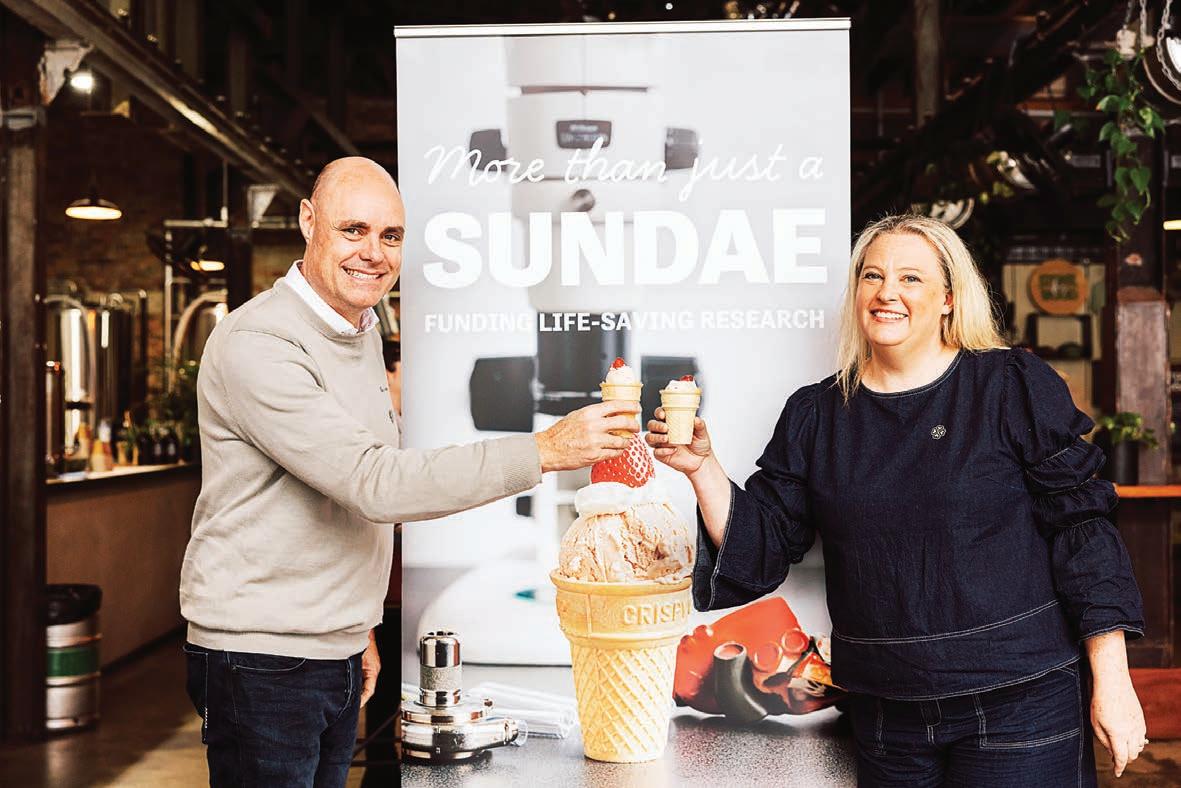
One of the company’s most recognisable partnerships remains its connection to Queensland consumers through the Ekka Strawberry Sundae. Lick Ice Cream has supplied the dessert at the Royal Queensland Show for the past 15 years and recently secured the contract for another six years.
Last year alone, approximately 193,000 strawberry sundaes were sold across the nine-day event.
Yvette said this required around 33,000 litres of ice cream.
“It’s actually a very big deal up here in Queensland,” she said. “Most people say that they go to the Ekka to buy a strawberry sundae.”
As Lick Ice Cream expands into new markets and increases production capacity, the business remains focused on preserving the traditional methods and ingredients that have shaped its reputation.
For the Wests, growth is not about changing the product but ensuring more consumers can experience the same handmade quality that built the brand from the beginning.
“We’re quite passionate about our product and the way we make it,” said Yvette. “And we try to keep our ice creams as premium and as Australian as possible.” F


Box Divvy is combining community food hubs, soft-plastics recycling and local sourcing initiatives to improve affordability, reduce waste and strengthen food resilience.
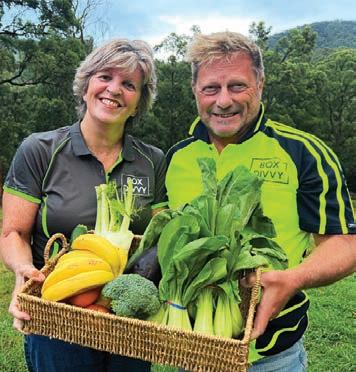
For decades, supermarkets have shaped how Australians buy food. Long supply chains, large retail footprints and highly processed products have become normal parts of the food system. But according to Box Divvy co-founder Jayne Travers, consumers are beginning to question that model.
“When the community comes together, they can actually make change,” she said.
Founded as a social enterprise, Box Divvy operates community-run food hubs designed to make fresh food and groceries more affordable and accessible. The business describes itself as an “unsupermarket”, positioning its model as an alternative to traditional retail grocery structures.
The concept of connecting households directly to farmers and food wholesalers did not appear
overnight. Travers and her husband and business partner, Anton Van den Berg, spent years developing earlier community food-buying models before launching Box Divvy in 2019.
By combining bulk purchasing with local distribution hubs, the company claims members can save up to 30 per cent compared to supermarkets.
At the same time, customers are given visibility into supplier pricing and sourcing.
“Our members get to see what we pay farmers and what we pay our food wholesalers,” said Travers.
The business model was also shaped by concerns around public health. Travers said the Western Sydney Diabetes Alliance approached the company during its early development stages as rates of food-related health issues continued to rise.
According to Travers, highly processed foods have contributed to broader health challenges like type 2 diabetes across Australia, particularly as convenience-driven retail continues to dominate grocery purchasing habits.
“Fresh food is not expensive,” she said. “It’s all the infrastructure you’re paying for.”
Alongside affordability and nutrition, sustainability has become another focus area for the business. One initiative gaining traction within the network is the collection and recycling of soft plastics.
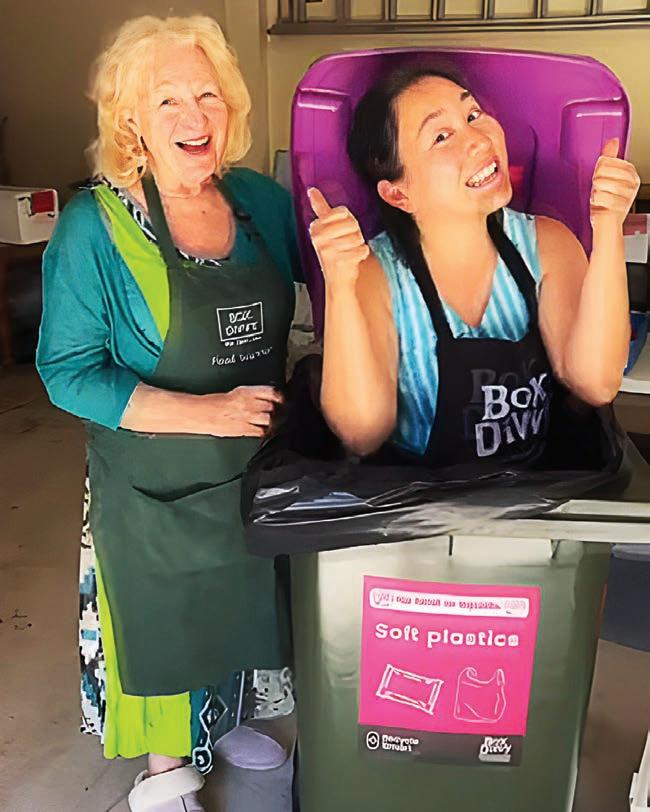
Box Divvy has developed its own soft plastics collection and recycling pipeline, diverting about 2.5 tonnes from landfill each month.
When Australia’s supermarket
soft plastics scheme collapsed in 2022, it exposed a weakness in the country’s recycling system. Millions of households had been encouraged to separate “scrunchable” plastics, yet the supporting infrastructure proved to be unreliable.
Flexible plastics such as bread bags, produce bags, chip packets and bubble wrap cannot be placed in kerbside bins because they jam sorting machinery. Globally, less than 10 per cent of plastic is recycled. In Australia, soft plastics are among the least-recovered materials, largely excluded from kerbside systems and reliant on voluntary drop off schemes.
Operating across NSW and the ACT, Box Divvy partnered with ReSmart (formerly RecycleSmart) to collect soft plastics from its food hubs. These plastics are then recycled into reusable food-grade packaging materials, creating a closed loop system that aligns with Box Divvy’s broader sustainability goals.
“We are held to the highest account,” said Travers. “We’re trying to close the food loop.”
Over the past 12 months, Box Divvy has established the infrastructure needed to expand the program across its network. The NSW Environment Protection Authority contributed 50 per cent of the upfront cost of 500 dedicated 240-litre soft plastics bins.
The first 140 bins were installed in December, followed by a further 170. Around 90 per cent of Box Divvy hubs in NSW and the ACT now host a soft-plastics bin, with more sites joining the program. Monthly volumes are expected to approach three tonnes as the rollout continues.
Members can bring scrunchable plastics to their local hub on collection day at no cost. Hub operators are paid to host and manage the bins. Collected plastics are picked up weekly by ReSmart and transported to a Sydney aggregation warehouse. From there, they are sent to an EPA-approved processor in Victoria to be converted into resin and then manufactured into new food-grade bags and other products.
Box Divvy plans to use these recycled bags to package dry goods such as nuts and beans sold through its network.
According to Travers, the response from members was immediate.
“In the first six weeks, we collected two and a half tonnes of recycled packaging,” she said.
That figure has continued to increase as more members participate in the program. Box Divvy has collected 7.2 tonnes, or around half a million litres, equivalent to 2,000 wheelie bins of soft plastics to date.
While Box Divvy continues to grow, the company is also exploring ways to strengthen food resilience through hyperlocal food production. One project currently under development is a backyard grower network that would allow households to supply produce directly into nearby hubs.
Under the proposed system, individuals growing herbs, leafy greens or vegetables at home could list available produce through the Box Divvy platform. Nearby hubs would then distribute the items within local neighbourhoods.
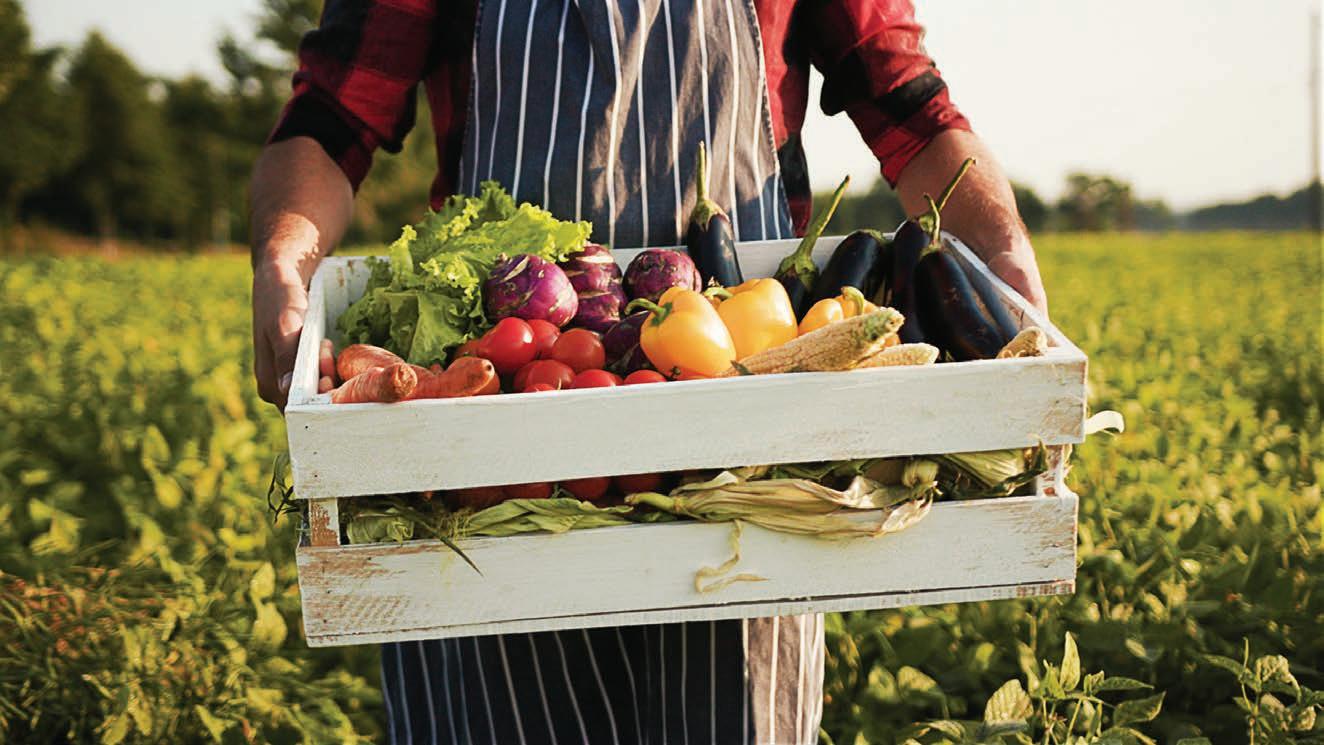
“About 50 per cent of Australians grow something,” said Travers. “If we can get people to grow more in the backyard, Australia can sustain itself.”
The idea was partly shaped by recent fuel supply concerns affecting Australian agriculture. Travers described stories from farmers struggling to secure fuel deliveries for machinery and transport. Rather than viewing disruption solely as a threat, the business constantly asks what opportunities can emerge during periods of uncertainty.
Looking ahead, Travers expects the broader retail food landscape to continue evolving, with large supermarket formats gradually
changing alongside shifting consumer habits and economic pressures. For the wider food and beverage industry, she believes adaptability will become increasingly important in the future.
“The food industry needs to be flexible and collaborative,” she said. “By looking at where the opportunities are and what problems we aim to solve, we’ve proven that community can make change.” F
SKF Food Line
Spherical Roller Bearing

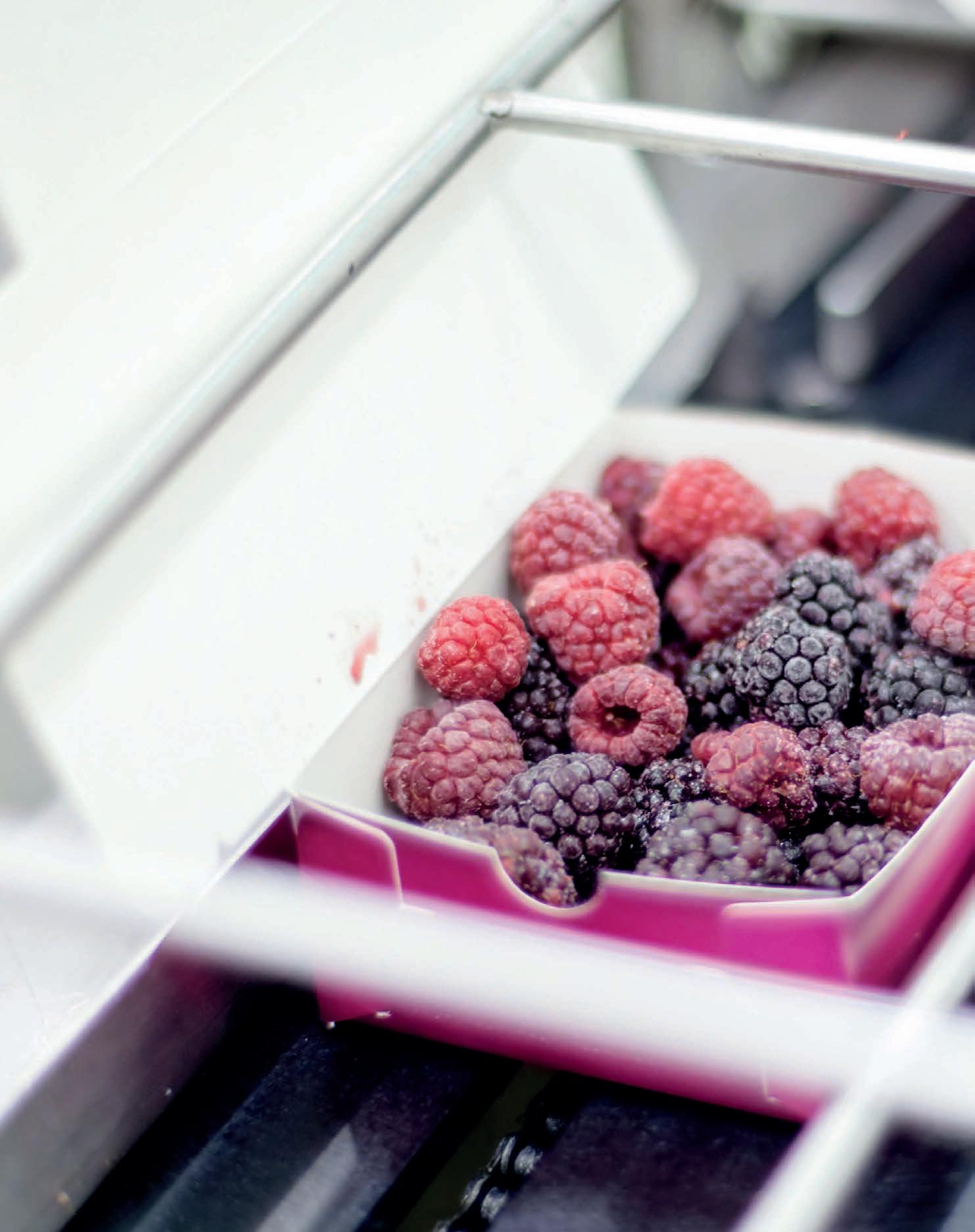
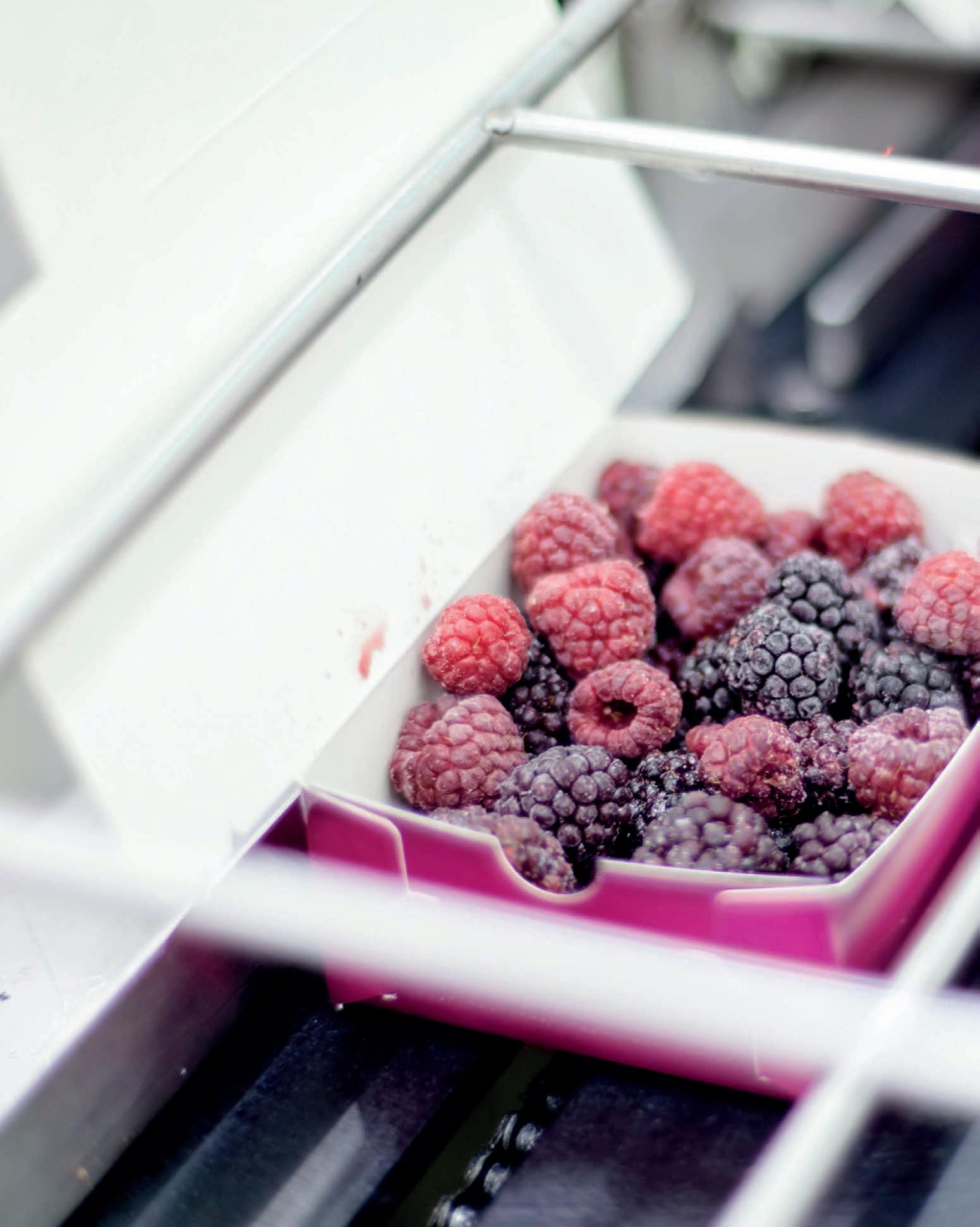
As the food industry responds to market pressures and threats, foodpro 2026 will foster industry resilience through collaborations and solutions.
Australia’s food and beverage manufacturing sector will return to Melbourne in July 2026 as foodpro opens its doors for another four-day showcase of processing, packaging and production technology.
Held at the Melbourne Convention and Exhibition Centre from 26 to 29 July, foodpro 2026 is expected to attract professionals from across manufacturing, engineering, research and development, packaging, operations and sustainability.
More than 400 exhibitors will participate in the event, with the show floor covering ingredients, processing systems, packaging machinery, logistics, automation and digital manufacturing technologies.
The event returns following the 2023 exhibition and arrives at a time when food and beverage manufacturers are facing growing operational pressures across energy, labour, compliance and sustainability.
According to foodpro event director Louise Brooks, the event is designed to help manufacturers navigate those challenges through practical solutions and collaboration.
“Food and beverage manufacturers are facing mounting pressure to reduce waste, improve efficiency and meet sustainability targets while managing rising energy costs and labour shortages,” said Brooks. “foodpro provides a platform for the industry to come together, explore practical solutions in processing and packaging innovation, and connect with the suppliers and technologies that can help them stay competitive.”
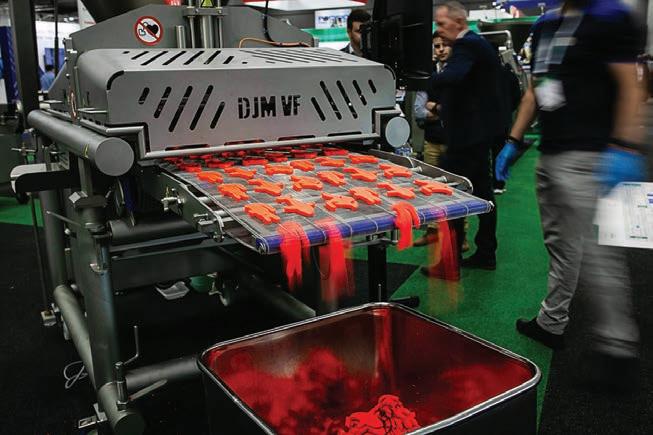
The exhibition will feature live demonstrations of processing and packaging systems, including slicing and portioning equipment, beverage bottling lines, baking technologies and sustainable packaging.
Alongside equipment demonstrations, the Innovation Stage will host presentations and discussions on topics including AI driven quality
control, automation, food safety regulation, sustainable packaging and digital manufacturing systems.
From automated processing lines to quality control systems and new packaging materials, the sector is focused on balancing productivity with sustainability and traceability.
Packaging innovation will also play a role at the 2026 exhibition through a partnership between foodpro and the Australasian Institute of Packaging (AIP). The AIP will join foodpro as an Association Partner, delivering training sessions, industry forums and networking opportunities across the four-day event.
“foodpro is an important tradeshow for the food and beverage industries and we are very proud to be an Association Partner of the show,” said AIP executive director Nerida Kelton.
The partnership will also see the Packaging Innovation & Design Awards Gala Dinner move to Melbourne and take place alongside foodpro for the first time. The 2026 PIDA Awards Gala Dinner will be held on 28 July at Crown Aviary, recognising packaging innovation across Australia and New Zealand.
The finalists and winners of the 2026 PIDA Awards will also be showcased throughout the exhibition.
“The addition of the PIDA Awards Gala Dinner to the foodpro program is a true milestone for the event,” said Brooks. “This is more than a trade show. It’s where the future of food and packaging comes to life.”
The Australian Institute of Food Science and Technology (AIFST) will also return as an Association Partner, with the AIFST26 Convention colocated alongside foodpro across 27 and 28 July.
The conference will bring together food scientists, technologists, regulators, researchers and industry
stakeholders to examine the developments across food safety, sensory science, health and nutrition, manufacturing, sustainability and food regulation.
“We’re thrilled to be partnering with foodpro 2026, creating a powerful platform to bring the food science and technology community together with the broader food manufacturing and packaging sector,” said AIFST chief executive officer Fiona Fleming.
“It’s an opportunity to strengthen collaboration across the industry and highlight the essential role of food scientists and technologists in shaping a safe, sustainable and innovative food future for Australia.”
The exhibitor line-up spans processing and packaging equipment, ingredients, food science, digital manufacturing systems, infrastructure and beverage technology. Exhibitors include Vemag, Multivac, Marel Australia, Heat and Control, Endress & Hauser Australia, Atlas Copco and FOSS Pacific.
In food science and testing, exhibitors include Thermo Fisher Scientific Australia, Eurofins Food Testing Australia and bioMérieux Australia, alongside the University of Melbourne’s Food Sector team.
The ingredients and additives category features Brenntag Australia and functional ingredient suppliers. Digital and automation exhibitors such as Atturra, CSB-System Australia and Foods Connected
reflect growing investment in Industry 4.0 technologies.
Infrastructure and beverage technology providers including GEA Australia, Combilift, Grundfos and Evoguard will also be represented.
The event is expected to attract manufacturers, processors, packaging specialists, engineers, procurement teams and government representatives from across the food and beverage sector.
Networking will form a key part of the program, including the Industry Connect Evening on 26 July at Melbourne Public. Dedicated spaces such as the Industry Hub and Business Lounge will provide opportunities for exhibitors, suppliers and manufacturers to connect throughout the exhibition.
“Together, we’re connecting the people, ideas and technologies shaping the future of Australia’s food industry,” said Brooks.
foodpro 2026 marks more than 50 years since the exhibition was established and continues to serve as one of Australia’s largest trade events for food and beverage manufacturing and processing.
Attendance is free for industry professionals. F
https://foodproexpo.com/

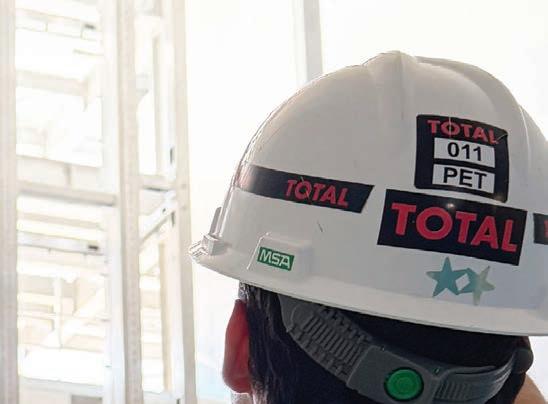
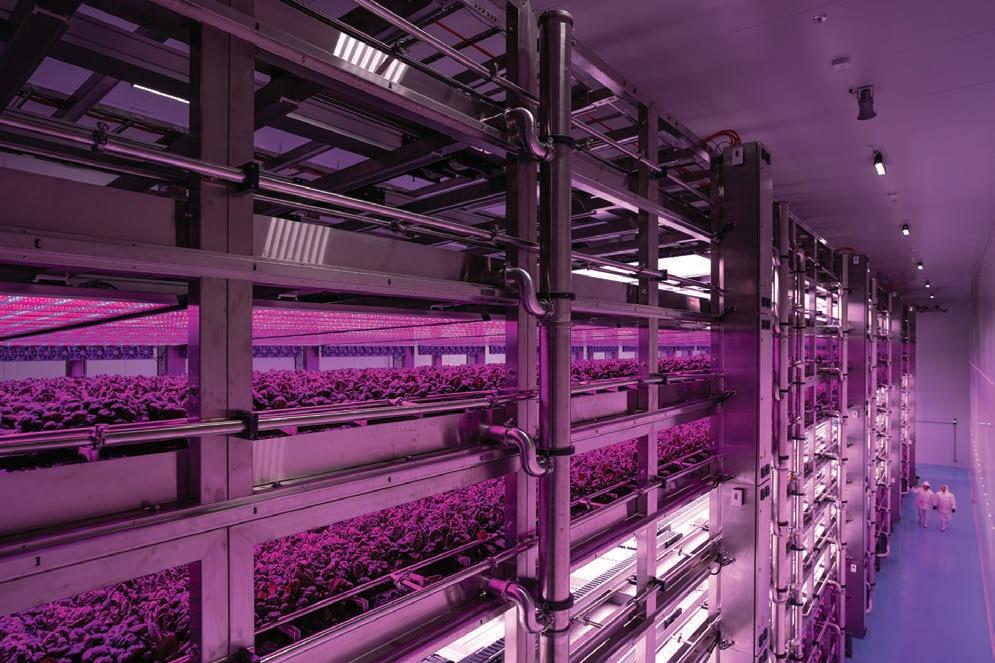
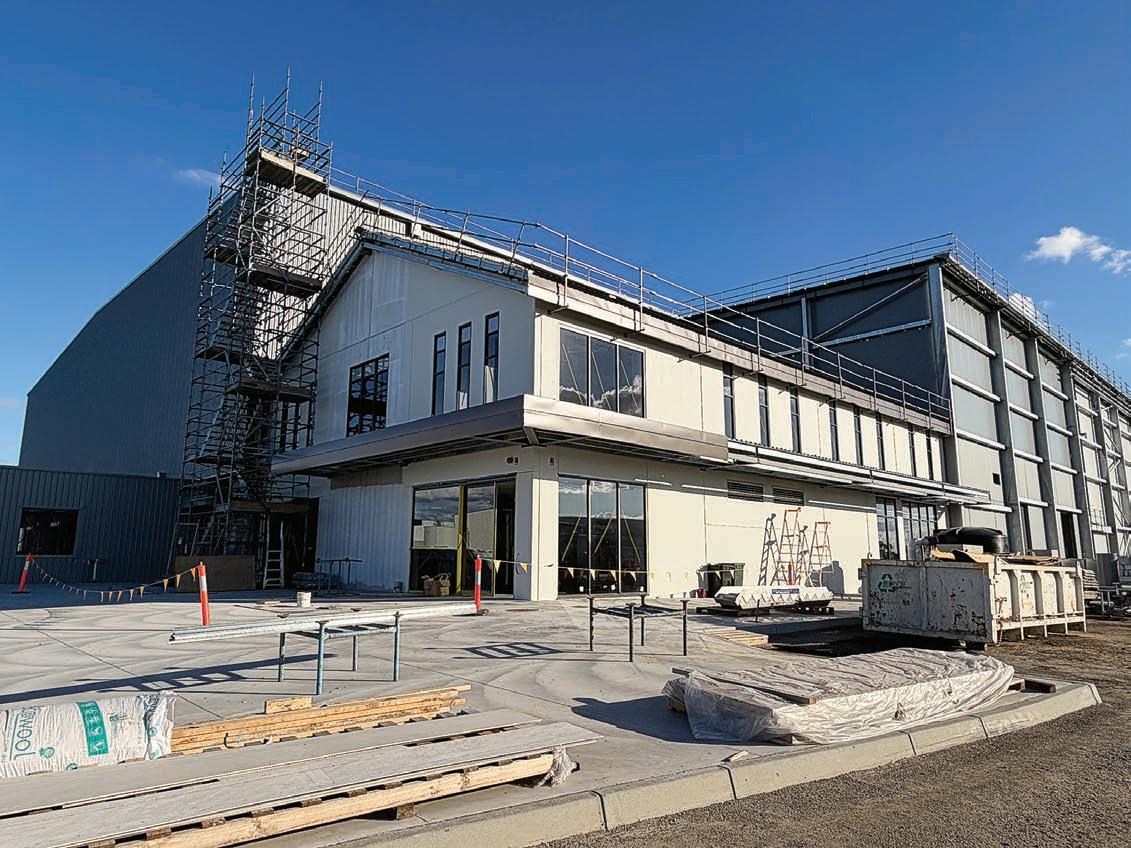
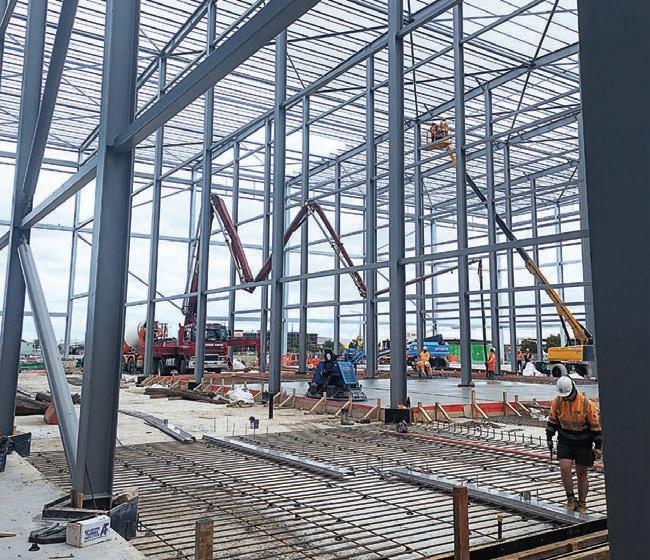
Total Construction is nearing completion on Stacked Farm’s automated vertical farming facility at Melbourne Airport.
Building an automated vertical farm inside an airport precinct was never going to follow a conventional construction path. Partnering with Stacked Farm and Melbourne Airport on an automated indoor farm, food and beverage building specialist Total Construction worked to cut through the noise, delivering a holistic approach to lower risks and blowouts while redirecting focus.
“Our goal was to allow the food producer to focus on what they’re good at as opposed to worrying about issues with the build,” said Rob Blythman, group general manager, food & beverage group at Total Construction.
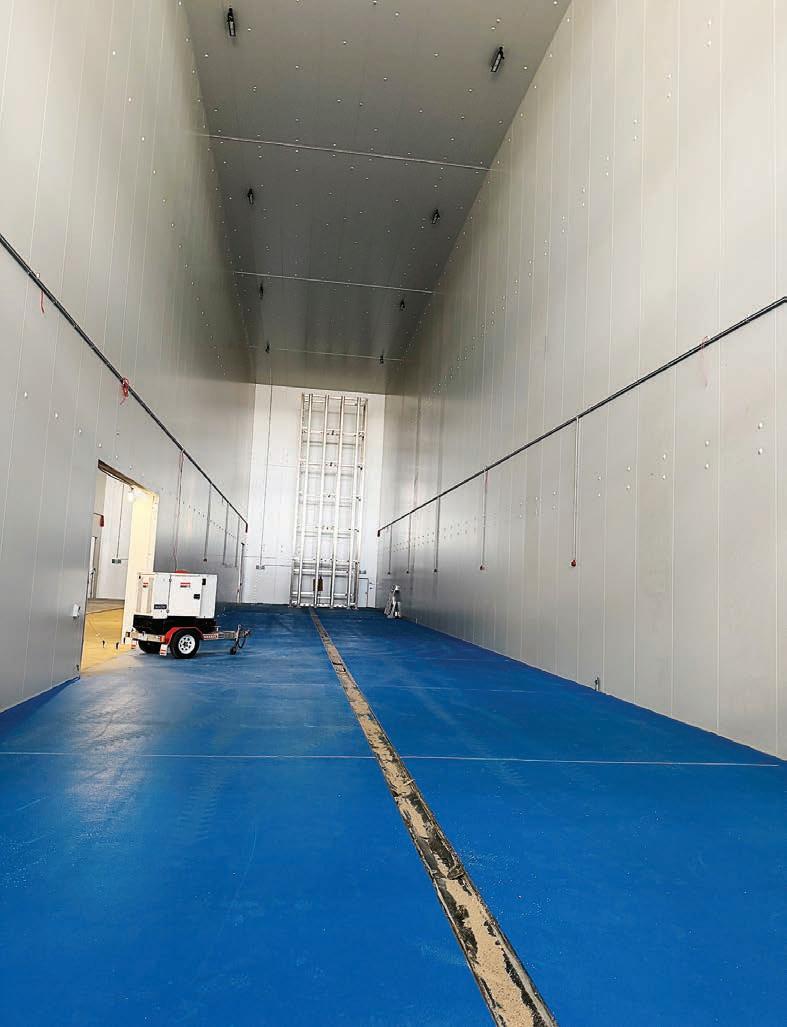
The vertical farm, which spans more than 11,000 square metres, is expected to produce 3.4 million kilograms of fresh herbs and leafy greens annually. For the company, the project has involved balancing evolving technology, airport regulations, logistics challenges and controlled growing environments, while
Now approaching completion, the project is entering its final stages, with Stacked Farm beginning installation of its racking systems ahead of planned production later this year.
“We are tracking well ahead of the anticipated programme and Stacked Farm is getting some massive benefits from that,” said project manager Don Peteranna.
Part of the benefits derive from collaborating under an Early Contractor Involvement (ECI) model. Total has been involved in the project from its inception, enabling proactive risk management and efficient project delivery.
“Because of early involvement with us the builder during the design phase, the project now is ahead of schedule as a lot of the problems were foreseen way back as opposed to when you’re doing the build,” said Blythman.
This approach has allowed
Constructing inside an airport environment introduced a range of site restrictions and regulatory considerations. One constraint involved a microwave communication link running only metres above the finished building height between Melbourne Airport and Essendon Airport.
“You can’t pass a crane through it or anything. It’ll break the communication link,” said Blythman.
The facility itself also introduced unique structural and logistical demands. Large grow room components arriving from overseas as assembled units need to be manoeuvred into position inside the building after the facade is completed, according to design manager at Total, Paul O’Brien.
“This process takes a lot of planning,” said O’Brien. “We also had to ensure a controlled environment, which demands high levels of sealing, hygiene and temperature control.”
continuous production of crops year-round. The facility benefits from faster crop cycles than traditional farming, with crops ready to harvest in 16 to 31 days compared to the traditional 45 to 80 days. Creating the built environment for those conditions require coordination between construction, mechanical systems and fit out planning.
The power requirements also added another layer of complexity. As sustainability is central to the facility’s design, it was planned to install lighting systems that are 47 per cent more energy efficient than traditional farming systems. This meant the facility required underground cabling connected to substations and switchboards that support the automated growing systems and lighting infrastructure.
Managing heat generation from the power distribution network became a complex engineering consideration during construction.
“Managing the amount of cable, power, heat and how you distribute that heat took a fair amount of workshopping,” said Peteranna.
The project has become a learning process for both Stacked Farm and Total. Through close collaboration and discussion, they have been able to overcome technical challenges to build a unique agri-tech system, laying the foundation for future vertical farming developments.
“We want to be able to grow with the client,” said O’Brien. “By growing the relationship, we can improve on the next project.”
Part of Total’s role was allowing Stacked Farm to focus on its production systems rather than construction management. Blythman highlighted that future projects would benefit from keeping the focus firmly on production outcomes rather than architectural features.
“Instead of focusing on how the building will look, we shift the focus on what it’s got to do,” said Blythman. “At the end of the day, it’s a machine
factor in keeping the project on track. O’Brien. “But it’s a challenge that we






enjoy solving.”
After the racking system is installed, practical completion of the main building is expected shortly thereafter. Once complete, the facility will provide a local supply of produce while also acting as a reference point for future automated
farming developments.
For Blythman, the unpredictable nature of the project has been part of what made it rewarding.
“There’s never been a boring day,” he said. “To learn and work on something new every day has been the best part about the build.” F





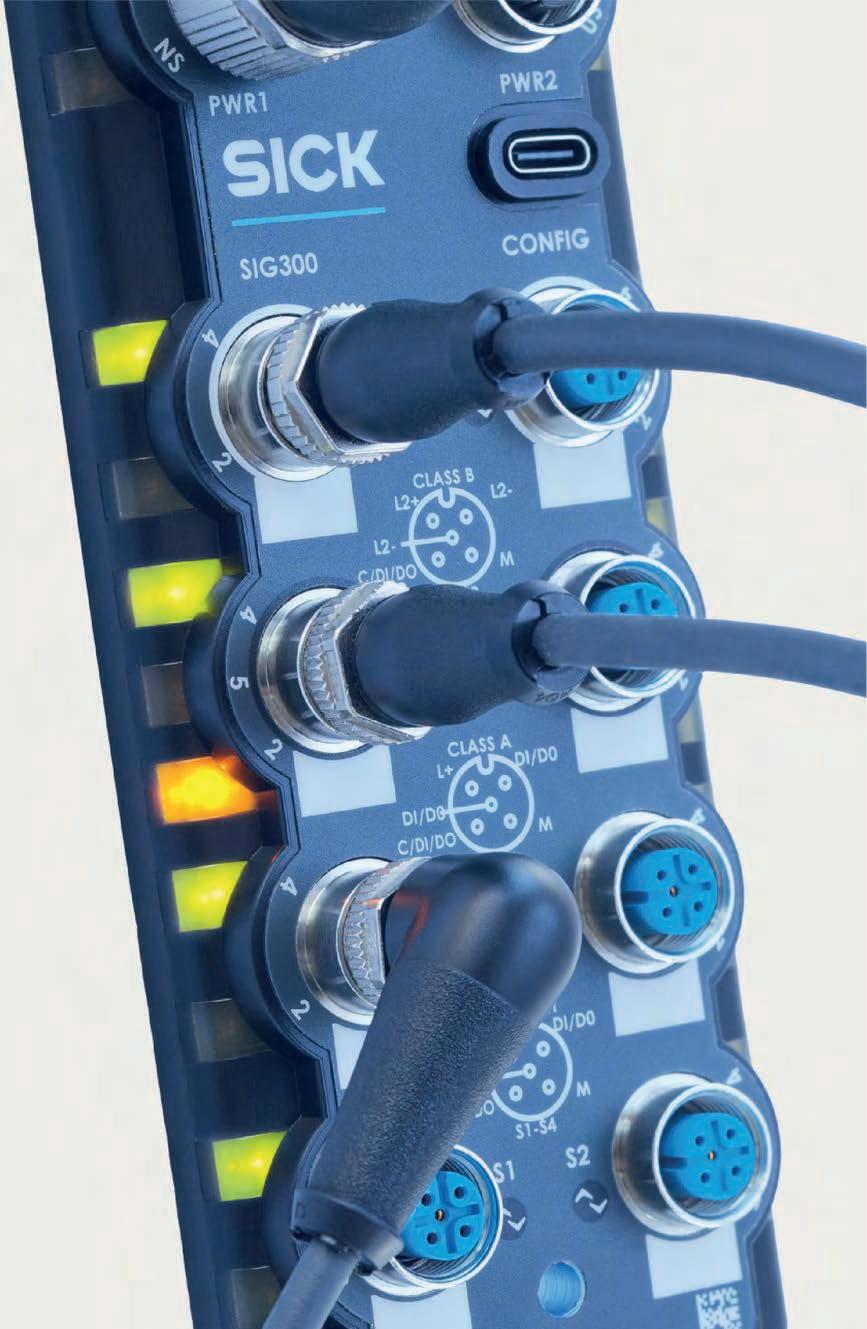
SICK is helping food and beverage manufacturers improve efficiency, safety and traceability through intelligent sensor technology.
As food and beverage manufacturers face growing pressure to improve efficiency, traceability and sustainability, automation technology is being embedded across production and logistics operations. For sensor technology specialist SICK, this shift has positioned intelligent sensing and integrated automation solutions at the centre of modern manufacturing.
Founded in 1946 and headquartered in Germany, SICK develops intelligent sensors, vision systems and integrated automation technologies used across manufacturing, warehousing and logistics industries. Operating in approximately 40 countries, the company works with food, beverage and consumer care manufacturers to improve process visibility, product quality and operational safety.
SICK said its technologies are designed to improve transparency across material flows while maintaining continuity throughout production and logistics processes.
One focus area is flexible automation. Food and beverage production environments often involve changing product sizes, packaging formats and customer requirements. This requires adaptable systems capable of handling variable production conditions without lengthy manual adjustments.
SICK’s smart sensors include automated teach-in and diagnostic capabilities that support flexible manufacturing operations. Predictive maintenance tools also help reduce downtime by identifying potential equipment issues before failures occur during operations.
The company’s Smart Tasks functionality allows sensors to process and deliver operational data directly from the device, supporting Industry 4.0 manufacturing environments where connected systems communicate in real time.
Safety also remains a priority for food manufacturers, particularly as production equipment becomes more automated and modular.
Modern packaging machines and processing systems require intelligent safety concepts that protect both operators and equipment while supporting productivity. SICK provides safety technology services including commissioning, repairs and modernisation, alongside inspection services aligned with international standards and regulations.
Product quality is essential to remain competitiveness in the market. Food and beverage manufacturers operate at high production speeds while maintaining strict quality standards. Packaging lines must accurately verify labels, expiry dates and coding information to minimise product recalls and compliance risks.
SICK’s vision sensors are designed to inspect codes, verify text and monitor packaging quality throughout production. For example, the company’s Inspector 2D vision sensor checks “use-by” dates and printed information on packaged foods and pharmaceuticals. Missing or illegible information can create health risks and lead to costly product recalls.
SICK also provides contamination detection technology used before filling containers. Foreign materials such as debris or residues inside containers can compromise product quality and create food safety risks. The company’s Inspector83x 2D vision sensor is designed to identify contamination quickly. This reduces the risk of recalls while supporting faster production throughput.
Beyond packaging and inspection, the company also develops systems for traceability and product tracking. SICK’s track and trace systems
use barcode, 2D code and RFID technologies to support serialisation, aggregation and inventory visibility. The company offers technologies ranging from compact integrated sensors to configurable standalone systems and programmable cameras. Part of this offering extends to the company’s understanding that automation is also expanding further into warehouse and intralogistics environments – which is something often overlooked.
As manufacturers adopt autonomous technologies, pallet quality has emerged as an operational issue. Damaged pallets can disrupt automated systems, causing conveyor stoppages, robot misalignment, load instability and equipment damage.
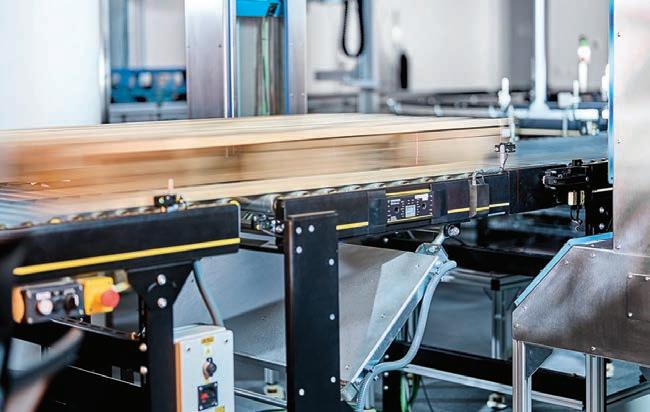
To address this, SICK has developed its Pallet Inspection Systems, known as PAIS, which use 3D vision and AIbased inspection tools to identify pallet defects before they enter automated material handling flows.
The system detects issues including missing boards, cracked timber, protruding nails, twisted blocks and dimensional deviations.
According to SICK, PAIS can identify missing wood areas as small as one square centimetre. The system can also identify cracks measuring three by three millimetres.
The inspection system creates a full 3D model of each pallet, analysing the top, sides, bottom and internal structures. This allows manufacturers to detect warped decks, uneven boards and structural deformation that could compromise load stability during transport or storage.
For manufacturers balancing efficiency, safety and traceability requirements, technologies such as intelligent sensors, vision systems and automated inspection tools are becoming standardised.
As automation continues to expand across food manufacturing and logistics environments, SICK emphasises that connected sensing technologies will continue to shape how facilities manage quality, reduce waste and maintain operational reliability.
“Food and beverage manufacturers are under constant pressure to do more with less – higher throughput, zero defects and full traceability,” said Praveen Kannan, senior director, focus sales, SICK APAC. “The real value of intelligent sensing lies in making operations both visible and actionable in real time.
“By combining sensor intelligence, machine vision and advanced analytics, we’re enabling customers to move from reactive operations to predictive, selfoptimising environments.” F












Uptime is no longer something operators can leave to chance. Eurocold is shifting the focus from fleet ownership to fleet performance.
In food distribution, reliability is becoming the difference between growth and disruption. Every hour a truck is off the road is not simply a delay. It is lost revenue, potential product waste, operational strain and a slow erosion of customer trust.
As delivery windows tighten and expectations rise across the food and beverage sector, businesses are discovering that the greatest risk is inconsistency. Head of growth and revenue Robert Smith at Eurocold – a specialist in temperature-controlled fleet solutions – mentioned how downtime has a ripple effect far beyond the vehicle itself.
“There’s a multitude of factors that contribute to your downtime costs, such as the higher cost of emergency repairs, after-hours service, parts delays, and cost in transport,” he said.
For operators in food distribution, the consequences can be immediate.
operations can extend to negatively affecting customer relationships and contractual performance.
Service level failures can lead to penalties, lost stock and reputational damage that is difficult to recover from. Smith emphasised that even the most efficient supply chains are vulnerable when a single asset fails at the wrong time, with vehicle age as one of the indicators of failure risk.
“With a new vehicle, you can predict when servicing is needed which ensures fewer breakdowns,” said Smith. “When a fleet gets older, failures become more random.”
Clayton Nel, chief operating officer at Eurocold, echoed this statement, adding that maintenance strategy is critical to reducing operational risk. He distinguished between preventative maintenance and predictive maintenance.
Preventative maintenance is a
equipment to prevent failures, while predictive maintenance uses realtime data to monitor equipment condition, enabling maintenance only when necessary.
“When you have fragmented fleets across different age groups, preventative maintenance can only take you so far,” said Nel.
Predictive maintenance optimises costs and extends asset life more effectively than reactive repairs.
“When your assets are maintained by Eurocold, businesses can have predictive maintenance,” he added. “If there is going to be downtime, we will contact the customer prior to the service being needed.”
Through a combination of modern fleet design, preventative maintenance and replacement vehicle support, Eurocold is positioning reliability as a managed outcome rather than an unpredictable

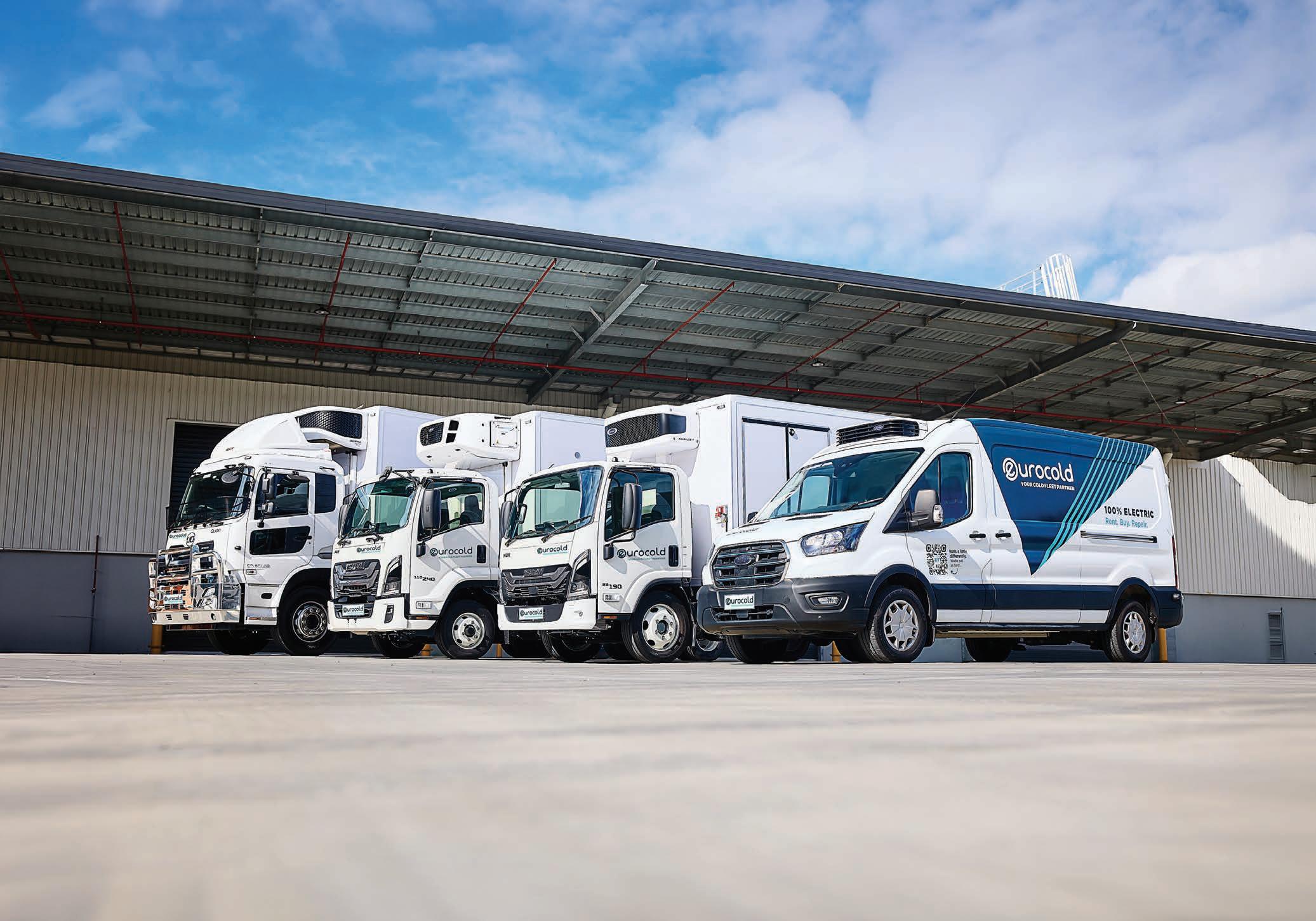
mechanical failure, the company highlights the operational design of a fleet, including how vehicles are specified, maintained and rotated through their lifecycle.
Nel emphasised that food and beverage businesses should not place their focus on the complexity of fleet management.
“Operators have built their businesses based on what they specialise in, from food production, distribution, to on-time delivery,” said Nel. “At Eurocold, we specialise in fleet management.”
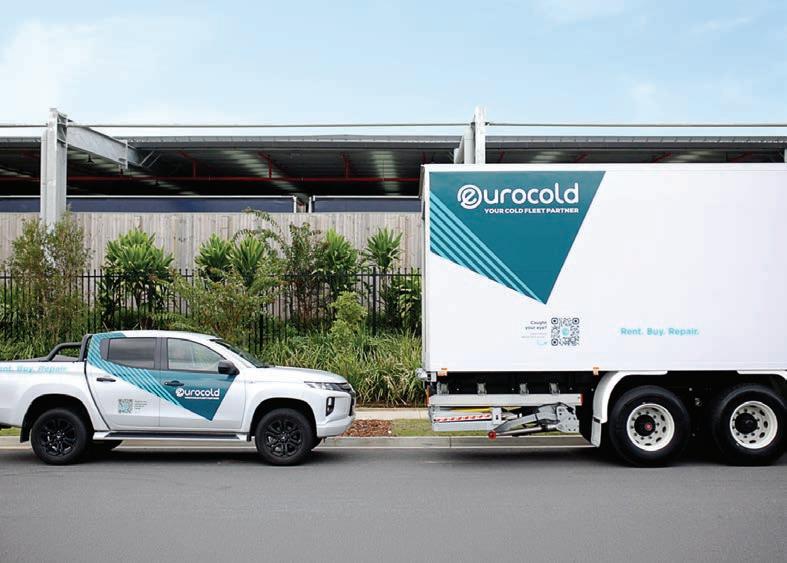
distributors operate under strict service expectations, and even short delays can compromise both product quality and customer relationships. Smith said operational challenges in fleet management are a distraction from more important work.
“The transport arm and leg become an added headache for businesses that they can’t control,” said Smith. “Our job is to partner with them and remove those headaches.”
Eurocold addresses this challenge through its long-term rental model,
begin with and are typically cycled on a four-year basis. This approach reduces the likelihood of structural fatigue and escalating repair costs. With structured servicing timeframes, breakdowns are limited.
Demand in the sector can shift quickly, requiring different vehicle capacities or configurations. However, ownership limits flexibility.
“When a business purchases an eight-pallet truck, that demand can change where they would require a 10- or 14-pallet truck,” said Smith.
In contrast, a managed fleet allows operators to scale capacity without being locked into outdated assets.
Nel said the industry shift towards rental and managed fleets has been slow but gradual.
“Fleet operators still see the vehicles as assets to the company,” he said.
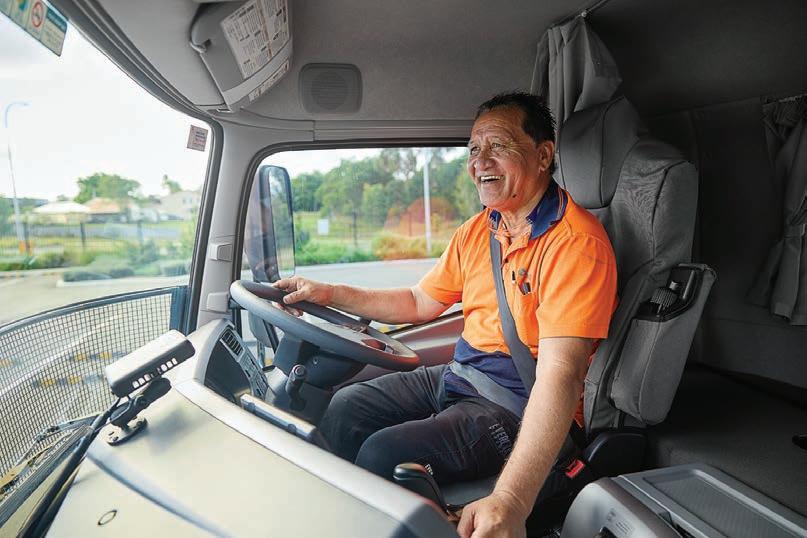
“But the recent uptake in rental model has been driven by workshop availability and rising labour costs for mechanics and serviceability.”
With broader economic pressures such as rising property and energy costs, operators are beginning to reassess where capital is best deployed. Rather than investing in depreciating vehicles, more
businesses are shifting focus towards core operations such as production, storage and sourcing.
Eurocold positions itself as a partner in this transition, with operational understanding and fleet design shaped by delivery patterns, environmental conditions, stop frequency and refrigeration load, all of which influence vehicle specification and long-term reliability.
“We really like to problem solve prior
to giving the customer the vehicle,” said Nel.
“Our approach aims to reduce disruption by anticipating operational challenges before they occur, rather than reacting after failure.”
In a sector where margins are tight and expectations are high, uptime is being reframed as revenue protection, customer retention and brand trust. The most effective fleets are those that keep moving. F
Rethinking bearing technology for safer, smarter food safe production, the SKF Food Line Spherical Roller Bearing is engineered for the extremes.
In the high-stakes world of food and beverage processing, “good enough” isn’t an option. With global regulations and the constant pressure to maintain impeccable hygiene, every component in a production line matters. A single contaminant can derail a brand’s reputation and risk jeopardising the consumer’s health.
That is why the industry is moving beyond standard components.
Common in food and beverage applications, bearings reduce friction, support heavy loads and enable smooth operation of machinery like conveyors, processing equipment, mixers, and packaging lines.
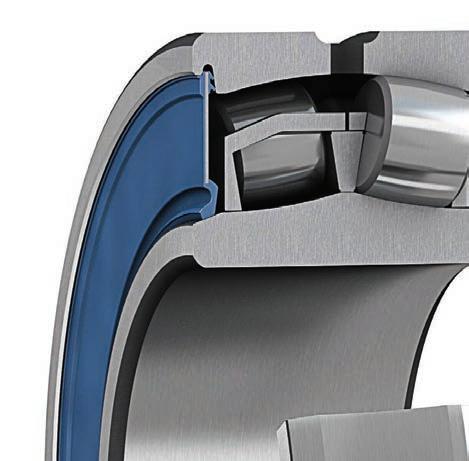
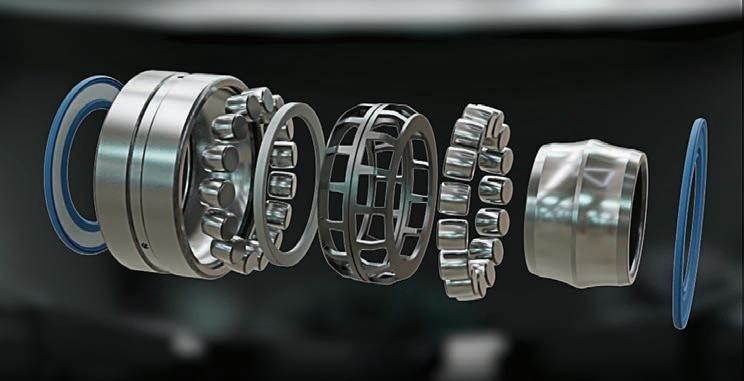
To boost overall food safety and ensure regulatory compliance, food manufacturers can replace open bearings with the SKF Food Line Spherical Roller Bearing (SRB), which is designed for bespoke needs in the food sector. It is an example of how businesses can improve safety standards and protect brand image.


Hygiene by design
Food safety begins with prevention. SKF’s Food Line bearings are more than just hardware – they are a safety solution. Pre-filled with NSF category H1 food-grade grease and protected by FDA- and EC-approved seals, these bearings are built to comply with safety standards.
To further eliminate risk, the high-performance seals are finished in a distinctive optical blue. In the unlikely event of component damage, fragments are detectable against food products, ensuring that nothing reaches the consumer but quality.

Production environments are brutal, involving high-pressure washdowns and caustic detergents. The range features a high-performance nitrile butadiene rubber seal that acts as a fortress against water and contaminant ingress.
However, it is not just about protection from extreme environments. Rather, it’s about performance. Upgraded to the SKF Explorer performance class, these bearings are manufactured from high fatigue-resistant steel with an advanced heat treatment process. This creates a superior balance of

hardness and toughness, resulting in:
•Three times longer service life compared to open bearings.
•Higher load capacity and reduced vibration.
•Minimal maintenance due to the “sealed-for-life” design that virtually eliminates grease leakage.
Today, sustainability is no longer a buzzword – it’s a business imperative. By choosing the SKF Food Line, businesses are reducing their environmental footprint. The low-friction seals lower energy consumption and CO2 emissions, while the extended service life means fewer replacements and less demand for raw materials.
Because grease leakage is virtually non-existent, manufacturers save on the costs of repurchase, relubrication, and waste disposal. When the safety of the customers and the efficiency of the plant are on the line, the choice is to upgrade to a bearing that works hard while maintaining performance. With the addition of the SRB, SKF Food line practically covers every type of application in any food and beverage processing plant.
Since 1907, SKF has been committed in providing innovative products and solutions to reduce friction to progress the food and beverage manufacturing sector. Developing bearings suitable for a variety of applications and conditions, the SKF Food line SRP offers an end-to-end solution where reliability meets safety. F

















With decades of experience in handling bulk solids, WAMGROUP® provides innovative and reliable equipment solutions for every stageof the process. Discover the power of proven technology and much more !
Speak with a bulk handling expert





+900 000 Screw Conveyors
+500 000 Dust Collectors






+1 700 000 Butterfly Valves
+135 000 Rotary Valves

+45 000 Bin Activators
+20 000 Loading Bellows






+11 000 Industrial Mixers




















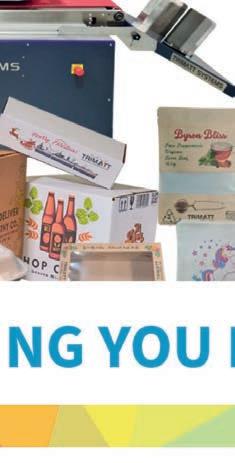
Trimatt Systems is preparing to launch a new direct-to-food printing system at foodpro 2026, bringing industrial scale edible printing technology to the Australian market.
Can branding be edible?
For food and beverage manufacturers, ingredients and flavour are the primary concerns that dictate customer satisfaction. Branding – often achieved through printing, packaging, marketing and word of mouth – is a secondary concern that influences whether customers return.
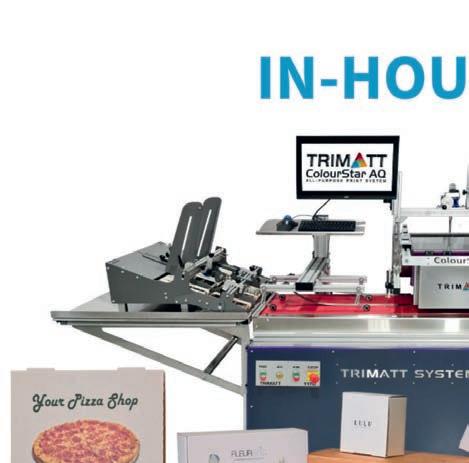
Trimatt Systems is aiming to change that by combining flavour and branding into one at foodpro 2026. The Melbourne-based automation company will showcase its new industrial direct-to-food printing system capable of printing full-colour graphics directly onto edible products.
“The machine we’re going to be exhibiting at foodpro for the first time is called the ColourStar AQE,” said founder Matt Johnson.
The AQE stands for Aqueous Edible, and the machine is designed for industrial food production environments. It uses certified edible inks to print directly onto products
such as biscuits, cookies, wafers and marshmallows at high speed. The technology introduces a new way for manufacturers to think branding.
“It gives food manufacturers a new way to promote products from a novelty aspect,” said Johnson.
While edible printing technology already exists in smaller retail and bakery applications, Johnson explained these systems typically operate at much slower speeds and are designed for low volume production. For example, a bakery shop may place a cake under a desktop printer, taking roughly 10 minutes or more to produce a printed image directly onto the icing.
The ColourStar AQE has been designed differently. Rather than operating through a stop/start process, it functions as a single-pass industrial solution. Products move continuously along a conveyor while images are printed directly onto the food surface.
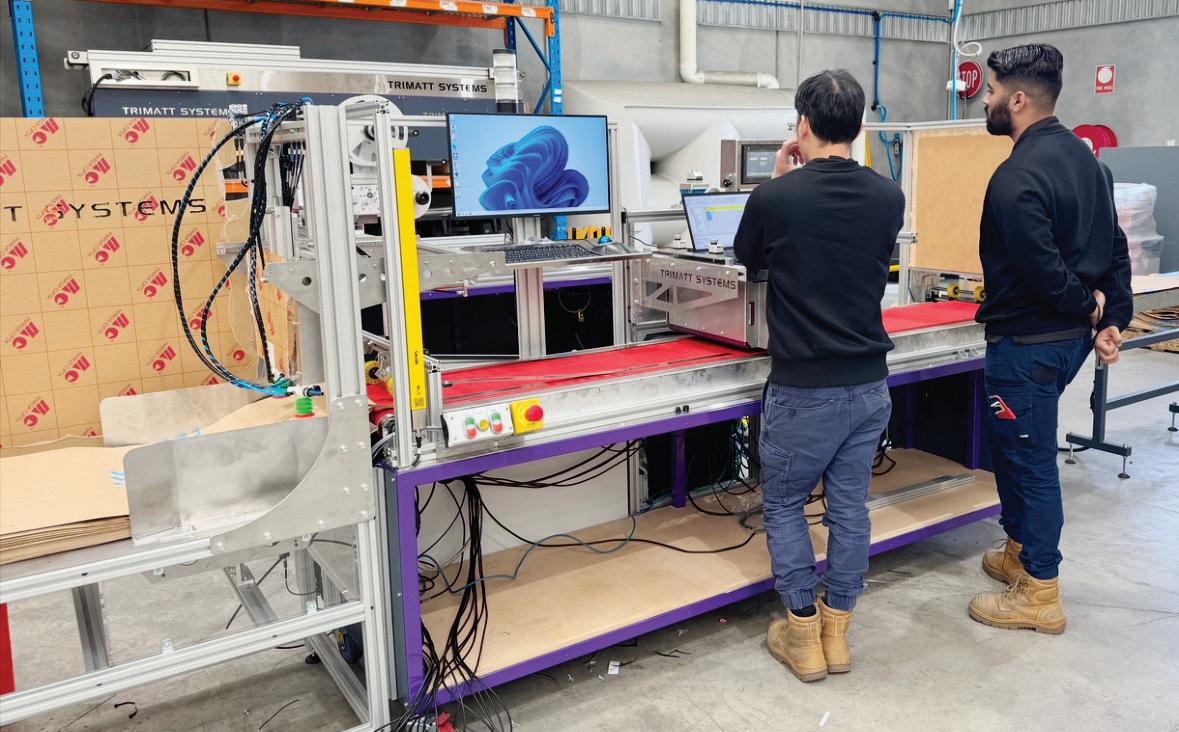
the printer, which means we can print 200 to 300 biscuits per minute.”
Halal and kosher certified
“What we’ve got is an industrial

The launch marks an extension of Trimatt’s existing ColourStar platform, which has already been used widely across on-demand printing applications. Existing systems are commonly used for printing onto bags, cartons, napkins and other packaging materials. However, edible printing introduces a new set of requirements, particularly around food safety and certification.
“Most inks aren’t suitable for printing directly on to food,” said Johnson. “To print directly on food, you must use certified edible inks.”
To address this, the ColourStar AQE uses edible inks certified for halal and kosher markets, expanding the potential customer base for food manufacturers supplying diverse retail and export sectors.
printed directly onto food products. Because the process is digital, each item can carry different artwork without interrupting production.
Beyond the printing technology itself, Trimatt focuses on system integration and product handling. Rather than supplying only the print engine, the company has developed a complete turnkey production line designed specifically for food environments.
“We build a complete turnkey system,” said Johnson.
“We built an FDA-qualified feeder which delivers food products using food-grade belts.”
The system includes automated product feeding, food-grade conveyors, stainless steel construction and product collection that prepares finished items for packing.


Johnson also noted that earlier food-printing systems often came with limitations, particularly around colour capability.
“One colour is very limiting,” he said. “The other problem was the ink was not qualified for halal or kosher, which meant it limited the market.”
Collaborating closely with suppliers, Trimatt has developed the
All machinery components have been designed for food manufacturing conditions. This means businesses can print directly onto the product, collate printed products, and deliver them directly to the consumer.
This engineering approach reflects Trimatt’s broader business model, which focuses on integrating printing technologies into automated production environments.
At foodpro 2026, Trimatt plans to demonstrate five systems across its exhibition stand. Alongside the ColourStar AQE, visitors will also see the ColourStar AQV system and other industrial technologies aimed at boosting productions cycles while reducing inventory and waste.
“Whether it’s food manufacturing, contract packing, or a business looking to reduce their materials in-house, we have an offering that’s going to satisfy a lot of businesses,” said Johnson.
At the exhibition, the company plans to demonstrate personalised edible
printing live on the stand using the ColourStar AQE. Using digital artwork generated from a photograph, the system can create personalised edible products within moments.
Industry events like foodpro play a role in educating customers and opening different pathways to manufacturing.
On-demand packaging, printing, date coding, batch marking and food printing solutions continue to expand Australian food and beverage manufacturing capabilities. Additionally, industry events help bring these technologies to life through live interactions.
For example, Trimatt previously exhibited at MICE in 2023, where the company received an award for best accessory machine.
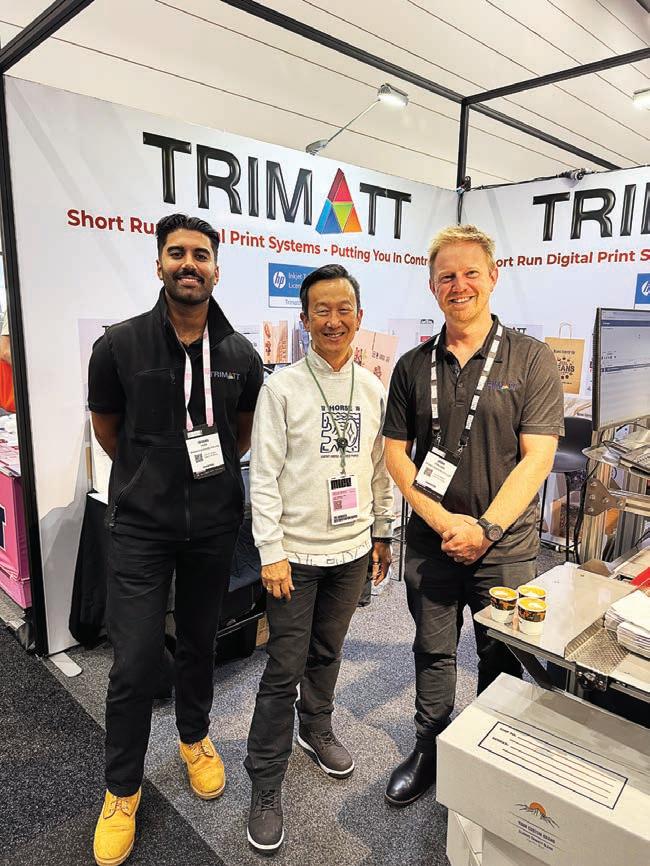
Returning to the exhibition this year, Johnson said industry awareness around the company’s capabilities had noticeably increased.
“A lot of businesses thought that
we were just a printing business,” Johnson said.
“This year, people viewed our offering totally differently. The businesses were more educated on the value of our solutions.
“Join us at foodpro 2026, Stand M28 and have a coffee and a biscuit with your name on it.” F






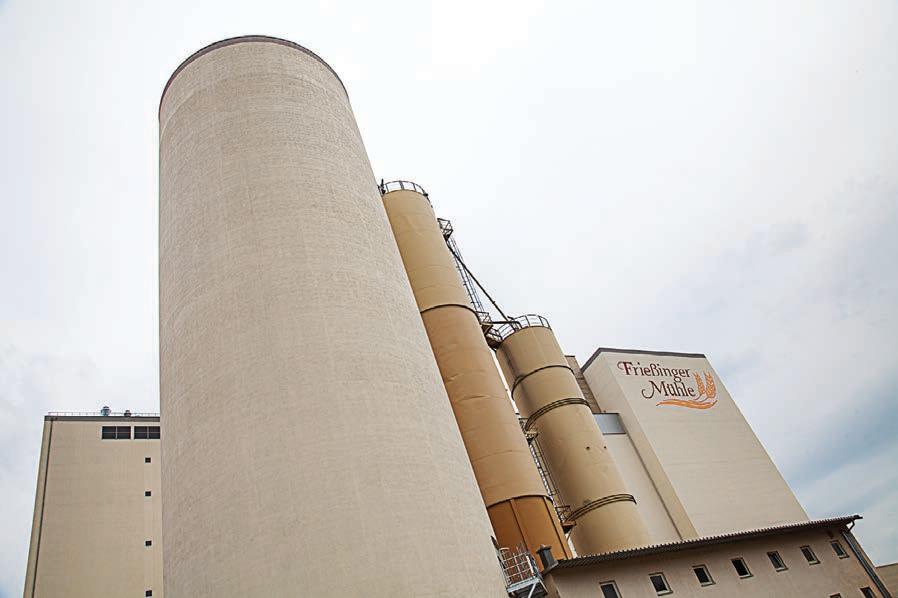
Frießinger Mühle is using VEGA Inventory System and radar level sensors to improve stock visibility, automate inventory management and optimise flour production and delivery processes.
For flour manufacturers operating at industrial scale, inventory visibility is imperative. From grain intake through to flour dispatch, the ability to monitor stock levels and manage material flow efficiently can affect production continuity, warehousing and delivery performance.
At Frießinger Mühle in Bad Wimpfen, Germany, digital inventory management has become part of daily operations. The flour mill uses radar sensors and VEGA Inventory System software to monitor silo levels, manage stock movement and production planning across the site.
With more than 23,000 tonnes of grain storage capacity and annual flour production reaching 400,000 tonnes, the mill handles daily volumes of both incoming grain and outgoing flour products.
Every day, up to 1,200 tonnes of grain are delivered to the facility while a similar volume of finished flour products is dispatched to customers by truck and ship. The operation also manages a broad product range. Around 200 million packaged units leave the mill annually, ranging from 500g consumer packs through to 25kg commercial formats.
“Our goal is to supply our customers with flour varieties tailored exactly to their needs,” said sixth generation member leading the family business, Willi Erich Frießinger. Alongside standard flour grades such as type 405, 550, 1050 and wholemeal flour, the company also produces a wide range of products for different baking applications.
“Bakeries need customised flours, precisely tailored to their individual production methods,” said Frießinger. Managing that level of product variation requires accurate coordination between warehousing, production and logistics.
“We can only meet this diversity of requirements if we automate our delivery and warehousing processes,” he added.
T]he mill uses VEGA Inventory System to centralise inventory management and stock monitoring across the facility. The software integrates data from suppliers, warehouse operations and purchasing systems into a single platform, allowing dispatchers and operators to monitor stock levels in real time.
Inside the control room, operators monitor silo levels and material movement across multiple screens displaying live inventory data. The system tracks different grain types and batches while also monitoring filling and emptying rates inside individual silos.
Graphical progress charts help allow operators to identify stock movement patterns and optimise delivery scheduling.
Plant manager Klaus Hecht said the software allows staff to respond quickly to changing production or supply requirements.
“This allows us to diversify our sources of supply and react quickly to short term increases in demand for individual goods,” said Hecht.
The inventory system relies on data collected from VEGAPULS 6X radar sensors installed throughout the facility. More than 200 measurement points across the storage silos are equipped with radar level sensors that continuously monitor stock volumes.
The level data collected by the sensors is then processed by VEGA Inventory System to support material planning and inventory forecasting. Rather than providing a snapshot of current stock levels, the software also analyses historical consumption data to estimate future demand requirements.
Using historical usage trends, the system can generate forecasts for future material needs and support procurement planning. For flour manufacturers managing multiple grain types and specialised products, accurate forecasting is important to avoid both stock shortages and unnecessary overstocking.
At Frießinger Mühle, inventory automation is helping simplify that process by reducing the amount of manual monitoring required.
The digital inventory system has also helped simplify infrastructure requirements within the facility. More than half of the mill’s measuring points are already connected to VEGA Inventory System.
Because the newest mill building was designed with the inventory platform integrated from the beginning, measurement data can now be transferred directly to the company’s ERP system over the web. The software can also support future supply chain automation.
One potential feature would allow inventory systems to connect with supplier or customer silos, enabling automated replenishment or delivery scheduling once stock levels reach predefined thresholds.
Inventory management extends beyond simply tracking stock levels. Operators must ensure the right grain varieties are available at the right time while avoiding unnecessary inventory build-up. That process becomes difficult when factoring in procurement pricing, storage costs, customer demand forecasts and contract obligations. While experienced operators understand the dynamics of their customers and supply chains, managing large volumes of interconnected operational data can still become complex.
At Frießinger Mühle, automated inventory monitoring has become an important tool for simplifying those decisions while improving visibility across the business.
Following the expansion and modernisation of the facility through the addition of a third 63-metrehigh mill building, the company has continued increasing its use of digital inventory management technologies to support production efficiency and operational planning. F
DIGITAL INTRALOGISTICS
Optimise your materials and material flow with digitalisation
Digitalisation in goods receipt
What are the advantages of digitalisation?

Download a free copy of your intralogistics guide now
Transparency in material flow through localisation of important assets
Automated goods flow through localisation and positioning solutions for mobile and autonomous robots

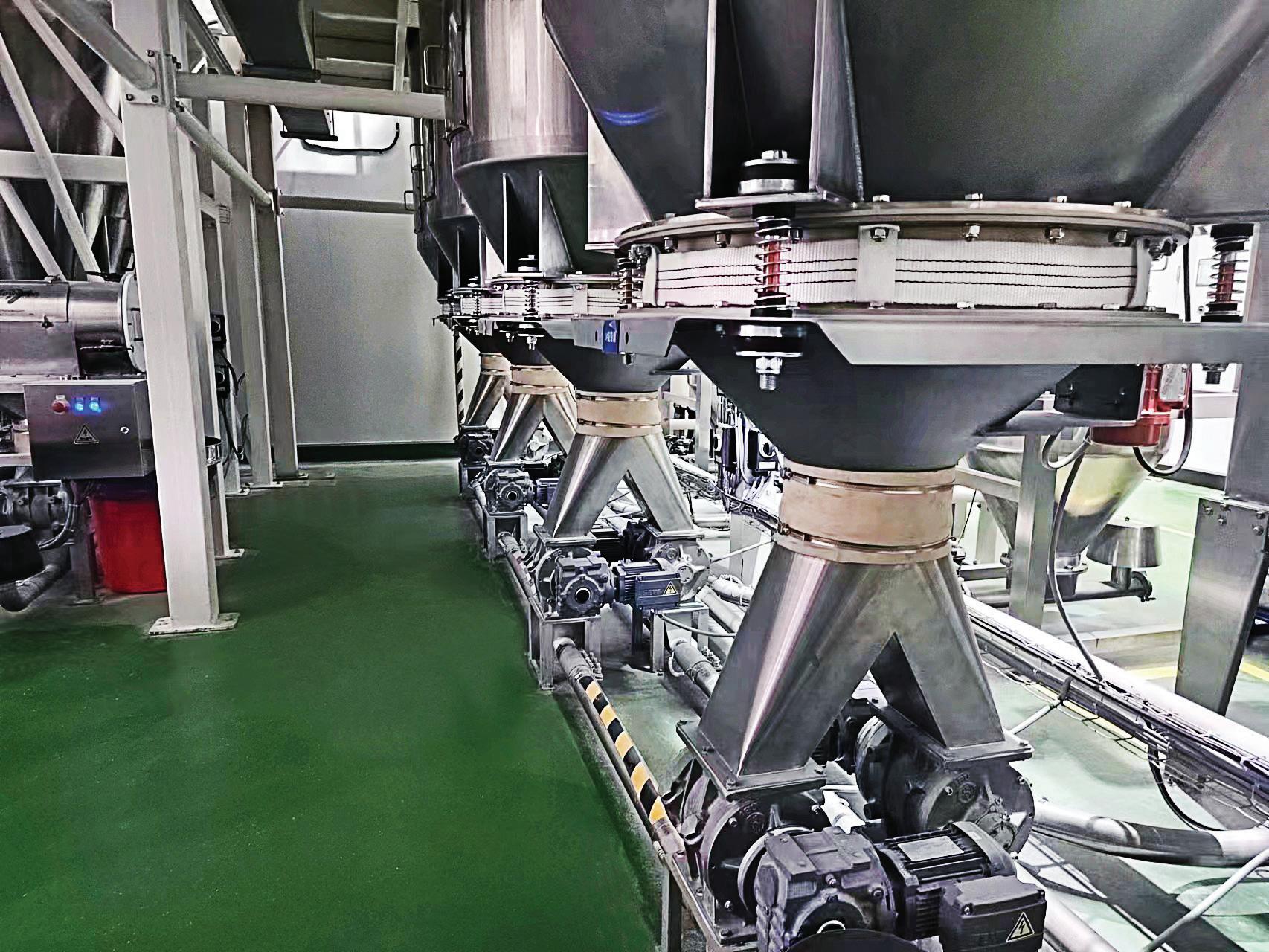
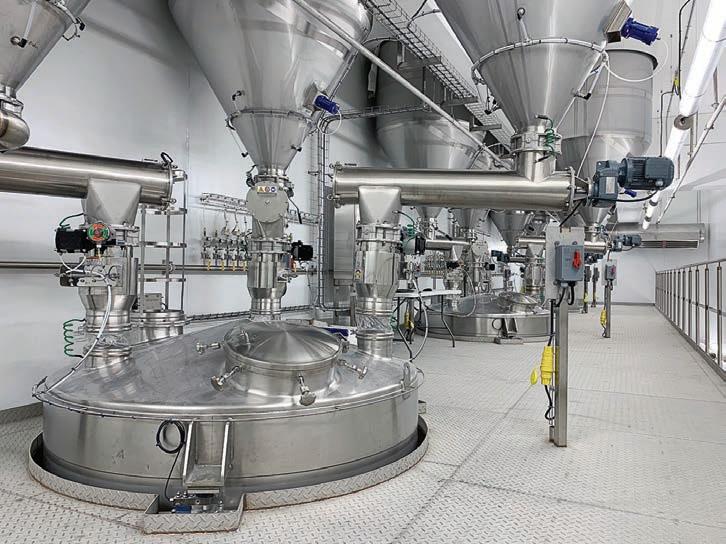
From intake to packaging, dry food processing depends on how well each stage connects. WAM Australia focuses on system continuity to support consistent quality, hygiene and efficiency across the entire line.
In dry food processing, performance is shaped across a sequence of connected decisions – not from a single machine. From how raw materials are received and protected to how they are conveyed, dosed, mixed and transferred to packaging, each stage influences the next. When one part of the process is unstable, the impact is felt across the entire line.
For manufacturers working with flour, bakery premixes, sugar, cocoa, spices, dairy powders, additives, cereals, plant-based ingredients and nutritional blends, every transition point carries weight. Product quality, hygiene, traceability and efficiency all depend on how well these stages are designed and integrated.
This is where WAM Australia positions its expertise. With decades of experience in dry material handling, the company focuses on engineered components that aims to support process continuity from intake through to final storage.
Every process begins with raw material intake. Whether ingredients arrive in tankers, big bags, sacks or drums, maintaining product integrity from the outset is critical. At this stage, the focus is on controlled unloading, dust management and safe storage.
Manufacturers are under pressure to reduce waste, improve traceability and shorten cleaning times. As product ranges expand and batch sizes shift, raw material handling must remain flexible without compromising hygiene or accuracy.
Silo filling systems, dust collection, pressure relief devices and level monitoring equipment must work together to create a clean and controlled environment.
Once stored, dry raw materials must be discharged with precision and consistency. This is often where hidden inefficiencies emerge. Issues such as bridging, rat-holing and inconsistent flow can disrupt
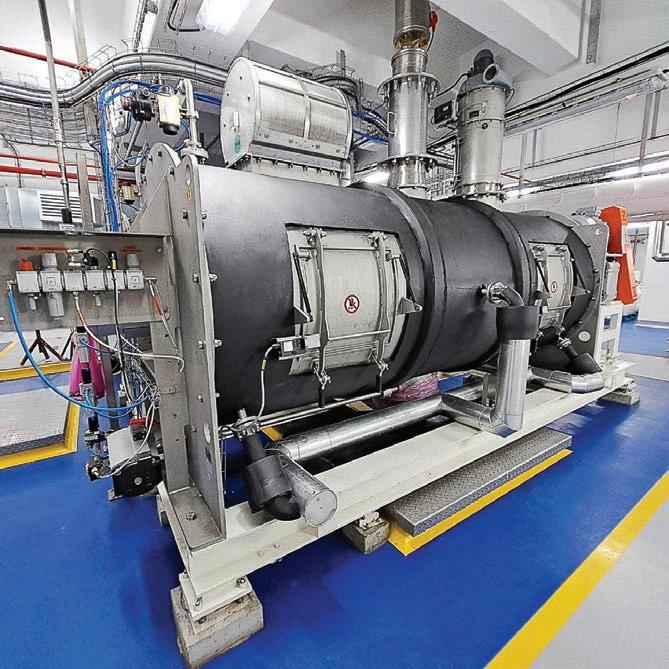
downstream processes. In food production, this leads to variations in dosing, uneven mixing and potential product rework.
To address this, WAM Australia supplies bin activators, discharge aids, fluidisation systems and vibration technologies designed to maintain steady mass flow. When discharge is stable, the rest of the process becomes easier to control.
In many cases, what appears to be a mixing or dosing issue can be traced back to irregular discharge upstream. Restoring consistent flow often improves overall line performance without major changes elsewhere.
Conveying links each stage of the process into a coherent system. Mechanical conveying solutions such as screw conveyors, bucket elevators and chain conveyors must be matched to the characteristics of each ingredient. Fine powders require dust-tight handling, while fragile inclusions need gentle transfer to avoid breakage. Sticky or abrasive materials may demand specialised finishes or geometry.
WAM Australia focuses on tailoring conveying systems to both product and layout. Modular designs, easy
hygiene and long-term reliability.
Equally important are the interception points. Valves, diverters and gates direct material between lines, bins and processing equipment. These points must ensure clean switching, accurate routing and airtight sealing. In high mix production environments, these transitions are central to maintaining traceability and preventing contamination.
Consistency in dry food products depends on accurate feeding and metering. Even small variations in ingredient quantities can affect taste, texture and nutritional content.
WAM Australia’s feeding systems are designed to deliver precise dosing across a wide range of materials, including micro ingredients such as vitamins, enzymes and flavourings.
As demand grows for fortified and customised products, the need for accuracy becomes more critical and important. Features such as variable pitch screws, easy-clean designs and anti-segregation geometry can support reliable and repeatable feeding performance.
This stage is where process control directly connects to product quality. For manufacturers, it is also where
supplier managing allergen-sensitive recipes require repeatability and secure ingredient separation.
The mixer may be the heart of the line, but its performance depends on what happens before and after it. Stable feeding, controlled ingredient release and efficient discharge all contribute to achieving a uniform blend. Poor upstream control can lead to inconsistent batches, longer mixing times and increased waste.
As experts, WAM Australia supports mixing operations, selling 500 mixers as a group annually. These elements help maintain consistent conditions within the mixer. The company’s components support batch and continuous mixers across sectors such as premixes, powdered beverages, soup bases, dairy formulations and seasoning systems.
As production shifts towards shorter runs and more varied recipes, the ability to change quickly without compromising quality becomes more important. By ensuring stable upstream feed, clean valve sequencing and controlled discharge into the mixer, WAM Australia helps manufacturers reduce variability between batches
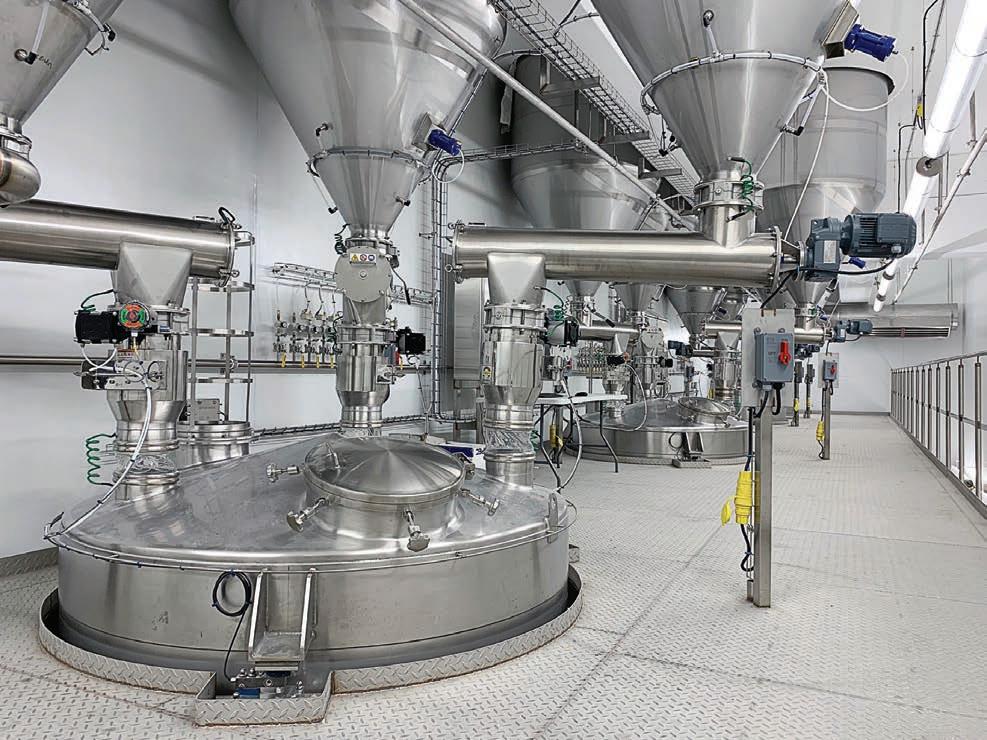
Before a product reaches the shipping or the packaging line, there is one final step – secure intermediate storage. Surge hoppers, day bins and buffer silos positioned ahead of filling and packing systems must maintain stable flow while protecting the blend from contamination, segregation and humidity ingress.
At this point, maintaining flow while protecting product quality is essential. Poorly designed storage can lead to segregation, contamination or inconsistent feeding into packaging equipment.
WAM Australia’s solutions focus on controlled discharge, accurate level monitoring and effective venting. These systems help stabilise flow into packaging lines, supporting overall equipment efficiency.
For manufacturers looking to increase throughput without expanding footprint, this stage offers an opportunity to improve performance. Well-designed storage can absorb upstream variation and allow packaging to run consistently.
Across the dry food sector, manufacturers face pressure to improve efficiency, maintain hygiene standards and respond to changing product demands.
These challenges cannot be solved by focusing on individual machines alone – they require a connected approach to process design.
From intake and storage to discharge, conveying, feeding, mixing support and final transfer, each component contributes to overall performance. In practical terms, this means there are fewer interruptions, more consistent output and improved control over product quality for businesses.
WAM Australia addresses each stage of material handling as part of a larger system. As a local provider, the company delivers local support and manufacturing capabilities through its Australian trading office, showroom, warehouse and production facilities, helping manufacturers achieve stable, repeatable and efficient production.
For manufacturers, the value lies not just in the equipment itself, but in how it performs within the wider production environment. That is where expertise translates into measurable results. F
Jungheinrich Australia shows how lithiumion technology is helping businesses build long-term operational certainty.
“Afool with a plan can beat a genius without a plan” is a classic quote attributed to T. Boone Pickens , highlighting the importance of discipline, strategy and execution. For businesses, long-term planning remains central to maintaining competitiveness and stability.
“Most businesses have a longterm view to remain competitive and relevant from a commercial perspective,” said Scott Coy, director of rental and sales management at Jungheinrich Australia. “However, there are still existing pressures.”
Energy remains one of the most pressing issues. With global instability continuing to place pressure on fuel and electricity markets, the food and beverage sector is facing rising costs across the supply chain. From primary production and processing through to warehousing, transport and retail,
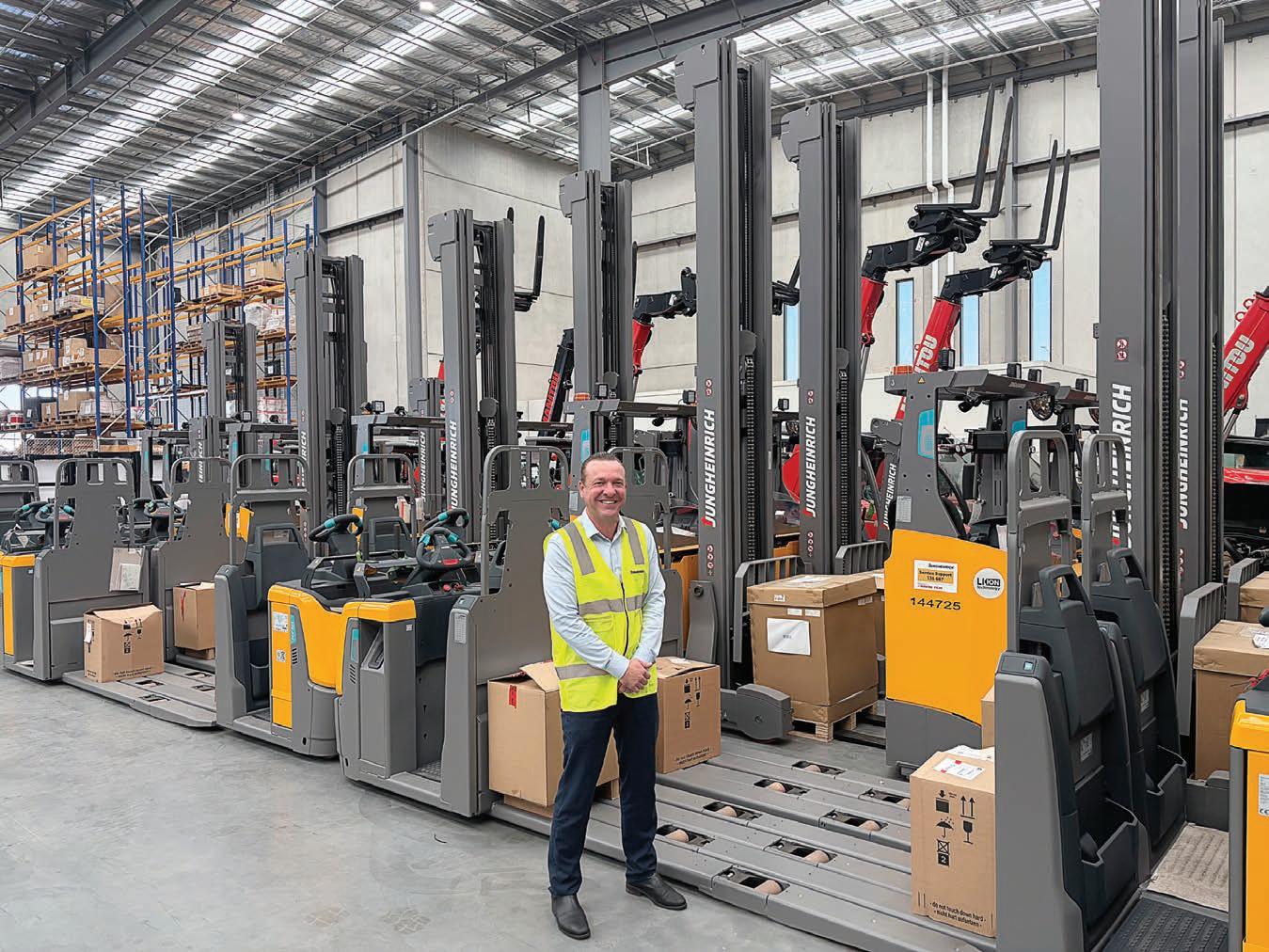
becoming a focus for optimisation. In high volume environments where forklifts operate continuously, even small improvements in uptime and energy management can affect overall productivity.
“Fuel and energy pricing pressures
how they operate,” said Coy. According to Coy, this is driving more organisations to reconsider how forklift fleets are powered, with lithium-ion technology becoming a common alternative to traditional
“Lithium-ion technology is a critical piece of the puzzle in warehousing and logistics,” said Coy. Lead acid battery systems have been used for decades and continue to provide a reliable solution for many
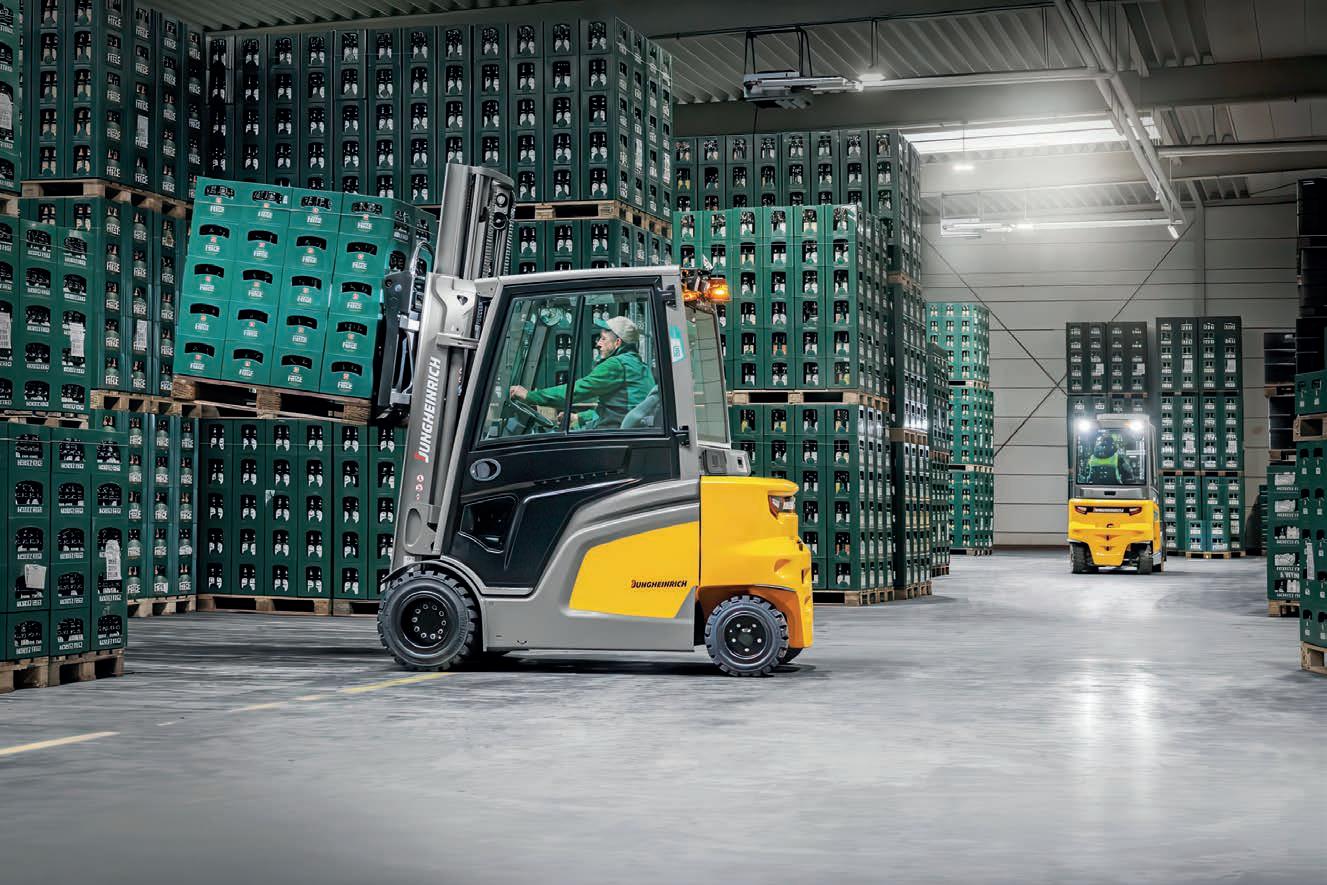
limitations, particularly in continuous processing environments.
Lead acid systems require scheduled charging and cooling periods, which can reduce flexibility across shifts and place limitations on fleet availability. Lithium-ion batteries, by comparison, support opportunity charging, allowing equipment to be charged during short operational breaks without negatively impacting battery life.
For food and beverage manufacturers operating around the clock, this flexibility can support consistent workflows and reduce overall interruptions.
“In a continuous 24/7 operation for the food and beverage sector, the ability to charge at any time becomes important from a cost efficiency perspective,” said Coy.
Maintenance requirements also differ between the two systems. Traditional lead acid batteries typically require water top ups, dedicated charging infrastructure and regular servicing by trained personnel. Lithium-ion systems remove much of this maintenance burden.
“Lithium-ion systems eliminate the need for routine battery servicing,” added Coy. “This significantly reduces downtime and removes many of the
The reduction in maintenance and downtime can be valuable in food and beverage facilities where uptime, labour availability and scheduling consistency are closely linked to production performance.
Despite the operational advantages associated with lithium-ion systems, many organisations still rely on lead acid or internal combustion fleets.
Coy said one of the most common barriers to adoption is operator familiarity. Many warehouse teams have spent years working with existing equipment and processes, making change management an important part of any transition.
“The human reluctance for change is also coupled with the infrastructure of the warehouse,” said Coy.
Existing facilities may also require electrical upgrades or charging infrastructure changes to support lithium-ion fleets. While these upgrades can deliver long-term operational benefits, the upfront investment can create hesitation for some operators.
Even so, Coy believes the transition towards electric fleets will continue as businesses place greater emphasis on operational efficiency, energy
“Go Electric” campaign is focused on supporting that shift. The company offers a range of fleet solutions designed to suit different operational requirements, including short-term rental, long-term rental and capital purchase arrangements supported by servicing agreements.
“We offer short-term rental solutions that cover periods from a single day to 12 months, and longterm solutions, which can stretch out to seven years and beyond,” said Coy.
Rental options provide businesses with greater flexibility, particularly during seasonal peaks or changing production cycles. Instead of committing to permanent fleet expansion, operators can scale equipment requirements according to demand.
For food and beverage manufacturers facing fluctuating production volumes, this can reduce unnecessary capital expenditure while maintaining operational capacity during busier periods.
The approach also allows businesses to trial different fleet configurations and technologies before committing to long term investments.
businesses can improve resilience through stronger planning and supplier relationships.
When asked what advice he would offer food and beverage manufacturers navigating current pressures, he emphasised the importance of transparency and longterm collaboration.
“It is also important to ensure those trusted suppliers and partners are being transparent with all discussions and interactions for the benefit of your own business,” he said.
He said that building certainty in uncertain conditions requires suppliers, partners and manufacturers to work closely together on operational planning, cost forecasting and long-term efficiency strategies.
Jungheinrich continues to invest in research and development across energy systems and integrated lithium-ion technologies as part of this approach. Coy said this investment is aimed at helping customers improve confidence in their operational decisions while adapting to changing market conditions in the industry.
“At Jungheinrich, we partner and work very closely with customers to help them achieve positive commercial impacts in an uncertain market,” said Coy. F
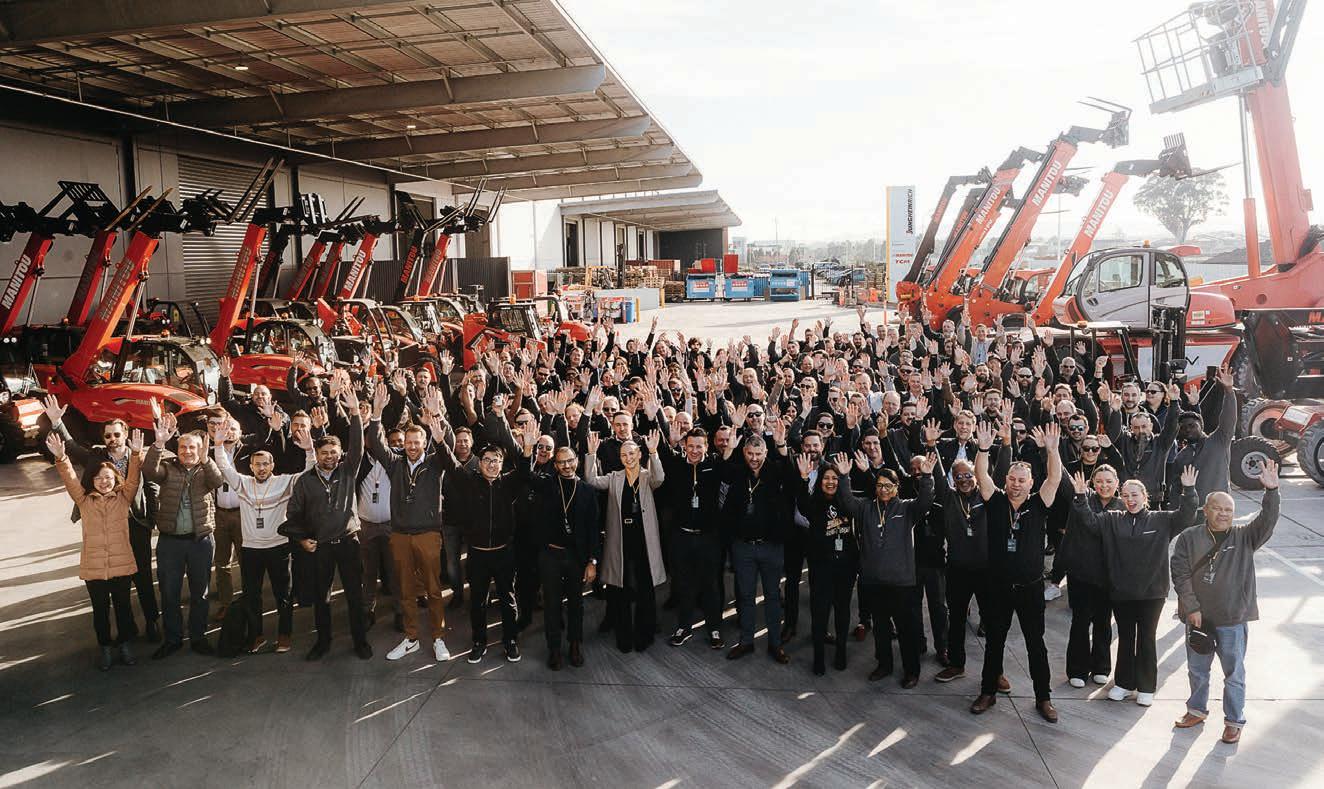
Summit Food Machinery is bringing its latest cheese shredding solution to foodpro 2026, combining practical engineering, supplier partnerships and consistent product quality.
Summit Food Machinery has grown from a small operation into a multi-generational business over the years, supplying processing equipment across Australia and New Zealand.
With close ties to international equipment manufacturers, particularly in Europe, the business has long operated within a global network of suppliers and engineering teams. Today, that network continues to shape how Summit approaches equipment selection, customer support and application development.
“We are committed to problem solving,” said general manager of Summit, Louise Wandmaker. “There’s always a difference in the process or application for a product customers want to achieve. Having to think outside the box to deliver the desired result is rewarding.”
Food processors approach Summit with specific requirements, often looking to achieve a particular cut, texture or shelf-life outcome. These requests can vary widely, from vegetable preparation to more specialised applications, requiring a detailed understanding of both raw materials and processing techniques.
Rather than offering standardised solutions, the company works with customers to determine the most effective approach for each application. This can involve adapting existing equipment, selecting complementary technologies or working with suppliers to refine machine specifications. The result is a consultative process that places product quality and consistency at the centre of decision making. This approach is reflected in
Summit’s portfolio of partners across cutting systems, peeling and coring equipment, blending solutions and specialised processing machinery.
“Our company’s strategic advantage is that we partner with businesses that complement each other,” said Wandmaker.
The emphasis is on integration rather than overlap. Each supplier fills a specific role, allowing processors to build a complete line without duplication of capability. For example, Italy based PND Fruit Processing Machinery, which focuses on peeling and coring of fruit, can be paired with FAM Stumabo’s cutting equipment.
“We also have Blentech, which is a new addition to our partners, where they focus on jacketed kettles and blenders alongside AIT’s floretting and coring of vegetables,” she added.
Differences in raw material size have required modifications to ensure machines designed for European produce can also handle Australian inputs effectively.
Through a close and collaborative relationship with AIT, Wandmaker highlighted how equipment was adapted to suit local conditions.
“Some Australian vegetables are considerably larger than in Europe,” Wandmaker said.
“Because of the relationships we have with our suppliers, AIT was able to accommodate the Australian market through custom plates.”
This combination of global technology and local adaptation –including a new addition that has not previously been exhibited in Australia – will be on display at foodpro 2026, where Summit plans to showcase several machines.

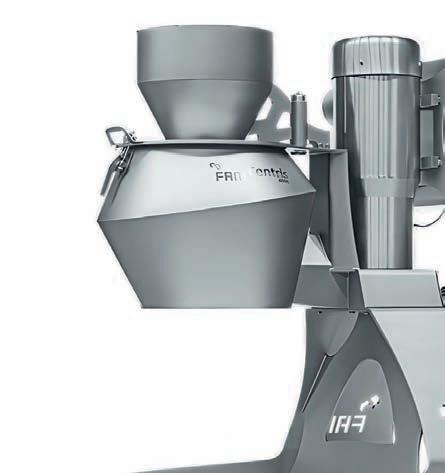
A key highlight will be the FAM Centris 400C, a high-capacity cheese slicer and shredder designed for medium to high volume processing. Positioned alongside the Centris 315, the 400C represents a step up in both scale and performance, with a larger motor and cutting system designed to handle more demanding applications.
“The Centris 400C is impressive to look at because of its size,” said Wandmaker. “It has a bigger motor and cutting head. It’s exciting to be able to bring it for display on our
The machine is built around 16 station cutting heads. This increases throughput compared to smaller models while also maintaining a consistent shred.
It uniformly slices and shreds a wide variety of vegetables, fruits and cheese at high processing output. Offering food processors precision cutting along with savings in production time and product waste, its clean-cut quality also supports longer product shelf life.

“The cutting heads simply twist and unlock, which you can then lift out and replace. It’s a reliable machine to operate with minimal downtime while still providing a high-quality cut.”
Wandmaker emphasised that consistency is important in cheese processing, where texture and uniformity affect product performance in downstream applications such as cooking and packaging. The Centris 400C is designed to process a wide range of cheese types. This includes soft, semi hard and processed varieties such as mozzarella, cheddar and provolone, as well as analogue and plant-based alternatives.
Its versatility extends to different cut profiles, with interchangeable cutting heads allowing operators to switch between shred types with minimal downtime. This flexibility is supported by a simple mechanical design according to Wandmaker.
“The cutting heads simply twist and unlock, which you can then lift out and replace,” said Wandmaker.
“It’s a reliable machine to operate with minimal downtime while still providing a high-quality cut.”
The use of thin, cost-effective blades also supports ongoing maintenance without adding excessive operational cost.
The Centris 400C uses a fixed cutting system that maintains
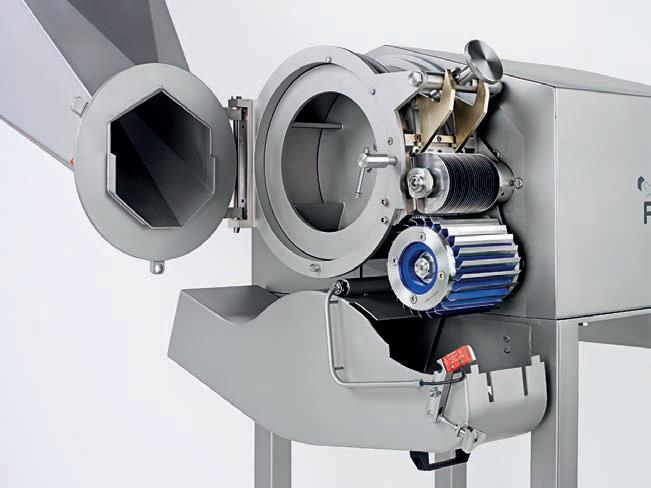
uniform shred dimensions throughout production, eliminating the need for constant adjustment.
The operating principle is based on centrifugal force. Product is fed through the infeed chute and guided through rotating compartments, where it is held against the cutting head. As it passes each knife, slices or shreds are produced in a continuous motion before being discharged from the centre of the machine.
Beyond performance, the design also addresses hygiene and operational considerations. The motor and drive components are positioned outside the cutting zone to reduce heat transfer, helping to prevent melting or caking during processing.
Stainless steel construction and removable components support cleaning and maintenance, aligning with industry requirements for food safety and compliance.
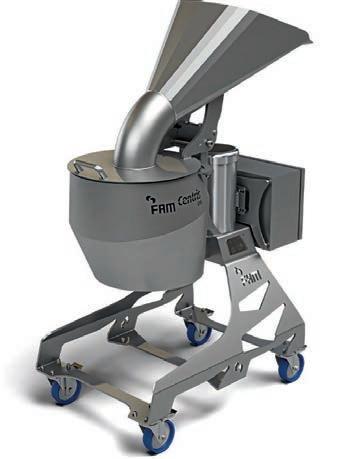
“Designed and manufactured to meet latest European food regulations, food hygiene and safety of the machine is also impeccable,” said Wandmaker.
At foodpro 2026, Summit plans to demonstrate this capability in a practical way. Rather than static displays, the company will instead, run live demonstrations, processing




raw product through the machines to show how they perform and operate in real conditions.
This approach allows visitors to see the speed, cut quality and consistency of the equipment firsthand. It also provides an opportunity to discuss specific applications and explore further support that Summit offers.
While the machine itself plays a critical role, Summit’s involvement extends beyond equipment supply. The company provides installation support, operator training and access to spare parts, allowing customers to integrate new machinery into existing operations with minimal disruption.
Training can be tailored depending on the customer’s needs, whether through on-site sessions or guidance for in house engineering teams. This flexibility reflects the varied capabilities of food manufacturers, from smaller operations to larger facilities with dedicated technical staff.
“We are guided by what the customer would like,” said Wandmaker. “I hope people can enjoy the hands-on experience at foodpro.” F














CAPS Australia is helping food and beverage manufacturers improve air purity and efficiency through compressor technologies and local support.
When it comes to food safety, reliable air purity in food and beverage manufacturing is non-negotiable. Early industrial air compressors used oil or water for lubrication to prevent mechanical wear, which became the standard across manufacturing industries.
However, companies are still optimising around older systems. Oil-lubricated units are susceptible to oil carryover, requiring additional filters and downstream air treatment processes to clean and dry the air. The risks include oil contamination, damaged products and costly recalls.
Understanding compressed air as a critical aspect of manufacturing operations, CAPS Australia offers multiple ways to help businesses achieve operational outcomes. The company has been designing and delivering efficient air systems across Australia since 1980, solving operational process and business problems along the way.
Ingersoll Rand is an original equipment manufacturer developing durable compressor technologies since introducing its first oil-free centrifugal compressor in 1912. Through its commitment to innovation, its oilfree centrifugal compressors and other solutions are tailored to meet the performance needs of food and beverage manufacturers.
As part of the Ingersoll Rand family, CAPS has continued to expand its customer support, helping businesses improve reliability, energy efficiency and productivity.
Continuing this support, customers in Australasia now benefit from technical support for all Ingersoll Rand centrifugal products such as Centac, Turbo Air (TA), NX and Multi-Stage Geared (MSG) compressors, with coverage provided through CAPS’ 10 branches nationwide.
Joining forces under the management of CAPS, skilled
centrifugal compressor technicians employed by Ingersoll Rand companies in Australia are providing customers with expanded access to specialised product technologies and aftermarket support capabilities.
Integrally geared centrifugal compressors represent newer technology, offering advantages over older, less efficient and costly designs.
CAPS offers a broad portfolio of Ingersoll Rand’s centrifugal products throughout Australia, with more than 40,000 centrifugal installations worldwide.
The Ingersoll Rand MSG Turbo Air NX centrifugal compressors are the result of experienced design teams, ISOcertified management systems and product testing for aerodynamic and mechanical performance.
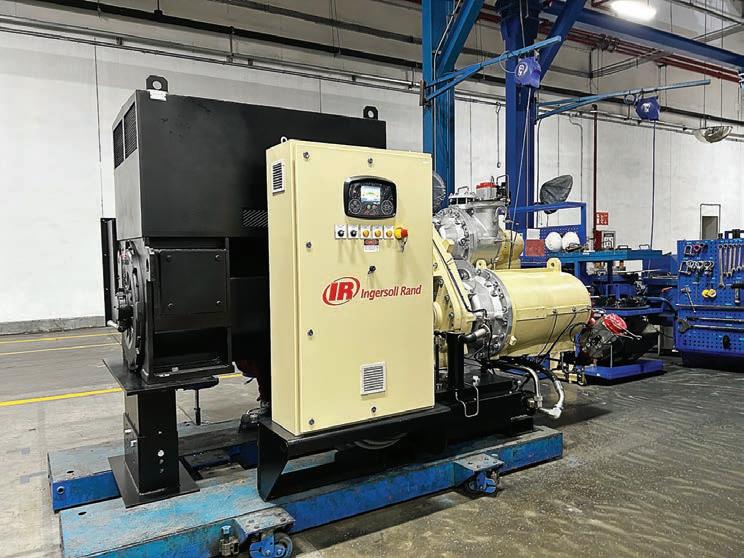
Spanning a nominal power range from 600kW to 4,200kW, delivering flows from 125 m³/min to 560 m³/min at discharge pressures of 2.5 bar g to 40 bar g, the MSG TURBO AIR NX range comes packaged on a common base to reduce footprint and is available in several configurations.
Efficient aerodynamic components including inlets, impellers, scrolls and diffusers are combined with low mechanical losses and powerconserving inlet throttle control (IGV) which can provide up to five per cent lower specific power compared to other competitive models.
With a turndown range that typically exceeds 30 per cent, MSG TURBO AIR NX compressors can be used in demanding scenarios without needing to unload or shut down during periods of low compressed air demand.
The compressors are also designed to simplify installation, inspection and maintenance. This includes a single-point electrical connection, a horizontally split gearbox, clean-inplace cooler bundles, duplex oil filters and long-life compression elements that do not require replacement.
Inefficiencies, contaminants and breakdowns can result in costly downtime, product liability and damage to a brand’s reputation. MSG Centac centrifugal compressors are designed to help eliminate these problems while reducing total lifecycle costs.
The impeller design of the MSG Centac multi-stage compressor provides maximum pressure control over a wide operating range, while its low-pressure-drop cooling system minimises losses. This performance helps maximise compressor efficiency and energy savings.
Fewer non-wearing moving parts help ensure consistent performance, long operational life and less downtime. Dynamically balanced rotor assemblies help maintain low vibration, while efficient hydrodynamic non-contact bearings offer a virtually unlimited operational life.
CAPS is committed to supporting food and beverage manufacturers around the clock, with access to a network of factory-trained technicians ready to provide innovative, cost-effective and
performance-enhancing solutions.
CAPS holds inventories of parts and accessories required for reliable, clean air across Australia, with direct access to global supplies as needed.
Throughout the operational life of the equipment, the company provides ongoing warranty, parts and service plans to maximise asset value. Scheduled maintenance also aligns with a range of diagnostic and maintenance programs designed to maximise compressor performance.
CAPS also offers short- and long-term rental compressors and generators for seasonal demand, special projects and operational breakdowns.
Working across Australia, the company supplies industrial equipment from global partner brands, including air compressors, generators, filtration systems, gas generators and air treatment equipment.
Combining international technology with local engineering expertise, the company supports food manufacturers navigating strict regulations while maintaining operational performance and growth.
Get in touch with the CAPS team on 1800 800 878 or check out www.caps. com.au F





















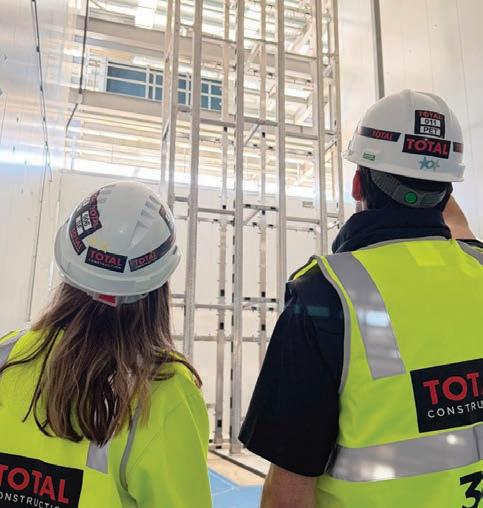
Beamex develops calibration software and hardware designed for measurement accuracy.
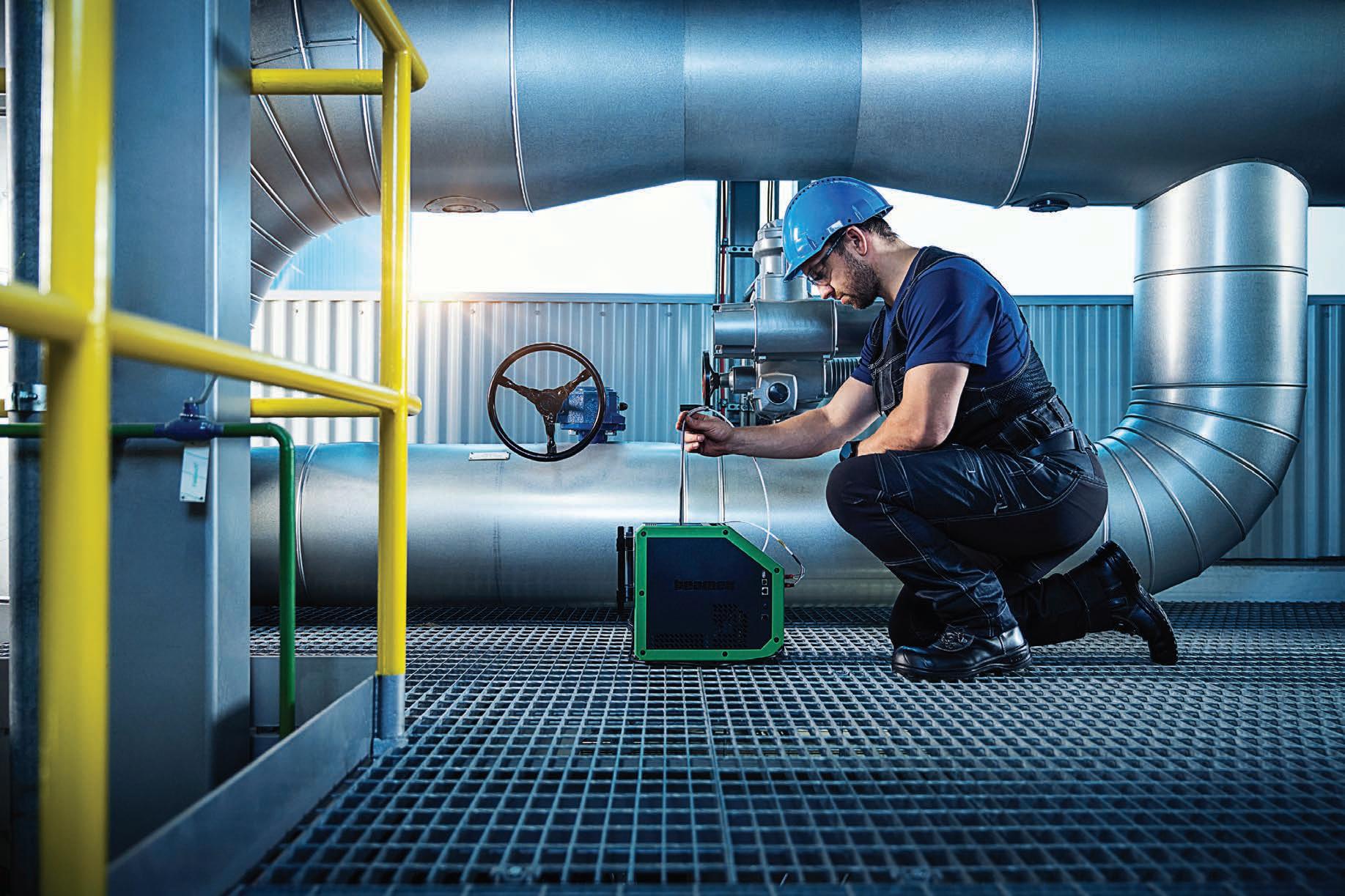
AMS is helping food and beverage manufacturers improve process accuracy and reduce calibration time through Beamex.
For food and beverage manufacturers, consistency is built on measurement.
Accurate process control affects everything from product quality and operational efficiency to compliance and waste reduction.
As production lines become more automated and quality expectations continue to rise, manufacturers are placing greater focus on calibration systems that improve reliability and reduce manual handling. AMS Instrumentation & Calibration is supporting this shift through a range of process control and calibration technologies used across food and beverage production environments.
AMS product and training manager Mike Farkas noted that the value of calibration is tied to the practical realities manufacturers face on the factory floor.
“If you don’t measure accurately, you might get the wrong mix of
certain products,” said Farkas.
“The more accurately you mix your products, the more accurate the quality of the product becomes.”
AMS imports a range of processcontrol instrumentation and calibration systems used across industrial sectors, including food and beverage manufacturing. The company supplies technologies for sanitary and hygienic applications, including flow meters, flow switches, optical devices, pH and conductivity systems, and calibration equipment.
With decades of experience in the instrumentation and calibration industry, Farkas oversees several product ranges and provides training and technical support for customers across Australia, Papua New Guinea and New Zealand.
“Our equipment is suitable for sanitary applications, which is important for the food and beverage industry,” said Farkas.
One of the company’s key offerings is the Beamex range of calibration systems for accuracy and safety.
Beamex is a manufacturer that develops both calibration software and hardware designed to streamline instrument testing and record management. With accurate measurements, reliable data and traceability, the Beamex calibration ecosystem ensures compliance and increases operational safety.
The system combines calibrationmanagement software with portable calibration devices, including the MC6 multifunction calibrator. Rather than relying on handwritten notes and manual calculations, technicians can follow a guided digital process.
“The idea of the system is to make customers more efficient in the calibration work,” said Farkas.
Using the software, instrument
information and calibration procedures are entered once and stored digitally. Calibration data can then be transferred directly to the portable calibrator using Bluetooth or USB connectivity. The MC6 calibrator guides the technician through the process, advising what test points to calibrate the instrument at and calculating the errors.
As the calibrator automatically records and stores measurement data, technicians do not need to manually calculate tolerances or determine whether equipment passes or fails calibration requirements.
“There’s no need for the technician to work out the accuracies,” Farkas said. “The MC6 does it for you.”
If instrument adjustments are required, the system also supports configuration and recalibration before results are uploaded back into the software platform. Calibration certificates can then be generated
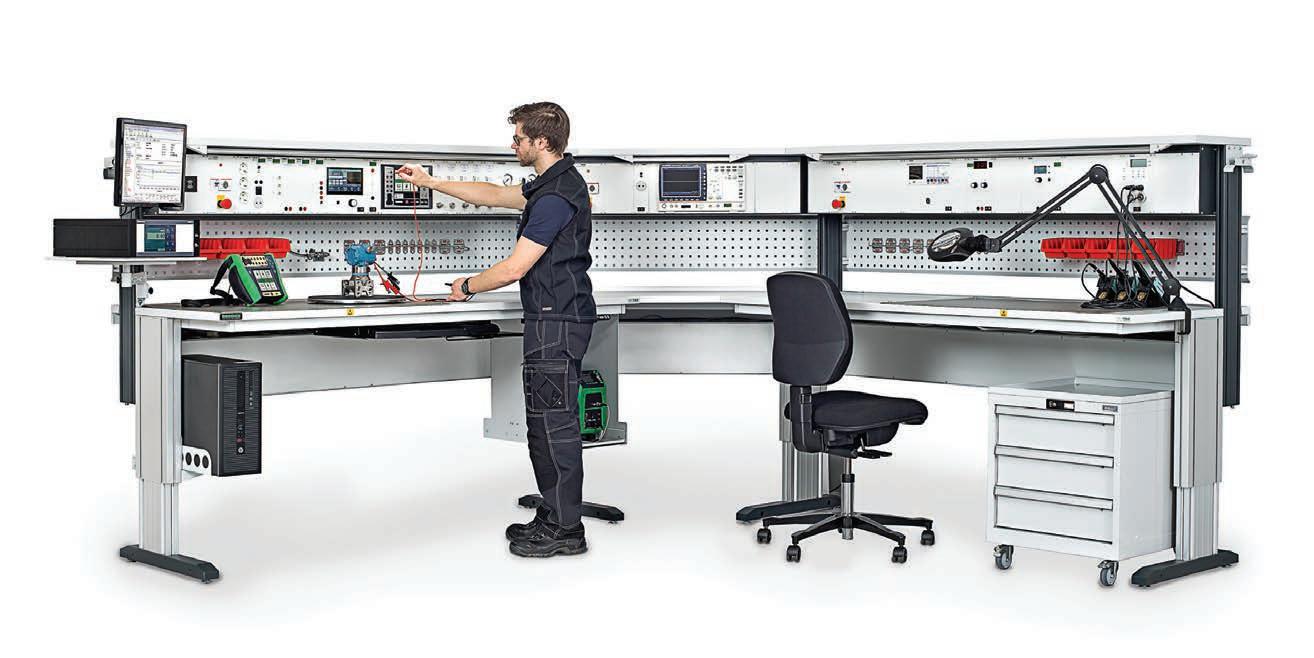
digitally, ready to be printed in soft or hard format.
For food and beverage manufacturers, these data-enabled decisions are imperative when driving improvements in productivity. Accuracy directly affects product consistency. Incorrect measurements during production can result in recipe variations, wasted ingredients and inconsistent product quality.
Farkas explained that many manufacturers still rely on paperbased calibration processes and handwritten notes when testing instruments in the field. While functional, these methods can introduce delays and human error into the process.
“If I have to transfer it to an Excel sheet to provide certificates, I might misread it,” said Farkas.
These challenges become more difficult as facilities scale up production or operate across multiple processing lines. Traceability requirements, audit preparation and compliance reporting also place additional pressure on maintenance and instrumentation teams.
For manufacturers handling liquids, powders and blended ingredients, even small deviations can affect taste, texture and shelf life. Calibration systems therefore play a role not only in maintaining production efficiency, but also in protecting brand reputation.
Farkas said paperless calibration systems can reduce administrative work while improving the accuracy of collected data. For food and beverage manufacturers operating under strict production schedules, reducing maintenance and calibration time can deliver broader operational benefits.
“It will improve your calibration, it will improve your efficiency, it will improve the accuracy of the data that you’re collecting,” he said.
Reduced manual handling also supports faster turnaround during servicing and instrument verification.
“One customer said that they have saved 75 per cent of the calibration time using a paperless system like Beamex,” said Farkas.
Beyond efficiency, digital traceability can also support compliance and audit readiness. Calibration records are stored electronically, reducing the risk of lost paperwork or incomplete reporting.
Farkas mentioned situations where calibration documentation can become critical for operational continuity. A business might risk losing its licences because it cannot prove calibration of its equipment. AMS can assist with the adoption Beamex, which provides a calculated procedure and documented proof.
With pre-defined calibration procedures and step-by-step guidance, the Beamex calibration ecosystem provides an automated and harmonised process to eliminate errors, disruptions and risks.
While AMS supplies imported technologies from international manufacturers, Farkas said the company’s role extends beyond product supply. Ongoing technical support and customer assistance form a large part of the business. He mentioned one rewarding aspect of his career.
“I enjoy assisting customers and providing them with solutions they need,” said Farkas.
AMS works closely with manufacturers and suppliers to resolve technical challenges, whether they involve simple troubleshooting or more advanced calibration requirements. The company
collaboration allows AMS to access technical support directly from the manufacturer when required.
“We discuss the issue with Beamex to come up with a tailored solution suited for the customer,” said Farkas.
As food and beverage manufacturers continue investing in automation and process reliability, accurate measurement and calibration systems are becoming more integrated into daily operations. For AMS, the focus remains on helping food and beverage manufacturers improve consistency, efficiency and confidence across production environments.
“Having these systems in place from the very beginning will save a
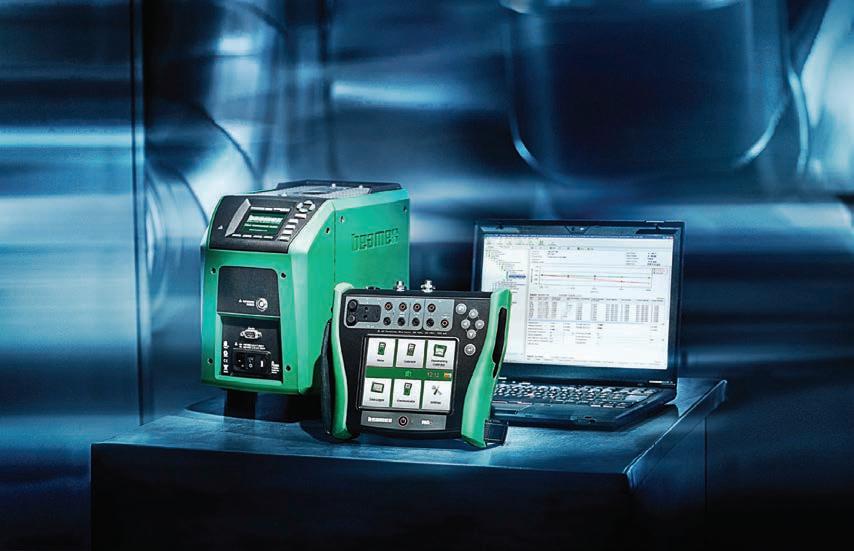
The Melbourne International Coffee Expo has announced 2027 dates after concluding a successful event this year.
The Melbourne International Coffee Expo (MICE) has announced the dates for its 2027 event, with three days dedicated to the people, products and ideas shaping the future of the coffee and café industry. The event will take place from 4 to 6 March 2027 at the Melbourne Convention and Exhibition Centre.
The announcement follows the completion of the 2026 event, which recorded 14,159 unique attendees, with café owners accounting for 35.1 per cent of trade visitors. By bringing the industry together, MICE aims to provide a platform for businesses seeking solutions to improve efficiency, profitability and overall customer experience.
“What makes MICE so important is the way it brings the entire industry together in one place, from producers and roasters through to café owners and suppliers,” said MICE education moderator and show lead, Sarah Baker. “It’s where ideas are shared, challenges are unpacked, and real opportunities are created.”
According to Baker, the energy across the 2026 show floor reflected the industry’s appetite for collaboration and innovation, with
strong engagement across exhibitors and education sessions.
“It’s not just about doing business, it’s about being part of the industry and where it’s heading,” added Baker.
MICE featured 157 exhibitors showcasing coffee machines, roasting equipment, brewing tools, ancillary equipment, packaging, POS software, dairy products and coffee solutions.
Among the exhibitors was Trimatt Systems, which presented its range of on demand packaging solutions.
Having attended the 2023 event where the company received an award for best accessory machine, founder Matt Johnson noted a shift in how attendees viewed the business.
“This year at MICE 2026, people viewed our offering totally differently,” said Johnson.
Although Trimatt supplies machinery capable of producing on demand packaging, Johnson said many attendees initially perceived the business as a printing company.
Through ongoing participation at industry events and continued education around its capabilities, the company has seen renewed interest and new partnerships emerge.
Exhibiting at trade events since 2007 across domestic and
international markets, Johnson said shows such as MICE continue to strengthen brand awareness and create valuable industry connections.
He also highlighted the response from attendees seeing Australian made equipment in operation.
“Many people are shocked when they see the machines in the flesh,” said Johnson. “Not many people think Australia manufactures machines.”
Looking ahead to 2027, MICE plans to continue delivering a multi layered program designed to keep buyers engaged in discovering products, evaluating suppliers and exploring new business opportunities.
The Roasters Playground will return as a dedicated platform for roasters to showcase coffees, connect directly with buyers and build brand recognition among café owners and industry professionals.
The Café Owners Education Series will also return with an expanded line up of business focused sessions covering pricing, profitability, staffing, operations and changing customer expectations in the industry.
Another returning feature is Trip to Origin, which highlights producing countries and green bean suppliers through cupping experiences, involved/

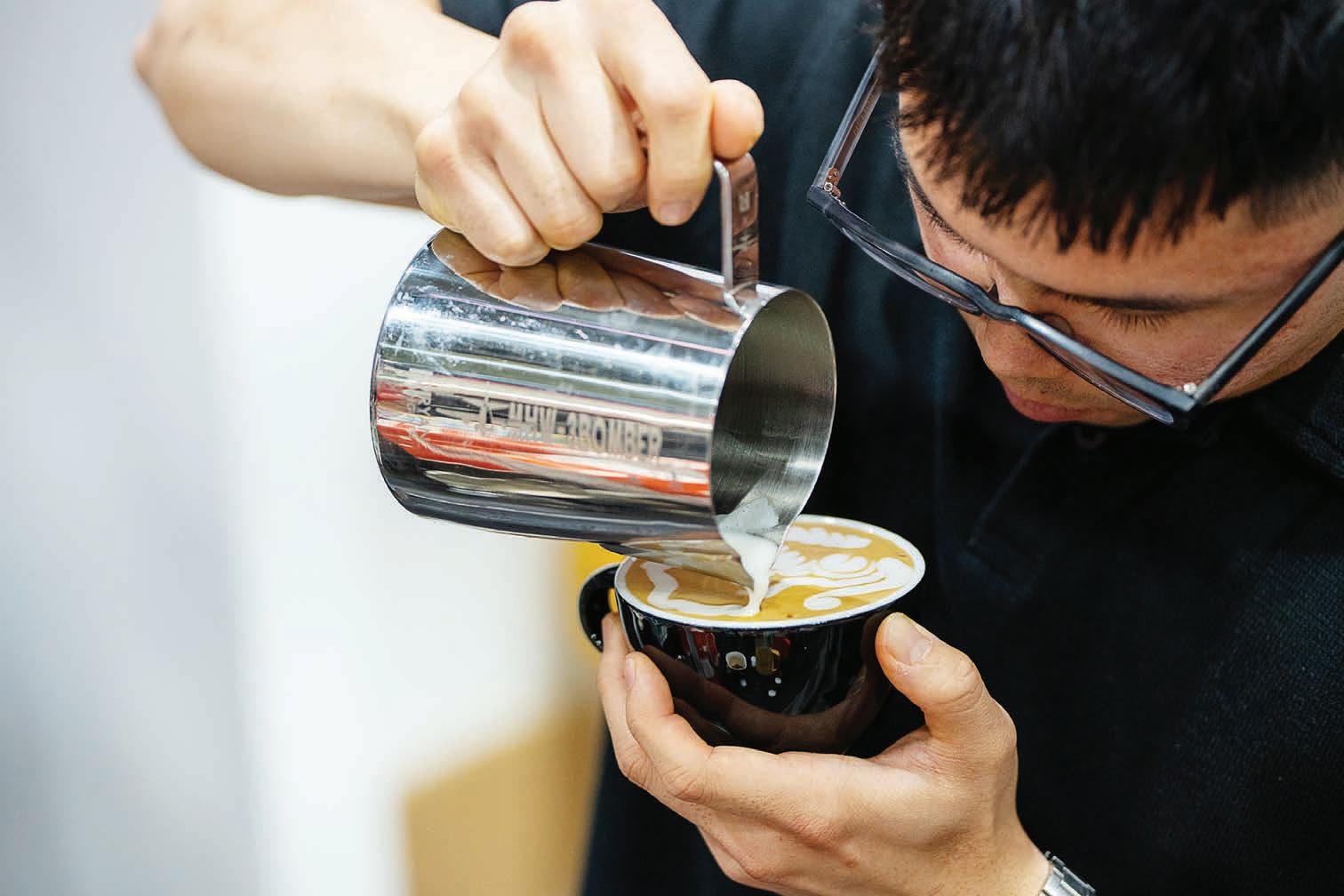

The Australasian Institute of Packaging (AIP) will be hosting a week of education about updated sustainable packaging design trends at ProPak Asia.
Author Nerida Kelton FAIP, executive director AIP – vice president Sustainability & Save Food – WPO
ProPak Asia 2026 is opening a new chapter as Asia’s Premier Global Exhibition for Processing & Packaging is moving to IMPACT Muang Thong Thani. This is where innovators and decision-makers come together to shape the future of food, beverage, pharmaceutical, cosmetic, and consumer goods manufacturing.
As a long-standing International Education Partner of ProPak Asia, the AIP will be hosting, in partnership with Informa Markets, a week of education designed for anyone interested in learning more about updated sustainable packaging design trends, packaging and waste regulations, new innovations and materials on the horizon for Soft & Flexible packaging and Fibre, Renewable & Compostable, intelligent packaging, and Accessible & Inclusive packaging design.
During ProPak Asia, the AIP will be offering six educational sessions including the eighth edition of the Global Packaging Forum, two mini training courses, three packaging workshops and the Australasian Packaging Innovation & Design (PIDA) Award showcase of the 2026 round of finalists.
In addition, the AIP will be bringing a delegation of Australia and New Zealand companies to spend the week visiting all the exhibitors at ProPak Asia.
The eighth annual edition of the Global Packaging Forum will be held on the 10th of June. This packaging conference is held alongside of ProPak Asia each year. Speakers will provide global, regional and local views on a broad range of topics within the realm of packaging.
Topics planned will include updates in global and local packaging and recycling regulations, how the world is shifting to Extended Producers Responsibility
(ERP) regulations and initiatives, how packaging design needs to move to a Recycle-Ready model, understanding how country-based regulations will affect design moving forward, the latest trends and innovations in sustainable packaging design, materials advancements, sustainable food systems and best practice examples from across the globe.
The AIP will run two mini training courses focused on packaging innovation and sustainability. The first, Unboxing Accessibility: Easy to Open, Reclose, Grip & Handle Packaging Design, explores how to create packaging that is easy to open, close, grip and handle without the need for tools such as knives.
The second course, Future of
shaping change both locally and internationally, including food waste, emissions, legislation and on-pack labelling requirements.
The AIP will be offering three interactive packaging workshops that will cover:
•Future of Plastic Packaging (Rigid & Flexible) workshop.
•Future of Fibre, Paper, Renewable & Compostable Packaging workshop.
•Future Trends & Innovations in Intelligent Packaging workshop.
Each workshop will include a panel discussion with speakers from across the region. The second part will be an interactive workshop where the attendees will be able to see, touch and feel the innovations, packs and materials while learning more about how to use them within a business.
All attendees will receive a Certificate of Attendance to all the AIP programs and attain points towards the Certified Packaging professional (CPP) designation. All of industry is invited to attend. F
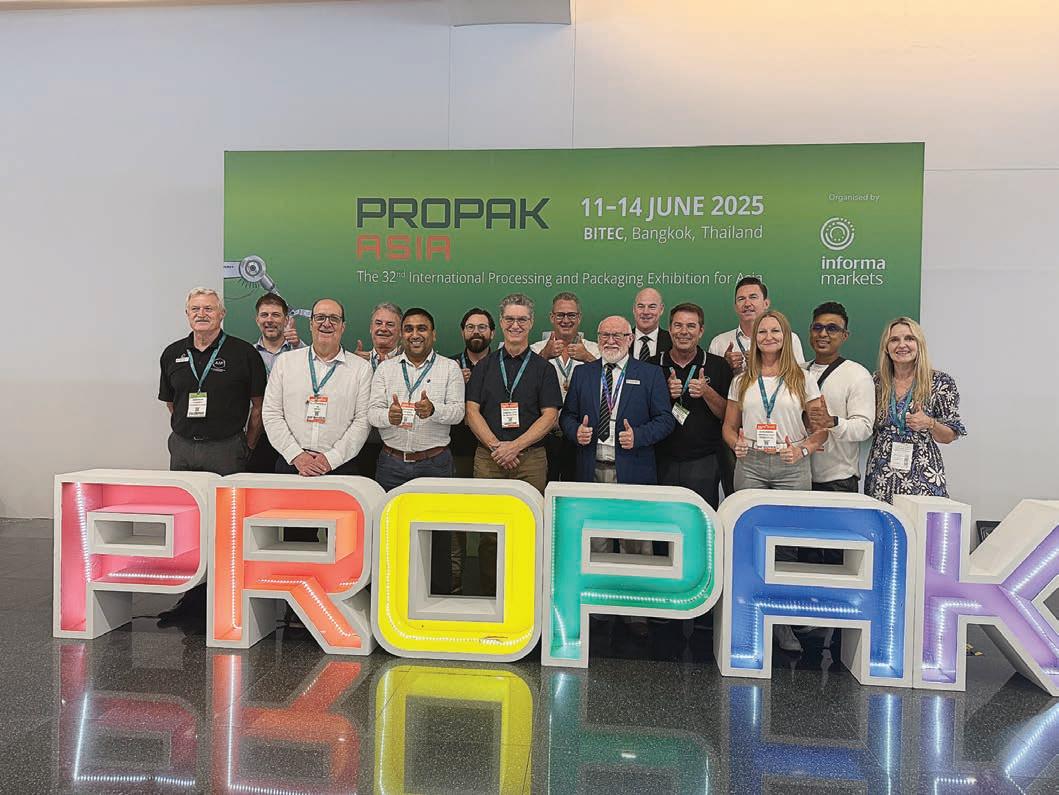


























BULK
2026 will bring together the technologies, partnerships and expertise shaping the future of bulk handling across industries including food and beverage.
To develop taste at scale, food and beverage manufacturers must begin at the source. Grain, sugar, flour, dairy powders, liquids and other ingredients move through ports, silos and processing facilities before reaching production lines. In high volume environments, even small inefficiencies in materials handling can lead to product loss, downtime and rising operational costs.
Highlighting a sector that often operates behind the scenes, the Bulk Handling Technical Conference and Expo, BULK 2026, will return to the Melbourne Convention and Exhibition Centre from 16 to 17 September 2026. The expo will showcase the systems, partnerships and technologies shaping bulk handling across the food and beverage supply chain.
The 2026 conference program is now live, bringing together engineers, researchers and technology providers from across the global bulk solids and materials handling sector.
This year’s program is anchored by presentations from organisations working across mining, infrastructure and industrial processing.
As part of the program, Worley will revisit a 13 km overland conveyor project to examine how modern technologies are changing energy use, capital costs and lifecycle performance in long distance conveying systems. Intertek will present a method for accurate bulk material tonnage assessments.
KOCH Solutions will showcase IBEX and its role in the future of deep mining, while TUNRA Bulk Solids will deliver presentations covering conveyor belt wear resistance, safety in bulk solids handling and live wear monitoring of wall liners through simulation-based approaches.
“This year’s conference is about what’s actually working on the ground and what will be helpful in the future,” Prime Creative Media head of marketing events Molly Hancock said.
“From advanced simulation tools to practical safety solutions, the program has been curated to give attendees ideas they can take
straight back to site.”
Additional presentations will be delivered by Luna Innovations, HMA, Prime Manufacturing, Syntechtron, Hawk Measurement Systems, BFM Australia, Geometrica, University of Wollongong, Concetti, DICE Computing, AXO33, WGA, Leap Australia, Australian Weighing Equipment, Anval and Ultra Dynamics.
BULK 2026’s growing list of sponsors and partners also highlights industry collaboration across the sector. The International Cargo Handling Coordination Association Australia has joined the event as an official industry partner to support safer outcomes and industry development. The Australian Society for Bulk Solids Handling has also been announced as an official association partner and will oversee development of the technical conference program.
SRO Technology has been confirmed as a Platinum Sponsor, with its Networking Drinks event offering attendees an opportunity to connect following the opening day of the expo.
Conveyor belt optimisation specialist Belt Wise will also exhibit across the show floor, providing opportunities to discuss asset protection, uptime and
reflect BULK 2026’s commitment to educating, supporting and connecting those involved in the sector to help build healthier and safer workplaces,” Hancock said.
Building on the 2024 event, where close to 70 per cent of attendees held purchasing authority, the expo is designed to serve both technical specialists and business decision makers. Alongside new technologies and technical presentations, the event will provide opportunities for networking, collaboration and knowledge sharing across the wider bulk handling sector.
For food and beverage manufacturers, these conversations
Discussions around conveying systems, storage infrastructure, flow optimisation and safety technologies often influence future upgrades, retrofits and expansion projects. As production demands continue to rise and supply chains become more complex, materials handling remains closely tied to efficiency, product quality and operational reliability. BULK 2026 aims to provide a platform where those challenges and solutions can be explored by the industry together. F
Early bird tickets are still available for a limited time. Lock in your spot before prices rise: https:// bulkhandlingexpo.com.au/attend/
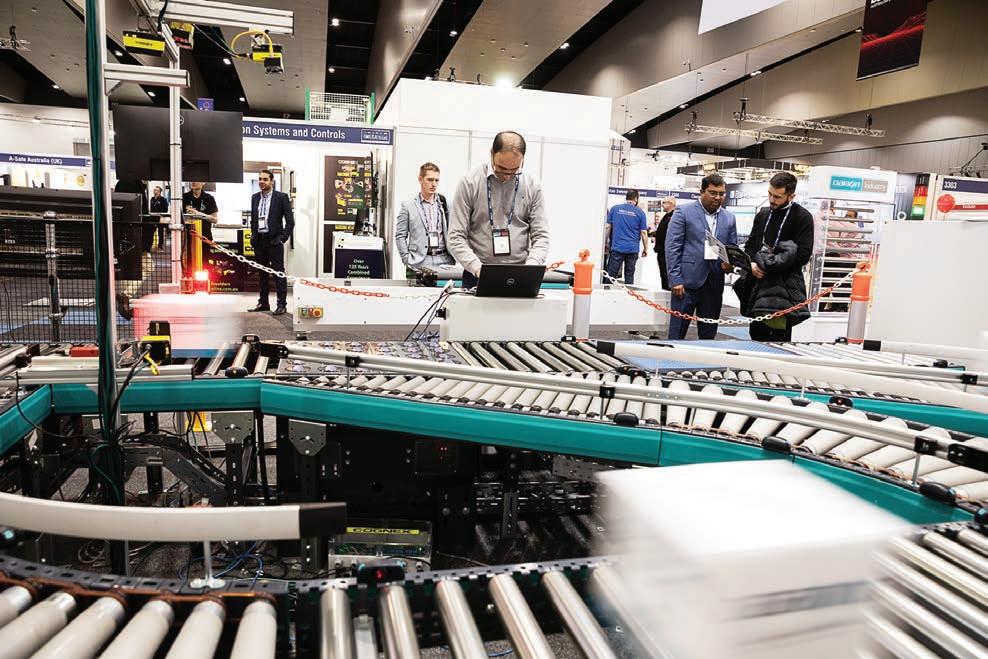
Nominations for the 2026 Mercury Awards will close on 26 June.
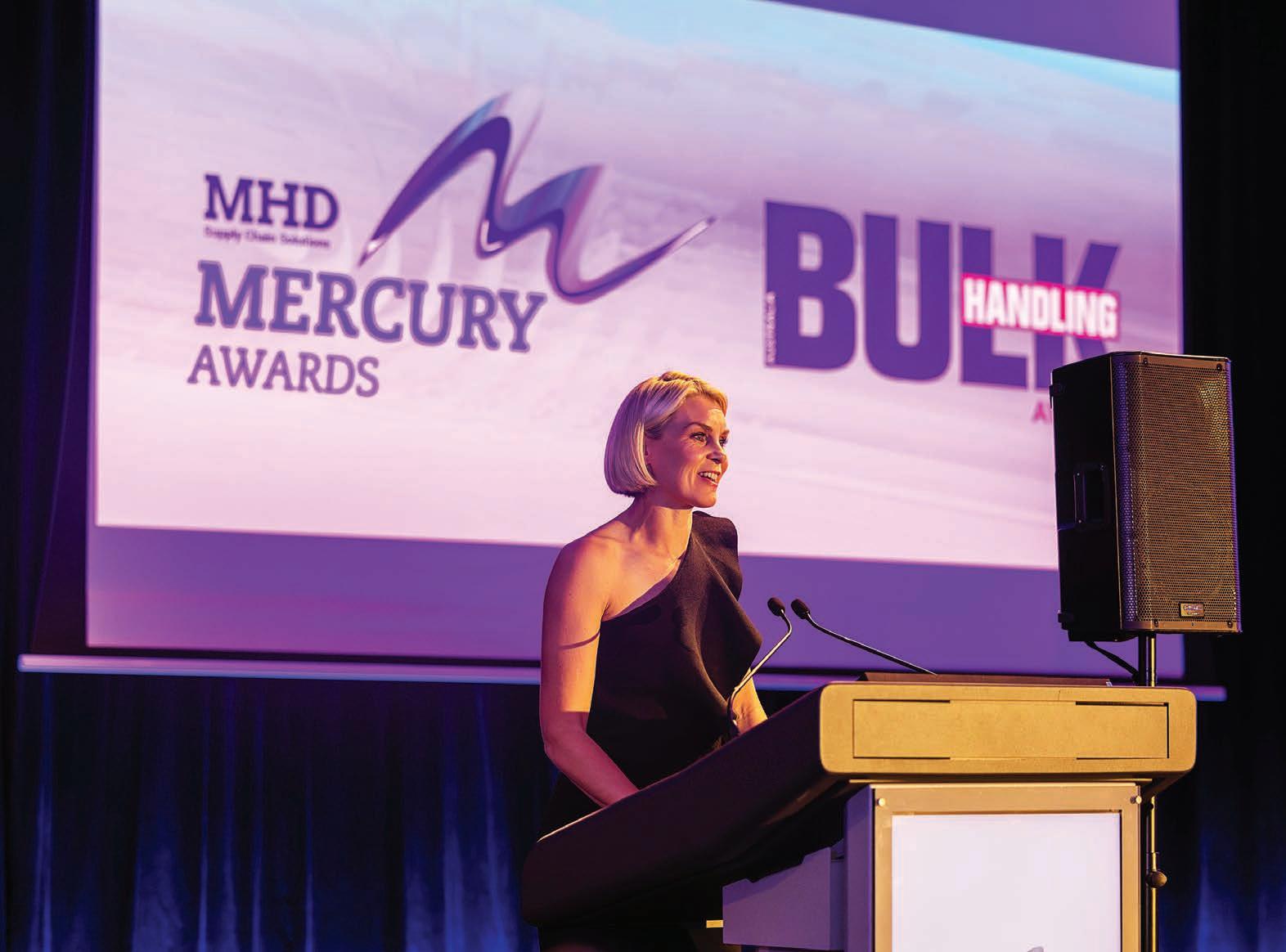
As manufacturers invest in smarter supply chain systems, the 2026 Mercury Awards highlight the technologies and operational strategies helping businesses remain competitive.
The Mercury Awards are set to return in 2026 with an expanded line-up of categories celebrating achievement across Australia’s logistics, supply chain and materials handling industries.
Presented by MHD Supply Chain Solutions, the awards recognise companies, teams and individuals driving progress across freight, warehousing, automation and supply chain operations. The program highlights businesses improving efficiency, embracing sustainability and developing new ways to manage increasingly complex supply chains.
Nominations for the 2026 awards open on 28 May and close on 26 June, giving businesses across the sector the opportunity to showcase projects, operations and people delivering measurable outcomes.
This year’s program features 16 award categories, including four returning awards and 12 new additions reflecting the changing priorities of the industry.
Returning categories include the Best Technology Application Award, Sustainability Initiative Award, Freight Transport Solution of the Year and Supply Chain Innovator of the Year. These awards continue to recognise
businesses implementing practical solutions across transport, warehousing and operational management.
New categories introduced for 2026 broaden the scope of recognition across the sector. These include Supply Chain Leader of the Year, Rising Star Award, Workforce Development Award and Customer Experience Professional of the Year, all designed to highlight the people contributing to the future of supply chain operations.
Operational performance will also remain a key focus. Categories such as Warehouse of the Year, Warehouse Optimisation Award and Automation Project of the Year recognise facilities and projects improving productivity, efficiency and workplace performance through technology and strategic planning.
Transport and fleet operations are represented through categories including Last Mile Delivery Award and Fleet Management Excellence Award, reflecting the growing pressure on businesses to improve delivery performance while managing costs and sustainability targets.
The awards also acknowledge the increasing role of consulting, transformation and long-term
planning within supply chain management. The Supply Chain Transformation Award will recognise consultancy-led projects helping businesses modernise operations and adapt to changing market conditions.
Sustainability continues to remain a core theme across the program as businesses work to reduce emissions, improve energy efficiency and manage waste across logistics networks and warehouse operations.
The awards come at a time when supply chains are navigating ongoing pressures around labour shortages, automation, infrastructure investment and decarbonisation.
Rising customer expectations and the need for faster, more resilient delivery networks are also reshaping how businesses approach logistics and warehousing.
By recognising both largescale operations and emerging talent, the Mercury Awards aim to provide a platform for sharing ideas and encouraging industry-wide improvement.
The awards also serve as a networking opportunity for businesses across the broader supply chain ecosystem. Operators, technology providers, manufacturers
and logistics specialists will come together to celebrate achievements while exchanging ideas on the future of the sector.
For food and beverage manufacturers, the awards reflect the growing importance of efficient warehousing, cold chain management, automation and freight reliability in maintaining stable production and distribution networks.
As manufacturers continue investing in smarter supply chain systems, the awards highlight the technologies and operational strategies helping businesses remain competitive.
The Supply Chain Excellence of the Year Award will serve as the overall recognition category, celebrating the standout business or project demonstrating leadership across innovation, operational performance and industry impact.
From warehouse optimisation and automation through to workforce development and sustainability, the 2026 Mercury Awards will recognise the businesses and individuals helping shape the future of Australian supply chains. F
Nominations open on 28 May 2026 and close on 26 June 2026.
MegaTrans 2026 is inviting the food and beverage industry to explore themes, discussions and technologies around freight and logistics to boost the sector.
As Australia’s freight and logistics sector faces growing pressure to improve efficiency, reduce emissions and adapt to shifting supply chain demands, MegaTrans 2026 is positioning itself as a platform for industry collaboration and practical discussion this year.
Taking place from 16 to 17 September 2026 at the Melbourne Convention and Exhibition Centre (MCEC), the event will bring together operators, suppliers, technology providers and policymakers to address the issues currently shaping the future of freight and logistics.
Running alongside BULK 2026, the event is expected to create opportunities for businesses across warehousing, transport, manufacturing and supply chain operations to connect with a broader network of decision makers and industry stakeholders.
For food and beverage manufacturers, the freight and logistics sector continues to play a central role in maintaining operational continuity, managing rising costs and meeting customer expectations.
“Efficient transport and distribution systems are key for food and beverages,” said Prime Creative Media head of marketing events Molly Hancock. “Cold chain logistics or temperature-controlled warehousing is crucial in an industry where shelf life determines quality.”
MegaTrans 2026 aims to provide insight into how these pressures are influencing transport, warehousing and distribution strategies across multiple industries.
The exhibition floor will feature suppliers and service providers showcasing solutions spanning automation, fleet management, infrastructure, sustainability and warehouse operations.
According to event organisers, access to decision makers remains one of the key reasons exhibitors continue to support the event.
MegaTrans 2024 attracted 4,737 attendees, with 48 per cent identified as fleet managers and 29 per cent as warehouse operators.
By bringing together stakeholders from different parts of the supply chain, the event aims to create discussions that can boost efficiency relevant to food and beverage supply chain applications.
The 2026 conference program has been built around the operational and strategic challenges currently facing the industry. Topics including decarbonisation, automation, workforce shortages and infrastructure planning will form the basis of panel discussions and presentations across the two-day event.
One session expected to draw attention is Beyond Diesel: The Best Way Forward, featuring Andrew Newman, director of policy and strategy at Freight Victoria, and Heather Bone, director of sustainability at Team Global Express.
The session will examine how freight operators are approaching lower emissions transport solutions and the practical realities involved in moving beyond diesel powered fleets.
centres while designing facilities capable of meeting evolving operational requirements.
Sustainability across manufacturing and logistics operations will remain another key theme throughout the conference program. In Greener By Design: Manufacturing Driving Sustainability Across the Supply Chain, Scott Edwards, associate director sustainability at Coca-Cola Europacific Partners Australia, will join fellow panellists to discuss how environmental considerations are being integrated into supply chain decision making.
Workforce challenges will also feature prominently during the event. Recruiting Right: Overcoming Staff Shortages will include Tony Mellick, chief executive officer of Hi-Trans Express, discussing approaches to attracting and retaining staff in a competitive labour market.

Automation will also feature throughout the program. In Automate All Avenues: Driving All Modes Forward, Bruno Porchietto, chief executive officer of Victoria International Container Terminal Melbourne, and Gren John Britto, Amazon Australia DSP country leader, will discuss how automation is reshaping operations across ports, road freight and warehouse environments.
Mid-tier logistics operators will be another area of focus. Reinvigorating Mid-Tier Logistics will feature Steven Ballerini, chief executive officer of the Australasian Supply Chain and Logistics Association, alongside other industry representatives discussing the pressures facing medium sized operators.

Infrastructure planning and warehouse development will also be addressed in Location, Location, Location: Establishing DCs for the Future. The session will feature Hermione Parsons, chief executive officer and managing director of the Australian Logistics Council. The discussion will examine how businesses can identify suitable locations for future distribution
“Freight and logistics are under real pressure right now, and that’s exactly why this program matters,” said Hancock. “We’ve built it around the conversations the industry is already having on the ground and brought together the people who can speak to what’s actually changing and what comes next.”
Beyond the conference sessions, MegaTrans 2026 will also provide exhibitors with opportunities to launch products, demonstrate technology and build new business relationships.
For businesses supplying the food and beverage sector, the event offers exposure to warehouse operators, transport providers and supply chain decision makers looking to improve efficiency and adapt to changing market conditions.
With more sessions and speakers still to be announced, MegaTrans 2026 is shaping up to be a meeting point for businesses navigating a rapidly evolving freight and logistics environment. F