







Keeping belts and businesses moving



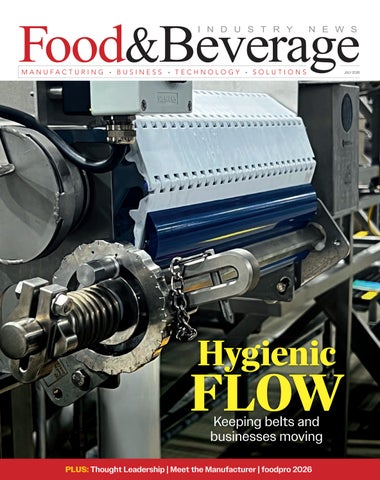
Keeping belts and businesses moving
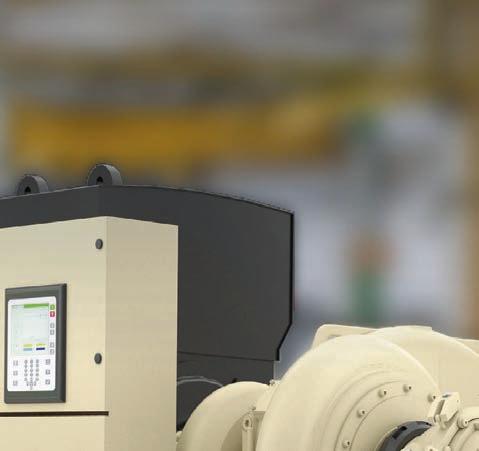
Compressed air is the invisible ingredient behind every safe, high-quality food and beverage product. With ISO Class 0 oil-free air and sub-zero dew points, Atlas Copco solutions protect your product, your compliance, and your brand.
The value for you:


Zero risk of oil contamination
Z
Sub-zero pressure dew point with high-e iciency heat of compression dryers
Lower energy use, smaller footprint, reduced maintenance
Sub L
Raise your air quality. Raise your production performance.
Atlas Copco Compressors — the Food Pro in your process.











Atlas Copco Compressors Australia 1800 023 469 compressorsau@au.atlascopco.com Level up your experience at atlascopco.com



“LManaging Editor: Mike Wheeler
ife is a box of chocolates. You never know what you’re going to get.”
This famous quote from the 1994 film Forrest Gump reflects the unpredictability of life. As we reach the halfway point of 2026, the world has never seemed noisier. In the last six months, the food and beverage industry has faced ongoing challenges in finding stability. These pressures affect not only manufacturers, but also consumers, who are increasingly seeking certainty in the products they choose and consume.
Yet part of the beauty of food and beverages lies in escapism. A single taste, texture or scent can bring comfort to Australians navigating through difficult times.
Understanding this, chief executive officer Andrew Mitchell of Safcol Australia highlights the value of simplicity. Having led the business for 15 years, he believes the fundamentals of product development have always been centred on consistent consumer preferences. According to Mitchell, a more sophisticated product does not necessarily guarantee a sale. Instead, he advocates a strategic consumer-focused approach: the simpler you make things, the better they work.
Safcol’s recent $80 million investment in a new manufacturing facility in Edinburgh reflects this philosophy. To deliver higher quality products at a more competitive cost, Mitchell believes advanced manufacturing technologies will play a defining role in the company’s future.
Merre Granola, based in Western Australia’s Central Wheatbelt, shares a similar view. Director Estelle Madaffari said that while Australia is renowned for its oats, much of the crop is exported. By simplifying supply chains and reducing the
distance between producer and consumer, the business was established to celebrate Australiangrown ingredients while providing nutritional benefits in the market.
A consumer-first approach to research and technology also drives innovation. UNSW researchers are working to preserve the aroma of Australian truffles. Rather than extending the truffle’s short shelf life, the focus is on aroma extraction technologies, recognising that aroma is central to the truffle experience.
Despite the challenges facing the sector, now is the time for the Australian food and beverage industry to reconnect, refresh and rethink through a consumer-first lens. With foodpro 2026 returning to Melbourne from 26 to 29 July, the event provides an opportunity for conversations and collaborations that can strengthen the industry.
Manufacturers are not alone in pursuing simplification. Solution providers are also helping businesses streamline their operations.
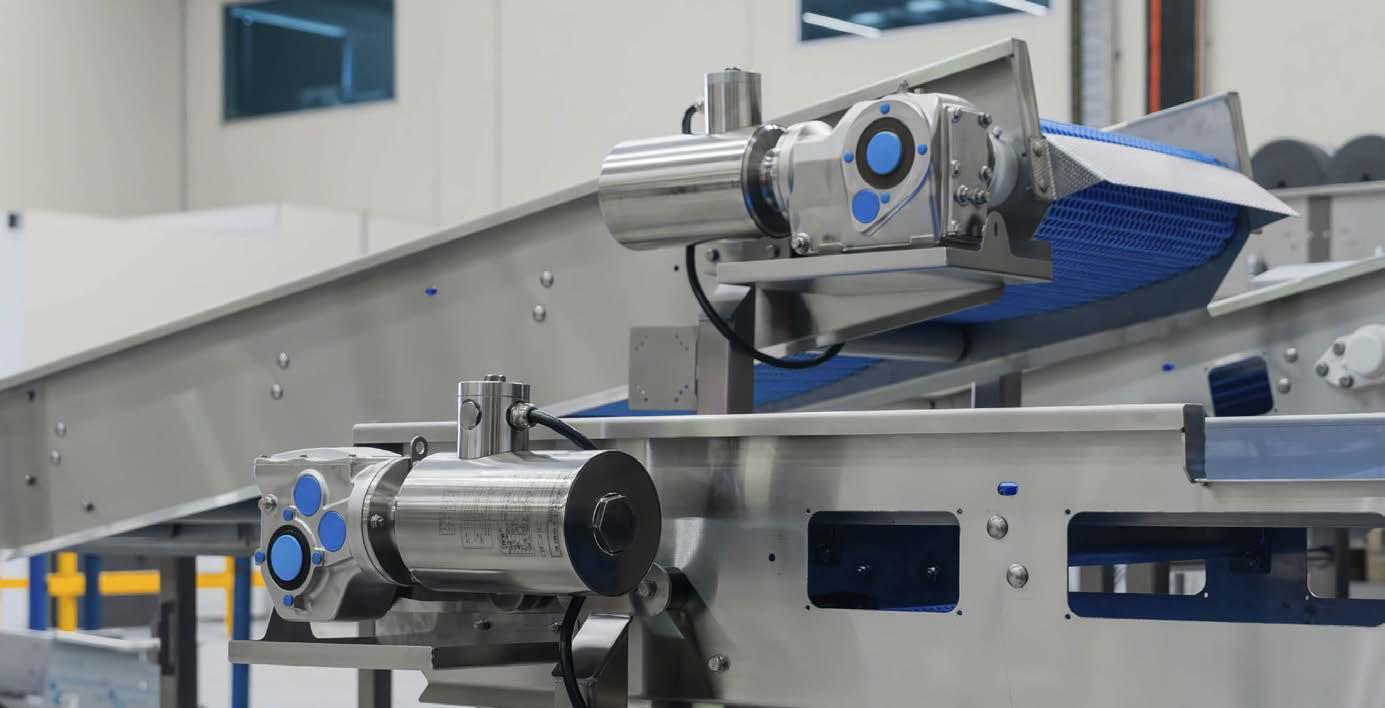
Companies such as Trimatt Systems, SEWEURODRIVE and Summit Food Machinery will exhibit at the event, showcasing solutions spanning ingredients, processing equipment, packaging, logistics and digital factory systems. Through live demonstrations and engagement with more than 400 suppliers, attendees will gain insights into the latest automation and sustainability advances available to food and beverage Australian manufacturers.
The world will continue to change, and so will the industry. Yet the simple pleasures of a warm meal or a refreshing beverage remains among life’s most enduring comforts.
Happy reading! F
CEO: Christine Clancy
Managing Editor: Mike Wheeler
Ph: 041 557 2106
mike.wheeler@primecreative.com.au
Assistant Editor: Dae Hong david.hong@primecreative.com.au
Art Director: Michelle Weston
michelle.weston@primecreative.com.au
Sales/Advertising: Emma Murphy
Ph: 0403 500 54 emma.murphy@primecreative.com.au
Client Success: Cait Pillay
Ph: (03) 9690 8766
caitlin.pillay@primecreative.com.au
Cover
Image: Flexco
Subscriptions AUS NZ O/S
1 year subscription99109119
2 year subscription189199 209 For subscriptions enquiries please email subscriptions@primecreative.com.au
Copyright
Food & Beverage Industry News is owned by Prime Creative Media and published by John Murphy. All material in Food & Beverage Industry News is copyright and no part may be reproduced or copied in any form or by any means (graphic, electronic or mechanical including information and retrieval systems) without written permission of the publisher. The Editor welcomes contributions but reserves the right to accept or reject any material. While every effort has been made to ensure the accuracy of information, Prime Creative Media will not accept responsibility for errors or omissions or for any consequences arising from reliance on information published. The opinions expressed in Food & Beverage Industry News are not necessarily the opinions of, or endorsed by the publisher unless otherwise stated.
© Copyright Prime Creative Media, 2023
Articles
All articles submitted for publication become the property of the publisher. The Editor reserves the right to adjust any article to conform with the magazine format.
Head Office
379 Docklands Drive
Docklands VIC 3008
Ph: +61 3 9690 8766
enquiries@primecreative.com.au http://www.primecreative.com.au
Sydney Office
Suite 11.01, 11th Floor
201 Miller St North Sydney, NSW 2060, Australia

Printed by: Brougham Press
865 Mountain Hwy, Bayswater VIC 3153
Ph: (03) 9873 5144

Andrew Mitchell reflects on his 15-year-journey leading Safcol Australia.
Merre Granola was born from the struggle to find local granola products.
Demands placed on packaging operations are changing in the industry.
Heat and Control’s new compact dicer is making its debut.
The missing link in Australia’s intelligent factories is the cold chain.
WML Paperboard sources fibre locally to focus on supply chain
Belt maintenance is crucial before a domino effect takes place.
ContiTech is strengthening compliance with its hose solutions.
VEGA radar sensors are helping a winery improve inventory visibility.
Summit is bringing international technology partners to foodpro 2026.
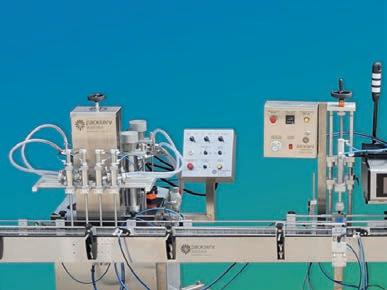
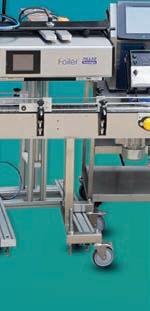
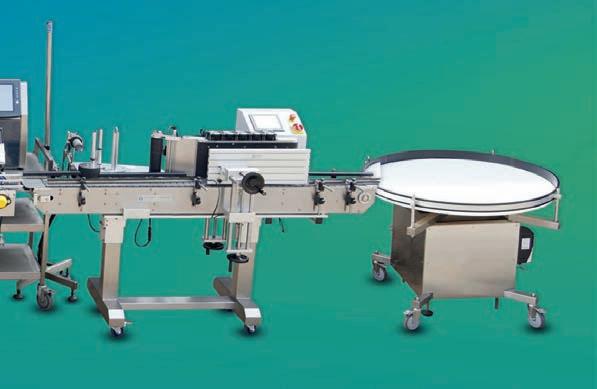
Packserv was appointed as an Australian distribution partner for SIAT.
Intralox says two trends are driving food processing operations –automation and food safety.
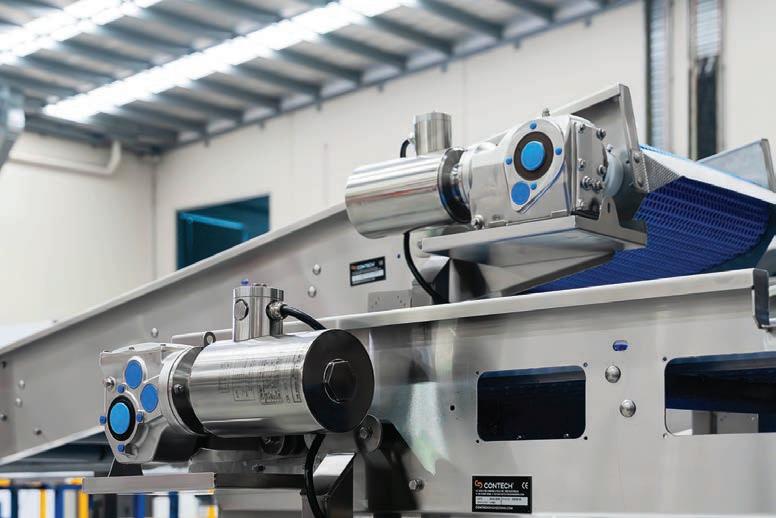
SEW-EURODRIVE has expanded its drive technology portfolio.
The combination of whey protein with Angeopro Yeast Protein can create more balanced nutritional formulations.
Centric Software urges the adoption of AI-powered PLM platforms.
Atlas Copco is helping manufacturers to be a true food pro.
UNSW researchers are preserving the flavour of Australian truffles.
Melbourne International Coffee Expo is the hotspot for coffee lovers.
MegaTrans 2026 will explore warehousing and logistics strategies.
Bulk 2026 will help companiesboost production across the supply chain.
Finalists have been announced for the 2026 Australasian PIDA Awards.




















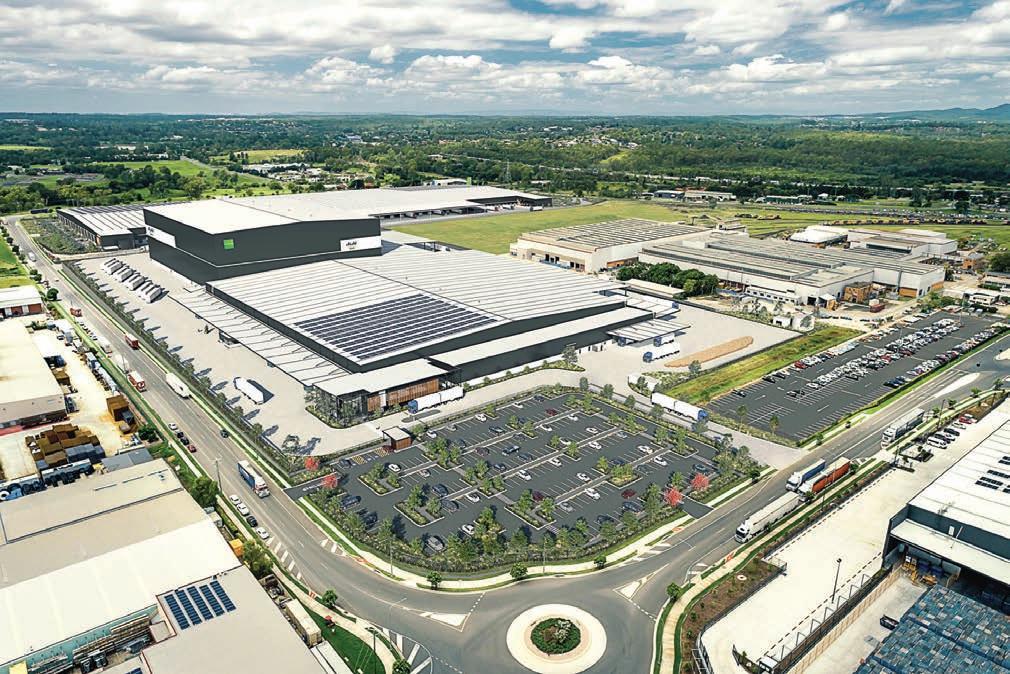
Asahi Beverages is building a new distribution centre outside Brisbane as part of a multi-year program to modernise its supply chain network.
Located in Redbank within the City of Ipswich, the company will invest $150 million in the facility, which will use technology including a high speed shuttle system and robotics.
The distribution centre will support access to Asahi’s beverage portfolio, including Great Northern, VB, Hard Rated, Schweppes, Pepsi Max and Cool Ridge water.
The site will be located within the Redbank Motorway Estate, an industrial precinct in south east Queensland owned, developed and managed by Goodman. The precinct provides access to freight routes across the region and wider Queensland.
The facility is expected to be operational by 2028 and create approximately 300 full time equivalent jobs during construction.
The development will be
led by Goodman, with McNab appointed as builder. Project and supply chain consultancy TMX Transform has supported the project through network design, property procurement and project management.
“More than 97 per cent of the beverages we sell in Australia are made by us in Australia and the investment in the new Redbank distribution centre further highlights our long-term commitment to Queensland,” said Adrian Benson, chief supply chain officer, Asahi Beverages.
“The development will help Asahi simplify our warehousing and distribution network along Australia’s east coast while delivering sustainability benefits via more efficient distribution routes.
“The investment means more customers can receive our full range of alcohol and non-alcohol beverages more efficiently with one order, one payment and delivery on one truck.” F
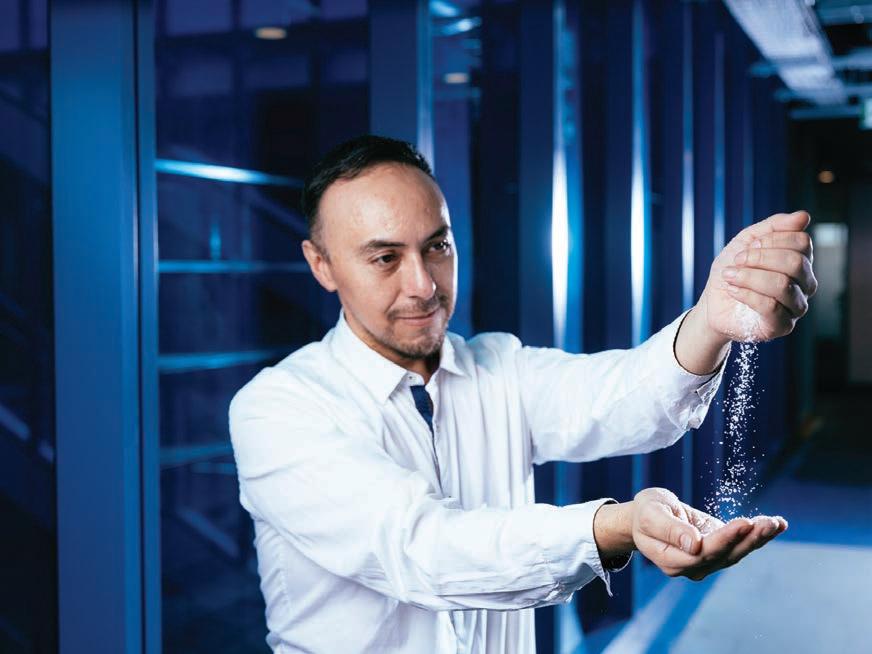
Researchers at the University of Queensland (UQ) are investigating new ways to produce rare sugars, a naturally occurring low-calorie alternative to conventional sugar that could expand options for food and beverage manufacturers.
The work is being undertaken at UQ’s Biosustainability Hub, where synthetic biologists and bioprocess engineers are using fermentation technologies to create rare sugars from sugar cane feedstocks.
Rare sugars occur naturally in some fruits and are considered an alternative sweetener because they offer similar sweetness, texture and baking properties to table sugar while containing fewer calories. However, high production and processing costs have limited their use in commercial food and beverage products.
Dr Axayacatl Gonzalez said the project aims to develop a more cost effective production method.
“These rare sugars occur in some fruits, and they are increasingly coveted as alternative food and beverage sweeteners by the hospitality and commercial food industries,” Gonzalez said.
“The health benefits are clear, and the sugar industry clearly identifies this as an opportunity to diversify their offering, but large-scale production is currently limited.
“The good news is we are able to harness natural processes in our lab to produce a variety of rare sugar molecules, using fermentation technologies which provide a sustainable alternative for the manufacturing of these molecules directly from raw sugar.”
The project is being conducted in partnership with MSF Sugars and uses bacteria commonly found in Queensland cane fields. Researchers have engineered bacterial strains capable of converting cane syrup into rare sugars. F
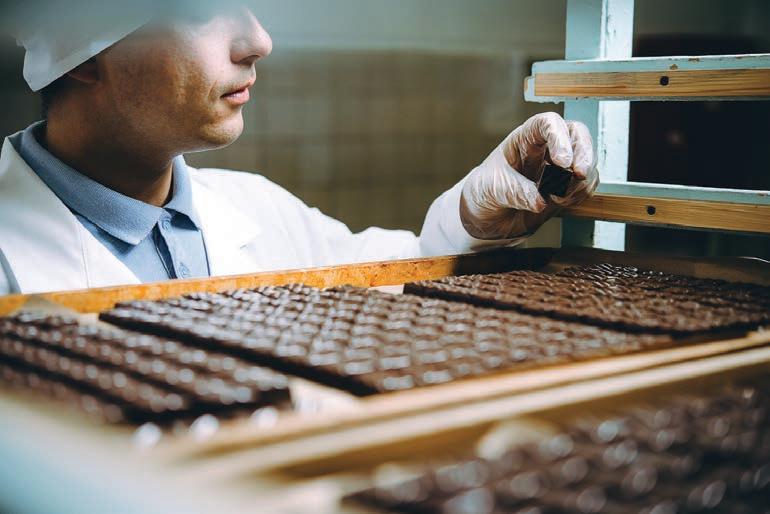
Mondelēz International has marked the 50th anniversary of its Scoresby confectionery factory with an $8 million investment in new production technology.
Located in Melbourne’s east, the Scoresby facility has produced confectionery products for Australia and New Zealand for five decades, including Cadbury Pascall Clinkers, Sour Patch Kids and The Natural Confectionery Company range.
Mondelēz International, the company behind Cadbury, has installed new technology to support the production of more than 120 products across a range of formats, including portioned mini bags.
The investment forms part of a broader $30 million commitment to the site since 2022, aimed at supporting its role as a confectionery manufacturing hub for the region and enabling product, flavour and packaging development.
According to the company, the new technology will improve its ability to respond to changing consumer demand, including trends
emerging through social media.
Mondelēz International Australia, New Zealand and Japan president Toby Smith said the Scoresby
facility had played an important role in the company’s manufacturing operations.
“We are incredibly proud of our 50-year manufacturing legacy at Scoresby and the jobs we have created for hundreds of Victorians in Melbourne’s east over the decades,’’ he said.
“The $8 million new packaging capability is just one part of the $30 million we have invested in Scoresby over the past five years to ensure the facility has a strong future producing iconic treats locally.
“Our continued investment in the Scoresby factory and our team demonstrates our confidence in Australia’s ongoing capacity to manufacture the lollies we know and love right here.”
By 2035, Mondelēz International expects half of its growth to come from chocolate products and half from non-chocolate categories. F
Australia has contributed to the development of new international food labelling guidance aimed at supporting food trade during emergencies and promoting a more consistent approach to precautionary allergen information for consumers.
The outcomes follow the 49th Session of the Codex Committee on Food Labelling (CCFL49), held in Ottawa, Canada, from 11 to 15 May 2026. CCFL49 is one of several Codex committees held each year. The guidance is intended to encourage greater consistency in precautionary allergen labelling across markets and provide clearer information for consumers with food allergies.
Australia’s delegation was led by food labelling specialists from Food Standards Australia New Zealand (FSANZ), with support from the Department of Agriculture, Fisheries and Forestry’s Codex team and technical input from the
department’s Export Standards Branch.
CCFL49 brought together international experts to advance global food labelling standards through Codex Alimentarius, the United Nations food standards programme administered by the Food and Agriculture Organisation (FAO) and the World Health Organisation (WHO). Codex develops internationally recognised food standards and guidance to support consumer health and fair practices in food trade.
One outcome of the meeting was the finalisation of guidance to help regulators consider food labelling flexibilities during emergencies. The guidance is intended to support responses to supply chain disruptions while maintaining consumer protections and fair-trading practices.
Australia contributed to discussions aimed at ensuring the guidance could support
international trade during disruptions affecting supply chains, including emergencies occurring outside the importing country. The guidance outlines practical considerations and responsibilities for regulators when permitting temporary labelling flexibilities to help maintain domestic and international food supplies during emergencies.
The committee also finalised international guidance on the use of precautionary allergen labelling, marking a milestone in work co-led by Australia over several years. Australia supported the risk-based approach adopted by the committee, which aligns with Australia’s evidence-based approach to mandatory allergen declarations.

The agreed texts will now be considered by the Codex Alimentarius Commission for adoption at its July 2026 meeting.
Australia will continue to participate in international discussions on food
security, consumer protection and market access for agricultural products. Australia will host the Committee on Food Import and Export Inspection and Certification Systems (CCFICS28) in Perth from 12 to 17 October 2026. F
With an 80-year-old legacy, Safcol is preparing for its next phase of growth through a manufacturing investment to stay ahead of customer expectations. Dae Hong writes.
Joining Food & Beverage Industry News, CEO of Safcol Australia, Andrew Mitchell, shared the secret to his three-decade tenacity in the food industry: passion.
“I do believe in whatever we do, we need to like it,” he said.
“The more you like it, it’s less of a job and we’ll do a better job if we enjoy it.”
Mitchell’s career has spanned retail and manufacturing, beginning at Woolworths before moving through roles at Nestlé, Golden Circle and Sunbeam Foods. Despite his long tenure in the sector, he said a career in food manufacturing was never part of a grand plan.
“It just happened – I liked it when I started in the industry and I continued on,” said Mitchell. “I’ve spent my entire career in the food industry. It’s what I know best and where my expertise lies.”
Mitchell has spent 15 years with Safcol, leading the business through its latest growth phase. He is also the global CEO of the parent company, Tropical Consolidated Group, which is
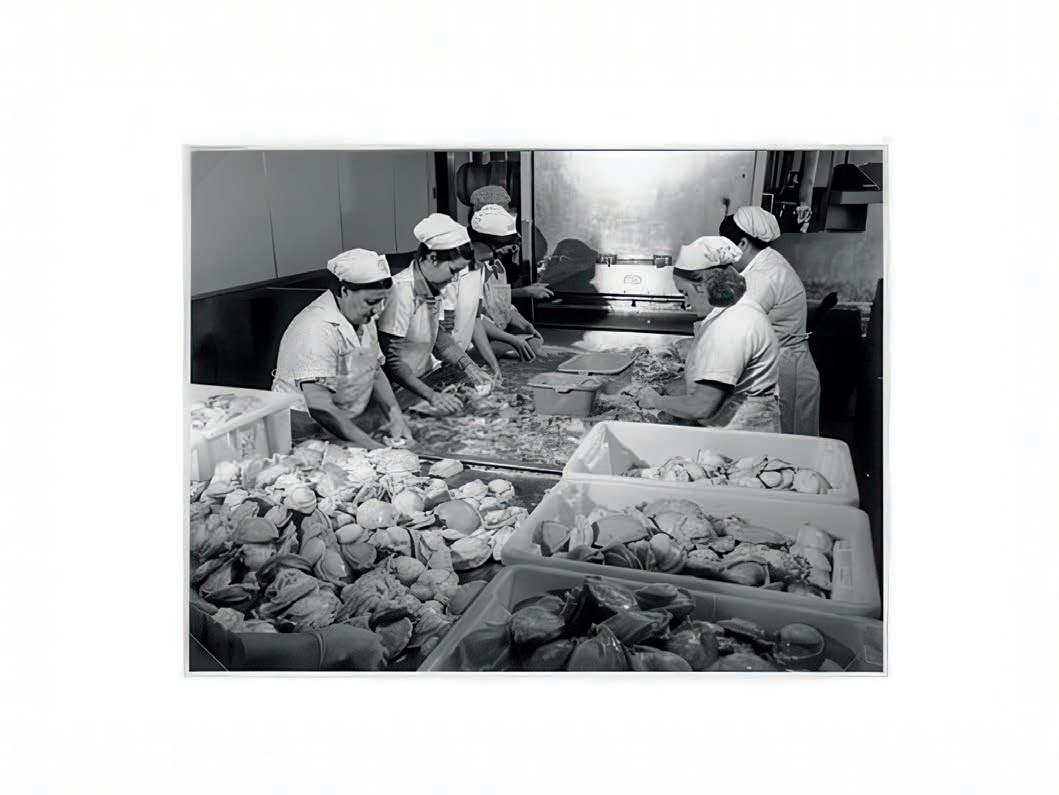
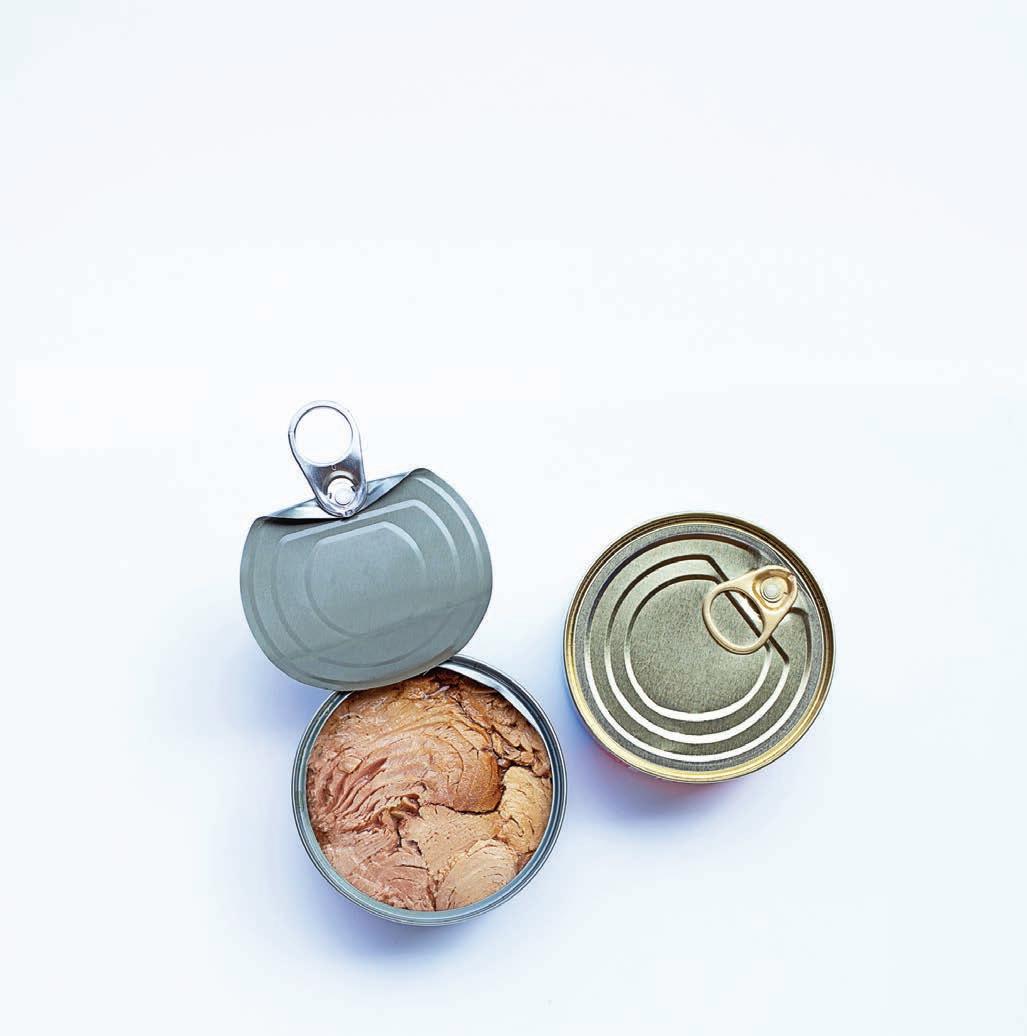
For more than eight decades, the company has been a familiar name on Australian supermarket shelves. While many consumers associate the company with canned tuna, its operations today extend beyond seafood. It manufactures around 60 per cent of Australia’s wet baby food supply, alongside soups, canned vegetables for a range of food brands and retailers.
Safcol’s evolution from a seafood business founded by South Australian fishermen in 1945 into a diversified food manufacturer has been driven by changing market opportunities. Yet Mitchell believes consumer preferences themselves have remained remarkably consistent.
“Consumers seek simplicity and they like what they like,” he said. While food trends continue to emerge, the fundamentals of product development have not changed. Consumers are increasingly seeking quality product at an affordable price or comfortability with products they trust or are familiar with.

“The simpler you make things, the better it works.”
With this consumer-focused approach, it has guided Safcol’s expansion into categories beyond seafood. Pet food, for example, emerged naturally from the company’s expertise in seafood processing. With canned fish products, the company strategically seized the opportunity to develop seafood-
Being able to access high quality seafood, the company produces both seafood and meat-based pet foods for domestic and export markets while continuing to grow its broader food portfolio.
“We had the luxury of being able to access good quality seafood. Most pet food companies don’t have that access,” said Mitchell.
One of the company’s largest initiatives is an $80 million investment in a new manufacturing facility in Edinburgh, South Australia. Mitchell highlighted that the decision was driven by growing demand and the need to improve operational efficiency for the business.
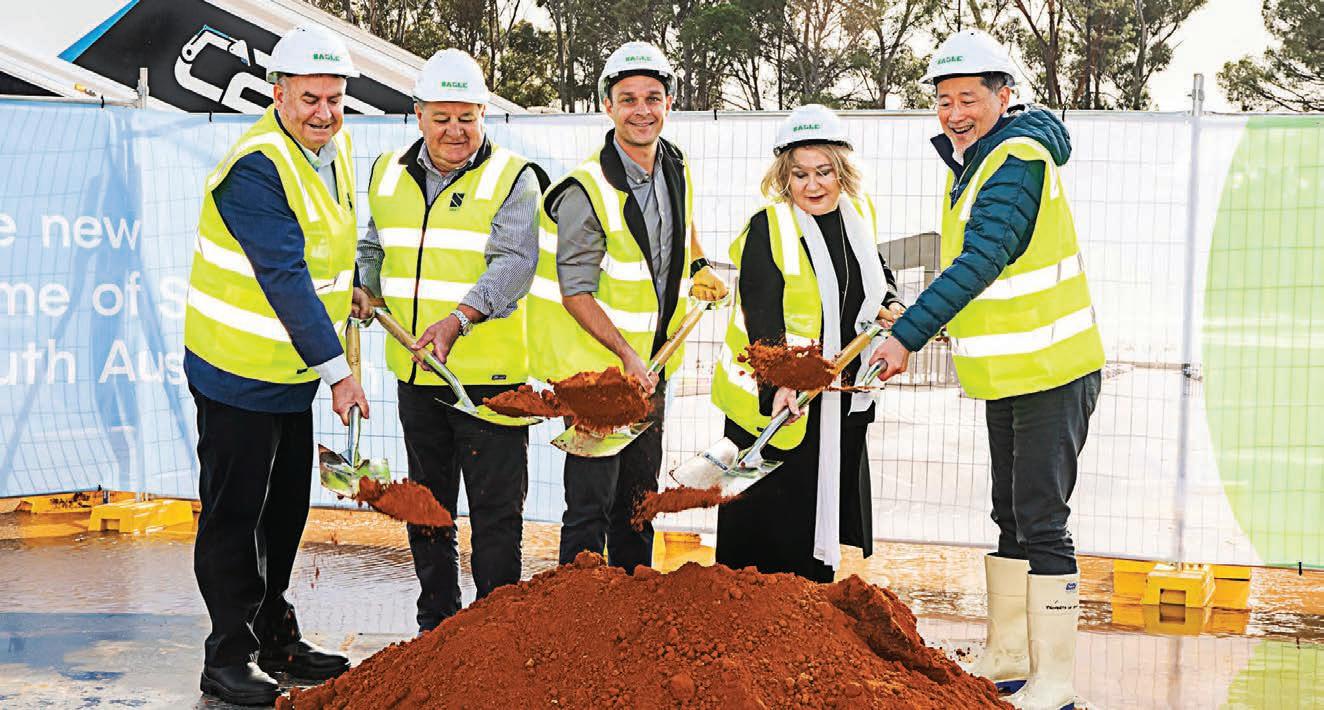
The company officially broke ground on the site on the 2nd of June alongside the opening of its new Adelaide Fish Market facility in Thebarton. South Australian company Sagle Constructions has been appointed lead contractor for the Edinburgh facility. The new site will replace Safcol’s Elizabeth factory over the next two years.
“Our factory in Elizabeth is at the end of its life in regard to capacity,” he said. “We were knocking back on business all the time due to
operational inefficiencies.”
The investment will allow Safcol to double production capacity while modernising operations and improving productivity. The project is designed to address several challenges facing Australian manufacturers, including rising labour costs, increasing energy expenses and productivity pressures.
“What we’re trying to achieve with this investment is to meet all those standards, double capacity and be more efficient. This will result in a better quality product at a better cost basis,” said Mitchell.

The Elizabeth site also houses the company’s national warehousing and import operations, supporting seafood and pet food distribution across Australia. Safcol manufactures products for Australian brands, supermarket private label products and other food companies. The business also processes local mussels and Australian canned abalone for export markets.
“We needed to invest in the future,” said Mitchell. “If you’re not looking to have the most efficient modern based factory you can, you’re likely going to struggle in the future.”
The new facility will incorporate advanced manufacturing technology and provide opportunities for future renewable energy integration aimed at reducing energy and water consumption. This will create opportunities for future expansion, with additional space reserved for new product lines and future manufacturing developments.
“We’ve got a long-term view around that as well, but we’ll take it one step at a time,” Mitchell added.
The announcement coincided with the opening of Safcol’s new Fish Market facility at 36 West Thebarton Road, Thebarton. The site replaces the former Mile End Market and will operate as a seafood hub serving fishermen, suppliers and wholesale customers across South Australia.


For its baby food products, dairy ingredients are sourced from South Australia, while much of the fruit, vegetable and meat inputs are sourced locally or elsewhere in Australia depending on the seasonal availability of the produce.
The company’s Adelaide operation employs more than 200 people and operates five days a week, 24 hours a day throughout the year. This, too, is a strategic decision rooted in staying ahead of customer expectations.
“Our customers need our product every week, so we need to be available every week,” said Mitchell.
Although Safcol sources certain specialised ingredients internationally, Mitchell said the company remains committed to Australian manufacturing and local supply chains wherever possible.
“The majority of our product is locally sourced,” he said.

The company maintains direct control over parts of its seafood supply chain through ownership of processing facilities. Mitchell said most of the other canned fish in mainstream retail relies on third parties for production.
and openly share the vessels it sources from. Fishing activities are monitored to ensure compliance with sustainability standards and regulatory requirements.

“Safcol canned fish is the only brand seen on Australian shelves that actually owns a processing facility and canneries,” he said.
This ownership structure provides greater oversight of both quality and sustainability practices. The company adopts systems that allow tracking of full supply chain traceability




As an early adopter of sustainable seafood sourcing, Mitchell highlighted that Safcol was the first Australian mainstream brand to move towards sustainably caught tuna and fishing methods designed to reduce bycatch. Today, all of its tuna is sourced from Marine Stewardship Council (MSC) certified fisheries.
The company also reports a 90 per cent reduction in marine bycatch through changes to its fishing practices. Packaging materials are recycled where possible, with further investment planned to reduce overall landfill waste.
“We like to think that we were the ones who created the situation that put the Australian industry where it is today,” added Mitchell.
Automation will play a central role in the new facility, with investment focused on improving efficiency and removing production bottlenecks.





While software and digital systems are important, Mitchell emphasised that productivity gains ultimately depend on the quality of the manufacturing equipment itself.
“The software helps to run our programs, but we need the equipment first and foremost,” he said.
The company is targeting areas where automation can improve throughput and reduce reliance on labour intensive processes. By speeding up production where it can, the business will find increased capacity through more efficient automated systems.
Like many food manufacturers, Safcol continues to face challenges associated with rising costs throughout the supply chain. Despite the ongoing concerns of freight, raw materials, fuel and energy, Mitchell believes that investments like these are what keeps food businesses like Safcol competitive to remain relevant in the volatile market.
An example of this is when the company responded by investing in solar energy at its Adelaide site to focus on operational efficiencies.
“We’ve done a pretty good job at the electricity side to reduce our carbon footprint, but also keep the cost in check,” said Mitchell.
The company is also targeting
“Safcol canned fish is the only brand seen on Australian shelves that actually owns a processing facility and canneries.”
export growth once additional manufacturing capacity becomes available. Currently, the company is looking for export opportunities in Europe, Asia and the US.
Looking ahead, the company’s future depends on maintaining a willingness to invest despite economic uncertainty. The next chapter will be defined by investment, automation and a continued commitment to local manufacturing.
In an environment where costs continue to rise and competition remains intense, Mitchell believes those willing to modernise and plan ahead will be best positioned for long term success. His advice to manufacturers facing similar challenges is straightforward.
“If you don’t invest in the future, you won’t have a future,” Mitchell said.
“We’re very careful in our investments and we ensure that they are around the ability to produce more efficiently.”
“When I started 15 years ago, we were on our knees as a company,” he said. “Today we’re a thriving, stronggrowth organisation that’s prepared F Image: Bowonpat/stock.adobe.com
Reflecting on his 15 years with Safcol, Mitchell said the company’s transformation has been one of his proudest achievements.

Our technologies offer everything you need for process, hydrostatic, and differential pressure for the food industry. Around the world, VEGA pressure solutions stand for proven reliability and trend-setting innovation. Our pressure measurement solutions go beyond just efficient, optimised processes – they provide you with peace of mind, knowing that you’ve chosen the best technology available.
Everything is possible. With VEGA.

What started as a search for a better breakfast has grown into a food manufacturing business supplying granola to foodservice operators across the country.
Located in the Central Wheatbelt, Western Australia, family-owned Merre Granola was born through a struggle to find locally grown granola products. While the state is well-known for the quality of its oats, the company’s director, Estelle Madaffari, highlighted how much of the crop is exported rather than consumed locally.
“Australia is one of the largest oat producers, which is unbeknown to many,” she said.
“Despite being world-renowned for our oats, I could never find a granola that I absolutely loved.”
Taste and quality that matched expectations around nutrition and local ingredients were not matched.
“It didn’t tick boxes for me,” added Madaffari. “It was either too sweet or lacked important ingredients in it and didn’t celebrate Western Australia and Australia’s produce.”
Her journey into food manufacturing was not part of a carefully planned career path. With a background in public relations, marketing and philanthropy, Madaffari’s career took a different direction when married a farmer 18 years ago. Living and working within a mixed grain and sheep farming operation opened her eyes to an opportunity that would eventually become Merre Granola.
Combining her nutrition background with a passion for food and local agriculture, Madaffari began developing recipes of her own. What started as a small idea has since expanded into a portfolio of 11 granola blends.
“We are very much dedicated and will always remain dedicated to using Australian whole foods wherever possible,” said Madaffari.
As consumer interest in nutrition continues to grow, Madaffari believes oats deserve more recognition for their health benefits.
“Oats are like a wonderful magical grain,” she said. “They provide fibre, protein and key nutrients including magnesium and iron.”
They are also recognised for containing beta-glucan, a naturally occurring fibre associated with heart health and blood sugar management. Madaffari added that oats have been proven to help assist with managing diabetes, lowering cholesterol, reducing cancer risks, and managing
weight control.
While oats are beneficial for health, nutritious and abundant, they are overlooked amid changing diet trends and social media-driven advice.
“They promote protein bars, which are highly processed even though oats are naturally good for you,” said Madaffari.
The company operates alongside the family’s mixed farming enterprise, which combines cropping and sheep production. While the farm and food manufacturing operations are connected through a shared commitment to local agriculture, Madaffari said they are fundamentally different businesses.
“We have a cropping program and it’s a different process to oats,” she said. “The broadacre farm runs on big machinery and has lots of workers, whereas the processing facility of oats first started out in a food van.”
The mixed farming model provides environmental and operational benefits. Sheep and cropping have traditionally worked together across Australian farming systems, helping improve overall farm productivity. However, the focus remains on oats.
Although Merre Granola is closely linked to grain production, the manufacturing process involves several stages before products reach



rolled. The oats are then returned to Merredin for blending, baking, packing and distribution.
“We bring them back to our commercial kitchen, where we either toast it, blend it with local Australian honey, Australian nuts wherever possible, and a hint of a few other things,” Madaffari said.
The business also manages packaging, labelling, and dispatch in-house, producing both retail packs and bulk foodservice products. Behind the scenes, technology has also become more important as the business grows.
While the production process remains highly hands-on, software has helped improve efficiency and compliance. Recently, the company implemented Fishbowl inventory management software through a grant supported by the Western Australian government.
“That has really made a big change to our business in managing the paperwork and keeping up with HACCP,” Madaffari said.
The kitchen team consists of two full-time staff focused on production, supported by an operations manager responsible for inventory, labelling, manufacturing administration and

As the business started with passion, she believes in having a team that cares about their craft.
“Our team ensures accuracy and consistency with every batch and that comes from their passion for food,” she said.
Like many emerging food brands, Merre Granola initially focused on retail growth. Over time, however, the company found more opportunities through foodservice.
“Funny enough, when you first start a business like this, you want to be in every store,” Madaffari said.
However, due to the competitiveness to secure shelf space in shops and supermarkets, the business found retail challenging. Instead, foodservice operators began approaching the company directly.
Part of the growing inquiries include food trend applications of granola.
“Dessert bowls use granola as a dessert,” said Madaffari. “It’s no longer just about breakfast.”
The popularity of smoothie bowls, breakfast bowls and dessert applications has opened new opportunities for granola products
Madaffari sees opportunities within hospitality, especially hotels seeking to improve breakfast offerings.
Merre Granola aims to help people revisit the quality of Australian granola as a nutritious morning meal.
The company’s flexibility also allows it to work with foodservice customers on tailored blends and recipes. This is a personal favourite for Madaffari as she enjoys the creative process of developing recipes with the foodservice industry on taste, texture and dietary requirements.
Like many regional manufacturers, Merre Granola faces ongoing cost pressures. Rising operating expenses, labour availability and freight costs remain key challenges, particularly given the company’s location in regional Western Australia.
Madaffari said the business continues to navigate the same economic pressures affecting many food manufacturers, while also managing the realities of operating in a regional area where attracting and retaining local workers can be difficult.
“While we do find it challenging to employ people and local people in regional WA, we still remain dedicated to that,” she said.
Freight remains another
challenge, with a large proportion of customers based in Queensland and New South Wales. The distance between production and market can add further cost pressures, requiring careful planning and close collaboration with customers.
Despite these challenges, the company has worked to maintain customer relationships and manage rising costs collaboratively.
Family remains central to the Merre Granola story. Madaffari and her husband continue to support both the farming and food manufacturing operations, while their children contribute in various ways.
“My daughter is very much our social media creator,” she said. “My son definitely loves the farming side of things.”
Looking ahead, the company remains focused on expanding within foodservice while continuing to champion Australian grown ingredients. Learned from farmers leading the example, Madaffari highlighted that persistence remains the most valuable lesson. In a volatile industry, that mindset continues to guide the business.
“The best advice I have received from people is just keep going,” she said. “Just keep at it and something will eventually shift, tick and turn at the right time.” F

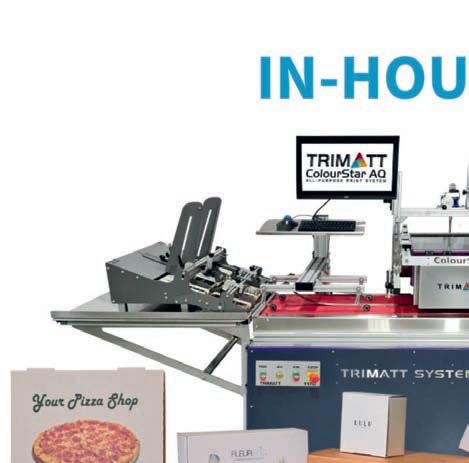
Trimatt Systems’ digital printing technologies are helping food manufacturers reduce packaging waste and respond to changing market demands.
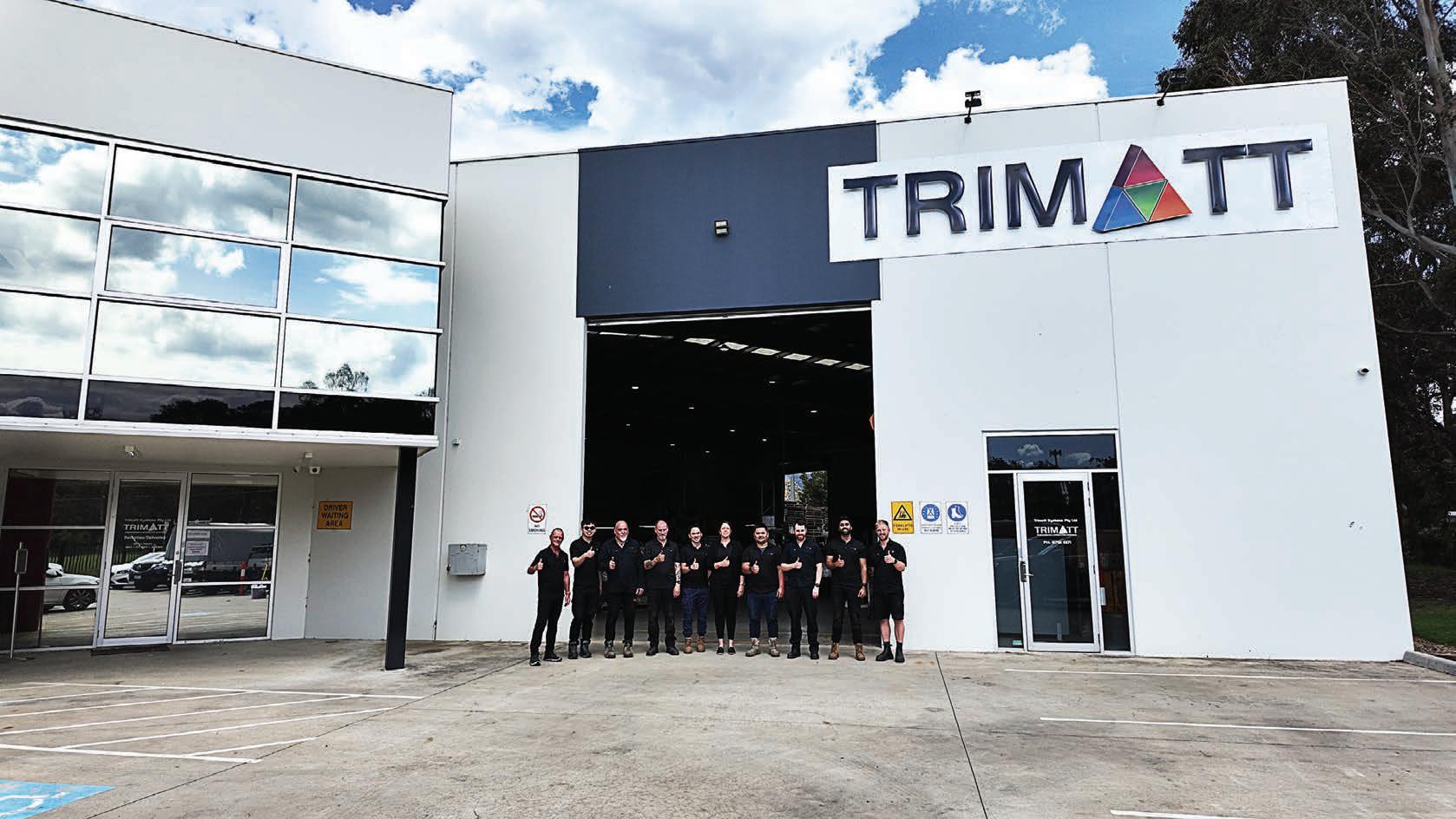
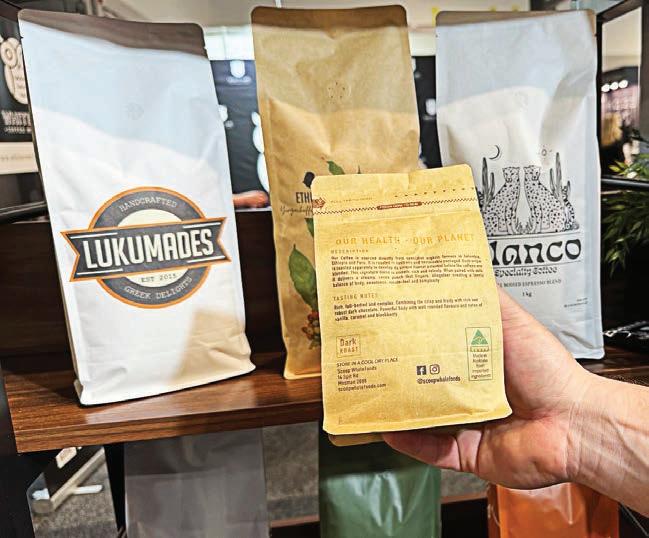
The Food & Hospitality Week during 25-27 May at ICC Sydney, brought together business owners, chefs, operators and solutions providers driving the food and beverage sector. Stationed between coffee roasters was Trimatt Systems, exhibiting its on-demand printing solution ColourStar AQV.
During the event, businesses came across its technology, and its benefits became known, according to founder, Matt Johnson. Some coffee brands exhibiting at the event displayed coffee bags printed by Trimatt Systems’ solutions, kickstarting conversations regarding a different approach in packaging.
“It was basically a showcase for us,” said Johnson. “Our solutions
were shown not only at our stand but through other exhibitors.”
Johnson said that by the last day of the tradeshow, the company developed a partnership with a business that was interested in Trimatt’s printing solutions.
“We got up early in the morning and met them prior to the doors opening, and in a short time had their bags printed as a demonstration,” he said.
Packaging has always played an important role in food manufacturing, but the demands placed on packaging operations are changing.
Beyond protecting products and displaying essential information, packaging has become a key branding
tool that allows food manufacturers to differentiate themselves in crowded markets.
At the same time, manufacturers are facing pressure to reduce waste, improve operational efficiency and maintain compliance. For the Melbourne-based solutions company, these challenges are creating opportunities to transform traditional packaging models towards more flexible, on-demand production.
Speaking ahead of foodpro 2026, Johnson talked about the company’s focus at this year’s exhibition.
“The theme for Trimatt at the show is digital printing and branding your products,” he said.
One of the biggest challenges is managing packaging inventory. For businesses producing a variety of products, packaging requirements can quickly become complex.
Different pack sizes, product variations and branding requirements often result in large inventories of pre-printed packaging materials.
According to Johnson, this issue is evident among small- to mediumsized manufacturers that offer broad product ranges.
“Because these businesses have product variations, and a large variety of products, you can imagine the inventory of packaging goods within their business,” he said.
The company will showcase a range of technologies designed to support in-house, just-in-time printing across both food and beverage products and packaging applications.
Among the highlights will be the launch of the company’s food printer – ColourStar AQE – alongside demonstrations of its ColourStar AQV systems.
Unlike larger multinational companies that operate high-volume production runs with fewer variations, smaller manufacturers often rely on carrying multiple stock-keeping units to meet customer demand.
“Take specialty flour producers as an example – they have like 30 different brands and styles of baking flour,” Johnson added.

While the food printer has attracted attention ahead of foodpro, Johnson said it represents one part of a broader strategy focused on helping food and beverage manufacturers gain control over branding and packaging operations.
When multiple product variants are combined with different pack sizes, the number of packaging formats increase. Maintaining inventories of pre-printed packaging requires warehouse space, ties up capital
and can generate waste whenever the branding or information of the product changes.
Trimatt’s digital printing technologies aim to address these issues by allowing businesses to print packaging information when required rather than stocking up large volumes of pre-printed materials. Food and beverage manufacturers can make design changes quickly without waiting for new packaging runs from external suppliers.
“It gives businesses a marketing edge where they can be more flexible and nimbler to change designs or artworks within a matter of moments, not a matter of weeks,” Johnson said.
While reducing packaging waste is one benefit, Johnson said the value of digital printing extends beyond material savings.
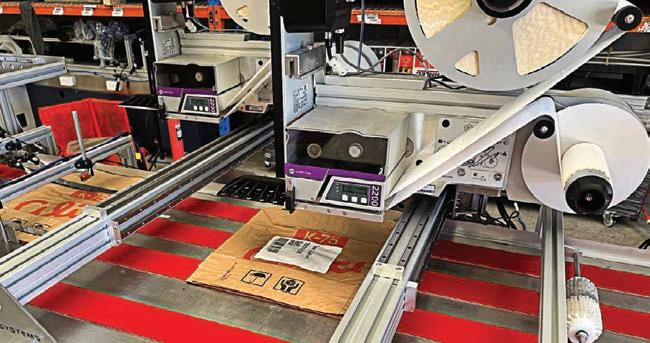
A recent installation for a multinational flavours and fragrances manufacturer highlighted the broader operational advantages available through automated printing systems. Prior to implementing Trimatt’s technology, the business relied
manually applied to bags.
“They were storing a large amount of inventory of self-adhesive labels,” Johnson said.
In addition to space, the process was labour intensive and introduced the possibility of human error, particularly when applying labels to multiple product types.
For food manufacturers, incorrect product information can have serious consequences. Labelling errors can affect quality assurance processes, compliance requirements and customer confidence. Mistakes can
costs that extend far beyond the packaging itself.
To address these risks, the company implemented a ColourStar AQ system integrated directly with the customer’s ERP system. Using automation, operators load bags into the system while the equipment automatically prints the correct information for each product.
“Our ColourStar AQ system will automatically pick the bag and print on it,” Johnson said.
Integrated camera systems verify the printed information before
feeding data back into the customer’s management systems.
“With a camera, we validate automatically that the data is correct,” he added. “They have a closed loop system ensuring that they get all of the branding correct.”
To showcase the value of on-demand printing, Trimatt will demonstrate several of its technologies through live equipment displays at foodpro 2026, Stand M28. In addition to the food printer, visitors will be able to see the ColourStar AQ operating with multi-wall bags commonly used throughout the food industry.
Visitors will also can explore how digital printing can move beyond basic coding applications.
The technology allows manufacturers to print branding, nutritional information and ingredient declarations in a single process.
“We are here to disrupt the market to show real examples of how businesses can implement in-house printing and the benefits it can bring,” he said.
“We’re looking forward to getting visitors to our stand at the show.” F







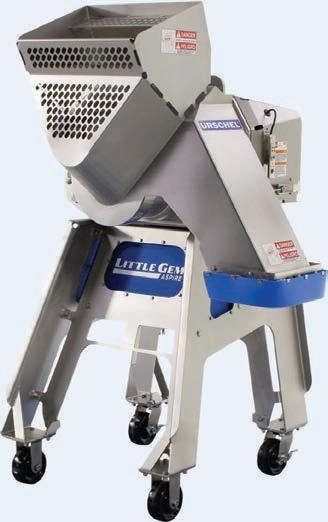
Heat and Control’s new compact fruit and vegetable dicer will make its Australian trade show debut at foodpro 2026.
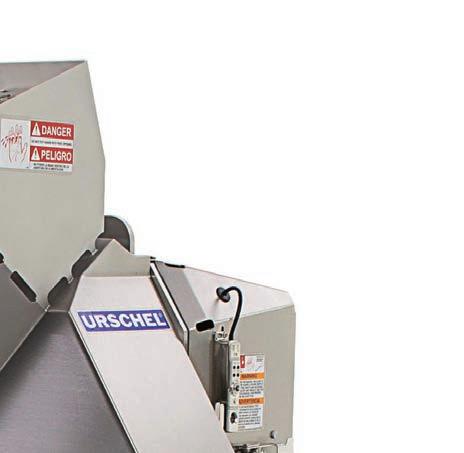
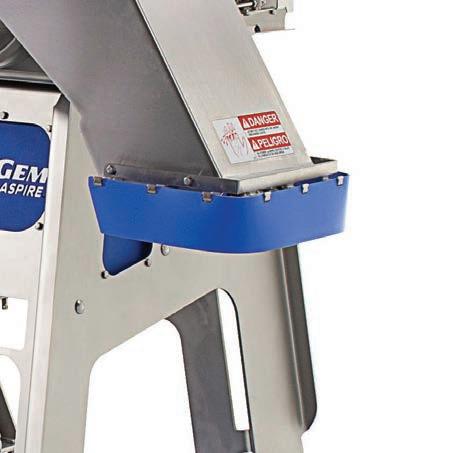
To offer processors flexibility across a range of fresh produce applications, Heat and Control will showcase the Little Gem Aspire from Urschel at the exhibition following its international launch earlier this year.
Designed for small to medium sized processing operations, the machine combines slicing, strip cutting and dicing capabilities within a compact footprint.
As food processors continue to seek greater efficiency from existing production space, equipment that can perform multiple cutting functions while maintaining consistent product quality is becoming more important and relevant in today’s industry.
The Little Gem Aspire has been developed to address this need, providing processors with the flexibility to handle a wide variety of products using a single machine.
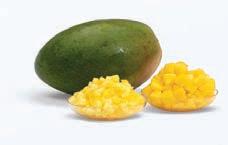
The system is suitable for processing fruits and vegetables including onions, potatoes, carrots, tomatoes, beetroot and mango. It can produce slices ranging from 2 mm to 20 mm, as well as a variety of strip cuts and dices up to 20 mm.
According to Heat and Control territory manager for Urschel products, Paul Frederick, one of the machine’s strengths is its ability to deliver consistent cutting performance across products with varying characteristics.
“One of the key advantages of the Little Gem Aspire is its versatility across multiple fruit and vegetable applications,” he said.
“Fresh produce naturally varies in size, density, and moisture content, so processors need equipment capable of delivering consistent, precise cuts across different products and applications.
“The Little Gem Aspire combines multiple cutting capabilities within a single machine, allowing processors to quickly transition between products while achieving uniform cutting results.”
The launch comes as processors
face increasing pressure to improve productivity while maintaining operational flexibility. For many businesses, particularly those operating smaller facilities, the challenge is finding equipment that can support a range of products without requiring additional production space.
The Little Gem Aspire has been engineered to provide multiple cutting styles from a single machine while maintaining a compact design suitable for integration into existing processing lines. The machine is designed to deliver a low total cost of ownership, from initial investment through to ongoing operation and maintenance.
Among its features is Urschel’s StatiCut knife assembly technology, which simplifies changeovers between cut sizes. The system reduces the number of components requiring maintenance and inventory, helping processors minimise downtime and streamline operations.
presenting it at foodpro.”
As the exclusive representative of Urschel equipment across Australia, New Zealand and Africa, Heat and Control also offers test cutting services. This enables processors to trial their own products on the equipment before making an
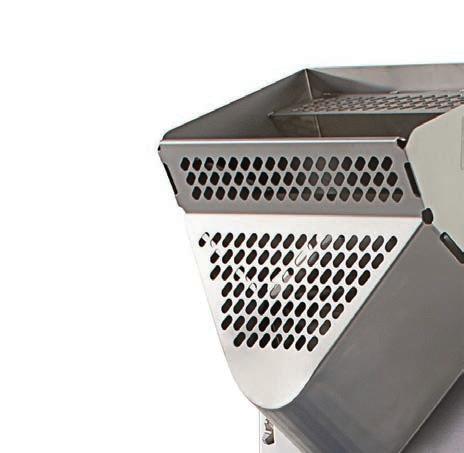
The machine also incorporates patented Urschel cutting technology designed to support precise cuts, consistent product quality and reliable performance.
Beyond cutting performance, ease of operation and maintenance were key considerations during development. By simplifying changeovers and reducing maintenance requirements, the equipment aims to help processors improve efficiency while maintaining product consistency across different production runs.
Frederick believes the machine will appeal to Australian processors seeking greater versatility without expanding their overall production footprint.
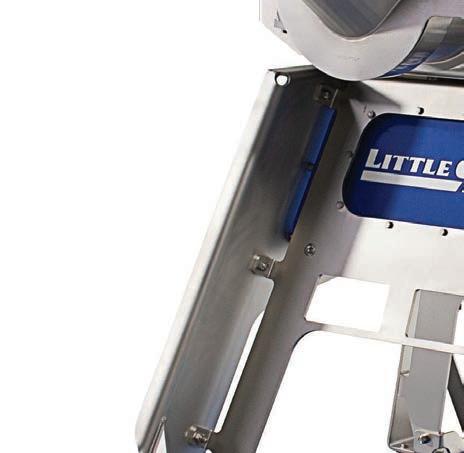
“We think Little Gem Aspire will be a great fit for Australian fruit and vegetable processors, particularly those looking for flexibility within a compact footprint,” he said.
“We’re looking forward to
investment decision, providing greater confidence that the machine will meet their requirements.
Visitors to foodpro 2026 will have the opportunity to see the Little Gem Aspire firsthand and learn more about its capabilities for fruit and vegetable processing applications at Booth R8. F



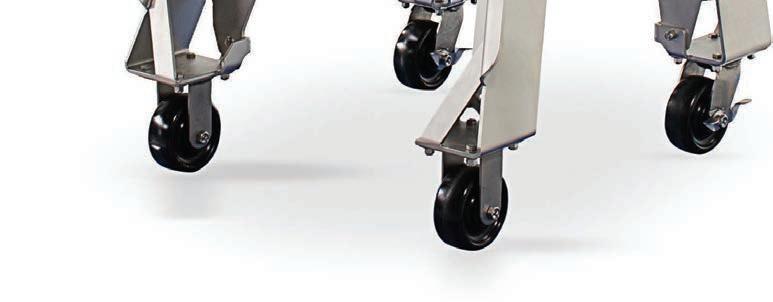

































Flexco Food Grade Primary & Secondary Belt Cleaners
•Reduces sticky food residue and the risk of product contamination
•Extends belt life and minimises wear on conveyor components
•Available in various food-grade UHMW blades
•Easy to install and maintain





While investment


into automation
boosts food
production,

poor
distribution
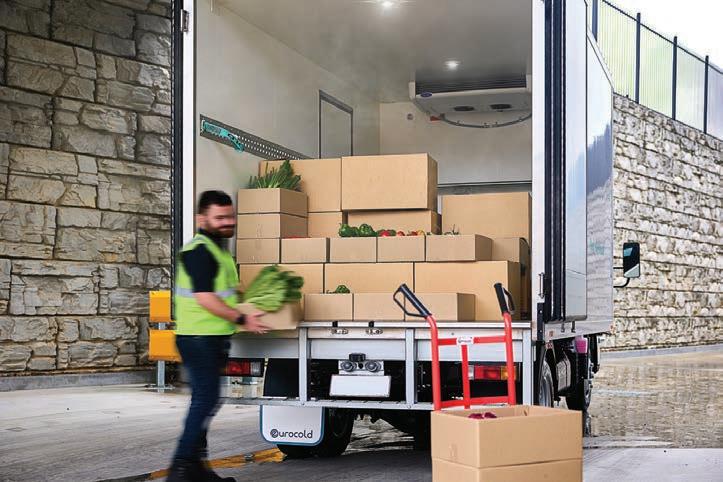
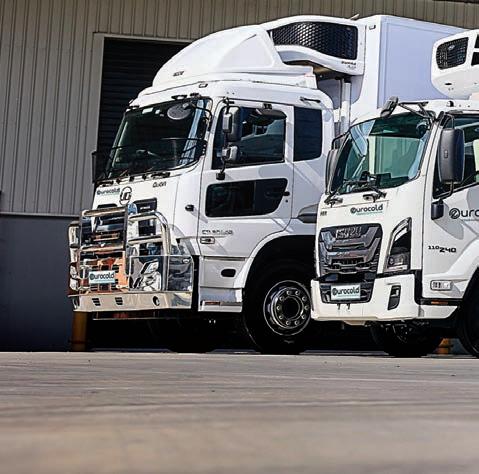
can ruin this advantage. Eurocold offers a fleet management solution.
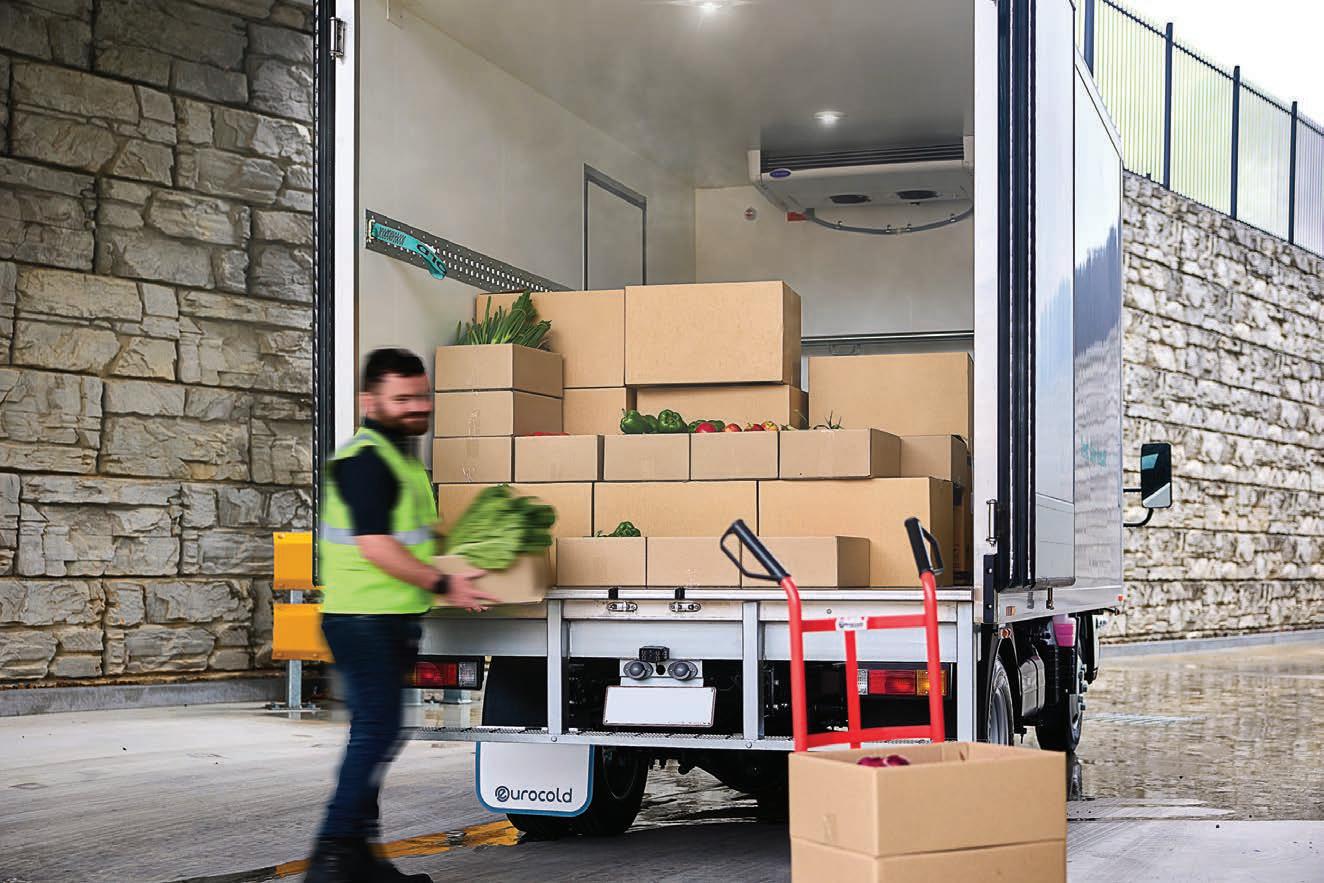
Picture this – a food manufacturer invests in the latest automation, robotics, artificial intelligence and digital monitoring systems. What used to take hours is accomplished within minutes. Quality of the product reaches an all-time high and capacity to produce larger batches is finally made possible.
However, a problem occurs in the next stage – distribution. With breakdowns causing delays and insecure refrigeration for temperature-sensitive foods, customers become dissatisfied with the product. In the end, the business loses credibility and needs to spend more on the repercussions – costly repairs and even recalls.
“The intelligent factory doesn’t end at the warehouse door,” said Eurocold’s head of growth and revenue, Robert Smith. “It extends all the way to the customer.”
Distribution is one area of the supply chain that often receives less attention than production and warehousing. Production teams may spend considerable time ensuring products meet quality standards,
but the final stage of distribution ultimately determines whether those standards are maintained when products reach customers.
Additionally, food and beverage manufacturers face increasing pressure to deliver products faster while maintaining strict safety and quality requirements.
Smith highlighted that a shift is occurring and businesses are becoming more aware of the importance of extending intelligence beyond production.


“Businesses are understanding that when transport capacity is unavailable, the impact extends beyond logistics – it affects production flow,” he said. “Having access to a modern, dependable refrigeration fleet gives the manufacturer confidence.”
For many businesses, transport is not considered a core competency. In fact, Smith emphasises that it should not be their priority.
“It’s not their core business,” Smith said. “Food production or food distribution is their core business. The
logistics and the transport should not necessarily be their core business. Yet it is the part of the business that has the most effect on their reputation moving out to the customer.”
To maintain trust and reputation, Eurocold offers modern fleet technology to allow businesses


requirements. Product movement throughout the distribution network can be assessed to reduce uncertainty and improve operational decision-making.
Rather than reacting to problems as they arise, businesses can identify potential issues before they disrupt


faults that are going on as they’re happening,” he said.
visibility, allowing them to make proactive decisions, improve their planning, and better manage the movement of temperature-sensitive products,” said Smith.
For manufacturers operating within tight production schedules, vehicle downtime can create disruptions
This is where predictive maintenance and fleet monitoring technologies become valuable.
Smith said the difference between predictive and reactive fleet management is like a flip of a coin on business continuity.
“Without predictive maintenance, you’re reacting to breakdowns and
Comparatively, newer connected fleets offer modern fleet management systems to identify maintenance requirements before failures occur, reducing the risk of unexpected breakdowns and disruptions that can be costly.
“With a modern fleet, you’re moving from reacting to problems to planning ahead,” Smith added. “That means fewer disruptions, greater control and the confidence that your fleet is helping your business perform, not holding it back.”
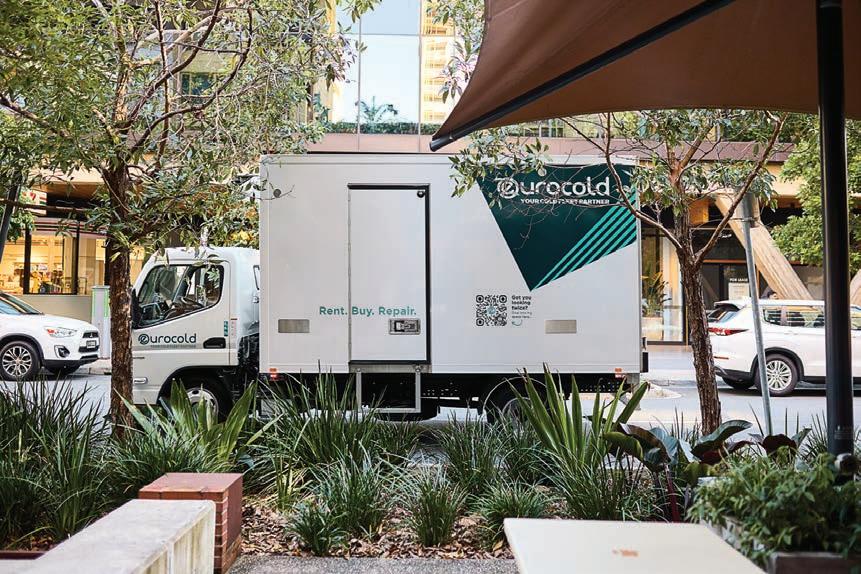
Managing fleet ownership can create challenges for manufacturers.
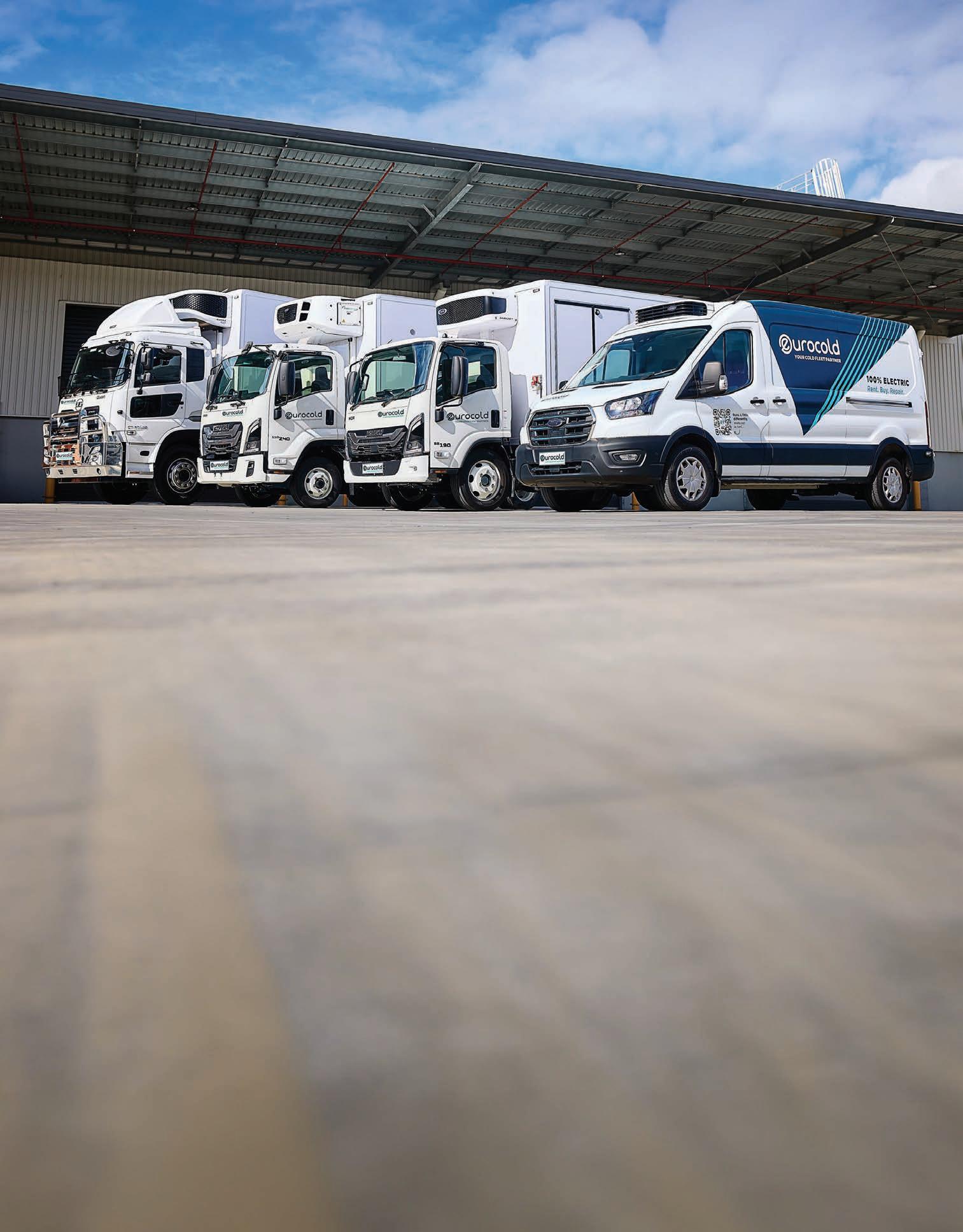
Eurocold’s approach focuses on providing end-to-end fleet support, covering from vehicle supply and maintenance through to monitoring, replacement programs and longterm planning. With a one-partner approach, the company’s integrated model seeks to simplify complexities by being responsible for the entire fleet lifecycle.
“We work closely with our customers to understand their operations, monitor fleet performance and address potential issues before they impact the business,” Smith said.
With operations across every Australian state, the company also
provides national fleet support for manufacturers operating across multiple regions.
As food and beverage manufacturing continues its digital transformation, the focus is shifting from individual processes towards end-to-end operational performance.
Automation inside the factory remains important, but manufacturers are beginning to recognise that production efficiency alone does not guarantee successful outcomes for a business.
Products still need to reach customers on time, in full and within required temperature specifications. Intelligent factories may begin on the production floor, but their success is ultimately measured by how effectively products reach the customer.
Understanding this, Eurocold aims to offer a complete solution. Since 2021, the business has grown into a fleet of more than 700 refrigerated vehicles. By keeping ahead of new innovations through its Berrinba assembly facility, it aims to elevate cold transport.
“The future of manufacturing is not only what happens inside the factory – it’s about connecting every stage of the journey to the customer,” he said. “Our role is to make that happen.” F

Successful food processors around the world partner with Urschel for optimal cutting solutions. Urschel introduces a new cutting concept to assist processors.
Engineered for a low total cost of ownership — from initial investment to ongoing operation — the Little Gem Aspire™ Dicer offers ease of use, compact design, and high overall performance.
The machine offers a small footprint and is ready to run to produce ideal cuts including a full range of slices from 2 mm up to 20 mm, a variety of strip cuts, and dices up to 20 mm.

Learn more about Urschel size reduction solutions at heatandcontrol.com/urschel
























JULY 26 - 29 Melbourne, Australia Stand # R8







Packaging decisions are shifting as sustainability expectations evolve. WML Paperboard focuses on both sustainability and supply chain security for its paperboard solutions.

Packaging decisions in food and beverage manufacturing were often guided by two key considerations – cost and performance. Today, the conversation is becoming broader.
Having spent more than three decades in the paperboard and packaging sector, Ben Knight, WML Paperboard sales manager, has witnessed the industry’s evolution.
“We’re seeing a bit of a shift –sustainability is no longer just a checkbox anymore,” he said.
“It has become a requirement, especially for procurement. People who are evaluating food and beverage brands are also evaluating packaging material on a much broader lens than just cost and performance alone.”
The growing focus on sustainability means manufacturers are now assessing packaging materials across their entire lifecycle. End-oflife recyclability, carbon footprint, certification schemes and supply chain transparency are all becoming part of the decision-making process.
“The brands that are building sustainability story into the packaging specifications are often leading the charge in that area,” added Knight.
One of the recurring concerns surrounding sustainable packaging, he says, is whether environmental improvements come at the expense of product performance.
As manufacturers continue to seek alternatives to traditional packaging materials, maintaining product
protection, presentation and shelf life is critical.
For packaging suppliers, the challenge is delivering sustainability outcomes while ensuring packaging performs to the same standards manufacturers expect from conventional materials. Knight said product performance remains a nonnegotiable requirement at WML.
“We engineer our products to meet the performance required, have the correct barrier properties, the print quality needed, and structural integrity,” he said.
“That’s something that we won’t accept – a lower quality or compromise in our products.”
Based in Whakatāne, WML sources fibre locally within New Zealand to focus on both sustainability and supply chain security.
“It is a strategic decision,” said Knight. “The sourcing of our fibre comes from local-certified forests –FSC forests. It is a by-product of the plantation trees that are used.”
Using these fibre streams ensures resources are utilised rather than being left in landfill. The company’s Formakote range of paperboards made for direct food contact are manufactured from 100 per cent virgin fibre, providing a renewable and recyclable packaging alternative.
Most of its fibre is sourced within approximately 100 kilometres of the production site, reducing transportation impacts while supporting the sustainable forestry sector. This close connection gives WML control over quality and environmental stewardship.
Beyond sustainability credentials, supply chain resilience has become another consideration for food and beverage manufacturers.
Recent years have highlighted vulnerabilities across global supply networks, prompting many businesses to reassess where their packaging materials originate and how reliably they can be supplied.
“It’s important to have either a
local supply chain or shorter supply chain as possible,” said Knight. “We’re committed to certified fibre, recyclable end-products, measurable reductions in waste and emissions, and honest reporting.”
WML’s combination of renewable fibre, responsible local-sourcing, and recyclable materials is designed to help brands reach sustainability goals.
Looking ahead, Knight expects innovation in paperboard packaging to continue accelerating as manufacturers seek alternatives to plastic-based formats. One area of ongoing development is barrier technology, which can help fibre-based packaging perform in challenging environments.
Applications involving moisture and extended shelf life remain a technically demanding challenge for fibre-based packaging. This includes produce punnets and direct food contact boards. Knight also highlighted the focus on lightweighting materials for brands looking to reducing material while maintaining functionality and product protection.
Understanding these trends and conversations surrounding packaging,
WML will be exhibiting at foodpro 2026 to showcase both its product range and approach to sustainability.
“Visitors will see examples of paperboard packaging already being used throughout Australia and New Zealand, providing practical demonstrations of how fibre-based solutions are being implemented in the market,” said Knight.
With a history stretching back to 1939, the company has continued investing in its manufacturing operations, including a mill upgrade completed three years ago.
Knight said ongoing investments like this will continue to underpin the WML’s long-term strategy.
“We will continue investing in the mill and providing innovative products to keep evolving with the market,” he added.
In an industry where sustainability, resilience and transparency are growing more intertwined, Knight believes local partnerships may prove just as valuable as the packaging materials themselves.
“My advice for the food and beverage industry is to look at your local suppliers,” he said.
“Even if it’s having them for a just a small requirement, in times of need, you can lean on them.” F
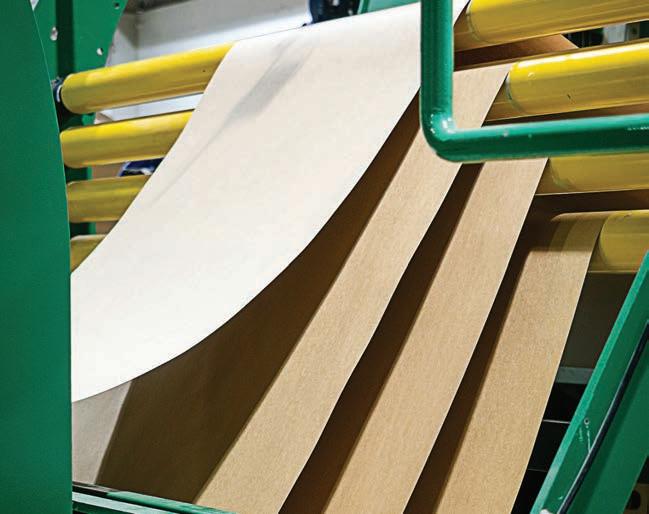


Conveyor belt issues often begin long before visible failures occur. Proactive maintenance can help food manufacturers avoid costly downtime.
Food manufacturers rely heavily on conveyor systems to move products efficiently through production facilities. While conveyors are central to daily operations, many of the issues that eventually lead to downtime often develop gradually and remain unnoticed until a costly failure occurs.
According to Flexco territory sales manager, Aaron Alzoubi, warnings can indicate underlying problems that, if left unaddressed, may affect productivity, food safety and maintenance costs.
“If you are paying close attention, belts almost always present some warning signs before they fail,” he said. “Unfortunately, the trouble is that most of these warnings are easy to walk past on a busy line.”
Among the indicators are wear on belt edges, tracking problems, cracks or discolouration in the belt and holes in the belt surface. While some of these signs are visible, others can develop beneath the surface and remain hidden until more serious damage occurs.
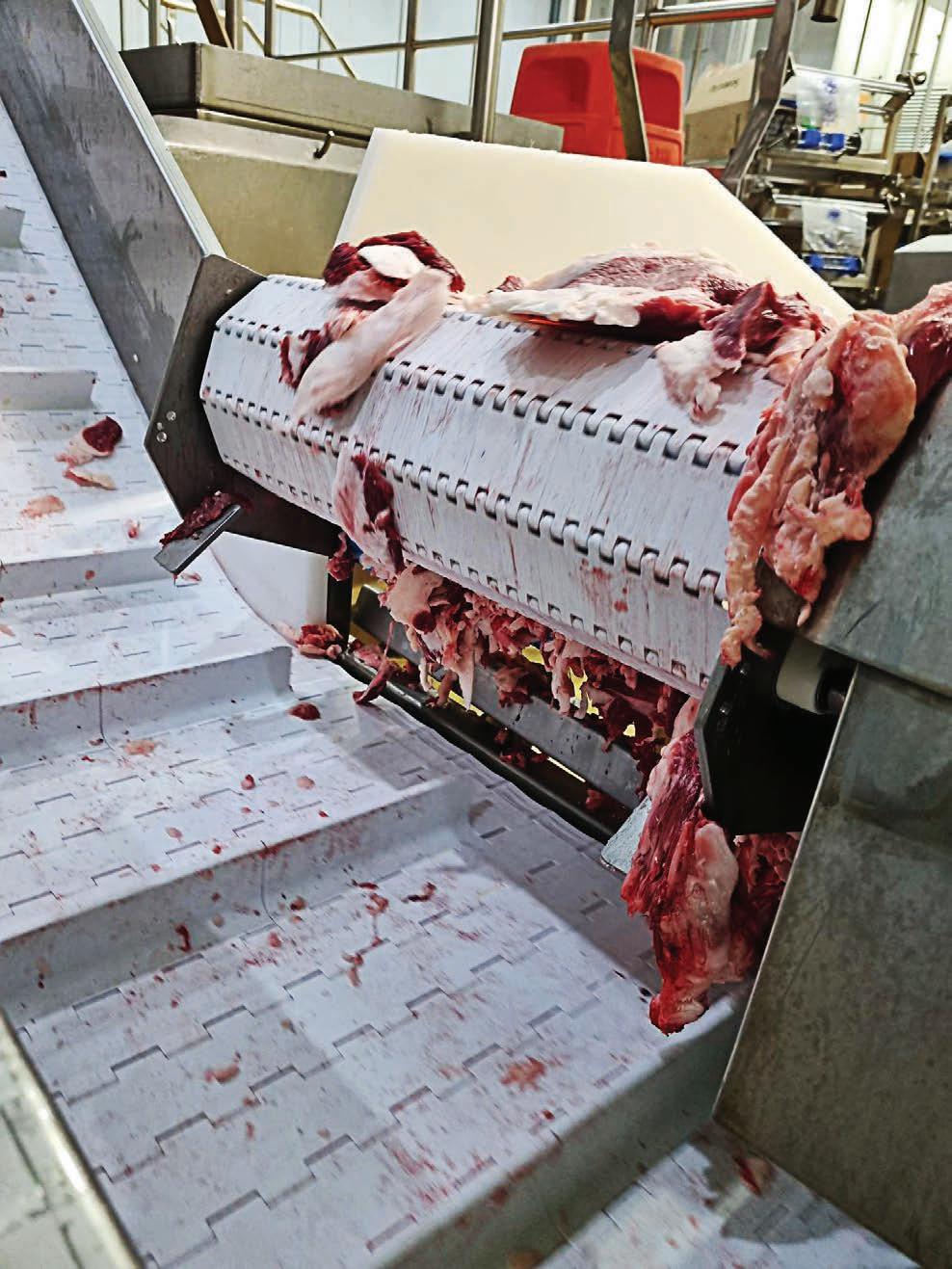
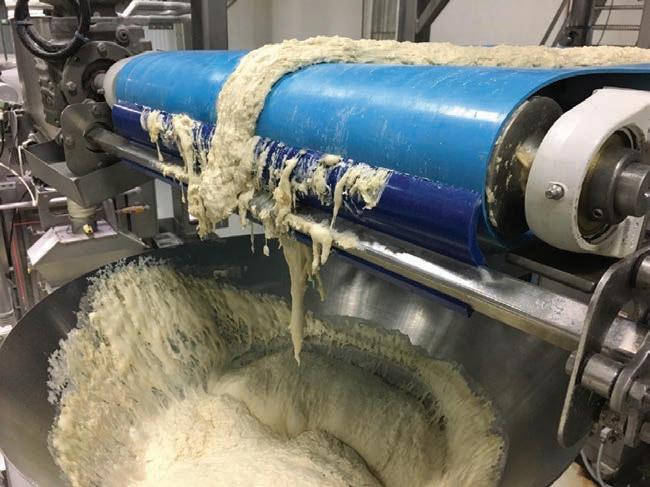
One issue Alzoubi believes manufacturers often underestimate is carryback, which remains one of the most common issues identified during audits and site inspections. Carryback refers to material that remains attached to the conveyor belt after product discharge. While some carryback falls to the floor, a portion can accumulate on conveyor components such as rollers and return idlers.
Over time, this buildup can harden and create additional problems throughout the conveyor system.
“When the material builds up on the rollers, the rollers become uneven and can eventually throw off the belt’s tracking,”said Alzoubi.
The consequences can extend well beyond simple housekeeping concerns. Hardened material can damage rollers, cause belts to mistrack or even rip, creating conditions that accelerate wear throughout the system.
“You get a domino effect from
carryback,” Alzoubi explained.
“Mistracking is caused by carryback, for example.”
A conveyor belt may drift slightly before returning to its normal position, making the problem difficult to identify during routine observations. However, repeated mistracking can eventually damage the belt edges or conveyor structure.
The impact extends beyond lost product. Material accumulation can damage rollers, contribute to belt wear, increase cleaning requirements and create hygiene concerns within food manufacturing environments.
An engineered solution For Flexco, the solution often involves engineered belt cleaning systems designed specifically for food processing applications.
Unlike manual cleaning practices or improvised scraper systems, engineered food-grade cleaners are designed to maintain consistent contact with the belt surface.
One challenge with homemade or generic cleaning solutions is that the blades wear over time and gradually lose effectiveness. Once the blade wears, the cleaner may remain installed but no longer perform its intended function.
Engineered cleaners address this issue through adjustable tensioning systems that allow the blade to maintain contact with the belt as wear occurs. Alzoubi highlighted that maintaining effective belt cleaning
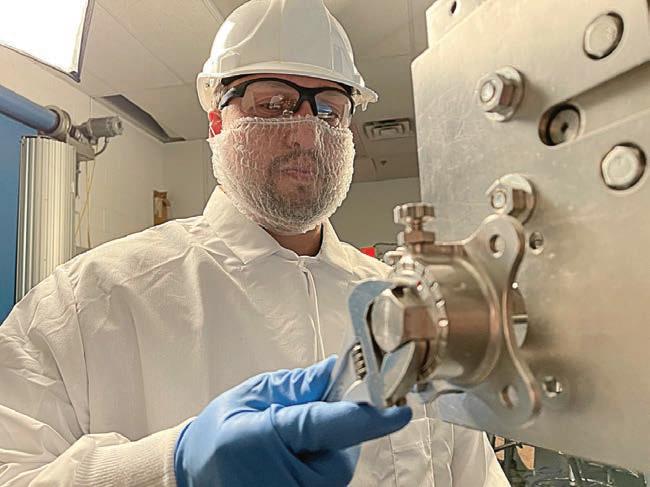
Another important aspect of conveyor performance is belt splicing. Whether belts are joined using endless splices or mechanical fasteners, proper installation and material selection are essential to long-term reliability.
“If you select the wrong fasteners for your application, you might see product buildup on the fasteners,” he said. Similarly, a poor endless splice can create weak points within the belt structure. Exposure to oils, salts, sugars and cleaning chemicals can eventually exploit the splices if not installed correctly, leading to premature belt failure.
integrate inspections into their regular maintenance schedules.
“I’ve seen a lot of food manufacturers neglect maintenance until that domino effect causes a big issue,” he said.
Regular inspections can help identify wear, cracking, mistracking and cleaner performance issues before they escalate into more expensive repairs. Facilities that
have installed belt cleaners should continue monitoring their condition and cleaners should be viewed as part of the overall conveyor system rather than a standalone solution.
In addition to supplying equipment, Flexco conducts complimentary conveyor inspections to help customers identify operational issues and improvement opportunities. This could include adjustments
to conveyor components or improvements to the customer’s maintenance practices.
The company also uses return on investment calculations to demonstrate the potential value of preventative maintenance solutions, which consider factors such as reduced cleaning labour, lower water consumption, decreased product loss and improved conveyor performance.
“The vast majority of the calls we receive from customers come after
a downtime incident has already happened,” said Alzoubi.
“Time and again, customers tell us they wish they had addressed the problem sooner.”
By combining regular inspections, preventative maintenance and engineered cleaning solutions, food and beverage manufacturers can reduce the risk of unexpected failures, minimise downtime and improve the long-term performance of their conveyor systems. F






As regulatory demands for food and beverage manufacturers grow, ContiTech is strengthening compliance with its hose solutions.
The Australian food and beverage manufacturing sector continues to evolve with demand for safe, efficient and sustainable processing solutions becoming more demanding.
From rising production costs, regulatory requirements, evolving consumer expectations and a growing focus on sustainability, manufacturers are seeking technologies that kill two birds with one stone – improve operational performance while maintaining the highest standards of product quality.
Understanding this, ContiTech will be showcasing a range of specialised hose solutions at foodpro 2026 to support food and beverage manufacturers across every stage of the production process.
The event provides a valuable opportunity for manufacturers, processors, distributors and suppliers to come together to explore the innovations shaping the future of food production and ContiTech will be a part of this conversation.
“Food safety, product quality and operational efficiency remain key priorities for Australian manufacturers,” said Lee Cranswick, head of sales distribution – AUS/NZ
ContiTech Australia.
“Our focus is on delivering solutions that help customers meet these challenges while supporting longterm reliability and compliance across their operations.”
A key highlight for the Australian market is the Continental PureOne hose, which has recently achieved compliance with the Australian Standard AS4020. This certification provides manufacturers with confidence that PureOne meets the stringent requirements for potable water applications.
Supporting safe and reliable water transfer along with high-proof alcohol throughout food and beverage production facilities, the solution aims to lighten the load surrounding regulations for manufacturers.
Visitors will have the opportunity to learn more about ContiTech’s food and beverage transfer hose portfolio, including the Continental ExtremeFlex and Continental Fortress product families.
The Continental ExtremeFlex Food hose has been engineered to provide flexibility while maintaining the hygiene standards required for dry or liquid food processing applications. Its lightweight construction and ease
of handling help improve workplace efficiency while supporting safe and reliable product transfer in demanding production environments.
ContiTech will also feature its Fortress range, including Continental Blue Fortress and Continental Yellow Fortress hoses. The Continental Blue Fortress is a high-quality hose that can withstand hot water up to 93°C. It is used for cleanup service in food processing plants, dairies, packing houses, bottling plants, breweries, canneries and creameries. Its oilresistant cover provides protection against the adverse effects of oil and animal fats. The cover of the Blue Fortress 300 hose incorporates Microban’s antimicrobial built-in product protection.
Beyond product innovation, ContiTech continues to invest in strengthening the connection between food and beverage manufacturers and its national distribution network. By working closely with authorised distributors across Australia, ContiTech ensures end users have access not only to hose solutions, but also to local inventory, technical expertise and responsive service support. By creating a direct connection
between end users and its authorised distributor network, ContiTech continues to strengthen its ability to deliver reliable products, technical guidance and long-term value to Australia’s food and beverage manufacturing industry.
“Equally important is our commitment to supporting our distributor network, ensuring that the end users have access to local expertise, product availability and technical support which is backed by the global strength of ContiTech,” said Cranswick.
Visitors to the ContiTech stand will have the opportunity to discuss application requirements directly with industry specialists and learn more about the company’s growing portfolio of food, beverage and potable water transfer solutions. According to sales distribution at ContiTech Australia/New Zealand, Ryan Donaldson, the team will be on-site across the four-day event to provide assistance and share knowledge to the industry.
“For anybody that comes along to our stand, there’s going to be a wealth of knowledge on what ContiTech can offer in the food and beverage industry,” he said. F






































VEGA radar sensors are helping Mezzacorona winery improve inventory visibility and tank management through accurate, non-contact level measurement.
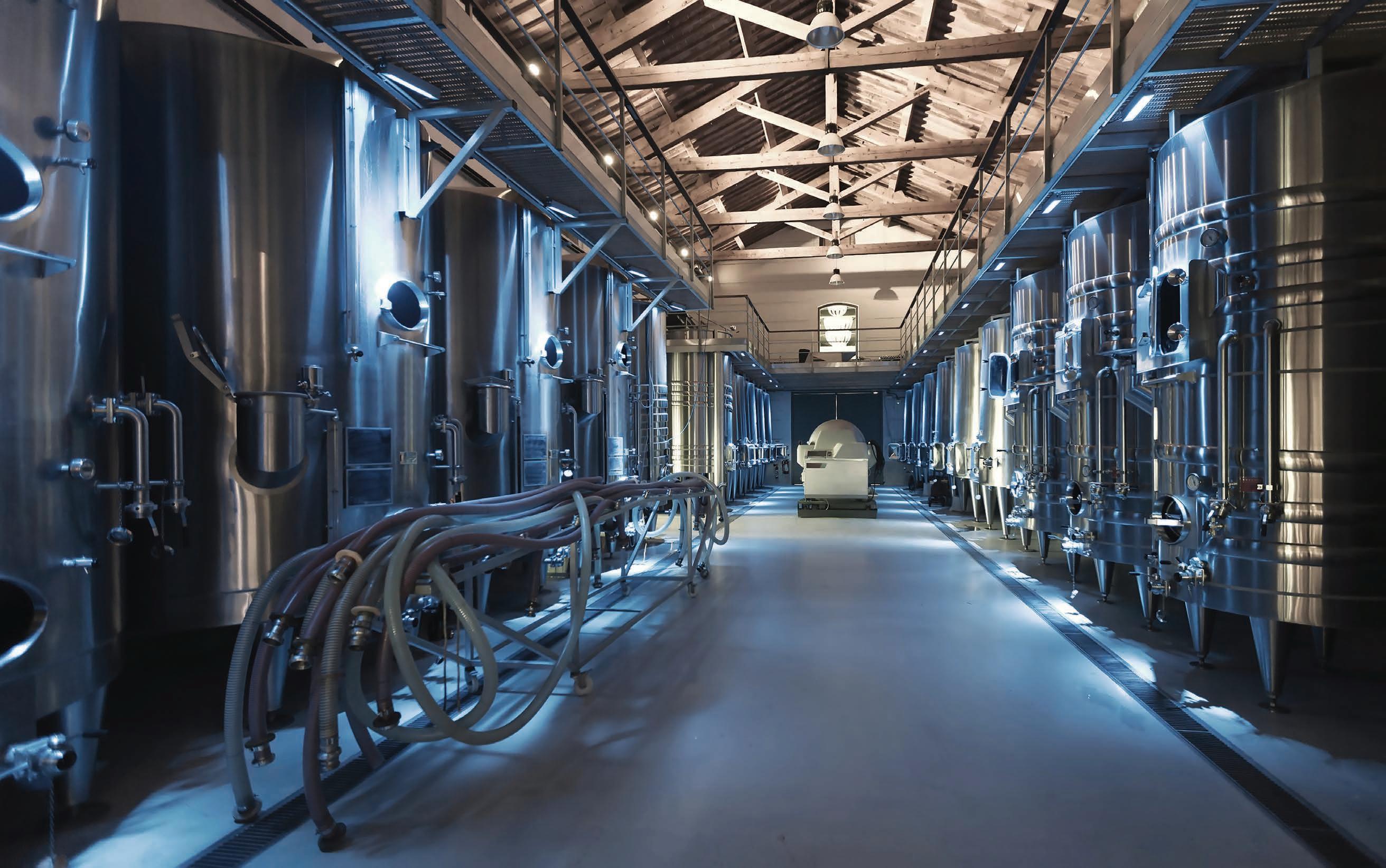
Winegrowers focus first and foremost on their grapes and wine production, which still requires manual labour in many process steps. However, modern technologies are also making inroads into this sector, creating ways to make processes more efficient and less labour intensive.
One place where new technology meets tradition is the tank farm, where the aim is to preserve the special flavour of great wines while still meeting the latest logistics requirements. Radar level transmitters provide the necessary measurement signals for a continuous and reliable overview of the contents of the tanks.
Trentino is a place in Italy where
on the other a sub-Mediterranean influence on the weather, and in between, a continental climate with very harsh winters. According to the winemakers of Mezzacorona, the soil is as diverse as the local climate zones.
With three climate zones in one place, and the cooperative has taken leverage of this peculiarity for its wines. Mezzacorona grows the different grape varieties where the vines can best develop their character.
For generations, winemaking families have worked with the environment in mind and, with the help of sustainable processing methods, have cultivated their vineyards according to integrated viticulture systems and natural products. Despite this tradition, Mezzacorona also
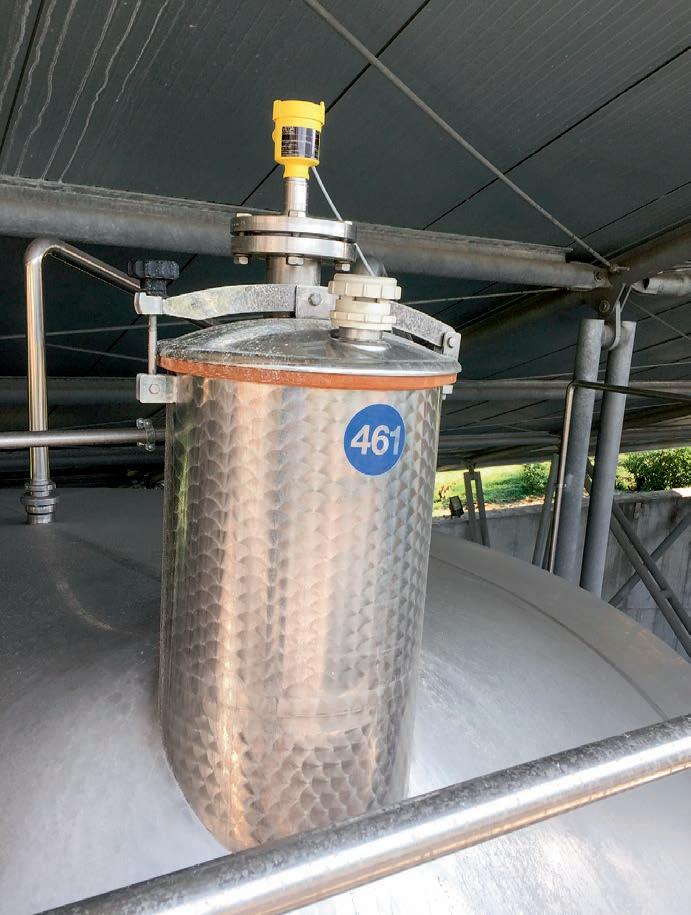
VEGA measurement technology has played an active role in the cooperative’s wine production for several years. The most important task of the VEGAPULS radar sensor is measuring the contents of the three large storage tanks.
Previously, an external level indicator was used which functioned via intercommunicating tubes. The inaccurate and often unreliable measurements were caused mainly by temperature fluctuations. Even in Trentino, temperatures sometimes drop below 0°C and the system was also difficult to operate and maintain.
The operators wanted to have continuous level measurement with high accuracy. Since the wine is kept in an aseptic environment, decision to deploy a non-contact measuring instrument that fulfilled the hygienic requirements was made.
Martino Mischi, the responsible service technician at VEGA Italy, had anticipation for the VEGAPULS radar level transmitter. The measuring instrument measures at a frequency of 80 GHz, instead of the 26 GHz used by most radar sensors.
The difference is that while the beam angle of previous radar sensors with a comparable process fitting was 10°, it is now at 3°. The higher dynamics of VEGAPULS lead provides not only to more precise signal but also a more reliable one.
The improved focusing was effective for the measurement setup because the sensor itself was installed on the tank by means of a flue-like structure with a height of 50 cm and a diameter of 40 cm. With its narrow measuring beam, the sensor can measure within this small radius without difficulty.
Another challenge was shown inside the tank – an agitator, which serves to prevent heat stratification effects within the stored product. Such installations are affected by interference, or false echoes, but the measuring beam of the radar sensor passes these obstacles.
This measuring device is also
ideal from a hygiene perspective as it measures without touching the medium. The flush mounted antenna makes it easy to clean and is resistant to the extreme conditions during SIP and CIP processes. The instrument has no moving parts and does not require further maintenance.
One of the advantages of the radar sensor is that it measures the entire tank height, from the tank bottom to a few millimetres below the lid. This allows Mezzacorona to utilise the full tank volume despite slightly inclined tank bottoms.
The radar level transmitter from VEGA measures the level in the tanks, which are up to 15 metres high, with an accuracy of up to ±1 mm. Continuous measurement of the tank contents was made possible.
The measured values from the VEGAPULS level sensor are recorded by the VEGAMET 391 signal conditioning instrument. This device is equipped for a variety of control tasks such as level, gauge and process pressure measurement, as well as stocktaking, Vendor Managed Inventory (VMI) and remote enquiry. Setup and commissioning were simplified and made easy. The display and adjustment module PLICSCOM is used for setting up and operating the sensors, as well as displaying the measured values on site.
This display and adjustment module can be inserted into the sensor at any time and removed without interrupting the power supply. In combination with Bluetooth, the user can configure and parameterise plics sensors from a safe distance with a smartphone or tablet. Display and diagnostic functions are also at the user’s disposal.
Through this, measured values can be called up at any time. This ensures reliable stocktaking as well as fast reaction times and high flexibility with regard to stock levels in the storage tanks. The wine experts would have time left to concentrate on producing good wine. F









Complete Protein Protein Content >80% Gluten Free 100% Vegan Natural and Ecofriendly Clean Label
NUTRITION SUPPLEMENT VEGAN MEAT SNACKS

BEVERAGE MIXES




Summit Food Machinery is bringing several international technology partners to foodpro 2026.
As expectations of quality rise and critiques to food regulations become more relentless, Australian food manufacturers and processors are looking to automation and specialised equipment to remain competitive. This often means global solutions must be considered.
To deliver global offerings locally, Summit Food Machinery is helping customers navigate these challenges by supplying more than individual machines. By building long-term partnerships with technology providers around the world, the business aims to connect Australian food and beverage manufacturers with solutions tailored to their specific processing requirements.
“We have longstanding partnerships with these equipment providers, we know their machinery inside out,” said managing director, Louise Wandmaker.
These partnerships allow Australian processors to access proven technologies while benefiting from local support and industry knowledge.
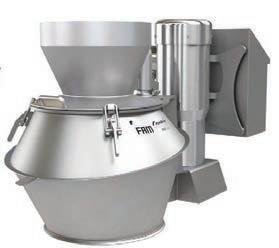
At foodpro 2026, the company will showcase this approach by bringing several international partners to its stand, giving visitors direct access to equipment specialists from Europe and North America. The stand will feature representatives from FAM, PND, Blentech and ELEA, each bringing expertise across different areas of food processing.
Among Summit’s longest standing relationships is its partnership with Belgian processing equipment manufacturer FAM.
“We’ve partnered with them for 15 years, representing them in Australia and New Zealand,” said Wandmaker.
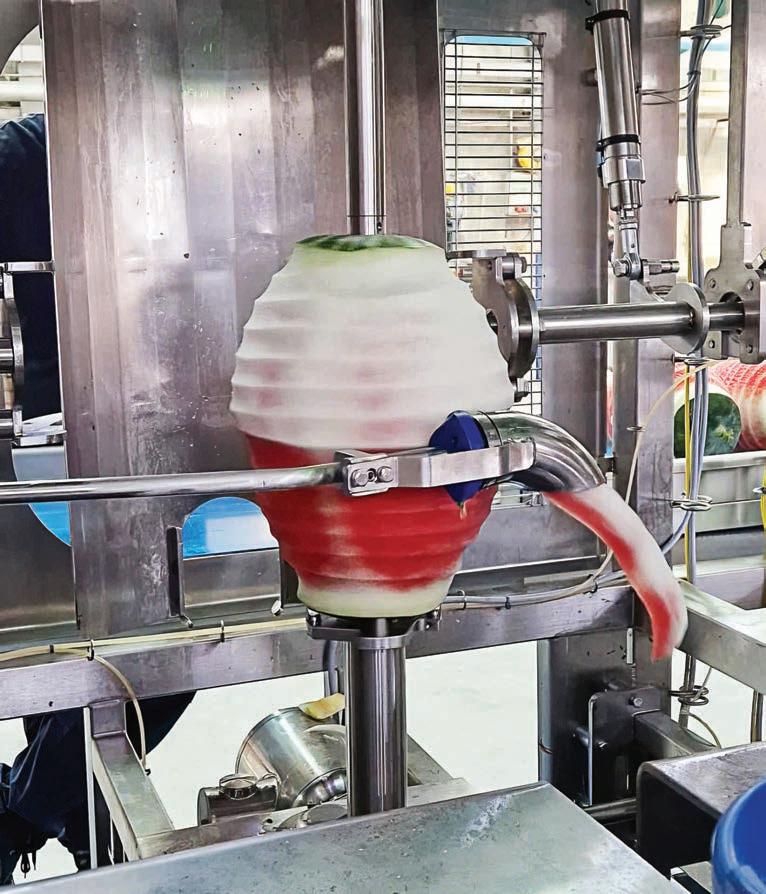
FAM’s equipment is widely used in fruit, vegetable and food processing applications where consistency and throughput are critical.
Specialising in cutting and shredding technologies, the partnership has enabled Summit to support customers looking for ways to improve consistency and reduce labour dependence.
“One of the biggest challenges most processors face is labour and consistency,” Wandmaker said. “If produce is being processed by hand, it’s never going to be consistent.”
Consistency has become important as retailers place greater emphasis on product quality and presentation. Retail stores and supermarkets, according to
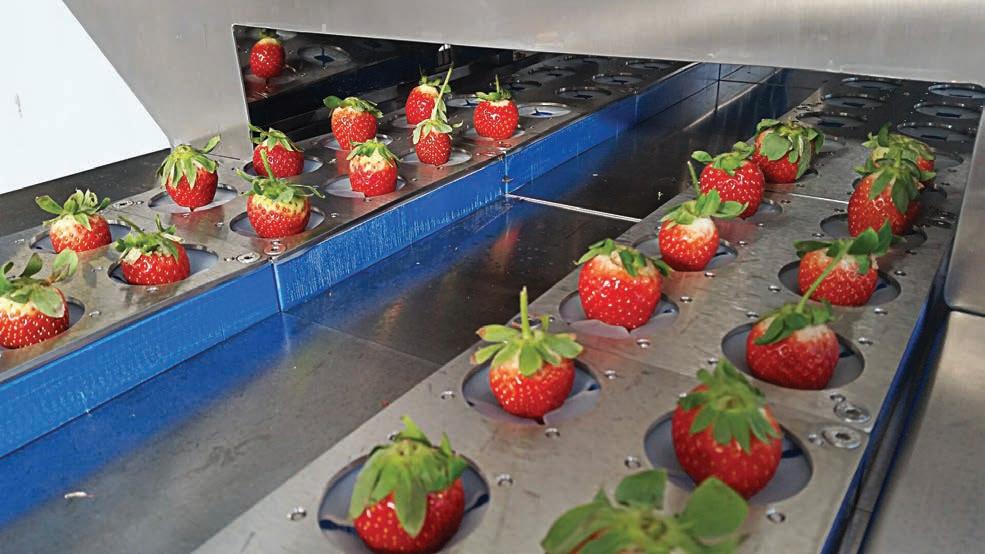
Wandmaker, have a set of parameters that the producer must meet for fresh cut or fresh processed foods that will be displayed on the shelves. By combining specialised processing equipment with local engineering support, Summit aims to help processors meet those requirements more efficiently.
Another partner featured at foodpro will be Italian manufacturer PND, which specialises in fruit processing equipment. The company produces machinery for peeling, coring, cutting and preparing a wide range of fruit products while maintaining consistency across varying produce sizes and shapes.
“No two apples are going to be the same size,” said Wandmaker. “PND’s machinery is very good at adapting to each individual piece of fruit.”
Designed to address the challenges surrounding product variability, PND’s automated systems can adjust between individual fruit pieces to improve consistency and overall throughput.
Its portfolio also extends beyond apples and fruit preparation. The
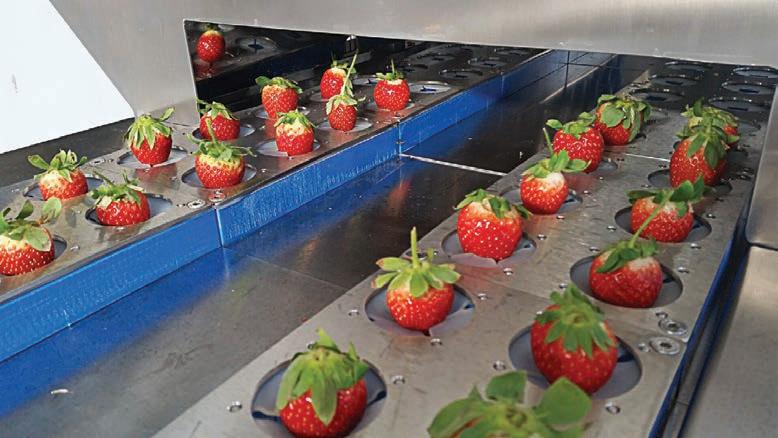
company produces strawberry processing equipment, including machines capable of removing the leafy green cap from strawberries also known as the calyx. This system can be adapted for vegetable applications too.
“PND have actually just launched a watermelon peeling machine,” Wandmaker added.
The watermelon peeling machine automates yet another labourintensive processing task. The breadth of the company’s product range, she highlighted, reflects the demand for automation across fresh produce processing, where labour availability remains a challenge for many operators.
Blentech joined Summit’s portfolio around two years ago and represents an expansion into new areas of food processing technology.
The company specialises in blending and cooking systems, including blenders and jacketed kettles used across food manufacturing applications.
Although the technology differs from Summit’s traditional focus
on fruit and vegetable processing, Wandmaker believes it complements the company’s broader offering.
“We felt that it was a good fit and a natural progression for us to be able to offer their blenders and jacketed kettles,” she said.
While individual pieces of equipment are important, Summit’s role often extends beyond supplying standalone machines. Wandmaker said the company combines technologies from multiple suppliers alongside its own equipment to create complete processing systems.
“We can piece together whole lines from washing conveyors, cutting, peeling, and coring,” she said.
“Depending on what the requirements are, we can pick and choose from those partnerships to provide them the best solutions for their needs.”
Manufacturers can develop systems tailored to their products, production volumes and quality requirements. From there, Summit can provide and build complete processing lines from partners like FAM, PND, and Blentech.
Its approach to partnerships is also consultative and collaborative with the end user in mind.




For example, before establishing the partnership with Blentech, Summit sought feedback from existing users of the technology to ensure it met customer expectations. Those conversations form part of Summit’s broader approach to supplier selection.
“We need to prove that what we are providing our customers is going to do what we tell them it’s going to do,” said Wandmaker. “Reputation and those relationships that we build with our customers and suppliers are crucial to success.”
Summit’s collaboration with German company ELEA, a specialist in pulsed electric field (PEF) technology, will also be a highlight at the event. Although Summit is not an official distributor, the companies have developed a working relationship based on the potential benefits the technology can offer to Australian food processors.
“ELEA’s pulsed electric field technology is very complementary to what we do,” said Wandmaker.
The technology works by applying

electrical pulses to fruit and vegetable products, altering cell structures in a way that can improve processing performance.
The PEF has applications across freeze drying, cutting and further processing operations to help products retain their structure, appearance and flavour.
“The fruit can hold its structure, colour and flavour,” she said.
Cutting performance can also be improved. For harder vegetables such as potatoes, sweet potatoes, beetroot and cassava, these products can fracture during cutting, particularly as knife sharpness declines over time.
The PEF technology changes the structure of the product so that it doesn’t fracture, extending knife life and reducing processing waste.
Visitors to foodpro will have the opportunity to meet both ELEA representatives and learn more about the technology, including presentations on its application within potato processing.
“Come see our machinery in action and have a look at what it actually does,” Wandmaker said. “We would love for visitors to see the equipment in person.” F



As food and beverage manufacturers face market uncertainty, Packserv is helping businesses improve efficiency by offering operational flexibility.
The last few years have brought no shortage of challenges for Australian food and beverage manufacturers, according to Packserv managing director and founder, Nathan Wardell.
“There’s a rising cost in energy, freight, packaging, insurance, raw materials, and that’s a lot of pressure in terms of cash flow and expenses on SMEs,” he said.
At the same time, manufacturers are under increasing pressure to improve efficiency, reduce waste and maintain product quality. This demonstrates how flexibility has become an important trait for food and beverage manufacturers navigating the current environment.
Operating for more than 20 years, Packserv is a packaging machinery designer, builder, manufacturer, offering supply, rental and technical services nationwide.
The company designs and manufactures packaging machinery, supported by a full-engineering workshop, CNC machining capabilities and a team of engineers, fitters and product specialists.
Wardell has spent more than three decades supplying packaging machinery to FMCG manufacturers. He stated that the company is one of the few remaining manufacturers of packaging machinery in Australia.
“We buy raw materials, we have a full metalworking shop, and we design and build the machines in-house in our head office in Marrickville, NSW,” said Wardell.
The business now operates from five locations around Australia and has recently expanded its reach into the United States through a distributor network.
Unlike larger multinational manufacturers that can absorb market fluctuations more easily, smaller businesses often feel the impact immediately. Added pressures
from sustainability expectations, regulatory requirements and softer consumer spending have made it harder for businesses to maintain profitability and competitiveness.
“A lot of businesses are focusing on improving efficiencies and reducing downtime, minimising waste, increasing production output, and also without increasing their overheads, which is a tricky thing to do,” said Wardell.
Although the shift to automation is gaining traction, investment decisions have made adoption complex as access to finance tightens. Understanding this, Packserv is helping businesses by offering pathways for customers to access equipment, including rental, rent-to-buy and finance options.
The approach allows manufacturers to preserve cash flow while gradually scaling production capacity in line with demand.
Rather than committing to a large capital purchase upfront, businesses can introduce automation at a pace that suits their operations and financial circumstances.
From filling, capping, labelling and container handling, Packserv helps manufacturers become more agile by designing modular, scalable packaging machinery that can adapt as production requirements change.
“Rather than requiring a complete production line overhaul, our equipment enables businesses to expand capacity, introduce new products, and accommodate different packaging formats with minimal disruption,” said Wardell.
Designed for quick changeovers and easy integration, manufacturers can respond to market opportunities and changing requirements at speed.
For example, Packserv’s new PLC-controlled filling and capping machinery range has been developed with both ease of use and operational
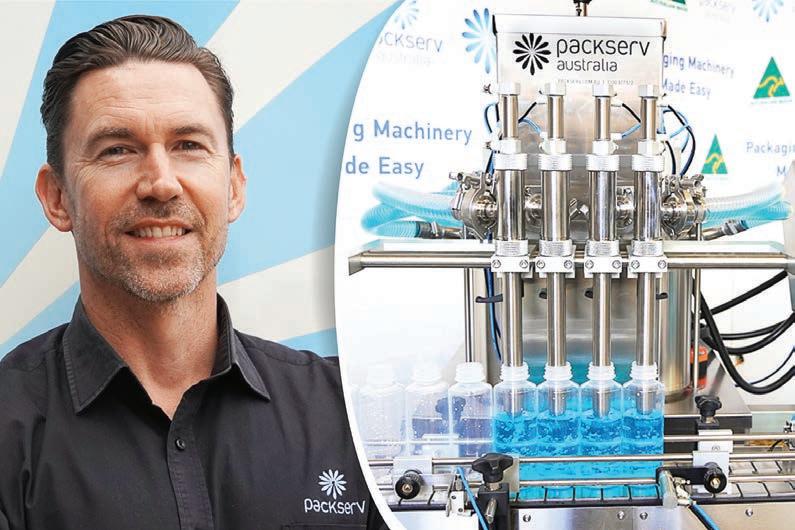
efficiency in mind. Equipped with an intuitive HMI touchscreen interface, operators can quickly adjust settings, switch between products, and save job recipe information for future production runs.
Wardell highlighted that this reduces setup times and minimises downtime during product changeovers, providing real-time production monitoring for greater visibility. Additionally, the company’s local manufacturing capability helps reduce lead times that are often associated with imported equipment.
“We have it in stock as we’re a local manufacturer,” said Wardell. “We build the products here, and we can deliver and install quickly.”
Appointed as an Australian distribution partner, Packserv supports and supplies packaging equipment for Italian packaging equipment manufacturer SIAT. Under the partnership, the company can deliver modular production lines integrating filling, capping, labelling, printing, conveying, case erecting, case sealing and pallet wrapping.
Wardell said the collaboration allows the company to provide a more complete packaging line solution for its customers.
“What the SIAT partnership does for us is to go from the tank all the way to the truck,” he said.
Having an end-of-line solution enables manufacturers to take the finished goods off the production line and into packaging. This makes the transition from the food manufacturing facility to the retail outlet smoother.
“It helps us expand our ability to provide customers with more complete production line solutions, going from filling and capping all the way through to final packaging and palletisation as well,” said Wardell.
Access to SIAT’s proven Europeanengineered equipment, combined with Packserv’s local sales, service and technical support, provides customers with a more reliable solution for their complete production line requirements.
From flexible access to automation technologies, efficiency and speed to partnerships, Wardell calls them strategic decisions to enforce resilience. According to him, businesses that continue to succeed are those that can adapt to changing market conditions, evolving expectations and operational manufacturing challenges.
“Resilience is about building flexibility into your operations, investing wisely and maintaining a long-term perspective,” said Wardell. “At Packserv, we aim to work with manufacturers to deliver quality and efficiency best positioned for sustainable growth.” F


















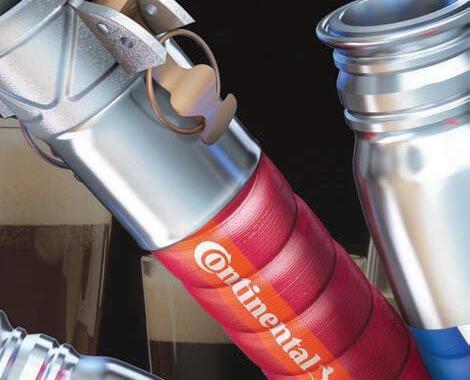

























Conveyor technology is evolving beyond product transport. Intralox’s solutions are designed to blend automation and hygiene.
While conveyor technology has long been a fixture in manufacturing facilities, today’s food processors are looking for solutions that can support higher production volumes while maintaining reliability and food safety standards.
For Intralox, these evolving demands are shaping both product development and its focus. ANZ food business development analyst, Robert Ireland, said two trends are driving much of the current conversation around food beverage processing operations – automation and food safety.
“The two trends happening within the food industry, with respect to conveyance, are automation and food safety,” he said.
When it comes to automation, many food manufacturers are looking for ways to increase throughput without increasing labour costs or facility footprints. Whether producing baked goods, meat, fresh produce or snack foods, manufacturers are under pressure to improve operational efficiency while working within existing plant constraints.
“Throughput is always a big focus,” said Ireland. “Businesses are trying – with the same number of staff and the same amount of space – to increase throughput, which is always
frequently emerge is towards the end of the production line. Cartoning, case handling and palletising operations often become bottlenecks as production volumes increase.
“One of the main bottlenecks is often what we call the back end,” said Ireland. “This is where food products are put into cartons, and those cartons are then packed into pallets.”
For food safety, considerations for conveyor designs are becoming strengthened in accordance with hygiene protocols to minimise contamination risks. Unlike secondary packaging systems, food contact conveyors directly interact with products during processing and therefore require a higher level of hygienic performance.
To support these requirements, Intralox has developed conveyor technologies capable of handling large volumes of cartons while maintaining operational reliability.
As an exhibitor at foodpro 2026, food safety will be a central theme of Intralox’s exhibition stand. The company plans to showcase two primary technology platforms reflecting the industry’s focus on automation and hygiene.
“The technology on our stand will be centred around those automation
risk food products,” said Ireland.
Visitors to the stand at foodpro will be able to see a conveyor loop demonstrating carton and tray handling applications, alongside hygienic food contact conveyor technology designed for direct product handling environments.
Among the technologies is Intralox’s ThermoDrive ZeroSplice technology, which simplifies maintenance of homogenous belts used in the most hygienic applications. Traditional homogenous belt repairs often require specialised equipment to melt and join belt sections. By contrast, the ZeroSplice design consists of sections joined together by a patented ThermoConnect Heavy Duty Edge with hinge joints and rods. This eliminates the need for specialised equipment and reduces maintenance complexity and downtime.

continues through engineering assistance, troubleshooting and preventative maintenance programs.
“The support is always ongoing,” Ireland said. “We don’t just stop after selling a belt.”
“It’s a joint that allows you to avoid splicing a belt and it’s much quicker,” said Ireland.
The ThermoDrive range also incorporates a polyurethane belt material known as A23. The material delivers several operational advantages compared with conventional conveyor belting materials to extend belt life. For example, warm or hot conditions in snack food processing can take a toll on conventional polyurethane belts, shortening a belt’s useful life.
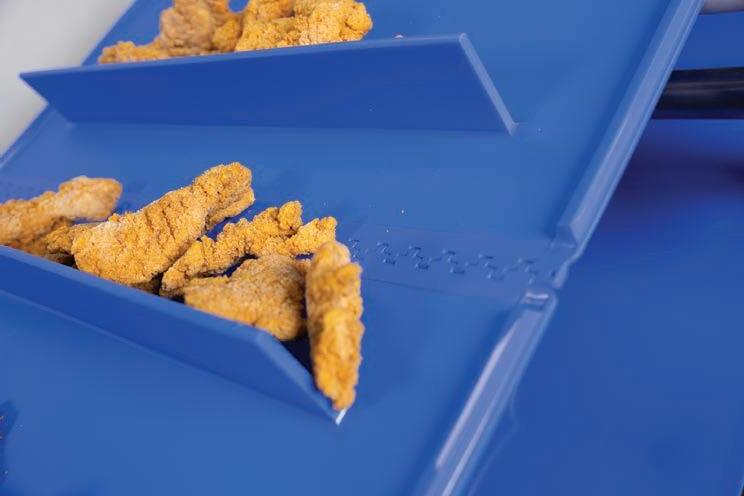
“This material is stronger, allows for better product release and can handle higher temperatures,” he said. “It’s more chemically resistant than other blue belts of the same type in the market.”
Beyond equipment design, Ireland emphasised the importance of ongoing technical support throughout the life of a conveyor system, with Intralox’s involvement extending beyond the initial supply of conveyor belts.
Before installation, engineering and sales teams work with processors to ensure the selected solution
The company also conducts regular conveyor health checks to help processors identify wear issues before they become operational problems.
“Every year or so, we’ll have someone go through their plant and do measurements on the conveyor to see if it’s ready to be replaced or when it might need to be replaced,” he added.
Intralox sees foodpro 2026 as an opportunity to demonstrate how conveyor technology is evolving alongside broader food and beverage manufacturing priorities.
With labour shortages, productivity demands and food safety requirements continuing to shape investment decisions, conveyor systems are even more critical strategic assets beyond simple transport mechanisms.
Ireland expressed his excitement to show visitors and processors firsthand how automation and hygienic design can work together to support production performance.
“We’ll have our latest food safety technologies and carton automation technologies showcased at the show,” he said. “A lot of our team at Intralox will be there from not just Australia, but also some experts from overseas in these areas.” F











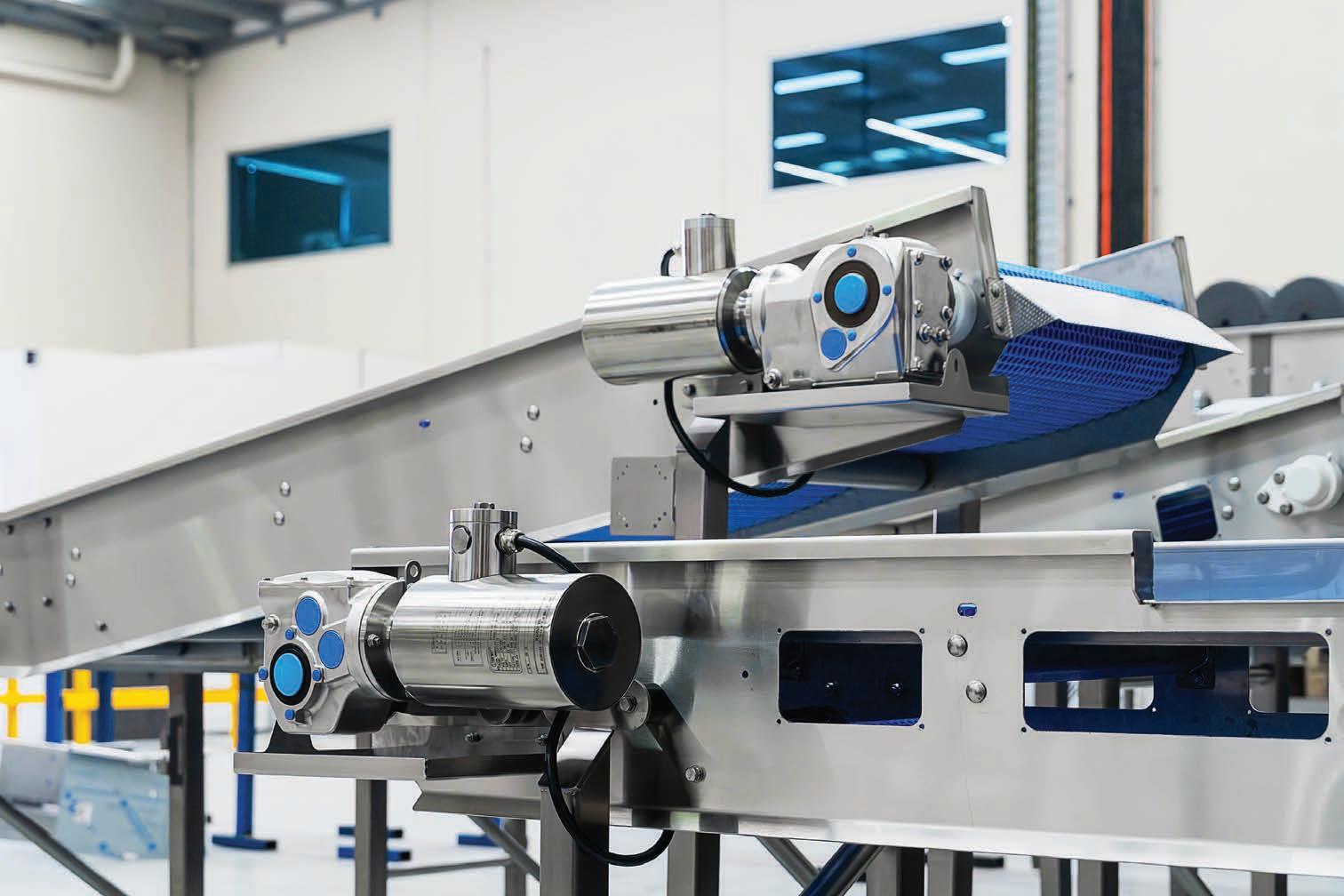
As automation technologies become more widespread across industries, the manufacturing landscape is transforming to help businesses remain competitive and relevant in the market. While innovations introduce change, there are some things that do not change, like hygiene, for example.
The adoption of newer technologies can also pose new challenges, taking away valuable time from manufacturers managing quality risks. As food and beverage
manufacturers face increasing pressure to improve hygiene, efficiency and production flexibility, automation suppliers are adapting their technologies to meet changing industry requirements.
For SEW-EURODRIVE, this means developing drive and automation solutions designed specifically for environments where washdown procedures, contamination prevention and operational reliability are critical.
“The food and beverage industry continues to face increasing pressure around productivity, hygiene compliance, energy efficiency and operational flexibility,” said national product manager of standard products at SEW-EURODRIVE Australia, Francois Sieberhagen.

One area attracting growing attention is hygienic design. As manufacturers work to minimise contamination risks and simplify cleaning procedures, equipment selection is becoming the foundation of operations. Understanding this, the company will use foodpro 2026 as an opportunity to showcase technologies aimed at helping manufacturers address these challenges.
SEW-EURODRIVE has expanded its stainless steel portfolio to address hygienic requirements.
“Our stainless steel portfolio is engineered for washdown and hygiene critical applications,” said Sieberhagen.
“They feature smooth surfaces and geometries that reduce dirt traps and simplify the cleaning process.”
The move towards stainless steel solutions reflects a broader trend occurring across food manufacturing facilities. According to Sieberhagen, many processors are transitioning away from traditional painted and coated drive systems, particularly in hygiene sensitive production areas.
Historically, manufacturers have relied on a range of motor and gearbox finishes depending on operating conditions.
Dry environments often used uncoated aluminium equipment, while harsher conditions required painted or coated systems to improve corrosion resistance.
However, these coatings can present challenges over time.
“There’s an increasing concern around food contamination risks
associated with paint flaking and coating deteriorating in harsh washdown environments,” Sieberhagen said.
Stainless steel alternatives remove this risk because the housing itself is manufactured from stainless steel rather than relying on a protective surface layer.
“The ultimate step is then to move to a stainless steel unit where there’s no coating, and we’re definitely seeing a strong move away from coated systems,” he added.
Sieberhagen said businesses are looking for more stainless steel products to replace existing equipment with a stainless steel variant. One advantage, he said, is that SEW-EURODRIVE’s products share the same mounting dimensions as many of its standard drive systems, making upgrades straightforward and simple.
Alongside hygienic drive technology, the company is also seeing demand for decentralised automation.
Traditionally, motor control and automation functions were housed in large central control cabinets.
However, manufacturers are seeking solutions that move intelligence closer to the machine itself.
“We’re seeing a strong demand for decentralised automation where the drive and the intelligence move closer to the machine,” said Sieberhagen.
This approach can reduce installation complexity, minimise cabinet space requirements and improve maintenance accessibility.
At foodpro, SEW-EURODRIVE will showcase the latest additions to its automation portfolio, including the MOVIONE® and PxG® economy planetary servo gear unit. Designed for conveyor and intralogistics applications, these systems combine drive technology, communication functions and operational controls into compact units. Sieberhagen described MOVIONE as a decentralised drive solution developed specifically for conveying applications.

providing a cost-effective option for applications requiring precision and reliability. The exhibition will also feature the company’s broader MOVI-C modular automation system.
“Manufacturers want greater flexibility and smarter automation,” said Sieberhagen.
“It combines integrated communication, safety functionality, maintenance switch and local operation controls in a compact solution,” he said.
The PxG economy unit expands the company’s servo gear offering,
“Through our MOVI-C modular automation platform, we provide scalable solutions that simplify commissioning, standardise operations across different systems and allow customers to adapt production lines more efficiently.”
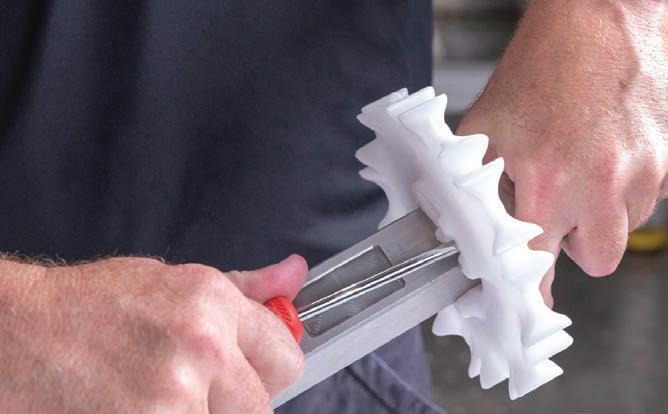
As food manufacturers introduce more product variants and shorter production runs, flexibility is becoming an important operational ingredient. Rather than designing production lines for a single product, facilities now need equipment capable of adapting quickly to changing customer requirements.
SEW-EURODRIVE’s stand at foodpro 2026 will focus on demonstrating how these technologies can work together to support manufacturing operations. Visitors will be able to view a range of
drive systems, automation products and conveyor applications designed for food and beverage environments.
“We want visitors to see how modern drive technology and automation can improve both operational efficiency and long-term reliability while still meeting strict hygiene requirements,” he said.
“Most importantly, we hope visitors leave our stand with practical ideas and solutions that they can apply within their own facilities to improve productivity, uptime and operational performance.” F
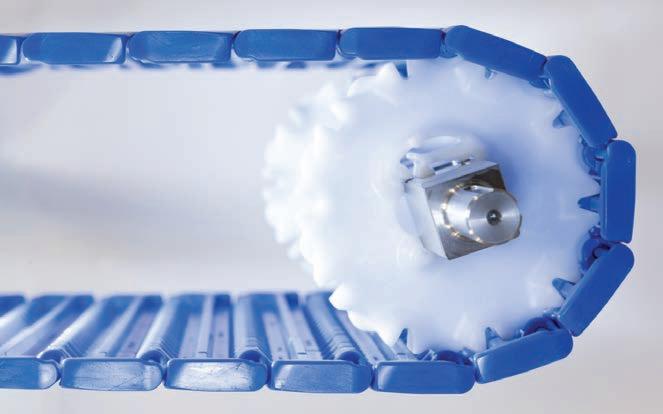
Combining Intralox® Heavy-Duty Edge (HDE) belting with our award-winning CleanLock™ sprockets helps keep your line running reliably while ensuring easy, consistent cleaning. No more breakage during maintenance or production. No more misalignment during high-pressure washdown. Just more uptime.
Contact Intralox Customer Service to explore what these patented solutions can do for your operation. www.intralox.com
As demand grows for high protein foods and beverages, manufacturers are exploring how different protein sources can work together rather than compete.
When it comes to sports nutrition and functional foods, whey protein has long been regarded as a benchmark ingredient due to its rapid absorption and strong amino acid profile. However, a key challenge when formulating protein products is achieving a complete essential amino acid profile that supports muscle protein synthesis and overall nutritional quality.
Ingredient developers are now examining how alternative protein sources can complement whey to create more balanced nutritional formulations. One example is the combination of whey protein with Angeopro Yeast Protein, a fermented protein derived from yeast.
Founded in 1986, Angel Yeast produces yeast and yeast-derived ingredients for food, nutrition and biotechnology applications.
Its Angeopro Yeast Protein is produced using Saccharomyces cerevisiae and is positioned for use across sports nutrition, health and wellness, and functional food applications.
According to Angel Yeast, blending the two protein sources can improve amino acid balance while delivering additional functional and nutritional benefits for consumers.
The Angeopro Yeast Protein contains a range of essential amino acids, including leucine, lysine, threonine and arginine. While whey protein is recognised for its branched chain amino acid content, yeast protein contributes higher levels of several amino acids that are comparatively lower in whey, including phenylalanine, histidine and arginine.

combining the two proteins may improve amino acid balance compared with whey protein alone.
For manufacturers developing sports nutrition products, meal replacements or functional beverages, protein blends may provide opportunities to optimise nutritional performance without relying on a single protein source.
These complementary amino acid profiles can help create a more balanced protein formulation when the two ingredients are combined. According to the company, blends containing Angeopro and whey protein concentrate at a 7:3 ratio achieved a robust Amino Acid Scores (AAS) of 1.41, while blends containing Angeopro and whey protein isolate at an 8:2 ratio achieved scores of 1.39.
These results indicate that
Another consideration in protein formulation is digestion rate. Highprotein formulations must balance absorption speed with satiety and digestive comfort.
Whey protein is widely used because it is rapidly digested and absorbed, making it suitable for post-exercise recovery products.
Yeast protein, by contrast, may offer a slower release of amino acids.
Angel Yeast described this as creating a more sustained nutritional profile when used alongside whey protein.
The combination of fast and slower digesting proteins can potentially support prolonged amino acid availability while also contributing to feelings of fullness. This characteristic may be particularly relevant for products targeting active consumers, weight management applications and meal replacement categories.
As consumer interest in functional nutrition continues to grow, ingredient combinations that address multiple nutritional needs within a single formulation are attracting greater attention in the market.
Beyond protein quality,
manufacturers are focusing more on ingredient transparency and clean label positioning. Fermentationderived ingredients have attracted interest as brands seek natural sourcing and more simplified ingredient declarations.
Consumer expectations around protein continue to evolve. While protein content remains a primary purchasing driver, shoppers are also paying closer attention to ingredient origin, digestibility, allergen considerations and nutritional value.
This has prompted ingredient suppliers and manufacturers to investigate blended protein solutions that can address multiple requirements simultaneously.
Delivering solutions across 16 production bases and 12 applied science service centres, Angel Yeast understands the changing consumer landscape and is working towards progressing the food sector through more innovative, sustainable and nutritious solutions.
The Angeopro Yeast Protein is produced through fermentation and is non-GMO. The ingredient contains negligible sugar and fat, providing formulation flexibility for products targeting specific nutritional goals such as low sugar or reduced carbohydrate claims.
With a background in biotechnology, fermentation and protein engineering, Angel Yeast also collaborates closely with customers to further respond to changing market demands.
For product developers, combining different protein sources may provide more flexibility in balancing nutrition, functionality and cost considerations. Rather than viewing whey, plant and alternative proteins as competing ingredients, blending strategies may offer opportunities to leverage the strengths of each source.
As innovation in protein ingredients continues, blended formulations are likely to remain an area of interest for manufacturers developing sports nutrition, functional food and beverage products. F



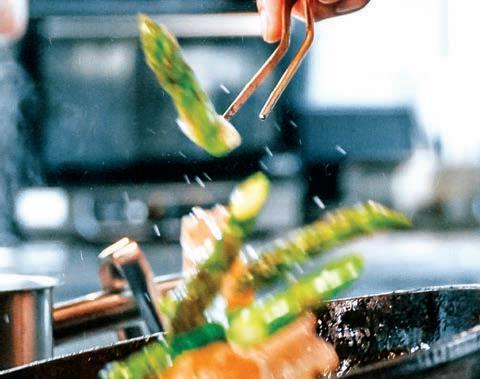




Strong relationships drive success. Our Relationship Managers partner with you, offering tailored support and solutions.

Sales manager for Formulated Goods (ANZ) at Centric Software discusses how modern PLM is reshaping the food industry.
With the looming 2025/2026 packaging sustainability mandates coming into play, the Australian food and beverage sector is seeking smarter ways to streamline operations.
Phillip Wills, sales manager for Formulated Goods ANZ at Centric Software, listed pressures driving a shift towards modern product lifecycle management (PLM) platforms that provide a single source of truth across the organisation.
“The ANZ market is experiencing a wave of ingredient volatility and reformulation,” he said. “Between climate driven crop fluctuations here at home and global supply chain disruptions, local brands are constantly forced to reformulate recipes just to maintain margin and availability.”
At the same time, the industry is seeing a push for sustainability and waste reduction. Retailers and consumers alike are penalising high impact materials, meaning ecodesign and packaging recyclability are non-negotiable. Manufacturers are managing increasing compliance obligations while dealing with a growing number of product variants and stock keeping units.
Wills emphasised the urgency of adopting AI-powered PLM platforms.
“Manual spreadsheets simply can’t keep up,” he said. “It’s why AI-driven innovation and compliance automation has transitioned from a future concept to an absolute survival tool for Australian businesses today.”
While spreadsheets may have served businesses well in the past, managing formulation data, supplier information, packaging specifications and regulatory requirements across multiple products can becomes
difficult in today’s fast-paced climate.
Centric Software’s PLM platform centralises these processes while providing greater visibility across the entire department.
“Centric PLM is an enterprise grade, AI-powered product platform designed precisely to handle these complex realities,” said Wills.
The platform replaces siloed information with a connected environment that supports product development from concept through to commercialisation. Among its capabilities is AI-assisted formulation management, allowing businesses to accelerate recipe development, evaluate ingredient alternatives and model costs in real time.
Rather than manually reviewing formulations and recalculating costs, teams can quickly assess alternative ingredients while ensuring nutritional, regulatory and commercial requirements remain intact.
“It is an intelligent workspace that accelerates recipe design, suggests compliant ingredient alternatives when costs spike, and models cost simulations in real time,” added Wills.
Securing compliance in the earliest stages removes operational hurdles down the line. Labelling requirements, allergen declarations, nutritional claims and market-specific regulations all need to be managed accurately throughout the product development process. With a ‘compliance-bydesign’ engine that automates multi-market checks, manufacturers can identify potential risks during the concept and formulation stages.
The platform also supports packaging management by helping manufacturers track specifications, assess recyclability and manage packaging content across multiple different markets.
“Centric PLM tracks packaging
specs end-to-end, evaluates material recyclability, and automates multimarket pack copy and translations,” said Wills.
While PLM or ERP systems are often associated with research and development (R&D) teams, Wills emphasised that its benefits extend across the organisation.
“Our greatest strength is that Centric PLM is built for the entire cross functional ecosystem, solving unique pain points for every team,” said Wills.
For R&D departments, access to historical formulation data and automated workflows reduces development time. Utilisation of the platform speeds up formulation by making past work searchable, reducing manual data intake, and letting food scientists simulate multiple formulation variations in minutes rather than days.
For quality assurance and regulatory teams, it eliminates the stress of manual threshold checks by flagging compliance risks like allergen declarations or banned ingredients at the concept stage.
Packaging and sustainability teams can have access to transparency around packaging materials and environmental impacts while procurement and supply chain teams can also respond quickly to disruptions by identifying approved alternative suppliers and ingredients.
The software market offers numerous PLM and enterprise resource planning solutions, but Wills believes food and beverage manufacturers require systems tailored to their industry.
“Centric is the only PLM organisation built entirely for consumer-packaged goods and



formulated products,” said Wills. “It is no-code configurable, meaning it deploys rapidly with F&B best practices built right out of the box.”
The goal, he said, is not to only standardise processes but to improve innovation and responsiveness. Wills pointed to a couple of successful customer outcomes.
Prodiet Nutrição Clínica achieved a 90 per cent reduction in formulation simulation time and a 90 per cent reduction in regulatory analysis time. Starpro Group reported a 20 per cent increase in R&D efficiency and 10 per cent revenue growth driven by new products. The Wild Brands reduced manual costing work, while Ten Acre Gifts halved product costing time by using the platform to respond more quickly to changing ingredient and tariff costs.
“Our clients love the user-friendly interface because it actively reduces daily administrative burdens, allowing food scientists and brand managers to focus on what they do best –creating great products,” said Wills. Modern digital tools are becoming an important part of maintaining competitiveness for food manufacturers.
Exhibiting at foodpro 2026, the Centric Software APAC team will showcase how its AI-powered PLM can protect margins and accelerate product launches. F

Visit Centric Software at foodpro 2026, Booth: E34 Register Now: t.ly/l8l0c



Atlas Copco explains how oil-free air, efficient cooling and integrated utility systems can help manufacturers ensure their systems perform at their best.
To be a true food pro, every part of a food and beverage operation needs to work seamlessly – especially the utilities that sit behind the scenes.
Compressed air and cooling systems may not be front of mind, but when they underperform, businesses can see the impact immediately. These include contamination risks, inconsistent product quality, rising energy costs, and unexpected downtime.
If the current setup is creating more problems than confidence, it’s time to rethink how these critical systems support your production.
Eliminating contamination risks
If businesses are relying on oillubricated compressors, even with filtration in place, there’s always a level of uncertainty. Filters can degrade or fail, and even minimal oil carryover can jeopardise a product – particularly in packaging, bottling,
compressors remove that risk by delivering 100 per cent oil-free air at the source. That means no reliance on downstream fixes and no compromise when it comes to food safety standards such as HACCP and ISO 8573-1 Class 0.
Furthermore, Atlas Copco offers Triple Class 0 air quality – the highest compressed air quality, certified according to ISO 8573. Triple Class 0 combines oil free, particle-free and dry air in one complete solution.
“For your operation, this isn’t just about compliance – it’s about protecting your brand, avoiding recalls, and ensuring every product that leaves your facility meets the highest quality expectations,” said Pierre Matschke, business line manager, oil-free air at Atlas Copco.
If a business is noticing increasing energy bills, its compressor system could be the main contributor. Many traditional systems run inefficiently,
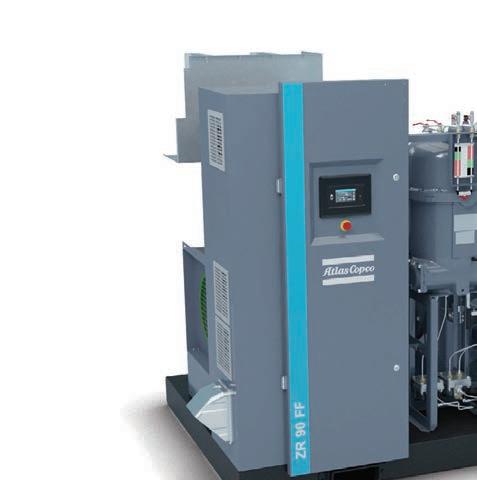

Atlas Copco’s oil-free compressors with Variable Speed Drive (VSD) technology respond to real-time air demand, ensuring businesses only use the energy its needs. This leads to reductions in energy consumption – often the largest cost associated with compressed air systems.
“By improving efficiency, you not only reduce costs but you also gain better control over your operation, making it more sustainable and resilient,” said Matschke.
Even the best compressor can’t perform properly if the rest of the system is poor. Moisture, particulates, and pressure fluctuations can all create issues, from product contamination to equipment wear and tear.

Atlas Copco offers a full-system approach, including dryers, filters, and air treatment solutions that ensure clean, dry, and stable air throughout the process. This level of consistency is essential in food and beverage production, where even small variations can end up developing big consequences.
With an integrated solution, companies can eliminate weak points and ensure the entire system supports quality standards.
Cooling is another critical area where many facilities experience hidden inefficiencies. If the current system struggles with unstable temperatures, high energy use, or reliability issues, it can disrupt production and impact product overall quality.
Atlas Copco’s chillers and coolers provide precise and reliable temperature control across

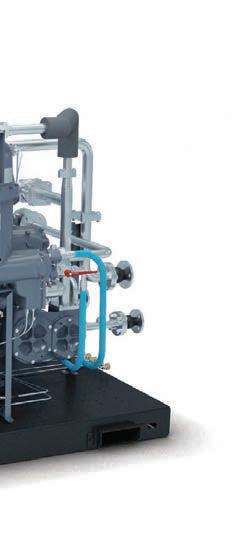
operations, whether it is about cooling equipment, ingredients, or finished products. These systems are designed for energy efficiency and continuous performance, helping reduce waste while maintaining consistency.
A stable cooling process means fewer disruptions, less product loss, and confidence in overall food and beverage production environments.
If the team is constantly reacting to breakdowns or performance issues, the utilities are costing the business more than just money – they’re costing time and productivity.
Atlas Copco integrates smart monitoring and control technologies that give real-time insights into system performance. This allows businesses to move from reactive maintenance to proactive management, identifying issues early and preventing costly downtime. The result is a more reliable operation where systems support goals instead of slowing businesses down due to interruptions.
Being a food pro means having confidence in every part of the process – not just the visible ones.
If a manufacturer’s compressed air and cooling systems are creating uncertainty, inefficiency, or risk, upgrading becomes an opportunity to turn those challenges into a competitive advantage.
“With Atlas Copco’s oil-free air solutions, complete air treatment systems, and efficient chillers and coolers, you take control of your utilities,” said Matschke.
“You reduce risk, improve efficiency, and ensure consistent, high-quality food and beverage production.” F

UNSW researchers are exploring how microencapsulation and aroma extraction technologies could help preserve the flavour of Australian truffles.
The slightest trace of aroma can transform culinary experiences in food and beverages. Truffles are one example, known for their earthy and savoury taste. Regarded as a delicacy in Italian and French cuisines, the rarity of truffles is associated with fine dining and can even cost up to thousands of dollars.
As awareness grows through social media and knowledge sharing, more accessible truffle-infused options are creating everyday experiences. From truffle oil, butter and salt, the flavours are being adopted by food manufacturers for use in cheese, meats, chips and even chocolate.

However, their aroma comes with a trade-off. While flavourful, their short shelf life remains one of the biggest challenges facing Australian producers and exporters.

Researchers at UNSW are now investigating how flavour preservation technologies could extend the usability of truffles beyond the narrow fresh-market window and create new opportunities

for Australian growers and food and beverage manufacturers.
Led by senior lecturer Dr Yong Wang alongside research associate Yanyan Lao, honours student Dianne Lee and professor Cordelia Selomulya, the project focuses on preserving truffle aroma compounds rather than the truffle itself. The research forms part of a five-year AgriFutures Australia research program examining different aspects surrounding truffle production, handling and processing.
The research was driven by longstanding logistical challenges faced by Australian truffle exporters. Wang said truffles were planted in Australia roughly 20 to 30 years ago with Europe as the main market.

“Because we have the opposite season in Australia, we can supply truffle when there’s no winter black truffle production in Europe,” he said.
While this seasonal advantage benefits Australian growers, transporting fresh truffles from

regional Australia to restaurants in Europe remains difficult.
“Transporting takes roughly 48 hours or even longer,” said Wang. “However, the maximum shelf life for fresh truffle is two weeks. Additionally, restaurants need to use it within a short time frame.”
Even within that period, quality steadily declines. Once the truffles reach their destination, they may no longer be suitable for use. Not only does this affect the product, but it also contributes to costly food waste as well as inefficient logistics and supply chains.
Rather than attempting to preserve the entire truffle, the research team is focusing on capturing and stabilising the aroma compounds that define the truffle eating experience. Because fresh truffles are highly perishable, preserving the aroma separately could create a more stable product suitable for food manufacturing and export applications.

whole fruiting body of the truffle,” said Lao.
The project centres on microencapsulation, a technology already used across the food industry to protect flavours, nutrients and bioactive compounds. In the case of truffles, the challenge is considerably more complicated.
Comparing truffle with wine, chocolate and coffee, Wang said it has the “most complex flavour altogether”. Part of that complexity comes from the biological systems surrounding the truffle itself.
“There are micro-organisms growing on the surface which is actually generating the flavour,” Wang said. “So, it’s not truffle itself. We want to preserve the whole system.” Wang said current commercial preservation methods, including truffle oils, salts and butter products, have struggled to replicate the aroma of fresh truffle accurately.
“Our idea of transferring the truffle aroma into the compatible carrier systems copies the aroma, not the
The UNSW team is working on the first stage of the process, which involves extracting flavour compounds from the fresh truffles






into a liquid medium that can be suitable for encapsulation.
“We are using the oil to extract the truffle flavour from the truffle fruiting body first and then using spray drying technology,” said Lao.
The extraction process itself presents technical challenges because truffle aroma contains both water-soluble and oil-soluble compounds. This process requires a carefully formulated medium for flavour extraction.
“We’re working on a recipe to better extract flavour into a liquid medium which we can use for further encapsulation,” added Wang.
Alongside the encapsulation research, Lee is developing a low-cost electronic nose prototype designed to identify and classify truffle aroma compounds. Known as an “e-nose”, the system uses gas sensors to create aroma fingerprints based on volatile compounds present in different truffles.
“It’s pretty similar to a human nose,” said Lee. “It’s very hard to detect the types of truffles at times, but the e-nose detects them.”
The device is designed as a lowercost alternative to conventional gas chromatography-mass spectrometry (GC-MS) systems commonly used in laboratories. Lee said GC-MS equipment is expensive, while gas sensors can lower both cost and space requirements.
“The gas sensors are small and can be really sensitive as well,” she said.
“Through some hardware and sensor set up, it’s basically a compact and lower-cost version of the detection method.”



The e-nose technology could eventually support truffle storage and processing research by helping researchers track aroma stability during preservation.

Distinguishing truffle compounds, however, remains difficult due to the chemical similarities between sulphur-based aroma compounds. Lee said even the e-nose sensors have difficulty distinguishing them. The volatility of these compounds also creates difficulties during extraction and encapsulation.
“The instability of the key sulphur compounds was a challenge,” Lee said. “They’re so volatile that even the process of extracting and encapsulating them risks losing the very thing you’re trying to preserve with truffle.”
To overcome these hurdles, the research team is working closely with industry bodies including the Australian Truffle Industry Association as part of the wider AgriFutures research initiative.
The UNSW project received approximately $517,000 in funding over five years as part of the broader $3 million research program. The overall program involves regular collaboration with growers, exporters and processors.
“The truffle can be freeze dried, so it still looks like truffle. And then when they add the aroma back, it can replicate the experience of eating fresh truffles,” said Wang.
“Through this research, manufacturers will be able to reach out and trial different methods to preserve flavour and extend shelf life,” added Lee.
Looking ahead, the researchers hope the technology could eventually help manufacturers create truffle products that better replicate the fresh truffle experience. For Australia’s growing truffle industry, the ability to stabilise aroma and extend product usability could help unlock new export and food
and beverage manufacturing opportunities while reducing waste from highly perishable produce.
“At the end of the project, we want to be able to see some application in the industry using simple but effective measures to boost Australian food and beverage manufacturing,” said Wang. F
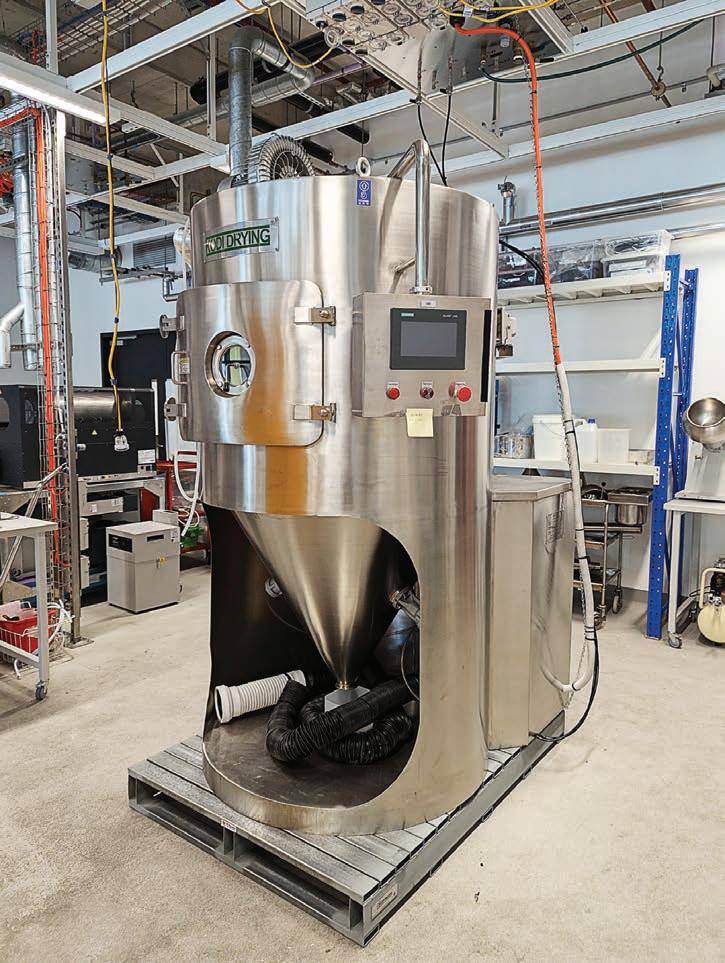

From specialty coffee roasters and packaging suppliers to educational sessions and industry networking, MICE is the hotspot for Aussie coffee lovers.
The caffeine-packed Melbourne International Coffee Expo (MICE) is a playground for coffee lovers, enthusiasts, experts and innovators. Held from 26 to 28 March 2026, the event brought together 14,159 unique visitors at the Melbourne Convention and Exhibition Centre to celebrate the growing industry.
MICE 2026 provided a platform for businesses eager to showcase their products, knowledge and solutions. Following a successful event, there is an increase in demand to secure a spot for next year.
Attracting café owners and experts from across the food and beverage sector, the event serves as a bridge to connect and develop business relationships centred around coffee.
This year’s expo was filled with aromas from talented roasters brewing specialty coffees, accompanied by energetic music and lively conversations. One of the most popular attractions at the show was the Roasters Playground, sponsored by La Marzocco and Riverina Fresh. Created to spotlight Australia’s dynamic roasting community, the Roasters Playground gave more than 36 roasters dedicated half-day

sessions to present their coffees to a highly engaged audience of café owners, buyers and industry professionals actively seeking new products and partnerships.
Designed to drive interaction and discovery, the Roasters Playground consistently attracts strong foot traffic and encourages direct feedback. This creates opportunities for brand exposure, lead generation and commercial connections across every session.
MICE featured 157 exhibitors showcasing the latest in packaging, POS software, coffee machines and roasting equipment, dairy and dairy alternatives, bakery items, matcha and, of course, coffee.
Food and beverage solution providers such as Heat and Control presented their latest coffee and tea processing, packaging and inspection technologies. ADM Packaging Automation was also present to offer practical solutions for attendees. Among the exhibitors was Trimatt Systems, which presented its range of on demand packaging solutions. Having attended the 2023 event, where the company received an award for best accessory machine, founder Matt Johnson noted a shift in
how attendees viewed the business.
Although Trimatt supplies machinery capable of producing on demand packaging, Johnson said many attendees initially perceived the business as a printing company. Through ongoing participation at industry events and continued education around its capabilities, the company has seen renewed interest and new partnerships emerge.
Exhibiting at trade events since 2007 across domestic and international markets, Johnson said shows such as MICE continue to strengthen brand awareness and create valuable industry connections. He also highlighted the response from attendees seeing Australian made equipment in operation.
“Many people are shocked when they see the machines in the flesh,” said Johnson.
“Not many people think Australia manufactures machines.”
The company will be a Bronze Sponsor for the 2027 event.
The interactive elements extended to educational panels and presentations. Topics included sustainable coffee solutions, addressing rising costs, Australian farming and agriculture, and more across the three-day event.
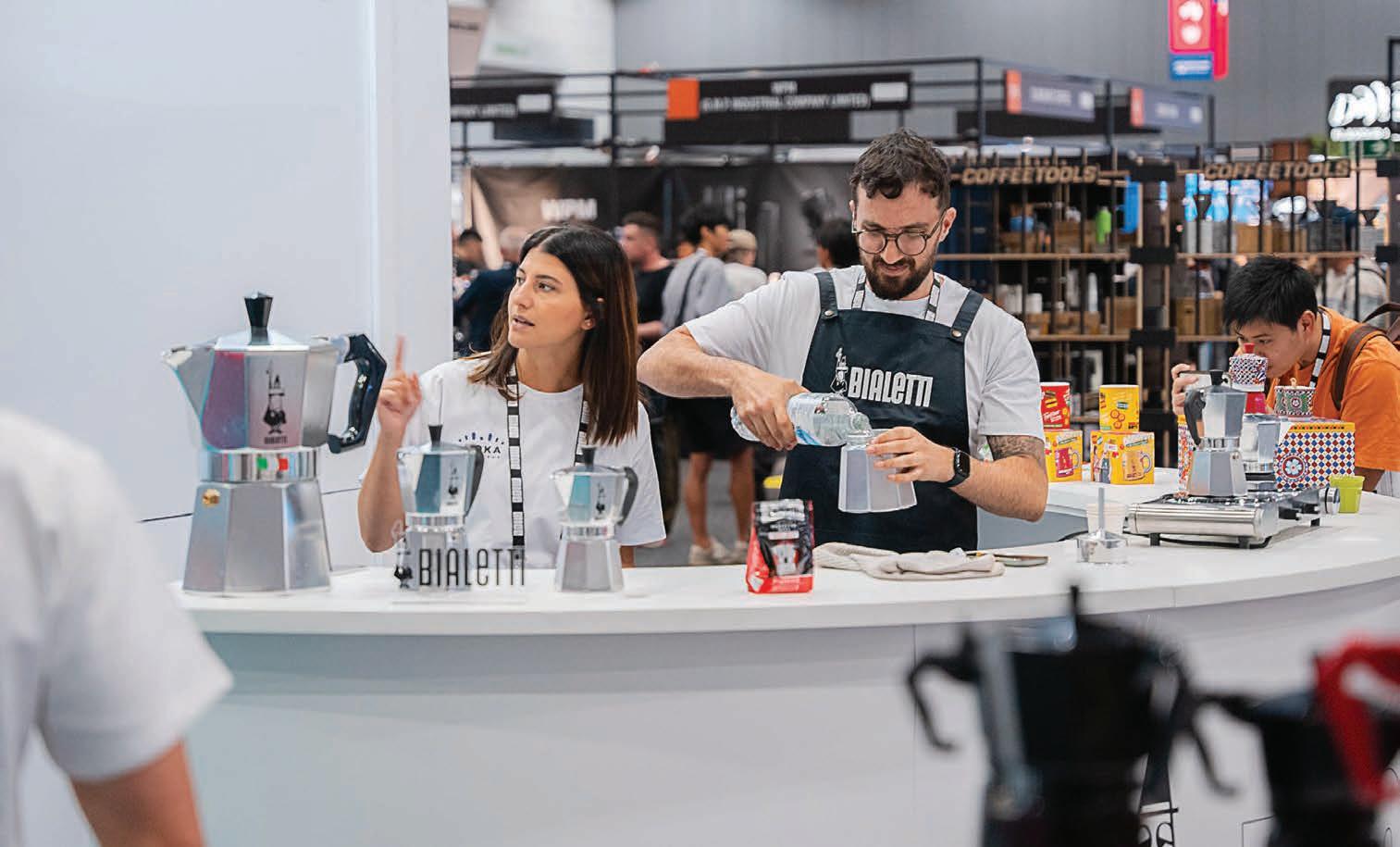
Targeting café owners and food professionals alike, the Café Owners Education Series, sponsored by Grounded Packaging, featured 23 session topics and 78 panellists. The program was designed as a platform to educate attendees and provide insights that can help grow businesses during challenging times.
From profitability and management to trends such as matcha, visitors could listen to and learn from experienced industry operators. Following the success of the 2026 event, MICE has released 2027 tickets due to popular demand as it continues to celebrate and support the Australian coffee industry. Dairy alternative brand MILKLAB has renewed its platinum sponsorship of the event for the ninth consecutive year.
Sponsorship, exhibition and speaking opportunities for the 14th edition of MICE are now open, with organisers encouraging businesses to secure positions early ahead of the 2027 event. F
For all exhibitor enquiries, please contact Mike Wilson at mike.wilson@primecreative.com.au or call 0466 609 732. Internationalcoffeeexpo.com/getinvolved/





For food and beverage manufacturers, the freight and logistics sector continues to play a central role in maintaining operational continuity, managing rising costs and meeting customer expectations in the market.
“Efficient transport and distribution systems are key for food and beverages,” said Prime Creative Media head of marketing events Molly Hancock. “Cold chain logistics or temperature-controlled warehousing is crucial in an industry where shelf life determines quality.”
MegaTrans 2026 aims to provide insight into how these pressures are influencing transport, warehousing and distribution strategies across the country. Taking place from 16 to 17 September 2026 at the Melbourne Convention and Exhibition Centre (MCEC), the event will bring together operators, suppliers, technology providers and policymakers to address the issues currently shaping the future of freight and logistics.
Running alongside Bulk Expo 2026, the event is expected to create opportunities for businesses across warehousing, transport, manufacturing and supply chain operations to connect with a broader network of decision makers and industry stakeholders.
efficiency across food and beverage supply chain applications.
Austroads and TCA
Recently, MegaTrans announced Austroads and Transport Certification Australia (TCA) as Industry Engagement Partners, strengthening the event’s connection to the organisations shaping the future of freight and supply chains across Australia and New Zealand.
Austroads plays an important role in supporting the food and beverage sector by helping improve the efficiency, safety and reliability of Australia’s freight networks. Through research, policy development and guidance on heavy vehicle access, Austroads helps manufacturers move raw materials and finished products more effectively, strengthening supply chains and reducing transport challenges across the country.


The exhibition floor will feature suppliers and service providers showcasing solutions spanning automation, fleet management, infrastructure, sustainability and warehouse operations.
According to event organisers, access to decision makers remains one of the key reasons exhibitors continue to support the event.
MegaTrans 2024 attracted 4,737 attendees, with 48 per cent identified as fleet managers and 29 per cent as warehouse operators.
By bringing together stakeholders from different parts of the supply chain, the event aims to create discussions that can improve
and freight solutions, while providing opportunities for networking and industry collaboration.
Education is also at the core of MegaTrans for the food and beverage industry. Conference panels like ‘Keeping it cool: Inside the evolution of cold chain logistics’ looks at how cooling solutions are entering the logistics landscape.
On the other hand, the panel ‘Greener by design: manufacturing driving sustainability across the supply chain’ will explore how sustainability is being embedded into operations, product design and logistics strategies.
The event is also where ideas are tested and partnerships are formed. From emerging technology to smarter and more sustainable ways of moving goods, it is where connections are made and the future of supply chains takes shape.
As part of its involvement at MegaTrans, TCA will host the Telematics Industry Group (TIG) meeting alongside the event, bringing together key stakeholders to discuss data driven reform, regulatory telematics and the evolving digital landscape of the heavy vehicle sector.
“This reflects the broader role of MegaTrans as a forum for industry dialogue,” said Gavin Hill, general manager strategic engagement and performance at Austroads.


“MegaTrans is where the freight and transport industry comes together to look ahead.
“For Austroads and TCA, partnering with the event provides a direct opportunity to connect with operators and technology providers, and to focus on how data and telematics can support safer and more productive supply chains.”
Why attend
MegaTrans 2026?
MegaTrans will showcase the latest developments in logistics, materials handling, supply chain technology


The event will bring together decision makers, operators, suppliers and innovators from across the transport and logistics sector to explore the future of freight and infrastructure in Australia on 16 and 17 September 2026.
“MegaTrans is about bringing every link in the supply chain together,” said Hancock. “Having organisations like Austroads and TCA involved helps create meaningful discussions around the future of transport, the challenges facing industry and the opportunities ahead.” F
Free registrations are now


THE WORLD’S DESTINATION FOR COFFEE
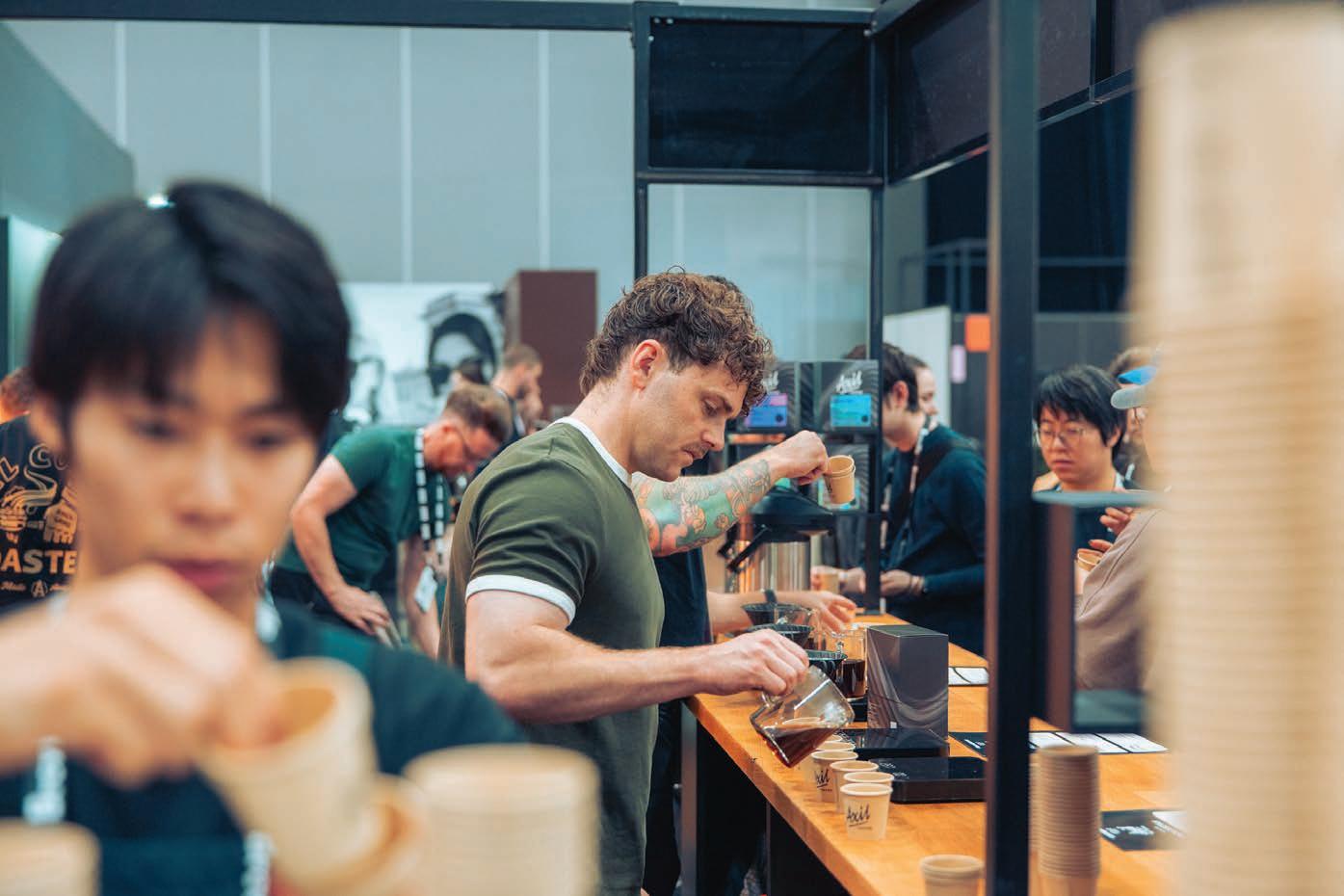
4–6 MARCH TWENTY–27
From ingredient storage to logistics and processing infrastructure, Bulk 2026 will explore help manufacturers improve production across the supply chain.
All food and beverage products start somewhere. Grain, sugar, flour, dairy powders, liquids and other ingredients all move through ports, silos and processing facilities before reaching production lines.
However, small inefficiencies in materials handling can lead to product loss, downtime and rising operational costs. In high volume environments, a minor issue can quickly escalate into a larger problem with consequences for production and brand reputation.
With these challenges in mind, Bulk Expo 2026 will take place on 16 and 17 September. The event is Australia’s dedicated exhibition and technical conference for bulk materials handling, processing, transport, logistics and storage.
The event brings together industry leaders, technology providers, equipment manufacturers, decision makers and operators from across key sectors including mining, construction, agriculture, ports, manufacturing and infrastructure.
Bulk Expo 2026 will feature an exhibition floor, expert led conference sessions, networking opportunities, and the latest technologies and solutions driving efficiency, productivity and sustainability across the bulk materials sector.
Building on the 2024 event, where close to 70 per cent of attendees held purchasing authority, the expo is designed to serve both technical specialists and business decision makers. Alongside new technologies and technical presentations, the event will provide opportunities for networking, collaboration and knowledge sharing across the wider bulk handling sector.
The Minerals Council of Australia (MCA) has officially partnered with the Bulk Handling Technical Conference and Expo, reinforcing a shared commitment to strengthening Australia’s bulk handling, mining,
manufacturing and infrastructure sectors. The Australian Society for Bulk Solids Handling has also been announced as an official association partner and will oversee development of the technical conference program.
As part of the 2026 conference program, Worley will revisit a 13 km overland conveyor project to examine how modern technologies are changing energy use, capital costs and lifecycle performance in long distance conveying systems. Intertek will present a method for accurate bulk material tonnage assessments.
KOCH Solutions will showcase IBEX and its role in the future of deep mining, while TUNRA Bulk Solids will deliver presentations covering conveyor belt wear resistance, safety in bulk solids handling, and live wear monitoring of wall liners through simulation-based approaches.
“This year’s conference is about what’s actually working on the ground and what will be helpful in the future,” Prime Creative Media head of marketing events Molly Hancock said.
“From advanced simulation tools to practical safety solutions, the program has been curated to give attendees ideas they can take straight back to site.”
Additional presentations will be delivered by Luna Innovations, HMA, Prime Manufacturing, Syntechtron, Hawk Measurement Systems, BFM Australia, Geometrica, University of Wollongong, Concetti, DICE Computing, AXO33, WGA, Leap Australia, Australian Weighing Equipment, Anval and Ultra Dynamics.
For food and beverage manufacturers, these conversations can have practical outcomes. Discussions around conveying systems, storage infrastructure, flow optimisation and safety technologies often influence future upgrades, retrofits and expansion projects.
Bulk Expo 2026’s growing list of sponsors and partners also highlights
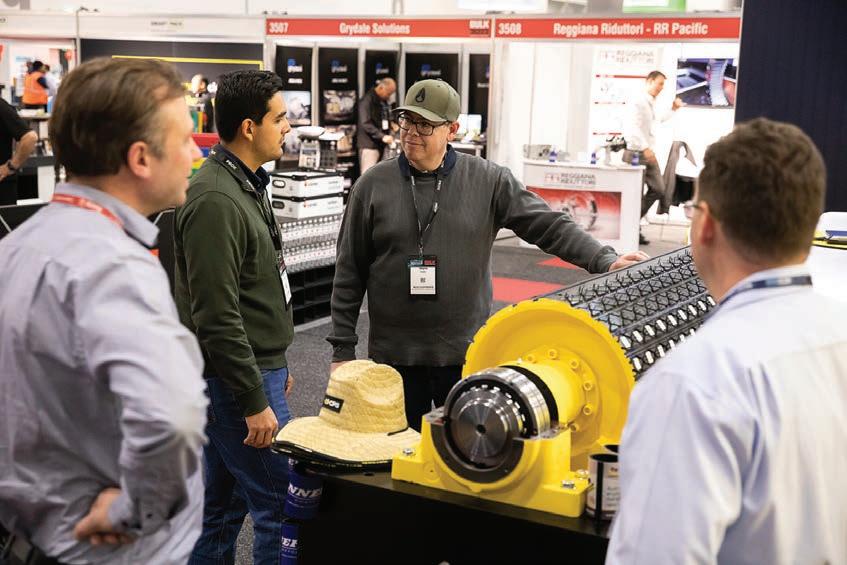

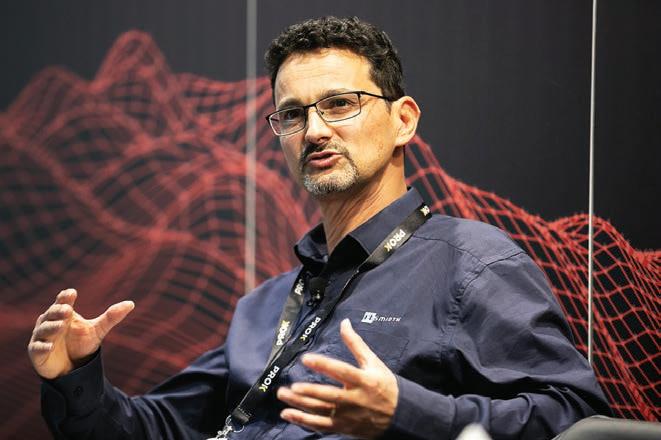
collaboration across the sector.
The International Cargo Handling Coordination Association Australia has joined the event as an official industry partner to support safer outcomes and industry development.
SRO Technology has been confirmed as a Platinum Sponsor, with its Networking Drinks event offering attendees an opportunity to connect following the opening day of the expo.
Conveyor belt optimisation specialist Belt Wise will exhibit on the show floor, providing opportunities to discuss asset protection, uptime and workplace safety.
“These strong partnerships reflect
Bulk Expo 2026’s commitment to educating, supporting and connecting those involved in the sector to help build healthier and safer workplaces,” Hancock said.
As production demands continue to rise and supply chains become more complex, materials handling remains closely tied to efficiency, product quality and operational reliability. Bulk Expo 2026 aims to provide a platform where those challenges and solutions can be explored together. F
Tickets are now available for Bulk Expo 2026, visit www.bulkhandlingexpo.com.au.





































































































From recyclable materials and food waste reduction initiatives, the 2026 PIDA Awards finalists showcase innovation across the packaging sector.
Author Nerida Kelton FAIP, executive director AIP – vice president Sustainability & Save
Food – WPO
Finalists for the 2026 round of the annual Australasian Packaging Innovation & Design (PIDA) Awards have been announced, with packaging solutions recognised across multiple categories including food and beverage.
Coordinated by the Australasian Institute of Packaging (AIP), the PIDA Awards are designed to recognise companies and individuals making a difference in their field across Australia and New Zealand.
The PIDA Awards are also the exclusive feeder program for Australia and New Zealand into the WorldStar Packaging Awards and it is run by the World Packaging Organisation (WPO). All 2026 PIDA winners will automatically be eligible to enter the 2027 WorldStar Packaging Awards competition moving forward.
The Food Packaging Design award recognises organisations that have designed innovative packaging and/ or materials within food packaging and processing, including fresh, frozen and other food categories. This is a WorldStar Packaging General award category.
Finalists include Primo Sliced
Meats Peel & Reseal Pack: Primo Foods and Amcor Flexibles, Arctic Shield EPS Replacement: Opal ANZ, RePlay: Bonson Packaging, Everest Ice Cream Cup: BioPak, Honey Squeeze Pack: Caps & Closures, Heinz Taste Tap Dispenser: Kraft Heinz Australia, Mango Multipack: Opal ANZ & Perfection Fresh and Auto Punnet for Tomatoes: Detpak.
The Beverage Packaging Design award recognises organisations that have designed innovative packaging and/or materials for liquid or dry tea, coffee, water and soft drinks, including wine, beer and spirits. This is a WorldStar Packaging General award category.
The 2026 Beverage Packaging Design finalists are Asahi Carlton Dry 6x330ml Bottle Shrink Replacement Wrap: Graphic Packaging International & Asahi Beverages, 600ml Spring Water: Woolworths, capR: Interpack, Remedy Sodaly: MCC Label Australia (Asia Pacific) and Asahi Beverages 6x330ml Bottle Basket to OTC Wrap: Graphic Packaging International.
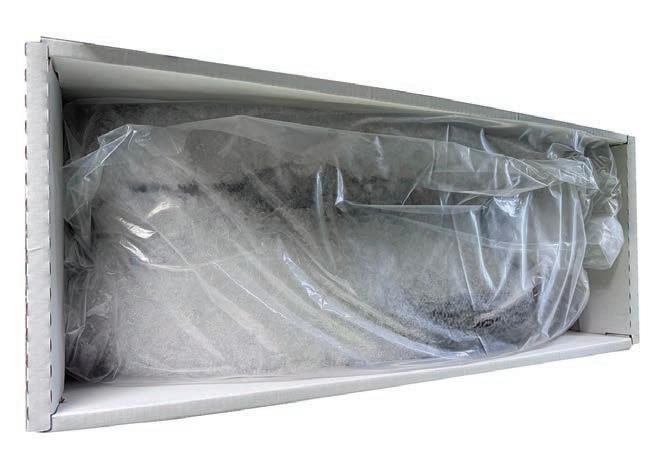
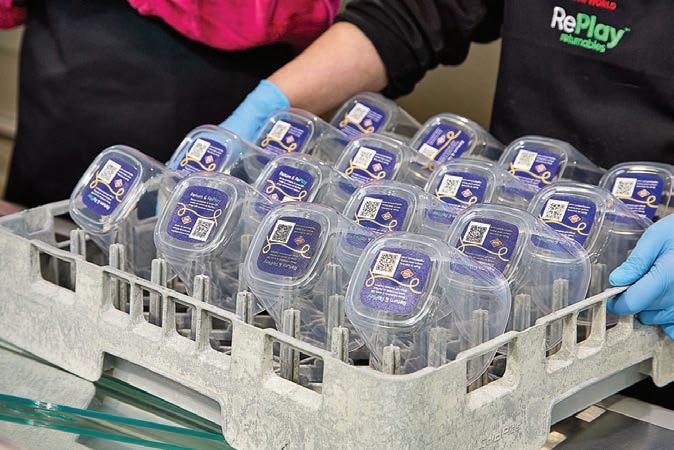
The Labelling & Decoration Design award recognises the addition of content to a pack that creates a unique or innovative appearance, function or communication. This may include labels, sleeves, tags, coding and markings, etching, directly applied inks or similar processes. This is a WorldStar Packaging General award category.
The 2026 Labelling & Decoration Design finalists are RePlay: Bonson Packaging, Material Free Decoration: Costa Group, Result Group & The Packaging Hippie, EL TORO Tequila Blanco: VOK Beverages, Bickfords Australia: MCC Label Australia (Asia Pacific), Elucent Age Defying Bright + Balanced Range: Ego Pharmaceuticals and Zeus St Greek Take Away Packaging: BioPak.
The Save Food Packaging Design special award recognises companies working to minimise or prevent food waste from paddock to plate through innovative design features that contain and protect products, preserve quality and extend shelf life, while meeting global
sustainable packaging targets. This is a WorldStar Packaging Award category.
The 2026 Save Food Packaging Design finalists are Birds Eye Frozen Single Vegetables 825g Range: Simplot, Austlon SG Self Sealing Shrink Bag: IPE Pack and Technology, Heinz Taste Tap Dispenser: Kraft Heinz Australia and Paper Food Tub and Lid System: Pinnacle Packaging.
The Sustainable Packaging Design special award recognises companies that have developed innovative packaging or processing solutions that incorporate sustainability considerations in its designs.
Elements include social, material, source reduction, energy and recovery. This is a WorldStar Packaging Special Award category. Winners will be announced at the gala Australasian Packaging Innovation & Design (PIDA) Awards ceremony, which will be held alongside foodpro 2026 on Tuesday 28 July at the Aviary, Crown Complex, Melbourne, Victoria. F
For more information, visit aipack.com.au.