The industrial connectivity partner behind Australia’s critical industries.
Thirty years supplying Australia’s critical industries means we know what’s on the shelf, what’s been discontinued, and what your site will need in five years.
Stocked & dispatched same day
Pre-configured before it ships
Industrial-grade hardware on the shelf, ready to move when your project can't wait.
Devices labelled, tested, and set up to your spec, so commissioning moves fast.
Local technical support
Advice on selection, integration, and post-installation from Australian engineers.
Published by
Editor’s welcome
Chairman
John Murphy
Chief Executive O cer
Christine Clancy
Publisher
Sarah Baker
Managing Editor
Eugene Du y
Editor
Tom Parker
Art Director
Alejandro Molano
Designer
Danielle Harris
National Media Executive
Michael Ingram-Casha P: 0423 266 991 michael.ingram@primecreative.com.au
Australia’s electricity grid is undergoing revolutionary change as the integration of renewables and battery storage rapidly grows. A network built around traditional energy sources is being reconfigured, unlocking new opportunities to realise operational e ciencies and continuity.
Insights from CSIRO highlight just how quickly conditions have evolved. Its recent FlexCost report underlines how empowering consumers in the energy transition could be the best decision we make, which goes beyond adopting rooftop solar and a home battery.
With average renewable penetration in the National Electricity Market surpassing 50 per cent in late 2025, attention is increasingly turning to the untapped value of demand-side resources. FlexCost looks to close a long-standing knowledge gap, quantifying how consumer-led technologies can contribute to both system stability and cost reduction.
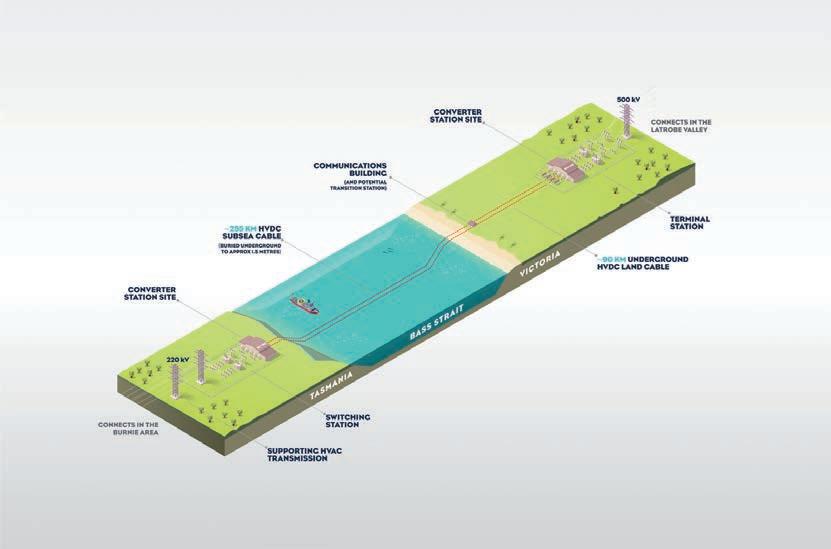
Of the other big projects featured, Marinus Link represents another critical piece of the future grid puzzle. Building on Basslink, the project is designed to strengthen interconnection between Tasmania and Victoria, unlocking greater transfer of renewable energy and improving reliability across regions. As early works commence, its role in enabling a more connected and balanced grid comes into sharper focus.
“With 750MW cabling available across its two stages (1500MW all up), Marinus Link augments and enhances the amount of electricity that can be transferred between the two states,”
is helping accelerate the rollout of smart meters across Australia, while CivEng Consulting showcases its work alongside TasNetworks and Megavar in completing transformer replacements at the St Marys substation in Tasmania.
Meanwhile, Decon Corporation is addressing a growing challenge at the grid’s edge – ensuring that solar, storage and backup generation operate as a coordinated system rather than as isolated assets.
In this edition, we also explore the momentum building across Australia’s o shore wind industry, discuss the current data-centre landscape and what energy consumption is required to get these assets up and running, and promote the upcoming Women in Industry Awards taking place in Sydney in June.
Tom Parker Editor
Energy acknowledges Aboriginal Traditional Owners of Country throughout Australia and pays respect to their cultures and Elders past and present.
CSIRO
6Energy’s missing puzzle piece
As Australia’s energy system transforms, generation costs are well studied – but the cost of unlocking consumer energy resources remains a critical gap.
COVER STORY
8View from the top
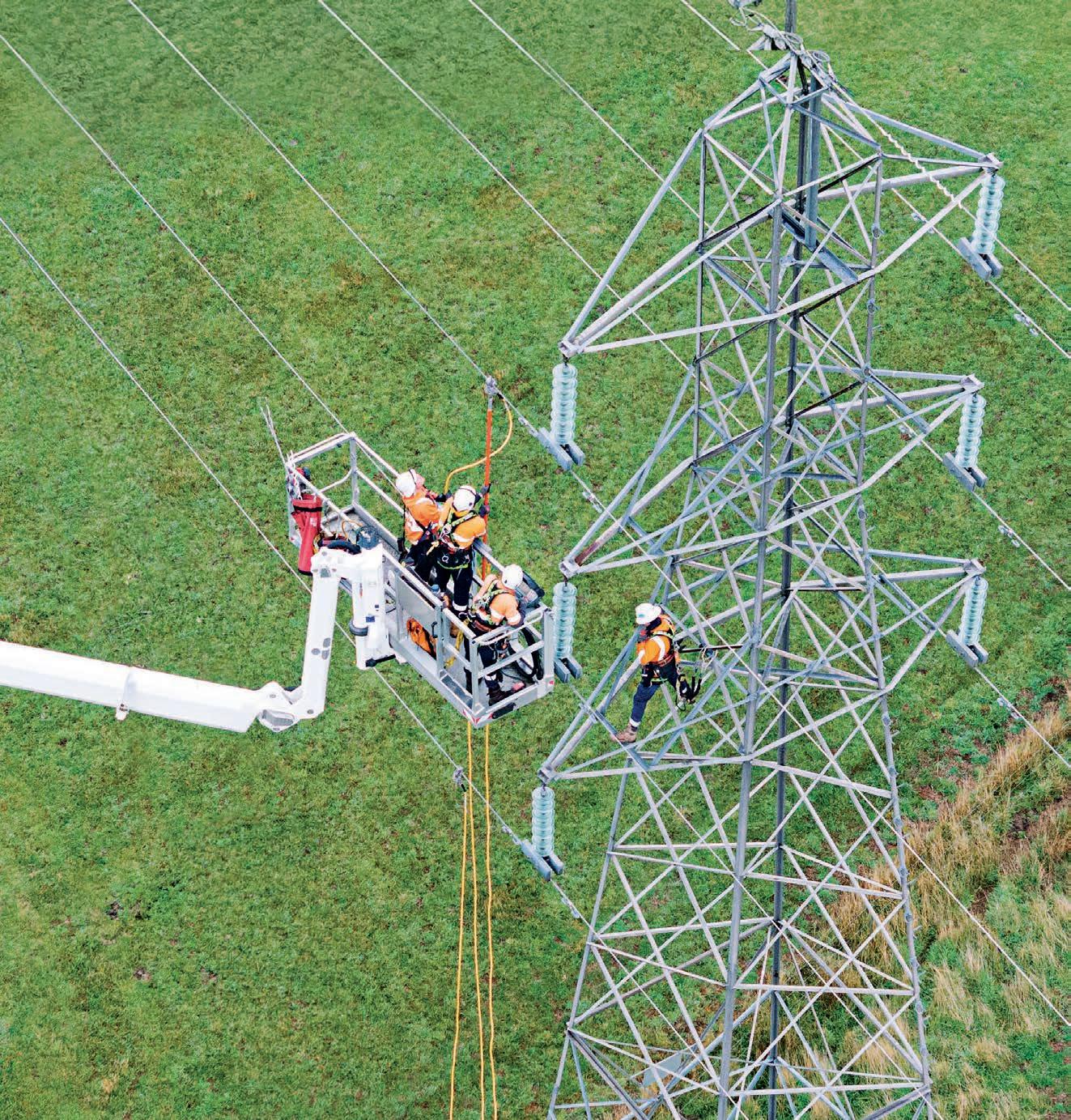
As TasNetworks refurbishes an ageing, 71km-long transmission corridor, the next-generation of workers are getting their chance.
FUTURE GRID
12 Removing risk at Reeves Plains
Genus and Alinta Energy have proven to be a dynamic duo in delivering the 250MW Reeves Plains BESS project in South Australia.
16 A smart meter revolution
As Bluecurrent’s smart meter footprint grows across Australia, the company has cemented ties with two trusted field service providers.
18 The consultancy networks trust
Backed by 80 years’ experience, CivEng Consulting supports power, BESS and solar projects with agile, on-time delivery.
28 Grid gamechanger
As Australia’s electricity grid grows more complex, automation is the key to preventing costly network failures.
32 A generational interconnector
Marinus Link is building on Basslink to bring new renewable energy resources and stability to Australia’s grid.
WIND ENERGY
36 A star is born
Off the coast of Victoria lies Australia’s most prospective offshore wind district, where a range of developers are bringing an industry to life.
DATA CENTRES
40 Where will the power come from?
CSIRO and Zenith Energy discuss how they would manage soaring energy demand from data centres.
WHEN DE-RISKING BESS PROJECTS MATTERS, TRUST GENUS
Grid constraints, challenging site conditions, and stakeholder demands: every BESS project comes with pressure. Solve problems early, and you don’t carry them into delivery.
At Genus, we work alongside our clients from day one through early contractor involvement (ECI), shaping design, challenging assumptions, and engineering smarter outcomes before construction begins. We reduce risk, remove unnecessary cost, and create solutions that actually work in the real world, all through a hands-on, collaborative approach that turns complexity into clarity.
If you need a BESS partner who delivers with certainty, trust Genus.
genus.com.au
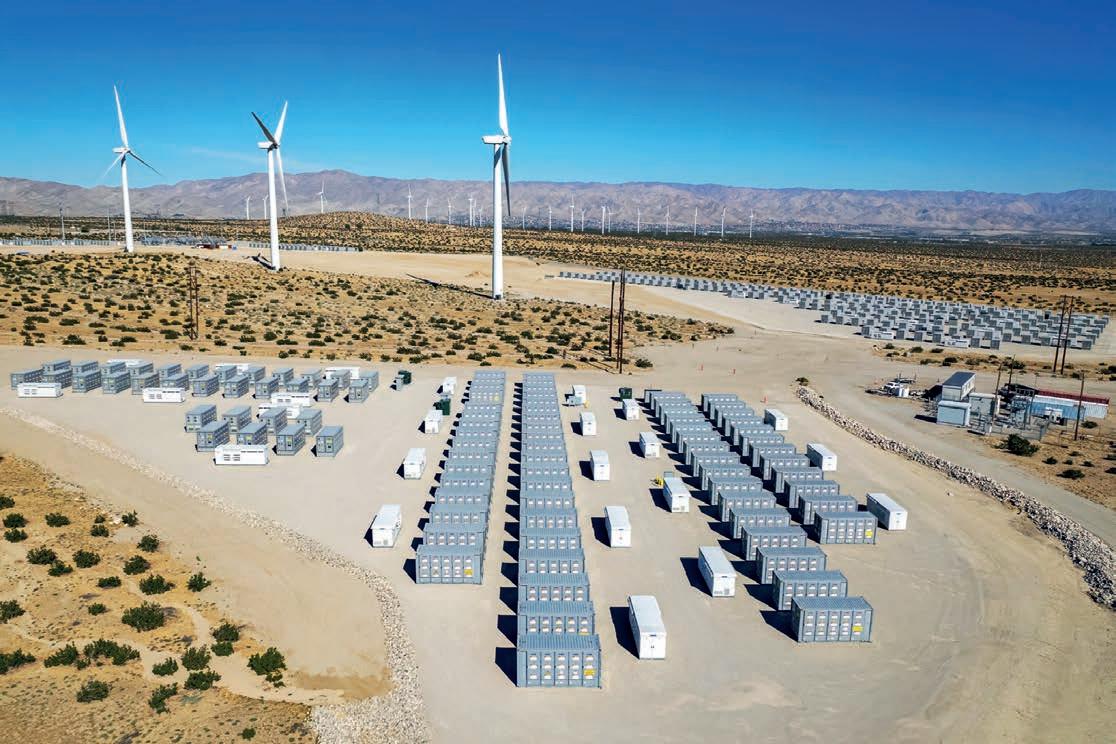
RWhile the costs of gridscale renewables are well known, there’s been a knowledge gap on consumer energy resources. Image: AngieC333/shutterstock.com
Energy’s missing puzzle piece
As Australia’s energy system transforms, generation costs are well studiedbut the cost of unlocking demand-side resources remains a critical gap.
ecent volatility in global energy markets has underscored the importance of energy security, resilience and cost control. In Australia, that volatility has translated into higher prices for emissions-intensive coal and gas in the electricity market.
While new renewable generation is essential to reducing costs over time, it is only part of the solution. Demand-side resources, including smart charging of customer batteries and electric vehicles (EVs), flexible appliance use and energy e ciency upgrades, influence how and when electricity is consumed, and are also key to reducing electricity bills.
While supply-side investments are well understood and increasingly well costed through work such as CSIRO’s annual GenCost Report, decision makers have had much less visibility on the potential and cost of demandside policies and investments, making it harder to design initiatives that bring down power prices.
In response, CSIRO has partnered with Energy Consumers Australia and
consulted with industry experts to develop FlexCost, a new methodology that aims to quantify the cost of using demand-side technologies to support the electricity system during periods of high demand or supply shortages.
Put simply, FlexCost helps to answer whether unlocking demand-side opportunities can meet system needs at lower cost than just building more supply infrastructure.
Demand-side resources when ey er o FlexCost recognises that the nature of system constraints is changing. Rather than just focusing on peak demand, the study also examines constrained periods when supply may be limited and costs are most likely to spike.
FlexCost project director Dr Chris Dunstan said this required moving beyond traditional peakdemand analysis.
“FlexCost shifts this focus to what we call constrained energy periods –times when the system comes under pressure because of a combination of
demand, supply availability, weather conditions or outages,” Dunstan said.
“These periods vary from year to year, by location and season, and are increasingly shaped by the interaction of renewable generation, legacy coal and gas assets and weather extremes.”
While the timing and drivers of system constraints are changing, the most constrained periods continue to shape system planning and investment decisions. To capture their impact, FlexCost focuses on those critical hours each year when constraints are most acute and electricity prices are highest.
CSIRO chief energy economist Paul Graham said the cost impact of these short windows is often underestimated.
“A relatively small number of constrained periods can account for a disproportionate share of annual electricity system costs,” Graham said.
“By analysing what it would cost to address these constrained periods with demand-side actions, FlexCost will provide a clearer picture of when it is
most cost-e ective to deploy demandside resources.”
By putting a price on demand-side solutions, FlexCost is designed to support practical decision-making across the electricity sector.
For governments, the framework can inform policy design by identifying which demand-side investments deliver the greatest system benefit and when incentives are most e ective.
For regulators and market bodies, it provides a basis for comparing demand-side options with traditional supply-side solutions when addressing system reliability and a ordability.
For industry, including retailers, network businesses and service providers, FlexCost clarifies how demand-side resources could be valued, accessed and deployed to reduce costs during periods of constraint.
erie d ore e ie air conditioners
EVs, consumer batteries and energy e cient technologies are often discussed in terms of the benefits they deliver to individual owners. FlexCost reframes these as system resources with measurable economic value for all electricity customers.
EVs, for example, are expected to become a significant source of electricity demand as uptake accelerates and more owners charge their vehicles. Flexible charging can allow EVs to draw power when supply is abundant, while Vehicle to Grid technologies could soon enable EVs to act as “batteries on wheels”, supplying power back to the grid during constrained periods.
More than 500,000 home batteries have already been deployed in Australia, supported by government incentive programs. While many batteries have the technical capability to respond directly to system needs, participation in virtual power plants (VPPs), where batteries are coordinated to operate collectively in response to grid conditions, remains limited and uneven.
Energy e ciency plays a di erent but equally important role. While not dispatchable in the same way as batteries or EVs, e ciency measures can reduce overall electricity demand throughout the year and help lower system stress during both summer and winter extremes.
“Space heating and cooling is a key driver of peak demand,” Dunstan said.
“Improving the e ciency of buildings and heating and cooling appliances –through insulation and more e cient air conditioners – can reduce costs for individual households and businesses, while also reducing the pressure that creates price spikes across the system.”
FlexCost examines how each of these options perform during constrained periods, and what it would cost to access them at scale.
Implications for the energy transition
Australia’s energy transition is often framed as a supply challenge – building enough renewable generation, storage and transmission to replace ageing and emissionsintensive coal and gas. Increasingly, it is also a demand challenge, shaped by how and when electricity is used.
As the electricity system becomes
more decentralised and more dependent on rooftop solar, consumer batteries and EVs, the timing and location of electricity demand is just as important as the volume of new supply.
CSIRO’s electricity transition research reflects this system-wide reality, spanning supply-side cost modelling through GenCost, national planning and coordination such as the National Energy Analysis Centre (NEAC), work on integrating consumer energy resources and strengthening building energy performance.
“Improving visibility on demandside costs is critical as Australia manages rising complexity in the electricity system,” Graham said. “We must recognise flexibility and e ciency as core system assets, not secondary considerations.
“Once we understand their cost and role, they can be integrated more strategically into planning, markets and policy alongside generation, storage and networks.”
Energy Consumers Australia executive manager – advocacy and policy Lotte Wol said FlexCost provides important insight into the role consumers can play in reducing system costs.
“FlexCost shows which technologies – when deployed across homes and businesses – can support the electricity system at the lowest cost,” Wol said. “This clarity can inform better targeted programs and policies that lower energy bills for consumers while also delivering value for the system as a whole.”
Looking ahead
As Australia’s electricity system becomes more decentralised, distributed and flexible, better visibility on the cost and role of demand-side resources will be increasingly important for managing reliability and a ordability through the transition.
“FlexCost is about putting demand-side resources on the same footing as generation, storage and networks when we think about system costs,” Dunstan said.
“By understanding when these resources matter most – and what it costs to access them – we can make better decisions about how to deliver a reliable and a ordable electricity system as Australia moves towards a highly renewable future.”
Vehicle to Grid technology enables electric vehicles to send electricity supplies back to the grid. Image: CSIRO
View from the top
As TasNetworks refurbishes an ageing, 71km-long transmission corridor in Tasmania’s north-west, the next-generation of workers are getting their chance.
As Australia accelerates its energy transition, much of the focus is on new generation and storage. Less visible and glamorous, but just as critical, is the condition and capability of the transmission network carrying that energy.
Across the National Electricity Market (NEM), infrastructure built for a centralised generation system is now required to support more variable generation, changing power flows and increasing operational complexity.
In Tasmania’s north-west, that challenge is playing out along one of the state’s key transmission corridors.
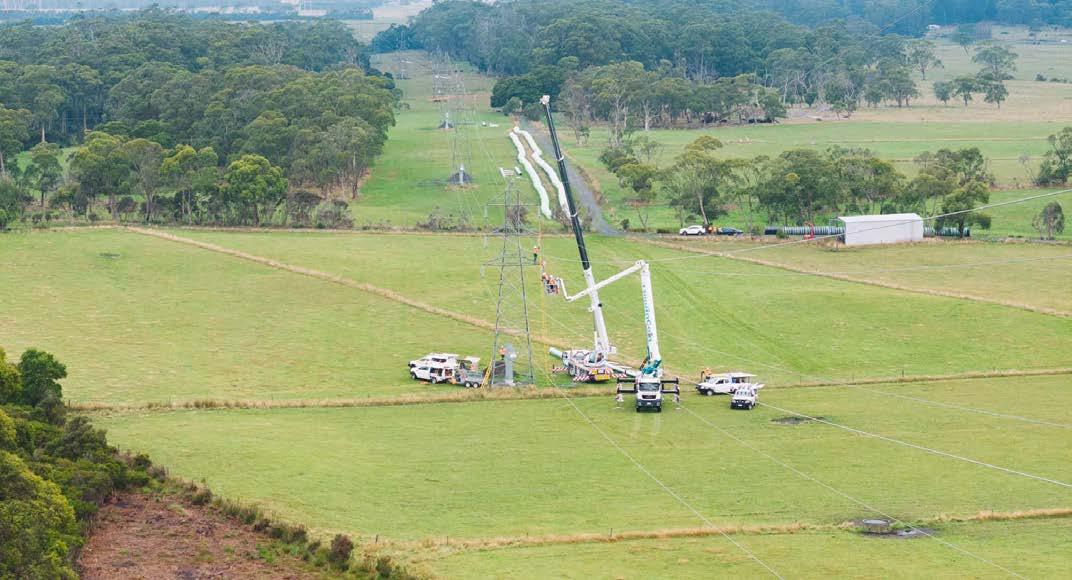
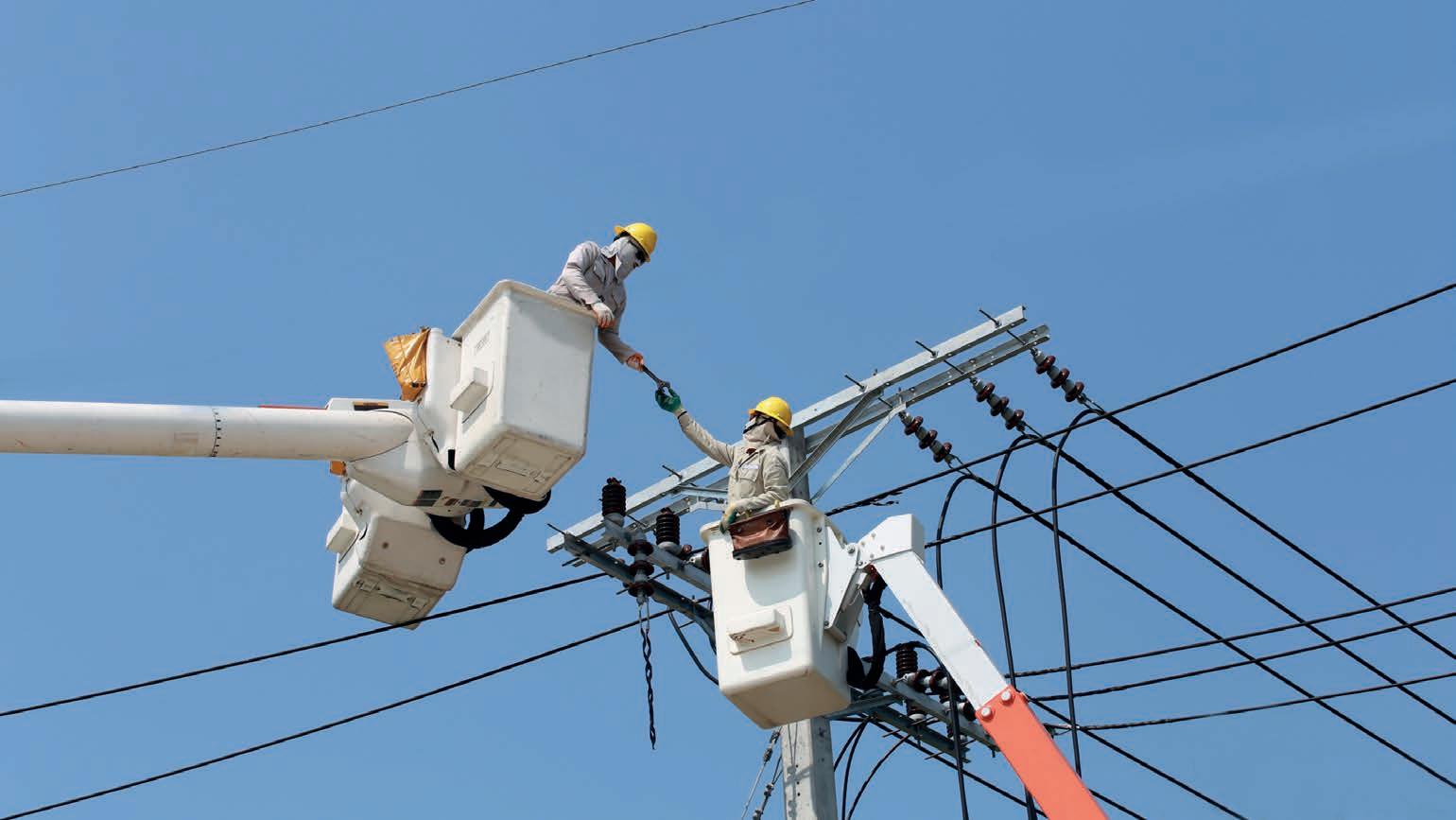
Constructed in 1949, the Burnie–Port Latta–Smithton 110kV line extends around 71km and comprises 287 structures. The line supports major industrial load, connects wind generation, and supplies regional communities including Smithton and Stanley.
More than 75 years on, many of those structures are approaching end of life. For the past three years, TasNetworks set forward to address asset condition risk with an annual program of tower upgrades.
For TasNetworks interim chief executive o cer Renée Anderson, the focus is on maintaining system reliability.
“More than ever, network operators must balance maintaining asset integrity with preparing for future system requirements,” Anderson told Energy. “The strength and condition of these assets is fundamental to maintaining reliable supply to critical industry, generators and regional communities.”
Modern design
Located on Tasmania’s coast, the primary driver for the upgrades is condition. The existing structures have been subject to sustained corrosion
exposure, detected during annual network inspections.
Rather than replacing structures on a like-for-like basis, with the support of Tasmanian power consultants Entura, TasNetworks has been introducing a new family of suspension and strain poles designed to current engineering standards and intended for broader application across the network. Entura reviewed existing loads and insulator swings in each transmission line and completed the preliminary and detailed design for replacement of the towers.
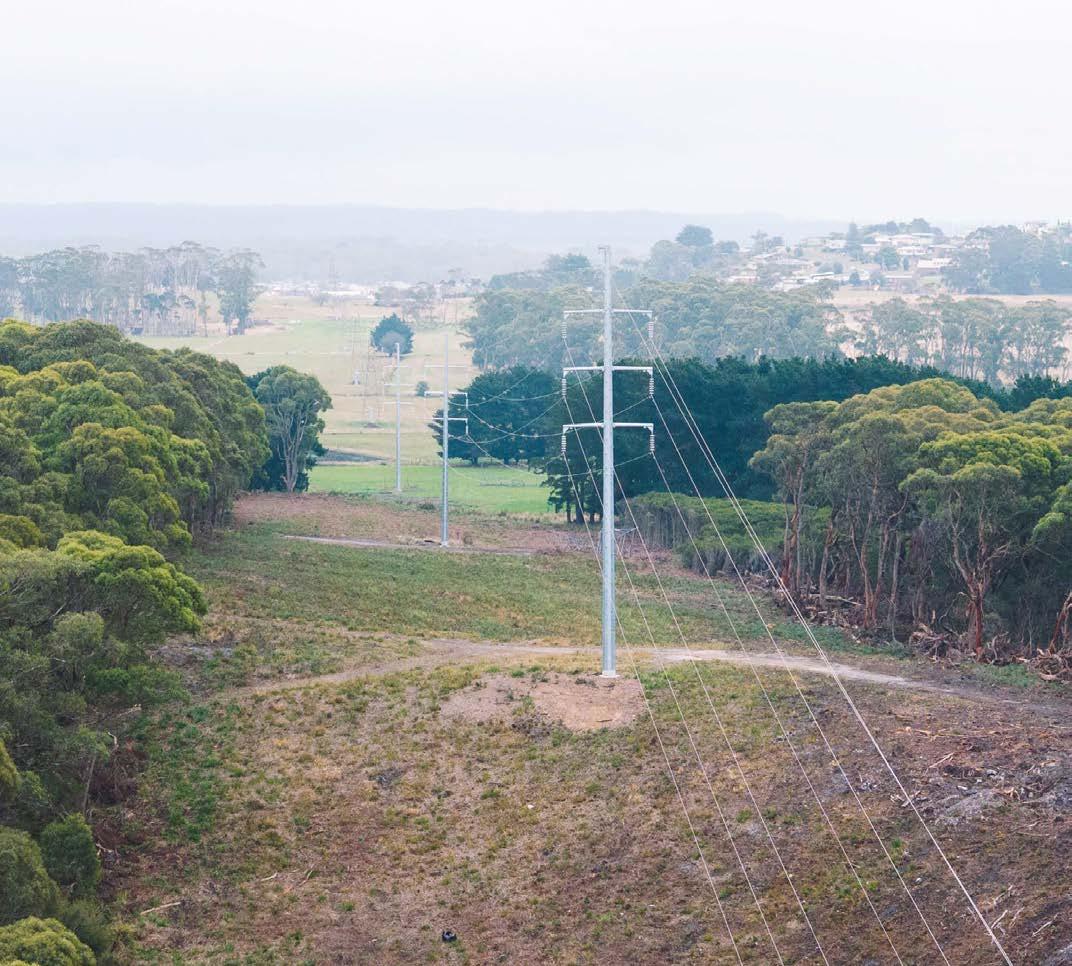
The new structures, approximately one metre taller than the towers they replace, will provide another 70+ years of reliable service to Tasmania’s power grid.
TasNetworks head of asset management Josh Cunningham said the approach balances current requirements with future flexibility.
“These structures don’t increase capacity today, but the design could
accommodate future conductor upgrades if required, giving us the ability to respond to changes in load, generation and power flows,” he told Energy
Progressive replacement
The delivery model undertaken over the past three years reflects the line’s operational constraints.
The transmission corridor cannot be taken out of service without impacting industrial load, connected generation and regional supply, which means all works are undertaken while maintaining one circuit in service. This approach supports system reliability requirements, while enabling progressive replacement of structures.
Across a two-day sequence, one circuit is de-energised and transferred to a newly installed pole and reenergised. The second circuit is then de-energised and transferred, allowing the original structure to be removed and the new configuration brought fully into service. Under favourable conditions, crews – brought in from across Tasmania – can replace up to three structures per day.
Cunningham said the process requires tight coordination across multiple functions.
“You’re working in close proximity to live circuits that are maintaining supply,” he said. “There is very little tolerance for error. Teams and crews across the organisation tackle short time windows
to plan, coordinate and execute outages, with outstanding outcomes for Tasmania.”
With real-time execution managed via control rooms in Hobart and field operators on the ground performing switching, additional maintenance is undertaken down the line to boost e ciency during outage windows.
Operational execution
March and April generally o er an ideal window for structure replacements, though operations may still be paused when weather conditions exceed safety thresholds.
Beyond these constraints, the project highlights the level of coordination and skill required to deliver transmission upgrades while maintaining supply.
At any given time, multiple teams are working in parallel. TasNetworks head of operations delivery Brad Walker said projects like this trigger an important environment for capability uplift.
“Field crews, control rooms, switching personnel, engineers and planners are all playing a role in ensuring the system remains stable,” he said. “These are the types of projects where our people develop critical skills.
“You’re working with tight delivery windows, and coordinating with multiple teams and stakeholders. That experience is incredibly valuable.”
On-site during this year’s upgrade window, that capability growth was already visible.
Among the crews working on the project were apprentices at the very early stages of their careers.
New structures are being installed to provide another 70+ years of reliable service to Tasmania’s power grid.
Among the crews were apprentices at the very early stages of their careers, including one who had been with the business for just one month, working alongside experienced lineworkers to carry out the upgrade.
“There’s nothing quite like seeing our people in action, passing on knowledge and young apprentices tackling big, complex jobs with enthusiasm,” Walker said.
“In a growing energy industry, particularly in Tasmania, building that capability locally is essential. These projects give our people the opportunity to develop the skills needed to support the next generation of network infrastructure.”
Only three years into the Burnie–Port Latta–Smithton program, the upgrades will continue over the next decade to upgrade all 279 structures.
The big picture
Transmission is a key enabler of the transition, with increased interconnection and network resilience required to support more geographically dispersed and variable generation.
The Australian Energy Market Operator (AEMO) has highlighted this shift in its Draft 2026 Integrated System Plan, pointing to greater interconnection and increasingly dynamic power flows across the National Electricity Market, including via Project Marinus.
As Tasmania’s only DNSP and TNSP, TasNetworks balances investment in capital upgrades, major projects, and capacity to plan and react quickly when unplanned network outages occur.
In the same region, the North West Transmission Developments (NWTD)
will upgrade key 220kV pathways between Palmerston (near Cressy) and Burnie, enabling connection to the 345km, 1500MW Marinus Link interconnector and supporting increased energy transfer between Tasmania and Victoria.
The sustained direction of the energy transition will continue to place greater importance on the condition and capability of existing transmission assets, which underpin both current operations and future network expansion.
“Tasmania has a unique opportunity to play a leading role in the National Electricity Market, but that relies on a transmission network that is robust, flexible and future-ready,” Anderson said.
“Projects like Marinus Link and the NWTD are critical to unlocking that potential.”
The Burnie–Port Latta–Smithton 110kV line extends around 71km and comprises 287 structures.
Powering Smarter Inventory and Logistics Solutions for Energy
Right Part , Right Place, Right Time
Field Service is in our DNA - 20+ years of solving in-field frustrations
SLA’s not ETA’s - We deliver to expectations, not estimated windows
From parts to full projects - We support all infield inventory needs
Inventory visibility in the palm of your hand - MOS is standalone or ERP connected
Scan the QR code to transform your in-field workforce.
Removing risk at Reeves Plains
Genus and Alinta Energy have proven to be a dynamic duo in delivering the 250MW Reeves Plains BESS project in South Australia.
At Reeves Plains in South Australia, a major battery energy storage system (BESS) project is already highlighting an important lesson for the energy transition: the biggest gains in infrastructure delivery are made long before construction begins.
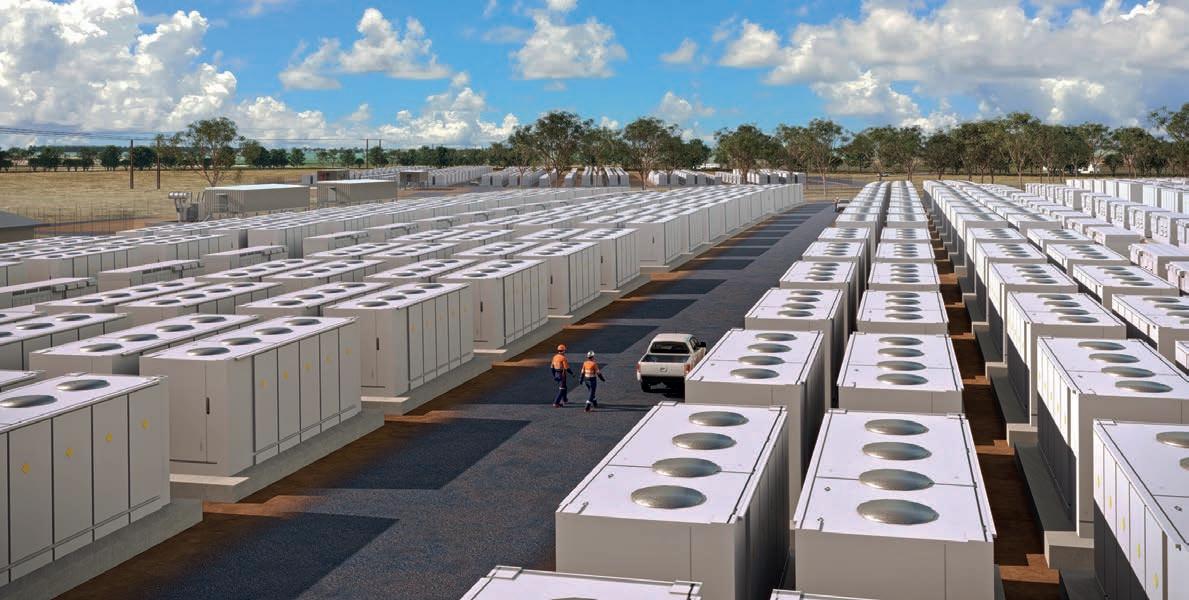
Developed by Alinta Energy, the project is a 250-megawatt battery with four hours of storage, capable of powering the equivalent of around 300,000 households. It is a nationally significant piece of infrastructure, designed to strengthen the state’s grid and support the transition to a more renewable energy system.
To bring the project to life, Alinta engaged Genus as its delivery partner, initially through an early contractor involvement (ECI) phase, and subsequently as the engineering,
procurement and construction (EPC) contractor responsible for delivering the facility.
This role has placed Genus at the centre of the project, spanning early design development, constructability input and full delivery through to commissioning. Rather than simply executing a predefined scope, Genus has been embedded in the project from the outset, contributing to how it has been designed and is now being delivered.
For Alinta, that early involvement was a deliberate choice.
“Genus had all the necessary and requisite experience, having built a number of battery projects previously, which we believe was extremely important for Reeves Plains and made things move a lot smoother,” Alinta Energy chief development o cer Andres Maasing said.
Construction commenced in April, with the project progressing beyond early civil works and into the next phase of delivery. But as activity on site ramps up, those closest to the project point to a di erent part of the timeline as being critical to its success so far.
At Reeves Plains, the most important work happened before construction began.
Little margin for error
Battery storage is often described in simple terms; store energy when supply is high and release it when demand rises. But delivering that capability at scale requires the coordination of complex electrical systems, detailed civil design and multiple stakeholder requirements.
Reeves Plains brings all of that together. It is a project shaped by
Images: Alinta Energy/Genus
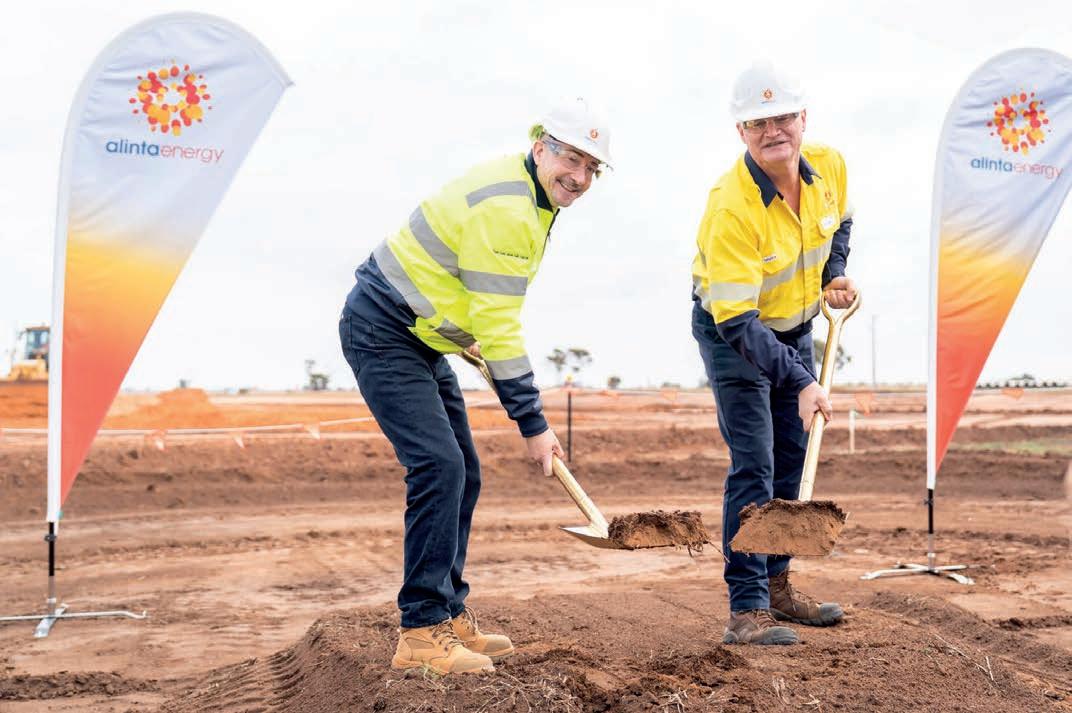
Genus chief operating o cer David Fyfe (left) and Alinta Energy executive director Ken Woolley (right) at Reeves Plains.
site constraints, grid integration requirements and strict performance expectations, all of which leave little margin for error.
These are the types of conditions where early decisions carry disproportionate weight. Misalignment at the front end can quickly translate into cost, time and delivery challenges later. That reality shaped how the project was approached from the outset.
Rather than progressing a fixed design into construction, Alinta Energy brought Genus into the project early through an ECI phase, which shifted the dynamic immediately as Genus was not simply delivering a defined scope, they were helping to shape it.
“Genus took their time in assessing the issue step by step … and worked with us in order to address what our needs and requirements were to come up with the best outcome for our project,” Maasing said.
That early engagement created the conditions for a genuinely collaborative process, where both teams worked as true partners towards a shared outcome, rather than simply progressing a predefined design.
Critically, this approach required time. Rather than compressing the early phase, Alinta allowed the ECI process to run thoroughly, ensuring key decisions were worked through before construction began. It also created space to test assumptions and ensure project design was right.
In many infrastructure projects, standardised requirements are applied
as a baseline. At Reeves Plains, those assumptions were worked through early, ensuring the design was aligned to the site, the conditions and Alinta’s outcomes.
Engineering the outcome early
It was during the ECI phase that much of the project’s value was created. Working closely with Alinta, Genus helped progress the design to a buildable level while interrogating key aspects of the project to ensure they were both technically sound and commercially e cient. These decisions were made collaboratively, ensuring the final design reflected both delivery expertise and Alinta’s broader project objectives.
According to Genus, this process contributed to an approximate 8 per cent saving in total project cost, achieved before construction began. These savings were not driven by a single decision, but by a series of practical changes across layout, civil works and electrical design.
As Genus engineering manager and CEC-accredited designer Amish Sheth explained, a key part of this was optimising the overall site layout.
“In optimising the site layout, we had a number of constraints, but we were able to lock in a general arrangement which stood the test of time,” he said.
This work extended into civil and electrical design, where early decisions helped simplify delivery and remove unnecessary complexity.
“During the ECI phase, we optimised our bulk earthworks in civils, went through the principal project requirements and identified things that may not have been required on this project,” Sheth said.
This was not about reducing scope in a way that increased risk, it was about ensuring that every element of the project was necessary, fit for purpose and aligned to the realities of the site.
Collaboration that built trust
While the technical outcomes were significant, those involved point to how the teams worked together as equally important.
Rather than solely relying on documentation and formal communication channels, much of the work during the ECI phase was done face to face in workshops, rather than through documents and email chains. This created the space for more open and constructive conversations, particularly when navigating challenging elements of the design.
“We did not deliver the ECI from a contract perspective, we delivered it from a customer perspective,” Sheth said.
For Alinta, this approach created a di erent type of working relationship.
“We find that working with Genus is always a very collaborative approach,” Maasing says. “When we work together, we feel like we’re both part of the same family.
How the Reeves Plains BESS project is set to look once constructed.
“This is our second project together, and we believe there will be more opportunities to work together.”
That sense of shared ownership enabled more open conversations and ultimately led to better decisions.
Setting the project up for delivery
The impact of this early work is now being seen as the project progresses through construction. While Reeves Plains is still in delivery, the strength of the front-end process has helped create clarity around what is being built and how it will be delivered. From Alinta’s perspective, this early clarity has been critical in providing confidence as the project moves through delivery.
As Genus project manager Daniel Green explained, getting early design right significantly reduced uncertainty.
“That’s testament to the work we do during that 30 per cent design phase,” he said. “If you get that right, then the surprises aren’t there and you get a pretty good understanding of what you set out to do.”
Crucially, the ECI process brought delivery expertise into the design phase. Rather than design being handed over to construction, it was shaped by people who would ultimately build it, ensuring that what worked on paper could be delivered in practice.
This doesn’t eliminate challenges entirely, but it does mean many of the major risks have already been identified and worked through early.
A more integrated model of delivery
Reeves Plains also reflects a broader evolution in how Genus is approaching project delivery.
On this project, Genus has taken on a more integrated role across the lifecycle, moving towards an end-to-end model that spans design, construction, commissioning and integration.
As Genus general manager –projects Damon Olufson explained, this provides a clear benefit to clients.
“It’s about being that one point of contact for them all the way through,” he said. “They only need to come to us.”
In complex infrastructure projects, that clarity reduces interface risk and simplifies delivery.
Beyond the technical detail and delivery model, Reeves Plains has also shown how the project team approaches delivery in practice, with a strong focus on accountability and a shared ownership of outcomes.
For Olufson, that starts with ownership and solutions.
“We’re not focused on just identifying problems, we provide solutions,” he said. “We never go to our clients with issues alone, we come with options to solve the problem.”
This mindset is underpinned by a strong sense of responsibility across the team, where individuals step forward, take ownership and work together to resolve challenges. It’s a culture shaped by mateship, integrity and a no-nonsense work ethic, where
people care deeply about the job and about each other.
That same philosophy extends into how Genus works with clients. Rather than operating in silos, the focus is on working as one team, bringing clients into the process early, maintaining open communication and being transparent about risks from the outset.
“We just get on with it,” Green said. “We know what we’re there to achieve, and we work with our clients to get it built.”
In practice, this means working shoulder to shoulder with clients, adapting where needed but maintaining discipline in execution. In a market where delivery risk is one of the industry’s biggest challenges, this approach helps reduce uncertainty in a practical way, by staying close to the detail, remaining accountable and responding quickly if issues arise.
A project still in motion
Reeves Plains is not yet complete. Construction is ongoing, and there is still significant work ahead before the project reaches full commissioning. But even at this stage, there is a clear takeaway.
The decisions made early, through a rigorous and collaborative ECI process, have set a strong foundation for delivery – a foundation that is now being tested in practice, with a bigger picture emerging as the project reaches completion.
As Australia’s energy transition accelerates, infrastructure projects will only become more complex. For developers like Alinta Energy, that means placing greater emphasis on how projects are set up from the outset, with early engagement and collaboration playing a critical role in reducing risk.
At Reeves Plains, Alinta’s decision to bring Genus into the project early has enabled a more integrated approach to design and delivery. Working closely together through the ECI phase, both teams have been able to align on the right solution for the project and reduce risk before construction began.
As the project progresses, this partnership model provides a strong foundation for delivery and a clear example of how collaboration between client and contractor can shape better outcomes across the sector.
Reeves Plains will be capable of powering the equivalent of around 300,000 households once built.
Does your project need...
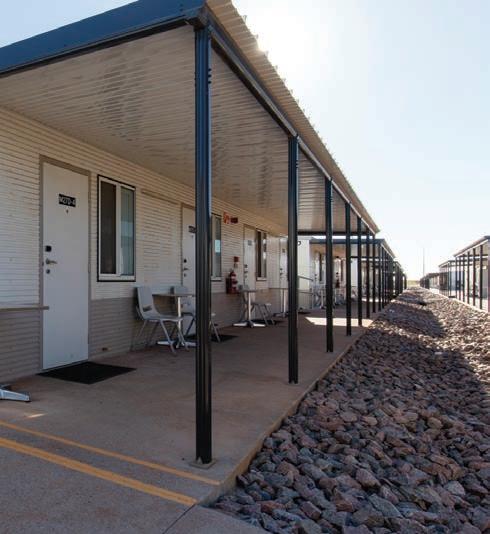
Workforce Accommodation Camps
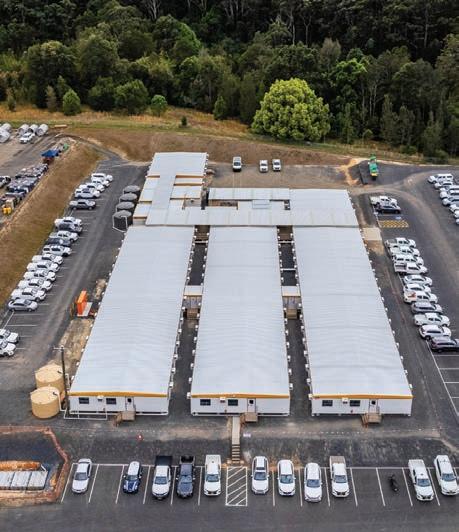
Project Site Offices & Amenities
O&M Buildings
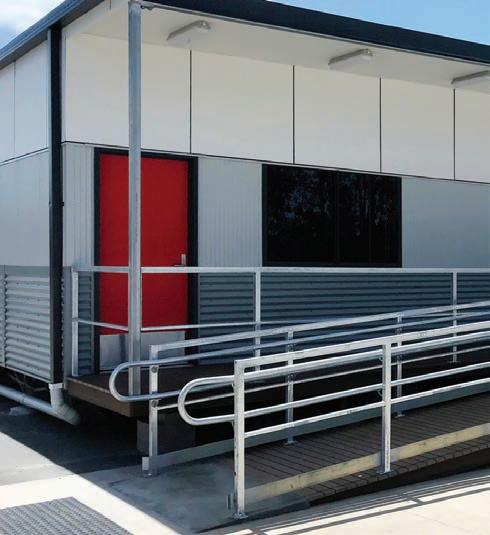
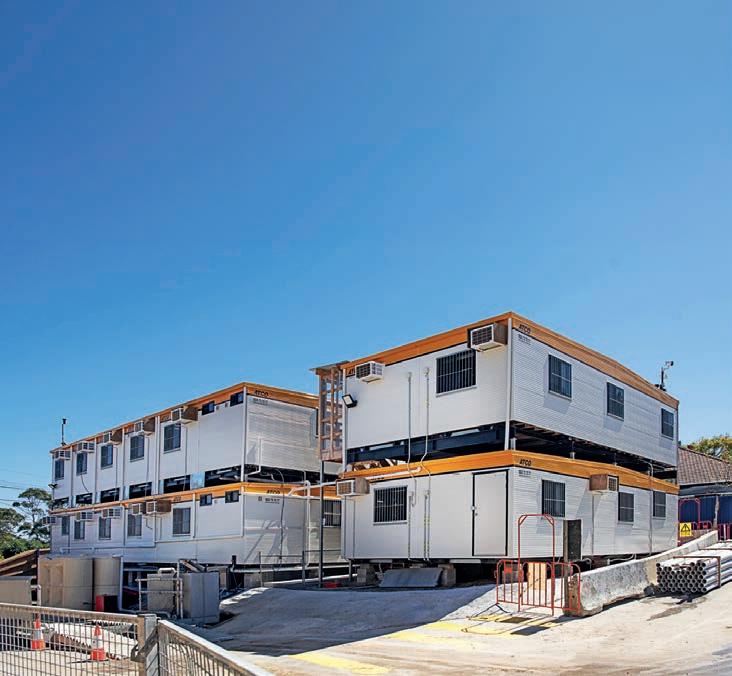
ATCO Structures has supported the Energy sector for more than 75 years with standarised modular building offerings ready for immediate deployment.
Call 1800 707 077 today to learn more about the benefits of modular construction and discuss your modular needs with team ATCO.
A smart meter revolution
As Bluecurrent’s smart meter footprint grows across Australia, the company has cemented ties with two trusted field service providers.
Australia is experiencing a smart meter boom following a rule change from the Australian Energy Market Commission mandating complete smart meter installation across the National Electricity Market (NEM) by 2030.
Smart meters are modernising Australia’s grid in line with the clean-energy revolution, providing consumers, retailers, regulators and the broader electricity system realtime insights into network analytics and behaviours.
Bluecurrent, with its innovative smart meter solutions, has been at the forefront of the rush, partnering with energy retailers Australia-wide.
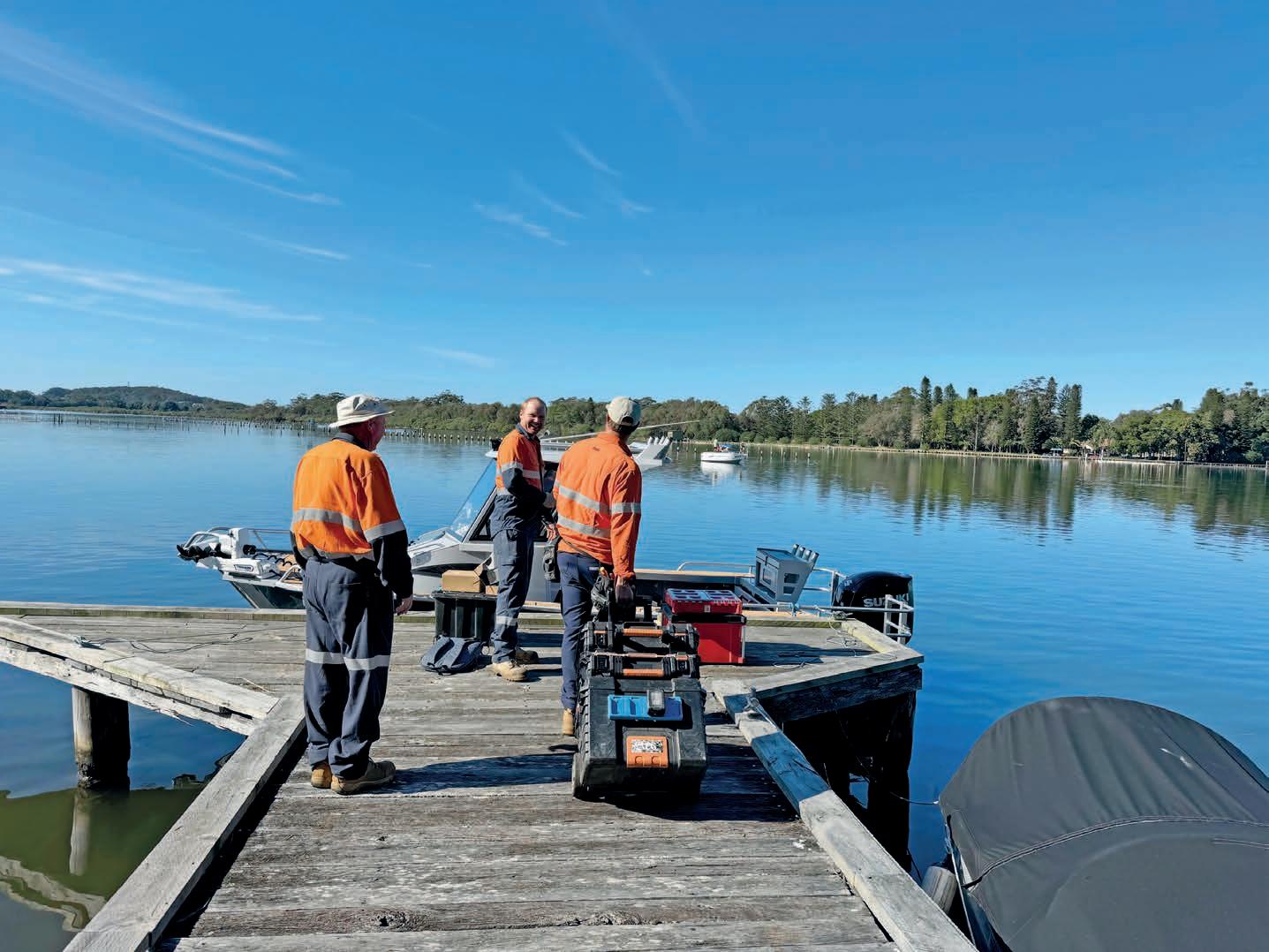
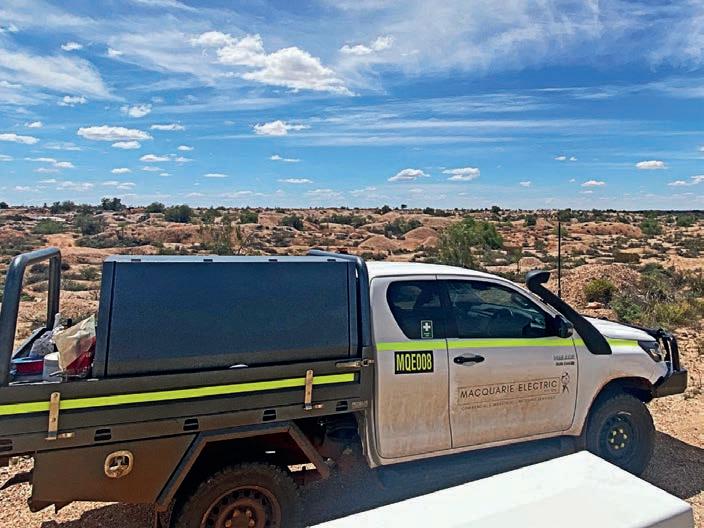
To carry out its deployment, Bluecurrent has teamed up with FSPs across the NEM. This includes The Electrical Co Australia (TECA) and Macquarie Electric – partnerships that have blossomed from small-scale operations to five-year contracts.
“Bluecurrent has been working with TECA and Macquarie for many years
now, with the three of us, in many ways, growing in the Australian market together,” Bluecurrent chief operating o cer Jane Mills told Energy
“We moved into a formal strategic partnership with both FSPs last year as we carry out the legacy meter replacement program over the next five years.”
So what do the partnerships involve?
“There’s a big focus on the switch from ‘dumb’ to smart meters, along with the provision of smart meter upgrades,” Mills said. “TECA and Macquarie Electric are also completing connections in new homes and commercial buildings.
“The services they provide in ensuring smart meters are fully functioning and delivering is equally critical. This includes ongoing maintenance or overcoming communications challenges, which can naturally occur in regional and remote areas.”
Mills said TECA and Macquarie Electric have an “incredible capability” at serving regional Australia.
“We’ve been focused on unlocking value in both metro and regional areas of Australia, and, from a safety and quality point of view, TECA and Macquarie Electric have proven their ability to support installations no matter the location,” she said.
“Whether they’re servicing Broken Hill in remote New South Wales, Kangaroo Island in South Australia, or the Bay Islands in south-east Queensland, we have FSPs completing meter replacements, installations and servicing in the farthest reaches of this country.”
TECA’s coverage originated in regional NSW before extending across New England, the Riverina, the Snowy Mountains and the Capital regions of the state. This has progressively expanded into the NSW metro area, while TECA has also taken on the responsibility of Bluecurrent’s Queensland work.
Beginning its journey in regional NSW, servicing the Central West, Far West and Orana regions, Macquarie
Electric has since expanded its work into the NSW metro area and South Australia.
These partnerships are also characterised by a willingness to go the extra mile for customers, with technicians regularly overcoming challenging site conditions to visit homes and clearly explain their role to customers. This is backed by early communication and strong pre qualification processes, which helps set expectations, reduce disruption and protect customers and field sta .
“Regular refresher training, toolbox talks, technical alerts and proactive monitoring of environmental risks – such as extreme weather, floods and fires – are completed to ensure technicians are prepared, supported and able to work with confidence,” Mills said.
Bluecurrent takes this service one step further, with its smart meter technologies excelling in both metro and ‘hard to reach’ areas. This includes regions prone to climate change-related weather risks, where it is critical to connect communities and ensure faults and outages are resolved sooner.
As its FSP partnerships with TECA and Macquarie Electric evolve in the coming years, Bluecurrent foresees greater investment in smarter processes moving forward. This includes artificial intelligence to refine work orders, reducing repeat visits and improving overall service outcomes.
For TECA managing director Scott Ireland, his company’s alliance with
Bluecurrent is “built on a collaborative, performance-driven partnership that prioritises e ciency, quality, and long-term value creation”.
“From initial customer engagement through to completion, our relationship is underpinned by strong operational experience, data-driven decision making, and a shared commitment to continuous improvement,” he said.
Macquarie Electric managing director Tim Allan echoed Ireland’s sentiments.
“Macquarie Electric and Bluecurrent share a strong partnership grounded in valuing every step of the work order journey – from the customer’s first interaction through to the technician’s final delivery,” he said.
“Great outcomes come from understanding and supporting every link in the chain together.”
Bluecurrent, more broadly, wants to expand its role as an enabler of a decarbonising electricity market.
“Along with our focus on smart meter deployment, we’re exploring new ways to provide data and value-added products and services to the market,” Mills said. “Our retailers could use smart meter data to develop new products or manage their wholesale book better, for example.
“Solutions are also focused on mitigating power outages. This involves pinpointing exactly where the outage has occurred and then helping networks understand how best to manage that and restore power.
“Smart metering can help provide network stability in all locations and climates, whether that’s in the Sydney CBD or remote expanses of South Australia.”
As Mills attests, the gold is in the data, with the potential to transform every stage of the electricity value chain through unrivalled information and insights.
“If I’m a customer, for example, rather than just getting a quarterly energy bill, through data generated by a smart meter, I can visit my retailer’s app and see what energy I used yesterday,” she said.
“This helps customers visualise their energy usage and manage consumption, which is not only important for sustainability and environmental reasons, but also helps customers have more control over their power costs.
“The data benefits are clear for retailers and the broader electricity market as well.”
Australia has a significant undertaking ahead of it to transition all households and businesses to smart meters by the end of the decade.
But with innovators such as Bluecurrent, and the likes of TECA and Macquarie Electric in the field, the country is well placed to not only totally adopt smart meters but also unlock a new frontier in network data and analytics.
The smart meter rollout is taking Bluecurrent and its FSPs to all corners of Australia.
TECA’s smart meter coverage has taken it into the Snowy Mountains.
Thenetworksconsultancy trust
Backed by 80 years’ experience, CivEng Consulting supports power, BESS and solar projects with agile, on-time delivery.
Acivil engineering consultancy backed by 80 years of combined industry experience is turning heads across the power and renewable energy sectors.
Founded in 2019 by Dave Jones and Vincent Kelly, CivEng Consulting has grown into a key provider of civil and structural engineering design solutions for Australian substations, BESS (battery energy storage systems), solar farms and beyond.
As Jones explained, when CivEng was established, Jones and Kelly had already been completing this line of work for decades.
“Vincent was always heavily interested in renewables, while I’ve been working as a civil/structural engineer on substation projects since the early 2000s,” Jones told Energy
“This meant that when CivEng Consulting was established, we could hit the ground running with a strong reputation and robust client base. And we’ve been able to cement that over the last few years.”
In recent years, CivEng was independently appointed to the design services panel (DSP) for transmission network service provider (TNSP) Powerlink Queensland.
“Being on the DSP is a requirement to be considered for any Powerlink project,” Jones said. “We deliver earthworks, roads and drainage design work, and civil extensions to existing switchyards for the TNSP.”
CivEng’s strong relationship with leading power and water consulting business Entura – also listed on Powerlink’s DSP – has generated
further work as a sub-contractor to the TNSP.
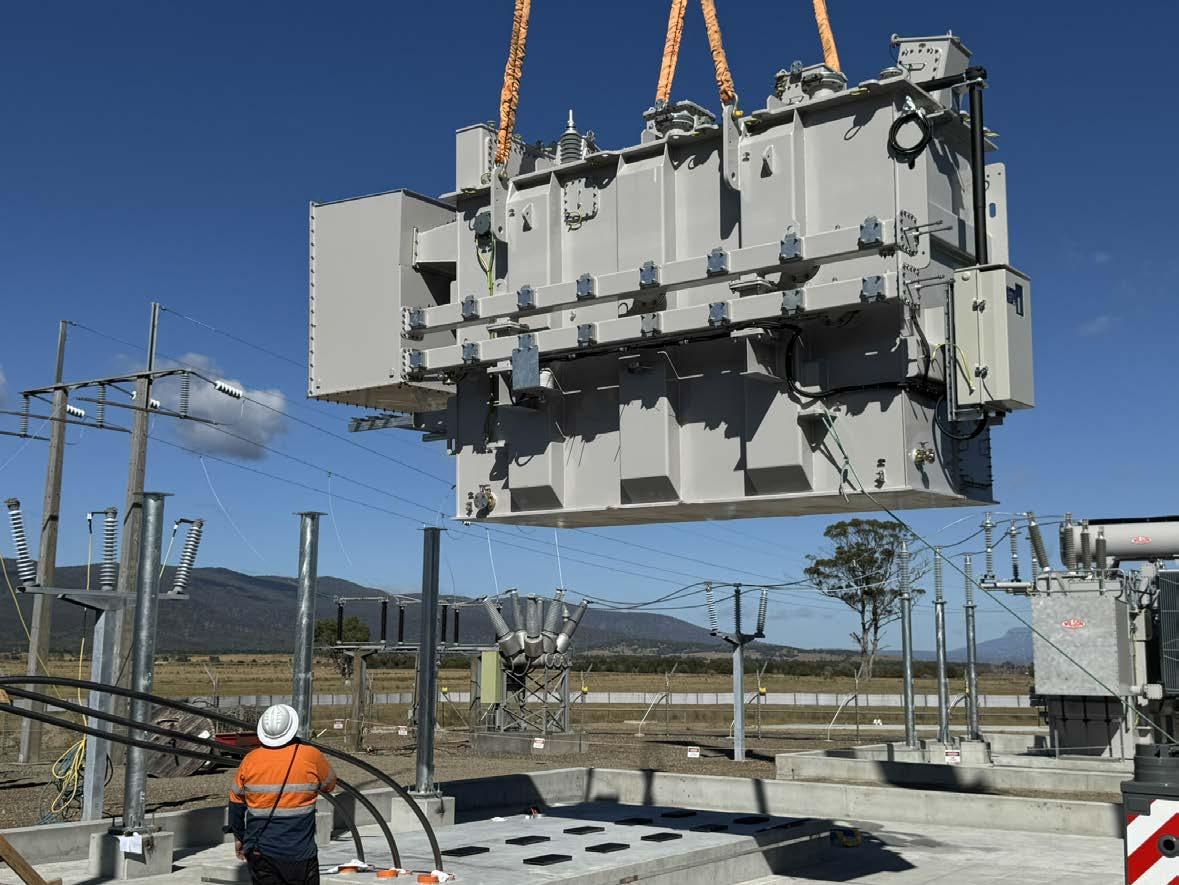
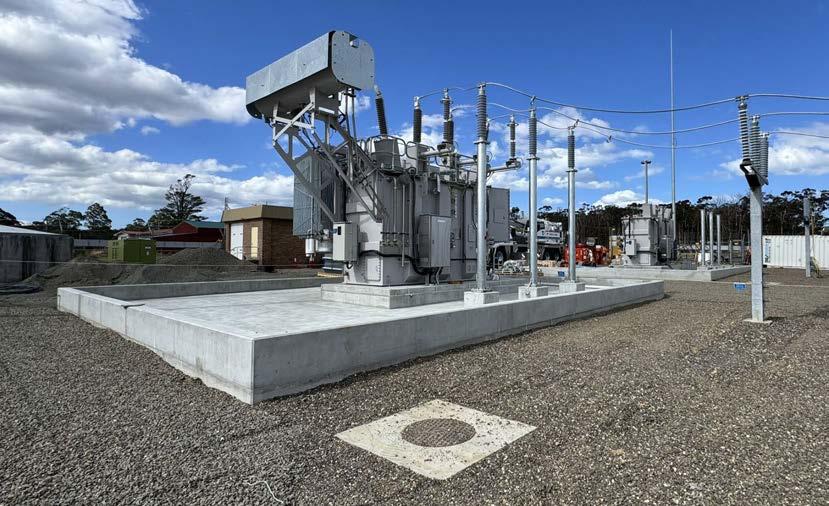
Another key CivEng partner is TasNetworks, with the two – through Megavar – recently working together on a pair of transformer replacements at the St Marys substation on Tasmania’s east coast.
Here, two 62-year-old transformers had reached their end of life and were beyond their 10MVA firm capacity. After months of cost-benefit analysis, planning and choreography, new concrete plinths were poured, transport routes mapped and subcontractors engaged.
CivEng Consulting led the civil and structural design for the project, having already established a reputation for its work on previous transformer replacements alongside Entura at
CivEng Consulting recently worked with TasNetworks on a pair of transformer replacements.
TasNetworks’ Boyer, Lindisfarne and Port Latta substations in Tasmania.
Specifically, CivEng carried out the engineering design and documentation of replacement transformer bunds at St Marys, along with the integration of new conduit and oil containment systems.
Other works included the installation of a new underground 40,000-litre oil water separator tank, concrete “transformer” delivery roadway and stormwater systems, and an extension to the electrical conduit pit-andpipe network.
CivEng also provided construction support throughout the course of the project.
TasNetworks project manager Leigh Henderson explained why the TNSP keeps coming back to CivEng.
“CivEng has a long association with TasNetworks projects and has established a familiarity with its sites, technical standards, and sta over time,” TasNetworks project manager Leigh Henderson told Energy. “This has resulted in a sense of confidence and comfort that the end product will be fit for purpose.
“CivEng has also provided a timely and professional construction support service to assist with inevitable site issues that arise during the project, particularly on brownfield sites.”
In order to achieve project deliverables, Henderson said, it’s
critical that delays (and associated costs) are kept to a minimum.
“To achieve this, critical stakeholders such as design and asset engineers, project sta and tradesmen in the field must be able to liaise quickly and e ectively to develop solutions and keep the project moving,” he said.
“This approach has been e ectively implemented by TasNetworks and CivEng and is now progressing into pre-emptive design to seek project e ciencies in construction methodology and program, ideally leading to reduced cost.”
“would not hesitate” to recommend CivEng to other TNSPs or renewable
Megavar – who engages CivEng for many of its TasNetworks projects –explained what makes the engineering
“CivEng’s niche focus on the power structural and high-voltage electrical
. “This enables them to deliver cost-e ective designs, which stems from a responsive, collaborative, and proactive team that anticipates issues
Hach said CivEng has established a “strong track record” across greenfield and brownfield projects, with a strong emphasis on delivering on-time and
CivEng Consulting intimately understands its own capability, and the industry does too, which is leading to the firm being considered over larger firms for work.
“We compete very well with larger firms because we’re able to put experienced people onto projects,” Jones said. “You can quite often tell when a project has been carried out by less-experienced personnel – CivEng is often called upon to rectify design issues or resolve problems on site.”
Partners are also able to come direct to Jones with any concerns, rather than navigating a chain of command.
CivEng Consulting founder Dave Jones.
CivEng Consulting led the civil and structural design for the St Marys transformer replacement project.
“We also have the agility of a small firm, which means we can be easily contacted and easily respond pre, during and post project,” Jones said.
Jones said he’d received feedback from peers about other larger consultancies going missing after the delivery of a project.
“But CivEng is always here right the way through,” he said. “Even after the project, clients can come back to us and make sure the job is 100 per cent finished.”
With less bureaucracy as a smaller firm, CivEng can move through projects “pretty swiftly”, with Jones suggesting the company is “almost never the bottleneck”.
“We know what we’re meant to be doing before project engineers detail the project specifics,” Jones said. “This means we’re often ahead of the program and rarely on the critical path, even if it looks like we should be.”
Building on its success in the power sector, CivEng Consulting is expanding into the renewable energy industry, already establishing a reputation in delivering battery projects.
“We’ve been involved at a preliminary stage on several battery projects, completing detailed design for earthworks, roads and drainage, while also overseeing the structures, such as footings and steel frames,” Jones said.
“One battery project saw us deliver an end-to-end solution, completing all the preliminary civil engineering work such as designs for an access road and internal roads, full earthworks and fencing. This also included design for a substation within the facility.”
This project included 100-megawatts (MW) of battery containers alongside inverters, control rooms, and a switchyard with a transformer bund plus firewalls, outdoor switchgear, and a gantry for transmission lines leaving the switchyard.
CivEng Consulting can deliver all civil and structural aspects of power and renewable energy projects both large and small and provide substation expertise to boot – an end-to-end o ering bringing more clients to the company’s door.
“We’ve got low overheads, we’re price competitive and I’m increasingly seeing a shift in the industry where utilities and TNSPs are turning to smaller consultancies to do components of work,” Jones said.
“While larger firms are contracted to complete entire multi-disciplinary projects, where utilities can control part of their project, they seem increasingly interested in using a smaller firm like us.
“At the same time, we’re gaining a foothold in larger projects – evidenced by the recent 100MW/200MWh battery project we delivered.”
As timeline and cost pressures intensify in power and renewable energy industries subject to heightening stakeholder and government expectations, having a trusted partner to turn to is critical to ensuring project viability.
Through CivEng Consulting, utilities, DNSPs and TNSPs not only have a domain expert backed by 80 years of combined industry experience, but a partner that delivers on time and can quickly pivot to meet evolving project needs.
This reputation positions CivEng to play a central role as the energy transition accelerates.
At St Marys, two 62-yearold transformers had reached their end of life.
CivEng Consulting understands the unique interfaces between civil/structural and high-voltage electrical requirements.
Images:
CivEng Consulting
One seamless network, Australia-wide
As fuel prices surge and supply chains are disrupted, one innovator is keeping Australian grid projects on-time and on-budget.
Asuccessful grid project is grounded in the uniformity of many moving parts.
Not only is it critical that machinery and components arrive on-site on time, which necessitates continuity between suppliers, logistics and freight operators, but the availability of skilled workforce such as engineers, project managers, consultants and on-site tradespeople is also essential to support project delivery.
If parts of the value chain aren’t aligned, a project can quickly go awry.
Luckily, the energy industry has a partner to turn to that specialises specifically in field execution.
As Australia and New Zealand’s only inventory and managed logistics solution, Droppoint brings continuity to complex, multi-faceted energy projects.
Through Droppoint’s national inventory network, managed logistics capability and Materials Orchestration System (MOS), the company aligns
stakeholders and keeps materials and logistics moving as planned.
Droppoint chief executive o cer Jason Flanagan explained how optimised field execution not only expedites project delivery but also minimises ongoing community and environmental impact.
“When delivery runs to schedule, there is less impact on tra c, fewer interruptions to surrounding operations, and lower unnecessary emissions such as CO2 caused by delays, rework or ine ciencies,” he told Energy
“For grid projects, this unlocks smoother delivery, stronger stakeholder outcomes and a more controlled project environment overall.”
Droppoint delivers inventory optimisation and availability from original scope planning through to real-time assistance as sites are being delivered and commissioned. This is backed by sustainable and repeatable inventory and logistics practices.
The company’s Pick-Up-Drop-O (PUDO) inventory network spans over 1000 locations across Australia and New Zealand, with the ability to expand and contract the network based on customer requirements. In-night delivery can be organised to ensure parts arrive at a Droppoint close to technicians or job sites.
This decentralised model means energy operators can remain agile in the field and make sudden changes where necessary, recognising a Droppoint and Droppoint technician is not far away to provide support.
While Droppoint’s footprint spreads far and wide, the company’s network is bound together by MOS – a digital twin detailing where components are at a specific point in time, and where they’re headed next.
Users can automate parts reordering, view invoices, visualise what has been collected and used, and stay on top of inventory requirements – all from a desktop or mobile.
Droppoint’s inventory network spans 1000 locations across Australia and New Zealand. Image: Droppoint
Partners such as Droppoint are going to play a critical role in the grid transformation. Image: Sudtawee Thepsuponkul/shutterstock.com
“We ensure project materials are staged, tracked and delivered in line with installation requirements and service expectations,” Flanagan said. “Our role is to coordinate shipments, staging zones and delivery windows, while providing the operational visibility needed to identify and resolve issues before they disrupt the field.
“This is platformed by MOS and bolstered by Droppoint’s team of technicians, engineers and project managers, featuring some of the brightest minds in the energy industry.”
Droppoint’s impact is proven. The company can deliver average project cost savings of $2.4 million, a 30 per cent reduction in inventory holdings, 2.64 tonnes of CO2e saved per customer, per month, while saving 12,500 average hours on the road.
These metrics are all the more attractive amidst today’s pressing strain of surging fuel prices, supply chain disruptions and the growing need to decarbonise, with field teams increasingly implored by management
to unlock more project e ciencies and uptime.
“Australia’s grid transformation will not be delivered by generation and transmission investment alone,” Flanagan said. “It will also depend on how e ectively materials, spare parts and field activity are orchestrated across geographically dispersed projects and service regions.
“This is where Droppoint sees its role. We want to provide the inventory visibility, logistics control and in-field support that reduce friction between planning and execution, while alleviating pressures on operators facing heightened costs and lead times across their value chain.”
As grid development across Australia accelerates to support the country’s emissions-reduction targets, Droppoint sees an opportunity to service not only constructionphase activity, but also the long-tail operational requirements that follow.
“Once assets are commissioned, the focus shifts to uptime, maintenance
responsiveness, replacement parts access and network resilience,” Flanagan said.
“Our model is designed to support both. We can help enable projects during delivery and then continue supporting field service outcomes once those assets are part of the live grid.”
Droppoint’s ultimate goal is to make grid development more predictable, scalable and operationally mature.
“In a sector where every delayed crew, misplaced component or missed delivery window has a downstream impact, we believe better field execution will be a genuine competitive advantage,” Flanagan said.
“Australia’s energy transition is being shaped by a growing pipeline of renewable, storage and transmission projects, and the execution challenge will only become more important as that pipeline expands.
“This is exactly where Droppoint intends to lead.”
The BESS network nobody owns
Australia’s BESS projects are scaling fast, but a critical networking gap is thwarting commissioning timelines.
The drawings passed review.
The lab acceptance test went smoothly. But three days into commissioning, the battery management system can’t see the PCS, the SCADA historian is polling across the wrong VLAN, and nobody on site can explain why the redundancy protocol isn’t recovering the way it was supposed to.
The hardware isn’t faulty. The design intent was sound. The problem is that
no single party owned the network, and by the time that became obvious, the containers were already on site.
This is one of the most common patterns seen in BESS projects across Australia, and it’s getting worse as deployments scale.
Three parties, three assumptions
On many BESS projects, the networking layer sits in a gap between three parties, and each one assumes someone else is handling it.
The OEM designs the container as a self-contained unit. Internal addressing, switch selection, and protocol behaviour are often standardised across every container they ship, regardless of the site requirements.
The systems integrator focuses on controls, power conversion, and grid compliance. They’ll specify the SCADA platform, define the control philosophy, and manage commissioning, but the network infrastructure that carries all that tra c is frequently treated as a procurement line item, not a design decision.
Inheriting whatever was built, the operator needs remote visibility, secure access for vendors, and confidence that a link failure won’t cascade into a protection event. But they’re often the last to see the network design… if a documented design even exists.
The result is a network that was never designed as a system. It was assembled from assumptions.
Why this matters for the future grid
identical across every container they ship, while each integrator brings their own commissioning expectations. And the operator now needs segmentation, remote access, and cybersecurity controls across a network that was never designed holistically.
This is where the ownership gap becomes a project risk, not just an inconvenience. Unresolved addressing conflicts delay commissioning, missing segmentation creates cybersecurity blind spots, and when failover behaviour hasn’t been validated end-to-end, the first real fault becomes a painful discovery exercise rather than a simple recovery event.
Closing the gap early
The fix isn’t better technology, it’s better accountability. Someone needs to own the network as a system before the hardware ships. That means validating the topology against the control philosophy, resolving addressing conflicts before containers leave the factory, and ensuring failover behaviour works as intended, instead of discovering it during commissioning.
The projects that commission cleanly tend to be the ones where these conversations happen during design, not as a remediation exercise. The cost of addressing it early is measured in hours of engineering time, but the cost of addressing it late is measured in operational risk that follows an asset for years.
As a key provider of OT network design validation for Australian BESS and microgrid projects, Madison Technologies understands these risks well.
A single-container BESS with one switch and a flat network can tolerate a fair amount of ambiguity. It’s not ideal, but the blast radius of a mistake is small. That changes fast. As projects scale to multi-container sites with co-located solar, wind, or grid-forming inverters, the number of vendors, protocols, and tra c types multiplies. Each OEM brings its own IP scheme, which is often
“The future grid depends on storage that performs predictably,” Madison solutions engineer team lead Corey Nesbitt said. “That starts with a network that someone actually owns.”
Download Madison Technologies’ BESS Connectivity FAQ at madison. tech/ot-connectivity-for-bess
In many BESS projects, there’s often a communication gap between OEMs, systems integrators and operators.
Unifying the grid
As Australia’s grid rapidly evolves, system reliability now hinges on coordination more than asset performance.
Australia’s energy system is no longer centralised or predictable. Across critical infrastructure, energy is now generated, stored and managed at the edge through a combination of solar, batteries and backup generation.
What’s emerging isn’t just a di erent mix of technologies, but a di erent kind of system.
For operators managing large, distributed networks, reliability remains the constant. The challenge is that reliability now depends on how well multiple energy sources interact,
rather than how well each performs individually. This significantly changes the role of energy infrastructure.
When systems don’t work as a system
Most infrastructure sites haven’t been designed from the ground up as integrated energy systems. They’ve evolved over time.
Solar has been added to reduce costs. Batteries have been introduced to improve resilience. Diesel generators remain as a safeguard.
Individually, these assets are e ective. But without coordination,
they don’t always deliver their full value.
It’s common to see batteries underutilised, generators running longer than necessary, or wind and solar farms not being used as e ciently as they could be. This isn’t because the technology isn’t there but rather the systems aren’t working together in a meaningful way.
This challenge is particularly pronounced at edge and o -grid sites, where energy management must happen locally, often without consistent oversight.
The Decon Smart Controller sits across the energy system, managing how solar, batteries and generators interact in real time. Image: Taras Vyshnya/shutterstock.com
Introducing control as a core function
Decon’s Smart Controller (DSC) was developed to address this challenge –not by replacing existing infrastructure, but by introducing a control layer that connects each asset.
The controller sits across the energy system, managing how solar, batteries and generators interact in real time.
Rather than responding to fixed triggers, it continuously adjusts based on conditions. If solar is available, it can be prioritised. If stored energy can be used instead of starting a generator, it will be. If demand changes, the system adapts accordingly.
It turns a collection of energy assets into a coordinated system that responds, rather than simply reacting, which is particularly important at network scale.
One of the defining challenges of Australia’s energy landscape is its geographic spread. Infrastructure is often located in places where access is limited and conditions vary.
In this environment, energy management can’t rely on manual oversight.
The Decon Smart Controller is designed to operate autonomously at site level, while also enabling remote visibility across broader networks, enabling remote visibility and control across multiple operations.
This allows operators to maintain consistency across distributed sites, identify issues earlier and optimise performance without needing to attend site. Over time, it also enables a more coordinated approach to energy across entire networks, rather than isolated locations.
Working with what already exists
A practical reality for most companies is that their infrastructure is already built and heavily invested in. Moving towards a more intelligent energy model needs to work with that foundation, not replace it.
The Decon Smart Controller integrates with existing systems using standard industrial protocols, allowing it to sit over current infrastructure and enhance how it operates.
This approach enables improvement without disruption. Systems can be optimised, rather than rebuilt, making the transition more achievable in operational environments.
While large-scale grid integration introduces additional complexity and regulatory considerations, the shift towards intelligent, responsive energy systems is already underway at the edge.
Technologies like the Decon Smart Controller represent an important step in that transition.
By enabling real-time coordination of multiple energy sources at site level, the Decon Smart Controller lays the groundwork for broader system integration in the future, where distributed assets can operate as part of a more dynamic, interconnected energy network.
The future grid will be shaped by how well energy systems can adapt, not just how much capacity they have.
That places greater importance on control and the ability to coordinate multiple energy sources in real time across distributed environments.
What’s emerging is a model where infrastructure is no longer static; it is becoming responsive, programmable and increasingly autonomous in how it operates.
That shift is already underway – starting at the edge.
The Decon Smart Controller can be operated autonomously. Image: Decon Corporation
Grid gamechanger
As Australia’s electricity grid grows more complex, automation is the key to preventing costly network failures.
With the proliferation of new renewable generation and battery energy storage systems (BESS), Australia’s electricity grid is quickly outgrowing itself.
This is changing the way networks should be configured, with the diversity of original equipment manufacturers (OEM) and design methodologies adding further complexity.
“As Australia’s electricity demand increases, we’re seeing bigger batteries, solar and wind farms and more of them, meaning networks are growing massively,” Belden solutions sales manager – Australia and New Zealand Andrew Tildesley told Energy “Architecture that once worked on smaller networks, where there were more tolerances and you could get away with imprecise configuration, doesn’t work with the larger networks we see today.”
A large solar farm, for example, requires more inverters, network switches and DC couplers, creating more sophistication. This renders any human error during installation, commissioning and operation costly.
“With today’s solar networks larger and more complex, greater discussion on the correct design for network redundancy and resilience is needed,” Tildesley said. “The moment a switch is poorly configured, or not suitable for the application it has been chosen to perform, then it will fall over.
“And when you’re coupling a solar farm with a BESS, precise networking is essential to not only performance but also safety.”
According to Belden – a USheadquartered industrial automation and networking innovator – there are several ways to streamline today’s electricity network.
Belden sees an electricity market increasingly influenced by emerging technologies such as softwaredefined networking (SDN) but not the uptake capable of future-proofing the grid.
From SDN comes intent-based networking (IBN) – a fully automated approach to designing, deploying and maintaining networks. Combine IBN with IEC 61850 and utilities have access to a fully standardised, interoperable substation environment – and one that can grow with evolving electricity demands.
“Modern utility networks are undergoing a rapid transformation, driven by digitalisation and the increasing need for scalable, e cient, and resilient infrastructure,” Belden said in a whitepaper presented at CIGRE SC B5 in Osaka, Japan in July 2025.
“These advancements, while beneficial, have introduced new layers of complexity that challenge traditional networking approaches.”
While protection, automation, and control systems (PACS) embedded into today’s digital infrastructure are critical to ensuring network stability and reliability, Belden sees many field engineers constrained by outdated practices.
This includes relying on commandline interfaces (CLI) or manual scripts to configure network switches, which places a ceiling on network capacity and resilience.
“IBN and IEC 61850 together o er a promising pathway to address these challenges,” Belden said. “While IBN introduces a paradigm shift in network management by automating configurations based on high-level intents, IEC 61850 provides a robust standard for substation automation and interoperability.”
Tildesley said adopting IBN whilst following IEC 61850 standards is critical to ensuring the stability of not just one substation but the entire network.
“Networks don’t respond well to inconsistent current and voltage levels,” he said. “Those fluctuations can trip switches o ine and potentially disrupt the entire network.
“With IEC 61850, continuous communication helps detect conflicts quickly so the impacted substation can be isolated – preventing a broader network outage.”
Critical information moves faster and more reliably when it doesn’t have to contend with congestion or large data payloads.
This is where automation can be an enabler.
“In substation architecture, many devices are talking to each other on di erent layers of the network,” Tildesley said. “No matter what IED (intelligent electronic device) or voltage transformer is being used, implementing IBN helps automate the network configuration process.
“The combined IBN and IEC 61850 solution is vendor-agnostic and compatible with existing (including legacy) switches, enabling seamless interoperability without the need for a dedicated SDN controller. This flexibility makes adopting IBN and IEC 61850 both accessible and cost-e ective, o ering a practical way
to future-proof network management across diverse utility environments.”
Tildesley said he’d like to see more utilities adopting processes such as IBN to future-proof their substations, recognising there’s a stigma related to system risks.
“Many utilities don’t want to be the first to implement new ideas and processes like this, because if things go bad, it can open them up to regulatory breaches and fines,” Tildesley said.
“At the same time, they know they’ll have to change as manufacturers evolve their technologies and products. The good news is that IBN and IEC 61850 aren’t new to the industry – they’re proven tools that can do the heavy lifting and remove the guesswork from some critical networking processes.
Focused on moving data from point A to point B, Belden can support utilities in implementing IBN and IEC 61850.
“With Australian-based solutions engineers, we help utilities optimise
According to Belden, there are several ways to streamline today’s electricity network. Image: yelantsevv/ shutterstock.com
their network design by working through questions like: what obstacles are you going to face, what limitations do you have, and what level of redundancy do you need?” Tildesley said.
“From there, we make sure they’re using the right product for the application – which may mean adapting networking processes first, and then selecting the best-fit solution to match.”
As Australia’s electricity grid expands in scale and complexity, approaches such as intent-based networking in conjunction with IEC 61850 o er utilities a pathway to eliminate networking guesswork, reduce risk, and build resilient, futureready infrastructure.
With experienced local support and proven technologies already at their disposal, utilities that move early will be best placed to unlock the full value of renewable energy and storage integration.
Safer transformers, safer grid
As Australia’s grid transforms, smarter transformer fluids are unlocking safety, sustainability and cost advantages.
It’s no secret that Australia’s electricity network is undergoing one of the most significant transformations in its history.
Not only did Australian energy demand reach an all-time-high in the December 2025 quarter but renewable energy generation exceeded fossil fuel output for the first time on a quarterly basis.
For Australia to achieve its 2030 clean energy goals, this trend will need to continue, with a requirement that renewable energy makes up 82 per cent of the electricity grid by the end of the decade. This means increasingly decentralised grids and infrastructure will be expected to carry higher volume and for longer.
The demands placed on transformers and supporting
assets have never been greater.
Reliability, safety, sustainability and speed of delivery are now fundamental requirements of the future grid, driving energy companies and network operators to rethink the technologies underpinning their infrastructure.
One area drawing renewed focus is the insulating fluid used inside transformers. Although crucial to prevent overheating, insulation failure and transformer breakdowns can be toxic to humans, wildlife, and the environment, especially when derived from mineral oils.
Ranked the world’s number one lubricants supplier for 19 consecutive years, Shell combines global recognition with advanced research and development led by over 200 scientists and engineers, driving continued
innovation across its product range.
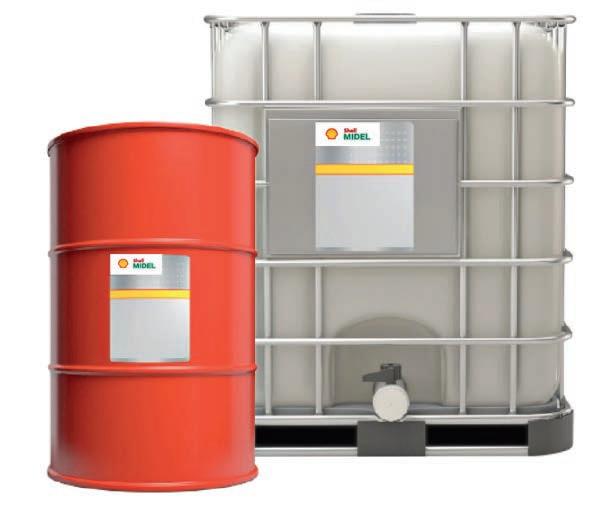
This includes the development of ester-based transformer oils like Shell MIDEL. Synthetic esters and natural ester-based oils are suitable for indoor, high fire safety and eco-sensitive applications, enabling safer, more resilient energy infrastructure.
Viva Energy Australia – the Shell Lubricant macro distributor in Australia – provides local expertise to ensure customers intimately understand Shell MIDEL and its applications.
Safety in a more complex grid
Future energy networks are increasingly being built closer to people, assets and sensitive environments, whether that’s urban substations, renewable installations or
critical infrastructure precincts.
In these locations, transformer fire risk is a critical concern. Mineral oil-filled transformers can present significant hazards if a fault occurs, often requiring extensive fire suppression systems, blast walls and large clearances that increase project complexity and cost.
Shell MIDEL ester transformer fluids have fire-safe and biodegradable properties that not only safeguard transformers but also help to protect the environment surrounding these machines.
“Shell MIDEL 7131, classified as K3 class, is a synthetic ester transformer fluid that’s been uniquely formulated to be fire safe,” Viva Energy technical specialist Silvana Farrugia said.
With a fire point exceeding 300°C, Shell MIDEL 7131 has a 100 per cent fire safety record. It significantly reduces the risk of transformer fires and thermal escalation events, enabling safer transformer installation in confined or indoor environments and substantially reducing the need for fire protection systems, concrete barriers, and large safety clearances.
“Additionally, the fluid itself helps extend the life of the transformer through moisture absorption from the cellulose, extending cellulose life, and insulation of the transformer,” Farrugia said. “This allows the transformer to operate at higher temperatures for longer and stronger up to its standard lifetime.”
For grid operators, this translates to greater design flexibility, more
compact substations, and longer transformer life that helps energy networks densify to support distributed generation and electrification.
Having already been deployed globally in distribution, power and renewable transformers up to 433kV, Shell MIDEL 7131 has a proven track record of performance across demanding applications, including wind energy, transport and critical industrial environments.
Sustainability and performance combined
As grids connect record levels of renewable energy generation, systems are also being developed sustainably, with environmental protection, asset longevity and responsible materials selection front of mind.
Shell MIDEL eN 1204, as a natural ester-based fluid, o ers a lower
carbon footprint than conventional mineral oil. It is readily biodegradable, non-hazardous and non-toxic, meaning that in the unlikely event of a leak, environmental impact is significantly reduced compared to traditional mineral oils.
Beyond environmental protection, Shell Midel eN 1204 also o ers strong technical advantages, with its high fire-point 100 per cent fire safety record, and a pour point of -37°C, making it e ective for installations in cooler climates.
While ester fluids are often considered through a safety or sustainability lens, their cost advantages over an asset lifecycle are equally important. Improved fire safety can deliver significant indirect cost savings by reducing insurance premiums, minimising outage risk and avoiding expensive remediation following fire incidents.
In addition, Shell MIDEL’s longer insulation life can help extend the life of a transformer and support higher or more flexible loading, helping network operators get more value from existing infrastructure as the grid adapts to new energy flows.
Australia’s electricity grid is demanding solutions that do more than meet today’s specifications; they must actively enable safer designs, sustainable outcomes, and smarter economics. Shell MIDEL’s combination of fire safety, environmental protection and proven performance positions it as a compelling choice for modern transformer applications.
Receive a free Shell MIDEL consult by contacting the Viva Energy technical help desk at technicalhelpdesk@ vivaenergy.com.au or 1300 134 205
Shell MIDEL ester transformer fluids have fire-safe and biodegradable properties. Image: Viva Energy
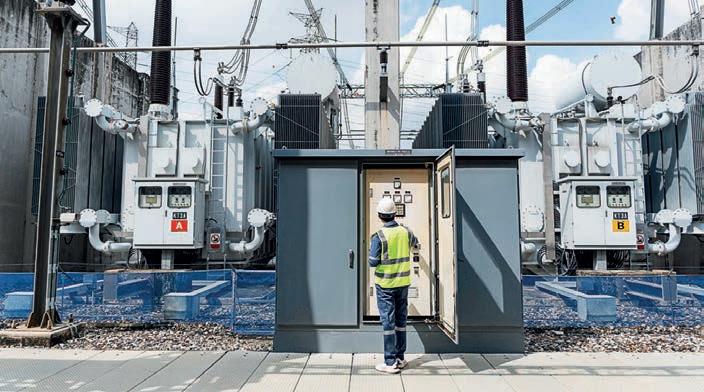
Shell MIDEL 7131 helps extend the life of transformers. Image: JD Studio/stock.adobe.com
A generational interconnector
From Heybridge to Hazelwood, Marinus Link is building on Basslink to bring new renewable energy resources and stability to Australia’s grid.
Australia has a storied subsea history that dates back to 1871, when the country’s first deepwater line connected Darwin with Java, Indonesia, unlocking a new communications frontier between Australia and the rest of the world.
Local governments and businesses that previously waited weeks for an exchange of information from as far away as London could receive messages almost in real time.
Fast forward nearly 155 years and Australia is celebrating the 20th anniversary of shared electricity between Tasmania and Victoria, with Basslink constructed by National Grid Australia between 2003 and 2005 and commissioned in April 2006.
While the 500-megawatt (MW) Basslink continues to operate to this day, it’s constrained in its capacity to meet Australia’s future electricity needs and has been susceptible to
failures, evidenced by a 2015 outage that extended six months.
This has seen a new subsea project come to the fore.
Marinus Link was spawned in 2017 when the Tasmanian Government, with support from the Federal Government, directed TasNetworks to complete a feasibility study into a second Bass Strait interconnector.
Eight years on and after proving its technical and economic viability, a final investment decision was made on stage one of Marinus Link in August 2025, with early works commencing on the project this year.
Energy recently took to the sloping hills of Gippsland to better understand Marinus Link’s scope and the project’s future role in the National Electricity Market (NEM).
Firstly, it was important to delineate the di erence between the two subsea interconnectors.
While Basslink has proven to be a key asset in recent decades, enabling Tasmania’s hydropower industry to transport electricity interstate, the NEM is increasingly missing out on valuable Tasmanian supplies because of the line’s constrained 500MW capacity.
“With 750MW cabling available across its two stages (1500MW all up), Marinus Link augments and enhances the amount of electricity that can be transferred between the two states,” Marinus Link external communications and media manager Justin White said.
“With Basslink now 20 years old, it won’t be there forever. Marinus Link not only adds to capacity now, but also provides more redundancy and resilience, particularly for Tasmania, for decades to come.”
The tech behind Marinus Link
Marinus Link will see a fibre-optic cable and two advanced HVDC cables
Early works where the cable will enter the sea at Waratah Bay, Victoria.
extend about 255km across Bass Strait. After reaching the Victorian shoreline, the line will continue a further 90km from Waratah Bay to a converter station in Hazelwood in the Latrobe Valley, where it will connect with the broader Victorian grid and NEM.
On Tasmania’s side, the interconnector will connect with the Heybridge converter station, located within arms’ reach of the water, before integrating with a 220kV transmission line and providing electricity to the state’s grid.
All cabling will run subsea and underground from Heybridge to Hazelwood, with both the subsea and land portion to be installed about 1–1.5m below the ocean floor and ground, respectively.
Both converter stations will use two-way HVDC systems from Hitachi Energy – the first time in Australia advanced converter technology has been incorporated at both ends of an interconnector.
meaning Marinus Link will not only enable the transfer of electricity between Tasmania and the mainland, but it will also provide significant grid-stability support to the NEM.
“In the event of interruptions, it will ensure the electricity system remains stable, reliable and resilient, reducing the frequency of blackouts in local communities.”
any one time.
This will see six months of bulk earthworks at the Hazelwood converter station commence in August, before the building is erected and Hitachi Energy arrives to supply its HVDC technology.
Hitachi Energy’s HVDC Light voltage source converter (VSC) stations will be installed in stage one of Marinus Link. This will convert alternating current (AC) to direct current (DC) to support e cient, long-distance transmission before being converted back to AC to be transferred to the grid.
“The VSC technology being built here is the beating heart and brains of Marinus Link,” Hitachi Energy Australia country managing director Bernard Norton said during our tour of the Hazelwood greenfield site.
Norton said that, alongside new generation infrastructure, it was equally important to build transmission infrastructure and grid-forming converter stations to match.
“Marinus Link and projects like it will be critical in enabling the connection of renewable energy resources to the grid,” he said.
Having already begun early works at Waratah Bay in Victoria – where the cabling will enter the water – Marinus Link’s civil and construction contractor TasVic Greenlink will carry out the
TasVic Greenlink general superintendent Matt Malone said he expects the Hazelwood converter station to commence commissioning in late-2029.
Cabling will be supplied by Prysmian, the world’s largest cable manufacturer. Cable laying vessel Leonardo Da Vinci will transport the subsea cables, with additional freight vessels transporting the land cable drums from Italy and Spain to Australia.
Land cables will then be laid out in sections onshore between Waratah Bay and Hazelwood, separated by joint bays every 1200–1400m, while a specialised vessel will be tasked with the subsea installation, travelling along the Marinus Link route and lowering the cable into the ocean.
A burial vessel will follow in the ensuing days, operating a subsea trenching machine to firmly entrench the cable 1.5m beneath the sea floor.
The Heybridge converter station, which will also be fitted with Hitachi Energy HVDC technology, is another important piece of the Marinus Link puzzle.
In November 2025, two permits –for the shore crossing and converter station – received approvals from the Tasmanian Environment Protection Authority (EPA) and Burnie City Council. The converter station permit is currently in an appeals process, which is expected to be resolved in August. Construction on the plant is set to commence later this year.
Images: Joel Strickland
Marinus Link is a 345km interconnector connecting Heybridge in Tasmania to Hazelwood in Victoria.
Hitachi Energy Australia country managing director Bernard Norton discusses the scope of the Hazelwood converter station.
of Marinus Link will be completed in 2030 to enable the interconnector’s NEM energisation.
Years of community engagement
Marinus Link has navigated a stringent approvals process to get to where it is today, with Federal and State Governments – and associated local communities – needing to provide their clearance.
Some of the industries with which the onshore component of Marinus Link a ects includes forestry, dairy farming and potato farming.
Marinus Link head of community and social impact Mark Lindsay has spent years engaging with local communities to ensure that everyone is supported during the Marinus Link build.
“We’ve been transparent with what is involved in constructing Marinus Link and worked closely with landholders to ensure they are catered for,” he said.
Where Marinus Link can, cabling will be installed along fence lines to reduce the impact on existing farmland, but Lindsay did acknowledge some cabling would be built through the middle of paddocks. This will require access tracks to be built to transport cabling and associated machinery to trench locations.
Two trenches will be installed side-by-side and at least 1.5m deep for where the stage one and two cables will be laid.
“Every farm has construction and property management plans, which detail arrangements between the project and farmer to ensure land – at a minimum – is left the way
“Compensation will be provided through commercial agreements, taking into account land impacts, e ects felt during construction, the need for access tracks, and what rehabilitation is required postinstallation.”
Lindsay said Marinus Link was still working with some landholders on what compensation looked like for them, with a goal to have voluntarily agreed deeds finalised by the latter part of 2026.
Once these agreements are finalised, TasVic Greenlink will have the green light to commence early works on impacted properties.
A prevailing sentiment from the Marinus Link site tour was a project that had felt like a pipedream for years, was “starting to feel real”.
“There’s increasingly a realisation that this is no longer a hypothetical project, it’s now happening,” Lindsay said. “And we’re seeing large sections of community sign themselves up for Marinus Link and the benefits it will bring for the Gippsland region.”
While Marinus Link is expected to support 1400 direct and indirect jobs, the 90km of cable installation from Waratah Bay to Hazelwood will require between 300–400 workers.
And there’s an expectation most of these opportunities will be o ered to local communities.
“TasVic Greenlink is confident the Marinus Link workforce will be comprise a significant amount of local content,” Lindsay said. “This will not only reduce the need for additional housing but will also provide an
north-west Tasmania.”
Like any generational project, there will be some impacts felt by the construction of Marinus Link, all of which will be appropriately compensated for.
But when the project comes to fruition, the benefits are forecast to be significant.
November 2025 modelling from the Australian Energy Market Operator indicated Project Marinus –encompassing Marinus Link and North West Transmission Developments (NWTD) in Tasmania – would save the NEM about $3 billion in costs for meeting future electricity needs.
Modelling from FTI Consulting in July 2025 projected Project Marinus to generate up to $35 billion in consumer benefits from lower wholesale electricity prices across the NEM, exceeding the $3.47 billion of capital costs required for Marinus Link and the $921.3 million required for NWTD.
This would see average wholesale electricity prices fall by up to $25 per megawatt-hour (MWh) for Tasmania and up to $28/MWh for Victoria.
From Heybridge to Hazelwood, Marinus Link is a generational undertaking set to kickstart a new era of energy transfer and trading between Tasmania and the NEM.
Beyond its 345km extent, the project is setting an example for other transmission developments to follow, where social licence and approvals have been achieved through proactive and reciprocal community engagement.
Specialising in providing civil and structural engineering design solutions to the power and energy industry.
The CivEng team is passionate about engineering in the power, energy and renewables sectors. We’re driven to advance innovation and sustainability through strong technical expertise. WE DELIVER
ꞏ Robust, cost-effective solutions for the power industry.
ꞏ Long-term relationships through reliable outcomes on complex projects.
ꞏ Our commitment to quality, transparency and accountability reduces risk and supports smooth project delivery.
Contact us to find out how we can help admin@civengconsulting.com.au www.civengconsulting.com.au
A star is born
O the coast of Victoria lies Australia’s most prospective o shore wind district, where a range of developers are bringing an industry to life.
Without o shore wind, an extra 3.4 terawatt hours of gas would be required in the National Electricity Market by 2040.
Wind energy plays a critical role in generating electricity when other renewable sources can’t, particularly during evening periods.
But a wind farm is only as e ective as the gusts available at a point in time, which is rarely an issue in ocean environments.
O shore wind farms excel in their reliability, with ocean winds strong and constant more of the time. This is particularly the case in Bass Strait, which is home to some of Australia’s – if not the world’s –strongest non-tropical winds, with gusts frequently exceeding 100km/h and occasionally reaching up to 180km/h.
This makes this stretch of sea separating Victoria and Tasmania ripe for o shore wind development, something several proponents are exploring as we speak.
Southerly Ten’s Star of the South project is Australia’s most advanced o shore wind asset, with all initial site studies complete, confirming the project’s technical feasibility and potential to commence construction later this decade.
Energy sat down with Southerly Ten chief executive o cer Charles Rattray to learn more about Australia’s o shore wind prospects and the status of Star of the South.
Rattray said Star of the South has “some of the best o shore wind conditions globally”.
“Many international projects tick a few of the boxes needed for o shore wind development, but Gippsland ticks them all – shallow waters, suitable seabed and strong winds,” he said.
“Gippsland is also close to Victoria’s existing electricity grid and workforce in the Latrobe Valley, meaning o shore wind in Gippsland can generate more megawatts per kilometre of transmission and draw on a skilled workforce.”
A recent study completed by Jacobs modelled having seven gigawatts of Gippsland o shore wind in the grid by 2040 versus a scenario without o shore wind.
The study found Gippsland’s o shore wind industry reduces the need for new transmission lines by over 900km, with the Star of the South project only requiring about 30km of onshore transmission to connect with the proposed Gippsland Shoreline renewable energy zone on the Victorian coast. This alone decreases transmission capital costs by $4.9 billion.
A $5-per-megawatt-hour (MWh) reduction in average wholesale prices would be achieved across the National Electricity Market (NEM) between 2033–2040 with a local o shore wind industry, rising to a $15/MWh by 2040, equating to $5.2 billion in savings.
This would see a decrease in household energy bills by $151 per year for a typical Victorian household and $84 per year for a typical east coast household from 2040 onwards.
Jacobs found that without o shore wind, the electricity market would rely on an additional 8.3 gigawatts of onshore wind capacity by 2040, primarily built in “increasingly constrained Renewable Energy Zones” in Victoria, New South Wales, and Queensland, and requiring its own transmission infrastructure.
Without an o shore wind industry, an extra 3.4 terawatt hours of gas would also be required in the NEM by 2040, costing $2.5 billion in fuel. Victoria would also become a net importer of electricity from other states by the mid-2030s.
“This analysis underlines the idea that generating o shore wind when you’re not generating solar or onshore wind, lowers the overall system cost,” Rattray said.
“By maintaining generation capacity, reliance on dispatchable energy such as battery storage and gas peaking is reduced, reducing costs in the process.”
Rattray called o shore wind a “steady hand” which generates power most strongly during winter and evening peaks.
“O shore wind predominantly generates into the evening, just as solar is starting to taper o , which means we have an excellent daily profile,” Rattray said.
“Then from a seasonal perspective, our highest generation is in the winter when solar is at its lowest capacity. And as we electrify the Victorian energy
system, which will in turn drive higher electricity demand, we’ll be displacing gas power generation while working with other onshore technologies.
“We’ll play a key role, alongside battery and onshore wind, to support evening peaks at all times of the year and have strong generation in winter.”
O shore wind is also critical during times of onshore wind drought.
“We have good and bad wind years for both onshore and o shore portfolios,” Rattray said. “We recently had a poor year from an onshore wind resource standpoint – the generators all performed fine, but there was simply less wind.
“The o shore wind was still prevalent during this period, meaning it can step in at critical times when onshore wind resources aren’t available. This is particularly critical in an electricity system less reliant on gas generation than ever before.”
To prove Star of the South’s environmental compliance, Southerly Ten has carried out four years of
surveys, collecting over 50,000 observations in Bass Strait to assess any impacts.
“We’ve now got a strong view of what, if any, impacts there could be, and believe all are manageable with good planning,” Rattray said.
At the time of writing, Southerly Ten was preparing its Commonwealth Environment Impact Statement (EIS) and Victorian Environment E ects Statement (EES) for public exhibition.
“We’ve done all the homework and we’ve submitted our paper, now we’re
going to be graded,” Rattray said. “EES and EIS are significant bodies of work, and we’re really excited to get on with that over the coming months.”
Another key priority is the upcoming Victorian o shore wind auction in August, which will see an initial two gigawatts of capacity receive financing support.
Rattray said it’s critical the auction “goes o without a hitch”.
“Australia requires a lot of domestic and international capital to help get the o shore wind industry o the ground,” he said.
“While we’ve been working closely with State and Federal Government on how to bring this to life, we’re not alone in this – everyone in this space is well aware the auction is coming, and everyone’s tooled up for what is to come.”
When asked what role he sees Star of the South playing in Australia’s energy mix in ten years’ time, Rattray said he was excited for what’s to come.
“We’d love for Star of the South to be the first o shore wind project delivered in Australia,” he said.
“We’ve led the way in terms of investment and engagement; now we need to go through a competitive process to demonstrate the value of the project.
“We’d also love to see other projects coming in as well. Successful o shore wind markets have had an initial project ironing out the challenges for others, with subsequent projects coming in behind that.”
This would see Southerly Ten define Australia’s o shore wind supply chain and prove the approvals and construction process.
“There’s a lot to be done before we’re in the water in the 2030s, but with Star of the South’s technical feasibility proven, we excited by the prospect of building a new industry here in Victoria.”
The Star of the South project will be located o the coast of Gippsland in Victoria.
Southerly Ten is working closely with community to demonstrate the importance of o shore wind.
Where the wind industry meets
Australia Wind Energy 2026 is uniting industry leaders to address investment, project and policy priorities in the wind energy sector.
The Australian Energy Market Operator (AEMO) sees wind energy as a key linchpin in Australia’s energy transition, with wind farms plugging the electricity gap left by retiring coal-fired power stations.
In its draft 2026 Integrated System Plan (ISP), AEMO discusses the optimal development path (ODP) – the lowestcost energy mix required to meet consumer needs and government targets by 2050.
To achieve the ODP, Australia must increase its utility-scale wind and solar capacity from current capacity of about 23 gigawatts (GW) to 58GW by 2030, then double that to 120GW by 2050. Wind energy would comprise 57GW of this.
The need to uplift Australia’s wind energy industry will be a central theme of the upcoming Australia Wind Energy
2026 (AuWE2026) conference and exhibition, taking place in Melbourne in July.
Returning for its sixth edition, AuWE2026 stands as Australia’s largest onshore and o shore wind energy conference and exhibition, bringing together over 8000 industry professionals and more than 200 exhibitors from across the wind energy value chain. This includes a cross-section of policymakers, project developers, investors, utilities, original equipment manufacturers (OEMs), transmission stakeholders and supply chain leaders.
The event will look to confront the major issues shaping the Australian wind market, including regulatory developments, grid and transmission readiness, project bankability, onshore wind innovation, and the future of
o shore wind, to name a few themes.
“AuWE2026 reflects where the Australian wind market is heading in 2026 – with growing attention on transmission, investment readiness, o shore execution capability and the regional partnerships needed to support long-term development,” a spokesperson for Leader Associates, organiser of Australia Wind Energy 2026, said.
“As the market continues to evolve, the event provides a platform for the industry to exchange practical insights, strengthen partnerships and explore the next steps for delivery across both onshore and o shore wind.”
AuWE2026 will feature six dedicated conference streams designed to address the sector’s most pressing priorities and emerging opportunities: AuWE2026 Strategic Summit,
The Australia Wind Energy 2026 conference and exhibition takes place in Melbourne in July.
Unlocking Wind Capital Summit, WindGrid Transmission Forum, O shore WindTECH Summit, Onshore WindNEXT Summit, and Regional Development Forum.
Victorian Minister for Climate Action, Energy and Resources Lily D’Ambrosio will kick o the Strategic Summit on day one, with other highlights including a capital investment discussion featuring representatives from Tilt Renewables, Squadron Energy and the Clean Energy Regulator, and a panel moderated by GHD wind sector lead –APAC Taraz Saba featuring executives from Vestas, Aula Energy, ENGIE, ACEN Australia and SEC Victoria.
The Unlocking Wind Capital Summit will include a fireside chat exploring the importance of corporate power purchase agreements (PPAs) for wind projects. Telstra, Collgar Renewables
and OX2 will be represented in this conversation. Elsewhere, representatives from RWE Renewables Australia, Foresight Group, Equis, Potentia Energy and ANZ will feature on a panel exploring financing models and risk allocation in Australia’s wind market.
In the WindGrid Transmission Forum, VicGrid executive director – strategy and planning Adele McCarthy will deliver a keynote, while representatives from Tilt Renewables, EnergyCo, RWE and Neoen Australia will feature on a panel about strategic transmission planning for renewable energy zones.
Other organisations featuring in the conference program include CSIRO, Ocean Winds, Copenhagen Infrastructure Partners, Iberdrola Australia, GE Vernova, Ørsted,
ACCIONA Australia, and the Department of Climate Change, Energy, the Environment and Water. Together, AuWE2026’s forums will o er market outlook, financing, infrastructure, system readiness, and community engagement insights.
The event will also host more than 200 exhibitors, showcasing solutions across construction, operations, digitalisation and workforce development, alongside over 30 structured networking opportunities including industry breakfasts, happy hour networking, 1-to-1 meetings, networking lounges, and the Sustainability and Diversity Gala Dinner.
AuWE2026 will also welcome international delegations and pavilions from leading clean energy markets including the Netherlands, Spain, the UK, Japan, South Korea and Singapore, underlining the event’s global focus and relevance to the broader energy transition landscape.
Forming part of APAC Energy Transition Week, Australia Wind Energy 2026 is co-located with Carbon Capture APAC Summit 2026, SAF APAC Summit 2026, and AI for Energy Transition APAC 2026, creating a platform for cross-sector dialogue and collaboration.
Australia Wind Energy 2026 takes place in Melbourne from July 8–9. Learn more at windenergyaustralia.com
Images:
Australia Wind Energy 2026 will bring together over 8000 industry professionals and more than 200 exhibitors.
Australia Wind Energy 2026 will feature six dedicated conference streams.
Where will the power come from?
CSIRO and Zenith Energy discussed how they would manage soaring energy demand from data centres.
Australia is rapidly becoming a global hotspot for data centre development, with the local fleet expected to grow by almost 300 per cent by 2035, climbing from 1.2 gigawatts (GW) to roughly 4.7 gigawatts.
The energy this would require equates to just under 10 per cent of the National Electricity Market (NEM). At least 6GW of new generation capacity would need to come online to support this load.
“We project that around $15 billion of investment in real terms is needed to bring this additional power online,” Moody’s Ratings said in a report.
Experts from CSIRO and Zenith Energy believe there are creative ways to meeting the rising electricity needs of data centres, with demand flexibility, o -grid and microgrid facilities being among the solutions.
CSIRO postdoctoral fellow – energy Dr Sean Lawrence explained the role of demand flexibility.
“A key concern for data-centre demand flexibility relates to peak demand reduction, which is what to do when you’re experiencing grid stress,” he told Energy. “This could be a few days into a heat wave, and everyone’s coming home and turning on their air conditioners.
“By proving that they can reduce power consumption during these times, data centres could speed up connection requests and potentially gain grid access at locations they otherwise couldn’t.”
Duke University’s Nicholas Institute for Energy, Environment & Sustainability recently completed a study into the possibilities of datacentre demand flexibility over the next decade.
This found that shifting US data centre workloads over hours of the year and across regions could avoid between $40 billion and $150 billion of dollars in capital and operational expenditure, and fuel costs.
Demand flexibility could also shift energy reliance from natural gas to renewables. If this is not achieved, Duke University found new gas power plants would likely be the largest source of new utility-provided electricity for data centres over the next five years.
A federal push
In March, the Federal Government released a document detailing five expectations for data centre and AI infrastructure developers operating in Australia, which are critical to achieving a social licence to operate in the country.
Expectation two ties in with the need for demand flexibility, detailing that new data centres “should not place upward pressure on energy prices”.
To achieve this, the Federal Government has directed data centre developers to work with regulators to secure new clean energy generation and/or storage, adopt e ciency
measures and technologies, cover their share of transmission and distribution infrastructure costs, and help improve the stability of the grid.
The latter point requires data centre developers to prioritise demand flexibility and peak-load management opportunities.
Federal Minister for Climate Change and Energy Chris Bowen highlighted the need for maintaining a stable Australian electricity system.
“Data centres have great potential to support our grid and expand new renewable investment, but it’s important we work together across jurisdictions and with industry to get the investment settings right so that we can continue to keep our system secure and energy prices low for all consumers,” Bowen said when the guidelines were announced.
Zenith Energy believes it can help data centre developers reduce their reliance on the grid.
Zenith has built o -grid and microgrid renewable energy precincts for oil and gas and mining companies operating Australia-wide, where, in the absence of access or reduced reliance on the grid, the company has maintained critical energy supply for remote operations.
New locations
The company has delivered hybrid power stations for Liontown Resources and Bellevue Gold, achieving 80 per cent renewable energy insertion for Liontown across wind, solar and battery storage solutions at the Kathleen Valley lithium mine in the first quarter of 2026.
Bellevue recently notched 93.8 per cent renewable energy insertion in February across its package of wind, solar, battery storage and thermal generation at its namesake gold mine. Such solutions are well suited to an Australian market increasingly exploring regional data centre deployments, particularly when positioned close to their power sources.
“Up until this point, data centres have largely relied on the availability of grid power in their locations,” Zenith managing director Hamish Mo at told Energy
“We, on the other hand, have largely operated in remote island projects, and have built an enormous amount of capability around bringing together di erent generation technologies to reduce reliance on the grid.”
Singaporean company Keppel is looking rurally to position its Australian data centres, recently announcing its plans to build a 720MW data centre near Morwell in Victoria’s Latrobe Valley – proximate to existing power infrastructure such as coal-fired power plants.
“The site near Morwell o ers significant scalability, with clear pathways to securing competitively priced green power, non-potable water for cooling, and low-latency fibre connectivity, making it a compelling location to site next-generation AI campuses,” Keppel chief executive o cer of connectivity Manjot Singh Mann said.
EnergyAustralia also has bold plans for the Latrobe Valley, announcing in November 2025 its goal to convert its Yallourn coal-fired power station into a low-emissions hub to support data centres, industry and households.
While these aren’t strictly o -grid or microgrid solutions, they demonstrate the possibility of thinking laterally about how to power and position data centres.
Mo at said given the rising energy needs of Australia’s data centre fleet in the years to come, industry
needed to look beyond traditional grid connections as a source of power.
“According to data from the Australian Energy Market Operator, data centre electricity demand in the National Electricity Market is set to grow from about 4TWh to 12TWh by 2030,” he said. “In parallel, electricity demand is going to grow exponentially as homes and vehicles are increasingly electrified.
“We need to look at new ways to deliver data centre solutions at pace, while reducing reliance on fossil fuels. Zenith has the power solutions to support this, and the ability to deliver large-scale projects within two years.”
In Zenith’s case, this would involve developing data centres in either metropolitan or regional regions powered by a private network underpinned by renewable energy generation and storage, which could be either an o -grid or microgrid solution.
The growth of Australia’s data centre industry will ultimately hinge on the country’s ability to align soaring demand with system stability. This could be achieved through demand flexibility – as CSIRO attests – or through novel power solutions from innovators such as Zenith Energy.
O -grid power generation could be the future of data centres. Image: Zenith Energy
Enabling the data-centre boom
ATCO Structures has worked with the likes of NextDC, AirTrunk, Microsoft and Amazon on some of the biggest data-centre projects in Australia.
Australia’s data-centre market is surging with popularity, with more than 250 of these facilities currently active across the country.
Sydney leads the way with at least 90 data centres, followed by Melbourne with more than 50, then Perth (26) and Brisbane (24), with these “engine rooms” underpinning cloud storage, artificial intelligence (AI) platforms, and online services, to name a few end uses.
And the boom is only just beginning, with expectations Australia’s data-centre capacity could grow by almost 300 per cent by 2035, climbing from 1.2 gigawatts (GW) today to approximately 4.7GW.
To enable this revolution, strategic infrastructure developers such as ATCO Structures are becoming critical partners, providing modular construction solutions to accompany specialised data storage and technical systems.
ATCO supplies single-level (for larger footprints) and stacker (for smaller footprints) project o ces and construction compounds, as well as operations and maintenance (O&M) buildings, control rooms, security huts and gatehouses.
ATCO Structures energy lead Brett Turpin underlined the company’s end-to-end construction o ering.
“The rapid deployment, flexible expansion, and turnkey delivery of ATCO Structures’ modular construction solutions are helping data infrastructure builders focus on what matters most: delivering resilient, future-ready digital environments that can scale with demand,” he told Energy
Staged growth is one of the defining characteristics of data storage, cloud, and AI infrastructure, with capacity rarely delivered in a single build. Infrastructure is expanded progressively as demand increases.
ATCO supplies single-level and stacker project o ces and construction compounds.
ATCO Structures’ modular construction solutions align naturally with this model across brownfield and greenfield sites.
“Support buildings can be delivered as single units or large multi-module complexes, then expanded, reconfigured or relocated as operational needs change,” Turpin said. “This scalability allows data infrastructure builders to deploy enabling works early in the project lifecycle, supporting parallel construction and smoother sequencing.”
ATCO Structures has worked with NextDC, Microsoft, AirTrunk, and Amazon on their Australian data-centre builds, with projects often necessitating at least 1000 personnel each.
Supporting workforces of this scale demands rapid access to high quality temporary infrastructure, including o ce space, amenities, and accommodation. In many cases, dozens of modular buildings are needed immediately to ensure construction can commence without delay.
“ATCO is uniquely positioned to meet these demands,” Turpin said.
“We operate one of the largest site o ce and amenities fleets in Australia, giving us the ability to respond quickly with readily available stock across multiple regions.”
Alongside its rental fleet, ATCO self-performs the manufacture of its modular buildings, with new stock regularly developed to support shortterm demand surges.
“The combination of manufacturing capability and fleet depth enables us to deliver fast, flexible, and reliable infrastructure solutions for major datacentre developments,” Turpin said.
“We can deploy relocatable and reusable modular buildings to support circular economy principles, as well as energy-e cient building envelopes (cladding and insulation), smart lighting systems, and optimised services.
“Together, these features help infrastructure providers keep pace with evolving regulatory standards.”
With four of Australia’s largest digital-infrastructure companies as clientele, ATCO Structures has become a forerunner in the data-centre boom – a position that’s only set to strengthen as demand for scalable, rapid-deployment digital infrastructure accelerates.
Complete connection solutions for the Energy industry
Build a robust network foundation for your digital transformation.
Belden’s vendor-agnostic connected energy solution, combined with carefully planned migration, enables you to maximize the value of your legacy assets while creating a flexible, future-proof network foundation for your business.
Today’s smart grid transition and digital transformation technologies promise significant advances in safety, security and speed, requiring greater network capacity and flexibility for various system integrations.
As an end-to-end network solution provider, Belden guides you to the essential products, services and tools for your digitization journey.
addition, Belden offers protection for OT networks against production downtime and the associated loss of data and reputation.
From managed switches and firewalls to intelligent edge devices and TSN solutions Belden’s portfolio addresses IT/OT challenges, delivering unmatched reliability, security and operational excellence to your critical infrastructure.
Why choose Belden for your Energy applications?
• Infrastructure scalability and future-proof design
• Secure and reliable data flow
• Complete offering for critical network
• Real-time monitoring and control
• Seamless IT/OT convergence
• Effective operational decision-making
In
Is this freight’s electric reckoning?
New Energy Transport is fast-tracking electric freight, proving lower-cost, diesel-free delivery is within reach.
Australia has long been considered a global leader in rooftop solar adoption, and has, in recent years, become an early adopter of home batteries.
At the end of 2025, Australians had installed 4.3 million rooftop PV units in total, representing 28.3 gigawatts (GW) of generation capacity, while more than 12.4GWh of home batteries had been installed to March 2026, with 6.4GWh installed since the advent of the Cheaper Home Batteries scheme.
As Australia recognises the role consumers can play in sustaining the electricity needs of them and their neighbours, transport electrification hasn’t seen the same rush.
The Federal Government’s fringe benefits tax (FBT) exemption has no doubt spurred electric vehicle adoption, but this has been conditional
on employees using salary packaging to purchase an EV.
Queensland, Western Australia, New South Wales and Victoria o ered state rebates for EVs during 2023, 2024 and 2025, each of which have since ceased. Stamp duty concessions continue in the Northern Territory, Queensland and Victoria.
The Clean Energy Finance Corporation (CEFC) committed $100 million in April 2026 to incentivise more Australians and small businesses to make the EV transition. This enables Volkswagen Financial Services customers to save up to 1 per cent on standard loans.
A similar scheme was announced in February 2026 between the CEFC and Hyundai Capital Australia.
EV uptake has accelerated in recent months, with EVs accounting for a record 14.6 per cent of car sales
in Australia in March, with 15,839 EVs sold in total (from 105,058 vehicle sales).
Sales of second-hand EVs also surged, jumping 60 per cent monthon-month in March through car auctions website Pickle.
But don’t put this solely down to federal and state incentives, with the recent fuel crisis (and associated petrol-price surge) spurring more Australians to go electric.
While consumer EV uptake has been steady in Australia, commercial adoption has been slow, particularly in heavy trucking fleets.
The CEFC is trying to spur activity, revealing a $70 million financing package in December 2025 to encourage increased uptake of Volvo electric trucks. This provides an interest rate discount to lease medium and heavy-duty vehicles.
The all-electric freight delivery was finished o by last-mile deliveries from ANC and Who Gives a Crap. Images: New Energy Transport
Elsewhere, the Australian Renewable Energy Agency’s Driving the Nation program is open for applications for projects looking to remove barriers to battery-electric vehicle (BEV) adoption, with $100 million on o er in total.
Two Driving the Nation focus areas centre on the demonstration and deployment of heavy BEVs and the rollout of heavy-BEV charging infrastructure.
In September 2025, Mondo Power received $12.3 million through Driving the Nation to build Australia’s first electric truck charging hub in Melbourne, with construction set to commence this year.
New Energy Transport is also rapidly advancing its electrification interests, recently achieving two key milestones. This included the completion of Australia’s first end-to-end all-electric
freight delivery alongside partners ANC, Who Gives a Crap and Windrose, with a load of consumer products transported 290km from Sydney to Canberra (460km total including multiple last-mile routes in Canberra).
This saw an all-electric Windrose prime mover achieve an 84 per cent reduction in energy costs from a diesel prime mover travelling on the same route, with the trip completed on a single charge and 25 minutes faster than a diesel truck.
The electric prime mover maintained high speeds across all sections of the route, including the steep Skyline and Governess hills near Goulburn, where diesel trucks typically slow to a crawl.
New Energy Transport co-founder and co-chief executive o cer Daniel Bleakley said this trip was a landmark moment for the company.
“Alongside ANC, who completed the last-mile delivery, we’ve proven that we can transport goods from a distribution centre in Sydney all the way to an end customer without using Energy
“Rather than solely seeing this as a zero-emission achievement, another way of looking at it is to see it as a diesel-free delivery, which is a stronger argument for electrification in the context of the global energy crisis.”
New Energy Transport was also chosen to participate in the Federal Government’s Investor Front Door initiative, with a dedicated engagement manager assigned to the company to help navigate regulations and identify financing opportunities.
The endorsement is centred on New Energy Transport’s Wilton project, set to be Australia’s largest heavy-BEV charging depot, and one that could support up to 50 heavy-electric trucks travelling between Sydney, Wollongong, Newcastle and Canberra.
“This will help us navigate anything from grid connections, development approvals, or helping with road access,” Bleakley said. “We’re fortunate to be part of the Investor Front Door program given the kind of regulatory obstacles we could face
Bleakley said what New Energy Transport is aiming to achieve involves the “convergence of transport and
understanding and applying for grid connections on one side, but having to deal with transport regulations such as front axle weights on the other,” he said.
For a distribution network service provider (DNSP) granting access to the grid, New Energy Transport’s Wilton facility would be seen as an industrial facility and would need to step through a few hoops before grid connection is secured.
Following a connection application from New Energy Transport, a DNSP would perform a network impact assessment and determine if it can support the load. If it can’t, new infrastructure would need to be developed which can prolong development timelines.
New Energy Transport has already received a five-megawatt supply o er from Endeavour Energy for the Wilton site.
Bleakley hopes electric truck charging hubs can be seen as “critical infrastructure” by governments to enable rapid deployment. This is particularly important given the current backdrop.
“We’ve seen a global oil crisis that led to a diesel crisis in Australia, with Sydney’s average terminal gate price for diesel jumping from around $1.60 per litre in January to a peak of $3.27 in early April,” he said.
“This meant the cost of energy for road freight companies e ectively doubled during that time.”
Bleakley said while last-mile delivery has been less a ected due to energy costs comprising less of the cost stack, line-haul operations travelling from Sydney to Melbourne have been significantly a ected.
“Anywhere between 25 and 35 per cent of their cost stack is diesel,” Bleakley said. “So it’s those heavy, high-productivity operations where this is going to really bite.”
Being recognised as ‘critical infrastructure’, in Bleakley’s view, would support the fast-tracking of grid connections and development approvals.
“If we think about it: What are the major constraints to accelerating electrification of heavy transport?” Bleakley said.
“One is securing the trucks and charging infrastructure, which is going to become increasingly competitive worldwide as demand increases amidst the fuel crisis.
“The next constraint is gaining access to power. The truck industry has much higher power requirements than passenger vehicles – the trucks we’re using have 10 times the battery capacity of a Tesla – which means gaining access to grid connections is critical.
“So being recognised as ‘critical infrastructure’ means having the ability to fast-track approvals and get projects operational sooner.”
These e orts would be supported by Investor Front Door to a degree, but Bleakley said a separate taskforce should be established to focus solely on initiatives that respond to the fuel crisis.
Investment in initiatives such as New Energy Transport’s Wilton project not only have the potential to drive down emissions but also limit costs.
“We’ve proven in our demonstrations that heavy-electric road freight can
be done at a lower cost than diesel,” Bleakley said. “Even on pre-war diesel prices, our costs are 20 per cent lower than diesel road freight.
“You’re moving from a low-capex, high-opex diesel industry, where you buy a truck for $250,000 and then spend $2 million on diesel over 10 years, for example, to a high-capex, low-opex model.
“With our integrated model, you spend more on the truck and infrastructure up-front, but you have much lower energy costs on the other side of that.”
Bleakley said a heavy-electric fleet is also more resilient.
“Diesel trucking companies charge a rate plus a diesel surcharge, which typically gets adjusted every month depending on what happens with the diesel price,” he said. “For many road freight companies, this has recently moved to a weekly surcharge charge because of the price volatility we’re seeing.
“Our model, on the other hand, locks in a long-term electricity price, which means we’re less exposed to sudden price swings and can build a more robust business case.”
To coordinate a zero-emission trucking industry, New Energy Transport hopes to establish similar supply arrangements to power purchase agreements (PPAs) seen in the renewable energy sector.
These would instead be called transport purchase agreements, or TPAs, and would see operators lock in a per-kilometre price over five years, for example, instead of the shorter, more variable contracts we
see in the trucking industry today.
New Energy Transport is disrupting a truck industry that’s been bound to the same systems for decades. The company’s entrance is timely, however, with diesel prices forcing the hand of many trucking companies.
“There’s strong demand for zero-emission road freight from transport buyers such supermarkets and industrial companies, but there’s little demand for electric trucks and charging from existing trucking companies,” Bleakley said.
“We plan to go directly to transport buyers to meet the increasing demand for zero-emission road freight.
“We’re using a first principles approach to do so. This includes positioning our charging hubs in strategic locations – i.e. across the road from a substation – and being smart about the design and operating model.
“Our batteries can capitalise on periods where electricity is at its cheapest – i.e. during the day – and provide customers competitive pricing arrangements that trump traditional diesel contracts.”
As Australia races ahead in the penetration of consumer and grid-scale renewable energy, other industries are electrifying at a much slower rate.
Transport is one of those, with projections this sector could become Australia’s largest source of emissions by 2030.
New Energy Transport has other ideas, though, backed an inspired model that could spark a new zeroemission industry in Australia.
Australia recently completed its first end-to-end all-electric freight delivery from Sydney to Canberra.
Power to the people
Home batteries, electrification and EVs are converging to transform households into active players in Australia’s energy system.
Having ushered in a rooftop solar boom, Australia has opened the door for its next revolution through the widespread adoption of utility-scale and household batteries.
Of the 5 gigawatts (GW) of utilityscale solar, wind and batteries that began construction in the National Electricity Market (NEM) in 2025, batteries made up 4.1GW of this, according to Rystad Energy data. Last year also saw 3.8GW of utility-scale batteries energised in the NEM.
At the same time, the Cheaper Home Batteries scheme supported more than 250,000 installations in its first eight months (it was inaugurated in July 2025).
Energy sat down with Energy Consumers Australia (ECA) general
manager – advocacy and policy Brian Spak to understand the trends driving today’s consumer energy resources (CER) landscape.
Spak leans on a recently completed ECA survey to inform his views.
“It’s fantastic that the government has committed funding to boost household battery uptake, which has clearly been very popular with a segment of the population,” he said.
“Before and after the Cheaper Home Batteries program came into place, we asked households about their interest in batteries. And an interesting takeaway is that we’ve seen similar interest in battery ownership before and after the rebate.
“The scheme has accelerated uptake among households already
interested in purchasing a battery, but the data suggests it has not substantially expanded overall interest across the broader population.
“This equates to a little more than half of Australian households who are not researching or considering buying a battery at all.”
An upside to surging battery adoption, Spak said, is the fact that a grid supported by more behind-themeter batteries provides a stronger foundation for the electricity system.
“A household battery can provide more benefits than a big battery connected at a transmission level,” Spak said. “It can provide individual households with their own backup power and solve problems for DNSPs and TNSPs overseeing the network.”
By discharging power direct to a household, home batteries can reduce the flow of electricity through local distribution lines during peak times, and ease congestion in the neighbourhood network.
And by pairing with other households, home batteries can collectively reduce demand in the transmission system and help balance wholesale supply and demand.
In turn, when combined with their back-up power benefits for households, home batteries streamline every level of the electricity hierarchy. They’re also an intrinsic partner to rooftop solar systems – another form of consumer self-su ciency.
And rooftop solar’s power in Australia cannot be understated, with
this source of energy powering South Australia’s entire grid for a period on March 8, 2026 – the 18th time this has occurred since September 16, 2023.
Households can be influential in other ways too, as Spak explained.
“The energy transition is a massive undertaking, not just because of the scale of new technologies that need to be integrated, but because we have to do two things simultaneously,” he said.
“While Australian consumers are playing a starring role in adopting renewables, they also have a significant role to play in electrification.
“To achieve our net-zero goals at the least cost, all households and small businesses over the next 25 years will need to replace their gas appliances and their petrol or diesel cars when they fail with electric alternatives.”
But there is a disconnect, Spak said, with only a small proportion of households understanding their multifaceted role in the energy transition.
“While more than 60 per cent of households are supportive of the energy transition occurring, only 21 per cent say they know what the energy transition means to them,” he said.
“What it means to them, practically speaking, is that if they don’t replace their gas water heater with an electric system in the coming years, they’ll be in for a rude awakening when their gas bill spikes as more consumers transition o this energy source.”
Under new Victorian legislation, all new homes and commercial buildings in the state must be built all-electric starting January 1, 2027. By March 1 of next year, any gas hot water system that breaks and can’t be repaired must be replaced with an electric alternative.
The City of Sydney adopted a similar approach from January 1 this year, with all new residential developments in its council area now needing to install all-electric systems.
Despite these measures, Spak called for more support for the “stars of the show”.
“Consumers are the lead protagonists in the energy transition, but for them to willingly take up this role, they require additional incentives like what has been o ered through the Cheaper Home Batteries program,” he said.
ECA commissioned CSIRO to develop FlexCost, a new study exploring cost comparisons for
demand-side resources such as home batteries, EVs, and heat pumps, to name a few.
If CSIRO’s GenCost study relates to the optimal mix of energy supply resources such as wind farms and utility-scale batteries, FlexCost, which was launched in May, catalogues unit costs for end-use demand flexibility and energy e ciency options, with a focus on residential and small business sectors.
“Cheaper Home Batteries and rooftop solar are great, but there are other ways households can help the grid, which hinges on flexible usage as it relates to flexible hot water or flexible EV charging, or the adoption of more energy-e cient electric appliances,” Spak said.
“What we would like to see, concerning the full range of options, is for government to decide which technologies are the best bang for buck for the consumer, and tailor their support mechanisms as such.
“This is what FlexCost aims to inform.”
Within FlexCost is what Spak calls “maybe the single greatest opportunity in the energy transition”.
“Electric vehicles are going to be influential in the energy transition, not only because they’ll save households money as they’re cheaper to operate and maintain, but because they also help the electricity network operate more e ciently, and put downward pressure on other consumers’ bills,” he said.
Rooftop solar powered South Australia’s entire grid for a period on March 8. Image: zstock/shutterstock.com
Energy Consumers Australia general manager – advocacy and policy Brian Spak. Image: ECA
ECA research finds that Australia’s collective EV fleet has the potential to save consumers more than $100 per year today and $500 per year by 2050 on their electricity bill.
“EVs are a win for households that have them, and they’re a win for households that don’t have them,” Spak said. “They’re a benefit to the electricity grid, they’re a benefit to the environment, and we’re now seeing how they’re a benefit to national security amidst the fuel crisis.”
But Spak said more thought needs to be given to EV charging infrastructure, with the International Energy Agency finding Australia has one of the lowest deployments of public EV charging in the world.
“If you don’t have o -street parking or live in an apartment with charging infrastructure, buying and owning an EV is a di cult proposition,” he said. “The solution to this is kerbside EV charging.”
Kerbside EV charging involves the installation of charging units on power poles or streetlights so those without private parking can charge their vehicle on-street.
A partnership between RACV and kerbside charging manufacturer EVX is supporting a kerbside charging rollout in Victoria, while the NSW Government has introduced its Electric Vehicle Kerbside Charging Program to foster its own kerbside charging industry. Rounds 1 and 2 of this have seen $6.9 million in funding for the installation of 1000 kerbside charging ports across NSW.
ECA-funded research from the University of New South Wales (UNSW) detailed the behavioural drivers of this technology. This saw UNSW partner with the Waverley, Woollahra and Randwick councils in Sydney, whose kerbside network of 94 spaces saw 27,000 charging sessions take place to February 2026.
The study found chargers located near apartments and shops were used the most, so long as signs restricted use to vehicles actively charging. Charging sessions clustered around daytime and evening use, the former of which is good for the electricity grid, being a low-demand period.
But barriers remain, with Australian regulations still restrictive of kerbside charging installations.
Energy Networks Australia (ENA) recently submitting a rule change
to the Australian Energy Market Commission (AEMC) that would enable regulated distribution networks to install, own and maintain kerbside EV chargers – which hasn’t been possible to this point.
ENA chief executive o cer Dominique van den Berg said the absence of widespread public charging infrastructure was discouraging consumers to go electric, comparing it to a “chicken or egg” scenario.
“Without enough chargers, people won’t switch to EVs,” she said. “Without enough EVs, private investment in charging remains slow and still requires support.
“Breaking this cycle requires a practical, scalable solution … By enabling distribution networks to install, own and maintain kerbside EV charging using existing infrastructure –such as power poles – we can deliver faster, more a ordable, and more widespread access to charging where people need it. This is a customerfirst reform.”
ENA believes if EV charging reforms were implemented sooner, more Australians wouldn’t be a ected by today’s fuel crisis incited by the Iran war.
While he agreed with ENA’s sentiment, Spak said it would be vital to direct public investment to locations where the market is under-delivering.
“We’ve known for years that electrification is the best choice for households and small businesses,” he said. “Now, with the current energy crisis, we have further proof of why EVs and EV charging are clearly in consumers’ best interest, and we’d be well advised to get after it.”
While home batteries, household electrification and EVs are interconnected threads of a consumerled energy system, Australian consumers don’t always have the agency to implement such solutions.
ECA, with the help of industry partners, is looking to change this, driving stronger consumer awareness, infrastructure and policy support to bring all households along.
Kerbside charging is going to be a key enabler of EV uptake in the years to come. Image: Basilico Studio Stock/shutterstock.com
Batteries on the charge
Battery storage is disrupting the NEM, setting records, shaping prices and accelerating the shift to a renewable-powered grid.
Battery energy storage systems (BESS) are rapidly reshaping the National Electricity Market (NEM), with recent performance milestones and market data pointing to a technology moving from the margins to the mainstream.
In early 2026, batteries demonstrated their growing operational role in emphatic fashion. Over a series of business days in April, New South Wales repeatedly reset its daily battery discharge record, culminating in a peak of 6165 megawatt-hours (MWh) delivered in a single day. At key moments during the evening peak, battery output surpassed 1000MW, underlining their ability to respond at scale when demand is highest.
Flagship assets led the charge.
The Eraring BESS discharged its full 460MW capacity during peak periods, while the Smithfield BESS and Limondale BESS also operated at full output. Additional support came from systems at Broken Hill and Darlington Point.
Meanwhile, the Liddell BESS continued its commissioning phase, already dispatching as it aims to reach full capacity by June.
These April records helped drive a new high for total battery discharge across the NEM, which exceeded 16,000MWh in a single day – well above the previous record of 12,980MWh in February.
According to the Australian Energy Market Operator (AEMO), batteries
were the most frequent price-setting technology in the (Q1) quarter of 2026, determining wholesale prices in roughly one-third of all trading intervals.
“They (batteries) increasingly reduced reliance on gas and hydro generation during evening peaks, contributing to lower year-on-year wholesale prices in most regions,” AEMO executive general manager policy and corporate a airs Violette Mouchaileh said.
Another key area where batteries are making an impact is in the consumer energy market. By the end of 2025, Australian households had installed 4.3 million rooftop PV units in total, representing 28.3 gigawatts (GW) of generation capacity, while
The
more than 12.4GWh of home batteries had been installed to March 2026. 6.4GWh of this has come under the Cheaper Home Batteries scheme with uptake of 380,000 systems to May 1.
While average wholesale NEM electricity prices were higher than the fourth quarter of 2025 due a series of summer heat events early in 2026, the average price of $73/MWh was down 12 per cent from the Q1 2025.
“Prices eased through the quarter, averaging $85/MWh in January, $69/ MWh in February and $64/MWh in March as temperatures moderated and volatility decreased,” the QED stated.
South Australia was the only NEM region to record a year-on-year increase in wholesale spot prices, with a weather-related volatility event on January 26 contributing $26/ MWh to the state’s quarterly average of $88/MWh.
The other NEM states also posted price declines, with Tasmania having the highest average price of $94/ MWh (down 15 per cent from Q1 2025), New South Wales dropping 16 per cent to $73/MWh, Queensland down 27 per cent to $65/MWh, with Victoria posted an average price of
just $43 MWh, down 28 per cent.
As battery charging increased by 0.87MW (up 300 per cent) during the daytime, batteries delivered an average of 1.12GW of power into the evening peak – an increase of 0.82GW from a year ago. This highlights battery’s energy shifting dynamic.
This has been enabled by 4.45GW of new battery capacity coming online in the last year – more than doubling total installed capacity across this period.
Renewable energy supplied 46.5 per cent of generation in Q1 2026 – the highest first quarter result to date. This came as grid-scale solar output reached a new quarterly high of 2.7GW, up 13 per cent from a year ago, which paired with a new Q1 wind energy high of 3.85GW, up 9.3 per cent.
“Coal-fired generation declined to a new first-quarter low (average of 13,102MW), while gas-powered generation fell to its lowest quarterly average since 1999 (average of 712MW),” AEMO said in a statement.
As batteries soar into relevance, this is just the start of the tale. According to AEMO data, standalone battery capacity made up 33.2GW of a 67.3GW
pipeline of projects progressing through the NEM connection process in the Q1 2026. This is up from 20.5GW a year before.
To put this in perspective, the entire grid-scale capacity of the NEM was 73GW in Q1 2026.
“There is positive momentum across the connections pipeline, with strong growth in projects progressing through the early stages of the application process,” AEMO group manager – onboarding and connections Margarida Pimentel said.
“Projects in application stage, where the performance of project design is assessed, increased by 51 per cent over the past year, from 19.7GW to 29.8GW, with 18 projects totalling 5.5GW in the March quarter alone.”
AEMO said new capacity would be critical to meeting an anticipated 28 per cent increase in electricity demand by 2035, while at the same time o setting 11GW of traditional power generation set to retire across the next ten years, largely which is coal-fired. This includes the Eraring, Bayswater and Vales Point facilities in NSW, Yallourn in Victoria, and Callide B in Queensland.
A night for the trailblazers
Secure your seat at the Women in Industry Awards, a night celebrating women reshaping industry in Australia.
As one of the most significant celebrations across Australia’s industrial sectors, the Women in Industry Awards is more than a date on the calendar – it’s an opportunity to be part of a movement for greater industry inclusivity.
With nominations now closed and finalists announced, attention turns to the gala dinner itself, where a range of award categories will recognise the achievements of women making an exceptional impact in their fields, while also highlighting the businesses actively advocating for greater diversity and inclusion.
“Each year, the Women in Industry Awards highlight the remarkable progress and transformation taking place across these sectors,” Prime Creative Media head of events marketing Molly Hancock said.
Last year’s Business Development Success Award winner Tammy O’Connor.
“The quality of submissions, combined with the increasing excitement and engagement surrounding the awards, is a clear reflection of how these industries are evolving.”
“It’s inspiring to see not only the depth of talent emerging, but also the strong momentum building as more individuals and organisations champion innovation, diversity, and excellence.”
That sense of momentum is echoed by the event’s partners, many of whom see their involvement as both a professional commitment and a personal one.
“For me, this one is quite personal,” Australian Power Equipment (APE) director Abby Crawford said. “Being named a finalist in the Women in Industry Awards was a meaningful
moment, and it gave me a genuine appreciation for how important visibility and recognition is.
“As a business, we want to support more of those moments for other women. Sponsoring the awards felt like a natural extension of what we believe in – not only to recognise the incredible contribution of women across traditionally maledominated sectors, but to actively play a role in elevating their visibility and opportunities.”
Crawford’s perspective reflects a broader shift across industry, where organisations are increasingly recognising the value of diversity not just as a principle, but as a driver of performance.
“Industrial sectors like mining, energy, and infrastructure are evolving rapidly, and diversity of
thought is critical to that progress,” Crawford said.
“Supporting women isn’t just about equity – it’s about strengthening the sector as a whole. When women are given equal access to opportunities, leadership, and recognition, it drives better decision-making, innovation, and long-term sustainability across industries.”
For attendees, the Women in Industry Awards o er a chance to see that impact up close – and to be part of it. Beyond the formal presentations, the evening brings together a cross-section of industry leaders, emerging talent and decision-makers in an environment designed to foster genuine connection.
“This is more than a typical networking event,” Hancock said. “Even if your business isn’t nominated, the evening provides the time and space for deeper, more valuable conversations. These interactions often lead to new opportunities, collaborations, and long-term professional relationships.”
That ability to connect is particularly valuable for the energy sector, where collaboration is essential to tackling challenges such as decarbonisation, electrification and workforce transformation. The Women in Industry Awards create a space where those conversations can begin – and where new partnerships can take shape.
At the same time, attending the event sends a clear signal about a company’s values and priorities.
“It reflects our commitment to being a values-led organisation,” Crawford
said. “At APE, we prioritise long-term impact – whether that’s through our circular economy initiatives, our ESG commitments, or the people we support.
“Sponsoring the Women in Industry Awards reinforces our belief in creating opportunities, recognising excellence, and contributing to a more inclusive and forwardthinking industry.”
Long-term partner Atlas Copco Group shares a similar view, with its ongoing support driven by the view that inclusion and innovation go hand-in-hand.
“Atlas Copco Group’s decade-long partnership with the Women in Industry Awards is driven by a firm belief that inclusion fuels innovation,” Atlas Copco Group communications manager –Southeast Asia and Oceania Natalie Douglas said.
“By supporting this platform, we aim to recognise and elevate the contributions of women reshaping traditionally male-dominated sectors. Sponsorship enables Atlas Copco Group to actively champion emerging leaders, unite curious minds and celebrate their achievements, and contribute to building a more equitable and future-ready industrial landscape.”
This support extends beyond the event itself, helping to address long-standing challenges across industrial sectors.
“Women continue to face barriers to entry, visibility, and advancement across many industrial fields,” Douglas said.
“Supporting women in these sectors is essential to unlocking diverse perspectives that drive creativity, better
decision making, and sustainable growth. It also helps strengthen the entire industry by broadening the talent pool, encouraging innovation, and creating more balanced and resilient workplaces.
“Ensuring women can thrive is not only a collective responsibility – it’s fundamental to the long-term health of the industrial ecosystem.”
Events like the Women in Industry Awards play a crucial role in driving change, both by recognising achievement and by shifting perceptions.
“Initiatives like this provide visibility to role models, celebrate achievements that might otherwise go unrecognised, and create a ripple e ect across organisations,” Crawford said.
“When success is visible, it becomes attainable, encouraging more women to enter, stay, and lead within these industries, while also challenging businesses to step up and support that progression.”
With finalists revealed and anticipation building, tickets are now on sale for what promises to be a standout evening. Open to all, the event o ers a unique opportunity to celebrate excellence, connect with industry leaders, and support the individuals driving progress across Australia’s industrial landscape.
For those looking to be part of that progress – rather than simply observe it – the Women in Industry Awards is a night not to miss.
The 2026 Women in Industry Awards take place on June 18 in Sydney. Secure your tickets at womeninindustry.com.au
The 2026 Women in Industry Awards take place on June 18 in Sydney.
People on the move
Showcasing recent personnel changes in the energy sector, including TasNetworks, Origin Energy and Epic Energy.
TasNetworks
TasNetworks chief executive officer (CEO) Seán Mc Goldrick is finishing up at the transmission network service provider, choosing to move on when his contract expires on June 30.
“Seán has been instrumental in ensuring we are in the best position to provide safe and sustainable delivery of electricity for Tasmanians,” TasNetworks chair Roger Gill said.
“Whether it be through our transformation process, or most recently by supporting the progress of the North West Transmission Developments, Seán has left a positive lasting legacy.”
TasNetworks executive – people and stakeholder Renée Anderson has been asked to step in as acting CEO following Dr Mc Goldrick’s departure, with a formal process to be carried out to appoint a successor.
Mc Goldrick moved on to become the CEO of Powerlink.
Origin Energy
Origin Energy recently announced the appointment of Aleta Nicoll as executive general manager –integrated gas, effective July 1, 2026.
Nicoll has worked across a variety of operational and leadership roles since joining Origin in 2012, most recently serving as general manager – technical, planning and performance for integrated gas.
Nicoll succeeds Andrew Thornton, who moves to the role of executive general manager – energy supply and operations, following Greg Jarvis’ retirement.
Elsewhere, Paul Byrne recently joined Origin Energy in the role of commercial and business development manager – community batteries.
Epic Energy
Epic Energy recently appointed Chris Judd as its CEO, bringing more than 30 years’ experience across the Australian and international energy and infrastructure sectors. Judd has led major energy infrastructure projects, building high-performing teams across gas and renewable generation.
Judd joins Epic Energy at a time when the company is evolving its capabilities to meet Australia’s changing energy needs, with a focus on delivering safe, reliable and efficient energy infrastructure.
EcoJoule Energy
EcoJoule Energy recently appointed former NOJA Power executive Martin van der Linde as chief commercial officer.
van der Linde joins EcoJoule after more than 13 years in various roles with NOJA Power, most recently as general manager – marketing. An accomplished communicator, he has presented to executives, engineers, conferences and training audiences across 23 countries.
van der Linde will lead EcoJoule’s global commercial strategy, including market expansion, customer engagement and revenue growth.
WestWind Energy
Shane Quinell recently finished up in his role as head of development – NSW and Queensland at WestWind Energy, where he is focusing on “new adventures”.
“It’s been a journey – building projects, solving complex challenges, and most importantly working alongside some genuinely outstanding people,” he said on LinkedIn. “I’m especially proud of the high-performing, supportive culture within my team and what we achieved together.”
WestWind Energy is a wind energy developer based in Gisborne, Victoria.
South Australia is at the forefront of Australia’s clean energy transition, with world-class renewable resources and a strong commitment to hydrogen innovation. South Australia hosts some of the nation’s most advanced hydrogen projects, supported by progressive
government policies and significant investment in infrastructure. Adelaide is an ideal hub for shaping the future of hydrogen in the region and we can’t wait to bring the Asia Pacific Hydrogen Summit there in 2026.
THE GLOBAL STAGE FOR HYDROGEN PROJECTS, POLICIES & STRATEGIES
The Asia-Pacific Hydrogen 2026 Summit brings the policy and strategy leaders at the forefront of regional and global hydrogen projects together to provide insights on the latest advancements that are driving the industry.