











































As I step in to take the reins of Education Matters, it’s a pleasure to formally introduce myself to readers. While this is my first editor s letter, ve een involved ith the pu lication ehind the scenes for a num er of years, and m excited to continue contri uting to a maga ine that supports and cele rates ustralian school leadership.
On that note, it's clear from multiple experts featured in this edition that leadership is ecoming more complex and more central to the success of schools than ever efore. or primary principals in particular, the role covers pedagogy, orkforce development, community engagement, and long term strategic planning.

In this issue of Education Matters, e explore t o forces that are in uencing this reality professional development and future enrolment trends. hile often treated as separate areas of focus, they are increasingly interconnected in the day to day ork of school leadership.
Professional development is no a defining feature of sustaina le school improvement. t is no longer simply a out formal training opportunities, ut a out ho professional learning is em edded ithin schools, ho leadership capa ility is strengthened over time, and ho educators are supported to respond to evolving expectations. or principals, this includes oth leading the learning of others and engaging in their o n ongoing gro th.
t the same time, enrolment trends are prompting deeper uestions a out planning, capacity, and community need. hifting demographics, changing patterns of demand, and evolving family expectations are in uencing ho schools position themselves for the future and ho leaders make decisions in the present.

hese themes ill come into sharper focus through APPA Connect: A Year in the Life of a Primary Principal, a ne campaign from the ustralian Primary Principals ssociation. PP President ngela alken erg s column in this issue offers a closer look at the realities of primary school leadership.
The APPA Connect campaign highlights the unseen and often unspoken dimensions of the role from major strategic decisions to the everyday moments that sustain school communities. hrough real stories from principals across ustralia, it provides an important reminder of the complexity and commitment that sit ehind primary school leadership.
e encourage readers to follo appa.connect on nstagram and follo the campaign across the year you may even recognise a familiar face along the ay. s ever, e hope this issue offers insight into oth the challenges and the evolving possi ilities of primary education leadership today.
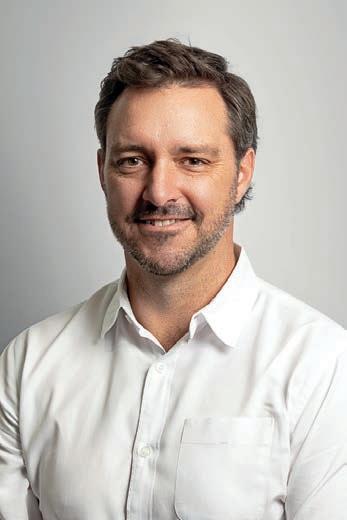
Myles hume
Managing Editor Education Matters myles.hume primecreative.com.au
Chief Operating Officer: Christine Clancy christine.clancy@primecreative.com.au
Managing Editor: Myles Hume myles.hume@primecreative.com.au
Head of Design: Clayton Hawley
Art Director: Michelle Weston
Designer: Jacqueline Buckmaster
Media Bookings and Advertising: Holly Larkspur holly.larkspur@primecreative.com.au 0422 775 308
Client Success Manager: Sabrina Zor
Education Matters is a division of Prime Creative Media Pty. Ltd. 379 Docklands Dr, Docklands, VIC Ph: (+61 3) 9690 8766
Subscriptions
Education Matters is available by subscription from the publisher.
The rights of refusal are reserved by the publisher. Ph: (+61 3) 9690 8766 E: subscriptions@primecreative.com.au
Articles
All articles submitted for publication become the property of the publisher. We reserve the right to adjust any article to conform with the magazine format.
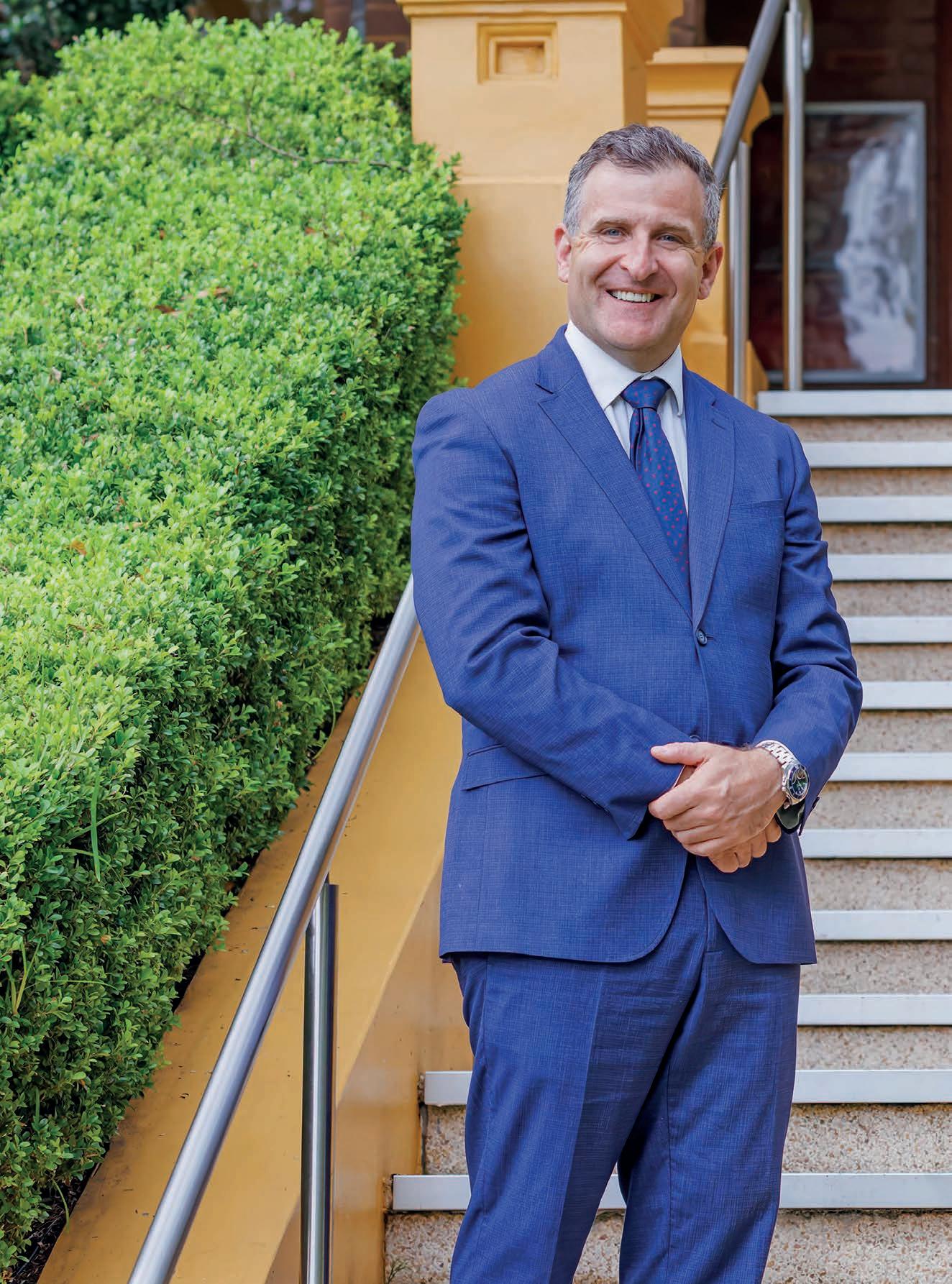
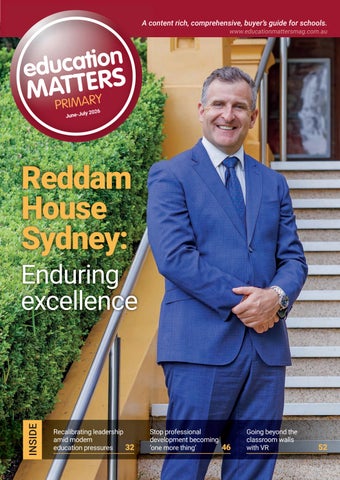
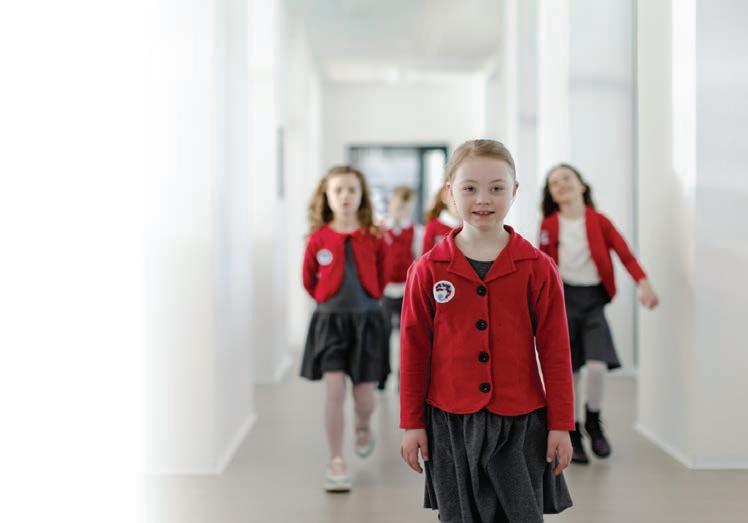
Cover Image Reddam House Sydney


www.educationmattersmag.com.au
www.educationmattersmag.com.au/subscribe/
Copyright Education Matters is owned by Prime Creative Media Pty. Ltd. and published by John Murphy. All material in Education Matters is copyright and no part may be reproduced or copied in any form or by any means (graphic, electronic, or mechanical including information retrieval systems) without the written permission of the publisher. The Editor welcomes contributions but reserves the right to accept or reject any material. While every effort has been made to ensure the accuracy of information, Prime Creative Media will not accept responsibility for errors or omissions or for any consequenses arising from information published. The opinions of the magazine are not necessarily the opinions of, or endorsed by the publisher unless otherwise stated. All photographs of schools (including students) depicted in feature articles and advertisements throughout this magazine have been supplied to the publisher (and approved) by the contributing school. All material supplied by schools is done so with the understanding that such images will be published in Education Matters and may also appear on the our website: www.edumatters.com.au.
Glean practical insights at The National Education in Melbourne.
32 Recharged and ready
How these leaders recalibrated amid growing pressures of education today.
34 Classroo confidence
The impact of Quality Teaching Rounds at Holy Cross College.
36 Have you got a minute?
The power of everyday conversations held with a coaching mindset.
38 Closing the attainment gap
The difference of structured grammar, punctuation and spelling support.
39 Mark it in the calendar Illume Learning’s inclusive education conference is expanding.
40 Missing link in literacy reform?
Dr Lorraine Hammond says schools investing in structured literacy must move beyond one-off workshops.
42 Strategic and sustained
Why schools that invest in the capability of their staff are better off.
comfort, structure and durability.
45 The difference
More than 2,500 school upgrades show the same result: when hydration is designed well, students use it every day.
46 Meaningful progress
In the face of inspiring ideas, Andrew Murray says it takes discipline to protect staff capacity and wellbeing.
48 Digitally capable schools
An audit at St Anne’s Primary School revealed some key blind spots.
50 igitallearning ork o s Logitech’s education strategy is helping students and teachers build productive digital habits.
52 Breaking classroom boundaries
Australian students are turning to immersive technology to experience learning beyond the classroom walls.
54 Overcoming literacy challenges
Scanning Pens Australia is helping students with diverse learning needs on multiple fronts.


“Nationally competitive pay and measures to tackle overwork and burnout will help keep experienced educators in the sector and attract the next generation.”
Justin Mullaly, AEU Victorian Branch President
The Australian Education Union (AEU) Victorian Branch has reached in-principle agreements with the state government that will see experienced teachers earn more than $150,000 before the end of the decade, and Victorian educators become Australia’s highest paid.
The union also endorsed an offer for early childhood staff who will receive a near-40 percent pay increase. t means, for the first time, the early childhood workforce will have equal pay to school teachers and staff.
Under the in-principle schools agreement, the AEU said pay for school teachers, assistant principals and principals would increase by between 28.3 percent and 32.4 percent over four years.
This means an experienced teacher’s pay will increase from the current $118,063 to $151,419 by 2029, including a $15,393 boost this year to take them ahead of NSW teachers.
More than 90,000 full-time teachers will earn over $1,000 more per month by October this year and almost $3,000 more per month by 2030, the Victorian Government said.
Meanwhile, an early career teacher would have a pay increase of $12,343 by October 2026, bringing them into line with their counterparts in NSW, with further increases in subsequent years.
Range 2 education support staff in schools, which includes classroom support, administrative staff, and those supporting students with disability, would receive a minimum pay increase of 29.8 percent over four years. Range 3 education support staff will receive a minimum of 29.29 percent over the same period.
The in-principle schools agreement also includes four professional practice days for teachers and education support staff so that important planning and preparation can be undertaken to further support student learning and wellbeing.
Early childhood teachers will receive the same percentage salary outcomes as school teachers.Pay for early childhood educators will increase by 39.1 percent on average over four years, according to the AEU.

It means early childhood teachers will reach wage parity with Victorian Government school teachers for the first time.
Both agreements also include measures to address workloads and ensure teachers, education support staff, early childhood educators, principals and other education leaders have more time to complete their work, the union said.
hese are really significant improvements in the pay and conditions of public school and kindergarten staff, won through the campaigning of AEU members,” AEU Victorian Branch President Mr Justin Mullaly said.
“Our members are working hard every day in Victorian public schools and kindergartens.
“This is a win for teachers, educators, principals and education support staff, but it’s also a win for all Victorians. Nationally competitive pay and measures to tackle overwork and burnout will help keep experienced educators in the sector and attract the next generation.”
The Victorian Government said, in addition to nation-leading pay rises, time-off-in-lieu arrangements for camps have been reformed, making administration easier for school leaders.
This will now include an overnight payment for camps plus increased allowances for specialist school staff.
“We’ve always said our public school educators deserve a pay rise – that is what we’re delivering,” said Premier Ms Jacinta Allan.“Our teachers, school leaders and education support staff show up every day and this is about saying thank you.” EM




Phase 1: Reflection and Renewal: Individual self-reflection and whole group webinar
Phase 2: Reflection and Renewal: Two day f2f (face to face) workshop 18th & 19th February 2027 | MELBOURNE
Phase 3: Reflection and Renewal: Executive Coaching Session (one hour per participant)
Phase 4: Relatedness: Adaptive Thriving School Cultures (Two day f2f workshop) 6th & 7th May 2027 | BRISBANE
Phase 5: Refresh and Refine Executive Leadership to enable responsible stewardship of a Catholic School (Two day f2f workshop) 29th & 30th July 2027 | ADELAIDE
Phase 6: Refresh and Renew (One day f2f workshop with a group dinner held the evening prior) 27th August 2027 | CANBERRA
PROGRAM COST: $5,950+GST | Excludes travel, accommodation and non-program meals
Target audience: Current School Principals with a minimum of 3 years’ experience. For more information or to register contact Helen Langborne on helen@thebrowncollective.com.au or
Face-to-face modules held at Lourdes Hill College, 86 Hawthorne Road, Hawthorne, Qld 4171.
Module 1: Governance Tuesday 2 & Wednesday 3 March 2027
Module 2: Ethics Thursday 4 March 2027
Module 3: Thinking Strategically Online — Including two 90-min webinars
Module 4: Responsible Stewardship Tuesday 11 May 2027
Module 5: Creating a Culture of Safety & Wellbeing Wednesday 12 May 2027
Module 6: Creating a Culture of Performance Thursday 13 May 2027
PROGRAM COST: $4,800+GST
For more information, email helen@thebrowncollective.com.au or visit www.thebrowncollective.com.au
“Many are locked out of house ownership and impacted by rising
rents, which impacts on the retention of sta and contributes to workforce shortages.”
The education sector has welcomed aspects of the 2026–27 Federal Budget aimed at easing cost-of-living pressures for teachers and other workers, while warning that cuts to disability funding could place further strain on already stretched public schools.
The budget, unveiled on Tuesday 12 May 2026, also included an $18.2 million investment over four years for the National Assessment Program – Literacy and Numeracy (NAPLAN) online platform, with the federal government saying the funding would ensure the “operational integrity” of NAPLAN and other national assessments into the future.
Other education measures announced included $113 million to support First Nations students, $5.9 million to extend STEM initiatives, and funding to progress work on a proposed new Teaching and earning Commission.
The Australian Education Union (AEU) ederal President Ms Correna aythorpe said the union welcomed the government’s housing and tax reforms, particularly measures designed to improve housing affordability for working Australians.
“We have members across Australia who cannot afford to live in the communities they teach in,” she said. “Many are locked out of house ownership and impacted by rising rents, which impacts on the retention of staff and contributes to workforce shortages.”
The government announced a new $250 Working Australians Tax Offset from 2027–28, alongside changes to negative gearing arrangements that will limit concessions to new builds from July 2027.
Ms aythorpe said the measures ould help teachers, principals and education support staff facing mounting living costs.
“[The] tax measures will help make housing fairer and more affordable for teachers, principals and education support staff who deserve to live in the communities in which they serve,” she said.
Despite welcoming the tax measures, the union expressed concern over what it described as cuts to disability support, including $472 million in savings linked to disability funding in schools.
“There are more than 200,000 students in the public school system who have been assessed as having a disability, yet receive no disa ility loadings, Ms aythorpe said.
“A recent AEU survey of public school principals found they were re-allocating $147,000 per school to support students with disability from other areas of the school budget ecause of unmet need, Ms aythorpe said.
Beyond schools, the budget also included $17.6 million to expand the National Early Childhood orker egister and 1. million to extend the Life Education Australia program, including the long running ealthy arold initiative. EM


(It’s even better when it’s free) Teachers want support.










Bring QT to your school.
The Australian Education Research Organisation (AERO) has launched a new microcourse to support school leaders working to embed evidence-based teaching across their schools.
The 15-minute course ‘Implementation in schools: Achieving lasting change’ has been designed for all school leaders and aims to enhance understanding of the factors that contribute to effective implementation of evidence-based practice and improved student outcomes.
The microcourse has been informed by research, including AERO’s Learning Partner project involving more than 50 schools, and features a video case study of one of those schools, t Colum an s College in Ca oolture, .
“Amid the ongoing shift towards evidence-based practice in Australian education, school leaders are seeking out guidance on how to ensure effective implementation can be sustained, E O CEO r Jenny onovan said.
“For a long time, effective implementation was a bit of a mystery, but implementation research now provides important insights for embedding and sustaining evidence-based
practices over time, such as the importance of a deliberate and structured approach.
“This microcourse has been designed to provide practical support to schools and enhance understanding around the factors that contribute to lasting change and improved student outcomes.”
he course includes insights from t Colum an s College, a secondary school with an enrolment of 2000 students, which is implementing explicit teaching in Year 7 to 9 mathematics.
t Colum an s ssistant Principal earning and Teaching, Ms Amanda Schimke credited taking a careful and considered approach from the beginning for the success of the work so far.
“The focus on implementation – so it’s not rushed – has really given us an opportunity to think about how we’re going to do this well, so that there is that absolute buy-in from staff,” she said.
he early signs are definitely promising, and our teachers are reporting greater confidence and consistency in their explicit teaching practice.” EM
estern ustralia Premier oger Cook and Education Minister Sabine Winton have announced $4.6 million in new funding to extend estern ustralia s ground reaking Classm te pilot program designed to reduce teacher’s workloads.
First launched in July 2024 under the Workload Reduction Fund, jointly funded by the state and federal governments, the initiative is already delivering real support to teachers in the classroom.
The pilot is led by the Department of Education, in partnership ith Catholic Education estern ustralia, the Association of Independent Schools of Western Australia and the chool Curriculum and tandards uthority.
Classm te is designed to safely and effectively cut down the time teachers spend on lesson planning and preparing classroom materials, freeing them up to focus on what matters most: teaching and supporting our students.
The platform enables teachers to generate lesson sequences, lesson plans and a wide range of classroom resources, with a secure chat function, editable outputs and specialist tools that allow content to be tailored to individual student needs.
As part of this investment, new features will continue to rollout for teachers throughout the year.
The pilot is already gaining strong traction, with 60 schools currently involved, and with the $4.6 million boost as part of 2026-27 State Budget, that number is set to grow to more than 100 by the end of 2026.
The extended trial will open the door for even more schools to come on board throughout 2027, while continuing to expand across the remaining learning areas of the Curriculum.
Minister inton said the Classm te pilot has seen strong early results, ith teachers in participating schools enefiting from practical tools that reduce workload whilst delivering and supporting high-quality teaching.
“By combining innovation with strong safeguards and professional judgement, we are empowering teachers to focus on what matters most – supporting student learning and achievement,” she said.
“This trial is one of a number of initiatives the government is undertaking to support teachers with workloads, and I look forward to more schools getting the opportunity to use Classm te and see the enefits. EM
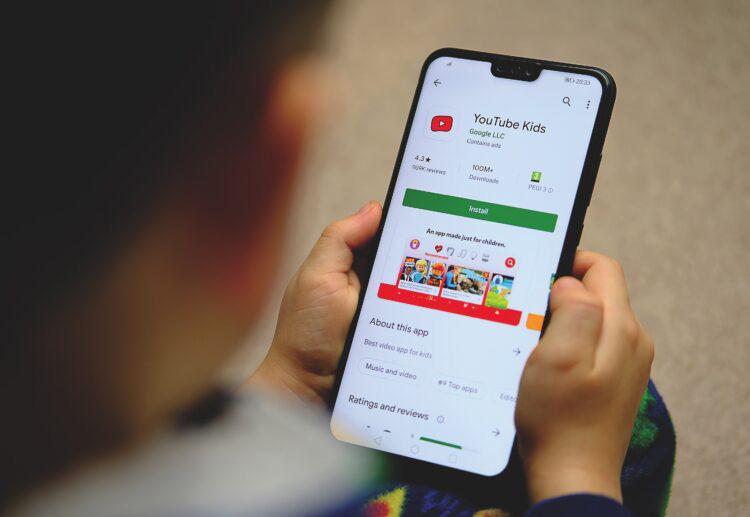
A UNSW-led audit of nearly 200 school-endorsed apps has found most begin harvesting children’s data within seconds, often contradicting their own privacy policies and exposing significant gaps in oversight across education systems, developers and regulators.
he research, conducted y the nstitute for Cy er ecurity and funded y the ustralian uman ights Institute, analysed approximately 200 Android apps sourced from state Department of Education recommendation lists, school resources and the Google Play Store.
For educators working in increasingly digital classrooms, the findings highlight risks em edded in tools that are routinely endorsed and used for teaching and learning.
The study found that 89.3 per cent of apps transmitted data to third parties before any user interaction. Simply opening an app triggered the transfer of device identifiers, location metadata and other sensitive information.
Lead researcher Dr Rahat Masood, a cyber security expert


at UNSW, said this “idle telemetry” occurs regardless of whether a student actively uses the app.
“Even if you are not interacting with the app – you just open it – that is still transferring lots of data,” she said.
In total, 83.6 per cent of apps transmitted persistent identifiers capa le of tracking a device across sessions and different apps, while 67.9 per cent included embedded trackers such as analytics and advertising tools.
“None of these are needed to actually run the educational apps,” Dr Masood said.
he audit also identified major issues ith transparency and accuracy in app privacy policies – documents often relied upon in school procurement and approval processes. EM

national survey has revealed significant gaps in ho respectful relationships education is delivered across Australian schools, with many teachers lacking the training and support needed to confidently teach the su ject.
The Rapid Review Survey, conducted by Monash University researchers, collected 182 responses from government, independent and Catholic schools across metropolitan, regional, rural and remote communities. It provides the most up-to-date national snapshot of respectful relationships education in primary and secondary schools.
Findings show that responsibility for delivering respectful relationships education lies predominantly with school staff, with three quarters of programs delivered internally. Despite this, many teachers reported they had not received professional learning or development in the area, and only one in five schools said they implement a comprehensive hole of-school approach.
The survey also found that around one third of schools adapt programs to suit their local context and communities, hile evaluation as identified as the least commonly addressed aspect of delivery.
ead researcher r aomi Pfit ner said the findings highlight

“Preventing violence needs to start early and schools are uniquely placed to equip students with the knowledge and skills to uild positive and e ual relationships, r Pfit ner said.
“Teachers are shouldering the bulk of responsibility for delivering this type of education, yet many are doing so without the training and resources they need. Realising the vision of the National Respectful Relationships Education Framework re uires significant investment in professional learning so that every child receives high-quality, evidence-based respectful relationships education.” EM
o principals from the outh Coast have een recognised on the international stage, securing coveted places in the 2026 arvard Principals cholarships.
Ms uth infield of incentia igh chool and Ms Caroline avid of oonona igh chool are among four ustralian recipients selected for the program, delivered through the arvard Graduate chool of Education.
The scholarships are awarded by the Public Education Foundation in partnership with Teachers Mutual Bank and the arvard Clu of ustralia, and ill see the principals travel to the later this year alongside recipients from ueensland and Tasmania, who have not yet been publicly named.
The scholarship recognises outstanding leadership in public education, with recipients chosen by an independent panel based on their demonstrated impact, commitment to the sector and a ility to translate the arvard experience into long term improvements for their school communities.
ince taking on the principalship at incentia igh chool in 201 , Ms infield has focused on expanding path ays for
students into employment, E and university. er school serves seven local villages as well as the Wreck Bay Aboriginal community in Booderee National Park, with some students travelling up to an hour each day to attend.
elieve this program ill assist me in deep re ection and thought generation with other accomplished learners,” she said. “In turn, this will lead to new possibilities for our school that I would not have considered by myself.”
t oonona igh chool, Ms avid has led ith a focus on equity and the role of public education in a democratic society. She is currently completing a PhD and applies research-driven approaches to school leadership and practices in the school.
“Every child who comes through our doors has access to a world-class education, for free. I believe that is what a democratic society owes its people,” Ms David said.
“This scholarship gives me the opportunity to connect with research and with principals around the world who are grappling with the same questions we are, and to bring that thinking back to our community.” EM
ousing afforda ility has ecome a critical threat to the sustainability of New South Wales’ teaching workforce, according to a new report led by Professor Scott Eacott from UNSW Sydney.
The report, Addressing teacher supply through key worker housing, published by the Australian Public Policy Institute, warns that soaring housing costs – particularly in metropolitan areas – are undermining efforts to attract and retain teachers, placing increasing pressure on public education.
With median house prices in Sydney now exceeding 13 times the average teacher’s salary, the gap between income and housing costs has widened far beyond the commonly accepted affordability benchmark of three times income.
“There is little point attracting and training teachers if they can’t afford to live near where they’re needed,” Professor Eacott said. ousing afforda ility has ecome a systemic risk to school staffing across . his is no longer a regional or rural issue – it’s a statewide problem.”
The report highlights how rising housing costs are pushing teachers further away from their workplaces, resulting in longer commutes, increased transport expenses, and higher levels of stress and burnout. These challenges are particularly severe in disadvantaged communities.
“Teachers are working longer hours, travelling further and carrying the strain,” Professor Eacott said. “When housing pressures go unaddressed, retention collapses – and replacing a single teacher can cost more than $25,000.”
The research suggests even dual-income teaching households face decades-long timelines to save for a deposit in many parts of NSW, underscoring the depth of the crisis.
The authors argue that teacher housing should no longer be viewed as a form of welfare, but rather as essential public infrastructure that supports the delivery of education.
The report outlined three key recommendations, including build-to-rent developments, shared equity schemes and scaling existing programs. EM
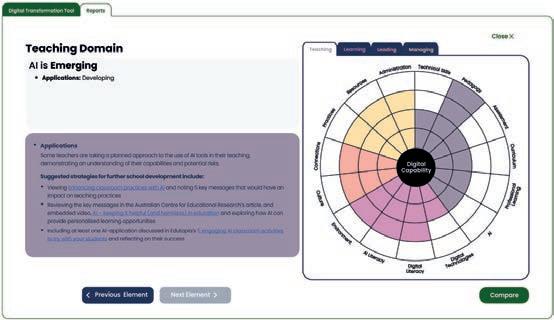
Find out where your school is positioned and discover what areas you need to improve on.
Retake the tool as often as you like in order to measure your school’s impovement. Unlock your school’s potential:
Let’s ensure the foundation of our education system is as well-supported as it is hardworking – because primary education matters.


The role of a primary principal has undergone a quiet revolution over time. Once seen primarily through the lens of administration, it has expanded into a complex tapestry of educational leadership, wellbeing, and community advocacy.
Today’s principals are at once leaders of learning, CEOs of complex organisations, CFOs tasked with managing finite resources effectively and first responders to the lived realities that children bring through the school gate each morning.
It is deeply rewarding work, but it is also relentless. For this leadership to be sustainable, it must be understood, and valued, by the community it serves.
greeting students by name and waving to parents through car windows. In these brief exchanges, they are quietly "taking the temperature" of the community.
By 8:45 am, the desk tells the story of the job: a student achievement data spreadsheet, finance and planning folders, a rogue Lego brick, and a half eaten muesli ar. ithin the first hour, the principal may have supported a child overwhelmed by the morning, worked through a pedagogical challenge with a teacher, and tracked do n a relief teacher ho can t find their classroom, or their login.
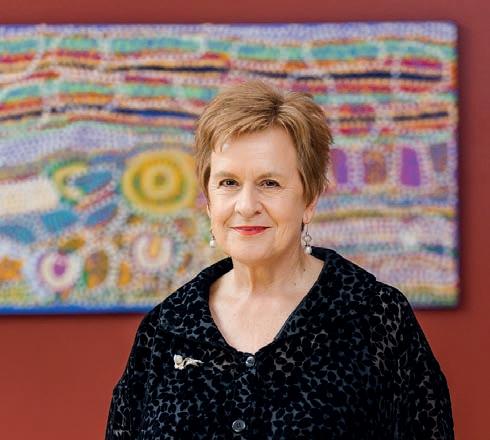
Australian Primary Principals Association (APPA) President Angela Falkenberg has held senior school leadership positions across both primary and secondary schools and has extensive experience in the education of First Nations children. APPA provides a voice to more than 7,600 public, Catholic and independent primary school principals across the country.
This year, the Australian Primary Principals Association (APPA) is pulling back the curtain through its Year in the Life of a Primary Principal campaign (@appa.connect). To the outside world, a principal is often a figurehead seen at assem lies or behind a desk making major decisions. But the campaign reveals the reality is something else entirely: deeply human, relentlessly complex, and built from a mosaic of moments that rarely make the headlines.
The rhythm beneath the role The day doesn’t begin with the bell. It starts in the quiet, an early commute, an empty corridor, a few stolen moments of re ection efore the pace accelerates.
Then the gates open, and the energy shifts. A principal stands at the entrance, monitoring traffic o ,
This is the visible work, the tangible actions of the job. But the real craft sits just beneath the surface. It is the art of noticing: the child lingering a little too long by the library, or the quiet nod of encouragement to a graduate teacher after a tough lesson. These moments don't appear in a strategic plan, yet they are the very architecture of trust and culture.
The art of the pivot
Ask any principal about their schedule, and they will tell you: the plan is only ever a draft.
A recognisable theme in primary leadership is the gap between expectation and reality. A carefully designed professional learning session gives way to retrieving a bird from a classroom; a strategic meeting is interrupted y a ooded toilet lock and an otherwise smooth NAPLAN schedule is impacted by an IT failure.
This isn’t a disruption to the work, this is the work.
Primary principals operate in a constant state of pivot. They are strategists and troubleshooters, educators and engineers of calm. When things wobble, the principal becomes the "calmer-in-chief," holding the environment steady enough for learning to continue, no matter what the day delivers.
A civic anchor
he in uence of a principal doesn t stop at the school gate either. Schools are civic anchors, spaces where communities gather, connect, and invest in a shared future. On election days they are polling booths; on Saturdays, they are the heart of local sport.
With this role comes a profound responsibility: ensuring every member of that community feels safe and respected. This is where leadership becomes truly transformative. Primary principals understand that excellence and equity are not abstract goals found
in the Mparntwe Declaration; they are felt experiences.
This demands a commitment to building cultures that are genuinely inclusive and actively anti-racist. Evidence, such as recent work from the Lowitja Institute, reminds us that Aboriginal and Torres Strait Islander students and educators still face barriers of exclusion.
For a principal, addressing this is not "policy work", instead, it is daily leadership. It is found in the histories honoured, the voices elevated, and the biases confronted. Cultural safety is felt when First Nations families know their identity is respected and their presence strengthens the school. It is a day-today practice of making sure respect is practised, not just promised.
The power of small things Scroll through the Year in the Life campaign and you’ll see that the "small"
Australia’s leading event for educators and inclusion professionals dedicated to creating schools where every learner can belong, participate, and thrive.
FEATURING LEADING AUSTRALIAN AND INTERNATIONAL SPEAKERS
Keynote Speaker Dr Jenna Mancini-Rufo will be joined by over 30 speakers who are leaders in inclusive education.
For exciting speaker announcements visit: inclusiveschoolingconference.com.au

moments are actually the big ones.
Whether it’s a principal in a dinosaur onesie for a reading challenge, a tray of scones in the staffroom during report writing week, or a puppet delivering a kindness message to Year 1, nothing is incidental. A missing hat becomes a lesson in responsibility; a lost property bin becomes a study in care.
These intentional actions say: You are safe here, you are seen, you belong. We’ve got this.
The primary years are not a prelude to "real" education. They are where identity forms and the foundations of citizenship are laid.What this campaign ultimately reveals is that primary leadership is a quiet form of nationbuilding. Every greeting at the gate and every moment of advocacy contributes to a vision of an Australia that is kind, fair, and inclusive.
Primary matters. Our work is the bedrock. Let’s keep making it visible. EM


17-18 MARCH 2027
Two days of practical learning and inspiration Townsville, QLD


Teachers, School Leaders, Inclusion Teams, Teaching Assistants, Therapists, Families & more.
As
the CEO of the Australian Curriculum Assessment and Reporting Authority, Stephen Gniel considers it a privilege and an honour to lead the organisation responsible for the stewardship of the Australian Curriculum.
For educators like ourselves, the curriculum is not an abstract policy document. Instead, every day, in some way, we get to live and breathe it in the work that we do.
At its core, the Australian Curriculum exists to answer a simple question: what should every young Australian have the opportunity to learn – regardless of postcode, school system or sector?
First and foremost, the Australian Curriculum is an explicit statement of the priorities and aspirations we hold for our young people and what the Australian community values as the knowledge, understanding and skills that our young people should develop while at school.
Through the curriculum, we want all young Australians to become confident and creative individuals, successful lifelong learners, and active and informed members of the community. This is what it articulates.
In October 2025, Australia’s education ministers took an important step in the future development of the Australian Curriculum. On the advice of ACARA, they agreed to two important changes to curriculum’s review cycle.
First, they introduced an iterative review process. This means education ministers can direct ACARA to conduct a revie of a specific area of the curriculum during its implementation to ensure it remains relevant and current.
What this new iterative review process offers is the capacity to balance the need for stability of curriculum with the ability to respond rapidly when needed. Of
equal importance is that it also provides some guardrails to ensure teacher workload remains at the heart of any change, as well as protecting the overall integrity of the ustralian Curriculum.
Second, the ministers approved a new 10-year review cycle of the Australian Curriculum with the next full curriculum review now scheduled for 20 2.
This decision recognises the extensive and distinctive work that each state and territory undertakes with teachers, principals and the wider school community to implement the curriculum in their local context. The current version, which was approved in 2022, is still in the process of being implemented in some states and territories, with full implementation expected in 2027.
Both of these changes re ected our consultation with the education community, including teachers, principals and subject associations. They are also consistent with international best practice as seen in countries such as Finland and Japan, which are frequently cited in OECD research for their longer, stable curriculum cycles.
At the same time, education ministers also tasked ACARA with providing advice on whether changes are needed to the curriculum content in mathematics for Foundation to Year 2, as well as to the way the content is se uenced.
We know that a strong grounding in mathematics and numeracy are crucial skills for our young people to develop so they can succeed in their
Unfortunately, we also know from our national data that improvement in numeracy has stalled. The latest NAPLAN results show that around one in three Australian students are not reaching challenging but achievable numeracy standards, and around one in 10 require additional support. These are statistics we can’t afford to ignore.
That’s why it’s right for us to have a national focus on numeracy improvement, especially with the Year 1 Numeracy Checks coming into effect this year.
Education ministers earlier this year accepted ACARA’s recommendation to conduct a targeted iterative review of the Australian Curriculum: Mathematics – Foundation to Year 2, as part of this national effort to improve numeracy skills.
In developing our recommendation, we undertook extensive consultation with jurisdictions, sectors and other key stakeholders. It was pleasing to hear that there was considerable satisfaction with the current content in the F-2 Mathematics curriculum.
However, in conjunction with our stakeholders, e also identified some important areas for refinement and improvement. This offers an exciting opportunity for us to better guide and support teachers in implementing the curriculum content in their classrooms.

Our work on this iterative review is now underway and the aim is clear. t s a fine tuning of the mathematics curriculum rather than a holesale revision.
During the consultation process, four key aspects ere identified for curriculum improvement and strengthening.
1. Clear advice on the prioritisation of content.
2. Greater mathematical detail to improve clarity for teachers about what students will learn at and within each year level.
. Providing specific content sequencing, highlighting related concepts and the sequence of introducing concepts.
4. The inclusion of explicit content on foundational consumer and financial literacy.
Although ACARA will be leading the review, we will be working very closely with practising primary school teachers, school leaders and systems, and mathematics curriculum experts throughout the iterative review process.
Any proposed changes to content descriptions or achievement standards will be made in collaboration with subject matter experts and those with expertise in early years and primary mathematics education.
This extensive consultation process will ensure that any strengthened content changes are fit for purpose, that the curriculum provides clear sequencing of content and prioritisation of key concepts and that it remains responsive to the needs of teachers and students.
Our goal with this review is to improve coherence. This will help support our teachers to be more confident in teaching this important learning area, as well as deliver improvements for Australian students. When early learning for our youngest students is well-sequenced, it builds strong foundations for future learning and prevents the need for future intervention.
The changes to the curriculum review cycle approved by ministers strike the right balance between curriculum stability and responsiveness
to emergent issues. While constant reform can be destabilising, complete rigidity ignores emerging evidence and societal change.
Deliberate and measured evolution — through thoughtful, evidenceinformed refinement is the est ay forward. Most important of all, it gives more clarity and support to our school leaders and teachers as they bring the curriculum to life in our classrooms. EM
The iterative review of the F–2 Australian Curriculum: Mathematics started in March 2026 with the intention of providing advice and recommendations to education ministers in late 2026.
To find out more about this review, including the Terms of Reference, visit www.acara.edu.au/curriculum/ curriculum-review
To find out more information about the Australian Curriculum and optional support resources, visit www.australiaurriculum.edu.au.
The

As we celebrate 25 years of Reddam House Sydney, we honour a legacy of excellence defined by academic achievement, strong values, and well-rounded education.
Students are empowered to pursue their passions across academics, the arts, sport, and leadership—developing curiosity, resilience, and the independence to shape their own future.
We don’t hand them success. We give them the keys.
Declining fertility and regional population growth are altering enrolment demand, prompting school leaders and boards to rethink planning, infrastructure and long-term strategy.
School enrolment patterns across Australia are entering a period of measurable change, driven by shifting demographics, declining fertility rates and uneven population growth across metropolitan and regional areas. For school leaders and governing boards, the challenge lies in anticipating divergence, responding to local conditions, and aligning strategy with evolving demand.
As Mr Peter Buckingham, Managing Director of Spectrum Analysis and author of a recent white paper on enrolment trends, explains, emerging patterns are already visible in key markets.
“Based on the data that we’re seeing, schools in higher socioeconomic areas are going to have a decreasing number of student-age children,” Mr Buckingham says.
Some areas are simultaneously experiencing strong growth, placing pressure on infrastructure and capacity. Others are facing stabilisation or decline, requiring a different set of responses.
Diverging demographic patterns
The divergence between high-growth and stable or declining regions is evident across multiple jurisdictions. Western Sydney and the Blue Mountains provide a clear example.
According to Ms Elizabeth Scully, Executive General Manager Communications & Engagement at Catholic Schools Parramatta Diocese (CSPD), the region is undergoing significant demographic shifts, ith gro th concentrated in specific corridors.
“Most, if not all, school sectors are struggling to keep up with the demand for schooling infrastructure across estern ydney as a result of significant population growth in some parts of the region. For the Catholic sector, enrolment interest is particularly strong in secondary schools,” Ms Scully says.
“In particular, the Hills District and thriving North West Growth Area are localities where there is far more demand for Catholic school enrolment than we can currently meet.
“In contrast, the Blue Mountains area is not growing at the same rate as the rest of our region. With less primary school-aged children locally, this means that there’s a need to be thoughtful about reaching local families.”
A key driver underpinning enrolment trends is declining fertility. The impact is already o ing through school systems.
“The peak of fertility after the Baby Bonus system was 2008, which is now an 18-year-old entering adulthood. Ever since then numbers have been coming down," Mr Buckingham says.
He explains that this demographic reality is particularly visible in established, higher-income suburbs.
“Areas like Toorak in Melbourne are going to drop about 10 percent in the number of school-aged kids in the next six or eight years,” he says.
At a structural level, the implications for school oards are significant. e er children in traditional catchments directly affect enrolment pipelines, particularly for schools reliant on local populations.

Mr Buckingham also highlights changing family patterns: “More mothers are in the workforce, and on average, have one, maybe two kids, whereas in the outer areas, they’ll typically have three, four, five children.
This demographic distribution reinforces the uneven enrolment landscape, with outer growth areas continuing to generate demand while inner or af uent areas face contraction.
While some schools grapple with declining enrolments, others face the opposite problem. Rapid population growth in outer metropolitan regions is driving strong enrolment demand, often outpacing infrastructure.
Ms cully identifies ydney s north west as one such hotspot. To respond, the CSPD has invested in new schools, including recently established campuses in emerging suburbs.
“Our newest Catholic schools built in the thriving North West Growth Area include St John XXIII Catholic College Stanhope Gardens, Our Lady of the Angels Primary Rouse Hill, St Luke’s Catholic College Marsden Park, and most recently, Santa Sophia Catholic College Gables in the Box Hill area. This foresight has delivered first mover advantage , ith
state and independent schools coming online many years later.
This aligns with observations from Mr Buckingham, who describes how schools in growth corridors are expanding rapidly or establishing multiple campuses.
“Schools like Hume Anglican Grammar in Melbourne’s north; they’ve now got three campuses – Mickleham, Donnybrook and Kalkallo – and they’re working on their fourth at the moment,” he says.
At the same time, government schools in these areas are also experiencing rapid enrolment growth.
“Some of those schools had opened two years ago, and they’re now at 600 students – they’re reaching capacity almost straight away,” he notes.
Balancing capacity across a distributed school network is an ongoing challenge. Ms Scully emphasises that system-level planning plays a critical role in managing this complexity.
“CSPD has a long history of using data and demographic forecasting to anticipate future enrolment demand,” she says.
“We are keen to keep playing our part in meeting the growing need for schooling in Western Sydney. As part of CSPD’s capital planning, the system closely tracks population growth and change. This longterm approach has seen the development of a capital works plan that addresses capacity increases and maintenance of existing infrastructure. A strong connection et een this ork and staffing strategy is essential.
At times, she adds, this has seen highquality temporary modular buildings provide a small amount of additional capacity in high-demand areas.
“This approach has its limits and providing capacity increases through more permanent infrastructure is preferred. The significant cost of schooling infrastructure, and our strong commitment to keeping costs low for families, mean that keeping up with local demand is a pressing challenge,” Ms Scully says.
CSPD schools operate as a network.
“If there is no availability at one school, we look for opportunities to welcome families at another local Catholic school,”

includes fee-free places at St Canice’s Primary Katoomba, our smallest and most remote school. This year the school welcomed its largest Kindergarten class for several years as a result of the offering.”
Enrolment trends are also in uenced by families making decisions based on a combination of affordability, outcomes and values.
“There is an increasing number of education providers across the region, and this means that we need to continue to demonstrate the value of a Catholic education,” Ms Scully says.
“We are seeing families seeking value in their school choice decisions across Western Sydney. Affordability remains a significant factor, and families are also looking closely at academic outcomes, student wellbeing, faith formation, cocurricular opportunities, school culture and facilities.
“We also offer a range of fee relief programs and have a long-standing commitment that no child will be denied enrolment as a result of a family’s inability to pay fees.”
Mr Buckingham similarly notes that high-fee independent schools may face increasing pressure in certain markets.
“The pendulum has been swinging in favour of independent schools, on the back of COVID and good economic times, but I think it's starting to swing away, partly because the fertility rates have dropped in Australia again. A lot of schools that have seen enrolment increasing a couple of percent each year for the last five or six years are likely to see the pendulum go back against them,” he says.
Beyond demographics, structural
changes within the independent sector are impacting enrolment patterns too. One notable trend is the shift from single-sex to co-educational models.
"There were 20 all boys schools in Melbourne that were in the Associated Public Schools and Associated Grammar Schools back in the 1970s and now there are only eight all boys, and 12 co-ed schools," he says. "Those 12 schools had zero girls in the mid 1970s, 9,000 girls by 2008 and now have over 13,000 girls in 2025."
This transition has had downstream effects, particularly on girls’ schools he explains, describing how newly coeducational schools draw enrolments away from established single-sex schools nearby.
Community engagement nother consistent finding in the hite paper is the importance of local catchment areas. Despite advances in transport and marketing, most students still enrol close to home.
“Approximately 50 percent of student enrolments come from within four kilometres of a school,” Mr Buckingham says.
He cautions against overestimating the ability to attract distant enrolments.
“It’s easy for schools to think, ‘we’re just going to attract more in’, but it’s pretty hard to do,” he says, noting that competing schools actively seek to retain local students.
It reinforces the importance of understanding local demographics and focusing engagement strategies within nearby communities.
Changes in workforce participation and early childhood education are also shaping enrolment pipelines.
Mr Buckingham points to shifting demand for early learning, in uenced y parental work patterns. He notes that postpandemic work arrangements have altered childcare usage.
“We can statistically look at how many children live in an area and how many approved places there are for early learning,” he says, identifying imbalances between supply and demand.
“Areas like Albert Park in Melbourne
have too many places, not enough kids –but in high growth areas it’s the opposite; there are more kids than there are approved places.

communication is increasingly important. Ms Scully highlights the role of storytelling and community engagement in maintaining enrolment levels.
“With 80 Catholic schools across the region, there is no shortage of great news at a local level and all our schools have been encouraged to share this through an active social media presence,” she says.
“We work with the media to showcase our achievements and share student voice. This is often seen during peak periods of public interest in education such as ‘back to school’ or celebrating the human side of the
sure that Western Sydney stories and voices are shared.”
Across all segments, enrolment trends are reinforcing the need for proactive governance and data-informed decision making.
System-level forecasting, local demographic analysis and a clear understanding of competitive positioning are central to effective planning. At the same time, boards must balance investment in infrastructure with affordability considerations and longterm sustaina ility.
The evidence suggests that no single
and, in some cases, structural change.
As Ms Scully indicates, the direction of travel is already evident.
“The Catholic sector saw a spike in enrolment interest throughout and following the pandemic. I think this speaks to the experience of local families and a recognition of the value of the pastoral care provided by Catholic schools.
“At the same time, the Church in Western Sydney and the Blue Mountains has been working hard to meet the needs of working families and now offers beforeand after-school care across all our primary school sites.”
As Reddam House Sydney celebrates its 25-year milestone, Executive Principal Simon Lees reflects on the culture and spirit that have defined the school to date and continue to position it well for the future.
When Reddam House Sydney students led the school’s ANZAC service in Term 2 2026, they did so with a remarka le sense of confidence and care. From planning the ceremony and extending invitations to writing the scripts, students played a central role in bringing the event to life.
For Executive Principal Mr Simon Lees, now in his second year in the role, moments like these re ect the culture of the school – where students are encouraged to contribute meaningfully to school and community life.
“When students run an event here, they run it from start to finish. hey lead TEDx Youth talks, assemblies, community initiatives and service programs. We empower them to take ownership and feel proud of what they create,” he says.
That same sense of trust and independence can be found in the everyday experience of students at Reddam House Sydney too. For example, the school’s senior students can leave the campus when they’re between lessons.
“We’re treating them almost at a pre-university level, giving them the freedoms and privileges you’d expect in a true city school,” Mr Lees says. “It’s impressive to see how well it works when you genuinely give students those opportunities.
“It has been an eye opener for me –there are things that Reddam does that
I would want to reintroduce in other schools I’ve led.”
hese small yet significant aspects of campus life help paint a picture of the culture that has been built at Reddam House Sydney during the past 25 years. Now, the school is poised to enter its next ne era ith confidence, buoyed by strong academic results, a growing alumni network, and a reputation for delivering a balanced, student-centred education.
Founded in 2001, Reddam House Sydney is considered a leading coeducational, non-denominational school in New South Wales. Since its inception, its inner-Sydney campus network now covers Woollahra (preschool to Year 9), Bondi (Years 10 to 12), and North Shore, which opened for students in kindergarten to Year 10 on the first day of erm 1, 202 . orth Shore welcomed Year 11 students in 2026 and ill have its first C cohort in 2027.
Having stepped into the role of Executive Principal in 2025 – alongside Primary School Principal Mr Warren Garratt who has been at Reddam House Sydney since its inception in 2001 – Mr Lees says the school has already achieved significant milestones, both in enrolment growth and standing within Sydney’s competitive independent school sector.
“It’s amazing because, in many ways, it’s still a young school, yet it has
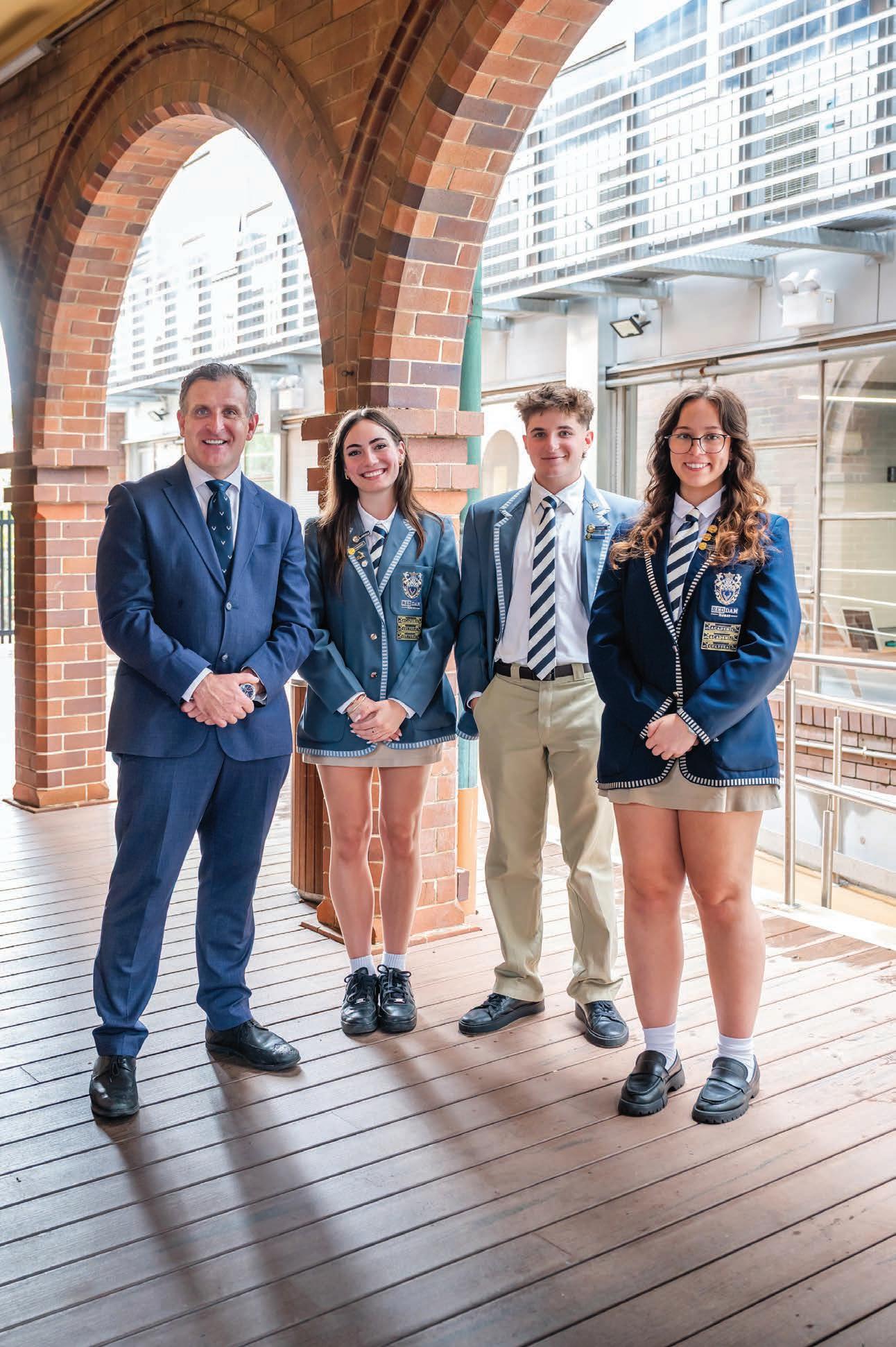

established so much in 25 years, both in terms of school growth but also our reputation,” he says.
Reddam House Sydney is a Top 5 School in the state for HSC results in 2022, 2023, and 2024. While it continues to strengthen its focus on academics, Mr Lees says the school’s philosophy centres on developing confident, forward-thinking, and well-rounded leaders of tomorrow. Reddam House Sydney's non-selective model remains central to its identity too, meaning it doesn’t enrol students solely on academic performance.
“I genuinely think we offer a strong, well-rounded education. We’ve been proudly co-educational since the school was founded and work hard to foster three core pillars: academics, sport, and performing arts. In recent years we’ve also renewed our focus on strong community service, leadership, and cultural programs,” he says.
“Our students value the team approach we take to education, but they also value the fact that we recognise them as individuals. That’s a great strength in the Sydney landscape.”
It’s an approach that’s clearly resonating. Reddam House Sydney has healthy waiting lists – and the growth alongside the new Reddam House orth hore campus re ects a genuine demand for its education model, Mr Lees says.
It also helps to have the backing of Inspired Education Group that manages more than 120 independent schools, educating more than 95,000 students across 30 countries.
“The growth of our North Shore campus in the northern part of the city has been phenomenal, and it hasn’t in any way detracted from the growth or strength of Reddam House Sydney,” Mr Lees says.
“There was clearly a need for that additional campus, and it was also seen as an opportunity to serve a different section of the city. I think that’s really come to fruition. Our education model has great value and a strong reputation,

families are increasingly wanting to be part of it.”
Marking 25 years of growth and connection
Another barometer of a school’s health is the strength of its community impact. It’s something that has become increasingly evident at Reddam House Sydney through the success of past student – or alumni – across diverse industries and pursuits.
t s uite ama ing ho much community support and networking that already exists,” Mr Lees says.
“In a relatively short period of time, our students have been successful in all fields in the arts, in industry, and in sport. We even have Reddam alumni playing professional soccer in England.
“It’s fascinating to see the breadth and range of opportunities the school has helped provide. We’re proud and delighted with the progress of the school to date.”
As Reddam House Sydney marks its 25-year milestone, it stands well placed for the future, while already having left an indelible mark on its staff and broader community.
Three teachers who were on staff at the school’s foundation are still there today, while many former students are now returning as parents and community leaders.
Much of this will be highlighted throughout the anniversary celebrations as the school launches its Alumni Association. “The two main stakeholders helping lead our Alumni
Association are two past students from our founding Year 12 graduating class who are now also current parents at
“It’s exciting that their children now attend the school and they’re helping to lead the Alumni Association. It’s a very positive sign when people who attended a school are willing and prepared to send their children to that same school.”
Reddam House Sydney is structuring its anniversary as a year long re ection on its first uarter century.
Mr Lees says the celebrations will feature a range of events across music, sport, and the arts, including a large endof-year celebration at Sydney Town Hall.
He says the milestone will also be marked through dance, drama, and visual arts programs, alongside alumni sporting fixtures against current students later in the year.
An important part of the celebrations is ensuring current students develop an appreciation of the school’s history and understand the significance of the milestone. Assemblies throughout the year will help build that understanding, with former staff and community members from the school’s early years invited back to share in the celebrations.
A city campus with a global reach Located just a stone’s throw from Sydney’s Centennial Park, Reddam House Sydney has evolved in a way that re ects its ur an environment. Growth has come through thoughtful development and renewal, ensuring the school continues to provide outstanding learning environments while remaining true to its city footprint.
To coincide with its anniversary, the school will be launching its Master Plan – outlining its aspirations for the school’s buildings and facilities.
“We’re a very city-based school, where space is naturally at a premium,” Mr Lees says. “What’s important is that we continue to grow thoughtfully and ensure our facilities re ect the uality of
education we provide.”
The school has also built strong partnerships with some of Sydney’s leading venues and organisations, allowing students access to professional-standard facilities across the arts and sport.
“If we’re presenting drama or music productions, we’ll work with places like the National Institute of Dramatic Arts,” Mr Lees says. “It’s been a very smart model for us because our students gain access to outstanding facilities and experiences.
Mr Garratt, Reddam House Sydney’s Primary School Principal, says younger students enefit from these opportunities as well, through programs and experiences that extend beyond the classroom.
“Our students have opportunities to access facilities such as Drummoyne Swimming Centre and the Seymour Centre, and even our surfing program at Bondi Beach – it truly doesn’t get much better than that,” Mr Garratt says. “These experiences give students access to professional-level environments that enrich learning both inside and outside the classroom.”
Beyond the opportunities available across Sydney itself, Reddam House Sydney students are also connected to an international network.
This is thanks to the school’s connection to the Inspired Education Group. It’s something Mr Lees hopes to tap into more as part of Reddam House Sydney’s next growth phase.
“A good example is the leading work e re doing in artificial intelligence. We’re conducting that as part of the global group, which is exciting because we’re not having to innovate on our own – we can tap into a world leading resource.
Reddam House Sydney’s students also enefit from access to those 120 schools within the Inspired group. Each term, some students will embark on exchanges to places like the United Kingdom, Switzerland or outheast sia.

“That’s been exciting for us. We’re not just a Sydney or Australian school; we’re part of a global network of schools, and strategically that has been a game changer,” Mr Lees says.
“For me personally, it’s very reminiscent of my time working in international schools in Southeast Asia, where we had access to a wide range of global networks. This is the first time ve experienced that kind of global framework within an ustralian context.
It’s something the school’s teachers can tap into as well. A feature of Reddam House Sydney’s teaching cohort is the balance between long-serving educators who deeply understand the school’s model and newer staff who bring fresh ideas and perspectives.
“It’s a real strength for us,” Mr Lees says. “And beyond our own campus, we’re supported by the wider leadership network within the Inspired group, including a global education team and leaders from schools around the world who bring different perspectives on how we can continue to grow and evolve as an organisation.”
The school’s main Woollahra campus serves pre-school to Year 9 students.
Preparing students for a changing world
Like schools around the world, the challenges facing school leaders at Reddam House Sydney are multi faceted. A topic near the top of that list is navigating the rise of artificial intelligence and the changing nature of how school’s assess and understand student learning. key uestion is hether students truly know the work, or whether they’re relying too heavily on uickly finding answers. That’s going to be both an ongoing opportunity and an ongoing challenge,” Mr Lees says.
Mr Garratt believes AI will become an increasingly important tool in education and future workplaces, meaning there will be an even greater emphasis on developing critical thinking, creativity, communication skills and strong interpersonal relationships. These are the uni uely human skills that technology cannot replace”.
“Another key challenge will be ensuring the curriculum keeps pace with the changing world and the future of work,” Mr Garratt says.
“As industries and careers continue to evolve, schools will need to continually
expand and strengthen what is taught, preparing students not just for the jobs that exist today, but for careers and opportunities that may not yet exist.”
To prepare for this new world, Reddam House Sydney needs the teaching team to guide its students. That’s why recruiting and retaining exceptional teachers remains a key priority.
“As an industry, we have to make sure teaching continues to be a profession that attracts our top graduates. We need teaching to remain an incredibly noble and needed profession,” he says.
“Our staff retention rates are very strong, and we highly value our teaching profession. When we employ teachers here, we employ them to teach. We ant them to e experts in their field, so we don’t expect them to coach multiple sports teams or run a lot of extracurricular programs; we bring in external providers or expertise to run those.
“The aim is to ensure our teachers don’t burn out by doing too many things outside their core business.”
As Reddam House Sydney embarks on its next chapter, Mr Lees does so with a sense of excitement – not only about the school’s continued growth nationally and internationally, but also about preserving the culture and spirit that have defined it for the past 2 years.
“It’s going to be fascinating to track the growth of our alumni and see where our students move beyond Year 12,” he says. “While it’s wonderful to have a great school, the real measure of success is what happens beyond it.
“We want to continue being a strong academic and high performing school that is also kind and compassionate. The culture of the school is a solutely paramount.
“I would hope that what has made Reddam special to the founding students and the current students is still there in 25 years. Technology will change and buildings will change, but hopefully the spirit of the school endures.” EM
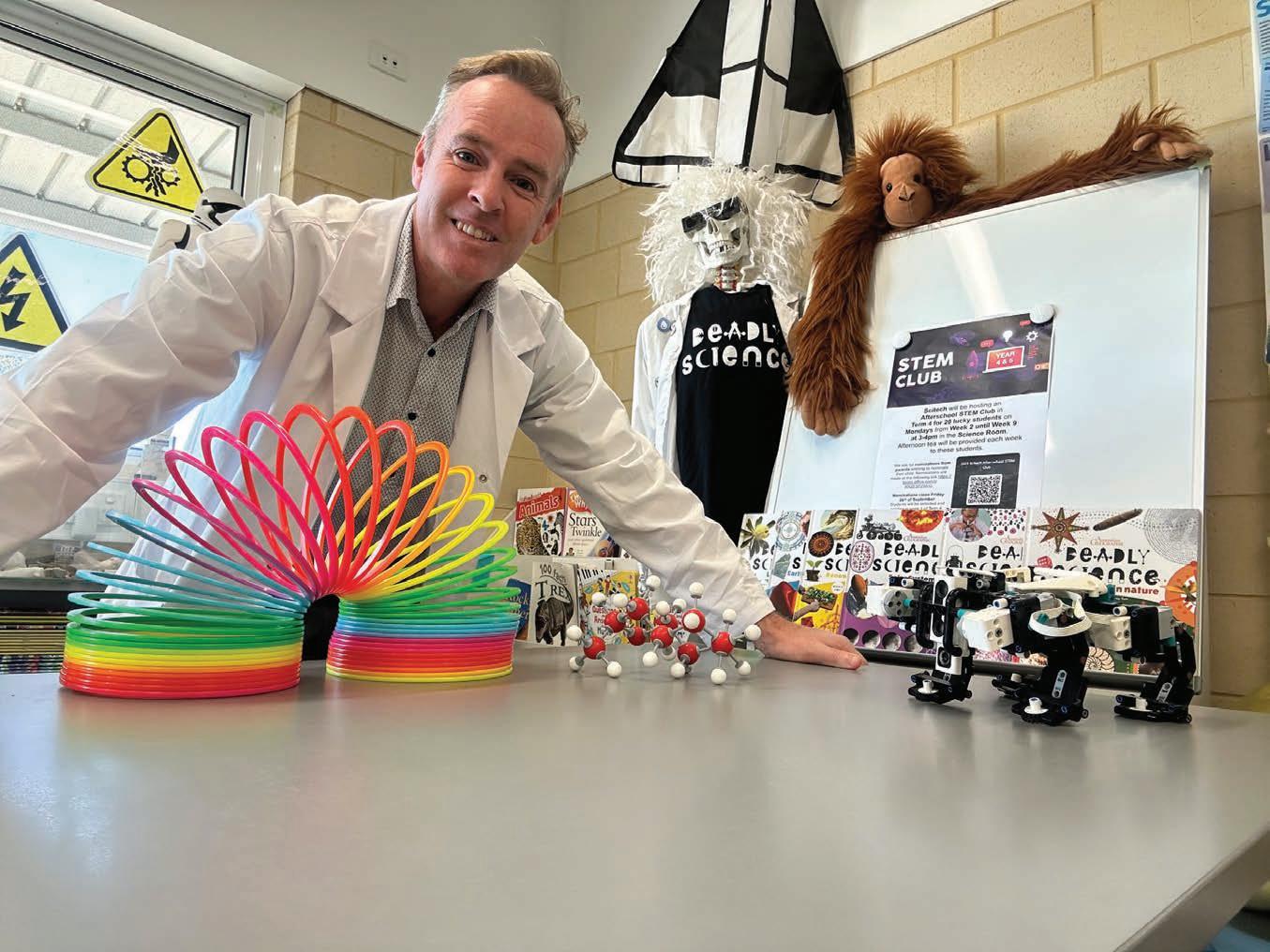
Award-winning teacher Christopher Lambe blends STEM, culture and relationships to spark curiosity and confidence in students across a diverse primary school community.
Mr Christopher Lambe traces his pathway into teaching back to his own school days. One moment in particular has stayed with him.
“As early as in year three, I designed a worksheet and the teacher, for whatever reason, decided to amuse me and let me run this lesson in class,” he says.
e also recalls the lasting in uence of a primary school teacher who approached learning differently.
“My favourite teacher was my year five teacher. e really found engaging ways to make learning fun.”
That experience helped shape Mr Lambe’s teaching philosophy, one that has remained consistent across more than two decades in education.
“It was that right balance between learning and fun, and I think that has made me the teacher I am today,” he says.
Born in Sunbury, Melbourne, Mr Lambe moved to Western Australia at a young age and completed all his schooling in the state. He describes himself as a big believer in pu lic education.
“I love school. I love learning,” he says. “I had some teachers who ignited the spark into wanting to be a teacher.”
Curiosity and connection in the classroom
That spark has carried through a 23-year career, including the past six years at Grandis Primary School, where he works as a specialist STEM teacher.
Mr Lambe’s approach to teaching is grounded in engagement and hands-on learning, an approach in uenced y his training. Even small elements of lesson design can have a significant impact.
“A simple thing like how long you
sit students on a mat for can almost dictate the success of a lesson,” he says, as bored kids can become easily distracted.
At Grandis Primary School, he had the opportunity to help shape a STEM program from its early stages. The role aligned with both his professional interests and personal passions. A selfconfessed “nerd” at heart, Mr Lambe believes there’s a practical part of science that every kid is curious about.
That curiosity is central to how he engages students. He aims to create learning experiences that encourage exploration and uild confidence, helping students see themselves as capable learners.
“If real estate’s mantra is location, location, location, teaching is relationships, relationships, relationships,” he says. “And if you get that right, then you’ll have success.”

Culture and identity in learning Working in a school with a diverse student population has in uenced Mr Lambe’s teaching approach, particularly his focus on inclusion and cultural connection. With a large Indigenous student population, he has learnt to incorporate Indigenous perspectives and local knowledge in his science teaching. This approach has had a noticeable impact on student engagement. He recalls one Indigenous student whose experience illustrates the difference it can make.
“Suddenly, she saw herself as a scientist,” he says, noting how the lift in confidence led to sustained engagement. “It just ignited this curiosity and she became one of my better students.”
The student began bringing in insects to study and taking a deeper interest in science learning.
“Every recess and lunchtime she’d find ugs and ring them in and look at them under the microscope,” he says.
Opportunities beyond the classroom supported that interest, including excursions to a space science education centre where students can take part in simulated scientific activities.
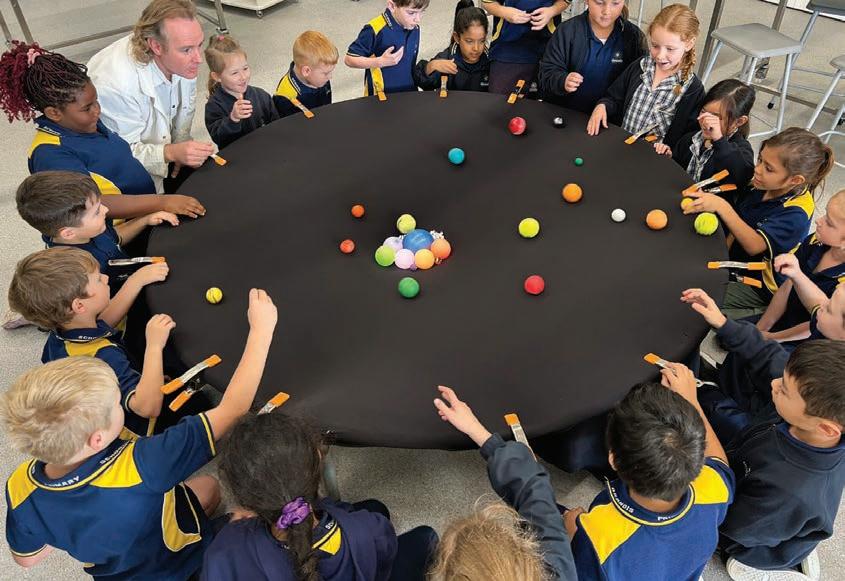
For Mr Lambe, these experiences help students connect classroom learning with future possibilities.
“It gives them a real-world experience, and you feel like you’re having a real impact on kids,” he says.
Mr Lambe’s focus on relationships extends beyond his students to families and the wider school community too.
One of the biggest things that changed him as a teacher is becoming a parent: “You see what happens before the kids get to your door.”
He has been involved in The Fathering Project for more than a decade, helping to strengthen connections between fathers and their children. At Grandis Primary School, this includes regular opportunities for fathers to spend time at the school.
“Our kids know that every Friday their dads are invited to the school grounds so they can have lunch with their kids,” he says. “It just makes them feel special and welcome.”
The initiative has also contributed to stronger engagement with the broader school community.
“It means that they’re more connected to school life,” he says.
‘Just doing the job’ Recognition through the Minister’s Teacher of the Year award was not something Mr Lambe set out to achieve. n fact, his first reaction as reluctance.
“My principal told me he was going to nominate me for Teacher of the Year,” he says. “And I said, please don’t. I’m one of those guys who paint the underside of the door, the bit that no one worries about, but I don’t want any recognition.”
He initially dismissed the nomination,
assuming the field ould e strong. t asn t until he as named a finalist that the significance of the process egan to register.
“You are your own worst critic, but through the process, you had to acknowledge the work that you’ve done over a long period of time.”
hat re ection, he says, shifted his perspective. Rather than focusing on a single achievement, it highlighted the cumulative nature of a teaching career.
“It isn’t just the last 12 months,” he says. “This has been 24 years of teaching, of truly loving the job, but also giving back to the wider community beyond my own classroom walls.”
The awards event itself brought a mix of pride and nerves. Standing alongside other finalists also reinforced his vie of the profession as a collective effort.
“You think about all the teachers out there who don’t get recognised, who don’t get nominated,” he says. “There was nothing special about me. I was just doing the job.”
For Mr Lambe, the award is less about individual recognition and more about acknowledging the work happening across classrooms every day.
“We’re not in it for those accolades,” he says. nd e definitely don t expect to be sitting on the front page of the West Australian newspaper the next day.”
Looking ahead, Mr Lambe remains focused on teaching and supporting students through meaningful learning experiences.
His commitment to the profession remains unchanged.
“It is the best job in the world. I will continue doing this until they kick me out. EM





Enabling you with the right tools to be the most productive in class or work while still providing ergonomic support.



All-Day Comfort
Support natural posture for longer study sessions
Ergonomic Design
Built for comfort and sustained use
Quiet Focus
Minimise distractions in shared environments
Seamless Work ow
Switch between devices with ease
Personalisation
Combine with an ergonomic or performance keyboard to suit your style

Three free streams at the National Education Summit Melbourne o er practical insights for educators, from early career support to wellbeing culture and future-focused thinking in classrooms.
Now in his sixth year at St Patrick's College in Launceston, Mr Luc NortonSmith has moved from classroom teaching into leadership, recently stepping into a Director of Curriculum role after three years as Head of epartment.
His experience spans both a rural Department of Education setting and middle years classrooms, where he taught maths and science – areas he says are often staffed by early career teachers, or out of field teachers.
That context informs his session at the National Education Summit Melbourne in the newly introduced Early Stages stream, where the focus is on supporting teachers in their first years through clear structures and shared approaches.
This is one of three free streams at the Summit taking place 3-4 September 2026 at the Melbourne Convention and Exhi ition Centre. The Knowledge Centre and Classroom of the Future streams will run concurrently.
“What I found really supported early career maths and science teachers at St Patrick's was making sure that we had a well-resourced, low variance curriculum, and making sure that the resourcing was collaboratively designed, he says.
“We also ensured that we had resources well embedded to help support teachers in what they were delivering and how to deliver it, and the standard at hich to deliver it.
He describes “low variance” as a way of aligning teaching across multiple classes and teachers.
“It’s about making sure that the language and terminology, the level of the content, what’s being taught, the sequence of it being taught, is the same across all the classes. e re trying to make sure that every kid in every class is getting the same opportunities and the same exposure, to the same content standard.
For early career teachers, that consistency reduces uncertainty. Mr Norton-Smith’s session will also address the balance between explicit and in uiry approaches. Practical strategies, including daily reviews, underpin that alance.
“At the start of each math lesson, you don’t need to dive straight into the next content; you review what you’ve done the last few lessons, maybe you return to something you did a couple of eeks ago or a month ago, he says.
“Daily reviews are a really good way to be able to check the students’ understanding. ou don t ant to go straight into more content if the kids
aren t confident on hat they ve had the lesson efore.
Thinking in the age of AI
With 17 years in education and more than a decade in leadership roles, Ms Alice Vigors brings both classroom and system-level experience to her sessions at the summit. he egan her career as a graduate teacher at Tumut Public School in 2009, later working in the Catholic system in curriculum and instructional leadership roles before returning in 2020 as assistant principal and progressing to principal.
Her presentation in the Classroom of the Future stream centres on critical and creative thinking.
“It’s a passion of mine… it began with creating cultures of thinking and embedding thinking routines in classrooms, and has grown from there,” Ms Vigors says, whose work in this area is also re ected in her books The Thinking Classroom and The Learning Classroom, exploring how educators can embed critical and creative thinking and make learning visi le.
She will explore how these skills remain essential alongside emerging technologies.
“There’s a real risk that students, if they’re not taught how to use their
own thinking processes alongside AI, will enter a question or prompt into ChatGPT and don’t really critically analyse the results, she says.
“My focus is on maintaining student agency in learning, really looking at how do we keep that human element of the way that we think… and help students to see why that is really important, even ith tools like .
Ms Vigors will also present in the Early Stages stream, drawing on her leadership experience to support ne teachers.
“We can’t learn unless we have a relationship with the people we are learning from. s teachers, this means taking the time to get to know the students; it can be as simple as saying
Speaker Profiles
Alice Vigors
Stream: Classroom of the Future
hello at the door to every child. t helps to make them feel seen and valued,” she says.
could e the first person that said hello to them and actually said their name for the day… it helps to foster those positive relationships.
Establishing routines is equally central and sustaining them requires ongoing attention, Ms igors says.
“As a new teacher, it’s worth making sure you establish your expectations and routine from the beginning and not feel pressure to jump straight into the lesson. The learning will come, but you have to have structures and frameworks in place first, she says.
“Doing it once on day one doesn’t make it a routine. ou have to
When: Thursday 3 September 2026, 9.15 – 9.45am
Session: Critical and Creative Thinking: still essential in the age of AI
Developing critical and creative thinking as complementary, uniquely human skills in the age of AI, and equipping educators with practical strategies to foster these capabilities in learning.
Alice Vigors
Stream: Early Stages Theatre
When: Thursday 3 September 2026, 11.45 – 12.15pm
Session: Learning the ropes as an early career teacher

This will share practical lessons and strategies from early career teaching, including classroom routines, learning environments, student agency and behaviour management, to support those starting out.
David Kolpak
Stream: Knowledge Centre
When: Thursday 3 September 2026, 3.15 – 3.45pm
Session: Building Culture, Clarity, Collective Efficacy
Exploring how embedding wellbeing into everyday practices builds alignment, trust and shared purpose, with clear expectations and consistent approaches enabling stronger collaboration and performance.
Luc Norton-Smith
Stream: Early Stages Theatre
When: Friday 4 September 2026, 12.45 – 1.15pm
Session: From Surviving to Thriving: Building Pedagogical
Confidence with Explicit Teaching and Daily Reviews


Helping early career teachers build pedagogical confidence through explicit teaching, daily review practices and practical, research-informed strategies that support student outcomes and teacher wellbeing.
consistently practice and foster those expectations and regularly revisit them each term.
Ms Vigors’ session will also address workload and wellbeing for early career teachers, including building support net orks.
“I want to reassure early career teachers that we don’t expect them to come in kno ing a solutely everything. My message is be kind to yourself – here are some tools and some tips that help you to get started.
“Find people that you can lean on, ho you can confide in. t s really important to have those people in your corner.
Culture, clarity and collective wellbeing
With seven years as principal of Trinity College North, Mr David Kolpak brings a leadership perspective shaped by wellbeing and positive psychology, as well as experience across a large multischool system.
Trinity College in Adelaide operates as one college across six schools, each led by its own principal (Mr Kolpak being one of six) and feeding into a senior school, all under a single Head of College. hile each school responds to its own context, they are aligned through shared principles across teaching, learning and ell eing.
Mr Kolpak says his session in the Knowledge Centre stream at the National Education Summit is grounded in how schools build conditions that support both individual and collective ell eing.
“We teach individual wellbeing skills, but then as a collective, we will look at what do we have to do to make sure people can utilise the tools we’ve given them in an environment that supports that, to foster conditions of wellbeing, such as clarity and trust and empo erment, he says.
He says the focus is not on choosing between individual and collective wellbeing, but on how both are supported together.
“Individual wellbeing doesn’t take precedence over what is best for the group, but what we need to look at is the
conditions that we can provide people to make our environments the best places,” he says.
At Trinity College, that approach is embedded through shared frameworks rather than standalone programs.
“We don’t have a wellbeing program as such. e have the ustralian tudent Wellbeing Framework that overarches all of our wellbeing, including how we teach about our strengths, emotional management, self-awareness, and what do healthy relationships look like .
That same approach extends to staff, with a focus on enabling people to work effectively ithin supportive conditions.
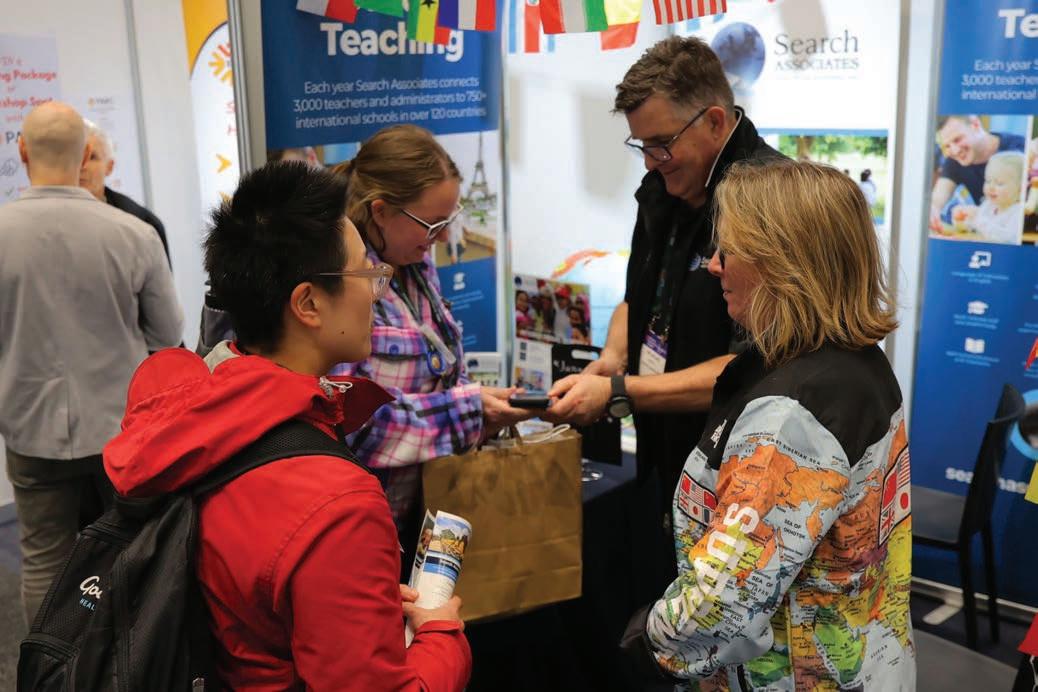
“We want the staff to be the best version of themselves in their environment, because that’s when the students are going to get the best from them as ell, he says.
Mr Kolpak’s leadership thinking is also captured in his book Thriving Together, which explores how school communities can build trust, clarity and
collective efficacy to support ell eing and gro th. e says trust is central to that ork.
“Relationships and trust form the foundation of that environment,” he adds. hen you ve got professional and personal trust, respect comes through and it makes challenging conversations easier, because there’s an understanding of them coming from a place of care. EM
When: 3-4 September 2026
Where: Melbourne Convention & Exhibition Centre
To register, visit nationaleducationsummit. com.au and secure your place in the Melbourne program.
Early registration is recommended due to high demand across streams.















Two Catholic school leaders discuss how The Brown Collective’s flagship programs have helped them recalibrate amid the growing complexity and pressures of modern education.
As he entered his fourth year as Principal of Clairvaux Catholic School, in Geelong, Victoria, Mr Brendan lanagan kne he needed to re ect on how he was leading – and how he could continue showing up with purpose and energy.
Leading the 630-student PrepYear 6 school is a privilege and responsibility he feels in equal measure. his is his fifth principalship in 32 years, yet the role has never been more complex and, after burning out in his previous role, he was conscious of leading in a manner that would sustain him and the school.
t is a significant role and responsibility. We have 421 families who want the best for their children. They have made a decision to enrol their children at Clairvaux and be part of our large school community,” he says. “The staff have professional and personal needs that require consideration too. There are community expectations around the school's quality of instruction as well as the school's educational reputation in the community.”
At this “critical” juncture in the latter part of his career, he sought further development through the 6R Leadership Program run by The Bro n Collective.
Available to current Catholic school principals with a minimum of three years’ experience, it is one of he Bro n Collective s agship programs facilitated by Founder r tephen Bro n to support all stages of development of school leaders. Another is the Leading with Integrity for Excellence (LWIE) course on Catholic school governance, which has been running since 2017 and now has

more than 1,000 graduates.
“I knew I needed to do something to make sure I stayed sharp, alert, and re ective a out my practice, Mr Flanagan says. “I spoke to my coach about it, and it appealed to me because it was about my own wellbeing, and ongoing improvement of the school.”
Across six phases, the 6R Leadership Program includes a mix of online and in-person workshops. Most are conducted in group settings, but each principal also receives individual executive coaching. The 6Rs include:
e ection and ene al This phase encourages principals to step ack and re ect on their values, motivations and purpose as leaders.
elatedness
This highlights the importance of connection, collaboration and shared problem-solving in building strong school communities.
efine ent
Recognising that leadership development is ongoing, this
component focuses on developing practical leadership capabilities in areas such as communication, strategic thinking, decision making, negotiation and building positive school culture.
efresh
ckno ledging significant pressures of the role, principals are encouraged to develop healthier habits and practical strategies to maintain energy, resilience and long-term enjoyment.
each O t
This encourages principals to broaden their perspective by exploring how other education systems approach leadership and innovation.
Mr lanagan says he enefited from the candid discussions he was able to have with 25 principals from dioceses across Australia. He was also blown away by the calibre of speakers, including Ms Maggie Farrar, a respected figure in educational leadership internationally from the UK, and Dr Brown himself.
But since returning to school, it’s
helped him distil what’s important.
“As a principal, you don’t get paid to do; you get paid to think, to strategise, and to develop the tactics needed to lead a big community,” he says.
“The program has helped me create the space to ask, ‘Where do we need to put our priorities? How do we think clearly about that?’. You’ll never get across this job completely, so it’s about delegating, dealing with what matters now, and thinking smarter about how you conduct yourself.”
e found the efresh and efinement phases most eneficial, sharpening ho he sees himself as a principal.
“It reminded me to reach out more. Principals tend to work in silos and look after their own patch,” he says.
“Even today, for example, I’ve been away with three staff members to Clarendon College in Ballarat, which is a leader in explicit instruction. We’re deliberately being open to learning from others, not closed off.”
It’s left him feeling revitalised and reenergised – and he believes many of his peers ill enefit too.
“This program has opened my eyes to what it takes to be an effective principal today, he says. 'm a firm eliever this program should be mandated for all principals whether it be their sixth, eighth, or tenth year, because we all get
inner-city Years 5-12 all-boys’ Catholic day school in Brisbane, by the end of 2027, almost the entire leadership team would have gone through the Leading with Integrity for Excellence (LWIE) – Governance for Catholic chools program.
Its value to the leadership team lies in how directly its principles apply to the day-to-day realities of leading a Catholic school. And as societal expectations continue to change, Catholic school leaders are under growing pressure to navigate this while remaining grounded in their mission and values.
After attending the program in 2025, Ms Ralda Deoki, Dean of Pedagogy and Learning Innovation, says it helped her and her peers realise governance doesn’t belong in the realm of “principals and boards”, but it’s a responsibility shared across senior leaders.
The program is delivered across six modules covering governance, ethics, strategic thinking, stewardship, safety and wellbeing, and performance culture through a mix of face-to-face sessions, webinars and online learning.
“What stayed with me was the practicality [of LWIE],” Ms Deoki says. “Stephen is very good at using metaphors to explain leadership concepts. Leadership courses can be quite theoretical: it all makes sense in the workshop, but when you go back to school, it’s about how you apply it.”
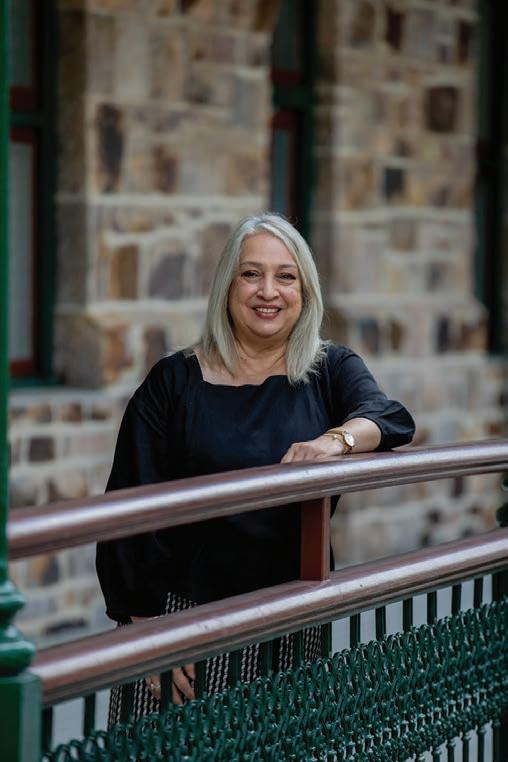
The metaphors she recalled included the idea of leaders stepping “off the dance oor and onto the alcony to see the igger picture, and finding ays to bring people inside the tent, rather than leaving them outside and disengaged. hile those ideas in uence her own work, other insights from the LWIE course have had practical applications at errace.
An example is how the school’s middle leaders go about developing their strategic annual plan.
his year e ipped it ased on ideas from the LWIE course. Instead of asking, ‘What are your 2026 goals?’, we asked them to think about their faculty in terms of governance,” she says.
“We asked: what are the risks to

mitigate them? It got them thinking much
affect faculties.”
Terrace isn’t immune to the complexities and risks of running a modern school: balancing community expectations, media and social media attention, Catholic values and academic rigour – all while navigating in a “posttruth” world.
“Governance becomes the way you ensure your mission and culture remain relevant, and that you can still lead effectively in that modern world,” Ms eoki says, re ecting on learnings from the LWIE program.
“It’s no longer enough to state a goal, meet it and bring everyone along strategically. The world is so much more complex; leadership must be about effective governance, mitigating risk, ensuring sustainability, and enriching culture as well.”
e ecting on E program, Ms Deoki says it was exceptional because it positioned senior leaders to think more broadly about what strategic leadership is and can be.
“It provided access to experts with a breadth of experience that participants could draw from," she says, "and Stephen provided the links to the realities of modern school environments." EM
A structured approach to observation and reflection is helping teachers strengthen professional dialogue and connect practice across year levels at Holy Cross College.
At Holy Cross College in Ellenbrook, Western Australia, Quality Teaching Rounds (QTR) has brought together teachers across experience levels and learning areas, creating a shared framework for analysing practice and re ecting on teaching.
A pre-kindergarten to Year 12 composite school with around 1,400 students and approximately 150 staff, Holy Cross provides a setting where primary and secondary educators operate on the same campus. or Ms Melissa Cartner, a teacher with 27 years’ experience, and Ms Caitlin White, an early career teacher in her fourth year, the program has offered a common language and structure for professional gro th.
Both teachers became involved in QTR in 2024 through the federally funded Strengthening Induction through Quality Teaching Rounds initiative. heir
participation began when they were approached by school leadership to join a pilot group of four educators.
or Ms Cartner, earning rea eader of eligious Education, the invitation came at a critical point in her career.
“It was amazing that we got this opportunity, she says. as at a crossroads… I was really thinking, is this the right career for me?”
A shared experience across career stages rom the outset, rought together teachers at different points in their careers. he pilot group at oly Cross included educators from a range of subject areas, including mathematics, science, humanities and religious education, as well as teachers working across both primary and secondary settings.
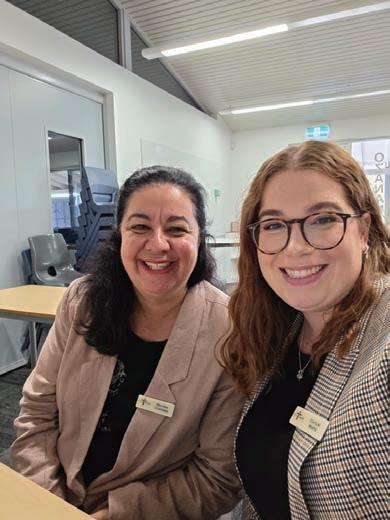
teacher Ms White, who was in her first year at the college at the time, the program represented a departure from her previous professional learning experiences.
his as my first experience in P that s designed for me, she says. Most of my experience in terms of classroom observation was always picking apart things that I’m not doing great… areas for improvement.
By contrast, she found QTR focused on recognising effective practice. hat shift in perspective as significant for an early career teacher navigating the pressures of establishing herself in the profession.
“I really liked the framing of the program – these are the things that you might not realise you’re doing really well, but are making a positive impact,” she says.

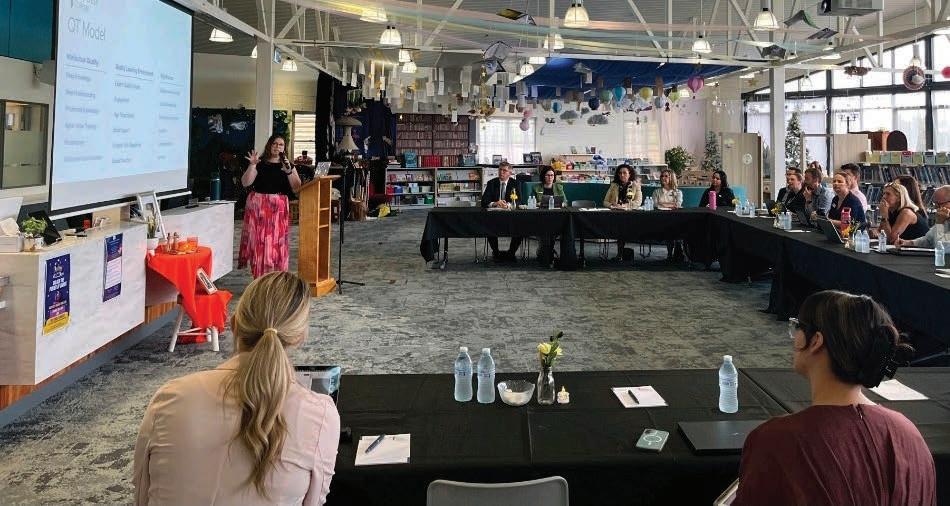

“When you’re constantly in that mindset of what can I be doing to prove myself… having a program like this really reframed my thinking of the work that as doing.
In Ms Cartner’s case, the experience provided validation after decades in the classroom.
“Quite often, you’ve got these young, fresh, passionate teachers coming in, sometimes you think, ‘am I stale? Am oring . she says. But orking ith Caitlin made me feel like I am doing great. e can all improve. e can all affirm each other.
Building connection across classroo s
Participation in egan ith t o days of training alongside other schools, where teachers learned the structure of the program and the coding framework used to analyse lessons.
At Holy Cross, the training also helped establish relationships within the pilot group before they began observing and discussing each other s teaching.
he t o days of the P really helped us to form a bond before we entered the actual program, Ms hite says.
That sense of connection extended beyond the pilot group and across the roader school context. s a composite college, Holy Cross offers opportunities for collaboration across year levels, but staff can still operate in separate primary and secondary spheres.
“We do still silo ourselves quite a lot between primary and secondary,” Ms hite says. o think it as really nice to be able to work with people across departments.
Observations within QTR allowed teachers to step into classrooms outside their own subject areas or year levels, focusing on pedagogy rather than content.
“Going into classrooms to watch the younger ones, you certainly do pick up different pedagogical styles,” Ms Cartner says. ou can use things from other subjects because it’s the pedagogy.
That cross-curricular perspective reinforced the transferability of teaching strategies and highlighted the shared principles underpinning effective practice.
e ecti e practice and rene ed confidence
Central to QTR is a structured process of lesson o servation and analysis. Teachers code lessons against a common framework, then engage in collaborative discussion focused on classroom practice.
or Ms hite, this approach has shaped her re ective practice eyond the formal rounds.
“I will try and code one of my lessons once a week, just individually, just to see ho m going, she says.
It’s helped her reframe challenging teaching experiences.
“I noticed I was starting to get in the cycle of, ‘oh, this is not going well, it must e me , Ms hite says. nd liked revisiting QTR as a way to assess what went well for me, even if I didn’t get through all the lesson content I intended to.
t s reminded me of hat different ays in hich can e re ective of my class… and what are the ways that I can support myself in my gro th.
imilarly, for Ms Cartner definitely feel much more confident having this process. t just reaffirmed everything for me.
hat sense of confidence extends to supporting colleagues, particularly those early in their careers, she adds.
S staining o ent and roader i pact ollo ing their involvement in the pilot, Ms Cartner and Ms White have
shared their experiences beyond the school, including presenting to deputy principals through Catholic Education estern ustralia.
Interest in QTR has been strong, with school leaders seeking insight into its impact on teaching practice and teacher development.
“A lot of what they wanted to know was what my experience was as an early career teacher and then how has this changed my perspective,” Ms hite says.
At Holy Cross, there has also been interest in expanding QTR more broadly across the school, although leadership changes and competing priorities have in uenced the pace of implementation. espite this, oth teachers indicate that the impact of QTR has continued in their day to day practice.
Ms White says the program has reinforced both her teaching approach and her commitment to the profession. oing the program reaffirmed for me that this is exactly what I wanted to e doing, she says. t s reminded me why I’m here and how I can keep getting etter for my students.
“If anything, the program has made me realise that this is exactly what I want to e doing for the rest of my life. EM
Everyday conversations in schools hold untapped potential to shape thinking, build leadership capacity, and improve performance when approached with greater intention.
It begins, as it often does in schools, with a simple question.
“Have you got a minute?”
In corridors, staffrooms and between classes, these moments unfold constantly – brief, unscheduled conversations where a colleague pauses, talks, and thinks aloud.
For Mr Chris Munro, Executive Director at Growth Coaching International (GCI) – part of the Instructional Coaching Group – these interactions are not interruptions, ut opportunities.
t is this premise refining ho leaders respond in those moments –that underpinned his session at the Capacity Building School Libraries
Summit in Brisbane, where GCI was a sponsor.
GCI is an Australia-based professional learning organisation that helps educators, school leaders, and organisations improve performance through coaching, mentoring, and leadership development. They provide training, accreditation programs, and consultancy services designed to build stronger communication, collaboration, and coaching cultures in schools and orkplaces.
“It’s literally in these incidental, unscheduled moments that aren’t in our calendar. A discerning conversation leader can actually turn those moments into learning conversations,” he says.
where we support the thinking and the progress of our conversation partner –that’s a coaching way of leading.”
That idea – leadership enacted through conversation – sits at the centre of Mr Munro’s work, and of Growth Talk: A Coaching Way of Leading in Schools, the book he co-authored with GCI founder Mr John Campbell.
Mr Munro brings more than three decades of experience across schools and higher education to his work, with a career that has steadily moved toward adult learning and leadership development.
A trained secondary design and technology teacher, Mr Munro began his career in Scotland before moving into teacher education. He later spent five years at the niversity of erdeen as a teaching fellow, before then relocating to Australia.
“I’ve been in Australia for 15 years now. I initially taught at Williamstown High School as a leading teacher in professional learning and then as dean of professional practice at St Kevin’s College in Toorak.”
He joined GCI nearly a decade ago after being recognised for his experience of implementing coaching approaches in schools. Today, his work spans individual coaching and systemide leadership development.
“We started as a coaching organisation. We still are; we provide coaching services and our consultants maintain a caseload of school leaders, individuals, mostly in education.
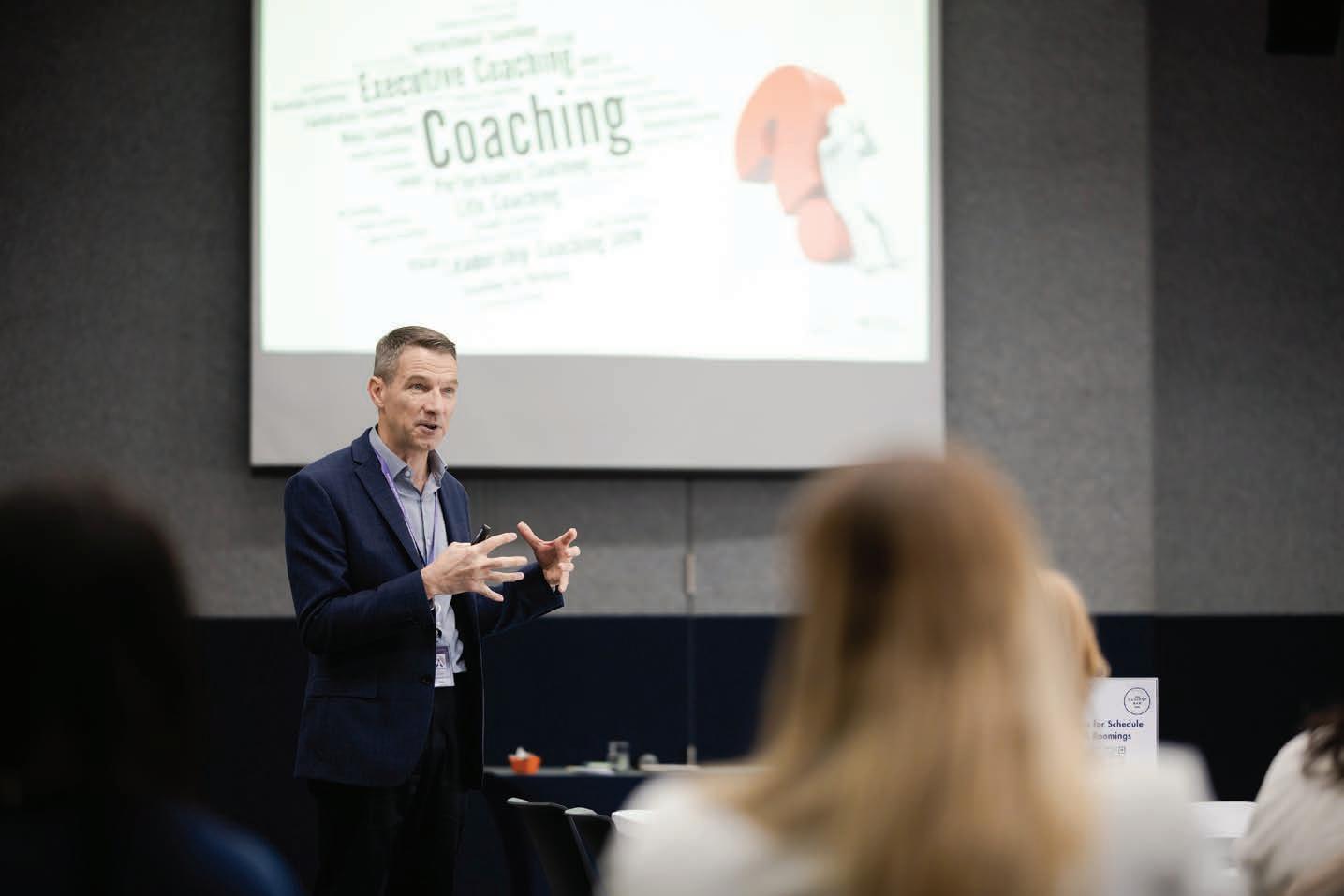
“We work with school leaders on pressing issues. It’s basically a thinking space for them. And that’s the main value of it,” he says.
“I see it as a form of professional development in its own right, a personalised form of professional development – an empowering and professionalising ay of conversing.
That support is often used at key points in leaders’ careers.
“It can range from a few coaching sessions to get over a hump – often it’s a transition point in their leadership. We often provide coaching for people who are new leaders. In some cases, coaching is built into new principal induction programs, Mr Munro says.
Alongside one-to-one work, schools engage GCI to build internal capability.
“We often have school leaders say, ‘Can you come and work with my staff? How can we build the capacity internally to have conversations that are more like this , he explains.
This type of training is frequently delivered in schools themselves, with the advantage being internal team building that’s tailored to the school’s own context.
“The aim is not to introduce new
Leadership through conversation
At the summit in Brisbane, Mr Munro’s session returned to an idea explored in Growth Talk – that leadership is enacted through everyday conversations.
“There’s a really high proportion of conversational opportunities or learning opportunities that aren’t planned and aren’t scheduled,” he says.
“They can happen anywhere. It may be in a team setting. It may be in an incidental one-to-one setting. It may be in a formal meeting you scheduled.”
For Mr Munro, leadership is not separate from these exchanges – it happens through them.
“Leaders at any level enact their leadership through conversation; progress, thinking, change, alignment… all those things you want as a leader are enacted literally one conversation at a time.
Building capability in everyday moments
A key aspect of this work is building coaching capability across different leadership levels.
“Most of the people we train are leaders – they’re in some position of in uence ut they re not al ays top of
in uence too, Mr Munro says.
The emphasis is not on ‘who’ but on 'how' leaders respond in the moment.
“How do we show up and how do we discern what kind of conversation this needs to be right now? Having the presence and attentiveness to be able to do that is uite a skill, he says.
Rather than stepping out for formal coaching sessions, leaders are encouraged to bring these practices into their day to day interactions.
Much of GCI’s recent work has focused on bringing structured coaching techniques into these everyday interactions.
“This is about bringing the skills, the dispositions, the techniques grounded in evidence from formal coaching, to the myriad of conversational contexts through hich leaders lead, Mr Munro says.
The impact, he says, is cumulative.
“Change and progress are enacted one conversation at a time.” EM
trial across five primary schools has found that targeted grammar, punctuation and spelling interventions can improve pupil progress, confidence and classroom performance, offering a promising approach to closing the attainment gap.
he pilot evaluated Shine GPS: Targeted Interventions for Primary, focusing on hether pupils receiving structured support made measura le gains in standardised assessments. chools also assessed hich pupils enefited most, hether learning transferred into everyday classroom ork, and ho pupils responded to the sessions.
esults suggest a roadly positive impact. hree of the five schools reported clear evidence that learning from intervention sessions translated into improved classroom performance.
One teacher noted that the programme helped make those links ack to class, highlighting that the true value lay not just in intervention progress ut in its ider academic impact.
hine GP interventions, from achette earning, are designed to address specific gaps in pupils
kno ledge, targeting granular learning o jectives here expected standards have not een met. elivered through a structured 'Plan, o, evie ' model, sessions typically last et een 20 and 0 minutes and are organised into t o part learning se uences. hese include guided instruction follo ed y independent practice and short progress ui es.
upporting materials include lesson plans, modelling tools, teacher guidance and pupil resources. reporting platform further enhances the approach y grouping pupils according to areas of need identified in assessments, ena ling staff to deploy targeted support efficiently.
Engagement levels among pupils ere consistently high across all schools participating in the trial. eachers and teaching assistants reported that pupils not only responded positively to the sessions ut also enjoyed them. he deputy head at o ns ay Primary chool, one of the five schools involved in the trial, said that the majority of pupils felt the interventions had helped them and appreciated the format of the sessions.
espite this, leaders at that school indicated they ould recommend the programme in future, ackno ledging the progress pupils had made during the trial. EM A

Confidence emerged as a key factor underpinning pupil progress. ll schools involved in the trial reported noticea le improvements in pupils self elief. One senior leader emphasised that reducing the pressure associated ith testing environments allo ed pupils to engage more freely, resulting in stronger outcomes. By framing sessions as colla orative and
lo stakes, the interventions appeared to unlock participation from learners ho might other ise struggle. he programme also delivered practical enefits for staff. our out of five schools said the interventions saved time for teachers and teaching assistants, thanks to ready made, ell structured resources. taff reported that materials ere appropriately pitched and aligned closely ith their professional judgement a out pupil needs. he automated grouping of pupils ithin the reporting platform as also seen as accurate and helpful in guiding intervention planning. he majority of schools have chosen to continue using the programme eyond the trial period. our of the five participating schools confirmed they ould retain hine GP for the follo ing term, ith one already having em edded it into regular practice prior to the pilot. he only school not continuing cited staffing constraints rather than concerns a out effectiveness, noting that reduced teaching assistant capacity and leadership changes had limited implementation.
For more information, visit www. hachettelearning.com/shineinterventions or contact chioma. nwaorguokere@hachettelearning.com
Australia’s leading inclusive education conference is expanding alongside increased demand for professional development, with bookings now open and a strong line-up of global speakers.
The Australian Inclusive Schooling Conference (AISC) has grown into a major fixture on the professional development calendar, re ecting rising demand for inclusive education expertise across ustralia.
ounded as part of llume earning s roader offering, the conference first launched in 2020 and quickly established itself as a dedicated national forum focused on inclusive education. ccording to co-founder and director Ms Amanda Cor y, it marked a turning point. t as a significant milestone for llume earning, she says. t as the only national conference focused exclusively on supporting inclusion of students ith disa ilities in mainstream schooling.
o held iennially, the 202 event ill take place in o nsville on 1 1 March, ith ookings no open. he conference ill feature international keynote speaker r Jenna Mancini ufo, alongside do ens of presenters from across ustralia and overseas, continuing a model that lends glo al expertise ith local insight. rom its eginnings, llume earning has evolved in step ith the sector. hat once featured smaller, targeted events has expanded into a comprehensive program of orkshops, conferences and virtual learning opportunities delivered year round. hat shift re ects oth the readth of demand and the changing profile of attendees.
Ms Cor y, a former classroom teacher ith 2 years experience in the education and disa ility sectors, says the professional development offered y llume earning is driven y feed ack from participants.
llume earning s programming is shaped directly y educators and school leaders, ith topics and formats responding to hat schools are asking for. irect feed ack has helped the organisation uild a highly engaged audience.
Co founder Ms achel Carr, also ith significant experience in the disa ility and education fields, says participants understand their input drives future offerings. e are constantly engaging ith our audience to learn a out their professional development priorities to ensure that our offerings are meeting the needs of ustralian educators, she says. longside the agship C conference, the calendar of upcoming events continues to evolve. n July, Dr Katie Novak will deliver a series of orkshops on niversal esign for earning, marking her fourth visit to ustralia. essions ill e held in o nsville and Bris ane, ith additional virtual access availa le.
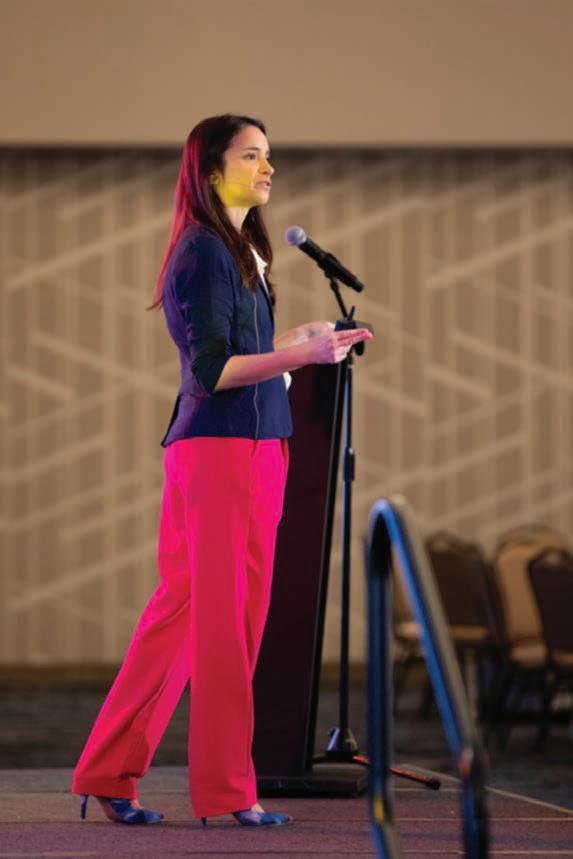
e recognise that inclusion goes eyond the classroom, so e ensure that the range and structure of our events cater to a road audience including educators, school leaders, allied health professionals, parents and others Ms Cor y says. or Ms Carr, the expansion is also connected to ider societal change. here s een a shift in societal attitudes to disa ility from seeing people as separate, to recognising that everyone is different and entitled to the same opportunities, she says.
ater in 2026, virtual events ill feature prominent consultant, author, and advocate for inclusive education, r Paula Kluth, and internationally recognised child psychiatrist, author, and educator r an iegel, presenting content ased on his book The Whole-Brain Child. hese virtual events are designed to extend professional learning opportunities to a ider audience eyond in person events.
llume earning s professional development offerings coincide ith roader changes in education. ncreasing numbers of students with disability are being educated in mainstream
llume earning ill continue positioning its events as a re ection of and response to gro ing demand ithin the sector. e re excited to continue this important ork and provide engaging and responsive P to educators across ustralia, Ms Carr says. EM
The Australian Inclusive Schooling Conference will be held in Townsville on 18–19 March 2027. For more information, visit: www.inclusiveschoolingconference.com. au, or www.illumelearning.com.au
Dr Lorraine Hammond says schools investing in structured literacy must move beyond one-o workshops and focus on sustained coaching and classroom implementation.



Many schools across Australia are investing heavily in structured literacy approaches, hoping to improve reading outcomes and close persistent achievement gaps. et despite significant spending on professional development, many schools still struggle to achieve consistent classroom implementation or sustained improvement in student outcomes.
The problem is not a lack of goodwill or commitment. Rather, it is a misunderstanding of how instructional change actually occurs.
Fingers crossed is not a literacy improvement strategy. Yet isolated training sessions – often described as “drive-by” or “one-off” professional development – continue to dominate school improvement efforts. These sessions are typically delivered with little follow-up, limited classroom support, and minimal connection to day-to-day teaching practice. Unsurprisingly, they rarely produce lasting changes in instruction.
This model assumes that hearing about a practice is enough to change practice. Teaching, however, does not work that way.
as knowing how to teach them effectively. Schools often invest in high-quality presentations and resources, but without sustained support teachers can struggle to convert theory into daily instruction. Structured literacy is not simply a set of ideas; it requires precise and consistent enactment.
What is frequently missing is the 'how': how to model clearly, scaffold effectively, maintain pace, and ensure all students are responding throughout the lesson. Without explicit modelling, rehearsal and feedback, implementation quickly becomes inconsistent.
nother critical issue is fidelity of implementation. When schools report that a structured literacy program “did not work”, closer examination often reveals that lessons were skipped, routines altered, or instruction delivered out of sequence. Structured literacy relies heavily on cumulative review to build automaticity and reduce cognitive load. Omitting this component weakens the effectiveness of instruction.
Dr Lorraine Hammond is Professor of Early Years Literacy and Program Co-Ordinator at The University of Notre Dame Australia. A nationally recognised expert in evidence-based literacy instruction, she has recently been working in the Northern Territory leading professional development for teachers in e ective literacy teaching practices. Dr Hammond is passionate about improving student outcomes through explicit instruction and teacher education.
Structured literacy is a researchinformed approach to teaching reading, spelling and writing that makes the structure of language explicit for all learners, particularly those who struggle. It teaches how English works across phonology, orthography, morphology, syntax and semantics. Instruction is carefully sequenced, moving from simple to complex concepts, with each new element building on prior knowledge.
However, knowing about these components is not the same
High-quality professional learning is grounded in classroom practice, not conference rooms. It includes modelling in real class-rooms, opportunities for teachers to rehearse instructional routines, and timely, specific feed ack. mportantly, it recognises that explicit literacy instruction is more complex than it can initially appear.
Many professional learning providers unintentionally make structured literacy practices look easier than they are. his re ects what psychologists describe as the “curse of knowledge” – a cognitive
bias where experts assume others share their understanding. As a result, critical instructional steps are often glossed over, and what appears clear during training can become far less clear during implementation.
For many years, I have provided professional learning and instructional coaching for beginning reading approaches that systematically teach phonological awareness and decoding. More recently, this work has included teachers involved in the Kimberley Schools Project, which has introduced structured literacy approaches in regional and remote communities across Western Australia since 2018.
The professional learning process begins with demonstration lessons in early years classrooms. Teachers observe instructional routines in action before immediately practising them with small groups themselves. Throughout the day, teachers learn not only what to teach, but why those instructional decisions matter.
This rehearsal is essential.
Although teachers are provided with support materials and demonstration videos, genuine understanding only develops when they begin changing their own classroom practice. Without ongoing support, many teachers are left trying to figure it out alone.
This is why instructional coaching matters. In the Kimberley Schools Project, follow-up classroom visits allow teachers to re-visit modelling, co-teach lessons, refine instructional delivery and receive feedback within the context of their own classrooms.
Building whole-school capability
As explicit instruction becomes increasingly common in schools across Australia and internationally, misunderstandings about what it actually involves are also growing.
Explicit instruction is more than whiteboards and pop-sticks. Doing it well requires deep understanding of lesson design and delivery. Teachers need to know how to break content into manageable chunks, regularly check for understanding, and maintain active
student participation throughout the lesson.
These skills are nuanced. They take time to learn and are difficult to develop without observing highuality models.
Successful large-scale literacy initiatives share several important features. Systems such as the Association of Independent Schools NSW, the Kimberley Schools Project, Canberra-Goulburn Catalyst and Catholic Education Tasmania’s Insight initiative have embedded structured literacy within broader high-impact teach-ing approaches.
Their success has come from a consistent strategy: show teachers what good practice looks like, then support them to implement it well.
For school leaders, several elements are essential. First, schools need a shared understanding of what high-quality explicit instruction looks like in practice, not simply in theory. Second, curriculum, assessment and instruction must work together coherently. Third, leaders must invest in sustained professional learning rather than one-off training sessions. This includes coaching, observation, modelling and feedback cycles that support teachers to implement practices accurately and consistently.
Importantly, leadership engagement remains critical because what leaders prioritise is ultimately what schools implement. Finally, implementation must be actively monitored to ensure every student has access to high-quality instruction every day.
Supporting early career teachers
Early career teachers often enefit most from clarity and structure.
In my work with beginning teachers in the Kimberley, the most effective supports include explicit instructional models, carefully designed lesson sequences, and established classroom routines. These scaffolds provide essential support while teachers develop confidence and expertise.
Regular coaching and feedback
also make a substantial difference. Watching expert teachers, rehearsing key routines and receiving immediate actionable feedback accelerates professional growth far more effectively than isolated workshops.
Reducing cognitive load is equally important. Providing high-quality instructional materials allows early career teachers to focus on delivery, responsiveness and student learning.
Sustaining improvement over time Many literacy initiatives fail not because the approaches themselves are ineffective, but because implementation is not sustained.
Schools often invest heavily at the beginning of reform efforts but fail to provide ongoing reinforcement. Over time, practices drift, knowledgeable staff move on, and consistency declines. Initiative overload is another common challenge. When structured literacy becomes just one of many competing priorities, it risks being treated as an 'add-on' rather than the core work of teaching.
Looking ahead, professional learning will likely become increasingly practice-based and systematised. Coaching models, structured rehearsal and performance-based assessment in teacher education are already becoming more prominent. Technology also offers opportunities to scale high-quality instruction more effectively through video libraries, guided practice modules and online instructional resources.
At its core, structured literacy is about equity. When implemented well, it ensures all students – particularly those most vulnerable – gain access to the knowledge and skills needed to become successful readers. But this only happens when schools focus not simply on what teachers know, but on what they do every day in every classroom.
High-quality instruction remains the most powerful lever we have for improving literacy outcomes, and it deserves sustained, thoughtful investment. EM
Former primary school principal Andrew Cock gets to grips with why professional learning has always been a cornerstone of e ective teaching.


As professionals we know the importance of professional learning for teachers, however, we must note that it is just as important for school leaders. Schools are changing a lot, in a system marked by curriculum reform, growing accountability, workforce shortages and increasing complexity in student needs, principals cannot afford to see professional development as an optional extra. It needs to be a strategic priority.
The reality is that schools that invest in the capability of their staff are far better positioned to improve student outcomes, strengthen school culture and keep their good teachers. At the middle of that work is the principal and the school leadership team.
Strong school leadership has consistently een identified as one of the most significant in uences on student achievement. Today’s principal must be an instructional leader, workforce strategist, curriculum expert, ell eing advocate, financial manager and community leader, often all before the first ell sounds.
practice and classroom reality.
The truth is the best principals remain learners themselves.
Professional learning for principals is not simply about attending conferences or completing online courses. Leadership development builds the capacity to lead wholeschool improvement, strengthen teacher practice and create consistency across classrooms.
Consistency matters.
Families rightly expect that every child, regardless of which classroom they are placed in, receives high-quality teaching. One of the principal’s most important responsibilities is ensuring that the very best teacher possible stands in front of every classroom, every day. That does not happen by chance, it occurs when schools deliberately invest in teacher capability and create consistent instructional practices across the school.
This is where strategic professional development becomes powerful.
Mr Andrew Cock, previously Principal of Blackburn Primary School in Victoria, is an active leader in school leadership advocacy. He is currently the President of the Australian Principals Federation’s Victorian branch, representing principal class interests and wellbeing in industrial forums. In his school and professional roles, he champions support, advocacy and improved conditions for educational leaders.
That complexity makes professional learning essential, not only for teachers, but for principals themselves.
Importantly, principals must maintain current knowledge across three critical domains: pedagogy, leadership and curriculum. Educational research continues to evolve. Curriculum frameworks change. Community expectations shift. Schools are increasingly data-driven and evidence-informed. A principal who disengages from professional learning risks creating a gap between leadership
Effective schools understand that improvement cannot rely on isolated “pockets of excellence”. Whole-school growth occurs when every teacher develops shared understandings. The principal plays a critical role in setting those expectations and ensuring professional learning is embedded into the culture of the school.
Professional learning therefore becomes both a leadership responsibility and a retention strategy.
Teachers who feel supported, developed and professionally valued are significantly more likely to remain within a school. In an environment where workforce pressures continue

to challenge schools, retaining high-quality staff has become increasingly important. Schools that provide structured coaching, mentoring, curriculum-aligned learning and leadership pathways create stronger professional cultures and reduce turnover.
An increasingly important aspect of principal professional learning is maintaining direct engagement with teaching and learning practice itself. While the operational demands of the role can easily pull principals away from classrooms, effective instructional leadership requires principals to remain visible, connected and current in teaching practice.
here is significant value in principals actively participating in professional learning alongside their teachers. When principals engage in the same learning as staff, it strengthens credibility, reinforces shared vision and demonstrates that professional growth applies across every level.
When principals are involved in teaching and learning it helps build trust with their teachers. Teachers like it when principals understand what they are doing and can help them. It also helps principals make decisions about school priorities.
The most effective principals remain deeply connected to what happens between teachers and students every day. They understand that school improvement is ultimately built through the quality and consistency of the classrooms in their school.
Equally, aspirant leaders need opportunities to develop before stepping into principalship.
Here, in Victoria, the state has invested
that effective school leadership requires deliberate preparation rather than simple progression through experience alone.
Programs such as Unlocking Potential: Principal Preparation have een specifically designed to prepare aspirant principals for their first su stantive principal appointment. The program focuses on practical leadership capability, school improvement strategies and building professional networks through internships and mentoring.
his re ects an important shift in educational leadership thinking. Historically, many principals learned “on the job” with limited structured preparation. While experience remains invaluable, modern school leadership is now too complex to rely solely on informal learning.
Similarly, the Victorian Aspiring Principal Assessment (VAPA) provides aspiring principals with an evidencebased assessment process to determine readiness for principalship. Participants receive personalised feedback and a formal statement of readiness guided by experienced former principals.
Programs supporting new and experienced principals alike recognise that leadership development is not a one-off event, but an ongoing process throughout a principal’s career.
In schools, professional learning works best when it is strategic, sequenced and aligned to school priorities. Sustained improvement occurs when schools create clear consistent instructional models, provide ongoing coaching and allow staff
Importantly, principals themselves must model that same commitment to learning.
Staff quickly recognise whether professional learning is genuinely valued or simply administrative. Principals who engage in learning alongside their staff build stronger credibility as instructional leaders. They demonstrate that improvement applies to everyone, regardless of position or experience.
There is also a broader system responsibility here.
If governments and systems genuinely want improved student outcomes, workforce stability and sustainable school improvement, investment in leadership professional development must remain a priority. Strong principals build strong schools.
Ultimately, professional learning is not a out collecting certificates or completing mandatory hours. It is about uilding expertise.
For principals, that expertise must extend beyond management into deep instructional leadership. Schools improve when principals understand teaching and learning, lead curriculum implementation ith confidence and uild consistent, high-quality teaching practice across every classroom.
The goal remains simple: ensuring every student has access to excellent teaching every day.
That outcome will always depend on the quality of the teachers in classrooms and the quality of the leaders supporting them. EM
Felton Industries’ new Elite grandstand range combines comfort, structure and durability, o ering schools a practical solution for spectator seating.
Australian manufacturer Felton Industries has launched its Elite grandstand range, designed to deliver improved spectator comfort, accessibility, and long-term performance across community, education, entertainment, and sporting environments.
The Elite range builds on Felton’s established grandstand portfolio, introducing individual plastic bucket seating, a deeper structural profile, and a reinforced ackrest. he result, it says, delivers a more comfortable and practical seating solution that supports structured spectator experiences while maintaining the durability and compliance required for pu lic spaces.

Felton Industries Product Marketing Manager Mr Simon Clayton says the design re ects changing expectations around spectator seating.
“Venues want seating that lasts and improves comfort and usa ility. By introducing individual seats and increasing the depth of the structure, we’ve created a solution that supports oth.
A key feature of the Elite range includes the use of up to 53 individual seats, replacing traditional plankstyle seating ith a more defined and organised layout. his configuration is designed to support clearer seating allocation and helps venues manage capacity ith greater control. t also improves the overall spectator experience by providing personal space and a more supportive seating position.
“The deeper design provides improved legroom and easier movement through rows, reducing disruption when spectators enter or exit seating areas. This makes the grandstand particularly suited to busy environments where accessi ility and o matter, such as school sports days, local competitions, and community events, Mr Clayton says.
tructurally certified for pu lic use, the Elite grandstand includes a reinforced backrest and engineered aluminium frame that improves safety and long-term relia ility. t is typically installed as a fixed structure for sta ility, ith optional sleds available for sites that require repositioning or transport exi ility.
Constructed from aluminium, the range is designed for durability in ustralian conditions. ts eather resistant, low-maintenance materials make it well suited to outdoor environments where ongoing upkeep and lifecycle costs are key considerations for councils, schools, and facility managers.
Felton developed the Elite range to meet demand across a range of sectors, including:
• local councils upgrading community sports fields and recreational facilities
• sporting clubs and associations accommodating growing participation and attendance
• schools and universities requiring safe and durable spectator seating
• event and entertainment venues seeking structured seating for outdoor areas.
“Felton is seeing increasing demand for seating that supports both functionality and user experience," Mr Clayton says.
"The Elite range responds to that need with a design that improves comfort, supports accessibility, and remains practical for long term use. EM
Thousands of school upgrades show the same result: when hydration is designed well, students use it every day.
No two school hydration upgrades are ever the same. Some schools put hydration front and centre on the playground. Others need extra refill points to keep up with the lunchtime rush.
Chilled water before summer? Always a hit. And often, it’s the P&C, local legends, or creative students who turn a simple idea into something the whole school remembers.
One thing has become clear across more than 2,500 school hydration upgrades: the best results start with a real need and the right solution for the way students use the space.
Chilled filtered ater here st dents alread gather
t Putney Pu lic chool, a ne uafil ydro ank rought chilled, filtered water into the Platypus Playground. It is a simple upgrade, but one that Civiq says makes a real difference during busy breaks by putting hydration right where students already spend their time.
hen a C pro ect t rns into a dail in
At Shorncliffe State School, the P&C stepped up and delivered a chilled Hydrobank that students embraced from day one. It’s the kind of upgrade that looks simple on paper, but makes a major difference in daily school life by making water easier, more visible, and more appealing, Civiq says.
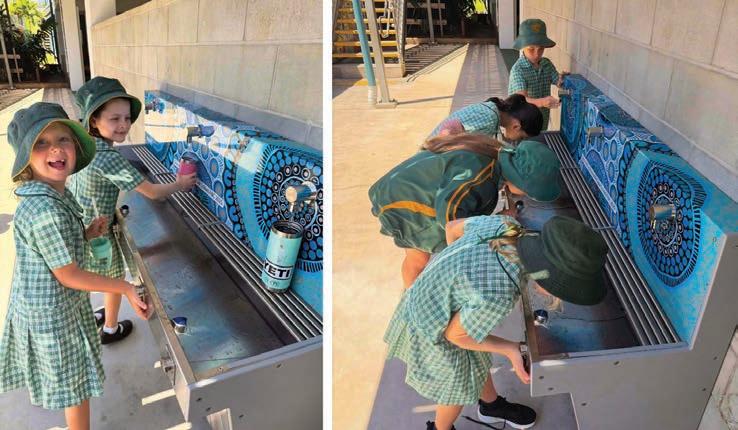
When Biloela State School set out to modernise hydration, they got more than just a practical upgrade. Their new drinking water stations brought together smart design, sustainability, and student pride in a way that felt right for a school with over 100 years of history.
Colo r n t rns into etter h dration
At Ocean Grove Primary School, better hydration was a team effort. A Colour Run brought the whole school together and raised over 75 percent of the funds for t o ne uafil ydro anks.
According to Civiq, students came back to water stations they actually anted to use, ith easy ottle refill access, strong school identity, and a setup built to handle the demands of daily school life.
hen etter design ro ght st dents ack
At Berwick College, the old drinking troughs were part of the problem. They looked tired, most taps were out of action, and students steered clear because of their appearance.
The upgrade turned things around fast. Eight ne uafil ydro anks meant places to drink or refill, ith custom BASIX artwork bringing the
the ottle refill points, and just like that, water was back on the menu.
practical pgrade acked the school co nit
At St Maria Goretti Primary School, a new ydro ank ith a chiller and filter arrived just in time for the heat. What made this project special was the community effort behind it; fundraising and local support rought cold, filtered ater to students right when they needed it.
re o read to re ie o r school s h dration set p Civiq says every school is different, and every challenge unique.
"But the result is always the same: better hydration, happier students," it says.
Book a free hydration review with Civiq’s team, to receive a clear plan, the right station options, and a tailored uote.
Mention EM26 to receive a ree original rt Panel on ualified orders. EM
For more information: Email: sales@civiq.com.au Phone: 1300 600 300 Visit: civiq.com.au/em26
Too often, inspiring ideas become additional workload. Schools need clearer priorities, realistic implementation, and the discipline to protect sta capacity and wellbeing.

Andrew Murray is a former Secondary School Principal and currently a PhD Candidate at Australian Catholic University, researching the flourishing of school leaders. Drawing on more than 30 years in education, his work asks how leaders can sustain themselves in demanding and complex environments without losing their sense of purpose. Often described by those who work with him as a ‘horse whisperer’, Mr Murray brings a calm, perceptive, and deeply human approach to his work. He helps leaders name what is really happening beneath the surface, make sense of complexity, and find more sustainable ways to lead. In 2026, he will join Boston College as the International Research Fellow, where he will engage with a global community of doctoral researchers. Andrew is the author of the popular book: Faith, Flourishing and Wellbeing.
Professional development can take many forms, but conferences still have their own particular charm. There is the networking, the hallway conversations, the fresh ideas, the randed free ies, and the steady o of coffee that keeps everyone upright.
Most educators know the feeling. You attend a keynote that challenges your thinking. A workshop gives you practical ideas. You scribble notes, take photos, and sit with colleagues afterwards asking the familiar question: “So what are our actions?”.
There is nothing wrong with taking notes. There is nothing wrong with capturing a slide that really lands. But there is also a trap here. If the presenter says the slides will be shared, believe them. It is not a secret code to be cracked or a rare artefact to e preserved. One photo is fine. But if you spend the whole session photographing every slide, you may miss the deeper point. The best professional learning does not always arrive as a dot point on a PowerPoint. Sometimes it arrives as a question, a challenge, a conversation, or a quiet moment of recognition when you realise, “That is what is happening in our school.”
By the end of a professional learning day, someone has usually captured a long list of next steps on butcher’s paper, in a notebook, or in a shared document. The energy in the room is real. People are motivated. Everyone leaves with good intentions.
Then Monday arrives.
A staff member calls in sick. A
parent complaint lands in your inbox. A student issue escalates. A meeting runs overtime. A curriculum deadline suddenly becomes urgent. The action list that felt so important on Friday now feels strangely disconnected from the actual rhythm of school life. The notes get buried in the bottom drawer of your desk, or worse, they become one more thing you feel guilty about.
I have lived this as a principal. I have sat in the conference room, felt the energy, heard the inspiring speaker, and believed that the next step was to return to school and act quickly. I have also experienced the reality of returning to a school community already carrying more than enough.
The issue is not motivation. chools are filled ith deeply committed people who want to improve outcomes for young people. The problem is that many postworkshop action lists are built for ideal conditions that simply do not exist in schools. Ironically, they can create the very exhaustion many leaders are trying to solve.
Professional development matters. At its best, it can renew purpose, sharpen practice, challenge assumptions, and reconnect educators with the deeper meaning of their work. But if every workshop becomes another action list, we risk turning learning into load.
Part of the problem is that we confuse movement with progress. There is often an unspoken belief
that professional learning must end with a long list of actions to be considered worthwhile. If we have not created a plan, allocated tasks, and named immediate next steps, we can feel as though we have wasted the opportunity.
I am no longer convinced this is true. In schools, action is often more visible than thinking. A new program, a new policy, a new meeting structure, or a new wellbeing initiative gives the impression that something is happening. But activity is not the same as improvement. A school can be extremely busy and still not be moving in the right direction.
Before creating actions, leadership teams need to be clear about what they are actually trying to improve. Is the issue staff wellbeing? Communication? Strategic direction? Student learning? School culture? Trust? Workload? These are different problems, and they require different responses. Without that clarity, schools can end up implementing activity rather than meaningful change.
This is especially important after strong professional learning. A good workshop can make an idea feel immediately compelling. A strong presenter can make a strategy feel obvious. A powerful keynote can create momentum in the room. But what feels right in the moment still needs to be tested against the reality of the school. oes this idea fit our context oes it address a real problem? Is this the right time? Do we have the capacity to implement it well? What would need to stop for this to have a genuine chance of succeeding
These questions matter because schools are not empty containers waiting for the next idea. They are living communities with histories, pressures, habits, relationships, strengths, wounds, and limits. A strategy that works beautifully in one context may land poorly in another. Not because the idea is bad, but because the conditions are different.
This is where capacity becomes essential. Schools are full of good people operating near full capacity. Teachers are managing increasingly complex

There is often an unspoken belief that professional learning must end with a long list of actions to be considered worthwhile.
leaders are alancing staffing shortages, budgets, compliance pressures, parent expectations, student needs, and the realities of their own lives outside school.
Every new initiative requires time, emotional energy, attention, communication, follow-through, and trust. It is easy to underestimate this. A new idea may sound simple in a workshop, but implementation is rarely simple in practice. Someone has to lead it. Someone has to explain it. Someone has to adapt it. Someone has to answer questions. Someone has to follow it up when attention shifts elsewhere. his is here ourishing matters. Flourishing is not about squeezing more productivity out of already tired people. It is about building schools where good work can be done well, where people have enough clarity, trust, time, and energy to keep showing up with purpose. ourishing school is not one that says yes to every good idea. It is one that has the wisdom to choose what matters, the courage to let some things go, and the discipline to protect the conditions that allow people to do good work well.
A better way forward is to use a simple filter ith your leadership team before implementing anything from professional learning.
First, ask: what should we stop? What meeting, initiative, process, report, expectation, or habit is draining time and energy without adding meaningful value? Without stopping something, every new idea becomes another layer in an already cro ded system.
Second, ask: what should we start? What is one idea from the professional learning that could
the context, and has a realistic chance of being implemented well.
Third, ask: what should we sustain?
Professional development does not always need to lead to something new. Sometimes it reminds us that something we already do is worth protecting. ometimes it confirms that a practice, relationship, routine, or cultural habit deserves more consistency.
The order matters. Most schools begin with what they should start. That is understandable, but it can also be dangerous. If nothing is stopped, and nothing is sustained, every new idea becomes another demand. The better sequence is stop, start, sustain. It forces leaders to think about capacity efore activity.
Then give yourself 30 days before launching anything significant.
This is not about losing momentum. It is about protecting the idea from being rushed into a system that cannot yet hold it. Let the excitement settle. Review your notes. Talk with your team. Listen to staff. Test whether the idea solves a real problem. Ask whether the timing is right. Consider what support people will need. Most importantly, ask what will be removed so the new work has room to reathe.
Professional development matters deeply. But the measure of good professional learning is not how many actions we bring back from the room. It is whether we return with greater clarity, wiser questions, and the discipline to focus on what matters most.
The best professional development may not send us home with a longer list. It may send us home with clearer judgement, fewer distractions, and the courage to choose what matters most. EM


A strategic audit of digital capability at St Anne’s Primary School has revealed blind spots and helped map clearer priorities for the school’s digital future.
Mrs Lauren Rennison lives and breathes digital technologies.
As Digital Technologies Leader at St Anne’s Primary School in Melbourne’s Park Orchards, she has spent a decade navigating the evolving demands of technology in education.
It’s a dynamic role – balancing immediate needs with longerterm strategy.
“My primary role is a digital technologies teacher, but I also work with the principal to decide what technology needs to be put in place in the school. I also work with the leadership team, making decisions on the devices and the programs that we use, and liaising with our IT support person,” Mrs Rennison says.
“The role involves looking at all these different stakeholders and needs and wants in our context, and sometimes it feels overwhelming because there’s so many different options, and new updates, and things don’t necessarily work as they should.”
That complexity is what led her to engage with the Digital Transformation Tool (DTT), a structured diagnostic and planning platform for schools. In
practical terms, it helps schools map where they currently sit in their digital maturity and identify specific gaps across key domains.
It assesses capability by guiding leadership teams through evidencebased questions or indicators across areas like leadership strategy, classroom teaching practice, student learning, infrastructure, and operational systems.
It benchmarks progress so schools can see how their current practices compare against a defined frame ork or maturity model (for example, moving from ad hoc digital use to fully embedded, strategic integration).
Also, it generates actionable improvement pathways, often translating assessment results into a prioritised roadmap. This might include recommended initiatives, capabilitybuilding steps for staff, and areas where investment or policy change is needed.
Seeing the bigger picture
Mrs ennison s first exposure to the thinking behind the DTT came several years ago, during a conference
presentation focused on strategic approaches to technology in schools.
“I was listening to Anna Kinnane and Paula Christophersen, who are leaders in the field of digital education, talking about strategically putting technology into schools. It’s not just about getting the most recent devices. It’s about thinking about the purpose of the technology and why we’re using it,” she says.
“Their session was about how does technology meet the needs of the students? How does it meet the system requirements? What’s the context of the school community? I could see that they were looking bigger than just a scope and sequence.”
Designed to move schools beyond a narrow focus on devices and infrastructure, the tool supports re ection on digital literacy, professional learning, leadership and vision.
Through St Anne’s Primary School’s involvement in a Catholic school network, Mrs Rennison was invited to trial the tool in its early stages.
“It gave me an overarching sense of ‘this is where we’re at’. This is an audit of where we are. Where do we need to


move to next? What are we doing well, and what do we need to do better? It’s really helpful for someone in my role to have that overview,” she says.
From insight to practical next steps
Adopting the DTT provided a structured snapshot of the school’s current position, but its value lay in the actionable detail that followed.
he report identified some quick wins – some recommendations that I can put into a professional learning meeting for my staff straight away, such as ideas for further study,” Mrs Rennison says.
A key emerging theme in St Anne’s report as artificial intelligence, an area the school recognises as increasingly important but still developing.
At the same time, the tool surfaced strengths in school culture.
“The DTT delves into the culture of the school, whether staff are willing to take on new technology. The results showed our staff are willing to learn new technology and help each other with that, as well as the students,” Mrs Rennison says.
That willingness, she notes, creates a strong foundation for ongoing development.
“The report highlighted some things that we’re not really doing at the moment – things that just haven’t even been on my radar,” she says.
One example stood out.
“I’ve not really even considered our administration team. They use technology all day, every day but I’ve never really thought about how could we be supporting them in their role using technology.”

While still in its early stages at the school, Mrs Rennison sees the tool playing a key role in guiding strategic conversations, particularly in the lead-up to external review processes.
“My next step would probably be approaching the school’s leadership team to say, ‘These are the things that I’ve noticed, which would be good to discuss’,” she says.
“When we have those discussions, can ag hat think e re doing ell and the things that we could be doing better with technology over the next four years.”
Beyond individual insights, Mrs Rennison values the tool’s ability to present a more objective perspective.
“It’s impartial – it reveals things that I hadn’t considered. It helps to balance the bias in things you haven't considered before.”
That impartiality helps move the conversation from immediate concerns to a broader, interconnected view.
“It prompts you to think more about a holistic view of technology in your school, rather than just hyper focusing on our devices needing to be replaced next year,” Mrs Rennison says.
“In the greater scheme of things, it puts it more in perspective of ho things are actually o ing in your school, and how one thing can affect another thing positively as well as negatively.
A tool for clarity and direction
Ease of use also contributed to Mrs Rennison’s positive experience with the DTT, lowering barriers to engagement
value in collaborative use, with more than one staff member at the school completing the tool.
“I think the value does come from having multiple perspectives. For example, classroom teachers would probably respond differently to the questions in the tool, or even just two different people with two different expertise levels, Mrs ennison says.
For schools grappling with competing priorities and rapid technological change, that shared understanding can be critical.
“If you’re feeling overwhelmed with the expanse of technology and how much potential it has, and you’re not sure where to start, this tool really helps you fine tune your priorities.
“The subsequent report is quite comprehensive. Once you start to break it down, you realise there are some small things you can do and some longer-term goals that you can set,” she says. EM
The Digital Transformation Tool enables schools to assess key dimensions of digital capability (Leading, Teaching, Learning, and Managing) and provides targeted, evidence-informed guidance to support strategic, future-focused digital improvement.
The DTT is now available to all schools. For more information, visit: www.digitaltransformationtool.com
From ergonomic mice to literacy-focused keyboards, Logitech’s education strategy centres on helping students and teachers build productive digital habits from primary school onwards.
On any given school day, somewhere in Australia, a student using a device is peering around an on-screen keyboard that has swallowed half the display. A teacher is toggling between assessment platforms, wrists aching after hours of marking. In another classroom, students are wearing disposable headphones for a listening task, straining to catch every word through crackling audio.
These are not headline-grabbing technology problems but for Mr Andrew Rezk, Head of Education ANZ at Logitech, they represent the real frontline of digital learning.
Mr Rezk’s approach to education technology is shaped by a career that began not in sales or product development, but in a primary classroom. Before joining Logitech five years ago, and in the early parts of his career working as a teacher, he gravitating naturally toward technology as schools began integrating digital tools more deeply into teaching and learning.

products without even knowing. Now we want to take it to the next stage and say: how do we help learning and teaching outcomes, rather than just focus on the modern advances in technology
“I’ve always loved technology,” he says. “But I realised it’s about educating people about how to use technology the most effective way.”
While Logitech may be globally recognised for keyboards, mice and headsets, Mr Rezk is more focused on learning outcomes than hard are specifications.
“Logitech has traditionally been known as a consumer electronics brand,” he says.
The answer, according to Mr Rezk, lies in what he calls “student and teacher ork o s the countless micro-actions that shape the school day ut often go unnoticed.
“Our technology is the bridge between what you have in your mind and what you want to do,” he explains. “How do you get that information as efficiently and productively as possi le hat first layer of digital skill uilding actually starts in primary school, and sometimes we don’t even realise it.”
He points to something deceptively simple: attaching a keyboard to an iPad.
without a separate keyboard, half the screen disappears,” he says, “so productivity is already lower because they can’t fully see what they’re reading and writing at the same time. But once you attach a keyboard, suddenly the real estate on the screen comes back. The literacy element becomes directly connected to what’s happening on screen.
For Mr Rezk, that connection between physical tools and literacy development is central to Logitech’s education philosophy. Devices should not merely protect hardware or look sleek; they should actively support comprehension, riting, focus and uency.
“The micro-skills of typing and researching and using technology actually go hand in hand with literacy,” he says. “They’re not disconnected.”
That thinking also underpins Logitech’s work with schools such as Holy Cross College, where students have used Logitech Crayon styluses as part of exi le iPad ased learning. Mr e k is careful not to frame stylus technology as a replacement for traditional writing tools, but as another option within a broader learning toolkit.
“The technology is the enabler,” he says. “Some schools want keyboards. Some want stylus-based work for art, diagrams or o charts. here are multiple ways of learning, and our products are uilt around that exi ility.
The larger shift, however, is cultural. Mr Rezk believes schools are moving away from viewing tech accessories as peripheral and beginning to recognise their role in student capa ility.
“We need to think about peripherals as an extension of us,” he says. “It’s like using a pencil that’s blunt. You sharpen it because you want better handwriting and better productivity. Why would you leave the pencil lunt
Logitech is thinking of educators too. Increasingly, its education strategy includes teacher wellbeing, particularly as workloads intensify and screen time stretches well beyond classroom hours.
“We have an extensive ergonomic range that many teachers don’t even know about,” Mr Rezk says. “Teachers are on computers all day. They’re marking after hours. They’re on trains using laptops. So how do we make that etter for them
He points to Logitech’s ergonomic Lift mouse and Wave keyboard designs, developed to reduce repetitive strain and support more natural posture during extended use.
“If people spend money on good running shoes because they want to improve performance at the gym for a few hours a week, why wouldn’t they invest in the peripherals they use every single day for six or seven hours he asks.
The conversation becomes even more urgent when discussing audio technology in schools. Mr Rezk argues that many schools continue to underestimate the
importance of quality sound in literacy and assessment contexts, particularly during NAPLAN testing.
“What often happens is schools buy cheap headsets because they think they’re one-time-use devices,” he says.
“But if audio crackles and students miss a phrase or sentence, suddenly the entire context of what they’re trying to understand is distorted.
Instead, he advocates for what he calls “focus headsets”, featuring overear designs that reduce distraction and support concentration.
“It’s about cognitive control,” he says. “Students are dealing with constant stimulation and distractions. The headset should help them focus on listening, comprehending and responding. Technology isn’t separate from teaching anymore. It’s part of teaching.”
That perspective also shapes Mr e k s vie s on artificial intelligence in schools. While AI dominates education discussions, he believes the real challenge is not the technology itself but the pace at which schools can meaningfully integrate it into practice.
“Technology moves so fast, and teachers are already time poor,” he says. “The last time some teachers were at university or doing formal training, AI asn t even part of the conversation. Whether using headsets, mice, key oards or ork o s, Mr e k believes schools should focus on building strong digital habits from an early age, in line with his belief that productivity is learned incrementally.

He sees this especially clearly in the transition from school to university and beyond. Logitech’s more advanced devices now include programmable shortcuts, ork o automation and integrations capa ilities that many users still do not realise exist.
“One of our mice can automate a whole ork o , he explains. ou highlight text, press one button, and it can open a tab, pastes the text into AI, generates a summary and brings it back automatically. Those are the kinds of productivity skills students will eventually need.”
The challenge is introducing foundational versions of those skills much earlier.
“How do we build the digital masters of tomorro he asks. hat starts ith simple ork o s in primary school. His thinking also extends to longstanding debates around handwriting and typing. Mr Rezk believes schools must distinguish more carefully between hand riting proficiency and roader riting a ility.
“Writing and handwriting aren’t the same skill,” he says. “A student might struggle with handwriting for all sorts of reasons, but they could still be an incredible writer on a computer. We shouldn’t stop someone becoming better at one skill because they’re struggling ith another.

For Mr Rezk, technology is less about the next big innovation than about the overlooked details that shape how students learn every day.
“If we can improve all those little micromovements in someone’s day,” he says, “then over a whole year, you’re saving time, reducing friction and helping people focus on what actually matters.” EM
From exploring the solar system to walking through ancient civilisations, Australian students are increasingly using immersive technology to experience learning beyond the classroom walls.
At Kardinia International College in Geelong, Victoria, students in Year 3 can stand among the planets as part of their study of space, exploring the solar system in immersive 360-degree detail.
“It gives them the experience that they are in the solar system rather than in books where it’s two-dimensional,” says Ms Aisha Kristiansen, Director of Innovation and Technology K–12 at Kardinia International College.
hen students first use the Class headsets, it’s all about the ‘oohs’ and ‘ahhs’. It’s really magical but we also want them to move beyond that. The headsets are embedded in a learning cycle so students know what they’re looking for and can re ect on it after ards.
For Kardinia students, immersive learning is helping to deepen understanding and spark curiosity across a range of curriculum areas.
“It enables us to experience different cultures, habitats and civilisations, and
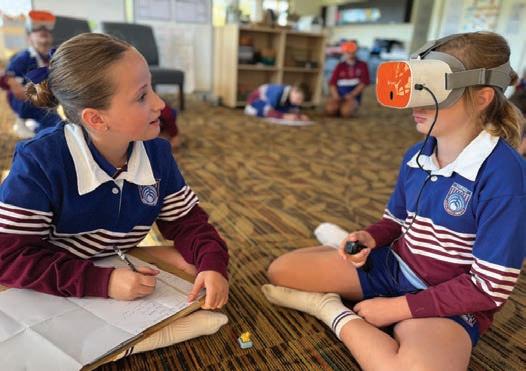

time periods in a way that feels authentic,” Ms Kristiansen says. “It helps us be a true international school connected to the orld.
Class , developed y vantis Education, is being used in schools across Australia to support immersive teaching and learning experiences aligned to the Australian Curriculum.
esearch from P C has highlighted the potential impact of virtual reality in learning environments, finding learners using can e more focused, faster to retain kno ledge and more confident applying what they have learned.
For many schools, the greatest value lies in the way immersive learning can help students engage more deeply with complex or abstract concepts.
“We often hear educators talk about the immediate engagement they see when students put the headsets on,” says Ms Stephanie Miles, Marketing Manager at Avantis Education.
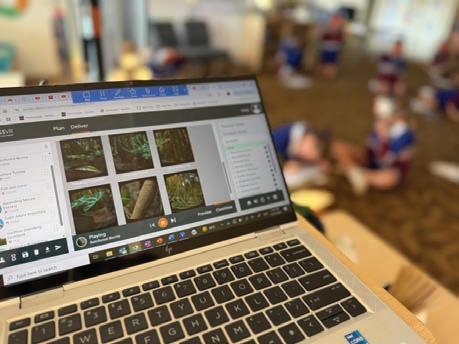
“Students are able to explore scenarios in greater depth and experience concepts that would otherwise be difficult to access in a traditional classroom setting.
A key advantage for Australian schools is that content available through the Eduverse platform is mapped to the Australian Curriculum across subjects including English, science, history and geography.
he Class solution includes headsets, curriculum-linked content,
classroom management tools, charging and storage systems, as well as professional learning and support for teachers.
At Kardinia International College, the school introduced 12 headsets and integrated immersive learning across every year level in the Junior School, from Foundation to Year 6.
he team have em edded Class deeply into the curriculum. We’re using it as a tool to support curiosity, to support creativity, to support conceptual understanding. It’s not just an add-on. It’s embedded and mapped across our Programme of n uiry, says Ms Kristiansen.
The school intentionally chose a shared headset model, encouraging students to work collaboratively.
“We chose 12 headsets, so students work in pairs, sharing the experience, re ecting in real time and uilding understanding together," she says.
To support implementation, the school developed a virtual reality scope and se uence aligned to classroom in uiry units.
“We created playlists for every unit, so staff aren’t starting from scratch. hat gave teachers the confidence to get started, and now they’re building their own,” Ms Kristiansen says.
Teachers across the Junior School now regularly book and independently use the technology within their classroom programs.
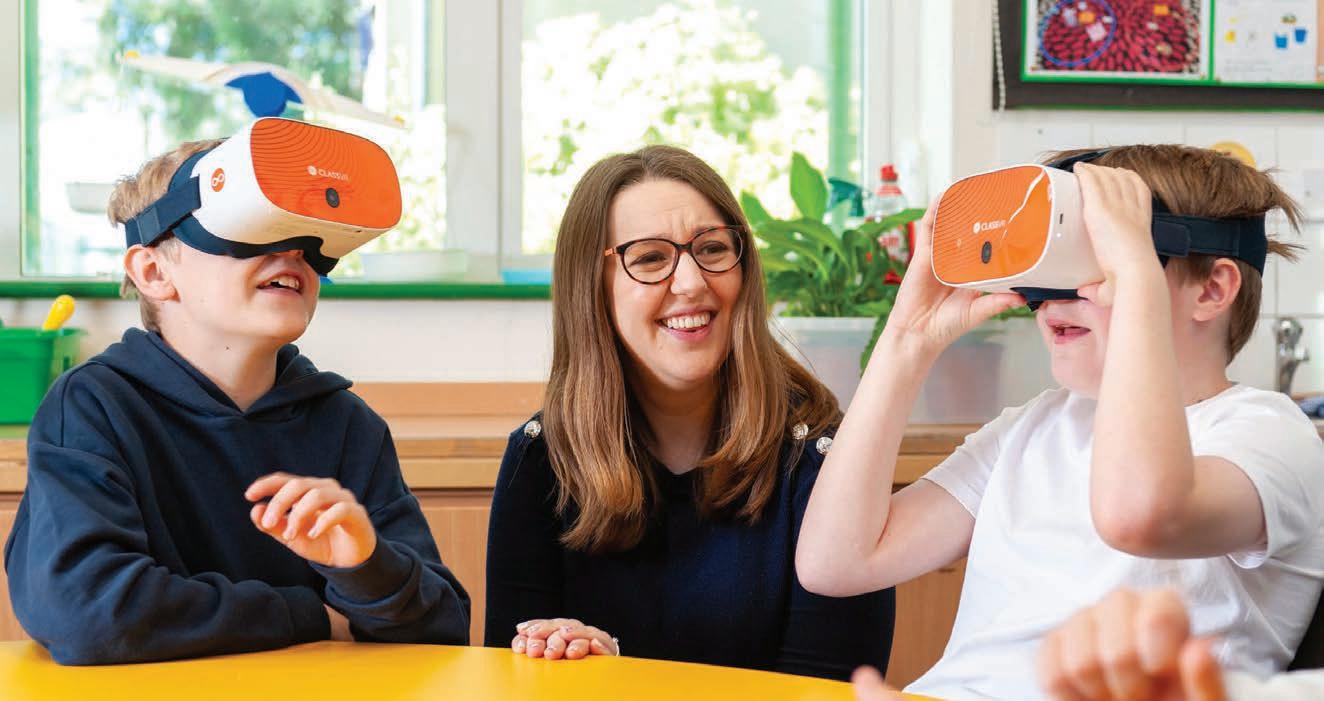
“The real success is when a teacher says, ‘I have a unit coming up, can I book the headsets?’. That shows they can see the value; it’s part of their toolkit,” Ms Kristiansen says.
B ilding teacher confidence
While immersive technology can capture student attention uickly, meaningful adoption depends on teacher confidence and ease of classroom implementation.
Class is designed to make immersive learning practical and accessible for teachers,” Ms Miles says.
“Everything is built to support classroom implementation, from the hardware and curriculum-aligned content through to classroom management tools, charging solutions and ongoing professional learning.”
Educators can access pre-made playlists organised by subject, age group and topic, hile also having the exi ility to create and share their own immersive experiences.
“We know teachers are already balancing a lot, so the platform is designed to make getting started simple,” Ms Miles says.
Avantis Education also provides monthly professional learning webinars designed to help teachers confidently integrate immersive technology into classroom practice.
“The ongoing professional learning is important because it helps teachers move beyond the initial excitement and embed
the technology in meaningful ways that support learning,” she says.
From consumers to creators
For many schools, the focus is moving beyond students simply consuming immersive content to creating their own virtual experiences.
Through AI-powered tools available within Eduverse+, students can generate 360-degree environments and immersive scenes using text prompts, allowing them to transform classroom ideas into interactive experiences.
Students are using the technology to support creative writing, visual storytelling and in uiry learning projects, hile also developing digital capability and creative thinking skills.
Ms Miles says this shift towards student creation is one of the most exciting developments occurring in classrooms.
“Students are increasingly becoming creators of immersive content, not just consumers of it,” she says.
Eduverse+ also expands the platform with additional tools supporting AIgenerated immersive scenes, interactive 3D models, wildlife experiences and career exploration activities.
Alongside these developments, the new Xplorer headset offers upgraded 4K displays, expanded storage and increased processing capability to support more sophisticated immersive learning experiences.
Schools are also exploring how immersive technology can support differentiated learning and student wellbeing.
Avantis Education recently introduced Eduverse E, a solution designed to support regulation, sensory exploration and inclusive learning experiences for students with diverse needs.
The platform provides calming immersive environments and sensorybased experiences designed to help students reset, refocus and feel ready to learn without leaving the classroom.
t re ects a roader shift in ho immersive technology is being used in schools, not simply as a novelty, but as a tool that can support the whole learner.
At Kardinia International College, teachers are already seeing the impact immersive learning can have on student participation and classroom engagement.
“One of the things that teachers have really noticed is that it has provided an element of engagement in their lessons that potentially wasn’t there when they were learning in traditional methods like putting a video on or reading a book,” Ms Kristiansen says.
“There’s a place for everything, but the elevates that and makes students feel like they really are there.” EM
Scanning Pens Australia is helping students with diverse learning needs access classroom content, reduce barriers to reading, and build independence.
At King Street Public School in NSW, assistive technology is playing an increasingly central role in supporting students with diverse learning needs. Among the tools now embedded across classrooms are C-Pens, introduced initially through a short trial but quickly adopted more idely after early success.
Learning Support Coordinator
Ms Lucy Wiseman says the trial was targeted at students ith significant literacy challenges, including those with complex receptive and expressive language needs.
“We were looking at breaking down the barrier of actually having to decode text,” she says. “The scanning pen reads the text, so it’s focusing on that comprehension factor, versus using up all their brain power to decode a text that ould e uite difficult for them.
One of the first students to use the pen had spent much of their schooling in intervention programs and experienced ongoing difficulty ith reading and writing. For classroom teacher Ms Dana ol , the impact as immediate.
“It gave them an opportunity to be more independent,” she says. “I could give them an activity and rather than me having to read them the instructions or explain everything in detail, they could use the pen to read through the instructions and then ask a uestion after ards.
Ms Holz says this reduced reliance on constant teacher support while also improving the student s confidence.
“They were getting to a point where they knew they needed a lot more support than their peers,” she says.
“Having that pen helped them build their confidence and independence.
A key moment came during a class speech task. The student, who would previously have required a teacher to stand beside them and read their work aloud, was able to present independently using the pen.
“They had their headphones on, scanned their speech, listened to it, and then recited it to the class,” Ms Holz says. “That was something they wouldn’t have been able to do on their own previously. They were really excited, and the whole class was proud of them.”
The technology has also changed how students engage with reading more broadly. For some, it has opened access to texts that would otherwise be out of reach.
“This particular student would choose books that he really liked but wouldn’t be able to access them independently,” Ms Holz says. “It meant he could sit there and listen to a story of his choice, rather than only being able to access decodable texts.”
Following the trial, the school expanded access to the pens across multiple settings. Devices are now available in primary classrooms as well as in specialist support classes, re ecting a roader shift to ards inclusive practice.
Ms Wiseman says this aligns with a multi-tiered approach to support, where tools are used exi ly in hole class, small-group and individual contexts, allowing students to access assistance in ways that match their needs without stigma or isolation.
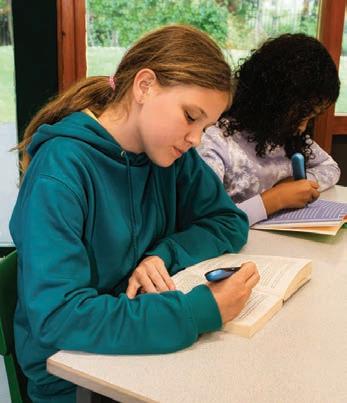

“Our data is telling us that about one in four students has a learning need with reading,” she says. “So having that access ensures they are still meeting the curriculum, with the appropriate level of support and adjustments.”
In practical terms, this includes students using the pen to revisit texts independently after whole-class instruction, reinforcing comprehension through repeated exposure.
“It’s giving them that repeated instruction, which is an evidence-based practice,” Ms Wiseman says.
The pens are now viewed as a standard classroom resource, available to all students rather than limited to those ith identified needs.
“It doesn’t matter what level of learner you are,” Ms Wiseman says. “Every child has access to that resource.”
For some students, access to the technology continues beyond primary school, supported through funding such as NDIS. Ms Wiseman says this continuity is critical.
“It’s really given the skills of being a lifelong learner and broken down the barriers for students,” she says.
“They’ve got access to something that can help them as they progress with their education and into adulthood.”
Investing in STEM education in public primary schools equips tomorrow’s leaders with the tools they need to be superstars, argues Kate Ashmor, chair of the Tom Ashmor Foundation.
In every primary school classroom, the most important moment is when curiosity is catalysed.
It’s a moment that matters far more than test results or completed worksheets. It’s when curiosity leads to courage; when questions like 'why', 'what if' and 'how' reveal a young mind that's engaged and inspired.
Curiosity is where learning truly begins. At the Tom Ashmor Foundation, that belief sits at the centre of everything we do.
Our purpose is to inspire curiosity in young Australians through early exposure to science, technology, engineering and mathematics (STEM) education. Not because every child will go on to become a scientist or engineer, but because every child deserves the opportunity to understand, question and engage with the world around them.
The “why” behind our mission is both simple and urgent.
We are preparing our young people for a future that will look very different to the one we experienced, and that is changing before our very eyes. Technology is evolving rapidly. Industries are transitioning. Many of the occupations and vocations that today’s students will work in do not yet exist.
What will remain constant is the need for young people to think critically, solve problems, collaborate and adapt. Those capabilities do not start in secondary school or university; they begin in primary classrooms.
Primary school is where students form their earliest beliefs about learning. It is where they decide
whether they are “good at” something, whether they enjoy it, and whether they feel confident enough to keep trying hen something is difficult.
It is also where curiosity can either be nurtured or unintentionally narrowed. In our work with schools, we see this play out every day.
When students are given the opportunity to engage with STEM through hands-on, practical learning, building, experimenting and testing ideas, their confidence gro s. hey become more willing to take risks in their learning. They begin to see mistakes not as failure, but as part of the improvement process.
Importantly, this is not about adding more to an already packed curriculum. It is about how learning is delivered. Curiosity-led learning can be embedded across subjects. A science experiment becomes an opportunity to ask questions and test ideas. A maths problem becomes a chance to explore different ways of reaching a solution. A classroom discussion becomes a space where students feel comfortable sharing their thinking.
The role of the teacher in this is critical. Educators are not just delivering content. They are shaping how students approach learning itself. Creating an environment where questions are encouraged, where exploration is valued, and where students feel safe to try and try again has a lasting impact.
We work alongside primary schools to support this approach, providing access to STEM resources and tools that are practical, engaging and aligned to classroom learning.

This includes working with schools across metropolitan and regional communities, with a focus on ensuring that access to these opportunities is not limited by location or background. Talent is not limited by postcode, but opportunity often is.
One of the most powerful things we hear from educators is how quickly students respond when they are given the chance to explore with worldclass STEM education. Students who may not always see themselves as confident learners egin to engage differently. They ask more questions. They participate more actively. They start to see what they are capable of.
That shift is important because the future our students are moving into will require more than knowledge. It will require the ability to think, to question and to adapt in a world that is constantly changing.
Curiosity is not a distraction from learning: it is the most important prerequisite. And in our primary schools, we have a unique opportunity to ensure that curiosity is encouraged to thrive. If we can create classrooms where curiosity is championed, we are not only supporting academic outcomes – we are equipping young people with the skills they will need to navigate whatever comes next. EM
Principal Heidi Payne reveals what sits behind eight years of successful co-principalship at Suneden Specialist School in South Australia.
For the past eight years, Suneden Specialist School has operated under a co-principalship model. Whilst shared leadership structures are now beginning to receive greater attention across Australia, for our school this is not a new or emerging concept, it is an established way of leading.
Suneden is an independent specialist school in South Australia supporting students with intellectual disability. Like many specialist settings, school leadership is broad, intensive, and deeply relational. The role requires constant responsiveness to student needs, family support, staffing, compliance, allied health collaboration, behaviour support, curriculum oversight, and operational management.
For Co-Principal Helen Motta and I, the journey was unique. We had previously both been working together for several years at Suneden in assistant principal roles. When the principal resigned, e oth identified that the traditional model of one person carrying the entirety of this responsibility was something that we did not feel was sustainable for either of us. We knew we worked well together in our existing roles hich gave us confidence that e could successfully move into a coprincipalship and would allow us to lead differently. We approached our school board with our proposal, and they were overwhelmingly supportive and appointed Helen and I to the role.
Importantly, our model was never about ‘splitting the job in half’. To begin with we did continue a classroom teaching load and one cross-over day, but this was not enough time to stay abreast of all the needs of the school.
This led to increasing our cross-over days until we realised that the job was significant enough for both of us to be full-time.
At Suneden, one of the greatest strengths of co-principalship has been the ability to remain highly visible and connected across all areas of the school. In specialist education, relationships matter enormously. Students, families, and staff need consistency, responsiveness, and support. Having two principals allows us to maintain a strong presence throughout the school whilst also ensuring that complex decisions are considered collaboratively rather than in isolation.
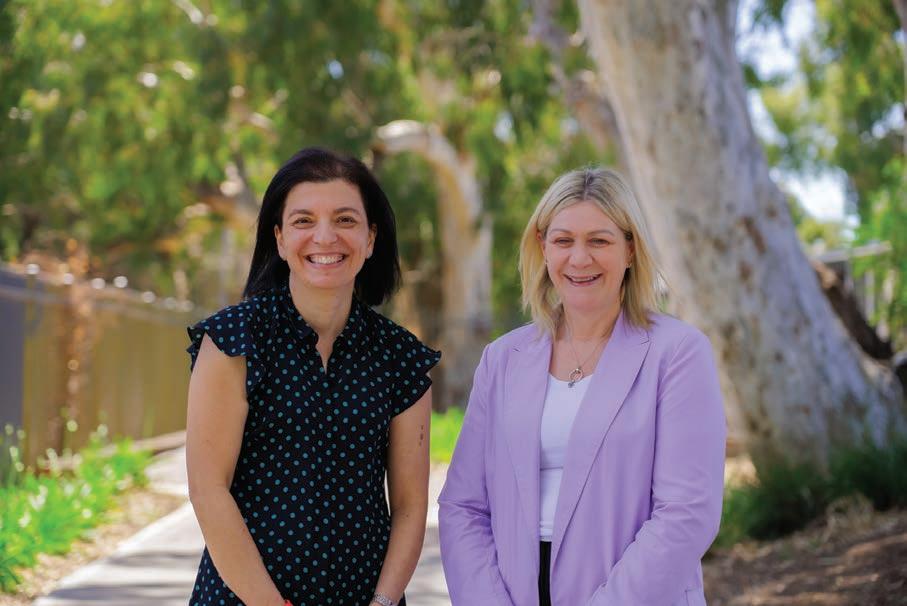
and the ability to be able to be across all matters. Staff, students, and families see us as one leadership team rather than two separate leaders operating independently.
The model has also strengthened decision-making. Leadership can at times be professionally isolating, particularly in specialist settings where situations are often nuanced and emotionally complex. Having another leader who understands the context completely allows for immediate re ection, shared pro lem solving and balanced decision-making. This creates better outcomes not only for leadership wellbeing, but for the wider school community.
One of the misconceptions about co-principalship is that the role naturally becomes divided into separate portfolios. Whilst there are areas where responsibilities may sit more heavily with one person at times, the success of our model has come from remaining highly connected and united in our leadership approach
Another key factor is trust. Effective co-principalship cannot operate successfully through competition, hierarchy, or ego. It requires mutual respect, open communication, and a willingness to work collaboratively every single day. This alignment has allowed us to build a leadership structure that is stable, sustainable, and responsive to the needs of our school.
As interest in co-principalship continues to grow across the education sector, it is important to recognise that there is no single model. Our experience at Suneden has shown that when built on trust, aligned values and genuine collaboration, co-principalship can be an incredibly effective, sustainable, and rewarding model of school leadership.
Co-principalship at Suneden is not one role divided in two; it is two principals leading one school together. EM
To list an event in our calendar, email myles.hume@primecreative.com.au
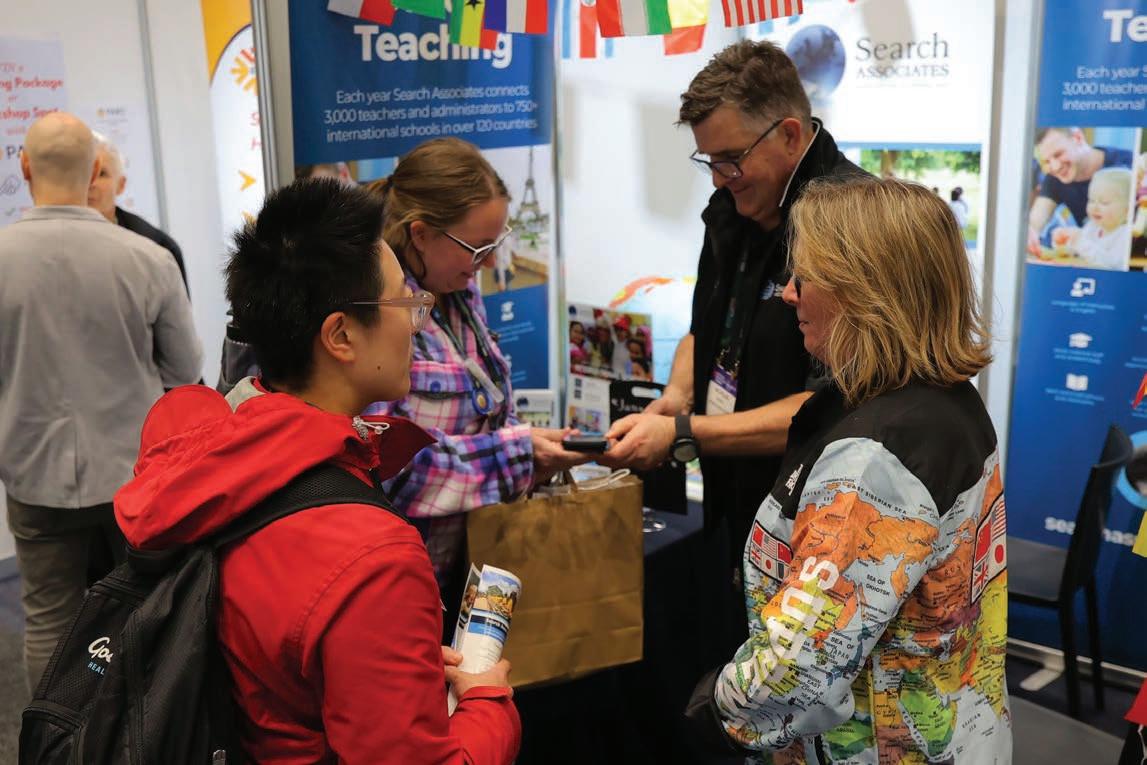
Australian Teacher Education Association Conference
1 – 3 July, Gold Coast atea.edu.au
Schools Tree Day 24 July treeday.planetark.org
National Science Week 15 – 23 August scienceweek.net.au
Bullying No Way: National Week of Action 17 – 21 August bullyingnoway.gov.au
Children’s Book Week 22 – 28 August cbca.org.au
National Skills Week 24 – 30 August nationalskillsweek.com.au
Australian Primary Principals Association National Conference 31 August – 3 September, Canberra appaconference.com.au
Educate Plus International Conference 1 – 4 September, Brisbane educateplus.edu.au/ conferences
National Education Summit 3 – 4 September, Melbourne nationaleducationsummit. com.au
Indigenous Literacy Day 7 September indigenouslitracyfoundation. org.au
R U OK? Day 10 September ruok.org.au
Media Literacy Week 24 – 31 October medialiteracy.org.au
Australian International Education Conference (AIEC) 27 – 30 October, Sydney aiec.idp.com
World Teachers’ Day (Australia) 30 October worldteachersday.edu.au
National Recycling Week 9 – 15 November recyclingnearyou.com.au/ nationalrecyclingweek
Remembrance Day 11 November awm.gov.au/commemoration/ remembrance-day
Australian Inclusive Schooling Conference (AISC) 18–19 March, 2027 Townsville

Welcome to People on the Move, Education Matters’ bulletin to keep the Australian education sector updated on new appointments and personnel changes.


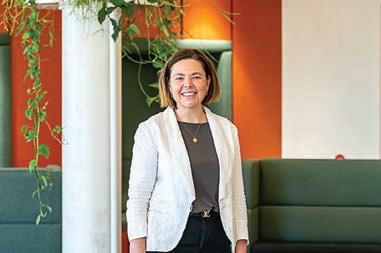




New principal of SCOTS PGC College SCOTS PGC College has announced the appointment of Mrs Emma Grave as its next Principal and Chief Executive Officer, commencing 1 July 2026. Mrs Grave joins the Warwick school from Scotch College Adelaide, where she is Deputy Principal and Head of Torrens Park Campus. An experienced education leader with more than 25 years in the sector, her previous positions include roles at Seymour College and Geelong Grammar School.
Image: SCOTS PGC College




Executive Director – Curriculum at VCAA
The Victorian Curriculum and Assessment Authority (VCAA) has strengthened its senior leadership team with Dr Sean Butler as the new Executive Director – Curriculum. Dr Butler transitions into this role following a career in both school and system-level leadership, including his notable tenure as the Foundation Principal of Preston High School. Most recently, he served as the Director of Teaching Excellence at the Victorian Academy of Teaching and Leadership and as Acting Director of Implementation at the Department of Education.
Image: Victorian Curriculum and Assessment Authority
Good Shepherd College finds next leader Dr Michelle Kearney will commence her tenure as Principal of Good Shepherd College in Hamilton, Victoria for the start of Term 3. A veteran of the sector with over 14 years of experience, most recently as the Head of Bayview College, Dr Kearney is recognised for her strategic expertise in rural educational excellence. Her arrival is expected to strengthen the Lutheran college’s ties to the Hamilton community while driving new academic and pastoral initiatives.
Image: Good Shepherd College


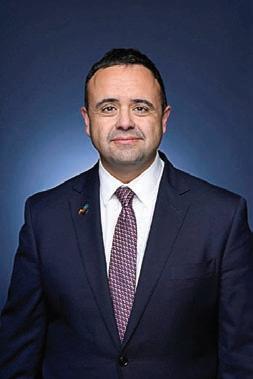


Barker College appoints Chief Operating Officer Barker College has confirmed Mr James Koulouris as its next Chief Operating Officer (COO). A seasoned executive with over 30 years of experience, Mr Koulouris has a background in managing complex, values-driven organisations and leading large-scale capital and asset programs. He will be instrumental in executing Barker’s Master Plan and overseeing the school's financial stewardship and operational excellence. His will also help drive the school's STEM expansion and robotics innovation, and its Indigenous and Humanitarian Education initiatives.
Image: Barker College
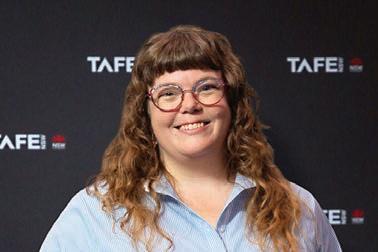

TAFE Commission Advisory Board appointment
Ms Fiona Braybrooks has joined the TAFE Commission Advisory Board as the Designated Teacher Representative. A Cootamundra local, Ms Braybrooks begins a two-year term focused on providing a direct voice for educators at the highest level of TAFE governance. She brings a unique perspective, having taught across rural, regional, and custodial settings throughout New South Wales. Her appointment is expected to strengthen the board's focus on remote access and regional service delivery.
Image: TAFE NSW

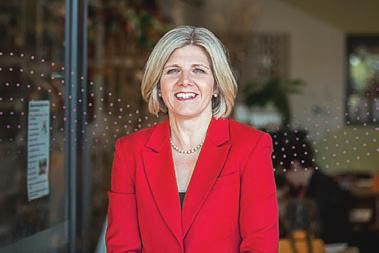


Australia’s Business Champion for Brunei
Ms Lisa Rodgers as the new Business Champion for Brunei Darussalam under Australia's Southeast Asia Economic Strategy to 2040.
Ms Rodgers is a leader in global education and CEO of the Australian Council for Educational Research (ACER). ACER has partnered with Brunei's Ministry of Education for over two decades so the education system aligns with the aspirations of Brunei Darussalam’s Wawasan (Vision) 2035. ACER is leading the next 2029 OECD PISA testing, the global benchmark for school testing.
Image: Australian Council for Educational Research
If you’d like to tell the sector about a new person in your school, company, institute or not-for-profit, please send the person’s name, position, image and a short description about their role to editor Myles Hume for consideration at myles.hume@primecreative.com.au.



Every week you will receive...
• The latest news in education
• Discussion of key issues
• Innovative products and resources
• Rich content that is highly valuable to education professionals Scan the code to sign up today













Contact: Holly Larkspur
holly.larkspur@primecreative.com.au






















We’re













Aisha Kristiansen, Director of Innovation and Technology K-12 Kardinia International College, Geelong, Victoria Award-winning hardware