






Visit our website to stay connected, explore our projects, and join our Talent Community.


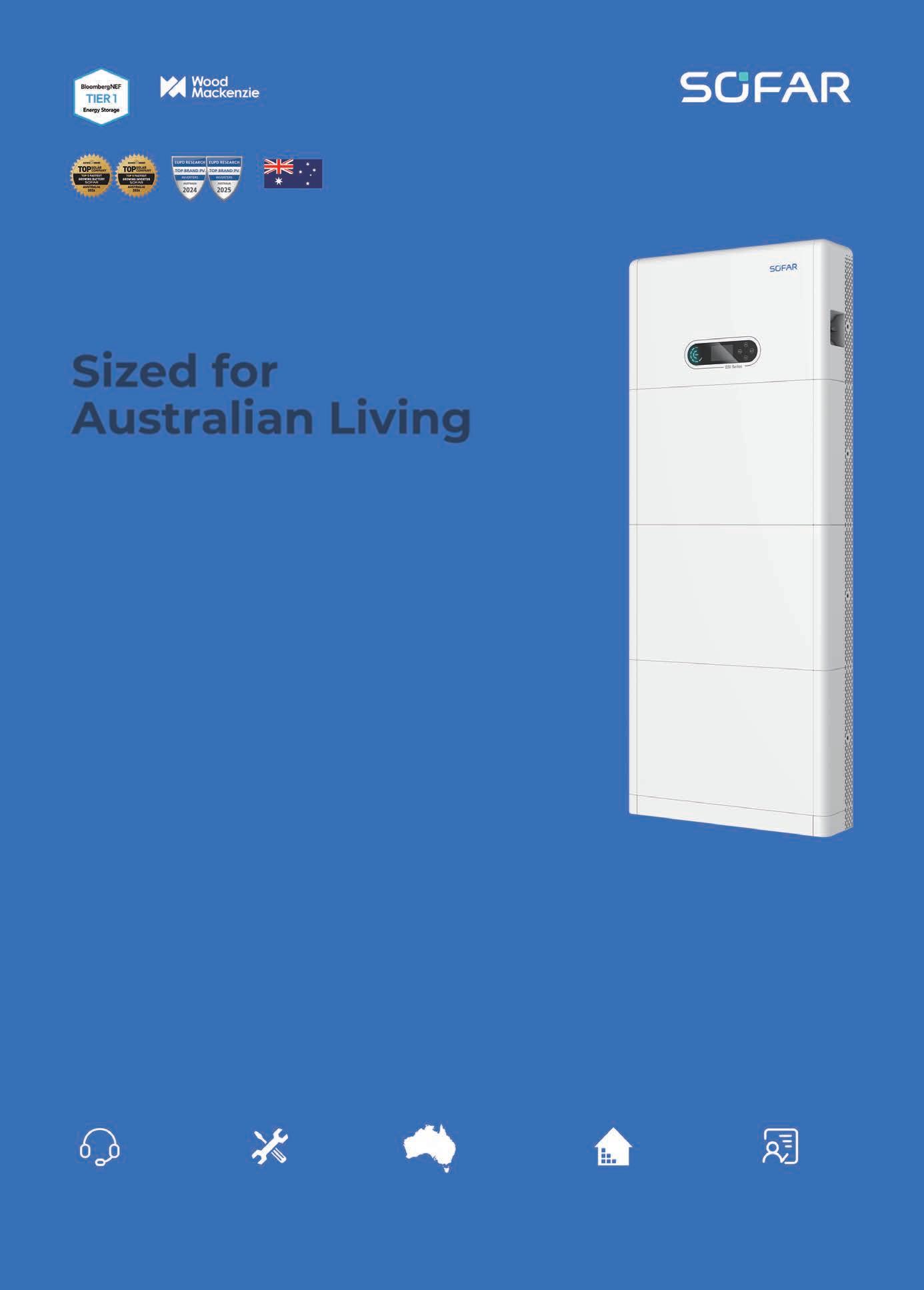
5-10kW 7-49kWh
Up to 3 MPPTs with 2.0 DC/AC ratio for higher yield
Integrated battery optimizer with 100% DoD
Seamless backup with up to 150% peak power output
63A for reliable whole-home backup
VPP-ready for intelligent energy management


After years of construction, Transgrid’s Project EnergyConnect, spanning New South Wales, South Australia and Victoria, has reached the commissioning stage. In this issue, we delve deeper into the major projects currently shaping Australia’s energy transition, including Enerven’s work on the Hallett Battery Energy Storage System (BESS), Goulburn River Solar Farm and the Summerfield BESS Connection.
Throughout this issue, it is evident the energy sector has much to celebrate, with no signs of slowing down.
Part of the fabric of Australia’s manufacturing sector, Capral Aluminium marks its 90-year anniversary with roots as far back as the industrial evolution. The company reflects with ecogeneration on the importance of a locally-sourced aluminium supply chain to build the energy infrastructure Australia needs.
Meanwhile, CNC Project Management commemorates two decades of growth into a specialist infrastructure and energy consultancy, contributing to the commissioning of utility-scale projects through their work with developers on the complexities of land access, permits and approvals, environmental management, and community consultation.
At a household level, residential battery storage continues to surge. Guided by insights from the Clean Energy Regulator, we examine the growing pressures on installers to meet demand, as the Federal Government’s battery rebate structure evolves.
Set to deliver benefits for installers and homeowners, we take a look at Pylon’s latest suite of automation and battery optimisation tools designed to reduce administrative workload and improve system sizing. And across the broader residential storage market, we explore the latest innovations from FOX ESS, SOFAR Solar, Growatt, and more.
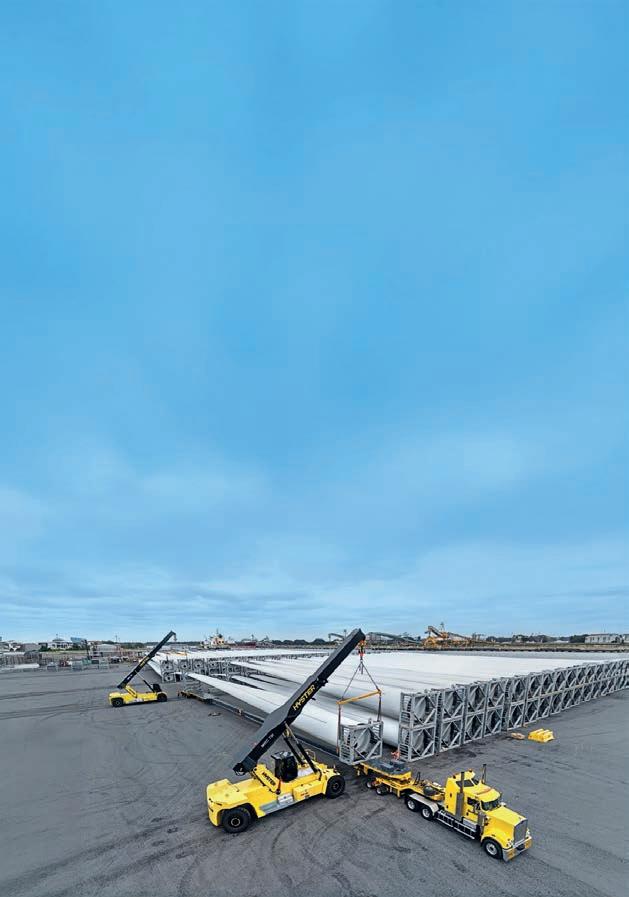
The wind sector, too, continues to expand. As tonnes of turbine components are transported across regional freight highways to remote project locations, ARES Group provides insight into their expertise in engineering and logistics, as well as the challenges underpinning Australia’s wind energy rollout.
As the freight sector evolves to support a low-emissions future, we look forward to the learnings from the MegaTrans industry conference taking place in Melbourne this September.
Lavinia Hulley ecogeneration Editor

ecogeneration acknowledges the Cammeraygal people, traditional custodians of the land on which this publication is produced, and we pay our respects to their elders past and present. We extend that respect to all Aboriginal and Torres Strait Islander people today.
the latest industry news, sign up for the
Chief Executive Officer: Christine Clancy
Chairman: John Murphy
Editor: Lavinia Hulley
lavinia.hulley@primecreative.com.au
Business Development Manager: Nick Lovering , +61 414 217 190 nick.lovering@primecreative.com.au
Client Success Manager: Karyssa Arendt karyssa.arendt@primecreative.com.au
Head of Design: Clayton Hawley
Designer : Deborah Pilarinos & Apostolos Topatsis
Subscriptions : T: +61 3 9690 8766 subscriptions@primecreative.com.au
Published by: PRIME CREATIVE MEDIA PTY LTD
ABN: 51 127 239 212 379 Docklands Drive Melbourne VIC 3008, Australia T: +61 3 9690 8766 www.primecreativemedia.com.au
www.ecogeneration.com.au


Cover image: Enerven
ecogeneration is printed on Lumi paper which is PEFC-certified and manufactured in an ISO 14001-certified mill. Lumi paper also contains premium white waste paper, reducing matter going into landfill. This magazine is available to interested parties throughout Australia and overseas. The magazine is also available by subscription. The publisher welcomes editorial contributions from interested parties, however, the publisher and the Editorial Board accept no responsibility for the content of these contributions and the views contained therein are not necessarily those of the publisher or of the Editorial Board. The publisher and the Editorial Board do not accept responsibility for any claims made by advertisers. Unless explicitly stated otherwise in writing, by providing editorial material to Prime Creative Media, including text and images, you are providing permission for that material to be subsequently used by Prime Creative Media, whole or in part, edited or unchanged, alone or in combination with other material in any publication or format in print or online or howsoever distributed, whether produced by Prime Creative Media and its agents and associates or another party to who Prime Creative Media has provided permission.
Average net distribution 6616 Period ending September 2021
As Australia’s largest supplier and extruder of aluminium, Capral is committed to supporting the nation’s energy transition with high quality, locally produced aluminium extrusions purpose-built for energy and renewable energy projects. Our state-of-the-art manufacturing facilities deliver precision engineered solutions for solar, wind, transmission, storage, and supporting infrastructure, designed to perform in demanding Australian conditions.
Choosing Capral means dependable local supply, reduced lead times and the confidence that comes from working with an Australian manufacturer invested in long term capability, skills, and production.
When you need aluminium made right here for energy and renewables, Capral can do.
Celebrating 90 years of Australian manufacturing
Sustained investment, regulatory certainty and strong coordination between state governments will be critical to delivering a secure, affordable and resilient electricity system.
As ageing coal-fired power stations retire, the Clean Energy Council welcomes the commitment made in the Federal Budget 2026-27 to rebuilding the nation’s electricity system through sustained investment in renewable energy, transmission infrastructure, storage, and industrial decarbonisation.
However, rebuilding the power system will require more than financial investment. It will require faster approvals, clearer regulatory pathways and greater coordination between state governments. This would ensure critical renewable energy generation infrastructure can be delivered on time to meet the nation’s ambitious goal of being 80 per cent renewable-energy-powered by 2030.
It is pleasing to know the Federal Government has continued its commitment to further establishing the National Environmental Protection Agency, progressing bilateral environmental agreements and streamlining assessment processes. These reforms will help utilityscale renewable energy and storage projects move through regulatory approvals and construction stages more efficiently –ensuring more generation capacity can enter the market at the pace required.
That urgency matters.
Encouragingly, Australia’s energy transition is already reshaping the nation’s energy economy.
The Federal Budget’s support for initiatives such as the decarbonisation of the Boyne Island Aluminium Smelter reflects a growing recognition that access to affordable renewable electricity will be critical to the global competitiveness of Australian industries, including advanced manufacturing, industrial processing and critical minerals development.
At a household level, continued investment in consumer energy resources and implementation of the National Consumer Energy Resources Roadmap will help more Australians play an active role in the electricity system through rooftop solar, home batteries and smarter energy management technologies.
Wind, solar, batteries, hydro and flexible generation solutions are already demonstrating they can provide reliable and cost-effective electricity at scale. The challenge now is ensuring state-level planning systems and regulatory frameworks can keep pace with the transformation underway.
As rooftop solar deployment continues to accelerate, Australia must also prepare for the growing challenge of managing end-of-life solar panels.
Solar waste volumes are projected to rise significantly over the next decade, increasing from approximately 59,000 tonnes in 2025 to more than 91,000 tonnes by 2030 and one million tonnes by 2035.
Without nationally coordinated action, current disposal practices such as landfilling, stockpiling and unregulated resale risk can create environmental impacts, lost material value and fragmented outcomes across state jurisdictions.
At the same time, it is critical that the benefits of the transition continue to be shared across regional Australia. Communities hosting renewable energy infrastructure are playing an essential role in supporting the nation’s energy future and should continue to see longterm economic benefits through local employment in rural areas.
Australia has all the ingredients required to become a global clean energy leader: Abundant renewable resources, strong engineering capability, growing government, private investment momentum, and world-class innovation.
What the energy sector needs now is regulatory certainty.
The Federal Budget 2026-27 sends an important signal that the Commonwealth remains strongly committed to that pathway.
Jackie Trad Chief Executive Officer Clean Energy Council


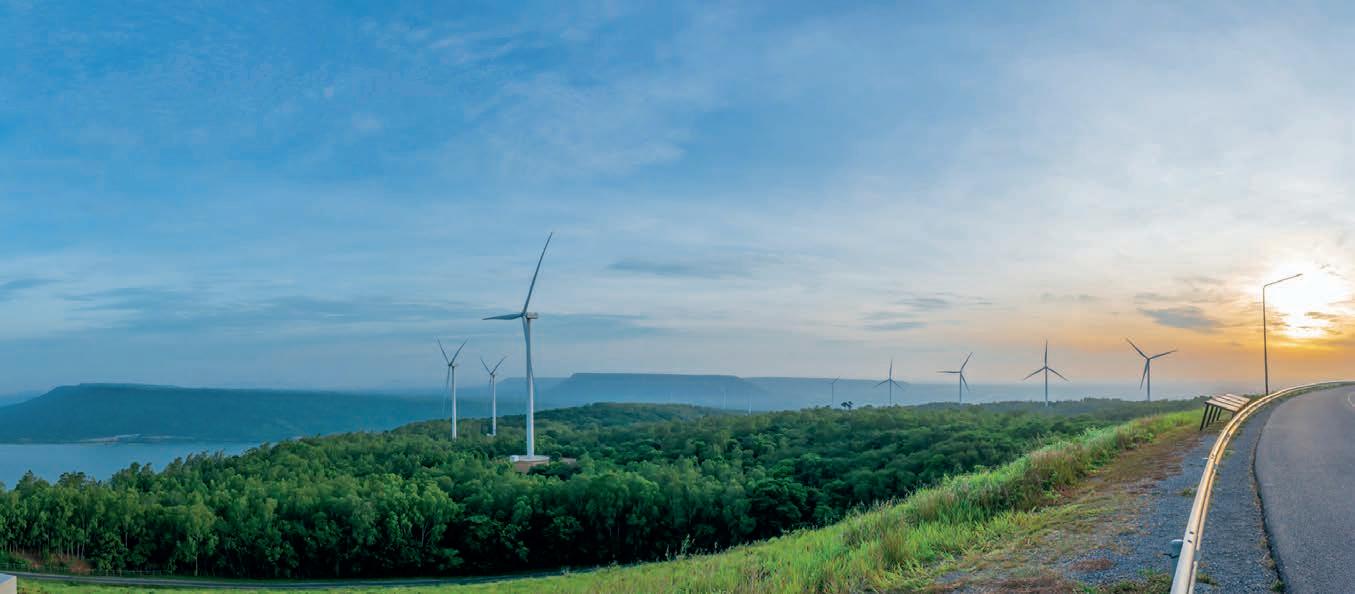
Ocean Winds has commenced a four-month geophysical survey campaign off the Gippsland coastline, as part of the progression of its High Sea Wind offshore wind project in Victoria.
The Ocean Winds survey program, launched in late March, will collect critical seabed and subsurface data to inform turbine placement, cable routing and overall project design as part of the project’s regulatory approvals process.
A joint venture between EDP Renewables and ENGIE, Ocean Winds currently has around 21 gigawatts (GW) of offshore wind capacity globally in operation, under construction or at advanced stages of development.
Located in the Bass Strait approximately 76 kilometres off the Gippsland coast, the High Sea Wind project is a bottom-fixed offshore wind development with a proposed capacity of around 1.3 GW.
The project aligns with Victoria’s offshore wind ambitions, with the state targeting two GW of offshore wind capacity by 2032, four GW by 2035, and then a further nine GW by 2040 as part of the state’s broader renewable energy transition.
If approved, the project is expected to generate enough electricity to power approximately one million Victorian households annually.
Gathered data through the geophysical surveys will be integrated with future environmental and technical studies to support the project’s progression through the approvals process.
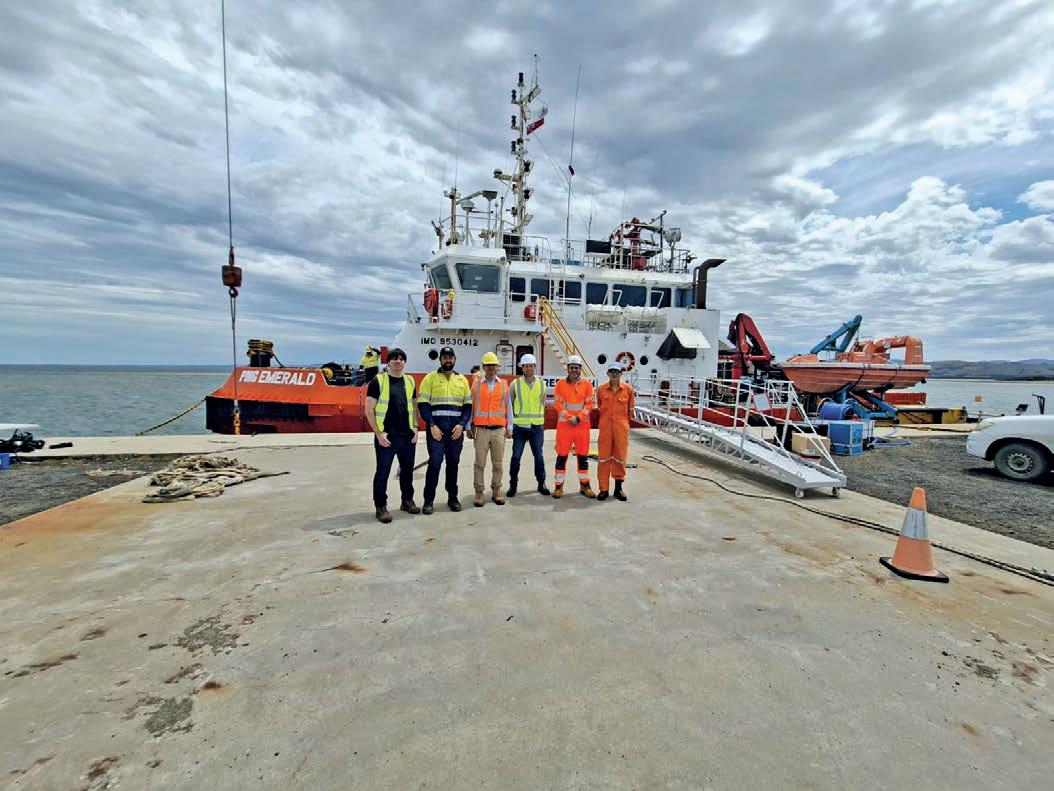
A new consumer energy trends whitepaper by VisNet, part of EA Technology, shows that as more Australians adopt rooftop solar, batteries and electric vehicles, low-voltage networks are under increasing pressure to manage more dynamic and decentralised energy flows.
Based on more than 8000 respondents across Australia, the United Kingdom and New Zealand, the whitepaper points to a shift from passive consumption to active participation in the energy system. Evidentally, Australia’s clean energy transition transition stood out. The reported research in EA Technology’s whitepaper shows 37 per cent of households have rooftop solar installed, with 73 per cent
using their systems daily.
Across the three markets studied, 15 per cent of consumers use renewable energy through solar or green plans. Interestingly, uptake was highest in Australia at 23 per cent, compared with 15 per cent in the United Kingdom and 7 per cent in New Zealand.
Furthermore, across the three markets, cost remains the dominant concern. Rising electricity prices are cited by 68 per cent of respondents, followed by the cost of transitioning to renewables (34 per cent) and broader energy-related expenses (30 per cent). Concerns around extreme weather (29 per cent), reliability (26 per cent) and carbon footprint (20 per cent) were also identified as emerging trends.

A new report titled, Harnessing energy productivity for industrial competitiveness, released by Energy Transitions Commission and Mission Possible Partnership, finds that the generation of more economic output per unit of energy could significantly reduce dependency on hard-to-decarbonise sectors, such as maritime shipping and aviation, by 25-45 per cent in the lead up to 2050. The report estimates that system-wide efficiency gains could reduce global energy investment needs
Materials such as aluminum, aviation, cement, plastics, chemicals, shipping and steel account for around a quarter of global energy demand.
At the same time, demand for these sectors is expected to grow sharply, driven by urbanisation, industrialisation and rising living standards.
The report argues that this growth does not have to translate into proportional increases in energy consumption. Through a combination of technical, service and material efficiency
or greater output with less energy input.
Globally, more than 1000 clean industrial projects are currently in development. However, without improvements in energy productivity, the transition could require significantly greater investment in energy supply infrastructure. These claims are credibly affirmed by Lord Adair Turner, Co-Chair at Energy Transitions Commission who is also a Member of the House of Lords of the United Kingdom, and Faustine Delasalle, Chief Executive Officer at the

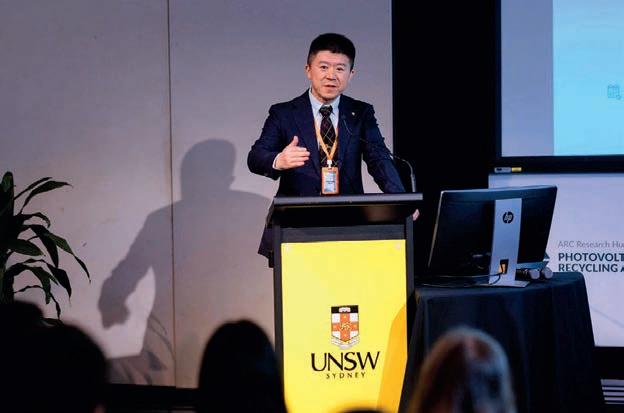
On 21 April, the Australian Research Council (ARC) Hub for Photovoltaic (PV) Solar Panel Recycling and Sustainability was officially opened at the University of New South Wales (UNSW) by the Assistant Minister for Immigration and Assistant Minister for Foreign Affairs and Trade, Matt Thistlethwaite.
Backed by a $5 million grant from the ARC’s Industrial Transformation Research program, the Hub is the first initiative of its kind in Australia.
The launch of the Hub comes as Australia’s early solar installations begin to age, with PV waste projected to reach 100,000 tonnes annually by 2030.
Professor Bronwyn Fox, Deputy ViceChancellor Research and Enterprise at UNSW, shared that the Hub will bring
together engineers, scientists, policymakers and industry towards the shared goal of turning solar waste into a reusable resource.
In addition, Professor Yansong Shen, Director at ARC Hub, shared that the scale of upcoming waste is significant, with around 3.5 million systems expected to reach end-of-life over the next decade.
The ARC Hub will focus on improving material recovery, including the efficient sorting of panel components. The Hub will also explore how panels can be redesigned to improve recyclability, with research extending to policy and market frameworks, to strengthen the full solar value chain from production to disposal.
For Enerven, long-term partnerships, technical capability and safety underpin the delivery of the country’s largest energy infrastructure projects. The current delivery of three major projects re-affirms the success of this approach.
Australia’s electricity system is undergoing one of the most significant infrastructure transformations in its history.
As ageing coal-fired generation progressively retires, governments, network operators and developers are investing heavily in transmission infrastructure, renewable energy zones (REZs), utility-scale generation and battery storage systems to support the transition to a lower-emissions energy market. That transition is driving unprecedented demand for experienced engineering, procurement and construction delivery partners capable of executing technically complex projects safely, efficiently
and at scale. Among those organisations is Enerven. Since its foundation in 2017, the company has rapidly evolved from a South Australian infrastructure provider into a national energy services business delivering major projects across the National Electricity Market (NEM). Enerven’s growing portfolio spans transmission infrastructure, substations, renewable energy connections and large-scale battery energy storage systems (BESS). As investment accelerates across the sector, the business continues to position itself as a long-term infrastructure delivery partner focused on technical capability, operational performance and safety leadership.
Safety, accountability and long-term partnerships
Long-standing relationships with major energy market participants remain central to Enerven’s growth strategy. Repeat work with organisations including Origin Energy, ElectraNet, Transgrid and EnergyAustralia reflects the company’s ability to consistently deliver critical infrastructure projects in complex operating environments. According to Norman Lovemore, General Manager Delivery at Enerven, maintaining those partnerships requires more than technical capability alone.
“Safety, reliability and direct communication are central to how we operate
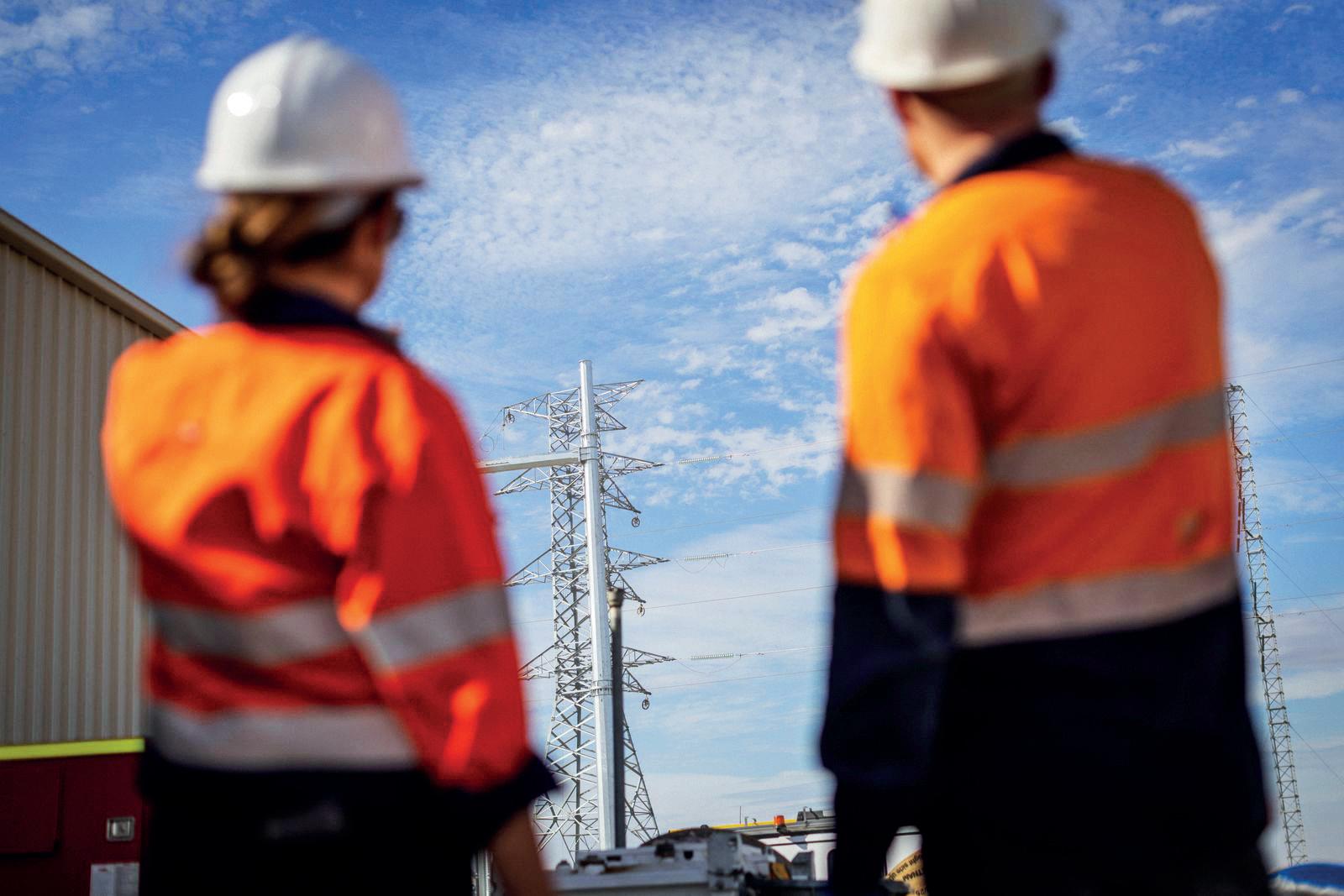
performance across every part of the business is fundamental to how we execute projects.”
As utility-scale projects increase in scale and complexity, Enerven has grown its digital engineering capability, field technologies and operational systems designed to improve both safety outcomes and project efficiency.
This includes the use of drone inspections, remote monitoring technologies and digital engineering platforms to support planning, construction and maintenance activities across live network environments.
The company also places significant emphasis on collaboration and proactive engagement with clients throughout the project lifecycle, particularly as developers and asset owners increasingly seek delivery partners capable of supporting projects from early engineering through to commissioning and ongoing maintenance.
“We believe the seamless integration of our engineering and field delivery teams is critical. That enables challenges to be identified and resolved earlier across the design, construction, commissioning and maintenance phases. This ultimately provides greater certainty and confidence in project delivery timelines for our clients and partners,” Lovemore says.
Despite the company’s national expansion, Lovemore adds that maintaining strong communication and accountability across project teams remains a core focus.
“At the end of the day, clients remember the partners that communicate well, deliver safely, and consistently do what they say they’ll do,” he says.
engineering capability to meet demand.
While the business continues to grow nationally, Lovemore says maintaining the company’s strong operational culture and delivery standards remains a priority.
“Today, we’re delivering projects across multiple states while maintaining the same focus on safety, accountability and technical performance that our clients know us for,” he says.
Given the scale of renewable energy development occurring across Australia, Enerven is investing heavily in its people, leadership capability and delivery systems on a national level.
“A major focus for us has been building specialist expertise across transmission, substations and battery infrastructure, while also creating strong career pathways through apprenticeships, graduate programs and workforce development initiatives,” Lovemore says.
Alongside workforce development, Enerven has also been focused on strengthening governance frameworks, delivery systems and internal collaboration processes to ensure operational consistency across its growing national project portfolio.
Several recent projects demonstrate both the technical complexity and strategic importance of the infrastructure Enerven is now delivering across the NEM.
Earlier this year, the company commenced work on the Hallett BESS project in South
Australia, delivering civil, electrical and construction works to support the integration of the 50 megawatt (MW) / 250 megawatthour battery system into the state’s network.
The Hallett Battery Energy Storage System is unique because it integrates high-capacity lithium-ion battery storage with advanced grid-forming inverter technology, enabling the system to deliver fast frequency response, system strength and synthetic inertia services for grid stability. This is especially important as synchronous gas-fired generation retires from South Australia’s electricity network.
“It’s exciting to be working on a major battery project here in our own backyard of South Australia and partnering with EnergyAustralia to deliver this infrastructure,” Lovemore says.
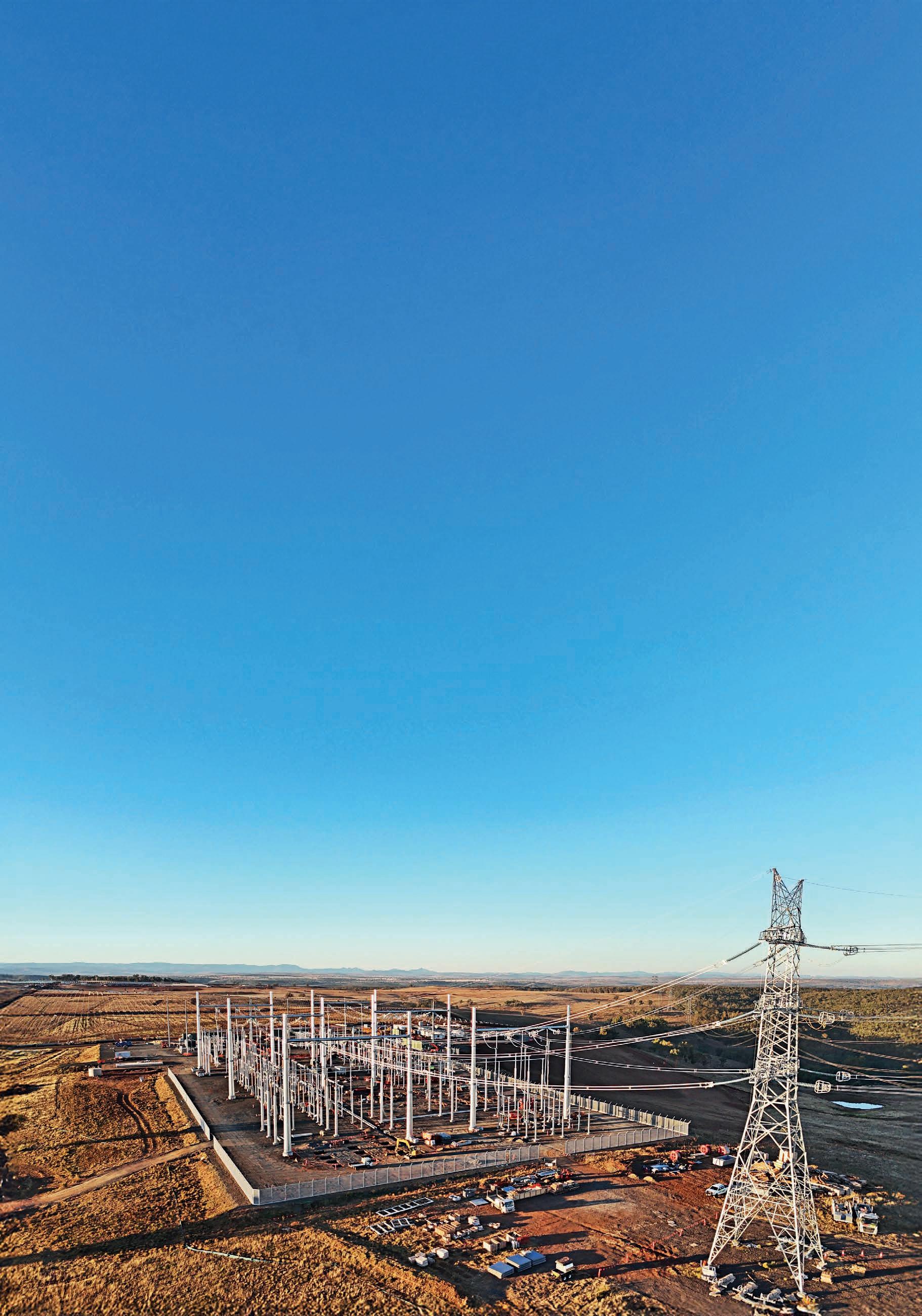
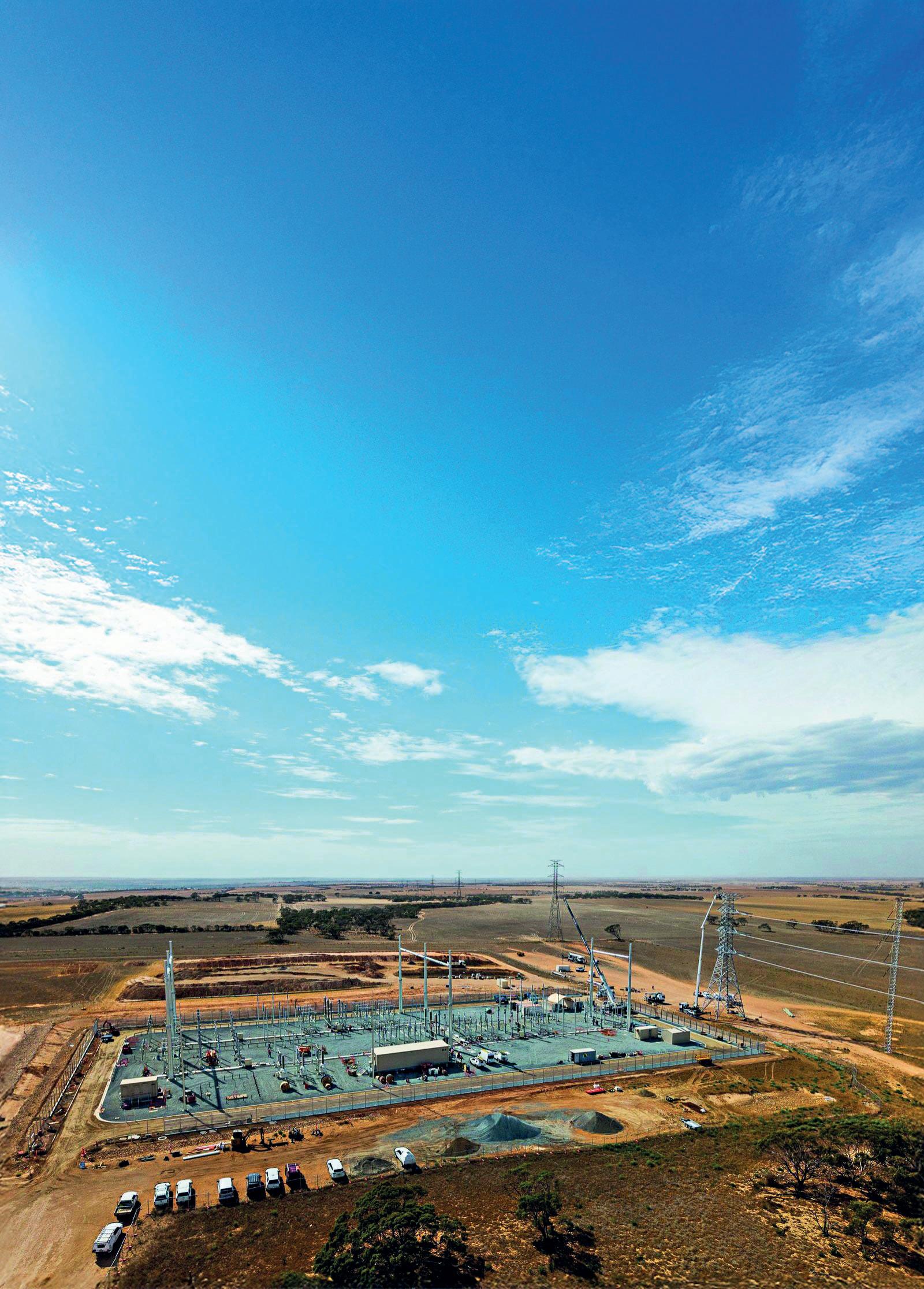
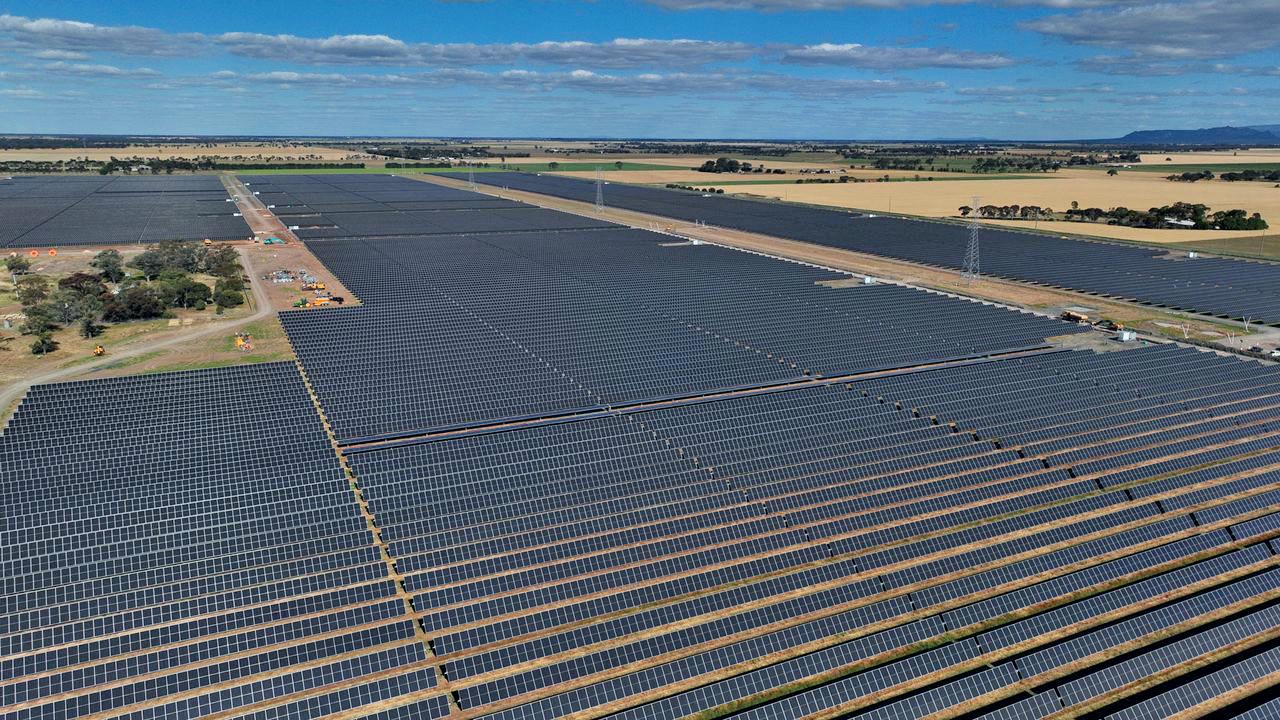
In New South Wales, Enerven is delivering the grid connection infrastructure for Transgrid at the Goulburn River Solar Farm through the design, construction and commissioning phases of a new 500/33 kilovolt (kV) substation facility.
The project highlights the growing engineering complexity associated with utility-scale renewable energy developments connecting into constrained transmission network environments.
Goulburn River Solar Farm combines large-scale solar generation infrastructure with complex high-voltage connection works requiring extensive coordination across civil construction, tracker installation, substation integration, commissioning and network compliance activities.
Enerven is currently delivering engineering, procurement and construction services associated with the high-voltage infrastructure required to connect the solar farm into the electricity network.
“This project will contribute significantly to the delivery of clean energy into the New South Wales electricity grid, while also demonstrating the technical capability and coordination required to safely deliver
transmission infrastructure of this scale,” Lovemore says.
At the same time, Enerven is progressing connection works for the Summerfield BESS project in South Australia.
Appointed by the project owner, ElectraNet, the company is delivering infrastructure to connect two 120 MW battery systems – Summerfield BESS1 and BESS2 – into the transmission network.
The scope of these works include the design, supply and construction of a new greenfield 275 kV Tepko substation adjacent to the battery facilities, augmentation works at the existing Tungkillo substation, and the delivery of 17 kilometres of new 275 kV transmission infrastructure utilising existing transmission towers.
The four-hour duration Summerfield Battery project is expected to play an important role in supporting grid reliability and renewable energy integration across South Australia and the broader NEM.
Lovemore explains that projects such as Goulburn River and Summerfield reflect the increasingly sophisticated engineering and delivery requirements associated with modern network infrastructure.
“These are highly complex projects involving live network environments, multiple stakeholders and extremely tight delivery timeframes,” he says.
“Our experience across engineering, construction and commissioning enables us to manage those complexities while maintaining a strong focus on safety, quality and delivery performance.”
As renewable energy development expands beyond metropolitan centres and into regional and remote areas, delivery capability and social responsibility is becoming increasingly important. For Enerven, one way of demonstrating this is ensuring meaningful engagement with First Nations communities
is woven into how the company plans, staffs and delivers its work in the field.
“The communities in which we build energy infrastructure have a stake in the project development. We think it’s important that’s reflected in our ways of working,” Lovemore says.
“In the last 12 months, we’ve made upwards of $8 million of direct spend with First Nation businesses and suppliers across more than ten of our key projects.”
For Enerven, long-standing relationships with regional suppliers, contractors and communities will remain critical to its successful delivery of utility-scale projects in remote locations across Australia.
“Enerven actively supports local communities where projects are based through education initiatives, workforce and skills development, and community partnerships, ” Lovemore says.
“We understand the importance of the strong relationships we’ve built over many years with local suppliers, contractors and communities where projects are based.”
These community relationships, combined with experienced project teams and strong planning capability, help Enerven manage workforce availability, accommodation, transport logistics and material supply so local projects can continue operating safely and efficiently in the long-term.
With transmission, renewable generation and battery infrastructure investment expected to accelerate across the NEM over the coming decade, Enerven anticipates ongoing demand for experienced infrastructure delivery capability.
“Enerven is proud to be playing a major role in the projects shaping Australia’s clean energy future. There’s a strong sense of mission across the business to deliver infrastructure that supports communities, industry and the broader electricity network for generations to come,” Lovemore says.
The Chief Executive Officer of ARES Group shares how the company is bridging customengineered transport and logistics systems for large-scale wind projects across Australia.
As Australia’s wind turbines become larger and renewable energy projects expand further into regional areas, transporting oversized components is being recognised as an increasingly complex engineering and logistics challenge.
Established in 2016, ARES Group is an Australian-owned heavy haulage and infrastructure logistics company specialising in route surveying, oversized and overmass transport, project logistics and renewable energy infrastructure support, operating across multiple states.
According to Davorin Jelaca, Chief Executive Officer at ARES Group, the scale of modern wind infrastructure is reshaping how transport planning is approached across the energy sector.
“Components are getting longer, heavier and more complex every year, so transport solutions need to evolve alongside them. The regulatory requirements have increased as well,” he says.
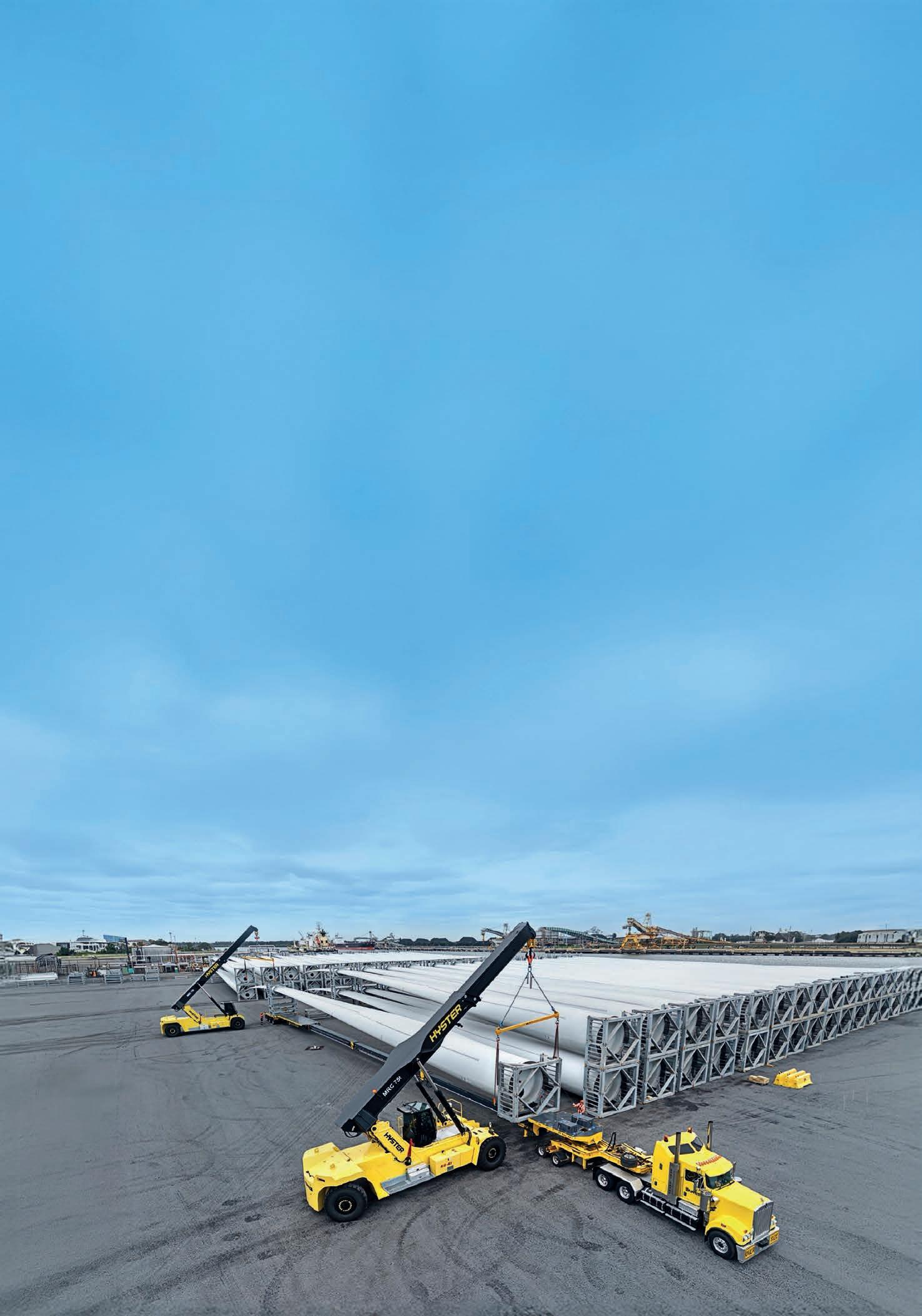
Australia’s next generation of wind turbines is significantly larger than the equipment used only a decade ago. Longer blades, heavier nacelles and taller tower sections are placing increasing pressure on regional roads, bridges, intersections and access corridors that were not originally
designed to accommodate infrastructure of today’s scale.
As a result, transport logistics are becoming a critical consideration much earlier in the development process.
“We’ve adapted by putting a strong focus on route engineering, detailed survey work and customised transport methodologies,” Jelaca says.
“Every project is different, and there’s rarely a one-size-fits-all approach when moving oversized wind components across regional Australia.”
An engineering-first approach has become central to how ARES Group operates. While transport is often perceived as a downstream construction activity, the company is increasingly stepping in during early-stage project planning and feasibility assessments.
Before construction on a wind project begins, ARES Group carries out route surveys, develops Transport Management Plan (TMP) staging strategies, and works closely alongside developers and their engineering teams to identify potential transport constraints.
This early involvement in the wind project process can significantly influence both project cost and delivery timelines.
By identifying constraints such as bridge limitations, intersection geometry, overhead obstructions and access challenges early, developers can avoid expensive redesigns or infrastructure modifications later in the project lifecycle.
“It’s one of the most important parts of the entire process,” Jelaca says.
“Early-stage route assessment gives developers a clear understanding of potential risks and constraints before construction begins. It allows the project team to make informed decisions early, rather than reacting to issues later when project timelines and budgets are already under pressure.”
The increasing complexity of renewable energy transport has also accelerated demand for specialised engineering solutions designed specifically for oversized wind components.
ARES Group has invested heavily in custom transport platforms and engineered methodologies tailored to the requirements of individual projects.
“We’ve also invested heavily in specialised loading and offloading systems,” Jelaca says.
“In several cases, these solutions have helped clients avoid major infrastructure costs in the millions of dollars across the project lifecycle.”
This focus on practical engineering outcomes reflects a broader shift occurring
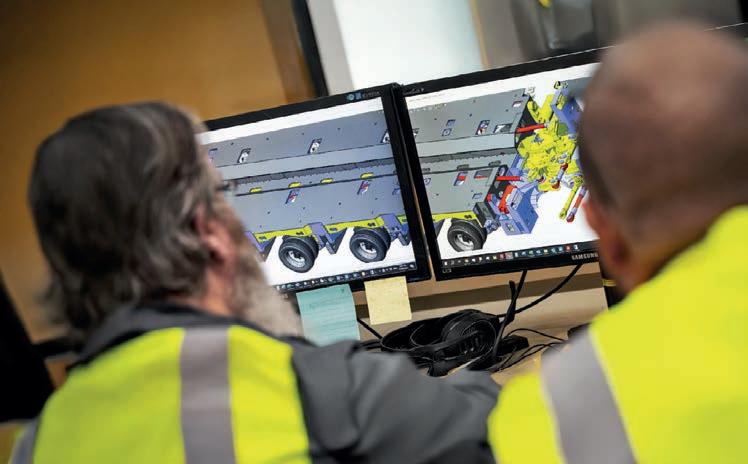
across Australia’s renewable energy sector. Developers are increasingly recognising that logistics and route engineering can have a direct impact on overall project feasibility, approvals and commercial outcomes.
“The biggest trend is definitely the scale of the equipment. Wind turbines are getting larger at a rapid pace, and that’s pushing transport and infrastructure planning to a completely new level,” Jelaca says.
Transport planning is also becoming more deeply embedded in development approvals and stakeholder engagement. As authorities seek higher levels of detail during planning assessments, route engineering and transport staging strategies are playing a larger role in obtaining project approvals.
“We’re seeing transport being brought into the conversation much earlier than it used to be,” Jelaca says.
“Developers across Australia now understand that logistics and route engineering can have a major impact on project feasibility, cost and timeline.”
Logistics challenges
One of the greatest challenges of transporting the gigantic components of wind projects is
coordination of a wide range of stakeholders involved in oversized transport operations.
“There are developers, councils, road authorities, and third-party asset owners like rail or telecommunications, contractors and local communities, that all play key role in when moving wind project components safely and efficiently,” Jelaca says.
Remote project conditions can add another layer of complexity. Long transport distances, difficult terrain, staging limitations and weather conditions all need to be carefully managed throughout the transport process.
“Regional infrastructure wasn’t originally designed for equipment of today’s scale,” Jelaca says.
“Roads, bridges, intersections and site access points can all become critical constraints when transporting modern wind turbine components.”
That is why collaboration has become a major part of renewable energy logistics delivery. For example, ARES Group works closely with developers, engineering, procurement and construction contractors, councils and road authorities throughout the planning and construction phases.
“Our role is often to bring together the
engineering and operational side of a project and turn that into a practical transport solution that works safely in the real world,” Jelaca says.
ARES Group’s transport portfolio spans major wind energy developments across Australia. To date, the company has supported major wind farm projects nationwide, including the development of the Biala Wind Farm, Crookwell 2 Wind Farm, Crowlands Wind Farm and Flyers Creek Wind Farm.
Across these projects, ARES Group has transported turbine blades, nacelles, towers and heavy equipment over hundreds of kilometres from ports to remote renewable energy sites in regional Australia.
For Biala Wind Farm, situated north of Goulburn, New South Wales (a total distance of 220 kilometres one way), ARES Group completed the gigantic task of transporting turbine components.
At the Crookwell 2 Wind Farm, the company delivered components for 28 general electric 3.4-130 wind turbine generators from Port Kembla to Goulburn, New South Wales (a total distance of 190 kilometres one way).
Meanwhile, for the Crowlands Wind Farm in Western Victoria, ARES Group transported turbine components for 39 wind turbine generators from the Port of Portland to Western Victoria (a total distance of 250 kilometres one way).
ARES Group has also supported the Flyers Creek Wind Farm, transporting components for 38 wind turbine generators from the Port of Kembla to the project site situated in the Blayney region of New South Wales.
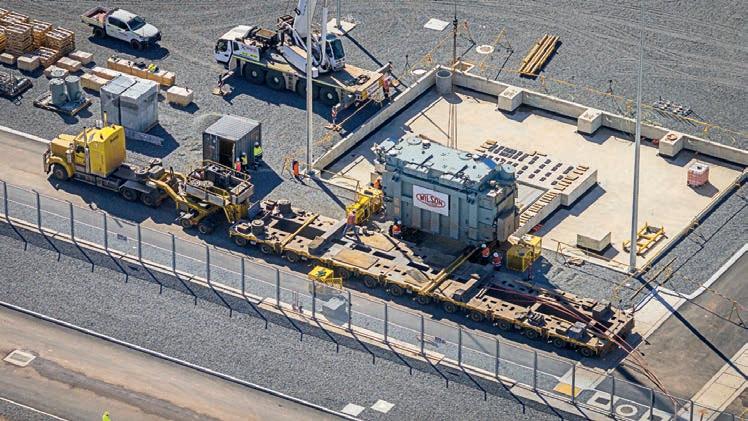
Beyond wind energy, Jelaca says demand is also increasing across transformer logistics and broader renewable infrastructure projects as Australia continues to expand its transmission and grid infrastructure.
For ARES Group, the evolution of renewable energy transport is reinforcing the growing importance of engineering-led logistics solutions.
“Transport and route engineering is no longer just a support function for wind farm projects. They’ve become a major part of overall project strategy and long-term feasibility,” Jelaca says.
In ARES Group’s view, transport and route engineering is top two risk, alongside grid connection, faced by developers today.
“As wind farms continue to ramp in size and complexity, we’re proud to be playing our part through our established transport and logistics expertise to deliver on Australia’s net zero future,” Jelaca says.
Capral Aluminium marks its 90-year anniversary, reflecting the enduring role and unique history of aluminium in Australia, from supplying critical electricity network infrastructure in the 1940s, to now powering the nation’s world-leading transition to clean energy.
Capral Aluminium was established in 1936 through the Australian operations of the British Aluminium Company, at a time when a broader industrial shift was underway across the Western world.
It was in the 1930s that aluminium emerged as a viable alternative to copper in Australia’s electricity networks, offering comparable performance at a lower cost and with greater availability. Aluminium’s strong conductivity and lighter weight quickly positioned it as a critical material for transmission infrastructure. This shift drove major electricity providers, including the State Electricity Commission of Victoria, to expand their networks using aluminium conductors. As demand grew, Capral, formerly known as Australuco and later ALCAN, played a foundational role in developing Australia’s renowned aluminium manufacturing capability.
By the early 1940s, Capral’s Granville
operations in New South Wales were producing the country’s first locally manufactured aluminium sheet and extrusions, supporting both wartime production and post-war reconstruction.
And then in the mid-20th century, as Australia’s electricity networks rapidly expanded, aluminium became embedded across transmission and distribution systems, substations and a wide range of industrial applications.
Throughout its 90 years in operation, Capral has continued grow alongside the nation’s industrial base, supplying aluminium into construction, transport and marine projects, and most recently, Australia’s renewable projects as part of the nation’s broader transition to clean energy and net zero goals in the 21st century.
Continuity through change
Although aluminium’s applications have diversified over the last 90 years, its core
requirement from industry remained the same: To be a reliable, high-performance material capable of withstanding demanding conditions, including Australia’s harsh climate. Capral’s longevity has been driven by its ability to meet Australia’s demand for a local and reliable aluminium supply chain. This has led to company continually refining its extrusion and distribution capabilities in line with evolving engineering demands and regulatory compliance requirements.
Tony Dragicevich, Chief Executive Officer and Managing Director at Capral, explains how Capral’s 90-year milestone is a monument of Australia’s high-performing and adaptive manufacturing industries critical to the country’s economy.
“Reaching this milestone is something we don’t take lightly. It reflects the dedication and expertise of our people, along with the enduring strength of our relationships with customers and partners over many years,” Dragicevich says.
“That foundation has allowed us to adapt and grow through changing economic and political conditions. What hasn’t changed is our commitment to manufacturing in Australia and supporting the industries that rely on locally produced aluminium.”
That continuity is particularly evident in the energy sector. While the generation mix has shifted from coal-fired power to an increasingly diverse portfolio of renewables, the need for robust, high-quality infrastructure has only intensified. However, aluminium has remained central to that infrastructure, valued for its electrical conductivity, corrosion resistance and strength-to-weight ratio.
Today’s energy systems are more complex than ever. Interconnectors, large-scale renewable projects and grid-scale batteries require aluminium components that can perform reliably under variable conditions, while supporting greater levels of flexibility and resilience.
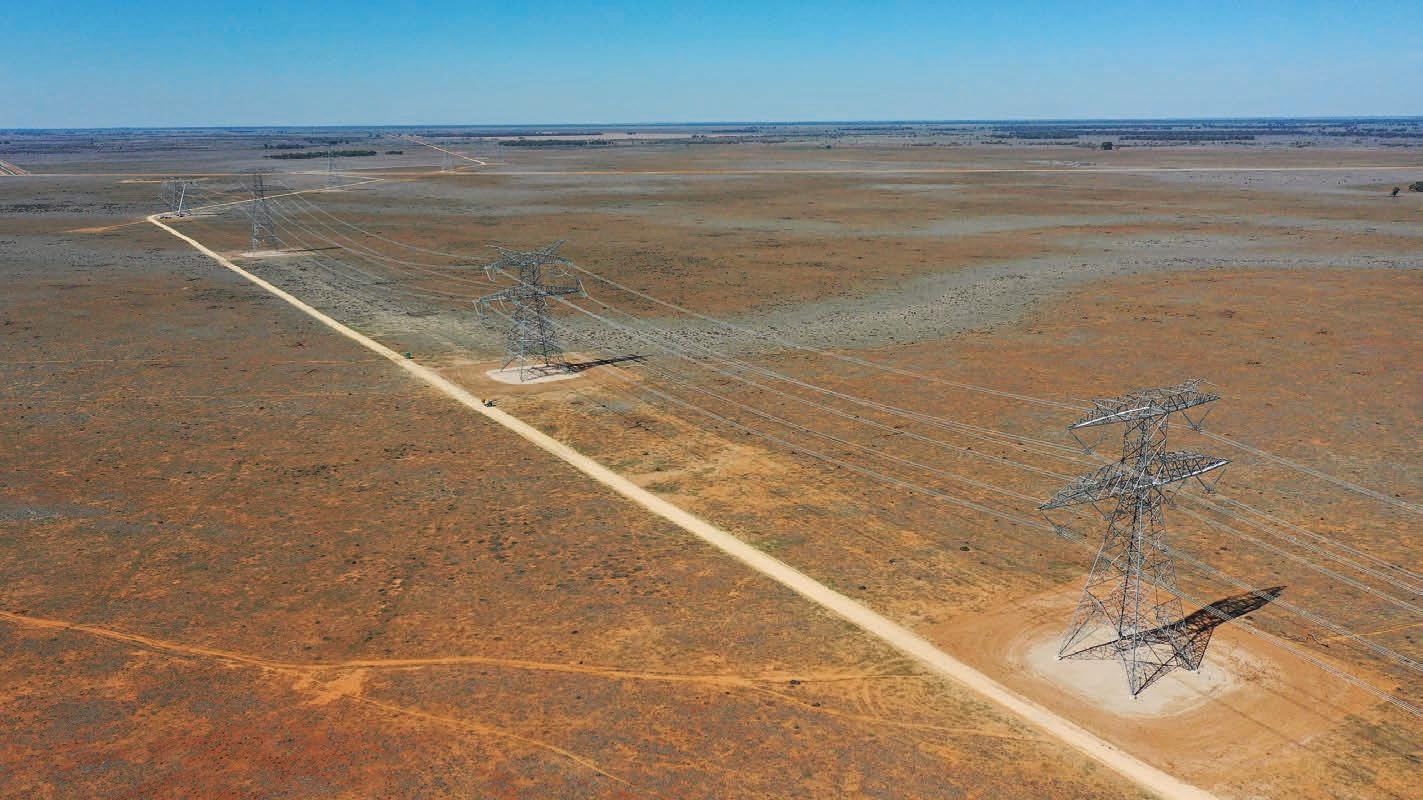
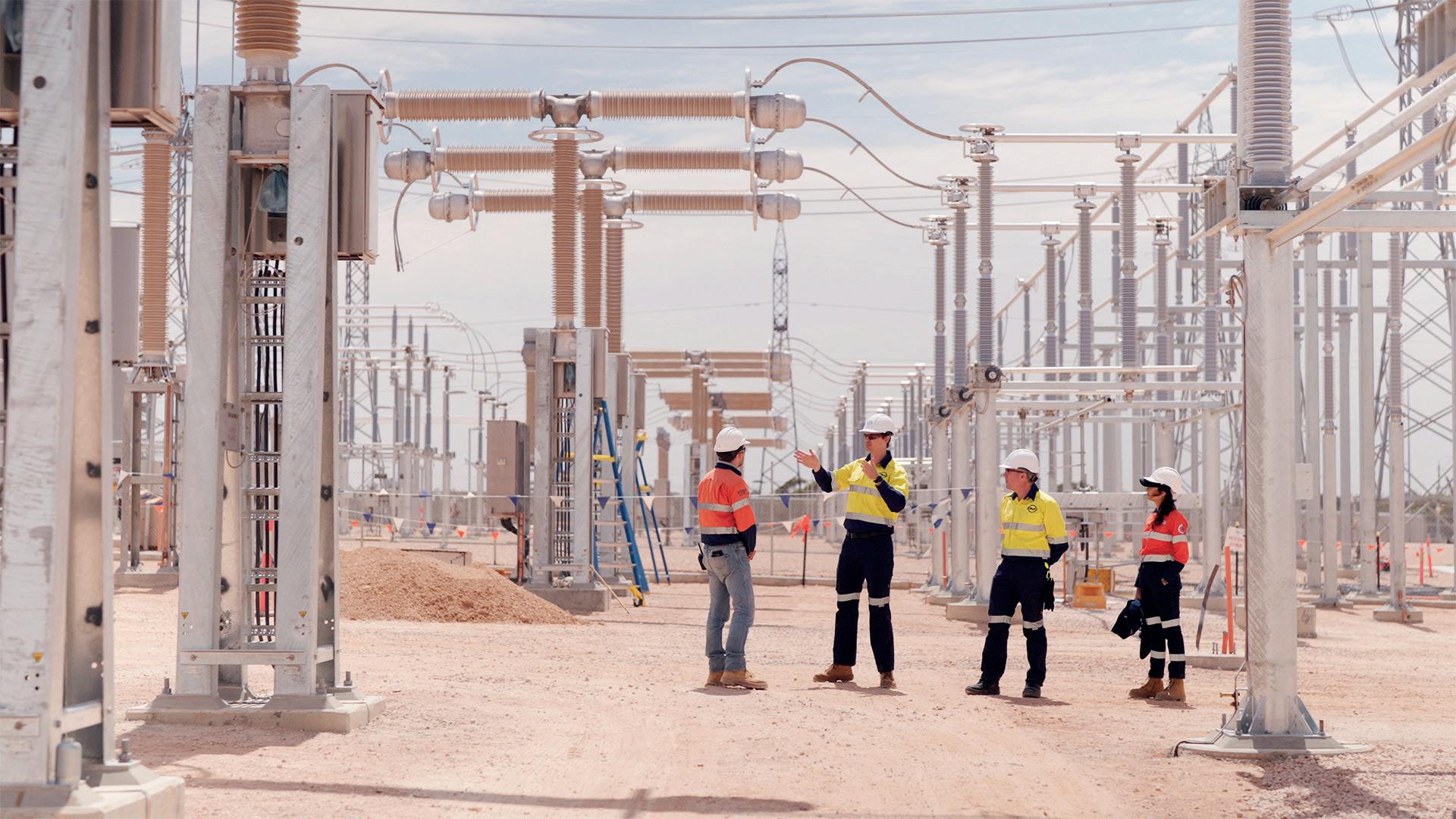
Project EnergyConnect is one such example. The 900-kilometre interconnector links the distribution networks of New South Wales, Victoria and South Australia – playing a key role in strengthening the National Electricity Market. Designed to improve energy security and facilitate the integration of renewable generation, the project highlights the importance of both engineering expertise and long-term material performance.
Within Project EnergyConnect, aluminium plays a critical role in the form of busbars, providing key components that connect electrical equipment within substations. These are not standardised products. Each busbar is custom engineered to meet precise specifications, reflecting the complexity of modern grid infrastructure.
As a key supplier to PLP Australia on projects such as the EnergyConnect, Capral’s aluminium extrusions are used in more than five kilometres of busbar for substations at Buronga, Dinawan and Wagga Wagga, illustrating how local manufacturing capability continues to underpin major national infrastructure projects.
Adam Talbot, General Manager of Sales and Marketing at PLP Australia, emphasises the importance of material performance and supplier collaboration in delivering projects of this scale.
“We engaged with Capral from our early tendering stage, particularly working
through ensuring the right alloys for the mechanical strength required within a substation,” Talbot says.
Capral’s ability to produce long-length aluminium extrusions (up to 13 metres) is a key advantage that reduces the number of joints and welds required during installation. This not only improves efficiency onsite, but also contributes to overall project cost-savings.
“Capral’s ability to deliver those long lengths for us helps cut down the overall cost of Project EnergyConnect, and also reduces the amount of welding needed, simplifies the supports, and just makes everything fit together better onsite,” Talbot says.
Beyond technical capability, Capral’s partnership with PLP Australia highlights the value of local supply chains.
“We’ve been working with Capral for over 10 years on large-scale projects like this. They’re definitely our preferred supplier. If I’ve got a question, I can pick up the phone and get someone right away,” Talbot says.
As Australia accelerates its shift to renewable energy, aluminium is taking on an expanded role across the sector. Its properties make it well-suited to applications ranging from solar panel framing and mounting systems to battery enclosures and electrical transmission infrastructure. Its sustainability profile is equally important. Aluminium is highly recyclable and can be reprocessed using a fraction of the energy required for primary production. This supports efforts to reduce lifecycle emissions and improve resource efficiency.
Dragicevich affirms that aluminium will remain central to the industries shaping Australia’s future.
“Aluminium is one of the most versatile and sustainable materials available today. It has shaped our transport systems, buildings and infrastructure for decades, and will continue to play a critical role in the energy transition,” Dragicevich says.
Capral’s focus on its ‘LocAL’ (lowercarbon aluminium) reflects growing demand for materials with reduced environmental impact. For developers and asset owners, sourcing locally produced, lower-carbon materials is becoming an increasingly important consideration.
The energy transition is an opportunity to scope and strengthen domestic manufacturing and capture more value within the Australian economy.
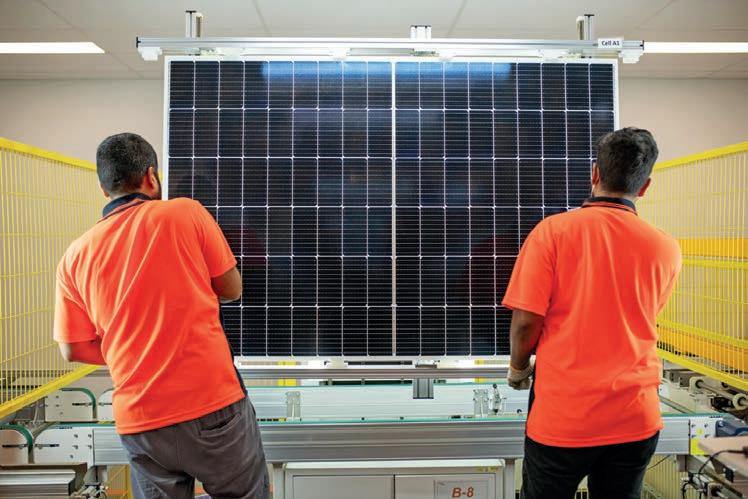
Capral’s partnership with Tindo Solar highlights this shift. As Australia’s only solar panel manufacturer, Tindo is scaling operations, with plans for a future Gigafactory capable of producing up to 7000 panels per day.
Under the agreement, Capral will supply extruded aluminium for Tindo’s locally produced panels, supporting greater use of Australian-made components in the renewable energy supply chain.
Luke Hawkins, Divisional General Manager of Industrial and Supply Chain at Capral, says the partnership reflects broader industry potential.
“Capral’s collaboration with Tindo is a testament to the strength of Australian manufacturing,” Hawkins says.
Richard Petterson, Chief Executive Officer at Tindo Solar, adds that domestic partnerships is key for a resilient sector.
“We’re committed to integrating Australian-made components into our solar panels, and Capral Aluminium is a vital partner in this effort,” Petterson says.
Specialised Energy Solutions has successfully supported the delivery of 10.5 gigawatts of capacity for utility-scale projects across Australia, enabled through its strong construction, maintenance and manufacturing sector partnerships. Behind that infrastructure is a highperforming team, including inspiring women, shaping the next generation of energy projects.
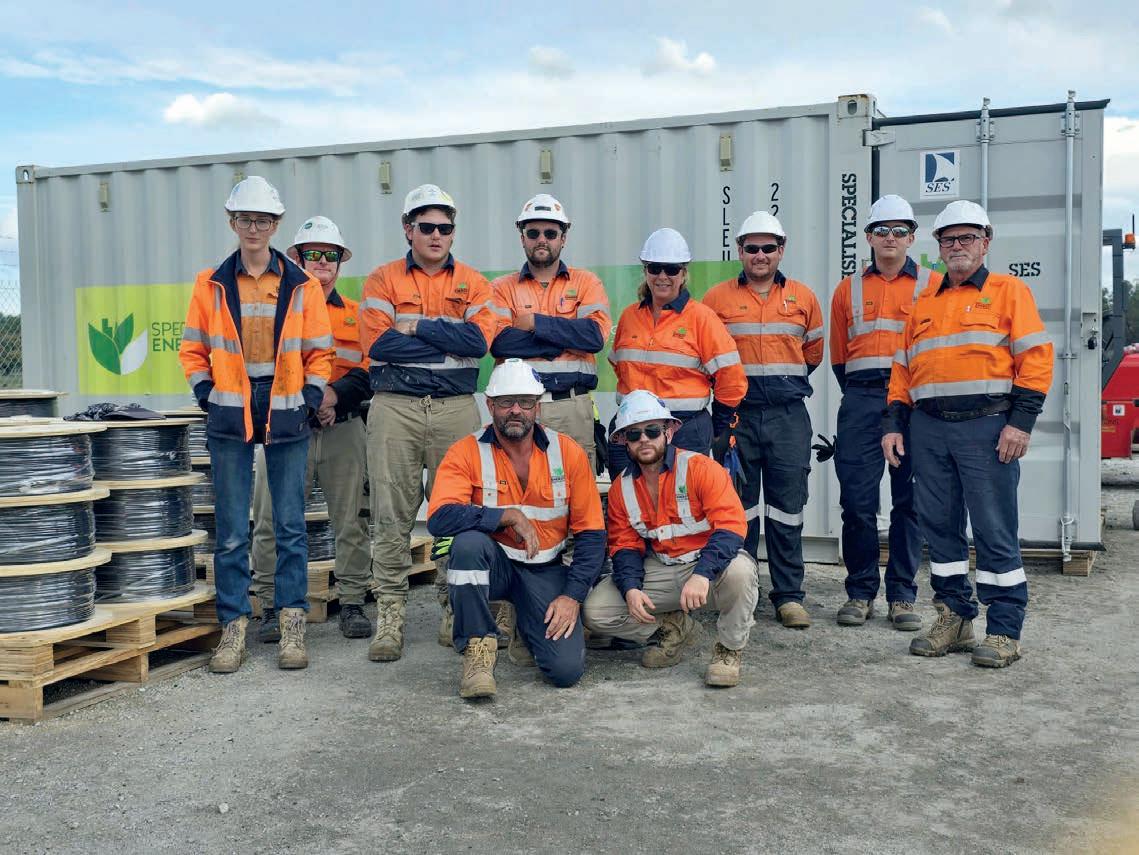
Aacross the sector is evolving. It is no longer defined solely by capacity or investment alone. Increasingly, attention is turning to the people behind the projects required to deliver and sustain them over decades.
The challenge is no longer just building projects, but building them well.
Quality, performance, and long-term asset reliability are now directly linked to the expertise and experience of teams working across the full lifecycle of delivery – from executive decision-making and commercial structuring, to operations support, field coordination and hands-on construction.
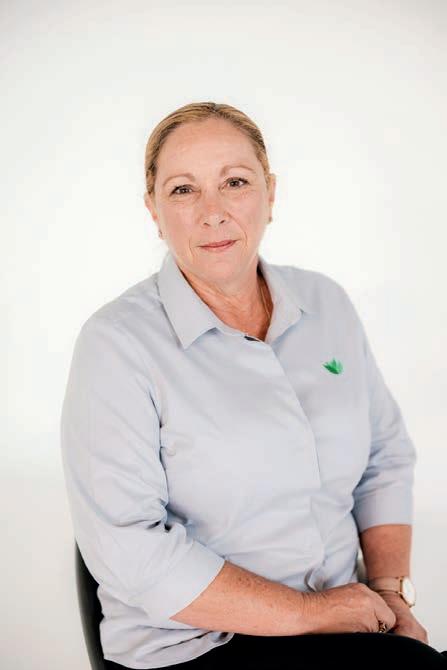
At Specialised Energy Solutions (SES), this capability is reflected in the experiences of three women working in different roles across the organisation; Alba Ruiz Leon, Non-Executive Director; Karen Hindmarch, Operations Support Manager; and Kyia
projects are being delivered across Australia.
Originally from Spain, the career of Alba Ruiz Leon has spanned different continents and industries – from aerospace engineering in Europe to large-scale renewable and conventional energy development and operations across Australia.
With over 20 years’ experience, she has held senior roles at well-known organisations such as Acciona Energy, EnergyAustralia, RWE Renewables, FRV, GHD, Cornwall Insights Australia, and Ausenco. Her portfolio includes some of Australia’s most significant renewable projects, from early wind developments such as Waubra and Gunning to the delivery of Limondale Solar
Her role extends beyond traditional governance, encompassing risk management, commercial advisory, stakeholder alignment, and quality assurance across complex utility-scale projects.
“While teams are busy delivering, my role is to make sure nothing critical is missed,” she says.
“You need technical understanding, commercial discipline, and the ability to assess complex issues quickly across multiple areas of the business.”
Her day-to-day work reflects this breadth – ranging from refining internal systems and reviewing proposals to advising on pricing strategies and partnership opportunities. Yet her approach remains grounded by a simple principle: Prioritisation.
That mindset is critical in an industry
defined by tight timelines, evolving risks and high capital exposure.
Ruiz Leon’s leadership is defined by clarity, accountability and collaboration, an approach that drives performance and results while maintaining an uncompromising focus on quality delivery
Importantly, her work ethic reflects a broader shift within the industry towards a flexible and inclusive working environment.
As a mother of five young children, she says the importance of organisations enabling high performance through trust and adaptability is critical.
“It’s not about lowering expectations,” Ruiz Leon says.
“It’s about creating the conscious conditions for people to perform at their best, while recognising their circumstances,” Ruiz Leon says.
While strategy defines direction, execution determines success. For Karen Hindmarch, that execution happens in the space between planning and reality.
Based in Central Queensland, Hindmarch joined SES at its inception in 2022 and has grown alongside the business. Transitioning from an administrative role into operations support, she has built a unique skill set grounded in both coordination and hands-on project experience.
“This perspective is critical in utilityscale projects, where coordination across contractors and systems often determines delivery success,” Hindmarch says.
The renewable sector remains maledominated, particularly in field-based roles. However, Hindmarch sees this as not as a barrier, but an opportunity to demonstrate capability.
“You have to back yourself. Let your work speak for itself, and don’t hesitate to voice your perspective when it matters,” she says.
Hindmarch believes that diversity is not simply a cultural objective, it is a performance driver.
“Women bring strong communication, coordination and empathy. These skills are critical when managing complex teams and high-pressure environments,” she says.
Her proudest achievement is not tied to a single project milestone, but to personal growth and the ability to support others.
“I’m proud of how far I’ve come – and of being able to lift others up along the way,” she adds.
That mindset reinforces a key industry insight: Strong teams are not just built on technical capability, but on trust, support, and shared accountability.
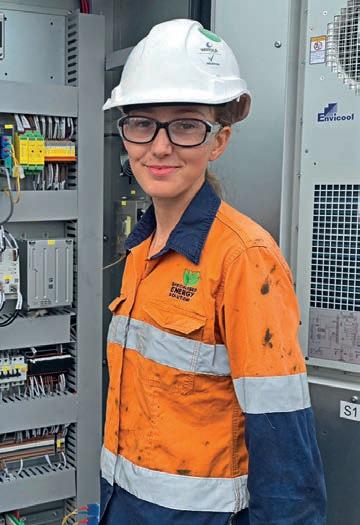
A prime example of the next generation of talent driving the energy transition is Kyia Comerford, an electrical apprentice at SES.
Based in Brisbane, Comerford has spent the past three years developing her career, including two years with SES.
“I wanted to enter the renewable energy sector to make a meaningful impact in society,” Comerford says.
Through her role at SES, she has gained exposure to major utility-scale projects, including battery energy storage systems, participating in construction and commissioning activities that directly contribute to successful project delivery.
One of her proudest achievements has been her contribution to the Blyth Battery project. By supporting the electrical installation of inverters and

“Seeing the Blyth Battery project come to life and power communities is incredibly rewarding,” Comerford says.
Like many early-career professionals, Comerford acknowledges the challenges of building confidence and establishing credibility while working in a traditionally male-dominated field.
“It can be challenging, but I’d rather grow through that than step away from a longterm career I’m deeply about,” she says.
Comerford’s perspective reflects a broader reality within the sector: Growth often comes from stepping outside comfort zones.
Crucially, she highlights the importance of support systems within organisations.
“The team is always willing to help and mentor me,” Comerford says.
“That makes a huge difference when you’re starting out.”
Australia’s renewable energy transition is one of the most significant industrial transformations in the country’s history. Delivering it successfully will require more than infrastructure – it will require capability across every level of the workforce.
The workforce journeys of Ruiz Leon, Hindmarch and Comerford demonstrate that this capability is already evolving.
“Women are not just entering the sector, they’re helping shape it,” Ruiz Leon says.
“From boardrooms to construction sites, they’re contributing to the systems, processes and infrastructure that will define Australia’s energy future.”
Now, the challenge is to continue building supportive environments where that contribution can thrive.
“Because in the end, the energy transition isn’t just built in megawatts – it’s built by people,” Ruiz Leon says.
With coal-fired power stations set to retire across Victoria, a familiar name in Australia’s electricity market is back, the State Electricity Commission Victoria. Now commonly known as SEC, the publicly-owned company is driving additional renewable energy and storage, while ensuring Victorians reap the benefits.
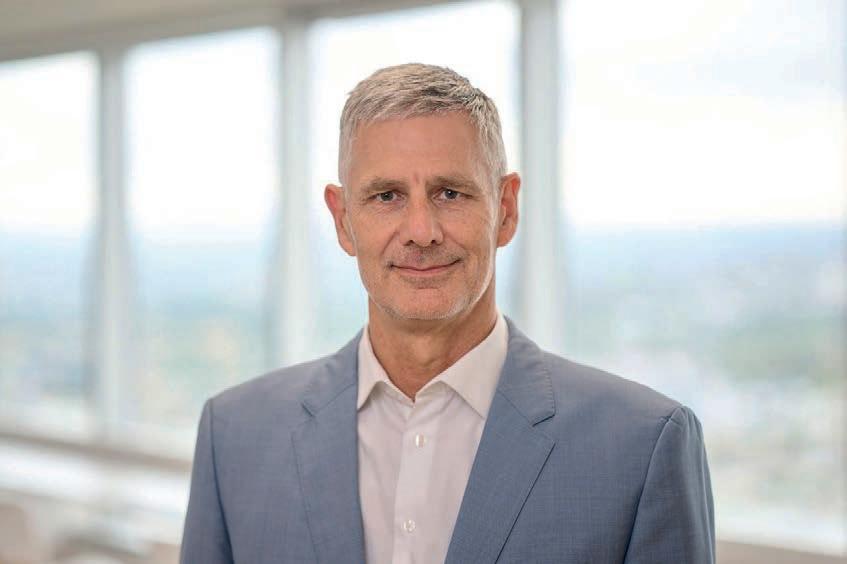
The State Electricity Commission of Victoria (SEC) is positioning itself at the centre of Victoria’s energy transition through strategic public investment in large-scale batteries and other hybrid renewable energy projects, to support the state’s exit from coal-fired generation. Previously the owner of the entire electricity supply chain decades ago, the modern SEC now operates as a renewables-only retail provider to the Victorian Government and businesses. The SEC also functions as a developer that invests in renewable energy generation and storage assets to deliver a stable transition to clean energy for Victorian consumers and industry.
According to Lane Crockett, Executive General Manager, Assets at SEC, the organisation is already building momentum
toward its long-term investment mandate.
“Since SEC was re-established years ago, we’ve moved at pace to achieve our mandate to deliver 4.5 gigawatts of renewable energy and storage by 2035. In fact, we have nearly a quarter of our 4.5-gigawatt mandate committed already across solar, wind and storage projects,” he says.
“This includes the Melbourne Renewable Energy Hub (MREH) which is now complete and discharging into the grid, the SEC Renewable Energy Park in Horsham which is currently in advanced stages of construction, and the SEC Delburn Wind Farm which officially began construction in March.”
Crockett explains that SEC’s public ownership model allows the Victorian Government to help accelerate projects that may otherwise struggle to reach financial close, while supporting the state’s transition
cncprojects.com.au
info@cncprojects.com.au
to affordable and accessible clean energy.
Crockett adds that SEC’s public ownership model is intended to complement private sector investment rather than directly compete with it.
“We’re playing our role backed by public funding to bring additional renewable energy assets to the market before the increasing number of coal-fired power station closures,” he says.
“To help avoid major bill shocks for Victorian energy consumers, we’ve got to get new assets operational, which can be a ten-year journey.”
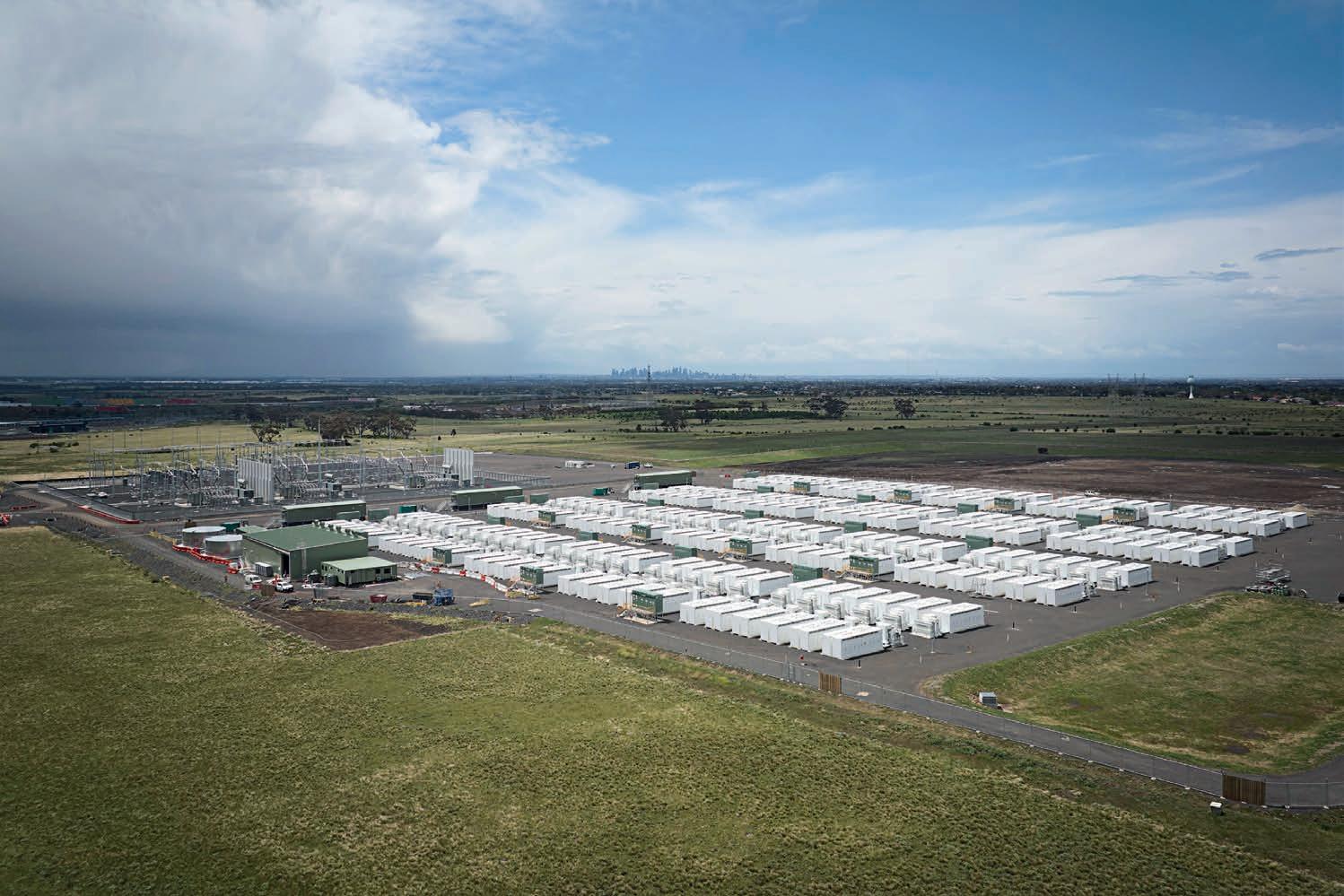
Batteries supporting Victoria’s grid SEC’s investment strategy is visibly demonstrated through the MREH project located Plumpton in Melbourne’s west, equipped with 444 Tesla megapack battery units. Developed in partnership with Equis Australia, the $1.1 billion project began operating in late 2025 and is now one of the world’s largest battery energy storage systems. The project’s three battery components deliver a combined 600 megawatts (MW) of capacity and 1.6 gigawatt-hours (GWh) of storage, enough to power around 200,000 homes during peak evening demand periods.
SEC’s $245 million investment in the project has helped fast-track construction
and extend one of the battery components to four hours of storage duration, improving its ability to shift renewable energy into high demand periods.
“The MREH project is delivering strong results and forming a critical part of Victoria’s energy grid,” Crockett says.
“During its first summer, the hub showed it is providing Victorians with electricity when they need it most, while easing pressure on wholesale electricity prices.”
During the summer of 2025-26, Victoria recorded its hottest day on record and its highest demand for electricity since 2009.
Following this, the MREH’s A3 battery – which SEC has 100 per cent rights over –exported 200 MW into the grid during peak demand over summer. Between December and February 2025-26, the four-hour A3 battery component completed 77 charge and discharge cycles, shifting and storing more than 61,000 megawatt-hours of electricity from the daytime to the morning and evening peaks.
“The performance of the A3 has helped reduce reliance on higher-cost coal and gas generation, keeping wholesale prices well below the market price cap,” Crockett says.
According to SEC, this impact is already becoming visible across the Victorian electricity market. Despite higher overall electricity demand during summer 2025-26
compared to the previous year, average wholesale electricity prices fell significantly as battery energy storage system participation increased. Crockett says this demonstrates the growing importance of utility-scale batteries as coal generation retires from the National Electricity Market.
“The MREH as part of the Victorian network has helped meet summer peak demand, and is expected ultimately reduce wholesale electricity prices,” he says.
Public investment drives renewables Alongside large-scale storage, SEC is also progressing the development of new renewable generation assets, including the SEC Delburn Wind Farm in Gippsland.
The 205 MW project, located south of the Latrobe Valley, will become Victoria’s first publicly-owned utility-scale wind farm once it is operational in 2028. Owned 100 per cent by SEC, Delburn Wind Farm is being developed alongside OSMI Australia. The project will feature 33 Vestas wind turbines capable of powering more than 130,000 homes. Construction officially commenced in March 2026, with road upgrades, substation works and civil construction activities also underway.
Crockett says community engagement and workforce participation has become central to the project’s development.
“We recently held community consultation in the towns surrounding the wind farm. In these sessions, we received fantastic feedback,” he says.
“The interest in working on the Delburn Wind Farm has been really high, along with strong interest from local small businesses.”
SEC reports that more than 200 people attended recent community consultation forums, reflecting strong local interest in both employment and supplier opportunities associated with the project.
“Our projects to date have created around 1450 direct job opportunities, including roles for 79 apprentices, trainees and cadets,” Crockett says.
The organisation has also embedded workforce development requirements into its construction contracts, requiring contractors to deliver apprenticeship and trainee pathways as part of project delivery.
Beyond infrastructure investment, SEC is also preparing to launch a new consumer platform designed to support Victorian households interested in transitioning to an all-electric home.
The platform is expected to help
everyday consumers navigate electrification technologies, identify available government rebates to lower their installation costs, and easily connect them with suppliers and financing options.
Crockett shares that SEC’s public ownership model helps to position the electricity company as a trusted information channel for consumers, as they navigate their households’ transition to clean energy, which can often be a confusing process.
“People can confidently trust us because we’re not trying to sell them anything. We’re publicly-owned and here for the good of the public,” he says.
For SEC, its broad approach of combining renewable generation, storage, retail electricity supply and support for consumer electrification remains central to Victoria’s long-term energy transition strategy.
“SEC is back, and reformed, but our role is in some ways the same as it was decades ago,” Crockett says.
“We’re dedicated to supplying Victorians with reliable, low-cost electricity. But this time, we’re a renewables-only, verticallyintegrated utility.”

“A trusted partner in the energy transition—delivering dependable, scalable, and innovative solutions that unlock the full value of renewable energy investments."
- CEO Aaron Mulhall
This year marks the 20-year anniversary of CNC Project Management, a company that has built a strong reputation of balancing major project delivery with longterm relationships, landholders, local communities, and traditional landowners.
For decades, CNC Project Management (CNC) has helped some of Australia’s most complex infrastructure and energy projects move from concept to delivery. CNC is a national multi-disciplinary consultancy that provides services to a range of industries; including, infrastructure, utilities, resources, and renewable energy projects across Australia. CNC’s integrated services allow them to work across all stages of the project lifecycle whilst providing multi-faceted solutions across planning and management, land access, permitting and approvals, environmental management, stakeholder engagement, geographical information services, and advisory services.
For CNC’s Founder and Managing Director, Dave Maloney, the company’s 20-year anniversary reflects its ability to maintain its strong track record in providing complex services for utility-scale projects through some of the most volatile periods for the infrastructure sector in Australia.
“We’re proud to have supported our clients through the highs and the lows of the ever-evolving regulatory requirements and expectations surrounding community engagement and approvals for their projects,” Maloney says.
From humble beginnings to where it is today, CNC has been built on strong relationships, hard work, resilience and passion.
“Initially, the business was very focused on land access. But over the years, we’ve moved into managing consultation with key stakeholders including the surrounding communities of large-scale utility projects, various approval processes, and environmental management. Combined with our Geographic Information System Team and Paralegal Team, we’re able to provide a broader service offering,” Maloney says.
That growth has been a natural response to client needs.
“It started with clients asking ‘you already work well with landholders, can you also help with Indigenous relationships?’ Then eventually clients started asking if we could support environment and approvals as well,” Maloney says.
“The answer from us has always been ‘yes.’ As demand grew for these areas, we brought in more people and skills to support these workstreams.”
CNC’s next phase is focused on internal growth and mentoring the upcoming generation of leadership.
“For us to continue to grow, developing our readily experienced people is key. In this sector, the number of deeply experienced people that started their careers decades ago is limited. The key is to strengthen their knowledge so they train up our future workforce,” Maloney says.
That internal development is visible in the company’s leadership structure. Maloney points to the CNC Chief Executive Officer (CEO), Liz Veneziano, who has risen through the ranks of the business.
“Liz has been at the helm for one year now. Her elevation through the business talks to CNC’s development of its people. We’re also so proud to have her as our first female CEO,” Maloney says.
“Furthermore, our Senior Management Team is 50/50 male and female.”
Managing community expectations
CNC’s program of work has become more complex as Australia’s energy and infrastructure landscape has evolved. Land access, in particular, has shifted dramatically.
“With land access being such a large portion of our business, we’ve previously seen farmers with the mindset of you can’t stand in the way of progress,” Maloney says.
In more recent years, this has changed along with the rise of social media use and ‘not in my backyard’ culture which has seen a dramatic increase in community scrutiny and opposition to utility-scale projects, making local engagement and stakeholder relationships more critical than ever.
In the context of renewable energy, transmission and other major infrastructure projects, this has made process, safety and communication a non-negotiable.
“Today there’s a greater focus on ensuring process, procedure, safety culture and all of those types of things are followed, which is really great from the perspective of maintaining quality long-term outcomes,” Maloney says.
CNC also takes pride in its ability to build
strong relationships with landholders based on its decades-long foundation of open and transparent communication.
“In practice, this means engaging and consulting with landholders, directly affected by projects, to ensure they understand what land access is required for surveys/easements, acquisition of the land, how this may impact their business activity,” Maloney says.
For Maloney, his expertise in dealing with landholders is a second-generation skill, built on a relationship network passed down from his father, who ran a land access and property valuation business many decades ago.
“My father was a property valuer who did a lot of work on the acquisition of easements for infrastructure, whether it was for power lines, pipelines, or other acquisitions for highways,” he says.
“A lot of my school holidays were spent travelling with my father out in the country, talking to landholders and seeing how the whole consultation process was done.”
When Maloney entered the family business, he was quickly immersed in the complexities of managing infrastructure delivery.
Today, his father’s grounding informs how CNC approaches high impact infrastructure, such as high-voltage transmission lines, where sensitivity from landholders and communities is both expected and understandable.
“The nature of land access for a high impact infrastructure means there’s naturally going to be a heightened level of sensitivity,” Maloney says.

owner engagement are also important aspects of project planning.
“Ensuring we manage these relationships from a completely respectful, compassionate and professional perspective is key. This means taking into account the natural concerns and anxieties these projects can bring local farmers, residents and businesses.”
Consultation requirements differ across state jurisdictions, project types and development stages. To navigate this, CNC closely works with clients to go beyond minimum industry expectations.
“Broader community engagement can be delivered in a range of ways, depending on the nature and impacts of a project. Rather than relying on a one-size-fits-all approach, engagement is delivered through a mix of targeted digital channels, local communications, and direct conversations with affected stakeholders,” Maloney says.
CNC focuses on meeting people where they are. This means providing clear, accessible information, as well as creating opportunities for meaningful dialogue throughout the project lifecycle.
First nations heritage and traditional land
“There’s absolutely an obligation in this respect, no matter where you are in Australia,” Maloney says.
“It’s not just a matter of science around having an archaeologist tell you whether or not you may be impacting the traditional cultural land.”
“Genuinely building relationships with traditional owners means closely working with them throughout the different stages of project delivery.”
As CNC marks 20 years, Maloney shares that the company’s culture of care exemplified through its respectful engagement with landholders, communities and traditional owners has become one of its strongest assets.
In addition, the company places significant value on ensuring the safety and security of its staff.
“Our care for one another is the best it’s ever been,” Maloney says.
For a business built around complex projects, long timelines and sensitive relationships, CNC’s 20 year anniversary is ultimately a story of trust.
As Australia’s battery storage reaches scale and sophistication, global player Sungrow is at the centre of the conversation, using its Sydney summit to highlight the technical, operational and policy shifts required to achieve net zero ambitions.
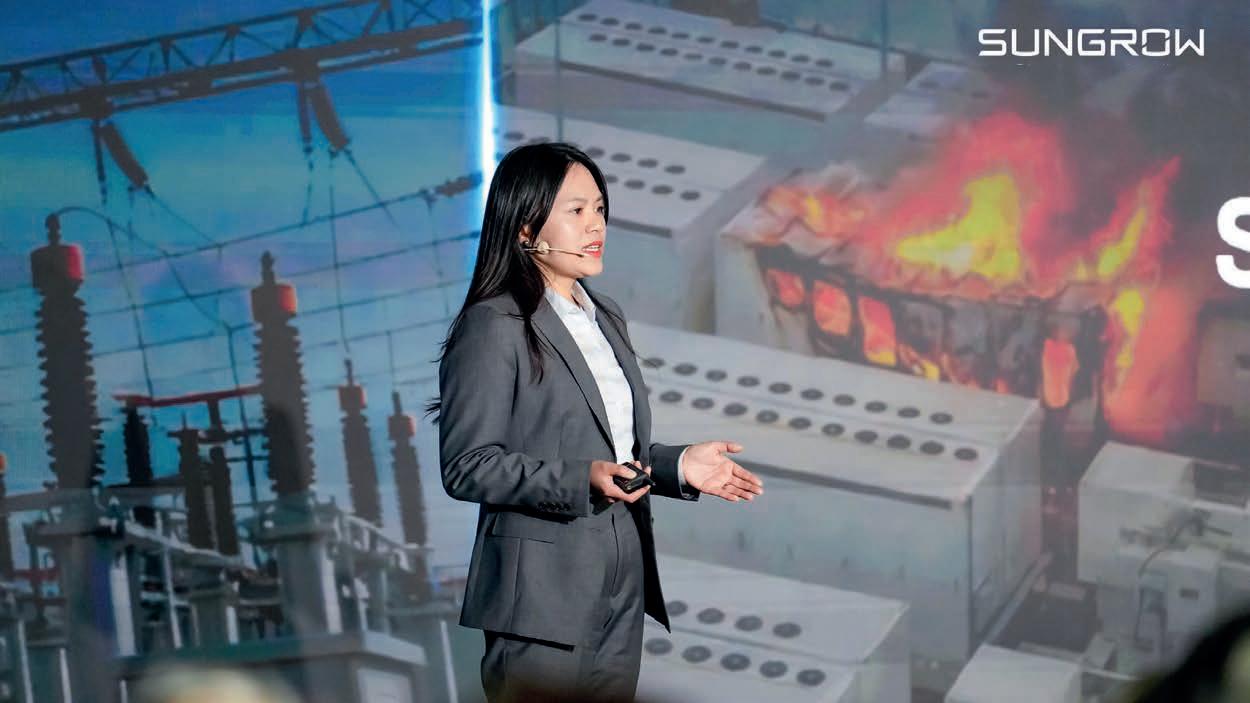
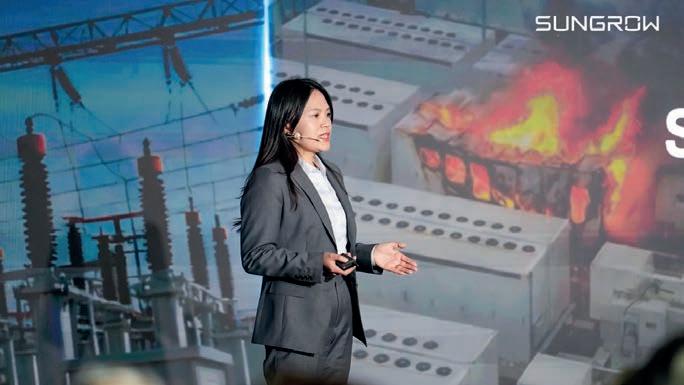
Aemphasis on safety, system integration and grid performance. These priorities were central to Sungrow’s Australia Photovolatic and Energy Storage System Summit (PV and ESS Summit), held at Curzon Hall in Sydney on 25 March. The summit gave stakeholders an opportunity to examine the evolving role of battery storage across the National Electricity Market.
The summit comes at a time of strong growth in energy storage in Australia. Over the next three years, the country is expected to deploy around 10 gigawatt-hours (GWh) of new capacity, driven by utility-scale batteries, hybrid projects and distributed energy systems.
As deployment accelerates, the focus is shifting from capacity and cost to reliability, lifecycle performance, and safety measures such as fire risk management.
According to Alistair Gibson, Senior Key Account Executive – Utility (Battery Energy Storage System, Hybrid, Photovoltaic), policy settings underpin this momentum.
energy target of 80 per cent by 2030 driving global players to the Australian market,” Gibson says.
“In the last quarter of 2025, we saw record numbers of projects reaching financial close. And so, it’s clear Australia’s government policies are making a real difference.”
However, Gibson notes that the pace of change is placing pressure on regulatory frameworks to keep up.
“The industry is changing a lot, and policy will need to be flexible enough to keep up. There’s still quite a lot of red tape which can make the project lifecycle longer than it needs to be, particularly for grid connection processes,” Gibson says.
A key trend highlighted at the summit is the rapid evolution of storage duration and project design. What begins as shortduration systems is now shifting towards longer-duration and hybrid configurations.
“The average storage duration has moved from around two hours to three or four hours, and now we’re seeing
the sector’s interest in investing in hybrid and direct current (DC) coupled solutions as the technology can improve both performance and cost advantages.
“With DC-coupled solutions, there are capex benefits, carbon footprint advantages and grid connection efficiencies. It’s also one of the key requirements to avoid extreme network charges,” Gibson says.
Alongside scale and duration, safety is also emerging as a defining issue for the sector. Launched at the Australia PV and ESS Summit, Sungrow’s latest white paper, A Holistic Approach to Safety, argues that traditional single-layer protections and short-term cost-driven approaches are no longer sufficient to address system-level risks, representing a critical constraint on sustainable development.
As systems scale, risks extend beyond battery cells to include electrical faults, system coordination failures and grid
instability under high renewable penetration. The paper points to a global market moving toward larger, denser systems, while also highlighting that many safety issues originate at the system and module level rather than the cell level alone.
Scott Su, Service and Residential Commercial and Industrial Technical Director at Sungrow Australia, sternly explains that safety must be understood in the context of local compliance and grid performance requirements.
“For example, grid compliance testing such as frequency response, voltage response and harmonics, are legally required. Our team can support these tests in real-time, adjust settings quickly and identify root causes,” Su says.
He adds that integration across systems that made up the grid is critical for safe and reliable operation.
“For utility-scale projects, there are multiple systems such as Supervisory Control and Data Acquisition, Power Plant Controller and grid connections,” Su says.
“Our engineers work closely with clients, the Australia Energy Market Operator, project developers and engineers to complete the seamless integration of technologies that make up a utility-scale project, whether that be for a solar farm, wind farm, or battery energy storage system.”
As storage projects become larger and more central to network reliability, developers and asset owners are evidentally placing greater emphasis on long-term service capability.
“At Sungrow, we provide our clients and customers with a minimum five-year warranty, and in some cases a long-service agreement for large-scale projects. This is a big investment for clients, so it’s a must for us to guarantee performance,” Su says.
Su explains that continuous monitoring is also becoming a larger part of the support model for large-scale battery assets both internationally and in Australia.
“Our long-term service agreements mean our experienced engineers are on standby to monitor assets 24 hours a day, seven days a week, to ensure a 97 per cent system reliability success rate,” he says.
Sungrow’s Australia PV and ESS Summit also showed that engineering and technical expertise in integration across clean energy technologies is becoming a key differentiator in product design across the sector.
“We see first-hand how much seamless integration contributes more efficiently to the deployment and commissioning stages for utility-scale battery storage projects,” Gibson says.
“For example, having a power conversion system built into a battery cabinet means faster installation, faster commissioning and fewer external components.”
Integrated DC coupled systems are gaining traction across the energy sector for similar reasons.
“Traditionally, DC-coupled projects require external converters and additional cabling,” Gibson says.
“With integrated DC-coupled systems, these components can be pre-installed and joined, which also make deployment of battery energy storage systems much easier and efficient.”
Su explains that system design is increasingly focused on lowering operational complexity and reducing maintenance burdens over time.
“We always consider how to minimise operational costs for project owners. Our battery energy storage systems are modular, so if there’s a problem, it’s very easy to replace a module and fix the issue,” he says.
Australia leads storage innovation
The pace of technological innovation across solar, battery energy systems and integration solutions were a defining theme throughout presentations and panel discussion at the Australia PV and ESS Summit.
This ranged from the launch of Sungrow’s PowerTitan 3.0, featuring an alternating current block design and hybrid solution, to broader discussions around project execution, market conditions and investment confidence.
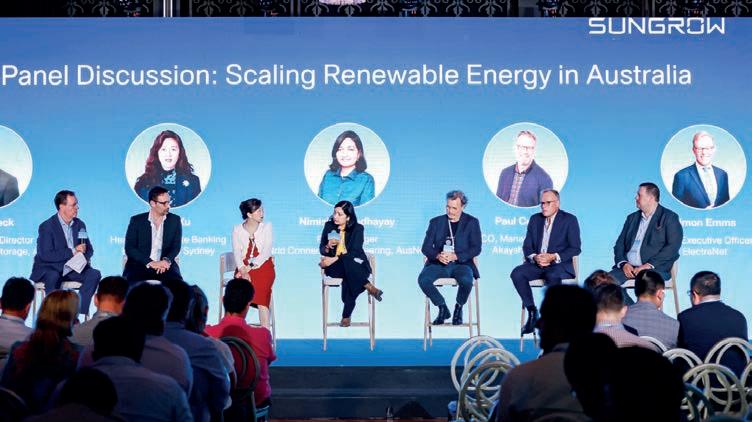
A panel discussion featuring representatives from the Clean Energy Council, ENGIE, Ampyr and Zen Energy highlighted that while the sector is expanding rapidly, expectations from government, commercial and residential stakeholders are also increasing, particularly around performance, service delivery and coordination.
“The reality is that speed expansion and innovation in the renewable energy is moving very fast, with players across the sector working hard towards aggressive project commissioning and completion targets to meet their country’s long-term net zero objectives,” Gibson says.
“It’s clear we need to share experiences and collaborate to achieve those outcomes.”
He notes that as the market matures, clients are seeking greater clarity around project design and financial viability.
“Clients are asking what’s the right duration, configuration, and how to make projects financially viable,” Gibson says.
Su adds that confidence remains a key consideration, particularly for new entrants to the Australian market.
“For some clients, it’s their first project in Australia, so they need more assurance and evidence-based advice,” he says
“What people may not know is that Sungrow supports this through training and ongoing technical engineering guidance.”
Both Gibson and Su highlight Australia’s role as a global leader in storage innovation, particularly in grid-forming capability and large-scale system deployment.
“The Sungrow Australia PV and ESS Summit in Sydney was our opportunity to educate the Australian market on our technology and engineering solutions backed by a large 7600-strong global research and development department with decades of experience pioneering sustainable energy,” Gibson says.
Su underlines what is next for Sungrow.
“Now, Sungrow wants to bring those insights to Australia to make its energy transition a success,” he says.
Five-time Olympic gold medallist, Ian Thorpe, is the official brand ambassador for Fox ESS. After swimming his way to 23 world records, Thorpe is now focused on helping Australians understand the benefits of transitioning to clean energy.

Widely regarded as one of Australia’s greatest athletes, Ian Thorpe became a world champion in competitive swimming at 15 years old, before winning his first Olympic gold medal at 17 years old at the 2000 Olympic Games in Sydney. Therefore, it comes as no surprise why he is dubbed ‘The Thorpedo.’
“If you have a more powerful physique, it’s only natural that the onset of fatigue happens quicker. And so, I had to work around it. My stroke had to be as efficient as possible,” Thorpe says.
That focus on efficiency now shapes his perspective on clean energy, and closely aligns with the philosophy behind Fox ESS’s 2026 Champion’s Choice campaign. At the core of the campaign is ‘higher, faster, lighter’ residential storage systems, representing Fox ESS’s latest efficiency, faster installation and lighter-weight system design. According to Thorpe, those qualities are becoming increasingly important as Australian households look for energy systems that are not only powerful, but practical and easy to
integrate into their everyday life.
“Australia has one of the highest rates of rooftop solar adoption globally. In states such as South Australia and Queensland, midday solar generation can exceed local demand, creating voltage management challenges and tightening export limits. As a result, attention is shifting from generation capacity to system optimisation,” Thorpe says.
He sees great opportunity for Australians to transition from traditional fossil-fuelled electricity to solar-powered and batterystored clean energy.
“We have an abundance of natural light in Australia and opportunities to integrate into the grid. If we had a higher uptake of solar on residential homes, we could provide almost all of the energy required to power the nation,” Thorpe says.
“If we were to cover 1.6 per cent of the country, we would have seven times the amount of electricity required for the Australian economy.”
While theoretical, Thorpe’s point is that the distributed energy resources and technology required for Australians to switch
to clean home energy is not the constraint, home energy integration and system management is.
That systems-level thinking about the importance of making a positive societal impact has evolved over time. After retiring from competitive swimming in 2012, Thorpe transitioned into a career as a sports commentator for the Olympic Games and appeared on a series of popular television shows, before he began to uncover his deep passion for philanthropy.
As the Founder of the Fountain for Youth charity, Thorpe has supported Indigenous education and children’s health for more than a decade, alongside initiatives focused on the mental health and wellbeing of young people. Those experiences have shaped how he views long-term societal challenges, and how he can make an impact, specifically towards a more environmentally sustainable future.
“I became the brand ambassador for Fox ESS at the end of last year. It was a natural extension of my passion for conserving our natural resources,” Thorpe says.
“With offices in Sydney and Melbourne,
Fox ESS’s presence in Australia is something that’s here to stay. It’s clear Australians trust their clean home energy systems. That’s a significant reason why I chose to be the face of Fox ESS.”
FOX ESS launches Champion’s Choice
Distributed energy resources, including rooftop solar, batteries and electric vehicles, is central to Australia’s energy transition. However, the grid is evolving from a centralised system into a decentralised network of connected assets, where households play an active role in generation, storage and export.
The Fox ESS Champion’s Choice campaign for 2026 is focused on building awareness among households about seeing solar and battery storage as a high-performance investment, drawing parallels with elite sport.
“Just as athletes select the best equipment to maximise performance, households and businesses are increasingly choosing premium energy systems to optimise reliability and long-term value,” Thorpe says.
“Australia has a highly competitive home rooftop solar and battery energy storage system market… so it’s important for companies like Fox ESS to have the right information to make an educated decision on what technology to install, how it works and how they can assess its benefits,” Thorpe says.
The Champion’s Choice campaign reframes electricity from a fixed cost into an active asset. Solar and storage systems are positioned as tools that can generate returns, respond to changing conditions and provide greater control over energy use.
“For forward-thinking Australians, you’re setting yourself up with an investment that will give you a return,” Thorpe says.
That return can take multiple forms.
“Through installing Fox ESS home energy storage systems, households can create an energy surplus that you can sell back to the grid or significantly reduce what you’re currently paying for electricity because you become your own kind of little power plant,” Thorpe says.
This reflects a broader shift in how energy systems are valued, where performance is increasingly tied to how they respond to tariffs, peak demand periods and network constraints.
“A well-designed system can store excess solar generation during the day and deploy it during evening peaks, when electricity prices are higher. In some cases, exports can create additional revenue streams,” Thorpe says.

Beyond financial outcomes, the Fox ESS Champion’s Choice campaign highlights the ethical dimension of transitioning to clean home energy.
“For many families, the decision to transition to clean energy is influenced by younger generations, who are more engaged than ever about environmental issues,” Thorpe says.
“At the same time, Fox ESS’s Champion’s Choice campaign shows how improvements in technology and policy support are making clean home energy systems more accessible. Costs have declined, government incentives have strengthened, and system design has advanced greatly.”
Advances in system design include integrated inverter and battery systems that combine generation, storage and energy management into a single platform.
Modular architecture is another important advance in technology.
Systems can be expanded over time as
specific capacity needs,” Thorpe says.
This adaptability is particularly important in Australia, where clean energy captured and stored depends heavily on each state’s weather patterns, which vary greatly.
Therefore, households and businesses are beginning to no longer see solar and storage as standalone technologies, but as part of an integrated system that interacts dynamically with the grid.
“I hope as the recognisable face of Fox ESS and the driver of the Champion’s Choice campaign, I can make learning about and contributing to the clean home energy transition more accessible and engaging,” Thorpe says.
Since the 2000s, Thorpe has been engaged in several projects such as documentaries and educational online videos about climate change and the health of the world’s oceans.
“Being the face of Fox ESS as a trusted provider of clean home energy technology was a natural next step for me,” Thorpe says.
“In the transition to clean energy, Australia

As battery demand accelerates across Australia, the industry is navigating a complex transition shaped by changing rebate structures, installer workforce shortages and a broader push to expand access beyond traditional rooftop solar households.
From 1 May 2026, the Federal Government’s Cheaper Home Batteries Program moved to a revised tiered rebate model based on battery size, reshaping pricing dynamics across the residential storage market. In effect, installers, retailers and consumers are being urged by the Clean Energy Regulator (CER) to stay informed about how the changes affect them.
Launched in 2025, the home batteries rebate is one of the most significant shifts in Australia’s residential battery market. Notably, the CER makes it clear there will be no flexibility around the transition date for the new rebate structure and criteria.
“Retailers and installers need to be prepared,” says Carl Binning, General Manager at CER.
“We’re aware of the pressures facing industry from the Cheaper Home Batteries Program changes. However, retailers are well organised and have planned ahead to manage the changes.”
Under the revised settings, rebates are determined by installation date rather than purchase date, meaning systems installed after 1 May have received a reduced number of small-scale technology certificates (STCs) under the new structure, regardless of when they were sold.
“We are reminding retailers to only commit to what they can deliver. Be honest about your availability to install solar batteries when quoting jobs to customers,” Binning says.
The regulator also reinforced that safety obligations remain unchanged, despite growing pressure to complete installations ahead of the rebate transition.
“Safety is the number one priority,” Binning says.
“It’s very important that entered contracts are honoured. If you agreed to a solar battery installation before 1 May but can’t deliver, you may be liable to pay the difference.”
The CER confirms it will continue monitoring compliance under the Renewable Energy (Electricity) Regulations 2001 and Australian Consumer Law, alongside the Australian Competition and Consumer Commission and state-based fair-trading bodies. Clearly, installers must be careful.
“Deceptive, misleading or unsafe behaviour won’t be tolerated,” Binning says.
The rebate transition has coincided with a sharp surge in consumer demand. According to SunWiz data, a record 1.2 gigawatt-hours of residential batteries were registered under the program in February, as households rushed to secure systems before the rebate changes took effect. However, the industry’s biggest challenge has not been product availability. Instead, installer capacity has emerged as the key limitation.
“We require eight to 10 weeks lead time, and are currently booked out for installations well into May. Installation capacity continues to be our main constraint,” says Graeme Galletly, General Manager at Goliath Solar and Electrical.
According to SolarQuotes, installers across multiple states reported that they were fully booked for the first quarter of 2026. For Queensland in particular, home battery demand continues to outpace workforce availability. The constraint largely stems from the limited pool of electricians
holding grid-connected battery accreditation through Solar Accreditation Australia.
While many electricians are accredited for rooftop solar, fewer hold battery-specific certification required for rebate-supported battery installations.
In addition, battery installations involve more complex design, commissioning and compliance requirements than standard solar photovoltaic systems. Therefore, at least several hours is often required per installation. This has been challenging for installers as they continue to balance servicing and warranty obligations.
At the same time, state governments are continuing to broaden access to distributed energy technologies.
In Victoria, the Solar for Apartments Program has been extended until 30 June 2027, opening the door for more apartment residents and renters to access rooftop solar.
Jointly funded by the Victorian and Federal governments, the Solar for Apartments program has already distributed more than $5.7 million in rebates across 141 multi-unit developments, supporting more than 2650 apartment households.
“We’ve seen huge interest from apartment residents. That’s why we have extended applications for the program, to give more Victorians the chance to go solar and slash their power bills,” says Stan Krpan, Chief Executive Officer at Solar Victoria.
“We’re making it easier for Victorians living in apartments to benefit from free energy from the sun and save up to $500 a year, including renters who have traditionally missed out on rooftop solar.”
Taken together, the May 2026 rebate transition, installer workforce shortages, and increasing adoption clean home energy systems highlights combined pressures for installers and providers to keep up with Federal and state government policy reform for the home battery market to continue to consistently grow.
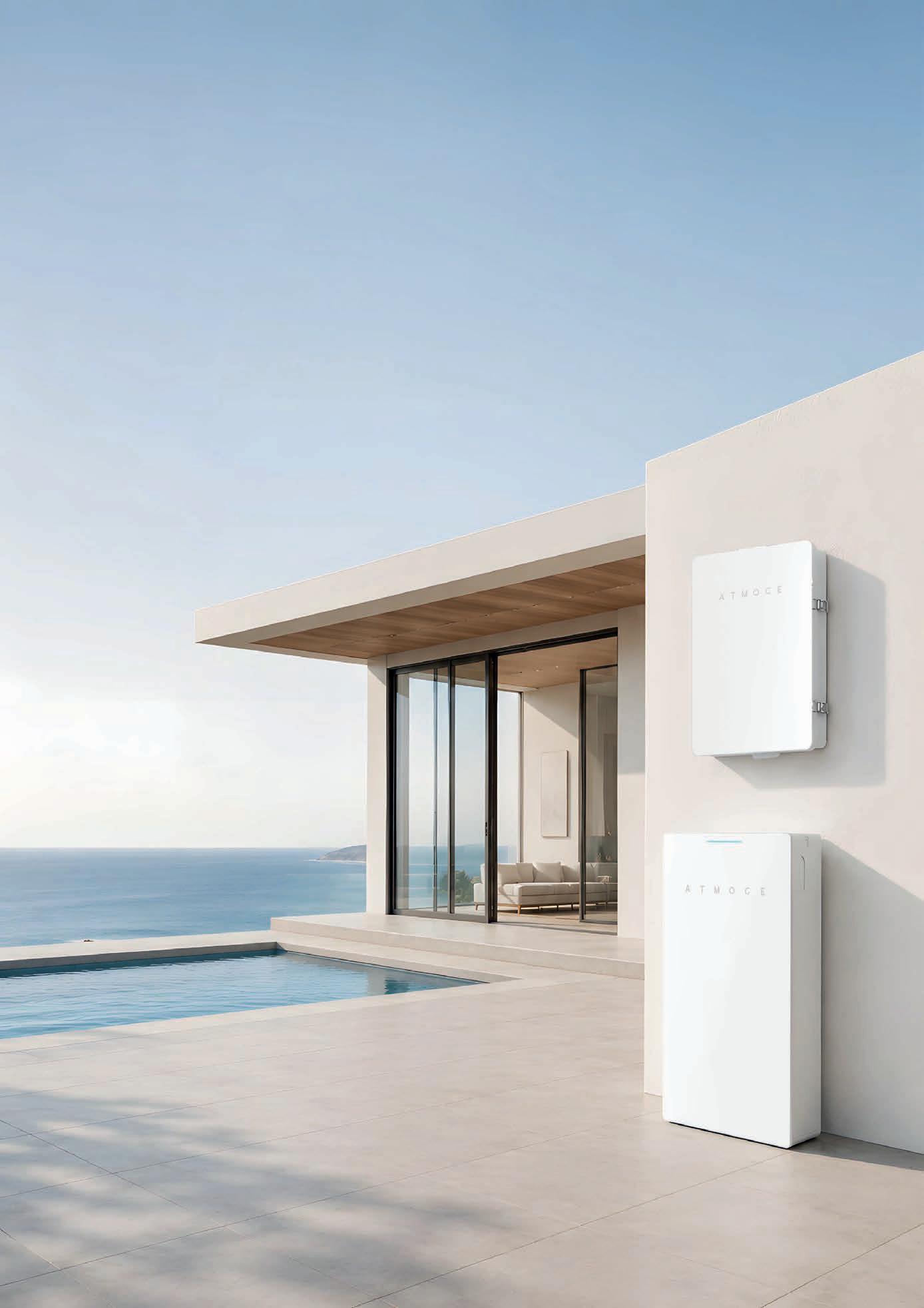

The Co-Founder of SOFAR provides insight into how the company is implementing full-stack home energy solutions in Australia, from generation-storage-consumptiongrid, while ensuring installer realities are embedded in engineering decisions.
As grid constraints tighten, household loads increase and storage becomes mainstream, the role of the inverter within home energy systems is being fundamentally redefined.
For David Zhong, Senior Vice-President and Co-Founder of SOFAR, this shift is not incremental, it is structural.
“Our core strategy involves evolving the inverter from a simple power conversion device into the central ‘brain’ of the entire energy ecosystem,” he says.
“By integrating hardware, intelligent control, and full-scenario loop closure, we achieve seamless synergy across ‘generation-storage-consumption-grid’.”
This repositioning sits at the core of SOFAR’s global transition to a full-stack energy solutions provider. Operating in more than 100 countries, the company is moving beyond standalone products toward integrated systems that combine photovoltaic (PV) generation, battery storage and energy management into unified platforms.
“We’re moving from standalone components to ‘all-in-one’ integrated systems. Our 2026 portfolio breaks the boundaries between equipment, fusing PV, storage, and load control into single, cohesive platforms,” Zhong says.

And so, Australia has become a proving ground for SOFAR’s engineering approach.
“We’ve always viewed Australia as a global ‘testbed’ and ‘trendsetter’ for solar and storage technology. Facing the extreme rooftop solar penetration in regions like South Australia, our 2026 lineup prioritised ‘grid resilience’ from the earliest stages of research and development,” Zhong says.
This is evident in the design of SOFAR’s 2026 product suite, including the PowerAll all-in-one energy storage system, energy storage hybrid inverters and modular battery storage stack platform. These products embed solutions for specific Australian home installation site constraints into their architecture. Constraints for home energy installations include heat, space limitations, retrofit complexity and grid variability.
“To support the future of the Australian grid, our new PowerAll series and hybrid systems are engineered for high-penetration stability,” Zhong says.
“Our residential inverters now include capabilities for grid inertia support, frequency regulation, and black start.”
At a system level, this is underpinned by a shift toward direct current (DC) coupled architectures, where energy flows are optimised before conversion losses occur.
“We have re-engineered the energy flow,” Zhong says.
“For both the residential and commercial sectors, we’re actively shifting toward DC-coupled architectures, positioning the inverter as the critical node for energy efficiency and grid stability.”
But hardware integration is only one part of the equation. Increasingly, performance is defined by how energy management systems think, not just how they operate.
“Our self-developed artificial-intelligence-
driven energy management systems agents and cloud algorithms transform the system into a smart hub. It actively manages realtime energy dispatchment based on load patterns and grid demands,” Zhong says.
This convergence of hardware and software is central to SOFAR’s strategic response to a more digitised energy system.
“In 2026, we no longer view the inverter as a standalone conversion device. We define it as the ‘intelligent energy hub’ for homes and businesses. Our transformation is marked by the leap from single hardware to a digital energy management ecosystem,” Zhong says.
Australian conditions
Australia’s solar market is characterised by high rooftop penetration, export constraints and increasingly complex retrofit demand.
Grid volatility remains a defining challenge, particularly as distributed energy resources reshape network dynamics.
“To combat grid volatility, we have achieved a 10-millisecond seamless switchover. Our systems feature wide voltage and frequency operating ranges, along with robust high/low voltage ride through and three-phase unbalanced load capabilities,” Zhong says.
At the same time, SOFAR Solar energy storage system design is being shaped by rising household demand.
“Our new energy storage inverter systems allow for modular battery expansion. This is specifically designed to handle heavy household demands like heat pumps and electric vehicle chargers,” Zhong says.
This alignment between macro grid pressures and micro system design is where
SOFAR Solar’s strategy becomes tangible.
“We don’t just meet basic grid-connection requirements. We strive to make energy storage systems that are a ‘shock absorber’ for the grid,” Zhong says.
Beyond grid performance, SOFAR’s engineering decisions are increasingly shaped by installer realities. In Australia, high labour costs, site variability and retrofit demand require systems that are as practical as they are technically advanced.
“Installers are the vital link between SOFAR Solar and the end-user. Respecting installers and customers’ time is the core logic of our engineering,” Zhong says.
This is reflected in SOFAR Solar’s modular, stackable architectures, lightweight inverter designs and pre-configured components that effectively simplify deployment.
“We’ve implemented plug-and-play connectors, pre-wired modules and tool-free assembly. This means that installations can be completed in three steps: Fix, wire and power on,” Zhong says.
“The system features auto-device recognition and parameter template matching via our mobile app, enabling oneclick grid connection aligned with Australian standards.”
These decisions are commercially driven.
“Australia’s high labour costs demand that we excel at technical subtraction. Through optimised chassis weight, pre-assembled cabling and self-identifying software, we transform complex site work into standardised actions,” Zhong says.
“SOFAR Solar’s goal is to ease the installation process to enable a two-person team to complete high-quality deliveries in minimal time.”
As Australia’s solar market matures, wholeof-home system upgrades and expansions are becoming more common, elevating the importance of flexible architecture.
“Our architectural evolution centres on a ‘future-proof’ philosophy. By utilising a DC-coupled integrated architecture, PV and storage seamlessly share a common DC bus,” Zhong says.
This effectively reduces complexity while enabling scalability.
“The modular design allows capacity to scale from five to 30 kilowatt-hours. Homeowners can add PV or batteries later without reconfiguring the main circuit,” Zhong says.
This is particularly relevant in retrofitheavy markets.
“Our approach is ‘lego-style’ modularity. We’ve purposely moved away from ‘onesize-fits-all’ configurations,” Zhong says.
“Whether a user wants to add battery modules or integrate third-party equipment later, SOFAR Solar’s lego-style architecture provides high inclusivity.”
As distributed systems become more sophisticated, home clean energy providers are shifting their attention to assessing the influence of self-consumption, backup and grid participation.
“Our 2026 residential storage products are evolving to provide deeper energy autonomy through sophisticated management,” Zhong says.
At SOFAR Solar’s home energy management technology core is predictive energy management.
“We use artificial intelligence algorithms that analyse weather forecasts, household load curves and tariffs to optimise charging and discharging,” Zhong says.
Backup capability is also a critical part of SOFAR Solar’s technology.
“Our next-generation hybrid inverters provide millisecond-level switching and can support heavy loads like air conditioning and electric vehicle charging during outages,” Zhong says . SOFAR Solar has found that households are steadily becoming active grid participants.
“Our products support virtual power plant aggregation and the latest Common Smart Inverter Profile Australia requirements. This transforms home storage into a dispatchable grid resource,” Zhong says.
“The essence of intelligence is ‘empowering user choice,’ which means balancing self-consumption, peak-shaving arbitrage and grid support.”
As the home solar and battery market matures, the reliability, service and longterm performance of providers’ products and services will be assessed more critically by consumers and regulators.
“Our strategy is ‘global strength, local pulse.’ Our investment in local warehouses and technical teams in Australia provides our users with peace-of-mind. That’s why we’re establishing a standard 24-hour response and seven-day resolution policy,” Zhong says.
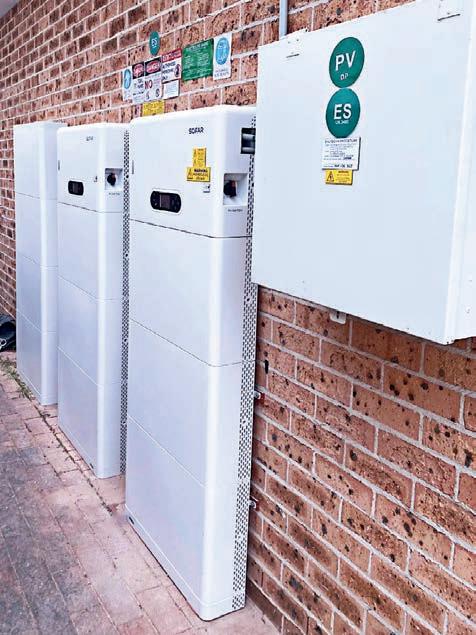
*SOFAR Solar has been recognised as a BloombergNEF Tier One Energy Storage Manufacturer for Quarter Two 2026, a Grade A Manufacturer by Wood Mackenzie, and ranked by SunWiz as one of the Top Five Fastest Growing Brands in Australia in both the energy storage system and inverter categories.
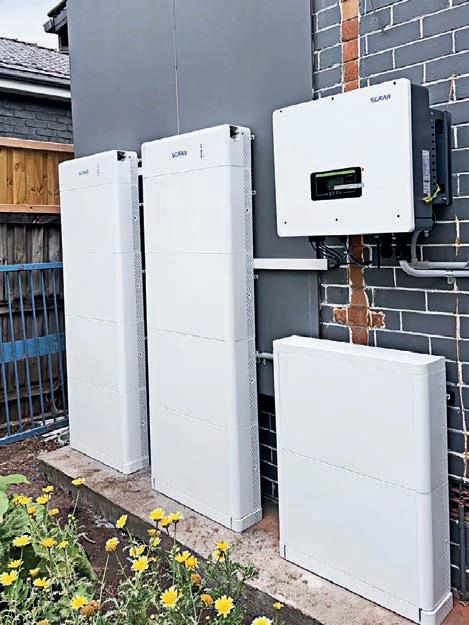
As Australia’s rooftop solar market matures, compliance is no longer a back-end requirement but a central design driver, reshaping how systems are engineered, controlled and integrated with an increasingly dynamic grid.
Every rooftop solar and battery system must comply with a set of national electrical standards, the most critical being AS/NZS 4777.2 (advanced inverter functions). Enforced by the Australian Energy Market Operator (AEMO), this standard governs how inverters (the devices that convert solar electricity into usable power) interact with the grid.
Under these rules, inverters are required to actively respond to grid conditions. This includes automatically reducing export during high-voltage events, adjusting output in response to frequency changes and remaining connected during certain disturbances to support grid stability.
In simple terms, solar systems are no longer allowed to operate independently of the grid. They must behave in ways that help maintain it. AEMO, which oversees system reliability and security across the National Electricity Market, has reinforced this direction for solar systems.
For Lisa Zhang, Vice President at Growatt, this reality is already shaping how systems are designed on the ground.
“The core challenge is simple: Balancing rising grid constraints, voltage fluctuations and tighter export limits, against customer demand for self-consumption,” she says.
“Add state-level variations of AS/NZS 4777.2, complex rooflines, storage retrofits and growing electric vehicle loads. It’s about squeezing maximum value from each design without breaching grid rules or overcapitalising.”
Export limits, traditionally considered a temporary constraint, are now embedded into connection requirements set by distribution network service providers. In high-penetration areas, export limiting is often mandatory. This is reinforced through dynamic export programs, where networks such as Essential Energy are trialling flexible limits that can range from as low as 1.5 kilowatt (kW) up to 10 kW per phase.
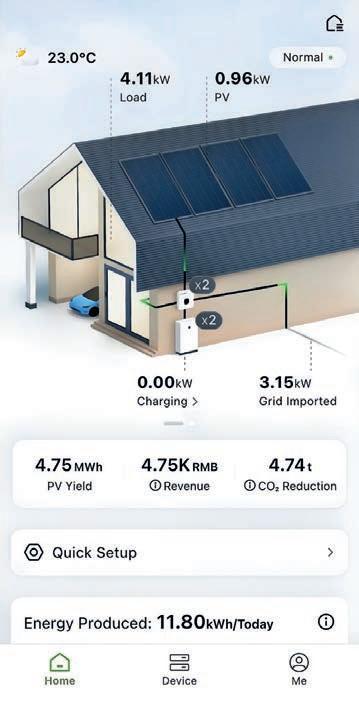
Under current regulations, a solar system rated at 10 kW may only be allowed to export a fraction of that capacity at any given time. The rest must either be used onsite, stored in a battery or curtailed. This means that engineers must now design for variability, not only in solar generation, which naturally fluctuates with weather, but also in export capability itself.
Historically, the role of inverters across the sector was perceived as being relatively simple. Their role was to convert direct current (DC) electricity from solar panels into alternating current (AC) for use in
homes and businesses. Today, inverters are treated as the intelligent, standards-driven control systems that actively manage voltage, frequency and exports, that enable rooftop solar and batteries to support grid stability and integrate at scale.
Government initiatives and regulatory bodies increasingly describe the inverter as the ‘brains’ of a solar system. It is the point at which generation, consumption and grid interaction are coordinated. To that effect, modern inverter requirements now include voltage regulation, frequency response, export limiting and ride-through capability during disturbances. These functions allow rooftop solar systems to respond dynamically to grid conditions in real-time. This underlines why system performance is increasingly driven by control capability rather than installed capacity alone.
Growatt’s approach reflects the home energy sector’s fundamental shift towards intelligent system design.
“Our solutions feature intelligent control to effectively regulate grid voltage and maintain stability,” Zhang says.
“We support flexible and remote export limit adjustment to adapt to different regional network restrictions. We also keep optimising firmware in real time to align with Australia’s evolving grid code requirements.”
Firmware updates are a critical part of this transition. Much like software updates on a smartphone, inverter firmware can be updated remotely to comply with new standards, improve performance or enable new grid-support functions.
This flexibility is essential in a regulatory environment that continues to evolve.
Pre-sales engineering is also becoming a critical function.
In the past, system design was often based on standard templates such as panel size, inverter size and expected output.
That approach is no longer sufficient.

“Our team optimises system configuration to maximise performance and efficiency, with comprehensive technical support throughout implementation.”
In practice, this means modelling how a system will perform under different conditions: Varying solar generation, changing export limits, household consumption patterns, and future load growth scenarios.
At the same time, compliance has become more complex. Solar systems must meet multiple overlapping standards, including AS/NZS 4777.1 (installation requirements), AS/NZS 5033 (PV array safety) and AS/NZS 5139 (battery systems).
This is further complicated by state and network variation.
While standards apply across Australia, implementation differs across distribution network service providers, each with its own connection processes, export limits and technical requirements.
“System design must be adapted to local grid conditions. It’s not a one-size-fits-all approach,” Zhang says.
Export controls and inverter standards are designed to protect the grid, encourage more self-consumption, and the efficient management and use of locally generated energy resources.
In practice, this is accelerating the uptake of hybrid systems, batteries and load management technologies. Growatt’s product strategy reflects this transition.
“Our battery-ready inverters allow future battery upgrades without replacing the main unit,” Zhang says.
“We provide retrofit solutions for existing solar systems to smoothly add battery storage. The ShinePhone 2.0 app unifies monitoring of solar, battery and grid usage in one platform.”
Hybrid systems combine solar generation with battery storage, allowing excess energy to be stored and used later (typically in the evening when electricity demand is higher and grid prices increase). As more households opt for clean energy powered heat pumps, cooking appliances and electric vehicles, the flexibility that hybrid system allows is becoming more important for consumers. At the same time, networks are seeking to manage peak demand and maintain stability.
Therefore, systems must now be capable of integrating multiple energy sources and managing load dynamically.
Beyond the household, distributed systems are also playing a growing role in supporting the wider grid. Virtual Power Plants (VPPs), networks of connected solar and battery systems, allow aggregated resources to respond to grid needs, providing services such as frequency control and peak
demand reduction.
“Our hybrid systems support fast switchover to backup power during blackouts, improving energy reliability,” Zhang says.
“Growatt’s products are equipped with communication protocols for VPP and distributed energy resources aggregation. They can provide frequency and voltage support to help stabilise the broader power grid network.”
Evidentially, Growatt is aligned with the broader transformation from a one-way network, where power flows from large generators to consumers, to an interactive platform where millions of small energy resources actively contribute to reliable system performance.
For installers and designers, this shift introduces both complexity and opportunity.
Constraints to system performance is no longer a limitation to be avoided.
It is a design parameter that, when properly managed, can unlock new forms of value, improved self-consumption, enhanced resilience, and participation in emerging energy markets.
“In a saturated rooftop solar market,
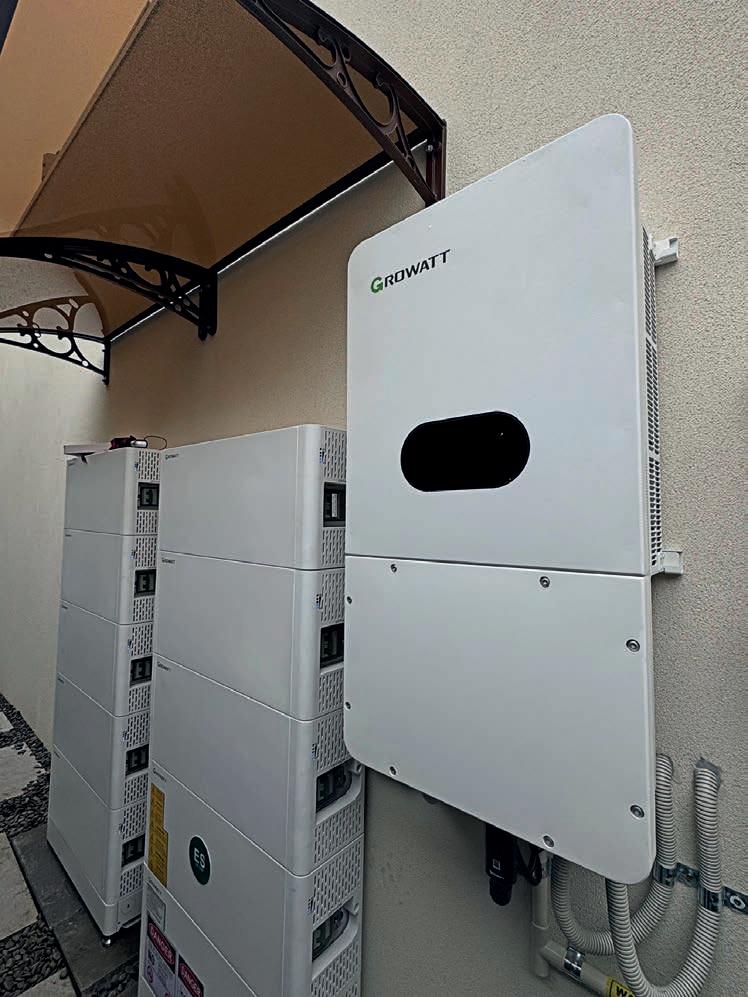
Pylon is rolling out a suite of new automation and battery optimisation tools designed to help installers reduce administrative workload, improve system sizing and streamline customer engagement.
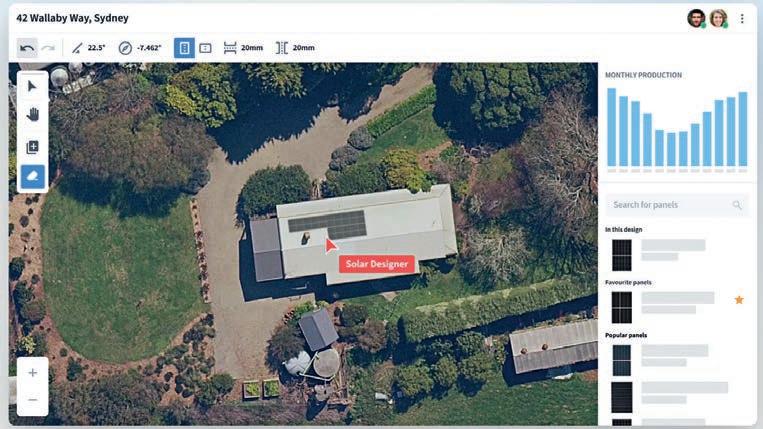
For solar digital design software platform Pylon, the focus in 2026 has been less about adding flashy features and more about removing friction from everyday installer workflows.
The company’s latest updates span battery optimisation, automation, mobile-first project management and customer proposal improvements. These updates are designed to help solar retailers and installers work faster, while delivering more accurate solar-plusstorage recommendations.
This focus on a smarter, data-driven system design is most evident in the latest upgrade to Pylon’s Battery Recommender tool, released as Australia’s battery market recalibrates in response to changes under the Federal Government’s Cheaper Home Batteries Program. Following its launch in 2025, the Cheaper Home Batteries Program accelerated consumer interest in home energy storage while also increasing pressure on installers to accurately size systems around changing rebate structures, electricity tariffs and household energy usage patterns.
“Customers have been designing very large batteries up until now,” says Nelson Zheng, Co-Founder of Pylon.
“That’s why we’ve brought out this new feature called a battery optimiser, which is a battery advice tool.”
Rather than encouraging installers to simply maximise battery size to capture rebates, Zheng says the updated system is designed to identify more intelligent storage sizing outcomes based on actual energy performance and customer economics.
“This tool runs digital simulations that provide an accurate model of the required solar and battery size for a given property,” Zheng explains.
“We also provide a heat map for solar and battery simulations.”
The upgraded Battery Recommender now includes battery state of charge charts, allowing installers and homeowners to visually see how a battery charges and discharges across a typical day. New utilisation metrics, including days of autonomy and cycles per day, also provide additional insight into how effectively a battery system is likely to perform under different load conditions.
Additionally, installers can configure which metrics appear within proposal charts, while recommendation sizing has
now been expanded up to 500 kilowatthours, supporting larger commercial and industrial applications. Importantly, Zheng explains that the modelling engine already incorporates the updated battery rebate settings introduced in May 2026.
“The drop in the battery rebate is already set in the system. We do that automatically for you,” he says.
“With the battery rebate changing, the economics of battery sizing are shifting. For many customers, the best outcome won’t necessarily come from going as large as possible, but from designing a system that’s better matched to their usage, tariff, and longterm savings.”
That optimisation process increasingly intersects with evolving household energy consumption behaviours, particularly as retailers introduce dynamic tariffs and midday charging incentives.
“There’s a lot of energy management programs coming out now,” Zheng says.
“You’ve got things like three-hour free power windows in the middle of the day that let you top up your battery. That’s helping to manage batteries for customers, without them having to constantly watch the app.”
While battery modelling has become more sophisticated, Zheng says many of the industry’s biggest inefficiencies still come from simple administrative tasks.
One of the company’s headline recent updates is the Automatic Bill Reader, currently running in early alpha, which enables users to upload electricity bill PDFs directly into the platform. From there, Pylon can now automatically extract usage and feed-in tariff data without manual input.
“We’re hoping this saves customers a bunch of time typing in the bills,” Zheng says.
“Manually entering data from electricity bills can be tedious for installers and retailers. With Pylon, customers can simply drag and drop a bill into the platform, and the relevant
information is automatically extracted and populated into the project.”
The release also introduces a Universal Interval Data Processor capable of reading multiple interval data formats, including Comma-Separated Values and Excel files with inconsistent formatting structures.
Different energy distributors across Australia continue to provide interval data using vastly different templates and export structures, often creating friction for proposal generation and load analysis. Zheng says its new parser is designed to recognise unusual formatting automatically, including reordered columns and mid-file headers.
“This means fewer errors and faster proposals for projects with existing usage data,” he says.
Pylon’s push towards workflow simplification also extends to the functionality of its smart phone app for installers. The app allows installers to plan projects directly from their smartphone. This is especially handy for installers, given they are hardly behind a desk, occupied with onsite visits or travelling between appointments for their customers.
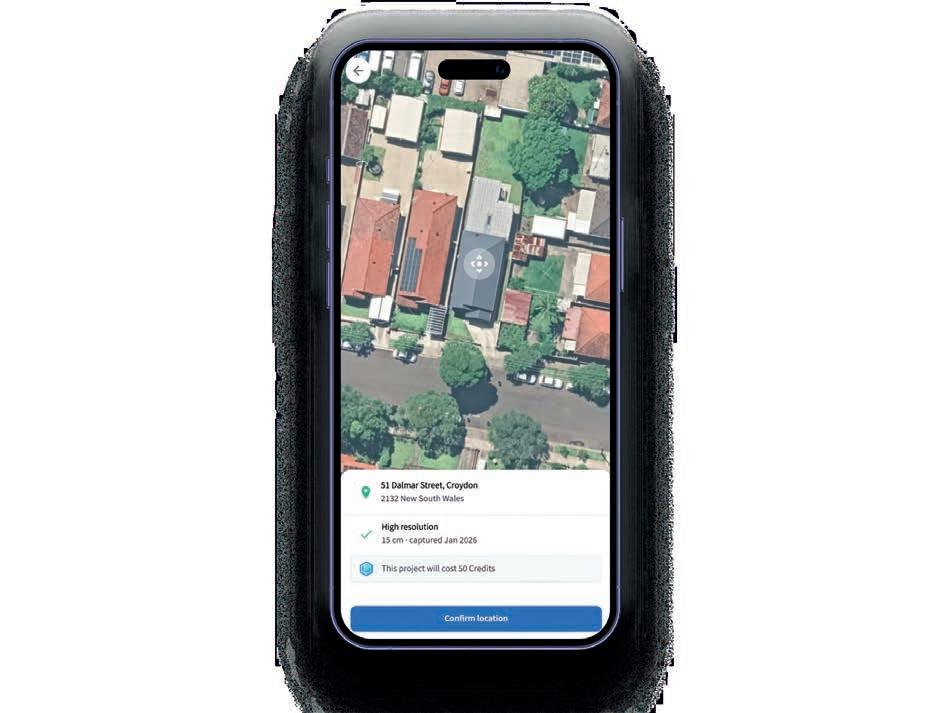
“You can now spin up a new project, add the address and start a design all without opening a laptop. For an industry where many sales and design conversations happen onsite, mobile capability is becoming increasingly valuable as proposal turnaround times tighten,” Zheng says.
Beyond technical sizing and workflow efficiency, Pylon is also positioning its platform as a stronger sales enablement tool for solar retailers.
Among Pylon’s recent updates is a new optional add-ons feature, allowing retailers to present additional products and services directly within digital proposals.
These can include bird mesh, electric vehicle chargers, heat pumps and other upgrade pathways that customers can select during the proposal process.
“Through our digital platform, we’re giving retailers the option to include optional add-ons as an upsell opportunity. This means that when consumers are looking through the proposal online, they can just click on the add-on and add it to their installation package,” Zheng says.
The company believes digitally interactive proposals are increasingly important as homeowners become more engaged in understanding energy flows, battery operation and electrification opportunities.
“With our digital platform, we’re able to show more animations and more interactivity. Just providing a static document for the customers of installers isn’t good enough anymore,” Zheng says.
To further assist installers and retailers, Pylon’s latest updates also include RoundRobin Lead Allocation within its Customer Relationship Management (CRM) platform, which automatically distributes incoming leads across sales teams in rotation. This feature is aimed at growing installation businesses dealing with increasing enquiry
volumes as battery demand continues to
Additional improvements introduced in May include faster comparison page loading times, improved charts, updated Victorian Energy Upgrades data, enhanced application programming interface (API) documentation, blueprint scaling tools, and country-specific
For integration partners and developers, the platform’s API has also received several upgrades, including Draft Project Creation, Design Title exposure, Acceptance Design, Unique Identification tracking, and new payment deposit webhooks. These backend capabilities reflect a broader trend across the solar software sector, where proposal platforms are evolving into increasingly connected operational ecosystems rather
At the same time, Pylon has continued refining user functionality across the platform through multiple bug fixes covering interval data imports, mobile functionality, ServiceM8 integration behaviour, and proposal calculations.
As Australia’s distributed energy market continues shifting toward battery-centric system design, Zheng explains that the industry’s next challenge will be balancing customer economics with broader grid resilience outcomes.
“For installers navigating the pace of Australia’s energy transition, the ability to simplify solar installation design complexity while improving customer engagement will be key. We at Pylon are proud to be providing this function for installers and retailers who are the backbone of the clean home energy transition,” he says.
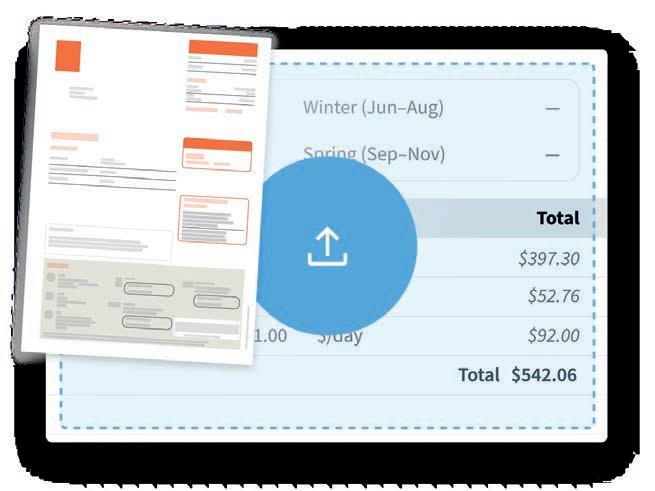
ATMOCE has recently entered the Australasian market with battery storage solutions designed to eliminate direct current arc fault risks, simplify installation, and enable seamless integration with existing solar systems.

ATMOCE is positioning itself in Australia and New Zealand with an unconventional proposition: Extra-low voltage alternating current (AC) coupled energy storage designed for safer, faster and more flexible retrofit deployment.
Founded in Europe in 2024, ATMOCE is a global energy technology company with core leadership and design functions based in Germany. ATMOCE also now has offices in parts of Australia.
Since its launch in Australia in 2025, ATMOCE established a regional distribution network, on-the-ground service team and proof-of-concept installations at a number of industry and installer-facing events and projects in Sydney, Melbourne, Brisbane, Queensland and Victoria.
“Australia is one of the most advanced distributed energy markets in the world,” says Jessica Chen, Country Manager for Australia and New Zealand at ATMOCE.
“As the market shifts from low-cost
generic products toward professionalised, high-standard solutions, we see a strong opportunity to set a new benchmark for ultrasafety and professional service.”
Redefining safety and retrofit deployment
The recent Clean Energy Council (CEC) certification of ATMOCE products is proof ATMOCE is here to stay in Australia. Assessed against Australian safety, performance and installation standards, ATMOCE CEC certification enables their products’ use in accredited solar and battery storage systems nationwide.
In April 2026, ATMOCE announced that its residential energy storage portfolio had received official CEC certification, marking the full commercial availability of the M-ELV Battery and M-Combiner Pro in Australia.
At the centre of ATMOCE’s strategy is the M-ELV Battery, which the company describes as the world’s first AC-coupled, extra-low voltage storage solution.
Each unit delivers seven kilowatt-hours of capacity and up to five kilowatts of output, with 90 per cent round-trip efficiency, scalable capacity and system-level power scaling. The battery also features standby power consumption of just six watts and is backed by a 12-year warranty.
ATMOCE’s key differentiator is safety.
By operating below 30 volts direct current, the M-ELV Battery is designed to fundamentally eliminate direct current arcing risk, while reducing exposure to overheating and thermal runaway. The architecture allows the battery to be safely handled during normal operation, creating a different safety proposition for installers and homeowners.
This design is particularly suitable for Australia, where millions of households already have rooftop solar and are now considering battery storage. Rather than requiring major changes to the existing photovoltaic (PV) system, ATMOCE’s ACcoupled architecture allows integration with third-party solar systems.
“Australia has one of the highest rooftop solar penetration rates in the world but retrofitting storage shouldn’t be a headache for installers or a premium expense for homeowners,” Chen says.
“The AC-coupled architecture allows installers complete a retrofit in a fraction of the time, unlocking a massive, untapped upgrade market across Australia.”
This makes the system particularly suited for retrofit scenarios, where speed, simplicity and compatibility can determine whether a project is commercially viable.
The company says the architecture also reduces deployment complexity by avoiding redesign work and minimising DC-side modifications, helping installers complete projects faster while effectively lowering onsite risk exposure.
ATMOCE extends this safety philosophy within its broader ecosystem, including the upcoming MI-series two-in-one Microinverter, which also operates below 60 volts DC.
The microinverter platform is designed to eliminate DC arc fault risk, while supporting module-level shutdown functionality and flexible system expansion.
A smarter, integrated ecosystem
The M-Combiner Pro extends ATMOCE’s retrofit strategy by combining combiner and backup box functionality into a single streamlined unit. Designed for both singlephase and three-phase systems, it supports faster installation and seamless backup switching during outages.
Paired with ATMOCE Cloud and the ATMOZEN App, the system delivers real-time monitoring, predictive diagnostics, artificial intelligence (AI) load optimisation and virtual power plant participation.
These smart digital enhancements aim to help installers and asset owners reduce operations and maintenance costs, while also improving long-term system control.
“Our goal with the M-Combiner Pro was to
eliminate the complexity that often plagues residential storage retrofits,” Chen says.
“By integrating essential components into a single, intelligent unit, we’re not just saving physical space – we’re significantly cutting down installation time for installers and unlocking smarter energy management for asset owners.”
That capability is becoming increasingly important as Australia’s growing VPP market reshapes how residential batteries are designed, operated and valued.
As distributed storage systems evolve into active grid assets, they must support frequent dispatch events, tariff optimisation and shifting household load profiles.
“Combined with smart management, our systems enable users to capitalise on local tariff structures, such as three-hour free charging windows, maximising return on investment,” Chen says.
The company says its Australian market entry is not simply a product launch, but a local partnership strategy built around providing long-term installer support and operational reliability.
“Securing CEC certification earlier this year was the final milestone allowing us to open large-scale installations and orders nationwide. This is more than a regulatory box-check, it’s our formal pledge to the safety and reliability of the Australian clean energy ecosystem,” Chen says.
ATMOCE is also building its installer network through local training, technical support and partner programs designed to support high quality deployment.
“Through our installer program and continuing professional development program, we provide professional localised
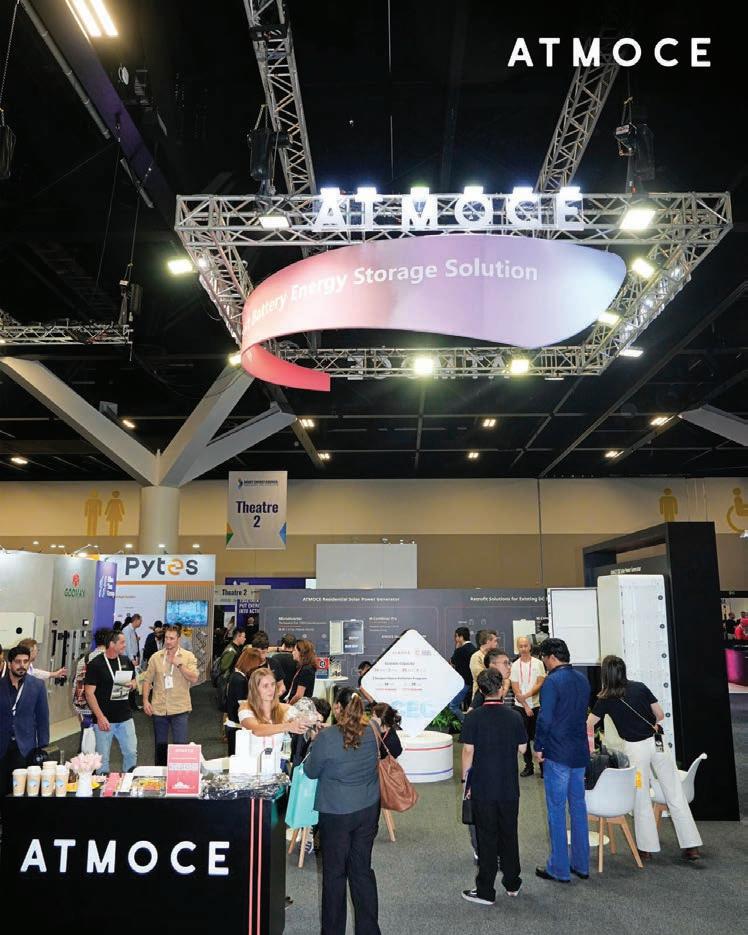
training and full-process marketing support,” Chen says.
“By leveraging our successful proof-ofconcept cases, we offer installers a proven path to high quality, low maintenance energy storage deployments.”
Chen enthusiastically shares that the company’s Australian expansion reflects
its broader commitment to supporting the country’s renewable energy transition.
“By working hand-in-hand with local partners and installers, we’re proud to empower every Australian household and accelerate Australia’s journey toward a resilient, fully renewable-powered and energy-independent nation,” she says.
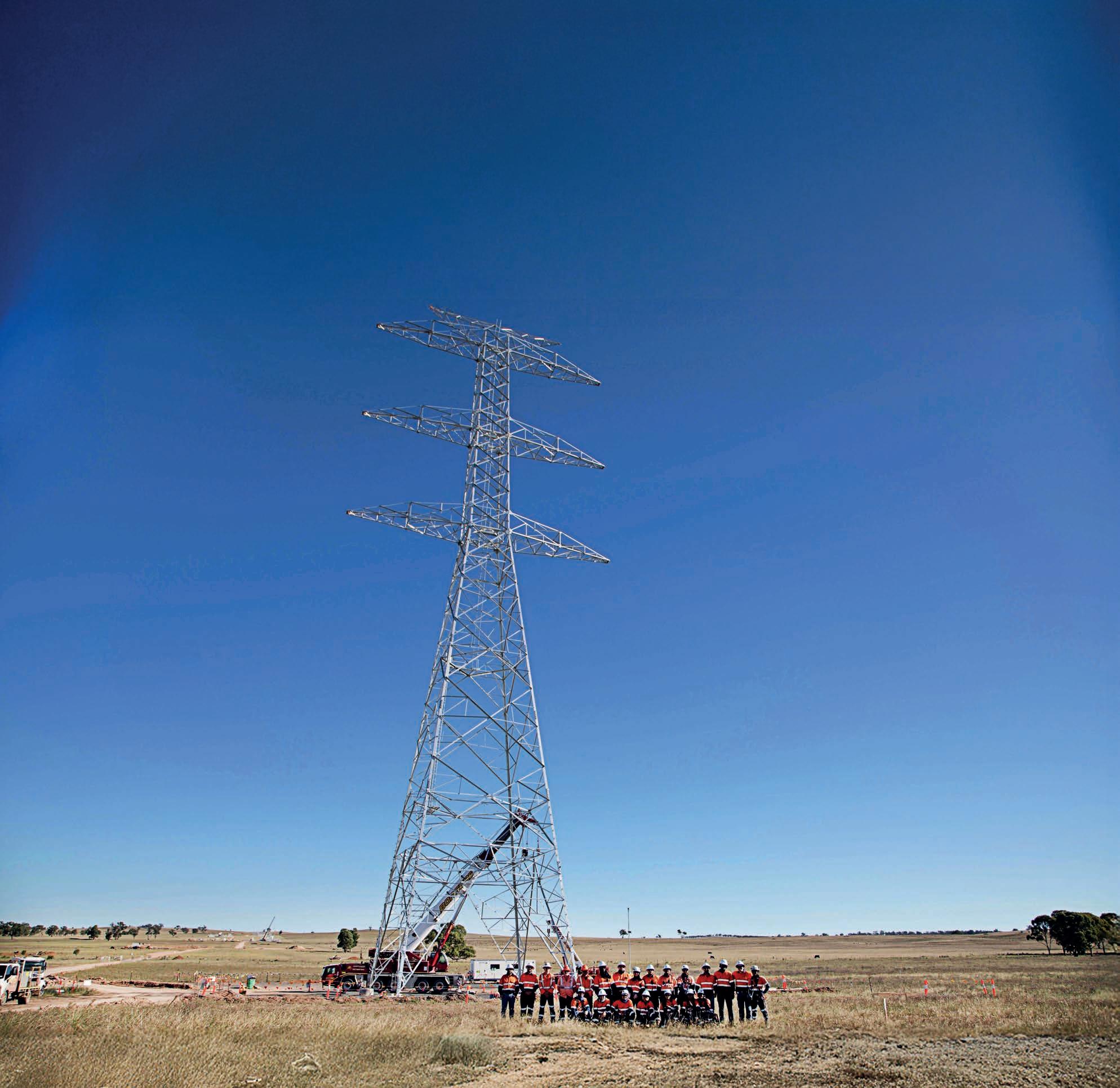
The New South Wales Government expects billions of dollars’ worth of private investment to flow into the Central-West Orana Renewable Energy Zone, showing the promising bet on the long-term social, economic and community benefits of the state’s clean energy transition.
The Central-West Orana Renewable Energy Zone (REZ), the centre piece of New South Wales’ (NSW) clean energy future, has reached a major milestone with the first 70-metre, 500 kilovolt transmission tower lifted into place as part of works on Australia’s first REZ.
This achievement comes amid a broader push by the NSW Government to fast-track priority renewable energy projects, alongside hundreds of millions of dollars in investment into regional infrastructure and community benefit programs designed to support longterm economic growth.
“This milestone reflects years of planning and collaboration with landholders, communities, industry and our delivery partner ACEREZ,” says Hannah McCaughey, Chief Executive Officer at EnergyCo.
The Central-West Orana REZ is expected to deliver enough electricity to power more than two million homes as coal-fired power stations progressively retire from the grid. In addition, the project is forecasted to attract up to $25 billion in private investment and support over 1850 construction jobs and 930 ongoing operational roles for regional
communities. According to the NSW Government, more than 110 local businesses are already engaged on the project, with over one-third of the workforce sourced locally.
“This is a once-in-a generation project and ACEREZ is proud to be playing its part in delivering this critical infrastructure to secure the state’s energy future,” says Steve Masters, Chief Executive Officer at ACEREZ.
On top of Federal Government support for the development of Australia’s clean energy grid, the NSW Government recently proposed a legislation amendment bill that would allow for the NSW Energy Minister to designate high priority renewable generation, battery storage and transmission projects for expedited assessment. NSW Minister for Climate Change and Energy, Penny Sharpe, says the reforms intend to contribute to build the reliability of the state’s grid and drive industrial competition.
“The NSW Government is committed to ensuring reliable, affordable energy for our heavy industries like the Tomago aluminium smelter, and to power economic growth
across the state. This new legislation would mean infrastructure projects that are critical for manufacturing jobs, economic growth and energy affordability don’t get stuck in the queue,” she says.
NSW Minister for Planning and Public Spaces, Paul Scully, says the state’s future planning system has revolved around the delivery of renewable energy infrastructure to support the transition away from coal-fired electricity generation.
“Since 2023, we’ve reduced assessment times for renewable energy projects by almost 20 per cent while delivering 50 per cent more approvals,” he says.
Furthermore, the NSW Government is investing heavily in regional freight infrastructure. Recently, the State Government committed $183.2 million towards road upgrades across key renewable energy corridors servicing the Central-West Orana, South-West and New England REZs. This funding will support the transport of oversized wind turbines, transmission infrastructure and large-scale renewable energy equipment through upgrades to bridges, intersections and freight routes.
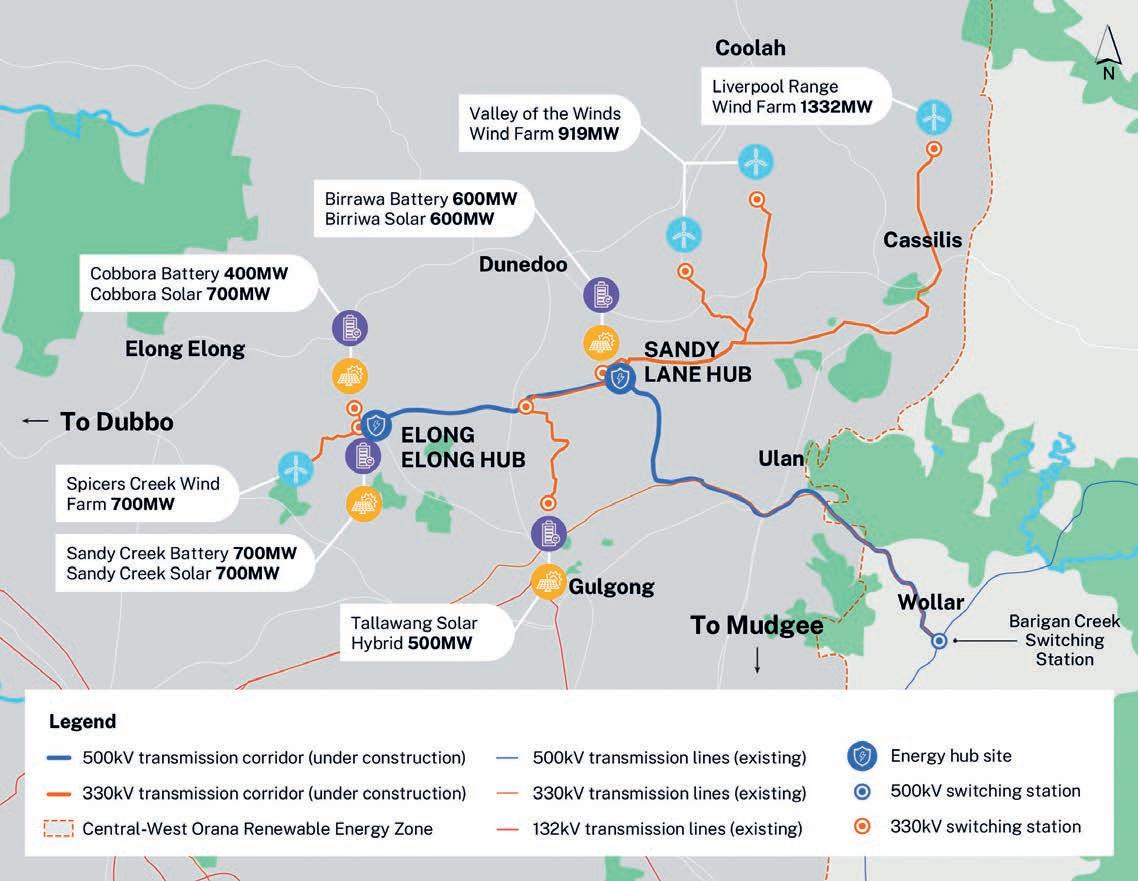
AGL celebrates the beginning of commissioning for its 500 megawatt two-hour grid-scale Liddell Battery at AGL’s Hunter Energy Hub in New South Wales. AGL’s Chief Executive Officer shares more.
AGL has commenced commissioning of its 500 megawatt (MW) Liddell Battery located in the Hunter Energy Hub within New South Wales.
Located adjacent to the former Liddell Power Station site, a retired coal-fired power station, the Liddell Battery is set to transform the Hunter Energy Hub into a large-scale energy and industrial precinct.
Construction on the Liddell battery energy storage system was recently completed in March, with commissioning activities currently underway for the first 250 MW stage. As of June 2026, the battery was planned to be in full commercial operations. The commissioning process will involve staged testing of battery performance, dispatch capability and integration into the National Electricity Market (NEM), ensuring the system can operate safely and reliably under grid conditions before entering full service.
Repurposing a legacy coal site While speaking at the commissioning event for the Liddell Battery in March, Damien Nicks, Chief Executive Officer and Managing Director at AGL, highlighted that the repurposing of the Hunter Energy Hub as part of the Liddell Battery project will make the site one of Australia’s most recognised thermal generation hubs actively supporting the evolving energy market.
“In April 2023, we closed our coal-fired Liddell Power Station, after 50 years of operation with a celebration of the people behind Liddell and the contribution the power station has made to the Hunter region and Australia’s energy system,” Nicks said.
“The clean energy powered by the Liddell Battery will deliver important firming storage for the energy system which is increasingly needed as coal exits the market, and the percentage of renewable generation increases.”
Once operational, the Liddell Battery will provide 1000 megawatt-hours of storage capacity, supporting system security, dispatch flexibility and renewable energy integration across the NEM.
Notably, the project is part of AGL’s growing portfolio of grid-scale storage assets, alongside the currently operational 250 MW Torrens Island Battery in South Australia and 50 MW Broken Hill Battery in New South Wales, as well as the currently under construction 500 MW Tomago Battery.
Matthew Currie, Chief Operations and Construction Officer at AGL, explained that the Liddell Battery reaching the commissioning phase is no easy feat.
“Commissioning is a complex, timeintensive, and essential part of delivering a grid-scale battery to the market,” he said.
“Careful testing of dispatch into the grid and integration into AGL’s portfolio will continue over the coming months to ensure it operates safely and reliably in line with system requirements.”
He added that completing construction on a project of the Liddell Battery’s scale is a testament to the capability of AGL’s teams and construction partner, Fluence Energy.
“More than 600 workers contributed to the construction and commissioning of this battery,” Currie said.
To date, the Liddell Battery has received $35 million in grant funding from the Australian Renewable Energy Agency under its Advancing Renewables Program, alongside a Long-Term Energy Service Agreement awarded through the New South Wales Electricity Infrastructure Roadmap.
In the coming year, AGL will advance its broader redevelopment plans for the Liddell Battery site as part of its long-term strategy to establish an integrated energy hub in the Hunter region of New South Wales. The company also intends to develop its recovery and recycling of asset materials, low-carbon fuels and data centre infrastructure.
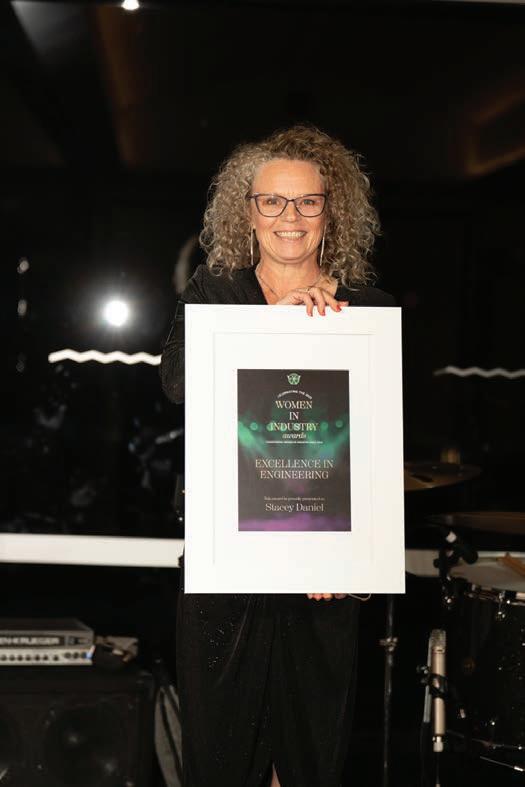

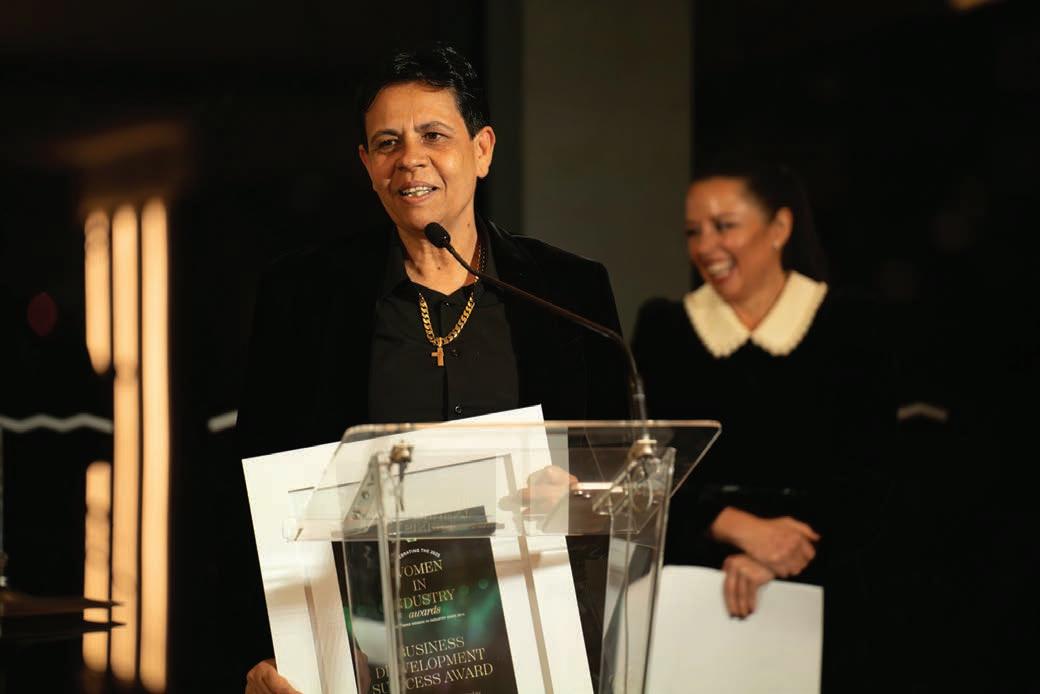
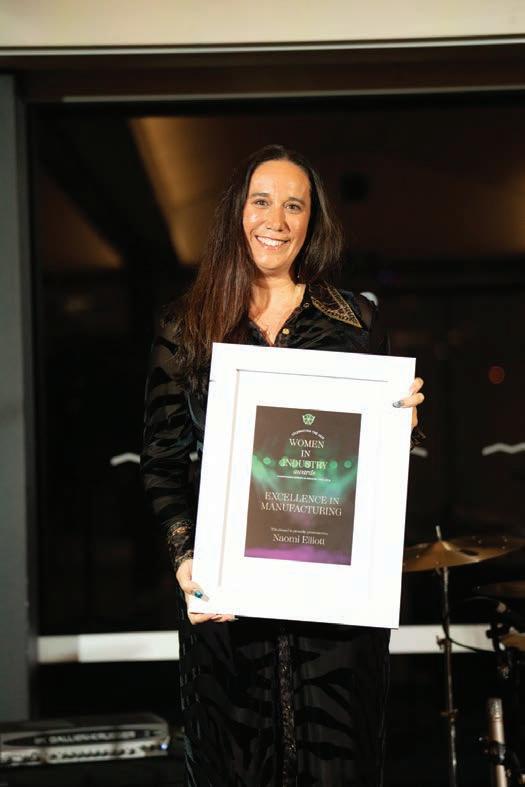
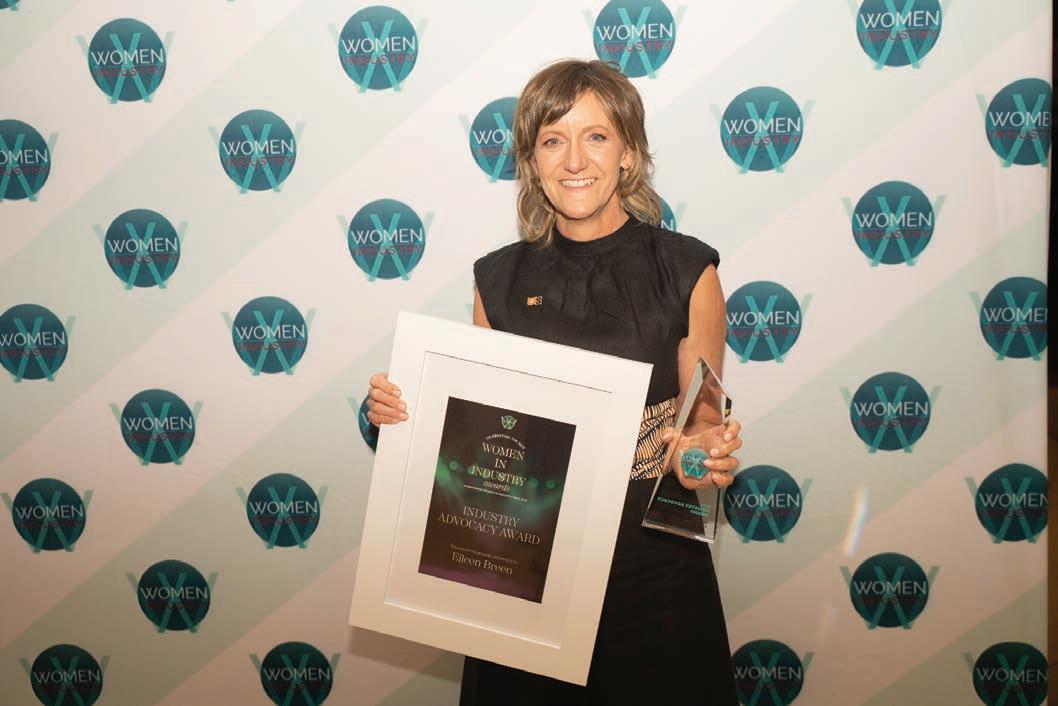
Australia’s largest transmission project has entered the detailed commissioning and testing stage, emerging as both the nation’s largest transmission interconnector and driver of regional economic growth.
At the centre of Australia’s energy transition effort is Project EnergyConnect, a 700 kilometre interconnector being delivered by Transgrid in partnership with Elecnor Australia. In a nationally significant update, the project has gone into detailed commissioning and testing. Designed to link the energy grids of New South Wales (NSW), Victoria and South Australia (SA), EnergyConnect is widely regarded as the country’s largest transmission project.
Once fully operational, it will enable greater sharing of renewable energy between jurisdictions, improve system reliability and support lower-cost wholesale electricity as coal-fired generation retires across the National Electricity Market. But beyond its system-level role, the project is also emerging as a major case study in regional procurement and local supply chain development, with more than $300 million directed to businesses across the Riverina (NSW), Murray (NSW, VIC and SA) and Sunraysia (VIC and NSW).
Transgrid and Elecnor confirms that $300.6 million in supply contracts have been awarded to 351 local and First Nations businesses along the EnergyConnect alignment between the South Australian border and Wagga Wagga.
The procurement strategy has deliberately been structured around a ‘buy local’ approach, aimed at embedding economic value in the communities hosting major transmission infrastructure.
Gordon Taylor, Executive General Manager of Major Projects at Transgrid, says the approach was central to how the project has been delivered on-the-ground.
He explains that many of the suppliers involved were small, family-owned businesses that may not typically have access to work on projects of this scale.
“We’re proud to work alongside these local businesses, many of which are family owned and operated, to deliver this nation-critical project, helping them grow and keeping the money in local communities,” he says.
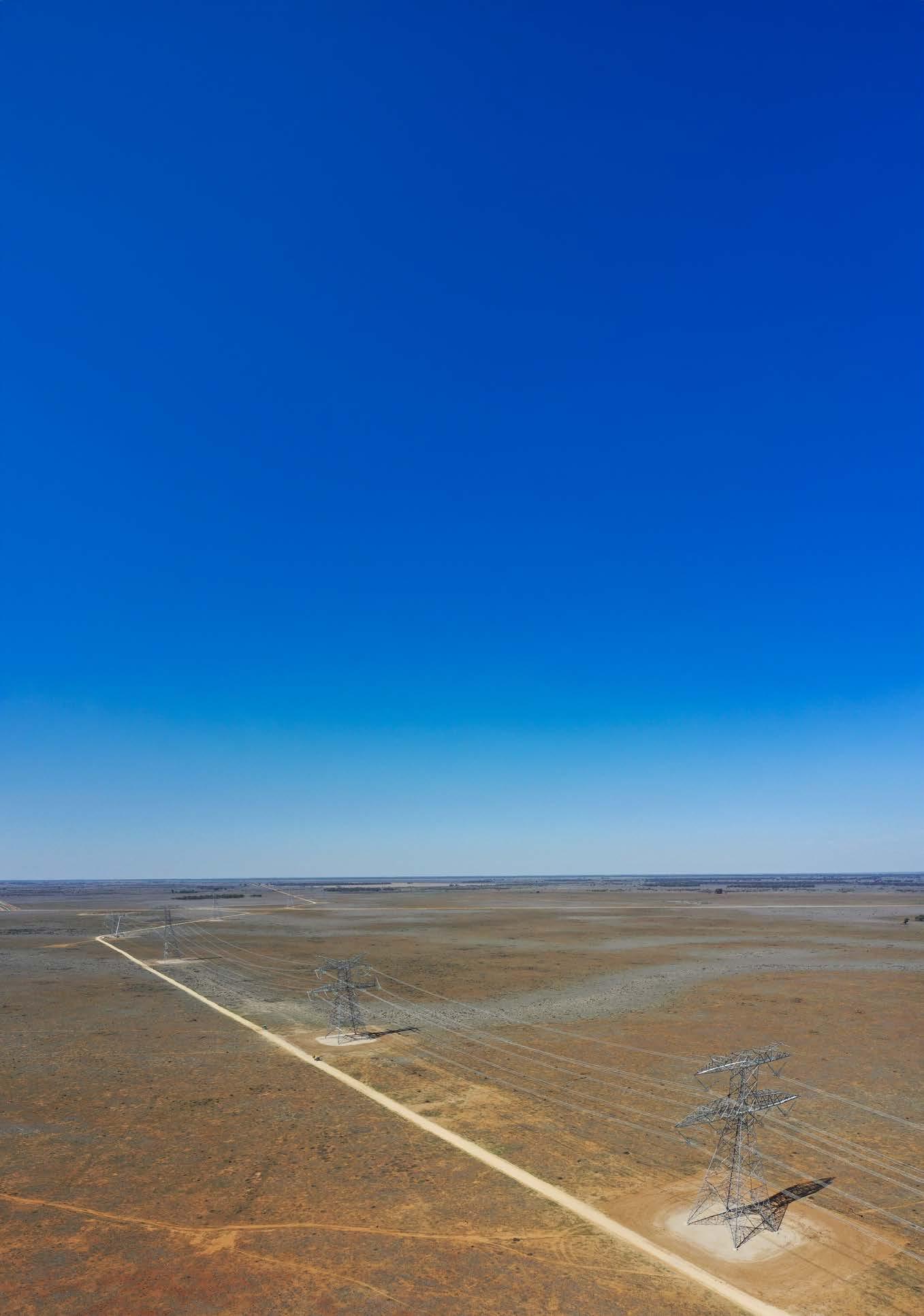
“This much-needed economic benefit to regional NSW will ensure EnergyConnect leaves a lasting legacy in communities across the Riverina, Murray and Sunraysia regions.”
The distribution of contracts highlights the breadth of regional participation in the national-scale project.
The NSW region of Riverina has received $102.2 million across 158 local businesses, while Sunraysia accounts for $131.2 million across 112 businesses.
In addition, the Murray region has secured $67.2 million across 81 businesses.
On the ground, that investment has translated into a wide range of materials, logistics, engineering support, and construction inputs being sourced locally.
Wagga Wagga has emerged as a key hub, with businesses including Wagga Trucks, Kennedy Bros. Earthmoving, Total Tools, Kennards Hire, Kurrajong Timber, Hillis Motor Group, Itellifleet and Southland Supply Group all contributing to the project’s delivery.
Other regional suppliers have also played critical roles across the broader alignment;
including, Lockhart Hardware and Hire, Pumps, Pipes and Power in Coleambally, and BDS Automotive in Balranald, Gregg and Sons Steel in Buronga and Garraway Group in Mildura.
For many of these businesses, participation in EnergyConnect has provided both immediate commercial benefits and longerterm growth opportunities.
At Absolute Mesh and Steel in Wagga Wagga, Director Wayne Green shares that the scale of the project created rare continuity of work for a regional manufacturer.
“The EnergyConnect project for us was really exciting to be a part of because obviously a project of that scale doesn’t come to the region very often,” he says.
“To know that we had that volume of work to do allowed us to reinvest in the business. We were able to buy some more machinery, put some more people on and really increase our output.”
The company supplied hundreds of tonnes of reinforcing bar used in tower foundations for EnergyConnect and is now contributing materials to the HumeLink project, further extending its involvement in the state’s transmission build-out pipeline.
For suppliers such as United Fasteners in Wagga Wagga, the project reinforces the importance of regional manufacturing in national infrastructure delivery.
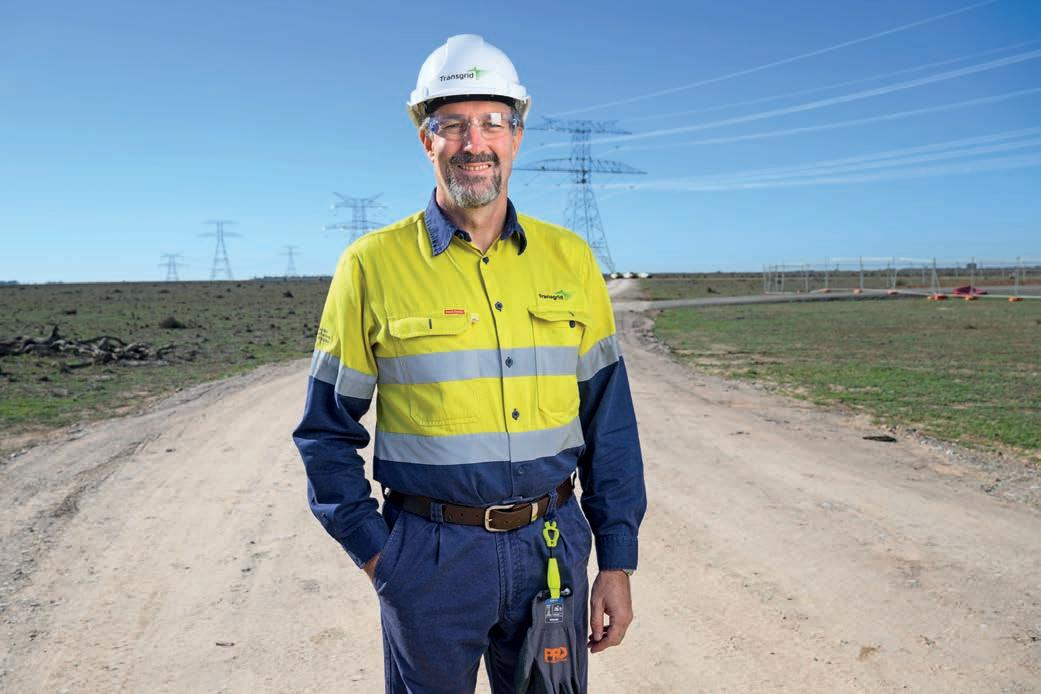
Steve McGill, Account Manager at United Fasteners, says involvement in EnergyConnect had been a positive experience for the business and its workforce.
“We take great satisfaction in knowing that our products are contributing to the infrastructure that will connect Australia’s renewable energy resources to the grid,” he says.
Across the construction phase, the presence of large workforces has also generated indirect economic benefits for surrounding towns.
In Lockhart, for example, local businesses and community organisations have reported increased patronage linked to accommodation camps supporting EnergyConnect construction teams.
As EnergyConnect transitions from major construction into detailed commissioning and testing, attention is increasingly shifting from local economic impact to system-level outcomes and long-term grid transformation. Once operational, the interconnector will enable electricity to move more efficiently between NSW, Victoria and South Australia,
improving the utilisation of renewable generation across the National Electricity Market. This inter-regional flow is expected to reduce curtailment of renewable energy in high-output zones while also strengthening supply reliability during peak demand periods or unexpected outages.
The project has been designed to support the energy transition occurring across eastern Australia.
This is especially important as ageing coal-fired power stations continue to retire over the coming decades. By increasing transmission capacity, EnergyConnect is expected to play a critical role in maintaining system security while enabling higher penetration of wind and solar generation.
Felipe Delgado, Project Director at Elecnor Australia, shares that supporting regional communities surrounding the EnergyConnect project has been a consistent focus throughout delivery, alongside building local capability in the supply chain.
“Elecnor has worked closely with local suppliers, supporting regional businesses to employ local people and reinvest in their communities,” he says.
Beyond procurement and construction activity, EnergyConnect has also delivered education, training and skills development opportunities across the regions it traverses. These initiatives have included workforce development programs, apprenticeships, and
partnerships aimed at strengthening local capability in transmission construction and maintenance. Community investment has also formed part of the project’s broader social licence approach, with grants and local partnerships supporting regional initiatives in towns along the alignment.
With the physical build now largely complete, the detailed commissioning and testing phase of EnergyConnect is a critical step in ensuring the interconnector performs as designed across varying load conditions and network scenarios to seamlessly integrate it into the wider transmission system. For the wider sector, EnergyConnect’s scale, cross-jurisdictional reach and emphasis on regional participation position it as an exemplar for future transmission development.
Lockhart Mayor, Peter Sharp, endorsed the flow-on benefits of the project for local businesses and communities. In agreement, Felipe Delgado, EnergyConnect Project Director at Elecnor Australia, highlights how local capability made the project’s significant milestone possible.
“Elecnor has worked closely with local suppliers, to importantly support regional businesses to employ local people and reinvest in their communities,” he says.
“Thank you to the businesses and suppliers who partnered with us to deliver this iconic project.”
Taking place on 18 June, the Women in Industry Awards in Sydney has invited Australia’s industrial sectors to celebrate the women, businesses and initiatives driving progress, innovation and a diversity of skills.
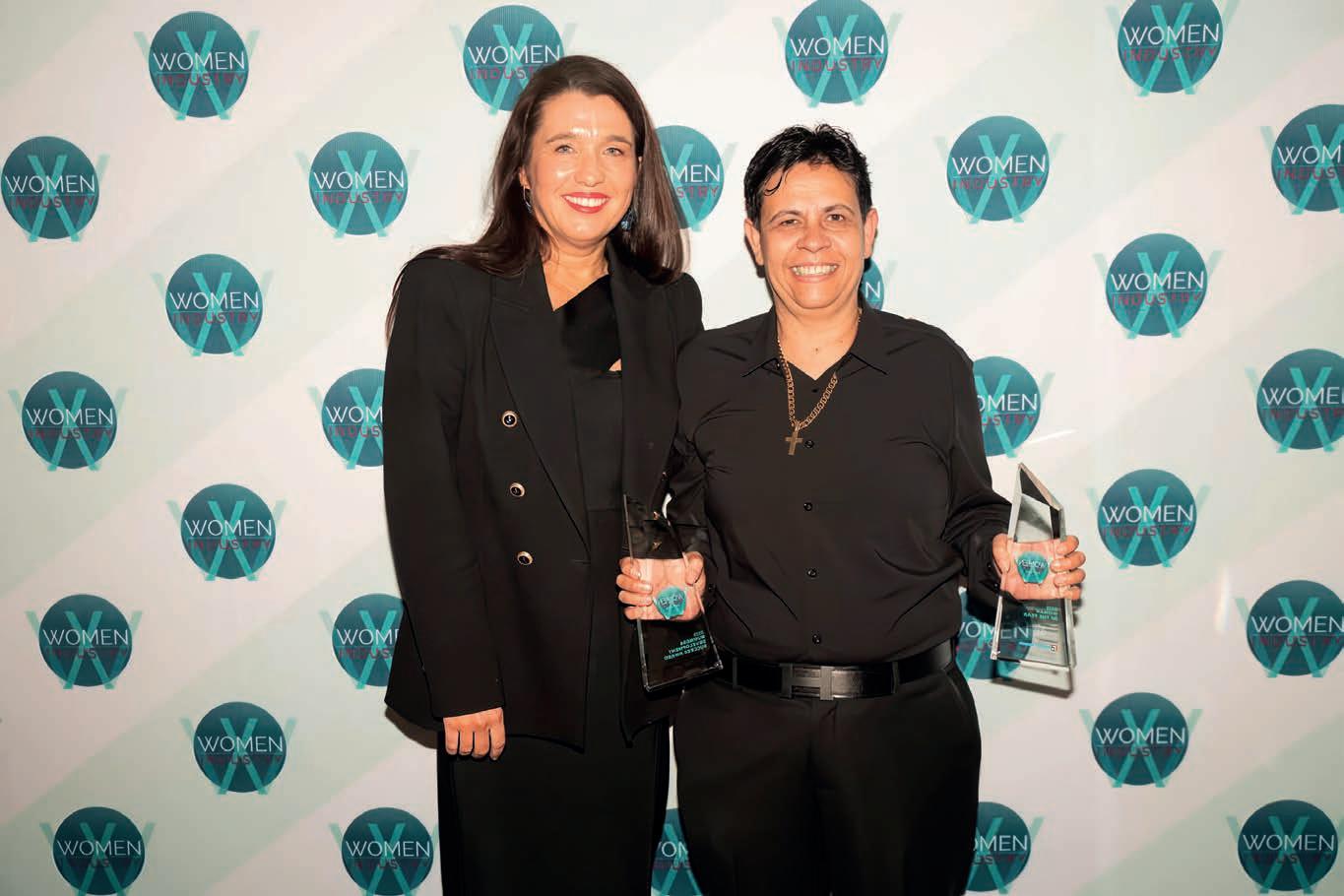
As one of the most significant celebrations across Australia’s industrial sectors, the Women in Industry Awards is more than a date on the calendar – it’s an opportunity to be part of a movement for greater industry inclusivity. With nominations now closed and finalists announced, attention turns to the gala dinner itself, where a range of award categories will recognise the achievements of women making an exceptional impact in their fields, while also highlighting the businesses actively advocating for greater diversity and inclusion.
“Each year, the Women in Industry Awards highlight the remarkable progress and transformation taking place across these sectors,” says Molly Hancock, Head of Events Marketing at Prime Creative Media.
“The quality of submissions, combined with the increasing excitement surrounding the awards, is a clear reflection of how these industries are evolving. It’s inspiring to see not only the depth of talent emerging, but also the strong momentum building as more individuals and organisations champion innovation, diversity, and excellence.”
That sense of momentum is echoed by the event’s partners, many of whom see their involvement as both a professional commitment and a personal one.
“For me, this one is quite personal,” says Abby Crawford, Director at Australian Power Equipment (APE).
“Being named a finalist in the Women in Industry Awards was a meaningful moment, and it gave me a genuine appreciation for how important visibility and recognition are.
“As a business, we want to support more of those moments for other women. Sponsoring
the awards felt like a natural extension of what we believe in – not only to recognise the incredible contribution of women across traditionally male-dominated sectors, but to actively play a role in elevating their visibility and opportunities.”
Crawford’s perspective reflects a broader shift across industry, where organisations are recognising the value of diversity not just as a principle, but as a driver of performance.
“Industrial sectors like energy, and infrastructure are evolving rapidly, and diversity of thought is critical to that progress,” she says.
“Supporting women in these industries isn’t just about equity – it’s about strengthening the sector as a whole. When women are given equal access to opportunities, leadership, and recognition, it drives better decision-making, innovation, and long-term sustainability and resilience across the industry.”
For attendees, the Women in Industry Awards offer a chance to see that impact up close – and to be part of it. Beyond the formal presentations, the evening brings together a cross-section of industry leaders, emerging talent and decision-makers in an environment designed to foster genuine connection.
“This is more than a typical networking event,” Hancock says.
“Even if your business isn’t nominated,
valuable for the energy sector, where collaboration is essential to tackling challenges such as decarbonisation, electrification and workforce transformation.
The Women in Industry Awards create a space where those conversations can begin –and where new partnerships can take shape.
“It reflects our commitment to being a values-led organisation,” Crawford says.
“At APE, we prioritise long-term impact and sustainability – whether that’s through our circular economy initiatives, our environmental, social and governance commitments, or the people we support.
“Sponsoring the Women in Industry Awards reinforces our belief in creating opportunities, recognising excellence, and contributing to a more inclusive and forwardthinking industry.”
Long-term partner Atlas Copco Group shares a similar view, with its ongoing support driven by the view that inclusion and innovation go hand-in-hand.
“Atlas Copco Group’s decade-long partnership with the Women in Industry Awards is driven by the belief that inclusion fuels innovation,” says Natalie Douglas, Communications manager – Southeast Asia and Oceania at Atlas Copco Group.
“By supporting this platform, we aim to recognise and elevate the contributions of women reshaping traditionally male-
This support extends beyond the event itself, helping to address long-standing challenges across industrial sectors.
“Women continue to face barriers to entry, visibility, and advancement across many industrial fields,” Douglas says.
“Supporting women in these sectors is essential to unlocking diverse perspectives that drive creativity, better decision making, and sustainable growth. It also helps strengthen the entire industry by broadening the talent pool, encouraging innovation, and creating more balanced and resilient workplaces.
“Ensuring women can thrive is not only a collective responsibility – it’s fundamental to the long-term health of the industrial ecosystem.”
Events like the Women in Industry Awards play a crucial role in driving change, both by recognising achievement and by shifting perceptions.
“Initiatives like this provide visibility to role models, celebrate achievements that might otherwise go unrecognised, and create a ripple effect across organisations,” Crawford says.
“When success is visible, it becomes attainable, encouraging more women to enter, stay, and lead within these industries, while also challenging businesses to step up and support that progression.”



ecogeneration
Get
To
On 16-17 September at the Melbourne Convention and Exhibition Centre, MegaTrans 2026 will explore how electrification, battery infrastructure and renewable energy integration are reshaping the future of Australia’s freight sector.
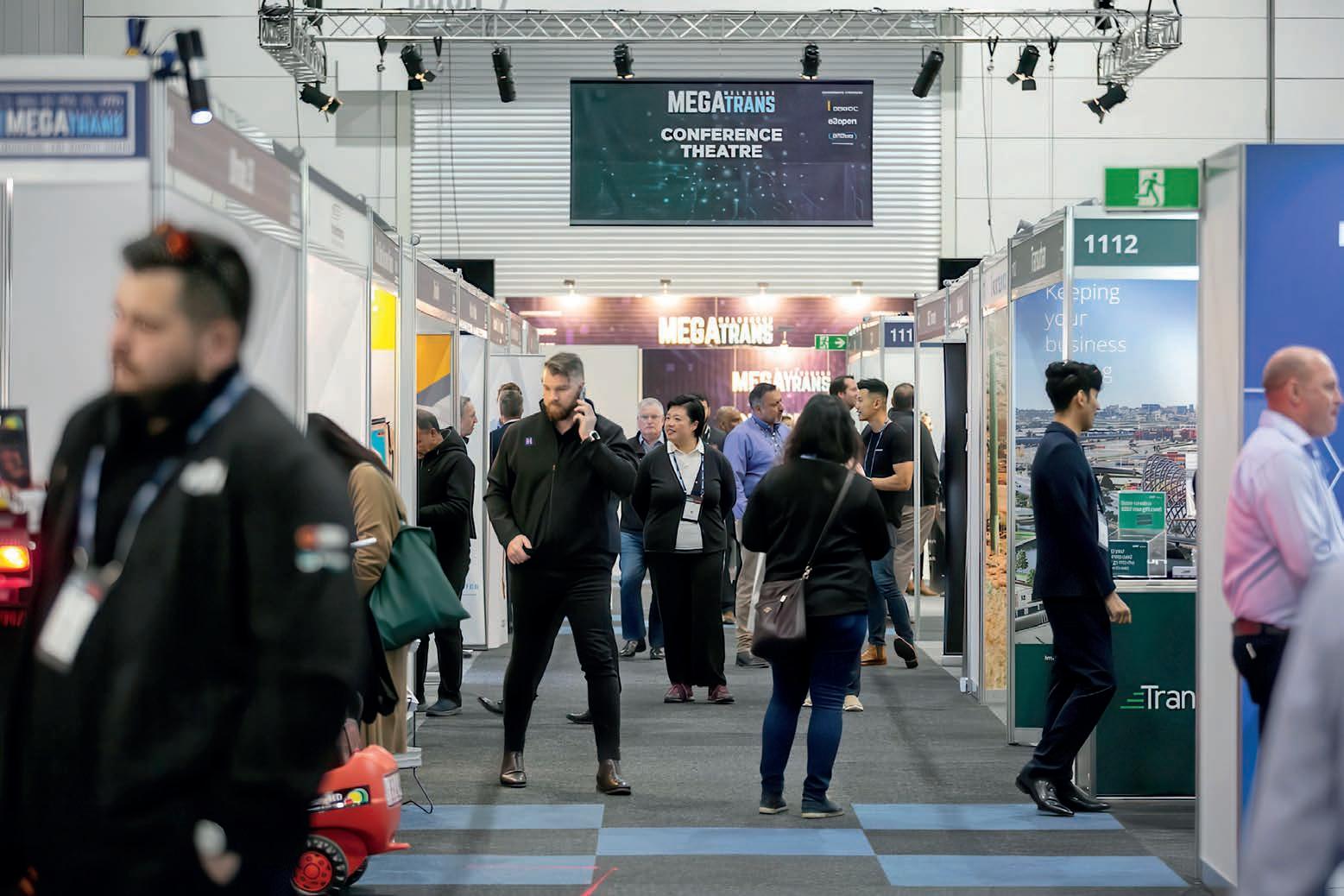
As Australia’s freight and logistics sector faces mounting pressure to decarbonise, the MegaTrans conference comes at a fitting time. On 16-17 September, industry stakeholders from across the logistics and supply chain will gather at the Melbourne Convention and Exhibition Centre to showcase and discuss cutting-edge solutions at the forefront of supply chain sustainability – the key
to a resilient freight network. Among the speakers at the conference will be Ben Hutt, Chief Executive Officer and Managing Director of Janus Electric, who will present during the ‘Powering the Supply Chain’ session scheduled for 16 September.
“Freight is one of the hardest sectors to decarbonise, but it’s also one of the biggest opportunities for Australia’s energy transition,” Hutt says.
For renewable energy stakeholders, the session provides insight into the growing convergence between clean electricity generation and Australia’s transport sector, particularly as heavy freight continues to be one of the country’s more difficult emissions challenges, with freight volumes projected to grow by 26 per cent over the next 30 years. Founded in 2019, Janus Electric specialises in converting existing diesel-powered
heavy vehicles into electric trucks through a patented swappable battery platform and associated charging infrastructure. Rather than requiring operators to replace entire fleets with new electric vehicles, the company retrofits existing trucks with electric drivetrains designed to operate within a battery exchange ecosystem.
Janus Electric’s model aims to address one of the freight industry’s largest operational barriers to electrification: Downtime.
Using the company’s ‘charge and change’ infrastructure, batteries can be exchanged within minutes, allowing freight operators to maintain vehicle utilisation rates while reducing reliance on diesel fuel.
“Operators want solutions that keep trucks moving while lowering emissions, and that’s exactly where battery swapping
and electrification infrastructure can play a major role,” Hutt says.
For the renewable energy industry, the significance extends beyond transport alone.
As battery charging infrastructure expands, freight electrification is expected to become increasingly linked with renewable energy generation, grid management and energy storage deployment.
Electrified freight fleets are also emerging as a potential source of flexible electricity demand capable of supporting better utilisation of renewable energy generation across the grid.
Hutt brings more than two decades of experience across energy, technology and capital markets to the discussion.
Prior to joining Janus Electric, he served as Chief Executive Officer of energy software platform Evergen, helping scale the business from startup to acquisition.
Hutt shares that MegaTrans 2026 provides an important platform to discuss how the freight sector can transition toward loweremissions transport without compromising operational performance.
“Freight operators are looking for solutions that are practical, scalable and commercially viable today, not sometime in the future,” he says.
“MegaTrans brings together the industries that will collectively shape the future of transport infrastructure, energy and
logistics, so it’s an important opportunity to have real conversations about what electrification looks like on the ground.”
That broader energy transition is anticipated to be one of key themes addressed during the MegaTrans conference program in Melbourne.
A dedicated session titled ‘Beyond Diesel: The Best Way Forward’ will feature Andrew Newman, Director of Policy and Strategy at Freight Victoria, and Heather Bone, Director of Sustainability at Team Global Express. In this session, the presenters will examine practical pathways for reducing transport emissions across the freight sector.
Automation and digital transformation will also feature in the program, with sessions exploring how ports, distribution centres and logistics operators are adapting to rising freight volumes, labour shortages and evolving customer expectations.
Among the confirmed speakers for this portion are:
Hermione Parsons, Chief Executive Officer and Managing Director – Australian Logistics Council, Steven Ballerini, Chief Executive Officer – Australasian Supply Chain and Logistics Association, Tony Mellick, Chief Executive Officer – HiTrans Express.
Free registrations are now open: Megatrans.com.au/attend
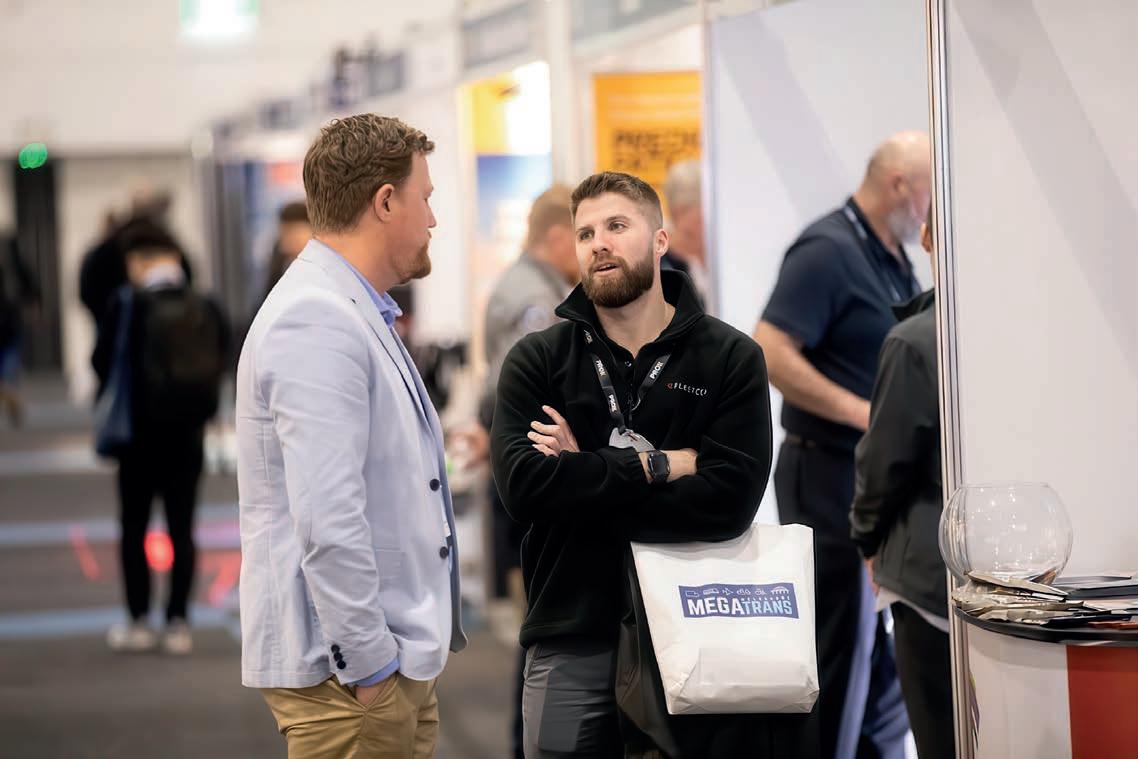
ADVERTISE
EXPERT COVERAGE OF THE PROJECTS AND DEVELOPMENTS THAT ARE RESHAPING THE AUSTRALIAN ENERGY MARKET.
23,000+ COMBINED CIRCULATION
Our magazine, e-newsletters and website are valued at all levels of the industry, from financiers and developers to installers and suppliers. As the energy market transitions to renewables, our readers look to ecogeneration.
ecogeneration is the only title in Australia to cover all aspects of the clean energy industry; delivered across print, online and email. The bi-monthly magazine, officially endorsed by the Clean Energy Council, keeps the industry informed from the boardroom to the work van.
The print and digital magazine, and pass on rate, has a combined circulation of more than 23,0000, as well as receiving extra distribution at important industry events.
For more information, please contact: Nick Lovering Business
Development Manager
nick.lovering@primecreative.com.au 0414 217 190


Join more than 1,500 industry professionals at the Australian Clean Energy Summit 2026, the flagship event for Australia's clean energy sector.
Held on 28–29 July at ICC Sydney, this must-attend event brings together the most influential leaders driving Australia's energy transformation, including Ministers and government decision-makers, leading CEOs and executive teams, investors and technical specialists.
Don't miss two days of powerful keynotes and expert panels across 27 sessions and 160 speakers. This isn't a conference about what might happen. It's about what's happening now, and what needs to change.
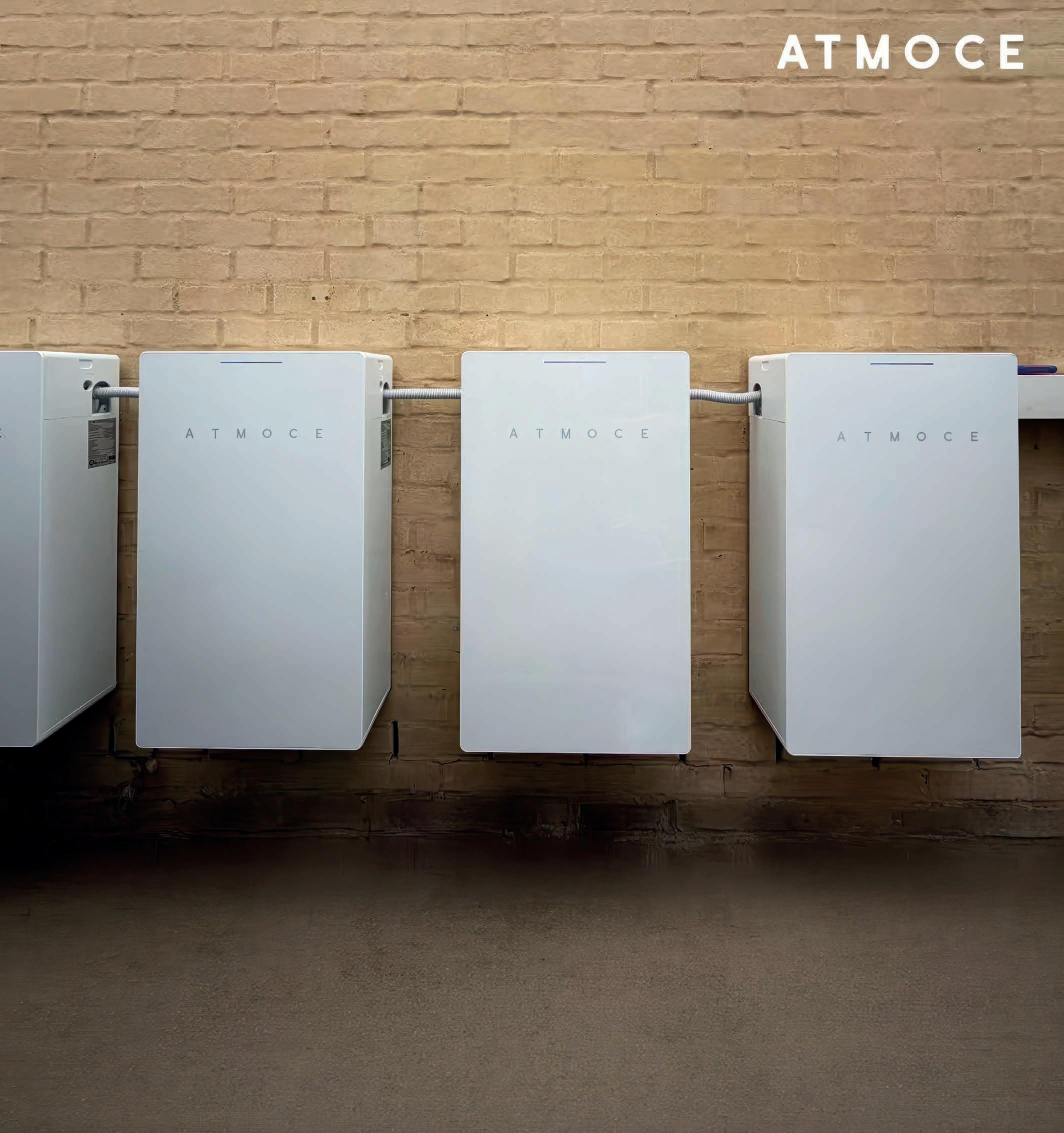

Under the Federal Government’s Cheaper Home Batteries Program, more than 250,000 small-scale battery systems have been installed.
The scheme, which provides a discount of about 30 per cent on installed systems, is designed to reduce peak demand, improve grid reliability and accelerate decarbonisation. However, compliance inspections conducted between July 2025 and April 2026 point to systemic issues in installation practices.
According to a Clean Energy Regulator report (published in April), of the 1278 systems inspected, 60.8 per cent were deemed substandard, while 1.2 per cent were classified as unsafe. While the sample represents just 0.5 per cent of total installations, the findings raise concerns about the consistency of workmanship across a rapidly expanding market.
Most non-compliance cases were linked to incorrect or missing labelling, including improperly marked circuits and absent safety signage. While typically lower risk, these issues can still affect system usability and compliance with standards.
More serious risks were associated with electrical work, particularly exposed or poorly secured wiring. Inadequate cable protection and loose connections were identified in a subset of installations, posing potential fire and electric shock hazards. Industry observers note that installation complexity varies significantly between systems, with less integrated designs requiring greater onsite electrical work and higher levels of installer expertise.

Data from Sunwiz shows a record 1.2 gigawatt-hours of residential batteries were registered under the Federal Government’s Cheaper Home Batteries Program in February.
This came as households across Australia rushed to secure systems ahead of May changes to federal incentives for home battery installations. Despite strong demand, installers report supply chains remain stable. Instead, the key constraint has been the availability of accredited installers.
Across multiple states, installers shared with SolarQuotes that lead times were as high as eight to ten weeks, with many businesses booked out for the first quarter of 2026.
Graeme Galletly, General Manager at Goliath Solar and Electrical, said the main reason for delayed installation jobs is that installers are overbooked.
A similar trend is being reported by installers in Queensland.
Caleb Davey from Expert Electrical shared that his team was fully booked for the month of May.
Despite the demand for home batteries, recruiting qualified electricians remains difficult. While many electricians are accredited for rooftop solar, fewer hold batteryspecific certification. This creates a
Due to peak demand, SolarQuotes reports that battery installation timelines are unlikely to ease in the near-term.
structural bottleneck as battery installations require specialised design, installation and commissioning processes that can take several hours per system.
In addition, installers are being challenged to balance new installations with servicing and warranty obligations, further limiting output.


Jointly funded by the Victorian and Federal governments, the Solar for Apartments Program has already distributed more than $5.7 million in rebates since opening in February 2024.
The funding has supported over 141 multi-unit developments, covering more than 2650 apartment households, with nearly half occupied by renters.
The program targets a segment of the market that has historically lagged behind detached housing.
By reducing capital costs and simplifying participation, the initiative is positioning shared rooftop systems as a viable pathway to expand distributed energy across higher-density housing.
Rebates of up to $2800 per apartment, capped at $140,000 per property, are now available until 30 June 2027, or until funding is exhausted.
These rebate rules are applied by an authorised retailer as an upfront discount, lowering installation costs for participating buildings.
Eligible properties include apartment buildings, strata townhouses and units under the control of an Owners Corporation, with access to a shared
rooftop. Buildings must typically be no more than eight storeys, contain between five and 50 occupiable lots, and meet classification requirements under the National Construction Code.
Owners Corporations must also fall
within defined tiers under the Owners Corporations Act 2006 (VIC), and cannot have previously received funding under the program. For more information about Solar for Apartments, visit the Solar Victoria website.

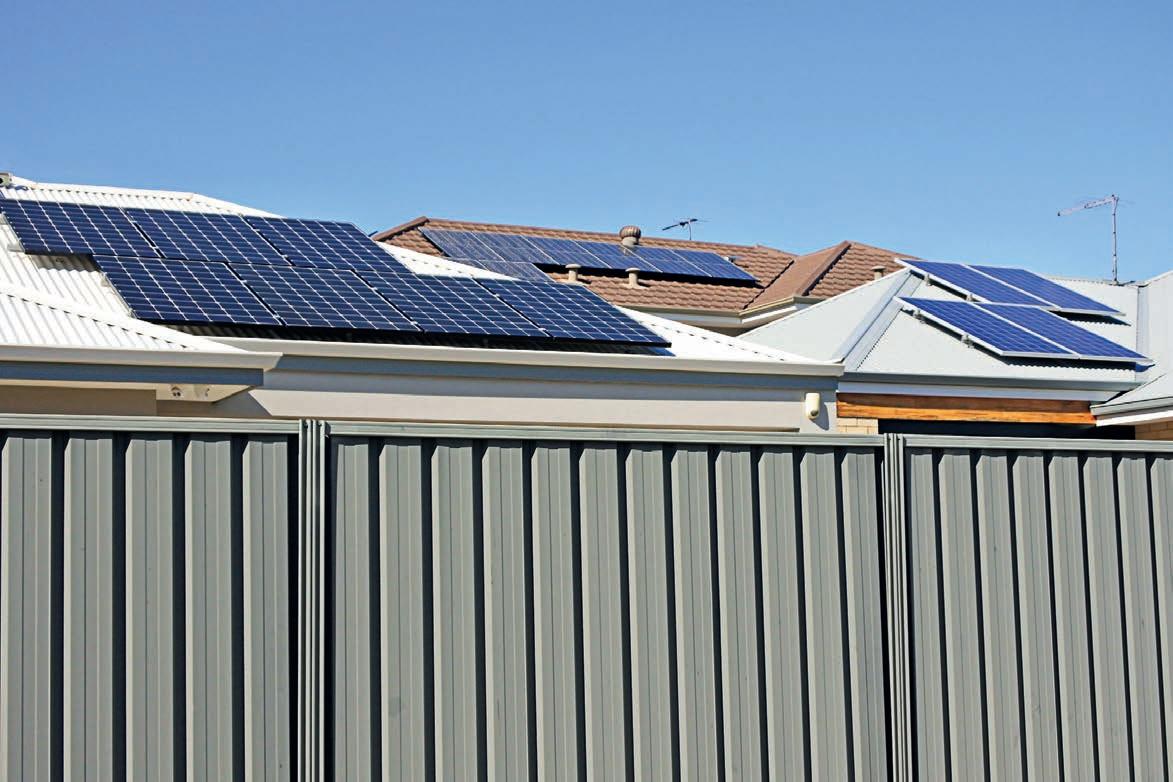
Upgrading Australian homes with efficient electric appliances, rooftop solar and battery storage could reduce household energy bills by up to 90 per cent, according to analysis from the Institute for Energy Economics and Financial Analysis (IEEFA).
IEEFA modelling shows a typical household bill in Australia of around $3700 could fall to just a few hundred dollars annually, after a combination of appliance electrification, an eight-kilowatt solar system, and a 10-kilowatt-hour battery.
In large cities such as Sydney, Brisbane and Adelaide, total bill reductions exceed 90 per cent, while Melbourne households could see savings of more than 80 per cent.
IEEFA also found that thermally efficient homes can use significantly less energy than older housing stock, while also reducing peak demand by up to 50 per cent during extremely hot or cold seasons.
Home battery systems were seen to further enhance these benefits by shifting consumption away from peak periods. In summer, solar and storage can meet most evening demand, while in winter, gridcharged batteries during off-peak periods help ease pressure on the network.
IEEFA notes that appliance upgrades typically deliver payback periods of three to seven years, with rebates shortening the duration for a return on investment.
Choosing the right solar installer remains a critical decision for Australian households in 2026, with industry experts emphasising that accreditation, system quality and installation standards are key to long-term system performance.
According to Finn Peacock, the first checkpoint is ensuring installers are accredited by Solar Accreditation Australia. This is essential for rebate eligibility and confirms installers are trained to meet national safety and grid connection requirements. Beyond accreditation, households are being advised to check that their installers understand solar and battery warranties, as this is a strong indicator of home system reliability.
Most high quality panels now carry 25 to 30 year product and performance warranties, while inverters should offer at least five years’ coverage. Notably, a ten-
year warranty period is increasingly becoming the industry standard.
The cost of the installation remains a key consideration. However, SolarQuotes suggests consumers should prioritise longterm value over upfront savings, particularly as home energy systems are expected to operate for decades.
SolarQuotes is also advising households to ask their installer how long their installation will take, noting that for 10 or more kilowatt installations, more than one day of work is required.
Finally, SolarQuotes urges installers to prioritise clear communication, transparent system design and post-installation support with their customers.
This ensures a trusted working relationship, which is especially important as more households look to integrate batteries and optimise self-consumption over time.

Throughout February and March 2026, the Solar Energy Industries Association (SEIA) delivered a 10-stop New South Wales (NSW) Essential Energy Roadshow. The roadshow brought installers face-toface with regulators, networks and technology providers ahead of a new wave of compliance and grid integration requirements. As a non-profit industry body, the SEIA advocates for installer and retailer interests, supporting policy development and practical guidance to help solar and installer businesses remain viable as the market matures.
and Dubbo, the free workshops as part of the NSW Essential Energy Roadshow hosted by SEIA were designed to support rooftop solar and battery installers navigating Australia’s increasingly complex regulatory environment.
A key drawcard for attendees was the opportunity to earn Continuous Professional Development (CPD) points, which is now a mandatory requirement under the Clean Energy Regulator framework introduced in 2024. The CPD workshops as part of
battery safety, gateway device integration and new compliance processes. Representatives from Essential Energy outlined the introduction of the Emergency Backstop Mechanism and the Customer Energy Resource Installer Portal, which are set to be mandatory requirements for new and upgraded systems from mid-2026. Sessions by R&J Batteries and Catch Power highlighted the key learnings in battery safety and systems.
For installers in attendance, the importance of understanding the