

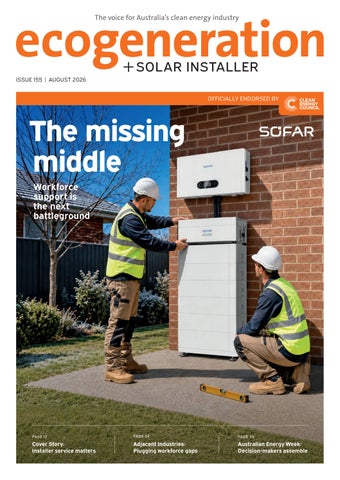
Workforce

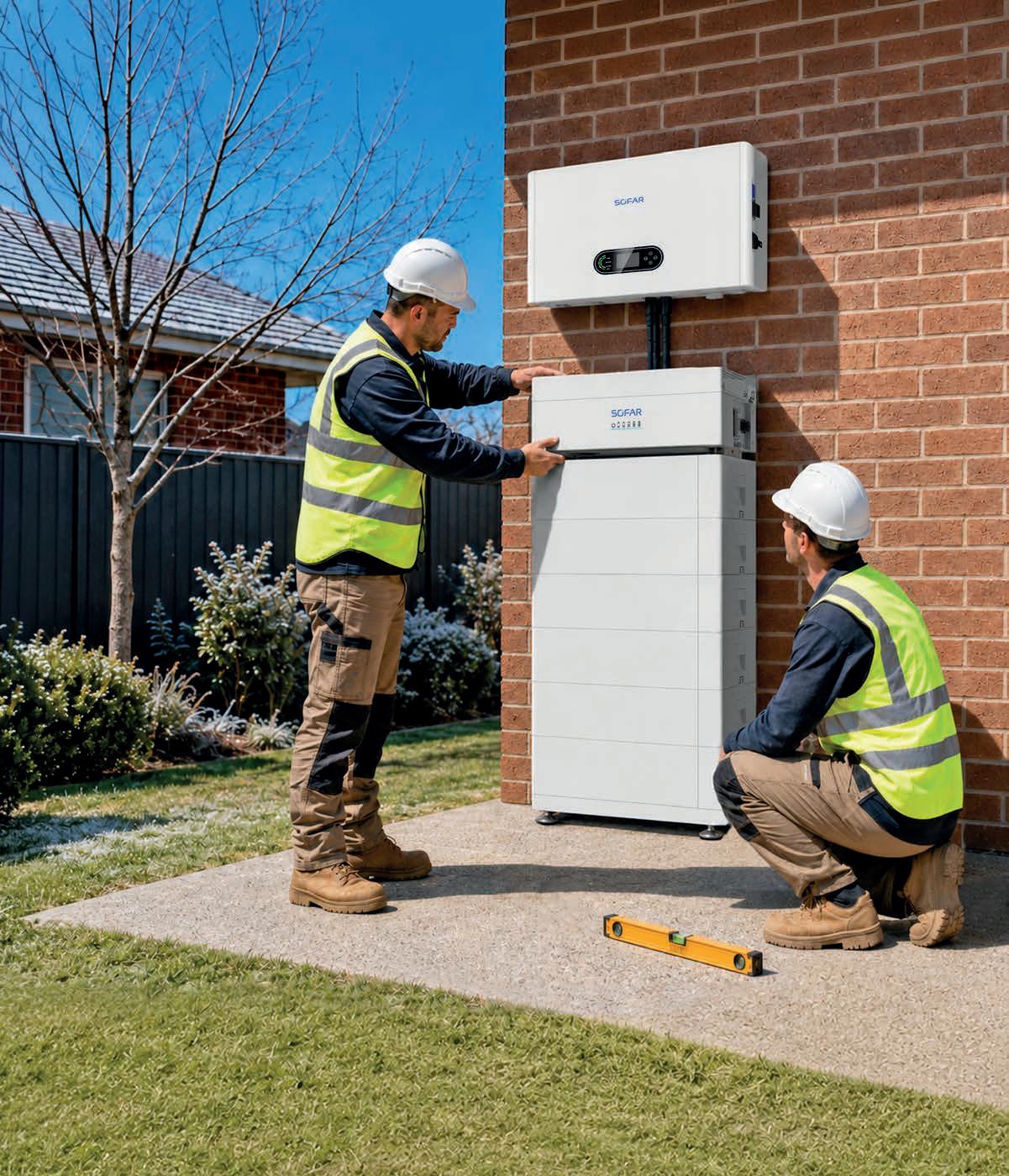


2 Projects under full-wrap O&M
SES has operations in 6 states & territories

60 highly experienced electricians 80 staff across Australia Completed projects nationwide



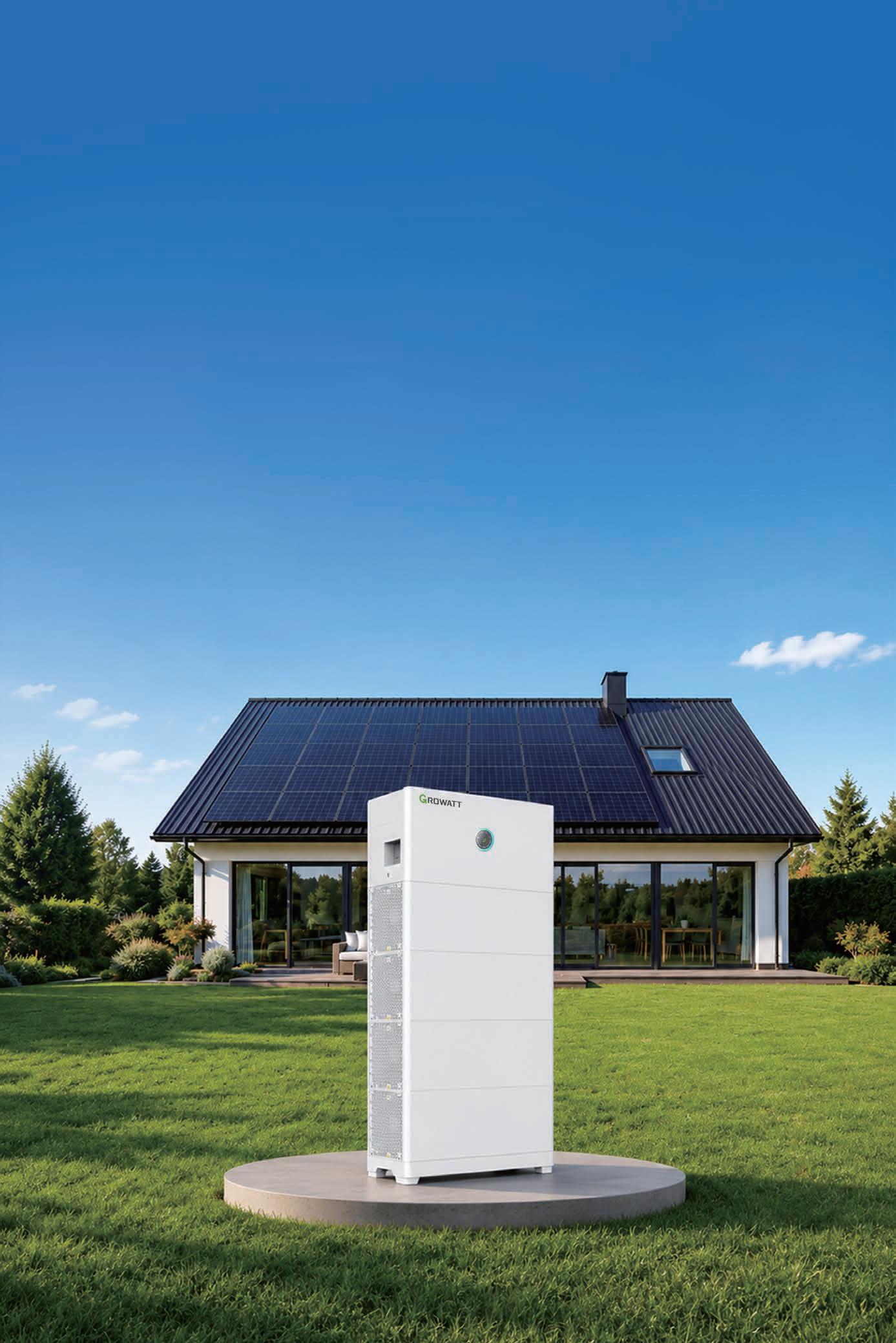
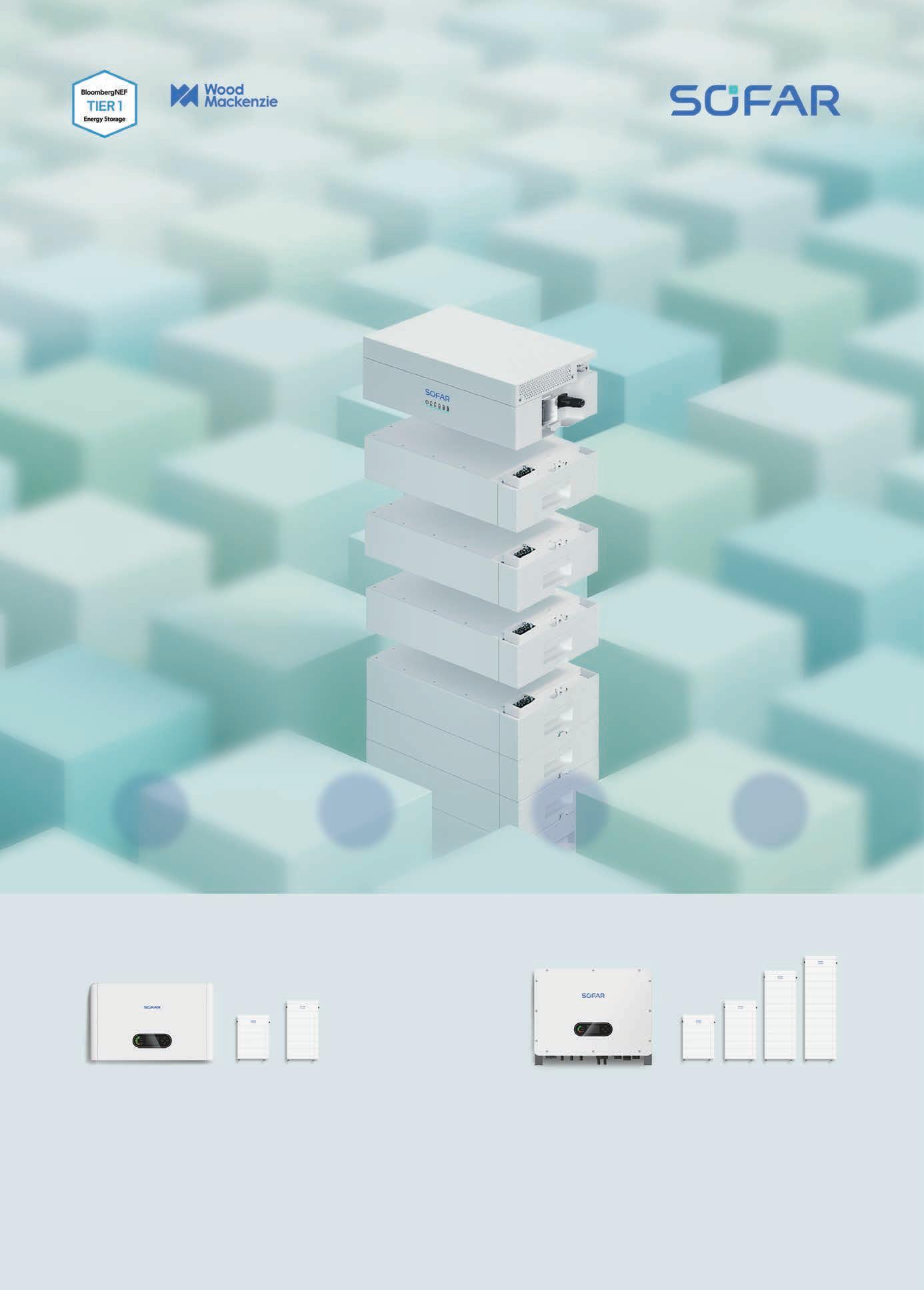
3 MPPTS with 2.0 DC/AC ratio for higher yield
3 with 2.0 ratio higher yield
Battery optimizer-mix old & new with ease
Battery optimizer-mix old & new with ease
63A for reliable whole-home backup
63A for reliable whole-home backup
VPP-ready for intelligent energy management
VPP-ready for intelligent management
Two-way DC Charger V2G- coming soon
Two-way DC Charger V2G- coming soon


The Australian Energy Market Operator’s 2026 Integrated System Plan forecasts that electricity consumption across the National Electricity Market will almost double by 2050 as transport, industry and infrastructure electrify.
This edition of ecogeneration explores the outtakes from Australian Energy Week 2026. The industry event, held in Melbourne, demonstrated that transmission infrastructure, distribution networks and an equitable National Electricity Market can no longer be treated as separate challenges.
Other features in this edition examine Transgrid’s Sydney Ring South project, Victoria’s newly declared Renewable Energy Zones, and Western Australia’s promising renewable energy outlook. Each of these comprehensive developments demonstrate why transmission planning and network coordination are central enablers to the energy transition.
On a residential level, the Clean Energy Regulator reports that more than 6.8 million small-scale renewable energy systems have been installed nationwide, including more than 400,000 home batteries supported under the Federal Government’s Cheaper Home Batteries Program. As residential battery uptake turns into long-term use, manufacturers such as SOFAR Solar, Sungrow, Growatt and Fox ESS show how they are strongly focused on product quality, installer support, regular technology enhancements, and long-term trust with their partners and local consumers.
Workforce capability remains equally critical. Specialised Energy Solutions shares how the growing company is addressing skills shortages across utility-scale projects, while Future Energy Skills outlines why increasing female participation in electrical trades has become essential to delivering on Australia’s net zero objectives.
Beyond the grid, this edition explores how integrated renewable energy, hydrogen and manufacturing precincts can decarbonise heavy industries and transform Australia into a global exporter of lowemission commodities.
Importantly, this edition also explores the hottest topic in the sector right now: Data centres. We spoke with AirTrunk to examine how the company is responding to unprecedented demand for cloud computing and artificial intelligence infrastructure. With annual earnings projected to reach approximately $1.2 billion, AirTrunk explains why data centres should not be viewed as a burden on the electricity network.
Lavinia Hulley ecogeneration Editor

ecogeneration acknowledges the Cammeraygal people, traditional custodians of the land on which this publication is produced, and we pay our respects to their elders past and present. We extend that respect to all Aboriginal and Torres Strait Islander people today.
Chief Executive Officer: Christine Clancy
Chairman: John Murphy
Editor: Lavinia Hulley lavinia.hulley@primecreative.com.au
Business Development Manager: Nick Lovering , +61 414 217 190 nick.lovering@primecreative.com.au
Client Success Manager: Karyssa Arendt karyssa.arendt@primecreative.com.au
Head of Design: Clayton Hawley
Designer : Apostolos Topatsis
Subscriptions : T: +61 3 9690 8766 subscriptions@primecreative.com.au
Published by: PRIME CREATIVE MEDIA
ABN: 51 127 239 212 379 Docklands Drive
Melbourne VIC 3008, Australia T: +61 3 9690 8766 www.primecreativemedia.com.au
www.ecogeneration.com.au

Cover image: SOFAR Solar (Artificial-intelligencegenerated visual for illustrative purposes only)
ecogeneration is printed on Lumi paper which is PEFC-certified and manufactured in an ISO 14001-certified mill. Lumi paper also contains premium white waste paper, reducing matter going into landfill. This magazine is available to interested parties throughout Australia and overseas. The magazine is also available by subscription. The publisher welcomes editorial contributions from interested parties, however, the publisher and the Editorial Board accept no responsibility for the content of these contributions and the views contained therein are not necessarily those of the publisher or of the Editorial Board. The publisher and the Editorial Board do not accept responsibility for any claims made by advertisers. Unless explicitly stated otherwise in writing, by providing editorial material to Prime Creative Media, including text and images, you are providing permission for that material to be subsequently used by Prime Creative Media, whole or in part, edited or unchanged, alone or in combination with other material in any publication or format in print or online or howsoever distributed, whether produced by Prime Creative Media and its agents and associates or another party to who Prime Creative Media has provided permission.

As the Clean Energy Council writes, Australia’s transition to renewable energy is one of the most significant economic reforms of our time.
Australia’s energy will shape not only how we power our homes and industries, but whether Australia secures a lasting competitive advantage in a rapidly changing global economy.
The progress is real. Renewables now account for 42.7 per cent of our electricity generation and, for the first time, overtook fossil fuels in the final quarter of 2025.
Australia is now the third-largest utilityscale battery market in the world, behind only China and the United States, and more than 4.3 million households have installed rooftop solar, with close to 300,000 home batteries added last year alone.
As supply grows, wholesale prices are starting to ease and our system is becoming more resilient and diversified. That resilience matters more than ever. Global fuel volatility has exposed how much Australia’s electricity prices are still shaped by international gas markets we don’t control.
Our sun and wind, by contrast, are domestic, abundant and immune to geopolitical disruption. Building our energy system on those resources isn’t just good climate policy – it’s a genuine national security and cost-of-living dividend.
The next five years will determine the
cost, reliability and shape of our energy system for decades to come. Delay doesn’t reduce risk, it entrenches it: 247 unplanned outages of ageing coal-fired power stations in the last year alone, and continued reliance on volatile imported fuels all carry a rising price tag.
Meanwhile, global competition for capital in green iron, green hydrogen and renewable manufacturing is intensifying. If we don’t lock in a credible renewable supply to back these ambitions, those industries and the investment behind them will go elsewhere.
Our members tell us consistently that the sector is ready to invest and build, but too many barriers remain for a variety of reasons; including, slow planning and environmental approvals, grid connection delays, policy uncertainty, and community engagement fatigue. Investment doesn’t simply pause when governments act unpredictably, it moves to other jurisdictions, taking jobs and supply with it.
As a sector, we’re looking ahead to what needs to change to ensure success. How we remove investment barriers, including pushing the National Electricity Market Review towards outcomes that get projects banked and built, and working with
government on sound national standards under the reformed Environmental Protection and Biodiversity Act.
Secondly, how we partner with the communities that are being asked to host this new infrastructure to solve the issues of climate change and energy security, to build and maintain stronger trust in the benefits of this critical national project. This includes working more closely with local councils to invest in the future of their communities and demonstrating the economic opportunity this transition represents – more regional jobs, new industries and small business growth.
In 2026, we are roughly halfway to Australia’s energy targets. The task now is to convert this momentum into lasting economic advantages for all Australians, and the Clean Energy Council will continue to advocate strongly across all of the issues today that will determine whether we get there tomorrow.
Jackie Trad Chief Executive Officer
Clean Energy Council



The Australian Energy Market Commission (AEMC) has proposed reforms to strengthen protections for energy customers experiencing payment difficulties. These reforms include earlier intervention and clearer safeguards against disconnection.
Currently, more than 200,000 residential customers have energy debts exceeding 90 days, while around one in three customers with energy debt are not receiving support through a payment plan or hardship program.
The proposed changes follow a 2025 review by the Australian Energy Regulator, which found existing consumer protections were failing to consistently reach customers in need.
Under the draft reforms, energy retailers will be required to make greater efforts to engage customers before disconnection, including contacting them through at least two communication channels. The reforms would also introduce clearer and more consistent rules around when disconnection protections apply, reinforcing that disconnection should remain a measure of last resort.

Other proposed changes include simplifying eligibility categories for payment difficulty protections and improving the visibility of payment assistance information across retailer websites, reminder notices and disconnection warning notices.
The proposed changes build on consumer protection reforms finalised by the AEMC in 2025, as well as the Commission’s recent recommendations to simplify electricity pricing and greatly improve customer experiences.
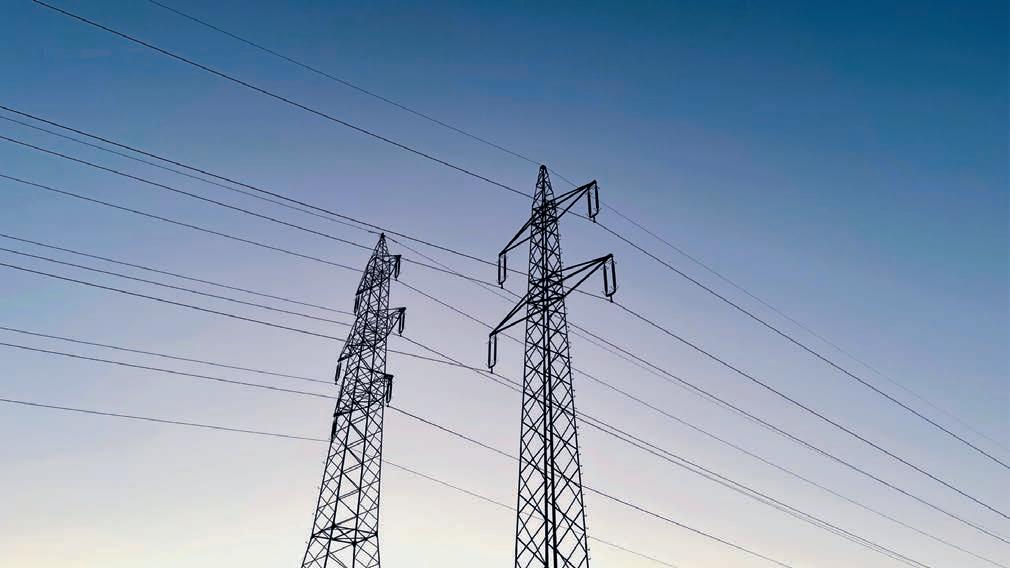
consultation and modelling under National Electricity Rules, the Integrated System Plan (ISP) is the Australian Energy Market Operator’s roadmap for the National Electricity Market through to 2050.
The centrepiece of the 2026 ISP is the
This year’s Integrated System Plan presented transmission and distribution as the least-cost pathway for the National Electricity Market.
out the least-cost combination of generation, storage, transmission, distribution, and consumer investments to replace retiring coal power stations and support the doubling of electricity consumption over the coming decades.
Under the Step Change scenario, the
direction of the 2026 optimal development path is consistent with previous ISPs, and reflects investments already being made by consumers, industry and governments. These include renewable energy supported by storage, connected by transmission and distribution, and firmed up by gas.
Key changes since the 2024 ISP include: Lower solar and battery costs, higher costs for transmission and wind, and stronger growth in consumer energy resources.
Affirming the findings of the 2026 ISP, the Clean Energy Council expects that Australia will need to roughly triple its build of large-scale renewable generation and storage to ensure reliable energy supply and keep the lid on consumer costs as Australia transitions away from coal.
As set out in the ISP, the construction of 6000 kilometres of new transmission is expected to save consumers $30 billion.
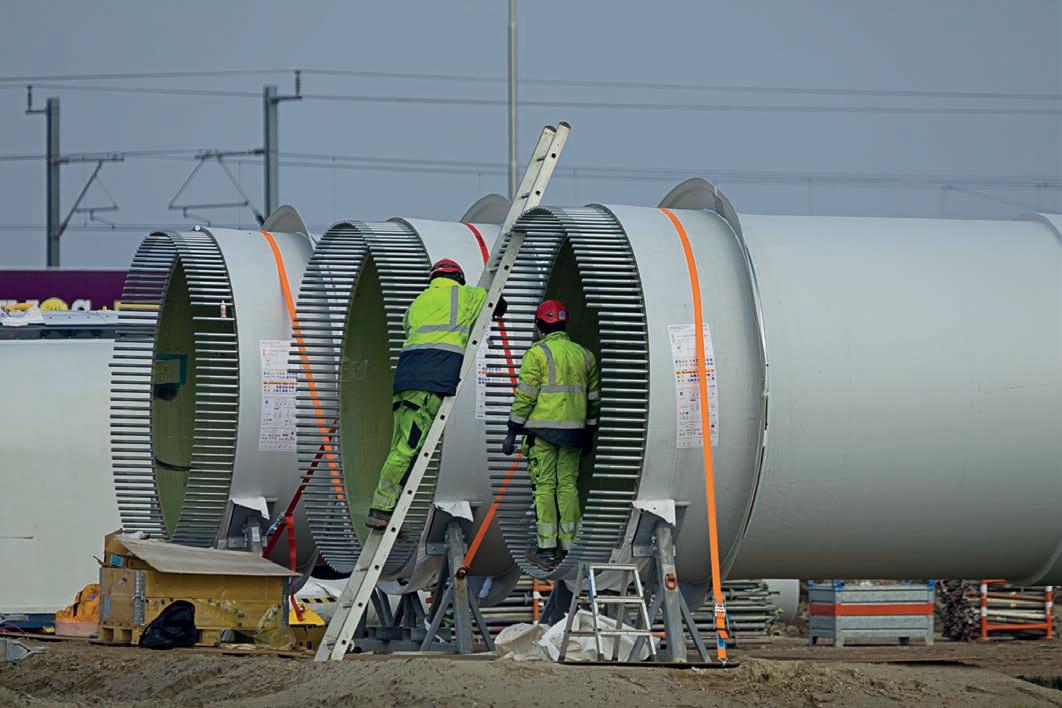
Industry body, Weld Australia, argues that growing momentum for local wind and transmission tower manufacturing provides a rare opportunity to expand Australia’s fabrication, steel and engineering sectors.
This followed the Federal Government’s latest round of the Capacity Investment Scheme, which selected 19 projects under Tender Seven. Together, these projects exceed the original five gigawatt target by more than 50 per cent.
These successful projects will deliver
7.8 gigawatts of generation capacity across the National Electricity Market, alongside a further 7.9 gigawatt-hours of energy storage through associated hybrid projects.
Weld Australia is advocating for policy settings that encourage greater
Recently, the Australian Renewable Energy Agency (ARENA) announced its shortlisted projects for Round Two of the Hydrogen Headstart Program.
achieved through local procurement.
To support a strong domestic manufacturing sector, Weld Australia has developed a four-pillar policy framework with industry participants across the steel, fabrication and wind energy supply chains.
Successful applicants include: Bell Bay Powerfuels, European Energy
Perdaman Commercial Developments, and Summit Hydro.
Shortlisted projects from these applicants, ranging multiple states, include
term demand signals, a 20 per cent local
manufacturing and alternative fuels.
The announcement of shortlisted hydrogen projects follows the Federal Government’s recent decision to allocate $1 billion to the second round of the Hydrogen Headstart Program in the 2026 Federal Budget.
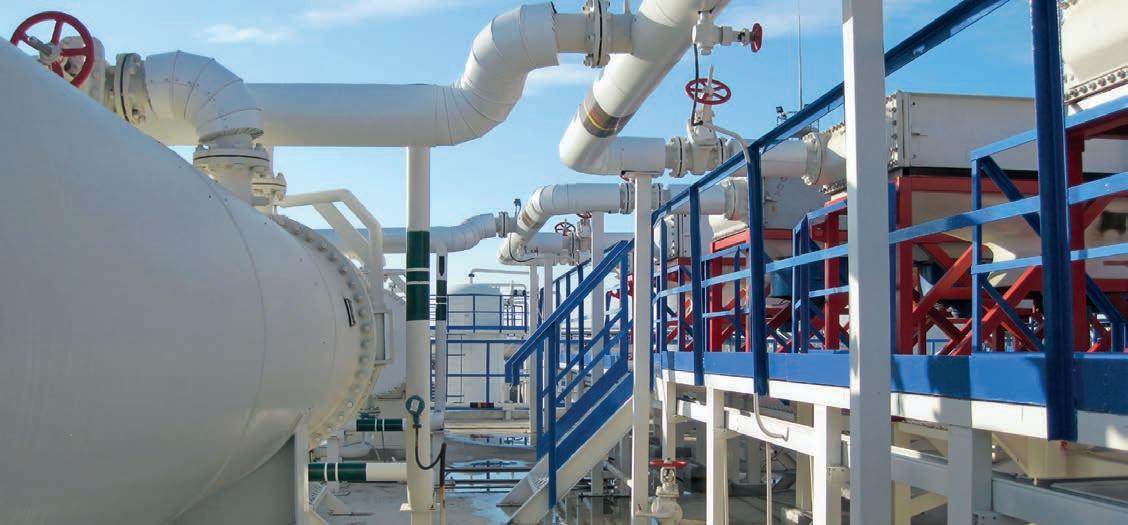
Reinforced by ARENA, only projects that satisfy the program’s eligibility requirements and meet a high merit threshold will continue to be considered for funding support.
Shortlisted projects have now moved into the full application stage, which includes detailed due diligence and a comprehensive assessment process.
Darren Miller, Chief Executive Officer at ARENA, shared that the strong level of interest in Round Two demonstrates industry confidence in the long-term prospects of renewable hydrogen in Australia. Shortlisted applicants for Round Two of its Hydrogen Headstart Program have until early September 2026 to submit full applications.
Following assessment, ARENA will provide recommendations to the Federal Minister for Climate Change and Energy, Chris Bowen, for final funding approval.
Dedicated local technical support for installers and homeowners is becoming a critical measure of long-term value for residential storage and inverter manufacturers.
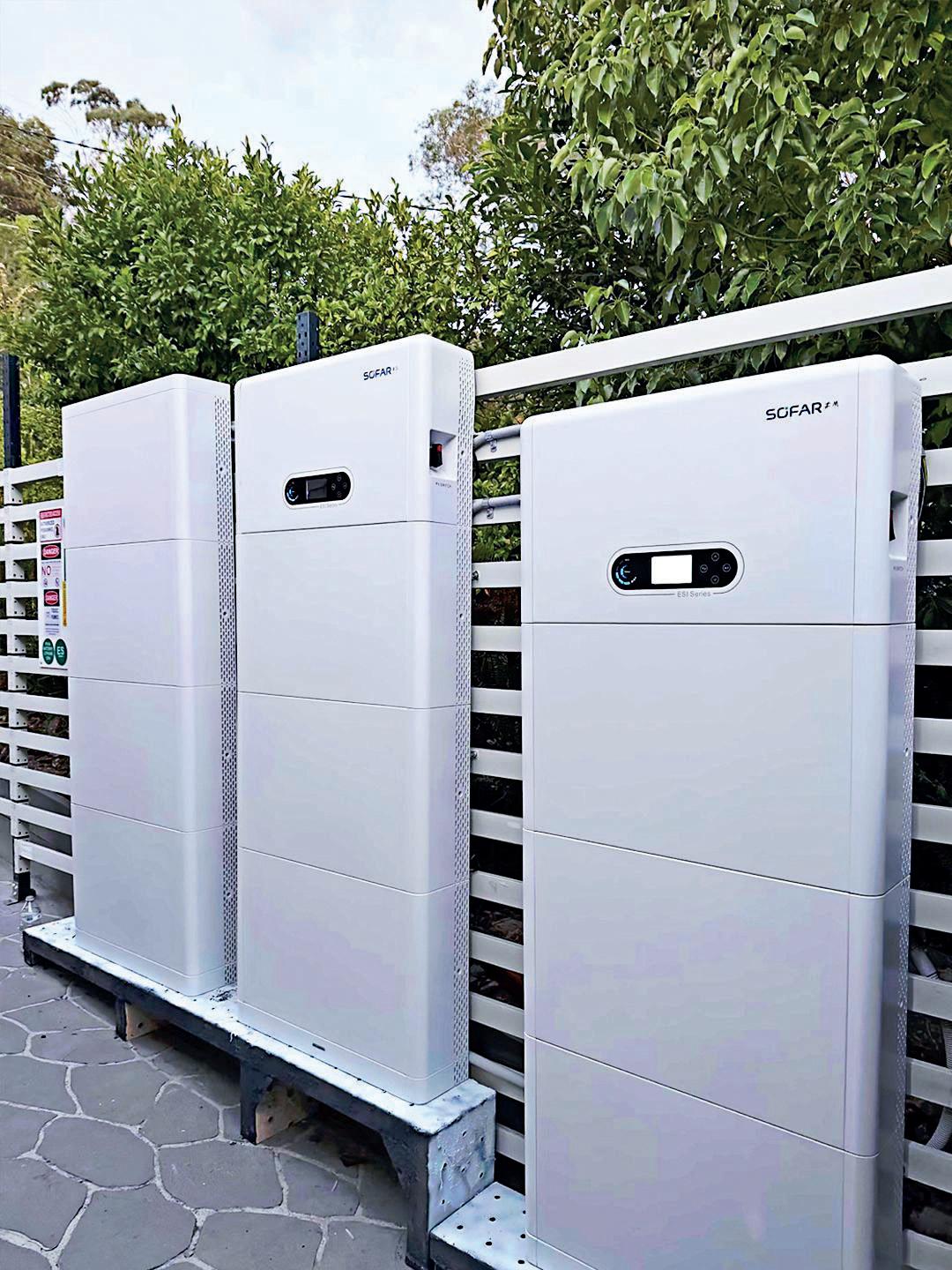
While government incentives have accelerated battery adoption, they have also placed greater expectations on manufacturers to support installers and homeowners well beyond the point of sale.
As residential storage systems become more sophisticated and demand for installations across Australia increases, responsive technical support, practical training and long-term local investment are emerging as key differentiators between residential storage providers.
For SOFAR Solar, headquartered in Shenzhen, China, establishing this local infrastructure has been the company’s central focus in the Australia market for over a decade.
Freddy Chen, Technical Service Manager for Australia at SOFAR Solar, says Australia’s importance to the company continues to shape how its products and services are delivered locally.
“Australia is one of the first countries that we’ve launched into as part of our international expansion in 2016,” he says.
More than 12 years later, the company continues to expand its Australian technical team, while also investing in service infrastructure, training and customer support services.
“Following continuous investment from our headquarters into Australia, I’ve witnessed the growth of our local selling and service team,” Chen says.
“We currently have over 10 service team staff based in Australia, supported by our highly experienced employees worldwide. We’re actively looking for more tech support personnel, but we don’t want to rush the process. Relevant expertise that upkeeps our quality of service is key for us.”
As a Technical Service Manager, Chen’s role extends well beyond troubleshooting.
“My job is to ensure that the team works across the entire customer journey, ensuring products comply with Australian standards
while supporting wholesalers, retailers, installers and homeowners throughout the system lifecycle,” he says.
That end-to-end approach has become increasingly important as residential storage uptake continues to increase. Although the Federal Government’s Cheaper Home Batteries Program has driven strong demand, it has also introduced thousands of installers and homeowners to new technical battery systems for the first time.
“During our many battery installations in Australia in 2025, we learnt that installers new to the industry needed time and a manageable workflow to become familiar with how to install different battery energy storage systems from different manufacturers,” Chen says.
“This is especially important because each battery has its own wiring, commissioning, communication, backup, safety, and warranty requirements.”
While systems must comply with Australian standards, government guidance also requires installations to follow the manufacturer’s instructions.
Given the latest developments in technology across different manufacturers, Australian installers are increasingly working across a range of systems such as
alternating-coupled, direct-coupled, hybrid, modular, single-phase and three-phase.
A decade ago, the residential storage market was still in its infancy. The latest technology at the time centred around firstgeneration lithium-ion battery systems with relatively basic configurations, with most systems only offering between two-to-seven kilowatt-hours of usable storage.
“In the context of our current technology, installing the SOFAR Solar ESI-5–12K-T1 requires training on its three-phase hybrid architecture, battery integration, all-in-one and split installation options, backup configuration, commissioning, fault diagnosis, the list goes on,” Chen says.
Evidentially, SOFAR Solar understands that strong product-specific knowledge for local installers helps reduce compliance risks, safety issues, warranty problems and call-backs. Importantly, training also helps installers feel confident enough to recommend and deliver the most suitable system for each home, which means better long-term value for homeowners.
To help address those challenges, SOFAR Solar provides technical support through a national hotline, instant messaging, email and remote diagnostic services.
The company has also launched a new
SOFAR Cloud platform that combines system monitoring with installation guidance and operating instructions, allowing installers and homeowners to access the technical information they need through a single platform.
Beyond its own training initiatives, SOFAR Solar continues to invest in industry education through partnerships and events.
The company works with Solar Training Centre to deliver three-to-four installer training sessions each month across multiple Australian cities. As a premium member of the Smart Energy Council, SOFAR Solar also delivers Continuing Professional Development sessions at Smart Energy Conference events. During July and August, as a sponsor of the Smart Energy Council’s Installer Roadshow across Perth, Townsville, Sydney and Melbourne, the SOFAR Solar team presented new products, showcased equipment, engaged directly with installers, and provided onsite technical support.
“I’ve seen first-hand how good product training helps our installers and home users quickly get familiar with our products. This saves time and resources for manufacturers, installers and homeowners, as they don’t have to get in touch for after-sales support
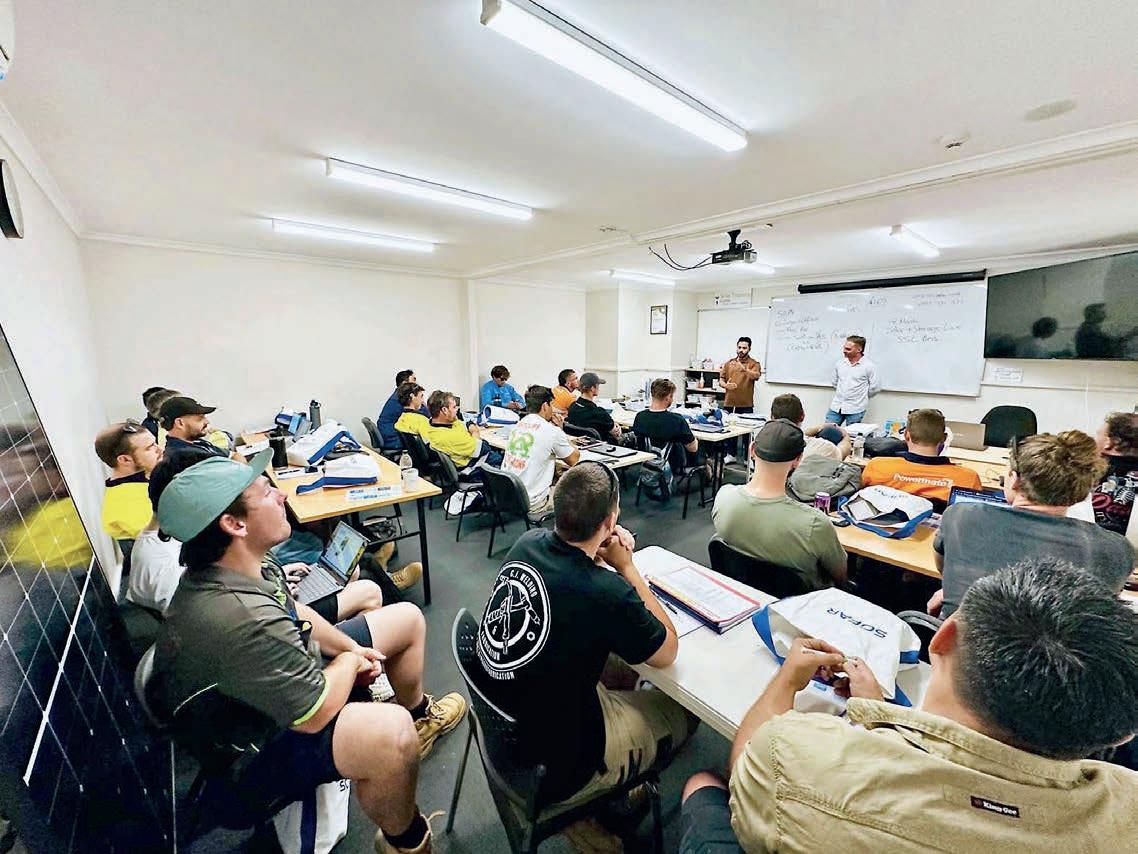
down the track,” Chen says.
“This is why our installation service pipeline routinely includes pre-sale consultation, product and installation training, installation guidance, troubleshooting, system fixes online or onsite based on all kinds of scenarios.”
Seamless installation meets quality product
SOFAR Solar’s strategic focus on simplifying the installation process for installers and home users extends to the development of the company’s entire product portfolio.
Throughout the design process for its battery and inverter products, SOFAR Solar ensures the weather conditions, property dimensions, and other conditions unique to Australian homes are considered.
Supporting both all-in-one and split installation configurations, the SOFAR Solar ESI-5-12K-T1 inverter is designed to allow installers to adapt system layouts to suit available wall space, existing switchboards and cable routes during retrofit projects. The compact all-in-one design also reduces installation time.
Excitingly, the SOFAR Solar CBS 5000 will be launched in Australia during quarter three of 2026.
The CBS5000 is a modular, stackable lithium iron phosphate battery energy storage system designed for residential and small commercial solar installations. This offers users scalable storage capacity, from 20 kilowatts to 240 kilowatt-hours, with simplified installation, active battery balancing, and integrated safety features.
In addition, SOFAR Solar has ensured its inverter is capable with all its different ranges and support for up to three Maximum Power Point Trackers further enhance system

Later this year, SOFAR Solar will expand its residential portfolio with the launch of the CBS5000 modular stacked battery system.
Designed with a modular architecture, the system enables straightforward installation with an increased storage capacity to meet the growing home energy demands and regulatory requirements of Australians.
For Chen, innovative residential storage products represent only one part of the overall customer experience.
“Sustaining long-term confidence in residential battery systems requires ongoing investment in people, service infrastructure and industry partnerships,” he says.
“We don’t keep this up alone. We work closely with our experienced Australian partners, for example the Smart Energy Council, who keep us informed about what our customers need.”
This collaboration reflects what Chen describes as SOFAR Solar’s long-term commitment to Australian customers, rather than a short-term market opportunity.
“SOFAR Solar has been in Australia for over 11 years. In that time, we’ve already brought a lot of our products to Australian users. As a listed company, it’s our responsibility to provide service to users who have purchased our products,” he says.
“I’m proud of the excellent service SOFAR Solar provides to our Australian market. We very much look forward to continuing grow
To get in touch with authorised SOFAR Solar distributor, Sunsavers Group, contact: Info@sunsaversgroup.com.au (or) 1300 171 080
Clean Energy Council presents 9 September 2026 | Sofitel Brisbane City
Queensland's next wave of economic growth is being shaped by energy investment and the jobs, supply chains and regional prosperity that come with it.
The state's Energy Roadmap points to a substantial pipeline of new generation, storage and network infrastructure over the coming decade. Capturing that opportunity will take industry, government, landholders, and local communities working together.
The first Queensland Energy and Economic Summit brings them all into one room. Over one day in Brisbane, hear from industry leaders, investors, policymakers, farmers and local government on what it takes to build a strong investable market, deliver the infrastructure Queensland needs, and ensure the economic opportunity flows to the regions - including the role large-scale solar and storage play in the mix.
Join us for a high-calibre program of expert-led discussions, practical insights and networking opportunities including the industry Networking Drinks.
The program will explore:
• Building a strong, investable market
• Genuine community collaboration and regional prosperity
• The role of large-scale solar and storage in Queensland's energy future
Queensland's energy investment is writing the next chapter of the state's economic story. Be part of it.
The rapid expansion of artificial intelligence powered data centres is placing unprecedented pressure on developers to deliver resilient, high-performance solar and storage infrastructure.
Long-term performance and reliability are becoming defining factors as commercial and industrial (C&I) solar systems support Australia’s growing digital infrastructure.
As Australia’s data centre market expands to meet surging demand from cloud computing and artificial intelligence (AI), developers are placing greater emphasis on resilient energy infrastructure capable of delivering dependable performance for decades to come.
For C&I infrastructure solar projects, that shift is changing how modules are evaluated. While upfront costs remains important, long-term energy yield, reliability in harsh operating conditions and the financial certainty provided by established manufacturers is influencing procurement decisions for developers.
According to Jinko Solar, developers are now viewing photovoltaic (PV) systems as critical infrastructure, rather than simply another building service. The company, which has supplied modules globally for more than two decades, has consistently ranked among the world’s highest-volume PV manufacturers.
Ben Mohat, Utility Sales Manager –Oceania at Jinko Solar, explains that the lifespan of
modern C&I assets means technological decisions made today will influence project performance well beyond 2050.
“With solar PV systems designed to operate for 30-plus years, it’s vital to select a solar module manufacturer with a proven track record,” he says.
For 20 years, Jinko Solar has been a prominent player in the global PV module market. The company’s strong reputation was corroborated by Sun Wiz, following its number one ranking as a volume manufacturer for four years running and seven years overall.
“Equally important to reputation in solar PV is keeping up with market-leading technologies – areas Jinko Solar is proud to excel in,” Mohat says.
The rapid growth of AI and hyperscale data centres is creating a new class of electricity consumers that require continuous, uninterrupted power. Unlike many commercial facilities, data centres operate around the clock, making energy resilience just as important as energy efficiency.
Mohat explains that data centres are fundamentally changing how developers approach solar generation.
“Considering the critical nature of data centres, it’s now more important

than ever for developers to select solar component partners whose products offer the highest degree of performance, reliability and reputation,” he says.
“Developers are moving beyond simple cost savings to treat solar as a critical piece of a complex, highly reliable energy system.”
Mohat’s views align with broader industry trends as businesses seek to reduce operating costs, improve energy security and meet increasingly stringent environmental, social and governance (ESG) commitments.
Rather than simply viewing solar as a standalone asset, developers are integrating it with battery energy storage systems, advanced energy management platforms and backup generation to create resilient onsite energy ecosystems.
“We’re encouraging Australian developers to get in touch for a mere conversation. We’re always happy to explain how integration works and why it’s a critical future-proof measure for utility-scale projects as renewable energy generation expands,” Mohat says.
Australia’s climate presents unique engineering challenges for long-life PV assets. High temperatures, intense UV (ultraviolent radiation) exposure, dust,
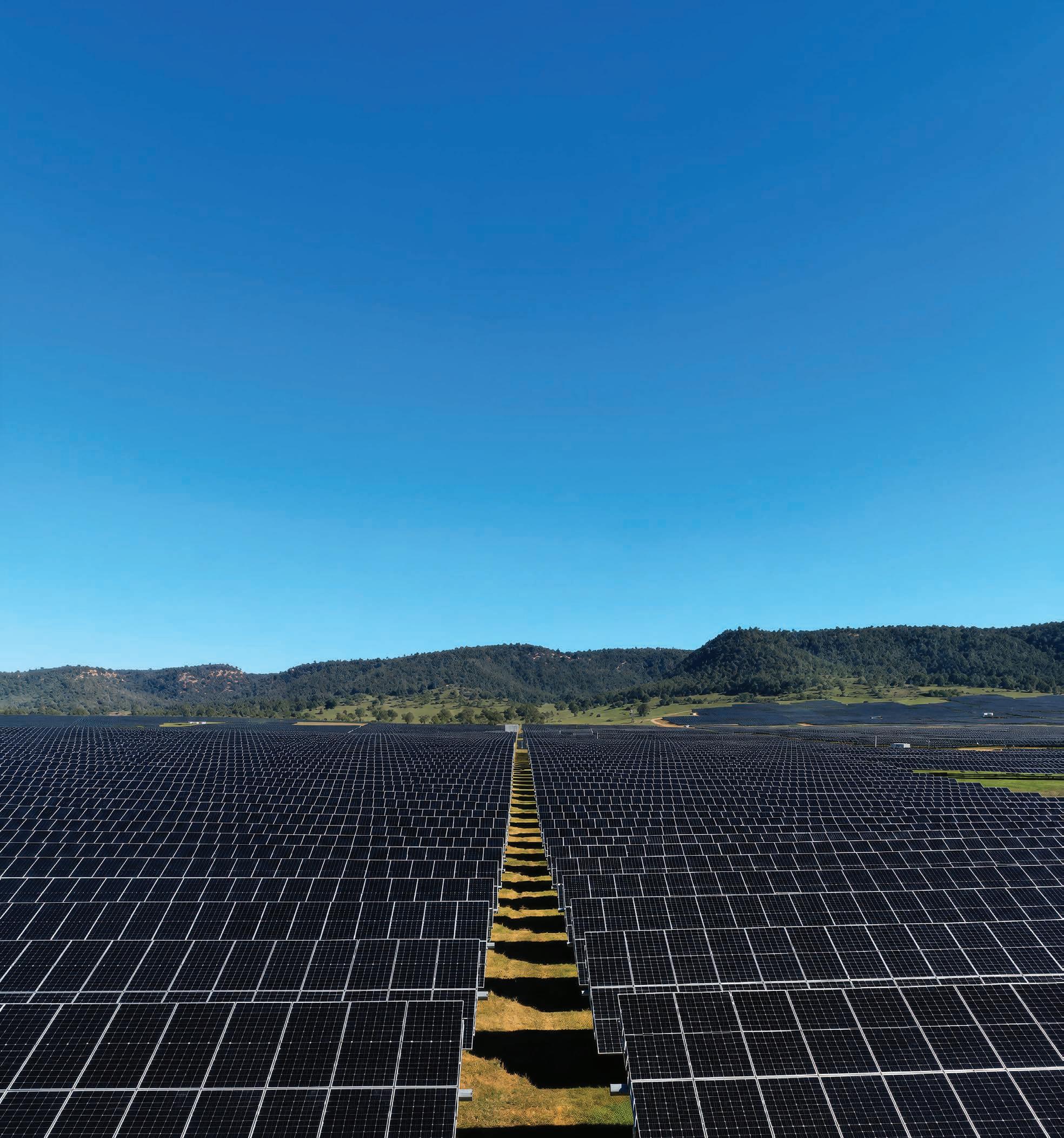
coastal salt corrosion, and severe weather events all have the potential to effect system performance over time.
Mohat says experience gained across these environments has directly influenced Jinko Solar’s product development.
“Jinko Solar’s experience in Australia’s extreme environments has fundamentally shaped its approach, resulting in products that are engineered for durability and a service network built to reliably deliver them to challenging locations,” he says.
“The design and features of Jinko Solar’s Tiger Neo 3.0 series are a direct response to the demands of Australia’s climate, with a focus on maintaining the highest performance in sometimes dusty, high-temperature, high-wind and corrosive coastal environments.”
Tiger Neo 3.0 modules, released earlier this year, utilise TOPCon technology to improve conversion efficiency, enhance lowlight performance and reduce degradation over the system lifetime. Recent generations also feature low temperature coefficients, enabling stronger performance during Australia’s hot summer conditions while maintaining long-term energy production.
For developers, these characteristics translate into improved lifetime energy yield and reduced cost of electricity (LCOE),
particularly where roof space is constrained or projects must deliver predictable financial returns over several decades.
Recognising the rapid growth of AI infrastructure, Jinko Solar has also introduced a dedicated module designed specifically for data centre applications.
Built on the company’s Tiger Neo 3.0 TOPCon platform, the new Artificial Intelligence Data Centre (AIDC) module has been engineered to maximise energy density while improving reliability and reducing lifecycle costs. The module delivers power outputs of 670 watts or more with front-side efficiencies approaching 24.8 per cent, while its high bifacial performance increases overall energy generation.
Mohat explains that Jinko Solar specifically developed the AIDC module for the operational requirements of modern digital infrastructure.
“It’s vital that our new AIDC module is part of conversations around digital infrastructure because it’s geared towards data centres through its high-power output, 55-millimetre hail resistance, Class A fire rating, and low LCOE,” he says.
According to Mohat, its AIDC module has been optimised for low-irradiance
performance. This effectively supports maintaining stable generation during cloudy conditions, while maximising roof and land utilisation for facilities where available space is at a premium.
As Australia’s C&I market continues to mature, Mohat believes innovation will remain central to improving project economics and supporting increasingly sophisticated energy users.
“Jinko Solar will continue to offer market-leading module and energy storage technologies and service throughout Australia,” he says.
“We’re very pleased to share that we plan to offer an even wider product range in the near future.”
As data centres become one of Australia’s fastest-growing sources of electricity demand, selecting proven technologies designed for reliability, resilience and long-term performance is likely to remain a defining consideration for C&I solar and storage projects.
“We’ll continue to push the boundaries of TOPCon technology with even higher efficiencies and, in the coming few years, expect to move into the next generation of tandem solar modules,” Mohat says.
Data centres are transforming Australia’s electricity system, challenging industry to view digital infrastructure not as a burden on the grid, but as a catalyst for investment and innovation.
While much of Australian Energy Week 2026, held on 9-12 June, focused on replacing ageing coalfired generation and expanding transmission capacity, delegates also examined a rapidly emerging challenge across the National Electricity Market: The unprecedented growth in electricity demand from data centres and other large industrial loads.
Artificial intelligence, cloud computing and digital services are reshaping Australia’s electricity demand profile. Australia is currently home to 162 operational data centres, predominantly located in Sydney and Melbourne, where they account for around two per cent of grid-supplied electricity use, while a further 15 sites operate across Western Australia’s South West Interconnected System.
According to updated forecasts from the Australian Energy Market Operator (AEMO), electricity consumption from data centres could increase to between 26 and 35 terawatt-hours annually by 2036, representing up to 12.5 per cent of total National Electricity Market demand. Rather than viewing these developments as additional pressure on the grid, several speakers at Australian Energy Week argued this represents an opportunity to rethink the relationship between large electricity users and the broader power system.
One company at the centre of that conversation is AirTrunk.
Founded in Sydney in 2015, AirTrunk develops, owns and operates hyperscale data centres that provide the digital infrastructure underpinning cloud
computing, artificial intelligence and other data-intensive services.
Over the past decade, the company has established one of Australia’s largest hyperscale portfolios, with hyper-scale data centres stationed across Sydney, Melbourne, Brisbane and Perth as part of its broader Asia-Pacific network.
Its rapid growth culminated in a $24 billion acquisition by Blackstone and Canada Pension Plan Investment Board in 2024. Now, the company’s annual earnings are projected to reach around $1.2 billion as demand for cloud and artificial intelligence infrastructure continues to accelerate.
For Sabooh Whitelaw, Associate Vice President, Utility and Energy at AirTrunk, the conversation around data centres needs to move beyond a single question.

“The discussion is often framed around one question: how much electricity will data centres use? It is an important question, but I don’t think it’s the most important question,” she says.
“The better question is: how do we integrate new demand into the system in a way that strengthens the grid, accelerates renewable investment, improves utilisation of existing infrastructure and delivers better outcomes for consumers?”
That perspective echoed as one of Australian Energy Week’s strongest themes.
As industries electrify and digital infrastructure expands, electricity demand is expected to grow significantly over coming decades. Rather than treating new large-load demand as a constraint, speakers at Australian Energy Week suggested it can become an enabler for further investment if accompanied by the right market settings.
Whitelaw argues that data centres possess characteristics that make them valuable long-term partners for the electricity system.
Unlike many traditional large loads, data centre facilities are planned years in advance, operate over several decades and require high levels of grid reliability. Those characteristics create opportunities to support renewable generation through longterm power purchase agreements, invest in storage technologies, and provide demand flexibility as the grid evolves.
“Data centres are increasingly becoming active participants in the energy system,” Whitelaw says.
“Large energy users can bring long-term demand signals, they can bring private capital, they can support renewable investment, they can invest in storage and flexibility, and they can effectively work with networks and market participants to improve system outcomes.”
This creates an opportunity for a different kind of relationship between large load customers and the energy system – one based on partnership rather than purely energy consumption.
That philosophy closely aligns with the remarks of Brett Redman, Chief Executive Officer at Transgrid at Australian Energy Week, in relation to transmission investment and cost allocation.
Both Redman and Whitelaw argue that while new industrial demand benefits the broader economy, consumers should not bear the costs of energy infrastructure that specifically serves large load consumers such as data centres.
Instead, AirTrunk sees growing support for a simple principle when it comes to data centres entering the National Electricity Market: Growth should help fund the infrastructure it requires.
“If large load users require new infrastructure and are willing to contribute capital, fund connection assets, support network upgrades and improve utilisation of the grid, the value of those contributions should be reflected in the way we plan and develop the system,” Whitelaw says.
“Done well, large load investment can improve utilisation of existing assets, bring private capital into areas where investment is most critically needed, and help reduce undue pressure on consumers.”
That principle extends beyond upfront infrastructure investment. As renewable penetration rises, flexibility is becoming an increasingly valuable resource within the electricity system. Large energy users capable of adjusting demand, investing in battery storage or supporting renewable energy procurement can contribute to system reliability while improving utilisation of existing network infrastructure.
AirTrunk is already exploring that role through battery storage and renewable energy investments across its expansive Australia portfolio.
“The future grid needs customers who can do more than simply consume electricity. It needs flexibility, storage, demand that can respond to changing system requirements, as well as investment that supports longterm decarbonisation,” Whitelaw says.
“At our campus in Western Sydney (SYD3), AirTrunk announced plans to integrate a large-scale battery energy storage system. For us, that’s about resilience and sustainability, but it’s also about demonstrating what the next generation of digital infrastructure can look like.”
Whitelaw’s comments also align with AEMO’s broader planning outlook.
As data centre demand continues to grow, the market operator has highlighted the importance of coordinating new transmission investment with emerging centres of electricity demand.
To that effect, AirTrunk is encouraging developers to consider project locations with abundant renewable energy resources.
According to AEMO, the rapid expansion of data centres highlights the importance of coordinating electricity demand with generation, transmission and network planning to support reliable, lower-cost outcomes. Whitelaw says Australia’s renewable energy sector has already demonstrated how large-scale infrastructure can be integrated successfully through coordinated planning, offering valuable lessons for the next wave of digital infrastructure development.
Just as large-scale renewable energy projects rely on strong community relationships, data centre developments must also deliver lasting economic value to the regions in which they operate.
This means delivering local employment opportunities, apprenticeships, supply chain opportunities and private-capital investment in data centres to sustain public confidence.
“Major new infrastructure succeeds when surrounding communities see value from it,” Whitelaw says.
As data centres become more visible and more important to Australia’s economy, expectations are rightly increasing.
“Data centre infrastructure should create value not only for customers and investors, but also for the people and communities that host it,” Whitelaw says.
“That’s how public trust is built over the long-term,” Whitelaw says.
The new Consolidated Power Projects Western Australia office is bringing local high-voltage expertise closer to the state’s growing pipeline of renewable, firming and grid infrastructure projects.
Western Australia’s (WA) energy transition is driving unprecedented investment in renewable generation, transmission infrastructure, and grid connection projects.
As part of this year’s Federal Budget, $1.4 billion was allocated to support renewable energy integration into the state’s main electricity network, including three priority transmission projects identified by the WA Government. A further $973 million will be invested in the Western Power network to increase electricity capacity and support future industrial and residential growth.
To support this growing pipeline, Consolidated Power Projects (CPP) is expanding its WA operations, investing in engineering, project delivery and construction capability across the state.
Leading the WA team is Shaun Maree, General Manager – Operations (WA), and Russell Clarke, Engineering Manager (WA), who together bring decades of experience across transmission, grid connections, renewable energy, and major electrical infrastructure projects.
For Maree, CPP’s new office in WA reflects the scale of change and opportunity taking place across the sector.
“There’s a certain irony in starting my career in coal mines and later playing a role in the energy transition away from carbonheavy generation,” he says.
His career has spanned electrical trades, high-voltage infrastructure, Engineering, Procurement, and Construction (EPC), and renewable energy projects across Africa and Australia.
“With our long-standing clients advancing projects in WA, and as part of CPP’s long-term strategy, the timing was right to strengthen our presence in the state,” Maree says.
“Having worked on projects here, I understand how important strong relationships and people on the ground are to supporting developers, asset owners and network businesses.”
WA’s unique combination of robust policy support, state government investment, capacity schemes, and project development activity continues to attract significant energy infrastructure investment.
Clarke has seen that evolution firsthand through his work across transmission planning and customer connection projects.
“Over the last five years, I’ve seen a significant increase in connections and transmission works in WA, and that’s translating into substantial engineering and construction activity,” he says.
“There’s a big job ahead of us, but also a unique opportunity to help build the infrastructure that will underpin WA’s future energy system.”
Building capability
One of the biggest challenges facing the sector is workforce availability.
With mining, oil and gas, renewable energy, and transmission projects all competing for similar skillsets, attracting and retaining experienced people remains a
key focus for the industry.
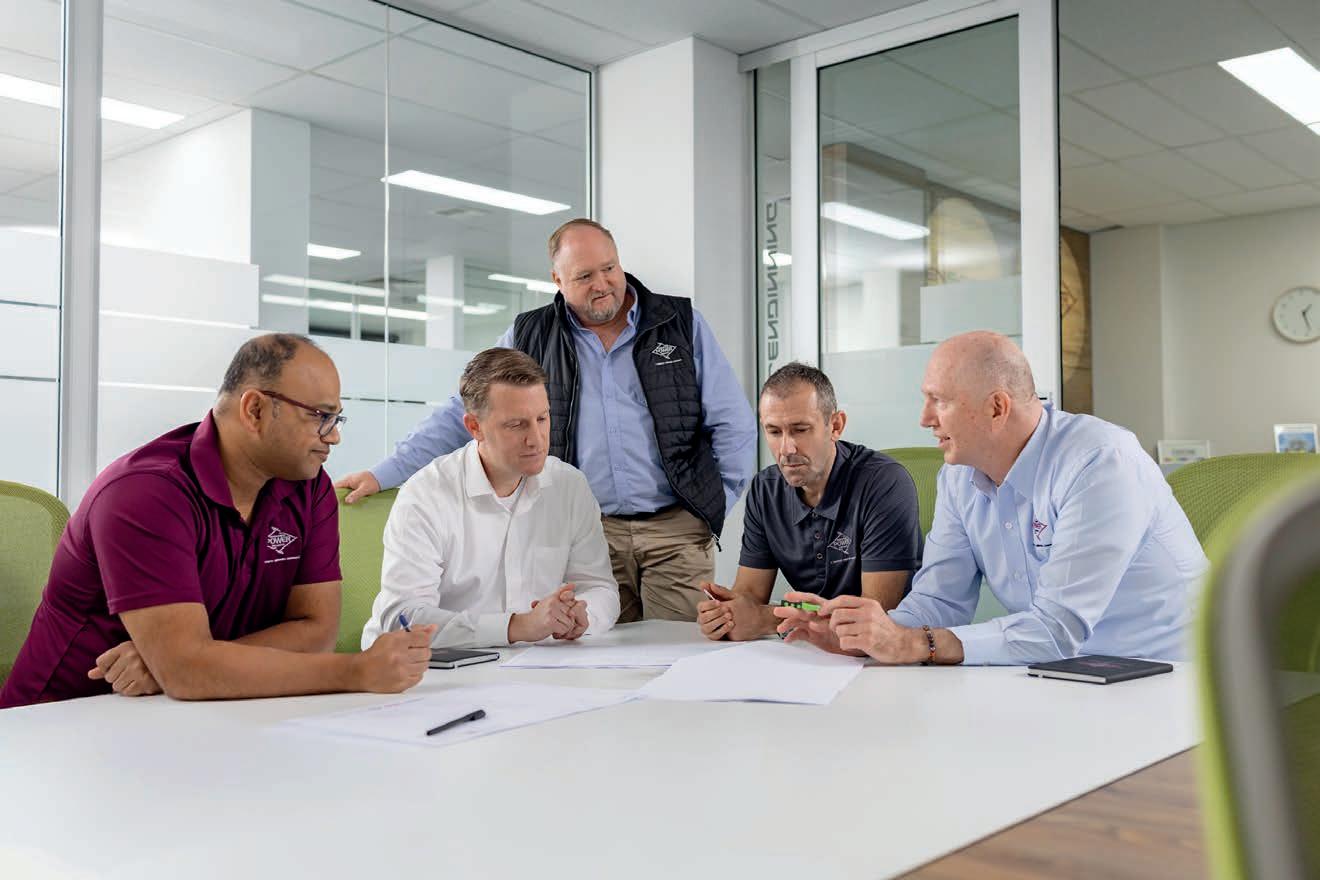
To support growing demand, CPP is expanding its WA operations by building local engineering, project delivery and construction capability across the state. Its Perth office, co-located with fellow Quanta Services company Enscope in West Leederville, provides a local base for CPP’s growing team, with engineering and project delivery resources expected to more than double by the end of 2026 and continue to scale again by the end of 2027. That growth will be supported by a site-based construction workforce across WA projects.
For Clarke, building capability is a critical part of the business’s long-term plans.
“My focus is on developing a high-calibre WA engineering team that complements CPP’s national capability, while creating opportunities for people to build their careers locally,” he says.
The second challenge is transmission infrastructure approvals. While project approvals and offtake arrangements continue to progress, many developments


remain dependent on transmission network upgrades and augmentation projects being delivered on schedule.
“Projects can secure approvals and offtakes, but they still rely on the network keeping pace,” Maree says.
According to Clarke, early contractor involvement is becoming increasingly important in helping developers improve certainty during project development.
“Early involvement provides greater clarity around project requirements, delivery strategies and timelines, while allowing resources to be planned ahead of construction,” he says.
While the WA team grows, it will be supported by CPP’s national workforce, made up of more than 800 employees who
bring additional specialist expertise across transmission lines, substations, and grid connection infrastructure when required.
CPP’s experience spans wind, solar, battery energy storage and synchronous condenser projects, supporting customers throughout the grid connection process.
One group, multiple capabilities
CPP forms part of Quanta Services, one of the world’s largest and prominent energy and infrastructure contractors.
In Australia, that includes fellow operating companies Enscope and Nacap, creating opportunities to combine specialist capabilities across generation, transmission, industrial and renewable energy projects.
Rather than operating in isolation, CPP’s WA strategy has focused on working alongside established Quanta businesses already operating within WA.
“Part of our strategy was to build on the local presence that already existed within the Quanta family,” Maree says.
“That gave us the ability to establish ourselves quickly while continuing to recruit and grow our own WA team.”
That collaborative approach is already being applied across several projects.
CPP is currently working alongside Enscope on a WA gas generation project involving a 330 kilovolt substation and grid connection, while also partnering with Nacap on renewable energy developments that combine electrical and civil balance-ofplant delivery under a single model.
For project owners, the approach helps reduce interfaces, improve coordination and create greater certainty around delivery.
“A lot of clients are looking for a more
streamlined delivery model across larger projects,” Maree says.
“Combining civil and electrical capability within one delivery team can simplify project execution and improve outcomes.”
CPP and Nacap have previously delivered projects together in eastern Australia and are now progressing opportunities within WA.
The company is also partnering with PSD Energy on solar and battery hybrid developments, combining solar construction expertise with CPP’s experience delivering more than four gigawatts of battery energy storage projects nationally.
While much of today’s activity is concentrated within the South West Interconnected System, both Maree and Clarke expect investment and development opportunities to continue expanding across the state over the coming years.
“The timing is right,” Maree says.
“There’s significant activity happening today, and we expect to see further opportunities emerge as WA’s energy transition continues.”
Beyond project delivery, CPP is focused on supporting long-term capability within the state through recruitment, knowledge transfer and career development opportunities for engineers, tradespeople and construction professionals.
The high-voltage infrastructure solutions company is also working to support the next generation of industry talent through opportunities for graduate engineers, apprentices and emerging professionals.
CPP’s immediate priority is continuing to strengthen relationships with clients, delivery partners and key stakeholders, while growing its locally based team.
“We’re already on the panel of every major transmission network service provider across Australia,” Clarke says.
“We look forward to building a strong relationship with Western Power and supporting future grid infrastructure projects across WA.”
Following the Australian Energy Market Operator’s projections for WA, which shows sufficient generation capacity through to 2028-29, CPP is confident that the need for skilled people, strong delivery partnerships and expanded transmission infrastructure will only grow.
“It’s a pivotal time for the WA energy sector. The level opportunity in the state is significant. We’re excited to contribute to what comes next,” Clarke says.
Investment in renewable generation, battery storage and household energy resources has strengthened the near-term outlook for Western Australia’s electricity network, according to the Australian Energy Market Operator.
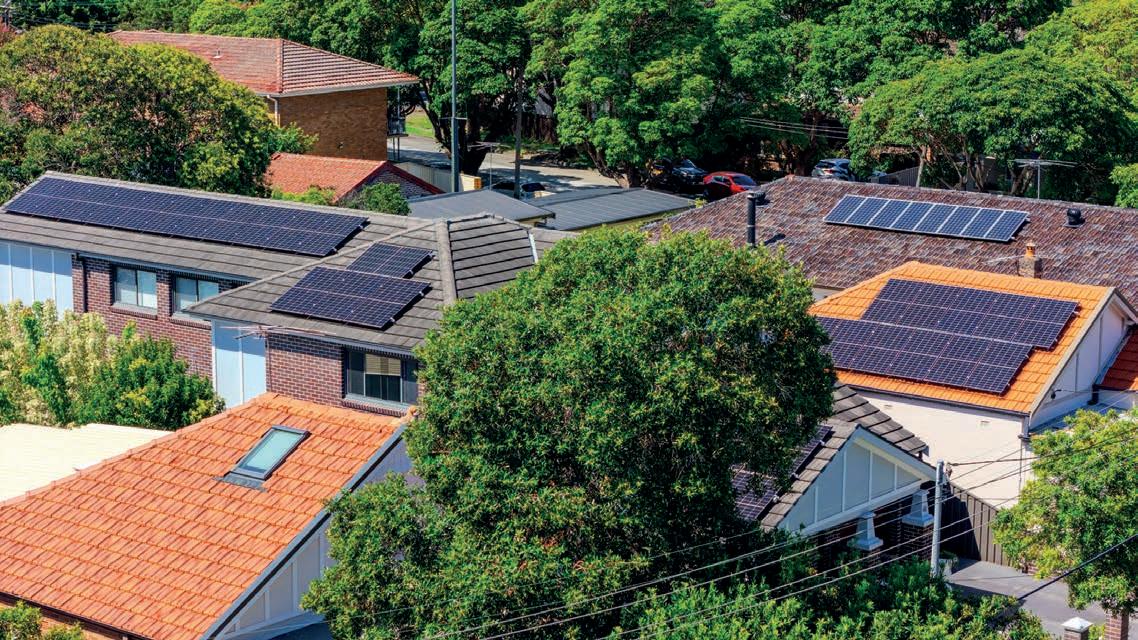
Investment in renewable generation, battery storage and consumer energy resources is strengthening the near-term outlook for Western Australia’s main electricity network. As a result, the Australian Energy Market Operator (AEMO) forecasts sufficient generation capacity across the South West Interconnected System through to 2028-29.
Published annually, AEMO’s 2026 Wholesale Electricity Market Electricity Statement of Opportunities assesses electricity supply, demand and investment requirements over the coming decade. This provides the Federal and state governments, investors and industry a roadmap for Western Australia’s transition to renewable energy for the next couple of years.
Kirsten Rose, Executive General Manager – Western Australia at AEMO, shares that Western Australia’s energy transition is looking promising.
“The near-term outlook for the South West Interconnected System has improved, and reliability targets are expected to be met over the next three years. This has largely been driven by strong investment alongside government-led initiatives,” she says.
The report forecasts a reserve capacity surplus across the next three years, including a surplus of 347 megawatts (MW) in 202829. That improvement is underpinned by a growing pipeline of committed renewable generation and battery storage projects, with 889 MW of new capacity expected to enter operation by 2028-29, and more than 1.1 gigawatts (GW) by 2030-31.
AEMO attributes the stronger outlook for Western Australia’s electricity system to the sustained investment supported by the Federal Government’s Capacity Investment Scheme and the Western Australian
Government’s Priority Project framework. The decision to extend the operating life of Bluewaters Power Station until 2030-31 was also found by AEMO to have improved nearterm grid reliability. This has been especially important for Western Australia as increasing loads of renewable generation and battery storage joins the grid.
Consumer energy resources are emerging as another increasingly important source of system capacity. Continued growth in rooftop solar and household battery installations, supported by state and Federal incentive programs, are expected to reduce pressure on the grid during evening demand peaks.
“Consumer investment in rooftop solar and household batteries is playing an increasingly critical role in the power system,” Rose says.
“When coordinated to act as virtual power plants, household batteries provide material benefits by discharging into the grid over the evening peak – reducing peak demand by 200 MW in 2028-29.”
According to the report, distributed rooftop solar capacity across the South West Interconnected System is forecast to almost double to around six GW by 2035-36. Meanwhile, household battery capacity is projected to increase more than fourfold to approximately 2.3 GW.
As more batteries are coordinated through virtual power plants, AEMO expects distributed energy resources to become an increasingly valuable source of flexible capacity, reducing the need for additional grid-scale investment.
Furthermore, annual electricity consumption in Western Australia is forecast to increase by 56 per cent over the next decade, reaching almost 32 terawatt-hours by 2035-36. This increase in electricity demand is
set to be influenced by the state’s population growth, and the transition of households and businesses to solar, electric vehicles and battery storage.
Data centres also feature as a standalone demand category for the first time, reflecting growing investment in digital infrastructure across the state.
Currently, Western Australia’s existing renewable energy project pipeline is not expected to meet projected demand. Without sufficient generation and storage, grid reliability could weaken during periods of low wind and solar output, increasing the risk of power outages.
To make the matter of grid reliability more pressing, AEMO forecasts that around 1661 MW of coal and gas-fired generation will retire by 2035-36.
While committed renewable and storage projects are expected to maintain adequate supply over the coming years, substantial additional investment will be required before the end of the decade to avoid emerging capacity shortfalls.
Despite this, investor confidence in new renewable energy projects remains strong.
According to the AEMO, more than 2000 MW of proposed projects have already submitted expressions of interest through the 2026 Reserve Capacity Cycle.
This shows continued momentum across Western Australia’s renewable energy projects to power its growing population –projected to jump from 3 million to over 3.5 million by 2036.
“Western Australia’s project pipeline is clearly strong, but it remains critical that new generation and storage capacity is delivered on time, alongside planned transmission network augmentations,” Rose says.









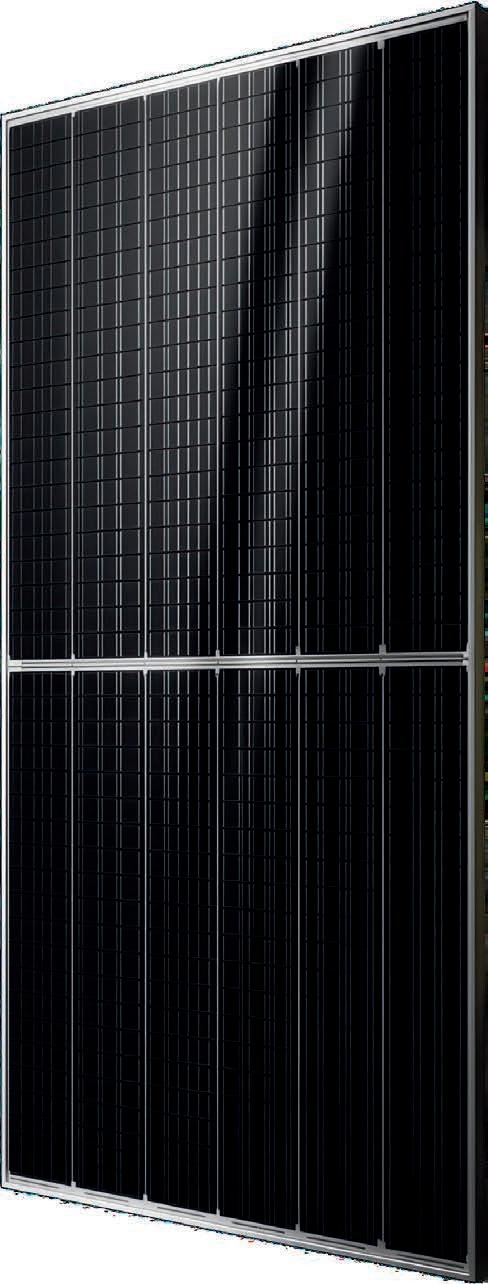
As investment increases across renewable generation, transmission and distribution infrastructure, workforce shortages across the energy sector have emerged as one of the industry’s pressing challenges.
Jobs and Skills Australia has identified 38 occupations deemed critical for Australia’s clean energy transition. This includes strong demand for electricians, engineers, technicians and project managers. At the same time, the Clean Energy Council (CEC) estimates an additional 40,000 workers will be required by 2030 to deliver on the nation’s renewable energy ambitions.
Specialised Energy Solutions (SES) is one of the companies tackling these workforce challenges head on.
Rather than solely recruiting employees with existing experience in the energy sector, the company’s growth strategy focuses on attracting skilled workers from adjacent industries such as mining, construction, utilities, and heavy industrial maintenance. In doing this, SES recognises that many of the technical capabilities required to build renewable energy infrastructure already exist elsewhere in Australia’s workforce.
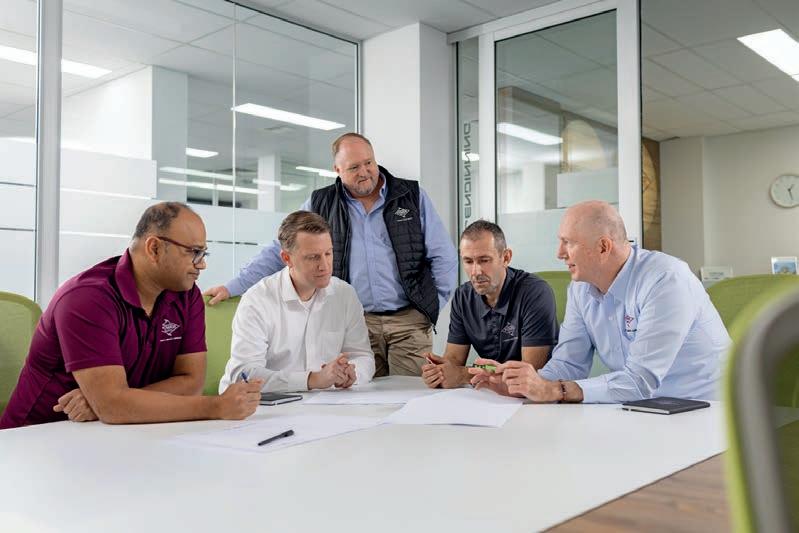
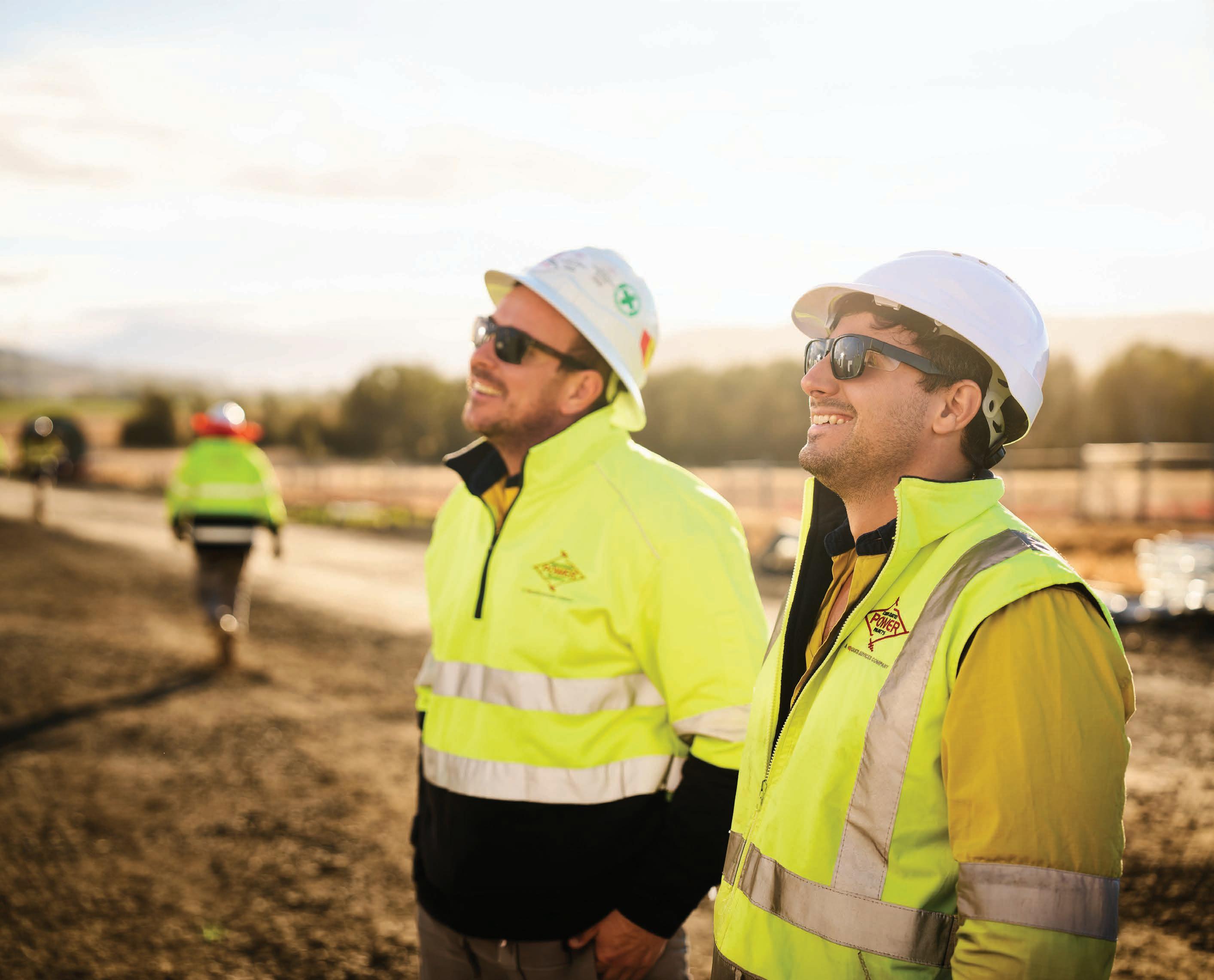
Today, SES employs around 80 people, including more than 60 experienced electricians, supporting utility-scale solar, wind, battery energy storage, as well as substation projects across Australia. Rather than specialising in a single stage of project delivery, the company works across construction, commissioning and long-term operations. With a far-reaching pipeline of work, employees at SES can easily develop their specialised energy sector expertise throughout the lifecycle of the company’s contracted renewable energy projects.
Paul Wilson, Operations Manager at SES, has witnessed this growing workforce over the last couple of years.
Having previously worked across building and construction, industrial maintenance and underground mining, Wilson joined SES shortly after it was established in 2022 to help build the operational team from the ground up.
“I was approached by the Chief Executive Officer at SES, Aaron Mulhall, whilst doing a night shift at the Helensburgh mine site in
Wollongong,” Wilson says.
“Aaron is such a friendly guy and used to be a tradie too, so when he asked me if I wanted to work in renewable energy, a sector I had no experience in, it didn’t seem daunting to me. At the end of the day, the most important thing in hands-on industries is having a boss and peers who are willing to teach you the ropes.”
Wilson believes his own career shows why adjacent industries are becoming increasingly important talent pools for renewable energy employers.
“I started my career in the building and construction industry and moved into commissioning and fault finding of control systems,” he says.
“I then moved into the meat processing industry as a maintenance electrician and
then underground mining as a general electrician. Working across these fields gave me the broad range of skills that have set me up to do well at SES.”
Wilson’s experience closely mirrors findings from the CEC’s 2026 Careers Guide that identifies industries such as mining, construction, manufacturing, and utilities as some of Australia’s largest pools of transferable renewable energy talent.
Jobs and Skills Australia reaches a similar conclusion, noting that capabilities such as high-voltage electrical work, commissioning, maintenance, civil construction and project delivery can transition seamlessly into renewable energy roles through targeted upskilling. For SES, attracting experienced workers from adjacent industries is only part of the equation.
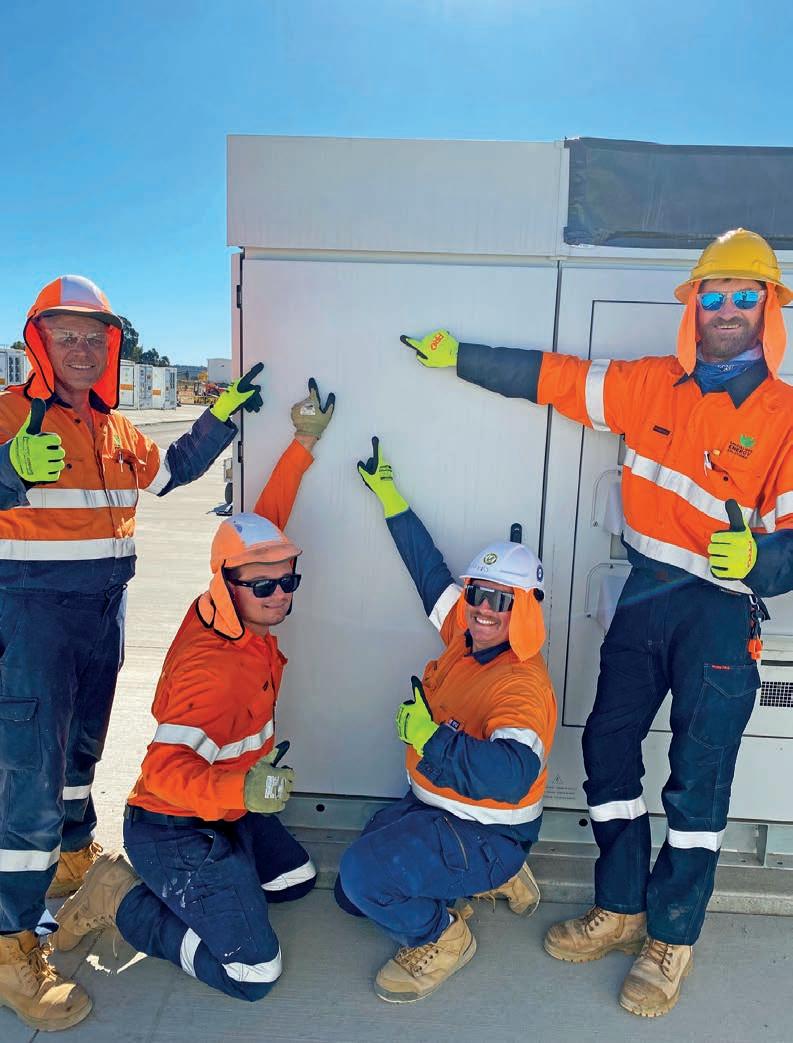
Retaining them will become equally important. Wilson attributes much of the company’s growth to its workplace culture.
“We now have over 80 employees after starting with a team of six electricians threeand-a-half years ago, most of whom are still with us,” he says.
“I believe the culture we promote is why we have a high retention rate and the friendship and mateship we share is key to the continued success of SES.”
That culture extends beyond day-today project delivery, with the company supporting field teams through structured rosters, flexible leave arrangements and regular opportunities for employees to reconnect outside of work.
Professional development has become a key part of that approach.
Apprentices and early-career electricians gain experience across installation, testing, commissioning and maintenance before progressing into supervisory or specialist technical roles.
As projects mature, engineers and project professionals have opportunities to expand into operations, grid reliability, technical assurance and asset optimisation, allowing careers to evolve alongside Australia’s growing renewable energy assets.
“Currently, multiple apprentices and supervisors are working on progressing within the business,” Wilson says.
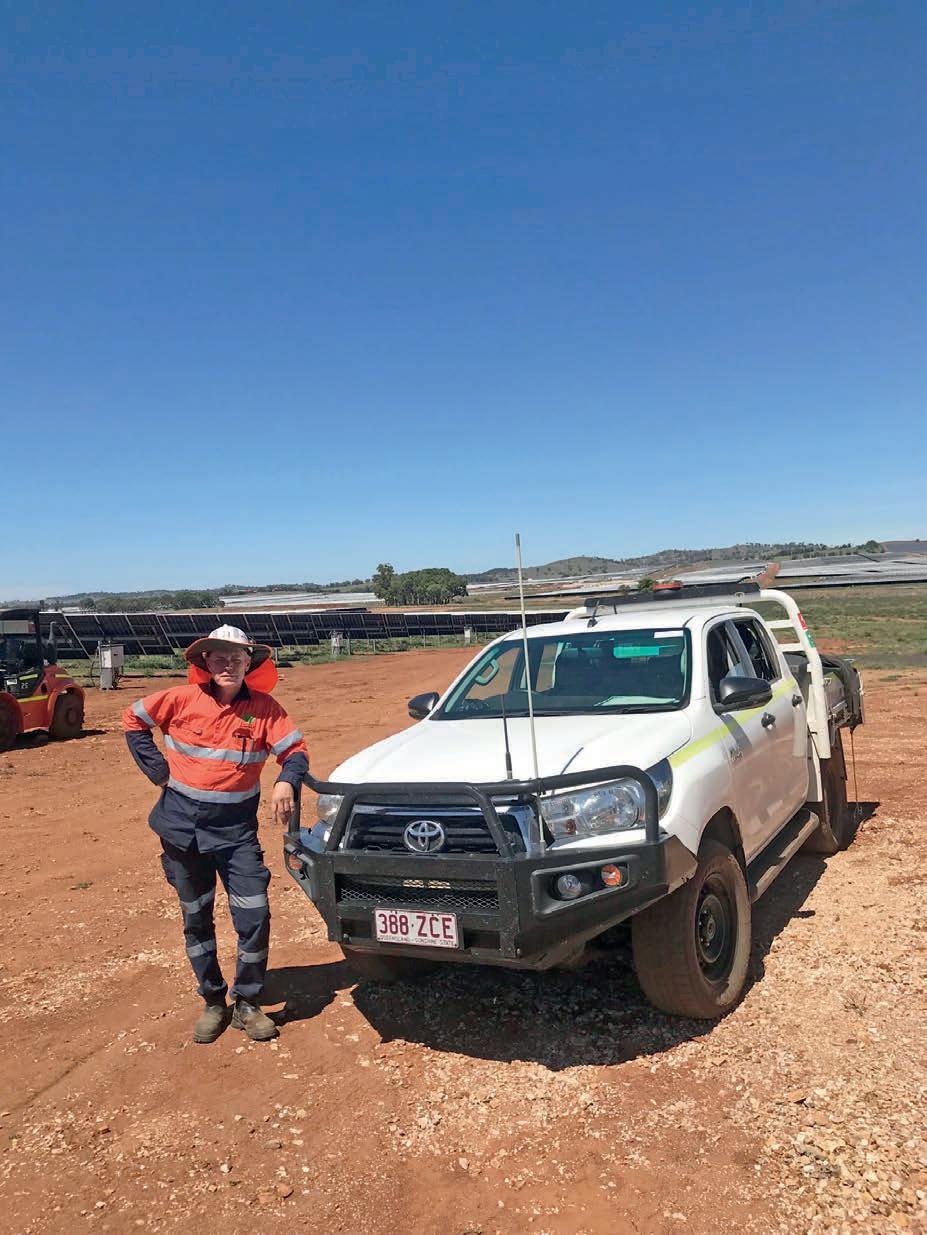
“We’re always happy to help our existing and prospective staff achieve whatever level of training and experience they desire.”
Combined with technical mentoring, nationally accredited training and opportunities to work alongside experienced renewable energy specialists, SES has found that its strategic pivot towards professional development has been attracting traditionally underrepresented pools of talent, such as youth and women.
The CEC consistently identified workforce diversity as critical to meeting Australia’s clean energy ambitions, noting that women comprise just 39 per cent of the national clean energy workforce and remain significantly underrepresented in technical, leadership and field-based roles.
CEC also highlighted the need to attract younger workers, apprentices and people from adjacent industries if Australia is to fill the estimated 40,000 additional clean energy roles required by 2030.
For Wilson, creating structured entry pathways is as much about addressing future workforce shortages as it is about delivering on today’s important utility-scale projects.
“At SES, we’re focused on bringing on more people like me who may never have considered this type of career before,” he says.
“By pairing nationally recognised training with mentoring from experienced people in the field, we’re helping workers build long-term careers rather than simply filling positions on individual projects.
That includes young people entering the workforce, women looking to build careers in the sector and experienced tradespeople transitioning from other industries.”
Regional employment also forms a pillar of SES’s workforce strategy.
With most utility-scale renewable energy developments located outside metropolitan centres, the CEC has warned that regional Australia will become increasingly competitive for skilled labour.
This is because multiple renewable energy, transmission and infrastructure projects progress simultaneously.
Maximising local employment not only helps address workforce shortages, it ensures the economic benefits of renewable energy projects remain within host communities.
“It’s very important to utilise local labour whenever possible,” Wilson says.
“Working in regional and remote locations can make recruitment more challenging, but our first priority is always to look locally. Giving people the opportunity to work on projects in their own communities builds local capability, while also creating lasting employment opportunities beyond the initial build of a project.”
Wilson points to SES’s work on the Eraring Battery Energy Storage System in New South Wales as an example of the company’s local capability philosophy in practice.
“Our workforce on Eraring has been made up entirely of local employees sourced from the surrounding region, including Sydney, the Central Coast, Newcastle and Wollongong,” he says.
“Not only does that reduce the need for flyin, fly-out workforces, but it also importantly means we’re investing directly in local skills and leaving behind a stronger workforce that can support future renewable energy projects across regional Australia.”
SES encourages people from adjacent industries to express their interest in upcoming roles, contact: Admin@specialised.energy

A new report argues that breaking down barriers for women entering electrical trades is critical to meeting Australia’s growing clean energy workforce demand.
Women account for less than four per cent of Australia’s electrical trades workforce, despite increasing demand for skilled electricians across the renewable energy sector.
A new Gender Impact Assessment (GIA) Report, released by Future Energy Skills, argues that increasing women’s participation is no longer just an equity issue. It is a means for Australia to address workforce shortages across critical parts of the energy sector; such as, renewable energy, battery storage, transmission infrastructure, and electrification. Produced as the first phase of the Powering Women into Clean Energy Apprenticeships Project, the GIA report examines the structural and cultural barriers preventing women from entering and remaining in electrical trades, while outlining practical actions employers can take to improve recruitment and retention.
Evidentally, Australia’s transition to
clean energy will require thousands of additional electricians to install renewable energy systems, connect transmission infrastructure, deploy battery storage and electrify homes, businesses and industry.
However, Genevieve Walton, Future Energy Skills Project Lead for Powering Women into Clean Energy Apprenticeships, believes the energy sector is overlooking a significant part of its future workforce.
“The industries that have the greatest workforce shortages, whether they’re maledominated trades or sectors like aged care and childcare, are commonly industries that are quite gender segregated,” she says.
“Continuing this gender segregation in critical industries such as renewable energy, when we know there’s going to be such an increased demand for more workers, just exacerbates the problem.”
Rather than competing for an increasingly limited pool of skilled workers, Future
Energy Skills argues the energy sector should focus on attracting more women into electrical careers by removing barriers that limit participation.
Drawing on a literature review and interviews conducted by Tradeswomen Australia with apprentices, qualified electricians, mentors and women who have since left the industry, the report identifies persistent challenges.
These challenges include rigid gender stereotypes, limited awareness of trade careers, exclusionary recruitment practices, unsafe workplace cultures, and a lack of coordinated industry action.
The GIA report found many of the barriers preventing women from entering electrical trades emerge long before an apprenticeship application is submitted.
According to the report findings, career
decisions are often shaped by attitudes formed during school.
“Whether it’s parents, careers advisers or peer groups, there’s often a perception that an electrical career wouldn’t be appropriate or safe for their daughters,” Walton says. Those perceptions are reinforced by limited exposure to vocational career pathways during secondary education.
“Some schools and career advisers don’t have a good understanding of trade careers and the many electrical training pathways for young woman, which is a missed opportunity for those who enjoy practical work,” Walton says.
According to Walton, Australia’s education system continues to prioritise university pathways over vocational education.
“This is a missed opportunity for many young people who aren’t passionate about working in the knowledge economy,” she says.
For women who do enter practical trades, workplace culture remains a major challenge to long-term retention.
Juniper, an experienced electrician interviewed for the report, describes the pressure many women continue to experience onsite.
“[They think] you only got the job because you’re a girl. It cheapens what you’ve worked hard for… all these little things that people say and do just add to that pressure to be better, be perfect,” she says.
The GIA report suggests these experiences reflect broader workplace culture tensions,
rather than isolated incidents.
Charles, an electrical industry mentor interviewed for the report, highlights that improving gender diversity requires broader cultural change.
“It’s not just changing sexist culture. It’s bigger than that. It’s about changing entire worldviews,” he says.
Rather than continuing to ask why women remain underrepresented across trades, the report encourages employers to focus on practical changes that could improve recruitment and retention.
One example is ensuring female applicants have opportunities to engage with women during the recruitment and induction process. This gives apprentices someone they can identify with while they are early in their career.
The GIA report forms the first stage of the Powering Women into Clean Energy Apprenticeships Project, supported through the Federal Government’s Building Women’s Careers Program.
Future Energy Skills developed the report to establish a baseline before working directly with employers to trial practical workplace improvements.
“The report is really just the first phase of our project. We wanted to get a really good sense of the current state of play before we started working with employers. It also provides a solid roadmap for progress across trades moving forward,” Walton says.
The recent findings of Future Energy Skills have informed a practical toolkit of workplace policies, procedures and selfassessment resources that participating employers can use to strengthen diversity, inclusion and workplace culture.
Walton shares that the Powering Women into Clean Energy Apprenticeships Project will continue to evolve as Future Energy Skills work alongside more participating businesses across Australia.
“Through identifying the key barriers to increasing female participation, we’re able to tailor our approach when working with employers to improve conditions,” she says.
Participating employers can access the Building Women’s Careers Program free of charge and receive up to two years of workplace support.
Initially, Future Energy Skills plans to attract more small and medium-sized businesses to get involved, as they often lack the dedicated human resource teams to develop diversity initiatives.
“We understand renewable energy companies are really busy. And that although they want to attract more women into their workforce, they often don’t have the spare time or capital to focus on it properly,” Walton says.
“We act as an advisor for renewable energy companies to evaluate what works, adjust where things aren’t working, and then identify what can be embedded into their workplace practices to attract the female workforce they need.”
The GIA report recommends employers review their recruitment practices, particularly the language used in job advertisements, while making greater use of organisations already connecting women with apprenticeship opportunities.
“Reviewing recruitment language is only part of the solution. Employers should also make greater use of organisations already connecting women with apprenticeship opportunities,” Walton says.
“BUSY At Work, for example, has rolled out recruitment initiatives focused on women into trades. Already, they have found hundreds of young women readily looking for electrical apprenticeships.”
Future Energy Skills encourages employers to work closely with Apprenticeship Connect Australia providers such as project partners BUSY At Work, MAS National and MEGT. These providers can readily match employers with suitable female candidates and provide ongoing support for apprenticeships once they are onboarded.
“These providers can also help employers find someone who lives within the company’s local area and suits the skills and culture of their business,” Walton says.
“In addition, Australian Apprenticeship Support Services offer ongoing support with mentoring, paperwork and accessing apprentice funding. Interestingly, a lot of small business owners just aren’t aware this free support even exists.”
The GIA report concludes that addressing skills shortages in the energy sector, specifically for electrical trades, will require more than increasing apprenticeship numbers. It will require a coordinated sectorwide effort towards encouraging women to consider trade careers from school age, inclusive workplace practices, mentorship, and professional development pathways.
To get involved in the Powering Women into Clean Energy Apprenticeships project, contact Future Energy Skills: Bwc@futureenergyskills.com.au
Sungrow aims to simplify residential backup power installations with the launch of EnergyBridge, a solution designed to overcome the industry’s biggest installation challenges.
Backup power has long been one of the most complex aspects of residential battery installations. Conventional backup gateways often require external wall-mounted hardware, extensive cabling, rewiring, and lengthy installation times.
Sungrow believes there is a better way.
The company recently launched EnergyBridge, describing it as one of the industry’s first mini backup power solutions. Rather than redesigning the battery itself, Sungrow has simplified the backup gateway by integrating multiple functions into a compact device that fits inside a home’s existing distribution board.
According to Johnson Fan, Solutions Manager at Sungrow, the streamlined design benefits both installers and homeowners.
“EnergyBridge is the result of years of research and development at Sungrow to reduce installation times for residential backup power systems, minimise hardware requirements and improve overall system resilience without compromising backup performance,” he says.
Over time, Sungrow has built its reputation as one of the world’s largest inverter manufacturers, with a portfolio spanning photovoltaic inverters, battery energy storage systems, power conversion systems, electric vehicle charging infrastructure, floating solar platforms, wind power converters, and hydrogen technologies.
The global company’s significant investment in research and development has delivered innovations ranging from the world’s first 35-kilovolt solid-state transformer-based photovoltaic inverter to the first grid-connected 2000-volt inverter.
According to Fan, EnergyBridge continues this focus on innovation by rethinking one of the most overlooked components of residential energy systems: the backup gateway.
Rather than relying on multiple external devices, EnergyBridge integrates five core functions into a single unit; including, on/off-grid switching, metering, backup protection, bypass switching, and current transformer capability.

The streamlined design also reduces switchboard space requirements. Compared with traditional backup system architectures that rely on multiple separate components, EnergyBridge integrates key functions into a unified system. This reduces switchboard requirements from around 14 poles to just four to six – a reduction of approximately 57 per cent.
The simplified design also transforms the installation process. Conventional backup gateways generally require external wall-mounting, drilling, levelling and extensive alternating current cabling, adding around an hour of labour depending on the installation. Instead, EnergyBridge installs directly inside the existing distribution board, clipping onto a standard DIN rail in around 20 seconds.
“By eliminating wall-mounting, surface conduit and additional mounting hardware, EnergyBridge is particularly well-suited to retrofit projects where the battery and switchboard are separated by walls or complex building layouts,” Fan says.
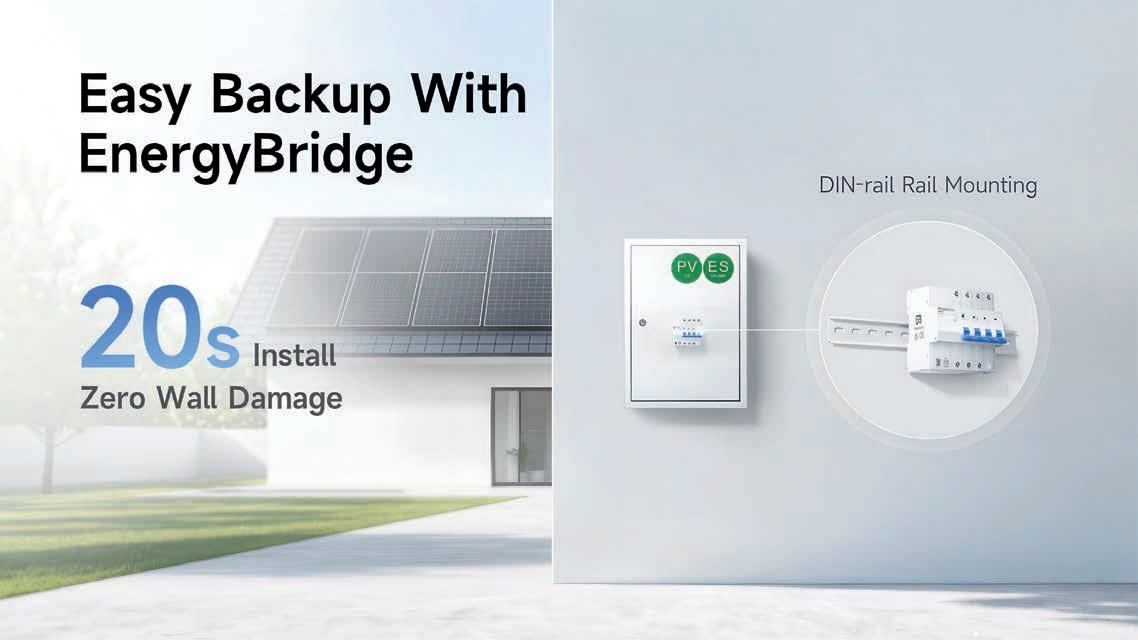
“EnergyBridge improves system integration and cuts installation time, creating a better experience for both homeowners and installers.”
Sungrow estimates the simplified design can reduce overall system costs by up to 12 per cent through lower labour requirements, fewer components and faster installation.
“Compared with conventional solutions, EnergyBridge reduces the complexity of wall-mounted installation while minimising the use of alternating current cabling. Its compact design also saves space, allowing for a more flexible and efficient system layout,” Fan says.
As Australia’s electricity network continues to evolve, more households are investing in battery backup to protect against
outages caused by severe weather, network disruptions and planned maintenance.
For many homeowners, reliable backup has become as important as reducing electricity bills.
EnergyBridge has been designed to switch between grid and battery power in less than 10 milliseconds, making transitions virtually imperceptible during an outage.
The system also supports more than 6000 high-current switching cycles and has a maximum breaking capacity of six kiloamperes. By integrating multiple switching and protection functions into a single device, Sungrow has also reduced the number of individual components that could fail over the system’s lifetime.
“EnergyBridge delivers seamless switching within 10 milliseconds, with transitions virtually imperceptible to users in real-world conditions,” Fan says.

“In addition, a switching lifecycle of up to 6000 operations effectively reduces failure risks and enhances overall system stability and reliability.”
The whole-home backup concept of EnergyBridge is mainly designed to reduce electricity costs by connecting to the backup port while the grid is available. In normal operation, this helps optimise energy usage and improve cost efficiency.
Unlike many conventional backup solutions that protect only selected circuits or a whole-home, three-phase backup can maintain power across much larger portions of the home while balancing electrical loads more effectively.
Supporting the next generation
Sungrow has witnessed Australia’s residential battery market evolve as battery prices fall, home electrification accelerates, and more households seek greater energy independence.
Future home energy systems are expected to become increasingly connected, participate in virtual power plants (VPPs), support vehicle-to-everything (V2X) charging, and provide greater flexibility to the electricity grid.
Fan believes home storage products will need to integrate more seamlessly with these emerging technologies.
“We believe future development will focus on reliable home energy systems while expanding into emerging applications such as VPP and V2X,” he says.
“With its highly integrated and intelligent design, EnergyBridge enables Sungrow to continue driving industry innovation, unlock broader application possibilities, and maintain market leadership through technological advancement.”
According to Sungrow, this shift is likely to increase demand for products that reduce installation difficulty, while supporting increasingly sophisticated home energy systems. As battery technology matures, differentiation is likely to depend on more than battery chemistry or inverter efficiency.
“By redesigning one of the least visible but most labour-intensive components of residential battery systems, EnergyBridge demonstrates how targeted innovation can deliver meaningful benefits for both installers and homeowners,” Fan says.
With a new manufacturing facility in Wenzhou and a lineup of renowned athlete ambassadors, Fox ESS is using its global rebrand to bring renewable energy technology into the mainstream.
Having entered the Australian market in 2020, Fox ESS has rapidly established itself as a major player in the global residential energy storage sector.
Global Brand and Marketing at Fox ESS, the rebrand marks the beginning of the company’s next stage of growth.
In 2025, the company achieved the number one global residential energy storage market share ranking according to S&P Global Energy‘s Residential Energy Storage Market Tracker. Now, the Wenzhou-headquartered renewable energy technology company is looking beyond manufacturing, launching a global rebrand aimed at positioning Fox ESS as a recognised renewable energy brand rather than solely an energy storage supplier.
According to Michelle Li, Director of
“We don’t see being number one as the finish line. It’s the beginning of a new chapter,” Li says.
“Over the past few years, we’ve grown rapidly as a technologically driven manufacturer. Now we want to evolve into a truly global energy brand.”
The company is entering this next phase with considerable scale behind it. Fox ESS now operates in more than 70 countries, employs over 5000 staff globally and supports product development through six research and development centres.
However, Li says the global company’s future direction extends beyond growth metrics alone.
“As our business continued to expand, we knew it was the right time to evolve our brand to better reflect who we are today, as well as our aims for tomorrow,” she says.
“The new brand is not just a visual identity. It represents our commitment to innovation, community and building longterm partnerships with our customers.”
While the rebrand introduces a new visual identity, Fox ESS says the initiative reflects a broader investment in long-term market presence and customer engagement.
An updated logo incorporates a circular design inspired by solar storms, intended to symbolise limitless energy and reinforce the company’s belief that renewable energy should be accessible to everyone.
“The circle in our logo represents endless energy. We believe the sun shines on everyone, so its power should too,” Li says.
The refreshed identity of Fox ESS also introduces purple as the company’s primary global brand colour.
“We wanted one colour that could represent Fox ESS globally. Purple is distinctive, inspiring and unique within the renewable energy industry,” Li says.
The visual changes are supported by updated digital platforms, global brand guidelines and expanded customer
engagement programs. This is designed to create greater consistency across international markets.
For Li, a successful rebrand requires more than just updated marketing materials.
“A genuine rebrand requires significant investment. If you’re rebranding, it means you’re investing in the long-term, not simply selling products and moving on,” she says.
Central to the rebrand is Fox ESS’s new Champions Choice campaign, which aligns the company with high performance, quality and trust through partnerships with internationally recognised athletes.
The campaign features Australian Olympic swimming champion, Ian Thorpe, alongside professional international sporting ambassadors, such as South African cricketer Tawanda Muyeye, with further athlete partnerships planned across Europe and North America.
According to Li, the initiative is designed to elevate perceptions of the Fox ESS brand.
“We don’t want to be known only as good value or affordable. We want to be trusted as one of the best in the market. We have the technology to support that position,” Li says.
The campaign is built around three themes: higher, faster and lighter.
‘Higher’ refers to energy conversion efficiency, ‘faster’ highlights reduced installation times, while ‘lighter’ reflects the company’s battery design philosophy.
“With our current product design, installers can complete two systems in a household within a single day. That saves
both time and labour,” Li says.
The company has also installed Fox ESS products in the actual homes of its signed athlete ambassadors.
“We want our ambassadors to experience the products themselves and trust the renewable energy technology they represent,” Li says.
While the rebrand has a global focus, Australia continues to be one of Fox ESS’s most important markets.
The company operates offices in Sydney and Melbourne and employs more than 40 local staff across sales, marketing, product management, and business operations.
A further 50 personnel support service delivery and technical assistance.
“Local service is extremely important to us,” Li says.
“If you’re selling a premium home energy solution, strong local support for both customers and installers is essential.”
Fox ESS has also expanded its investment in installer training and technical support, delivering regular online and in-person education programs across the country. Furthermore, the company remains actively involved with industry organisations such as the Clean Energy Council and Smart Energy Council.
A key theme throughout the rebrand is the emphasis on tangible investment, rather than marketing alone.
This is exemplified by Fox ESS’s recently

opened phase two manufacturing facility in Wenzhou, China.
Covering approximately 46,000 square metres, the facility supports research and development, intelligent manufacturing and production across battery systems at scale, Printed Circuit Board Assembly products, and commercial and industrial energy storage solutions.
The site is capable of producing a battery pack every seven seconds, operates with more than 60 per cent automation, and contributes towards an expected total annual production capacity of up to 50 gigawatts.
“The new brand is backed by something real,” Li says.
“Our new factory and technology platform provide stable manufacturing capacity for global markets, including Australia.”
Fox ESS is also highlighting growing deployment volumes through its Fox Cloud platform, which recorded approximately 25,000 Australian system installations during April alone.
Beyond manufacturing, the company continues to expand community initiatives; including renewable energy access programs in South Africa, environmental projects in Pakistan, and discussions around supporting youth swimming programs in Australia.
For Fox ESS, its rebrand represents the company’s effort to strengthen connections with customers, installers and partners across its global footprint.
“Our S&P Global ranking gives us the credibility, but we want to achieve much more,” Li says.
What does a memorandum of understanding signed in Shanghai have to do with the future of Australian homes? More than you might think.
As more Australians look for smarter ways to reduce power bills, improve energy independence and keep the lights on during outages, attention is shifting to how generated home solar energy is stored, managed and used.
Those priorities were front and centre at one of the world’s largest renewable energy exhibitions, the 2026 SNEC Photovoltaic Conference and Exhibition in Shanghai, where Growatt and Australian distributor Go Solar signed a renewed memorandum of understanding (MoU) targeting two gigawatt-hours (GWh) of cooperation over the next two years.
Lisa Zhang, Vice President of Operations and Marketing at Growatt, affirms the agreement reflects global confidence in Australia’s distributed solar and battery market, as well as the value of well established local partnerships.
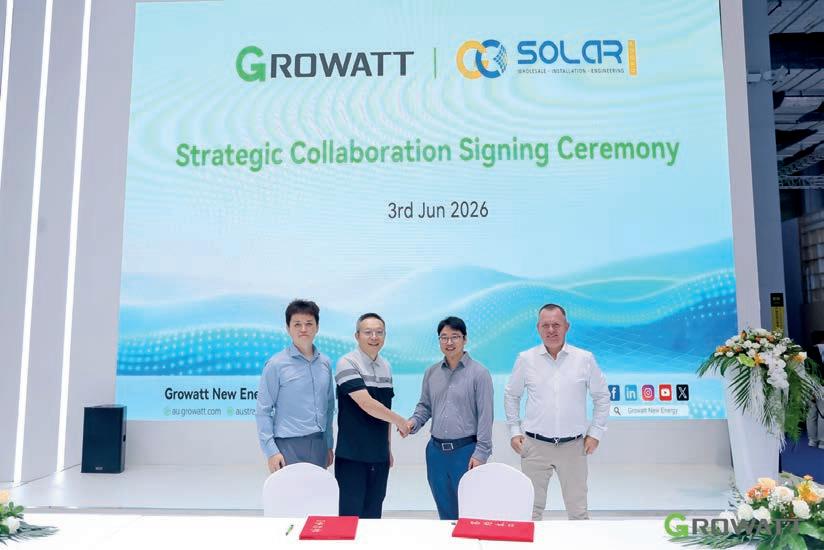
“Before investing in a solar and battery system, homeowners want to know they’ll have support if something goes wrong. That’s where strong partnerships between global technology companies and local distributors make a difference,” Zhang says.
“While manufacturers develop clean energy technology, partnerships with local distributors such as Go Solar provide installation, technical support and after-sales service. This makes it easier for homeowners to access assistance and process warranty claims for their system to ensure its long-term performance.”
That local support model has underpinned Growatt’s standing partnership with Go Solar over the last few years.
Established in 2011, Growatt supplies photovoltaic inverters, battery storage systems, electric vehicle chargers and smart energy management solutions in more than 180 countries.
Since 2015, Go Solar has built a national engineering, distribution and technical support network across Australia.
Together, the two companies aim to
accelerate the deployment of distributed energy technologies, while strengthening the local support that homeowners require long after installation.
According to Zhang, the Australian market is undergoing a shift from standalone solar systems to solar-plus-storage integration.
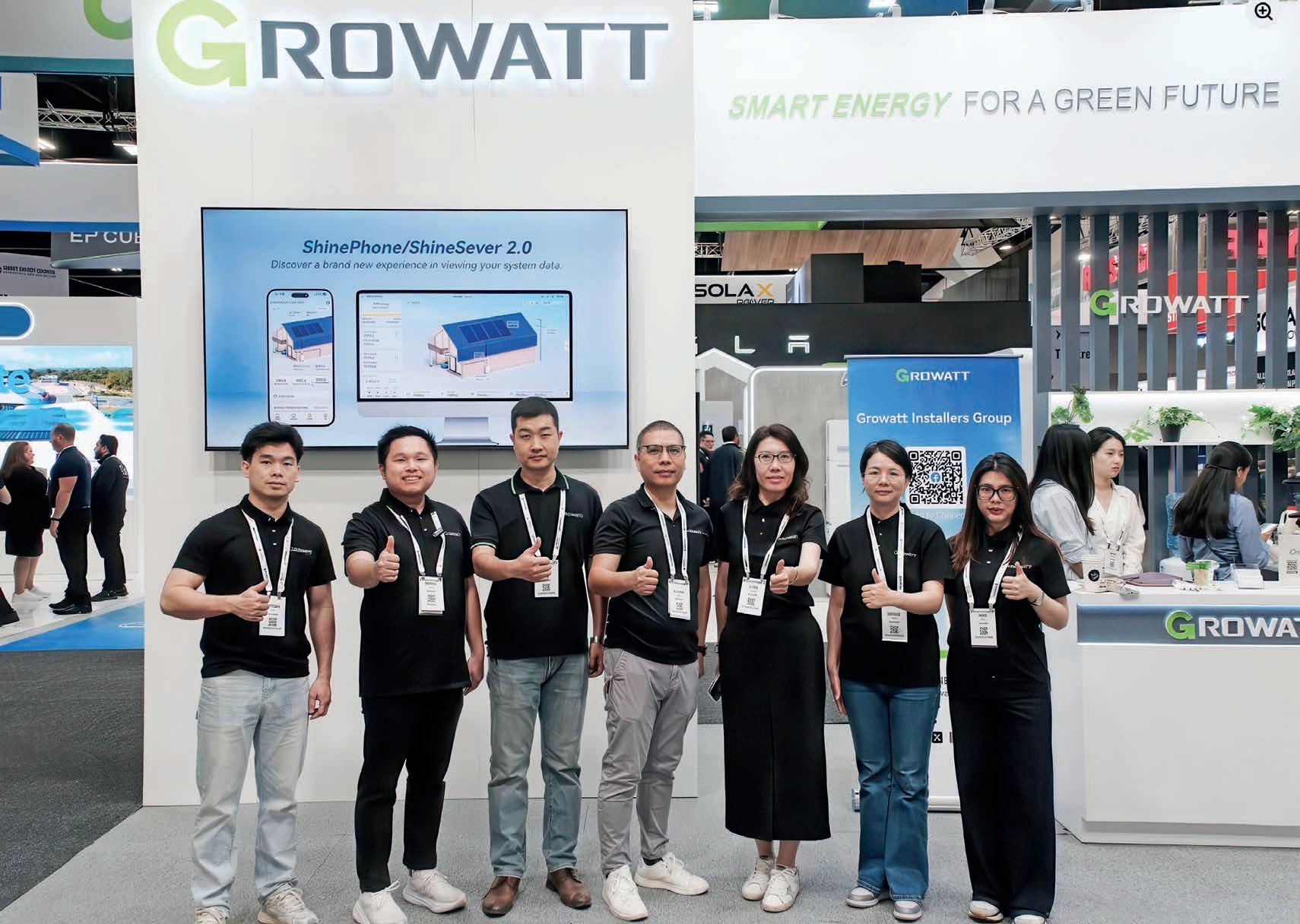
“Federal Government battery incentives have reduced barriers to household storage adoption, creating strong demand for integrated energy systems, rather than standalone rooftop solar installations,” she says.
At the same time, rising household electrification across Australia has increased consumer preference for higher-power
and larger-capacity storage configurations to power the usage of electric vehicles, electrified appliances and growing household electricity consumption.
Growatt has responded by developing modular storage systems that can be expanded over time. This allows homeowners to increase storage capacity as their energy needs evolve, rather than replacing existing equipment.
Another point of innovation for Growatt have been its intelligent home energy systems that allows homeowners to automatically manage when and how energy is generated, stored and used, rather than requiring manual control.
“Growatt’s artificial intelligence (AI) enabled energy management platform provides smart charge, discharge optimisation, and seamless connection with Australia’s leading third-party Virtual Power Plant (VPP) networks,” Zhang says.
“This allows users to participate in grid dispatch programs, maximise economic returns, and generate long-term value from their renewable energy systems.”
For homeowners, these technologies work
quietly in the background. A hybrid inverter acts as the control centre of the home energy system, automatically directing solar energy to where it delivers the greatest benefit – whether that be powering the home, charging the battery or exporting electricity to the grid.
Intelligent energy management software then optimises those decisions based on household electricity demand, battery charge levels and energy tariffs, helping maximise self-consumption and reduce reliance on grid electricity. Furthermore, VPP integration allows households to sustain required power supply from the grid during peak periods.
Working in unison, these technologies reflect the current expectations of distributed energy resources to contribute not only to household savings, but also to overall grid stability.
While Australia remains one of the world’s leading rooftop solar markets, continued growth brings new challenges.
updated to keep up, with installers facing increasing pressure to deliver sophisticated systems with greater efficiency.
“All Growatt inverters have a grid resource control function. To reduce grid load, our storage hybrid systems boost self-consumption supported by smart cloud energy management,” Zhang says.
To support these intelligent system capabilities, Zhang says all Growatt products are certified to Australian requirements with remote firmware update capability, allowing systems to adapt as technical standards and grid requirements continue to evolve.
With government incentives expected to further accelerate battery uptake, Zhang says the company’s renewed partnership with Go Solar is focused on translating growing consumer demand into practical deployment across the Australian market.
As grid integration requirements continue to evolve, technical standards are regularly
“The two-gigawatt-hour cooperation target from our MoU with Go Solar captures the strong momentum we’re seeing in Australia. Together with Go Solar, we’re focused on making advanced energy storage solutions more accessible while supporting installers with the products, training and technical expertise they need,” Zhang says.
Meeting that demand also requires installers to complete projects more efficiently. To reduce installation time and labour requirements, Growatt has introduced all-in-one residential battery storage systems designed to be installed in as little as 10 minutes.
“Against a backdrop of ongoing workforce constraints, simplifying installation while maintaining performance and reliability is key for installers,” Zhang says.
Further to Growatt’s advancements for the Australian market is its continued investment in installer capability. Growatt’s latest advancements include system design assistance, commissioning support, continued professional development, inverter technology, and intelligent energy management. Looking ahead, Zhang expects distributed energy systems to become deeply interconnected as homes and businesses combine solar generation, battery storage and intelligent energy management into unified energy systems.
“Moving forward, Growatt will focus on refining products for Australia’s unique conditions, expanding its AI capabilities within its intelligent management platform, as well as strengthening its VPP integration and local service ecosystem across the country,” Zhang says.
Rooftop solar remains Australia’s clean energy success story, but home batteries are now stealing the spotlight.
Australia’s small-scale renewable energy market continues to grow, with new data from the Clean Energy Regulator (CER) showing more than 6.8 million small-scale energy systems have now been installed nationwide.
The total includes more than 400,000 home battery systems supported under the Federal Government’s Cheaper Home Batteries Program.
CER’s latest postcode installation data, current to 31 May 2026, reinforces the continued growth in Australia’s rooftop solar market alongside the rapid uptake of residential batteries.
Since residential batteries became eligible under the Small-scale Renewable Energy Scheme on 1 July 2025, 401,185 battery systems have received approved applications. This makes the scheme one of the fastest technology rollouts in Australia’s distributed energy history.
Battery adoption has continued to accelerate throughout 2026, with 196,386 approved installations recorded during the first five months of the year alone. New South Wales is in the lead with 141,617
approved battery installations since July 2025, followed by Queensland (81,192) and Victoria (76,741).
These latest figures from CER suggest home batteries are now a standard addition to rooftop solar systems as households across Australia seek to maximise selfconsumption, improve energy independence and reduce utility costs.
Solar remains the market leader
Despite rapid growth in battery storage, rooftop solar remains Australia’s dominant small-scale renewable energy technology.
The CER’s latest postcode installation data shows 4.44 million solar photovoltaic (PV) systems have been installed nationally since records began, representing almost 29.7 gigawatts (GW) of rated generation capacity. Solar PV accounts for a majority of Australia’s small-scale generation fleet, far exceeding wind and hydro technologies.
Queensland continues to lead the nation with more than 1.19 million rooftop solar installations, narrowly ahead of New South Wales with 1.17 million. Victoria follows with 885,373 systems, while Western Australia has
installed 573,124.
Consumer investment in clean energy is now extending beyond rooftop solar. According to the CER, Australians have installed more than 1.96 million solar water heaters and air-source heat pumps, reflecting growing clean energy electrification household energy utilities.
The CER notes that installation totals for recent years will continue to rise, as system owners have up to 12 months to create small-scale technology certificates under the Renewable Energy (Electricity) Act 2000.
Therefore, CER’s latest figures are considered to represent a snapshot of installations for the reporting period of May 2024 to May 2025, with the expectation that totals for the next reporting period of May 2025 to May 2026 period will continue to increase as additional systems are registered.
For the latest CER postcode installation data, visit: cer.gov.au/markets/reports-and-data/ small-scale-installation-postcode-data



ecogeneration
Get
To
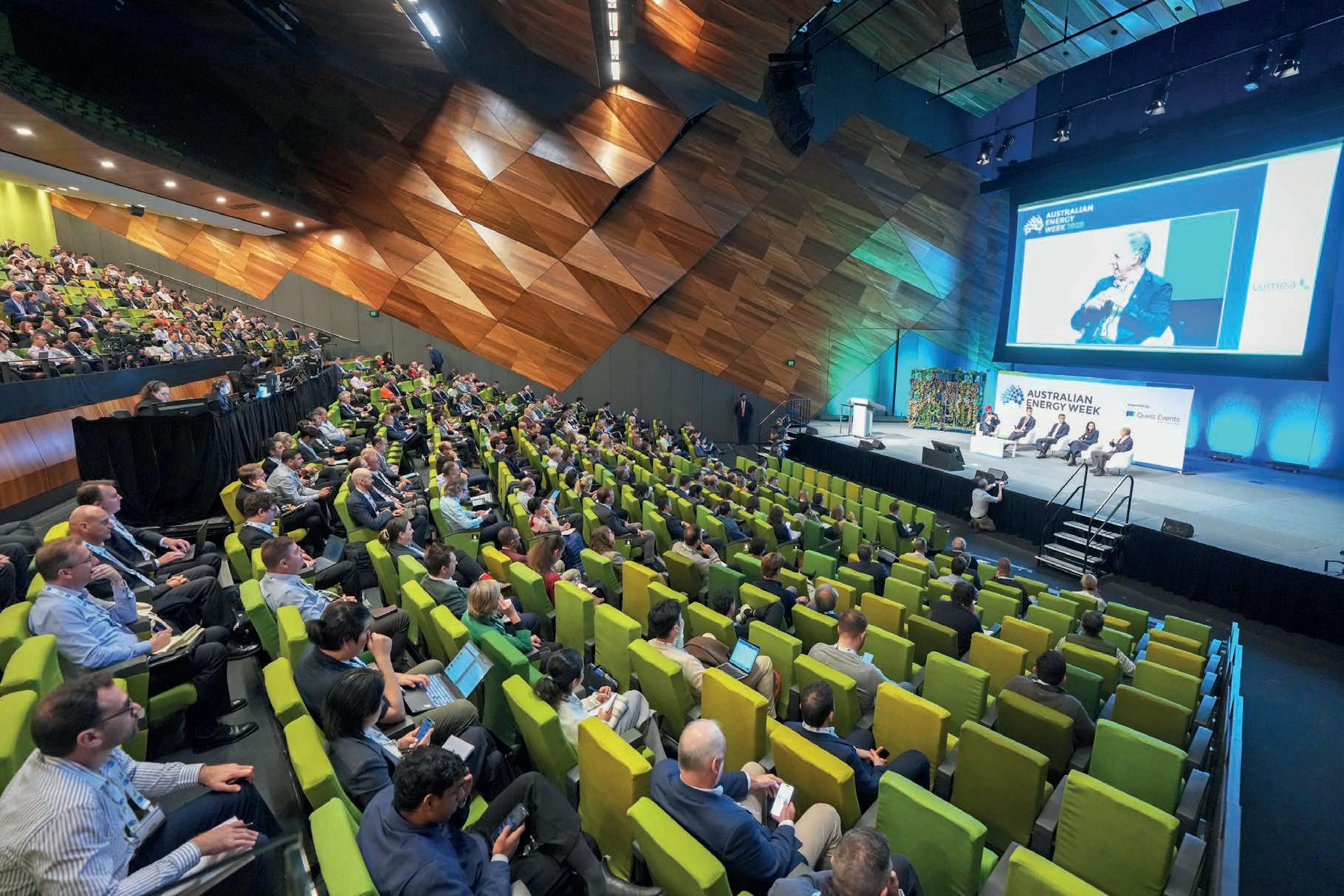
Australian Energy Week 2026 demonstrates that transmission infrastructure, distribution networks and an equitable National Electricity Market can no longer be treated as separate challenges.
At the Melbourne Convention and Exhibition Centre from 9–12 June, 1250 delegates, over 130 speakers and representatives from more than 400 organisations gathered for Australian Energy Week 2026 to examine the opportunities and challenges shaping Australia’s renewable energy future.
Established in 2017, the inaugural Australian Energy Week event has established itself as a credible conference and exhibition across the entire energy value chain, bringing together leaders from generators, transmission, distribution, retailers, battery energy storage system developers, large energy users, Federal and state governments.
Across the highly anticipated conference, one message consistently emerges: Australia’s energy transition depends on building the transmission infrastructure, distribution networks and market reforms required to support the rapid growth of
generation from wind, solar and battery storage. Keynote speakers, including Transgrid, highlighted forecasts that electricity demand will almost double by 2050, as coal-fired generation retires and renewable energy continues to expand its share of the National Electricity Market.
Meeting that demand requires a massive build-out of transmission infrastructure, Renewable Energy Zones, large-scale batteries and new industrial loads, all of which are being delivered simultaneously, placing unprecedented pressure on planning, investment and project execution.
Brett Redman, Chief Executive Officer at Transgrid, describes this period as Australia’s state of “deep transition.”
“Old coal is closing by 2035, just nine years away. We plan to have built a modern power system that can drive a modern economy – safe, reliable, clean and delivered at the lowest possible cost,” he says.
“In 2022, renewable energy made up about
a third of the National Electricity Market’s output. Today, it’s surged to nearly half. By 2035, it’s forecast to reach 90 per cent.”
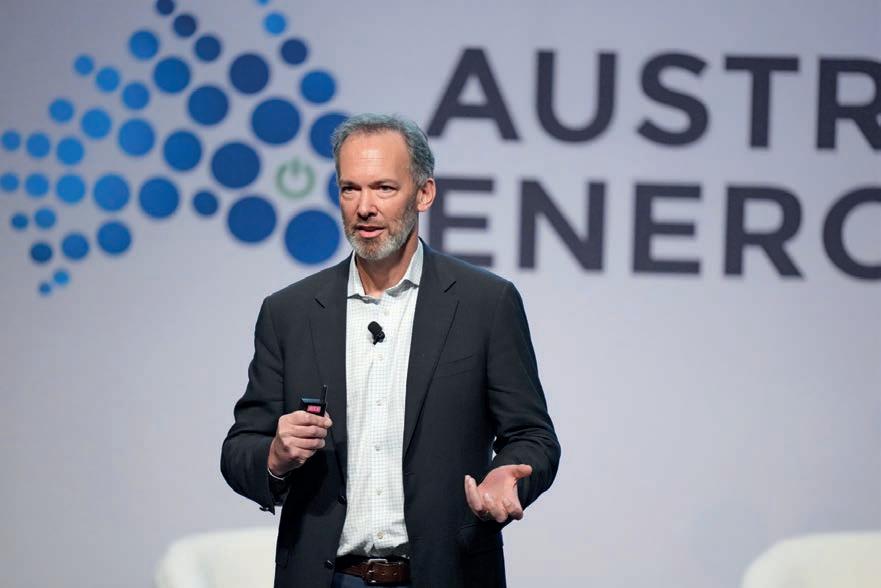
Redman’s keynote set the tone for much of the conference.
Rather than debating renewable energy targets or emerging technologies, subsequent discussions focused on the practical challenge of delivering the infrastructure, market settings and investment needed to build a reliable, affordable and decarbonised electricity system.
Every Renewable Energy Zone, utilityscale battery and large-scale renewable project depends on a transmission network capable of moving electricity efficiently between regions and states. Without new interconnectors, renewable generation remains constrained, limiting both system reliability and the wholesale price reductions consumers expect.
For Transgrid, Platinum Sponsor of Australian Energy Week, the scale of this task cannot be understated.
Transgrid currently operates around 11,500 kilometres of transmission lines across New South Wales and the Australian Capital Territory.
Completing the transition will require another 2000 kilometres to be built within a single decade. This effectively means rebuilding Australia’s electricity infrastructure to support clean energy generation in a fraction of the time it took to build the existing framework that has historically relied on coal-fired generation.
“Project EnergyConnect is being fully
energised. The first 700 kilometres of new transmission has been completed, linking South Australia, Victoria and New South Wales and opening access to more renewable energy for consumers across all three states,” Redman says.
Project EnergyConnect stands as one of the conference’s most significant announcements. However, Redman notes that the project has highlighted the commercial realities confronting many major infrastructure projects. Rising construction costs, contractor changes and inflation continue to place pressure on project economics.
“EnergyConnect has not been easy to deliver. It needed more money than originally expected, and we do not take that lightly,” Redman says.
Rather than avoiding those challenges, Redman underlines the importance of maintaining delivery momentum to meet the nation’s net zero objectives.
“Independent modelling shows EnergyConnect will deliver $964 million in net benefits, even after higher costs. Delays in construction would mean delaying the community’s access to these benefits,” he says.
According to Transgrid, the project is forecast to sufficiently reduce wholesale electricity prices to offset increases in transmission charges, delivering annual savings of around $30 for New South Wales households, $45 for Victorian households and $75 for households in South Australia. Importantly, it establishes the foundation
through construction.
Throughout the conference, speakers acknowledged that engineering is only one part of successful project delivery.
Community acceptance has become just as critical as technical capability.
Redman argues social licence should no longer be viewed as a parallel workstream but as an essential component of building the electricity system itself.
“The size and pace of the project builds puts pressure on surrounding landowners and communities, so social licence is essential. Without community support, none of this gets delivered,” Redman says.
“When projects are delayed, the community loses trust, the whole system pays. Additionally, grid reliability is put under pressure, costs rise, and the benefits of lower-cost generation take longer to reach households and businesses.”
Rather than treating community engagement as a form of risk management, Transgrid demonstrates how major infrastructure projects can deliver tangible benefits to local communities.
For example, during construction of EnergyConnect, more than $300 million was directed to local suppliers across the Riverina, Murray and Sunraysia regions.
Meanwhile, HumeLink incorporated mobile telecommunications improvements to strengthen emergency communications and regional connectivity.
These initiatives reinforce a broader point that emerged repeatedly throughout Australian Energy Week: Infrastructure
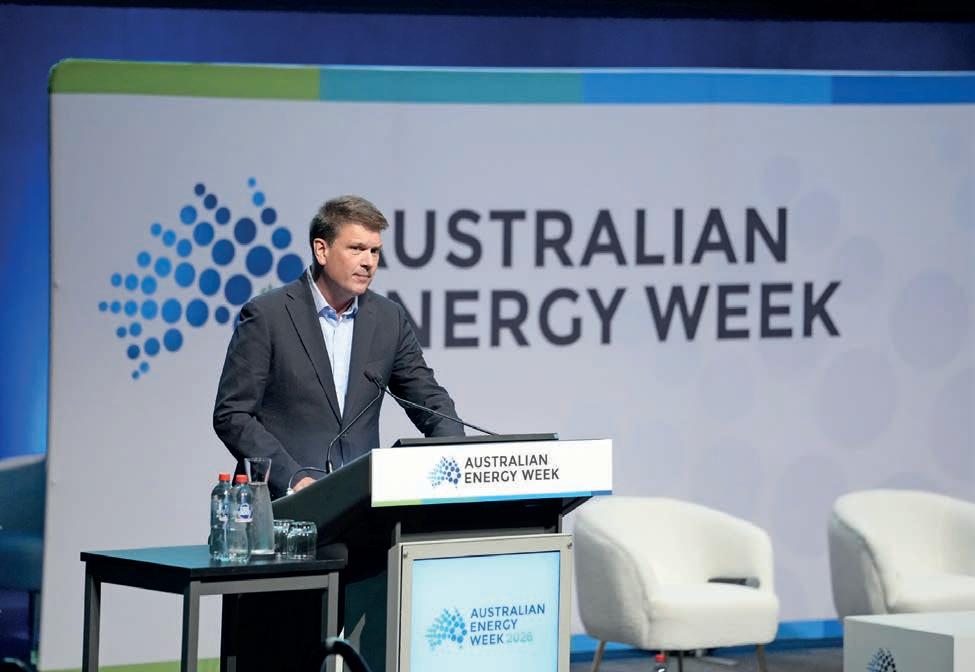
“Every project, every dollar must be justified against the lowest-cost pathway for consumers. The efficient pathway delivers the lowest-cost system as a whole, not by overbuilding any one technology, but by creating diversity of supply,” Redman says.
An equitable market Redman argues that diversity of generation across the National Electricity Market is essential for maintaining grid reliability while reducing costs.
“Imagine a system only built on solar and batteries. That might look low cost if we were only planning for a sunny summer, but it becomes very expensive in the middle of an overcast winter, which would need a massive overbuild to stay reliable,” he says.
“Diversity drives efficiency. Efficiency drives down costs. That’s why we need to add more wind generation to the mix, moving energy from north to south and viceversa, following the weather.”
That message is clear throughout Australian Energy Week.
Delegates also recognise that the transition extends beyond utility-scale infrastructure. With rooftop solar, household batteries and electric vehicles becoming increasingly common, consumers are taking a more active role in the National Electricity Market.
However, not every household is equally positioned to participate in the National Electricity Market.
“Low-income households and renters face very different constraints. A fair transition can’t depend only on who owns a roof, has a driveway or can afford the upfront cost of new technology,” Redman says.
“This isn’t a technical issue, it’s an issue of fairness. We need to tackle tariff reform, otherwise we’re creating a system where those who can least afford it bear a disproportionate share of the cost.”
Those comments shift attention to a part of the electricity system that often receives less public attention: Distribution networks.
Marc England, Chief Executive Officer at Ausgrid, describes distribution networks as the “missing middle” of Australia’s electricity system.
“People commonly think that distribution networks are just a bunch of poles and wires. However, underneath there’s actually a lot of stuff going on… about a third of the Ausgrid network is invisible,” he says.
“Distribution networks are integral to the entire energy system, yet we often feel pressing discussion points across the sector
touch on everything upstream of us and everything downstream of us. In the middle we see these opportunities and we feel an obligation to explain them and put forward solutions that we think will create this faster, fairer transition.”
England believes there are significant opportunities to use storage differently across local distribution networks.
“We’re moving from a system where demand was predictable and supply was controllable,” he says.
“Storage could be that shock absorber in the middle of the system. A distribution network can move from being a distributor of electricity over distance to a distributor of electricity over distance and time.”
That thinking underpins Ausgrid’s investment in community batteries.
Installed at local substations, community batteries store excess renewable generation closer to where it is consumed, reducing network congestion, improving local renewable energy utilisation and helping defer costly network upgrades.
England believes Ausgrid can also improve equitable access to electrification for households unable to install rooftop solar or home batteries.
“People have an image in their head of a detached house with solar on the roof, a battery in the garage, and an electric vehicle in the driveway. But 47 per cent of Ausgrid’s customers don’t own their homes,” he says.
“When Ausgrid thinks about fairer solutions, we’re thinking about how
everyone benefits – not just those who can afford the capital to put solar panels on their roof or a battery in their garage.”
Through initiatives such as the Community Power Network pilot, Ausgrid tests how community batteries, rooftop solar and local energy markets can work together to lower electricity costs while supporting electrification across entire neighbourhoods, including renters and apartment residents.
That objective is not simply about deploying more batteries but creating a more equitable electricity system, England adds.
Redman’s closing remarks captured both the scale of the challenge and the urgency facing the industry.
“We’re on the clock. The biggest risk in the 2030s is not having enough supply, storage and firming ready as coal exits,” he says.
Other presentations at Australian Energy Week 2026 included: Australian Energy Market Operator, State Electricity Commission Victoria, and more.
Panel discussions included leaders from: EDF Power Solutions Australia, Energy Queensland, Powerlink Queensland, the Australian Energy Regulator, NEXTDC, and more. Planning is already underway for next year’s Australian Energy Week, which returns from 21–24 June 2027.
Organisations interested in partnering with Australian Energy Week 2027 are encouraged to visit: www.energyweek.com.au/ sponsorship-opportunities

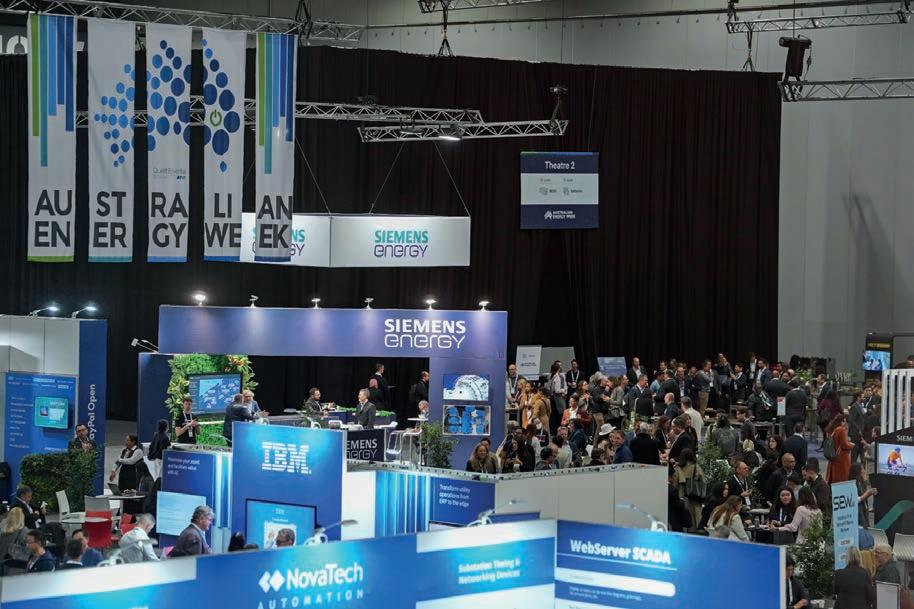



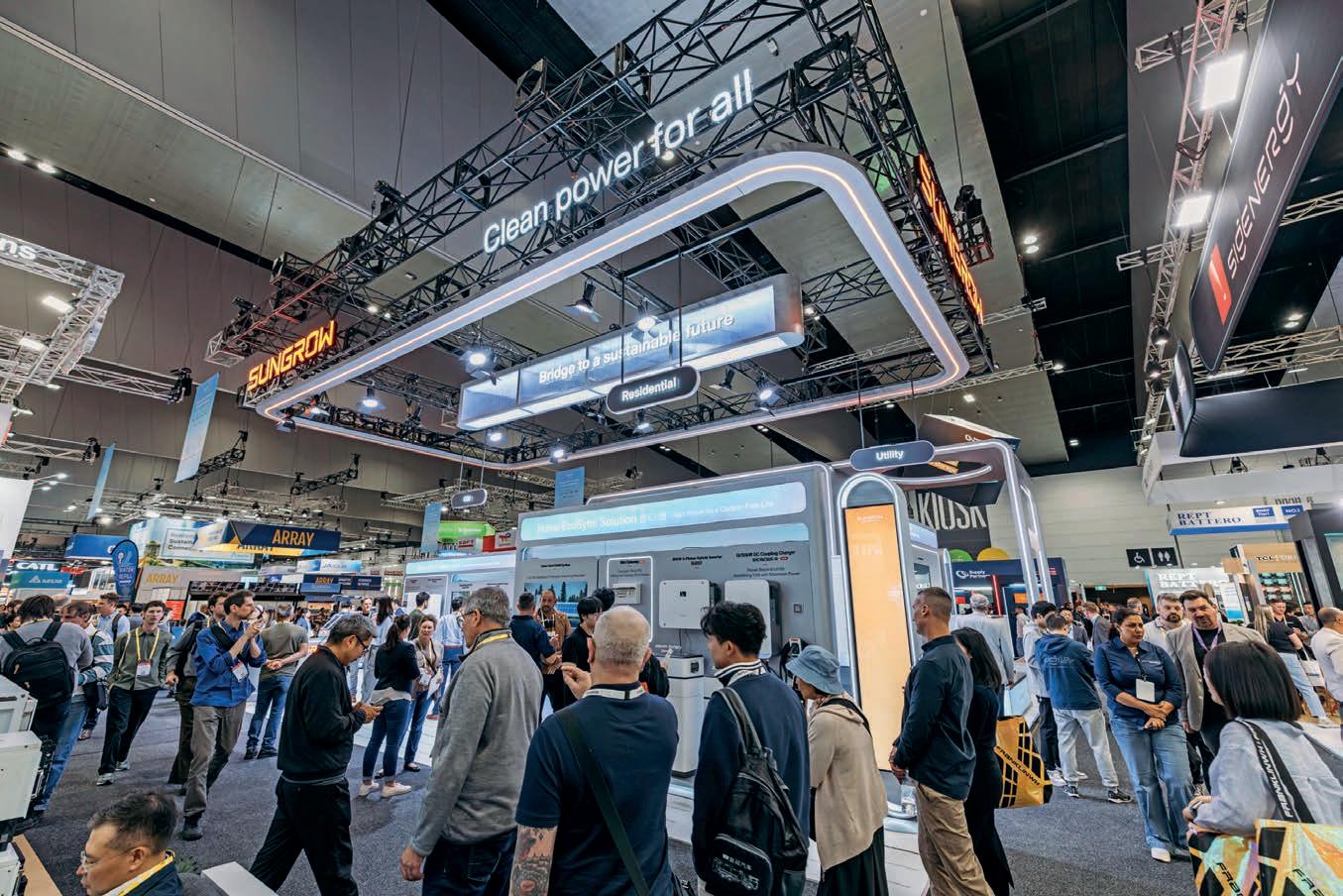
Behind Asia-Pacific’s largest clean energy event is a wealth of industry data. Led by RX Australia, All Energy Australia offers insight into where investment is flowing, emerging industry challenges, and the latest in cutting-edge technologies.
As Australia’s clean energy sector continues to scale, so too does the need for a forum capable of bringing together the industry’s decision-makers, innovators and project developers.
For nearly a decade, All Energy Australia has filled that role. But according to RX Australia, the event’s success is no longer measured simply by attendance figures or exhibition floor space. Instead, the event has evolved into a data-driven platform that reflects the direction of the energy transition itself, serving as a model for how large-scale industry events can operate more sustainably in the modern age.
Owned and operated by RX Global, parent group of RX Australia, All Energy Australia has become one of the world’s fastestgrowing renewable energy events. The broader RX business delivers hundreds of events annually across dozens of industries worldwide, attracting millions of visitors each year. Within that global network, All Energy Australia has emerged as a standout example of both commercial growth and
sustainability leadership.
For Holly Tankard, Senior Marketing Manager at RX Australia, the event’s rapid expansion has been driven by an unwavering focus on industry data.
“Our data-driven recipe for success bolstered 8900 visitors in 2023, and then extensive growth to over 14,000 visitors in 2024 before reaching 16,000 unique visitors in 2025,” Tankard says.
By 2025, total attendance exceeded 21,000 people across the two-day event, reinforcing the depth of engagement across its exhibition and conference program and its position as Australia’s largest clean energy industry event.
Rather than relying on headline attendance figures, RX deeply analyses independently audited visitor data.
This distinction matters, as RX is focused on delivering a platform that attracts high quality industry professionals – those that actively research, specify or purchase
renewable energy technology.
This approach, underpinned by audited data, ensures greater accuracy in audience demographics. This unique approach also provides exhibitors with a more reliable understanding of who they have an opportunity to engage with at All Energy.
According to All Energy 2025 attendee analysis, more than 32 per cent of visitors held direct purchasing authority, while nearly one-third of those decision-makers controlled budgets exceeding $2 million. Notably, almost 65 per cent managed budgets above $100,000.
As a result, it is commonly believed across the sector that All Energy is a serious business platform, rather than just another industry exhibition and conference.
That commercial focus is reflected in the shared motivations of visitors. A vast proportion of attendees from last year shared they mostly valued the opportunity to gain industry knowledge through the presentations and technical sessions at the event – closely followed by the opportunity
to network, form business deals and discover new technology.
“The reason why we’re able to grow and perform so well is that we have a real ear on the ground in terms of what our national and international visitors are looking for,” Tankard says.
“Overwhelmingly, attendees expressed that they attend All Energy Australia to learn from the industry talks and presentations. That’s why we ensure over 20 streams, conference sessions and workshops are focused on key developments that people want to learn about – like data centres – that’s a new phenomenon taking grid consumption by storm.”
All Energy Australia registration data reveals an industry rapidly evolving beyond renewable generation alone.
Battery energy storage dominated visitor interest in 2025, attracting more than 10,000 visitors and significantly outperforming all other technology categories.
Solar remained a major drawcard, while energy management systems, electric vehicle infrastructure, and grid technologies also experienced strong interest.
Notably, battery energy storage systems were identified as the most popular discussion topic by a considerable margin.
“We’ve seen huge growth in line with industry trends for battery energy storage systems,” Tankard says.
“Solar is still a really big one, but it hasn’t seen the same growth that battery storage and energy management has experienced over recent years.”
This shift highlights a market increasingly focused on integration, optimisation and electrification, rather than simply adding generation capacity to the grid.
Although the event remains firmly rooted in Australia’s energy market, its international footprint continues to expand.
In 2025, international visitors accounted for almost seven per cent of total attendance, with delegates travelling from Europe, North America, South America, Africa and Asia Pacific. Notably, RX reports international attendance has increased by 43 per cent over the past two years.
At the same time, All Energy Australia continues to attract a broad cross-section of the domestic industry. Engineers, consultants, installers, retailers, project developers and government representatives were all strongly represented, alongside chief executives, senior leadership and directors.
Victoria accounted for almost two-thirds of attendees, reflecting Melbourne’s growing role as a clean energy generation hub, while significant participation also came from New South Wales and Queensland. All Energy’s ability to attract both technical specialists and senior decision-makers remains one of its defining characteristics.
“It’s really important for the executives to establish partnerships with other likeminded organisations and get business done for their commercially significant projects in a dedicated space,” Tankard says.
“Post-pandemic, our event data shows that people really understand the value of face-to-face connection. All Energy Australia provides that and more.”
As a renewable energy event, sustainability is an obvious theme. However, RX argues that events themselves must also be accountable for their environmental impact.

The company is a founding member of the global Net Zero Carbon Events pledge and has committed to achieving net-zero emissions by 2040, alongside a 50 per cent reduction in greenhouse gas emissions by 2030. Those commitments extend directly into how All Energy Australia is delivered.
“At RX, we’re serious about sustainability and decarbonising the events industry together,” Tankard says.
With more than 20,000 square metres of exhibition space and almost 500 exhibitors, the potential environmental footprint of the event is significant.
To address this, RX has implemented stringent stand-build requirements designed to reduce waste and improve material recovery.
Exhibitors must comply with restrictions on certain plastics, submit plans for stand removal and demonstrate how materials will be managed after the event.
“Our sustainability focus extends well beyond exhibition stands,” Tankard says.
RX works closely with the Melbourne Convention and Exhibition Centre, the venue for All Energy Australia to prioritise recycled, paper-based and cardboard serviceware throughout the event.
Even the event lanyards are biodegradable, using silk-based materials designed to minimise waste.
For Tankard, these measures reflect a broader responsibility of large-scale industry events like All Energy.
“There are so many events globally, if we’re not showing the way and leading by example, then how can we proudly say that we’re running the most successful clean energy industry event?” she says.
Looking ahead, All Energy Australia is continuing to evolve alongside the industry it serves. Data centres, artificial intelligence and digital infrastructure are expected to feature more prominently in future editions as energy demand from these sectors continues to grow. New conference content, dedicated grid and network discussions, and an innovation district focused on emerging technologies have all been designed to ensure the event remains aligned with market priorities. But despite the new technologies and rapidly changing trends, RX believes: “The formula behind All Energy Australia success remains unchanged: Listen to the market, follow the data, deliver value for industry attendees,” Tankard says.
Nominations are now open for the 2026 Utilities Awards to honour the people and projects delivering the critical utility services Australia depends on.
Australia’s utilities sector keeps the nation running, yet much of its work happens behind-the-scenes.
Later this year, that contribution will formally be recognised through the 2026 Utility Awards, a new national awards program dedicated to celebrating excellence across Australia’s utilities workforce.
Sponsored by Zinfra and AUTODESK
Water Infrastructure, the Utility Awards will be held at Evoque Events in Melbourne on 27 October, recognising outstanding achievement across electricity, gas, renewables, water and infrastructure.
The awards arrive at a pivotal time for
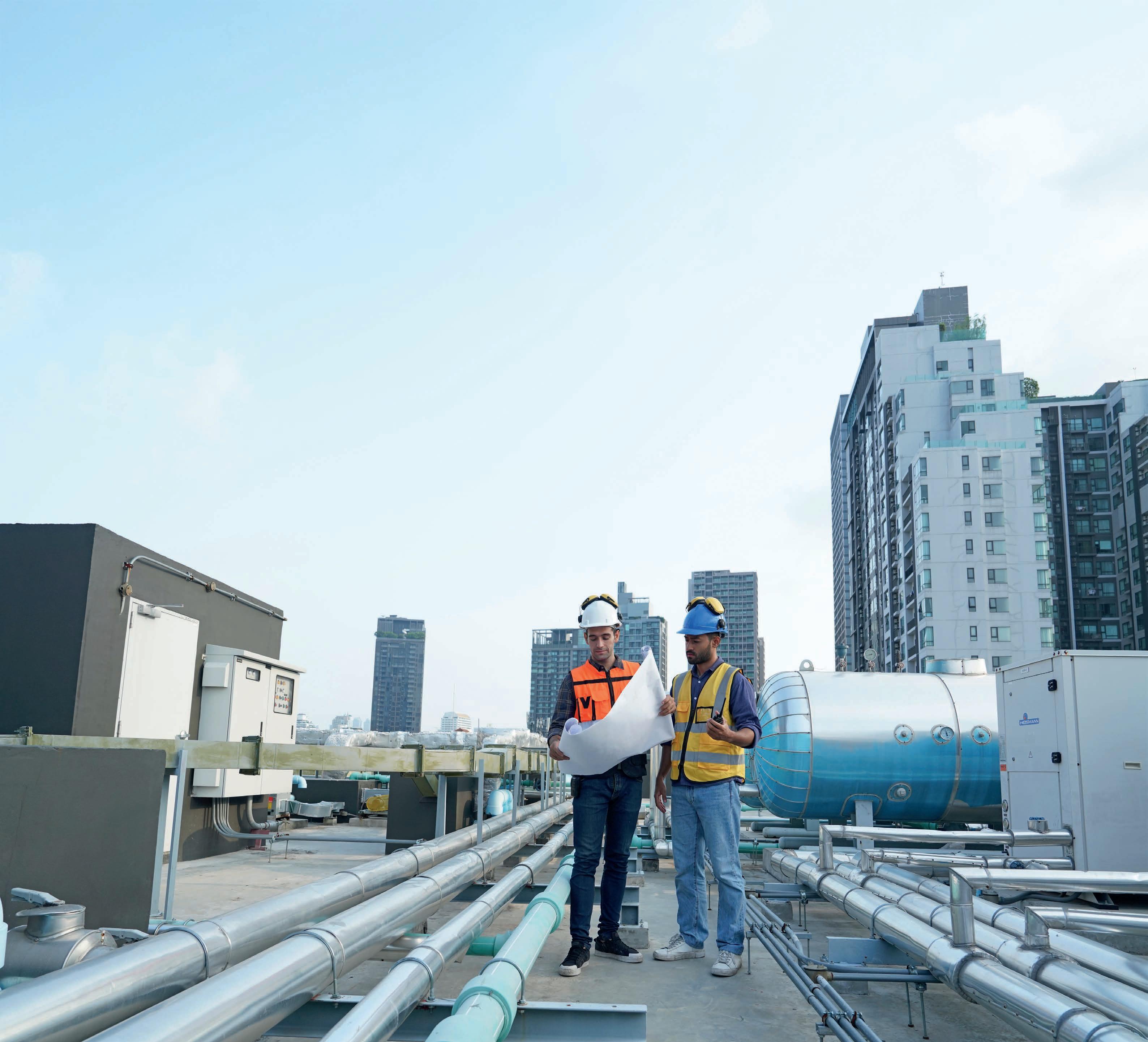
the sector. As Australia accelerates its energy transition, utilities are balancing the demands of maintaining reliable essential services. For example, utility-scale solar, wind, hydro and battery storage projects now operate alongside traditional network infrastructure, requiring closer collaboration between generators, transmission and distribution businesses, retailers, engineering, procurement and construction specialists.
Australia’s utilities sector supports more than 16 million electricity and gas network connections, while electricity, gas and water remain fundamental to the operation of hospitals, transport networks, manufacturing, mining, agriculture, telecommunications, and data centres.
Against this backdrop, the Utility Awards aim to recognise the organisations and individuals helping Australia’s essential services continuously run and evolve.
The award categories span the full spectrum of sector operations, including Utility of the Year, Utility Project of the Year, Retailer of the Year, Digital Transformation Project of the Year, Network Innovation Award, and the Decarbonisation Initiative of the Year.
Other awards include Cross-Utility Collaboration of the Year, Safety Excellence Award, Field Excellence Award, Utility Person of the Year, Rising Star in Utilities, and Diversity and Inclusion Program of the Year.
Nominations are open to utilities of all sizes, along with contractors, suppliers and industry partners delivering outstanding operational, technical and leadership capability and outcomes.
Ongoing support for utilities
Among the organisations supporting the awards program is Zinfra, an Australian utility infrastructure services company that delivers engineering, design, project management, construction, and more, across
electricity transmission and distribution, gas networks, substations, and renewable energy infrastructure.
Headquartered in Melbourne and supported by a national network of more than 20 locations, the company has been delivering energy infrastructure services across Australia for decades now.
As Gold Partner of the Utility Awards, Zinfra sees this year’s program as an opportunity to recognise the people and partnerships responsible for delivering Australia’s essential services.
Jodie North, Communications Manager at Zinfra, shares that supporting the Utility Awards reflects the company’s commitment to the utilities sector.
“As a trusted delivery partner in Australia’s energy space, we recognise the critical role utilities play in keeping communities connected and essential services operating every day,” North says.
“Supporting the inaugural Utility Awards is a natural extension of our commitment to the industry we’re proud to be part of. These awards provide an opportunity to recognise the people, projects, service providers and partnerships that deliver real outcomes for customers, communities and our industry.”
Zinfra believes industry awards play an important role in boosting morale across the utilities workforce.
“By celebrating leading practice, we help lift standards across the sector and drive continuous improvement in how essential services are delivered,” North says.
While major infrastructure projects often attract public attention, North adds that industry awards are equally important for recognising the people responsible for delivering them.
“As a company with more than 2800 team members delivering essential services, we know our strength lies in our people,” she says.
“These inaugural Utility Awards shine a spotlight on the very best of the utilities industry, from the long-standing professionals setting the standard to the rising stars already making an impact locally.”
With nominations and finalists currently being reviewed, the 2026 Utility Awards invites workers from across the utilities supply chain to step into the spotlight and be recognised for their role in ensuring essential services run smoothly. This year’s winners will be announced during the gala awards dinner in Melbourne on 27 October.
To purchase tickets, visit: utilityawards.com.au
Australia’s largest integrated logistics and supply chain exhibition is on track for one of its strongest events yet, with MegaTrans 2026 already selling more than 80 per cent of its exhibition floor ahead of the event day in September.
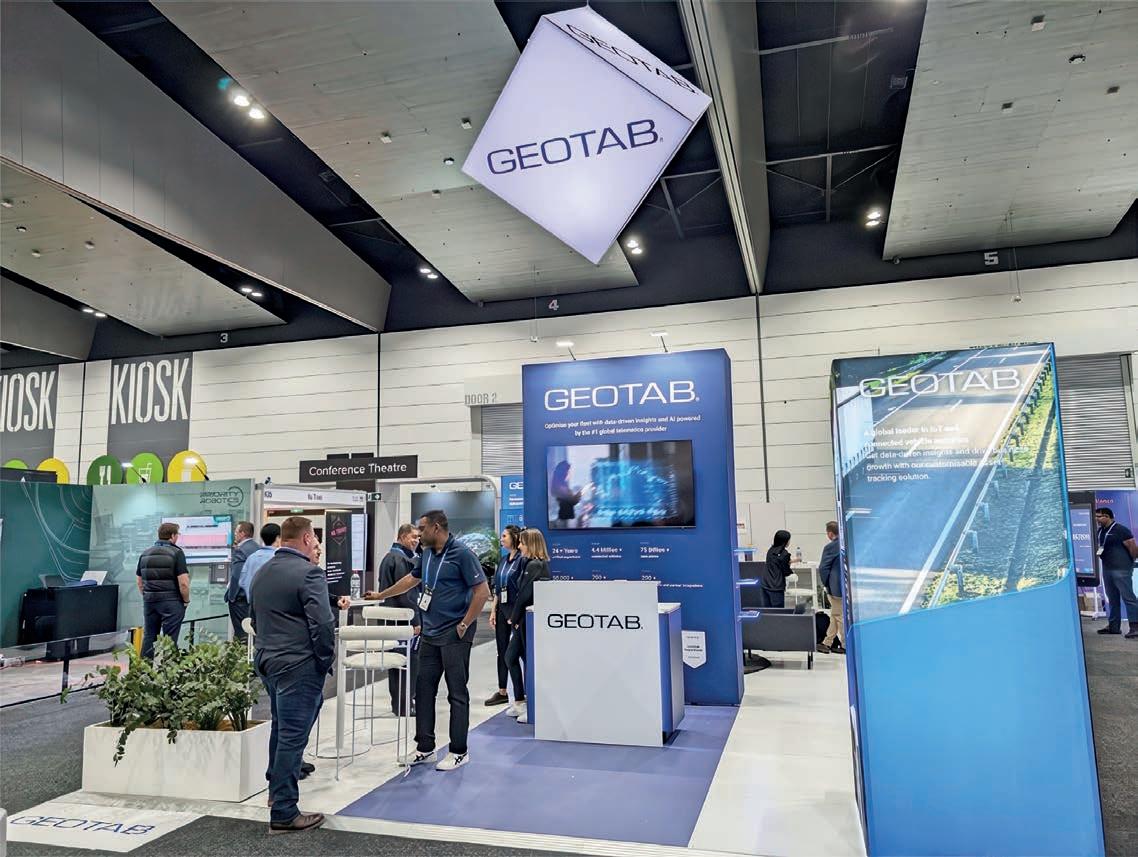
Bringing together transport operators, logistics providers, technology companies, equipment manufacturers and infrastructure specialists, MegaTrans 2026 will showcase the technologies and partnerships shaping the future of freight.
According to the Department of Infrastructure, Transport, Regional Development, Communications and the Arts, Australia’s freight sector is forecast to grow by 26 per cent over the next three decades. Thus, MegaTrans 2026 arrives at a pivotal moment for an industry balancing productivity, decarbonisation, and operational resilience.
Molly Hancock, Head of Marketing –Events at Prime Creative Media, says the strong response from industry demonstrates the event’s growing importance as a national meeting place for the supply chain sector.
“There has been a really clear appetite from industry to be part of MegaTrans 2026,” she says.
“Exhibitors are locking in early because they want to be visible where decisions are being made and where the whole supply chain comes together.”
Beyond the exhibition floor, the event will feature an extensive education program covering practical industry challenges, alongside equipment demonstrations and networking functions.
New additions include the Sustainable Warehouse Awards, delivered in partnership with MHD Supply Chain Solutions magazine, to recognise facilities implementing renewable energy, electrified equipment and energy efficiency initiatives.
The most anticipated addition for 2026 is the inaugural Operator Hub, made possible by gold sponsor Geotab.
This dedicated space provides transport operators, fleet managers and logistics businesses with an opportunity to exchange practical experiences and begin building industry partnerships.
Founded in Canada, Geotab has grown
into one of the world’s largest providers of connected vehicle and telematics technology.
Operating in more than 160 countries, including Australia, the company provides vehicle tracking hardware and cloud-based fleet management software.
This platform enables organisations to monitor vehicle performance, driver behaviour, maintenance requirements, and operational efficiency.
Interestingly, Geotab’s users include heavy vehicle operators, mining companies, government agencies and commercial fleets seeking to improve safety, reduce operating costs and prepare for fleet electrification.
David Brown, Associate Vice President Sales – Asia-Pacific at Geotab, explains that the company’s return as a Gold Sponsor for this year’s MegaTrans event was affirmed by last year’s success.
“Last year, there were a lot of people that wanted to learn how to improve heavy fleet industry safety practices and reduce the carbon emissions from heavy fleets,” he says.

Rather than focusing purely on product demonstrations, Brown explains that bringing fleet operators together for MegaTrans will allow for industry-wide conversations to take place about the unique commercial realities facing freight businesses in Australia.
“In the freight industry, people are looking at how to drive costs down because there aren’t huge margins. It’s about making the most of what technology they can use to better operate and optimise their fleets,” Brown says.
While telematics has traditionally focused on vehicle tracking and compliance, Geotab’s technology has rapidly evolved into a sophisticated platform capable of helping businesses improve safety, maintenance planning and emissions performance simultaneously.
“Geotab manufactures both its in-vehicle hardware and cloud software, allowing information from a vehicle’s onboard computer to be translated into operational insights for fleet managers,” Brown says.
“Vehicle location, maintenance information, fuel use, driver behaviour and diagnostic information can all be monitored remotely through a single interface.”
As commercial freight fleets continue generating larger volumes of operational data, artificial intelligence is being utilised to make that information more accessible.
“If you’ve got 200 vehicles, you’ve got an enormous amount of information coming through. We try to simplify it as much as possible,” Brown says.
Through Geotab’s artificial intelligencepowered assistant, fleet managers can ask natural language questions rather than manually analysing multiple reports.
“If you wanted to find out which vehicles were due for a service within the next 5000 kilometres, you can simply ask the question and within seconds you get the answer,” Brown says.
The company has also expanded its platform to integrate connected video technology, allowing safety events such as harsh braking or collisions to be viewed alongside telematics information.
“Rather than simply identifying that an incident occurred, operators can understand why it happened, supporting more effective driver coaching and risk management,” Brown says.
Evidently, the industry has moved well beyond reactive fleet management towards predictive decision-making.
While operational efficiency remains a major focus, Geotab also sees that connected vehicle data will play an important role in Australia’s decarbonisation of heavy transport over the next decade.
Commercial fleet electrification presents significant planning challenges, particularly for heavy vehicles where range, charging infrastructure and vehicle utilisation vary considerably between different operators.
Geotab data can remove much of the existing uncertainty surrounding those investment decisions.
“We want to give people confidence that they’re making the right decisions when they transition from combustion vehicles to electric vehicles,” Brown says.
Through Geotab’s Electric Vehicle Suitability Assessment, operators can collect operational data from their existing internal combustion fleet before identifying which vehicles can be replaced by battery-electric alternatives.
The assessment analyses route patterns, kilometres travelled, operating hours, maintenance requirements and vehicle utilisation before matching suitable electric vehicle models to existing fleet tasks.
“This helps reduce investment risk while supporting broader emissions reduction objectives across the transport sector,” Brown says.
Beyond electrification, Geotab’s sustainability reporting also helps operators reduce unnecessary fuel consumption by identifying excessive idling, inefficient driving behaviour, and other operational practices contributing to higher emissions.
Brown believes conversations around these practical challenges will be central to MegaTrans this year.
Free event registrations are open now: megatrans.com.au/attend
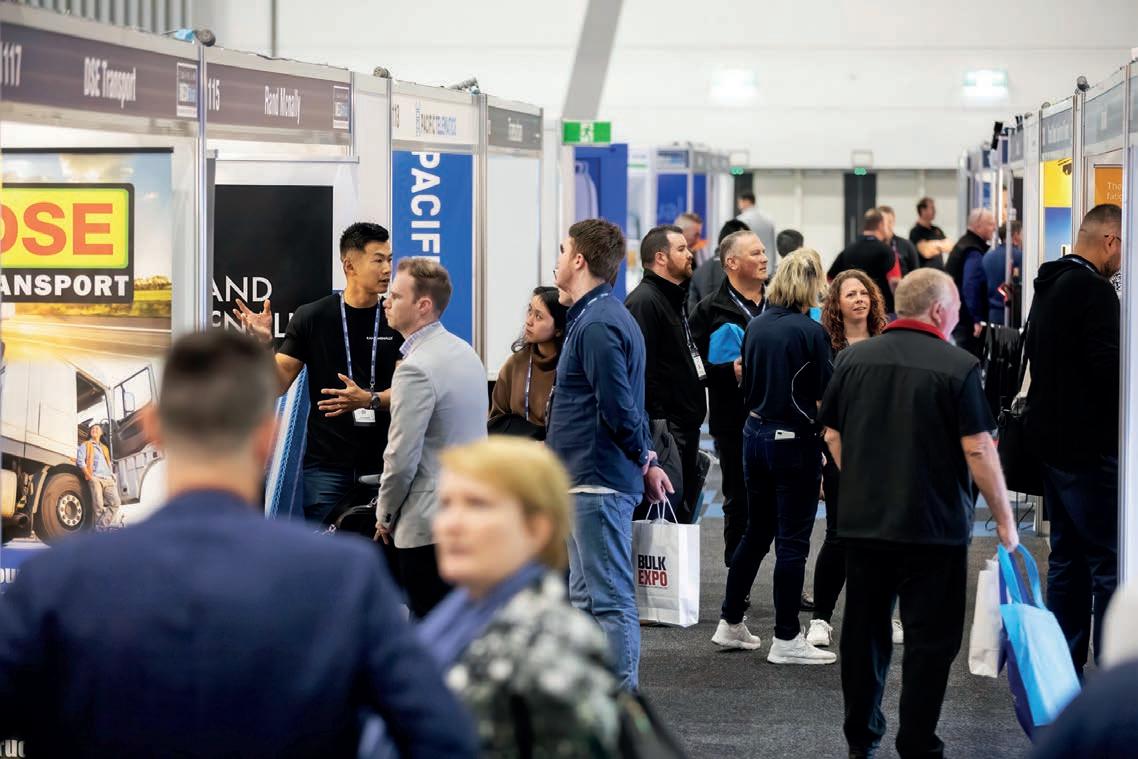
Shared renewable energy, hydrogen and manufacturing infrastructure could transform Australia from a raw materials exporter into a global leader in net zero and green commodity exports.
Australia has long built its economy on exporting raw materials. Iron ore, critical minerals and energy resources leave Australian ports to be processed into higher-value products overseas before returning as the steel, fertilisers, fuels and infrastructure that underpin Australia’s economy.
Research from Monash University argues Australia could change that model by developing integrated industrial hubs that co-locate renewable energy, green hydrogen, green iron, green ammonia, and other lowemissions commodities.
Steered by Dr Chang Wang from the Department of Civil and Environmental Engineering at Monash University, the research suggests shared industrial precincts could reduce costs, improve energy efficiency and fast-track the decarbonisation of some of Australia’s heavy industry (emissions-intensive industries).
Rather than simply exporting the raw materials required for the clean energy transition, Australia could use its abundant renewable resources to manufacture highervalue green commodities domestically.
According to Wang, achieving that vision will require Australia to stop solely thinking about developing new large-scale projects that just focus on individual energy sources such as solar, wind, battery energy storage systems, and hydrogen, and start planning integrated industrial ecosystems across all of these elements.
While heavy industry produces many of the materials and fuels modern society depends on, it’s also a sector that’s among the hardest to decarbonise. This is mainly due to its reliance on continuous high-temperature processes and chemical reactions that currently depend on fossil fuels.
“Heavy industry refers to steel, cement, aluminium, chemicals, refining, fertilisers, aviation and maritime shipping,” Wang says.
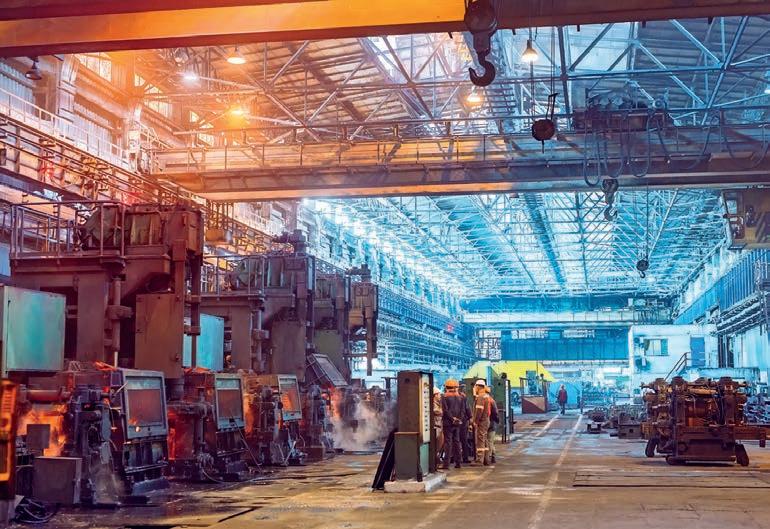
Heavy industry produces essential materials and fuels, such as steel, cement, chemicals and fertilisers, through largescale, energy-intensive processes.
“In steelmaking, coal is not only used for heat, but also as the chemical reductant that turns iron ore into iron. In aviation and shipping, batteries are not yet suitable for many long-distance applications because the energy density required is extremely high.”
Wang explains that decarbonising these industries challenges Australia to capture more value from its natural resources.
“Australia is rich in minerals, metals, sun and wind,” he says.
“Today, we export large quantities of raw materials, such as iron ore and critical minerals, which are processed overseas into higher-value products.”
Australia’s current transition to clean energy is an ample opportunity for further its manufacturing value chain.
“Instead of exporting iron ore, we could use renewable energy and hydrogen to produce green iron or green steel. Instead of only exporting energy resources, we could produce green ammonia, green methanol, sustainable aviation fuel and other green commodities,” Wang says.
“Done well, the decarbonisation of

heavy industry can create new export industries, more regional jobs and strategic manufacturing capability.”
Large-scale green iron, green ammonia and green fuel production depend on renewable energy, energy storage, hydrogen production, water supply, transmission infrastructure, roads, rail and ports.
Wang believes the greatest challenge is ensuring these systems are developed together, rather than independently.
“The major barrier is not only the technology, but also coordination,” he says.
To make green iron, green ammonia and green fuels at scale, substantial investment in renewable electricity, energy storage, hydrogen production, hydrogen storage, water supply, ports and transport infrastructure would be required.
“If every company builds those systems separately, costs rise and the overall system becomes inefficient because everyone is planning only at the project level rather than the whole-of-system level. That’s why Australia
needs industrial hubs or industrial precincts rather than isolated projects,” Wang says.
According to Wang, the greatest efficiencies come from industrial symbiosis, where complementary industries share infrastructure, renewable energy and even waste heat.
“For green iron production, you need to heat hydrogen to around 800 degrees Celsius. Other chemical processes, such as green ammonia and green fuels, release a large amount of heat,” he says.
“If one industry can use the waste heat from another industry, you reduce the overall energy consumption.”
Renewable energy can also be optimised more effectively when wind, solar, hydrogen and storage projects are developed as part of integrated industrial systems rather than as standalone assets.
“This sort of strategic project development is key. For example, if wind predominantly blows at night while solar generates during the day, overall variability is reduced, lowering both storage requirements and power costs,” Wang says.
Latest modelling from Monash University affirms that integrating renewables, hydrogen and green iron production can significantly reduce electricity costs compared with standalone projects.
Research undertaken by Wang and his colleagues found integrating renewable energy, hydrogen and green iron production within a proposed South Australian industrial hub could reduce electricity costs by 20 to 30 per cent, compared with equivalent standalone developments. In New South Wales, similar modelling produced comparable outcomes.
Australia already possesses many of the competitive advantages required to develop globally significant green commodity industries, including abundant renewable resources, world-class mining capability, export infrastructure and established trade relationships across the Asia-Pacific.
However, Wang cautions that these advantages alone will not guarantee success in the long-term.
“Australia needs to convert its abundant renewable energy and mineral resources into bankable projects, shared infrastructure, skilled workforces, and long-term customer relationships,” he says.
While initiatives such as the Federal Government’s hydrogen production tax incentives and the Hydrogen Headstart program provide important progress, Wang believes stronger policy support is required to move hydrogen projects beyond the demonstration stage.
“There’s good policy momentum, but I don’t think it’s enough,” he says.
Hydrogen projects require enormous amounts of capital, and long-term offtake agreements, which remain difficult to secure under current policy and market conditions.
“I think Federal and state governments could play a stronger role through public procurement of green commodities to help establish those early markets,” Wang says.
Wang also believes governments should identify strategic industrial hub locations capable of co-locating renewable generation, processing, manufacturing and export infrastructure, and promote this publicly more consistently.
“We also need measurable targets for emissions reduction, renewable energy, hydrogen use, water recycling and ecosystem restoration,” he says.
Looking internationally, Wang believes Australia remains at a strategic crossroads.
According to Monash University research, Europe continues to strengthen carbon pricing, China is rapidly scaling green manufacturing capability, and the Middle East is investing heavily in renewable hydrogen and green ammonia.
“We have an abundance of renewable resources, major mineral resources, advanced mining capability, ports and deep trade relationships with Asia. We have the advantage, but other countries are moving more quickly,” Wang says.
For Australia to make its mark on decarbonising heavy industry, Monash University research clearly shows the nation will need to significantly shift from its current phase of vision to rapid hybrid renewable energy project development.
“By integrating renewable energy, hydrogen, manufacturing and shared infrastructure within coordinated industrial hubs, Australia can strengthen domestic manufacturing, cut emissions, build a globally competitive green export industry, and meet global demand for low-emission commodities,” Wang says.
Transgrid’s proposed Sydney Ring South project could double transmission capacity into the largest population centres of New South Wales.
As New South Wales (NSW) prepares for the retirement of ageing coalfired power stations, investment in transmission infrastructure is increasing to ensure renewable energy can reach the state’s most populated areas, such as Western Sydney.
One of the latest projects to enter planning is Sydney Ring South, a transmission project identified by the Australian Energy Market Operator (AEMO) in its latest Integrated System Plan (ISP), which aims to strengthen electricity supply into South Western Sydney and the Illawarra.
Transgrid has released its Project Assessment Draft Report (PADR), marking the first stage of the Regulatory Investment Test for Transmission (RIT-T). The report assesses potential solutions to increase electricity transfer capacity into one of Australia’s fastest-growing regions.
Before the Sydney Ring South project is executed, Transgrid notes that the PADR will firstly go through community and stakeholder consultation. If delivered, Sydney Ring South is expected to deliver lower-cost renewable energy for consumers across regional NSW, while also stabilising electricity supply.
Addressing constraints
Western Sydney is home to more than 2.5 million people and continues to experience rapid population and industrial growth.
Together with Sydney, Newcastle and Wollongong, the Western Sydney region accounts for around 75 per cent of NSW electricity consumption.
At the same time, Australia’s national electricity system is undergoing its most significant transformation in decades.
As coal-fired generation progressively exits the grid, renewable energy generated in regional renewable energy zones must be transported over longer distances to major demand centres.
Jason Krstanoski, Executive General
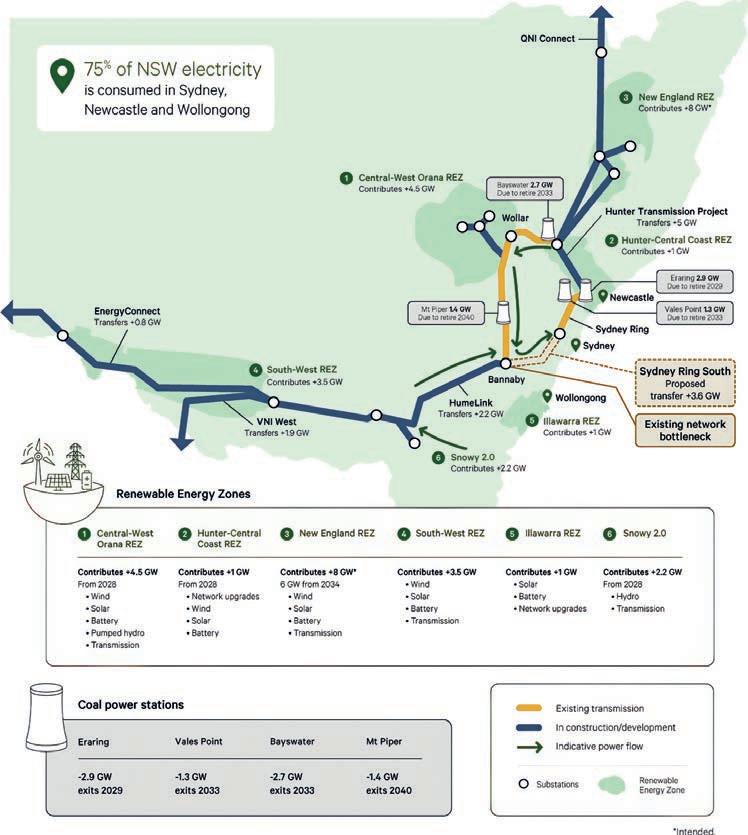
Manager of Network at Transgrid, explains that Sydney Ring South project is designed to ensure lower-cost renewable energy for consumers as the National Electricity Market transforms.
“As coal-fired power stations reach endof-life, our electricity is increasingly sourced from lower-cost renewable energy sources located across NSW,” he says.
“That means the existing transmission
corridor approaching Sydney from the south is under increasing pressure. This limits electricity flow and reduces our ability to deliver new cheaper forms of power to our rapidly growing cities, as well as our ability to support an increasingly electrified modern economy.”
To address this constraint, Transgrid has assessed six credible network options, including upgrades to existing transmission infrastructure, new substations, and more high-voltage transmission assets.
The preferred technical option identified in the PADR combines upgrades to improve utilisation of the existing 330 kilovolt (kV)

According to AEMO, the project forms part of the long-term transmission investments required to maintain grid reliability as Australia’s electricity system transitions away from coal.
network with a new 500 kV transmission connection between southern New South Wales near Bannaby and South Western Sydney. If this technical option is selected, this could eventually double the transmission capacity of the existing southern electricity corridor into Sydney.
Furthermore, the preferred option could deliver approximately $3.2 billion in net market benefits for New South Wales consumers, according to Transgrid.
Beyond increasing network capacity, Sydney Ring South is expected to improve access to renewable energy from projects already under development across the National Electricity Market.
The proposed transmission corridor would connect Greater Sydney to major renewable energy projects across New South Wales, Victoria and South Australia, including Project EnergyConnect, HumeLink, VNI West, Snowy 2.0 and the South West Renewable Energy Zone. By strengthening these links, more renewable electricity could be delivered to homes and businesses across greater Sydney.
Krstanoski highlights that benefits extend beyond improving network resilience.
“The AEMO has identified Sydney Ring South as a safe, secure and reliable long-term electricity supply solution for Sydney, Wollongong and Newcastle, which collectively account for three-quarters of NSW’s energy demand,” he says.
“By opening up the supply of lower-cost renewable energy, we anticipate Sydney Ring South would enable annual power bill savings of up to $51 for a typical NSW household and around $110 for an average small business.”
In addition to reducing consumer energy costs, the project is intended to improve overall network resilience by providing a second high-capacity transmission pathway into Western Sydney. This effectively reduces reliance on the existing southern corridor during periods of maintenance, outages or extreme weather.
The benefits of Sydney Ring South extend beyond the National Electricity Market.
Western Sydney is Australia’s thirdlargest economy and continues to
attract investment across advanced manufacturing, logistics, healthcare, education, aviation and digital infrastructure. New developments such as the expansion of Western Sydney International Airport and the City of Bradfield are expected to drive further electricity demand over the next decade.
The project is also expected to support the electrification of heavy industry across Western Sydney and the Illawarra, as well as provide the network capacity required for growing industries such as data centres.
While the preferred technical option has been identified for Sydney Ring South, the proposed project remains in the early planning stages. No transmission route, corridor or detailed design has been selected, with the PADR representing the first step in the RIT-T process.
“While planning is in the early stages and no decisions have been made, Transgrid is inviting early feedback from communities, consumers, government, industry and other interested stakeholders to help shape the future of the project,” Krstanoski says.
Formal submissions on the PADR will be reviewed from August 2026. Following consultation on the PADR, Transgrid will undertake further technical assessment before releasing a Project Assessment Conclusions Report, the final stage of the RIT-T process.
Coordinated Renewable Energy Zone frameworks are strengthening buy-in from investors, industry and communities, in support of the energy transition.
The Victorian Government has formally declared five Renewable Energy Zones (REZs).
The declaration establishes where much of the state’s future wind, solar and large-scale battery developments will be coordinated, providing greater certainty for developers, investors, industry, regional communities and network planners as Victoria transitions away from coal-fired generation.
“Victoria’s transition to renewable energy has taken an important step forward with the declaration of REZs,” says VicGrid Chief Executive Officer Alistair Parker.
REZs identify the most suitable locations for renewable energy development by considering renewable resources, existing and planned transmission infrastructure, agricultural land, environmental values, cultural heritage and community impacts. By concentrating wind, solar and battery projects within these areas, the Victorian Government aims to improve network planning, reduce unnecessary transmission infrastructure and provide greater certainty for future investment.
The declaration follows a statewide
“The declaration of the REZ by the Victorian Government is the result of more than two years of consultation with regional communities and stakeholders, landholders, agriculture stakeholders, Traditional Owners and the Victorian energy industry,” Parker says.
Victoria has declared the South West, Central Highlands, Western, North West and Gippsland REZs, together with the Gippsland Shoreline REZ.
Unlike the onshore REZs, the Gippsland Shoreline REZ will serve as the planning corridor for underground transmission cables linking future offshore wind projects to Victoria’s electricity grid.
Alistair Parker, Chief Executive Officer at V icGrid.
The proposed Central North Renewable Energy Zone has not yet been declared and will undergo a further round of formal community consultation before a final decision is made.
By coordinating renewable energy development within designated zones, VicGrid expects to be better positioned to align generation projects with transmission
VicGrid’s Renewable Energy Zones (REZ) Community Benefits Plan, first released in 2024, establishes a state-wide framework to ensure the benefits of Victoria’s energy transition are shared with the regional communities hosting renewable energy and transmission infrastructure. This includes investment priorities in local priorities and stronger community benefit arrangements.
Rather than relying solely on project-specific benefit programs, the framework introduces a coordinated approach requiring renewable energy, transmission and storage developers to contribute to Community Energy Funds established for each REZ. These funds support locally determined projects that improve energy supply, reliability, efficiency and affordability, while investing in biodiversity initiatives, workforce development, renewable energy supply chains, research, innovation and regional economic growth. Funding priorities are guided by stakeholder to ensure investment meets local needs and delivers lasting value.
The framework also formalises annual payments of $200,000 per kilometre of transmission easement, paid over 25 years and indexed to inflation, for transmission host landholders, alongside benefit arrangements for significantly impacted neighbouring properties. The framework commits to co-designing dedicated benefit arrangements with Traditional Owners to support selfdetermination, economic empowerment and the protection of traditional lands. Complementing these initiatives are stronger expectations for early, transparent and engagement with communities, landholders and Traditional Owners.
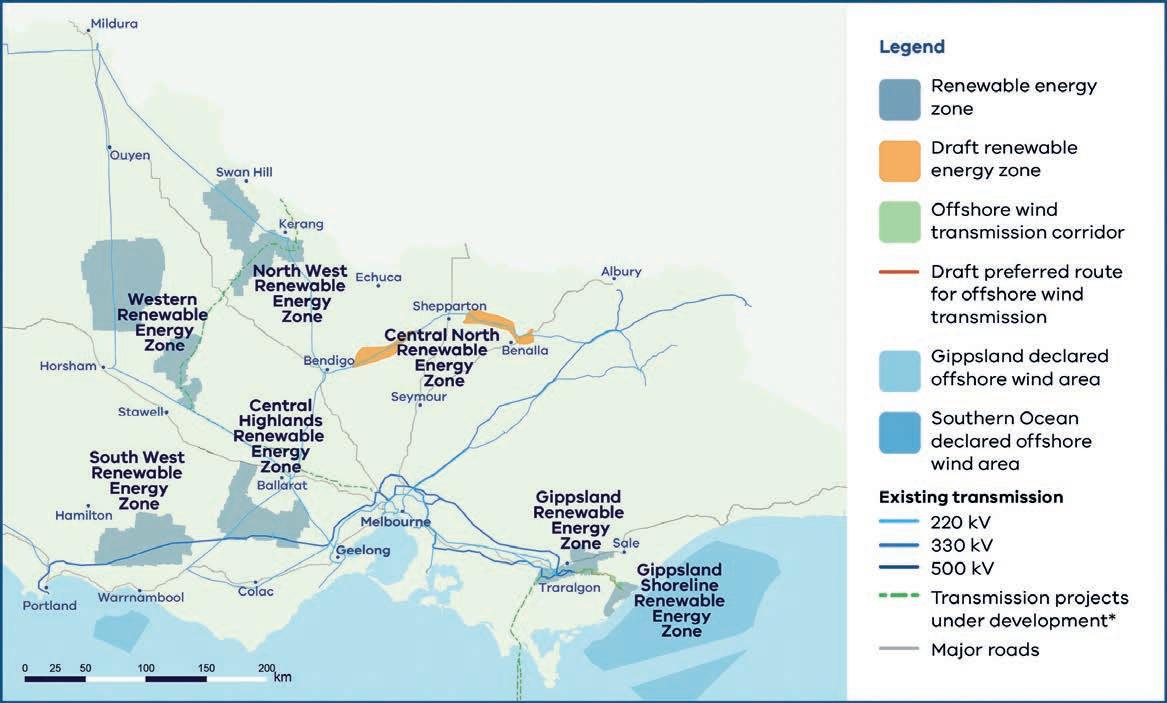
investment and establish clearer pathways for grid connection.
“By establishing these zones, we can better coordinate renewable energy projects and significantly reduce the need to build unnecessary transmission infrastructure,” Parker says.
The REZ framework also gives VicGrid greater oversight of how projects access the electricity network and establishes clearer expectations for community engagement and benefit sharing.
“REZs also enable VicGrid to set clear rules around how projects gain access to the grid, including expectations for how developers must engage with local communities and deliver economic benefits and social value,” Parker says.
The Victorian Government’s declaration of REZs does not mean the approval of individual renewable energy projects. All proposed wind, solar and battery developments will continue to undergo Victoria’s existing planning and environmental assessment processes.
Developers must still negotiate directly with landholders before projects can proceed, with participation remaining voluntary. Landholders who choose to host projects will negotiate commercial agreements directly with developers, while
neighbouring properties may also receive negotiated benefits where project impacts are identified.
Communities within REZs will also benefit from Renewable Energy Zone Community Benefits Plans, Community Benefit plans are designed to deliver local economic opportunities and broader social value alongside renewable energy investment.
The declaration coincides with the release of VicGrid’s draft guidelines for consultation, which outline the proposed
Victoria’s Renewable Energy Zones have been declared; including, five onshore zones and the Gippsland Shoreline Renewable Energy Zone. It also includes the proposed Central North zone.
approach to developing the comprehensive 2027 Victorian Transmission Plan.
As coal-fired power stations retire and electricity demand continues to grow, Victoria joins New South Wales, Queensland, South Australia and Tasmania in establishing REZs to coordinate renewable energy development and the transmission infrastructure needed to support it.
VicGrid’s draft Victorian Transmission Plan Guidelines, released for consultation in May 2026, outline the methodology that will underpin development of the 2027 Victorian Transmission Plan. The plan provides a 25-year roadmap for Victoria’s energy generation, storage and transmission network for long-term planning.
The guidelines explain how VicGrid will forecast future electricity demand, assess Renewable Energy Zones, identify transmission needs, and determine where new transmission infrastructure and network upgrades may be required. The guidelines also establish the planning principles, modelling approach and consultation framework that will drive the outlined 25-year roadmap, including engagement with Traditional Owners, landholders, communities, and industry.
Once consultation is complete, the Victorian Transmission Plan will recommend priority transmission projects and delivery pathways. Consultation closed in June, with the final guidelines scheduled for public release in August 2026.

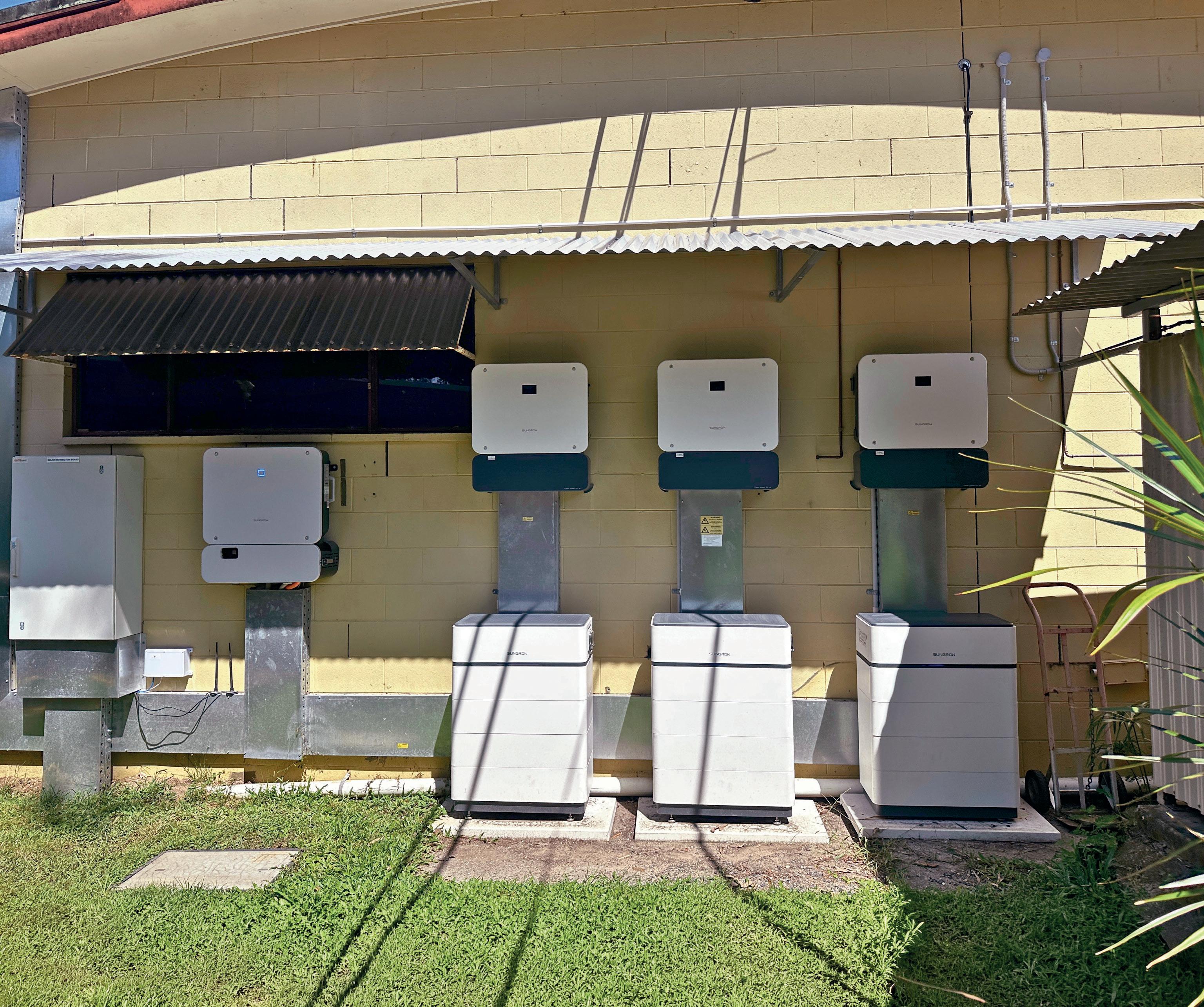

Record battery installations are creating new opportunities for solar installers, while also exposing a growing maintenance challenge.
Australia’s residential battery market is expanding rapidly, according to the Clean Energy Council. However, Daniel Lazarus, Chief Executive Officer of Industrias Services Group, warns the industry is approaching a new constraint: Maintaining the growing number of battery systems being installed.
This warning comes as Australia’s battery market enters continued growth.
According to the 2026 Annual SunWiz Australian Battery Report, a record of 221,000 residential battery systems were installed in 2025, representing a threefold increase on 2024 and adding 4790 megawatthours of new storage capacity. This has equated to 4.6 per cent of Australian homes
adoption, increasing battery attachment rates and driving larger average system sizes.
While installation volumes continue to surge, Lazarus believes the industry has yet to adequately prepare for the longterm servicing requirements of a rapidly expanding installed battery fleet.
“Australia’s battery rollout is accelerating faster than the industry’s ability to support it post-installation,” Lazarus says.
“The constraint stretches beyond the current shortage of technicians that are able to support an asset, into a more ongoing structural imbalance. Installers are incentivised to deploy systems, not maintain them, and many are not contractually obligated to provide ongoing support.”
long-term serviceability are becoming increasingly important. Lazarus says maintenance demand is likely to accelerate as today’s installations begin to age and faults become more common.
“At the same time, demand for maintenance is about to surge as newly installed solar and battery systems begin to age or experience faults,” he says.
“As a natural result of this, this risk of a growing backlog has grown.”
According to Lazarus, a pressing matter for the industry is whether installers are equipped to respond to rapid demand.
“When something goes wrong, system owners are entering a queue that’s already forming, and without intervention, access to qualified maintenance will become increasingly limited, particularly as volumes scale over the next few years,” he says.
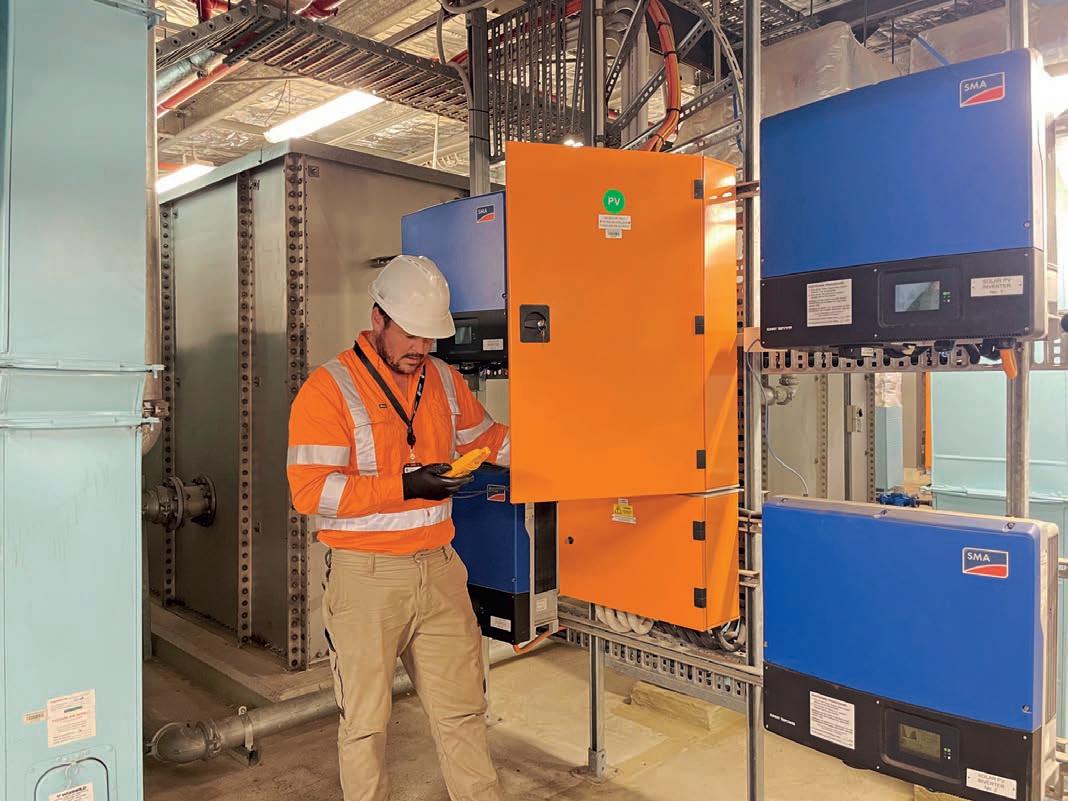
Unlike rooftop solar systems, battery installations require ongoing software and firmware updates, performance optimisation, thermal monitoring, warranty coordination, and fault diagnostics throughout their operating life. Lazarus believes this complexity is shifting industry accountability beyond installation and towards long-term asset performance.
“Delayed maintenance turns small and manageable issues into larger operational and safety risks,” he says.
“A minor fault that could be resolved quickly will likely escalate if it’s left unaddressed, particularly for battery systems where underlying issues aren’t always visible without a closer inspection.”
Lazarus explains that many battery issues remain hidden from consumers unless systems are actively monitored or inspected.
“Many of these issues can only be identified upon visual inspection,” he says.
“There’s also a performance impact that often goes unnoticed, because without proper monitoring, systems can underperform or go offline for extended periods without the owner realising.”

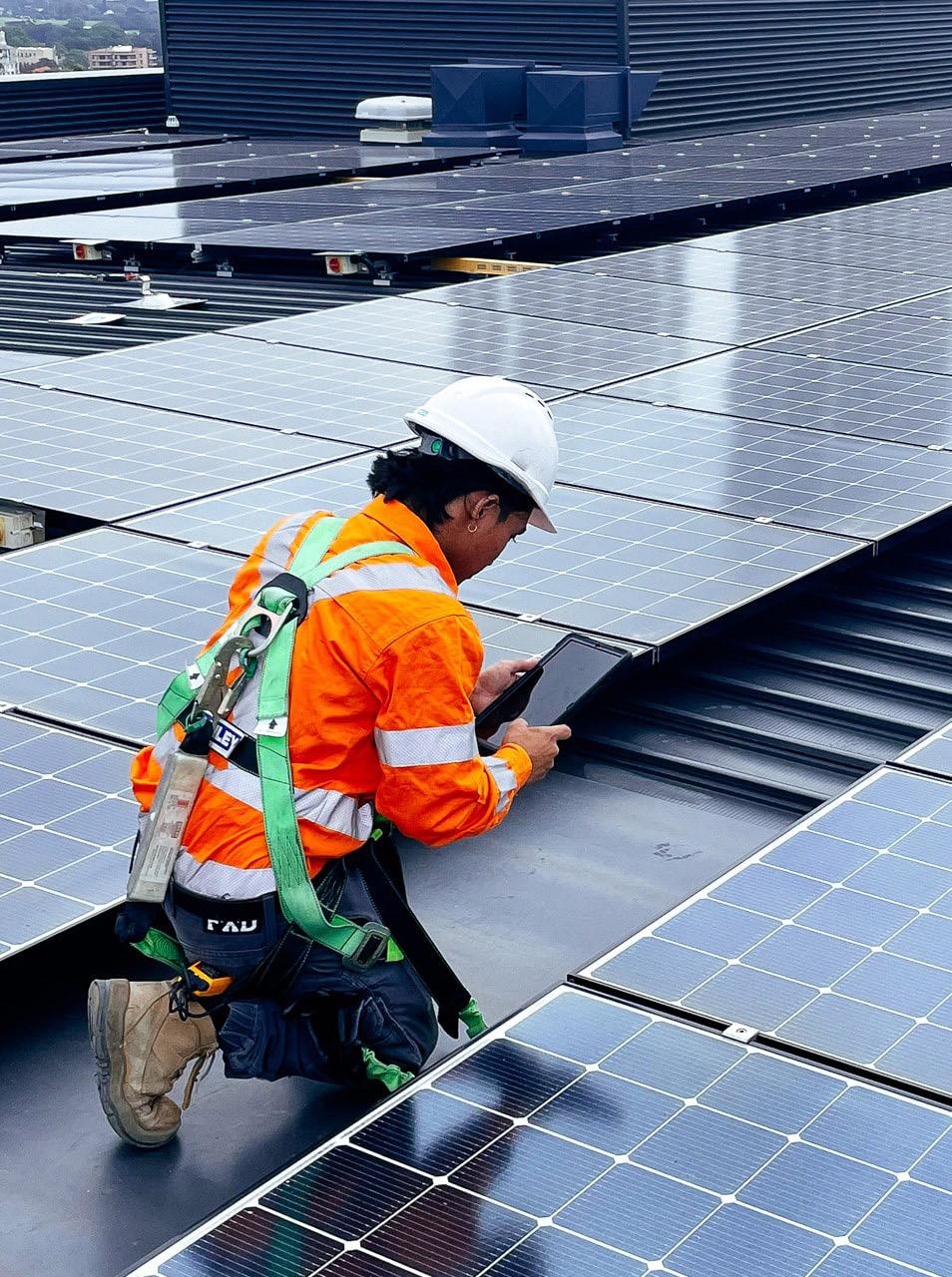
The consequences extend beyond delayed repairs. As more households depend on battery storage to manage electricity costs and maximise rooftop solar generation, unresolved faults can reduce system performance, financial returns, and increase safety risks.
“That means lost energy output, reduced financial returns, and in some cases,
technicians are unavailable.
“While many asset owners operate under the sense of security from warranties, the critical issue here is access,” Lazarus says.
“If a technician isn’t available for months, even systems under warranty can remain unresolved, leaving owners exposed despite having nominal protection in place.”
The issue reflects broader workforce pressures emerging across Australia’s energy transition. Although equipment supply constraints have eased, skilled labour and long-term servicing capacity remain significant challenges across the distributed
Lazarus believes installers are approaching a strategic turning point as the market matures beyond Federal and state government rebate-driven growth.
“Installers are about to face a wave of inbound demand for maintenance, whether that’s from their own installations or systems installed by others,” he says.
“If they’re not set up to handle that demand, it becomes both a risk and a
He argues installer business models will increasingly need to evolve from focusing solely on installation volumes towards supporting battery systems throughout their
“Right now, most installer business models are built around construction volume

and speed,” Lazarus says.
“But as the market matures, accountability will shift toward long-term system performance. Customers will expect support, and regulators may follow.”
One approach gaining traction is the adoption of Maintenance-as-a-Service (MaaS) models. Rather than relying on ad-hoc servicing, these frameworks provide ongoing monitoring, preventative maintenance, software and firmware management, fault diagnostics and warranty coordination through recurring service agreements designed to maximise system performance and asset lifespan.
Lazarus explains that MaaS allows installers to participate in the growing maintenance market without needing to develop every servicing capability internally.
“Integrating maintenance now enables installers to stay ahead of that shift,” he says.
“It also creates a more stable revenue stream beyond installation cycles, particularly as rebate-driven demand begins to normalise.”
He says structured maintenance programs can also create new commercial opportunities through battery upgrades, retrofits and replacement projects.
“Our MaaS model provides a way for installers to participate in the maintenance market without needing to build the entire capability in-house,” Lazarus says.
This enables Industrias Services Group to help installers meet their customer obligations while expanding their business and revenue streams through its structured, scalable support network.
“Our MaaS model also brings in new construction leads through exposing opportunities for battery retrofits, system replacements and word-of-mouth. This is critical as volumes increase and the risk of this maintenance bottleneck looms over the Australian solar industry.”
As Australia’s residential battery fleet continues to expand, Lazarus believes scalable maintenance frameworks will become increasingly important to preserve system reliability, consumer confidence and the long-term viability of the sector.
“This allows installers to maintain their focus on deployment, while ensuring systems are properly monitored, audited and serviced when required,” Lazarus says.
“At an industry level, a MaaS framework helps create the consistency and capacity needed to support long-term asset performance, which is essential as Australia’s battery fleet continues to grow.”
Households across New South Wales, South Australia and South East Queensland can now choose an electricity plan from their electricity retailer that enables three hours of free power each day, under the Federal Government’s Solar Sharer Offer.
The Solar Sharer Offer, managed by the Australian Energy Regular, is intended to make better use of stored surplus daytime renewable generation that might otherwise be exported at low value or curtailed.
Under the scheme, eligible households can receive up to 24 kilowatt-hours of free electricity during a three-hour window each day. The free electricity period runs from 11 am to 2 pm in New South Wales and South East Queensland, and from 12 pm to 3 pm in South Australia.
Victoria is also set to introduce a similar initiative this year.
From 1 October, eligible households will be able to access the Midday Power Saver scheme, enabling three hours of free
electricity between 11am and 2pm.
While early consumer research indicates strong interest in the scheme, SolarQuotes cautions that the offer will not suit every household. Before opting in, SolarQuotes encourages households to compare the
Solar Victoria has tightened eligibility settings for its Solar Homes Program, lowering household income cap, while maintaining existing rebate levels for rooftop solar and hot water systems.
The changes for Victoria are designed to direct support towards households most affected by cost-of-living pressure, while also accelerating the state’s transition to clean energy.
Under the new settings, the combined household income eligibility threshold for solar photovolatic and hot water rebates have been reduced from $210,000 to $150,000 per year. The revised cap applies to owner-occupiers, rental properties and households seeking support for energy-efficient hot water systems.
Despite the change, rebate values will remain unchanged. Eligible households can continue to access rebates of up to $1400 for rooftop solar installations, alongside an equivalent interest-free loan, and up to $1400 for locally manufactured hot water products, or up to $1000 for other approved systems.
Solar Victoria publicly stated that the new threshold ensures state government support targets lower and middleincome households, but will continue to cover the majority of existing rebate participants that opted into the scheme before the recent changes came into effect on 1 July.
Since the scheme’s launch in 2018, Solar Victoria reported an estimated 16 per cent increase in rooftop solar adoption across households.
Solar Sharer Offer with their existing electricity plan and consider whether their daily routine allows them to shift enough electricity use into the free daytime period. This is vital if homeowners want to realise meaningful bill savings.

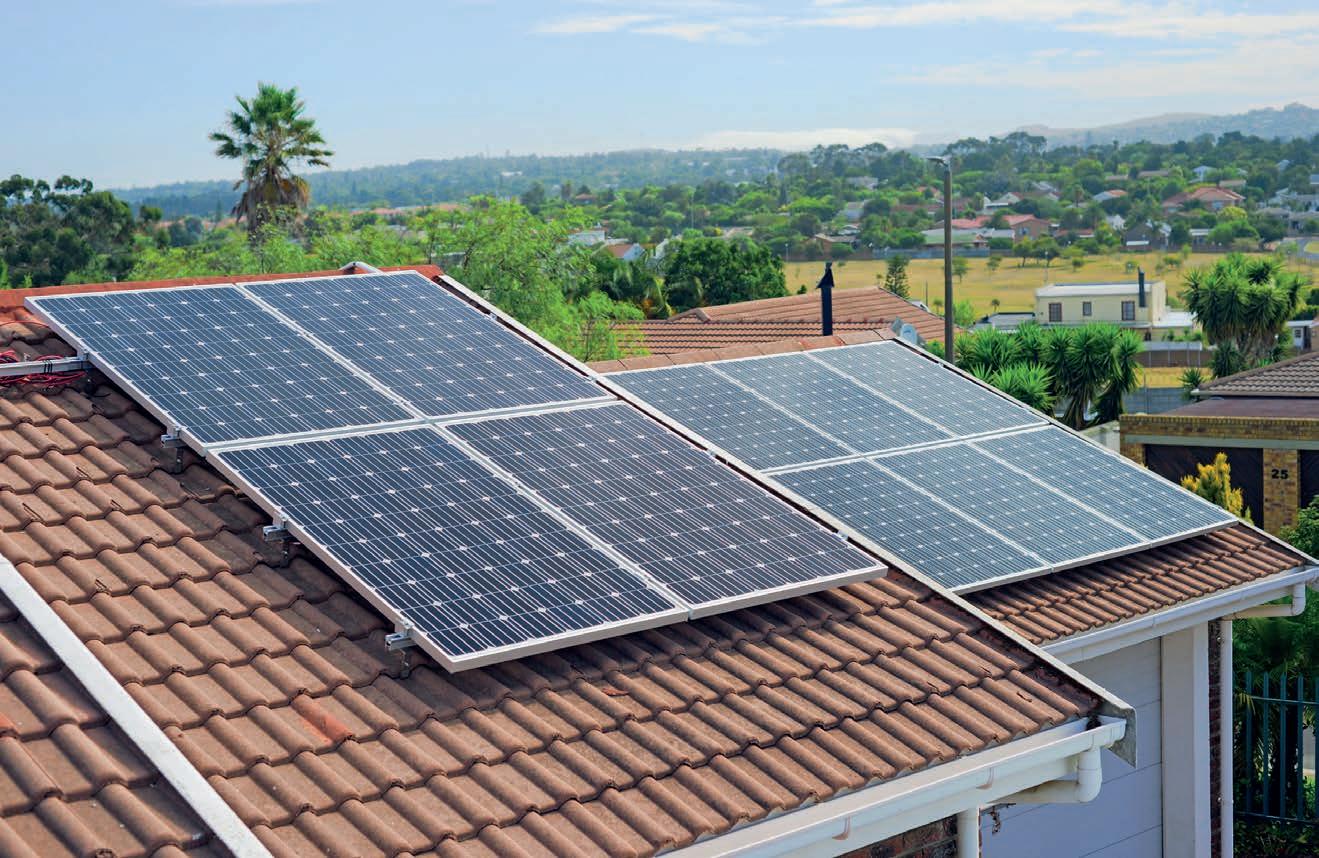
Australia’s small-scale renewable energy market continues to expand, with new data from the Clean Energy Regulator (CER) revealing more than 6.8 million small-scale renewable energy installations have now been deployed nationwide.
This includes more than 400,000 home battery systems supported under the Federal Government’s Cheaper Home Batteries Program.
The latest CER postcode installation data, current to 31 May 2026, highlights the continued strength of Australia’s rooftop solar market.
According to the CER, 401,185 battery system applications have been approved since batteries became eligible under the Small-scale Renewable Energy Scheme on 1 July 2025. This milestone represents one of the fastest clean energy technology rollouts in history for Australia’s distributed energy sector.
Overall, CER data shows battery uptake has remained strong throughout

installations recorded in the first five months of the year alone.
Queensland continues to lead the nation for rooftop solar installations, with more than 1.19 million systems, narrowly ahead of New South Wales on 1.17 million. Victoria ranks third with 885,373 installations, followed by
Beyond rooftop solar, Australians have also installed more than 1.96 million solar water heaters and airsource heat pumps, underscoring the growing uptake of household electrification technologies aimed at reducing energy consumption and lowering power bills.

Industry experts at SolarQuotes warn that mice and rats can cause significant damage if they gain access to switchboards, wiring ducts and electrical enclosures.
Rodents are known to chew through cable insulation, creating safety risks and potentially causing costly system faults. This is particularly relevant for modern solar and battery installations, where large volumes of electrical cabling may be carrying power for household loads, battery charging, electric vehicle charging and solar generation.
The warmth generated by these systems can make switchboards and cable pathways appealing nesting locations during winter.
According to guidance from SolarQuotes, one of the most effective ways to minimise the risk is ensuring switchboards and electrical enclosures are properly sealed. Any openings large enough for rodents to enter should be identified and closed by a licensed electrician, while cable penetrations should be appropriately protected and sealed.
Poorly finished switchboards, damaged cable entries and gaps around conduits can provide easy access points for pests. Therefore, homeowners are urged to look out for signs that indicate rodent activity, such as droppings, unusual odours or unexplained electrical faults.
Where pest control is required, experts advise ethical and environmentally responsible options.
FranklinWH believes long-term performance, not necessarily upfront costs, should drive purchasing decisions for homeowners when it comes to residential batteries. That is why the company is encouraging installers to look beyond capacity and price when recommending energy storage systems to their customers.
FranklinWH said reliability should remain the primary consideration when selecting a battery system. The company recommended looking for products built with high-quality lithium cells, advanced battery management systems, robust thermal protection, and comprehensive safety testing. This ensures long-term performance and reduces the chance of future maintenance.
FranklinWH also shared that long warranties and internationally recognised certifications are important indicators of quality and durability. Further, FranklinWH identified compatibility as a critical factor, particularly for retrofit projects.
The company explained that battery systems that integrate with existing inverters can reduce installation times, avoid unnecessary equipment replacement, and simplify compliance with changing grid regulations, including Victoria’s Emergency Backstop Mechanism. According to FranklinWH, installers should also consider power output, storage capacity, scalability and round-trip efficiency to ensure systems can accommodate growing household electricity demand as customers adopt
A home battery system that appeared to be performing well on paper delivered a costly surprise for one Australian household, highlighting the importance of correct system design, energy monitoring and inverter selection.
Louise Potgieter, a home solar customer, installed a 24 kilowatt-hour (kWh) battery system and 15-kilowatt inverter with the expectation of significantly reducing her electricity bills. Prior to installation, her household electricity bill averaged around $670 per quarter, despite exporting more solar energy than it imported from the grid.
After the battery was installed, Potgieter monitored the system remotely while travelling overseas. The monitoring platform suggested that her household was largely self-sufficient, with grid imports generally below 5 kWh per day. Based on those figures, she expected a substantial reduction in energy costs.
Instead, Potgieter’s next quarterly bill was almost identical to the previous one. Investigating the discrepancy revealed a significant mismatch between utility billing data and the battery system’s monitoring platform. While the retailer reported more than 1280 kWh imported from the grid, the monitoring system showed only 261 kWh. After extensive troubleshooting, the cause was traced to an installation issue.
The battery system had been configured to monitor only the main house load, excluding the pool and shed, increasing electricity consumption.
According to Potgieter, her experience demonstrates the importance of understanding how an inverter measures energy flows and whether it can ‘see’ all loads connected to the site.
electric vehicles and other electrified appliances, such as heat pumps. The company added that features such as virtual power plant compatibility and backup integration can further enhance customer value.
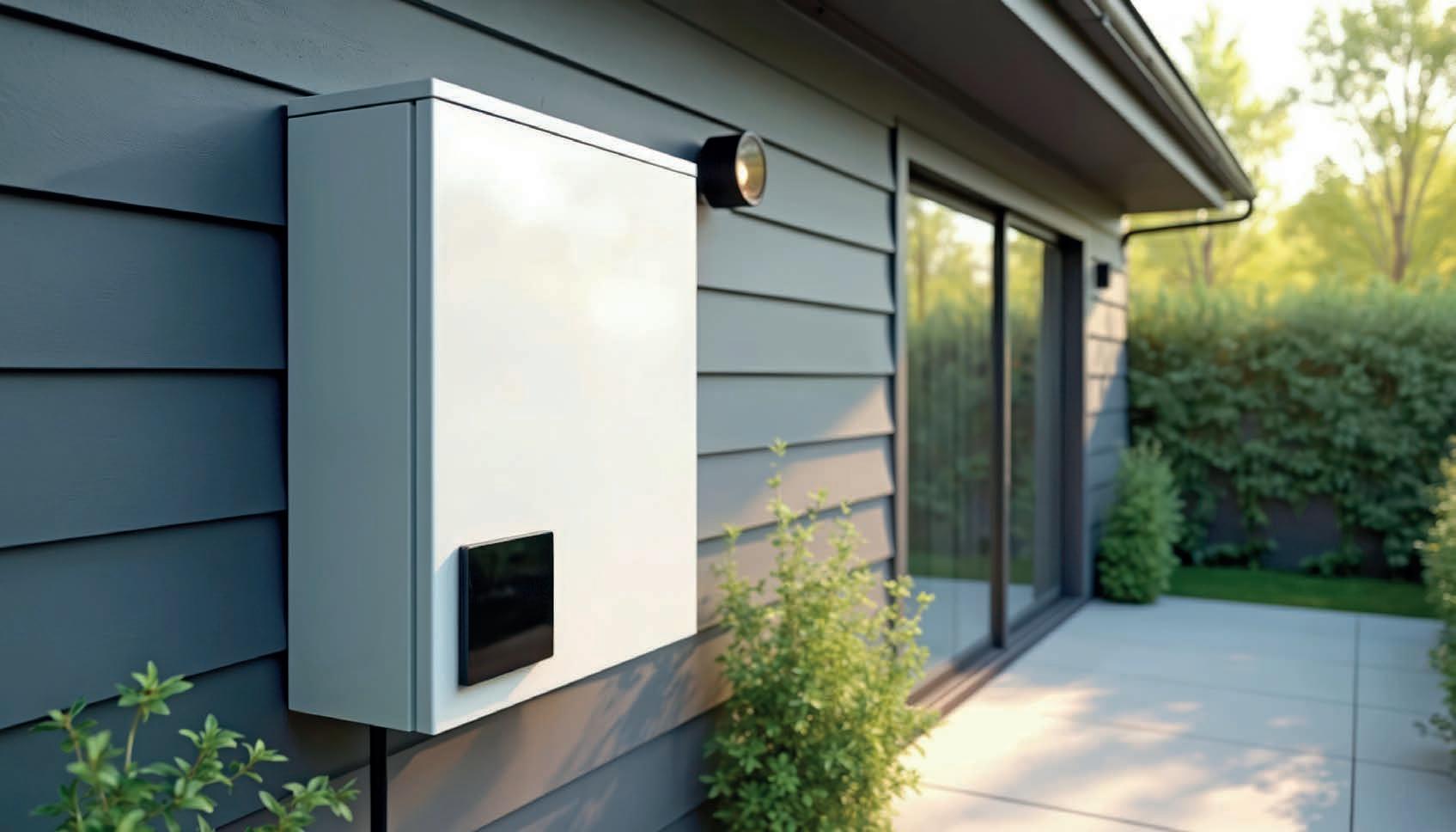
Aussie Solar Batteries has urged homeowners with an installed battery to prioritise quality products, correct system sizing and accredited installation over the lowest upfront price.
Steven Yu, Founder and Chief Executive Officer at Aussie Solar Batteries, put out a public statement clarifying that modern battery systems built to Australian Standards incorporate sophisticated Battery Management Systems (BMS) that monitor temperature, voltage, current and charging behaviour to prevent unsafe operating conditions. He explained that quality battery systems are designed with multiple layers of protection that automatically reduce output or shut down if operating conditions become unsafe, making battery failure from everyday household electricity use highly unlikely.
Instead, Yu said the greatest safety risks stem from poor-quality products, incorrect installation, damaged equipment and attempts to cut costs.
He warned that many households install the smallest battery available to reduce upfront costs, only to find growing electricity demand from electric
vehicles, pools, home offices, and large household energy usage, quickly exceed the system’s capacity. While quality batteries are designed to withstand thousands of charge and discharge cycles, regularly operating at maximum capacity can accelerate wear and reduce long-term performance.
Yu also urgently stressed that homeowners should never attempt installing batteries or making modifications themselves; noting that, loose electrical connections, poor ventilation, incompatible equipment, and incorrect commissioning, can increase safety risks.
Homeowners are being reminded to contract a qualified installer for battery assessments and modifications.


Finding a reputable solar installer, understanding typical system costs and navigating local regulatory requirements are among the most common challenges homeowners face when considering rooftop solar. To simplify the process, SolarQuotes has launched an online suburb search tool
designed to help households gather reliable research and compare installer quotes.
The platform is a one-stop shop made up of vetted installers with postcode-specific pricing data, estimated solar and battery payback periods, local electricity network information, and suburb-specific
installation considerations. This provides consumers with independent information before requesting quotes from installers.
The online tool also allows users to compare recommended installers servicing their suburb, read verified customer reviews, shortlist preferred providers, and request quotes directly from selected businesses.
The platform also provides average installation prices, giving households a benchmark for comparing quotes and assessing whether proposals represent good value for their energy needs. To further support investment decisions, estimated solar and battery payback periods are tailored to each suburb.
To help homeowners understand local installation requirements, the tool also highlights suburb-specific considerations that may influence system design or approvals. Where relevant, this includes heritage overlays, electricity distribution network requirements and grid connection information that installers must account for during residential solar installation planning.
To access the online tool, visit: www. solarquotes.com.au/blog/researchingsolar-page-for-your-suburb