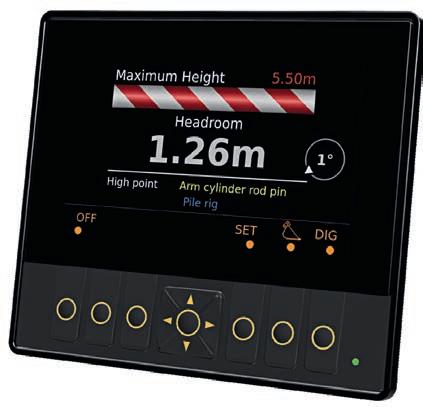
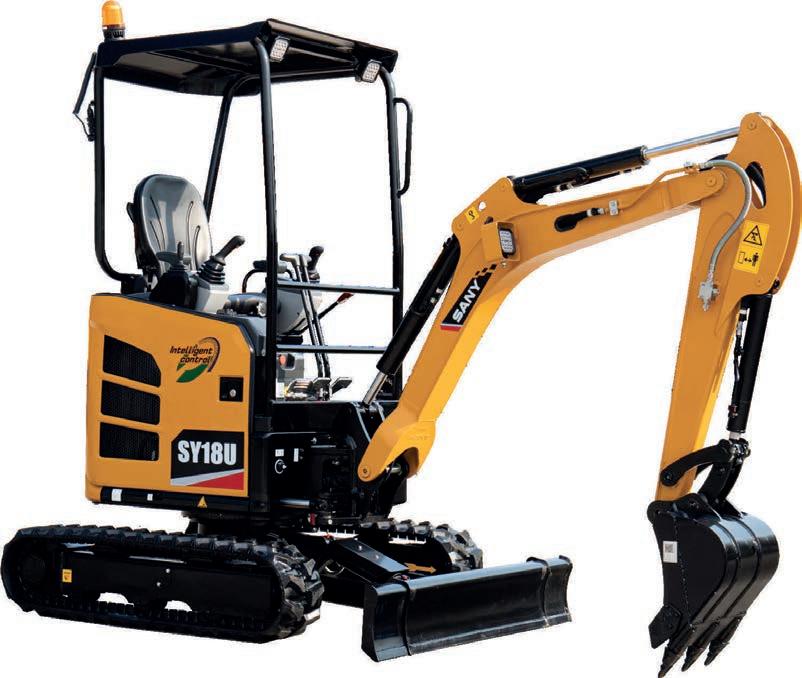
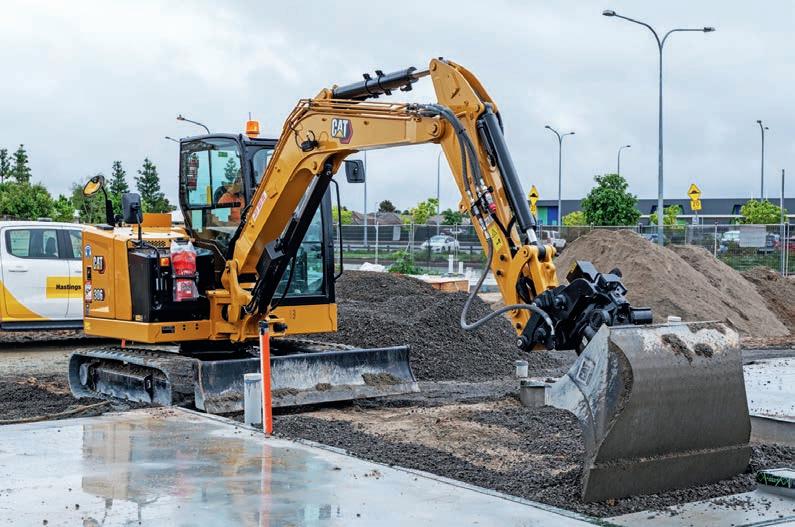
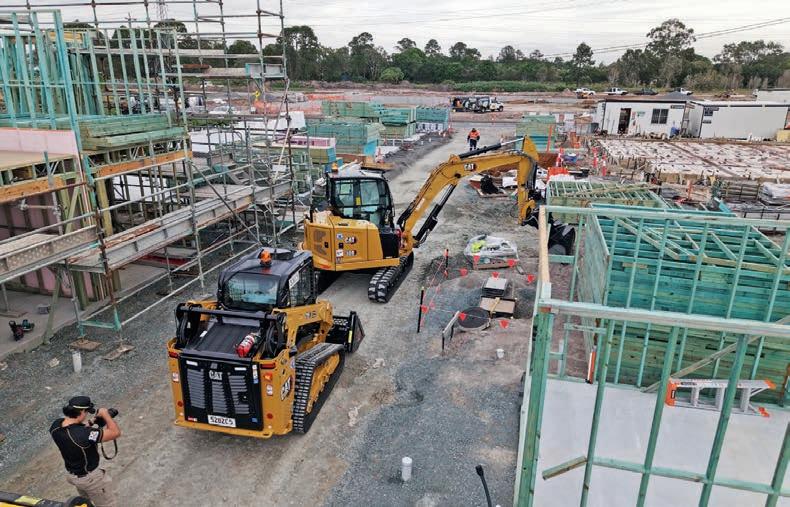
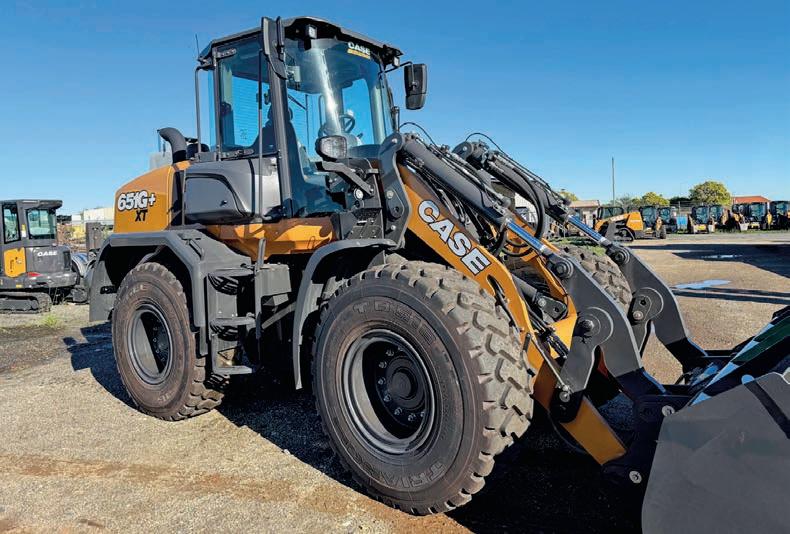
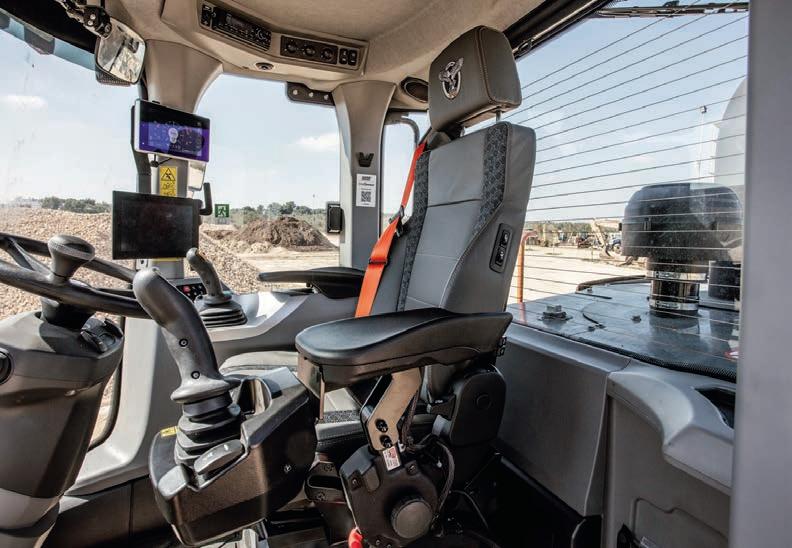
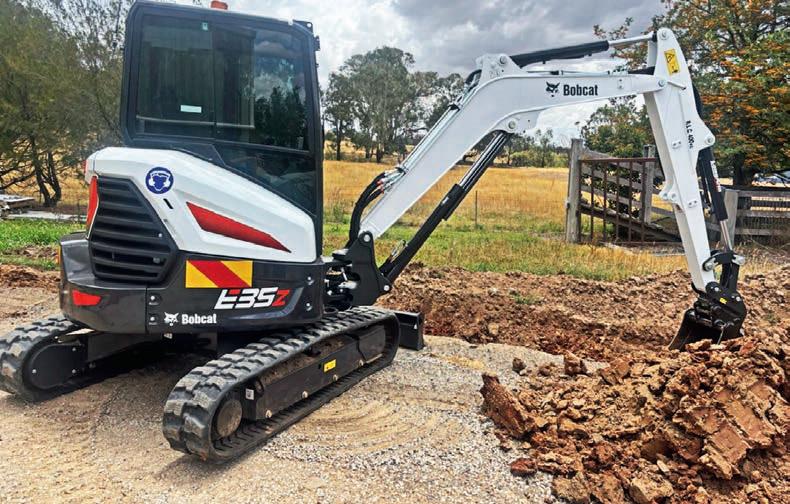
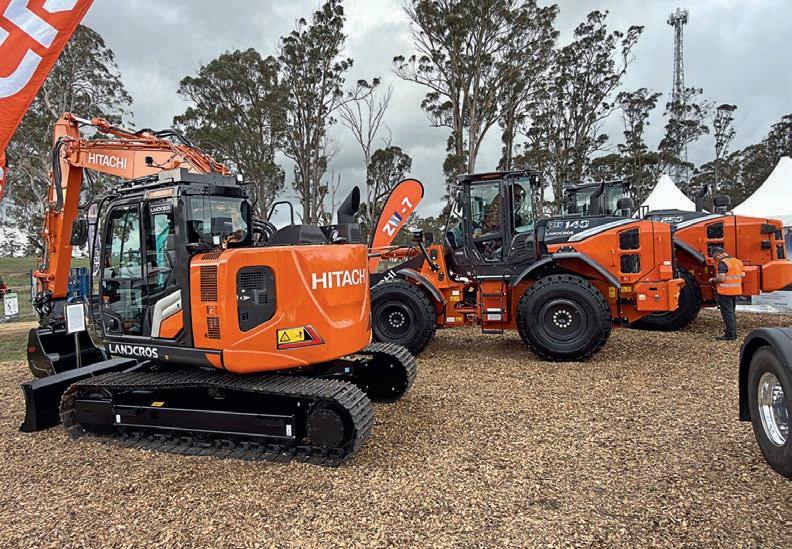
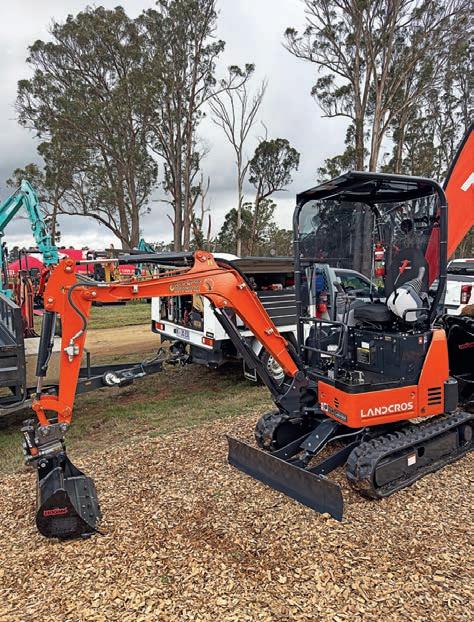
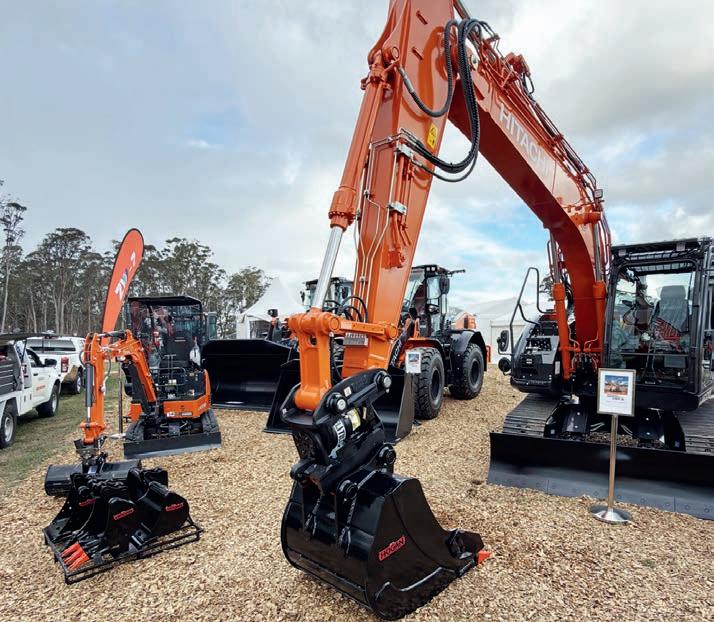
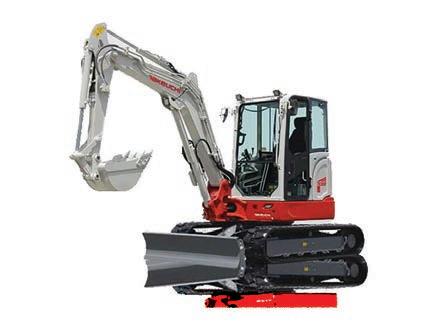
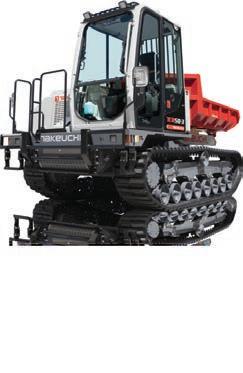
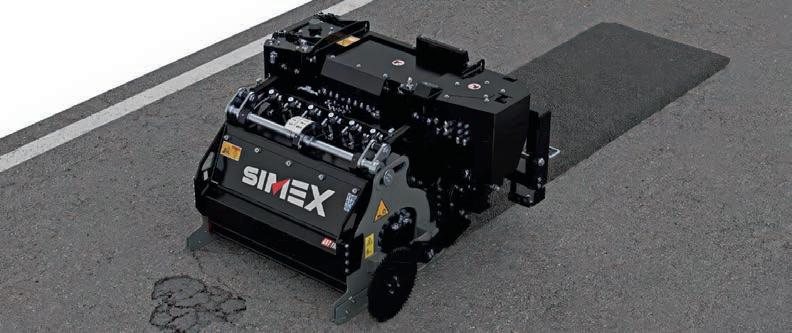
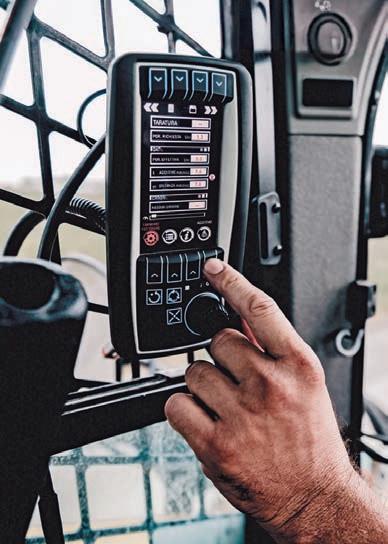
• Tool Control Adjust attachment pressure and flow in monitor
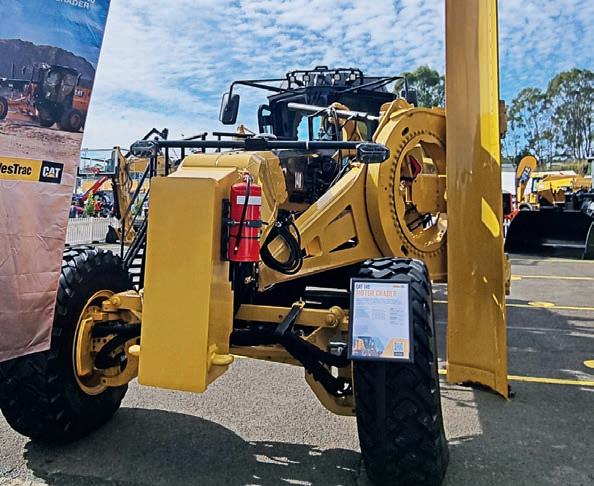
• Factory fitted 3D Machine GuidanceBase components
• Guarded LED Beacon
• SP Starter, DP Battery Isolators
• 500mm Steel Shoe
• 1.5KG Fire Extinguisher
• 80 Channel UHF Radio
• Canvas Seat Cover
• Window Tint
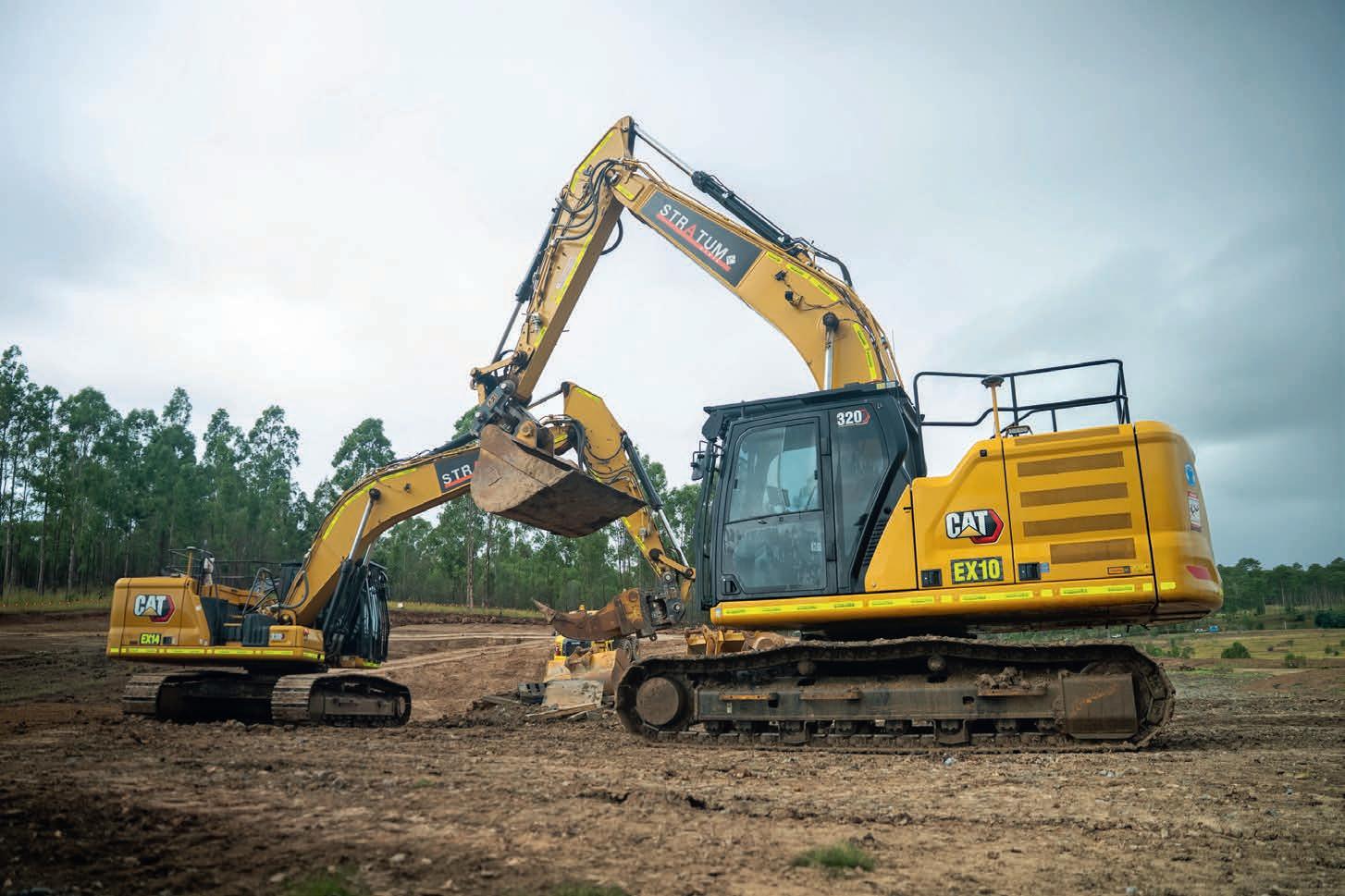
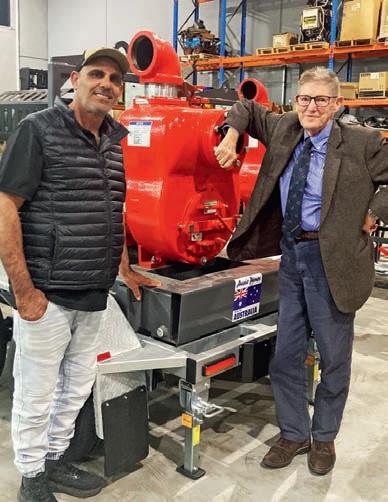
for a Queensland contractor has been
Welcome
Ray Chan Editor
We know that heavy equipment built for quarrying and earthmoving faces some of the harshest operating conditions in industry.
Abrasive rock, punishing duty cycles, extended operating hours, and relentless production targets all place high demands on machinery, making durability and structural strength critical factors in long-term performance.
In this edition, our cover story examines how one Queensland contractor found success with an excavator range engineered for these high-intensity environments. Robust structural reinforcement helps ensure maximum productivity is achieved.
Elsewhere, we turn our attention to the logistics sector, an industry that has shifted much in recent years. Once viewed as a support function, it has become a strategic pillar for businesses navigating unpredictable supply networks.
From international freight disruptions to trade regulations and compliance obligations, operators are facing a landscape where even minor documentation errors can trigger delays and operational setbacks. We explore how businesses are adapting to these pressures and how a company has used expertise, foresight, and flexibility to maintain e icient global supply chains.
We also focus on one of the most underestimated factors in earthmoving profitability: machine selection. While risk is often associated with the complexity of a project itself, experienced operators know the greater danger frequently lies in deploying the wrong equipment.
As labour shortages intensify and fuel costs remain volatile, profitability depends as much on strategic equipment decisions as it does on operator capability. We speak with a contractor who believes choosing the right machinery can reduce rework, improve e iciency, and separate sustainable businesses from those constantly battling operational pressures.
Continuing our exploration of the people who helped shape the industry, we revisit the legacy of another pioneer from Western Australia’s earthmoving history. Following our previous feature on one of the state’s early innovators, this edition profiles a stalwart who grew alongside the evolution of Caterpillar machinery during the first half of the 20th century.
His philosophy remains highly relevant today: rebuild and reuse machinery whenever practical. Far from being simply a nostalgic approach, the strategy reflects sound commercial judgement. Reconditioning equipment can deliver large savings compared with purchasing new machinery, while still providing reliable performance and extending operational value from existing assets.
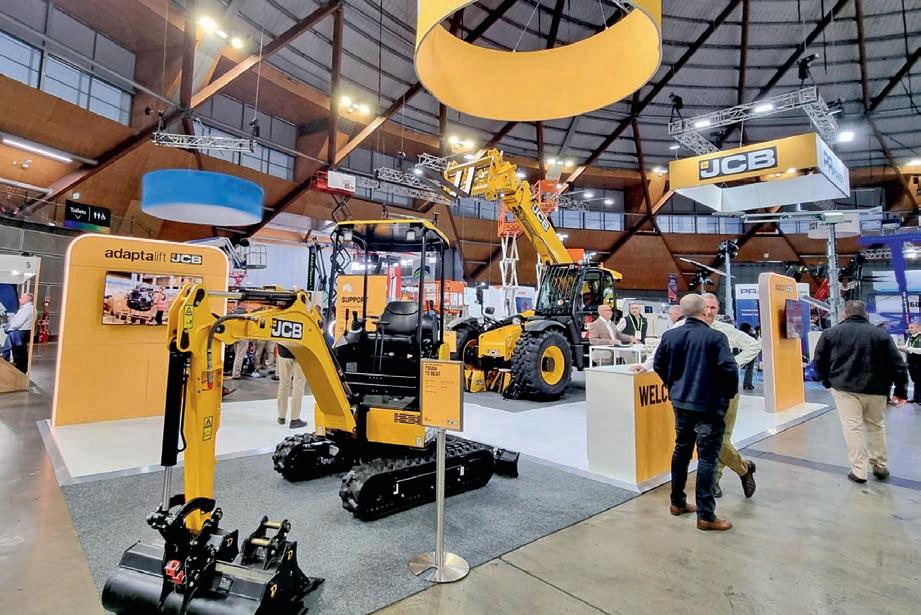
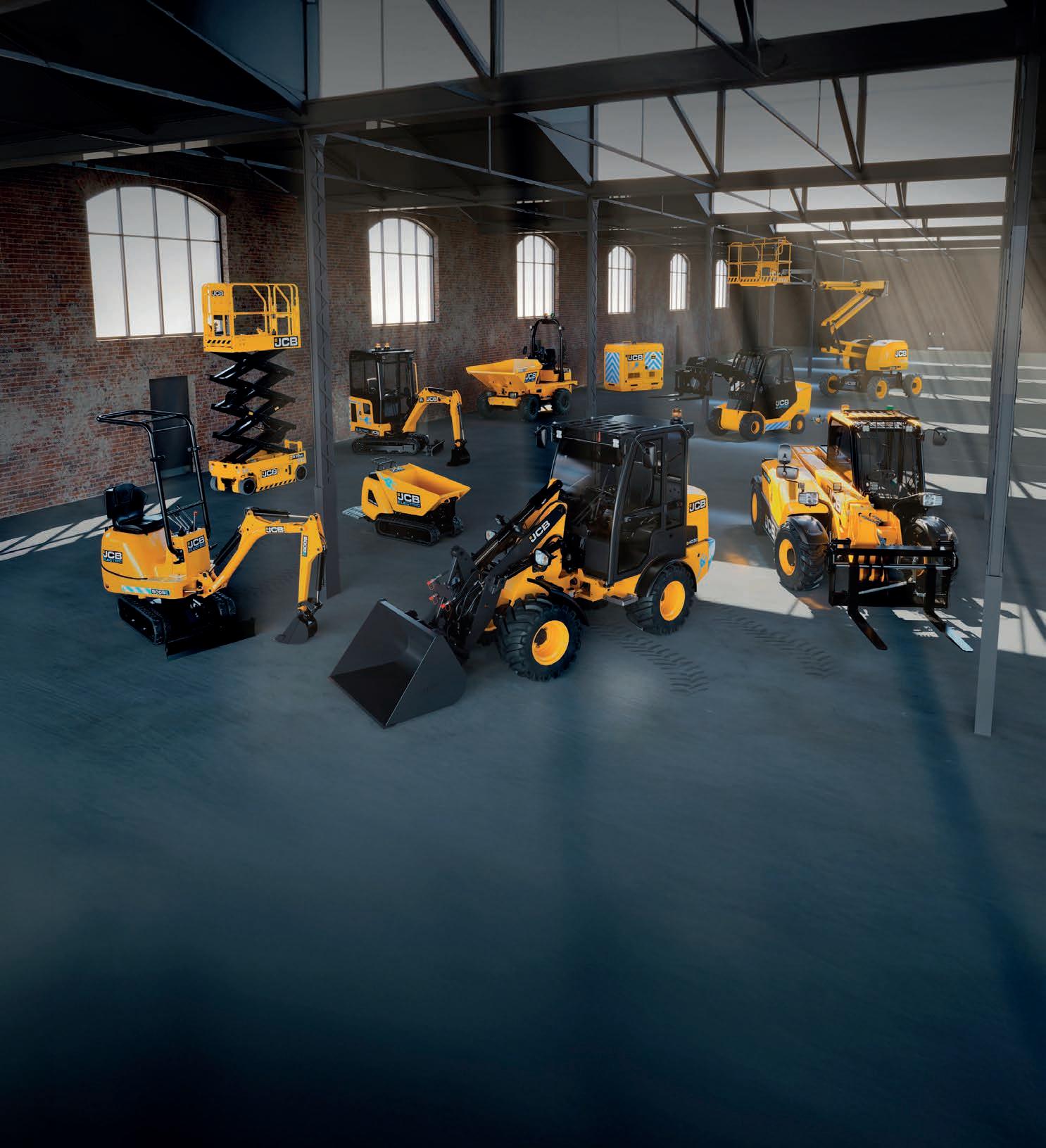
In other news, we examine Adaptalift Group’s appointment as a dealer for JCB equipment nationally. The partnership represents a milestone in Adaptalift’s ongoing expansion beyond materials handling and deeper into the construction and earthmoving markets.
It is also a strategic move for JCB, strengthening the manufacturer’s service capability, parts support, and market presence across Australia. We look at why the partnership was formed, what it means for customers, and how both companies expect it to reshape opportunities within the sector.
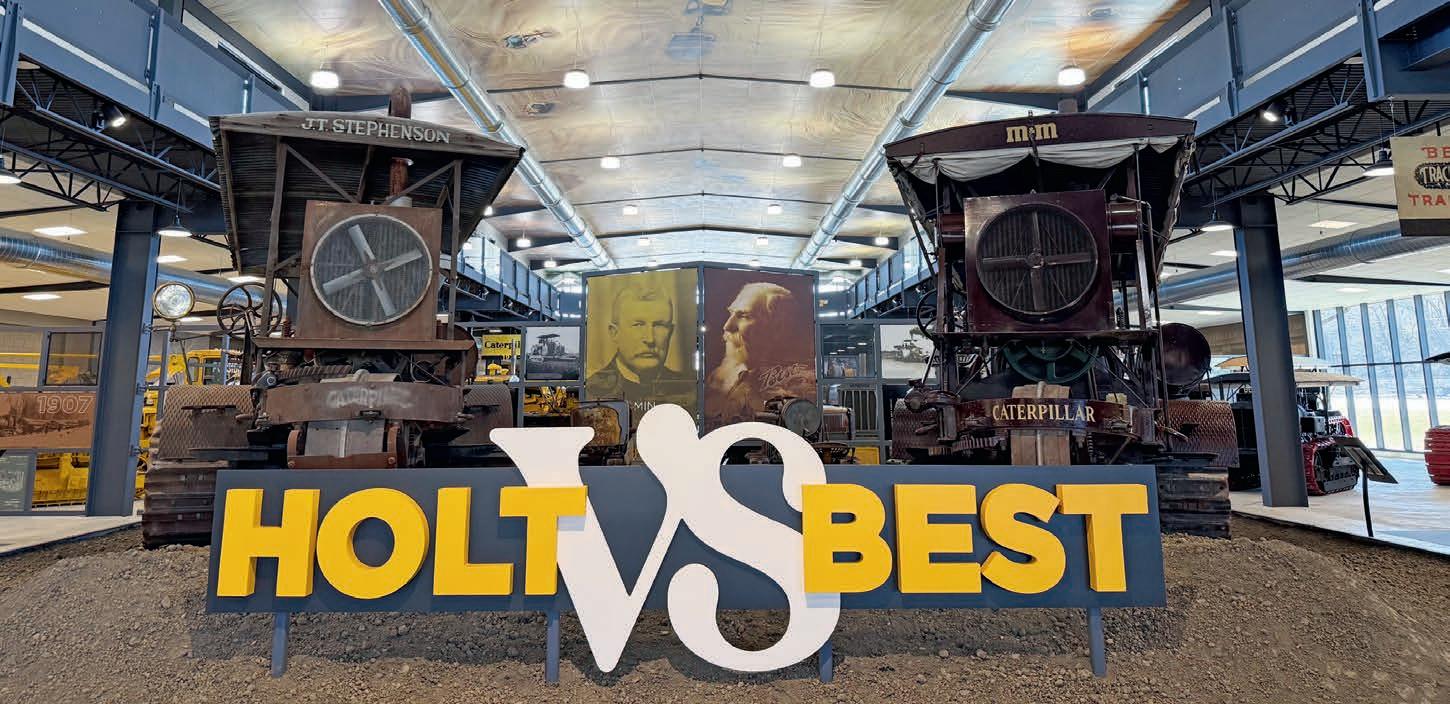
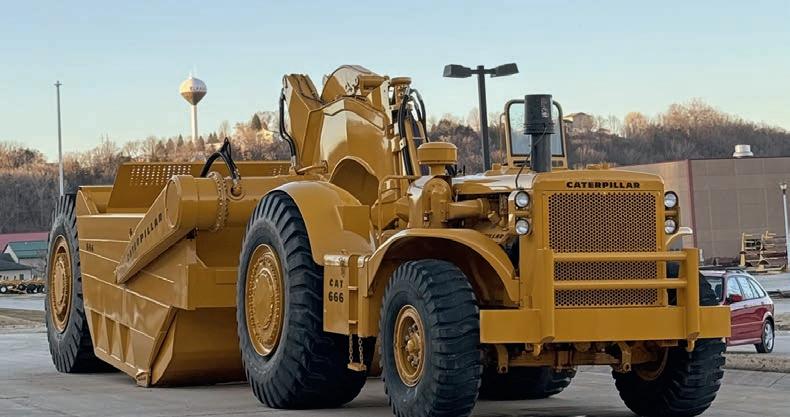
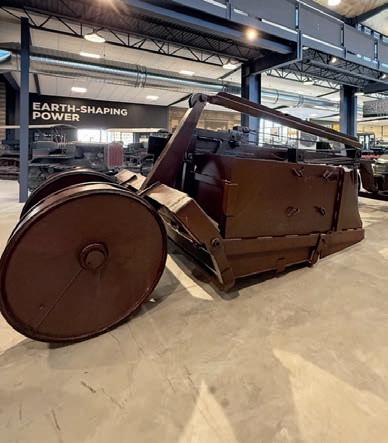
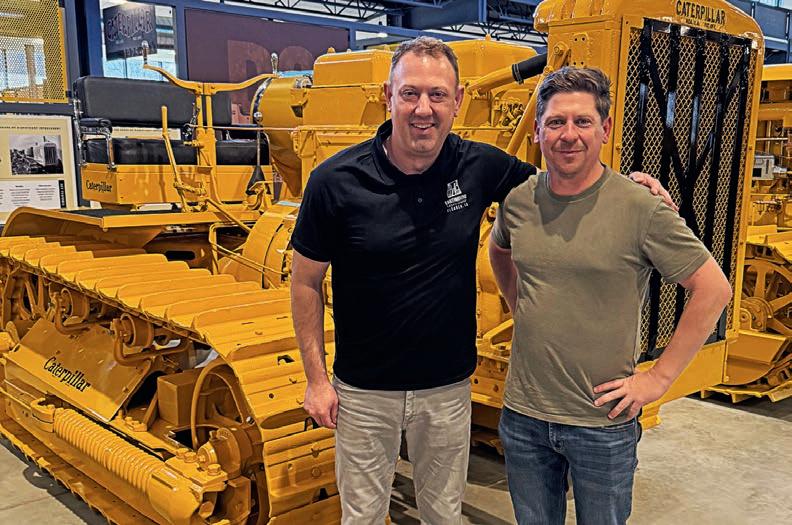
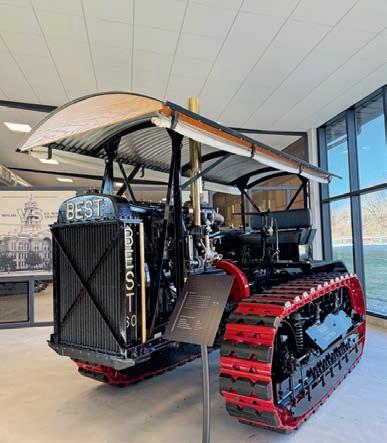
Adding an international perspective to this issue, Scott Lidster from Australian Earth Training returns from a visit to the Earthmoving Legacy Center in the US with an engaging account of one of the industry’s most fascinating museums.
Located in the birthplace of modern earthmoving, the centre preserves the history and machinery that shaped the sector from the late 19th century through to the 1940s. His insights o er a reminder of how far the industry has progressed, while also highlighting the innovation and ingenuity that laid its foundations.
As always, this edition delivers a range of additional content spanning new product developments, major industry events, and expert commentary from specialists across numerous disciplines — such as machine control technology, plant insurance, workshop safety, industrial equipment, and marketing strategies — all aimed at helping businesses operate e iciently and competitively in demanding environments.
Rounding out the magazine are contributions from our regular industry partners, who continue to provide valuable perspectives on the latest developments, emerging trends, and key issues influencing their respective sectors.
Happy digging!
Success
built on the use of a fleet of Caterpillar machines, including a commemorative Centennial 336 3D Excavator. See story on page 64. Image: Prime Creative Media
E PERIENCE XCMG
Now’s the time to talk to your dealer about why XCMG is breaking new ground for performance, efficiency and sustainability. Get XCMG on your fleet and experience exceptional.
Exceptional opportunities now available across the range
Earthmoving Equipment Magazine is published bimonthly by Prime Creative Media Pty Ltd.
P. +61 3 9690 8766 subscriptions@primecreative.com.au
Website www.earthmovers-magazine.com.au
Copyright Earthmoving Equipment Magazine is owned by Prime Creative Media and published by John Murphy. All material in Earthmoving Equipment Magazine is copyright and no part may be reproduced or copied in any form or by any means (graphic, electronic or mechanical, including information and retrieval systems) without written permission of the publisher. The editor welcomes contributions but reserves the right to accept or reject any material. While every e ort has been made to ensure the accuracy of information, Prime Creative Media will not accept responsibility for errors or omissions, or for any consequences arising from reliance on information published.
Articles All articles submitted for publication become the property of the publisher. The editor reserves the right to adjust any article to conform with the magazine format.
Sydney O ice Suite 11.01, 201 Miller St, North Sydney, NSW 2060
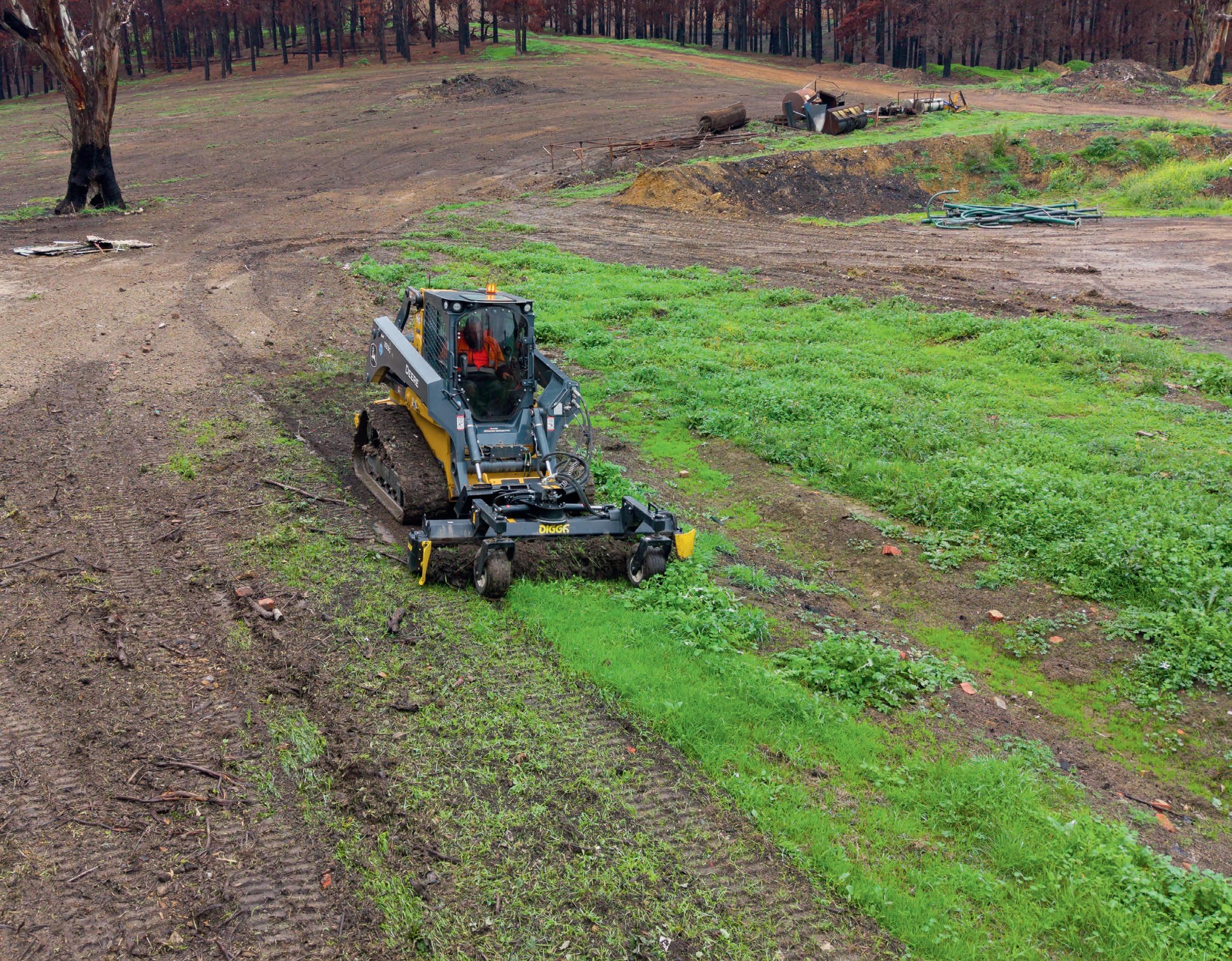
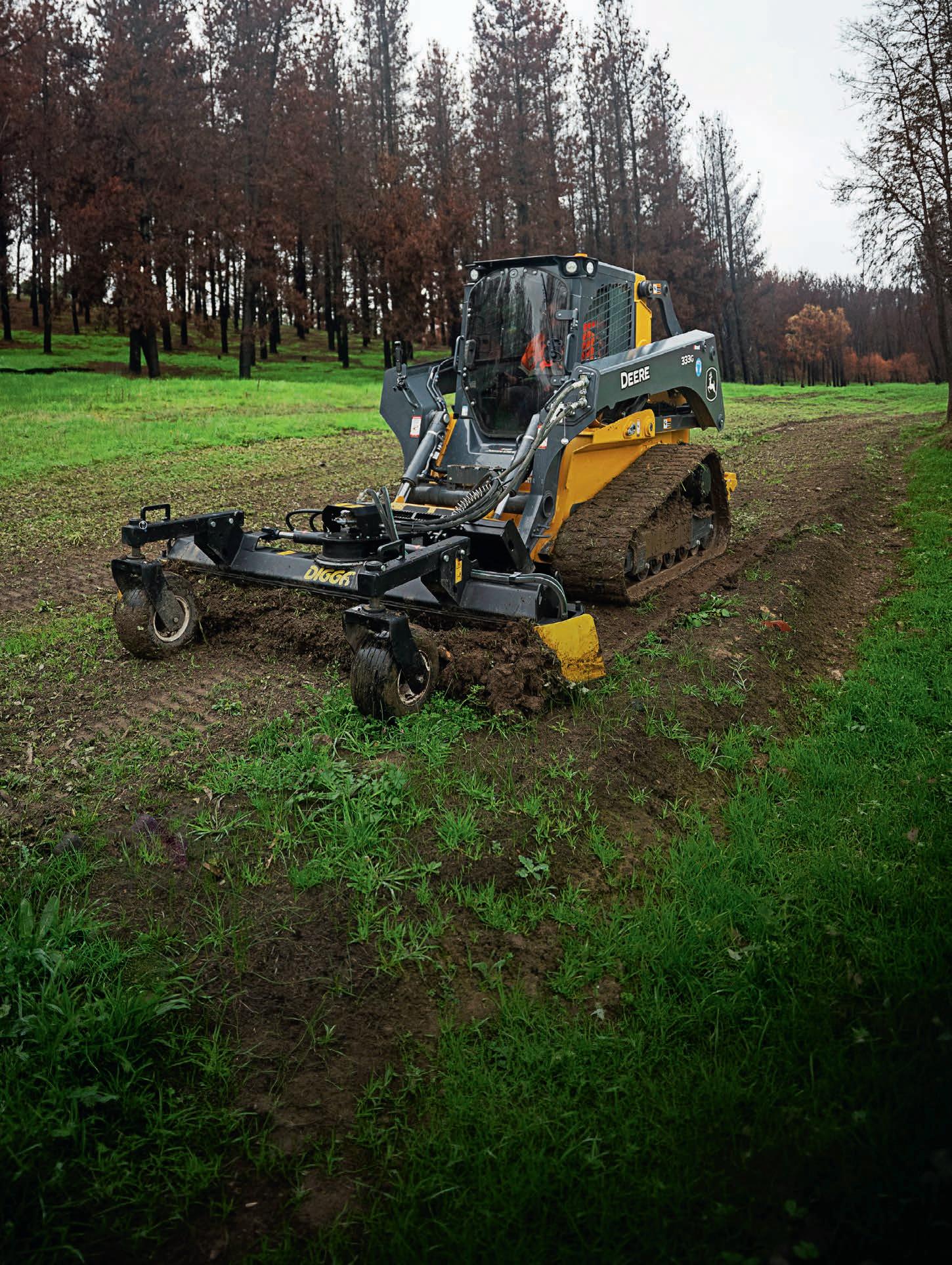
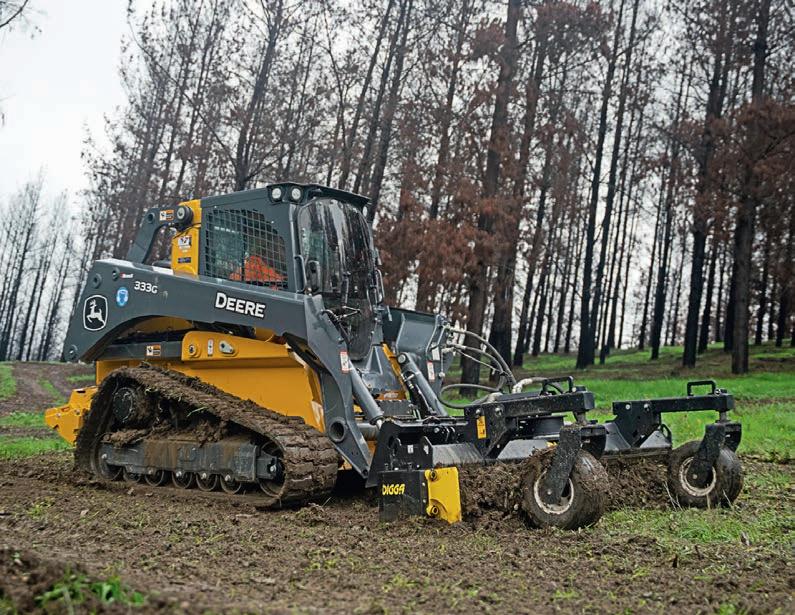
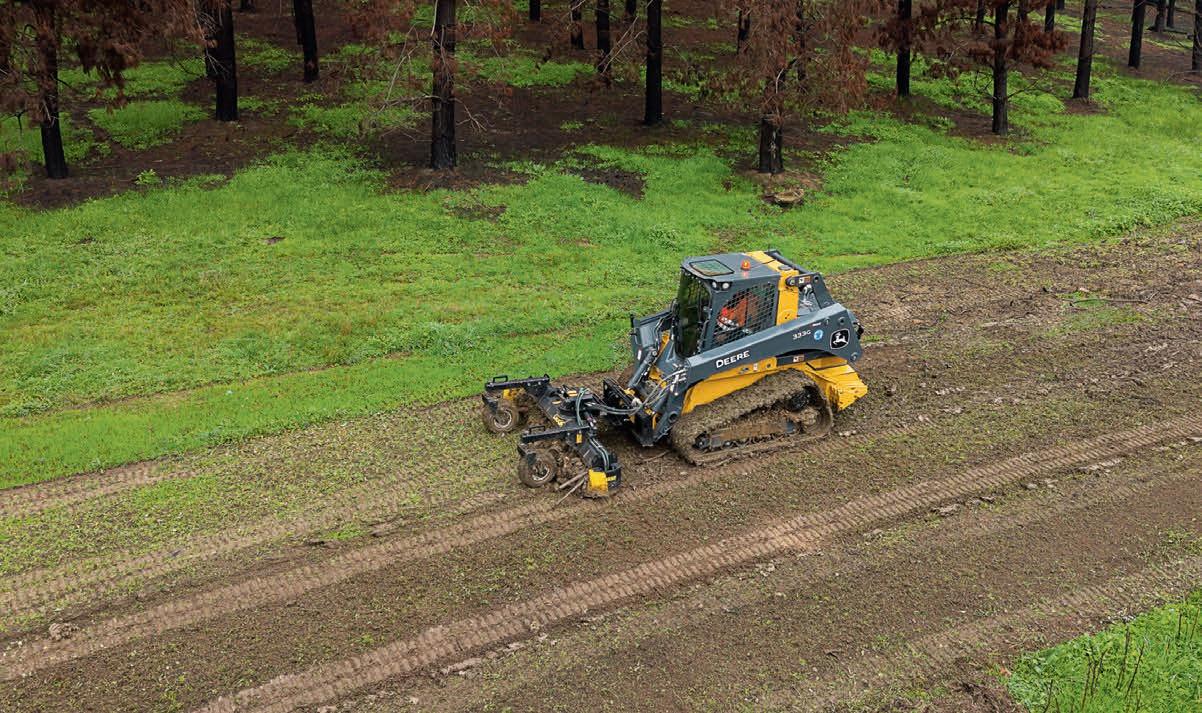
A John Deere 333G compact track loader has proven invaluable for climbing over debris and tackling the immediate clean-up work after a devastating bushfire. See story page 82. Image: Prime Creative Media
Zaxis-7 YOU’RE IN CONTROL .
Be in control with the 7 Series excavators and wheel loaders.
Hitachi Construction
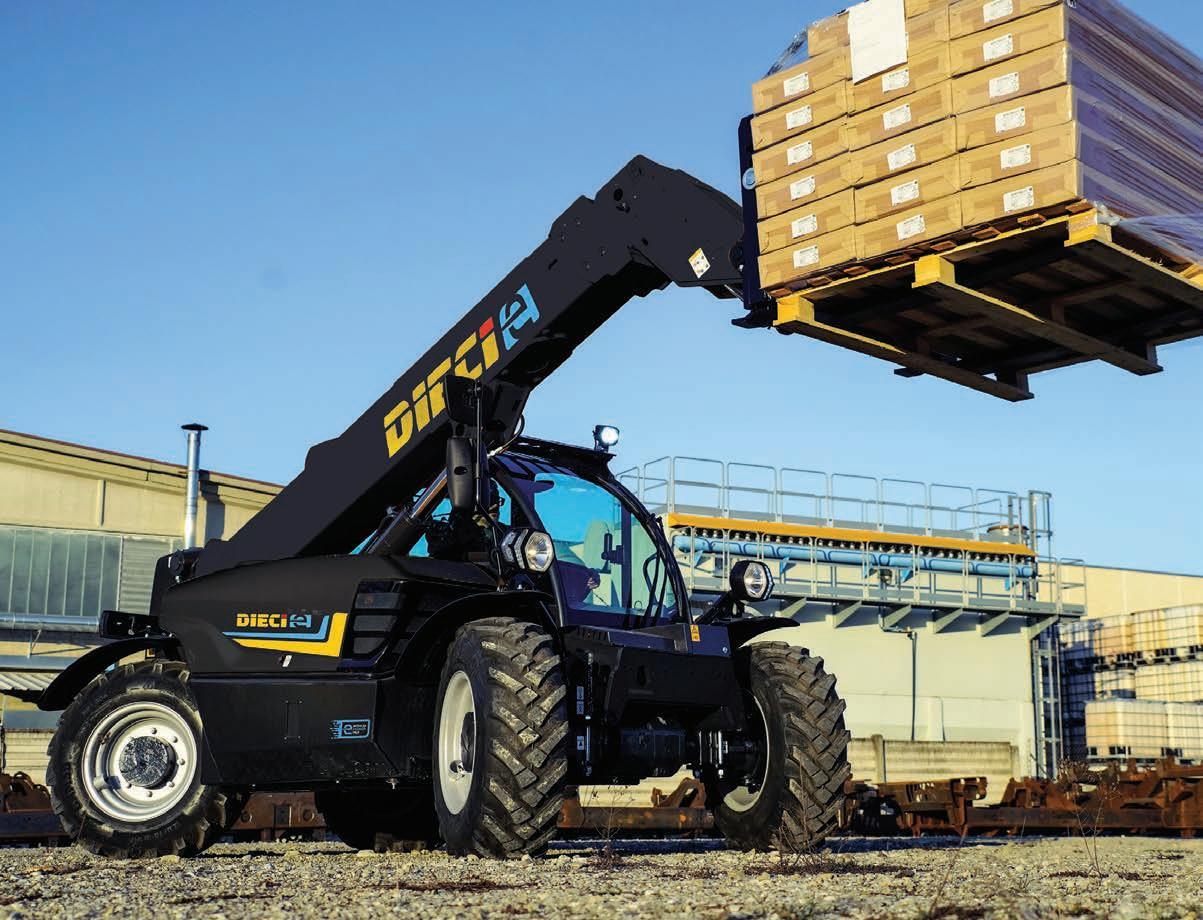
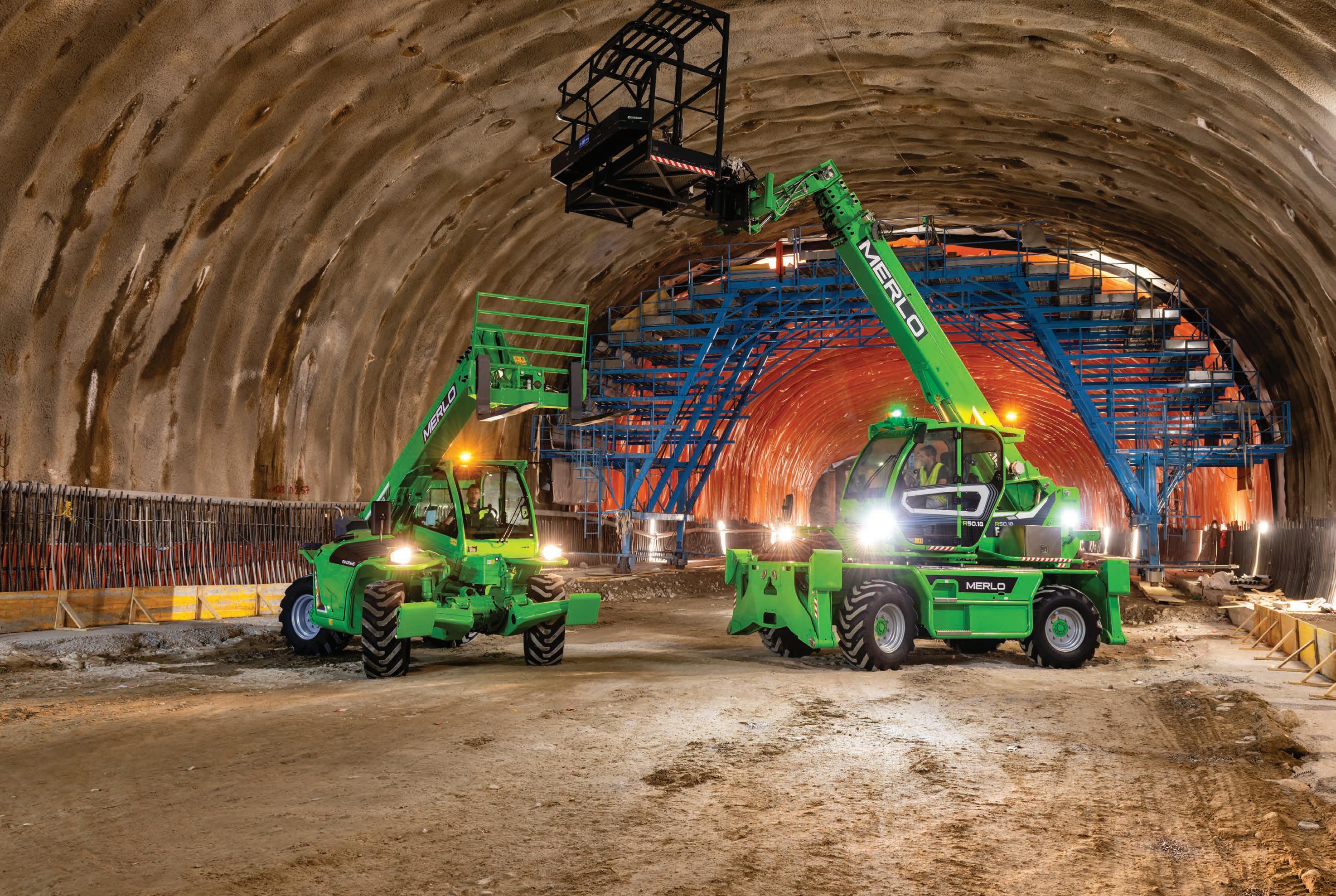
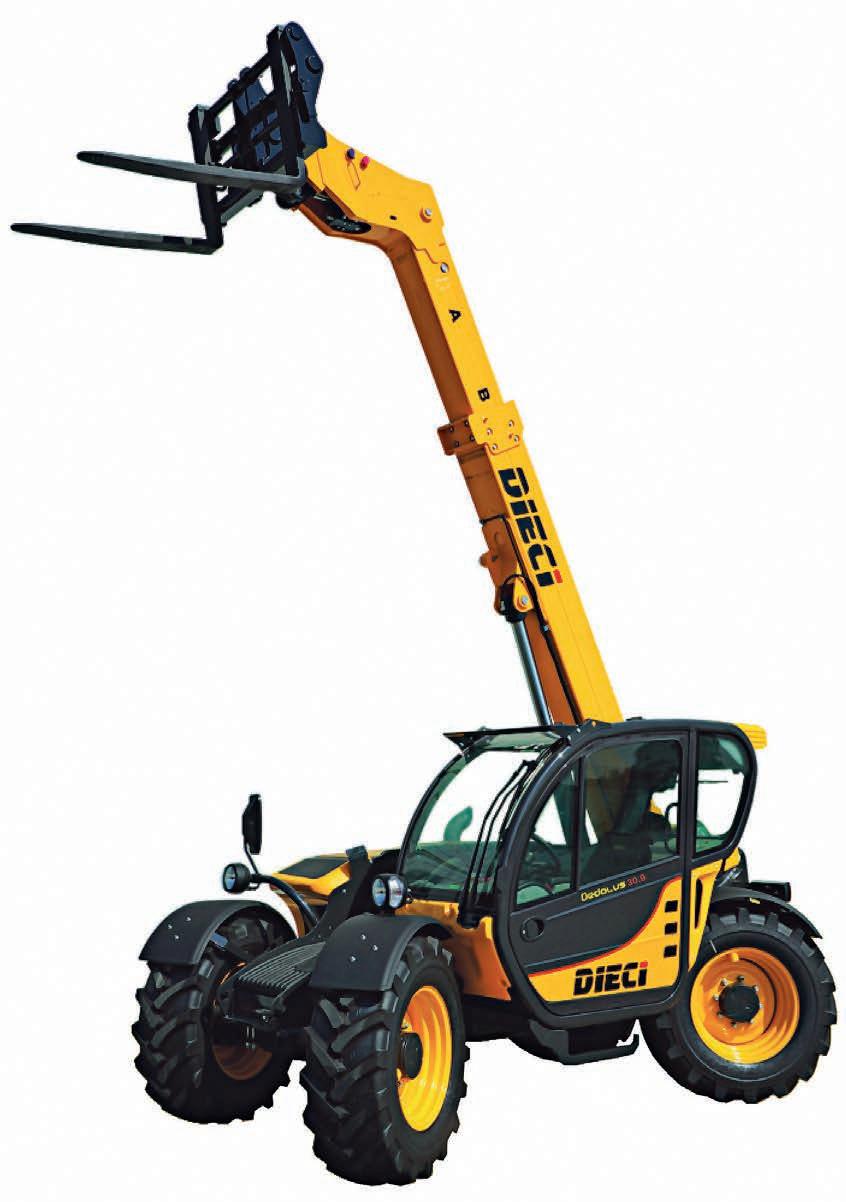
The Dieci Apollo-e 26.6 telehandler brings the future of lifting to Australian worksites with powerful all-electric performance and zero emissions. Designed for tight environments and indoor applications, this compact telehandler delivers a 2.6 tonne lift capacity and 5.73 metre max lift height while operating quietly and efficiently. A high-performance lithium battery system, responsive electric drive and Dieci’s renowned engineering combine to deliver exceptional precision handling, lower running costs and cleaner operation on modern job sites across construction and industrial sectors. Max Speed: 24 km/h
Max Capacity: 2,600 kg
Max Lift Height: 5.73 m Rated Power:
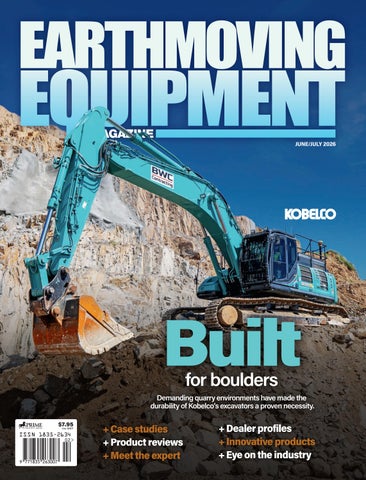
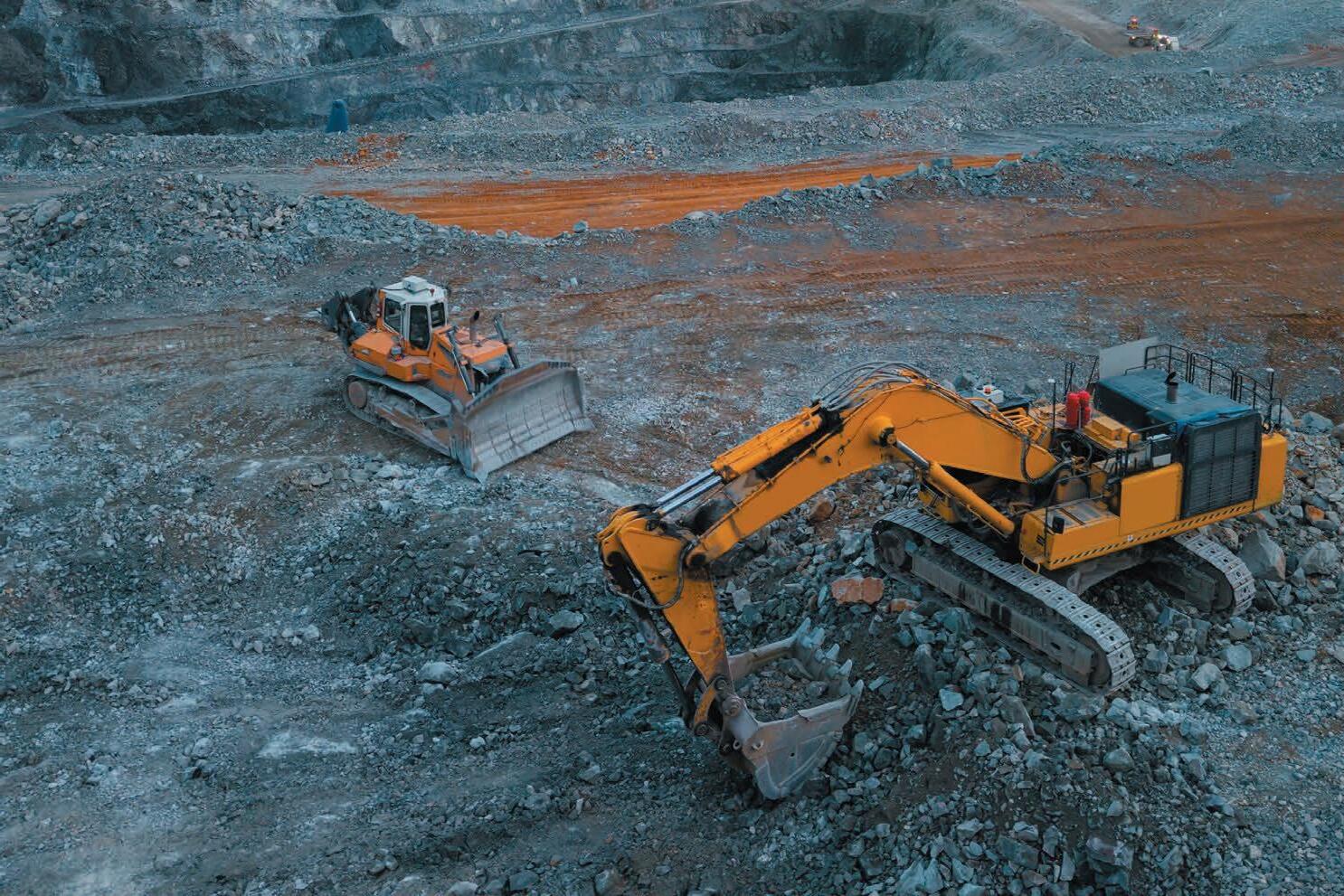
For a bulk works specialist, decades in demanding quarry and earthmoving environments have made the durability and performance of Kobelco’s heavy-duty excavators not just a preference, but a proven necessity.
Kobelco has developed and positioned its excavator range to meet the demands of quarry and earthmoving operations — environments where machines must endure abrasive rock, heavy cycles, long hours, and high production expectations.
Such work places di erent stresses on equipment compared with general construction, and Kobelco’s engineering and product planning reflect this reality across multiple fronts.
One of Kobelco’s priorities for quarry-oriented excavators is robust structural reinforcement.
Kobelco’s extra heavy-duty (XD) machines — such as the SK380XDLC-10 and SK500XDLC-10 — are engineered with thicker reinforcements across the boom, arm, underbody, and undercarriage to withstand mechanical stress and abrasive rock impacts.
Compared to standard Kobelco SK500LC models, the XD versions feature:
• Structural strength: Triple-plated, hardened
steel on the boom-to-arm connection and a full-length rock guard on the dipper arm.
• Upgraded undercarriage: Reinforced guide frames, heavy-duty steel bolted underbody guards, and 600mm triple-grouser shoes for better durability on rocks.
• Engine simplicity: Powered by a 257 kW Hino engine that requires no DPF and no AdBlue, reducing maintenance downtime.
The design focus isn’t limited to one class.
Even larger machines like the SK850LC are
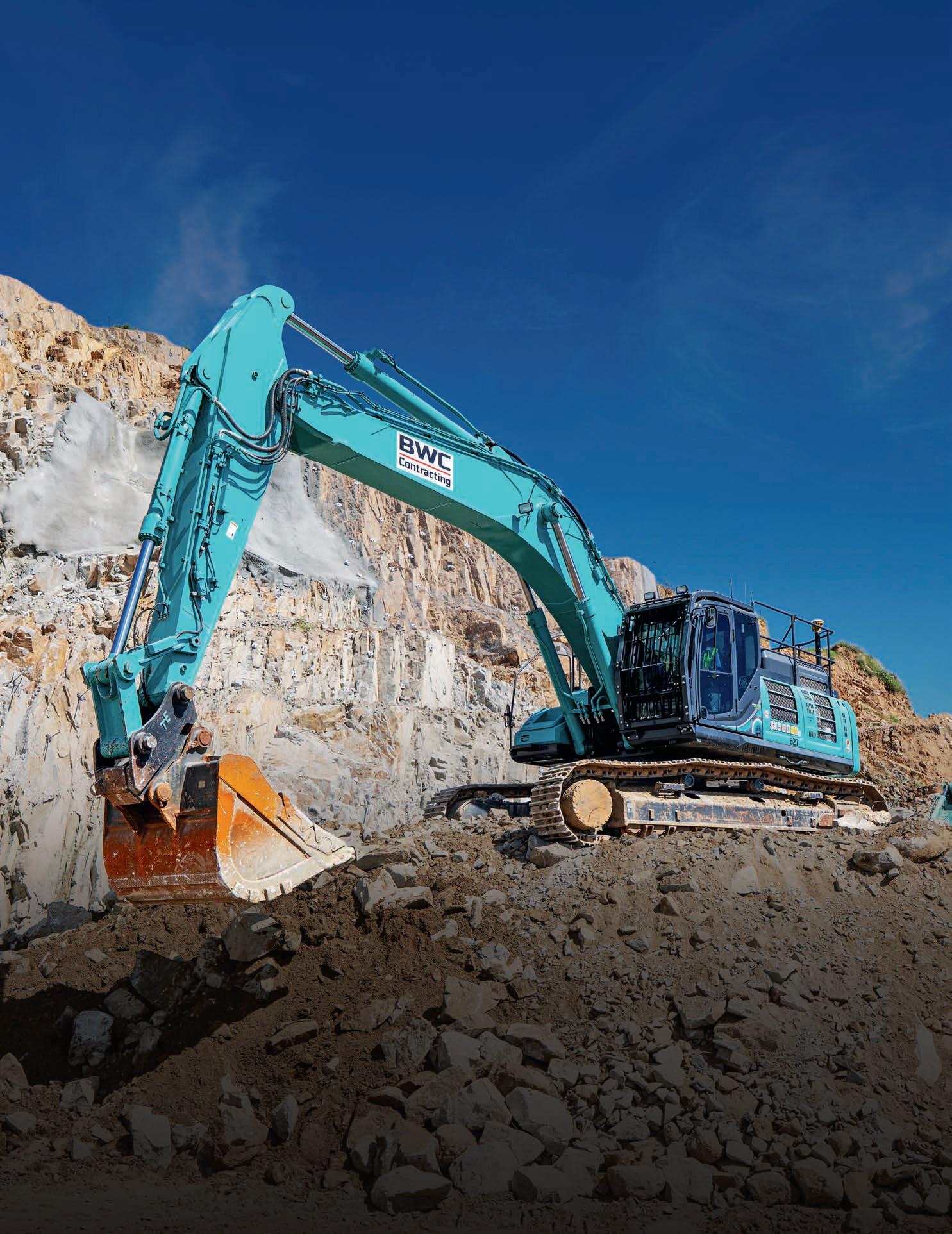
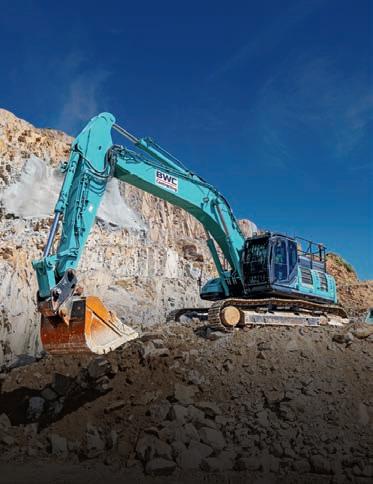
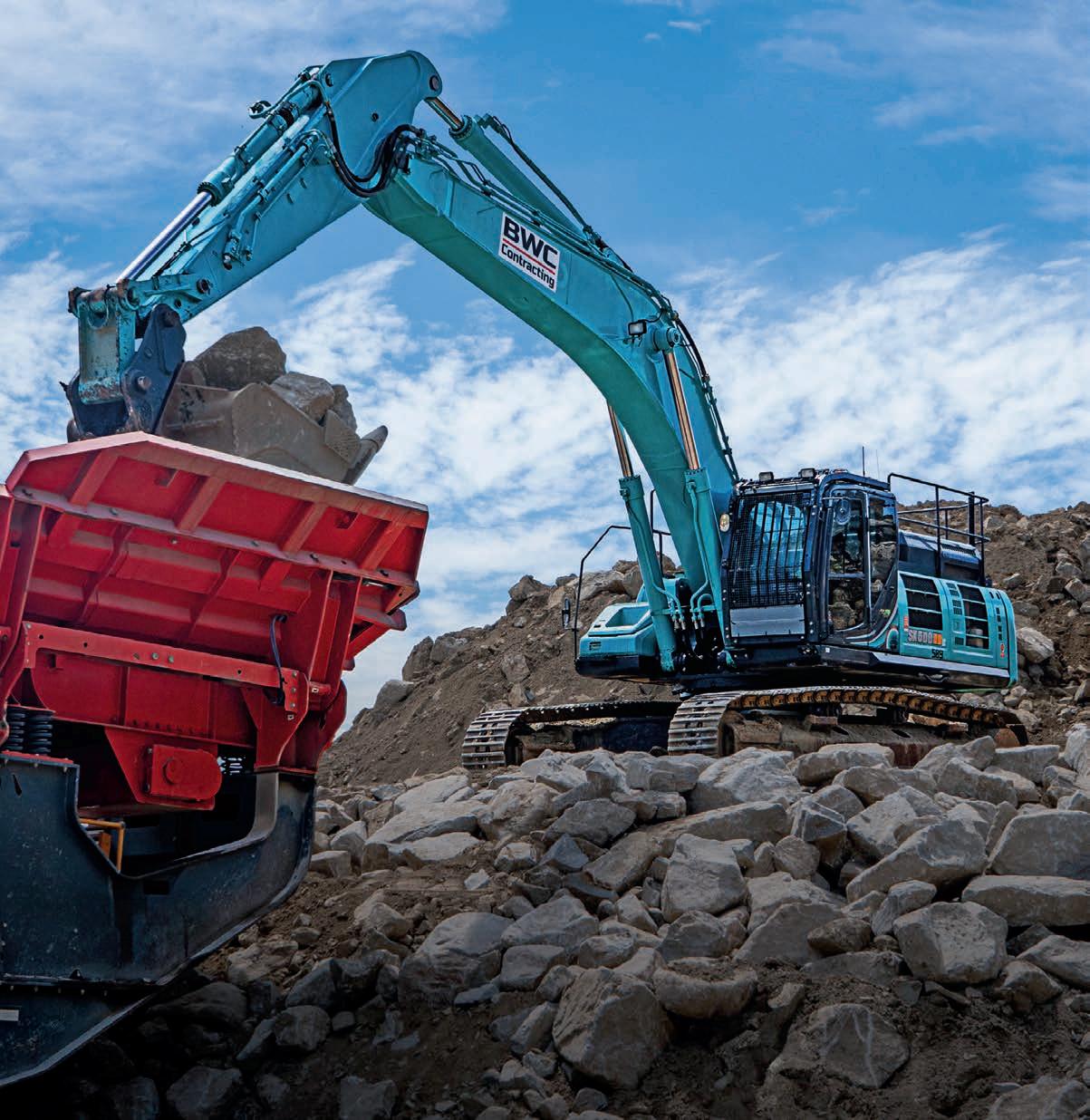
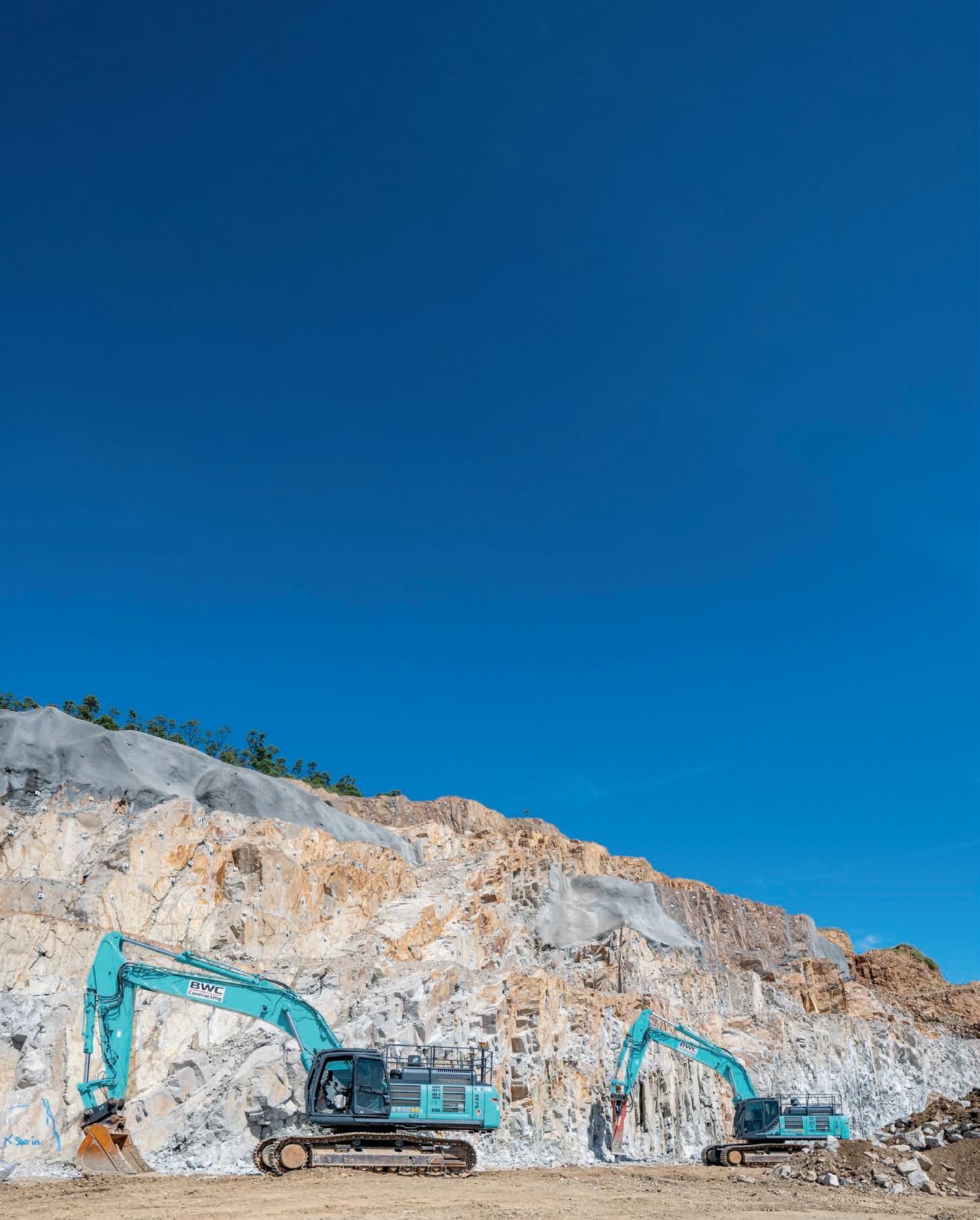
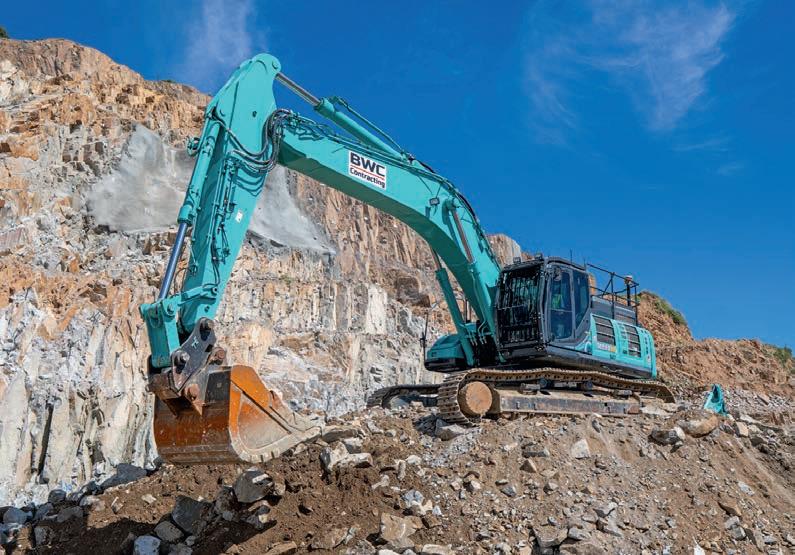
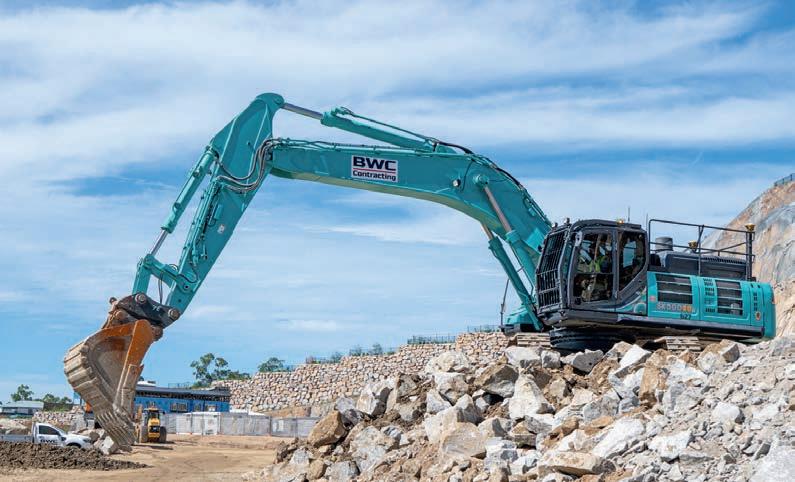
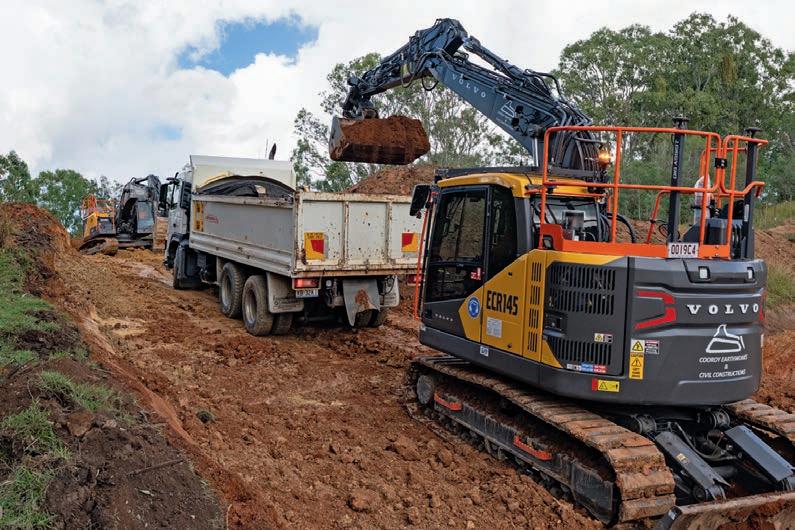
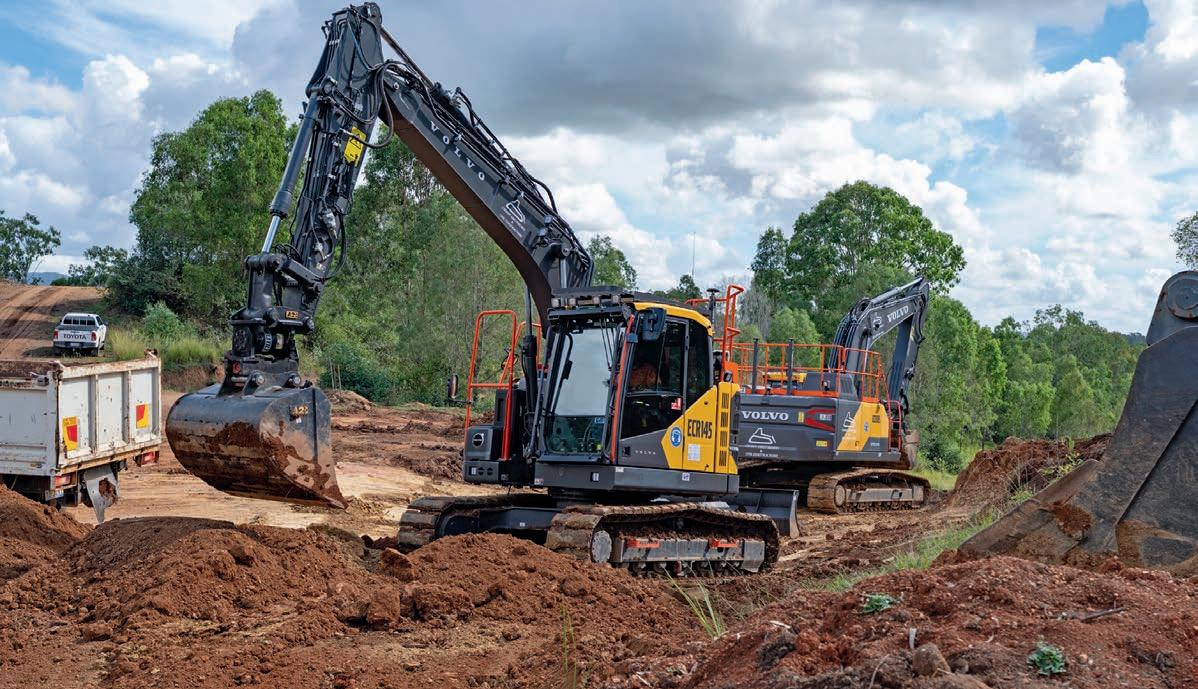
One of BWC’s Kobelco SK500XDLC-10 machines used to crush, screen, and load material from the quarries. Images: Prime Creative Media
developed to withstand severe conditions, with heavy track guides and reinforced chassis elements to increase longevity.
This engineering emphasis ensures machines not only perform well in tough conditions, but also retain long service lives with lower downtime and repair costs — a vital consideration in production-focused quarry environments where equipment failure equates to lost tonnes and lost revenue.
The manufacturer also ensures high productivity through its power and hydraulic systems.
Quarry environments demand powerful digging force and quick cycle times to load trucks, extract material, and stockpile product. Kobelco ensures this by designing hydraulic mechanisms that reduce pressure loss while maintaining strong digging and lift capacity. Its machines incorporate selectable work modes (for example, heavy, standard, ECO) to balance fuel e iciency with peak production, essential when machines may idle between truck rotations or work in sustained high-load cycles.
Tuning engines and hydraulics to deliver fast dig and swing cycles contributes to greater hourly output.
Then there’s Kobelco’s fuel e iciency and operating economy. Kobelco machines are engineered to deliver low fuel consumption without sacrificing power.
Advanced hydraulic systems, including mechanical regeneration features, lower fuel use during idle and work cycles.
E icient engines and intelligent machine controls reduce waste, which in quarry applications can lower total fuel costs across a fleet.
A civil case
Queensland-based BWC Contracting is one business that needs no convincing of the class and qualities of Kobelco machines.
In the industry for more than four decades, the company specialises in bulk earthworks, quarrying, transport, mining, and boulder retaining wall construction across Brisbane’s south-eastern corner, with sporadic work in Sydney.
BWC uses the Extreme Heavy Duty versions of the SK500XDLC-10 excavators, which are specifically engineered for extreme work environments like quarries, heavy infrastructure, and mining.
We chatted with BWC Managing Director Gavin Turner at one of its project sites to find out more about how Kobelco equipment has helped it e iciently win, process, load, and transport all types of raw materials.
But first, Gavin told us more about the origins of BWC.
“I am the sole director of the company, which I run collectively with my sons Je , who’s the Operations Manager, and Bradley, who’s the General Manager,” he said.
“BWC Contracting was founded to meet a defined need in the quarrying, transport and bulk earthworks sectors, evolving out of longterm industry experience.
“I started the business in 1984 and it's had organic growth since then. I've built the business from doing predominantly builders’ work, recycling and small jobs up to a point now where we are doing quarry rehabilitation, materials transfer, and materials winning for large multinational companies.
“Over 42 years, the team at BWC brought together extensive experience across mining and quarrying operations, giving it a strong foundation in technical capability and practical knowledge of extractive industries. This experience was crucial in developing the company’s early services and credibility with industrial partners.
“I'm lucky to have both my sons involved in the business as well, hands-on in a full-time capacity, and I really couldn't do it without them.
“We have a great relationship with all our suppliers, and with the people who we deal with. We have long-standing relationships with our clients, some of them we've worked for more than 35 years.”
Fleet expansion and operational growth over the decades enabled BWC to serve these clients with an end-to-end approach — from extraction to hauling — rather than just isolated services.
“Today we have about 80 sta including subcontractors. We run all our own maintenance sta and fabricators, and operate out of our workshop 20 hours per day to keep gear
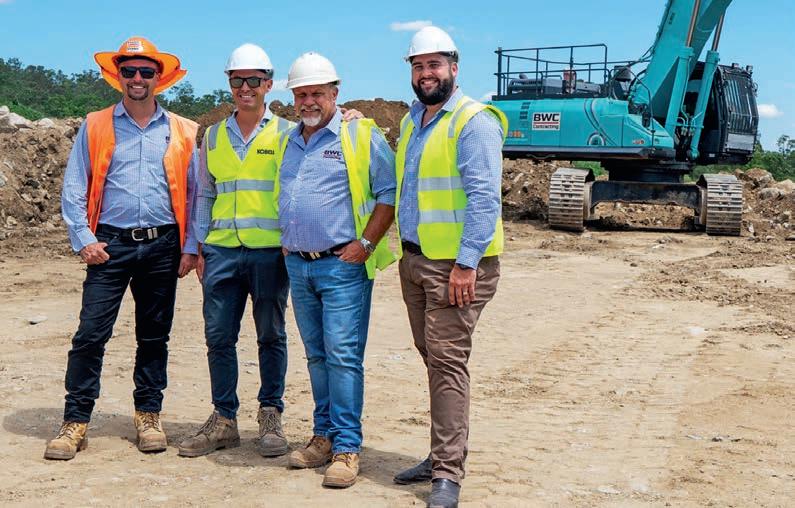
Delighted with the excavator’s performance: Brad Turner (left), Marco Marabini, Gavin Turner, and Je Turner.
serviced at night to reduce downtime,” Je said.
“Through the growth of the business, the needs for equipment and machinery have varied greatly. We have about 60 to 70 pieces of earthmoving plant and machinery: a fleet of 25 late model truck and dog combinations, equipped with modern fatigue management software.
“There’s a range of machinery of all shapes and sizes, from 1.8 tonne to 90t excavators, dozers, Moxy dump trucks, crushers, and screeners, to water carts, loaders, rollers, and stackers. We use a range of attachments, such as hammers, rock grabs, rippers, and heavyduty reinforced buckets.
“We rely heavily on good relationships with our suppliers, so we get up-to-date information on the technological changes in the machines, and all the new advances that come with the new models, and with the industry as a whole.”
Of the diggers, BWC relies heavily on its Kobelco contingent: an SK350-8, a 35t class hydraulic excavator with a 1.6 m3 bucket capacity; three SK500XDLC-10 heavy-duty crawler excavators with an operating weight in the 50t class; and two SK210LC crawler excavators.
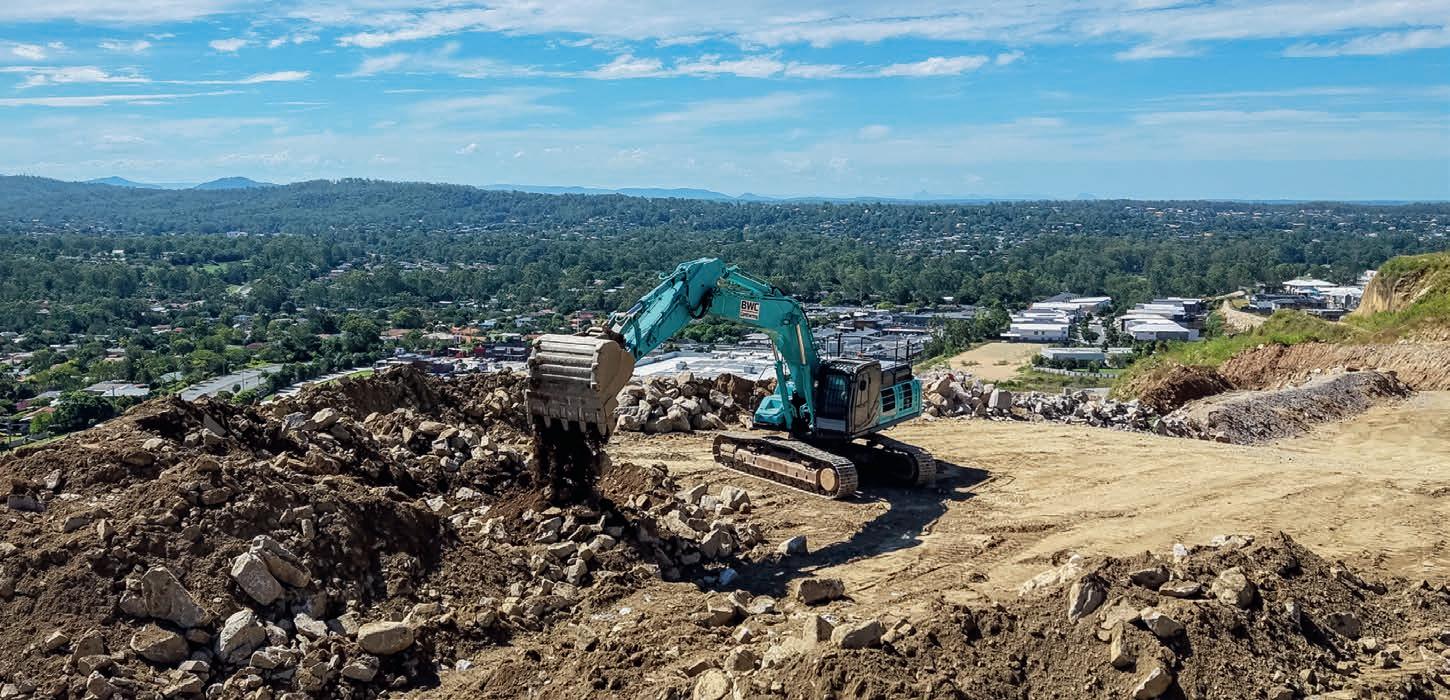
They were chugging merrily away at the project site at Keperra Quarry, which is being rehabilitated and transformed into a residential subdivision named The Quarry.
“BWC is focusing on the extraction of materials and the bulk earthworks component of the works,” Gavin said.
“On this site, the granite is extremely hard and
“On this site, the granite is extremely hard and wearing, and the Kobelcos just seem to handle it really well .”
wearing, and the Kobelcos just seem to handle it really well.
“They're doing a great job, and they meet our KPIs for delivery of sections of the project and for the work we have to do really well.
“We use a range of crushing, screening, and loading equipment, along with the Kobelco excavators, to mine and sort boulders. We also have ancillary equipment such as graders and rollers to assist and get the other components of the works done.
“Of the Kobelcos, the SK500XDLC-10s are mainly used. They are all-quarry machines, used for a range of purposes such as ripping, rock grabbing, sorting, loading, crushing, screening, and hammering. They’re multifaceted operations, so it’s great to have machines that are so versatile.
“This robustness also enables BWC to run the over-sized hammers that we need for our tasks.
“The 50t machines are perfect for what we do in our quarries, and in our applications. They have good lifting and breakout strength, and we get good production results for our crushing activities.
“We put our gear through hell with the granite boulders. It is hard on machinery and Kobelcos have been a long-time choice of ours because they perform in those conditions. Machinery from other manufacturers doesn’t last as long, or everything wears quicker.
“We use the SK350-8 as a utility mining machine for loading needs, and the SK210LCs are set up with rock grabs and used to build boulder walls full time.”
For Brad, working with the Kobelcos gives him the opportunity to be part of an industry he has enjoyed working in.
“I love the trucks, and I love the quarrying work. I think taking something from raw natural earth and carving it out to a final product is a pretty cool part of what we do,” he said.
“In our quarrying work, the Kobelco 50 tonners have been excellent. They’re the right size machine for our application.
“In our rock wall fleet, the 21t SK210LCs have been excellent. We've got two of them now, both fairly young, but we have previously had a 20t Kobelco and they're perfect for what we do, with good lifting capacity.”
Brad expanded on the nature of the project, which involved transforming the end-of-life phase of an old granite quarry.
“We're profiling the site for future civil and urban development use. So we're taking these old style cut faces, conforming them and bringing them back to a suitable face so that they can be bolted and treated with various methods.
“We also carry out rock retaining for the faces that can't be treated or need to be naturally built out.
“It’s all so easy with the Kobelcos.”
Brad said that apart from their durability, digging prowess, and fuel e iciencies, there were other reasons to like Kobelcos.
Operator comfort and productivity were key. While quarry jobs are tough, operators still spend long hours in excavator cabs.
“Kobelco recognises that operator comfort impacts safety and productivity,” Je said.
“Spacious, ergonomic cabs with noise and dust control help reduce operator fatigue, which in turn supports better performance and fewer mistakes over long shifts.
Equipped with robust attachments, BWC’s Kobelco SK500XDLC-10 machines are used for a range of purposes such as ripping, rock grabbing, and hammering.
“Features such as air-suspended seats, climate control, and intuitive multi-display interfaces make extended operation less fatiguing and more e icient.”
Brad also valued how Kobelco designed its excavators to be serviceable and supported.
“There is easy access to filters and maintenance points, which reduce downtime during high-use periods,” he said.
“Diagnostic systems and remote telematics support help identify issues early, keeping machines operating and lowering unscheduled repairs.”
Je was just as enthusiastic about the quarry business.
“I’ve been involved for about 18 years. Growing up around all of this, it was inevitable that I was never going to do anything else,” he said.
“I feel lucky to be a part of it all. Every day is di erent. We have a lot of di erent projects that come and go.
“At the end of it, you can see the di erence that you made. You might start from a plain block of dirt, and by the end of it, it's retained, pretty, landscaped, and you feel like you're a bigger part of something that went on there.”
Je echoed Gavin’s sentiments about the Kobelco performance.
“This site is very challenging. We're faced with granite rock, one of the hardest rocks on earth: extremely dense and hard to be extracted.
“We rely on the Kobelcos, especially the 50 tonners, to do it easily and e ortlessly, and in a timely fashion because at the end of the day, everything's on time and budget, and we need the big gear to do the big jobs.
“What separates BWC from other companies is that we have quite a young fleet.
“We need good brands like Kobelco to align ourselves with, because sta want good machinery to operate, and we need a result.
“And at the end of the day, you're aligned with brands that get results. So that's why we're sticking with Kobelco.”
BrisVegas business
Gavin said BWC bought its Kobelcos from Brisbane dealer BrisVegas Machinery, liaising
mainly with its sales representative Marco Marabini and Managing Director Kane Bennett.
“We had been dealing with Chesterfield Equipment, who were the original Kobelco dealers in Queensland,” he said.
“When BrisVegas took over the franchise, we established relationships with Kane and Marco and the team over there.
“At last count, I think we're up to about 23 machines that we've bought since about 2001.
“We’re very happy with the service. There's no arguments when something needs to be done: it's sorted without any fuss.
“We're happy with the warranties and packages.
“We find that resale is exceptionally good. We've sold a few machines and can’t complain about the outcomes in a retail space.”
Gavin said availability of machines was exceptional. “It seems the team at BrisVegas always are in a position to be able to source a machine or to get us what we need at the time,” he said.
“A strong dealer network cannot be
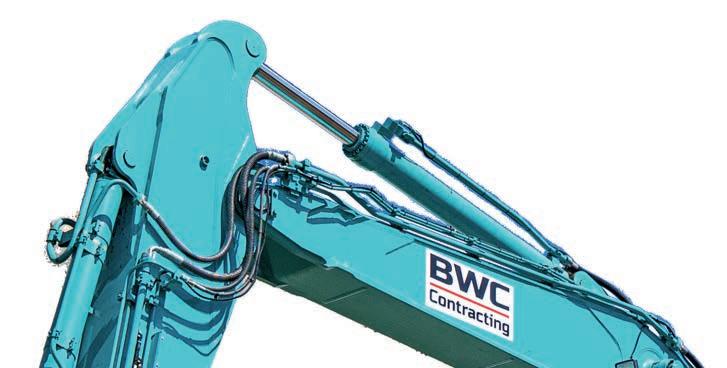
Kobelco heavy-duty machines are engineered with thicker triple-plated reinforcements across the boom, arm, underbody, and undercarriage to withstand mechanical stress and abrasive rock impacts.
underestimated. It ensures parts and technical support are available when quarries need them most.
“This emphasis on serviceability fits workflows where quick turnaround on maintenance is critical to preserving production rates.
“The support from Kane and Marco, whether it’s parts, repairs, warranties, or general discussion, has been exceptional. Nothing is ever an issue. They have guaranteed that BWC will surely be back for more Kobelcos in the future.
“Kobelco is a great product, backed by great service. I can see us moving forward, being in a position to replace machines, and to purchase whatever we need for our upcoming jobs.”
Marco said he valued the association with BWC, which he reckoned had bought about 15 excavators since initial contact.
“They enjoy the bigger gear such as the 50t machines. It's exciting to see them doing a bit of di erent work rather than more common civil site-based stu ,” he said.
“Personally, I’ve been doing business with them for about seven years, and it's always a pleasure with them. They’re a family business, much like ourselves, and it’s great to see how the boys are progressing and coming through the ranks to the next generation.
“Once Gavin steps back completely, with him already doing a little bit less now, the two sons are waiting in the wings to basically take this from what it is today to the next level.
“The relationship is just going to keep getting stronger. They're involved with all purchases every step of the way.
“Brad, Je , and I are similar in age. So it's a nice place to be that as they grow and the business grows, I can support this along the way and we're all going to be here in the long term.
“Being there to support them along the way is really exciting for us, the dealership, and myself as their sales representative.”
Kobelco engineering ensures machines not only perform well in tough conditions but also retain long service lives with lower downtime and repair costs.
Komatsu is helping a machinery hire business respond to shifting customer demand and the evolving needs of major infrastructure and civil projects.
Established initially as a wet hire operation, HEXhire is shifting its focus as large-scale infrastructure projects are rolled out across its home state of Victoria and demand increases for dry hire solutions.
The company is now giving customers the choice of renting just the equipment, a transition that Managing Director Andrew Harte says has marked a turning point for the business.
“Moving into dry hire allowed us to scale up and target the bigger projects where there’s strong demand for larger machinery,” he said.
“We’re now able to service a broad mix of customers, including major infrastructure and large civil contractors, as well as smaller civil and landscaping companies, with demand evenly spread across the sectors.”
Komatsu has played a role in supporting that growth. HEXhire has been purchasing Komatsu equipment for the past five years and has recently expanded its fleet to include excavators, dozers, loaders, and dump trucks, with a total of more than 20 new and used Komatsu machines.
“As a hire business, we place emphasis on customer feedback when making purchasing decisions, and the feedback on Komatsu machinery has always been good,” Andrew said.
“Combined with the feedback from our mechanics and service team on their strength and durability, that cemented for us that Komatsu is who we want to continue purchasing from.”
Andrew sees technology as a key di erentiator in the rental market, with customers responding positively to integrated features on their Komatsu machines, such as GPS and machine control systems.
“It’s important for us to follow brands that evolve with the times and include leading tech in their o ering,” he said.
Local support has also been a factor, with Komatsu located close to HEXhire’s Campbellfield base on the outskirts of Melbourne. Responsive service and smooth onboarding have helped embed the machines into the fleet with minimal disruption.
That same level of service now extends to South Australia, where HEXhire is supporting many infrastructure projects in Adelaide, with Komatsu equipment backed by the manufacturer’s service and support team.
Looking ahead, HEXhire plans to further expand its presence in the larger machine categories, particularly in dump trucks and dozers, with Komatsu part of the strategic growth plans.
“With the capital investment involved in machines, you want to partner with a company that stands behind its gear. As we continue to grow, having a strong partner like Komatsu is very important to us,” Andrew said.
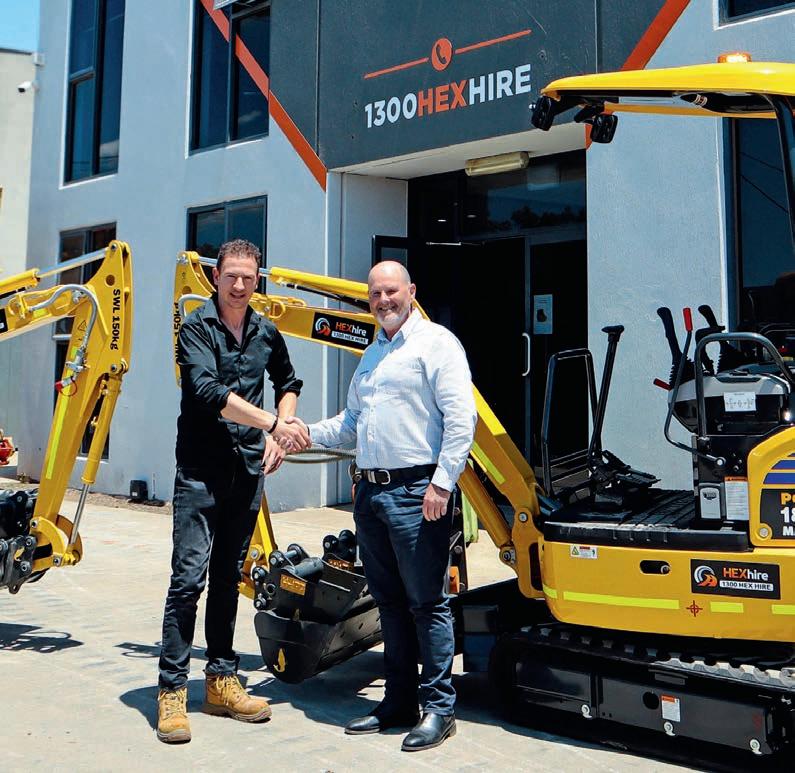
HEXhire Managing Director Andrew Harte (left) with Komatsu’s Regional Sales Manager for Southern Region, Andrew Fowkes. Images: Komatsu
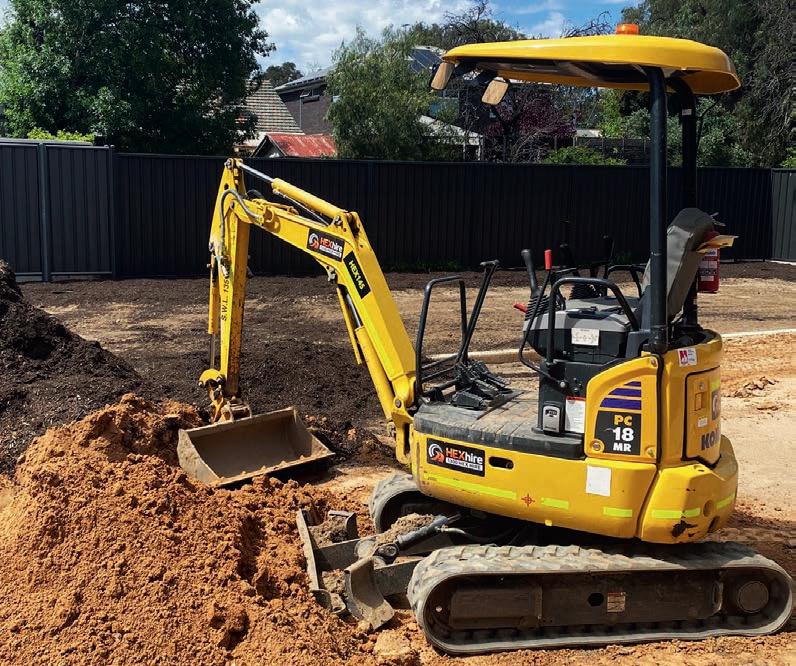
HEXhire has a fleet of more than 20 new and used Komatsu machines.
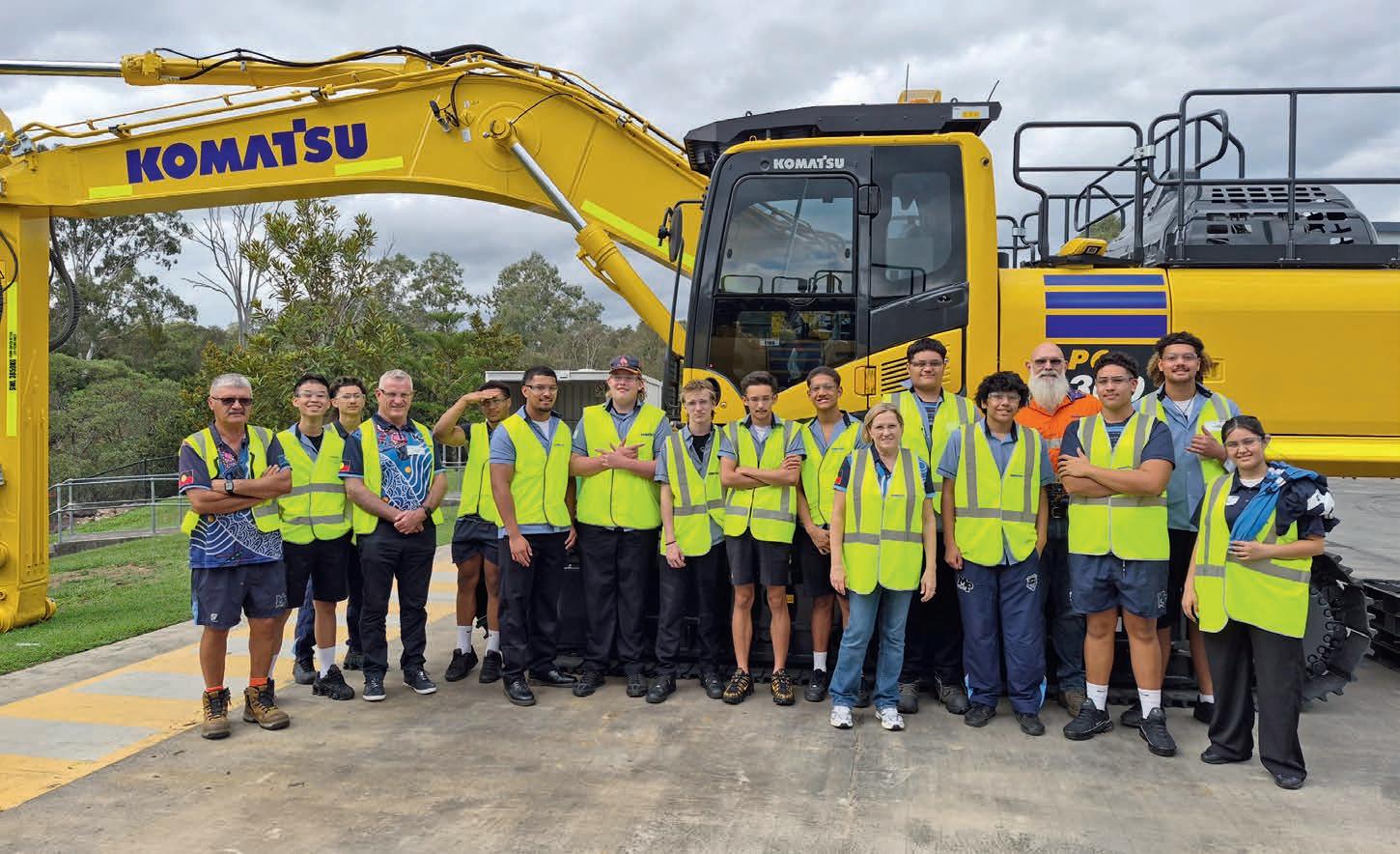
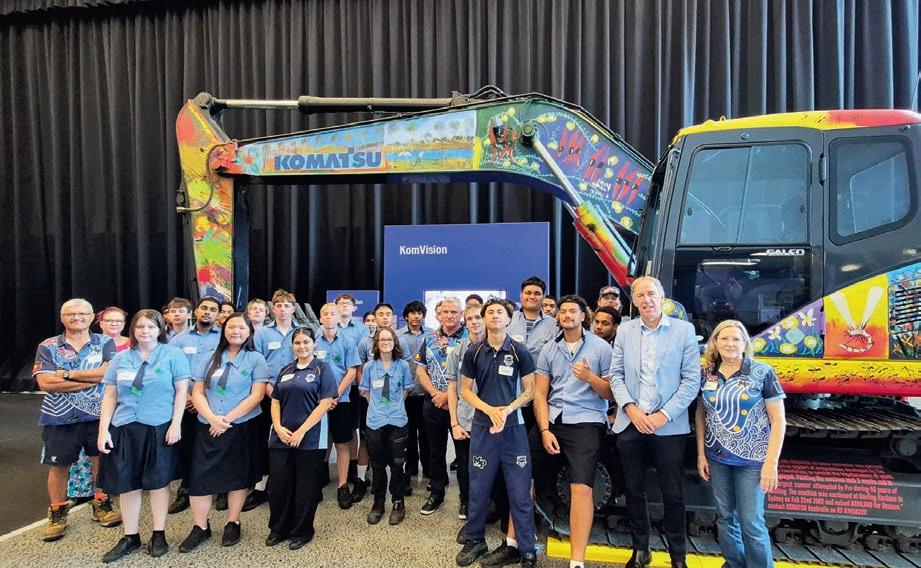
Komatsu has hosted groups of high school students to encourage them to take up opportunities in the machinery sector.
Students from Forest Lake and Mabel Park State High Schools recently swapped their classrooms for a behind-the-scenes experience at Komatsu’s Brisbane facility, where they had a chance to view mining and construction equipment along with simulators as part of a push to address Australia’s skills gap.
The visit was part of the Beacon Foundation’s Growth Industry Preparation Program (GrIPP), which connects students with industry professionals and real-world career pathways.
Komatsu Australia Regional General Manager Trevor Hyde said that with demand for skilled workers in construction, mining, and heavy industry continuing to grow, programs like GrIPP help build awareness of careers while developing practical skills for students.
“Many students don’t know how many diverse career opportunities are available to them in heavy industries. Through our 26-year-long partnership with the Beacon Foundation and its programs, we’re able to help put these opportunities in front of students and help build a strong and diverse talent pipeline,” he said.
While on site, students learned what keeps Komatsu running, exploring career paths across supply chain, sales and business development, engineering, customer service, and operations.
They also gained insight into how machines are engineered and built, the technology that keeps the warehouse moving, and how machines of all sizes are serviced and repaired.
Students had the opportunity to experience the latest technology through immersive VR and simulator applications for machine operations, putting their skills to the test in a hands-on Komatsu experience.
strengthening a diverse future workforce.
“Young Australians can’t be what they can’t see. The Beacon Growth Industry Preparation Program is an example of showcasing a new employment world to young people,” he said.
Komatsu’s involvement forms part of its broader Youth Program, focused on creating pathways for the next generation and
“Our Youth Program brings together our grassroots engagement activities under one strategic umbrella,” Trevor said.
“Through partnerships with organisations such as the Beacon Foundation, Clontarf Foundation, STEM Punks, Explore Careers, and local schools and universities, it allows us to showcase career opportunities in mining and construction to school students, school leavers and university students.”
Beacon Foundation Chief Executive Scott Harris said the program was mutually beneficial for students and the host organisation.
Forest Lake students and teachers were given a tour of Komatsu’s Brisbane facility.
Mabel Park High School students learned about Komatsu equipment and the job pathways that exist in the machinery sector.
Images: Komatsu Australia
OUR NATIONAL FOOTPRINT
With locations across every state and territory, Pickles has local experts on the ground wherever and whenever you need them.
Alongside a vast digital reach and access to an international buyer base, Pickles offers a wealth of remarketing services and Australia’s largest and most trusted marketplace.
With over 850 national employees, including 60 industrial specialists, Pickles is a powerful presence.
Contact a sales expert in your area or scan the QR code to discover more about Pickles Industrial
MEET THE TEAM
Wherever you need support, Pickles has leaders in the field.
Talk to these experts to access dozens of sales executives on the ground nationwide and in your local marketplace.
Grant Barrie 0434 079 653
State Sales Manager, QLD
Brendan Shoemark 0434 265 301
State Sales Manager, Regional NSW & ACT
Levi Silcox 0448 265 301
State Sales Manager, VIC & TAS
Matt Blanch 0428 163 083
State Sales Manager, NSW
Ben Hallam 0407 254 718
State Sales Manager, WA
Andrew Sweetman 0422 005 287
State Sales Manager, SA & NT
and
There are many reasons why Pickles’ used equipment and machinery sales channels are preferred industry-wide.
Since 1964, Pickles has built a legacy as one of Australia’s leading used asset marketplaces and one of the country’s largest auction groups. Combining years of experience with innovative solutions, the iconic Pickles blue has become intertwined with powering Australia’s industrial sector by upholding a market of quality used goods.
Though renowned for o ering an extensive range of industrial equipment, motor vehicles and salvage goods, Pickles is more than just an auction house. The wealth of services o ered by Pickles extends to include auctions, asset appraisal, valuations, fleet management, expert consultation, data administration, and much more.
With the industry evolving, Pickles strives for agile and forward-thinking solutions. As Pickles has navigated the last decade, the business has amassed a wide range of digital knowledge and services, developing into a business with a huge national footprint backed by its experts on the ground.
By seeking to innovate daily, Pickles has carved out a distinct lane as a business that caters to the everyday needs of a broad range of customers. Here are eight reasons why Pickles’ sales channels for used equipment and machinery are preferred industry-wide.
1. Expansive international buyer base
Having amassed a huge community of almost a million buyers and sellers, Pickles’ trusted on-
line marketplace o ers quick solutions to suit the demands of a range of customers. Sellers are enabled access to an exclusive database of active and engaged buyers, with Pickles’ website attracting more than 24 million website visitors per year. It’s Pickles’ commitment to unlocking value for all members of their marketplace and to maximising a return on every asset sold that ensures customers can rely on the business day in, day out.
2. Expert guidance, tailored solutions
In an industry where navigating quick turnarounds and unexpected surprises is normal, being an adaptable presence is crucial. Backed by the dedication of their sta and industry experts across Australia, Pickles has carved out a distinct lane and become the trusted partner for hundreds of big and small operators across a range of industries. Fundamentally, Pickles’ customised solutions and front-footed approach enables the business to deal with any situation, regardless of the demands.
3. Industry-leading data and expertise
Transforming from a traditional in-person auctioneer into a tech-driven digital marketplace fast-tracked Pickles’ growth as a digital company, enabling the business to extend its expertise to include investment, data, and operational overhaul. Investing in powerful online resources is one major way that
Pickles has been able to sustain confidence for buyers and vendors alike over the past few years. Moreover, it has fostered an environment built on collaboration and expansion that has allowed Pickles to stay informed and steer ahead of their competitors. Vendors will experience Pickles’ accurate AI-driven valuation tools and forecasting, with Datium Insights using data from millions of historical sales to provide accurate valuations, positioning Pickles as a leader in asset remarketing.
4. Rely on Pickles’ knowledge
The impact of geopolitical conflicts and instability on the industry in 2026 cannot be denied – but this is where Pickles can o er a helping hand. Through becoming a relied upon presence in the Australian industry, Pickles has established a broad network of experts across Australia with the experience to assist in navigating an unsettled period. Leaning on Pickles in times of uncertainty can be the di erence-maker in managing expectations and decision-making for the foreseeable future.
5. Data-driven marketing
The past few years has seen Pickles’ marketing team become more important than ever in driving the exposure of their assets to customers. Marketing transforms sales into a digital extravaganza, flooding the feeds of every relevant buyer and interested party. Quick turnarounds and collaboration have
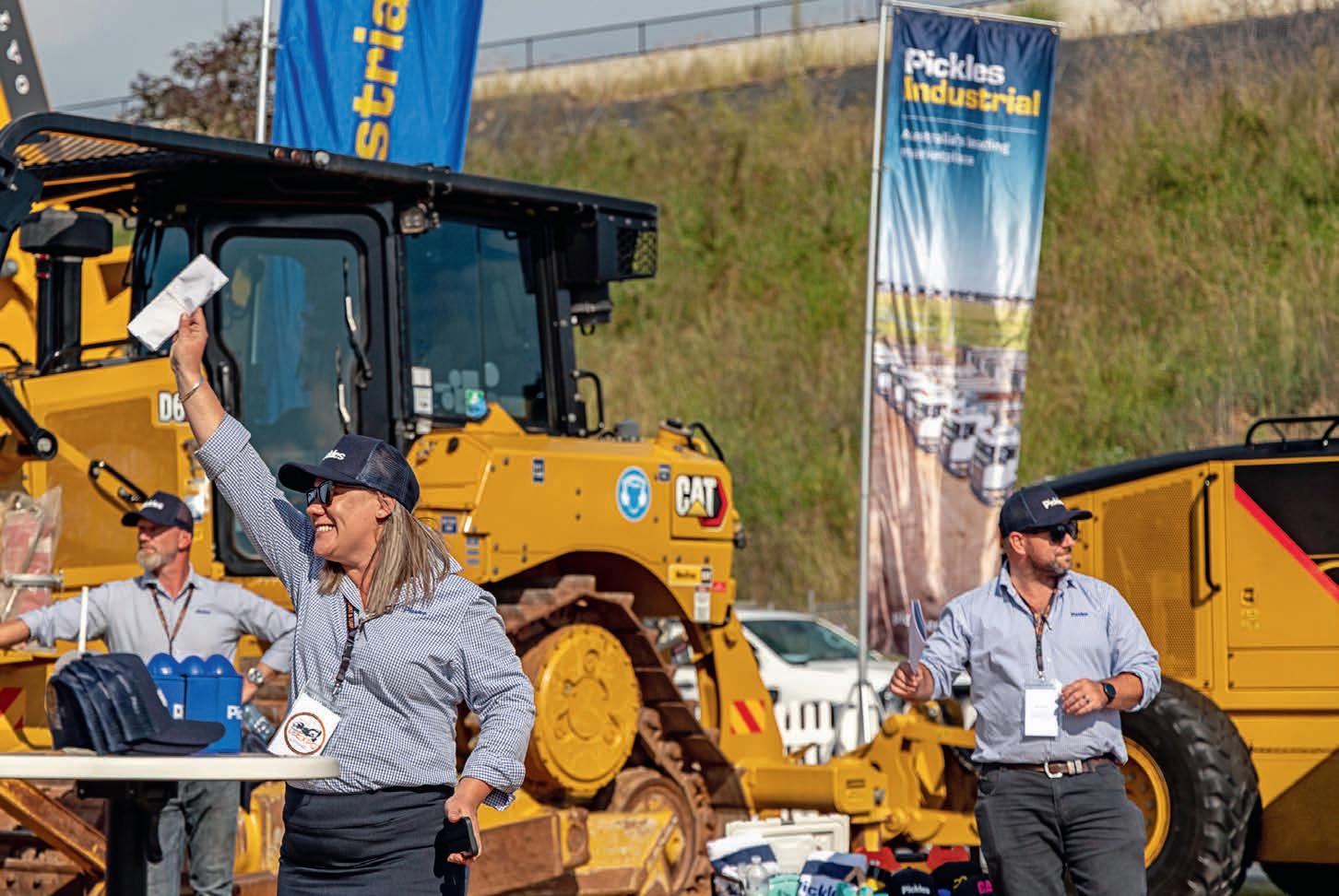
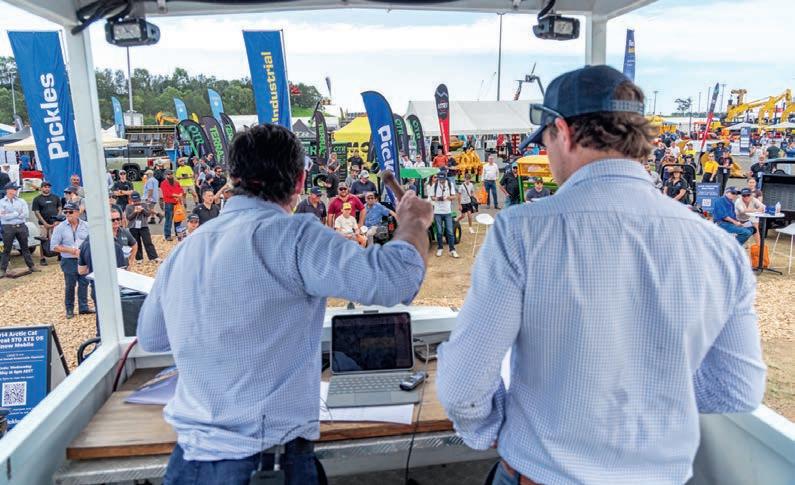
The services o ered by Pickles include auctions, asset appraisal, valuations, fleet management,
more. Images: Pickles
made Pickles more adaptable than ever, with a combined reach of more than 18m across its social channels driving buyers directly to its marketplace each year. Pickles is embracing buyer needs in the present by evolving and innovating with the times.
6. Standout results
The Cranes, Civil and Surfacing Retirement Auction demonstrated how collaboration turned a unique sale into a success. Having secured buyers for asphalt and bitumen equipment, which rarely comes to market, Pickles’ industrial experts worked alongside their marketing team to achieve a 100 per cent clearance rate and more than $17m total sales. It was a substantial e ort, particularly in a market a ected by global uncertainty, which required marketing to implement search, social and display ad services to help elevate the auction to another level. In the end, the sale achieved over 2.8m impressions and 400,000 page views, demonstrating the impact of collaboration and rea irming Pickles’ capacity to succeed across divisions.
7. Fleet management experts
Fleet management is one of the leading reasons why businesses choose to partner with Pickles. From guiding informed procurement and replacement strategies to developing improved utilisation and lifecycle planning, Pickles aims to ensure confidence for their fleet
partners by translating real-world data into practical guidance. With over 30,000 private buyers per annum and more than 10,000 preregistered dealers, customers can maximise on vehicle and truck prices through Pickles.
8. Seasoned advisory team
For businesses seeking support with insolvency, liquidation or restructure, choosing to partner with an experienced business like Pickles enables you to take an orderly approach that yields better outcomes. Pickles’ experts specialise in managing asset remarketing, valuation, and disposal for distressed
businesses, receivers, and liquidators. By maximising the return on assets, Pickles can assist businesses in paying o creditors and ensuring an orderly wind-down.
Sustained momentum over the past few years led to Pickles recording its best year yet as a company in 2025, exceeding $3 billion in asset sales accumulated per annum. It’s a reminder that through the fluctuations the industry endures, Pickles is equipped to manage demands regardless of circumstances.
To partner with the experts today, head to pickles.com.au.
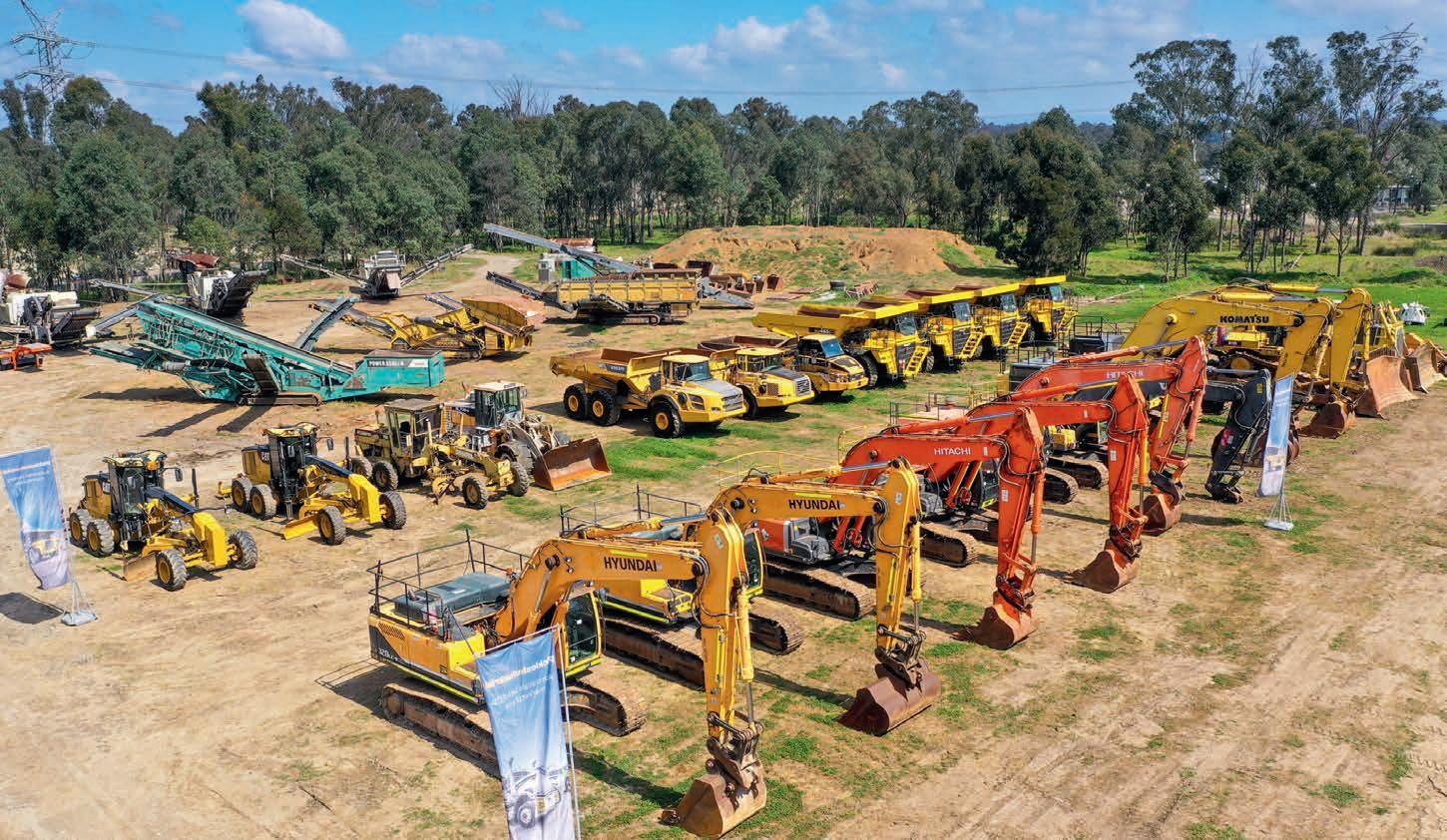
One of the many machinery dispersals auctioned by Pickles.
Pickles sold more than $3 billion worth of assets in 2025.
CAT® FLEXIBLE COMPONENT REBUILDS
®
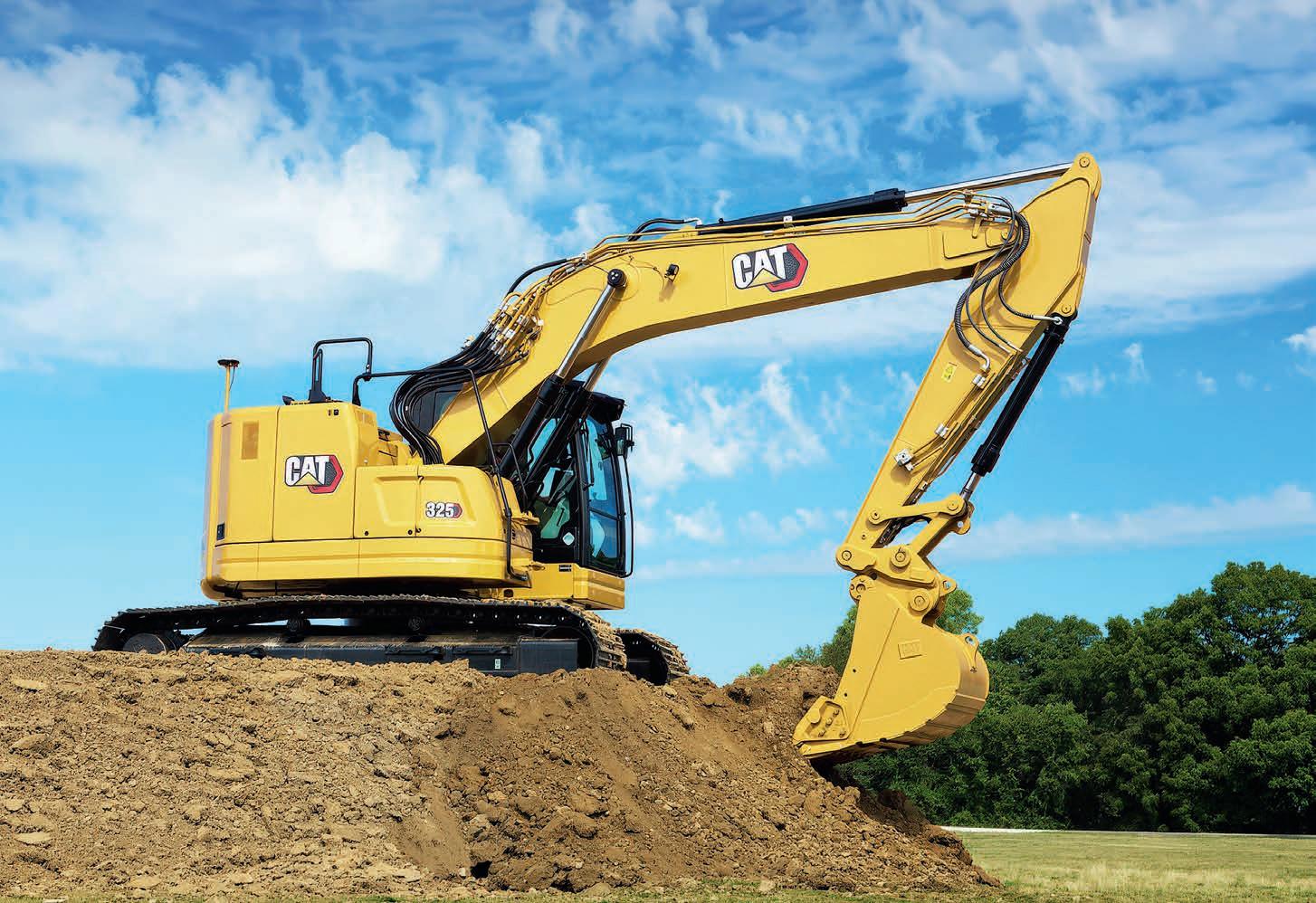
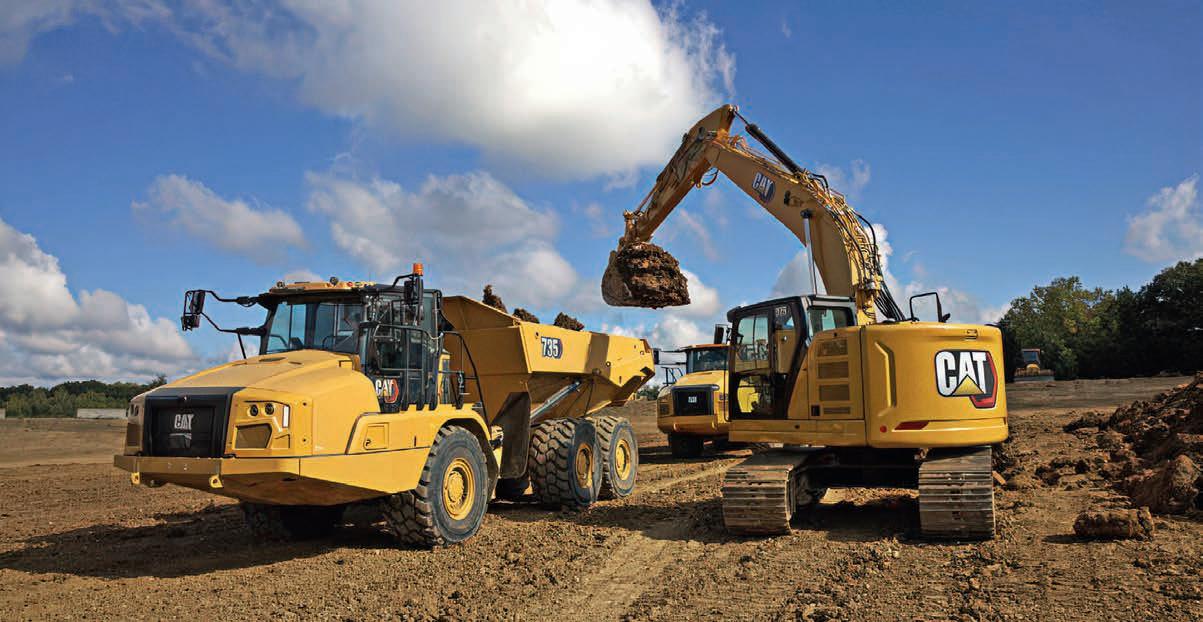
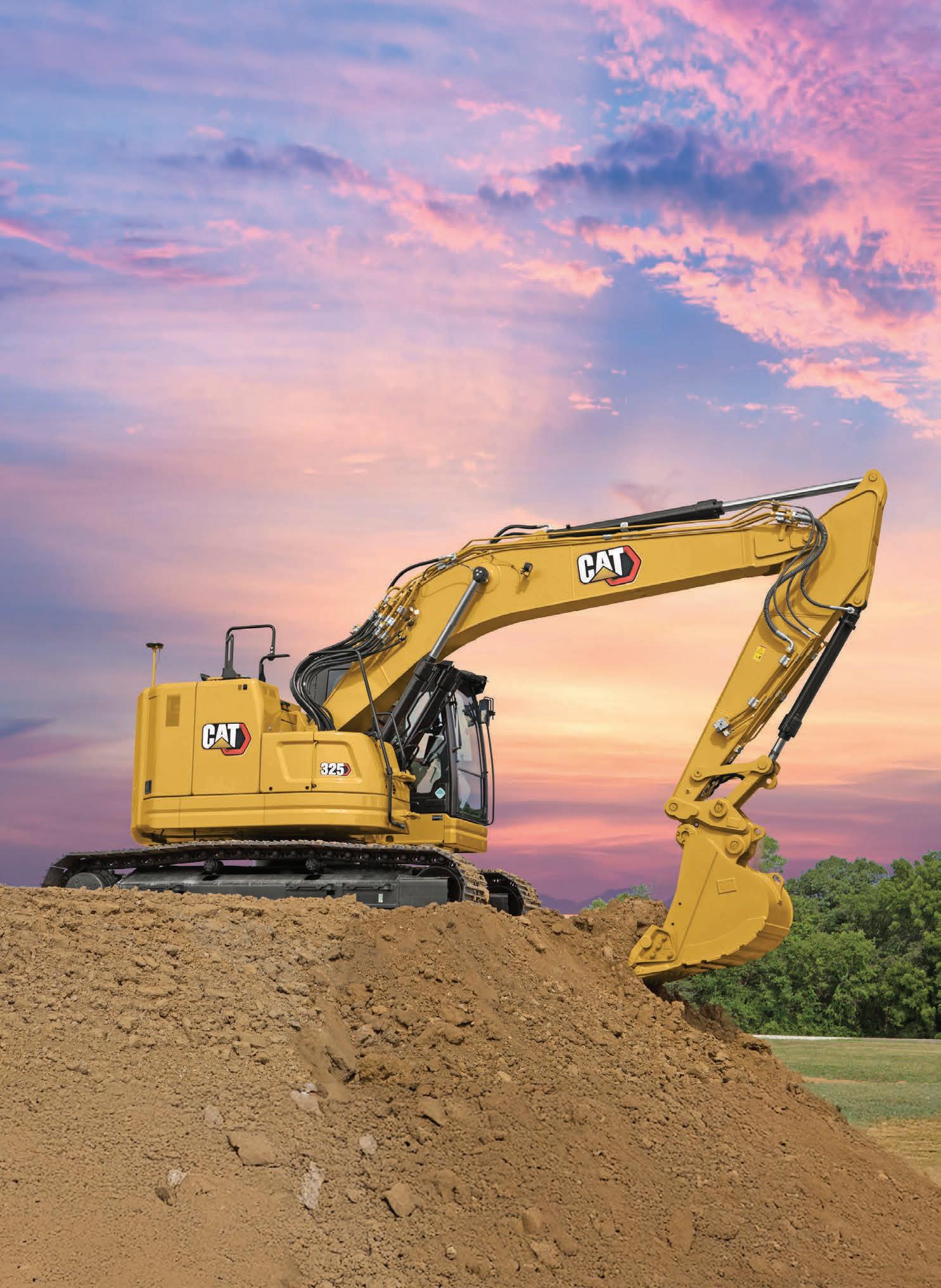
Designed to deliver powerful performance on confined work sites, the new Cat 325 excavator combines compact versatility, the latest technology, and lower operating costs in one e icient package.
With its compact radius design, the Cat 325 hydraulic excavator is ideal for working in tight spaces.
It delivers improved performance with integrated, simple-to-use technologies to reduce operator fatigue and boost e iciencies compared to previous models.
The new model also o ers reduced fuel consumption, lower maintenance costs, and improved operator comfort, contributing to a low cost per hour of operation.
To meet restrictions on transport requirements, two counterweights are available: an 8.3 tonne counterweight, designed to maximise lifting performance, and a 4.9t counterweight, designed to contain the overall machine weight where more stringent transport limits are in place.
Reach or HD booms, a variety of hydraulic tool controls, and a choice of couplers and buckets are also available.
Tested on the job, the Cat C4.4 engine comes with a Tier 3 option and e iciently powers the 325 excavator in the toughest conditions, reducing fuel consumption.
The Tier 3 engine means no AdBlue is required. The 325 features three selectable power modes to match the excavator to the application for increased fuel e iciency.
The excavator has a standard high-ambient
operating temperature capability of 50°C and a standard cold start capability of -18°C.
Operating simplicity is key to the design of this new machine. Operators can program and store joystick and power mode settings using an operator ID, while navigating quickly and accessing the operator’s manual using the high-resolution touchscreen monitor. The new excavator features a keyless push-button engine start, using operator ID codes to limit and track machine access.
High performance
The hydraulic system of the Cat 325 excavator provides an optimum balance of power and e iciency while giving the operator complete control of excavating precision.
Working on slopes is made easier with improved swing torque. Smart Mode o ers fuel savings without productivity loss by automatically adjusting engine speed and hydraulic power to digging conditions.
The 325 also features auxiliary hydraulic options for using a range of Cat attachments.
Technology drives e iciency
Operating e iciency is lifted by the various standard Cat technologies that lower fatigue and operating costs, including fuel consumption and daily maintenance.
Operators can program up to four target depth and slope o sets with standard Cat Grade with 2D, enabling them to reach grade faster and save time on the job site.
Contractors can upgrade the standard 2D system to Cat Grade with Advanced 2D or 3D to fit di erent applications.
Standard Grade Assist allows the operator to stay on grade with single-lever digging, while Bucket Assist automatically maintains the angle in sloping, levelling, fine grading, and trenching applications.
Swing Assist reduces e ort and fuel consumption by automatically stopping excavator swing at predefined set points for truck loading and trenching, and Boom Assist keeps the tracks on the ground in lifting and hard digging applications.
Cat Payload technology delivers precise load targets with on-the-go weighing to prevent over/underloading and to maximise e iciency.
The Caterpillar cloud-based telematics application VisionLink™ allows companies to access information and production targets through data gathered remotely by Payload, and download production data to a USB stick. Remote Troubleshoot enables Cat dealers to perform diagnostic testing on connected machines remotely, pinpointing potential issues while they are in operation. It helps ensure the
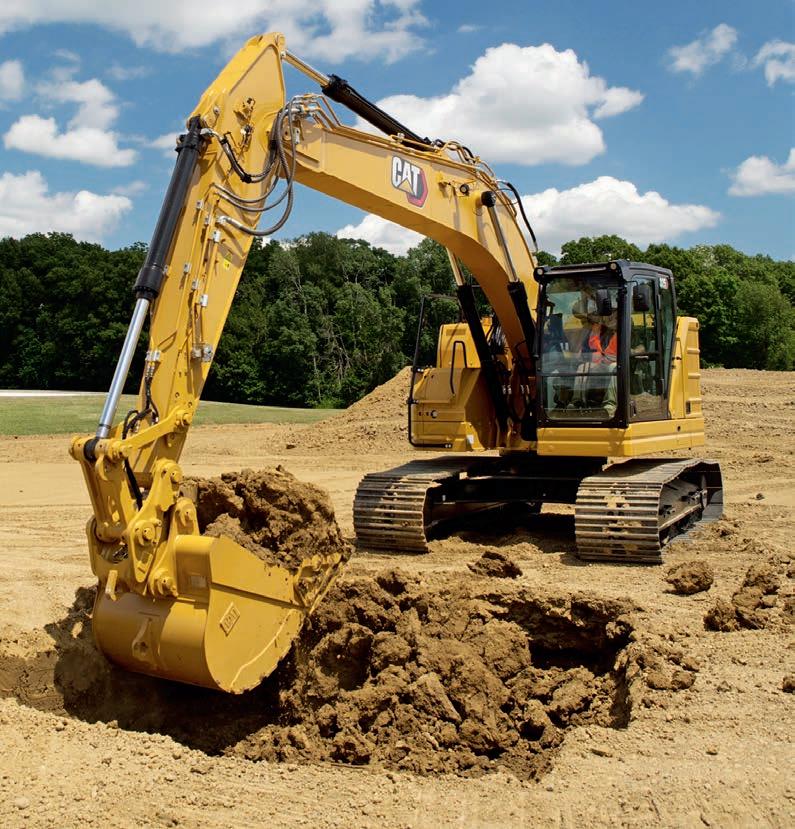
The Cat 325 excavator o ers reduced fuel consumption and lower maintenance costs.
Images: Caterpillar
technician arrives with the correct parts and tools the first time, eliminating additional trips to save time and money.
Remote Flash allows operators to update onboard software without a technician being present, giving them the flexibility to initiate
software updates when it is convenient and improving operating e iciency.
Maintenance is also made easier with Cat Inspect, a mobile app that supports preventative maintenance checks, inspections and daily walkarounds.
Comfort and safety
The next generation Cat 325 o ers two all-new cab designs — Comfort and Deluxe.
The ISO-certified ROPS cab is soundsuppressed and sealed, and features automatic climate control. Rear view and right-hand side view cameras come as standard, while an optional 360-degree camera system is available.
The new Cat model also features a Bluetooth integrated radio as well as USB ports for charging and mobile phone connectivity.
With ample rear, overhead and console storage, operators can safely store their belongings while they work.
Lift Assist helps avoid tipping, with visual and auditory alerts when the load is within the excavator’s safe working range limits.
A customisable joystick allows operators to save their preferences, while Autodig lets the machine take over the digging process, delivering consistently full bucket loads, greater digging e iciency, and faster cycle times.
Synchronised maintenance intervals
The Cat 325 excavator reduces maintenance costs due to extended and more synchronised maintenance intervals.
All maintenance checkpoints are accessible at ground level, resulting in faster, easier, and safer daily maintenance checks.
Operators can monitor filter life and maintenance intervals via the in-cab monitor.
Consolidated filter locations reduce service time while hydraulic, air, and fuel tank filters have increased capacity and longer life.
The new excavator also features an air filter with double the dust-holding capacity of the previous version.
For more information on the Next Generation Cat 325 excavator, contact your local Cat dealer or visit cat.com.
Two counterweight options are available to maximise lifting performance.
The Tier 3 engine means no AdBlue is required.
New Cat® 325 Tier 3.
• Tier 3 engine – no AdBlue required.
• Helps reduce owning and maintenance costs.
• Cat technology upgrades available, including Cat Grade 3D. For what you’ve done and for what you’ll do, we’re here for you. Contact your local Cat dealer for more.
REDEFINED SAFETY WITH 3D AVOIDANCE ZONES
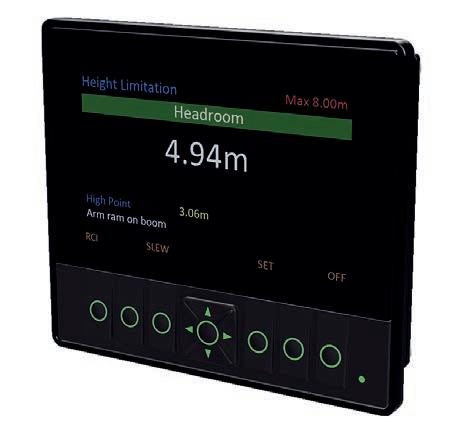
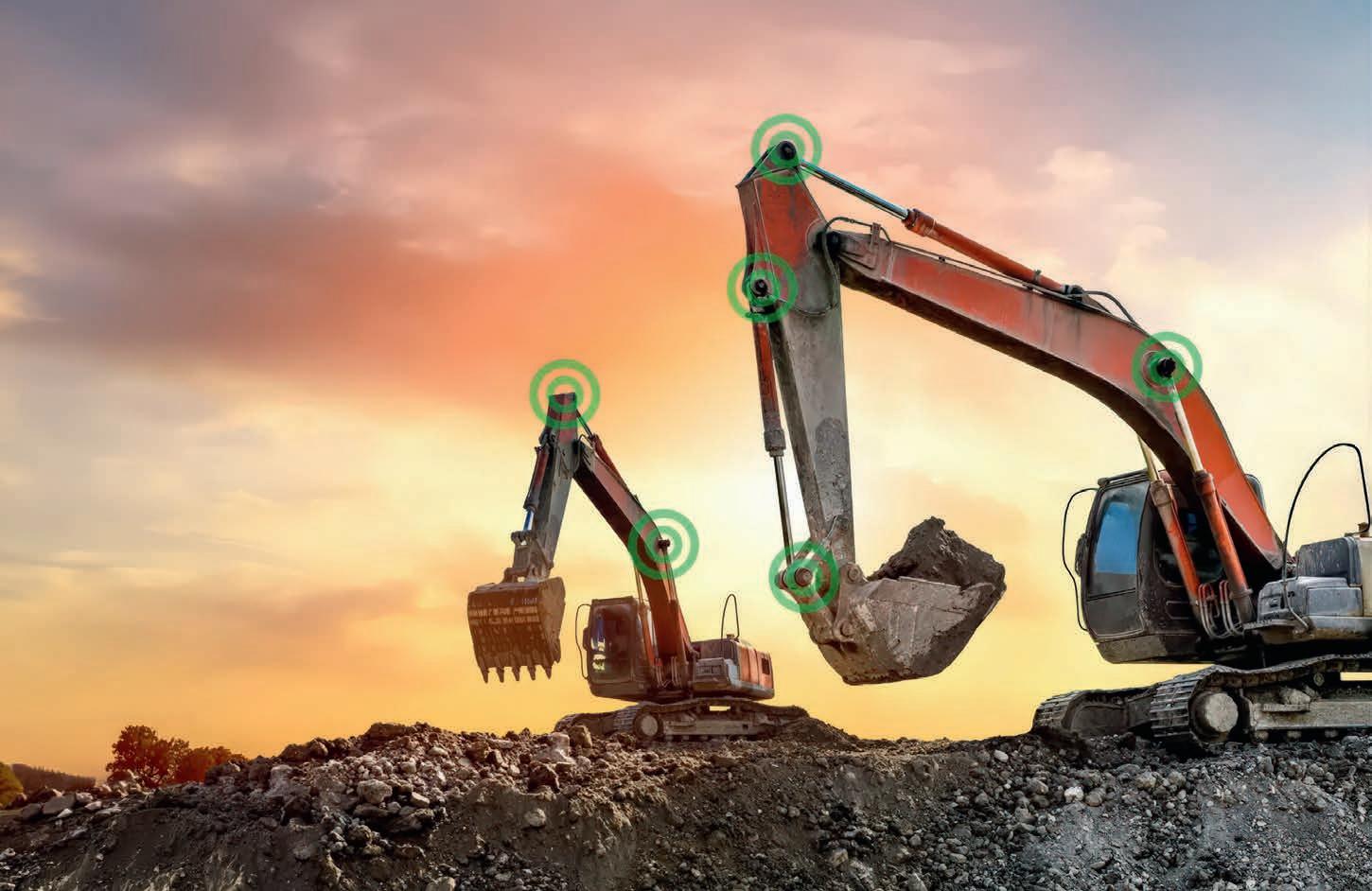
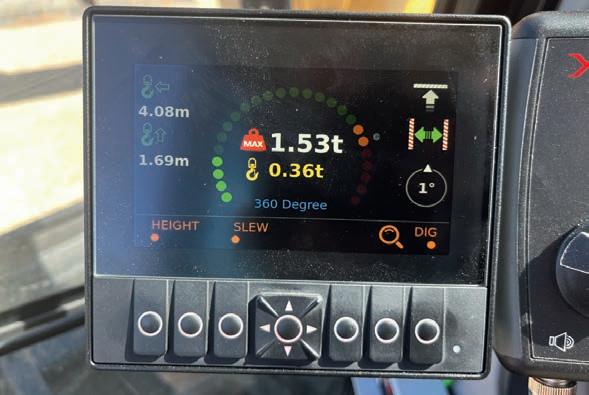
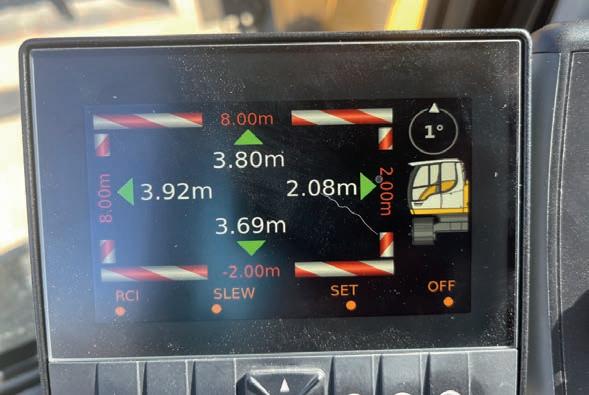
The XWSeries creates a total safe working envelope around the machine and operator enabling the control of the machine’s height, slew and rated capacity indication. This comprehensive system covers every eventuality when considering both operator and machine safety, offering complete peace of mind.
Height Control
Slew Control
Rated Capacity Indicator (RCI)
Xwatch Safety Solutions, part of Hexagon, is reshaping machine safety standards with the launch of the next-generation MK2 system.
As construction sites become connected and safety expectations continue to rise, contractors and plant hire companies are demanding systems that can do more than simply monitor machinery.
They need technology that improves e iciency, minimises downtime, and integrates seamlessly into modern fleets. The new Xwatch MK2 has been engineered with those demands firmly in mind.
The comprehensive Xwatch safety application was designed to enhance the operation of heavy machinery, particularly excavators, on construction sites.
The MK2 is an evolution of its widely adopted MK1 platform designed to deliver smarter
integration, faster installation, and enhanced protection for operators and machinery alike.
Essentially, Xwatch is an intelligent height, slew, and load monitoring system that integrates with heavy machinery to prevent dangerous incidents.
It is particularly useful for excavators, cranes, and other earthmoving equipment, o ering real-time monitoring and control.
The MK1 integrated multiple safety features within the cabs to protect operators, equipment, and surrounding infrastructure.
Now, building on that success, the MK2 enhances installation e iciency, global compatibility, and in-cab integration, setting a new standard in intelligent safety solutions.
Trusted by leading OEMs, contractors, and plant hire firms worldwide, Xwatch continues to push the boundaries of innovation to deliver safer, smarter, and more connected construction sites.
As the evolution of MK1, Xwatch MK2 stays true to the Xwatch ethos: keep moving forward, never stand still. Everything that made MK1 an industry leader remains, but MK2 refines and enhances every aspect – from installation simplicity to global compatibility.
Faster installation, smarter design
The installation has been significantly improved, with the time reduced by 30 per cent, making it faster and smoother to fit.
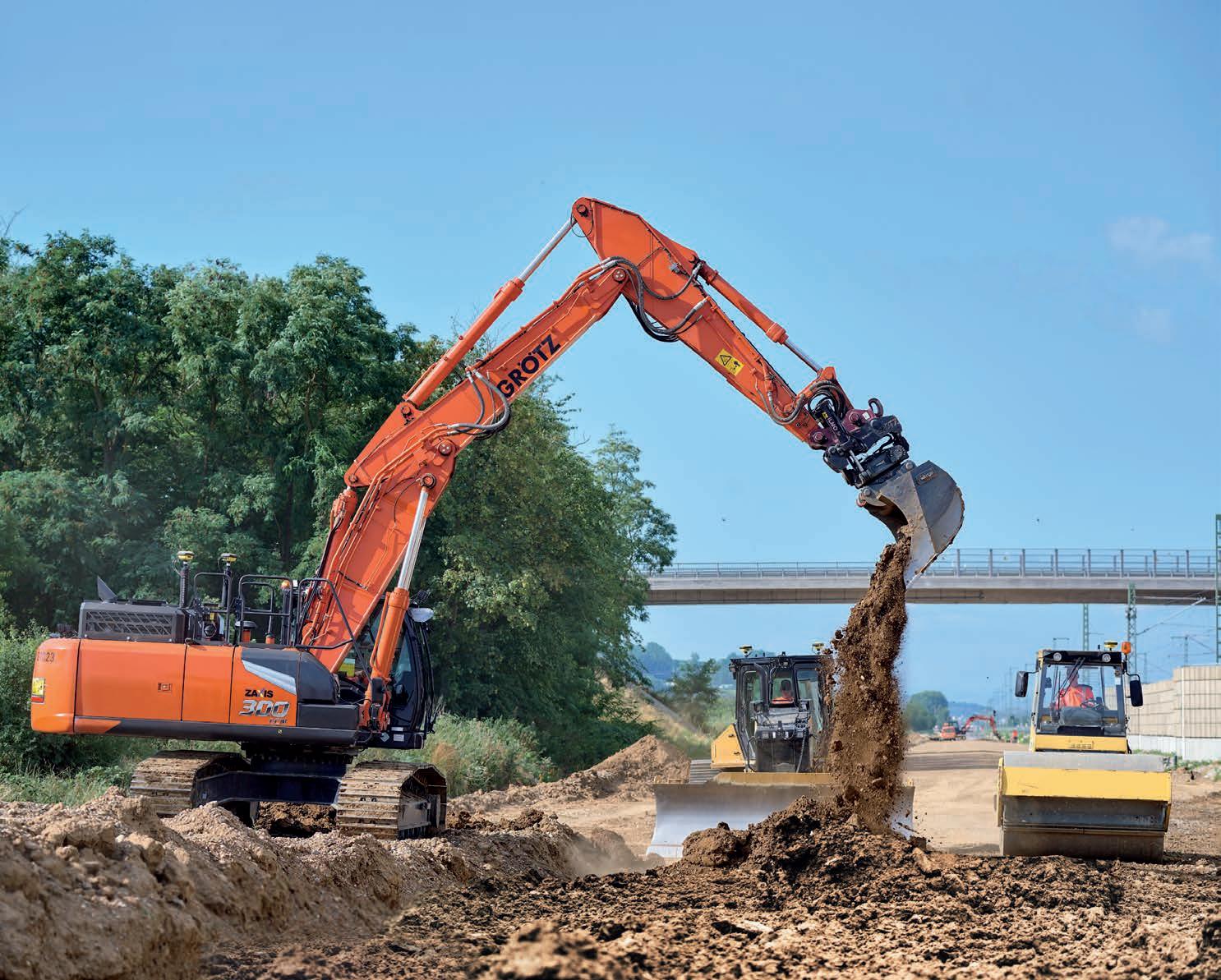
With Xwatch, operators can monitor all the danger points around heavy machinery.
Images: C.R. Kennedy
Graphics have been completely reworked, creating a more visually friendly and intuitive monitor interface.
Measurements such as slew and loads are easily read.
As Xwatch expands into new global markets, installers and operators unfamiliar with the system needed an approach that was simpler, more intuitive, and easier to adopt with confidence – and MK2 delivers.
The new system is even more adaptable and user-friendly, reducing downtime for plant hire companies and contractors.
It retains all the capabilities of MK1, including height and slew restriction, Rated Capacity Indicator (RCI), and the full suite of Xwatch safety features across the XW1, XW2, XW3, XW4, and XW5 models.
Every detail has been refined to make it easier to install, more e icient, and more versatile while maintaining Xwatch’s reputation for unmatched safety technology.
Precision control and smarter integration
New enhancements include revolutionary proportional motion control when driving electric over hydraulic valve blocks (patent pending), a significant breakthrough in precision and e iciency.
Graphics have been completely reworked, creating a more visually friendly and intuitive monitor interface. Its multi-lingual capability ensures the system is global.
MK2 is telematics-ready for connected construction sites and is more compact, freeing up in-cab space.
Xwatch Systems and Projects Manager Gary Welch said the company had worked closely with its component and sensor suppliers, combining functional safety expertise to develop the industry’s first PLd-rated (Performance Level d) movement limiter and rated capacity limiter safety system for the civil market.
“Taking a ground-up, system-level approach, the MK2 design features clearly defined interfaces, enhancing safety integrity, reducing installation time, and simplifying OEM integration through the new Xwatch Safety Gateway,” he said.
“This enables seamless sensor and data sharing while maintaining the high safety standards of the Xwatch MK2 system. The result is a robust, streamlined installation with fewer components, lower costs for end users, and greater reliability in the field.”
Seamless integration with leading OEMs
Due to Xwatch’s long-term OEM machine integration strategy, MK2 is built to be compatible with various OEM displays.
This minimises the need for additional hardware in the cab and ensures seamless integration for manufacturers adopting the system.
Xwatch Sales Director Dan Leaney said the MK2 system has been designed to meet the evolving demands of the heavy construction industry by enhancing safety, boosting operational e iciency and minimising disruption.
"MK2 takes everything that made MK1 a success and refines it even further," he said.
"The Xwatch R&D team has worked hard to
develop a system that’s easier to install, more intuitive to use, and ready for a global market. Installation is now faster, and MK2 is designed as an easy retrofit, making it simple to upgrade existing fleets.
“While many of our customers will be retrofitting MK2 to their machines, we’re also working with OEMs looking at factory-fitting Xwatch systems soon.
“Safety, e iciency, and integration remain at our core, and MK2 sets a new benchmark in intelligent safety solutions."
“As the industry embraces digital transformation and sustainable practices, MK2 sets a new standard in intelligent safety solutions, ensuring our customers are equipped with future-ready technology that adapts to their changing needs.”
Leading the way
Xwatch Safety Solutions is a global leader in intelligent safety systems for construction machinery.
Built on engineering expertise and real-world industry experience, Xwatch systems are known for their ease of installation, intuitive operation, and seamless integration with machine control technology.
Their solutions are trusted by leading OEMs, plant hire specialists, contractors operating Hitachi, Komatsu, and JCB machinery, along with major hire and infrastructure firms.
Whether installed on fleets for national projects or tailored for specialist applications, Xwatch systems support safe and e icient operations across construction, civil engineering, and plant hire.
With dedicated divisions in Australia, New Zealand, the Americas, and France and a
growing network of dealerships worldwide, Xwatch ensures expert support wherever customers operate.
Following its acquisition by Hexagon, Xwatch is driving innovation in connected safety technology, helping plant hire firms, contractors, and infrastructure companies reduce risk, improve productivity, and enhance site safety.
In Australia, Xwatch Safety Solutions has partnered with C.R. Kennedy to distribute its products.
By combining Xwatch's safety technologies with C.R. Kennedy's positioning expertise, the partnership o ers:
• Enhanced safety: Advanced systems to monitor and control machinery operations, reducing the risk of accidents.
• Improved e iciency: Seamless integration of safety features with existing equipment to streamline operations.
• Comprehensive support: Access to C.R. Kennedy's national network for training, service, and technical assistance.
C.R. Kennedy National Manager for Machine Control, Nick Leith, said the partnership reflects a shared commitment to advancing construction safety standards in Australia.
“This collaboration integrates Xwatch's advanced safety systems with C.R. Kennedy's expertise in geospatial technology, o ering comprehensive solutions for the construction industries,” he said.
“We have several o ices in Australia, with head o ice and main warehouse in Melbourne, and branch o ices and warehouses in Adelaide, Brisbane, Cairns, Perth, and Sydney. Contact any of them for more information on the Xwatch products.”
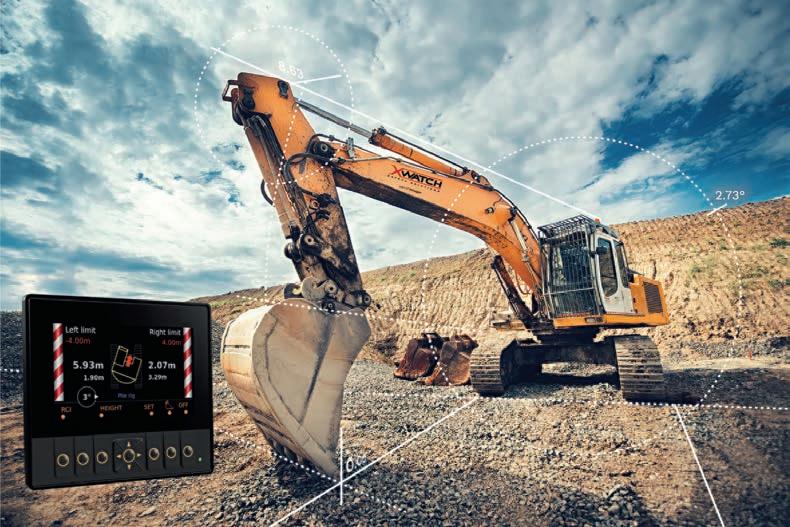
Above: Xwatch is an intelligent height, slew, and load monitoring system that integrates with heavy machinery to prevent dangerous incidents.
Right: Xwatch systems provide advanced information on height restrictions.
An unresolved liability question or a dispute between insurance providers about who is responsible can hold up work and create extra stress. Image: NTI
As businesses grow, insurance structures that seem straightforward can become fragmented, exposing them to gaps, overlaps, and unnecessary complexity when it matters most.
For many construction businesses, insurance can become more complex as operations scale up.
What starts with a few pieces of yellow equipment can expand to include a service truck, a tipper, or even a fleet of heavy vehicles supporting work across multiple sites. Over time, that can leave operators with cover spread across di erent policies, renewal dates, invoices, and in some cases, di erent insurance providers.
On paper, that arrangement can seem manageable. In practice, it can create unnecessary friction when something goes wrong.
For owners of mobile plant, equipment and machinery, incidents may not fit neatly into one category. For example, a machine may be damaged while being transported. A piece of plant may be involved in an incident on a public road. Liability and motor exposures can sit side by side in the same event.
According to NTI's National Product Manager for Mobile Plant, David Kidd, when cover is split across di erent insurance providers or policy structures, the result can create confusion at the wrong time.
“That’s where consolidated cover may make a di erence,” he said. “NTI’s products are designed to be comprehensive, to help simplify cover, and support better outcomes for customers by bringing related risks together.”
The potential benefit can come at claim time, when a business may already be under pressure and need clarity, speed, and coordination.
“When an incident happens, customers don’t want to be working out which insurance provider handles which part of the problem. They want simplicity, they want clarity, and they want to know there is a coordinated team helping them get their business back up and running,” David said.
That matters in construction, where downtime can have a ripple e ect across projects, people and cash flow. A delayed repair, an unresolved liability question, or a dispute between insurance providers about who is responsible can hold up work and create extra stress for business owners already dealing with operational disruption.
David provided an example involving roadregistered mobile plant equipment.
“If a road-registered machine damages a third-party vehicle on a public road, the response may depend on whether the machine was operating as a tool of trade, or if it was in transit at the time of loss,” he said.
“That can create overlap confusion between a Section 2 motor exposure and a business liability exposure; and if this cover is split between insurance providers, there is a greater chance of delays, disputes, or unintended gaps while each part of the incident is assessed separately.”
A more consolidated approach can help reduce that friction. For example, NTI’s Yellow Cover Mobile Plant and Equipment product and Transport Pack product o er the option to include public liability, downtime and work tools, which may o er simpler insurance
solutions to create coverage that typically reflects how a business actually works.
David said that as the construction sector balances productivity pressures, project deadlines, and rising fuel, labour and maintenance costs, reviewing insurance arrangements is a practical step worth taking.
For owners of yellow equipment who also run trucks and trailers, or small heavy vehicle fleets associated with the earthmoving and construction industries, consolidated cover may o er a simpler, clearer and more connected way to protect the assets that keep the business moving.
For more information, visit www.nti.com.au/insurance/mobile-plantequipment or speak to your broker.
2026 NTI Limited ABN 84 000 746 109 AFSL 237246. Policy terms, conditions, limits, exclusions and underwriting criteria apply. This article contains general information only and does not take into account your objectives, financial situation or needs. When making decisions about your insurance, consider the PDS and TMD at www.nti.com.au. Insurance products are provided by National Transport Insurance, a joint venture of the insurers CGU Australia Pty Ltd trading as CGU Insurance ABN 62 004 478 960 AFSL 700014 and AAI Limited trading as Vero Insurance ABN 48 005 297 807 AFSL 230859 each holding a 50 per cent share. National Transport Insurance is administered on behalf of the insurers by its manager NTI Limited ABN 84 000 746 109 AFSL 237246.
At NTI we’ve always been successful in finding new ways to keep our customers truckin’, shippin’ and diggin’.
With specialist insurance and roadside assistance products designed to protect Australian businesses and families, NTI is the specialist our customers can count on in their time of need.
With supply networks vulnerable to unexpected problems, logistics has evolved from a backup role to become a central strategic focus.
A shipment held at a congested port. A missing customs document. A planned route disrupted by sudden capacity changes. In global freight, these are not minor setbacks; they are moments when time, cost, and customer trust are either protected or lost.
As supply chains become more interconnected and exposed to disruption, logistics has shifted from a support function to a strategic priority. Geopolitical tensions, fluctuating freight capacity, evolving regulations, and rising customer expectations are forcing businesses to rethink how they move goods.
In this environment, success is no longer defined by getting cargo from one point to another. It depends on the ability to anticipate risk, adapt quickly, and make decisions under pressure.
While digital tools and automation have improved visibility and e iciency, they cannot replace the experience and judgement required to manage real-world complexity. Behind every successful shipment is a team that understands not just the process, but also the variables that can derail it.
At Kenter International Logistics, expertise is built through decades of hands-on experience across industries, regions, and supply chain challenges, turning uncertainty into opportunities for clients.
Managing complexity in global trade
The regulatory landscape in international freight continues to evolve, with stricter compliance requirements, shifting trade policies, and increasing documentation demands. Even minor errors — an incorrect tari code, incomplete paperwork, or an overlooked quarantine rule — can lead to costly delays.
For businesses operating across borders, navigating this complexity requires more than technical knowledge. It demands foresight.
Kenter’s Customs Manager in Brisbane, Lee Holmes, brings more than 15 years of experience in customs brokerage and international freight operations. His career spans family-owned businesses to multinational freight forwarding, giving him both foundational expertise and global perspective.
At Kenter, Lee leads customs clearance and advisory services, working with clients to identify potential risks early, before shipments reach critical checkpoints.
“Understanding the cargo, its origin, and the regulatory environment early on allows us to prevent issues before they arise,” he said.
This proactive approach not only reduces delays but also helps businesses maintain compliance while controlling costs, an increasingly important balance in today’s trade environment.
Optimising capacity and freight e iciency
Global trade volumes are influenced by economic cycles, seasonal demand, and unexpected disruptions. Capacity is never static, nor is the challenge of managing it.
E icient logistics requires more than securing space. It involves aligning schedules, optimising routes, and adapting quickly when conditions change.
Kenter Freight Operations Assistant Rick Huang has experience across shipping, transportation, and import/export operations. His background in capacity planning and transshipment coordination allows him to manage cargo flow with precision.
Rick works behind the scenes to ensure shipments move e iciently across complex networks, coordinating with carriers, adjusting plans in real time, and maintaining operational continuity.
“Good logistics comes down to planning ahead, staying flexible, and making the right adjustments when things change,” he said.
In practice, this means minimising idle time, avoiding bottlenecks, and ensuring that cargo reaches its destination as e iciently as possible, even when circumstances shift.
Balancing cost and reliability
Reducing shipping costs is a priority for businesses. However, focusing solely on cost can introduce risks that ultimately lead to greater expenses, delays, damaged goods, or missed commitments.
The challenge lies in finding the balance
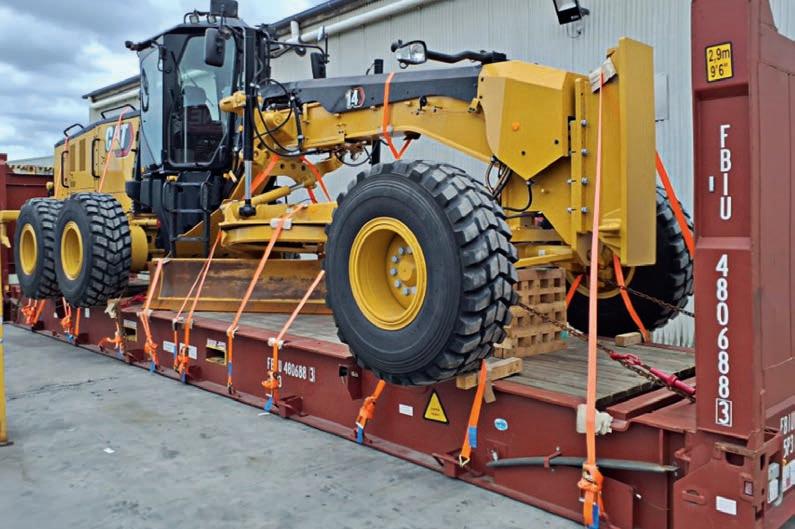
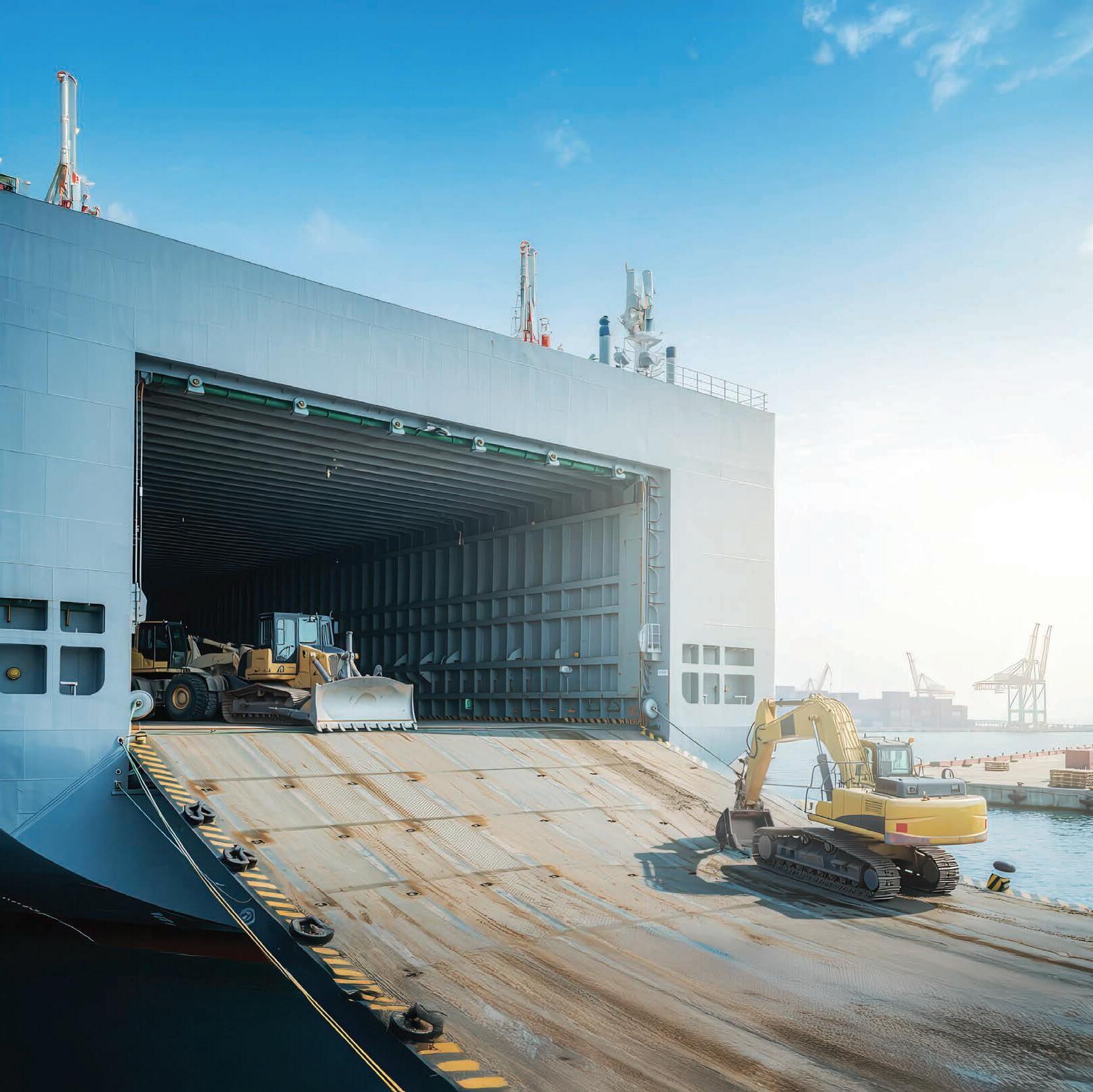
Kenter managed the inspection, cleaning coordination, quarantine compliance, and release process for this used Caterpillar Motor Grader, ensuring timely updates and collection arrangements. Images: Kenter
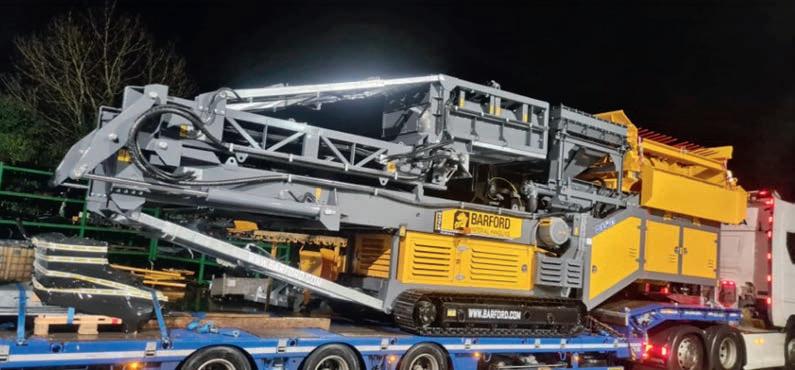
Kenter delivered a new Barford BF6042 Tracked Bin Feeder from Northern Ireland for a global auction client based in Pinkenba, Australia.
between a ordability and reliability.
Kenter National Operations Manager David Rollason has been in transport and logistics for more than 30 years. His expertise spans container transport, heavy machinery logistics, and roll-on/roll-o (RORO) shipping, giving him a sound understanding of operational tradeo s.
David oversees transport execution and provider coordination, ensuring that each shipment is handled with precision and aligned with client priorities.
“The more complex the job, the more important it is to approach it with the right experience and a clear plan,” he said.
By taking a long-term view, businesses can avoid the hidden costs of poor logistics decisions, turning reliability into a driver of e iciency and customer satisfaction.
Resilient and adaptive supply chains
Recent global events, from port congestion to economic volatility, have highlighted the fragility of traditional supply chain models. Businesses are under pressure to build systems that are not only e icient but also resilient.
This means developing flexible strategies that can absorb disruption and adapt quickly without compromising service.
Kenter’s General Manager for New Zealand, Terry Riches, has spent more than 55 years in international shipping and trade management. His career has taken him across Australasia and Japan, providing a broad perspective on global logistics challenges.
At Kenter, Terry focuses on creating adaptable, end-to-end solutions that allow clients to respond e ectively to changing conditions.
“Delivering on promises, and finding better ways to move cargo, is what builds long-term success,” he said.
He said resilience was no longer a competitive advantage, but a requirement. Achieving it depends on strategic planning and the ability to execute under pressure.
Why human expertise matters
Technology has transformed logistics, o ering real-time tracking, predictive analytics, and automated workflows. These tools have improved visibility and e iciency, but they have limits.
When unexpected challenges arise, whether
it’s a sudden port closure, a regulatory change, or a disrupted route, technology alone cannot solve the problem. It is human expertise that bridges the gap between data and decisionmaking.
At Kenter, collaboration across teams, from customs to operations, ensures that every shipment is managed with insight and coordination. This integrated approach allows for faster problem-solving, better communication, and more reliable outcomes.
In a world driven by automation, the ability to combine technology with experience is what defines high-performing logistics operations.
Driving growth through smarter logistics
Looking ahead to 2026 and beyond, Kenter believes that logistics will play a greater role in shaping business performance. Companies
that treat freight as a strategic function, rather than as a cost centre, will be better positioned to compete.
This shift requires a new mindset:
• Viewing logistics as a source of value, not just expense;
• investing in partnerships that o er both expertise and flexibility; and
• building supply chains that can adapt to uncertainty.
Those that fail to evolve risk falling behind in a complex and fast-moving global market.
At Kenter, logistics is more than moving cargo. It is about delivering confidence through expertise, enabling smarter decisions and helping businesses navigate complexity with clarity.
The question is no longer whether goods can be moved, but how e ectively, reliably, and strategically it can be done.
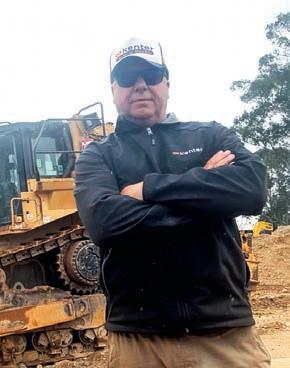
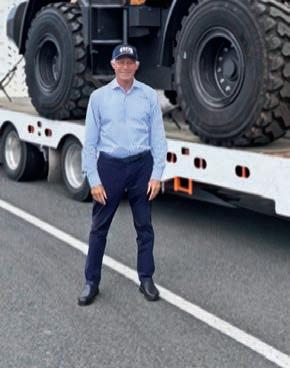
Kenter Brisbane Customs Manager Lee Holmes.
Kenter National Operations Manager David Rollason.
Kenter Freight Operations Assistant Rick Huang.
Kenter General Manager for New Zealand Terry Riches.
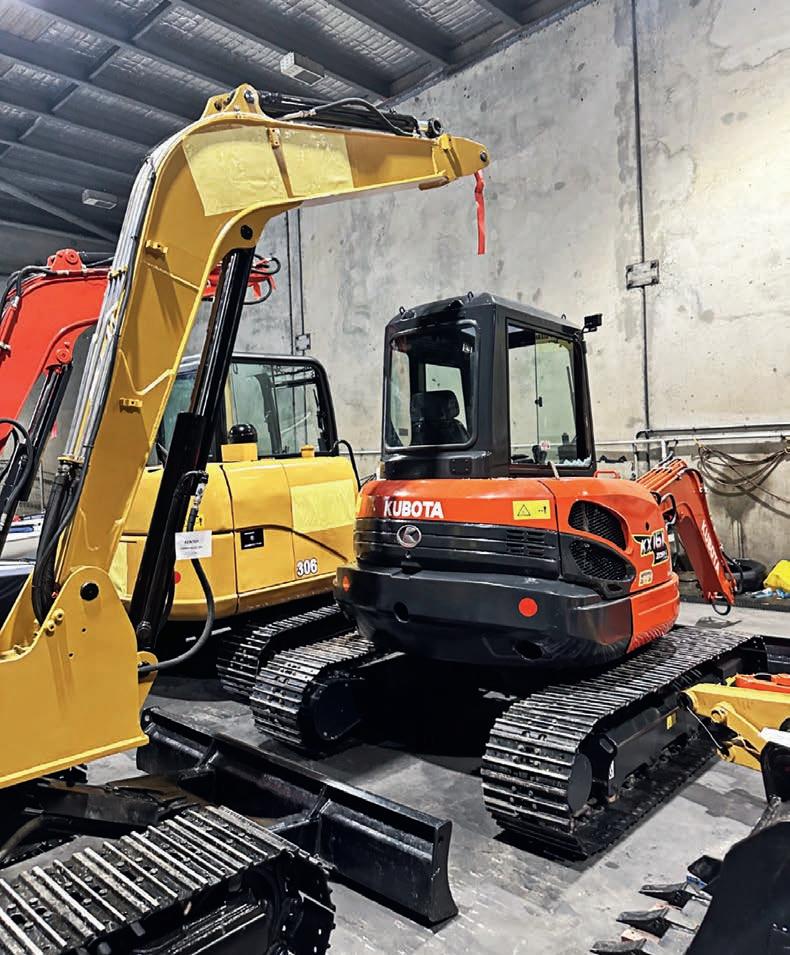
Kenter received four mini excavators from Qingdao, China, for a Queensland auction. The machines were cleaned and re-inspected at Kenter's depot and released and delivered prior to the auction.
Bespoke Global Freight Solutions
ALEMLUBE
AUTOMATIC
LUBE SYSTEMS
Maximise Uptime. Minimise Maintenance.
Automatic lubrication systems are designed to minimise maintenance costs while maximising production efficiency.
They keep critical components continuously lubricated, ensuring machinery runs smoothly through long operating hours, reducing the risk of costly, unplanned breakdowns.
No missed grease points
No manual intervention
No unnecessary downtime
Alemlube Automatic Lube Systems are engineered to deliver the right amount of lubricant at frequent intervals, keeping every critical component in peak condition.
With tailored solutions across mining, transport, construction & industrial applications, every system is designed through a collaborative consultation process to meet your exact operational needs.
Keep equipment running without shutdown for greasing
Reduce unplanned breakdowns & costly downtime
Improve safety by eliminating manual greasing in hazardous areas
Extend bearing and component life
Cut maintenance costs and spare parts usage
Maintain a constant barrier against dust, dirt, & water
Free up maintenance teams for higher-value tasks
The Alemlube Difference
Built for Harsh Conditions
The Smarter Way to Lubricate.
Automatic lubrication systems are transforming the way fleets and heavy equipment are maintained.
In construction and transport industries, uptime is everything. Whether it’s an excavator working long hours on an infrastructure project, a quarry wheel loader operating in dust and mud, or a line-haul truck travelling interstate routes day after day, equipment reliability impacts productivity, profitability, and safety.
One of the overlooked contributors to equipment reliability is lubrication. Pins, bushes, bearings, kingpins, and other moving components rely on the process to minimise wear, reduce friction, and prevent costly failures. Yet in harsh operating environments, manual greasing struggles to keep pace with the demands placed on modern machinery.
Alemlube specialises in the supply of lubrication solutions designed for demanding industries, including mining, transport, construction, waste management, and agriculture, o ering installation, servicing, and technical support nationwide.
Its automatic lube systems (ALS) are increasingly adopted by operators looking to reduce downtime, improve safety, and extend equipment life.
The principle behind an automatic lubrication system is simple but e ective. Rather than relying on manual greasing at scheduled intervals, the system delivers small, precise amounts of lubricant to critical points, while the machine continues operating. This replenishment of fresh grease creates a protective barrier that helps keep out contaminants such as dust, water, and dirt.
In industries where machinery operates in punishing conditions, this continuous lubrication approach delivers several advantages.
Construction equipment under constant pressure
Construction and earthmoving equipment operate in harsh environments. Excavators, loaders, articulated dump trucks, and skid steers are exposed to mud, abrasive dust, vibration and heavy shock loads. Traditional manual greasing methods can leave components vulnerable between service intervals.
Pins and bushes are susceptible to accelerated wear when lubrication is inconsistent. Even diligent manual greasing once or twice a day may not provide protection during extended operating shifts.
In contrast, automatic lubrication systems maintain a collar of fresh grease around moving components, helping prevent contaminants from entering wear surfaces.
The benefits extend beyond reducing grease labour. By ensuring grease is delivered regularly and in the correct volumes, operators can extend component life while reducing the likelihood of premature failures.
Automatic lube systems eliminate bearing related unplanned maintenance and associated cost of downtime and machine hire.
This means less downtime for repairs, lower maintenance costs, and improved machine availability. These gains can have an operational impact in construction environments where project schedules are tight and equipment utilisation is high.
Automatic lubrication systems also improve workshop e iciency. Maintenance teams can redirect labour resources away from repetitive greasing tasks and towards higher-value maintenance activities.
Alemlube’s ALS are designed for a range of mobile and fixed plant applications including excavators, wheel loaders, mini skid steers, and waste recycling equipment. The systems use progressive divider technology to ensure grease reaches every lubrication point accurately and consistently.
The ALS pump station is manufactured using engineering polymer materials that are lightweight, durable, and resistant to harsh environmental exposure.
For operators working in quarries, civil construction and infrastructure projects, reliability under pressure is essential. Equipment stoppages can delay projects, impact productivity, and increase operating costs.
Automatic lubrication is recognised not only as a maintenance upgrade, but also as a productivity tool.
Transport fleets reducing downtime
While construction machinery faces abrasive operating environments, the transport industry has its own maintenance challenges. Heavyduty trucks and trailers cover large distances under constant load, placing stress on suspension and steering components.
Traditionally, fleet operators have relied on manual greasing programs to maintain components such as shackle pins and kingpins. However, manual servicing intervals can vary depending on scheduling pressures, vehicle availability, and workshop capacity.
Alemlube’s ALS aim to remove that inconsistency by ensuring engine components receive lubricant during operation.
The company’s research into heavy-duty interstate truck fleets examined lubricationrelated operating costs such as grease consumption, labour, and component replacement. It found that improved lubrication performance helps extend chassis component's life by two to three times, while reducing downtime associated with repairs and servicing.
For transport operators, reduced downtime translates into increased vehicle utilisation. Trucks spend more time on the road generating revenue and less time in the workshop. Another advantage is consistency. Di icultto-access grease points are automatically lubricated, eliminating the risk of missed servicing points. This is valuable in modern fleet operations where e iciency and maintenance
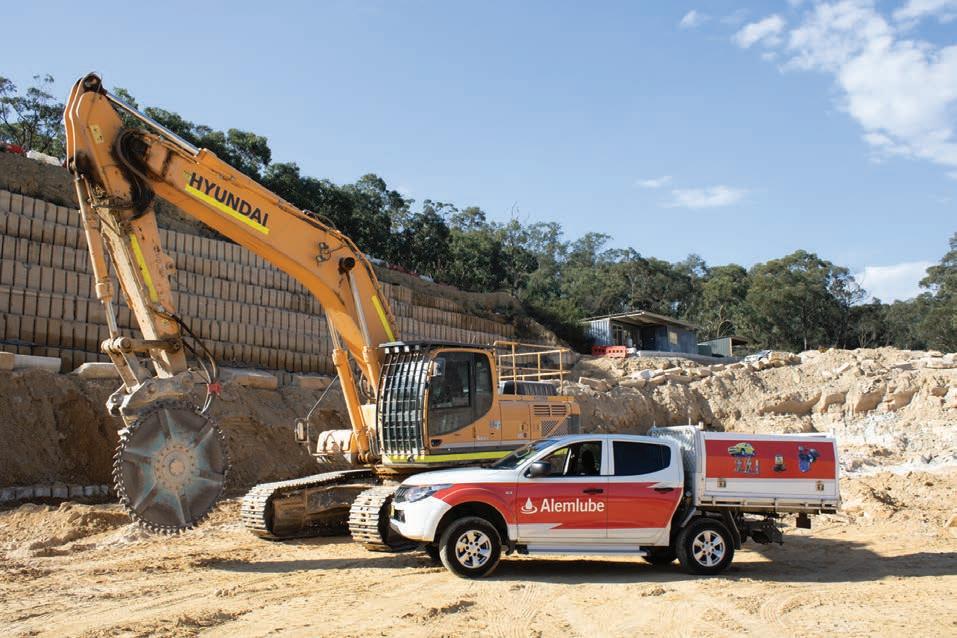
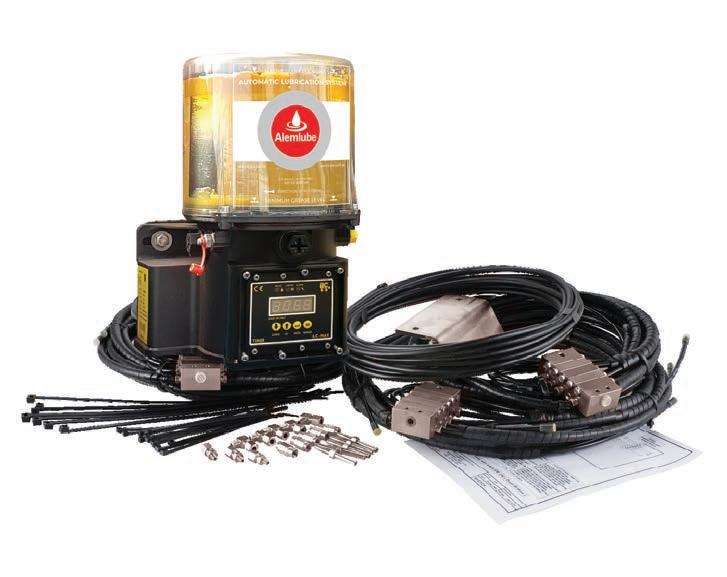
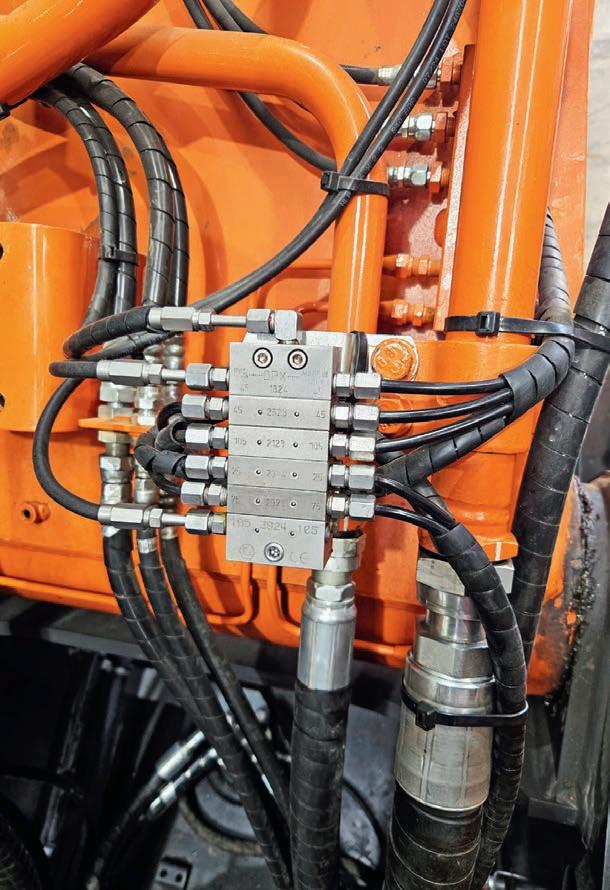
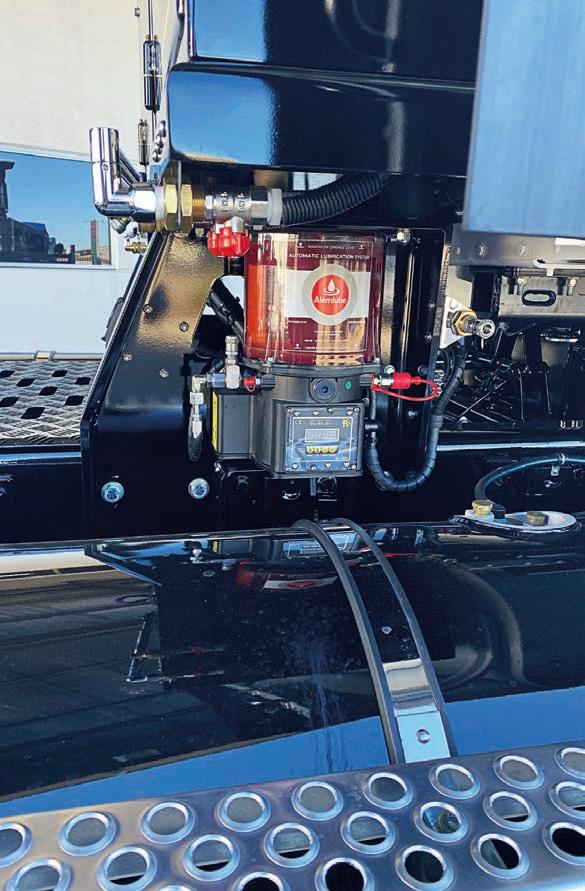
The Alemlube ALS is a progressive system that distributes grease through a sequence of divider valves. Images: Alemlube
compliance are closely monitored.
Alemlube systems are designed for use with NLGI2 grease specified by many OEM manufacturers, allowing operators to continue using approved lubricants while maintaining compliance with manufacturer recommendations and warranties.
For owner-drivers and fleet managers, lower maintenance costs, reduced wear, longer component life, and improved uptime all contribute to a lower total cost of ownership.
Safety improvements through automation
Another benefit of automatic lubrication systems is improved workplace safety. Manual lubrication can require technicians or operators to access di icult, elevated, or hazardous areas around machinery. In mining, construction and transport applications, greasing points may be located near moving components, underneath equipment, or in confined access areas.
Alemlube’s ALS reduce the need for personnel to perform these tasks manually or as frequently, helping minimise exposure to hazards.
This safety advantage becomes important as industries continue adopting automation and remote operations technologies. Across mining and heavy industry, operators are seeking systems that improve reliability while reducing
manual intervention. Community discussions around mining automation highlight the industry-wide push toward safer and more automated operations.
Lubrication systems fit naturally into this evolution. By automating a maintenance task, companies can improve consistency, reduce human error, and support safer maintenance practices without compromising equipment performance.
Supporting Australian industry
A family-owned Australian company with more than five decades of industry experience, Alemlube has expanded its lubrication systems capabilities across Australia and New Zealand.
Alemlube’s Lube Systems division works with customers to tailor automatic lubrication solutions for specific equipment and operating conditions. This includes mobile plant, fixed plant, conveyors, crushers, and transport fleets.
Alemlube Australia/New Zealand Sales and Marketing Manager Mark Williamson said that automatic lubrication systems were becoming a valuable investment because they contribute to safer operations, less downtime, and more e icient asset management.
“In an environment where every operating hour counts, reliable lubrication is not only a maintenance consideration, but a strategic advantage,” he said.
For more information, visit www.alemlube.com.au
An electric piston pump feeds lubricant to the main divider valve, which meters it to secondary dividers before delivering precise quantities to individual greasing points.
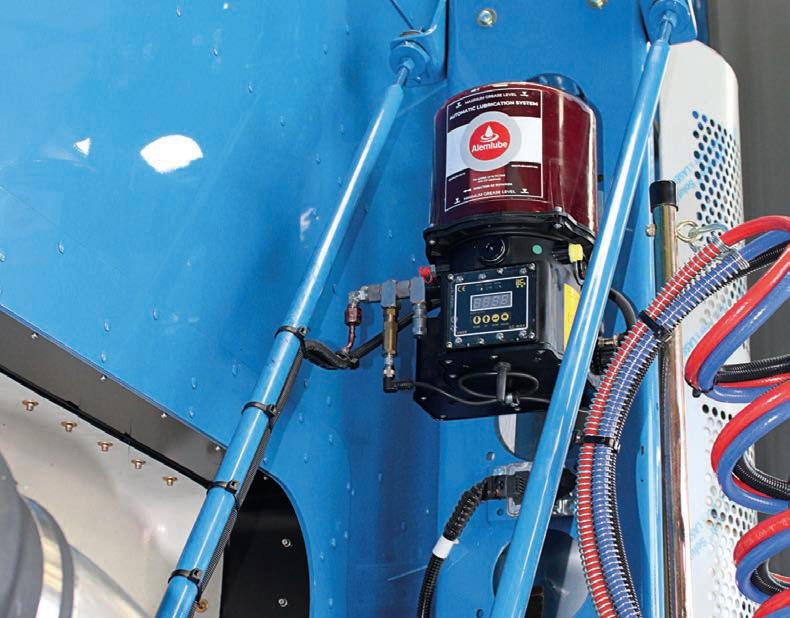
The ALS pump station withstands demanding conditions while remaining lightweight and durable.
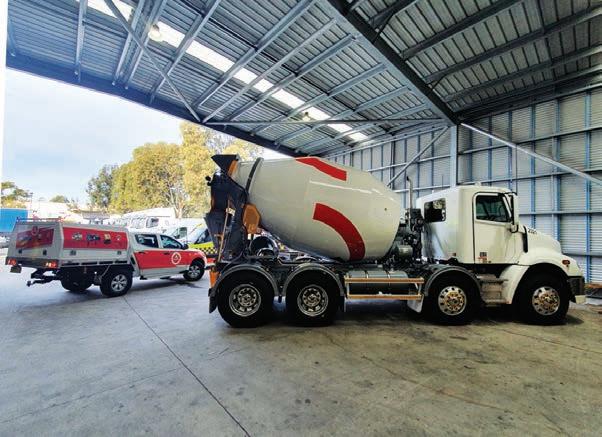
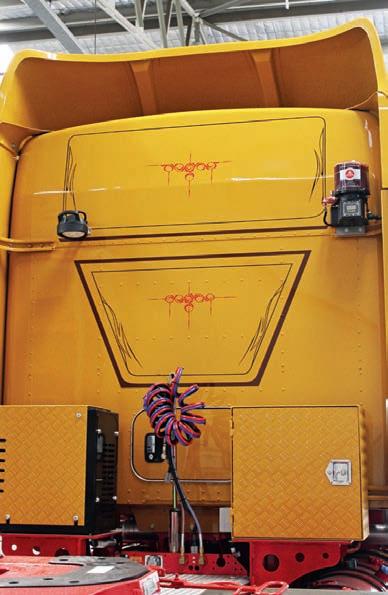
The ALS attached to the back of a truck.
ONE PARTNER. FULL SCOPE. PROJECT SUCCESS.
Complex projects don’t need more contractors - they need one.
FMS Group Turnkey Solutions deliver end-to-end execution under a single accountable partner. Shutdowns. Upgrades. Infrastructure. Less risk. Less downtime. Total control.
One PO. All in-house. Delivering the Best...Every Time
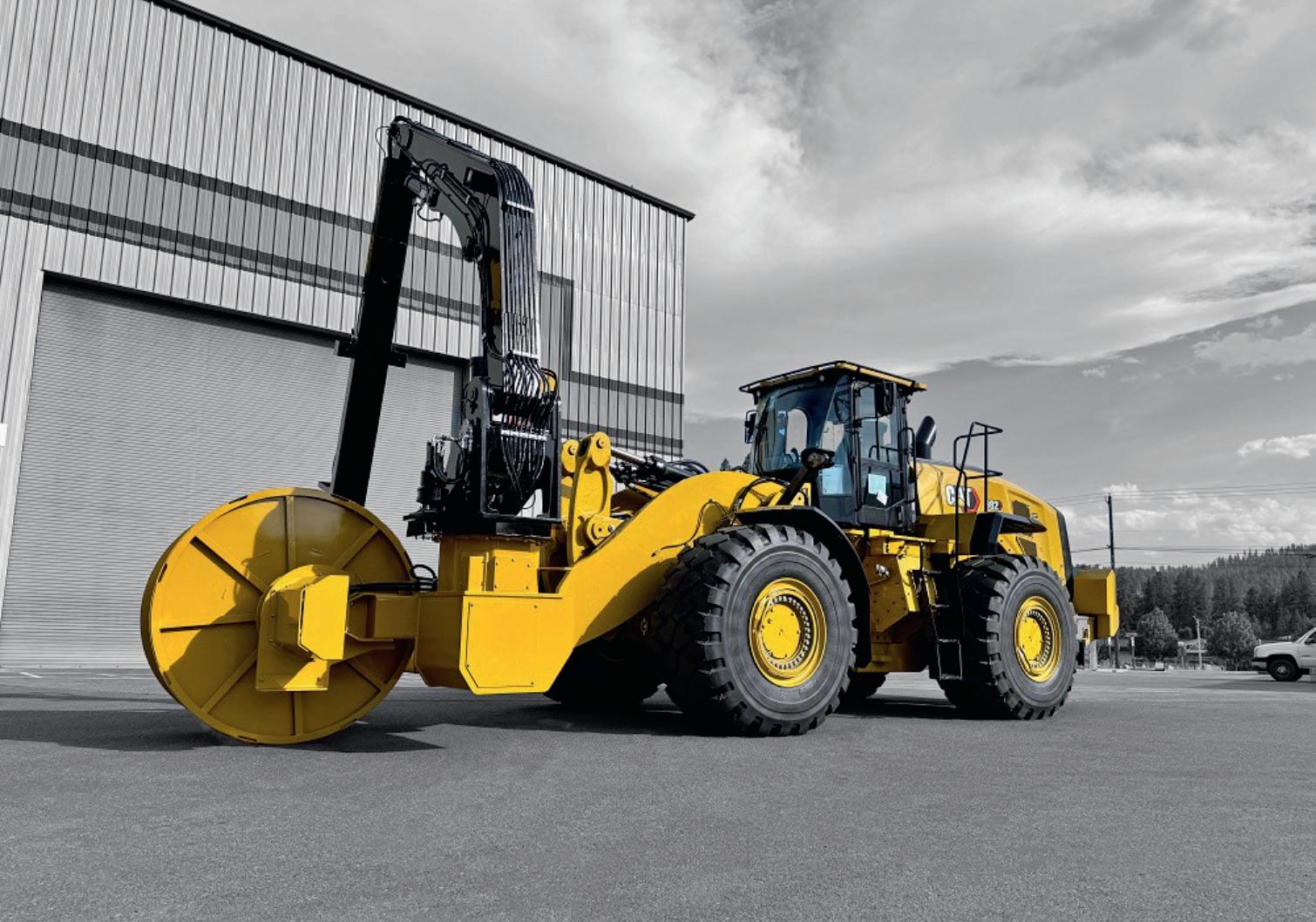
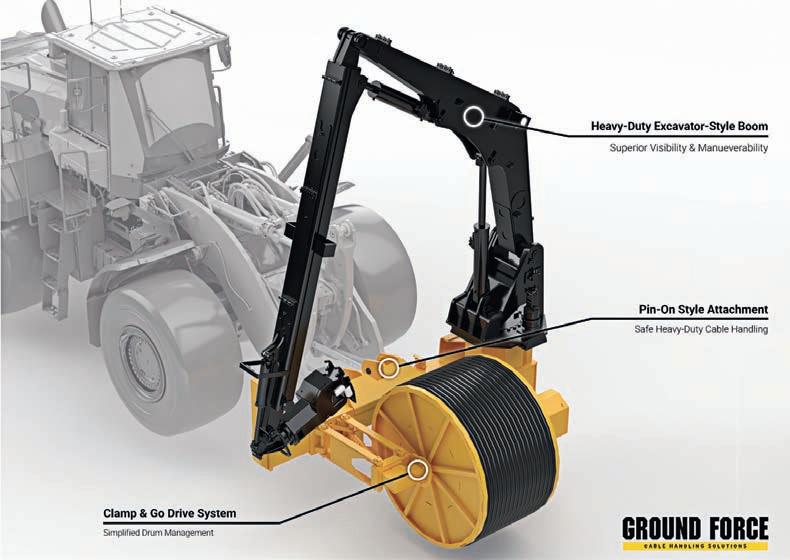
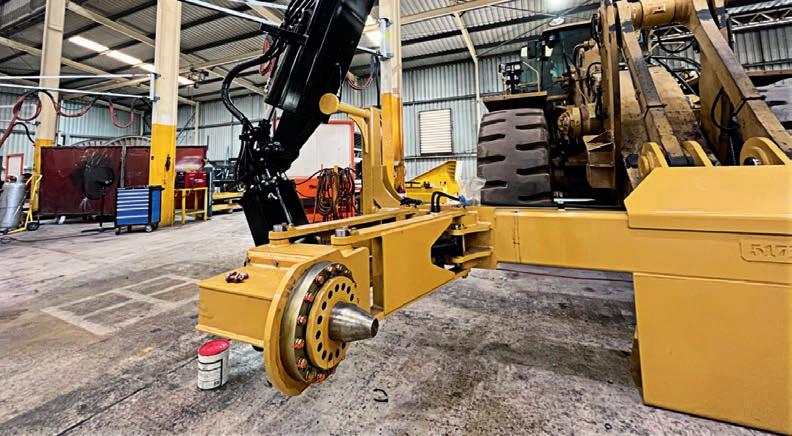
A cable reeler helps avoid safety hazards by keeping cables properly tensioned, neatly wound, and out of the machine’s path, reducing manual handling and the chance of damage or entanglement.
For surface mining operations, few challenges are as hazardous as managing high-voltage trailing cables.
Draglines, electric rope shovels, and rotary drills all depend on a continuous supply of electrical power, and that means large, heavy cables must follow these machines as they move across the pit.
For decades, this task has demanded manual labour, exposed workers to risk, and created operational bottlenecks that chip away at productivity.
FMS Group, Australia’s sole authorised distributor and service provider for Ground Force Worldwide equipment, is changing that equation with the Ground Force Cable Reeler Attachment — a purpose-built solution that brings safety, precision, and e iciency to electric cable management on mine sites.
A partnership built on local knowledge FMS Group was founded in 2005 in Mackay, Central Queensland, a region where the demands of the resources sector are embedded in the daily rhythm of business. In the two decades since, the company has grown into one of the biggest resources services providers in the country, o ering everything from diesel and mobile plant maintenance to electrical services, fixed plant support, on-site machining, fabrication, and engineering.
It is this breadth of capability that makes FMS Group’s partnership with Ground Force Worldwide so relevant for Australian customers.
Ground Force Worldwide, a specialist in mining support equipment with products sold in more than 75 countries, recognised in FMS Group a partner that could do more than supply its equipment — it could also manufacture, service, and support it locally.
With workshops in Mackay, Queensland, and Henderson, Western Australia, as well as sales o ices in Brisbane’s Fortitude Valley and Perth, FMS Group has the national footprint to deliver a local experience on a global product.
FMS Group General Manager of Products David Wood said the company was able to build the Ground Force Worldwide products in its workshops across Australia, providing the ability to service markets with a local theme.
The problem the cable reeler solves
To understand why the Ground Force Cable Reeler Attachment represents such a step forward, it helps to appreciate the scale of the challenge it addresses.
High-voltage trailing cables on large mining machines can weigh several tonnes and stretch for hundreds of metres.
Positioning these cables correctly — keeping them clear of machine tracks, away from haul tra ic, and properly spooled — is a task that
traditionally required multiple workers operating in proximity to moving equipment and electrical infrastructure.
The risks are obvious. Workers on foot near heavy machinery in a working pit face exposure to collision hazards, trip and entanglement risks, and the danger of contact with cables. At the same time, poor cable management leads to damaged cables, unplanned outages, and costly downtime for some of the most productive and expensive assets on site.
The Ground Force Cable Reeler Attachment transforms this process. Mounted as a pin-on attachment to wheel loaders and dozers, it converts a machine already present on site into a dedicated cable-handling unit.
The result is a single-operator solution that removes workers from harm’s way, reduces the time required to reposition cables, and keeps production equipment running with minimal interruption.
What makes the Ground Force Cable Reeler stand out
At the heart of the Cable Reeler’s appeal is its forward-facing, excavator-style boom design. Unlike rear-mounted cable handlers, which force operators to work blind or rely on spotters, the Ground Force attachment positions the operator with a clear, unobstructed line of sight to the cable and drum at all times.
The Ground Force Cable Reeler is mounted as a pin-on attachment to wheel loaders and dozers. Images: FMS Group
The boom provides a reach of 7.92 metres (26 feet), allowing the operator to place, retrieve, and manage cables with a level of precision that is not achievable with conventional methods.
Control is delivered through an intuitive joystick system with seven functions that can be operated safely with one hand. A master control switch enables the operator to transition between clamp and manipulator functions, while a proportional control valve allows for smooth, precise movements — critical when working around electrical equipment.
The system’s microcontroller-based electronics support proportional valve functions and interface with the carrier’s hydraulic system.
The attachment’s cable capacity handles between 159 metres and 1027m of cable, depending on configuration — su icient to service the range of electric mining equipment typically found on Australian surface operations.
It is available in models engineered for some of the most common carriers in the Australian fleet, including the Caterpillar 924, 980, 982, and 988, and Komatsu’s WA500, WA600, and WA900 wheel loaders.
The clamp system enables simplified drum changes, with the clamp-and-go process controlled from the cab. This reduces the downtime associated with cable drum exchanges and eliminates the need for ground personnel to be involved in the process. The attachment is also designed with ease of maintenance in mind, with key components readily accessible.
FMS Group’s end-to-end support model
Buying capital equipment in the resources industry is never simply a transaction — it is the start of a relationship that must deliver value over years of demanding operation.
FMS Group understands this and has structured its Cable Reeler o ering around a support model that covers every stage of the product’s life on site.
The process begins before any purchase order is raised. FMS Group’s technical sales team works with clients to understand specific cable management challenges — the type of
machines being powered, the layout of their operations, the nature of the terrain, and the carrier equipment already in their fleet.
This application engineering process ensures the right Cable Reeler model is specified for each site and that the configuration delivers the reach, capacity, and control functions the operation needs.
Once the decision to proceed is made, FMS Group’s in-house engineering team works with Ground Force Worldwide’s engineers to finalise the build specification.
The attachment can then be manufactured in FMS Group’s Australian workshops, enabling it to be built to local standards, with an understanding of Australian conditions taken into account.
Commissioning is handled by FMS Group’s own qualified personnel, who attend site to install the attachment, conduct functional testing, and provide hands-on operator training.
This on-site commissioning service is critical to ensuring that the machine enters service correctly, and that the operators who will rely on it daily are confident in its use. It also provides an opportunity for site-specific adjustments to control sensitivity, function speeds, and other parameters that can make a di erence to day-to-day usability.
A 3D rendering of the attachment, featuring an excavator-style boom for forward-facing operation.
Ongoing support is equally thorough. FMS Group maintains a large inventory of genuine Ground Force parts across its Australian facilities, ensuring that replacement components are available when required.
The company’s service teams — encompassing diesel fitters, electricians, fabricators, and mechanical engineers — are available to attend sites for scheduled maintenance, unplanned breakdowns, and warranty support.
For operations where capital expenditure is a constraint, FMS Group o ers a rent-now, buylater pathway in partnership with Yellowgate Group, giving site managers the flexibility to put equipment to work immediately while working through the procurement process.
A fit-for-purpose solution for Australian mining
The Ground Force Cable Reeler Attachment addresses a problem that has been considered an unavoidable cost of doing business on electric-powered mine sites.
By consolidating cable management into a single, operator-controlled attachment — and backing it with FMS Group’s service capability across Australia — it o ers mine operators a path to improved safety outcomes, reduced labour requirements, and greater operational continuity.
For Australian mining operations looking to modernise their cable management practices, FMS Group is a starting point. With technical expertise, local manufacturing, national service coverage, and a commitment to understanding each client’s needs, FMS Group o ers far more than an attachment — it o ers a partnership designed to deliver value from the ground up.
If you are heading to the Queensland Mining Expo in Mackay on July 21–23, visit stand OP518 to speak to the Ground Force and FMS Group sales teams.
For more information, contact FMS Group via email at sales@fms-group.com.au or visit fms-group.com.au.
A Ground Force Cable Reeler being attached to a loader.
Dynapac CEA has released a range of compaction machines designed to deliver higher performance, improved e iciency, and enhanced operator comfort across demanding applications.
Dynapac’s Rhino range comprises four models — CA50, CA55, CA65 and CA70 — engineered for use in large-scale infrastructure projects including roadworks, airfields, dam construction, and industrial developments.
With these additions, Dynapac extends its soil compaction portfolio into the 18-, 20and 22-tonne classes, complementing its established 6–12t machines (CA15, CA25, CA30 and CA35).
This broader line-up positions Dynapac CEA to better meet the requirements of Australia’s construction sector, where productivity, reliability, and cost e iciency remain key priorities.
At the core of the Rhino series is a Cummins engine, delivering up to 24 per cent more power than previous models. Available in Tier 2, Tier 3 and Stage 4 emission configurations, the turbocharged, water-cooled six-cylinder engines are designed to balance output with fuel e iciency, supporting both performance and environmental considerations.
Operator-focused design
Emphasis has been placed on operator experience, with design improvements aimed at boosting productivity and reducing fatigue.
The operator station features a 35 per cent increase in glass area, enhancing visibility across the worksite. A swivel seat with up to 60-degree rotation, combined with ergonomic controls, ensures improved comfort and control during extended operating periods.
For low-light conditions, four high-output LED work lights mounted on the ROPS or cab provide illumination, supporting safe and e icient night operations.
The intuitive human-machine interface (HMI) and simplified start-up procedures also
enable operators to transition quickly between machines, minimising downtime.
Smart compaction capability
The Rhino range can be factory-fitted with Dynapac’s Compaction Meter (DCM), enabling real-time monitoring of compaction performance.
Using integrated sensor technology, the system measures ground sti ness, helping operators achieve uniform compaction and reduce the risk of weak spots. In addition to improving quality outcomes, the technology can contribute to fuel savings of up to 25 per cent, while also lowering carbon dioxide emissions.
The models come with options for either a smooth drum or a pad foot drum, along with an add-on pad foot shell. Images: CEA
Serviceability and fleet management
Ease of maintenance has been prioritised to reduce service time and maximise machine availability. Key service points are accessible from ground level, allowing routine tasks such as filter changes and fluid checks to be completed quickly and safely.
The integration of Dyn@link telematics enhances operational oversight, providing realtime data on machine performance, location, and service intervals. This supports proactive maintenance planning, improved asset utilisation, and increased site security.
Built for Australian conditions
Designed with versatility in mind, the Rhino models are available with smooth or pad foot drum configurations, as well as optional pad foot shells. This flexibility enables contractors to adapt machines to a range of soil types and project requirements.
From large-scale road construction to foundation stabilisation, the Rhino range is engineered to deliver consistent, highquality compaction results in challenging environments.
Now available through Dynapac CEA’s national dealer network, the Rhino series represents a step forward in the company’s compaction o ering, combining the latest technology with practical, job site-focused design.
For more information or to arrange a demonstration, contact Dynapac CEA or your local dealer.
The Rhinos are equipped with the Dynapac Compaction Meter (DCM), which provides real-time feedback on compaction quality.
Dry hire can appear straightforward at first glance, but beneath the convenience lies a transfer of responsibility that can carry costly consequences if not fully understood.
Your 30-tonne excavator rolls on a hire job. The hire company calls. You reach for the damage waiver, confident it will cover you, only to discover it doesn’t.
The waiver excludes operator error. Hire charges keep ticking while the machine sits idle. Recovery costs land on your desk, and your public liability insurer confirms that hired plant is excluded from your policy.
UAA Executive General Manager for Distribution Strategy Marc Crossman said this was a costly lesson that was being seen more often in the industry.
“At UAA, where we specialise in underwriting plant and machinery risk, these disputes are increasingly common,” he said.
“In most cases, it comes down to a misunderstanding of where responsibility sits when equipment is hired.”
A booming market, a growing blind spot Australia’s construction equipment rental market is valued at about $3.3 billion and is projected to grow more than five per cent annually through to 2035.
“Infrastructure mega-projects, labour shortages, and rising ownership costs are pushing more contractors toward hire, with excavators the most rented category nationally,” Marc said.
“Yet as volumes surge, many contractors enter dry hire arrangements without fully grasping the obligations they take on.
“In dry hire, you take the machine without an operator. From the moment equipment arrives on site, risk transfers to you: accidental damage, fire, theft, vandalism, recovery costs, and ongoing hire charges during repairs all fall on your shoulders.”
The damage waiver trap
The costliest misunderstanding in dry hire is
the belief that a damage waiver operates like insurance. It does not.
A damage waiver is a contractual clause that may limit the hirer’s exposure for certain types of accidental damage, but only under strict conditions.
“Everything outside that narrow scope remains the hirer’s liability, a distinction UAA sees too many contractors discover only after a loss,” Marc said.
“The exclusions are punishing. Waivers carve out operator error, misuse, theft in certain circumstances, and breaches of hire conditions that are hard to comply with on a busy site.
“They carry high excesses. Where plant is road-registered, waivers will almost never cover incidents on a public road. If your excavator causes a collision while being transported between sites, the waiver is unlikely to respond.
“The further assumption that public liability insurance will backstop any gap is also misplaced. Most public liability policies contain a specific exclusion for hired plant.”
Where disputes ignite
When damage occurs, arguments rarely centre on the physical repair. They centre on the contract.
Who is responsible under the hire agreement? Was the waiver voided because a condition wasn’t met? What about ongoing hire charges while the machine is o the job?
Hire agreements have become aggressive, deeming equipment accepted in near-perfect condition and imposing obligations to insure at full replacement value.
How UAA helps close the gap
Contractors don’t have to accept damage waivers at face value.
Marc said that UAA’s Industrial Special Plant (ISP) product includes a hired plant extension,
how we help earthmoving contractors protect what they hire.”
For over 50 years, UAA’s award-winning Mobile Plant and Machinery insurance solutions have powered the cranes and lifting industry - trusted by professionals who keep Australia moving.
We are known for our extensive knowledge, operational capability, and capacity to cover a diverse range of plant and machinery across numerous industries.
Our seasoned claims team has access to a network of experienced industry repairers, assessors, and suppliers who are well-regarded for their high-quality service.
SCAN BELOW TO FIND OUT MORE: www.uaa.com.au
A diverse fleet anchored by Cat® machinery has become the backbone of a mineral supply operation, powering everything from quarry production and recycling to large-scale civil construction projects.
For almost seven decades, South Australian family-owned business Clay & Mineral has been a supplier of the bulk materials that underpin the state’s civil, infrastructure, and construction sectors.
From quarry products and trenching sands to recycled aggregates and specialist construction materials, the Golden Grovebased company services projects ranging from suburban developments to the state’s largest infrastructure undertakings.
Established in 1957 by Laurence Fricker, Clay & Mineral began as a family enterprise focused on supplying clay, sand and quarry materials throughout South Australia.
Over time, the business expanded alongside the state’s growth, supplying materials to local brickworks, government developments, and businesses such as Adelaide Brighton Cement and Southern Bricks.
Through successive generations and changing market conditions, the company has provided dependable service, strong logistics capability, and an ability to adapt its operations to the needs of the construction industry.
Today, as it approaches 70 years in operation, Clay & Mineral services civil, commercial and infrastructure projects across metropolitan Adelaide and regional South Australia, with
access to quarry and material resources spread across multiple locations.
Richard Fricker has been the Managing Director of the business since 1991. His son Lachlan is the third generation involved in the family business and has taken on a larger management role over recent years, overseeing daily operations, customer relationships, logistics coordination, and business development.
“The company’s operations stretch from McLaren Vale through to Port Augusta and the Mid North, supporting projects that demand reliable supply chains and high-volume material movement,” Lachlan said.
“Among the major projects Clay & Mineral has contributed to are the Torrens to Darlington (T2D) project, the Osborne Submarine Project, the new Women’s & Children’s Hospital development, major road and intersection upgrades, and large-scale residential developments.
“These projects require not only material supply, but also the operational capability to deliver e iciently across diverse and demanding environments.”
Machines behind the momentum Central to the company’s success has been its fleet of machinery and equipment. Clay & Mineral operates about 30 wheel loaders alongside excavators, articulated dump trucks, graders, dozers, crushing equipment, and screening plants.
“This allows us to provide end-to-end support across quarrying, recycling, material production and civil construction applications,” Lachlan said.
Much of that fleet carries the Caterpillar® badge, reflecting a connection with the
Clay & Mineral’s Cat 950 Centennial Edition loader put to use in the handling, stockpiling, and processing of recycled materials. Images: Cavpower
The Cat 950 Centennial Edition loader was one of only 35 released around the world.
manufacturer that spans almost the entire history of the business itself.
Clay & Mineral operates a range of Cat equipment, including Cat 972 and Cat 938 wheel loaders, Cat 336 excavators, graders, and dozers, along with a recently purchased Cat 950 Centennial 100-Year Edition loader.
“The decision to remain committed to Cat equipment has been driven by reliability and long-term performance in demanding applications,” Lachlan said.
“It’s been based on the brand’s global reputation and proven machine performance in demanding civil, quarrying and earthmoving applications.
“Those factors become critical in a business operating across worksites where downtime can impact project schedules and productivity. The equipment’s durability and operator familiarity are among the reasons why the machines remain integral to the fleet.”
Supporting that long-standing Caterpillar relationship is South Australian Cat dealer Cavpower, which has become embedded in the company’s day-to-day operations.
Clay & Mineral works closely with the Cavpower Gepps Cross branch in Adelaide, maintaining strong relationships with personnel, including Territory Manager Brett Tomkins for equipment sales and Ben Foster in customer support and fleet coordination.
“The relationship with Cavpower extends beyond machinery purchases,” Lachlan said.
“It has been strong and consistent, particularly in terms of communication, responsiveness, and ongoing support.
“Service and backup have been reliable, with issues addressed promptly, and with minimal disruption to operations.”
Brett said Cavpower supported Clay & Mineral in all aspects of the business, including sales, service, repairs, and parts.
“With more than 40 field service vehicles on the road, most repairs can be done on site to keep the customer moving. We are always available for anything they may need, 24/7,” he said.
“We also advise on the best times to change over machines to ensure the best resale value. Over the years I have travelled to most of the Clay & Mineral sites to inspect the fleet and help them in this regard.”
Brett said the partnership with the Frickers began in 2018, from an inquiry for a quote on a new Cat 950M loader.
“I invited Clay & Mineral Operations Manager Domenic Trimboli down to have a tour of the Cavpower facility to see firsthand what we had to o er, and how we could assist their business moving forward,” he said.
“It’s grown from there, and the business has bought nine machines from me over the years.
“The majority in the fleet are Cat machines, including graders, dozers, and loaders, as well as Cat engines in some of the plant, spread across the state.”
The dealer support has become important as Clay & Mineral expands its operational footprint and invests in more sophisticated fleet management systems.
Lachlan said Cat technologies such as Payload and VisionLink were valuable tools across its operations.
Payload technology enables operators to accurately monitor loading weights in real time, improving productivity and consistency across multiple operators and sites. VisionLink provides telematics and visibility into machine utilisation, operational performance, and maintenance planning, allowing the business to manage fleet e iciency more e ectively.
“The simplicity and consistency of these systems o er a competitive advantage, especially in an environment where operators may move between machines and worksites regularly,” Lachlan said.
Superior sorting and scrapping
A recent investment for Clay & Mineral has been the development of its Reeves Plains recycling facility. It reflects the company’s focus on sustainable construction materials
and resource recovery, an area of importance for governments and contractors seeking to reduce landfill and lower the environmental footprint of infrastructure projects.
At the site, construction and demolition waste, including concrete, bitumen and bricks, is accepted, processed, and converted into reusable rubble, sand, and aggregate products for reuse across civil and construction applications. The facility transforms waste streams into construction materials that can be returned to the market.
Lachlan said the Cat 950 Centennial 100-Year Edition loader has become a flagship machine at the recycling operation.
“The loader is used in the handling, stockpiling, and processing of recycled materials, supporting continuous production and e icient site operations,” he said.
Brett said it was a case of good timing that led to the delivery of the Centennial model, painted in the original Caterpillar grey.
“As part of Caterpillar’s 100th anniversary, Cavpower received one Centennial 950 loader in a worldwide allocation of 35,” he said.
“At the same time, Domenic called me asking for a new loader for the recycling site.
“I thought it would be a great opportunity to be able to support and thank a long-term South Australian company with something a bit special, and so we o ered the anniversary edition to them.”
Forward-looking
Clay & Mineral plans to continue investing in Caterpillar equipment as part of its broader growth strategy.
“This is due to a combination of machine durability, technological integration, and strong dealer support,” Lachlan said.
Brett said the partnership had evolved beyond business into more of a friendship.
“Richard, Lachlan, and Domenic are genuinely friendly people who are easy to deal with, making it a pleasure to be a part of their journey,” he said.
The Clay & Mineral team: Lead Operator Aaron Shaw (left), General Manager Lachlan Fricker, Managing Director Richard Fricker, and Northern Operations Manager Graham Coulter.
In an industry built on capability and reputation, the di erence between winning work and losing it can often come down to how the humble website is perceived.
Most contractors, hire companies, dealers, and equipment businesses don’t think their website matters that much — until they lose work to a competitor.
That’s when the frustration starts. From the inside, the business looks strong: the gear, people, experience and projects are there. But from the outside, the business tells a di erent story.
According to Ryan Foster, Managing Director of marketing specialist Ambrosia Industrial, perception plays a major role in who gets shortlisted, who gets the meeting, and who gets the opportunity.
“Margins are tighter, competition is heavier, and projects are scrutinised harder than ever before,” he said.
“Clients are under pressure themselves, which means everyone throughout the chain is trying to reduce risk. That changes how businesses are assessed.
“For a long time, contractors could win work almost entirely through relationships and reputation. Today, one of the first things many people do after hearing a company name is to search it online.”
People notice when a website feels outdated, when projects are poorly presented, when the capability statement says nothing meaningful, or when the branding feels inconsistent across di erent parts of the business. They notice when a company claiming to operate at a high level presents itself like a smaller one.
“The problem is that many businesses across the earthmoving, construction, transport, and equipment sectors have evolved operationally, while the way they present themselves to the
market has remained largely unchanged,” Ryan said.
“The businesses gaining momentum understand something important. Modern positioning is not really about marketing. It’s about commercial confidence.
“If a client is about to spend hundreds of thousands, or millions, with your business, every interaction contributes to whether they feel confident moving forward. Your website, capability statement, project presentation, imagery, structure, and the way you communicate all influence that decision.”
Ryan said the reality was that a lot of excellent operators were underselling themselves.
“We see businesses with major fleet investment, experienced operators, decades of project history, and genuinely strong reputations still presenting online like subcontractors trying to pick up small local work,” he said.
“At the same time, competitors with less capability are creating stronger market confidence simply because they present themselves better commercially.
“That gap matters because people naturally associate presentation with capability, particularly buyers outside your immediate network.
“Procurement teams, larger contractors, government clients, mining companies, and OEMs are assessing whether a business feels organised, credible, commercially mature, and capable of operating at the level it claims.”
According to Ryan, one of the biggest mistakes businesses make is assuming the market already understands who they are. He said the market only sees what it is shown. If an online presence does not reflect the scale or quality of the operation, people fill the gaps themselves, and usually not in the business’ favour.
“The best commercial performers communicate clearly,” Ryan said.
“Their websites reflect the level they operate at. Their capability material feels professional. Their projects reinforce credibility. The business feels aligned from the outside. They’re not flashy. Not over-marketed. Just commercially mature.
“That alignment is important across contractors, plant hire businesses, dealers, OEMs, transport operators, and mining service providers as competition tightens and clients become more selective about who they engage.
“Because at the end of the day, businesses don’t just buy capability. They buy confidence.”
Ambrosia Industrial works with businesses across the earthmoving, construction, mining, and equipment sectors that have outgrown the way they present themselves to the market.
“We work with operations that have evolved, but the positioning hasn’t,” Ryan said.
“Fixing that gap is one of the fastest commercial improvements a business can make.
“If your business has grown over the past few years, but your website or capability material no longer reflects the level you operate at, now is probably the right time to address it.”
To learn more or book a strategic discovery session, visit Ambrosia Industrial.
To find out more about Ambrosia Industrial, contact hello@ambrosiaindustrial.com.au
The best commercial performers communicate clearly, with their websites reflecting the level they operate at.
Ambrosia Industrial works with businesses to ensure their websites and capability material reflect the level they operate at. Images: Ambrosia Industrial
Our straightforward marketing packages are designed to amplify the growth and market leadership of leading Australian earthmoving and heavy sector brands.
With 15+ years experience partnering with market leaders, we’re the experts in civil, mining and infrastructure services marketing.
We shape brands, reputations and amplify growth while you focus on what you do best.
TO CELEBRATE OUR PARTNERSHIP WITH EEM, WE’RE EXCITED TO OFFER A COMPLIMENTARY 30 MINUTE STRATEGY SESSION EXCLUSIVELY FOR READERS.
RESERVE YOUR SPOT TODAY. ambrosiaindustrial.com.au
In industrial environments, the workbench remains fundamental to an e icient workspace.
Productivity is rarely determined by a single piece of equipment but shaped more by the systems, workflows, and infrastructure that support day-to-day operations.
For manufacturers, workshops, service operations, and technical environments, a well-designed work table is a platform for performance.
Workbench Warehouse focuses on heavyduty, Australian-made workbenches tailored to the realities of modern industry. Its approach reflects a shift in how businesses view workshop fit-outs: less as static furniture and more as assets that influence safety, e iciency, and output.
The role of the workbench
At its core, a workbench underpins nearly every manual or technical task performed in a workshop environment. Whether supporting heavy mechanical repairs, precision assembly or routine maintenance, the trestle must deliver stability, durability and ergonomic functionality.
As operations get bigger, so too do the demands placed on these surfaces. What begins as a basic set-up can evolve into a more complex requirement — accommodating heavier loads, specialised tools, integrated storage, and even power access. In this context, selecting the right workbench becomes a decision with operational consequences.
Workbench Warehouse addresses this need by o ering heavy-duty fit-out solutions designed to align with specific industry applications. Rather than a one-size-fitsall model, its range reflects the diversity of tasks performed across sectors, from general workshop use to specialised environments.
Matching design to application
A key selection consideration is understanding the nature of the work itself. The type of tasks performed — whether handling large mechanical components or working with sensitive materials — influences the required design, materials, and features.
Standard workbenches play an important role in general-purpose environments. They o er a balance between durability and cost, making them suitable for a range of applications, including maintenance work, light fabrication, and day-to-day workshop tasks.
More specialised environments demand tailored solutions. Stainless steel workbenches, for example, are essential in industries where hygiene, cleanliness, and corrosion resistance are critical. Sectors such as food processing, healthcare, and laboratory work rely on these surfaces to maintain compliance and ensure longevity under demanding conditions.
Workbench Warehouse’s o ering spans this spectrum, with the added capability to custombuild workbenches for unique operational
requirements. This flexibility is valuable for businesses operating in niche or evolving sectors, where standard configurations may not su ice.
Engineering for durability and load capacity
In heavy-duty environments, durability is nonnegotiable. A workbench must withstand not only static loads but also the stresses of daily use, such as impacts, vibrations, and repeated handling of heavy materials.
This places emphasis on material selection and construction quality. Factors such as steel grade, frame thickness, and surface finish contribute to the strength and lifespan of the bench. Precision manufacturing processes, including laser cutting, play a role in ensuring consistency and structural integrity.
Load capacity is another critical metric. Underestimating the weight requirements of a workspace can lead to safety risks and operational ine iciencies.
A well-specified workbench provides confidence that it can handle the tools, components, and workloads placed upon it, without compromise.
Workbench Warehouse integrates these considerations into its design and manufacturing process, aiming to deliver products that meet the demands of industrial use while maintaining long-term reliability.
Integrated features
Beyond structural strength, modern workbenches are defined by their functionality. Integrated features can improve workflow e iciency, reduce downtime, and contribute to a safer working environment.
Storage solutions, such as built-in drawers and shelving, help maintain organisation and ensure that tools and materials are accessible. This not only saves time but also reduces clutter, which can be a source of ine iciency and hazard.
The inclusion of electrical outlets is another practical enhancement. By enabling direct access to power at the workstation, businesses can minimise reliance on extension leads, reducing trip hazards and streamlining operations.
Ergonomics also plays a growing role in workbench design. Adjustable height options allow users to tailor the workspace to their needs, supporting better posture and reducing the risk of strain or injury during prolonged use. In an era where workplace health and safety is a priority, these features are no longer optional — they’re expected.
Customisation and local manufacturing
One of the features of Workbench Warehouse’s approach is its focus on Australian-made products. Local manufacturing o ers several advantages, including shorter lead times, greater quality control, and the ability to respond quickly to customer requirements.
Customisation is valuable in this context. Industrial operations are rarely uniform, and the ability to design workbenches that align with specific workflows, spatial constraints, and
Each workbench has been laser-cut with precision, ensuring that exact specifications and quality finishes are achieved every time.
The large variety of workbenches, including garage and mobile products, is designed to suit individual needs and budgets.
branding preferences provides a competitive edge.
From colour finishes to configuration and dimensions, tailored solutions allow businesses to create workspaces that are not only functional but also aligned with their operational identity. The use of durable finishes, such as 2K enamel coatings, further enhances longevity while maintaining a professional appearance.
Cost versus value
For many businesses, the decision to invest in heavy-duty workbenches comes down to balancing upfront cost with long-term value. While lower-cost options may appear attractive initially, they can fall short in durability, leading to higher replacement and maintenance costs over time.
A well-built workbench, by contrast, delivers consistent performance, reduces downtime,
and supports safer working conditions. It becomes an investment in productivity rather than a simple expense.
Workbench Warehouse products are durable solutions backed by a satisfaction guarantee. This approach aligns with the expectations of buyers who prioritise reliability and return on investment over short-term savings.
A foundation for e icient operations
As industrial environments continue to evolve, the importance of foundational infrastructure remains constant.
By focusing on durability, functionality and customisation, Workbench Warehouse highlights the role that well-designed workspaces play in supporting e icient, safe, and scalable operations.
For more information, contact david@workbenchwarehouse.com.au or phone (03) 9580 5029.
A workshop fitout installed by Workbench Warehouse. Images: Workbench Warehouse
A custom workbench with a conveyor belt.
The world is built by people, but people are fallible. And that’s the paradox at the heart of every construction site.
By David Edwards, PhD Global Product Manager, Cat Technology Safety Solutions Group
In the early hours at a job site, before the hum of engines and the clang of steel, there’s a quiet moment. A machine operator climbs into the cab, co ee in hand, mind juggling the day’s tasks. The operator is experienced. Focused. But also human.
We’ve known that human brains, remarkable as they are, evolved not for precision, but for survival. They conserve energy, filter noise, and make fast decisions. But those same traits — so useful in the wild — can be overwhelmed in high-risk environments like construction.
Safety can be thought of like a river. Downstream are the outcomes we all want: fewer injuries, reduced incidents, lower insurance claims, and a healthier safety culture. We believe those downstream outcomes are achieved by focusing on the upstream components of a resilient safety culture. The four components of a resilient safety
culture are leadership, ownership, mindsets, and the safety systems that catalyse safer behaviours. Early identification of job-site hazards happens upstream where perception is formed, attention is paid, and decisions are made. That’s where we focus our e orts,
because the further upstream we intervene, the more powerful the outcome.
The power to see, mitigate, and manage On a job site, misperception can be fatal. A study published in the International Journal of
People Detection uses intelligent cameras, enabling the system to alert operators when someone enters a machine’s hazard zone.
Images: Caterpillar
Environmental Research and Public Health1 found that workers recognise only 47 per cent of job-site hazards, which means that most go undetected.
The Cat® Detect portfolio is built to deliver power: the power to see, the power to mitigate, and the power to manage.
• Power to see is the power to recognise hazards, far upstream, before they become incidents.
• Power to mitigate is power to intervene at the moment of risk.
• Power to manage refers to the power that comes from visibility to leading indicators and data-driven insights necessary to drive a culture of continuous improvement.
The cognitive cost of attention
The human brain is a high-performance engine. It consumes 25 per cent of your body’s energy, more than any other organ.
And like any engine, it has limits. In human factors, we call this ‘cognitive capacity’. It’s the mental bandwidth available to process information, make decisions, and stay alert. Think of it like a bank account. Every time you pay attention, you’re making a withdrawal. And when your account runs low, errors creep in.
That’s why we developed the Cat Seat Belt Reminder System, which is a universal upgrade solution. It’s not just about compliance — it’s a proxy for engagement. When operators buckle up, it signals attention to detail. When they don’t, the system provides a gentle nudge. And if the behaviour persists, an external lamp alerts co-workers and supervisors — an upstream signal that something downstream may go wrong.
The Cat Detect Driver Safety System (DSS) is a universal upgrade solution. It monitors facial features to detect fatigue or distraction.
When a lapse is detected, the system alerts the operator, records the event, and sends the data to Caterpillar’s Safety System Monitoring Centre. Last year alone, Caterpillar intervened over a million times, nudging operators back to attention, far upstream the Safety River.
Perception isn’t reality — it’s a story Perception feels like reality. But it’s not. It’s a story your brain tells you, stitched together from your senses, memory, emotion, and bias. Optimism bias, change blindness, inattention blindness — these aren’t just academic terms. They’re the invisible forces shaping how we perceive the world.
That’s why we developed People Detection. Using intelligent cameras, the system alerts operators when someone enters a machine’s hazard zone.
This technology supplements human perception and situational awareness and is available from the factory, as a Cat machine upgrade, and as a universal aftermarket solution for most machines, regardless of manufacturer.
Or consider 2D E-Fence, E-Ceiling, and E-Swing. These features define safe operating zones and automatically prevent machines from breaching them.
Safe operation of earthmoving equipment is
dependent upon a human operator, but because we are all human we sometimes make mistakes.
Our mission is to help customers create work zones where people are safe physically and psychologically by supplementing human factors, mitigating risk, and generating data to inform continuous improvement that drives behaviour change.
Data as a safety tool
VisionLink™, our cloud-based platform, brings it all together. It collects upstream indicators — seat belt usage, detection events, fatigue alerts — and turns them into actionable insights. Contractors can visualise trends, identify risks, and coach behaviours before they become problems.
This is the future of safety: not just policies and procedures, but real-time feedback loops. Not just compliance, but culture.
No silver bullet: just smarter systems
There’s no single solution to safety. But there is a smarter way to think about it. Technology doesn’t eliminate human error — but it can
create the capacity to absorb failure without serious consequences. It turns our strengths into superpowers and our weaknesses into opportunities for support.
Because in the end, the most powerful information processor on the job site is still the human brain. And when we supplement it with the right tools, we don’t just build better machines; we build a safer world.
Dr David Edwards is the Global Product Manager for Caterpillar’s Technology-enabled Safety Solutions Group, part of the Automation and Autonomy division. With a PhD in Human Factors, David has spent more than two decades advancing the science and application of fatigue management, human performance, and safety culture in industrial environments. His work has focused on developing systems that use real-time data to support human decision-making and reduce risk. A recognised thought leader, David’s research and publications explore how technology can complement human limitations — especially in contexts where distraction, fatigue, and cognitive load are critical safety concerns.
1. Int. J. Environ. Res. Public Health 2020, 17(21), 7788; https://doi.org/10.3390/ijerph17217788
The Cat Seat Belt Reminder System reminds operators to buckle up.
The Cat Detect Driver Safety System detects operator fatigue and distraction, such as mobile phone use.
A major national dealer network is well on the way to expanding its footprint across key metropolitan markets.
A new chapter opened this year for Australia’s construction and earthmoving industries, with the appointment of Adaptalift Group as a dealer for JCB equipment across the country, including Melbourne, Sydney, Brisbane, Perth, and Adelaide.
The move represents another step in the evolution of one of Australia’s largest privately owned equipment businesses, with both companies regarding the partnership as an advancement in how aftermarket support is delivered to customers.
According to Adaptalift JCB Executive General Manager Dave Brunt, the distributorship reflects years of growth, infrastructure investment, and operational expansion culminating in a readiness to enter the broader heavy equipment market.
“This is a milestone for Adaptalift Group,” Dave said. “The appointment as a JCB dealer signifies our strategic evolution into the broader heavy equipment, construction, and earthmoving sectors.
“Adaptalift identified that there was demand for a dealer that prioritised aftermarket support and machine uptime over simply moving metal.
“We knew we had the operational blueprint to deliver that, making this the perfect time to step into the earthmoving space.”
That focus on support rather than pure sales is expected to become one of the defining characteristics of Adaptalift JCB moving forward.
Built on uptime
For more than 45 years, Adaptalift Group has operated primarily within Australia’s materials handling sector, building growth around forklift
supply, fleet management, servicing, and operational support.
But Dave believes the company’s background in high-demand industries has given it an edge that translates into construction equipment support.
“Our obsession is aftermarket support,” he said. “In earthmoving, the purchase of the machine is just day one. It’s what happens one week, one month, one year later or longer that matters.
“Our background in materials handling means we are hard-wired to respond to breakdown calls with absolute urgency. We bring a fastpaced, ‘uptime-is-everything’ mentality to an
industry where downtime costs thousands of dollars an hour.
“Partnering with a globally recognised, innovative brand like JCB aligns with our goal of being a trusted, reliable, and comprehensive equipment solutions provider in the country.”
From humble beginnings
While the business today employs more than 750 people nationwide, Adaptalift’s beginnings were far more modest.
Founded in 1979 by Peter and Margaret Whi en, the company originally operated from a single Melbourne facility manufacturing forklift attachments.
Dave said the business was built around straightforward principles.
“Look after the customer, fix it right the first time, and build long-term relationships,” he said. “That core family ethos remains in our DNA today, even as we’ve grown into a business with national capability.”
The company rebranded to Adapt-A-Lift (o icially known as the Adaptalift Group) in 1984 before embarking on decades of expansion and strategic acquisitions.
Among the milestones was the acquisition of Speedshield Technologies in 2005, which introduced telemetry and fleet management technology into the group’s operations.
In 2009, Adaptalift acquired the national Hyster dealership, a move that Dave said tripled the size of the business “almost overnight”. The later addition of Yale further strengthened the company’s standing in the materials handling market.
More recently, the group acquired Pacific Materials Handling in 2023, expanding its presence in the waste and recycling industries, before securing the Hyster dealership for New
Cementing the dealership were Adaptalift Chief Executive O icer Lindsay Whi en (left), Adaptalift Chairman and founder Peter Whi en, and JCB Deputy Chairman George Bamford. Images: Adaptalift.
A line-up of equipment at Adaptalift’s facility in Truganina, Victoria.
Zealand in 2025, adding another 14 locations and more than 100 team members.
“Securing the JCB dealership is the next milestone in that timeline,” Dave said.
A nationwide support machine
One of the advantages Adaptalift brings to JCB is its already-established national support structure.
The company operates 15 branches and 26 service locations across every Australian state and territory, backed by more than 170 field service technicians.
It also maintains a national parts distribution centre carrying more than $20 million in inventory, supported by branch-level parts stores and trade counters.
“This means that whether you are operating a JCB excavator in suburban Sydney or a telehandler on a remote farm in WA, we have the geographic reach to get a technician to you quickly,” Dave said.
The scale of that infrastructure means Adaptalift is entering the construction equipment market with systems already in place, rather than attempting to build a network from scratch.
“We are plugging a world-class product line into a finely-tuned, highly e icient service machine,” Dave said. “Our branches, service managers, and supply chains are already established. JCB customers will immediately benefit from a mature dealer network.”
Investing in growth
Adaptalift is investing to ensure the success of the JCB rollout.
Dave said millions of dollars are poured annually into parts inventory and supply chain logistics, with further spending now directed toward specialist JCB support capability.
“For JCB specifically, as well as leveraging the capability of our existing team, we are establishing a dedicated team of technicians, parts and sales personnel to support the product and ultimately the customer,” he said.
“We are investing in specialised tooling, dedicated technical training for our mechanics, and scaling our parts holdings to ensure we hit the ground running.
“That will continue as the JCB fleet expands across the country.”
Dave said purpose-built branches in regional construction and agricultural hubs are already nearing completion and expected to open in coming months.
Complementary markets
Historically, Adaptalift has maintained a strong presence in logistics, warehousing, manufacturing, ports, and agriculture. But many of those same customers also operate earthmoving and construction machinery.
“If you look at a large transport yard, a waste recycling facility, or a major agricultural operation, they use forklifts and wheel loaders,” Dave said. “They use pallet jacks and telehandlers. Now, those customers can deal with one trusted partner for their entire fleet.”
Dave sees opportunities for JCB equipment across civil construction, waste management,
agriculture, infrastructure, and local government.
“JCB’s telehandlers are regarded highly in Australian construction and agriculture, and we intend to grow that even further,” he said. Beyond telehandlers, he said JCB’s mini excavators, backhoes, and wheel loaders are well suited to Australia’s diverse operating conditions.
Competing through support
In a competitive construction equipment market, Dave said Adaptalift’s competitive advantage would not be the machines themselves, but the service behind them.
“The JCB product is tried, tested, and proven,” he said. “The di erentiator is the dealer.”
Adaptalift has positioned itself as an agile, customer-responsive organisation capable of making fast decisions without the bureaucracy often associated with large corporate structures.
“Because we are privately owned, we don't have the red tape of corporate boardrooms,” Dave said. “If a customer needs a solution, we can make decisions quickly and pivot to support them.”
The business is also challenging traditional expectations around dealer support and total cost of ownership.
JCB is carrying out technical training programs to ensure Adaptalift personnel are equipped to support the product range.
Adaptalift JCB’s new Melbourne headquarters.
“We will establish ourselves by proving to contractors that dealing with Adaptalift JCB lowers their total cost of ownership and maximises their productivity,” Dave said.
Great expectations
Over the next 12 months, Adaptalift JCB plans to establish a visible national presence.
“You will see stock availability, customer roadshows, and a visible presence on job sites across Australia,” Dave said. “We want customers in the seats of these machines to experience the JCB di erence, backed by the Adaptalift promise.”
The first priority has been to ensure parts integration and technician training are complete so that existing and new JCB customers receive streamlined backing.
“We want to ensure that we can support existing JCB owners in the market as seamlessly as the new customers we will be bringing on board,” Dave said.
He said the appointment was also recognition of the company’s expertise in service capability.
“A global giant like JCB doesn’t hand over its dealership rights lightly,” he said. “It proves that our years of building operational maturity, service scale, and financial stability have positioned us as a top-tier partner in the construction and agricultural equipment space.”
Right gear, right people
On JCB’s part, the partnership was about more than expanding market reach.
JCB General Manager – Pacific Region Dean Lownds said the decision reflected a desire to build a dealer network capable of delivering world-class aftermarket service across Australia’s construction and agricultural sectors.
“Australia is an important market for JCB,” Dean said.
“We want to get closer to our customers by supplying great products while providing specialist after-sales and service support.
“Central to achieving this objective is having an outstanding dealer network across the country.”
Dean said there was a strong cultural and operational alignment between the two organisations.
Like JCB, Adaptalift is a privately-owned family business with decades of experience supporting customers in equipment-intensive industries. That similarity in operating culture immediately stood out to JCB leadership.
“Adaptalift’s service-driven model was an important consideration because JCB is passionate about delivering the best possible aftersales care to customers,” Dean said.
The alignment extended beyond ownership structure. Dean said both companies shared a focus on engineering, innovation, and long-term customer relationships.
The common philosophy is expected to underpin the long-term success of the partnership, particularly as competition intensifies across Australia’s construction equipment sector.
Why Adaptalift impressed
Dean said that JCB’s selection process focused on one key area: customer support capability.
“While equipment quality remains essential, modern construction customers judge brands on service responsiveness, parts availability, and the ability to keep machines operating productively,” he said.
“That is where Adaptalift di erentiated itself. The company already possessed the support systems JCB believed were necessary to elevate its presence in the market.
“Our objective is to ensure proper market coverage to support all Australian customers. Adaptalift is an important route to achieving that.”
Bigger and better
Dean echoed the fact that both businesses were investing to strengthen local support infrastructure.
Among the developments is the establishment of a new national JCB parts centre in Melbourne, which will work in conjunction with Adaptalift’s own nationwide parts distribution network.
At the same time, JCB is carrying out technical training programs to ensure Adaptalift personnel are equipped to support the product range.
“For customers, the practical outcome is straightforward: faster support, improved machine availability, reduced downtime, and
greater confidence in dealer backup,” Dean said.
He said Adaptalift’s customer reach and market coverage were considerations in the appointment.
“While JCB is already recognised as a major construction equipment manufacturer, many Australian operators are only beginning to appreciate the scale and diversity of the company’s product o ering,” he said.
“Australian customers who may have previously been unfamiliar with JCB as a manufacturer of construction equipment will be surprised at the sheer breadth of our product range, which extends beyond the products many operators traditionally associate with the brand.”
Growing the portfolio
JCB is known for its Loadall telehandler range and Dual Drive backhoe loaders that allow the machine to be driven forward while the operator faces the excavator end.
But Dean said the company’s broader equipment portfolio is becoming as important in Australia.
“In other products, JCB o ers a huge range of excavators,” he said.
That line-up stretches from one-tonne micro excavators and compact midi machines through to larger models such as the new 52t 520X X-Series excavator.
Beyond excavators, Australian customers will also gain increased access to:
• Compaction equipment;
• wheeled loading shovels;
• skid steer loaders;
• compact tracked loaders;
• access equipment; and
• power generation equipment.
Among the products is JCB’s Teleskid skid steer loader, which features a telescopic singlearm design intended to deliver greater reach and versatility on site.
Dean said innovation continues to drive development across every product category.
“We want to ensure the product delivers more to the customer, whether that’s more productivity, more fuel e iciency, more functionality, more operator comfort, more reliability or more machine uptime,” he said.
Global strength, local capability
Globally, JCB ranks as the world’s third-largest construction equipment manufacturer by volume, employing about 20,000 people and operating through a network of 770 dealers across 2000 depots worldwide.
The company also maintains 17 parts centres strategically positioned around the globe to support customers in every major market.
That international scale, combined with Adaptalift’s local support capability, creates what JCB believes will be a strong proposition for Australian customers.
Ultimately, however, Dean said the strategy remains centred on customer outcomes.
“For JCB, it’s all about the customers,” he said. “And working closely with Adaptalift, Australian customers will soon see a step change in service levels from JCB.”
The Adaptalift JCB team had a stand at the recent HIRE26 conference for the equipment hire and rental market in Australia.
Mobility Meets Muscle
The TA 230 Litronic dump truck
German-engineered for relentless productivity, the TA 230 thrives under pressure. With maximum ground clearance and steep slope angles, it conquers tough terrain with ease — delivering consistent performance even in the harshest conditions.
www.liebherr.com.au
Articulated dump trucks
Success for a Queensland contractor has been built on the use of one particular brand of machinery and the service agreements that ensure minimal downtime.
Queensland-based civil construction contractor
Stratum Civil operates on a philosophy of delivering consistent, high-quality outcomes by using a combination of the right people, systems, and equipment.
Founded in 2020 by Managing Director Tim Cowling, the business was built to address what he saw as a gap in the market for proactive, solutions-focused approaches to project delivery.
From the outset, Tim saw an opportunity to build a company that not only completed projects e iciently but did so with a
commitment to safety, consistency, and transparency that clients could depend on.
“Having worked within the sector, we understood the challenges clients face around time, cost control, and quality outcomes,” Tim said.
Headquartered in Yatala and servicing key growth corridors across South East Queensland — including Brisbane, the Gold Coast, Logan, Ipswich, Caboolture, Toowoomba and Mackay — Stratum has aligned its capabilities with growing demand for residential subdivision delivery.
The company’s end-to-end involvement, from bulk earthworks through to final trim and handover, positions it as a contributor to the development of new communities. Tim said that its projects were defined not only by technical execution, but also by an emphasis on delivering on time, within budget, and to a consistently high standard.
Central to this capability is a fleet of about 50 machines, designed to support a spectrum of civil construction activities.
Within this line-up, Cat® equipment plays a dominant role, accounting for the majority of Stratum’s heavy plant. The 36 machines include a mix of excavators ranging from compact units suited to confined, detailed work through to large-scale models for bulk excavation.
The breakdown consists of:
• 21 excavators, ranging from Cat 308 to 336 models;
• one Cat 150AWD grader;
• one Cat D6 VPAT dozer;
• six Cat 225/259 track loaders; and
• seven Cat CS556B rollers.
“The Cat 150 motor grader is used for final trim, road construction, and maintenance, while the Cat D6 dozer plays a role in bulk earthworks and site preparation,” Tim said.
“In addition, we operate Cat 255 and 259 skid steer loaders, which are versatile and well-suited to smaller jobs and areas with limited access. For compaction, we have 13-tonne Cat rollers that can be configured with
Stratum Civil’s Cat 330 and 320 excavators on the job. Images: Prime Creative Media
Caterpillar Aftermarket Services
Representative Jamie Kennedy takes an oil sample from one of Stratum’s excavators.
interchangeable smooth drum and pad foot attachments, giving us flexibility across di erent ground conditions and project requirements.
“Overall, the Cat portion of our fleet is diverse and well-suited to a range of civil and earthmoving applications, providing reliability and versatility on site.”
We caught up with Tim and Business Manager Michael Cowling at a 400-lot bulk earthworks project for Ingenia Communities in the suburb of Beaudesert, which included 200,000m3 of cut-to-fill and import fill.
Hard at work on site were a number of the Cat machines: 336, 330, and 320 excavators, CS268 rollers, and a D6 VPAT dozer.
Tim said that the decision to invest in Cat had been driven by reliability, versatility, and performance in demanding site conditions.
“Whether undertaking large-scale operations or precise final trim work, Stratum relies on the consistency of its machinery to maintain productivity across long shifts and complex project requirements,” he said.
“On the subdivision project, this reliability becomes critical, enabling the business to meet tight delivery schedules without compromising quality.
“They also look so good. There's nothing better that driving past a site and seeing all our Cat machinery, they present so well.
“Our operators love getting in the machines.”
The Hastings Deering advantage
Equally influential in Stratum’s equipment strategy has been its partnership with dealer Hastings Deering.
From the initial purchase of its first Cat excavator in 2021, the relationship has evolved into a collaborative approach to fleet growth and operational support.
Access to knowledgeable sales specialists has ensured that each investment aligns with the company’s operational needs, while ongoing engagement has helped refine fleet composition as the business expands.
“As the business grew, we initially approached Hastings Deering sales consultant Tom Whetton, who was helpful with advice on the equipment suitable for our business,” Tim said.
“This convinced us to purchase our first machine, a Cat 308 excavator. Over the past few years, during which we purchased the
majority of our equipment, Steve Rykiert has been at the forefront of our decisions, advising us on the most suitable equipment for our use. His knowledge is impeccable.”
Michael recalls a positive initial interaction with Tom and the dealer.
“After the first couple of small projects we took on, we approached Hastings Deering and Caterpillar, and had some discussion with them about going forward with some machinery purchases,” he said.
“They were just so helpful. We didn't look anywhere else. We pretty well signed up the day we met Tom.
“Since then, they’ve been our go-to supplier for 90 per cent of our equipment.”
Tim (left) and Michael Cowling.
A Cat D6 dozer being serviced by Jamie Kennedy.
Beyond procurement, the strength of this partnership is also evident in after-sales support and maintenance coordination.
Hastings Deering works closely with Stratum to align servicing schedules with live project demands, providing the flexibility required to minimise disruption on site.
“This collaborative planning approach ensures that maintenance is carried out e iciently, without impacting productivity or project timelines,” Tim said.
Michael praised Customer Representative David Onn from the Customer Support Team.
“We don't want to be mechanics. We don't want to have a big workshop,” he said.
“We don't want to have to bring machines into the workshop and pull them apart.
“David and his team carry out everything on our machinery for us, from service to changing every drop of oil, completely maintaining it, using the fluid analysis, and employing VisionLink™ to track our machines, and work out how the machines are travelling each day.”
Customer care
That technical support has proven to be a key di erentiator. Ready access to experienced field service teams enables rapid diagnosis and resolution of issues.
“Their knowledge and responsiveness ensure that issues are identified quickly and addressed e iciently, whether through on-site support or remote assistance,” Tim said.
“Access to expert support has been a key strength. The service team has been helpful when it comes to handling breakdowns and diagnosing machine fault codes, providing guidance and practical solutions in a timely manner.”
In addition, Tim said parts availability and dispatch are handled promptly, which reduces repair times and helps avoid extended delays.
“This level of support has been critical in minimising machine downtime, allowing us to keep equipment operational and maintain momentum across our projects,” he said.
“Hastings Deering has been strong across all areas, including service, repairs, warranties, parts, and communication. Their team has been supportive, particularly when it comes
to warranty-related matters and ongoing servicing, ensuring that any issues are addressed promptly and professionally.
“It’s great to have that technology on hand, and the ability to be in front of the maintenance. If and when anything does go pear-shaped, their team can come out and fix this gear as soon as possible and get us up and running.
“Obviously, we don't like seeing machines down, so getting it back up and running as soon as possible is beneficial for us.
“Overall, the level of communication and willingness to assist has made a di erence, giving me confidence that I have reliable support whenever it’s needed.”
Committed to service
A central component of this support model is the use of Cat Customer Value Agreements (CVAs) with a Service Commitment, which have delivered measurable benefits to the business.
The agreements are tailored ownership plans
designed to simplify equipment maintenance and reduce long-term costs.
They bundle genuine parts, proactive dealer support, and digital monitoring tools into a single, predictable monthly payment.
In addition, the Services Commitment in a Cat CVA means users get the parts or repair needed on time, or they get paid.
David elaborated on the merits of these commitment CVAs, saying they provided a guarantee to using genuine parts and service.
“The agreements mean we have the parts available and ready for either collect or dispatch by the due date, or the customer gets it as Cat Credits up to the value of $1000,” he said.
“It's the same with the service aspect.
Hastings Deering has a service response commitment, and if that's missed, the customer receives Cat Credits compensation."
Core benefits include:
• Hassle-free maintenance: Genuine Cat parts are delivered directly with clear service instructions.
Stratum Civil’s limited-edition Cat Centennial 336 3D Excavator in historic grey colour.
A fleet of Cat machines hard at work at the Beaudesert site.
• Expert dealer support: Troubleshooting, diagnostics, and repairs are performed by Cat-certified technicians.
• Predictable budgeting: Costs are flattened into regular payments, helping avoid large, unexpected repair bills.
• Service commitment: Parts on time and priority technician service response.
• Improved machine health: Remote monitoring tools like VisionLink® track hours and alerts, while S•O•S℠ Fluid Analysis helps catch early signs of wear.
Tim said that from a financial perspective, CVAs provide cost certainty through the fixed annual servicing rates, allowing for more accurate budgeting and forecasting.
“When compared to managing servicing with in-house fitters, we consistently see cost savings, particularly when factoring in labour, parts procurement, and potential delays.
With current costs of $4.20 per hour for a 320 excavator, $4.97 for a 336, $6.10 for a CS568 loader, and $7.23 for a D6 dozer, this represents a great cost reduction from in-house labour,” he said.
The CVAs remove the administrative burden associated with equipment servicing. With maintenance managed proactively and professionally, Stratum’s team can focus on core project delivery rather than coordinating servicing requirements.
This shift not only improves operational e iciency but also enhances confidence that equipment is being maintained to optimal standards.
“For Stratum Civil, the combination of highperformance Cat machinery and the structured support of CVAs has become a cornerstone of its operational model. Together, they provide the reliability, predictability and backing required to sustain growth in a competitive market,” Tim said.
Michael said the equipment servicing, the machinery advice and through to the financial back-up meant Hasting Deering o ered the complete package.
“Steve knows everything about the machines. We talk to him, explain to him what projects we're taking on, what works we're doing,” he said.
“From there, he clearly tells us the best machines that we should be using
“Simultaneously, we work with the finance part of the division.
“They're so helpful, and it makes our life so much easier.
“In my view, we could not get much better than what we're getting at the moment.”
David said Stratum had been an excellent partner to deal with since the purchase of the first machine.
“I’ve watched them grow, get larger, and get
better over time. It's a great company to work with,” he said.
“They're looking for support to help maintain their gear. Hastings Deering are delighted to be involved and help them in that regard.
“As Mike mentioned, we’re with them from the get-go, helping them with finance, selecting the right machine, maintaining it, and keeping it operating at its best.
“If there are any repairs to be done, we're there with them, helping them through the full life cycle of the machine.
“We give customers peace of mind. They know we are looking after their machines, proactively maintaining them, and keeping an eye on them with VisionLink™.
“Then we'll be helping them again when it comes time to upgrade. It’s an end-to-end solution that we can provide the customer.”
Tim said ultimately, he would love to have the business’ fleet fully comprised of Cat.
“As the current line-up starts to come towards the end of the life cycle, we can engage Caterpillar to help us get those machines back to near perfect and ready to develop the next stage,” he said.
“While the business continues to expand its footprint across Queensland and beyond, this integrated approach to equipment and support remains key to our ongoing success. We intend to continue with CVAs into the future.”
The fleet includes seven Cat CS556B rollers.
Long-term construction project success is often determined not by the physical challenges, but by the choice of equipment.
The biggest perceived challenge on a construction project is the job itself: the deadlines, the weather, the terrain, or the client expectations.
But for Cooroy Earthworks and Civil Constructions Director Dean Christensen, the risk sits elsewhere.
“The biggest danger lies in using the wrong machine on the job,” he said.
That philosophy has shaped the growth of the Queensland-based business since Dean launched the company in 2018, after years working as a civil project manager in Brisbane.
Based in Cooroy and servicing regions from Brisbane through to Hervey Bay, the company has expanded across quarry work, civil construction, residential earthworks, and mine rehabilitation.
As labour pressures intensified and fuel prices climbed, Dean recognised that profitability in modern earthmoving became dependent on more than operator skill alone.
“Productivity and e iciencies are what we’re always looking for,” he said.
For Cooroy Earthworks, that pursuit of e iciency recently led to the introduction of two new Volvo excavators supplied through CJD Equipment: a Volvo EC250EL equipped with machine control technology and a Volvo ECR145F reduced-tail-swing excavator.
The machines have not only improved productivity in the field, but also changed how the business approaches quoting, project delivery, and contract opportunities.
Earthmoving Equipment Magazine caught up with Dean and CJD Volvo sales representative for the Sunshine Coast area Stacey Brown to discuss the role of the new acquisitions.
Moving beyond ‘good operators’ Earthmoving has traditionally celebrated operator talent, such as the ability to trim accurately, move material e iciently, and work productively under pressure.
Dean said while skilled operators remain critical, the industry is learning that machinery selection can make the di erence between merely completing a job and generating sustainable profit.
“Choosing a machine that is reliable, fuele icient, and comfortable, along with good customer service, enables an operator to be at their best and perform e ectively,” he said.
Cooroy Earthworks operates a fleet
The Volvo ECR145F is used by Cooroy Earthworks for roadworks, pipe laying, residential developments, and tight-access projects. Images: Prime Creative Media
The Volvo EC250EL performs much of Cooroy Earthworks’ bulk earthworks, truck loading, and final trim duties.
comprising skid steers, articulated dump trucks, a dozer, and a number of excavators including the two new acquisitions.
The Volvo EC250EL performs much of the company’s bulk earthworks, truck loading and final trim duties, while the compact ECR145F is utilised in roadworks, pipe laying, residential developments, and tight-access projects.
According to Dean, the decision to transition more heavily into Volvo equipment came after years of operating multiple brands across the fleet.
“We transitioned slowly across to Volvo through CJD,” he said. “When it came time to turn over an old 25t excavator, we made one easy phone call.”
Within days, representatives from CJD Equipment were on site discussing tradein options, machine specifications, and the
technology package required for the business’ evolving workload.
The result was an integrated excavator package tailored to Cooroy Earthworks’ civil construction requirements.
Changing workflow
While excavator technology has advanced over the past decade, Dean said the integration of machine guidance and on-board systems has been transformative for day-to-day operations.
Features of the Volvo machines include a new Volvo engine, improved hydraulics, flow priority functions, and the optional Dig Assist app, which was delivered to Cooroy Earthworks along with integrated on-board scales and compatibility with both Topcon and Trimble spatial machine control systems. The package also included quick hitches and attachment
flexibility designed around the company’s operating needs.
Volvo’s Dig Assist system combines machine guidance, real-time positioning, and excavation assistance tools into the excavator interface, allowing operators to see cut and fill information on-screen and excavate to design specifications in real time. The system is designed to improve accuracy, reduce overexcavation, and streamline site workflows.
For Cooroy Earthworks, the technology has helped reduce reliance on survey crews for everyday trimming and grade checking tasks.
“Jobs are now quicker because we can create level surfaces from inside the cab and load trucks with the correct weights,” Dean said. “There’s less rework and checking on works.”
That reduction in rework is a profit driver in modern earthmoving operations. In conventional workflows, operators may require constant survey checks, repeated grade verification, or manual adjustments after initial excavation work. Each revisit to a section of work consumes fuel, labour, and machine hours.
The ability to complete trims accurately from inside the cab has also accelerated project completion times.
On civil projects where final trim tolerances can impact pavement preparation, drainage installation, or concrete works, faster and more accurate trimming translates into measurable savings.
Topcon and Trimble integration
A component of Cooroy Earthworks’ set-up is the integration of both Topcon and Trimble systems into the Volvo excavators.
Dean said adopting machine control technology became essential as the business pursued more advanced civil contracts.
Both systems are used throughout Australia’s civil construction sector, o ering 2D and 3D
The ECR145F combines reduced swing radius with the balance and hydraulic performance of a conventional excavator.
Volvo’s Dig Assist system combines machine guidance, real-time positioning, and excavation assistance tools into the excavator interface of the EC250EL.
machine guidance, real-time positioning, and compatibility with digital site models.
Topcon Positioning Systems provides machine control solutions that allow operators to visualise design surfaces and grades from the cab, reducing staking requirements and improving excavation accuracy.
Similarly, Trimble Civil Construction systems integrate GPS, GNSS, and design modelling technology to improve productivity and minimise material waste.
For operators, the technology changes how they interact with the job site.
“It means being able to set up jobs from inside the cab and ensures that heights are correct,” Dean said. “It gives a better understanding of the scope of works.”
Instead of waiting for survey pegs or repeatedly exiting the machine to verify levels, operators can work continuously while maintaining confidence in accuracy.
The systems are valuable in remote projects where access to full-time survey support may be limited.
Backing this up, Stacey said many customers were now seeking integrated systems that simplify support and servicing.
“The integrated GPS system is a simple on-board system that can be supported and serviced by one supplier,” he said.
Reducing cost pressures
While technology improves accuracy and workflow, fuel e iciency has become equally important as operating costs rise across the construction industry.
“The machine that the Volvo replaced was an older machine and obviously used more fuel,” Stacey said. “The EC250EL is currently burning less than 20 litres an hour, and the smaller 14-tonner is also very e icient.”
Fuel savings alone can create long-term operational benefits, particularly for contractors
operating multiple excavators across large projects. Even modest reductions in hourly fuel consumption can reduce total ownership costs over the life of a machine.
Dean said those e iciencies compound across every project.
Less idle time, fewer repeat passes, accurate truck loading, and reduced over-excavation all contribute to lower fuel burn per cubic metre moved.
The on-board scales integrated into the EC250EL also improve loading accuracy.
“We can load the trucks accordingly to the weights that are required,” Dean said.
Accurate loading reduces the risk of underloading trucks — which wastes haulage e iciency — while also preventing overloading, which can create compliance and safety concerns.
Eliminating hidden risks
Dean said one of the most overlooked areas in machinery purchasing is risk mitigation. Modern excavators are no longer judged purely on breakout force or lift capacity. Visibility, safety systems, access, and machine intelligence increasingly influence purchasing decisions.
“Vision, 3D cameras, handrails, easy access for refuelling and cab access, and no overloading of trucks — the Volvos have these features covered,” he said.
The integrated Dig Assist and GPS systems also reduce the likelihood of over-excavation — a problem that can quickly erode profit margins on civil works.
Overcutting trenches or pads often creates additional costs through imported fill material, compaction requirements, and extra
Stacey Brown (left) and Dean Christensen with the new EC250EL.
With Dig Assist, operators can ensure trucks are loaded with the correct weights from the comfort of their cabs.
labour. Eliminating those mistakes protects productivity and profitability.
Dean said the ECR145F reduced-tailswing digger has also expanded the company’s capabilities in tighter-access work environments.
The compact machine combines reduced swing radius with the balance and hydraulic performance of a conventional excavator, allowing operators to work safely in confined urban or roadside conditions.
Rubber pads and versatile attachment compatibility further increase flexibility across residential and infrastructure projects.
Operator acceptance
Even the most advanced machine technology means little if operators resist using it.
Dean said operator feedback on the Volvo excavators has been positive.
“They’re very comfortable, have plenty of power, smooth hydraulics, are quiet and fuel e icient,” he said. “The EC250EL in particular is one machine that they all love to operate.”
Dean said the machine’s hydraulic feel and joystick responsiveness were popular features.
“The joystick control is sensational,” he said. “The feel is great. And the power is fantastic.”
Operator comfort also plays a role in productivity. Reduced fatigue, lower noise levels, and intuitive controls allow operators to maintain consistency across long shifts.
Dean valued the training provided by the CJD team to ensure every operator knew the process of operating the machines. The instructions extended across on-board scales, GPS systems, Dig Assist, and Active Control functionality.
Tender moments
Dean said the technology and machines have broadened the company’s ability to tender for more complex civil works.
He said the company can confidently pursue projects requiring advanced machine control capability.
“It has given us a broader range of contracts to apply for. It allows us to apply and complete any scope of works required on any civil or residential project,” he said.
This shift reflects a trend where technologyequipped contractors are increasingly favoured on projects demanding tighter tolerances, digital workflows, and higher e iciency standards.
“Machine control technology not only improves field productivity; it also improves quoting confidence,” Dean said.
“Contractors gain greater certainty around production rates, fuel usage, trimming accuracy, and labour requirements, allowing more competitive and reliable pricing. That certainty can be the di erence between sustainable expansion and margin erosion.”
Dealer support
Dean said dealer support remains one of the most important factors in maintaining profitability.
At a time when downtime can severely impact
project schedules, responsive support networks are critical.
Valuing the relationship with CJD Equipment and Stacey, Dean said there had “never been any issues or problems”.
“Service reliability has been fantastic,” he said.
Stacey said his role extended beyond machine sales.
“My role is to make sure the customer is getting what he needs in parts and service support, and to work through any issues that we have with the machine on site,” he said.
As Cooroy Earthworks grows, Dean said the partnership with CJD and Volvo will evolve alongside the business.
“We’d like to think we can continue to grow and purchase new equipment through Volvo and CJD,” he said.
With another machine replacement already being considered, the company’s investment strategy remains firmly focused on machinery that improves e iciency, reduces waste, and strengthens profitability.
“I have no doubt that the di erence between a capable contractor and a profitable one comes down to the machine sitting under the operator,” Dean said.
The dynamic duo in action: the Volvo ECR145F and EC250EL.
Cooroy Earthworks’ fleet includes a number of articulated dump trucks.
The transition to battery-electric machinery is gathering pace across the construction, quarrying, and materials handling sectors, and one manufacturer moving aggressively into the space is LiuGong.
From compact loaders and skid steers through to large-scale production machines, Chinese OEM LiuGong has developed an electric portfolio designed for real-world applications rather than niche demonstrations.
In Australia, that strategy is being supported by Construction Distribution Australia (CDA) and the wider McIntosh Group dealer network, which is positioning itself as a supplier and support partner for electric equipment nationally.
Among the models at the centre of the current push is the new 8110TE batteryelectric wheel loader — a 42-tonne machine that CDA Melbourne Branch Manager Steve Gurkin showed o to Earthmoving Equipment Magazine recently.
“It’s changing perceptions about what electric machinery can achieve in demanding environments,” he said.
“For many operators, the size and capability
of the 8110TE is what stands out. Rather than being limited to light-duty urban work, the machine is aimed at production loading applications where uptime, power, and e iciency are critical.”
The loader combines a rated operating weight of about 41t with a 6.2m3 bucket capacity, and a breakout force of 317 kilonewtons. But the headline specification is its 706 kilowatt-hour battery pack, designed to deliver full-shift operation in quarrying, recycling, port, and bulk handling environments.
“The 8110TE has a 700kW cell battery,” Steve said. “So you can do opportunistic charging where you don’t have to worry about discharge and recharge. You can do it in the middle of a break, you can do it at lunchtime, or you can do a full charge overnight.”
Steve said run time for the machine is proving impressive in Australian-style loading applications.
“The run time on our 8110TE generally runs on a load-out operation between 10 and 12 hours,” he said. “We’re seeing in some sales yards on testing that these machines are doing between 14 and 16 hours.”
That longevity is a step forward for electric heavy equipment. Traditionally, one of the concerns surrounding battery-powered machinery has been whether it could handle a full production shift without interruptions.
LiuGong’s approach has been to combine large-capacity battery systems with fast-
The size and capability of the 8110TE enable it to be used where uptime, power, and e iciency are critical. Images: Prime Creative Media
High-e iciency electric cooling fans at the rear of the 8110TE.
charging capability and energy management systems that keep machines productive throughout the day.
The 8110TE supports a range of charging options, including mobile charging solutions and fixed-site charging infrastructure.
“We have three mobile charging solutions as well as fixed-site chargers that range from 30 watts right up to 400kW,” Gurkin said. “If you’re running, say, a 320kW charger, you’d be able to charge this machine in a couple of hours and still get 10 to 12 hours run time.”
LiuGong’s specifications suggest even faster turnaround is possible under highoutput charging conditions, with charging times of around one hour using high-capacity infrastructure.
Electric advantages
Beyond the run time figures, Steve said the business case for electric machinery is compelling.
“Fuel saving is the number one appeal,” he said.
“Then there’s noise reduction, which is important in urban construction, enclosed facilities, and recycling operations, where diesel engines can create environmental and workplace challenges.
“Because the electric machine is not running a diesel engine, there’s no noise pollution. The machines also get industry-approved green ticks for running sustainably on the sites where they are used.”
In addition, Steve said the electric set-up contributed to operator comfort.
“You don’t have the diesel vibration, you don’t have the low drone noise. And on site, you don’t
have emission fumes,” he said. “On a smaller wheel loader that’s working in a shed, you don’t have to cope with diesel smoke and fumes.”
The driving experience itself is markedly di erent. Steve believes electric drivetrains o er a performance advantage that surprises many operators accustomed to diesel-powered machinery.
“On the 8110TE, what you’ll find is that electric torque far outweighs the diesel torque,” he said. “It’s instant and there’s no torque loss with load because it’s running o the power of the battery.”
That instant torque delivery is one of the defining characteristics of electric equipment.
Unlike diesel engines, which rely on rev ranges and torque curves, electric motors deliver maximum torque immediately.
In loading applications where rapid
acceleration and responsive hydraulics matter, that can translate into smoother cycle times and reduced operator fatigue.
LiuGong has also incorporated a range of technologies designed to improve productivity, monitoring, and safety.
“Our machines come standard with a full auto greaser system, which negates daily checks,” Steve said.
“We also have 360-degree cameras, as opposed to other manufacturers that have 270 degrees. Ours provide vision all the way around the machine.”
The machine includes integrated load weighing systems and telematics.
“The 8110TE has its own load scale system built in, which calculates e iciencies and ensures operators get the tonnages they need,” Steve said.
The 8110TE has its own load scale system built in, which calculates e iciencies and ensures operators get the tonnages they need.
Steve Gurkin with the 8110TE.
“Also, we have built into all our machines for all customers our iLink system, which is a full telematics platform, included at no cost to the end user.”
The telematics platform allows operators and fleet managers to remotely monitor battery usage, machine health, performance, and utilisation, ensuring a connected fleet management system.
Going green
While the 8110TE may currently be one of the flagship machines attracting attention, Steve said it was only one part of an expanding electric portfolio.
“If you can think about it in diesel, LiuGong can think about it in electric,” he said. “At the moment our o ering includes about 260 di erent products in the electric range.”
That breadth is one of LiuGong’s biggest di erentiators globally. The company has spent more than a decade developing electric construction equipment and now o ers one of the largest battery-electric portfolios in the industry.
The current electric line-up spans multiple categories and machine sizes.
“In excavators, we run from 2.7t up to 100t,” Steve said.
“In Australia, we have a number of machines available for demos, such as the 2.7t, the 3.5t, the 5t, and a 24t 924FE model that was shown at Diesel Dirt & Turf Expo.
“We have electric skid steers, graders,
forklifts, and track loader products as well.”
Wheel loaders remain a particularly strong focus.
“The wheel loaders run from 8t up to 130t,” Steve said. “Apart from the 8110TE, we have an 8t, an 18t, and a 24t version.”
Smaller electric loaders such as the 820TE are aimed at urban construction, waste handling, and municipal applications where quiet operation and low emissions are advantages. The 820TE features a 70.5kWh battery system, optional fast charging, and a compact operating weight of about 7t.
Larger machines like the 838TE and 856TE are targeted toward heavier material handling and industrial applications, giving customers the ability to scale electrification across fleets depending on duty cycles and site requirements.
National presence
A component of LiuGong’s Australian growth strategy is its partnership with CDA and the McIntosh Group.
Steve said the dealer network is critical to customer confidence, particularly when introducing new technologies like batteryelectric machinery.
“CDA runs a full national network,” he said. “We have four factory dealers which are owned and operated by the McIntosh Group: CDA Melbourne, Sydney and Brisbane, and McIntosh & Son in WA.
“We also have 52 regional dealers to back up our dealerships throughout Victoria, New South Wales, Queensland, South Australia and Western Australia.”
For customers operating in regional and remote locations, that support infrastructure can be as important as the machine itself.
One of the challenges for emerging brands in Australia has been convincing buyers that parts, technical support, and field service capability will be available when required.
CDA’s emphasis on regional coverage is aimed at addressing that concern.
“We have fully functioning workshops with field service and workshop techs and warehouses in Melbourne, Sydney, Brisbane and WA to back up the product,” Steve said.
The support network also includes technicians specifically trained for batteryelectric equipment.
“Our BEV-trained technicians can handle everything, including battery replacement, connect, disconnect, and fault diagnosis,” Steve said.
That investment in specialised training reflects the reality that electric machinery requires a di erent approach to servicing and diagnostics compared with traditional diesel equipment.
Regional dealers also play a role in uptime management. For contractors and quarry operators outside metropolitan areas, having local technicians, local parts in stock, and field service support can reduce downtime and transport costs.
CDA’s focus is on combining national-scale support with local responsiveness, as fleet owners seek long-term partners rather than simply machinery suppliers.
Steve said LiuGong’s philosophy was centred on continuous improvement and customer feedback, underpinned by research and development work in the electric sector.
“They’ve been doing this since 2012 in the electric field, and the 8110TE is a fifthgeneration battery-electric machine,” Steve said.
“We have machines currently being tested in China exceeding 20,000 hours and still having around about 80 per cent battery life in them.
“That’s why LiuGong o ers users a 10-year battery, 500-hour warranty.”
With electric machines, there is no diesel vibration or emission fumes, which makes operating in small spaces safer.
360-degree cameras provide vision all the way around the machine.
The signature green colour of all LiuGong electric machines.
NATIONAL SUPPORT
A development business is building greater e iciencies with strategic equipment investments helping to bring project delivery functions under one roof.
Sherlock Homes Developments has carved out a place in South East Queensland’s residential construction landscape, with a focus on highgrowth areas such as the Moreton Bay region (including Caboolture) and Beaudesert.
Since its establishment in 2016, the company has delivered a ordable townhouse communities while maintaining control of the entire development process, from planning approvals through to civil works, construction, and final handover.
At the centre of the business is a philosophy that extends beyond bricks and mortar.
Sherlock Homes Developments was founded by James Hamilton with the objective of addressing a ordability challenges in a region grappling with population growth and housing pressures.
The company’s name itself reflects the values that underpin its operations.
According to director Jason Hunter, it’s more than a clever play on words. SHERLOCK is an acronym representing the principles that guide every project: “Safe, Honest, E icient, Reliable, Loyal, On-Time, Care and Knowledgeable”.
“Those values are important for a business that manages projects from conception to completion,” he said.
The housing challenge
While many developers specialise in land development or construction, Sherlock Homes has adopted an integrated model that allows it to oversee every stage of a project.
“That approach gives the company greater control over quality, scheduling, and cost management, while helping maintain a ordability for buyers entering the property market,” Jason said.
“The company’s mission is captured in the phrase ‘Sherlock Solves Problems’. For the business, one of the most pressing problems is the cost of living.
“Over the past decade, the Moreton Bay region has become one of Queensland’s strongest growth corridors. Improved transport links, expanding infrastructure, and population growth have increased demand for medium-density housing options that balance a ordability with lifestyle.
“Sherlock Homes has responded by creating townhouse communities that maximise land use e iciency while delivering practical homes for first-home buyers, young families, and downsizers.”
Jason said the company prided itself on speed of delivery and budget friendliness.
E iciency remains one of its key strengths, allowing projects to progress quickly without compromising standards.
Several townhouse developments have helped Sherlock Homes make a mark within the region.
Among its recent projects is Stone Park Residences, a 78-townhouse build that demonstrated the company’s ability to deliver large-scale residential communities.
The company also completed Cassowary Rise, a 36-townhouse project in Caboolture. The development added housing supply to an area undergoing urban transformation. The project was designed to provide contemporary medium-density living within close proximity to schools, shopping facilities, and transport connections.
Building on those successes, Sherlock is currently delivering Goshawk Quarter, a 50-townhouse development that continues the business’ focus on attainable residential housing.
“This thriving pocket of Caboolture presents a number of logistical issues with neighbouring school vehicle and pedestrian tra ic,” Jason said.
Managing those constraints safely and
Sherlock Homes uses the Cat 255 Compact Track Loader and the Cat 306 Excavator to complete projects in house. Images: Prime Creative Media
e iciently has required not only careful planning, but recently, investment in the right equipment.
We caught up with Sherlock Homes Civil Supervisor David Rakoci at the Goshawk site to discuss the business’ new machinery acquisitions.
What machinery? It’s elementary Sherlock Homes identified an opportunity to increase productivity and reduce reliance on subcontractors by bringing more civil works operations in-house.
That decision led to the purchase of two Caterpillar machines that form the backbone of the company’s earthworks fleet: a Cat 255 Compact Track Loader and a Cat 306 Excavator.
The move went beyond adding equipment.
“For Sherlock, it provided greater flexibility across multiple projects while helping maintain tighter control over schedules,” David said.
“The new combo has opened opportunities to utilise every bit of space that we can and complete tasks in-house on our time frames.”
The machines were bought from dealer Hastings Deering, whose Sales Representative for new and used equipment, Robert “RJ” Lemon, was also on site.
The Cat 306 excavator was selected for its ability to perform tasks on constrained residential construction sites.
Several features stood out during the purchasing process.
“The CAT 306 features that appealed were its Tiltrotator System (TRS), the fine grading system, and also the implement speed control,” David said.
The TRS increases versatility by allowing attachments to rotate and tilt, enabling operators to work at various angles without constantly repositioning the machine.
For residential developments where space is often limited and multiple trades operate simultaneously, that function can deliver productivity gains.
“The 360 hitch digger attachment means less movement of plant and access to tighter areas,” David said.
He also liked the TRS’ shaker facility, a
software-driven feature that pulses the hydraulic cylinders to rapidly shake the bucket.
“I’m filling up against slabs, houses, and other builds, going around storm water pipes, cutting pads, and with the TRS, I don’t have to change the position of the digger,” David said. “With one swipe of my control, I can move the bucket wherever I want.”
The machine’s fine grading technology is valuable when preparing finished surfaces around homes and infrastructure. Precision grading reduces the need for rework and helps achieve consistent outcomes around slabs, driveways, and landscaped areas.
“Implement speed control provides operators with command over hydraulic functions, allowing attachment performance to be matched to specific applications. This results in smoother operation, increased precision, and improved e iciency,” David said.
Within Sherlock’s developments, the Cat 306 will be used for backfilling slabs, trenching services, and finishing around houses for landscaping.
Working alongside the excavator is the Cat 255 CTL, one of the manufacturer’s
The Cat 306 excavator, with its Tiltrotator System, is used to perform tasks on constrained residential construction sites.
latest-generation compact machines.
“The CAT 255 appealed to us with its upgraded lift and push power,” David said.
The model represents an evolution in Caterpillar’s compact track loader range. Featuring a vertical-lift design, the machine delivers increased lift height and reach, making it e ective for loading, carrying, and material placement tasks. It was also redesigned to provide greater breakout force, improved stability, and enhanced operator comfort.
The machine’s torsion suspension undercarriage contributes to strong traction and flotation across varying ground conditions, making it suited to residential subdivision work where surfaces can change rapidly between excavation, preparation, and finishing stages.
David welcomed this ability of the machine to perform in harsh conditions — even as we spoke, rain was pelting down, but the 255 carried on e ortlessly.
“We’ve got soft wet ground here. But the loader handles tracking through anything,” he said.
“The float control is a game-changer. If you need to get somewhere fast with a load on, the
The 255 is used for cutting house pads, prepping conditioning, and finishing the road surface.
hydraulics help soften the suspension of the load.”
Powered by a Cat C2.8 turbocharged engine producing about 74 horsepower, the 255 delivers the performance required for demanding earthmoving applications while maintaining the compact dimensions necessary for residential construction sites.
For Sherlock Homes, the machine is tasked with some of the most critical stages of site preparation.
“The 255 will be used for cutting house pads, prepping, conditioning, and finishing the road surface,” David said. “It’s used as a support machine, cutting roads and keeping the job moving.”
The machine’s versatility is enhanced through
the use of pallet forks, which enable it to pick up and carry a variety of building materials.
“We use the forks to move building materials around in tight locations, which is a lot more e icient than craning,” David said.
“The ease of use is great; it’s got easy maneuverability and strong pushing that lets us power through piles.”
Both machines come with VisionLink, Caterpillar’s cloud-based telematics and fleet management platform. It translates equipment data into actionable insights to help businesses maximise uptime, optimise utilisation, and lower operating costs.
“It’s so useful. It gives data for fuel burn, where the machines are located with its GPS function, how many hours they’ve done, and you can
also book in servicing and order spare parts through that,” David said.
RJ rea irmed the performance of the Cat machines.
“The Cat 306 excavator continues to be a customer favourite and is one of our topselling models to date. It o ers a spacious, well-appointed cab featuring a sleek eight-inch touchscreen monitor with integrated radio, climate control, rear-view safety camera, and more,” he said.
“Operator comfort is a standout, with a premium air-suspended seat that’s not only heated, but also designed for all-day support on the job.
“The 306 punches above its weight. It’s a versatile and well-balanced machine suited to general earthworks and running a wide range of attachments. Paired with the Cat 255 CTL, this combination delivers capability across a variety of applications.”
RJ said the CAT 255, for its part, had raised the bar in terms of performance, introducing a modern, spacious cab, improved visibility, updated displays, and enhanced operator functionality.
“The performance improvements are noticeable, with increased push power, lifting capability, and overall machine balance, without compromising e iciency. Maintenance access has also been improved, making ownership easier and more cost-e ective,” he said.
“I can’t speak highly enough of these machines. Our customers are loving them, and for good reason.”
A profitable partnership
RJ said the relationship with Sherlock began after a referral from an Australian mortgage broker.
David Rakoci (left) with RJ Lemon at the Goshawk Quarter site.
The Cat 306’ bucket with TRS is used for backfilling slabs, trenching services, and finishing around houses for landscaping.
“After an initial phone conversation, I met with Jason and his team at their o ice in Helensvale,” he said.
“At the time, Jason and his operations team were actively exploring the market for an equipment combination that would suit their core work in residential construction and landscaping, particularly in confined and tightaccess environments.
“A key part of their decision-making process was securing a reputable brand backed by reliable machinery and strong after-sales support.
“Given those requirements, Hastings Deering presented as a natural fit and a compelling solution.”
RJ said every machinery purchase should begin with a thorough and considered consultation process.
“It’s not just about supplying equipment, but about understanding the customers’ business, their day-to-day operations, and the needs of the people who will be using the machine,” he said.
“From the outset, the focus is on asking the right questions and listening carefully. What tasks will the machine perform today, and what projects are on the horizon? What site conditions need to be considered, such as access, weight restrictions, and dimensional limitations? How does safety factor into the environment, and what do operators need in terms of comfort and control?”
These conversations extend beyond specifications. Topics such as delivery time frames, machine configuration, attachments, pricing, and finance options play a role in shaping the final solution. Every detail contributes to ensuring the equipment is not only fit for purpose, but also adds value to the customer’s operation.
“At its core, the goal is simple: to make the entire process as seamless and stress-free as possible,” RJ said.
“By putting ourselves in the customer’s shoes, we can recommend machinery that aligns with their business needs and supports their longterm success.”
RJ said the relationship doesn’t end once the machine is delivered.
“At Hastings Deering, it’s about more than supplying equipment — we’re here to support it for the life of its operation,” he said.
“From ongoing maintenance to reliable service support, the commitment is to keep machines running e iciently and customers moving forward.”
Hastings Deering provides sales, rental, and parts and support services to customers across a range of industries, including mining, general construction, civil transport, commercial construction, power systems, government, primary industries, and marine sectors.
“We believe that investing in a premium product should come with a premium level of service,” RJ said.
“In my area of Cat compact and construction machinery, we take pride in our history, workforce, and dealer capability. This allows us to support our customers, ensure their
equipment is well-maintained, and keep their operations running e iciently.”
RJ said with the latest machines now delivered and already making their mark on site, the next chapter of growth is under way.
“Each unit represents more than just new equipment: it’s added capability, increased e iciency, and the confidence to take on larger, more complex projects,” he said.
“As these machines are put to work, it will be exciting to see the role they play in driving productivity and supporting Sherlock’s next wave of projects. Their impact won’t just be measured in output, but in the opportunities they unlock for continued expansion.
“This milestone reinforces a strong and evolving partnership with Sherlock. As their fleet continues to grow, so too does the relationship, which is built on trust, performance, and a shared commitment to getting the job done right. Looking ahead, there’s a sense of momentum, with plenty more to achieve together.”
David said the after-sales support had definitely played a role in the purchasing decision.
“Our relationship with Hastings Deering has been great,” he said.
“I first met RJ when the machines got delivered. The handover was seamless, everything was delivered, ready to go, and ready for work.
“The service is second to none. When ordering stu , you pretty much click your fingers and they’re here to either fix the machine or drop the parts o to fit them.”
Jason said reliable support was important for residential developers operating to tight construction schedules, where equipment downtime can have flow-on e ects across multiple trades and project stages.
The experience has left a strong impression on the company.
“We will definitely be purchasing CAT machinery again,” Jason said.
The Cat 255’s torsion suspension undercarriage contributes to superior traction and flotation across varying ground conditions.
The pairing of the two Cat machines allows Sherlock Homes to maximise space use and complete tasks faster.
In the wake of misfortune, a mulching specialist has turned to one brand of compact track loader to help the business rebuild.
Family-owned Victorian business Blow It Mulch has pretty much seen it all during the two decades it spent establishing itself based on resilience, innovation, and reliability in the landscaping and recycling sectors.
But nothing could have prepared director Brad Geldard and his team for the devastation unleashed by the Longwood inferno in January.
One of the state’s most destructive bushfire events in recent memory, the blaze scorched more than 350,000 hectares, destroyed hundreds of structures, cut major transport routes, and devastated farming communities throughout the central regions, including Yarck, Longwood, Ru y, and Euroa.
For Blow It Mulch, based at Yarck, the fire left a trail of destruction that changed the company’s operations.
Yet from the ashes emerged an opportunity to rebuild smarter — beginning with the purchase of a new John Deere 333G compact track loader.
State of origin
The roots of Blow It Mulch stretch back to 2003, when Brad established a business named Mega Mulch after recognising growing demand for a ordable, high-quality landscaping materials.
“I started out of school as a carpenter and later looked into the mulch and soil blowing industry,” Brad said.
“We had a family composting and organic material business and facility. My parents and brother were involved in it as well.”
In 2009, Brad expanded the operation after identifying another gap in the market: largescale mulch blowing services.
The arrival of a Peterson blower unit imported from the United States marked the birth of Blow It Mulch, with the blowing equipment capable of delivering large volumes of mulch across di icult terrain.
“Once we got into the mulch blowing industry, things took o and expanded by tenfold, with
the concept of the blower truck taking hold in Australia,” he said.
“It's a niche in-demand market, with not many people in the market. We've got several months booked in advance for that sort of work.”
Drawing on its years of experience in the landscape industry, the business expanded into manufacturing and supplying mulches and soils throughout Victoria.
From the outset, the company adopted a “no job too big or too small” philosophy, servicing commercial developments, councils, schools, and residential customers with mulch, soil and installation solutions.
“By 2011, the business had outgrown its original Coldstream premises and relocated to a pine plantation at Yarck,” Brad said.
“The site evolved into a permitted composting facility processing green waste from recycling centres, along with timber and vegetation waste generated through land clearing and bushfire recovery operations.”
The John Deere 333G CTL is a powerful, durable machine with strong lift capacity and traction, high operator comfort, and solid re-sale value. Images: Prime Creative Media
Machinery matters
Before disaster struck, the company operated a fleet that included a John Deere 524K wheel loader, Kobelco excavator, Takeuchi Bobcat, screening plants, a Bandit Beast horizontal grinder, and bulk haulage equipment.
But the Longwood fire changed everything.
The scale and ferocity of the blaze shocked even seasoned locals. Residents described towering smoke columns and catastrophic
conditions fuelled by temperatures approaching 45 degrees, and wind gusts exceeding 100km/h.
Communities across the district su ered enormous losses, with homes, livestock, machinery, and businesses wiped out in a matter of hours.
“The 524K loader, Bobcat, and other machinery were destroyed in the fire,” Brad said.
“We lost screening plants, grinders, our personal shed, the o ice to the main works department, and quite a few tool sheds.
“Our base is on 157 acres with 100 acres of pine plantation, and we're going to lose about 98 per cent of that.
“The only machines remaining after the fire at Yarck were the excavator, a tractor, and the bulk haulage trailer and truck.”
As recovery e orts began, the company needed equipment capable of handling a broad range of clean-up and material handling tasks.
Brad replaced the destroyed wheel loader and Bobcat with a single versatile machine: the John Deere 333G compact track loader.
The decision was not made lightly.
“The John Deere trip with us started in the days of COVID,” Brad said.
“We had a di erent brand of loader that failed, and we were looking for a replacement.
“It was hard to get second-hand machinery at that point in time.
“We stumbled across John Deere and we decided to try the 524K wheel loader.
“It was a breeze of a machine to operate. It was lovely to work on, with plenty of space and room to perform maintenance on the machine.
“So it was very operator-friendly and maintenance-friendly. If the mechanics love it, we love it.
“And that’s why we chose another John Deere product, the 333G, to replace the skid steers we lost, to help us rebuild and recover the land from the fire, and get the farm back on line.”
Brad said the new machine was just as safe and easy to use as the 524K.
“My daughter is a new operator, and she has been able to understand the machine quickly and e iciently,” he said.
“There are features like being able to lock out
Michael Mattiacci (left) and Brad Geldard with the John Deere 333G.
An aerial view of part of the burn-out pine plantation where Blow It Mulch is based.
the boom without getting out of the machine, or having a second person to be involved.
“She's able to engage tasks from internally in the cab safely.
“This machine has proven to be safe and sure-footed on the ground, even climbing across the batters and uneven ground where excavators may slip.”
The purchase marked one of the first John Deere construction equipment sales completed through Brandt after the company became a John Deere dealer earlier this year.
According to Brandt Sunshine branch territory manager Michael Mattiacci, extensive discussions took place before Brad settled on the 333G.
“When we first came out here after the fires, we saw the devastation, we saw the old loader had been burnt,” Michael said.
“We had a discussion about the recovery works that were required. When we saw the undulating hills that Brad had, we felt that a compact track loader would probably be the most stable machine.”
Michael said the selection process focused heavily on understanding Blow It Mulch’s evolving requirements during the recovery phase.
“I matched the 333G to Brad’s needs after lengthy discussions over the type of work and the work tools required,” he said.
The machine is commonly used with attachments such as buckets, mulchers, grapples, forks, slashers, trenchers, and grading equipment, making it popular across construction, civil works, forestry, agriculture, and vegetation management.
“We ordered several attachments for the 333G. A dozer blade and Digga 4-in-1 bucket proved invaluable for climbing over debris and
tackling the immediate clean-up work after the fires,” Brad said.
“The dozer blade was useful for pushing bulk material.
“Later we added a Harley power rake to smooth out ground undulations and restore mowable areas and similar spaces.
“We also found the 333G o ered improved clearance between the door and the lift arm frames, making it much easier to safely get in and out of the machine, even when the rake was raised on uneven terrain. That made the operation more user-friendly and safer overall.”
Brad said the range of duties included loading trucks, shifting mulch and burnt vegetation, raking for soil rejuvenation, and general fire recovery work.
“The 333G skid steer is a good all-round machine,” he said.
The unit has become widely-used in construction, landscaping and vegetation management applications due to its combination of power, hydraulic performance, and attachment capability.
The model delivers 74.6kW (100hp) of gross power with an operating weight of 5493kg, and a rated operating capacity of 1680kg.
The machine is engineered for demanding attachment-intensive work and can be fitted with more than 100 di erent work tools.
Michael said those capabilities made it an ideal fit for Blow It Mulch’s varied operations.
“The John Deere 333G CTL is a powerful, durable machine with strong lift capacity and
Brad and Michael look over the 333G’s engine. There is easy service access via the swing-up hood.
One of Blow It Mulch’s blower trucks amid other equipment burnt in the fire.
traction, high operator comfort, and solid resale value, making it ideal for heavy-duty and attachment-intensive work,” he said.
The machine’s spacious pressurised cab, advanced hydraulic systems, and strong breakout forces have helped maximise productivity while maintaining operator comfort during long days on-site.
Equally important to Brad has been the support provided by Brandt throughout the rebuilding process.
“Service in terms of repairs, parts, and communication has been outstanding,” he said.
“After-sales support is crucial to the operation of a business. Downtime costs money for us as well as our clientele.
“If we can't keep our machinery on the go and operating at its full potential, then we can't supply the services we need, and maintain the name that we have.
“This level of service has been one of the big factors in moving forward with John Deere and maintaining John Deere machinery throughout our fleet.”
Michael said he had remained in constant contact with the business, assisting with servicing and warranty work since delivery.
“I believe that if someone rings us, we answer the phone,” he said.
“Then respond to their needs in a timely manner. Time is money, and the fact that we've responded quickly is important to the client.”
Brandt also helped Brad rebuild some work tools picked up o another machine that was destroyed in the fires.
“We're now modifying those work tools to suit his new machine here,” Michael said.
“Brad has confidence in our workshop to do the jobs that he needs.
“He recently completed his first service which is o ered with every new machine sale."
For Brad and his crew, the experience has reinforced their confidence in the John Deere brand.
“We're looking to re-establish after the fire. We've got a mountain of soil that we've got to get screened up and made into a product, and we've ended up with a lot of recovery tree chip mulch from the bushfires as well, which is going to go into composting and processing,” he said.
“So moving forward, we may be looking at
buying more machinery from John Deere and Brandt, and getting new screening plants built.
“We are very happy customers and thank John Deere for their service and support.”
Taking note
Notable features of the 333G include:
• Vertical-lift boom geometry for improved truck loading and reach;
• strong breakout force for handling heavy materials;
• optional SmartGrade and laser slope control systems;
• two-speed drivetrain for faster site travel;
• anti-stall technology to maintain productivity under load;
• spacious cab with electrohydraulic joystick controls; and
• ability to lock out the boom from inside the cab.
The 333G has helped rebuild and level the undulating hilly terrain of the property.
The machine’s spacious pressurised cab, advanced hydraulic systems, and strong breakout forces have helped maximise productivity while maintaining operator comfort.
With over 6 decades of Motor Grader experience the new P-Tier continues to put the operator first. The new cab design keeps controls close, the view clear, and comfort high. Premium Circle eliminates circle wear and adjustment delays. And integrated SmartGrade and automation help you hold grade and move more material with less effort.
Check out the new P-Tier Motor Graders and see what 60 years in the dirt can do for you.
CELEBRATING 100 YEARS OF CATERPILLAR
As Cat® equipment rose to prominence in the 20th century, so too did Charles Hull Contracting. It was no coincidence that the machines proved to be the backbone of the contractor’s success.
Charles Hull Contracting (CHC) traces its origins to 1965, when founder Charlie Hull expanded from operating a single bulldozer into a contracting business to meet rising demand in regional Western Australia (WA).
As the state’s resources industry accelerated in the mid-20th century, he was among the first to use scraper fleets and move into open cut mining, positioning him as one of the founders and key innovators of the earthmoving industry in the state.
His hands-on approach, focus on equipment capability, and willingness to take on technically demanding projects, laid the groundwork for
a business that would grow into one of WA’s most respected long-running civil and mining contractors.
This phase set two enduring characteristics of the company:
• A hands-on, operator-led culture; and • a dependence on bulldozer-based earthmoving capability, which would later align closely with Cat equipment.
This early business model was typical of postwar Australian contracting firms: small, mobile, and heavily reliant on versatile earthmoving machinery.
As WA invested in major water and
infrastructure projects, CHC transitioned into government-backed civil works. The company contributed to projects for the Public Works Department, including the Serpentine and Wungong dams, marking its move into largerscale earthworks.
To meet growing project complexity, the fleet expanded beyond dozers to include scrapers, enabling bulk earthmoving and road construction. The company worked on metropolitan roads and subdivisions, signalling its integration into the state’s expanding urban footprint.
A milestone came in the mid-1970s, when the company was involved in building the original site for ALCOA’s Wagerup refinery, one of WA’s major industrial developments.
At the same time, contracts with Main Roads WA saw CHC scraper teams operate across the state, reinforcing its reputation as a reliable heavy earthmoving contractor.
Transition into mining
Civil construction in WA was often seasonal, and like many contractors of the era, CHC diversified into mining as the sector expanded. The company moved into the Goldfields, undertaking work at Norseman, where it participated in one of the region’s early opencut operations. This proved pivotal. It established
The CHC yard is filled with the familiar yellow of Cat equipment.
Images: Prime Creative Media
Various Cat scrapers being run as part of CHC's Scraper School.
CELEBRATING 100 YEARS OF CATERPILLAR
the company’s mining credentials, and demonstrated its ability to scale operations in remote environments.
Following Norseman, the business contributed to multiple open-cut projects, including Paringa near Kalgoorlie, which predated the later Super Pit development.
This transition mirrored a broader industry pattern — civil contractors evolving into integrated mining service providers — and required more sophisticated and durable machinery.
Caterpillar is king
The company’s origins with a bulldozer-led business aligned with Caterpillar’s dominance in Australia.
Cat equipment played a foundational role in the state’s development at about the same time CHC started to grow, supporting the state’s rapid expansion in agriculture, infrastructure, and mining.
Tractors and bulldozers based on early Caterpillar designs had already been introduced to WA in the 1920s and 1930s, enabling large-scale land clearing, road building, and dam construction that had previously been impossible with animal or manual labour.
Demand surged after World War II as population growth and post-war reconstruction accelerated, and Cat machinery became the backbone of major public works and emerging iron ore, gold, and bauxite operations across the state.
Caterpillar of Australia was established in 1955, so it was only natural for CHC to start using Cat equipment.
By the 1960s and 1970s, Cat scrapers, dozers, graders, and haulage equipment were central to WA’s open-cut mining boom and large civil projects, cementing Caterpillar’s reputation for durability in remote and harsh conditions.
CHC’s fleet evolution of dozers, scrapers, excavators, dump trucks, graders and loaders matched Caterpillar's core product lines used across civil and mining sectors.
Today, CHC spreads its experience with scrapers though a Scraper School, an intensive two-week training program designed to equip individuals with comprehensive knowledge and hands-on experience in operating the machine.
Upon successful completion of the program, graduates will be o ered full-time employment and assigned to a site to begin their professional journey in scraper operations.
Multi-sector consolidation
Over subsequent decades, CHC expanded into a full-service contractor, o ering:
• Mining services (load and haul, drill and blast, rehabilitation);
• civil construction (roads, drainage, tailings storage facilities);
• plant hire; and
• heavy transport logistics.
The company’s project portfolio reflects this diversification, including projects such as residue drying areas at Wagerup, Pinjarra and Boddington, haul road construction across
long distances, mine rehabilitation projects, and infrastructure such as the Armadale Road–Thomas Road extension.
By this stage in the 90s, the business had evolved from a small owner-operator outfit into a large, vertically integrated contractor, employing hundreds of sta and operating across multiple regions.
CHC continues to operate major projects across WA, including work for Talison Lithium, Newmont, South32 and Premier Coal, highlighting its ongoing relevance in the state’s resource economy.
Into the next generation
CHC has remained a family-owned and operated enterprise, with management transitioning to the next generation while maintaining a strong operational focus.
Charlie Hull’s early days in earthmoving have become something of family folklore. He began modestly, with a small tractor that initially didn’t even carry a blade. Over time, that machine was modified, adapted, and put to work pushing roads — an early indication of the mindset that would define the business: make
Charlie was, at one point, among the largest owners of Cat scraper fleets in Australia — a reflection of both scale and loyalty.
Part of the CHC team with WesTrac representatives: Fred Hull (left), WesTrac Customer Support Manager Dale Clark, Charlie's grandson Sam Hull, Richard Hull, Ray Hull, Howard Hull, WesTrac General Manager (CI, Used and Rental) Cameron Calloway, and Anthony Garic.
CHC has adopted Cat's principle of rebuilding machinery where possible.
CELEBRATING 100 YEARS OF CATERPILLAR
the most of what you have, improve it where you can, and keep it working.
From those beginnings, Charlie built a reputation not just for hard work, but for resilience and resourcefulness. He was known to work through the night to keep machines running, driven by a simple but uncompromising standard: to get the job done. That work ethic filtered through every layer of the business and left a lasting impression on those around him.
Just as important was his approach to people. Charlie believed in giving others a chance, often backing individuals others might overlook. Many who started with little experience went on to build long careers within the company, reflecting a culture grounded in trust, opportunity, and loyalty.
That philosophy extended to Charlie’s own family, many of whom grew up in and around the business.
Richard Hull, Charlie’s youngest son, joined in 1990, beginning as an apprentice fitter before moving through a wide range of roles — from construction work to operating low loaders transporting heavy equipment. Over time, he transitioned into the o ice and now serves in an operations management capacity. His journey reflects a hands-on understanding of the business, built from the ground up.
Another son, Howard, started even earlier, in 1986, as an apprentice auto electrician. From there, he moved into operating scrapers — machines he still speaks fondly of — before shifting into maintenance, transport management, and eventually leadership. Today,
he is a director of the company, alongside Richard and their sister Carolyn, representing the next generation of stewardship.
Ray Hull, Charlie's nephew, played a pivotal role in the company’s evolution. Beginning in 1987, he spent 25 years with the business, progressing from supervisor and estimator to manager. His time working closely with Charlie shaped his own approach to business, eventually leading him to establish Raywell Contracting — an opportunity he credits directly to Charlie’s mentorship.
Another nephew, Fred Hull, o ers perhaps one of the most personal perspectives. Having known Charlie since his youth, he recalls accompanying him on repair jobs, learning firsthand the importance of initiative and problemsolving. Over the years, Fred worked within the business as a mechanic and operator, later acquiring his own equipment while continuing to collaborate closely with the company.
Together, these voices paint a picture of a business where learning was practical, expectations were high, and independence was encouraged.
Ethics and long-term thinking
Central to Charlie’s philosophy was a strong sense of ethics, particularly in how clients were treated. Delivering value for money, working e iciently, and maintaining honesty in decisionmaking were non-negotiable principles.
This approach fostered long-term relationships, some of which have endured for decades. The intention was never shortterm gain, but sustained partnerships built
on trust. Even when it meant challenging a client’s approach, the company maintained a commitment to doing what was right for the job.
Internally, the business operated with a similar openness. Decisions were often discussed collectively, with robust debate encouraged. In its earlier days, key personnel worked side by side in a single room, reinforcing a culture of transparency and shared responsibility.
Rebuilding over replacing
Perhaps the most defining element of CHC’s operational philosophy is its approach to equipment, specifically the preference for rebuilding rather than replacing.
When we spoke to the various Hull family members, they all agreed that for Charlie, machinery was not a disposable asset but a long-term investment. New purchases were approached cautiously, often seen as a last resort. Instead, the focus was on extending the life of existing equipment through comprehensive rebuild programs.
This approach was grounded in financial discipline and practical experience. Rebuilding a machine could cost significantly less — often around 40 per cent of the price of a new equivalent — while delivering comparable performance. More importantly, it allowed the business to retain control over its capital.
According to the Hull family, Charlie emphasised that a machine only truly generated profit once it was fully paid o . By minimising debt and prioritising ownership, the company reduced its exposure to financial risk.
They said that in challenging periods, equipment could be parked, but loan repayments could not.
This distinction became a cornerstone of the company’s resilience over time.
The rebuild philosophy also extended to people. Apprentices were trained thoroughly, developing the skills needed to diagnose, repair, and maintain machinery to a high standard. That internal capability ensured consistency in quality and reinforced the long-term viability of the fleet.
Underlying this rebuild strategy was the preference for Cat equipment.
“The appeal of Caterpillar lay in its durability and design,” the Hulls said.
“These machines were built to be rebuilt — often more than once — and featured a level of component interchangeability that made maintenance more e icient.
“Parts could be adapted across models, and repairs could be carried out with confidence that the machine would return to reliable service.”
A Cat D-Series crawler dozer used by CHC for heavy-duty earthmoving and mining applications. The business started with just one bulldozer.
Two stalwarts of the WA earthmoving industry: Charles Hull (left) gets a visit from B&J Catalano principal Bill Catalano.
CELEBRATING 100 YEARS OF CATERPILLAR
A big deal
Equally important has been the strength of dealer support in WA.
Supporting that legacy is a partnership with Cat dealer WesTrac that extends far beyond equipment supply, anchored by trusted relationships, tailored solutions, and a shared focus on long-term value.
WesTrac Account Manager Anthony Garic, who has worked alongside CHC for more than 15 years, said his role was not defined by transactions, but by accessibility and responsiveness. “When the business needs support, advice or direction, it is delivered quickly and with clarity,” he said.
“More than simply supplying machinery, my focus is on delivering complete solutions. Whether the requirement is for new equipment, quality used machines, or a full Cat Certified Rebuild, the objective remains the same: to align the right asset strategy with the customer’s operational and financial goals.
“This consultative approach has become valuable as CHC continues to manage a diverse fleet operating across WA.”
Backing up CHC’s preference for rebuilds is the way Cat machines have been engineered with rebuildability in mind. This enables the business to extract maximum life cycle value from its assets, whether purchased new or acquired as used equipment.
“Caterpillar rebuild programs, supported by WesTrac, have become a compelling component of this strategy,” Anthony said.
“Through both standard and certified rebuild options, machines can be restored to original specifications, incorporating the latest updates and backed by warranty.
“This represents a cost-e ective pathway to extend asset life while maintaining performance and reliability. The availability of competitive finance solutions further strengthens the proposition, allowing rebuilds to be structured in a way that aligns with broader business planning.”
WesTrac’s capability in this space is underpinned by its parts network, highly skilled technicians, and precise cost modelling.
Rebuilds are delivered with accuracy and e iciency, supported by around-the-clock workshop operations and access to genuine components. This integrated approach ensures that machines are returned to service quickly and with confidence, minimising disruption to ongoing projects.
Beyond rebuilds, WesTrac provides a support ecosystem that is critical to contractors. With projects spanning the South West, Mid West, Goldfields and remote northern regions, CHC relies on consistent access to service, parts and technical expertise.
WesTrac's statewide footprint — comprising branches, field service teams and product support personnel — ensures that assistance is never far away, regardless of location.
Technology also plays an important role in optimising fleet performance. Through FitFleet, Anthony said that CHC benefits from structured maintenance and service agreements that are integrated with new equipment purchases.
FitFleet® is a suite of Customer Value Agreements (CVAs) designed to proactively manage the maintenance, health, and performance of Cat machinery. It moves maintenance from a reactive "fix-it-when-it-breaks" model to a planned approach, ensuring higher uptime and known costs for single machines or entire fleets.
Culture core
Anthony reiterated the importance of the culture that forms the foundation of CHC.
“Built over generations, the business has remained grounded in a simple but powerful philosophy: work hard, deliver for the customer, and maintain high standards across every aspect of the operation,” he said.
“This belief, passed down through the Hull family, continues to define the company’s approach and underpins its sustained growth.”
These CVAs streamline servicing requirements to proactively maintain machines, reducing the risk of unexpected downtime.
“Complementing this is VisionLink™, Caterpillar’s telematics platform, which provides real-time visibility across the fleet,” Anthony said.
“For a business operating across such a wide geographic area, this level of insight is invaluable. It allows the team to monitor machine health, utilisation, fuel consumption, and location remotely, enabling informed decision-making and improved operational e iciency.
“In e ect, VisionLink extends oversight beyond the physical job site, giving managers the tools to optimise performance across multiple projects simultaneously.”
With a solid foundation, a clear operational philosophy, and the backing of a strategic partner in WesTrac, the business is wellpositioned to navigate the evolving demands of the construction and resources sectors.
“As projects become larger, more complex and increasingly data-driven, the combination of robust equipment, advanced technology, and responsive support will remain essential,” Anthony said.
“The partnership between CHC and WesTrac is set to deepen further, continuing to evolve in line with industry needs, while maintaining the core principles that have driven success to date. It is a relationship built not just on machinery, but on trust, performance, and a shared commitment to delivering outcomes.”
One of the Cat articulated dumpers in the CHC fleet.
The three directors of CHC: Charlie's children Howard (left), Carolyn, and Richard.
Mid-size wheel loaders continue to gain traction across construction, agriculture and rental fleets.
Mid-size wheel loaders remain in demand for their versatility. They’re big enough to move heavy material, compact enough to stay agile on tighter sites, and simple enough to appeal to operators of varying experience levels.
With this segment now a sweet spot for many businesses, CASE Construction Equipment has introduced the 651G+, a new machine size for the brand and the latest evolution of its G Series platform.
Positioned between compact productivity and larger-scale capability, the model brings a fresh option to Australian operators looking for a loader that can comfortably handle stockpiling, truck loading, yard work, and general earthmoving without stepping into heavier territory.
Powering the machine is the FPT F4HGE613H 6.7-litre Stage V engine, delivering 128 kW (172 hp) gross power at 1800 RPM. It is also expected to find a strong audience among rental businesses and farming operations, where ease of use, operator comfort, and versatility rank as highly as outright performance.
The arrival of the 651G+ also marks the continued rollout of CASE’s new G+ Series — an update to the existing G Series wheel loader line that focuses heavily on automation, operator experience, and smarter machine management.
One of the additions is CASE’s Click & Dig loader functionality, designed to simplify repetitive loading applications.
Click & Dig assists the operator through key parts of the loading cycle, helping reduce operator input and improve consistency in repetitive loading applications. For operators spending long days in bulk material handling environments, the system is designed to reduce
fatigue while delivering consistent bucket loading performance.
Complementing this is the new Automatic Dump Function. Once the boom reaches a preset height, the same trigger activates the bucket dump sequence, including a shake function and automatic return-to-dig positioning. The result is a smoother, faster loading cycle that reduces unnecessary operator inputs and helps improve cycle consistency across varying skill levels.
CASE has also introduced an Automatic Metering Function aimed at applications where precise material spread is important.
When operating below a horizontal boom angle, the system activates a bucket shake feature that assists with even material
The 651G+ can comfortably handle stockpiling, truck loading, yard work, and general earthmoving without stepping into heavier territory. Images: CASE
distribution: particularly useful in agricultural or site preparation environments where controlled placement matters.
CASE has not focused solely on automation. The G+ update places significant emphasis on operator comfort and usability inside the cab. The new ROPS/FOPS Level 2 certified cabin has been designed around visibility, accessibility, and reduced fatigue, with a seatmounted console and configurable controls allowing operators to tailor frequently used functions through the touch screen display.
The screen itself acts as the central hub for machine settings and operational information, while integrated payload weighing technology allows operators to track bucket loads and generate job data directly through MYCASEConstruction telematics.
Optional tyre pressure monitoring can be accessed through the display, helping operators manage tyre wear and maintain optimal e iciency.
Visibility remains another focus. A one-piece windscreen, wide-angle rear-view camera and high-e iciency LED lighting package contribute to improved site awareness, while follow-mehome lighting functionality adds an extra layer of practicality for early morning starts and late finishes.
With XT parallel loader linkage, the 651G+ is well-suited to pallet fork and material handling applications where load stability through the life cycle is important. That capability, combined with the machine’s approachable size and new automation features, positions it as an all-rounder for operators wanting productivity without unnecessary complexity.
The new model rounds out the broader CASE wheel loader o ering, which spans from the 521G through to the 1121G across the 11–28 tonne class.
Features like Auto Dig, Auto Dump and Auto Metering are easily operated from within the cab.
JLG is expanding beyond its access equipment roots, strengthening its position as a full-service provider with a broader machinery range and enhanced local manufacturing capability.
Established in 1983, access equipment provider
JLG has grown to include more than 100 workshop sta and 75 field service vehicles on the road, with a reach that stretches across Australia — with branches in Sydney, Brisbane, Port Macquarie, Adelaide, Melbourne, and Perth — and into New Zealand.
Not resting on its laurels, the company is broadening its reach and range with new telehandlers, mini and articulated dumpers, and rough terrain forklifts, along with an expanded lighting tower range made at its Port Macquarie facility.
JLG Industries (Australia & New Zealand) Product Manager Arron Cooper said the business’ ambition was to be the definitive solutions provider for customers.
“From new machinery across a range of industries, service, spare parts, or applicationspecific solutions, we want our customers to know they can come to us for support,” he said.
Many new product lines are currently available, with further expansions rolling out over the next 12 to 18 months.
“Customers enjoy convenience, more product choices, and the benefits of a trusted partner that continues to evolve with industry standards,” Arron said.
JLG also recently acquired the AUSA product range.
While the products have been available in Australia and New Zealand for three decades, this is the first time they’ve been o ered by a direct-to-market OEM.
“Adding AUSA’s dumpers and rough-terrain forklifts enables JLG to be a part of the construction cycle, from ground-breaking to finished builds,” Arron said.
“The new AUSA equipment is a key addition for customers, specifically in the civil construction space. This means that with the solutions on o er, we have them covered across a wide range of project requirements.”
The JLG telehandler range
With extended reach and lift height, as well as a range of capabilities and attachments, the new US-built JLG telehandlers are designed with features to withstand the toughest conditions while tackling jobs with ease.
“This allows JLG to provide greater support to industries including civil construction, landscaping, mining, as well as earthworks projects,” Arron said.
Let there be light
The SSL lighting tower range is a reliable, easyto-transport solution for when street lights go down or accessways require extra lighting.
“Reaching up to five metres in height, the
solar-powered towers can be used in most applications, which is a real plus in out-of-theway sites,” Arron said.
JLG has also expanded its hybrid lighting tower o erings, giving customers a greener choice across multiple product lines.
The Australian-designed and manufactured Metro-Hybrid lighting tower uses the same chassis and mast as the company’s MetroLED tower, which is designed to operate e iciently in either hybrid or conventional DC generator modes amid the tough conditions of construction sites.
Additionally, JLG provides a refurbishment service that allows existing diesel-run JLG lighting towers to be converted into hybrid units.
“This gives customers the flexibility to upgrade their assets for improved e iciency and reduced environmental impact, without the need for full replacement,” Arron said.
Expert JLG support
JLG invests heavily in aftermarket support, expanding its team of in-house technicians and field service mechanics across capital cities and regional areas.
“Unlike some other brands that rely on thirdparty service providers, JLG employs its own experts to ensure customers receive the highest level of support,” Arron said.
“We’re as people-focused as we are resultsdriven.
“Having a strong team of skilled people is as important as having the right equipment. We’re committed to making sure our customers get the best service possible, whether it’s maintenance, spare parts, or technical support.”
A one-stop shop
Arron said JLG’s core customers operating in the road construction and civil engineering spaces now benefit from access to more products, while being backed by the JLG support network.
“They enjoy the reassurance and e iciency of having one supplier that’s able to manage premium products, satisfy their customers, and get the job done,” he said.
“We want to be easy to do business with, and make our customers’ lives easier as a result. By expanding our range and strengthening our service capabilities, we’re making sure they can rely on JLG as their total solutions provider.”
For more information, visit www.jlg.com.au and www.ausa.com/en-au/
AUSA reversible site dumpers are among the machines o ered by JLG. Images: JLG
JLG’s solar-powered lighting towers o er reliable, easy-to-transport solutions for when extra lighting is required.
METROHYBRID
D601AHG
A fencing contractor has expanded into a broader earthworks and construction operation, with strategic machinery investment helping drive its next phase of growth.
For more than three decades, John Robbins Fencing has worked across New South Wales delivering practical solutions for rural, residential, and commercial clients.
Based in Mudgee, the family-run business has grown from a traditional fencing contractor into a multi-service operation o ering excavation, retaining walls, and landscaping work, alongside its fencing capabilities.
At the centre of that growth has been a long-term investment in Bobcat machinery — equipment that owner John Robbins says has transformed the way the business operates, allowing it to take on larger projects, work more e iciently, and maintain the standards customers expect.
Hands-on hard work
The company was founded by John after years of experience in the fencing industry. Having started in the trade at 17, he developed a strong understanding of the practical demands of fencing work and the importance of doing the job properly.
“That experience became the foundation for a business focused on honest service, strong workmanship, and attention to detail,” John said.
“We expanded through repeat business, referrals, and a reputation for reliability. Today, the business remains family-operated, with me personally involved in quoting, project management, customer service, and hands-on site work.”
The business services a wide area across the state, delivering fencing solutions including post and rail, barbed and plain wire, electric and netting fencing, hinge joint fencing, pool fencing, Colorbond fencing, and chain wire mesh. It also undertakes excavation and earthmoving work, providing customers with complete property improvement solutions.
Machinery investment
As demand for broader site services increased, John Robbins Fencing recognised that machinery would be critical to future growth. About 20 years ago, it began investing in Bobcat equipment to improve e iciency and reduce reliance on external contractors.
By bringing earthmoving capability inhouse, the business was able to complete site preparation, trenching, and material handling faster, while also broadening the range of projects it could undertake.
Today, the fleet includes one truck, several utes, a Bobcat E35Z excavator, a Bobcat T590 track loader, and a Bobcat S160 skid-steer loader.
“Each machine plays a key role in day-to-
day operations, helping us meet varying job site requirements across rural and urban environments,” John said.
Bobcat does the business
John said he valued Bobcat machines for their versatility, reliability, and compact performance — three qualities essential to fencing and excavation work.
“Many projects involve tight access areas, uneven terrain, developed residential sites, or active rural properties,” he said.
“Compact machines that can manoeuvre e iciently without sacrificing capability are therefore desirable.
“Bobcat’s range has allowed the business to operate in these environments while maintaining safety and minimising disruption.”
The machines are used for a range of tasks, including:
• Site preparation;
• clearing vegetation and debris;
• post-hole digging;
• trenching;
• moving materials;
• assisting with retaining wall works; and
• general excavation support.
With access to multiple attachments, the loaders can be adapted to suit di erent projects, reducing downtime between jobs, and increasing utilisation across the fleet.
For a business balancing productivity with labour e iciency, John said the machinery has reduced manual work, while helping crews complete jobs faster and to a consistently high standard.
The Bobcat E35Z excavator is John’s latest acquisition, bought to support increasing workloads and expand service capability.
The compact excavator is well suited to the company’s mix of residential and larger-scale civil work. Its zero tail swing design allows operators to work safely close to structures, fences and boundaries, reducing the risk of accidental contact or damage in confined areas.
“Despite its compact footprint, the E35Z delivers strong digging performance and
John Robbins Fencing’s Bobcat E35Z excavator will be used to dig trenches for underground pipe installation for new homes. Images: Clark Equipment
precision — qualities we need for trenching and underground services work,” John said.
“The machine is set to be used on an upcoming project in an over-50s residential community, where it will dig trenches for underground pipe installation servicing new homes.
“For John Robbins Fencing, the excavator’s accuracy and e iciency help ensure work is completed to specification while maintaining a strong focus on safety and workmanship.”
Meanwhile, the Bobcat T590 track loader and S160 skid-steer loader remain vital workhorses for daily operations.
“The T590’s tracked undercarriage o ers excellent traction and flotation, making it ideal for softer ground conditions often encountered on rural properties, or after wet weather. It is well-suited to material movement, clearing and general site preparation,” John said.
“The S160 skid-steer loader provides nimble performance in tighter residential spaces where access can be limited. Its compact size and manoeuvrability make it ideal for smaller jobs and precision work around established properties.
“Together, the machines give the company flexibility to match the right equipment to each site, improving e iciency and minimising unnecessary wear or delays.”
Major projects
The combination of skilled labour and dependable machinery has helped John Robbins Fencing deliver a range of projects across the state.
The company has completed fencing and land management work for Xstrata Coal in the Hunter Valley, supporting mining and rehabilitation operations. It has also undertaken rural fencing projects for Realm Agribusiness, as well as fencing work on solar farm developments.
“Government and infrastructure projects have included contracts for Mudgee Council and Service NSW, demonstrating our ability to meet strict project requirements, timelines, and quality standards,” John said.
contracts often involve a combination of fencing, site preparation, and excavation — the type of integrated work made possible through in-house Bobcat equipment.”
The Clark connection
For John, choosing machinery is only part of the equation. Dealer support is equally important, particularly for businesses that rely on uptime to meet schedules and customer expectations.
Bobcat machinery distributor Clark
The E35Z’s zero tail swing design allows operators to work safely close to structures, fences and boundaries, reducing the risk of accidental contact or damage in confined areas.
The T590’s tracked undercarriage o ers excellent traction and flotation, making it ideal for softer ground conditions or after wet weather.
Equipment has become an important partner. John said he valued his direct relationship with sales representative Bob Liso at the Smithfield branch, who provided professional, responsive, and dependable support.
“E icient servicing, prompt maintenance support, and ready access to back-up assistance help minimise downtime and keep the fleet operating at full capacity,” John said.
“For a contracting business where delays can quickly impact multiple jobs, that level of aftersales service provides valuable peace of mind.
“The relationship is built on trust, consistency and strong communication — qualities that mirror the values of my own business.”
As John Robbins Fencing continues to grow, further investment in Bobcat equipment remains on the agenda.
“The brand has delivered in terms of reliability, performance and support, making it a natural fit for the company’s future plans,” he said.
“For a family-run business that has spent more than 30 years building its name through hard work and customer satisfaction, dependable machinery is more than just an asset — it is a partner in delivering quality outcomes.
“With Bobcat machines on site and Clark Equipment standing behind us, John Robbins Fencing is well-positioned to continue servicing clients across NSW for many years to come.”
“These
Some of the latest innovations from Hitachi Construction Machinery were showcased recently at one of Tasmania’s major agricultural field days.
Hitachi Construction Machinery Australia (HCA) connected with Tasmania’s agricultural and construction communities at Agfest, exhibiting a range of machinery solutions designed to support operators across agriculture, civil construction, and earthmoving industries.
Agfest is one of Tasmania’s largest rural events, attracting thousands of visitors annually and providing an important platform for industry engagement, innovation, and regional connection.
The HCA team welcomed attendees across the three-day event, held at Carrick’s Quercus Park in May, showcasing a selection of versatile machines, including the ZX17U-5 and ZX55U-5 mini excavators, the ZX135US-7H mid-size excavator, and the ZW140-7 and ZW250-7 wheel loaders.
The display highlighted HCA’s commitment to delivering equipment solutions suited to the needs of operators working across Tasmania’s agricultural and construction sectors.
The event provided an opportunity for customers and industry professionals to get up close with the machinery, speak with Hitachi representatives and explore equipment solutions tailored to their operations.
From compact machines ideal for tightaccess projects through to larger loading and excavation equipment, the display reflected the breadth of Hitachi’s product o ering and support capabilities across Australia.
Agfest also enabled HCA to strengthen relationships within the Tasmanian community, while reinforcing the importance of innovation,
productivity, and dependable aftersales support in regional industries.
As part of the exhibition, visitors to the stand were invited to participate in a customer competition, further enhancing engagement throughout the event.
Looking ahead, HCA used the opportunity to continue building awareness around the company’s future transition to LANDCROS, with the business set to o icially rebrand in April next year.
The transition represents a new chapter for the organisation, while HCA maintains the same commitment to customer support, equipment reliability, and solutions that customers across Australia have come to know and trust.
HCA continues to support customers nationwide through its branch network, delivering equipment, service, and technology solutions across construction, mining, agriculture, and infrastructure sectors.
The Agfest stand showcased a selection of versatile Hitachi machines. Images: Hitachi Construction Machinery Australia
Also on show was the Hitachi ZX17U-5 mini excavator, a compact machine often used for tight-access construction jobs.
Agfest attendees had a chance to inspect the Zaxis-7 excavators, which feature a redesigned, comfortable cabin with enhanced visibility and safety.
The Liebherr TA 230 articulated dump truck sets a benchmark for comfort, performance and reliability.
With its combination of intelligent drivetrain technology, permanent six-wheel drive traction and operator-focused productivity systems, the Liebherr TA 230 Litronic articulated dump truck has been engineered to move more material while consuming less fuel across demanding o -road applications.
Designed specifically for quarrying, mining, tunneling, and infrastructure projects, the TA 230 combines high payload capacity with e icient power delivery to maximise tonnes moved per litre of diesel. The machine carries up to 28 tonnes of material, has a top speed of up to 57km/h, and features an 18.1m3 dump body, allowing operators to complete fewer cycles while maintaining high productivity.
At the heart of the TA 230 is a 12-litre sixcylinder engine producing 265kW/360hp, paired with an automatic eight-speed powershift transmission designed to optimise torque delivery across varying terrain.
The truck’s e icient drivetrain and 6x6 allwheel-drive allow the machine to achieve fast cycle times while maintaining strong traction and reduced unnecessary wheel spin.
Fuel costs undoubtedly remain one of the biggest operational pressures facing earthmoving businesses, making machine e iciency more important than ever.
A contributor to the truck’s fuel economy is Liebherr’s automatic traction control system. The actively controlled inter-axle di erential locks intelligently redistribute torque between axles whenever wheel spin is detected, ensuring power is delivered only where it is needed.
This system not only improves forward drive in di icult ground conditions, but reduces power demand and fuel consumption by minimising wasted energy.
The TA 230 has been developed with a balanced weight distribution, high ground clearance and flexible axle mounting to maintain traction over rough terrain without excessive throttle input. This enables operators to maintain momentum in muddy, loose, or uneven conditions while reducing unnecessary fuel burn.
The truck’s drivetrain was specifically designed for o -road use in maximum e iciency, with the combination of the traction control, drawbar pull, and power management helping operators move more material in less time.
The standard speed maintenance assistant further supports e icient operation by automatically regulating vehicle speed. Activated via the retarder lever, the system monitors speed and automatically adjusts engine braking and retarder performance when travelling downhill.
By maintaining controlled downhill travel speeds without excessive brake use or unnecessary acceleration, the Liebherr TA 230 helps reduce fuel consumption while also lowering component wear.
The truck’s integrated weighing system also contributes to operational e iciency. Installed as standard, the on-board system records payload weight in real time and displays the information in the operator’s cab. Operators can ensure the machine is consistently loaded to optimal capacity rather than underloaded or overloaded.
Correct payload management is critical
in reducing fuel usage per tonne moved. Overloading increases fuel consumption and machine wear, while underloading reduces transport e iciency.
The TA 230’s live payload monitoring helps contractors and quarry operators achieve greater consistency across haul cycles.
All collected payload data is also transmitted through Liebherr’s LiDAT data transfer system, enabling fleet managers to monitor utilisation, productivity and machine performance remotely.
Liebherr has also focused on reducing downtime and simplifying maintenance, both of which contribute significantly to overall operating costs.
The TA 230 features a maintenance-friendly machine layout with unobstructed engine bay access and clearly arranged service points designed to reduce service times and improve machine availability.
The machine’s robust construction and durable components are engineered for abrasive quarry and mining environments, helping operators maintain long-term performance while minimising unnecessary repairs.
Operator comfort also plays a role in fuel-e icient productivity. The spacious cab layout, low interior noise levels, and vibrationdampening suspension system help reduce operator fatigue during long shifts, allowing operators to maintain smoother and more consistent machine operation throughout the day.
The cab’s excellent visibility, achieved through large glazed areas and a short sloping bonnet, improves manoeuvrability and helps operators position the truck e iciently during loading and dumping cycles.
For more information, visit www.liebherr.com.au
Liebherr’s automatic traction control system reduces power demand and fuel consumption by minimising wasted energy. Images: Liebherr
The machine’s robust construction and durable components are engineered for abrasive quarry and mining environments.
As the earthmoving industry looks towards lower operating costs and reduced emissions, LiuGong’s battery electric range is growing in demand.
Complementing LiuGong’s established diesel line-up of heavy machinery, the manufacturer’s battery electric range in Australia includes wheel loaders from seven to 41 tonne operating weight, excavators, graders, skid steers, and forklifts.
According to CDA Melbourne Branch Manager Steve Gurkin, interest in the range is rising as input costs, including diesel, continue to rise, prompting decision makers to look more closely at alternatives.
“We’re demonstrating loaders and excavators across Victoria, New South Wales and Queensland,” he said. “And since we displayed our machines at expos this past month, we’ve seen that interest spike.”
Steve said that with operators unsure of charging times and overall cost of ownership, it was easier to have a conversation about specific needs and use cases to take out the guesswork.
“We get questions about charging times, and the answer will depend on what power supply is available,” he said.
“We also have mobile charging stations developed for those with remote sites.
“Once we sit down and do the numbers with each client, they realise electric is not just a viable option, but can reduce costs.”
CDA and LiuGong recently exhibited at the AORA conference in Melbourne, and the Diesel Dirt & Turf (DDT) Expo in Sydney, which drew crowds around the electric machinery on display.
924FE Excavator: instant torque, consistent power
At DDT, CDA and LiuGong showcased a ‘demo zone’ where attendees could get in the cab of a machine and dig for themselves.
At the centre of the demo zone was the LiuGong 924FE, a 24t battery electric excavator designed to deliver full-production performance.
Steve said operators noted the machine’s smooth hydraulic response, delivering strong, predictable digging performance without lag.
“The electric motor delivers instant torque, which gives operators immediate response when digging or lifting. It’s something you notice straight away,” he said.
“They were surprised at having all that power with no noise.
“The 913F CR excavator was also popular in the zone. It’s a newly released 15t excavator, and has had strong enquiry.”
CDA and LiuGong also made an impact at the AORA conference, an event bringing together processors, suppliers, researchers, policymakers, councils, and end users from across Australia’s recycled organics industry.
The LiuGong 8110TE 48t wheel loader was used as part of the conference’s Demonstration Day. Steve said the machine made a strong impression during live demonstrations.
“Despite its size, the standout feature wasn’t its capacity — it was the near-silent operation,” he said.
“Each company had to do a presentation while equipment was working in the background, so you can imagine there was a lot of noise, making it hard to hear, and guests were easily distracted.
“However, when it was our turn, the wheel loader was whisper-quiet while still delivering the performance expected in bulk handling and high-production environments.
“We had contractors come up to us after the demonstration for more information.”
Demonstration-first approach
Through its targeted demonstration program, CDA is providing machines like the LiuGong 924FE excavator and 838TE, 848TE, 870HE and 8110TE wheel loaders, putting operators in the seat and letting the machines prove themselves.
“We find on-site demonstrations one of the best ways to let our customers see the real value in moving forward with LiuGong,” Steve said.
From civil works to waste and quarry environments, CDA has been showcasing the LiuGong range so operators can assess performance, runtime, and usability first-hand.
“There’s only so much a brochure can tell you,” he said. “By allowing a prospective buyer to sit in the cab, use it in daily operations, and get operators’ feedback, the decision to buy becomes far easier.”
Experience it first-hand
With demonstrations available through CDA Brisbane, Melbourne and Sydney, contractors don’t need to rely on assumptions around electric machinery.
As more operators step into machines like the 924FE and 8110TE, the conversation is shifting — from whether electric machines can do the job, to how quickly they can be adopted on site.
For more information about LiuGong Electric and the available demonstrations, contact your local dealer or visit cdau.com.au
More on the 8110TE: see page 74
The 8110TE wheel loader displayed at AORA. Image: Paul Benjamin Photography
Following the expansion of ITR Pacific’s four main branches over the last 12 months, its Brisbane and Sydney track shops are following suit.
In the earthmoving industry, downtime is more than an inconvenience, it’s a direct hit to productivity, project timelines, and profitability.
Whether on a civil job site or in a highproduction quarry, every hour a machine is o the ground matters.
To improve service, ITR Pacific has relocated its Brisbane and Sydney branches to larger, custom-built facilities, integrating warehouse operations with on-site track shops for faster, more e icient service.
More than an expansion in size, the move represents a shift in how undercarriage support is delivered.
At the heart of any tracked machine is its undercarriage, working under extreme conditions. Abrasion, impact, and sustained loads place stress on components, making durability and reliability critical.
ITR Pacific has long delivered undercarriage solutions designed to perform in these environments.
But as demand across Australia’s construction, mining, and civil sectors continues to grow, so too does the need for faster, more responsive service.
The relocation of the ITR operations reflects a response to this demand. By bringing warehouse stock and track shop services together under one roof, the company has removed the bottlenecks that can slow down repairs and rebuilds.
Components no longer need to be sourced from separate locations, they’re now metres away from the workshop floor. The result is a more fluid operation, where jobs move faster, handling is reduced, and turnaround times are improved.
In Brisbane, a key addition to the new facility is the introduction of an Abrasion Resistance Material (ARM) robotic welding system, an investment that signals ITR Pacific’s focus on innovation and e iciency.
The system doubles ARM welding capacity while delivering consistent results across every job. For customers, that translates to shorter lead times without compromising the durability required in harsh operating conditions.
But the biggest impact of the move is seen in how the workshop operates day-to-day. Previously limited by space, the Brisbane track shop could only handle one track frame set at a time. Today, multiple builds can run in parallel.
It’s a change that might seem simple on paper, but in practice, it increases throughput, improves scheduling flexibility, and allows the team to respond to urgent requirements with agility.
This expanded capability supports a suite of undercarriage services, from complete track
frame refurbishments to structural repairs and precise track modifications, such as lengthening or shortening.
Each job is carried out with the same objective: to extend component life, maintain machine performance, and keep equipment working where it should be, on the ground.
Sydney’s relocation mirrors these improvements, ensuring that customers benefit from the same streamlined processes and enhanced service capability.
Together, the two facilities form a stronger, more consistent national network, capable of supporting a range of applications and machine types.
What stands out most about these developments is that they’re not just about handling more work, they’re about handling work better.
The integration of stock and service, combined with upgraded equipment and smarter workshop layouts, creates an environment where e iciency and quality go hand in hand. Jobs move faster, but standards remain high. Output increases, but consistency is never sacrificed.
For an industry where reliability is everything, that balance is critical.
As the demands on earthmoving equipment continue to evolve, so too must the support behind it.
ITR Pacific’s investment in its Brisbane and Sydney track shop facilities positions the company to meet these challenges, o ering customers not only undercarriage components, but also the service capability to keep them performing at their best.
Because in the end, it’s not just about supplying parts.
New track shop facilities enable multiple track assemblies to run in parallel. Images: ITR Pacific
The new ARM robotic welding system doubles welding capacity while delivering consistent results.
Compact telehandlers are gaining traction for their ability to deliver strong lifting performance, manoeuvrability, and multi-purpose versatility in confined work environments.
Across construction and materials handling landscapes, versatility, e iciency, and safety are fundamental requirements. To achieve that, it’s imperative to use equipment that can meet the needs of modern work sites.
For contractors seeking a compact yet capable lifting solution, the Dieci Dedalus 30.9 telehandler — which combines robust engineering with job-ready functionality — fits the bill.
Designed and manufactured by Dieci, the Dedalus range reflects a long-standing commitment to technology, reliability, and durability.
As Dieci National Sales Manager Bob Mules points out, the 30.9 model has been engineered to deliver high performance in confined and complex environments, making it suited to construction, civil works, and industrial applications where space, precision and adaptability are critical.
Reaching peak performance
At the core of the Dedalus 30.9 is its lifting capability.
“The model delivers what Australian job sites demand: a 3000kg lifting capacity combined with an 8.7 metre lift height, giving operators the reach and performance needed without stepping up into a larger machine class,” Bob said.
“This balance between compact footprint and vertical reach allows operators to handle heavy materials at height without the need for larger, less manoeuvrable equipment.
“Complementing this is a horizontal reach of up to 5.8m, enabling e icient material placement across a wider working envelope. Whether loading trucks, placing pallets, or positioning materials on elevated structures, the Dedalus 30.9 o ers the flexibility required to streamline operations and reduce handling time.”
Powering the machine is a 98hp (73.4kW) Kubota diesel engine, delivering consistent performance across a range of operating conditions. Paired with a hydrostatic transmission and a servo-controlled two-speed gearbox, the telehandler provides smooth acceleration, strong low-end torque and a maximum travel speed of 35km/h, ensuring on-site productivity and e icient repositioning between tasks.
Tight control
Manoeuvrability is a key feature of the Dedalus 30.9.
“Designed with compact dimensions and three steering modes — two-wheel, four-wheel and crab steering — the machine excels in confined environments where space is limited and precision is essential,” Bob said. “With these modes, the Dedalus is purpose-built to move e iciently where space is limited.”
This agility is enhanced by a centrally positioned telescopic boom, which provides balance and eliminates unwanted movement during operation.
Constructed from high-resistance steel, the arm is supported by load-sensing and flowsharing hydraulic distributors, allowing for smooth, simultaneous movements.
The result is a machine that responds intuitively to operator input, delivering precise
handling across a range of applications.
The inclusion of a 4-in-1 joystick with integrated forward-neutral-reverse (FNR) control consolidates key functions into a single interface, simplifying operation and reducing fatigue. An inching pedal adds another layer of control, enabling operators to regulate travel speed independently of boom functions —an essential feature for delicate or high-precision tasks.
The Dedalus 30.9 boasts a 3000kg lifting capacity and 8.7m lift height.
Images: Dieci
Safety as standard
Safety is a central pillar of the Dedalus 30.9’s design. The ROPS-FOPS approved cab incorporates a reinforced safety cell, providing protection for the operator in demanding environments.
Compliance with relevant Australian standards further reinforces its suitability for local work sites.
Safety systems are integrated throughout the machine. A load limiter device monitors stability, preventing movements that could compromise safety when operational limits are approached.
In addition, a deadman sensor and operator presence system ensure that the machine cannot be operated unintentionally, reducing the risk of accidents.
These features work in tandem to create a secure operating environment, giving contractors confidence in compliance and onsite performance.
Operator comfort and visibility
In high-utilisation environments, operator comfort plays a direct role in productivity. The Dedalus 30.9 addresses this through a cab that combines ergonomics with practical features.
Large, curved windows provide 360-degree visibility, allowing operators to maintain
awareness of their surroundings and improve precision during lifting and placement tasks.
The cabin is soundproofed and equipped with adjustable controls, including a steering wheel with height and depth adjustment.
Additional features such as an air suspension seat, integrated climate control system, and multiple air vents ensure a comfortable working environment across varying weather conditions.
“With these features, operators can stay productive for longer without fatigue impacting performance,” Bob said.
Hydraulic e iciency and durability
A high-capacity hydraulic system is another strength of the Dedalus 30.9. With a flow rate of 115 litres per minute and a maximum operating pressure of 24.5MPa, the system delivers responsive and reliable performance across lifting and handling tasks.
The inclusion of a reversible cooling fan further enhances durability, automatically clearing dust and debris from the radiator — an important feature in dusty construction and mining environments.
Combined with robust construction, this ensures the machine remains operational in challenging conditions, reducing maintenance requirements and downtime.
Versatility across applications
Bob said the Dedalus 30.9 has been engineered as a multi-purpose performer, capable of handling a wide range of tasks while reducing the need for additional machinery. Designed for maximum flexibility on site, the machine is compatible with multiple attachments including buckets, jibs, forks and more.
“This versatility is beneficial for contractors looking to optimise equipment utilisation and reduce capital expenditure. By consolidating multiple functions into a single machine, the Dedalus 30.9 contributes to improved e iciency and lower operational costs,” he said.
A strategic asset
For businesses operating in construction, civil and industrial sectors, equipment selection is increasingly about more than raw capability. It is about finding solutions that deliver consistent performance, enhance safety, improve e iciency, and adapt to changing project demands.
“The Dieci Dedalus 30.9 telehandler embodies this approach. With its combination of compact design, powerful performance, advanced safety features, and operator-focused engineering, it o ers a well-rounded solution for modern work sites,” Bob said.
The Dieci Dedalus 30.9 excels in environments where space is tight and precision is essential.
In the forestry industry, where conditions are as demanding as the expectations, it is essential to use machinery that can handle the toughest tasks.
Tasmanian-based forestry contractor
Mechanised Logging (MechLog) is well-known across Australia’s softwood and hardwood plantation industries.
Established in 1994 by Anthony and Jillian Brown, the business delivers specialised mechanised logging services across northern Tasmania.
At the heart of those operations is a fleet of purpose-built Tigercat forestry machines — equipment MechLog credits for helping drive e iciency, safety, and performance in the demanding forestry environment.
Forestry harvesting is among the most challenging sectors in heavy industry.
Machines are required to operate in steep terrain, adverse weather conditions, and remote environments while maintaining high production targets and minimal downtime.
For MechLog, investing in dependable machinery is essential to maintaining operational continuity and delivering results for clients.
The company recently expanded its line of Tigercat equipment through its relationship with Australian dealer Onetrak, with its latest acquisition a Tigercat LH857 harvester equipped with a Waratah HTH624HX harvesting head.
The LH857 was the company’s 12th Tigercat, joining a fleet that already includes LH855E harvesters along with L855E, L855C, and L822D feller bunchers.
MechLog operator and supervisor Dave Rowbottom said the addition demonstrated the business’ confidence in the performance and support o ered through Onetrak and the Tigercat product line.
“The purchase was motivated by Tigercat’s reputation for reliability, fuel e iciency, and output, as well as the comprehensive aftersales support available through Onetrak’s national service network,” he said.
The machine has been deployed in softwood harvesting operations, where productivity and uptime are critical.
Dave said the LH857 was the best machine he had operated in his 12 years with the company, during which time he worked with several other Tigercat models.
“It has increased operator comfort, enhanced machine stability, quieter cab conditions, stronger lifting power, and improved service access,” he said.
“There is also additional storage capacity for tools and spare parts, making it a mechanic’s dream.”
Improved fuel economy and higher production capability further reinforce the machine’s value in day-to-day harvesting operations.
The partnership between MechLog and Onetrak originated from the initial purchase of a Tigercat LH855E. The combination of industry
experience and a focus on communication has meant the relationship has flourished.
This machine continues to be used more than 10 years later, having already worked 18,000 hours.
Onetrak’s team of technicians across Australia provides rapid service response and technical expertise, ensuring machines remain operational in the field. For MechLog, this level of back-up has cemented a trusted partnership over many years.
The dealer’s Territory Manager for Tasmania, Rodney Onions, was recognised by MechLog for his dedication and ability to get things done.
“The team is focused on ensuring customer satisfaction and delivering top-notch service,” Dave said.
Steep slope performance
The machine features a levelling undercarriage that can tilt up to 26 degrees forward, providing stability on steep slopes.
A new sloping tail platform provides better clearance for tracks and winch assist cables, allowing the machine to work in smaller or more congested landings, and improving performance in steep, mountainous terrain. Optimised weight distribution and a low centre of mass, combined with the levelling capabilities, allow for safer operations on steep, uneven terrain.
Productivity
and e iciency
Tigercat’s Electronic Reach (ER) boom technology allows for improved fuel e iciency,
reduced operator fatigue, and higher production rates, particularly in high-cycle, small-stem applications.
Powered by the Tigercat FPT N67 engine (212 kW / 282 hp), the harvester o ers high tractive e ort for steep slopes.
The LH857 is available with multiple boom options to match di erent applications, tree sizes, and timber profiles.
Operator comfort and safety
The cabin is designed for full-shift comfort, featuring adjustable, parallel-action air-ride seats with heating and cooling options.
Clear sightlines from the cab allow for safe, e icient in-stand harvesting.
The machine features a one-touch autolevelling system and a safe work platform provided by the retracting roof enclosure, which simplifies maintenance.
Design and serviceability
The machine is built for demanding environments with heavy-duty levelling undercarriage, making it suitable for tough harvesting conditions.
The side-opening engine enclosure exposes the engine and hydraulic components, improving service accessibility.
The hydraulic system features in-tank filtration, which extends service intervals.
Visit www.onetrak.com.au or call 1300 727 520 to get in touch with Onetrak and the team.
The LH857 is available with multiple boom options to match di erent applications, tree sizes, and timber profiles. Image: Onetrak
As
fleet operators search for greater e iciency, OTR Tyres is helping to lift tyre management standards across the truck, transport and mining sectors.
For many years, construction, transport and extractive industries have viewed tyres as a consumable. That view is changing, as more operators recognise that tyres are a lever in cost e iciency and overall fleet performance.
Rising variability in pricing and lead times for Ultra-Class tyres has reinforced this shift, with many Truck and Bus Radial (TBR) and mining operators now adopting disciplined approaches to managing these high-value components.
One of the main drivers of this change is the growing focus on cost per hour, rather than simple purchase price. Measuring performance in this way has highlighted tyre management as one of the most e ective strategies available to increase profitability.
As a result, tyre management and servicing have moved from a background maintenance task to a core function in controlling cost per hour and sustaining fleet productivity.
OTR Tyres Sales Manager, Luke Slywa, said OTR Tyres has built its service o ering around this principle, embracing the cost per hour methodology.
“Rather than responding only when failures occur, OTR Tyres focuses on maintaining tyres within defined performance parameters throughout their life cycle,” he said.
OTR Tyres supplies and services wheels and tyres for the construction, earthmoving, transport, industrial, agricultural, recreational, passenger and mining markets. Backed by a nationwide network of sales, distribution and service hubs, OTR Tyres provides solutions designed to make a genuine di erence to an operation’s bottom line.
“Our commercial rationale is modelled on the structure of mining costs,” Luke said.
“In that market, haulage can account for more than 50 per cent of operating
expenditure in open-cut operations. Together with fuel consumption, tyre performance has emerged as a driver of cost per hour, with underperforming tyres shown to impact the e iciency of the entire site.”
OTR Tyres cost-per-hour approach has sharpened attention on payload discipline, heat management, and haul-road quality – factors in maximising tyre life and performance. The OTR Tyres model provides a practical framework for delivering a balanced, site-specific tyre management strategy.
“Our teams are trained to operate on site, delivering consistent monitoring, pressure management, fitment, and rotation programs that keep tyres within defined performance parameters,” Luke said.
“We also apply custom management processes that synchronise tyre capability with the conditions on each site. These processes are integrated with our servicing programs, ensuring tyres run within their designed limits
and are aligned with haul profiles, payloads and operating speeds.
“When tyres operate in this optimal zone, rolling resistance is reduced, fuel consumption stabilises, and stress on engines and drivetrains is minimised. The result is more predictable, reliable performance across the fleet.”
As part of its process, OTR Tyres inspects and assesses tyres for cracks, punctures, incorrect pressure, bald areas, and uneven tread wear. The company o ers service packages to optimise tyre performance across a range of applications.
Beyond the tyre itself, OTR Tyres on-site servicing teams provide ongoing feedback on factors that influence tyre performance, including haul road conditions and payload practices.
“This integrated approach improves operational outcomes,” Luke said.
“Industry data shows that improved tyre management can reduce tyre-related downtime by around 20 per cent, and extend tyre life on average by up to 30 per cent. Gains in these areas translate directly into lower cost per hour and improved fleet profitability.
“For operators managing large fleets, this means increased equipment availability and more consistent production, achieved through servicing and management rather than capital investment.
“In a market where new tyre supply can be unpredictable, it is essential to maximise the performance of existing assets. This provides a more immediate and controllable path to cost reduction.
“By combining tyre supply with embedded on-site servicing, we give operators a continuous view of tyre performance and the ability to act on it. This shifts tyre management from a reactive maintenance task to an ongoing optimisation function.”
To learn more about optimising your tyre needs, contact your nearest OTR Tyres branch today.
Tyre management and servicing have moved from a background maintenance task to a core function in sustaining fleet productivity.
OTR Tyres inspects and assesses tyres for cracks, punctures, incorrect pressure, bald areas, and uneven tread wear.
OTR Tyres has the capacity to manage entire fleets. Images: OTR
OTR - Tyres Wheels Axles supply earthmover, agricultural, truck, bus and light vehicle tyres and rims from 6” through to 63” in diameter, to blue chip mining, civil contracting, road transport companies, agricultural dealerships and end users.
We maintain a healthy inventory of new and used earthmover tyres of critical sizes and have the ability to custom manufacture Australian Made wheels in 1 of our 16 locations Australia wide.
SALES PHONE: 1300 CALL OTR
For any enquiries please visit www.otrtyreswheelsaxles.com
A landscaping supply business has boosted its operations with the purchase of a Takeuchi TB217R excavator.
When Chris Larrescy bought Gold Coast hinterland-based Scenic Rim Landscaping Supplies in 2022, he acquired a 1.7-tonne excavator as part of the deal.
With about 2500 hours of use on that machine, he wanted to add a new excavator to his fleet to eventually replace the older unit.
Due partly to his family’s familiarity with Toyota Material Handling Australia (TMHA) Brisbane Area Sales Manager Mick Brumm — as well as the company’s reliability, performance, and backing — Chris chose a Takeuchi TB217R.
“I knew dad bought a machine or two o Mick, so I thought I’d give Toyota a go,” Chris said. “All in all, I am happy with the machine.”
The Takeuchi is used for short-term hire purposes by other businesses and tradespeople, clearing and levelling earth to make room for storage tanks, tiling and landscaping.
To be used for multiple tasks every week, the Takeuchi unit needs to be both easy to operate and reliable, facing di erent usage cases every day.
Chris’ customers had been impressed with the performance of the Takeuchi, providing power and capability that belies its compact size.
“They all love the tilt hitch,” he said. “They reckon it’s got a bit more power. They’re all happy with it.
“As much as the breakout force is reduced with the tiltage, for a little machine like that, the extra weight on the end helps to drive it into the ground.”
Chris Larrescy is delighted with the performance of the Takeuchi TB217R. Images: TMHA
Chris said the build quality of the Takeuchi unit was exceptional and a factor in the purchase, along with the competitive financing provided by TMHA, which is important for any small business.
“Everyone that’s looked at it said they’re on par, if not better built, than the other machines,” he said.
The compact dimensions and weight of the Takeuchi TB217R also mean that it is easy to transport from job site to job site — an
Chris said the build quality of the Takeuchi unit was exceptional, with strong breakout force for its size.
important feature for a business that hires out its machines.
Chris has had a custom 2.8t capacity trailer built, which allows him to transport the excavator to the various projects that Scenic Rim Landscaping Supplies is involved with. Its light weight allows it to be safely towed by vehicles with a 3500kg braked towing capacity, such as 4x4 pick-ups and SUVs.
The performance of the Takeuchi machine has convinced Chris to look at expanding his range of mini excavators by adding a 2.5t machine to his hire fleet.
He said he was working with Mick on getting a price for a larger unit, with plans to sell the older excavator that came with the business.
“Mick is getting me a price on the machine the next size up,” Chris said. “That was actually my plan all along — start with another 1.7t unit, upgrade to a 2.5t machine, and sell the old one.”
Another reason to choose TMHA was how Mick and his team ensured the Takeuchi was ready to go to work as soon as it arrived.
“I like the fact that the machine came out ready to go: I didn’t have to fit dogs and chains and figure out ways to tie it down — Mick sorted all of that,” Chris said.
“Sometimes when you buy some things, you know you’ve got to fix this and sort that. It came ready for work, which I was very surprised and happy with.”
Along with its excavator hire business, Scenic Rim Landscaping Supplies also sells a range of soils, sands, quarry materials, and concrete blocks to assist with landscaping projects large and small.
For more information, freecall 1800 425 438, or visit www.toyotatakeuchi.com.au
2.69%
3.25%
Simex has introduced the second generation of its ART 1000 attachment, advancing the concept of zero-waste asphalt repair.
Representing a step forward in sustainable road maintenance, the next generation of Simex’s patented ART 1000 technology enhances insitu asphalt regeneration.
The ART 1000 Gen II delivers improved e iciency, lower environmental impact, and enhanced overall performance.
An attachment for skid steer loaders, the unit is designed to meet demand for cost-e ective and eco-conscious infrastructure solutions.
Total Rockbreaking Solutions Sales Director Je Jackson said the ART 1000 Gen II is capable of performing multiple functions in a single pass.
“It will perform milling, regeneration, granulation, and mixing, all in one swoop,” he said.
At the core of the ART 1000 Gen II is a patented technology designed to process recycled asphalt using 100 per cent of the existing material on site.
This solution allows for asphalt regeneration without removing milled material or introducing new aggregates or virgin bituminous mix. By utilising only existing on-site material, the process is as environmentally friendly as it is cost-e ective.
With an operating depth of 0–100 millimetres, the ART 1000 Gen II is ideal for functional maintenance and surface distress restoration, such as alligator or branch cracking, surface bumps, dips or ripples, potholes, joint gaps, localised wear, aggregate smoothing, and temporary repairs requiring high-speed turnaround.
A streamlined in-situ recycling process It all begins with milling the deteriorated section of a road. The ART 1000 Gen II uses an eco-friendly chemical rejuvenator to coldrecycle the bituminous aggregate produced. Simultaneously, a calibrated injection system administers rejuvenating agents, each automatically adjusted based on milling depth and machine speed.
The reclaimed asphalt pavement (RAP) is then granulated to a specified particle size and distributed to optimise workability and bonding.
A high-performance mixing unit completes the process, producing a structurally sound recycled asphalt mix ready for immediate repaving.
The bituminous mix is then deposited into the milled track and is ready to be levelled and compacted using standard tools like rollers or vibrating plates.
Je said that in the case of repairs after the installation of fibre optics, the presence of cement mortars in limited proportions compared to the total volume of milled asphalt does not compromise the success of the final restoration.
“The 100-litre rejuvenator tank is also removable from the side, and due to a drainage
cap located at the bottom, it can be easily emptied if necessary,” he said. “Additionally, the design of the ART enables access to the crusher drum for cleaning and maintenance.”
Lower costs, reduced emissions and smart on-site material reuse
In addition to the logistical and tra ic flow advantages, Je said the ART 1000 technology o ers a multitude of benefits for the civil construction industry.
“By utilising the bituminous mix available on site, operators no longer need to fund the purchase and transport of new raw materials to the job site,” he said.
Je said the ART 1000 was one of the most sustainable machines on the market.
“Recovering and re-using 100 per cent of the on-site material is unheard of in a machine like this,” he said.
“Without the requirement to supply new materials to the site and remove the excavated materials, construction tra ic is reduced in and around the job site.
“This reduces emissions from tra ic that would otherwise contribute to the project’s carbon footprint, making the ART 1000 Gen II a game-changer for sustainable construction practices.”
Je said it also enables fast, durable surface restoration, supporting more e icient project planning and long-term cost sustainability.
“Sustainable machines like the ART 1000 Gen II align with modern environmental and operational standards, making it a smart investment for municipalities and contractors,” he said.
Enhanced on-board control
To better meet the day-to-day demands of road construction sites, Simex has also upgraded the ART 1000 Gen II with enhanced on-board electronics.
“New upgrades such as the addition of a new video interface will improve connectivity between the operator and the ART 1000 technology, further ensuring seamless operation,” Je said.
The new interface displays real-time values such as linear metres (progress), litres per metre (additive dosage), and actual litres (additive consumption).
For a tailored display, unique to the operator and requirements of the job, it is possible to manually set a precise amount of rejuvenator.
“This can be set according to the manufacturer’s specifications and the site’s environmental conditions,” Je said.
“The software automatically calibrates and adjusts the rejuvenator dosage in line with changes in the carrier’s speed, based on parameters set by the operator at the start of the job.”
For more information, contact your local SIMEX dealer:
• Walkers Hammers (Vic, SA, Tas) –walkershammers.com.au
• Groundtec (NSW) – groundtec.com.au
• Queensland Rock Breakers (Qld, NT) –rdw.com.au/qld-rock-breakers
• Total Rockbreaking Solutions (WA) –totalrockbreaking.com.au
The ART 1000 Gen II maintains and restores roads while reusing 100 per cent of the on-site material.
Images: TRS
Simex has upgraded the ART 1000 Gen II with enhanced on-board electronics.
ART1000
GEN II
The new SIMEX ART1000 Gen II revolutionises asphalt maintenance by regenerating road surfaces without removing milled material or adding new materials.
Using patented technology, it mills, injects rejuvenators, grinds and mixes in one passreusing 100% of existing material and leaving the road ready for immediate compaction.
Key Benefits:
• Fast, long-lasting road repairs
• Zero waste, zero new materials
• Minimal crew and traffic disruption
• Ideal for potholes, cracking, dips & patching
• up to 100 mm operating depth
ZERO WASTE ASPHALT REPAIR
MILLING AND REGENERATION
• Milling the deteriorated section of road
• Controlled injection of rejuvenating agents
• Granulation of the milled material to the ideal grain size MIXING
• producing a homogenous, ready-to-use recycled conglomerate COMPACTION
• The 100% regenerated bituminous conglomerate which, once compacted, can be driven on immediately
Scan for Simex dealer locations in Australia: QLD | NSW | VIC | SA | WA | TAS | NT or visit attachmentspecialists.com.au/simex
Contractors are putting a premium on equipment that combines job-site performance with easy transport.
As transport costs, compliance requirements, and site access pressures grow, demand is increasing for compact equipment that can be moved quickly and e iciently between projects.
Easier mobility between work sites is as important as performance on the job, particularly for contractors working in
underground rehabilitation, trenchless construction, and non-destructive digging.
Recognising this shift, Ditch Witch has introduced the HX20G vacuum excavator — a unit designed to maximise on-board capability while reducing the burden of transport.
Light enough to be legally towed on a
general-purpose trailer behind a utility vehicle, the HX20G removes the need for a larger truck in many applications, helping operators lower overheads and simplify logistics.
CEA Brand Leader Scott O’Hare said the machine’s combination of size and towability gives it a competitive advantage.
Replacing the successful FX20, the HX20G is available through distributor CEA on a heavyduty, fully galvanised Australian-built trailer, or it can be mounted on a skid if needed.
“The HX20G is the largest 567-litre towable hydro vac machine available on a 2.8-tonne ATM (Aggregate Trailer Mass) trailer,” Scott said. “That creates convenience in terms of where it can go and what it can do.
“It’s a single package we can slide straight out of a container and it’s ready to go. That makes life a lot easier when it comes to machine longevity.”
Ditch Witch worked closely with customers to incorporate local feedback into the new design. That collaboration has resulted in several practical upgrades, particularly around safety and usability.
“Ditch Witch has Australianised the product,” Scott said. “All controls are fitted to the
The HX20G is a towable hydro excavator available on a 2.8t ATM trailer. Images: CEA
The 26.5 HP Kohler EFI petrol engine supports 541 CFM of suction and 3000 PSI water pressure.
kerbside, so operators can safely access functions, clean filters, and use the hose reel from the safer side of the machine.”
One of the improvements is the push-button rear debris tank door. Traditionally, smaller vacuum excavators have relied on manually operated hatch-style rear doors, which can be cumbersome and hazardous when the tank is full.
“When you’ve got close to 600 litres — potentially up to a tonne of debris — behind that door, opening it manually can be di icult and risky,” Scott said.
“Now the operator can open, close and lock the door from the side of the machine, in full view, without standing directly behind it.”
The HX20G is powered by a 26.5hp Kohler EFI petrol engine and delivers 541 CFM of suction and 3000 PSI water pressure. It is suited to debris and pit clean-up, utility exposure, and slurry removal, while its transport-friendly dimensions make it attractive for rental fleets and short-term project demand.
Productivity has been addressed through the inclusion of a high-capacity vacuum filter, designed to capture fine debris before it reaches the blower. Scott said the component o ers close to double the capacity of competing units, reducing downtime for cleaning and maintenance.
“The new features are what set the HX20G apart,” he said. “Operators can spend more time working and less time dealing with manual
tasks such as opening doors or cleaning filters.”
For contractors seeking a compact vacuum excavator that balances transport e iciency,
productivity, and operator safety, Scott said the HX20G represented a strong addition to the market.
The HX20G debris tank door features push-button operation.
The e iciency of heavy equipment transport systems can have a direct impact on productivity, safety, and the overall performance of day-to-day operations.
For civil contractors operating in high-demand environments, e iciency is often shaped by the systems and supporting equipment that enable day-to-day operations.
This ethos is a priority at Glasshouse Earthworks, which works across Queensland’s Sunshine Coast region, delivering a range of services including soil screening, excavation, haulage, trenching, and roadworks.
Led by Mitchell Brown, who has a background in Geotechnical compliance testing and Level 1 Certified Filling, the business carries out projects that demand technical capability and logistical e iciency.
Central to this is the transport of heavy equipment, an activity that places importance on the performance, safety, and usability of loading ramps for loading and unloading machinery from the trucks.
“The business had some ageing ramps that had undergone multiple repairs and were no longer fit for purpose,” Mitchell said.
“Beyond the obvious safety concerns, they presented an operational ine iciency and a reputational risk. As the company secured new work and continued to grow, it became clear that a more performance, safety, and usability was required.”
The business turned to Jetland Ramps, which marked a turning point not only in operational performance, but in how the business presented itself on site.
One of the most immediate advantages was ease of handling. Jetland’s ramps are engineered with a lightweight yet robust box-section construction, allowing operators to manoeuvre and position them with minimal e ort.
“This design has had a tangible impact on productivity,” Mitchell said. “Where heavier ramps previously required significant time and physical exertion to deploy, the new system enables faster set-up and pack-down, reducing downtime and streamlining workflows across all projects.”
This e iciency gain has translated directly into new business opportunities.
With the burden of handling cumbersome equipment removed, Glasshouse Earthworks can now take on smaller-scale jobs that were previously deemed impractical.
What was once a disproportionate investment of time and e ort has become a viable and profitable segment of the business. The result is a broader project portfolio, improved utilisation of resources, and a measurable uplift in overall productivity.
Safety remains the defining consideration. Operating both wheeled and tracked machinery, Glasshouse Earthworks requires ramps that can accommodate varied equipment types without compromise.
Jetland addresses this through purpose-built design features that enhance traction and stability.
Solid, flat extrusions provide reliable grip
for wheeled machines, while integrated lugs welded onto the ramp surface ensure superior contact for tracked equipment such as compact track loaders. This dual-application capability gives operators confidence during loading and unloading, regardless of machine type or site conditions.
Mitchell said that reinforcing this confidence are purpose-designed securing pins, which ensure that ramps remain firmly in place during operation.
“This attention to detail reflects a broader engineering philosophy that prioritises performance as well as the safety of personnel and equipment,” he said.
“In an environment where minor incidents can have consequences, these features play a critical role in maintaining high safety standards.”
Another standout feature is the ramp profile itself. Designed to integrate with trucks and trailers, the ramps eliminate the frustrations commonly associated with poor fit and awkward handling.
Mitchell said Glasshouse Earthworks previously encountered challenges in positioning and securing ramps during transport, resulting in wasted time and operator frustration.
Jetland’s refined design resolves this issue, allowing ramps to slide easily into place and fit securely without compromising the safety of the load.
The versatility of the Jetland range further enhances its value. With multiple series available — each suited to di erent load capacities and machine types — the ramps can be tailored to specific operational requirements.
From compact equipment through to heavier machinery, and even custom-built solutions for specialised applications, the flexibility of the o ering ensures that businesses like Glasshouse Earthworks can align their equipment precisely with their needs.
Manufactured from high-quality materials and engineered for demanding conditions, Jetland ramps are designed to perform reliably across industries such as construction and mining.
For Glasshouse Earthworks, this translates into long-term dependability, minimising maintenance concerns and ensuring consistent performance even under rigorous use.
Beyond functionality, there is a reputational dimension.
“In a competitive market, presentation matters. The clean, professional appearance of the ramps reinforces the company’s commitment to quality and attention to detail, an important consideration when working with clients and securing new contracts,” Mitchell said.
“Having equipment that not only performs well, but also looks the part, contributes to the overall perception of professionalism on site.
“In choosing Jetland, we have not simply replaced a piece of equipment —the product has optimised workflow. The result is a more agile and competitive operation, better equipped to meet the demands of a dynamic industry.
Jetland products are now available for pickup in Brisbane, Queensland. More information on the full range of loading ramps is available at www. jetlandramps.com.au
Jetland ramps allow operators to manoeuvre and position them with minimal e ort. Image: Jetland Ramps
Backed by a nationwide footprint and trade expertise, Repco continues to strengthen its position as a partner for Australia’s workshop professionals.
Repco delivers a tools and equipment range engineered for the demands of busy workshops, o ering strength, durability, and performance that stand up to daily use.
The company supports workshops across Australia with a network of more than 300 stores, field teams in every state and territory, and a foundation of digital solutions designed for trade customers. And with the end of the financial year approaching, now is the time to make strategic purchasing decisions.
Until June 30, 2026, eligible businesses can access the $20,000 instant asset write-o , allowing immediate claims on qualifying equipment purchases.
To complement this, Repco is o ering nine months’ interest-free finance on tools and equipment purchases over $6000 (excluding GST) on eligible Repco Trade accounts from April 1 to June 30, 2026.
In a market where cash flow management is critical, the combination of tax benefits and interest-free terms allows workshops to secure equipment, put it to work, and manage repayments without additional interest costs. For businesses planning upgrades or expansion, this provides flexibility and confidence to act now rather than delay investment decisions.
Making the most of that opportunity starts with strengthening daily operations. Backed by a lifetime warranty, Repco’s hand tools deliver long-term peace of mind and reduce the cost and disruption of replacing tools that fail under pressure.
Beyond hand tools and storage, Repco supplies a wide selection of specialty tools and a fully integrated suite of workshop equipment that underpins safe and e icient operations. This includes vehicle lifts providing secure underbody access, air compressors delivering dependable pneumatic power, and cleaning systems that help maintain parts and extend component life. Repco also o ers advanced diagnostic technologies, including scan tools, wheel alignment calibration systems, and roadworthy testing equipment, enabling accurate fault detection and compliance.
Together, these solutions help workshops streamline workflows and build lasting customer confidence.
To explore available options, workshops can contact their local Repco representative to discuss equipment to support their next stage of growth. For more information, visit www.repcotrade.com.au.
TOOLS
Specialty Tools Powered Tools Hand Tools
EQUIPMENT
Vehicle
SPECIALIST
Brake Service
Repco’s range supports tyre and wheel servicing. Image: Repco
For more than three decades, a WA-based hydraulic specialist has focused on providing reliable support and service for heavy equipment.
Hycon Hydraulic Systems is a family-owned company o ering solutions for supply, service and repair of hydraulic pumps and motors, along with componentry associated with largescale excavation and mining equipment.
Based in the Perth suburb of Maddington, the company has established relationships with various manufacturers, and can also supply parts and components from a range of brands.
In the industry for more than 35 years, Hycon has developed strict inspection, machining and assembly procedures for repair and rebuild services.
A commitment to quality, rigorous testing, and specialist equipment underpins its work with contract mining, construction, and forestry companies across Australia.
Assured of quality
At every stage of Hycon’s repair process, its ISO-accredited quality assurance (QA) system tracks the work undertaken, ensuring the integrity of the finished product.
The business has developed equipment that allows repaired hydraulic components to be tested at full displacement, with design pressures and correct speeds to verify their conformance to manufacturers’ specifications. It uses four machines designed to cover pump and motor testing requirements.
Hycon first gained quality certification in 1996 and is currently certified to AS/NZ/ISO 9001:2015 for the procurement, distribution, service an d repair of hydraulic components. Hycon is committed to:
• Meeting and exceeding customer expectations and requirements;
• supplying quality products and services to customers;
• managing processes to ensure quality output, maximising e iciency and productivity; and
• continually improving the workshop operations function.
In-house capabilities for assessment, repair and rebuild
Dismantling and assessment
Components are documented, cleaned and completely dismantled.
Wear parts are precisely measured and components that have excessive or unusual wear are subject to further review. An e ective scope of work is then documented.
Quoting and procurement
Internally developed, QA disassembly and inspection sheets are utilised to provide e icient and accurate information transfer between the technical and administrative sta .
An inventory of genuine parts is maintained, ensuring fast turnaround and reducing reliance on secondary suppliers.
Grinding
Surface grinding is completed in-house to maintain quality standards, while specialised equipment is used to achieve a consistent finish.
Lapping
Lapping room tables are audited daily to maintain accuracy.
Flat and spherical components are catered for. Optical flats, in conjunction with monochromatic light, are used to check flatness during lapping.
All lapped components are ultrasonically cleaned to remove any residue.
Assembly
All components are reassembled by skilled technicians using QA processes.
Critical dimensions are counter-checked, while critical specifications, assembly dimensions, and tensioning requirements are recorded.
Testing
All hydraulic components are subject to an exhaustive and authentic function test, incorporating four stands (110kW, 250kW, 300kW and 1000kW).
Pumps can be tested at full displacement and design pressures, at the correct speeds. All tests are logged and analysed.
Sealing and packing
Ports on repaired components are sealed
with steel blanks at the completion of testing, preventing ingress of contaminants and loss of oil during transportation and storage.
Unpainted machine faces are coated to prevent corrosion.
All components can be packaged and transported, with several options available to customers: metal transport boxes; wooden crates; or anti-corrosion film covering on skids.
New facility
In a boost to operations, Hycon has relocated to a 1500m2 custom-built workshop on the same site as the current 1000m2 warehouse and o ice facility. It includes:
• 600m2 of kitted-out strip, assess and pump/ motor build and repair benches;
• one 10 tonne gantry crane, and five 2t travelling wall cranes;
• machining shop;
• lapping room;
• on-site testing facilities;
• wash bay; and
• paint booth.
Authorised distributors and genuine parts
Hycon is an authorised distributor for various manufacturers of hydraulic equipment, including:
Kawasaki hydraulic pumps and components
Hycon stocks a range of genuine Kawasaki hydraulic parts, pumps, and motors for use in excavators and other mobile equipment such as cranes and crushers.
Inside Hycon’s new 1500m2 custom-built workshop. Images: Hycon
Kawasaki Precision Machinery is a specialist in hydraulic component manufacturing and produces hydraulic components for applications requiring high power and precise control.
Kawasaki’s hydraulic components are designed for reliability and controllability in harsh operating conditions.
Geartek hydraulic pumps, motors and parts
Geartek gear pumps and motors are designed and manufactured to combine the reliability and economical features of external gear design with modern engineering and materials.
Geartek has positioned itself to supply ohighway and industrial equipment to major OEMs and to manufacturers needing new, custom-built, small-run pumps and motors.
Service exchange program
To ensure customers enjoy smooth operations and minimal machine downtime, Hycon o ers a service exchange program for hydraulic components.
Customers can return original units to Hycon — complete with serviceable housings and port blocks — for components to be rebuilt using genuine parts.
Service exchange components are available for Hitachi and Caterpillar (Bucyrus/Terex) machines.
The Kawasaki app and generic parts program
Hycon’s relationship with Kawasaki Precision
Machinery provides access to genuine Kawasaki components.
Hycon is Australia’s KPM Authorised Service Centre and participates in the Global Generic Parts Program for K3V112 and K3V280 models. This means:
• There is an expanded pump and module o ering, with more than 300 genuine hydraulic pump model codes for 15-50t excavators;
• reduced lead times; and
• units are backed by Kawasaki technical expertise.
In conjunction with this o ering, Kawasaki has rolled out the Kawasaki Hydraulic Finder app to help equipment users identify genuine Kawasaki hydraulic components for their machines, ensuring they only use parts engineered to the specifications of the operating system.
Using the tool, customers can locate genuine Kawasaki hydraulic components used on current machines by using the serial number stamped on a Kawasaki pump or motor. This provides end-users with the convenience of having their requests for replacement models sent directly to the authorised Kawasaki Service Centre in their region.
The software is published on mainstream app stores, allowing technicians and managers to install it onto work smartphones and tablets.
SALES SERVICE REPAIR REBUILD Australian Family-owned business
Hydraulic Pumps and Motors for Major Excavation Machinery
Quality Assured Management System
Service and Repair of high-performance hydraulic systems
New and service exchange program for hydraulic pumps and motors
Specialists in mining excavation equipment, gear pumps and motors
Custom built workshop, in-house machining and testing facilities
Authorised distributors of genuine parts and Generic Pump Program for Kawasaki Precision Machinery
Hycon receives enquiries from the app via Kawasaki and, as a distributor and service partner, is able to o er a streamlined tool that anchors aftermarket engagements in verified data, allowing customers to identify correct parts for repair or replacement, and improve turnaround time for quotes and first-time fix ratios.
For fleet and asset managers, integrating the program into maintenance workflows supports disciplined asset management by ensuring rebuilds and replacements are specified correctly, and routed to authorised repair partners where appropriate.
Hycon Managing Director Ben Hondema receives an award for investing in the Kawasaki Generic Pump Program from Ryoji Irie, the Kawasaki Heavy Industries Manager (After-Sales Promotion O ice).
The future of road renewal is not about resurfacing; it’s about what happens beneath the top.
Across Australia, the demand for stronger, longer-lasting roads grows alongside expanding freight networks, regional development, and urban infrastructure upgrades.
From major highways to local council streets, road surfaces are under constant pressure from tra ic loads, environmental conditions, and time itself.
As the focus shifts toward life cycle performance and cost e iciency, modern compaction practices — supported by the latest roller technology — are playing a role in how Australia builds, restores, and maintains its road networks.
For organisations like XCMG Australia, this evolution represents more than machinery; it represents a shift toward smarter, more durable infrastructure outcomes.
The changing demands on roads
Australia’s road systems are some of the most geographically diverse in the world. They span urban corridors, regional freight routes, coastal highways, and mining access roads. Each environment presents di erent challenges, but all share a common requirement: durability.
Heavy freight movement, increasing logistics demands, and exposure to extreme heat, rain, and ground movement all contribute to pavement stress. Over time, these factors can lead to surface wear, cracking, and deformation.
In response, road authorities and civil contractors are placing emphasis on renewal strategies that extend pavement life and reduce the need for frequent intervention. This has elevated the importance of construction quality at every stage of the process, particularly during compaction.
Rather than viewing resurfacing as a surfacelevel solution, the industry is now treating it as a system of layered performance. Each layer must work together, and the success of that system depends on how well materials are compacted.
Why compaction matters
Compaction is often described as one of the most critical stages in road construction, yet it is also one of the least visible once a project is complete. Despite this, its impact is longlasting.
When asphalt and base materials are properly compacted, the result is a dense, stable structure capable of distributing loads evenly across the pavement. This helps reduce water penetration, minimise air voids, and improve overall structural integrity.
But when compaction is inconsistent, the e ects can emerge over time in the form of surface defects, premature wear, and reduced pavement life span. These issues not only impact road users but can increase maintenance requirements and long-term costs for asset owners.
Because of this, contractors are placing emphasis on achieving consistent compaction quality across all layers of construction — from sub-base preparation through to final asphalt finishing.
The role of modern rollers
The evolution of compaction equipment has changed how road projects are delivered. Modern rollers are no longer simply heavy machines used to compress material; they are sophisticated tools designed to improve precision, e iciency, and consistency.
Today’s compaction equipment is used across
a range of applications, including:
• Asphalt resurfacing on urban roads and highways;
• base and sub-base compaction in large infrastructure projects;
• shoulder and verge strengthening;
• industrial and logistics precinct development; and
• regional and remote road construction.
Di erent roller types are used depending on the application, including single drum rollers for base work, tandem rollers for asphalt finishing, and pneumatic tyre rollers for sealing and surface refinement.
This variety allows contractors to match equipment to project requirements, improving quality and productivity outcomes.
In urban environments where time and access are often limited, e icient compaction plays a role in reducing disruption and ensuring projects are completed within tight operational windows.
Beyond traditional compaction
Historically, compaction has relied on operator experience, visual inspection, and pass counts to determine when a surface is complete. While these methods are still relevant, modern construction practices are supported by systems that improve consistency and repeatability.
Technological improvements in roller design have enhanced vibration control, surface response feedback, and operator visibility. These refinements allow operators to make informed decisions on site, reducing variability between passes and improving overall uniformity.
This means fewer uncertainties during compaction and greater confidence that
The XCMG XS365 roller is built for tough site conditions and dependable compaction performance across large-scale earthworks. Images: XCMG Australia
The XCMG XS125 is a smaller roller designed for smooth, e icient compaction performance with a focus on control, stability, and siteready reliability.
material density targets are being achieved across the full work area.
As infrastructure projects become more complex and timelines more demanding, this level of control becomes increasingly valuable.
Driving life cycle performance
One of the most important shifts in the road construction industry is the focus on life cycle performance rather than initial construction cost.
Road owners and contractors are evaluating how infrastructure performs over time, rather than how it is delivered. In this context, compaction quality becomes a determinant of long-term value.
Well-compacted roads tend to require fewer early interventions, o er improved resistance to environmental stress, and maintain surface quality for longer periods under tra ic load.
This life cycle perspective is influencing procurement decisions across public and private sectors, with greater emphasis placed on equipment capability, consistency, and reliability.
Equipment reliability and operator experience
While technology plays an important role in modern compaction, operator experience is critical in achieving successful outcomes.
E icient road construction depends on the combination of skilled operators and well-designed equipment that supports accuracy and ease of use. Features such as ergonomic controls, improved visibility, and responsive machine handling contribute to better decision-making in the field.
In high-pressure environments such as urban resurfacing or night works, where timing and precision are essential, equipment reliability becomes as important as performance capability.
Contractors value machines that can deliver consistent results across varying site conditions, while supporting operator comfort during long working hours.
Supporting infrastructure growth
As Australia continues to invest in infrastructure renewal and expansion, the demand for e icient and durable road construction methods remains strong.
Equipment providers play a role in supporting this growth by delivering machinery suited to local conditions and operational requirements. This includes consideration of climate, terrain, project scale, and regulatory expectations.
Through its presence in the Australian market, XCMG Australia supports contractors with a range of road machinery solutions designed to meet these evolving demands.
With a focus on durability, performance, and practical application, its modern compaction equipment is helping deliver infrastructure that meets both current and future needs.
The future of road compaction
As digital construction practices become widely adopted, compaction is expected to become even more integrated into broader project management systems. This may include enhanced monitoring of machine performance, improved documentation of compaction
For heavy-duty compaction capability and robust performance in demanding earthwork applications, the XCMG XS395 is ideal.
processes, and greater alignment between design specifications and field execution.
At the same time, sustainability considerations are also important. E icient compaction contributes to reduced material waste, improved resource utilisation, and longer-lasting infrastructure, helping support environmental and economic objectives.
Compaction is no longer a final step in road construction. It is a defining factor in how roads perform over their life span.
By improving consistency, enhancing material performance, and supporting longer-lasting pavements, compaction has become a cornerstone of successful road renewal strategies.
For contractors, engineers, and infrastructure planners, the message is clear: building better roads starts from the ground up. And in that foundation, compaction matters more than ever.
A Merlo 30.9 telehandler has become the quiet workhorse behind the operations of one of Western Australia’s most unconventional wineries.
On the coastline of Western Australia, one distinctive agribusiness venture is redefining wine production.
At Augusta’s Subsea Estate, bottles of Margaret River wine are matured beneath the ocean surface in a process that combines
natural pressure, temperature stability, and constant movement to create unique flavour profiles.
Behind this operation is a piece of equipment central to day-to-day productivity: the Merlo 30.9 telehandler.
Subsea Estate, recognised as the Southern Hemisphere’s first open-ocean winery, relies on the machine to manage a range of lifting, loading and marine support tasks in an environment where reliability is non-negotiable.
Founder Brad Adams said the Merlo telehandler has proven ideal for the business’ specialised requirements.
“Vats containing wine for secondary fermentation are loaded onto our boats at the wharf, then towed o shore,” Brad said.
“These fermentation vats are submerged to a depth of around 18 metres and secured to the sea floor. After six to eight months, they are returned to the wharf, unloaded by the Merlo telehandler and transported to the winery for final processing.”
Built for versatility
The telehandler is used to move what the business refers to as “co ins” — submerged fermentation containers weighing about 400 kilograms when full. The machine lifts the containers from trucks, loads them onto vessels, and unloads them again once the maturation cycle is complete.
However, wine handling is only one part of the Merlo’s workload. The machine also tows trailers used to launch and retrieve workboats, assists with maintenance operations, unloads daily abalone harvests of up to one tonne, and supports broader harbour activities.
“Cooperation is a dominant theme of our
The telehandler being used to unload harvested abalone.
Images: Merlo
The telehandler is used to move submerged fermentation containers weighing about 400 kilograms when full.
harbourside community,” Brad said. “The Merlo telehandler is constantly being borrowed.
“Marine Rescue Augusta often calls on it to move search and rescue equipment. Other operators ask for help lifting heavy loads from fishing vessels, and we are regularly asked to assist with launching larger boats and trailers.”
The machine’s four-wheel drive capability and compact footprint have made it e ective around ramps, wharves and other tight marine environments.
Performance in harsh conditions
For any machinery operating in a coastal setting, corrosion resistance and uptime are critical. Salt air, moisture, and heavy usage can shorten equipment life if machines are not engineered for durability.
Brad said the Merlo has outperformed a previous telehandler used by the business.
“We had another brand before this, but it had a limited life span because of the salt air environment and persistent high use,” he said.
“The Merlo met our operational specifications and represented good value for money. Our decision was also influenced by its reputation for reliability, longevity and resale value.”
After four years of demanding daily use, Brad said the machine has required no replacement parts and has experienced no mechanical or hydraulic failures.
Safety and ease of operation
In multi-purpose operations where several sta may need to operate machinery, ease of training and intuitive controls are advantages.
Brad said the Merlo’s user-friendly design has enabled multiple team members to become trained operators, helping improve workflow flexibility and workplace e iciency.
“It’s operator-friendly and training is straightforward,” he said. “Many of our people are trained in its use.”
The machine’s hook attachment handles most lifting duties, while forks are used for pallet movement and transporting refrigerated containers for truck loading.
Supporting innovation
Subsea Estate was established by Brad in partnership with French company Winereef, founded by Emmanuel Poirmeur. The patented viniculture process o ers an alternative to conventional land-based ageing by maturing wine at depths of up to 20m o shore.
Ocean currents keep yeast in suspension during secondary fermentation, while underwater pressure encourages the release of flavour compounds not typically found in land-aged wines. Constant darkness and stable temperatures contribute to slower, more nuanced maturation.
For a business built on innovation, dependable equipment remains essential.
“The Merlo telehandler is the perfect machine for our operation,” Brad said. “It has enhanced the e iciency, safety and productivity of everything we do.”
For more information visit www.merlo.com/aus/en.
Bottled wine ready to be submerged for maturation.
The fermentation vats are submerged to a depth of around 18 metres and secured to the sea floor.
The USA is considered the home of modern earthmoving, with this legacy kept alive at a centre devoted to preserving the stories, machines, and pioneering spirit that shaped the industry into what it is today.
Scott Lidster Australian Earth Training
The Earthmoving Legacy Center (ELC) is a 38,000 square foot facility dedicated to showcasing the rich history of earthmoving equipment. The collection traces the evolution of the industry from the 1880s through to the 1940s, with a focus on the roots and development of manufacturer Caterpillar. The idea came from prominent heavy industry figure John Moyna wanting to share his private collection with others – whether they were machinery tragics, history bu s, or school kids curious about how the industry was built. Along the way, the project brought together contributions from other collectors, helping
create one of the best displays of early tracktype tractors you’re likely to see anywhere, with machinery from the Holt Manufacturing Company, C.L. Best Tractor Company, and Caterpillar.
Inside, you’ll find around 50 pieces of equipment on display, ranging from horsedrawn earthmoving gear through to machines from the 1940s era. It’s not a museum full of old iron either – it’s a look back at the innovation, grit and people that helped shape the earthmoving industry into what it is today.
The first time I heard about the ELC was a few years ago when a couple of mates organised a trip over to the US. They had all sorts of experiences on the hit list – the Onaway Speedway truck rodeo, private earthmoving
collections, and plenty of other machineryrelated chaos.
As fate would have it, one of the boys had a Facebook post pop up on his phone a couple of days before they flew out. It was about the ELC in Elkader, Iowa. The boys decided to add it to the itinerary.
What came from that visit wasn’t a walk through some phenomenal earthmoving history. They also met many of the key people who helped build the place, including John Moyna himself, of Mobile Track Solutions and CJ Moyna & Sons fame.
From there, the boys were invited back for the 100 Years of Caterpillar celebrations held in Elkader – an event driven by the ELC, backed by Mobile Track Solutions, and the earthmoving community. The photos from that event dominated the internet and honestly, they still do.
That’s how the ELC first landed on my radar. Fast forward to 2026 and I’d made the call to head over to CONEXPO-CON/AGG 2026 in Las Vegas. Once the trip was locked in, adding a road trip north to Iowa became nonnegotiable.
I reached out to a good mate of mine, Ben Horstmann from Consolidated Plant Services, to see if he wanted to jump in on the trip. Benny’s right into his old tractors, so it was a pretty easy sell. Game on.
Our trip started in Los Angeles before we made our way across to Las Vegas, where we spent five days taking in most of what CONEXPO had to o er. The days were long, the nights were even longer, and by the end of
On display in the ELC, historic Caterpillar machinery bearing the names of founders Benjamin Holt and C.L. Best stands sideby-side, symbolising the rivalry and eventual union that helped shape the modern Caterpillar Inc legacy. Images: Scott Lidster
A historic Caterpillar 666 wheel tractor-scraper, restored in all its glory, at the entrance to the ELC.
it, our livers were looking for the first bus out of town.
From Vegas, we pointed the hire car north and started the 2500-kilometre drive to Elkader. We stretched the trip across three days, travelling through some absolutely mindblowing parts of the US: Northern Nevada, Utah, Colorado, Nebraska, and eventually Iowa. The first day and a half of driving delivered some of the best scenery I’ve ever seen. Proper breathtaking stu .
Elkader itself is this quaint little Midwestern country town with the Turkey River running through the centre, and an old sandstone bridge linking both sides together.
When the sun dropped, the whole place changed character. Strings of lights zig-zagged across the main street and flickered to life. What felt dead quiet during the day suddenly looked like something straight out of a movie. You half expected an old pickup truck to roll through town with someone in boots and a cowboy hat stepping out.
Before heading over to the States, I’d reached out to C.J. Moyna Vice President Justin Augustyn to see if Benny and I could visit the ELC. Justin linked me up with Executive Director Ross Kurth and we arranged to meet at 9am on a Monday morning.
Benny and I were pretty amped, so we got up early and went for a cruise around Elkader beforehand to get a better feel for the area.
Not even two kilometres from town, we stumbled across the headquarters of Mobile Track Solutions. This is where all of the company’s ideas – high-horsepower tractors, scraper pans and specialised support equipment – come to life.
As cool as the sheds were, our attention immediately got dragged toward a couple of machines glowing out the front of one of the buildings. The ELC’s famous 666 and 660 scrapers were parked there holding court.
Photos don’t do these things justice. You need to see them in person to appreciate the level of restoration work that’s gone into them.
The paintwork alone looked like mirror-finish show-car material. We spent a good 20 minutes frothing over those machines before realising we’d better keep moving or we were going to be late.
Then, as we rounded another corner, there it was. Parked out in a paddock near where the 100 Years of Caterpillar event had been held only months earlier, sat a Double D9 dozer. Yep. A Double D9! That thing deserves an article of its own.
Eventually, we made our way to the ELC and walked through the doors to be greeted by two stunning pieces of old iron, one each from Holt and Best. Straight away it set the tone for what we were about to experience.
Ross appeared soon after and introduced himself. He’s one of the nicest blokes you could hope to meet, and the depth of his knowledge on the machines inside the ELC was something else entirely. He took Benny and me on a personal tour through the entire facility. And honestly, there was a lot to take in.
Rather than trying to cover every single machine, I’ll focus on a few pieces that really grabbed my attention.
One was a beautifully restored 1923 Best 60 tractor, serial number 2256. A 65-horsepower machine that originally cost $5750, with only 2446 built. John Moyna personally completed the restoration, even manufacturing custom composite track pucks so the machine could be driven on hard surfaces without causing damage. It had previously been displayed at CONEXPO at the Mobile Track Solutions booth
and seeing it up close was pretty special.
Another standout was a 1931 LeTourneau lowboy scraper, serial number 52. Only 42 of these units were made. It carried around eight cubic yards and was built in Stockton, California. Interestingly, it was the last year these machines ran steel wheels before pneumatic tyres became the norm the following year.
Then there was the 1931 Caterpillar Diesel 65, serial number 1C97. Only 143 were produced. This machine introduced Caterpillar’s D9900 four-cylinder diesel engine, nicknamed “Old Bestie”. It featured a 6⅛ x 9¼-inch bore and stroke, with 70 drawbar horsepower and 84 belt horsepower. Standing next to it, you gain an appreciation for just how revolutionary these machines were for their time.
Ross later took us through the workshop where we met Craig and Steve, two of the craftsmen responsible for many of the ELC restorations. Ross pointed out all the bolt heads on their rebuilds are lined up perfectly level with each other. Sounds simple, but once you notice it, you can’t unsee it. It’s that level of pride and craftsmanship that separates the work from simply repainting old machinery.
Out the back of the workshop sat several acres of machines waiting for their turn at restoration.
Some were rare production units, others were prototypes developed by John for his own contracting business over the years.
Walking through those rows of old iron was every bit as cool as the museum itself.
The reality is there’s far too much to squeeze into a two-page article. The ELC isn’t just somewhere you visit to look at old machines. It’s a place that preserves the stories, innovation, and personalities that helped build the earthmoving industry we know today.
Ben and I would like to thank Justin Augustyn, Ross Kurth, and everyone else we met for their Midwest hospitality during our visit to the Earthmoving Legacy Centre. It was an experience we won’t forget anytime soon.
Australian Earth Training scott@australianearthtraining.com.au www.australianearthtraining.com.au
A vintage C.L. Best 30 crawler tractor manufactured by the Best Tractor Co.
The ELC displays range from horse-drawn earthmoving gear through to machines from the 1940s era.
Ross Kurth (left) with Ben Horstmann and a restored Caterpillar Diesel Sixty Five from the 1930s.
Reflecting the innovative strides manufacturers have made in the past year, several new machines were on display at Australia’s biggest construction trade event.
The Diesel Dirt & Turf (DDT) Expo draws in thousands of people each year keen to learn about the latest breakthroughs in machines, attachments, and technology for the construction industry.
Earthmoving Equipment Magazine takes a look at some of the items that were presented at this year’s show.
Komatsu
Gold Sponsor Komatsu exhibited one of the largest displays on site, highlighted by a PC88MR-11 short-tail-swing excavator showcasing Komatsu’s 3DMG machine guidance technology.
Komatsu Product Manager Marc Brook said this was the first time the 3DMG technology
had been used outside of Komatsu’s construction-class excavators.
“3DMG allows the operator to upload design files to the screen so they can dig to the design plans, whether that is digging to a certain depth, or following trenching and boundary lines,” he said.
“The excavator we brought to the show has a swing boom, and previously there have been limitations when using machine guidance — operators might have had to keep the boom straight for the GPS to be accurate, or have it fully swung to one side.
“With 3DMG, the sensor array that we have allows us to maintain the accuracy of the bucket cutting edge at any angle. So, wherever that boom is swung to, we can get high
accuracy readings for our machine guidance system on the tablet inside the cab.”
Another new addition to Komatsu’s line-up is a non-Tier 4 PC138 excavator that removes the need for AdBlue, the solution used in modern diesel vehicles to reduce harmful nitrogen oxide emissions.
Komatsu National Business Manager for Excavators Mark Boyes said this model variation had been designed for contractors that don’t have a requirement for AdBlue in their work, but otherwise functions the same as a Tier 4 PC138.
“In remote areas in Australia it can be di icult to manage
“AdBlue because it’s not only time-sensitive with regard to quality, it’s also a ected by temperature. If you can’t e ectively manage AdBlue, running machines with this requirement becomes very di icult. This variant has been developed to fill the gap in the market,” he said.
CEA
With CEA now distributing SANY machinery, DDT was an opportunity for the company to showcase an array of products available in Australia.
CEA Strategic Marketing Manager Tara Stewart said the range ran from mini excavators through to 90t excavators.
“We’ve also started bringing in the telehandlers and material handlers, and we’ve been able to work with the SANY team to develop a product that is best suited for our market,” she said.
“We’re excited about what that’s going to mean for di erent industries, including rental and construction.”
A Komatsu PC300 at the front of DDT Gold Sponsor Komatsu’s stand. Images: Prime Creative Media
CEA is distributing SANY machinery across select states, including excavators up to 90t.
CJD Equipment
Volvo Construction Equipment distributor CJD Equipment showed o the new reduced-swing ECR355 excavator, which CJD Equipment operator, trainer, and Product Manager Grant Payne said was “revolutionary” in the updates it brought for customers.
“It has a light package, a new blade assembly, more ground clearance, is around 15 per cent more fuel-e icient than the previous model, and there’s a longer servicing life, so there are lower costs for the customer across the span of the machine,” he said.
An example of Volvo CE’s new K Series loader range was also on the stand: the 24-tonne L150K, one of three new models to join CJD Equipment’s loader line-up this year.
“This one carries our torque parallel linkage, which is our design and unique on the market,” Grant said.
“There are high-vis handrails, boosts to the power and stability of the machine, and a reduction in the noise. There’s also an upgraded lighting design and smaller bonnet for greater visibility.
“These two machines are suitable for smaller quarry operations and other material handling situations such as soil yards.
“We’ve also brought in an electric variant close to the size of the K loader, the JL120H, which is fully electric. These are great for customers working in an environment where they need low-noise machinery, or a government application that has emissions restrictions.”
WesTrac
The star of WesTrac’s stand was the redesigned Cat 140G grader, which has undergone a complete upgrade. Features include a new cab, nine-speed transmission, 10-inch touchscreen, reversing fan and swing-out radiator, LED lighting, rear-view camera, external parking brake, push-start ignition, and tyre pressure monitoring system.
Cat ANZ Technology Application Specialist Chris Barrett said it was exciting to be able to o er a new suite of technology to customers on such a popular model.
“We’ve got an option called 3D ready, an integrated grade control system that helps grade faster with more accuracy, e iciency and productivity,” Chris said. “Customers can either rent that software, or they can put it on outright.
So there’s greater flexibility, particularly for local government customers.
“The redesigned frame gives greater visibility. From demonstrations, customers have said that the cab is roomier.”
The Cat 140G is being o ered in six-wheel drive and standard drive options, with the model on the stand fitted with a new sealed circle.
“For people trying to chase millimetres when they’re doing grade control, that eliminates the need to tighten anything up. There’s no shoe or pinion – all that’s gone – so it’s a very good circle for customers wanting tight tolerances with their machine,” Chris said.
Serviceability on the grader has been improved with service points at ground level and filters are now recyclable and common across di erent machine types.
“If a customer has a 320 excavator, for example, and they’ve got a 140 motor grader, the filters might be interchangeable with one another, minimising their holding costs on filters,” Chris said.
Elsewhere on the stand, WesTrac was demonstrating the ease and speed of changing out Cat Advansys tips — a task one person can do with one tool.
WesTrac BDM Wear Parts Jason Rigg said the aim was to show customers the advantages of
Pickles NSW Sales Manager Matt Blanch was on hand for the Pickles machinery auction, an annual highlight of the Expo. This was the 10th year that Pickles has partnered with DDT.
Visitors were impressed with the new Volvo ECR355 displayed at the CJD Equipment site.
The redesigned Cat 140G grader with sealed circle at the WesTrac display.
XCMG’s Greg Meyer with the XT2506E electric telehandler.
using a hammerless retention system.
“This system uses a ratchet or a breaker bar to turn spinning cups, a bit like the original J Series,” he said.
“This saves having to use a hammer and striking force to remove pins, which reduces the risk of injury from either getting hit by the hammer or debris coming o the pin, and avoids pinches from changing edges or tips.”
Jason said Cat’s single-life cutting edges were a more e icient and lower-cost alternative to double bevel cutting edges.
“With a double bevel cutting edge, as you start to wear through the front edge, you spin the edge around and use the rear edge. However, it’s challenging to get the timing of that right, so single edges can be a more coste ective approach,” he said.
XCMG
With XCMG o ering a vast array of machinery, DDT visitors were spoilt for choice, but a highlight of the stand was the XT2506E electric telehandler.
Weighing in at 2.5t, the XT2506E has a sixmetre reach and 2t lifting capacity.
National Product Manager for EWP, telehandlers, forklifts, and port equipment Greg Meyer said the machine completed its stability testing in China in December last year.
“This is the first of the fully electric telehandlers to come onto the market,” he said.
“A lot of these units are pretty compact, so they’ll drive underneath car parks, and can be used for internal work when building factories or large buildings as well as in mining. There are no emissions, it’s silent, and a very capable machine.
“As laws around emissions evolve, these types of machines will end up being a requirement. We’re trying to be ahead of the game here, and it’s the first of many to come.”
ITR Pacific/Miller
With ITR Pacific recently partnering with Miller, the joint stand included a display of what ITR now o ers — from large attachments and aftermarket parts through to filters and final drives — as well as the Miller collection of excavator attachments.
Miller Australia Operations Manager Sean Congo said the partnership with ITR Pacific had been “doing very well”.
“Miller’s been in Australia for around 10 years, and we’re known for being reliable, strong and cost-e icient,” Sean said.
“Here we brought a 1.8t ready-to-dig kit, which includes a ripper, a mud bucket, a 450mm general-purpose bucket, a 300mm general-purpose bucket, and the hitch.
“We’ve also got a 3.5t tilt hitch, 5t standard hitch, a 38t GTX coupler for a Caterpillar, and a 14t power latch tilt hitch.
“Our quick hitches are well known on construction sites for speedy changing of attachments.”
Hitachi
Amongst the collection of orange excavators, a Bell grader had joined the Hitachi stand.
Hitachi Newcastle rep Jeremy Siwek said DDT marked the first time the grader had been shown in Australia.
The model has a 280hp (209kW) Cummins engine and an operating weight — with push block and ripper — of 21.6t.
“It’s been in development for a while as Bell and Hitachi wanted to be sure that the product would be suitable for demanding Australian conditions,” Jeremy said.
“Visibility is key in all our machines along with operator comfort. An operator will generally spend the whole day in a grader, so we need them to be comfortable.
“We have a lot of glass. Having more window space is a key feature right across the Hitachi range, which means better visibility and safety.”
The G160 joins the G140 in Australia, signalling Hitachi’s growing focus on the roadbuilding and maintenance market.
“There are a lot of farmers that use these for roadworks as well as civil contractors,” Jeremy said.
“The civil industry has gone wild in the past 10 years, so it just seems like a natural progression for Hitachi to work its way into that.
“This is great for our customers because it makes us more of a one-stop shop, where they can come to us and get a range of machines.”
Steelwrist
Steelwrist Managing Director Darryn Wilson ran through the key points of the company’s new SQ40 quick coupler, designed for excavators in the 4-6t range.
He said the SQ40, shown for the first time in Australia at DDT, had an automatic oil connection system that allows an operator to pick up a hydraulic attachment and connect automatically without needing to get out of the cab.
“You don’t have to plug in hoses, you don’t have to worry about high-pressure oil leaks, which makes this safer and more e icient,” Darryn said.
“We’ve produced a range running up to the SQ90 for a 70t machine, and we sell a lot of these into demolition and sites where people don’t want to get out of the cab. So that way it just takes the safety factor to another level.”
Another addition to the site was Steelwrist’s next generation of tilt rotators, the XTR20, designed for excavators in the 15-20t range.
“It has a sensor system called LockSense, which means that when you’re in the cab, you can see confirmation that the attachment is locked, ensuring confidence and safety,” Darryn said.
Tutt Bryant
On the Tutt Bryant stand, a highlight was the new Yanmar track loader range introduced into Australia late last year – the TL65RS-1C, TL75VS-1C, TL80VS-1C and TL100VS, which covered an operating weight range of 3.9t to 4.8t, and engine power between 50kW and 77.2kW.
Tutt Bryant NSW State Manager Scott Ewan said there had already been good take-up among customers.
“We’re aiming at the top end of the market, rather than entry-level,” he said.
“From a quality perspective, they’ve been made to a standard rather than a price. There are little things like easy exit through the top of the cab. They don’t have a full cage, so there is better visibility along with reverse cameras.
“Another standout is ease of access into and out of the machine and the air-conditioning setup to Australian standards.”
The ITR Pacific stand at the Expo.
Hitachi’s Jeremy Siwek and Mike Tomasic show o the new Bell G160 grader.
Right now, you can secure 1.99%* finance for 36 months on select Cat® Excavators:
This offer is subject to finance approval and ends 30 June 2026. For what you’ve done and for what you’ll do, we’re here for you. Don’t miss out. Contact your local Cat dealer for a quote.
A new dedicated event will explore the future of one of Australia’s most influential mining regions.
To be held from May 19-20, 2027, the Hunter Valley Mining Expo marks a milestone for one of Australia’s most important mining regions.
Developed by Prime Creative Media, the group responsible for such events as Queensland Mining and Engineering Expo, WA Mining Conference and Exhibition, AsiaPacific's International Mining Expo, and PNG Industrial and Mining Resources Exhibition and Conference, the conference will tackle the challenges and opportunities shaping the local industry.
Held at the Newcastle, it will deliver practical, solution-focused content alongside insights into the ongoing transformation of the coal sector.
Prime Creative Media Show Director –Mining Events, Rebecca Todesco, said the expo had been created in response to industry demand.
“We saw a need for a dedicated mining event for the Hunter Valley, a region that plays a critical role in Australia’s resources sector,” she said.
“The scale, capability, and future of this region deserve a platform that brings the industry together to connect, share knowledge, and drive progress.”
The inaugural event will o er a dynamic exhibition showcasing a curated mix of suppliers across six key industry verticals, connecting attendees with the technologies, services, and innovations driving operational
performance across the mining life cycle in the Hunter.
Complementing the exhibition, a high-impact, two-day conference program will feature experts from across the industry, sharing real-world strategies, technical insights, and forward-looking perspectives to deliver practical value for operations navigating change and planning for the future.
"We're focused on creating value for attendees and exhibitors, from practical insights they can take back to site, to business and networking opportunities for people within the Hunter region,” Rebecca said.
A standout feature of the event will be the Mining Pavilion, a dedicated space highlighting regional organisations and industry associations.
Beyond the exhibition floor, the event will be an opportunity for connection. From the barista lounge, o ering a central space to
Connect with solutions that streamline supply chains, improve transport e iciency, and strengthen end-to-end mining logistics across the region.
meet, recharge and do business, to dedicated networking drinks, the Hunter Valley Mining Expo will provide multiple touchpoints for industry professionals to build relationships and explore opportunities.
Backed by Prime Creative Media’s portfolio of events and industry publications, the event will be supported by an extensive marketing and content campaign, ensuring a highquality audience of decision-makers, technical specialists and industry leaders.
With strong industry backing and a clear focus on delivering value, the Hunter Valley Mining Expo is set to become a must-attend event, bringing the region’s mining community together, and helping shape the next chapter of mining in the Hunter Valley.
Be first on the floor: secure your stand at the Hunter Valley Mining Expo by visiting huntervalleyminingexpo.com.au
Discover the latest equipment, technologies and services designed to improve productivity, reduce downtime, and optimise day-to-day mining operations across the Hunter Valley. Images: Prime Creative Media
Industry cannot keep telling women there’s room for them while failing to o er security or meaningful longevity.
Diversity targets should guide where we look, not determine who we value.
Lauren Fahey Executive Director NexGen
Over the past few months, I’ve been contacted by women in construction who have been made redundant.
Highly capable women. Women who were doing good work. Women who want to stay in construction and yet, when work slowed or projects wrapped up, they were the first to go.
What’s confronting is not the volume of redundancies, but the pattern. Too often, these women were hired to meet a gender target, not because their skills were genuinely embedded into workforce planning, but because a number needed to be hit.
When pressure comes, targets are easy to undo.
I’m a strong advocate for improving gender representation in construction. Representation matters. It always has, and it always will.
I’ve dedicated a big part of my work to supporting women into this industry. But what I’m seeing now forces us to pause and be
honest about the way we’re going about it.
Too often, women are brought into organisations to satisfy diversity metrics, rather than as part of the workforce. When work slows, projects finish, or budgets tighten, those symbolic roles are the first to be questioned.
And when that happens, women become expendable, not because they lack skill, but because their value was never fully embedded to begin with.
This is not equality. And it’s not progress. If we are serious about changing this industry, we must shift the conversation. The core question should always be: What skills does this business need, and who is best to deliver them? Gender representation improves naturally when recruitment is intentional, development pathways are real, and capability is recognised early and often.
I’ve seen organisations do this well. They recruit women because they are excellent engineers, project managers, forepersons, designers and leaders, not because they tick a box. Those women stay. They grow. And when di icult decisions are made, they are retained because losing them would hurt the business.
That distinction matters more than we realise. There’s also a deeper impact we don’t talk about enough: trust. Every time a woman is encouraged into construction under the banner
of progress and then quietly let go, trust erodes, not just for her, but for every student, graduate, and career-changer who hears that story second-hand. We cannot keep telling women there’s room for them here while failing to o er security or meaningful longevity.
The irony is that this is happening while we’re all talking about skills shortages. We say we need people. We say we need capability. And yet we continue to lose skilled professionals because they were never recognised as essential in the first place.
Change requires more than targets. It requires courage, the courage to interrogate hiring practices, invest in capability development, and stop treating women as a short-term solution to a long-term problem.
If we want women to stay in construction, they must be hired because they are needed, not because they are counted.
This moment, when so many talented women are facing redundancy with nowhere to go, should be a wake-up call. We don’t fix this by abandoning diversity goals. We fix it by doing the harder, more meaningful work, and by building workplaces where skill is recognised, people are valued, and no one is disposable. That is how industries change. If women are always the first to go, then somewhere along the way, we’ve missed the point.
Image: NexGen
National
for Excellence
are also advocates for stronger regulation and enforcement around access to toilets on work sites and promote the concept that women’s hygiene facilities should be treated as essential safety infrastructure. They are driving change to unblock barriers for women in the construction industry.
National Presidents’ Choice Award
Diana Quiceno (BLD Engineers Victoria).
As founder and Director of BLD Engineers, Diana has built a commercially sustainable consultancy delivering project management and engineering services across energy, rail, transport, road, and airport infrastructure. She leads by example, creating a workplace culture based on respect, capability, and opportunity. She mentors women and migrant engineers, providing guidance, confidence-building, and practical support to help them succeed.
National Business Award
The 2026 NAWIC National Awards for Excellence honoured the trailblazers working to grow a more equitable construction industry.
Cathryn Greville Chief Executive O icer National Association of Women in Construction
NAWIC’s vision is to build an industry for all, and we still need change in the sector to achieve that.
Progress is being made, and I believe we are on the cusp of a cultural shift in construction – one where workplaces accommodate the needs of all workers, regardless of background.
Our National Awards for Excellence provides the opportunity to recognise the achievements of the visionaries and collaborators who work on the ground to drive this transition.
The awards celebrate the innovation of women, organisations, and male allies across four categories – the Crystal Vision Award, the Business Award, the Presidents’ Choice Award, and the Male Ally Award.
The Chapter Crystal Vision Award serves as the cornerstone, acknowledging the best of the best from each region. From these chapter winners, we crown a National Overall Winner, representing the epitome of leadership and impact on a national scale.
Our commitment to rewarding excellence
extends to our Organisational Members, with the Business Award shining a light on contributions and collaborations that advance women in the industry.
Each President selects an individual from their respective awards program to be entered into the Presidents’ Choice Award category. This underscores the talents and accomplishments of women in construction, reflecting the character of each chapter.
The National Male Ally Award pays tribute to men in the construction industry who champion gender equity and diversity. It celebrates individuals who challenge gender stereotypes, advocate for equity in policy and practice, and promote respect within the workplace.
Selected from a field of 55 nominees and 24 finalists, the award winners are:
National Crystal Vision Award
The GO Company (Tasmania). Co-founded by electricians Jasmyn and Logan Barnett, The GO Company supports women in underserved industries by providing essential sanitary solutions. Throughout their careers, Jasmyn and Logan have experienced the barriers women face on work sites, from lack of representation and mentorship to practical challenges such as access to appropriate facilities and hygiene products. Rather than accepting these issues as “part of the job”, they chose to turn their lived experience into meaningful action. They
Laing O’Rourke (NSW). This award recognises businesses driving positive change to foster and support greater gender balance and equity in the construction industry. Laing O’Rourke is committed to accelerating gender equality through targeted, measurable initiatives that address the sector’s gender imbalance. Over the past six years, this transformation has been supported by robust data, transparent reporting, and a shift from isolated initiatives to systemic reform embedded within business strategy.
As a result, Laing O’Rourke has increased female representation, promotions, and senior leadership participation, supported by policies such as gender-neutral parental leave and investment in early talent through the Inspiring STEM+ program.
National Male Ally Award
Jack Batty (ACT). Jack is a proactive ally and mentor, promoting inclusivity not as an aspiration but as a daily practice in his role with John Holland and with NAWIC. For Jack, being a male ally means using his position and influence to support, advocate for, and create opportunities for women in construction. He also recognises that diversity extends beyond gender and is a vocal advocate for intersectionality, championing initiatives that support First Nations people, LGBTQIA+ colleagues, and other under-represented groups in construction.
The achievements of the winners demonstrate the results that come from prioritising fairness, inclusion, and respect, creating environments where everyone feels valued and able to succeed.
Read more about the winners and how to nominate for the upcoming chapter awards at www.nawic.com.au
Awards
winners Diana Quiceno (top left), Laing O’Rourke, Jack Batty, and The GO Company. Image: NAWIC
In Douglas Adams’ The Hitchhiker’s Guide to the Galaxy, a supercomputer maintains that the ultimate answer to everything is 42. While this humorous piece of science fiction wasn’t meant to be taken literally, if crude oil was $42 a barrel, I suspect many in the civil sector would feel better about everything.
Despite decarbonisation and sustainability e orts over the past 30 years, a concerted e ort to reduce the volume of single-use plastics throughout the economy, and the rise of electric vehicles, the world still runs on crude oil. This is obvious to businesses, consumers, and governments.
sources of gas, coal, and renewables — is also a step in the right direction.
We can talk all day about the next steps, but the work to build a bridge across the current predicament is our key focus at CCF QLD.
There is some relief flowing to members, but it is piecemeal and not all-encompassing. We remain concerned particularly about private clients such as large land developers not passing on relief for diesel-intensive subdivisions.
Clients will always have greater financial capacity to absorb costs than the contractors they engage.
As industries pursue cleaner technologies and more resilient supply chains, the reliance on crude oil continues to shape global economies, energy security, and the realities of modern commerce.
Damian Long Chief Executive O icer Civil Contractors Federation Queensland
It is obvious to most observers that we have passed the peak of globalisation, at least for now. Supply chains need to be more resilient and more local for us to feel secure in going about our business as we have been in the past.
‘Sovereign economic capacity’ is a term that entered the lexicon during the COVID-19 pandemic, and the current crisis shows it ought not to be a passing fad.
Critical inputs to our economy are at present sourced almost entirely overseas. People from across the political and economic spectrum now agree that this cannot continue as business as usual.
But while we cannot create oil beneath our feet, there are other ways the civil sector can reduce its reliance on imports.
Recycling of materials is a good start, as is expanding domestic extraction of what raw materials we do have. Electrification where appropriate — which relies on domestic
We urge people to understand that infrastructure is a long-term game, and to work together to build a bridge, share risk and impacts, and come out the other side stronger, ready, and willing to deliver the enormous pipeline we need here in Queensland.
Promises for enhanced domestic oil refining and extraction are exciting and should help improve this issue in the longer term.
The ignored part of this crisis is the one I alluded to above: the products many of us don’t realise come from crude oil but are critical to our construction and broader supply chains.
Anyone who has bought PVC pipe knows what I am talking about, but this also includes transport knock-on costs, other inputs for building materials, and even suppliers chucking a levy on freight. This is a tough time.
It is clear that current ideology does not embrace the fact that our industry is a long way from decoupling from crude oil.
CCF QLD will fight relentlessly for rational solutions that address these issues.
Crude oil remains critical to construction and broader supply chains. Image: Grispb/Stock.adobe.com
The AEA made its presence felt at Australia’s largest construction industry expo.
l d en Bucket est. 1987
Ann Callaghan Manager Allied Earthmovers Association
Allied Earthmovers Association had a fantastic few days at the Diesel Dirt and Turf Expo last month, with plenty of visitors stopping by our stand across the three-day event.
It was great to catch up with many out-of-town members who made the trip to attend the Expo and spend time networking with fellow owner operators and industry suppliers.
A big thank you goes to the members who gave up their time to help set up the stand, and to those who assisted throughout the event. Even bigger thanks go to those who helped and are not members: your support is greatly appreciated and helped create a welcoming and enjoyable atmosphere for everyone who visited.
The three days absolutely flew by, with our inaugural Tattoo Station proving to be a hit. There was almost always a happy and excited queue of children — and parents — eager to join in the fun. It created a vibrant atmosphere around the stand and was a great way to attract visitors and start conversations about the association and the benefits of membership.
The Expo also provided an opportunity to catch up with several of our valued sponsors and supporters. We appreciate their ongoing support and look forward to strengthening these important industry relationships.
Thank you to Marti and her team for a great Expo once again.
Trade night
The Association continued its run of practical and informative member events recently, with a successful Trade Night held at the premises of long-time sponsor Aussie Pumps.
Members were welcomed by Warwick Lorenz and the Aussie Pumps team, who once again proved why their support of the association is so highly valued.
Along with food and hospitality, attendees were treated to a tour of the facility and an engaging presentation from Warwick on the history of Tutt Bryant and the legendary LeTourneau story.
For many of the younger members in attendance, it was an insight into the heritage and innovation that helped shape the earthmoving and construction industries we know today.
As always, the evening was not just social , but highly practical.
One of the discussion points centred on insurance and the advantages available through AEA membership.
A sample of current members’ insurance was evaluated and its was noted that the savings and support available through Associationbacked arrangements make membership more than worthwhile, particularly during challenging economic times.
Another important topic covered was silica dust management on worksites.
With regulations and compliance requirements continuing to evolve, members discussed updated Safe Work Method Statements (SWMS), training requirements, and best-practice procedures.
The Association reminded members that the latest updates, templates and guidance material are available directly through the o ice, helping
owner operators stay compliant without having to navigate the changes alone.
There is excitement within the Association as new members continue to come on board. In a climate where owner operators are under constant pressure to keep operating costs under control, the value of networking, share knowledge, industry support, and member benefits has never been more important.
For many operators, the AEA is proving to be one of the simplest and most e ective ways to reduce costs, gain support and stay informed in an increasingly complex environment.
Owner operators wanting more information or looking for ways to reduce business expenses are encouraged to contact us on 0416 110 024 or email o ice@goldenbucket.com.au
Member Garry Brumfield from BE Civil Pty Ltd travelled from Nowra to visit the AEA stand at DDT. Images: AEA
Warwick Lorenz (right) from Aussie Pumps discusses the advantages of his company’s products with AEA member Anthony Vella.
Kids making their mark at the AEA Tattoo Station.
Operator Control
Precision you feel, not fight
All-Terrain Stability
Confidence across every surface
Lower Fuel Burn
Move more tonnes with less fuel across every shift