Produced by












Produced by
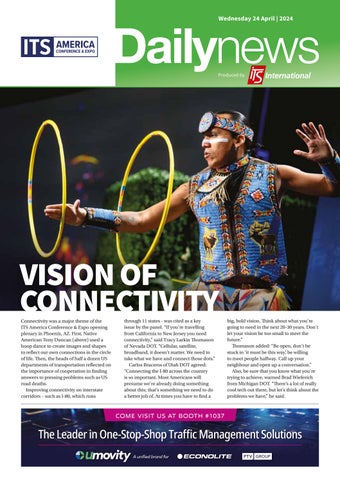
Connectivity was a major theme of the ITS America Conference & Expo opening plenary in Phoenix, AZ. First, Native American Tony Duncan (above) used a hoop dance to create images and shapes to reflect our own connections in the circle of life. Then, the heads of half a dozen US departments of transportation reflected on the importance of cooperation in finding answers to pressing problems such as US road deaths.
Improving connectivity on interstate corridors – such as I-80, which runs


through 11 states - was cited as a key issue by the panel. “If you’re travelling from California to New Jersey you need connectivity,” said Tracy Larkin Thomason of Nevada DOT. “Cellular, satellite, broadband, it doesn’t matter. We need to take what we have and connect those dots.”
Carlos Braceros of Utah DOT agreed: “Connecting the I-80 across the country is so important. Most Americans will presume we’re already doing something about this; that’s something we need to do a better job of. At times you have to find a







big, bold vision. Think about what you’re going to need in the next 20-30 years. Don’t let your vision be too small to meet the future.”
Thomason added: “Be open, don’t be stuck in ‘it must be this way’ , be willing to meet people halfway. Call up your neighbour and open up a conversation.”
Also, be sure that you know what you’re trying to achieve, warned Brad Wieferich from Michigan DOT. “There’s a lot of really cool tech out there, but let’s think about the problems we have,” he said.






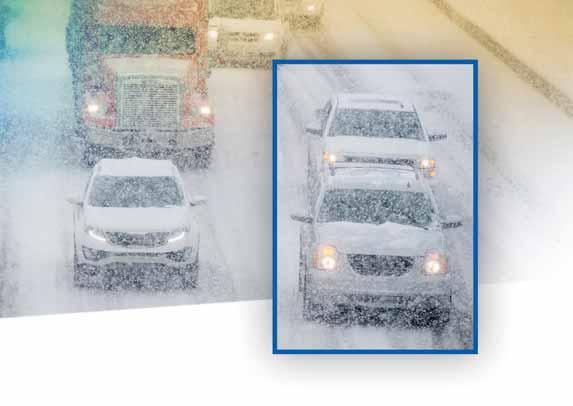

When blizzards blind lanes and roads turn into rivers, Citilog’s Automatic Incident Detection sees through the storm. Trained on a massive dataset of incident images, including those with inclement weather, the system is:
•Precise, minimizing false alarms - by a factor of 10 compared to other AI systems - letting you focus on real danger
•Proactive, reacting instantly, preventing secondary accidents before they happen
Don’t wait for tragedy to strike in the next storm. Equip your infrastructure with Automatic Incident Detection and secure every road, every mile, every moment.

Drivewyze is highlighting its Smart Roadways services at ITS America in Phoenix this week, showing how state transportation agencies can extend their transportation safety programs into the cabs of commercial motor vehicles —a market historically underserved by connected vehicle safety technology.
Highway safety is a critical concern for state DOTs as traffic crashes and fatalities continue to rise across the U.S. As technology advances, states are increasingly leveraging connected vehicle approaches to bolster their transportation safety programs and enhance road safety.
Smart Roadways allows agencies to send essential in-cab alerts and advisories directly to trucks while monitoring and assessing changes in driver behaviour.
The Drivewyze app is available at no cost to fleets and commercial truck drivers. Booth 537 www.drivewyze.com
ITS World Congress will return to North America in August next year – in Atlanta, GA - and all ITS America badge holders are invited to a party at the Duce in downtown Phoenix, to celebrate from 6.30pm.
Publisher / MD
Andrew Barriball
Editor Colin Sowman
Editorial team
Adam Hill, Andrew Bardin Williams
Pete Goldin
Sales director
Dan Emmerson
Design
Andy Taylder
Photography
James Robbins
Production
Nick Bond






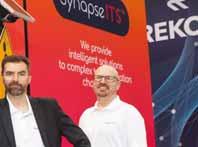





Synapse launched at ITS America’s 2023 event and it will return to this year’s event with a message: in the ever-evolving landscape of urban mobility it is easy to overlook the foundational element of transportation ecosystems - infrastructure. Synapse ITS says it is dedicated to driving innovation and empowering cities to harness the full potent ial of data, connectivity and critical safety enhancements. Beneath the Synapse ITS umbrella, long-established brands Eberle Design (EDI), Polara Enterprises, Carmanah Technologies and Diablo Controls continue their commitment to quality and a shared vision for creating high-performance systems that embrace connectivity solutions.
Visitors to Synapse’s booth in Phoenix will be able to experience enhanced pedestrian safety and accessibility at pedestrian crossings, with a demo of Polara’s MUTCD-compliant


Accessible Pedestrian Signal (APS) and Audible Information Device (AID). They will also be able to see how the Field Technician and Pedestrian smartphone app supports APS and how AID seamlessly integrates with Carmanah’s RRFB crosswalk system. With its MX series, Carmanah provides three year’s free remote access to its RRFB crosswalk systems and school zone beacons. And a live configurable demo at the booth will allow visitors to witness first-hand the transformative potential of the MX Cloud software.
EDI will showcase its latest conflict monitors with a demo of a fully fitted Advanced Traffic Controller Cabinet (ATCC), where visitors will be able to witness how its new Field Service App streamlines technician’s workflows and enhances troubleshooting efficiency.
Booth: 1245 www.synapse-its.com

It’s the middle day of ITS America’s Conference and Expo 2024 and it is going to be busy – here’s a summary of just a few of the day’s highlights
8.00 am – 9.30am
City DOT and Gender Equality Roundtables:
At the DOT Roundtable in 301AB West Building, participants will debate the crucial role digital twins in enhancing public safety by creating virtual replicas that simulate real-world scenarios, allowing for better emergency response planning and training. In optimising traffic operations, digital twins can model traffic flow, predict congestion points and test different strategies to improve overall efficiency.
Down the corridor in 106A, the Gender Equity Roundtable will start with 8-10 women from the ITS sector sharing two minutes on their insights, lessons learned, stories/ experiences (good/bad) and best advice.
10.00am – 11.30am
First Plenary:
Rethinking Infrastructure in the New Digital Era


The US transportation system urgently needs transformation, to embrace a digital layer of sensors, data, software and connected systems. Advances in edge computing, connectivity, automation and artificial intelligence are driving new solutions within this digital layer, but national policy has not kept up. Participants in this Main Stage event will consider how, in the absence of national standards, leaders in the public and private sectors are making decisions about investing in digital transformation. Also considered will be how to educate and engage communities around these digital investments and the resulting outcomes.
11:30am – 6:30pm
At the Outdoor Demonstration Area, Canyon on Third. Visitors can experience an autonomous vehicle ride in a May Mobility AV. Nearby will be a demonstration of real-time incident detection and safety alerts using mobile and CV technology.
1.00pm – 2.00pm
Future leaders Program:
ITS Arizona and Southwest Research Institute (SwRI) are partnering with ITS America to stage the second edition of the Future Leaders Program. Open to Student badge holders only, these next-generation ITS leaders will gather to attend education and training sessions, meet exhibitors, sponsors and technology providers while networking with ITS professionals who can offer career advice and mentorship.
1.00pm – 4.00pm

ITS AZ Student Summit & ITSACE Future Leaders Program:
Open to all, this Main Stage event in the Exhibit Hall will see students presenting their ITS-related research, opportunity or challenge.
3.00pm – 4.00pm
Table Topic Networking:
These sessions in the Networking Lounge are designed to reconnect and build new high-value relationships with ITS leaders and practitioners from the public and private sectors. Join the interactive conversations to learn about challenges, opportunities and best practices across the ITS industry through facilitated group discussions. Today’s topics are Safety and Efficiency, V2X/Connected Transportation and Multi-Modal Equitable Mobility.
4.30pm – 6.00pm
ITS Awards Ceremony & Reception:
Located in the Exhibit Hall Education Theater, the ITS Awards Ceremony & Reception celebrates innovation and excellence in the field of Intelligent Transportation Systems. Its awards program acknowledges outstanding contributions from individuals and organisations that have revolutionised how we think about mobility and connectivity. Awards will be distributed for: ITS Innovation Showcase, Best ITS State Chapter, Best Public /Private Partnership, Best ITS Committee and the ITS Hall of Fame.




























“IT’S IMPORTANT THAT WE DON’T LOSE
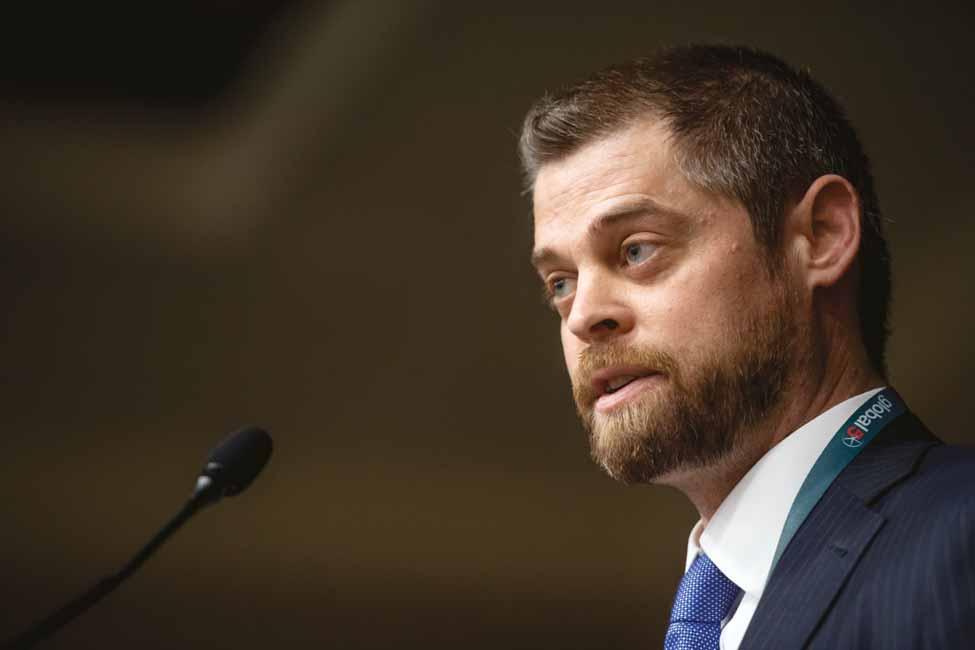
Artificial intelligence and digitalisation create great opportunities – and challenges – for the ITS industry. Tim Drake of ITS America tells Daily News how these might play out
It’s okay to admit that you find artificial intelligence a bit of a mystery. Everyone talks about it – but working out the ways in which the ITS sector can best utilise AI is not a question to which anyone has a definitive answer.
ITS America’s report The Impact of AI on Transportation and Mobility, published in December last year, will be a roadmap for transportation and technology stakeholders considering deploying AI. And it dovetails with this week’s ITS America Conference & Expo theme of Accelerating Digital Transformation
“People are trying to figure out how AI impacts them,” says Tim Drake, senior vice president, public policy and government affairs at ITS America. “How is an agency using AI within their own work to streamline their processes?” he asks. “How do they use AI to improve the services that they’re providing? How is the use of AI by other stakeholders going to impact their work? There’s some reasonable hesitation around AI, especially when it’s not well understood. It’s incumbent upon us to help explain that AI is being used right now, across our transportation system.”
Part of ITS America’s role in the industry is helping people understand existing advantages from AI, says Drake - benefits such as traffic flow optimisation, road condition monitoring, incident detection, emergency response, vehicle automation, pedestrian safety and route planning, to name a few.
“The key is helping people understand that it is it is already benefiting their everyday life, their travel, their mobility - while also recognising that people have real concerns related to privacy and cybersecurity and equity and trust,” he adds.
ITS America is putting together a document called AI Decoded which will be published this year. “There’s a lot of opportunity - even within the intelligent transportation segment of the industry - for better understanding,” Drake tells Daily News.
Digital infrastructure is another domain in which ITS America has a leadership role. For a working definition of ‘digital infrastructure’ , Drake says: “It is all of the
technologies and the communication mechanisms and the data issues around transportation infrastructure.”
This means that a lot of information and knowledge is held in many different places. “There are a number of organisations and individuals doing good work on this but it’s often siloed or uniquely focused in one area,” he explains. “And I think that there’s an opportunity to establish a national vision and framework that allows all of the good work being done to point towards the same end goal.”
A closely-related area is connectivity: at last year’s ITS America Conference & Expo in Grapevine, TX, the Federal Communications Commission announced its decision to grant a joint waver request to deploy cellular Vehicle to Everything technology in the upper 20 MHz part of the 5.9 GHz band. Drake is optimistic about progress, with USDoT mulling over deployment and FCC ironing out final regulatory steps. “It’s a little bit of waiting,” he says. “There’s some pent-up demand because of the uncertainty that we’ve faced over the last few years. It’s important that we don’t lose momentum. There is excitement to deploy.”
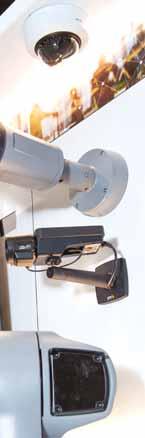
To view the latest in physical security technology for roads, bridges, tunnels (and lots more), make a beeline for Axis Communications’ booth to cast your eye over the upgrades and additions to its camera-based systems.
Particular highlights include the addition of AI-powered analytics to its network cameras that enables real-time analyses of traffic patterns. This data allows authorities to optimise traffic light timing and identify bottlenecks, leading to improved efficiency in the deployment of resources.
Axis Radar Data Visualizer combines 180° radar detection and 180° panoramic multisensor images and is said to improve situational awareness as the system can accurately detect people up to 200ft and vehicles up to 280ft
with minimal false alarms. Detecting and responding to incidents is hyper timecritical and the company’s high-definition cameras with wider fields of view are said to have taken this to the next level. The newly released AXIS Q1808-LE features a 4/3” image sensor for enhanced lowlight performance to capture critical details of accidents and incidents and, combined with rapid video retrieval capabilities, enables faster response times and improved post-incident analysis.
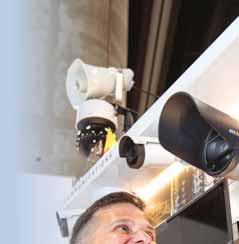
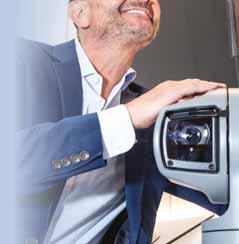
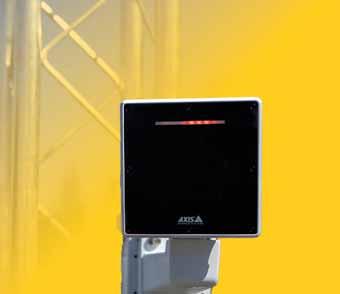
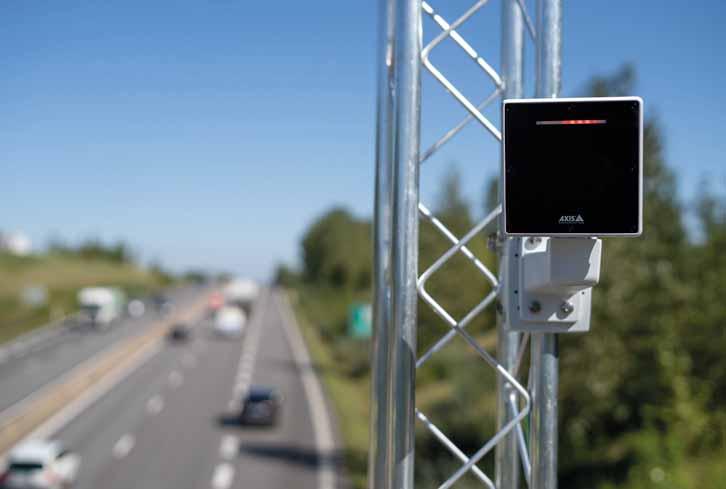
Also newly released is the company’s D2210-VE radar which goes beyond speed detection to identify wrong-way drivers – a critical feature for preventing head-on collisions and saving lives.
Booth 1851
www.axis.com

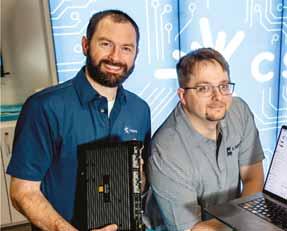
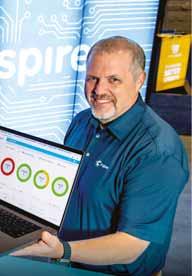
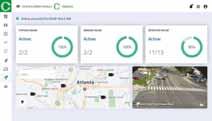
C Spire took the opportunity at ITS America in Phoenix this week to launch C Spire Passport, the company’s new end-to-end remote connectivity solution that allows customers to seamlessly and rapidly connect roadway locations, customer data centers and cloud resources.
Built on Cisco Identity Service Engine (ISE) and Cisco Catalyst SD-WAN Manager, C Spire Passport allows field technicians to remotel view, manage and securely deploy network devices from any location quickly and with little disruption.
According to solutions architect Jason Barbee, IT teams can set up pre-configured networks that include connectivity, management, visibility, and security controls in a composable service.
Field technicians can then use these templates, customize them through an easy-to-use wizard and deploy them in an intersection within an hour – ensuring connectivity across any protocol available
at that location, whether it’s fiber, cellular, satellite or a combination. C Spire Passport was beta’ed by the Mississippi Department of Transportation (MDOT) at eight intersections

acrossthestate,connectingtrafficcabinetsto acentraltrafficmanagementcenter(TMC). Booth2041 www.cspire.com








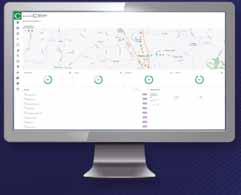
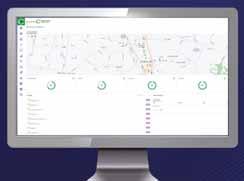
Econolite’s EVO RADAR™ sensors are designed for all approaches, which helps to reduce travel times intersections for pedestrians, cyclists, and motorists. The EVO RADAR sensor solution is ideally suited for a variety of intersections, using a 110-degree with a single sensor. EVO RADAR provides trusted, situational awareness at every intersection. Maximize your EVO RADAR detection system with Centracs® Mobility +Detect, our revolutionary cloud-based data analytics, monitoring, and reporting platform. decision making and signal optimization.


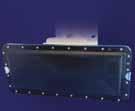












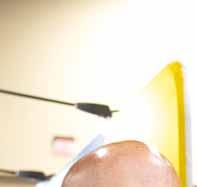






Here’s your chance to, literally, get your hands on a Stalker LidarCam 2 at the company’s booth. It is an advanced handheld device that combines Lidar, a camera for recording

both video and still images, and built-in ANPR/ALPR licence plate reading technology. This gives the user the most complete, accurate, and indisputable photo and video

evidence available. It also features an industry-leading 8.4 MP High Dynamic Range (HDR) camera sensor that allows it to perform well even in lower-lighting conditions.
Representatives from Viva are spending their time at ITS America in Phoenix raising the company’s profile in the North America market. Already with a foothold in Europe, Viva hopes to raise awareness of its products and services, meet customers and partners and execute its go to market strategy.
Viva provides artificial intelligence (AI) powered traffic monitoring, road safety and signal control for cities that want the most accurate, reliable and scalable transport insights. Data is collected from sensors deployed on roadways and processed by the company’s AI algorithms on the edge to
create insights that can be acted on in the moment. This allows customers to make quick decisions—such as changing a red light or extending a walk sign.
“We facilitate a highly efficient data flow across traffic management systems,” said Mica de Boer, head of international sales for the company. “Because we process data on the edge and only send meta data to traffic management centers.”

Viva has 10 US based customers – including Culver City, Calif., New York City, Alexandria, Vir. and the Kentucky Transportation Cabinet (KYTC). Booth 1948 www.vivacitylabs.com
The LidarCam 2 can be used in Auto mode to capture the speed, image, video and licence plate information of all vehicles exceeding selected speeds or in any of the other five modes, including following-too-close and zone modes.
With up to 1TB of available internal storage, the LidarCam 2 allows users to save over a year’s worth of evidence files on board before uploading them into the included secure PC-based Evidence Manager software for viewing and processing. AES-256 encryption comes standard, keeping the data secure.
The LidarCam 2 is equipped with built-in GPS, USB-C and Wi-Fi, and is also able to connect to 4G-LTE cellular networks. It offers native, fullyremote wireless operation in real time on any platform –phone, tablet, or desktop - with no proprietary apps needed.
Stalker Radar has grown to be the US’s premier manufacturer of police radar and Lidar. More state police agencies use its speed enforcement equipment than all other radar brands combined.
Booth 1251 www.stalkerradar.com

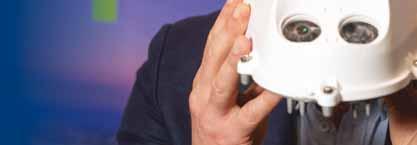



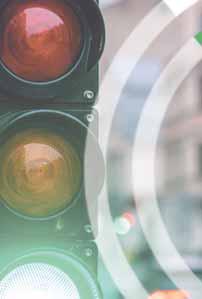











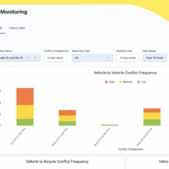












In today’s tech-driven world, the buzz around artificial intelligence is undeniable and in the everevolving discourse among cutting-edge technologies, the need for integration, speed and reliability has never been more vital.
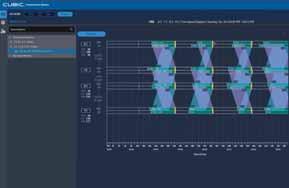
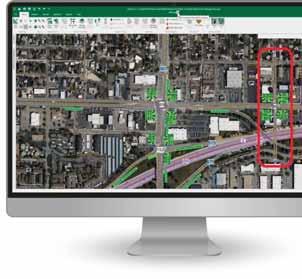
So, if you’d like the full story then head for Cubic’s booth to learn how municipalities worldwide are simplifying traffic management with the company’s congestion management technologies to enhance intersection safety and efficiency and to improve roadway planning and simulation. How, through monitoring real-time roadway and intersection conditions, signal timing adjustments can be automated (based on demand) to reduce vehicle stops and improve the driver experience.

Traffic engineers can now quickly respond to congestion or incidents by changing traffic signal timings and communicating the best routes to drivers using technologies such as Synchro Studio v12, ATMS, the Gridsmart solution, Scout controller software and Signal Performance Measures (SPM).
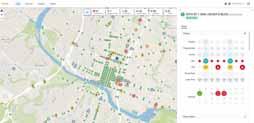
And now SPM 2.0 provides an innovative approach to cycle-based performance measures, with actionable insights for faster and betterinformed decision making. It also leverages interactive diagrams, map-based user interface and customisable reporting to improve operational efficiency.
So, take a trip to Cubic’s booth to hear how its capabilities can enhance traffic management in your communities and view its live demos, too. Booth 1841 www.cubic.com


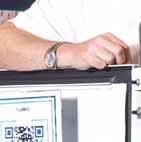
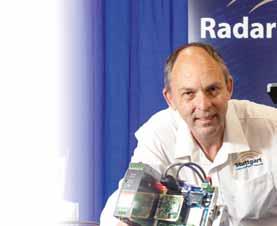
Stuttgart’s RadarVision Compact Detection is a compact, fully integrated, simple-to-install radar detection solution, incorporating stop bar detection, dilemma zone, and traffic counting in a single sensor. Stop by booth 1548 to see this multi-target trajectory radar system (MTTR) that can monitor 4-6 lanes while tracking up to 253 targets simultaneously. Quick-to-configure TS2 and ATC interfaces support up to 120 call channels. This advanced 4D highdefinition radar delivers accurate detection in all weather.
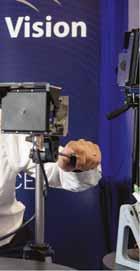
RadarVision Traffic Data Collector provides next generation traffic counting, classification and travel time recording, with 4D high-definition, AI video and bluetooth. RadarVision Model S Enforcement system is the latest megapixel radar moving violation enforcement camera, featuring a quad-core CPU and an ultralight, compact design that can be mounted on a tripod or the dashboard of any police cruiser. The Model S features a digital beamforming radar able to simultaneously track vehicle speed, acceleration and lane, and includes a 20–48-megapixel camera for day and night photos and an 8-megapixel video camera. Booth 1548 www.stuttgart-usa.com
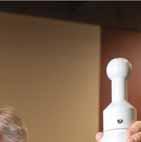
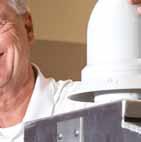
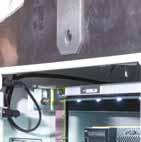
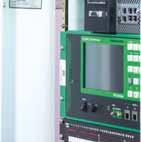
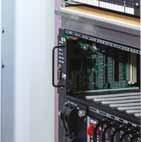



































Radar traffic detection and monitoring specialist Wavetronix is using Phoenix for the unveiling of a single-sensor system to provide stop bar detection for all four intersection approaches.
The product, with the acronym SMALL (Smart, Multi-Approach, Limited Lane system), is the latest application for the company’s Expanse System platform and is said to

provide accurate and reliable stop bar detection for all four intersection approaches.
According to Dan Duckwitz, marketing manager at Wavetronix, the SMALL system is designed specifically for smaller intersections and offers all the benefits of Wavetronix radar. “SMALL is a costeffective replacement for loops and video, with superior stop bar detection capabilities provided by a
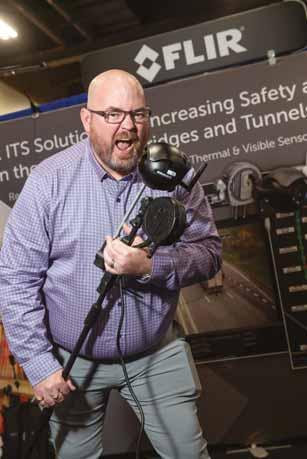
Teledyne Flir will be showcasing its latest thermal detection cameras this week at ITS America in Phoenix. The cameras are set up in the company’s booth, showing how insights such as vehicle classification, speed and trajectory can be layered on top of the thermal images in real time.
“Thermal imaging is growing more important for ITS applications,” said Matt Higgins, director of sales for North America. “With thermal, you don’t need lighting to detect vulnerable road users like pedestrians and bicyclists or identify wrong way drivers. Safety shouldn’t stop when the sun goes down or when you go through a tunnel.”
The insights delivered by the Flir

single device,” he says.
Duckwitz describes it as “the perfect solution for isolated or rural intersections and other, smaller intersections that only require stop bar detection for efficient operation.”
The SMALL system uses the new XP21 sensor for detection, Arc cabinet devices for power, communication and surge protection and the Expanse System platform
cameras are created by artificial intelligence (AI) and machine learning (ML) processed directly in the unit, eliminating the need to send a large volume of data to a data center or the cloud. Customers don’t even need to connect the cameras to a nearby cabinet, Higgins claimed, since all the connectivity and networking is embedded in the stand-alone device. According to Higgins, Flir has captured nearly 70 percent of the thermal imaging market share worldwide, but only 15 percent in the US – making shows like ITS America critical to its growth. Booth 1056 www.flir.com

for configuration and management. With this combination, the Expanse System platform is said to offer a unique, unified user experience that is designed to continuously grow and expand with new applications.
Drop by Wavetronix’s booth to learn more about the all-new Expanse SMALL system.
Booth 1754
www.wavetronix.com
Yunex Traffic is using ITS America 2024 as a launch pad for its latest innovations which it says hold the key to unlocking the future of traffic management: Yutraffic Studio, Blade and Fusion plus new V2X technology.
Yutraffic Studio provides remote control, incident management and precise emission modelling without physical detectors on-site.
According to the company, the cloud-hosted system features enhanced cybersecurity, a scalable architecture allowing it to transcend conventional boundaries and to unlock a future where traffic flows seamlessly, emissions fade and safety prevails.
Yutraffic Blade, an IoT platform said to be taking the industry by storm, is also on display at the booth. This
next generation controller combines edge-computing technology with a traditional Advanced Transportation Controller and is said to build a bridge to future technologies.
New to the line-up is Yutraffic Fusion. Tagged as the key to smarter streets, the new Adaptive Signal Control solution uses data from multiple sources and advanced decision-making approaches to control and optimise road networks for all road users.
CV2X is another introduction at the show.

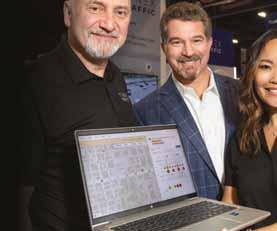
Described as the guardian angel of intersections, the system extends beyond vehicles to safeguard pedestrians, bicyclists and other road users by predicting potential collisions and alerting drivers.
Booth 837 www.yunextraffic.com

Theia is showcasing its highperformance precision optics which meet the exacting requirements of ANPR and other ITS applications. The firm’s lenses are integrated into camera systems by Applied Concepts (booth 1251) and offered by camera makers Axis (1851), Bosch (841) and Hanwha (1937). You can visit these stands to learn more about Theia’s highquality lens solutions.
Theia’s motorised lenses, which provide 4-10mm, 9-36mm, and 12-50mm focal ranges, up to 12 megapixel, 300 lp/mm resolution, are excellently IRcorrected from 435 – 940nm to maintain their high-resolution performance in near IR light. The lenses offer motorised zoom and focus and optional photo-interrupter motor stops
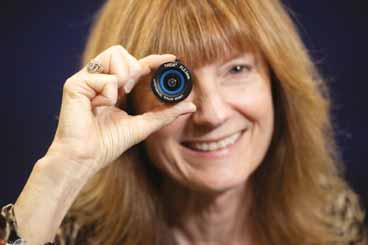
for remote set-up and occasional zooming and refocus.
The lenses are available in DC Auto, or P-iris versions with optional integrated IR cut or bandpass filters. The lenses come in CS, C mount and D25
board mount depending on the model and cover up to 1/1.7” and 1/2.3” sensor formats.
Theia’s new MCR IQ Motor Control Board and MCR IQ software application facilitate operation of Theia’s motorised

lenses, allowing control of zoom, focus, P-iris and optional IR filters. The motor control boards include the MCR IQ software application with graphical user interface and Python module to easily send and receive commands from the board for rapid and convenient evaluation and integration of the lenses.
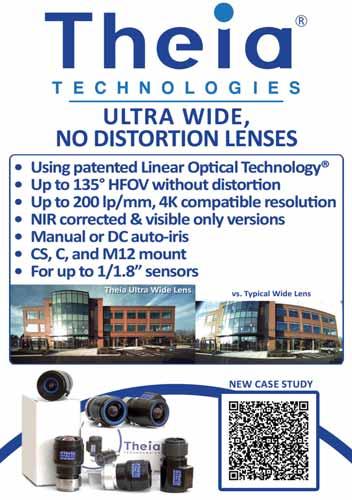
Theia also produces ultrawide angle, no-distortion lenses using patented Linear Optical Technology to correct barrel distortion optically without using software and its inherent latency. The technology increases the resolution at image edge, improving the probability of detection and identification of subjects making it ideal for real time imaging in dynamic environments.
www.theiatech.com
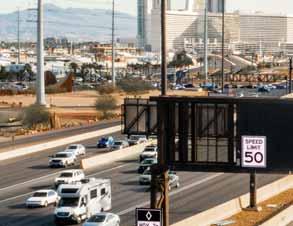

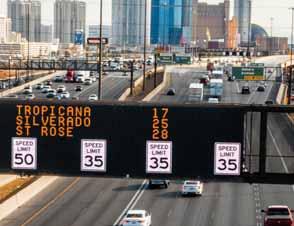


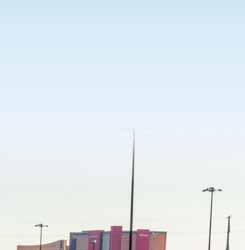
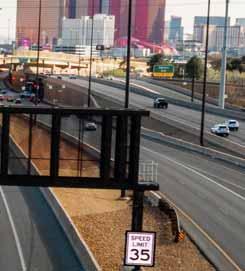

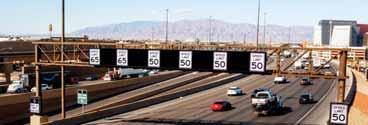



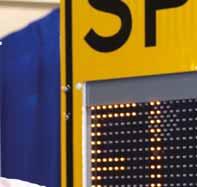
management (ATM) displays are placed along the busiest stretch of highway in Las Vegas to help messaging for travelers.

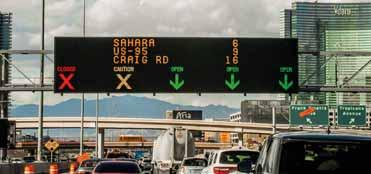


Daktronics is a world leader in digital LED display technology. dynamic message signs guide travelers through tunnels, tolls, freeways, and cities with MUTCD graphics, text, and real-time





















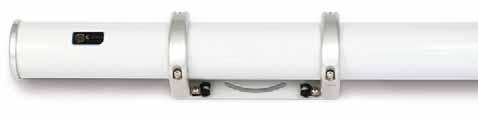
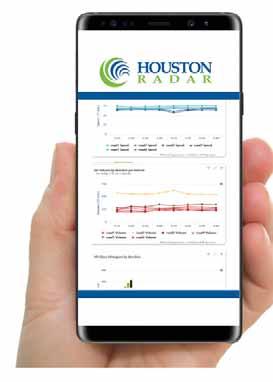
Visitors homing in on the booth of traffic data collection solutions supplier Houston Radar can view its flagship product, the SpeedLane Pro, which is said to offer an unprecedented level of vertical integration for accurate and efficient traffic data measurement.
With its advanced Auto-Laning feature, the SpeedLane Pro assists users in creating lanes automatically, thereby streamlining the setup process.
By combining Bluetooth and 4G LTE access with Android and Windows



App compatibility, the SpeedLane Pro provides easy data collection and reporting.
Houston Radar also offers the Armadillo Tracker, a versatile device for various traffic data collection applications. Both the Armadillo Tracker and SpeedLane Pro seamlessly integrate with the company’s Tetryon Cloud Server, enabling automatic daily traffic data uploads to MS2Soft TCDS software, simplifying data management and analysis.


The company’s full range of products is widely used in speed awareness signs, VATCS signs, traffic counters, vehicle flow detectors, speed-triggered stop signs and chevrons, as well as train presence detection and streetlight dimming. Its focus on ease of use, performance and quality sees Houston Radar’s products shipped to more than 65 different countries, making it a trusted global partner in the traffic industry. Booth 2052 http://Houston-Radar.com
In today’s digital world with vital, highcost components in exposed roadside locations, physical security has never been more important. So if you are looking to secure critical roadside and other assets, while also having audit trails on locking hardware and keys within their perimeter, then head for Assa Abloy’s booth.
On display is its range of security solutions from mechanical and electronic enclosure locks to padlocks.
According to the company, DOTs across the US are using its 75481 series as a drop-in replacement to upgrade and physically secure their ITS-equipped traffic control cabinets. The system also provides additional flexibility for complete compliance,
audit and control over contractors accessing the cabinets.
Mechanical locks feature Abloy’s high security cylinder while the electromechanical series supports electronic access control, key tracking and audit trails via the company’s Web Manager software which allows electronic updating of access rights to be updated and deletion of lost keys. And to keep those keys secure, there is Assa Abloy’s CI Series of intelligent key access management cabinets. These robust cabinets can store between 32 and 288 keys and can be expanded to contain more than 2,000 keys. Booth 1553
www.assaabloyglobalsolutions.com















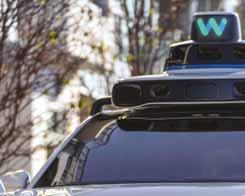
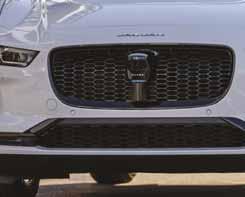
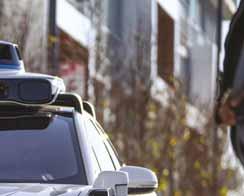
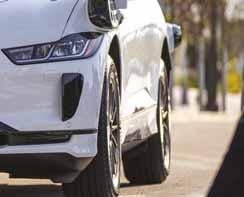
Delegates to ITS America’s Conference & Expo in Phoenix could be amongst the first to try one of Waymo’s autonomous taxis on a freeway as well as through the city streets

Waymo started operating in Phoenix in 2017 with fully autonomous rider only journeys commencing in 2020. Last year it doubled the operating area within Metro Phoenix and currently the service is fully open to the public across 225 sq mi of Downtown Phoenix, Scottdale, Tempe, Mesa and Chandler and, of course, to and from Phoenix Sky Harbor International airport.
It is currently expanding its services to use the city’s freeways but before any services can begin, Waymo maps the territory in detail - from lane markers and stop signs to curbs and crosswalks. In operation the Waymo Driver system continuously matches the custom maps with real-time sensor data to determine its exact road location.
Machine learning deciphers the car’s Lidar and camera data to create a 3D picture of its current surroundings - including pedestrians, cyclists, cars and trucks or even construction vehicles. Waymo Driver then employs the experience built up over its 20+ million miles of real-world driving (plus 20 billion miles in simulation) to predict what other road users may do and determine the required trajectory, speed, lane and steering manoeuvres needed to progress safely.
The first journeys on freeways across Phoenix will be taken with an autonomous specialist present and the first rider-only trips will be for only Waymo employees.

Only once the company is satisfied everything works as it should, will members of the public using the Waymo One app be able to use the expanded service.
In Phoenix, taking the AZ-101 freeway instead of city streets can halve the journey time between Sky Harbor Airport to the northern parts of Scottsdale.
Once services start, Waymo’s operations teams work very closely with local officials regarding planned changes to traffic patterns, including construction, temporary road closures and the like to ensure its vehicles’ software reflects the situation out on the road.
And for the passengers, well, they report very smooth rides - so try it out for yourself while you are in Phoenix.
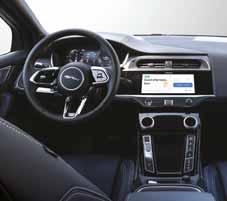

When the stats are released, road traffic deaths across the US are likely to have topped 42,000 again in 2023 with the most dangerous driving behaviours being speeding, impaired driving and not wearing a seat belt. As riders in Waymo’s taxis are required to wear their seat belts, it instantly removes the three most dangerous behaviours.
Last year Waymo published a paper on one million miles of rider only (no human behind the wheel) journeys in Arizona and California. This recorded zero injuries and only two collisions that were comparable to the National Highway Traffic Safety Administration’s Crash Investigation Sampling System (which requires one vehicle to be towed) plus 18 minor-contact events. None of the collisions were at intersections or involved vulnerable road users, and every vehicle-to-vehicle event involved one or more road rule violations and/or dangerous behaviours on the part of the other vehicle’s operator.
In more than half of the collisions (55%) the Waymo vehicle was stationary and 40% were parking-related.






The Intersection of Strategic Partnership and Capital



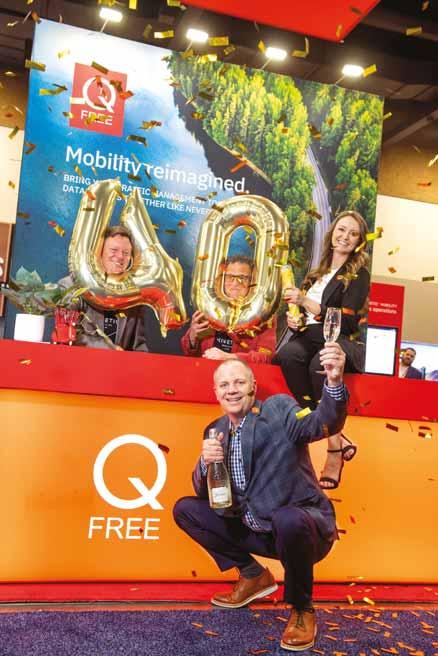
Join Q-Free as it celebrates its 40th anniversary at the forefront of ITS in Phoenix. Its story is one of pioneering innovation and visionary leadership.
Since its establishment in 1984, Q-Free has been a driving force in shaping the landscape of smart mobility. From the inception of the first multi-lane free flow tolling solution to its latest milestone achievement, the revolutionary Kinetic Mobility platform, Q-Free has consistently demonstrated a commitment to removing barriers in transportation and fostering a safe, sustainable and “queue free” driving experience.
At this year’s ITS America Conference & Expo, attendees can experience first-hand the latest evolution of Q-Free’s technological prowess.
The company describes its latest innovation, Kinetic Mobility, as “the first Advanced Traffic Management System (ATMS)
to seamlessly and intuitively manage both freeway and arterial street operations in a single system.” By integrating devices and data, Kinetic Mobility enables agencies to optimise transportation networks at the local, intercity and regional levels.
Delegates can learn more about the impact of Kinetic Mobility in the largest multiagency ITS initiative in the US, the CV Sync project in California’s Coachella Valley, at the Q-Free booth.
Central to Q-Free’s commitment to manufacturing excellence, its ATC traffic signal controllers are made and sourced in the US and are fully Buy America, Build America compliant and offer short lead times.
So, get along to Q-Free’s booth as it celebrates four decades of innovation and raise a toast to the next 40 years of transformative progress.
Booth 441 www.q-free.com
Every road carries a unique narrative. Each pedestrian step, bicyclist pedal and motorist pump of the accelerator or brake shapes a story about how safe, convenient and livable the experience is for the users. Through cutting-edge Autoscope video-based AI technology, operational details of road journeys are captured and translated into compelling metrics and understandable visualisations. Image Sensing Systems (ISS) can provide data and analytics that help traffic engineers and city planners design streets that better accommodate all users. This information weaves a compelling narrative to maximise public understanding and improve the experience of all road users.
“We invite partners to join us in crafting stories that reflect the needs and aspirations of our communities,” said Seth Anderson, senior product manager for ISS. “Our mission is simple: to provide practical and proactive insights that enhance roadway experiences.”
The company insists Autoscope is the foundation needed to explore the untold stories of our roads and adjust the storyline as needed to operate them as lifelines for safer, smarter, and more connected communities.
Booth 1051
www.imagesensing.com