We’re making it easier than ever for you to access the information you need. Our online portal is designed just for you. Simple, convenient and ready when you are.
This is just the beginning, with more documents on the way.

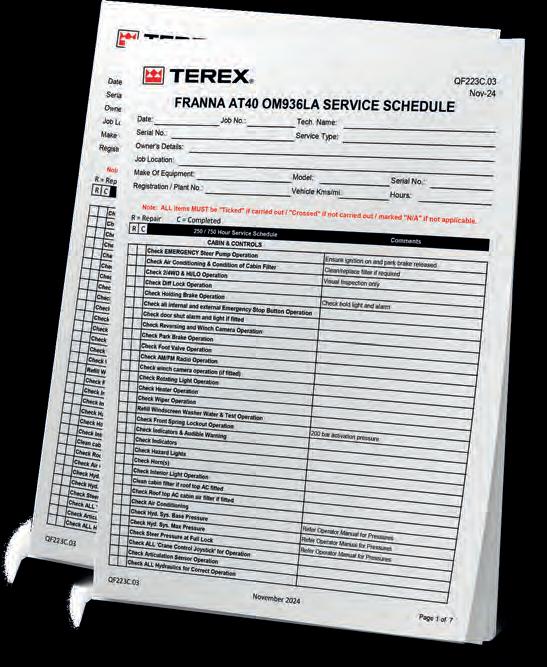
Now Available:
Scan the QR code to register today and stay connected with the latest updates
•AT22-2 OM936 Service Schedule
•MAC25-5 OM936 Service Schedule
•AT40-2 OM936 Service Schedule
6 Upfront with Zoomlion Getting the groundwork right.
10 CICA President’s report Industry set to embrace change.
12 CICA Telematics report A shift in how cranes are monitored and managed.
14 CICA and Safe Work Updates to HRW licence framework.
15 CICA and OSCA Census using OSCA instead of ANZSCO.
17 CANZ CANZ Conference ideally timed.
20 LEEA LEEA consults industry regarding sling standards.
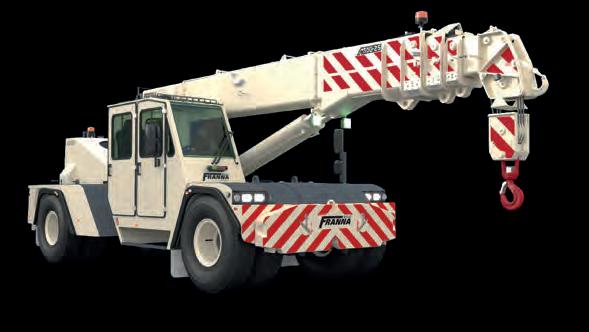
23 Franna- A Terex Brand Celebrating the 300th Franna AT40.
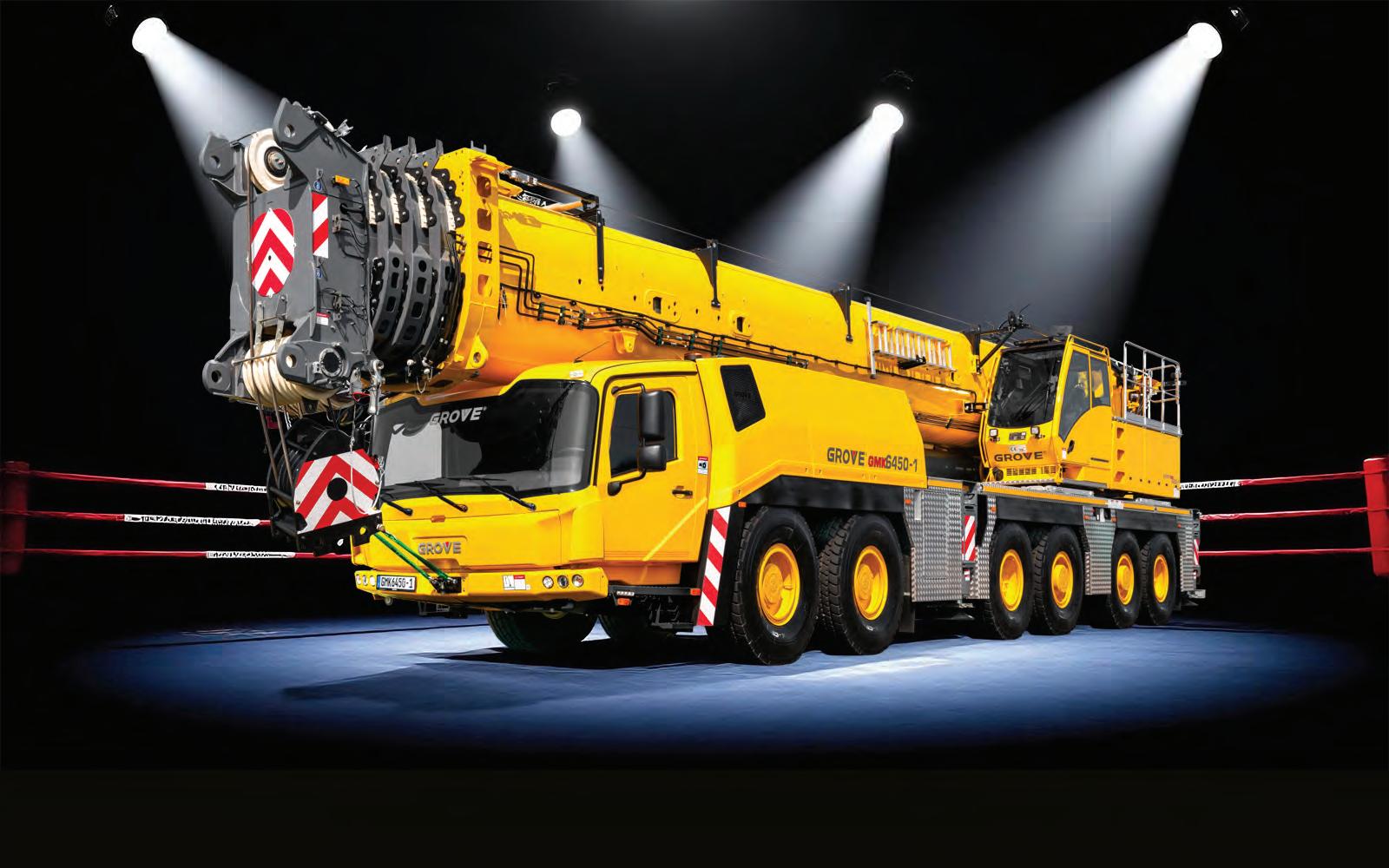
26 Grove Taking a deep dive into the newly released Grove GMK8700.
30 DLL A career shaped by people and connections.
33 Drake Trailers Getting the right fit for cranes.
36 Tadano New all terrains a focus at Conexpo.
38 Liebherr and Borgers Borger Crane Hire reinvest in Liebherr.
40 MCT Equipment Official launch of Hoeflon compact cranes.
43 Crane Connection Crane Connection deliver quality used Liebherr.
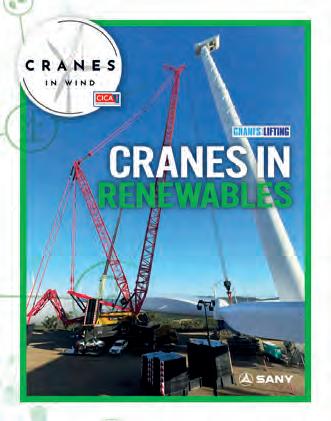
Cranes in Wind feature
46 Sany Group Built for bigger turbines.
51 Cranecorp New Liebherr LTM 1650-8.1 arriving soon.
55 General Cranes Getting ready for the big lifts.
59 SpanSet SpanSet’s secure load solutions.
62 JLG Recent acquisitions mean more product availability.
64 Pace Cranes Inline Cranes choose Maeda.
66 Crane Auctions Australia CAA generates international interest.
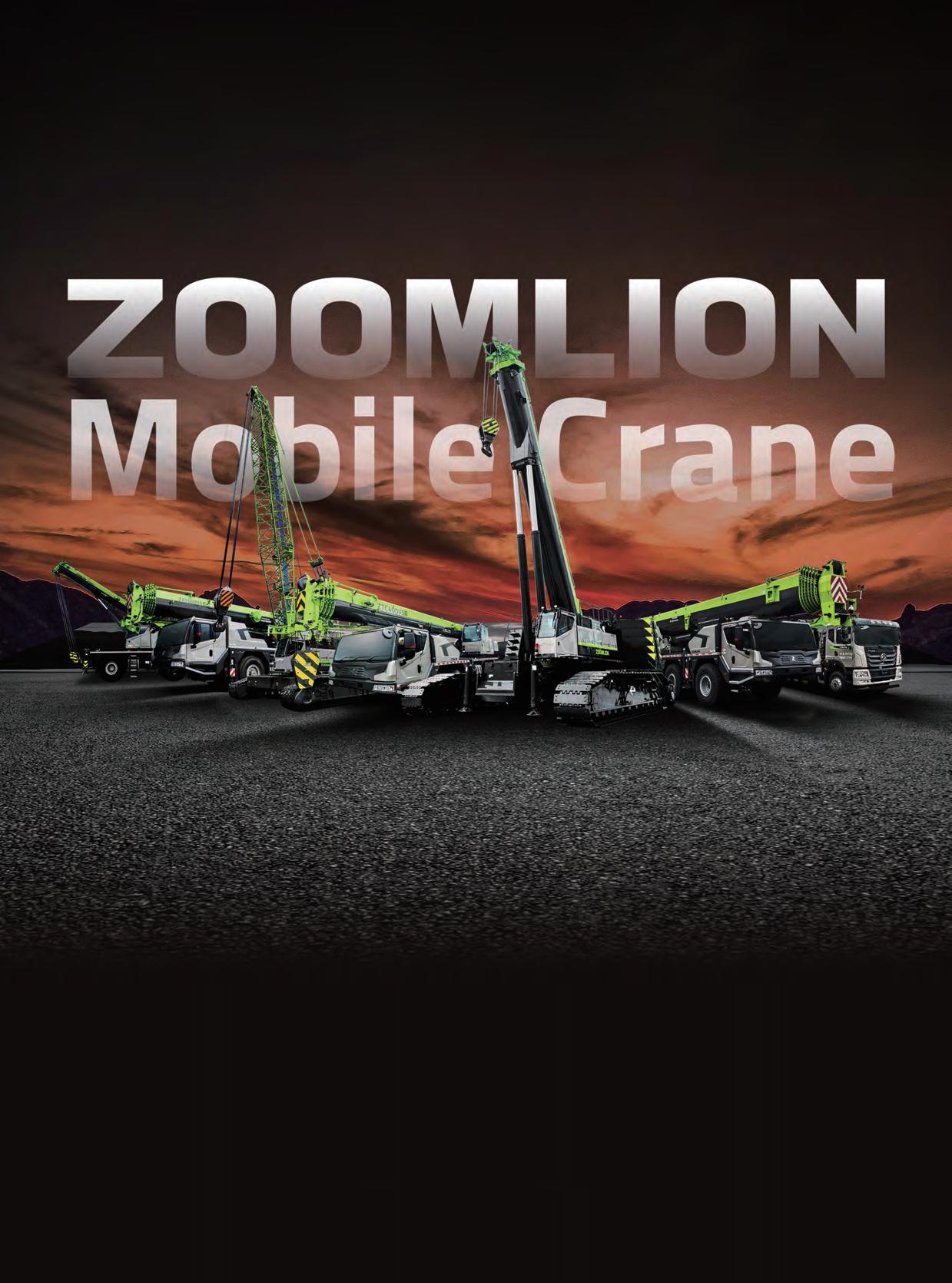
69 Zoomlion New Zoomlions for Active Crane Hire.
72 LIF TIQ Lift operations, streamlined.
74 Crane Connection and XCMG New 30 tonne truck crane lands.
77 Regatta Industries Compliance made simple.


RELEASED IN MARCH, THE NEW Infrastructure Priority List (IPL) is Infrastructure Australia’s independent, evidence-based advice to the Australian Government on the highest-priority proposals that should be considered for investment over the next 10 years.
The list features 68 proposals that aim to strengthen the nation’s transport connectivity, ports and freight networks, water security, and support the transition to a net zero and clean energy economy.
Each proposal on the new IPL responds to one of five key priority areas identified by Infrastructure Australia to meet the nation’s critical needs and aspirations now and into the future. These priority areas include:
• H igh Productivity Freight Networks – Enhancing the capacity, interoperability and resilience of nationally-important freight corridors and networks for higher productivity rail and road freight.
• P orts Capacity and Connectivity –Increasing national ports capacity and strengthening import-export supply chains with last mile freight and intermodal connections for ports and port precincts.
• H igh-Capacity Transport for Growing Cities – Building safe, efficient and cityshaping transport for our fastgrowing urban populations and unlocking priority growth areas and precincts for housing and development.
• S ecure Sustainable Water for Growth – Providing secure, climate-resilient water and wastewater capacity in cities and regions to support housing growth and increasing demands from water-intensive industries.
• D elivering Net Zero and Clean Energy Economy – Delivering large-scale renewable generation, storage and transmission, including enabling infrastructure, and unlocking national economic opportunities from the net zero transition.
Throughout Infrastructure Australia’s evaluation and selection of the highest priority proposals for the country, consideration was given to the priorities of each state and territory government seeking co-investment from the Australian Government.
The IPL is one of several inputs the Australian Government considers when making investment decisions. Inclusion on the list does not guarantee funding, and proposals not featured may still be supported through Commonwealth funding pathways. Eligible proposals not selected for the 2026 IPL can be considered for inclusion on future updates to the IPL. These priorities will no doubt provide ongoing opportunities for our industry.
This issue has a strong mix of news and developments. Working with other industry groups and industry bodies the Crane Industry Council of Australia continues to drive new initiatives on behalf of its members and we take a look at some of these. Conexpo saw a number of new product releases from various manufacturers and a number of these are covered in detail.
As always the team at Cranes and Lifting has worked hard to bring you vibrant and informative information and we hope you enjoy the read.
BOOMS UP!
Simon Gould Editor, Cranes and Lifting
Frank Rapone T: 03 9690 8766 E: frank.rapone@primecreative.com.au
The Publisher reserves the right to alter or omit any article or advertisement submitted and requires indemnity from the advertisers and contributors against damages or liabilities that may arise from material published.
© Copyright – No part of this publication may be re produced, stored in a retrieval system or transmitted in any means electronic, mechanical, photocopying, recording or otherwise without the permission of the publisher.


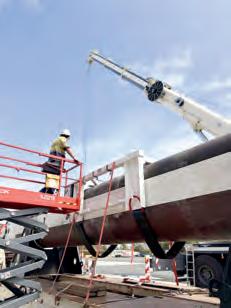
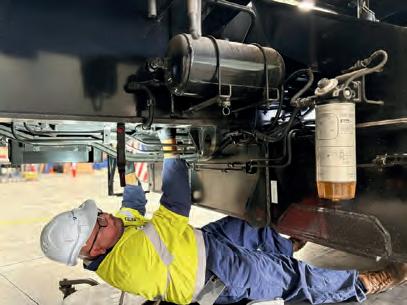
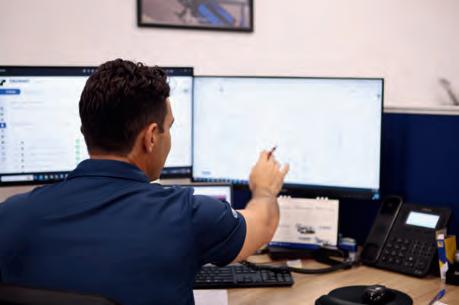
We’ve built the support structure - we’ve got you covered.
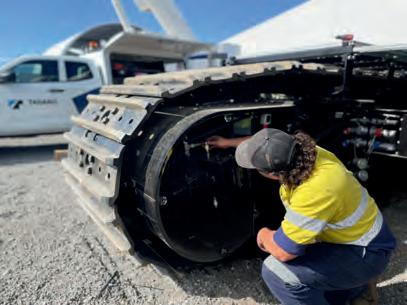
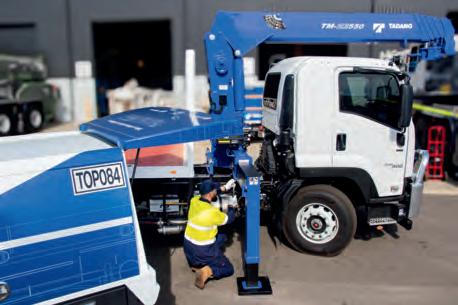
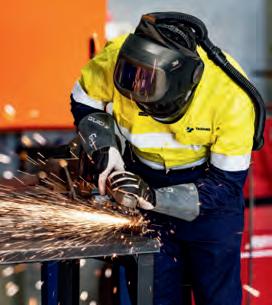
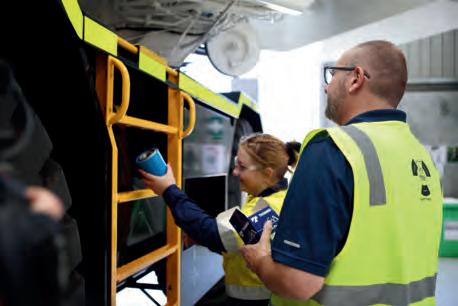
At Tadano, reliable support isn’t a new initiative, it’s something we’ve invested in for years. Today, customers benefit from a service network that’s already proven, already in place, and already delivering.
Factory‐trained OEM technicians committed to keeping you moving
Fully equipped service vehicles ready for rapid response
Four dedicated service workshops + national parts warehouses located in Sydney, Melbourne, Brisbane & Perth
Genuine OEM parts for long-term safety and performance
Training upon request, customised to suite
Wherever your crane is working, Tadano delivers dependable support backed by experience, infrastructure and readiness, not promises, but performance.
Less downtime. More productivity.
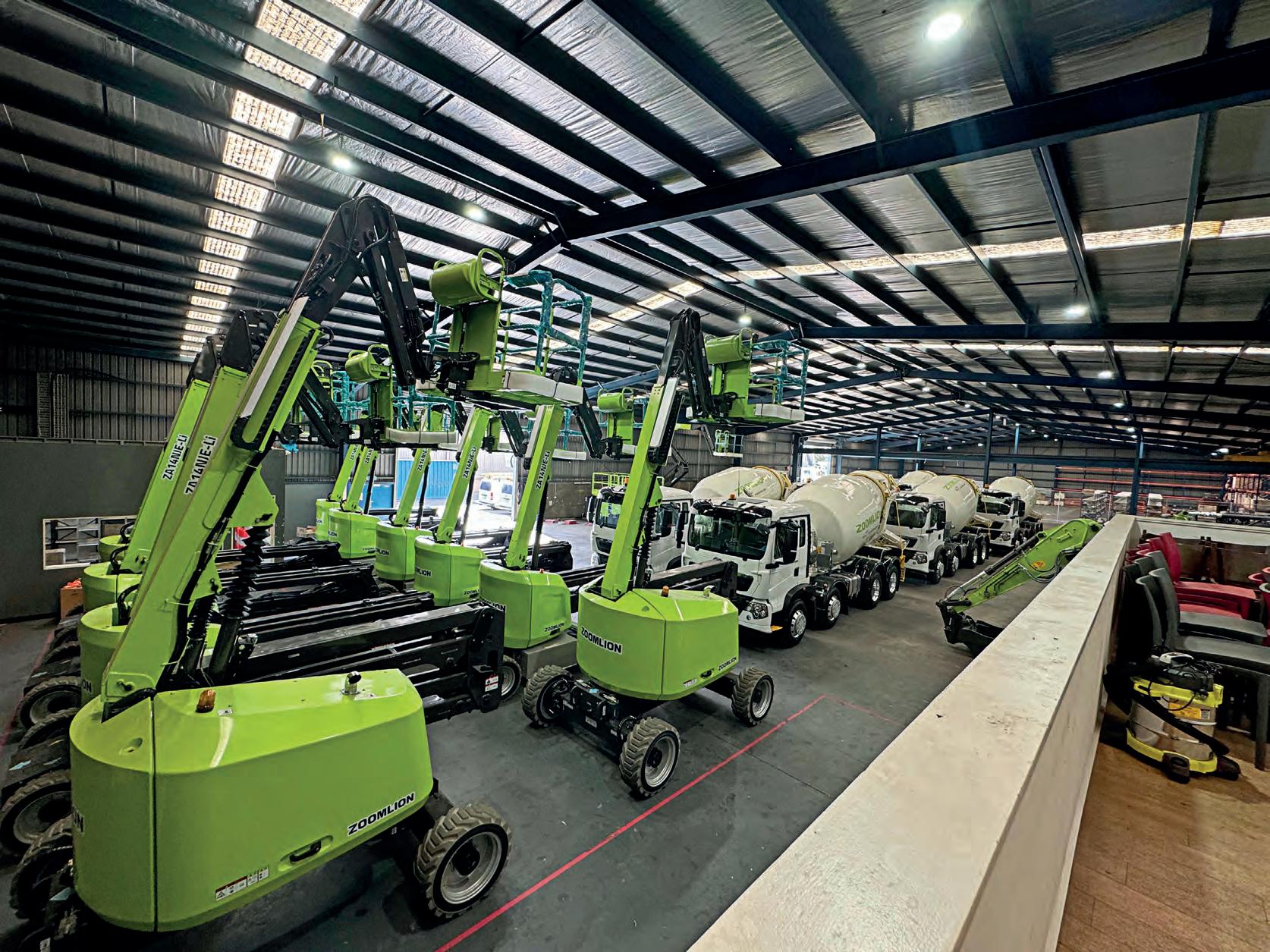
Zoomlion is sharpening its focus on Australia, pairing an expanding equipment portfolio with a growing local support network as it prepares for a strong showing at HIRE26 in Sydney.
SET TO TAKE PLACE AT SYDNEY SHOWGROUND on 20-21 May, the exhibition will provide a timely platform for the Chinese heavy machinery manufacturer to reinforce its positioning in the access equipment segment. For Zoomlion, the message is clear: global scale backed by local capability.
Zoomlion’s expansion in Australia has been deliberate rather than opportunistic. Over the past few years, the company has invested in both product relevance and aftersales infrastructure, aiming to address one of the most persistent concerns in the market – support.
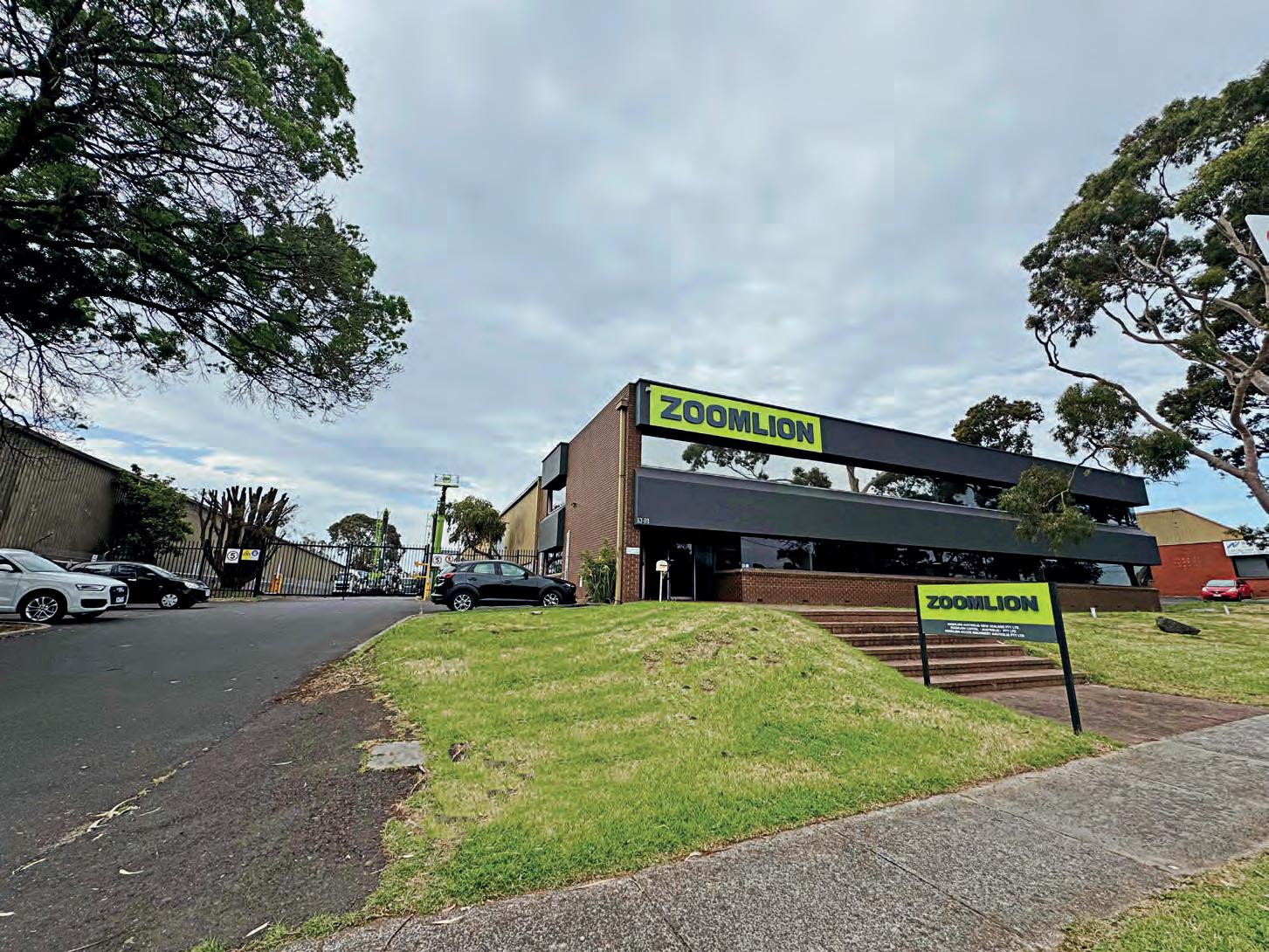
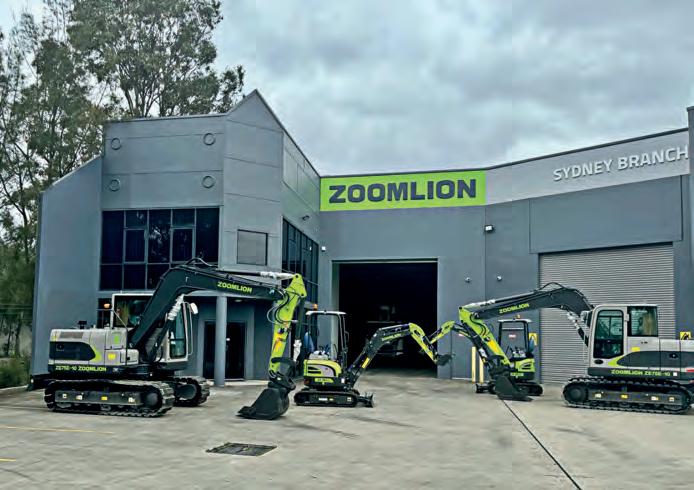
Its Australia-New Zealand headquarters in Mount Waverley, Melbourne, anchors a network that now extends across Sydney,
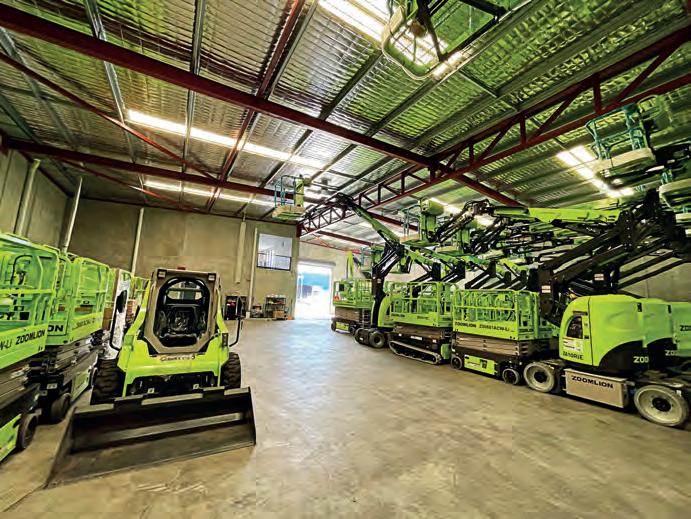
Brisbane and Perth. Supplementary parts warehouses in these locations are designed to reduce downtime and improve service turnaround – a key differentiator in a market where uptime is critical.
This local footprint is increasingly being positioned as central to Zoomlion’s value proposition, particularly as more fleet owners and rental businesses reassess supplier relationships based not just on acquisition cost, but lifecycle support.
At HIRE26, Zoomlion Access will showcase a targeted range of electric and hybrid access equipment tailored to Australia.
The ZS0612C crawler scissor lift offers a working height of 7.8 metres and is designed for confined or sensitive ground
conditions. Its rubber crawler system enables low ground pressure and improved manoeuvrability, making it suitable for indoor-outdoor transition work.
The ZA10J articulating boom lift delivers a working height of 12.54 metres and a platform capacity of 275 kilograms. Its oscillating axle system is engineered for uneven terrain, positioning it as a versatile option for construction and maintenance applications.
The ZTH2506 telehandler, with a 2.5-tonne capacity and a working height of six metres, is aimed at material handling tasks requiring both lifting strength and offroad capability.
Completing the line-up, the ZMP06 vertical mast lift provides a working height of 7.91 metres within a compact 0.78-metre width, enabling access through standard doorways and tight internal spaces.
Together, these models reflect a strategy that prioritises practical, jobsite-driven solutions over an overly broad showcase.
While the HIRE26 display focuses on compact and mid-range machines, Zoomlion is also highlighting its capabilities at the upper end of the access segment.
Bin Zhang said the company’s broader Australian offering includes ultra-highreach boom lifts such as the ZT72J and ZT82J.
“We warmly welcome all valued customers and industry partners to visit our equipments at HIRE26,” he said. “Beyond the models on display, our Australian market also features ultra-high-reach boom lifts such as the ZT72J and ZT82J.”
He pointed to the ZT82J as a flagship example of the company’s engineering direction.
“The ZT82J, one of the world’s tallest self-propelled telescopic boom lift with a working height of 82.3 metres, features a polygonal innovative boom that reduces weight by over 10 per cent while increasing vertical stiffness by 25 per cent and torsion resistance by 20 per cent,” he said. “Besides the advanced models,
Zoomlion’s current positioning in Australia has also been shaped by a series of local engagement initiatives over the past year.
A notable milestone was its Sydney Customer Day, held in late 2025, where contractors, rental companies and industry stakeholders were invited to experience the equipment firsthand.
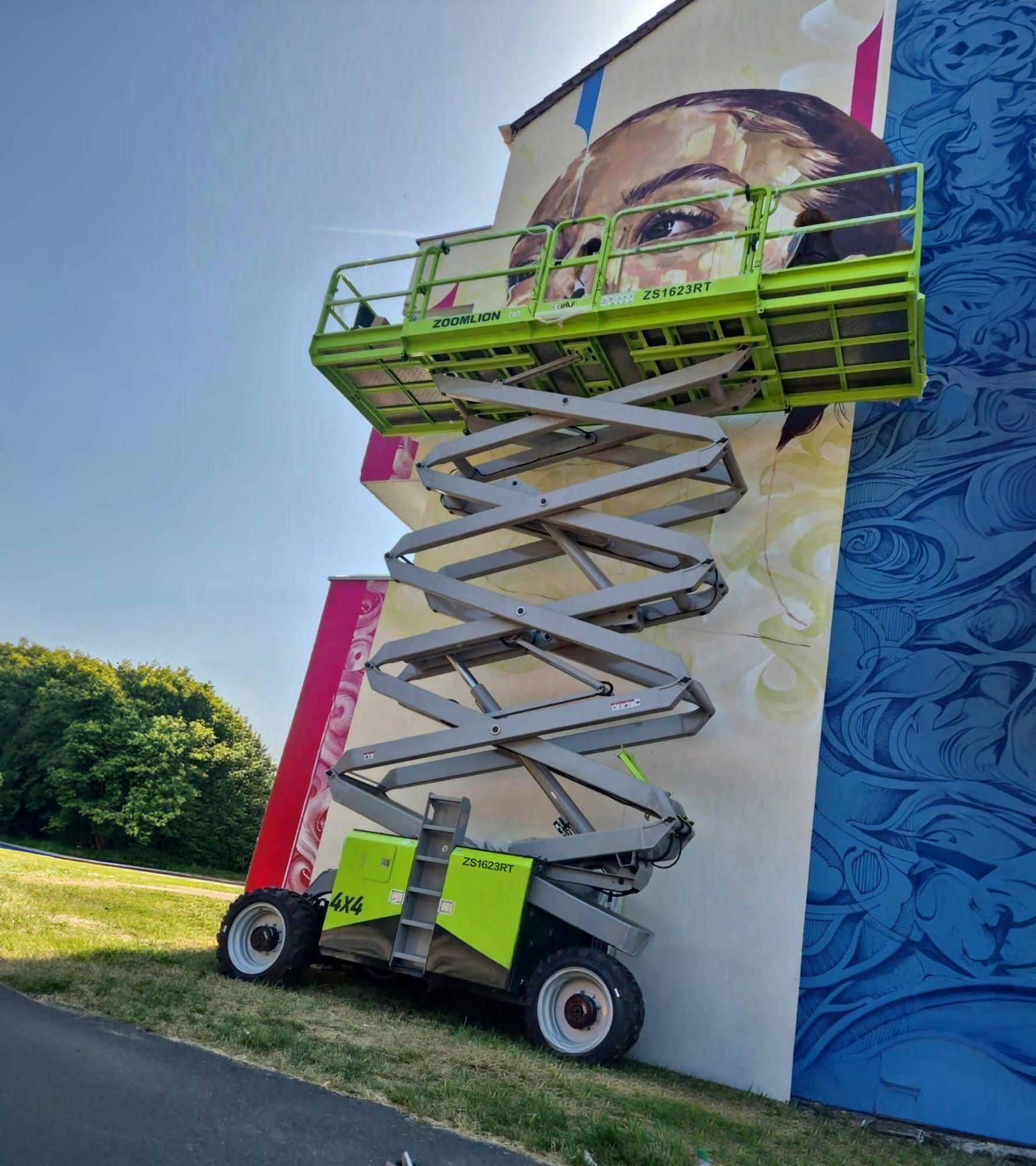
The event provided practical demonstrations across rough terrain scissor lifts, boom lifts and telehandlers, reinforcing a hands-on approach to market entry.
Rather than relying solely on specification sheets, Zoomlion has leaned
“Besides the advanced models, Zoomlion is also delivering exceptional local support and advanced access solutions to the Australian market.”
Zoomlion is also delivering exceptional local support and advanced access solutions to the Australian market.”
The emphasis on structural innovation – particularly the polygonal boom design – highlights Zoomlion’s intent to compete not just on price, but on performance and engineering differentiation.
into real-world demonstrations to address operator familiarity and build trust –particularly important in a market that has traditionally favoured established European, Japanese and North American brands.
Feedback from these events has also informed product positioning, particularly around features such as control responsiveness, stability on uneven ground and ease of maintenance.
Australia presents a distinct operating environment for access equipment, with wide-ranging conditions spanning urban construction, infrastructure projects and remote industrial sites.
Zoomlion’s product strategy reflects an awareness of these demands. Machines are increasingly being positioned around durability, terrain adaptability and ease of servicing – three factors consistently highlighted by local fleet operators.
For example, oscillating axle systems, high ground clearance and simplified hydraulic layouts are being emphasised across multiple models.
These features are not new to the global market, but their relevance in Australia –
where site conditions can vary significantly – is pronounced.
The company has also focused on reducing complexity in maintenance, recognising that many machines operate far from major service centres. Improved parts availability through local warehouses further supports this approach.
Perhaps the most critical element of Zoomlion’s Australian strategy is its focus on aftersales support.
Historically, one of the barriers for newer entrants – particularly Chinese original equipment manufacturers (OEMs) – has been the perception of limited local backing. Zoomlion appears to be addressing this directly through investment in infrastructure and personnel.
The Mount Waverley headquarters functions as a central coordination hub, supported by regional branches and parts distribution points. This structure is designed to ensure faster response times and reduce reliance on overseas supply chains.
The company is also working to build technical capability within Australia, including training for service technicians and support teams. This is aimed at creating a more self-sufficient ecosystem, rather than one dependent on international intervention.
Zoomlion’s expansion comes at a time when the Australian access equipment market is evolving.
Demand remains strong, driven by infrastructure projects, commercial
construction and maintenance activities. At the same time, rental companies are increasingly focused on fleet efficiency, utilisation rates and total cost of ownership.
This shift is opening the door for alternative suppliers who can demonstrate both competitive pricing and reliable support.
Zoomlion’s approach – combining a broad product range with local investment – aligns with this trend. However, the challenge will be sustaining consistency in service delivery as its installed base grows.
HIRE26 will serve as a key checkpoint for Zoomlion’s Australian ambitions.
The company is expected to use the event not just to showcase equipment, but to reinforce relationships with rental businesses, contractors and industry partners. In a market where reputation is built over time, these interactions are as important as the machines themselves.
The focus on a curated product range, supported by clear messaging around local capability, suggests a maturing strategy. Rather than attempting to compete across every segment at once, Zoomlion is targeting areas where it can demonstrate immediate value.
Zoomlion’s trajectory in Australia reflects a broader shift within the global equipment industry, where emerging OEMs are investing heavily in localisation to gain market share.
For Australian customers, this translates into greater choice – but also a need to evaluate suppliers beyond headline specifications.
The coming years will determine how effectively Zoomlion can convert its investment into long-term market presence. Key indicators will include service reliability, resale values and operator acceptance.
For now, the company is entering HIRE26 with momentum, a clearer local strategy and a product range that speaks directly to Australian jobsite needs.

“Change is the law of life. And those who look only to the past or present are certain to miss the future.” – John F. Kennedy.
WELL, IT SEEMS KENNEDY HAD IT RIGHT, change is all around us, and, we’re certainly feeling it this month. We’re seeing a changing of the guard, as we say farewell to Brandon and welcome Pat into the leadership role. After a few months of handover, we always knew this moment was coming but that doesn’t make it any easier to say goodbye. Brandon has been a guiding hand for this organisation, someone with enormous knowledge and capacity, and whose experience has been
invaluable in keeping CICA steady and focused. We wish him every success with his new role in the US, and I know I’m not alone when I say he’ll be greatly missed.
At the same time, we’re excited to welcome Patrick Cran to the role. While Brandon leaves some big shoes to fill, Pat knows the crane industry like the back of his hand, and brings a fresh perspective and a new set of eyes to our leadership. I have no doubt that under his guidance, CICA will
continue to grow and adapt in ways that will benefit every member. It’s an exciting time for our organisation.
Speaking of change, this issue of the magazine reflects just how fast our industry is moving. We’re covering some important updates that will impact the way you work: changes to HRWL (High Risk Work Licence), updates to how crane operators are recorded in the census, and the increasing role of telematics in running your business. These
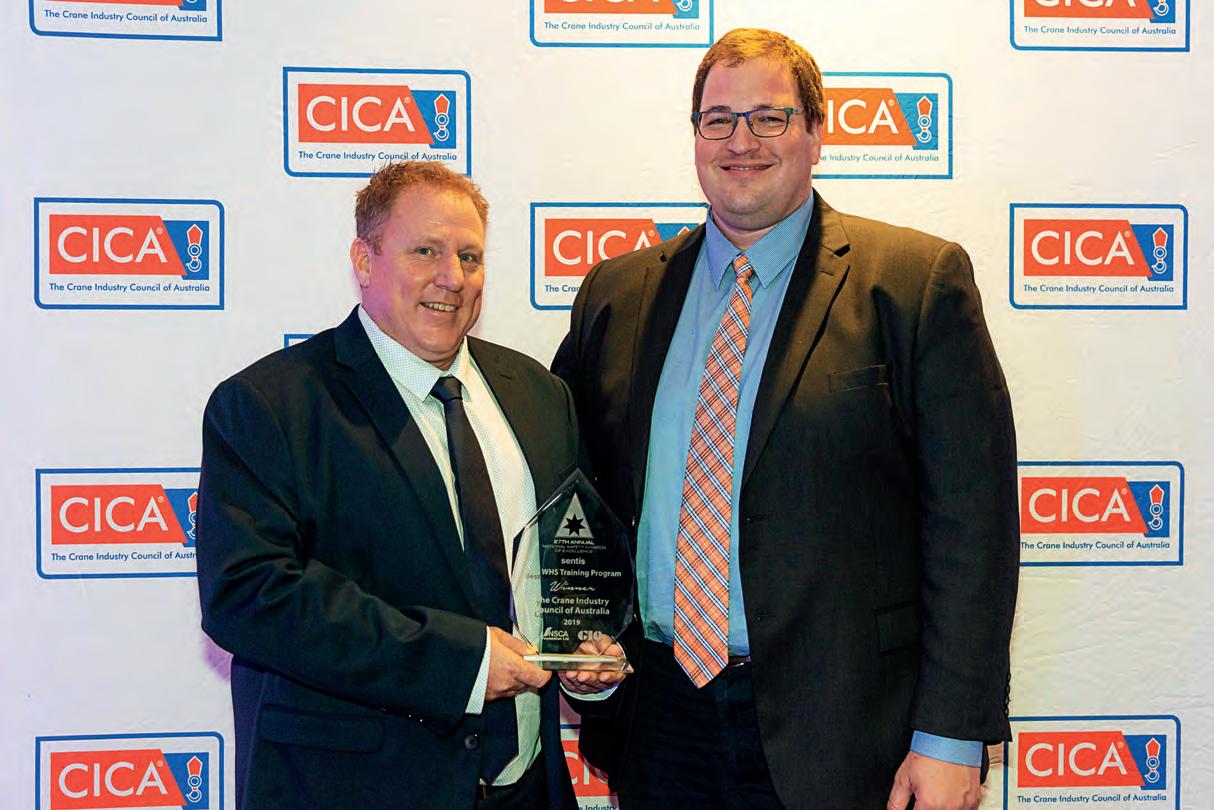
“On a personal note, I want to say thank you to every member for your patience and support during this period of change.”
are not just small tweaks, but big practical, day-to-day changes that will affect your operations, your compliance, and the way you plan for the future. I can’t stress enough how important it is to read these articles and take the time to understand what’s coming.
I also want to acknowledge that we know times are tough – fuel prices continue to bite, compliance costs keep rising, and interest rates are climbing. Running a crane business today isn’t easy, and the pressures on your bottom line are real. That’s why CICA is committed to supporting you through this period, helping you stay informed, prepared, and connected so you can manage these challenges as effectively as possible.
CICA has been busy representing our members and industry, getting
Marcus Ferrari CICA Board President.
Images: CICA
CICA BOARD
Marcus Ferrari – President
Karli Sutherland – Vice President
Danny Adair – Director
Danny Black – Director
David Solomon – Director
Anthony Grosser – Director
Andrew Esquilant – Director
Grant Gjessing – Director
OFFICE
Patrick Cran
Chief Executive Officer 0488 004 274 ceo@cica.com.au
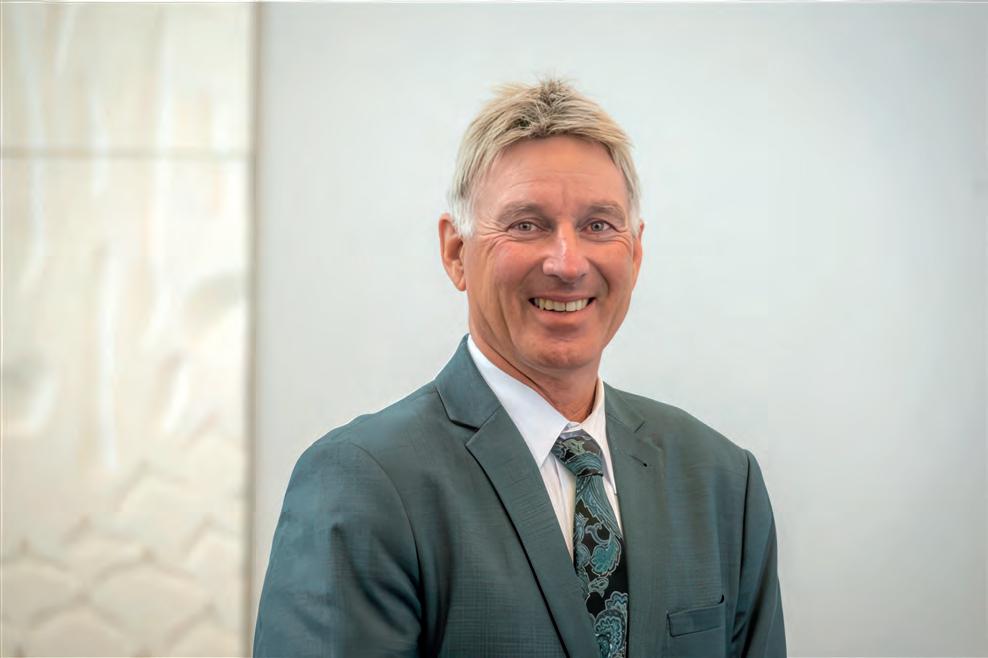
in front of government, regulators, on standards committees, and with SafeWork. Take advantage of the webinars CICA runs, sign up for the safety bulletins, explore the resources they’re preparing, and get along to branch meetings whenever you can. Knowledge is power, and in today’s fastmoving environment, you can’t afford to be caught out by an update you didn’t know about.
On a personal note, I want to say thank you to every member for your patience and support during this period of change. Transitions like this are never without a few bumps along the way, but your engagement and willingness to lean in make it easier. Change can be hard, but it’s also a chance to grow, to improve, and to make your businesses stronger. Here’s to embracing it, and to supporting each other along the way, even when the going gets tough.
Marcus Ferrari CICA Board President
Julie Turner Board Secretary Julie@cica.com.au
Alice Edwards Road Technical Engineer 03 8320 0440 alice@cica.com.au
Loreta Lukic Office Manager 0490 356 041 loretalukic@cica.com.au
Sharon Pearce
Crane Crew Competency Officer 0491 134 533 sharon@cica.com.au
Damien Hense CICA Road Policy Advisor 0488 007 575 damien@cica.com.au
Thomas Webber Communications Coordinator thomas@cica.com.au
Kate Galloway
Training Operations Coordinator 0491 047 118 kate@cica.com.au
Michelle Verkerk
Communications and Special Projects Advisor michelle@cica.com.au
Just ina Blackman
Member Events and Engagement 0403 717 626 justina@cica.com.au
Shane Coupe
CraneSafe & CrewSafe Administrative Assistant Officer 0491 047 134 shane@cica.com.au
Unit 10, 18–22 Lexia Place, Mulgrave Vic 3170
Phone: 03 9501 0078
Email: admin@cica.com.au Website: www.cica.com.au
For information, please visit our website or call the CICA office.
The crane industry is constantly dealing with change, and what’s coming over the next 12–18 months is a shift in how cranes are monitored, managed and, ultimately, judged when something goes wrong.
TELEMATICS IS NO LONGER A “NICE TO have” sitting quietly in the background, but is being used more and more to determine access, safety and chain-ofresponsibility compliance across Australia.
MOVING FROM TRACKING TOOL TO COMPLIANCE ENGINE
In the past few years, telematics in cranes largely meant GPS tracking and maybe a basic view of utilisation, but that is changing quickly. Across multiple states, regulators and industry bodies are aligning around a simple expectation: that if the data exists, it should be used, and if it can improve safety, it likely will become part of the standard.
This has become very apparent in Queensland, where Class 1 Special Purpose Vehicles (SPVs), including mobile cranes, are preparing to transition from the Intelligent Access Program to the Telematics Monitoring Application. This will finally bring Queensland into line with New South Wales, Victoria, Tasmania and South Australia.
This sits under the evolving National Heavy Vehicle Regulator Class 1 Heavy Vehicle Access Regime, with rollout expected to follow the initial low-loader phase in July 2026.
So, if you’re operating a roadregistered crane in this space, telematics won’t just support your operations, but will determine whether you’re allowed to be on the road at all.
Interestingly, while SPVs like mobile cranes will require TMA (Telematics Monitoring Application) under the
mandatory telematics policy, they won’t need Smart On-Board Mass (Smart OBM), that’s one small reprieve in an otherwise tightening framework.
While access regimes are pushing telematics from the outside, standards are doing the same from within the crane itself.
Recent updates from Standards Australia are an indication of where expectations are heading.
The revised AS 1418.1 doesn’t just acknowledge electronic systems, it embeds them. Electronic limiting devices, remote monitoring and diagnostics are now part of the expected safety ecosystem, not optional extras.
At the same time, AS/NZS 4949 (crane maintenance) has moved to recognise data from onboard systems as part of maintenance decision-making.
So, if your crane is generating diagnostic data, you’re going to be expected to be using it.
This marks a subtle but important shift: maintenance is no longer just about scheduled inspections and logbooks, but moving to what the crane is telling you in real time, and what you do with that information.
Overlay all of this with chain-ofresponsibility and WHS expectations, and you start to see where things are heading.
The National Heavy Vehicle Regulator’s (NHVR) updated Master
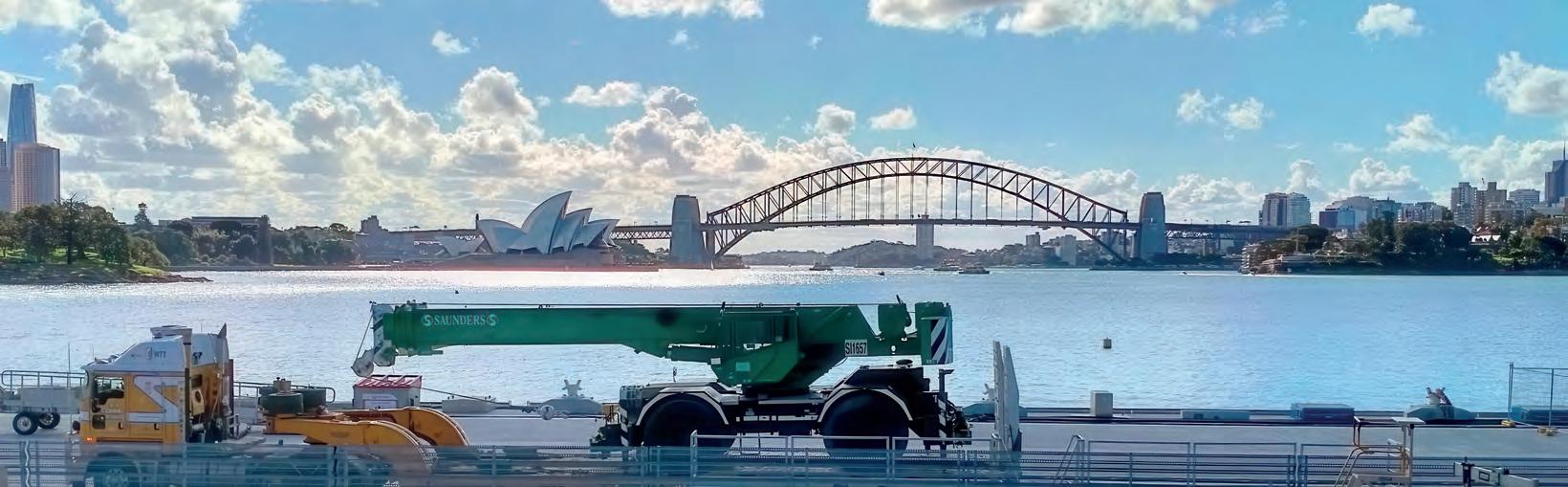
Code of Practice is leaning more heavily on systems, data and modern safety tech. It doesn’t spell out exactly what you must install, but it does raise the bar on what you’re expected to demonstrate. And that’s the key word: demonstrate.
When something goes wrong in the future, “we didn’t know” will be a much harder argument to run, because increasingly, the data will say otherwise.
It’s one thing to say you’ve got good systems in place. It’s another to show, with data, how risks are being managed, how operators are performing, and how incidents are being prevented.
That’s why more fleets are moving beyond basic GPS into things like event data, operator behaviour monitoring and, in some cases, video. Not because they have to (yet), but because that’s where expectations are heading.
On the ground, this shift is starting to look like a much more connected operation.
• C ranes feeding real-time information back into fleet systems.
• O perator inputs being logged and reviewed.
• M aintenance teams using live data to spot issues before they become problems.
Telematics is being used more and more to determine access, safety and chain-ofresponsibility compliance across Australia.
• A nd everything sitting in one place instead of scattered across logbooks, spreadsheets and separate systems. With better connectivity, 5G and IoT (Internet of Things) playing a role, it’s becoming more realistic, even for smaller fleets.
Telematics can’t be treated as a bolt-on anymore, it’s becoming part of how you run the business, and this will take some change of thinking. The operators who’ll stay ahead are the ones who start thinking about it now:
• getting ready for mandated systems like TMA rather than scrambling later
• l inking crane data into broader fleet and CraneSafe, and
• actually using the data, rather than just collecting it.
The real shift is, not so much in the technology itself, but in what’s expected of you once you have it.
None of this is about ticking more boxes for the sake of it, but about lifting the standard across the board.
But it does change the playing field. In the past, if something went wrong, you relied heavily on procedures and people’s recollection of events. Increasingly, there’ll be data to back it all up, or contradict it.
That can feel like pressure. But it’s also an opportunity.
For businesses that embrace it early, it is about running tighter operations, picking up issues sooner, and being able to stand behind the way you work with confidence.
And that’s not a bad place for the industry to land.
When it comes to road access, CICA has been working with all relevant state road managers and Transport Certification Australia (TCA) to ensure a seamless transition to TMA for crane owners.
Following the integration of Queensland in July 2026, all states (except Western Australia and the Northern Territory) will accept TMA as a requirement of road access. Earlier this year South Australia formalised the TMA requirement with the release of a suite of notices which facilitate permit free access to the state network. It’s been mandatory in Tasmania for years and is a current option for owners in New South Wales and Victoria.
This is a rare win for industry in that the cost associated with running TMA is considerably lower than the IAP (Intelligent Access Program) alternatives. In even better news the transition to TMA can be done using the same equipment that currently
runs your IAP application, meaning no additional set up costs.
This means road managers will have access to more operational data than ever before. It will be used for asset management, to better inform future investment decisions based on structure condition and user demand. CICA can also use the information to educate local road managers and promote higher levels of permit free access.
Data from cranes will be collected every 30 seconds on trips which will be collated and anonymised by Transport Certification Australia prior to being sent to road managers in the form of a mapping portal. CICA has also been granted access to this portal so we can stay on top of any emerging issues.
It is important to note that while TMA data cannot be used for enforcement purposes, the NHVR is able to view anonymised trends to target compliance and enforcement activities.
TMA will be mandatory in Queensland and South Australia as of 1 January 2027.
CICA Members, to find out more about TMA, including a list of service providers head to the CICA website https://cica.com.au/resources/ telematics-resources/, or call Alice or Damien.
This article is written by Damien Hense CICA’s Road Policy Advisor.
Safe Work Australia has been working with industry for some time to update the highrisk work (HRW) licence framework for crane operators, aiming to tighten requirements, modernise training, and make licences more crane-specific.
AND AT THE MOMENT, THEY’RE SEEKING feedback from industry on how these changes will affect operators, employers, and training providers.
WHAT’S CHANGING?
The updates are focused on lifting the baseline of skills, particularly dogging and rigging, and moving away from broad, catch-all licences toward function-based licensing. Here’s an overview:
REMOVAL OF “ENCOMPASSMENT”
Previously, a slewing mobile crane licence could automatically cover other plant types like vehicle loading cranes ≥10 metre tonnes, non-slewing mobile cranes >3tonnes, or reach stackers. Under the new approach,
those tasks now require their own specific HRW (high risk work) licence classes.
A formal dogging VET course is now mandatory before most crane licence classes (excluding bridge/ gantry and some vehicle loading cranes). Operators must hold dogging before training or assessment on the main crane licence, ensuring everyone understands loads, slinging, and signalling.
The regulation relating to the dogging prerequisite and the removal of encompassment has been drafted, but it has not yet been implemented. Jurisdictions are still working through how and when this will take place.
Safe Work Australia’s updates are focused on lifting the baseline of skills, particularly dogging and rigging, and moving away from broad, catch-all licences toward function-based licensing.
Safe Work Australia has been requesting feedback on the following:
• a new HRW licence for piling rig operation
• a new HRW licence for general use telehandler operation
• a new HRW licence for telehandlers when used as a crane
• removal of the current three tonne threshold from HRW licences for non-slewing mobile cranes and renaming the licence as a ‘Licence to operate an articulated mobile crane’
• reducing the HRW licence threshold for VLCs from ‘10 metre tonnes or more’ to ‘one tonne’
• merging the HRW licences for tower cranes and self-erecting tower cranes into a single licence, and a new licence for the remote operation of a tower crane.
Each proposal is detailed in the Impact Analysis for Crane Licence Review, which includes specific questions for industry feedback.
Additionally, Safe Work Australia is seeking feedback on improving safety in crane operations in the maritime sector, including the possibility of a dedicated HRW licence for cranes in dynamic environments such as vessels.
Consultation ends in May, for more information, go to https://cica.com. au/safe-work-is-seeking-feedback-onproposed-crane-licensing-changes/ and to keep up to date on these developments, visit the Safe Work Australia website.

A new job title might be one of the most important lifts the crane industry makes this year.
THERE’S A QUIET BUT VERY SIGNIFICANT shift that could have a very real impact on how the crane industry is understood, supported and funded in Australia.
Late last year, the Australian Bureau of Statistics rolled out the new Occupation Standard Classification for Australia or OSCA – replacing the long-standing ANZSCO system. This is a chance for the crane sector to finally be seen properly.
FROM ANZSCO TO OSCA – WHAT’S ACTUALLY CHANGED?
The old ANZSCO system was a joint Australia–New Zealand framework, and for a long time, CICA has stated that it didn’t cater for the nuances of the Australian workforce, especially in specialised industries like the crane industry.
OSCA changes that, because it’s built specifically for Australia, which means
occupations can be defined with far more precision, reflecting how work is actually done on the ground here.
A CLEARER PICTURE OF CRANE WORK
Under OSCA, crane-related roles now sit within:
• Unit Group 7321 – Crane, Hoist and Lift Operators
• O ccupation 732131 – Crane, Hoist or Lift Operator
That might sound familiar, but it is the detail behind it that makes it interesting. For the first time, the classification properly calls out specialisations like:
• Mobile Crane Operator
• Tower Crane Operator
• Crane Truck Operator
Instead of being buried in broader or less defined categories, these roles now stand on their own. That means when data is collected, it reflects the real
structure of the industry not a blurred version of it.
OSCA also spells out what the job actually involves, with a clear list of tasks: operating controls, inspecting and maintaining equipment, calculating loads, selecting lifting methods, and positioning and securing loads.
It’s simple, but powerful, because better definitions mean better data.
Here’s the part that matters most. OSCA isn’t just a classification tool, it’s now the backbone for how government understands the workforce. That includes:
• Identifying skills shortages
• S etting training priorities
• A llocating funding
• B uilding migration and workforce lists
In other words, if crane operators aren’t clearly defined, they’re harder to count. And if they’re harder to count, they’re easier to overlook.
This update fixes that.
A stronger, more visible occupation classification gives the crane industry a much better footing when it comes to advocating for training pathways, funding support, and workforce planning.
THE CENSUS CONNECTION –11 AUGUST 2026
This all comes to a head with the next national Census.
On 11 August 2026, Australia will run its first Census using OSCA instead of ANZSCO. That means every crane operator who fills it out will be counted under this new, more detailed structure.
And that’s where the opportunity lies for us.
If crane operators are accurately captured, using the right occupation title and describing their work clearly, we get:
• A more accurate count of the workforce
• B etter visibility of shortages
• S tronger evidence to push for investment in training and skills
If not, we risk under counting an already stretched workforce.
This isn’t complicated, but it does require a bit of coordination.
Employers, managers and industry bodies can play a key role by making sure their teams understand how to describe their job when the Census rolls around.
In plain terms, that means encouraging workers to identify as: “Crane, Hoist or Lift Operator
(732131), and, where relevant, include their specialisation like Mobile Crane Operator or Tower Crane Operator.
It might feel like a small detail, but it’s one that feeds directly into the data that shapes decisions about our industry for years to come.
So let’s work together to lift our profile and receive the recognition, and funding for future pipelines we need.
This article was written by By Kate Galloway – CICA’s Training Operations Coordinator.
For more information on the Census go to: https://info.census.abs.gov.au/
Manitowoc Australia 0417 674 019
infoANZ@manitowoc.com New Zealand 0800 878 695
cranes@trt.co.nz
Manitowoc Australia 0407 967 444
infoANZ@manitowoc.com New Zealand +61 407967444
infoANZ@manitowoc.com
THERE’S NO DENYING IT – 2026 HAS arrived with a fair degree of uncertainty. Global tensions, including conflict in Iran, rising oil prices, and ongoing economic pressure are influencing how industries operate and invest. For the crane and lifting sector, these external factors reinforce a simple truth: clarity, certainty, and confidence aren’t optional – they’re critical.
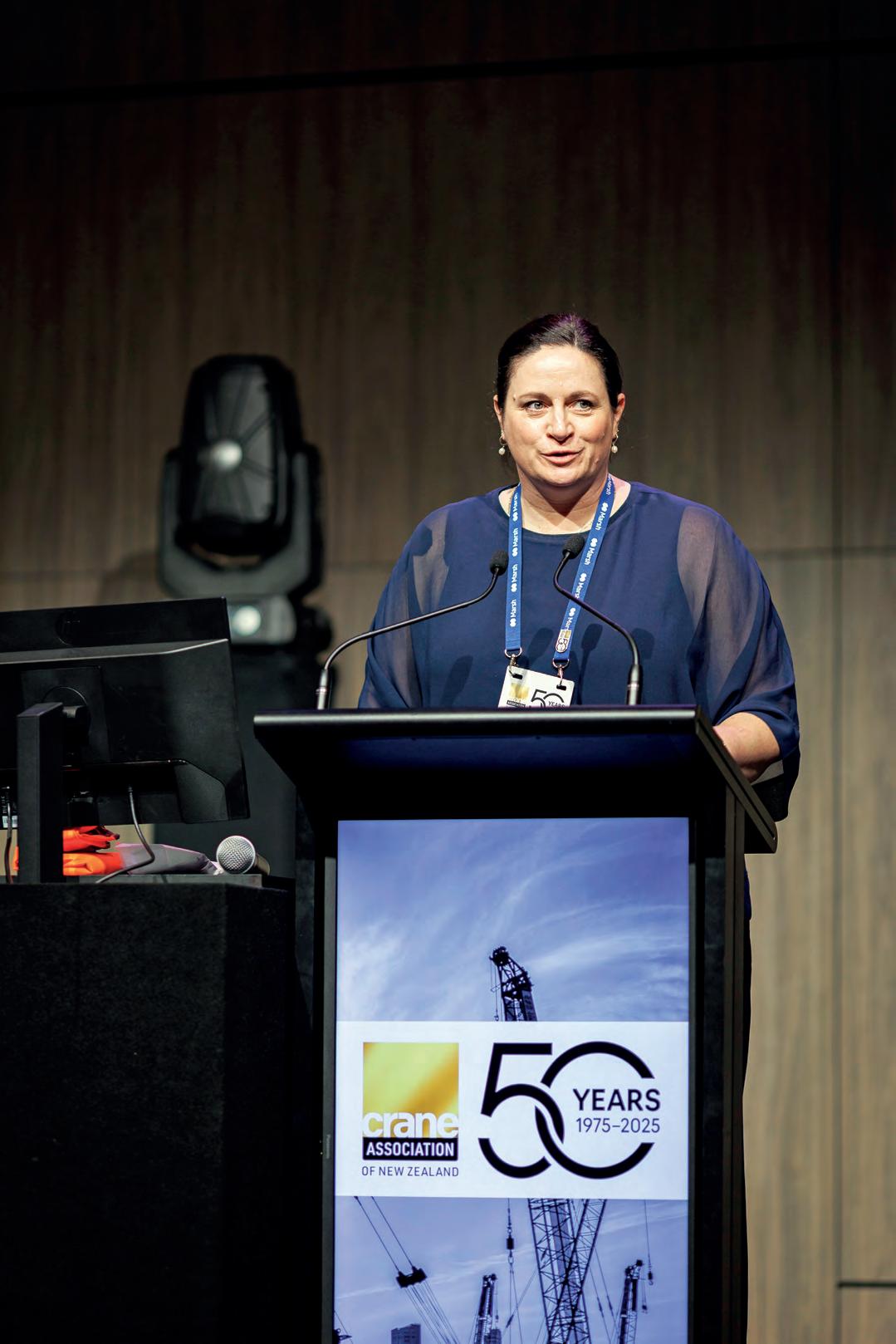
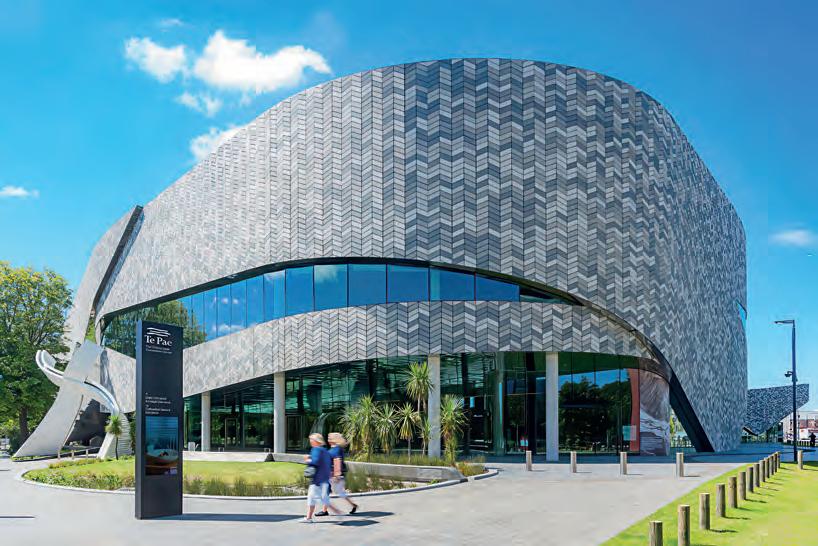
That’s exactly what the Crane Association of New Zealand (CANZ) is focused on delivering through its work with industry – and why the CANZ Conference, taking place in Christchurch from 22–24 July 2026, comes at such an important time.
This year’s theme, “Clarity, Certainty, Confidence – Forward Together,” reflects both the current environment and the practical steps being taken to strengthen the sector.
A major priority for CANZ is the development of an Approved Code of Practice (ACOP) for the crane industry – something long needed to improve consistency and understanding across operations.
This is about creating fit-for-purpose guidance that reflects real-world crane use. Not theory, but practical direction that operators, businesses, and regulators can align around.
Beyond the ACOP, CANZ is also progressing more task-specific guidance in areas where complexity and risk intersect – such as working with trees, which can be deceptively challenging for crane operations.
Importantly, this work is being shaped with industry. The conference will include a dedicated in-person
With global instability driving fuel price volatility, CANZ has developed Fuel 2026 – a suite of practical resources to support crane businesses in managing the impact of the current oil crisis. These tools are designed to help businesses plan, adapt, and respond to ongoing cost pressures.
Access the full resources at: www.cranes.org.nz/fuel2026
but it’s also where connection plays the biggest role.
The CANZ Conference provides a space for the industry to come together, share challenges, and identify opportunities, something that carries even more weight in uncertain times.
There’s already strong interest from new attendees this year, particularly from businesses that are not CANZ members or haven’t exhibited before.
Many are actively looking to connect more closely with the industry, improve how they operate within it, and explore opportunities to collaborate. They see the conference as the most effective way to do that, getting in the room with the people shaping the sector.
With attendees expected from New Zealand, Australia, Germany, Japan and beyond, the event brings both local insight and international perspective.
And while global factors may be outside our control, building confidence at a micro level – within businesses, teams, and partnerships – helps strengthen the industry as a whole.
Supporting this, CANZ is expanding how it engages with industry through specialist forums.
Ahead of the conference, targeted sessions will bring together design verifiers, inspectors, and those involved with truck loader cranes.
These forums are designed to better understand specific challenges and identify where greater alignment and support is needed.
This approach reflects a broader shift toward working more collaboratively across all parts of the industry to improve how the sector functions as a whole.
Training and capability development remain central.
The conference provides an opportunity to engage directly with
the Port and Crane Academy of New Zealand (PCANZ) – New Zealand’s only industry-led crane training establishment.
As expectations evolve, having clear, industry-driven training pathways is essential to lifting standards and supporting future workforce capability.
CANZ is pleased to again have Liebherr confirmed as Platinum Sponsor for 2026. Liebherr’s continued support reflects a long-standing partnership and shared commitment to advancing the crane industry in New Zealand.
At a time when the external environment may feel unpredictable, the opportunity to come together – to build clarity, create certainty, and strengthen confidence – has never been more valuable.
The CANZ Conference 2026 will be held in Christchurch from 22–24 July. Early Bird registrations are now open, along with sponsorship opportunities.
If you’re part of the crane and lifting sector – or looking to be more closely connected to it – this is your opportunity to be part of the conversation and help shape what comes next.
Register here www.cranes.org.nz/ conference2026


LEEA recently conducted a series of industry consultations as part of the rewriting of AS 1353, the Australian Standard for flat woven webbing slings, writes LEEA’s Justin Boehm.
AS PART OF THAT PROCESS, WE ENGAGED broadly across the industry – not just with Lifting Equipment Engineers Association (LEEA) members, but with external stakeholders, users, and organisations who interact with lifting equipment in very different ways.
During those consultations, a question came up, which on the surface, seemed simple. “Do inspectors really need to pass an eye test?”
For LEEA members working within inspection frameworks, the answer is a straightforward – yes! Australian Standards such as AS 3775 and AS 4497, require inspectors to pass an eyesight test equivalent to Jaeger 1.
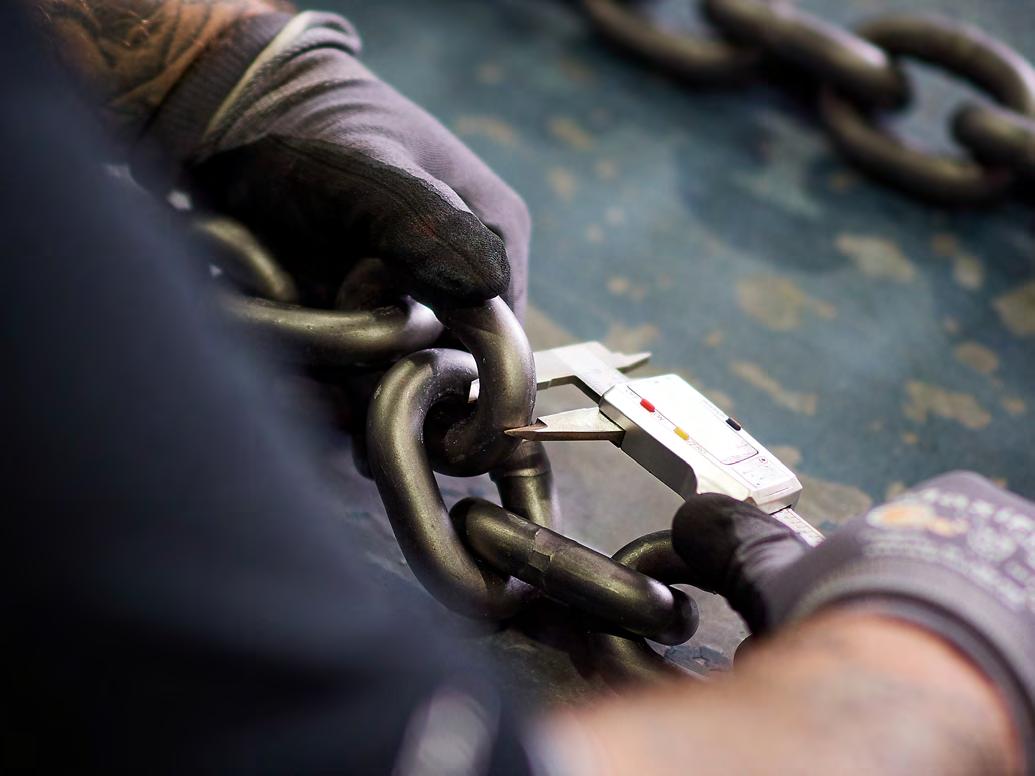
The requirement exists for a reason. Inspection is about identifying fine detail –frayed stitching, small cuts, deformation, corrosion, illegible markings, and early signs of failure that are often subtle and easily missed. If you can’t clearly see these issues, you can’t identify them.
For LEEA members, that requirement is understood, a part of the LEEA audit and forms a broader system of training, assessment, and competency that underpins professional inspection services.
What became clear through the consultation process was that this requirement was not universally understood across the wider industry, and that’s where the conversation became more interesting.
This broad consultation highlights what I would describe as a visibility gap in the lifting industry.
The Lifting Equipment Industry define visual capability precisely, where defects are identified (inspections) but not always where decisions are made (operations). Both activities are safety-critical and both rely heavily on vision. Yet only one has it as a consistent requirement.
That inconsistency across roles in the same industry exposes a deeper issue in
how we think about assurance within the broader lifting industry.
I saw this play out recently on a building site, where a worker was unloading a pallet of bricks using a vehicle-mounted crane. The sling used was visibly worn, with frayed edges, heavy use, well past the point where it should have been discarded. The load itself was poorly balanced, with the centre of gravity clearly offset.
As the lift came off the deck, a row of bricks shifted and stopping millimetres from falling to the ground and potentially onto the worker operating the crane. There was no clear exclusion zone either. These lifts happen hundreds of times each day.
It was one of those moments where nothing technically “failed.”
The crane operated. The sling held.

“Across lifting operations, we rely heavily on visual judgement: Operators assess distances, monitor load paths, and respond to hand signals.”
The lift was completed.
However, the margin for error was so close, I literally swore while watching.
Close calls like this one, are small in comparison to those performed by many reading this article, and don’t point to a question of whether the equipment was compliant – it clearly wasn’t. The question is why the risk wasn’t identified before the lift even began.
The sling was frayed and well beyond its discard requirements. The load was unbalanced from the second it became airborne. Yet the decision – whether to proceed or not – was a human one. Someone simply chose to go ahead despite the risk.
Like most lifting decisions, it was made with the eyes before it was made with the hands. This is where the visibility gap
becomes real. Across lifting operations, we rely heavily on visual judgement: Operators assess distances, monitor load paths, and respond to hand signals.
Riggers inspect equipment, read tags, and verify configurations.
In many cases, the first indication of a problem is visual. Yet, so often workers in control of dangerous situations, STILL say “she’ll be right mate!”
It’s not good enough. Does someone they know need to get seriously injured before they take notice?
We assume that experience compensates and we assume that training is enough.
We assume that if someone has done the job for years, they can see what needs to be seen, but time and time again the best plans are ignored and “she’ll be right
The lifting industry has made significant progress in improving safety, training and standards.
mate!” wins out. Most of the time, those assumptions hold. Yet luck runs out. It’s the time when you assume that it makes an “ass out of u and me!”
Vision across a career is not static. It changes over time, degrading gradually, often unnoticed. People adapt. They compensate. They rely on experience to fill in the gaps. Until something gets missed.
This is not about questioning the capability of individuals. In fact, it’s about recognising the limits of even the most experienced operators.
Competence is not just knowledge or experience. It is the ability to consistently interpret real-world conditions accurately, and that starts with what you can see.
What the AS 1353 consultation process highlighted is that LEEA and the Lifting Equipment Industry has been very deliberate in defining vision, so defects are identified, but it’s far less deliberate where decisions are executed in real time. That is a broader industry inconsistency.
In other safety-critical industries, vision is treated differently and apply defined eyesight standards
for operators, recognising that visual capability is fundamental to safe performance.
In lifting, we tend to focus heavily on equipment, procedures, and compliance frameworks – which are all critical, but the human input into those systems is not always verified in the same way.
This is where the industry needs to evolve and if we are serious about improving safety outcomes, we need to move beyond equipment compliance and start asking more fundamental questions about capability.
Not just: “Is the equipment tagged?”
But: “Is the person using it capable?”
Because if we’re honest, most incidents don’t begin with catastrophic equipment failure. They begin with something small.
A worn sling that wasn’t questioned.
A load that wasn’t properly balanced.
A detail that wasn’t seen.
The visibility gap doesn’t fail every day, but when it does, it fails fast.
This change doesn’t require a complete overhaul of the industry. In many cases,
it starts with recognising that vision is a critical input to safe lifting – not an assumed one.
Baseline vision testing for safety-critical roles is a logical starting point. Periodic checks, aligned with existing medical or competency frameworks, would provide a simple and practical control.
Because at the moment, we have a system where we carefully define what “good vision” looks like for identifying defects, but leave it open to interpretation when it comes to operating equipment and managing risk.
The lifting industry has made significant progress in improving safety, training, and standards. That progress has been built on challenging assumptions and refining how risk is managed.
This is one of those moments.
Because in an industry where the smallest detail can make the biggest difference, we need to be honest about one thing.
We don’t just need to manage risk. We need to be certain we can actually see it.


SUPERFLEX SLINGS
SUPERFLEX STROPS
DOUBLE ENDED STROPS
STEEL FLAT WOVEN SLINGS
DEAN-0 SLING

“YOUR FIRST CHOICE IN LIFTING”
“ YOUR FIRST CHOICE IN LIFTING ” SUPERFLEX
There are very few crane models that genuinely shift the market. Fewer still go from a cautious launch to becoming the dominant choice on job sites across Australia.
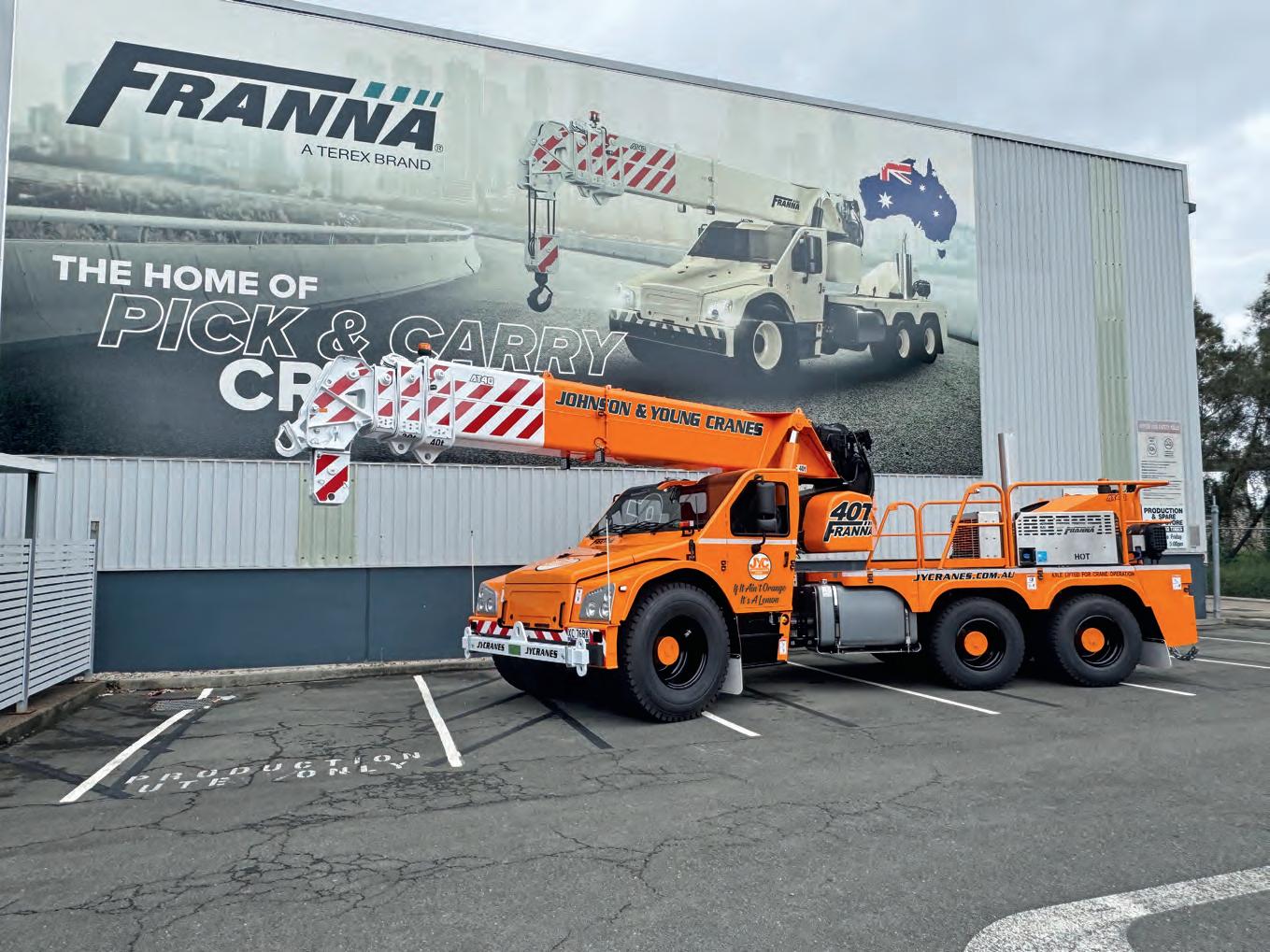
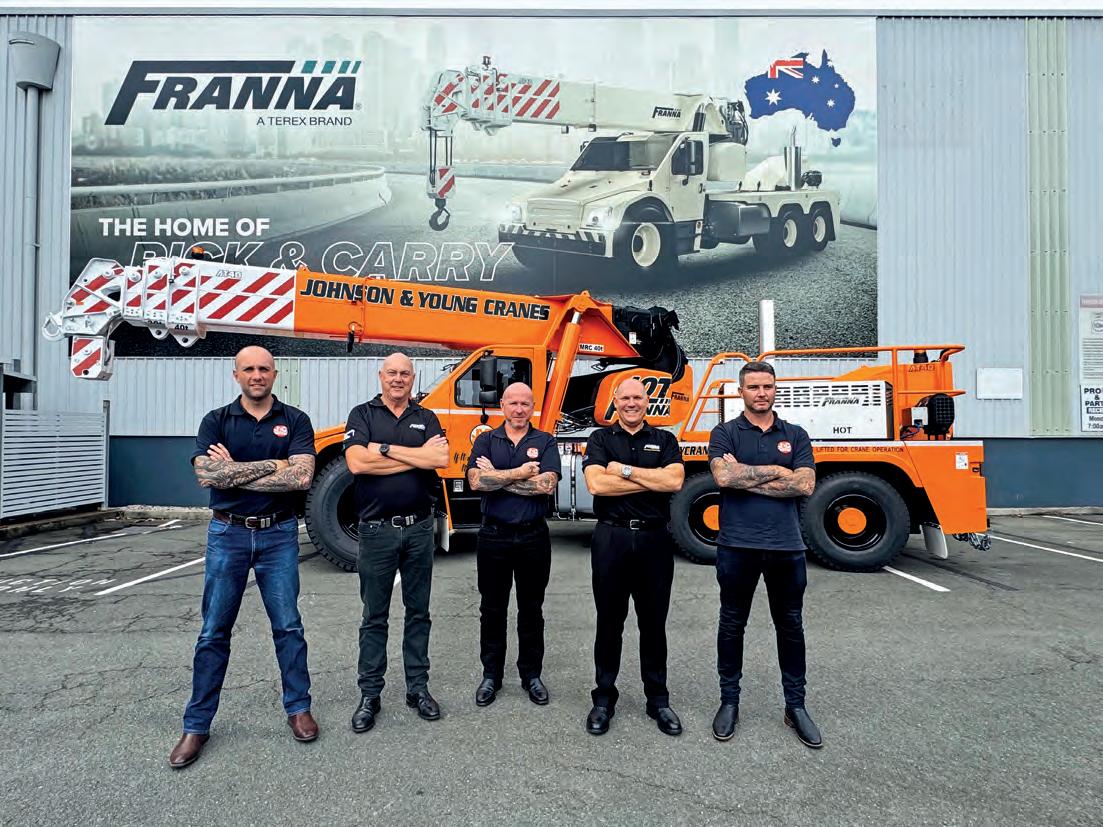
THE FRANNA AT40 IS ONE OF THEM. With the recent delivery of the 300th AT40 to Johnson & Young Cranes (JYC), the model has reached a milestone that reflects not just sales volume, but a clear change in how pick and carry cranes are being used across the country.
For General Manager Danny Black, the significance of the number is less about the milestone itself and more about what it represents.
“It’s been our best new model release as far as industry take-up,” Danny said.
The AT40’s journey was not straightforward. While the crane was first shown at the 2016 CICA Conference, it did not immediately enter the market. Instead, Terex made a deliberate decision to hold the product back.
“We didn’t want to release a product to market that didn’t live up to our Franna expectations,” Danny said.
The AT40 introduced a lot of innovation and new technologies. Early development
challenges, particularly around the three axle hydropneumatic suspension system developed in collaboration with Demag. This required significant additional investment into Multi-Body Dynamic Simulation and testing.
“It was Franna’s first three axle machine and our first with that type of suspension, and it was Demag’s first design with an articulated chassis, so let’s just say we learnt a lot,” Danny said.
There were other complexities too.
The AT40 introduced an articulating counterweight, which significantly improved the articulated lifting performance but also required extensive validation around on-road rollover stability.
“We developed a system that exceeds the rollover stability requirements for dangerous goods vehicles, which is the highest category requirement level in Australia,” Danny said.
Only after the crane completed 100’s of hours in testing and validation did it begin a limited market entry in December 2018.
At its core, the AT40 was built to solve a practical problem: increasing lifting capacity without adding complexity for operators.
One of the key design advantages is the three axle design which enables the crane to carry all its required counterweight and still travel on highway, removing the need for additional counterweights with separate transport requirements and manual setup on site.
Compared to earlier models, the AT40 delivers a clear step up in performance while maintaining the simplicity that Franna pick and carry cranes are known for.
Beyond capacity, the AT40 marked a major step forward in operator control systems and visibility.
The crane introduced the IC-1 control system, developed with Demag, which manages not only crane control and rated capacity but also suspension modes and overall machine functionality.
“It became one of the most complex software systems they had developed,” Danny said. That complexity has translated into improved controllability and safety.
The AT40 was also the first Franna to feature innovations such as a 360-degree camera system and advanced safety technologies such as Safety Radar.
“Safety Radar is a game changer, it gives the operator a graphical pictorial of the rated capacity for the entire working zone of the crane, so the operator can plan their next safe move,” Danny said.
Once the AT40 gained traction, demand accelerated quickly. The AT40 created a totally new capacity class for pick and carry cranes and enabled lifts to be performed more efficiently and cost effectively than larger capacity alternative cranes.
Production ramped from around 12 units in the first year, then more than doubled for the following two years to over 50 per annum.
“The demand came on quicker than we anticipated and we didn’t have the capacity to build them quickly enough,” Danny said.
This led to extended lead times, particularly in the early years, as Terex invested in dedicated production lines and training to support the new platform. The scale of that demand is now reflected in the 300-unit milestone.
Few companies reflect the AT40’s market position more than Reece Johnson and the team at Johnson & Young Cranes (JYC).
With 12 Franna AT40 units in its fleet, JYC has leaned heavily into the 40-tonne segment.
“That’s what our clients want. Their demand is for the 40s in the infrastructure space,” Reece said.
That demand has reshaped how the company approaches its fleet strategy.
“We nearly run all Franna AT40s these days,” Reece said.
For JYC, the additional capacity is not just about bigger lifts. It also plays a supporting role alongside larger crawler cranes.
“It makes a big difference. They’re a good support crane for some of the biggest cranes,” Reece said.
The most telling insight from JYC is how quickly the AT40 has moved from a new product to a dominant one.
“To see where the 40s have come from when they first came out, they’ve really taken a market stronghold these days,” Reece said.
That sentiment aligns closely with Terex’s own view of the model’s trajectory.
What began as a cautious release has evolved into a platform that now defines expectations in the pick and carry segment.
Beyond performance, after-sales support remains a critical factor in fleet decisions. For JYC, this has been a consistent positive.
“The after-sales service has been great, can’t complain,” Reece said.
This level of support has helped reinforce confidence in scaling up AT40 fleets, particularly for businesses operating in high-demand infrastructure environments.
While the AT40 continues to gain ground, Terex is already looking to build on its foundation.
The technologies developed for the AT40 are being extended across new models, particularly in areas such as control systems and safety features.
Danny said: “We’ve got a very solid platform to work from.”


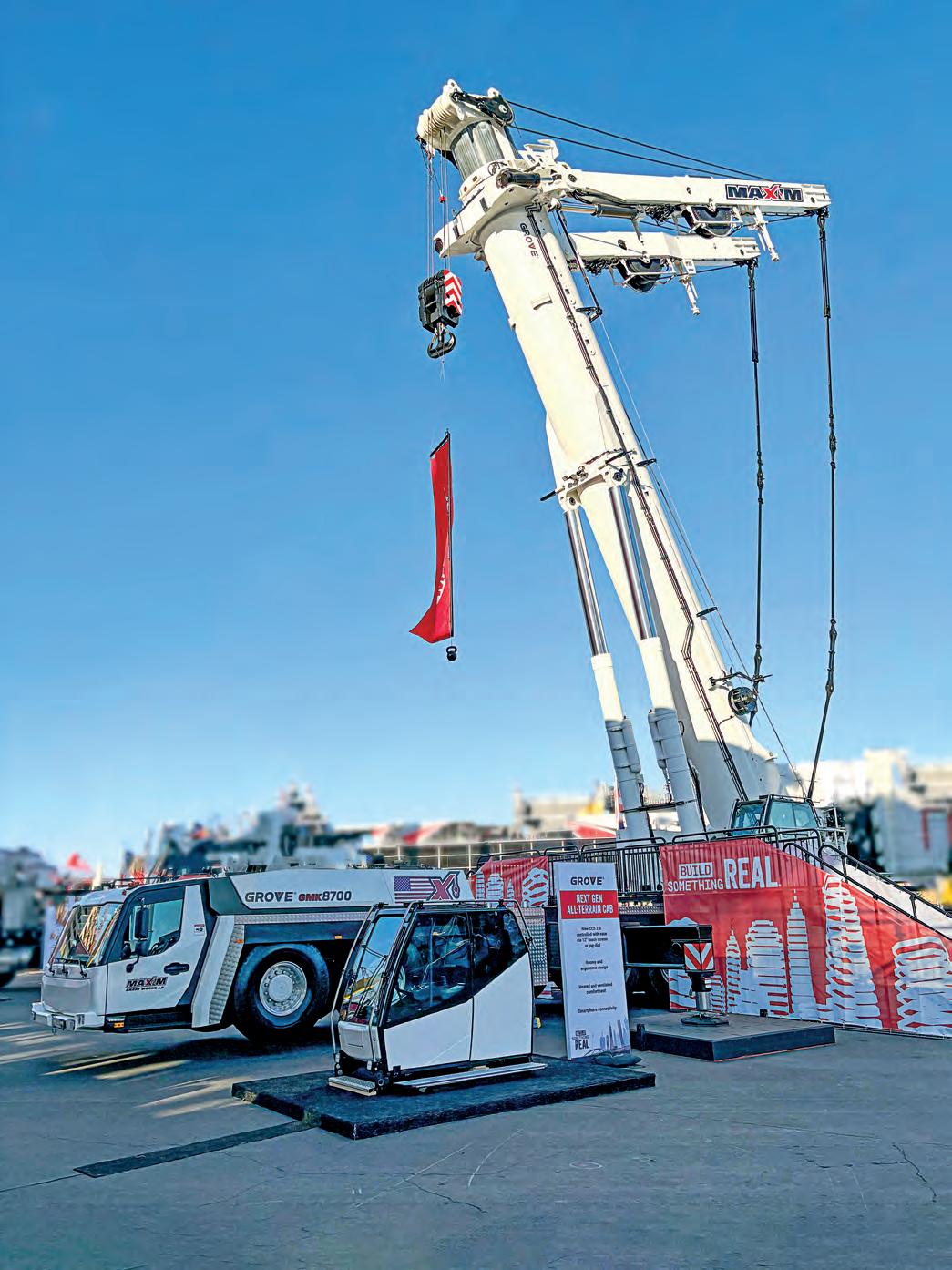
Manitowoc stole the show at ConExpo with the launch of the Grove GMK8700 eight axle 700 tonne capacity all terrain. Cranes and Lifting reporter Emily Schlegel was on hand to see the big reveal and discuss the development with Andreas Cremer, Vice President
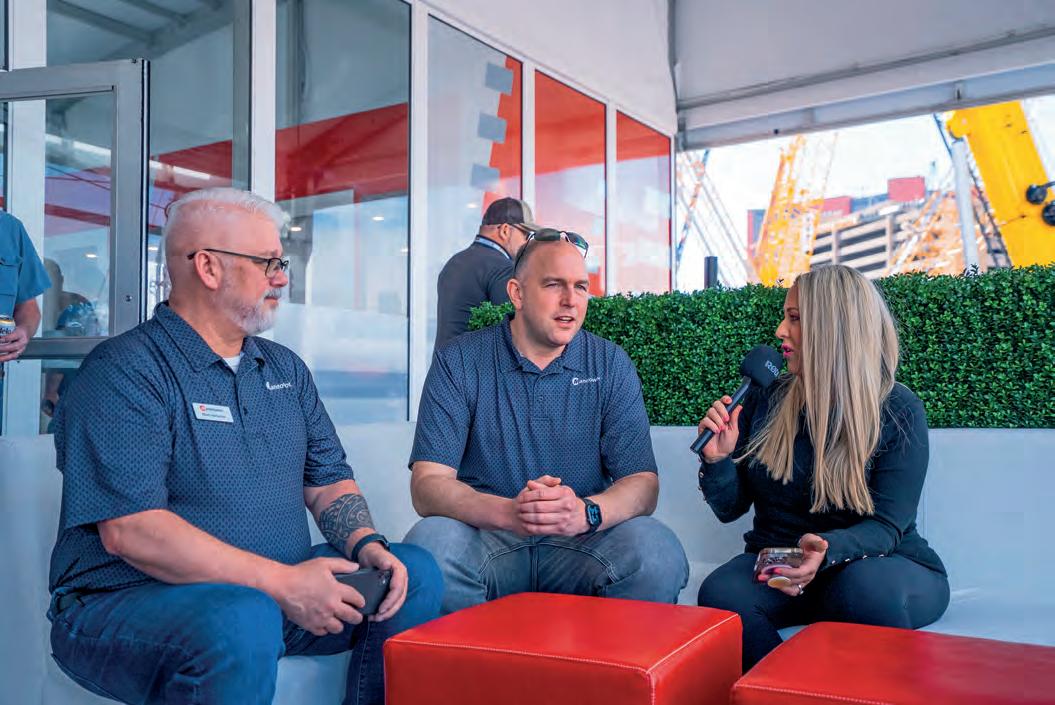
capacity. It’s the new top machine in our range and the largest capacity crane we have ever designed, and we are very proud to introduce the model here at ConExpo,” said Andreas.
“The Grove GMK8700 extends our product range at the top end and provides a good high-strength-capacity machine. It follows the success of the Grove GMK7450 which has proved to be a very popular and successful crane over a long period of time. For some time, customers around the world have been asking for a larger capacity all terrain and we decided to accept the challenge and designed this 700 tonnes capacity all terrain.”
Manitowoc’s Voice of the Customer (VOC) process was the foundation for the
real-world insights to address the needs of customers worldwide. Product versatility and on-site flexibility are major focuses, evidenced by two boom options: a 54 metre boom and an 80 metre boom. Both booms feature the common Megaform™ design with interchangeable telescopic sections, so owners can easily switch setups for a wide variety of projects.
Andreas goes on to discuss the types of applications the GMK8700 will be suited to.
“We set out to design a very versatile machine which will suit many different types of applications. Infrastructure is an obvious sector, including bridge building, but it will suit also heavy transport lifts, shut downs and heavy engineering lifts. With the long jib lengths, it has plenty of reach
In terms of lifting performance, the GMK8700 pushes new boundaries with exceptional reach, thanks to a luffing jib that extends up to 107 metres. The jib is quick and efficient to assemble, featuring a single back mast and optional boom extensions that enable customers to easily adjust the total system length for maximum flexibility.
Like other high-capacity Grove cranes, the GMK8700 comes equipped with the self-rigging MegaWingLift™ capacityenhancing system. It can be installed without the need for an auxiliary crane, improving safety and significantly reducing setup time – an important advantage on remote sites or in space-restricted environments. The crane offers up to
“We set out to design a very versatile machine which will suit many different types of applications. Infrastructure is an obvious sector including bridge building, but it will suit also heavy transport lifts, shut downs and heavy engineering lifts.”
175 tonnes of counterweight, comprised of slabs interchangeable with those of the GMK6400, GMK6400-1, and GMK6450-1 models. For the first time on a Grove model, the counterweight incorporates Manitowoc’s patented Variable Position Counterweight (VPC)® technology. VPC enables operators to
adjust the counterweight position to boost lifting capacity without requiring additional counterweights.
Andreas elaborates on the MegaWingLift and other key features.
The MegaWingLift is a tensioning system that provides up to 70 per cent better load charts on the main boom and even more on
In terms of lifting performance, the GMK8700 pushes new boundaries with exceptional reach, thanks to a luffing jib that extends up to 107 metres.
the jib systems. The cool feature regarding the MegaWingLift is similar to our GMK6450-1 in that you don’t need an assist crane to put it on. You lay it on the carrier deck, put the boom in, pin it, and you’re up in the air within 20 to 25 minutes.
“Another cool feature of this machine is our patented Variable Position
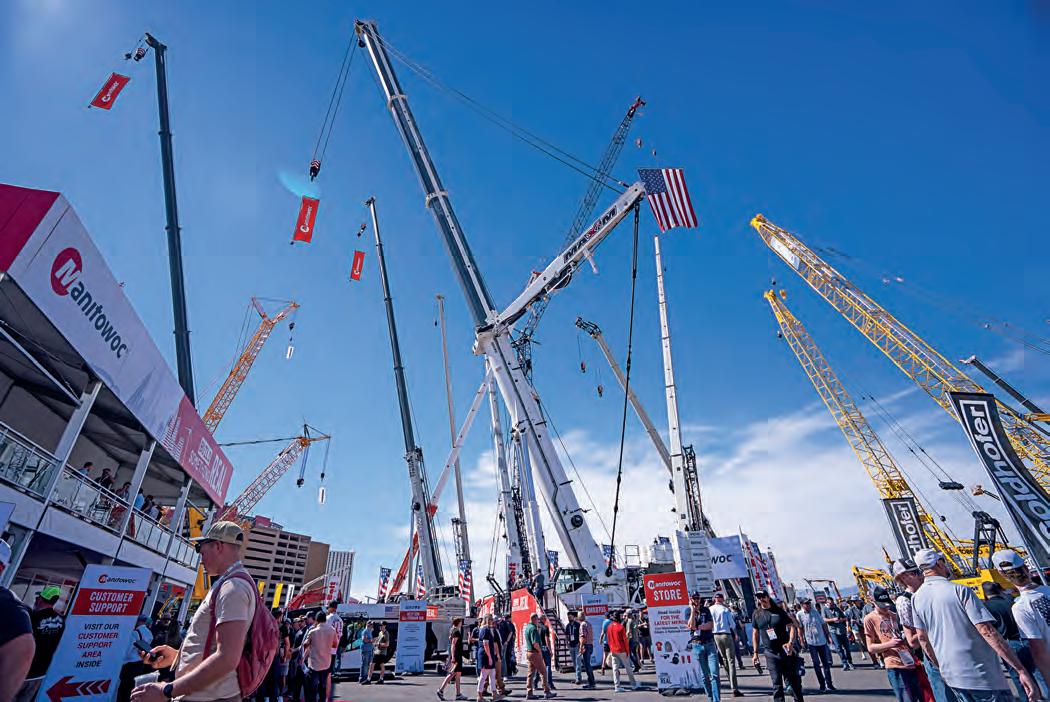
The Grove GMK8700, eightaxle, 700 tonne capacity all terrain generated plenty of interest during ConExpo.
Counterweight (VPC)® technology. Our VP enables the counterweight to be positioned in three different positions. If you move it all the way out, it saves you about 20 tonnes of counterweight you would otherwise need to bring along,” he said.
Operators will also benefit from Manitowoc’s next-generation CCS 2.0 crane control system, making its debut on the GMK8700. CCS 2.0 integrates with the on-board Grove CONNECT™ telematics platform and supports servicing through improved diagnostics, clearer information and more intuitive troubleshooting, so technicians can carry out service work efficiently. It also integrates seamlessly with MAXbase™ 2.0, the updated variable outrigger positioning system. Together, they deliver real-time lift capacity calculations, intuitive touchscreen operation, and optimised setup guidance. The crane also includes dedicated operator displays for both the superstructure and carrier, enhancing situational awareness and overall efficiency.
“GMK8700 features the latest generation of our control system, CCS 2.0, as well as a newly designed carrier cab and a new superstructure cab which includes a number of key features for operators which will make operating the machine very easy.
“The new cab features a larger 30 centimetre display, but we kept the split of having two displays. It’s controlled the same way but now the operator has touch capabilities to make adjustments, as well as the jog dial. We have also introduced a new screen for all the different camera systems we have on the machine,” said Andreas.
“The operators decide which view they want to see by drag and drop and they can enlarge the image. On the upper screen, they still see the main lift parameters. We have new ergonomic joysticks which are slightly smaller and easier to use than the previous ones. The seat features all the comforts of heating for the winter and cooling for summer making it a very nice working environment for the operator.
“On the carrier, we have moved away from the analog display and we now have a digital cluster and merged all the crane functions into that cluster. You can control them over the steering wheel, so it feels very automotive, and yes, everything an operator can dream of is in here. Operators at the show have all been really amazed at what they’ve seen,” he said.
Andreas confirms there is strong interest in the GMK8700 from Australian customers.
“We are already in discussions with Australian customers and they’re pretty excited. We will definitely see units heading to Australia in the future. Important for Australian customers is the versatility in roading the crane,” he said. “We understand there are states where a dolly is beneficial and we designed the crane to drive on a dolly which will suit Australian road regulations. We are confident you will be seeing plenty of Grove GMK8700s operating in Australia soon.”
Flexible finance solutions built for crane professionals.
DLL delivers flexible finance solutions that help you grow your fleet, upgrade technology, and stay ahead of the competition. Backed by Rabobank and active in 25+ countries, DLL combines global expertise with local ANZ insight.
DLL is more than just a financing partner - we support your growth, safety, and sustainable investment in next-generation equipment.
Let’s build the future together!
Partner with DLL, finance built for the crane industry.
Scan the QR code to learn more:
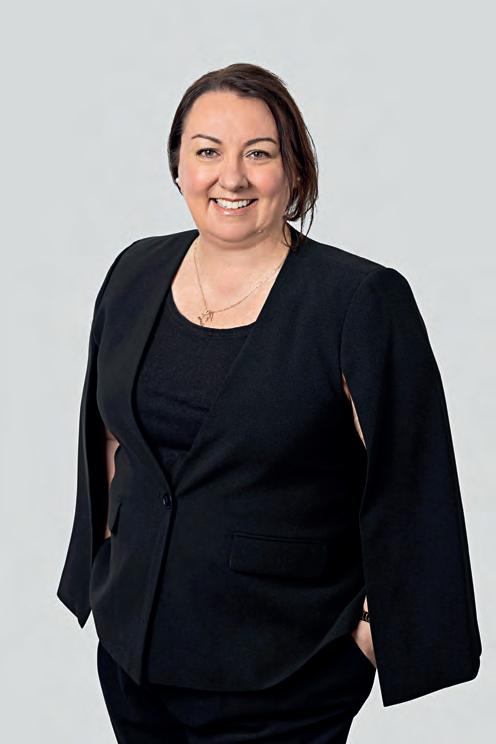
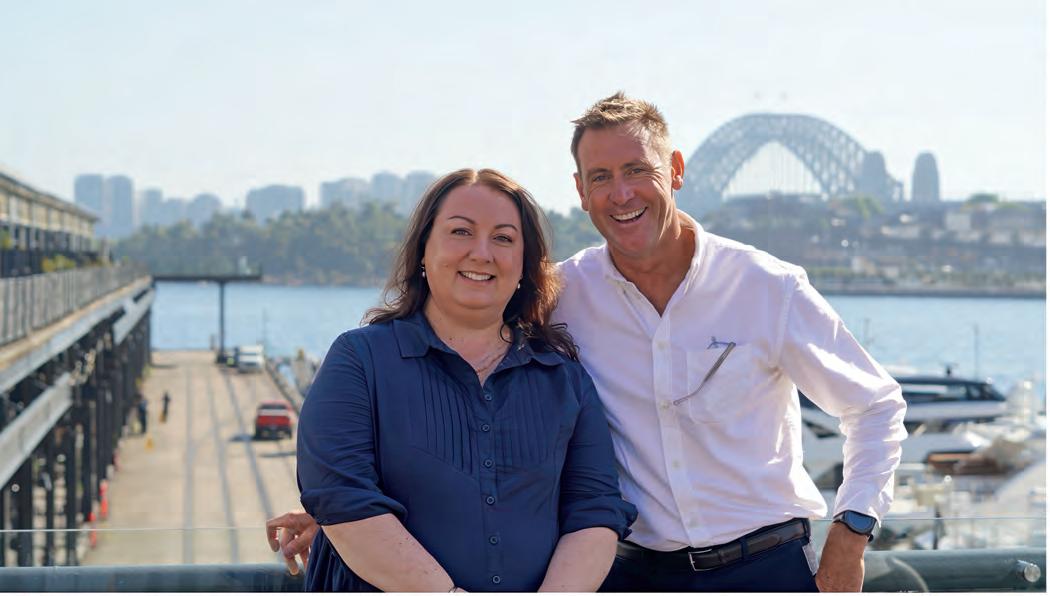
HEIDI HERVAY’S PROGRESSION FROM A part-time crane industry role in 2007 to her current position supporting complex equipment finance at DLL shows how the crane industry has evolved in the past two decades.
Careers in the crane industry are rarely planned. More often, they grow over time shaped by people, opportunity, and a willingness to stay involved. That is exactly how Heidi’s journey has unfolded.
Today, she works in a sales support role at DLL, helping customers navigate the complexities of funding high-value equipment. It is a role that demands both technical understanding and strong relationships, something she has built steadily over nearly two decades in and around the sector.
“My role is supporting the sales team and customers through the process of funding an asset,” Heidi said. “It’s a varied role. It can be complex sometimes, but I really enjoy it.”
Approaching her first anniversary with DLL, she describes the experience as both fast-paced and aligned with her personal values.
“DLL really aligns with my values,” Heidi said. “There’s a real give back to the community through a wellestablished Social Impact program, and there are lots of women in senior roles here.”
Heidi’s entry into the crane sector was not driven by a long-term plan. It began in 2007 with a part-time administrative role at the New South Wales Cranes Association.
At the time, flexibility mattered. With two young children, the role allowed her to balance work and family, but it also reconnected
with operators, business owners and suppliers nationwide.
“That’s why I got to know so many people,” Heidi said. “It was a lot of fun.”
Those relationships would go on to shape her long-term career.
While cranes themselves are a natural draw, Heidi is clear about what has kept her in the industry.
“I’m a real crane nerd,” Heidi said. “I love especially the bigger cranes and what they’re capable of doing.”
But it is the people who have made the biggest impact. “The people in this industry are generous and kind and incredibly supportive,” Heidi said. “That’s probably what keeps me engaged.”
The crane and lifting sector has long been male-dominated, but Heidi has seen a gradual shift. What stands out now is the growing support network.
“There are more male allies willing to support women in industry,” Heidi said.
“The people in this industry are generous and kind and incredibly supportive.”
her with an industry she had previously encountered.
“It allowed me to get back into the workforce and still be the mum that I wanted to be,” Heidi said.
From there, the role expanded. As the association transitioned into the Crane Industry Council of Australia, Heidi became involved across multiple state branches, working closely
She also points to the increasing presence of women across all parts of the sector, from operations to leadership, and the value they bring.
“Women are strong communicators, and that provides for a stronger culture and better outcomes overall,” she said.
At the same time, opportunities are expanding. “There are definitely more opportunities for women to
come and join an industry that is quite rewarding,” she said.
Mentoring and advocacy remain central to Heidi’s approach, particularly when it comes to supporting women entering the industry.
“It’s really important to have someone to talk to, to give you advice along the way,” she said.
She recalls working with women at different stages of their careers, including one who transitioned into crane operations after time away from the workforce.
“I remember she sent me a picture of herself learning to get her crane ticket,” Heidi said. “Now I see her driving cranes.”
For Heidi, these moments highlight the importance of visibility and support within the industry.
At DLL, Heidi’s role places her close to one of the most critical decisions crane businesses make: investing in new equipment.
With cranes representing significant capital outlay, often running into millions, finance needs to reflect how these businesses actually operate.
“Finance is becoming more complex,” Heidi said. “The requirements have changed quite a lot. That’s why it helps to work with a finance partner who understands how crane businesses operate.”
Her focus is on structuring solutions that align with project cycles and seasonal demands.
“We understand that there can be seasonalities in a business, so we can structure something that suits that,” Heidi said.
That might include flexible repayments or tailored loan structures designed to reduce pressure during quieter periods.
“Customers are working in their business as well as on their business,” Heidi said. “So relationships are very important.”
In an environment shaped by interest rates, project timelines and economic uncertainty, that understanding can make a tangible difference.
And for women considering a career in the crane and lifting sector, Heidi keeps her advice straightforward.
REACH OUT TO DLL
Curious to find out how DLL can help your business grow? Scan the QR code below to learn more or contact the team.

“Just keep following something that you love, stay curious and keep showing up,” Heidi said. It is a message grounded in her own experience, one that reflects how careers in this industry often evolve. Disclaimer: Finance is provided by De Lage Landen Pty Limited (ABN 20 101 692 040) (DLL). Equipment to be used for business purposes only. Subject to DLL’s standard credit criteria, fees and terms and conditions apply.

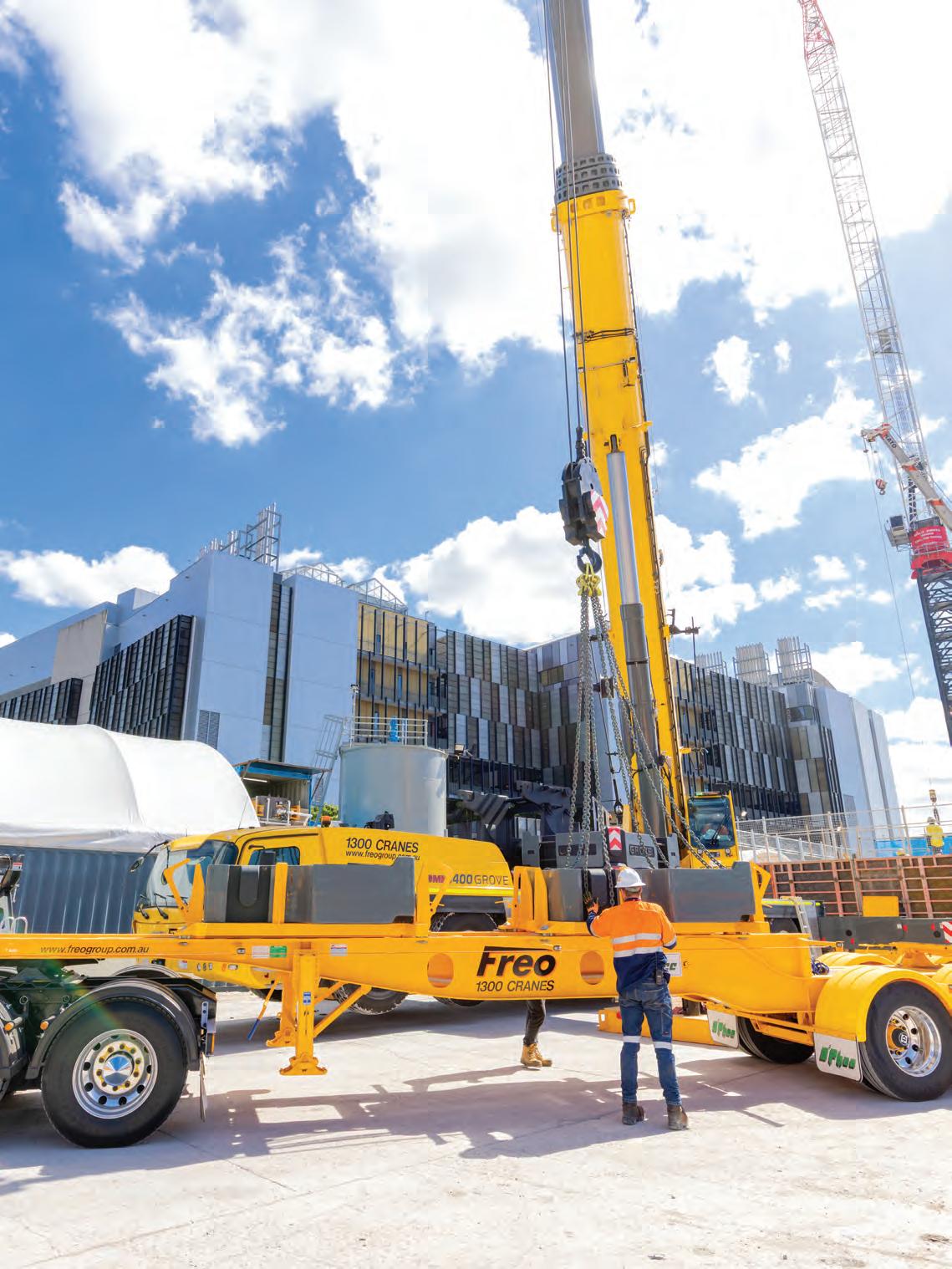

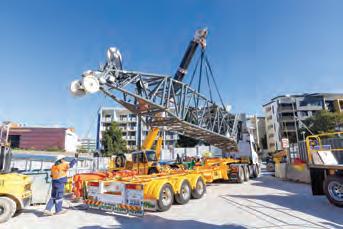
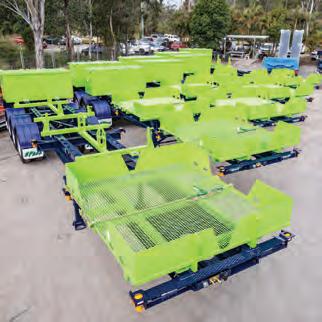
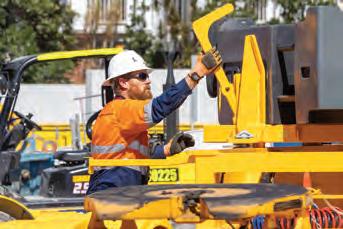
Moving a crane is rarely simple. Every mobilisation comes with its own set of constraints like weight distribution, compliance, access and timing. For trailer manufacturers, that means the job starts well before steel is cut.
FOR THE DRAKE GROUP, THAT CHALLENGE has increasingly been about engineering trailers specifically for crane businesses, rather than adapting general-purpose designs. It is a shift that is gaining traction across the industry, as operators look for safer, more efficient and compliant ways to move increasingly complex equipment.
At the centre of that push is Byron Foss, Trailer Sales Manager, who is focused on strengthening Drake’s position in the crane sector.
“Everyone knows Drake for heavy haulage and moving cranes on low loaders,” Byron said. “But we’re also focused on building purpose-built trailers for crane businesses, especially counterweight and specialised transport solutions.”
Unlike standard trailer builds, Drake’s approach is defined by customisation. Each unit is designed to suit a specific crane configuration, load profile and operational requirement.
“Every trailer is different,” Byron said. “We design everything in-house using 3D modelling and work with the customer to make sure it suits exactly what they need before we cut any steel.”
That design process typically takes two to three weeks, allowing customers to review layouts, request changes and fine-tune details before production begins. From there, manufacturing timelines vary depending on complexity, from around two months for simpler units to up to six months for larger, more specialised trailers.
Behind that capability is a sizeable internal engineering team, reflecting the level of variation across customer requirements.
“Everyone wants something different,” Byron said. “We’ve built our team to accommodate that, because that’s what the market is asking for.”
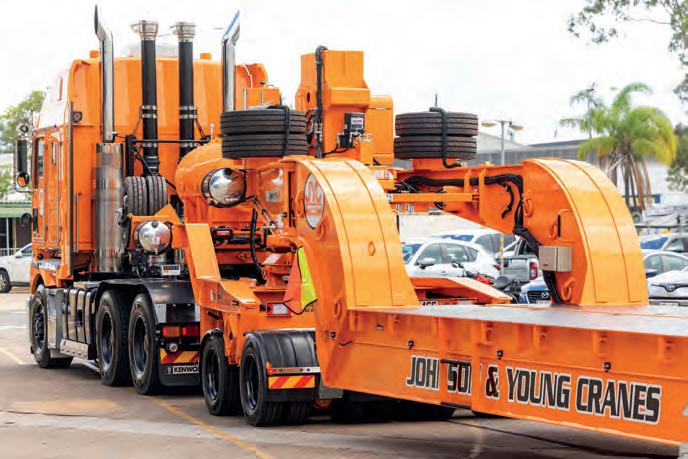
The goal is not just to carry a load, but to carry it correctly.
As crane sizes and configurations evolve, compliance has become a central consideration in trailer design. Axle load distribution is an area where purpose-built solutions can make a significant difference.
“We work with customers to make sure they can load what they want and still remain compliant,” Byron said. “A lot of people don’t realise that how you position the load across the axles makes a big difference.”
In many cases, operators continue to rely on flat tops or drop decks, modifying them to suit specific tasks. While that approach may appear cost-effective upfront, it can create limitations around payload, safety and legality.
“People often buy a standard trailer and try to make it work,” Byron said. “But when you actually run the numbers, they’re not always legal.”
Drake’s engineering response includes extendable trailers, tailored load positioning and custom cradle systems designed to optimise weight distribution across axle groups. The aim is to maximise payload while remaining within legal limits.
“We spend a lot of time working out where everything should sit on the trailer so you can get the most out of it without going over,” Byron said.
Safety is also built into the design. Counterweight trailers, for example, are configured to allow ground-level operation, reducing the need for personnel to climb onto trailers during loading.
“There’s no getting up on top of the trailer,” Byron said. “Everything can be done from the ground, which reduces risk and improves efficiency.”
Johnson & Young Cranes (JYC) provides a clear example of how these design principles translate into day-to-day operations. The
General Manager Brett
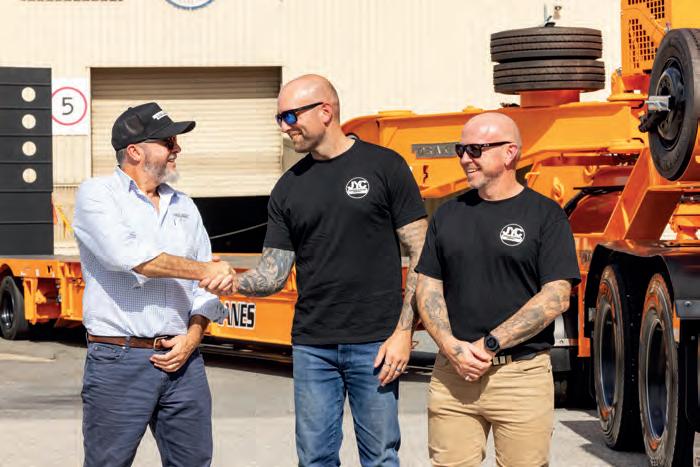
developed a long-standing relationship with The Drake Group, with multiple trailers already in its fleet.
Jake Tuohey, Operations Manager at JYC, said the decision to invest again was straightforward.
“This is our 12th trailer from The Drake Group. The strength and reliability in them are commendable and of course being Australian made was a big factor. We want to be the best in the industry, so we’ve got to buy the best,” Jake said.
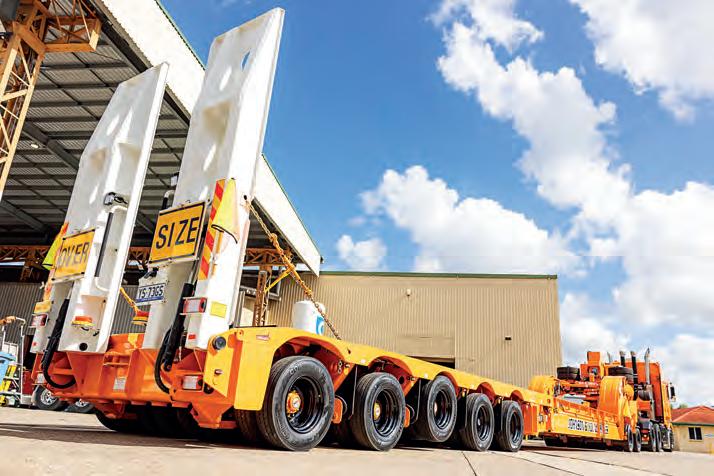
The latest addition is a 5x8 Swingwide extendable trailer with a dolly – a configuration designed to handle mid-tolarge all terrain cranes.
According to Byron, the trailer is suited to machines in the 250 to 350 tonne class, offering both capacity and flexibility.
“It’s a Swingwide extendable with rear steer axles and a radio remote control,” Byron said. “That gives operators a lot more control, especially when manoeuvring in tight areas or positioning on site.”
The steerable system allows operators to adjust the trailer’s position with precision, including the ability to steer in reverse or crab the trailer closer to a lift point. For urban environments and constrained job sites, that level of control can significantly reduce setup complexity.
For JYC, the investment is as much about operational efficiency as it is about capability. The company already operates a similar trailer, and demand for it has been consistent.
it’s always busy,” Jake said. “Bringing in a second one helps relieve that pressure and keeps everything moving.
“With two of these trailers on the road, we can cut down turnaround times and get cranes to site faster.”
That efficiency has a direct impact on project timelines.
While the new trailer will primarily be used to transport crane components, its versatility allows it to support a wide range of work across infrastructure and construction projects.
Durability and after-sales support remain key considerations for crane businesses
operating across varied environments, from urban projects to remote wind farms.
Jake pointed to Drake’s service support as a differentiator. “The service and backup from Drake can’t be beaten,” he said.
For Byron, that feedback reflects the company’s long-standing focus on local manufacturing and continuous improvement.
“We’re a proud Australian manufacturer, and we’ve been doing this since 1958,” Byron said. “We’ve built a reputation around quality and reliability, and that’s something we’re continuing to develop.”
While price-driven decisions still play a role in the market, Byron believes there is a gradual shift towards more engineered solutions.
“Some of the bigger players are starting to understand the benefits,” he said. “It’s about getting the right solution from the start rather than trying to adapt something later.”
As crane fleets continue to grow in size and complexity, that shift is likely to accelerate. For manufacturers like Drake, it reinforces the importance of engineering capability as much as manufacturing scale.
For JYC, the outcome is more immediate: faster mobilisation, improved safety and equipment that performs consistently across a wide range of conditions.
4
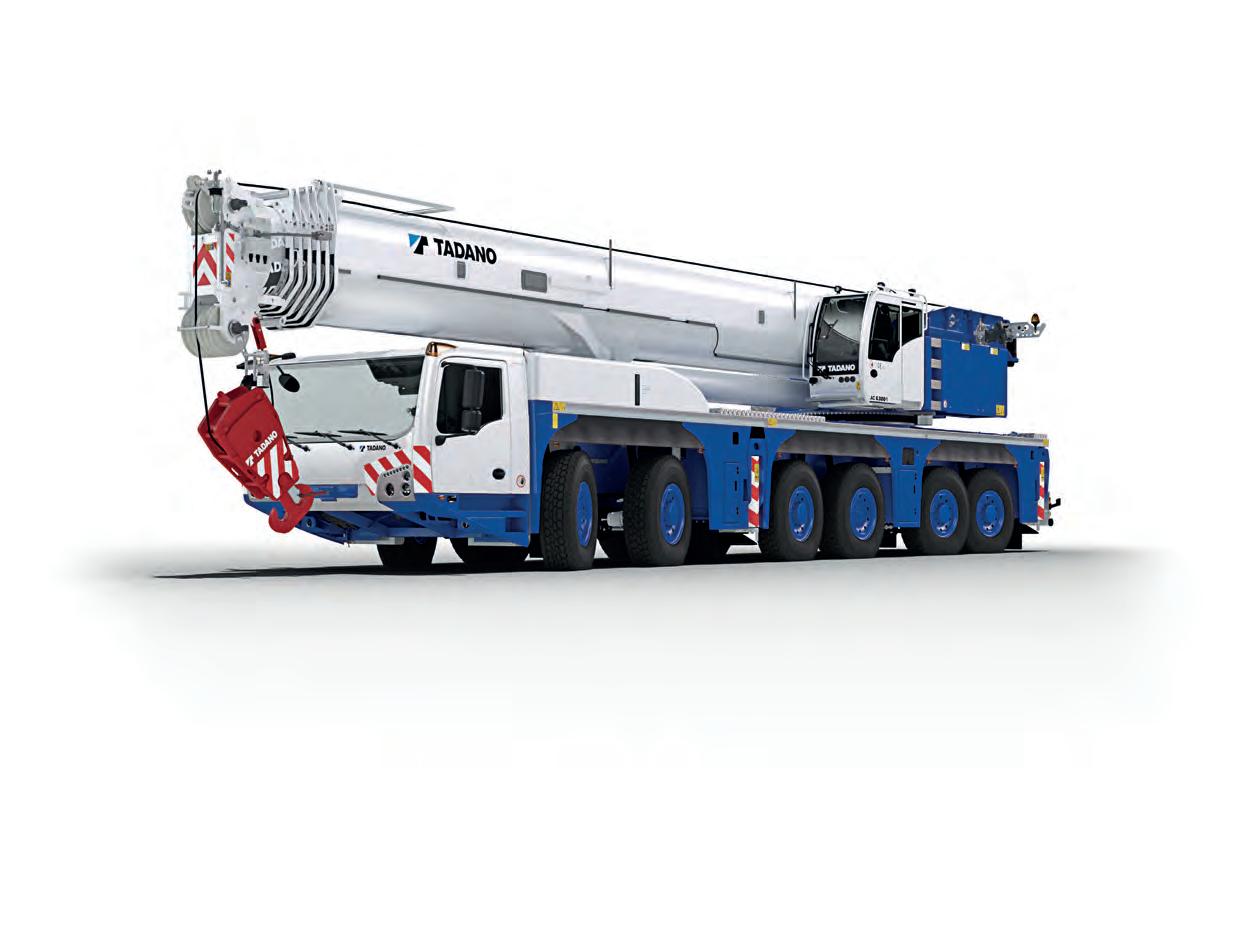
During ConExpo, Tadano put the spotlight on two exciting all terrain crane models, the 250 tonne AC 5.250L-2 capacity and the 300 tonne capacity, AC 6.300-1. The exciting AC 5.250L-2 and AC 6.300-1 will continue to bring valuable and innovative all terrain cranes to customers around the globe.
THESE VERSATILE MACHINES ARE engineered for exceptional performance across various environments, combining power and manoeuvrability to suit both urban construction sites and remote locations.
The AC 5.250L-2 excels in the 5-axle class with its 79 metre side pinning main boom system, and the maximum main
boom extension of 30 metres is also “best in class”. The crane on exhibit also featured a new bi-fold jib (10m/19m +1.0m adapter specific to the new 19 metre bifold jib). All available main boom extensions from 5.8 to 30 metres are self-erecting. The available maximum system length of 109 metres makes the compact AC 5.250L2 the ideal crane for urban applications,
for example for lifting air conditioning units over obstructions onto tall buildings. Additionally, it is also ideally suited to the assembly of large tower cranes.
The AC 5.250L-2 features optimised rigging solutions – remote control, self-leveling outriggers and automatic counterweight rigging. This powerful crane can pick up its maximum counterweight
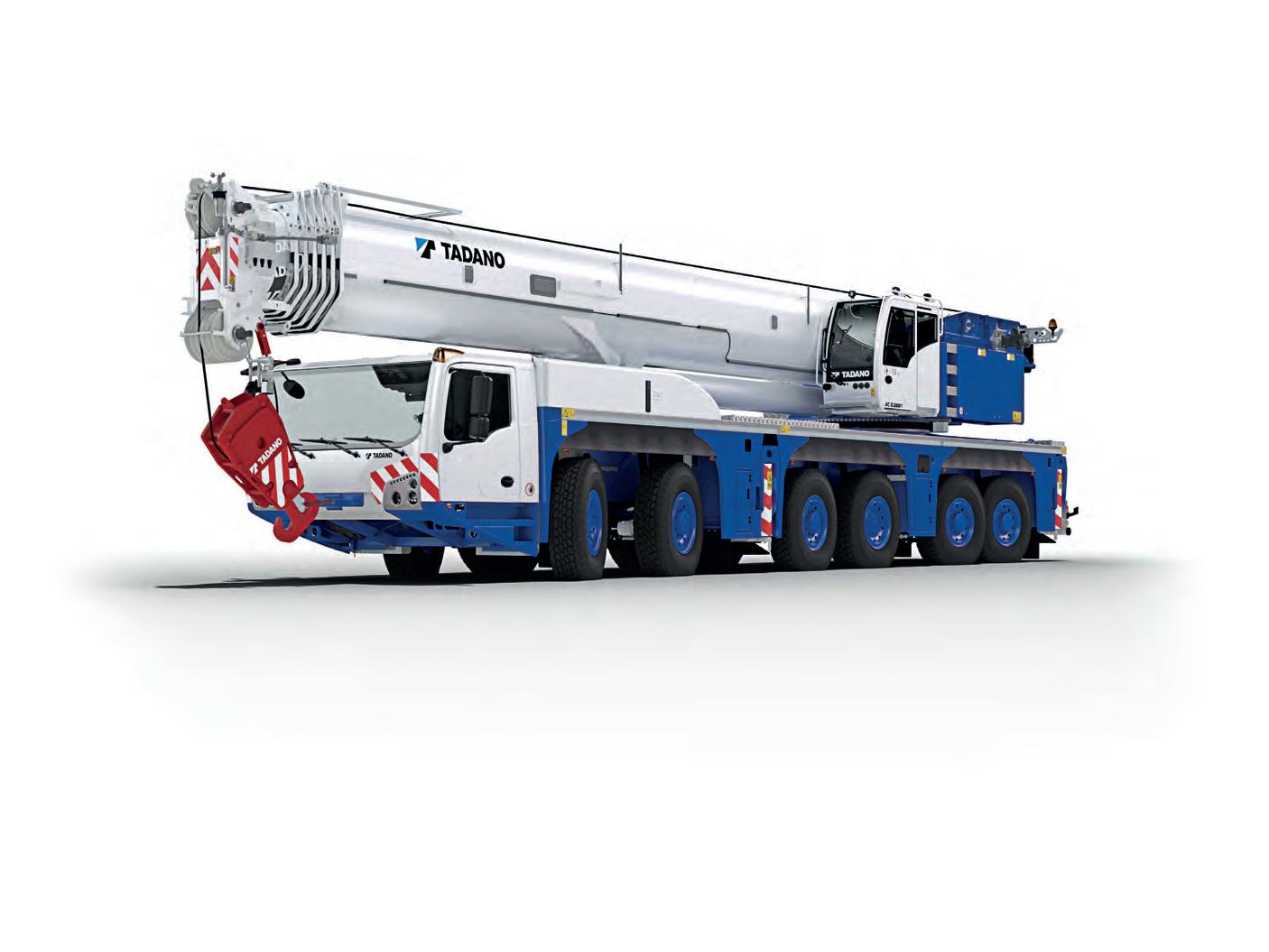
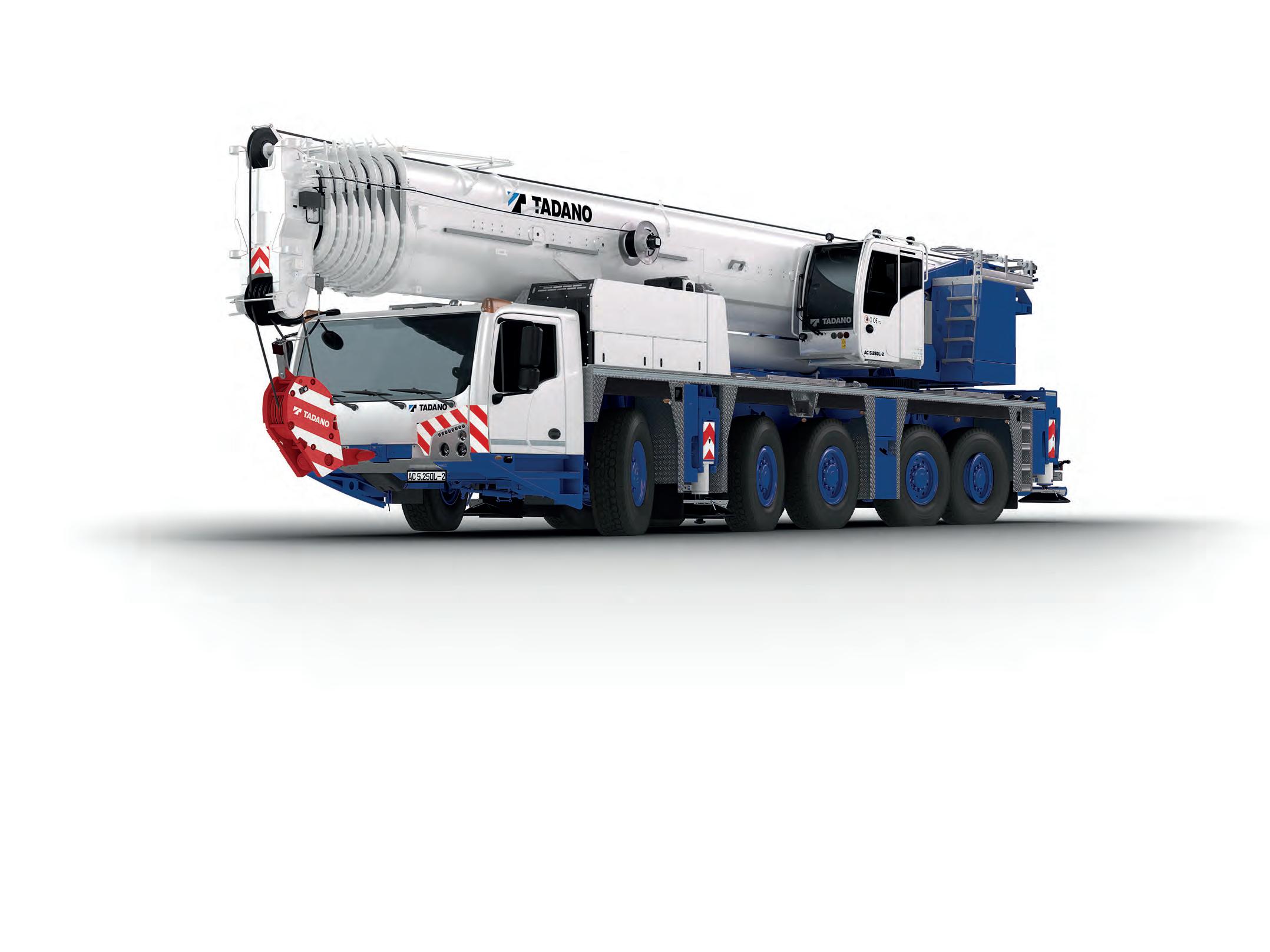
The AC 6.300-1 features 80 metre main boom and outstanding lifting power, this 300 tonne powerhouse checks every box for tight job sites and tall challenges.
“Tadano all terrain cranes feature a range of boom lengths and lifting capacities that adapt easily to diverse lifting tasks.”
The AC 5.250L-2 excels in the 5-axle class with its 79 metre side pinning main boom system.The maximum main boom extension of 30 metres is also “best in class”.
of 80 tonne in three lifts: 49 tonne with a radius of up to 6.8 metres at a full 360 degree load chart and two wing weights combined, totalling 15.2 tonnes with a radius of up to 13 metres divided into 10 tonne and 5.2 tonne for hanging on the right and left of the basic package. Maximum flexibility in transport logistics is also ensured by the division of the counterweight, with no element weighing more than 10 tonne.
The AC 5.250L-2 is equipped with a comprehensive range of standard features that benefit all current cranes in the Tadano AC family. This includes the IC-1 Plus crane control system, for example. It determines the maximum load capacity of the crane in real time for each boom position depending on the slewing angle, boom angle, counterweight amount and outrigger extension length. The unique Surround View camera system, which overlays the slew radius and outrigger positions over a depiction of the crane image, is also available as an option, making it easier for the crane operator to optimally position the crane on the construction site.
The AC 6.300-1 is a compact six-axle all terrain known for outstanding jobsite
accessibility. With its 80 metre main boom and outstanding lifting power, this 300 tonne powerhouse checks every box for tight job sites and tall challenges. The AC 6.300-1 boasts best-in-class lifting capacity on a fully telescoped main boom with 15 tonne. Equipped with an optional luffing jib, this versatile AT provides an unparalleled strong chart – making it an optimal choice for modern construction.
The AC 6.300-1 helps to optimise transportation. Additionally, the many components of this manoeuvrable machine are shared with Tadano all terrain cranes including AC5.130-1, AC5.160-1, AC5.220L-1 and AC.250-1 all terrains, reducing the number of spare parts required in stock. With its efficient rigging processes that allow a fast, safe setup, the AC 6.300-1 can be quite the time and money saver as it produces great lifting performance on a myriad of applications.
Tadano all terrain cranes feature a range of boom lengths and lifting capacities that adapt easily to diverse lifting tasks. They feature all-wheel steering and advanced suspension systems – ensuring smooth highway travel, tight cornering and excellent off-road capability. With a strong focus on safety, reliability and operator comfort, these versatile all terrain cranes are designed to maximise uptime while minimising operating costs. Tadano is “Reaching New Heights” in 2026, was the theme of the stand at ConExpo.
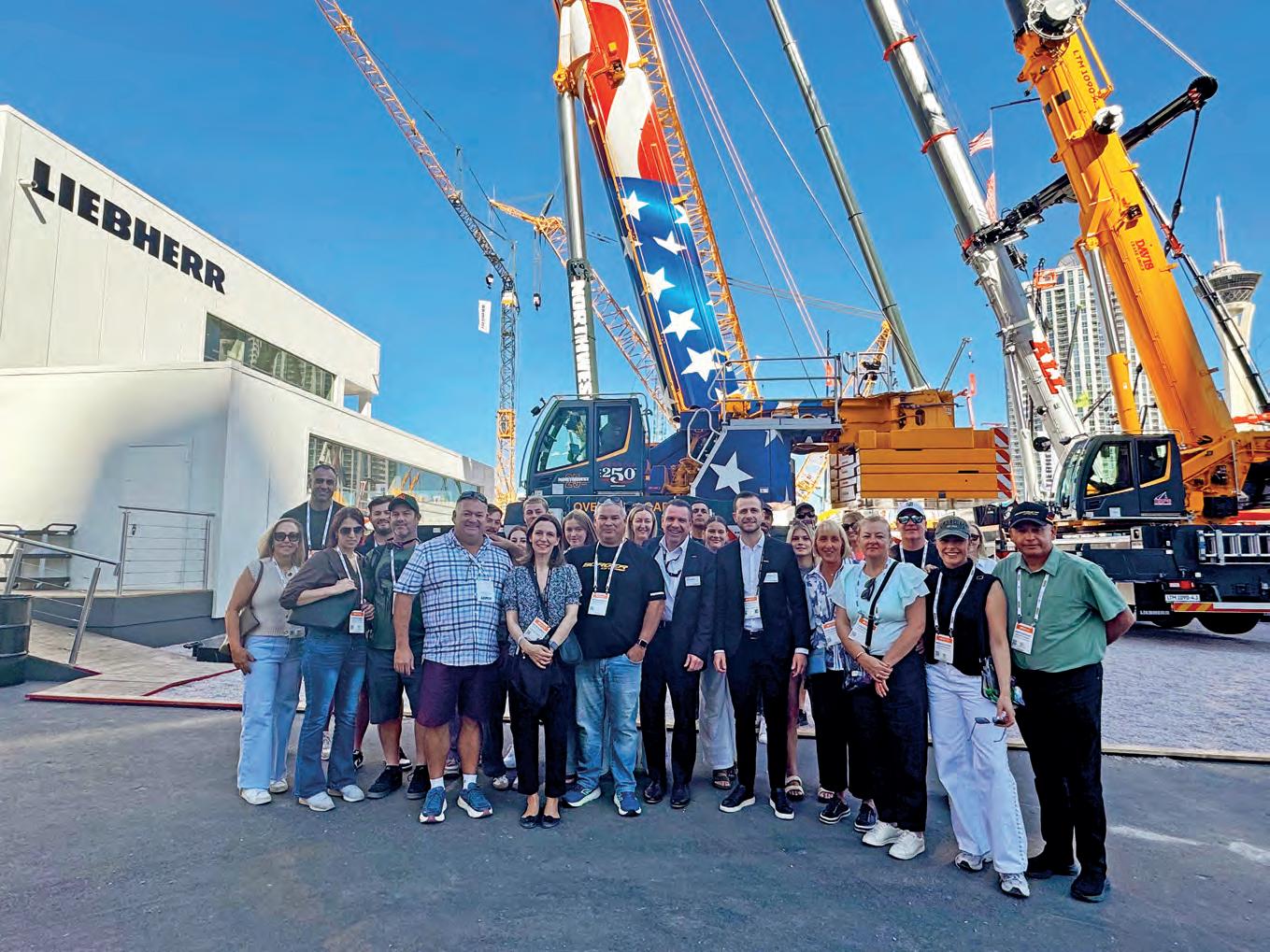
Borger Crane Hire and Rigging’s recent order is set to mark 100 Liebherr cranes in the Borger fleet.
THE RELATIONSHIP BETWEEN BORGER
Crane Hire and Rigging and Liebherr dates all the way back to 1999, when the Borger family purchased their very first Liebherr mobile crane, an LTM 1080/1. Fast forward 27 years later and Borger’s fleet of Liebherr cranes sits at an impressive
followed in 2021 by an LR 1600 W lattice boom crawler crane with a telescopic undercarriage, and Borger’s first LTM 1650 8.1. These additions expanded the company’s opportunities and supported its entry into the renewable energy sector.
Never to rest on their laurels, Shawn and
cranes. While the scale of the purchase was noteworthy in its own right, its wider significance only became clear when the numbers were tallied – upon delivery, the Borger’s fleet of Liebherr cranes will reach the landmark figure of 100 machines.
Reaching 100 Liebherr machine
Euro didn’t work in our favour and we also saw an increase in the pricing of European brands, so we shied away from purchasing any new all terrains,” he said.
“But we have been looking to renew areas of our fleet and also expand the capabilities of our operations and so we sat down with Liebherr to examine costings and see if we could come to some sort of arrangement. We know the local team at Liebherr really well and we have developed a good working relationship over many years.
“The Liebherr brand has been good for our business, and we have always received good service and support from the team. The negotiations went well with Liebherr, and combined with the dollar being a little stronger against the Euro, we decided to order the 17 cranes. It’s good to be reinvesting in the Liebherr brand.”
With a maximum load capacity of 60 tonnes and a 48 metre telescopic boom, the Liebherr LTM 1060-3.1 is one of the most powerful and capable cranes in its class.
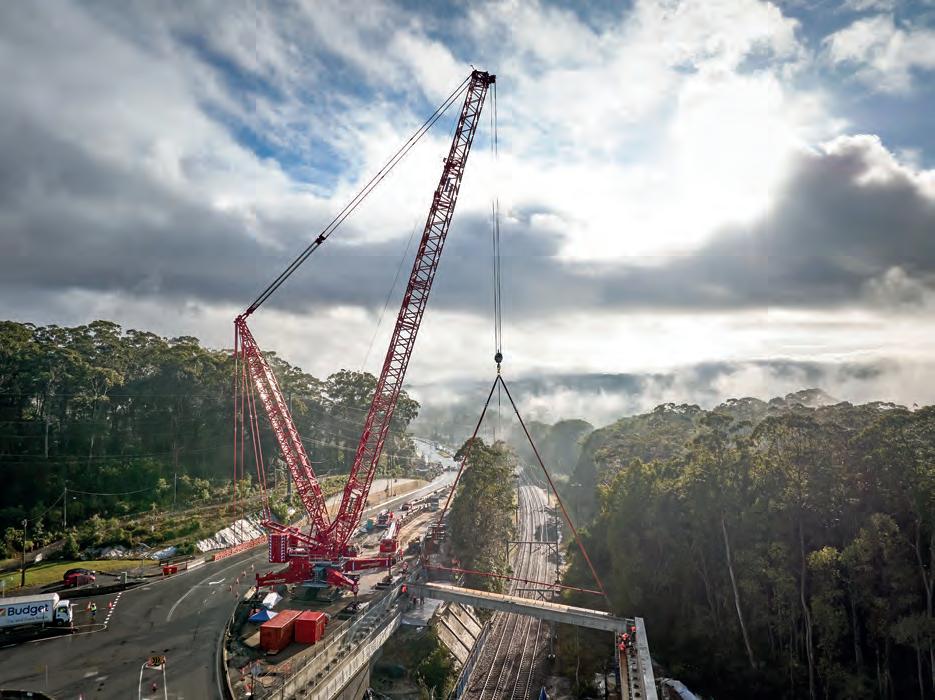
Safety and comfort configurations ensure greater operability and the hydro-pneumatic axle suspension and pneumatic disc brakes provide greater control and stability.
Its five steering programs enable the operator to adapt to different environments with the touch of a button. Both the driver’s cab and crane cab are modern, spacious and dependable and ergonomic features help prevent operator fatigue.
Other key features with the Liebherr LTM 1060-3.1 include:
• VarioBase which is designed to make the crane’s support system variable. It enables each outrigger to be extended to a different length. This enhances safety – especially in constricted spaces. The crane’s lifting capacities are significantly increased particularly over the outriggers and depending on the configuration.
• ECOmode minimises both fuel consumption and noise emissions when operating the crane superstructure. The crane operators can set the required working speed using the control lever. The LICCON2 control system calculates the perfect engine speed for the diesel engine.
• ECOdrive makes the mobile crane significantly more comfortable and quieter by reducing the engine speed. Faster gear shifting delivers greater dynamic and traction off-road. On the road, the torque from the Liebherr diesel engine is used efficiently to minimise fuel consumption.
The Liebherr LTM 1120-4.2 four axle 120-tonne crane is characterised by the new future-oriented crane design and is equipped with the TraXon DynamicPerform oil-cooled starting clutch and new driver assistance systems for increasing driving safety on the road.
As far as boom length is concerned, the LTM 1120-4.2 is on a par with 200-tonne class cranes: its 66-metre telescopic boom is the longest ever to be installed on a four-axle mobile crane. The LTM 1120-4.2 delivers outstanding lifting capacity values, particularly with the boom fully raised. Its lifting capacity of nine tonnes on the 66 metre telescopic boom makes it suitable for erecting tower cranes and radio masts. Lattice extensions enable the 120-tonne crane to achieve hook heights of up to 91 metres and radii of up to 64 metres.
The compact design of a four-axle crane makes the LTM 1120.4.2 the ideal choice for applications where there is simply no room for larger cranes. Liebherr’s VarioBase® and VarioBallast® innovations come into their own on tight construction sites and ensure increased performance, flexibility and safety.
With its VarioBallast system, the crane’s ballast radius can be adjusted between 3.83 and 4.77 metres. Thanks to the standard, mechanically swivelling ballast cylinders, the radius can be easily reduced by 940 millimetres – ideally suited for confined spaces. The larger ballast radius, on the other hand, increases performance and often reduces costs, as many operations can be carried out with less counterweight, eliminating the need for additional ballast transport.
Borger’s took a large contingent of staff to ConExpo where they visited the Liebherr stand.
“The Liebherr stand was impressive as always and we were made to feel very welcome,” Shawn said. “We had a very positive conversation with Hansi, Sophie Albrecht and Christoph Kleiner and it was great to see everyone in Las Vegas.”
Hoeflon’s compact size and strong lifting capability make them well suited to applications such as glazing, prefabricated panel installation and industrial projects where space is limited.
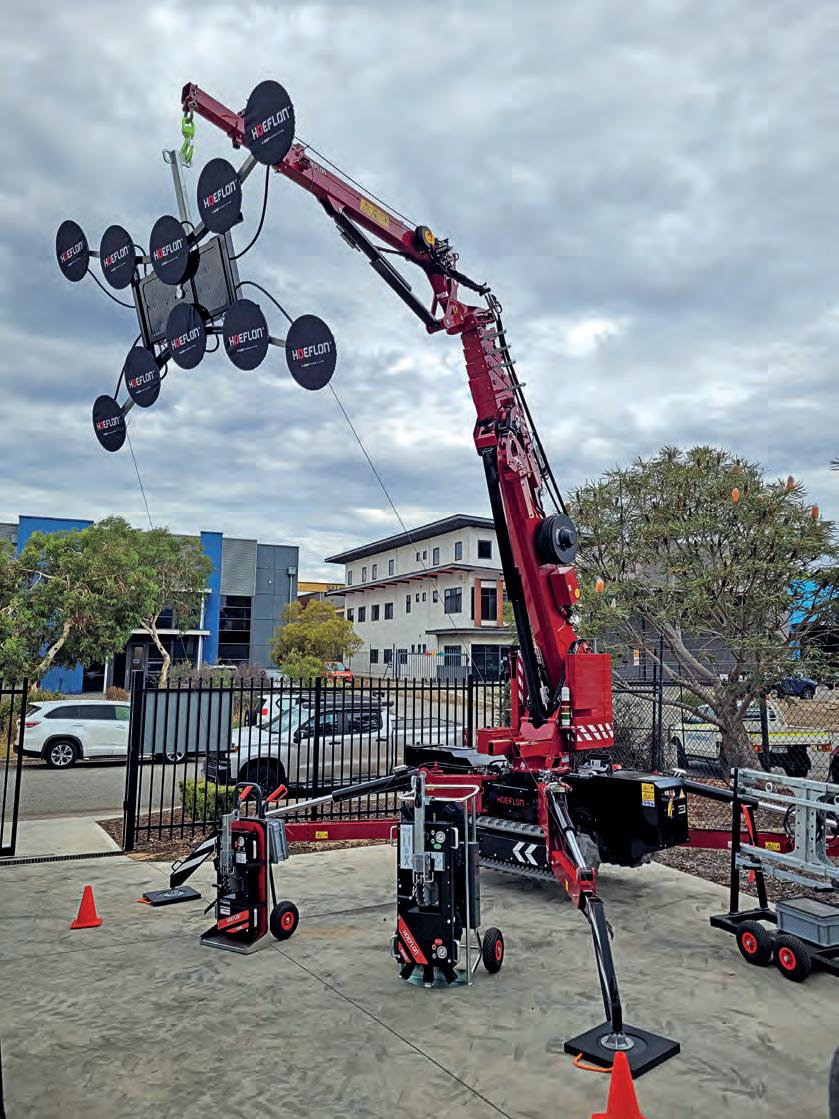
IN MARCH, MCT EQUIPMENT HOSTED AN OPEN

and Magni machines are designed to tackle real-world challenges, and tonight’s demonstrations really brought that to life. We’re proud to provide solutions that help our customers work safer, smarter, and more efficiently.
“Beyond the machines themselves, the evening offered an opportunity for networking and knowledge sharing. Industry professionals discussed the latest trends, challenges, and innovations in lifting equipment, making
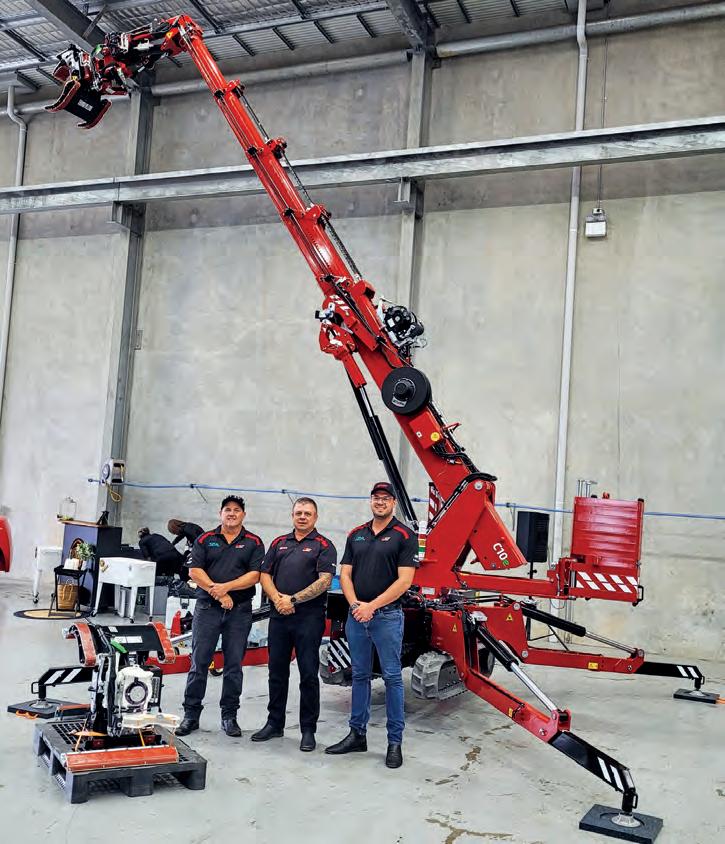



By


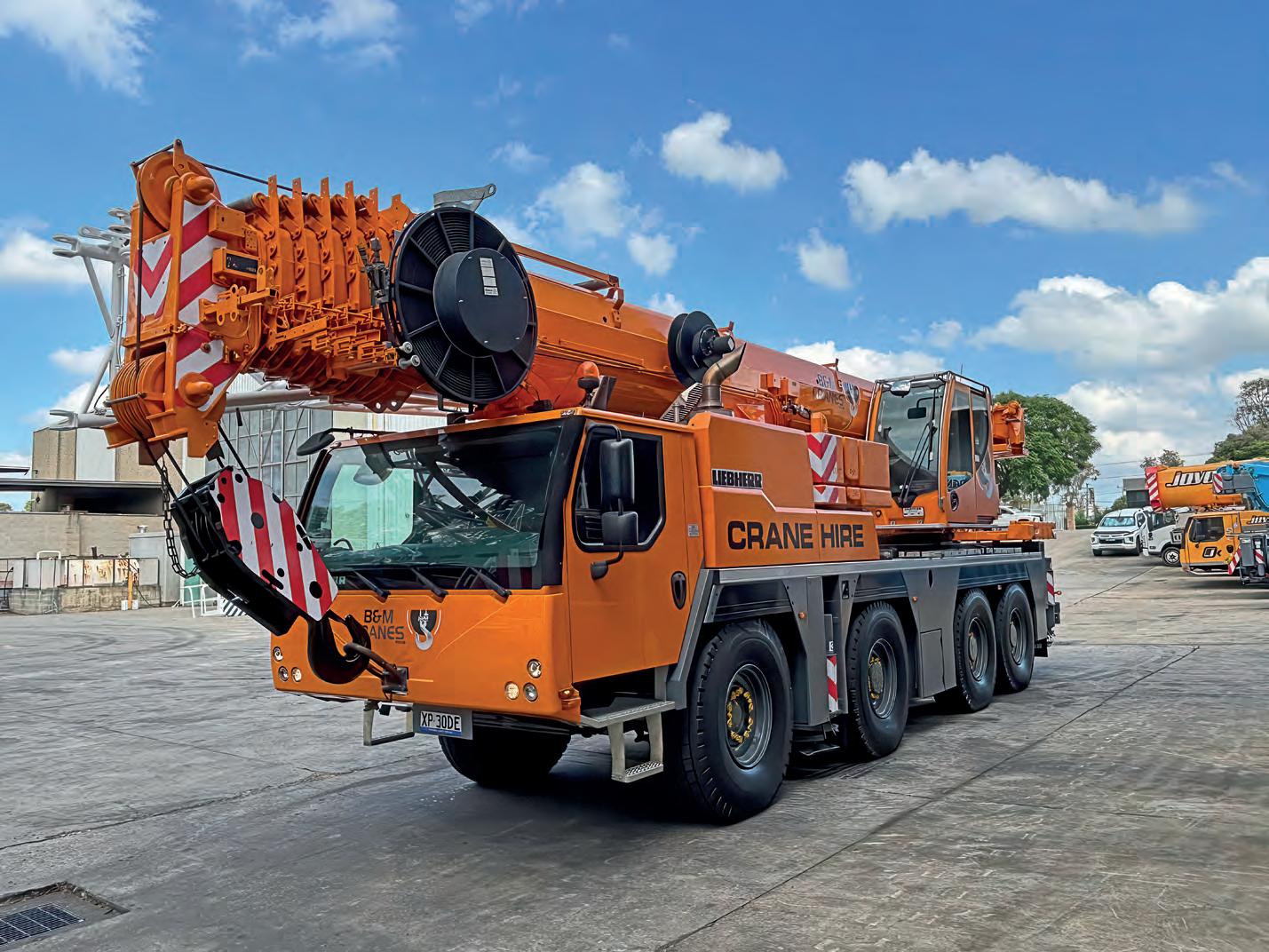
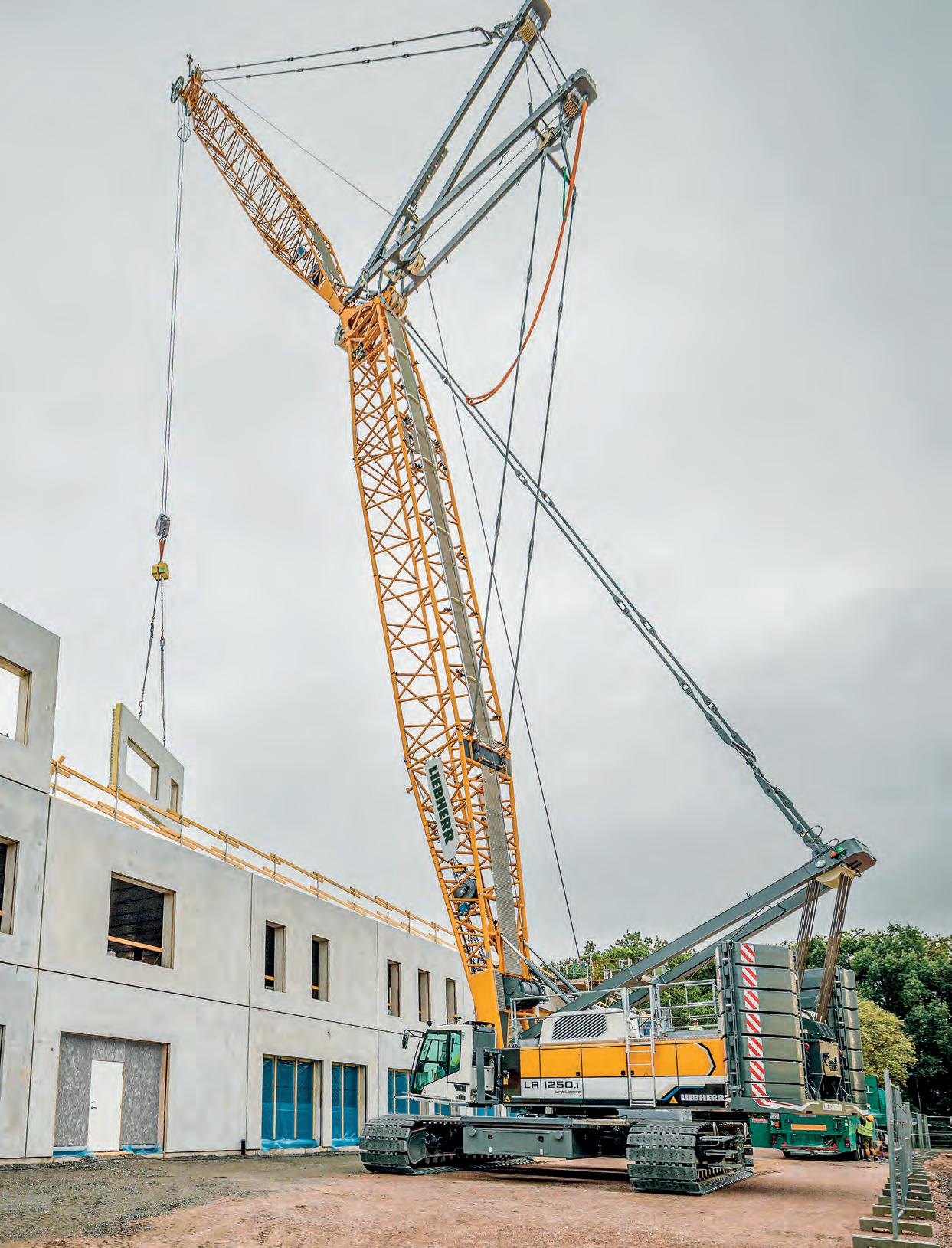
When Brent Coleman from B&M Cranes decided he needed more capacity in his fleet, he knew exactly where to turn. For many years he has been relying on the advice and service provided by the team at Crane Connection.
B&M CRANES RECENTLY TOOK DELIVERY of a 2019 model Liebherr LTM 1090-4.2, a 90 tonne capacity all terrain. It is the second 90 tonne capacity Liebherr in the fleet and the second to be delivered by Crane Connection.
Brent has been operating cranes and large types of equipment for over 20 years.
“For a long time, I travelled all over the country operating cranes, as well as large construction and mining equipment. In 2018 my wife and I decided we were ready to start a family and being away from home for large chunks of time didn’t seem so attractive.
“Rather than working for someone else, I decided it was time to back myself in the ‘crane game’ and we started B&M Cranes with a 20 tonne Franna,” said Brent.
B&M Cranes operates in Gippsland, eastern Victoria and surrounds, providing a taxi crane service for anyone who needs a lift.
“We’ve worked hard to establish the business, and we’ve let the quality of our work do the talking,” said Brent. “We will lift anything from pools and spas into backyards through to complex lifts for construction companies. Our crews have a ‘can do’ attitude putting the customer and their requirements first, which stands us in good stead for future business.
“We work hard on the culture of the business, our crews back each other and no job is too big or too small, which leads to positive outcomes for our customers. This approach has led to significant growth over the last few years, and we now operate 11 pieces of equipment including
“The service from Crane Connection is as reliable as the performance we have received from the Liebherrs in the fleet.”
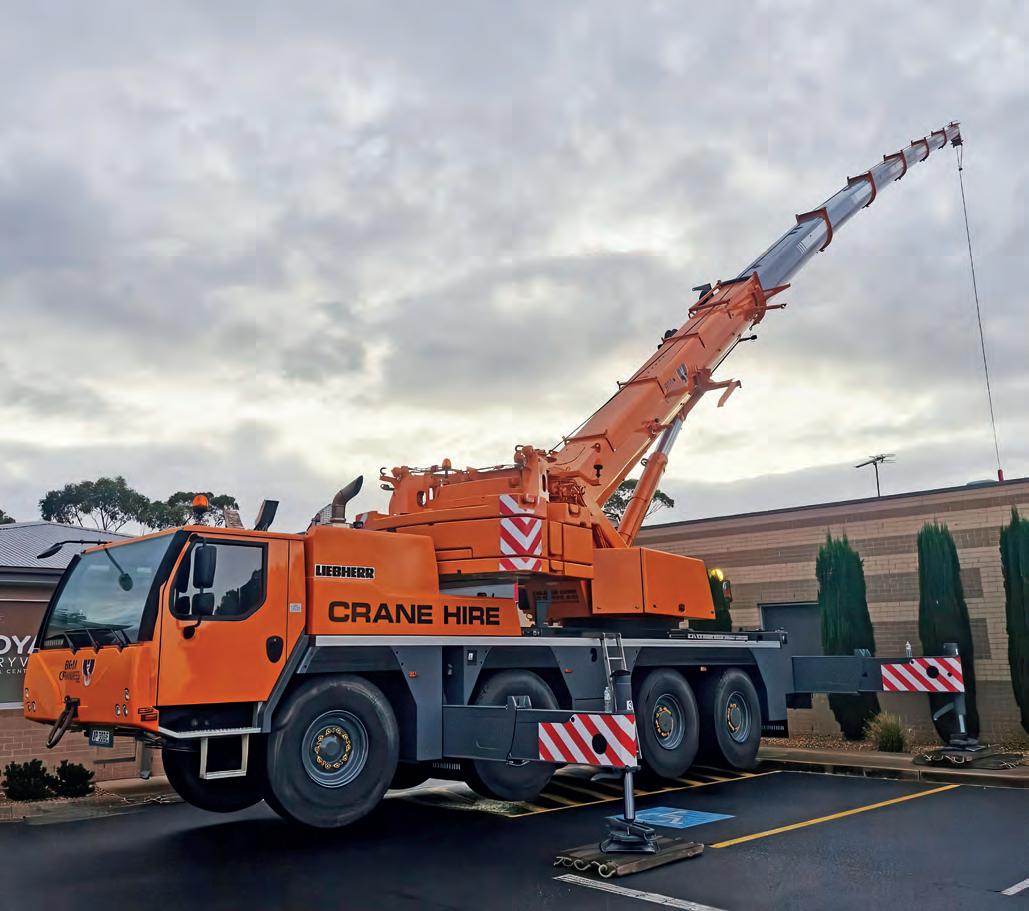
our support vehicles. At any one time we can be running a team of up to 16, including casuals.”
Over several years B&M Cranes has developed a strong working relationship with Anthony Davis and the team at Crane Connection.
“We’ve got to know Anthony and the team really well, we rely on their advice when it comes to purchasing cranes as the fleet expands and we trust their judgement in terms of where they source the cranes,” said Brent. “Anthony has a global network of used crane distributors and dealers and my understanding is this Liebherr LTM 1090-4.2 came out of Hong Kong.
“The team at Crane Connection handle everything for you. They source the crane, manage the importation, customs and quarantine, they service and CraneSafe the crane and paint it in their own spray booth in our colours. The service from Crane Connection is as reliable as the
performance we have received from the Liebherrs in the fleet.”
The Liebherr LTM 1090-4.2 is a mobile crane model known for its exceptional mobility, power, and economy. It features a maximum load capacity of 90 tonnes and a telescopic boom extending up to 60 metres. The crane is equipped with advanced technologies like ECOmode and ECOdrive, which reduce fuel consumption and noise emissions. Its VarioBase® and VarioBallast® systems enhance lifting capacities and operational flexibility.
This crane is particularly suitable for diverse applications, including construction and industrial projects, due to its ability to be configured with various axle loads for efficient transportation.
Its single-engine concept reduces maintenance costs, while the advanced control systems and safety features ensure precise and secure operations. The LTM
The Liebherr LTM 1090-4.2 is a mobile crane model known for its exceptional mobility, power, and economy. It features a maximum load capacity of 90 tonnes and a telescopic boom extending up to 60 metres.
1090-4.2 is a versatile and reliable choice for challenging job site conditions.
The relationship between Brent and the Crane Connection team has grown over the years.
“I’ve known Anthony and Ben for many years and over that time we’ve developed a great friendship which means when it comes to business it is really straight forward,” Brent said. “As I’ve said we trust their judgement, they are always very fair with their appraisal of the cranes they bring in, their pricing is always reasonable and they deliver what they say they will, in full.
“In fact, they go above and beyond for their customers. We were really pleased with the latest Liebherr, they kept us posted every step of the way and delivered the crane in a timely manner.
“We did have an issue with one of the tyres, I called Anthony and within a couple of days two new tyres arrived in the yard. That is service.”
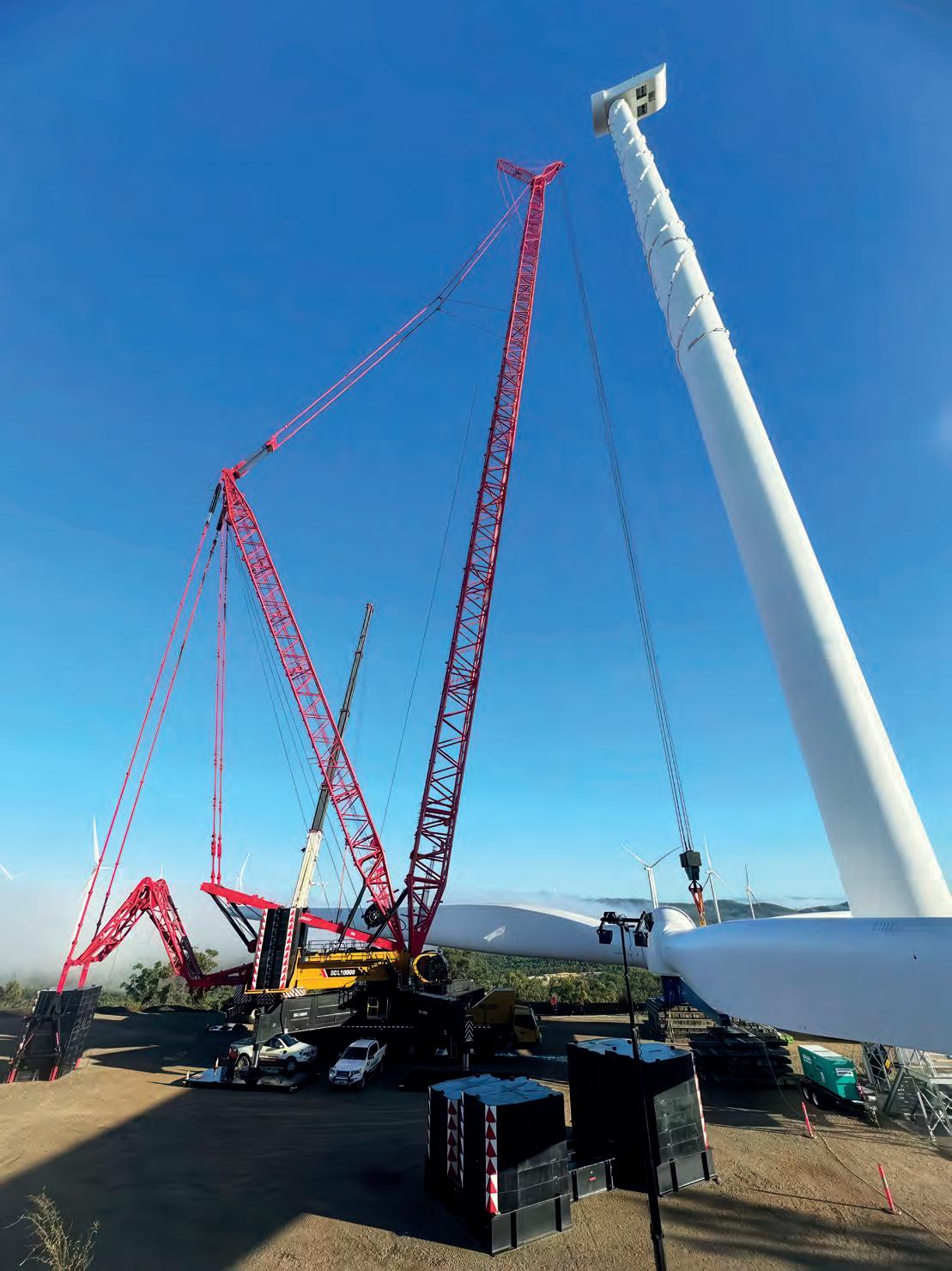
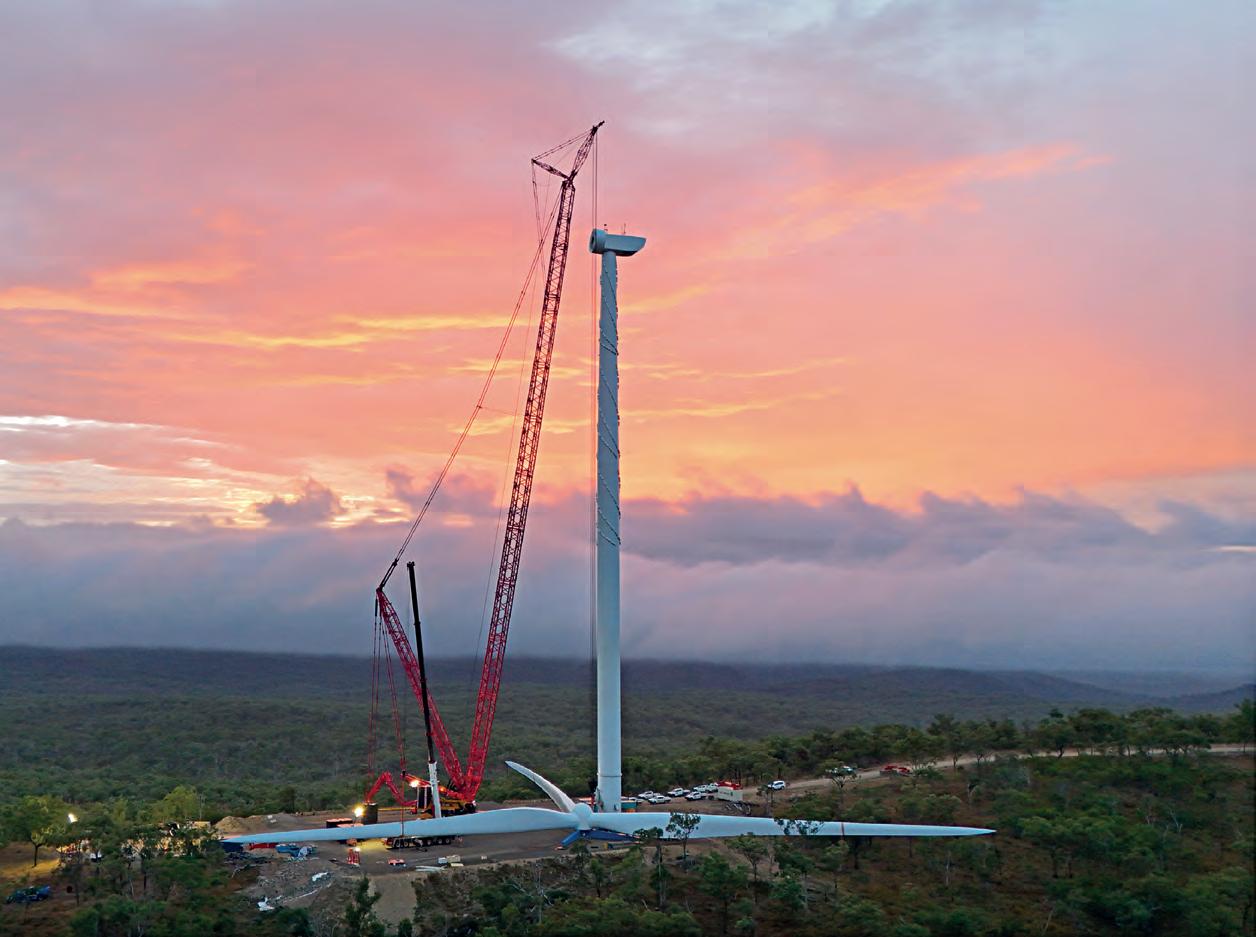
As wind turbines grow taller and more powerful, installation strategies are evolving just as quickly. For developers, the challenge is no longer just building wind farms, but planning them to support the next generation of turbine technology. At Goldwind Australia, that responsibility sits with engineers like Audrey Bao.
Goldwind’s Australian portfolio includes several large-scale wind farm developments, where installation planning plays a critical role in delivery and safety.
Goldwind Australia, has been closely involved in that evolution since joining in 2018. Over that time, she has seen turbine capacities increase significantly, along with the complexity of installation and lifting requirements.
“Since I joined Goldwind, I’ve been responsible for installation engineering across multiple turbine platforms,” Audrey said. “Over time, turbine capacity has increased substantially, bringing new challenges in lifting strategy and execution.”
That shift reflects the broader direction of the wind sector. Larger turbines mean fewer units per project, but heavier components and more demanding installation conditions. For lifting engineers, every decision – from crane selection to site layout – must balance immediate needs with future scalability.
Goldwind’s Australian portfolio includes several large-scale wind farm developments,
where installation planning plays a critical role in delivery and safety.
“One of our earlier large-scale projects involved more than 100 wind turbines,” Audrey said.
Projects of this scale require close coordination between turbine suppliers, crane providers and construction teams over extended periods.
“There were challenges along the way, but we worked through them as a team and delivered the project safely,” she said.
In Queensland, Goldwind delivered another major installation project involving next-generation turbines, working with multiple lifting providers.
“That project involved more advanced turbine platforms, and we worked with multiple crane suppliers throughout the process,” Audrey said. “We completed the installation with a strong focus on safety and coordination.” These experiences have shaped Goldwind’s approach,
reinforcing the importance of early planning and collaboration.
Much of Audrey’s work happens well before a crane arrives on site. Early-stage planning includes reviewing lifting studies, ensuring compliance with Australian standards and validating rigging systems.
As projects scaled up, recurring challenges around crane availability and coordination became clear.
“We found that crane availability in the market can be limited,” Audrey said. “So early engagement with suppliers and careful planning became increasingly important.”
This has led to a more structured evaluation process, where lifting solutions are assessed not only for immediate needs but also for their suitability across future projects.
“We assess different crane options to identify solutions that can support both current turbine requirements and future developments,” she said.
Goldwind has evaluated a range of lifting solutions with industry partners, focusing on equipment that can meet evolving turbine requirements while maintaining efficiency.
“Different crane types each have their own advantages and limitations,” Audrey said. “Some configurations can reduce site footprint, but may have constraints in working radius or relocation efficiency.”
Lattice boom cranes, in particular, have become an important part of the mix due to their stability and adaptability.
“Ultimately, the selection depends on a balance of capacity, site conditions, efficiency and long-term requirements,” she said.
Within this context, Goldwind has worked closely with partners including Sany and Tutt Bryant Equipment to introduce advanced lifting solutions suited to Australian conditions.
Among the solutions evaluated is the SANY SCL10000, reflecting a broader shift in crane design towards safety, efficiency and adaptability.
To support wind installation requirements, Sany has introduced several
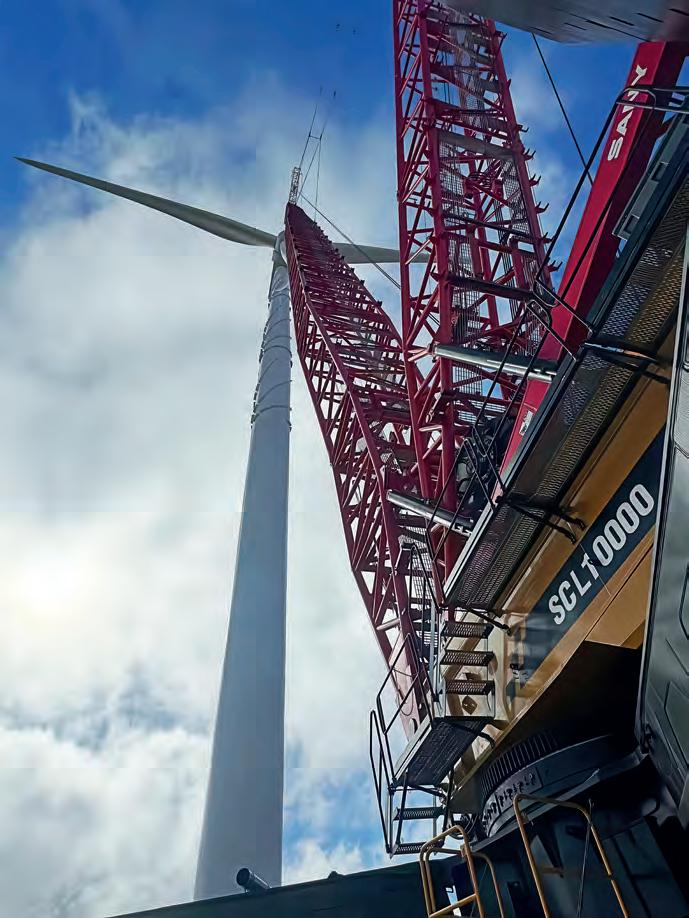
Among the solutions evaluated is the SANY SCL10000, reflecting a broader shift in crane design towards safety, efficiency and adaptability.
“The aim was to ensure it could support current turbine models as well as future developments.”
design enhancements focused on operator safety and lifting performance. These include improved access systems such as additional walkways, safety lines and ladders, allowing safer and more efficient work at height.
The crane is capable of achieving significant lifting heights in standard configurations, offering flexibility across a wide range of site conditions. Its lattice boom design incorporates a distributed hydraulic piping system, with hydraulic
connections available at each boom section. Even when sections are suspended, operators can complete assembly work from within the structure, reducing exposure during critical stages and enhancing overall operational safety.
Further enhancements include a rearmounted counterweight configuration to support lifting performance, reinforced outriggers for improved stability, and a wider boom structure that increases
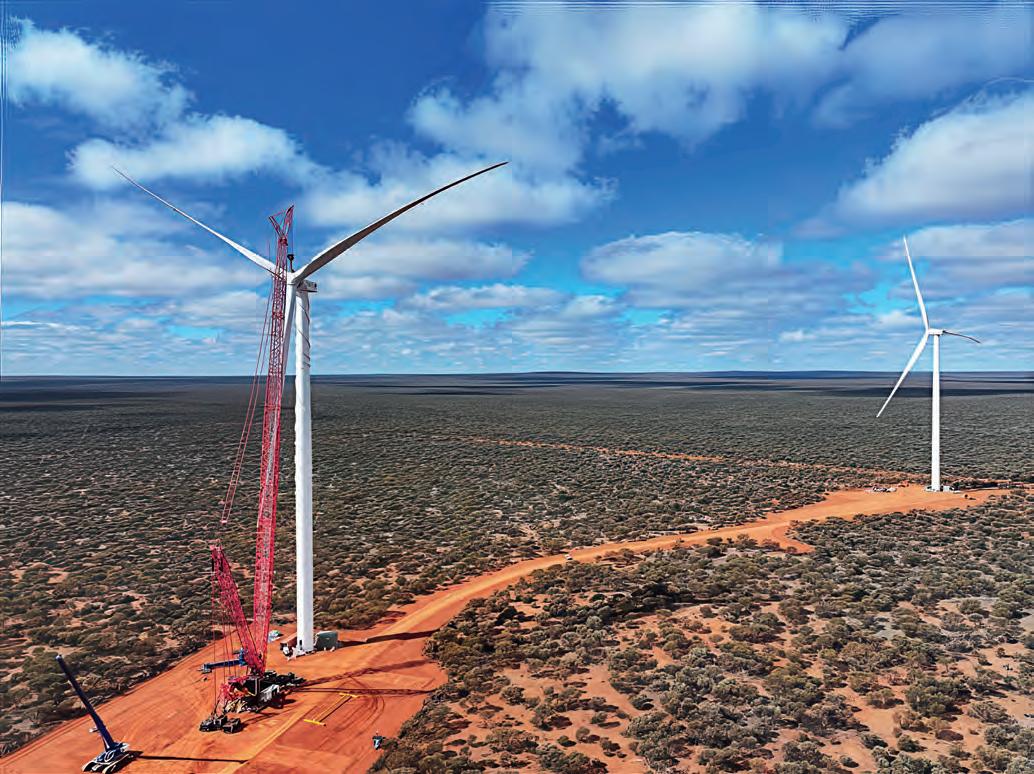
rigidity while maintaining transport practicality. For Goldwind, evaluating these improvements is part of ensuring lifting strategies remain aligned with both safety expectations and evolving turbine requirements.
As turbine sizes increase, the relationship between turbine OEMs and lifting providers is becoming more interconnected.
“Crane design needs to keep pace with the development of wind turbines,” Audrey said.
Goldwind’s engineering team works closely with partners to ensure lifting solutions evolve alongside turbine requirements.
“We provide our requirements and data to crane manufacturers, and work with them to develop suitable solutions,” she said.
In Australia, where turbine heights and capacities continue to grow, adaptable lifting solutions are critical to maintaining efficiency.
As turbine sizes increase, the relationship between turbine OEMs and lifting providers is becoming more interconnected.
“At present, the SCL10000 can support installations up to 160 metres in height.”
“Having the right lifting strategy in place is essential to ensuring safe, efficient and scalable project delivery,” Audrey said.
Compliance and safety at the core
Throughout this growth, compliance and safety remain central.
“Compliance with Australian standards is a key focus for us,” Audrey said.
Goldwind’s Australian team works closely with global engineering teams to ensure designs meet local requirements from the outset.
“We are involved early in the design stage and work closely with our global teams to identify and address compliance requirements,” she said. “This helps us avoid costly changes later in the project.”
At the operational level, safety remains the top priority.
“Safety is always our first priority, and we follow strict safety rules across all projects,” Audrey said.
As the wind sector continues to evolve, installation strategies will need to remain adaptable and forward-looking. For Goldwind, this means working closely with partners like Sany and Tutt Bryant Equipment to ensure lifting solutions keep pace with turbine innovation.
Engineers like Audrey sit at the centre of that transition, bridging design, compliance and on-site execution.
In a sector defined by rapid advancement, the ability to plan ahead–while maintaining safety, efficiency and strong partnerships–will continue to shape how wind farms are delivered across Australia.
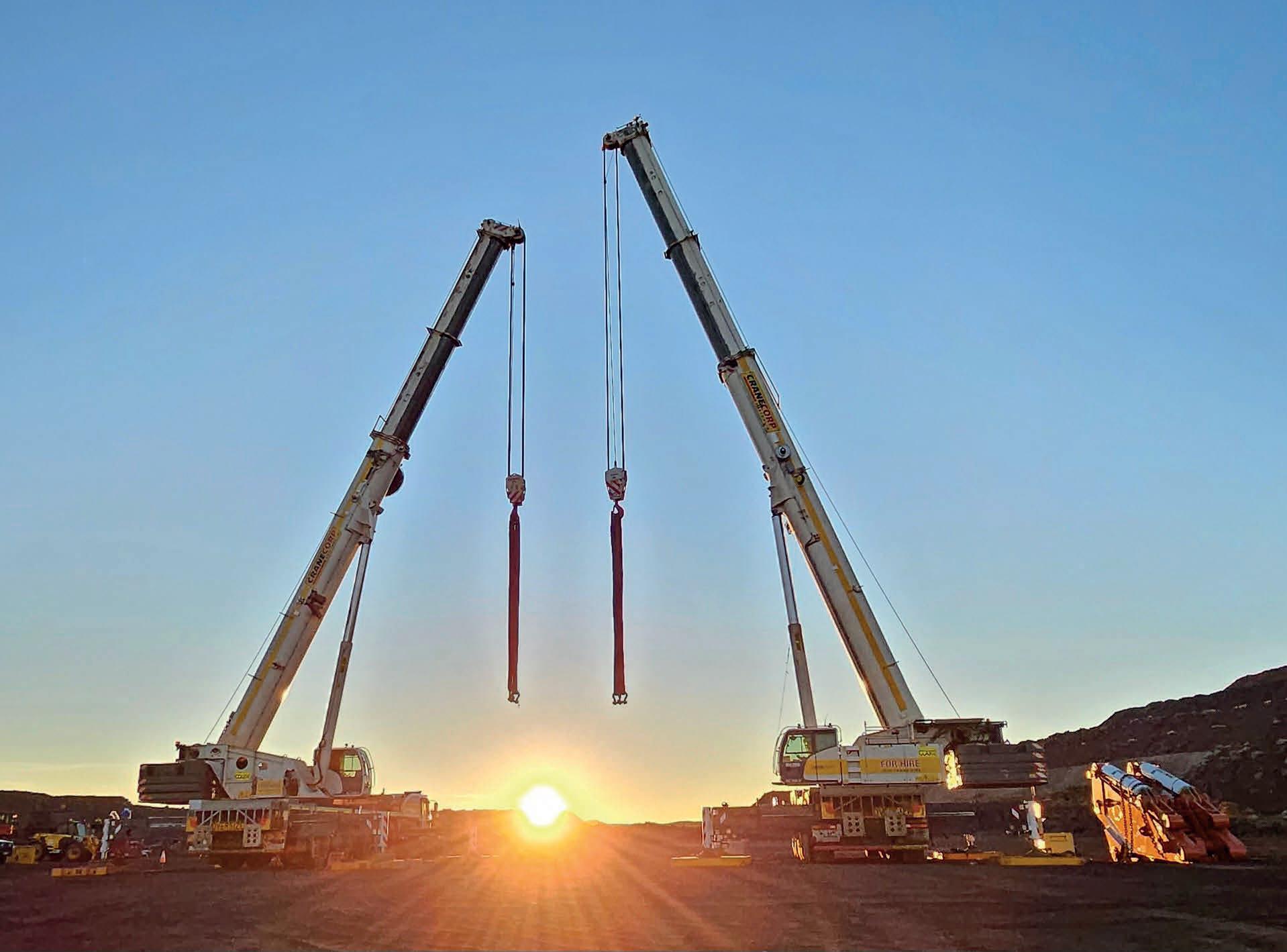
Cranecorp Australia (CCA) has recently completed a period of fleet realignment culminating in the purchase of a Liebherr LTM1650-8.1. Lance Strachan, CCA’s General Manager Technical, explains how the business is responding to the evolving demands from the market.
Goldfields Crane Hire have been servicing the Western Australian (WA) mining, infrastructure and general maintenance markets for over 30 years. Over this time, the business has built long-standing relationships with clients, underpinned by a strong service culture and operational reliability. CCA has been servicing the renewable energy sector for the past seven years and more recently the business has focused on realigning its fleet in preparation for the next phase of growth.
“We’re heavily involved in mining service work across long-term contracts, supporting everyone from Tier One operators through to Tier Two and Tier Three miners, as well as the contractors and project teams. We also provide taxi hire services from depots around the state and contract-related services for infrastructure projects, oil and gas and the renewable sector, including wind. Our focus has always been on supporting our clients’ operations safely, reliably and efficiently over the life of their projects,” said Lance.
“Due to the nature of our fleet and capacities we operate, we have been focused on the maintenance aspect and that work has enabled us to move into installation. Private hybrid wind farms are being constructed with second-hand refurbished turbines which are ex-Europe and are installed in microgrids. We are also managing typical maintenance work including blades, bearings, gearboxes and drive trains. WA is behind the East Coast and South Australia in terms of installed capacity, but we are now seeing significant momentum, with several big wind farms being constructed. This has created increasing demand for cranes
Due to the nature of Cranecorp’s fleet and capacities, the business has been focused on the maintenance aspect of the renewable sector and this work has enabled it to move into installation.
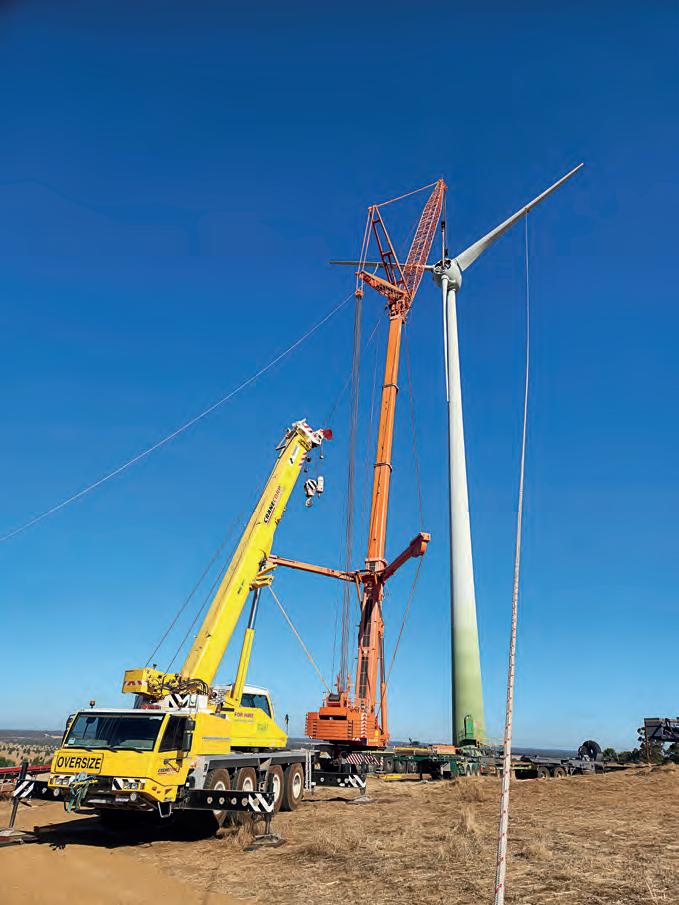
that can operate efficiently at height while maintaining flexibility across multiple work scopes.
“We are dealing with previous generation turbines from 0.8 up to 2.5-megawatt units which are typically suffering midlife maintenance requirements. We are working at 80 metres on the two megawatt units and up to 105 metre and 110 metres on some of the other units. The industry is changing so quickly and dramatically.”
CCA’s fleet has a typical spread of capacities with a large number of pick and carries from 15 tonne Frannas all the way to 40 tonne. All terrains start from 60 tonne through to 500 tonne capacity with the 700 tonne capacity Liebherr LTM1650-8.1 due to arrive mid-year. The fleet also includes a range of rough terrains from 60 to 145 tonne capacities.
“We have a long-standing relationship with Tutt Bryant. Through the joint
venture we target projects that benefit from a combined approach, utilising their lattice boom crawlers and transport expertise, and CCA’s mobile hydraulic crane fleet. It allows us to deliver integrated solutions for clients while drawing on the strengths of both businesses. It’s a mutually beneficial relationship,” said Lance.
He goes on to discuss the thinking behind the purchase of the Liebherr LTM1650-8.1.
“For us the Liebherr LTM1650-8.1 hits the sweet spot. It is great for infrastructure projects, major equipment change outs during mine shutdowns, and it is well suited for the renewable sector. Like our 500 tonne crane, it is an exceptionally strong crane.
“Renewables is one of our key growth areas and the Liebherr LTM1650-8.1 is ideally suited to component change outs on towers of up to 135 metres that are coming into the WA market. It gives us the flexibility to support our clients as turbine sizes and hub heights continue to increase.”
The Liebherr LTM 1650-8.1 is an 8-axle all terrain crane with a nominal lifting capacity of 700 tonnes, delivering between 15 and 50 per cent higher performance than its predecessor, depending on configuration.
The crane features two interchangeable telescopic boom systems:
• 54-metre telescopic boom
• 80-metre telescopic boom
Thanks to Liebherr’s easy-change system, operators can swap boom configurations efficiently, allowing the crane to adapt quickly to different job requirements. The crane is also equipped with VarioBallast®, enabling infinite adjustment of the ballast radius via hydraulic slewing. This provides greater flexibility on confined spaces while supporting safer and more efficient crane setups.
Beyond lifting performance, the LTM 16508.1 incorporates Liebherr’s ECOdrive system, which contributes to:
• Reduced fuel consumption
• Lower noise emissions
• Optimised engine performance during crane operation
These features make the crane particularly well suited with CCA’s focus on efficient operations and supporting clients on infrastructure, shutdown and environmentally sensitive projects.
Cranecorp places significant emphasis on its workforce culture and development, with a highly experienced crew base and strong employee retention.
“Our crews are a real point of difference for the business, and we consistently receive positive feedback from clients about their professionalism and positive approach towards the tasks in front of them on site. Wherever possible we retain the same core teams, which helps maintain consistency,
familiarity with client sites and strong working relationships. Our employee retention is very strong, with a significant number of staff having been with the business for seven to 12 years and another group reaching 15 to 20 years,” Lance said.
“From a cultural perspective, we work hard to ensure the right people are joining our team. The team is always willing to train them and educate them as long as they have the right attitude. Everybody talks about attitude, but for us, it’s extremely important. Our crews are multi skilled and adaptable, they all pitch in to get the work done safely and efficiently. Whether that’s climbing into a truck, a Franna, a telehandler, or going up the tower, everyone works together as a team.
“Typically, our crews will cycle through the seat to keep the experience levels going. From basic rigging to assisting the mechanical crew ‘in tower’ with component removal, anyone on the crew can take on a role. One crew member is always ‘in tower’ which sets us apart from others in the WA wind sector.”
CCA boasts a comprehensive in-house engineering team dedicated to engineering solutions and lift planning. When required, the team is supported by third parties.
“We have a number of highly experienced individuals in our organisation who step into technical roles when complex solutions are required,” Lance said.
“These are typically our regional managers or senior superintendents with deep operational experience and we draw on that depth of experience and knowledge within our organisation when developing engineering solutions.
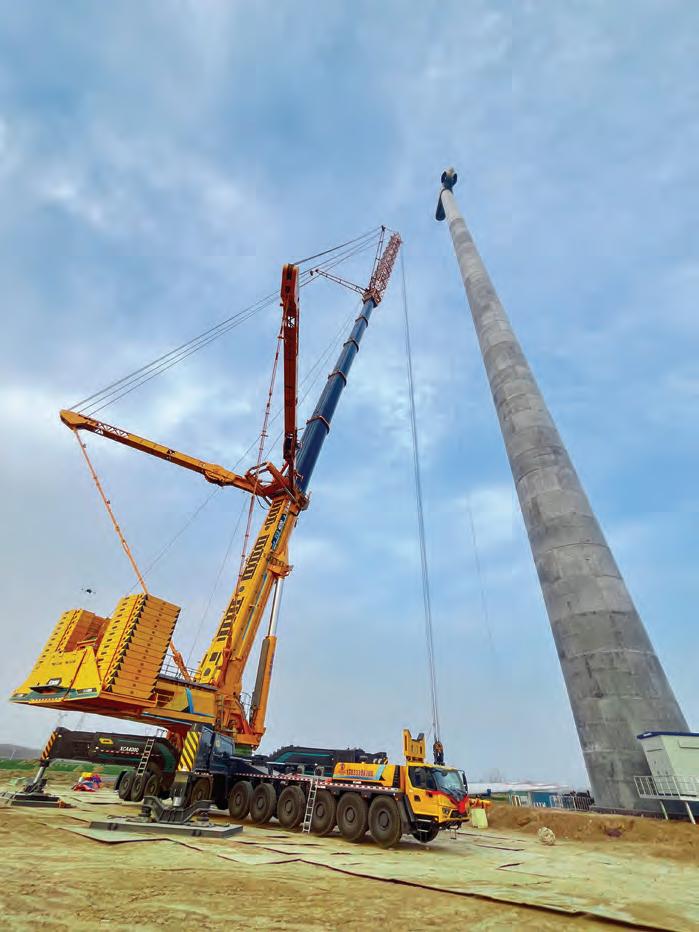

“We coordinate closely with our team members that know the plant, that know the actual facility or the wind farm where we will be working, and can see the challenges we will need to overcome from an operational perspective.
“By integrating operational insight into the engineering process, we are able to deliver practical, site ready solutions rather than relying solely on desktop studies and running into problems on site. This give our clients the best outcome and setup for success right from the beginning.”

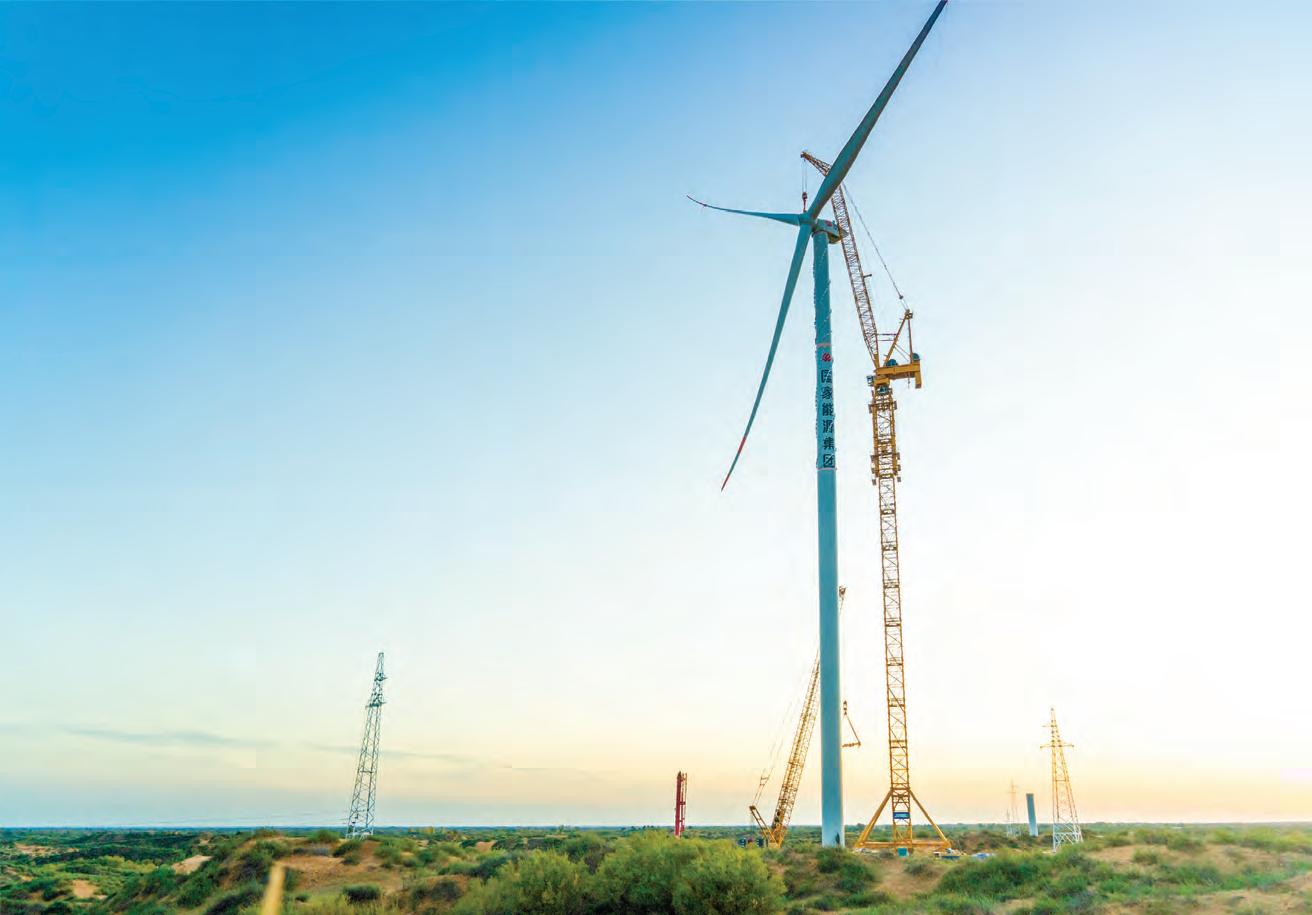
General Cranes offers vast experience on large scale projects including highrise residential, commercial and infrastructure backed by the performance and reputation of the Favelle Favco brand.
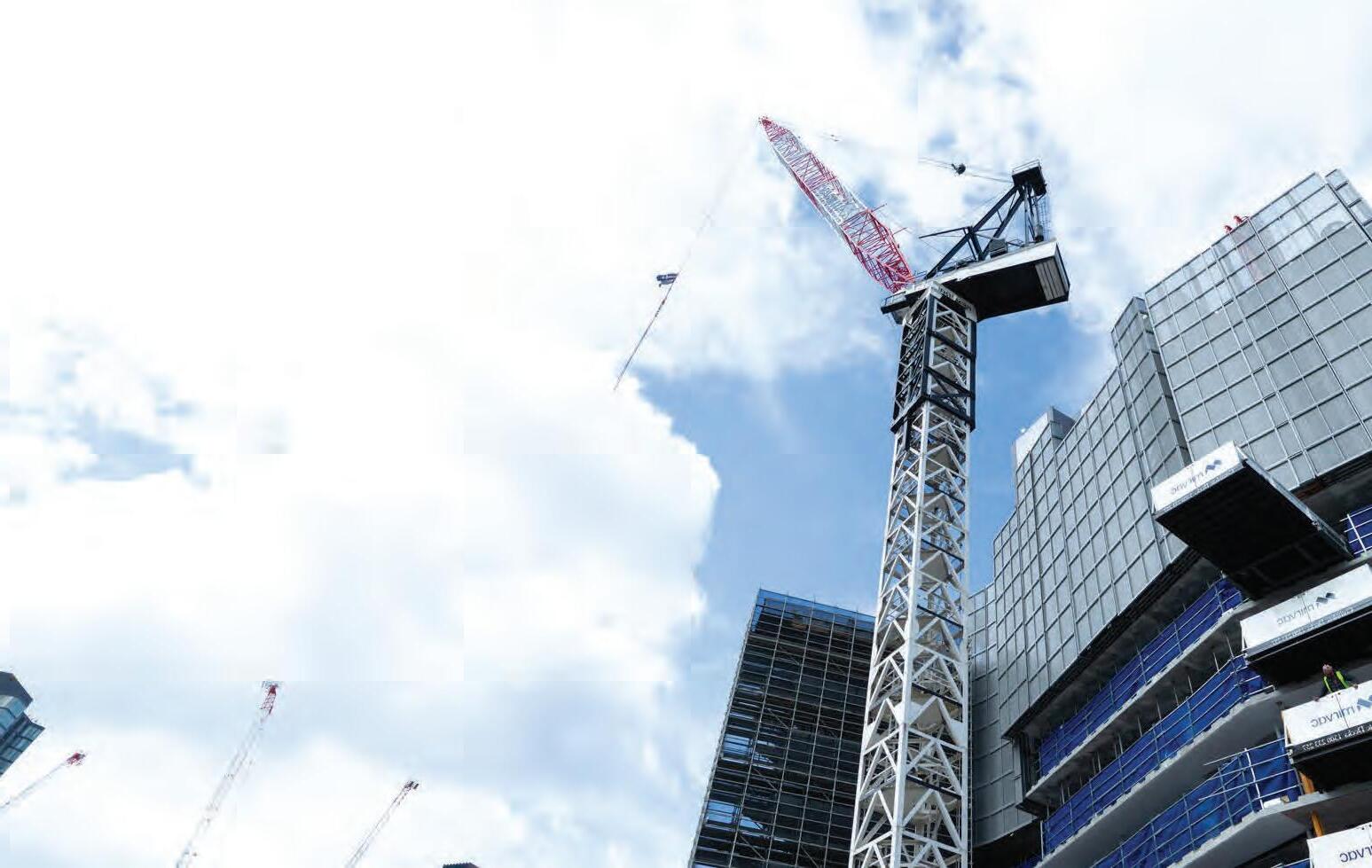
Project risk management plan is established before the delivery of the tower crane and includes safe work method statements.
General Cranes employs only qualified and experienced workers holding Work Safe high risk competency endorsements to establish, operate and maintain the tower crane fleet.
AUSTRALIAN QUALITY MANAGEMENT STANDARDS
General Cranes maintains systems for compliance to the Australian quality management standard AS/NZS ISO 9001 and safety management standard AS/NZS 4801.
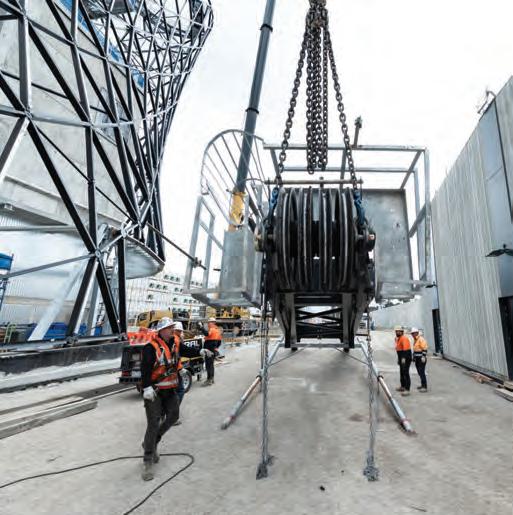
General Cranes has worked on high profile projects in Melbourne, Brisbane and Adelaide. Contact us today and see how we would be your ideal partner on your next project.

General Cranes / Melbourne
T. +61 3 9369 1222 | E. info@generalcranes.com.au
General Cranes / Brisbane
T. +61 7 5577 4455 | E. info@generalcranes.com.au
The rapid expansion of data centre infrastructure across Australia is reshaping demand in the cranes and lifting sector.
FOR GENERAL CRANES, THIS SHIFT IS already translating into a steady pipeline of work, particularly across Melbourne’s western corridor.
George Micevski, from General Cranes, said the company is seeing sustained momentum in the segment, with data centres and broader infrastructure projects now forming the backbone of its activity.
“At the moment, data centres and infrastructure are still driving the majority of our work,” he said.
This demand has remained resilient even as other construction segments fluctuate. While there are early signs of high-rise construction returning, George said the outlook remains uncertain.
“We are starting to see some high-rise come back, but with interest rates where they are, we are not too sure how that will play out,” he said.
In contrast, data centre construction has proven more insulated from
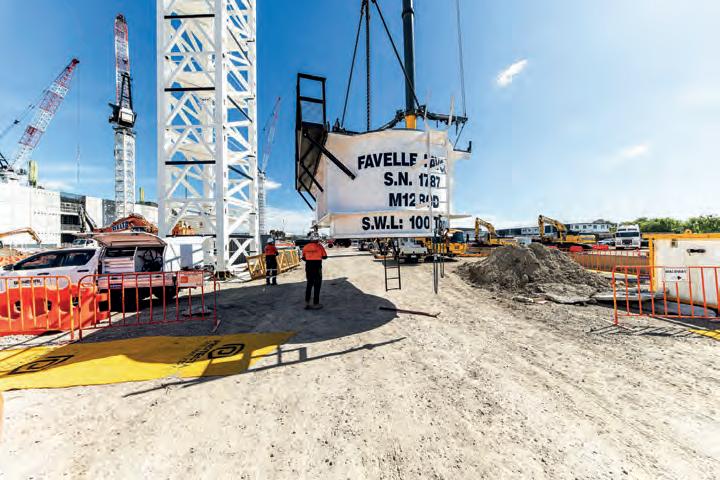
One of the defining characteristics of data centre construction is the requirement for heavier lifts, particularly driven by precast elements and structural components.
George said this has led to strong demand for higher-capacity tower cranes within General Cranes’ fleet.
“There is still strong demand for the larger capacity cranes like the Favelle Favco M1280D and the M860DX,” he said.
To keep pace, the company is actively expanding its fleet, bringing in additional
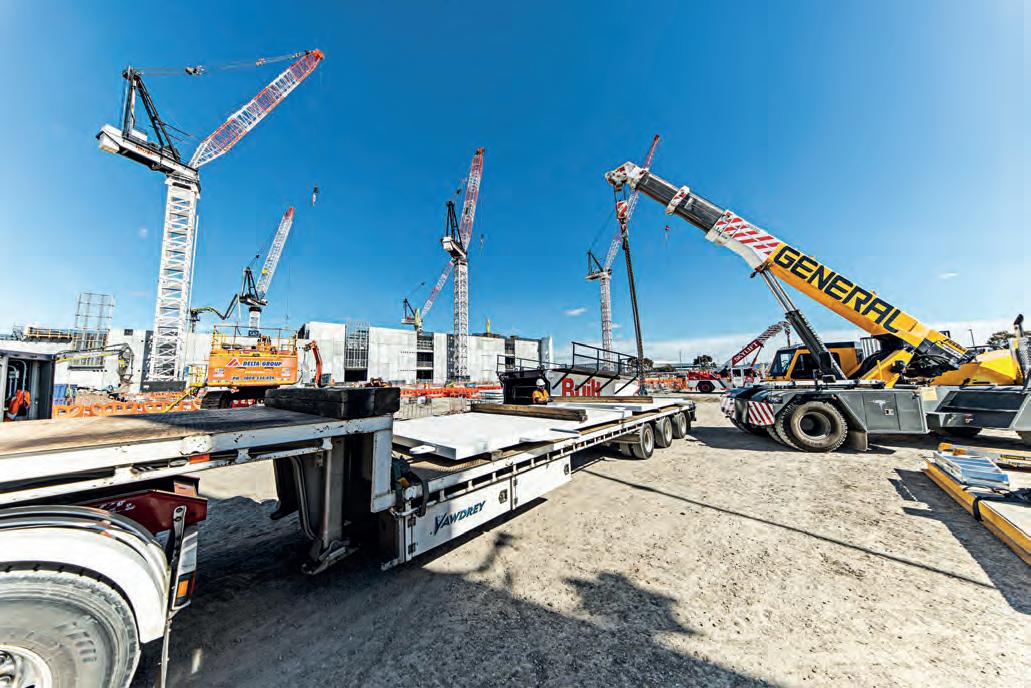
units across these categories. “We have more units coming in both the 860 range and the 1280 range,” he said.
Rather than reflecting a shift in projects, George said this expansion is a response to volume.
The need for higher capacity is also closely tied to the type of materials being handled on site.
“There is nothing new compared to what we were doing a few years back, it is just that the demand has increased,” George said. “These projects involve heavy precast elements, and those elements need to be placed within specific radiuses, which is what drives the larger capacity.”
General Cranes is currently seeing a concentration of data centre activity
Heavier precast elements push demand towards higher-capacity tower cranes.
“We are probably going to have somewhere in the vicinity of about 25 large cranes in the western suburbs of Melbourne, which is unprecedented.”
across Melbourne’s western suburbs, with multiple large-scale developments underway or in planning.
George said the scale of activity is unprecedented. Projects are spread across locations including Laverton, Melton and Tullamarine, reinforcing the region’s growing importance as a data infrastructure hub.
“We are probably going to have somewhere in the vicinity of about 25
large cranes in the western suburbs of Melbourne, which is unprecedented,” he said.
Alongside larger tower cranes, General Cranes is also investing in supporting equipment to improve operational efficiency on site.
The company has recently taken delivery of a new Franna AT40, aimed at handling increasingly heavy tower crane components and speeding up site operations.
“We decided to go that way because some of the larger tower crane components are getting heavier, and the earlier 25-tonne Frannas were struggling,” George said.
Despite the strong pipeline, one of the key challenges in the data centre segment is the speed at which projects move from planning to execution.
This fast-paced timeline highlights the strong momentum in the sector, and emphasises on the need for agile planning and fleet readiness.
“Ideally, we would prefer to have more time to procure equipment and make sure we are prepared, but the current pace of projects is not allowing this,” George said.
The broader outlook for data centre construction remains positive.
George said there are already indications of further growth in the pipeline, supported by ongoing efforts to attract investment into Victoria.
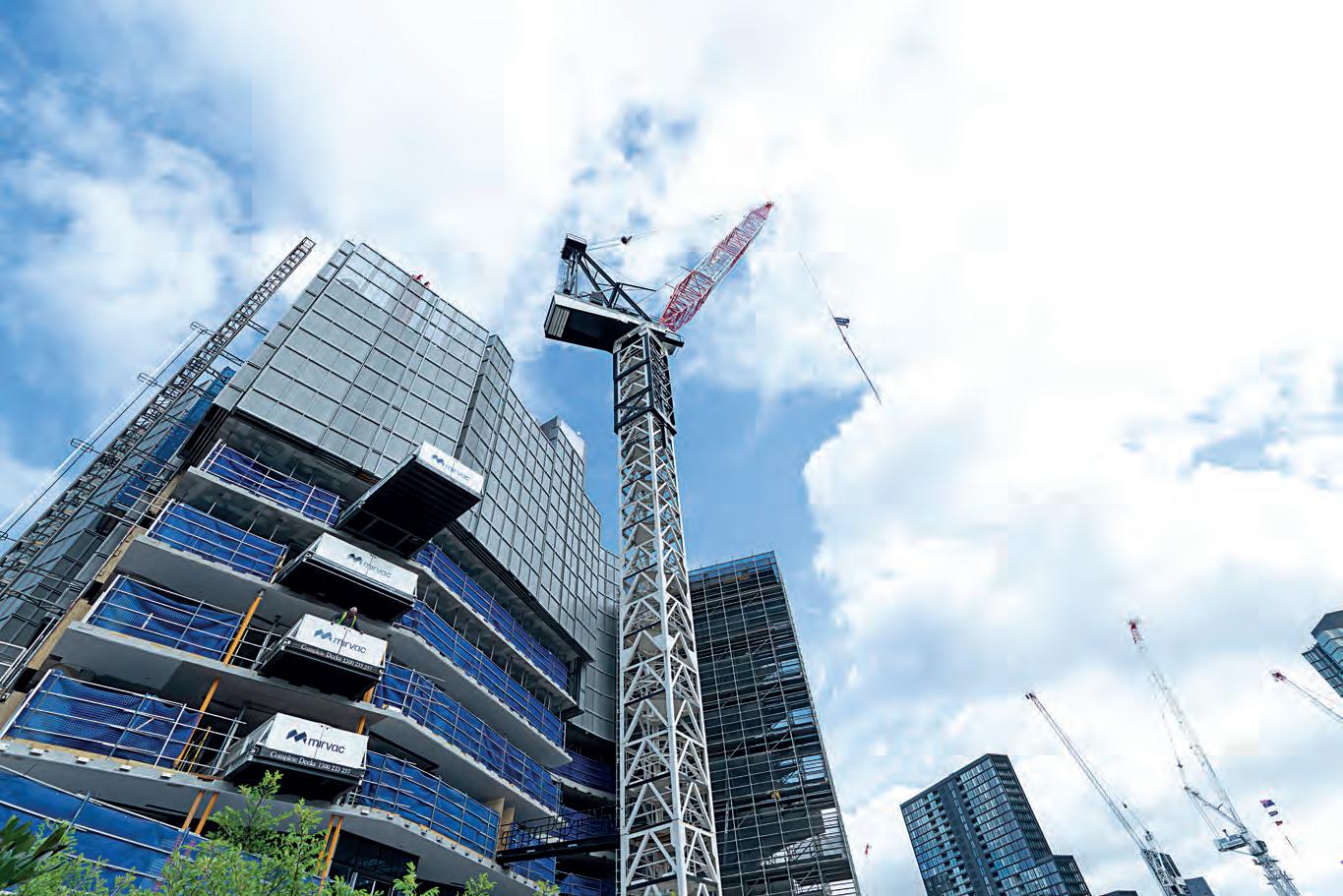
For General Cranes, the focus is clear. As demand for digital infrastructure accelerates, the company is aligning its fleet and operations to support a sector that shows no signs of slowing down.
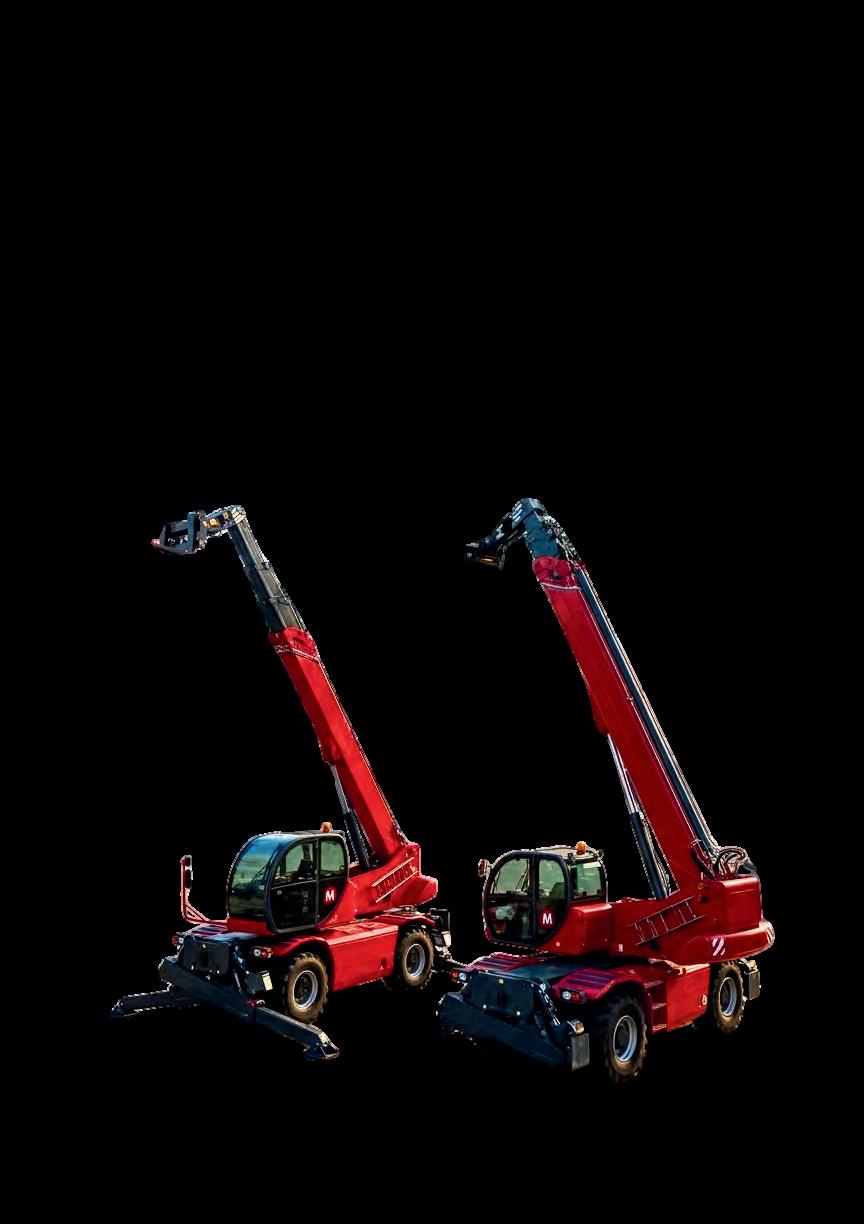


RTH 8.27

RTH 8.35



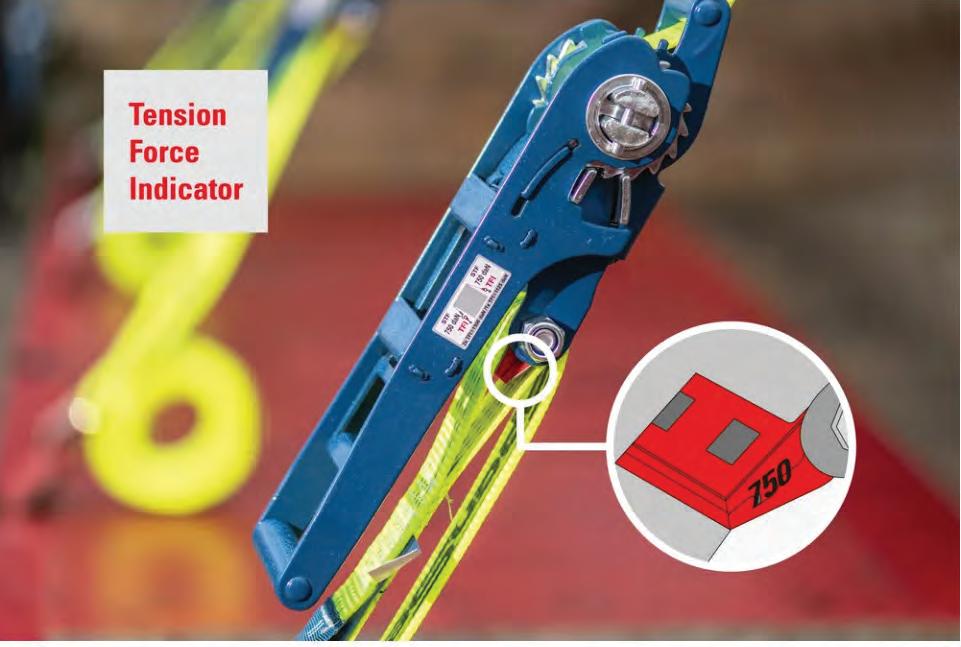
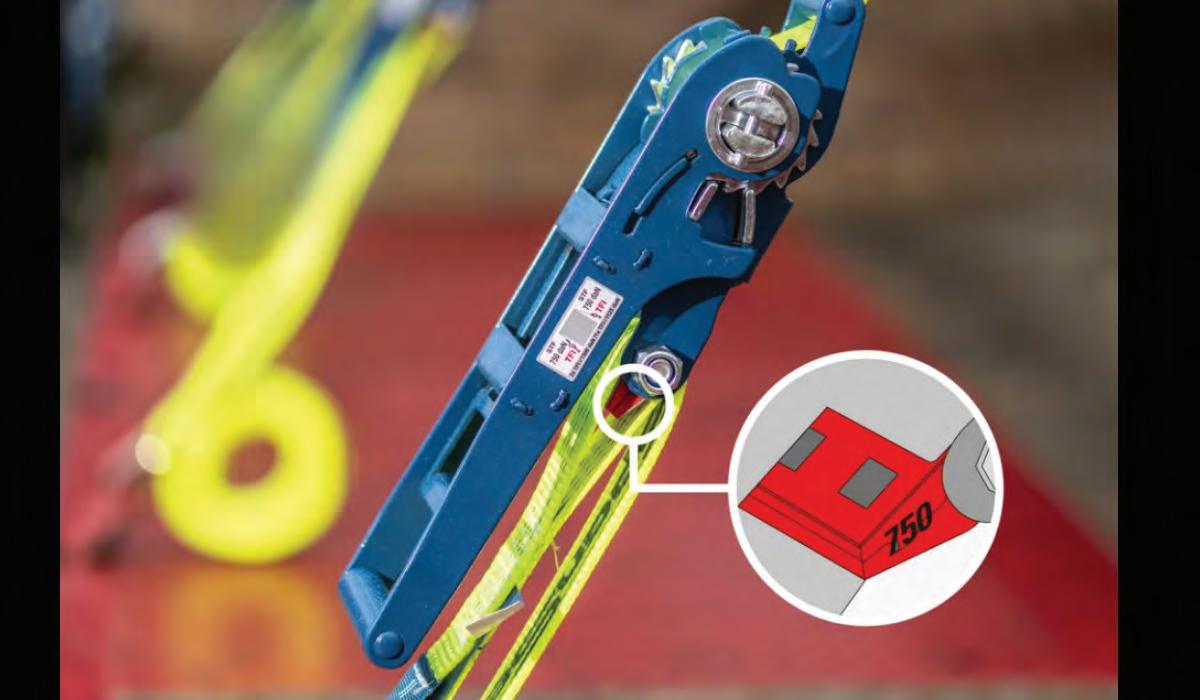

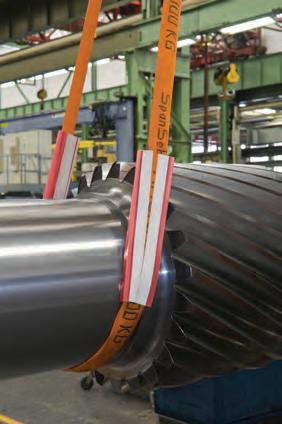
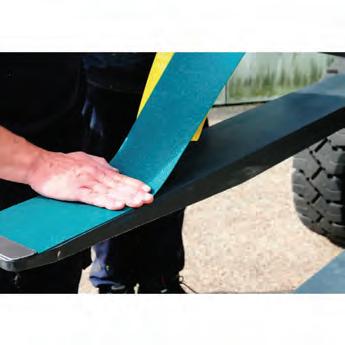
Restraint, friction, force control and protection are not separate problems.
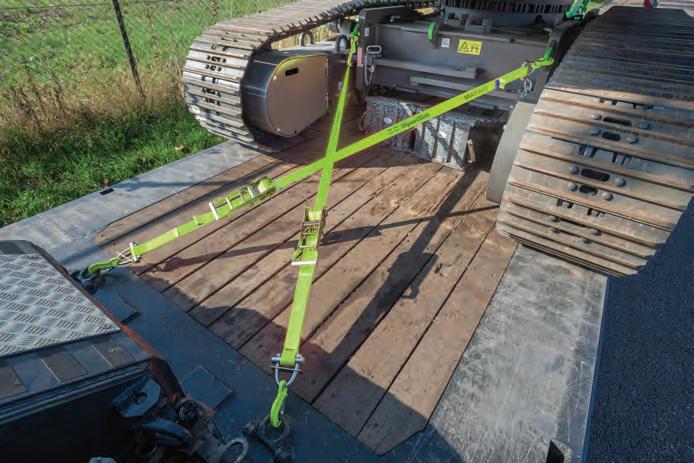
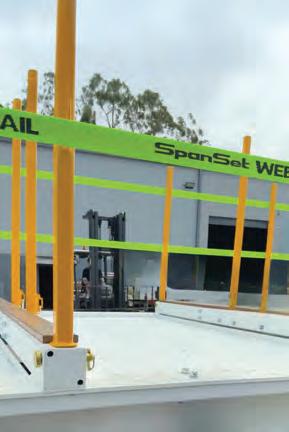
SpanSet Australia manufactures fully integrated solutions for crane transport using proven products and engineering expertise.
From MaXafe ratchets, Tension Force Indicator (TFI), to WebRail and SecuGrip high-friction mats; every component works together to maximise safety and performance.
Backed
It never takes much. A sudden brake. A tight corner. A moment of misjudgement, often by someone else. In that instant , the dynamics of a load can shift and when they do, the consequences can be very serious.
ACROSS AUSTRALIA, INCIDENTS INVOLVING poorly restrained loads continue to happen. Trailers lose equipment. Crane counterweights shift in transit. Near misses play out in ways that could easily have ended far worse.
Under the framework of the National Heavy Vehicle Regulator (NHVR), these are not minor oversights. They are breaches of the Heavy Vehicle National Law with real legal and financial consequences. Enforcement activity across the country shows regulators are paying closer attention than ever before.
Australia’s Chain of Responsibility (CoR) laws have reshaped how the industry understands accountability. Responsibility no longer rests solely with the driver.
It extends across the entire supply chain, from those who plan and schedule the job, to those who load and to those who ultimately own the vehicle. When a load is not properly secured, the legal and financial implications can reach far beyond the driver.
Yet despite this shift, there remains a persistent gap between perception and reality when it comes to load restraint.
This is particularly evident in the transport of crane counterweights, rigging gear and heavy plant. Many operators continue to rely on familiar methods, trusting in practices that have served them in the past but may not meet the demands of current compliance standards.
“There’s still a gap between what people think is compliant and what actually is,” said Mitch Rouse, Technical Sales Lead Queensland at SpanSet Australia. “A lot of operators rely on what they’ve
always done. Chains, straps; standard setups. But that doesn’t always meet today’s requirements.”
At the heart of the issue is a misunderstanding of how restraint systems actually perform. In many cases, loads are secured using tie-down methods rather than direct restraint. The distinction is critical.
With tie-down restraint, effectiveness is not determined by the strength of the lashing alone, but by the amount of pretension applied and the friction generated between the load and the deck. Increasing the size of a chain or strap does not automatically improve security.
“If you don’t have sufficient pretension, the load can still move,” Mitch explains. “You’re relying on friction and friction is directly linked to the force you apply into the system.”
Without the ability to measure and verify that force, operators are often relying on judgement rather than certainty. Loads can shift under braking or cornering, systems can fall short of compliance requirements and decisions are made on assumption rather than calculation.
Under Chain of Responsibility obligations thinking you have a secure load does not protect you from the law.
The industry is now moving away from the idea of “it’s tight enough” towards a measurable, verifiable control.
A standard ratchet assembly may feel secure, but it provides no indication of the actual force applied. Without that visibility and pretension indication, compliance becomes difficult to prove and measure.
This is where technical systems are changing the conversation. By applying an engineered restraint system backed with a device such as SpanSet’s patented Tension Force Indicator (TFI), operators can move beyond guesswork and into a space where restraint can be quantified and monitored.
“With SpanSet’s TFI, you’re no longer relying on feel,” said Craig Harris, Technical & Product Development Manager SpanSet. “You know when you’ve reached the required tension and you can immediately see if that tension changes during transit.”
Effective restraint, however, does not begin on the trailer. It begins in the planning stage. Understanding how many lashings are required, which restraint method is appropriate, and what level of tension must be achieved is essential, particularly when dealing with irregular or high-mass crane components. Digital tools like SpanSet’s Lashing App allows operators to calculate and document
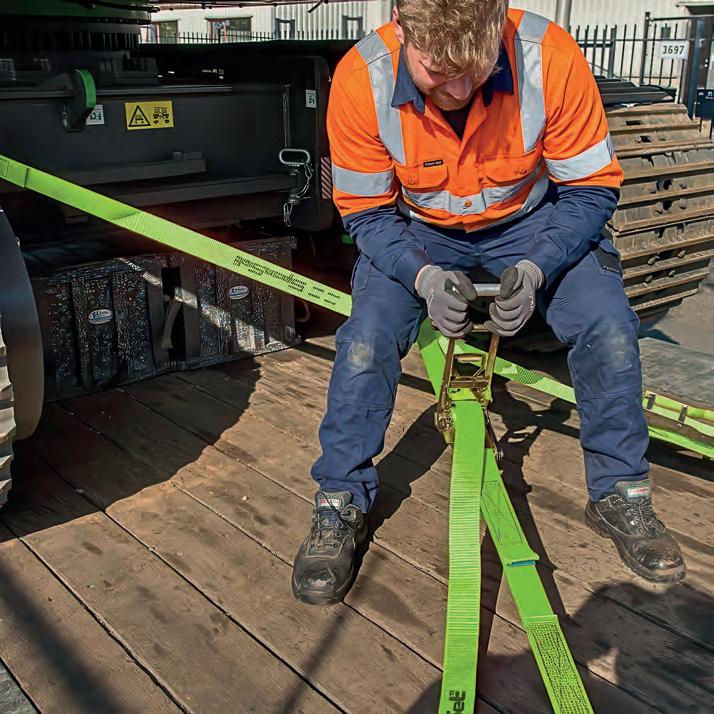
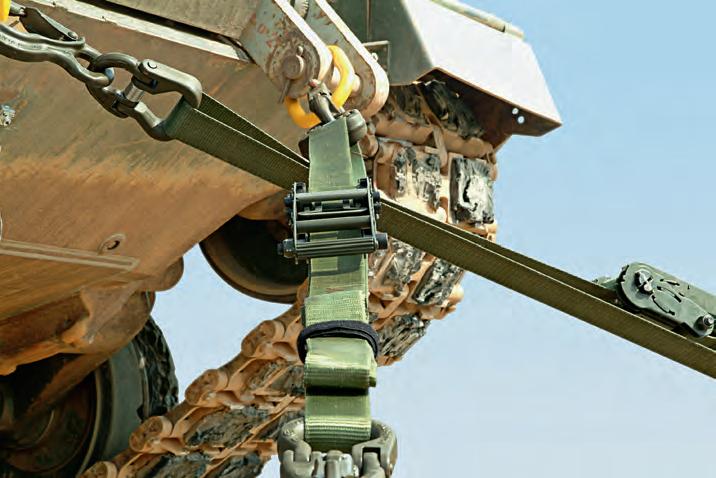
compliant restraint strategies before a load is even touched.
When planning, application and verification are brought together, a more structured approach emerges. Loads are not simply secured; they are controlled in a way that is repeatable, measurable and defensible. It is a shift that reflects the broader direction of the industry.
“That’s where the industry is heading,” Mitch said. “Not just securing loads, but being able to prove they’re secure.”
Alongside improvements in tie-down methods, direct restraint systems are also gaining traction. Unlike friction-based approaches, direct restraint is designed to physically prevent movement by resisting forces in specific directions. SpanSet has developed MaXafe in response to this.
MaXafe uses a high-performance webbing engineered at SpanSet Germany, exhibiting lower elongation and higher break strength than standard polyester webbing. Advances like this in high performance webbing systems are offering viable alternatives to traditional chains.
“In a direct restraint scenario, stretch is your enemy,” Mitch explains.
“The less elongation in the system, the faster it reacts and the better it controls the load. MaXafe is lighter than chain and provides less than two per cent elongation under load.
“That’s why it’s the go-to restraint system for military applications across the globe,” he continued.
But restraint is only one part of the equation. What sits beneath the load is equally important. Contaminants such as oil and water or even steel-on-steel contact can significantly reduce friction and increase the likelihood of movement. Even a well-designed restraint system can fall short if the surface conditions are not accounted for.
Solutions that increase friction and stabilise the interface between load and deck are becoming an essential part of a complete restraint strategy. This is where SpanSet’s secutex and secuGrip coatings come into play by increasing friction between the load and the deck.
Beyond the load itself lies another, often overlooked risk. The person securing it.
As loads grow in size and complexity, operators are frequently required to work at height, climbing onto trailers to position and check equipment. Despite advances in restraint technology, this remains one of the most exposed areas of risk within transport operations. A slip or misstep is all it takes, and a fall from even a modest height can have severe consequences and even death.
“We’ve engineered systems to control thousands of kilos of load,” Mitch said,
“but too often leave the person standing on it exposed.”
Purpose-built fall prevention systems like SpanSet’s Webrail system address this gap, creating safer working environments on trailer decks and transport platforms. These systems are not designed to restrain loads, but to protect people, reflecting a broader shift in how safety is being approached across the industry.
When things go wrong, the consequences are immediate and tangible. Enforcement activity continues to highlight cases of unsecured loads leading to road hazards, traffic disruption, and significant financial penalties. Falls from trailers remain a serious and persistent issue, where lives are genuinely at risk.
Compliance, in this environment, is no longer about ticking a box. It is about demonstrating control, not only over the load, but over the conditions and behaviours that surround it.
“There’s a growing expectation that you can prove your load is secure,” Mitch said. “Equally, there’s an expectation you’re protecting people working around it.”
As the demands on crane transport continue to grow, so too does the need for a smarter, more connected approach to safety. Restraint, friction, force control and fall protection can no longer be treated as separate considerations. They are part of a single system that must perform under pressure, every time.
At SpanSet Australia, that system is already in place, combining proven products with deep technical expertise and practical support in the field. As an accredited Registered Training Organisation, SpanSet extends this capability beyond supplying the best gear, equipping operators with the knowledge and competency to apply it correctly. In mid 2026, this will include nationally recognised courses such as TLID0015 Load and unload goods and TLIA1001 Secure cargo.
The result is a complete safety solution that gives operators clarity, confidence and control from start to finish. When every variable is accounted for, and every person is properly trained, compliance stops being a concern and becomes a standard.
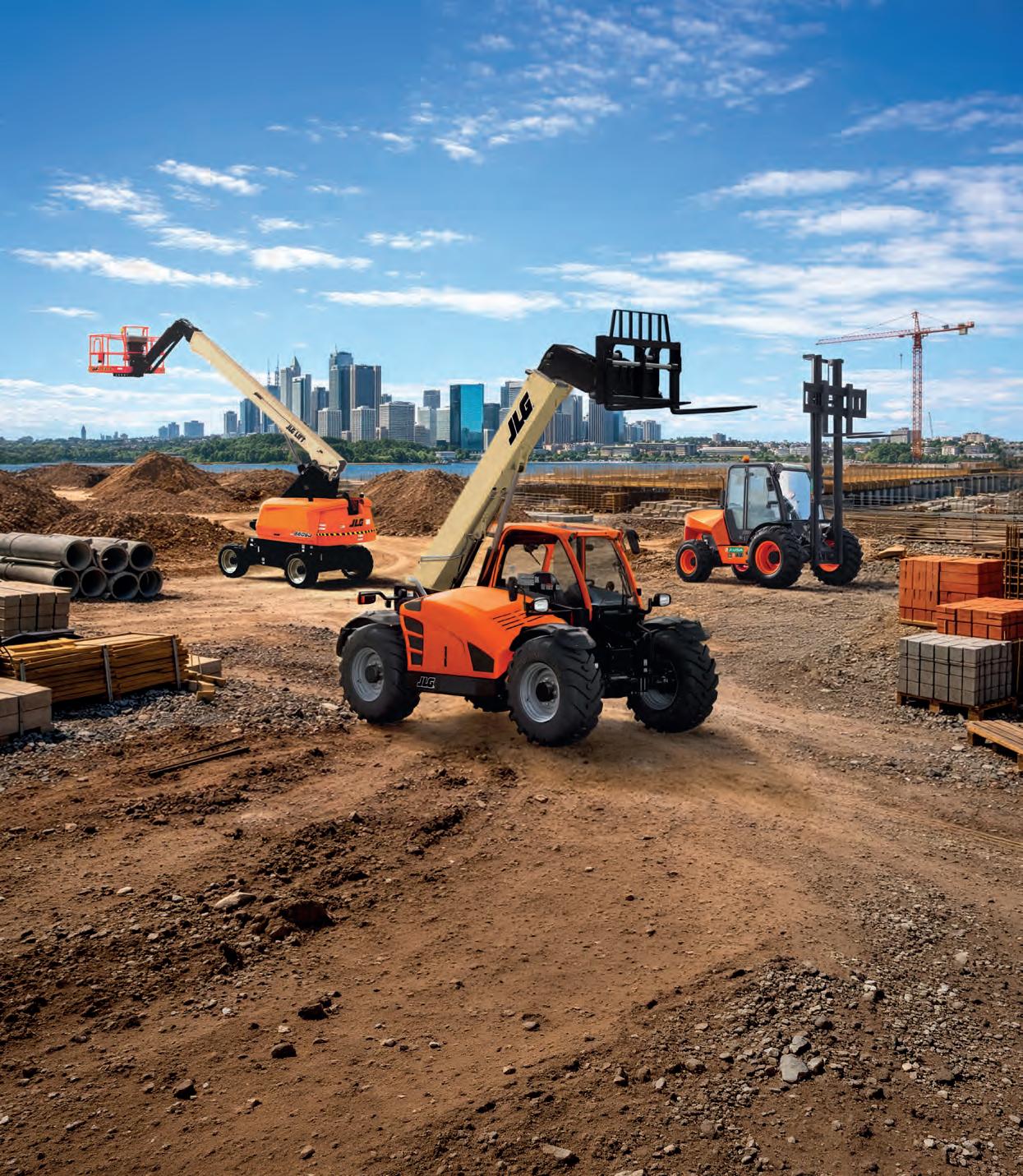
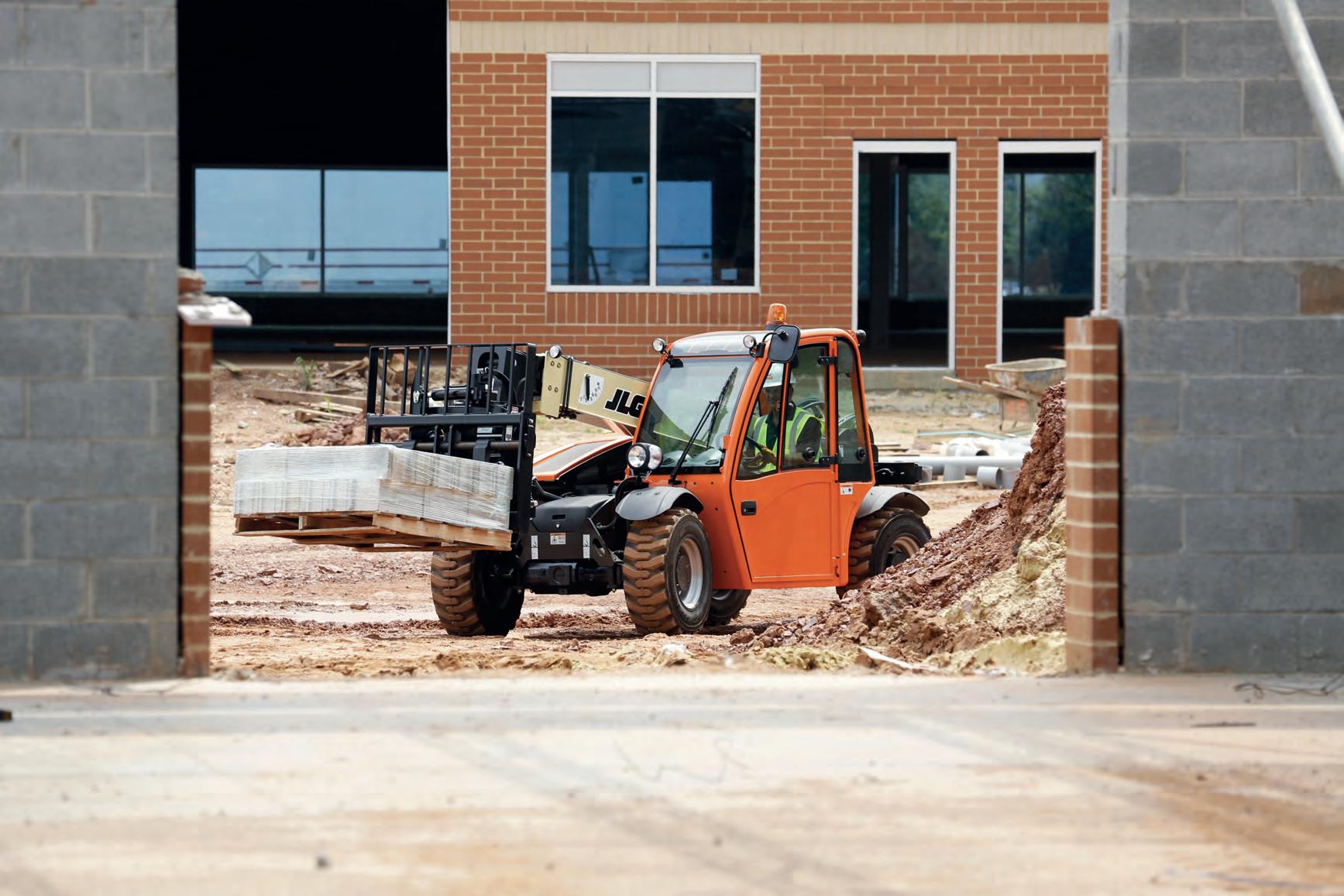
JLG has been supplying world-class equipment to Australia and New Zealand’s construction, mining, transport and logistics industries for more than four decades – and has garnered an enviable reputation for quality of product and exceptional service.
RECENT ACQUISITIONS BY JLG HAVE broadened its range to include telehandlers and rough-terrain forklifts as well as a range of dumpers, opening up new opportunities for both existing and new customers.
JLG – TAKING SERVICE TO EVEN GREATER HEIGHTS
JLG is now capable of servicing an even wider range of industries with a wider range of lifting equipment, thanks to the introduction of its new telehandlers, designed to provide safe access at height, as well as operate efficiently across varied site conditions.
Ranging from 2.5 to eight tonne lift capacity, and with access to a huge range of attachments, there is a telehandler for every environment and requirement just a phone call away.
JLG 3010 TELEHANDLER
The JLG 3010 Telehandler, with a max height of 12.8 metres and max reach of 8.86 metres, delivers a blend of enhanced operator comfort and smart technology for efficient material handling in demanding sites.
JLG 660SJ TELESCOPIC BOOM LIFT
Designed for high reach applications, the 60-foot JLG 660SJ Telescopic Boom Lift comes in two models, each equipped with a fuel-efficient Tier 4 engine and easy-touse platform controls that reduce operator training time.
GREAT INCLUSIONS ACROSS THE RANGE
Fully-glazed, air-conditioned all-weather cabs with top brick guards, each telehandler also features single joystick controls, digital
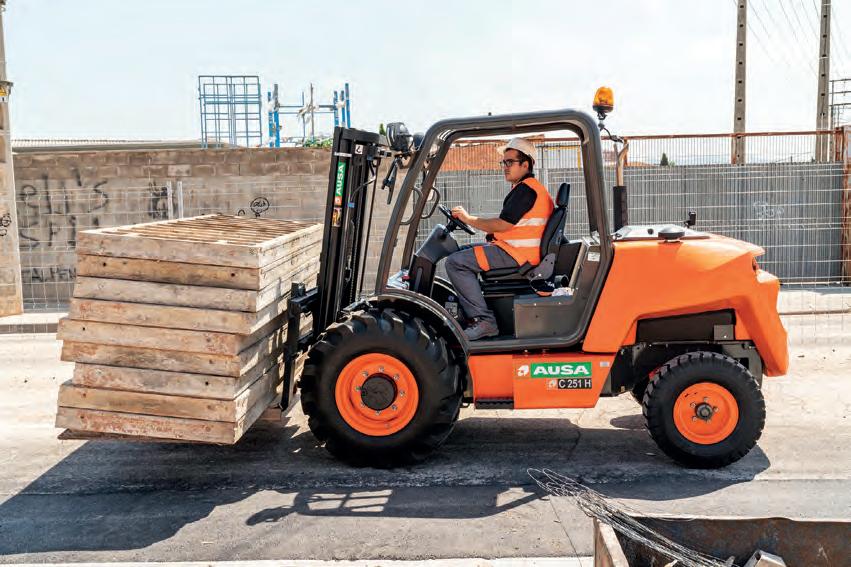
The JLG 3010 Telehandler, with a max height of 12.8 metres and max reach of 8.86 metres, delivers a blend of enhanced operator comfort and smart technology for efficient material handling in demanding sites.
load charts and reversing cameras. Local fit options are available to tailor the telehandlers to suit particular requirements, and can be quickly and reliably organised and actioned by JLG service centres.
JLG’s rough terrain forklifts range from 1.5 to five tonne capacity, with standard inclusions such as semi-closed cabs with front, rear and upper windshields, seat belts with fasten sensors, LED rotating beacons and white noise (squawker) alarms.
As with the new telehandler range, the JLG service centres have the range and knowledge of local fit applications to ensure the forklift is accessorised to the exact specifications required to deal with unique and ever-changing demands.
The JLG Dumper range includes tracked mini-dumpers and articulated wheel dumpers.
The mini-dumpers include the compact TD1500H hi-tip that can handle up to half-tonne loads, to the TD2500H hi-tip and TD2500R rotating dumper with its onetonne capacity –suitable for tackling jobs
in areas where space is at a premium. The articulated dumpers range from 1.5 tonne up to 10 tonne models.
Beyond expanding the product lines to include telehandlers and rough terrain forklifts, JLG is also continuing to invest heavily in aftermarket support, expanding its team of in-house technicians and field service mechanics across capital cities and regional areas to support customers in maintaining their equipment.
When you deal with JLG, you automatically gain access to the nationwide network of JLG service centres for spares and workshop facilities, as well as the expert mobile mechanics who can assist on site as required.
As Arron Cooper, JLG Product Manager, explains, “We’re as people focused as we are results driven. Having a strong team of skilled people is just as important as having the right equipment.
“We’re committed to making sure our customers get the best service possible, whether it’s new machinery, maintenance, spare parts or technical support.”
“Our customers can now access even more great products, backed by the industry-renowned JLG support network,” said Arron.
“They’ll enjoy the reassurance and efficiency of having just the one supplier that’s able to manage more of their favourite premium products, to ensure they get the job done!”
He sums up the JLG difference: “We want to be easy to do business with, and make our customers lives easier as a result.
“By expanding our range and strengthening our service capabilities, we’re making sure it’s easy for customers to choose and rely on JLG as their total solutions provider.”
JLG offers a range of equipment and support services designed to assist customers throughout the lifecycle of their machines.
Interested to learn more?
Visit www.jlg.com.au and www.ausa.com/en-au/
Cranes are in Brayden Mann’s DNA. He has followed in his father’s footsteps working for crane hire companies in Queensland. Recently he took the plunge and set up his own business entitled Inline Cranes and bought his first crane – a Maeda MK3053CB battery-powered knuckle boom.
BRAYDEN MANN’S FATHER, JOHN, BETTER known in the industry as ‘Mango’, works for renowned crane and transport family business Membrey’s Transport and Crane Hire, first with Jack and now with industry stalwart Craig.
“Dad’s been working for the Membreys for 39 years and I feel I was destined to follow him into cranes,” Brayden said.
“I’ve been working in the industry for six years having started out with Wide Bay Crane Hire in Gympie and more recently with Universal Cranes on the Sunshine Coast
The MK3053CB features a telescopic boom with a knuckle that folds out from underneath the main boom. The knuckle features a telescoping luffing with a telescoping jib attached.
where I’ve been operating Frannas and 60 tonne slew cranes.
“But I’ve always felt there was more in the chute for me and recently I started my own business with the new Maeda MK3053CB battery-powered knuckle boom. Universal has been very supportive and I’m quickly picking up work. Once the business is there, I’ll ease up working for them.”
He explains why he has chosen the MK3053CB battery-powered knuckle boom.
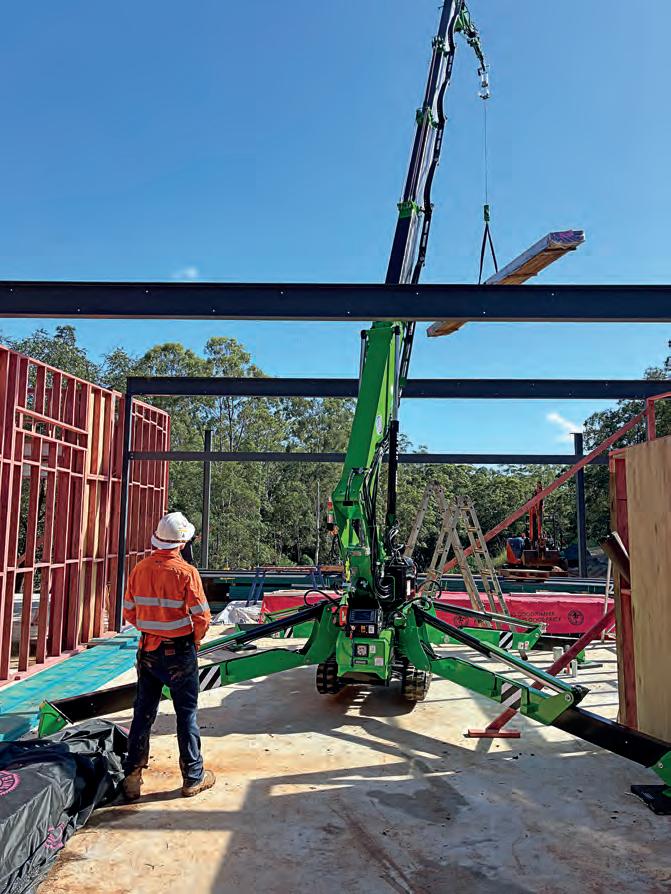
“At the moment, I think there’s a massive gap in the market for mini cranes on the Sunshine Coast and I’m hoping to capitalise on that. There’s a whole lot of work coming on up here, including infrastructure and big builds in residential and commercial construction. The big players are focused on this but once that phase is completed there will be demand for the smaller cranes to finish off the projects and that’s where I intend to fit in. I’m picking up work already, which is exciting,” he said.
“I’ve been exposed to Maedas through Dad because Membrey’s has a few, but I did my research and had a look at the available brands. It was after I chatted to a few blokes who were operating Maedas, including Hayden from Cranes 4 Hire and Brendan from Spider Crane Hire and their feedback quickly cemented my decision. Michael Cawston and the team at Pace Cranes made it a really easy process for me and I know I’ve made the right decision.
“They made it such a smooth process. They took me down to Sydney and we did a full day of training on the machine, which was awesome and it really benefited me a lot. They make you feel very welcome and I reckon Pace Cranes is a great company to be a part of. They are a terrific family business.”
The MK3053CB features a telescopic boom with a knuckle that folds out from underneath the main boom. The knuckle features a telescoping luffing with a telescoping jib attached. The 12-metre main boom features four falls hook mode as well as a detachable negative angle jib with a maximum height of 16.95m. The model also features automatic and stepless multi outrigger settings, variable crawler gauge, diesel/electric and battery electric options as well fully proportional radio remote control.
Maeda has designed this model like the other machines in its range and offer a standard diesel engine option, diesel-electric
or full battery lithium-powered for those companies wanting a 100 per cent ‘green machine’. The battery-powered option is designed to work a full day, but it has the capability of running from the mains for unlimited working hours
“The crane is brand new and arrived at the start of the year. I’ve been out on a few jobs and she’s performed really well and I’ve found there are so many benefits with the knuckle boom technology.
“It’s been excellent with glass installs and when it comes to overhead steel beams installations it is in a league of its own. You can ‘tuck in’ the boom and get into really tight corners and with the knuckle boom technology you get a lot more out of your charts going up and over structures and being able to tally out that little knuckle boom. It’s just such an advantage over the older, telescopic boomed mini cranes.
“Everything is remote controlled, which comes as standard. The MK3053CB features an expandable undercarriage for the stability of the machine, but the undercarriage also retracts enabling the machine to fit through doorway access,” said Brayden.
The also MK3053CB features the next generation of outriggers which are stepless, meaning there’s no pinning system. If there is an obstacle in the way, you can stop the outriggers at any angle and the machine automatically sets up the load chart to suit. The controls feature a one touch setup, and from one button you can completely set the machine up. It swings the outriggers, extends them and puts them down, and it also self-levels the machine.
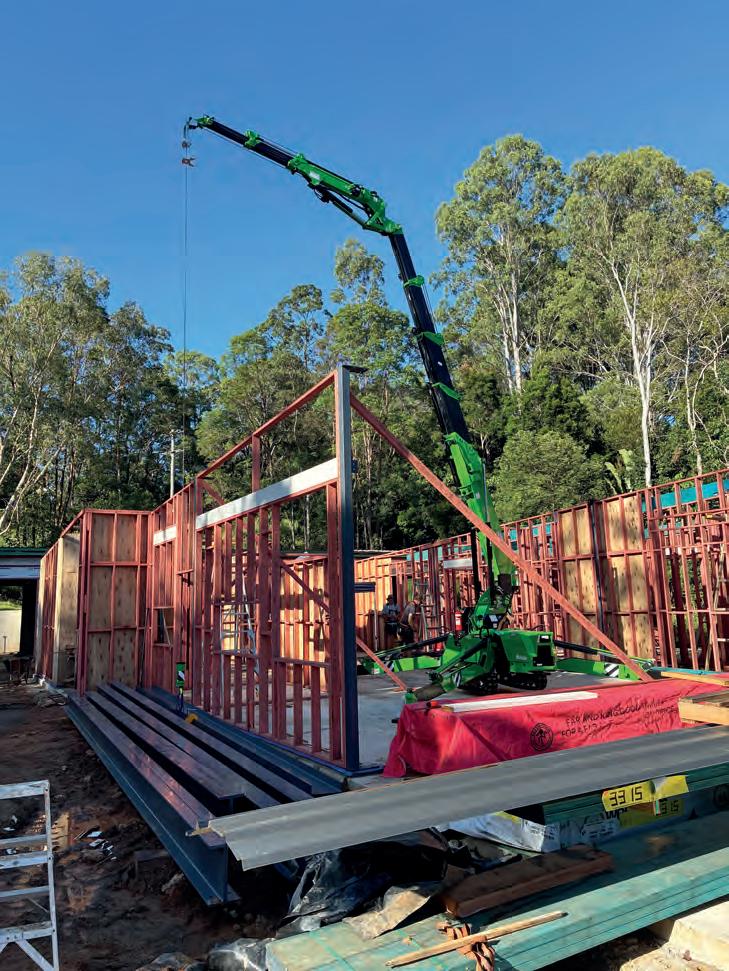
“The load charts are set up to work at multiple angles. The Load Moment Indicator (LMI) will read that setup and tell the operator before the lift what they’re good for and at what particular angle, so it features very smart technology,” said Brayden.
“I’ve always dreamed of following Dad into the crane industry and I’m pretty proud to own my first crane in my 20’s. The Maeda MK3053CB has been the perfect crane to start out with and hopefully my journey in the crane industry will be a good one and that I succeed. What I do know is that choosing Maeda and Pace Cranes as my first business partners has been an excellent move,” he said.
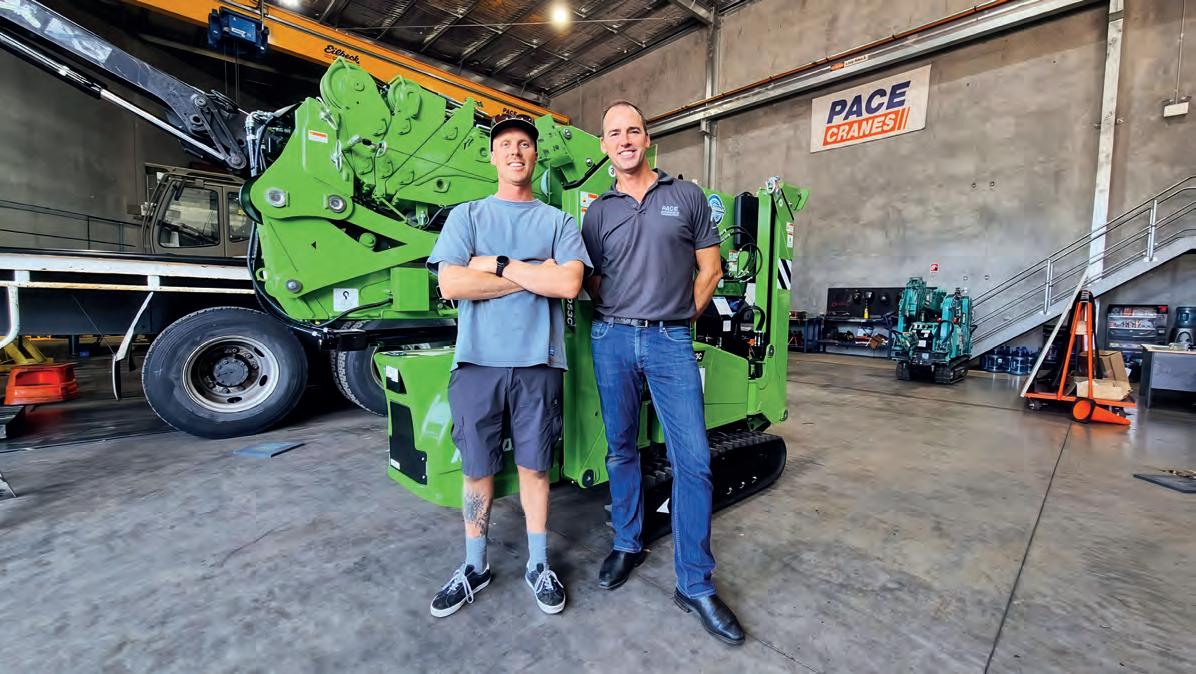
Having launched into the crane auction business less than 12 months ago, the team behind Crane Auctions Australia has seen the business gather significant momentum.
WITH THE NEXT AUCTION SCHEDULED FOR late May early June, Todd Shelton and James Grosser explain how they are successfully selling cranes for customers while attracting interest from overseas. From the outset, Crane Auctions Australia (CAA) has taken a different approach to crane auctions based on the rich heritage the key stake holders in the business have in the crane industry.
“Our major point of difference is that we are working every day in the crane industry, we understand the various dynamics in the industry, and we are there to keep the market progressing, to achieve better pricing for the customer buying the cranes and a good return for the customer selling,” said Todd.
“Other areas of the auction industry are not looking at where the industry is at, they are simply talking numbers and the companies that are buying are saying ‘Great! Look how cheap the crane is!’ But this approach is devaluing cranes generally which is not good for the industry, and that’s a concern.”
Cranes are specialised pieces of equipment and through industry connections, CAA is able to ensure all the relevant information and detail is provided alongside the listings for each auction.
“We recently handled the listing of a Demag AC-500 and the detail relating to the crane was provided by the guy who originally sold the crane. We have the right people within our network who provide the right level of detail about each crane, so the buyer knows exactly what they are getting. This isn’t always the case in the auction business.
After almost 12 months CAA has established a reputation as a specialist auction business for mobile cranes, said James.
“Initially, we focused on the mobile crane sector but now we are seeing interest from the tower crane sector and more recently there have been enquiries from overseas players who are interested in running their machines through our auctions to sell their machines,” he said.
From Crane Auctions Australia’s perspective auctions are just the start of the sales process. The team understands what they are selling, they understand where the cranes are coming from and know their consumers have trust in the brand
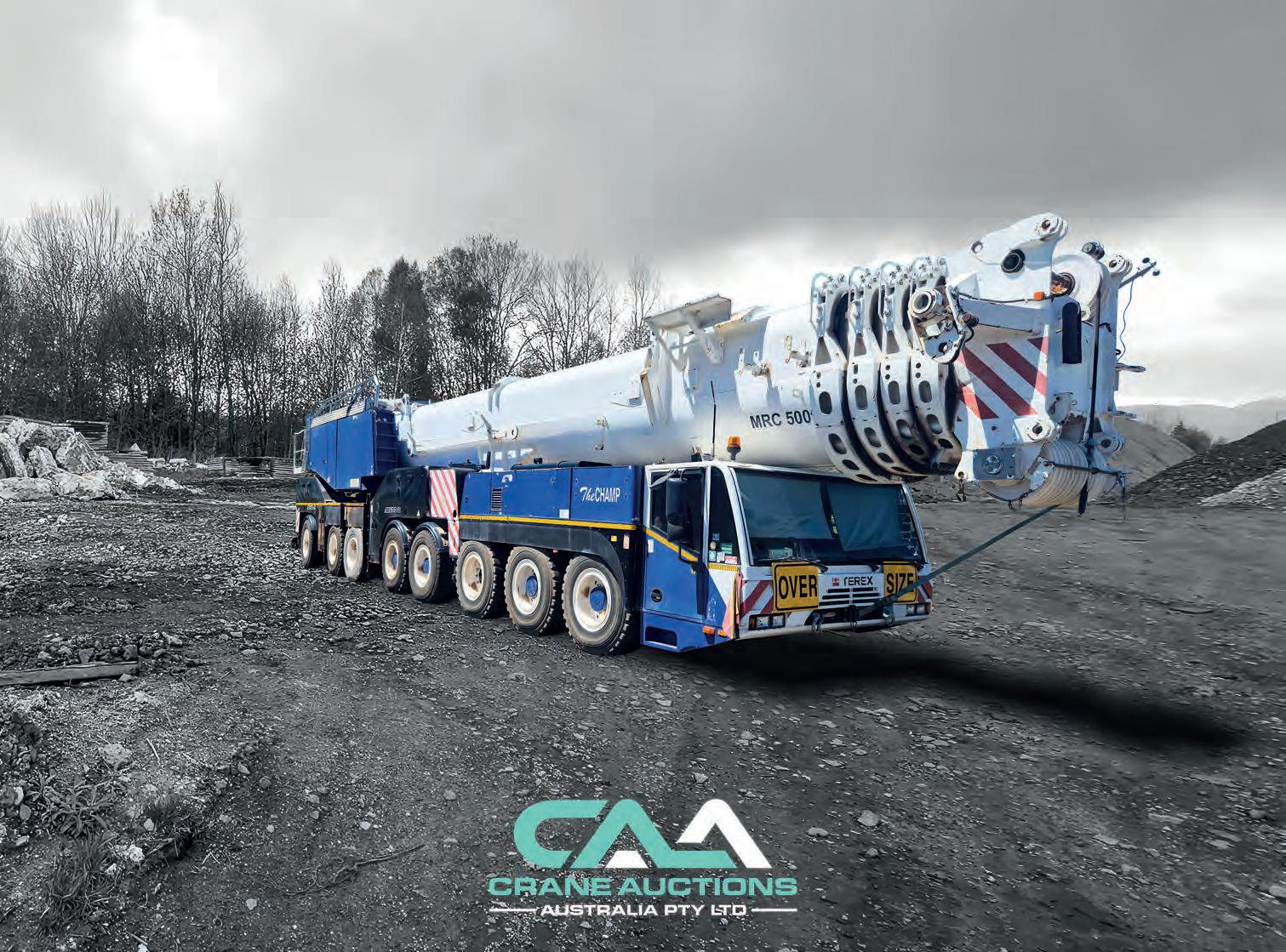
“We’re going to see another big mix of quality cranes again and there’s a possibility that overseas companies will utilise the auction, which throws a whole new dynamic of cranes that could come to Australia, or different countries.”
and the advice they provide. But there’s far more to it than that. The business is based on an unparalleled experience in the used cranes industry.
“The passion for CAA is based on the experience and the heritage of the four people involved in the business. My father, Peter Shelton has 37 years of experience dealing in the crane industry, Anthony Grosser close to 30 years, I have almost 11 years of experience and James Grosser close to six years. You could say it’s in
our blood. We understand cranes which ensures our customers are getting the full picture because we’re listing the cranes with the information that the customer needs to know, and the seller is getting the full value,” said Todd.
There is also far more to the services provided by CAA said James.
“Once the auction is completed and there are cranes unsold, we move them into our private sales companies, All Crane Sales and MCT Equipment, where we are quoting
Crane Auctions Australia (CAA) ensures all the relevant information and detail is provided alongside the listings for each auction.
customers every day. When it comes to the private sales, like the 250 tonne capacity Grove we sold after the second auction, we provide the specialised knowledge for the transport that is required to get the crane to the customer. In some areas of the auction industry transport isn’t even offered, it’s a case of ‘pick the crane up from our yard’,” he said.
The next auction is taking shape with a large and a varied mix of cranes being listed.
“We’re going to see another big mix of quality cranes again and there’s a possibility that overseas companies will utilise the auction, which throws a whole new dynamic of cranes that could come to Australia, or different countries,” said Todd.
“At this stage we are still looking at between 20 to 30 different model cranes, which is about the right volume we see that keeps all sectors interested. As we’ve said
all along, our approach doesn’t start and finish with the auction. If a crane doesn’t sell, we continue to work with the seller and potential buyers. We might have a buyer who isn’t in the market at the time of the auction but is interested a few weeks later. This is the case with a 500-tonne capacity Demag and a Tadano ATF 180. We now have potential buyers who weren’t in the market around the time of the auction but now are,” said Todd.
The first quarter of 2026 has seen a definite transition for the industry said James.
“Towards the back end of 2025 we could detect a lack of confidence around the industry. Crane hire businesses weren’t looking at purchasing and a number were seriously considering exiting the industry and divesting their assets. But the industry has come back strongly this quarter and a
number of these customers that were looking to divest are now becoming customers. We are also seeing customers moving out of large capacity all terrain assets and into multiple smaller assets,” he said.
The flow-on effect is good news for Crane Auctions Australia, All Crane Sales and MCT Equipment.
“Because there are many assets and machines moving at any one time, we are finding enquiries lead to other doors being opened, creating opportunities to connect buyers and sellers. Essentially, our businesses shine a spotlight on cranes, we understand them, that’s why people deal with us,” James said.
“We tell it how it is, we’re honest and transparent and stand by what we say to our customers, and that’s why I think we’ve had quite a successful run with our individual companies and now the CAA brand.”

endeavourawards.com.au





Over the past 24 months
Active Crane Hire has significantly expanded its tower crane fleet with additions from leading Chinese manufacturer Zoomlion. Director, Hermann Buchberger explains more.
“TWO YEARS AGO WE MADE A STRATEGIC decision to expand our fleet into larger capacity cranes. We were doing very well with our luffing range, which includes hydraulic luffers up to eight tonnes, but we’ve now also purchased luffing cranes up to 25 tonnes. We’ve also expanded our large hammerhead fleet, and our latest addition takes us getting up to the 400-metre ton class of flat-top,” said Hermann.
He said there has been a shift in Active Crane Hire’s fleet but there are still a lot of cranes in the smaller range and that is what the business is recognised for.
“We are slowly reducing that fleet and expanding into larger capacity cranes. At this stage we have no intention of moving into cranes capable of managing large data centres or infrastructure projects, but we think there are opportunities between the 100 to 200-metre tonne cranes, up to 400-metre tonnes. It is in that area we believe we can grow and that is where we are investing,” said Hermann.
“We will focus on residential construction, but we also see opportunities in the construction of commercial storage units and other areas where precast panel construction requires larger cranes. We are working on a couple of very big projects where our cranes will be on site for three to five years because they build three, four, five, 600 units over various stages of the development.”
Hermann discusses how the relationship with Zoomlion started and has developed.
“About 18 months ago, we had our first visit from the crane management at
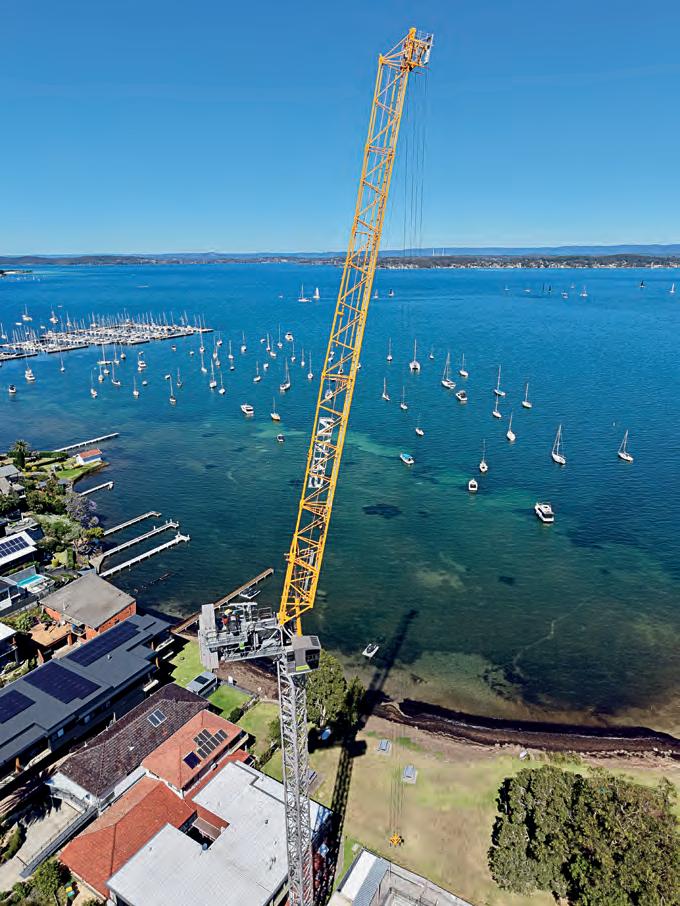
Zoomlion and they had a very interesting product. It is what I call the ‘Hybrid Luffer’, because it is a hydraulic luffer and hammerhead in one crane. It’s the RL165, 10 tonnes capacity crane.
“Prior to the COVID pandemic I had looked at similar technology from an Italian company. It was very interesting to have one crane that can do both, but it didn’t go any further and the company no longer exists. Zoomlion presented its range of cranes and the RL165 model popped up and I said, ‘Guys, now I’m interested’.”
Before purchasing cranes from Zoomlion, Hermann wanted his team to see the Zoomlion factory first-hand to witness the design, engineering and manufacturing processes. He had Matthew O’Hearn, a highly qualified and reputable independent crane engineer, visit the factory and on his return, he gave everything the thumbs up.
“Obviously we required Australian design registration on Australian standards and Matthew was happy to do that. I then sent members of my team, including the service team, because if they don’t accept
the product that I choose, it’s game over. Zoomlion operates a ‘smart factory’ which features state-of-the-art robotics and other leading technologies.
“Everyone returned super impressed saying the factory was in ‘another world’ and we made the decision to introduce the RL165 to the fleet. The first project was in Adelaide where we worked with Marcus Rigney and his team at Load 28, it’s a joint venture,” said Hermann.
“Marcus is also very interested in new and innovative products, and we agreed the first hybrid luffer would go to Adelaide. We also bought an L315 – a 20 tonne luffer which features a remote cabin –and this also went to Adelaide.
“Before that crane even arrived, the demand for luffers was so big in Sydney we ordered five RL165s. One of a kind doesn’t work for us, we need multiple units. The cranes arrived over the course of last year and they were all up and working in the field. Zoomlion products stack up for us. We landed a big job for Deicorp in Zetland, New South Wales, where we also committed to one of the larger hammerheads, the R33520, a 20 tonne capacity crane that you can split from 4-Fall to 2-Fall and it operates as a 10 tonne crane,” he said.
Hermann confirmed that some years ago Zoomlion bought Wilbert, a German manufacturer of custom tower cranes, which provided him with more confidence as to the pedigree of the Zoomlion brand.
“Wilbert cranes manufactured high quality tower cranes in Belm in Germany until they got into financial trouble. They were renowned for strong towers, tall cranes and quality manufacturing but it is expensive to manufacture in Germany. When Zoomlion purchased Wilbert they made some design changes, but the towers are still top-notch.
“For the project in Zetland, Zoomlion provided us with a freestanding height of 70 metres, where as other manufacturers would have required a tie or much larger tower configurations which puts pressure on pricing. We’ve been impressed with the Zoomlion product and the backup and support Zoomlion provide. We required a small rigging change with the RL165, they listened and made the change and it’s here.”
Hermann is an innovative thinker when it comes to the future of tower cranes. He monitors the emerging trends and technologies to ensure he is making the right decisions when it comes to purchases for the Active Crane Hire fleet.
“Cranes might get taller, lift more to greater distances, but at the end of the day a crane is a crane, in simple terms there’s a structure and rotating part,” he said.
“In my opinion, it’s not how much the crane will change in the future, it is how we operate them. We have progressed from cranes being operated from the cabin to now seeing the use of remote control systems. I was interested to see the work of an Israeli company which conducted a lot of research and development with remote cabin controls, which enables you operate a crane from anywhere.
“Today, cranes feature multiple cameras, sensors and safety systems designed to assist with operating the crane remotely. We call Zoomlion’s remote control system Remote Cabin. Both Marcus and I were keen to pursue the remote cabin concept and when the project was secured in Adelaide, we bought one. The Remote Cabin is hardwired to the crane to overcome obvious questions in relation to time lags, response times and what happens if there is a Wireless Local Area Network (WLAN) outage,” said Hermann.
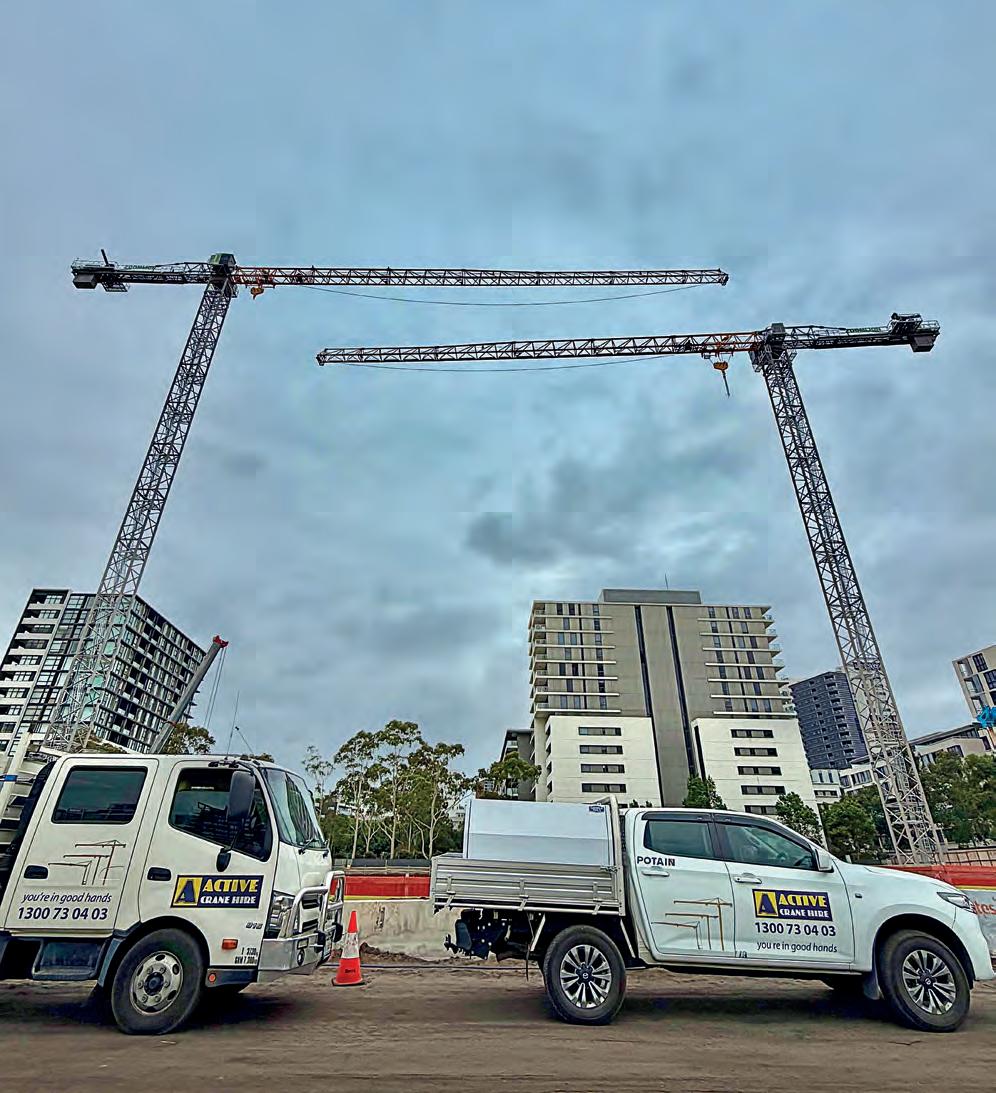
The demand for luffers in Sydney has been high and as a result, Active Crane Hire ordered five RL165s.
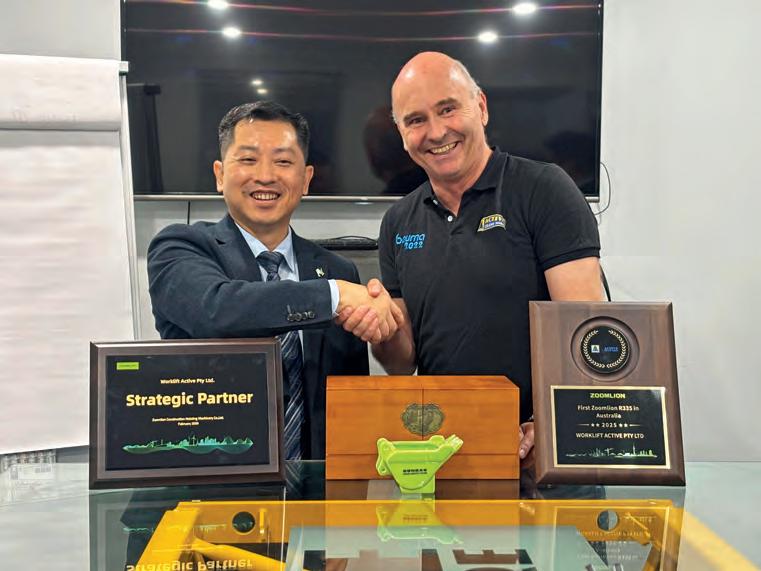







Discounted Access to Key CICA Programs
CraneSafe (Green Stickers)
CrewSafe
Hermann said there are obvious ergonomic factors for the operator using remote technology such as Remote Cabin. The operator doesn’t have to climb the tower everyday and can go to the toilet when needs to. Remote operations open up opportunities for retired operators who can’t manage the climb but would still like to work. The technology also provides opportunities for the physically handicapped and disabled.
Importantly, remote operations could make crane operating more attractive to younger generations as the environment around technologies such as Remote Cabin is very much like a ‘gaming environment’. For example, large international ports are operating completely cabinless cranes to load and unload containers with the operators working from a central control room.
“Are you good at computer games? Is apparently a question asked during some job interviews,” said Hermann. “With today’s camera technology and sensory technology, preoperational checks can be completed remotely and more thoroughly. The way we operate cranes is changing and we want to be at the forefront of this change.”

StartSafe
CICA represents our members and industry, getting in front of Government, regulators, on Standards and other relevant committees. There are numerous resources, like guidance notes, calculators, webinars, events and bulletins.
Custom Member Portal, CICA Assist, CICA Health Assist, Access to Australian Standards, Free subscription to Cranes and Lifting Magazine to name a few.
As the cranes and lifting sector continues to evolve, digital tools are beginning to address long-standing inefficiencies in equipment management and compliance.
ONE SUCH ENTRANT IS LIFTIQ, A cloud-based platform developed to streamline how lifting gear is tracked, inspected and managed across operations.
At the centre of the business is Stephen Boyd, General Manager at LIFTIQ, whose experience in the rental and lifting industry shaped the foundation of the platform.
Stephen has worked across the rental, mining and lifting sectors, supplying rigging and lifting equipment throughout his career.
“I noticed a clear gap in the market, with many customers still depending on Excel sheets or basic documents and lacking an effective system to properly manage their lifting equipment,” he said.
LIFTIQ was developed to address this exact problem. The platform provides a centralised, cloud-based system where all lifting equipment can be recorded, tracked and managed in one place, regardless of supplier.
“Rather than relying on a spreadsheet that simply sits idle, this is a live system that shows what is due, when it is due, and allows users to update it straight away,” Stephen said.
A key feature is its automated notification system, which alerts users when inspections are due.
“They no longer need to wait until something becomes a problem. The reminders allow them to stay ahead of upcoming due dates,” he said.
One of the more distinctive aspects of the LIFTIQ system is its use of stainless steel QR tags attached directly to lifting equipment.
Traditionally, inspection status is indicated using coloured cable ties that need to be replaced regularly. LIFTIQ
LIFTIQ centralises lifting equipment data into one live platform, replacing static spreadsheets.
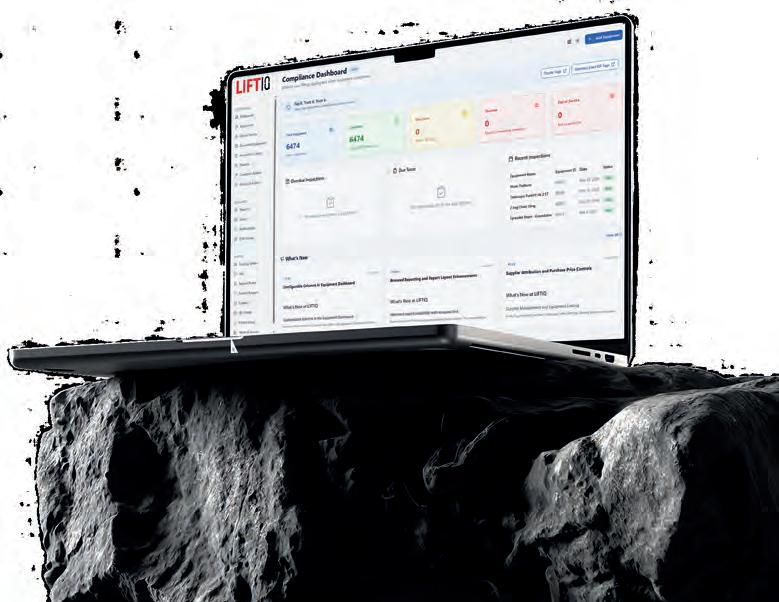
replaces this with a permanent tagging solution. By scanning the QR code with a mobile device, users can instantly access the asset’s status, inspection history and associated documents.
“It lets users see straight away whether the asset is current or overdue, and they can also pull up operator manuals or other key information connected to that item,” Stephen said.
Site supervisors, safety managers or clients can scan the equipment directly on site without needing to request documentation from the office.
The operational impact of the platform is most evident in day-to-day workflows, particularly for rigging managers and those responsible for compliance.
LIFTIQ’s dashboard uses a traffic light system to provide a quick overview of asset status.
Green indicates the asset is compliant, orange shows it will soon
need attention, and red means it has gone overdue.
The platform also simplifies reporting requirements, particularly when crane companies are required to provide a register of all lifting assets assigned to a specific crane before attending site.
Users can generate compliance reports for specific jobs or equipment allocated to a crane in a matter of seconds.
Before adopting a centralised system, this process typically involved manually compiling asset lists, cross-checking inspection records and confirming compliance status across multiple spreadsheets and documents. For large fleets, this could take hours and often introduced the risk of human error, especially under time pressure.
With LIFTIQ, the process is reduced to a simple action. Users select the crane within the system and generate a report instantly containing all the information required by site. In less than 30 seconds,
the platform produces a complete register of every item onboard, along with its current compliance status, ready to be shared.
Beyond efficiency, the platform has clear implications for safety.
Missed inspections remain a known risk in the industry, particularly when systems rely on manual tracking.
“When an item misses its inspection deadline, it may continue being used for months without being properly checked. That is when failures can happen and injuries become a real risk,” Stephen said.
LIFTIQ reduces the risk of equipment being overlooked by providing advance reminders and a clear overview of inspection status. Storing inspection reports and compliance documents against each asset also enhances audit readiness and traceability.
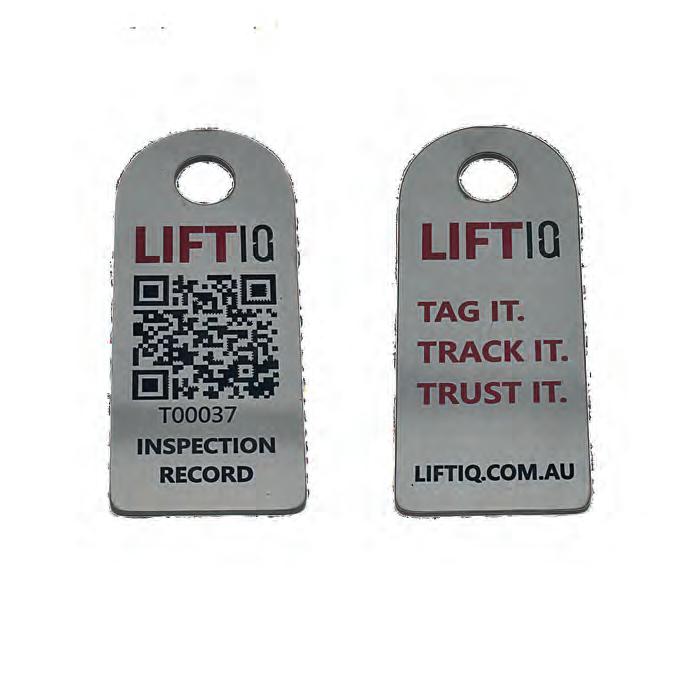
LIFTIQ has been designed to cater to a wide range of users, from small operators to large fleets.
“It is suitable for anyone from a singleasset operator through to businesses managing thousands of items. There is really no ceiling,” Stephen said.
The platform includes a free entrylevel plan, allowing users to trial the system with a small number of assets, alongside scalable paid options.
Above: QR-tagged assets give instant access to inspection status, history and documentation on site.
Pricing has been kept accessible to encourage adoption in an industry that has traditionally relied on manual systems.
“For crane businesses, the cost is minimal compared with the benefit of improving and organising their equipment management processes,” Stephen said.
The next-generation compliance management platform designed to eliminate friction. One source of truth for your entire lifting and rigging fleet, regardless of supplier.
Most digital registers are owned by equipment suppliers, so you can only log what you buy from them. LIFTIQ is different. Manage every asset in one dashboard, no matter where it was purchased or who manufactured it.

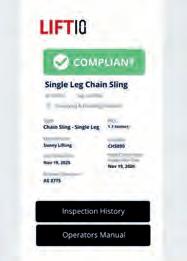
Crane Connection, the New South Wales and Queensland distributor for XCMG, recently took delivery of new a 30 tonne truck crane. Anthony Davis discusses the specifications of the crane.
“THE TRUCK CRANE FEATURES A NUMBER of upgrades to the previous model which had a 25 tonne lifting capacity. It features a four section 36 metre power boom and nine metres of fly. It is compliant with Australian Design Rules (ADR) and complies with Australian weight regulations. It’s powered by a Weichai
engine and as with all XCMG cranes, it is well priced compared to other brands,” said Anthony.
“We think it will be ideally suited for crane businesses who are working in the smaller end of the construction industry, lifting for smaller home builders and that type of application. The quality of the
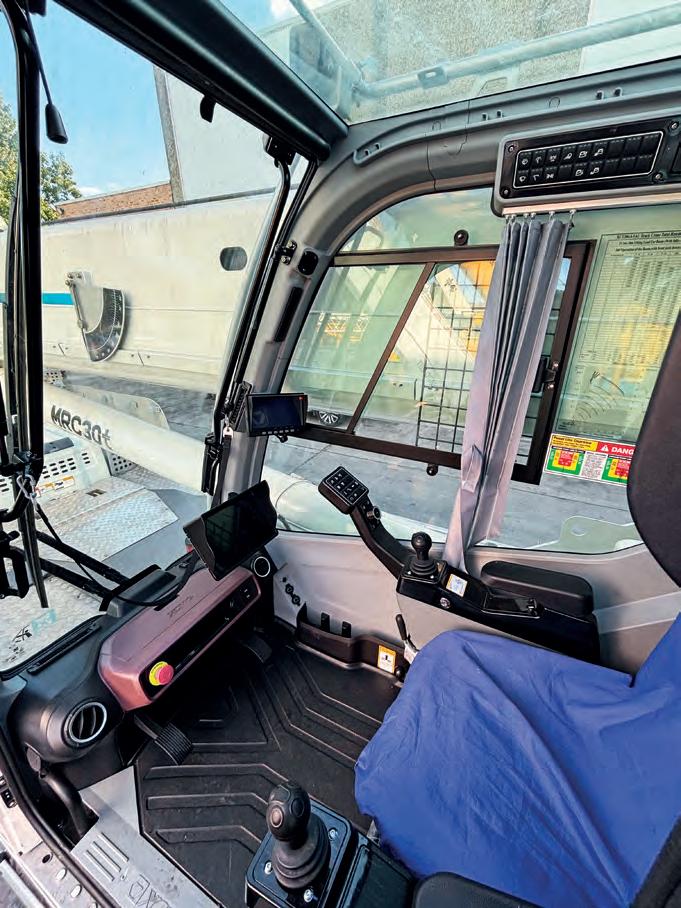
crane is right up there. We had a client visit the yard and put it through its paces. It proved to be a great lifter and very easy to operate with the customer leaving suitably impressed.”
The super structure for the XTC 30G4-1AU is designed and manufactured by XCMG, with the frame made of high strength steel with fully covered deck and anti-torsion box-typed structure.
Four outriggers arranged in H-shape are hydraulically controlled by control levers. There is an outrigger control station located at each side of the chassis, and there is a level gauge, an illuminator and speed buttons on each control station. There is a check valve fitted in each outrigger cylinder, and a double-way hydraulic lock fitted in each jack cylinder. A fifth jack is equipped at the front of the crane
The four-section U-shaped boom of 36 metres, with a fixed jib of 8.3 metres, provides excellent boom performance with 0 degree lifting operation mode, which covers a wide range of operational modes. The boom is manufactured from high quality steel with special anti-deformation design, making it adaptable to highfrequency construction scenarios such as infrastructure, housing, forestry, and factory loading and unloading.
The crane is powered by a WP7H300E62 in-line, 6-cylinder, supercharged, intercooled diesel engine with rated power of 221 kilowatt /2100 revolutions per minute, maximum torque of 1200 Newton-meters, compliant with Euro VI emission standard.
Operator’s vision of the lift and enhanced safety features were key when XCMG engineers designed the new tilting G-Star Cab. The steel enclosed cab is tiltable up to 20 degrees, ensuring the operator has
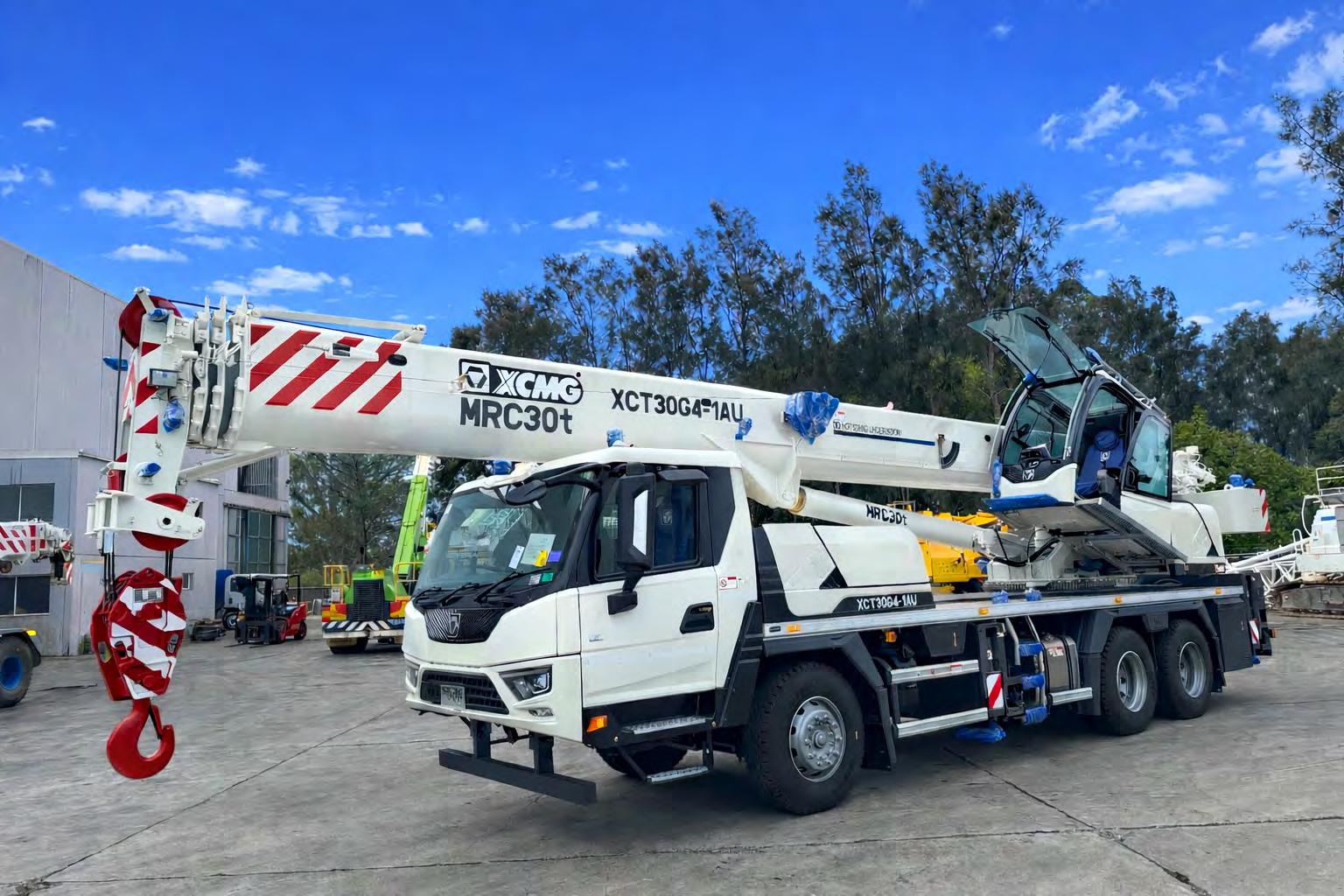
a clear view of the lift. The windscreen opens in the same way as an all terrain, and upward and downward field of views through the windscreen have been increased by 50 per cent and eight per cent respectively. The downward field of view of the side window is increased by 10 per cent.
The G-Star cab features spacious, panoramic, and multi-storage layout, safety glass with no blind spots and a 20 millimetre thickened, transparent roof window. Pushpull sliding door with remote controlled locks, protective grilles, and a remote control electric telescoping side pedal (with three control modes) also feature.
Shock absorber and adjustable seat with leather and breathable mesh is equipped with seat belts. Dual LED interior light, HMI (human-machine interface) control panel, 28 centimetre display, armrest, engine accelerator pedal, electric proportional slewing brake pedal, engine ignition switch, and HVAC (heating, ventilation, and air conditioning) are available.
Ergonomic control is a key feature of the G-Star Cab and the new-generation control system is integrated with a multi-stage
pressure slewing buffer, and electrohydraulic proportional smart telescoping technology which contributes to a 20 per cent increase in handling performance and control.
Integrated auxiliary heating control with multiple independently controlled air vents provide face-level and foot-level airflow, effectively supporting defrosting and demisting functions, with fast heating and cooling performance.
The G-Star Cab also features a 30 centimetre platform-based instrument user interface screen which presents all key information and functions at a glance. A 30 centimetre LCD high definition computer screen provides information from the central control area which integrates various functions such as combined design of the switch and touch navigation system and reversing camera.
The chassis engine drives a load-sensing plunger pump and gear pump through the transmission, which are used to control hoisting of main and auxiliary winches, luffing, telescoping, slewing and auxiliary system. Load-sensing electro-hydraulic multi-way valve is equipped for smooth operation. Air-cooled hydraulic oil cooler is fitted and the hydraulic oil tank has a
The XTC 30G4-1AU features a four-section U-shaped boom of 36 metres, with a fixed jib of 8.3 metres, providing excellent boom performance with 0° lifting operation mode which covers a range of operational modes.
capacity of 440 litres. Hydraulic control is used for speed regulation with the system driven by a hydraulic motor through a planetary gear reducer, with a normally closed brake, counterbalance valve and a grooved drum equipped.
The safety devices include load moment indicator system, counterbalance valve, relief valve, hydraulic lock and turntable locking pin. The load moment indicator system consists of the indicator, length/ angle sensor, lowering limiter, anti-two block, oil pressure sensor, emergency stop switch and level gauge.
When the load moment is approaching the overloading value, audible and visual warnings will be sent, and the dangerous operation will be automatically cut off. Overload memory and fault diagnosis function are available.
“To keep up with the demand we have XCMG models arriving all of the time and we continue to be impressed with their quality and the performance,” said Anthony. “The XTC 30G4-1AU truck crane is well designed and manufactured, spare parts and componentry are readily available, and it’s backed by XCMG’s three year, 3000 hour warranty. You don’t get that from other manufacturers.”
Across the global lifting industry, companies are facing real challenges...
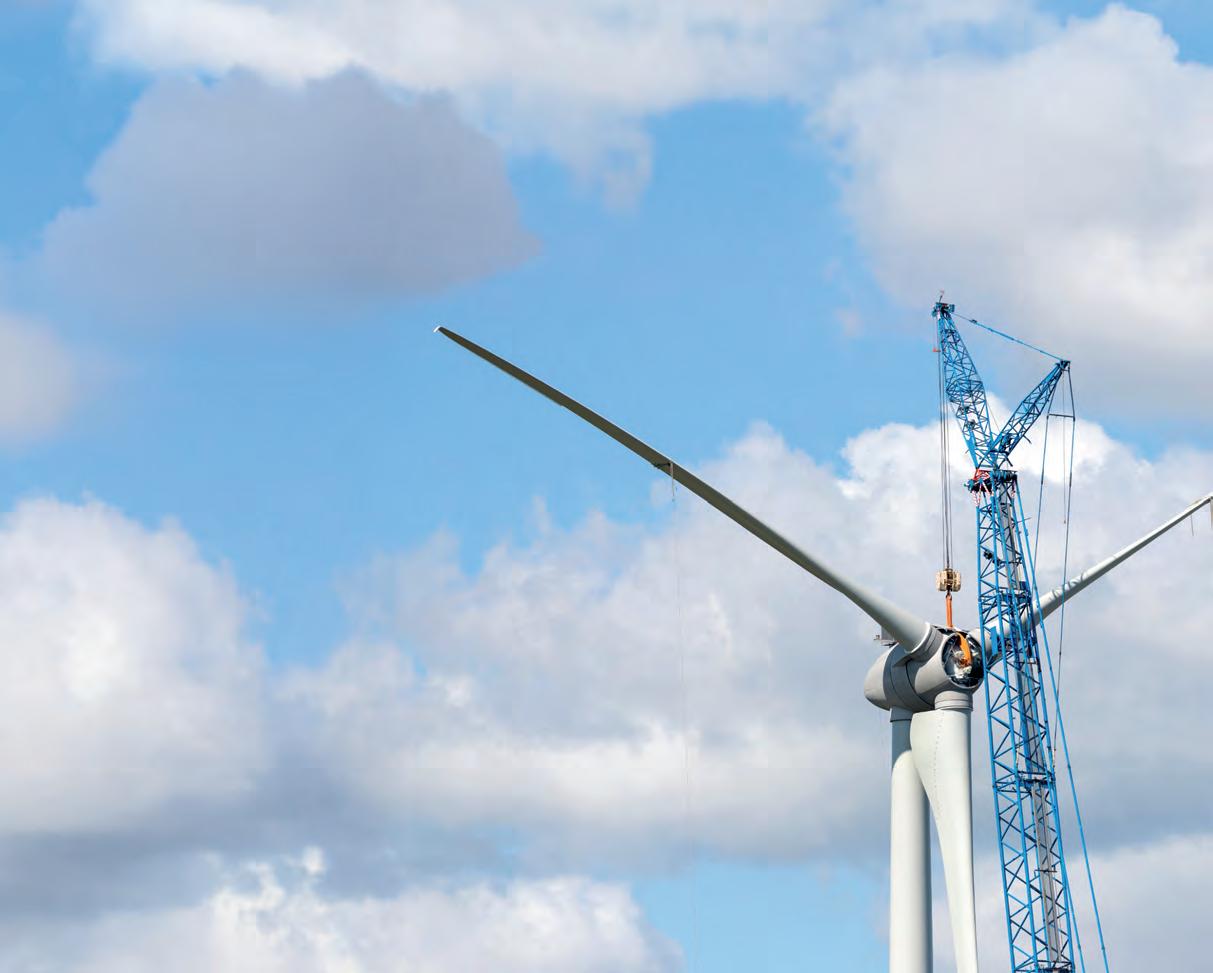
say operators will need new skills in the next 12 months
struggle to recruit skilled lifting operators report gaps in knowledge, safety behaviours, or legal compliance 90 79 % % %


As lifting operations become more complex, managing equipment and inspections through spreadsheets is no longer enough.
FOR REGATTA REGISTERS, THE GOAL is to simplify that process, helping businesses move to a more structured and reliable system.
Marly Pena, Marketing Manager at Regatta Registers, said the shift is not about reinventing workflows, but improving what companies are already doing.
“Spreadsheets are a good starting point, but they are manual, hard to scale and easy to get wrong,” she said. “Regatta takes what you are already doing and makes it more structured, more reliable and easier to manage as you grow.”
One of the biggest barriers to adopting new systems is the perceived difficulty of switching from existing tools. Marly said Regatta has been designed to remove that friction, particularly for lifting equipment registers.
“You can work offline and sync later, which ensures everything is captured accurately.”
“It is very easy for lifting equipment,” she said. “We support bulk uploads from spreadsheets, so customers can bring across their existing registers without starting from scratch.”
For businesses managing broader asset portfolios, the process is more structured, but still guided.
“We typically guide customers through a structured setup. Assets, components and inspection workflows are set up correctly from the beginning.”
This approach ensures that businesses are not simply transferring old inefficiencies into a new system, but building a foundation that can scale.
Speed of implementation is another key factor for businesses looking to adopt digital systems. Marly said most customers are able to get started quickly.
“Customers can be up and running within a few days,” she said. “A basic setup can be completed quickly, and a more complete rollout typically takes one to two weeks depending on the size of the business.”
Importantly, the platform has been designed for the people who actually use it on a daily basis.
“The system is built for operators, inspectors and admin teams, not
developers,” she said. “If you can use a spreadsheet or a mobile app, you can use Regatta.”
That simplicity is central to adoption, particularly in an industry where time on site matters.
A major advantage of Regatta is its mobile capability, allowing inspections and data capture to happen directly at the source.
“The mobile app allows teams to complete inspections on site with no paperwork and no double handling,” Marly said.
Users can fill out forms in real time, upload photos instantly and access equipment history on the spot. Even in areas with limited connectivity, the system continues to function.
“You can work offline and sync later, which ensures everything is captured
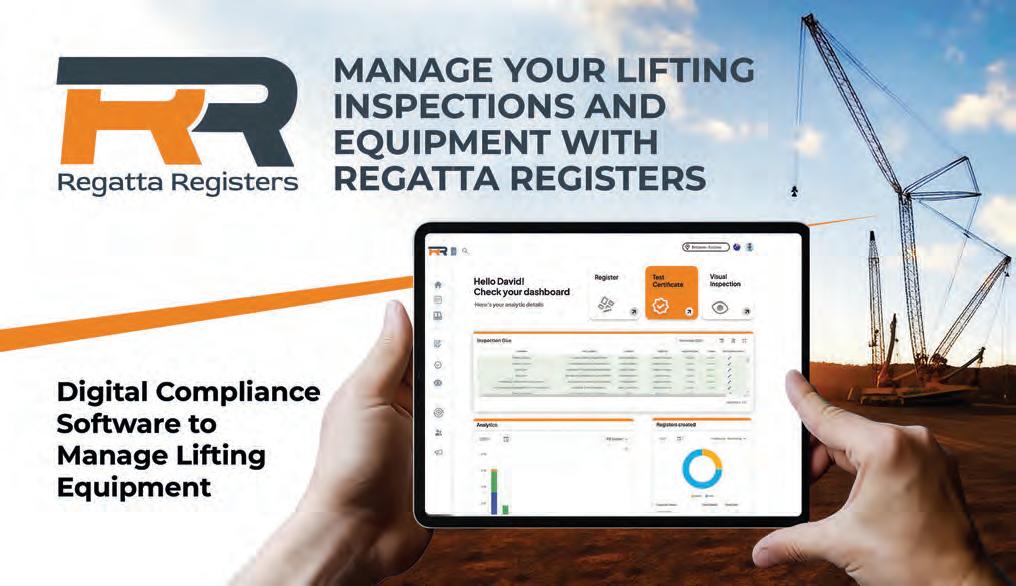
accurately,” she said. This reduces delays, improves data accuracy and eliminates the need to re-enter information back in the office.
As lifting businesses expand across multiple sites and projects, keeping track of equipment and inspection records becomes increasingly challenging.
Regatta addresses this by structuring data in a clear and logical way.
“Everything is organised from customer to site to asset or equipment to inspection records,” Marly said.
This structure allows teams to track equipment across locations, move items between sites with full history and quickly identify what is due, overdue or completed.
“There are no more scattered spreadsheets or lost records,” she said.
Beyond operational convenience, the platform also delivers tangible business
benefits. Marly said the biggest gains are often seen in time savings and risk reduction.
“The biggest savings come from eliminating manual paperwork and duplicate entry,” she said. “Inspections and reporting are faster, admin is reduced and teams can work more efficiently.”
Compliance is another critical area,
Regatta’s approach reflects a broader shift across the industry, where digital tools are no longer optional but essential for managing increasingly complex operations.
Marly said many customers only realise the limitations of their existing systems once they see what is possible.
“Most customers recognise the gaps in
“With real-time tracking and visibility, teams are far less likely to miss critical inspections.”
particularly in the lifting industry where missed inspections can have serious consequences.
“Regatta automates inspection schedules and sends reminders before items are due,” she said. “With real-time tracking and visibility, teams are far less likely to miss critical inspections.”
By reducing the risk of noncompliance and equipment downtime, the system helps businesses avoid costly disruptions.
spreadsheets once they see how much time and risk can be removed,” she said.
With a focus on simplicity, structured data and real-world usability, Regatta Registers is positioning itself as a practical solution for lifting businesses looking to modernise without overcomplicating their operations.
As the industry continues to evolve, that balance between simplicity and capability could prove to be its biggest advantage.