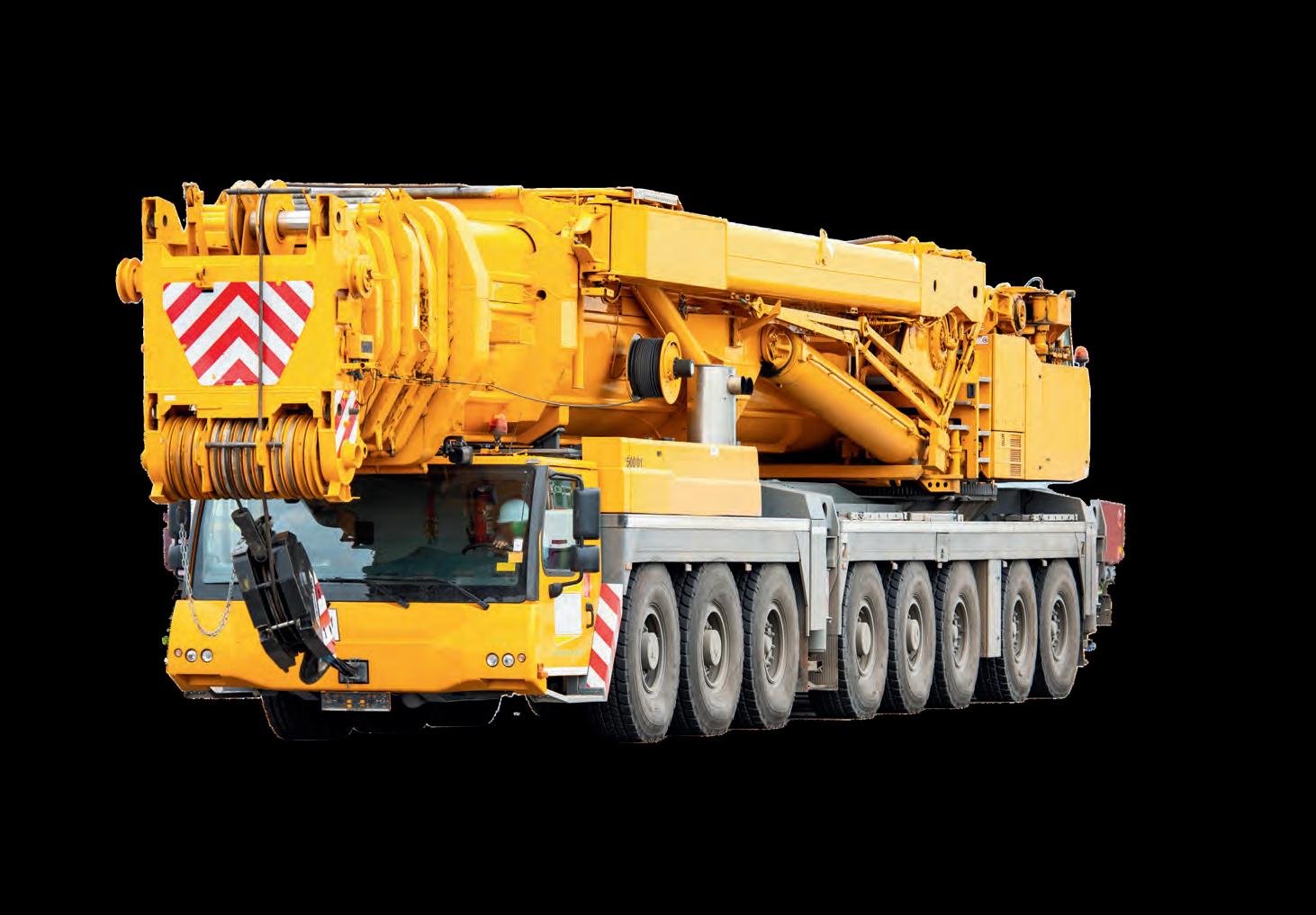
For over 50 years, UAA’s award-winning Mobile Plant and Machinery insurance solutions have powered the cranes and lifting industry - trusted by professionals who keep Australia moving.
We are known for our extensive knowledge, operational capability, and capacity to cover a diverse range of plant and machinery across numerous industries.
Our seasoned claims team has access to a network of experienced industry repairers, assessors, and suppliers who are well-regarded for their high-quality service.
SCAN BELOW TO FIND OUT MORE: www.uaa.com.au
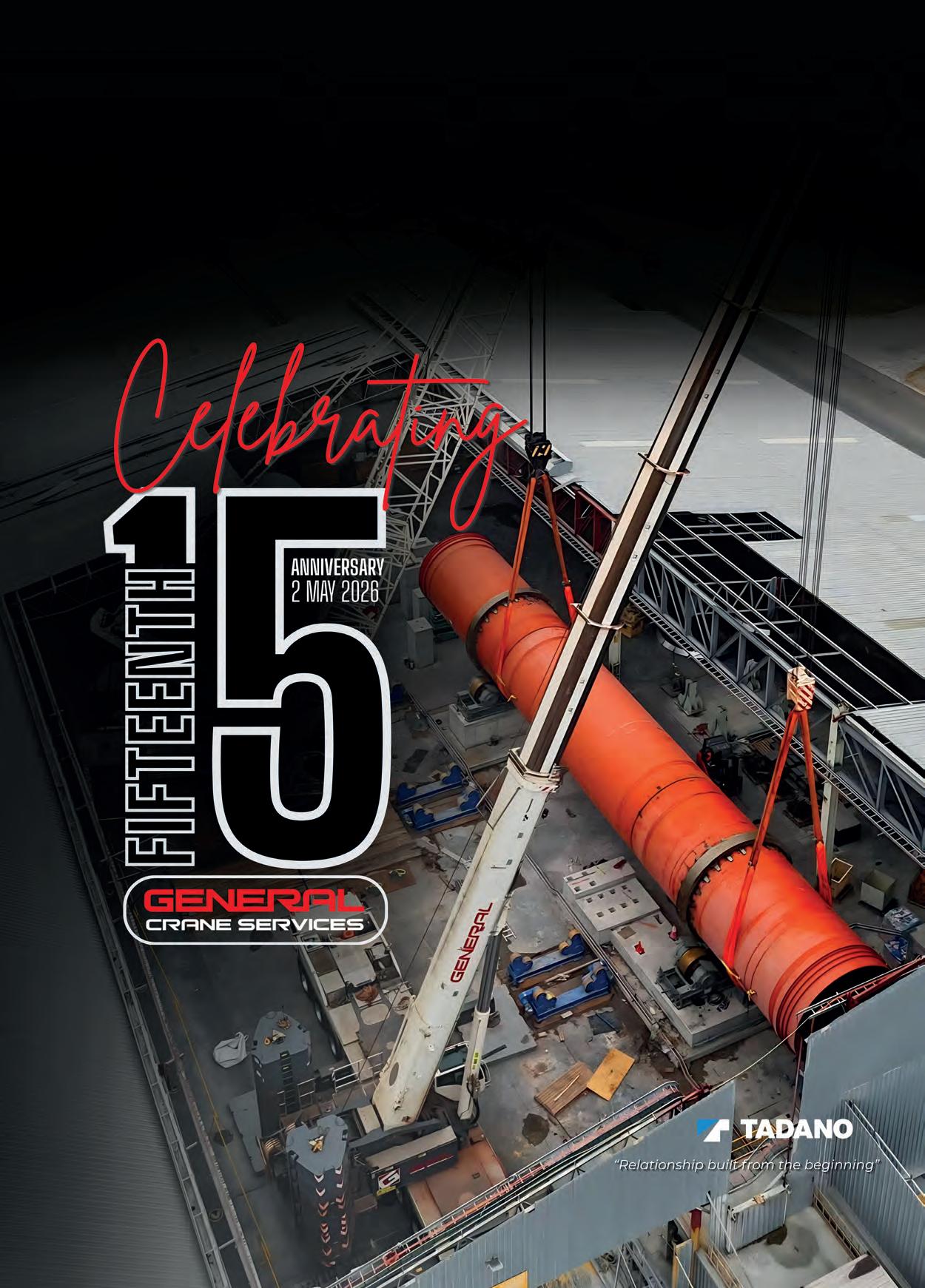
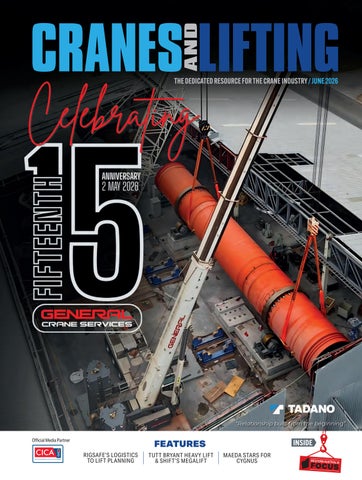
6 Upfront with Tadano Tadano helps General Crane Services WA celebrate 15 years.
10 CICA President’s report New CICA CEO will build on previous successes.
13 CICA Airpor ts New guidlines for cranes operating near airports.
14 CICA Conference and Exhibition CICA National Conference and Exhibition back in the Hunter Valley.
16 Lif t of the Year
Plan your entries for this year’s awards.
18 CANZ Truck mounted cranes forum a big success.
20 LEEA LEEA’s new Safer User grade of membership.
23 Tutt Bryant Equipment Tutt Bryant Heavy Lift & Shift delivers mega lift.
26 Grove Borger continues fleet renewal with more Groves.
28 Dieci Australia Dieci introduces the Icarus 45.17 GD.
30 Queensland Rigging Hire
Queensland Rigging Hire set for further growth.
33 Falcon Cranes
Complete solutions for all lifting needs.
36 All Lif ting Flexible lifting for complex jobs.
39 Austlift Explaining the Working at Heights Standards.
43 Crane Connection New XCMG crawler for Mega Lift.
Western Australia feature
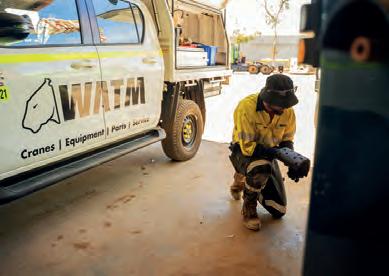
46 WATM WATM expands in the Pilbara.
50 ORCA ORCA redefines recruitment in the crane sector.
53 Rigsafe End-to-end lifting solutions.
57 UA A Insuring cranes for the long haul.
60 Pace Cranes Cygnus shoots for the stars with Maeda.
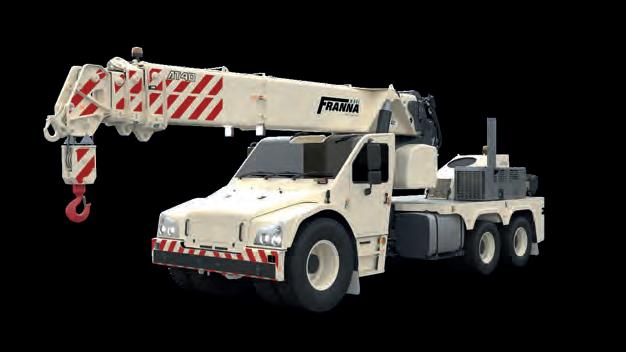
63 Franna Yilkari Cranes takes delivery of the new AT40-2.
66 DRA Group Right equipment for the right job.
69 Zoomlion Expanding access at Australian worksites.
72 Potain Potain launches Power Boost.
74 Andromeda Industries Andromeda diversifies engineering capabilities.
77 Liebherr Twice the work, twice the reward.


THE TEAM AT CRANES AND LIFTING was privileged to attend The Crane Industry Council of Australia (CICA) New South Wales regional meeting in Newcastle. It was exciting to see the CICA Tower Crane Forum in action during the day. Ably chaired by Rhys Noronha from Resolution Rigging, the forum discussed a number of issues impacting the tower crane sector in New South Wales. In particular, the discussion covered the amount of bureaucratic red tape being introduced by local councils including increased site fees. Sydney’s tower crane sector was well represented, as were Tier one builders and tower crane original equipment manufacturers. Cranes and Lifting encourages other members of Tower Crane sector to become involved in these forums as they will make valued contributions to the wellbeing of the industry.
The meeting climaxed with a fundraising dinner, which was a highlight for all attendees. The chosen charity for this year’s fundraiser was Pankind, a not for profit doing everything it can to bring an end to the aggressive and painful, pancreatic
cancer. As always, bids were generous for various auction items and over $30,000 in donations was generated. There was also a final opportunity for NSW members of CICA to thank outgoing CICA CEO Brandon Hitch for his amazing contribution and to officially wish incoming Pat Cran all the best for his tenue.
As always, there is something for everyone in this issue. We take a deep dive into the vibrant West Australian resources sector as well examining a mega precision lift recently delivered by Tutt Bryant Heavy Lift & Shift. The lift wouldn’t have been possible without world class Australian engineering and manufacturing.
As always, the Cranes and Lifting team has worked hard to prepare this content and we hope you enjoy the read.
BOOMS UP!
Simon Gould Editor, Cranes and Lifting
Published by:
379 Docklands Drive, Docklands VIC 3008
T: 03 9690 8766
www.primecreativemedia.com.au
Chairman John Murphy E: john.murphy@primecreative.com.au
CEO
Christine Clancy E: christine.clancy@primecreative.com.au
Publisher Sarah Baker E: sarah.baker@primecreative.com.au
Managing Editor Lisa Korycki E: lisa.korycki@primecreative.com.au
Editor
Simon Gould E: simon.gould@primecreative.com.au
T: 0404 865 109
Assistant Editor Danny D’Cruze
E: danny.dcruze@primecreative.com.au
T: 0429 187 751
Business Development Manager Emily Schlegel
E: emily.schlegel@primecreative.com.au
T: 0466 317 555
Client Success Manager Ben Sammartino E: ben.sammartino@primecreative.com.au
Art Director Bea Barthelson
Imaging Assistant Paul Breen
Subscriptions
T: +61 3 9690 8766
E: subscriptions@primecreative.com.au
The Publisher reserves the right to alter or omit any article or advertisement submitted and requires indemnity from the advertisers and contributors against damages or liabilities that may arise from material published.
© Copyright – No part of this publication may be reproduced, stored in a retrieval system or transmitted in any means electronic, mechanical, photocopying, recording or otherwise without the permission of the publisher.


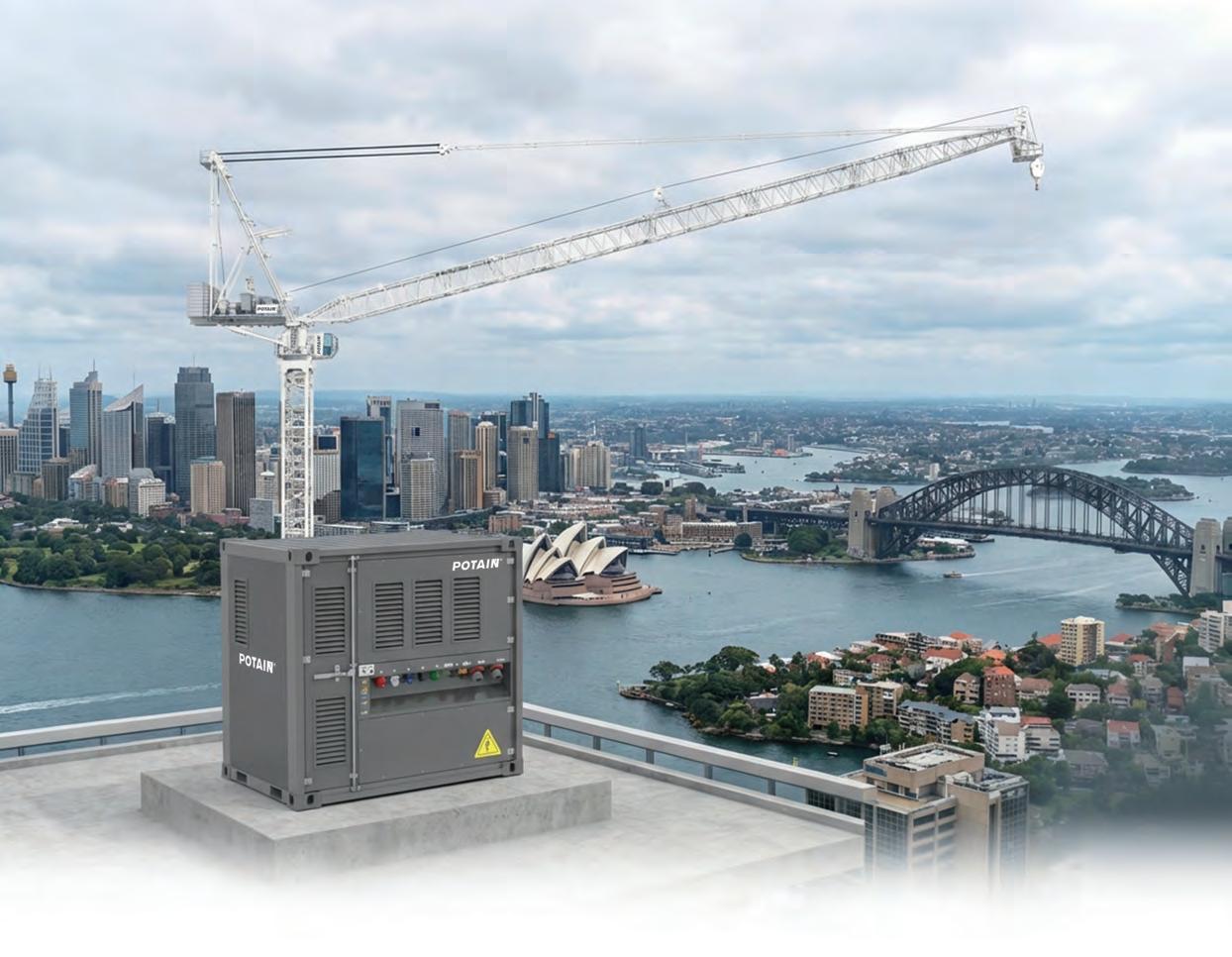
The Potain Battery is a dedicated power solution designed specifically for tower cranes, construction hoists, and other equipment with high startup power requirements. Engineered around real crane operating conditions, it provides a compact, lightweight, and high-output alternative to traditional diesel generators.
Features high C-rate cells delivering up to 10C continuous discharge, ideal for managing sudden load changes and powering inductive equipment.
IP65 and C5 rated for exceptional durability against salt spray, sand, dust, and environmental extremes.
Fewer Greenhouse Gas Emissions
Do not release smoke & soot
The battery cells come with a 5-year warranty
Noise <45dB
Supports remote performance & status monitoring for optimized operation and maintenance.

Max Input Power 5-80kW
Max Output Power(Peak 1 min) 450 kVA
Max Output Current(Peak 1 min) 626A@415V
Output Power(Rated) 375 kW
Battery Capacity 65 kWh Contact Details:

Compared to diesel generators and energy storage batteries, its compact design makes it much easier to transport and deploy on-site, effectively saving valuable job site space.
Integrated fire suppression at battery and cabinet levels, with flammable gas emission and explosion-proof design for maximum safety.
A crane business built on family legacy, driven by growth, and strengthened by trusted partnerships.
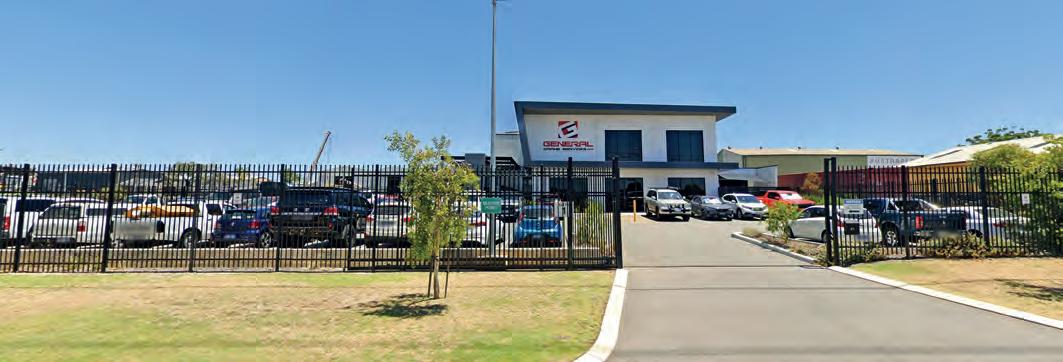
FIFTEEN YEARS AGO, GENERAL CRANE
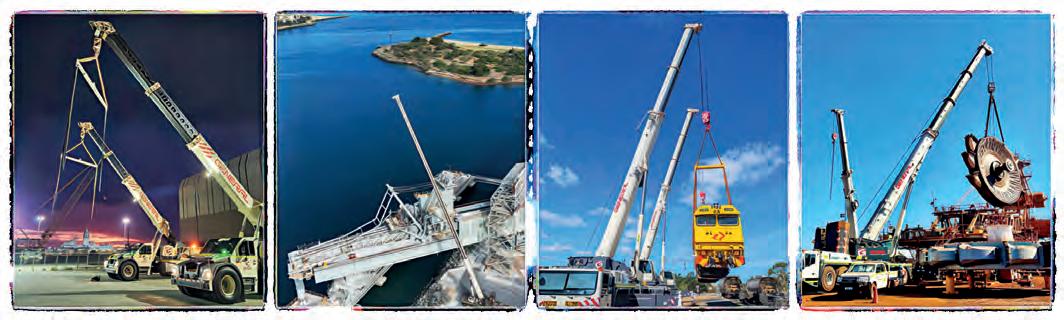
Services WA began with a single crane, a strong work ethic, and a clear objective: to deliver safe, efficient, and precise lifting solutions across Western Australia. Today, the business stands as a major force in the state’s crane hire industry, operating the largest fleet and workforce in Western Australia, supporting projects that range from residential installations to complex mining shutdowns.
At the heart of this growth story is a company shaped by family values, operational discipline, and long‑term partnerships that have endured through changing market conditions and increasing project complexity.
A FAMILY LEGACY IN LIFTING
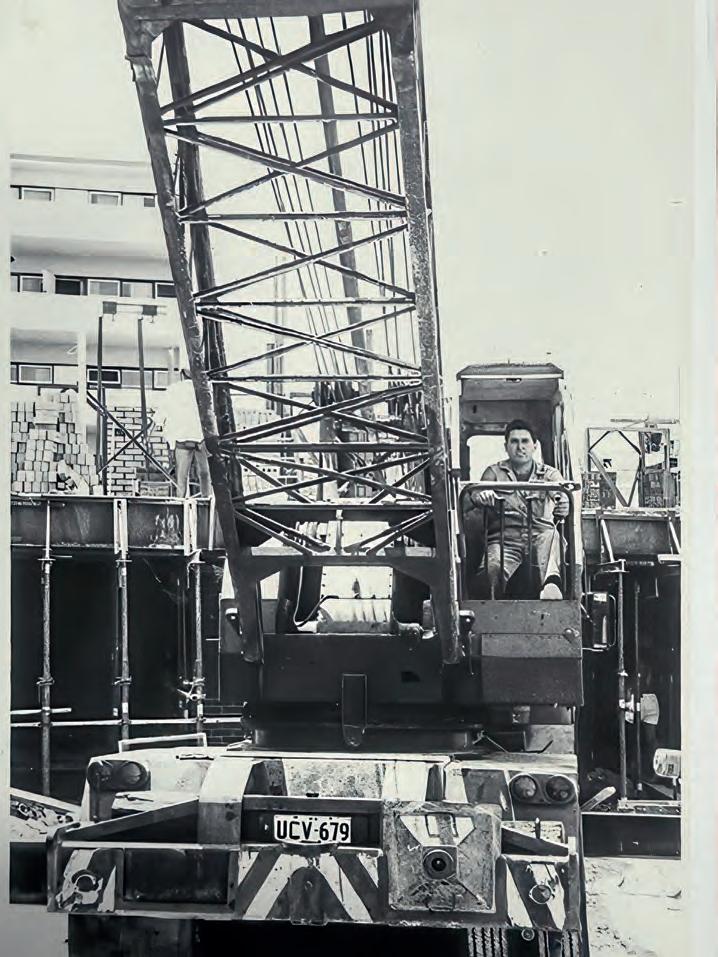
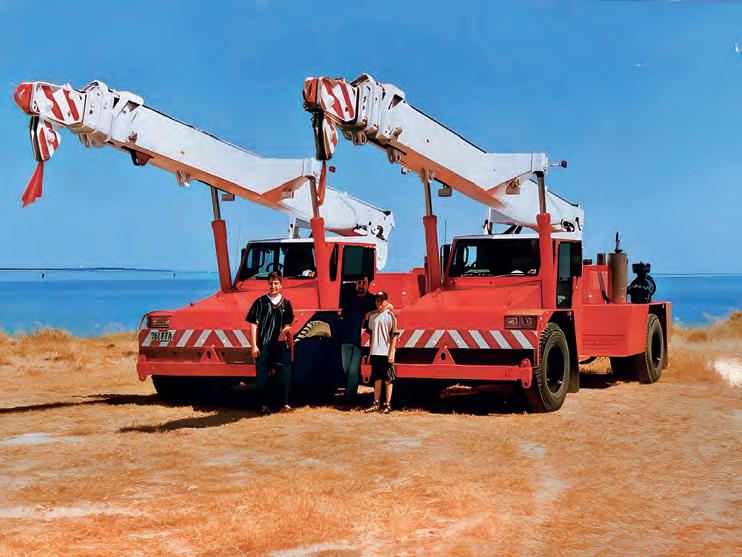
General Crane Services WA is firmly rooted in the crane industry. Founders Eric and Nick Bucciarelli represent the third generation of a family with deep ties to lifting, following in the footsteps of both their father and grandfather. From an early age, cranes were part of everyday life, not simply a career path, but a heritage.
That foundation shaped the company’s early philosophy: focus on general lift works, maintain an uncompromising approach to safety, and build trust by consistently delivering on site.
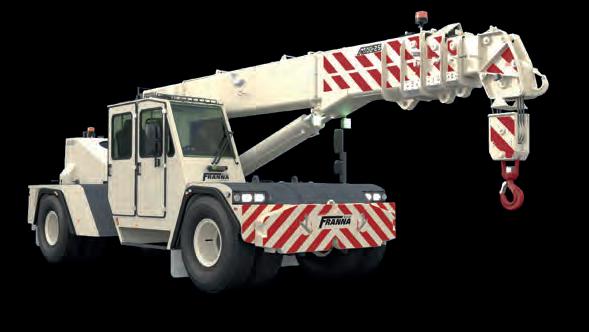
In 2011, the business made its first significant fleet investment with the purchase of an 80 tonne all terrain crane, followed later that year by a Franna. These early decisions reflected a practical, long term approach to fleet development, with priority given to reliability, versatility, and strong after sales support.
From modest beginnings, General Crane Services WA has experienced steady and sustained growth, a journey defined and made possible by the people who have been part of it. From those who laid the foundations in the early days, to the team driving the business forward today, it is their dedication, commitment, and expertise that have shaped every stage of progress. What began with a single crane has expanded into a diversified fleet, supported by transport vehicles and specialised lifting equipment.
In recent years, particularly from 2024 onwards, the business has deliberately evolved its operating model. Moving beyond traditional general lift work, the company has increased its involvement in major tenders and large scale project delivery. This includes complex heavy lifts, mining infrastructure projects, and
high risk shutdown environments where planning and execution are critical. This growth has been supported by continued investment in skilled personnel, modern equipment, and systems capable of managing increasingly complex projects safely and efficiently.
Versatility remains one of General Crane Services WA’s key strengths. The company services a wide range of clients, with no single sector defining its workload.
Projects span from residential pool installations, commercial construction, critical infrastructure lifts, and large scale mining shutdowns. This breadth of work requires a fleet and workforce capable of adapting quickly to vastly different operational and safety demands – something the business has built its reputation on over time.
General Crane Services WA has taken a measured approach to fleet standardisation, recognising the operational efficiencies that come from consistency across equipment. A predominantly unified fleet allows
operators to move confidently between machines, supported by familiar control systems and layouts. This consistency reduces training requirements, improves on site productivity, and supports safer outcomes across a broad range of projects.
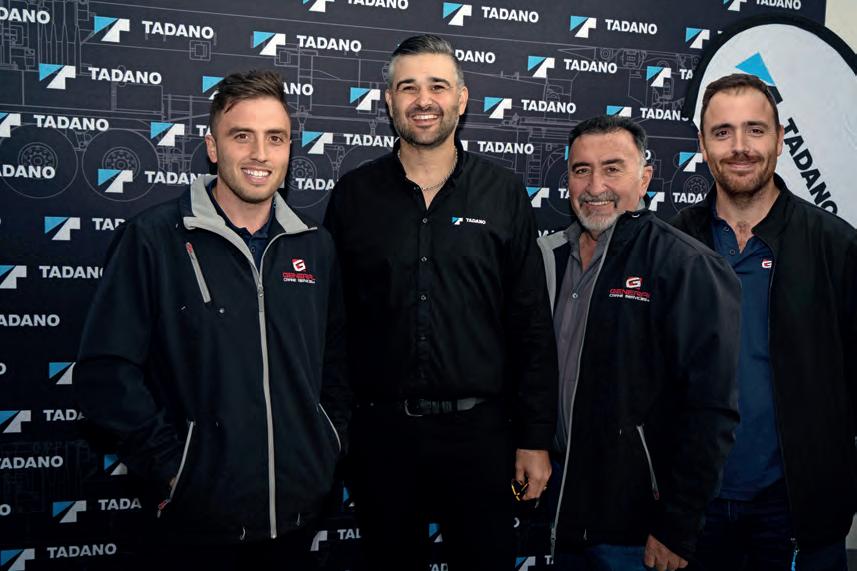
Alongside internal capability, longterm external relationships have played an important role in the company’s development. General Crane Services WA’s partnership with Tadano has been built on continuity and trust, most notably through its long-standing relationship with James Greenwood, who sold the business its very first crane and remains closely involved today.
“From the beginning, it was clear this was a business built on strong values and a long-term mindset,” said James. “Eric and Nick were always focused on doing things properly, investing in their people, their equipment, and their reputation. Watching the business grow over the past 15 years has been a testament to that approach.”
The relationship has always extended beyond equipment supply. Access to knowledgeable support and a genuine understanding of the business has been a key part of the partnership.
“From the beginning, it was clear this was a business built on strong values and a long-term mindset.”
This same sentiment extends to the broader support network, with David Lillistone, Mauro Ranieri, and the wider Tadano team recognised for their technical expertise and practical, solutionsfocused approach.
In an industry where downtime can significantly affect project schedules and costs, responsive service and technical support are essential.
General Crane Services WA places strong value on accessibility and responsiveness. Direct access to experienced service technicians and decision makers ensures issues are
addressed efficiently, particularly during shutdowns and time critical operations. That level of support plays an important role in maintaining fleet availability and minimising disruption for clients.
As the business has expanded into more complex and higher risk projects, engineering capability has become increasingly important.
General Crane Services WA employs experienced engineers and lift planners who take a disciplined, methodical approach to every lift. Each project undergoes detailed lift studies, planning reviews, and multiple safety checkpoints before execution.
While thorough preparation is central to success, the team recognises that site conditions can change quickly. In those moments, experience, sound judgement, and adaptability are critical to maintaining safe operations and delivering successful outcomes.
Reflecting on the company’s journey, the Bucciarelli family attributes its success to three core pillars:
• A strong “can do” attitude across the business
• Long-standing, reliable industry partnerships
• A loyal and committed workforce
Many team members have been part of the business since its early years, playing a hands-on role in building its capability
and reputation. The company actively encourages career growth and ongoing upskilling not only to reward its people, but to demonstrate genuine appreciation for the contribution they continue to make.
“It’s the people; their dedication, commitment, and belief in what we’re building that has made the biggest difference.” said Nick and Eric Bucciarelli.
As General Crane Services WA looks to the future, the focus remains clear and grounded.
The priority is to continue delivering high quality lifting solutions, maintain a
reputation built on professionalism and integrity, and sustain the capability to support increasingly complex projects across Western Australia.
“We’ll keep climbing and keep delivering. That’s the goal – nothing more complicated than that,” said Nick Bucciarelli.
“Congratulations General Cranes Services WA on your 15 year company anniversary, your continued partnership is deeply valued by the Tadano Group, we look forward to supporting you through many more years of success.” – Toshiaki Ujiie (Tadano Group President / Chief Executive Officer).
“It’s the people; their dedication, commitment, and belief in what we’re building that has made the biggest difference.”
We’re making it easier than ever for you to access the information you need. Our online portal is designed just for you. Simple, convenient and ready when you are.
This is just the beginning, with more documents on the way.

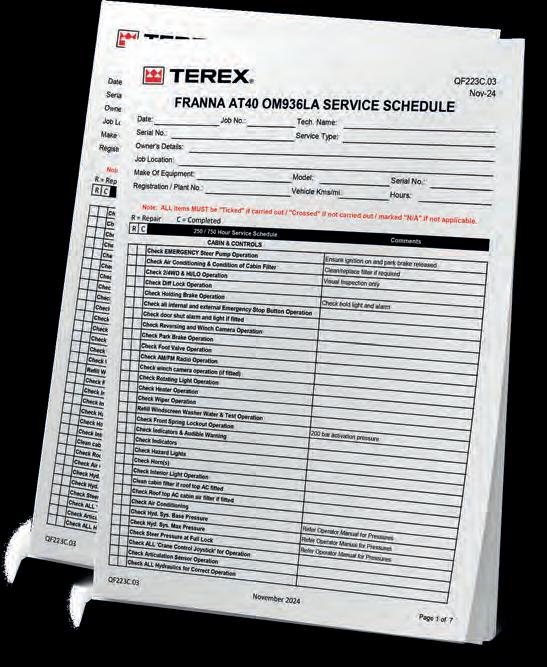
Now Available:
Scan the QR code to register today and stay connected with the latest updates
• Technical Bulletins
• Safety Notices
• Model Specific Service Schedules
Stepping into the role of CICA’s new CEO, I have to admit there are some mixed feelings. I’m humbled to be given this opportunity and looking forward to guiding CICA through the next chapter, but the gravity of the opportunities and challenges ahead are not lost on me.
CICA HAS CERTAINLY EVOLVED AND grown – in size and capacity, and this is in a large part attributable to the work of my predecessor Brandon Hitch. A few people have said to me ‘you have big shoes to fill’, and they are right.
Where CICA sits today hasn’t happened by accident. It’s been built over time by people who are passionate about our industry and were willing to put in the work. Our life members – Bob Parker, Robert Way, Allan McPherson, John Gillespie and Jeff Brundell – had the foresight to bring people together and build something that would last. Since then, the CICA board, our volunteers, members and the CICA team have all played a part in lifting standards, improving safety and making sure the industry gets the recognition it deserves.
That’s something I’m very mindful of – there’s a strong base here, and it’s worth protecting and building on.
Moving forward, the board has set a clear direction, and my job is to keep that moving to follow through, stay focused on what matters, and make sure we’re delivering for members in a way that’s practical and useful.
A big part of that is making sure the industry has a clear and credible voice. Not just being heard, but being understood, respected and making sure we’ve got the capability behind us to back that up.
I also want to acknowledge the CICA board and the many members who’ve reached out with their support. It means a lot. Taking on this role is a privilege, and I’m doing it alongside a capable and committed team who are already putting in the hard yards for members. There’s a depth of experience behind the scenes, and a
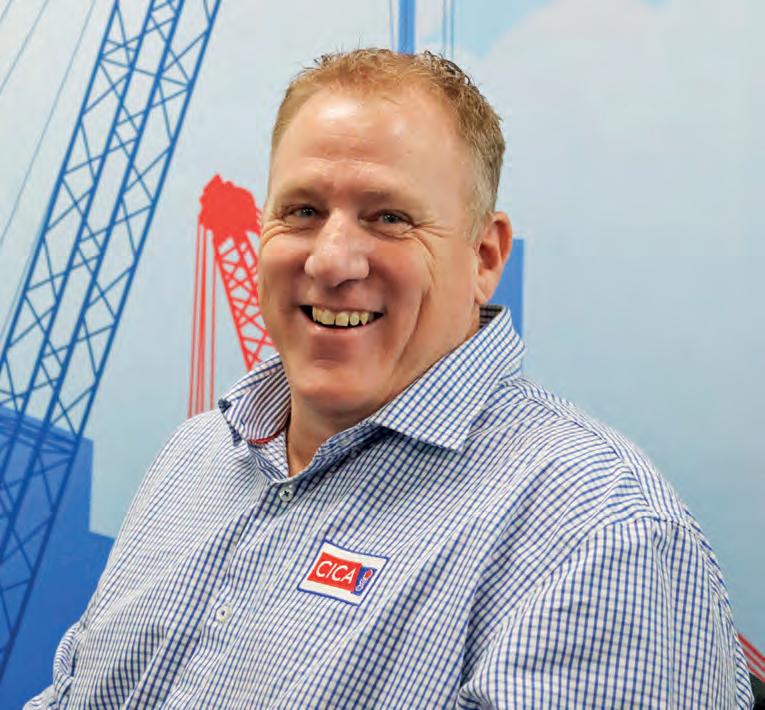
genuine focus on doing the job properly. My background is in crane operations, and I’ve spent more than a decade very closely involved in CraneSafe.
We’re now seeing strong international interest in that program, and the Green Sticker by CraneSafe is expected to expand into the United States in the coming years. This recognition and interest from our counterparts overseas is again a testament to the vision of our leaders, past and present. When Brandon was entrusted with the CraneSafe program, he was able to grow it, as was I when I later took responsibility of the program.
However, none of that progress would have been possible without the forward thinking, deep industry knowledge, and leadership of Jeff Brundell and John Gillespie. Brandon and I inherited a CraneSafe program built on the solid foundations they established; putting in place a consistent approach to crane inspections, a strong focus on safety and reliability. Our role has been to build on that foundation, ensuring the program remains practical, effective, and fit for purpose as the industry has continued to evolve.
There’s a fair bit ahead of us. Fuel prices are a challenge, regulation
continues to evolve, finding and keeping skilled people has its moments, and expectations on the industry aren’t slowing down. Compliance in particular is becoming more detailed and, at times, harder to keep up with.
That’s why staying connected is so important. As our Board President, Marcus Ferrari noted in his latest report, attending CICA events is more than just a catch-up – it’s becoming essential. With changes across TMA, High Risk Work Licence, Civil Aviation Safety Authority airspace rules and Construction Logistics and Community Safety – Australia, it’s critical to stay across what’s happening and what it means for your business. It’s one of the key ways we can support you in an increasingly complex environment.
If you have any suggestions for CICA Business essentials topics or resources we can make available, please let us know.
There’s always a real opportunity to keep improving how we do things. That means building on the strong work already happening, while watching and learning from developments overseas.
Alice Edwards’ recent work in Germany as part of the International Organization for Standardization’s Technical Committee for Cranes – helping shape international standards for crane design, testing and safe use – is another example of how CICA is making its mark as the industry authority.
I’d also like to welcome our new CICA staff members: Tanya Murphy, who will assist Justina as events coordinator/ secretariat and Timothy Weir, who has commenced as CICA’s CraneSafe technical officer. We’re fortunate to have skilled people bringing their experience from other sectors, wanting to be part of our industry. This is an industry we’re all proud to be part of, it’s practical, resilient and gets the job done often without fanfare.
The goal for CICA hasn’t changed: we’re working towards a crane industry that’s safe and forward-looking. It sounds simple, but takes ongoing effort to stay on track and ensure it’s in good shape for the next generation.
Patrick Cran CICA CEO
CICA BOARD
Marcus Ferrari – President
Karli Sutherland – Vice President
Danny Adair – Director
Danny Black – Director
David Solomon – Director
Anthony Grosser – Director
Andrew Esquilant – Director
Grant Gjessing – Director
Patrick Cran
Chief Executive Officer 0488 004 274 ceo@cica.com.au
Julie Turner Board Secretary Julie@cica.com.au
Alice Edwards Road Technical Engineer 03 8320 0440 alice@cica.com.au
Loreta Lukic Office Manager 0490 356 041 loretalukic@cica.com.au
Sharon Pearce
Crane Crew Competency Officer 0491 134 533 sharon@cica.com.au
Damien Hense
CICA Road Policy Advisor 0488 007 575 damien@cica.com.au
Thomas Webber Communications Coordinator thomas@cica.com.au
Kate Galloway
Training Operations Coordinator 0491 047 118 kate@cica.com.au
Michelle Verkerk Communications and Special Projects Advisor michelle@cica.com.au
Just ina Blackman
Member Events and Engagement 0403 717 626 justina@cica.com.au
Shane Coupe
CraneSafe & CrewSafe Administrative Assistant Officer 0491 047 134 shane@cica.com.au
Tanya Murphy Events Coordinator / Secretariat 0494 658 615 tanya@cica.com.au
Timothy Weir
CraneSafe Technical Officer tim@cica.com.au 0494 658 614
Unit 10, 18–22 Lexia Place, Mulgrave Vic 3170 Phone: 03 9501 0078
Email: admin@cica.com.au Website: www.cica.com.au
For information, please visit our website or call the CICA office.
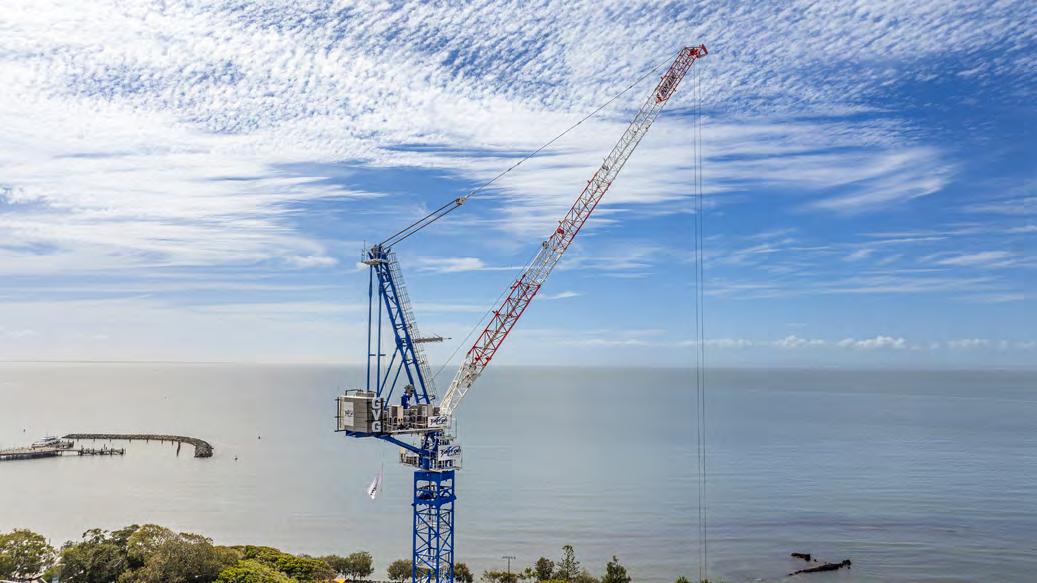
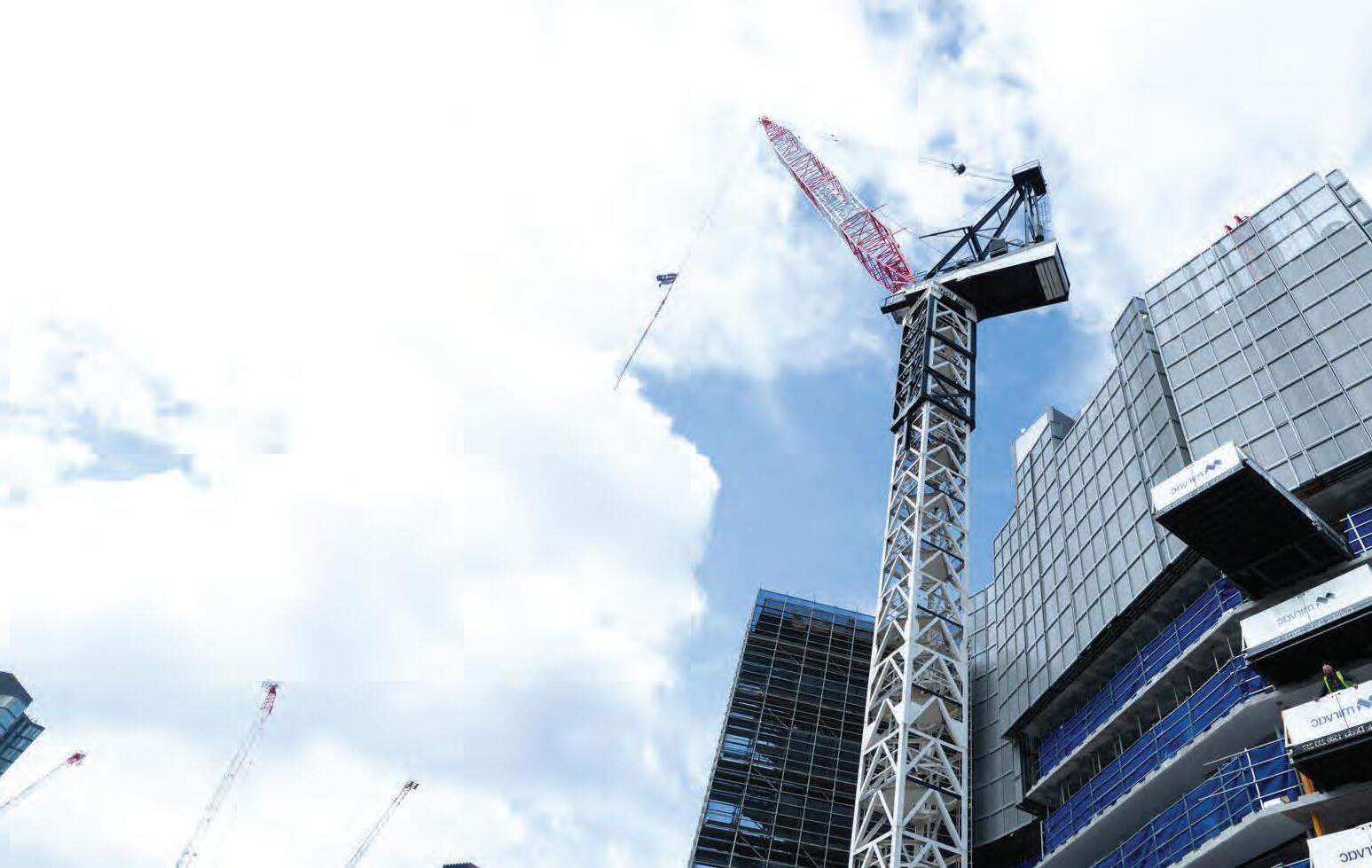
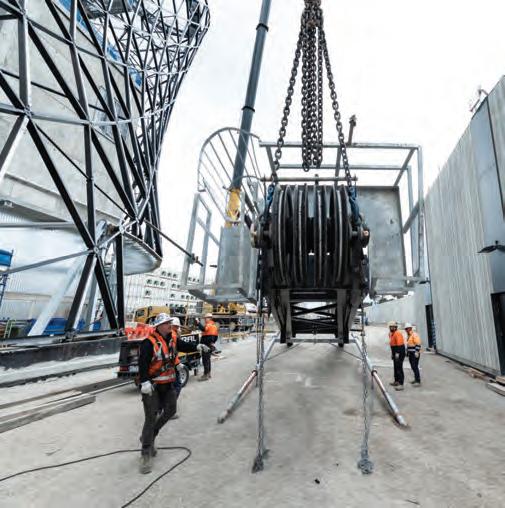
General Cranes offers vast experience on large scale projects including highrise residential, commercial and infrastructure backed by the performance and reputation of the Favelle Favco brand.
CAPABILITIES
Project risk management plan is established before the delivery of the tower crane and includes safe work method statements.
EXPERIENCED CREWS
General Cranes employs only qualified and experienced workers holding Work Safe high risk competency endorsements to establish, operate and maintain the tower crane fleet.
AUSTRALIAN QUALITY MANAGEMENT STANDARDS
General Cranes maintains systems for compliance to the Australian quality management standard AS/NZS ISO 9001 and safety management standard AS/NZS 4801.
General Cranes has worked on high profile projects in Melbourne, Brisbane and Adelaide. Contact us today and see how we would be your ideal partner on your next project.
General Cranes / Melbourne
T. +61 3 9369 1222 | E. info@generalcranes.com.au
General Cranes / Brisbane
T. +61 7 5577 4455 | E. info@generalcranes.com.au
THE RULES
working near airports have changed, as the Airports (Protection of Airspace) Regulations 1996 have now sunset, and have been replaced with a new airspace protection regime covering leased federal airports –Airports (Protection of Airspace) Regulations 2026.
The fundamentals haven’t changed, but the process around them has tightened up.
Under the previous regulations, if your crane was going to push into protected airspace, it was classed as a controlled activity, and you needed approval before getting anywhere near the job.
That hasn’t changed.
What has changed is the framework those approvals sit under, and any applications lodged after 1 April 2026 are now assessed under the new regulations. There’s now a stronger expectation that operators:
• E ngage with the airport or local authority early
• Submit applications in writing at least 28 days ahead
• P rovide clear and accurate details on crane height, reach and location. Approvals may also come with conditions, things such as lighting, operating limits, or coordination requirements.
The old regulations had been in place for nearly three decades, and while they did the job, the broader aviation and construction environments have moved on. The updated regime is aimed at bringing more structure and consistency to how airspace around airports is managed, particularly as equipment gets larger and projects have become more complex.
If you’ve got a job anywhere near an airport, it’s worth doing a few checks early rather than late:
• I s the site within protected airspace around a leased federal airport?
• Will the crane penetrate prescribed airspace or obstacle limitation surfaces?
• W hich set of rules applies, based on when the application is lodged?
CICA Safety Bulletin #384 which is available on the ‘Safety Bulletin’ page of the CICA website, has more information
on helpful resources and airport contact details.
Getting answers and approvals upfront can save a lot of back-and-forth, and minimise delays, as working near airports requires more planning, earlier engagement, and tighter documentation than it might have in the past.
As with most things in this industry, early preparation goes a long way toward keeping the job moving. CICA has engaged the Civil Aviation Safety Authority (CASA) and requested more information to pass onto our members.
“The updated regime is aimed at bringing more structure and consistency to how airspace around airports is managed, particularly as equipment gets larger and projects have become more complex.”

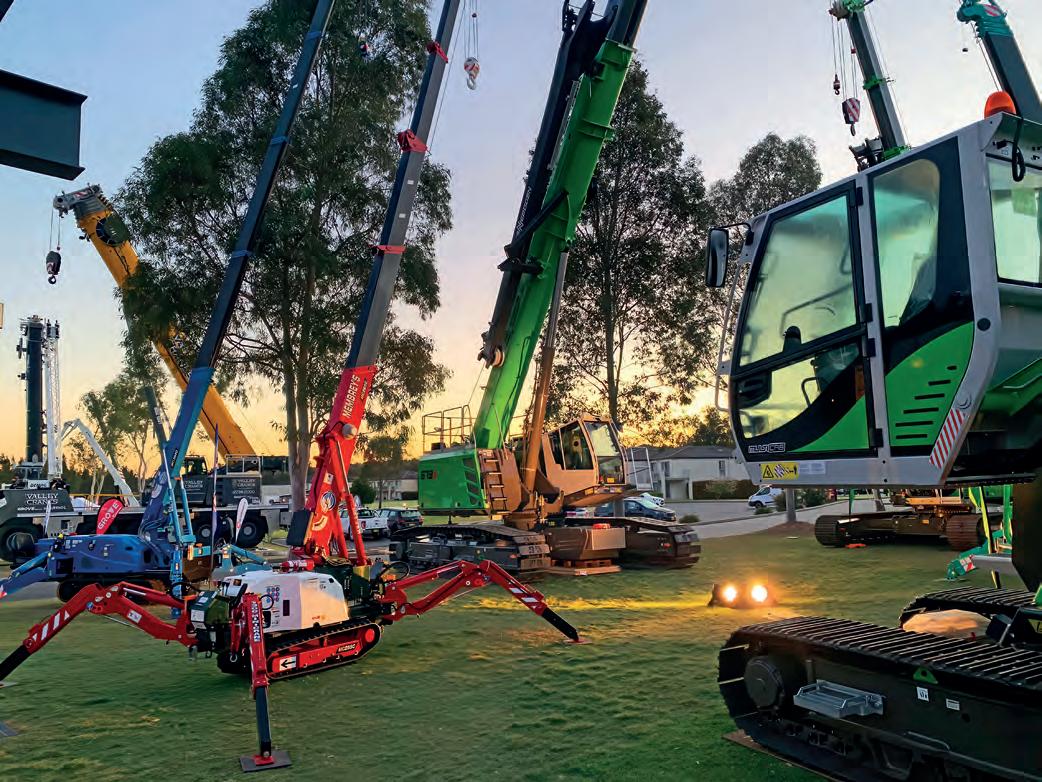
THIS YEAR’S CICA NATIONAL CONFERENCE is set in the Hunter Valley, and it’s shaping up to be a ‘must attend’ event. Right in the middle of wine country, the location gives attendees a reason to make a proper trip of it, whether it’s a couple of extra days exploring all that the region has to offer, like floating across vineyards in a hot air balloon or enjoying a nice glass of red.
But of course, the main game is still the conference, and this is one of the few locations where an outdoor ‘crane and equipment’ display is possible. It’s a chance to get up close and have real conversations with suppliers, to see what’s new and what’s changing across the industry without having to rush.
The program is a bit different this year. One of the standouts will be a mock court case, built around a realistic scenario that walks through what can go wrong, and how it plays out legally.
It’s practical, and is the sort of thing that sticks with you, as attendees will get the opportunity to be part of the event, playing the role of judge, court officer, witnesses and jury. You will be taken through the court brief, the simulated trial and verdict.
Alongside that, there’s a solid lineup of speakers covering topics that go straight to the day-to-day running of a business. Platinum Sponsor Franna proudly marks 40 years of serving and
supporting the Australian crane industry this year.
If you’re planning to attend, it’s worth getting onto the website sooner rather than later and locking things in. Sponsorship opportunities are already moving, and the indoor exhibition spaces and outdoor “crane and equipment display” areas are selling fast.
There’s also the option to book an activation. In simple terms, that’s your chance to do more than just have a stand – you can create a memorable experience, something interactive that gives people a reason to stop and engage. It is often what people remember after the event.
Entries are also open for the CICA Awards. That includes Lift of the Year, Photo of the Year, and a range of awards recognising standout work across the crane industry. If you’ve got a job, a team, or a project worth putting forward, now’s the time.
Registrations to attend also open up this month.
It’s shaping up to be a solid few days, with excellent content, plenty to see, and a chance to catch up properly with people across the industry.
Head to: https://conference.cica.com.au/

We’ll see you in the Hunter.
CICA’s Fuel Levy Calculator is helping members keep up with diesel costs
FUEL PRICES ARE HIGHLY VOLATILE AT the moment, changing from week to week, and given that most jobs are quoted ahead of time, and diesel rarely stays where it was when the price was set, it can be difficult for those quoting to navigate.
CICA’s fuel levy calculator is available
to members and helps to deal with fluctuating fuel prices. Instead of guessing or building in a buffer, it adjusts part of the charge based on the actual fuel price at the time of the job.
If you don’t account for fuel changes, you wear the cost. Margins on crane work aren’t big enough to absorb that for long, and this calculator reduces the risk of underquoting.
CICA has created a ‘How to Guide’ on accessing and using the Fuel Levy Calculator. Head to: https://cica.com. au/membership-portal-fuel-levy-calculatorhow-to-guide/



The Crane Industry Council of Australia (CICA) recognises excellence and innovation in the Australian crane industry with the CICA Lift Of The Year Awards.
PROJECT OF THE YEAR
INNOVATION OF THE YEAR
LIFT OF THE YEAR –UNDER 20T
LIFT OF THE YEAR –OVER 20T
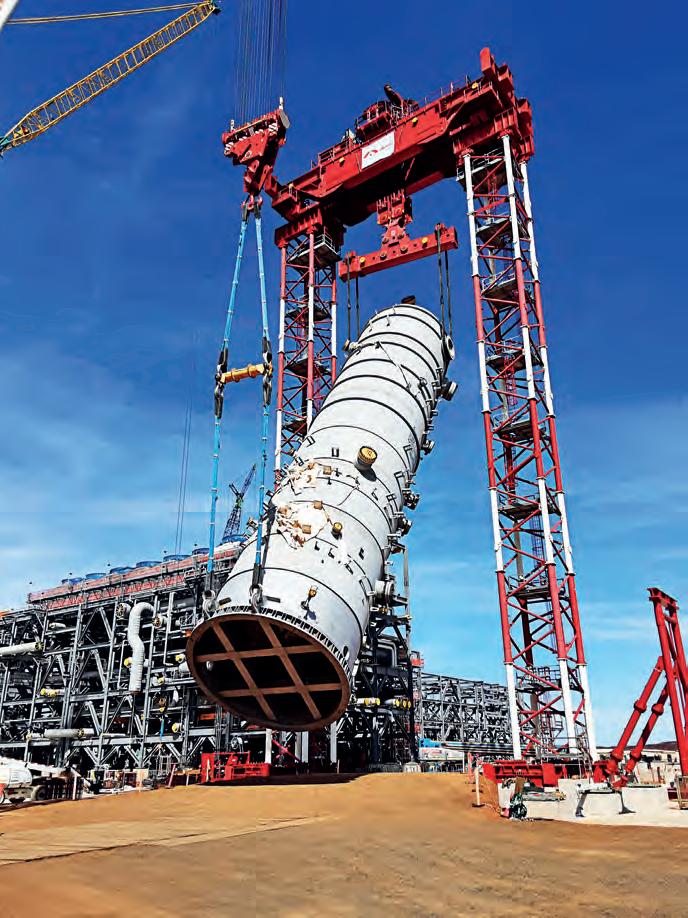
The Pluto Train 2 heavy haul project stands out as one of the largest and most technically demanding undertakings of its kind in Australia. The sheer scale and complexity of transporting and lifting modules weighing up to 4,550 tonnes required meticulous planning, advanced engineering and flawless execution.
AWARD WINNER
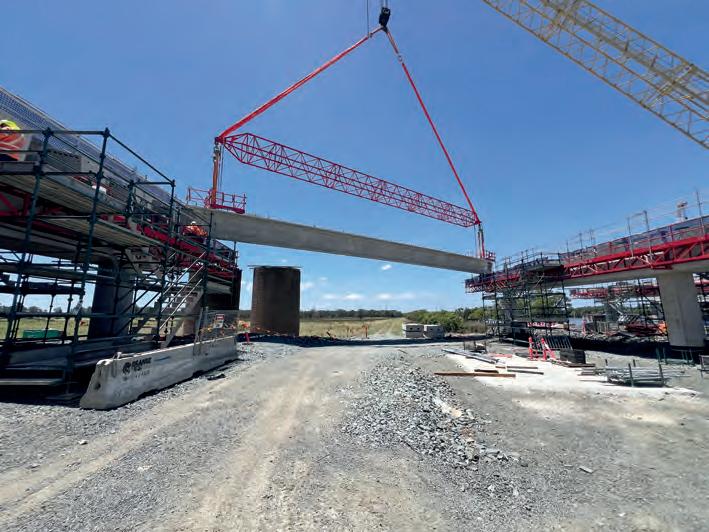
John Holland, Gamuda Australia & Edwards Heavy Lift, Super T Girder Access Platform. The Girder Access Platform (GAP) is an innovation that has revolutionised the M1 Motorway Extension project. By providing a safe and efficient method for accessing lift points on super T girders, the GAP has significantly enhanced safety and efficiency.
To enter the 2026 awards visit cica.com.au/awards-lift-of-the-year
LIFT OF THE YEAR MORE THAN 20T WINNER
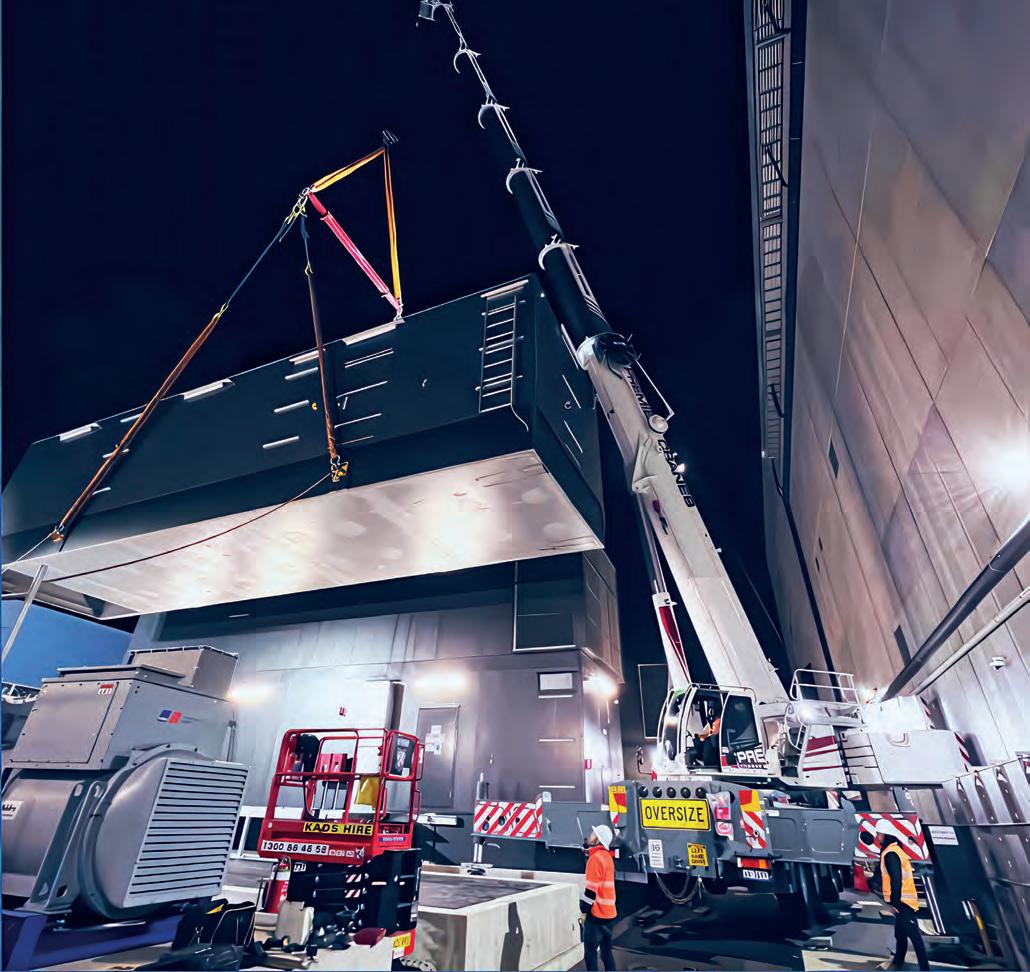
Premier Cranes and Rigging, 40t generator installation. Premier Cranes and Rigging’s team was tasked to lift a two-story-high 94t generator system at a data centre. The lift faced many constraints from the site condition.
LIFT OF THE YEAR
LESS THAN 20T WINNER
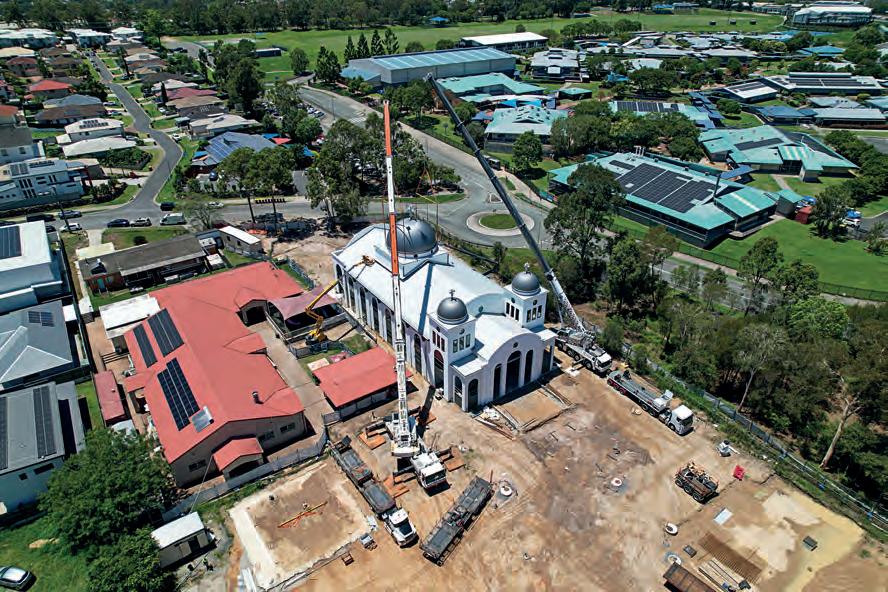
Brisbane City Cranes, Virgin Mary Coptic Orthodox Church, Calamvale. Large dome lift. Brisbane City Cranes was tasked to lift the 15t dome onto the roof of the newly constructed Virgin Mary Coptic Orthodox Church. The large dome structure had to be constructed and assembled on the ground prior to the lift to reduce working at heights issues to a minimum.
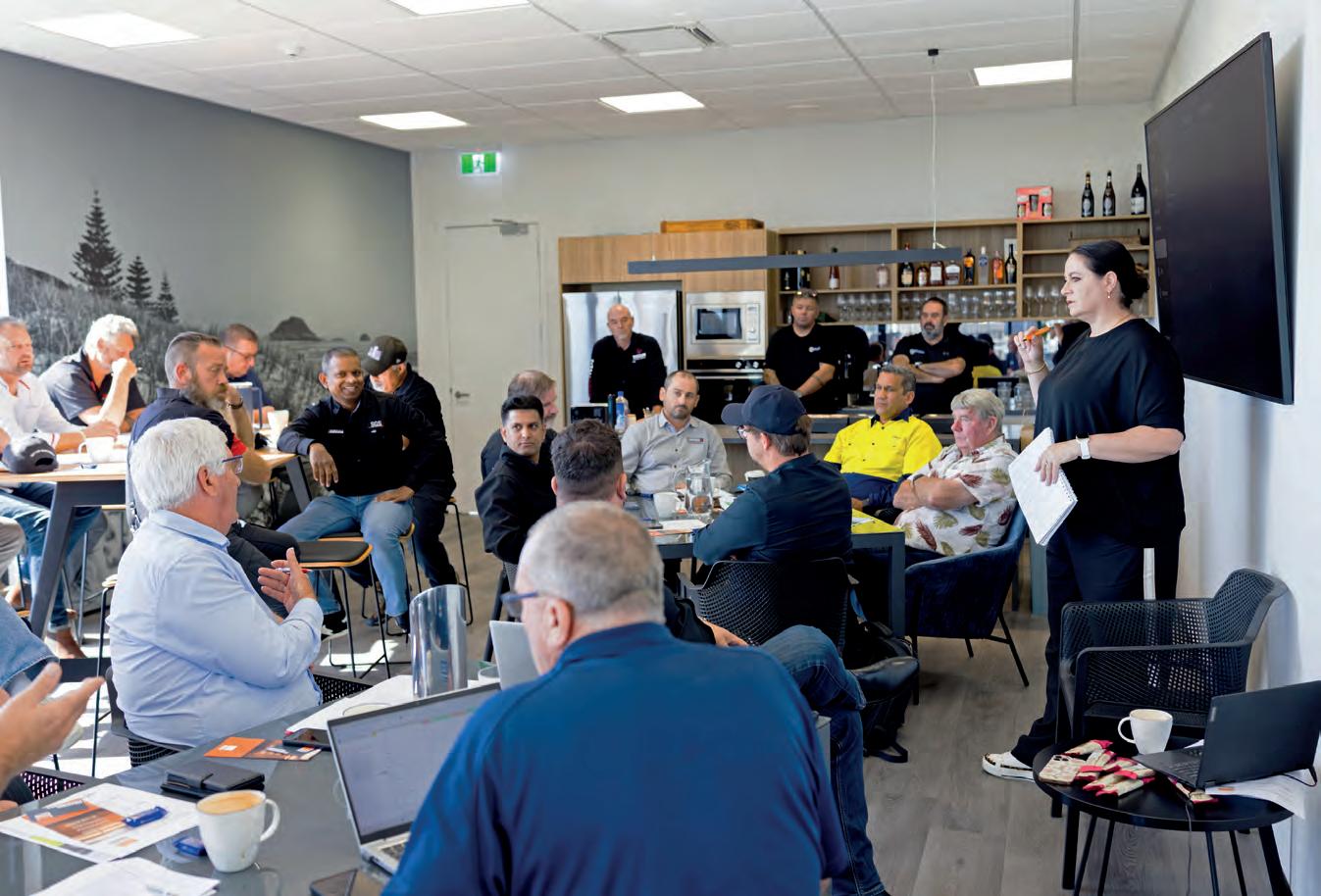
From one phone call to a 30-strong forum, the Truck Loader Crane sector gains momentum.
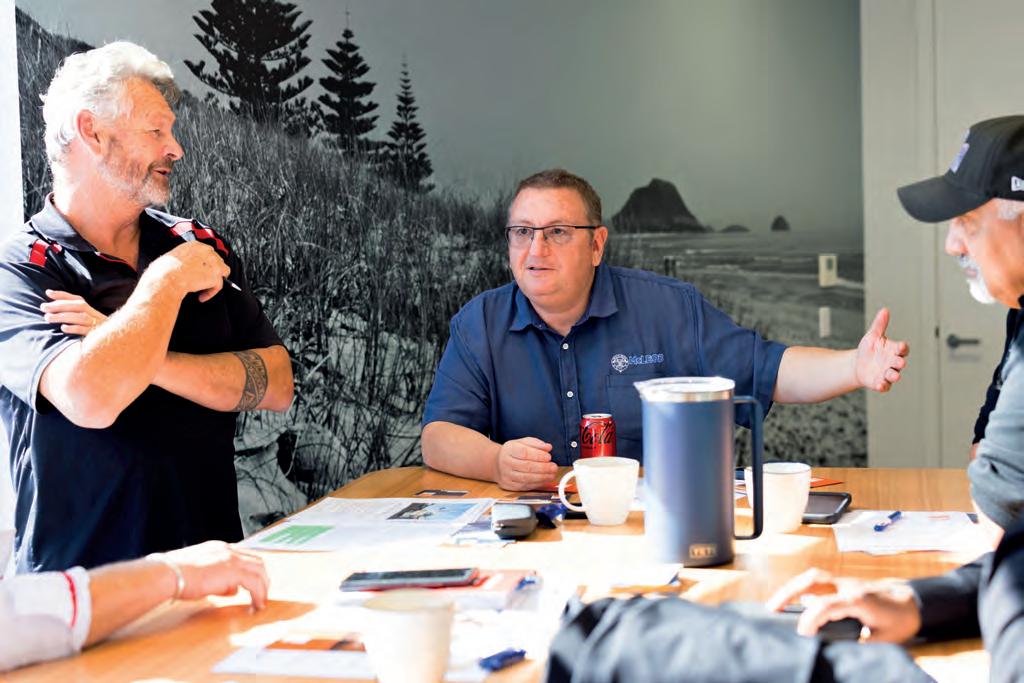
THE CRANE ASSOCIATION OF NEW ZEALAND’S (CANZ) recent Truck Loader Crane Forum, held on 30 April in Tauranga, marked a significant step forward for a vital and fast-growing part of the industry. Hosted by McLeod Cranes, the event brought together a diverse cross-section of operators, businesses, and stakeholders for a highly practical and forward-focused discussion – and set the tone for what comes next.
First, credit must go to the host. McLeod Cranes generously opened their premises for the forum, and Scott McLeod and his team went above and beyond to ensure the day ran smoothly. As a long-time supporter of the association, Scott’s commitment to the industry was on full display, with attendees made to feel genuinely welcome from the moment they arrived. That level of hospitality helped create an open and collaborative environment that carried
through the entire forum. Interestingly, the forum itself was sparked not from within the association, but from outside it. Initial contact came from a non-member organisation – PlaceMakers – seeking guidance and support around truck loader crane operations. Their enquiry covered both general best practice and more specific needs around training and competency. That outreach highlighted a clear gap in the sector, and more importantly, a strong appetite for better connection and shared understanding.
“We’ve known for a while that this part of the industry needed more focus, so when PlaceMakers reached out, it was the trigger to get moving,” said Sarah Toase, Chief Executive Officer of CANZ. “There’s always more we want to do than we have capacity for, but the level of demand from industry – and how well it aligned with our own goals – made it clear this needed to
membership. It reflects a broader reality: the need for industry-wide engagement that extends beyond traditional boundaries. In fact, the majority of attendees at the forum were non-members – something the association sees as a positive.
The forum itself centred on three key areas.
The first was the Approved Code of Practice (ACOP) for Cranes, with a specific focus on the truck loader crane section. Through workshop-style discussions, attendees explored what improvements are needed to make this section more relevant, practical, and aligned with modern operations. There was strong consensus that the ACOP must better reflect the realities of truck loader crane work, particularly in dynamic environments such as residential construction sites.
Training and competency formed the second major theme. Participants discussed current gaps in training pathways and the need for clearer, more consistent standards across the sector. The conversation also touched on the introduction of skill standards, and how these could support a
more structured and recognised approach to capability.
As part of this discussion, Sarah provided an overview of the rapidly changing vocational education landscape in New Zealand. Her briefing highlighted how recent reforms have impacted training delivery – not just for truck loader cranes, but for the crane industry as a whole.
The third area of focus was ongoing engagement – specifically, the idea of hosting events and forums around the country.
There was strong interest in continuing these conversations at a regional level, with potential sessions dedicated to specific topics within truck loader crane operations. The appetite for practical, face-to-face learning and knowledge-sharing was clear.
One issue that generated particularly robust discussion was the intersection between truck loader crane operations and residential construction.
The Approved Code of Practice for Roles and Responsibilities in Residential Construction was identified as highly relevant, especially given the risks associated with lifting and delivering materials onto building sites.
A key challenge is the level of preparedness on-site. In many cases, builders and site teams lack the planning, understanding, or competency required to safely receive loads delivered by truck loader cranes. This creates a significant risk not just for operators, but for everyone on site.
As a direct result of the forum, this issue will now be tackled on multiple fronts. This includes contributing to the development and application of the roles and responsibilities ACOP, as well as engaging with building industry associations to improve awareness and expectations onsite. There is also early discussion around developing a micro-credential for dogmen, tailored specifically for builders receiving loads in residential environments.
Importantly, this is not a one-off conversation. Future truck loader crane forums are already being considered to continue unpacking these challenges and working towards practical solutions.
The strength of the forum lay not just in the topics discussed, but in the people in the room. Attendees included truck loader crane operators, fleet managers, manufacturers, crane companies running
truck loader cranes, and owner-operators. There were also individuals who had retired from the industry but returned specifically to contribute to the discussion –bringing with them a wealth of experience and perspective.
This diversity created a genuinely valuable exchange of ideas. Different parts of the industry, often operating in isolation, were able to come together, compare experiences, and identify shared challenges.
By any measure, the forum was a success. It demonstrated both the demand for greater support in the truck loader crane sector and the willingness of industry participants to engage constructively in shaping that support.
For the Crane Association, it reinforced an important principle: effective industry leadership starts with listening. Whether members or not, the voices of those working in and around truck loader cranes are critical in guiding the development of standards, training, and resources.
If this first forum is anything to go by, there is strong momentum behind this part of the industry and a clear opportunity to build something that delivers real, lasting value.
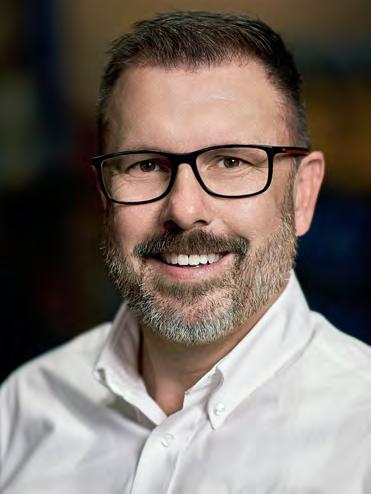
Justin Boehm, Lifting Equipment Engineers Association’s (LEEA) Regional Manager, Australia and New Zealand introduces LEEA’s Safe User grade of membership.
FOR A LONG TIME, WE HAVE OPERATED on simple assumptions – if standards exist, if guidance is available, and if training pathways are in place, industry will adopt them.
As a rule of thumb, most operators are doing their best to comply with industry norms and buying into quality. Yet we still see, thanks to low barriers to entry in a market like the lifting equipment industry, cowboys ruining the reputation for our high quality members.
That is why LEEA has made a deliberate change in Australia and New Zealand.
The recent establishment of a dedicated business development function in the ANZ region is not an administrative shift. It represents a fundamental change in how we engage with industry.
Rather than waiting for organisations to come to us, we are now actively working across the sector to engage directly with organisations to help them identify capability gaps, and supporting the practical application of industry best practice.
LEEA’s Safe User grade of membership, combined with the establishment of a dedicated business development function in the ANZ region, will work hand in glove to deliver practical, real-world outcomes for the end users in our industry. The Safe User grade provides a structured entry point for organisations that rely on lifting operations and who know the importance of their equipment, but cannot access consistent unbiased information.
It gives them access to guidance, training pathways, and a clearer understanding of what good looks like in practice, with LEEA engaging directly with major contractors, helping them apply standards in their operating environments, and bridging the gap between awareness and action. This does not mean users can or should inspect their own equipment. This is not about redistributing work within the industry; it is about raising the overall level of capability. As more organisations adopt LEEA’s structured approach to lifting safety, confidence increases, outcomes improve, and the size of the opportunity grows for everyone involved.
At the same time, we have been consistently seeking feedback from our members and the broader industry on issues such as product documentation, markings, and the clarity of standards in real-world use. That feedback is critical. It ensures that the guidance we develop is not theoretical, but grounded in the environments where lifting equipment testing and inspections actually takes place.
to increased risk. Across Australia and New Zealand, skills shortages continue to impact technical industries. While unemployment remains relatively low, the availability of experienced, technically capable workers has not kept pace with demand and the lifting sector feels this directly.
We’re doing this because the lifting industry has a standards access problem. It does not have a guidance problem, and it certainly does not have a shortage of documentation.
What it has is a capability problem. The gap is not in available knowledge –it’s in consistent application and that gap is where risk hides.
In an industry where the consequences of failure can be immediate and severe, increased activity without increased capability does not create opportunity – it widens the gap
LEEA is focused on building capability where it matters to our membership and our portion of the industry – lifting equipment inspections. Our roles require judgement, particularly inspection, but these roles are becoming harder to fill. Decisions are only as good as the capability behind them. While standards exist, procedures are documented, and inspection intervals are defined, the consistent interpretation and application of these requirements still vary across organisations, sites, and individuals. That’s where being backed with a LEEA membership is so incredibly important. The variability between a member company and a non-member is not always visible, but it is always present.
In lifting operations, small differences in competence can have significant consequences, as recent incidents across our region continue to reinforce. There are numerous examples, many of them shared quietly within the
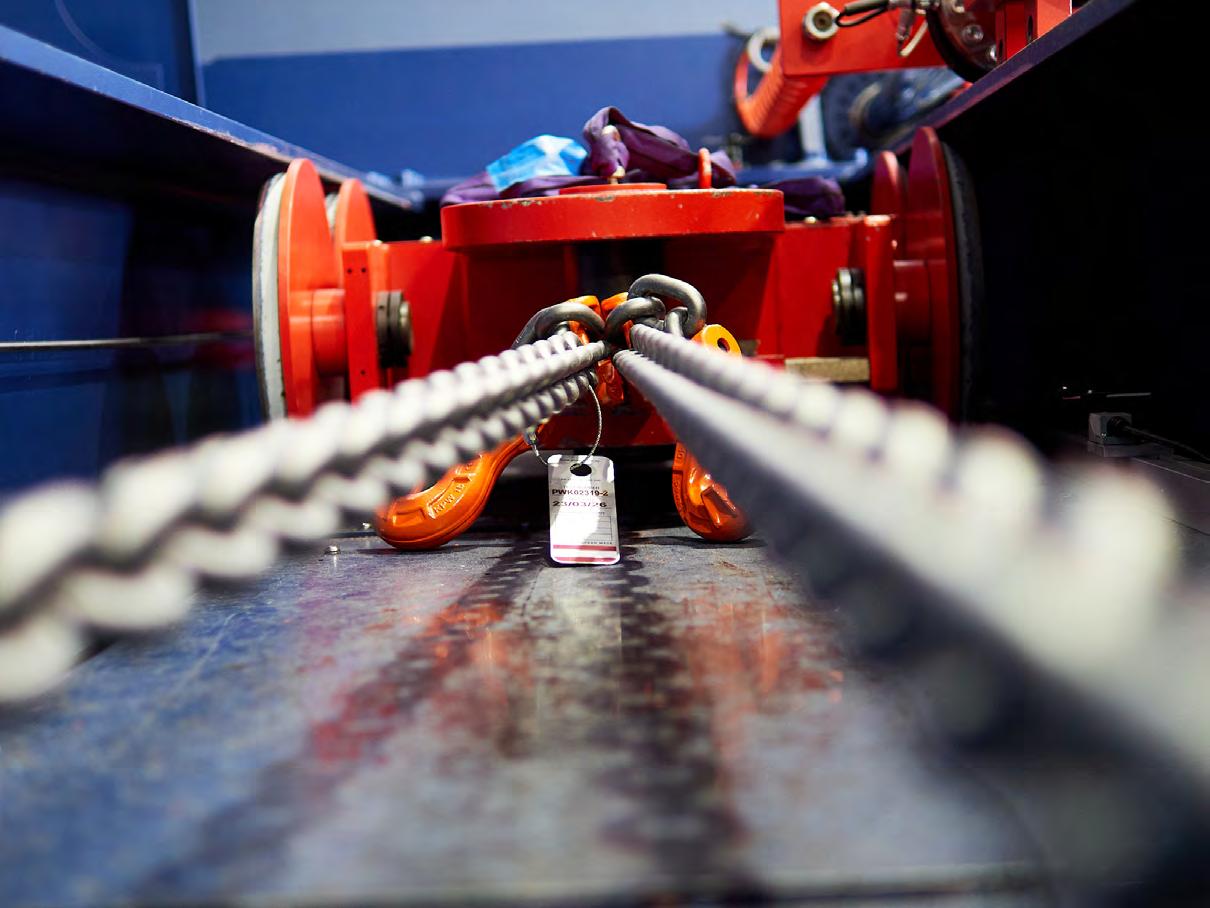
In lifting operations, small differences in competence can have significant consequences.
industry circles, of loads being dropped or have come dangerously close to causing serious harm. In one recent case, a suspended load of scaffolding weighing over a tonne was dropped from a crane in Sydney, narrowly missing workers below – that was overtime and captured on a phone, but so many aren’t reported.
Whether it’s configuration, load control, communication, or exclusion zones, these events rarely come down to a single failure point. They are typically the result of small gaps, a missed check, an incorrect assumption, or a decision made under pressure that compounded at the point of execution.
In lifting, the margin for error is rarely where the problem begins. It’s where it ends.
For LEEA, the shift in approach is about addressing that directly.
By engaging more actively with industry, we are able to support organisations in translating the importance of lifting equipment from
hearsay into knowledge. Moving from awareness to application.
This includes working with members to identify areas where guidance can be strengthened. Feedback on documentation, product markings, and the usability of standards is already informing the development of industry good practice guides. Dedicated resources designed to reflect realworld conditions and reduce ambiguity at the point of use. We want to put knowledge on railway tracks, so that we reduce interpretation and thus reduce variability.
Reducing that variability is critical and that is where structured competency frameworks play a central role.
By defining what competence looks like, from Tier 1 contractors right through to inspection, how it is developed, and how it is assessed, these frameworks provide a consistent foundation for capability across the sector.
The industry does not need more information. It needs better translation of that information into practice. That is the opportunity in front of us.
The lifting industry has always adapted to change. Advances in equipment, evolving standards, and new technologies have all contributed to improved safety and performance.
The question is whether capability will keep pace with that evolution. In lifting, increased activity without increased competence does not improve outcomes. It increases exposure.
The tools to address this challenge already exist. Training programs are available, standards are established and frameworks are in place.
The focus now must be on ensuring they are consistently applied.
The industry does not need to redefine what good looks like. It needs to deliver it, as it will not happen by accident.
It will happen through deliberate action.
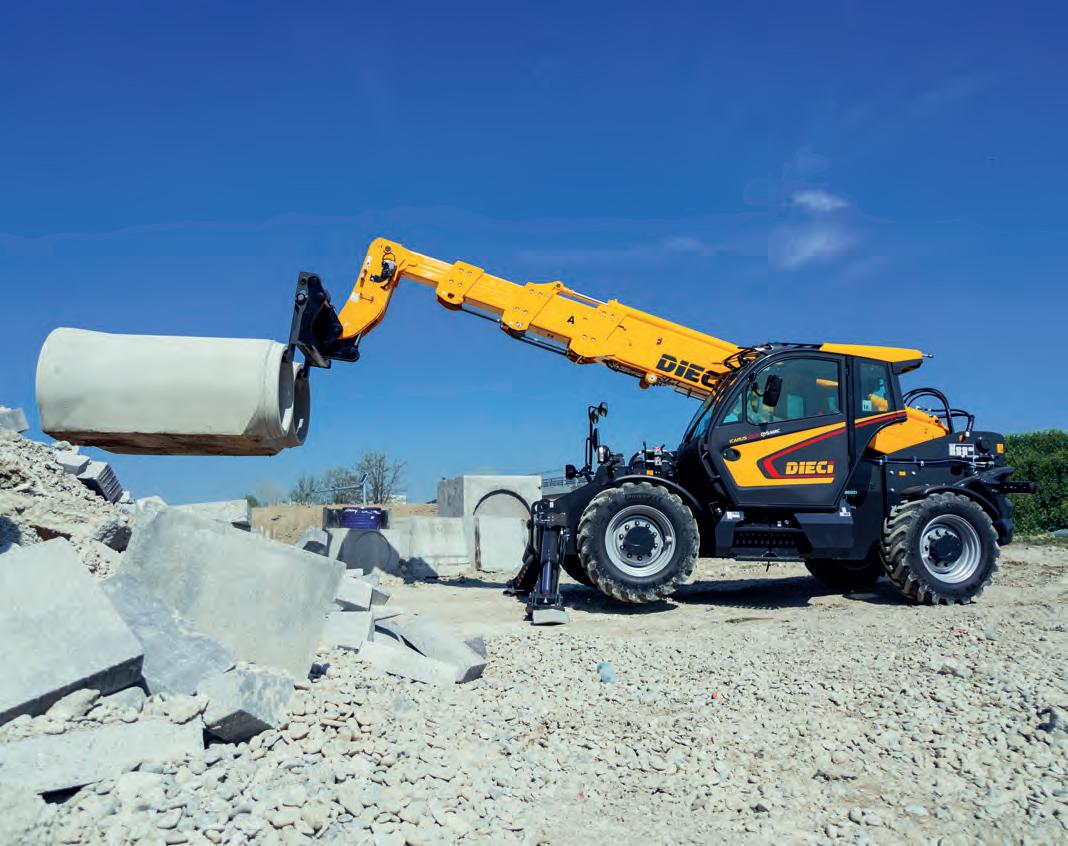
Built for large scale construction and industrial performance, the new Dieci Icarus 45.17 GD delivers the strength, reach, and precision modern jobsites demand. With a 4,500 kg lift capacity and a maximum lift height of 16.4 metres, it handles heavy loads with confidence and control. Advanced hydrostatic transmission, four-wheel steering, and intuitive joystick operation ensure smooth, precise handling in tight conditions. Combined with intelligent stability systems and a wide range of attachments, the Icarus 45.17 GD delivers reliable performance, versatility, and productivity across every jobsite.
Max Capacity: 4,500 kg
Max Lift Height: 16.4 m
Max Speed: 35 km/h
Max Power: 93 kW (125 hp)
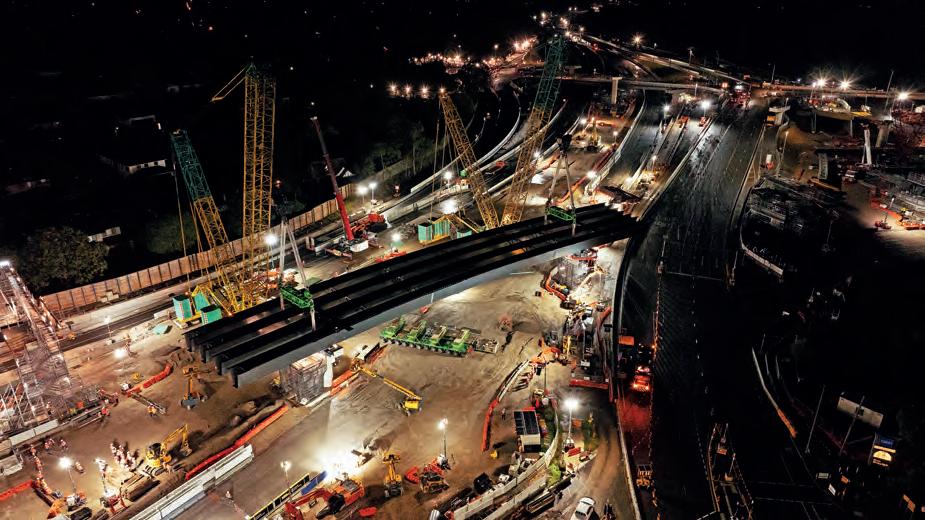
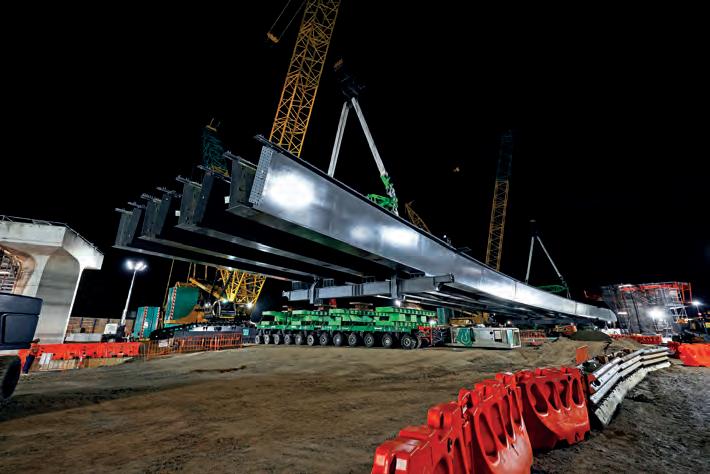
Recently, Tutt Bryant Heavy Lift and Shift (TBHLS) delivered one of the most complex lifts in Australia, a lift which didn’t just happen, it took years of planning, thousands of decisions and with every detail checked and rechecked. More than 1000 tonnes of curved beams were installed above one of Melbourne’s busiest freeways.
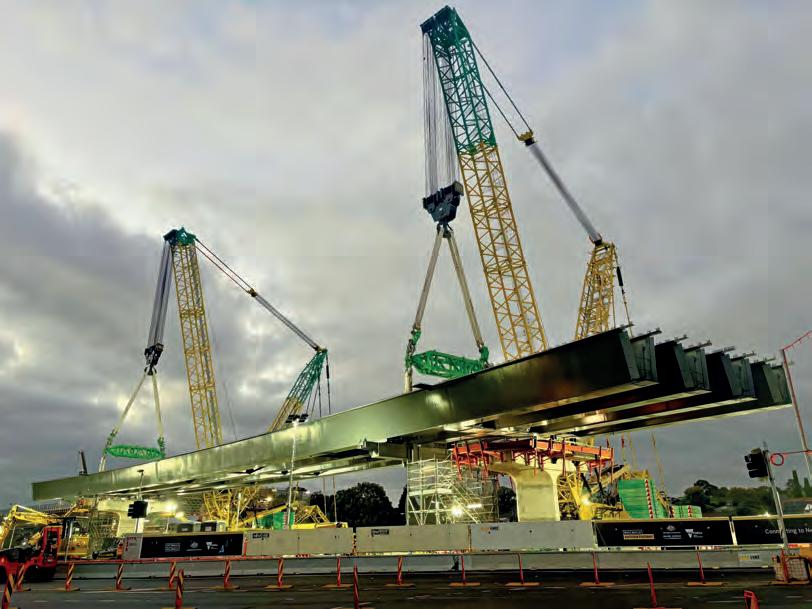
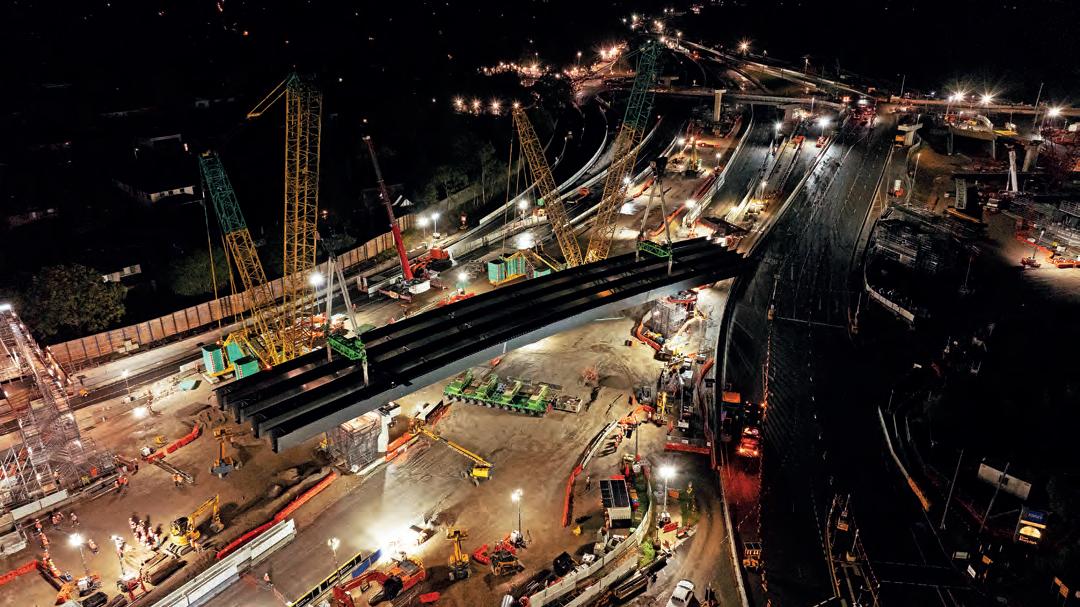
THE LIFT INVOLVED 12 SPLICED STEEL girders forming an entire bridge spanning approximately 100 metres in length, 16 metres wide and weighing over 1080 tonnes, including the rigging gear. TBHLS secured the scope of works for this span, along with other lifts it has completed or is working on. The project was awarded through a competitive tendering process.
The complexities of the lift related to: Developing a workable solution that allowed for lifting, tracking, slewing and placing the assembled span into position.
Completing the assembly of the span in a tight working area adjacent to the live freeway.
Completing the lift during a weekend closure of both inbound and outbound carriageways which involved constructing a crane platform on the carriageway, traversing the span to the pick position by using Self-Propelled Modular Transporters (SPMTs) which was also completed by TBHLS. Tutt Bryant Heavy Lift & Shift deployed 48-axle line configuration to traverse the assembled bridge span from the assembly area to the pick position, a critical and complex element of the overall operation.
Underpinning the SPMT operation was a newly expanded capability from Tutt Bryant: a range of heavy-duty support beams and stools, purpose-designed to serve as the interface between the SPMT deck and the bridge structure. Engineered to handle the immense loads transferred during transportation of the span, these beams and stools ensured the load was distributed safely and effectively across the SPMT configuration throughout the move.
The design and execution of this interface solution was managed entirely by Tutt Bryant’s highly skilled in-house engineering team, which developed the bespoke arrangement to suit the specific geometry and load requirements of the span.
Having this expertise in-house allowed for a seamless and fully integrated approach across the lifting, transport and placement phases of the project, and was a key advantage in delivering such a complex operation within the tight timeframes of a weekend road closure –lifting and positioning the span and then removing
The intricate lift involved 12 spliced steel girders, forming an entire bridge spanning approximately 100 metres in length, 16 metres wide and weighing over 1080 tonnes, including the rigging gear.
everything from the freeway in time for reopening it for Monday morning traffic.
TBHLS mobilised two SANY SCC8000A 800 tonne lattice boom crawler cranes for the dual crane, pick and carry lift. Each Sany featured 48 metres of main boom, plus full 350 tonnes Superlift. The dual lift pick and carry saw Crane One lift at a radius of 15.5 metres, then luffed down to 16.25 metres before traveling about 15 metres forward before placement of the load. Simultaneously, Crane Two lifted at 17.75 metres, luffed up to 16.5 metres and travelled about 15 metres backwards. Both cranes were required to stop and slew to
adjust the span position along the travel path. Key TBHLS personnel involved in the lift and shift included SPMT Project Manager Ben Neilson, Project Manager Carl Rigby, and Matt Fussell, TBHLS Victoria State Manager along with crane technicians (crane operators) and riggers.
Sany’s 800 tone crawler crane boasts a Cummins QSX15 engine and a maximum lifting moment of 12,016 tonne-metres. Its safety features are also noteworthy, including a fully automated load moment indicator, boom angle limit and closedcircuit monitoring system.
One of the standout features of the SCC8000A is its flexibility relating to its boom. This standard crane features a 99 metre main boom. With the super lift
attached, it extends to 111 metres. The mixed main boom, suitable for heavy and light loads, reaches 123 metres in the standard crane and 147 metres when combined with the full super lift. Additionally, the crane includes a 168 metre power boom, incorporating 3.5 metre sections that are already fitted. The Sany SCC8000A also boasts a superpower boom comprising two booms side by side for a specific segment of the main boom. The crane features a short fixed wind jib suitable for installing wind turbines exceeding 100 tonne at a hook height of 175 metres. It has a full luffing fly of 96 metres capable of lifting up to 68 tonne at a hook height of 194 metres.
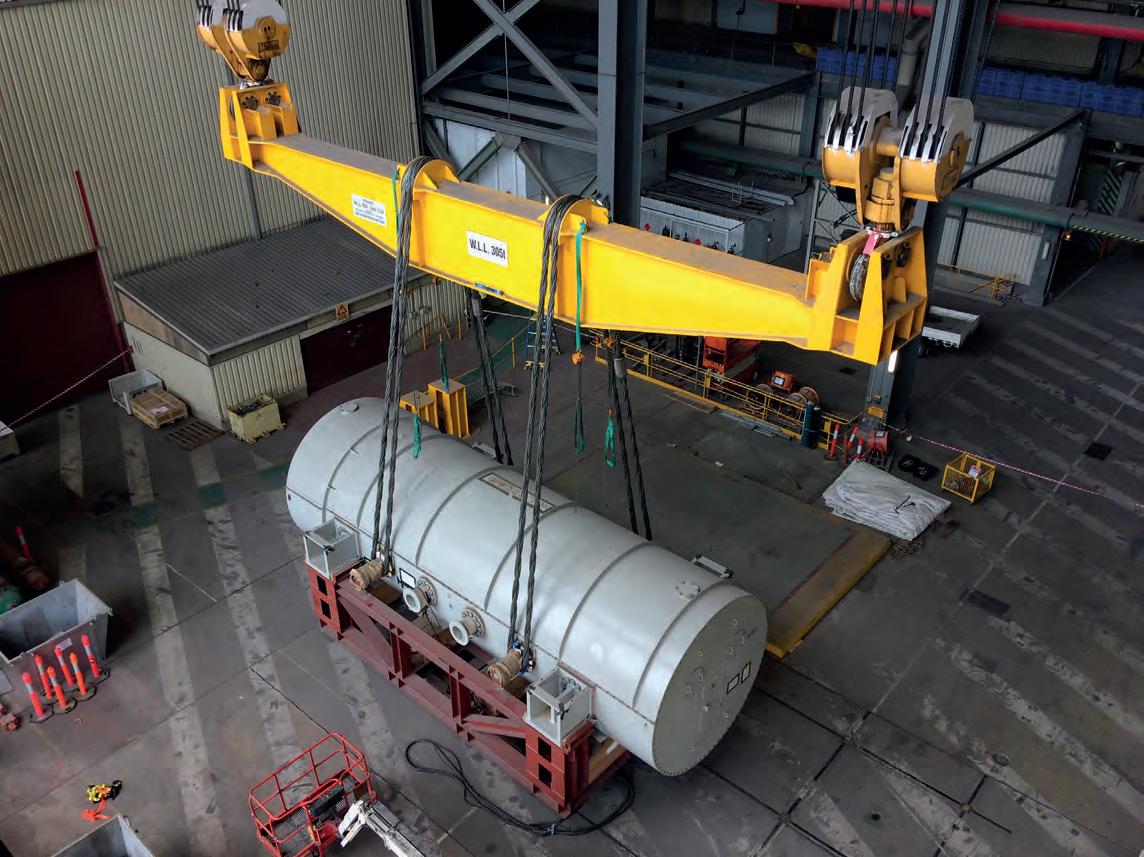
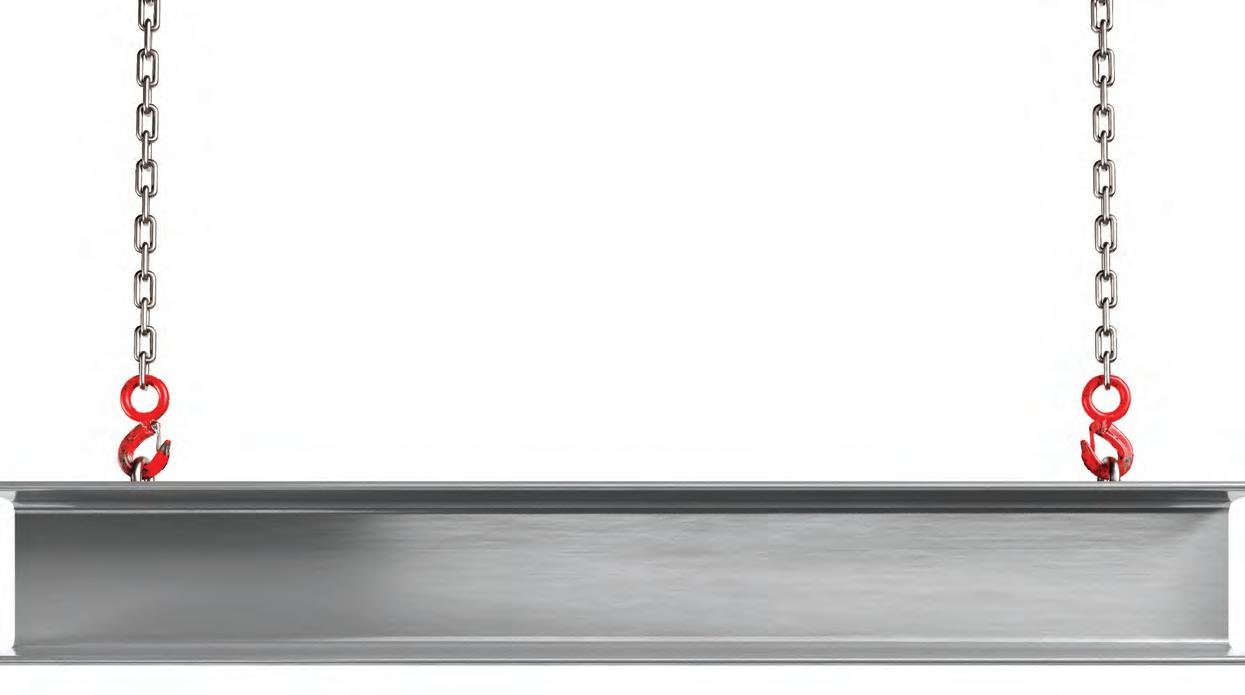
Dynamic Rigging provided the rigging gear required from the hook to the shackles that attached to the bespoke underslung lifting beam.
The rigging gear for the lift included:
• Two 700 tonne Maxirig lattice spreader beams.
• Four 400 tonne adjustable link plates from Maxirig.
• More than 20 Van Beest shackles with up to 500 tonne working load limit (WLL) sourced from Holland
• 410 tonne and 365 tonne high-modulus polyethylene (HMPE) lifting slings from United Sling Co. Western Australia.
The shackles, 400 tonne and 500 tonne, were sourced from Van Beest in the Netherlands. About two dozen units were ordered and shipped in.
For the slings, the project had a preference for Australian manufacturing. Dynamic engaged United Sling in Western Australia to produce 410-tonne and 365-tonne round slings using HMPE.
Even with the high performance thread making them smaller, a 400-tonne sling is still bulky and heavy and they are not easy bits of kit to work with. The centrepiece, however, was the new 700-tonne lattice construction spreader beam. Based on an earlier 240-tonne design, the new unit was scaled up in every dimension – thicker steel, larger joining plates, more bolts and greater overall width. The collaboration between all parties was key to ensuring the lift was a success. Both TBHLS and Dynamic Rigging were outstanding in their expertise and professionalism through the duration of the project.
Borger Crane Hire and Rigging has continued the process of renewing its fleet with an order for six Grove all terrain cranes, most recently two GMK 6450-1s and two GMK5150XLs, following a couple of recent GMK 6300L-1s. Borger Crane Hire’s Chief Financial Officer, Shawn Borger discusses the long-term relationship the business has had with the Grove brand.
“WE HAVE ENJOYED A WORKING relationship with the Grove brand, the cranes and the team that supports them, over a very long period, and all have performed well for our fleet,” Shawn said. “We were operating two older Grove GMK 6300s which have been great cranes for us, one was a 2005 model and the other 2007.
“After so many years of service, we decided it was time to upgrade the cranes, so we sat down with John Stewart and Neil Hollingshead and examined what we
had in the fleet. We’ve been successfully running six-axle 400 tonnes Groves, and with the new two Grove GMK 6450-1s also running on six axles, we could see that this was the way to go.
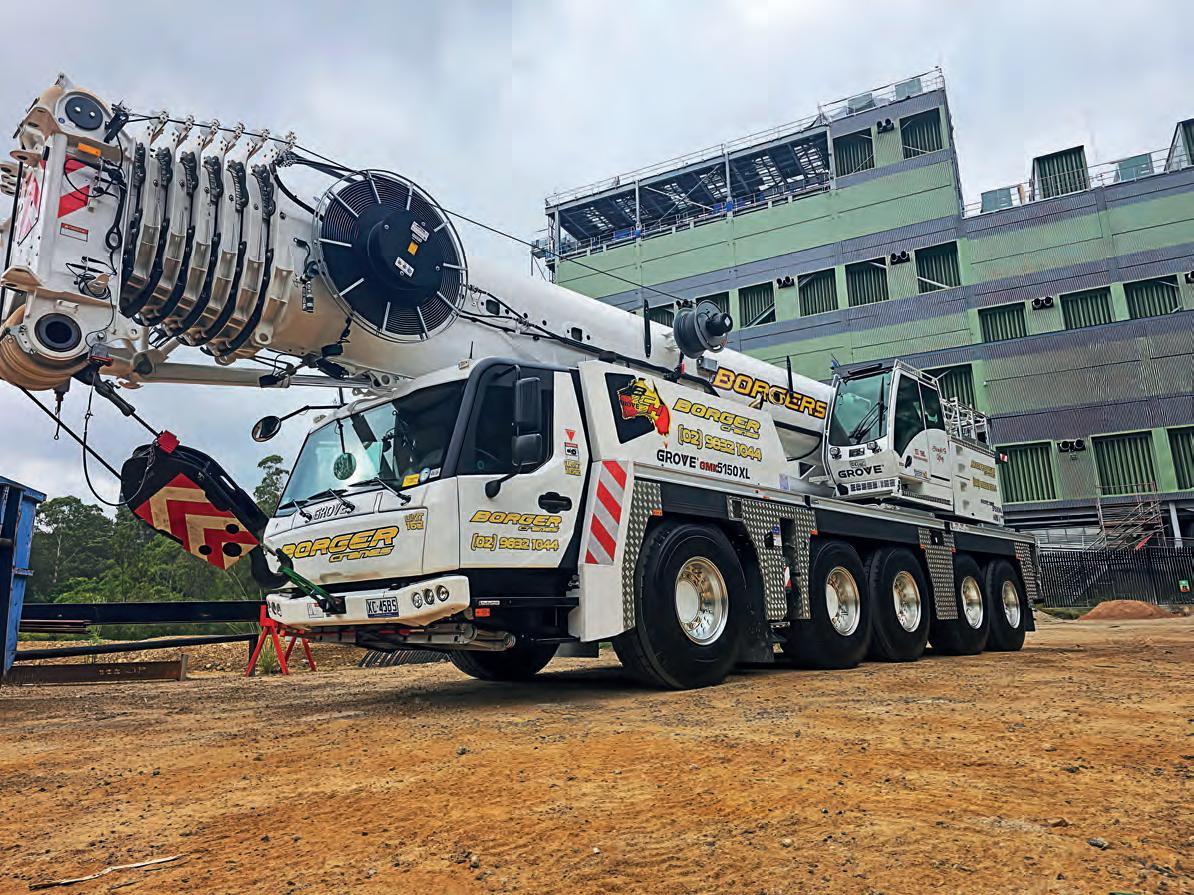
“We negotiated with John and Neil, and they were very fair with their tradein values, so we traded in the GMK 6300s. We also traded in a 130 tonne Grove and a few other cranes which we’d had great service from, and took delivery of the two GMK 6450-1s, and two GMK 5150XLs which brings our
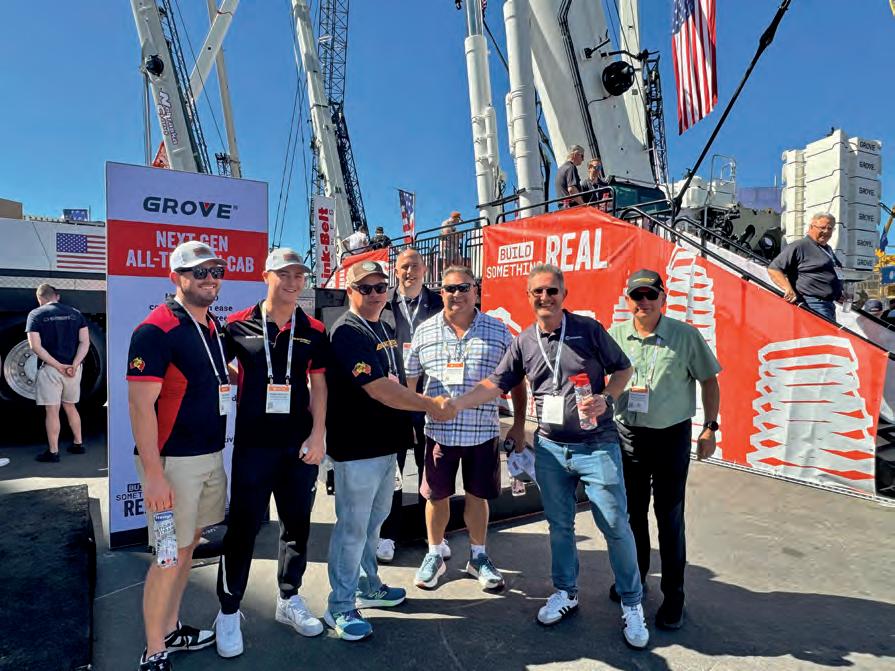
Left: Grove’s Neil Hollingshead welcomes the Borger tour party to the Manitowoc stand at Conexpo. Manitowoc put on a great display during Conexpo with the new Grove GMK8700 being the star of the show.
150 tonne Grove fleet to 11 with our first two ‘XL” models.”
The GMK6450-1 is the strongest heavy-duty six axle crane on the market with a self-rigging MegaWingLift™ (rigging time less than 20 minutes). Able to take on jobs that would usually require a seven- or eight-axle model, this 450 tonne all terrain crane features an improved hydraulic system with faster flow to provide quicker operating speeds and smoother movements. As an upgrade to the GMK6400-1, its implementation of Manitowoc’s Crane Control System (CCS) ensures that performance is optimised and operation can be boosted to a whole new level. Furthermore, with the addition of MAXbase™ variable outrigger positioning, capacities on the main boom are increased.
The Grove GMK6300L-1 is the definition of a 300 tonnes all terrain. With it’s long and strong 80 metre boom it continues the success story of the GMK6300L and offers even better lifting capacities. The driveline with the Mercedes engine and Allison fully automatic transmission is reliable and powerful. The interchangeable counterweights can be used for the GMK5180-1, GMK5200-1, GMK5250L-1 and GMK5250XL-1.
GROVE GMK5150XL
The Grove GMK5150XL all terrain crane provides increased capacity and a boom
“As always, Manitowoc put on a great display during Conexpo with the new Grove GMK8700 being the star of the show.”
length that surpasses cranes in the 160200 tonne class. This model redefines the five-axle, 150 tonne class by offering almost 69 metres of main boom.
At 68.7 metres it can handle 8.1 tonne, at 66 metres it lifts 9.4 tonne and at approximately 60 metres it lifts 12.7 tonne. These load charts are unmatched in the market. The GMK5150XL crane’s taxi charts are also best in class, ensuring easy roadability and transport savings. In addition, interchangeable counterweight slabs with the GMK5130L, and all Grove 150 tonne cranes simplify logistics and handling.
During Conexpo, held 3-7 March in Las Vegas, Shawn and his touring party from Borger Crane Hire visited the Manitowoc stand and were impressed with the launch of the Grove GMK8700.
“As always, Manitowoc put on a great display during Conexpo with the new Grove GMK8700 being the star of the
show. It is certainly a very impressive crane and we’ll be having a close look at this crane over the next 12 months or so.”
The Grove GMK8700 has a lifting capacity of 700 tonnes and sits on an eight-axle carrier. It expands the Grove all terrain range, which now runs from 50 to 700 tonne, giving owners more options for heavy lifting across infrastructure, industrial and energy projects.
The crane has been developed using Manitowoc’s Voice of the Customer process, with a focus on versatility and flexibility on site. Owners can choose between two boom options: a 54 metre or an 80 metre. Both use the Megaform design with interchangeable telescopic sections, allowing crews to switch configurations depending on project needs.
Transport was a key part of the design. Depending on local regulations, the GMK8700 can travel with the boom
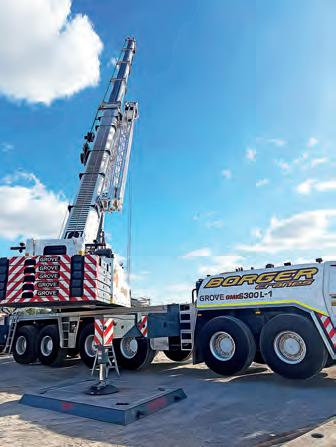
Borger Cranes and Grove have enjoyed a longterm working relationship. Two Grove GMK 6300L1s were delivered just prior to the recent order.
carried over the front or mounted on a dolly behind the crane. The carrier includes the MegaDrive system for road travel and manoeuvrability, with five driven axles and two axle groupings designed for road use or jobsite mobility. Other transport features include MEGATRAK suspension, a removable rear outrigger box and an adaptive electronic braking system.
The Icarus 45.17 GD is purpose-built for high-demand construction environments.
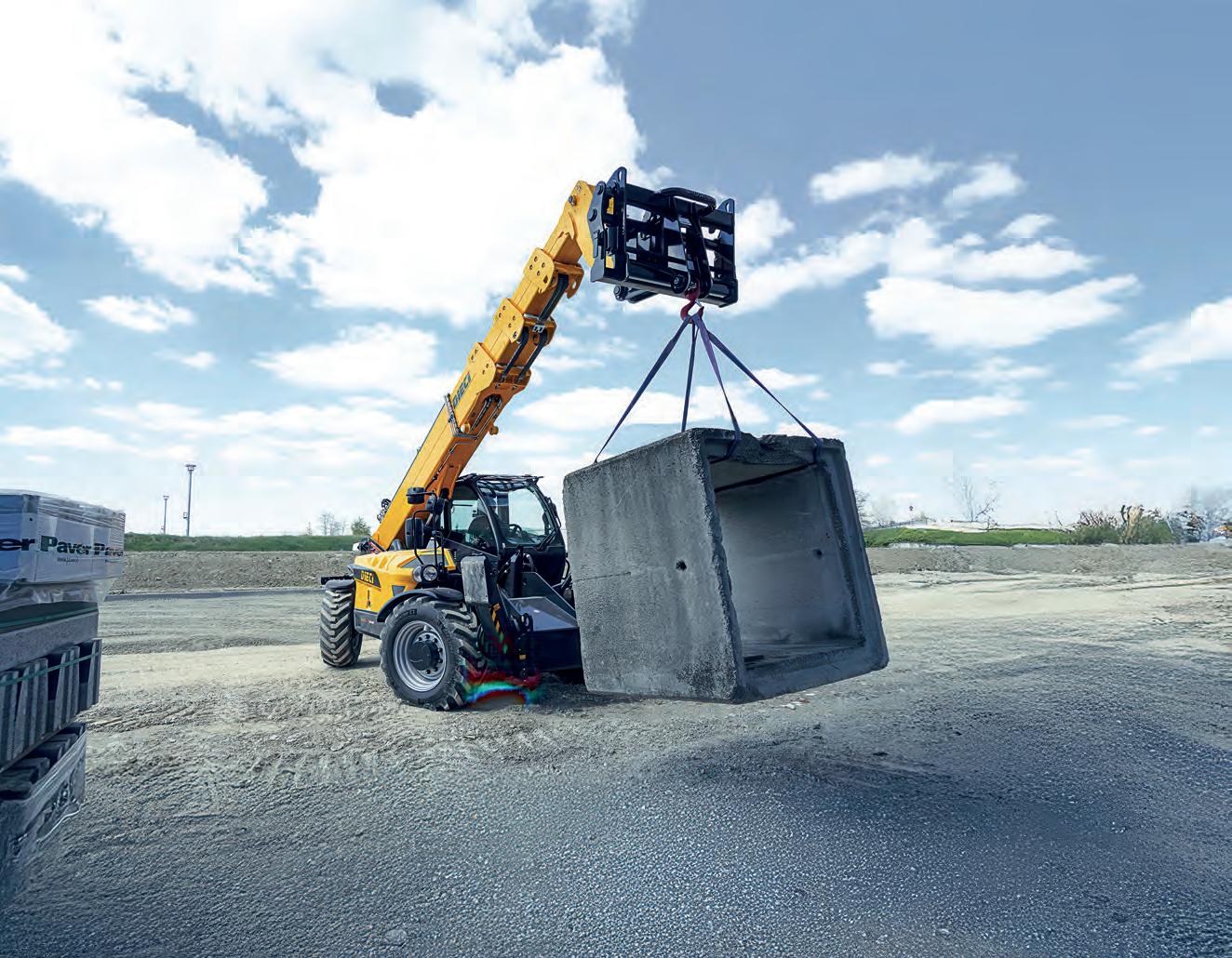
Construction sites demand machines that deliver more – more lift, more reach, more efficiency, and less downtime. With a reach of 16.4 metres and lifting capacity of 4500 kilograms, Dieci’s Icarus 45.17 GD is built to meet these expectations.
DESIGNED FOR LARGE-SCALE CONSTRUCTION and industrial applications, the Icarus 45.17 GD delivers outstanding strength, stability and lifting performance in demanding conditions. The two-speed hydrostatic transmission, combined with the inching pedal, allows precise low-speed control while maintaining full engine power – ideal for controlled placement of heavy loads with maximum safety.
“The Icarus 45.17 GD is purposebuilt for high-demand construction environments, delivering a powerful combination of excellent lifting capacity and lift height. It is designed and engineered to handle large-scale
applications with confidence,” said Dieci’s National Sales Manager, Bob Mules.
Four-wheel drive and four-wheel steering come standard, with three selectable steering modes including two wheel steer, four wheel steer and crab steer. This ensures superior manoeuvrability on tight sites. The hydraulic Flow Sharing system allows smooth, proportional and simultaneous movements via a single multifunction joystick. Integrated FNR (forward-neutral-reverse) control provides intuitive operation and increased operator productivity. With a wide range of accessories – forks, jibs, winches, hooks, buckets and more – the Icarus 45.17 GD is engineered for true jobsite versatility.
The Giugiaro Design (GD) delivers a spacious cab with enhanced ergonomics and comfort. Increased legroom, 360 degree visibility and integrated LED work lights ensure excellent visibility day or night. Large mirrors and camera systems provide complete site awareness.
The advanced control layout, intuitive dashboard and diagnostic display give operators clear machine feedback at all times.
Advanced heating and climate control, along with soundproofing and air suspension seat, increases operator comfort all year round.
Built with high-resistance steel and engineered for structural strength, the Icarus 45.17 GD maintains exceptional load stability whether the boom is retracted or fully extended.
The anti-tipping system continuously monitors stability and automatically identifies when load limits are approached.
The load limiter device keeps safety parameters constantly visible to the operator. If operational thresholds are approached, operators are notified automatically, keeping operators protected and loads under control. Load status remains clearly visible on the dashboard at all times. Independent outriggers with proportional controls and a transversal levelling system allow safe operation on uneven terrain, maintaining a horizontal chassis position at all times.
“The Icarus 45.17 GD provides the operator with precision controls enabling the machine to manage lifts safely even at full extension,” said Bob. “The advanced anti-tipping and load limiting systems actively monitor performance in real time, providing increased safety measures for the operator and crews working close to the machine during lifts.”
The Soft Motion System improves boom control by reducing speed as it approaches operational limits or pre-alarm conditions, delivering smoother and safer operation.
An advanced onboard diagnostic system provides real-time machine data.
The Icarus 45.17 GD is engineered for reduced maintenance and lower operating costs. Low fuel consumption, high efficiency and proven hydrostatic performance ensure maximum productivity across every jobsite. RollOver Protective Structure/Falling Object Protective Structure (ROPS/ FOPS)-approved cab protection, operator presence sensor and deadman system provide built-in safety compliance to Australian standards.
“This machine is engineered for versatility, with compatibility across a wide range of attachments including forks, jibs, winches and buckets, making it a true multi-purpose solution on site,” said Bob.
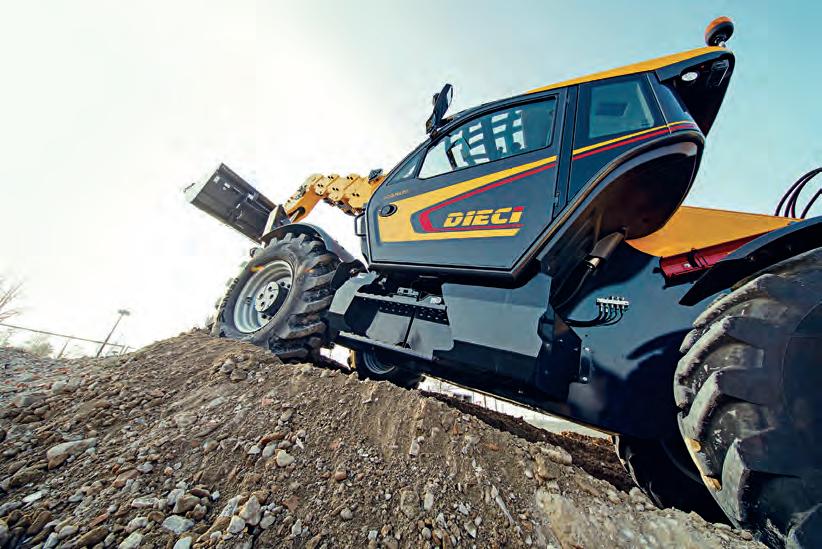
Built with high-resistance steel and engineered for structural strength, the Icarus 45.17 GD maintains exceptional load stability whether the boom is retracted or fully extended.
INTELLIGENT STABILITY SYSTEM
The advanced anti-tipping and load limiting system continuously monitors machine stability in real time.
“The inclusion of independent
outriggers and a transversal levelling system provide additional safety features which allow for safe operation on uneven terrain. It’s important to provide the operator with a stable working platform in challenging environments,” said Bob.
ADVANCED MULTIFUNCTION JOYSTICK
The new single hydraulic joystick
“The Icarus 45.17 GD provides the operator with precision controls enabling the machine to manage lifts safely even at full extension.”
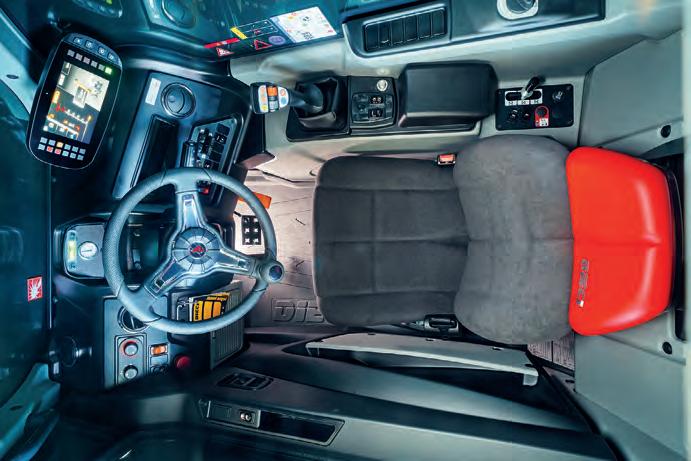
delivers proportional and simultaneous control (Flow Sharing) for smooth, precise operation. Integrated FNR (Forward-Neutral- Reverse) direction control improves efficiency and productivity.
The high-efficiency hydrostatic drive system delivers smooth acceleration, strong lowend torque and reliable performance across all working conditions.
The Giugiaro designed cab provides increased legroom, intuitive controls and an ergonomic layout. Soundproofing, climate control, adjustable steering wheel and air suspension seat ensure comfort during long operating hours.
The Icarus 45.17 GD is equipped with a side shift carriage making repositioning and stacking loads tightly, an effortless task.
The inching pedal allows operators to reduce or momentarily stop travel speed while maintaining full power to boom functions – ideal for precise load placement and delicate operations.
For more information on the Dieci Icarus 45.17 GD telehandler, visit www.dieciaustralia.com.au
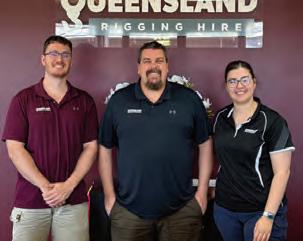
At the end of last year, Queensland Rigging Hire joined Axel Johnson’s International Lifting Solutions Group (LSG). For Branch Manager, Trey Yee and his team, the acquisition provides exciting opportunities.
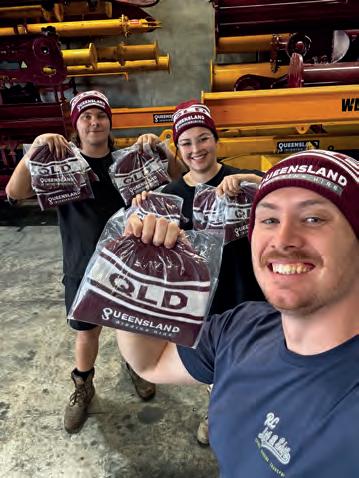
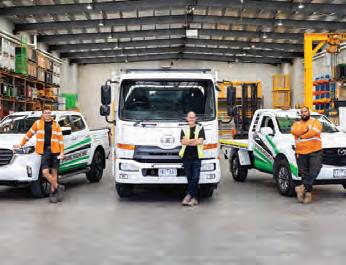
TREY HAS BEEN WITH QUEENSLAND Rigging Hire (QRH) since October 2019 and was in fact the company’s first employee. QRH runs a tight ship with six staff members, and although small, the team punches well above its weight said Trey.
“We are a small but tight team. We have plenty to offer and our customers know we are prepared to go above and beyond providing a service that we like to think is second to none in terms of responsiveness to their requirements.
“With an age spread of 18 to 57 we have one of the youngest teams in Lifting Solutions Group (LSG) and we view the team as family. We enjoy each other’s company at work and outside of work. This culture helps keep everyone motivated and supportive of each other, especially when things get stressful when meeting tight deadlines. We all support each other to make sure the jobs get done and we
don’t let anyone down. Whether its office or warehouse staff or our delivery team, everyone is trained with the mindset that we are here to provide our customers with the best possible experience,” said Trey.
Following the purchase of QRH Trey has been impressed with the approach from the International Lifting Solutions Group.
“The approach from the LSG team has been very proactive providing future plans for all branches and is focused on growth within the group and also the country. Being part LSG brings unlimited options for both QRH and our customers. We now have access to multiple global resource avenues which will enable us to grow our fleet of equipment and also provide our customers with additional services.
“LSG understands the lifting industry does not stand still and new technologies are emerging all the time which are changing the way lifts are being planned and implemented. Crane capacities are increasing and projects are becoming increasingly complex. Being part of a global group definitely helps us stay abreast of all of these developments which ensures we are investing in the right lifting technology which is then available to our customers.”
Being part of LSG provides Trey and his team opportunities to work on national projects with other members of the group.
“The collaboration with other LSG members has already proven its worth. We are able to communicate with the branches around the country and also overseas, share knowledge and experiences which will ultimately help us provide better support to our clients and the projects they are working on. The collective knowledge available in the group is second to none and all members of LSG can access this online
and by learning from each other through frequent meetings,” said Trey.
QRH and The Lifting Solutions Group are consistently examining the next steps for the lifting industry, assessing what types of equipment will be required for future projects as well as investing in new procedures and also staff, to help the business keep pace with developments. The latest investment for QRH includes two 280 tonne 132 millimetre x 16 metre Endless Grommet Slings sourced from an Australian supplier for a future project.
QRH is well positioned in terms of its fleet of equipment said Trey.
“As a result of our continued investment in the latest lifting technology, QRH has one of the largest fleets of lifting equipment in Australia, and with the comprehensive nature of the fleet we are now supporting other LSG rental branches with equipment to help deliver some of the largest projects across the country,” he said.
Australian made product provide significant advantages.
“Purchasing Australian made products is a huge positive to the industry, supporting small businesses and suppliers as well as larger Australian groups helps build the economy. When buying Australian made product, we are confident that the relevant testing has been conducted to the exacting Australian Standards and the manufacturers we work with are happy to design and engineer bespoke products for the complex projects we find ourselves working on,” said Trey.
QRH operates 6000 items from
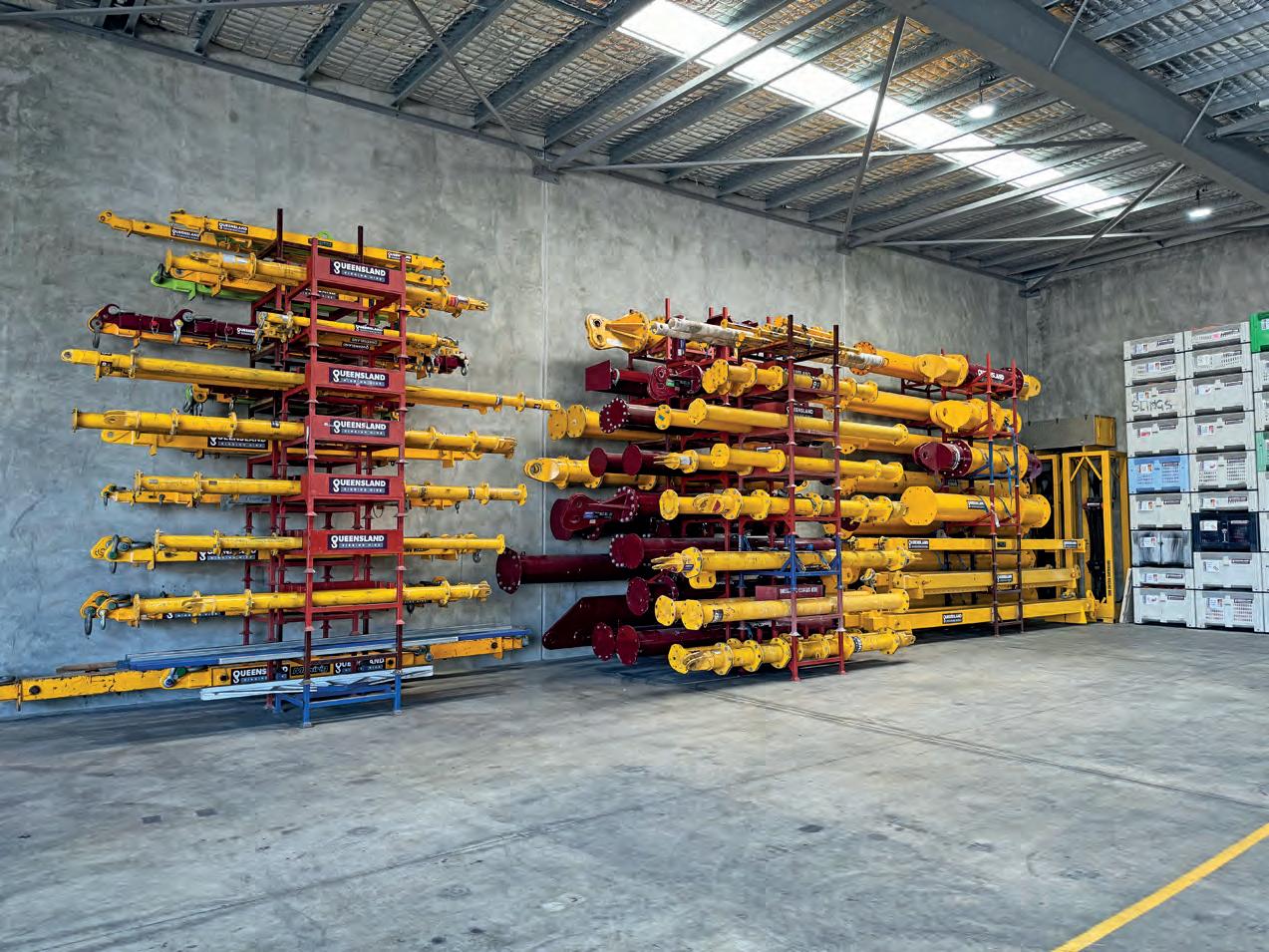
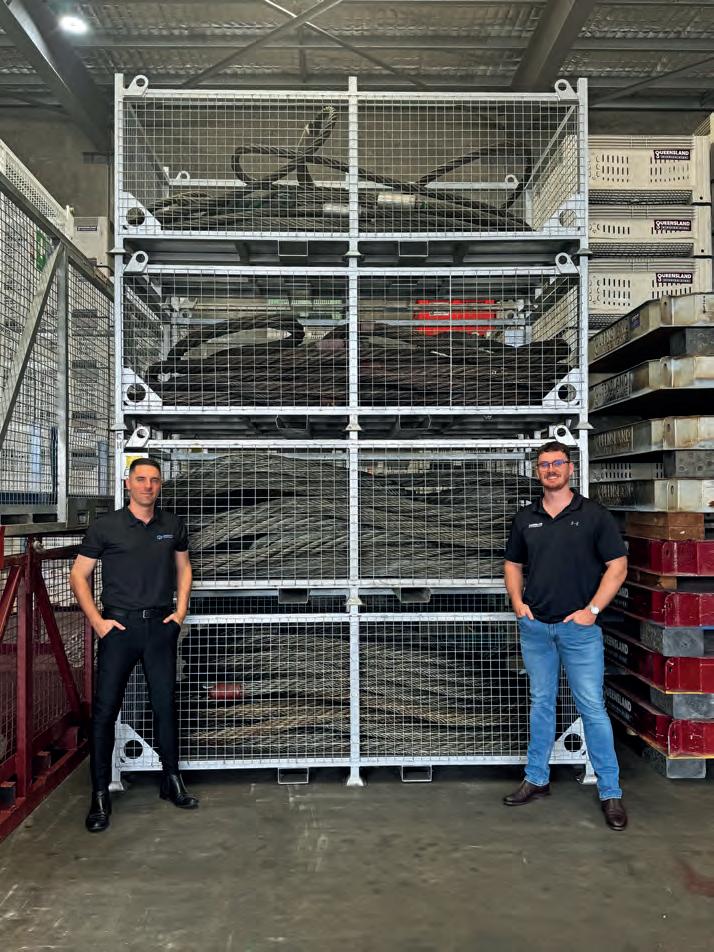
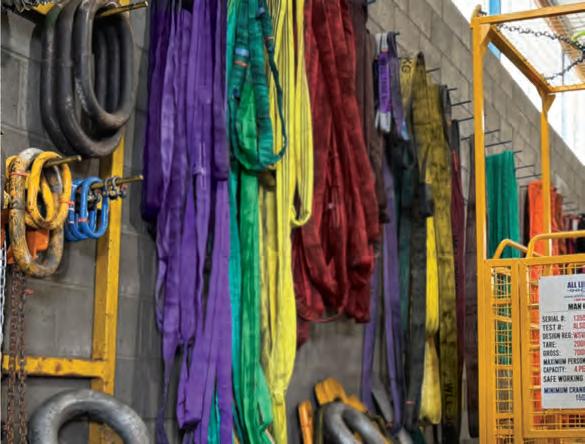
Queensland and combined, the LSG rental businesses has approximately 10,000-plus items. All equipment undergoes a pre-hire inspection and test by trained staff. All equipment must be inspected according to the Australian Standards before leaving the facility. Once the equipment is returned, all items undergo an extensive off-hire inspection and test.
“If there are any concerns regarding returned equipment we reach out to our local Stenhouse or Certex branch for assistance,” said Trey.
The QRH facility in Brisbane is a relatively recent investment and it continues to service the business well with the potential to accommodate future growth. Trey is excited about the future of QRH and LSG.
“We are very excited about the prospects for QRH and LSG. The industry can expect to see consistent improvement in the services we provide and availability of the broad range of lifting equipment we will be supplying,” he said.
“We expect to experience future growth in the business which will mean more staff and more equipment. Queensland is set for a significant period of growth with the Olympics beginning to come online, as well as the boom in residential construction and the release of significant infrastructure projects.
“Both QRH and our partners within LSG are ready for what is going to be a very busy few years, I say bring it on!”
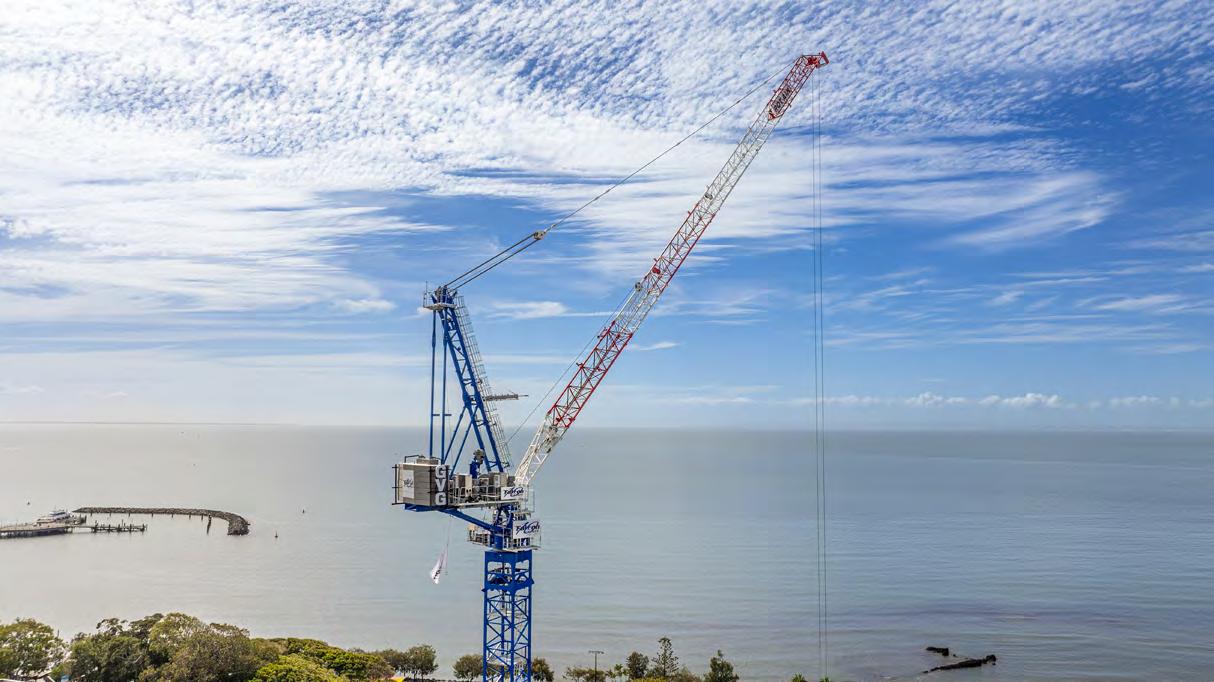
Falcon Cranes’ growth story has never been just about scale. What started as a crane hire business has gradually evolved into something broader.
THAT SHIFT HAS ACCELERATED OVER THE past 18 months. Managing Director Alex Macklin said the business has expanded into new areas while continuing to grow its core crane operations, creating a more integrated model that supports clients beyond just supply.
At the centre of that growth is a clear direction: build capability around the crane, not just the crane itself.
“Falcon Cranes as a business is as busy as we’ve ever been,” Alex said. “Over the past 18 months we’ve brought in a large number of new cranes and hoists, so there’s been a lot of work around assembly, preparation and getting them ready for projects.”
That increase in fleet size has brought added operational demands, particularly in terms of logistics and site readiness. But it has also positioned Falcon to take on larger and more complex jobs.
The introduction of new tower cranes, particularly from Potain, has played a key role.
“They’re performing really well,” Alex said. “We’re getting a lot of positive feedback from our operators, clients and service teams, which is important.”
Alongside its crane operations, Falcon Fabrication has begun to establish itself in the market.
Set up to initially support internal crane and hoist-based fabrication, it immediately began to take on smaller steel fabrication works for Falcon’s existing clientele.
“The fabrication business is doing well,” Alex said. “It started off to support Falcon Cranes internally, but we have a constant supply of external works that are outside of our regular customer base.”
Recent work has included structural steel works for a two-storey roof extension, internal plant deck for condensers and a rooftop bar. To support this, Falcon Fabrication has brought in a project manager with a strong background in structural steel to complement the existing team.
“It’s something we see continuing to grow,” Alex said.
Falcon’s relationship with Potain has also evolved over time, moving beyond supply into a more formal service partnership.
“Initially it was purely to support servicing of the rental business,” Alex said. “As projects got larger and demand for higher-capacity machines increased, we started bringing in more of the product.”
The development of an in-house service capability through Total Equipment Sales (TES) was a key step. TES has expanded its technical team and built a dedicated service division to support both its own fleet and customer equipment.
“We brought in experienced people and built the team from there,” he said.
“We now have five full-time factorytrained technicians, which has given Potain confidence that we can support the product in Queensland.”
A major part of TES’s strategy is offering a full life cycle solution for customers, particularly those looking to purchase equipment.
Alex said the model is designed to remove the common challenges associated with
equipment ownership. “We’ve seen it many times where a customer buys a crane for a project, and once that project finishes, they don’t have anywhere to store it,” he said. “It sits idle and then needs work before it can be used again.”
TES’s approach is to manage that entire process.
“The package we offer is a full life cycle,” he said. “From selecting the right equipment, procurement, logistics and assembly, through to servicing, maintenance and storage.”
The company recently added a new facility dedicated to Total Equipment Sales (TES), which plays a central role in this model.
“We’ve got sealed hardstand areas and under-roof storage for critical components,” Alex said. “It just takes the headaches out of plant ownership.”
TES has seen significant growth over the past year. Originally focused on spare parts and smaller products, it has expanded through crane sales, battery systems and upcoming hoist offerings.
“In the early years it wasn’t a large turnover business,” Alex said.
Falcon’s move into mobile cranes is part of a broader push towards vertical integration.
With a growing tower crane fleet, the business requires regular installation and dismantling, which relies heavily on mobile cranes. Bringing that capability in-house reduces reliance on subcontractors and improves control.
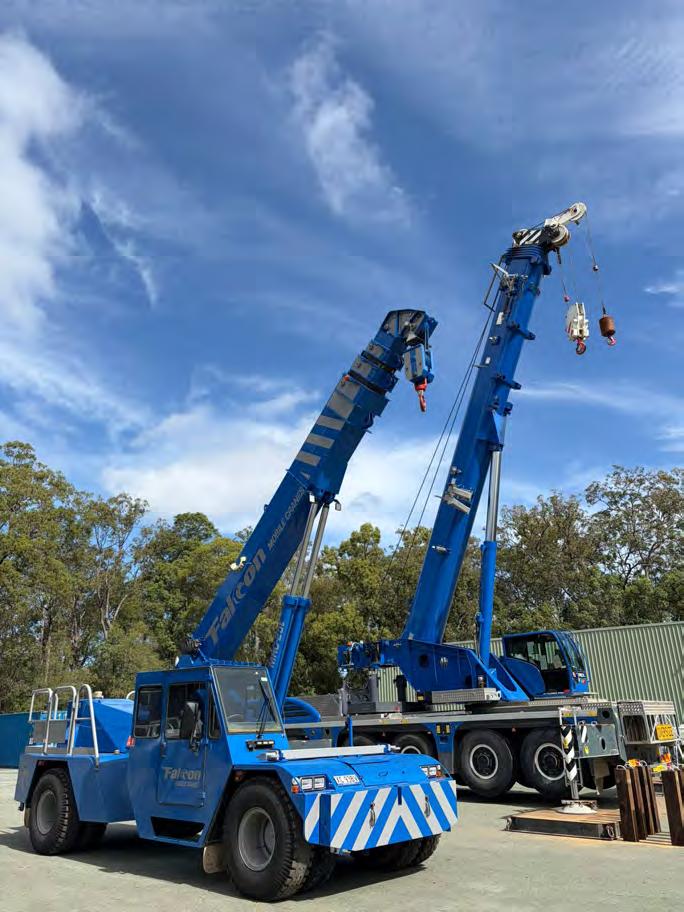
“We have a requirement for mobile cranes,” Alex said. “It made sense to bring that capability into the business.”
The current fleet includes a 130-tonne all terrain crane and a Franna pick-andcarry, with the division initially focused on supporting internal operations.
At a strategic level, Falcon is positioning itself as a flexible partner rather than a purely rental or sales business.
Alex said the focus is on delivering what works best for each client.
“We don’t have to be all rental and we
“From selecting the right equipment, procurement, logistics and assembly, through to servicing, maintenance and storage.”
“But in the past 12 months, with crane sales and other products, it’s been a massive jump.”
The service team has grown alongside it, with further expansion planned, including a dedicated battery division.
“We expect to have a dedicated battery department in the next six months,” he said.
The new office and plant yard reflects how quickly the business has expanded.
Located close to Falcon’s main plant yard, the facility brings together several parts of the operation, including equipment sales, mobile cranes and customer asset management.
“It gives us more space and allows us to centralise our management and administration teams,” Alex said.
The site is now home to TES, the mobile crane division and customer-owned equipment, creating a central hub for the next phase of growth.
don’t have to be all sales,” he said. “It’s about finding what works for the client.”
That can include hybrid models, where some equipment is rented and some is purchased, with management of the full life cycle regardless of ownership.
Alex acknowledges that the idea of a “one stop shop” is often overused, but believes Falcon is moving in that direction in a practical way.
The goal is to simplify how lifting equipment is supplied, managed and maintained across projects.
“At the end of the day, it’s about listening to what clients want and delivering it,” he said.
For Falcon, that means continuing to build capability around its core business, while maintaining the operational discipline that has supported its growth so far.

www.falconcranes.com.au
www.totalequipmentsales.com.au www.falconfab.com.au
falconmobile.com.au
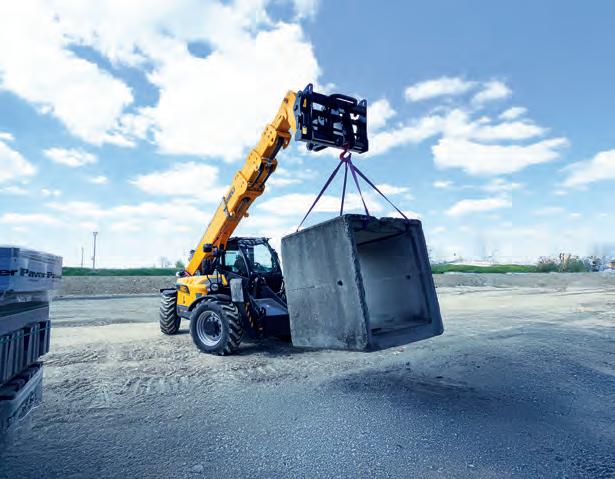
In modern lifting operations, flexibility is fast becoming as important as capacity. Projects are rarely uniform, and the equipment used beneath the hook must adapt to changing load types,
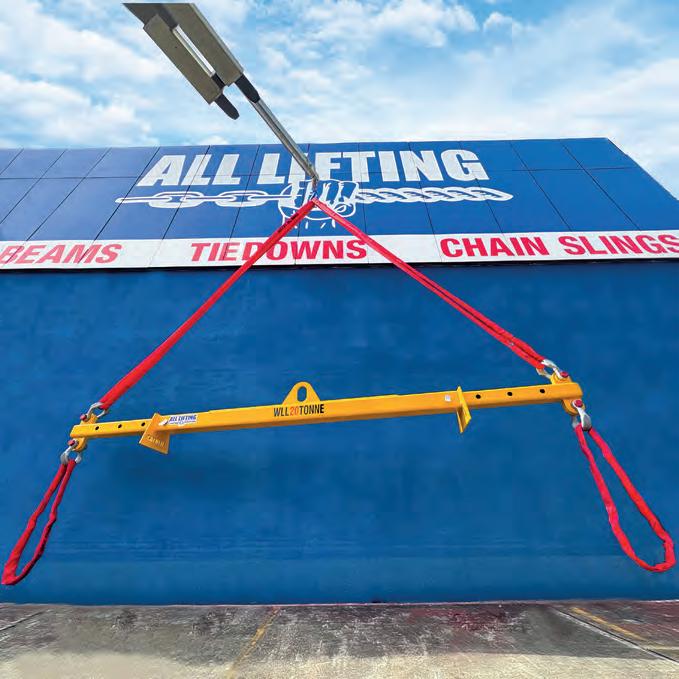

Jason said this flexibility is increasingly important as projects become more complex.
“We’re seeing more demand for equipment that can do more than one job,” he said. “Combination beams help reduce downtime and improve efficiency because you’re not constantly swapping out gear.”
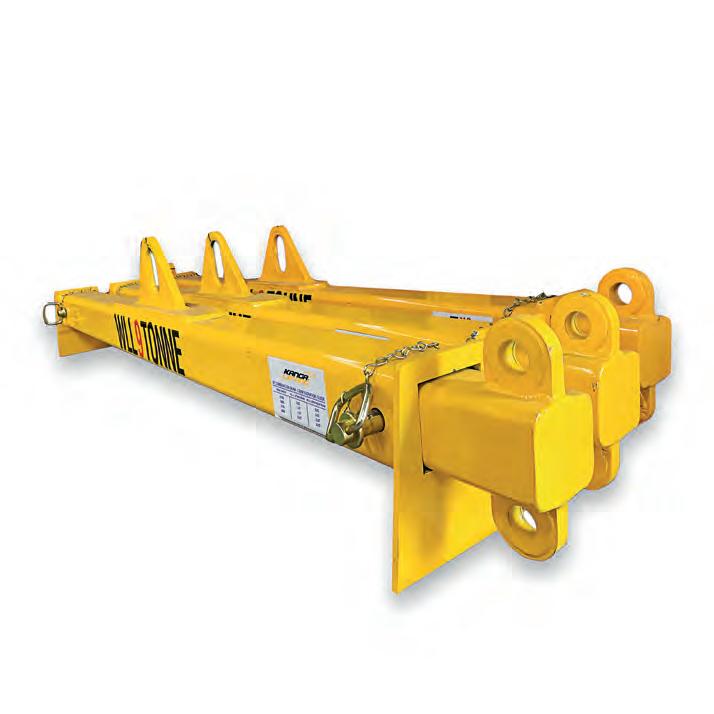
movement is critical.
Like all below-the-hook lifting devices, combination beams must comply with relevant standards and be clearly marked with working load limits and By




Across the global lifting industry, companies are facing real challenges...
say operators will need new skills in the next 12 months
struggle to recruit skilled lifting operators report gaps in knowledge, safety behaviours, or legal compliance 90 79 % % % 60



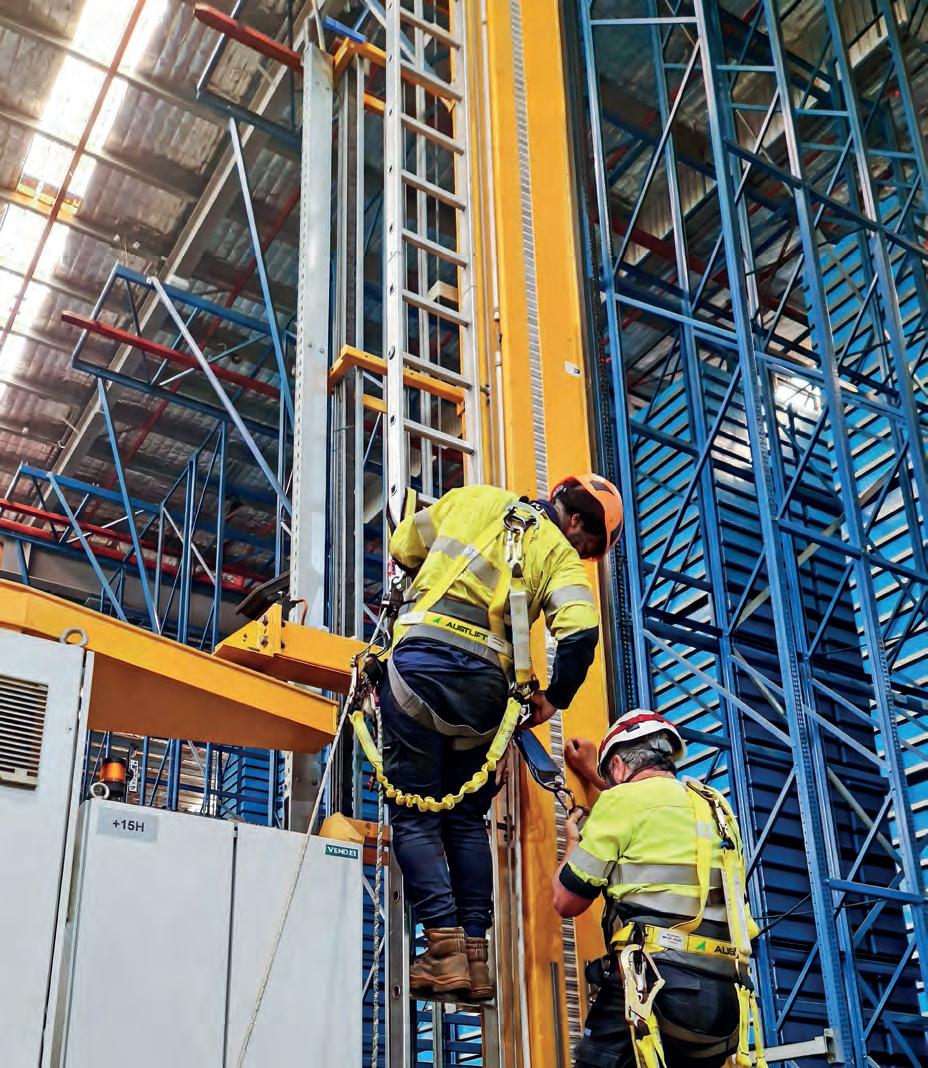
There have been changes to the Australian Standards relating to height safety user selection and maintenance.
JASON MYBURGH, NATIONAL SALES
Manager for Austlift, was one of many contributing members involved through Standards Australia Committee SF-015, a highly active committee made up of regulators, manufacturers, engineers, trainers, industry associations, and technical specialists who worked collaboratively on the update over a number of years. He provides an overview of the changes and their implications to industry.
In Australia, there is a set of standards which dictate how everyone should operate at heights.
The revision of AS/NZS 1891.4 was part of a broader industry effort undertaken between 2015 and 2025 to align Australian height safety practices with modern equipment, updated manufacturing standards, and lessons learned from realworld use across industry.
“For years the standard we adhered to was a suite of standards known as AS/ NZS 1891.1 through to 1891.4, which covered both manufacturers and users. Additional changes made to this suite by adding the anchor point standard AS/NZS 5532 in 2013, and then further splitting AS/NZS 1891.1 into two standards, AS/ NZS 1891.1 and AS 1891.5 in 2020, led to confusion in the industry and made AS/ NZS 1891.4:2009 (User Selection and Maintenance) inaccurate and unaligned to industry best practice,” said Jason.
The new standard AS/NZS 1891.4:2025 enables height safety systems to be managed through a specific selection hierarchy and strict hardware ratings, helping users select more effective prevention methods while meeting mandatory anchor and harness inspection requirements. After the committee made detailed changes to the testing
and manufacturing standards AS/NZS 1891.1, AS/NZS 1891.3 and AS 1891.5, which were published in 2020, it became imperative to update the AS/NZS 5532 testing and manufacturing standard and align these changes into AS/NZS 1891.4 (Personal equipment for work at height –Part 4: Selection, use and maintenance), which specifies the requirements and recommendations for the selection, safe use, and maintenance of industrial fall arrest systems and devices.
“The previous Standard was an 89-page document that often required readers to move back and forth between sections to understand the content. The committee managed to condense and restructure the document to make it easier to read and follow,” Jason said.
One of the more significant changes involved the previous “hierarchy of control of risks for people working at heights” from the 2009 version. Historically, total restraint was listed first, followed by restraint technique systems, commonly known throughout industry as roof kit rope systems.
“A roof kit is one of the most common systems sold in our industry. They are
available from multiple suppliers and can often be purchased off the shelf. Committee discussions highlighted ongoing industry concerns around the misuse of adjustable restraint systems, particularly where users were not adequately trained in managing lanyard length, swing fall, and fall clearance,” said Jason.
“As soon as your lanyard is over two metres, there is potential to fall more than two metres, increasing the overall level of risk. When working on a roof kit type rope system (adjustable lanyard assembly), users may have anything up to 30 or 40 metres of rope available. If the system is not adjusted continuously and accurately, and the user is not consciously aware of anchor positions and work location, it can become dangerous. However, when users are properly trained in restraint techniques and maintain the shortest practical fall distance, these systems remain an effective solution,” he said.
With the new standard, the onus is now on companies and users to understand the requirements and ensure appropriate training is undertaken to work safely at heights. Competency and correct
system selection were key outcomes of the revised Standard.
The new Standard was released in September 2025.
“The Working at Heights Association (WAHA) is working on educational programs to advise industry about the changes within the Standard. The industry needs to become competent and the Standard is now clearer and easier to follow. Users need to ensure there is a suitable anchor point, an appropriate harness, and a compliant connection system. If a fall occurs, there must also be a rescue or recovery plan in place,” Jason said.
Manufacturers of height safety equipment also need to ensure products comply with the revised Standard.
“We’ve been working on our products for several years and have incorporated many updated features. For example, our harnesses now include breakaway parking points for twin-leg lanyards.
“If the unused leg of a twin-leg lanyard is connected directly to the harness structure and a fall occurs, the shock absorber may not deploy correctly, potentially increasing the risk of injury.


distances significantly shorter,” Jason explained.



“One of the biggest takeaways from the revised Standard is that industry needs to better understand the hierarchy for selecting fall-protection systems and ensure the equipment is correctly matched to the task. Every job site is different, which makes competency and correct system selection critical,” he said.
The crane industry also needs to pay close attention to the updated Standard, particularly where workers are operating in elevated work platforms, man boxes, or undertaking rigging work at height.
“Crane hire businesses need to ensure their crews understand the revised requirements. In many cases these workers already have a high level of practical experience, but management must still ensure they are trained and competent under the updated Standard,” Jason said.
“With Chain of Responsibility requirements continuing to expand across industry, everyone involved in working at height now shares responsibility. Manufacturers must ensure products are compliant and tested, while users must ensure equipment is correctly fitted, attached to suitable anchors, and used within the correct fall distance limitations,” he said.
Both manufacturers and users have clear responsibilities under the revised framework.
“As manufacturers, we must ensure compliant equipment is supplied. Users must ensure they are trained, competent, and understand how to use the equipment correctly. If there is any uncertainty, they should seek guidance and training from competent providers or manufacturers.”
The updated Standard reflects the combined experience and input of a broad range of industry professionals across Standards Australia Committee SF-015, with the overall goal of improving clarity, competency, and safety outcomes for people working at height.

CraneSafe (Green Stickers)
CrewSafe
StartSafe
CICA represents our members and industry, getting in front of Government, regulators, on Standards and other relevant committees. There are numerous resources, like guidance notes, calculators, webinars, events and bulletins.
Custom Member Portal, CICA Assist, CICA Health Assist, Access to Australian Standards, Free subscription to Cranes and Lifting Magazine to name a few.
Custom Member Portal, CICA Assist, CICA Health Assist, Access to Australian Standards, Free subscription to Cranes and Lifting Magazine to name a few.
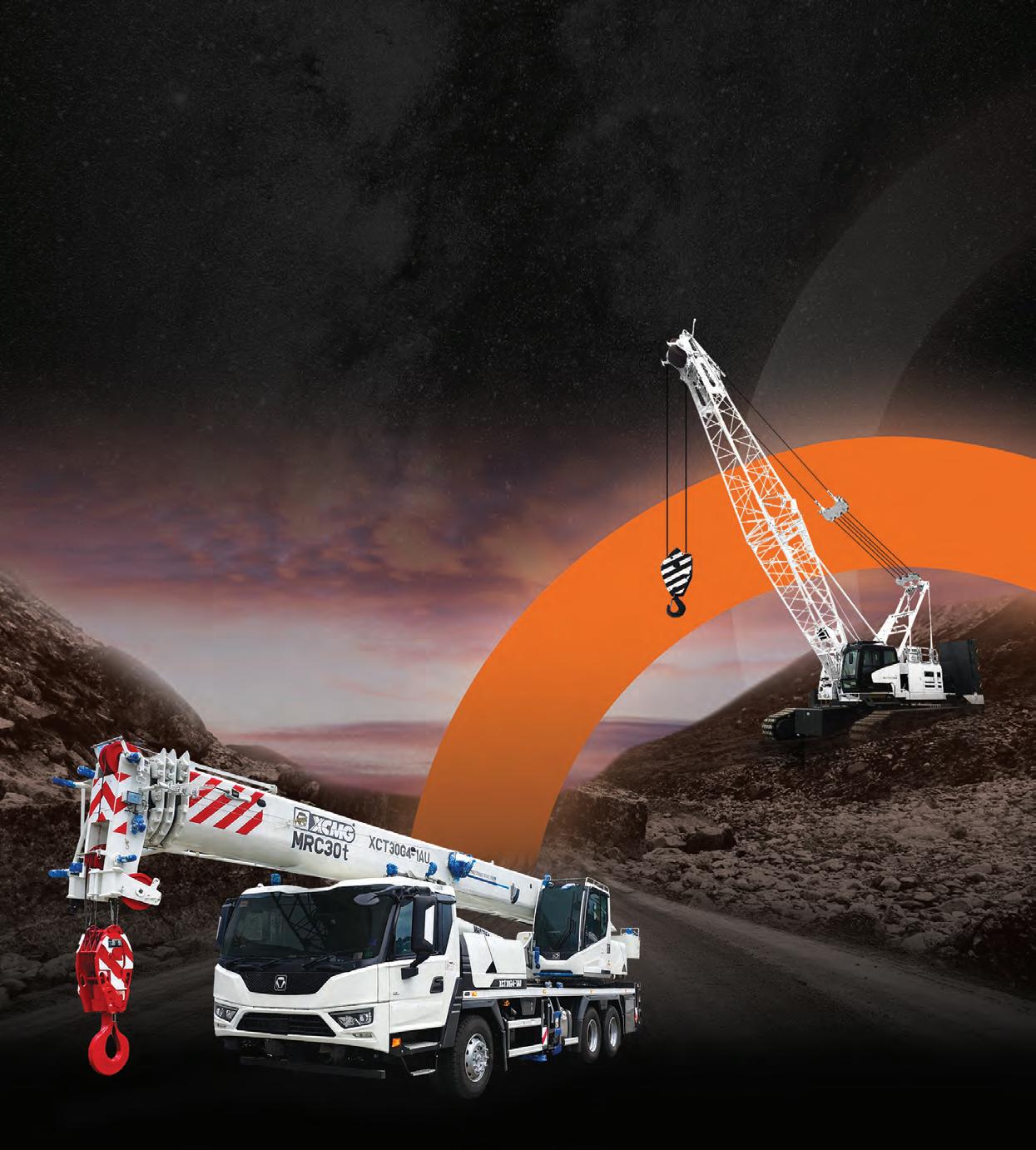
The Crane Connection recently welcomed XCMG senior management to their Sydney facility. The entourage included Yang Dongsheng Chairman of XCMG, Zhai Kun, General Manager of XCMG International Business Headquarters and He Minghu, General Manager of Oceania Region XCMG International Business Headquarters.
SIGNED A multiple crane order and attended a handover of a new telescopic crawler to Mega Lift Solutions. Anthony Davis explains more.
Crane Connection has been the New South Wales and Queensland distributor for XCMG for nine months and the industry’s response to the appointment has been quick and positive.
“We have been impressed with the support XCMG is affording us. There are always representatives from the factory in our yard providing our team with training on the machines and helping with any technical issues we might come across. We have a direct line to the factory for information we may require, updating pricing options and providing feedback about improvements that can be made to the machines which the factory is very receptive to,” said Anthony.
“We have also been very happy with how the industry has responded to our appointment and we have sold multiple cranes across the XCMG range. Deliveries include rough terrains, all terrains, telescopic crawlers and lattice boom crawlers and truck cranes.
“We are also receiving positive feedback from the customers that are taking the cranes and they’ve been performing well. All of this has led to more interest in the XCMG brand and we are constantly providing quotes for more machines.”
He said customers are happy to see the Crane Connection team supporting the XCMG brand.
“Customers are certainly reassured to see that we are taking on the technical and after sales support for the cranes.
“We’ve been in this business a very long time and we know what it takes to make a brand successful and our approach to the XCMG won’t change.
“We’ve invested in spare parts, our experienced technicians are receiving detailed training and they are quick learners. The XCMG brand is competitively priced and there is no doubting the quality and the performance of the machines. We took the management team on a tour of the facility and they were impressed with what they saw, how organised our spare parts department was and they had a good conversation with our dedicated parts manager,” said Anthony.
The recent order included multiple cranes from 30 tonne truck cranes through to 110 tonne capacity lattice boom crawlers.
“We are seeing a lot of interest in both telescopic and lattice boom crawlers and we are confident the 110 tonne capacity lattice boom we’ve ordered will be really popular. We’ve already had interest in the crane so we’ll be excited to see it in the yard and monitor the response from customers.”
The Crane Connection and Mega Lift Solutions have a long-standing business relationship.
“We’ve been working closely with Glenn Dorrian and his team for a number of years and over that time they’ve purchased two 100 tonne Kobelco crawlers and a 250 tonne Kobelco crawler from us. We’ve also managed a lot of their machine maintenance in the workshop. We were talking to Glen about representing XCMG and he expressed interest in a 60 tonne tele crawler and he and business partner Nick Reed took delivery of the crane on the same day of the signing,” said Anthony.
For Mega Lift Solutions Director Glenn Dorrian, the decision to invest in another crane through The Crane Connection was shaped as much by the support behind the machine as the crane itself. Mega Lift Solutions is approaching its fourth year in
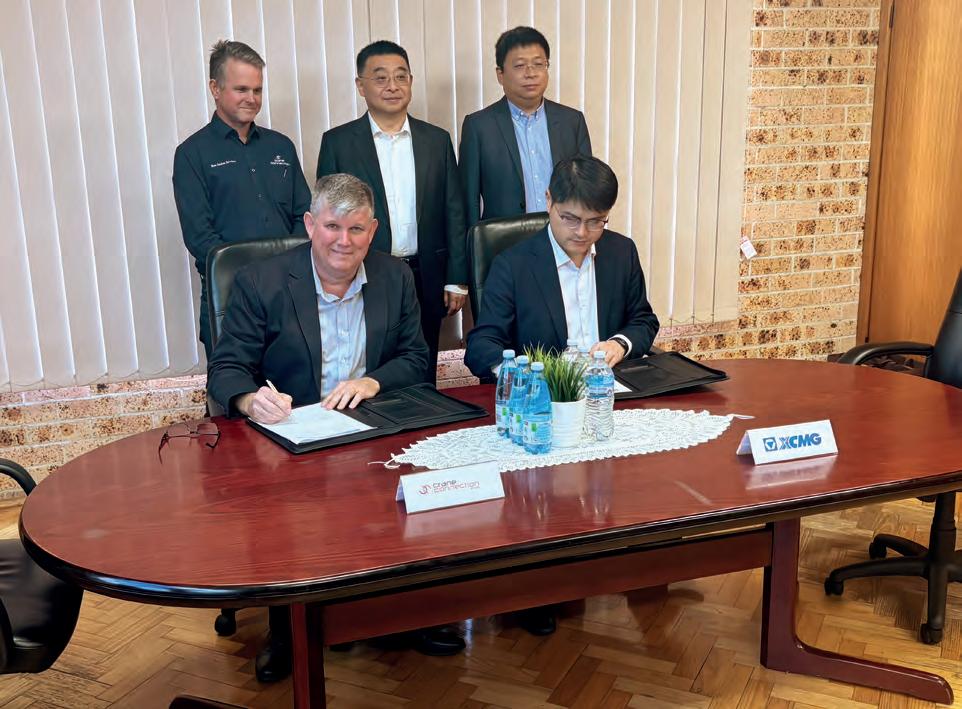
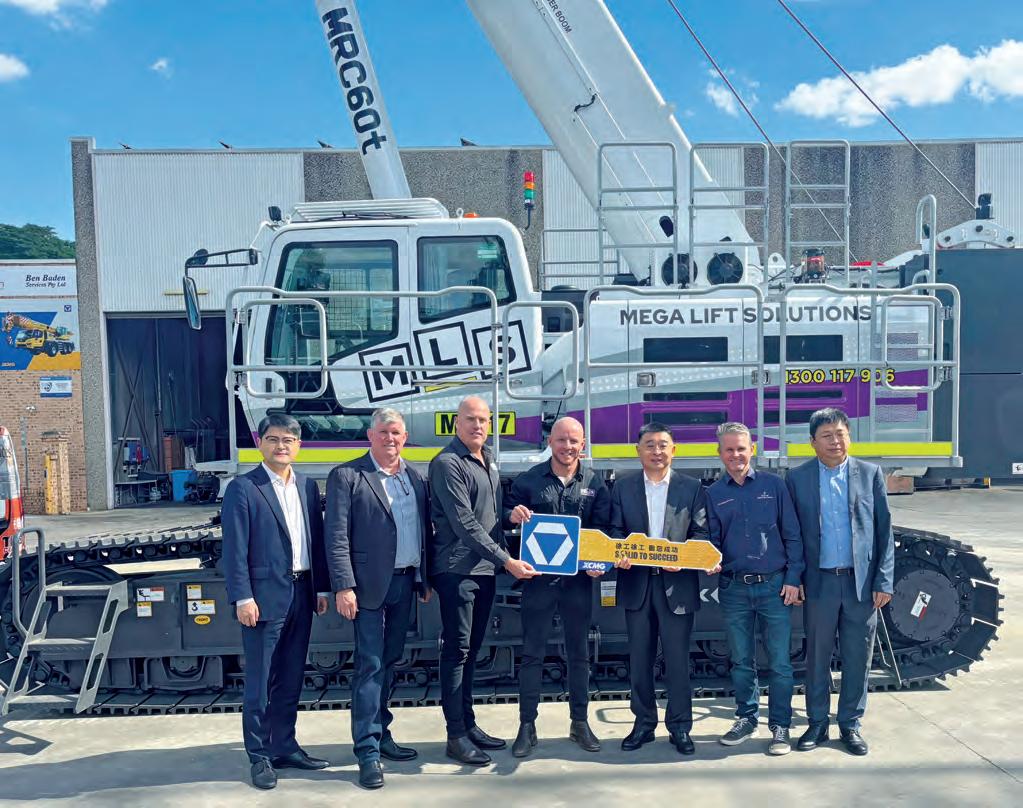
business and Glenn said, the journey has come with the usual pressures and learning curves that come with building a company from the ground up.
“We’ve definitely had challenges in the first four years, but we enjoy the challenge and the pressure that comes with it,” he said.
A major development for the business has been the appointment of Nick Reed as director and business partner. Glenn said the move marks an exciting new chapter for the company.
“Nick has been working with us for a number of years and he’s now come on board as a director,” said Glenn. “He’s got around 15 years of hands-on industry experience and has worked his way through operational, supervisory and management roles. He brings strong operational knowledge, project management skills and business
development experience, so it’s really exciting times for us.”
Together, Glenn and Nick bring more than 30 years of combined industry experience, with the business continuing to focus heavily on crawler cranes.
Mega Lift Solutions currently operates a crawler crane fleet ranging from 15 tonne through to 250 tonne capacity, with Glenn indicating the company is already looking at larger options for the future.
The newly delivered XCMG 60 tonne tele crawler is the latest addition to the fleet and Glenn said the support provided by The Crane Connection played a major role in the purchase decision.
“For us, the relationships we have with suppliers are a big thing,” he said. “Anthony, Ben and the team at The Crane Connection are highly respected and they provide
really strong backup support. As a smaller business, having that level of support behind you is really important.
“You ideally don’t need support too often, but when issues do happen you need to know there’s a strong team there to help. That gave us a lot of confidence in the purchase.”
Mega Lift Solutions has also developed a strong presence working on major infrastructure projects, an area Glenn said continues to provide valuable experience for the team.
“We enjoy working on the large infrastructure jobs,” said Glenn. “There’s pressure that comes with them, but we’ve learned so much working alongside some very knowledgeable people in the industry. There’s always something new to learn and we’re looking forward to doing more of that into the future.”
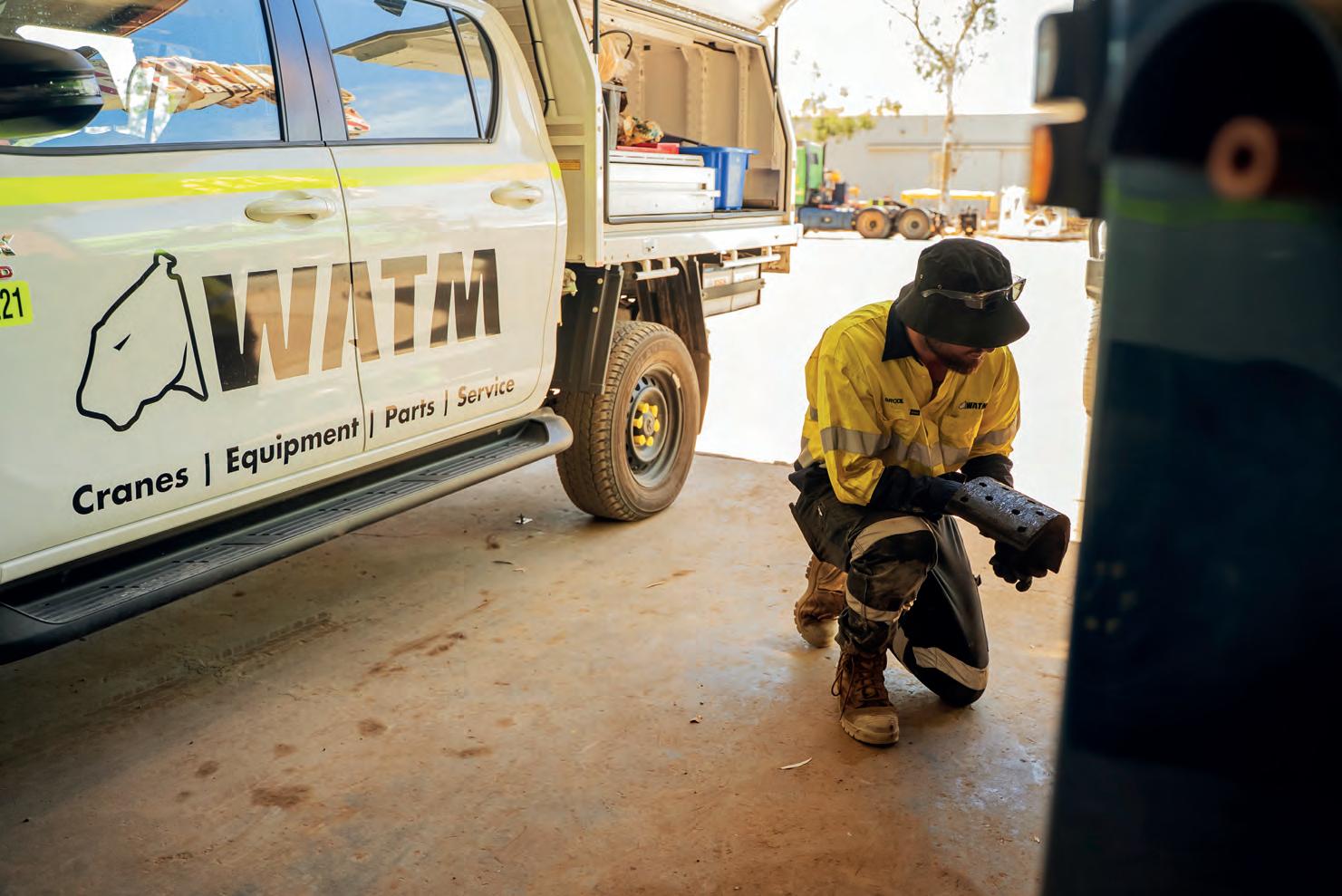
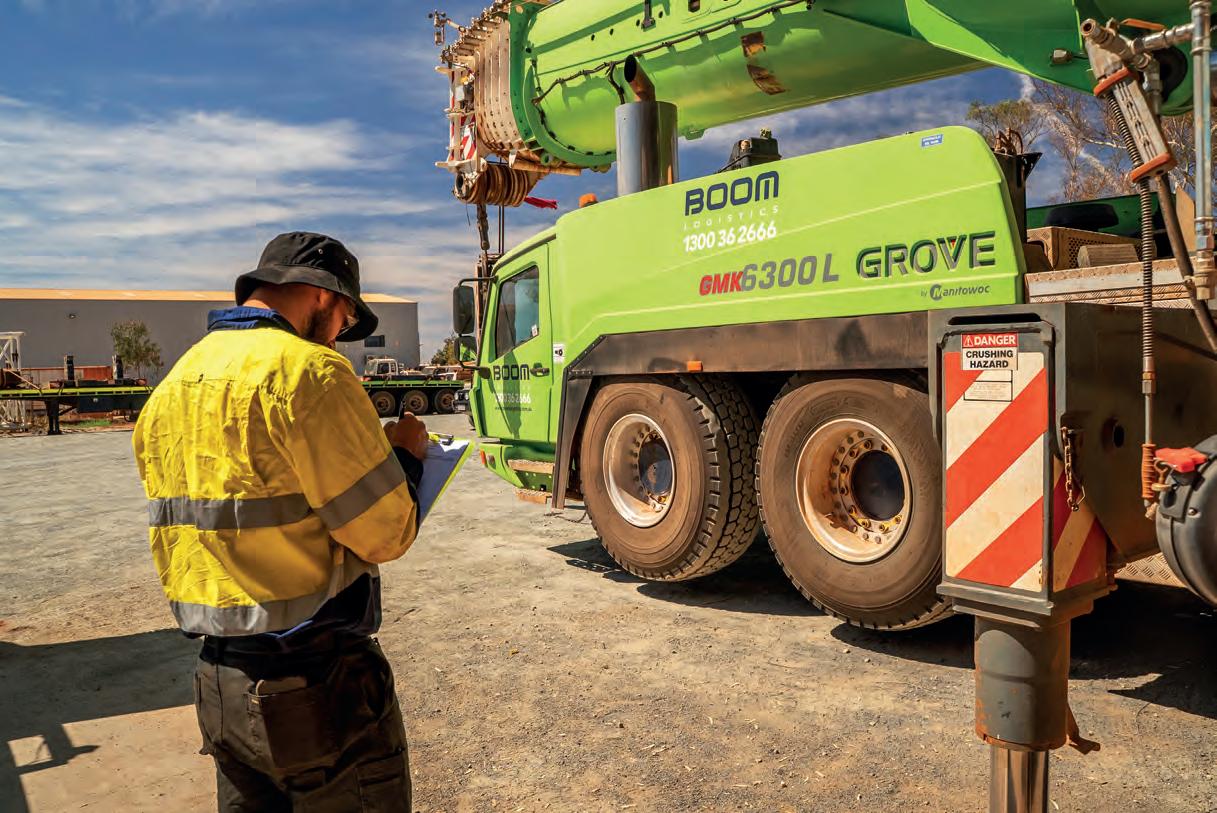
Established in 1974, WATM Crane Sales and Services is a proudly Western Australian family-owned and privately operated business with more than 50 years of experience supporting critical lifting operations across the state.
OVER THAT TIME, WATM HAS BUILT A STRONG reputation for the sales, repair, maintenance, and long-term support of mobile, crawler, truck-mounted and pick and carry cranes. As Western Australia’s mining, construction, energy, infrastructure, and heavy industrial sectors have grown and evolved, WATM has grown alongside them, continually adapting its capability to meet changing operational, technical, and compliance requirements.
What has remained constant throughout that history is an overriding commitment to customers. WATM has always been focused on delivering reliable, professional support and strong after-care, ensuring customers have a trusted partner to keep their equipment operating safely, efficiently, and productively across Western Australia.
Dale Whittle, Group Operations Manager confirms WATM’s commitment to customer service and support.
“At WATM, customers and after-care have always been at the centre of what we do. Over more than 50 years, our focus has been on building long-term relationships by
delivering reliable, professional support that customers can count on, well beyond the initial sale. Supplying equipment is only part of the job – what really matters is standing behind it with the service, responsiveness, and after-care to keep our customers operating,” Dale said.
WATM has long-standing partnerships with several of the world’s leading lifting equipment manufacturers.
The business has proudly represented GROVE in Western Australia since 2000 and HIAB since 1997, demonstrating a strong and enduring presence in the state’s crane and lifting market. Today, WATM is the exclusive Western Australian distributor for the Manitowoc range, including GROVE mobile cranes, Manitowoc crawler cranes, and National Crane products.
WATM is also the Western Australian distributor for HIAB truck-mounted cranes and holds Asia-Pacific distribution rights for Pettibone.
While these original equipment manufacturer (OEM) partnerships are a key part of the business, WATM’s service capability extends across all major crane brands. With multiple OEM trained technicians working across a broad range of manufacturers and equipment types, WATM supports customers with mixed fleets and varied operational requirements throughout the state.
That capability makes WATM a genuine one-stop shop for crane owners, providing sales, installation, commissioning, servicing, inspections, repairs, parts support, breakdown response, and major repairs all under one roof.
“Service has always been at the core of WATM’s business because we understand that for our customers’ crane uptime is critical. Downtime affects productivity, project schedules, safety, and cost, so customers need more than equipment supply
they need responsive, dependable support from a team that understands the operational impact of every hour a crane is out of service,” said Dale.
WATM has invested heavily in workshop capability, regional coverage, field service resources, technical training, and parts support so it can provide reliable service across a wide range of crane types and brands, not just the OEMs it represents.
This approach has been a major benefit to the business, positioning WATM as a trusted support partner for customers operating mixed fleets. Rather than relying on multiple service providers, customers can work with a single experienced team that delivers consistent standards, practical solutions, and professional after-care across their assets.
WATM’s service capability is backed by an experienced leadership and operations team, supported by a growing group of skilled, multi-brand, OEM-trained crane technicians with strong industry experience, including international exposure across the team.
Dale oversees WATM’s north west operations, bringing more than 18 years of crane industry experience. He has worked across South Africa, the United Kingdom, and Australia, and originally started as
a crane technician before progressing into senior operational leadership. That hands-on background gives him a strong understanding of both the technical and commercial demands of the business.
Dale is supported by Grant McDonald, who has been with WATM for more than 14 years and has spent more than five years in the Pilbara, overseeing the day-to-day running of WATM’s three north west branches. His long tenure and regional experience provide strong operational continuity and local knowledge.
Supporting the regional branch operations are Cindy Ryder, a qualified crane technician with 14 years of industry experience who now leads the Newman team and workshop, and Christian Leembruggen, who recently moved across from WATM’s parts division and now supports the Port Hedland workshop and team.
This management and supervisory structure is backed by a growing team of 14 crane technicians across Newman, Port Hedland, and Karratha, delivering both workshop and field service support. Together, this gives WATM the leadership, technical capability, and regional presence to provide customers with reliable, professional support
Above: The combination of local knowledge, trade capability, and practical field experience enables WATM to deliver dependable service outcomes across the region.
across a wide range of crane brands and operating environments.
WATM’S APPRENTICESHIP PROGRAM
WATM currently has five apprentices and the business is committed to developing the next generation of skilled tradespeople through structured apprenticeship pathways.
“Our apprentices work alongside experienced technicians in both workshop and field environments, gaining hands-on, practical exposure to crane servicing, repairs, inspections, and maintenance,” said Dale. “This investment supports the businesses
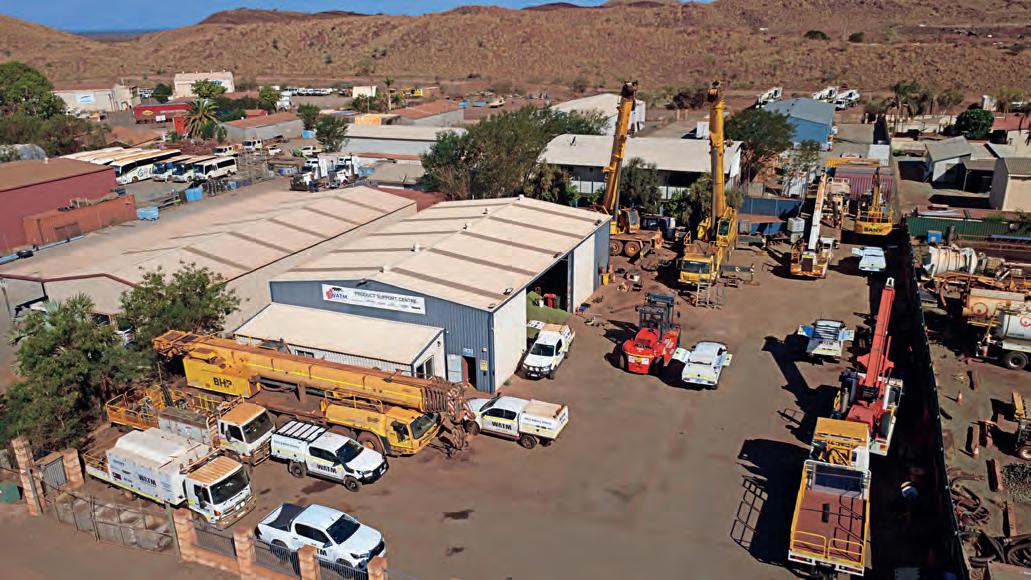
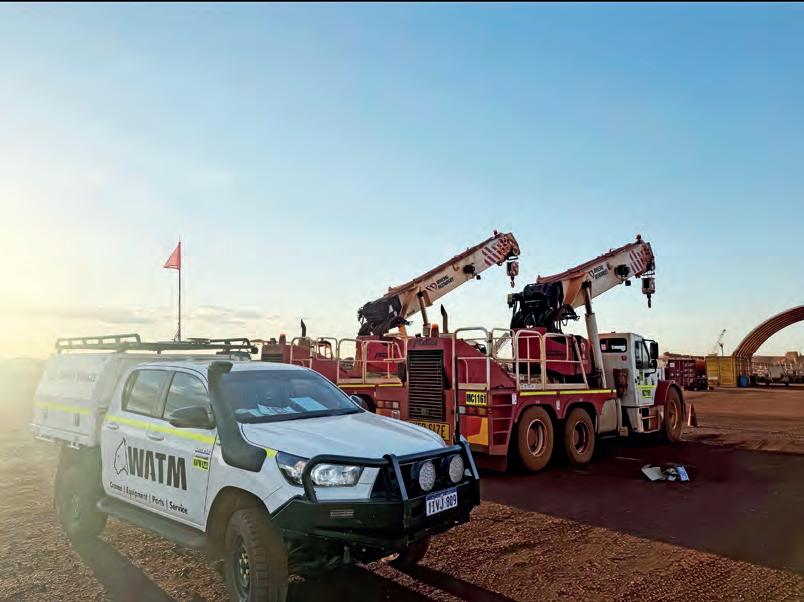
long-term capabilities and reflects WATM’s commitment to building a strong future workforce for Western Australia.
“WATM officially opened its Port Hedland facility in October 2025 as part of our continued investment in expanding support capability across the Pilbara. The Port Hedland yard is approximately 4250 square metres, with a high bay drive-through workshop,” said Dale.
“The Pilbara is one of the most important operating regions for many of our customers, particularly in mining, heavy industry, and crane hire, and it requires a genuine local presence. Opening in Port Hedland was a strategic decision to improve responsiveness, reduce mobilisation delays, and deliver more consistent support on the ground.”
WATM has invested in permanent regional capability so customers can access workshop support, field service, and technical assistance closer to where they operate.
“This investment also reflects the growth of our broader Pilbara footprint, with workshop capability in Newman and Port Hedland and field service support in Karratha. Together, these locations allow WATM to provide practical, reliable coverage across a key operating region. Our workshops in the Pilbara provide customers
with support across all major crane brands,” said Dale.
WATM offers full maintenance and repair capability for cranes operating throughout the region, including major inspections, breakdown response, fault finding, general servicing, component change-outs, weld repairs, air-conditioning repairs and servicing.
FIELD SERVICE IS A MAJOR PART OF WATM’S PILBARA CAPABILITY
“We currently have a growing team of 14 crane technicians across Newman, Port Hedland, and Karratha, providing support to major Tier 1 miners, crane hire companies, and other industrial operators throughout the Pilbara,” said Dale. “To support this, each technician has access to a dedicated service ute, and the business also operates two dedicated service trucks in the region.”
This fleet and technician network enables WATM to respond efficiently to breakdowns, planned maintenance, inspections, and site-based work across a wide geographic area. It also means customers can rely on a professional, well-equipped local team rather than waiting for support from Perth.
WATM’S EXPERIENCED PILBARA TEAM
“Our Pilbara team brings significant handson experience across mining, industrial, and remote site environments, where safety, responsiveness, and reliability are essential,”
Left: WATM has invested in permanent regional capability so customers can access workshop support, field service, and technical assistance closer to where they operate.
said Dale. “The team supports major Tier 1 miners and crane hire companies throughout the Pilbara and understands the operational demands that come with maintaining crane fleets in high-pressure, remote, and production-critical environments. Their experience covers a broad range of crane brands and equipment types, supported by workshop capability in Newman and Port Hedland and field service coverage in Karratha.”
He said that combination of local knowledge, trade capability, and practical field experience enables WATM to deliver dependable service across the region.
“Our expectation is to continue strengthening WATM’s position as a leading provider of crane service, repairs, and support across the Pilbara. With workshops in Newman and Port Hedland, field service support in Karratha, and a growing team of crane technicians across the region, we have built a strong foundation,” said Dale. “From here, our focus is on improving response times, deepening customer relationships, and expanding the reliable, professional support we provide to major miners, crane hire companies, ports, offshore operators, and other industrial customers.
“A major part of that growth is reinforcing WATM’s position as a true multi-brand service provider. We want to be known as a one-stop shop for crane maintenance and repairs, supporting all cranes regardless of brand, while continuing to grow our capability in ports and offshore operations.
“We are very proud of the team we have built in the Pilbara and the safety record behind that growth. Our focus is to keep building a reliable, professional operation that gives customers confidence they will be properly supported, while continuing to expand WATM’s capability across all crane brands, as well as in ports and offshore environments.”
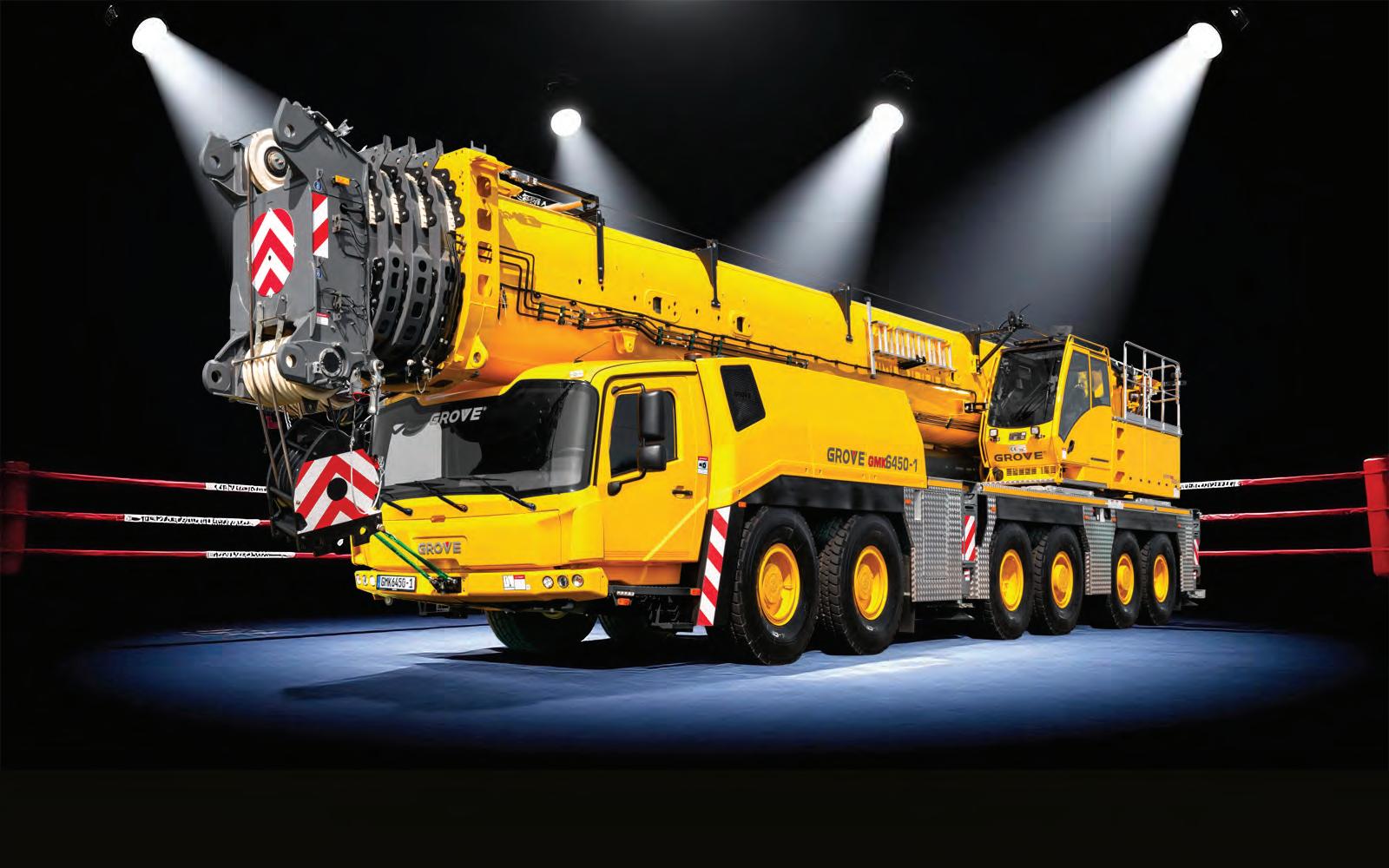



Operators, Riggers, Cranes Australia (ORCA) might be a relative newcomer to recruitment in the crane industry, but as a result of the very experienced team behind the business, it has made quick and significant inroads into the crane industry.
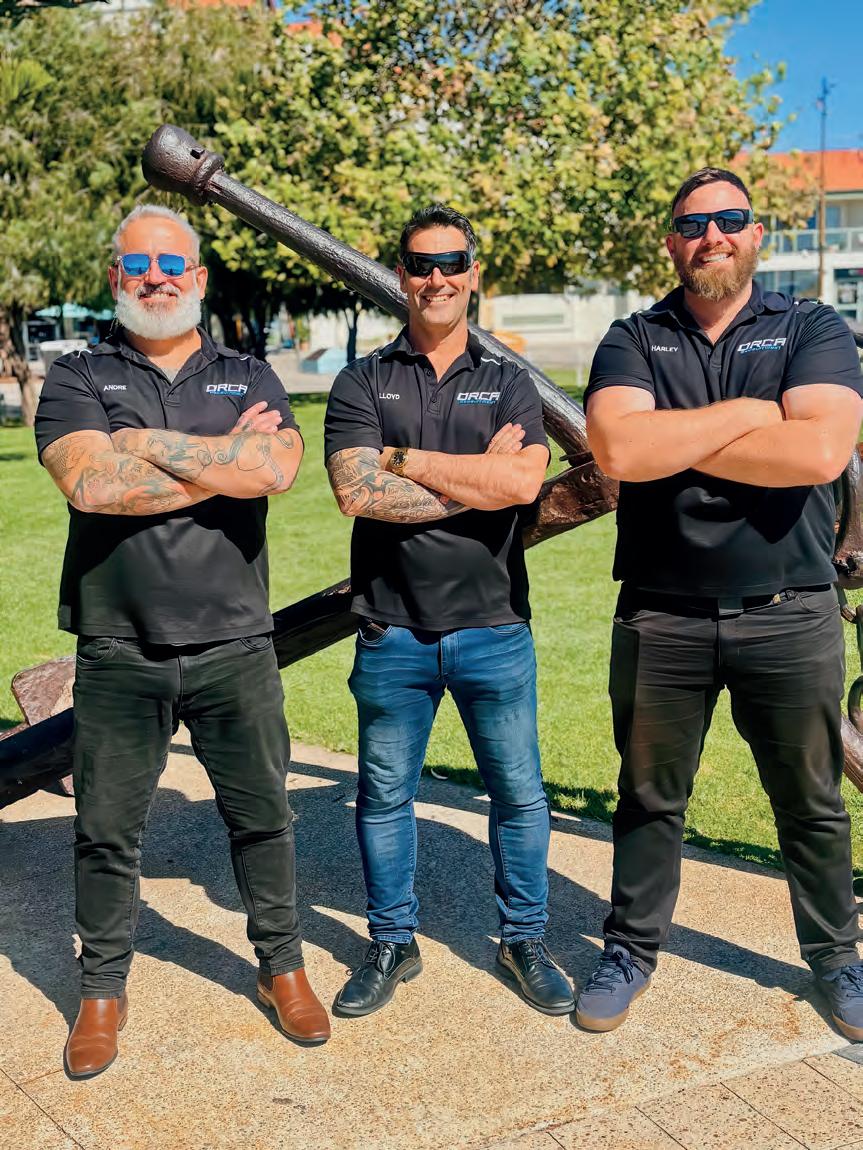
BUSINESS PARTNERS HARLEY MOAD and Lloyd Bucci have vast experience in the crane industry and before starting ORCA, they could see a big gap in the ‘recruitment space’ for some time. They launched the business on 8 August 2024 with the vision of managing a small and niche recruitment agency focused on the industry, but it didn’t quite work out that way. Harley takes up the story.
“Lloyd and I kicked off the business in August 2024. We were aiming to be something niche and small in the industry and we wanted to change the approach to recruitment in the heavy lift industry,” he said. “We wanted to knuckle down and find the best talent to fill the gaps as we saw them. In our opinion, there are too many gaps with unskilled people in the labour hire sector which has been evident for some time and it’s a conversation that’s happening across the country every day.”
When founding ORCA, it was never a case of putting bums on seats said Lloyd.
“For us, it was never about chasing numbers. We always knew the opportunity was there, but we chose to stay specialised, understanding we’d be far better off turning work away than putting the wrong people forward. From the outset, our commitment was simple – if we didn’t have the right people for the job, we’d say so and that’s a standard we’ve consistently upheld.”
The business quickly gained momentum and in April of 2025
ORCA recruited Andre Bucci who has vast experience in crane management and had previously worked with Harley throughout the years. Today, ORCA has 700 names on its books and at any given time has a workforce of 70 plus out in the field.
Training and upskilling are key focuses for the business said Harley.
“We’re committed to developing our people because everyone has different gaps in their knowledge and skillsets,” Harley said. “With the experience within our leadership team, we can guide them in the right direction, whether that’s additional training or hands-on support at crane yards. We don’t send people into roles they’re not prepared for. Our priority is setting them up to succeed.
“On a monthly basis, we conduct hands-on training on cranes from Frannas through to larger slew cranes. We rotate between brands and we offer that opportunity to all of our crews that want to progress their knowledge through training and upskilling,” he said.
Transparency is really important to ORCA and its clients said Andre.
“If we get a call from a crane hire business and they need 50 people for a shutdown project we will be completely transparent with our response. ‘Yes we can cover it, this is who we’ve got, and these are their skillsets’.
“The benefit of working with us compared to other labour hire agencies in this space is that all three of us have come from the frontline, we understand what a client needs and what is required of our workforce. There are times when we might be short of people due to missed flights or family emergencies and guess what happens? We’ll put on the boots, go to site and fill the spot,” he said.
“A key element to what we all do is the culture of the business,” said
Harley. “Because we’ve come from crane backgrounds, we know what the guys have experienced and that’s why they have come to us. From the outset, their experience with us will be a positive one. When they arrive at our offices, it’s us that conducts the interview, not a HR manager, we know what we are looking for and, importantly, we know what we are looking at. Our questions are detailed because we want to ensure we are not wasting each other’s time.
“We encourage upskilling of those individuals who we feel will benefit the future of the crane industry, not just our business. Even if they move on in five years or whenever, we will see them down the track and hopefully they remember ORCA and that we helped in their career. All of this, along with good pay, has enabled us to become the labour hire leader in the crane sector in Western Australia,” said Lloyd.
force we want them to take pride in what they do. You will not see any of our work force turn up to site not knowing what they are going to do. We provide them with all the information they require which again comes back to transparency,” said Andre.
“We kit our crews out with ORCA branded jackets which keep them warm in winter, they also have branded beanies and coffee mugs. We make sure they feel looked after which helps with the positive culture within the business. Our clients comment on how well presented our crews are and how professional their approach is to the tasks in front of them.
THAT INVESTMENT IN PEOPLE IS PAYING OFF “Word spreads quickly that we look after our crews,” Andre said. “We’ve had riggers join
“We encourage upskilling of those individuals who we feel will benefit the future of the crane industry, not just our business. Even if they move on in five years or whenever, we will see them down the track and hopefully they remember ORCA and that we helped in their career.”
Harley, Lloyd and Andre complement each other perfectly in the business. Lloyd and Harley have extensive crane operating careers. Andre moved into office work early in his career and built a very strong network of contacts across Western Australia and Queensland. He’s held various positions with some of the leading crane hire businesses including as operations supervisor, crane supervisor and regional manager.
“Our skillsets and experience complement each other and the most important thing for us is we deliver what we say we will deliver, and in many instances we over deliver. We encourage ownership from our work
us with strong backgrounds, demonstrate consistency and professionalism, and then progress into crane operator roles through structured upskilling.
“We’ve even had people from other companies approach us asking, ‘Is it true you’re doing this for your crews?’ And the answer is ‘yes’. It’s not about the numbers for us, we’re focused on helping our workforce build better careers wherever we can,” Andre said.
“Working for ORCA is like being part of a family. Just like orcas in the wild who live in pods and look after one another, we prioritise the wellbeing of our own pod and support them as best we can.”
- 2,000 hour / 2 year Warranty
- 15,000 hours / 15 years to first Major Service
- 30 years of Innovation since 1996
- No removable counterweight
- 1,000kg rigging gear capacity
- No IAP required
- Safe driving speed at 100kph
- Lowest proven fuel usage and running costs
» MAX SWL. 25T @ 1.4M
» Max Boom Length. 20.6M
» Max Tip Height. 21M
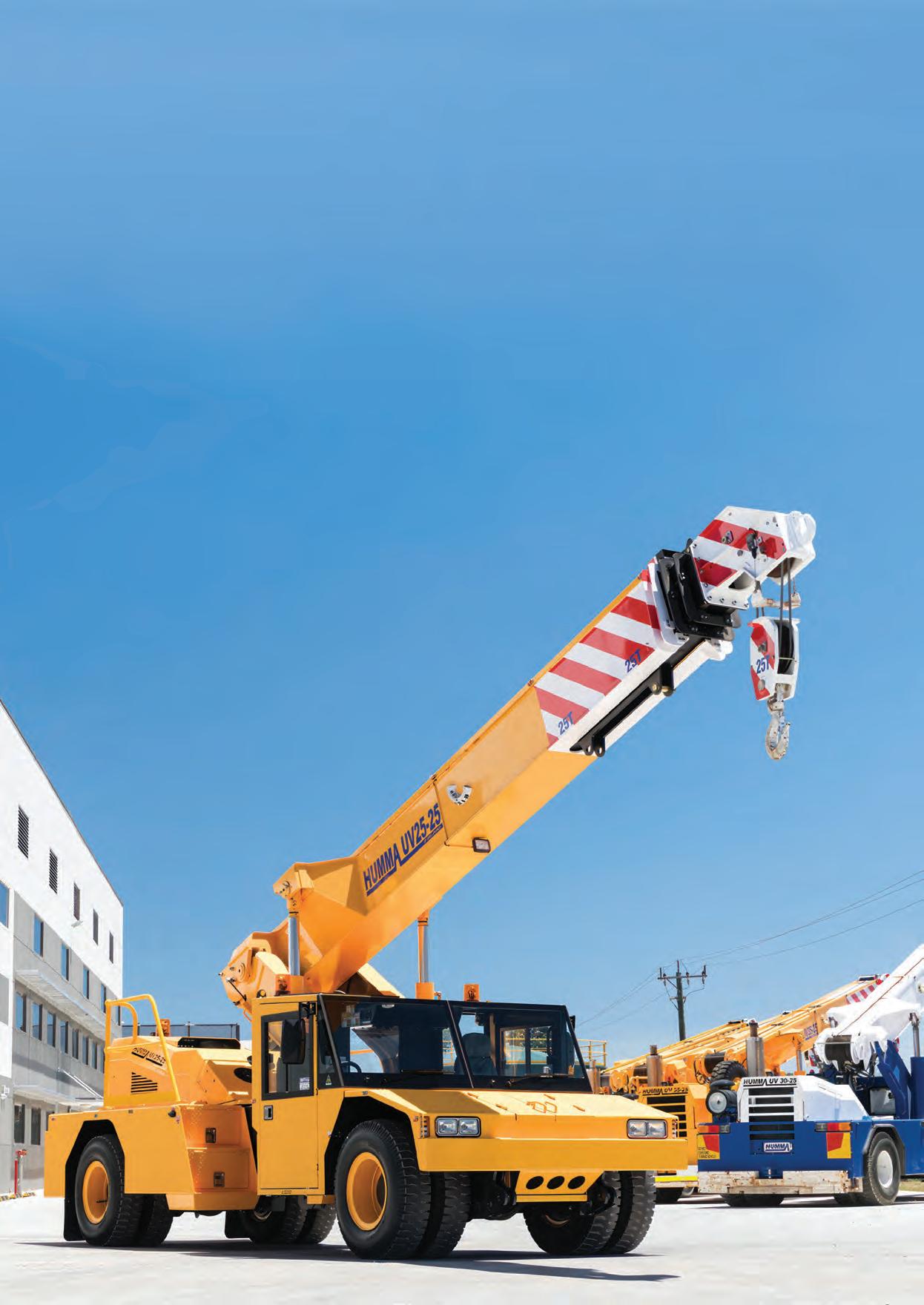
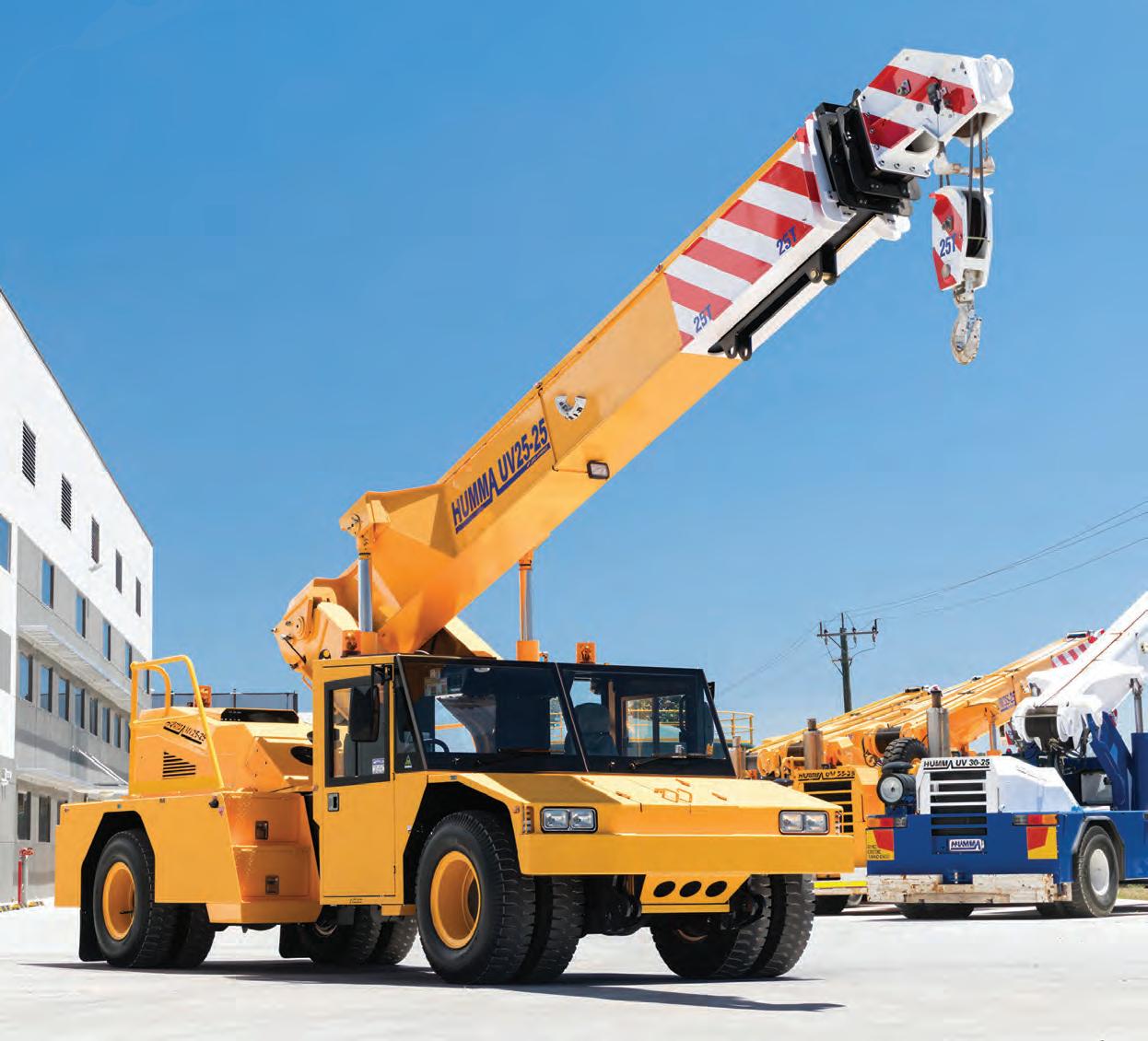
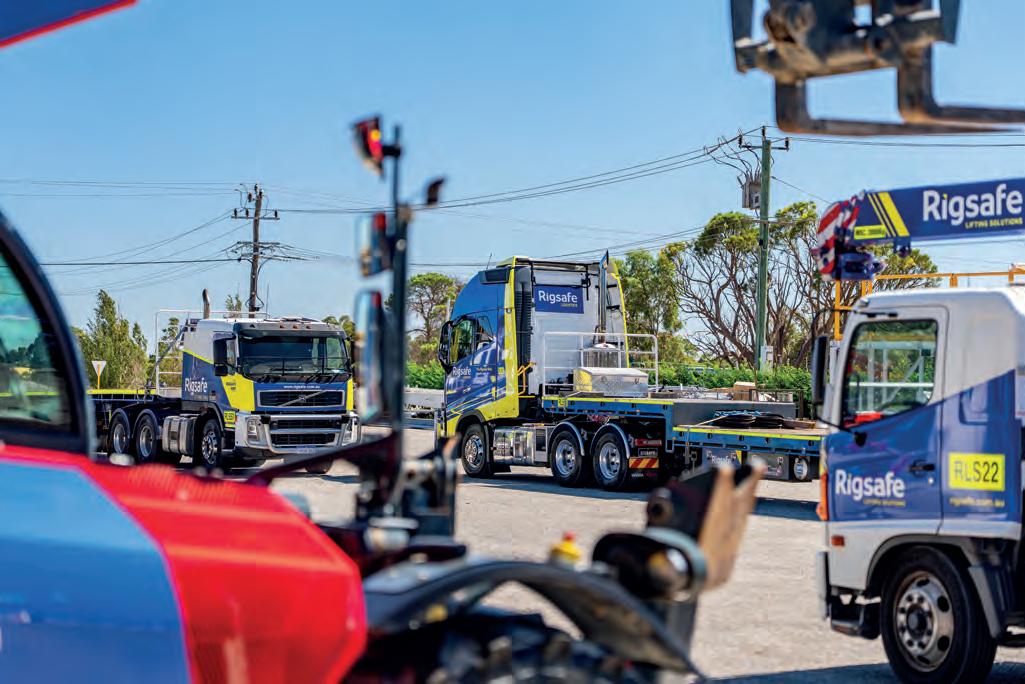
From logistics to lift planning, Rigsafe is targeting the weak links in construction delivery.
OVER THE PAST 18 MONTHS, RIGSAFE
Lifting Solutions, a Western Australiabased business has taken a deliberate step forward, expanding beyond traditional lifting and rigging services to better control the factors that can slow projects down.
“We’ve really looked at every touchpoint that impacts projects and clients the most,” said Tanya Fitzgerald, Director – Business & Strategy at Rigsafe Lifting Solutions. “And we’re investing heavily in those areas so we can deliver better outcomes.”
That forward planning approach is now shaping how the company operates, from logistics and transport through to engineering, workforce strategy and digital systems.
BRINGING LOGISTICS IN-HOUSE
One of the company’s biggest shifts has been the launch of Rigsafe Logistics, a move driven by industry-wide challenges
around transport delays and coordination.
“In so many projects, installation is completely dependent on transport, but transport is often controlled by a third party,” Tanya said. “Clients end up working around someone else’s schedule, and that can impact the whole program.”
By bringing transport in-house, Rigsafe now controls a larger portion of the delivery chain, from mobilisation through to installation.
“It was a no-brainer for us,” Tanya said. “If we can control the timing, the sequencing and the delivery, we can remove a lot of those bottlenecks. For our clients, that means greater certainty around timeframes, budgets, and overall project delivery.”
The shift also reflects broader changes in the construction sector, particularly the rise of modular construction, where large components are assembled off-site and lifted into place.
“There’s a huge move towards modular builds, apartments, holiday parks, largescale developments,” Tanya said. “If anything can be pre-assembled, it saves time and cost. But that only works if the transport and lifting are aligned.”
Recent projects highlight that approach. At the Perth Film Studios development, Rigsafe used a modular methodology to install large roof sections, lifting preassembled components into place to improve efficiency and reduce risk. The project involved more than 1,700 precast elements and 128 roof modules delivered under a compressed program.
While logistics is a new addition to the business, Rigsafe’s core approach has remained consistent: getting involved early and shaping how projects are delivered.
“We’ve always done the value engineering side, we just never really spoke about it,” Tanya said.
That includes lift planning, sequencing and methodology, often before a project is even awarded.
“If we can get involved early, we can help clients shorten programs, reduce risk and make their bids more competitive,” she said. “Sometimes we’re doing that work before we even win the job.”
This “value engineering” mindset has become a key differentiator for the business, supported by digital tools such as CraneBee for lift planning and compliance systems that track site readiness.
This integrated approach allows Rigsafe to compress schedules, reduce rework and deliver more predictable outcomes across projects.
Alongside operational changes, Rigsafe has continued to invest in its fleet and internal capability.
“We’ve just added a new 130-tonne crane and we’re continuing to invest in equipment that directly supports what our clients need,” Tanya said.
Some of those investments are being shaped by direct client feedback, particularly in the transport space.
“We’ve spoken to clients about what would actually make their jobs easier and we’re buying equipment based on that,” she said. “It’s about being practical.”
The company has also expanded its team, bringing in a dedicated transport manager and, for the first time, a business development manager.
Looking ahead, Rigsafe is positioning itself for growth in key sectors, particularly defence and large-scale infrastructure.
The business is Defence Industry Security Program (DISP) ready, a process that has taken more than a year to complete.
“That’s been a huge undertaking,” Tanya said. “But it’s not just about defence work, it’s about best practice in data security and how we manage information.”
At the same time, the company is preparing for increased demand across Western Australia, where major infrastructure, mining and defence projects are expected to place pressure on resources.
“There’s going to be a massive pull on skilled people,” she said. “Attracting and retaining staff is going to be one of the biggest challenges for the industry.”
To address that, Rigsafe has introduced sponsorship pathways for overseas workers and partnered with Indigenous recruitment organisations to build a broader talent pipeline.
Another area of focus is digital transformation, with the company exploring how artificial intelligence can improve visibility across projects.
“We’re looking at how we can connect everything, from quoting through to operations and invoicing,” Tanya said. “The more data we have, the better decisions we can make.”
That approach is supported by a strong emphasis on cybersecurity, particularly as more systems are brought in-house.
Despite the scale of these changes, Tanya is clear that the strategy is not about expansion for its own sake.
“It’s not growth for growth’s sake,” she said. “It’s about solving problems and making projects run better.”
That philosophy is reflected across the business, from early-stage planning through to delivery on site.
“We’re always asking the same question,” Tanya said. “How do we better service our clients, our crew and our community?”
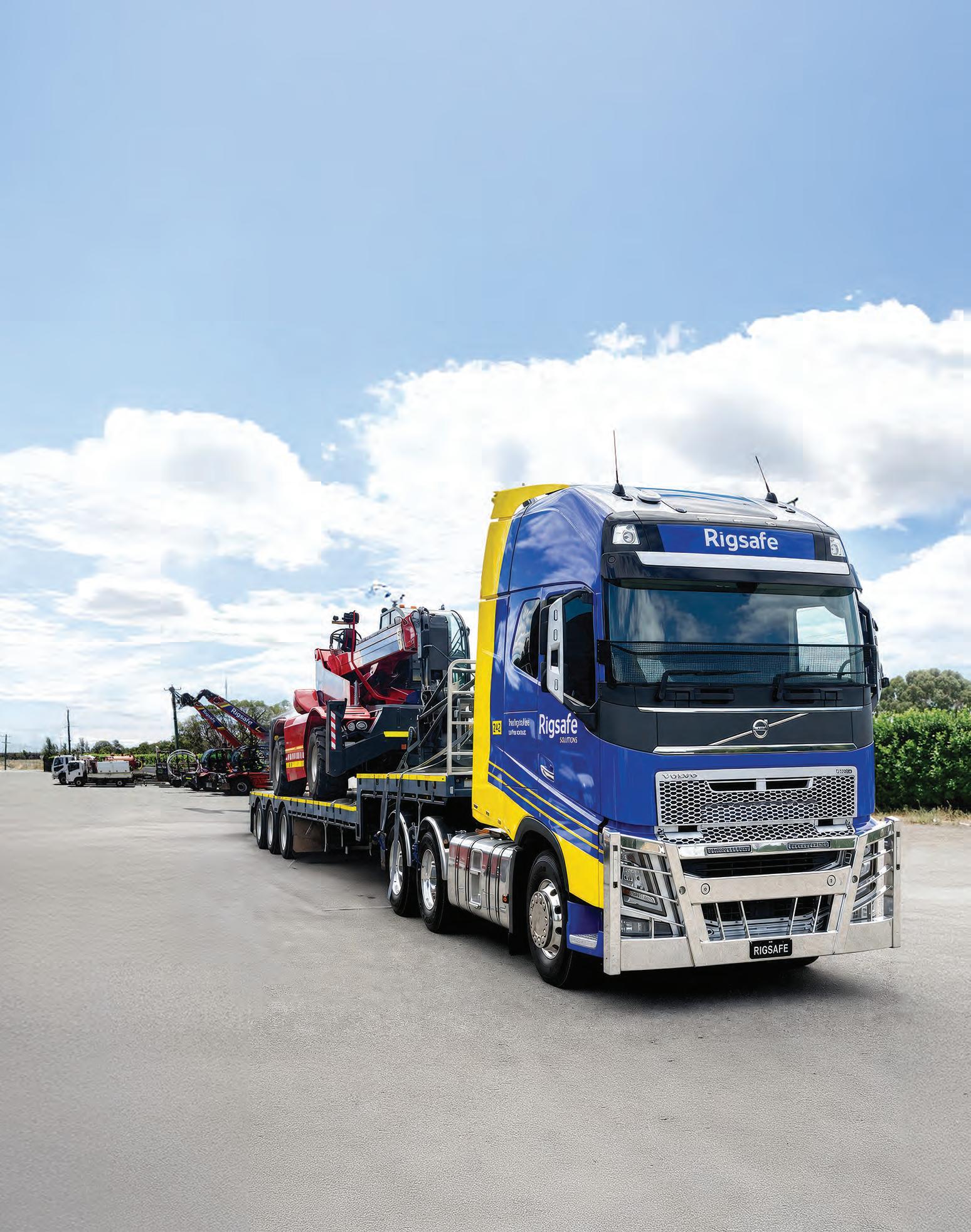
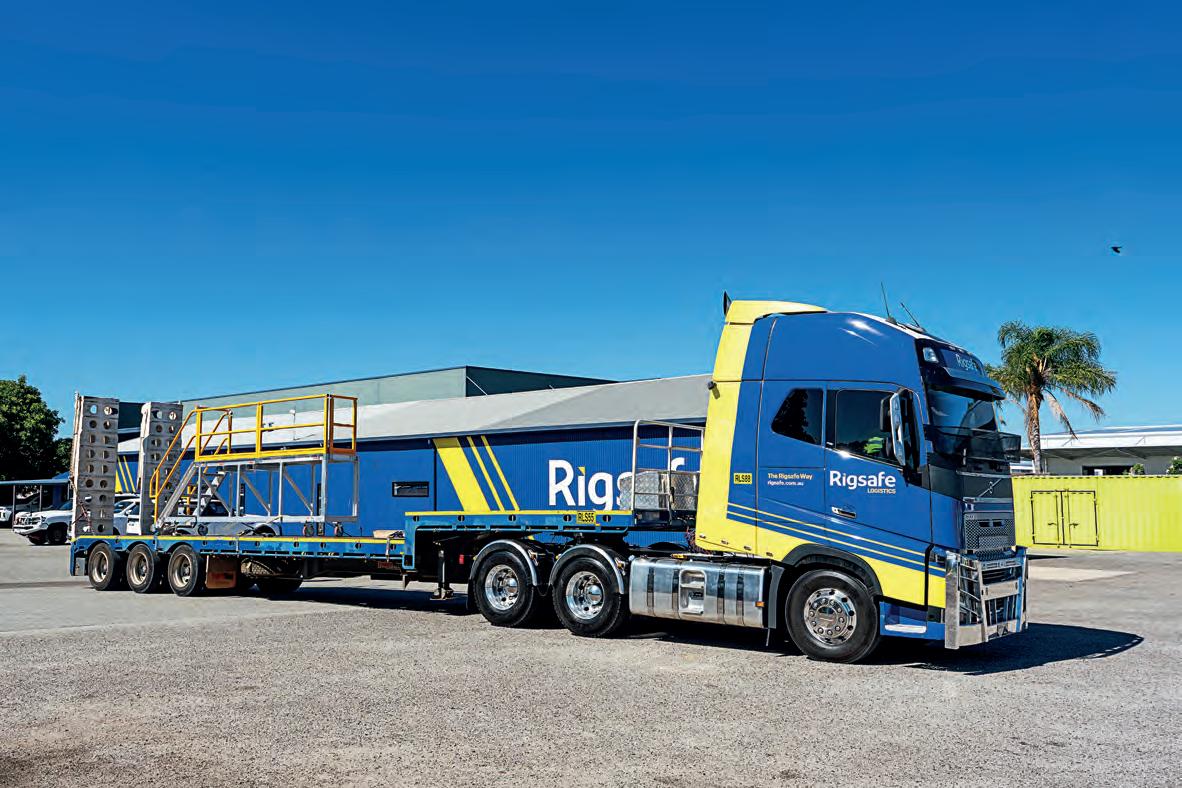




Leading from the front
We connect skilled crane operators, riggers, truck drivers and lifting supervisors with WA’s biggest industrial and construction projects.
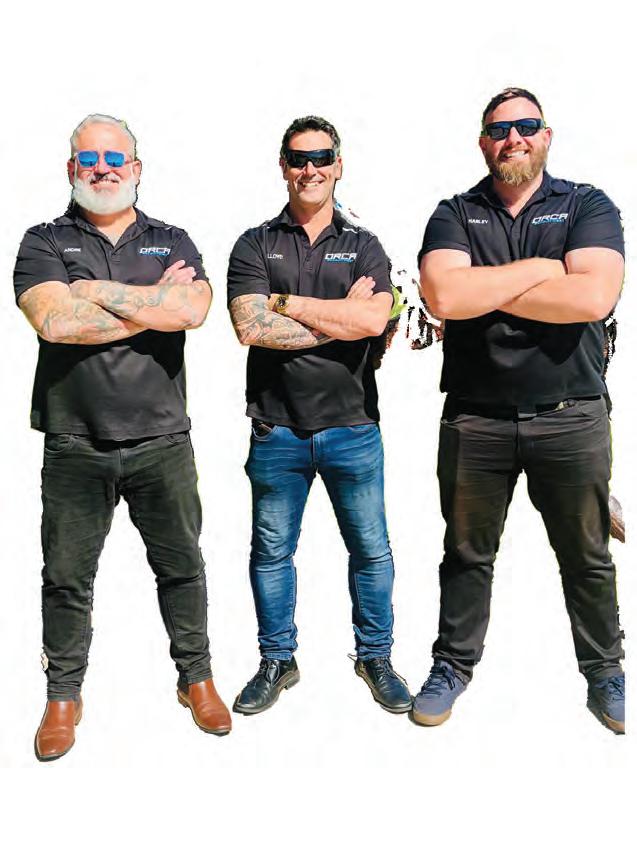
With major infrastructure projects coming online, Australia committing to record levels of defence infrastructure investment, strong residential construction and continued momentum in resources, Western Australia remains the engine room of Australia’s growth.
years – it really is in our DNA,” said Daniel. “We’ve always taken a proactive role, working closely with the Crane Industry Council of Australia (CICA), sponsoring the National Conference and supporting industry-led initiatives. Whenever we talk with clients about loss mitigation, safety is the first consideration. Not just for their people, but for third-party exposures as well.”
Crane incidents can occur anywhere, at any time, and too often they stem from time pressure and complacency.
“Every day you see heavy pool shells
or large components being lifted over adjoining properties,” Daniel said. “The crane might be booked for three jobs that day, deadlines loom, and someone decides to skip a step because they’ve done it a hundred times before. That’s when outriggers are left off, and that’s when we see cranes tipping into neighbouring properties. These are real losses we’re seeing.
“Complacency is one of the most difficult risks to manage,” Daniel states.
“At UAA, we see it as part of our responsibility to reinforce safe lifting practices. Corners cut under time
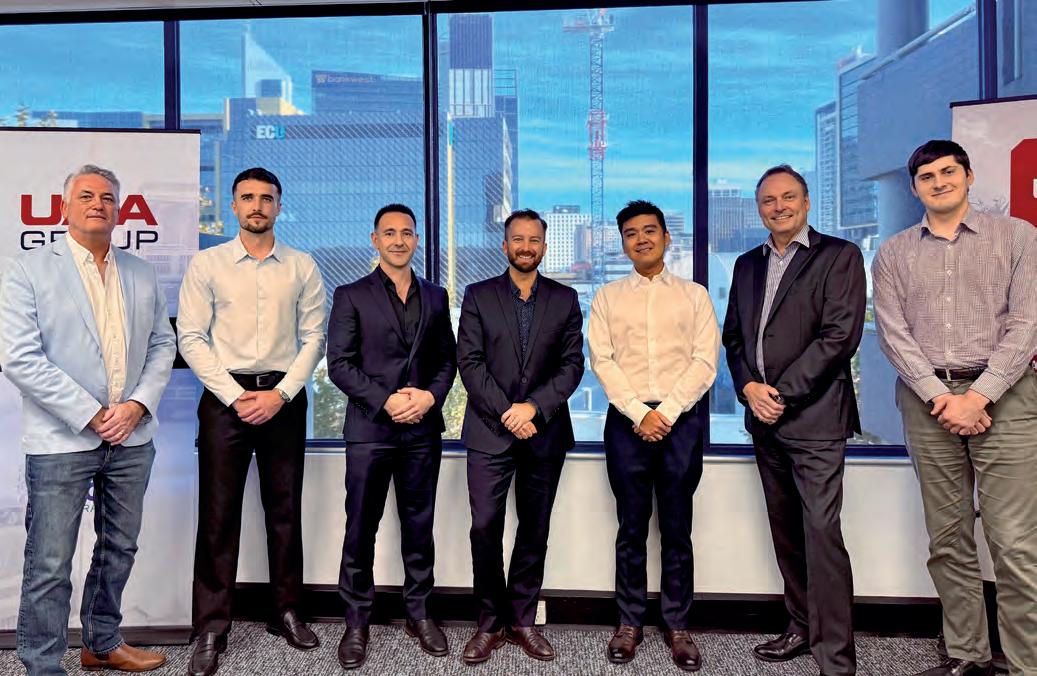
pressure are exactly where serious incidents occur.”
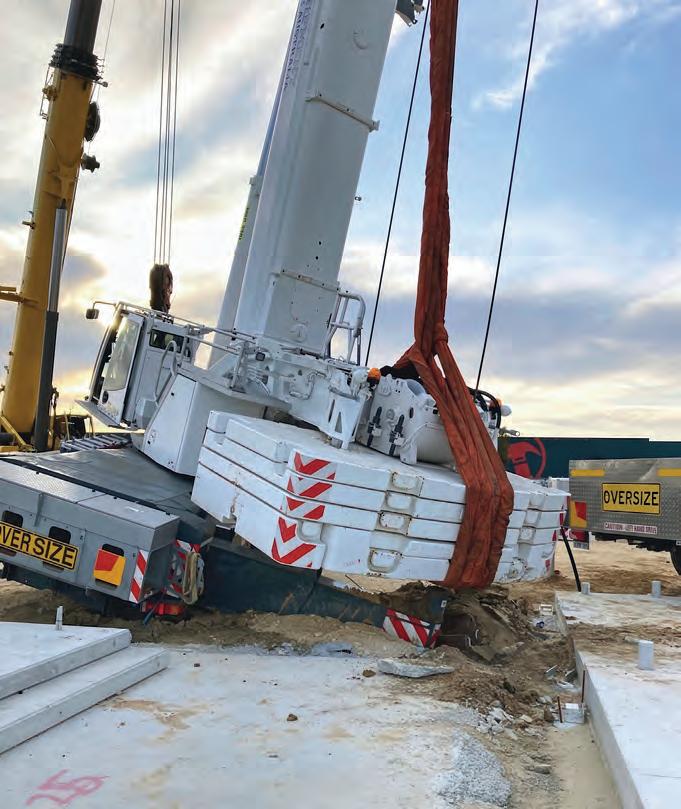
Insurance for the crane industry has always been competitive, with new entrants regularly drawn to the sector. UAA cautions operators to look beyond headline pricing when assessing cover.
“We’re seeing increased competition in parts of the global insurance market,” Daniel explained. “Some offerings are priced very aggressively in an effort to gain market share. History shows that when pricing falls too far below long term loss experience, claims inevitably follow and capacity quickly withdraws.”
Daniel points to a familiar pattern – “Operators may see sharp shortterm savings, only to face significantly higher premiums when that capacity exits. Our role is helping clients understand how insurance cycles work, and why stability and continuity matter over time.”
“We’re more than a number on a piece of paper,” said Daniel. “Our policy wordings are purpose-built for the crane industry, and our coverage remains second to none.”
UAA continues to insure cranes over the long haul.
A key differentiator is UAA being a cradle to the grave underwriter, with underwriting and claims being ‘inhouse’ and in Perth.
“Having Perth-based underwriting and claims specialists with first-hand crane operation experience makes a critical difference when it matters most,” Daniel said.
Western Australia’s economic outlook continues to create opportunity for the crane industry, from population growth and housing demand, to mining, renewables and defence.
“Consistency and experience are critical,” Daniel said. “Sustained investment across resources, defence infrastructure and renewables is driving demand, particularly for tower cranes and heavy-lift capability.”
The renewable energy sector, however, has introduced new challenges.
Gary Woodhams explains that as turbines increase in height and components grow heavier, crane capacity and risk profiles have changed significantly.
“In wind particularly, we’re now seeing cranes with capacities exceeding 1000 tonnes, and internationally even
3000 to 4000 tonnes,” Gary said. “As the sector evolves, UAA has worked closely with CICA and the broader industry to ensure best-practice lifting methods are adopted at all times.”
Early wind farm projects revealed serious risks when cranes were moved between lifts without proper demobilisation.
“Due to time pressures, cranes were being relocated with booms raised and full counterweights in place,” Gary said. “The result was rollovers – and some very substantial claims.”
UAA worked alongside CICA and industry leaders to address the issue.
“By presenting on these risks and explaining why the losses were unsustainable, real change occurred in how wind farms are constructed and serviced.
“That kind of influence only comes from deep, long-term involvement in the industry.”
UAA continues to engage directly with brokers and clients following claims.
“We make a point of meeting faceto-face wherever possible,” Gary said. “Understanding how losses occur, particularly when there are repeated incidents or near misses, is critical. From an insurer’s perspective, multiple claims arising from the same underlying issues inevitably lead to significant losses, and that is not sustainable over the long term.”
Training and technology remain key indicators of good risk management.
“Underwriters will always view training and safety-related technology favourably. When a business invests in initiatives that genuinely reduce risk, we want to understand them. Done properly, risk management absolutely influences underwriting outcomes.”
For UAA, the message to the crane industry is clear: experience, stability and safety remain the foundations of insuring cranes for the long haul.
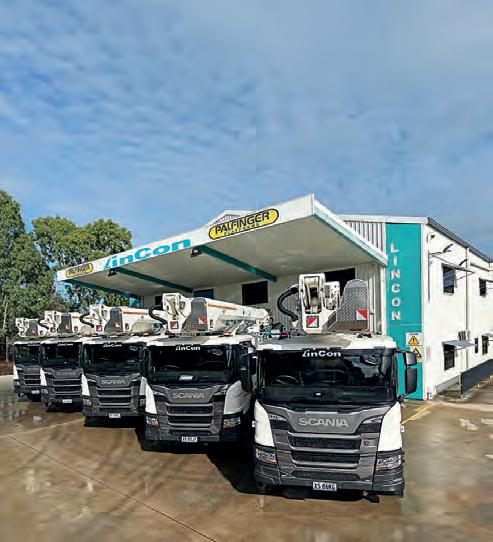

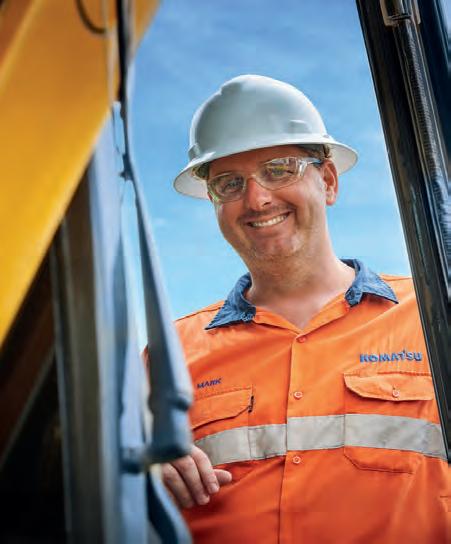
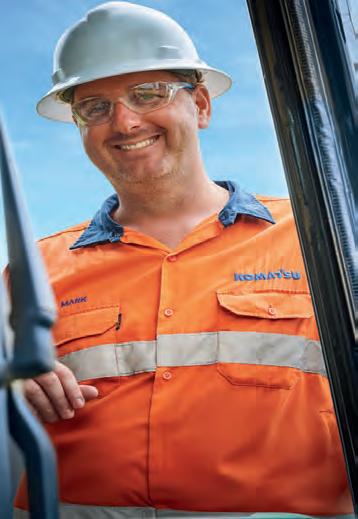
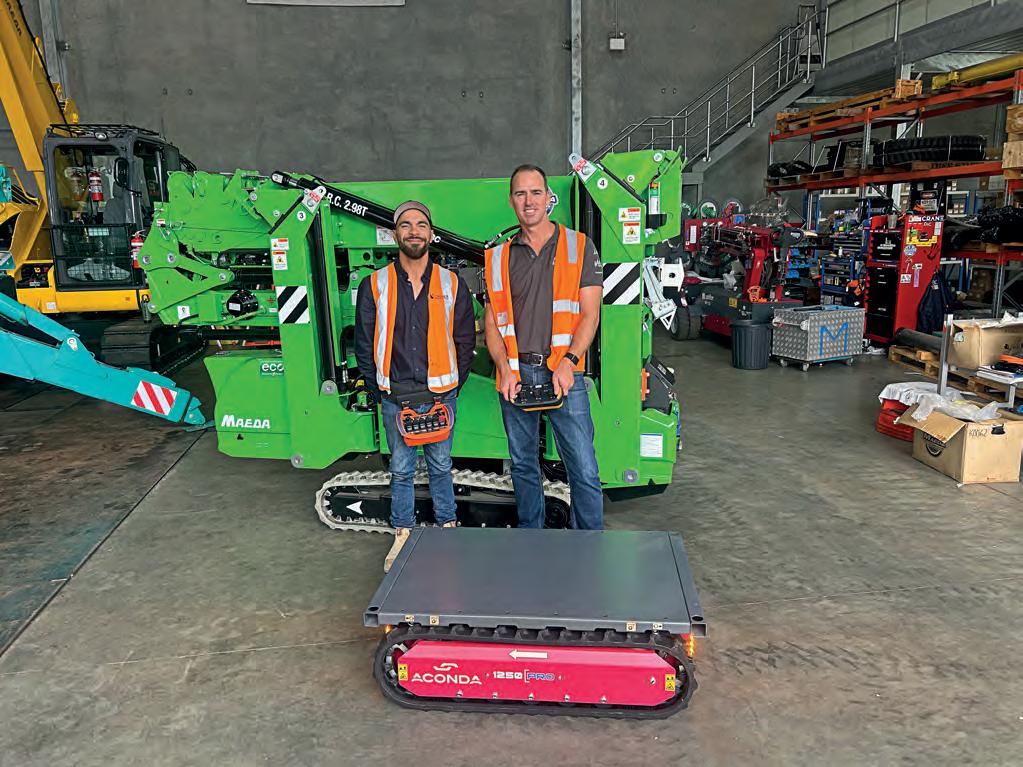
Cygnus High Risk Solutions specialises in mini cranes and tight access lifting as well as providing experienced crane crews for the Perth construction sector, and in particular steel erection. Business owner Danley Potts explains how he recently invested in a new Maeda MK305CB knuckle boom crane and an Aconda track carrier from Pace Cranes.
DANLEY STARTED OUT IN THE INDUSTRY by dogging tower cranes in the city.
“I was 19 when I started with Global Integrated and loved what I was doing straight away. Unfortunately, I wasn’t very good at rigging so the business put me in a crane, and I proved to be a much better operator than I am a rigger,” he said. “I then moved into steel erection where I was exposed to mobile cranes. I spent my time moving between those
industries until I started Cygnus High Risk Solutions in late 2022 when I purchased my first Maeda. I’ve always been fascinated with mini cranes and their capabilities, they are a fairly unique piece of equipment, and you can get them into places where bigger cranes simply can’t get to.
“I was working on a high raise project, and they had a need for a mini crane and I said I could get one. I ended up
buying an early model Maeda MC285 from Hawkesbury Cranes. I had always envisaged running a bigger capacity crane but as soon as I saw the Maeda at work I knew there was plenty of potential work for mini cranes. I’m a bit of a short arse myself, so it totally made sense to me,” said Danley.
Danley is impressed with the new Maeda MK305CB knuckle boom, describing it as a game changer.
“Our MC285 has been busy in the steel erection sector, which has been great, but I truly see the MK305CB as being an absolute game changer. The knuckle boom can get into even more difficult and tighter spots to lift – it really is a unique crane. It is already opening doors in different applications like installing commercial glazing and many other different applications. I’m very excited about its potential,” he said.
The MK305CB features a telescopic boom with a knuckle that folds out from underneath the main boom. The knuckle features a telescoping luffing with a telescoping jib attached. The 12-metre main boom features four falls hook mode as well as a detachable negative angle jib with a maximum height of 16.95 metres. The model also features automatic and stepless multi outrigger settings, variable crawler gauge, diesel/electric and battery electric options, as well as fully proportional radio remote control.
Maeda has designed this model like the other machines in its range and offer a standard diesel engine option, diesel-electric or full battery lithiumpowered for those companies wanting a 100 per cent ‘green machine’. The battery-powered option is designed to work a full day, but it has the capability of running from the mains for unlimited working hours.
Danley bought the Maeda with the Searcher Hook option.
“The Searcher Hook is a very clever innovation because it enables you to lift in extremely tight spaces, especially under roof lines. I doubt there is anything else on the market which enables you to get into that kind of limited space. The Searcher Hook, with its narrow slimline
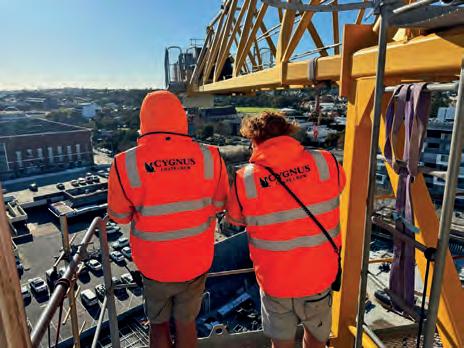
feature allows you to really get up tight and close inside or under a roof to lift machinery, or install an air conditioning unit or commercial glazing, anything like that,” he said.
Danley goes on to discuss his relationship with Pace Cranes and Michael Cawston and the team.
“Michael and I first met in Perth when he was here for The Crane Industry Council of Australia (CICA) National Conference and Exhibition. I needed a part for my first Maeda and called Pace Cranes and they said Michael was over from Sydney. He met me and walked me through the equipment on display, and I decided there and then that I was going to buy the knuckle boom and the Aconda track carrier,” said Danley.
“The track carrier complements everything we do with the cranes and eliminates a lot of occupational health and safety issues when it comes to carrying heavy pieces of equipment. The Maeda MK305CB knuckle boom took a little while to get used to because it is so different to a standard telescopic boom. But it is a very intelligent machine and the remote control is a real game changer. It enables you get up close to the crane and see where you are lifting, which gives you a lot more control of the situation. This
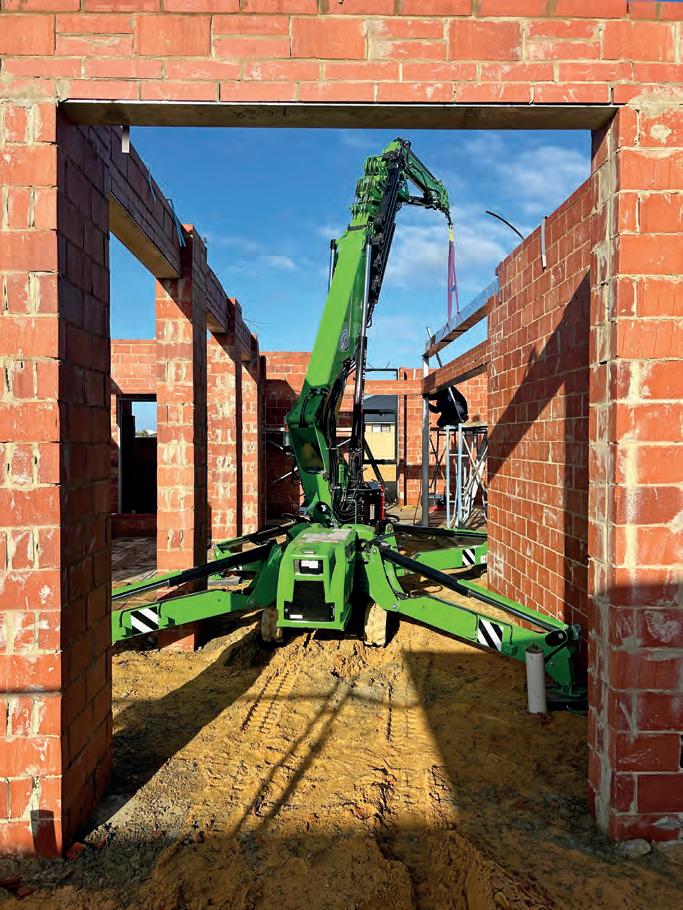
“The track carrier complements everything we do with the cranes and eliminates a lot of occupational health and safety issues when it comes to carrying heavy pieces of equipment.”
crane will enable me to really immerse the business in the tight access lifting space, which is where I want to go,” said Danley.
He is also having success with hiring his specialised crews for tight access lifting, as well crane crews.
“This is where my business started. I was presented with the opportunity of running a tower crane, so I brought some guys together and that was the start of it. We’ve now moved into crews specialising in tight access lifting. Our crews are experienced and love what they do which is important to ensure the customer
receives the service they are expecting. Under promise and over deliver is how we approach the work,” he said.
“I want to finish by thanking Michael and the team at Pace Cranes. They flew me over to Sydney for the familiarisation of the Maeda and everyone was so welcoming,” cheered Danley.
“They treat you like family and genuinely care that your outcomes with the crane are positive. The icing on the cake was a phone call from Michael to explain he had arranged for my business to appear in Cranes and Lifting magazine.
“Immediately, I thought there had to be a catch but there wasn’t. Given the performance of the Maedas and the support I have received, I am very happy to be part of the Pace Cranes family and they will have my business forever.”
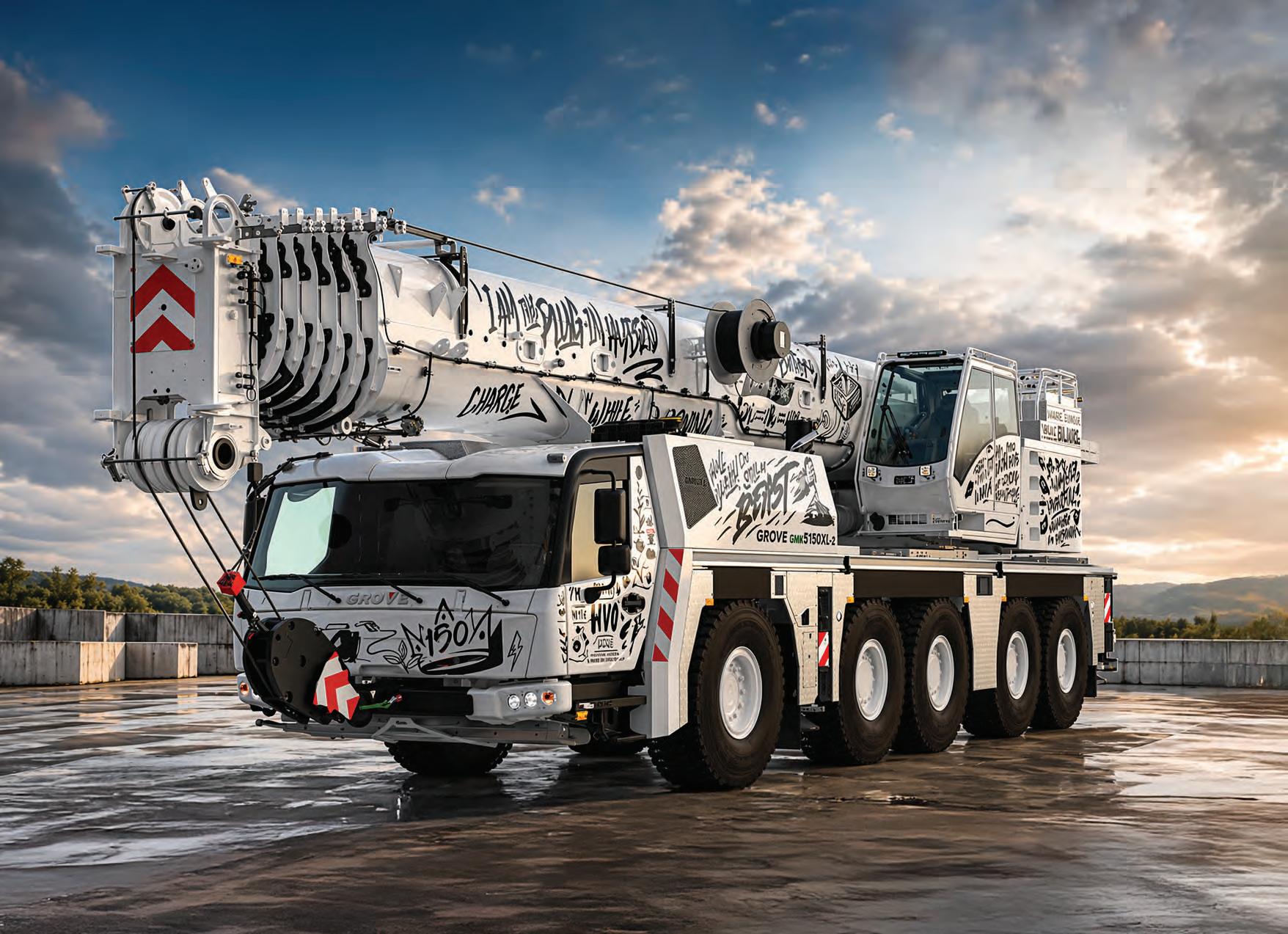
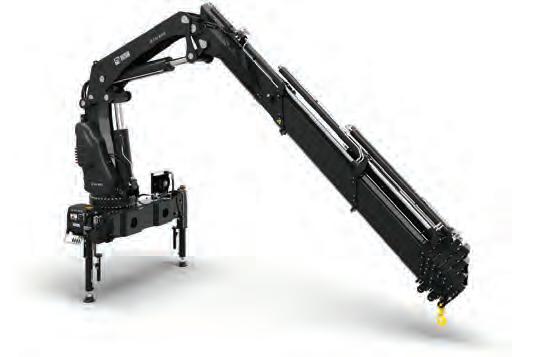
Established in 1974, WATM is a Western Australian familyowned and operated business with over 50 years of experience supporting the lifting, transport, mining, construction, ports and industrial sectors.
As a trusted name in crane sales, service and aftercare, WATM provides complete lifting equipment solutions across Western Australia, from new equipment supply through to field service, preventative maintenance, breakdown support, major repairs, parts, technical support and long-term fleet aftercare.
WATM is proud to represent some of the world’s leading lifting equipment brands, including:
» Exclusive Western Australian distributor for Manitowoc Cranes, including the industry-leading Grove range of mobile cranes
» Exclusive Western Australian distributor for Hiab, offering premium vehicle loading cranes and transport lifting solutions
» Exclusive Pettibone dealer across Australia and the APAC region
WATM, reliable support, and aftercare that keeps you lifting.
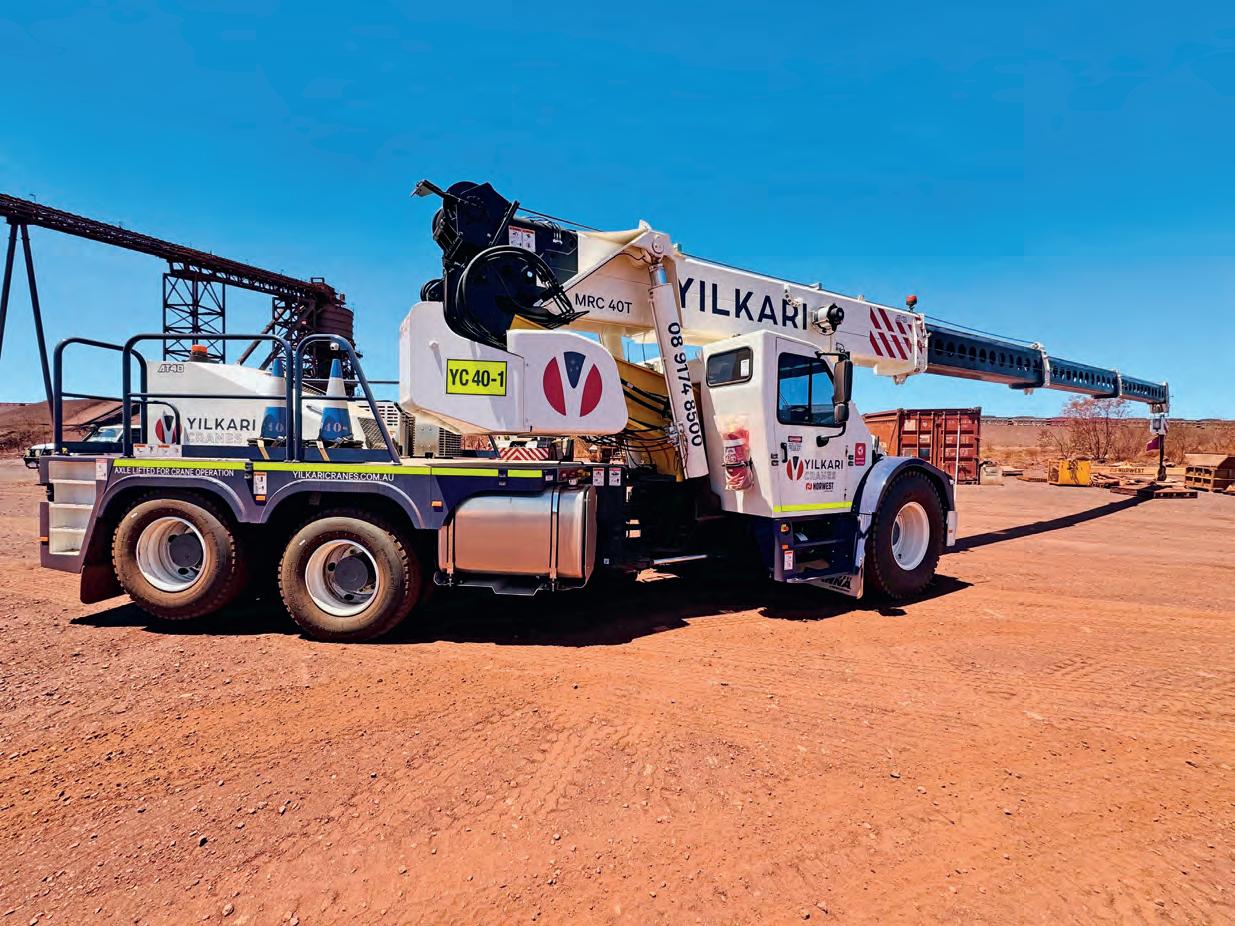
Yilkari Cranes is a 100 per cent Indigenous owned company that operates in the Pilbara Region of Western Australia. With more than 50 years of combined crane industry experience, directors Jardine Pitt and Bill Coffin and their crews, bring a unique blend of cultural heritage and industry expertise to every project they undertake.
HAVING OPERATED A TEREX FRANNA MAC25 for some time, the business recently went a step further acquiring a next generation Franna AT40-2.
“Business partner Bill Coffin and myself have spent most of our working lives in the cranes and lifting industry across the Pilbara. Bill is from the Palyku country and I’m from the Torres Strait, and we both saw opportunities to build a business and create something a little bit different compared to other crane companies by opening up opportunities for sustainable platforms for our communities,” said Jardine.
Yilkari Cranes provides crane hire, rigging and lifting support across mining, port and infrastructure sectors through its alliance with Norwest Crane Hire.
“We can scale from 25 tonne right through to 650 tonne capacity cranes, supporting both maintenance and major project scopes, alongside our own fleet
which now includes the Terex Franna AT40-2. While we’re still a growing business, our alliance with Norwest gives us access to significant fleet depth and exposure across the Pilbara. The relationship works well for both parties and allows us to deliver scalable solutions across a range of operations,” said Jardine.
Jardine and Bill are hands-on with the business.
“We prefer to stay close to the work and remain heavily involved throughout the entire process, from planning through to execution and delivery. Our focus is always on providing solutions that align with Tier 1 operational requirements across the Pilbara,” said Jardine. “Clear communication with our crews and delivering a high standard of service remains a key focus for the business.”
Jardine is impressed with the new Terex Franna AT40-2
“We have two Frannas in the business with the AT40-2 being the latest addition. Our first is a MAC25 and that’s currently on a long-term dry hire contract. It’s been a well utilised asset since we’ve had it. We took delivery of the AT40-2 at the back end of last year and it’s proving to be a versatile crane.
“At 40 tonne capacity, it fills the gap above the MAC25 while avoiding the need to mobilise a slew crane. That gives us greater flexibility and efficiency across Pilbara operations, where this class of crane sees consistent demand. It’s already well utilised across both mine and port environments, particularly within maintenance and shutdown scopes. From a business perspective, it’s been a strong investment and forms a key step in building out our owned fleet capability.”
The support from Terex Franna has been excellent said Jardine.
“The whole Franna team has been excellent to deal with. Whether it’s parts support, technical advice, or simply discussing ideas, they’ve always been available and willing to help. Robin and Paige from the sales team, along with Rodney, the parts department, and the wider
supportive whenever we’ve needed assistance. Their focus on after-sales support and service really stands out, and that level of support isn’t something you see every day,” he said.
Yilkari Crane’s operators have been impressed with the safety features of the AT40-2, particularly the 360 degree view provided by the onboard camera system.
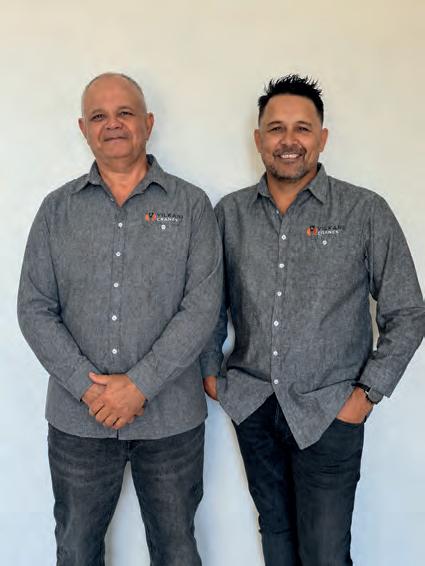
“It eliminates blind spots and the operator can see exactly what is happening around the crane,” said Jardine.
“Our crew operate a lot of slew cranes, and you don’t see this kind of technology on them. It certainly enhances the safety of the crane, and it is great to see Terex Franna leading the way by moving into this type of technology.
“Another great feature is the Safety Radar. Again, it’s new technology and the crews are still getting used to its pre-emptive nature, but it’s another safety measure which we obviously
welcome. The technology Terex Franna has introduced provides another layer of support for operators and helps remove some of the guess work.
“We’re still building our presence in the Pilbara, and it’s a competitive space. Our focus has been on working with clients who value a more hands-on, tailored approach. It’s about proving what we can do, building relationships, and delivering consistently.”
Jardine said that once that foundation is in place, the company can create real opportunities locally.
“We’re at the early stages of that journey, and the addition of the Terex Franna AT40-2 has played a key role in establishing our capability,” he said.
“It’s enabled us to support a broader range of work while progressing our long-term goal of driving local participation and sustainable growth. Longer term, we want to keep growing the business in a way that supports local communities, working alongside other contractors, and creating opportunities for our people.”
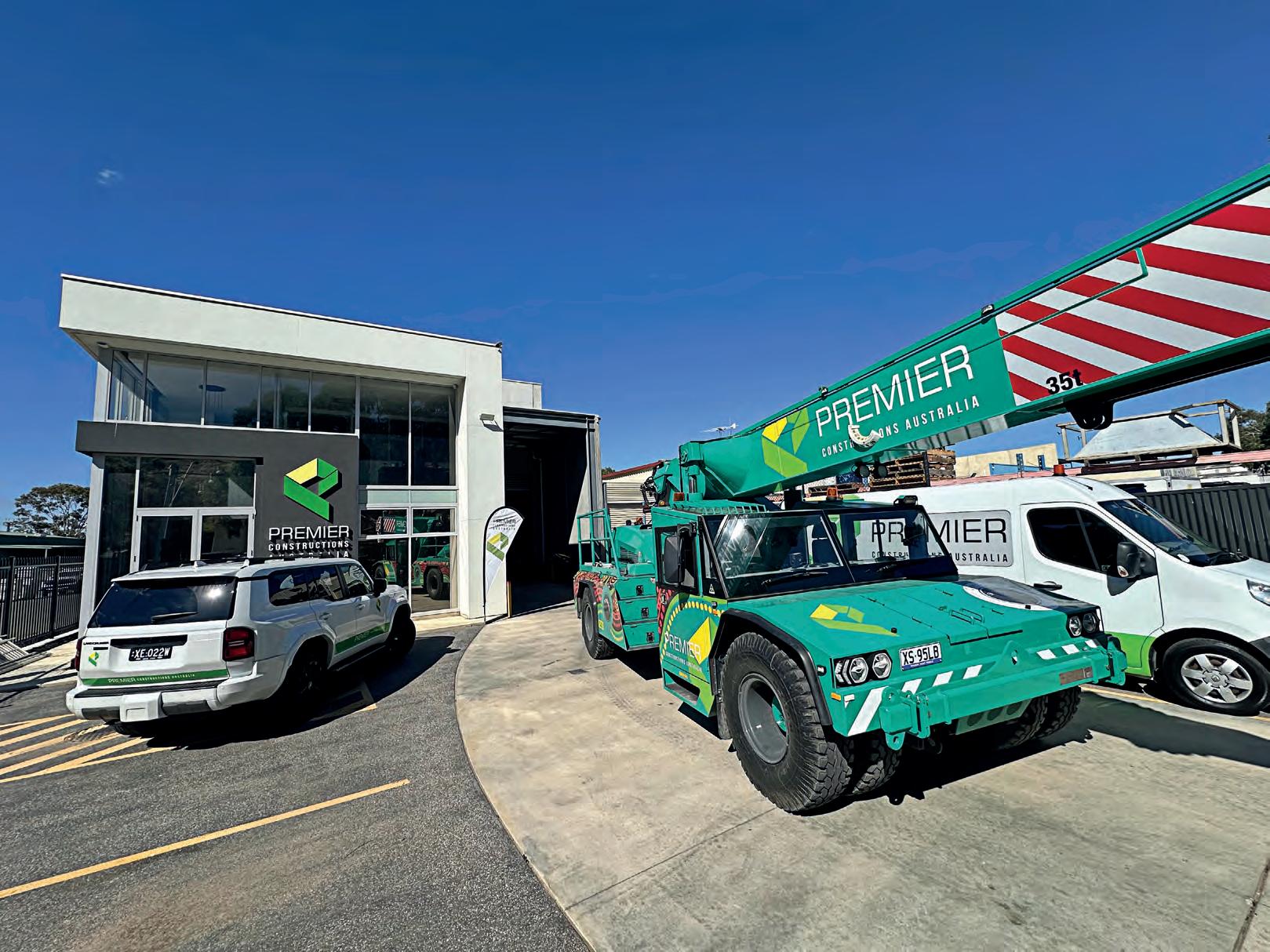
As projects scale up, Premier Constructions Australia is turning to Humma to support day-to-day lifting on site.
PREMIER CONSTRUCTIONS AUSTRALIA, an Adelaide-based company, has built its name around structural concrete and civil infrastructure, delivering Form-Reo-Pour (FRP) packages across bridges, rail, tunnels and renewable energy projects. As those projects have grown in scale and complexity, so too has the need for reliable lifting.
That shift is being seen across the broader market as well. Humma’s reputation, first established in mining, is increasingly carrying into major infrastructure. The cranes have already proven themselves on Melbourne’s tunnel works, with five units currently operating on the first stage of the Suburban Rail Loop. Their 35-tonne performance and reliability on demanding projects is helping drive wider acceptance across large-scale civil construction.
For Premier Constructions, the move is more direct, bring that capability in-house.
“We’re mainly in bridge construction, rail, tunnels, and also wind and solar,” said Managing Director Seamus McHugh. “There’s a lot of lifting involved in that, so it made sense to bring capability in-house.”
With more than 20 years of experience and a decade running Premier Constructions in Australia, Seamus has seen how critical timing and coordination can be on major infrastructure jobs. For him, the move into cranes is about improving delivery rather than changing the business model.
“It’s about having the right gear there when you need it,” he said. “It just gives you more control on site.”
Premier’s crane journey into the crane
industry began earlier this year. Within months, the business added a Humma pick-and-carry crane to the fleet, followed quickly by a second unit.
“The first Humma has gone really well,” Seamus said. “So, we decided to get another one straight away.”
Today, the fleet reflects a broader sitesupport strategy rather than a standalone lifting operation. Alongside the cranes are telehandlers, a crane truck, tilt tray, excavators and a range of support vehicles, all working together across projects in South Australia.
On site, the cranes are already playing a key role in day-to-day operations.
“We’re lifting everything from jersey barriers and steel to light poles and general site materials,” Seamus said.
“It’s all mobile lifting, and it’s happening day and night.”
Both Humma units are deployed on the Torrens to Darlington (T2D) infrastructure project, one of South Australia’s largest road developments. The nature of the work demands consistent performance and flexibility.
“That crane is on that project every day,” he said. “It needs to keep moving, and it has to be reliable.”
Humma wasn’t initially part of the plan. Seamus first looked at more familiar options before being introduced to the Western Australia-based manufacturer.
“I had seen them around, mostly in Melbourne, but not much in Adelaide,” he said. “I was looking at another crane, and someone suggested I take a look at Humma.”
That suggestion led to a visit to the company’s manufacturing facility in Perth, a trip that proved decisive.
“I went over to the factory and saw how they’re built,” he said. “All the cross bracing through the centre, the way the frame is put together, you can see the strength in it straight away.
“It’s a solid machine. Very well built. You can tell it’s made for tough work.”
For a contractor with a strong understanding of steel and fabrication, that hands-on experience mattered.
While build quality was a key factor, performance on site ultimately determines value. According to Seamus, the Humma has delivered where it counts.
“It drives really smooth,” he said. “And it’s got that extra reach, which helps with what we’re doing.”
That additional jib length, combined with strong lifting performance in the mid-range, has made the crane particularly effective for the type of tasks Premier Construction handles.
“For the work we’re doing, it just fits,” he said. “Once it got on site, everyone wanted to use it.”
Operators have also responded well to the overall usability of the machine.
“There are cameras all around, so you can see everything,” Seamus said. “It makes it easier and safer to work with.”
Importantly, the cranes have been able to slot into operations without the need for significant modifications.
Another factor that stood out in Premier’s decision-making process was Humma’s local manufacturing base. With the cranes built in Western Australia, access to parts and support is more direct. “Being built here was a big thing for me,” Seamus said.
“If anything goes wrong, you can just pick up the phone and get it sorted.”
That simplicity extends to after-sales support, which Seamus described as responsive and easy to deal with.
“If there’s a problem, it gets handled quickly,” he said.
While he acknowledged that different suppliers offer different experiences, the ability to deal directly with the manufacturer has been a clear advantage.
“It’s straightforward,” he said. “You’re not chasing things around.”
For Premier Constructions Australia, the investment in Humma cranes forms part of a broader strategy to strengthen delivery across its core services, including FRP installation, bridge construction and major infrastructure works.
With Humma cranes operating across key projects, the business has enhanced its ability to improve efficiency on site, better manage project timelines and respond quickly to operational demands.
“It’s reliable, it’s smooth, and it does the job,” Seamus said.
As Premier continues to grow its infrastructure capability, further investment in specialised equipment remains a strong focus for the business.
“All the cross bracing through the centre, the way the frame is put together, you can see the strength in it straight away.”
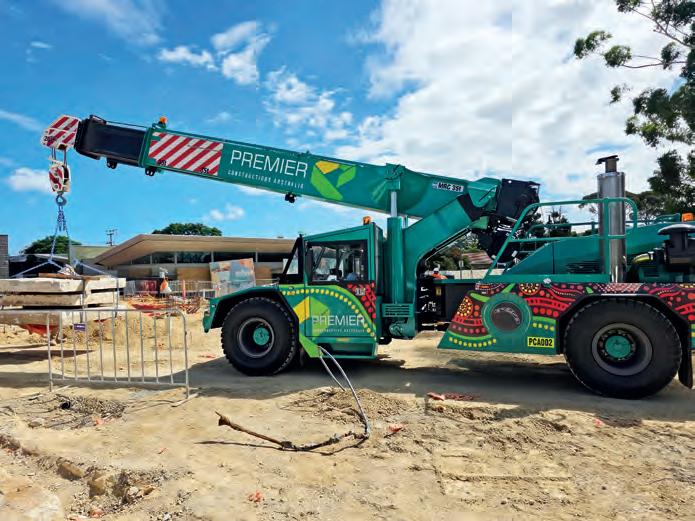

P.A. Construction Equipment Pty Ltd (Pace Cranes) was established in 1987 to provide the construction industry with an independent Australian owned and operated crane sales, crane service and crane spare parts organisation.
For over 38 years Pace Cranes have offered premium quality equipment to the Australasian market with a dedicated and unrivalled service, supported by specialist technical advise across the full range of equipment sold.
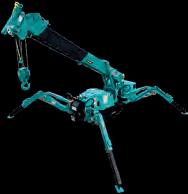
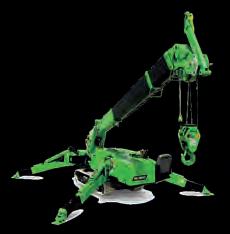
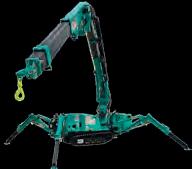
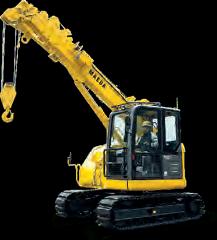
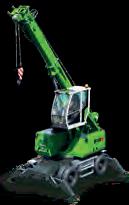
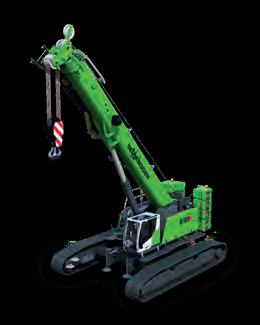


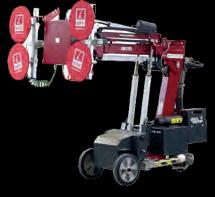
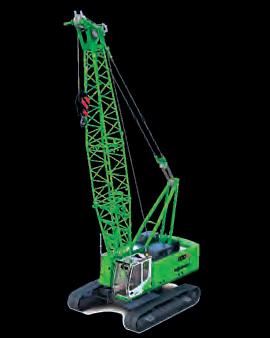
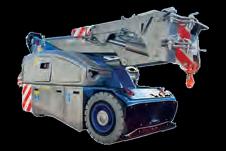
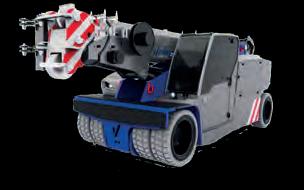
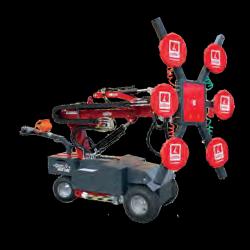
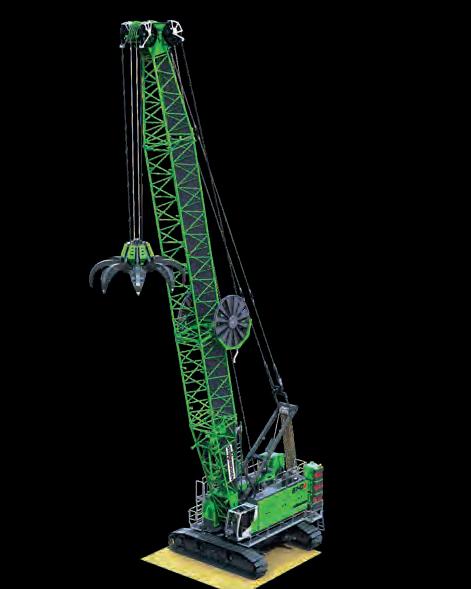
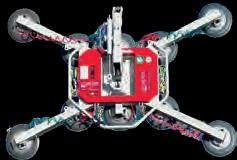

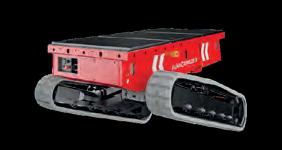

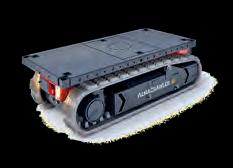
Zoomlion’s push into Australia is moving beyond market entry and into consolidation.
THERE IS A CLEAR FOCUS ON ENGINEERING capability, targeted product development and a steadily expanding local support network.
While its recent presence at HIRE26 generated strong interest from contractors and rental companies, the company’s broader play is less about exhibition visibility and more about proving performance on Australian job sites.
At the centre of that strategy is a simple shift: align global manufacturing strength with local expectations around reliability, serviceability and uptime.
Zoomlion’s approach to the Australian access market is grounded in practical application rather than scale alone.
This is evident in models such as the ZS0612C crawler scissor lift. With a working height of 7.8 metres, the machine is built for environments where ground sensitivity and manoeuvrability matter. Its rubber crawler system reduces ground pressure while maintaining stability, making it suitable for mixed indoor-outdoor work.
The ZA10J articulating boom lift follows a similar philosophy. Offering a working height of 12.54 metres and a platform capacity of 275 kilograms, it is engineered for versatility across construction and maintenance applications. Its oscillating axle system allows for stable operation on uneven terrain, a critical factor in Australian conditions.
For material handling, the ZTH2506 telehandler combines a 2.5-tonne lifting capacity with a six-metre reach. The emphasis here is on balance, delivering enough lifting strength without compromising manoeuvrability on rough or confined sites
The compact ZMP06 vertical mast lift rounds out this segment. With a working height of 7.91 metres and a width of just 0.78 metres, it is designed for tight-access environments such as warehouses and interior fit-outs.
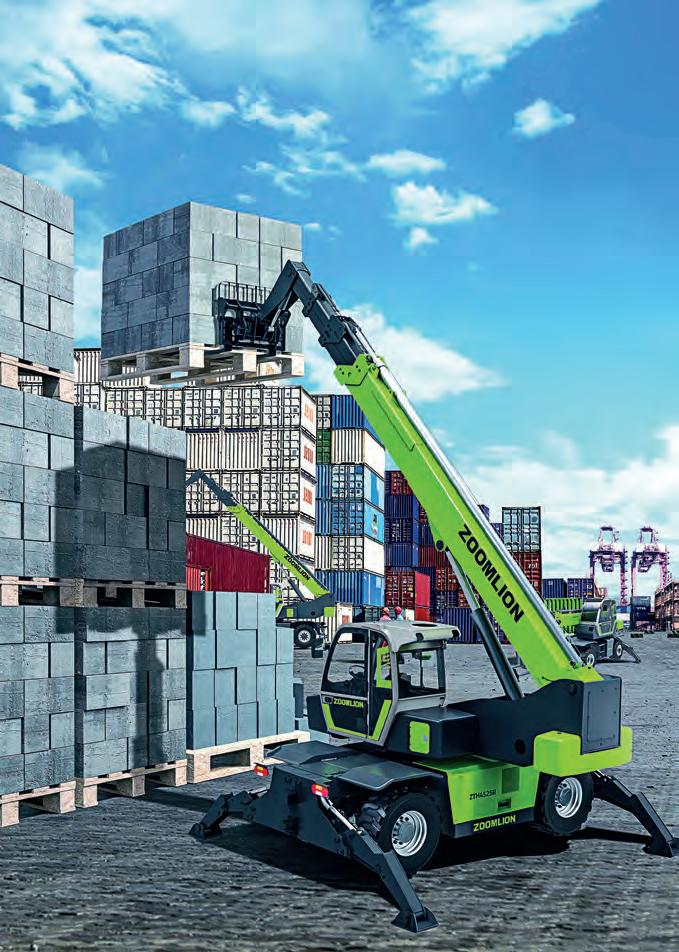
Together, these machines reflect a strategy that prioritises usability and adaptability over sheer range.
Beyond compact and mid-range equipment, Zoomlion is also investing heavily in ultra-high-reach capability, an area where engineering differentiation becomes more visible. Bin Zhang, Deputy General Manager of Zoomlion Access, said the company’s Australian portfolio includes
boom lifts such as the ZT72J and ZT82J.
“The ZT82J, one of the world’s tallest self-propelled telescopic boom lifts with a working height of 82.3 metres, features a polygonal boom that reduces weight while increasing stiffness and torsion resistance,” he said. “We are focused on delivering advanced equipment supported by strong local capability.”
The polygonal boom design is a key feature. By improving structural efficiency, it enhances lifting stability and performance
at extreme heights, while reducing overall machine weight. This has direct implications for transport, setup and operational safety.
It also signals Zoomlion’s intent to compete on engineering innovation.
Alongside product development, Zoomlion is investing in what has historically been a weak point for newer entrants: aftersales support.
Its Australia-New Zealand branch in Mount Waverley, Melbourne, now acts as a central coordination hub. This is supported by a growing network of branches and parts warehouses across Sydney, Brisbane and Perth.
The goal is straightforward, reduce downtime and improve response times.
For fleet owners, this is often the deciding factor. Access equipment operates in timesensitive environments, where delays can quickly translate into financial losses. By strengthening local parts availability and technical support, Zoomlion is positioning itself as a more reliable long-term partner.
manufacturers. Projects can range from dense urban developments to remote infrastructure sites, each with different requirements.
Zoomlion’s machines are increasingly being positioned around three factors: durability, terrain adaptability and serviceability.
Features such as oscillating axles, high ground clearance and simplified hydraulic systems are being emphasised across multiple models. While these are standard globally, their importance is amplified in Australia, where site conditions can vary significantly within a single project.
Zoomlion’s range focuses on practical, jobsitedriven solutions for Australian conditions.
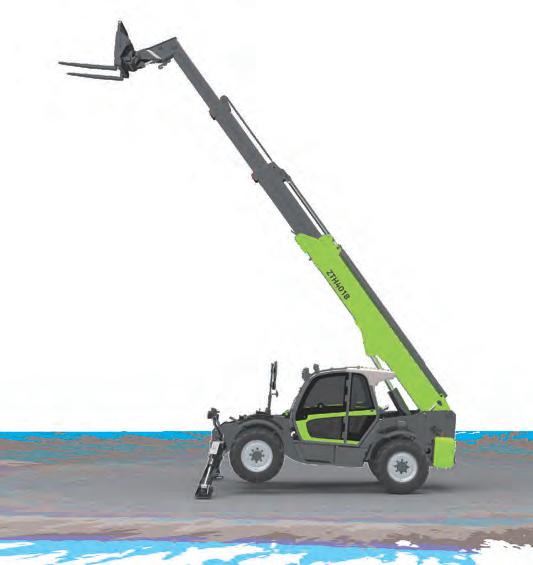
activity. At the same time, rental companies are placing greater emphasis on utilisation rates and total cost of ownership.
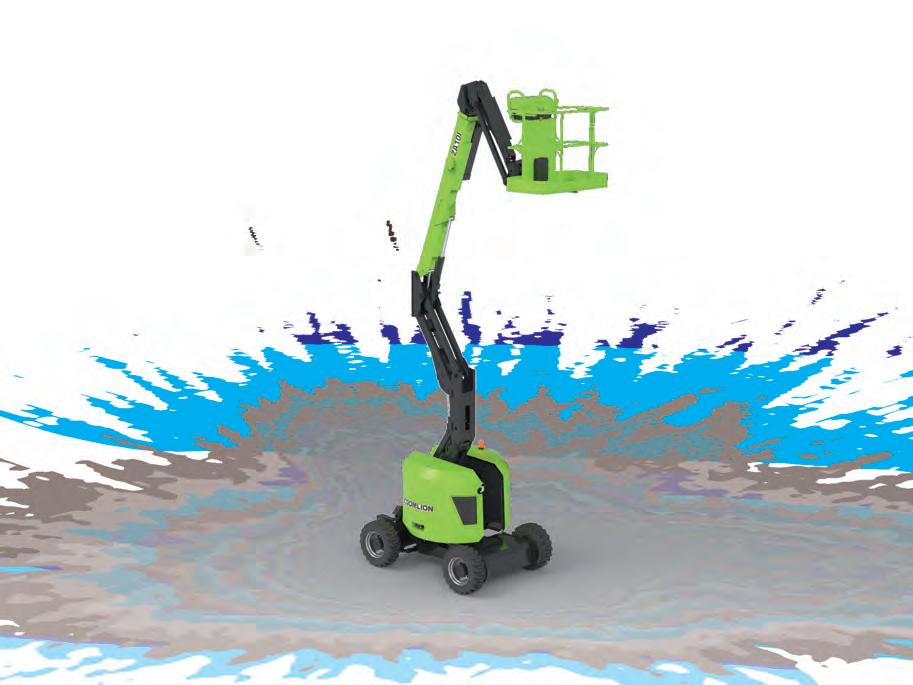
The company is also expanding its local technical workforce, including training programs aimed at building incountry expertise rather than relying on overseas intervention.
Australia’s operating conditions present
Maintenance has also been a focus area. With many machines operating far from major service centres, reducing complexity is critical. Simplified layouts and improved parts access are aimed at minimising downtime and making servicing more efficient.
Zoomlion’s expansion comes at a time when the Australian access equipment market is undergoing a shift.
Demand remains steady, supported by infrastructure investment, commercial construction and ongoing maintenance
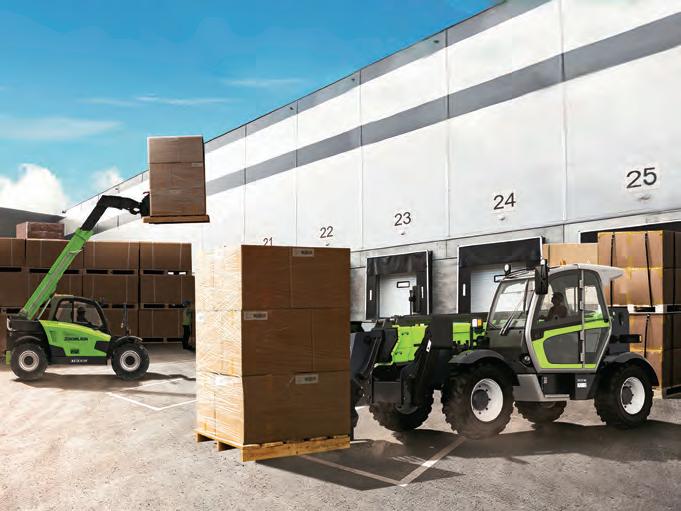
This is changing how equipment is evaluated. Price remains important, but it is increasingly balanced against reliability, service support and long-term operating costs.
For newer entrants, this presents both an opportunity and a challenge. Breaking into established fleets requires not just competitive pricing, but consistent performance and dependable support.
Zoomlion’s trajectory in Australia reflects a broader industry trend, global manufacturers investing in localisation to gain market share.
The company’s current approach suggests a measured strategy. Rather than attempting to compete across every segment, it is focusing on areas where it can demonstrate immediate value, supported by a growing local infrastructure.
Events such as HIRE26 provide visibility, but the longer-term outcome will depend on execution, how well machines perform, how quickly support is delivered, and how confidently operators adopt the equipment.
For now, Zoomlion is transitioning from being a new entrant to a more credible alternative, backed by engineering depth and a clearer commitment to the Australian market.
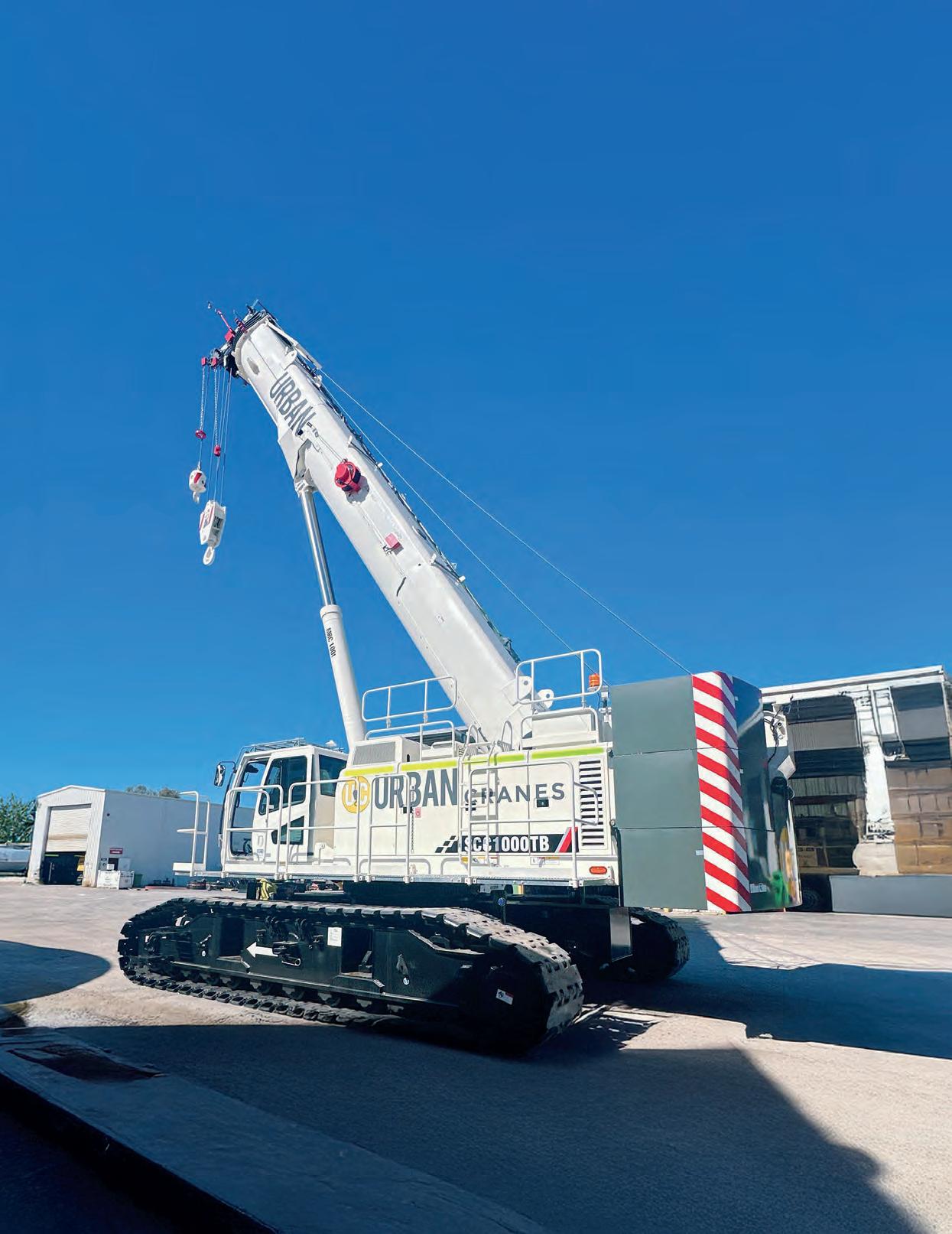
Tutt Bryant Equipment introduces the SANY SCC1000TB telescopic boom crawler crane, engineered to deliver strength, versatility, and efficiency on today’s demanding job sites. With a 100-tonne lifting capacity, up to 59m of boom reach (plus jib), and a powerful 378 t·m lifting moment, this machine is built to handle complex lifts with confidence.
Designed for performance and control, the SCC1000TB features an advanced integrated control system, smooth hydraulic operation, and intelligent safety monitoring to maximise uptime and operator assurance. Its self-assembly counterweight system and crawler mobility ensure fast mobilisation and flexibility across a range of applications, from infrastructure to energy and construction.
Backed by Tutt Bryant Equipment’s national support network, the SCC1000TB is a reliable solution for contractors looking to lift smarter, safer, and more efficiently.



With PowerBoost, Igo M 24-19 owners benefit from faster setup, easier installation, and more efficient lifting, while offering lower overall emissions.
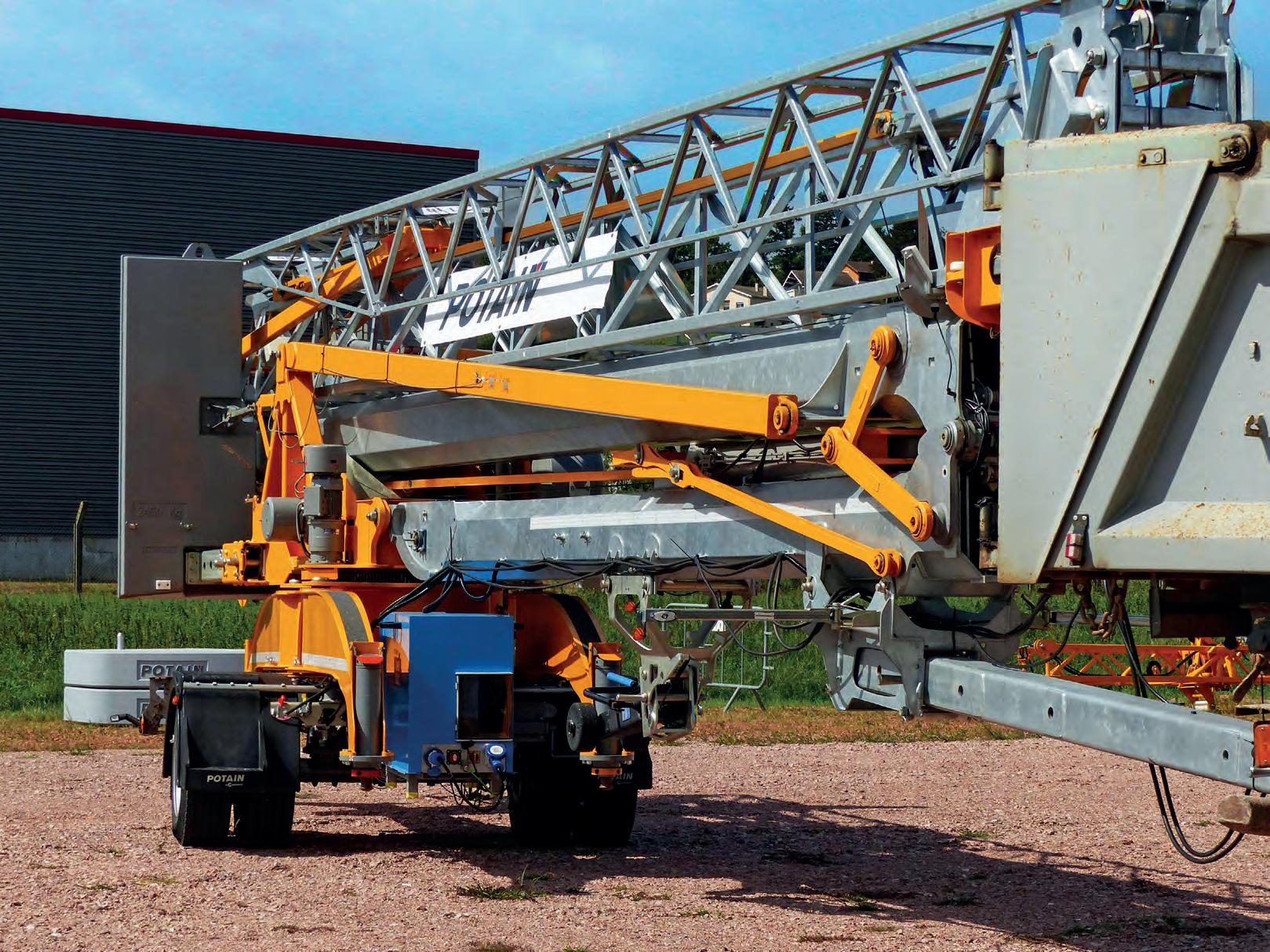
Powerboost provides a plug-and-play battery solution ideal for a range of applications.
POTAIN RECENTLY RELEASED A NEW battery pack for its range of selferecting cranes, bringing greater flexibility to jobsites. The new, maintenance-free PowerBoost™ launched on the Potain Igo M 24-19, which debuted on the global stage at bauma 2025. It offers a plug-andplay battery solution that can serve as a standalone power source or work in conjunction with the on-site power supply.
“Unlike a diesel generator, there’s
no noise or emissions with PowerBoost. This also eradicates the need to transport fuel to the jobsite and can help reduce overall project costs. It’s an ideal product for a range of applications, including sensitive renovation projects or other sites with restrictions on sound or air quality. It also means customers can continue to use the crane even if there’s an issue with the local grid supply,” said Remi Deporte, self-erecting cranes product manager at Manitowoc.
Once connected, PowerBoost can install and erect the crane and deliver up to two working days of power. It has 16 kilowatt-hour (kWh) Absorbed Glass Mat (AGM) batteries with an input rating of 230 volts and a current range of 10 to 16 amps. Output is 230 volts and up to 32 amp. Fast charging is possible too, taking just two hours 15 minutes to go from 50 per cent to 85 per cent capacity when using a 16 amp power supply.
Depending on the jobsite and local
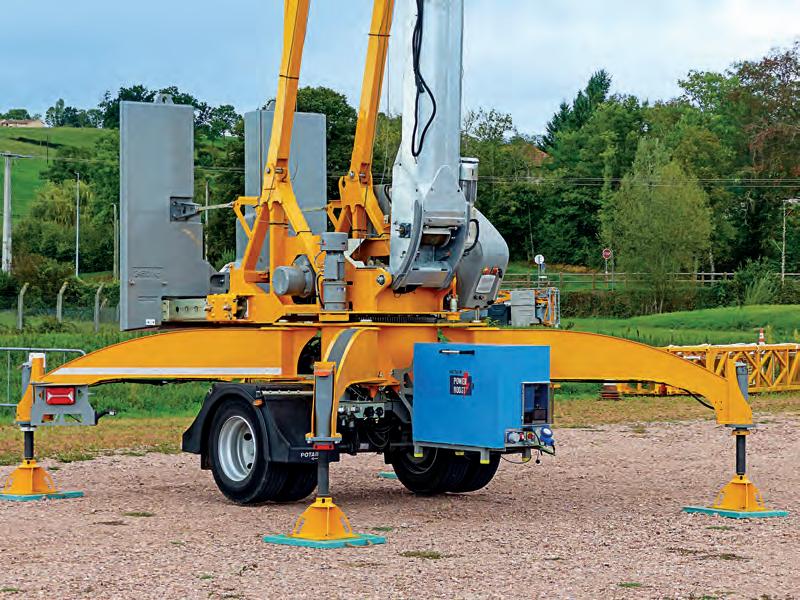
“It’s an ideal product for a range of applications, including sensitive renovation projects or other sites with restrictions on sound or air quality.”
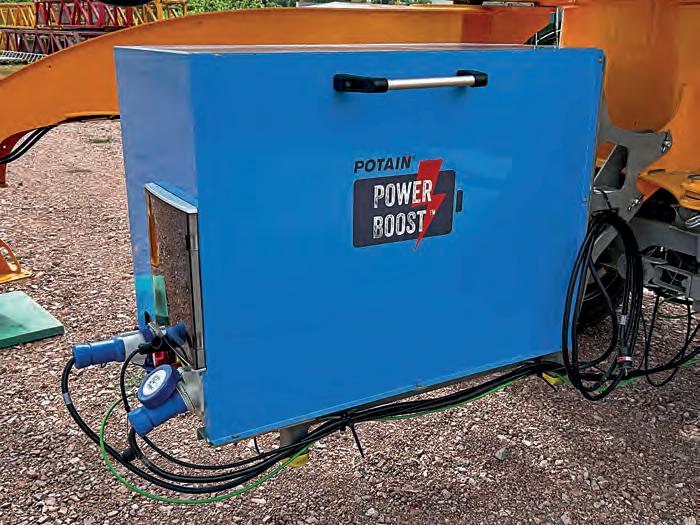
setup, customers can choose how and when they use PowerBoost. For example, if used as a standalone source for lifting operations only, it can deliver an eight-hour workday with 50 load cycles. Alternatively, customers can use PowerBoost for setup and tear-down, in which case it can perform these tasks twice on a single charge, including commissioning the crane. PowerBoost can be attached during transport and drive the crane when it is positioned via remote control.
If PowerBoost is used in conjunction with the local, on-site electricity supply, the two work together to regularly recharge the batteries, and the crane uses minimal grid power for better efficiency and cost savings.
The first Potain Igo M 24-19 equipped with PowerBoost was purchased by Valem, a Potain dealer for France. The first job was at a project to restore the old ramparts in the historic village of Hiers-Brouage in Charente-Maritime district, for local specialist contractor HoryChauvelin.
Andromeda Industries proudly manufactures, tests and certifies its range of lifting solutions completely in-house in its Moonbi facility situated 22 kilometres north of Tamworth, the Country Music Capital of Australia. This is performed in the engineering department of the business led by Engineering Manager, Brett Williams.
“FUNDAMENTALLY, OUR ENGINEERING TEAM is responsible for everything we manufacture beginning with our globally recognised Superflex and Flat Woven products, through to design and manufacture of our own fixtures, fittings and finishes. Our experienced team manages everything, including the maintenance of the machines which are designed and manufactured for our manufacturing processes,” said Brett.
“Most of the machinery, such as the holybelt punch machines for the rubber division, and the plaiting machines for our steel cable products, have been designed and engineered in-house or purpose-built for us, so if something breaks down, we can’t ring a company asking for support or even parts, we have to fix it ourselves.”
According to Brett, an internal audit realised a few opportunities
“Recently, we conducted an internal audit which examined our engineering capabilities, and this recognised how under utilised the engineering team can be at times and it was proving to be a significant ‘cost centre’ for the business. To address this, we actively began taking on work from outside our traditional areas.
“So now, whether it’s a local farmer needing his slasher welded and machined, or someone’s broken an axle, if we can fix it, we will. We’ve got the expertise and the machinery to do it and word is spreading fast. We are being approached to look at various projects which are normally well outside our normal scope of works, but they are proving to be really interesting for the team,” he said.
Over a number of decades, Andromeda Industries has developed a reputation
Customer Relationship Manager. “The company has always focused on producing products in-house and a lot of engineering work went into the specialised fittings, specifically those for Superflex and the Flat Woven Slings,” he said. “The engineering team continues to design, manufacture and test our fittings to ensure they meet and exceed all the relevant standards.
“But in the past, the engineering division has been involved in producing more diverse products such as winches designed to pull in electrical power lines, which are very topical right now as the move to renewables gathers momentum. Over the years they’ve conducted significant maintenance projects and repair work on these rigs, and we are currently in the process of quoting a job now.
“Our core products like Superflex are being increasingly recognised for their features and benefits and so is our rubber range. In a large part, this is due to the talent and dedication of our engineering team.
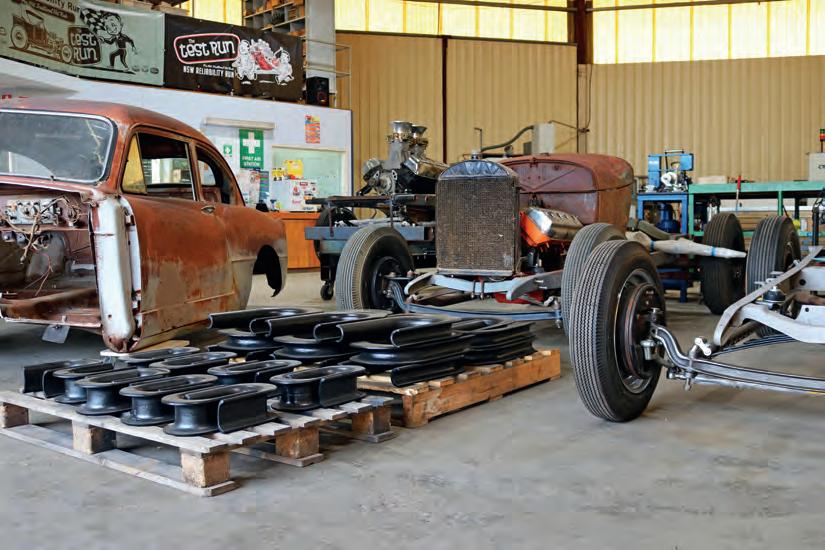
“But it hasn’t been a case of maintaining the status quo with our product range as the team has continued to push the envelope. As an example, their combined engineering skills have seen us move from producing 10 millimetre cable up to 96 millimetre cable. This growth has been driven by innovations such as our Orbital Square Plaiting Machine, which produces cables from 10 millimetres to 40 millimetres, and the development of our XL Horizontal Braiding Machine, capable of manufacturing cables from 48 millimetres to 96 millimetres within our
“The key competencies of the team are still at the core of everything we do, but it now sees them diversifying and branching off into different areas like building race cars
Andromeda’s engineering team is responsible for everything the company manufactures beginning with the globally recognised Superflex and Flat Woven products, through to design and manufacture of fixtures, fittings and finishes.
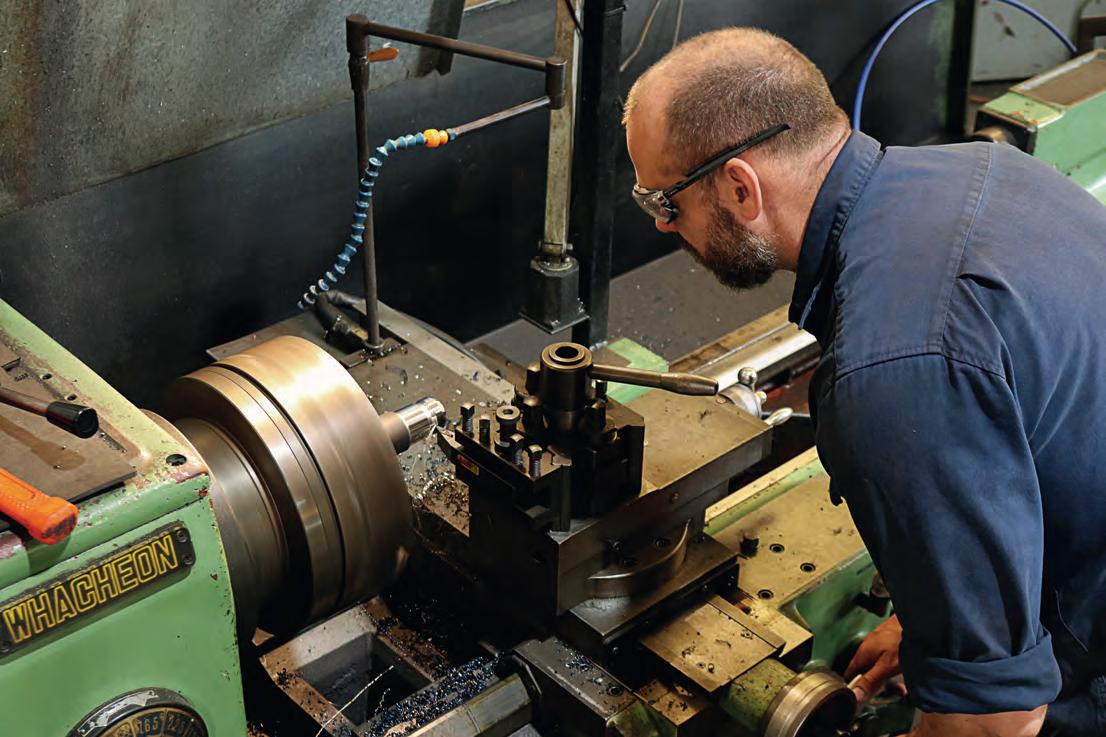
and drag cars, working on trucks, frontend loaders and other types of construction equipment and servicing smaller guys that probably struggle to get their problems into some of larger engineering businesses.”
Brett explains how this approach to the business has evolved.
“A lot of the work has been through word of mouth and being in a small regional community, word travels fast. We encourage schools and local business groups to visit our facility so they can have a better understanding of our capabilities. From these visits, word has got out that we are offering our machining capabilities for outside work.
“A lot of engineering shops won’t take one-offs, whereas we are happy to help anyone. We’ve had customers call up and ask, ‘can you machine this up for us?’ and our reply is, ‘yep, not a problem,’ and the word is out on the street,” said Brett.
Hot Rods are Brett and wife Annette’s passion.
“Building chassis started as an opportunity to generate additional cash flow for the business. When the boys were quiet, we’d bring in chassis for them to build and we’d turn them over, which worked well,” Brett said. “I’m a second-generation ‘Hot Rodder’. My Dad is in his 80s now, and he
Andromeda’s engineering team continues to design, manufacture and test fittings to ensure they meet and exceed all the relevant standards.
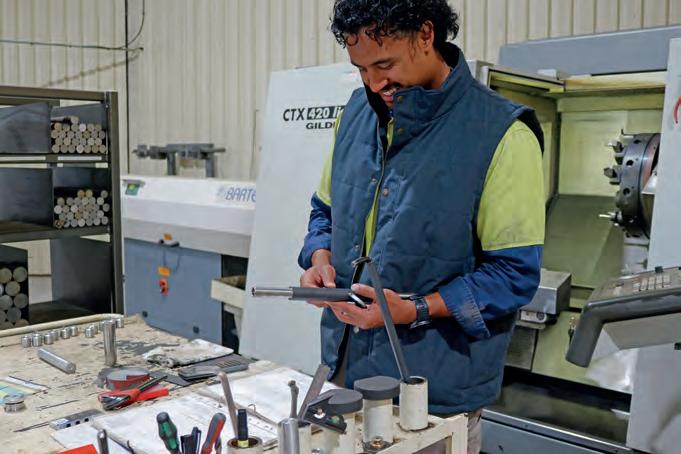
started a Hot Rod club in Sydney back in the ’60s, so it’s in my blood and our kids are into it as well.
“Fabricating chassis was something that my Dad did on weekends and I grew up with, so it’s all second nature to me and I still have a passion for it. There’s a genuine thrill in taking a 1938 Ford, upgrading it with disc brakes, a new model engine, new engine mounts, strengthening it and preparing it ready for racing.”
Brett is now taking his knowledge and family passion for building chassis and cars and integrating it into the engineering division.
He is embracing his team’s capabilities to develop this into a new revenue stream for the business. As a family-owned company, Andromeda is bringing its personal touch to the operation, unlocking and utilising capabilities that have been underused for far too long.

European Association for Abnormal Transport and Mobile Crane Hire (ESTA) has recognised Liebherr with two major honours at the 2026 ESTA Awards of Excellence.
ANNOUNCED ON APRIL 16 IN NOORDWIJK, Netherlands, the awards saw Liebherr
Training categories, two areas that are becoming increasingly critical as crane operations grow more complex and
The ESTA Awards are widely regarded as one of the most respected benchmarks in the abnormal transport and heavy lifting sector, drawing more than 50 entries annually across ten categories. For Liebherr, this year’s recognition highlights both engineering advancements and a broader effort to strengthen industry capability.
ENGINEERING SAFETY INTO ASSEMBLY In the Safety category, the award focused on improvements made to the Y-guying telescopic boom suspension system on the
The updated design simplifies the assembly process, reducing the number of steps required and, importantly, limiting the amount of work carried out at height. This directly addresses one of the most persistent
The system also incorporates Liebherr’s
hydraulic connections to be made more efficiently and with less manual intervention. Combined with improved access platforms and safer working routes, the changes reflect a practical approach to reducing on-site risk.
Christoph Kleiner, Managing Director of Sales at Liebherr-Werk Ehingen, said the recognition reinforces the company’s longstanding focus on safety.
“Safety is our top priority. The aim is to prevent accidents, not only during crane operations but also during set-up,” he said.
The emphasis on assembly is notable. While operational safety often takes centre stage, incidents during rigging and setup remain a key concern across the industry. By reducing complexity and exposure, Liebherr’s approach aligns with broader efforts to improve site safety outcomes.
Liebherr’s second award, in the Training category, reflects a different but equally important challenge: developing the next generation of skilled crane operators.
Its ‘Game of Cranes’ initiative is not a conventional training program. Instead, it combines competition with practical and theoretical challenges, giving operators a platform to test and refine their skills in
The global format encourages participation from operators across different markets, while also highlighting the technical demands of the profession.
Daniel Pitzer, Commercial Managing Director at Liebherr-Werk Ehingen, said the initiative is designed to elevate both
“The profession of crane operator requires a high level of technical understanding, skill and a sense of responsibility. With the ‘Game of Cranes’
competition, we aim not only to recognise these skills, but also to raise the profile of the profession,” he said.
Beyond recognition, the initiative responds to a growing industry concern: the shortage of qualified operators. By positioning training in a more engaging and visible format, Liebherr is attempting to attract new talent while reinforcing safety and professionalism.
Taken together, the two awards point to a wider shift in the crane sector. As projects become more demanding, the focus is moving beyond lifting capacity and into how safely and efficiently that capacity can be deployed, and who is operating the equipment.
For Liebherr, the dual recognition underscores a strategy that balances product innovation with human capability. In an industry facing both technical and workforce challenges, that combination is becoming increasingly central to longterm performance.
PLEASE SEND YOUR LIFT OF THE MONTH ENTRIES TO SIMON.GOULD@PRIMECREATIVE.COM.AU
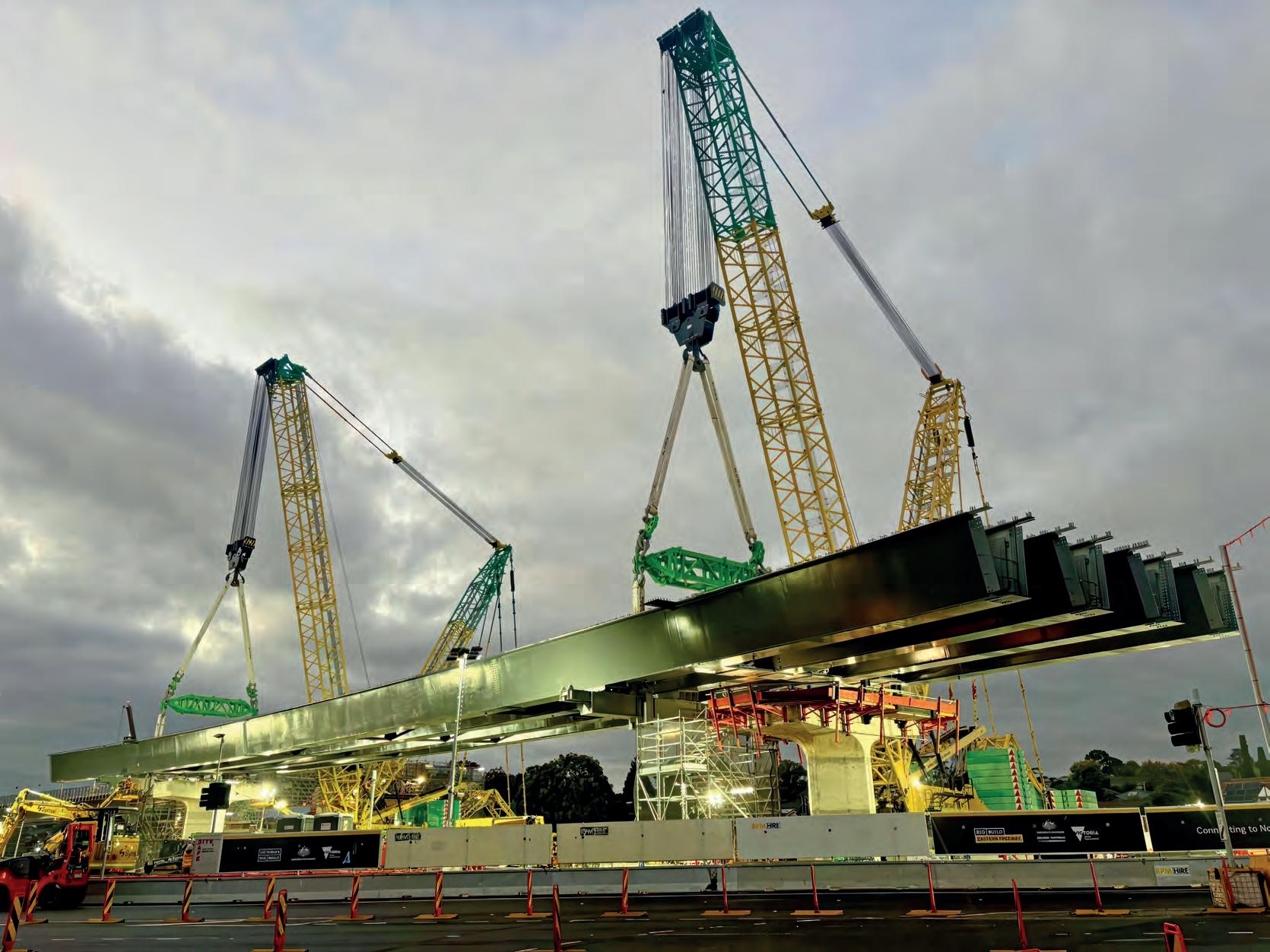
THE LIFT: The intricate dual crane lift involved 12 spliced steel girders, forming an entire bridge spanning approximately 100 metres in length, 16 metres wide and weighing more than 1080 tonnes, including the rigging gear.
CRANE COMPANY: Tutt Bryant Heavy Lift & Shift
THE CRANES: Tutt Bryant Heavy Lift & Shift mobilised two SANY SCC8000A 800 tonne lattice boom crawler cranes for the dual crane, pick and carry lift. Each Sany featured 48 metres of main boom, plus full 350 tonnes Superlift.
COMPLEXITIES: The dual lift pick and carry, saw Crane One lift at a radius of 15.5 metres, then luffed down to 16.25 metres before traveling approximately 15 metres forward before placement of the load.
Simultaneously, Crane Two lifted at 17.75 metres, luffed up to 16.5 metres and travelled approximately 15 metres backwards. Both cranes were required to stop and slew to adjust the span position along the travel path.