For over 50 years, UAA’s award-winning Mobile Plant and Machinery insurance solutions have powered the cranes and lifting industry - trusted by professionals who keep Australia moving.
We are known for our extensive knowledge, operational capability, and capacity to cover a diverse range of plant and machinery across numerous industries.
Our seasoned claims team has access to a network of experienced industry repairers, assessors, and suppliers who are well-regarded for their high-quality service.
SCAN BELOW TO FIND OUT MORE: www.uaa.com.au
32 UA A UANZ continues investment in crane sector.
34 Grove Servicing customer demands directly.
36 Tadano Tadano’s latest addition for Cosmo Cranes.
39 Liebherr Australia Bigger capacity with the same footprint.
43 LGH LGH Australia celebrates first year.
46 EQUIPR New features and benefits from EQUIPR.
49 Franna and East Coast Cranes Fourth Franna AT40 in four years.
53 MICHELIN Connected Fleet LinCon adapt MICHELIN Connected Fleet.
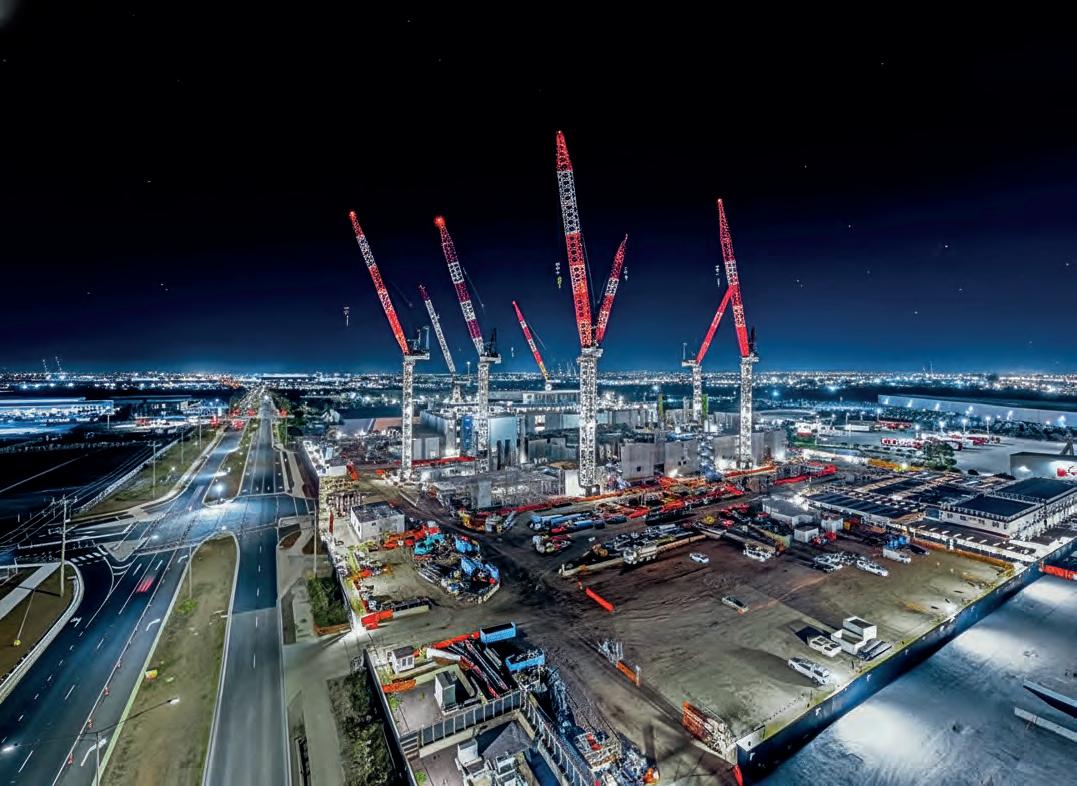
Tower Crane Feature
57 Potain Potains rule Melbourne skies.
60 WA Universal All solutions under one roof.

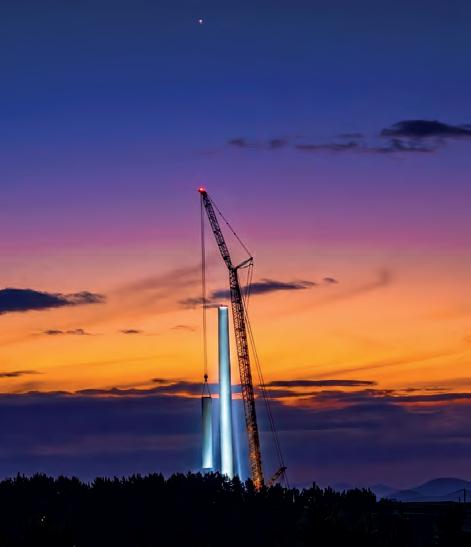
66 General Cranes Capacity meets opportunity.
69 Enerpac Enerpac system helps maintain container handlers.
72 Alliance Engineering Simulating a lift before it happens.
74 Daintree Canopy Crane A crane that does more than just lifting.
77 Titan Lif ting Technologies Evolving with the industry.
81 Pace Cranes New Senebogen for Nash Crane Hire.
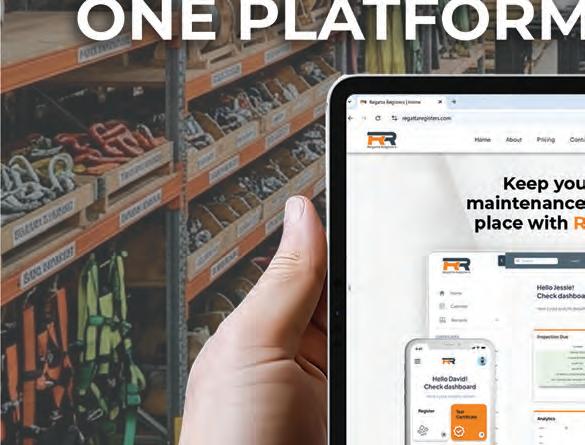
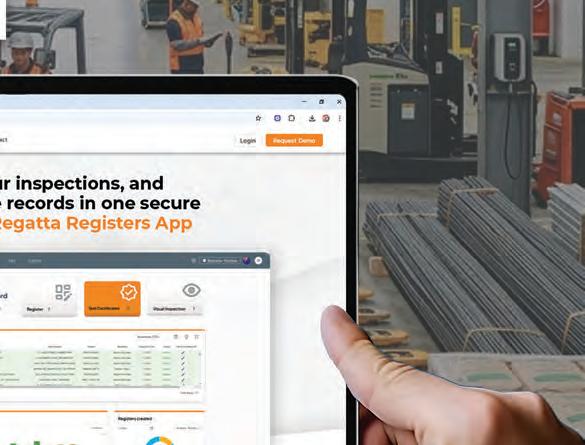
85 Regatta Registers Asset management made easy.
89 Andromeda Industries Andromeda’s specialised lifting solutions in demand.
92 Lif t of the Year Plan your entry.
94 PCM Bulk Bringing the industry together.
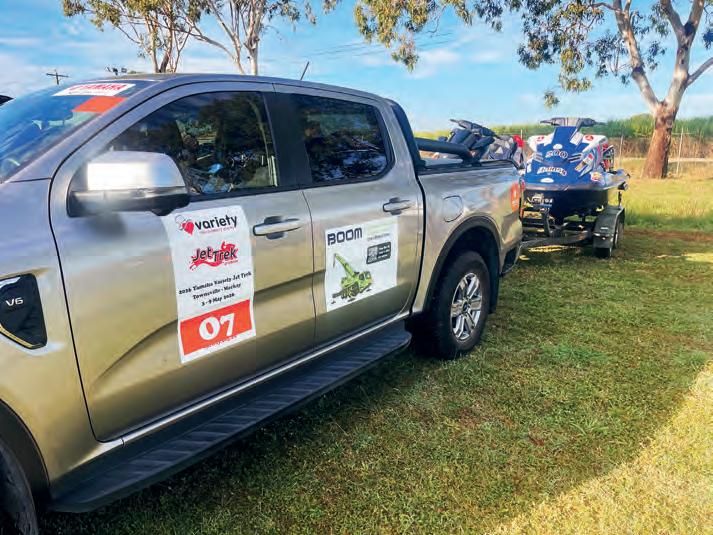
97 Variety Jet Trek Team Cranes for the win.


Published by:
significant ground for the construction sector, bringing considerable infrastructure investment, long-awaited productivity reforms and notable changes to how residential property investment is taxed.
Here’s what you need to know.
The government has committed $13.5 billion in infrastructure funding to states and territories in 2026–27 alone, delivered through the Infrastructure Investment Program, plus $8.6 billion over 11 years for nationally significant transport projects covering highway upgrades, urban transport links and regional rail freight – including $1.75
to integrate occupational licensing and pilot streamlined assessment-to-licensing pathways for priority trades including electricians and plumbers.
Two broader Budget measures will be felt across the construction supply chain.
The $20,000 instant asset write-off has been made permanent, providing welcome certainty for businesses investing in tools, equipment and plant. A new loss carry-back provision allows companies with under $1 billion in turnover to offset a tax loss against tax paid in the previous two years, providing useful cash flow support during project gaps or downturns.
It would appear the budget will benefit the crane industry.
“The government has committed $13.5 billion in infrastructure funding to states and territories in 2026–27 alone, delivered through the Infrastructure Investment Program.”
billion to strengthen the national rail freight network.
For residential construction, the stand-out measure is a new $2 billion Local Infrastructure Fund targeting the “last mile” enabling works – water, sewerage and roads – to support up to 65,000 new homes over ten years.
Funding is tied to state and territory commitments on faster approvals and improved land release. For businesses across the construction supply chain, the forward pipeline of publicly-funded work looks solid.
The Budget commits $85.2 million over four years to improve recognition of migrant skills through faster, more flexible assessments.
The centrepiece is $75.1 million for a new skills assessment system through Trades Recognition Australia (TRA), designed
Don’t forget to plan your entry before it’s too late!
In this issue we again focus on our friends from across the ditch and wish The Crane Association of New Zealand all the very best for its annual conference and exhibition. Tower Cranes also receive attention in the issue. As always, the team at Cranes and Lifting have worked hard to bring you interesting industry news and insights and we hope you enjoy the read.
Booms Up!
Simon Gould Editor, Cranes and Lifting
379 Docklands Drive, Docklands VIC 3008
T: 03 9690 8766
www.primecreativemedia.com.au
Chairman John Murphy E: john.murphy@primecreative.com.au
CEO
Christine Clancy E: christine.clancy@primecreative.com.au
Publisher Sarah Baker E: sarah.baker@primecreative.com.au
Managing Editor Lisa Korycki E: lisa.korycki@primecreative.com.au
Editor
Simon Gould E: simon.gould@primecreative.com.au
T: 0404 865 109
Assistant Editor Danny D’Cruze
E: danny.dcruze@primecreative.com.au
T: 0429 187 751
Business Development Manager Emily Schlegel
E: emily.schlegel@primecreative.com.au
T: 0466 317 555
Client Success Manager Ben Sammartino E: ben.sammartino@primecreative.com.au
Art Director Bea Barthelson
Imaging Assistant Paul Breen
Subscriptions
T: +61 3 9690 8766
E: subscriptions@primecreative.com.au
The Publisher reserves the right to alter or omit any article or advertisement submitted and requires indemnity from the advertisers and contributors against damages or liabilities that may arise from material published.
© Copyright – No part of this publication may be reproduced, stored in a retrieval system or transmitted in any means electronic, mechanical, photocopying, recording or otherwise without the permission of the publisher.
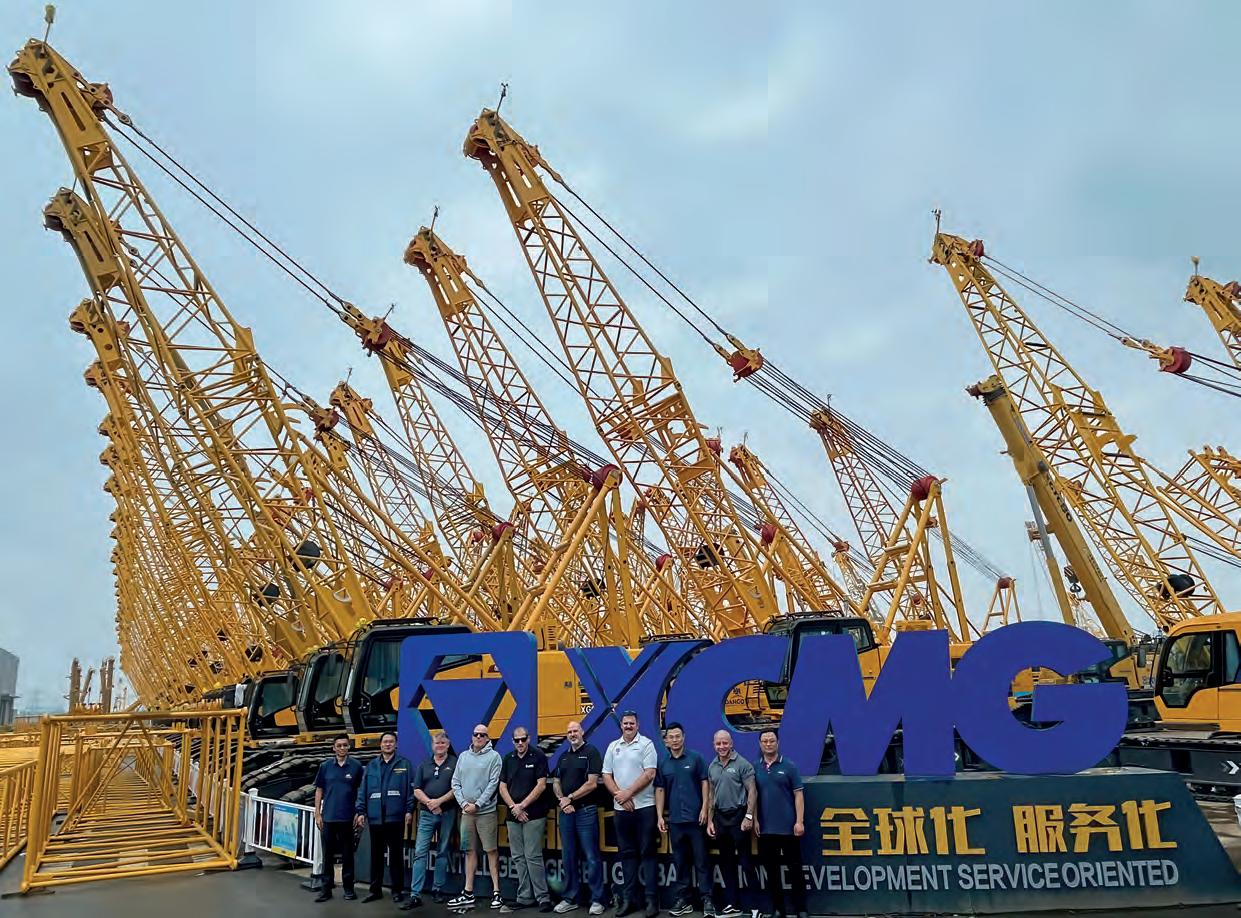
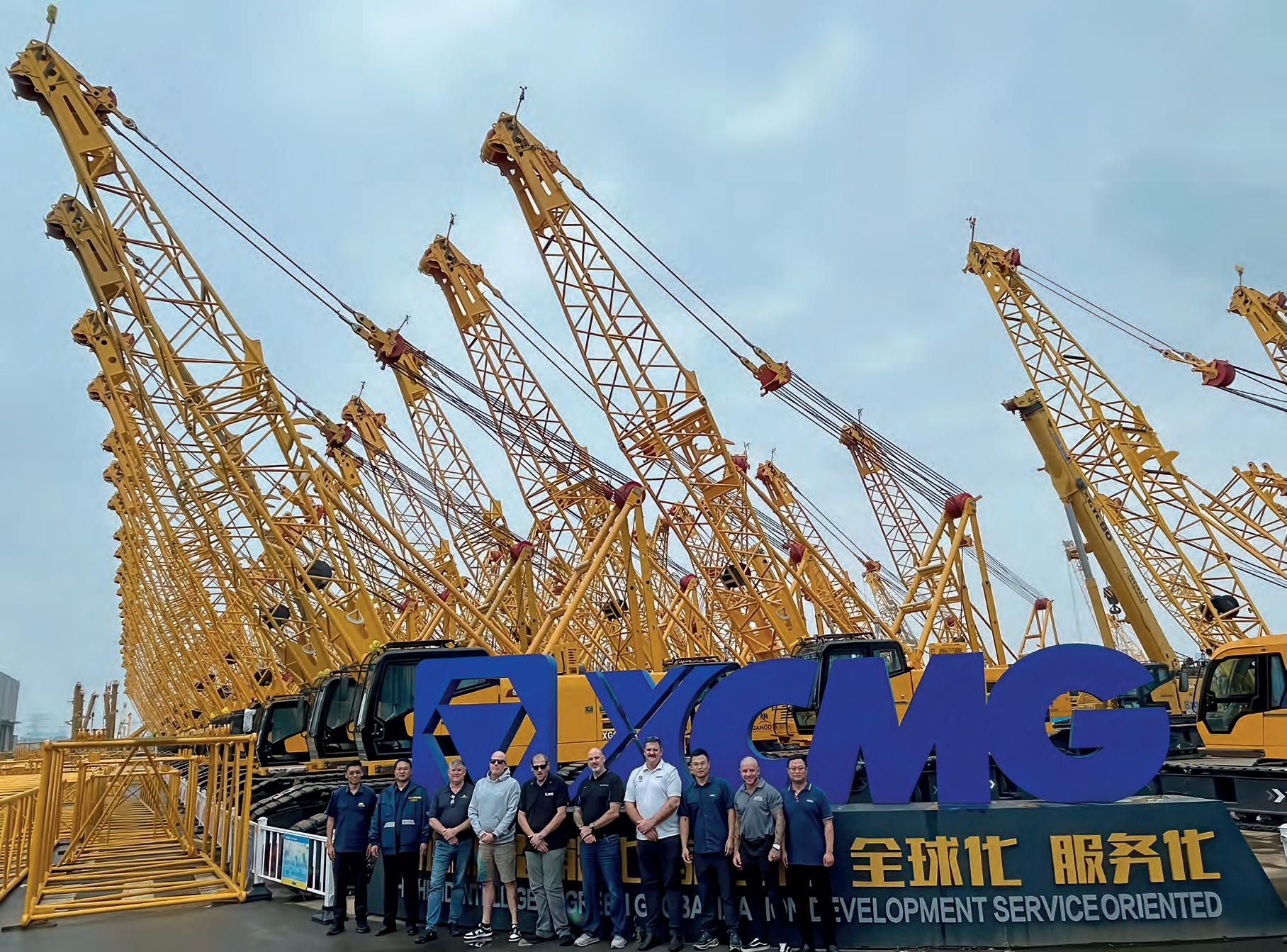
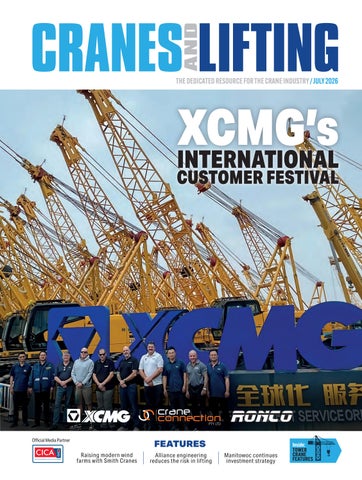
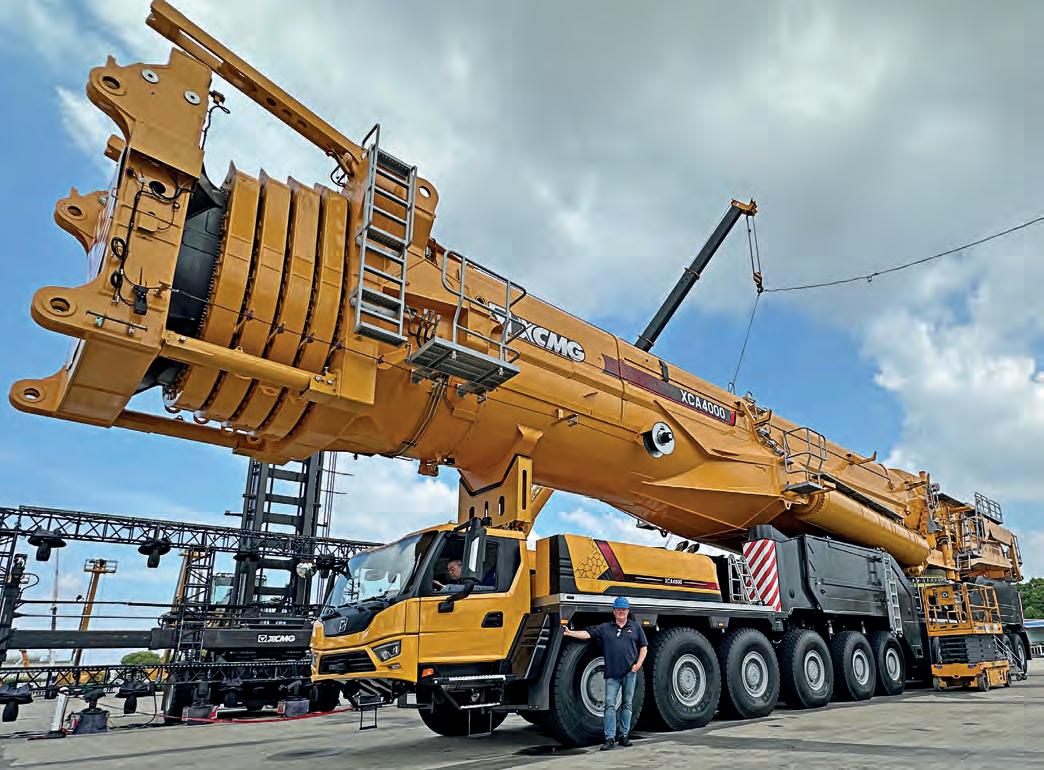
During May, more than 2800 international customers and distributors attended XCMG’s 8th International Customer Festival in Xuzhou, Jiangsu a city renowned as the ‘Construction Machinery Capital of China.’
WITH THE THEME “GREEN INTELLIGENCE for a better world’, this year’s festival showcased XCMG’s ground-breaking achievements in ‘new energy’, smart construction solutions and full life cycle services. Signed orders during the event exceeded US$ 1 billion, setting a new record and reflecting continued global recognition of XCMG’s products, technologies and integrated solutions.
During the festival XCMG distributors
The Baden Davis Crane Connection and Ronco played host to a number of Australian crane hire businesses including Mega Lift Solutions and Boom Logistics.
“Over the years, I have had the good fortune to visit the factories of many of the leading crane manufacturers, and you
cannot help but be extremely impressed by the XCMG manufacturing facilities. They have a crawler crane and a wheel crane factory for the all terrains and truck cranes and as you walk through each factory you are immediately struck by the ‘state of the art’ manufacturing, robotic technologies and the high level of automation XCMG has invested in,” said Crane Connection’s Anthony Davis.
XCMG had products on display, a number of which are destined for the Australian market.
“We saw some new models which will be making their way to Australia and these included a 40 tonnes telescopic crawler, we also saw the reveal of the new 160 tonne telescopic crawler. There are other capacities coming and eventually the tele crawler range will include capacities of 40, 60, 100, 160, and there will be a 260 tonne coming down the track.
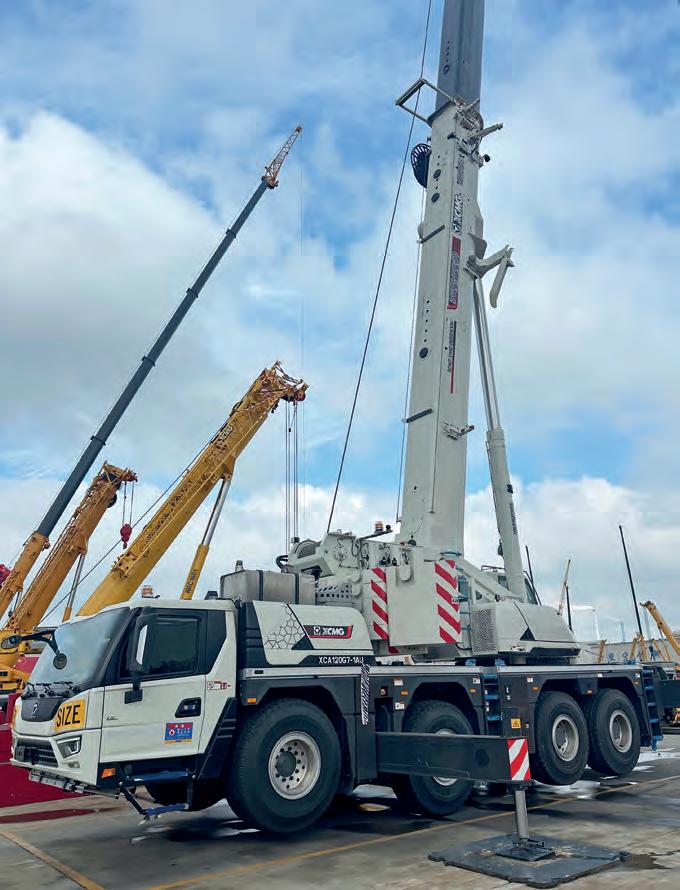
“The new 120 tonne all terrain which is coming to Australia was also
on display and I reckon this will be a very popular crane with many of our customers.”
The XCMG XCA120G7-1AU is a 120-tonne capacity all terrain crane engineered to meet Australian operating conditions, delivering exceptional lifting performance, long reach, and reliable operation across construction, infrastructure, industrial, and major project applications.
Combining high-capacity lifting with true all terrain mobility, the XCA120G7-1AU is ideal for contractors requiring a powerful crane capable of efficient road travel while maintaining excellent stability and precision on demanding worksites.
Built with premium driveline components, advanced hydraulic systems, and a heavy-duty multi-axle carrier, the XCA120G7-1AU delivers outstanding productivity, safety, and whole-of-life value for large-scale lifting operations.
Key features and benefits
• 1 20-tonne rated capacity –Suitable for major construction, precast concrete, steel erection, infrastructure, and industrial lifts.
• A ll-terrain capability – Strong highway travel performance combined with excellent offroad mobility.
• 7-Section high-strength main boom (66 metres) – Smooth telescoping with strong lifting charts and outstanding reach.
• Up to 66 meter main boom and fly jib options – Excellent lifting height and working radius flexibility.
• Advanced Electro-Hydraulic Control System – Smooth, precise, and efficient crane operation.
• P remium powertrain – Proven engine, transmission, and axle components for reliability and fuel efficiency.
• Australian specification – Supported locally with parts, service, and technical expertise.
The XCMG XCA120G7-1AU is a 120-tonne capacity all-terrain crane engineered to meet Australian operating conditions.
Rod Welfare, General Manager East Coast for Boom Logistics was impressed by XCMG’s International Customer Festival.
“My immediate impression was the scale of the operation, the facilities were enormous and clearly built with high volume manufacturing in mind. The level of vertical integration really stood out with XCMG looking to control a lot of the process internally rather than relying on external suppliers,” said Rod.
“There was a large amount of automation, robot welding systems, CNC machining and automated material handling in the factories. From a manufacturing perspective, XCMG is
operating at a very advanced level in terms of scale and capability,” he said.
The product range on display was much broader and more mature than Rod expected.
“XCMG is manufacturing everything from small vehicle loading cranes, right through to huge capacity all terrains and crawlers. Some of the equipment was targeted towards the Asian and developing markets but there were clearly products that meet Australian requirements,” he said.
“There was a strong focus on Australian compliance, customer feedback and understanding our operating conditions particularly
in mining, infrastructure and renewables. We spent a lot of time discussing Australian expectations around safety systems, transport, roadability, service support, and reliability which suggests XCMG understands Australia is a demanding market and not just an export destination,” said Rod.
He said products were very well presented with all terrains and tele crawlers matching the quality Australian customers expect from a top crane supplier in terms of finish, operator environment and the overall specifications.
“The real test for products in the Australian market will always be long-term reliability, local support capability, parts availability, how residual values stack up and how the
“We spent a lot of time discussing Australian expectations around safety systems, transport, roadability, service support, and reliability which suggests XCMG understands Australia is a demanding market and not just an export destination.”
machines perform in harsh mining / infrastructure environments over time,” said Rod.
“Attending the XCMG Customer Festival has given me a much better appreciation of the scale, capability and level of investment within the XCMG business. Like most people in the industry, you always carry some level of caution until equipment proves itself over time, but the visit certainly re-enforced that XCMG is evolving
and adapting quickly and should not be underestimated as a brand.
“At Boom Logistics, we are always prepared to assess equipment that potentially suits our operational and commercial requirements. Any future decisions will come down technical suitability, support capability, whole of life cost, re-sale considerations and how well the equipment fits within our operating environment and customer expectations.”





AS I WRITE THIS IN MAY, WE ARE recognising National Volunteer Week –although by the time this issue lands in your hands it will already be July. Even so, I wanted to take the opportunity to say a sincere thank you to the many volunteers who help make the Crane Industry Council of Australia (CICA) what it is.
From those serving on branch committees, to members generously contributing their expertise through special groups such as the Tower Crane Committee, OSOM Group and National Reference Group, through to those who organise and speak at the Wind Forum or give up their time to attend careers expos, and the list truly does go on.
CICA was built on the goodwill, passion and generosity of people willing to contribute something back to the industry, and it is wonderful to see that legacy continuing today. So much of what we achieve as an organisation is only possible because people are prepared to share their time, knowledge and experience for the benefit of the broader industry.
This year’s Conference is also shaping up to be an absolute beauty. Taking place from 28–30 October, the theme “Reaching Beyond” is all about striving for high standards – whether that’s as employees, employers, business owners or individuals. It’s about continually improving, having high standards,
challenging ourselves and thinking about the legacy we leave behind for the next generation of the crane industry.
In this feature edition, Alice Edwards writes about CICA’s involvement in ISO/TC 96 – the International Organisation for Standardisation’s Technical Committee responsible for developing crane standards across areas including terminology, classification, structural design principles, load rating, testing, safety, operation, inspection and maintenance across all crane types.
Australian participation in ISO/ TC 96 is incredibly important, as the standards developed through this committee frequently form the technical basis of Australian crane standards.
Marcus Ferrari CICA President.
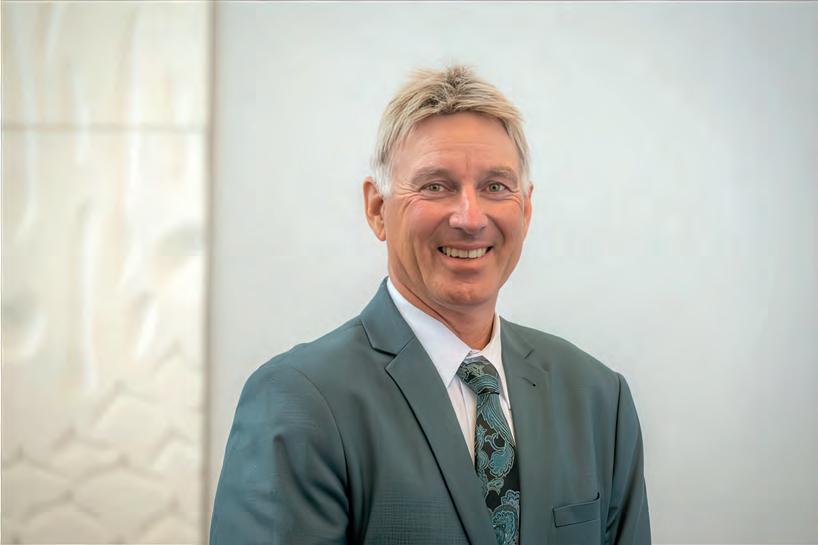
“This year’s Conference is also shaping up to be an absolute beauty. Taking place from 28–30 October, the theme “Reaching Beyond” is all about striving for high standards – whether that’s as employees, employers, business owners or individuals.”
The CICA team is always looking for ways to ensure the needs and realities of the Australian crane industry remain front and centre with key decision makers, both nationally and internationally.
I also know from speaking with many members that things are fairly tough at the moment. Fuel prices, interest rate rises and the broader flow-on effects are placing real pressure on businesses and families alike. While our industry has always been resilient, that does not mean people have to carry challenges on their own.
I want to encourage anyone doing it tough to reach out and have a conversation. There is always someone willing to listen –including me.
Thank you to everyone who continues to support our industry and our association.
Marcus Ferrari
CICA Board President
CICA BOARD
Marcus Ferrari – President
Karli Sutherland – Vice President
Danny Adair – Director
Danny Black – Director
David Solomon – Director
Anthony Grosser – Director
Andrew Esquilant – Director
Grant Gjessing – Director
CICA OFFICE
Patrick Cran
Chief Executive Officer 0488 004 274 ceo@cica.com.au
Julie Turner Board Secretary Julie@cica.com.au
Alice Edwards Road Technical Engineer 03 8320 0440 alice@cica.com.au
Loreta Lukic Office Manager 0490 356 041
loreta@cica.com.au
Sharon Pearce
Crane Crew Competency Officer 0491 134 533 sharon@cica.com.au
Damien Hense
CICA Road Policy Advisor 0488 007 575 damien@cica.com.au
Thomas Webber
Communications Coordinator thomas@cica.com.au
Kate Galloway Training Operations Coordinator 0491 047 118 kate@cica.com.au
Michelle Verkerk
Communications and Special Projects Advisor michelle@cica.com.au
Just ina Blackman
Member Events and Engagement 0403 717 626
justina@cica.com.au
Shane Coupe
CraneSafe & CrewSafe Administrative Assistant Officer 0491 047 134 shane@cica.com.au
Tanya Murphy
Events Coordinator / Secretariat 0494 658 615 tanya@cica.com.au
Timothy Weir
CraneSafe Technical Officer tim@cica.com.au 0494 658 614
Unit 10, 18–22 Lexia Place, Mulgrave Vic 3170
Phone: 03 9501 0078
Email: admin@cica.com.au
Website: www.cica.com.au
For information, please visit our website or call the CICA office.
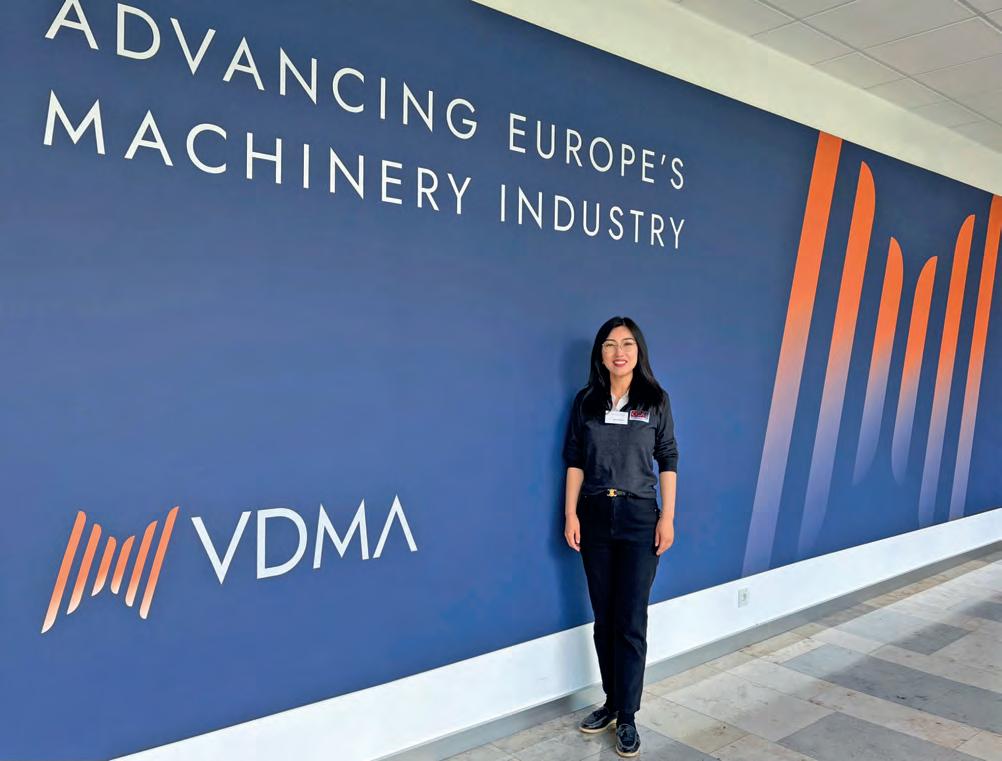
Alice Edwards, CICA Road Technical Engineer recently travelled to Germany as part of ISO TC 96 development, here she explains how CICA is helping to shape international standards for crane design, testing and safe use.
AUSTRALIA’S ENGAGEMENT IN ISO CRANE STANDARDISATION
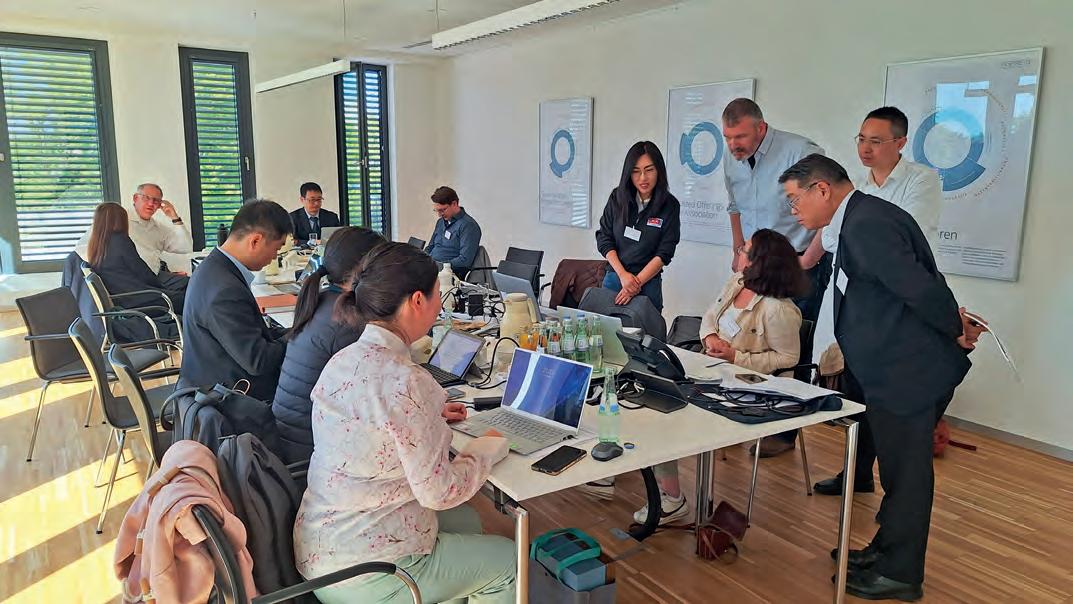
In April 2026, CICA represented Australia at the ISO/TC 96 Cranes meetings in Frankfurt, Germany, contributing to plenary discussions and detailed technical work within subcommittees and working groups.
ISO/TC 96 is the International Organisation for Standardisation’s Technical Committee responsible for the development of crane standards covering terminology, classification, structural design principles, load rating, testing, safety, operation, inspection and maintenance across all crane types.
Australian participation in ISO/TC 96 is critical, as international standards developed through this committee frequently form the technical basis of Australian crane standards. A significant proportion of Australian crane standards
modified adoptions to accommodate local regulatory and operating conditions. Continued engagement at ISO level is therefore essential to ensure that international standards remain compatible with Australian requirements and practice.
SCOPE AND STRUCTURE OF ISO/TC 96
ISO/TC 96 has a broad scope covering cranes and related equipment used for suspending loads with load-handling devices. Its work encompasses all stages of a crane’s lifecycle, from design and manufacture through operation, maintenance, and eventual decommissioning..
ISO/TC 96 is a well-established committee with broad global representation. As of the 2026 plenary, ISO/TC 96 comprises 23 participating members (P members) and 31 observing
giving us full voting rights and the ability to submit technical comments and proposals on draft standards. The Frankfurt meeting brought together delegates from across Europe, Asia, the Americas and beyond, reinforcing the truly international nature of crane standardisation.
The committee operates through a defined hierarchy of subcommittees (SCs) and working groups (WGs), enabling both crane type specific and cross cutting technical issues to be addressed systematically.
ISO/TC 96 subcommittees include: • S C 2 – Terminology: Develops and maintains common terminology, definitions and graphical symbols used across all crane standards to ensure consistency throughout the crane lifecycle.
ISO/TC 96 has a broad scope of cranes and related equipment used to suspend loads via load-handling devices, including all phases of a crane’s lifecycle –from design through to de-commissioning.
factors, strength, spooling, inspection and discard criteria for wire ropes used on cranes.
• S C 4 – Test Methods: Develops standardised test codes and procedures used to verify crane design performance and safety requirements.
• S C 5 – Use, Operation and Maintenance: Defines requirements for the safe use of cranes, including operational practices, inspection, maintenance and competence of personnel.
• S C 6 – Mobile Cranes: Develops standards for mobile cranes covering terminology, load rating, testing, safety and general design principles.
• S C 7 – Tower Cranes: Covers design, erection and dismantling, access systems, inspection, maintenance and safe use requirements for tower cranes.
• S C 8 – Jib Cranes: Develops standards for jib cranes addressing terminology, load rating, testing, safety and design principles.
• S C 9 – Bridge and Gantry Cranes: Develops standards for overhead travelling, bridge and gantry cranes and associated load lifting attachments, covering design, testing and safety.
• S C 10 – Design Principles and Requirements: Establishes fundamental crane design requirements, including classification, load actions, strength, fatigue, stability, wind loading and seismic design.
Australia holds a leadership role within ISO/TC 96 through Subcommittee 9, for which Australia serves as the secretariat. CICA’s former CEO Brandon Hitch is the current SC9 Chair. And CICA CEO Patrick Cran will serve as SC9 Chair from 2027, reflecting Australia’s technical leadership in this area of international crane standardisation. Supporting the subcommittees is an extensive network of 27 working groups addressing discrete technical subjects such as access systems, limiting and indicating devices, safe use,
mechanisms, telematics, wind effects and operating and maintenance manuals.
ISO/TC 96 TECHNICAL DELIVERABLES AND CURRENT WORK PROGRAM
ISO/TC 96 maintains a substantial body of published standards, with over 100 crane standards issued to date, and an active programme of revisions and new developments. Recent and ongoing projects discussed at the Frankfurt plenary include:
• Revisions to ISO 4306 (Vocabulary) to improve consistency of definitional terms across crane types.
• Updates to ISO 4301 (Classification) series for mobile, jib, bridge and gantry cranes, addressing duty classifications and load spectrum assumptions.
• D evelopment of standards under ISO 12480 (Safe use of cranes) with crane type specific parts, including mobile cranes and bridge/gantry cranes.
• O ngoing work on wind load assessment (ISO 4302) and seismically resistant design (ISO 11031) under SC 10, both of which are of relevance to Australian environmental conditions.
• E xpansion of standards relating to limiting and indicating devices (ISO 10245 series) and mechanisms (ISO 10972 series).
These standards provide the technical backbone for crane design verification, conformity assessment and operational safety across global markets.
CICA participates extensively in ISO/ TC 96 working groups, contributing technical advice, engineering input and drafting material during the development and revision of international crane standards, particularly in areas directly affecting Australian crane design, operation and safety.
RELATIONSHIP BETWEEN ISO/TC 96 AND AUSTRALIA’S ME-005 COMMITTEE
ME-005 – Cranes is the Standards Australia committee responsible for the development, maintenance and revision of crane related Australian Standards. The committee oversees standards covering the design, construction, testing and safe use of cranes, hoists and winches, including the AS 1418 and AS 2550 series.
ME-005 also acts as Australia’s mirror committee to ISO/TC 96, coordinating Australian technical input to international crane standards and managing the adoption of relevant ISO standards into the Australian regulatory framework. ME-005 committee’s work in the ISO space includes:
• Reviewing ISO/TC 96 drafts at Committee Draft (CD), Draft



eveloping the Australian national position on technical



CraneSafe (Green Stickers)
CrewSafe
StartSafe
CICA represents our members and industry, getting in front of Government, regulators, on Standards and other relevant committees. There are numerous resources, like guidance notes, calculators, webinars, events and bulletins.
Custom Member Portal, CICA Assist, CICA Health Assist, Access to Australian Standards, Free subscription to Cranes and Lifting Magazine to name a few.
Australian implementation. Early engagement through ISO
AS 1418 series, associated rules for design verification, and guidance on inspection and operation have their technical origins in ISO documents developed under ISO/TC 96. Where necessary, national modifications are applied to address Australian conditions such as:
• H igher wind regions and extreme gust factors
• I nterface with Australian work health and safety legislation
• I ndustry specific practices that differ from European or North American assumptions
Maintaining this alignment reduces duplication, supports international equipment supply chains, and assists Australian designers and manufacturers operating in export markets.
Attendance at the Frankfurt plenary reinforced that ISO standards development is inherently consensus based and iterative. Technical positions are influenced not only by written comments, but by detailed discussion, justification of national practices and shared understanding of risk, design intent and operational context.
For Australia, continued participation in ISO/TC 96 is critical to:
• M aintaining technical equivalence between Australian and international standards
• Avoiding misalignment that could impose unnecessary compliance or retrofit burdens
• E nsuring Australian environmental and operational factors are recognised
• Supporting continual improvement in crane safety, reliability and performance
As crane technologies evolve – particularly in areas such as digital monitoring, remote operation and advanced structural assessment – the role of ISO/TC 96 will remain central in defining globally accepted technical frameworks.
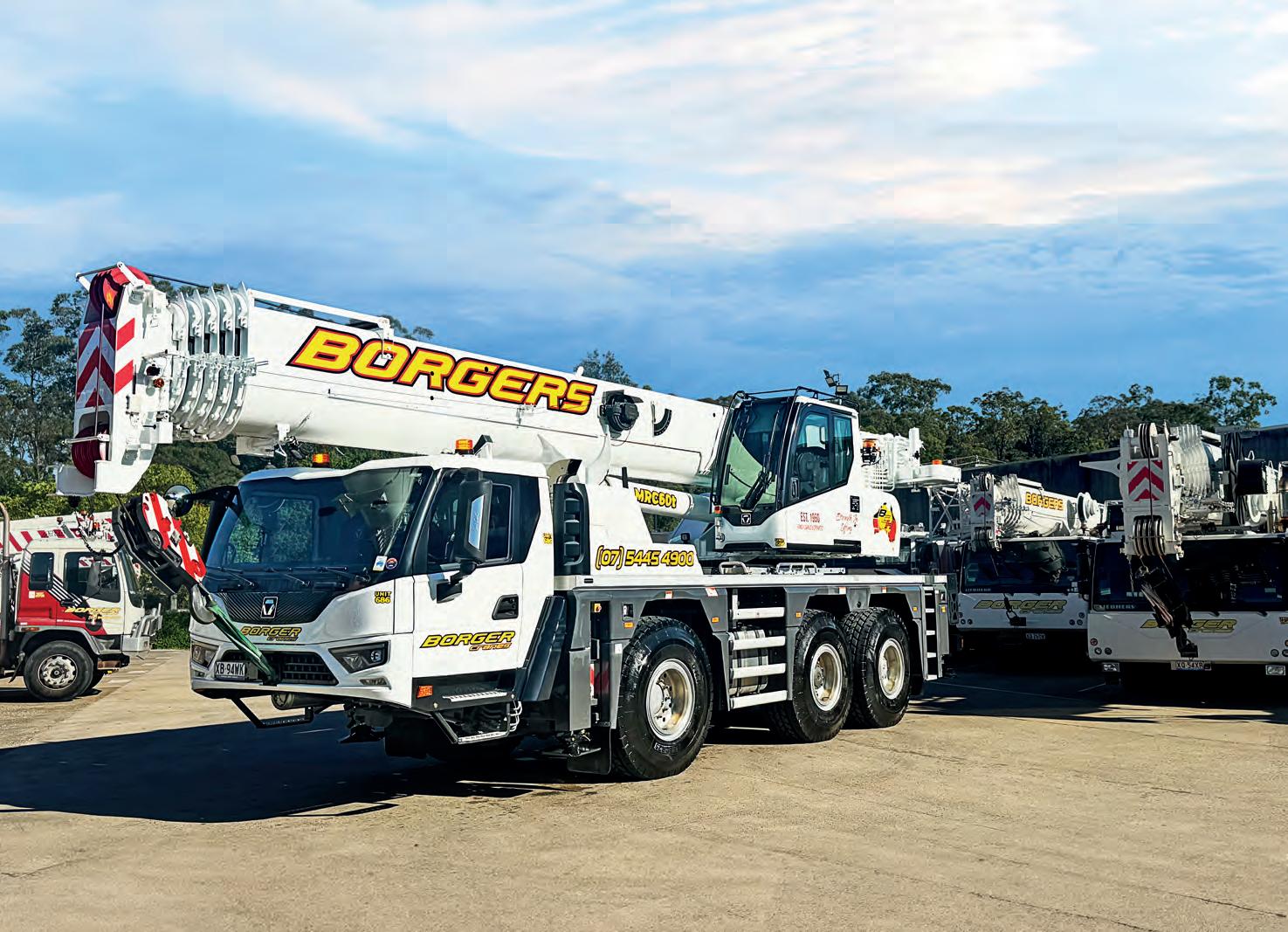
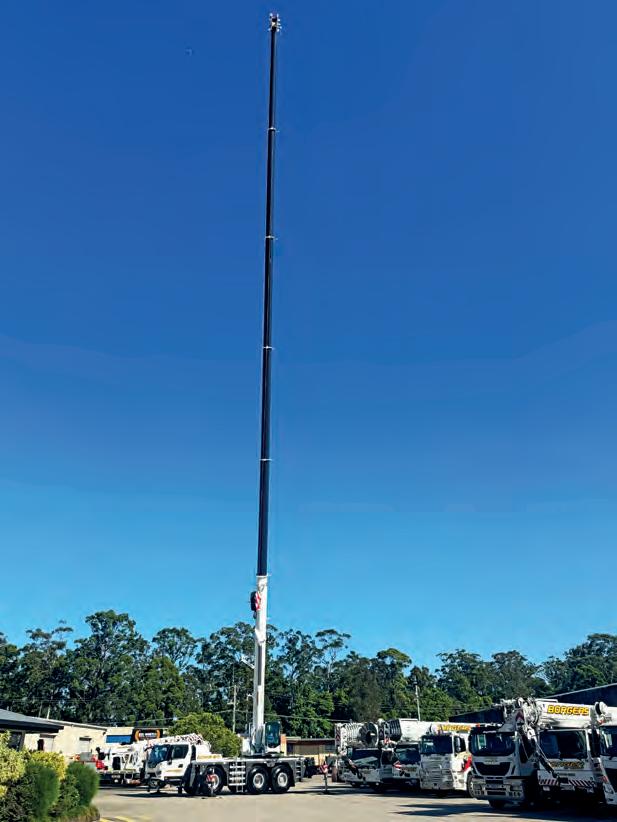
The three-axle, 60-tonne all terrain crane possesses a maximum hook height of 64.1 metres and a maximum operating radius of 40 metres.
Borger Crane Hire and Rigging recently acquired two cranes from XCMG, a 60 tonnes capacity all terrain and a 100 tonnes telescopic crawler. Shawn Borger, Borger’s Chief Financial Officer provides background to the purchases.
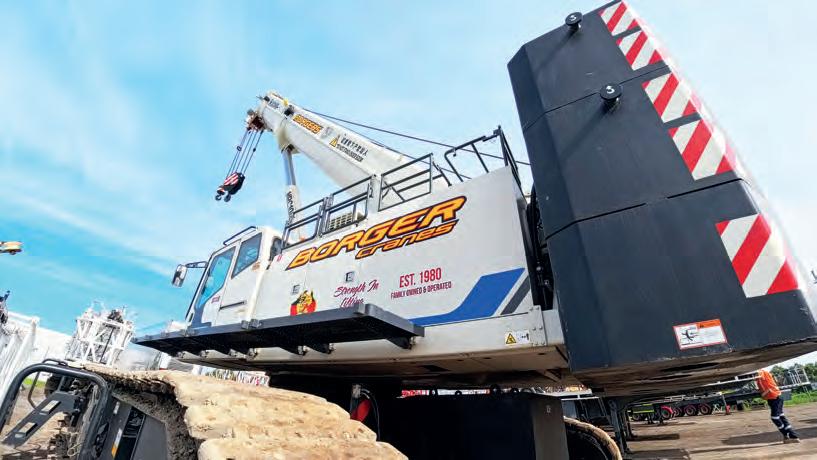
“WE HAD BEEN WATCHING THE PRODUCT releases by XCMG and we were interested to see for ourselves how the cranes would perform in the real world. We were discussing a couple of models with The Crane Connection and the XCMG team, which included the 60 tonnes capacity XCA60_AU all terrain, and the XGTC 100 tonnes telescopic crawler. On top of its 100 tonnes lifting capacity, the XGTC100 has a fully extended boom length of 52 metres and can reach heights of 74.1 metres with its jib extension. According to XCMG, the machine thrives in environments such as construction site piling, bridge and tunnel construction, and other off-road, restricted applications such as in the mines or in swampier terrains.
“Based on the crane’s performance, we went on to purchase the tele
crawler and when we heard The Crane Connection had the XCA60_AU all terrain in stock we purchased that as well. We are going to closely monitor both cranes over an extended period of time. We want to see how they perform and understand what parts wear etc. We’ll also monitor the parts availability and the support we receive from The Crane Connection and also XCMG.
“For now, we’ll continue to invest in the fleet and buy the brands that have been tried and tested over many years. But when you compare XCMG prices with European brands it makes their cranes very attractive and if everything goes well over this extended period, we’ll seriously look at adding more to the fleet,” said Shawn.
Operator feedback on the XCMGs has been quick and positive.
“There hasn’t been any negative feedback from our customers, crews or operators. In fact, our operators reckon if you took the XCMG stickers off the cranes, our customers wouldn’t be able to tell the difference between them and the more recognised brands we have. The operators also reckon the performance of the XCMGs is on par with anything they’ve operated,” he said.
The three-axle, 60-tonne all terrain crane possesses a maximum hook height of 64.1 metres and a maximum operating radius of 40 metres. As a taxi crane, accessibility is at the forefront of the crane’s design with the machine measuring in at 12 metre long, 2.8 metres wide and 3.9 metres tall. The six-section, U-shaped boom possesses a single-cylinder pinning
According to XCMG the XGTC100 thrives in environments such as construction site piling, bridge and tunnel construction, and other off-road applications including mines and quarries.
“Early indicators show they are doing what we expect them, or indeed any brand, to do. Our crews like working with them and our customers are pleased with the end results which is the main thing.”
telescoping system and, on its own, can reach heights of 10.7 metres through to 50 metres.
With the fixed lattice jib fitted on, the crane receives an extra 9.2-to-16 metres in height that can be offset at angles of 0, 15, or 30 degrees. The crane can be optionally fitted with a 2.5 metre independent jib head and a 46-tonne hook block.
On the counterweight front, the XCA60_AU can hold a maximum of 13 tonnes of counterweight that is available in six different combinations: 2.4, 3, 7.5, 7.9 and 13 tonnes.
When it comes to roading the crane under the 12 tonne per axle load limit, the crane can be configured in two different modes. The first includes the auxiliary sheave, jib bracket, 2.4 tonnes of counterweight and the 30.5 tonne hook block.
The second reflects the first, however can carry the auxiliary winch in tandem with a lighter hook block measuring in at 13.5 tonnes in capacity. The XCA60_AU possesses a lifting
capacity of 60 tonnes, which the crane can lift at 2.1 metres in radius; at the crane’s maximum telescopic extension of 50 metres.
At an operating radius of 40 metres, the crane can lift 1.2 tonnes with the full complement of counterweight attached.
On the technology front, XCMG has installed a Load Moment Indicator that audibly and visually warns the operator when they are close to overloading the machine. Operations are automatically stopped before overloading occurs, while overload memory function and fault diagnosis are available as standard.
XCMG has taken further steps to enhance the safety of its machines, installing hydraulic balance, two-way and relief valves, a lowering limiter for preventing the wire rope from over releasing, and an anti-two block at the boom head to prevent the wire rope from over-winding.
Shawn has been impressed with the way The Crane Connection is managing the XCMG brand.
The six-section, U-shaped boom possesses a singlecylinder pinning telescoping system and, on its own, can reach heights of 10.7 metres through to 50 metres.
“We’ve been working with Anthony Davis and Ben Baden for many years and seeing The Crane Connection take on the XCMG distributorship certainly increased our confidence in the brand. I know they are investing in training their service technicians and also in spare parts, and that’s really good for us as they are only five kilometres down the road,” he said.
“As I’ve said, we’ll watch the XCMG cranes carefully and will continue to monitor their performance.
“Early indicators show they are doing what we expect them, or indeed any brand, to do. Our crews like working with them and our customers are pleased with the end results which is the main thing.”
Across the New Zealand crane industry, there is a conversation happening on worksites, in lunchrooms, and around conference tables. It is a conversation about people, experience, and knowledge. Sarah Toase CEO for The Crane Association of New Zealand sheds more light on the issue.
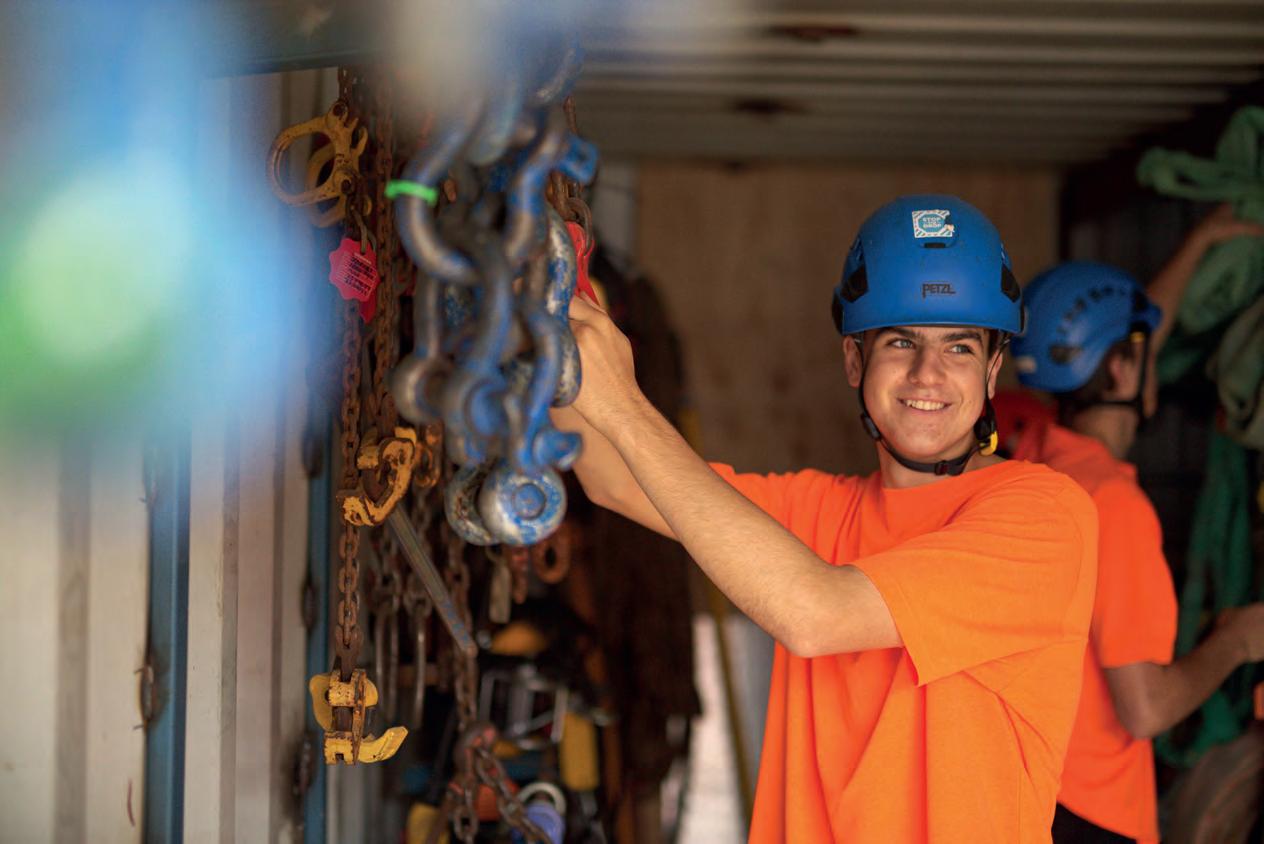
have spent decades learning their craft, often through thousands of lifts in every imaginable condition.
They have worked through weather events, equipment failures, challenging sites, tight deadlines, and situations that simply cannot be replicated in a classroom.
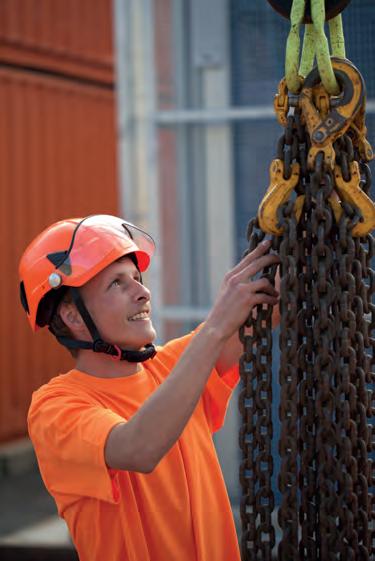
With an ageing workforce comes a question we cannot afford to ignore: What happens when that knowledge leaves the industry?
Today’s trainees have access to more information than any previous generation. Training materials, videos, manuals, online forums, and instant answers are available at the touch of a button.
This is a positive development. Technology has made learning more accessible and more efficient than ever before. However, there remains a fundamental truth within the crane industry.
Information is not the same as experience.
an experienced operator reacts when the weather changes unexpectedly. It comes from understanding how a load behaves when conditions are less than perfect. It comes from recognising risks before they become problems.
The crane industry remains one of those professions where judgement is often built one lift at a time.
No amount of technology can completely replace that.
The modern world rewards speed. Young people today have grown up in an environment where information, communication, entertainment, and services are available almost instantly. Naturally, those expectations sometimes extend into the workplace.
Many new entrants want to progress quickly. They want responsibility, opportunity, and career advancement. There is nothing wrong with that ambition. In fact, the industry needs ambitious young people.
If the industry continues investing in people, supporting their development, and maintaining strong industry standards, many of those operators will eventually return with valuable knowledge and experience that benefits the entire sector.
The challenge comes when qualifications are viewed as the finish line rather than the starting point.
Becoming qualified does not mean the learning is complete. In reality, qualification often marks the beginning of the most important stage of development.
The industry must continue to communicate that operating a crane safely and professionally requires more than a certificate.
It requires patience, observation, repetition, and time spent alongside experienced people who can pass on practical knowledge that simply isn’t written down anywhere.
We should not be asking young people to lower their ambitions.
Instead, we should help them understand that mastery is earned through experience.
No discussion about workforce development in New Zealand is complete without acknowledging Australia.
For generations, skilled New Zealand tradespeople and operators have crossed the Tasman in search of opportunities, larger projects, and often higher wages. The crane industry is no exception.
While it can be frustrating to invest in training only to see people leave, it may
be time to change the way we think about this challenge.
The reality is that we are unlikely to stop people pursuing overseas opportunities.
Perhaps we shouldn’t try.
Instead, we should view workforce development as part of a cycle.
Many operators who leave New Zealand eventually return home. They bring with them experience from major infrastructure projects, mining operations, energy developments, and large-scale construction work that may not be available locally.
The goal should not simply be retaining every worker forever. The goal should be creating an industry and a group of employers that people want to come back to.
If we continue investing in people, supporting their development, and maintaining strong industry standards, many of those operators will eventually return with valuable knowledge and experience that benefits the entire sector.
Historically, much of our industry’s knowledge transfer happened naturally.
A young operator would spend years working alongside experienced people, absorbing lessons through observation and conversation. Knowledge passed from one generation to the next because the opportunity existed every day.
Today’s workplaces look different.
Projects move faster. Teams are often leaner. Experienced personnel are under
That means mentoring can no longer be left to chance. We need to become more deliberate about creating opportunities for knowledge transfer.
This could include:
• Formal mentoring programs within companies.
• Structured on-the-job development plans.
• Shadowing opportunities for new operators.
• Capturing lessons learned from experienced personnel before retirement.
• Encouraging experienced workers to share not only what they do, but why they do it.
The industry’s greatest asset is not its equipment. It is the knowledge held by its people.
While experience remains essential, the way we deliver learning must continue to evolve.
The next generation learns differently from previous generations. They are comfortable with digital content, videobased learning, mobile technology, and interactive training tools.
Rather than resisting this change, the industry should embrace it.
Imagine experienced operators recording short videos explaining lift decisions, site challenges, or practical lessons learned over decades in the field.
Imagine virtual lift planning exercises, simulator-based training, digital learning
Many new entrants to the industry want to progress quickly, wanting responsibility, opportunity, and career advancement. There is nothing wrong with that ambition.
Technology should not replace mentoring.
Technology should amplify it.
If we can combine the wisdom of experienced professionals with modern learning tools, we have an opportunity to transfer knowledge more effectively than ever before.
The New Zealand crane industry has been built on people willing to share what they know.
Every experienced operator can point to someone who took the time to explain a concept, answer a question, or provide guidance during their early years.
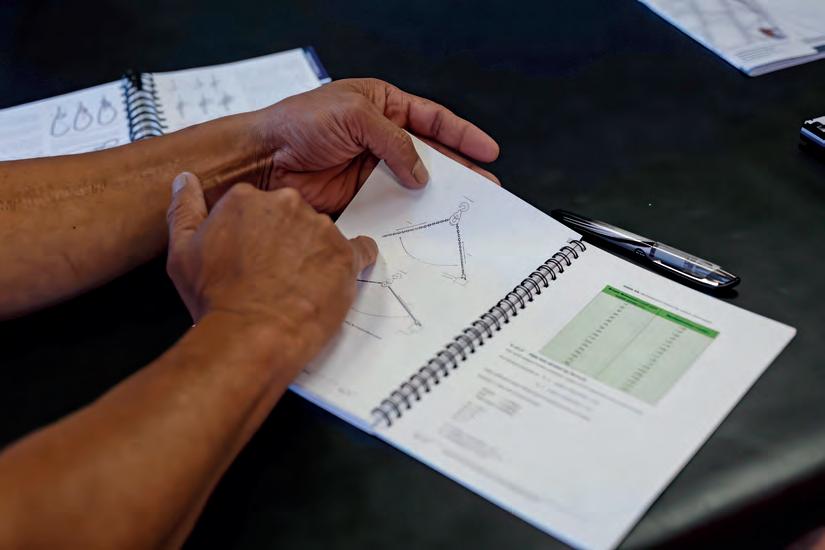
The industry must continue to communicate that operating a crane safely and professionally requires more than a certificate.
The challenge facing us today is ensuring that tradition continues.
The future of our industry will not be determined solely by the cranes we purchase, the projects we win, or the technology we adopt.
It will be determined by how effectively we pass knowledge from one generation to the next.
If we can embrace mentoring, remain committed to training, and adapt our learning methods to suit a changing workforce, then the knowledge we value so highly will not be lost.
It will simply be passed on.
And that is how strong industries endure.
With decades of industry experience, a skilled team, and a modern fleet, we deliver innovative, safe, and cost-effective lifting solutions across New Zealand. Our fleet supports projects of all sizes, including our newest addition, the Liebherr LR11000 crawler crane, delivering an impressive 1,000-tonne lifting capacity and reinforcing our position at the forefront of the heavy lifting industry.

Extensiverangeof specialised equipment, includingancillary gear, temporary staging, man cages, construction hoists, and more.
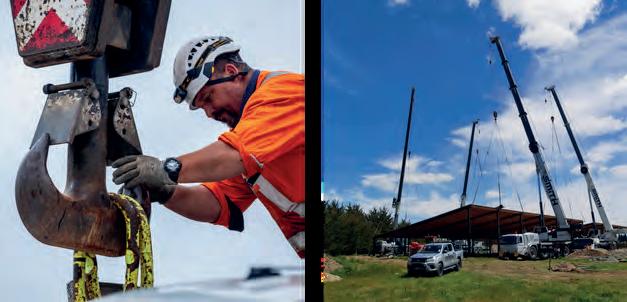
With over 30 yearsinthe industry, our team bringsproven expertise and practical knowledge. www.smithcranes.co.nz
Rough
Pick &
up to 130t
up to 40t

Smith Cranes has spent more than three decades building one of New Zealand’s largest lifting and heavy haulage operations.
BUT AS THE COUNTRY’S WIND ENERGY sector gathers momentum, Smith Cranes is increasingly positioning itself as more than a crane provider. It is developing a model that combines lifting, transport, installation, accommodation and project support under one roof.
That approach has been on full display over the past year as the company delivered major wind farm projects, expanded its fleet with one of the most capable crawler cranes in the region and continued investing in both people and equipment.
For founder and Managing Director Tim Smith, the company’s future
is closely tied to New Zealand’s growing infrastructure and renewable energy sectors.
“We remain committed to supporting New Zealand’s wind energy, infrastructure, civil construction and commercial construction sectors, as we have for the past 35 years,” Tim said.
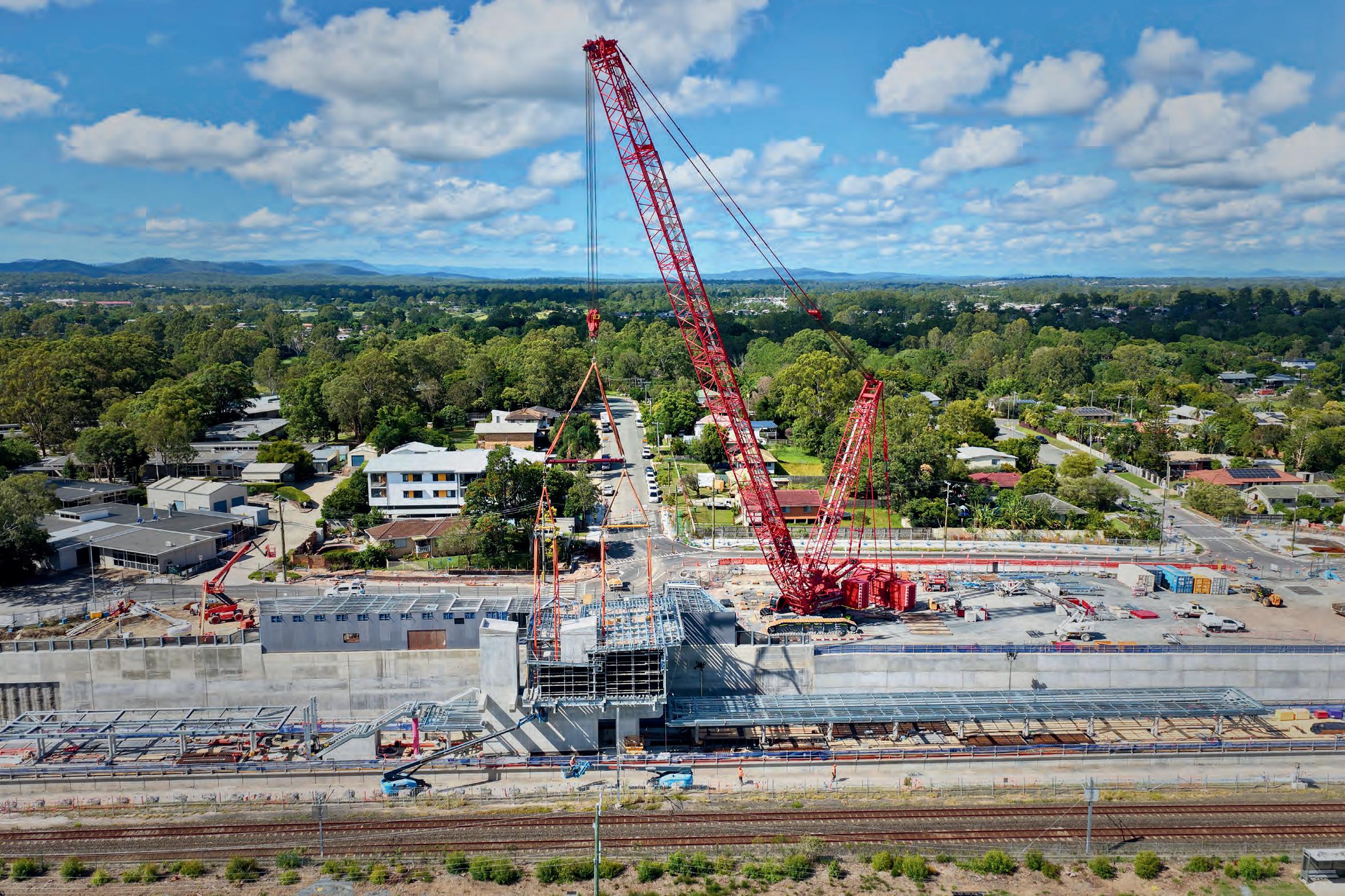
Smith Cranes has recently completed crane and installation works on Stage 2 of the Kaiwera Downs Wind Farm in Southland. The project involved
the installation of 34 wind turbines under a combined crane and turbine installation contract.
The workforce brought together personnel from New Zealand and overseas, including specialists from Poland, Canada, Ireland, Brazil, the United Kingdom, South Africa and Australia.
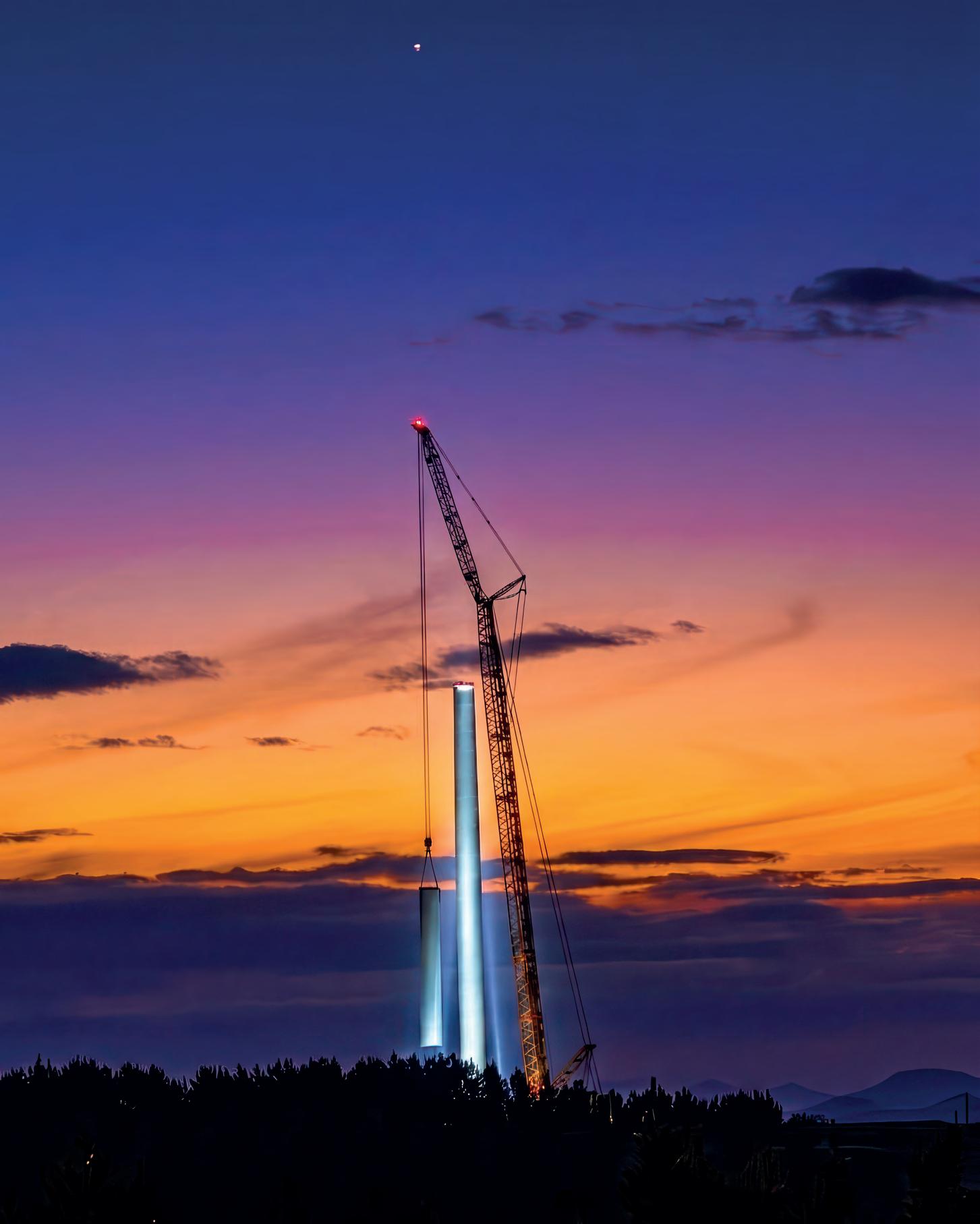
The project relied on a fleet that included a Liebherr LTR 11200 and Liebherr LR 1280 crawler crane, supported by a Liebherr LG 1550, Manitowoc M12000 crawler cranes, a Hitachi Sumitomo SCX1000 and Grove all terrain and rough-terrain cranes.
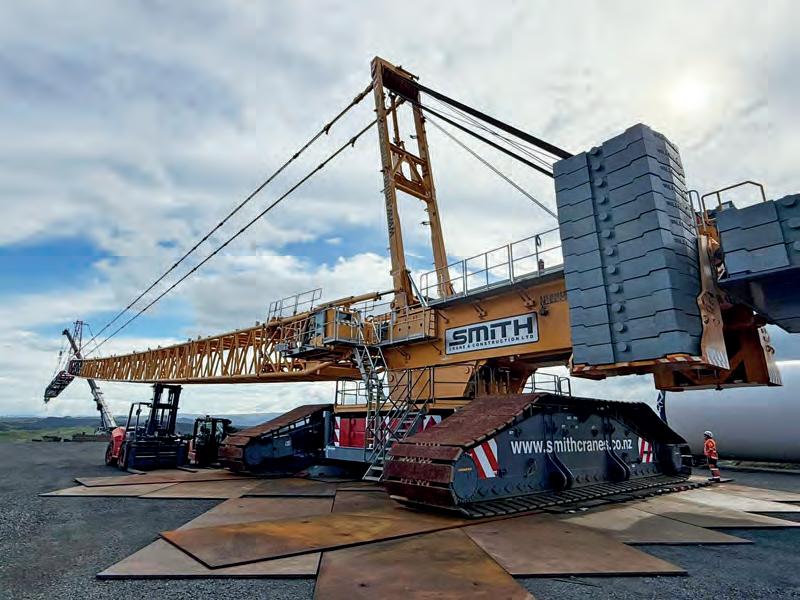
The LR 11000’s pickand-carry capability makes it well suited to New Zealand’s diverse lifting requirements.
The result was a project delivered approximately seven weeks ahead of schedule.
For Tim, the project reinforced the benefits of a single-contractor model that combines crane operations with installation services.
At the same time, Smith Cranes has been carrying out crane and installation works at the Kaiwaikawe Wind Farm, where Vestas V162 turbines are being installed.
The project has provided another opportunity to deploy one of the company’s newest assets, the Liebherr LR 11000 crawler crane.
Tim said the crane was purchased not only for wind farm projects but also for the wider infrastructure market.
“Its versatility enables deployment across wind farms, bridges, industrial projects and heavy construction work. It strengthens our ability to deliver efficient lifting solutions across a wide range of projects throughout New Zealand.”
The arrival of the LR 11000 marked a significant milestone for Smith Cranes.
The crane is the only machine of its type operating in Australasia and represents a different investment strategy to some of the large truck-mounted cranes being used elsewhere in the market.
According to Tim, the decision has already proven itself.
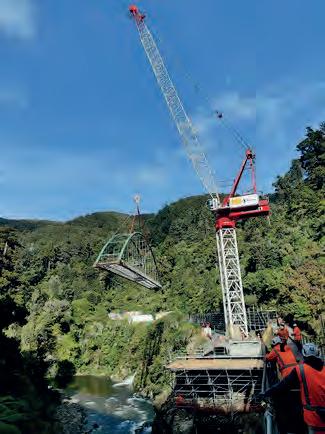
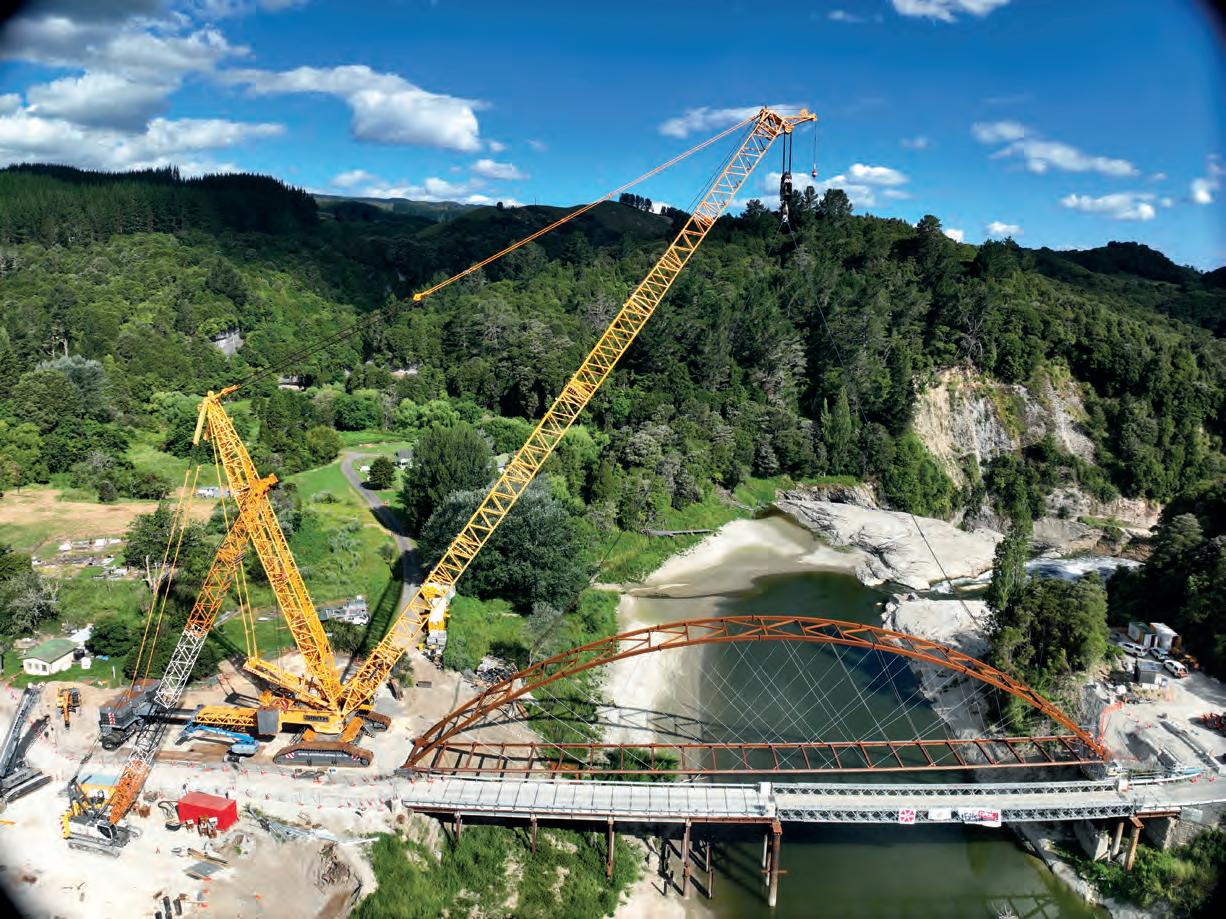
One of its first major assignments came shortly after the purchase was confirmed, when Smith Cranes received an enquiry relating to the lifting of the 200-tonne Te Rēinga Bridge.
The client’s original plan involved two cranes working from falsework. The lifting capacity of the LR 11000 allowed the bridge to be lifted using a single crane, eliminating the need for falsework altogether.
where equipment often needs to perform a broader range of tasks than it might in larger international markets.
While fleet investment remains a key part of Smith Cranes’ strategy, Tim believes people are equally important.
The company recently appointed Stefan Gilmour as General Manager of its Wind and Civil division. He brings extensive experience delivering large-scale infrastructure projects and has worked alongside Smith Cranes for many years on bridge and marine projects.
“Stefan’s understanding of crane operations will be highly valuable as we continue to grow our involvement in wind energy construction projects.”
The company is also seeing the next generation become increasingly involved in the business. Tim’s eldest son, Jonathan, oversees crawler and tower crane operations across the South Island, while his other children, Sam, Sophia, Christian and William, all contribute to different parts of the business Together they bring experience across civil construction, transport and mechanical operations.
“It provides a strong mix of industry knowledge, capability and perspectives as Smith Cranes continues to grow and evolve,” Tim said.
“We wanted a versatile crane in New Zealand that could undertake major infrastructure projects while also supporting the wind energy sector.”
“We wanted a versatile crane in New Zealand that could undertake major infrastructure projects while also supporting the wind energy sector.”
While some might assume a large crawler crane would be difficult to relocate between turbine positions, Tim said the machine has proven remarkably efficient.
“Disassembling and relocating the crane between turbine hardstands has been relatively efficient, with turnaround times of approximately 30 working hours.”
The crane also provides pick-andcarry capability that is valuable in New Zealand’s comparatively small market,
Smith Cranes has also maintained a strong presence within the wider crane industry. The company is sponsoring a major event at this year’s Crane Association of New Zealand (CANZ) Conference, giving delegates the opportunity to visit Christchurch’s newly opened stadium.
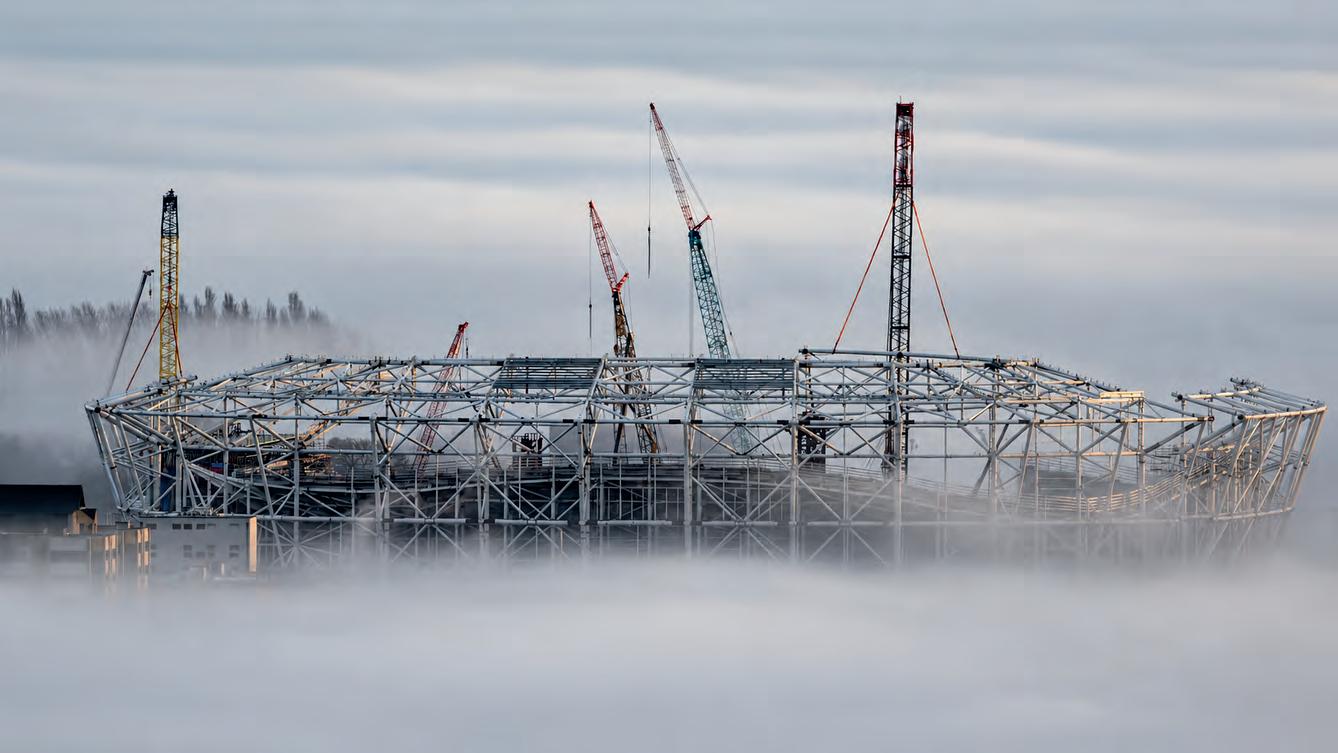
The project holds special significance for Smith Cranes, which delivered the crane contract for the installation of the stadium’s roof steelwork.
The project involved the installation of 9000 tonnes of steel and earned Smith Cranes and Construction the 2025 Project
of the Year award at the New Zealand Crane Association Crane Awards.
The work ran from December 2023 through to February 2025 and was completed without any health and safety incidents.
“We thought conference attendees would appreciate the opportunity to visit the stadium,” Tim said. “It is a good opportunity to support the industry while showcasing a project that many people have followed with interest.”
Smith Cranes has also continued expanding its fleet through the acquisition of 12 crawler cranes. Eight of them from Daniel Smith Industries, including Liebherr LR 1400s and Kobelco CKS/ CKE 2500s.
The acquisition further strengthens the company’s ability to service projects across New Zealand while broadening the range
of lifting solutions available to clients.
At the same time, the company continues to invest heavily in transport capability. Its heavy haulage division now includes more than 50 truck tractor units and over 120 heavy trailers, including specialised equipment such as selfpropelled modular transporters (SPMTs).
For Tim, integrated capability will be central to the company’s future.
“With an approach that combines heavy haulage, cranage, installation, maintenance, accommodation and storage, we are well positioned to support the next generation of wind farm developments throughout New Zealand,” he said.
Justin Boehm, LEEA’s Regional Manager-Australia and New Zealand emphasises the importance of understanding the quality of imported lifting equipment.
AS I PREPARE TO ATTEND THIS YEAR’S Crane Association of New Zealand Conference, I’ve been reflecting on how much the lifting industry has evolved across New Zealand over the years I’ve been with the Lifting Equipment Engineers Association (LEEA).
New Zealand businesses have become increasingly sophisticated. Many have expanded beyond inspection and testing services, developed specialist technical and engineering capability, and built new products in their market.
More recently, I’ve noticed another trend emerging. A growing number of businesses are beginning to import their “own branded” products.
Quite often, the conversation starts the same way. “We know that company X manufactures in factory Y and it’s the same manufacturer everyone else uses.”
On the surface, it makes sense, because margins are tighter, competition is increasing, and businesses are looking for ways to strengthen their

position in the market. Many inspection companies already understand lifting equipment, have relationships with customers, and know where products are manufactured globally.
In many cases, that may well be true, but there is one part of the conversation that is often missing. The moment you place your name on a lifting product and introduce it into the market, you are no longer simply an inspection company. In practical terms, you have taken on the responsibilities of the manufacturer.
I don’t believe many businesses fully appreciate what that truly means.
The lifting industry has always carried significant responsibility. Inspection companies understand this better than most. Our members operate in an environment where failure can have immediate and severe consequences, and they’ve built trust on competence, consistency, and technical judgement.
However, importing products introduces a completely different category of risk. This is particularly relevant in Australia and New Zealand, where many member firms have traditionally operated as distributors, inspectors, or service providers rather than manufacturers. As organisations look to improve margins, secure supply chains, and differentiate themselves in an increasingly competitive market, importing and branding products under their own name can appear to be a logical next step.
But, once your name is attached to the equipment, accountability changes.
You are no longer just responsible for inspection outcomes. You are now responsible for design verification, product conformity, traceability, technical documentation, quality assurance systems, instructions for use, warnings, markings, and ongoing
product performance in the field – an exponentially different business model and risk profile.
One of the most common misconceptions I hear is that if a product comes from a reputable factory, or from the same production line as another established brand, that somehow mitigates the risk.
That is a misguided assumption because the legal and commercial responsibility sits with the organisation placing the product into the market under its own name.
In lifting, products do not fail in controlled environments. They fail in mines, on construction sites, offshore facilities, and infrastructure projects – often under dynamic loading, environmental exposure, misuse, or operational pressure. When something goes wrong, the safety regulator does not start at the factory. They follow the supply chain and that is where many businesses underestimate the complexity involved in becoming “the manufacturer”.
Importing lifting equipment is not simply a procurement exercise. It requires structured systems that reduce risk across the entire lifecycle of the product.
Through the LEEA Audit, we assess a member’s understanding of their risk profile and understanding of how the product was designed and verified. This includes whether testing aligns with relevant standards, how ongoing production quality is monitored, what documentation supports conformity claims, and how product traceability is maintained. Without all those systems working in harmony, across different countries and operations, businesses are exposed.
With consumer law, workplace health and safety legislation, and
broader chain-of-responsibility expectations, organisations introducing products into the market can face significant legal, financial, and reputational consequences if equipment fails or causes harm and those penalties can be substantial.
There is another issue that concerns me more. The lifting industry relies heavily on trust.
Customers trust that products are fit for purpose. Workers trust that equipment has been manufactured and verified correctly. Procurement teams trust that suppliers understand the environments in which their products are being used.
That trust has been built over decades by organisations investing heavily in quality systems, engineering support, product testing, technical expertise, and structured risk management.
Those systems are often invisible to the end user, because they only see the product itself. What they don’t always see is the infrastructure sitting behind it
Importing lifting equipment is not simply a procurement exercise.
“When something goes wrong, the safety regulator does not start at the factory. They follow the supply chain and that is where many businesses underestimate the complexity involved in becoming ‘ the manufacturer’.”
and that is where the industry needs to be careful.
There is a significant difference between understanding lifting equipment and understanding product assurance at a manufacturing level.
That does not mean new firms should never begin to import their own products – far from it. There are businesses in our industry who have done this exceptionally well and who have developed an outstanding name for themselves.
understand that importing products is not simply an extension of sales – it is a shift in their business model and that shift matters, because in the lifting industry, reputations are built slowly and lost quickly.
responsibility entirely. As an industry, we need to be realistic about where the market is heading.
Own-label importing will continue to grow. More businesses will look for ways to control supply chains, improve margins, and strengthen commercial positioning. That is not inherently negative.
However, it means owning responsibility, and responsibility in this industry extends far beyond the point of sale. It extends to every lift where that product is used, every worker relying on it and every decision made on the assumption that the equipment is fit for purpose.
The organisations succeeding in this space are typically those that recognise the scale of responsibility they are taking on and build structured systems around it.
Unlike many industries, lifting does not offer much room for error. A poor-quality consumer product may create inconvenience.
A poor-quality lifting product can seriously injure or kill someone and that changes the level of
The lifting industry has always depended on competence, accountability, and trust. When your name appears on the product, those principles are no longer optional. Because in our industry, products are not judged by where they were made or how well they sell. They are judged when the load is off the deck and everything depends on them.
For Canterbury-based BG Cooke Construction, lifting is not a supporting activity. It is at the heart of the business.
THE NEW ZEALAND COMPANY HAS BUILT its reputation around precast concrete construction, handling everything from manufacturing and transporting concrete panels to installing them on site. That work demands equipment capable of performing reliably day after day, often in demanding conditions and on tight project schedules.
To support those operations, BG Cooke has invested in two Sany cranes, led by a SCC1000A 100-tonne crawler crane that has become a critical asset in the company’s day-to-day operations.
Managing Director Brad Cooke said the crawler crane was purchased specifically to support the company’s precast lifting activities and has quickly
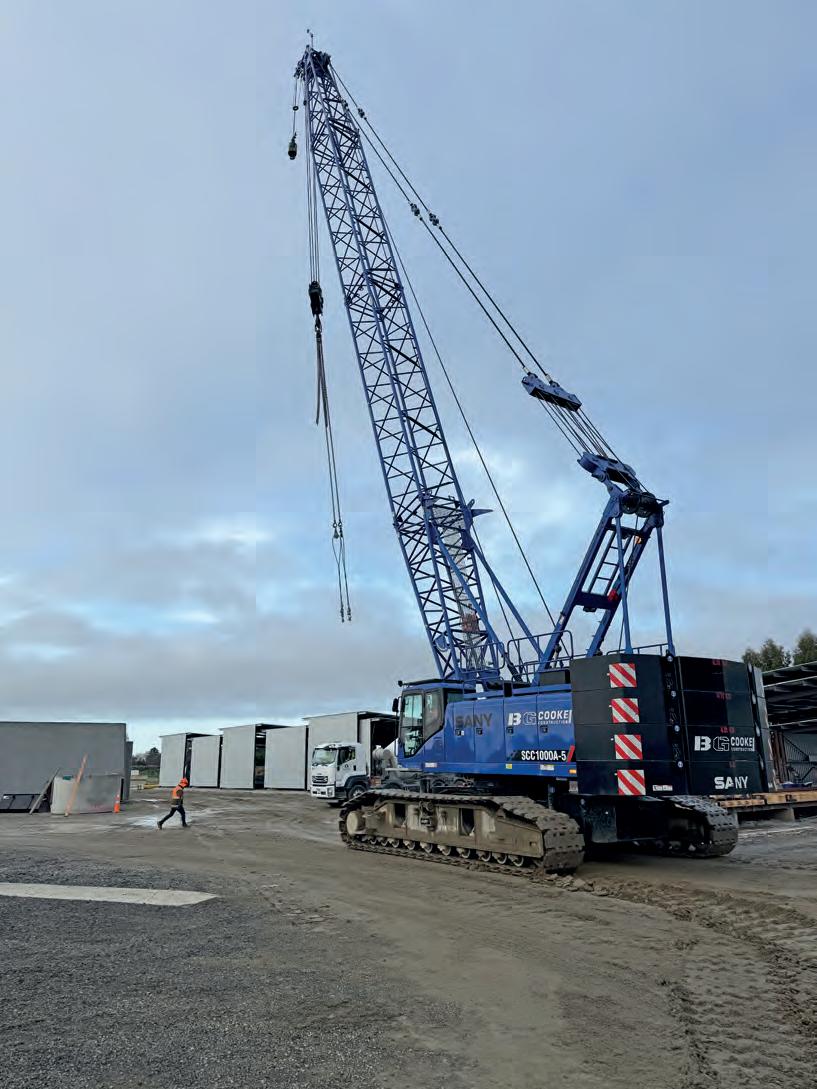
become one of the hardest-working machines in the fleet.
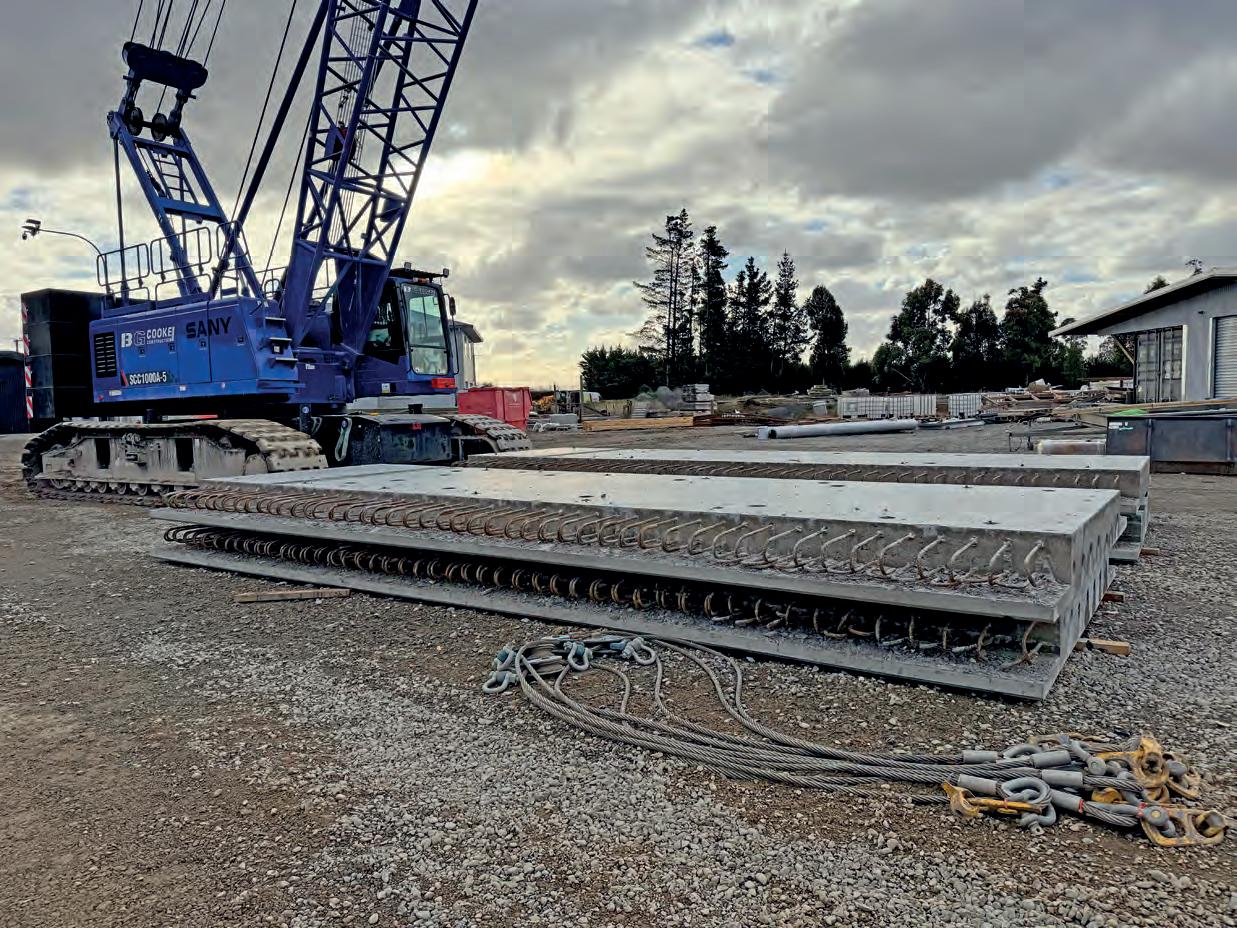
“We brought the crawler in primarily for handling precast concrete panels every day. It is loading panels onto racks, loading trucks and supporting our installation work. It is constantly working and has become a key part of how we operate,” said Brad.
Established in Canterbury, BG Cooke Construction specialises in commercial and industrial construction projects, with a strong focus on precast concrete systems. Alongside concrete panel installation, the company also undertakes structural steel erection, timber prefabricated floor installation and other lifting-intensive construction activities across the region.
While the company operates several cranes, the Sany SCC1000A has become the backbone of its lifting fleet.
According to Brad, utilisation levels have remained consistently high since the crane entered service.
“The crawler is doing around 50 to 60 hours every week and it has been an awesome machine for us. We have not had any major issues with it. It turns up, gets the job done and keeps working. That reliability is exactly what we were looking for when we made the investment,” he said.
When evaluating options, BG Cooke considered several machines before deciding on the Sany.
For Brad, minimising maintenance requirements and maximising uptime were among the key factors influencing the purchase decision.
“We looked at a number of different machines. One of the things that stood out for us was the simplicity and the lower maintenance requirements. We wanted a machine that could work consistently without creating unnecessary downtime, so buying new made a lot of sense for us,” said Brad.
The Sany SCC1000A is designed for a broad range of lifting applications,
“We have had a really good experience with the crawler. Touch wood, it has been very reliable. It is one of those machines that just gets on with the job every day, which is exactly what you want when you are relying on it for your core business activities,” said Brad.
Operator feedback has also been consistently positive.
The SCC1000A’s cab design, visibility and operator controls have been well received by BG Cooke’s team, contributing to productivity and operator confidence on site.
“Our operator really likes the crane. He finds it comfortable to work in, the controls are good and everything functions the way it should. When operators enjoy working with a machine,
distributor Portstar Equipment has been a
delivering timely and professional support that helps keep operations running smoothly.
“We have always had good support from the team. If we need help or have a question, someone gets back to us and works through it. Being based in Canterbury, that level of support is important because you need to know help
“It is one of those machines that just gets on with the job every day, which is exactly what you want when you are relying on it for your core business activities.”
key part of the ownership experience.
He said the ownership experience has also been strengthened by the support provided through Sany’s New Zealand dealer network.
“BG Cooke appreciates the strong support provided by Sany. While the region does not have permanently based Sany service personnel, the team responds quickly whenever assistance is required,
is there when you need it,” said Brad.
He said his primary point of contact has been Sany representative Rex Chen, who has remained closely involved throughout the ownership experience.
Whether dealing with routine questions or technical issues, Brad said the support network has provided confidence that any problems will be addressed promptly.
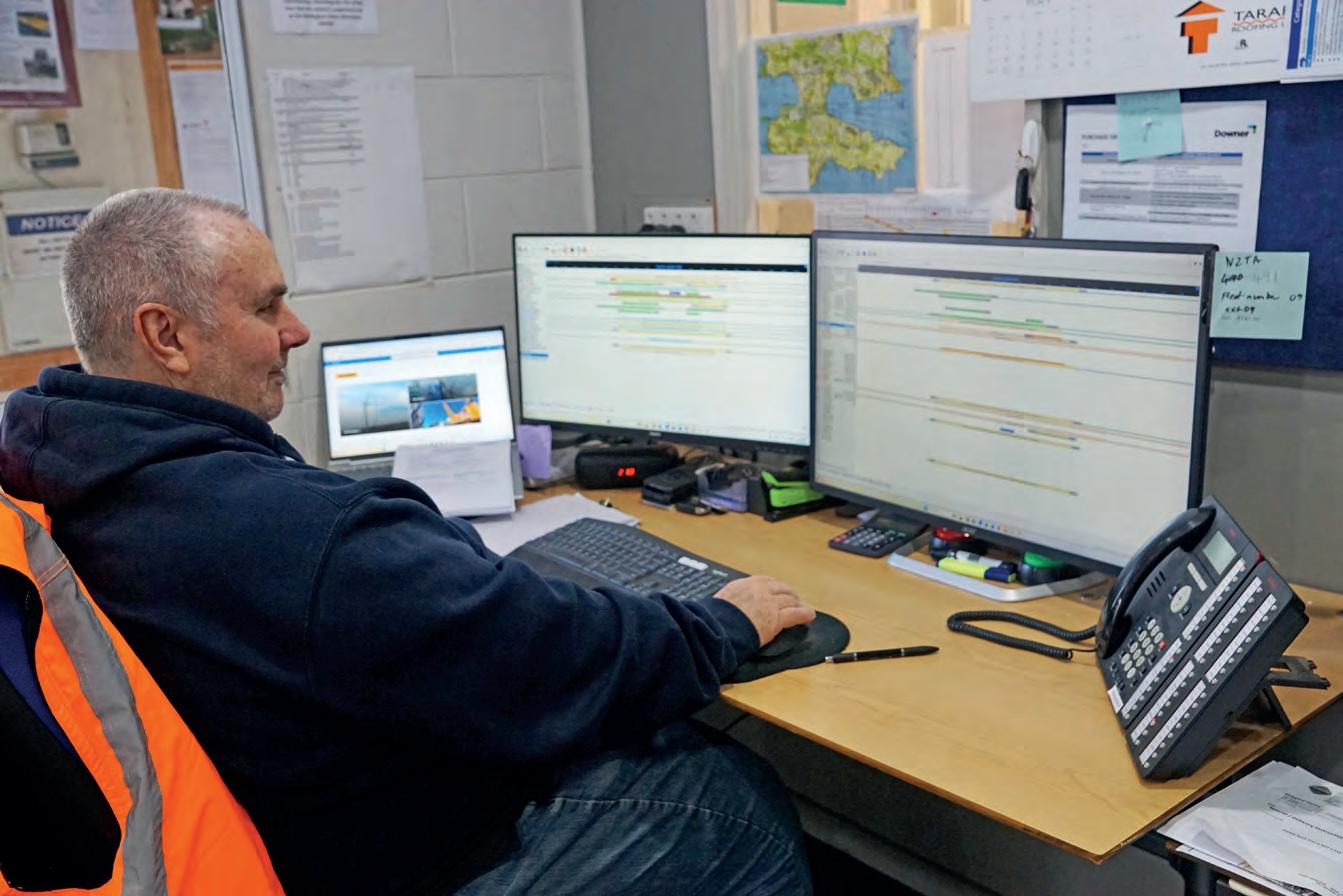
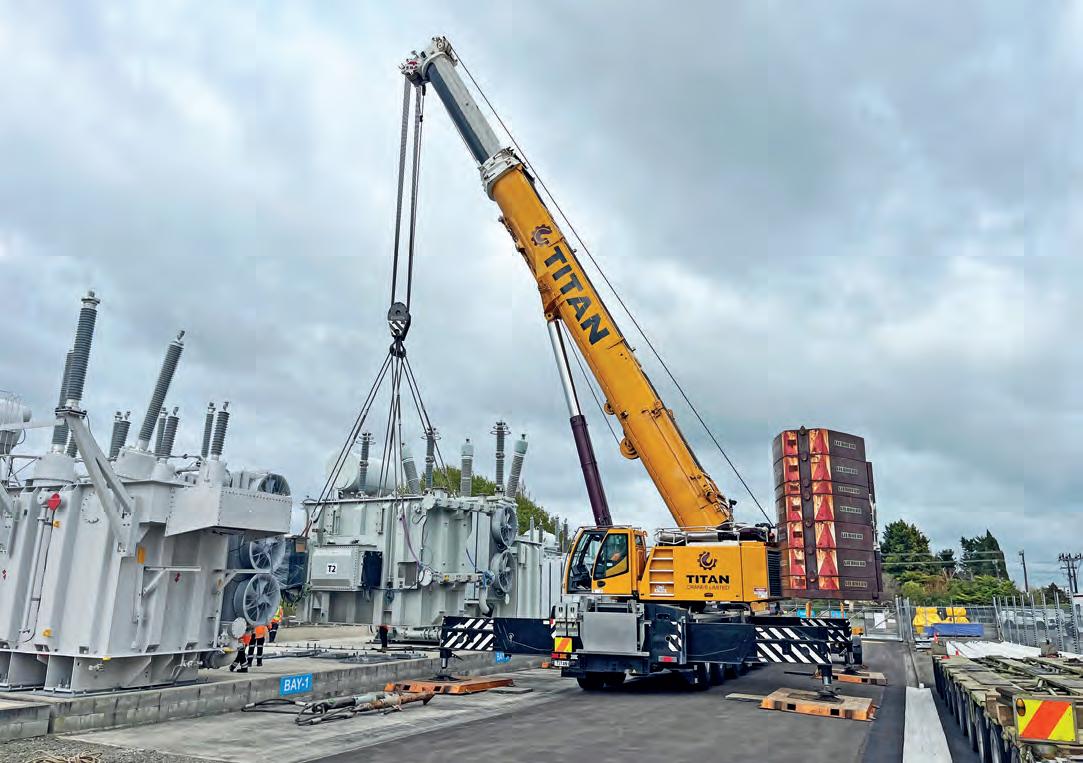
For more than 60 years, Titan Cranes has been one of New Zealand’s innovative crane hire businesses. Managing Director Jan Coton explains how the business has been an early adopter of technologies, including Visual Dispatch, designed to streamline processes.
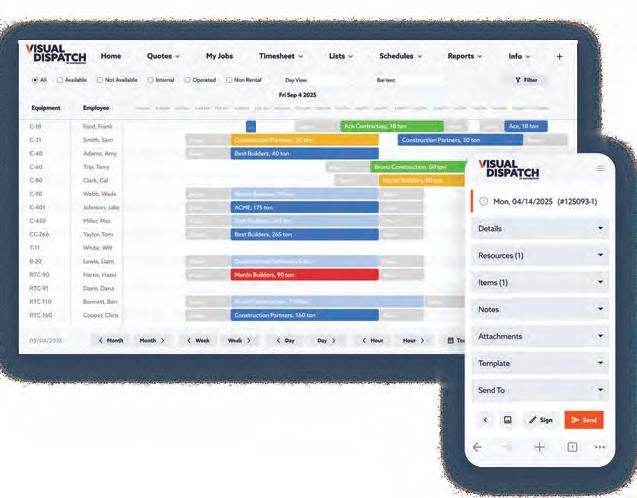
“WE BEGAN OPERATING THE ORIGINAL version of Visual Dispatch back in 2016 and during the COVID shutdown period, we migrated to the new version which is now fully integrated into our business platforms.
“When we first started with Visual Dispatch our guys were literally using a physical book for crane bookings and allocations. We decided this was not sustainable and that there had to be a better way. We started an extensive examination of the various allocation systems from around the world and decided that Visual Dispatch offered what we were looking for.
“Other packages we looked at were designed for trucking companies which
could be modified for our purposes, but Visual Dispatch had been specifically designed for crane hire businesses, which made it an ideal fit for Titan Cranes,” said Jan.
She said Visual Dispatch has since become an integral business tool for Titan Cranes.
“Visual Dispatch has become our core piece of software situated right at the centre of our business and we use most of the modules that are available. It’s used for bookings, for collecting data and it’s used for our accounting purposes.
“All the invoicing information captured by Visual Dispatch is automatically integrated with our
accounting system. We also use this data for other applications, including workplace health and safety documentation, training records amongst many other things. Visual Dispatch has become very integral to our business,” she said.
Jan goes on to explain how Visual Dispatch has automated various business processes.
“When a customer rings up for a crane, they require a quote and this is automatically generated by Visual Dispatch, along with confirming letters and emails. It is far more automated than it has ever been. When the customer accepts the quote, the Visual Dispatch books the relevant resources,
and this includes booking the crews and equipment that go with it.
“All our operators are issued with tablets and the night before the job, the system will send them details of the jobs they will be working on the next day, where it is and what time they need to be there. Visual Dispatch also includes relevant planning documents.
“They go to the job and the customer signs to say they agree to our terms and conditions. When the job is completed and the customer signs to say they agree with the hours the job has taken and that it has been completed, the confirmation goes back to Visual Dispatch which automatically generates the invoice. We have a process which enables our administration team to check the detail of the invoice and that data goes into our accounting system.”
Visual Dispatch manages the paperwork relating to training and induction paperwork.
Visual Dispatch has made
a significant contribution to increased productivity and efficiencies within the business, and many areas are now paperless as a result of its implementation.
the business, and many areas are now paperless as a result of its implementation.
“Before we implemented the more integrated version of Visual Dispatch, we were faced with significant amounts of paperwork. All the dockets had to be handled and details typed in, and then the person would have to type the same information into an invoice and then send it to the customer. Whereas now it’s all managed electronically, there’s no paperwork, it’s all paperless.
“The information is available in real time which enables my general manager or myself to look at what work is being conducted on any given day, we can check invoices and we can check to see who is working on a particular project. All of information is electronically visual and available now, whereas previously, we had to find this information from bits of paper on people’s desks. Our systems are infinitely more productive, efficient and transparent now,’ said Jan.
The team at Visual Dispatch has been very supportive and prepared to help Jan and the team at Titan Cranes.
“Training and induction documentation are all kept inside Visual Dispatch which enables our dispatchers to check that t he various crew members headed for a job have the right documentation, that they’ve been inducted and that their paperwork is there so it can be sent to clients.”
“Training and induction documentation are all kept inside Visual Dispatch which enables our dispatchers to check that the various crew members headed for a job, have the right documentation, that they’ve been inducted and that their paperwork is there so it can be sent to clients. All their training documentation and certificates are stored in Visual Dispatch,” said Jan.
Visual Dispatch has made a significant contribution to increased productivity and efficiencies within
“We have a very good relationship with Pam and her team. We’ve worked very closely with her right from the very beginning, and she’s helped us with training and any little troubleshooting issues we’ve had,” Jan said. “Pam patiently talks us through any little glitches that we’ve had and if there are any questions that she can’t answer immediately, she comes back to us really quickly which is always appreciated. We are happy that we’ve gone paperless with Visual Dispatch.”
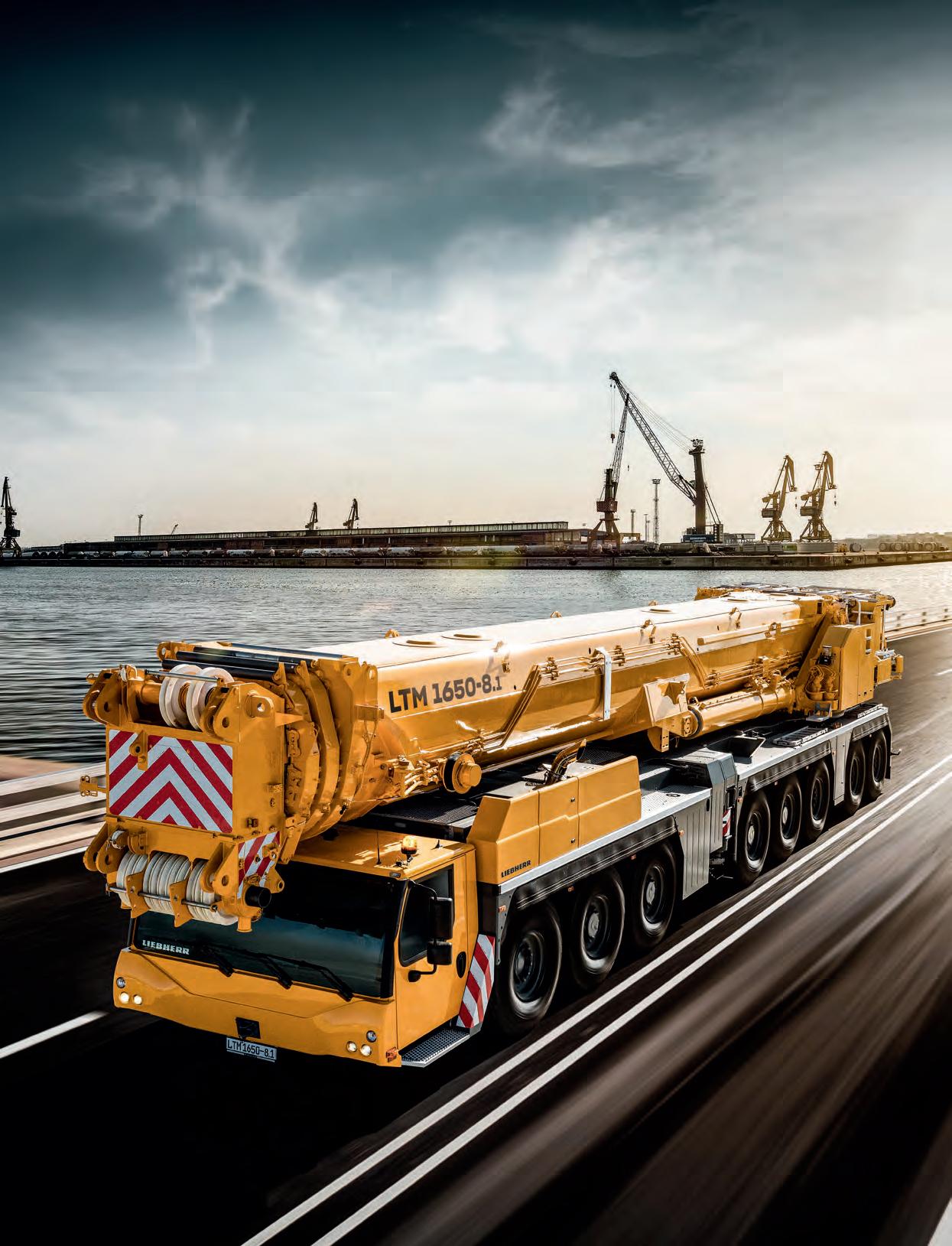
1650-8.1
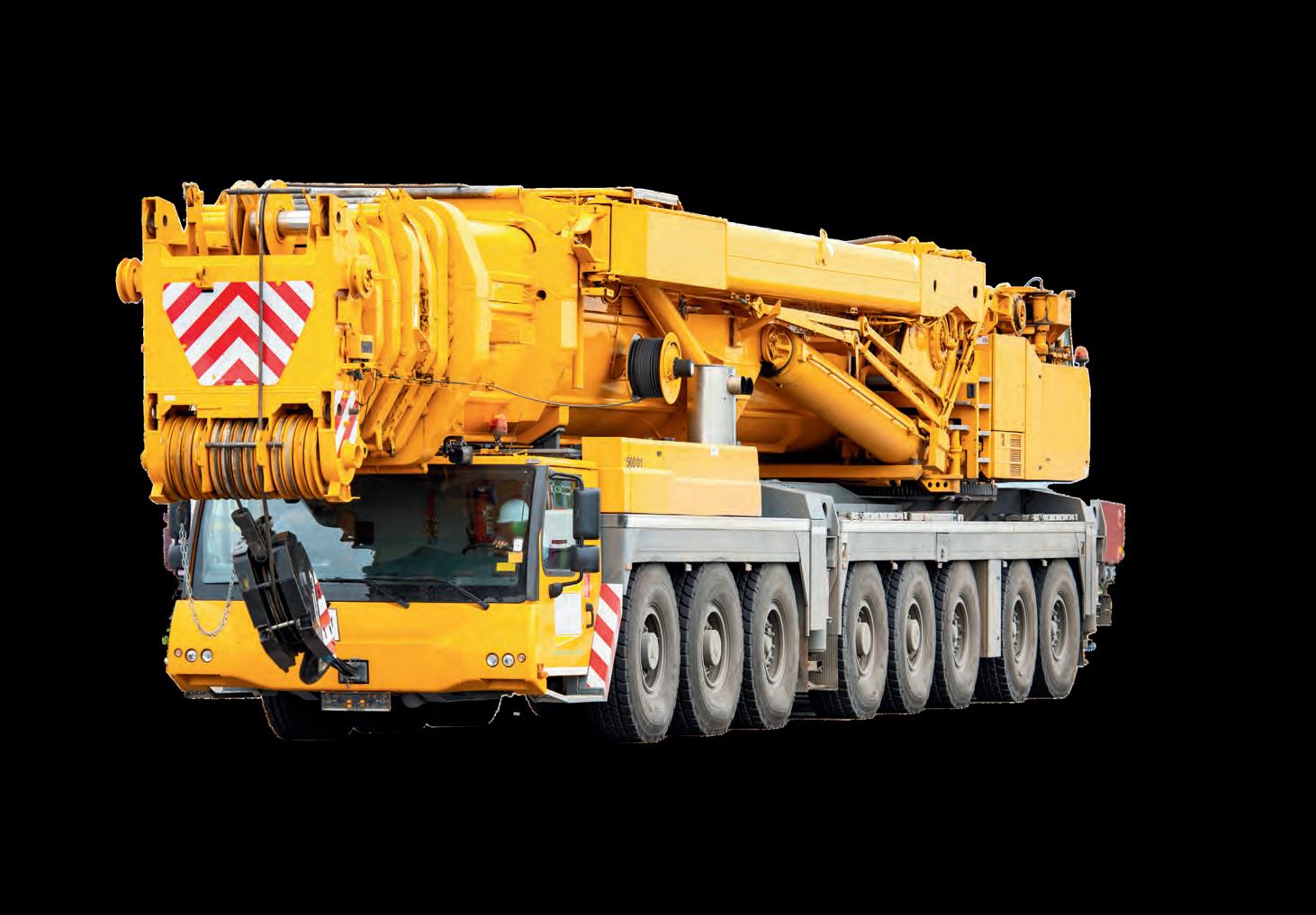
A lifting capacity of 700 tonnes with either a 54 or 80 metre telescopic boom. Global mobility and convenience thanks to Hillstart Aid, ECOmode, ECOdrive, VarioBase and hydraulic VarioBallast. Nothing more is possible on eight axles. www.liebherr.com
Although the New Zealand economy had shown positive signs of recovery, growing 1.1 per cent in the last quarter of 2025, recent global events, including the conflict in the Middle East, haven’t been helping economic recovery. Despite tough economic conditions, Matt Ziegler, Head of UAA New Zealand and Pacific (UANZ) and his team continue their unwavering support for crane industry.
“OVER THE PAST COUPLE OF YEARS, IT DID appear that the New Zealand economy was starting to recover which led to a degree of confidence, but the current global disruptions and with diesel prices all over the place, business confidence has taken another hit.
“In the past 12 months we have seen a ‘softening’ of rates across the general/ commercial insurance market. Results have been encouraging for the large general and reinsurance markets.
“This is a cyclical issue. Return on investment (ROI) looks good, capital and capacity is increased and the market becomes very competitive, and insurance premiums drop as a result, which is great for clients. Then the losses occur and the ROI doesn’t quite stack up, the capital and capacity leaves the market and prices go up again. We’ve seen these cycles a number of times so it is nothing new to us.”
Motor/plant insurance has a shorter cycle due to the nature of the business and loss frequency. UANZ looks at each client on its own merits, however, the
Matt Ziegler, Head of UAA New Zealand and Pacific.
cost of claims doesn’t ever get cheaper. This needs to be considered when looking at rates.
“One of the great strengths of UAA and UANZ is the longevity of the relationship we have with the crane industry. UAA has been integral to the wellbeing of the Australian crane industry for 50 years and we’ve been servicing the New Zealand industry directly for 12 years,” said Matt.
“We’ve just signed another long term with our capital security, QBE insurance, which is unique in our sector. This gives us, our brokers and customers confidence that we’re here for the long haul.”
UAA has been integral to the wellbeing of the Australian crane industry for 50 years and has been servicing the New Zealand industry directly for 12 years.
UANZ insures a large percentage of the New Zealand crane industry and this is due to a number of contributing factors.
“A major contributing factor is our relationship with the Crane Association of New Zealand (CANZ) which we have supported from day one. This will be the 12th CANZ Conference and Exhibition where we have been a major sponsor. For the first couple of years, the feedback was ‘who are these insurance guys? but after a few years you get to know everyone.
“As a result, we have a lot of longstanding clients that we look after in terms
“They know our staff, they know our claims staff and they know our assessors, which leads to very transparent relationships. When it comes to insurance, long-term relationships do matter,” said Matt.
New Zealand continues its transition towards renewable energy including the construction of wind farms. With this comes larger capacity cranes than usual. Matt explains how UANZ approaches the insurance of large cranes.
“When we are approached for coverage on a large crane, more often than not we’ve already insured a crane like it. If we are unsure, we’ll consult with the team at UAA Australia and get their thoughts.
“We have the capacity to write large limits on each item of plant, we just have to be sure about the use of the crane and what’s a fair rate to charge for it depending on what it does. Again, our decisions are based on 50 years of insuring cranes.”
The New Zealand market is diverse with small and large cranes businesses. Matt explains UANZ’s approach to the diverse nature of its client base.
“UANZ insures everything from a
and digger, up to large civil construction businesses and crane hire businesses. With a larger client our approach may differ a little as far as rates are concerned, but apart from that our service levels don’t differ. We’re a specialist in what we do. We are talking about high value, heavily financed equipment, and if there is an incident, speed is the key to try and get things going again ASAP. Our assessors and claims team jump into action
in five to six figures. It’s really important that clients contact us or their broker or as soon as possible and we’ll get our assessors onto it,” said Matt.
Despite the ‘soft’ insurance market UANZ continues to grow its team and is implementing new technologies to help speed up the claims process
“Despite the challenging business environment, we continue to grow our team. We are also installing a new system
“UANZ insures everything from a one man owner/operator with the truck and digger, up to large civil construction businesses and crane hire businesses.”
whenever we get the phone call, they are onto the client straight away.
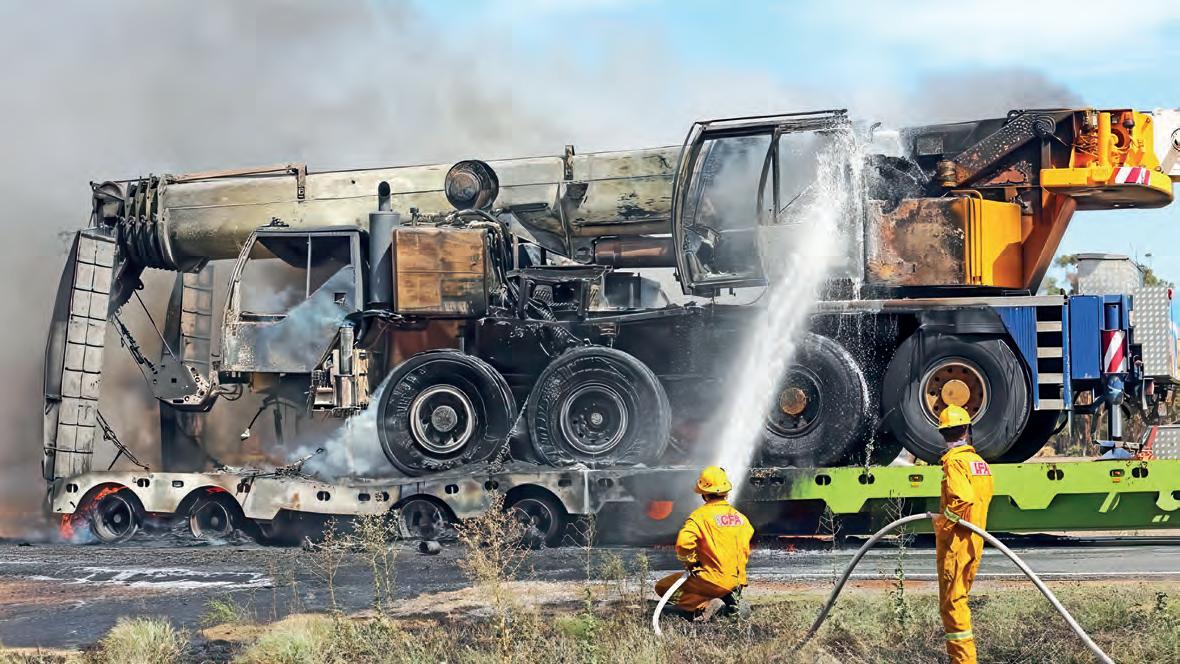
“Claims are the ‘shop window’ for the business. Clients and brokers know to immediately contact us when something happens. Unfortunately, that is not always the case which makes it hard to mitigate things, especially if there’s salvage involved.
“We’ve had big cranes tip over and our assessors have run those salvage operations in combination with the owners of the business, and we always get a satisfactory result. We have had a recent example where we weren’t contacted immediately (not about a crane,) and we’ve had an escalation in salvage/claims costs
which has artificial intelligence (AI) embedded in it which will speed up the claims process and remove some of the manual processes that are inherent in the current system.
“For example, with the new system we are able to read and lodge a claim form and notify the broker with all the information straight away. The fact that AI can read handwriting will help streamline the claims process even further. As a group, UAA will continue to invest in these new technologies because we can see how they will benefit our clients into the future. We have remained the major insurer of cranes for 50 years and we intend to remain so for the next 50,” said Matt.
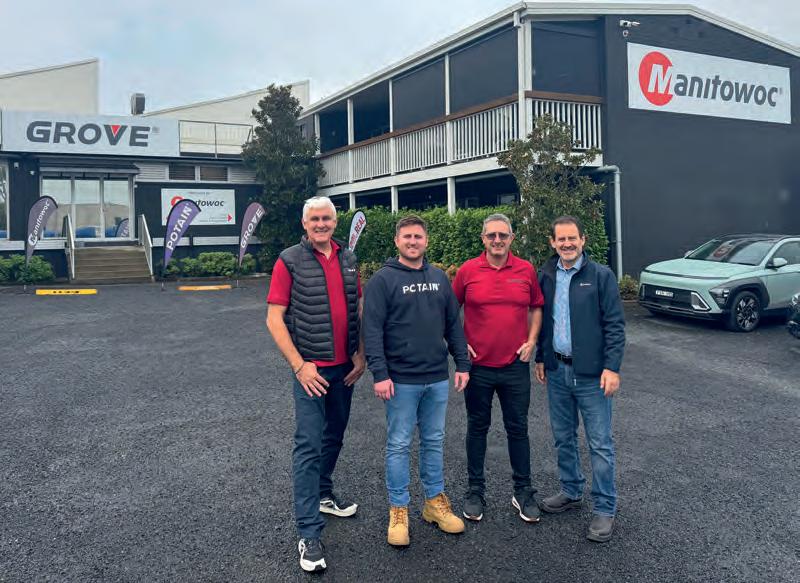
Manitowoc Cranes Australia recently announced it would be servicing customers directly throughout the East Coast of Australia and also in New Zealand. John Stewart, VP Sales and Support/ General Manager provided the background to this announcement and explains what it will mean to Grove and Potain customers.
THE ANNOUNCEMENT FOLLOWS
Manitowoc’s move to a larger, crane facility in Sydney with new branches in Queensland and Victoria and the recruitment of an enlarged specialist team to manage after sales service and support, including the procurement and distribution of spare parts.
“For many years, we have successfully serviced customers with a distributor model in Queensland and New Zealand utilising the services of TRT and we hope this strong relationship will continue with TRT remaining as a preferred service provider to support the Manitowoc team as needed,” said John. “We have made the decision to deal directly with customers in Queensland and also New Zealand and simultaneously open branches in Brisbane and Melbourne. These branches will accommodate sales as well as service capabilities, factory-trained service technicians and significant spare parts holdings.”
According to John, there are significant ‘drivers;’ behind this development and Manitowoc is determined for customers to better understand the renewed passion for expanded after sales service and support.
“The distributor business model has served us well, but in mature markets like Australia and New Zealand customers expect more involvement from the original equipment manufacturer (OEM). Also, we now have excellent finance options available thanks to Manitowoc Finance and our partnership with DLL through Kirk Purchase and his team.
“From a product perspective, this is a very exciting time for our organisation and also for our customers. We have the first Grove Hybrid all terrain cranes arriving in the country shortly and we are confident this concept will prove to be a game changer in Australia,” he said.
Manitowoc launched its Plug-in Hybrids, the Grove GMK5150-1e and GMK5150XLe during last year’s bauma. The GMK5150XLe, similar to its sister model, features much of the technology that excited customers three years ago when the GMK4100L-2 hybrid concept was unveiled.
The new models feature the existing 150 tonne capacity GMK5150L-1 and GMK5150XL cranes combined with a new, fully electrified superstructure resulting in more efficient, quiet, and environmentally-friendly lifting operations.
At the heart of the new cranes is a battery pack that enables a solid day’s work as a taxi crane. With 180 kilowatthours (kWh) of energy, the Grove Plugin Hybrid cranes can easily carry out several daily tasks. What makes them especially versatile is their ability to charge the battery from the grid (either AC or DC power supplies) or a 170 kW generator integrated into the carrier. This allows charging while driving and eliminates owner concerns about the availability of charging infrastructure. The cranes can even be operated while charging (providing there is
infrastructure for this at the jobsite). The battery pack enables approximately eight hours of emissions-free lifting without compromising speed or capacity. When the crane is connected to the grid, the crane can operate continuously. This is more than enough functionality for a 150 tonne taxi crane, and when the day’s work is complete, the batteries are recharged while the crane is driven back to base. Another exciting feature is the E-Boost function. While accelerating the generator can be used as motor and gives an additional 800 Nm torque into the driveline.
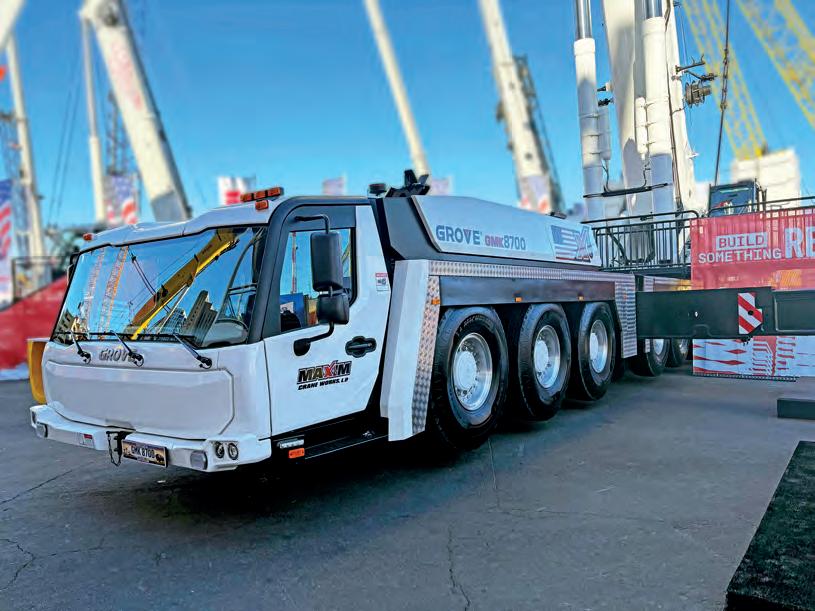
Grove has also moved into serious heavy lift territory with the launch of the GMK8700.
“The release of the GMK8700 during Conexpo was really exciting for us and there has been a lot of interest from crane hire businesses up and down the country as well as from New Zealand. With its 700 tonne lifting capacity and eight axle carrier, it is ideally suited for our markets,” said John.
The Grove GMK8700 has been developed using Manitowoc’s Voice of the Customer process, with a focus on versatility and flexibility on site. Owners can choose between two boom options: a 54 metre boom or a 80 metre
boom. Both use the Megaform design with interchangeable telescopic sections, allowing crews to switch configurations depending on project needs.
Transport was also a key part of the design. Depending on local regulations, the GMK8700 can travel with the boom carried over the front or mounted on a dolly behind the crane. The carrier includes the MegaDrive system for road travel and manoeuvrability, with five driven axles and two axle groupings designed for road use or jobsite mobility.
Other transport features include MEGATRAK suspension, a removable rear outrigger box and an adaptive electronic braking system.
In terms of lifting performance, the GMK8700 offers significant reach with a luffing jib that extends up to 107 metres. The jib uses a single back mast and optional boom extensions so the system length can be adjusted to suit lifts.
Product developments have not been limited to the Grove brand explains John.
“There have been a significant number of product releases from the Potain factory in China which have helped reposition the brand in the tower crane sector, helped make the brand more price competitive and enabled us to make significant inroads with these models,” he said.
“We’ve had such success with the Potain MCR305A, that we embarked on a consultative process with Australian customers asking them what they wanted to see from Potain in terms of cranes best suited for our market. The feedback was very quick and our factory responded collaboratively, we have designed the MCR505 which is tailored to meet the demands of our market. With the standard 2/4 fall rope configuration the crane has really taken off with over 12 cranes either here or on the way just this year.”
However, several customers were fighting against single line cranes
“The release of the GMK8700 during Conexpo was really exciting for us and there has been a lot of interest from crane hire businesses up and down the country, as well as from New Zealand.”
and the Potain Engineering team took up the challenge to have a big brother MCR515 with 17.5 tonne single line pull. This new model took only three months of modification and testing before arriving in Australia.
“There are 10 MCR515’s on the way and our Potain team couldn’t be happier,” said John. “ The positive feedback has been wonderful and is reintroducing our larger cranes to customers that haven’t looked at the Potain brand for some time.
“We’ve also introduced a number of product lines, including a range of factory-approved replacement tyres which are ideal for used cranes and our PowerBoost battery system which provide even more reasons for customers to discuss their requirements with us.”
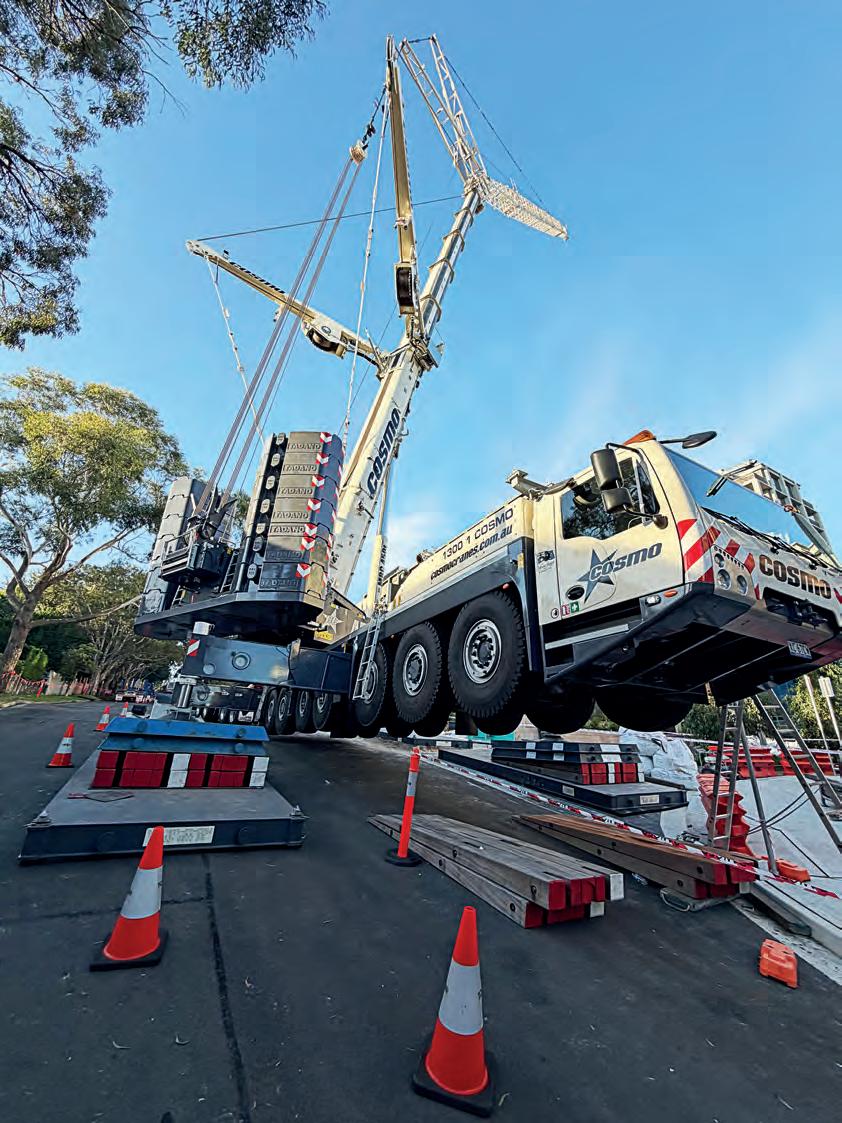
One of Sydney’s leading tower crane businesses, Cosmo Cranes, has recently taken delivery of a new Tadano AC 7.450-1, a 450-tonne capacity all terrain crane, the only one of its kind in New South Wales. Cosmo’s John and Josh Handley and Project Manager Matt Bickle discuss the reasons behind the latest addition to the fleet.
A
and
“WE VIEW THE ACQUISITION OF THE TADANO AC 7.450-1 as a natural progression for both our fleet and our business,” said John. “This capacity of crane has been on our radar for some time and with the amount of work in our pipeline, we felt the timing was right.
“It replaces our Tadano AC 300-6 and is the only crane of its type in Sydney. With 80 metres of live boom, the 450T provides us with a number of significant advantages.
“Obviously, with our tower crane division growing, our cranes are getting larger and buildings are getting taller. At the same time, the city is becoming increasingly congested and access to sites is becoming more limited. As a result, you often have to position the crane further back from the site to erect and dismantle the tower cranes, which the 450T gives us more flexibility with its overall capacity”.
“One of the advantages of the 450T is that its counterweight swing can be reduced and configured to the same dimensions as the 300T. You can also fit the XL counterweight configuration, which provides greater lifting capacity with a larger tail swing. In many ways, it is very similar to the 300T in terms of jobsite setup,” John said.
Following a week of training in Port Kembla with the Tadano team, the AC 7.450-1 went straight to work.
“We completed a week of comprehensive training at Port Kembla with Tadano, which was excellent,” said Matt. “Tadano’s Matty Mills and National Technical Support Manager, Dave Lillistone conducted the training.
“The crane was configured with its maximum boom length and completed lifts at maximum hook height, which gave the team a good insight into the characteristics the crane can offer. The crew was already familiar with the crane’s lower structure and operating system, which made the training process much easier.
“We already had a number of projects in the pipeline for the 450T. These projects required a higher-capacity crane greater than the 300T, so we knew there was demand in the market,” said Matt.
“The business remains heavily involved in precast installation and in early June, we
mobilised the crane for a five day project installing 10 tonne panels at 70 metre radius. The performance of the 450T was seriously impressive, and it was immediately clear that the additional reach and capacity will make a significant difference to the business,” he said.
“The planning team is working on a project over the coming months to remove a 95-tonne dozer from a site for a valued customer. A lift of this scale enables Cosmo to better support our civil contractors by allowing larger machines to remain within the excavation during critical stages of the project, while maintaining the capability to safely extract them when required.”
The AC 7.450-1 combines the compact dimensions of a six-axle crane with the power and performance typically associated with an eight-axle machine. With a main boom length of 80 metres, it offers the longest reach of any six- or seven-axle all terrain crane. Its compact size, comparable to that of six-axle models, delivers best-inclass jobsite accessibility.
“Along with the 450T, we purchased seven new semi-trailers to support the transport of counterweights and fly attachments. All trailers were custombuilt by Barker Trailers, which gave us the opportunity to tailor the design to our specific requirements.
“Features like handrails, access platforms and storage areas were all considered during the design process, ensuring the trailers abide by safety regulations on site and New South Wales road rules. We also had crane pads purpose designed and manufactured by Sutton Engineering,” said Josh.
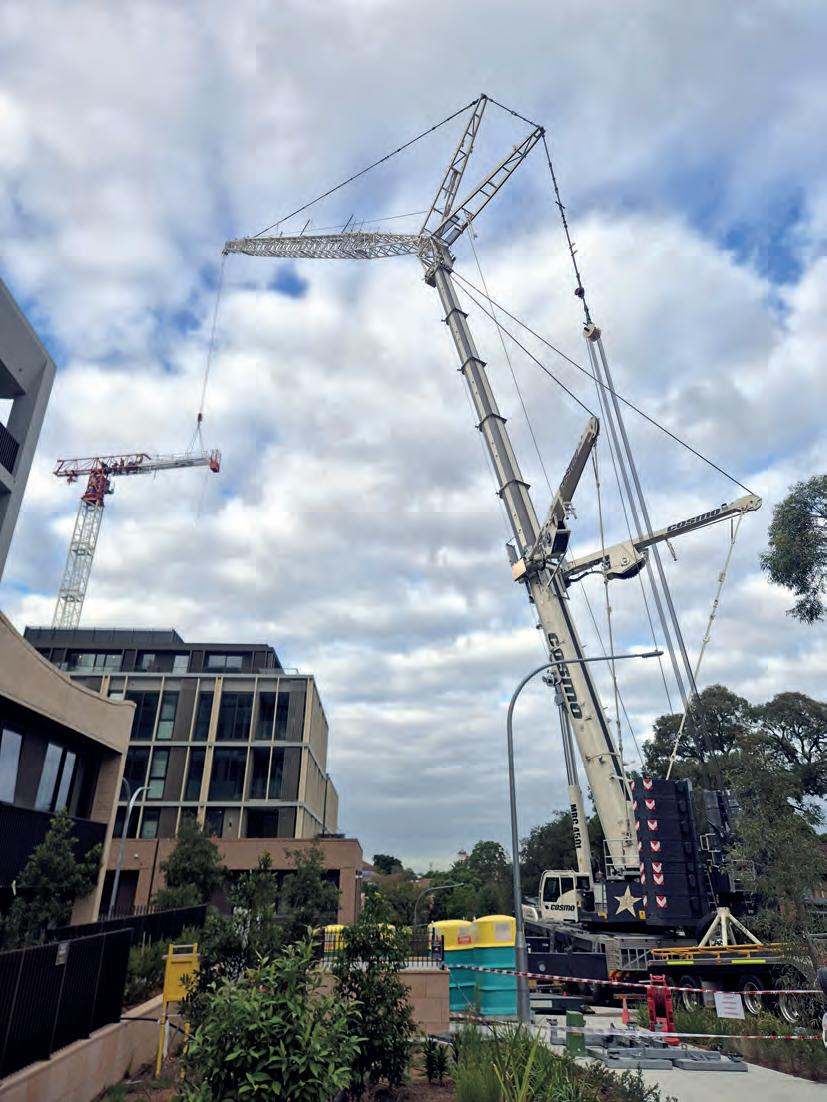
With a main boom length of 80 metres, the Tadano AC 7.450-1 boasts the longest reach of all 6- and 7-axle all terrain cranes.
Cosmo Cranes now operates a fleet of Tadano all terrain cranes with capacities ranging from 100 tonne through to the new 450 tonne. According to John, all servicing and maintenance is carried out by Tadano.
“We rely on Tadano for the servicing and maintenance of our fleet and the team does a great job working around our schedule,” he said. “Our cranes are constantly busy, sometimes working for days on end. Tadano understands the importance of minimising downtime and accommodating our operational requirements.
“In that respect, we’ve built a really strong relationship with the service team.
The crew can pick up the phone to Dave Lillistone and his team whenever they need technical advice or support. James Greenwood and the wider Tadano team know our business well. They understand how hard our cranes work and the importance of keeping them on the job. They’re always willing to work around our schedule when it comes to servicing and maintenance, and that’s something we really value,” said John.
“We’re excited to see what the 450T can do for us in the future. Looking at opportunities in different areas of the construction market has always appealed to myself and Josh, but for now, it’s about getting the crane out to work, supporting our customers and continuing the strong relationship we’ve built with Tadano.
“I’m really proud of how the mobile crane division has evolved and become
a standalone part of the Cosmo Cranes Group. The 450T is another step forward for us and reflects the direction we’re heading as a business,” said John.
Tadano emphasises that its commitment extends well beyond the initial sale.
“At Tadano, we understand that after-sales support is just as important, if not more important, than the product itself. Our customers rely on their equipment to perform day in, day out, and that means they need absolute confidence in the support behind it,” said David Lillistone.
“We strive to deliver service excellence at every stage, ensuring our customers can maximise uptime and performance.
“That commitment is what builds long-term partnerships and ensures our customers continue to choose Tadano.”
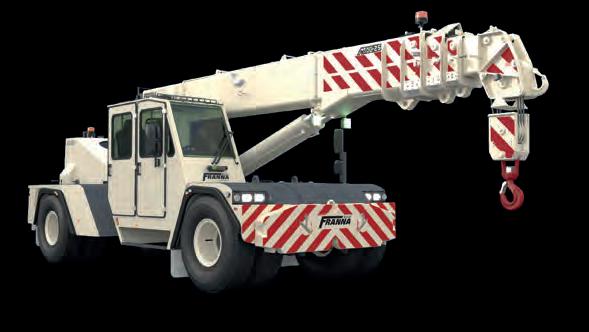
We’re making it easier than ever for you to access the information you need. Our online portal is designed just for you. Simple, convenient and ready when you are.
This is just the beginning, with more documents on the way.

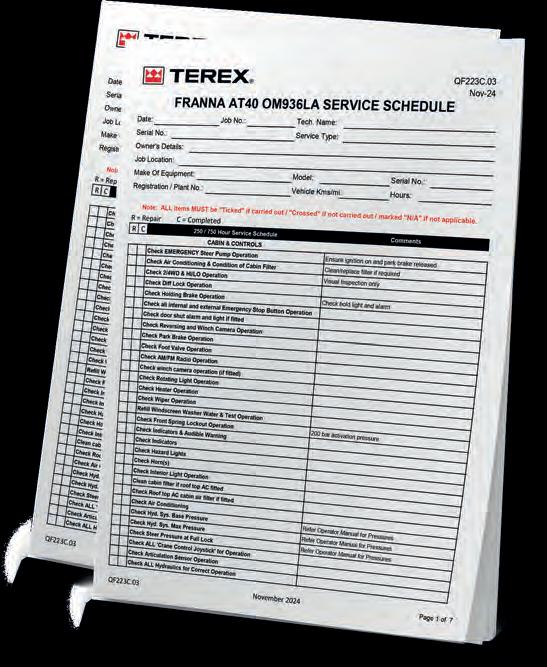
Now Available:
Scan the QR code to register today and stay connected with the latest updates
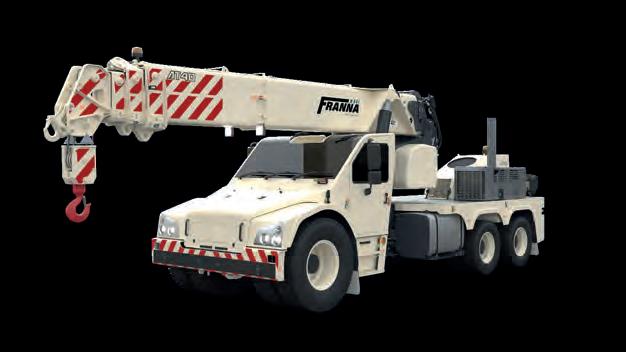
• Technical Bulletins
• Safety Notices
• Model Specific Service Schedules
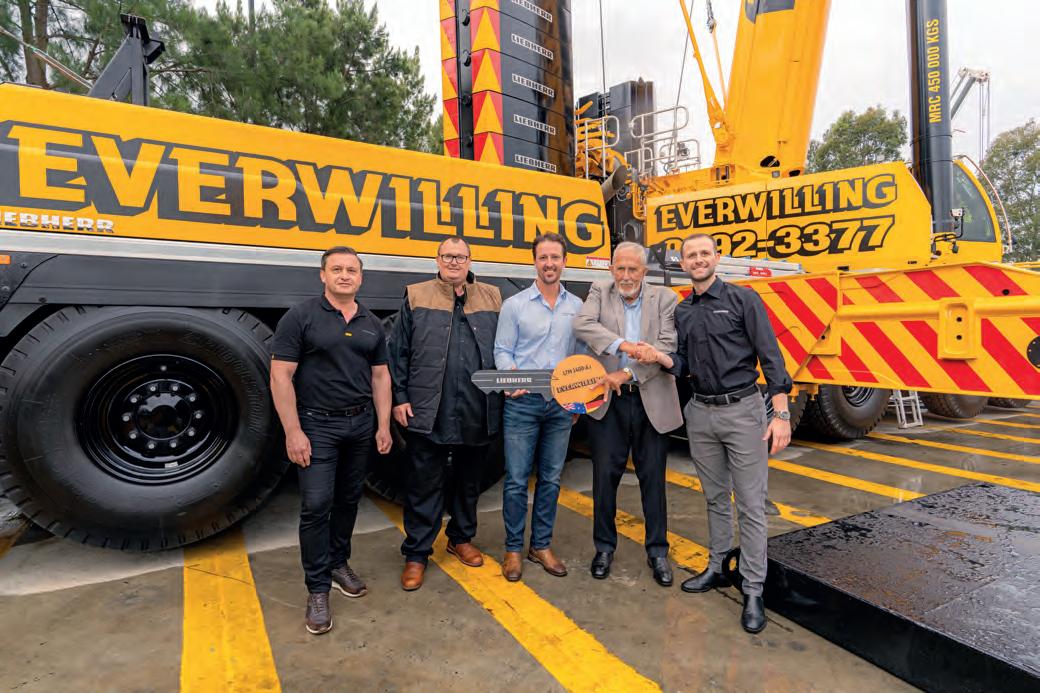
colours of Everwilling Cranes.
For Everwilling, the new mobile crane replaces one of the hardest-working machines in its fleet, the 300-tonne LTM 1300-6.1, that had been operating for close to 20 years. But according to General Manager Steve Allen, the move was never simply about buying something bigger.
“It was about both size and capabilities,” Steve said. “Our old 300 was such a good lifter that nothing in the market could really come near it.”
But as lifts became heavier, the business had to look for bigger cranes. The challenge, Steve said, was finding a crane that delivered significantly more lifting power without sacrificing the footprint and road access the business had become accustomed to.
“Our 300 was a six-axle machine with a three-axle dolly, so we realised if we went
have trouble getting access on roads,” he said. “This was the first crane that came in with a similar sort of footprint, so we still get the same sort of road access, but now with much bigger capability.”
The new crane is expected to play a major role across Everwilling’s work in heavy precast construction, tilt-up panel projects and data centre developments, sectors that continue to drive demand for larger lifting capacity and longer reach.
The machine itself attracted strong interest throughout the open day, with customers and industry representatives gathering around the crane as it demonstrated a lift involving a 40-tonne Franna crane.
For Liebherr-Australia, the arrival of the LTM 1400-6.1 into Australia represents the next evolution of one of its most successful crane platforms.
Manager Mobile and Crawler Cranes for Australia and New Zealand at Liebherr, said the crane builds on the success of the company’s long-running LTM 1350-6.1 platform while introducing a range of new technology features.
“The LTM 1350-6.1 has been a successful crane for more than 15 years,” Hans said. “This machine is really the next step forward with the latest crane technology.”
One of the key features highlighted during the event was Liebherr’s updated Y-guying system, which uses quick connection mechanisms designed to reduce setup time on site.
“At the end of the day, time is money,” Hans said. “The quicker you can set up and get operating, the more efficient and profitable the crane becomes.”
Tom Borovina, Sales Manager NSW & ACT for Liebherr-Australia, said the
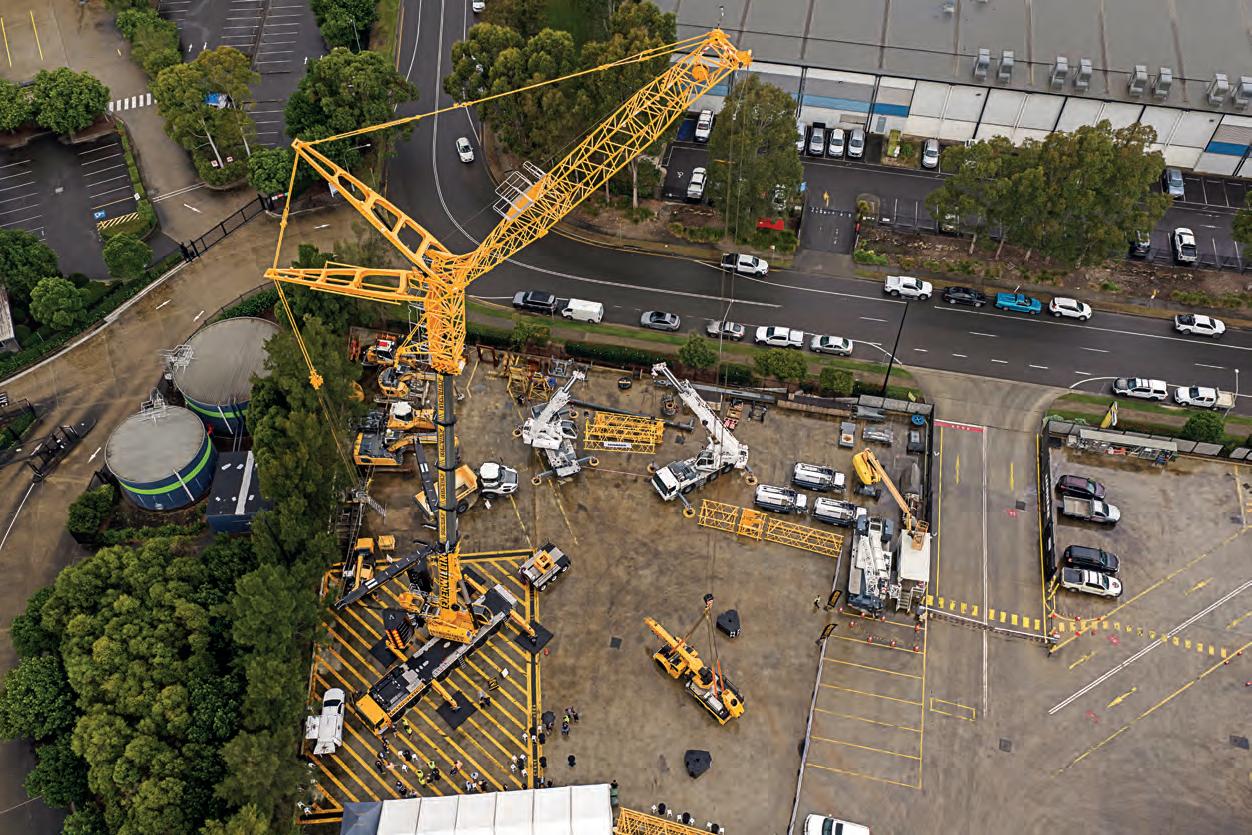
relationship with Everwilling and the timing of the crane’s release made the deal a natural fit.
“This deal actually started two years ago at the Liebherr Customer Day in Germany,” Tom said. “That was where this crane was officially unveiled for the first time, and it aligned perfectly with Everwilling’s plans to replace their 300-tonne crane.”
Tom said the LTM 1400-6.1 was particularly suited to the type of work Everwilling performs.
Highlighting one of the advantages of the new crane, Tom said, “The LIKUFIX feature is another Liebherr innovation, which enables a quick and safe hydraulic connection of the Y-Guying system.”
While the crane itself was the centrepiece, the broader event also served as an opportunity for Liebherr to showcase its growing investment in local support infrastructure.
“We invest a lot into this facility to keep up with customer service,” Hans said. “Events like this allow the industry to see the infrastructure we’re building behind the scenes to support customers.”
The day also reinforced the long-standing connection between the two familyrun businesses.
“Everwilling shares very similar values to us,” Hans said. “At the end of the day, it’s two-family businesses dealing with each other, and that helps a lot.”
That family connection remains central to Everwilling’s identity more than four decades after founder Gordon Henderson established the business with a single crane.
Looking across the open day crowd, with family members and employees gathered around the newest addition to the fleet, Gordon admitted the moment carried special significance.
“It’s awesome. I just can’t believe it,” Gordon said. “I started with nothing and ended up with this.”
Founded in the early 1980s, Everwilling has grown steadily into one of Sydney’s established crane hire businesses, operating a fleet of 25 mobile cranes and employing around 90 staff. Despite stepping back from the day-to-day running of the company, Gordon still keeps a close eye on the business and the people around it.
“I’m very proud of it,” he said.

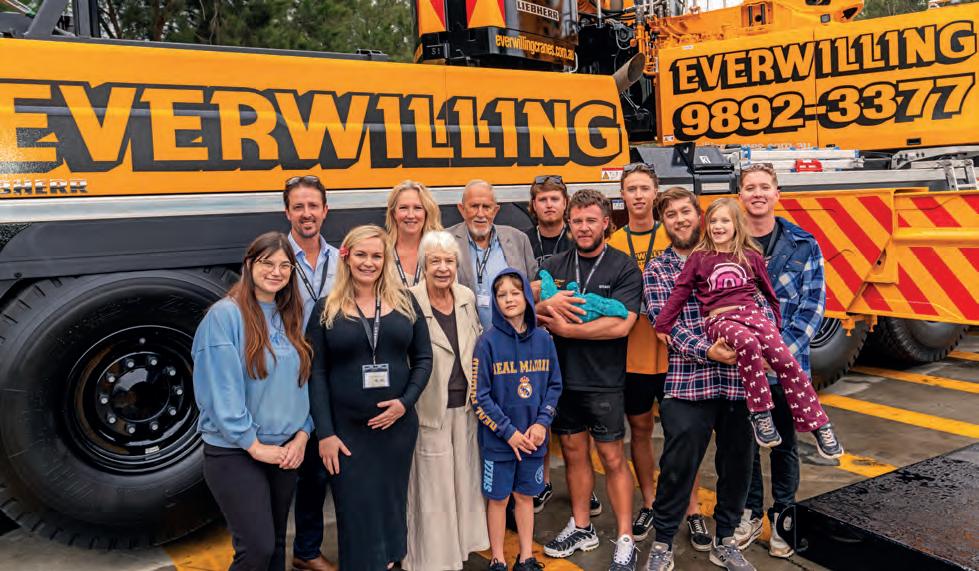
“I look around and all my family is involved in the business. I’ve got grandchildren working in the company now, and probably more coming through later on.”
Gordon said Everwilling’s long relationship with Liebherr ultimately comes down to reliability and support.
“We’re a service business and we have to be ready to work,” he said.
“Liebherr are there when we need them – weekends, nights, whenever there’s a problem. That’s why we keep buying Liebherr cranes.”
And while the LTM 1400-6.1 has only just arrived, Gordon already believes it may not remain the biggest crane in the fleet for long.
“We replaced a 300 with this and the 300 was always busy,” he said.
“Personally, I think in another three or four years there’ll probably be another one of these, or something even bigger.”
AEC has long delivered offshore lift planning. AI now sharpens the workflow, enhancing step-by-step CAD with active simulation and accurate animation.
AI helped AEC engineers build the in-house plugins behind the workflow, opening modelling ground that step-by-step CAD couldn’t reach.
3D laser scans of the live platform, client models and new design elements come together as an active simulation of the asset.
Crane capacities feed in live, so removal options are weighed against safety zones, operational constraints and no-go areas in real time.
Providing accurate AI assisted lifting simulations of real world facilities based on 3D laser surveys, models, and internal developed apps.
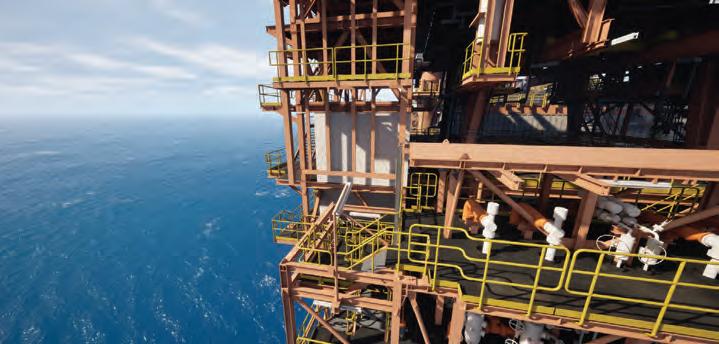
The best alternative route is chosen on evidence, with the dimensional accuracy a lift plan demands.
Every setup is checked by AEC engineers with the domain knowledge to back it.
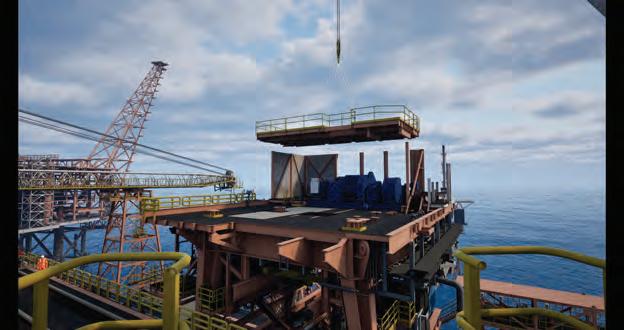


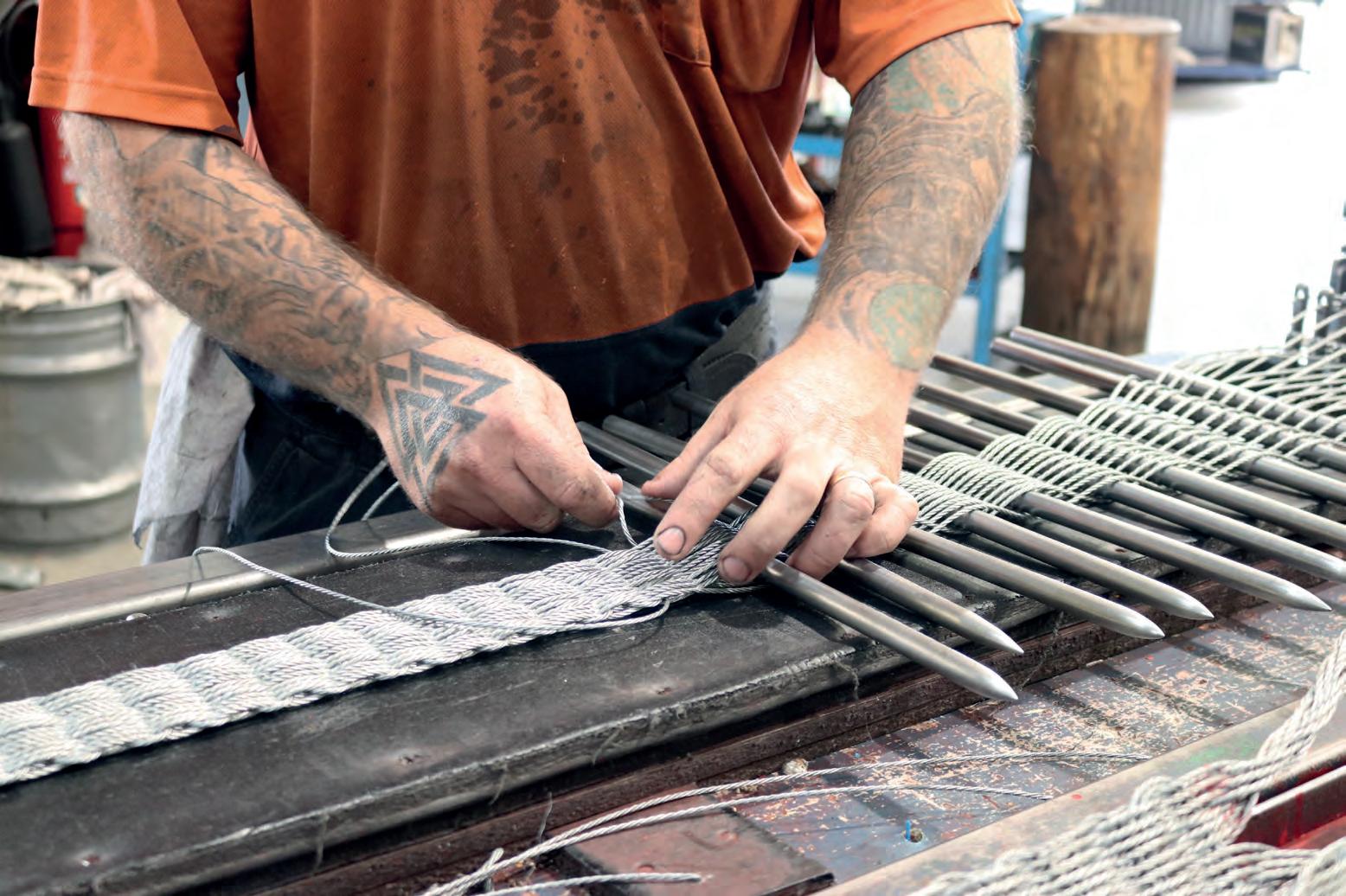
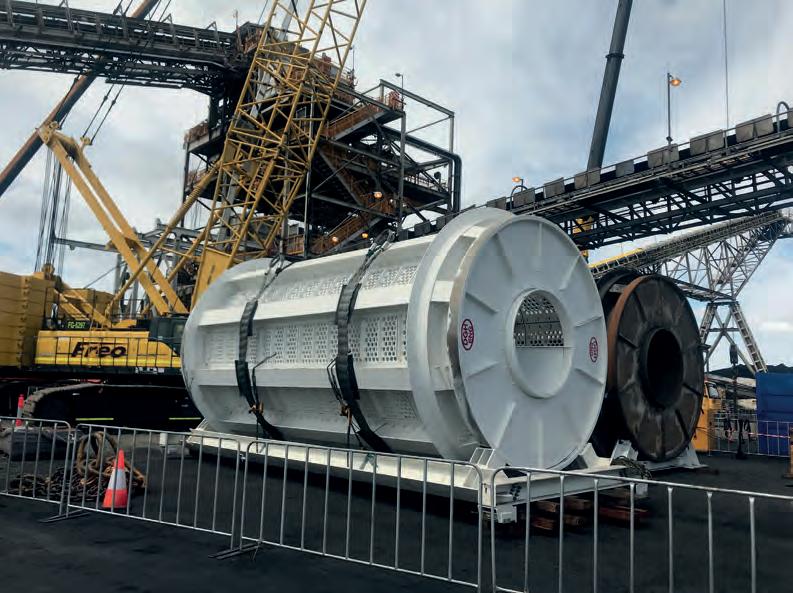
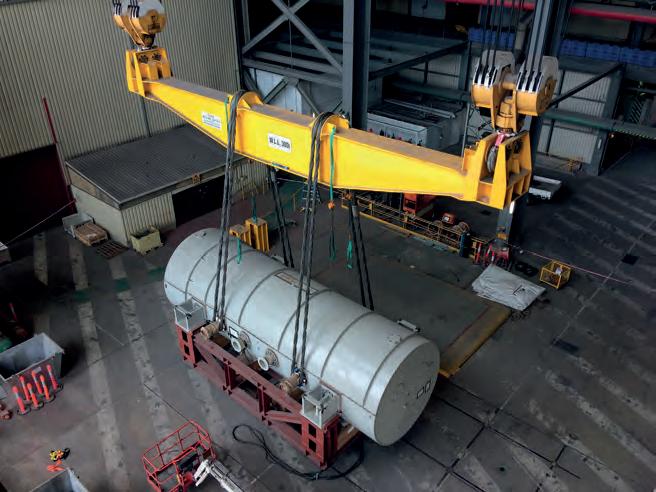
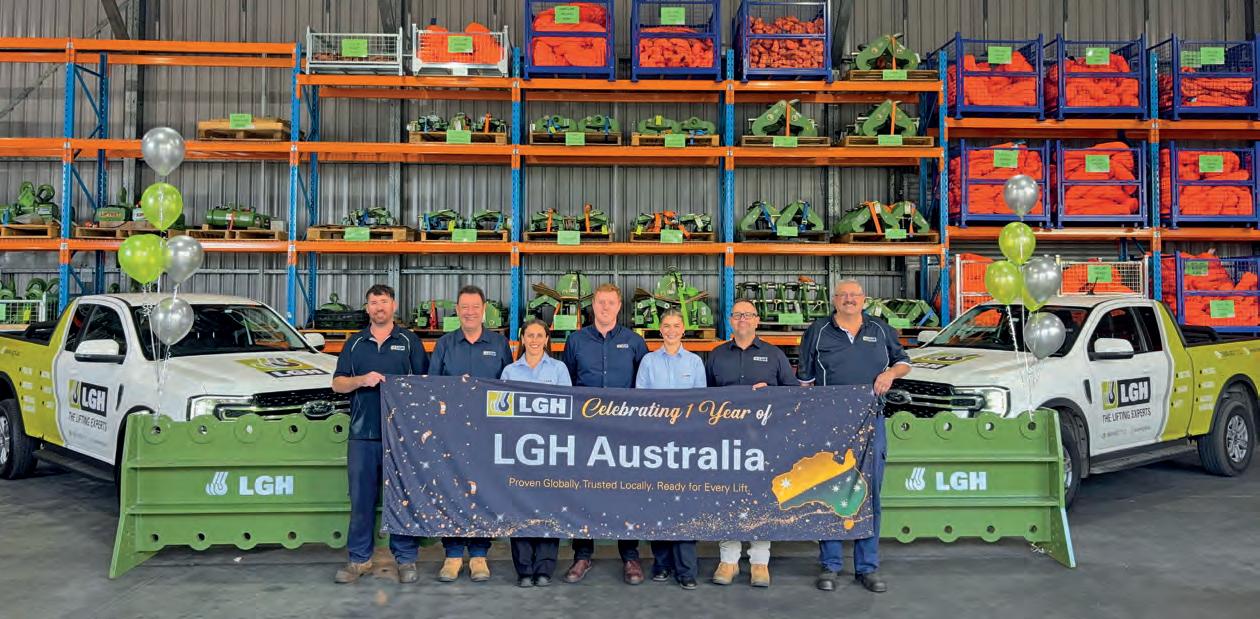
Relationships, trust and delivering on promises have been the keys to a successful first year in business for LGH Australia. General Manager Hadley Price is pleased with the inroads he and his team have made.
A MAJOR FOCUS HAS BEEN DEVELOPING awareness of the LGH brand, the capabilities of the business and this has meant a lot of time spent in front of the right customers discussing their requirements for the projects they are working on.
“When we started, it was just myself and my partner Holly establishing the business locally. We didn’t have a location, warehouse, fleet or customer base, so we had to build everything from the ground up. Looking back now at the team we’ve assembled, the fleet we’ve developed and the projects we’ve been trusted to support, we’re incredibly proud of how far we’ve come in such a short period of time,” said Hadley.
“Being a new business and a new brand to many, our first objective was to make contact, then build relationships, and develop trust before we were able to demonstrate what LGH can offer. We’ve found that when customers begin working
with us, especially when it comes to the larger projects in Tier 1 environments, the response to our approach has been very positive.
“That’s because this level of customer prioritises safety, reliability, and traceability when it comes to hiring lifting equipment, and LGH ticks all of these boxes. LGH operates a specialist rental model which includes premium brands, in-house testing and providing the correct documentation and certification which means every piece of equipment that leaves our facility is fully tested, certified, and tagged.”
The first year has also seen LGH establish an experienced and passionate team.
“Recruiting and developing the team has been a significant highlight as well. We’ve built a team of genuine people who understand the industry and the various markets, and we all share a passion for what we’re trying to build. When we started hiring, we were looking for the right
‘culture fit’, we wanted team members who have a ‘can do attitude’ and who actually care about what they do, day in and day out.
“Starting a new operation has been a huge undertaking and there’s been a lot of work behind the scenes. Everyone in the team has played their role, and we wouldn’t be where we are today without their efforts and dedication to the tasks in hand. The LGH teams from overseas has been eager to support and guide us and provide the backing of the global LGH brand, which has been invaluable,” said Hadley.
He goes on to explain how LGH Australia has made significant investments in its fleet of lifting equipment, increasing the levels of inventory as well as the capabilities within the fleet.
“Being new to the market the fleet initially reflected our ‘bread-and-butter’ items which were based on our experiences overseas. But understanding every market is different and we have been very reactive to the local market’s demands. We’ve been
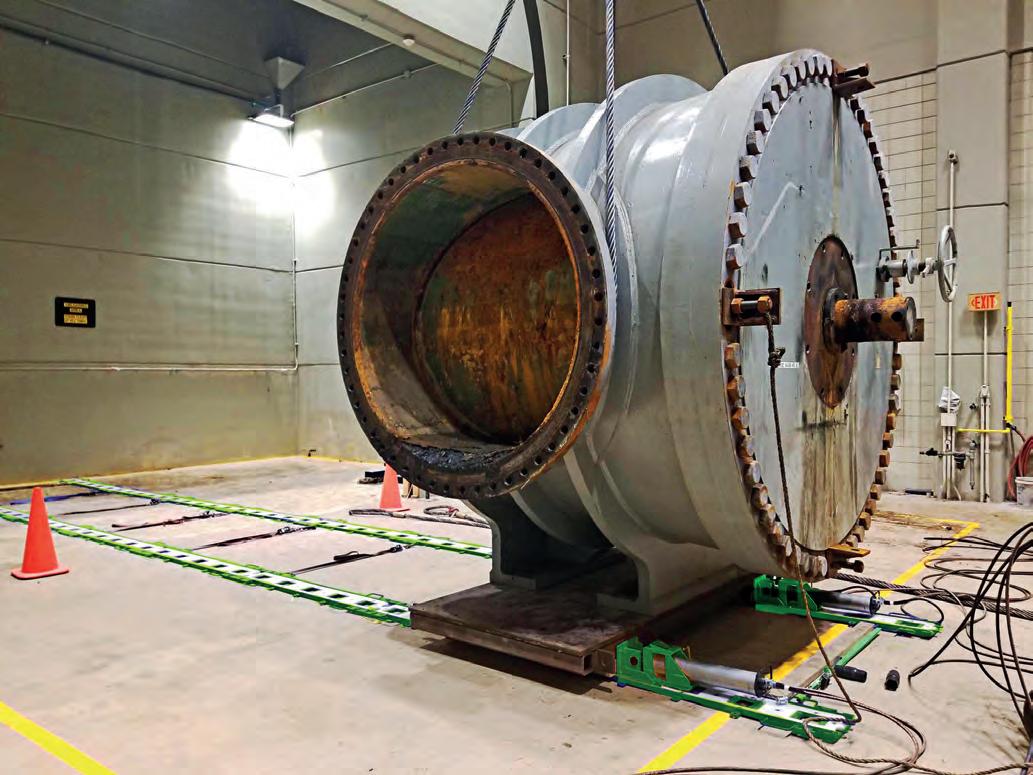
pleased with the level of organic growth we’ve experienced and it has not been limited to New South Wales, we’ve been quoting on projects nationally as well.
“We’re not pushing anything nationally, we’re focused on our backyard and supporting the business that’s local to us, and anything that comes from interstate is an added bonus. We can support and cover any project, that’s not a problem, but it’s not our focus.
“Much of our investment has been as a result of enquiries received. Once we miss out on one or two enquiries because we don’t have the equipment ready for delivery the next day, we’ve gone out and purchased it. We understand that if we’re going to support the market fully, we have to continually re-invest in the business,” said Hadley.
In addition to investing in equipment based on customer demand, LGH Australia has also introduced specialist solutions that have been proven across the wider LGH network internationally. This includes the introduction of the exclusive Hydra-Slide skidding system to the Australian market, as well as the addition of a Multi-Lug
lifting beam designed to support more complex lifting applications.
These investments reflect LGH’s commitment to bringing proven lifting technologies and specialist solutions to the Australian market, while continuing to expand the capabilities available to local customers.
While LGH Australia has continued to invest in its local fleet, customers also benefit from access to the wider global LGH network. One of the key advantages of being part of a global organisation is the combined technical expertise and specialised lifting knowledge developed across multiple international markets.
Over the past year, LGH operations globally have continued to expand their capabilities, including the addition of high-capacity lifting equipment such as the 1500 tonne “Mega Mod” spreader beam in Europe.
Through the wider LGH network, Australian customers have access to specialised lifting solutions and equipment that may not typically be available within the local hire market should project requirements demand it.

As part of LGH’s first year in business the team has been exposed to Australian designed, engineered and manufactured products. Hadley provides his opinion on Australian-made products.
“For us, Australian-made equipment is our preferred option and we would like to buy Australian made all day every day, but unfortunately it doesn’t always make commercial sense. Where we can, we encourage customers to look at utilising Australian-made products, but we also have strong ties with international original equipment manufacturers (OEMs).
“As a business, we are focused on our fleet, and we will work with suppliers that offer products which best align with our brand in terms of quality and availability. From a procurement standpoint, we are an international company and can bring equipment from anywhere, but wherever possible we will support local industry as best we can.”
LGH Australia entered the market at a time when larger international businesses have been acquiring smaller independent rigging houses. Hadley views the timing as ideal.
“We don’t compare ourselves to other companies in the space that we operate and in the industries we service. We are unique in terms of our management style and how we look to support each market that we enter,” he said. “We’ve entered at a time where we felt the market was being monopolised by a number of large multinationals and there were not enough smaller players. Ultimately, we feel a competitive market is healthy – the more competitive it is, the better pricing the end user gets. The moment one or two companies start to dominate, they can charge whatever they want and the customer has to pay.
“We are happy to do our own thing. We are confident in the broad range of equipment we have and the service we provide. Recognition of the LGH brand and what it stands for has been very encouraging and to hear customers to talk about us in a positive way makes it all worthwhile.
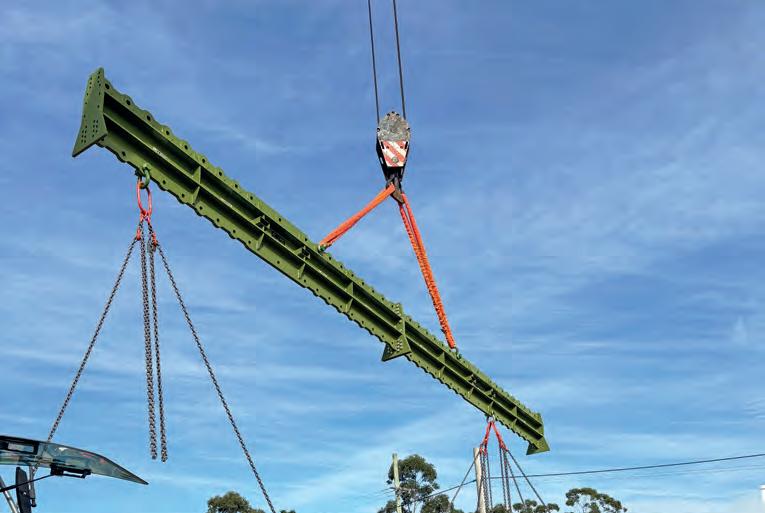
“As a company LGH is quite reserved in terms of expectations. We know that it can take a long time to build trust and some industries are harder than others to break into. The first year has been about us finding our feet, understanding the market, and servicing customers the best way we can.
We’ve had a very encouraging first year, and we are working on a number of interesting projects which is exciting for the team. For us, it is a case of constantly reinvesting in our people and equipment and being in a position to service the requirements of our growing customer base.”
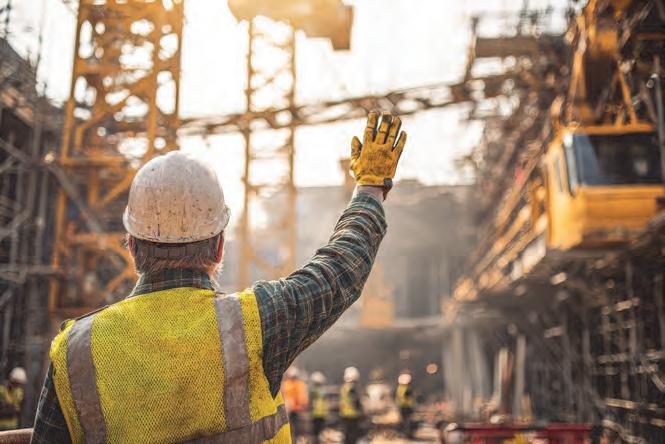


By


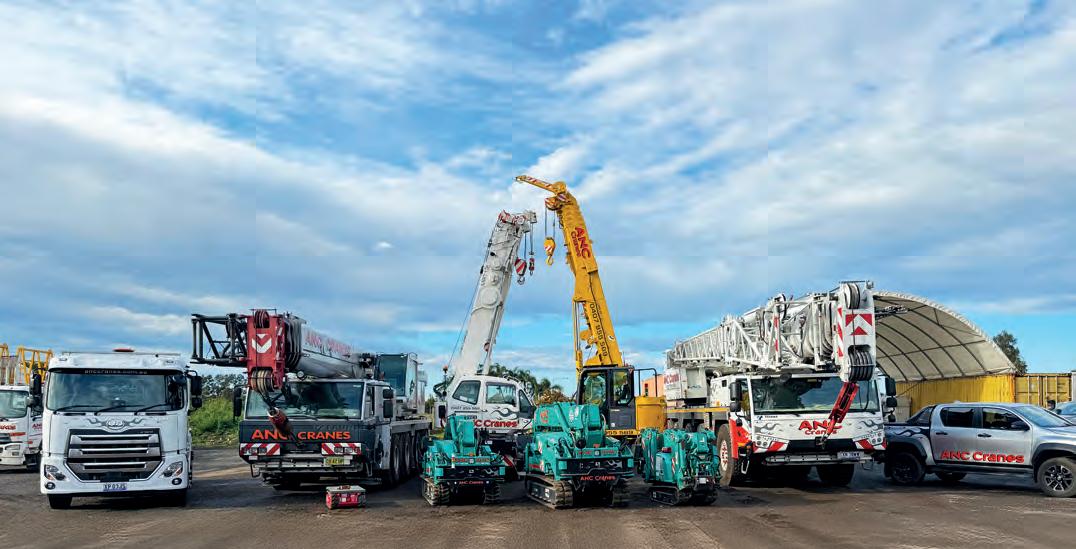
How connected technology is helping crane businesses improve visibility, reduce administration and strengthen compliance.
THE CRANE INDUSTRY HAS NEVER BEEN more demanding. Across Australia, crane hire and rigging businesses are facing increasing compliance obligations, labour shortages, tighter margins and growing customer expectations. At the same time, many operations continue to rely on software that is not suited, disconnected systems, spreadsheets, paperwork and manual processes to manage critical business functions.
The challenge isn’t simply getting the job done. It’s getting the job done efficiently while maintaining visibility across equipment, workers, compliance requirements and financial performance.
For more than 15 years, EQUIPR Software has worked exclusively with crane hire, rigging and operated plant businesses, developing technology designed specifically around the way the industry operates. Rather than adapting generic software to fit the crane industry, EQUIPR’s solutions have been shaped by real-world operational challenges and the businesses that face them every day.
THE RISE OF CONNECTED OPERATIONS
For many crane companies, information is still spread across multiple systems.
Schedulers manage resources in one location. Operators complete paperwork elsewhere. Maintenance records sit in spreadsheets. Administration teams spend
valuable time chasing missing information, processing paperwork and reconciling data.
The result is unnecessary administration, delayed invoicing, reduced visibility and slower decision-making.
Modern crane businesses are increasingly moving towards connected operational platforms that eliminate these gaps and provide a single source of truth across the organisation.
This is where the EQUIPR ecosystem has been designed to make a difference.
As businesses grow, operational complexity grows with them.
Schedulers need real-time information. Managers need visibility across jobs and
resources. Field teams need immediate access to critical job information.
EQUIPR CORE provides a cloudbased operational platform that connects scheduling, equipment, operators, dockets, timesheets and communication into a single environment.
By providing live access to operational information, businesses can make faster decisions, reduce administration and improve communication between office and field teams.
Managing cranes, operators, dogmen, riggers, support vehicles, transport requirements and multi-day projects requires more than a simple scheduling tool.
EQUIPR Allocate was developed specifically for the complexities of crane and operated plant businesses, providing a complete view of resources, availability and project requirements.
By improving visibility across people, equipment and projects, Allocate helps businesses maximise utilisation, reduce scheduling conflicts and respond more effectively to changing customer demands.
One of the biggest operational challenges facing crane companies is the gap between office teams and field personnel.
Below. Guardian provides visibility across your fleet and lifting equipment, centralising managing the health of your assets into a single platform.”
Paper dockets, handwritten timesheets and delayed paperwork create unnecessary administration while slowing payroll and invoicing processes.
EQUIPR Operator places critical operational functions directly into the hands of field personnel through an easy-to-use mobile application.
Digital dockets, timesheets, pre-starts and compliance forms can be completed in real time, ensuring information flows back to the office accurately and without delay.
Maintenance and compliance management has become increasingly important across the crane industry.
EQUIPR Guardian centralises inspections, servicing, certifications, lifting gear records and maintenance activities into a single platform, helping businesses maintain compliance while improving asset reliability and reducing operational risk.
From cranes and vehicles through to lifting gear and attachments, Guardian provides greater visibility over asset health and compliance status, helping businesses stay ahead of potential issues before they impact operations.
Like many growing crane businesses, TopGun Cranes recognised that manual processes were limiting efficiency.
Before implementing EQUIPR Allocate and Operator, the company relied heavily on paper dockets and Excel spreadsheets to manage scheduling and administration.
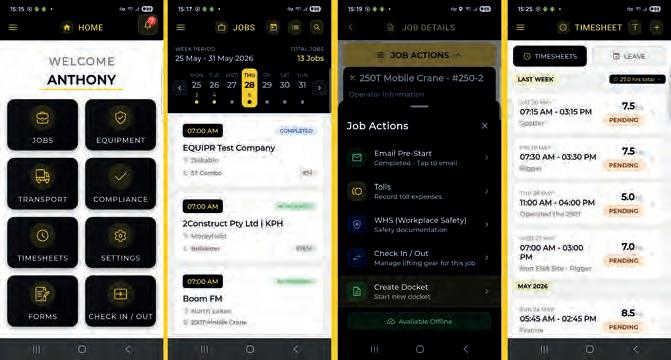
“We were using paper dockets and Excel spreadsheets for scheduling and booking. It was very, very painful.”
– Katelyn Duffy, Accounts and Administration Officer
Following implementation, the business quickly experienced operational improvements.
“It saves me a lot of time sending the jobs off. On the old system, it was all text messages, so I had to send 20 to 30 text messages each night. Now it’s just click, send – it’s done within 10 seconds.”
– Nathan McNeill, Allocator
The company also reduced invoicing turnaround times and improved cash flow through faster processing and better visibility across completed work.
“We’re getting money in quicker than we used to because we’re getting the invoices out quicker, so that’s a big benefit for us. It’s been great.”
– Katelyn Duffy
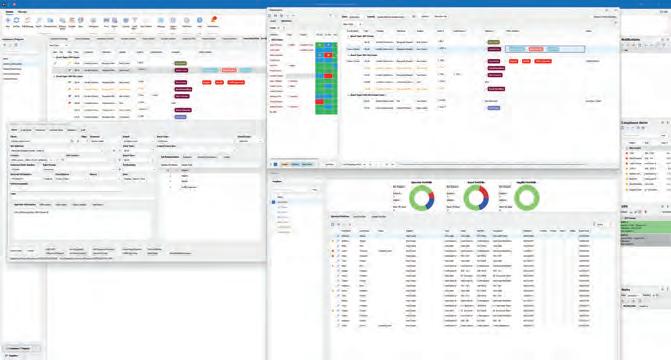
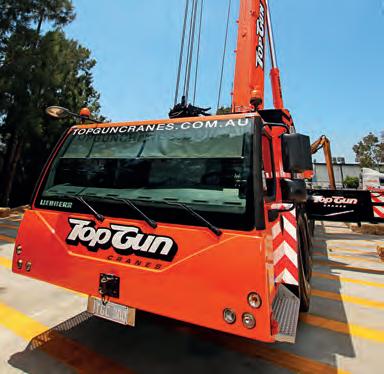
Technology alone doesn’t improve a business. The right technology, designed specifically for the industry it serves, does.
As crane businesses continue to face increasing operational complexity, the ability to connect scheduling, workforce management, operational processes and compliance into a single ecosystem is becoming a significant competitive advantage.
For businesses looking to improve visibility, reduce administration and create a stronger platform for growth, connected operations are quickly becoming the new industry standard.
Plan better. Work Better equiprsoftware.com
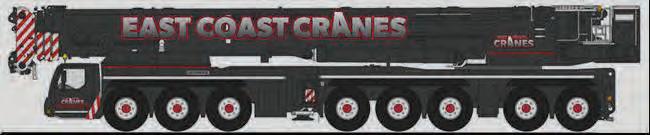

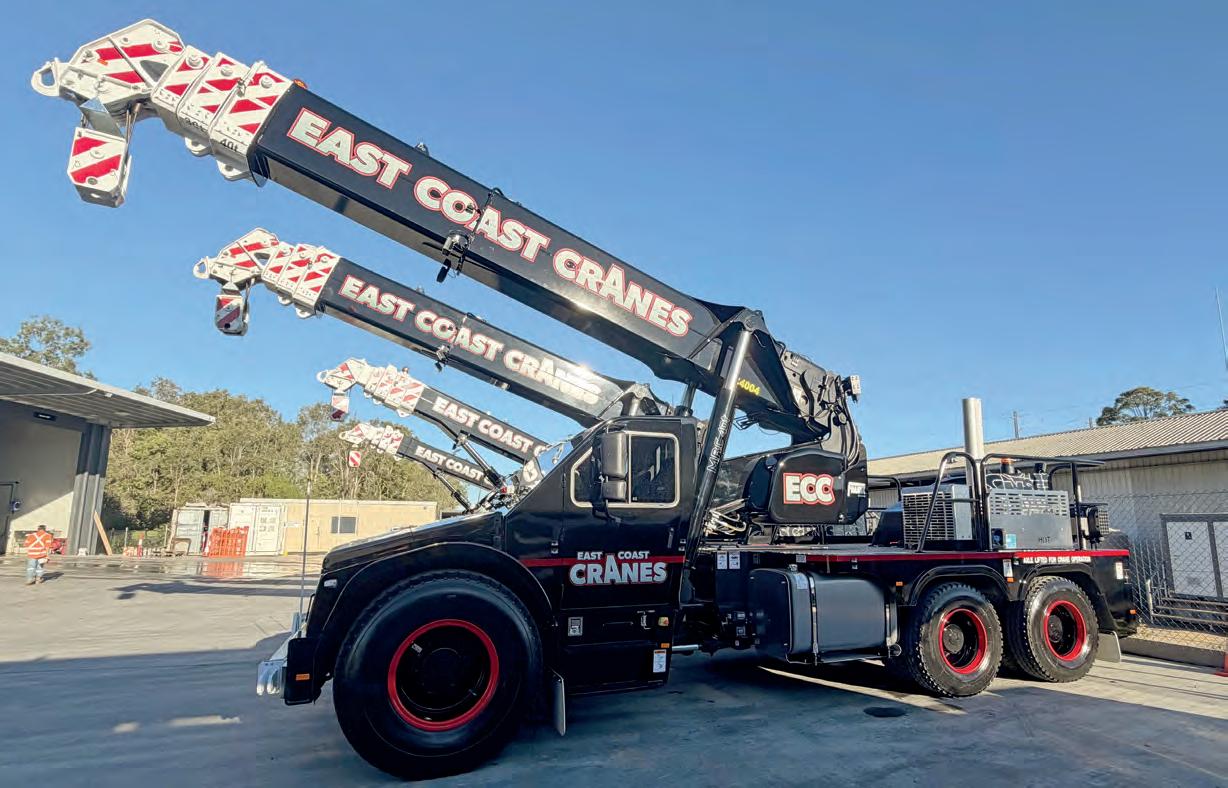
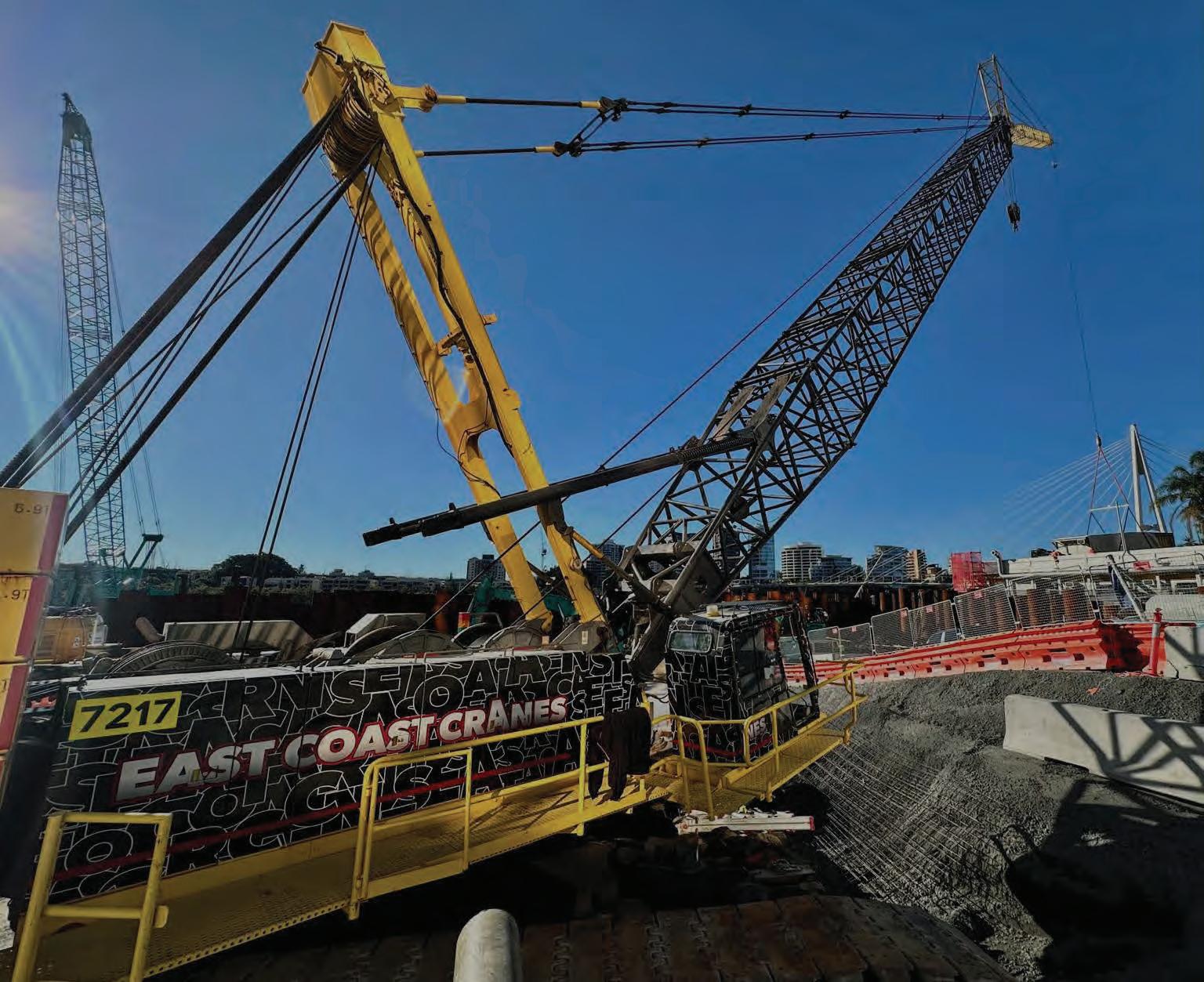
How East Coast Cranes is raising the standards of general crane hire while improving safety, performance and operator capability.
According to Operations Manager Dave Lloyd, the decision to continue investing been driven directly by changes across
“I’ve been in the crane industry for 16 years and the operations manager here at East Coast Cranes for four, and in that time we’ve probably tripled in size,” said Dave.
“On almost a daily basis we are noticing an increase in demand for larger capacity cranes. Components for infrastructure projects are getting much larger and due to the density of cities, access is becoming more difficult, meaning we often need to sit cranes further back to complete lifts. That requires
While the company continues to support its long-standing client base in modular
buildings, maintenance and industrial work, East Coast Cranes has also expanded into larger-scale infrastructure and heavy lifting projects.
Recent additions to the fleet include a Liebherr LTM 1650-8.1, supporting the company’s move further into major infrastructure, tower crane erection and high-capacity lifting projects.
“But pick-and-carry has always been the backbone of this business,” Dave explained.
“Just like the increased demand for larger slew cranes, we’ve also seen a major increase in demand for larger capacity Frannas.”
For decades, the 25 tonne Franna crane was considered the workhorse of the Australian crane industry – compact, versatile and
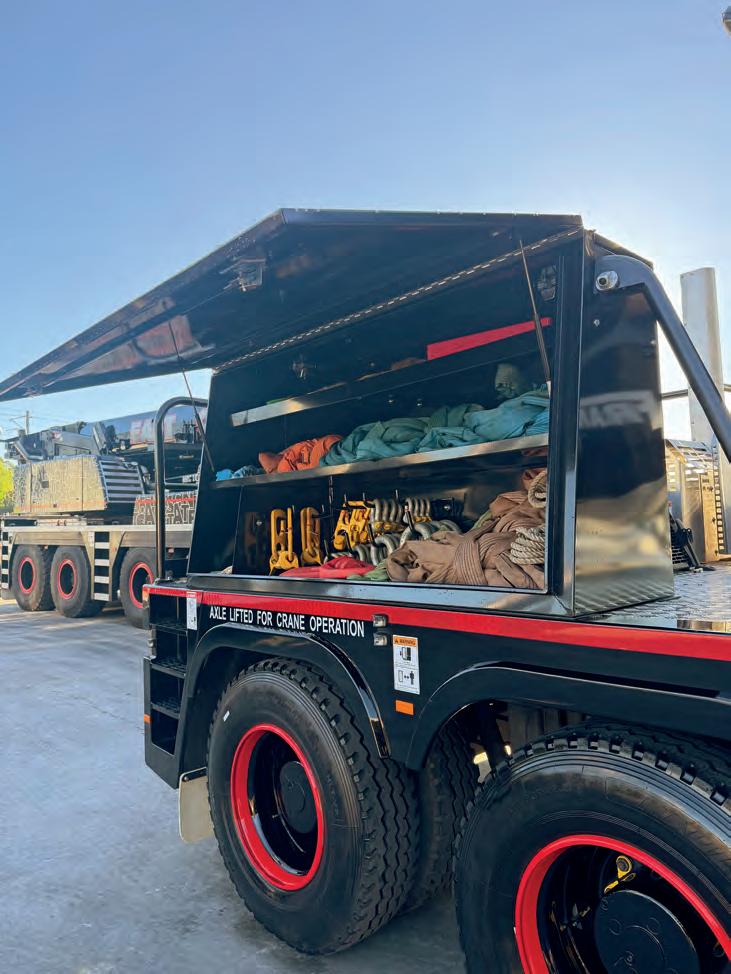
perfectly suited to general hire work. However, the introduction of the Terex Franna AT40 has significantly shifted expectations around what a pick-and-carry crane can achieve.
“When Franna first launched the AT40 with its 40 tonne pick-and-carry capacity, we were a little sceptical,” Dave admitted.
“We wondered whether customers would actually need the extra capacity and whether they would be willing to pay the additional cost. We didn’t need to worry. From the day we received our first AT40, it was busy. We quickly ordered a second, then a third, and now the fourth because demand has been consistently strong.”
Today, the AT40 fleet operates across a broad range of applications including:
• Infrastructure projects
• Precast installation
• Modular building installation
• Shutdown and maintenance work
• Heavy engineering and factory relocations
• Steel erection
• Support work for larger slew cranes
The AT40s also play a critical support role alongside East Coast Cranes’ larger fleet.
“They complement the larger capacity cranes including our 650, 450 and 250 tonne units perfectly,” Dave said.
“They’re ideal for attaching fly sections, assisting with crane assembly and disassembly, loading trucks and handling modular building work.
“With the 40 tonne capacity, we’ve got slew crane capability without necessarily moving into a slew crane. We still retain all the flexibility that comes with a pick-and-carry.”
The move from a traditional 25 tonne class crane to the AT40 brings major advantages for both clients and operators.
For clients, the additional lifting capacity creates greater flexibility across a wider range of projects while reducing the need to upgrade to larger cranes mid-project.
The AT40 offers:
• Increased lifting versatility
• Greater lift capacity at radius
• Faster mobilisation and setup
• Improved safety margins during complex lifts
• Reduced reliance on larger support cranes
• Improved efficiency during shutdowns and maintenance projects
Importantly, the crane still retains the compact mobility and versatility that made
Franna cranes so successful in Australian industry to begin with.
Beyond lifting performance, the AT40 introduces a leap forward in operator comfort, machine control and safety technology.
The updated Dynamic Load Moment Indicator (LMI) system incorporates Franna’s patented Safety Radar technology, providing operators with a clear visual representation of the crane’s safe working area based on actual operating conditions, including front, rear and side slope variations.
While some experienced operators initially needed time to adapt to the new technology, feedback quickly became overwhelmingly positive.
“The more experienced operators who were a little set in their ways found the AT40 a bit daunting at first,” Dave said. “There were comments like, ‘It’s got an alarm for this and a buzzer for that and it won’t let me do this.’ But after a couple of weeks operating the crane, the feedback completely changed. The response became, ‘I love it.’”
Operators have particularly noticed improvements in:
• Crane stability and balance
• Suspension and travel performance
• Braking response
• Visibility around the crane
• Smoothness while travelling with suspended loads
• Ergonomics and overall comfort during long shifts
The additional capacity also allows operators to work within more comfortable lifting percentages rather than continually operating near crane limits.
East Coast Cranes also sees the AT40 as an important investment in the future of the industry, particularly as environmental and emissions standards continue to tighten.
The new AT40-2 features a Euromot Stage V-compliant powertrain capable of operating on Hydrotreated Vegetable Oil (HVO) diesel, significantly reducing
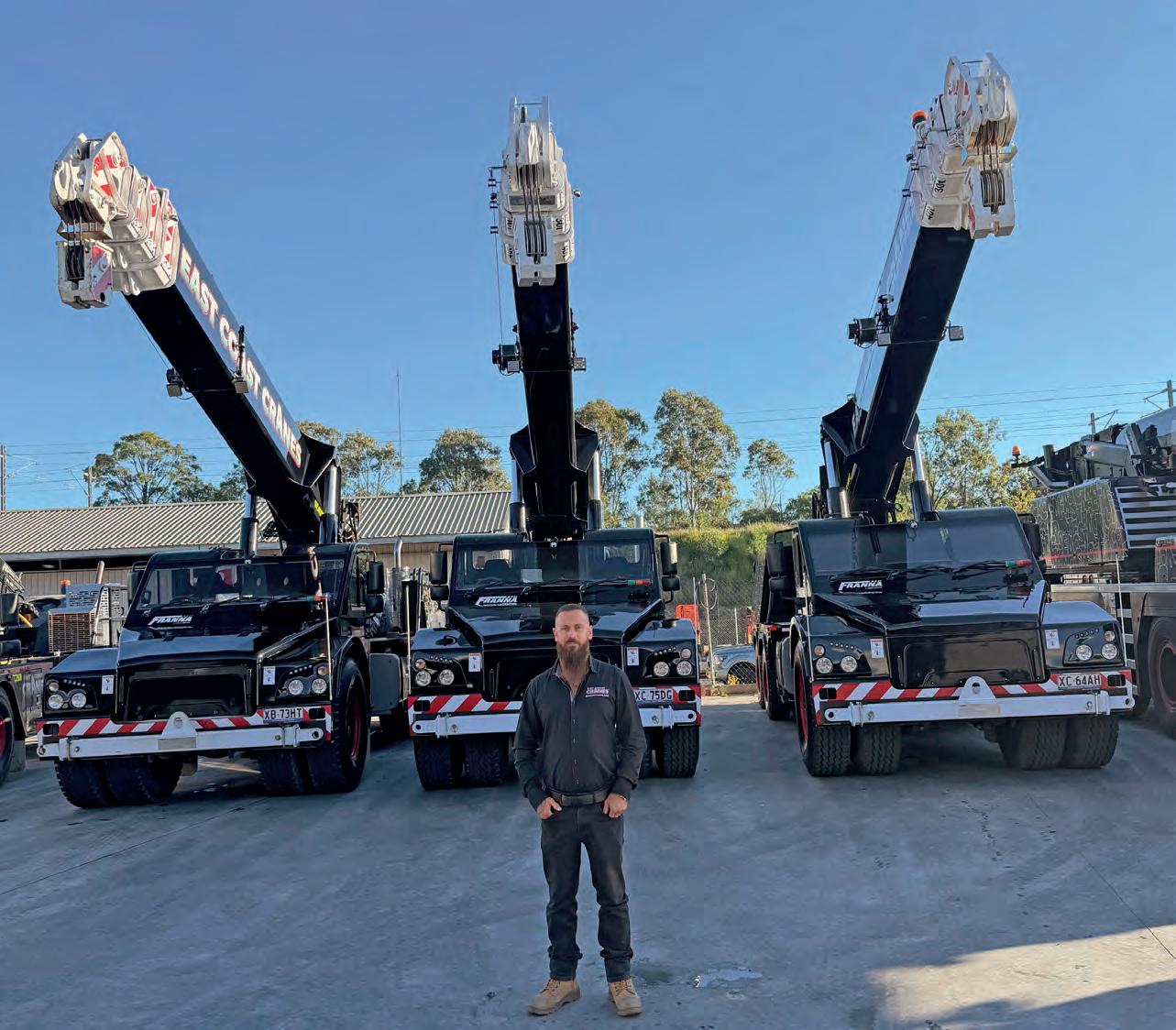
emissions while maintaining performance.
“When the new Australian Design Rules were introduced, we didn’t initially see much reaction from customers,” Dave said.
“But now we’re increasingly having conversations with Tier One clients around fuel usage and emissions reporting.
The AT40-2 certainly helps us with those discussions.”
As major infrastructure projects ramp up across Australia – including preparations for the Brisbane Olympic Games – East Coast Cranes believes investment in modern, compliant equipment will become increasingly important.
One feature generating strong industry attention has been East Coast Cranes’ custom-designed toolbox systems fitted to the AT40 fleet.
Designed in-house based on real operator and site requirements, the toolbox systems maximise practical storage while maintaining crane presentation and functionality.
The systems provide organised storage for:
• Rigging gear
• Chains and slings
• Lifting accessories
• PPE and site equipment
• Operator tools and consumables
Due to strong industry feedback, East Coast Cranes is now also offering the custom toolbox packages to other crane owners and operators looking to improve fleet functionality and presentation.
“The goal is simple – provide practical, operator-designed solutions that improve efficiency across the industry,” Dave said.
Dave also praised the after-sales service and technical support provided by Terex Franna.
“The support we receive from the team at Terex Franna is exactly what we need,” he said.
“Whenever we receive a new machine or model, they spend time with our crews to ensure they fully understand the crane and all its features. Their service and parts support are second to none in our
opinion. If there’s ever an issue, technical support is only a phone call away and, if needed, someone is on the road to our yard almost immediately.”
With four AT40s now operating across the fleet, East Coast Cranes believes the crane is setting a new benchmark for general hire pick-and-carry lifting in Australia.
As lifting requirements continue to evolve, the company remains focused on investing in safer, smarter and more capable equipment that improves outcomes for both operators and clients.
“We believe the AT40-2 is setting a new benchmark for general hire pick-and-carry cranes in Australia,” Dave said.
“The feedback from both operators and clients has been overwhelmingly positive, and with four units now in the fleet, we’re only just getting started.
“The future of general hire isn’t just about bigger lifting capacity – it’s about smarter, safer and more efficient equipment backed by practical industry experience.”
MAINTAINING TRAILER PERFORMANCE DOESN’T HAVE TO BE COMPLICATED. MICHELIN CONNECTED FLEET OFFERS A RANGE OF TOOLS TO OPTIMISE YOUR TRAILER FLEET AND REDUCE COSTLY DOWNTIME.
Whether it’s tracking trailer location in real-time, receiving instant tyre pressure alerts to avoid unexpected breakdowns, or accessing advanced maintenance insights, MICHELIN Connected Fleet keeps your trailers in peak condition. With data-driven solutions that boost fleet efficiency and productivity, you’ll stay ahead of potential issues and maximise asset lifespan.


MICHELIN Connected Fleet is non-invasive sensing through pulse readers around the truck’s wiring.
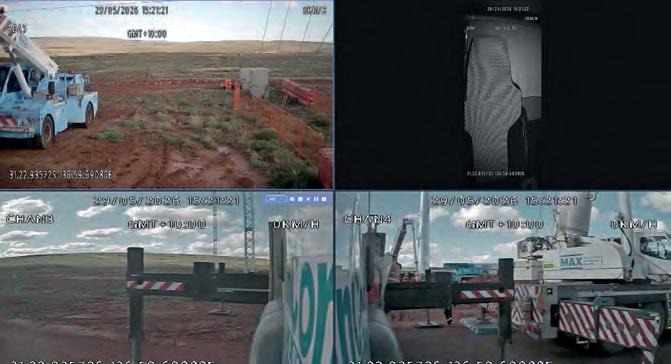
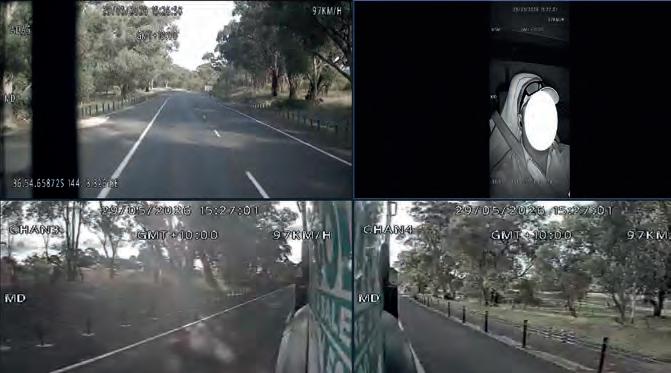
and reverse-facing left side cameras as well as a driver-facing camera and an in cab ‘bubble’ camera.
“Now we can see perfectly how the vehicles behave on the highway and also when they are working on site where damage could be caused to other vehicles or property,” said Damien. “The AI cab camera enables us to monitor the driver’s face for drowsiness, and it detects if they fail to fasten their seatbelt, or if they check their mobile phone when driving. Driver behaviour alerts are sent in real time enabling us to preempt incidents. Audible alerts are provided in the cab and the driver learns what each alert is for. We can also see when the truck is driving, idling or if the elevated work platform (EWP) is being operated.”
Working with MICHELIN Connected Fleet, LinCon now operates a fully integrated telematics system which hooks up with the vehicle’s CAN Bus, providing full and live onboard information on everything that the computer reads in LinCon’s trucks.
“MICHELIN Connected Fleet ‘marries up’ to the trucks very well. It’s non-invasive and you don’t have to cut into wires because it senses through pulse readers around the wiring. We now have full vision on drive, idle and PTO (power take-off) hours which is important as we can see exactly how the engine is actually working when the elevated work platform is operating. It’s already quantified a few issues within the business around our fuel usage, on-road use of fuel, off-road use of fuel, as well as what we use
when we’re idling and operating. This allows us to budget for fuel which is very topical at the moment.”
LinCon keeps records of all activity and if there is any doubt, the team at MICHELIN Connected Fleet is also monitoring the activity and can answer questions about the fleet whatever the time of the day, or day of the week.
The rental model for hardware offered by MICHELIN Connected Fleet is also an advantage.
“With our previous provider, we had to buy all the hardware, and it was our problem to fit and replace it. Now we pay a rental fee, and MICHELIN Connected Fleet looks after everything else. When it comes to camera upgrades and that type of thing, they’ll move them through the fleet and we just keep on moving with the new technology. This will be a significant advantage with technology evolving so quickly,” said Damien.
The camera system provides security for the driver and LinCon. The perception is that if there is an incident and damage caused, the large piece of equipment is to blame.
“We’ve actually had a number of incidents where our operators have been falsely accused of wrong doing and causing damage to property. With MICHELIN Connected Fleet we have been able to provide hard evidence through the vision captured by the camera system that our drivers and vehicles were not at fault. This has saved significant amounts when it comes to insurance claims, which has been an unexpected bonus.
“The service provided by MICHELIN Connected Fleet team has been first rate. I was skeptical at first, but they have delivered on everything promised. The follow-up and backup, the reporting and setting up of monthly meetings and reviews has happened like clockwork.
“They’ve proved to be very proactive and they keep us well informed as they have promised to do. I have said to Franck, that I can see so many applications for MICHELIN Connected Fleet, particularly in the crane industry. If you are faced with the same challenges we have, I’d highly recommend a conversation with the MICHELIN Connected Fleet team.”
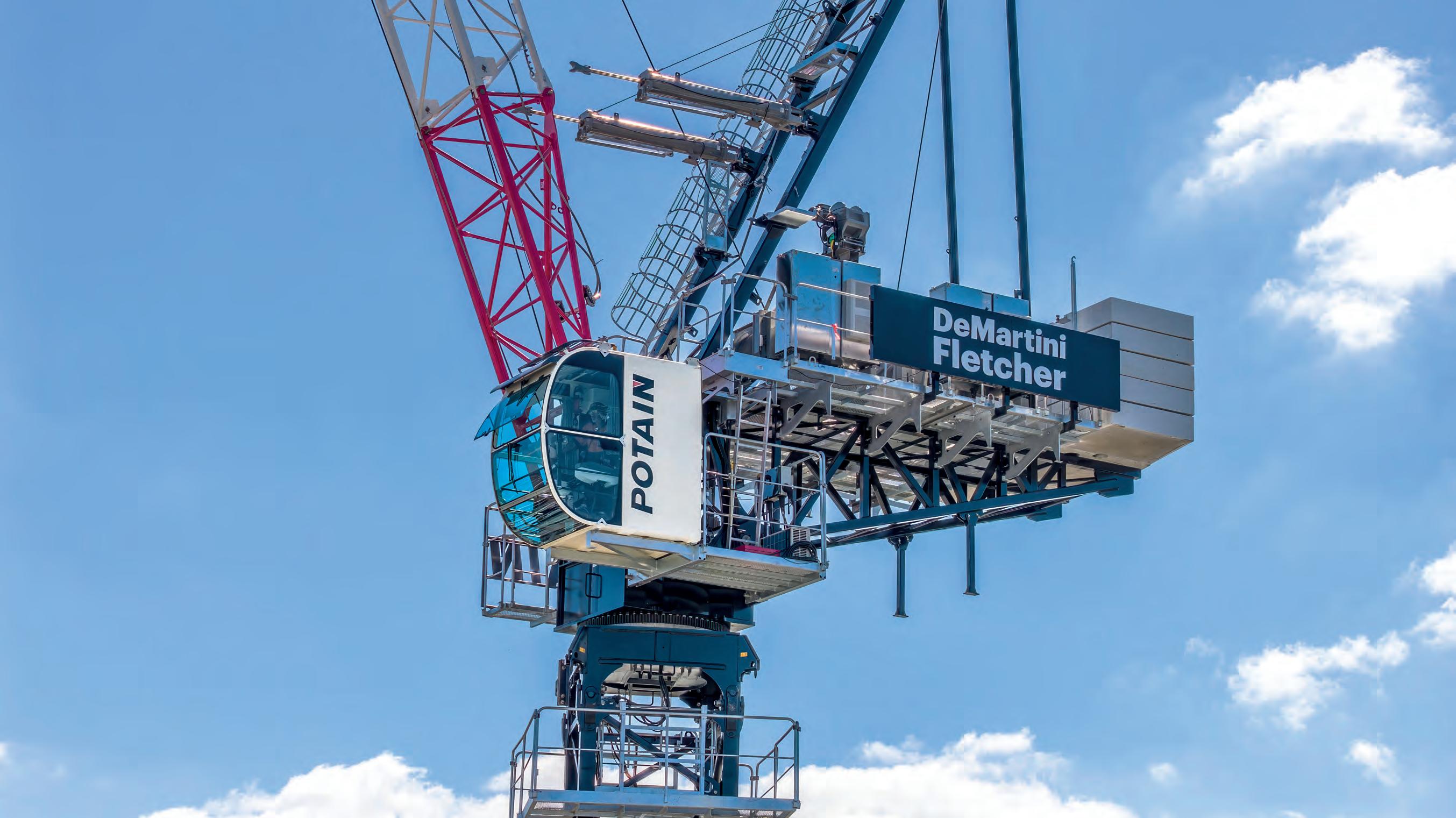

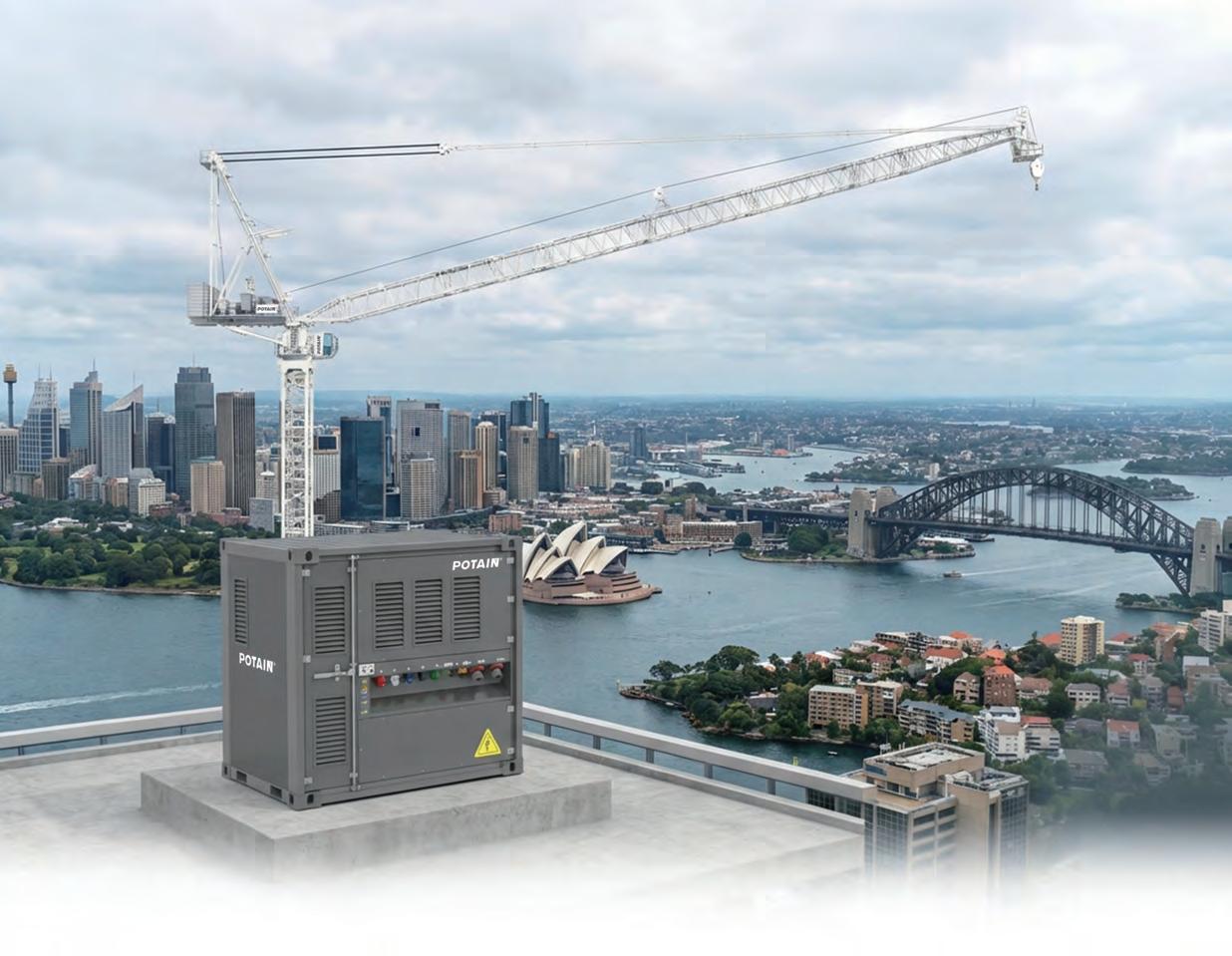
The Potain Battery is a dedicated power solution designed specifically for tower cranes, construction hoists, and other equipment with high startup power requirements. Engineered around real crane operating conditions, it provides a compact, lightweight, and high-output alternative to traditional diesel generators.
Features high C-rate cells delivering up to 10C continuous discharge, ideal for managing sudden load changes and powering inductive equipment.
IP65 and C5 rated for exceptional durability against salt spray, sand, dust, and environmental extremes.
Fewer Greenhouse Gas Emissions
Do not release smoke & soot
The battery cells come with a 5-year warranty
Noise <45dB
Supports remote performance & status monitoring for optimized operation and maintenance.



Max Input Power 5-80kW
Max Output Power(Peak 1 min) 450 kVA
Max Output Current(Peak 1 min) 626A@415V
Output Power(Rated) 375 kW
Battery Capacity 65 kWh Contact Details:
Compared to diesel generators and energy storage batteries, its compact design makes it much easier to transport and deploy on-site, effectively saving valuable job site space.
Integrated fire suppression at battery and cabinet levels, with flammable gas emission and explosion-proof design for maximum safety.
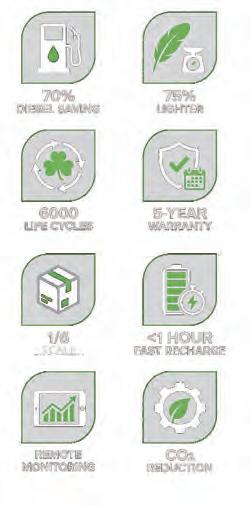
Potain’s recent redesign of its Luffing crane range to better suit the Australian market is paying dividends. Billy Rumble, Sales and Aftermarket Manager, Manitowoc Cranes Australia, explains why the new range is resonating with some of the industry’s largest tower crane businesses.
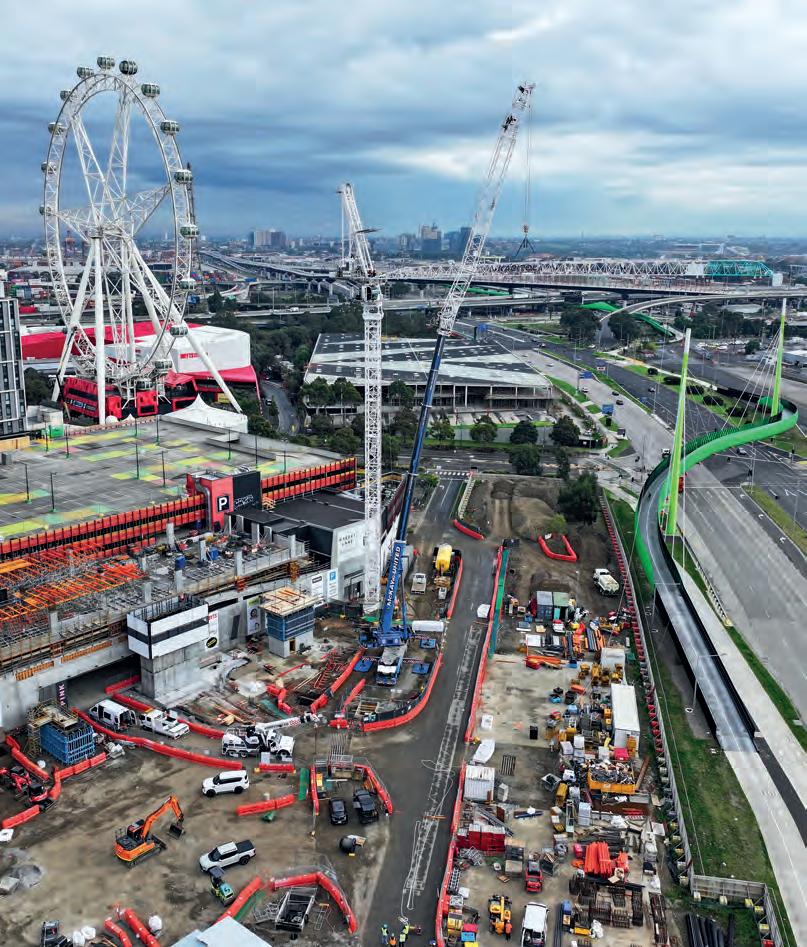
“WORKING WITH THE FACTORY, WE’VE been through a process of redesigning our Luffing crane range so each model better suits the requirements of the Australian market. This has resulted in significant increases in market share across various models. Potain are the largest importer of tower cranes into Australia, having sold 40+ cranes last year and set for a further 60 cranes this year,” said Billy.
“To support this growth, we now have four permanent technicians dedicated to the Potain brand and they are available around the clock supporting our customers which are all over the country. We have also sold more than 25 Potain Power batteries which help power the big electric luffers we are bringing into the country for customers.”
The larger capacities of the luffing range are opening new areas of the tower crane sector not generally recognised as Potain territory, said Billy.
“Cracking into the Melbourne market to compete with Favco instead of other electric cranes has been the goal since I took over sales. Delivering the first MCR515 has been a milestone with four more on the way.
“We are also supplying each crane with a Potain Power battery pack, so the builder only needs to supply 32 Amps to the crane, this gives us a leg up on competition.”
Billy explains how the re-engineering and the development of the Luffer range has resonated with the local market.
“To make the luffing range more relevant to the local market, we provided our engineering team with the feedback we had been receiving from customers. This focused on getting away from moving counterweights, moving to fixed counterweights on the cranes, significantly decreasing our weathervane radius, increasing the load charts and simplifying the erection process.
“It sounds simple but obviously some fundamental changes in design were required, but they have achieved these objectives, which has made the range far more attractive to the market. When you then factor in the increased local
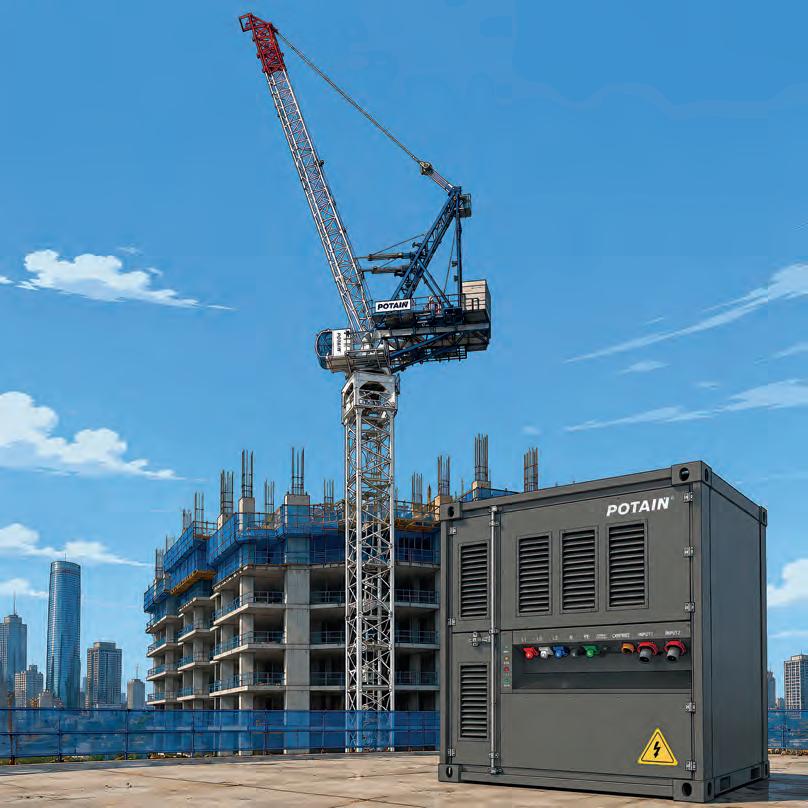
support and the significant investment we are making in spare parts, it doesn’t surprise me that we are bringing big Luffers into every major city across the country,” he said.
According to Billy, relationships with many of the leading tower crane businesses and also property developers, have played a significant role in the growing interest in the Potain brand.
“Having strong relationships with leading tower crane businesses and large property developers have been the biggest drivers for the growth we are experiencing. We are providing Potain luffers and batteries to a number of large developers across the country including John Holland and Citify in Adelaide, Urban Property, ALAND
need to be set up to support them. Our role as the manufacturer, and the role of our partners, is to support the developers, help them make the right decisions in terms of which crane will best suit each project, help train crews and provide the right levels of service 24/7, all year round. Having fully Australian-certified, factory-trained technicians on the ground is a major reason for the significant growth in numbers and the continual growth of the Potain brand. It sets us apart from other ‘new to market manufacturers’ taking risks,” said Billy.
Battery technology is also a key pathway forward for the tower crane sector. Billy discusses the advancements Potain has been making in this area and the impact this technology is having.
“For some time, we’ve been working on battery technology to minimise the need for diesel-powered generators to run electric tower cranes, which rather defeats the purpose and is both costly and environmentally counterproductive. We recently launched a range of batteries which have immediately grabbed the industry’ attention and Potain’s sold 25+ units already. They’ve either been an add-on with a new crane purchase or existing customers have purchased them.
“One of the most popular models is the Potain Power PA375 Pro which can
“Having strong relationships with leading tower crane businesses and large property developers have been the biggest drivers for the growth we are experiencing.”
and Holdmark in Sydney, Atlas in Western Australia, TDD, Paniterre and Taranaway, Siera, DMF in Queensland with TES. The biggest difference between working with a tower crane hire business is the level of support required for the developers. Tower crane businesses’ have their own technicians and they understand cranes. Developers know how to build however, they don’t always understand the intricacies of tower cranes, you
run two of our 25 tonnes luffers from the one battery. This unit is capable of replacing a 500 KVA generator which, if it’s powering one or two cranes, burns upwards of $200,000 of diesel per annum. So not only is this battery technology important for the environment and the wellbeing of those working on the construction site or living near by, Potain Power also makes significant commercial sense,” said Billy.

www.falconcranes.com.au
www.totalequipmentsales.com.au
www.falconfab.com.au
falconmobile.com.au
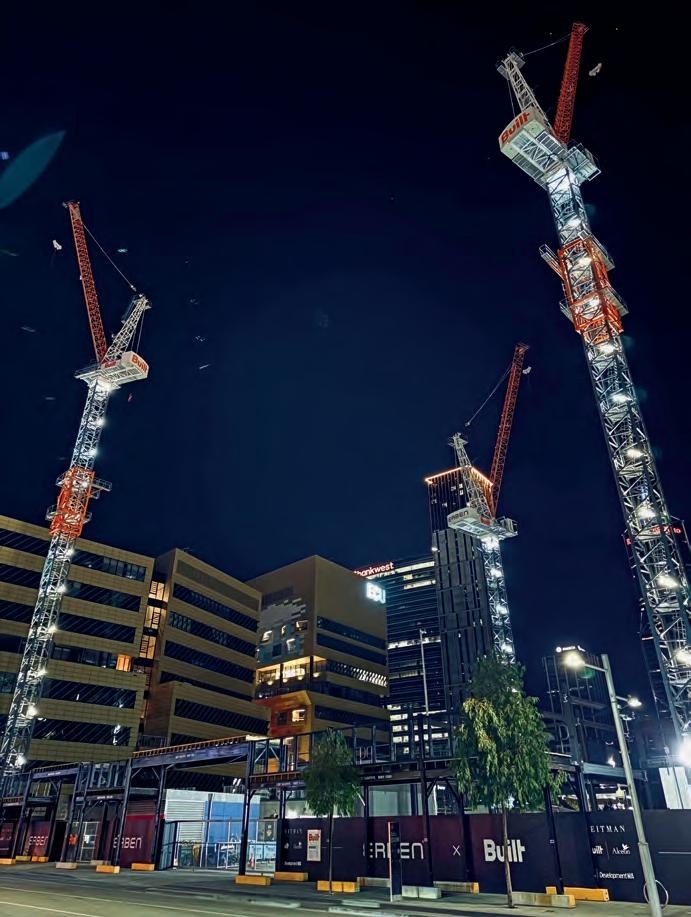
Perth’s construction landscape is changing. Data centres are getting larger, student accommodation towers are becoming more complex, and modular construction methods are demanding heavier lifts than ever before.
FOR WA UNIVERSAL, THAT SHIFT IS DRIVING a deliberate move into the heavy tower crane market.
Over the past 12 months, the Western Australian business has significantly expanded its fleet of large Comansa luffing cranes, positioning itself to service projects that require higher capacities and longer reaches. At the centre of that strategy is the arrival of the company’s largest luffing tower crane to date, the Comansa CML800-64t.
Two of the units are currently working on Canberra Data Centres (CDC)’s Maddington Data Centre project for BUILT, where they have played a key role in handling heavy precast elements throughout construction.
For Managing Director Aaron Holding, the investment reflects a broader change occurring across the construction sector.
“We are increasingly focusing on projects that require heavy-type tower cranes. Previously, we only had two types of heavy tower cranes, but we have recently expanded our fleet with more of these larger units. We have now made significant investments in the larger crane market.”
The Maddington project highlights why that capability is becoming increasingly important.
Both Comansa CML800 cranes operate with 60-metre jibs and are capable of lifting 11 tonnes at a 60-metre radius. The project forms part of CDC’s growing investment in Western Australia, with further data centre developments planned across the Perth metropolitan area.
Aaron said the growth in data centres is just one example of a wider trend toward heavier and more modular construction methods.
“Everything’s becoming modular,” he said.
“The government has invested heavily in social housing projects and every single one of them involves some form of modular construction. Whether it’s precast walls, hollowcore panels or structural components, everything is being modularised now. It seems to be
moving away from the traditional in-situ construction methods.”
The company’s fleet now includes multiple Comansa CML560 units, several CML800 cranes and a growing range of larger luffers designed to support increasingly complex construction programs.
One project demonstrating that capability is the University of Western Australia Student Accommodation development being delivered by Lendlease.
The project utilises two Comansa luffing cranes, a CML165 and a CML190, both operating at freestanding heights exceeding 50 metres.
Elsewhere in Perth’s Central Business District (CBD), WA Universal is involved in one of its most technically challenging projects to date.
The Roe Street Student Accommodation development, also being constructed by BUILT, required three tower cranes to be established within a nine-day period on an extremely constrained site.
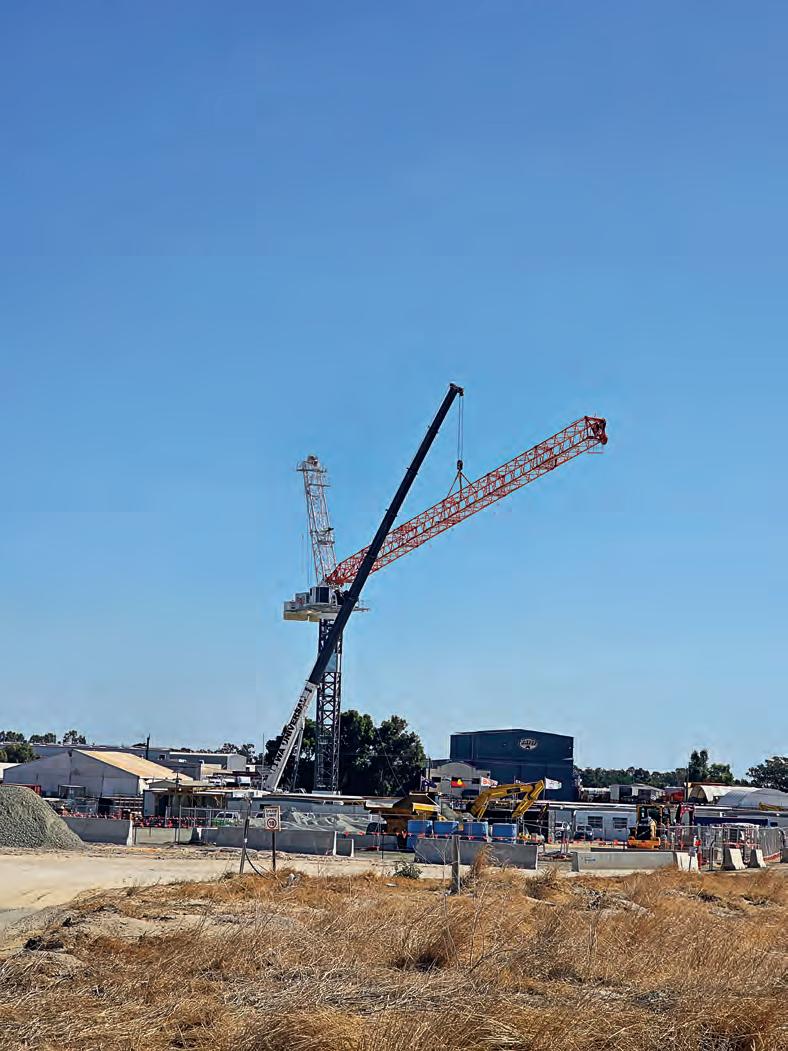
Two Comansa CML310 cranes have been erected at a freestanding height of 62 metres and will later be tied and climbed to 84 metres. Supporting them is a Comansa CML190 positioned on a complex grillage arrangement to service the podium levels.
Adding another layer of complexity, the entire development is being
Increasing use of modular construction methods is driving demand for heavier lifting solutions.
constructed above live rail tunnels. “The opportunities we’re seeing now are projects that require specialised crane solutions and careful planning from the very start. These jobs suit larger luffing cranes and they suit contractors that can provide more than just a crane. Clients are looking for people who can help solve the whole lifting challenge.”
That broader service offering has become an increasingly important part of WA Universal’s growth story.
Alongside its tower crane operations, the company continues to expand its mobile crane, transport and rigging divisions.
Recent additions include two 110-tonne mobile cranes and another 40-tonne Franna, while the transport division has added more prime movers to support growing demand across regional Western Australia.
The company’s transport fleet is heavily involved in the movement of modular housing components and other oversized construction elements, complementing its lifting operations.
Labour shortages remain one of the biggest challenges facing the business.
WA Universal has promoted junior employees into more senior roles, recruited experienced personnel from across the industry and continues to invest in training younger workers entering the sector.
“It’s difficult at the moment, particularly in Perth. We’re bringing young people through and developing them ourselves because it’s something that needs to be done. If the industry’s going to keep growing, we’ve got to keep building that next generation,” Aaron said.
The company is also investing heavily in cleaner site power solutions.
All WA Universal’s Comansa tower cranes operate electrically, while growing demand from builders to move away from diesel generators has led to substantial investment in battery technology.
While fleet growth remains a key focus, Aaron believes the biggest opportunities lie in combining multiple services under one roof.
The company’s expanding rigging division has emerged as one of its fastest-growing business units, allowing WA Universal to offer clients a more complete solution across lifting, transport and installation.
“It’s hard work because there are a lot of moving parts every day, but it puts us in a better position,” he said.
With another eight Comansa CML56036 tonne luffing cranes already on order and major data centre, accommodation and infrastructure projects continuing to emerge across Western Australia, WA Universal’s next phase appears firmly focused on heavier lifts, larger projects and more integrated project delivery.
General Cranes offers vast experience on large scale projects including highrise residential, commercial and infrastructure backed by the performance and reputation of the Favelle Favco brand.
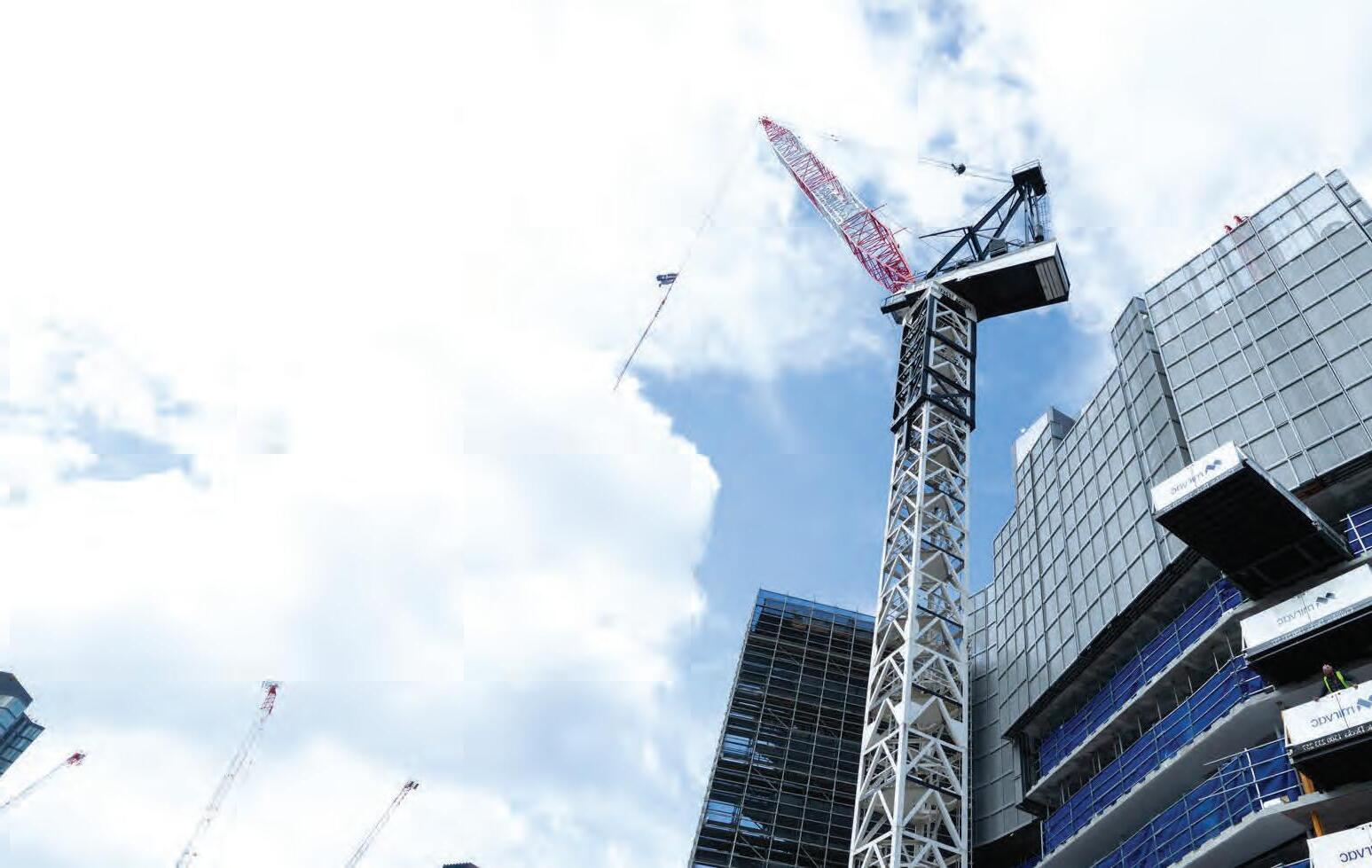
Project risk management plan is established before the delivery of the tower crane and includes safe work method statements.
EXPERIENCED CREWS
General Cranes employs only qualified and experienced workers holding Work Safe high risk competency endorsements to establish, operate and maintain the tower crane fleet.
AUSTRALIAN QUALITY MANAGEMENT STANDARDS
General Cranes maintains systems for compliance to the Australian quality management standard AS/NZS ISO 9001 and safety management standard AS/NZS 4801.
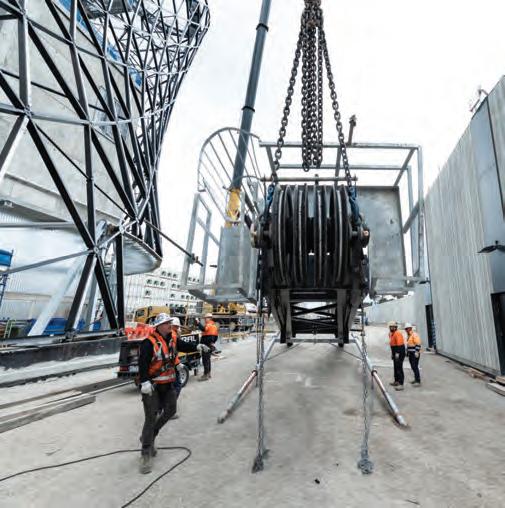
General Cranes has worked on high profile projects in Melbourne, Brisbane and Adelaide. Contact us today and see how we would be your ideal partner on your next project.

General Cranes / Melbourne
T. +61 3 9369 1222 | E. info@generalcranes.com.au
General Cranes / Brisbane
T. +61 7 5577 4455 | E. info@generalcranes.com.au
VTS Cranes is expanding its fleet with new Zoomlion tower cranes to meet rising demand in South East Queensland.
DENIS MAXWELL TOMASEL, THE shareholder and technical manager of VTS Cranes has spent more than four decades in the industry, building, growing and eventually selling one of Australia’s largest tower crane businesses before returning to the sector with a new venture.
Today, VTS Cranes operates a fleet of around 55 tower cranes across South East Queensland, supported by an extensive range of hoists and in-house technical capabilities. As demand continues to grow across the region, particularly in major infrastructure, healthcare and residential developments, the company is preparing for its next phase of expansion through a significant investment in new Zoomlion tower cranes.
Denis’ history in the industry stretches back to 1984 when he established his first crane hire business with just three cranes.
“By 2004 we had grown the business to 75 tower cranes before it was acquired. After that I spent some time outside the industry, but when the opportunity came along to start again with some former employees, we established VTS Cranes in 2013,” he said.
“We started with three cranes again and have steadily built the business. Today we
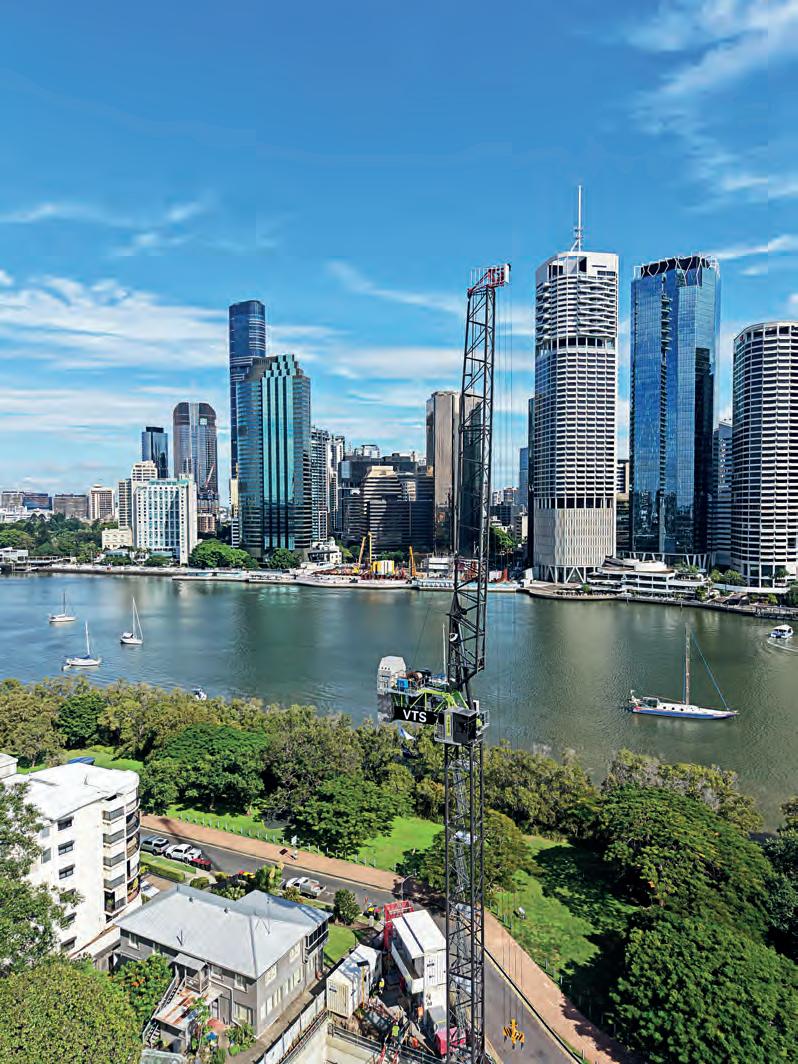
have around 55 cranes in the fleet and we’re continuing to grow.”
While VTS has completed projects throughout the east coast of Australia, the company has deliberately narrowed its focus in recent years.
“We’ve done work from Melbourne through to Cairns, but these days we concentrate on South East Queensland. There is so much activity in this market that it makes sense to focus on our own backyard. Most of our work is now between Noosa and Byron Bay,” he said.
A key part of the company’s approach is maintaining control over as much of the lifting process as possible.
Apart from mobile crane support for erection, dismantling and transport, VTS
performs virtually every aspect of its operations in-house. The business employs boilermakers, electricians, mechanics and hydraulic specialists, allowing it to manufacture components, prepare cranes and respond quickly when projects require support.
That level of self-sufficiency has helped the company secure work on some of Queensland’s largest construction projects.
Among its current projects are the Logan Hospital expansion and Waterfront Place in Brisbane, a landmark commercial development that will eventually utilise multiple tower cranes supplied by VTS.
The company has also secured work on major residential and hotel developments throughout the region, creating demand for larger and more specialised lifting equipment.
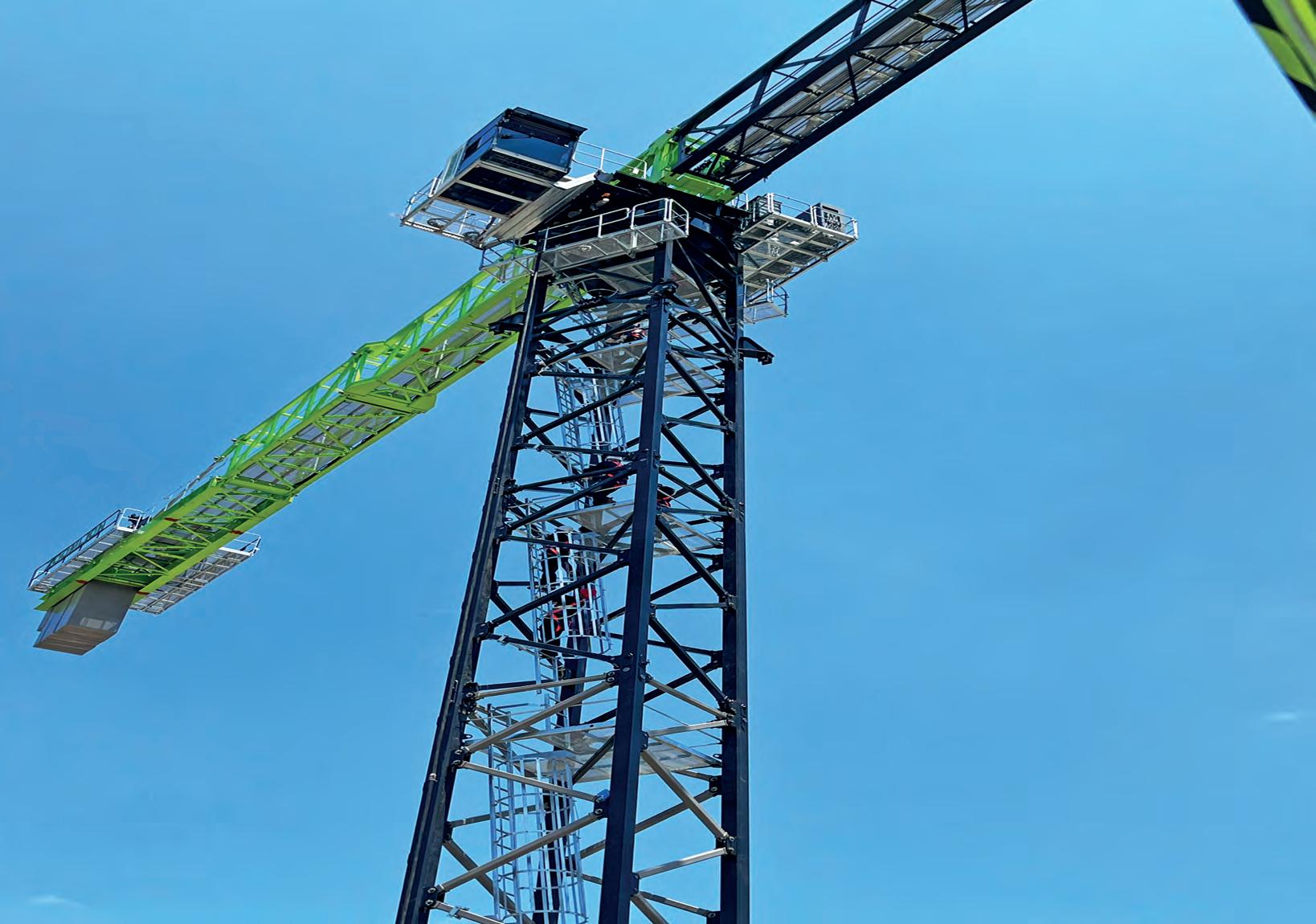
To support that pipeline, VTS recently committed to purchasing nine Zoomlion tower cranes.
The order includes three RL250 luffing cranes, two R800 hammerhead cranes, two L315 models, an L500 crane and an L235 crane configured with narrow tower sections for sites where space is restricted.
The first RL250 has already been delivered and erected on a project at Kangaroo Point, while additional cranes are being deployed across developments on the Gold Coast, Brisbane and Noosa.
For Denis, the decision to invest in Zoomlion was driven by a combination of product quality, local support and technology.
“The first reason was the manufacturing facility. I visited the factory in 2024 and was very impressed by the amount of automation and quality control in the production process,” he said.
“When you’re assembling cranes, tolerances are extremely important. You can
always force a pin into a hole, but if things aren’t manufactured accurately it creates unnecessary work and problems down the track. What impressed me was how well these cranes are built and the consistency of the manufacturing.”
Local support was another major factor.
“Zoomlion has invested in Australia. It has facilities in Brisbane, Sydney, Melbourne and Adelaide, and that gives us confidence because support and spare parts are available locally,” he said.
“In our industry, if a crane breaks down, you can’t tell a builder that parts are coming from overseas and they need to wait a week. That simply doesn’t work. Reliable local support is critical.”
The availability of spare parts was particularly important for a business that prides itself on maintaining uptime.
“With some fleets we carry millions of dollars’ worth of spare parts because we have to guarantee service to our customers,” he said. “With Zoomlion, part of the arrangement includes access to critical spare
parts, which reduces that burden and helps ensure we can keep cranes operating when customers need them.”
Technology also played a role in the decision.
The new cranes include remote monitoring capabilities that provide operators and managers with real-time information on crane activity, operating hours and site conditions.
“So far the experience has been excellent,” Denis said.
“I can monitor the crane from my phone. I can see things like wind speed, operating hours and what’s happening on site. Features like that make managing equipment much easier and give us better visibility of how the crane is performing.”
He said Zoomlion’s willingness to provide a complete package also helped differentiate the company from other suppliers.
“Things like design registration and local compliance are all handled as part of the process. It’s a full-service approach rather than simply delivering a crane and leaving the rest to the customer,” he said.
The investment comes at a time when Denis sees strong long-term demand for tower cranes across Queensland.
Major infrastructure projects, healthcare developments and preparations for the Brisbane Olympic Games are expected to generate significant activity over the coming years. At the same time, residential construction remains strong across South East Queensland.
“The outlook is very positive,” he said.
“We’ve got hospitals, Olympic infrastructure, arenas and a very strong residential market. There are a lot of projects being planned several years in advance and we’re already involved in discussions about work extending into 2028 and beyond.”
That visibility gives VTS confidence to continue expanding its fleet, with another Zoomlion crane already earmarked for a future project.
“Our job is to make sure we have the equipment and the support structure to deliver that. The investment we’re making now is about being ready for the opportunities that are coming.”
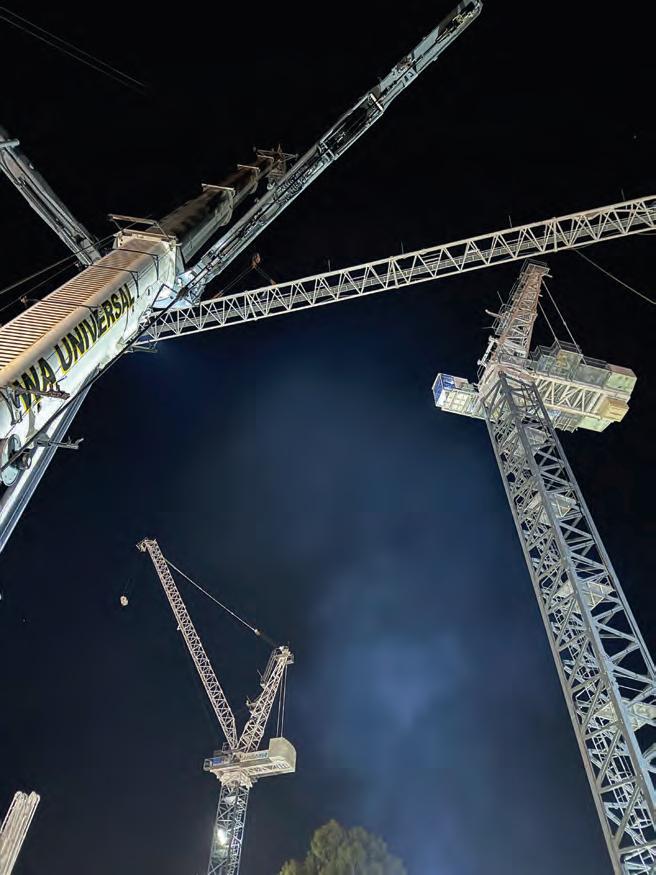
WA Universal is Westerns Australia’s preferred rigging, crane and transport provider. We serve a wide array of industries, including construction, mining, energy and infrastructure, offering solutions tailored to the specific needs of each sector.
OUR FLEET OF 70 PLUS CRANES INCLUDES MOBILE, TOWER AND MINI CRANES WHICH MEANS WE ARE EQUIPPED TO HANDLE PROJECTS OF ANY SIZE OR COMPLEXITY.
WITH THE CAPABILITY TO MANAGE COMPLEX LIFTING AND TRANSPORT CHALLENGES WE ENSURE EVERY PROJECT IS COMPLETED TO THE HIGHEST OF STANDARDS.
The Melbourne-based tower crane specialist General Cranes is continuing to expand its fleet of high-capacity Favelle Favco cranes as demand from data centre and infrastructure projects grows.
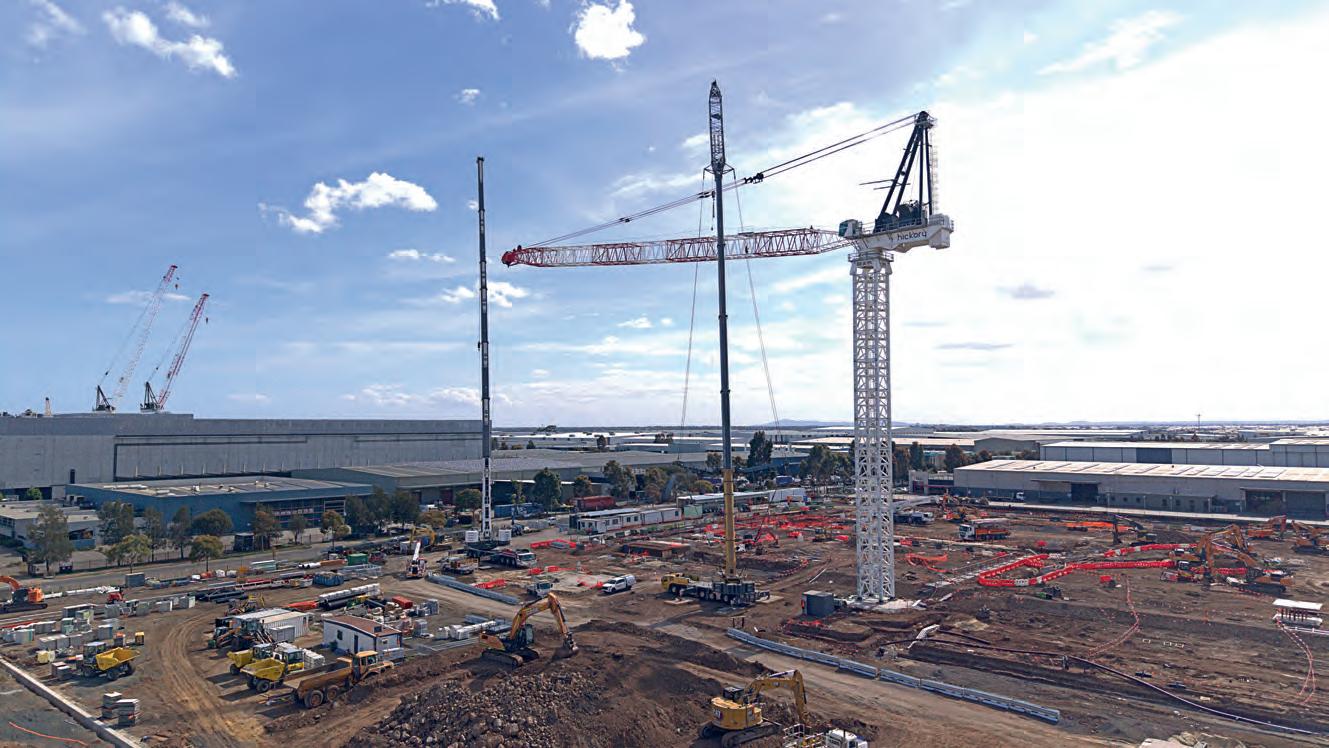
remains a major part of the market, General Manager George Micevski said larger and more complex projects are increasingly driving fleet decisions.
“Data centres are still one of the biggest drivers for us. The volume of work coming from that sector continues to grow and that’s what is behind these investments. We need larger-capacity cranes as the projects are getting larger and the lifting requirements are becoming more demanding,” he said.
The latest investment includes additional Favelle Favco M1280D and M860DX tower cranes, models that have become increasingly common across major projects in Victoria.
One of the new M1280D units was recently deployed on the North East Link
project, supporting vent structure works. Most of the incoming cranes, however, are expected to head directly into data centre developments. For George, the reason is straightforward.
“There isn’t any special technology requirement behind it. It’s really capacity that is driving everything. The components being lifted are getting larger and heavier, so clients need cranes that can perform efficiently at those loads,” George said.
“That’s where these machines fit into the market.”
General Cranes currently has around 60 tower cranes operating across Melbourne. According to George, the workload is now split almost evenly between residential projects and a combination of data centres and infrastructure developments.
The company’s increasing presence in these sectors has been supported by years of investment in larger tower cranes. That investment strategy remains closely tied to Favelle Favco, a brand General Cranes has backed for years.
General Cranes operates one of the largest Favelle Favco fleets in Australia, ranging from smaller M50R recovery cranes through to the heavy-lift M1280D models. While alternative crane technologies enter the market, George said customer demand continues to favour Favelle Favco’s diesel-hydraulic machines.
“We still believe they are the best performing tower cranes available. A lot of other equipment can look similar on paper, but once out on the field the speed and performance of the Favelle Favco is very difficult to match,” he said.
Larger precast components and heavier loads are creating new opportunities for General Cranes.
While Victoria remains the company’s primary market, General Cranes is starting to see opportunities further north.
The company is receiving enquiries from interstate, particularly for larger cranes that can support major industrial and infrastructure projects. Mining and oil and gas are sectors George sees as potential future growth areas.
“We’re looking at other sectors. Mining and oil and gas are areas we’d like to explore further, and the larger cranes give us access to opportunities that weren’t available to us previously. We’re starting to see enquiries from outside Victoria and that’s something we’ll continue to assess,” he said.
Queensland is attracting particular attention. According to George, residential construction activity remains stronger there than in Melbourne or Sydney, helped by population growth and preparations for the Brisbane Olympics.
“Queensland is noticeably busier from a residential perspective. There’s a lot of movement into the state and obviously the Olympics are helping drive activity as well. If we expand further into that market, we’ll focus on larger projects where the bigger cranes can add value rather than trying to compete across every segment,” he said.
Supporting that growth is a workforce of about 80 employees and a support network that extends beyond Victoria.
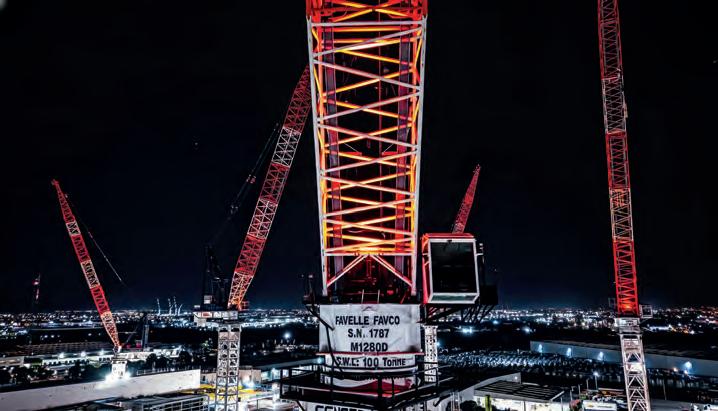
Following the acquisition of LCR’s tower crane business, General Cranes retained a Queensland workshop that now carries out fabrication, crane preparation and preservice work before equipment is deployed to projects.
The additional facility has become increasingly important as fleet utilisation continues to rise.
“Our Melbourne workshop is extremely busy, so having that support operation in Queensland helps us keep up with demand. It allows us to prepare cranes faster and get equipment ready for projects, which is important when the workload is as strong as it is now,” he said.
For now, the company’s focus remains on meeting demand already in front of it.
Additional crane purchases are expected, with General Cranes continuing to modernise and expand its fleet as opportunities emerge. The next round of Favelle Favco deliveries is expected to arrive in early 2027.
“At the moment there’s more work available than we can comfortably cover,” George said. “That’s a positive problem to have, but it also means we need to keep investing and planning. For the foreseeable future, data centres, residential construction and infrastructure will continue to be the key markets for us.”

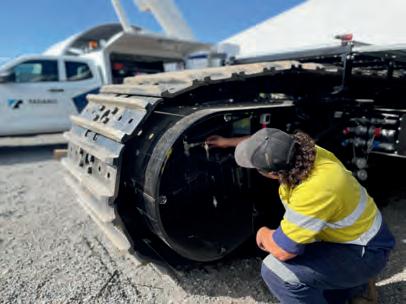
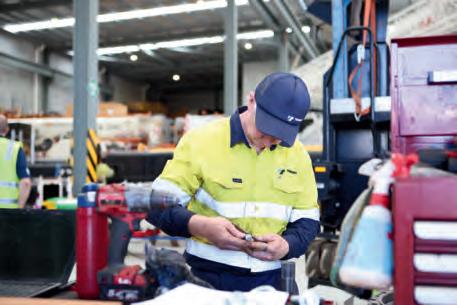
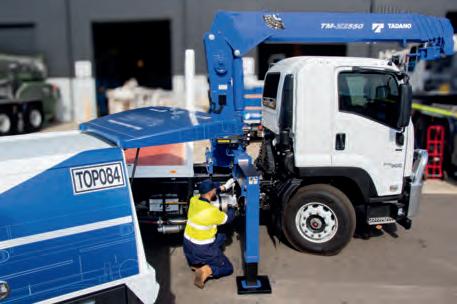
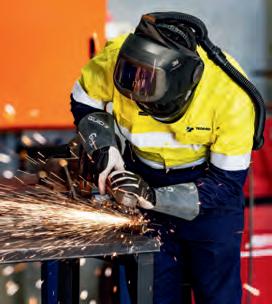
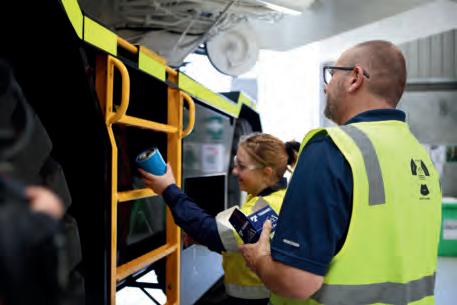
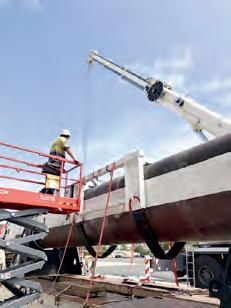
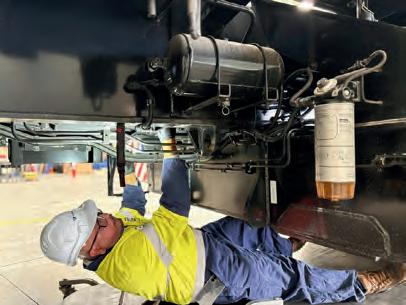
We’ve built the support structure - we’ve got you covered.
Fully equipped service vehicles ready for rapid response
At Tadano, reliable support isn’t a new initiative, it’s something we’ve invested in for years. Today, customers benefit from a service network that’s already proven, already in place, and already delivering.
Factory‐trained OEM technicians committed to keeping you moving
Four dedicated service workshops + national parts warehouses located in Sydney, Melbourne, Brisbane & Perth
Genuine OEM parts for long-term safety and performance
Training upon request, customised to suite
Wherever your crane is working, Tadano delivers dependable support backed by experience, infrastructure and readiness, not promises, but performance.
Less downtime. More productivity.
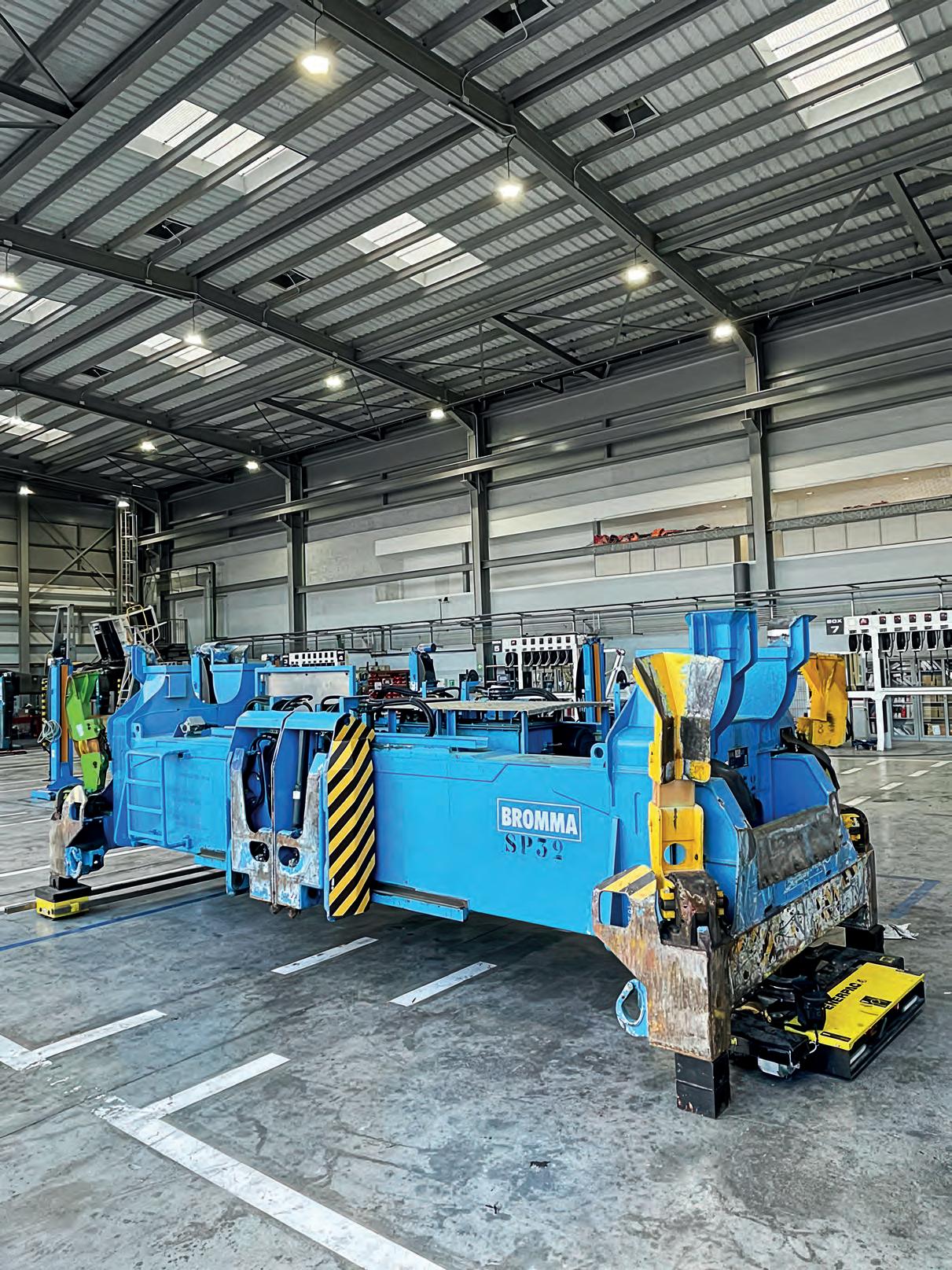

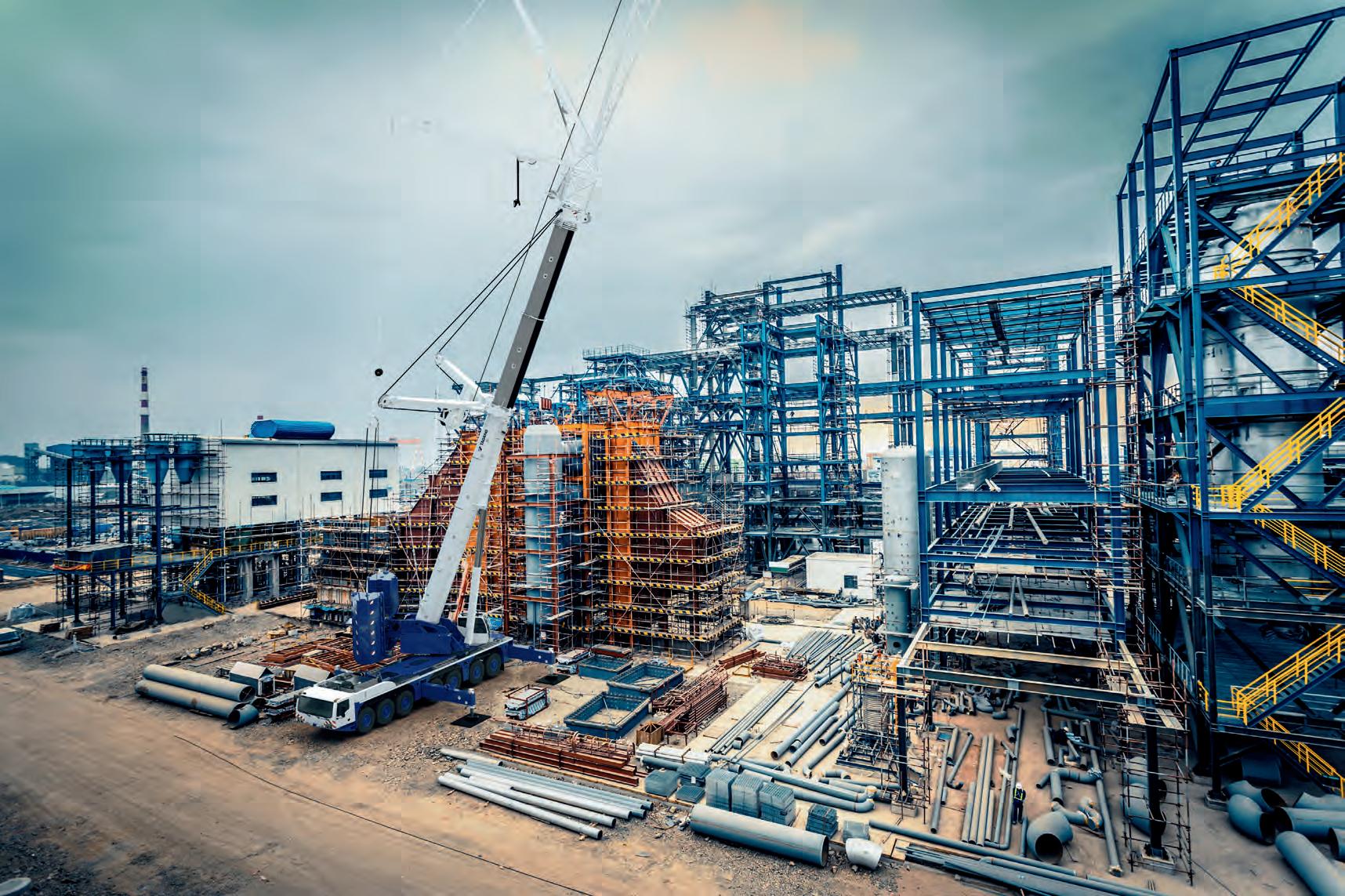
Enerpac E-mover streamlines container spreader maintenance for APM Terminals Spanish
MAJOR GLOBAL PORT AND CONTAINER terminal operator, APM Terminals, is using an Enerpac EMV-Series (E-mover) skate for container handling spreader maintenance at its terminal in Valencia, Spain. The wirelessly operated skate allows APM Terminals to streamline spreader maintenance as well as providing an improved work environment for asset maintenance technicians.
Attached to a port crane, the container handling spreader is a machine designed to lift shipping containers weighing up to 45 tonnes. In the busy APM Terminals Valencia,
operating 24/7 and handling up to 1.4 million TEUs (6.1 metres equivalent units) containers each year, efficient maintenance is essential. Until now, the spreader was maintained outside the terminal’s workshop as there was no easy way of moving the 13 tonnes, 6 metre long and 2.5 metre wide tool into the building. Moreover, this meant that only one spreader could be maintained at a time. By using a combination of Enerpac E-mover, equipped with a 50 tonne capacity hydraulic cylinder, and MLS-Series load skates, each container handling spreader is easily lifted
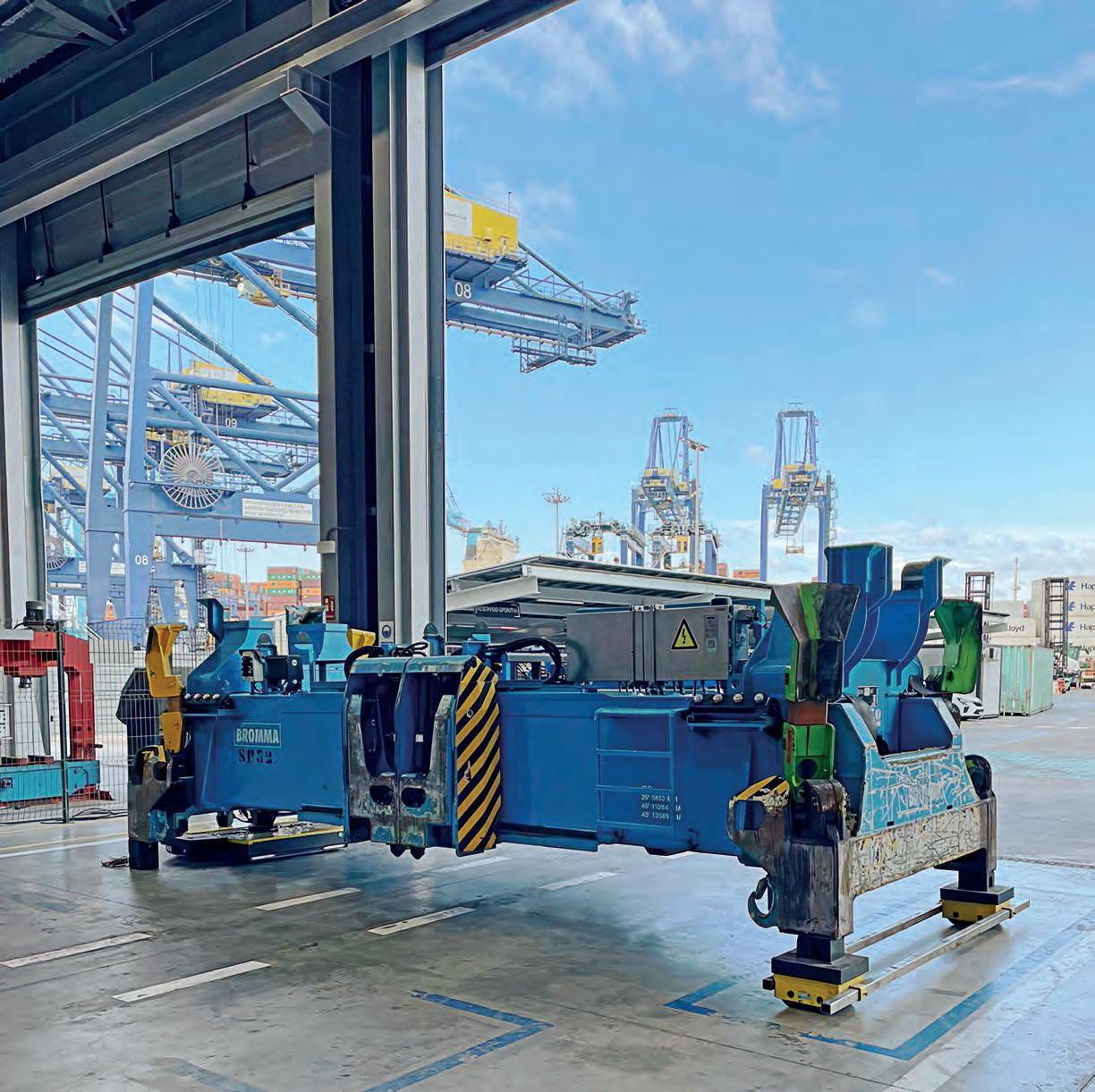
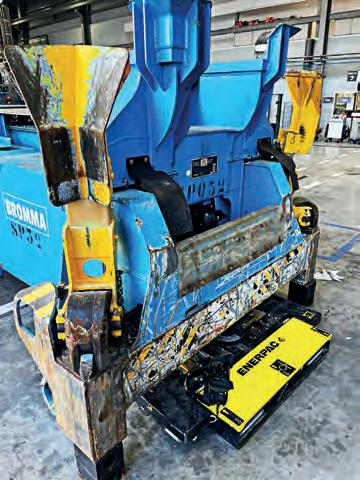
and transported into the workshop. In addition to enabling a safer and more pleasant working environment for maintenance technicians, the manoeuvrability of E-mover allows a second spreader to be positioned alongside the first, enabling simultaneous maintenance of both machines.
“The Enerpac E-mover has made a big difference to our container spreader maintenance operations,” says Joan Carbó, Equipment Project Engineer at APM Terminals Valencia. “The ease of deploying and using the E-mover makes maintenance safer and quicker, enhacing our safety standards, as well as allowing
us to fully optimise the space available in the workshop.”
Enerpac EMLS/EMV Series battery-powered machine skates are designed for moving heavy machinery in confined spaces. They allow a single operator to safely and remotely position loads of up to 55 tonne. E-movers feature dual-drive motors and a 360 degree tilt swivel saddle for ease of manoeuvrability in small areas and around tight corners. Precise control is enabled with the wireless remote-control including two joysticks to advance and steer the load, and variable speed control for changing conditions.
For more information on the Enerpac EMLS/EMV Series: visit www.enerpac. com or contact Varghese George 0408 477 037, varghese.george@enerpac.com
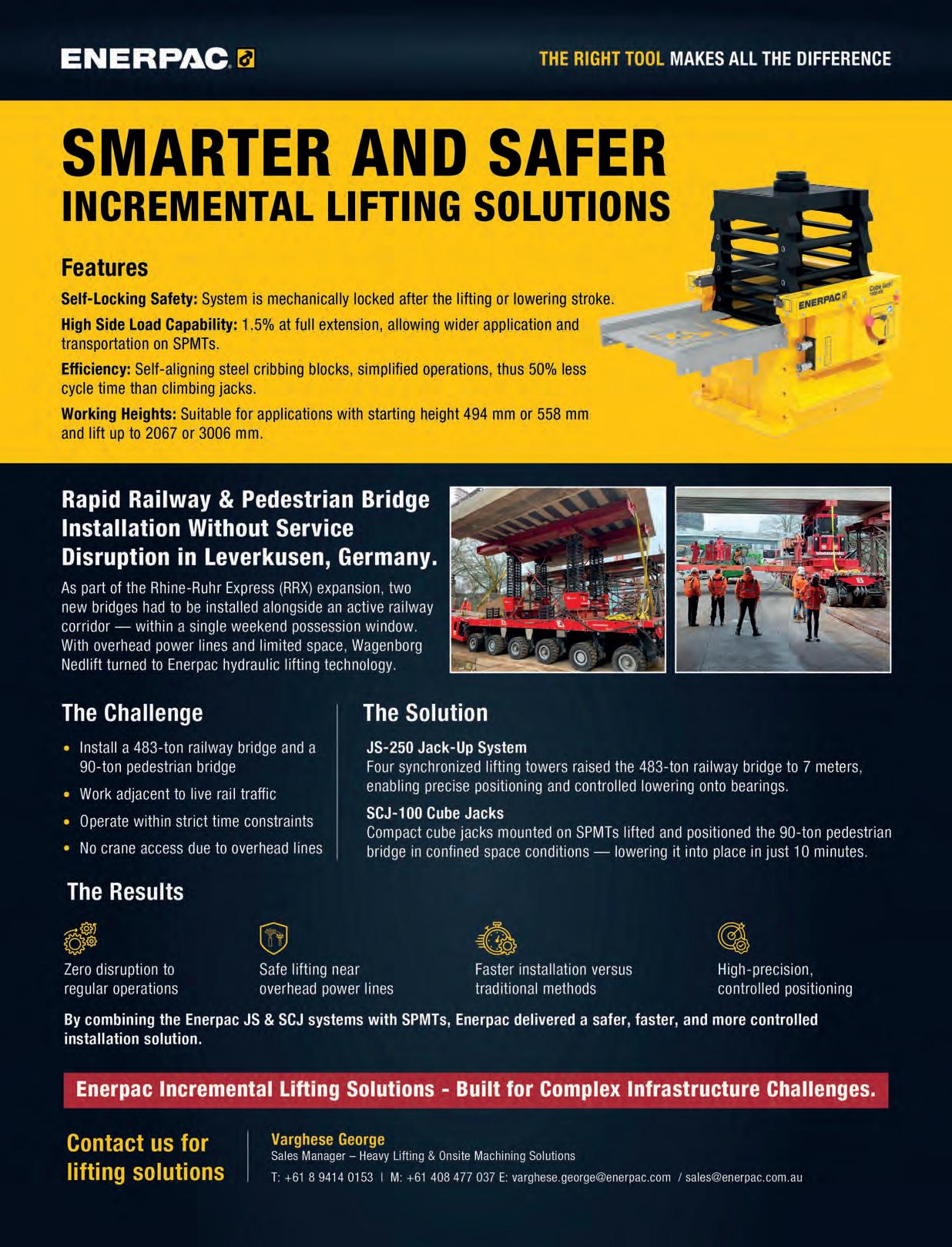
Planning the removal of drilling modules from a live offshore gas platform is a complex engineering exercise.
MODULES, TWO PEDESTAL cranes, a perpendicular skidding system and an evolving deck layout all need to be considered, with each lift affecting the sequence of the next and determining which structural load paths remain available for subsequent operations.
That was the challenge facing Alliance Engineering Consultants (AEC) during planning for the decommissioning of drilling modules on the North Rankin A (NRA) offshore gas platform.
To help manage that complexity, AEC developed an interactive real-time simulation of the decommissioning campaign. Designed as an engineering tool rather than a visualisation exercise, the platform allows lifting engineers to test lift sequences, review rigging arrangements, assess skidding movements and conduct safety reviews before personnel or equipment are mobilised offshore. The result is a digital rehearsal of the entire lifting campaign, giving engineers
and stakeholders the opportunity to challenge assumptions and validate lift plans well before work begins.
A pre-rendered animation shows a lifting sequence that has already been decided.
An interactive simulation lets engineers understand, test and refine that sequence.
Within the model, pedestal cranes can be operated using the same control logic that will be used during the actual lifts. Crane capacities, boom positions and clearances to surrounding structures can be assessed at any point throughout the operation.
Long components can be swung through their full range of movement to verify clearances and tail-swing envelopes, while dual-crane lifts can be rehearsed to ensure rigging remains within acceptable operating parameters throughout the lift.
The simulation also highlights sequencing dependencies that might otherwise only become apparent during offshore execution. If one module must
be removed before another can be rigged or moved, that relationship becomes immediately visible.
The NRA decommissioning works are not a collection of individual lifts. As modules are removed, the platform changes, affecting load paths, access routes and lifting opportunities.
To manage this, AEC built the simulation around a lift-plan register that captures every stage of the campaign. Engineers can move between stages with a single selection, allowing the model to automatically update to reflect the current condition of the platform.
Modules appear or disappear, the skidding system moves into position and crane configurations adjust to match the selected phase of work.
This allows project teams to step through the campaign in minutes during
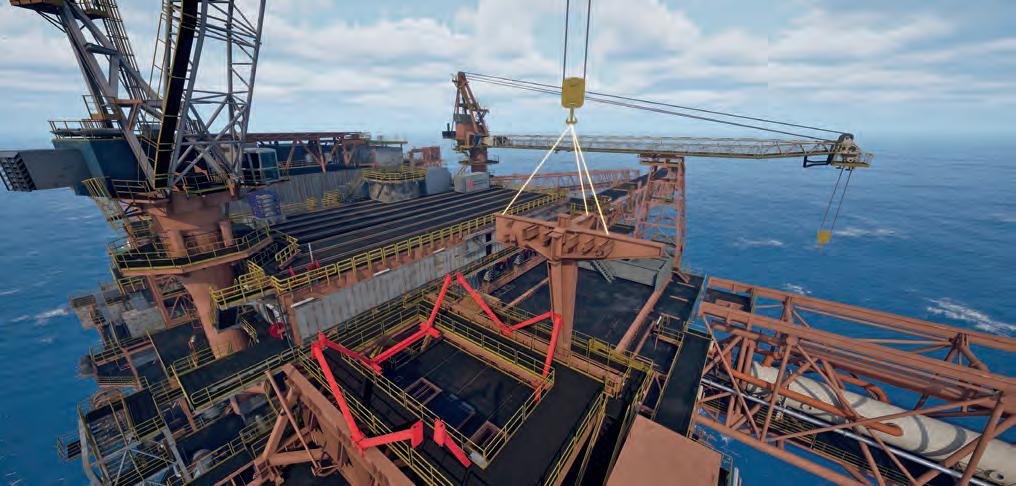
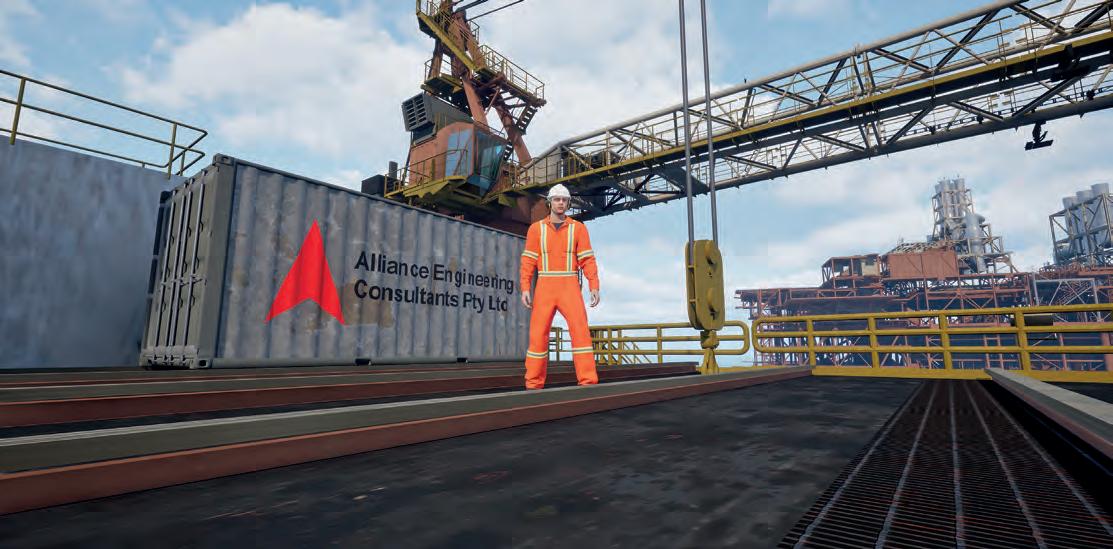
design reviews and stakeholder meetings, replacing the extensive briefing documents such reviews once required and letting stakeholders work through the sequence together in real time.
For lifting engineers, the simulation serves as a practical study tool. Rigging arrangements, sling lengths, hook approaches, swing envelopes and skid-path clearances can all be assessed against highly accurate platform geometry derived from previous 3D laser scans and project coordination models.
The model also provides value for structural engineers, rigging designers and project planners by surfacing design conflicts and rigging constraints before mobilisation.
The simulation also supports simultaneous operations planning, helping project teams understand how lifting activities interact with other work taking place on the platform.
Because the simulation is dimensionally accurate, multiple disciplines can work from a common reference point throughout planning and execution.
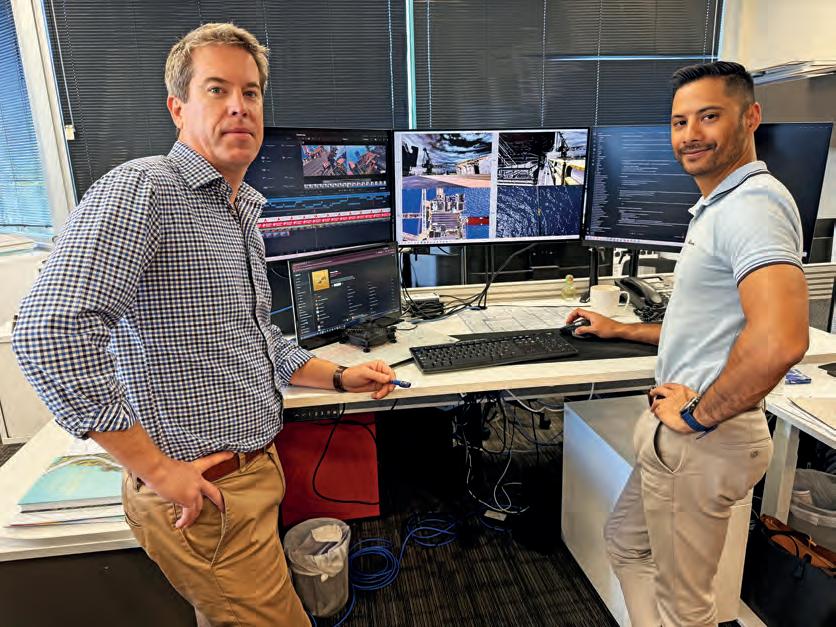
The same simulation used for engineering reviews can also support Hazard Identification (HAZID) workshops, constructability reviews and operational briefings.
Marine operators, offshore supervisors and deck crews can use the model to familiarise themselves with the lifting sequence before heading offshore, while
Traditionally, developing an interactive simulation of this scale would require specialist visualisation teams and significant development budgets.
Alliance Engineering has combined artificial intelligence (AI) coding assistants with in-house software and engineering expertise to develop the application internally. This allows the engineering team
the platform.
Rather than being used only during planning, the simulation can continue to evolve alongside the project and remain a reference throughout detailed design and offshore execution.
The result is a tool that can support lift studies, design reviews and offshore execution from a single seamless environment.
For more than 25 years, the Daintree Canopy Crane has helped researchers unlock the secrets of one of the world’s oldest rainforests.
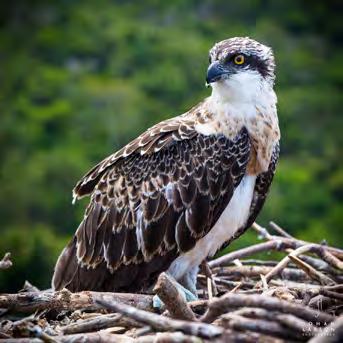
NOW, THE ICONIC LIEBHERR TOWER CRANE has found itself at the centre of a different story, one that has captured the attention of bird lovers and crane enthusiasts alike.
A pair of ospreys has once again chosen the tip of the crane’s jib as its nesting site, with live cameras now documenting the birds as they prepare to raise another family high above the rainforest canopy. Two eggs are currently being incubated, offering a rare glimpse into the life of one of Australia’s most impressive birds of prey.
While the sight of nesting birds might seem unusual for a crane, it is becoming a familiar story at the Daintree Rainforest Observatory (DRO), where the same breeding pair is believed to have returned year after year for more than 15 years.
Located in Far North Queensland, the Daintree Canopy Crane is a Liebherr 91EC freestanding tower crane standing 47 metres tall with a 55-metre radius. Installed in 1998, it was the first canopy crane in the Southern Hemisphere and remains the only canopy crane operating in an Australian rainforest. Its reach provides researchers with access to approximately one hectare of rainforest canopy.
The crane was established because scientists recognised that the rainforest canopy is where much of the action happens. The canopy is the meeting point between the atmosphere and the forest below. It is where photosynthesis takes place and where many plant, insect, bird and animal interactions occur.
Researchers estimate that a significant proportion of rainforest biodiversity exists within the canopy itself. Before the arrival of canopy cranes, studying these environments was difficult, expensive and often dangerous.
The introduction of canopy cranes around the world changed that. Similar to how deep-sea submersibles opened up the ocean floor for exploration, canopy cranes gave scientists direct access to a part of the forest that had previously been largely out of reach.
For more than two decades, the Daintree crane has played a key role in research into rainforest ecology, biodiversity and the
impacts of climate change. The facility has hosted researchers, students and teaching groups from Australia and around the world.
The crane also remains a fully compliant piece of lifting equipment, operating under Australian Standards, Queensland tower crane requirements and strict safety procedures, including approved workboxes and fall-arrest systems.
While the crane was designed for research, the ospreys had other ideas.
According to Daintree Rainforest Observatory manager Johan Larson, the birds discovered long ago that the crane offered everything they needed in a nesting site.
“Ospreys like to nest in really high exposed locations … tall trees or rock outcrops, even on man-made structures,” said Johan.
“Over 15 years ago, they realised that the canopy crane is a great structure to nest on.”
The location is ideal. The observatory sits just over a kilometre from the coast, giving
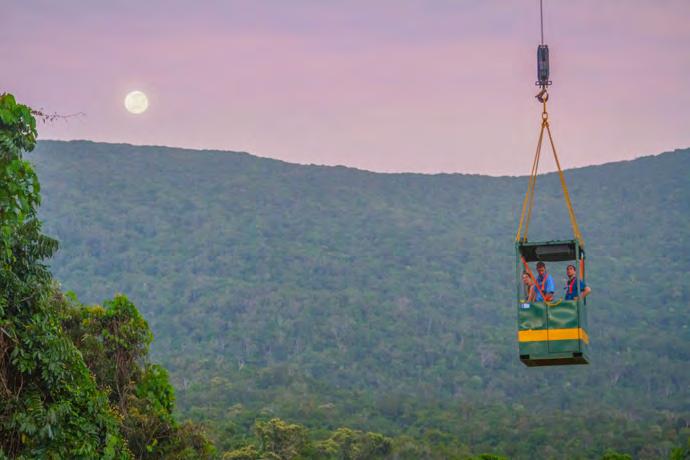
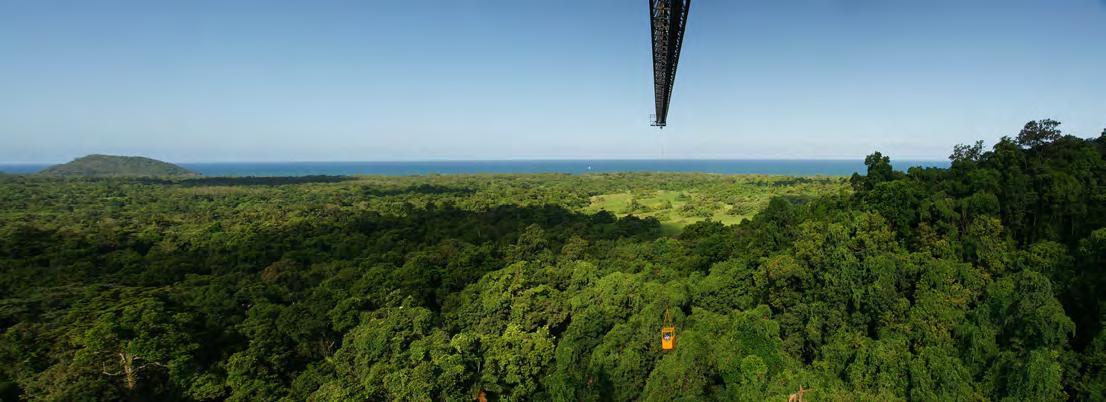
the fish-eating birds easy access to food while keeping them safe from groundbased predators. Researchers believe the same breeding pair has occupied the site for many years.
This year, cameras trained on the nest have captured the arrival of two eggs, with the pair taking turns to incubate them while continuing their hunting routines.
Johan said the breeding cycle follows a predictable pattern.
“The adults still hang around the crane, we see them year around, but they don’t use the nest then,” he said.
“There’s usually between two to three eggs every year. They lay one egg and then there’s a day or two before the next egg.
“It takes about five weeks before the eggs hatch and another seven or so weeks before they’ll actually fledge.”
The live footage has also revealed the division of labour between the birds.
“Often the male will bring fish back to the female,” Johan said.
“They will dive from 10 to 30 meters into the water, catch a big fish and bring it back to the nest. You can imagine them trying to take off with a big fish and with their wings in the water … they’re very strong flyers.
“They carry those fish in a particular way, usually with their head facing forwards. It’s more aerodynamic that way.”
The birds face an unusual challenge every year.
Because the crane requires regular maintenance, observatory staff remove the remains of the nest annually. That means
the ospreys effectively start from scratch each breeding season.
Yet the birds continue to return.
“It’s fascinating to watch them,” said Johan.
“They’ll bring the first stick on top of the metal structure, and then the wind will catch it and it kind of swivels and then falls through the gap. They take a deep breath, go get another stick, try again.
“It’s actually pretty quick once they get started. It only takes a few weeks.”
Adding to the challenge is the fact that the crane itself moves. The 55-metre jib can rotate, meaning the nest can be in a different position each day. Despite that, the birds have no trouble relocating their home.
When the Daintree Canopy Crane celebrated its 20th anniversary in 2019, it was already recognised as one of Australia’s most unique lifting assets. More than two decades after installation, it remains a symbol of what cranes can achieve beyond traditional construction and infrastructure projects.
The crane continues to support scientific research while simultaneously providing the public with a front-row seat to one of nature’s most fascinating annual events. Through the observatory’s livestreamed “Osprey Cam”, viewers from around the world can watch the birds build nests, raise chicks and return year after year to the same unlikely perch.
Titan Lifting Technologies has thrived in the competitive lifting industry not only due to its consistent quality and support but also due to the willingness to change.
OVER THE PAST TWO DECADES THE LIFTING equipment wholesaler has repeatedly reshaped the way it operates, adjusting its product offering, warehousing, manufacturing capabilities and customer service model to keep pace with changing market conditions.
According to Titan Lifting Technologies’ Chief Operating Officer John Di Michele, the company has altered its business model seven or eight times over the past 20 years.
“We’re doing things now that we would never have dreamed of. Years ago we would have said, ‘No, we’re not into that’, but today we’re doing it because that’s what our customers need.”
That ability to adapt has become increasingly important as customers change the way they buy lifting equipment.
Traditionally, wholesalers operated on volume. Products were supplied in cartons, boxes or pallet quantities, and customers were expected to purchase accordingly. But as businesses became more focused on reducing inventory and improving cash flow, buying habits began to shift.
“One of the biggest changes we’ve seen is that businesses no longer want to tie up money into large amounts of inventory,” John said. “They’re buying based on current demand or maybe a three-month forecast rather than carrying a year’s worth of inventory.”
Rather than expecting customers to purchase full carton quantities, Titan adjusted its operations to accommodate smaller orders matching customers shorterterm usage.
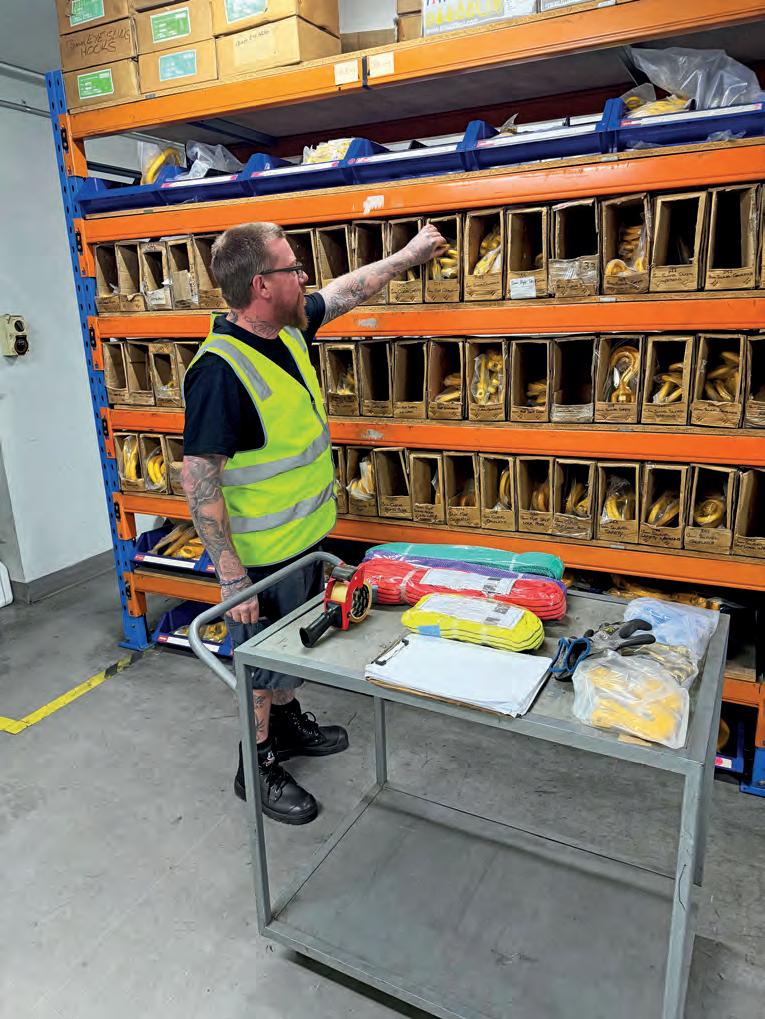
“Customers can buy one item if they like, or they can buy a box of 30,” he said. “We’ve structured the warehouse and our processes to physically make that possible.”
The change sounds simple, but it required a complete rethink of how inventory is stored and picked.
Titan developed dedicated warehouse zones designed to support rapid picking
wholesale practices has also opened the door to a growing customisation offering.
While many lifting equipment suppliers focus primarily on standard product lines, Titan increasingly works with customers to modify products, create specialised
80 and Grade 100 chain sling assemblies, custom chain lengths and specialised lifting assemblies incorporating shackles, head rings, clamps and other components.
“Custom specialised assemblies can involve almost any lifting product.”
Alongside product customisation, Titan has expanded its manufacturing capability. The company now manufactures and
Dedicated warehouse zones allow Titan to efficiently manage diverse customer purchasing requirements.
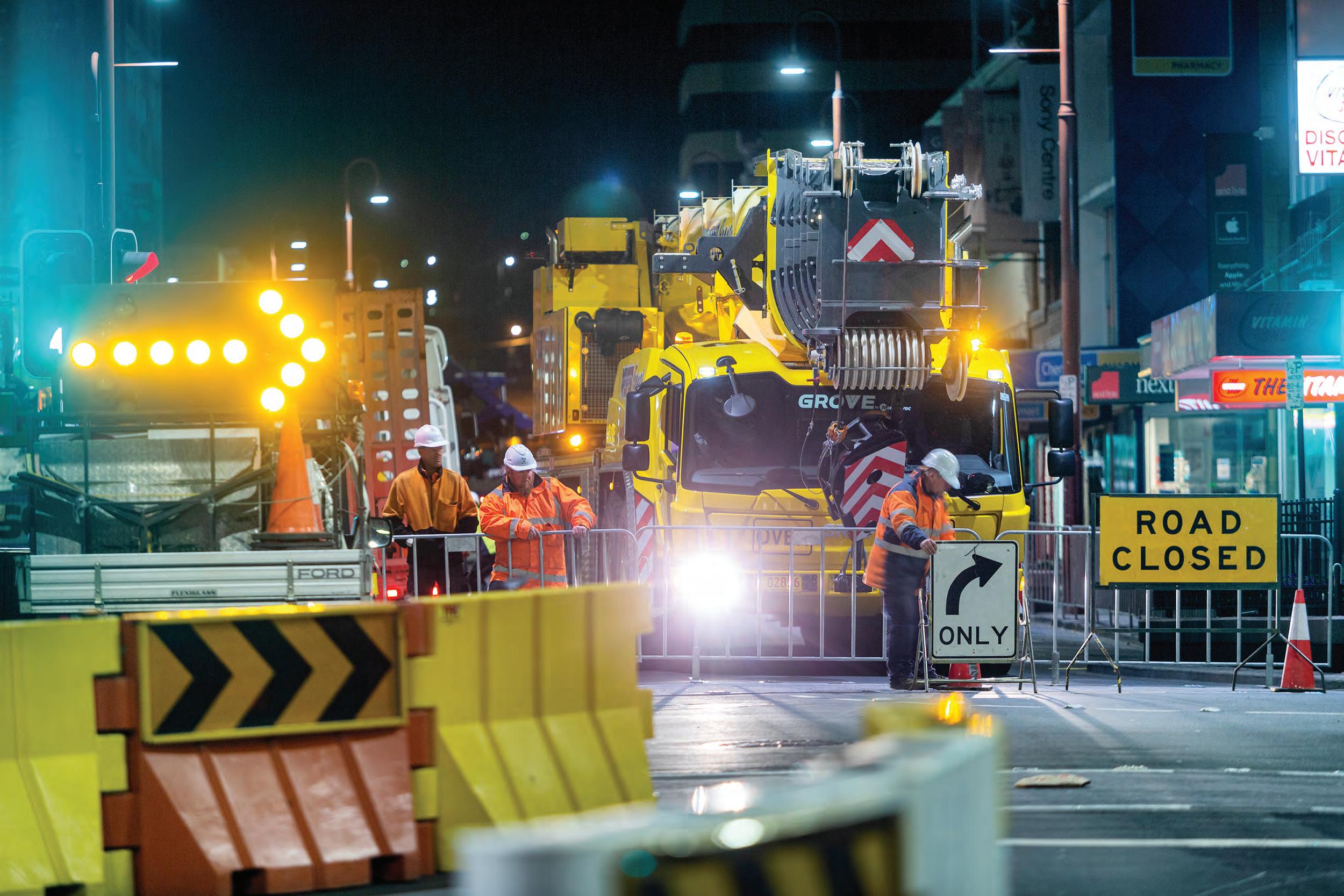
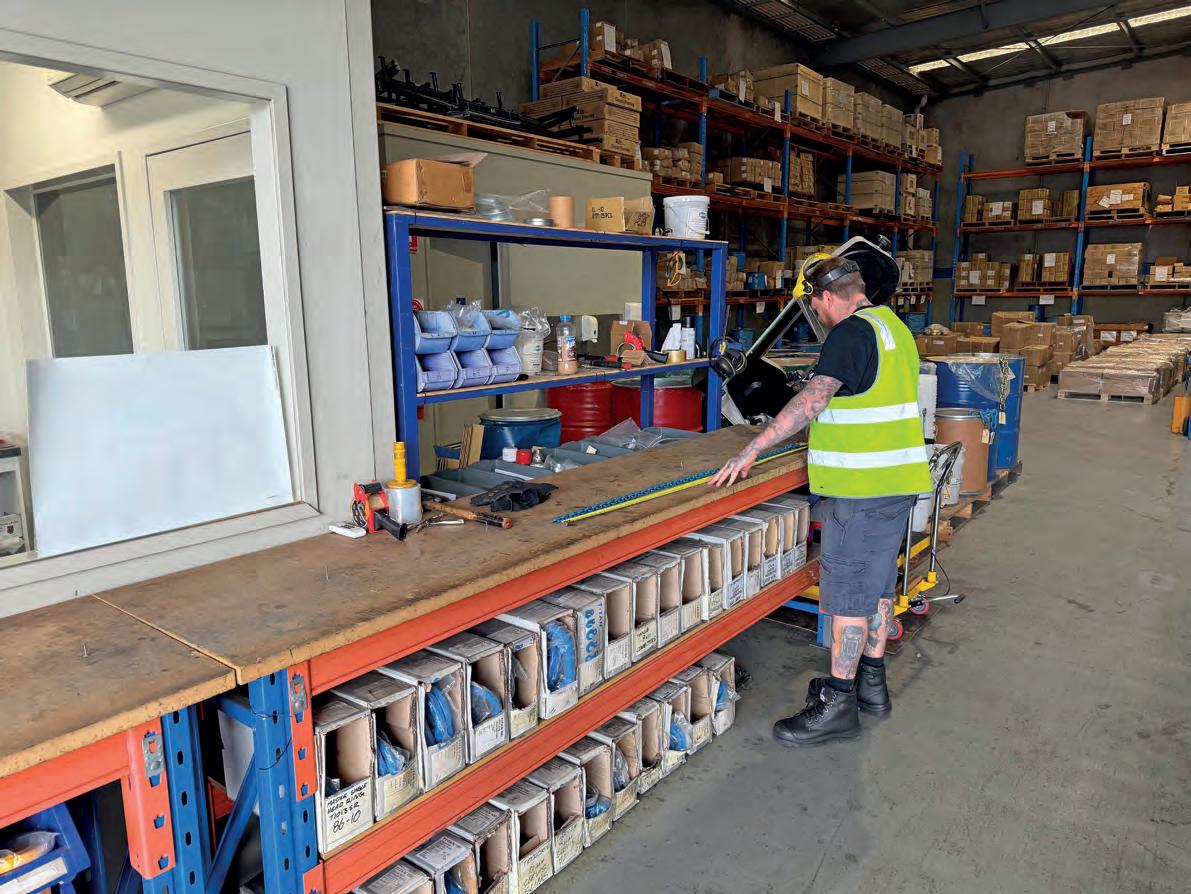
supplies complete chain sling assemblies that are tested, tagged and certified before delivery.
“A lot of our distributor customers traditionally made their own chain slings,” John said. “But many of them are small businesses and don’t necessarily have the staff, time or resources to do that efficiently.”
By providing fully assembled and certified products, Titan allows customers to focus on sales and customer service rather than workshop production.
The company’s manufacturing capability is supported by Lifting Equipment Engineers Association (LEEA) accreditation, ensuring products are tested and certified to recognised industry standards.
While operational flexibility has become a key differentiator, John believes customer engagement remains equally important.
Like many businesses across the lifting sector, Titan has faced increased competition and global economic uncertainty. In response, the company has invested more time in maintaining close relationships with customers.
“One of the biggest things we’ve done is engage with our customers more and maintain those relationships. You need to stay in communication with customers and always be flexible. Sometimes a simple phone call can make all the difference,” John said.
That proactive approach extends beyond regular sales calls. John said Titan’s team actively follows up quotations, responds
we don’t have. If they’re buying something from another supplier, we want to understand why.”
That feedback is then fed directly into Titan’s sourcing strategy, helping the business identify gaps and bring new products into its range.
Supported by long-established supply chain relationships developed over decades, the company has continued to broaden
“The company’s manufacturing capability is supported by Lifting Equipment Engineers Association (LEEA) accreditation, ensuring products are tested and certified to recognised industry standards.”
quickly to pricing pressures and works closely with customers to understand their evolving requirements.
The same customer-driven mindset also influences how Titan expands its product range.
Rather than relying solely on market trends, the company regularly asks customers a straightforward question: what are they buying elsewhere?
“The way I’ve always done it is ask customers what they’re purchasing that
its offering while remaining responsive to customer demand.
For John, that responsiveness is what has allowed Titan to continue evolving while others have remained largely unchanged.
In an industry where reliability and consistency remain essential, Titan’s experience suggests that sometimes the best way to stay relevant is to keep moving.
And after 28 years of continuous evolution, the company shows little sign of standing still.
built for mobile crane hire execution, compliance, and into one streamlined system. and gain complete result? Smarter resource for your office and field teams.
support vehicles in just a few clicks.
Send jobs instantly to field teams via the EQUIPR Operator app. Capture real-time dockets, timesheets, and job status updates straight from site.
Create and send invoices directly from the job schedule. Automatically attach completed job data and reduce delays with faster invoice turnaround. Integration with most common Accounting software via API.
Track licences, inductions and safety documentation with automated alerts and visual flags ensuring every job is compliant.
Access real-time reports on equipment utilisation, job profitability, invoice performance, and more. Customise views to suit operational needs.
Reconcile daily jobs with timesheets using side views. Approve hours worked and streamline payroll processing with accurate, synced data.
Generate detailed, dispatch-ready quotes in minutes with pre-filled asset and crew details. Easily convert accepted quotes into scheduled jobs.
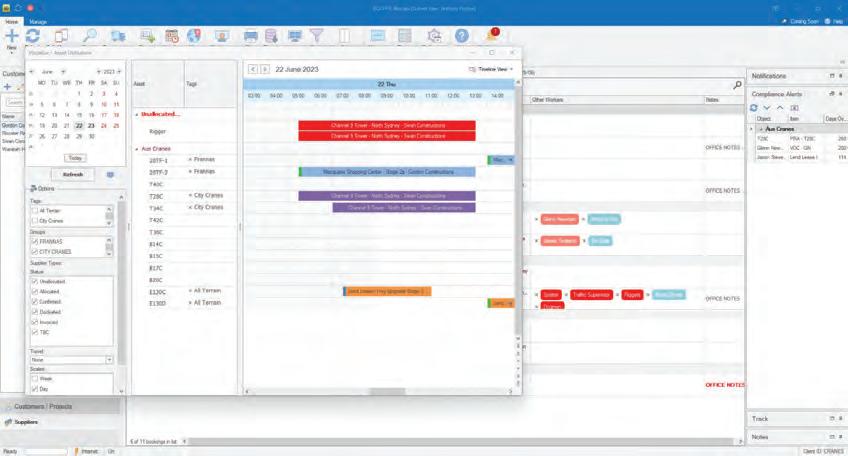
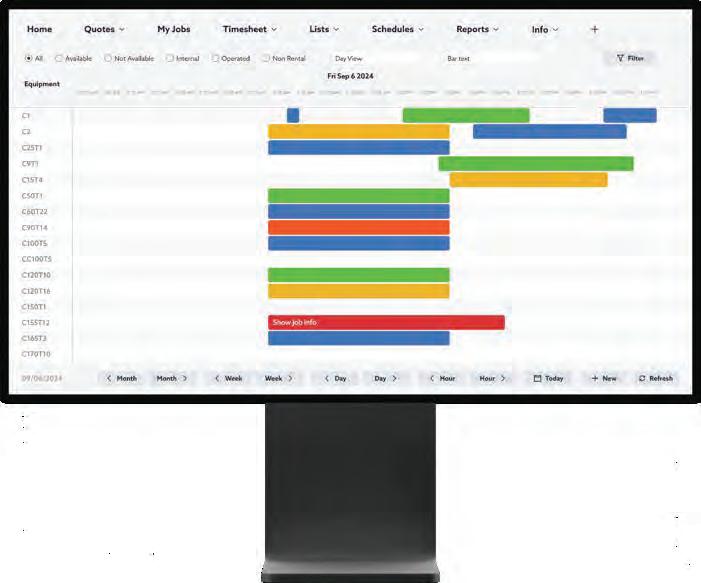
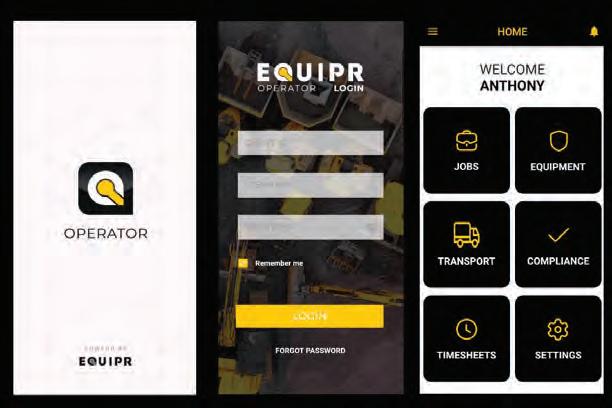



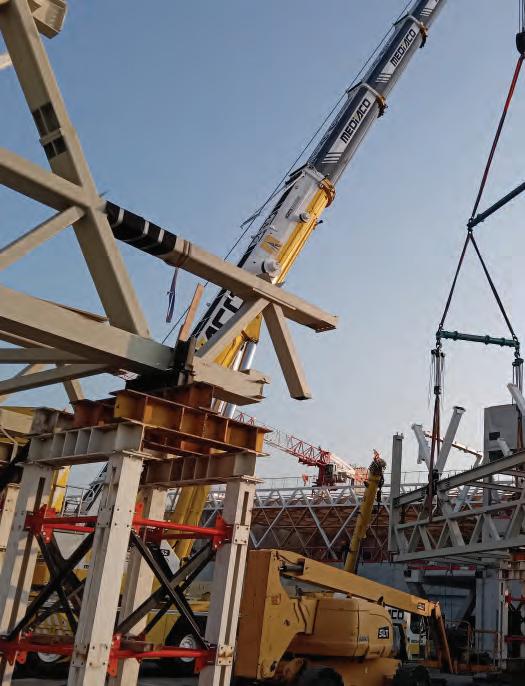

Nash Crane Hire specialises in lifting and access equipment solutions for applications in various sectors, especially where space tolerances on site are tight. Having operated Maeda mini cranes for some time, the latest addition to the fleet is a Sennebogen 653E, 50 tonnes telescopic crawler.
DIRECTORS PAUL WATERS AND TRENT
Victorsen established Nash Crane Hire in July 2024 to provide reliable, professional lifting solutions with a strong focus on safety, customer service and presentation of equipment.
“We saw an opportunity in the Sydney market for a company that could combine modern lifting and access equipment with a responsive service and practical industry experience,” said Paul. “The business has grown through relationships, repeat clients and a commitment to delivering projects safely and efficiently.
Trent and Paul have a combined 47 years of experience across the crane, material handling and access equipment industries. Over the years they have worked closely with major contractors on large infrastructure projects and shutdown works throughout Sydney and regional New South Wales.
“Our backgrounds cover crane operations, lift planning, access solutions, project coordination and working within high-risk environments where safety and reliability are critical,” said Trent.
“That experience has given us a strong
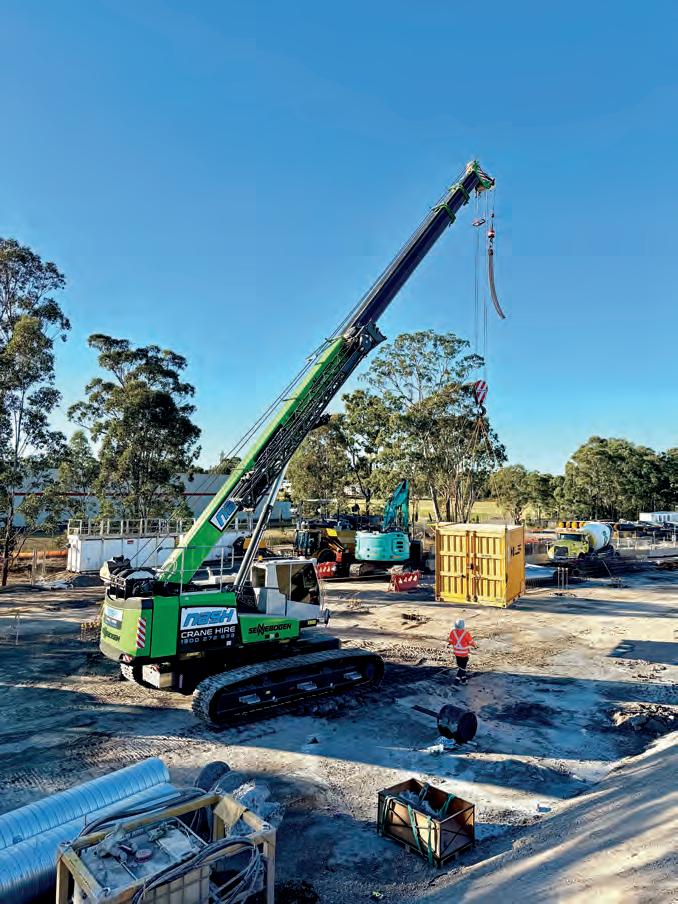
operate with a skilled team of operators, dogmen, riggers and support personnel.
“We’ve focused on building a team with strong industry experience and a professional attitude toward safety and customer service.”
Both Paul and Trent have spent many years working within the crane and lifting industry across a wide range of sectors including commercial construction, infrastructure, rail and shutdown work. That experience has involved crane operations, project coordination, lift planning and working closely with clients to deliver safe and efficient outcomes on challenging sites. Through that exposure, they have developed a strong understanding of both the operational side of the industry and the importance of building lasting client relationships.
NASH CRANE HIRE FLEET AND MEADAS
The fleet is continuing to expand as the business grows and the focus has been on investing in specialised equipment that supports the type of work clients require, particularly in tight-access and infrastructure environments. Currently the fleet includes a Maeda MC405C-3 with a working radius of 16 metres and a lifting capacity of 3.83 tonnes x 2.7 metres, a Maeda CC1485S-1 with a working radius of 16.1 metres and lifting capacity of 6 tonne x 2.6 metres, the new Sennebogen 653E with a lifting capacity of 50 tonnes and a 30 metre power boom. Two Hi Rail MEWP’s were also recently purchased.
“We operate Maeda’s because they are extremely reliable, versatile and well-suited to the type of projects we undertake. They perform exceptionally well in tight-access environments where traditional cranes may not be practical, and they allow us to complete lifts safely and efficiently in confined or sensitive areas.
“We’ve always been impressed with the build quality, reliability and versatility of the machines. Maeda has built a strong reputation globally for compact crane solutions, and the equipment performs very well across a wide variety of applications,” said Paul. “The compact footprint combined with impressive lifting capability makes them ideal for many of the projects we’re involved in.
“Our operators appreciate the ease of setup, smooth operation and versatility of the cranes.
“The machines are well-designed for tight-access work and provide operators with confidence when working in challenging environments. Reliability is also a major factor – downtime is critical in our industry, and the Maedas have proven to be dependable machines. We’ve recently invested in a new Sennebogen 653E telescopic crawler crane to support future growth and specialised lifting projects.”
The Sennebogen 653E telescopic crawler crane is ideal for pick and carry applications: Thanks to its 50 tonnes lifting capacity the tele crawler covers a wide range of applications such as lifting, moving and positioning large loads on structural engineering and bridge construction jobs.
Just like the other machines in the range, the Sennebogen telescopic crane is equipped with a variable telescoping Full-
“The Sennebogen stood out due to its strong reputation for innovation, operator visibility, lifting performance and suitability for infrastructure-style projects,” said Paul.
“We wanted equipment that aligned with the direction of the business and the type of work we’re targeting moving forward.”
The crane has been purchased to support infrastructure, construction and specialised lifting projects, particularly where flexibility, lifting precision and site accessibility are important.
“We see strong opportunities in rail and data centre construction shutdown and complex lifting environments where this type of equipment is highly effective,” said Paul.
“I’ve had a long association with the Sennebogen brand and have always had a high level of confidence in the product. In fact, I was the first person in Australia to purchase a Sennebogen 608 Multi Crane back in 2013, so I’ve had firsthand experience with the equipment and the brand for many years.
“Over that time, I’ve been consistently impressed with the reliability, operator visibility and overall performance of the machines, particularly within infrastructure and specialised lifting applications.
“The positive feedback from operators
Reliability
the strong reputation Sennebogen has built within the industry,” he said.
“We worked closely with Michael Cawston and the team from Pace Cranes throughout the sales process. Michael was extremely knowledgeable about the Sennebogen range and took the time to understand exactly what we were looking for as a business.
“His understanding of the product, the applications and the operational requirements gave us a lot of confidence throughout the sales process,” said Paul.
“Both strong backup and support are extremely important in our industry, and we are confident Pace Cranes will provide the level of service and support required.
“Access to parts, technical support and product knowledge are all critical, particularly when operating specialised equipment, and that support network was an important factor in our decision,” he said.
With a customer base ranging from tier-one contractors and infrastructure companies through to builders, mechanical contractors, rail contractors and industrial clients, the focus for Nash Crane Hire is on delivering safe, practical and efficient lifting solutions tailored to the project requirements.
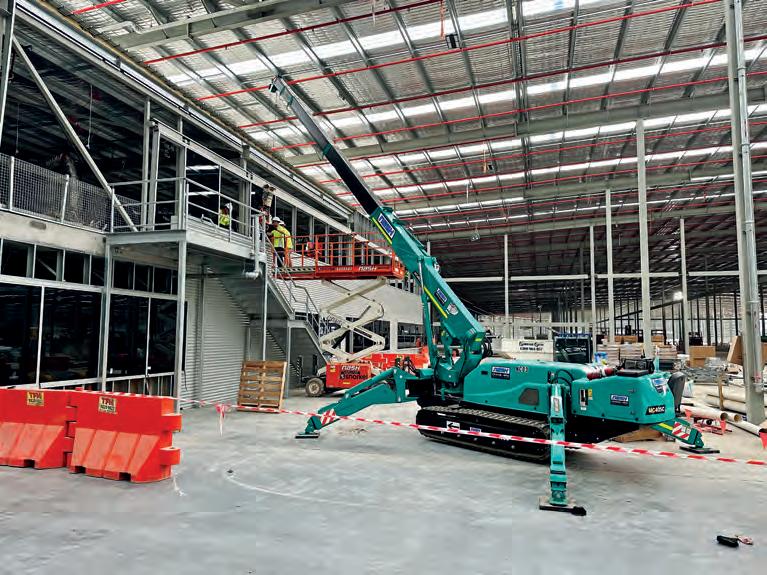
Providing support for tight-access lifts, rail projects, shutdown work and complex installations where specialised equipment is required, are also a priorities.
“A large part of our work involves projects where access is restricted or where lifting operations need to be carefully planned and coordinated. Access equipment and cranes work hand-in-hand on most projects, particularly in construction, maintenance and infrastructure environments,” said Paul.
“As part of our continued growth, we’ve expanded into access equipment to provide clients with a more complete service offering and better project support.
“We’re focused on operating quality equipment from proven manufacturers with strong support networks and good reliability in Australian conditions. That’s why we have chosen the Sennebogen and Maeda brands and Pace Cranes as a supply partner.”
4
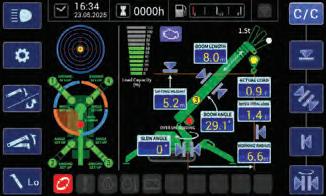
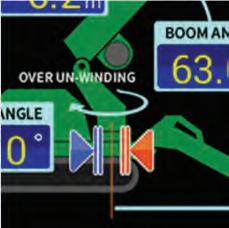
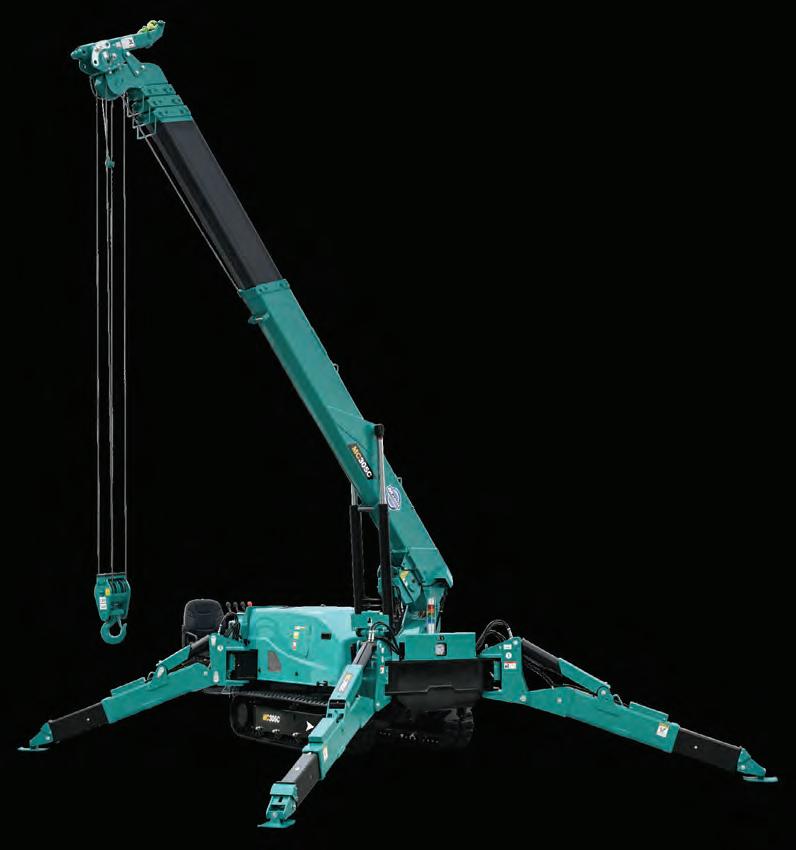
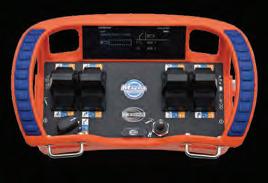
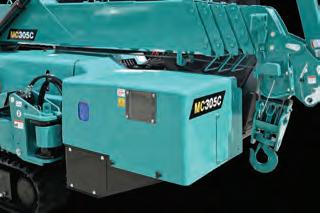
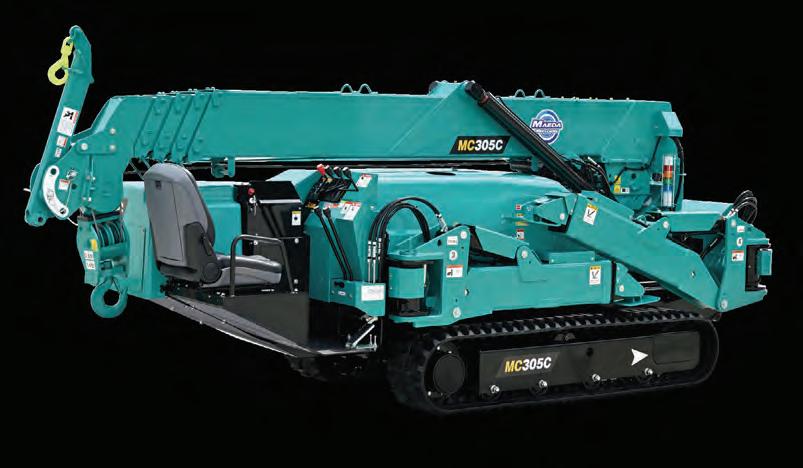
90
say operators will need new skills in the next 12 months
60
report gaps in knowledge, safety behaviours, or legal compliance
79 % % %
struggle to recruit skilled lifting operators


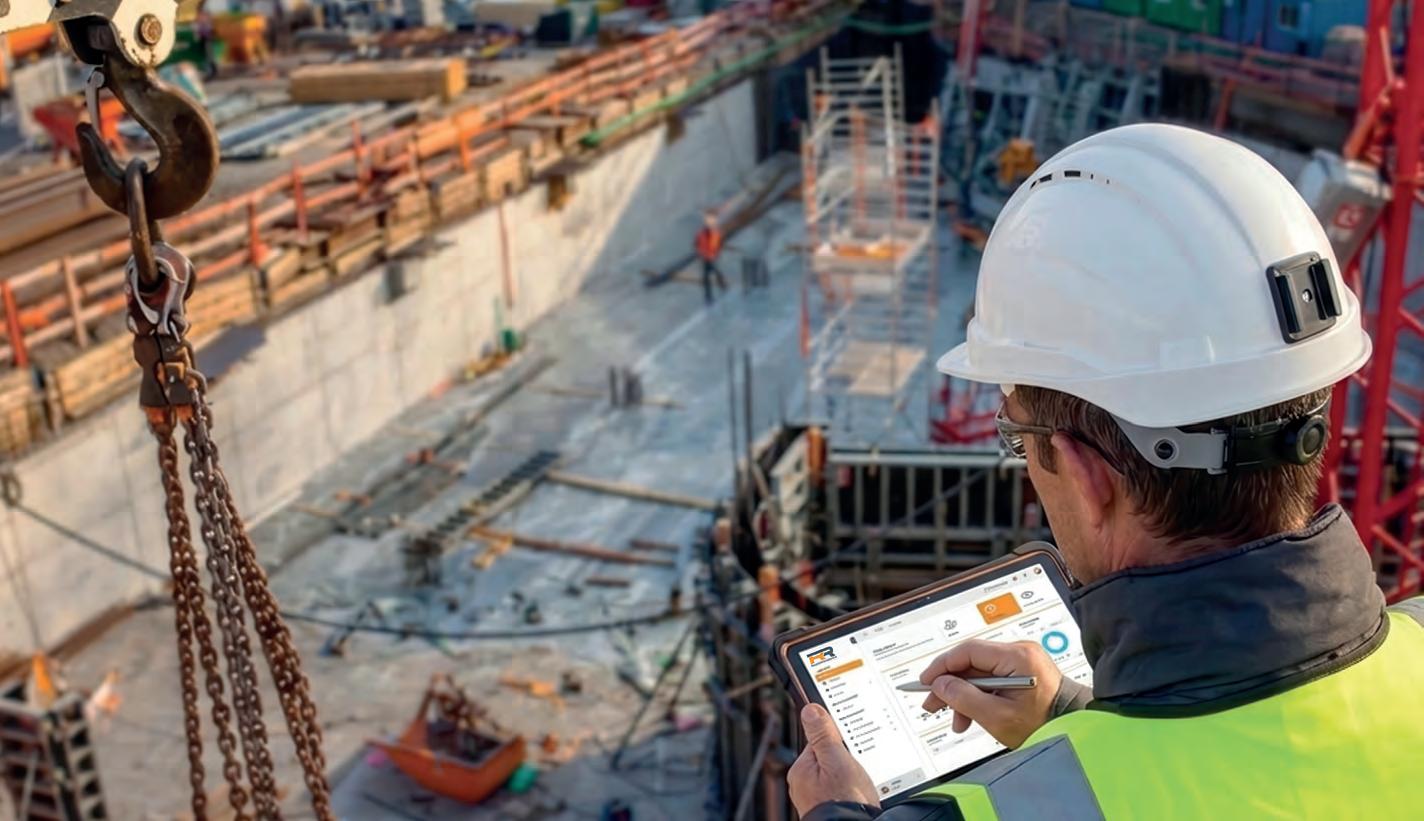
The platform brings asset tracking, inspections and compliance records into one integrated system.
Regatta Registers didn’t just set out to build another inspection register. It wanted to solve a bigger problem.
IT TENDS TO GET CHAOTIC WHEN ASSET records, inspections, maintenance schedules and compliance documents are scattered across spreadsheets, emails and disconnected systems. Regatta Registers wants to help businesses solve this longstanding problem.
Initially, the company’s product focused on lifting equipment inspections and compliance tracking. But as adoption grew, customer feedback pointed to a much larger opportunity.
Businesses wanted a single source of truth for every asset they managed. One platform to track equipment, schedule inspections, automate compliance, manage maintenance and give teams instant access to critical records.
For Marly Pena, Marketing Manager at Regatta Registers, those conversations reshaped the company’s roadmap.
“We started by focusing on lifting equipment management, but we quickly realised customers wanted all of their fleet management and lifting equipment
information in one place,” Marly said. “That led us to build the asset management side of the platform. Now customers can manage their assets, track compliance, monitor inspection due dates and keep everything organised within the one system.”
After years of development, testing and refinement, Regatta Registers now delivers a complete asset management solution that extends far beyond traditional inspection registers.
One of the clearest gaps Marly identified was the lack of software designed specifically for inspection companies and service providers.
Most asset management platforms are built for organisations managing their own equipment. Service businesses face a different challenge entirely. They must manage multiple clients, maintain separate compliance records, schedule inspections across numerous sites, generate reports and provide customers with easy access to documentation.
Regatta Registers was designed to handle both models.
“It’s very easy for a service provider to enter customers, contacts and site locations, and then give those customers access to download their reports,” Marly said.
The platform supports crane inspection companies, lifting equipment specialists, forklift service providers and organisations managing large internal fleets.
Users can create customer profiles, assign assets to locations, schedule inspections, track compliance status and maintain complete asset histories, all within a single system.
Despite increasing compliance demands, many businesses still rely on spreadsheets, calendar reminders and manual follow-ups to manage inspections and maintenance.
That approach may work for small operations, but it quickly becomes inefficient and risky as fleets expand.
Customisable categories and workflows allow the system to adapt to different industry requirements.
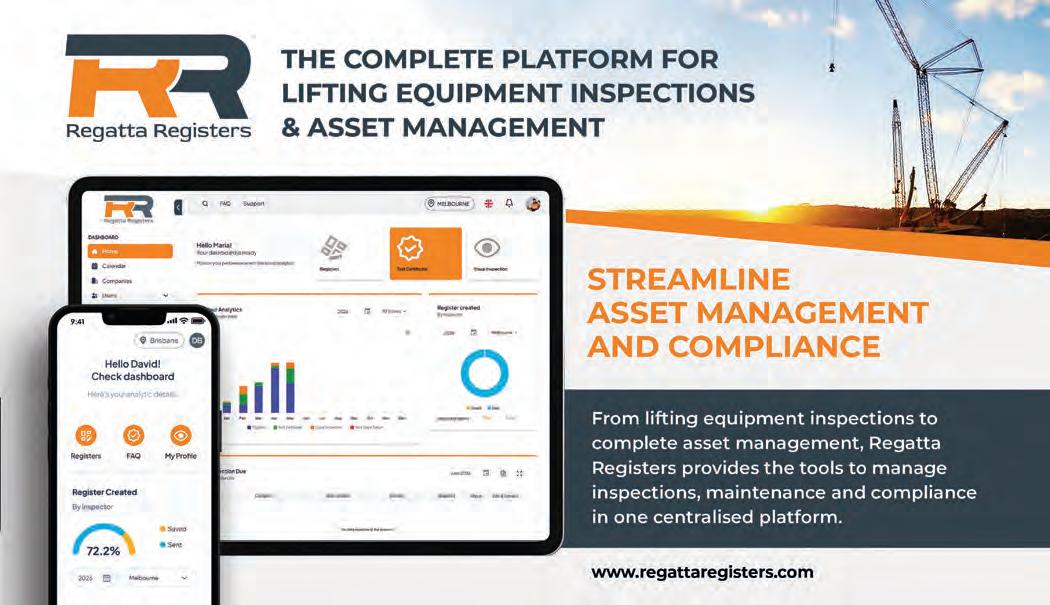
Regatta Registers tackles the problem through automation.
Inspection reminders, maintenance alerts and compliance notifications are generated automatically, helping businesses stay ahead of deadlines while reducing administrative effort.
And the impact goes beyond just convenience.
By reducing manual reporting, tracking and compliance administration, businesses can free up significant internal resources and redirect staff to higher-value work.
Asset management software often struggles when faced with specialised industries like the cranes and lifting sector. They have unique equipment types, inspection requirements and reporting standards.
Regatta Registers was built to adapt to these realities rather than force businesses into rigid workflows.
Users can create customised categories, subcategories and inspection forms that reflect the way their operations actually run.
A crane inspection company, for example, can separate overhead cranes,
jib cranes and mobile cranes into different categories, each with its own inspection criteria and reporting templates.
Marly said the goal was to create a platform that could be adopted quickly by users regardless of their technical experience.
“We sat down with one customer and his wife for about three hours, and she had never used a system like this before,” Marly said. “She picked it up very easily. It’s very user friendly and that’s something we’re really proud of.”
Regatta Registers helps customers migrate data from spreadsheets and legacy systems. The company assists with setup, onboarding and training.
Another major milestone has been the launch of the Regatta Registers mobile app, available on both Apple and Android devices.
The app enables inspectors to complete forms, capture inspection data and update records directly from the field. Crucially, it also works offline.
For industries operating in remote locations where connectivity is unreliable, users can continue working without interruption and synchronise data automatically once a connection is back.
“Inspectors can continue performing forms and recording information even when they’re offline,” Marly said.
For crane, lifting and industrial service providers working across remote sites, that capability eliminates one of the most common obstacles to digital record- keeping.
Regatta Registers is expanding adoption across Australia and New Zealand, but the company is already planning its next phase of growth. Future developments may include artificial intelligence capabilities designed to enhance customer support and improve platform functionality.
The software is currently available in English and Spanish, positioning the company for broader international expansion.
“We needed to make sure the product was ready,” Marly said. “Now it’s ready, and we’re excited to show the industry what it can do.”
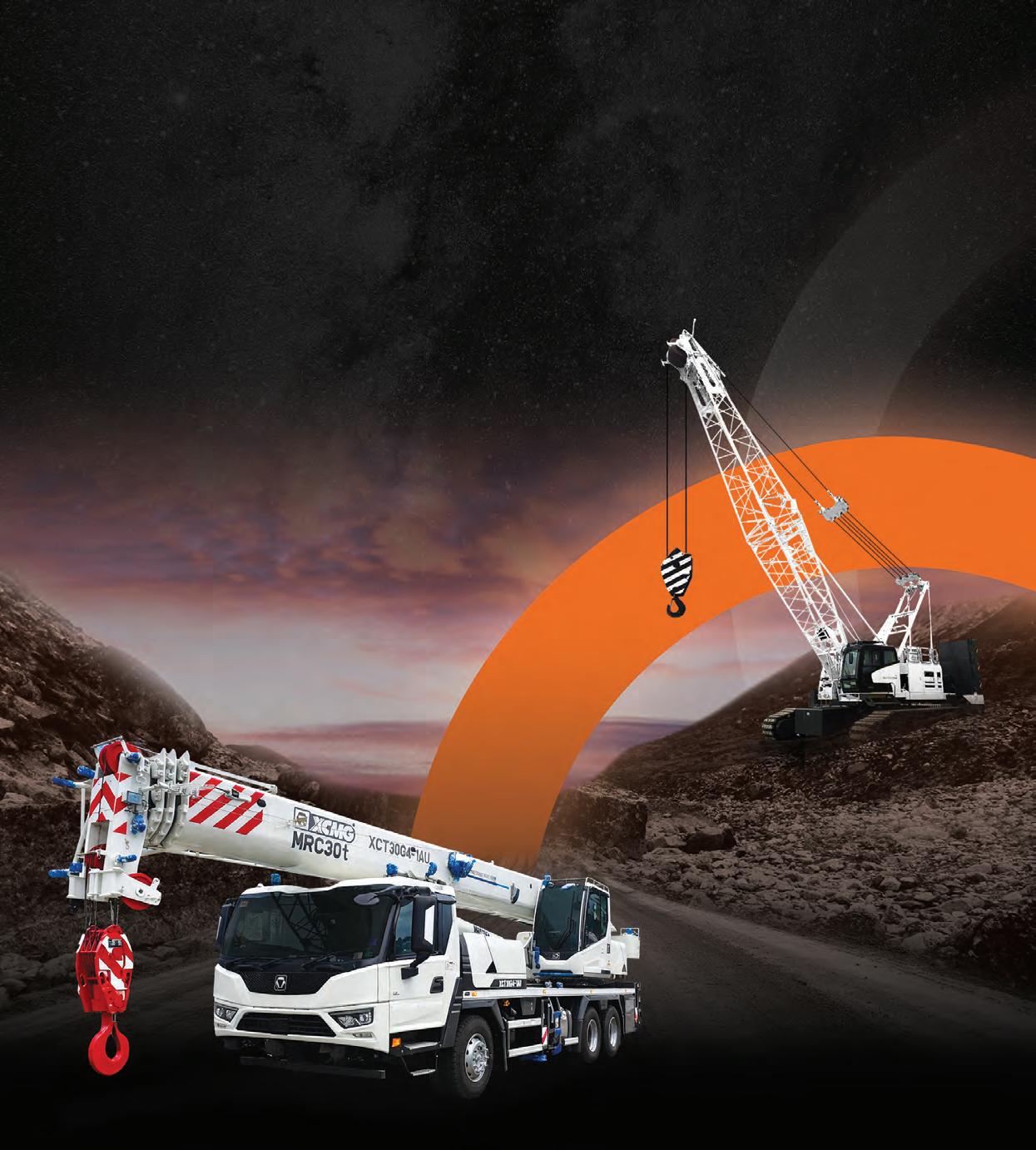




28 - 30 October 2026 Hunter Valley, NSW

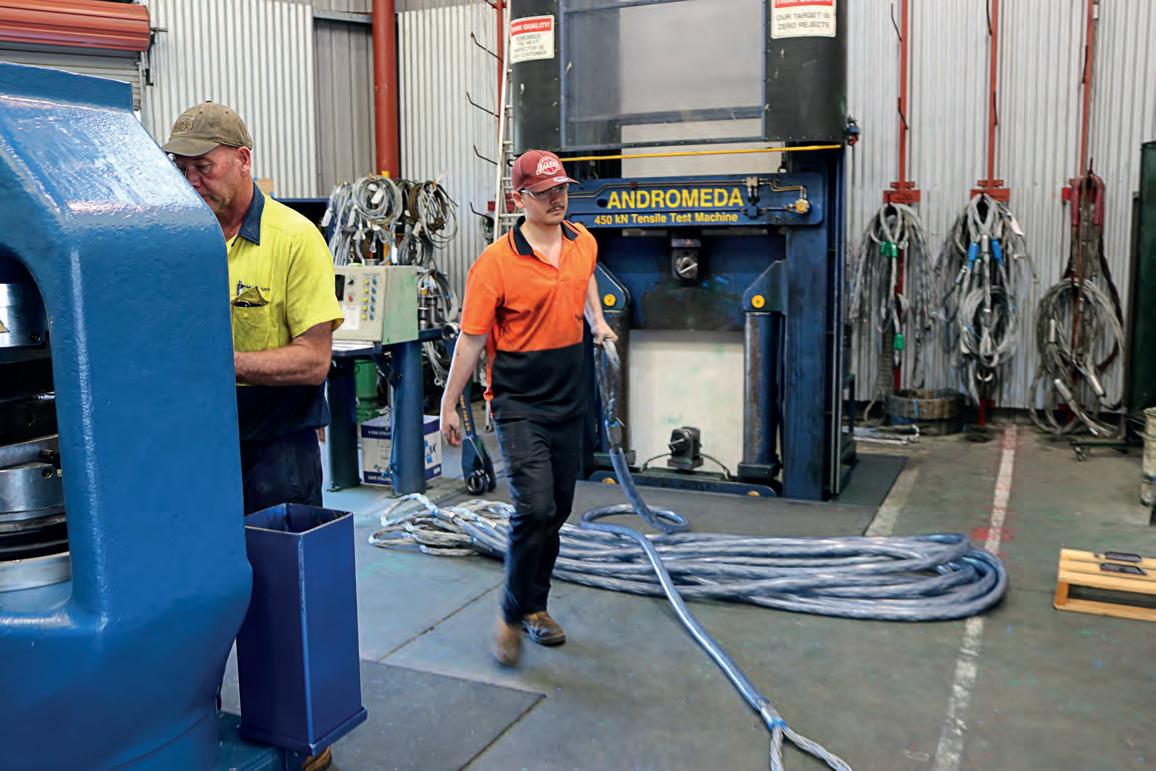
Andromeda Industries is as busy as ever, manufacturing its Superflex slings, amongst other products, and supplying them to a broad range of industries. Andromeda’s National Business Manager, Geoff Bower explains how many of the enquiries he receives are ‘out of the box’ requiring specialist design, engineering and manufacturing.
– soft almost like a synthetic sling – and after use, they can be wrapped into a small coil and easily stored. These features certainly suit the transmission line work and another project we are quoting on, the New England Renewable Energy Zone (REZ). We also have a number of our Dean-0 slings operating in the renewable sector. They are out on various wind farm sites helping to lift the turbines and blades into place,” said Geoff.
The Dean-0 sling is specifically designed with a very short overall length to provide a single lifting point beneath
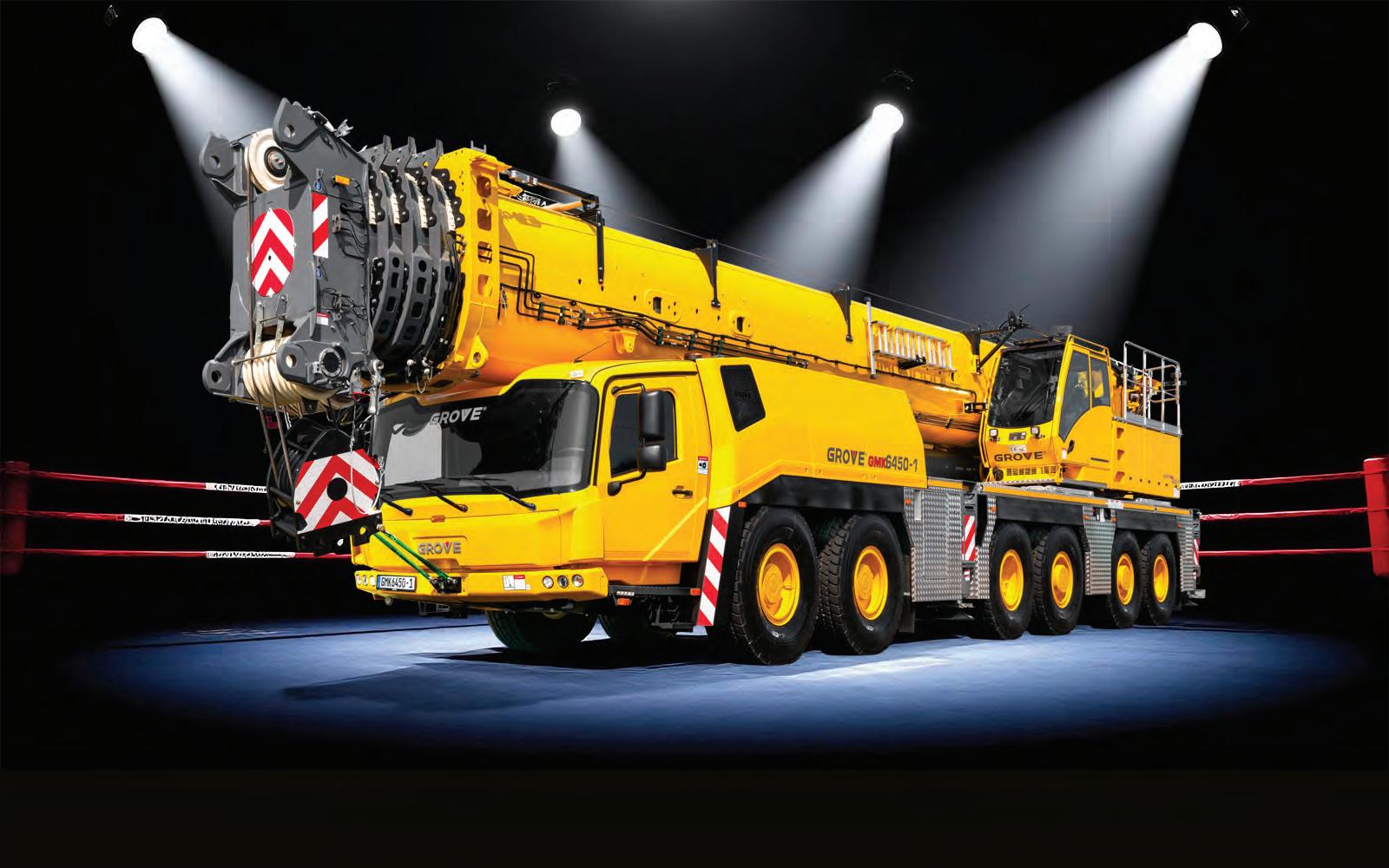
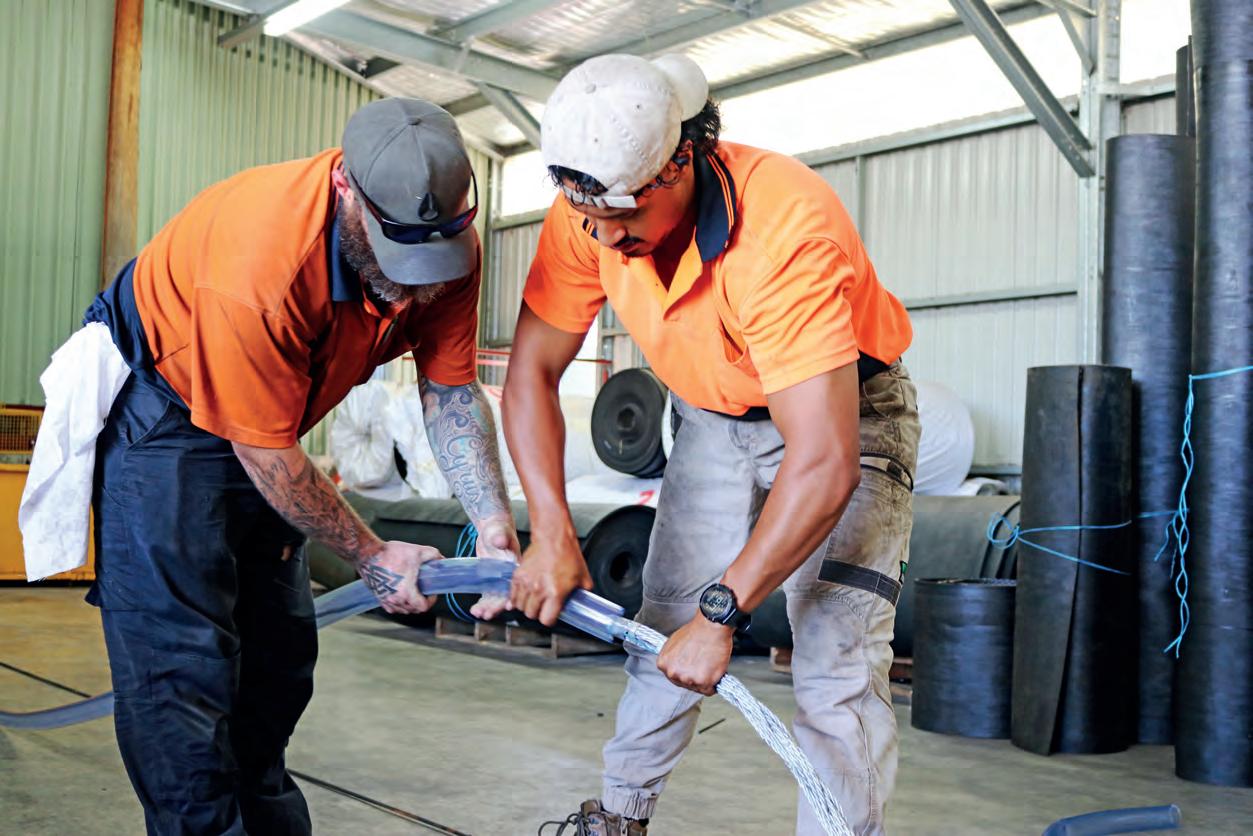
Ramshorn hooks on large cranes. Essentially, it consists of a double-ended Superflex Strop configured in a cradled lift configuration. The strop is folded at its midpoint, and each eye is attached to one of the Ramshorn hooks, creating a secure and efficient single-point lifting solution.
With every specialised order such as the Superflex slings destined for the power transmission sector, Andromeda’s engineering team examines in detail everything to do with the specific requirements.
“From the outside looking in it would seem we are constantly manufacturing different versions of our existing products – which is true to a certain extent – but once again there is far more to it. ‘Out of the box’ enquiries are examined in detail by our engineering team. They need to be confident that once the product has been designed, engineered and manufactured, it will deliver to the customer’s expectations.
“The team examines every aspect of the product, from its dimensions and specifications to the unique requirements of the application. They carefully assess which steel cable is best suited for manufacturing the product and oversee every stage of the process, including proof loading, to ensure it meets all required standards. We follow this process for every specialised product we manufacture.”
“For the Dean-0 slings used on wind farm projects, we were required to modify the design to meet specific width requirements. This involved a significant amount of precision machining to achieve the client’s specifications. The project involved a 165 tonne capacity Dean-0 sling. The largest-capacity sling we have manufactured, it required us to work within an exceptionally tight tolerance of just two millimetres.
“Obviously, we have our ‘bread and butter’ products which we are
manufacturing and delivering to customers all day every day, but when the factory is processing an order for multiple 30 metre slings, requiring CVT protective covering and every sling requires load testing, it’s all ‘hands on deck,’”.
Enquiries aren’t always about large slings, sometimes small is beautiful said Geoff.
“Recently I had a call from a business in Western Australia lifting with Dyneema rope. The contact I spoke to was hoping we might look at manufacturing another option for them because the abrasive lifting environment meant they’re churning through large volumes of Dyneema,” he said. “Our engineering department is now looking at a solution where they will design and manufacture a ferrule-less sling with four millimetre diameter. Although a lot of our solutions are for the heavy lift end of industry, we are just as capable of solving smaller lifting issues.”



The Crane Industry Council of Australia (CICA) recognises excellence and innovation in the Australian crane industry with the CICA Lift Of The Year Awards.
PROJECT OF THE YEAR
INNOVATION OF THE YEAR
LIFT OF THE YEAR –UNDER 20T
LIFT OF THE YEAR –OVER 20T
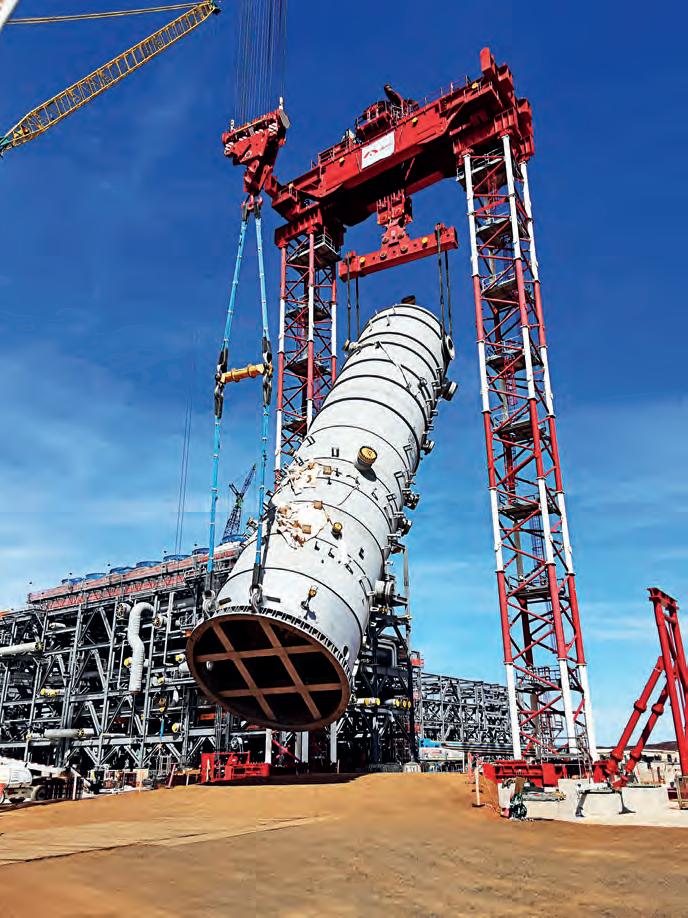
The Pluto Train 2 heavy haul project stands out as one of the largest and most technically demanding undertakings of its kind in Australia. The sheer scale and complexity of transporting and lifting modules weighing up to 4,550 tonnes required meticulous planning, advanced engineering and flawless execution.
AWARD WINNER
John Holland, Gamuda Australia & Edwards Heavy Lift, Super T Girder Access Platform. The Girder Access Platform (GAP) is an innovation that has revolutionised the M1 Motorway Extension project. By providing a safe and efficient method for accessing lift points on super T girders, the GAP has significantly enhanced safety and efficiency.
To enter the 2026 awards visit cica.com.au/awards-lift-of-the-year
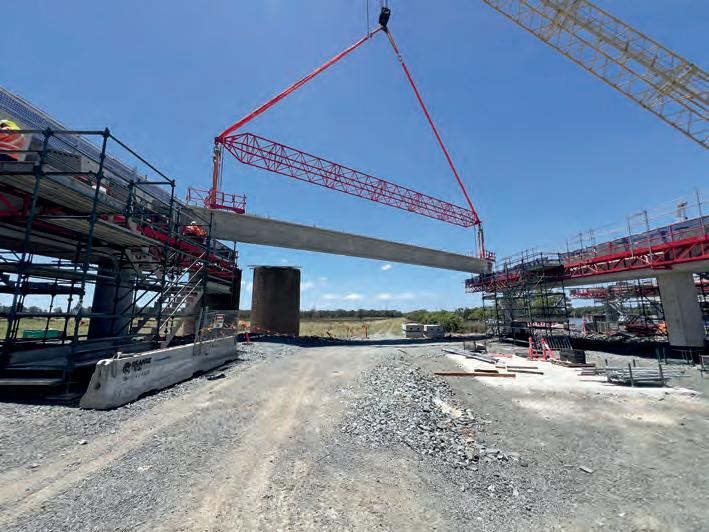
LIFT OF THE YEAR MORE THAN 20T WINNER
Premier Cranes and Rigging, 40t generator installation. Premier Cranes and Rigging’s team was tasked to lift a two-story-high 94t generator system at a data centre. The lift faced many constraints from the site condition.
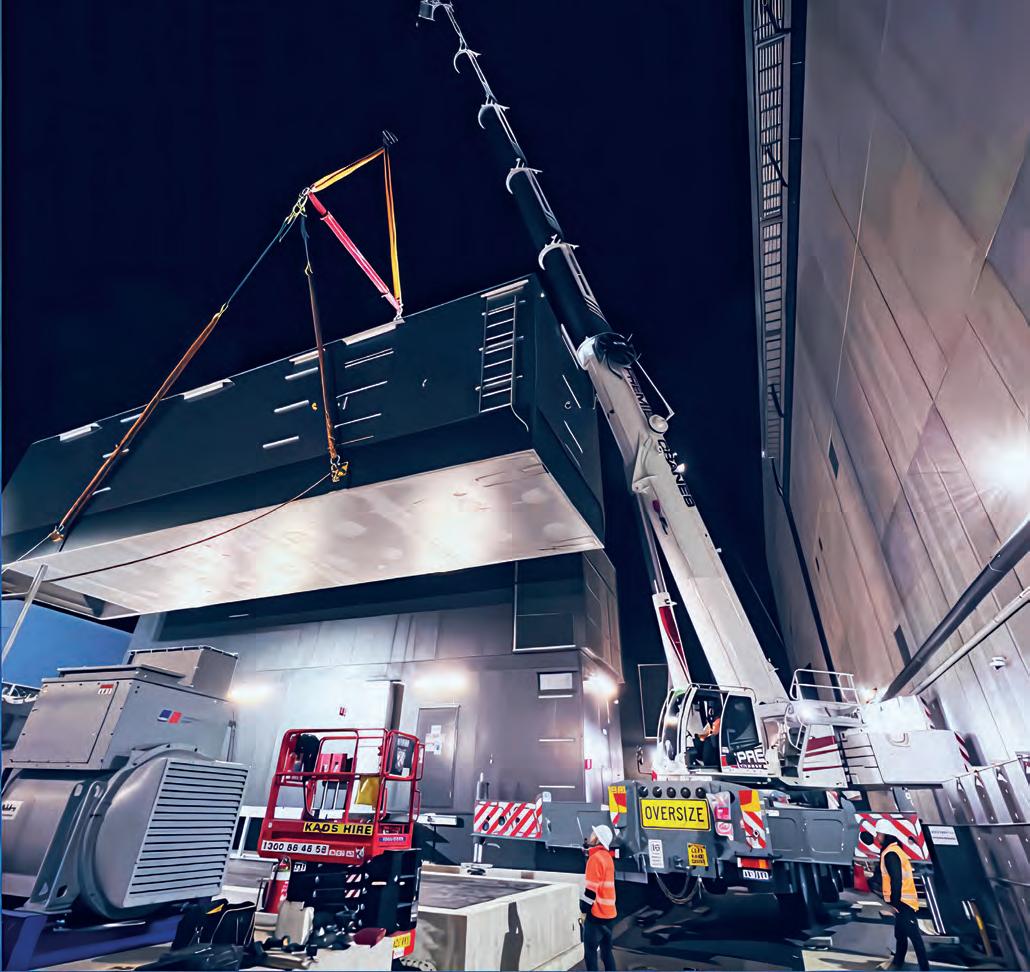
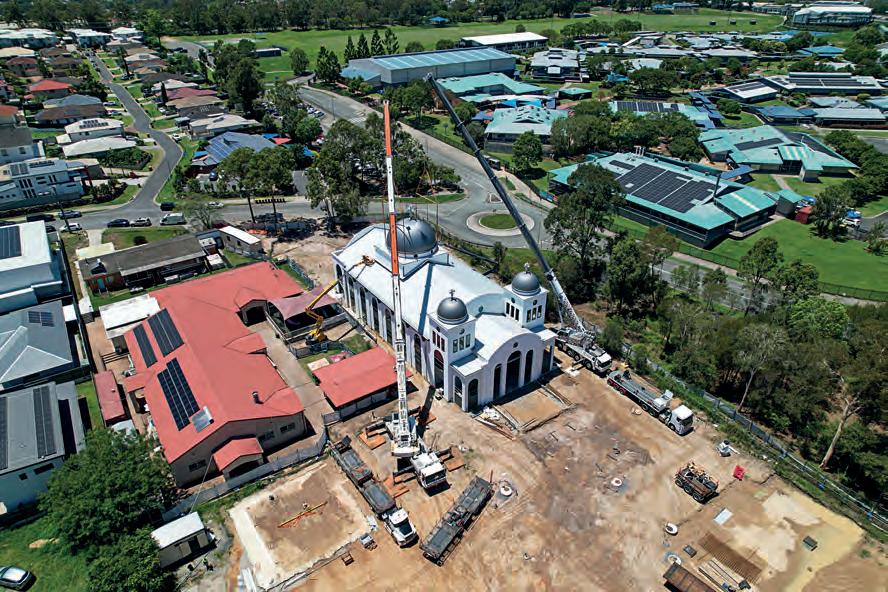
LIFT OF THE YEAR
LESS THAN 20T WINNER
Brisbane City Cranes, Virgin Mary Coptic Orthodox Church, Calamvale. Large dome lift. Brisbane City Cranes was tasked to lift the 15t dome onto the roof of the newly constructed Virgin Mary Coptic Orthodox Church. The large dome structure had to be constructed and assembled on the ground prior to the lift to reduce working at heights issues to a minimum.
Bulk Expo 2026 is shaping up to be one of the most significant gatherings of Australia’s bulk materials handling sector. The expo has already sold more than 80 per cent of exhibition space.
SCHEDULED FOR 16-17 SEPTEMBER AT THE Melbourne Convention and Exhibition Centre, the event is attracting strong support from suppliers, manufacturers, engineers and operators looking to stay ahead of the challenges and opportunities reshaping the industry.
Among the companies exhibiting is Leveltec Engineering, which sees the event as an important opportunity to connect directly with industry professionals and showcase technologies that improve safety and operational performance.
Leveltec Engineering is an Australianowned manufacturing and technical distribution business that has spent more than a decade supporting bulk materials handling operations. However, the product that established its reputation goes back much further. Its conveyor safety and
ports and quarries for more than 40 years. Today, the business supplies a broader range of conveyor safety, monitoring and industrial electrical solutions, while also representing several international technology providers in Australia.
That experience gives the company a practical perspective on why industry events such as Bulk Expo continue to matter.
MORE THAN JUST ANOTHER TRADE SHOW
Leveltec Engineering Managing Director Ben Stokes explains why the company decided to exhibit.
For many exhibitors, trade shows are an opportunity to showcase products. Ben sees Bulk Expo as something more valuable.
“Honestly, it would be harder to justify not being there. Everything happening
and the challenges being worked through across the floor are all directly connected to our industry,” he said.
“There’s also a timing element. The bulk handling sector is in the middle of some real shifts right now with a genuine push toward wireless and remote monitoring, serious attention on extending the life of ageing infrastructure rather than replacing it, and tightening compliance expectations across safety-critical systems. We’ve got products and capability that sit right in the middle of those conversations, and Bulk Expo is the best environment to have them.”
The strong exhibitor response appears to support that view. More than 80 per cent of the show floor has already been secured, highlighting the appetite across the sector for face-to-face engagement and
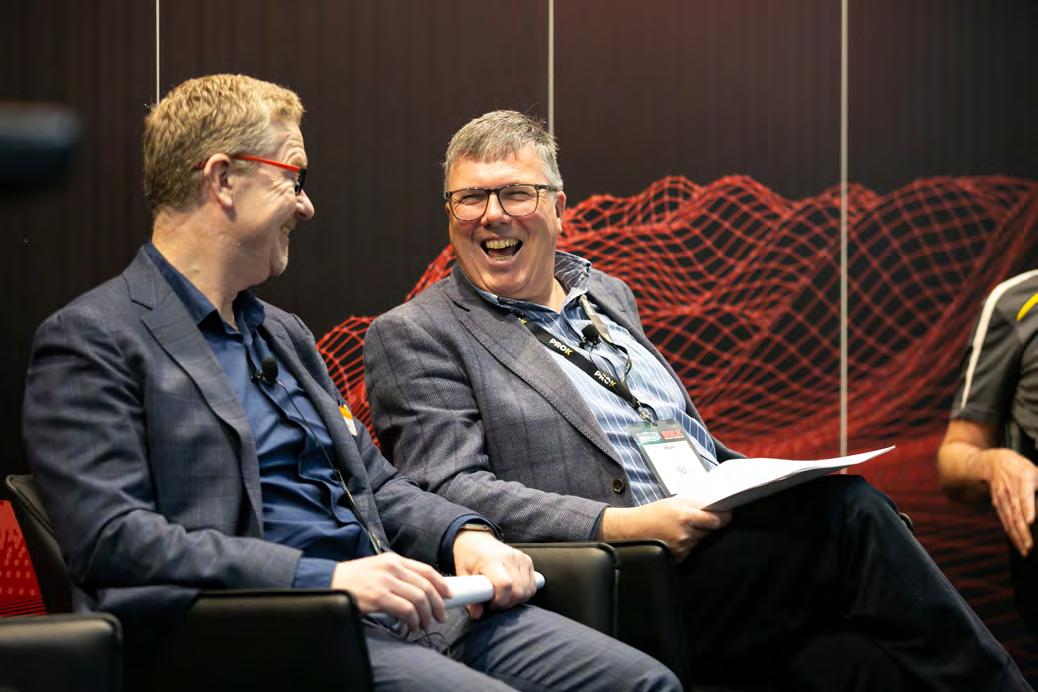
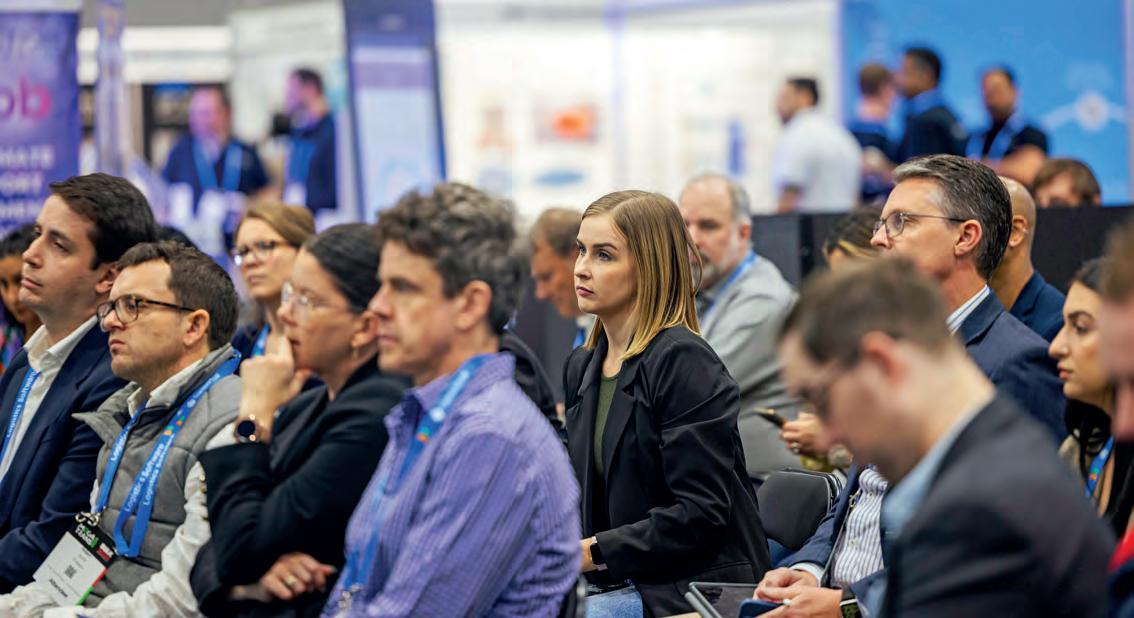
As investment decisions become increasingly influenced by automation, compliance and asset optimisation, events such as Bulk Expo provide a platform where suppliers and operators can discuss solutions in a real-world context.
The bulk materials handling sector services a diverse range of industries including mining, quarrying, grain handling, ports and processing. While each sector has its own challenges, many are confronting similar pressures around ageing infrastructure, workforce shortages and increasing regulatory expectations.
According to Ben, that shared experience is one of the reasons industry gatherings remain relevant.
“For the industry more broadly, events like this matter because bulk handling is genuinely complex. It spans mining, ports, grain, quarrying and processing, and the people running those operations benefit from being in the same room as the engineers, OEMs (original equipment manufacturers) and suppliers who are solving similar problems from different angles,” he said. “That cross-pollination of ideas is how the industry moves forward.”
Rather than operating in isolation, operators can compare approaches, evaluate technologies and gain insight
into how similar challenges are being addressed elsewhere.
That collaborative environment is particularly important at a time when businesses are being asked to do more with existing assets. Across Australia, conveyor systems and associated infrastructure that have been operating for decades remain critical to production. Extending their service life safely and cost-effectively has become a priority for many operators.
At Bulk Expo 2026, Leveltec plans to focus on technologies that address some of the industry’s most pressing operational issues.
“One big one for us is wireless monitoring, specifically what’s now possible for remote and overland conveyors where running cable just isn’t practical or economic,” Ben said.
“We’re also seeing enormous demand from operators who need to keep ageing infrastructure operating safely like operator consoles, joysticks, and foot pedals that are dust compliant and ergonomic. There’s a huge amount of conveyor equipment across Australia and we have leading solutions such as tilt switches, belt drift switches, switchgear, and emergency stop pull wires. That’s an area where we’ve built a strong reputation.”
The company will also showcase cable reels, chains and high current electrical connectors for fixed and moving plants. While the technologies themselves are important, Ben believes the broader conversation is about helping operators maintain reliability and compliance without unnecessary complexity.
For visitors considering whether to attend, Ben sees Bulk Expo as an opportunity to gain access to expertise, technology and industry perspectives that are difficult to find in one place elsewhere.
“Because the industry is changing faster than it has in a long time, and standing still isn’t really an option. The pressures on bulk handling operations right now, including maintenance costs, skills shortages, compliance requirements and automation, aren’t going away,” he said.
“Bulk Expo 2026 is one of the few places where you can engage with all of those themes in a single setting alongside the people who are actually working through them. The most valuable thing the event does is put operators in the same room as the people supplying and innovating for them.”
Tickets to Bulk Expo 2026 are available at https://bulkhandlingexpo.com.au/ attend/
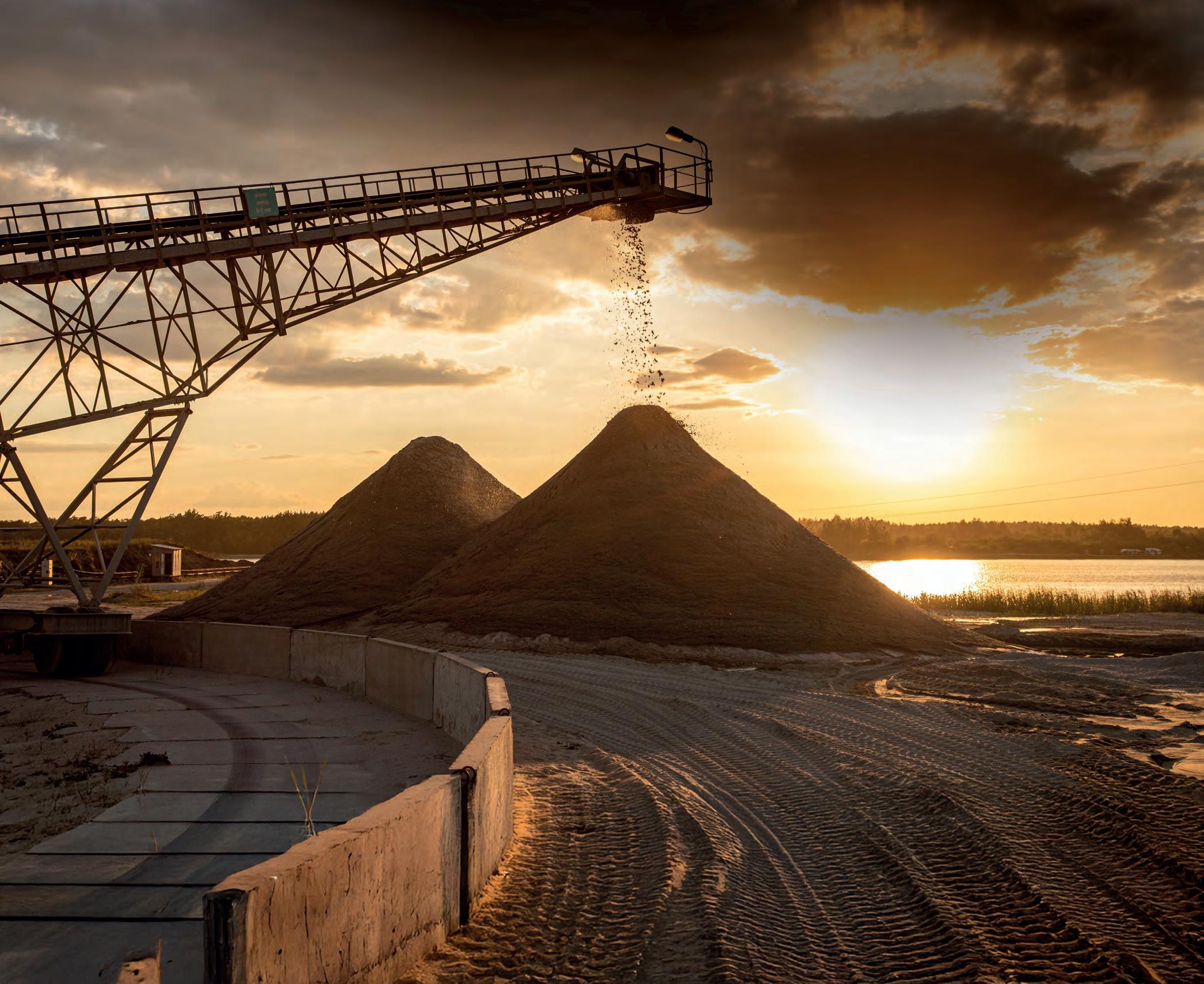

Companies that compete daily across Queensland put rivalry aside earlier this year to support Variety – the Children’s Charity, with the industry-led Cranes Team raising approximately $24,000 during the Yamaha Variety Jet Trek 2026.
HELD FROM 1-10 MAY, THE EVENT SAW participants travel from Townsville to Mackay via the Whitsundays, helping raise a total of $276,578 for children who are sick, experiencing disadvantage
The Cranes Team brought together people from across the crane sector, including representatives and supporters from Boom Logistics, Tadano, Franna, General Cranes, Qwest Cranes, Qube, Surelift Crane Hire, Century Cranes, Superior Cranes, Camilleri Lifting
For Boom Logistics’ Darren Woodley, the event was an opportunity to support a cause that has strong ties to the
Darren has donated to Variety for a number of years through his connection with Tadano Chief Operating Officer (COO) James Greenwood, a former
This year, James asked Darren to help with transport logistics for the trek. Boom Logistics supported the effort by providing a company ute for the 2600-kilometre round trip from Brisbane to Townsville and back, as well as a fuel card, accommodation assistance
During the week-long event, Darren drove the support vehicle responsible for transporting the team’s jet skis at the
“They asked me if I’d be kind enough to help drive the ute with the two jet skis,” said Darren. “James Greenwood, a former colleague and the one who put
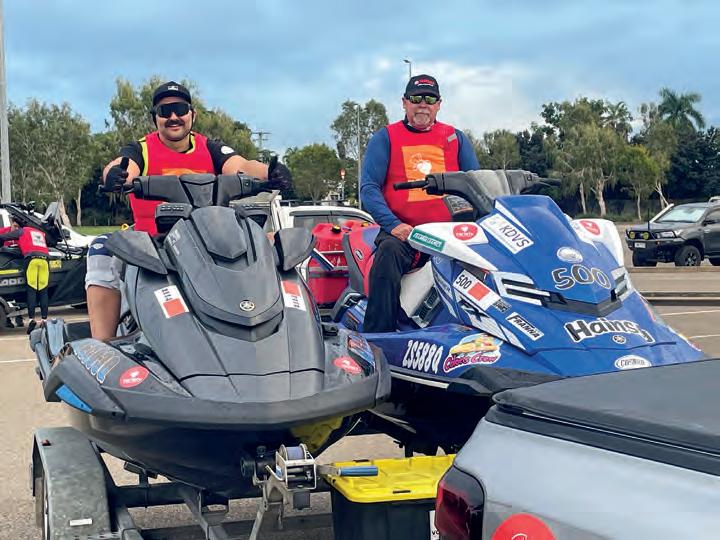
the team together; has a daughter who has life challenges and disabilities, so he has been fundraising now for years.
“The crane industry is a small one, but despite our team and contributors being comprised of companies that may be staunch competitors there’s always a friendly chat or a social hello. General Cranes, Qwest Cranes, Qube, Surelift and MACS are just a few of the names that donated to our team. The generosity of the people and businesses who supported us, particularly given the economic challenges at the moment, was truly appreciated.”
In addition to supporting the event, Darren also took promotional gear to NRL Cowboys House in Townsville, a culturally safe boarding facility for
Aboriginal and Torres Strait Islander students attending partner schools in the region.
While the fundraising total was a significant achievement, the event also highlighted the strong relationships that exist across the crane industry.
Despite many of the companies involved competing in the same markets, the fundraising effort attracted support from businesses throughout the sector.
“There was a particularly humbling experience one evening where I was able to see for the first time a small window into the challenges the kids with disabilities and their families face,”
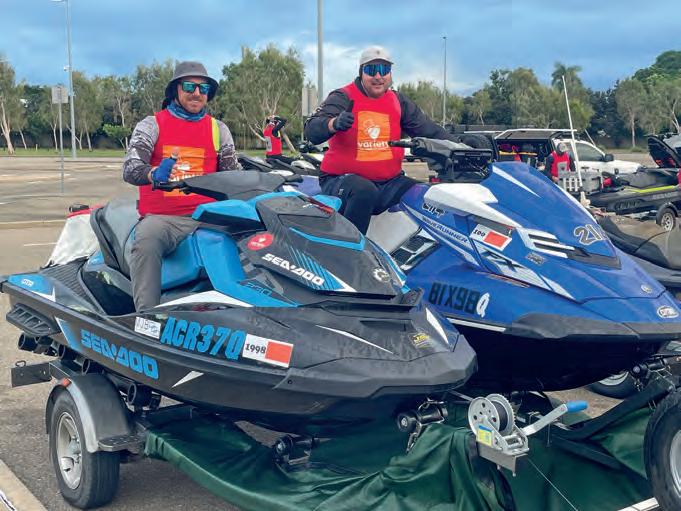
said Darren. “Each night the Variety held a function and kids/adults who received Variety grants came along and thanked all for their fundraising and contributions. I think that is lifechanging for some for sure.”
Darren said the experience reinforced the importance of the fundraising effort and the role industry support plays in helping Variety continue its work.
James has been involved with the Variety Jet Trek on and off since 2015, with his family’s experiences providing the motivation to become involved with the charity.
“My motivation for getting involved came from my daughter, Chloe who was born with special needs,” he said. “Through our experiences as a family, we met so many other families facing similar challenges, and it opened our eyes to how much more support is needed for children with disabilities and additional needs.
“We wanted to find a way to give back and help make life a little easier for these kids and their families, and Variety quickly became the charity that really stood out to us. The work they do
to support the cause. One of the most rewarding parts has been seeing how generous and supportive the industry has been.
“So many people have stepped up to help because they genuinely care about giving kids like my daughter, and more importantly her friends, better opportunities and experiences.”
James said the support generated by the industry has helped Variety continue delivering equipment, programs and assistance to children and schools that would otherwise struggle with limited funding.
“Being part of the Variety Jet Trek has been an incredibly rewarding experience, and it’s amazing to see an entire community come together to support such an important cause.”
The Yamaha Variety Jet Trek
“We wanted to find a way to give back and help make life a little easier for these kids and their families, and Variety quickly became the charity that really stood out to us.”
has a genuine impact, and it’s something very close to our hearts.
“Over the years, I’ve been fortunate enough to bring people from the crane and construction industry together
2026 raised a total of $276,578, with the crane industry’s contribution demonstrating how businesses across the sector can come together behind a common cause.