
When others reach their limit We’re just getting started

REACH


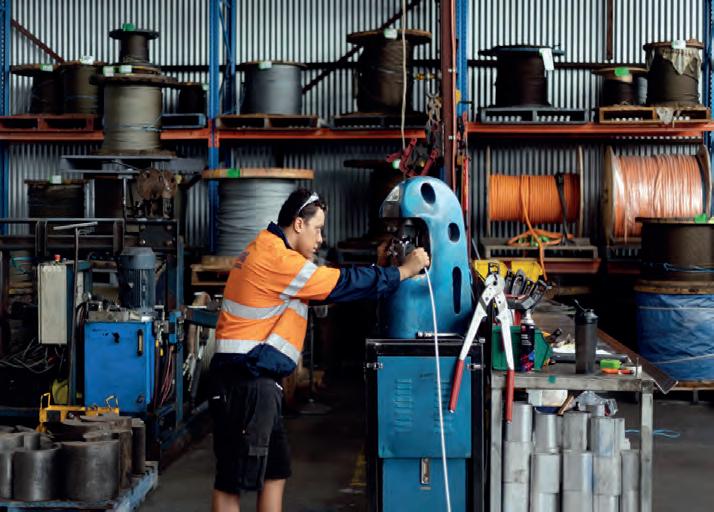
Importance of sharing critical knowledge and standards.
35 Resolution Rigging Services
RRS introduces a range of lifting accessories.
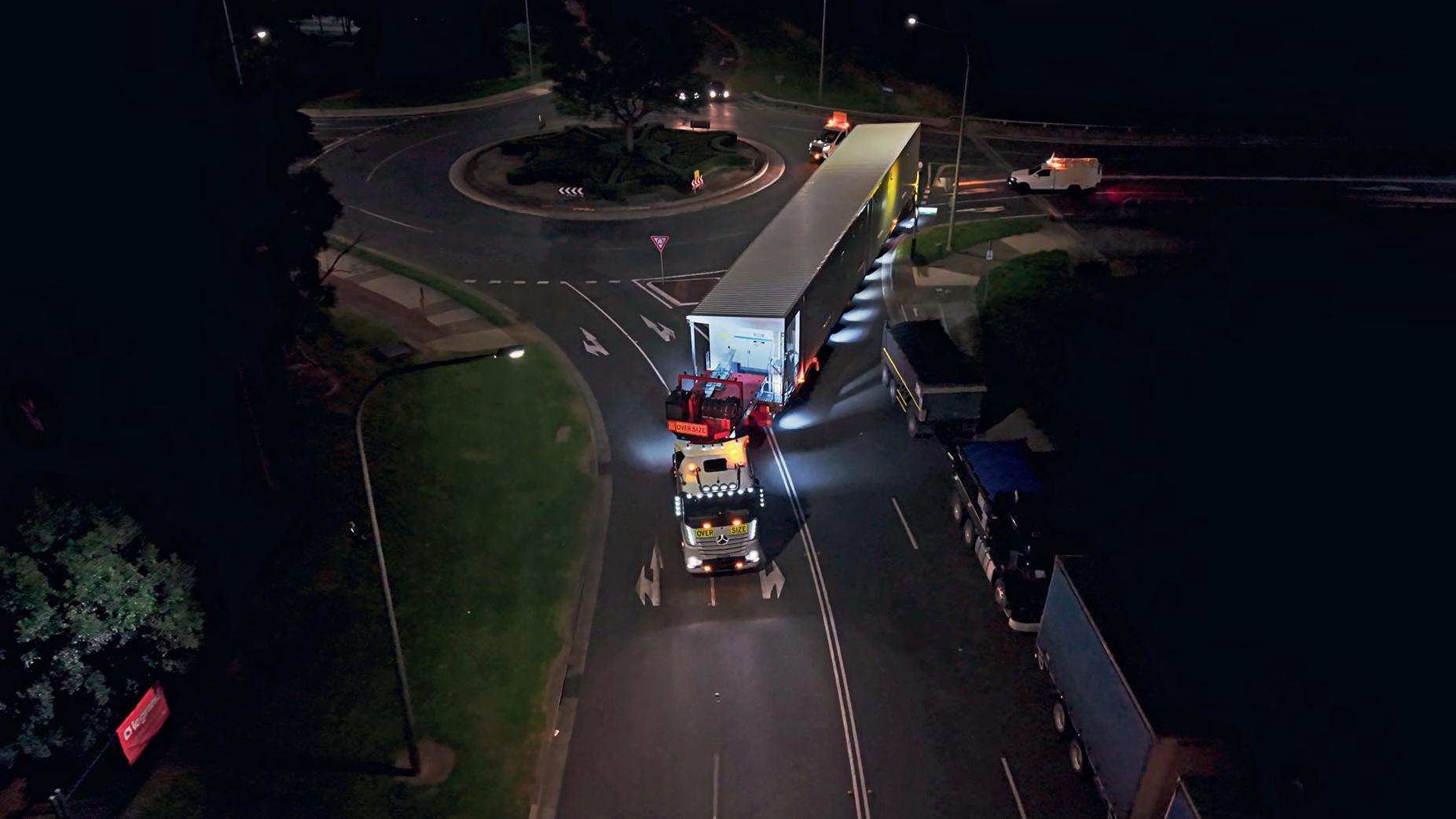
39 Townley Drop Forge
Solving the global supply chain puzzle.
42 LIF TIQ
Making compliance and tracking easy.
44 Andromeda Industries
The team behind every lifting solution.
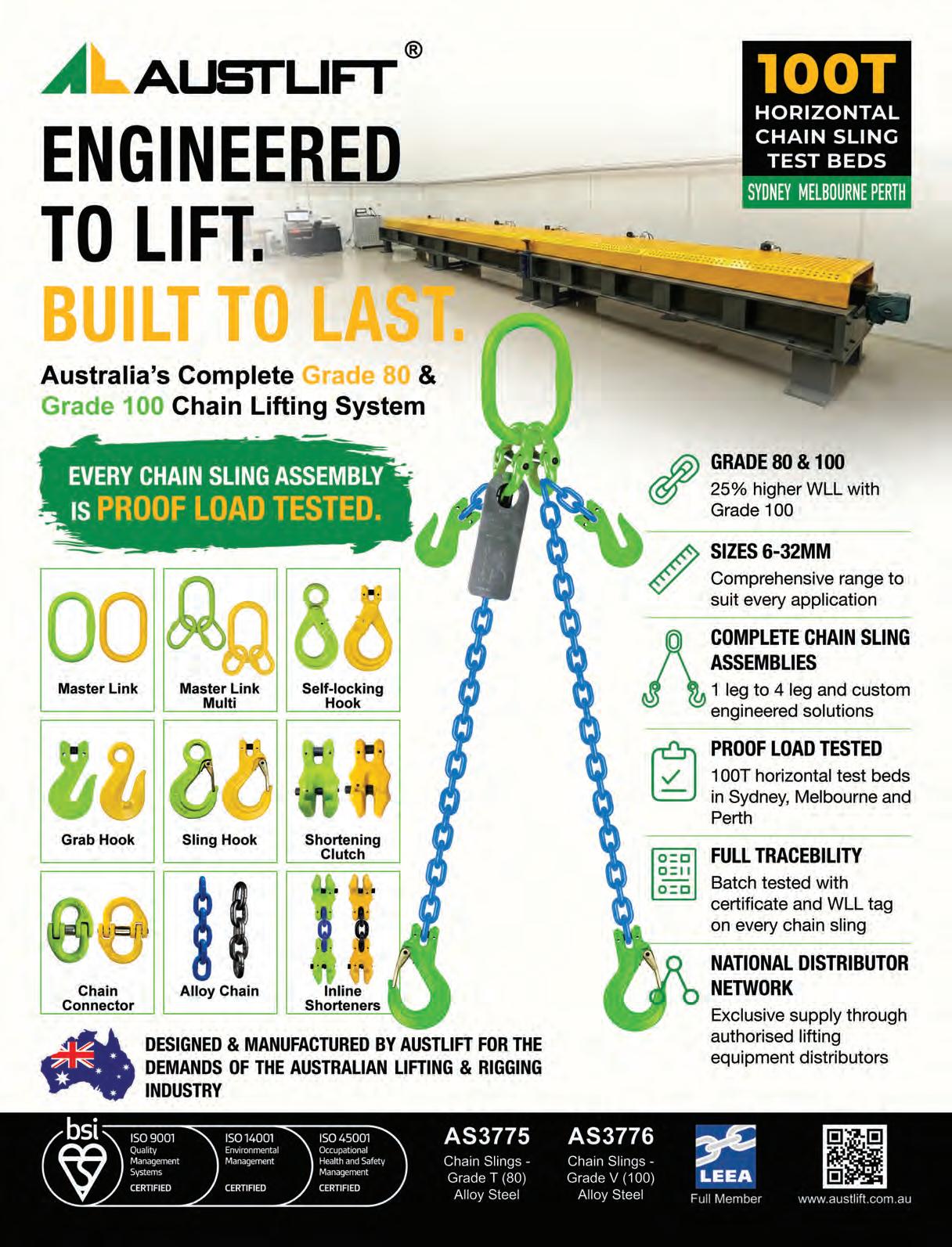
46 Austlift
Austlift increases testing capabilities.
49 PACE Cranes
Lifting well with Maeda.
52 TRT
Supporting with innovation and trust.
55 Franna
Sydney Cranes Frannas only.


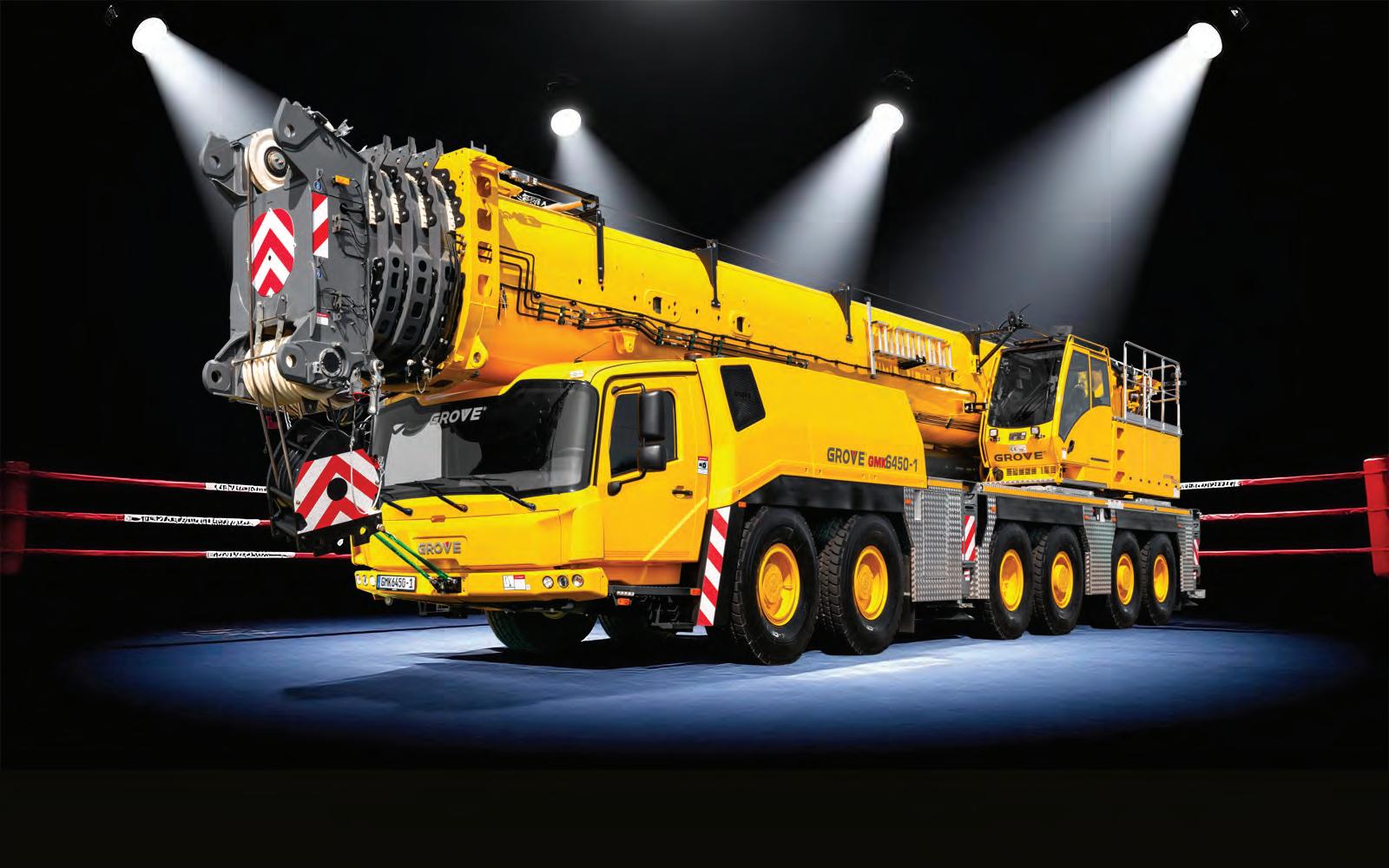
Grove’s world first with Mammoet.
ane Connection Crane Connection strengthens XCMG representation.
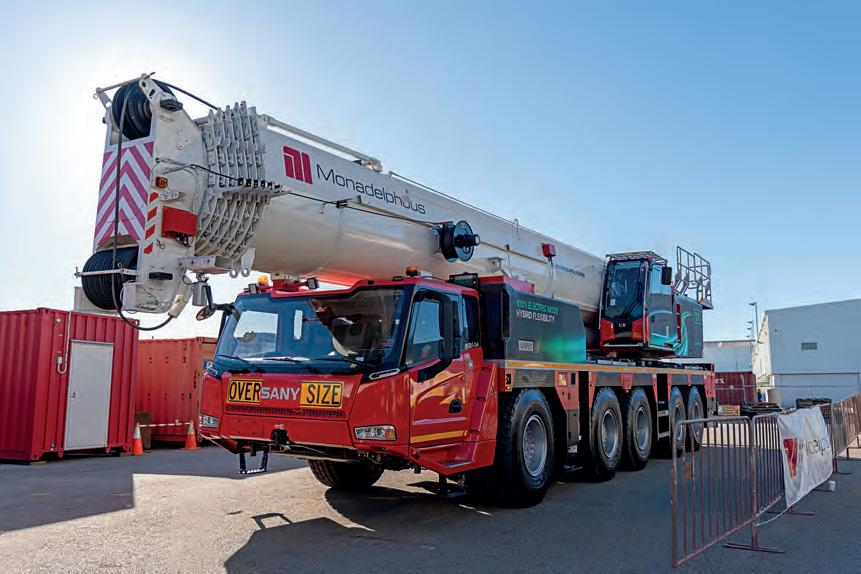
New Sany Hybrids to Monadelphous. The future of crane manufacturing.
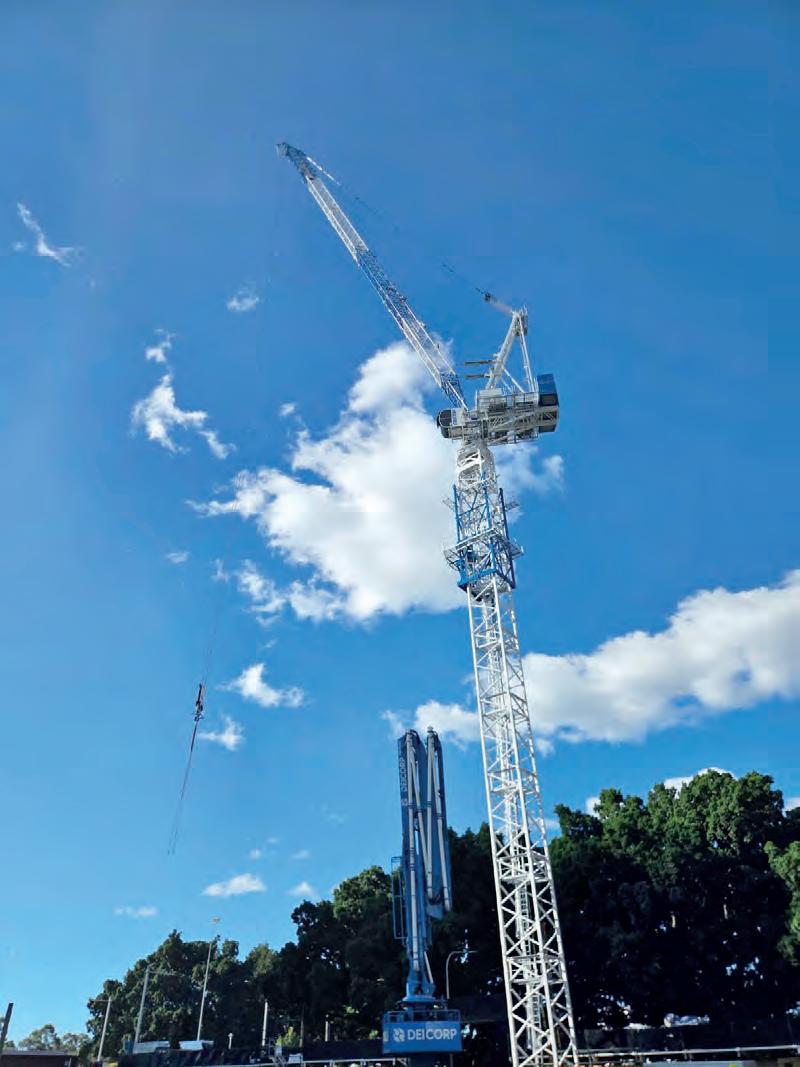


WE TAKE THIS OPPORTUNITY TO REMIND the industry that submissions for the Crane Industry Council of Australia (CICA) Lift of the Year Awards close at the end of this month. Submission forms are easily downloaded from the CICA website. Please plan your entry and don’t miss out!
This issue includes the regular ‘Between Hook and Load’ feature which continues to highlight the critically important role lifting equipment plays in every lift. We cover Andromeda Industries and how its team approaches each and every lifting solution, and congratulate Townley Drop Forge’s near-century of local expertise. We take a ‘deep dive’ into V-DAQ’s software capabilities and examine the pivotal role pick and carry cranes continue to play in the industry.
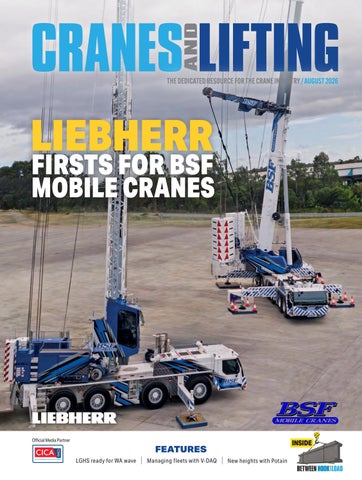
We congratulate Monadelphous on the addition of new hybrid all terrains to the fleet and we feature BSF Mobile Cranes for the first time in the magazine and examine the latest additions to their fleet, which include a couple of firsts from Liebherr.
As always, the team at Cranes and Lifting has worked hard to bring you what we hope is an informative edition of the magazine and we hope you enjoy the read.
Booms Up!
Simon Gould Editor, Cranes and Lifting
“This issue includes the regular ‘Between Hook and Load’ feature which continues to highlight the critically important role lifting equipment plays in every lift.”
The new 250-tonne SANY SAC2500E7PHEV plug-in hybrid all terrains are the first of their kind to be deployed in Australia.
Published by:
379 Docklands Drive, Docklands VIC 3008
T: 03 9690 8766
www.primecreativemedia.com.au
Chairman John Murphy E: john.murphy@primecreative.com.au
CEO
Christine Clancy E: christine.clancy@primecreative.com.au
Publisher Sarah Baker
E: sarah.baker@primecreative.com.au
Managing Editor Lisa Korycki E: lisa.korycki@primecreative.com.au
Editor Simon Gould E: simon.gould@primecreative.com.au
T: 0404 865 109
Assistant Editor Danny D’Cruze
E: danny.dcruze@primecreative.com.au
T: 0429 187 751
Business Development Manager Emily Schlegel
E: emily.schlegel@primecreative.com.au
T: 0466 317 555
Client Success Manager Ben Sammartino
E: ben.sammartino@primecreative.com.au
Art Director Bea Barthelson
Imaging Assistant Paul Breen
Subscriptions
T: +61 3 9690 8766
E: subscriptions@primecreative.com.au
The Publisher reserves the right to alter or omit any article or advertisement submitted and requires indemnity from the advertisers and contributors against damages or liabilities that may arise from material published.
© Copyright – No part of this publication may be reproduced, stored in a retrieval system or transmitted in any means electronic, mechanical, photocopying, recording or otherwise without the permission of the publisher.
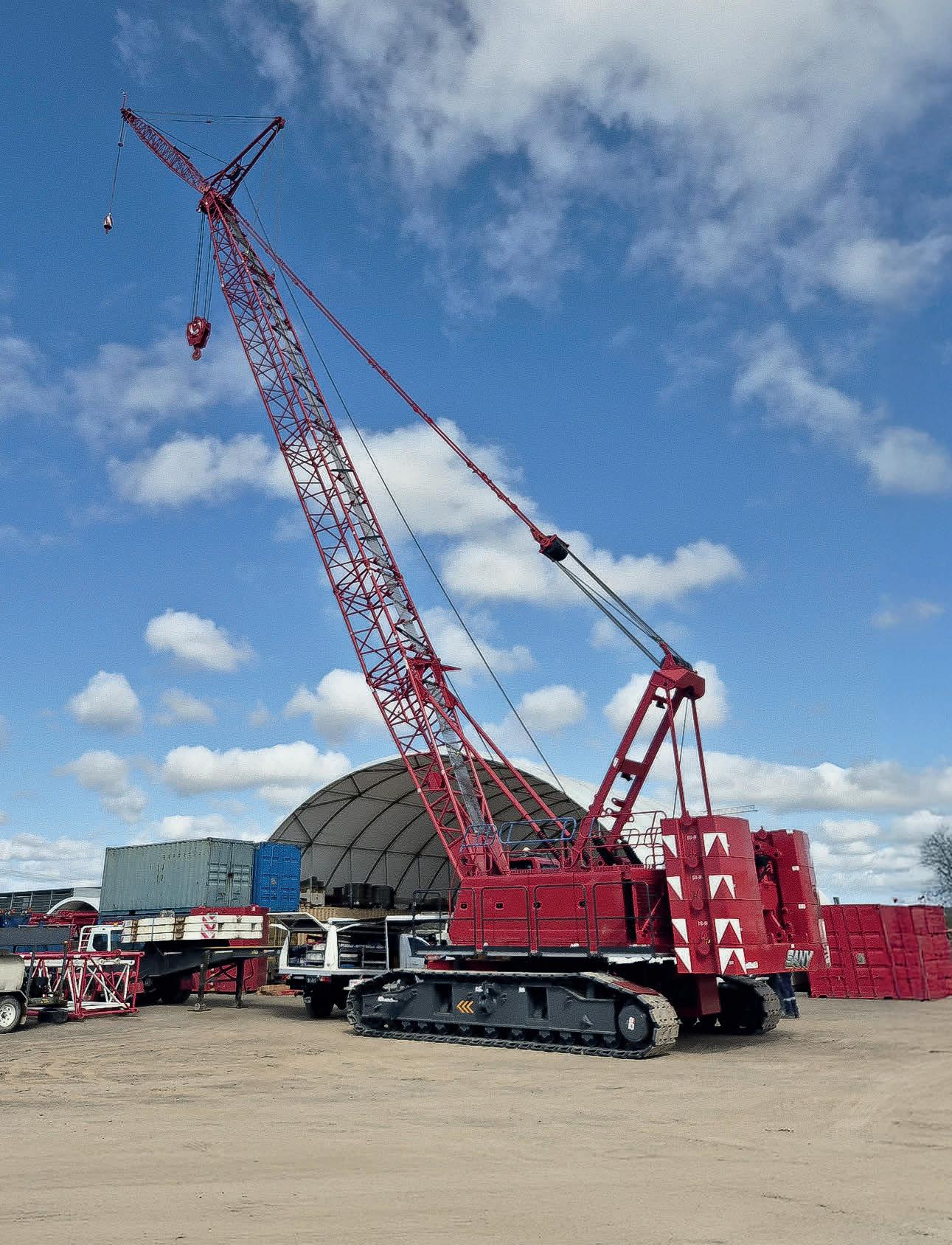

Provided by Tutt Bryant Equipment, the SANY SCC1100A is a 110-tonne crawler crane engineered to deliver reliable lifting performance across construction, infrastructure and industrial projects.
Designed for strength, stability and efficiency, the SCC1100A features a powerful hydraulic system, robust crawler undercarriage and advanced control technology to provide smooth, precise operation in demanding conditions. Its modular design allows for efficient transport and assembly, helping reduce downtime between projects.
With a maximum boom length of up to 76 metres and a range of configurable lifting options, the SCC1100A offers the versatility required for a wide variety of lifting applications. Combined with SANY’s proven engineering and the national sales, parts and service support of Tutt Bryant Equipment, it is a dependable solution for contractors seeking performance, reliability and long-term value.



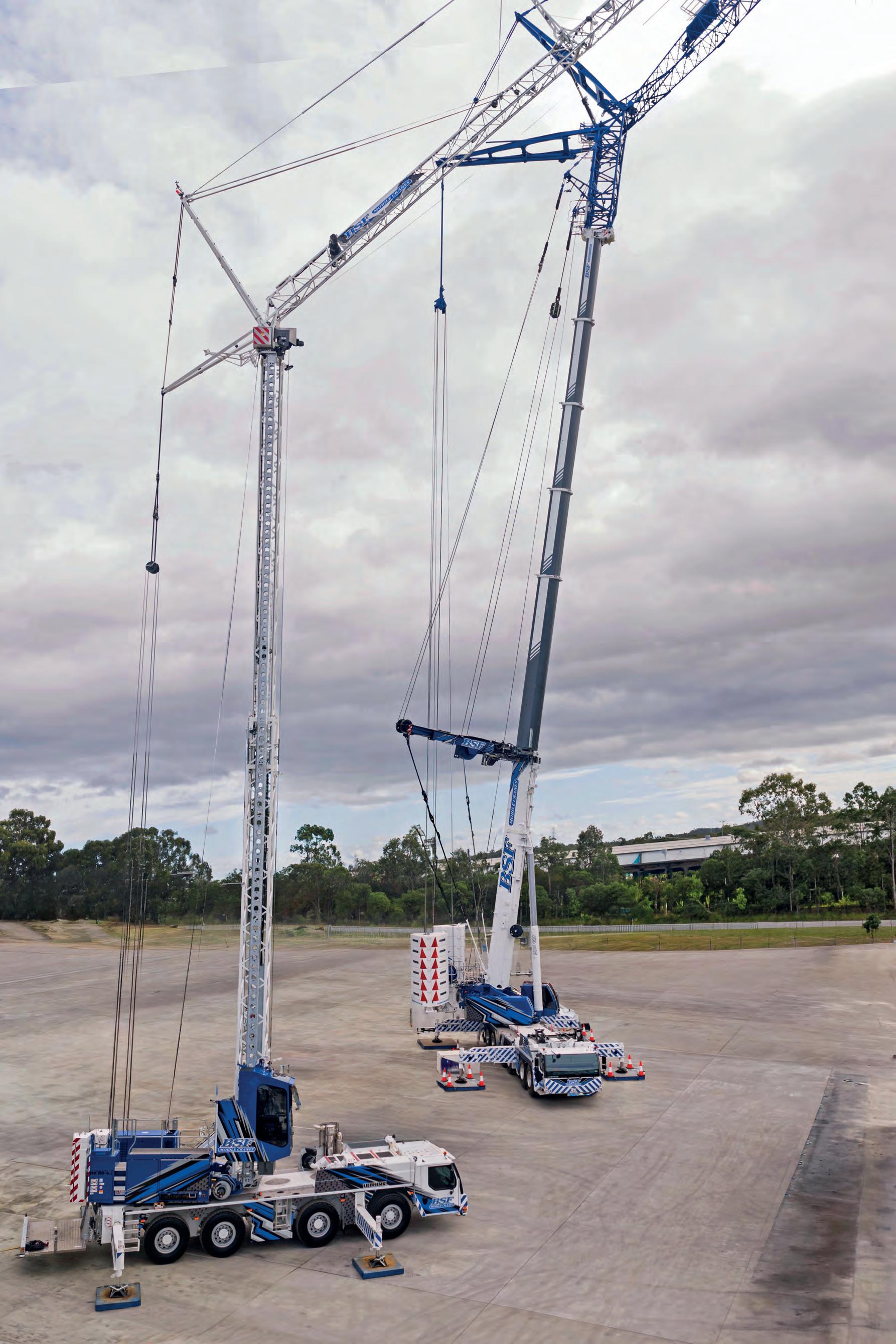
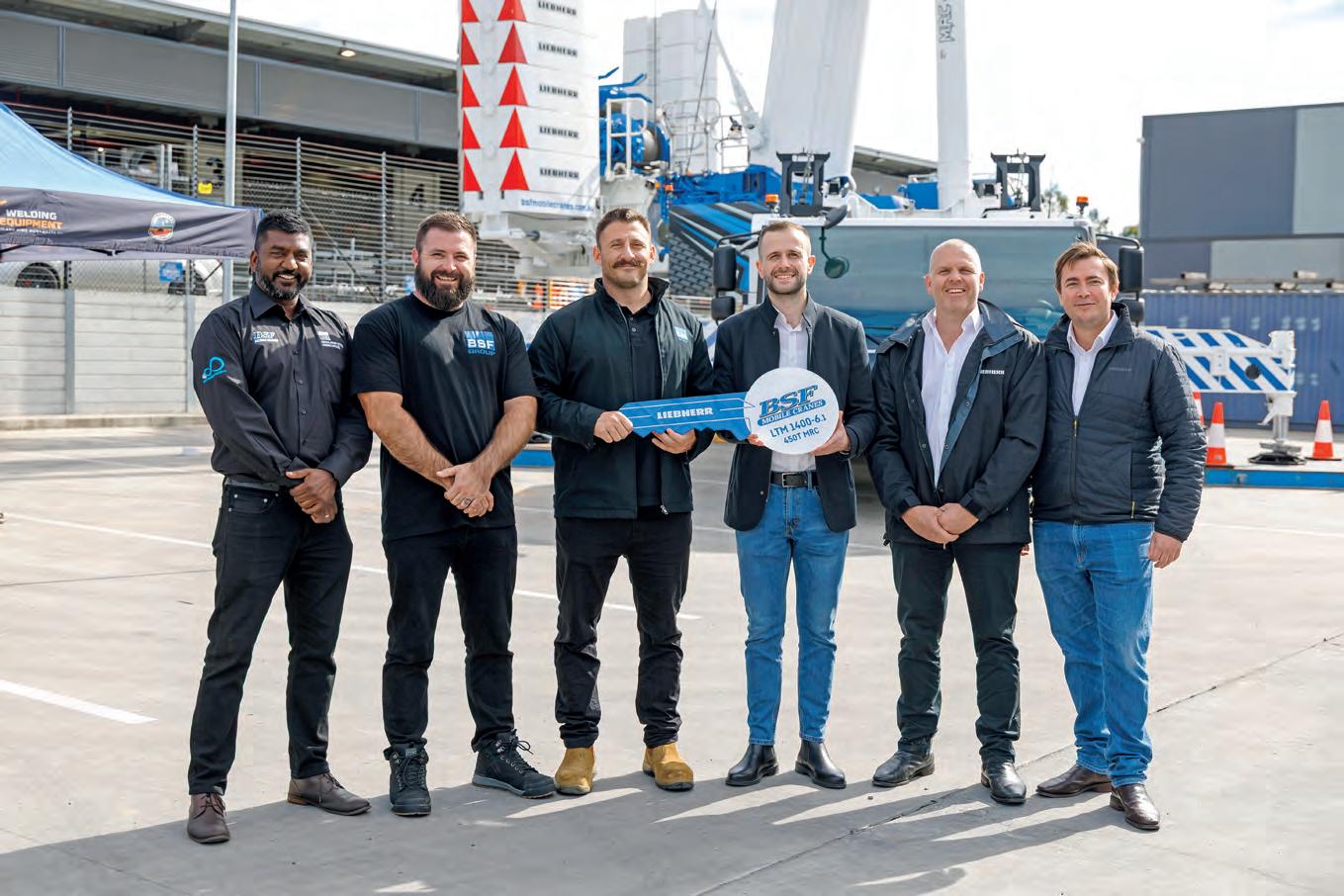
Brisbane’s BSF Mobile Cranes recently took delivery of two firsts from Liebherr, the first LTM 1400-6.1 to be delivered in Queensland, and an MK 88-4.1, the first unit of its kind delivered in Australia. BSF Director Anthony Stoeckert, Group General Manager Owen Ainsworth and General Manager Trent Chetty discuss additions to their fleet.
The Liebherr LTM 1400-6.1 is impressive. With its high mobility and quick setup times, it will significantly increase efficiencies on site.
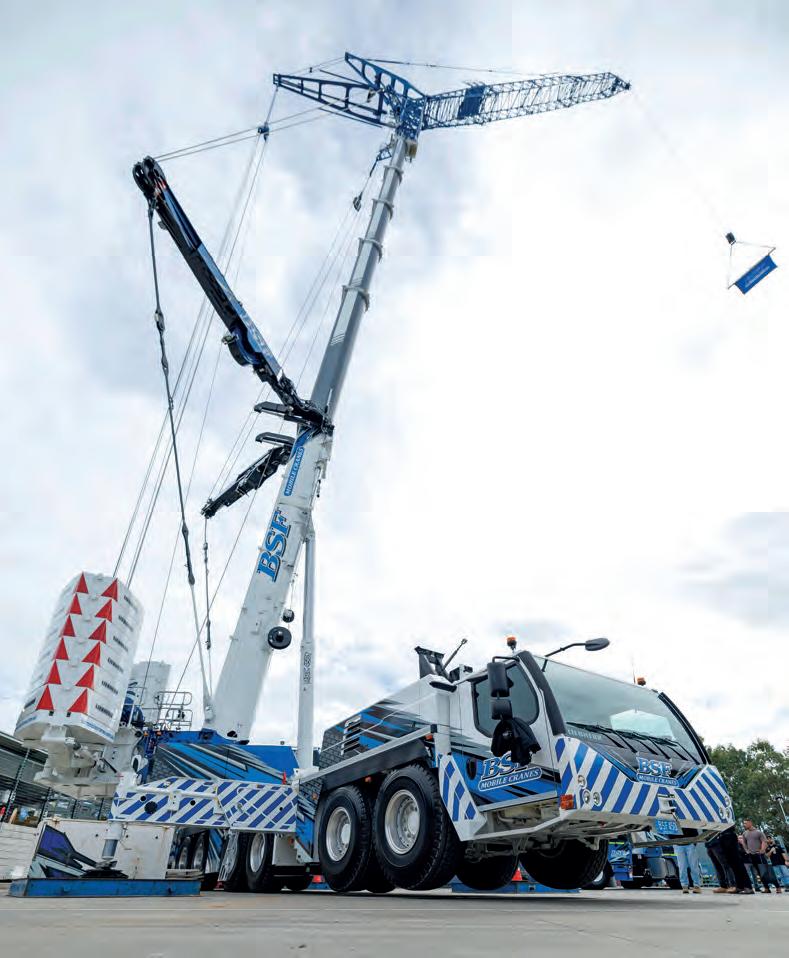
THE ORIGINS FOR BSF MOBILE CRANES are firmly established in Beenleigh Steel Fabrications which started in 1980. As the city of Brisbane developed throughout the ’80s the business saw rapid growth, as did the requirement for craneage for the steel erection side of major projects.
“The early fleet featured P&H truckmounted cranes, including a P&H 670TC (70 t) and P&H 440-TC (40 t) lattice boom units, as well as a P&H 670-WLC (63 t) lattice boom crawler,” said Owen.
“These cranes contributed to major projects such as the construction of Suncorp Stadium and remained in the fleet until relatively recently. As demand grew, the fleet evolved alongside the steel fabrication business, and in 2007 BSF Mobile Cranes was established as a standalone operation.”
As the BSF fleet grew, so did the number of brands that featured within it.
“We were buying cranes which had the required capacities for the projects, but some became unreliable and the after sales service and support wasn’t at the levels we expected, and indeed required. For a while, we had been talking to Bryce O’Brien, Liebherr’s Queensland Sales Manager for mobile cranes and decided to give Bryce and Liebherr a go. We started with the purchase of a 60 tonne all terrain which was quickly followed by a 130 tonne and we haven’t looked back since,” said Owen.
Trent goes on to discuss the development of the fleet and the importance of Liebherr.
“Our all terrains and crawlers are all Liebherrs and we also operate a number of Terex Frannas, including 25 tonners with Super Lift through to the 40 tonne AT40s. We also have a range of Maeda mini crawlers with a couple of these being battery electric, and then there are Tadano and Kato rough terrains and city cranes in the fleet for the smaller jobs.
“Liebherr is by far our largest supplier of cranes. When you take into account the models we have coming over the next 12 months, we will have 54 cranes in the fleet, 20 of them being Liebherrs. The smallest capacity Liebherrs are 40 tonne
“The MK 88-4.1 is floated in, it rolls off the float, outriggers are out and the boom is standing within 11 minutes, it’s a game changer.”
all terrains and they go all the way up to the new 450 tonne capacity LTM 14006.1 with everything in between. The fleet includes multiple 70 tonners, 90 tonners, 150 tonners and we also operate 100 tonne telescopic boom crawlers and a couple of 280 tonne lattice boom crawlers which have been great additions to the fleet,” said Trent.
Anthony explains when and where he first saw the latest additions to the fleet.
“I was fortunate enough to attend Liebherr’s International Customer Days in June 2024, and this was the first time I was exposed to LTM 1400-6.1 and the MK 88-4.1. I have to say, I saw the LTM 1650-8.1 up close for the first time and that crane blew my mind, but when I got back to the yard and we chatted about the right fit for the fleet, we determined
it wasn’t really our market for now and that we needed to build up that type of capacity,” he said.
“An opportunity to service tower crane erection and dismantling presented at about the same time. We invested in a LTM 1350-6.1 so we could manage this work until the 450 arrived. Tower cranes is an area we will be exploring with the new crane, as well as infrastructure work, including larger bridge beams lifts and that type of work.
“The 350 is a great crane with a nice long boom but it has its limitations with Liebherr’s Y-Guys setup time, and it proved to us the 450 needed to be the next step. It has the same footprint as the 350 with the same number of axles, but it also features the new Y-Guys system which significantly reduces crane setup
time. The 450 is particularly impressive with its high mobility and the setup times are seriously quick with this new system which will significantly increase efficiencies on site.”
The other product to catch Anthony’s eye was Liebherr’s MK series.
“I was impressed with the MK series and asked Bryce why they weren’t available in Australia. He explained that there were a number of reasons, including concerns about classifying them as a mobile crane.
“After some lobbying and insistence on our part, and given the nature of jobs the MK is designed for, Liebherr was able to have the crane classified as a mobile construction crane. This was important for us, as it allows us to continue operating under a single agreement in the yard. We now have the only unit of its kind in the country,” Anthony said.
Trent said the more the team from BSF talk about the MK 88-4.1 the more applications open up for it.
With the MK 88-4.1 BSF will float the crane to site, roll it off, the outriggers are out and the boom is standing within 11 minutes.
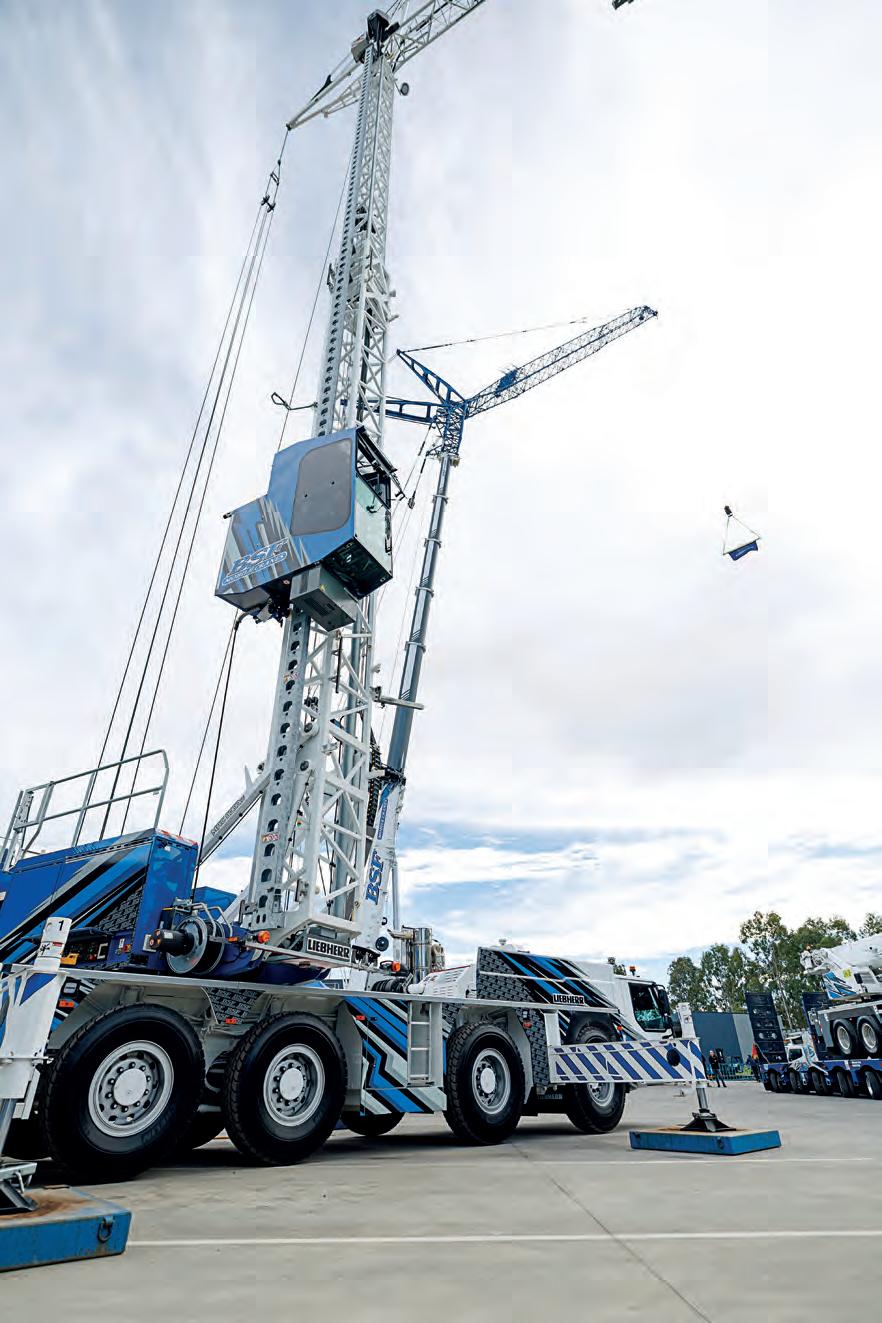
“Because of its reach, it is ideal for roofing applications and with the setup times, I can see it being really popular when it comes to the installation of air conditioning units, or generator replacement lifts in the city,” he said.
“It’s lifting capabilities are comparable to Liebherr’s 230-tonnecapacity LTM 1230-5.1 for which you are looking at three semis following the crane as well as the time to build a fly jib. In comparison, the MK 88-4.1 is floated in, it rolls off the float, outriggers
are out and the boom is standing within 11 minutes, it’s a game changer,” said Trent.
The four axle MK 88-4.1 features a maximum lifting capacity of eight tonnes, with the ability to handle 2.2 tonnes at a maximum radius of 45 metres. At an under-hook height of 30.2 metres, it is able to work with the boom inclined at 15, 30 and 45 degrees and at a maximum under hook height of 59.1 metres, it can still handle 850 kilograms. The MK 88-4.1 is
equipped with remote control and Stage V engine. Owen goes on to discuss the relationship between BSF Mobile Cranes and Liebherr.
“Following the purchase of our first crane, we have continued to work closely with Bryce and the team at Liebherr for a number of years, and they haven’t put a foot wrong. Yes, we know it’s a premium product which comes at a premium price, but with this comes the reliability of the cranes and the quality of the after sales service and support we receive.
“The support from Adam Damon in the service department at Liebherr’s Yatala yard for example, has been unreal. You can pick up the phone any time of day or night and he’ll answer and help us out,” said Owen.
“It’s the same with Hans Nothacker (Hansi), General Manager Mobile and Crawler Cranes. You can call Hansi at any time, and he’s more than happy to help and he’s been a great addition to the local Liebherr operation.”
The team is preparing BSF Mobile Cranes for the likely high demand for craneage which will come as the momentum builds for the 2032 Brisbane Olympics.
“The Olympics are still a fair way off and we think Queensland will have another eight months of relative normality before it really starts to kick off. But that’s the whole point of ordering these cranes, we’re ramping up. We also have another fabrication facility on standby, and we’ve got more yards secured, some with large amounts of hard stand.
“When it comes to steel fabrication, BSF Group’s design team will start working with builders early on projects to ensure we are offering the most productive and efficient services across the fabrication, steel erection and construction processes,” said Owen.
“With the increasing capabilities of BSF Mobile Cranes, and thanks to Liebherr, we are well positioned to manage work outside of these dynamics, offering new and exciting cranes not seen before in Queensland and indeed the country.”

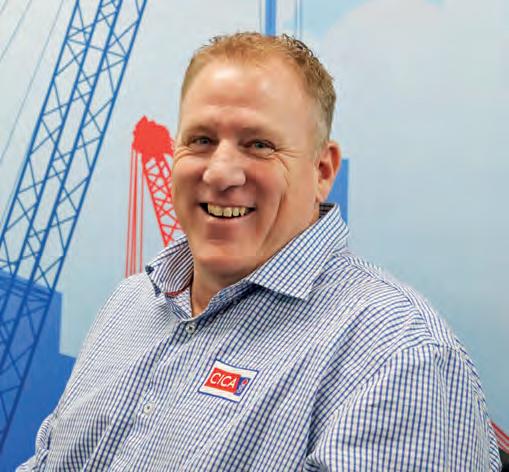
WELCOME TO THE AUGUST ISSUE, AS usual Simon Gould and Danny D’Cruze have put together a worthy read, and a good reminder of the strength of and opportunities in our industry. As I write, there’s certainly no shortage of challenges facing crane businesses. Uncertainty around fuel prices and recent Federal Government tax changes are creating additional pressure for many companies. While our industry is used to adapting, it’s another reminder that businesses continue to operate in a changing and often unpredictable environment.
There was some welcome news recently with the announcement that the contract has been awarded for the re-opening of the Great Western Highway. I know this closure has had a real impact on a number of our members, adding time, cost and
frustration to projects that are already challenging enough. Hopefully we start to see some relief soon.
I’m also very pleased to share some good news on the CrewSafe front. The audit has been completed, and CrewSafe certification now includes an RTO-issued certificate. This is something we’ve been working towards for some time and is an important step in ensuring CrewSafe is recognised on construction sites that require a Registered Training Organisation (RTO) qualification.
If you’ve already completed CrewSafe, there’s nothing extra you need to do. We’ll be issuing RTO certificates retrospectively, so you’ll receive the benefit of this change automatically.
One area where we’ve also made some encouraging progress is our work
with regulators. We haven’t solved every issue yet, but we’re starting to see a greater willingness to listen to the people who actually work in our industry.
A big thank you to Brett and Les in South Australia for taking the time to meet with the SafeWork Commissioner, and to Conan in New South Wales for raising the practical issues with the Hills Shire Tower Crane Policy. Their willingness to speak up and share their experience has made a real difference. Regulators are beginning to recognise that policies work best when they’re informed by the people who have to apply them.
That’s a good reminder that CICA’s advocacy is strongest when it’s backed by real examples from our members. If you’re dealing with issues involving regulators, local government or policy
Pat Cran CICA CEO
“Registrations
for the 2026 CICA Conference are now open, and I hope you’ll join us in the Hunter later this year.”
makers, please get in touch. That’s exactly why CICA exists, to represent the industry and help tackle these challenges together.
CraneSafe also continues to grow, and I’m pleased to say that Tim has hit the ground running. He’ll now be your first point of contact for everything CraneSafe. I know many of you will be meeting and working with Tim in the months ahead.
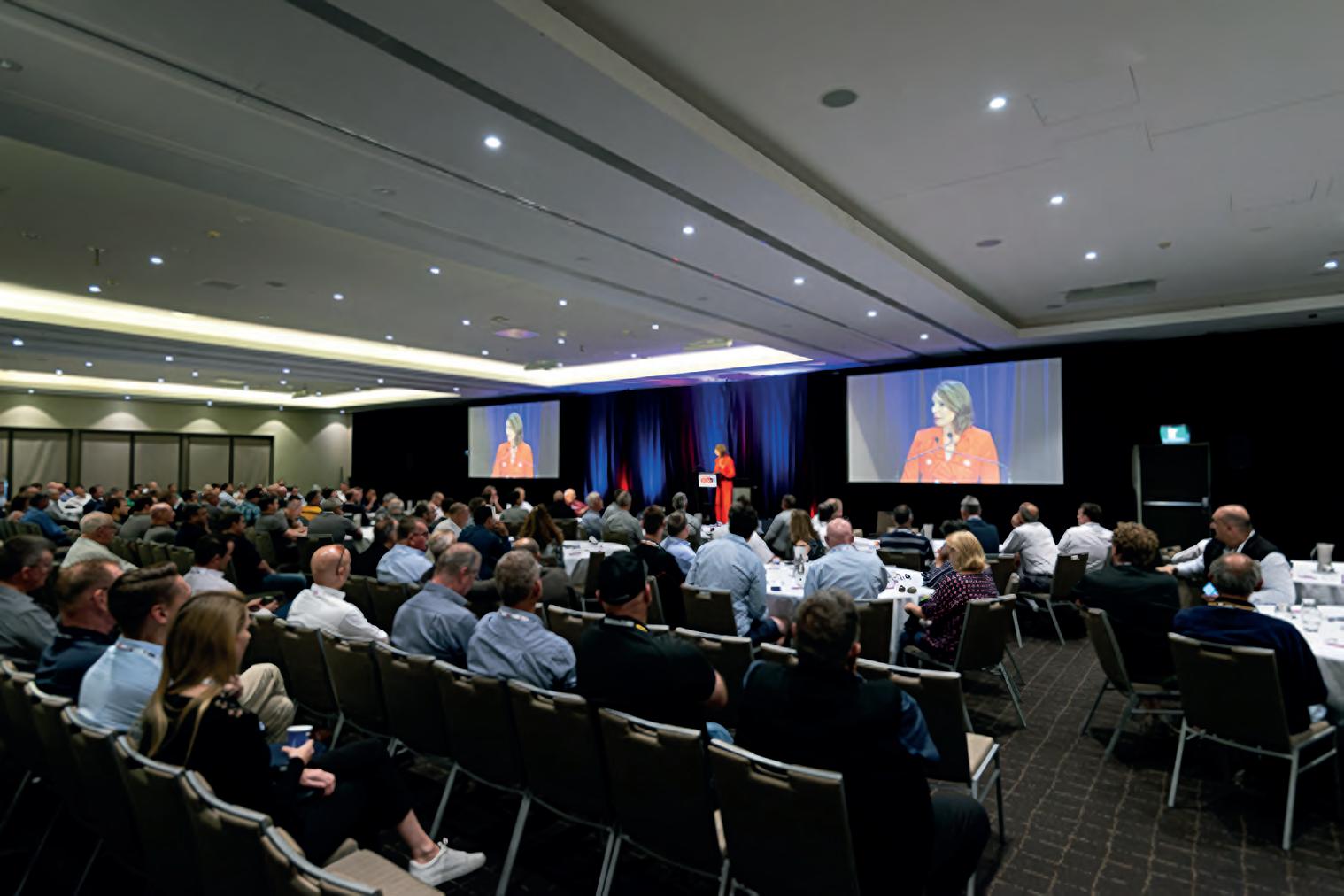
Finally, registrations for the 2026 CICA Conference are now open, and I hope you’ll join us in the Hunter later this year. We’re already seeing strong interest, and we’ve made a few changes to the program to keep things fresh and worthwhile. As always, it’ll be a great opportunity to catch up with colleagues, hear from industry leaders and spend some time talking about the issues and opportunities ahead.
Thanks, as always, for your continued support of CICA. I look forward to catching up with many of you throughout the year.
Patrick Cran CICA CEO
CICA BOARD
Marcus Ferrari – President
Karli Sutherland – Vice President
Danny Adair – Director
Danny Black – Director
David Solomon – Director
Anthony Grosser – Director
Andrew Esquilant – Director
Grant Gjessing – Director
Patrick Cran
Chief Executive Officer 0488 004 274 ceo@cica.com.au
Julie Turner Board Secretary julie@cica.com.au
Alice Edwards
Road Technical Engineer 03 8320 0440 alice@cica.com.au
Loreta Lukic Office Manager 0490 356 041
loreta@cica.com.au
Damien Hense
Senior Executive Road Poilicy 0488 007 575 damien@cica.com.au
Thomas Webber
Communications Coordinator thomas@cica.com.au
Michelle Verkerk
Executive - Communications and Special Projects michelle@cica.com.au
Justina Blackman
Executive - Member Events and Engagement 0403 717 626
justina@cica.com.au
Shane Coupe
CraneSafe & CrewSafe Administrative
Assistant Officer 0491 047 134 shane@cica.com.au
Timothy Weir
CraneSafe Technical Officer
tim@cica.com.au 0494 658 614
Unit 10, 18–22 Lexia Place, Mulgrave Vic 3170
Phone: 03 9501 0078
Email: admin@cica.com.au Website: www.cica.com.au
For information, please visit our website or call the CICA office.
It is important to understand that a sling’s Working Load Limit only applies under the conditions for which it has been rated.
IF YOU ASK PEOPLE WHAT ‘LIFTING SAFETY’ involves, most of the conversation naturally centres around the crane, and in our industry, we spend a lot of time making sure cranes are inspected, maintained and operated correctly. That’s the essence of the CraneSafe program, and that’s exactly as it should be.
But the crane is only one part of the lifting system.
Just last month, a West Australian construction company was fined a record $1.75 million over the death of a worker, the highest fine ever imposed under the state’s workplace safety laws. The incident occurred during the erection of structural steel where a crane, dogger and rigger were working together to position steel columns onto prepared footings.
A column had been lifted by crane and was being held just above ground level while final positioning was prepared. During this stage of the operation, the dogger briefly moved away from the immediate lift area, and the rigger entered the vicinity of the suspended load. At the same time, the lifting accessory in use, a non-compliant, unmarked device not certified to a recognised lifting standard, failed without warning. This caused the suspended steel column to drop unexpectedly, striking the rigger and resulting in fatal injuries.
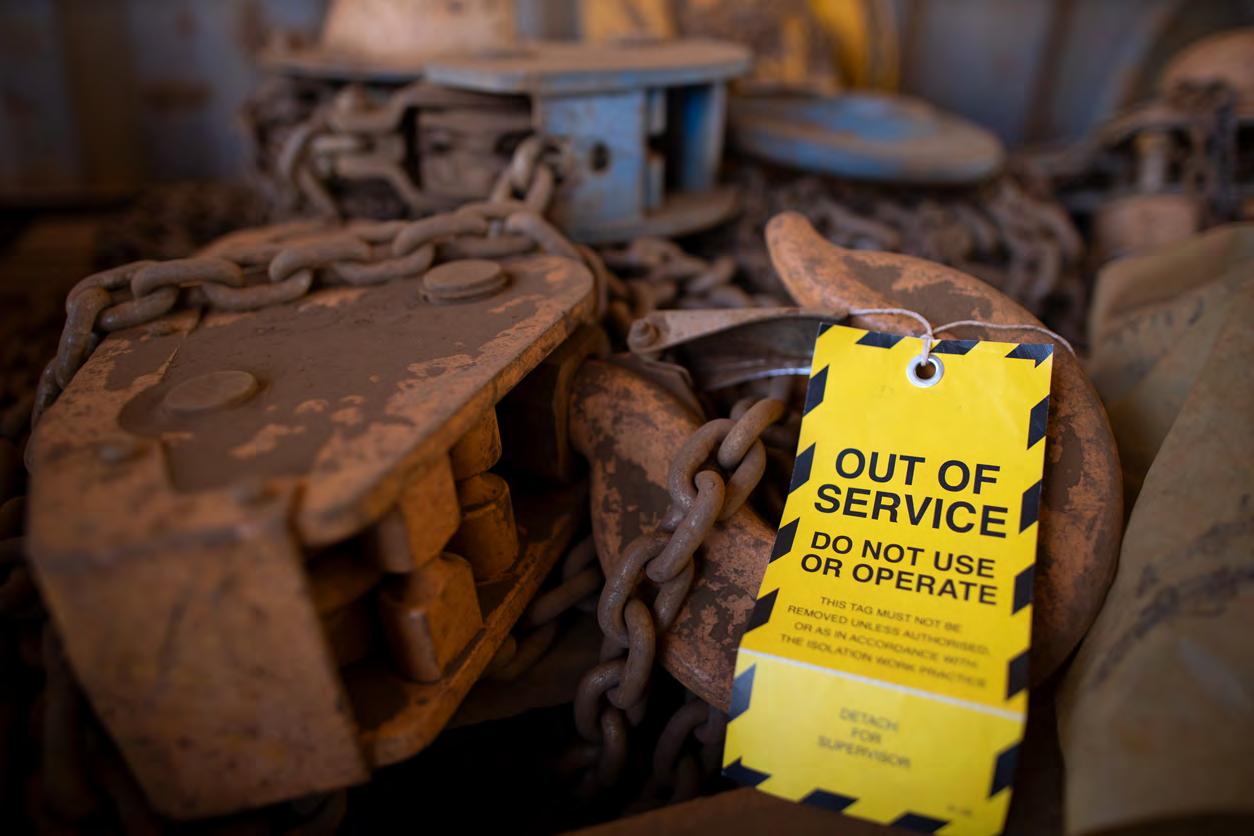
The investigation identified that the device had no verified working load limit, no inspection or traceability records, and had previously been known
to site leadership as non-compliant but remained in circulation.
The integrity of the rigging equipment connecting the crane to the load is equally important, the shackles, lifting clutches, hooks, chain slings, synthetic slings, lifting eyes and spreader beam components all play a critical role. If any one of those components fails, the consequences can be just as serious as a failure of the crane itself.
Unfortunately, far too often, it’s often the lifting gear that receives the roughest treatment or cheaper equipment is used.
Most people working in the industry have seen mishandling of equipment when a lifting clutch gets dropped onto the concrete, shackles are thrown into the back of a truck, chain slings are dragged
across steel decks or spreader beam components are tossed into a storage cage.
The equipment might look ok and perfectly serviceable afterwards, but that isn’t always the case. Lifting equipment is designed to withstand tensile loads in a controlled lifting environment, it isn’t designed to absorb repeated impacts or shock loading from being dropped or mishandled.
When a steel component strikes concrete or another hard surface, the impact creates highly localised stresses. These stresses tend to concentrate at geometric discontinuities such as around threaded sections, pin holes, changes in section thickness, weld toes, heat-affected zones and lifting points. These locations are known as stress concentration areas, where internal forces “crowd together” rather than being evenly distributed. As a result, they are the most susceptible points for crack initiation. Repeated loading or further impacts can then cause these small cracks to propagate, potentially leading to failure over time.
It’s not the dent you can see that’s the biggest issue, but it’s the microscopic crack you can’t!
Those cracks can remain undetected through dozens or even hundreds of lifting cycles before slowly propagating under repeated loading. Eventually the remaining cross-sectional area can no longer sustain the applied load, and the component fails, often suddenly and with very little warning.
That’s why equipment that has been dropped from height or subjected to significant impact should never simply be returned to service. Depending on the circumstances, it may require detailed inspection, non-destructive testing or assessment by a competent person before being considered fit for further use.
The same attention should also be given to selecting lifting equipment in the first place.
Synthetic round slings and flat web slings have become indispensable throughout the crane industry. They’re lighter than chain slings, easier to handle and far less likely to damage painted, machined or delicate loads.
However, not all synthetic slings are manufactured to the same standard.
In Australia, endless round slings should comply with AS 4497 and flat synthetic webbing slings with AS 1353. These standards specify manufacturing requirements, proof testing, marking, Working Load Limits (WLL), quality assurance and inspection traceability.
While traceability is often associated with inspection records in these standards, its scope is much broader and frequently overlooked. It extends to knowing where your lifting equipment was manufactured, what materials were used, how it was tested and whether it has been produced under an audited quality system. Together, these factors provide confidence that the stated WLL can actually be relied upon.
Unfortunately, that’s not always the case with some imported products of uncertain origin. Two slings may appear identical on the shelf, but differences in fibre quality, stitching, protective sleeves, proof testing and manufacturing controls can significantly affect longterm performance.
This principle applies equally to other lifting equipment as well, where variations in material properties, fabrication quality, heat treatment, surface finishing, and quality assurance processes can materially influence performance, durability, and safety. This was highlighted in the aforementioned incident, the WorkSafe announcement, said:
The lifting device used on the lift (a “Pink Lug”) was non-proprietary and was not compliant with the Lifting Standard, not being rated or marked with its working load limit. It resembled other suitable, proprietary lifting devices on site in colour, size and attachment mechanism.
Equally important is understanding that a sling’s Working Load Limit only applies under the conditions for which it has been rated. As soon as the sling configuration changes, so can its capacity. Basket hitches, choke hitches, sling angles and loading around sharp edges can all reduce the effective WLL.
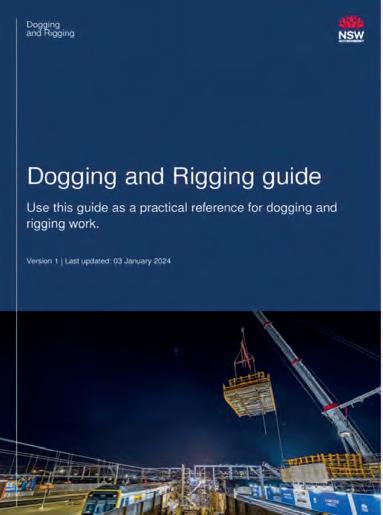
None of this is particularly complicated, but it does require discipline. Buying compliant equipment from reputable suppliers, storing it correctly, carrying out thorough preuse inspections and removing damaged equipment from service immediately are all simple controls. Combined, they significantly reduce the likelihood of an equipment failure.
The NSW Dogging and Rigging Guide is a comprehensive guide on how to operate, check and store different types of rigging equipment. The crane industry has made enormous strides in improving safety over the past two decades. CraneSafe, CrewSafe, StartSafe, better training, stronger engineering standards and improved competency have all contributed to safer lifting operations across Australia. We need to place the same emphasis on the equipment hanging beneath the hook, because when tonnes of steel are suspended above people, plant and property, there really is no such thing as a minor component. Every shackle, every sling and every lifting clutch is part of the safety system, and every one of them deserves to be treated accordingly.
Competitive Pricing
Wide Range of Options in One Place
Access to a Dedicated Crane Marketplace
Direct & Engaged Buyers
Buying Off Over 60 Years of Buying
Crane Industry Experience

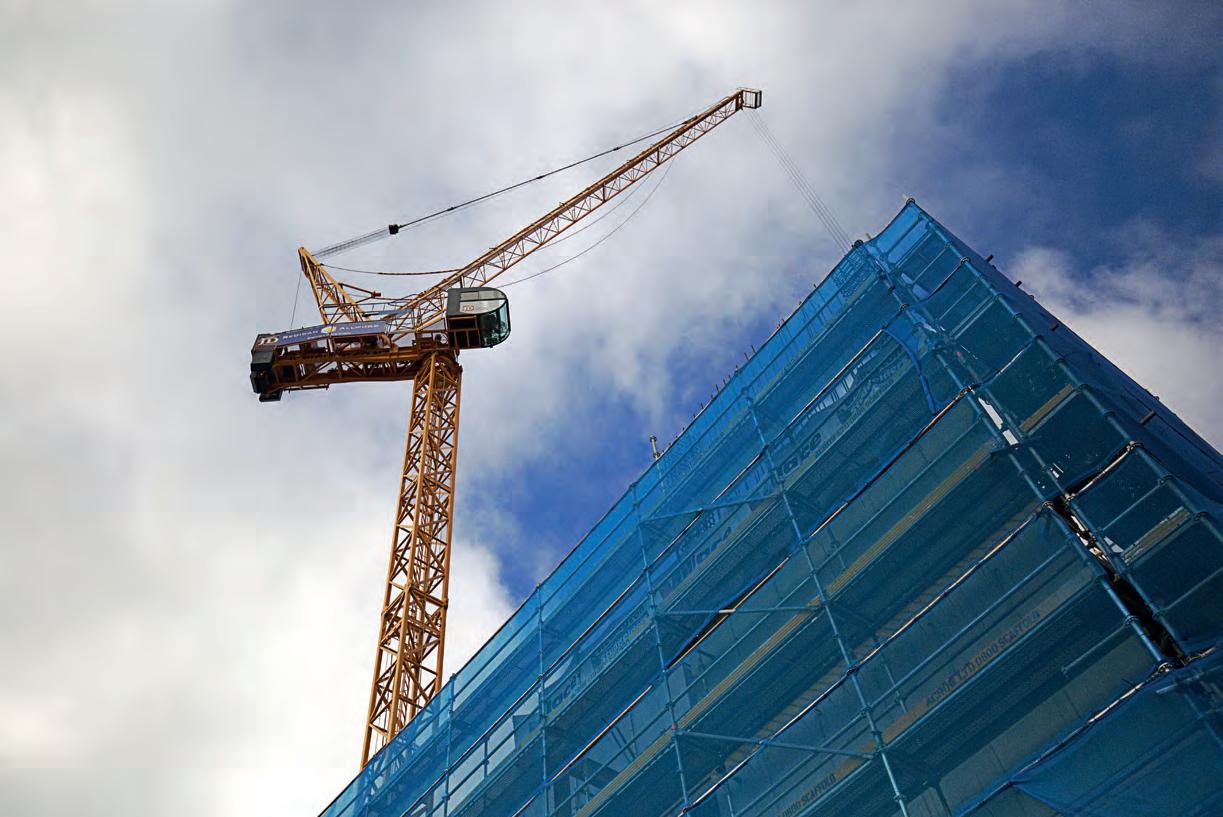
The Port & Crane Academy of New Zealand (PCANZ) is gaining momentum as New Zealand’s specialist training provider for the crane and port industries, with employers signalling increased investment in workforce development through 2027.
ESTABLISHED AS A JOINT VENTURE
between the Crane Association of New Zealand (CANZ) and the Port Industry Association (PIA), PCANZ was created in response to industry calls for a training provider that understands
the unique operating environment of lifting and port operations while strengthening the delivery of nationally recognised qualifications.
Following several years of uncertainty across New Zealand’s
vocational education sector, PCANZ has secured government funding, gained New Zealand Qualifications Authority (NZQA) program approval, established national delivery systems and commenced training delivery.
PCANZ is delivering the New Zealand Certificate in Crane Operations (Level 3), with the Level 4 qualification and additional programs continuing to roll out. A national network of approved Learning and Assessment Partners (LAPs) now enables consistent delivery across the country.
CANZ Chief Executive Sarah Toase said the academy is the culmination of years of work by a handful of dedicated individuals to take greater ownership of workforce development.
“For many years the crane industry has recognised that while the qualifications themselves are nationally recognised, the way they’re delivered can make all the difference. PCANZ was established to lift the
consistency, quality and integrity of training across the sector.”
Rather than creating new qualifications, PCANZ has focused on strengthening the learner experience through improved training resources, robust moderation systems, enhanced support and engagement with learning and assessment partners. The objective is to ensure learners receive a consistent, high-quality training experience and employer investment is rewarded with competent, knowledgeable staff as they graduate.
PCANZ arrives at a time when employers continue to face challenges attracting and developing skilled crane operators, while increasing regulatory expectations place greater emphasis on demonstrated competency.
Encouragingly, industry confidence is growing. Employers have indicated they expect a healthy increase in the number of trainees enrolling in the New Zealand Certificate in Crane Operations (Levels 3 and 4) during 2027, reflecting renewed confidence in both the academy and the industry’s long-term workforce needs.
“Building PCANZ was only the first step,” said Sarah. “Its long-term success now depends on industry making full use of the pathways that have been created. Every learner who enrols strengthens the capability of our workforce and helps ensure the crane industry has the skilled people it needs for the future.”
As delivery expands, PCANZ will continue working alongside employers, learning and assessment partners, NZQA and industry stakeholders to ensure training remains practical, relevant and aligned with the needs of modern crane operations.
For New Zealand’s crane industry, PCANZ represents more than a new training provider. It is a long-term investment in lifting the standard of workforce development, giving employers confidence in the quality of training and creating a sustainable pipeline of skilled crane operators for years to come.

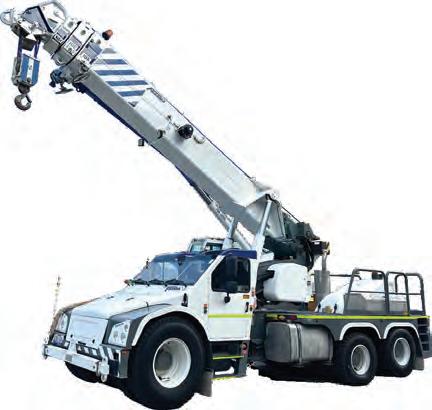
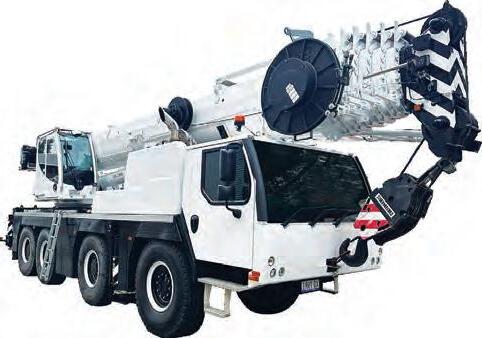
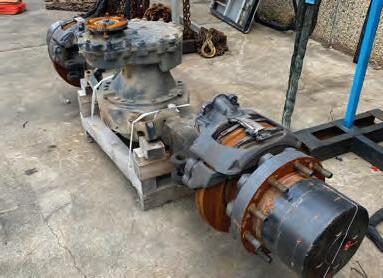
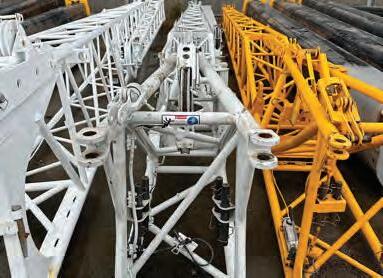
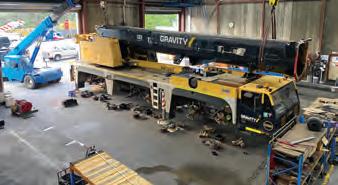
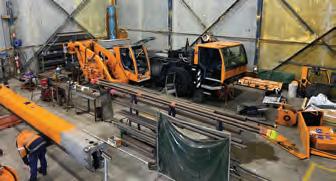
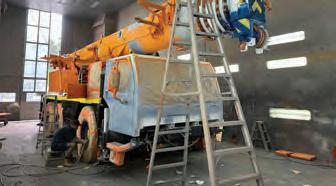
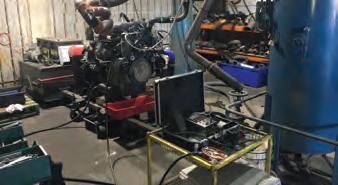
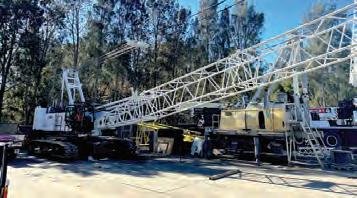
CAA is focused on delivering complete asset disposal service rather than simply conducting auctions.
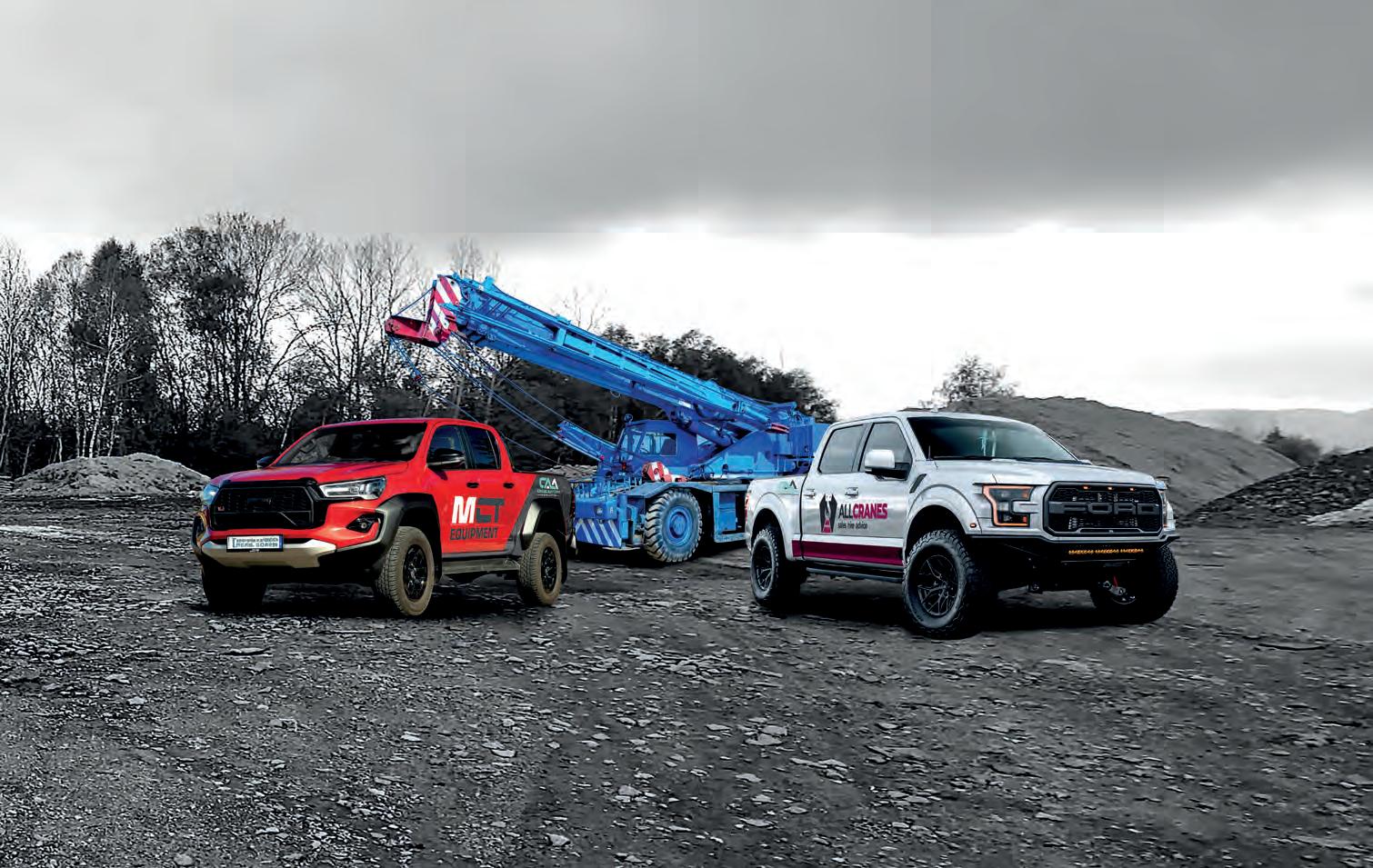
Selling a crane has never been a simple case of putting it on the market and waiting for the right buyer.
WITH MARKET CONDITIONS CONTINUALLY changing and export opportunities narrowing, and as equipment specifications tighten due to compliance requirements and regional regulations, there are numerous factors playing greater roles in determining a machine’s value than they once did. For fleet owners, achieving the best return now requires far more planning than many realise.
That changing landscape is the focus for Crane Auctions Australia (CAA). While auctions remain an important part of the business, CAA is increasingly positioning itself as part of a broader service alongside All Cranes and MCT Equipment, helping customers manage every stage of selling a crane rather than simply listing it for auction.
For Anthony Grosser, Managing Director at MCT Equipment, and Todd Shelton, Sales Coordinator at All Cranes, that distinction is more important as the used crane market continues to evolve.
“The sale doesn’t stop at the auction. It only just begins,” said Anthony.
Instead of treating the auction as the finish line, they see it as one stage in a much larger process designed to deliver the strongest possible outcome for the customer.
Whether a machine ultimately sells under the hammer, through a private sale or via one of the group’s established sales platforms, the objective remains the same: helping owners maximise the value of their equipment.
Over the past few years, the used crane market has undergone significant change. Equipment that once attracted strong international demand is now competing in a different environment.
For owners looking to sell, historical pricing is no longer always a reliable guide.
Anthony said many fleet owners are still basing expectations on a market that
has changed considerably. “There is a large backlog of machines in Australia right now that are not going anywhere. A few years ago those machines would have found export buyers, but the market has changed,” said Anthony.
“Owners really need to assess how they manage their fleets because the environment today is very different.”
Rather than viewing those changes as obstacles, CAA focuses on helping customers understand the market before making decisions.
That begins with assessing the machine itself.
Age, condition, maintenance history, compliance records, configuration, operating history and location all influence value. Even small details, such as tyre specifications or state-based compliance requirements, can affect where a crane can be sold and how attractive it is to prospective buyers.
From valuation and transport to refurbishment and marketing, every crane requires its own sales strategy.
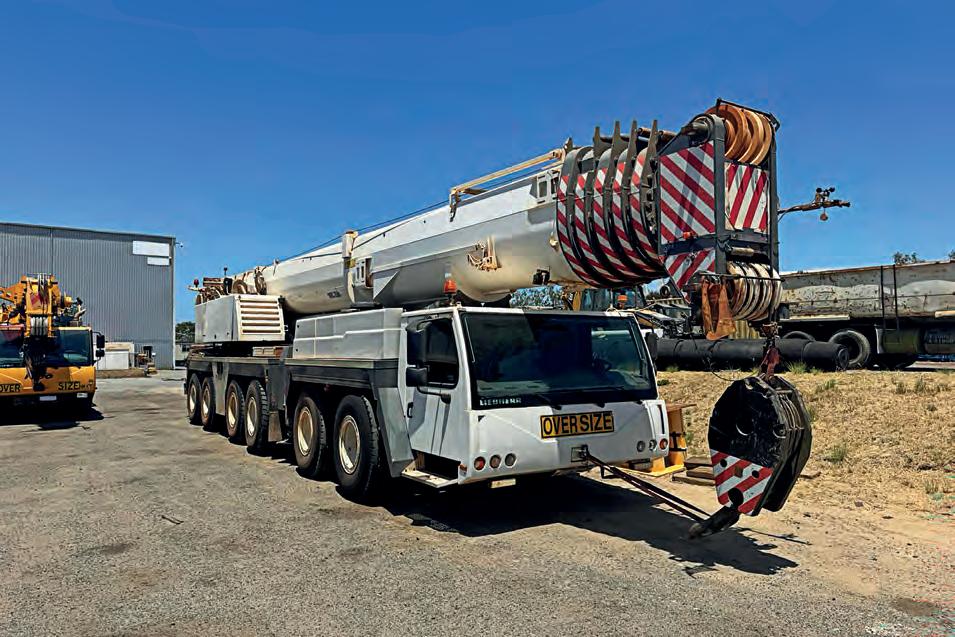
crane today requires far more than simply advertising it.
“We are constantly examining ways to ensure we are getting the best return on customers’ equipment, and we are focused on providing them with a service that actually benefits their business rather than simply putting it out there and hoping for the best,” he said.
That approach is where the partnership between CAA, All Cranes and MCT Equipment comes into its own.
Each business contributes different expertise throughout the sales journey. Depending on the machine and the customer’s objectives, that may involve valuation, transport, refurbishment, detailing, compliance work, inspections, marketing, targeted domestic or international sales campaigns and, where appropriate, auction.
Anthony said every machine requires its own strategy. “We source the crane from the customer, organise transport, prepare it, refurbish it where needed and deliver it. It’s about getting the machine up to the customer’s expectations and presenting it properly.”
significant difference.
Some cranes require only cleaning and presentation before sale. Others may benefit from refurbishment, compliance upgrades or modifications that allow them to appeal to a broader section of the market.
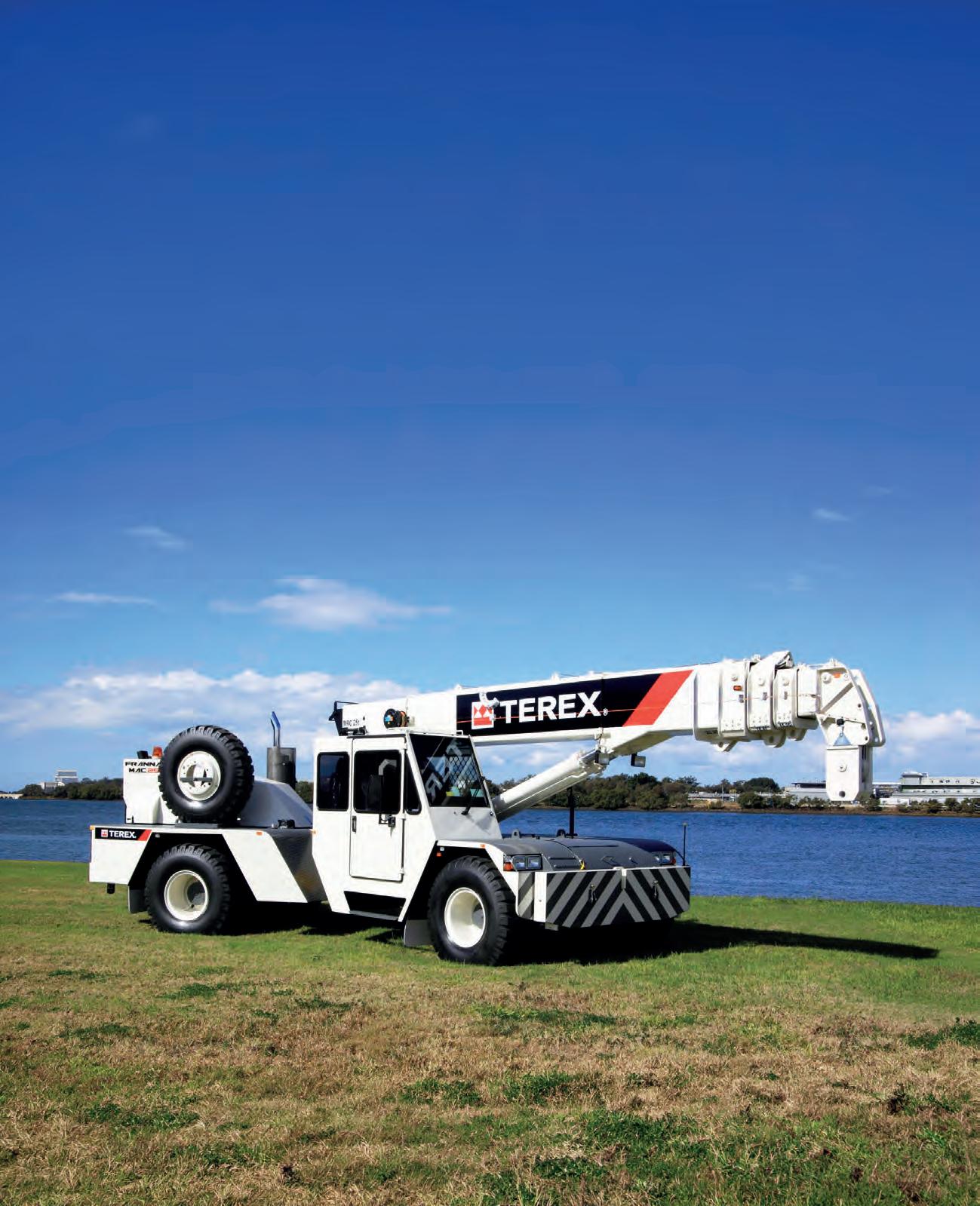
The group recently completed a MAC25 project for a new Brisbane crane business, sourcing the machine, carrying out refurbishment work, completing upgrades and preparing it for delivery before handing it over to the customer. It is one example of how the businesses work together beyond simply facilitating a sale.
The same collaborative approach continues after an auction concludes.
If a machine does not sell under the hammer, it does not simply return to storage waiting for the next auction.
Instead, it continues to be marketed through the established sales networks of All Cranes and MCT Equipment, giving owners additional opportunities to reach suitable buyers without repeatedly presenting the same machine at auction.
Todd said repeatedly sending unsold equipment back through auctions rarely benefits the seller.
Another advantage the team believes it brings is practical industry knowledge.
Unlike a general sales environment, the businesses deal exclusively with cranes and lifting equipment, allowing them to better understand the details that matter to both buyers and sellers.
That includes accurately describing equipment, understanding configuration differences, advising on compliance requirements and helping customers navigate varying regulations across Australian states.
Todd said those details often influence a sale more than owners expect.
“Each state has different requirements and that can have a huge effect on a machine’s value. Sometimes relatively small changes can open up new markets for a crane, while in other cases they can significantly narrow the pool of potential buyers,” said Todd.
Anthony said, “You’re dealing with people who understand cranes and can give advice. We help customers understand what they need, explain the process and work with them through the whole journey.”
As the market continues to evolve, Anthony believes owners should start thinking about disposal strategy much earlier in a crane’s life cycle.
Understanding likely resale markets, maintaining comprehensive service records and planning future fleet replacements can all influence the eventual return on an asset.
That longer-term thinking reflects the direction CAA, All Cranes and MCT Equipment are taking together.
Rather than focusing solely on auction day, the businesses aim to support owners from the moment they begin considering selling through to the point where the machine finds its next owner.
And regardless of whether the auction delivers the final result, the work continues until every avenue has been explored to achieve the best possible outcome for the customer.
For many crane businesses, telematics began as little more than a compliance requirement.
OPERATORS NEEDED TO KNOW WHERE their cranes were, satisfy regulatory obligations and keep equipment moving. Today, fleet technology is becoming an operational tool that influences everything from preventative maintenance scheduling to safety, utilisation and business performance.
V-DAQ has been a driver of that shift. Founded in 2017, the Wollongong-based company has grown from a startup into an Australian technology business helping transport operators improve safety, productivity and compliance through connected fleet intelligence.
Today, V-DAQ provides an integrated platform that connects vehicles, drivers, assets, video, and regulatory telematics, giving fleet operators the visibility and insights they need to make better operational decisions.
For Senior Account Executive Mark Jay, the company’s growth has always been driven by listening to operators rather
than telling them how they should run their businesses.
“The heavy vehicle regulatory changes introduced in 2020 represented more than a compliance change, they reshaped how Australia’s transport industry approached safety, productivity and access management,” Mark said.
“Recognising the opportunity early, V-DAQ took a leadership position in the transition, becoming the first certified provider and working closely with government and industry stakeholders to help develop a framework that balanced regulatory objectives with operational realities. This collaborative approach enabled operators to move seamlessly from the enforcement focused Intelligent Access Program (IAP) to the new Telematics Monitoring Application (TMA) environment.”
Building on its role in the industry’s transition to TMA, V-DAQ went beyond traditional tracking and compliance
solutions. The company developed a platform that connected compliance with actionable business intelligence, enabling operators to derive measurable value from the information they were already required to collect.
By transforming compliance data into actionable business insights, V-DAQ helped customers improve efficiency, enhance decision-making and maximise the value of their fleet operations.
The company’s own growth mirrors the evolution of its products.
A defining aspect of V-DAQ’s journey has been its commitment to Australian engineering and manufacturing, developing its own hardware and maintaining local production capabilities while selectively leveraging global manufacturing partnerships to bring best in class technology to customers.
“Our approach starts with developing products purpose-built for Australian operating conditions and customer needs, with compliance to local heavy vehicle regulations underpinning and validating the design,” said Mark.
For crane operators, the starting point is often regulatory compliance. In many National Heavy Vehicle Regulator (NHVR) jurisdictions, mobile cranes require approved tracking technology before they can legally operate on public roads.
V-DAQ’s compact telematics hardware allows operators to install the system quickly and obtain the required compliance certification without the lengthy processes traditionally associated with older and other systems.
Mark said compliance is only the beginning.
“Some operators initially come to us because they need to meet TMA requirements, but once they’re connected, they quickly realise the V-DAQ Platform can do much more. They’re seeing where their cranes are, monitoring engine hours, planning maintenance, tracking utilisation and understanding how the whole fleet is performing. It becomes less about ticking a compliance box and more about making better business decisions every day,” he said.
The V-DAQ Platform also extends beyond cranes. Businesses can connect trailers, support vehicles and other mobile assets into a single system, giving fleet
V-DAQ’s telematics solutions help operators meet compliance requirements while gaining valuable operational insights.
managers greater visibility across their entire operation rather than individual pieces of equipment.
Unlike many technology businesses that develop products first and seek customers later, Mark said V-DAQ’s products have largely been influenced by the businesses already using them.
“Our customers helped shape the products we build today. Every account has dedicated support and account management because we want to understand what’s working, what isn’t, and continue improving the platform around real operational needs,” he said.
For operators managing mixed fleets, the onboarding process is equally straightforward. Depending on fleet size,
V-DAQ’s AI-enabled video telematics supports safer operations through in-cab coaching and real-time driver feedback.
installation can often be completed by the customer’s own auto electrician, with the telematics hardware then remotely activated and connected to the company’s support team. The goal, according to Mark, is to minimise disruption and administration, making it easier for businesses to adopt new technology and realise value from day one.
Fleet data has become increasingly valuable across the transport sector, but Mark believes safety is where operators are beginning to see some of the biggest gains.
Beyond tracking, V-DAQ now offers AI-enabled video telematics that combines forward-facing and driver-facing cameras with in-cab coaching. Instead of immediately reporting every event back to the office, the system first encourages drivers to correct behaviours themselves.
Only repeated unsafe actions are escalated to fleet managers.
That approach, Mark said, helps create positive safety outcomes without turning technology into a policing tool.
The business is also using connected data to help operators monitor speeding, maintenance schedules, time spent on site and vehicle use, providing information that supports productivity and compliance.
Future development will take the technology even further, with ambitions to apply artificial intelligence beyond road travel and eventually into customers operations themselves.
Leading from the front
We connect skilled crane operators, riggers, truck drivers and lifting supervisors with WA’s biggest industrial and construction projects.
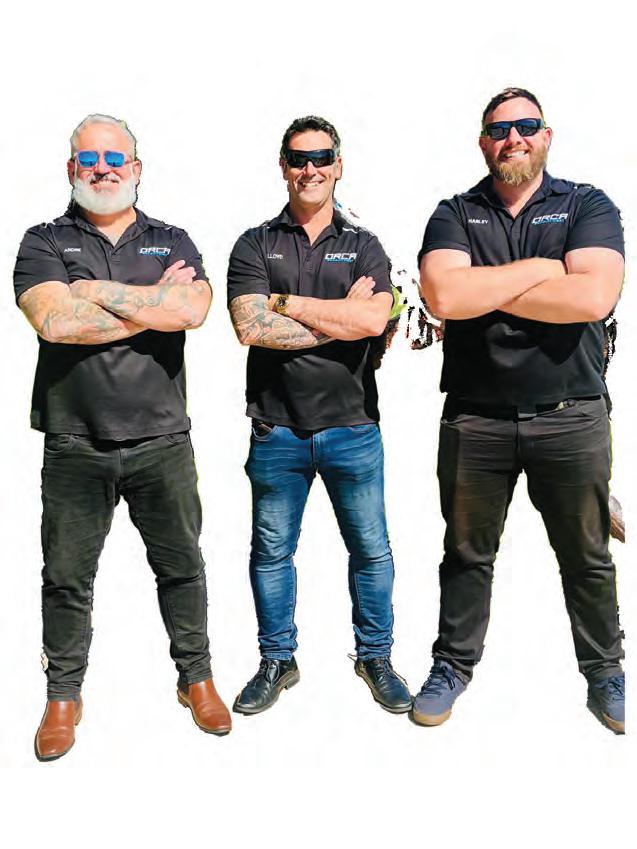
For the team behind Operators, Riggers, Cranes Australia (ORCA Recruitment), attracting the right calibre of personnel is the first small step in what becomes for many an exciting journey of learning, empowerment and professional development.
feedback, it is paying dividends,” said Andre.
Harley explains how the ORCA training takes a hands-on approach providing training for the very experienced and pathways for
plenty of positive talk in the crib rooms and we think a major reason for this is the focus on the training we are facilitating.
“Some of our competitors operate training centres and there’s a cost involved to be involved in the courses. Our training is at a cost to our business, and it’s designed to
“We have a lot of experienced operators on our books, but they might have spent their career operating LTMs and of course we are placing operators in all the other brands as well and our training takes this into account. We also have the less experienced guys who might only have a few months experience in the industry, and we have to ensure the training suits their skill levels as well. It really
success stories.
“As Lloyd mentioned earlier, we take everyone at face value and provide the same opportunities. But as is human nature, some want it more than others and as they say, ‘the cream rises to the top’. We have two great examples of staff exceeding our expectations and that’s because they are prepared to work hard and appreciate the opportunities presented to them, they are Maddie Davidson and Megan Heath.
“Maddie pretty much gets ‘best on ground’ on most shift she’s on. She’s been a rigger for close to five years, and she’s
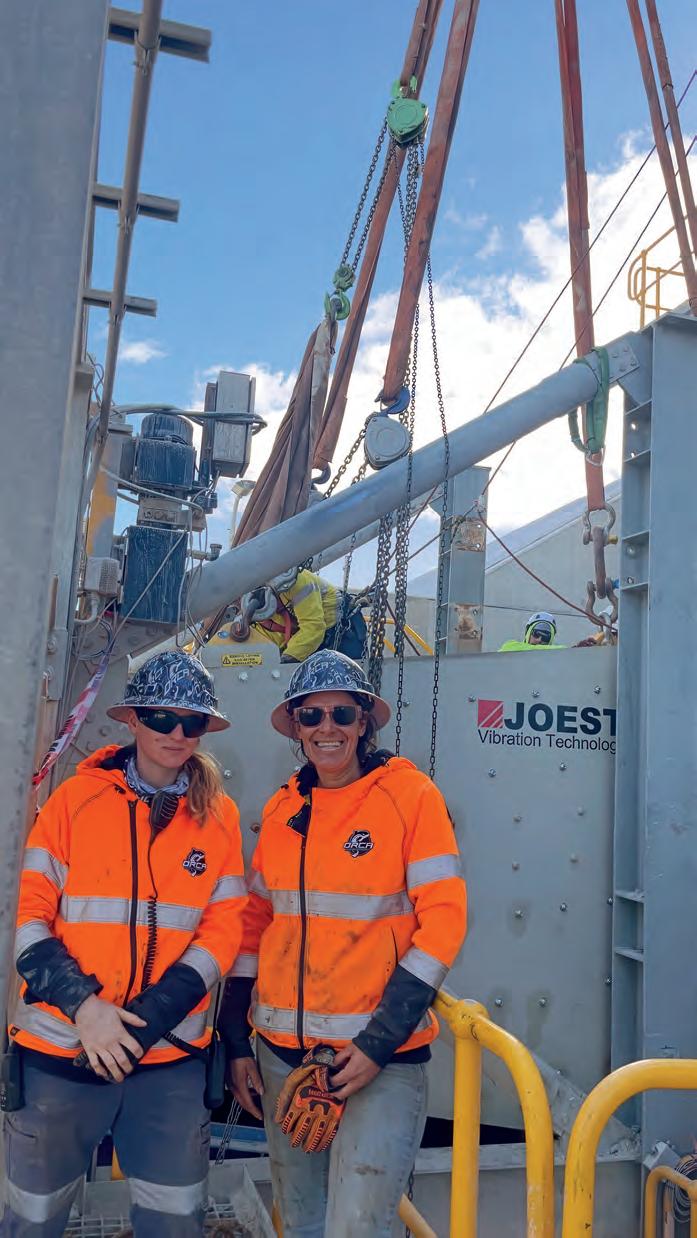
ORCA training takes a hands-on approach providing training for the very experienced and pathways for those new to the industry.
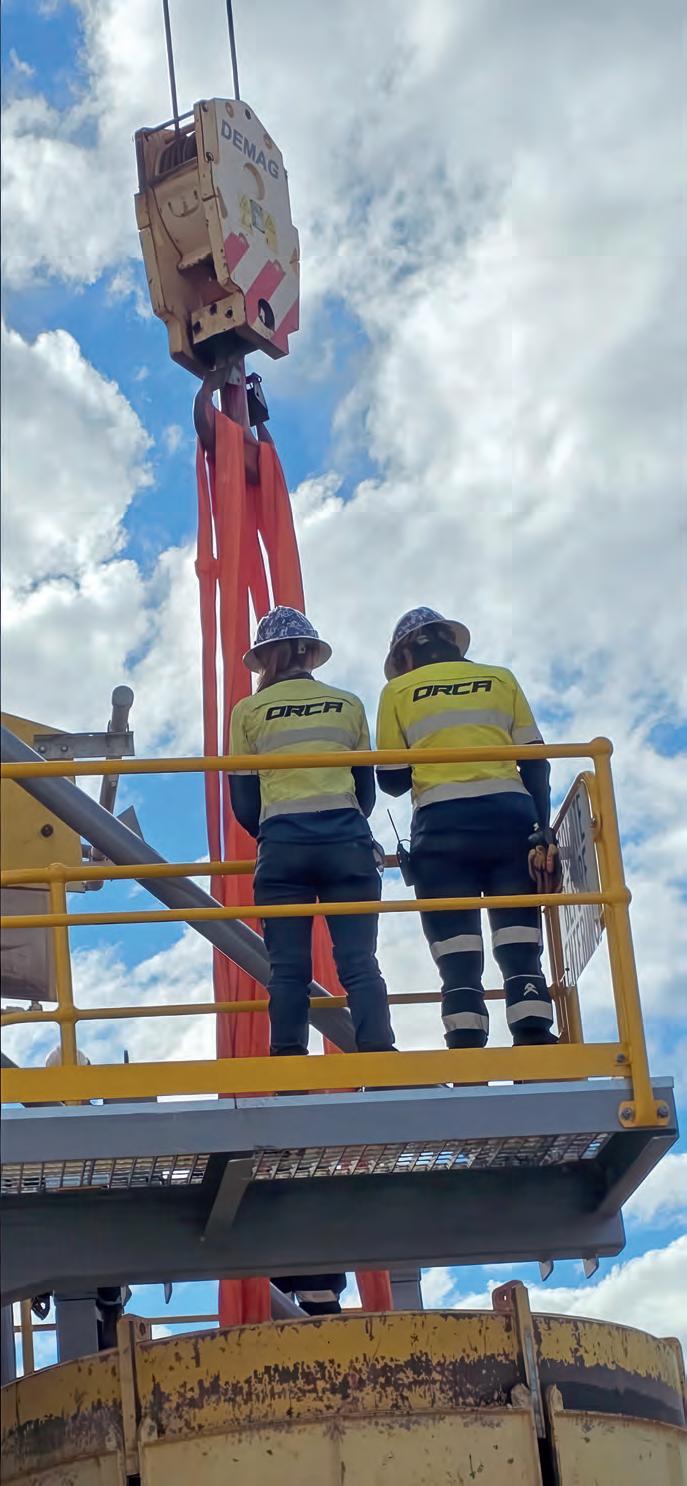
been with us for about 12 months. She’s just achieved her crane tickets and that’s the direction she’s headed in. We think Megan has a future as a supervisor and so we are encouraging her to work towards this area of the industry,” said Harley.
Maddie Davidson is pleased to be working with the team at ORCA.
“I’ve been a qualified rigger for coming up to six years and joined ORCA about a year ago. I have worked with the guys before, so I knew they had plenty of experience in the crane industry.
“I recently got my crane ticket, and the guys have started to train me up on various cranes including Frannas and slew cranes. In my experience, you don’t see other labour hire companies go to this sort of trouble.
“Normally, it’s very hard to get any sort of training, ‘seat time’ or experience and you don’t normally have an opportunity to upskill if you’re just casual labour hire. At ORCA the guys set up the training sessions at times that enable us to attend and they cater for people who are just starting out in rigging, those who want to get better at rigging, and
they also cater for people like me, who are keen to get into the crane operating side of the industry.
“For me, it’s about getting seat time alongside experienced operators and learning from them. We benefit from the upskilling and ORCA benefits from having more qualified personnel on their books. It’s a win win situation,” said Maddie.
Megan Heath has also been working with ORCA for approximately 12 months, having moved from the construction industry.
“I came out of high-rise construction in the city and now with my children being old enough, I’m FIFO (fly-in fly-out) with ORCA, flying to various sites as a rigger. I have my basic rigging licence, and the guys have helped me obtain my intermediate licence. I’m leaning towards going into the supervisory side of the industry and although that’s a long way off, we are moving in that direction,” said Megan.
“Lloyd, Andre and Harley are great guys, they are always there to help with advice about the direction you should be headed in, they share their experiences – which are vast– and they are there to help with training. Eventually I will get my crane tickets and learn that side of the industry, but before I consider a move to the supervision side of things, there’s still a lot to learn.
“The guys are very patient and generous with their time and advice. They’re only ever a phone call away when I’ve had any questions, they are on site a lot checking on our wellbeing, and they always welcome us to come down to the office and talk anytime we need anything, anything at all.
“They believe in upskilling personnel so they can make a positive contribution to the business and also industry. They select their crews really well, and they put me with experienced people who are willing to mentor and help train me as well,” said Megan.
“The pathways provided by ORCA give everyone the confidence to extend themselves at work and when I’m working with other personnel and crews from the business, there’s always a very positive energy and ‘can do’ attitude. I know the crane hire businesses that we work for are pleased with our approach and this gives me the confidence to continually push myself and grow.”
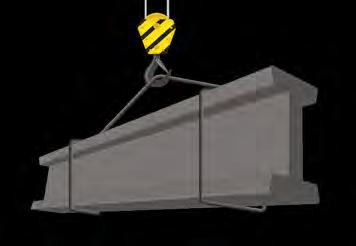
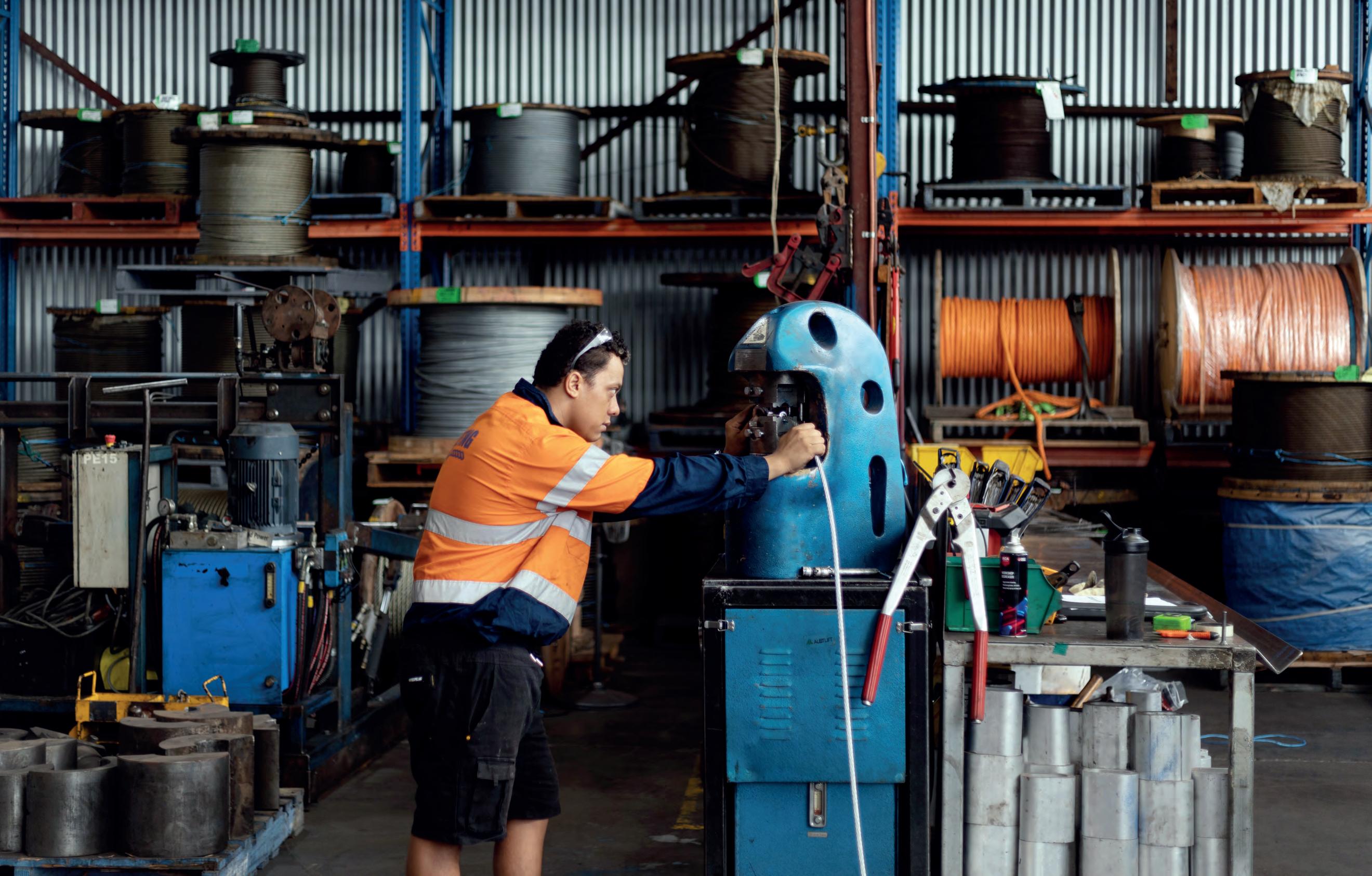
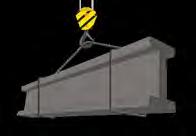
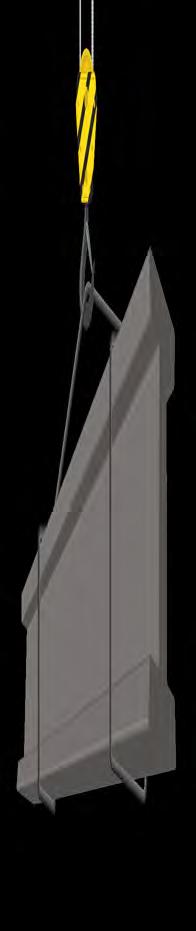
Queensland’s construction sector is gathering pace.
MAJOR INFRASTRUCTURE PROJECTS
continue to reshape Queensland, and preparations for the Brisbane 2032 Olympic Games are expected to add even more demand in the years ahead. As activity ramps up, the pressure isn’t just on crane hire companies and contractors. The businesses responsible for keeping lifting equipment compliant, certified and ready for work are key to the equation.
For All Lifting, that responsibility is centred on its Brisbane branch. Serving customers across Queensland, the Northern Territory and Papua New Guinea, the branch has become one of the company’s busiest hubs, supporting industries ranging from construction and mining to transport, marine and heavy industry.
Luke Xenitopoulos knows the operation from both sides. After starting in the workshop carrying out inspections, testing and fabrication-related work, he moved into sales about 18 months ago. That hands-on experience has given him an understanding of what customers need when they walk through the door.
AN EXPANSIVE REACH
“We’re probably the main branch in terms of sales and demand. A lot of work for Papua New Guinea comes through Brisbane, and we also support many of the other branches across the country.”
All Lifting’s branch in Queensland caters to demand from Far North Queensland and the Northern Territory. Working closely with branches including Melbourne and Sydney, the team combines local inventory with support from across the business to ensure customers can access equipment and services when they need them.
That flexibility is becoming increasingly important as compliance requirements continue to evolve.
“I’d definitely say demand has gone up. A lot of that comes back to regulations and how often equipment now needs to be serviced and certified. Many sites are moving to
inspections every quarter or every six months instead of waiting for the standard annual inspection. That means we’re doing a lot more on-site inspections and working much more closely with customers to keep them on schedule,” Luke said.
For the Brisbane team, that means planning has become just as important as technical capability.
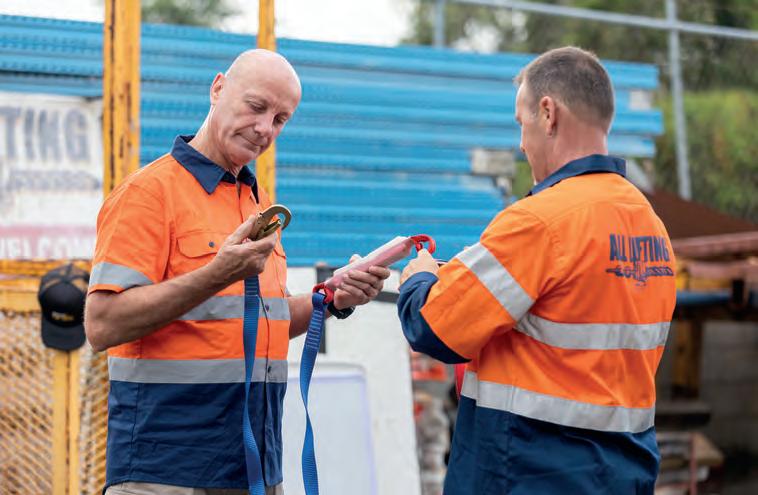
Rather than simply waiting for equipment to arrive at the workshop, inspectors regularly travel to customer sites, helping businesses maintain compliance while reducing disruption to ongoing projects.
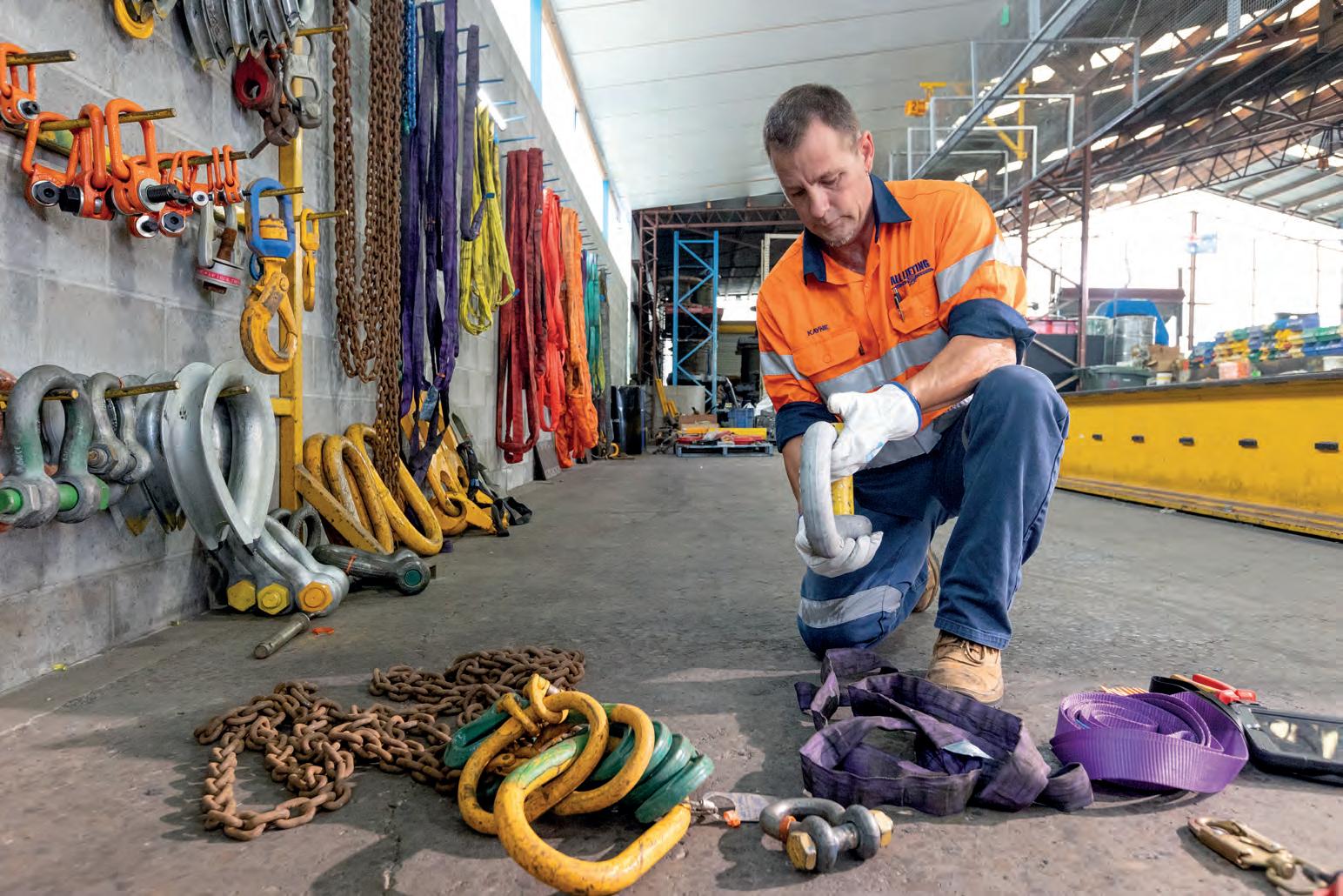
All Lifting’s offering extends well beyond inspection services. The company supplies a broad range of lifting and rigging products, including wire rope, chains, lifting equipment, height safety systems and custom lifting solutions. Many fabricated products are manufactured through the Melbourne operation, allowing customers to receive engineered, tested and certified equipment through a single supplier rather than coordinating multiple providers.
“We supply such a wide range of products across industries including marine, transport
and mining. A lot of what we provide is Australian made, which makes certification much simpler for customers. Instead of organising fabrication, engineering approval and testing separately, we can help manage that whole process through one avenue,” Luke said.
Supporting that capability is an experienced team. The Brisbane branch combines office staff, purchasing and support personnel with warehouse specialists, wire rope technicians, inspectors and on-site service crews. Many have spent years within the business, providing customers with practical knowledge built through experience.
That experience often proves invaluable when customers encounter unexpected problems.
Unlike scheduled inspections, emergency requests rarely arrive with notice.
“I couldn’t point to just one example because it happens so often. Customers regularly come in needing something repaired straight away or they’ve landed a job and suddenly need equipment inspected before they can start. We work with our onsite inspection team to get there as quickly as possible because that’s simply the nature of this industry. Things can change in a second,” Luke said.
The company’s national footprint also provides an additional layer of resilience. When Brisbane experiences unusually high demand or requires specialised products, nearby branches can step in to help maintain supply.
“I think having the other branches close by really helps us. If Brisbane gets overloaded
or we need something quickly, another branch can manufacture it or ship stock across. Having that support network gives us a really solid fallback and it’s made a big difference in a lot of situations,” Luke said.
Looking ahead, Luke expects demand across Queensland to continue climbing as infrastructure investment accelerates and Olympic-related projects gain momentum.
“With everything happening around the Olympics, we’re expecting demand to increase significantly,” he said. “We’re working more closely with the other branches to make sure we’ve got the right products in the region before they’re needed, and if we don’t have something on hand, we’re ready to source it as quickly as possible. We’re looking forward to what’s coming because there’s going to be a lot more work across Queensland.”
The momentum behind Western Australia’s (WA) next wave of infrastructure projects is picking up and Lifting Gear Hire & Sales is already preparing for it.
THROUGH INVESTMENT IN SPECIALIST lifting equipment and a broader rental offering, the company is positioning itself to support increasingly complex lifting work across the state.
While Western Australia’s crane market has remained relatively steady over the past year, there are clear signs that activity is beginning to build. Projects including the new port development, the AUKUS (Australia, United Kingdom, and United States) submarine support base at Henderson and major airport works are expected to generate new opportunities across the lifting sector.
For Lifting Gear Hire & Sales (LGHS), the focus has been on preparing for that next phase rather than waiting for it to arrive.
“We’re still a little bit quiet over here in the west, but things are starting to ramp up,” said Damien Treverrow, Branch Manager at Lifting Gear Hire & Sales WA.
“There’s a lot of talk around the new port and the submarine support base right next to us in Henderson. The airport has started work on its new runway as well. We’ve just been steadily getting on with business as usual while making sure we’re ready for what’s coming.”
Rather than simply adding more of the same equipment, LGHS has invested in specialist lifting solutions that allow customers to complete jobs that would otherwise be difficult or, in some cases, impossible.
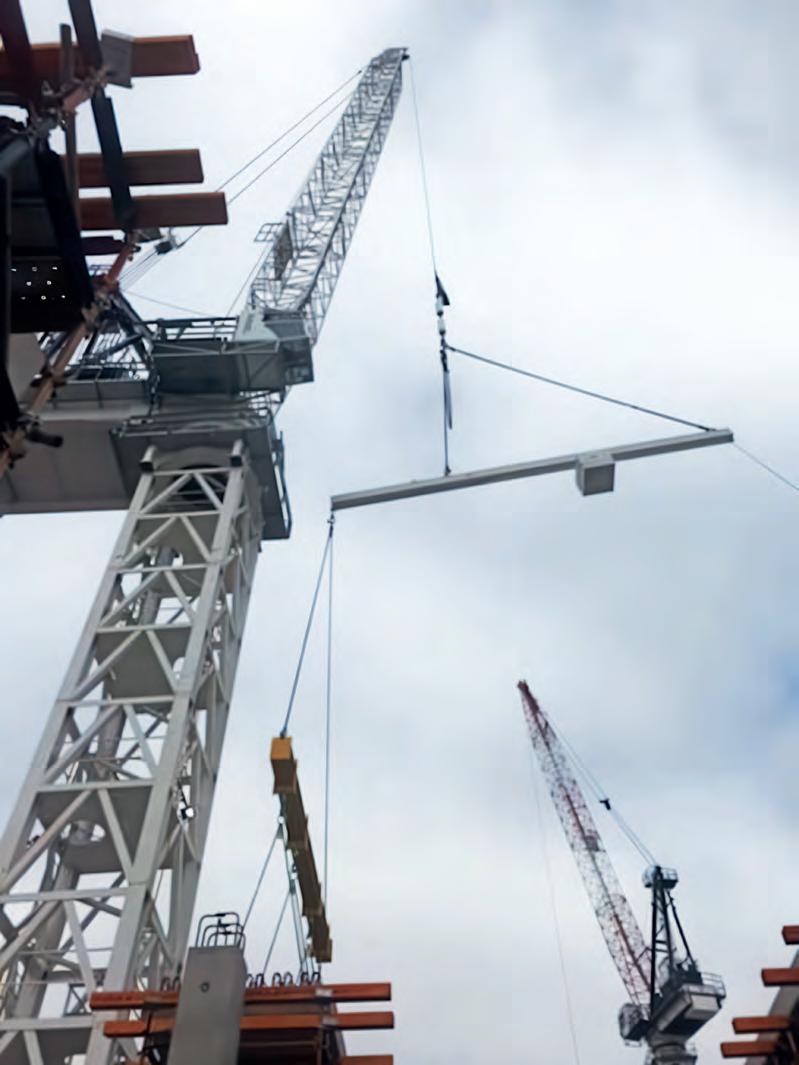
One example is its growing fleet of offset lifting beams.
Unlike conventional lifting beams, offset beams allow a load to be positioned outside the crane’s hook centreline, giving operators access to confined or obstructed areas that would otherwise be out of reach.
The equipment has already found a growing number of applications across Western Australia.
One recent project involved replacing pipework beneath a wharf, where the crane had to reach out over the water before positioning the load back underneath the structure.
Another offset beam has spent more than a month working between large Water Corporation silos, allowing crews to lower equipment into narrow spaces,
rotate it within the structure and safely lift it back out.
“It’s very niche equipment,” Damien said.
“But when customers need it, there’s often no other practical way of completing the lift.”
Ross Johnson, Managing Director of Dynamic Rigging Hire and Lifting Gear Hire & Sales, said these specialist products continue to prove their value because they solve lifting challenges that standard equipment cannot.
“There are so many different applications,” Ross said. “Sometimes every job is different, so we’ll even work with engineers to develop an engineered lifting solution that meets the customer’s requirements while maintaining safety.”
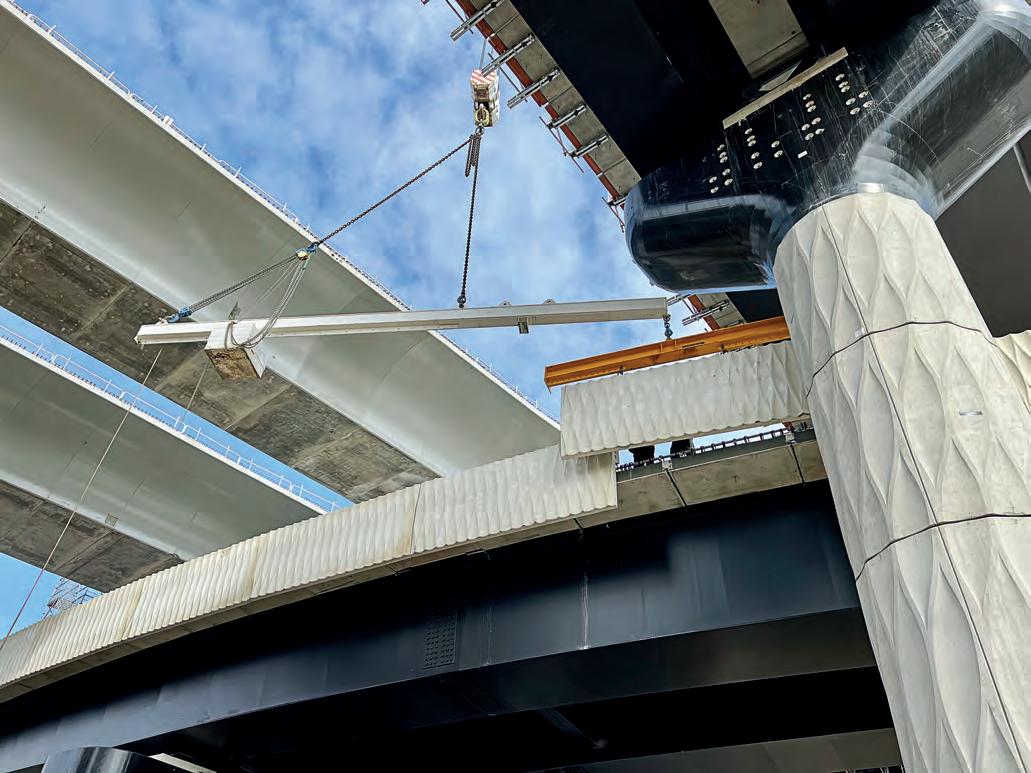
As demand has increased, the company has already placed orders for additional offset beams to expand the fleet.
The investment extends well beyond lifting beams.
LGHS has recently increased its fleet of test weights, 33 tonne test weight tray and specialist equipment used for crane commissioning and certification, growing its testing capability to around 30 tonnes.
The business is also targeting increasing demand for overhead crane testing across industrial facilities, working with customers including crane service providers to support inspections and compliance.
“We’ve invested in another couple of five-tonne weights and brought over a lifting plate so we can stack the weights together and complete larger crane tests safely,” Damien said.
“We’re looking to grow further into that market.”
Another area seeing increased attention is offshore work.
Western Australia’s strong oil and gas sector continues to generate demand for water load bags used to test ship cranes, offshore platform cranes, lifeboats and access gangways.
By standardising equipment across the broader business, LGHS can also draw on inventory from other branches when larger projects arise.
“We mainly use the same brand of water load bags across all three companies, including Queensland Rigging Hire and Dynamic Rigging Hire, so everything works together,” Damien said.
That ability to share resources has become one of the group’s biggest strengths.
While the Western Australian branch remains focused on local customers, it is backed by a national network under Axel Johnson International’s Lifting Solutions Group, that enables equipment and expertise to move where it is needed.
“We’ve permanently positioned specialist equipment around the country so customers can access it much faster,” Ross said.
“It’s about making sure the equipment is where the work is.”
The group’s footprint in Western Australia has also grown following the acquisition of Perth-based The Lifting Company, further strengthening its presence across the state.
“We’re really trying to engage more with the broader crane market in Perth than we
Offset lifting beams are providing practical solutions for confined and difficult lifting applications across Western Australia.
ever have before,” Ross said. “We want people to know that whether they need a spreader beam, a man box or specialist lifting gear for a day, a week or much longer, we’re there to support them.”
Longer-term rental opportunities are another priority, particularly within Western Australia’s growing tower crane sector.
Unlike mobile crane work, where equipment may only be hired for a day or two, tower crane projects often require lifting equipment to remain on site for months.
“We’re focusing more on those longerterm hires,” Damien said.
“That’s something we probably didn’t focus on enough previously, so it’s an area we’re putting a lot more effort into now.”
As activity across the state continues to build, LGHS expects demand to come from a mix of commercial construction, major infrastructure, mining and offshore industries.
In October Lifting Gear Hire & Sales, Queensland Rigging Hire and Dynamic Rigging Hire will be showcasing some of its new larger rental fleet at the CICA conference in the Hunter Valley.
90
60
79 % % %
say operators will need new skills in the next 12 months struggle to recruit skilled lifting operators report gaps in knowledge, safety behaviours, or legal compliance


LEEA’s Regional Manager Justin Boehm, discusses the importance of ensuring lifting competency is universal and not limited to local industries.
LAST MONTH, I WAS AGAIN IN PAPUA NEW Guinea speaking at the PNG Industrial and Mining Resources Exhibition and Conference. It was another valuable opportunity to be part of a conversation about PNG’s future and the capability it will need to build that future safely.
One theme came through strongly: PNG is prepared to stand on its own feet. It wants to develop local leaders, build local expertise and have those people take up a meaningful seat at the table. The panel I spoke on focused on skills development, and one point resonated strongly: skills development cannot be viewed only through an Australian lens.
Australia has much to be proud of. We have strong safety systems, mature industries, experienced operators and a long history of technical leadership. But if we are honest, our training and competence systems are not perfect. They often authorise people to work without always developing the depth of competence required to work well. That matters in Australia, and it matters even more when Australian models are exported into developing markets.
PNG is a true developing nation, with complex geography, remote communities and major infrastructure needs. Skills development there is not simply a training issue; it is a national development issue. The next generation of workers should not be trained only for PNG, or only for Australia. They should be developed for a global market.
In lifting, mining, construction, ports, energy and infrastructure, the work does not become less risky because it is being performed in a smaller or developing economy. A suspended load does not care whether it is being lifted in Port Moresby, Perth, Wellington, Singapore or the Middle East. The forces are the same everywhere, so the need for
global competence is the same. That is why the question should not be, “What is the minimum local requirement?” The better question is, “What level of skill will allow people to work safely and confidently in industries operating to global expectations?”
This distinction is important because many systems, including Australia’s, have become too comfortable with minimum competency. High Risk Work licensing has an important role. It creates a baseline and provides a framework for authorisation. But a baseline should never be confused with true competence. Minimum competency is exactly that: minimum.
The danger comes when minimum competency becomes the business model. When training is reduced to the shortest course or the cheapest assessment the
“What level of skill will allow people to work safely and confidently in industries operating to global expectations?”
standard of outcome drops and the system drifts from its intended purpose –improved safety. So, instead of developing capability, it produces paperwork and the market is incentivised to do the bare minimum
That is not skills development. That is compliance being treated as a transaction. Across many sectors, qualifications are more common, but not always more meaningful. Too often, employers want to see the ticket first and only later discover whether the person can actually perform.
All industries need to be honest about this, but critically within the lifting industry. We do not have a shortage of people with tickets. We have a shortage of people with deep, practical and
transferable competence. Those are not the same thing.
For all countries if the framework isn’t right the consequences are significant. We all need to build local capability, retain skilled people and prepare workers for industries that already operate across borders. If training is designed only to satisfy a narrow local minimum, workers are limited, so in a race for global talent, workers gain portability, confidence and opportunity.
Local context still matters. Laws, culture, geography, language, infrastructure and economic conditions all shape how training must be delivered. But local context should shape delivery, not lower the standard. A PNG worker should
Real competence is built through structured training, supervised experience, practical assessment, mentoring and ongoing exposure to real-world conditions.
not be trained only to meet the minimum expectation across our small region. They should be trained to contribute safely and confidently to major mining, oil and gas, construction and infrastructure projects operating to international expectations – the same as those in Australia and New Zealand.
This is why LEEA’s global perspective matters. The lifting equipment industry is global. Standards, expectations and risks are not confined to one country. LEEA is established across the world as a leading trade association for the lifting industry and promotes enhanced standards, sustainable development and best practice across the global lifting and safety sector. Why should someone only trained (and paying a licensing fee) in Australia, complying to a very narrow set of learning, be deemed the most competent person to provide a service in PNG?
That global experience gives LEEA the authority to speak clearly, whether
we are in PNG, the Pacific, Australia or the Middle East. We are not criticising Australia from the outside. We are recognising its strengths while also acknowledging the weaknesses that must be fixed if we are serious about competence. Australia is good, but there are many shortfalls.
In lifting equipment inspection, competence cannot be developed in the classroom alone. Knowing the words in a standard is not the same as understanding how a damaged component behaves in service. Therefore holding a licence is not the same as being competent.
Real competence is built through structured training, supervised experience, practical assessment, mentoring and ongoing exposure to real-world conditions. It is built when industry expects more than a ticket and when training providers are held to a standard that reflects the risks of the work. That is the level of capability the Pacific should be aiming for.
PNG should not simply copy Australia. The Middle East should not simply copy Australia. Australia should not assume its own systems are beyond challenge. The better approach is to take the best of global practice and apply it locally with purpose.
Small and medium-sized markets cannot afford to think small when it comes to skills. We are all competing for capability in a global economy. If we develop people only to meet the lowest local threshold, we limit both the worker and the industry.
The future should not be a race to the lowest acceptable standard. It should be a deliberate effort to build globally capable people who can work safely, confidently and competently wherever the industry needs them. Countries that develop skills only for local minimums will always be catching up. Countries that develop skills for global expectations will be ready for the work that is coming.
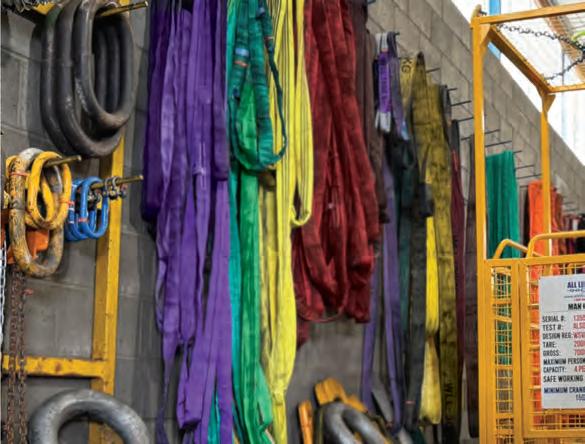
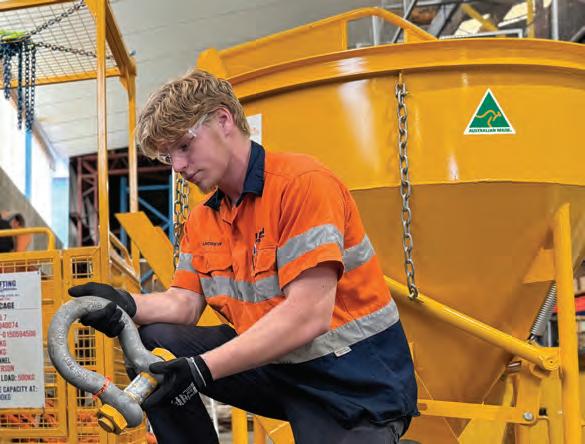
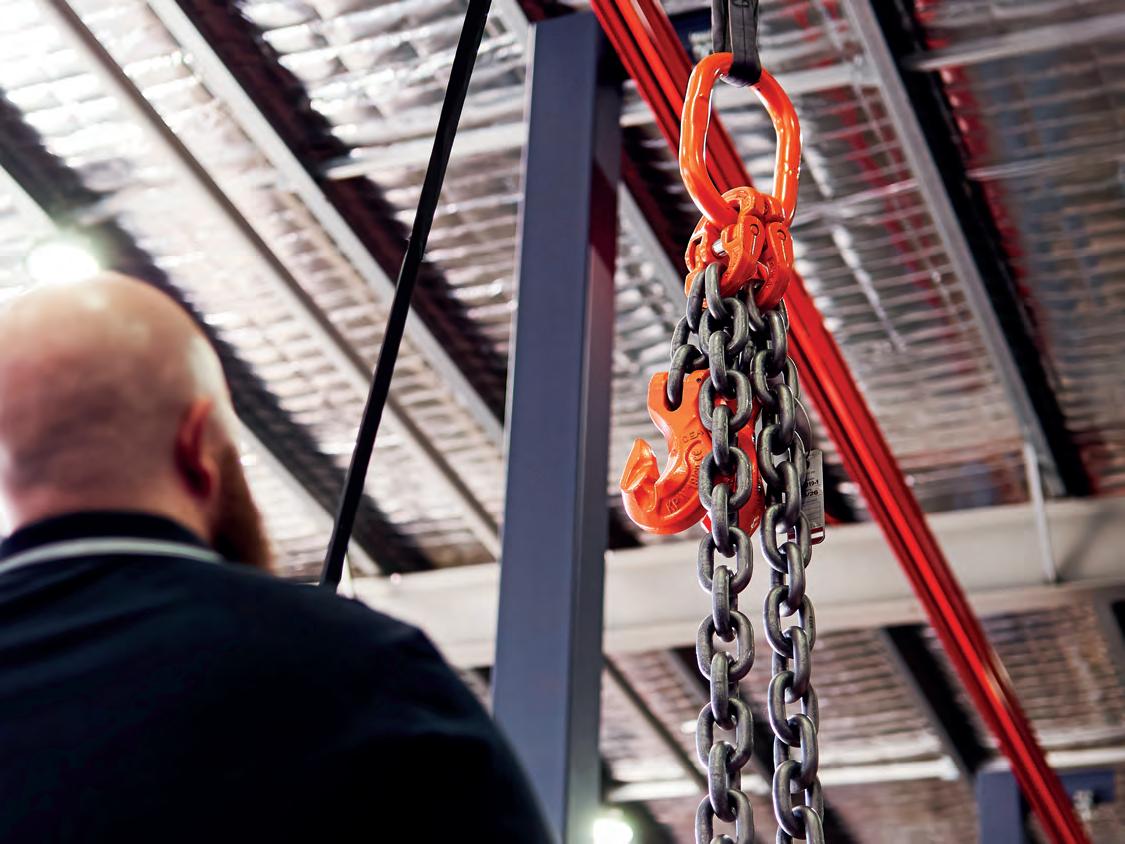
Resolution Rigging Services (RRS) has introduced a range of lifting accessories specifically designed to service the crane and lifting sector.
RESOLUTION RIGGING SERVICES’ DIRECTOR, Tony Noronha, explains the features and benefits of the range and how they are locally designed, engineered and manufactured.
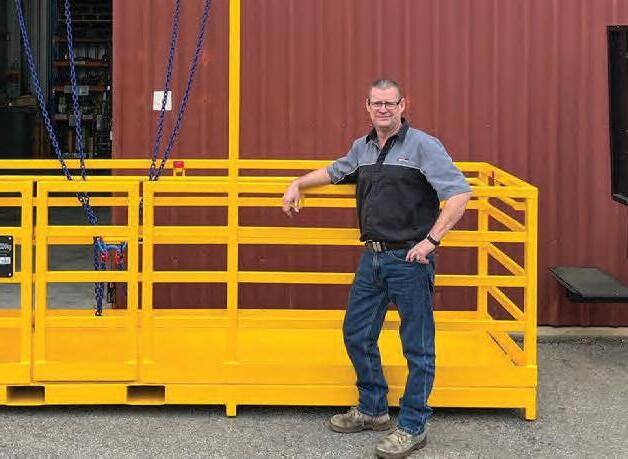
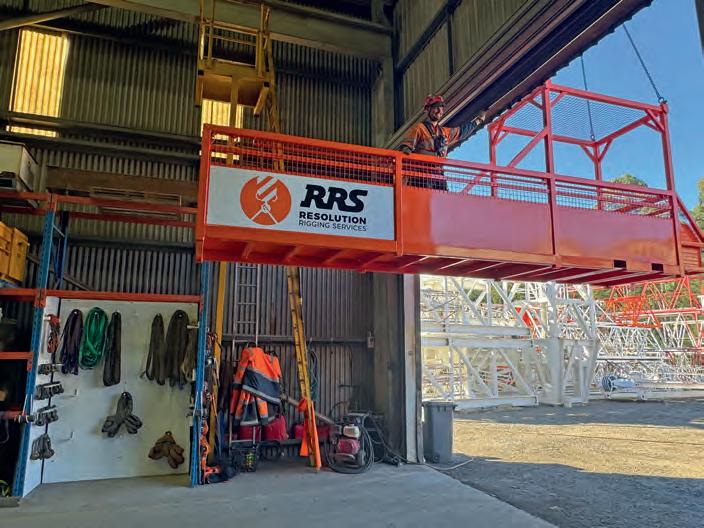
The range includes offset man boxes, offset lifting beams, ballast frames for load testing, Skydecks for material loading as well as crane deck loading platforms.
“For some time, we have been working on a number of developments that we know will benefit not only our business but also the tower crane and mobile crane sectors in general,” he said.
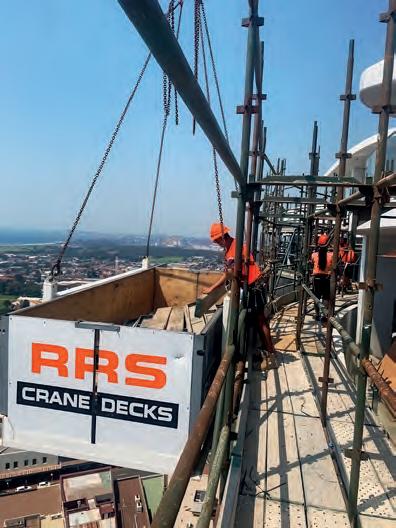
“We are delighted to announce that we have available for hire both four metre and six metre offset man boxes. The four metre man box features an offset of two metres and the six metre option a massive four metre offset.
“The offset man boxes have been specifically designed, engineered to our specifications and manufactured by leading industrial designer and fabricator Maxirig,” said Tony.
Maxirig is no stranger to the lifting sector, having manufactured numerous bespoke solutions over many years.
“These offset man boxes are manufactured here in Australia, with Australian steel, and comply with Australian Standard AS1418.17,” said Tony. “They provide access to otherwise difficult to reach places that standard man boxes cannot reach. Many of the applications we see for the range are encountered by crane companies every day of the week.
“Applications include enabling crews to get under a protruding awning on a building structure, get under jump form structures during the construction of lift and stair cores. They can provide access during excavation works, enabling crews to manage under shoring bracing and attaching wall anchors while another crane lift is holding each bracing beam.
“They also provide access to existing structures, enabling crews to perform underpinning works especially when an elevated work platform cannot be used due to insufficient ground access. Other applications involve the construction of highrise buildings where the offset man boxes can provide direct access underneath perimeter safety screens to install and or service any façade panels or windows.
“They are great for providing engineers access to the underside of bridges for inspection purposes. This is especially applicable when access is not possible due to rugged terrain areas or when the bridge spans rivers and waterways,” said Tony.
Resolution Rigging Services is also supplying and offering for hire offset lifting beams to further assist with materials handling across the industry.
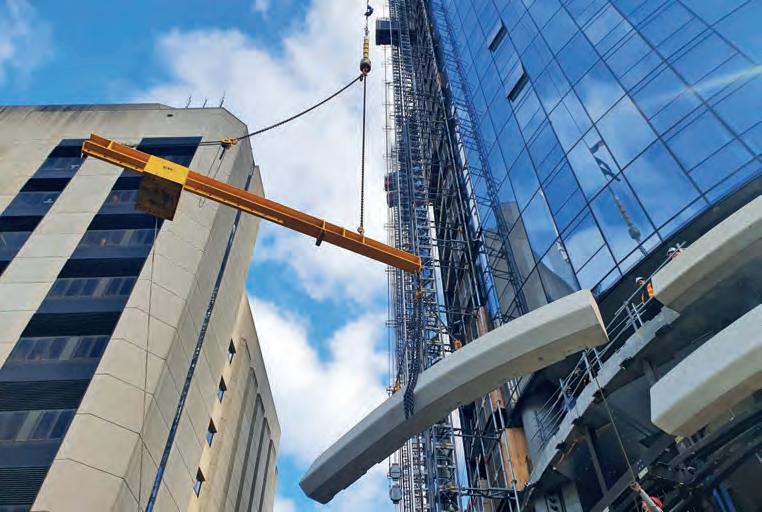
“We have off set lifting beams available with capacities ranging from two tonnes up to 14 tonnes and providing offsets from 1.5 metres up to five metres. These offset lifting beams are ideal for lifting and installing items directly under suspended floor levels. These types of applications would be impossible to manage if you were lifting with standard lifting equipment,” said Tony.
Resolution Rigging Services can draw lift plans which include a detailed scope of capabilities for each piece of lifting equipment and the various attachments for each lift.
“We also offer a variety of spreader bars, lifting chains and slings of various sizes for lifting items such as sheds in and out of building sites. This specialised equipment requires a spreader bar to ensure the slings and chains don’t damage the item being lifted,” said Tony.
Resolution Rigging Services also has for
“We also offer a variety of spreader bars, lifting chains and slings of various sizes for lifting items such as sheds in and out of building sites.”
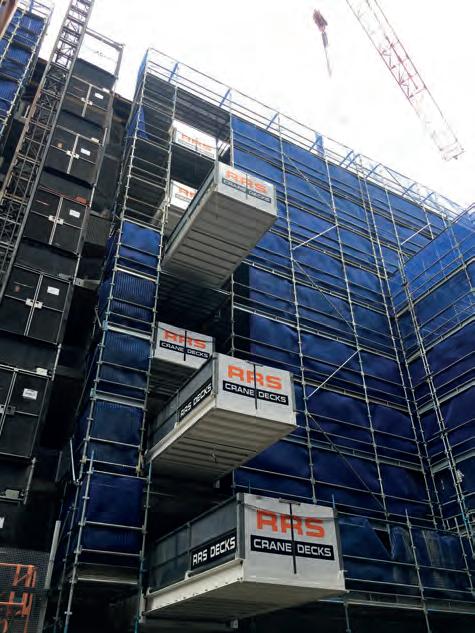
hire ballast frames and test weights with a capacity of 189 tonnes. These ballast frames are designed to test a variety of cranes including mobiles, overhead gantry cranes, vehicle loading cranes, wharf cranes as well as tower cranes.
RRS’ Skydecks have a safe working load (SWL) of four tonnes.
“With a SWL of four tonnes our Skydecks offer construction sites multiple applications. They are especially useful during the scaffold removal process, where they are lifted and placed alongside an erected scaffold system and the scaffolders dismantle existing scaffold and place inside the Skydeck.
“The four tonne SWL provides peace of mind for users and the cage offers outward and inward opening doors at each end, providing easy walk-in and walk-out access as well as enhancing safe work practices. We continue to provide our retractable crane decks or loading platforms with capacities from 2.5 tonnes to five tonnes and these complement our tower crane fleet perfectly,” said Tony.
It’s a milestone year for the team at RRS in 2026 as it celebrates 25 years in business. With these celebrations comes continued investment in the upgrading of the fleet of tower cranes.
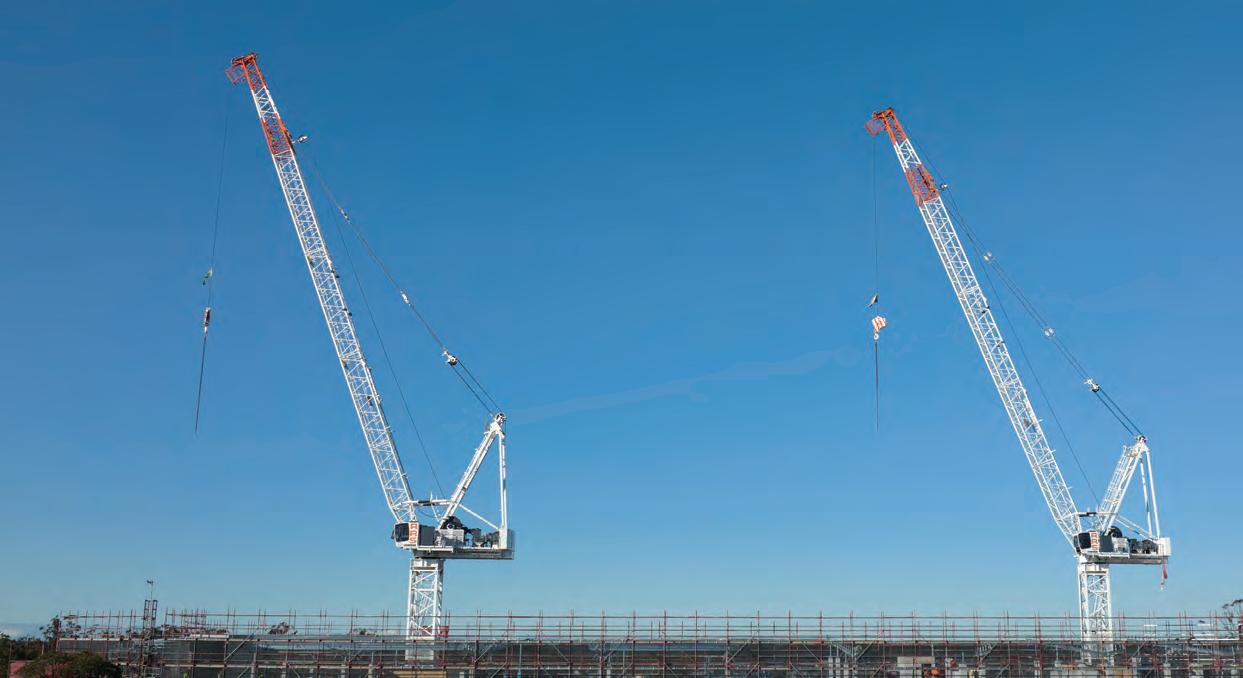
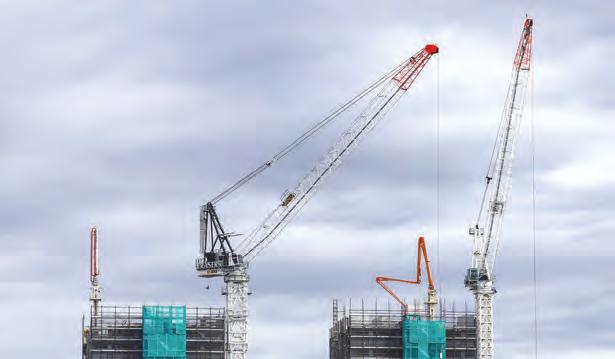
“We are 25 years strong this year and as our services remain in high demand, particularly from the Sydney market, we continue to invest in our fleet of tower cranes and associated equipment,” said Tony. “We have more new tower cranes ordered, and these will be delivered soon.
“New additions will include another brand new Favelle Favco M860DX MKII tower crane which is currently enroute to Australia. On arrival it will be immediately erected on site in Sydney ready to undertake a new project.
“At Resolution Rigging Services, we always say we are ‘looking at life through the cabin window’, and we can see that life is going to get very busy for the foreseeable future.
“The introduction of these new lifting solutions will benefit our business, but we also hope they will benefit the tower and mobile crane sectors in general, and we welcome all enquiries from interested crane hire businesses. This is especially applicable when access is not possible due to rugged terrain areas or when the bridge spans rivers and waterways.”
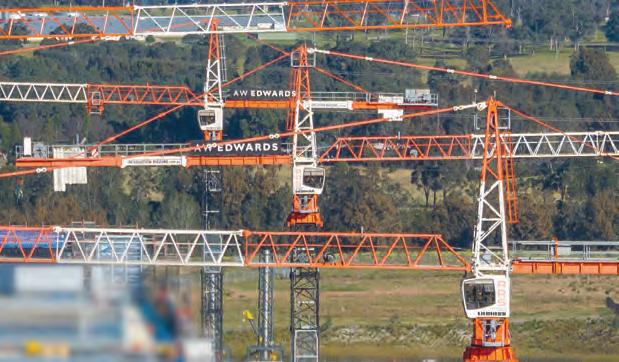
Tailored Solution: Our unique ability to offer electric or diesel cranes depending on the projects best solution. Internal and external climbing along with static bases, grillages and bespoke project specific engineering available.
Highest Quality Equipment: Australian and German engineered & made cranes. Built to stand the test of time.
Cost efficiency: Our companies reputation of supplying the fastest tower cranes ensures the maximum lift cycles per day. Our crane crews are tried and tested. Why Choose Resolution Rigging Services?
Discover how Resolution Rigging Services can enhance your construction projects
THERE WAS A TIME WHEN ‘LOWEST unit cost’ was a sound procurement strategy. Source offshore, protect the margin, repeat. For many Australian manufacturers and distributors, it worked – because the world, broadly speaking, cooperated.
That world has changed. And for businesses supplying safety-critical or compliance-sensitive industrial products, the old playbook now carries risks that rarely appear on a purchase order.
The past few years have exposed just how fragile global supply chains can
be. Vessels are rerouting thousands of kilometres to avoid attacks in the Red Sea and Gulf of Aden. Rising tensions between China and Western nations continue to threaten trade flows, sanctions, and access to critical materials. Port infrastructure is increasingly targeted by cyberattacks. Freight costs and insurance premiums have surged. Any one of these disruptions can halt the supply chain. Combined, they create a level of uncertainty that pure price-based procurement simply cannot absorb.
For Australian businesses, there is an additional layer of exposure that offshore suppliers cannot resolve:
compliance with Australian Standards. If imported components fail to meet local requirements, the consequences extend well beyond a rejected shipment. Company directors can face personal criminal liability if a product failure causes injury or death, and when things go wrong, overseas suppliers are typically beyond the reach of Australian civil or criminal proceedings.
When you import, you carry all the risk. Australian Made shifts that equation.
Exchange rate volatility can wipe out an offshore margin in a single session. But the less visible costs are often more damaging: quality failures requiring costly local inspection and rework; delays caused by miscommunication across language and cultural barriers; and the working capital burden of holding inflated inventory buffers to compensate for supply uncertainty. When these factors are properly accounted for –
warehousing costs, financing costs, quality inspection, freight surcharges, insurance premiums for high-risk shipping corridors – the economics of offshore-only procurement frequently tell a very different story to the headline unit price.
The solution isn’t to abandon global sourcing entirely, it’s to diversify deliberately. A dual sourcing model, pairing one offshore supplier with a trusted Australian manufacturer, reduces exposure to geopolitical disruption while preserving cost flexibility. It protects continuity of supply and it ensures that when global events turn unpredictable your business keeps moving. It’s not a compromise. It’s risk management applied to procurement.
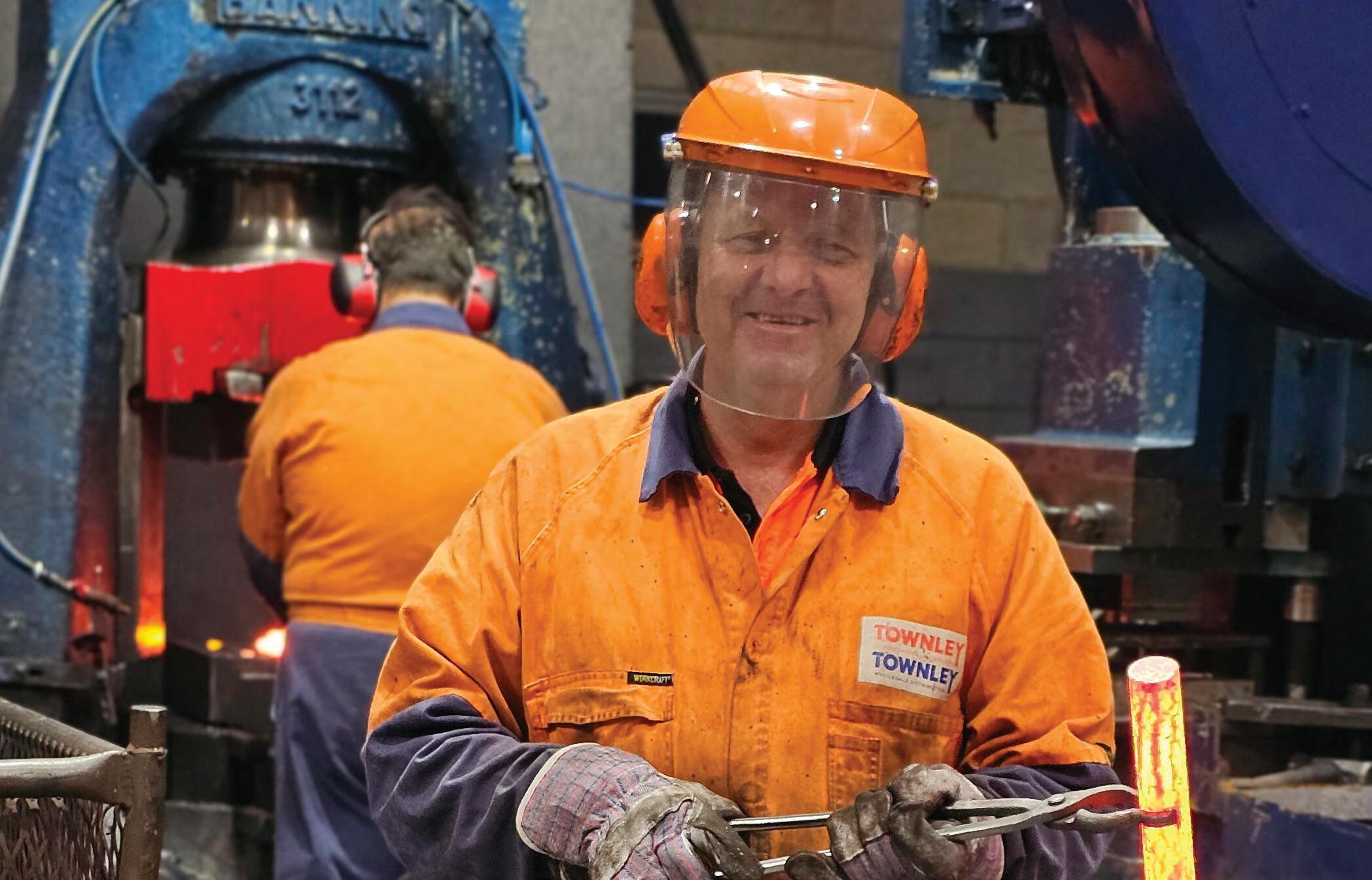
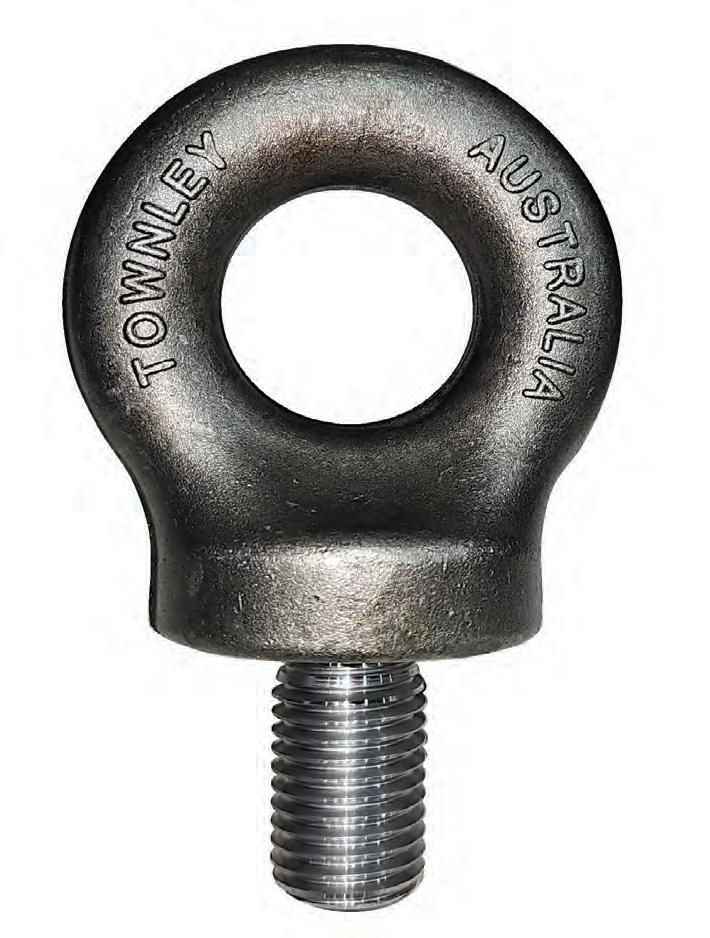
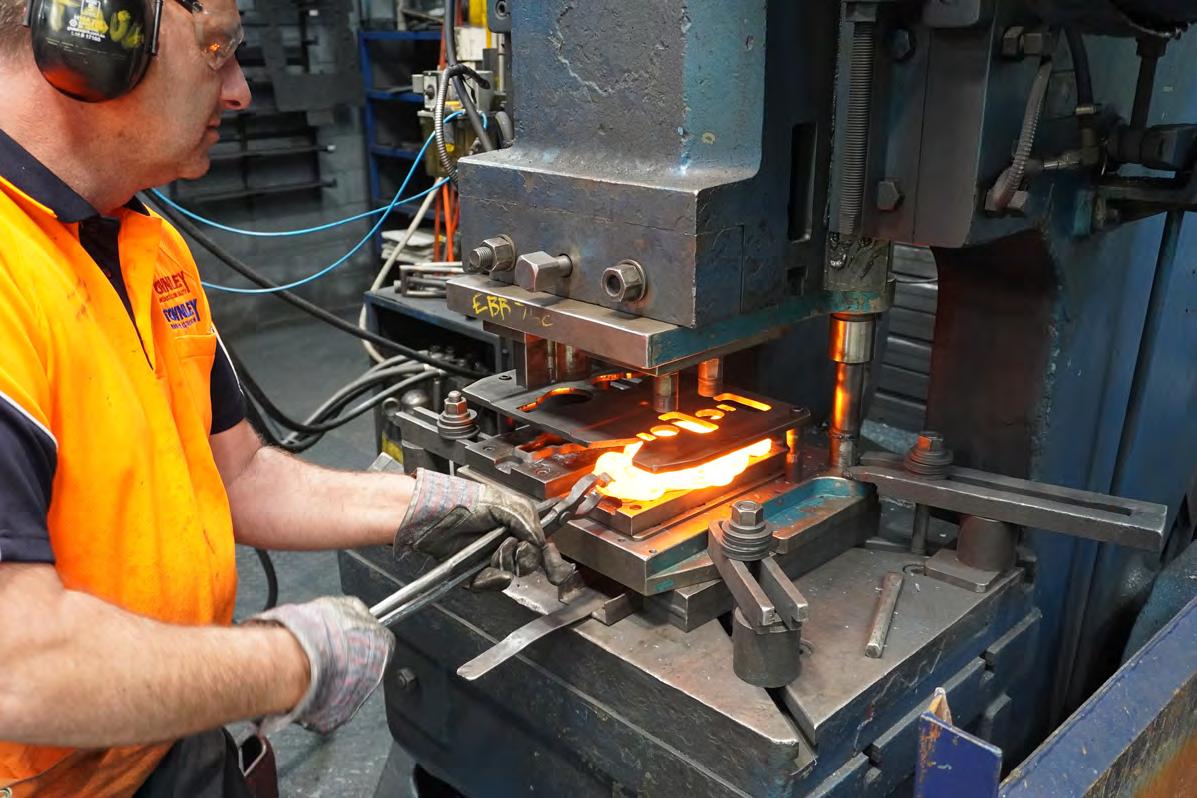
Townley Drop Forge has been forging Australian quality for more than 100 years. Proudly Australian owned and operated, Townley designs, manufactures, and tests its full range
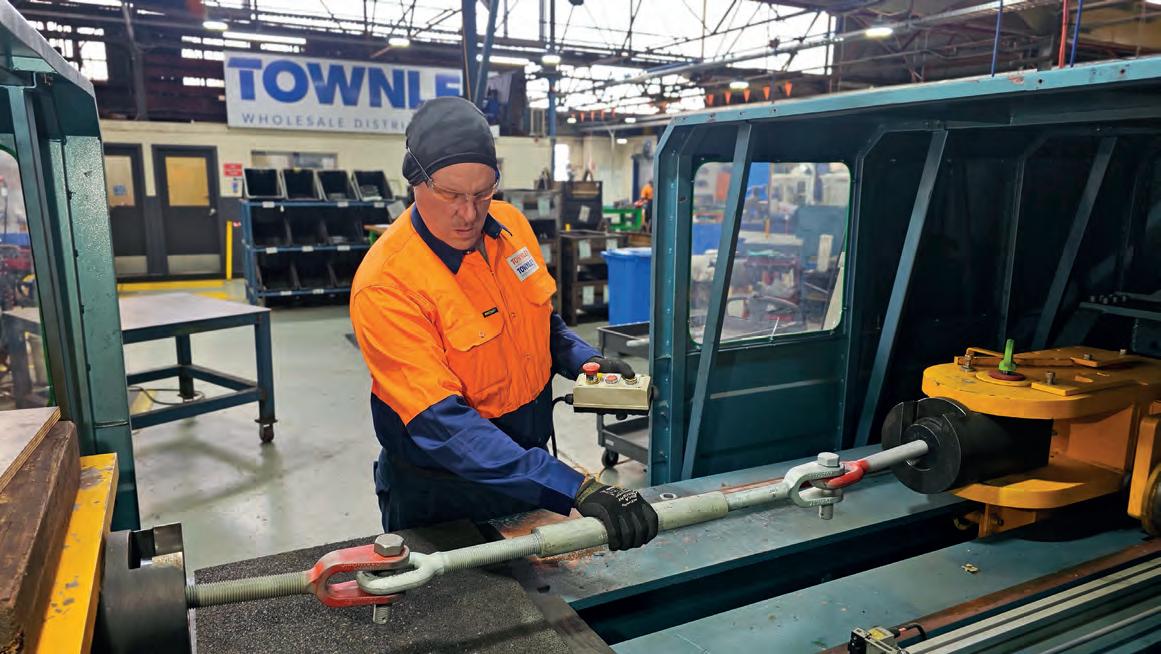
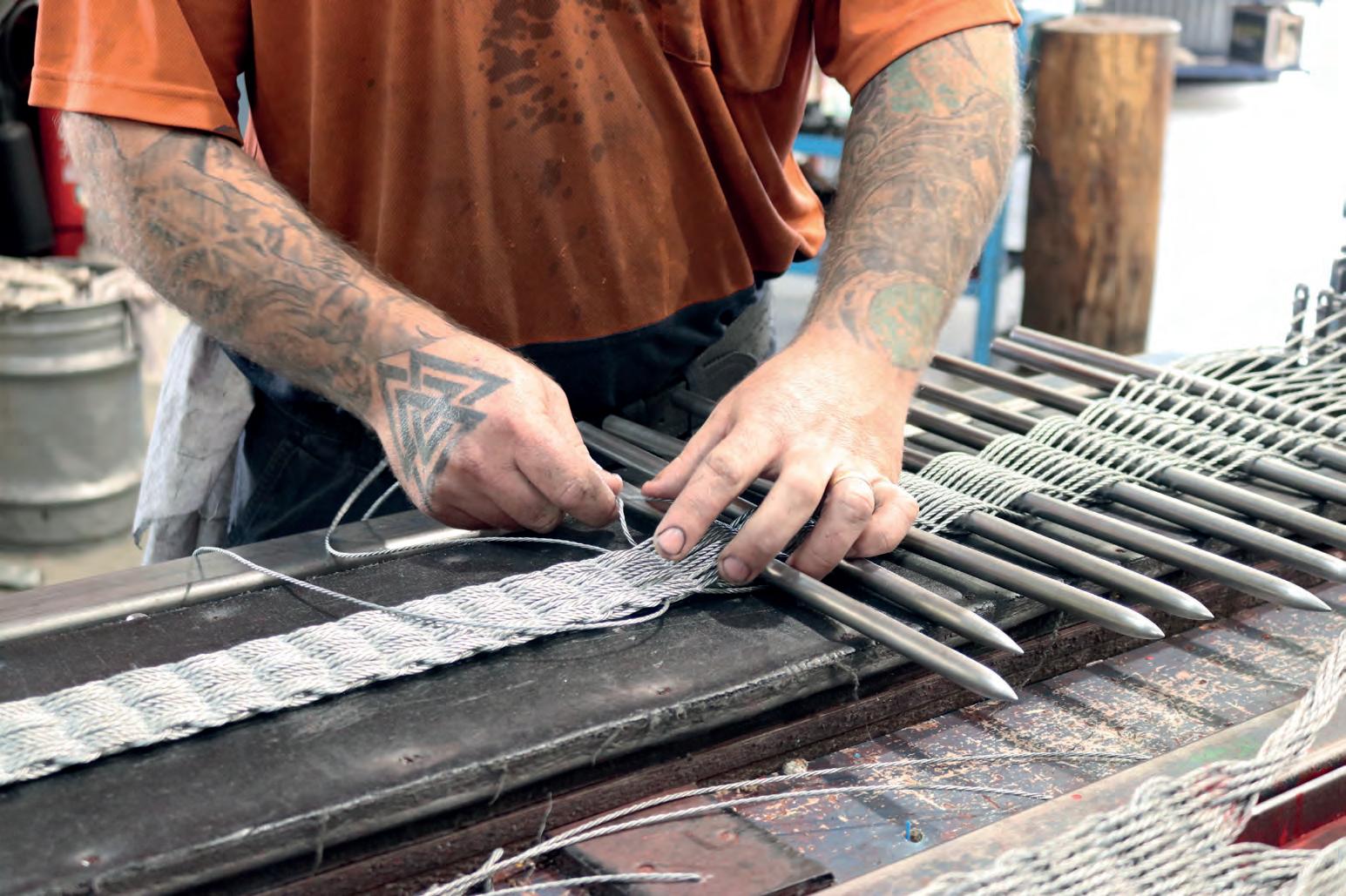
Townley manufactures, tests and certifies its forged lifting components locally.
of forged components – eyebolts, turnbuckles, and more – right here in Australia. Every product bearing the Australian Made logo is produced on Australian soil, not assembled here from imported components.
That distinction matters. Townley’s in-house NATA (National Association of Testing Authorities) accredited
cannot: certainty. Local stock holdings. Guaranteed compliance and a supply chain that doesn’t depend on conditions in the South China Sea or the Gulf of Aden.
While businesses cannot control global events, they can reduce their exposure to supply chain disruption through procurement strategies that balance cost,
“A dual sourcing model, pairing one offshore supplier with a trusted Australian manufacturer, reduces exposure to geopolitical disruption while preserving cost flexibility.”
mechanical testing means every product is verified to meet Australian Standards before it leaves the facility. Full certificates of conformance come as standard. There are no hidden costs, no compliance surprises, and no language barriers when something needs to be resolved quickly. For procurement managers navigating an increasingly volatile global landscape, Townley offers something that offshore suppliers simply
compliance and continuity of supply. For manufacturers such as Townley Drop Forge, local production forms part of that approach, providing Australianmade products that support local manufacturing capability while helping businesses manage supply chain risk.
To find your nearest Townley distributor or discuss a custom supply solution, visit townleydropforge.com.au or call 1300 869 653.

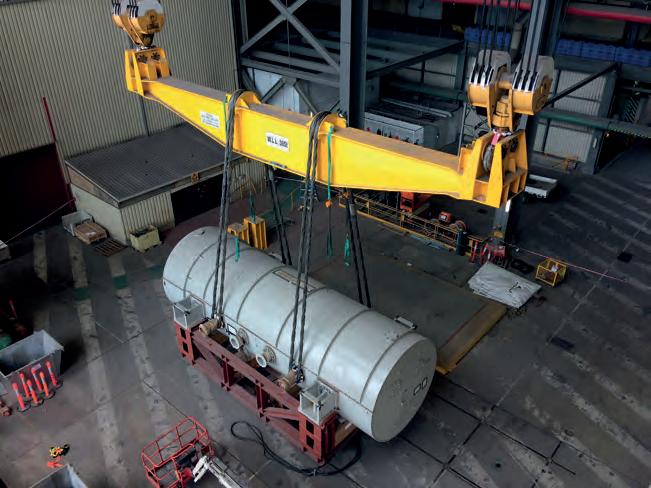
Managing cranes is one challenge. Managing the thousands of lifting accessories that travel with them is another entirely.
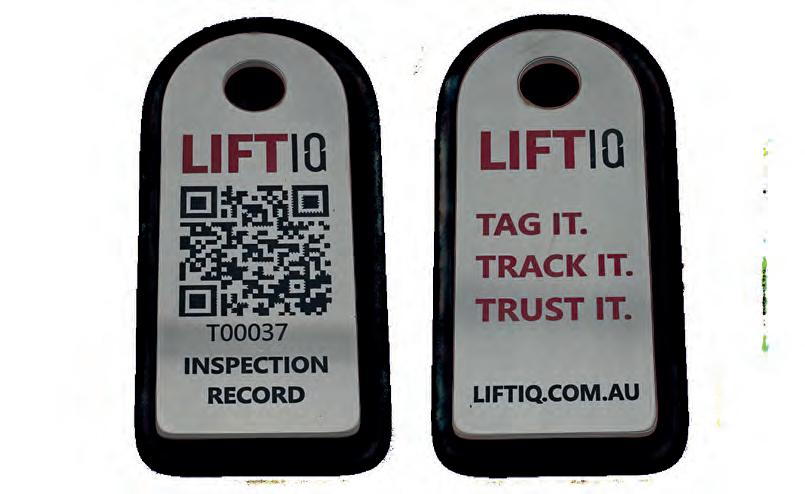
THAT’S THE PROBLEM LIFTIQ SET OUT to solve, and a recent deployment of its solution is showing how digital asset management can simplify one of the industry’s biggest administrative tasks.
LIFTIQ was recently adopted by a major crane hire company, Two Way Cranes. More than just another customer, the project gave developer Stephen Boyd the opportunity to refine the platform alongside a business managing thousands of lifting assets across a large crane fleet.
“The whole idea started because I thought there had to be a better way,” Stephen said.
“A lot of companies offered free asset registers that locked customers into buying from them. I wanted to build something supplier-neutral where customers could manage all of their lifting gear, regardless of where they bought it.”
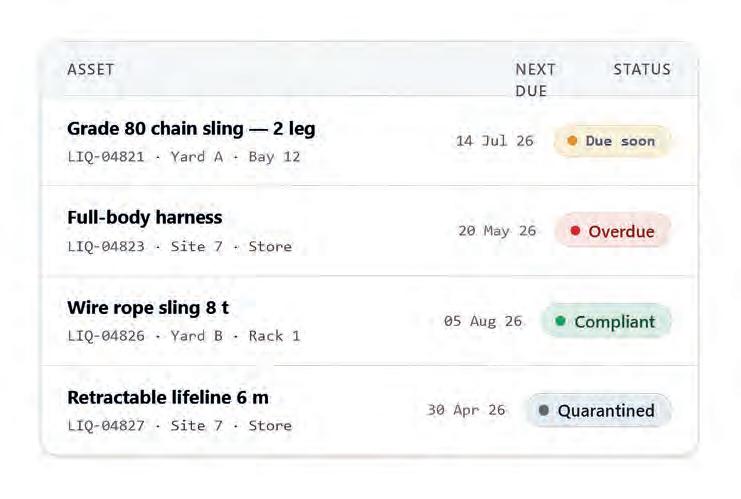
For Two Way Cranes, the onboarding process highlighted how quickly LIFTIQ can turn an existing asset register into a live digital system. Once the register was reviewed and ready, the data migration
EQUIPMENT REGISTER
took around 30 minutes. With about 60 cranes and roughly 80 lifting items assigned to each crane, plus additional equipment stored in rigging sheds, having accurate data was important.
Stephen said feedback from Two Way Cranes helped shape several changes that made the platform
better suited to crane businesses, demonstrating how customer experience continues to influence LIFTIQ’s development.
The biggest benefit, however, isn’t the migration process. It’s what happens afterwards.
Rather than maintaining paper inspection sheets and manually preparing compliance reports, users can generate equipment lists for individual cranes with a few clicks.
Completed inspection records can then be uploaded back into the system, automatically updating the compliance status of every item.
For businesses managing dozens of cranes every day, Stephen said that can eliminate hours of administration.
Previously, preparing documentation for a crane heading to site meant manually creating reports listing every lifting accessory onboard. With LIFTIQ, those reports can now be generated almost
instantly as PDFs using the assets already assigned to that crane. The same visibility also helps lift planners identify which crane already carries the equipment required for a particular job, reducing unnecessary movement of lifting gear between machines.
Another feature proving valuable is LIFTIQ’s QR code system.
Each lifting asset receives a unique QR code linked directly to its digital record.
Scanning the code from any smartphone provides instant access to the item’s compliance status, inspection history and supporting documentation, without requiring users to install an app.
Depending on the equipment, businesses can also attach proof load certificates, operator manuals, load charts or other supporting documents, allowing operators, customers or site safety personnel to verify information immediately.

It can't scan a tag, can't email you before an inspection falls due, and can't prove compliance in an audit. LiftIQ does all three.
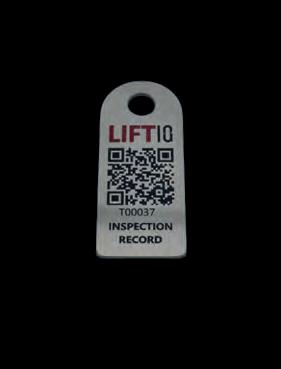
“If somebody finds a chain sling lying in the middle of a paddock and they scan the QR code, it’ll tell them who owns it and whether it’s in date,” Stephen said.
“It’s publicly accessible information, so anyone can check the compliance status.”
The system also simplifies defect management. Equipment can be marked out of service, assigned a defect severity and tracked through repair and reinspection before returning to operation.
For businesses managing thousands of lifting accessories, dashboards provide an immediate overview of equipment that is compliant, due for inspection, overdue or under repair. Automated reminders can also be customised to suit each company’s inspection schedules.
Stephen said the response from Two Way Cranes reinforced the value of focusing on practical industry problems rather than simply adding more software features.
COMPLIANCE KPIs
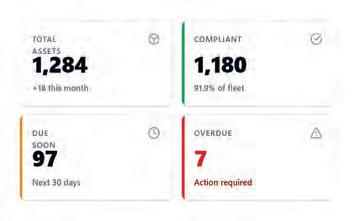
“They’ve used other systems before, so they knew what was available,” he said.
“The biggest thing they kept coming back to was how much time this was going to save them every day by getting rid of the manual paperwork.”
LIFTIQ’s partnership with Two Way Cranes suggests digital asset management is becoming less about replacing spreadsheets and more about giving operators faster access to the information they need, wherever the equipment happens to be.
Scan an asset's QR tag from a phone on site full history, certs and live status in seconds. LiftIQ emails you automatically efore anything falls due.
The people and precision behind Australia’s Superflex Slings.
EVERY SUCCESSFUL LIFT BEGINS LONG before the crane arrives on site. Behind every engineered lifting solution is a process built on collaboration, precision and experience – something Andromeda Industries has been refining for more than 50 years.
Since 1972, the Moonbi-based manufacturer has been producing its signature Superflex cable and the specialised lifting slings manufactured from it. While the products have evolved alongside Australia’s changing infrastructure, mining and energy sectors, one thing has remained constant: every lift deserves the right solution.
Located in regional New South Wales, Andromeda Industries has built its reputation on combining Australian manufacturing with a highly personalised approach to customer
service. Whether working with a local farmer requiring a custom lifting solution or a Tier 1 construction contractor delivering major infrastructure projects, the same level of care and attention is given to every enquiry.
In today’s world of artificial intelligence and digital communication, genuine customer relationships are becoming increasingly rare. At Andromeda, that personal connection remains one of the company’s greatest strengths. Every enquiry begins with a conversation. The team takes the time to understand the application, ask the right questions and work alongside customers to develop the safest and most effective lifting solution for the job. It’s an approach that has helped the company maintain long-term
relationships across a diverse range of industries for more than five decades.
Leading the business is Company Director Annette Williams, who oversees a dedicated team of 15 employees, each playing a vital role in Andromeda’s continued success. Under her leadership, the company has built a collaborative workplace where administration, marketing, engineering, production and customer relations work seamlessly together. Rather than operating in isolation, every department contributes to the customer journey, sharing knowledge and expertise to deliver the best possible outcome.
One of Andromeda’s greatest strengths lies in its in-house engineering team.
Rather than simply supplying standard products, Andromeda’s
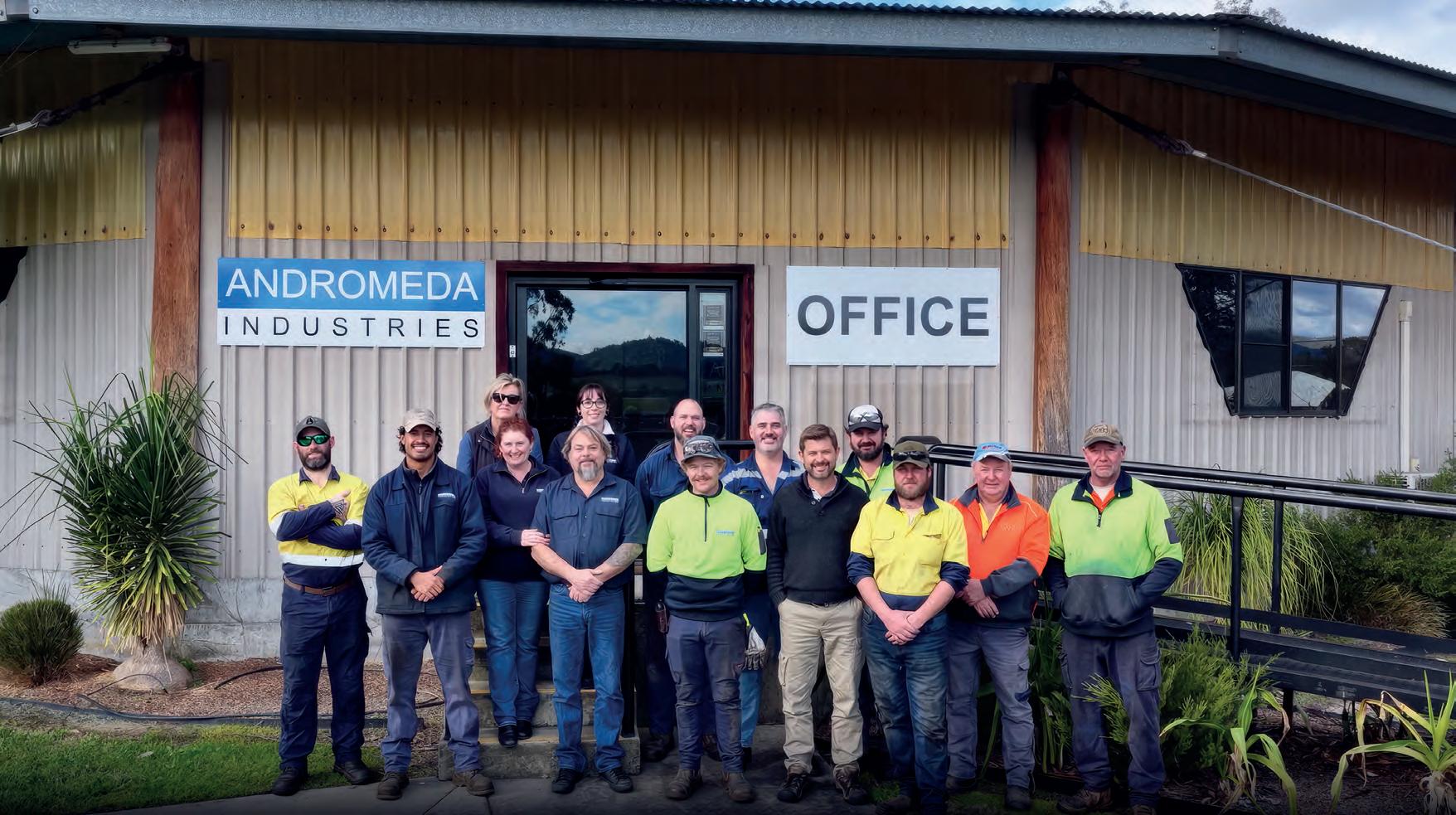
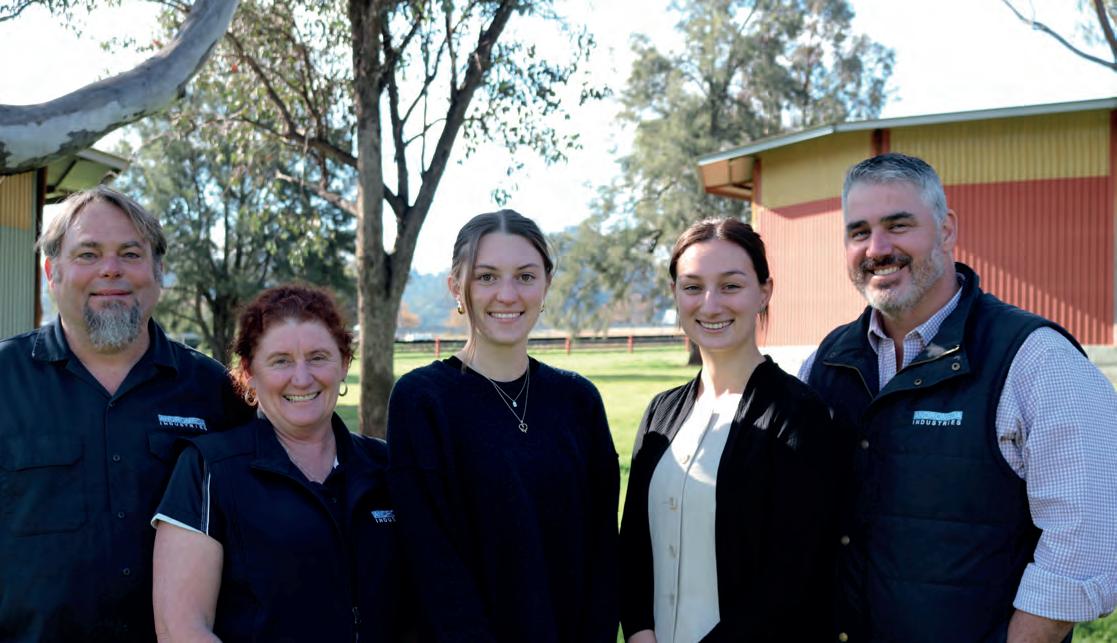
“The team takes the time to understand the application, ask the right questions and work alongside customers to develop the safest and most effective lifting solution for the job.”
engineering department works closely with National Business Manager Geoff Bower and Accounts Manager Brooklyn Williams, who are often at the forefront of customer enquiries. Geoff and Brooklyn work directly with customers to understand the application, required specifications and any challenges involved in the lift. This information is then brought back to the engineering team, lead by manager Brett Williams, where they collaborate to develop a solution tailored to the specific lifting application. The team has worked alongside customers to
produce specialised cable assemblies for structural shed bracing, engineered and machined custom Dean-0 fittings and developed bespoke lifting solutions for projects where off-the-shelf products simply aren’t suitable.
Today, Andromeda products can be found working across some of Australia’s most significant industries. From wind farm developments and major infrastructure projects to mining operations and large-scale construction sites, Superflex lifting solutions continue to support critical projects around the country. Most
recently, specialised Dean-0 slings have been supplied for use on a major data centre construction project, while large quantities of Superflex slings have been manufactured for the energy sector as part of a significant transmission infrastructure project in south-west New South Wales.
From the first phone call through to engineering, machining, manufacturing, proof loading, testing and final dispatch, every department contributes to the success of each project. It is a level of collaboration rarely seen in modern manufacturing and one that continues to distinguish Andromeda Industries within the lifting industry.
At Andromeda, behind every lift is not just an engineered product, but a team of people working together to make it happen.
Austlift expands national chain sling manufacturing and testing capabilities.
AUSTLIFT HAS EXPANDED ITS AUSTRALIAN manufacturing and testing footprint with the commissioning of 100-tonne horizontal chain sling test beds in Sydney, Melbourne and Perth, strengthening its capability to support national supply through its established distributor network.
The investment adds testing capacity, improves turnaround times, and enhances consistency in proof load verification across multiple states, reflecting ongoing demand for locally supported lifting equipment manufacturing and certification services.
AND ASSEMBLIES
Austlift manufactures a comprehensive range of lifting components, including Grade 80 and Grade 100 alloy chain, fittings and chain sling assemblies, covering sizes from 6 millimetres to 32 millimetres.
The integrated production approach ensures compatibility across chain, fittings and assembled products, supporting full system compliance under relevant Australian standards.
The manufacturing scope includes:
• Grade 80 chain (6mm–32mm)
• Grade 100 chain (6mm–32mm)
• Hooks, links, master links and associated fittings
• Complete chain sling assemblies
Chain slings are produced in configurations ranging from single-leg through to four-leg assemblies, as well as engineered lifting arrangements for application-specific requirements.
Assemblies can be manufactured in a variety of lengths, depending on configuration and working load

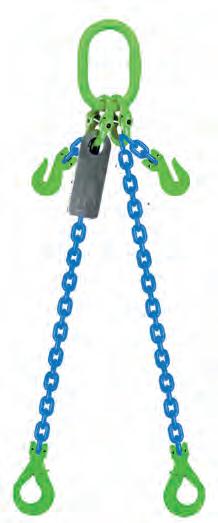
requirements. All products are assembled under controlled manufacturing processes with full traceability from component selection through to final testing.
The introduction of 100-tonne horizontal proof load test beds across Sydney, Melbourne and Perth provides Austlift with distributed testing capability aligned with its manufacturing and supply network.
The system is configured to support proof load testing of chain sling assemblies manufactured in sizes from 6mm to 32mm, in both Grade 80 and Grade 100.
The multi-site arrangement provides several advantages, including reduced dependency on external testing facilities and scheduling flexibility for distributors servicing time-sensitive project work. Across the network, the test beds support:
• Proof load testing up to 100 tonnes
• Verification of complete chain sling assemblies before dispatch
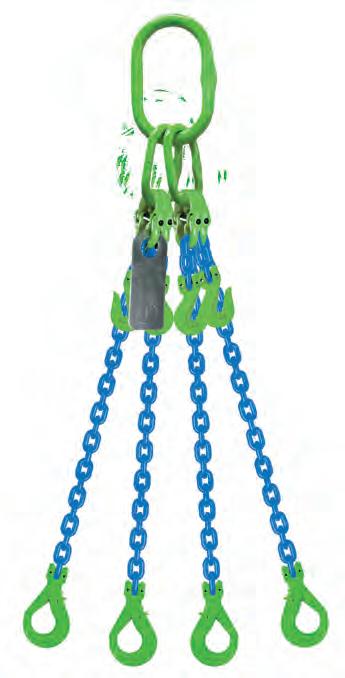
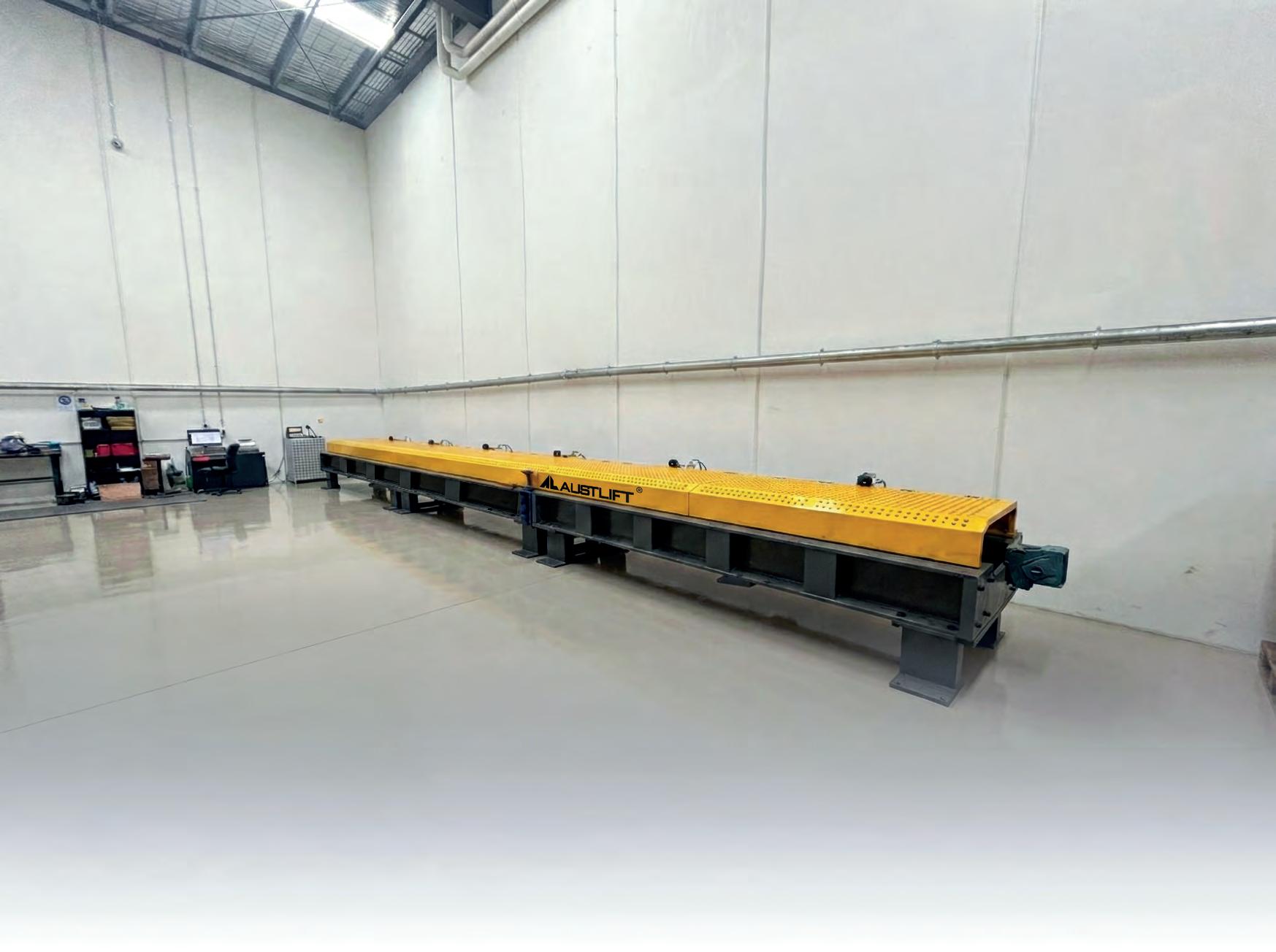
• Standardised testing procedures across multiple locations
• Full certification and traceability documentation
• Reduced lead times for manufacturing
The Austlift-designed 100 tonne horizontal chain sling testing bed in both Melbourne and Perth is a purpose-designed system for controlled proof load testing of chain sling assemblies under horizontal loading conditions.
The system incorporates several features aimed at improving testing accuracy, safety and documentation integrity, including:
• Integrated camera systems providing recorded test and controlled destruction documentation
“The Austlift-designed 100t horizontal chain sling testing bed in both Melbourne and Perth is a purpose-designed system for controlled proof load testing of chain sling assemblies under horizontal loading conditions.”
• Proof Load monitoring with recorded verification capability
• Powered tailstock assembly, reducing manual handling during setup and improving operator safety
• 100-tonne capacity suitable for a broad range of chain sling configurations
• Repeatable test conditions supporting consistent certification outcomes across production and engineered assemblies.
The system is designed to support both routine production testing and higher-specification engineered lifting assemblies requiring documented proof load validation.
Austlift continues to operate exclusively through a national network of authorised lifting equipment distributors, maintaining a supply model focused on manufacturing and technical capability
rather than direct end-user sales.
Under this structure, Austlift provides manufacturing, assembly and testing services, while distribution partners manage local supply, technical application support and end-user service requirements.
The approach supports regional availability of product while maintaining centralised control over manufacturing standards and certification processes.
Austlift operates under an integrated management system certified to:
• ISO 9001 – Quality Management Systems
• ISO 14001 – Environmental Management Systems
• ISO 45001 – Occupational Health and Safety Management Systems
Chain sling design, manufacture and testing is carried out in accordance with:
• AS 3775 – Chain Slings – Grade T (80) Alloy Steel
• AS 3776 – Chain Slings – Grade V (100) Alloy Steel
The company is also a member of the Lifting Equipment Engineers Association (LEEA), aligning its practices with internationally recognised lifting industry standards and competency frameworks.
Together, these certifications and standards support a structured approach to manufacturing control, workplace safety, environmental management and product compliance.
With manufacturing capability spanning 6mm to 32mm Grade 80 and Grade 100 chain, fittings and chain sling assemblies, production lengths of up to 10 metres, and a national 100-tonne testing network across Sydney, Melbourne and Perth, Austlift has strengthened its position as a vertically integrated lifting equipment manufacturer within the Australian market.
The addition of in-house testing infrastructure further consolidates control over certification processes and supports improved responsiveness to distributor and project requirements.
Designed and manufactured by Austlift for the demands of the Australian lifting and Rigging industries.

P.A. Construction Equipment Pty Ltd (Pace Cranes) was established in 1987 to provide the construction industry with an independent Australian owned and operated crane sales, crane service and crane spare parts organisation.
For over 38 years Pace Cranes have offered premium quality equipment to the Australasian market with a dedicated and unrivalled service, supported by specialist technical advise across the full range of equipment sold.
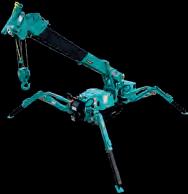
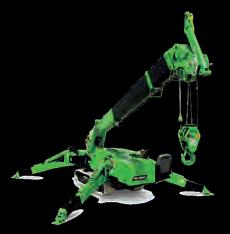
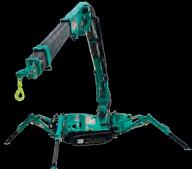
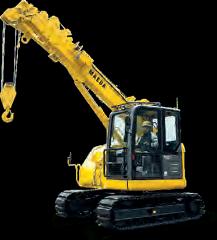


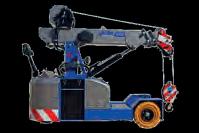
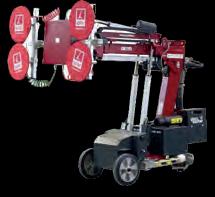
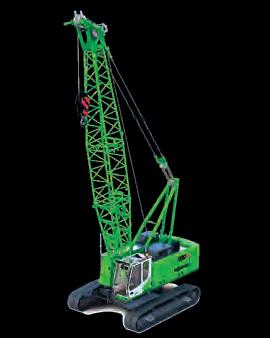
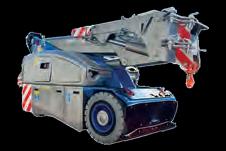
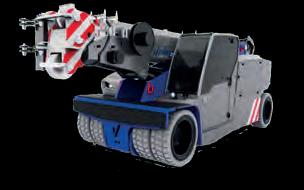
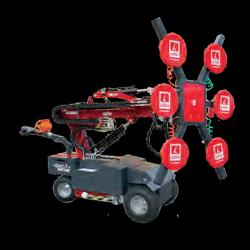
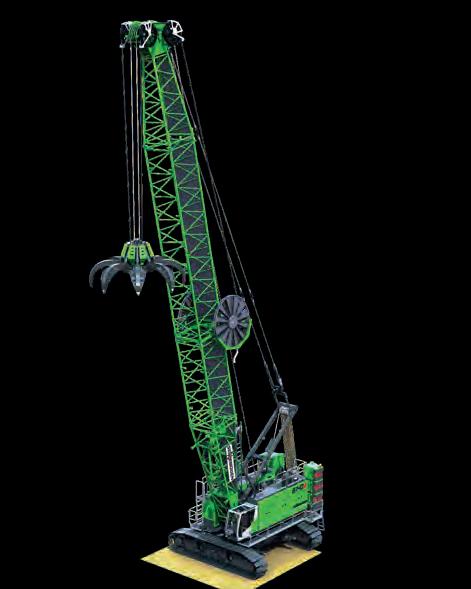



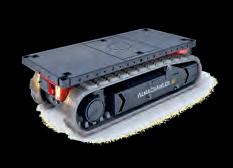
Jackson Wells from Lift Well Cranes may be a relative newcomer to the crane industry, but he has quickly built a reputation for his passion, professionalism and commitment to doing the job right.
TODAY, JACKSON OPERATES A MAEDA MC285C-3, a Maeda MC305C-5 an Aconda tracked carrier, and an Uplifter 450 vacuum glass lifter, all supplied by Pace Cranes.
FROM CARPENTER TO CRANE OPERATOR
Jackson began his career as a carpenter, working across a number of major infrastructure projects.
“While I was working as a carpenter, I got to know the dogging and rigging crews working alongside the cranes. They were always the most respected people on site. Watching them sparked something in me, and I started to picture myself working in the crane industry,” said Jackson.
Determined to make the change, Jackson obtained his dogging and rigging licences with the plan to get some experience and training.
“Early on with the project I made it clear to the supervisors that I had the tickets and was eager to learn. I pushed for every opportunity I could get. I was fortunate enough to be teamed up with a crawler crane crew alongside experienced riggers and crane operators who took me under their wing. They taught me how to work safely under the
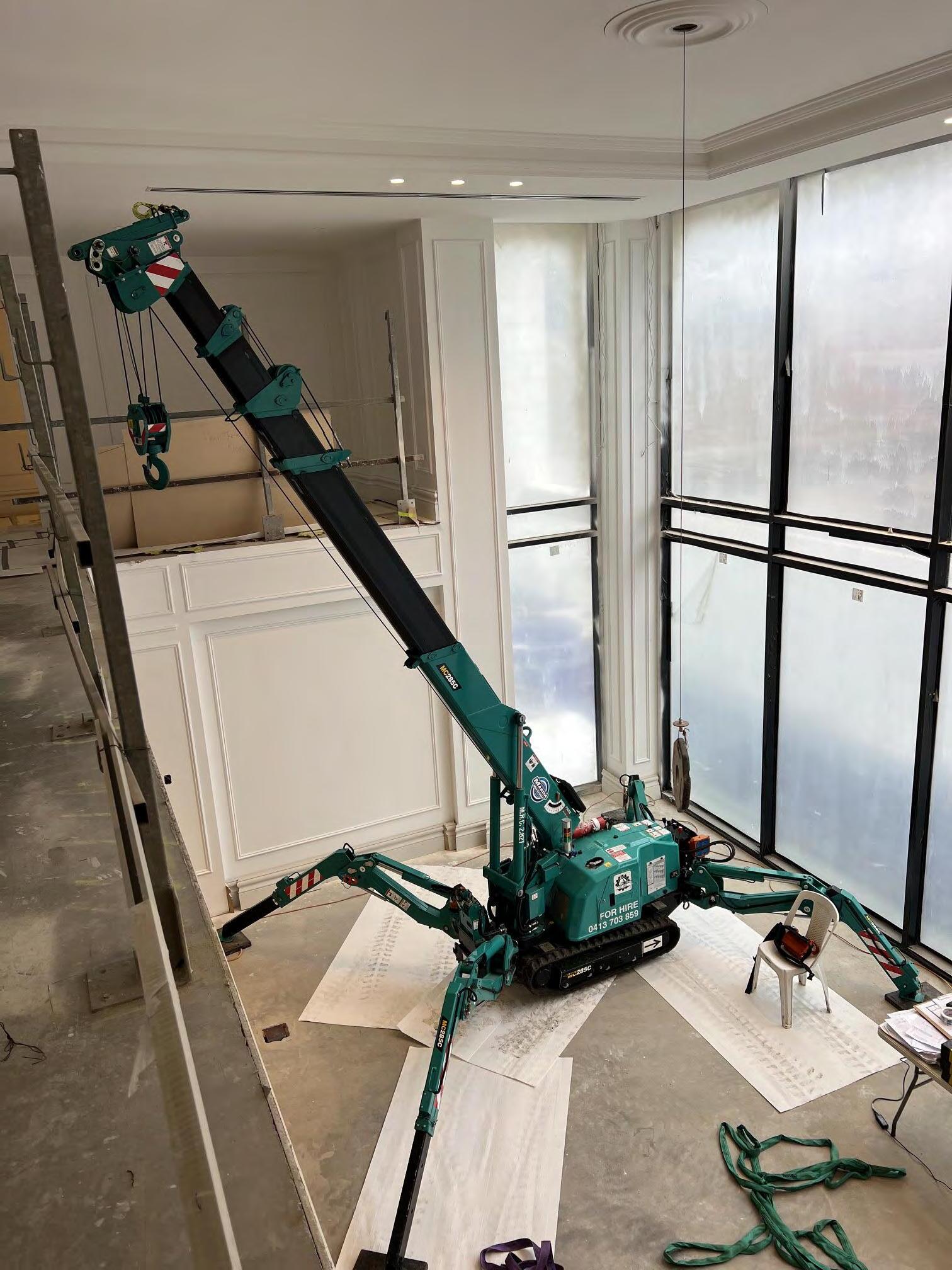
hook, how to communicate properly and safe slinging different types of loads and, most importantly, how to think ahead,” he said.
The experience left a lasting impression.
“They gave me a huge amount of confidence, but they also taught me to respect the risks involved. High-risk lifting demands complete focus. You have to be present every second and manage high levels of stress and pressure when lifts are in action. They definitely put the fear of God into me in a good way. Crane hire is more difficult and there’s a lot more to it than people think,” said Jackson.
He continued building experience across various infrastructure projects and he also obtained his C6 Crane Licence. This provided him with the opportunity to operate his first spider crane, which was on Melbourne’s Metro Tunnel Project.
“I realised pretty quickly that I genuinely loved the industry. Every lift presents a
The MC285C-3
different challenge. Whether you’re hoisting formwork, formwork frames, steel, stillages or building materials through confined spaces, there’s always a problem to solve. I also developed a real appreciation for the engineering behind modern cranes. It’s highly technical work, and while it’s still physically demanding, it’s much easier on the body than swinging a hammer every day,” he said.
Jackson established Lift Well Cranes in 2023 after purchasing his first spider crane – a Maeda MC285C-3.
“I chose the MC285 because of its incredible versatility. It’s designed for tightaccess lifting, and you can set it up on uneven ground, inclines and difficult locations where larger cranes simply can’t go. There really isn’t much else on the market that can do what this crane does,” Jackson said.
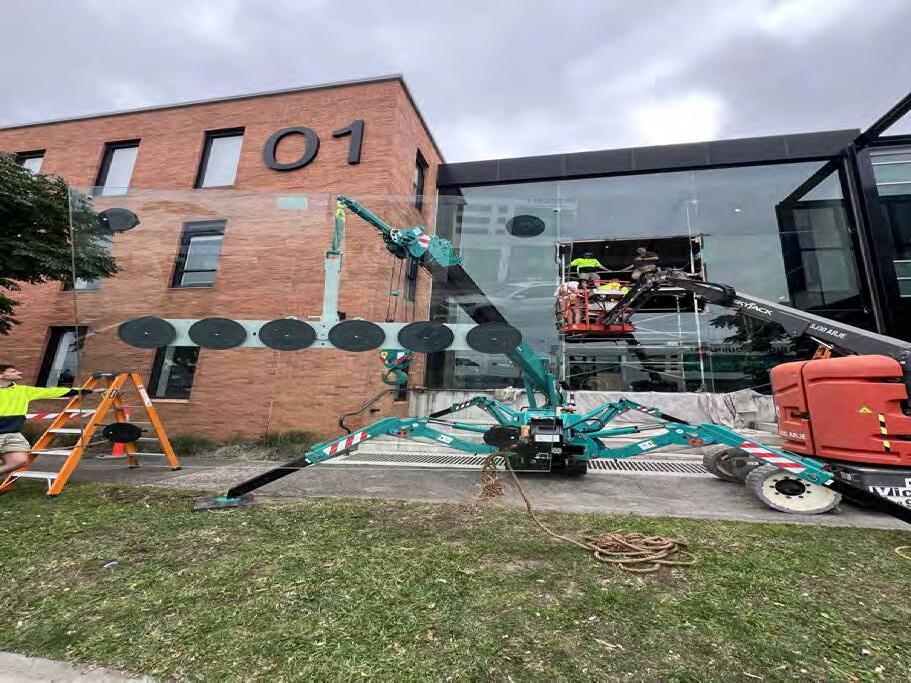
• Digital feedback remote control
• Four-fall/two-fall hook block
• EU Stage V compliant engine
• Optional Searcher Hook
THE ACONDA TRACKED CARRIER
Jackson admits he initially questioned whether purchasing the Aconda tracked carrier had been the right decision.
“For the first six months it hardly moved and I honestly wondered if I’d made a mistake,” said Jackson.
That quickly changed.
“Once I understood what it could do and where it fitted into the business, it became one of my favourite pieces of equipment. It has opened up an entirely new market for me,” he said.
The tracked carrier has transported eightmetre, one-tonne steel beams down narrow access ways and moved large 600-kilogram glass panels and even carried a pool up a steep stoney hill slope to install into locations where cranes simply couldn’t reach.
The MC285C-3 offers a lifting capacity of 2.82 tonnes, a maximum working radius of 8.2 metres and a maximum lifting height of 8.7 metres, making it ideal for steel erection, glazing and restricted-access construction work.
Its multi-position outriggers, compact footprint and integrated safety features –including tilt alarms, working status lamps and a data logger – make it one of the safest and most capable mini cranes available.
In June 2025, Jackson expanded his fleet with the Maeda MC305C-5, becoming the first owner of the latest model 305C5 in Australia.
“Pace Cranes were pretty excited to tell me I’d received the first MC305C-5 in the country. It’s a special machine,” he said.
One of the standout features is its fully digital wireless remote control.
“Being able to stand beside the crane while operating gives you a much better perspective of the lift. You can focus on every angle and every movement instead of being tied to one position. It gives you a dogmanlike view so you can see and feel what’s going on around you. It definitely comes in handy
when the people you’re working with are a little green,” said Jackson.
The MC305C-5 lifts 2.98 tonnes at 2.5 metres, has a maximum working radius of 12.16 metres and a maximum lifting height of 12.52 metres, making it one of the most capable compact cranes in its class.
Additional features include:
• Crane outrigger interlock system
• Programmable moment limiter
• Multi-outrigger mode
“Instead of organising an 80-tonne slewing crane, road closures, council permits and traffic management, we can often transport materials safely through restricted access using the track carrier. It’s a safer, more efficient and much more economical solution,” said Jackson.
He believes tracked carriers will continue growing in popularity.
“Construction materials are getting heavier, while access is getting tighter. I believe these machines have a huge future.”
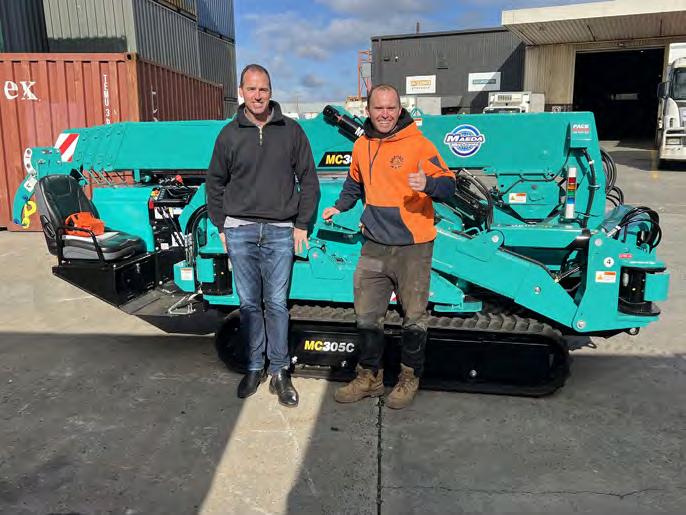
The Uplifter 450 vacuum glass lifter has also become an essential part of Lift Well Cranes’ operation.
“The six-cup vacuum system makes handling large glazing panels much safer and more efficient. Every glazing job brings different challenges, but once you understand your equipment and know how to position everything correctly, it’s incredibly rewarding,” said Jackson.
Although Lift Well Cranes competes against much larger competitors, Jackson believes his service is what sets his business apart.
“Every enquiry starts with a site visit. I study the lift, assess the risks, check for powerlines, look at the access and work out exactly how we’re going to complete the job safely and efficiently,” he said. “No two jobs are ever the same. Every day presents a new challenge,
and that’s one of the things I love most about this industry.”
His passion for the equipment is obvious.
“I’ve spent countless hours studying the Maeda range and understanding exactly what these cranes can do. This is much more than a job to me. I genuinely care about the equipment I operate. I treat the cranes, the tracked carrier and the vacuum lifter like they’re part of the family. If you respect your equipment, it’ll look after you,” said Jackson.
Lift Well Cranes services metropolitan Melbourne and regularly travels throughout Victoria. “We’ve had the spider crane working on Mount Buller on a ski slope lifting steel and glazing for a hotel project; I’m always happy to travel where the work takes us.”
Jackson still remembers his first visit to Pace Cranes. “When I decided I wanted to start
a mini crane business, I booked a flight to Sydney, jumped in an Uber from the airport and went straight to Pace Cranes,” he said.
There he met Michael Cawston, whose approach left a lasting impression.
“Michael introduced himself, we started talking, and before long he’d pulled the cranes out of the workshop and simply said, ‘Have a play.’ I spent the entire day learning about the machines.”
That first experience laid the foundation for an ongoing relationship.
“From day one, Michael was genuine, knowledgeable and easy to deal with. He’s transparent, professional and passionate about the products. The entire team at Pace Cranes has been exactly the same. If I ever need technical support or advice, they’re always there to help. As a customer, you really can’t ask for more than that. I want to continue to grow and purchase more equipment in the future,” he said.
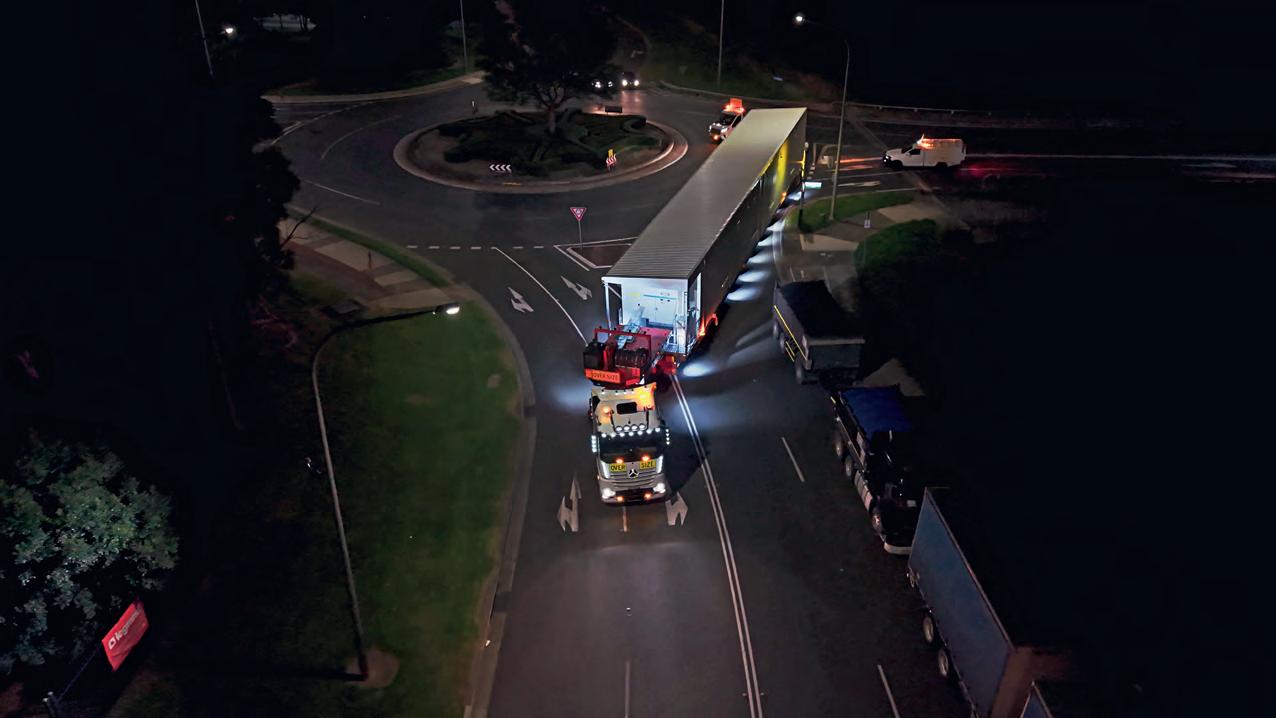
For more than 25 years, TRT and McDonald Contracting have grown alongside each other.
WHAT BEGAN IN THE EARLY 2000S AS A conversation between TRT and a small Australian house-moving business has evolved into a long-term partnership built on trust and a shared willingness to push boundaries. Today, that relationship has delivered its latest milestone: a TRT seven-axle Electronic Steering System (ESS) modular trailer designed to handle some of the most demanding transport and placement work in Australia.
The trailer represents far more than another addition to McDonald Contracting’s fleet. It demonstrates how specialised transport is evolving, with operators needing greater flexibility and more precise steering in challenging environments.
For McDonald Contracting operator Matt McDonald, the trailer’s capabilities become obvious the moment it leaves the depot.
“With this trailer, we can steer seven axles, we can tilt, we can side shift the front across, we can steer away from poles, and we can miss gutters. It all works on a radius. It’s a pretty amazing machine, and it makes our job a lot easier,” said Matt.
Alongside fellow operator Lachie, Matt recently put the trailer through its paces moving a large prefabricated module destined for Wagga Wagga, New South Wales.
The load measured about 30 metres long and weighed approximately 50 tonnes.
Combined with the truck and trailer, the overall transport length approached 40 metres. Moving something of that scale through roundabouts, intersections and confined site conditions requires far more than horsepower. It requires precision.
According to Jeremy Carden, Trailer Sales at TRT New Zealand and Australia, McDonald Contracting has been part of TRT’s story almost from the beginning.
Jeremy said the relationship dates back to around 2000, when McDonald Contracting founder Robert McDonald first approached TRT after hearing about the company’s reputation within the house-moving sector.
“Robert sent Shane over to New Zealand on a bit of a fact-finding mission and to discuss a trailer concept they had in mind. That led to McDonald Contracting purchasing its first TRT trailer and establishing a relationship that has continued to grow ever since,” said Jeremy.
Over the next two decades, both companies expanded.
Shane McDonald, the secondgeneration owner, grew the business into one of Australia’s most specialised transport operations, while TRT continued developing increasingly sophisticated trailer solutions.
Jeremy estimates TRT has supplied McDonald Contracting with about 13 to 14 trailers and dollies over the course of the relationship.
While house relocation remains an important part of McDonald Contracting’s work, the business has increasingly focused on transporting large prefabricated switch rooms and electrical infrastructure modules. These units are becoming larger, heavier and more complex as Australia’s infrastructure and utility sectors continue to expand.
The TRT seven-axle ESS modular trailer was developed specifically to meet the changing requirements.
Configured as a five-row trailer with a two-row clip-on module, the unit can be adapted to suit a wide variety of transport tasks. The ESS, or Electronic Steering System, provides automated and manual steering functions that allow operators to manoeuvre large loads through environments that would otherwise be impossible.
On public roads, the steering system automatically coordinates axle movements and follows the truck’s steering inputs.
Once on site, operators can switch into specialised steering modes to position loads with extreme accuracy.
“When it’s on the road, the system computerises everything and tells itself where it’s going, turning all the axles as we go. It pretty much takes over and follows the steering wheel around corners,” said Matt.
“Once we get to site, we can switch into different modes. We can use site mode, crab mode and move the trailer sideways into position. It lets us get around obstacles and position loads exactly where we need them.”
For Lachie, the biggest advantage is the ability to fine-tune load placement once the trailer reaches its destination.
“Even just the fine details and tuning on site, getting buildings exactly where you want them, it works really well for that sort of stuff,” he said.
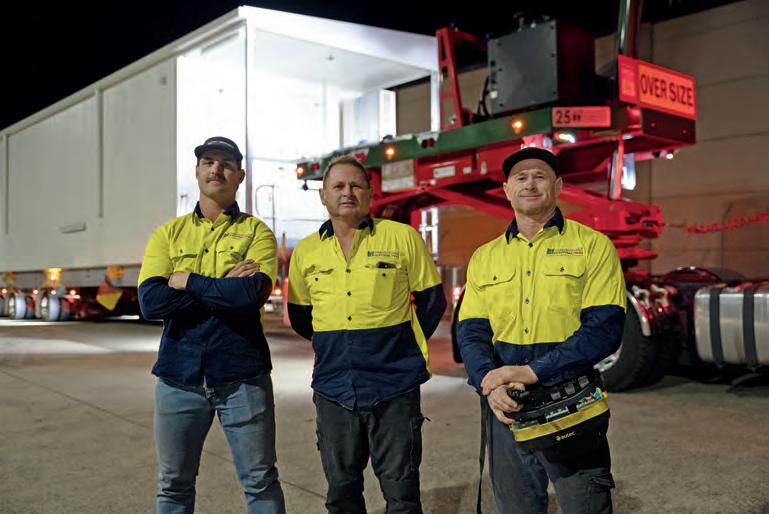
The trailer’s hydraulic suspension and lifting capabilities further expand what can be achieved on site.
According to the operators, the trailer can raise modules to around three metres, allowing buildings and switch rooms to be positioned directly onto elevated supports and stanchions.
Jeremy believes that capability is changing the economics of some projects.
“The key with what Shane does, and with that trailer, is that he can actually get on site and position switch rooms onto elevated gantries that might be two metres or more above ground level. In some situations that removes the need for a crane during the final placement process, which can significantly reduce complexity, cost
For operators, the real test of any trailer comes when theory meets reality.
The Wagga Wagga move highlighted exactly why the ESS system has become such a valuable tool.
“This load is about 31 metres long. With the truck, we’re nearly over 40 metres overall. To get around these roundabouts, we just couldn’t do it without this trailer. It gives customers confidence to build modules to this length because they know we can get them there without damage,” said Matt.
The trailer’s manoeuvrability proved equally valuable during loading.
One of the features Matt particularly values is the manual crab steering mode,
sideways when positioning a load. The trailer also incorporates a quick-connect system that allows axle groups to be added or removed as required.
“The quick-connect system lets us take off the extra axle groups and plug them back in easily. We can turn it from a fiverow into a seven-row trailer and continue extending it if we need to,” said Matt.
For TRT, the project highlights something that cannot be measured by payload, axle count or steering angles. Jeremy said McDonald Contracting remains one of the most progressive operators in Australia, particularly in the way it embraces new transport technology.
The development process reflected that commitment.
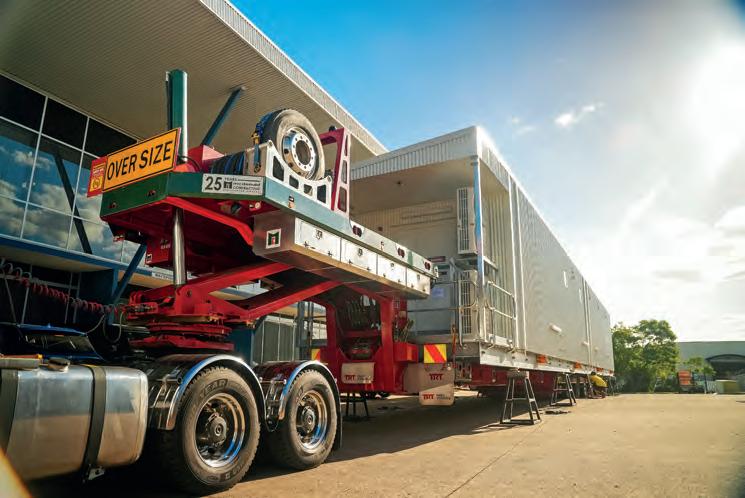
Jeremy described Shane as highly detail-oriented and heavily involved throughout the build, travelling to New Zealand multiple times during the design and manufacturing stages to ensure every requirement was captured.
For Matt, however, the value of the trailer is perhaps best measured by the reaction it gets on site.
“We do jobs where we back in, lift the building up, move across the posts and within 20 minutes it’s sitting in position. Normally, it would take all day with cranes, but we can come in, lift it up, steer it into place and within half an hour we’re pulling back out again,” said Matt.
“Everyone on site is blown away by it. They can’t believe what this trailer can do.”
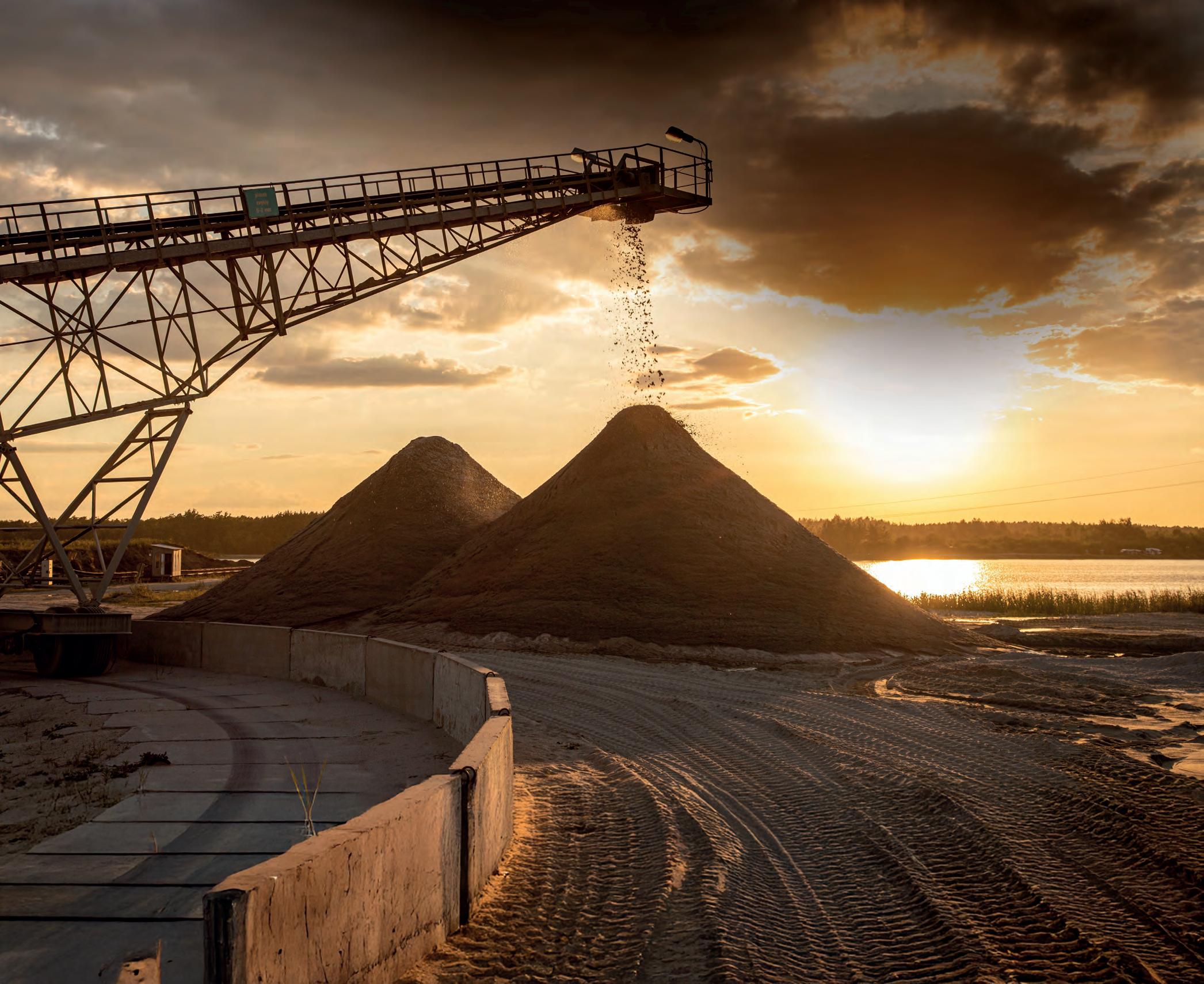

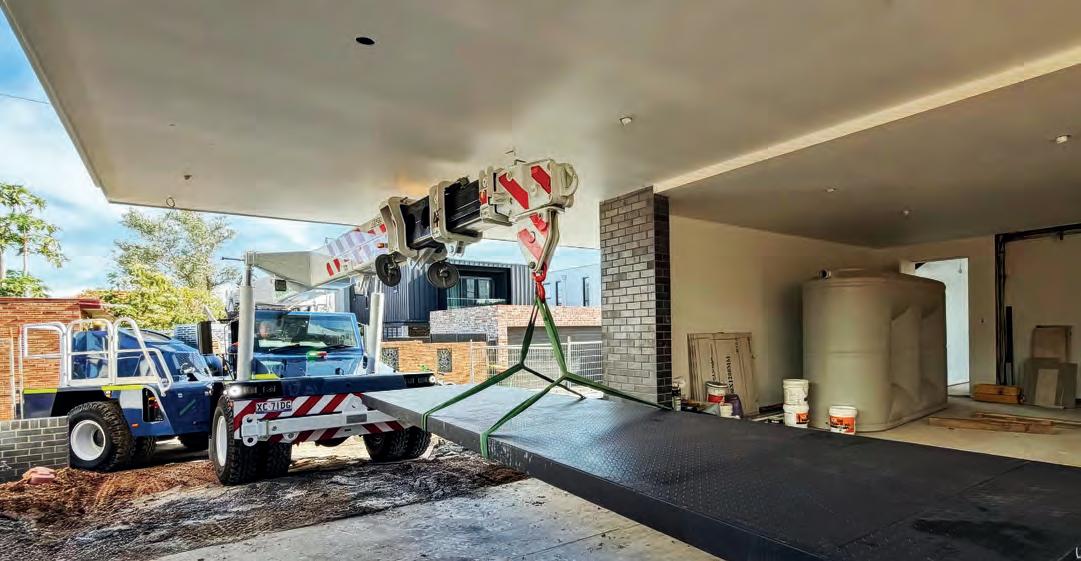
Enrico (Rico) Di Grande, Managing Director of Sydney Cranes, has been involved in the industry for over 40 years. With a focus on pick and carry work, he recently took delivery of a new Terex Franna AT22-2.
RICO’S BUSINESS INTERESTS CONTINUE
to thrive through a single focus on the highly competitive pick and carry element of the industry, alongside his faith in his experienced team and trust in the Terex Franna brand. Rico explains how his commitment to renewing his fleet has resonated with customers over such a long
“In the mid ’80s, I started in the industry as an owner-operator of a Franna under the business name Readylift. I was working at Santos Cranes as a subcontractor and went out on my own a couple of years later. A few years after that, a colleague advised that his business was in receivership and I acquired the name Sydney Cranes, which I’ve traded under ever since. Over the years the business has owned and operated a broad range of cranes including slew cranes
from 100 tonne to 300 tonne capacities. You name the crane and we’ve had them in the fleet, at some stage,” said Rico.
It is only during the past five years that Rico has ‘downsized’ the Sydney Cranes fleet to exclusively feature and operate Frannas, with the latest addition being an AT22-2.
“Over the years, the business has developed a solid reputation for our use of Frannas in pick and carry applications. In the main, this is due to the nature of the crane and its ability to get in and lift where other cranes can’t,” said Rico. “It is also a result of the experience and expertise we have in our operators and crew. As a result, I could see there was an opportunity to create a niche in an otherwise crowded Sydney market and five years ago I decided to exclusively focus on providing Frannas.
“Our customers represent a broad range of industries including Tier 1 and Tier 2 builders and contractors, manufacturing businesses as well as heavy engineering firms. Many have been with us for many years, and some date back to when I first started. They keep coming back to Sydney Cranes because they know we can get lifts done that other businesses can’t manage or won’t touch. We even help other crane hire businesses and take over the jobs they can’t finish.
“I have never asked any of the crews to do anything I haven’t been prepared to do myself. When I have the opportunity, I love getting back in the cab and getting ‘on the tools’. I especially enjoy getting into the new models to better understand the technology and new safety features Terex Franna has engineered into the crane.”
For Sydney Cranes part of the appeal of the AT22-2 is the way newer technology has been integrated into a familiar pick and carry platform.
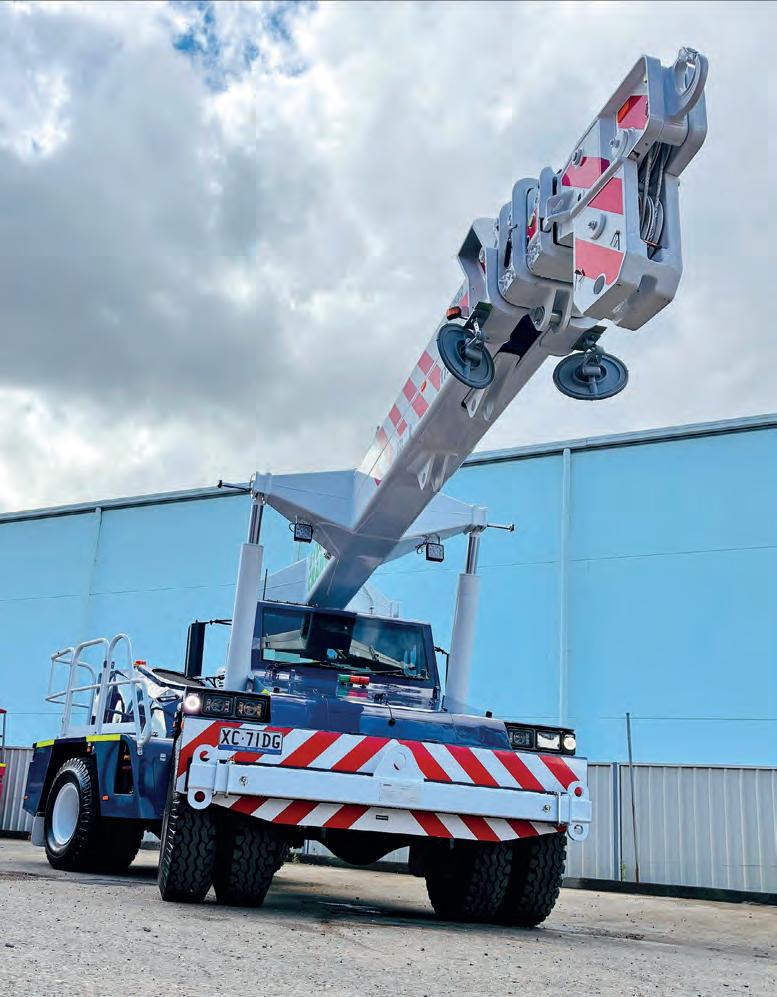
For Rico, part of the appeal of the AT222 is the way in which newer technology has been integrated into a familiar pick and carry platform. The crane is powered by the Mercedes-Benz OM936 Stage V and Tier 4 Final compliant engine, which supports cleaner emissions and helps operators meet evolving environmental requirements. The OM936 has also been used in European allterrain and other special-purpose vehicles for many years.
Safety is another area where the AT22-2 reflects Franna’s ongoing product development. The model includes Franna’s patent-pending Safety Radar as a standard feature, giving operators another tool to support awareness and planning on site.
The Safety Radar system works alongside the patented Dynamic LMI system, providing a colour-contoured visual representation of the crane’s rated capacity across its working area. This allows the operator to assess capacity before
moving the load, rather than relying only on traditional rated capacity alarms or motion cuts.
Sydney Cranes’ strong reputation is driven by the team’s professionalism, experience and ‘can do’ attitude.
“My firm belief is that a team that supports and complements each other is crucial for success and long-standing growth. At Sydney Cranes we approach our work in similar manner to a family in that we support each other 100 per cent and always have each others backs,” Rico said.
“My company motto is ‘Results not Excuses’ and the approach from my Operations Manager and Allocator, Peter Breen, through to the riggers, dogmen and operators is to give the job the very best you can and if the job can’t be done, in my opinion, it means there isn’t a Franna in Sydney that can do it. Sometimes this needs to be demonstrated to the customer so they can see with their own eyes that they’ve
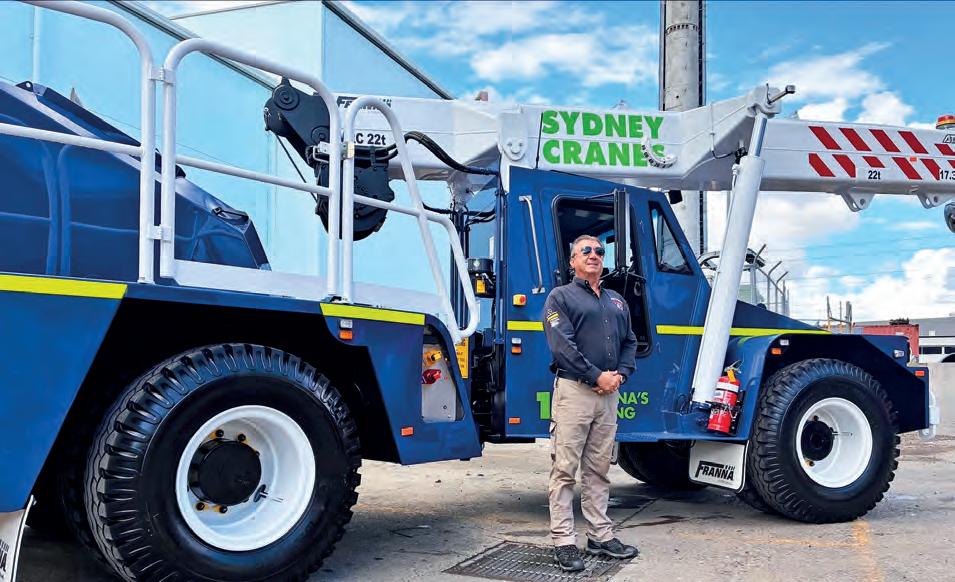
maybe ordered the wrong crane or that they are trying to force a square peg into a round hole.
“I wouldn’t be where I am today if it wasn’t for loyal staff, they are the face of the business, and I’ve been blessed to have great people work with me. I would like to personally thank Peter Breen, Operations Manager, David Hayward, Chris Turner, Franca Todaro, Rhonda Hodges, Max Di Mauro, Tim Gilmore and Janaya Zohs for their continued support and loyalty more than 40 years.”
Sydney cranes took delivery of the new Franna AT22-2 in mid-May. According to Rico, continual investment in the fleet is an important strategy.
“It was great to see the new AT22-2 arrive in the yard, I like owning new cranes. I think it’s a good look when customers see a new machine turn up on site and with a new fleet, you save on maintenance and mechanical repairs. I also think it is important for the crews to be operating new cranes and for these reasons I tend not to keep my Frannas longer than four years,” he said.
Rico’s Frannas are not just limited to servicing the Sydney market.
“My cousin Max Di Mauro started out in the crane industry 10 years ago as an owner driver. He now owns Riverside Cranes, a
Rico Di Grande, Managing Director of Sydney Cranes.
“Nothing is too much when it comes to technical support, especially when it comes to the computer and the more technical aspects of the crane.”
leading crane hire company in Perth. We’re working together to supply 25 tonne Frannas and 40 tonne Frannas to a number of the Tier 1 mining companies which is working out really well,” he said.
Rico has always been impressed with the service and support he has received from the team at Terex Franna.
“I’ve worked with Terex Franna for over 30 years now and as you would expect, I’ve seen plenty of people come and go. But throughout this time the service, support and backup from everyone I’ve interacted with has been first class.
“The teams in their parts and service departments bend over backwards to assist, they always answer the phone and if they don’t, you can feel confident that they will call you right back. Nothing is too much when it comes to technical support, especially when it comes to the computer and the more technical aspects of the crane,” said Rico.
“We manage a lot of the servicing and maintenance of our fleet ‘in-house’ with our team of mechanics but the team at Franna are very professional and happy to help solve any issues we might have. This level of service and support are why Terex Franna has remained a leading brand in the crane industry for such a long time and will remain so well into the future.”



28 - 30 October 2026


Leading tower crane business Cosmo Cranes recently acquired a number of new Potain Luffing cranes, the first time in a while the business has purchased the brand. John and Josh Handley explain why they now consider Potain a viable option for their business.
“FOR A NUMBER OF YEARS, WE HAD BEEN purchasing Terex Comedil tower cranes, and we have a large number in our fleet. When the brand was acquired at the end of last year, we were uncertain about the future of the brand and so we began examining our options,” said John.
“Billy Rumble, Sales and After Market Manager for Manitowoc Cranes had been reminding us about Potain and the significant changes it had made to its range of products. We hadn’t purchased Potain in the past, but when we understood they had started designing cranes which suited our market we were interested in exploring the products further.”
John and Josh sat down with Billy and the team from Potain to discuss opportunities and everything moved quickly from there, explains Josh.
“From the start, it was clear the team from the Potain factory were keen to hear from us as a potential customer, they were very attentive and listened to our feedback. They wanted to better understand what we required in our cranes and build machines around these requirements. In our experience this is a rare approach from a manufacturer.
“It was also clear they genuinely wanted to cater to the demands of the Australian market and when we understood their approach, things moved quickly. The first cranes we purchased were a MCH175A hydraulic luffer and a MCR305A 25T Luffer. From there we acquired another four Potain’s and recently purchased the new MCR505 for the fleet,” said Josh.
“Each time we visited the factory, we were very impressed. There were French engineers on site overseeing the production process, which gave us confidence in

the quality of the manufacturing. It also reassured John and reinforced our confidence in continuing to purchase Potain cranes,” he said.
One of the main features of the Potain MCH175A is its ability to be quickly installed, commissioned and operational in a single operation. The crane reaches a maximum length of 55 metres and a lifting capacity of up to ten tonnes, and is a high-performance model with low maintenance costs.
Potain’s MCR305A luffer can reach a height of 190 metres with almost half the anchorage points required by similar models. It features a smaller out-of-service radius of 9.5 metres with a 60 metre jib, optimising space on jobsites for better productivity and profitability.
The MCR505 delivers exceptional lifting power with a tip load of 4.7 tonne at 65 metre radius, ideal for extended reach operations. The MCR505 control system
optimises load curves for superior lifting performance across diverse conditions.
Billy Rumble and the teams from Manitowoc and Potain continue to be responsive to Cosmo Crane’s requirements and deliver on time and in full, said John.
“Billy is very approachable and he understands our business which is really important. When required, he gets involved with our clients, discussing the requirements of their projects to ensure we are putting the right solution in place. It helps that Billy has come from the sector, he’s a qualified tower crane technician so he knows the product inside out, which is important.
“Delivery times are paramount to us because we can’t quote and then commit to a project if we aren’t confident the right crane is going to be available. We’ve asked Billy and the team at Potain to commit to delivery times and they haven’t let us down. The quality of the product is also first class
and compares favourably with anything coming out of Europe. Although price is not a major driver for us, Potain product is very competitively priced,” said John.
“We don’t always worry about paying a premium, and we have done for a number of our European machines, but delivery is critical. The last European crane we bought was eight months late and that caused all sorts of issues for the business. As far as we are concerned, the package offered by Manitowoc and Potain is excellent.
“After sales service and support includes parts availability and a number of highly qualified tower crane technicians. Potain is a quality product and competitively priced and the cranes are delivered on time, without fail. In a competitive market like ours, the role of ‘business partners’ becomes increasingly important, and we are very happy with our partnership with the teams at Manitowoc and Potain.”
Manitowoc Australia 0417 674 019 infoANZ@manitowoc.com New Zealand 0800 878 695 cranes@trt.co.nz
Manitowoc Australia 0407 967 444
infoANZ@manitowoc.com New Zealand +61 407967444 infoANZ@manitowoc.com
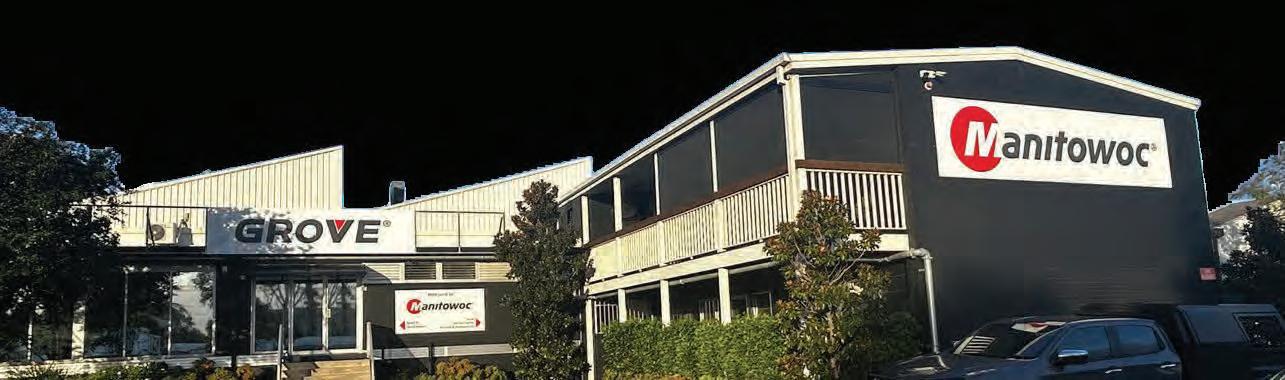
Mammoet has taken delivery of the first 150 tonne Grove Plugin Hybrid all-terrain crane, the GMK5150L-1e. The handover of the new Grove GMK5150L-1e took place in Breda, The Netherlands, at Manitowoc’s Dutch sales and service facility.
PLUG-IN HYBRID TECHNOLOGY WITHOUT COMPROMISE ON PERFORMANCE
The Grove GMK5150L-1e features a 60 metre main boom and is part of Grove’s electrified all-terrain crane product line. Its sister model, the GMK5150XLe, equipped with a 68.7 metre main boom, was unveiled at bauma 2025.
With a maximum lifting capacity of 150 tonne, the GMK5150L-1e provides emission-free lifting operations without compromising performance or mobility. The crane retains the full flexibility of a conventional diesel-powered all-terrain crane while offering electric operation of the superstructure via a 160 kilowatthour (kWh) battery pack, allowing zeroemission lifting on site.
THE WORLD’S FIRST ‘CHARGE-WHILEDRIVING’ 150 T PLUG-IN HYBRID ALLTERRAIN CRANE
Customer-centric engineering was a key focus throughout the development process. Manitowoc’s engineering team worked closely with customers to gain a deep understanding of real-world jobsite requirements. The Mammoet team’s feedback was thoroughly evaluated and used in designing the crane. As a result of this partnership, sufficient battery capacity was ensured to maintain continuous operations and optimal performance.
“The close collaboration with Mammoet was highly appreciated and positively received by the entire Grove
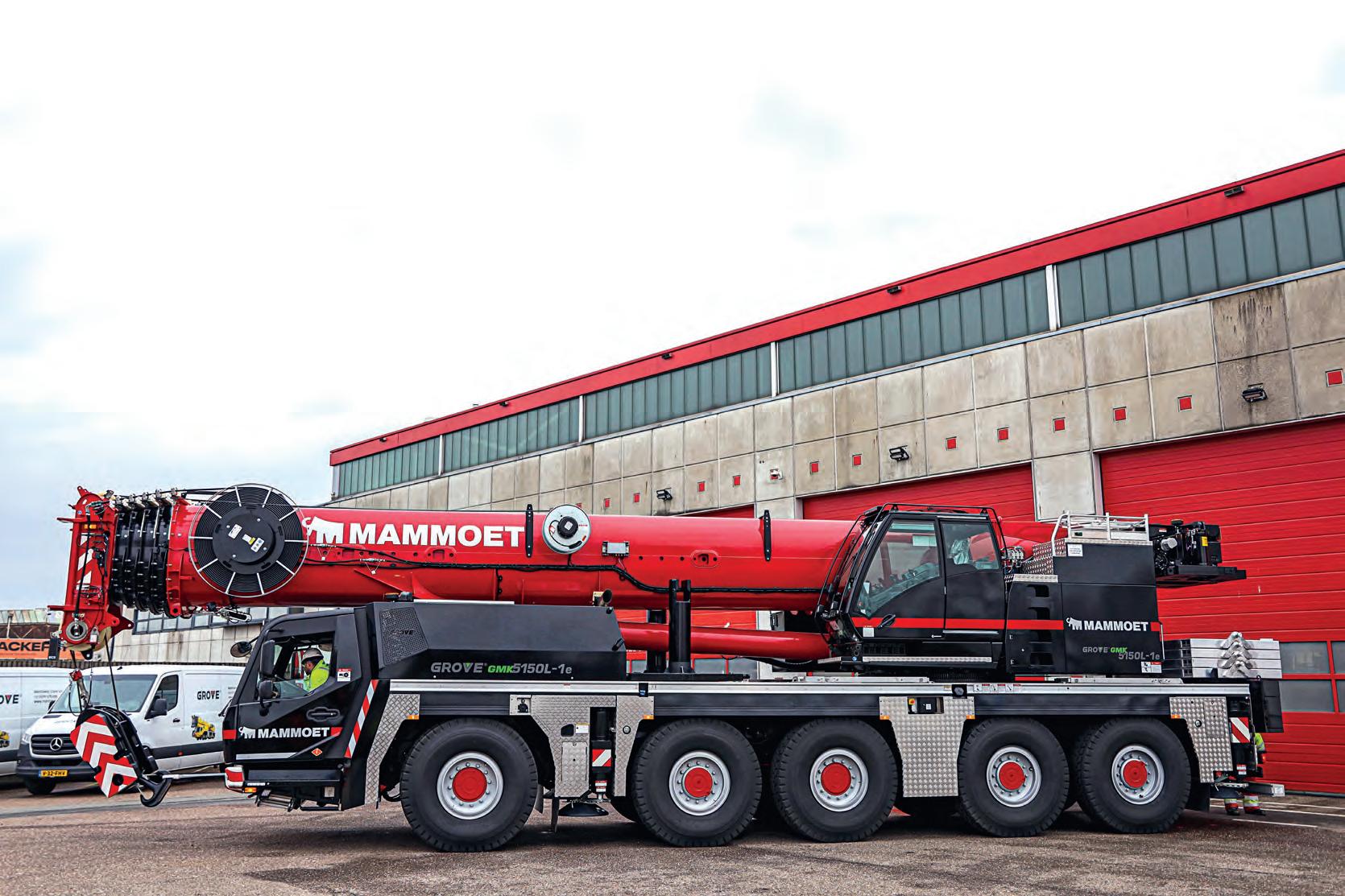
team,” said Andreas Cremer, Vice President, Product Management, mobile cranes at Manitowoc. “We look forward to continuing this exchange in the future. The battery capacity was precisely sized based on a comprehensive job profile analysis to ensure full operational coverage. Combined with the ‘charge-whiledriving’ feature, the new Grove Plug-in Hybrid cranes deliver exceptional flexibility and independence – capable of handling even the toughest jobs without relying on grid charging.”
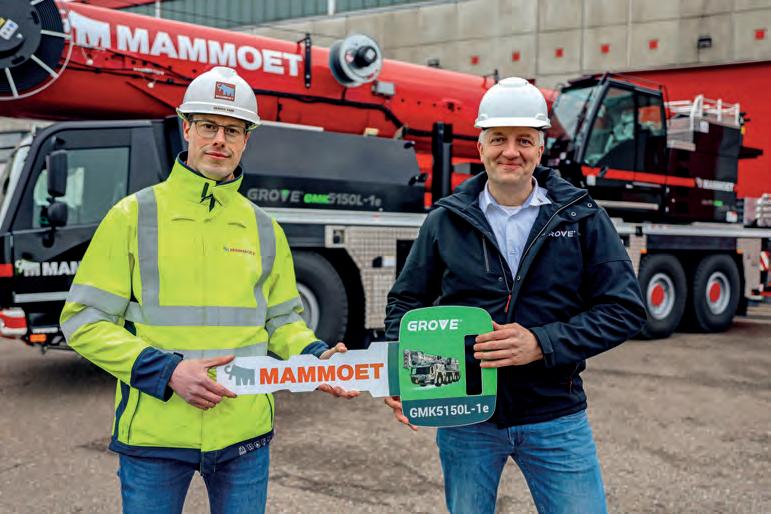
The GMK5150L-1e/GMK5150XLe Plug-in Hybrid cranes offer multiple charging options, including DC fast charging, 32A/400 V AC charging, and a 163 kW on-board generator. A unique feature of the crane is its independent ’charge-while-driving’ capability, making the GMK5150L-1e and GMK5150XLe the most versatile Plug-in Hybrid all-terrain cranes on the market. This allows the battery to be recharged while traveling to and from the jobsite, significantly enhancing operational flexibility.
“We are extremely proud of the development of the Plug-in Hybrid GMK cranes. The independent ‘charge-
while-driving’ function gives us a clear competitive advantage and sets new standards in electrified crane technology and sustainable heavy lifting. It helps our customers meet – and exceed –both commercial and environmental objectives,” said Andreas.
For Mammoet, sustainability is a decisive factor in project execution.
“Sustainability is one of the key drivers of our business. In the Netherlands and beyond, requirements are increasing rapidly. Cities such as Amsterdam, Rotterdam, and The Hague already enforce zero-emission targets for many projects, and carbon footprints are increasingly evaluated before contracts are awarded,” said Eelco de Leeuw, Operations Manager at Mammoet.
At the same time, limited charging infrastructure remains a challenge on many jobsites. “Charging facilities can be unavailable. That is why we are delighted to receive a Plug-in Hybrid all-terrain crane that can charge while driving and has its own on-board generator. Even without electricity at the jobsite, the GMK5150L-1e allows us
to reliably complete our projects. Most importantly, it operates electrically and independently,” commented Eelco.
Beyond sustainability, operator comfort was another key factor driving Mammoet’s purchasing decision. The GMK5150L-1e offers significantly lower
“From our perspective, this crane is a true success,” said Eelco.
AWARD-WINNING ALL-TERRAIN CRANE
In 2025, the Grove GMK5150XLe received major international recognition for its innovative design and technology. It was awarded the “Prix de l’Innovation” by JDL Groupe in
“We are extremely proud of the development of the Plug-in Hybrid GMK cranes. The independent ‘charge-while-driving’ function gives us a clear competitive advantage and sets new standards in electrified crane technology and sustainable heavy lifting.”
noise levels during operation, creating a quieter, more comfortable working environment while maintaining full allterrain crane performance.
“Through Manitowoc’s Voice of the Customer program, we actively contributed to the development of this crane. Our technical teams and crane operators were involved from the very beginning of the GMK5150L1e/GMK5150XLe project, providing extensive feedback that was clearly listened to.
France and the “Premio Potencia 2025 – Categoría Elevación, manipulación y transporte de cargas” by Revista Potencia/Interempresas Media in Spain, underlining its outstanding contribution to innovation, efficiency, and sustainability in the lifting industry.
The GMK5150XLe was entered into the ESTA Awards of Excellence 2026 in the “Innovation” category, and was selected as a finalist, which highlights its leading contribution to advancing loweremission lifting solutions.
120t capacity XCA 120G7- 1AU will be on display during CICA’s National Conference and Exhibition in the Hunter Valley.
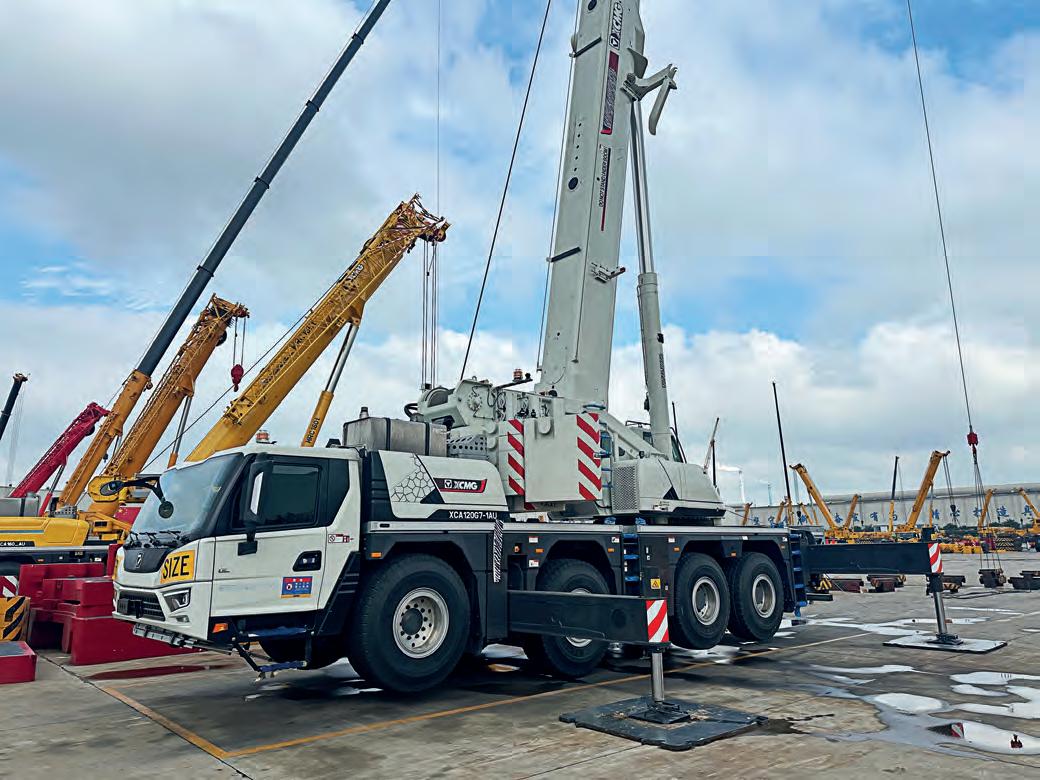
In a significant industry development, The Baden Davis Crane Connection (Crane Connection) recently announced it had increased its representation of the XCMG brand in Queensland as well as Victoria. Crane Connection’s Anthony Davis explains more.
“INITIALLY, WE WERE APPOINTED AS THE XCMG distributor for Queensland, New South Wales, and the ACT, and following recent negotiations we have agreed to represent XCMG in Victoria, making us the XCMG distributor for the East Coast which is exciting. Also, and understanding that Queensland is going to be a significant ‘hotspot’ for the foreseeable future, we have appointed TRT as a ‘sub dealer’ for the state,’ said Anthony.
“We see this as a particularly positive development having worked with TRT for many years as the sub dealer for both the Kobelco range and the Tidd pick and carry range manufactured by TRT in New Zealand.
“With the construction sector continuing to remain buoyant and with the Olympics build soon to be released, demand for craneage in Queensland is going to be at a premium. We have already sold a number of units to crane hire businesses in Brisbane and beyond, and to have foot soldiers there on the ground is going to be a major boost,” said Anthony.
TRT Australia has confirmed it will directly support the XCMG Crane portfolio within Queensland for all sales, service and parts requirements to support the continued growth of XCMG cranes across Queensland, marking a significant and positive development for the Australian lifting industry.
Neil Webb, General Manager of TRT Australia, said the decision reflects a long and carefully considered view of XCMG’s evolution, rather than a short-term shift in direction.
“This has not been a sudden decision. TRT has watched XCMG develop over many years, and I personally visited the XCMG crane and port equipment factories around 20 years ago. I recently returned as part of our due diligence, and the transformation is remarkable,” said Neil.
“The level of investment XCMG has made in its manufacturing capability, automation, robotics, quality control and advanced production systems is world-class. The facilities are among the best I have seen,
and the progress over the past two decades clearly demonstrates a manufacturer that is serious about becoming a global leader in crane technology.”
Neil said customer feedback also played an important role in TRT’s assessment of the XCMG opportunity.
“We spoke with a number of customers who have either operated XCMG equipment, visited the factory, or followed the brand’s development closely. The consistent message was that XCMG has continued to evolve, the product quality has kept improving, and the manufacturing process has advanced significantly.
“Customers can see the direction XCMG is heading, and there is growing confidence that XCMG has the capability to become a world-leading crane manufacturer.”
TRT Australia and The Baden Davis Crane Connection have enjoyed a longstanding partnership said Neil.
The partnership with Crane Connection provides an important foundation for that confidence.
“TRT and Crane Connection are closely aligned in how we view customer support. Selling a crane is only one part of the relationship – the real measure is how well customers are supported through the life of the machine,” Neil said.
“With Crane Connection and TRT’s Queensland sales, service, parts and technical capability, customers can have confidence that XCMG will be backed by a serious, experienced and responsive support network. TRT are excited to have the ability to sell the XCMG range of cranes throughout Queensland.
“This is a positive step for the industry. It gives customers another genuine, wellsupported option in the market, backed by a manufacturer that has invested heavily in product development and by local businesses that understand the Australian crane sector. TRT will continue to support its existing customer base with the same commitment we always have, while also helping build confidence in XCMG as a serious long-term brand for Queensland.”
Anthony said Crane Connection has been representing the XCMG brand for close to a year, and the industry has been responding in a very positive way.
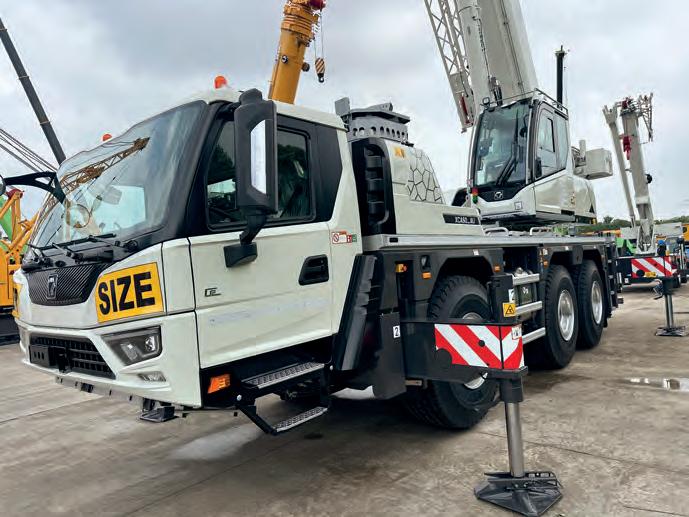
“From day one, we’ve been receiving enquiries on all models, and we’ve sold units from everything in the range including rough terrains, truck-mounted cranes, lattice boom and tele crawlers, as well as various capacity all terrains,” he said.
“I would say the tele crawler range has been the topic of most conversations to this point, but we are waiting on the delivery of the new all terrain models, including the new 120 tonner which arrives later this month with the 60 tonner arriving in November.
“In fact, the 120 tonner will be on display during CICA’s National Conference and
regarding the various models and make the necessary modifications so they comply with Australian requirements.
“The new 100 tonnes telescopic crawler is a good example of how responsive the factory is to our market’s requirements. One of the key features Australian customers want from this type of crane is the ability to have two parts of two folds of rope on the short heavy-duty auxiliary jib for lifting and turning panels or reo cages for example.
“We passed on this feedback, and the factory quickly redesigned this feature making it possible. They are also fitting Cummins engines, they’ve made it so
“The new 100 tonnes telescopic crawler is a good example of how responsive the factory is to our market’s requirements.”
Exhibition in the Hunter Valley in October so potential customers will be able to see it firsthand.
“It’s an impressive crane with 66 metres of main boom, which is the equivalent boom length to the market leader in that range, 8.5 metre hydraulic luffing fly, 18.5 metre hydraulic luffing fly, two winches, 20.5 inch tyres and Stage V Mercedes engine, and comes in at 12 tonnes per axle. As with all XCMG models they are well priced and I’m sure the enquiry levels for all terrains will increase when customer get a chance to see the quality of the cranes,” he said.
According to Anthony, XCMG’s engineering department has been more than prepared to listen to customer feedback
the belly weights can stay on the crane for transport with the transport width remaining at 3.5 metres. XCMG has really Australianised these new models and they will be arriving in August.
“There’s a new 110 tonne lattice crawler coming which features a two-part heavy duty jib, self-loading counterweight, it can be transported with the tracks and belly weights on. It’s going to have a really quick setup time and the load charts are phenomenal,” he said.
“The factory has also fitted a tilting cabin as well as a Cummins engine and we have two of these arriving later in September and October, and like all XCMG’s they are really well priced.”
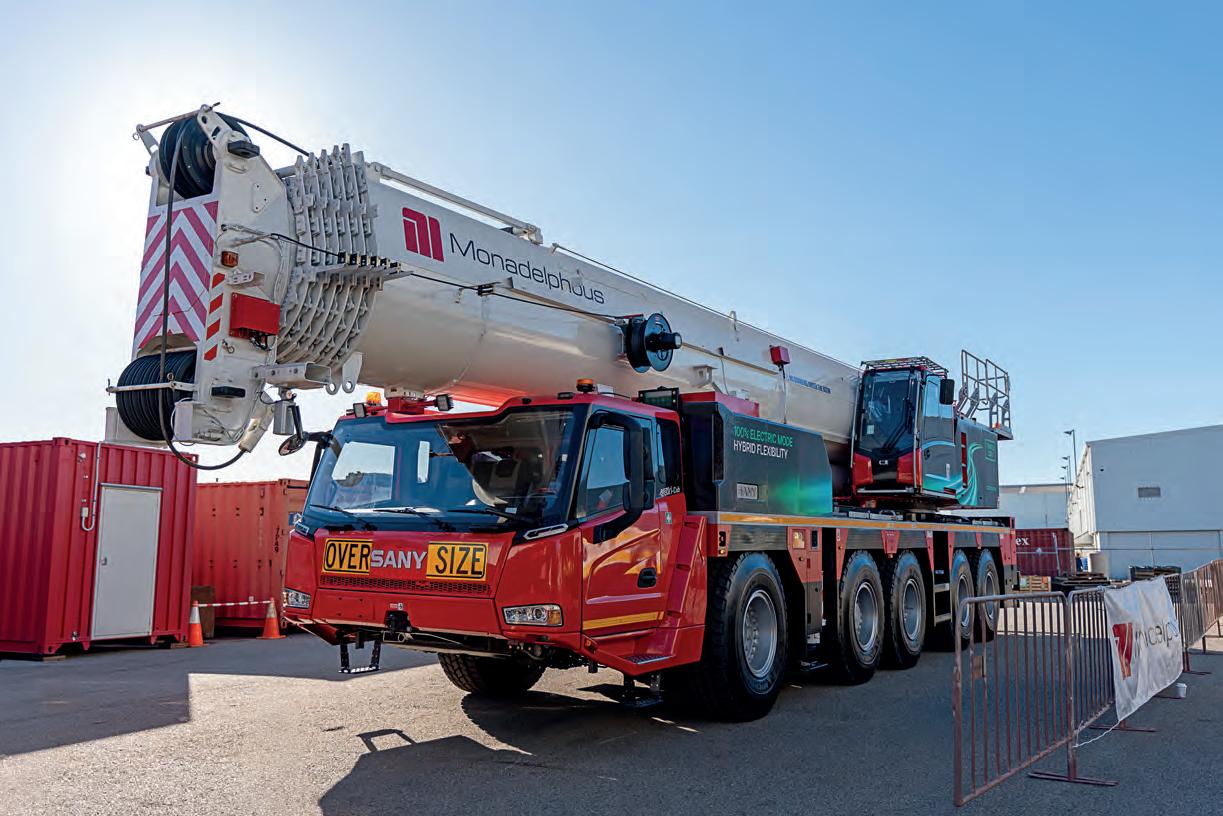
Monadelphous is shaping the future of heavy lifting in Australia with the introduction of 250t hybrid cranes.
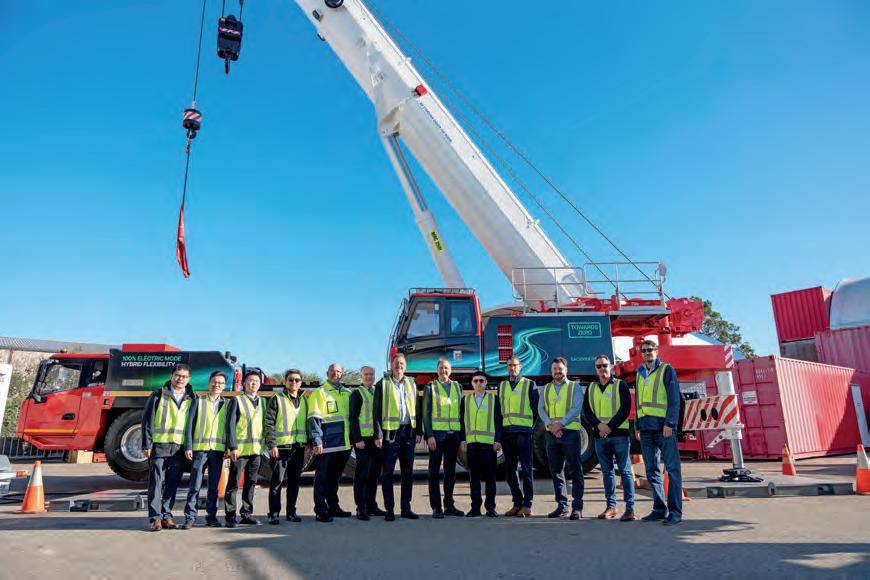
MONADELPHOUS HAS ADDED TWO new plug-in hybrid electric cranes to its heavy lift fleet – the first of their kind to operate in Australia – marking a significant step in the future of heavy lifting across the resources, energy and infrastructure sectors.
The new 250-tonne SANY SAC2500E7PHEV plug-in hybrid all terrain cranes are the first of their kind to enter service in Australia, with the Pilbara becoming the initial region to deploy this specific hybrid crane technology in active operations.
The new cranes were officially unveiled at an event in Perth attended by customers and industry partners, including representatives from SANY travelling to Australia, to mark
Daniel Ooi, Heavy Lift General Manager at Monadelphous, said the decision to invest in hybrid crane technology reflects a shift in customer expectations and ensures that the fleet continues to evolve with the industry.
“Operations that have traditionally relied on dieselpowered equipment are beginning to transition, with customers looking for practical ways to lower emissions on site while maintaining safety, reliability and productivity,” Ooi said.
“These cranes give us the flexibility to support both. We can operate them in full electric mode with zero exhaust gas emissions where it makes sense, without limiting capability or reliability in remote locations.
“This investment in our fleet reflects the commitment to innovation and sustainability, and supports the delivery of our decarbonisation goals as well as those of our customers.”
The cranes were sourced from SANY, a global manufacturer investing in next-generation lifting technology as part of a broader shift
toward lower-emissions solutions. Xie Tao, Chairman from SANY Crane BU, said the development of the 250-tonne hybrid all terrain cranes reflects the company’s commitment to supporting evolving technologies globally.
“Bringing this class of hybrid
Western Australia for use across active projects, providing real-world insight into their performance. The cranes will be based at Fortescue’s Solomon and Eliwana mine sites where Monadelphous provides crane services in support of Fortescue’s iron ore mining operations.
“This investment in our fleet reflects the commitment to innovation and sustainability, and supports the delivery of our decarbonisation goals as well as those of our customers.”
crane to Australia is an important step in supporting the country’s energy, resources and construction industries as they work toward more sustainable and safer operations,” Tao said.
In the coming months, the cranes will head to the Pilbara region in

More than just a pre-start checklist
StartSafe is comprehensive tool designed to streamline your crane operations, enhance safety, and ensure accountability.

Machine specific checklists are in line with the CraneSafe program.
StartSafe streamlines the process for collecting pre-start information, with instant data retention to a central location for the crane owner to access.
Photos tell the story.
When a faulty item is recorded by the operator, the maintenance team is notified of the issue by email, which includes photo evidence of the fault. This also assists with gathering major inspection data.
As hybrid and lower-emissions lifting technology continues to develop, Monadelphous expects to build on these early deployments, working with customers and partners to shape the future of heavy lifting in Australia.





Zoomlion’s Changde tower crane facility combines advanced automation, robotic welding and large-scale assembly to support its global growth ambitions.
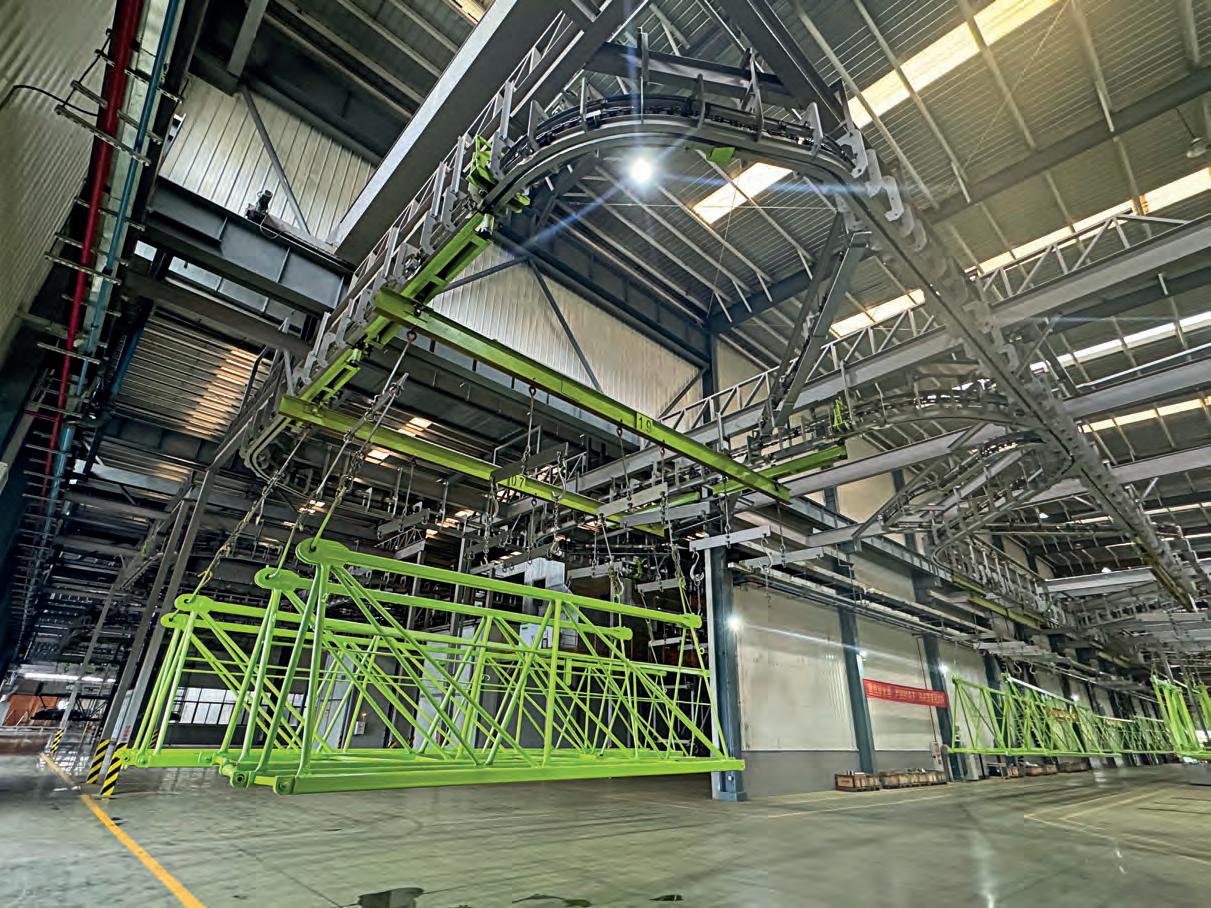
Construction projects are growing bigger, more complex and increasingly constrained by space, and tower crane manufacturers are facing a new set of challenges.
CUSTOMERS ARE LOOKING BEYOND LIFTING capacity alone, placing greater emphasis on safety, reliability, ease of assembly, digital technology and long-term operating costs. For Zoomlion, those changing expectations are shaping both its product development and its global strategy.
During a visit to Zoomlion Tower Crane’s manufacturing facility in Changde, China, Cranes and Lifting was given access to the company’s production operations, where highly automated manufacturing lines, robotic welding systems and largescale assembly areas highlighted the level of investment behind its tower crane business.
The visit also provided an opportunity to speak with Mr Huang Jianbing, Vice President of Zoomlion, and General Manager of Zoomlion Tower Crane, about the company’s long-term strategy and how it is preparing for the next phase of global growth.
According to Huang, the company’s focus has gone well beyond just manufacturing cranes. Today, the priority is
delivering equipment that suits demanding job sites while providing the engineering, service and support customers expect throughout the life of the machine.
Having spent more than three decades across research and development, manufacturing, supply chain management and concrete machinery, Huang joined Zoomlion’s tower crane division in 2024.
“Tower cranes are totally different from other construction equipment,” he said. “For earthmoving equipment, people focus on productivity and fuel consumption. For tower cranes, the first priority is safety. Everything starts with design, quality control and operation. Then customers want reliable equipment that is easy to maintain, supported by good service and available spare parts.”
That philosophy has been shaped by regular visits to customers across Australia, Europe, the Middle East and Asia. Huang said those conversations consistently point to the same priorities. “Most customers pay attention to quality and reliability first.
We need to continue listening to those needs because that is how we improve,” he said.
Large data centres, renewable energy developments, industrial facilities and major transport projects each bring different lifting requirements, making flexibility a key part of product development.
“The biggest challenge is providing the right technical solution for different working conditions while controlling cost,” Huang said. “We need to balance quality, safety, technical performance and cost to give customers the best overall solution.”
Technology is also becoming a much larger part of that equation.
While steel structures and mechanical design remain critical, Huang believes future innovation will increasingly come from electrical control systems, software and intelligent automation.
“We have already introduced AI into both manufacturing and tower crane control systems,” he said. “The next step is working with key customers to prove these technologies through benchmark projects before introducing them more broadly.”
Although fully automated crane operation is attracting growing interest globally, Huang believes widespread adoption will happen gradually as existing fleets are replaced and customers become more familiar with the technology.
For now, digital systems are primarily helping operators monitor machine health, improve safety and simplify crane operation rather than replacing operators altogether.
Behind those technological advances is continued investment in research and development.
Huang said Zoomlion’s biggest investment remains its engineering capability, reflecting the company’s origins as a research institute. Alongside product development, the business continues to invest heavily in intelligent manufacturing, global spare parts warehouses and international service networks.
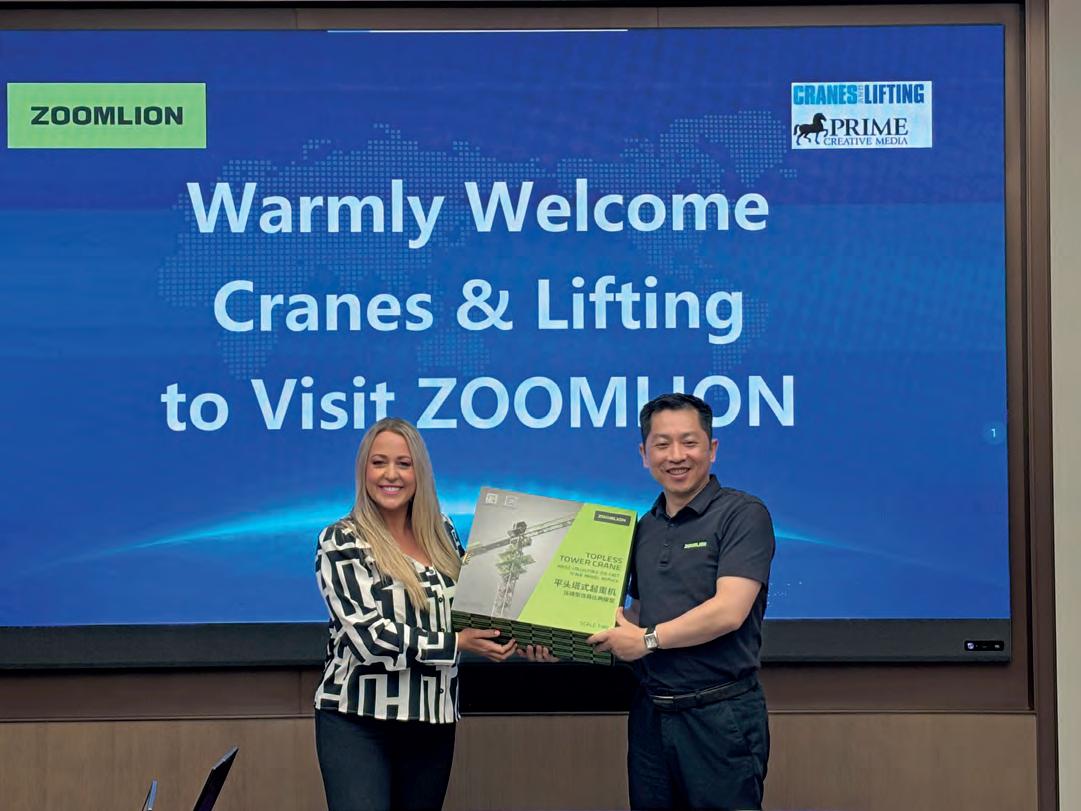
Those investments are designed to improve consistency as much as innovation.
Reliability, Huang explained, begins long before a crane reaches a customer’s site.
“Manufacturing processes must consistently meet technical requirements, and we also design equipment to be easier to maintain with interchangeable components that reduce customers’ operating costs throughout the product life,” he said.
Quality extends beyond manufacturing itself.
The company has also focused on improving transport protection, recognising that tower cranes often travel long distances before reaching site. Packaging, documentation, maintenance manuals and training materials have all been strengthened to support customers after delivery.
Engineering decisions are also being influenced by practical considerations on site.
During Cranes and Lifting’s factory visit, Zoomlion’s engineering team demonstrated how newer crane designs have been developed with transport and assembly in mind. Structural sections are designed for easier shipping, while connection points have been simplified to reduce installation time. New luffing crane designs have also been developed specifically for projects with tight site constraints, reducing out-of-service radius while maintaining lifting performance.
Those developments closely align with trends Huang sees emerging in Australia.
Although relatively small compared with larger international markets, he considers Australia strategically significant because of its demanding operating environment.
“Some people think Australia is a small market, but I think it is very important,” Huang said.
“If we can succeed in Australia, we can succeed in many other countries because
Australian customers have very high expectations for product quality, working conditions and service.”
Australian projects are also influencing product priorities.
Growing demand for luffing jib cranes, increasing use of precast concrete elements and high labour costs have all placed greater importance on equipment that is easier to erect, dismantle and maintain.
To support those customers, Zoomlion has established service centres and spare parts facilities across Melbourne, Sydney, Brisbane, Perth and New Zealand, backed by a 24-hour support hotline.
Huang said responsive local support is becoming just as important as the equipment itself.
“For every product we develop, we focus on four things,” Huang said. “The best design, the best quality, the best cost control and the best service. If we can continue delivering those four things, we believe we can succeed in different markets around the world.”
Longest powered boom to 20.9m with 5.5m telescopic fly extends to 26m
All Models (25T, 35T, 55T) rated @ 1.4m boom position, highest boom strength available, fully fabricated
Air-spring suspension with shock absorbers eliminating cabin noise and vibration
High Stability at all positions to 42 degrees
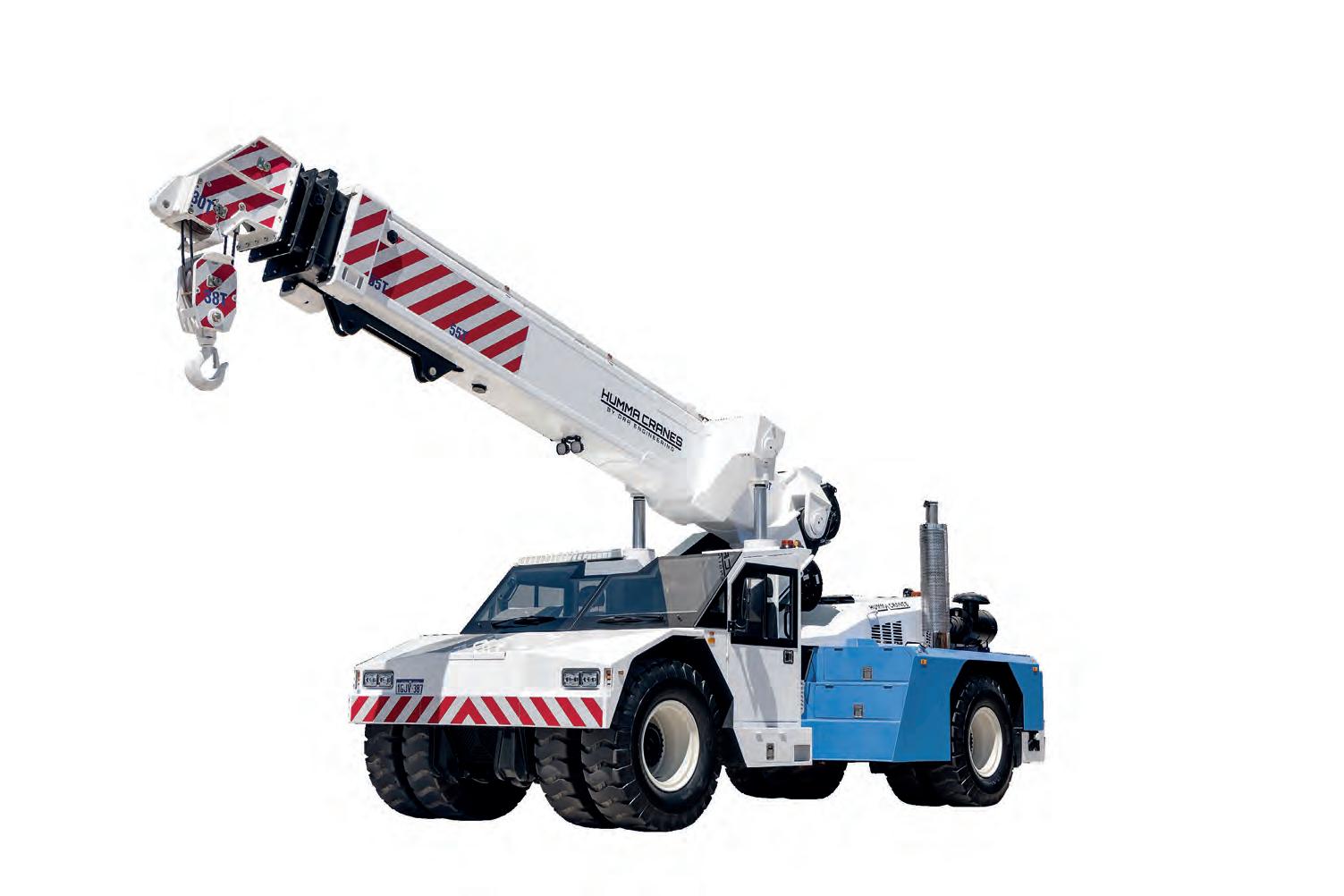

Low centre of gravity with rigid chassis design, safest crane available
Dynamic Load Chart and Digital Rope Compensation
Safe road speed 90-100kph with 180 degree unobstructed front vision with four cameras to sides and rear
Humma Heavy Lift Crane design, specification with proven componentry has set the new Industry standard for performance. ONE FOOTPRINT FOR ALL MODELS.
Crane owners require low operating and maintenance costs, highest level of safety in both driving and crane mode, achievable on all Humma Models.
Patented Auto-leveller on Humma 55, the largest and safest Pick and Carry available.
Highest level of safety at all articulation positions to 42 degrees using Humma low twist chassis design.
Cabin rated the safest and quietest available at 65 decibels.
Remove the removeable counterweight from 35T and 55T and you have a heavy duty 25T and 35T.
IN AN INDUSTRY WHERE SAFETY, RELIABILITY and lifting performance are paramount, Humma Cranes has established itself as a true innovator. Over more than three decades, the company has consistently challenged conventional crane design, introducing industry-first technologies that have transformed the articulated pick-and-
Humma now stands not only as Australia’s only fully locally-made and privately-owned articulated pick-and-carry crane manufacturer, but also as a global benchmark for engineering excellence.
Launched in 1996, Humma emerged at a time when the articulated pick and carry crane market was ready for a change. The business was developed around a new design concept aimed at addressing the practical demands of mine site lifting, with a focus on durability, safety and performance in demanding operating environments.
The result was a machine unlike anything the market had seen before. Humma introduced the first air-spring suspension system, the first fully-powered booms and the longest powered boom in its class at 20.6 metres. The company also pioneered the first telescopic fly jib, delivering a boom length of 26 metres.
Just one year later, the first Humma RC18 18-tonne prototype was manufactured and successfully tested. This laid the foundation for a series of increasingly capable machines, including the release of the 20-tonne Humma 20-25 in 2003, the 25-tonne Humma 25-25 in 2008, and the 35-tonne Humma 35-25 in 2010 – a full 40 per cent higher capacity than achieved previously. A major milestone arrived in 2017 with the release of the
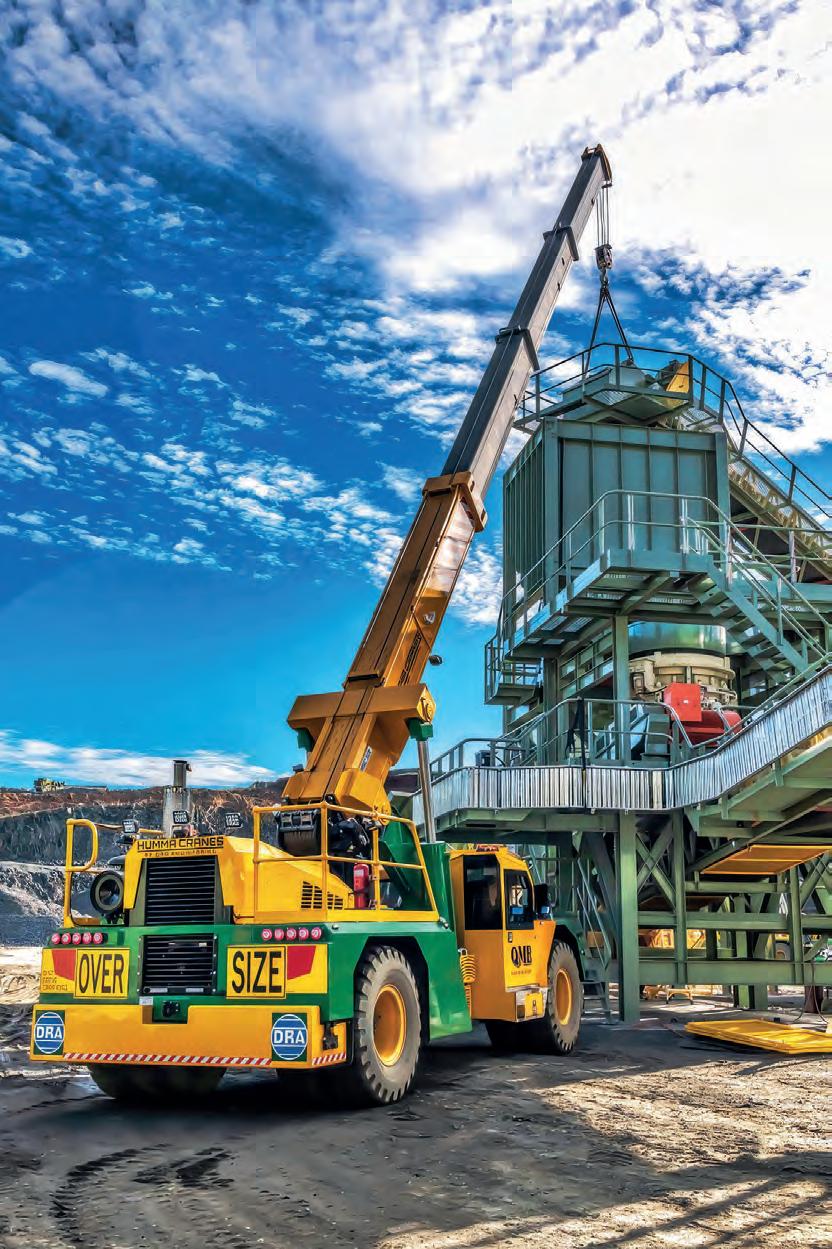
55-tonne Humma 55-25, the largest and one of the safest articulated pick-and-carry cranes in the world. Once again, Humma led the industry by introducing dynamic auto-levelling suspension, fully dynamic load charts and a sophisticated digital control system featuring comprehensive data logging and crane life monitoring. Through the investment of many millions of dollars into engineering, testing and product development, Humma has earned the title of an industry innovation leader. Rather than simply following market trends, the company has consistently set them.
Local design and manufacturing capability are essential to succeeding in a market where operating conditions quickly test the limits of equipment. Humma has the ability to engineer, fabricate and refine cranes, as all cranes are designed and built in Australia.
As proud members of the Australian Made campaign, Humma exemplifies the quality and craftsmanship that Australian industry can deliver. Local sourcing is prioritised wherever possible, supporting Australian suppliers and strengthening
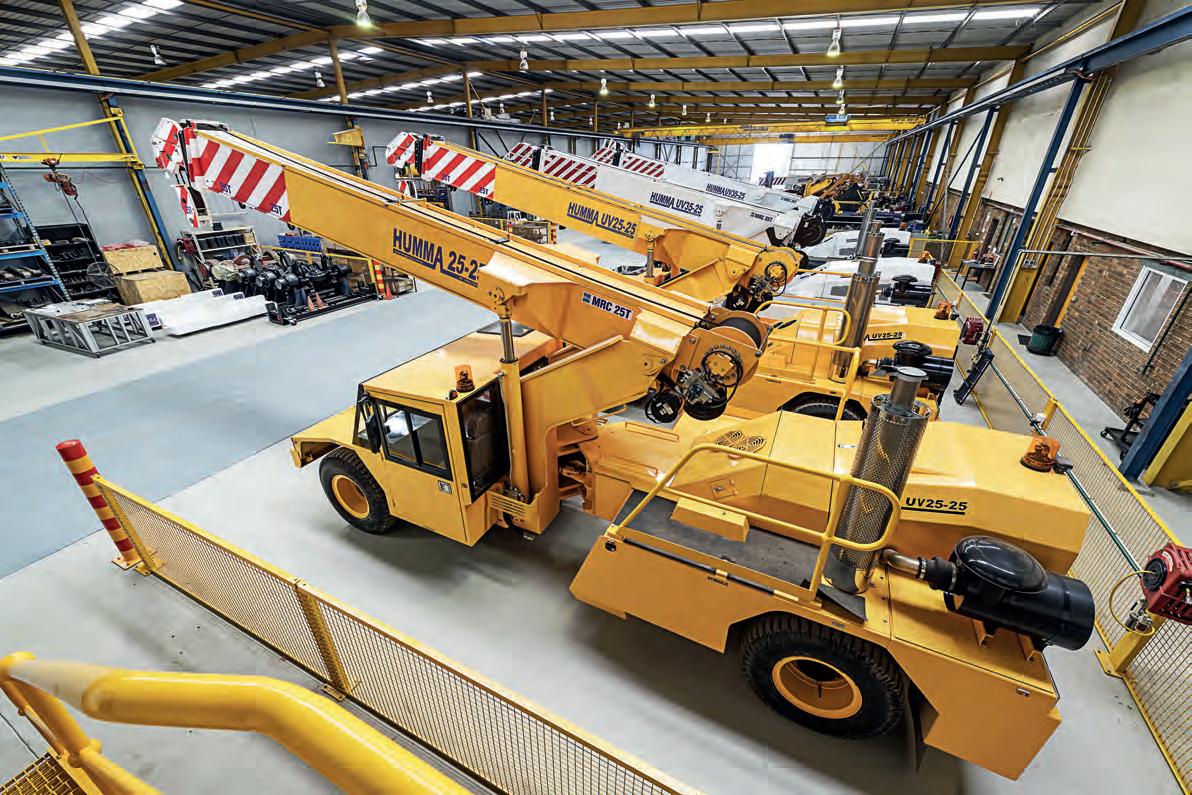
“Humma continues to refine its offering in response to operational needs in the field with product development reflecting an approach shaped by customer requirements rather than off-the-shelf design.”
domestic manufacturing capability.
Behind Humma stands the DRA Group, a privately owned Western Australia business established in 1971. Operating from an 80,000-square-metre facility, DRA has expanded across numerous industries including engineering, tank manufacturing, coatings, fire suppression systems, property development and on-site construction services. This broad engineering expertise provides Humma with a strong foundation of technical knowledge and manufacturing capability.
Humma cranes are fabricated using a purpose-built CLOOS robotic welding cell, one of the largest and most capable robotic welding systems in Australia. This technology ensures exceptional weld consistency, reliability and structural
integrity across every chassis and boom section – delivering a product built to withstand the harshest operating environments while delivering long-term performance and safety.
Technological innovation remains a defining feature of the Humma range. Features such as automatic sideslope de-rating, digital rope compensation and comprehensive data logging provide operators with unprecedented levels of information and control. The customised 3B6 Load Moment Indicator system delivers dynamic load calculations based on exact boom angles, lengths and articulation positions. These technologies enhance both safety and productivity
while helping fleet owners better manage equipment performance.
Humma continues to refine its offering in response to operational needs in the field with product development reflecting an approach shaped by customer requirements rather than off-theshelf design.
From the road-friendly UV25-25 to the versatile UV35-25 and the flagship 55-25, every model reflects Humma’s philosophy of combining lifting power, operational flexibility and cutting-edge technology.
Whether transporting machinery, performing precision lifts or operating in demanding site conditions, Humma cranes are engineered to deliver.
As the crane industry continues to evolve, Humma remains proof that Australian manufacturing can compete at the highest level. Through innovation, investment and an unwavering commitment to quality, Humma Cranes has not only shaped the future of articulated pick-and-carry cranes – it continues to define it.