





Address:
Email:
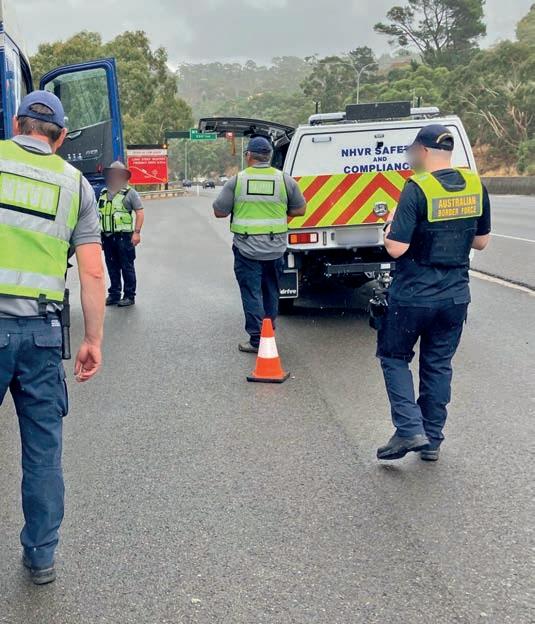
TRUCKIES were the focus of a two-day safety blitz on the Warrego and Cunningham Highways in Queensland with 91 intercepts conducted during the May 20-21 operation.
Officers from the Ipswich Highway Patrol unit with assistance from the Queensland Police Service (QPS) Road Policing Task Force (RPTF) and National Heavy Vehicle Regulator focused on driver fatigue, load restraint, vehicle roadworthiness, drink and drug driving, and compliance with heavy vehicle legislation along the district’s key freight routes.
Although there were no specific details on the total number of infringement notices issued to truckies and what they were for, police
told Big Rigs that 53 were issued in total over the two days, to both light and heavy vehicles.
They included: Failing to stop HV for prescribed purpose, Defective vehicle, Use permit vehicle with plate attached other than required, Unregistered and uninsured, Tow vehicle at night without
driving, Drive with relevant drug in saliva and Drink Drive.
During an intercept along the Warrego Highway at Riverview on May 21, a 61-year-old Oakey man also allegedly returned a positive random drug test and was issued a notice to appear in the Toowoomba Magistrates Court on May 22. He was
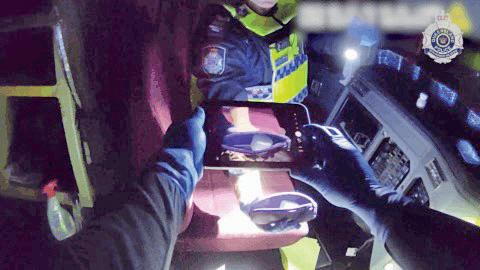
also charged with drug offences after officers allegedly located an amount of methylamphetamine inside his vehicle and was referred for drug diversion in relation to possessing dangerous drugs.
Darling Downs District Officer Acting Superintendent Ben Mackenzie said heavy vehicles play a vital role in keeping Queensland moving, however safety and compliance remain essential to reducing road trauma on our roads.
“Whether you’re behind the wheel of a car or a heavy vehicle, the same road rules apply – every driver has a responsibility to make safe decisions and help keep our roads safe for everyone,” said Acting Superintendent Mackenzie.
Police said the operation also provided education to drivers regarding safe driving practices and industry obligations.
During the deployment, officers conducted a total of 532 roadside breath tests (RBTs) and 121 roadside drug tests (RDTs), resulting in six people caught drink driving and seven people caught drug driving.
The operation was held as part of Operation Yankee Interpose, Queensland Police Service’s on-going statewide campaign which focuses on life endangering offences like speed, impaired driving, fatigue, mobile phone use, not wearing seatbelts, vehicle compliance and roadworthiness, and heavy vehicle offences.
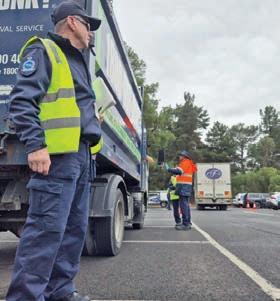
EPA Victoria has been working with Victoria Police in a joint operation, as part of a current crackdown on non-compliance with the state’s strict waste tracking laws.
Last month, officers were pulling in trucks around the Mornington Peninsula to check drivers and transport operators are complying with EPA Waste Tracker.
Victoria’s environmental regulations state that all reportable priority waste (the highest-risk categories of
waste) must be monitored from creation to disposal through the EPA’s Waste Tracker system.
EPA Victoria began its waste transporter blitzes just before Easter, with the first taking place at the Broadford weighbridge in Melbourne’s northern suburbs, where 20 drivers were interviewed and six loads inspected.
The checks are to make sure no one is carrying reportable priority waste without a valid Waste Tracker record and that all had a valid EPA per-
mission to transport.
EPA Director of Regulatory Services Alex Badham said waste transporters needed to update the system as soon as they picked up a load and again when they disposed of it.
“Waste Tracker allows us to know who has the waste in real time. If it suddenly disappears, EPA will know,” Badham said.
“It means responsible operators know their waste is going to proper and safe disposal, and it makes it harder for
criminals to illegally dump that waste.
“The message to the industry is that you must track before you transport. Our authorised officers could be anywhere, and if you get caught with an untracked load we will regulate to the full extent of our powers.” Waste Tracker was introduced in 2021. EPA is taking a strong stance on this issue and in the current financial year has issued fines totalling over $80,000 and 28 official warnings.
BY JAMES GRAHAM
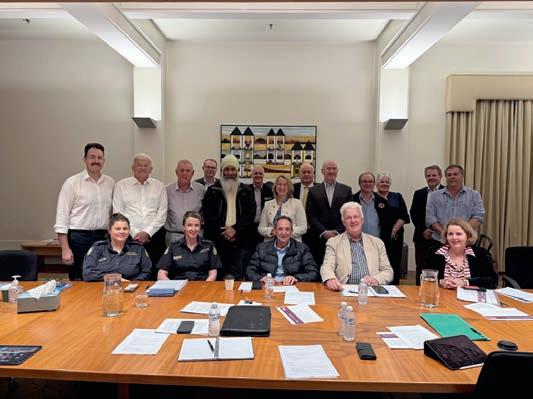
AN ongoing multi-agency crackdown on sham contracting and alleged worker exploitation is shaping as the biggest operation of its kind the trucking industry has ever seen, said WA Senator Glenn Sterle.
Speaking to Big Rigs after a recent Melbourne roundtable involving the Fair Work Ombudsman (FWO), National Heavy Vehicle Regulator (NHVR), Australian Border Force and Australian Taxation Office, and leading associations, Sterle said there had been a seismic shift in both engagement and enforcement activity across the sector.
“The feeling in the room is one of positivity that we’ve never seen before,” said Sterle who convened the multi-agency follow-up to the initial op-
“Before November last year, we had no engagement. Now the agencies are all on the same page as us, doing everything they can.”
While acknowledging the process was still evolving, Sterle described the current level of cooperation between agencies as unprecedented for the trucking industry.
“This has never happened before,” he said.
“We want them to go damn hard – and go even harder. I’d be very happy to see people put out of business for this illegal behaviour.”
The FWO revealed it had written to 45 road transport companies, notifying them of its interest in addressing sham contracting and misclassification arrangements.
“The FWO has also recently conducted site visits and has a number of ongoing investiga-
tracting arrangements in the road transport industry.”
A recent NHVR crackdown resulted in prohibition notices grounding several heavy vehicle businesses flouting safety regulations across the country, following intelligence-led investigations into the small number of highest-risk operators presenting significant risks to public safety.
In a statement to Big Rigs, the NHVR said 21 operators had been identified as highest-risk, with nine no longer accredited by the regulator.
Another 10 are in the process of having their accreditation eligibility reviewed and two have been issued notices warning of potential accreditation action.
The NHVR has also issued 15 prohibition notices to five operators and directors. The regulator has not revealed any names.
NHVR CEO Nicole Rosie said the regulator was also continuing to work closely with government and industry partners to address sham contracting practices across the sector.
“The majority of the heavy vehicle industry operates safely and professionally, often under significant pressure. These businesses invest in compliance, maintain their vehicles, and prioritise the safety of their drivers and the community,” said Rosie, who also discusses the crackdown on a recent episode of the

When you choose Ryco, you’re not just buying a filter; you’re buying industry leading quality, round-the-clock technical support, innovative solutions, and unparalleled expertise.
This means that when a truck is serviced utilising Ryco filters, fleet managers can be confident their warranty is protected, whilst reducing downtime and maintenance costs.
Contact Ryco to discuss your fleet’s requirements. fleetsupport@rycofilters.com
So, when you need to get the job done, be Ryco Ready.
regulator’s What’s Your 20? podcast.
“Our focus is increasingly on the small cohort of highest-risk operators – those who repeatedly fail to comply with the law, are involved in serious incidents, or do not act on known risks. If you are a high-risk operator and you do not meet your obligations, we will take action.”
Sterle said an “absolutely massive light” had been shone in a very dark corner of the industry. He also revealed there had been more than 140 tipoffs from within the industry since the crackdown intensified, suggesting growing frustration among operators and drivers over alleged unlawful behaviour.
Sterle said the ultimate goal was not simply to target drivers, but to hold parties throughout the supply chain accountable through stronger use of chain of responsibility laws.
“It’s got to go up the chain,” he said.
“Employers and companies that are demanding these cuts in their contracts need to be exposed and they need to be caught up in the chain of responsibility.”
In a March media release, ATO Assistant Commissioner Tony Goding said there had been a noticeable spike in non-compliance of contractor payment reporting in the road freight industry over the last few years. The ATO
offs regarding the road freight industry in 2024–25, with nearly 25 per cent referring to sham contracting.
“Businesses that think they can get away with dressing employees up as contractors should know that our extensive data-matching and community tip-offs are shining a bright spotlight their way.”
Larger companies face fines of up to $495,000, or threetimes the underpayment, whichever is the greatest amount.
Australian Trucking Association CEO Mathew Munro said that Sterle had done an outstanding job of drawing
attention to the issue and bringing industry, plus lead agencies and their responsible ministers, together.
“This is resulting in a shared understanding of the problem and a far more cooperative approach - something that is 100 per cent necessary for addressing the root causes and the clandestine practices associated with the issue,” Munro said.
“There is more to do, but real progress is being made. Those who continue to engage in deliberate illegal sham contracting practices should be worried.”
Continued on page 4

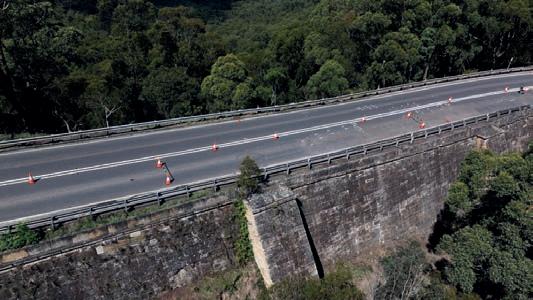
NSW freight bosses are calling for urgent practical support measures for freight operators as delays continue over the repair of the cracked Mitchell’s Causeway section of the Great Western Highway.
The NSW Government is working through two possible design solutions, with a decision expected to be made by later this month.
The vital freight route between Sydney and western NSW has been shut since March 9.
Road Freight NSW (RFNSW) said if Transport for NSW (TfNSW) is preparing industry and residents for a disruption lasting up to 12 months, planning and support measures now need to reflect that reality.
“This is a critical freight route for New South Wales and communities across the Central West depend on it every day,” said RFNSW CEO Simon O’Hara.
“We appreciate this is a complicated project and the final timeframe will depend on the contractor appointed and the scope of works required once they get in.
“But operators need certainty and need to be able to plan accordingly instead of waiting for
imelines that keep changing.”
RFNSW said the process to appoint contractors and move into major work needed to be urgent and called for the process to be streamlined.
“Every additional week has flow-on impacts for freight operators, local businesses and the communities now carrying increased traffic volumes,” O’Hara said.
“Drivers are dealing with longer trips, increased fatigue pressures and more congestion,
especially as tourism traffic increases.
“People living along diversion routes are understandably frustrated. They are now seeing and hearing heavy vehicles day and night, and questions are already being asked about how long some of these roads can cope with that level of freight traffic.”
RFNSW said the disruption also reinforced the need for practical flexibility from the National Heavy Vehicle Regulator (NHVR), including maintaining fatigue-related exemptions while the closure remains in place.
“Truck drivers already have enough on their plate trying to navigate changing routes, delays and additional pressure on the network,” O’Hara said.
“The NHVR and NSW Police should be concentrating on serious heavy vehicle safety issues and practical operational support during this period, not minor compliance matters relating to the visibility of new and visible “DO NOT OVERTAKE TURNING VEHICLE signs” on the back of trucks.
“This is not a normal operating environment and it needs a practical response.”
RFNSW said while the repairs are necessary and likely overdue, the focus now must be on delivering the work efficiently and reopening the corridor as quickly as possible.
“This has come at a terrible time for freight operators and regional communities,” O’Hara said.
“The priority now should be getting the works underway, cutting unnecessary delays where possible and reopening this major supply chain route as quickly as it can safely happen.”
The NSW Government has meanwhile announced a $3.5 million package for small businesses and councils across the Blue Mountains and Central West who have been impacted by the road closure.
The support package includes $10,000 grants for small businesses in Mount Victoria, Hartley, Little Hartley and Hartley Vale.
To be eligible, they must show at least a 40 per cent downturn since the road closed.
Big Rigs has approached TfNSW for comment.
From page 3
QUEENSLAND Trucking Association CEO Gary Mahon says growing cooperation between regulators and enforcement agencies is finally delivering meaningful progress in the crackdown on sham contracting across the industry.
Mahon, who had a frontrow seat at the multi-agency Melbourne roundtable convened by Senator Glenn Ster-
le, said the level of coordination was unlike anything the industry had seen before.
“The various parts of the wheel are starting to work in unison with each other, and that would encourage us that there’s going to be some real progress on this particular practice that’s hollowing out the industry and is unlawful,” he said.
Mahon said sham contracting remained one of the biggest issues facing the trans-
port sector, with estimates suggesting around 45,000 drivers were currently working under questionable ABN arrangements.
“There’s about 600,000 employees in the transport logistics sector across the country, so by any measure that’s a big proportion and growing.”
Mahon warned many drivers may not fully understand the risks involved.
“When you consider that many of those would not be



covered by workers’ comp, may not be covered by various insurances, what arrangements are in place for things like superannuation and the like, and various other statutory requirements, that does leave quite a few out there exposed.”
He said insurers had also reported a 30 per cent increase in worker-to-worker claims over the past 12 to 18 months as injured drivers discovered they lacked proper cover.

Mahon also revealed the National Heavy Vehicle Regulator (NHVR) had now presented evidence linking sham contracting arrangements with poorer safety outcomes.
“The NHVR presented at the roundtable that they now have conclusive evidence that there is a clear pattern that shows sham contracting fleets have a worse safety record than those who are not,” he said.
“So that’s genuine hard evi-
dence being produced by the regulator.”
Mahon stressed the industry was not opposed to genuine subcontracting arrangements, but said unlawful sham practices were creating an uneven playing field.
“When practices like this give people the opportunity to reduce their costs by anywhere between 22 and 30 per cent, that’s entirely unreasonable, and the government needs to act decisively.”










BY DANIELLE GULLACI
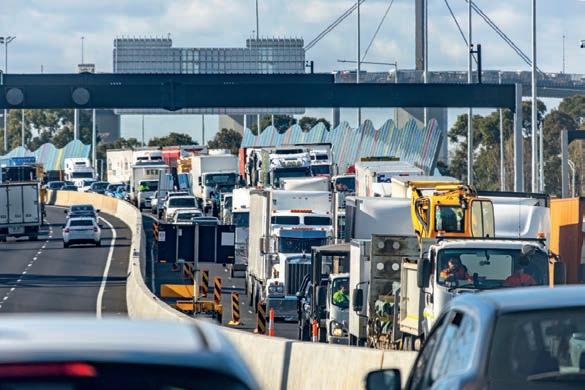
WITH the start date for the amended Heavy Vehicle National Law (HVNL) now confirmed as August 1, 2026, the question that remains is whether or not operators fully understand their obligations under the new act.
An updated HVNL has been a long time coming, with its review starting back in 2019 – aimed at updating the existing law to improve safety and productivity for the heavy vehicle industry.
Before the new HVNL could be put into practice, each jurisdiction covered under the law had to reach a unanimous consensus.
Originally slated to come
into effect on July 1, the National Heavy Vehicle Regulator (NHVR) revealed the start date had been moved back to August, following Ministerial approval of the supporting statutory instruments.
The regulator says the additional lead time provides further opportunity for industry education, stakeholder engagement, and operational readiness activities ahead of commencement.
“The NHVR will continue working closely with operators, drivers and industry partners over the coming months to help prepare for the changes and support a smooth transition to the amended law,” the regulator said.
Why the hold up?
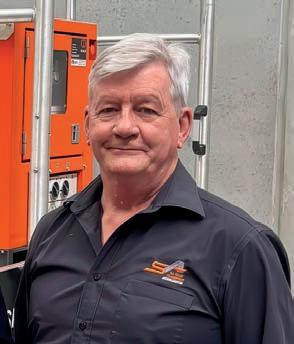
According to Steve Shearer, Executive Officer of the South Australian Road Transport Association (SARTA), jurisdictions have been dragging their feet.
The HVNL operates across Queensland, New South Wales, Victoria, South Australia, Tasmania and the Australian Capital Territory.
“The first problem, which has been out of the NHVR’s control, is that we’ve only just had the final decision made by the jurisdictions and ministers in late May because they’ve been squabbling over the best approach. The NHVR has been stuck in the middle,” said Shearer.
“All it takes is one jurisdiction to say no to something and then it’s off the table, so what you end up with is a dumbed down version of what the new HVNL was supposed to be.
“Because the jurisdictions weren’t able to reach an agreement until recent weeks, it means the NHVR hasn’t been able to do what they’ve needed to any earlier, which is to get all the information out. Now they’re having to finalise several thousand documents because there are a lot of changes that need to be made to these to comply with the new act.”
Some of the major changes to result from the amended HVNL are:
• A lternative Compliance Hours (ACH) will replace Basic Fatigue Management (BFM) and Advanced Fatigue Management (AFM).
• The maximum length for general access vehicles will increase from 19 metres to 20 metres.
• General Mass Limits (GML) are being increased to align with current Concessional Mass Limits (CML).
• Operators will be required to develop a Safety Management System (SMS) Standard based on their operation’s size, complexity, and risk.
Shearer has voiced his concerns about the industry’s readiness for the HVNL changes. “The NHVR has been doing everything it can to help operators transition, but because this wasn’t resolved months ago, there’s very little chance that the bulk of the industry knows about all the changes, and there’s almost no chance that operators will be in a position to transition across by August 1,” he said. Operators will have the choice to maintain their current accreditations until they expire, or to extend their existing accreditation by up to a year, if they choose – rather than switching immediately across to the new HVNL.
Shearer’s advice for operators is to take advantage of
SYDNEY
510 Victoria Street, Wetherill Park NSW 2164 Ph. 02 9756 6199, email: isri@isri.com.au, www.isri.com.au
BRISBANE
one of those two options.
“But if you’re renewing your current NHVAS (National Heavy Vehicle Accreditation Scheme), you need to get that done before the new law starts,” he said. “There will be some wrinkles as we start to move across to the new HVNL system. Good on the people who decide to go across early – they’ll be the test bed that everyone will be watching. We’ll have to wait and see how it all pans out.”
In effect, what this means is that there will be two HVNL accreditation systems operating simultaneously. The challenge with that, says Shearer, is ensuring that the relevant authorities are well versed in both.
“While we have full confidence that the NHVR and a ll of its officers will know and understand the new law and its requirements, along with the requirements of those who stay on the old accreditation systems, my concern is whether police officers will fully understand the changes,” said Shearer.
“We need to avoid the problem of police officers who don’t understand both sets of laws writing drivers up for infringements, and then leaving them to go to court if they haven’t done anything wrong.
“If you are hit with an infringement from a police officer, as opposed to the
THERE’S VERY LITTLE CHANCE THAT THE BULK OF THE INDUSTRY KNOWS ABOUT ALL THE CHANGES.”
STEVE SHEARER
NHVR, and you believe you haven’t done the wrong thing, our advice is don’t just pay the fine. Contact the NHVR or a lawyer for clarification, and if the infringement was issued incorrectly, it can then be rectified.
“It’s going to be a lumpybumpy ride over the next couple of years as we transition to the new HVNL and get our heads around the changes.”


3/120 Gardens Drive, Willawong QLD 4110 Ph. 07 3275 2044, email: sales@isribrisbane.com.au, www.isribrisbane.com.au
BRISBANE NORTH
1/259 Cullen Av, East Eagle Farm QLD 4009 Ph 1300 11 4774, email: seats@isrinb.com.au, www.isrinb.com.au
MELBOURNE
Unit 1/569 Somerville Rd, Sunshine West VIC, 3020 Ph. 03 9311 5544, email: sales@isrisunshine.com.au, www.isri.com.au
MACKAY
110 – 120 Maggiolo Drive, Paget QLD 4740 Ph. 07 4952 1844, email: admin@isrimky.com.au, www.isriseatsmackay.com.au
PERTH
408 Welshpool Rd, Welshpool WA 6106 Ph. 08 9362 6800, email: info@mmtisri.com.au, www.mmtisri.com.au
DARWIN
Mobile Sales and Service
Ph. 08 8927 0986, email: info@isridarwin.com.au, www.isridarwin.com.au
NEWCASTLE/HUNTER VALLEY
Ph 02 4932 0600,
Unit 2/13 Hinkler Ave, Rutherford NSW 2320 email: sales@hvss.com.au www.isri.com.au



EDITOR JAMES GRAHAM
last month’s TruckShowX played attendees a staged conversation with a chat bot conversing with a customer about a load they wanted delivered. It was scarily human-like, but even more confronting was the revelation that the AI ‘staffer’ would sound even more like you and I a week from now – the software was improving that fast.
Whenever new technology arrives, there’s understandable fear about what it could mean for jobs and privacy. No computer can replace the judgment of a good operator who has spent decades on the road. But AI is no longer some futuristic concept waiting in the wings. It is already here, and used properly, it can remove paperwork headaches, reduce downtime and allow operators to spend more time focusing on the actual business of transport.

THE current multi-agency crackdown on sham contracting and alleged worker exploitation is being welcomed by industry, with drivers and operators voicing their support of efforts to stamp out this behaviour.
In response to an update shared at bigrigs.com.au, industry compliance expert Jodie Broadbent weighed in. “I’ve spoken to drivers who have been engaged in this manner, and it’s heartbreaking to see how they’re taken advantage of. The Modern Slavery Act should be used to prosecute the offenders, they’re engaging drivers on well below award wages, and the other conditions they are engaged under are appalling (living standards, for one),” she said.
“It is entirely unacceptable
they’re simply getting a smack on the wrist (you’d be naive, at best, to think a prohibition notice will stop them – they’ll just operate under a relative’s name),” Broadbent continued.
“The HVNL laws have been in place for over a decade. Industry has constantly pushed for these laws to be used to their fullest extent, but the NHVR seems determined to focus on the operator, not those who engage the operator.”
Broadbent believes that consignors/consignees need to be held accountable. “They know darn well who they’re engaging. The hoops a transport operator is supposed to jump through for some of the larger contractors is beyond ridiculous, and yet they remain completely unaffected, and
“Use the laws that are in place. Prosecute further up the chain. Name those prosecuted. Maybe then we’ll start to level the playing field somewhat.”
Roy Bate also weighed in, “Good to see something being done about the ‘sham-scam’ businesses; and a big bouquet of thanks to Glenn Sterle for all his efforts. But let’s not bring race or ethnicity into the argument? There are shonky operators out there of all races and descriptions.”
While Niell Graham believes licensing needs to come into the spotlight too. “Are they looking at how and who issued a lot of these drivers their licenses? Cause that is another big part of the problem, no training and no idea of the job but somehow they have their arse in a driver’s seat, not knowing or understanding the
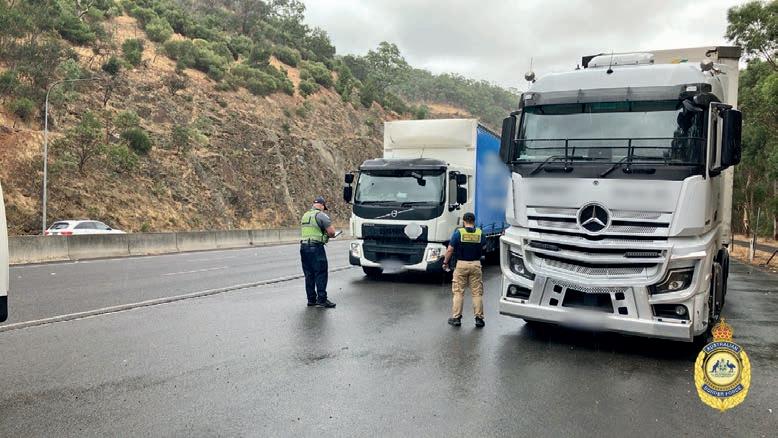
THE National Heavy Vehi cle Regulator (NHVR) says dangerous incidents involving trailers unintentionally dis connecting from heavy vehi cles have doubled compared with the same time last year –with the regulator issuing an urgent warning to operators.
“Our data shows an increase in heavy vehicle incidents due to unplanned trailer drops and decoupling events, which we know can be minimised by drivers taking steps like con ducting pre-start checks before every journey,” said NHVR Chief Operations Officer Paul Salvati.
“Drivers must be trained in the safe system of work and a failure to check vehicles and trailers thoroughly can create serious safety risks for drivers on the road.”
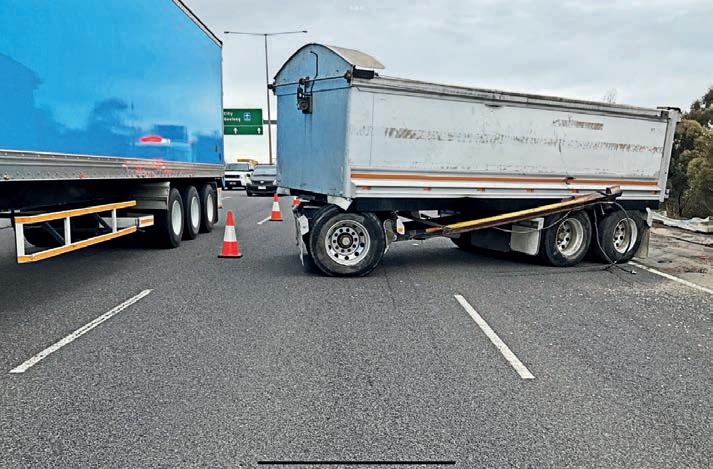
From July 2024 to April 2026, the NHVR identified a total of 26 trailer drop incidents across its regulated jurisdictions.
The regulator added that key contributing factors to crashes and fatalities included mechanical wear or failure, operator error or distraction, improper loading and dynamic forces on combinations.
Commenting on the news, John L Kuriger wrote, “The amount of times that I’ve seen drivers bashing the coupling lever instead of cleaning out the shit from the lower socket bewilders belief. The thought that a jerk and a jab of the brakes will fix it and it will drop
fully in and then simply drive away without looking again scares me. The consequences are deadly. An old screwdriver and a wipe out every day as you do your grease when uncoupled and checks please.”
Meggsy Mye said, “The remedy for situations like this is called maintenance and regular checks whilst disconnected.
All of my truck and super-dog units had weekly checks and my drivers had to do a visual after each unload as well just in case. A little bit overboard but well worth the few extra seconds!”
Darren Jenkins added, “I have owned and driven trucks all my life and towed super
dogs and quad dogs and have never had this happen to me. I would say it’s because some drivers don’t understand how a Ringfeder works.”
Many other readers commented on the importance of maintenance and visual checks. “Never assume the pin is locked. Get out and have a look. Saves you the headache,” said Rob Eldo.
“It’s called poor training,” added Stephen Fleming. “Everyone seems to be in a rush nowadays.”
While Brian Taylor commented, “When the transport industry runs out of money, maintenance is the first casualty.”
BY DANIELLE GULLACI
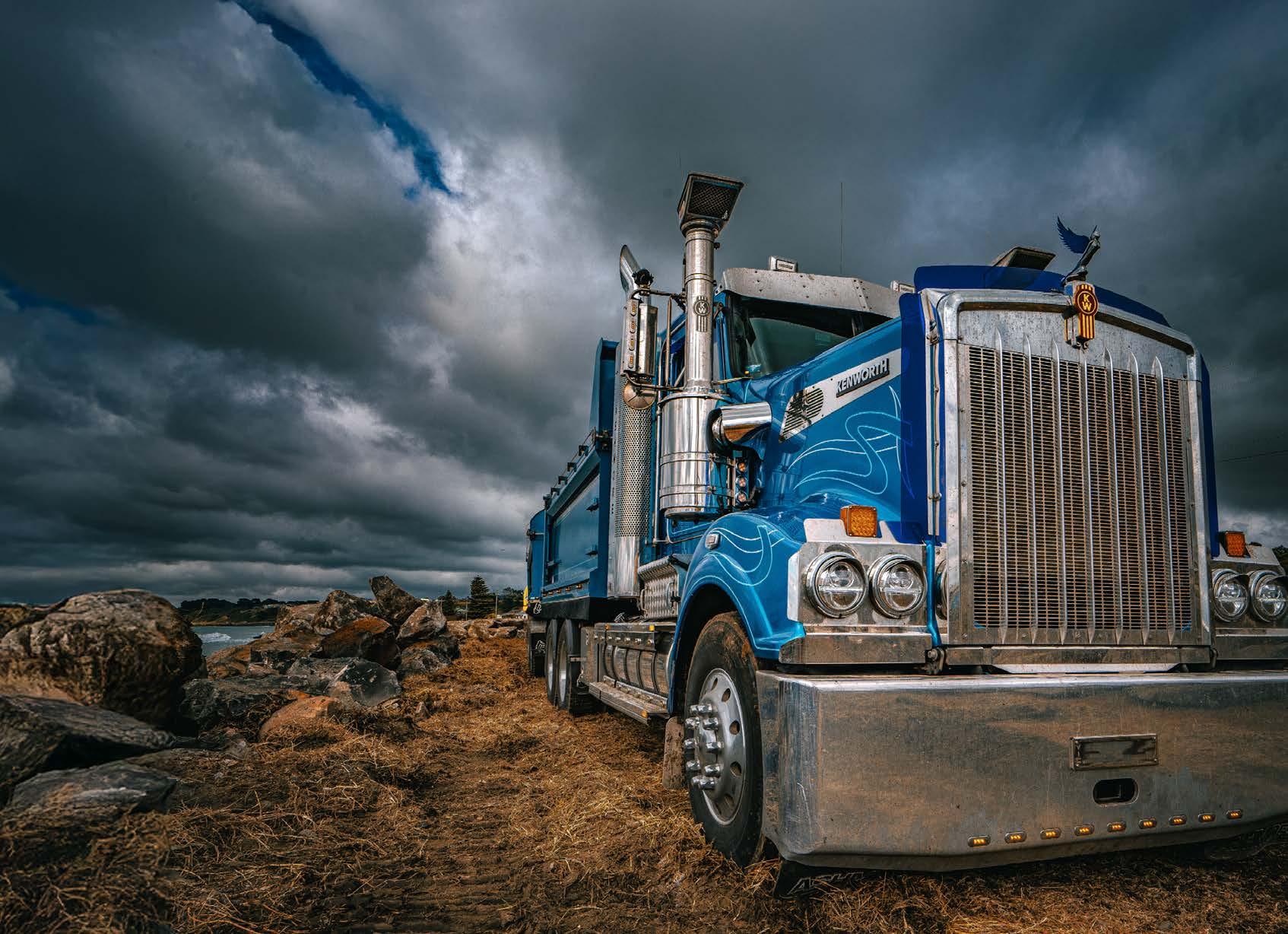
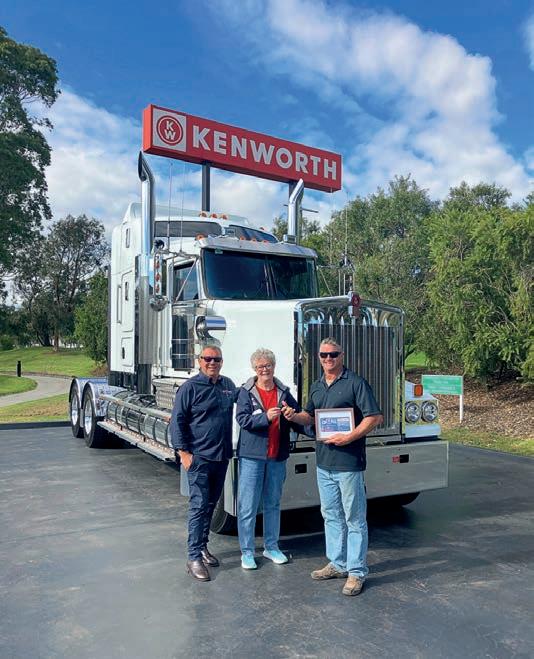
IMAGINE getting a phone call to say you’ve just won a brand new Kenworth. For Cameron Stoll, that recently became a reality.
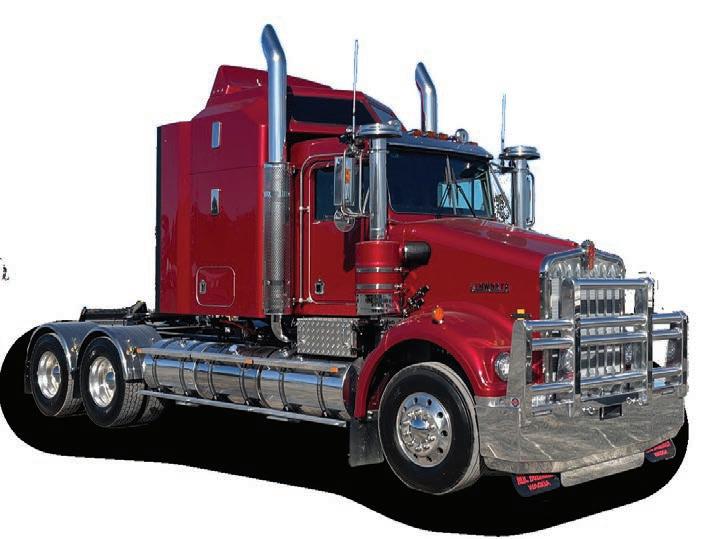
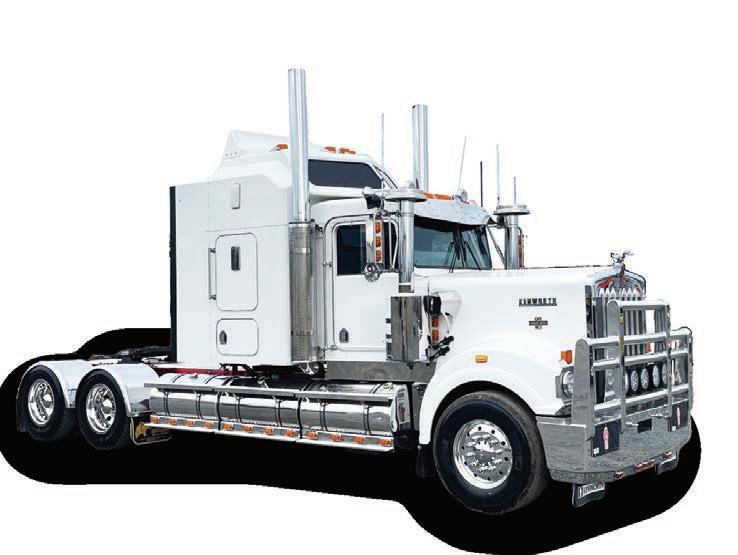
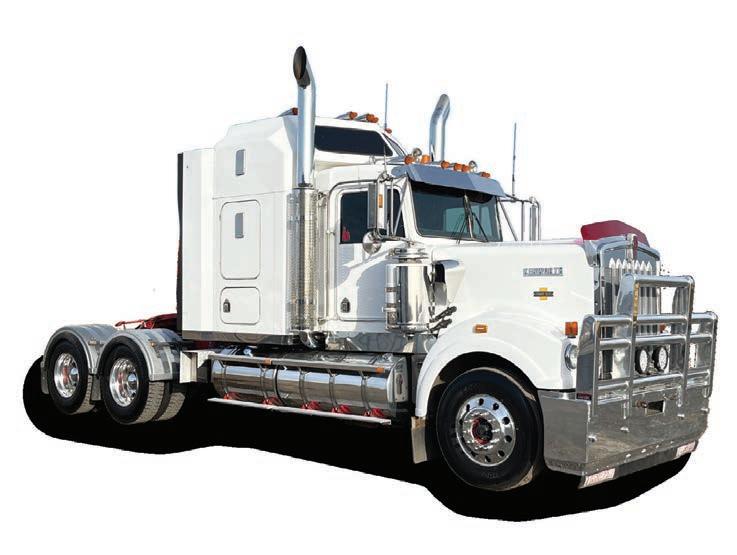
Stoll bought a ticket in the Hepburn Football and Netball Club’s (HFNC) Kenworth raffle, giving the winner a choice between a brand new Kenworth T909 or K220.
Capped at 1200 tickets, priced at $1000 a pop, Stoll came across the competition on Facebook and thought they were good odds – so he decided to take a punt, and he’s glad he did.
Receiving the phone call to say he had won the truck was a life-changing moment for Stoll, who decided to go with the T909, valued at close to $500,000, including on-road costs.
“Nobody knew I’d bought that ticket,” revealed Stoll. “I didn’t have that sort of money
to spend on a raffle ticket, so I kept it hush, hush. My wife didn’t even know about it –until I found out I’d won!
“I got really lucky and still can’t believe it.”
Stoll is based at Proserpine in the Whitsunday Region of Queensland and works as a driller’s offsider. The father of three flew down to Melbourne for the handover at the Kenworth factory in Bayswater on Friday, May 18.
A s part of the prize, Stoll got to take a tour of the Kenworth factory. “I flew down with some mates and did the factory tour which was brilliant. It was absolutely amazing to see. There was so much happening and I was just trying to take it all in. It was a real highlight,” Stoll said.
“After taking that tour and seeing the effort that goes into building these trucks, and then seeing the finished product that’s now yours, it was just amazing.”
Based in Victoria, the Hepburn Football and Netball Club worked closely with Ron Ludbrook, Kenworth and DAF Sales at PACCAR Australia, to spec up the trucks – with the winner’s choice element decided by the club, in conjunction with PACCAR. As a result, two trucks were built.
“It’s exciting to be part of the raffle process with Hepburn Football and Netball Club and great to see a customer who has paid $1000 for a ticket be able to walk away with a new truck,” said Ludbrook.
The T909 is rated to 87-tonne, with an 18-speed manual transmission.
Both the T909 and K220 have longer wheelbases with extra tanks, along with custom interiors. The seats also have Hepburn Football and Netball Club stitched into the leather.
With Stoll choosing the
T909, the K220 will be sold at the Kenworth DAF Melbourne dealership in Derrimut. As he isn’t a truck driver, Stoll has also decided to sell his truck, with Ludbrook handling the sale of both vehicles.
The Hepburn Football and Netball Club has held several Kenworth truck raffles over the years, with the first one held in the 1990s. Prior to this latest competition, its last Kenworth raffle was held in 2023, with the prize being a Kenworth Legend SAR.
The truck raffles are great fundraisers for the club, with money raised from the latest competition going towards upgrading the social rooms.
“I’ve been part of three Kenworth raffles with the footy club now and it’s good to see that with the Hepburn Football and Netball Club, the money is going back into the community,” added Ludbrook.
2026
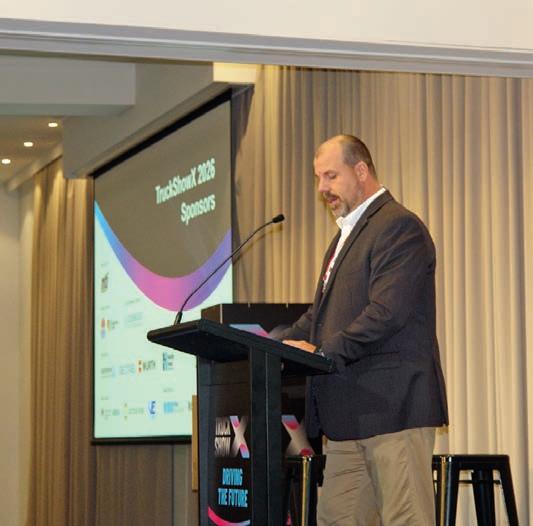
brought a record 463 industry leaders to Rydges Resort Hunter Valley for a sold-out conference focused on the practical future of freight and transport.
Across two days, the program explored the technologies, operating pressures, policy settings and commercial decisions already reshaping the heavy vehicle sector - with a strong emphasis on real-world
experience rather than distant predictions.
Under the theme “Driving the Future”, the program brought together operators, equipment suppliers, energy providers, financiers, government representatives and technical experts to examine what is already happening on the ground, what is emerging, and what still needs to be solved.
“This year’s theme - ‘Driving the Future’ - could not be more relevant as our industry navigates transformational change in technology, sustainability, productivity, safety and supply chain disruption,” HVIA chief executive Todd Hacking said in his opening address.
The strength of the program was in grounding that conversation in the real operating challenges facing fleets, manufacturers, suppliers, regulators and infrastructure partners as the industry works through transition, productivity, safety and sustainability pressures.
A key feature was the depth of operator insight. Attendees heard presentations from
leading operators including Russell Transport, Toll, Multiquip, Centurion, AJM Transport, Team Global Express, Wettenhalls, FBT Transwest, HW Richardson, SGS Logistics, Divall’s Earthmoving and Bulk Haulage, Fraser’s Livestock Transport and New Energy Transport.
Those presentations offered a clear message: innovation is not a distant concept waiting to arrive. It is already being tested, adapted and implemented by operators working to reduce operating costs, boost productivity, cut emissions and prepare for a changing operating environment.
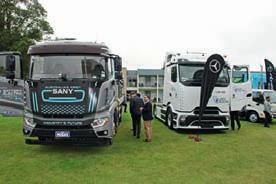
The program also included truck and trailer equipment from OEMs including Daimler Truck Australia Pacific, Volvo Group, Hino Australia, Cummins Asia Pacific, Foton Motor, Freighter Group, Sunswap Barker Trailers, VE Motion and Akaal Semi-Trailers.
The broader expo and conference program featured suppliers and technology providers spanning charging, telematics,
future energy, safety systems and fleet technology, including NewVolt, Zenobe, EVSE, GoEV, JET Charge, Kempower, Allotrac, Geotab, WHG, BetterFleet, Viva Energy and Hiringa.
Government, regulatory and finance participation was also important, with contributions from Transport for NSW, the NSW Department of Climate Change, Energy, the Environment and Water, the Australian Renewable Energy Agency, the Clean Energy Finance Corporation and ANZ Bank.
That mix of voices reflected one of the key outcomes from TruckShowX: the transition facing road transport cannot be solved by any single part of the sector. It will require operators, manufacturers, energy providers, regulators, financiers and governments to work more closely, and earlier, if new technologies are to move from trials to scalable solutions.
In between sessions, attendees took in TruckShowX’s jam-packed expo, featuring more than 40 market leaders
showcasing the latest in trailer equipment, future energy, telematics, powertrain technology, vehicle charging and safety systems. The conference also included an on-road test drive component, giving attendees the opportunity to experience first-hand some of the latest low- and zero-emissions vehicles on offer in Australia.
In his closing address, Hacking said the conference had delivered on its promise of sharing potential solutions to key challenges facing the heavy vehicle industry, especially fuel security and decarbonisation.
“When I stood here two days ago, we talked about the need to create an ecosystem, to challenge ways of thinking and challenge each other, and develop new ways of decarbonising the industry. And we’ve certainly achieved that,” he said.
For more coverage from TruckShowX, turn to page 16.
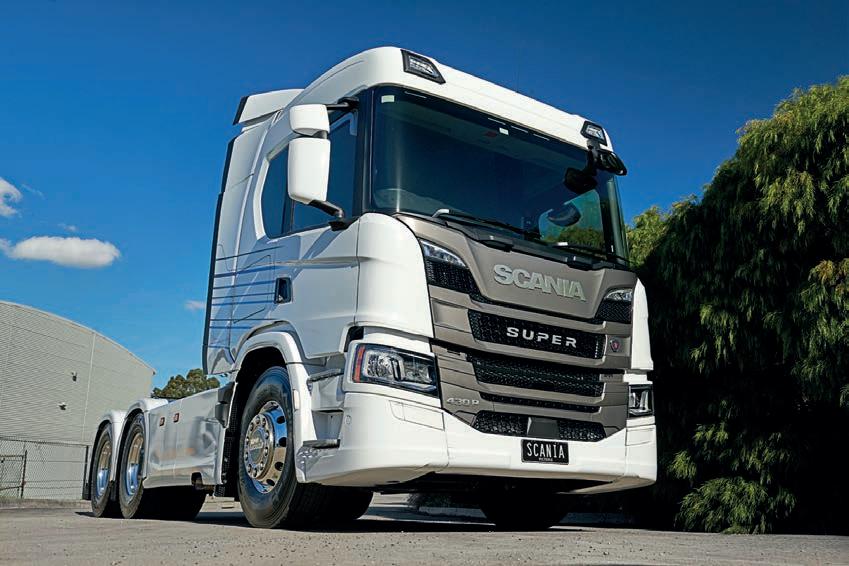
SCANIA’S new Super 11-litre five-cylinder engine has been launched in Australia, available in three Euro 6e-compliant performance offerings: 350hp, 390hp and 430hp.
Targeted towards distribution and vocational applications, the new Super 11-litre engine family boasts up to 7 per cent lower fuel consumption compared to the existing Scania 9-litre engine.
While higher torque at lower revs enhances control, responsiveness, engine longevity and driver appeal, Scania says.
Benjamin Nye, Truck Sales Director at Scania Australia says the new Scania Super 11 five-cylinder engine range gives customers more power, efficiency and flexibility.
“It opens new opportunities for energy-efficient and cost-effective transport,” Nye says.
“It’s lighter, leaner and more flexible, yet it still carries the strength and reliability for which Scania is known, and packs all of Scania’s state-ofthe-art ADAS active and passive safety systems in.”
Scania says the Super 11 is ideally suited to applications such as general cargo, tippers, flatbed/crane combinations, hooklift, fuel delivery, car transportation, waste collection, as well as high volume bulk transport and emergency vehicles such as fire trucks. Scania is also offering the Super 11 as the powertrain for an agitator body, aiming to take a slice of the cement mixer market for the first time.
“With the arrival of the weight-saving powertrain in the form of the 350hp, 11-litre engine and G25CM gearbox, our tare weight is
now much reduced, allowing a greater payload of agitator barrel and cement mix content,” Nye added.
“We are confident drivers on distribution or vocational duties will notice the difference as quickly as will the accountants reviewing operating costs, and with the success we have had with the Super 13 in Australia, there is no doubt that the benefits of the Super 11 family will go straight to the customers’ bottom lines.”
The new Scania Super five-cylinder engine shares 85 per cent of its architecture with Scania’s 13-litre Super engine, launched in Australia in 2023.
The engine is compact, lightweight, and designed to optimise performance. It has also been designed for a 25 per cent longer working
life, expected to clock up 2 million kilometres, depend ing on applications. Accord ing to Scania, the Super 11 is compatible with hydro treated vegetable oil (HVO) across the range and supports B100 biodiesel for up to 85 per cent CO2 emissions re duction in the 390hp and 430hp variants.
The new Super 11 engine is 85kg lighter than the Super 13 six-cylinder. Positioned between the established 9-li tre five-cylinder and 13-litre six-cylinder engine platforms, Scania says it allows transport operators to increase their payloads in weight-critical operations without compro mising power, fuel efficiency or reliability.
Find out how the trucks performed in the upcoming June 19 issue of Big Rigs

‘We knew it was the
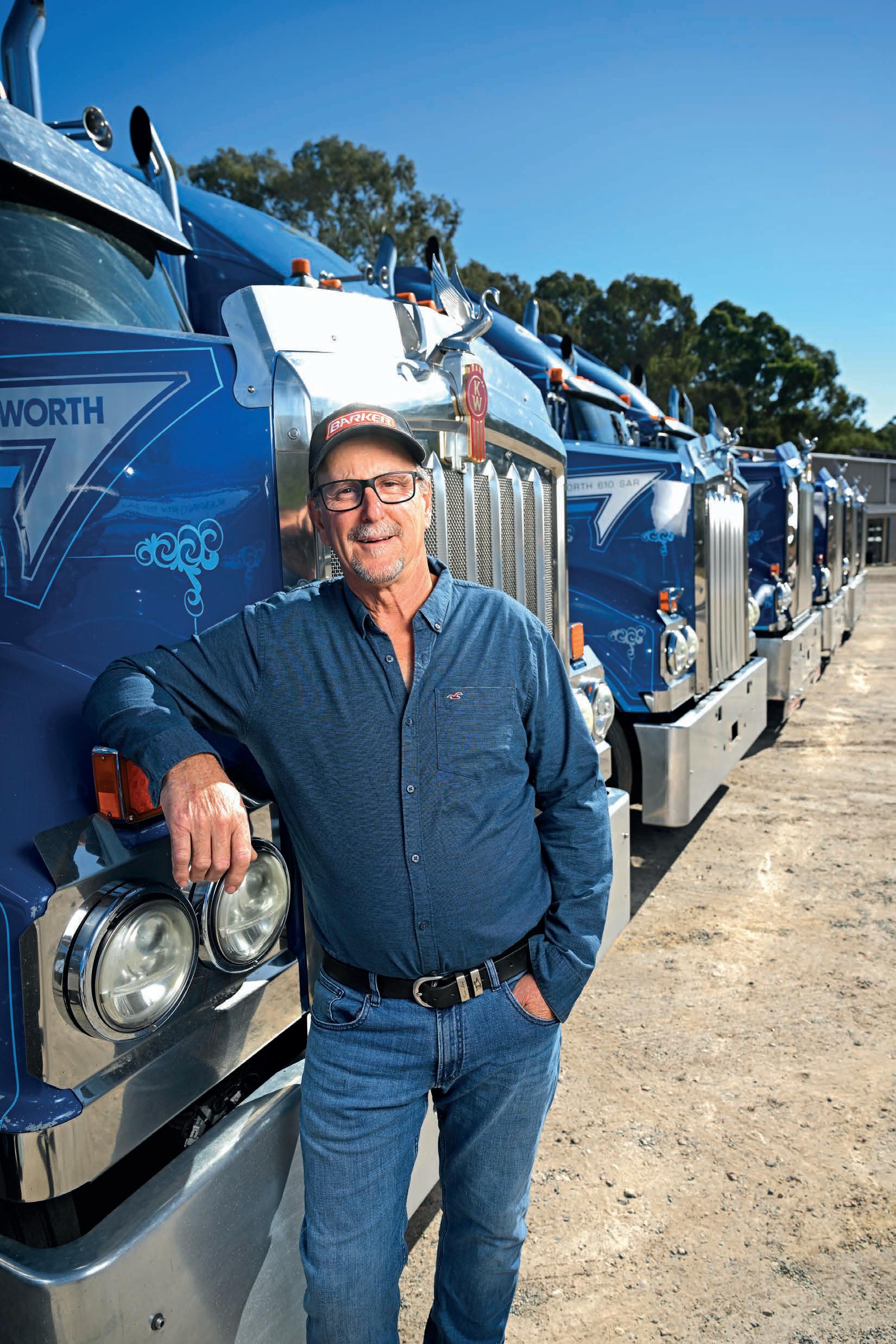
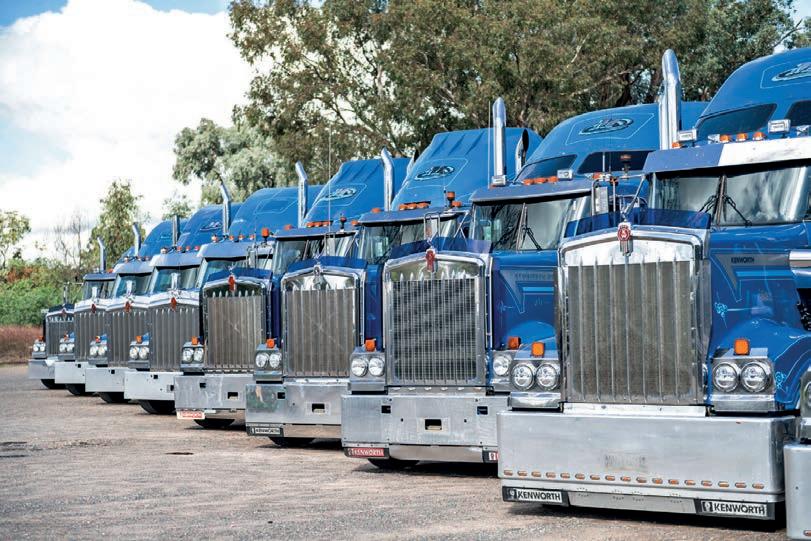
This fleet of immaculate blue trucks recently hit the road for the last time, as the couple behind the successful business embark on their next chapter.
BY DANIELLE GULLACI
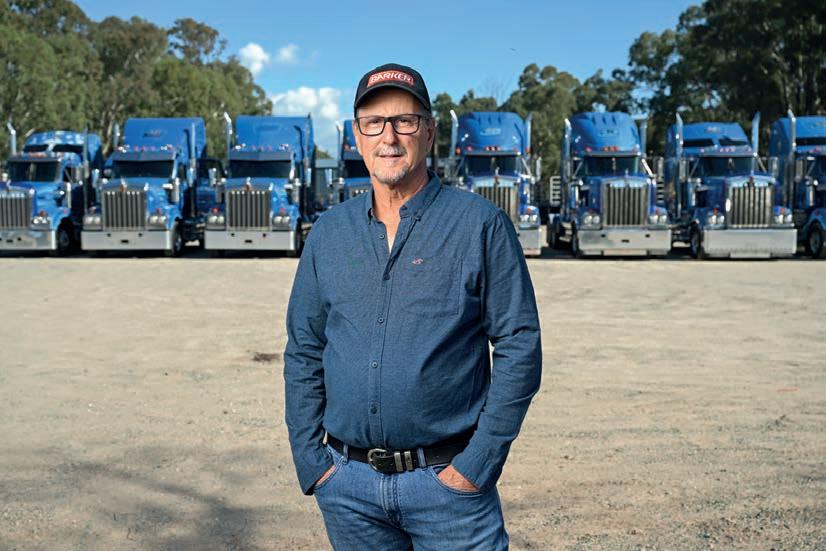
BRIAN and Jenine McGrory have never been afraid of hard work – and it’s that work ethic that has seen their business flourish over the past 26 years.
From a single truck operation back in 2000, McGrory’s Transport has grown into one of the most respected transport businesses in the Albury Wodonga region – with its immaculately presented fleet of vibrant blue Kenworths standing out on the highways as they travelled all over the east coast.
But as the saying goes, all good things must come to an end – and for this husband and wife duo, it was the right time to close up and begin their retirement.
W hen McGrory’s Transport officially shut shop on April 30, the fleet numbered 14 prime movers and about 30 trailers. They all went up for sale in an online auction conducted by Pickles late last month.
McGrory’s Transport was based in the rural town of Baranduda, just out of Wodonga in Victoria.
And, true to form, when Big Rigs called just days out from the auction, Brian was hard at work at his depot, getting his trucks washed up and looking their best ahead of going under the hammer.
Despite being born in Albury and living in the region most of his life – apart from 12 years spent in Queensland from his teenage years – Brian, 63, and Jenine, 62, have lived in Brisbane for the past two and a half years to be closer to family.
“I’m down here in Victoria getting all the trucks washed up and clean for the auction and getting everything ready.
I’ve been down here for a month and a half. I still have a couple more weeks to go, then after the auction, I’ll go back up to Queensland,” said Brian.
Asked what was behind their decision to close McGrory’s Transport, Brian admitted, “It had been on my mind for a while. I thought I’d keep going until about 65 to 67 before I retired, but the industry has changed a lot since I first started, and over the years, it’s just getting harder and harder, so it was the right time for us.”
Brian named compliance, rates, rising costs and finding good drivers as some of the biggest challenges in recent years.
“On the compliance side of things, you’re doing work for so many different companies and the compliance is at a point these days where you need to employ someone just to manage that aspect of the business,” he said.
“But with the way rates are, you can’t afford to employ that extra person, so you end up having to manage all of that yourself, on top of everything else. Then you’ve got some customers trying to stretch out payments, but you’re still hav-
ing to pay all your costs. We used to spend about $120,000 a month for fuel, now it’s closer to $250,000 for the month.
“Drivers’ wages and super go up every year, costs for oil, fuel, filters, everything goes up, but the rates for transport are still what they were 20 years ago. It’s not keeping up.”
There will undoubtedly be things Brian will miss about his business and the industry, however, recent weeks have proven that his decision was for the best.
“I loved employing people and having all the equipment looking good – those are some of the things I really enjoyed – and being able to run your own business, so having that extra freedom,” explained Brian.
Though he added, “There’s no stress now. It is what it is, we’ve made our decision. I can feel a lot of weight coming off my shoulders. I’ve gone from 80-100 phone calls a day, to sometimes just one or two. Even with emails, I was quoting 12-odd jobs a day, so that’s dropped right off now too.”
Having started his trucking career more than 40 years ago, for Brian, it’s been a huge change – one that he’s quickly getting used to though.

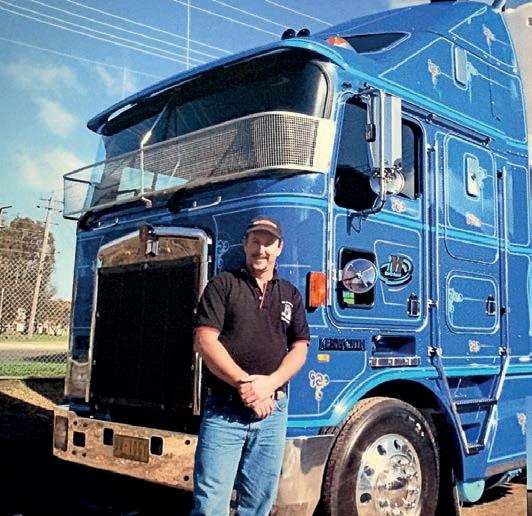
“My first job was as a truck driver. I started out doing interstate from Melbourne to Brisbane when I was 19. I got out of it for about 10 years and did bobcat and excavator work and then ended up coming back into it and buying my own trucks. I just loved it. I’m the only person in my family in trucking,” added Brian.
The purchase of his first truck, a Kenworth K104 in 2000, marked the start of McGrory’s Transport.
“Jenine and I started this business together. We had no hand-outs from anyone but the bank, so we started it all from scratch. She was doing all the admin and I was driving the truck,” Brian said.
“When we first started, I had an overnight express run from Melbourne to Wodonga to Canberra every night. Then we got a bit more demand, so put two trucks on – it was all tautliner work for Mainfreight, which we did for 13 years.”
The second truck – a K104 Aerodyne – and every truck after that has worn the Kenworth badge, apart from one DAF used for local work.
“We’ve always stuck with Kenworth because of the reliability and parts availability – you can get most parts overnight
when you need them.”
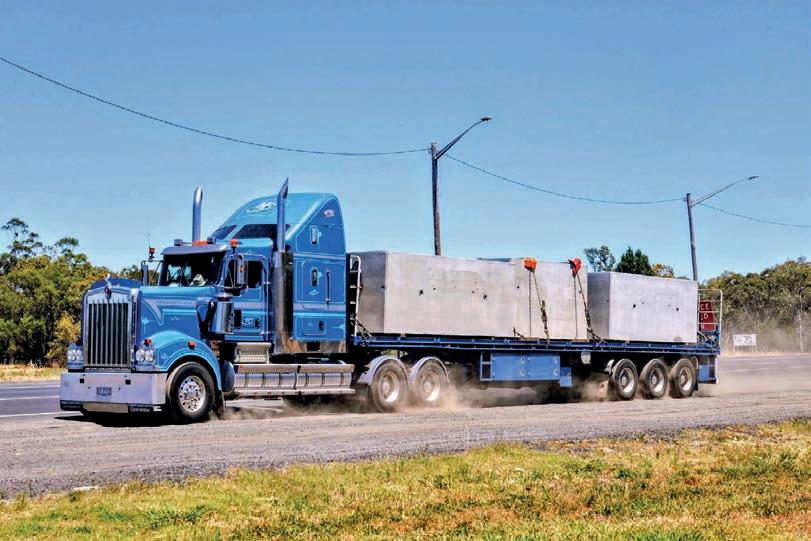
fering covered daily general freight, specialised transport, container handling, container sales and hire, de-stuffing, wharf services, warehousing and distribution, as well as oversized load services.
Over the years the business grew and grew and at one stage about 15 years ago, it was at its peak with 26 trucks and 20 staff.
“Our growth was because we were a hands-on, family-owned and operated business. A lot of our customers liked that hands-on approach. I used to jump in a truck and
a ll of that,” Brian revealed.
“I took a bit of a step back from driving eventually, but I’d jump in the truck whenever it was needed. I enjoyed the freedom of getting out on the road, especially when the phone doesn’t work and you’re out in the middle of nowhere,” he laughed.
Brian said the decision to downsize the fleet over recent years came from difficulties finding enough good drivers.
Now retired and free of all of the stresses that come with running your own business, Brian admits he will miss it.
“I even thought of keeping one truck and taking it back to Brisbane to work it from up there, but Jenine won’t let me do that,” he laughed. “The answer was no!”
Looking ahead, the couple has some exciting plans in the pipeline. “We want to go away for an undisturbed holiday to Canada, which will be fantastic.
“Normally you go away for a holiday and you’ve got to pull the laptop out and fix stuff when something has gone wrong.
“We haven’t been to Canada before – we’re really looking forward to it.”



‘This is what I’ve always wanted to do’
A former teacher and mother of four has made the move into full-time driving, guided by trucking legend Sludge, with her journey now part of a new TV series.
BY DANIELLE GULLACI
FOR Shelley Roseby, trucking was always in the back of her mind. Until recently though, she says it just wasn’t the right time. Now MC-licensed, Shelley has taken the plunge to follow her dream – continuing in a long-held family tradition, started many decades ago.
Based in Gunnedah, around five hours north-west of Sydney, Shelley’s move into trucking was originally to serve the needs of her and her husband’s farm, used to grow wheat, canola, barley and sorghum.
A mother to four children, aged 13, 10, eight and five, Shelley told Big Rigs, “Trucking is something I always wanted to do, but when my children were little, it wasn’t really viable. Obvi ously when you’re pregnant it’s quite strenuous and when the kids are little you have to be home for them. I also breastfed all of my babies.
“When you’re going hours and hours from home, there are so many challenges that can pop up on the way. You could be going out for a day trip and then it becomes an overnight trip. Trucking just wasn’t an option for me when my kids were younger.”
Shelley became a high school physical education teacher in 2007. “I did that full-time in between having kids.”
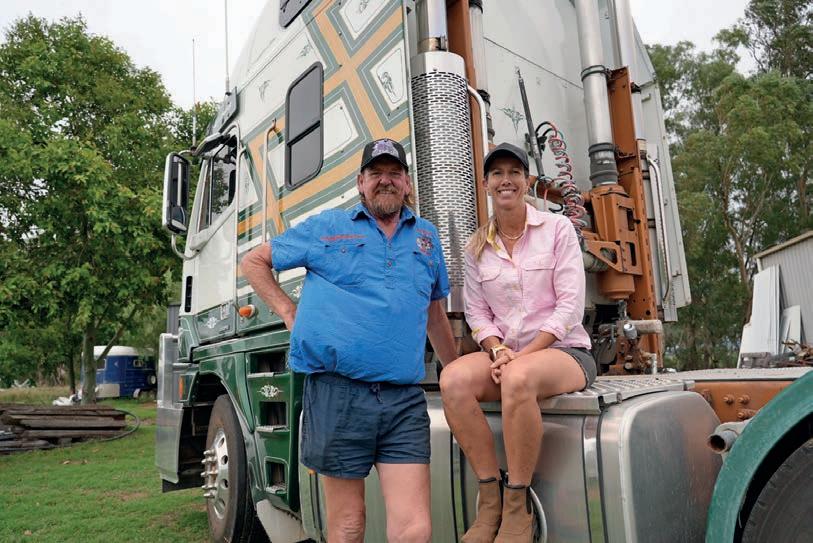
Given her family’s history in trucking, Shelley’s interest in making it a career is perhaps not all that surprising. “Trucking is a huge thing for my family. My parents have their own haulage and earthmoving company, with six trucks; and both sets of grandparents were also in trucking. Mum’s parents had log trucks, and Dad’s parents had cattle trucks,” she said. Shelley got her HR licence at 19 and then upgraded to her HC by her mid-twenties.
“Back then, I was near family so I could jump in a truck a nd I had access to these amazing people who were great mentors and amazing drivers. Now I live about five hours away from my family,” she revealed.
Purchasing a 2009 Freightliner Argosy a few years ago was Shelley’s first step towards chasing her dream. “I moved into part-time teaching once I bought the truck a nd eventually dropped down to teaching one day a week to keep my foot in the door. Now I’ve made the transition into full-time trucking.”
When Shelley decided she wanted to move into bigger trucks, the issue she had was access to someone who could teach her. “I didn’t know anyone who could give up a truck for half a day on a Sunday. I didn’t have a mentor here in Gunnedah,” she said. That’s when Shelley came

across a new show called Rookie Truckers, which was looking for up and coming drivers to take part. The show is produced by Prospero Productions – the same team behind the hugely successful Outback Truckers.
“I was very hesitant at first but then when I spoke with the team, it sounded like a lot of fun,” added Shelley. “I loved the idea of having a mentor and being able to learn from someone who wasn’t going to sugar coat it – and being able to do it all in my own truck. I thought it would be a great learning experience.”
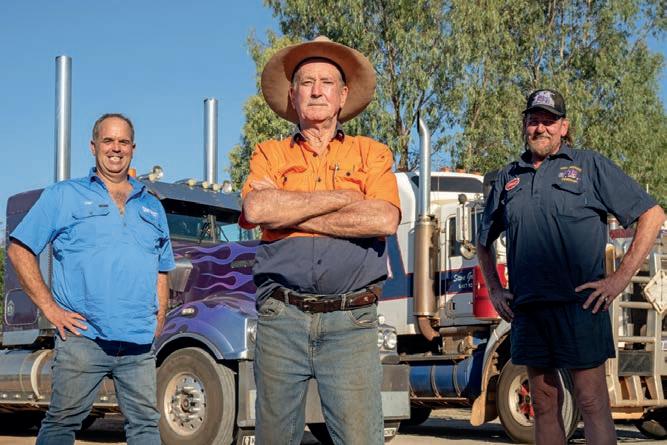
Premiering on 7Mate on Tuesday June 2, at 8.30pm, Rookie Truckers is an eightpart series that follows new trucking recruits, as they learn the ropes and upskill under the guidance of trucking legends and industry veterans Paul ‘Sludge’ Andrews, Steve Grahame and Glenn ‘Yogi’ Kendall – who many would recognise as fan favourites from Outback Truckers.
Shelley was paired with Sludge. “When I found out he was going to be my mentor, I knew it would be very educational. Sludge’s insight was amazing and I felt instantly comfortable with him. I think that’s a reflection of him really wanting to share his knowledge,” she said.
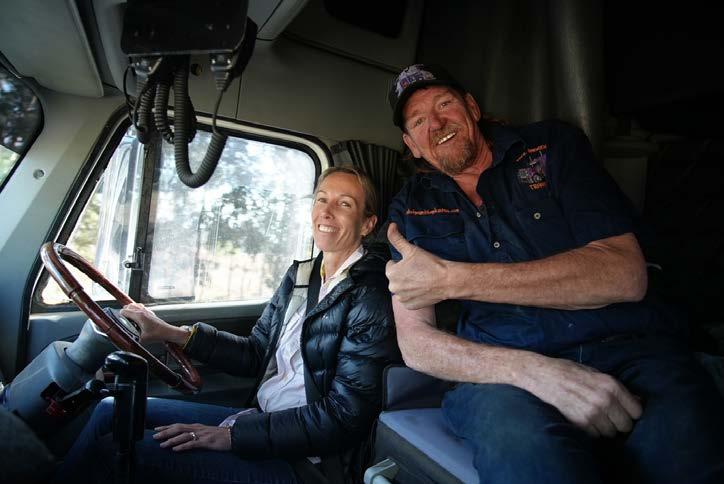
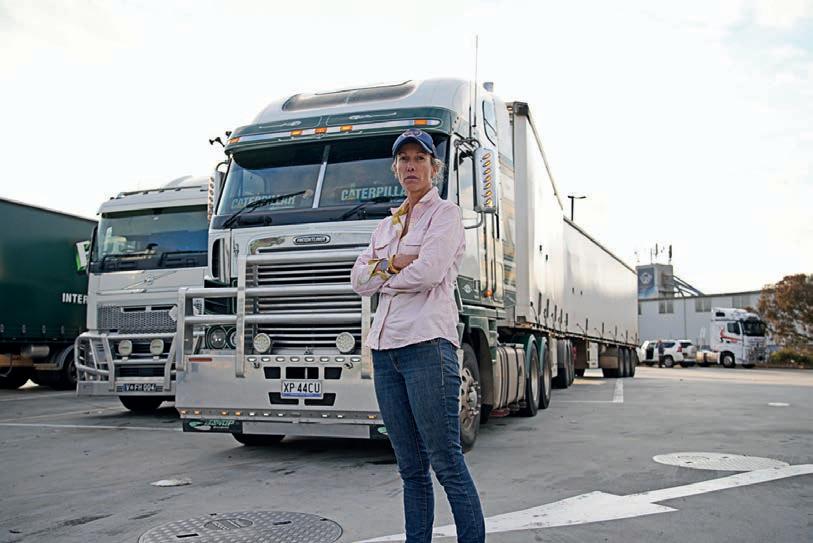
“Sludge flew across from Perth three times and spent four or five days with me each time, and then I did a trip over to Perth and carted cattle with him. I had done a bit of that for my family’s business so that was fantastic as well.”
For Shelley, the goal was to train up in a multi combination and upgrade to her MC-licence, which she successfully did in April 2025, following filming.
“For me to train up for MC with a very experienced driver beside me was priceless. You don’t get that sort of driving experience on your own,” added Shelley.
“Everything I carted, Sludge has carted, so he understood – he’s been in the industry a long time, the knowledge and advice he was sharing was relevant and so invaluable. He’s driven in the country, the cities and the most remote areas. The vast knowledge he has is just amazing.
“People are often critical of new or younger drivers getting into a road train, but it’s the only way to learn. There is no way to get the experience without getting your bum in the seat.”
For Sludge, the experience was equally rewarding, “Shelley is an absolute ripper. We hit it off straight away and had a great time in the truck,” he said.
“When I first met Shelley, she had her HC licence, so we did a few loads together to get her up to speed. I trained her up on two trailers to get her going with a B -train on. She took in everything I said and I was privileged to be paired with her. She listened and was 100 per cent focused.
“We did a load down to Melbourne – and we also had a 42-gallon drum we filled with water to see how much she’d spill. It was great being able to train someone up who really wanted to learn.”
Shelley now works as an owner operator, towing an AB-triple curtain sider and semi tipper. “At harvest time, I use the truck to transport our own crops. When we purchased more land, it made sense to have our own truck. We needed the truck to make the farm viable,” she said.
“There are also plenty of opportunities as an owner operator, because there are never enough trucks.
“I have three sisters and we all have truck licences. When I was teaching, I was the only one who wasn’t driving a truck during the week. We’re all very competitive.
I thought I’d do something to level them up, so I got my MC,” Shelley laughed.
Shelley couldn’t be happier that she made the switch into
full-time truck driving – and got to learn from someone with such a vast amount of experience. These days, she predominantly carts fertiliser, grain, gravel, cotton and hay.
“The mentors on Rookie Truckers spent such a big chunk of time training up the rookies. It was amazing on their part that they invested so much of their own time into this – it reflects their passion for the industry. They’re all owner drivers, and if your wheels aren’t turning, you’re not making money. The fact that they were willing to give up their own work to come and do this is just amazing.
“Almost weekly I’ll be in the truck and think of something Sludge has taught me.
“I’d encourage anyone wanting to get into the industry to do it. Having grown up with a father with trucks and three sisters, there were never any gender boundaries. Dad taught the four of us everything because we’re his kids. Since getting into trucking myself, I’ve found other truck drivers to be really helpful and really supportive.”
Catch Shelley and Sludge on all new Rookie Truckers, airing 8.30pm Tuesdays on 7Mate – or if you’ve missed an episode, catch up on 7Plus.








May 18-19


INDUSTRY leaders at TruckShowX have warned the Australian trucking industry is entering one of its most challenging and transformative periods, as operators grapple with rising costs, workforce shortages, sweeping technological change and the push toward decarbonisation.
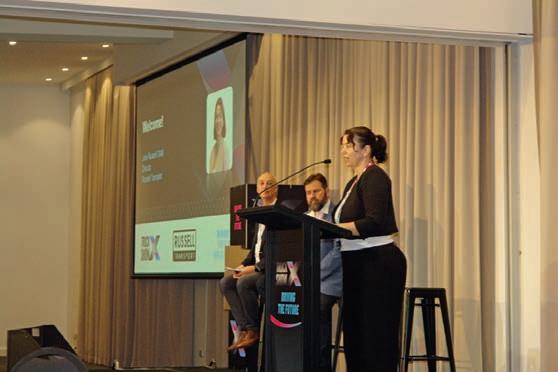
In her opening address, revered transport operator Julie Russell reflected on her family’s more than 100-year history in trucking, saying the industry had always adapted to change – from horse and cart through to modern fleets – but warned today’s pressures were arriving all at once.
The Director at Brisbane-based Russell Transport said operators were facing mounting operational and financial strain from labour shortages, increasing freight demand, changing road access conditions and escalating compliance expectations.
“For many years, we’ve talked
about the ageing workforce,” Russell said.
“But after Covid, the shortages in the labour market were clear. There was more demand than supply in our sector.”
She said changing workforce trends were resulting in less experience and depth of knowledge across the industry, increasing the risks of unsafe and non-compliant events while also driving up labour costs.
Russell also highlighted the growing freight task and ongoing access frustrations faced by operators, particularly those making major capital investments in equipment only to encounter changing access conditions and bridge restrictions.
Russell said technology was rapidly reshaping the industry, with operators increasingly becoming “systems owners” rath-
er than simply fleet owners.
“Tomorrow’s transport company is a bit more like a systems owner than a fleet owner,” she said.
She said operators now faced difficult decisions around integrating compliance systems, telematics, AI-driven scheduling and ESG reporting requirements, with many businesses lacking the IT skills and resources needed to keep pace.
“With AI use on the rise, most of the traditional scheduling allocations, compliance checks, vehicle monitoring, they’re all evolving from the traditional structures, depending on your fleet makeup, client needs, and compliance programs you’re operating.
“You have to consider what system, or systems will work best for you.”
Transport for NSW Executive Director of Freight Scott Greenow told attendees governments also needed to rethink how freight productivity
and road access were managed if the industry was to meet future freight demands safely and sustainably.
Greenow outlined a major push by the NSW Government to expand access for higher productivity Performance-Based Standards (PBS) vehicles, including A-double and modular B-triple combinations capable of carrying significantly larger payloads while reducing road wear, fuel use and truck movements.
He said smarter vehicle design and steerable axle technology were allowing larger combinations to perform at the same network levels currently used by 26m B-doubles.
According to Greenow, replacing existing B-double movements on the Hume Highway between Sydney and the Victorian border with larger 53.5m combinations could slash pavement wear, reduce fuel consumption by almost two million litres a week and
dramatically cut heavy vehicle kilometres travelled.
“The barrier for all of these have not been you in the past, they’ve been us,” Greenow told operators.
“This is our policy position in New South Wales now.”
Greenow also confirmed the NSW Government was working toward making its zero-emissions heavy vehicle access notice permanent, while continuing to explore technologies such as powered trailer a xles and wide single tyres to improve efficiency and sustainability outcomes.
A RTIFICIAL intelligence is rapidly shifting from buzzword to business tool across Australia’s trucking industry, with transport operators and technology providers warning that fleets can no longer afford to sit on the sidelines.
At the TruckShowX conference, industry leaders outlined how AI is already being used
to improve fleet productivity, reduce downtime, automate repetitive admin tasks and strengthen safety compliance.
Digital marketing strategist Sarah Balmer said the industry was reaching a tipping point.
“In 18 months’ time, you will look back, and it will be impossible to imagine your business without AI,” the CEO and founder of Balmer Agency told attendees.

Experts say trucking businesses need to stop viewing AI as a threat and instead focus on how it could improve efficiency. Image: Phichitpon/stock.adobe.com
“I have heard everything over the past three years; it’s a gimmick, it’s a bubble, it’s hype, e’re not getting involved, and it was really, really refreshing last night to hear things are starting to really change.”
Balmer said transport remained one of the slowest sectors to adopt AI technologies, spite the enormous operational opportunities available.
She said in a recent NAB survey only 21 per cent of those who were surveyed indicated that they were using AI in their transport business.
Balmer said trucking businesses needed to stop viewing
A I as a threat and instead focus on how it could improve efficiency and help address labour shortages.
“AI creates opportunities for you to reskill your talent to free them up, so that AI can do a lot of the work that they’re doing right now,” she said.
“AI also gives you the ability to do more with the same, to scale, and to save.”
Real-world examples of AI already delivering measurable gains were also showcased during the event.
AJM Transport General Manager Dennis Roohan explained how AI-powered fleet analytics from Geotab Ace were helping the business manage delays, maintenance and driver behaviour across its 110-truck operation.
“One of the biggest ones that we’ve gained through Ace is lost time in DC loading. It is the bane of my existence,” Roohan said.
“We lose hours and hours a day, and costs a lot of money.
“Now I walk in in the morn-
ing and say to Ace, give me the number of trucks that have sat longer than 15 minutes outside the window.
“Ace automatically just does that for me, spits it out in a format that I clearly can understand, work on it, and we’re on our way. We can invoice that straight away, no more toing and froing with the customer.”
The technology is also helping the fleet stay ahead of costly mechanical failures.
“My maintenance guys, they’re asking Ace, give me the top 10 trucks with the number of engine faults overnight,” Roohan said.
“We’re then chasing those ECM faults, those ABS faults, all that data, and we’re making sure that those trucks are getting repaired in a timely manner, so they don’t break down.
“You can’t do 12,000 kilometres a week without being on top of your game and getting those full tools.”
AI-driven video monitoring is also being increasingly used to detect fatigue and
$10 million boost for solar-charged
U K-BASED start-up Sunswap announced news of a $10 million commitment from the Clean Energy Finance Corporation (CEFC) to conference attendees.
The investment is to support the rollout of more than 100 of its fully electric, solar-powered Endurance refrigeration units in Australia.
“Cold chain logistics has relied on diesel-powered refrigeration for decades,” said Sunswap CEO and co-founder Michael Lowe.
“The load stays cold, but everything else – the fuel cost,
high maintenance, limited operational insights – has been accepted as the price of doing business.
“We built Endurance to change that calculation. Today, we are relied on by major fleets and retailers across Europe and South America. The CEFC investment puts more units on Australian roads, giving operators access to electric refrigeration that cuts operating costs, handles Australian distances, and comes with the service infrastructure to back it up.”
Sunswap has been manufac-
turing refrigeration units in the UK since 2024 and has already built a growing customer base across Britain and Europe.
It made an immediate impact in Australia earlier this year when a B-double set, with a refrigerated tag trailer operating entirely on battery-electric power charged by solar energy, successfully completed a 1671-kilometre round trip between Sydney and Brisbane. The trial was completed by Protran Solutions, together with Sunswap Endurance.
“Australian refrigerated transport has put up with die-
sel’s costs and limitations for too long, not because operators wanted to, but because there simply wasn’t a credible alternative. Sunswap changes that,” said Protran Solutions General Manager Grant Turner, who is putting the full weight of his considerable sector experience behind the new tech.
“The Sydney to Brisbane trial run without recharging shows the technology actually performed in Australian conditions. This investment puts more of that capability on Australian roads, and I genuinely believe it’s the beginning of a
distracted driving. Roohan said distraction had become a much bigger issue than fatigue.
“Mobile phones are without a doubt distractions,” he said.
“The roads are getting straighter. I’m not going through towns anymore. The guys are getting a bit bored.
“Distractions are our biggest killer by far, and it’s probably the thing where we spend most of our time for our safety and compliance team.”
Meanwhile, transport management software provider A llotrac demonstrated how conversational AI and autonomous digital workers are beginning to automate large parts of transport administration.
A llotrac CEO Joel Kotamanidis said the focus was on solving practical operational bottlenecks rather than chasing hype.
“If you can’t measure how a new tool saves you time, makes work safer, or increases your margins, it’s just an expensive
tool,” Kotamanidis said.
“We didn’t build that AI to look flashy, we built it to solve specific bottlenecks, like reducing admin costs, recovering hours of lost time, so your people can manage more assets, more jobs, without burning out.”
The company demonstrated AI systems capable of reallocating loads after truck breakdowns, generating operational summaries, reconciling invoices and even making customer phone calls.
In one live demonstration, an AI agent called a customer to confirm delivery details and update order quantities.
Kotamanidis said the technology was intended to remove repetitive tasks rather than eliminate jobs.
“Our AI is not here to replace humans, it’s here to replace mundane and repetitive task that add no value to your bottom line,” he said.
“It will then allow your people to focus on revenue generating tasks.”
significant shift for this industry.”
The refrigeration system uses battery-powered transport refrigeration units supported by rooftop solar panels and optional grid charging.
Everything is mounted at the front of the trailer, freeing up space underneath for axles, pallet boxes and other equipment.
Lowe said the Sunswap technology is about more than simply reducing emissions.
The company claims operators are also seeing operational and commercial advantages,
including reduced diesel costs, improved uptime and access to more work from customers focused on sustainability targets.
A key part of the system is the data collection capability built into the refrigeration units, which allows operators to monitor fleet performance in real time.
With refrigerated transport heavily reliant on diesel-powered systems, Sunswap also believes falling battery prices and Australia’s strong solar conditions create a major opportunity for electrified cold chain operations.

Bridging the gap between today’s diesel powered productivity and tomorrow’s clean energy future.
Our hydrogen-on-demand system improves combustion efficiency, reducing diesel consumption while integrating seamlessly with existing vehicles and workflows. No operational disruption, no new infrastructure — just lower running costs from day one.
H2Boost delivers tangible, operational benefits:
Increased fuel economy
Improved torque and power response
Lower CO₂ emissions
Cleaner engine oil and reduced engine wear
Reduced NOx output
Huge reduction in diesel particulate matter emissions
All benefits are achieved while continuing to run standard diesel fuel.




WHEN Truck Week 2026 was first conceived, nobody was entirely sure what it would become.
The idea itself was pretty simple: create a nationally coordinated week recognising the people, businesses and communities that keep Australia moving.
Not through one big centrally staged event, but through local participation - depot BBQs, toolbox talks, school visits, truck stop activations, workplace celebrations and community engagement spread across the country.
What happened felt much bigger than a pilot. Everywhere you looked, people were having a crack.
There were operators putting on breakfasts for staff before dawn shifts. Workshops firing up BBQs for apprentices and drivers. Schools welcoming trucks through the gates. Politicians turning up at depots and factories. Truck stops hosting free health checks.
And right across the week, social feeds filled with photos, stories and moments of connection – and enough sausage sandwiches being cooked around the country that some started joking Truck Week may have slightly dented Australia’s bread and snag supplies.
Across metropolitan, regional and remote Australia, businesses, associations, charities, schools, truck stops, workshops, depots and community organisations embraced the week in their own way.
Some events were large and highly organised. Others were as simple as morning tea in a
workshop lunchroom or a few photos shared online.
Importantly, Truck Week 2026 never tried to become a polished corporate campaign. Its strength was always in local ownership and authenticity. People adapted ideas to suit their own workplaces, towns, teams and communities.
But each one contributed to a shared national moment of recognition for the people who quietly keep modern Australia functioning every day.
The industry’s health and wellbeing focus also became one of the defining themes of the week.
Truck Week’s Personal Preventative Maintenance (PPM) campaign encouraged participants to “service your body like your prime mover”, helping normalise conversations around blood pressure, skin checks, bowel screening, prostate health and mental health through practical, familiar language.
Partnerships with organisations including Healthy Heads in Trucks & Sheds, the Heart Foundation, Australian
Skin Cancer Foundation, Get Yourself Checked and SiSU Health helped bring those conversations directly into workplaces, truck stops and events around the country.
The response showed there is strong appetite for practical wellbeing initiatives delivered in ways that feel grounded, approachable and relevant to industry people.
TruckShowX also played an important role during the week, showcasing the innovation, technology and operational improvements happening right across the heavy vehicle sector.
While much of the public conversation around road freight tends to focus on regulation and compliance, TruckShowX highlighted the enormous amount of work being done proactively by industry around safety, sustainability, productivity and workforce capability.
At the same time, social media feeds throughout the week filled with something the industry probably doesn’t see often enough - visible pride and recognition.
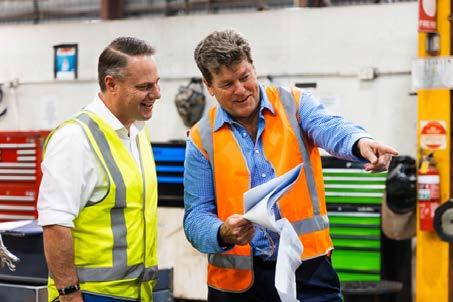
Photos of apprentices, driv ers, workshops, fleets, families and local events flowed from every corner of the country. Some of the biggest engagement often came from the simplest posts: a team photo around a BBQ, a toolbox talk in a shed, a driver getting a health check, or kids climbing into a truck at a school visit.
Truck Week reminded people that while trucks might be the machinery, the real story has always been the people.
The level of political and community engagement also surprised many observers. MPs and senators from across the political spectrum visited workplaces, attended events and publicly acknowledged the role the freight and logistics sector plays in everyday Australian life.
The Governor-General’s involvement through Healthy Heads in Trucks & Sheds further reinforced the broader national significance of recognising workforce wellbeing and community contribution across the transport industry. What emerged from all of this was a growing sense that Truck Week may have tapped into something Australia was ready for.
Not simply an “industry promotion campaign”, but a positive and recognisable annual moment where people pause to acknowledge the workforce and systems that physically connect every Australian industry to every Australian community.
And for anyone already asking when the next Truck Week will be held, the answer is that the industry’s attention
now turns back to Brisbane in 2027 for the 60th anniversary of the Brisbane Truck Show.
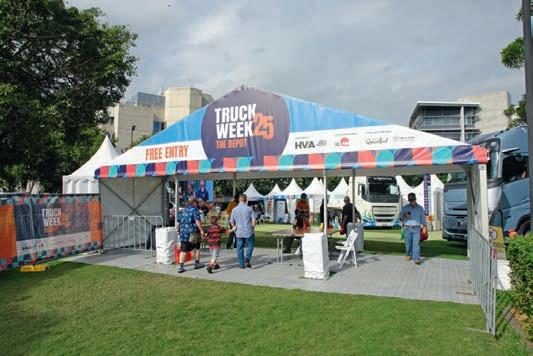
Truck Week first launched in 2025 alongside the Brisbane Truck Show and associated events including the Heritage Truck Show, The Depot and the National Show’n’Shine Championships.
With record attendance at the Brisbane Truck Show last year, the concept immediately demonstrated the potential of combining major national events with broader industry and community participation.
Truck Week 2026 represented the next phase of that journey - taking the celebration out across Australia through local events, workplace activities, health initiatives, school engagement and grassroots participation nationwide.
Now the cycle shifts again.
In 2027, the industry will reconverge in Brisbane for what is already shaping as one of the biggest celebrations in Australian road transport history, with plenty of surprises still to be announced.
brella role around those celebrations, helping connect the broader industry story across the Brisbane Truck Show precinct and associated events.
The rotating cycle already feels natural: one phase bringing the industry together nationally in Brisbane, the next taking the celebration and recognition out across the country into local communities and workplaces.
A nd if this year’s effort merely dented the national sausage-and-bread supply, there’s already plenty of good-natured discussion around the industry about what Truck Week might look like by the time it returns again in 2028. Nobody’s suggesting we’re about to trouble Bunnings Warehouse just yet.
But after the number of depot BBQs, workplace gatherings and community events held around the country this year, it’s probably fair to say the industry has developed a healthy respect for the power of a sausage sizzle, a shared story and a bit of well-earned
THE real measure of Truck Week 2026 was never going to be found in one headline event. It was in the spread. It was in the depot BBQs, school visits, open days, social media posts, safety demonstrations, customer catchups, community events and workplace conversations that appeared across the country under one shared banner. That was always the ambi-
tion: to make Truck Week easy enough for anyone to take part, but meaningful enough that every contribution added to something bigger.
Some events were large and highly visible. Others were simple, local and personal. Together, they showed what an industry-led celebration can look like when people are invited to make it their own.
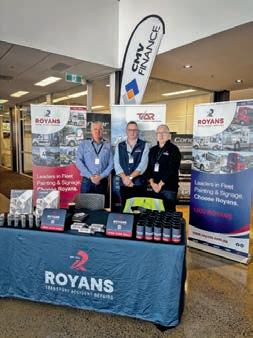
Royans Transport Accident Repairs provided one of the clearest examples of Truck Week’s workplace reach, hosting coordinated charity BBQs across its 27 branches in Australia and New Zealand.
More than just a sausage sizzle, the initiative brought teams together, recognised the skilled people who help keep trucks on the road, and raised funds for Healthy Heads in Trucks & Sheds through gold-coin donations matched by the company.
Haulmax Tyres also took the BBQ idea on the road, hosting around 13 customer events across Australia. It was a practical, no-fuss
way to connect with customers, suppliers and industry colleagues, while adding to the national sense that something was happening everywhere.
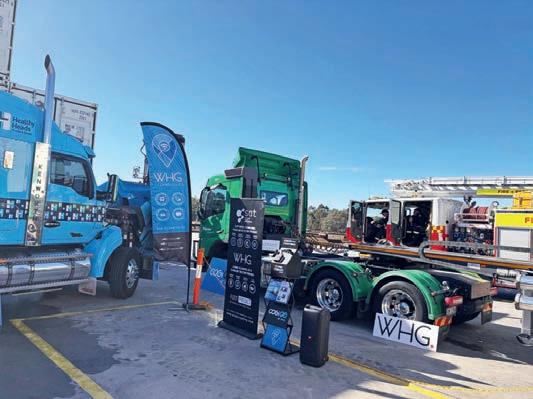
At Ettamogah Rail Hub, WHG and partners’ Truckin’ Together became one of the standout community examples. The open day brought together trucks, technology, wellbeing, youth engagement and family-friendly activities, giving the Albury-Wodonga community a chance to connect with the people and operations behind freight and logistics.
Other businesses opened their doors or brought people in. CMV Truck & Bus Derrimut hosted an open day with vehicle displays, test drives, supplier exhibits and networking. Knorr-Bremse ran drive days.
Australian Glass Group used the week internally to focus on transport safety, Chain of Responsibility, driver wellbeing and workplace culture. Some of the most powerful
examples were driven by individuals.
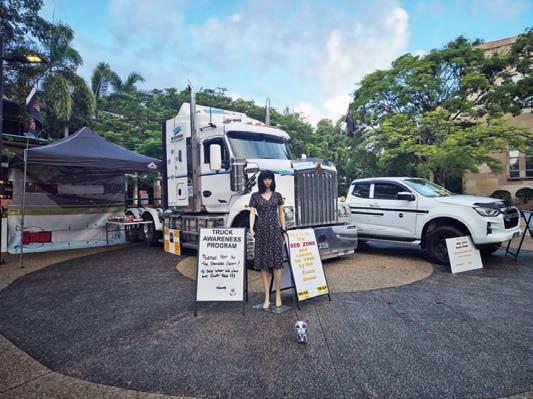
James Shaw’s Truck Awareness Program took a prime mover, car and mannequin to the University of Queensland’s St Lucia campus, giving students and members of the public the chance to sit in the driver’s seat and see first-hand what truck drivers can - and cannot - see from the cab.
In South-West NSW, Driver Education Deniliquin’s champion Jenny Fellows helped bring the Steering the Future truck and trailer to St Michael’s Primary School, with surrounding schools invited to take part in a hands-on introduction to trucks, trailers and the people who keep Australia moving.
Others used their voice and platforms. Companies including Ampol, Volvo Trucks Australia, Divall’s Earthmoving and Bulk Haulage, Daimler Trucks TriStar Group and the National Transport Commission joined the conversation online, helping spread Truck Week beyond registered events and into the wider industry feed.
That social energy mattered. It allowed businesses, regulators, operators and industry supporters to acknowledge drivers, technicians, dispatchers, road managers, suppliers and everyone else connected to the freight task in their own words.
Not every contribution needed a stage, a crowd or a ribbon-cutting.
A workplace morning tea counted. A safety conversation
counted. A school visit counted. A LinkedIn or Facebook post from a proud transport business counted. A driver education display in a public space counted. That was the point of Truck Week.
It gave the industry permission to celebrate itself in a way that was local, practical and authentic - without waiting for someone else to organise the “official” moment.
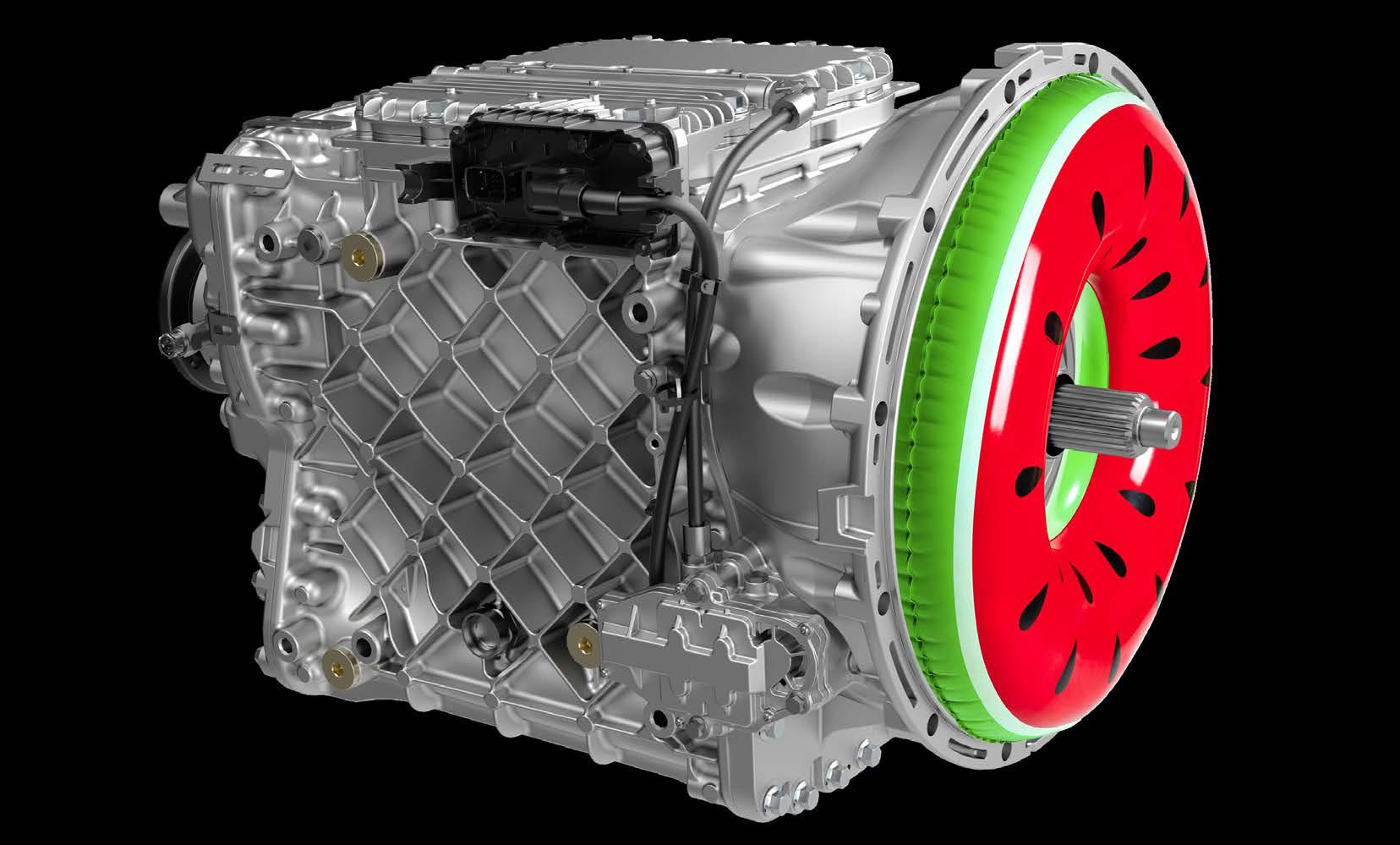
Your U D truck i s bui lt to go the extra mile, r eliably, ef fici en tly, and safely Th at ’s why every part matters.
Using n on-genuine pa rts might seem li ke a quick fix, but it ’s a gamble that can cost you in downt i me, safety, a nd long-term p erformance.
Gen uine UD part s a re design ed, tested, a nd built to meet the highest stan dards, fitting perfectly and working right the first time. Becaus e w he n it comes to your truck ’s dependability, there ’s no room for compromise.
Choo se g enuine. Because every part matters, and your truck ’s pe rformance depends on it.

Going the Extra Mile
BY BEN MAGUIRE –HEALTHY HEADS IN TRUCKS AND SHEDS
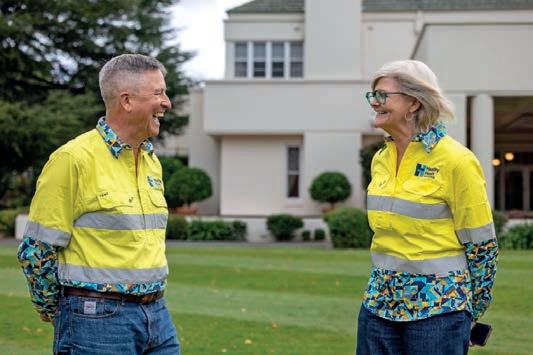
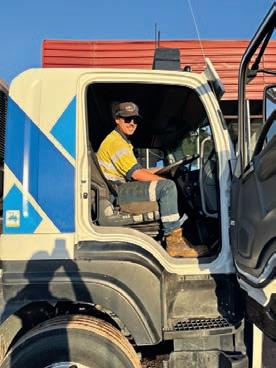
OVER the past 10 days, I’ve driven more than 4000 kilometres representing Healthy Heads in Trucks & Sheds during Truck Week. What struck me most wasn’t simply the distance travelled, the events attended, or the logistics involved. It was the leadership.
Leadership from parliamentary representatives who took the time to engage meaningfully with the well-being of the transport industry.
Leadership from sponsors and industry partners who understand that supporting mental health is not just good business, it is essential to the future sustainability of an industry that contributes enormously to Australia’s economy and keeps our nation moving every single day.
Leadership from people on
the ground: drivers, operators, mechanics, depot teams, volunteers and event organisers who continually show energy, humour and resilience despite the demands of life on the road.
And leadership from the extraordinary people I had the privilege to travel alongside and learn from: Naomi Frauenfelder CEO of Healthy Heads, whose passion and relentless commitment continue to drive national impact; Melissa Weller whose stakeholder leadership and ability to connect people is second to none; and Steve Power from HVIA, whose advocacy and enthusiasm for the heavy vehicle industry never wavered; Sally Hemmings who waved the flag and supported me at the conference.
Over the course of my travels, we moved between the highest offices in the land and roadside truck stops, and somehow the conversations carried the very same themes:
service, resilience, connection and care for others.
One moment we were engaging with leaders at Parliament House and Government House, and the next, we were standing roadside talking with Mick, a truck driver, former member of the ADF, and someone so passionate about the mission of Healthy Heads that he spoke about wanting to establish a foundation to
further support the work. That conversation stayed with me.
Because it reminded me that leadership and generosity are not defined by title or position. They are defined by purpose.
From RUOK Day activations at Ampol, to Parliament House, to drive days, truck stops, BP activations and conversations over coffee at sun-
rise, every stop reinforced the s tency, showing up. It is caring f tired yourself.
Over 10 days, I saw the Governor General, ministers, senators, industry leaders and frontline workers all united by a common purpose: creating a healthier, safer and more connected transport industry.
TRUCK Week 2026 was never meant to be something owned by one organisation.
From the beginning, the goal was to create a shared national platform that could support locally led, com-
munity-facing events across Australia - from depot BBQs and school visits to regional truck shows, safety forums, careers activations and open days.
That meant the real strength of Truck Week would always come from the grassroots: the businesses, drivers, workshop teams, volunteers, local associations and community organisers who put their hands up and made something happen.
But to bring that idea to life at national scale, Truck Week also needed partners.
Across the campaign, industry associations, safety organisations, media outlets, event brands and health partners helped carry the message into their own networks. Some promoted the week to members and stakeholders.
Some made practical re-
sources available. Others went further again, creating their own Truck Week initiatives and adding new depth to the national program. That mix was exactly the point.
Truck Week was designed as an umbrella - not to replace what industry already does well, but to connect it, celebrate it and make it more visible.
The collaboration behind the Truck Week men’s health campaign was one strong example of partners bringing expertise and credibility to a shared mission.
Likewise, Healthy Heads in Trucks & Sheds used the Truck Week calendar to help promote R U OK? in Trucks & Sheds Day, reinforcing that wellbeing conversations can happen anywhere - in a depot, warehouse, yard, cab or office.
Safety and education partners added another important layer. The Australian Trucking Association made SafeT360 resources available to support conversations about blind spots, stopping distances and sharing the road safely with trucks.
The National Road Safety Partnership Program shared heavy vehicle toolbox talks in multiple languages, while also promoting fatigue management resources for drivers, supervisors and fleets.
Steering the Future helped take transport careers directly to students through its mobile exhibition, showing young people that the heavy vehicle and logistics sector offers far more pathways than many realise.
Around the country, associations and industry groups turned the national theme into local action.
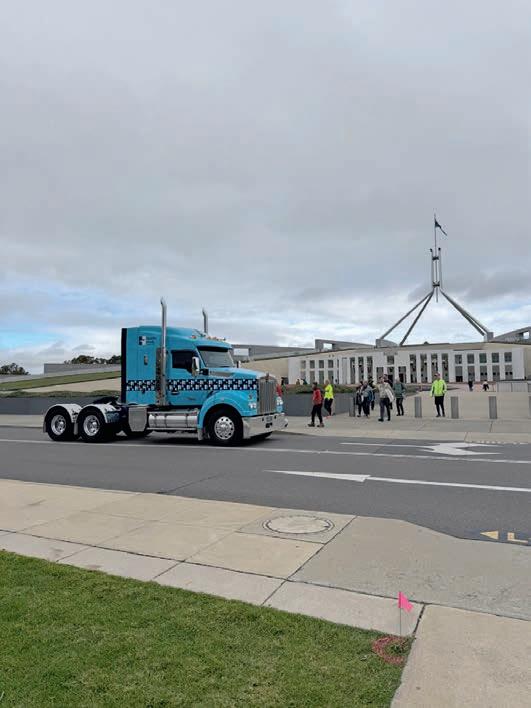
o everyone who welcomed “Kenny”, shared a story, shook a hand, put on an event, backed the mission or simply had a conversation… thank
This story captures only a fraction of the story, but it reflects something I will carry with me for a long time: great leadership exists everywhere in Australia… especially out on the road.
The Queensland Trucking Association launched its Roads to Success video podcast series through Transport Workforce Futures, highlighting people, training and career pathways across Queensland transport and logistics.
In South Australia, SARTA hosted a BBQ breakfast in Port Adelaide - a simple, practical gathering that reflected the spirit of Truck Week perfectly.
In Western Australia, TransafeWA’s Road Transport Industry Safety Forums in Perth and Geraldton brought industry, government and community together around road safety challenges and solutions.
The Heritage Truck Association Australia added a strong community and history element through its Rocklea show, celebrating
classic working vehicles and the people who keep that heritage alive.
Other partners supported Truck Week by opening doors, sharing the call to action, promoting resources, publishing stories and helping the campaign reach their audiences far and wide. That support mattered. Not because Truck Week was about the partners, but because partners helped more people see it, use it and make it their own.
The result was a broader, louder and more connected celebration - one that still belonged to the people on the ground, but was strengthened by a network willing to work together.
That is the exact model Truck Week set out to build: a national industry platform, powered locally, amplified collectively.
TRUCK Week 2026 was filled with BBQs, depot open days, school visits, industry showcases and community celebrations right around Australia.
But among all the activity, one message carried particular weight:
Your body is your prime mover – service it.
The Truck Week men’s health initiative – Personal Preventative Maintenance (PPM) – used the national celebration as a platform to encourage more people across the heavy vehicle, freight and logistics industry to take control of their own health destiny.
The inititiative was delivered collaboratively by Heavy Vehicle Industry Australia, Healthy Heads in Trucks & Sheds,
Australian Skin Cancer Foundation, Get Yourself Checked and SiSU Health Group.
The five-point preventative maintenance check focused on heart health, skin checks, bowel screening, prostate health and mental health — encouraging people to think about preventative health in the same practical way they think about maintaining equipment.
Importantly, the initiative was never designed to lecture people or overwhelm them with statistics, even though the health data across the industry is confronting. Instead, the goal was to make these conversations feel practical, accessible and normal. Because the reality is many of the people most in need of
the message are often the most resistant to hearing it.
That made industry ambassador Geoff Crouch’s willingness to publicly share his own personal health journey especially important during Truck Week.
By speaking openly and honestly, Geoff helped break down the idea that health conversations are something to avoid or be embarrassed about. His message was simple: looking after yourself is not weakness — it is responsibility.
Truck Week became the canvas for taking that message directly to the industry.
Throughout the week, health activations and free checks were delivered at BP truck stops, industry events and
workplaces including Marulan, Eastern Creek, Beresfield and TruckShowX in the Hunter Valley.
The campaign reached drivers, workshop staff, operators, warehouse workers and office teams in places where they already were — truck stops, depots, conferences and community events.
A nd success was never going to be measured simply by numbers.
If someone booked a GP appointment they had been putting off, checked their blood pressure, completed a bowel screening test, booked a skin check or started a conversation about mental health, then the initiative achieved something meaningful.
The heavy vehicle industry understands preventative maintenance better than most.
A small issue dealt with early can prevent a major breakdown later.
The same principle applies to people.
Truck Week may now be over, and the campaign will quieten down for a while, but the mission remains unchanged.
We simply want to encourage more people across Australia’s heavy vehicle industry to take control of their own health destiny. Because Australia relies on this industry every day. And this industry relies on healthy people.
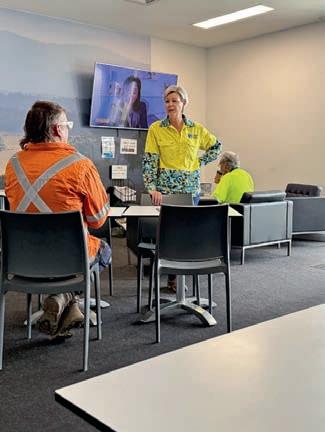


The Mercedes-Benz Actros 2.5 StreamSpace Run-Out Event is now on. Drive away with a complimentary 3-year BestBasic Service Plan covering all scheduled maintenance* , plus predictable running costs and the legendary fuel efficiency Actros is known for. Available for immediate delivery. Contact your Mercedes-Benz Trucks dealer.
THE Governor-General, Her Excellency the Honourable Sam Mostyn, has helped shine a national spotlight on the health and wellbeing of Australia’s truck drivers and the broader transport, warehousing and logistics workforce during Truck Week.
In a video produced by the Governor-General’s office, Her Excellency joined Healthy Heads in Trucks & Sheds ambassador Ben Maguire for a drive around Canberra in Kenny – Healthy Heads’ distinctive blue Kenworth – before speaking with Healthy Heads CEO Naomi Frauenfelder at Government House.
The conversation explored the vital role of Australia’s truck drivers and supply chain workers, the challenges they face, and the practical ways Healthy Heads is working to make support more accessible to people across the industry.
“Kenny’s a great conversation starter,” Ben said in the video, describing the truck as a “showstopper” whether it is parked at Parliament House or at a rest area with drivers.
That visibility, he said, creates an opportunity to start conversations that might otherwise never happen –about mental health, physical health, and the pressures faced by people who spend long hours on the road, away from home, keeping goods moving across the country.
The Governor-General reflected on the human side of the freight task, noting that the industry relies on people
working long hours, often far from family and home.
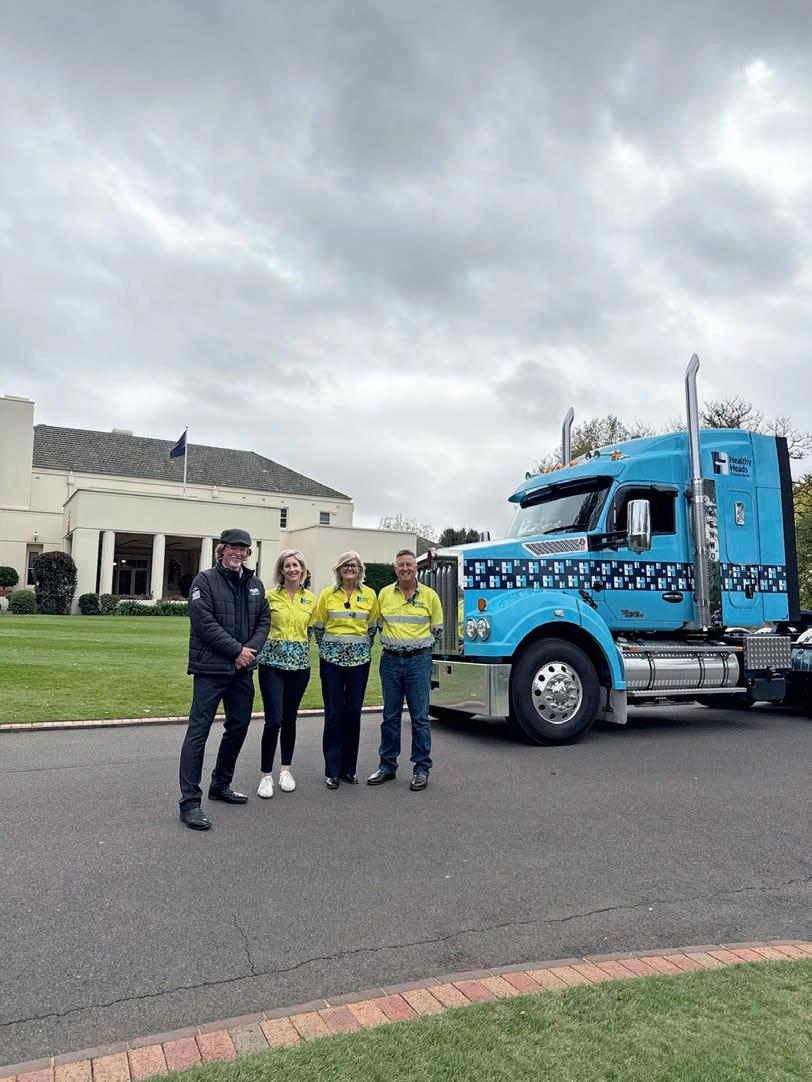
community was simple: give trucks space, remember there is a person behind the wheel, and show some kindness.
“They’re somebody’s mum or dad, or brother or sister,” he said. “Be kind to them.”
Truck Week is led by Heavy Vehicle Industry Australia and brings together industry and community to recognise the essential role trucks play in everyday life – delivering food, fuel, medicine and the countless other goods Australians rely on every day.
ing the week to continue its national work supporting mental health and physical wellbeing across transport, warehousing and logistics.
Speaking with the Governor-General, Naomi Frauenfelder said Healthy Heads was founded in 2020 after the industry recognised the need to do more to support the people working across the supply chain.
She explained that transport, postal and warehousing ranks 19 out of 19 sectors
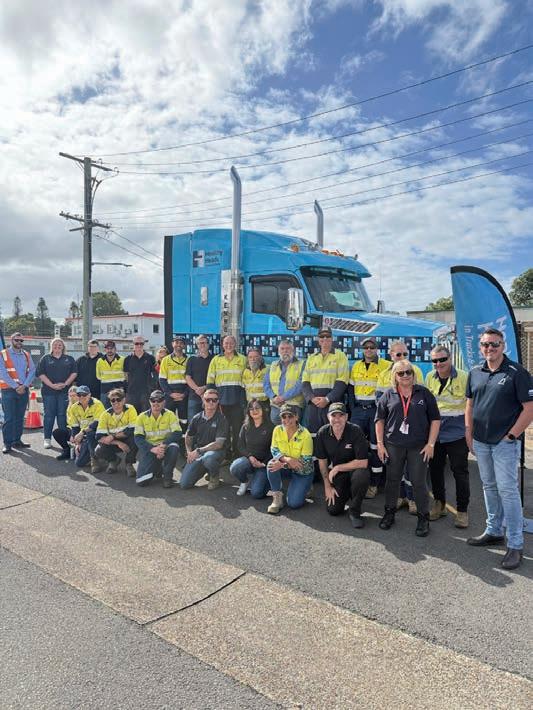
for workplace mental health in Australia, and that one in two people in the industry have experienced a mental health challenge in the past 12 months.
Naomi also outlined the practical, no-barrier support Healthy Heads provides, including free resources, access to counselling pathways, its Healthy Heads app, healthier meal options at participating BP sites, and mobile health checks delivered directly to drivers where they work.
Those checks can include blood pressure, blood glucose, cholesterol and waist-
to-hip ratio screening – simple, quick interventions that can help people take the first step toward looking after their health.
The Governor-General acknowledged the importance of making support accessible, easy and stigma-free for people whose work patterns can make it difficult to book in with a GP, counsellor or other health professional.
“You’re making everything accessible, easy, de-stigmatising conversations about how people are doing,” Her Excellency said.
For Truck Week, the visit was a powerful moment of
recognition – not just for the vehicles and the freight task, but for the people behind the wheel and across the supply chain.
Healthy Heads said the Governor-General’s support sends an important message about valuing the people who keep Australia moving, and the role health and wellbeing play across the sector.
Truck Week thanks Her Excellency for the generosity of her time, her genuine engagement with the industry, and her support in helping bring national attention to the wellbeing of Australia’s truck drivers and transport workers.
FEDERAL MPs and Senators helped put Truck Week 2026 on the national stage, with strong statements of support in Parliament and a landmark mental health funding announcement during Healthy Heads in Trucks & Sheds’ activation outside Parliament House.
Truck Week 2026 reached well beyond depots, workshops, truck stops and events across the country, with strong engagement from Federal Parliament helping put Australia’s heavy vehicle in-
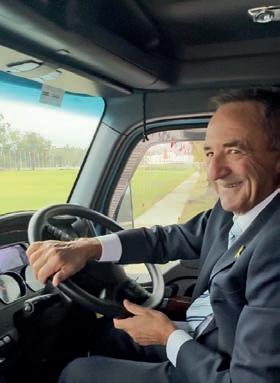
TRUCK WEEK IS A NATIONAL CELEBRATION OF THE PEOPLE, BUSINESSES AND INNOVATION THAT KEEPS
AUSTRALIA MOVING.”
SENATOR GLENN STERLE
dustry on the national stage.
During the week, members and senators from across the Parliament took time to acknowledge the people, businesses and organisations that keep Australia moving, with Healthy Heads in Trucks & Sheds’ prime mover “Kenny” becoming a focal point for engagement outside Parliament House in Canberra.
The activation gave parliamentarians a practical way to show their support for the transport, warehousing and logistics workforce, while also reinforcing the importance of mental health and wellbeing across the sector.
That support was reflected in the Senate, where Senator Glenn Sterle described Truck Week as “a national celebration of the people, businesses
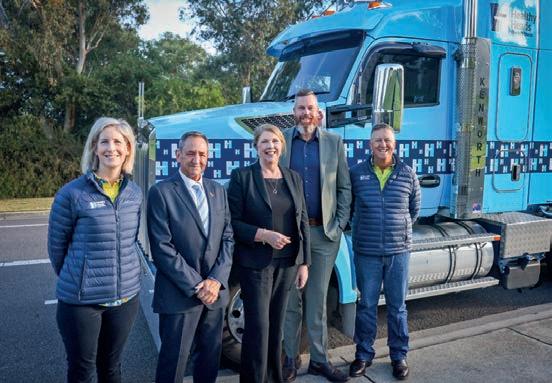
and innovation that keeps Australia moving”.
Senator Sterle also used the opportunity to highlight the vital role of Healthy Heads in Trucks & Sheds and the importance of practical, industry-specific support for workers across road transport, warehousing and logistics.
“Thank you to Healthy Heads in Trucks & Sheds for coming to Parliament House this week to raise awareness about National Truck Week and also about the important work that you do in deliver-
ing mental health resources, training and support for the men and women who work in the road transport, warehousing and logistics sectors,” the senator later wrote on his Facebook page.
“Thank you to all of my colleagues who came down to visit ‘Kenny’ the prime mover and for learning more about the challenges drivers face out on the road and in our warehouses.”
In the House of Representatives, the Scott Buchholz MP also delivered a strong state-
ment of support.
“Without trucks, our great nation comes to a screeching halt,” Buchholz said.
He described Truck Week 2026 as a national celebration of Australia’s heavy vehicle industry, showcasing the professionalism, contribution and everyday excellence of the sector.
“From as far as Western Australia to the eastern seaboard, from Tassie to the Northern Territory, Truck Week is everywhere,” he said.
Buchholz also acknowledged the role of industry-led events such as HVIA’s TruckShowX, delivered by Todd Hacking and the Heavy Vehicle Industry Australia team, in showcasing innovation, engineering excellence, safety advancements and collaboration across the sector.
One of the most significant moments of the week came when Minister for Infrastructure, Transport, Regional Development and Local Government Catherine K ing confirmed a landmark Australian Government investment in frontline mental health support for Australia’s transport, warehousing and logistics workforce.
The announcement was made during the Truck Week activation hosted by Healthy Heads in Trucks & Sheds, with industry representatives gathered around Kenny outside Parliament House. Truck Week is about recognising the people who keep Australia moving every day - in trucks, workshops, warehouses, depots, offices, factories and communities right across the country.
This year, that message was heard not only across industry, but in the halls of Parliament as well.
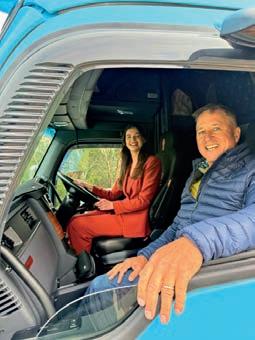
SET amongst the containers, trucks and rail infrastructure of a working freight hub, the smell of barbecue drifted across Ettamogah Rail Hub, where the Boys to the Bush team were on the tongs. Young people from the mentoring organisation climbed into truck cabs, whilst local operators swapped stories beside prime movers – reflecting on the people keeping Australia moving.
The Ettamogah Community BBQ brought together transport operators, industry, community organisations and youth for a day focused on connection, wellbeing and the future of freight. Truckin’ Together was held as a part of Truck Week 2026, which is a national week of events organised by HVIA.
Truck Week celebrates Australia’s vital heavy vehicle industry and the people, businesses and innovations that keep the country moving, creating a national platform for conversations about safety, wellbeing, productivity and the future of transport.
Hosted at the Ettamogah Rail Hub, developed by the Colin Rees Group (CRG), the event provided a fitting backdrop for a “past to future” transport story.
The site reflects decades of Australian transport innovation and regional freight development, with Colin Rees and the ERH team long championing progress across rail logistics, freight efficien
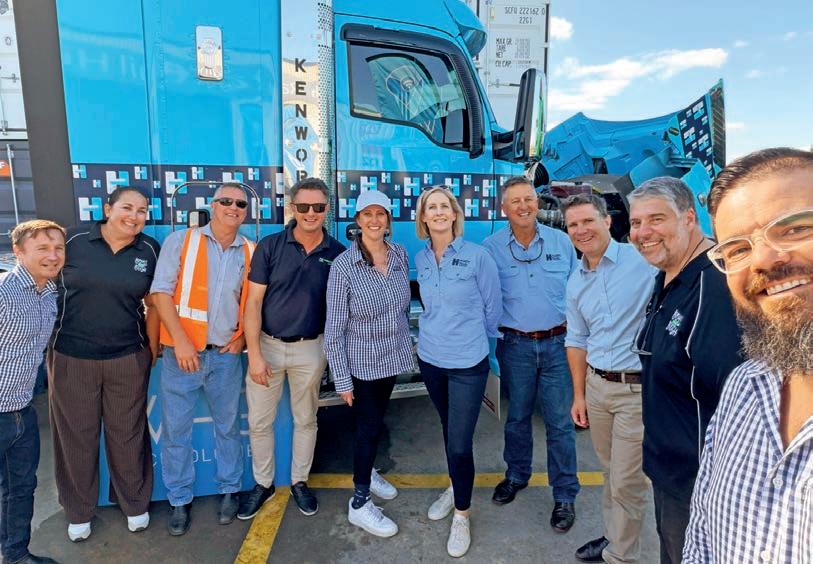
cy, rolling stock restoration, lower-emission transport solutions and new approaches to regional logistics. The event was coordinated by WHG Technologies a longside industry partners Healthy Heads in Trucks & Sheds, Boys to the Bush, Polymer Connect and the Ettamogah Rail Hub team.
Local MP Justin Clancy also attended in support of the transport industry, while Fire and Rescue NSW arrived in a Scania P320 Class 3 fire and rescue truck, turning the heads of kids and adults alike.
Among the vehicles on display were Polymer Connect’s Volvo FM500 with spelled discharge trailer; ERH’s reach stacker, plus Kenny the T410 SAR Kenworth from Healthy Heads in Trucks & Sheds, giving the boys a practical look at the vehicles and
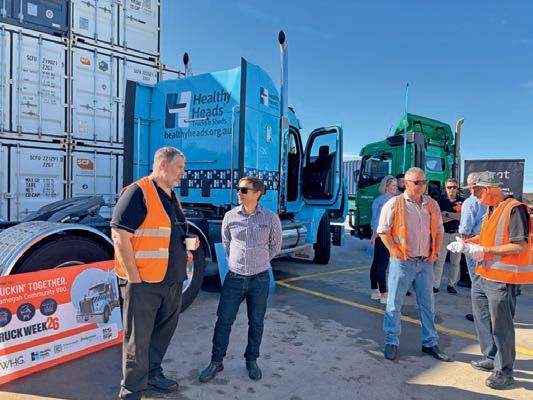
people behind the freight and logistics industry.
But while the trucks drew attention, many of the strongest moments came through the conversations. Polymer Connect Managing Director Jason Razumic delivered one of the day’s most heartfelt reflections, speaking about the generations that built the industry.
“Standing here today, I don’t just see trucks, infrastructure and rail lines behind it,” Jason said. “I see the stories and sacrifice and the generations that built something bigger than all of us.”
Speaking against the backdrop of the Ettamogah Rail Hub and its long history of freight innovation, Jason reflected on the legacy of Colin Rees, CRT Group and the people who helped shape regional freight across Australia.
“Trucks just don’t build industries. The people behind it do,” he said.
Throughout the afternoon, speeches reinforced the broader purpose of the event.
WHG Director of Operations Dylan Hartley spoke about the role of technology in supporting safer, more connected freight operations, while also reflecting on the importance of industry partnerships in bringing people together.
Alison Lee from Boys to the Bush spoke about the value of exposing young people to real workplaces, positive role models and practical opportunities within their own region.
Healthy Heads in Trucks & Sheds CEO Naomi Frauenfelder addressed the importance of mental health and wellbeing across transport, warehousing and logistics,
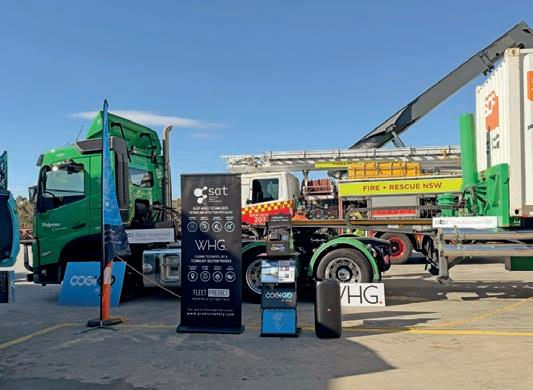



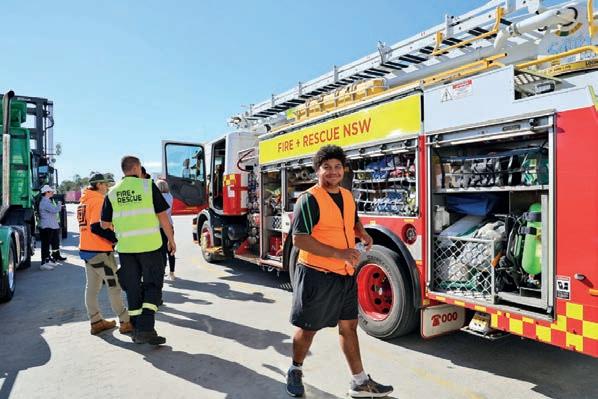
reminding attendees that supporting the people behind the industry remains central to its future.
WHG’s demonstration of FleetPREDICT, its smart wearable fatigue management solution, attracted strong interest from attendees and drivers, particularly around the use of Garmin devices to detect and predict fatigue risk in real-world operating environments.
W HG’s 2026 FleetPREDICT Australian Trial is an initiative supported by the National Heavy Vehicle Regulator’s Heavy Vehicle Safety Initiative grant program, with funding support from the Australian Government. The trial is evaluating how smart wearable fatigue monitoring performs in live transport operations, including predictive accuracy, fleet i
tance and measurable safety outcomes.
Its presence at Ettamogah added a practical, future-focused element to the day, connecting conversations about fatigue, safety and the pressures faced by drivers with emerging technology designed to enable earlier intervention and support safer freight operations.
What began as a local Truck Week barbeque evolved into something more representative of the industry itself: practical, community-driven and built around relationships.
A s the afternoon drew to a close, Jason closed with a reflection that captured the mood of the day.
“Every truck and every person we see has a story,” he said. “The industry may change, but the values we en
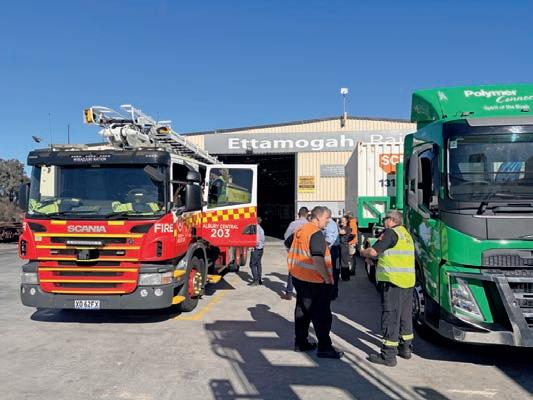

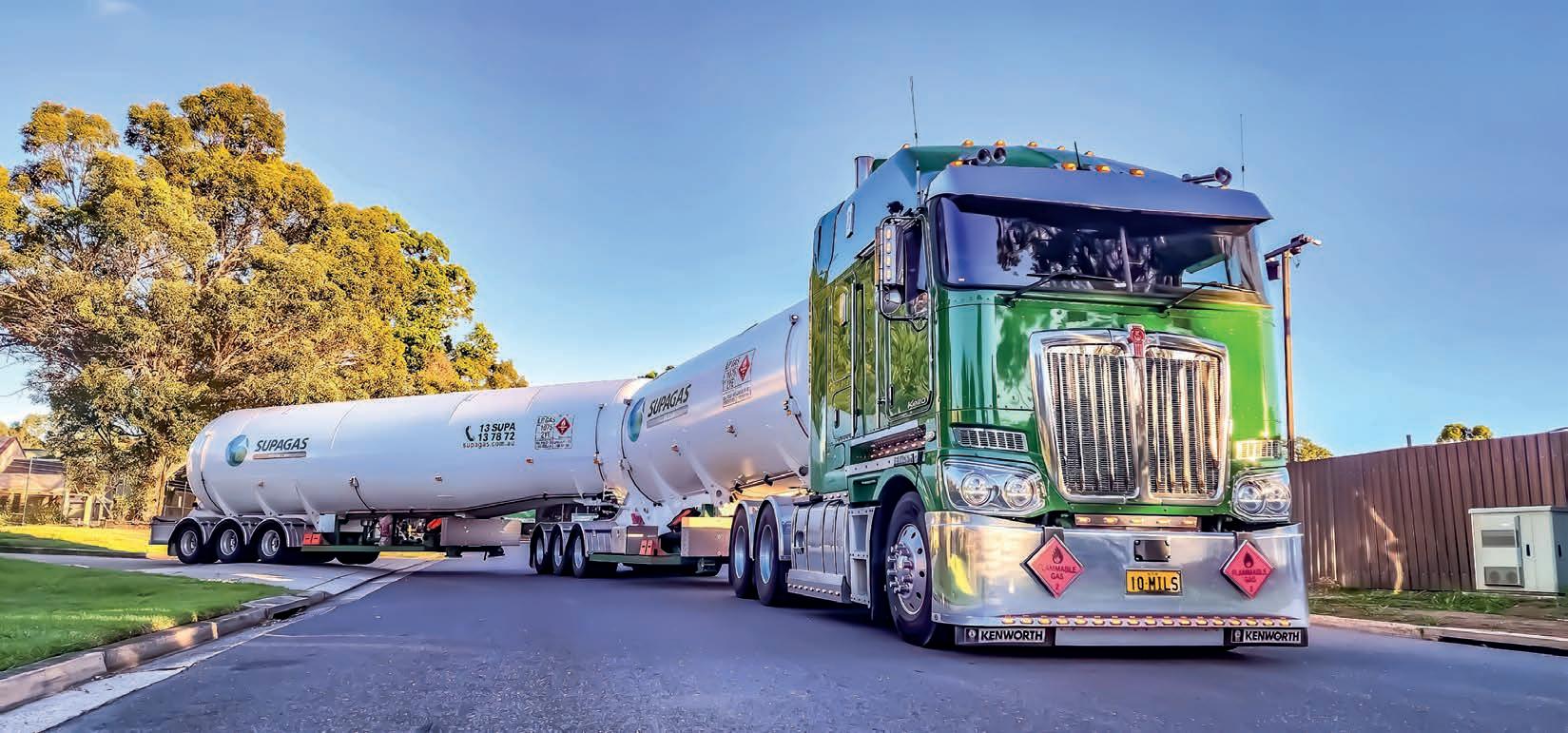
SHELL Rimula has partnered with Big Rigs in a big way – so there are even more reasons to send in your best truck shots.
Each month, the Big Rigs team will choose a #PicOfTheMonth, with the lucky winner receiving a $500 Shell Coles Express Gift Card.
Keep an eye out for our regular posts on the Big Rigs Facebook page, calling for your best truck photos and add yours in
the comments, or email them direct to danielle.gullaci@ primecreative.com.au for your chance to win the main prize.
Don’t forget to include a brief note about the truck and where the photo was taken. We’ll feature some of the best photos in each print edition of Big Rigs, with one winner announced each month.
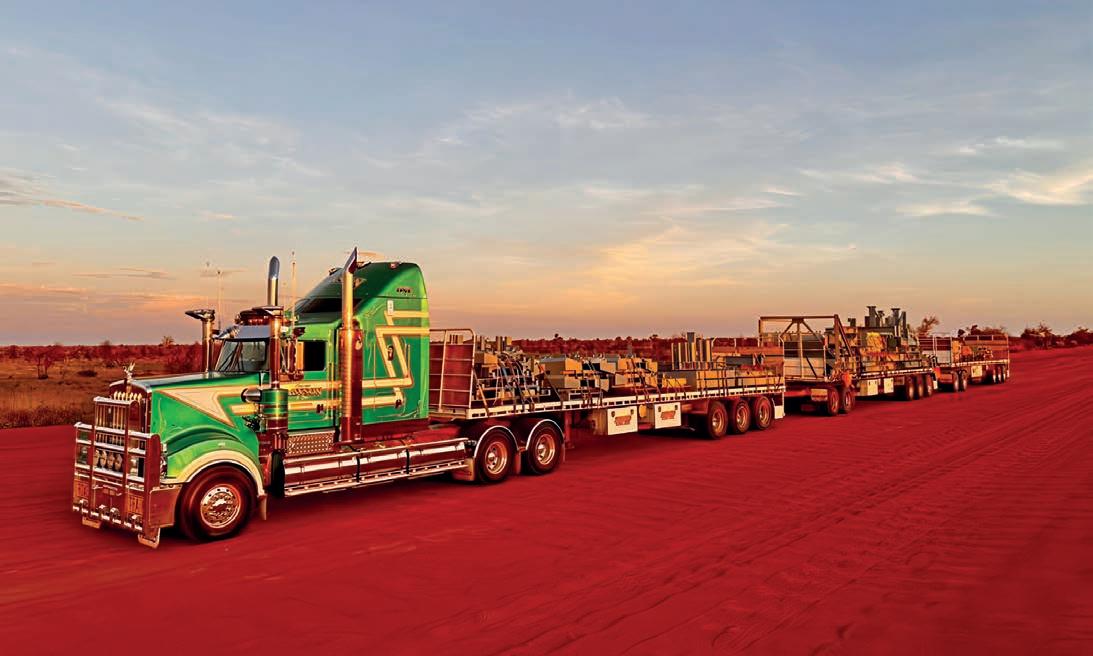
Keep those amazing truck pics coming!
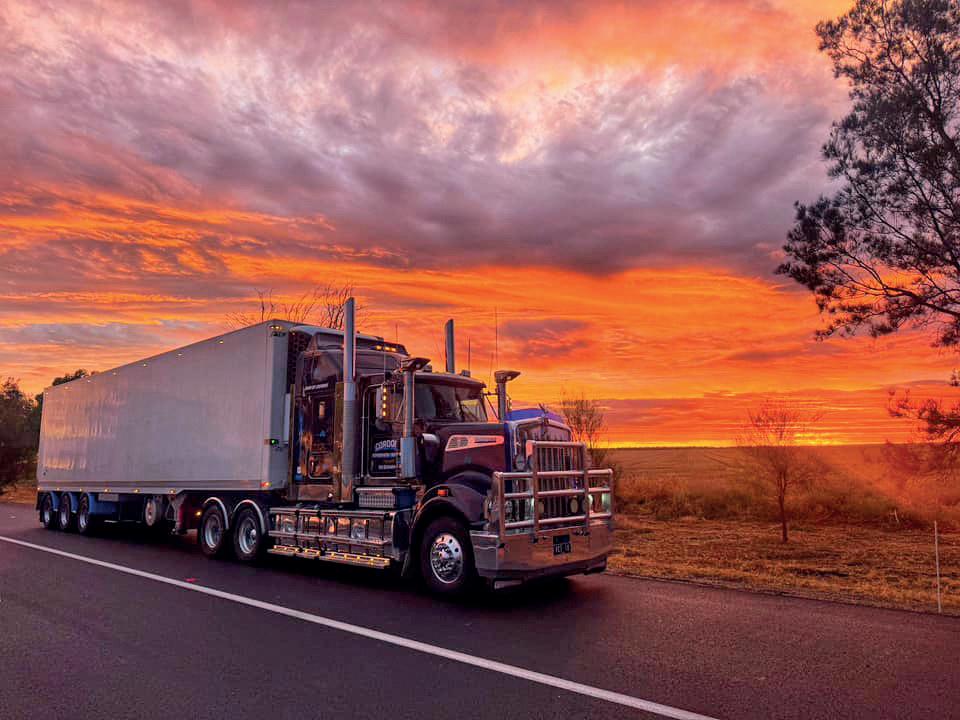
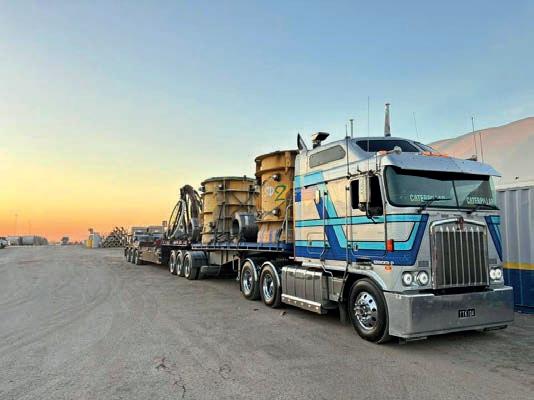
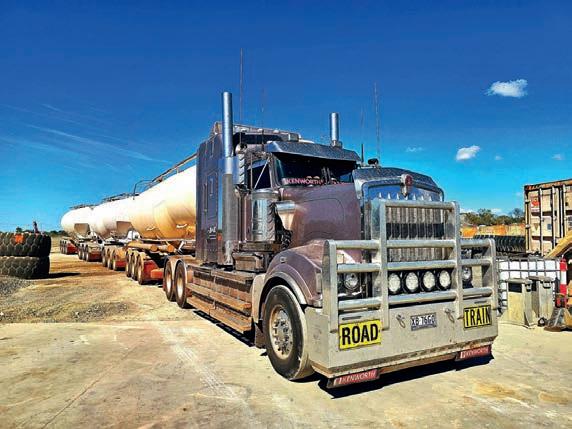
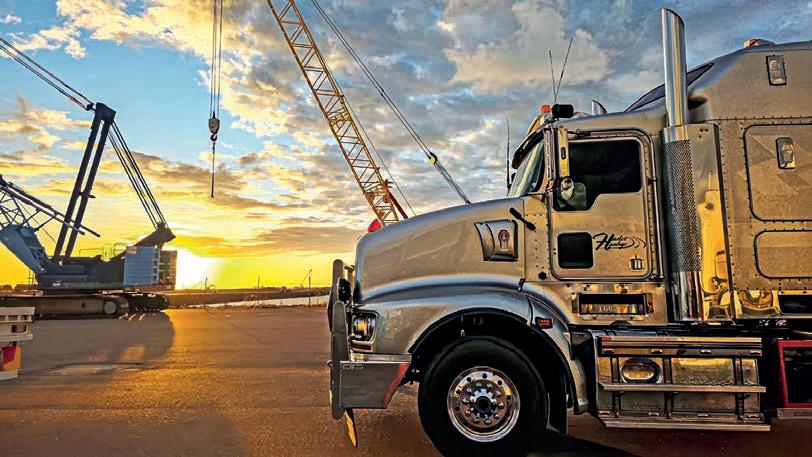
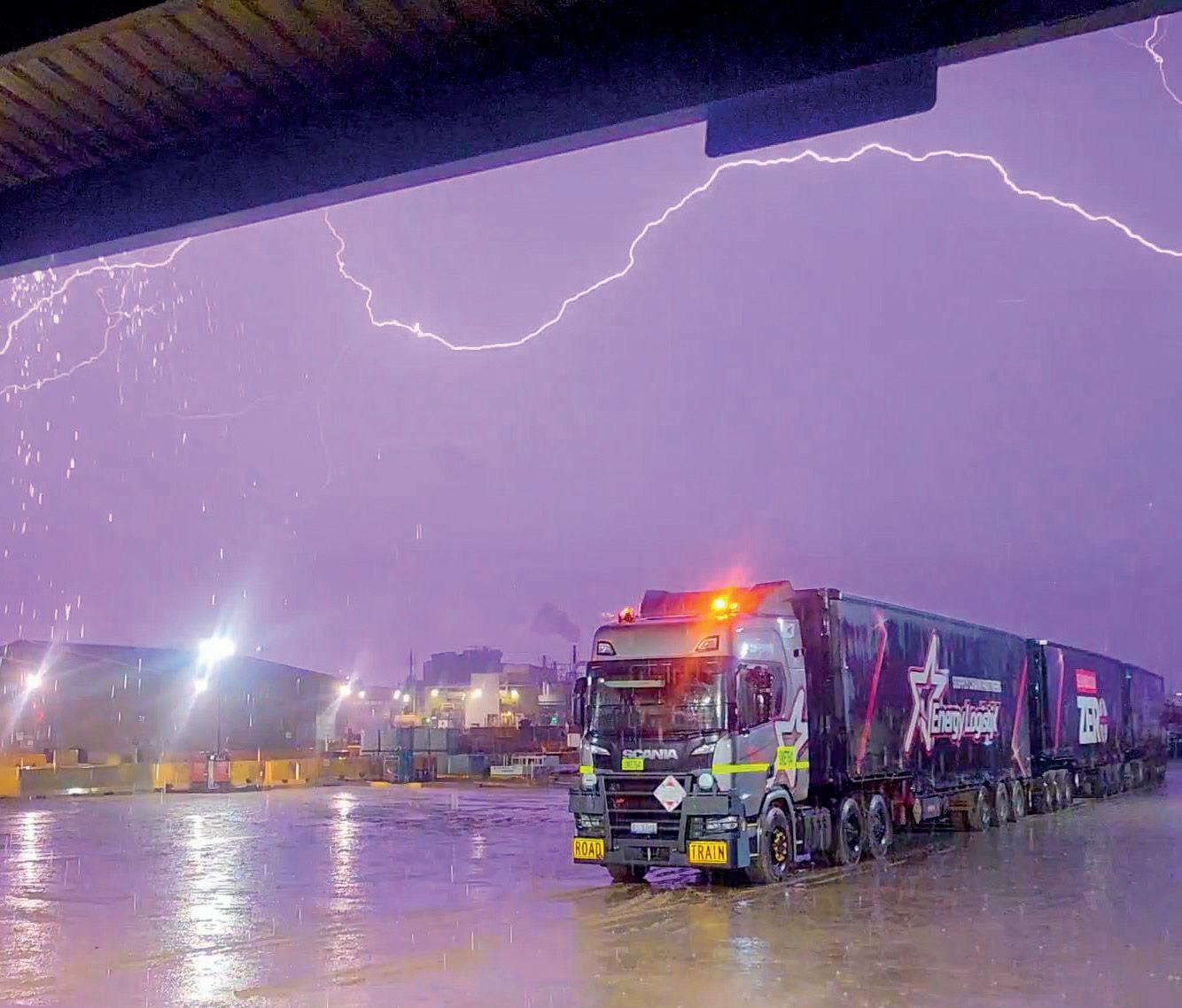
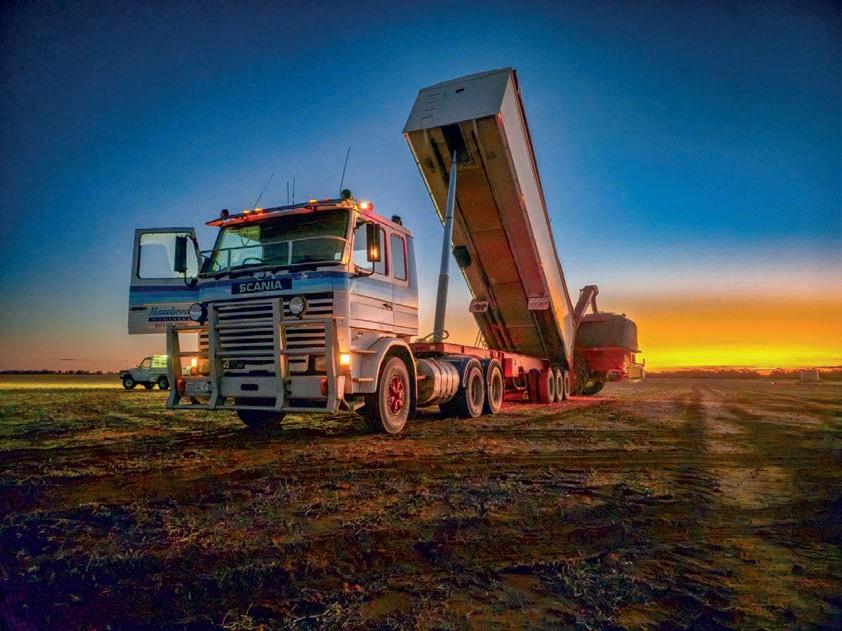
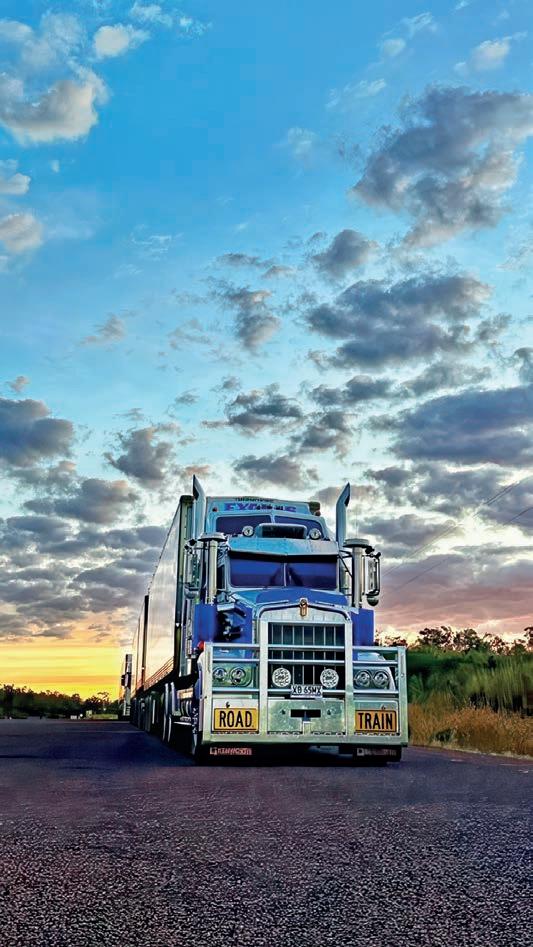
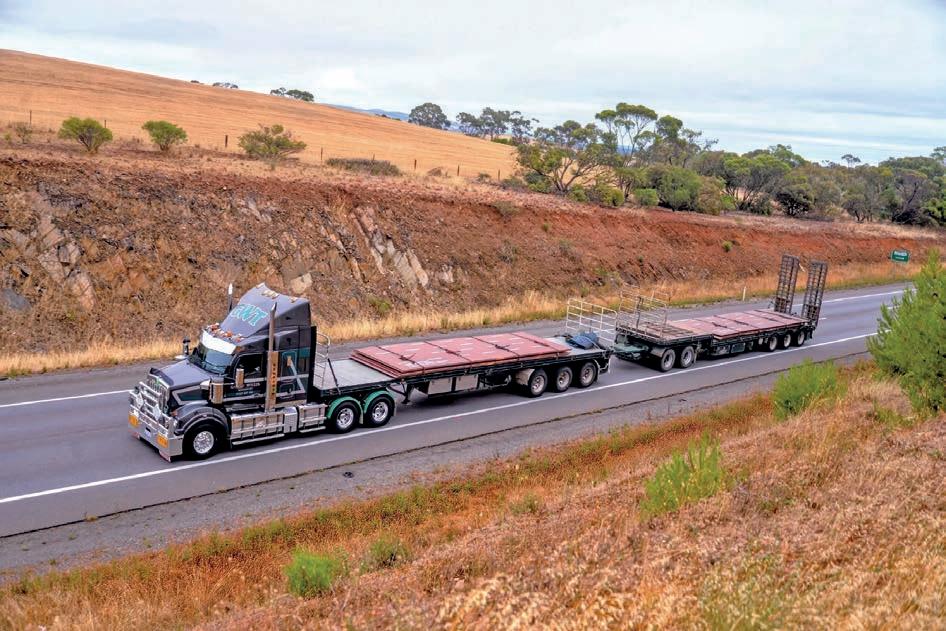
Eight years, one rusty Louisville and a father-son dream finally roaring back to life on the old Hume Highway.
BY DAVID VILE
OF the 300-plus trucks participating in the ‘Crawlin the Hume’ event from Wallan to Albury in April this year, the bright ‘Ipec Yellow’ Ford Louisville LN7000 of Peter and Tim Gray stood out from the pack as the convoy made its way up the old Hume Highway.
The restored Ford was literally on its maiden journey with the completion of the 8-year project heralding the start of a new chapter in the 51-year-old truck’s lifespan, with the father and son duo justifiably satisfied with their efforts in revitalising the vehicle and getting the wheels rolling once again.
The story of the Gray family’s Ford project begins with a bit of a false start. With Peter having spent a lot of time behind the wheel of a 6/71 Detroit powered Dodge, the plan was for Peter and Tim to overhaul a Dodge that Tim had purchased, but those plans were thwarted with the Dodge having too much rust to allow for a rebuild.
With the pair on the lookout for another project, it was Facebook that turned up the old Louisville, as Peter explained, “Tim found it on Facebook Marketplace around 2018, it had been owned by a farmer in Colac. We took it for a bit of a run, bought it and made it all the way back to our place at Melton.
“It had been used as a ‘cocky truck’ carting grain and hay so it had been bashed a bit around the paddocks but we reckoned it would come up alright, so we bit the bullet and got into it.”
The Ford Louisville ‘L’ series was a popular choice for many Australian operators in the 1970s and 1980s, with the LNT9000 sitting at the top of the Louisville line-haul model range. The LN7000 could be considered a ‘little brother’ to the LNT9000, but it was a proven performer for agitator, tipper and prime-mover work (along with being the base unit for the legendary ‘Waltzing Matilda’ jet-powered truck).
In the case of Peter and Tim’s example, it is thought that its initial role was as a car-carrier. “It’s a bit different in that it has a long wheelbase and four fuel tanks, but no sleeper cab - we have been able to find a photo of a Ford car-carrier from back in the day and all the measurements and details are similar so we think it was originally set up as a car carrier,” said Tim.
With a shed well set-up and all the necessary gear on hand at their Melton base, Peter and Tim overhauled the Louisville entirely in-house. The Cummins V903 and driveline were in relatively good nick, with the mechanicals not requiring much attention other than a regular service and changing
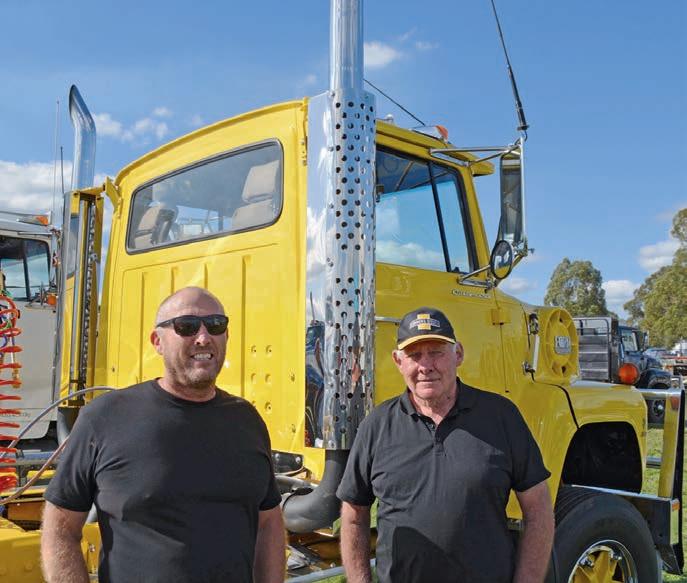
of the engine and gearbox oils and coolant.
The bodywork was a different story with a donor cab sourced and all the panels and chassis sandblasted and prepared for painting.
“I’m a cabinet-maker by trade so I am used to painting things - I got it all stripped back ready to paint. We all reckoned the ‘Ipec Yellow’ was the colour to go with - my first car was a HR Holden and I also painted it that colour, it really stands out,” said Tim.
The Louisville came together with Tim undertaking the bulk of the work including all the electricals.
“I had to delve into that pretty deeply to sort the wiring out; in a few places the wires had been cut and joined and taped over so there was quite a bit to work out,”’ said Tim.
The cab, seats and upholstery were all refurbished along with a few extra touches along the way.
“We added a few bits to it as we went along, attached the stainless guards and lights, and we got the battery boxes off a Kenworth.
The ends of the fuel tanks had been knocked around
a bit on the farm but we got them all fixed up pretty well. We found out we could get the tanks wrapped with stainless so we painted the ends and got them wrapped which is a lot better than polishing them all the time,” explained Peter.
With the intention always being to have the Louisville ready to go for this year’s Crawlin’ the Hume event, Peter and Tim achieved their goal three weeks prior. Running on club registration, the Ford made its way up the Hume to the lunch stop at Chiltern trouble-free, with the duo getting the ‘full experience’ of riding the old Hume.
“The 903 is putting out about 290 horsepower, but she’s noisy! We can hardly talk to each other in the cab,” Tim said with a grin. Peter concurred, “She’s good for 100k, would probably get 110 if you wound her out but jeez the old road is rough alright! Out on the freeway it’s not too bad, but with no trailer on its pretty bouncy! I’m’ glad to get out of it here to give my back a rest!”
On the run up the Hume, Tim took the wheel under
Peter’s tutelage, with the Ford displaying ‘Driver under Instruction’ placards as Tim clocked up some experience as he was looking at – finallygetting a truck licence.
“I’m 54 years old and finally going for my licence! I used to go out with Dad and also my uncle carting grain and so forth in the school holidays. I have always loved trucks but never actually got into the industry so I can get out in
this and have a bit of a play. It’s amazing how many people are into these old trucks so we will have a look at the calendar and get out to a few more types of these shows.”
Peter is quite proud of the completed project which in the scheme of things was not an expensive one, and of the effort Tim and other family members have put in over the years to get the Louisville rolling once again down the road.
“I didn’t keep a record, we bought it for $5000 and I reckon we got it all done for under $20,000, although I have just put $1100 worth of diesel in the quad tanks so I hope we can get home on that! Tim was the real driving force, if it had been up to me I never would have got it finished, but it has been a good family project to take on and everyone has become involved in it at some stage.”
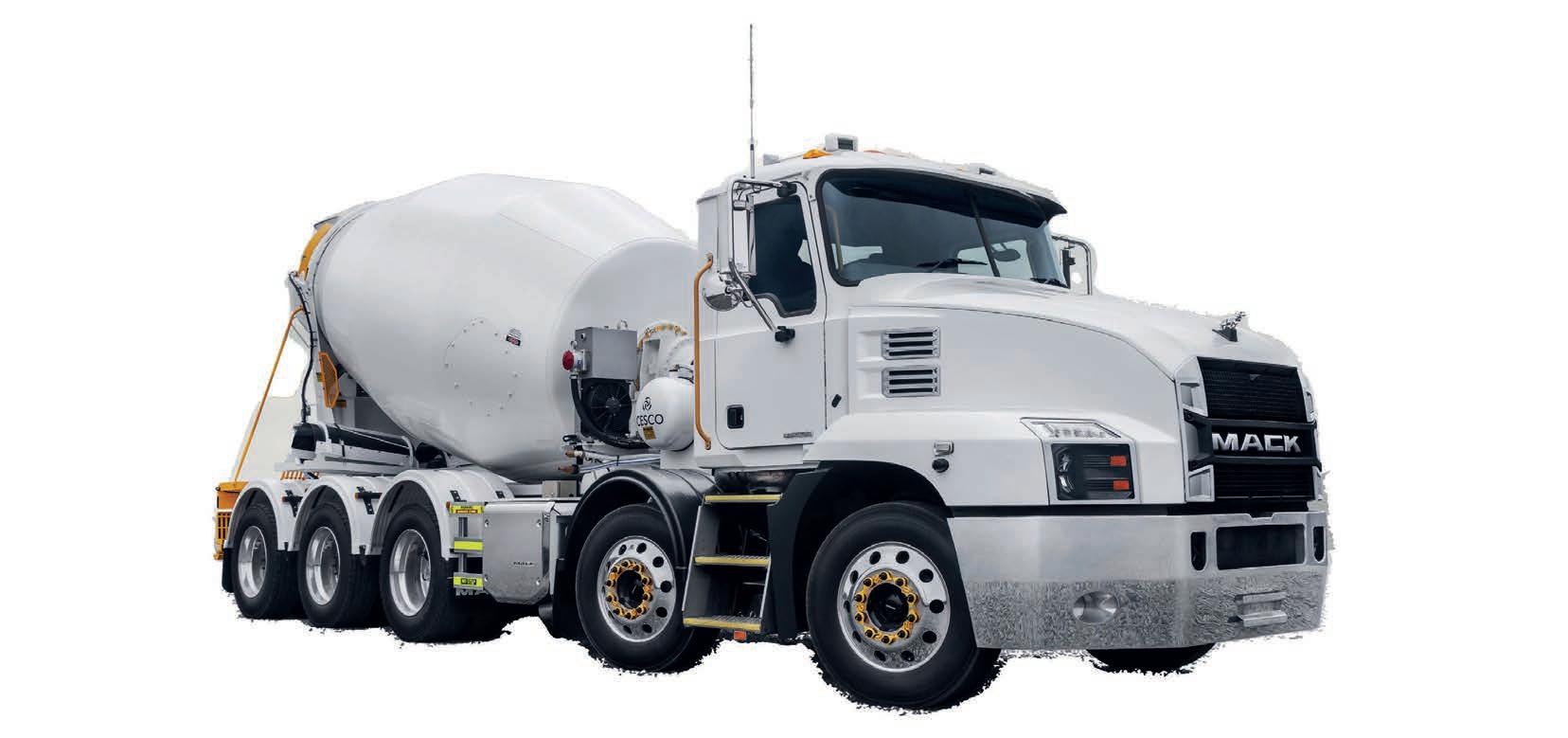

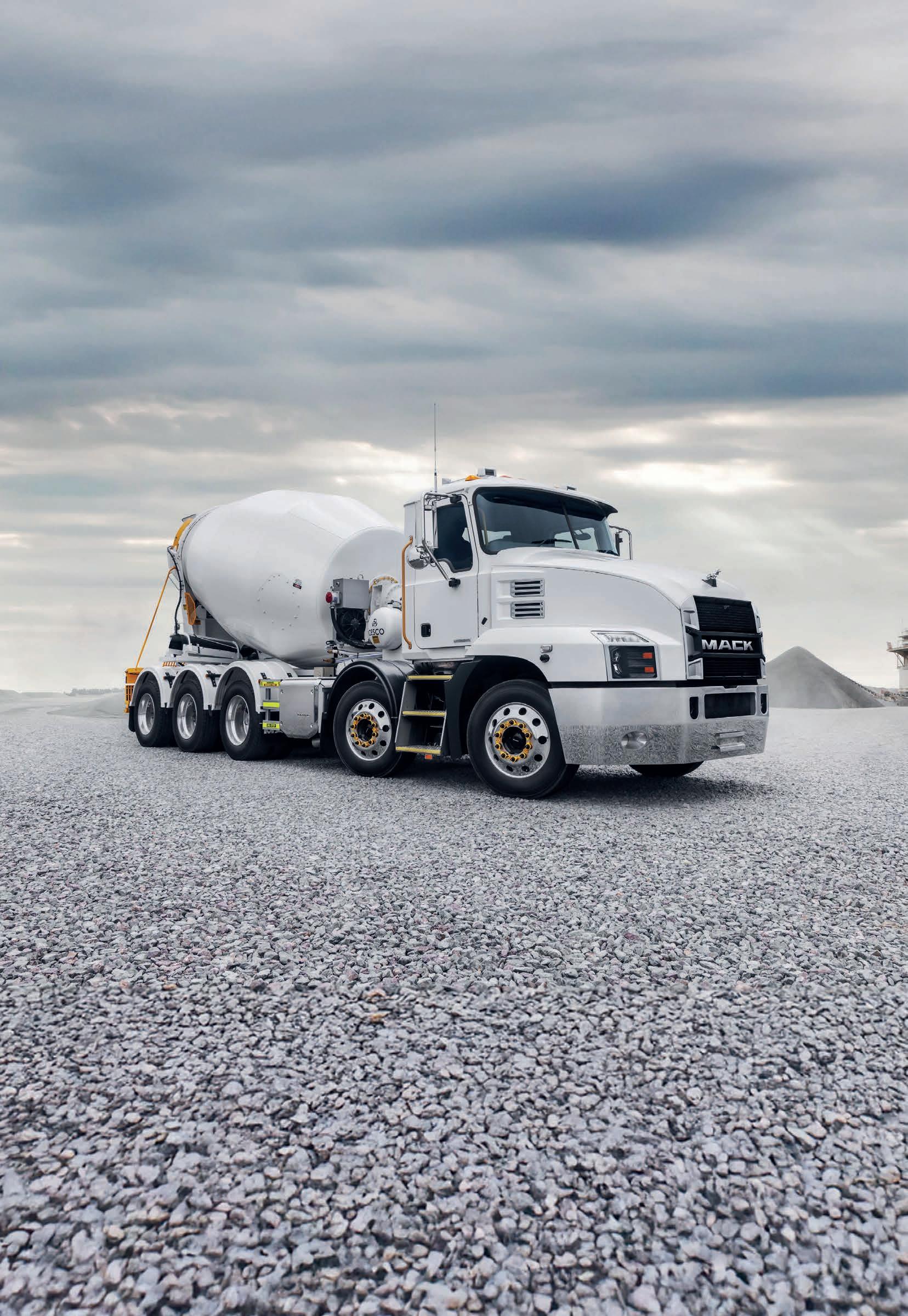
trucks, silent cabins and instant torque: our test driver gets an exclusive close-up look at the technology making rapid industry inroads.
BY GRAHAM HARSANT
“YOU’VE spent 25 years revving the shit out of an old ACCO and then they put you in this! You’d go friggin mad wouldn’t you? It’d just be too quiet.”
So commented a fellow journalist at Mt Cotton some 35 kilometres southeast of Brisbane and home to the test track now owned by the RACQ – which is a very good thing because they have improved the facility out of sight since my last visit here.
Three of us have been invited by Daimler Trucks to play with a range of their product at their aptly named, ‘The Drive Series’.
The program is part of Daimler Truck’s holistic approach to displaying their entire range, focusing on three key areas: Operational Confidence, where the latest safety innovations and ‘connected’ technologies are explored.
Cost of Ownership with practical insights into fuel efficiency, servicing intervals and warranty, along with tailored finance and insurance solutions. And of course, the driver experience which is the reason we writers are here.
We have in fact arrived early to drive the “it’s not an ACCO” truck before dealers, punters and other interested parties arrive on this, the last day of the week-long event.
While they get to play with most of the Daimler product, we are the only three invited to hop behind the wheel of this particular truck. Oh, the perks of truck journalism.
The mention of ACCO should have given you a clue but if you haven’t guessed what type of truck my journo mate was referring to, it was a garbage truck of the compactor type (in fairness it could a lso have been an Agitator). And it was electric, hence the comment.
This was just one of 38 Mercedes-Benz, Freightliner and Fuso trucks the company had transported to the centre for all and sundry to try out. There were big ones, medium ones and small ones to suit every requirement. There was fossil fuelled as well as electric but we’ll go with the volts in this piece as there’s too much to cover in one article.
The garbo truck we’re in is a Mercedes-Benz eEconic with the super-efficient 2-speed eAxle and is possibly the most fitting application for electric power in any truck due to the constant stopping and starting – the more you stop the more power you regenerate back into the batteries.
Firstly the truck will ‘kneel down’ much like buses to allow easy entry. One step up into the cab and another to get into the driver’s seat which, also like a bus is set low in the cab.
Beside this is room for the three lackeys who have to get out and empty the garbage bins. The cabin is WIDE
with vista views all around so you’re not going to miss seeing a little kid or their dog run out onto the road. Of course, if they do there’s all the usual Mercedes-Benz safety features to protect them.
The windscreen is huge and because you sit low you’d never reach a sun visor so M-B has an electrically (of course) operated full width blind that drops down at the touch of a button.
This is a truck that most of you will never get to drive but for the lucky few whose councils or companies place an order you’re going to love going ‘friggin mad’.
The silence is seriously golden, the vehicle with its low centre of gravity goes around the hairpin bends at Mt Cotton with ease and you’re going to win every traffic light drag race with 100 per cent torque available from standstill.
Next up, I’m in a Fuso eCanter e918, a wide-body version with a124kW/3 battery pack. No range anxiety here. Fuso was the first OEM electric truck in this country and again features Daimler’s eAxle where the electric motor and dif are housed in the one unit, freeing up space further forward for batteries.
In the e918 there is 129kW (175hp) and 430Nm of torque at peak which is more than enough for the truck to get up and boogie away from a standstill.
The gearbox is of the Single Reduction variety, meaning its 1 speed – all this truck with that torque available from standstill will ever need.
This is not my first rodeo in an eCanter but I’m always glad to get behind the wheel of these well sorted trucks. The dash is fully electronic and is complimented with a large multimedia screen front and centre and ‘jet exhaust’ styled air vents at each end.
Three large dials below the media screen operate the aircon – Fuso having resisted the temptation (thank goodness) to incorporate them into the touch screen as so many car manufacturers have.
The drive selector sits within fingertip reach of the steering wheel and has the retardation function built into it.
Flick the lever back and you’re feeding juice back into the batteries – and like the eEconic you are only using the brakes for the last metre or two to come to a standstill.
In fact, on our drive around the circuit which contains a number of sharp bends and steep rises and drops, there is next to no need to use the brakes at all.
The steering is great, the driver’s seat comfortable and, like the eEconic before it, the silence is deafening. The truck rides over humps and bumps, barely noticing they’re there.
Importantly, this type of truck (I’m in a tautliner here)
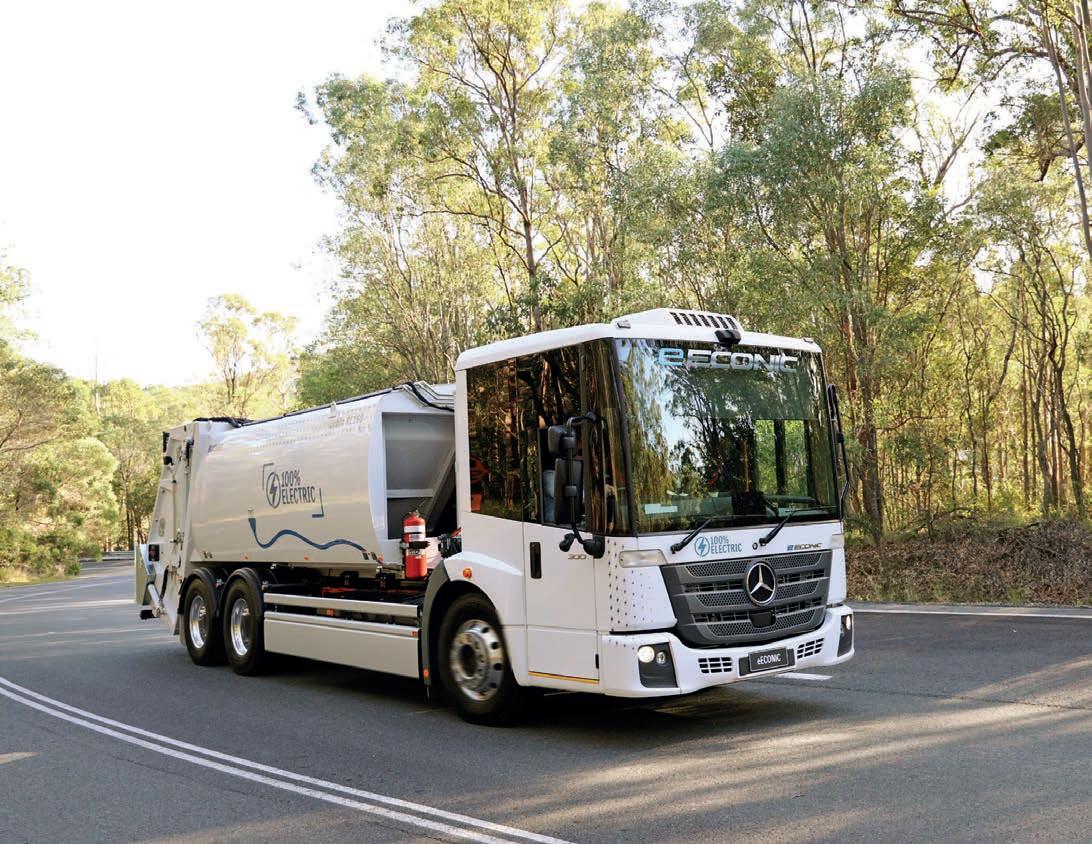
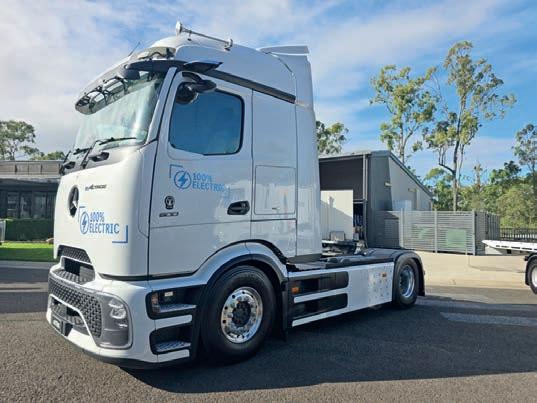
is going to run you around town all day without fear of running out of juice.
I can say that with confidence as I’ve managed to do so in other eCanters and in fact in other brands with considerably lower kW’s available. Then you simply park up at night, plug it in and you’re ready to go again the next day.
Do not, I repeat DO NOT discard electric last-mile delivery as an alternative to diesel until you’ve at least tried it. You’ll never go back.
The next truck I come across is the big (electric) boy of the Daimler Truck stable and unfortunately, we were unable to drive this one around the block – well, not yet anyway.
The eActros 600 has been in Europe for a couple of years now and has been a success for the company, winning the International Truck of the Year in 2025.
The 600 denotes the kilowatt of the 3-battery pack and Daimler quotes a range of 500km laden. As the company is ultra-conservative when talking range I’d imagine that figure leaves a reasonable safety margin.
In Europe where delivery distances are much smaller than here, this truck can cover most requirements. In Australia the company would be looking at other applications such as last mile, dock work and so on.
This particular truck – a 4x2 was brought into the country for evaluation purposes and the company is well aware that there is work to be done from infrastructure support to axle weights, but the fact is those and other obstacles will be met and overcome and Daimler will be ready to come out swinging when they are.
As I was talking to our host an existing Daimler client wandered over and hounded him as to when he could lay his hands on a few, so I know the interest is there from some quarters.
To this end, Daimler will be importing a 6x2 version to test in the near future.
Apart from the artwork proclaiming the truck to be
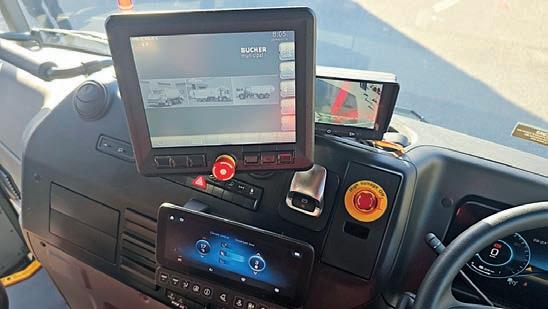
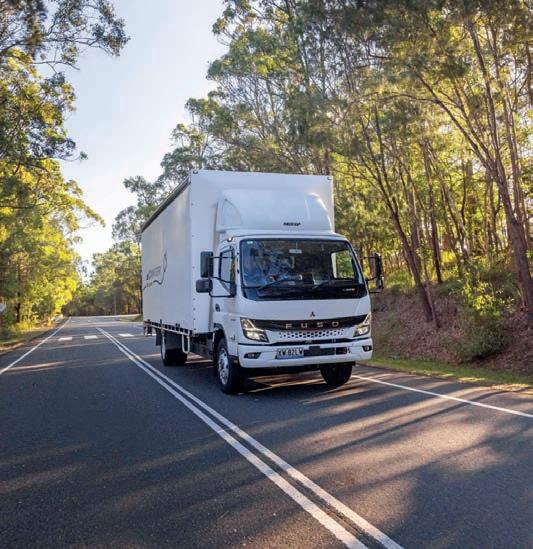
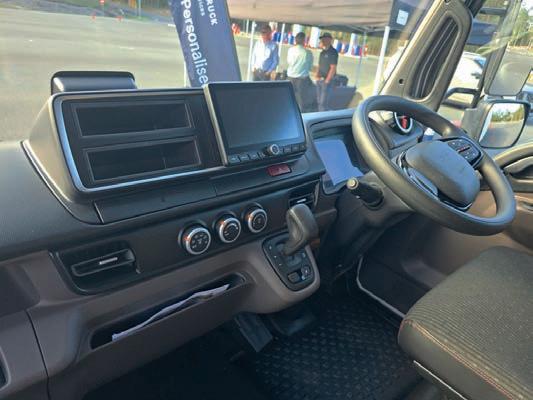
100 per cent electric, you could easily mistake the truck for its diesel-powered brother, the ProCabin, itself relatively new to the Australian market.
To this eye, which has seen this latest design iteration more than most, that’s a good thing, both from its ‘angry’ grill to its wind-cheating de-
sign offering 3 per cent fuel savings. These trucks were just the tip of the iceberg at ‘The Drive Series’.
In the next issue, out on June 19, we’ll dive into the diesel-powered brigade – including a truck that offered more thrills than slow dancing under the sheets. Stay tuned...

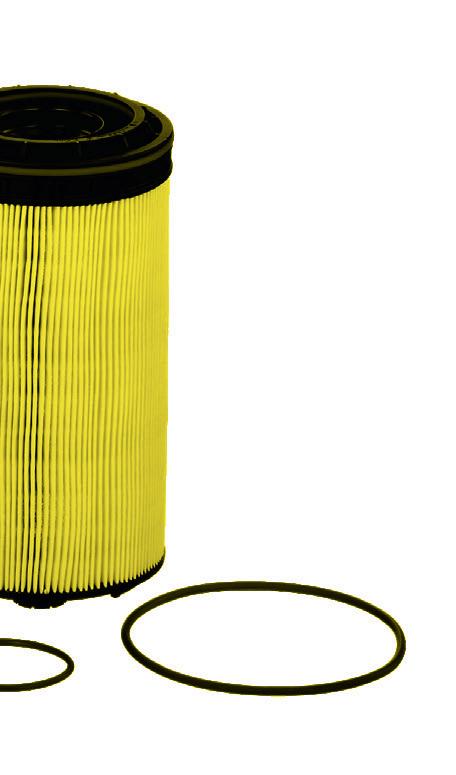

Part
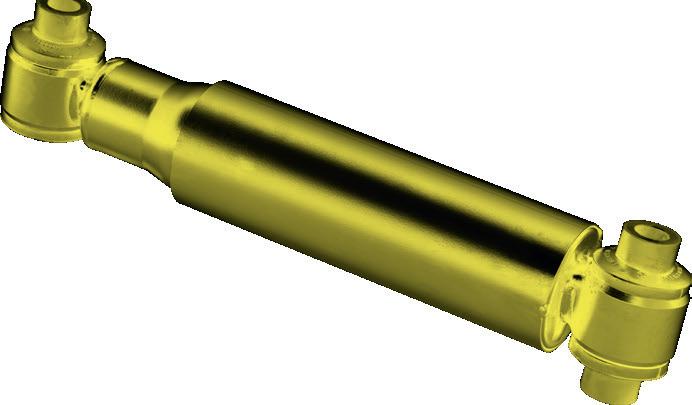

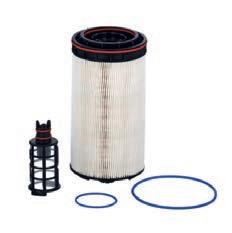
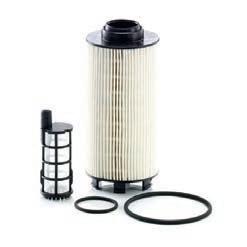



Part
Suits:

Part Number: QMX951725
Suits: MY21
Part


AUSTRALIA Post has selected Logmaster as its electronic work diary (EWD) and compliance management provider, with the organisation’s linehaul fleet becoming the first department to roll out the platform as part of a broader move toward improved operational visibility and digital fleet management.
Deployment by Australia Post represents another significant achievement for Logmaster, which has grown rapidly over the past five years to become Australia’s
leading electronic work diary provider.
As transport operators continue moving away from paper-based systems and disconnected compliance processes, many heavy transport businesses are now looking for platforms that provide both compliance management and real-time operational visibility across the fleet.
Australia Post’s early rollout through its linehaul operation is already generating positive feedback from both drivers and operational teams.
“The move to digital dia-
ries is helping reduce manual errors while giving drivers real-time visibility of their hours and rest breaks,” said Lindy Pascoe, Head of CoR & Compliance for Network Operations at Australia Post.
“Feedback has been overwhelmingly positive, with drivers calling the system easy to use and beneficial for day-to-day operations.
“The change to EWD represents a critical step forward in moving away from paper-based systems into a more modern, digital future.”
According to those involved, drivers have adapted quickly to the platform, with many highlighting the value of real-time fatigue visibility, automated calculations, and proactive break alerts that remove uncertainty around work and rest requirements.
With live visibility into remaining legal work hours, simplified workflows and automated fatigue calculations, the transition away from paper diaries has reportedly reduced stress for drivers while improving day-to-day usability.
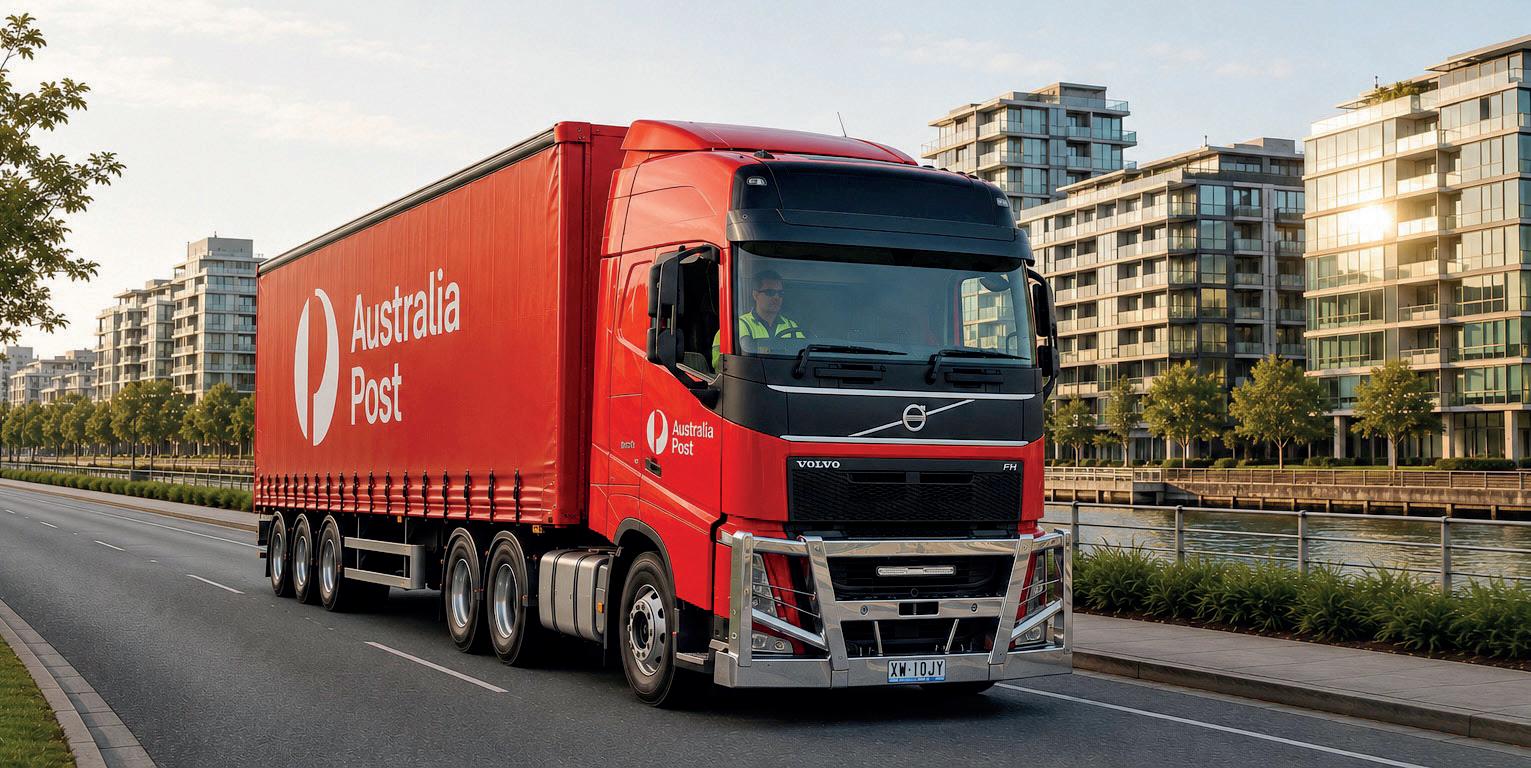
Operational teams are also seeing immediate benefits.
With real-time information now visible across management dashboards and perational systems, teams have greater visibility into fleet activity, fatigue status, inspections, incidents, and compliance events as they occur. The move away from delays with paper and manual record reviews is improving operational awareness nd allowing faster decision-making across the fleet.
ppointment of Logmaster also reflects a broader shift occurring across the ransport industry, where electronic work diaries are increasingly being viewed as more than simply a compliance requirement.
any operators are now looking for integrated systems that combine compli-
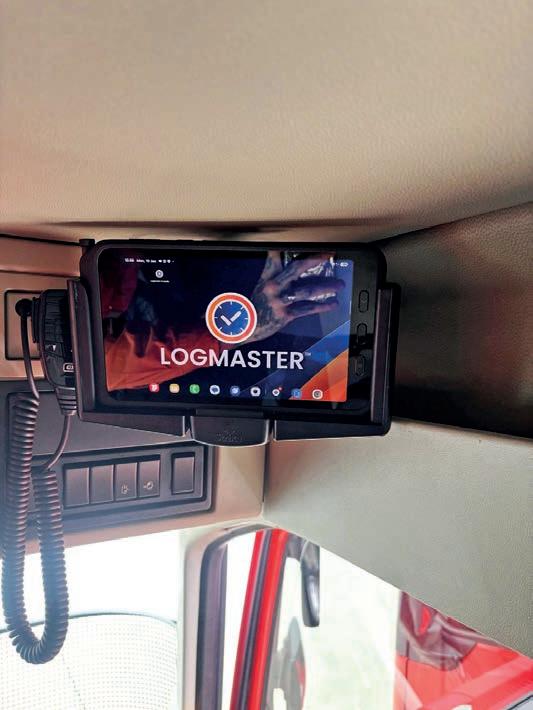
ance, operational visibility, driver management, and telematics data into a single platform capable of supporting day-to-day fleet operations in real time.
In addition to electronic work diary functionality, the Logmaster platform also includes:
• Fit-to-drive declarations
• Vehicle inspections
• Fault and incident reporting
• Infringement reporting
• Telematics integrations
• Real-time fatigue visibility
• Live alerts for drivers and office staff
• Fleet-wide operational awareness
As more major transport operators continue adopting connected digital systems, the shift toward real-time fleet visibility and integrated compliance management is rapidly becoming standard practice across the Australian transport industry.

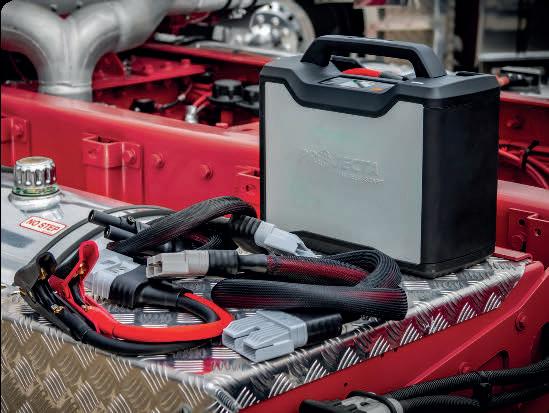


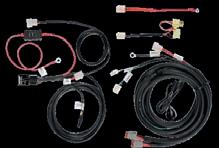

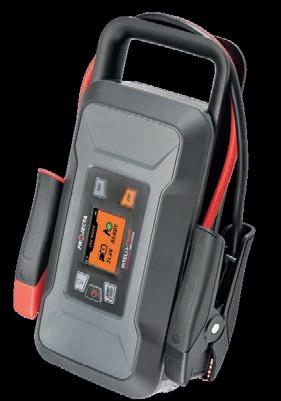

IT’S the highly anticipated event that comes just once a year – Gilbert & Roach’s ‘Off The Pallet’ end of financial year sale.
This year the sales event will take place on Saturday, June 13. It’s being held across all four of Gilbert & Roach’s New South Wales sites – lo
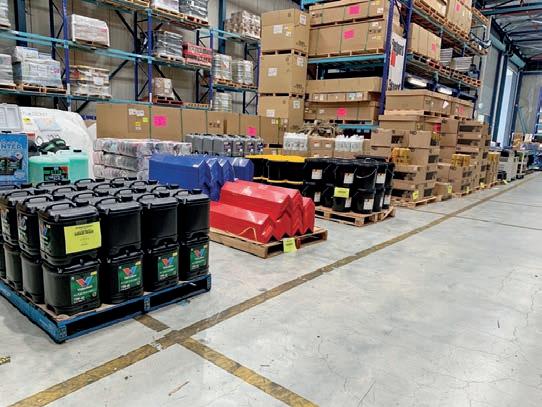
cated at Huntingwood, Narellan, Hexham and Gosford.
The Off The Pallet Sale is a chance for customers to nab some great bargains. Everything across the showrooms will be on sale, with heaps of truck and trailer parts up for grabs at heavily discounted prices.
This popular sales event has been taking place for 35 years, attracting hundreds of trucking company owners, owner drivers and industry stakeholders every year.
A not to be missed event, the Off The Pallet sale will include a broad range of high quality parts and accessories to suit Kenworth, DAF and Isuzu truck models and more, along with a huge selection of trailer parts.
Gilbert & Roach Huntingwood Parts Sales and Marketing Manager, Shayne Morris, told Big Rigs, “Our warehouse will be open to the public with palletised stock on display. Prices are discounted heavily to entice customers to purchase bulk quantities.
“This is a great opportunity for customers to save a bit of money and stock up on the parts and accessories they need – especially given the current tough economic climate and high fuel prices. Although fuel prices have come down from their
recent peak, they’re still higher than what they were before the Middle East conflict began.”
As Shayne continued, “Low prices and big discounts is what the Off The Pallet Sale is all about.
“A lot of our customers are interested in our surplus stock. We put all of that on sale – including turbos and engine parts and that sort of thing. The surplus stock will all be on display in the warehouses with prices on each item.
“This is the biggest sales event we do. We get a lot of customers who come along every year.”
Along with great buys, customers are invited to come a long and enjoy a free barbeque. Some suppliers will a lso set up special displays of their products. Among those this year will Premier One, bringing along their vintage 1931 Ford Model A, known as ‘Old Sudsy’, to the Huntingwood store.
Competitions will also be held on the day, along with other promotions. This year, Fleetguard has a barbeque fire pit up for grabs, for one lucky winner.
Held for one day only, products quickly fly out the door. “Some of the most popular products at this annual end of financial year
sale are filters, brake components, oil, brake shoes, drums and bushes,” said


ISUZU Australia Limited (IAL) is running an end of financial year (EOFY) sales initiative, through to June 30, 2026.
Up until that date, Isuzu’s 3 Years Free Servicing Campaign, on selected N Series Ready to Work trucks, offers eligible buyers of selected new MY25 Isuzu N Series Ready-to-Work (RTW) models a complimentary three-year Isuzu Essentials Service Agreement, reinforcing a long-standing commitment to reliability, support and whole-of-life value.
With the EOFY period traditionally a key purchasing window for businesses looking to invest in capital equipment, Isuzu says the campaign provides a timely opportunity to secure a new Isuzu truck backed by a comprehensive and predictable service solution.
Craig White, Head of Sales at Isuzu Australia Limited, said the campaign was designed to align with the needs of Australian operators who depend on their vehicles day in, day out.
“EOFY is a critical time for many businesses, where smart investment decisions can have a direct impact on productivity and profitability,” Craig said.
“This campaign is about giving customers added confidence in their purchase, k nowing that their new Isu-
zu truck is supported by a three-year Essentials Service Agreement that helps manage ongoing maintenance and operating costs.”
At the core of the campaign is Isuzu’s Essentials Service Agreement, a package developed to simplify truck ownership and remove uncertainty around servicing requirements.
Covering scheduled maintenance across key vehicle systems including engine, transmission, driveline, brakes and suspension, the agreement ensures all work is carried out by trained techni-
cians within Isuzu’s national dealer network, using genuine Isuzu parts.
This approach helps maintain optimal vehicle performance while protecting longterm reliability and resale value.
The inclusion of a service agreement also allows operators to better forecast running costs, a critical factor for businesses managing tight margins or operating across multiple vehicles.
“Downtime is one of the biggest risks to any transport operator,” said Craig.
“By having a structured ser-
vice plan in place from day one, customers can reduce the likelihood of unexpected issues and keep their trucks on the road, where they’re earning income for the business.”
The campaign builds on Isuzu’s broader strategy of supporting customers beyond the point of sale, with a ftersales programs that prioritise uptime and operational efficiency.
Past service agreement initiatives have demonstrated strong uptake across a range of industries, highlighting the growing importance of maintenance planning in modern fleet management. By bundling a three-year
service agreement with new vehicle purchases for this program, customers have access to the latest technical expertise, genuine parts and consistent servicing standards throughout the life of the agreement.
“The reality is that a truck is more than a purchase, it’s a long-term business asset,”
Craig said.
“Our role is to support customers throughout that lifecycle, helping them maximise the return on their investment and minimise disruption to their operations.”
With many businesses looking to finalise purchases before the end of the financial year, Isuzu says the campaign offers a practical incentive that extends beyond the initial transaction.
R ather than focusing on upfront discounts, the campaign delivers ongoing value
nance uncertainty and improved cost control over the first three years of ownership. This approach aligns with changing customer expectations, where total cost of ownership and operational continuity are key decision drivers.
“Businesses are looking for more than just a competitive purchase price,” Craig said.
“They want certainty, support and a partner that understands the pressures of running a fleet or operating a single vehicle in demanding conditions.
“This EOFY campaign speaks directly to those needs, providing a solution that helps customers plan ahead and operate with confidence.”
The Essential Service Campaign is available on selected M Y25 Isuzu Ready-to-Work models purchased between
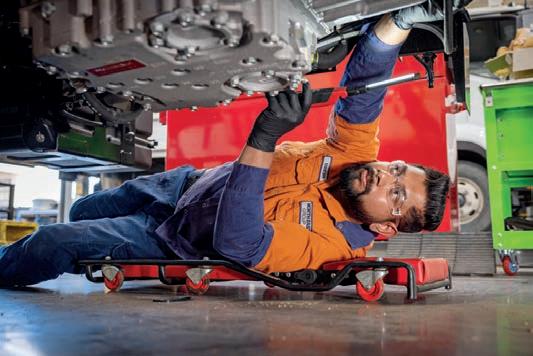


They’re a company no one wants to have to call, but one that operators know they can trust when things go wrong.
BY GRAHAM HARSANT
AT Lot 6, Angle Vale Crescent in Burton, SA, you drive through the cyclone gates onto an unsealed forecourt with a scattering of trucks in front of an unassuming building/shed with an equally unassuming sign proclaiming it to be the home of The Truck Factory.
I’d thought that it would be much, much bigger – and flashier – given I’ve seen a very big and flash Peterbilt tow truck bearing the company name at a couple of truck shows over the years.
Mark Menzie, owner of The Truck Factory, isn’t about pretence though. He’s much more about getting the job done for his clients. And that first sight of the building, as I was soon to find out, was akin to viewing the tip of an iceberg.
Beyond it exists many more, housing various aspects of the company’s operations – not to mention acres of trucks that have come to grief, many of which will be recycled in part to rebuild another truck or in full to return to the road. Nothing at The Truck Factory goes to waste.
From Hobart, Tasmania, Mark Menzie moved to the mainland in 1999 to set up another repair/towing company. In 2004 he struck out on his own and The Truck Factory was born.
Now with three sites, business has obviously been good for Mark and I suggest that others’ misery has been his bread and butter.
“People probably want to keep their distance from us,” said the man himself. “We’re not someone that people are looking forward to seeing as they’ve either had a breakdown or an accident. We are a company that you don’t want to know but you need to know for when something goes wrong.”
Business relationships are as important as the quality of repair and Mark has worked hard over the years to build a client base that knows he will do the job for them.
“We have companies on our books that have an emergency procedure in place should something occur. They follow that, give us a call and things run smoothly. Without those procedures – maybe the driver can’t get hold of the boss –there is sometimes panic, so to all those reading this, please
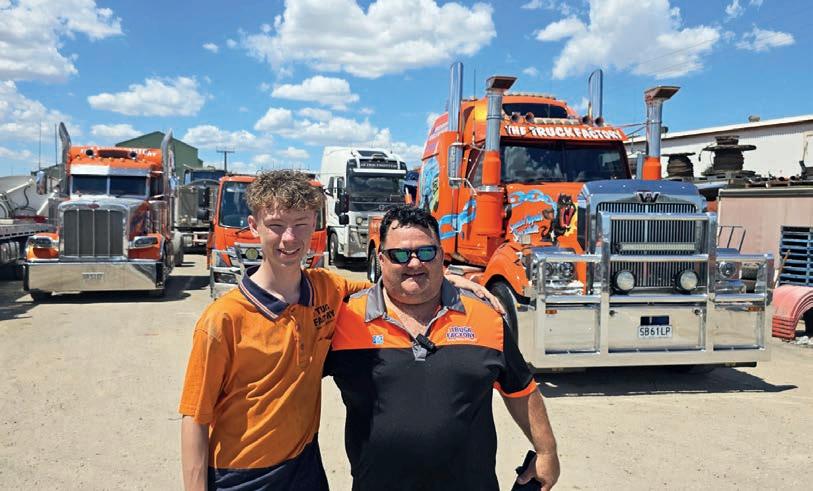
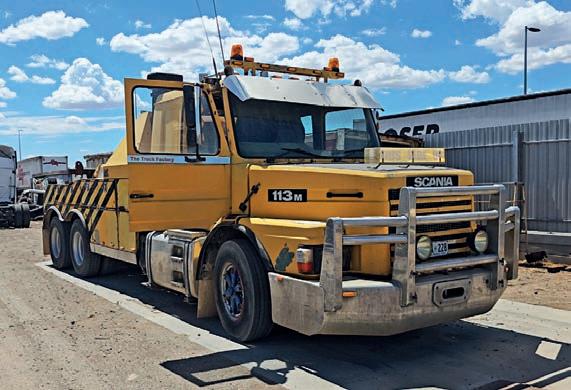
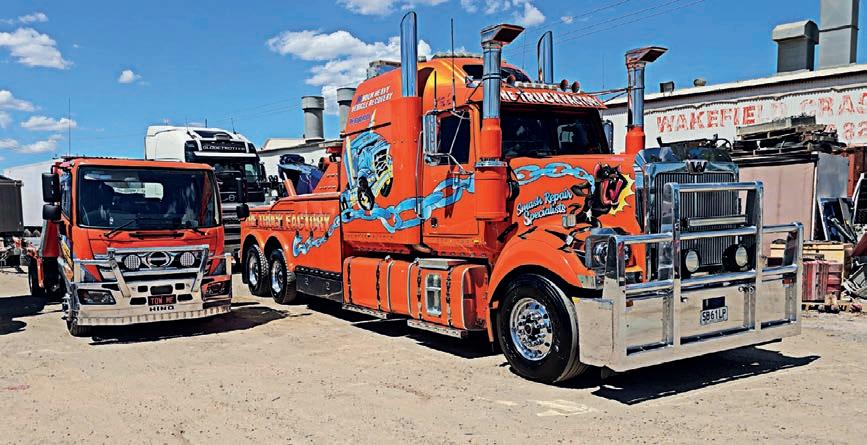
Accidents or breakdowns can happen at any time and Mark’s phone stays on all night.
“We get calls at all hours which can be anything from a local tow, out to the WA/ SA border. We get into New South Wales a little bit as well and have been as far as North Queensland for jobs.”
North Queensland?
“There are particular companies that we’ve dealt with in the past who know that they get good service and are happy to ring us if something goes wrong. The one in North Queensland, for example, was Kalari Transport (now Qube), for whom we’ve done a lot of jobs in the past.
“Generally speaking, if a customer wants us to look after something we will investigate all avenues as to how we can get the vehicle back at a reasonable price, even if it’s a backload on a drop deck from North Queensland or WA.
it back at a reasonable cost to carry out those repairs.”
The Truck Factory has six tow trucks of various descriptions, one of which is itself currently a ‘victim’.
These are not cheap vehicles, as illustrated by the new Legend SAR sitting outside the office door, minus its bonnet and bunk, that cost $1.3 million.
“A few paint issues,” said Mark. “Luckily we know someone.”
The SAR had been on order since the beginning of Covid, so has been a while in the making and cost an extra $40,000 due to a price increase before delivery.
“I was a bit surprised but we agreed to take delivery. In our case the vehicle had been made to a specific wheelbase for tow trucks so it came out of the factory prepped for a tow truck body to go on.
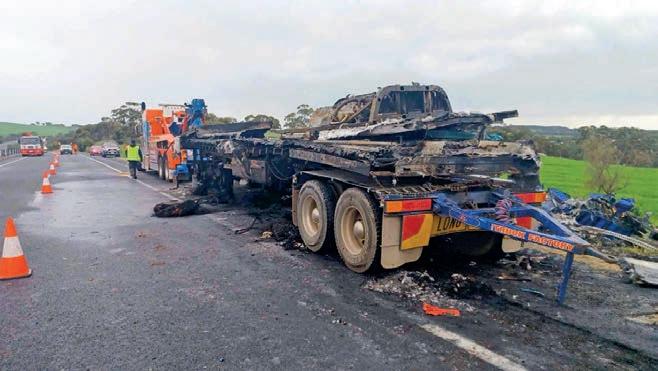
“It then went to Sydney to Kent Collision & Kustom. Jamie Kent is the agent for Jerran who are known globally for their quality towing gear. We’re looking forward to getting it working and are hoping t will be on the road at the end of March.
“For us it is a long-term investment. A new truck like his SAR generally takes 10 years to pay off so you have to be patient to get the return. You have to keep up with technology and bigger combinations and we can’t afford to e breaking down when going to breakdowns ourselves.”
Towing is just part of the
job. There is also the clean-up at the site.
“This is why I got involved with Brenton White at Aus tralian Commercial & Trans port Insurance Brokers who I’ve known since the ‘90s.
“When we first got into the repair business in 2004, I knocked on his door, told him what we wanted to do and that we would like him to be our broker.
“I’m a big believer that if you have a good broker, if he answers the phone at 2 o’clock in the morning and helps sort things out – and Brenton does that constantly – it really helps in getting the job sorted.
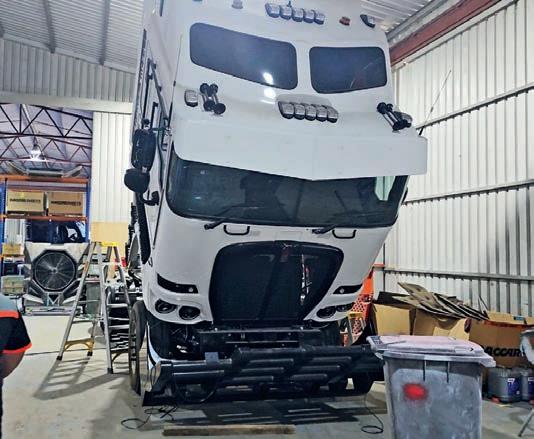
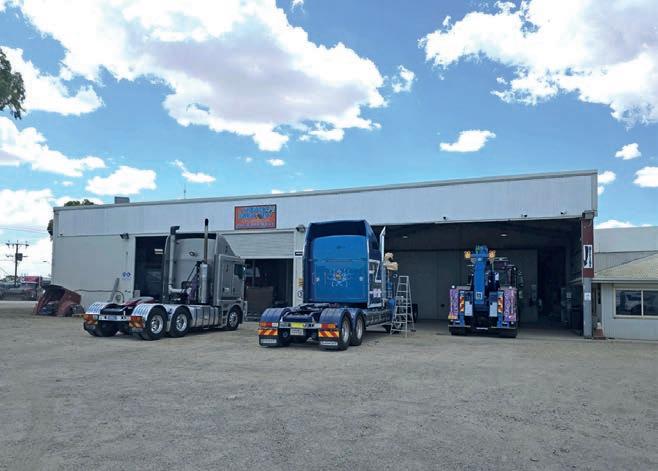
good stead.”
The Truck Factory has around 30 trucks in for repair at any one time plus many coming back in, having undergone temporary repairs whilst waiting for parts to arrive.
“These days it’s not so much doing the recovery of the vehicle, it’s ‘do they have the right marine insurance?’ Because quite often the clean-up can be dearer than the recovery of the truck.
“So from a tow truck company’s point of view, yes we k now the truck insurers but we don’t know who the marine insurer is.
“We’re about to put our hand up for anywhere from $50,000-$100,000 worth of marine clean-up and we want to know that they have the right cover. You like to be dealing with a broker who can tell you everything is kosher, and Brenton is the one who does that for us.
“No-one’s immune including ourselves. One of our (tow) trucks got hit in WA, which goes to show that even the best can have their misfortunes. Our relationship with
“A lot of customers want to keep their trucks moving so they prefer it if we do a temporary repair, pre-order the parts in and pre-paint them to limit the time they are off the road, which is what we try and do. No-one wants to be off the road longer than necessary so we do our best to get them back out there ASAP.”
To that end the business keeps a supply of bull bars and other recyclable parts to keep their customers moving. There are, for example, a couple of fully restored Kenworth cab shells ready for when needed.
Mark believes that his success is down to his staff.
“We’ve got guys that have been here from the very beginning. The average staff tenure is 14 or 15 years of service which speaks well of us, I hope. Our biggest assets are our staff and that’s what makes us different to the rest,
Walking around The Truck Factory, there is activity everywhere. Chassis being straightened, cabs being replaced, engines out, paint being applied. There are also a couple of in-house projects like the white K200 to be fitted with a semi-tilt tray and all chrome replaced with black. This is going to look cool! As well as trucks, there are plenty of trailers waiting for Mark’s team to perform their surgery on.
Outside is a fully restored 1977 S2 Kenworth Mark did up in 2019 for his wedding looking dejected. The S2 is waiting for space to be stored. Further on is a bunch of Mack trucks that he hopes to restore “one day”.
Over his working career, Mark has seen it all, from local breakdowns to retrieval from the other end of the country. He has seen much worse as well, but doesn’t draw upon those, “for sanity’s sake.”
The success of The Truck Factory is due to hard work, tenacity and the building of a team of loyal professionals whose skills have greatly contributed to the company’s success.
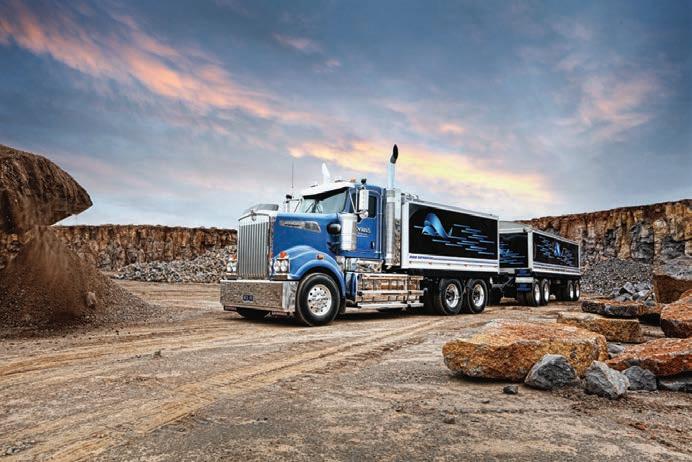

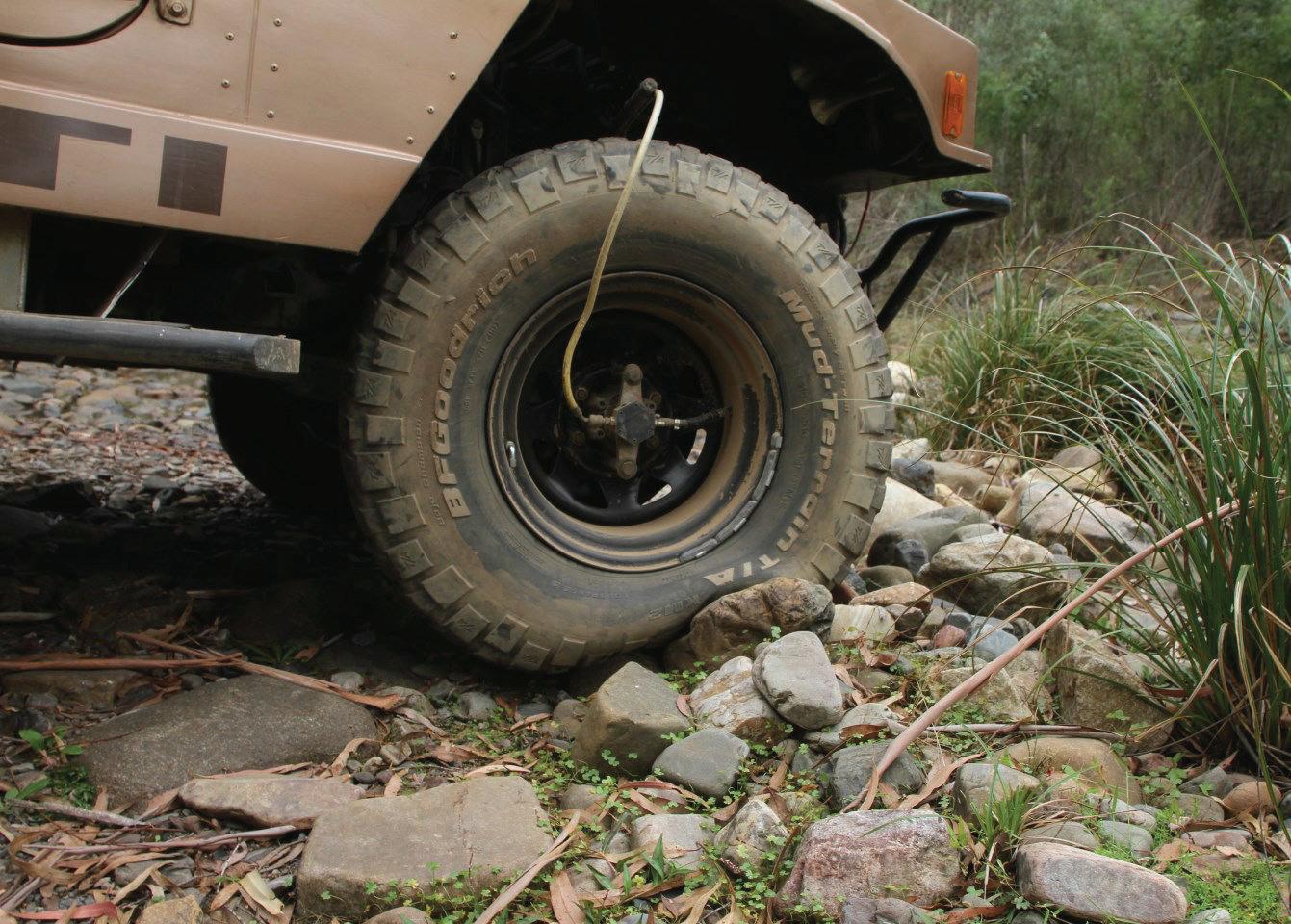

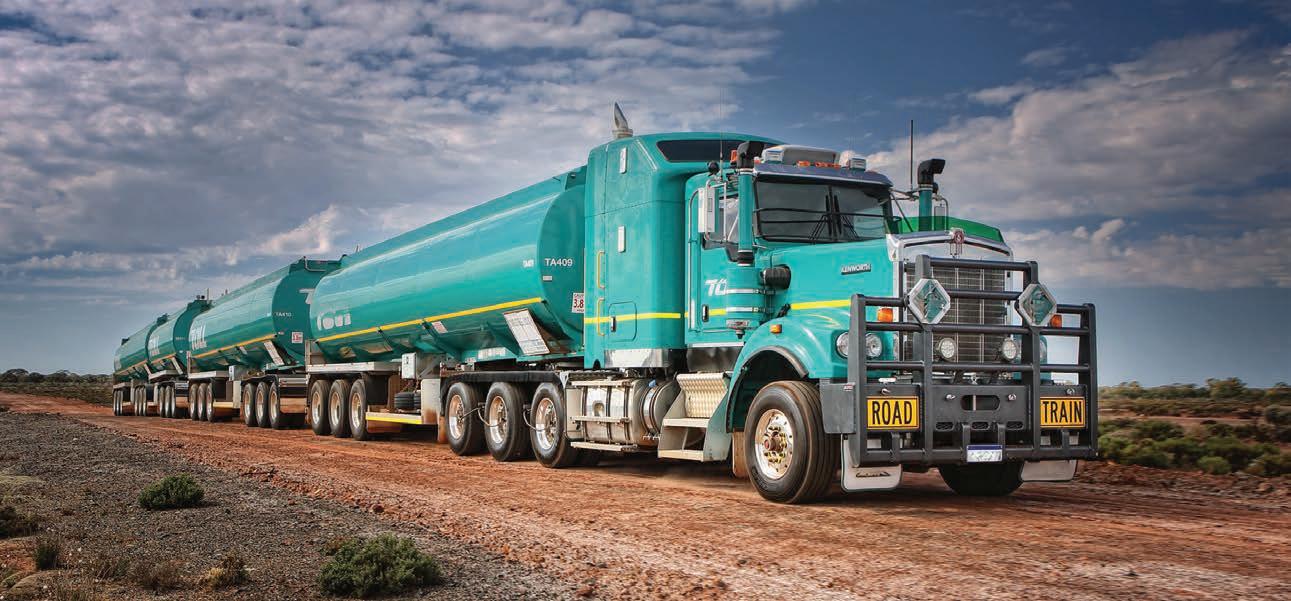
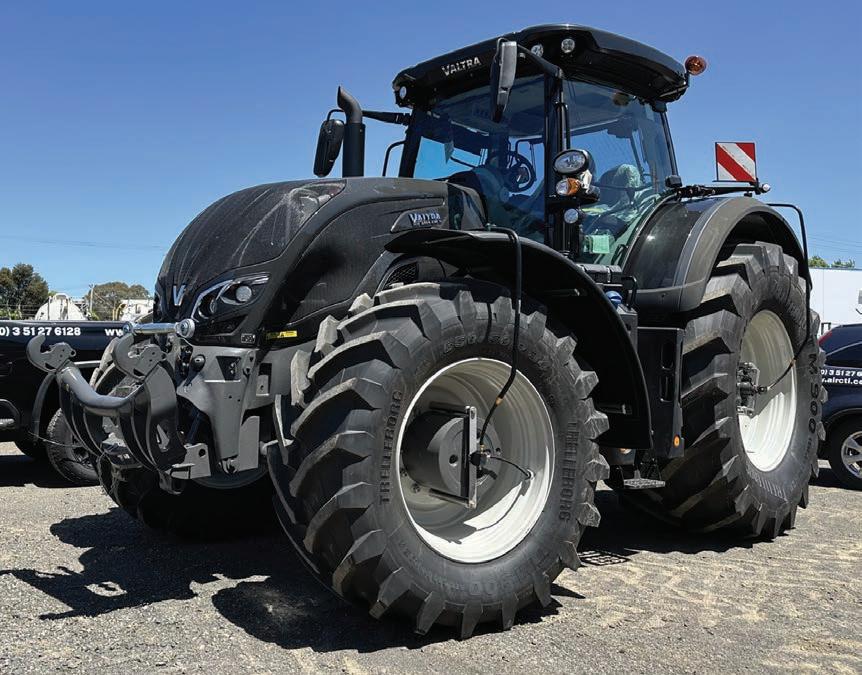


try pathways and inconsistent heavy vehicle licensing and training standards across jurisdictions.
This results in less experienced drivers operating larger
They are designed to improve freight efficiency, fuel consumption, and maintain supply chain continuity. owever, they also represent a significant shift in how the road network is being used.
I have been motivated to complete this paper following recent media reports, which have highlighted that larger and longer trucks are being given access to the urban netoverage has described this as “the outback coming to Sydney” (Channel 9 News), aimed at delivering “significant fuel savings” through ore flexible operating conditions. This aligns with the roader objective of moving more freight with fewer trips during fuel supply pressures to create positive economic
This limited understanding and uncertainty may have multi-level impacts on how the public, industry and decision-makers interpret both the risks and the intent of these reforms.
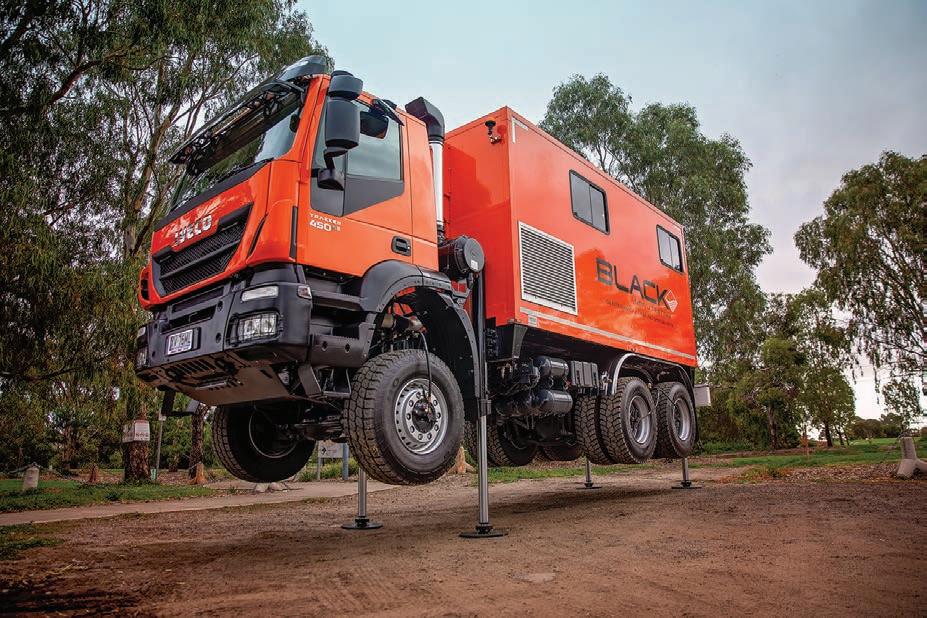


in equipment capability and complexity are matched by structured training, rigorous assessment, and ongoing competency verification.
Without a corresponding investment in driver training, trainer capability, and nationally consistent standards, the current trajectory is likely to result in an increase in cross-vehicle class incidents, with significant safety, economic, and operational consequences.
Australia’s freight network is operating under heightened demand due to:
• Global supply chain disruption,
• Fuel supply pressures linked to international conflict,
• Increasing consumer expectations for rapid delivery, and
• Ongoing heavy vehicle driver shortages.
The operational reality remains unchanged: If trucks stop, Australia stops.
Productivity and transport sector reforms are necessary responses to real pressures.
reviews have also highlighted that drivers can be progressed through licensing pathways in very short timeframes, raising concerns about the depth and consistency of competency development.
Key contributing factors to this imbalance include:
• Accelerated licensing and upgrade pathways,
• Inconsistent training and lack of nationally consistent assessment standards,
• Pressure on RTOs to meet workforce demand, and
• Limited verification of practical driver competence. This creates a structural imbalance between vehicle complexity, operational demands, and driver skill and experience.
A review of public responses in the comments section of the 9 News story highlights a mix of misunderstanding about the challenges facing the heavy vehicle sector. Apart from some less constructive comments about drivers’ nationalities, common themes nclude concerns about driver capability and confusion bout the intent and impact of these policy changes.
Many comments reflect a limited understanding of operational and infrastructure equirements, as well as uncertainty around how regulations re applied in practice.
Recent initiatives across jurisdictions include:
Larger and longer trucks being given greater access to the road network, ncreased load limits and payload capacity, and
• Extended operating hours, including night freight movements.
These reforms aim to:
• Move more freight in fewer trips,
• Improve fuel efficiency, and
• Strengthen supply chain continuity.
From a productivity perspective, these are seen as sensible and necessary measures.
While vehicle productivity is increasing, the development of driver capability is not keeping pace and this concern has been recognised across industry and government.
Given the increasing job demands placed on heavy vehicle drivers, without a corresponding increase in training support and capability development, this imbalance becomes more pronounced.
The Australian Trucking Association acknowledged that licensing arrangements are inadequate and that many drivers are required to learn critical safety skills on the job.
Findings from parliamentary inquiry processes and national
The operating environment for heavy vehicles in Australia is evolving rapidly. Drivers at all levels are having to adapt to new technologies, fatigue and safety management systems, and ongoing changes to the Heavy Vehicle National Law. All this while operating in more complex driving environments.
This shift is not the result of a single decision, but a series of practical reforms responding to economic and supply pressures. It is, however, creating an unintended consequence. We are increasing the physical capability of the fleet – the size, mass and productivity of vehicles, while not necessarily increasing the human capability required to operate them safely in real-world conditions.
At the same time:
• Many light vehicle drivers lack understanding of heavy vehicle limitations, and
• Public road-sharing education remains limited. This results in a high-risk operating environment where both driver groups are underprepared for safe interaction.
The risk does not sit within any one reform. It emerges from the convergence of:
• Larger and heavier vehicles operating more widely across the network,
• Less experienced drivers entering the industry,
• Inconsistent training standards and limited public awareness, and
• Increased operational pressure.
A s emerging trends across the transport sector suggest, this combination is leading to:
• Increased cross-vehicle class incidents,
• Higher crash severity and greater disruption to the road network, and
• Broader economic consequences from supply interruptions.
The skills gap vs. labour shortage problem Australia is responding to a driver shortage by accelerating workforce entry. However, this creates a secondary issue: a skills shortage within the heavy vehicle driver workforce.
Industry commentary and research have described this as an emerging skills and standards issue within the sector, as reflected in the work of Brendon Ryan and Jodie Broadbent.
Indicators include:
• Reduced time spent developing practical driving competence,
• Inconsistent assessment of real-world driving conditions,
• Limited post-licensing support or mentoring, and
• Increasing reliance on inexperienced drivers in complex environments.
This reflects a shift from capability-based workforce development to throughput-based licensing outcomes.
Structural constraints in the industry
The heavy vehicle sector is characterised by:
• A high proportion of small, family-run businesses with tight operating margins,
• Transport operators with limited capacity to invest in driver training, and
• Commercial pressure to meet delivery schedules.
As a result, the cost of training is often minimised and responsibility for safety is pushed downstream to the person holding the steering wheel. From my perspective as a trainer of driver trainers, there is increasing pressure on those who choose to become driving instructors, and we are beginning to see a bottleneck in training capacity emerge.
Fewer people with strong industry experience are choosing to become heavy vehicle driver trainers, and ongoing industry engagement and continuous improvement are becoming less prioritised across the sector.
The missing evidence gap
A key challenge remains unresolved: the heavy vehicle sector lacks strong, widely accepted evidence linking driver training quality and specific industry skills (or the lack thereof) to improved road safety outcomes. While this relationship is widely assumed, it is not consistently measured, funded, or embedded in public policy. This leads to a continued focus on productivity gains rather than the less tangible development of capability. Without clear evidence linking skills and safety outcomes, investment in training remains secondary.
Strategic considerations
From a trainer’s perspective, we do not need a complete system redesign, but rather better alignment between existing efforts and a stronger focus on capability and competency. To address the imbalance between productivity and capability, the following areas require attention:
• National harmonisation –Support Austroads to help align heavy vehicle licensing and training standards across jurisdictions and establish consistent assessment benchmarks.
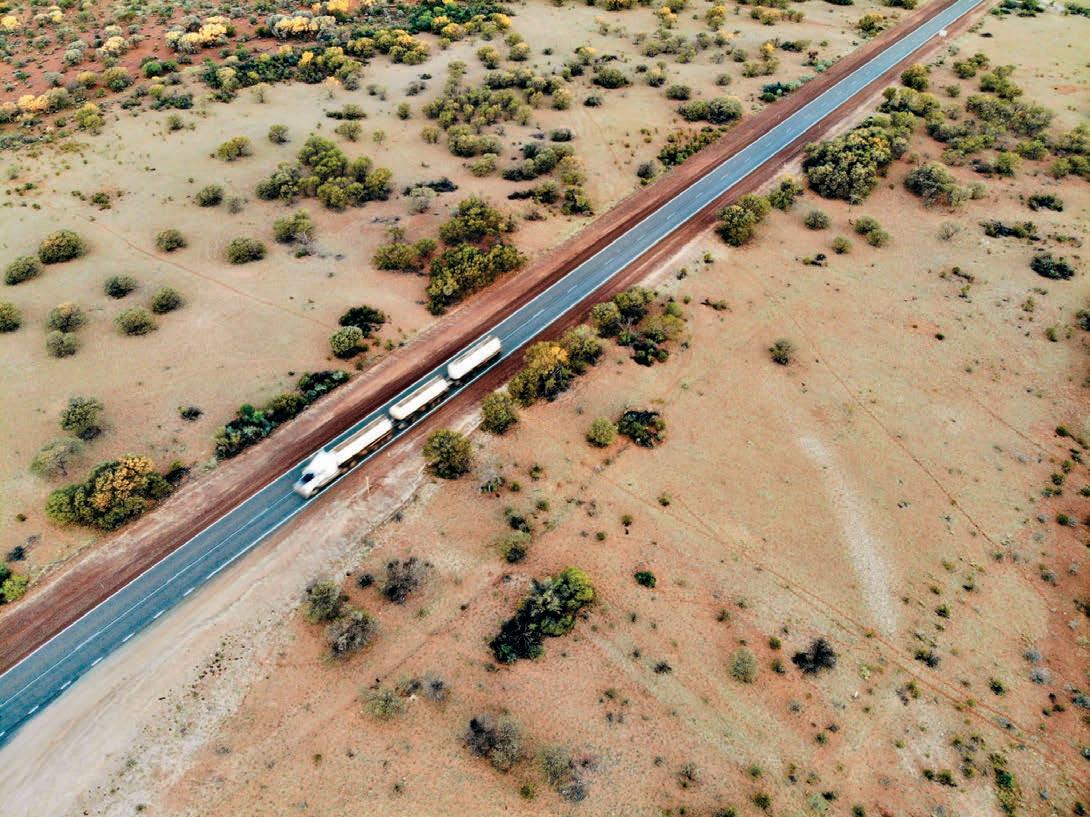
ment – Provide support for RTOs to increase focus on practical, scenario-based training and introduce structured post-licence development pathways.
• Trainer capability – Invest in the capability of heavy vehicle trainers and assessors through the creation of a national support “Hub” to promote professional development and reduce pressure. The focus should be on building real competence, not just time served, to support
more heavily in public awareness campaigns to improve awareness among light vehicle drivers and integrate heavy vehicle interaction into licensing education.
• Evidence and research –Fund research linking driver skill development to safety outcomes and use data to inform policy.
Conclusion
Australia’s freight system is adapting under pressure. The expansion of access for larger
ble operating conditions are sensible responses to real and immediate challenges. But every system change has consequences.
We are allowing larger and longer trucks greater access to the road network to move more freight, more efficiently. What remains less certain is whether we are building the same level of capability in the people operating within that system.
This is not about criticism. It is about alignment. It is

If we continue to expand access, increase vehicle size and complexity, and accelerate workforce entry without addressing training consistency and shared road understanding, we risk creating conditions where incidents become more likely, and more severe. There is an opportunity here to work together to better align the system. To help ensure that productivity gains are matched by capability and support heavy vehicle driver trainers across the country to meet this growing demand.
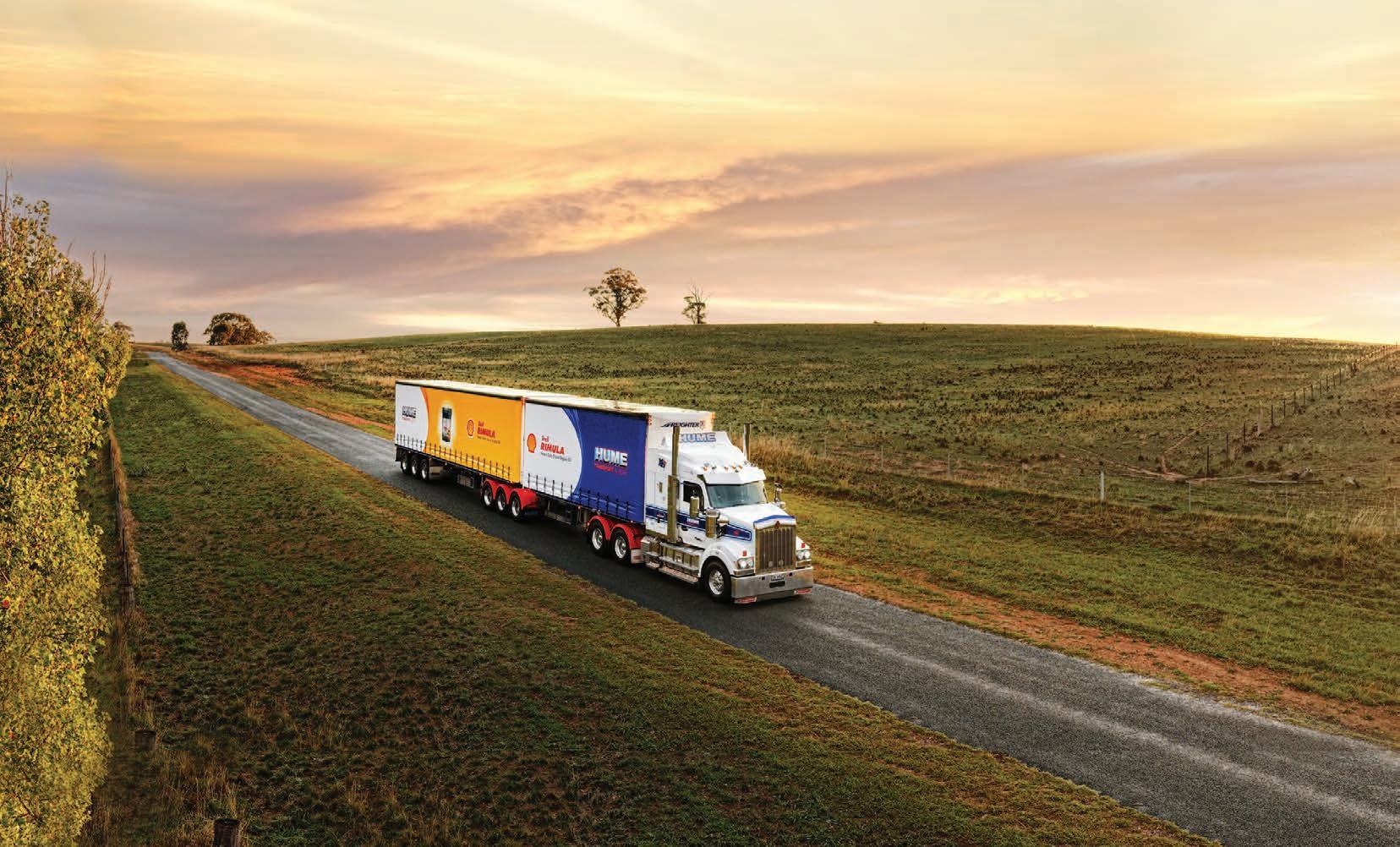


BY DAVID ALEXANDER
THERE’S nothing like an oil crisis to heighten transport industry interest in alternative fuels.
While today the focus is almost solely on electrification, not that long ago, it was thought that natural gas could play a part in diminishing our reliance on diesel in Australia.
But could it still be a viable option today?
Australia has one of the largest domestic gas reserves in the world, making both Compressed Natural Gas (CNG) and Liquefied Natural Gas (LNG) options very appealing as potential transport fuels.
Currently, around 75 per cent of the natural gas we produce is exported with the remainder being used locally for electricity generation, industrial applications and residential and commercial heating.
What’s the difference between CNG and LNG?
The main difference between these two types of natural gases is the way they’re stored.
As the name suggests, CNG is stored on the vehicle in a compressed state in high pressure tanks at around 3,000 to 5,000psi.
LNG is stored as a super-cooled liquid typically at around minus-161 degrees. In this cryogenic state LNG offers a higher energy content than CNG but this benefit comes at
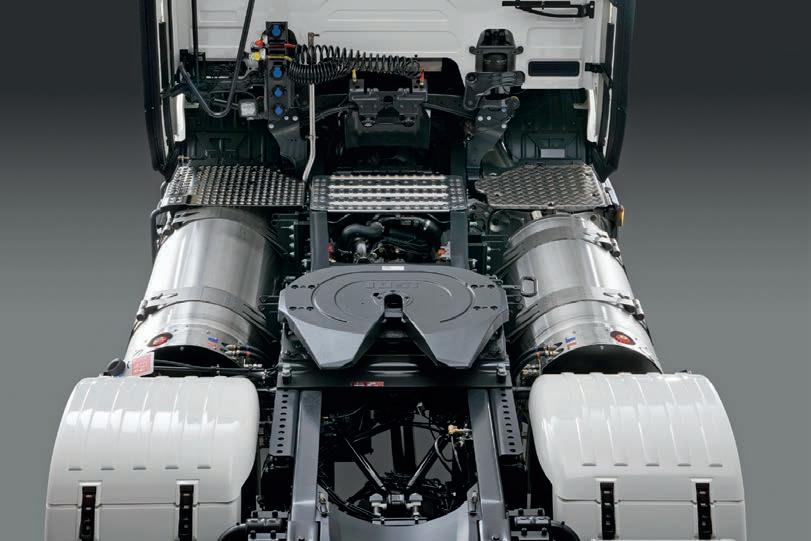
a trade-off that requires the gas to be held in special tanks on vehicles as well as at dispensing stations to keep the gas cold and in a liquefied form.
Advantages of CNG
In transport applications, CNG engines offer similar output to comparative diesel trucks and the fuel is not directly tied to international parity pricing, so should be much cheaper than the equivalent price of diesel. CNG-powered engines are also significantly quieter than their diesel equivalents. Aside from minimising the
impact of diesel fuel insecurity caused by conflict as we’re currently seeing, or unwanted cost spikes that tend to occur during pricing cycles, another major motivator of alternative technologies is to minimise or eliminate tailpipe emissions (in the case of electrification).
In this regard natural gas emissions offer considerably lower levels of particulate matter (PM) and nitrogen oxides (NOx) – both these emissions are known to be some of the most dangerous when it comes to health.
CNG-powered vehicles produce approximately 15-25 per
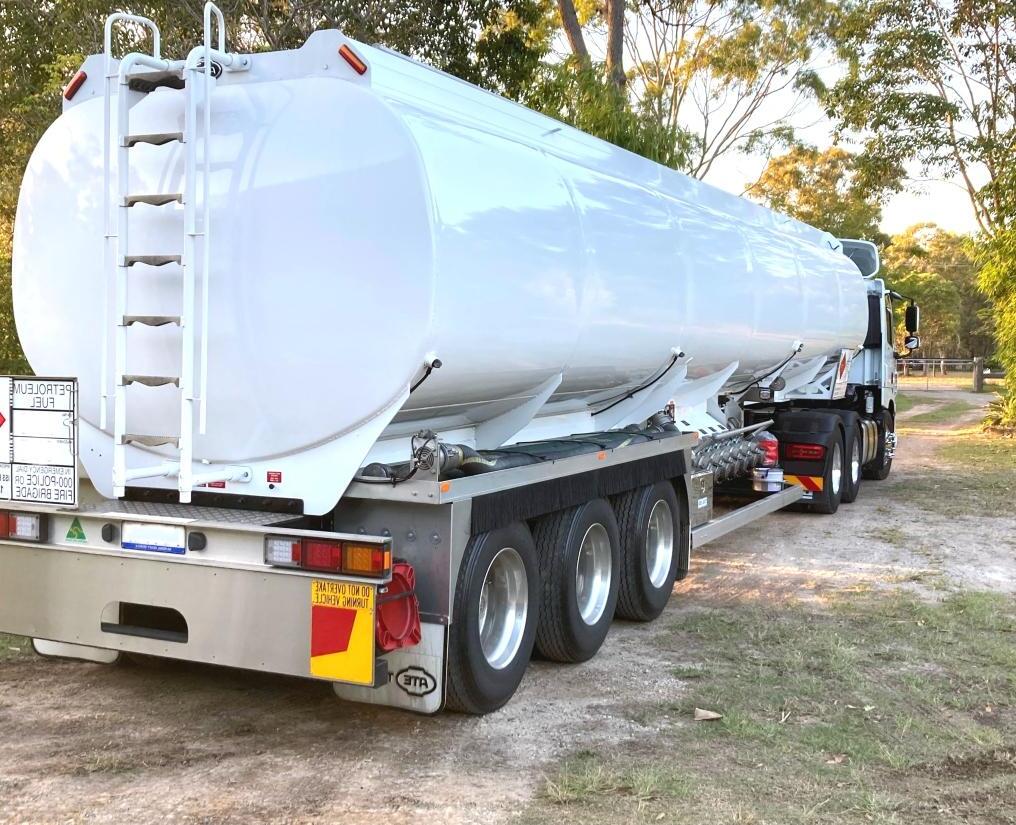


cent fewer CO² emissions compared to equivalent conventional diesels, with the bonus of virtually zero particulate matter emissions.
A s a well-established transport fuel, particularly in Europe, CNG is considered extremely safe. On the trucks the gas is stored in special cylinders engineered to stringent standards and capable of withstanding collisions and fire. Since CNG is also lighter than air, in the highly unlikely event of a leak, the gas will dissipate into the surrounding atmosphere.
On the downside, the energy


content of natural gas is less than that of diesel, so more gas is needed to travel the same distance as a comparable diesel truck.
Given this, more or larger gas tanks means greater vehicle tare weight and diminished payload, so gas powered trucks are not suitable for all applications, particularly interstate line-haul routes.
On paper there are some compelling arguments for CNG-powered trucks, right?
Unfortunately, you can’t just go to your local truck dealership and pick one out, and natural gas-powered trucks aren’t even actively promoted in Australia anymore.
Just a few years ago you could purchase them locally from several manufacturers who had CNG trucks in their local product mix. So what happened?
Limited refuelling infrastructure – a familiar story
When it comes to public refuelling infrastructure, just like the challenges now affecting EVs when recharging away from the home or business, natural gas-powered vehicles experienced similar issues.
With only limited refuelling options available across the country, operators could only travel selected routes or would
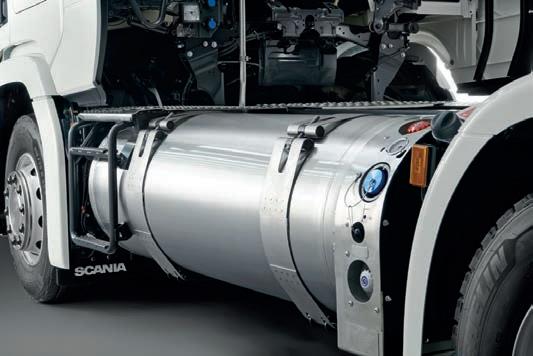
need to install a CNG compressor on site, increasing viability for back to base applications, albeit this requires some investment for the business or governments to set-up.
The main requirement was to have access to mains gas on site, in some cases infrastructure repayment costs could be incorporated into the price of the gas used, providing flexible repayment options
In much the same way as LPG bowsers for passenger cars are disappearing from petrol stations, over the last decade CNG refuelling infrastructure has dwindled from an already low base due to lack of demand and growing interest in other alternative fuels and propulsion systems such as diesel electric hybrids and fully electric trucks.
Has the natural gas opportunity passed?
Perhaps, but as the proverb states: ‘desperate times call for desperate measures.’ In Europe, Japan and North America, there are a wide range of natural gas trucks still available, from leading manufacturers who sell these trucks at considerable volume.
The available models range from passenger car licence vans and trucks right through to heavy duty prime movers, they’re used successfully across a range of applications.
In the heavy segment, outputs of over 500hp are available with real world driving ranges of more than 1000 kilometres, not only making the vehicles suitable for local work, but for regional and intrastate transport as well.
Notwithstanding the development work that would be needed from manufacturers to reintroduce CNG and LNG-powered commercial vehicles to Australia and investment in the support services to maintain them, it could be a consideration to help address the country’s domestic fuel security issues, mitigating our dependency on imported fuels.



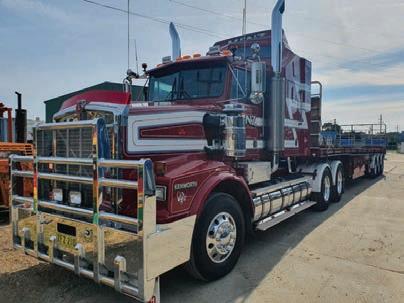
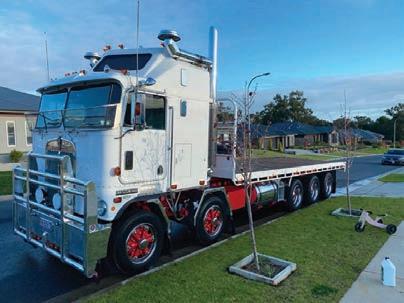
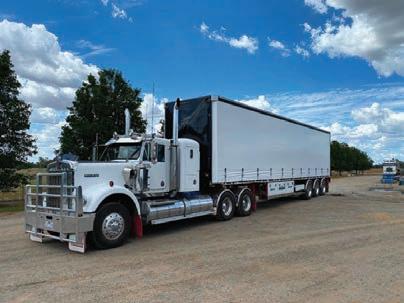
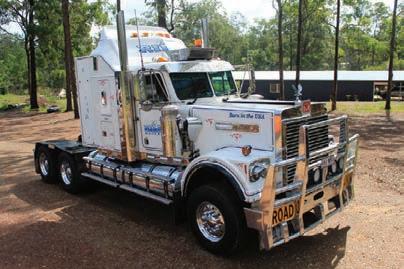

AUSTRALIA’S heavy vehicle industry has always operated under some of the most rigorous safety and compliance expectations in the country, and for good reason.
The risks associated with fatigue, maintenance, loading, and scheduling demand a strong framework to keep operators, drivers, and the public safe.
Auditing has long been a central part of that framework, and despite the frustrations that sometimes arise, operators understand its purpose and value.
W hat has caused tension in recent years is not the presence of audits, but the inconsistency in how they are conducted. As the original document notes, operators have experienced situations where “two audits conducted months apart can produce entirely different findings, even when nothing has changed within the business.”
This inconsistency has created uncertainty and unnecessary administrative burden, leaving operators feeling
as though compliance is a moving target. These issues do not reflect a failing in the industry; they reflect a gap in the auditing system. The reforms now underway, including the introduction of the new Heavy Vehicle Safety Management System, are not designed to tighten the screws on operators.
Instead, they aim to strengthen the standards applied to auditors and create a more consistent, predictable, and nationally aligned compliance environment.
For too long, one auditor might focus heavily on documentation while another prioritises operational outcomes.
The SMS directly addresses this by defining what “good safety management” looks like across the entire industry. It provides a structured, nationally consistent framework that reduces subjective interpretation and ensures operators are assessed against the same clear expectations. As the document states, “operators who already maintain strong systems and safety practices have nothing to worry about.”
The SMS reinforces this by rewarding genuine safety performance rather than penalising minor administrative variations. It shifts the focus away from paperwork and toward real world safe-
ty outcomes, something the industry has been calling for over many years.
Auditors will be required to assess how risks are identified and controlled, how responsibilities are governed, how incidents are managed and learned from, and how continuous improvement is embedded.
This moves auditing away from box ticking and toward assessing whether a business genuinely manages safety risks.
The SMS will also help reduce duplication across NHVAS, TruckSafe, customer audits, WHS reviews, and insurance requirements.
When auditors operate from a common standard, the evidence required becomes clearer and more uniform.
The original document highlights that when standards are applied consistently, “the evidence required becomes clearer and more uniform,” and the SMS is the mechanism that will finally deliver that uniformity.
It also provides clearer expectations for auditors themselves, ensuring they are better trained, better calibrated, and more accountable for the decisions they make. This reduces subjective interpretation and ensures operators are assessed consistently regardless of who conducts the audit or where they operate.

Importantly, the SMS supports operators who run mature, well managed businesses. Those with well maintained fleets, effective fatigue management, and strong internal processes will be recognised not penalised for minor administrative imperfections.
The reforms shift the focus back to what matters most: genuine safety outcomes. The industry has long argued that paperwork should not overshadow real safety, and the SMS helps restore that balance.
The heavy vehicle industry is entering a period of refinement rather than upheaval. Auditing will remain a cor-
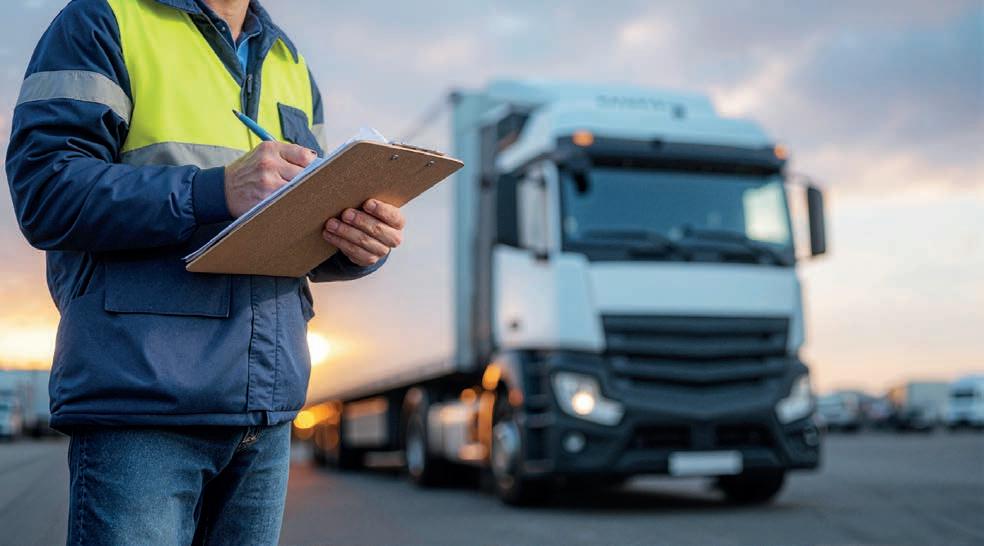
pliance, but the system supporting it is becoming more mature, more professional, and more aligned with the realities of modern transport operations.
The SMS is a key part of that evolution. It strengthens fairness, transparency, and operational certainty ensuring that compliance is no longer a shifting landscape but a stable, clearly defined framework.
As the document summarises, “the reforms are not about increasing pressure on operators. They are about ensuring auditors meet the standards required to deliver a fair, credible, and consistent auditing environment.”
The SMS reinforces that
ators, clarifying expectations, and helping ensure that the industry’s compliance framework rewards genuine safety performance while reducing unnecessary administrative strain.
The introduction of the Heavy Vehicle SMS is not something to fear it is a long overdue step toward a stronger, more sustainable heavy vehicle industry.
It aligns with the broader reforms already underway and will help deliver the consistency, fairness, and predictability that operators have been calling for.
The future of compliance is clearer, more consistent, and more focused on real world



PETER Bond, 45, was delivering caravans from Melbourne to Townsville when he stopped for a yarn with Big Rigs Peter drives a Kenworth T659 for M&M Betts Freight out of Newcastle and had a backload of aluminium to pick up at Gladstone.
“I really love this job and the truck is in good shape,” he said.
On his travels Peter likes the BP Cluden Roadhouse and the Ampol at Cobar in NSW.
“They have good food and clean facilities,” he said.
Although Peter said more
rest areas are required for truckies, he said he does like one. “It is at Dirrinbandi and has good showers.”
Other truckies have also told Big Rigs they like that rest area.
The worst road he gets along is the Leichhardt Highway, especially between Moree and Condamine.
When Peter gets time off work he enjoys fishing waterways around Wollongong in NSW.
“I have caught lots of bream which make good eating,” he said.
M&M Betts is a fami-
I REALLY LOVE THIS JOB AND THE TRUCK IS IN GOOD SHAPE.”
PETER BOND
ly-owned company which was established in 1989 by Michael and Maree Betts, and spans across three generations.
Michael Betts brings with him a wealth of knowledge and experience, rooted in the Betts family’s transport operations dating back to the early 1900s.
NATHANIEL Potter, 35, has been driving trucks for almost half of his life.
“I started out when I was 18 and, really, it is a great lifestyle for me,” he said.
Nathaniel was driving a Kenworth T409 for DJ Freight out of Brisbane when Big Rigs saw him parked up at BP Cluden.
“I have come up from Brisbane carting boats for delivery to Townsville’s Lavarack Barracks Army base. But I don’t know yet if I have a backload,” he said.
Nathaniel said he had been with DJ Freight for more than four years and is treated well.
Regarding rest areas, Nathaniel said there are not enough for truckies.
“There is one I like at Pheasant’s Nest on the Hume Highway in New South Wales,” he added. Like numerous other truckies I have spoken to lately, Nathaniel is a big fan of the Liberty Moorlands Roadhouse.
“It serves good food and
the staff are friendly,” he said.
On the subject of bad highways, Nathaniel said the section of the Bruce between Rockhampton and Mackay is in need of work.
When he gets time off, Nathaniel love cars and has a trusty Holden SS which he treasures. His NRL football team is the St George Dragons which was sitting bottom of the ladder when we spoke.
“I think they will win some games before the season is over,” he said.
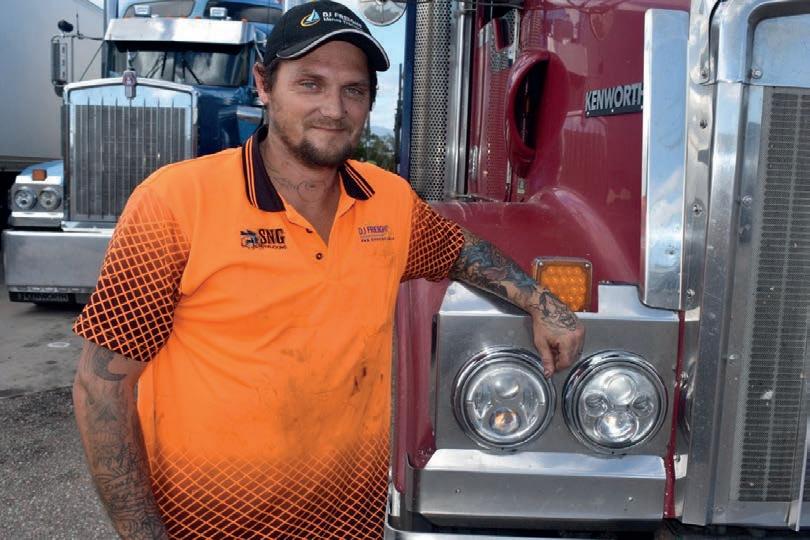
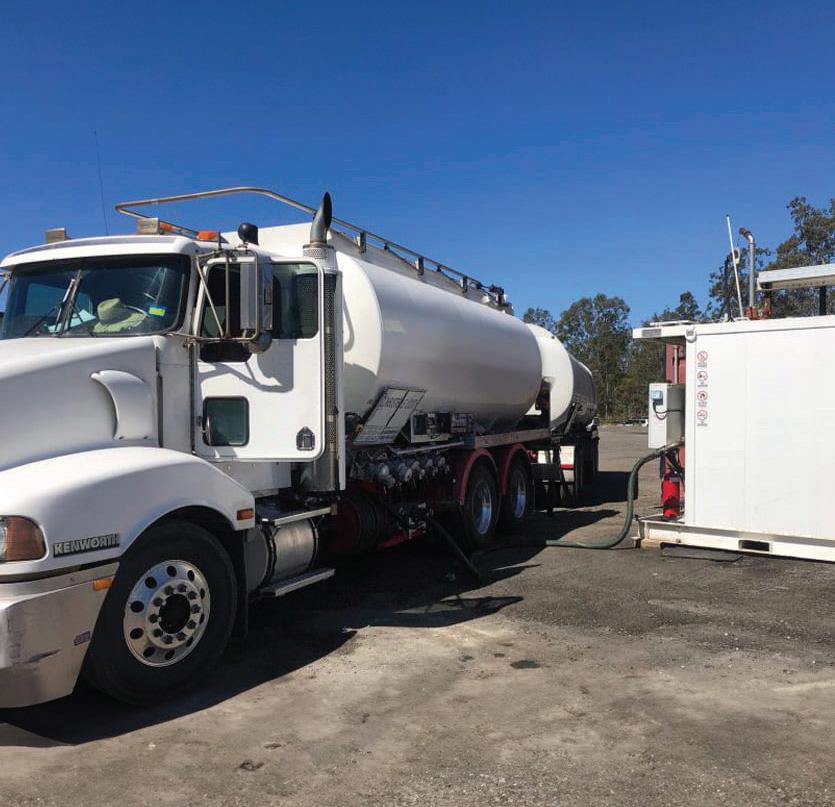




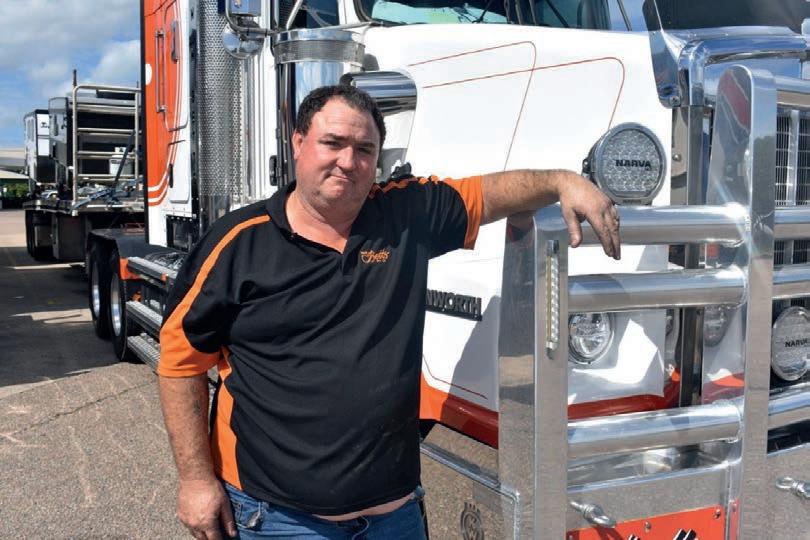
THE costs of fuel for small fleet operator Brian Broome skyrocketed by $40,000 in three weeks when the Middle East conflict commenced.
Brian, 58, is based at Port Lincoln in South Australia. He runs seven trucks and has 11 employees.
His company is Integral Freight Services Eyre Peninsula and the major depot is in Adelaide.
Brian had stopped at the Townsville Port Access Road when Big Rigs saw him recently, checking his trailers.
“I have picked up sand from Silkwood north of here for delivery to the Daly Rivers area in the NT,” Brian said.
Brian was driving a Kenworth 900 with a 600hp motor and an 18-speed Roadranger gearbox.
A very friendly and knowledgeable driver, I asked Brian what the fuel increase meant to him.
“It is what it is and a fact of life right now. I just have to wear it and pass on costs to clients. But it will come down again,” he said.
Brian rates the Julia Creek to Richmond stretch of the Flinders Highway as needing an upgrade. His favourite roadhouse is the Barkly Homestead in the Northern Territory. “I rate it 10 out of 10 for drivers,” he said. When home in South Australia, Brian barracks for the Adelaide Crows in the AFL.
“When I leave SA I go for the Sydney Swans,” he said.
Outside work his hobbies include spending as much time as possible with family and he is also into four wheel driving.
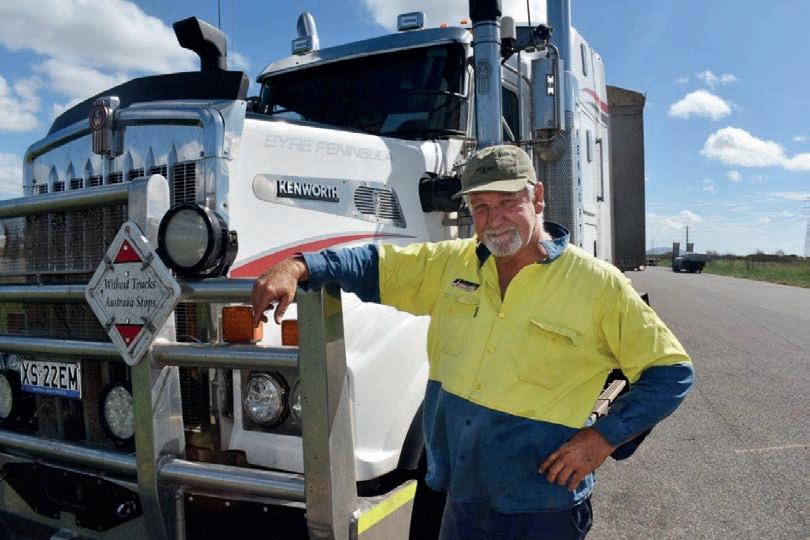
WHILE many road transport companies find it difficult to hire good and reliable drivers, it is refreshing to hear of one truckie who has been with the same company for three decades.
Michael Adams, 59, has worked for Blenners Transport out of their north Queensland depot beside the Bruce Highway for almost 30 years.
“On September 9 it will be 30 years I have been with Blenners and it has been great,” Michael said.
“Today I have picked up bananas from a farm and after that I’m heading off to Kennedy just up the highway,” he said.
Reflecting on his time with Blenners, Michael said he started off driving a Hino rigid doing pick-ups and deliveries between Cardwell and Innisfail.
The Mobil Roadhouse at Tully is a place Michael stops off at when he gets a chance.
“The food is fine and the toilets are good,” he said. In recognition of his long
“I have had the name Cat since my school days and it has stuck like glue,” he said.
Outside work Michael barracks for the Cowboys in the NRL and enjoys a spot of fishing in the Tully River.
“I use lures chasing Barramundi and watch out for crocodiles,” he said.
One of his workmates, Dippy Southern said Michael was a worker everybody liked.
“Cat is one of the nicest blokes to work with and a real team player,” Dippy said.
VICTORIAN based driver
Colin Seamons was driving a Kenworth T608 in a convoy of trucks carrying demountable buildings when Big Rigs saw him pull into the BP Cluden Roadhouse.
Colin, 55, has worked for Aussielink Transport out of Williamstown, Melbourne, for over four years.
“I have been a truckie since I was 18 and this is one of the best jobs I have had. I do runs from Melbourne to Queensland,” Colin said.
During his extensive travels, Colin has found the BP Roadhouse on Robinson Road in Truganina as his favourite.
“They serve really good food and I enjoy a nice steak,” he said.
As for rest areas, Colin said there aren’t enough for drivers, especially in NSW.
is not on his lonesome with that assessment.
“It is rough and on the way here we had to pass seven triples coming in the opposite direction which was difficult,” he said.
A dedicated sports buff, Colin barracks for the much improved North Melbourne Kangaroos in the national AFL.
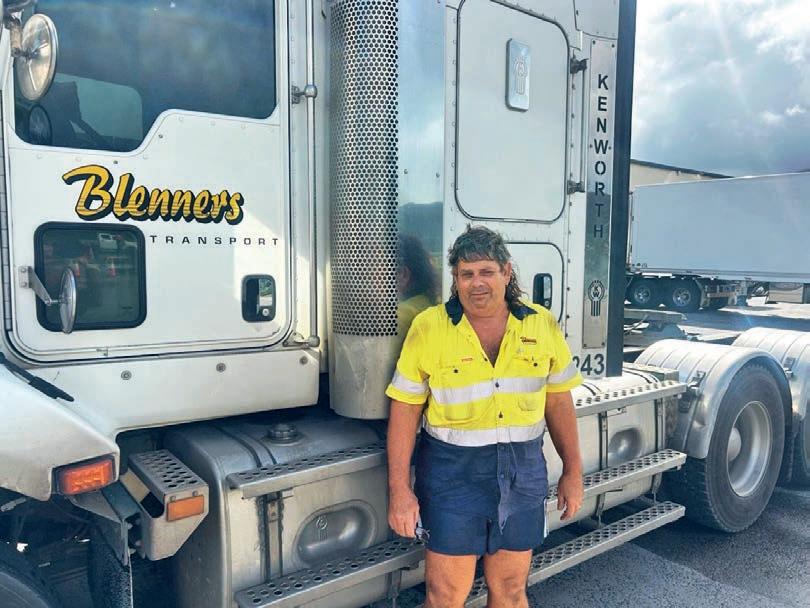
I have heard that Blennerssentation to Michael when
The demountables were picked up at Essendon in Vic-
“What really annoys me is when you need to stop at a rest area and it is packed with equipment from Main Roads workers. You have to travel on another 100km away most times,” he said.
Watching and following cricket is another passion for Colin who rates former Aussie wicketkeeper/batsman Adam Gilchrist as a player he admires. Colin said the Kenworth T608 with a 650hp Cummins motor and an 18-speed Road Ranger gearbox is wonderful
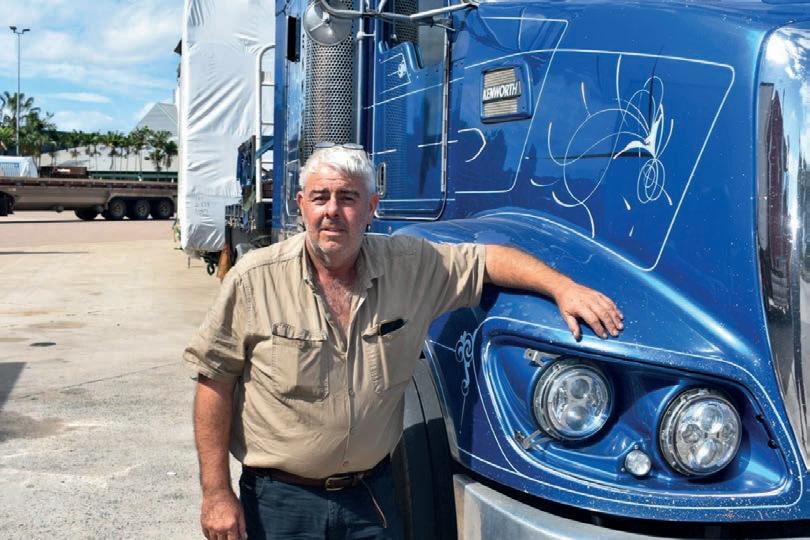











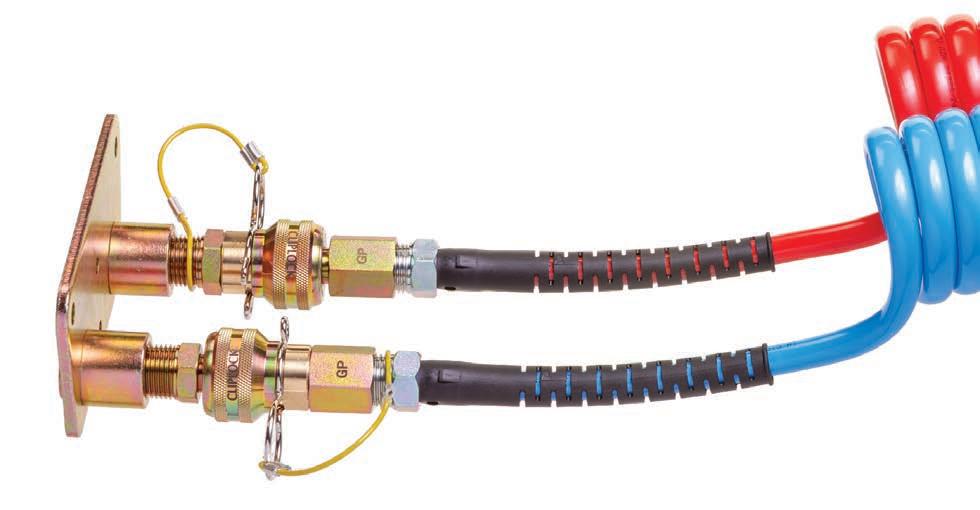




DRIVERS have referred to the eatery at the Liberty Moorlands Roadhouse in NSW as the “trucker wagon” because they say it serves up good food.
However, Spy discovered it is actually named “The Tuck erwagon”.
It is located along Jericho Road in Moorland, NSW, and gets plenty of business from truckies.
Spy spoke to Jo Wilby who has run the establishment for six years.
“During a week we get hun dreds of trucks stopping here and there is plenty of parking. Truckies have their own showers and we have clean toilets,” Jo said.
“The truckies love ordering steak such as rump, scotch fillet and T-bone with vegies. We serve homestyle meals,” she said.
There are 11 staff at the business and most are locals from the region, which is great considering Moorland is a tiny town.
One who helps a lot is Jo’s son Cody who Spy spoke to the day before.
Jo said one truck driver who stopped there recently did a podcast with the eatery as its main focus.
It is open from 6am to 10pm on weekdays and from 10am to 10pm on Sunday but closed each Saturday.
As a huge bonus truckies who stop there get to read the latest edition of Big Rigs
“The Big Rigs papers are popular and they are picked up quickly by drivers once they arrive,” Jo said.
Speed camera revenue bonanza Motorists, including many truck drivers, have been breached for speeding by mobile and fixed speed cameras in Tasmania.
Spy has been told that these drivers have received a nasty surprise in the mail weeks after being caught by one of the cameras.
There are four fixed cameras with two being on one each on the eastern and western sides of the big Tasman Bridge at Hobart.
The other two are on the Midland Highway in the vicinity of the new Bridgewater Bridge at Granton.
The cameras also enforce
mobile phone and seatbelt compliance.
Mobile cameras are not fixed and can be moved to different locations based on a Deployment Strategy that focuses on road safety, risk assessment, and community suggestions. These cameras can be easily moved around the state and located anywhere at any time. But some truckies have been lucky as well. They have driven past a camera over the speed limit and waited for the nasty fine in the mail which never arrived.
It was gleaned that some cameras were not operational.
Unsecured loads
The security of loads has been in the news recently and a NSW driver sent Spy a pic of what he saw at a Cobar fuel station.
“On the trailer was a 160-tonne machine with only two chains and one loose strap,” he said in an email to Spy.
This lad didn’t know whether he should report it to authorities but had been brought up to never dob anybody in.
Bad highways
It is not difficult to glean information from drivers on some of the bad roads they travel along.
A long-haul driver who had been a great contact for Spy over many years said it was an extreme challenge to negotiate parts of the Southern Cross Highway in WA.
“It was the section east of Coolgardie and had narrow edges and rough shoulders. Mind you some other stretches are okay,” he said.
A veteran Perth based own-
er-operator said he found that the Stuart Highway between Katherine and Darwin was pothole ridden.
Another said the Goldfields Highway in the west was bad in many parts.
One point they all made was that when roads are repaired it should be quality material and not band-aid solutions.
News you don’t want to hear
It was with extreme sadness when Spy was advised about a long-haul driver who took his own life.
This touched Spy, who in a recent edition had done his driver profile, which appeared in the pages of Big Rigs I had never met the gent before but ended up yarning to him by phone often after the profile.
He would ring with snippets of interest to truckies from his travels on the highways in various parts of this vast country.
Outside work he had plenty of interests and hobbies and to me seemed to be a happy go lucky middle-aged lad.
Indeed, he was an enthusiastic driver who had the best interests of the road transport industry in his heart.
Colleagues who spoke of him were always praiseworthy and it came as a shock when I was told the news.
I had absolutely no gleaning that he had any mental health issues.
If any reader requires mental health support, please seek help either by ringing Beyond Blue or Lifeline.
Irate drivers
Spy had a call from an irate driver who was mesmerised over the harsh penalty a colleague received when he fronted court over a logbook error.
The gent ended up fronting a magistrate for a 45-minute misjudgement and was fined $850.
Whilst he had to cop that on the chin, he was finding it hard to digest the penalty dished out to an offender who also appeared at the same court sitting.
A person who was on a violence charge was fined $150.
Not the wild west
It could have been a scene from the Wild West days in America but was actually beside a Northern Territory road.
Some drivers who were travelling between Adelaide River and Pine Creek in the NT saw two huge dead buffaloes.
“There was one dead beast on each side of the road so it looked to me that somebody may have hit both and I just hope the person wasn’t injured,” he said.
Spy heard that a South Australian driver almost collided with a wild camel whilst travelling along a dirt road in the Northern Territory.
Unusual hitchhiker
A truck driver had no idea he had an unusual hitchhiker when he travelled more than 600km from Rockhampton to Brisbane.
It was an endangered northern quoll which was found in the wheel arch of the truck.
The quoll was seen fleeing the wheel arch in Brisbane before being taken to the Currumbin Wildlife Hospital for assessment and monitoring.
The animal has been recently released in bushland on the outskirts of Rockhampton, where there is an established population of quolls.
Members of the public spotted the quoll fleeing the truck and contacted a wildlife carer, who was able to capture it from a nearby home.
A wildlife ranger said the truck driver would have been unaware the quoll had been hiding somewhere on board during the transit.
The Department of Transport and Main Roads in Queensland was forced to update a sign on the El Arish to Mourilyan Road which spelt the town of Innisfail incorrectly.
When the new sign appeared, Innisfail was missing the ‘s’.
When some sharp-eyed motorists brought it to the department’s attention, they promptly fixed the sign with the correct spelling.
Travellers sometimes snap pics of road signs that have
names changed which are humorous.
One example is the ‘c’ is often painted over on Canal Creek Bridge signs which Spy feels is a genuine “bummer”.
I am told the most stolen road sign in Queensland is along the Flinders Highway near Woodstock showing directions to Gunnadoo Road.
Workers told Spy it regularly gets stolen and has been replaced numerous times.
More DAFs Reports meandering their way to Spy from truckies is that more DAFs are on the roads.
“I have never seen so many of them as they are now. I travel through all mainland states and they have never been in such numbers in previous years,” one told me.
Drop hole toilet mishap
The collapse of a floor at a remote drop hole toilet in the Aussie outback was the subject of conversation amongst truckies, which Spy overheard at a roadhouse eatery.
These drivers all expressed deep sympathy for a Canberra woman who stopped for a toilet break at Henbury Meteorites Conservation Reserve, 145km south-west of A lice Springs.
Because there was no phone signal in the area, her family was forced to leave her behind and drive an hour north to the nearest town to find help.
The poor woman ended up waist-deep in human waste after falling into the outdoor loo.
The rusty floor gave way sending her into a sewage pit two metres deep and she spent three hours there before being rescued.
Every one of the truckies who discussed the event had used such a drop hole toilet somewhere around the coun try.
They are smelly, generally have heaps of mosquitoes or other disease carrying in sects.
Spy has seen people beat a hasty retreat, one of them after being overcome by an awful odour or human waste being scattered inside.
drop hole dunny being very careful to check the stability of the floor.
The above incident had Spy asking drivers for the locations of such drop hole dunnies that they try and give a wide berth.
One which several drivers said was “on the nose” was at the Baxter Creek Rest Area along the Eyre Highway in WA.
The Thackaringa Hills rest area beside the Barrier Highway in NSW is another.
Still in NSW, the Dolo Hills rest area which is a remote camping spot located on the Barrier Highway in the heart of far west New South Wales, between Wilcannia and Broken Hill, is also on the list.
In Queensland, there is one near Gatton which is dodged unless the need is necessary.
Spy recently visited one at Fishery Falls just south of Cairns which can be insect infected.
One lad with a genuine sense of humour said it was far better to stop at a rest area with a drop hole toilet than one which has no dunny at all. He was talking about a dunny building which is located west of near Cobar also on the Barrier Highway.
“It was wrecked when a vehicle hit it back in May of 2024 and still hasn’t been fixed,” the Queensland driver said. A local man was charged with negligent driving over the collision.
“It is a shell of a toilet block and should have been demolished or replaced by now,” he said.
This unusual event will have anybody using such a
“Australian Truck Radio is my trucking radio station. So many great trucking tunes with loads of industry news. I lock it on and leave it on all day long!”
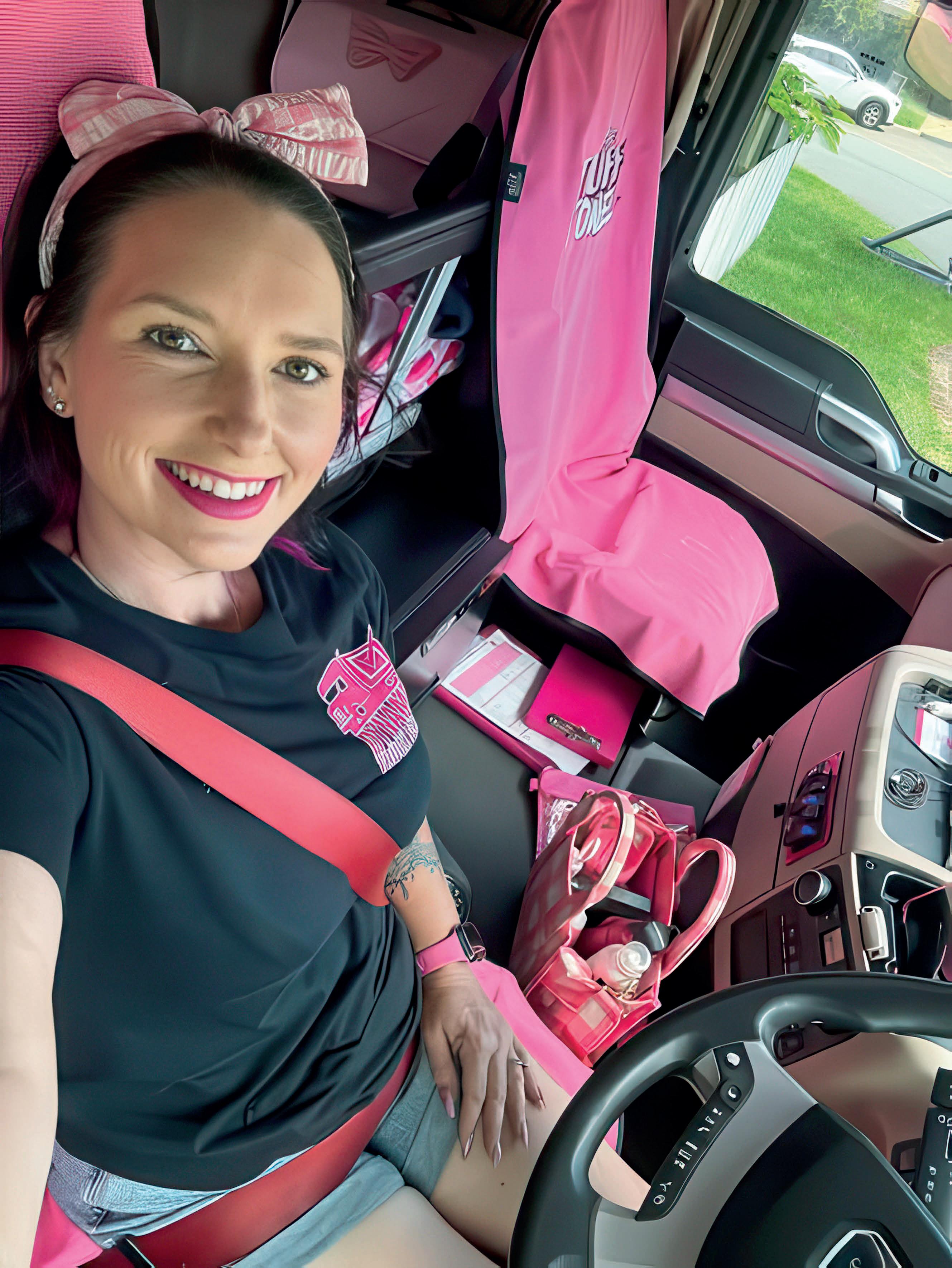





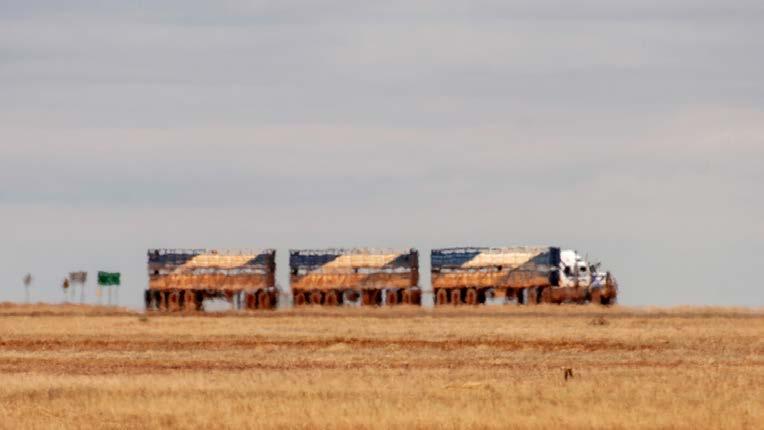

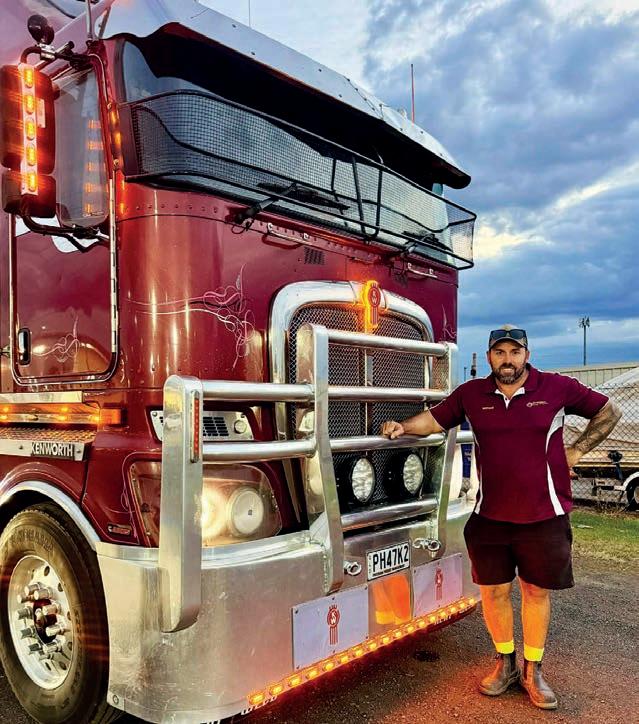
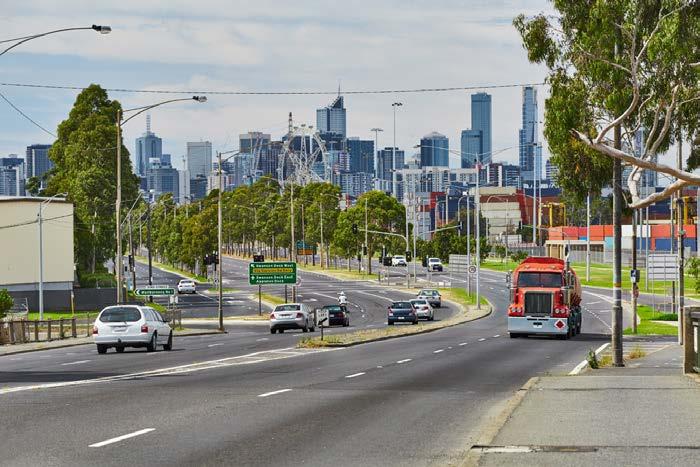
FROM the Darling Downs to the Top End, Nathan Binns has spent more than two decades behind the wheel doing what he loves, moving freight across Australia while building a business and lifestyle around trucking.
Based in Toowoomba on the Darling Downs, Nathan runs his own operation, Precision Freight Management, carting everything from palletised general freight through to heavy machinery and cotton-related freight across Queensland and northern New South Wales.
Nathan’s trucking journey started more than 20 years ago, beginning in rigid trucks before progressing all the way up to triple road trains running Darwin and back. Like plenty of drivers, the passion started young.
“I’ve always had a thing for cars and trucks since I was a kid,” Nathan said.
School holiday trips tagging along with cousin Alister Ross who was driving interstate for Nolan’s at the time, helped cement the dream early. But before he could chase trucking full-time, Nathan was told he
needed a trade first.
So, he became a qualified car and light diesel mechanic before eventually making the move into transport.
These days Nathan operates a sharp 2014 Kenworth K200 Big Cab Aerodyne, handling a wide variety of freight work.
“At the moment we’re carting cotton-related freight, from cotton module wrap to farmers and businesses, plus ginned cotton bales from various cotton gins throughout northern NSW and southern and central Queensland into Brisbane in B-double and B-triple combinations,” he explained.
For Nathan, one of the best parts of the job is the people and the freedom that comes with life on the road.
“The most enjoyable part is meeting new people and customers and getting to see a lot of Australia.”
But like many owner-drivers with young families, trucking comes with sacrifices too.
“The toughest part is missing important things, not being there when I’m needed because I’m 1600 kilometres away, and missing out socially.”
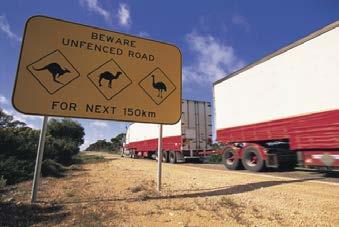
When it comes to favourite roads, Nathan reckons the Northern Territory is hard to beat.
“The roads are 100 per cent better than the east coast,” he laughed.
And for a feed and a cold drink, places like Barkly Homestead and Daly Waters Pub are right up there on his list.
Nathan says one of the biggest rewards of the industry has been the lifelong friendships formed along the way.
“The mates I’ve met, worked with and travelled with over the years, that’s what keeps you in it.”
Looking ahead, Nathan admits he’s been thinking about expanding the business.
“I’ve toyed with the idea of buying a few more trucks so I can step back and organise things more, but we’ll wait and see.”
Like many operators around the country though, he says the rising cost of doing business is becoming harder to ignore.
“The biggest issue at the moment is definitely the price of diesel. Everything keeps going

up, but freight rates don’t.”
Nathan also believes long payment terms are becoming a major issue across the industry.
“Some companies still want to pay 30, 60 or 90 days which shouldn’t happen anymore 14 days maximum should be the standard.”
For younger drivers entering the game, Nathan’s advice is simple.
“Never be afraid to ask for help or advice. Take your time and do it right the first time.”
Outside of transport, Nathan still has a serious passion for horsepower and motorsport. From speedway and drag racing through to V8 Supercars, life off the road still revolves around speed.
He owns a 700 rear-wheel horsepower blown VE GTS that regularly gets taken out for cruises and drag events, while also supporting Will Brown from Triple Eight Race Engineering at V8 Supercar events around the country.
For Nathan, trucking has never just been a job it’s a lifestyle built around hard work, freedom, horsepower and the people met along the way.
KNOWN to most as “Cowboy”, Mark Dickens has spent the last eight years in the pilot and heavy haulage game with Patlin Heavy Haulage, and it’s safe to say he’s found where he belongs.
What originally started as a way to help his mum stay involved in the trucking industry a fter a shoulder injury quickly turned into a genuine passion for the oversized and overmass side of transport.
“I started my own business to help Mum out because she couldn’t drive trucks anymore but still wanted to be around them,” Cowboy explained.
“I found that I loved the job and haven’t looked back.”
These days, the work is anything but boring. From porta-
ble buildings and earthmoving equipment right through to 100-tonne machines and steering bridge beams, no two days are ever the same.
Patlin recently set Cowboy up with a new Isuzu NNR dual cab pilot truck, fully fitted out for life on the road, including a bunk setup in the rear seats for the long runs away.
For Cowboy, it’s the variety and the crew around him that keeps him motivated.
“The company I work for are a bloody good crew,” he said.
“You really get treated like family here.”
Like most in transport, the long hours can be the toughest part of the job.
“One day you might start at
1am and not finish until 5 or 6pm. The next you could be packing a bag to head away for a week.”
When it comes to favourite roads, Cowboy reckons you can’t beat heading north up The Kidman Way toward Hillston and into Queensland.
And if there’s a feed involved, the old Jugiong Roadhouse still gets the tick of approval.
“Always loved the old Jugiong Roadhouse. Good feed and being on the old road, it’s never too busy.”
Cowboy believes one of the biggest issues facing the industry right now is the lack of understanding around heavy haulage and the OSOM sector.
“There needs to be a lot more
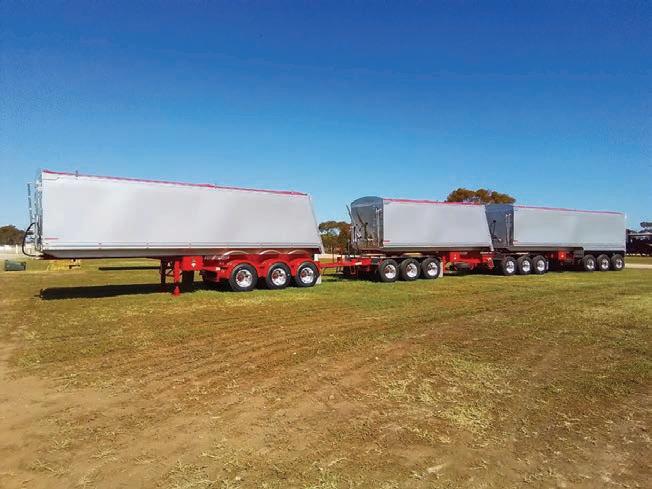
education around oversized loads,” he said.
As for advice to newcomers wanting to jump straight into the big gear?
“Start at the bottom and work your way up. Don’t be afraid to put in the hours in the yard or on a fork and learn the trade.
“Don’t push to get straight into the big gear - it’ll come in time.”
Outside of transport, Cowboy enjoys hunting, fishing and collecting firearms whenever work gives him the chance to slow down long enough.
And judging by the passion he still has for the job, it doesn’t sound like he’ll be leaving the heavy haulage world anytime soon.

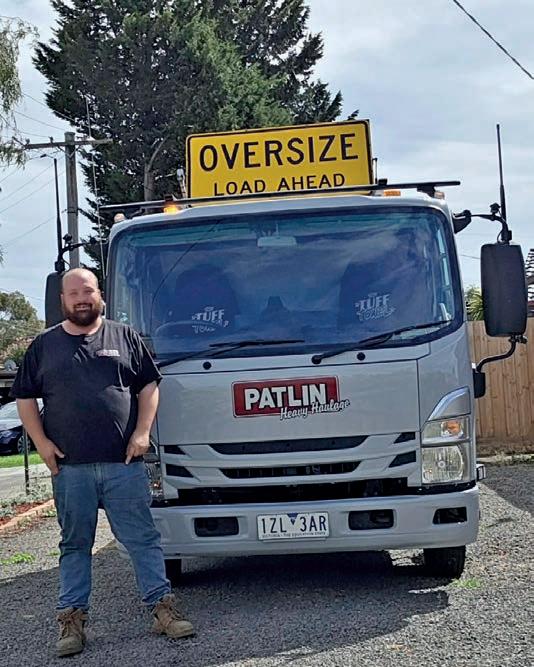






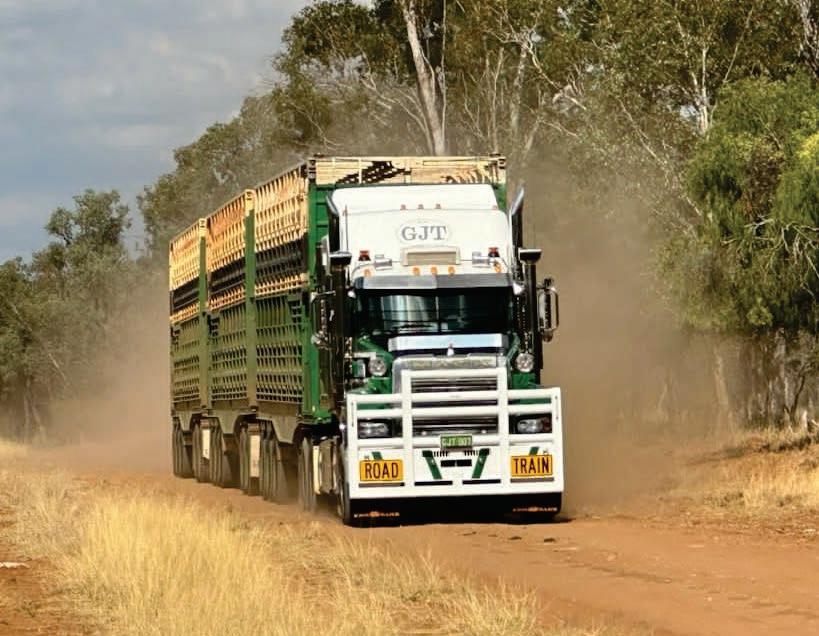
THE Scania Dandenong Team has finished the global Scania Top Team challenge in second place, narrowly missing out to host country Sweden, with New Zealand coming in at third place.
The Aussie team, named Southern Cross Griffins, also scored the highest ever finishing position for any team from Victoria at the Scania competition, that takes in competing teams from 80 countries and over 1600 Scania service branches and dealers.
This builds on great previous results for Australia, with the Scania New South Wales Prestons branch winning the global Top Team competition in 2011 and 2013.
The Southern Cross Griffins team comprises Chris Chilver as captain, assisted by Bede Hutchinson, Danny Manak, Frank Jurinec and Kaelan Johnston.
The team was mentored and assisted by Neil Henderson, Senior Technical Trainer and Jason Grech, Product Support and Training Manager; and Stefan Weber, Scania Aftersales Director and Manfred Streit, Scania Australia Managing Director, also attended to cheer them on.
“While the ultimate winners were from Sweden, they were from an independent dealership, so our Aussie team is the highest finishing
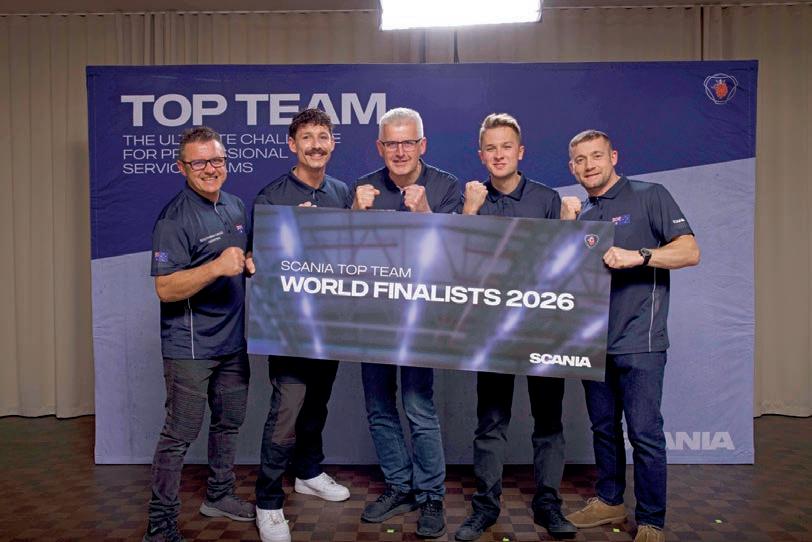
company-owned team in the 2026 Top Team,” said Manfred. “That makes them the best Scania-owned workshop in the world!
“The team did very well in the first round, and when the results were declared we were the first to be announced as going through to the final four, so there was a sense of relief. After that though there was some nervousness overnight before the next round and watching from the sidelines I could feel the tension in me,” he added. “My heart was almost beating outside of my chest.
“The team did a great job tackling the tasks, really working well together, a tribute to their preparation and training, and now with this second place, Australia overall is the highest achieving national team in the history of Scania’s Top Team event, with two overall wins in 2011 and 2013 as well as several second and third place finishes,” Manfred continued.
“It’s a measure of our overall professionalism, which of course is a great asset for us and a great benefit for our customers.”
Scania Dandenong Branch Manager, Liz Mistretta has been a driver and champion of the team over the past year, as they won the National Finals in Australia and finished second in the Asian Regional Finals in Bangkok in February.
“I’m very, very proud of our team. It is an amazing result,” she said.
“It was an incredible effort from the boys. We were excited they qualified for the final four playoff on Thursday, and then to finish second in the world on Friday is even more exciting. Really, we
couldn’t be prouder of them.
“I had a fair few from the Dandenong branch at my house on Friday watching the finals live. We were really cheering for them, even from this distance. Everyone from Dandenong wanted to be there with them, and we were there in spirit,” added Liz.
“After the results were announced the team was really happy. They were happy that they got to the top four and then after the second round to finish second to Sweden, they’re happy and proud and satisfied.
“The boys’ effort really lifts everyone at the branch, and their commitment is pretty substantial. There’s a lot of studying and training involved, and it takes up personal time, but they are just so excited to compete. The result is a true testament to who they are as individuals. They wear the Scania logo with pride on their hearts.”
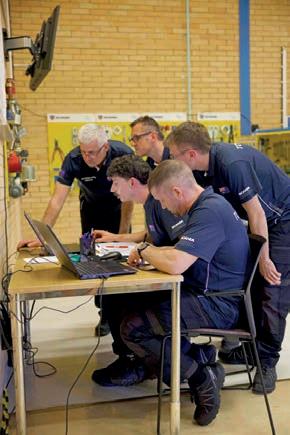
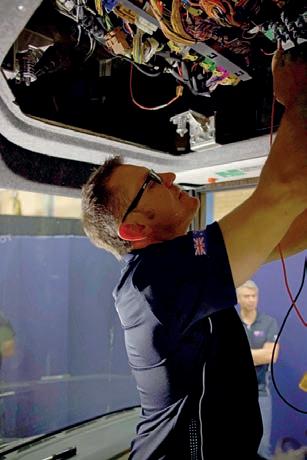
BY DANIELLE GULLACI
A new program in Western Australia is showcasing career pathways in the transport and logistics sector to Year 10 students.
An initiative of Western Roads Federation (WRF), the Industry Visits program includes hands on, practical activities to engage students and demonstrate real industry roles.
The program is delivered with engagement by MEGT Apprenticeship Support Services to connect students with potential workplace opportunities, with several successful Perth events already taking place.
Former high school teach-
er Natalie Grinceri has been tasked with bringing the program to fruition, in her role with WRF.
A pilot of the program was held with Goldstar Transport in Kewdale last October, with 12 students taking part. That event provided an opportunity to make any necessary tweaks to the program, before launching it on a larger scale.
This was followed by a visit to Macknsons Transport in March. “The students got to pack commercial fridges for transport, pull apart an ATM machine that was being decommissioned, and then they got to sit on the forklift and move the forks up and down – they had
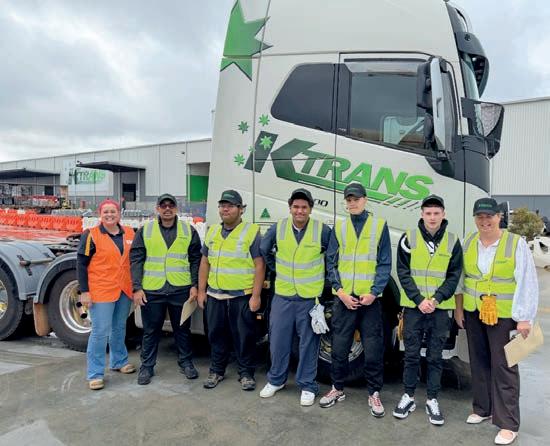
such huge smiles on their faces. These are all things they wouldn’t be able to see or do in the real world, without a program like this.”
There are a further seven Industry Visits scheduled through to the of June at transport businesses that include Sadliers, KTrans, Matic, and further visits to Macknsons Transport.
WRF is currently exploring opportunities to expand the Industry Visits program into the Goldfields region in July, with three schools interested in taking part.
Asked what was behind the program, Natalie explained, “While working as a high school teacher, I used to struggle to find things that
interested kids who didn’t want to be at school but had to be at school – and perhaps had bigger plans.
“I organised an industry driving program for students as an idea to see if transport companies would be open to it.”
The idea of the program was to introduce students to careers they may otherwise have never considered as an option.
“You don’t know what you don’t know. There are so many career paths you can take in the transport industry, but if you don’t smell it, see it, hear the noises, you’re not going to know about the opportunities or how to get there,” added Natalie.
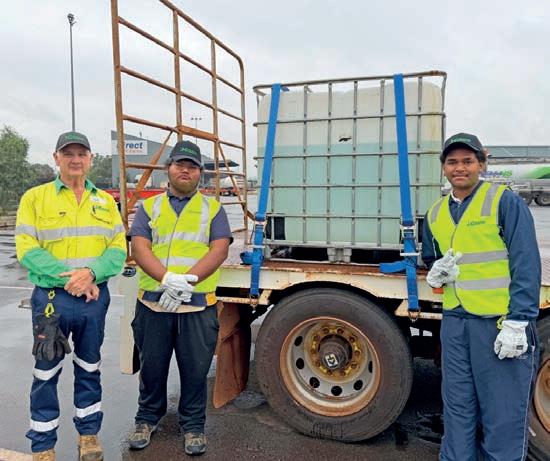
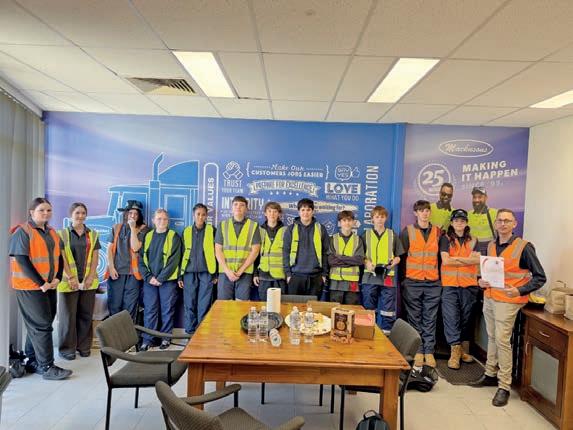
“That’s how the idea was developed. My area within Western Roads is truck driving. Year 10s can’t drive trucks but we have to focus on that age group because they are deciding what they want to do before they get to Year 11 and 12.
“Although they can’t yet drive a truck because they’re too young, they can work in areas that lead to opportunities to work in a yard and then get their truck licences.”
Some of the pathways students have found interesting during previous Industry Visits are truck washing or working in a warehouse.
“There are always opportunities to learn until you get to the next step and can get your licence. From there, you can start out in a delivery van and work your way up to a rigid,” added Natalie.
“Showing transport and lo-
gistics as a viable career pathway is the ultimate goal. It’s a pathway that can take you in so many different directions.”
MEGT Apprenticeship Support Services also takes part in each of the visits, to talk to students about schoolbased traineeships, TAFE apprenticeships, work experience and post-secondary education options.
A imed at engaging students, Natalie says the Industry Visits are much more than just looking in from the sidelines.
“The students get to take part in activities, not just walk around the warehouse,” she said. “We even had one student who wanted to do a light vehicle mechanic apprenticeship but was now asking about changing to heavy vehicles because he was really interested in trucks after the visit.”





For extra piece of mind, Meritor Genuine 145, 14x, and 160 series forward and rear carriers now come with a three year / 750,000 km warranty.
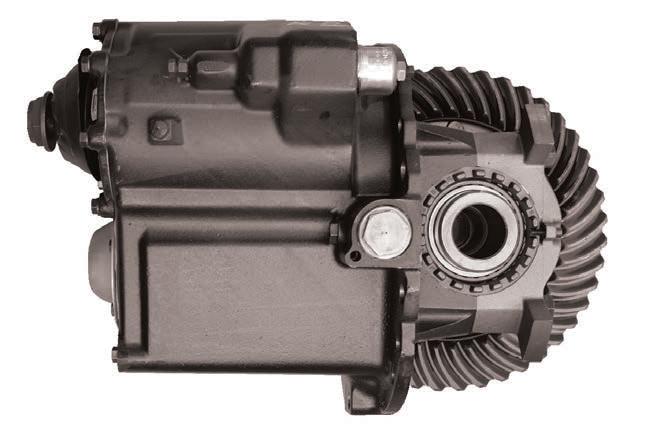
Drive your truck further with Meritor quality parts.