


Image: Muscat Trailers
Address:
Email:
A South Australian court has imposed a $1.1 million fine on waste management company Cleanaway over a fatal 2014 truck crash on Adelaide’s South Eastern Freeway that killed two people and seriously injured two others.
The court found Cleanaway failed to properly assess and account for the experience of driver Darren Hicks before allocating him to operate a manual sewage tanker down the freeway’s steep descent into Adelaide.
The August 18, 2014 crash claimed the lives of Thomas Spiess, 57, and Jacqueline Byrne, 41, after the out-of-control truck collided with vehicles at the intersection at the base of the freeway. Hicks and another motorist were also injured.
Hicks lost a leg as a result of the crash, and went on to become a Paralympic gold medallist.
He sued Cleanaway for com-
pensation, as did members of the victims’ families.
ABC News reported the truck reached speeds of almost 152km/h before the collision. The court heard Hicks had never previously driven a manual heavy vehicle or travelled that section of freeway before starting work with the company days earlier.
In sentencing remarks published by the court, Chief Justice Chris Kourakis said Cleanaway failed to recognise the driver’s lack of experience and competence in manual gear selection on steep descents.
The prosecution was brought by federal workplace safety regulator Comcare, which first laid charges against the company in 2016 under Commonwealth workplace health and safety laws.
Earlier court proceedings heard claims the truck’s brake linings were heavily worn and that the driver’s competency
had only been assessed in automatic vehicles rather than manual trucks.
The $1.1 million penalty is the largest ever imposed under federal WHS laws.
Comcare CEO Colin Radford said Comcare’s investigation found Cleanaway’s driver training was inadequate, exposing the driver and other road users to the risk of serious injury or death.
“The company’s failures had devastating consequences,” Radford said in a statement.
“This was the driver’s first week in the job, and he was only trained on relatively flat roads in a truck with an automatic transmission. On the day of the collision, he was driving a manual heavy vehicle for the first time and had to navigate the steep descents of the Adelaide Hills.
“This created a clear and significant risk of injury or death. The obvious safeguard was for Cleanaway to have en-
forced a system of work that ensured the driver was supervised until he was experienced in operating a manual heavy vehicle in these conditions.”
Radford said Comcare acknowledged the difficulties associated with the lengthy legal proceedings, caused by multiple legal challenges, and the impact this had on the victims and their families.
“We sincerely thank everyone involved for their patience and understanding – especially those injured and the loved ones of those lost,” he said.

AS of June 1, new fixed safety cameras are operational at t wo locations along a busy Western Australian freeway. These cameras, which monitor for seatbelt, mobile phone and speeding offences, are now in operation on the Mitchell Freeway at Vincent Street (Leederville), following a testing phase. A second set of cameras
were also recently installed at Karrinyup Road, on the Mitchell Freeway, in addition to the previously announced location.
These two new fixed safety camera locations add to the two existing fixed freeway safety cameras on the Kwinana Freeway, as well as a fleet of eight mobile safety camera trailers operating
state-wide in Western Australia.
The new Mitchell Freeway cameras will give drivers a sixmonth period of grace with caution notices issued during that period, up until November 30, 2026, instead of infringements for seatbelt and mobile phone offences. The grace period will however not apply to speeding offences.
Between February 2025 when the cameras were first introduced and May, the WA Government says that rates of detected seatbelt offences dropped by more than 85 per cent, mobile phone offences dropped by 88 per cent, and speeding offences have fallen by 51 per cent.
Money from safety cam-

era infringements will go into the Road Trauma Trust Account to be spent of road safety initiatives.
This news follows recent figures obtained by Big Rigs that showed 6114 infringements for 3413 customers were withdrawn, from incidents captured by WA’s safety cameras between October 8, 2025 and May 4, 2026.
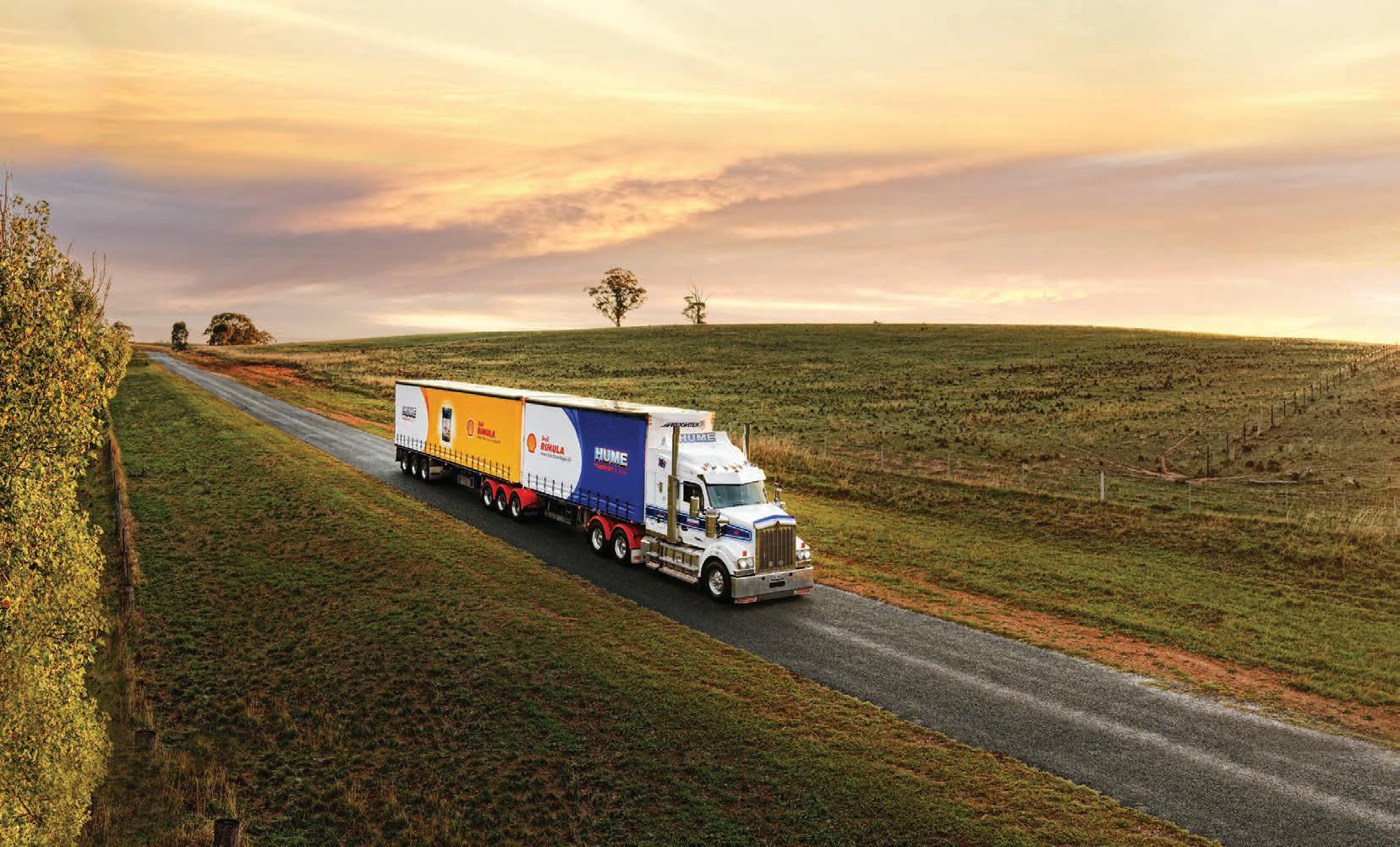


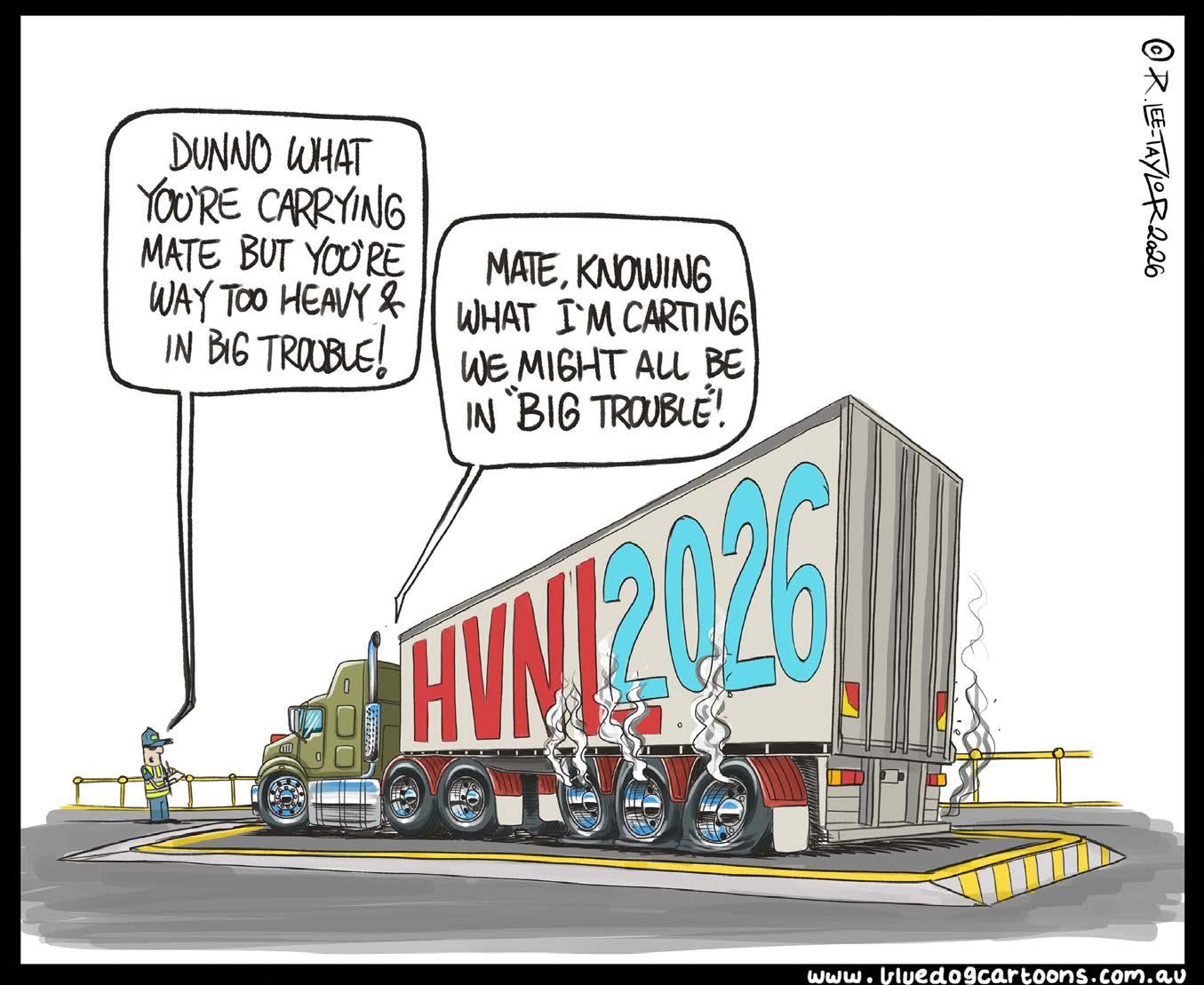
WITH the rollout of the new Heavy Vehicle National Law (HVNL) on August 1 will come new and updated penalties – with some of these set to double.
A total of 349 offences were reviewed using assessment criteria that takes into account public safety, environment and public amenity, road infrastructure, unfair commercial advantage, frustration of enforcement, False and misleading conduct, undermining confidence in the regulatory framework; and systemic conduct.
Following this review, 50 penalties will increase and 21 penalties will be decreased.
A mong those set to increase significantly are a number of fatigue related offences.
For example, the below shows some of the maximum court penalties that will be going up:
• Duty of driver to avoid driving while fatigued: increasing from $8000 to $26,610
• Driver of fatigue regulated heavy vehicle must carry work diary: increasing from $8000 to $13,310
• False or misleading entries (fatigue): increasing from $13,310 to $26,610
• Offence to remove pages from written work diary: increasing from $13,310 to $26,610
“Most of the penalties going down are for administrative breaches,” said Paul Daly, NHVR’s Director of Strategic Policy. “For example, spelling Cairns with an ‘F’.
The penalties that are increasing are those relating to safety breaches, with some of the more serious fines, where an incident results in serious injury or a fatality, more than doubling from the current amount.”
Some of the maximum
court penalties that will be reduced include:
• Replacement of defaced HML permit: decreasing from $5300 to $2000
• Operating under standard hours – solo drivers – minor: decreasing from $5300 to $3980
• Minor risk breach of alternative compliance hours: decreasing from $5300 to $3980
• Information required to be recorded immediately after starting work: decreasing from $8000 to $5300
• Driver who is record keeper must notify Regulator if electronic work diary filled up: decreasing from $3980 to $2000
• Period for which, and way in which, records must be kept (fatigue): decreasing from $8000 to $5300
Though there has been a great deal of chatter online about fine increases, President of the National Road Freighters Association, Glyn
Castanelli, has allayed industry fears.
“Some social media posts are only showing the biggest maximum penalties. They are not explaining whether those figures are court maximums or roadside fines, who the offences apply to, or which penalties are actually going down,” he said.
“The first thing we need to clear up is the difference between a court maximum penalty and a roadside infringement. A court maximum is the highest amount a court can impose. It is generally reserved for serious cases, repeat offending, deliberate conduct or worstcase examples.
“The largest increases are not aimed at spelling mistakes or ordinary paperwork slips.
They are mainly aimed at fatigue risk, false records, tampering, false transport documents, commercial pressure and deliberate
non-compliance.”
Under the HVNL, penalty amounts are subject to annual CPI, increasing on July 1, 2026.
Current available penalty information sets out details of increased and decreased penalties.
The figures currently available, obtained through NTC documents, will soon go up again, and be applied once the new HVNL is launched.
“From 1 August 2026, the amended HVNL will commence, with the new offence provisions and associated penalties incorporating the CPI increases that take effect on 1 July 2026,” an NHVR spokesperson told Big Rigs
“There will be a onemonth transition period during which indexed penalties will apply to offences under the current law,” the
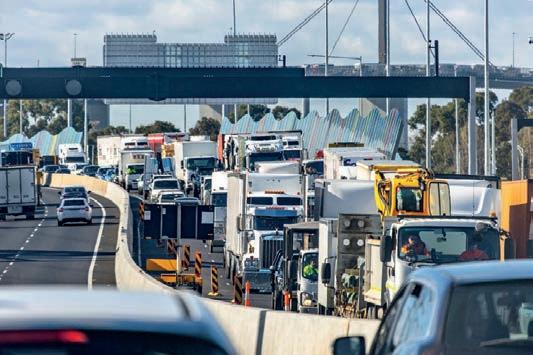
OUR reporting into sham contracting in the road transport industry has been cited in two parliamentary committee hearings as evidence that government agencies are finally working together to tackle the long-running issue.
During a Senate Estimates hearing of the Economics Legislation Committee on June 4, Senator Deborah O’Neill tabled a Big Rigs article published on May 22, which detailed growing compliance activity targeting operators allegedly using sham contracting arrangements.
Referring directly to the story, Senator O’Neill quoted comments from Senator Glenn Sterle, who said the mood among industry participants had shifted dramatically since agencies began coordinating their efforts.
Australian Taxation Office
Commissioner Rob Heferen told the committee that sham contracting occurs when an employer incorrectly represents a worker as an independent contractor when, in reality, they are functioning as an employee.
He said the practice can be used to avoid obligations such as tax withholding and superannuation payments, while other aspects, including workplace protections and leave entitlements, fall under the jurisdiction of the Fair Work Ombudsman.
The hearing also reinforced the multi-agency approach that has emerged following transport industry roundtables convened by Senator Sterle.
Of particular interest to transport operators was evidence outlining how new technology and reporting sys-

tems will make it increasingly difficult for non-compliant businesses to avoid detection.
ATO Second Commissioner Jeremy Hirschhorn told the committee that one of the agency’s most powerful tools is the Taxable Payments Reporting System, which already applies to the road freight industry. Under the scheme, businesses that engage contractors must report payments made to those contractors to the ATO.
That data is then matched against tax returns and other information sources, allowing the ATO to identify contractors operating within the system and detect potential anomalies.
Hirschhorn said the reporting regime provides the agency with hard payment data that can be cross-referenced
with visa records, tip-offs and other intelligence sources when assessing whether a purported contractor may in fact be an employee.
The committee also heard that the introduction of Payday Super from July 1 will significantly strengthen compliance efforts. Under Payday Super, employers will be required to pay superannuation at the same time as wages, providing the ATO with near real-time visibility of whether workers are receiving their correct super entitlements.
Hirschhorn described the reform as a “game changer”, saying it would allow the ATO to triangulate contractor payment data, superannuation records and other intelligence to identify suspicious arrangements more quickly.
During an earlier Senate Estimates hearing this month,
the Fair Work Ombudsman revealed it has 90 active investigations underway into a lleged sham contracting and worker misclassification in the road transport industry.
The latest figures were disclosed after questions from Labor Senator Josh Dolega, who also referenced recent Big Rigs reporting in the Education and Employment Legislation Committee.
Fair Work Ombudsman (FWO) Anna Booth told the committee the regulator was actively investigating a number of transport businesses, with the road freight sector a key focus.
Operations Group Manager Michael Campbell said the regulator had also written to 45 entities of interest warning them about concerns within their supply chains and signalling further action. Inves-
tigators have also issued four compliance notices relating to potential underpayments and five infringement notices for job advertisements offering rates below the minimum wage.
Campbell said the FWO office was conducting site visits and interviewing drivers to determine the true nature of working arrangements.
“Site visits are an important part of that, particularly when you’re dealing with a mobile workforce,” he told the hearing.
The FWO office is also working alongside the Australian Taxation Office, Australian Border Force and the National Heavy Vehicle Regulator in what Campbell described as a “joined-up approach” to tackling sham contracting and related compliance issues in the trucking industry.
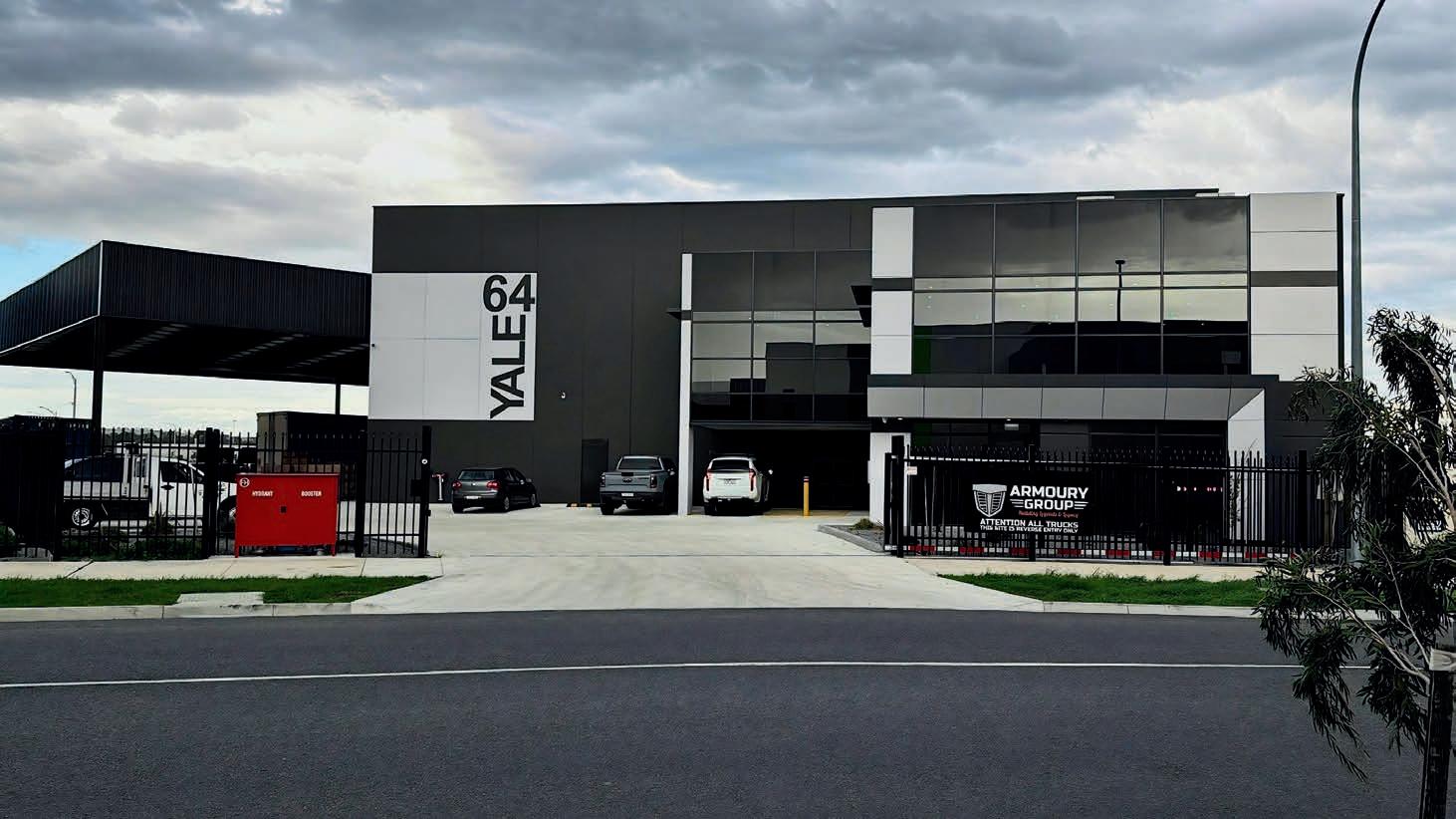
Armoury Group continues to expand with:
Larger Melbourne workshop New stainless ranges coming soon New trailer wheels
Improved wheel finishes Armoury Wheels are also
factory on all Kenworth trucks.
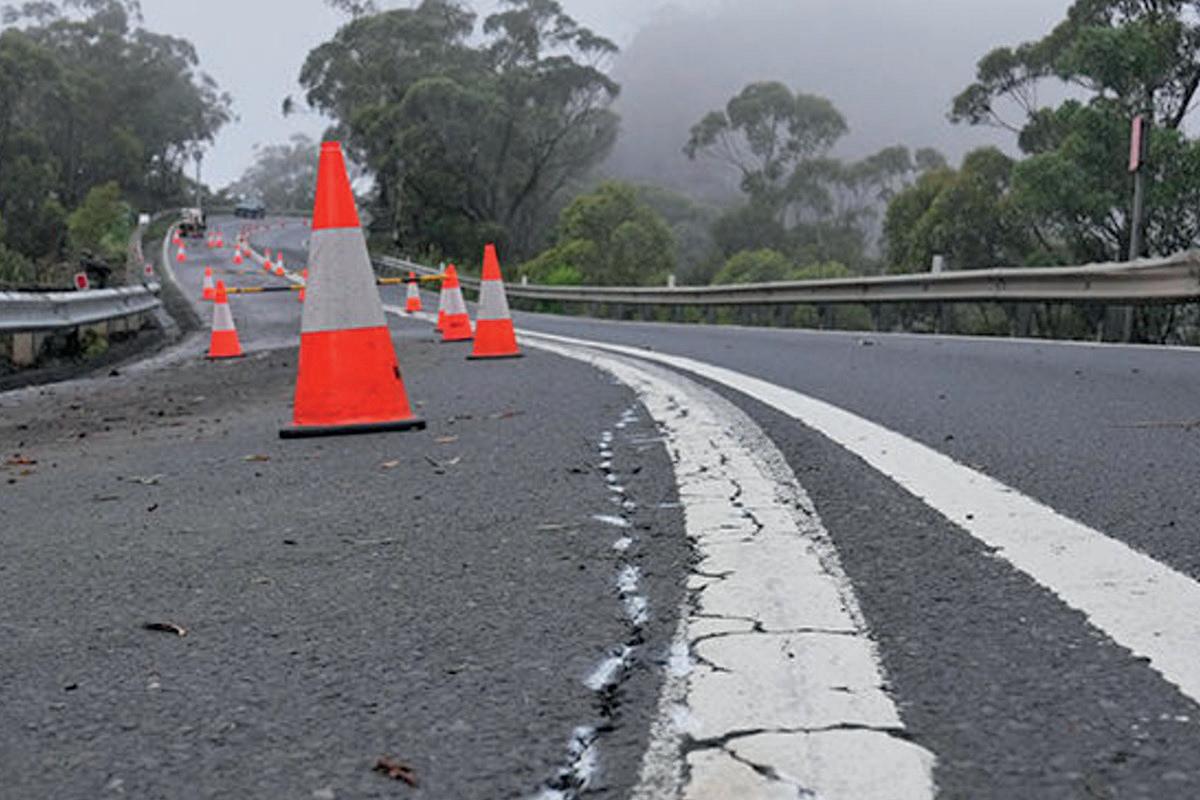
NSW fleet operators are calling for direct financial support from the state government for freight operators facing mounting costs as a result of the ongoing closure of the Great Western Highway at Victoria Pass.
CEO and Managing Director of Vellex Group of Companies Austin Vella said the major highway closure was adding a minimum of $120 to every one-way semi-trailer trip.
“This is at a minimum, and if you include the additional wear and tear on the vehicle and the driver, everything comes at a cost,” said Vella, who is also the Chairman of Road Freight New South Wales (RFNSW).
“We are having a bloody tough time at the moment. Life on the road is hard enough and we need to make it simpler for everyone.”
Vella said assistance for road freight fleets in the form of a stimulus payment would make operating a lot less stressful.
“Right now people are receiving their goods and everything seems fine, but the industry is heading in the wrong direction – and we cannot make a living with all our overhead costs.”
The owner of Morris Bulk Haulage, Marty Morris, told The Daily Telegraph transport businesses are left to deal with “dangerous and
frustrating” detour routes.
“We have had truck breakdowns and, in one instance, a t yre came off a ute, hit our truck and caused a breakdown and a one-hour delay,” Morris said.
RFNSW CEO Simon O’Hara said trucking businesses were spending hundreds of dollars more on individual trips due to lengthy detours, increased fuel use, additional driver hours and higher operating costs.
“Freight operators have no choice but to keep moving,” he said.
“They’re delivering essen-
tial goods, servicing regional communities and keeping supply chains running, but they’re doing it at a significant additional cost to their operations.
“Many operators are now spending hundreds of extra dollars every time a truck is sent across the mountains.”
RFNSW welcomed the NSW Government’s support package for small businesses announced by Minister for Small Business Janelle Saffin, but said grants of up to $10,000 would not reflect the losses being experienced by many transport operators.
“The package acknowledges the impact the closure is having on local small businesses, but many freight businesses are not local, yet are impacted severely by this closure and for them, the costs have already far exceeded $10,000,” O’Hara said.
“If funding is limited, there is a reasonable argument for ensuring additional support is directed to those businesses experiencing the greatest financial impact.”
O’Hara said the ongoing disruption reinforced R FNSW’s call for the NSW and federal governments to
work together on both immediate support measures and long-term freight resilience.
“RFNSW again calls on the NSW and federal governments to work together on a long-term solution, including progressing a second crossing and putting all viable options back on the table.”
He said Transport for NSW (TfNSW) figures show more than 11,400 vehicles travel through Mount Victoria each day, with heavy vehicles making up 22 per cent of traffic.
“Those numbers highlight just how important this corridor is to freight, industry and regional communities,” O’Hara said.
“Governments cannot continue to treat the Great Western Highway as a local issue – it requires a coordinated commitment from both the NSW and Australian governments to deliver the longterm infrastructure the state needs.”
A TfNSW spokesperson said the department acknowledges the impact on the road freight industry due to the closure of Victoria Pass on the Great Western Highway.
A fter feedback from industry, the spokesperson said TfNSW had worked with the National Heavy Vehicle Regulator to provide adjustments to legislation to support freight detours.
“Transport also continues
to work closely with industry to coordinate Oversize Over Mass vehicle movements that originate or terminate within the detour route,” the spokesperson told Big Rigs
“We are working to support movements across the detour routes, including a heavy vehicle tow truck on standby at Scenic Hill to ensure any incidents are cleared quickly.”
The spokesperson said TfNSW had facilitated more than 120 heavy vehicle tows up Scenic Hill since the Great Western Highway detour route was implemented in early March.
Transport has facilitated more than 115 planned Oversize Over Mass (OSOM) movements on the detour route since the closure of Victoria Pass.
“Furthermore, we are improving rest stops, including a heavy vehicle-only parking bay on the Bells Line of Road which has reopened to offer an extra option for truck drivers to take a break.”
TfNSW said it has shortlisted two consortia led by Gamuda and Seymour Whyte to develop and deliver a solution to restore access to Mitchells Causeway. Early preparation is already underway at Mitchells Causeway with a preferred solution expected to be confirmed and shared with the community before the end of June.

BY JAMES GRAHAM
A Gundagai mechanic who narrowly survived being run over while repairing a B-double’s brakes says his horrific ordeal should serve as a wakeup call for the entire transport industry.
Jarrod Bell suffered a serious leg injury when a truck moved unexpectedly while he was working underneath its trailer near Jugiong, NSW, on June 2.
While recovering in Canberra Hospital after multiple surgeries, the veteran heavy vehicle mechanic told Big Rigs that he doesn’t want to point fingers or assign blame.
Instead, he hopes his experi-

ence sparks a broader discussion about communication, training and safe work practices between drivers and mechanics.
“My biggest thing isn’t to try and bring anyone down in the industry,” said Bell, who runs Eureka Truck Repairs with wife Michelle.
“It’s to say, where does it stop?”
Bell said communication difficulties between some drivers and mechanics have become increasingly common and represent a significant safety risk.
He believes all drivers should possess sufficient English language skills and practical knowledge to safely communicate during roadside repairs and breakdowns.
“We’re raising the flag and saying we’re a safe industry,” he said.
“Then I can go out on a Tuesday morning breakdown and get run over by a guy because I couldn’t say ‘don’t move’ and have him understand it.”
Bell says the repair he performed is one repeated all over Australia by mechanics who are called out at a moment’s notice to get trucks back on the road.
According to Bell, the truck’s brakes had locked up at the top of Steam Engine Hill due to an air leak in the braking system from a failed booster.
Without the correct part on board, he carried out a temporary repair that would allow the truck to continue to a workshop for a more permanent fix.
He then asked the driver to release the brakes, but not move the truck, while he remained under the trailer listening for leaks.
Instead, the truck moved forward and then reversed, trapping Bell’s legs beneath the tyres.
“My left leg and my right leg had been caught underneath the middle axle tyres,” he recalled.
“The truck squashed my right-hand boot into my calf muscle.”
Bell said one of the most confronting aspects of the incident was the apparent lack of awareness that the mechanic was still working beneath the trailer.
“Where is this guy’s head at to not think, ‘Hang on, where’s my mechanic? My mechanic’s just fixed my truck and I can’t see him, so the first thing I’m going to do is get in my truck and drive back and forth?’” he said.
“How about I get out of the truck and say, ‘Hey mate, what do you want me to do?’”
Bell quickly realised the extent of his injuries when he saw blood pouring from his leg. Thinking he may die before help arrived, he fashioned a tourniquet from his belt and

called Triple Zero himself.
“I just thought I’ve got to stop the bleeding,” he said.
“I need to get an ambulance here. I think I’m going to die.”
Bell was transported by ambulance to Yass before being transferred to a trauma ambulance and taken to Canberra Hospital.
When Big Rigs called, doctors were preparing to perform a significant graft, taking skin from his upper thigh to repair the badly damaged area.
SYDNEY
510 Victoria Street, Wetherill Park NSW 2164 Ph. 02 9756 6199, email: isri@isri.com.au, www.isri.com.au
BRISBANE
“My leg will be permanently deformed moving forward because I’ve lost a lot of meat out of it.”
Despite the severity of Bell’s accident – and an uncertain financial future while he’s sidelined from work – Bell repeatedly stresses that his concerns extend beyond what happened to him personally. For years, Bell says he has listened to big fleet operators talk about safety systems and training programs, but he
“I don’t think they are. I think they’re just ticking boxes.”
Far from wanting to walk away from trucking, Bell now hopes his nightmare experience can help prevent someone else suffering a similar fate.
“I’ve been saying to my missus for years, I’m going to get taken out by a truck in the next five to 10 years, I’ll guarantee you, because someone will not listen


3/120 Gardens Drive, Willawong QLD 4110 Ph. 07 3275 2044, email: sales@isribrisbane.com.au, www.isribrisbane.com.au
BRISBANE NORTH
1/259 Cullen Av, East Eagle Farm QLD 4009 Ph 1300 11 4774, email: seats@isrinb.com.au, www.isrinb.com.au
MELBOURNE
Unit 1/569 Somerville Rd, Sunshine West VIC, 3020 Ph. 03 9311 5544, email: sales@isrisunshine.com.au, www.isri.com.au
MACKAY
110 – 120 Maggiolo Drive, Paget QLD 4740 Ph. 07 4952 1844, email: admin@isrimky.com.au, www.isriseatsmackay.com.au
PERTH
408 Welshpool Rd, Welshpool WA 6106
Ph. 08 9362 6800, email: info@mmtisri.com.au, www.mmtisri.com.au
DARWIN
Mobile Sales and Service
Ph. 08 8927 0986, email: info@isridarwin.com.au, www.isridarwin.com.au
NEWCASTLE/HUNTER VALLEY
Unit 2/13 Hinkler Ave, Rutherford NSW 2320 email: sales@hvss.com.au www.isri.com.au
Ph 02 4932 0600, When moving Heavy Loads comfort equals


Hamilton Island, June 3-5
THE future of Australia’s road transport industry will be shaped by a sweeping package of regulatory reforms, new technology and a fundamental rethink of how heavy vehicles are governed, heard delegates at Trucking Australia 2026.
Representatives from the National Transport Commission (NTC) and National Heavy Vehicle Regulator (NHVR) outlined major changes already underway, while also looking ahead to a future that could include automated trucks, data-driven enforcement and a very different approach to regulation.
The NTC said one of the biggest challenges facing regulators was adapting laws built around the assumption that a human is always driving the vehicle.
The commission said future automated vehicle laws would need to clearly define when responsibility sits with a human operator and when it rests with the company providing the automated driving system.
NHVR CEO Nicole Rosie
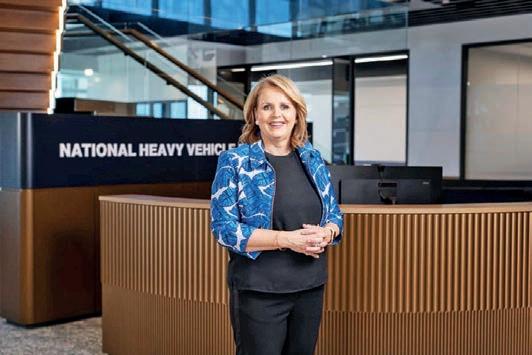
outlined the regulator’s vision for a future where compliance activities become increasingly driven by data and intelligence rather than traditional roadside enforcement.
Rosie said advances in vehicle technology and telematics were creating opportunities to monitor compliance more effectively without requiring as many roadside inspections.
“At the moment, 60 to 70 per cent of our workforce is on roadside compliance,” she said.
“We probably see a future
probably as soon as five years away where more and more of our regulation occurs through data and intelligence.”
The regulator is also developing tools that will soon allow operators to access their own enforcement and intervention histories, with benchmarking against similar operators expected to follow.
Rosie said the aim was to encourage greater industry self-management and leadership in safety performance.
The NHVR also highlighted a concerning trend emerging
from its enforcement activities.
Of 21 targeted stops involving some of the highest-risk operators identified by the NHVR, 17 involved operators working under ABN arrangements.
The regulator said the figures reinforce concerns about links between sham contracting and poor safety outcomes, with non-compliance issues often occurring together.
The Australian Trucking Association’s annual conference a lso heard details of major Heavy Vehicle National Law reforms that will come into effect from August 1.
The changes include enhancements to the National Heavy Vehicle Accreditation Scheme, an expanded duty not to drive while unfit, increased mass limits and longer vehicle dimensions for general access vehicles.
The reforms will lift general mass limits to concessional mass levels, representing an increase of about five per cent, while maximum general access vehicle length will in-
crease from 19 metres to 20 metres.
Work diary requirements will also be simplified.
Importantly, regulators stressed that accreditation reforms will be phased in gradually, allowing existing arrangements to operate alongside new requirements during the transition period.
Operators will be given time to adapt rather than face immediate compliance action.
Another major discussion point was the future of heavy vehicle charging.
Officials outlined a new forward-looking charging model designed to provide operators with greater certainty over future costs.
Rather than relying on historical expenditure figures, the proposed model would use three-year forecasts and spread infrastructure costs across the life of assets.
The result, delegates were told, should be a smoother and more predictable charging trajectory that allows businesses to plan ahead
AUSTRALIA’S trucking industry is increasingly divided between large fleets enjoying growth and smaller operators battling to stay afloat, according to new survey data presented at Trucking Australia.
The findings shared by Ben Selwyn, Director of market research company Fifth Quadrant, painted a picture of an industry facing significant workforce, profitability and succession challenges, with owner-drivers and small fleets under particular pressure.
One of the clearest findings was the industry’s inability to recover rising operating costs. Just under half of respondents said they had been able to pass increased expenses on to customers through rate rises or
fuel levies, while the remainder had been unable to do so.
The survey found this was having a direct impact on profitability, particularly among smaller operators who often lacked the commercial leverage to negotiate higher rates.
The divide was also reflected in business growth. While around half of all trucking businesses reported growth over the past 12 months, growth was heavily concentrated among larger operators. Three-quarters of large fleets reported growth, compared with only one-third of owner-drivers.
Survey results showed that owner-drivers and small operators were most concerned about financial pressures and
securing rate increases, while larger fleets were more focused on issues such as road infrastructure, compliance obligations and driver availability.
Contract arrangements were another area where smaller operators appeared disadvantaged.
W hile seven out of 10 fleets overall operated under customer contracts, only half of owner-drivers reported having formal contracts in place. By comparison, almost nine out of 10 large fleets had contractual arrangements with customers. Even among operators with contracts, only around half included rate review clauses, limiting their ability to respond to escalating operating costs.
Workforce issues also fea-
tured prominently throughout the survey.
When asked about internal safety risks, respondents identified driver fatigue, inexperienced or undertrained drivers, driver behaviour and driver distraction as the industry’s most significant concerns.
The findings suggest operators remain concerned about the pressures placed on drivers and the challenges of attracting and retaining experienced personnel.
Recruitment practices were also found to be largely informal across much of the industry. Most fleets continue to rely on word-of-mouth referrals and job boards to fill vacancies, while only larger businesses typically use recruitment
agencies, labour hire firms or structured pathways through apprenticeships and registered training organisations.
The industry’s long-term workforce outlook emerged as a major concern.
More than one-third of workers aged under 35 said they did not expect to still be working in trucking within five years. At the other end of the age spectrum, 58 per cent of workers aged 55 and over indicated they expected to leave the industry within the same timeframe.
with greater confidence.
The issue of electric vehicles was also raised, with officials seeking to reassure diesel operators that they are not subsidising battery-electric trucks. Under the current charging methodology, cost recovery calculations assume all vehicles contribute equally, meaning governments absorb any shortfall created by electric vehicles that do not pay fuel tax.
The session also explored the National Automated Access System, which aims to streamline permit approvals and improve access pathways for PBS vehicles while reducing administrative burdens on operators and road managers.
Speakers also argued that the highly prescriptive laws that have governed trucking for decades are increasingly struggling to accommodate modern vehicles and emerging technologies.
The future, conference attendees heard, is likely to involve more principle-based regulation focused on outcomes rather than detailed rules.

With one-quarter of survey respondents already aged over 55, the findings point to a looming workforce replacement challenge at a time when many trade-based occupations are already experiencing skills shortages.
The survey, sponsored by BP, NTI, and Volvo, captured data from 503 trucking businesses across Australia in April 2023, offering a comprehensive view of the industry’s challenges and opportunities across owner drivers, small fleets, medium fleets, and large fleets.
IOR truckie John Parry has been named Professional Driver of the Year at the 2026 National Trucking Industry Awards. The award winners were announced at the 2026 ATA Foundation Sponsors Gala Awards Dinner, as part of Trucking Australia 2026, the Australian Trucking Association’s annual conference.
Parry’s IOR colleague, Andrew “Risky” Foster, was also a finalist in the same category.
Cannon Hill-based Parry, a tanker driver at IOR, is responsible for distributing fuel to retail, agricultural, rail, commercial and marine bunkering customers.
He has more than 30 years of experience as a tanker driver, including 11 years in the army with two operational deployments. According to the judging
notes, Parry demonstrates exceptional standards in both personal and vehicle presentation.
“Customers frequently request John by name for their deliveries, which speaks to his professionalism, reliability and customer service skills,” said the awards program.
“IOR’s driver base consider John to be a driver of choice for shift partnering. He provides mentoring and coaching to new drivers, drawing on his extensive industry and military experience.”
The other big winners on the night were:
• Outstanding Contribution to the Australian Trucking Industry Michael Edmonds, NTI (Brisbane, Qld)
• National Trucking Industry Woman of the Year Jodie Jarratt, Jarratt Trans-
port Solutions (Benowa, Qld)
• National Trucking Industry Workforce Award Formula Chemicals (West Ryde, NSW)
• TruckSafe John Kelly Memorial Award K & S Freighters (Truganina, Vic)
• Don Watson Memorial Award
David Simon
MGM Bulk directors Mario Giacci and his children Giudi and Michael were also celebrated as the latest inductees into the hallowed Kenworth Legends club.
In Kenworth Trucks’ commemorative video, Mario, Giudi and Michael shared the history of the Pilbara-based MGM [named from their initials] Bulk, the hardships, sacrifices and the key to the company’s enduring success in the
harshest of environments.
“Every asset up here runs 24/7,” says Michael in the clip.
“The truck will get turned on. It does not get turned off until 10 days later. And it’s a tough environment, tough conditions. And it’s hard on gear, it’s hard on people. It’s hard on families. It’s hard on
country, and if you’re not resilient, you shouldn’t be here.”
Michael reveals that the company moves up to 26,000 tonnes of iron ore from the Pilbara to Utah Point in Port Hedland every day.
Giudi adds that when you factor in the salt, limestone, gravel and sand for road con
with its fleet travelling more than 113,000km and using 150,000 litres of fuel each day.
“Every day’s Monday morning, that’s why I love the Pilbara,” says Mario, who was also inducted into the Shell Rimula Transport Wall of Fame in Alice Springs in 2024. To watch the full video, visit bigrigs.com.au and search



EDITOR JAMES GRAHAM
social media, many drivers and small operators are worried. Some are angry. Others are simply confused. That’s understandable. For an industry already grappling with rising costs, driver shortages, increasing compliance obligations and mounting pressure from customers, any mention of bigger fines is bound to get the heckles up.
Big Rigs will continue examining the reforms, speaking with industry stakeholders and explaining exactly what the changes mean. Yes, some penalties are increasing. But not every offence is going up. Some penalties are actually being reduced. And many of the figures circulating online relate to maximum court penalties rather than roadside infringement notices.
Watch out for the July 3 issue for a double-page explainer on what’s changing from August 1.
NOT if you ask many of our Facebook readers who were quick to air their disapproval of what was coming for industry from August 1.
“I don’t understand. We have a national regulator, yet we have state licences, and each state is different in their processes,” writes Crackles Kelloggs.
“We have different mass management weights, sizes, lengths, loads, truck combinations, etc, state by state.
“No wonder drivers are getting infringements trying to keep up with cons and pros of every state. All the above should be under a national scheme. Shouldn’t be that hard.”
Gary N Wendy Jackson said the industry shouldn’t be surprised by the changes.
“Because the associations, with the help of the union, plus our own lack of unity, has worked against us,” he said.
“The so-called industry will be, or perhaps is now, only for losers…show me any other industry that the harder you work and the sacrifices made set you backwards.”
Craig Masefield-chips said it is incredible how the trans port industry doesn’t stand up and say to the regulator, let’s hold off for 12 months and give transport operators and drivers time to digest all these changes.
Added Darren Lebsanft:
“How many years have we been told the NHVR were coming? But there was many who had their heads up their arse believing it never would... How much notice do you need to change your ways?
FIFTY penalties will go up under the new Heavy Vehicle National Law, with a further 21 going down.
Most of our Facebook commenters reckoned that kind of maths doesn’t add up.
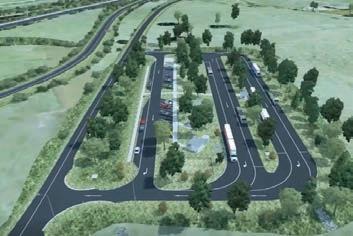
TRUCKIES will soon have another place to pull up and rest on the Bruce, with the new Curra Rest Area nearing completion and more facilities already in the pipeline.
But not all our readers were convinced the new site would be the boon for drivers that authorities would have us believe.
“Rest areas like these need to be trucks only separate from cars and should have not only toilets but showers and at least a small shop with somewhere to sit in a lounge or a table to eat and get out the trucks for a while,” said David Johnson.
After all, it is their workplace. Members of parliament get food
catering snacks ALCOHOL all on the taxpayers money.”
Added Aaron Sonter: “Complete waste of time and money in the wrong location. Bigger facilities need to be around Gin Gin through to Mackay where fatigue actually sets in.”
Tony Straycat says the only downfall is, if you go down a lane and the bays are full.
“You can’t turn around and try another; full vision of all bays is needed.”
Damo Sykes say authorities need to install cameras to fine people who park in the heavy vehicle areas.
“I’ve been driving on and off since the early 1980s when I started it was a job for people who didn’t do well academically for whatever reason but they had good backs and good reflexes,” writes Peter Moore.
ked with one bloke who couldn’t read or write he had been driving for over 35years at the time never had
“Used to get other people to help with the logbook, back then it was treated more
“We’re all afraid of being caught by speed cameras, let’s make people afraid of parking in truck areas and depriving them of the compulsory rest that the law requires.”
“There should be no access to truck parking areas.
as a guide than a book of rules handed down by God himself as it is today.”
He said the problem with transport today is it is being run by academics, enforced by academics and they expect academics to drive the trucks, and people who are educated don’t want a job where they work for a low hourly rate and can lose money if they make innocent mistakes.
“Keep importing the drivers, we need them, because no-one with the amount of education required to understand the laws today is going to voluntarily take up driving as a career.”
David Hender is convinced the NHVR should move into policing other industries like
nursing, or hospitality.
“Because they work some bonkers hours, just like the poor old truckie but they get no fines.”
Dennis Blake wonders how the lawmakers are qualified to say a driver is fatigued.
“As far as I’m concerned, they are trying to shut the transport industry down then how will they get the food on
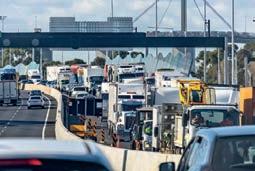
ELECTRIC trucks could save operators thousands each year, but a raft of issues is still holding them back, according to a new industry report.
“I love trucks, I love computers and I really love green energy,” added reader Lyla Bax.
“The thing is, if there’s going to be a weight offset for the battery, it needs to lower like only a tonne offset since it’s not like we’re offsetting the diesel in a truck.
“I’d understand a larger offset if they prove the cost and resource effectiveness of the diesel saving vs the cost
of power generation. I understand it’ll save diesel, but what are the resource differences in the cost to build, maintain and especially charge them compared to a regular truck?”
Rob Wright said he is 100 per cent against any electric vehicle because taxpayers are funding the charging stations. On top of that, he says there are zero returns as the power is supplied by private enterprise.
“Electric vehicles make up less than 5 per cent of all domestic vehicles registered yet here we are paying for the charging stations, Taxpayers don’t pay for petrol/diesel/gas
service stations and shouldn’t be paying for charging stations.”
Dale Van Eck says they are “ridiculously expensive”: “I’d love a 14-pallet tautliner for local. But we can buy two in diesel for the same price.”
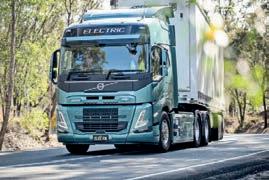
When loads are heavy and roads are long, the Volvo FH16 doesn’t back down because its Australian Made for our conditions. Powered by the new D17 engine with up to 780 HP and 3800 Nm torque, it conquers heavy hauls effortlessly.
But it’s more than just power, Volvo Action Service ensures you’re always connected with roadside support. Backed by our national dealer network, it means total peace of mind when far away from home.
Volvo Trucks. Driving Progress.
BY JAMES GRAHAM
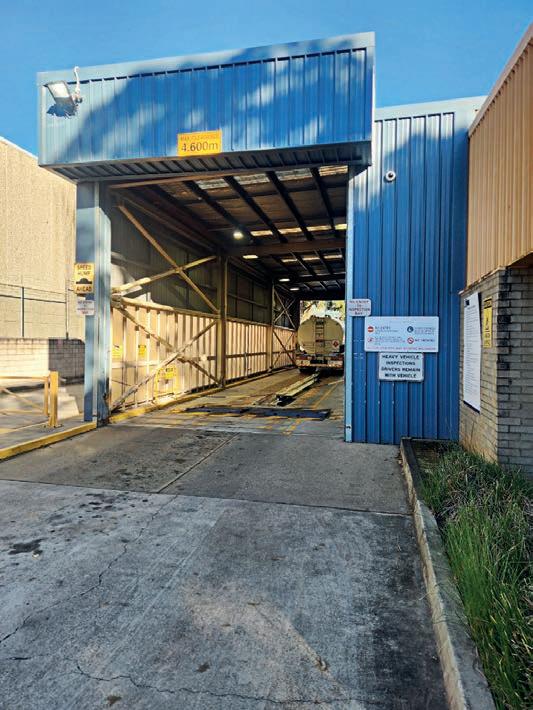
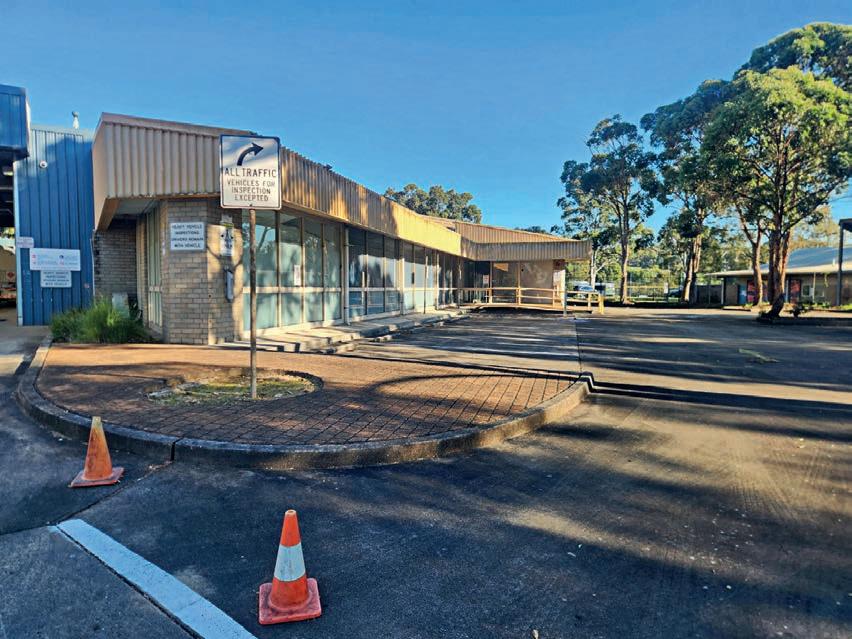
OPERATORS blindsided by the closure of the Campbelltown heavy vehicle inspection station say the move will add costs, increase congestion and place further pressure on already stretched facilities.
The National Heavy Vehicle Regulator (NHVR) is set to close the busy south-west Sydney site on August 9, directing operators to alternative inspection locations including Penrith, Wetherill Park, Botany and Mount Boyce.
But operators who regularly use the facility say they received little to no warning of the closure and have been left scrambling to work out how they will manage future inspection requirements.
Robert Tebb, owner of Minto-based Precision Logistics, said the shutdown would have a significant impact on transport businesses throughout Sydney’s rapidly growing s
“There’s quite a number of us out in this area that have used that motor registry for a lot of years to have our vehicles inspected,” Tebb said.
“To take them anywhere else is going to obviously overload other places in Sydney.
“And they haven’t had any consultation with any of the transport companies in this area. As you can appreciate, this is a fairly large area now for trucks.”
Precision Logistics operates around 16 prime movers and 30 trailers, with vehicles typically inspected at the Campbelltown site just 15 minutes from its depot.
Tebb said operators had long been led to believe a replacement facility would eventually be built in the area after the former Roads and Traffic Authority office moved to Gregory Hills.
“That hasn’t happened. And now we heard that it’s just closing down altogether.”
tions that nearby facilities have sufficient spare capacity do not align with the experiences of operators trying to secure bookings.
“Wetherill Park is just a disaster to try and get a booking.
“Penrith, we can get bookings, but we’re an hour and 15 minutes away and obviously you’ve got to be early, so we’re going to waste four hours just to go to Penrith and back.”
Tebb said the closure would affect far more than just his business.
“You’ve got quite a number of companies out here, and I think they said there’s in excess of 5000 inspections a year there.
“This area’s going ahead leaps and bounds. The airport’s going to be open shortly. That’s going to put more vehicles on the road.”
He also questioned how forcing trucks to travel longer distances for inspections a ligned with broader government objectives.
“They’re all the time telling us that they want to get heavy vehicles off the road where possible.
“We’re going to start driving to Botany or some of these other areas to get inspections. You’re going to put more heavy vehicles back on the road and create more congestion trying to get vehicles inspected.”
Andrew Davies, a truck driver with a trailer rental business in the Campbelltown area, said his company a lone processes between five and seven trailer inspections a week and expects the closure to add substantial operating costs.
“We’ve got around 300 trailers,” Davies said.
“We have to constantly book in five to seven inspections a week to keep up with them.
“At the moment it’s about a 15-minute drive for me to get down there. Now it’s going to go up to about a 45-min-
ute drive plus tolls.”
Davies estimates the additional travel time, tolls, fuel and labour could add around $150,000 a year to the company’s operating costs.
“It’s not just us. There are other big operators out here as well.”
One of the biggest frustrations for Davies is what he describes as a lack of formal communication from the regulator.
“We’ve got to book three months in advance because we’ve got so many trailers, and you’re telling us you’re going to give us under a month worth of notice to change all this?”
Both operators say they understand facilities may eventually need to be modernised but argue there should be a replacement inspection station established in south-west Sydney before the existing site is shut down.
“We realise that progress is progress,” Tebb said.
“But the situation at the
moment is that we haven’t been given an option.”
In a message to industry in August, 2022, highlighting changes after the NHVR took over compliance duties in NSW that same month, the regulator said it would provide HVIS inspections “in the same way, at the same locations”.
“There will be no change to the current booking and payment arrangements,” the note added.
But the NHVR told Big Rigs the Campbelltown site’s lease is expiring and the facility is now no longer considered fit for purpose.
“The facility presents a range of operational and safety challenges, including limited vehicle access, structural constraints and an inability to efficiently accommodate larger heavy vehicles, including Performance Based Standards combinations,” a spokesperson said.
The spokesperson said the regulator has undertaken
significant work to identify an alternative site in Campbelltown, including market investigations and previous discussions with local councils regarding potential partnership opportunities. But no suitable alternative premises have been identified at this time, they added.
The NHVR confirmed there is existing capacity available at nearby inspection sites, including Penrith and Wetherill Park, with contingency capacity also available at Unanderra, Mount Boyce and Botany.
To support industry during the transition, the regulator said it will closely monitor demand at surrounding locations and implement additional capacity measures where required, including extended afternoon and weekend hours.
Operators are also able to book inspections up to 12 months in advance to support forward planning and minimise disruption.



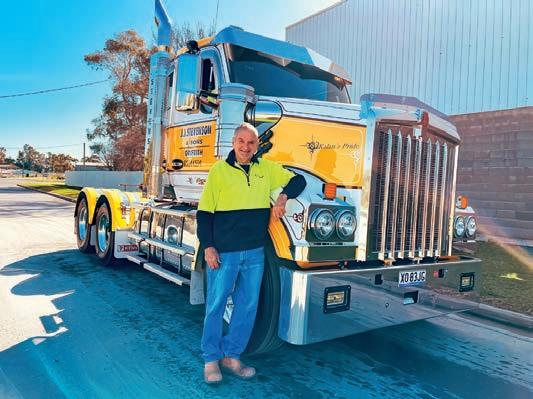
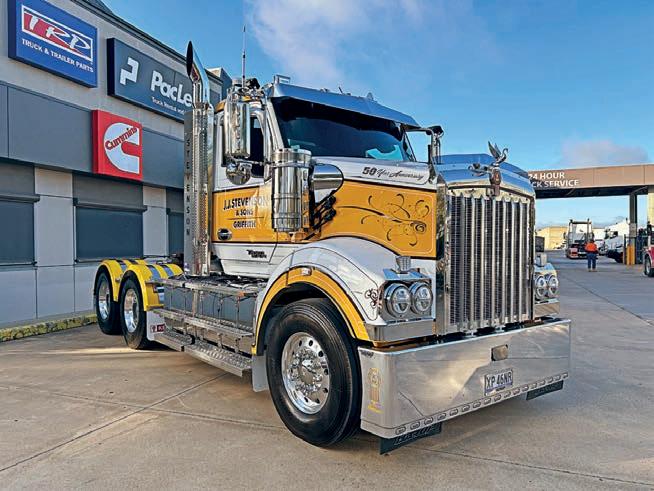
This immaculate fleet of yellow and white trucks have been a familiar sight in the Griffith area for decades – with the newest set-up a celebration of 50 years of success.
BY DANIELLE GULLACI
JJ Stevenson & Sons is a true family business in every sense, with a story that spans across four generations. Based in Griffith, NSW, it has evolved from humble beginnings –one man, one truck and a whole lot of determination.
It was back in 1964 that Jeff Stevenson was gifted an older tractor crane for his 21st birthday from his father Bob Stevenson.
Bob was an early pioneer of the area. He ran a business called Stevenson Blue Metal Quarries from farmland he owned that was covered with basalt deposit and used it to produce concrete.
With the help of his rather unusual birthday gift, Jeff set about launching his own local concrete business called JJ Stevenson in 1976. He purchased his first truck, a new Nissan mini mix. Back then there was no cement silo, just a simple hopper, so every batch was produced through cutting open bags of cement by hand.
Jeff began growing his truck fleet from 1978, predominantly purchasing second-hand Internationals. Once he began purchasing new trucks, he moved to Mitsubishi FK415s, and then by the mid-1980s, was purchasing second-hand Kenworths, which have remained the company’s truck of choice to this day. In 1980, Jeff also purchased a cement silo to make the production of concrete a lot easier.
Jeff’s first new Kenworth came in 1994, a T350, purchased through Riverina Trucks – now Inland Truck Centres. Testament to Kenworth’s longevity, the company still has a 1994-model T404 SAR and 19-metre B-double set-up, now used for local quad float work. Back when it was purchased, that truck also appeared in the Kenworth calendar.
Today the company’s operations are centred around
earthmoving and ready-mix concrete, serviced by a fleet of 22 Kenworth prime movers paired with agitator bodies, along with rigid, semi and B-double tippers. On the earthmoving side, the business has six front-end loaders, an excavator, a grader and four different types of rollers.
JJ Stevenson & Sons operates from three main facilities in Griffith – a maintenance yard, storage facility and concrete yard.
Adding to that, the business also runs its own farming operation at Benerembah – less than 20 kilometres from Griffith. On the 2500-acre property, the family grows rice and wheat that’s transported by the company fleet. The blue metal quarry still sits on that farmland, however it’s leased to another local business for quarrying.
Though there was a stage where the business did expand its services further afield, the decision was made to pare things back and return to focusing solely on the Griffith area.
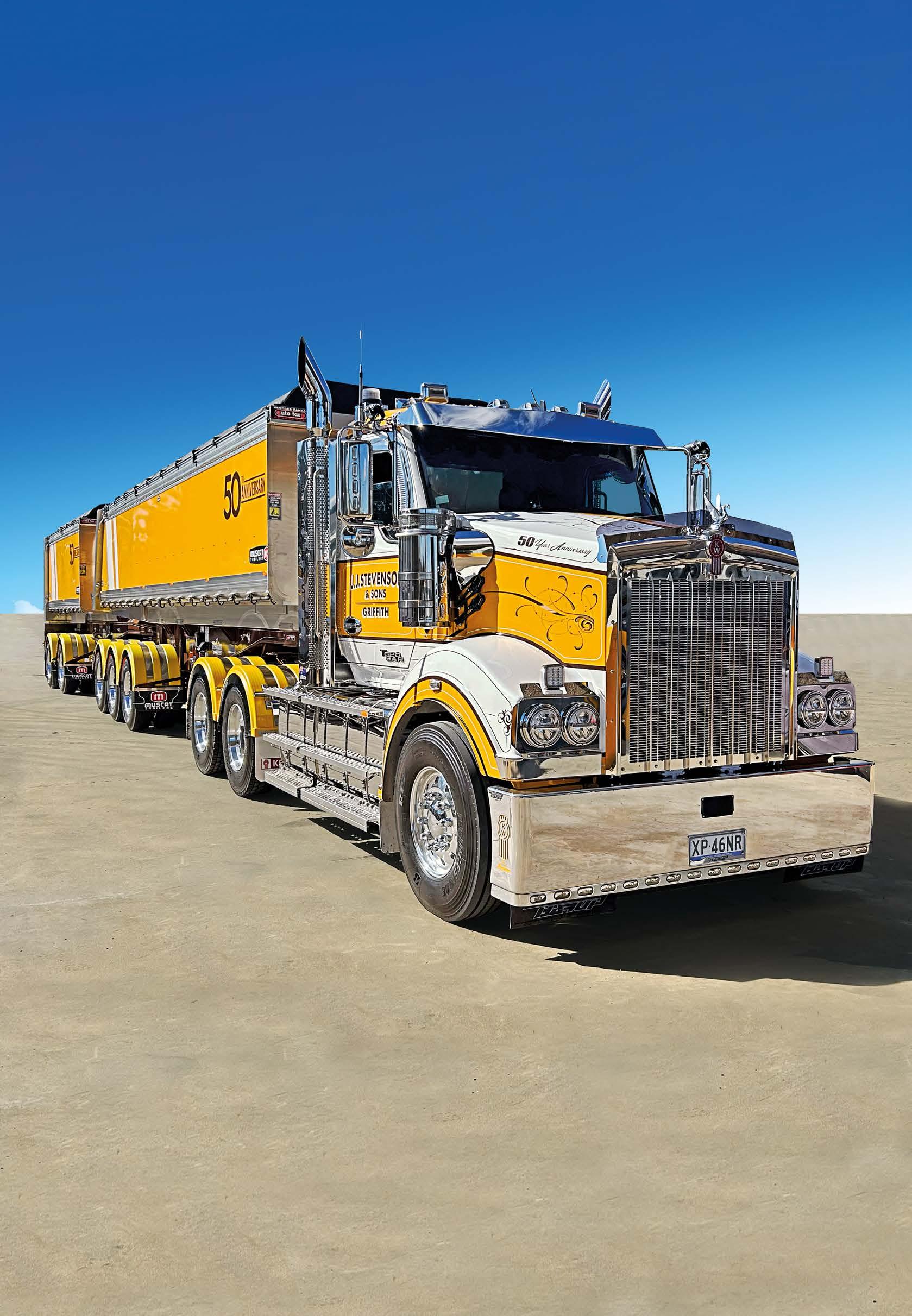
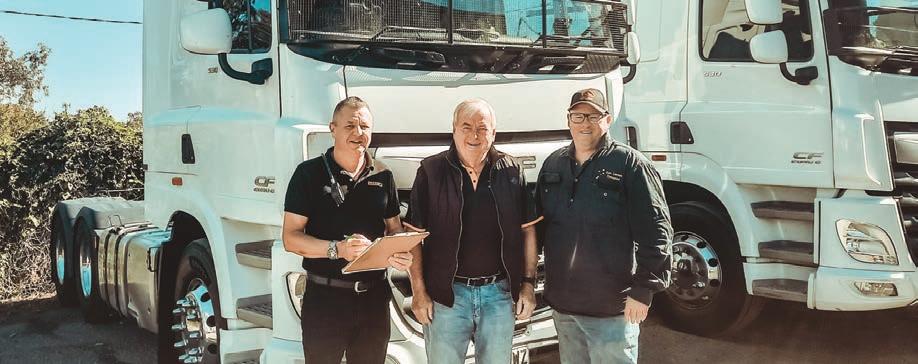
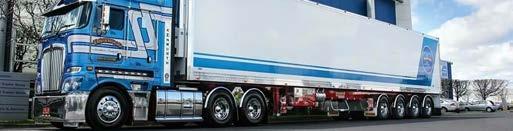
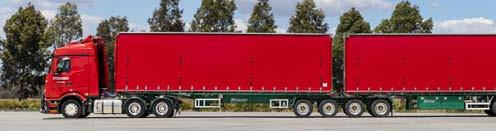
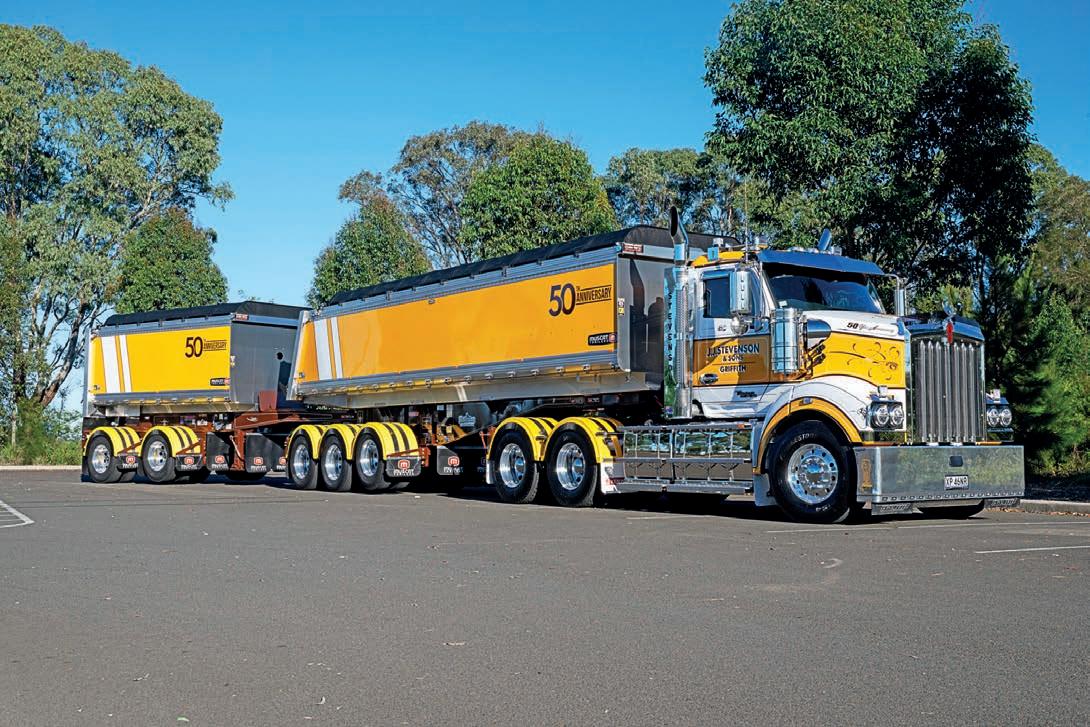
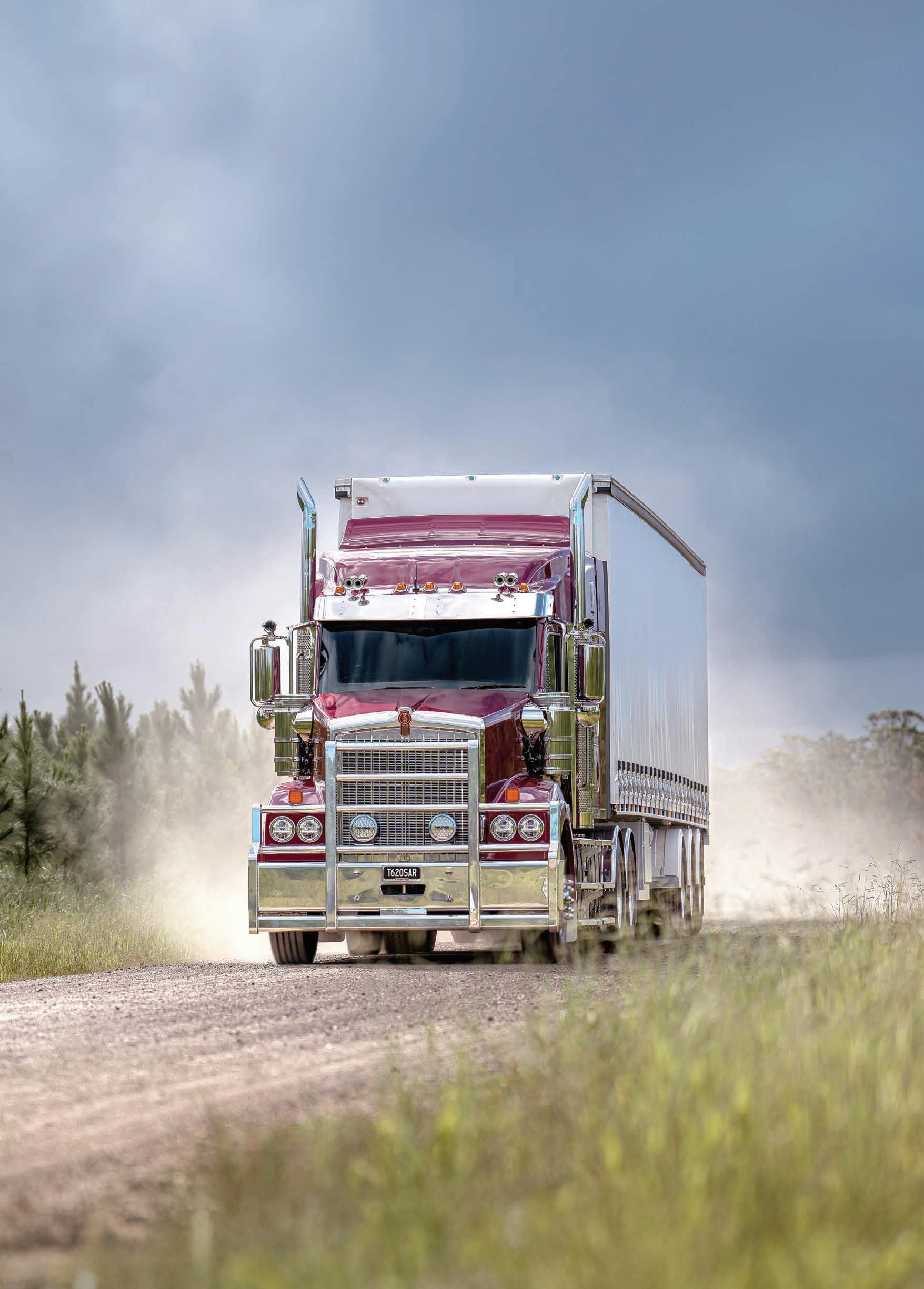
The newest truck to join the JJ Stevenson & Sons fleet is a Kenworth T620SAR paired with a 20-metre tri bogie B-double from Muscat Trailers. Delivered in early April, this milestone truck has been done up in celebration of the company’s 50th anniversary – with custom paintwork, the words ‘50 year anniversary’ on both sides of the bonnet and trailers, a yellow Kenworth bug with a 50-year tribute engraved into the sides of the bumper bar and additional scroll work.
It’s powered by a 520hp Cummins X15 Euro 6 engine and mated to an Eaton Endurant 18-speed AMT transmission.
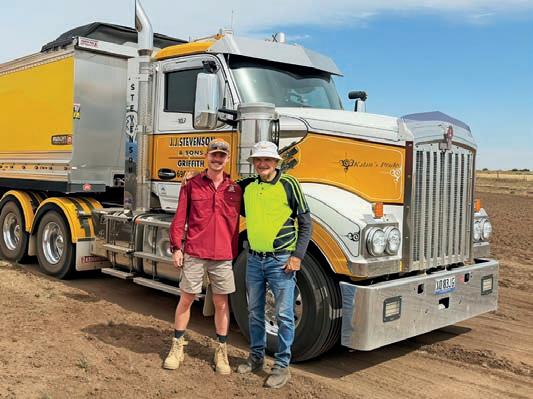
At 82 years of age, Jeff is still very involved in the business.
Although JJ Stevenson & Sons is now in the hands of of his sons Robert and Keith Stevenson, who both serve as directors, Jeff is still there
bright and early almost every morning.
Robert, 59, started at the family business in 1983, and Keith, 51, started in 1992, fresh out of finishing high school – with the company’s name changed from JJ Stevenson to JJ Stevenson & Sons.
A s Keith told Big Rigs, there was never any doubt in his mind that he would join the family business.
“I’ve been around this all my life. Dad has always been a hard worker, as he still is today, although he is slowing down a little now. I’d be getting to work at 5.30 in the morning and he’d still be here before me,” he said.
“Dad taught me to drive the truck by the time I was 14. I learnt in an old 1418 Benz back in the day. As soon as I could, I was out on the roa I came into this business driv
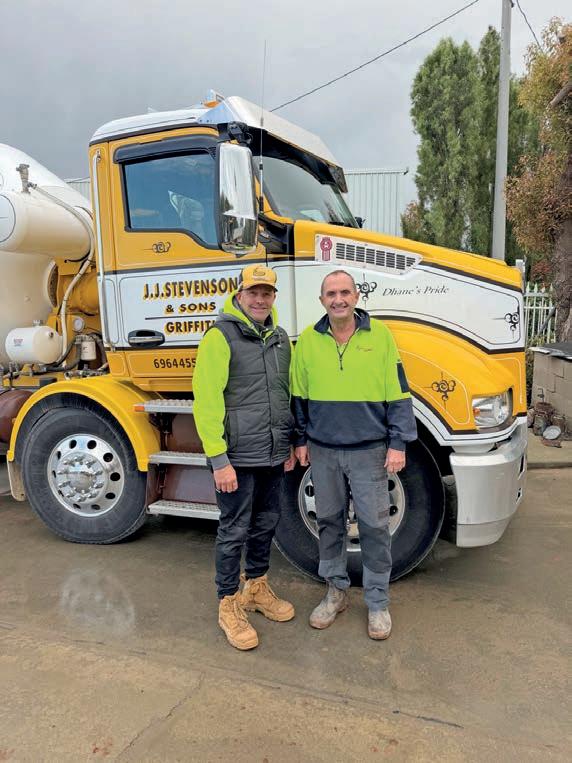
ing the concrete trucks.”
The next generation have now followed a similar path. “I gave my boys the option of whether they wanted to come into this business or go off and do something else,” said Keith – whose sons Kalan, 22, and Dhane, 17, are both working at JJ Stevenson & Sons, as is Robert’s son Zack, 25.
“Kalan currently has his HC and wants to eventually go for his MC licence. He does all the concrete batching but gets out in the truck any chance he gets,” added Keith.

Speaking to Keith, there’s a clear sense of pride in seeing the business his father started 50 years ago, grow into what it is today.
“It’s gone from a small con-
product and quality service, that’s what we’ve become renowned for.
“To celebrate 50 years is very special to all of us here. We’re a proud family business and I hope we can keep growing and a ll the more special by being able to share it with his sons and grandsons. “Dad sometimes tears up because he’s so proud of what we’ve been able to achieve. He still likes to have his say with the business when it comes to big decisions and financials, but otherwise he’s and

A traveller at heart, this nurse come truck driver saw the industry as a perfect way to continue exploring Australia – making the move from the east coast to Western Australia.
BY DANIELLE GULLACI
MEL Shaw, 52, says she’s never been one to stay still for too long. “Trucking suits my lifestyle. I’ve travelled the world and travelled Australia – and this is the perfect way to get paid for it!”
Originally from Brisbane, Mel has spent the last few years juggling nursing and trucking. “I did 20 years of nursing, doing contract work all around the country, but I decided I wanted more, I wanted to be in the big rigs,” she said.
Her interest in trucks started a few years ago when she and an ex-partner ran a tree-lopping business. “We had a truck that required an MR licence. I thought why do that when I could go straight to HR. He told me you don’t need that; you can’t drive a truck. And I said, watch me –so now he’s an ex and I have my MC licence,” she laughed.
Once Mel got her HR licence, she found work with a demolition business. “The guy there was happy to take me on for just a few days a week to give me some experience. It was an old Kenworth tipper, taking away demolition rubbish from houses being demolished around Brisbane,” she explained.
From there, she spent some time carting general freight before upgrading to her MC in September 2024. “That was my ultimate goal,” said Mel. “As I walked out with the paper saying I’d passed – I didn’t even have the physical licence card yet – I started looking for work in Western Australia.
“Over there, they do grain harvest every year from around October to Christmas. I saw an ad for MC drivers to work the harvest at Wickepin in the Wheatbelt. I called Peter Thompson at Tincurrin Transport and asked if he’d take on someone green. He said that if I’m willing to listen, he was willing to train me.”
And with that, Mel hopped on a plane to work the 2024 harvest, a move that proved to be a great experience to learn and improve her skills in the truck.
“They were such awesome people. Peter threw me in the deep end so I learned really quickly. All the farmers were really good too. If they know you’re green, they give you pointers and are happy to help.”
Once the harvest season was over, Mel stayed on, doing more tipper work, transporting fertiliser.
“That sealed it for me. I love the road, especially out here where the sky feels twice as big. And let me tell you, WA’s remote roads, they get into your blood.”
Over the past two years, Mel
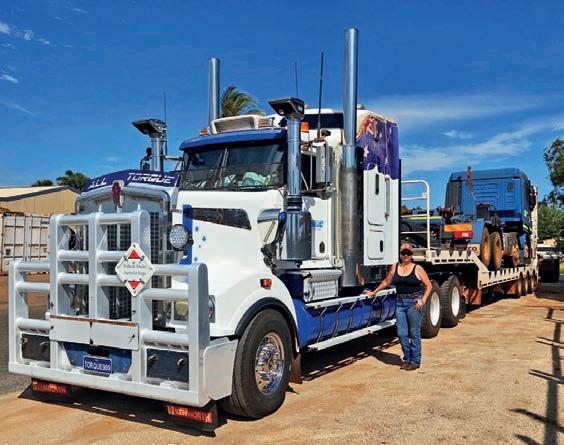
has been dividing her time between Queensland and Western Australia – including stints back at nursing.
“I’ve come backwards and forwards a few times because I have a driving job I always fall back on in Brisbane. They’re the best company to work for as well, so I stay on their books and work for them when I need a break from here.
“I’ve also had a stint in mining and did the grain harvest last year at a different Wheatbelt town. I recently had a break back home in Brisbane, before coming back over to WA.”
When Mel spoke to Big Rigs in May, she’d been living and working in Port Hedland for the past four weeks.
“I’d worked up this way as a nurse before but hadn’t been to Port Hedland in the trucks.
I’m a real traveller so I think that’s why trucking suits me –I love being on the road.”
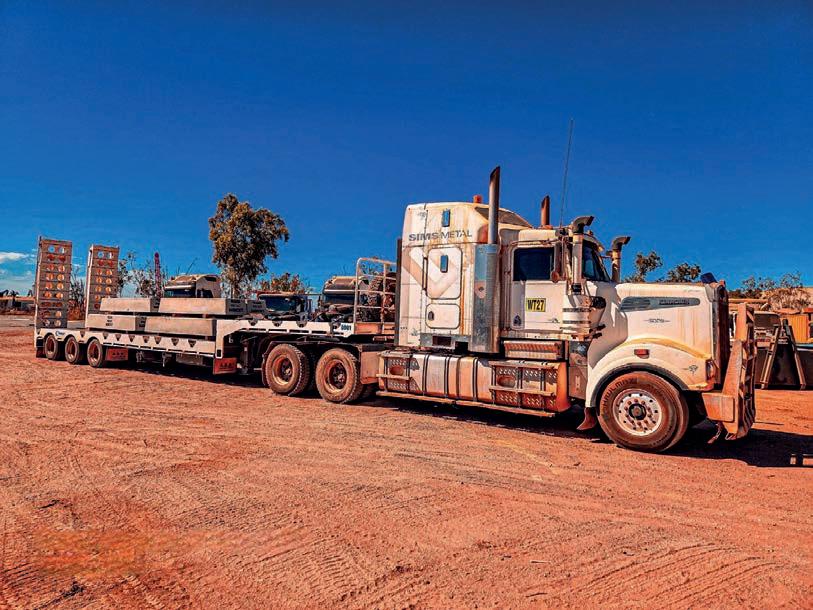
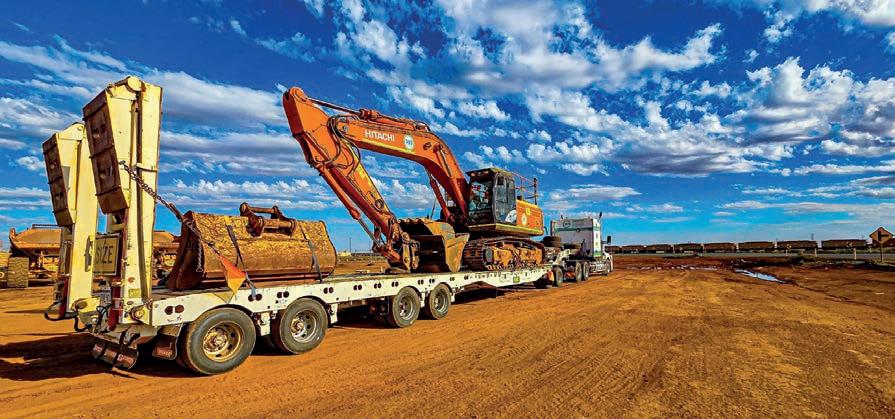
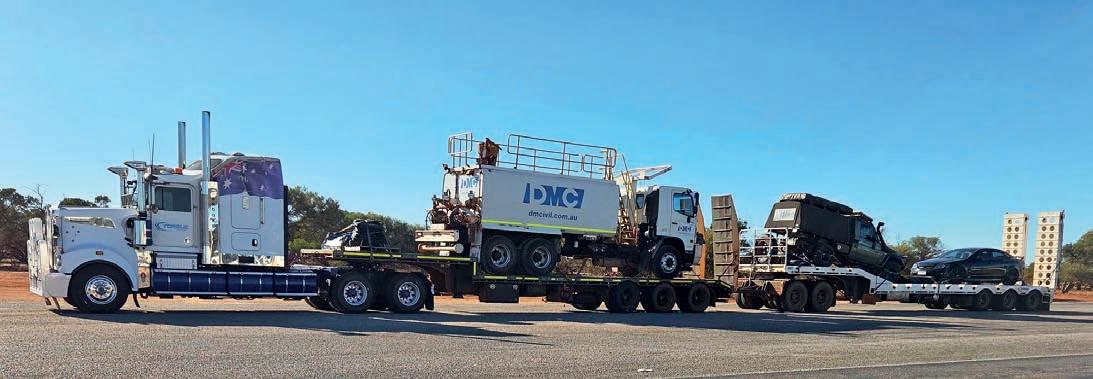
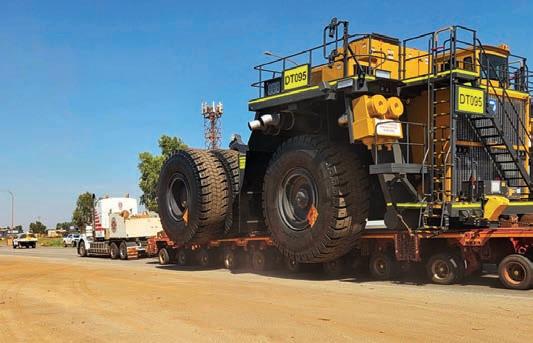
Mel currently works for Torque Haulage, doing a wide variety of work including oversize, drop deck, floats, scrap metal and transporting to and from the mines. “I enjoy the variety here, it’s a little bit of everything. Torque Haulage is a small company and that’s what I like, I’m not just a number. They’re willing to train me up. My boss Beau is really good, if I have a problem or a question, I can talk to him about anything.
“Beau said he’s an old school truckie and that he sees too many young people who don’t get trained up properly anymore – so that’s why he wanted to train me up. It makes it so much easier when someone is there to give you guidance.”
Mel admitted it’s been a tough few weeks learning the Roadranger, but she’s eager to master it – and even recently pulled her first triple road train, which she’s done a few times since.
“I’ve always driven manual cars but the Roadranger is a little different,” Mel laughed.
“It does cause a bit of anxiety because I’m still learning, but I’m getting there.

“There are a lot of different challenges in this role, which is great for me because I’m always looking for a new challenge. Each day I learn something new. Yesterday, I hooked up a triple again, this time driving a different truck.
“Sometimes we go out to mine sites. Last week I was running out to the salt mine between Karratha and Onslow, doing about 750 kilometres a day return, moving machinery out of there. I’ve also done a two-up run to Perth, which is a 1700-kilometre round trip. Most people I run into here are all so nice and willing to help you and show you things.”
Despite previously living in Brisbane, Mel has also spent time working as a nurse in some of the most remote towns in the Northern Territory, so she’s taken to her newfound home really well.
“I know a few people who live here – I have a cousin and a couple of mates. I do karaoke on Friday nights when I have them off and the pubs are really busy. It’s a busy town and I really like it,” she said.
“I am planning on staying here for a while. I have a sixweek block of nursing in Esperance in July, and then I’ll come back to Port Hedland from there. I still do nursing once or twice a year which is compulsory as I’m still studying, and my boss has been really understanding with that.”
Asked what she’d say to anyone considering a career change into trucking, Mel said, “I see a lot of people struggling to get a foot in the door – and I always say either start by driving coaches, or come over to the west and work the grain season
because they’re screaming out for drivers and they also supply accommodation with those jobs too.
“I’m actually sitting here on my back veranda and looking at my pool – that’s the house that comes with this job. If people want to get out of metro areas and explore the rest of Australia, there are
thousands of jobs over west and they’re screaming out for people to come and work for them.”
In Mel’s experience, she says she’s been loving every minute. “What I love most is knowing I’m part of a tiny but growing wave of women carving out space in this industry.”








Scania says
its new
range can cut fuel use by up to 7 per cent compared to its predecessor. We took a few for a spin to find out if they live up to the hype.
BY GRAHAM HARSANT
I pull up at a set of traffic lights on a Melbourne suburban street and the truck beside me toots. Looking across, the driver indicates for me to wind my window down.
“Hey, mate. Never seen one of those before. Any good? What’ll it carry?”
The dude was asking other questions I couldn’t answer so at the next lights we exchange lanes and he continues the conversation with my passenger from Scania.
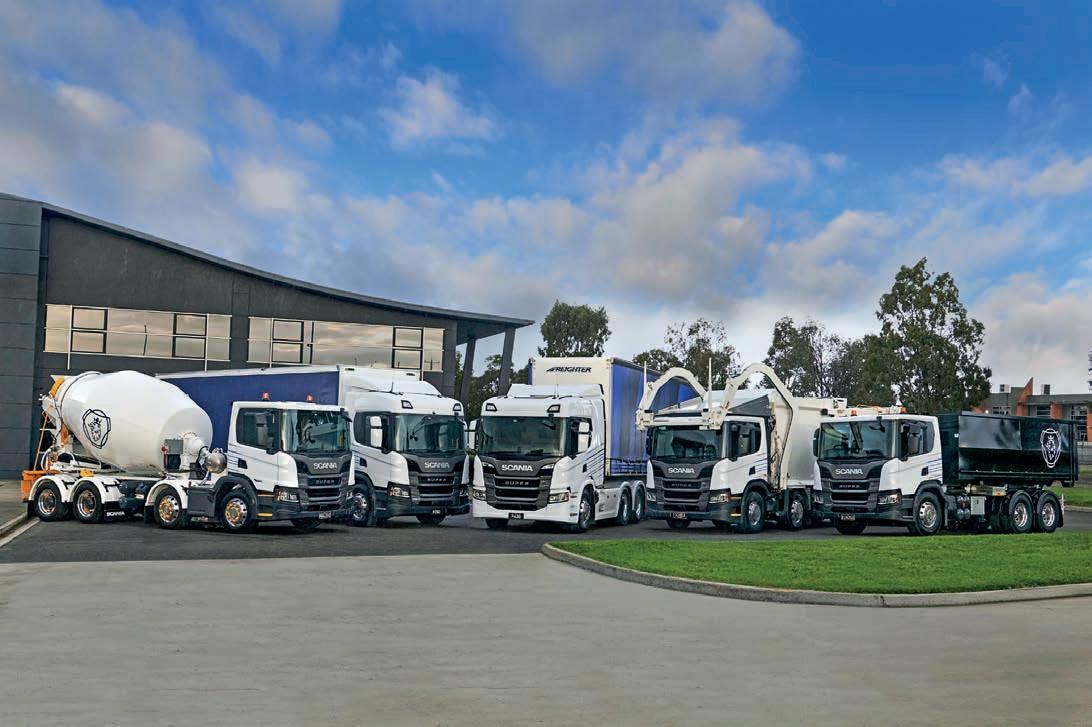
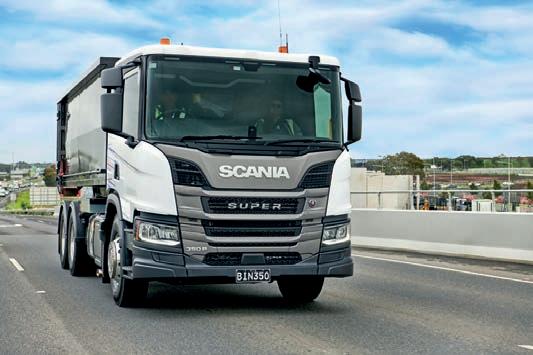
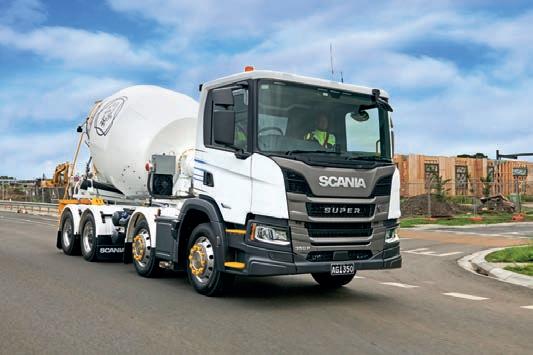
The truck in question was the brand new Scania P Super 11 litre and, in this iteration, I was driving an agitator. Five sets of lights later he’s telling us that he wants seven of them!
As I had extolled the brilliance of the truck to the bloke, I asked my Scania host if I was in line to pick up a bit of commission if the sale eventuated.
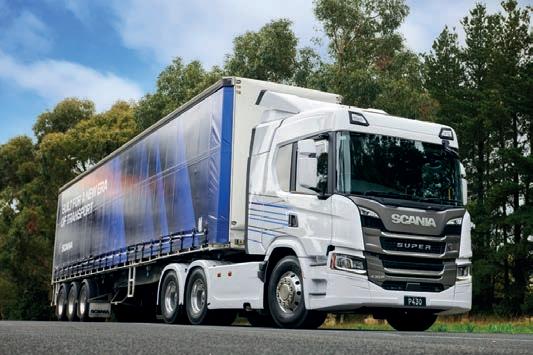
Scania’s new P Super 11 Series is just that: Super! Following on from the company’s Super 13 range, the new 11-litre will replace the current 9-litre engines, offering three power levels.
The 350hp comes with 1800Nm, the 390hp offers 2000Nm and the 430hp puts out a whopping 2200Nm, all those maximum torque figures being available from just 950rpm which is quite frankly astonishing for an 11-litre engine.
As if that isn’t enough, these new motors offer up to 7 per cent fuel savings over the smaller 9-litre which will certainly consign that long serving engine (17 years) to the history books.
Like the 9 litre, the new P Super 11s are a five cylinder (which emit a very distinctive and satisfying throb) but that’s where the similarity ends. The 11 has a double overhead cam with 20 valves. And variable valve timing. Whilst this technology has been around in cars and bikes for many years, it is the first time it appears on a truck engine. Amongst its many benefits, the system also acts with the engine brakes, using cam phases to retard timing and helping to slow the truck down.
Another first is ‘turbo dos
ing’ whereby AdBlue is injected into the turbocharger itself, reducing emissions. Together the engineering sets this motor up to meet Euro 7 and beyond.
This investment in new diesel engine technology is testimony to the fact that Scania sees the diesel motor being around for some considerable time to come.
As well, all engines can run on HVO (hydro-treated vegetable oil) and the 350 and 430hp versions can also run on biodiesel, as these fuel variants become more common.
The P Super 11 Series is a divergent move for Scania who have mostly been known as a long haul/highway brand.
Ben Nye, Scania’s Sales Director – Truck readily admits that the company needs to evolve beyond that sphere “and go into unchartered territory”, meaning new applications. To that end I have been invited to not only play with the aforementioned agitator, but also other road-ready variants of the P Super 11 Series.
Sticking with the 8x4 Agi for the moment, this version runs the 350hp (390 and 450 are options) donk.
Like all P Super 11 models the doors open a full 90 degrees for easy entry and egress. The interior is typical Scania –exuding quality wherever you look and whatever you touch.
Vision is excellent and abetted by cameras when reversing. The truck feels stable as I take it through tight roundabouts and narrow estate streets with some 12 tons of stone rotating behind me.
The turning circle is impressively small – a boon for the many tight spaces where a truck such as this will spend its days.
Aiding propulsion is Scania’s G25CM1 Opticruise gearbox with 14 forward gears (12 gears plus one super-crawler and one overdrive). But it also gives up to eight reverse gears for the agi driver in a hurry. This, like the engine is lighter than previous iterations, saving overall tare weight so you can pour in more concrete.
You know that the agi is rotating behind you, both in feel and noise, but both are admirably suppressed and cabin conversation is easy at
normal levels. Like all Scania’s, safety is at the forefront with every acronym known to man, plus the one thing noone else offers in a truck, being side curtain airbags.
With agi’s well known for laying on their side – 39 per cent of injuries within the concrete or agitator application come down to rollovershould you manage to defeat all of Scania’s life-saving tech you are going to land on a large protective air bag.
And you are going to have to try damn hard! This truck has the highest roll stiffness of any manufacturer at this point in time with over 830 kilo newtons of roll resistance at the front axle.
The truck uses 9.5mm rail which is powder coated so the operator could use hydrochloric acid in their wash all day long without detriment to the truck. All the wiring is sealed, eliminating the corrosion and other problems this market segment faces.
The company ticked every box possible to make this –I’m going out on a limb here – the best agitator available on the market today.
A bunch of us drove this truck (26 tonne gross) around all day without giving a damn
about fuel consumption and the truck returned 2.61km/l which is mighty good!
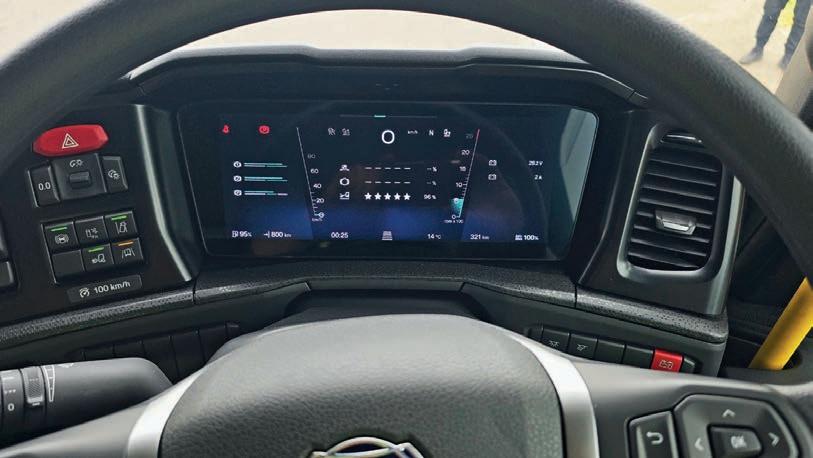
If we’d actually paid any attention to the driver’s aid on the dash which awards stars and percentage for good driving habits (an excellent idea), I’m sure we could have improved that figure considerably.
Next up is a 6x4 Hooklift (18 tonne gross) in which we collectively averaged 3.67km/l, still with the 350hp engine.
This truck does all that the agitator does, albeit a little quietly given no rotating drum behind me. For 350 horses the truck gets up and boogies in no small part due to the excellent power/ torque/gearbox ratios.
The air suspension front and rear, as with all these trucks, soaks up the road, giving as close to a magic carpet ride as anything on the market which equates to not being
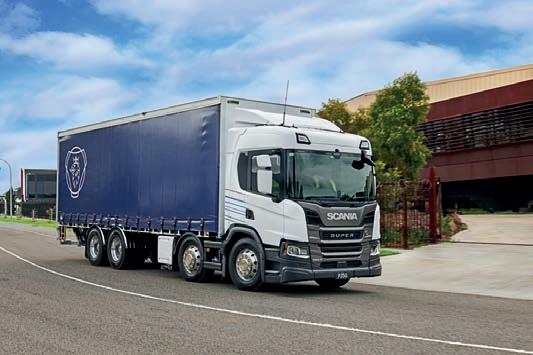
totally knackered at the end of a long, hard day. There follows more of the same in a 430hp 6x2 prime mover (36 tonne gross. Fuel Av: 2.77km/l) with a single trailer and a 350hp 8x2 P Super 14 Pallet Curtainsider (23 tonne gross. Fuel Av: 3.2km/l).
Scania pioneered the 8x2 set up and are determined not to let it go because it fixes so many problems in distribution.
It means you don’t have to be careful about how you unload. Diminishing loads are not a problem for it because of two axles both front and rear. The difference is that of the two axles at the back, only one is being driven. That and the 6x2 system have load-transfer incorporated which always keeps 60 per cent on the drive to minimise or eliminate wheel spin.
Continued on page 18
With fuel prices and operating costs climbing, running a trucking business has never been tougher.
NatRoad gives operators a stronger voice with government, practical support and tools when it matters, and the community you need to keep moving forward.
Membership starts from just $26.95 per month^ and includes:


Industry-leading discounts
Save on fuel, tyres, insurance and more. With savings like up to 9.5cpl off Ampol fuel using your AmpolCard*, membership can quickly pay for itself.
Expert business support
Get tailored advice on HR, legal and compliance issues, so you can focus on running your business.
Business resources
Access exclusive checklists, templates, fuel calculators and tools any time via the NatRoad Member Portal.
Community and advocacy
Join a network of like-minded operators. We advocate directly with all levels of government, representing operator interests on the issues that matter to you.
Back your business. Join

BY DAVID VILE
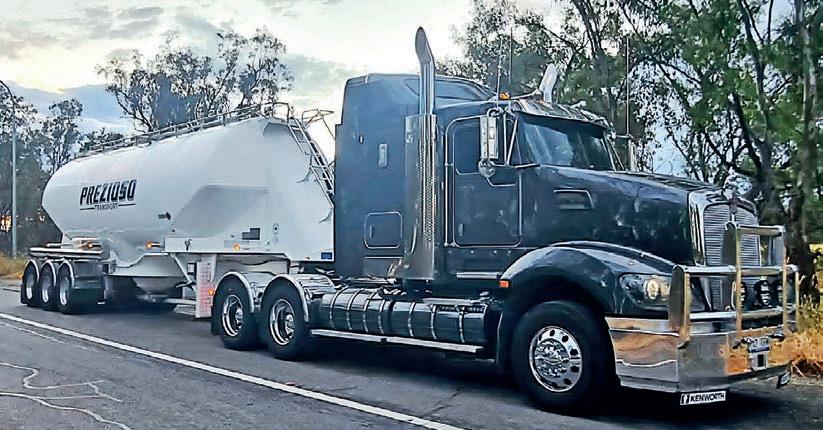
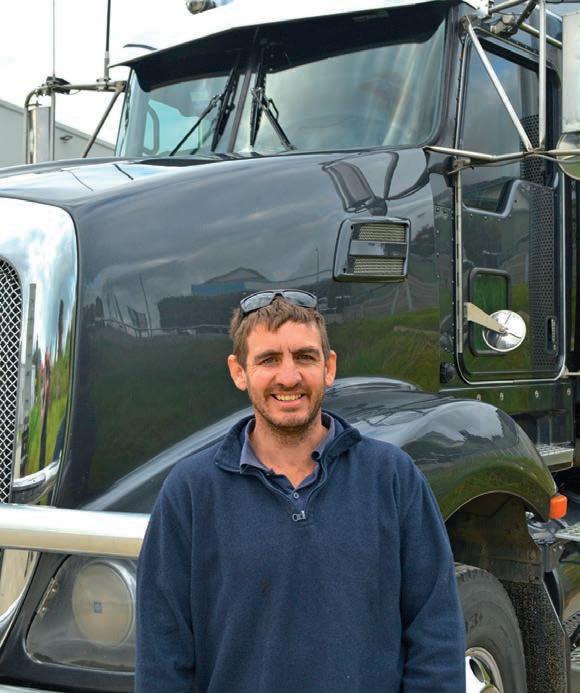
IT can be a tough gig working as an owner-driver, but for Aaron Pearsall and his trusty Kenworth T609, working as a tow-operator for Prezioso Transport has been a successful association.
Based in Wodonga, Aaron runs up and down the Hume Highway towing a bulk powder tanker between Melbourne, Sydney and the Blue Mountains clocking up two round trips a week.
With over two decades working in a variety of roles in transport, he has seen a fair bit of Australia through the windscreen of a truck, having been brought up with a bit of diesel in his blood from a young age.
“My father, Trevor, kicked off his business in 1992 running newspapers to Wagga, he built it up to include general freight and eventually had three trucks and three vans on the road - I had a fair bit to do with that in the earlier days so that kicked things off for me,” Aaron said.
With a view to gaining a bit of work experience Aaron worked for Visy as a forklift driver before hitting the highway firstly with O’Brien’s and then Hume Transport.
“I was loading trailers for O’Brien’s, at the time they did a lot of steel so it was a good education in doing things properly.
“I then worked for Humes for a couple of years and it was also a great business to work for - Glen Elliot was a ‘hands-on’ operator and they really know their stuff,” he said.
With a desire to spread his wings, and with the mining boom kicking off, like a lot of others Aaron decided to head west and soon found himself in the thick of the action, an experience that he remembers fondly today.
“I thought I would head over there and see for myself and ended up working for BGC at Koolyanobbing with their off-road road train project. I first saw the road trains and the Komatsu loaders they had, that really got me excited to see the gear they were running!
“I spent some time on the
water cart and loaders and then running one of the C510 Kenworths grossing 300 tonnes on their 100-kilometre private haul road. To operate that type of equipment is an experience I will never forget, it was an amazing job.”
A fter heading home to Victoria for a short while, Aaron again crossed the Nullarbor in 2012 to once more work for BGC, taking the plunge as a subbie and making his first foray into owning his own trucks carting cement and general freight.
“I started with a Western Star and then bought a new Volvo out of CMV here in Wodonga and took it over there.
“I had to come back in 2015 for family reasons and by then I had the Volvo and two Kenworths. I sold one and bought the other two back and ran as a subbie for Fred’s in Shepparton - Danny Borg was great to work for,” he said.
Taking a hiatus from the road, Aaron moved into an operations role for Border Express, looking after the Bluescope/Lysaght steel haulage requirements where he stayed for seven years, dovetailing this with some casual driving for Scholz Bulk Haulage in Wodonga.
“I learnt a lot doing the operations scheduling at Border Express, they were a really good crew and I did a bit of driving for Craig Scholz over Christmas and so forth to keep my eye in. This current job came about when I called Prezioso’s about a job
for a friend and John Prezioso gave me an opportunity so I bought a Kenworth T409 and started hauling cement.”
Fast forward to today and the 2014 T609 has been Aaron’s weapon of choice for the last 18 months, having purchased it off another Prezioso subbie. With around 1.8 million kilometres on the clock, the Kenworth has had a couple of overhauls along the way and Aaron reckons there’s plenty of life left in it.
“The fella who had it previously put a Cummins X15 crate motor in it which has only now done around 500,000 kilometres, he also replaced the diffs and I replaced the Roadranger in it earlier this year, so it has a virtually new driveline.
“I had been considering upgrading to a T659 as the only thing this doesn’t have is a 50-inch bunk but I am not living in the truck for a month at a time - with the X15 I have got something
pretty solid so this one should be good for a couple of million k’s, the 600 horsepower of the X15 does the job easily,” he said.
Aaron’s weekly run sees him load black char out of Bacchus Marsh, which is used to fuel the furnaces at Infrabuild Steel in Rooty Hill in western Sydney. From there he heads over the Blue Mountains to Mt Piper, loading fly-ash back to Somerton.
Doing the loop twice a week sees Aaron clocking around 4500 kilometres, with a Sunday afternoon departure from Wodonga usually seeing him back home for the weekend on a Thursday night.
“It is pretty good in that I can largely run my own race with our customers, it’s been a bit challenging lately with the roadworks on Mt Victoria running out to Lithgow but it is what it is. My run gets me home for the weekends to do a bit of other stuff
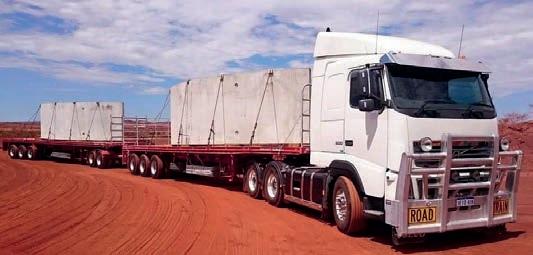
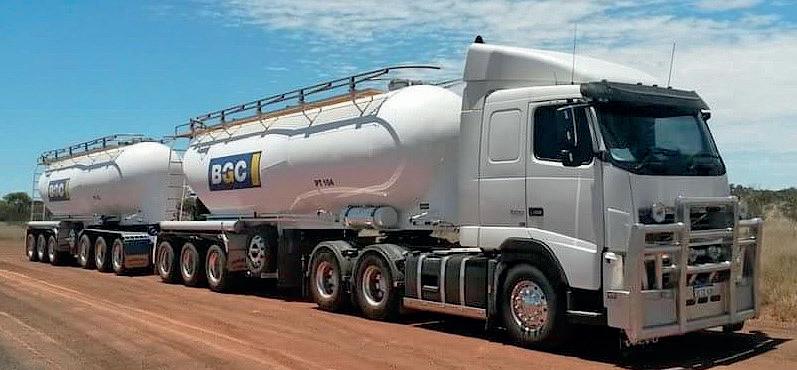
- I have good backup there with Prezioso’s and a bit of variety if I want it.”
Aaron has recently purchased a Detroit-powered Western Star which he is working on to eventually get back on the road. Primarily bought as a backup to the Kenworth if required, it would seem that the T609
will be gracing the highway pulling a Prezioso tanker with Aaron at the wheel for some time yet.
“I get in and do what I do and I enjoy it, and John has that understanding of what works and what doesn’t. You have to have a bit of passion for it and I am happy where I am.”
From page 16
THERE is also a button that you can press, so if you were in a situation such as a large drain or steep driveway, you can remove the air from the tag and transfer it into the drive to push it down.
“The biggest benefit is fuel savings,” said Ben Nye. “Not running a power divider, not running a second tail shaft, not running a second differential. It makes so much
sense. Europe does it, here we don’t and I’m determined to make this work.
“I’d be very interested in your feedback when driving that truck on a route that you would see that truck do day to day, then you tell me if you can see it or feel it being a 6x2.”
Dear Ben. I couldn’t. Regards, Graham.
It’s all about what these trucks are designed to do which is primarily urban/
intrastate work and using the weight savings for cargo rather than an extra diff and associated hardware.
The bottom line is that all these trucks are just beautiful to drive. They all go about their business quietly, efficiently and offer superb comfort. Go try and I reckon you’ll buy.
Should that be the case it’s well worth talking to Wayne Thomason and his team who run Scania Finance Austra-
lia and NZ. These guys do it differently to your local unfriendly bank. (Disclaimer: Do your own research.)
With cash flow and cost of living pressures high on everyone’s agenda at the moment, Scania has taken the unusual step of offering three months of interest-only payments up front until customers get their cash flow going. They have also researched the trucking and bus industry and looked at the quiet
periods of the year. Why would a transport company want to make payments during that quiet time? So, Scania Finance now has holiday payments structured into the contract to help the customers meet their needs.
“The other piece around being a captive financier compared to the rest of the market, is that we have customers that go through cycles,” said Wayne.
“ We have one mantra and
that is we are here for the good times and the bad. Our job is to keep customers moving. S o, we will stand by our customers and give them hardship support when they need it and get them through to the end.” Now just one question remains.
I f that agi driver turns up and buys seven of your trucks, Scania, where do I collect my commission?
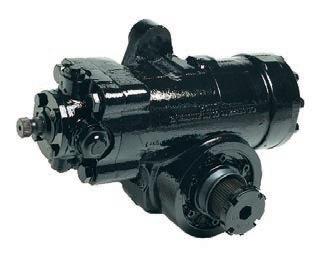
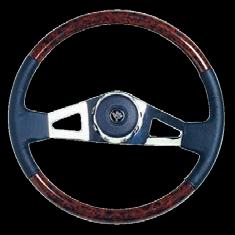
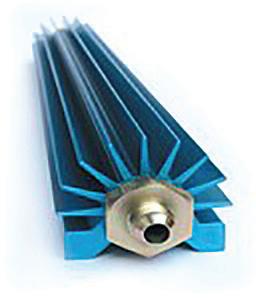
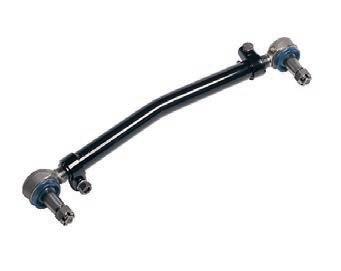
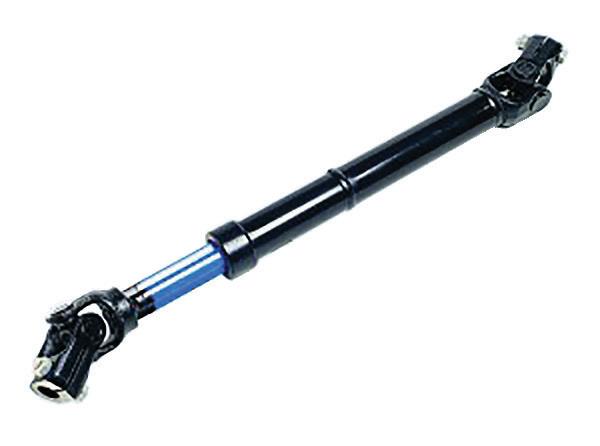
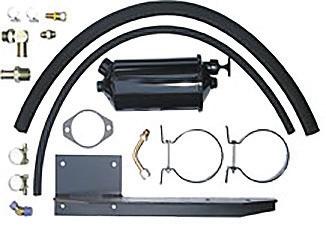
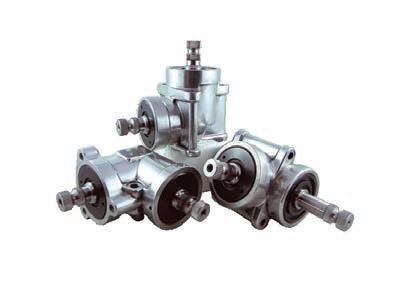
Hydrosteer, Australia’s largest heavy vehicle power steering specialists, carrying Australia’s largest range of heavy vehicle power steering and commercial vehicle power steering products. The range includes the following:
• New and re-manufactured power steering gears, R.H. Sheppard, TRW/ Ross, ZF Steering Systems, Bosch, JKC, Aisin Seiki and Koyo
• Steering pumps to suit all makes and models. (ZF, TRW, Vickers and more)
• IMMI (Formerly VIP) steering wheels

• Steering slip shafts
• Australian Made Mitre boxes and R.H. Sheppard.
• Drag link assemblies that are made to OEM`s stringent quality specifications.
• Oil reservoirs, filters and parts
Hydrosteer have 4 fully equipped workshops in Bayswater Victoria, Laverton Victoria, Maddington W.A., and Wetherill Park New South Wales*. Workshop services include steering system diagnosis, steering system optimisation, full driveway service*, steering gear remanufacturing, pump refurbishment, Dual Control Conversions, LHD to RHD conversions, Road-Rail Vehicles. All completed by qualified technicians with years of experience in heavy vehicle power steering systems. Whatever your heavy vehicle steering system needs are Hydrosteer has you covered, and all our products and services come with a 12 month “No Argument” warranty


PROUD AUTHORISED

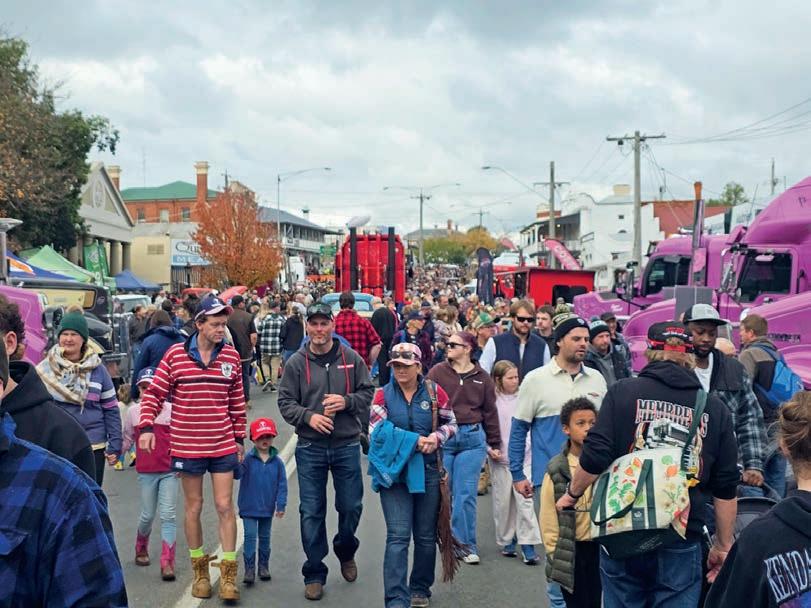
From first-time interstate visitors to familiar faces returning to Alexandra once again, this regional favourite on the calendar had something for everyone.
BY GRAHAM HARSANT
TWENTY-NINE years
young, the Alexandra Truck, Ute and Rod Show continues to attract record entries and record crowds.
This year the weather gods looked down kindly on this small Victorian town with the sun shining for most of the day and not a drop of rain for the first time since 2019.
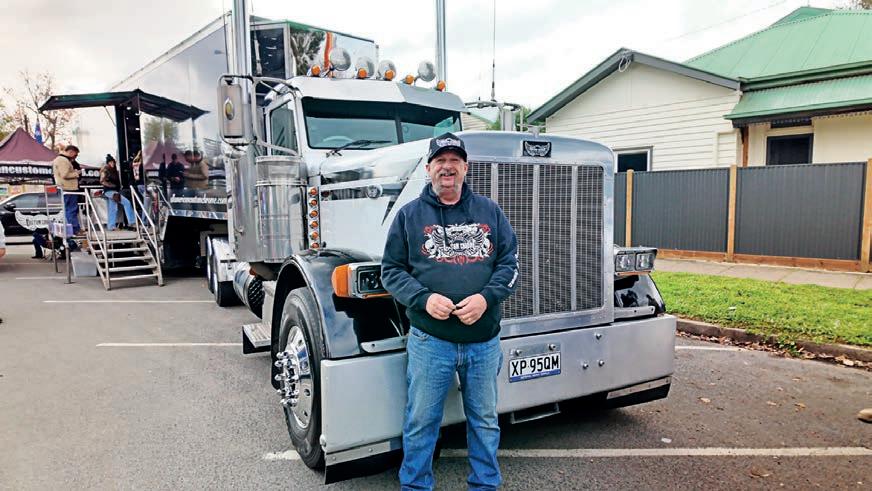
Amongst those attending on Sunday, June 7, was, as usual, Scott McSweeney with his All American Custom Chrome trailer, supplying lovers of that country’s brands with everything bling.
Usually the trailer is behind Scott’s Peterbilt, ‘Top Cat’ or ‘Fancy, Fancy’ but not this year.
Earlier in the week, Mick Emerson rang Scott: “I’m selling that Pete you’ve always wanted.”
“From the day I saw this I said to Mick, if ever you want to sell it…,” said Scott. “I just love it – the whole style, the set up. And it has a Cat engine of course – a 6NZ C15, which is a must.
“We got it home at 1am on Friday morning after having picked it up from down near Pakenham. Six of us started work on it a bit later that day, going through to 9pm and then straight here to Alex on Saturday after a quick wash. I’d even rung the sign writer on the way home on Friday to arrange our name on the door.
“I don’t intend to do an awful lot more to it; polish the bar and odds and sods is all. It is a one-owner, one-man truck from brand-new and Mick has kept it top-notch. I want to keep it the way it is as an ode to him.
He specced it cool, it always has been cool and I’ve always loved the way it looked. Why change a man’s legacy when that is what you like.”
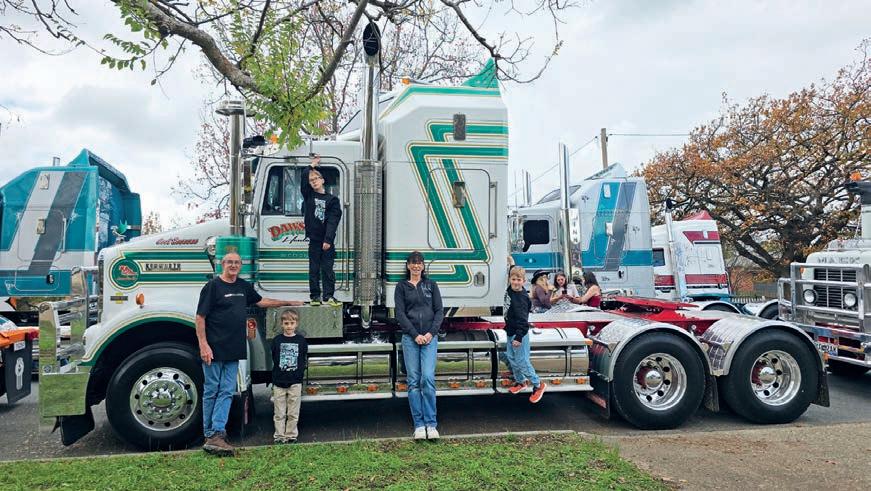
A terrific company to work for Shane ‘Blackie’ Black turned up with his wife, Karen and their three grandies. Also present was Blackie’s daily drive, Dawson’s Haulage Legend SAR. With the company for 12 years, Blackie carts general freight all over the country.
“Not only that but they put me in the Legend. I’m pretty happy about that,” he said.
“They are a terrific company to work for and Graham Dawson is one of the nicest blokes I’ve ever met. The company has over 100 trucks. And around 250 trailers.
“I usually get home on Friday night and leave again on Sunday night. I’m going to retire next year so we’ll see how the marriage survives that after 30 or 40 years. I don’t know who will have the bigger change, me or Karen. Maybe she will cancel my retirement.”
Stumpy just wants to drive trucks
In front of a Cannys KW 200 Aerodyne is a bloke who goes
by ‘Stumpy’. Also known as David ‘no-last-name’, Stumpy drove for the company for 14 years before retiring a year ago.
“They are a good family company. I did Brisbane-Melbourne all that time. I would get home perhaps one night through the week, have a meal and set off again, but I was nearly always home on the weekends from Friday evening through until the Monday. It was a proper weekend.
“I did general freight and a lot of Brown Brothers wine. I had to deliver it so unfortunately wasn’t allowed to sample the product and besides had to be .00.”
A motor mechanic by trade and coming off a farm, Stumpy just wanted to drive trucks. His career as an employee has enabled him to support his wife and three children and return to the land, buying 150 acres just north of Wangaratta. Enjoy that retirement, Stump.
First-timers have a blast
First-timers at the show were Chris Robinson Heavy Haulage & Earthmoving, all the way from Coffs Harbour. We caught up with Chris’s relative, Josh Muir, who also manages the earthmoving side of the business.
“We’ve brought the SAR, the 900 Legend, the Mack Titan, and then we have the
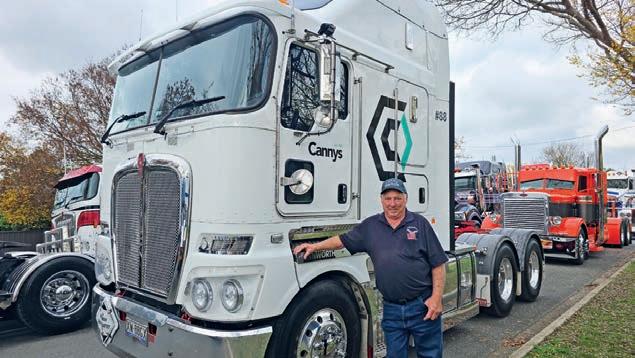
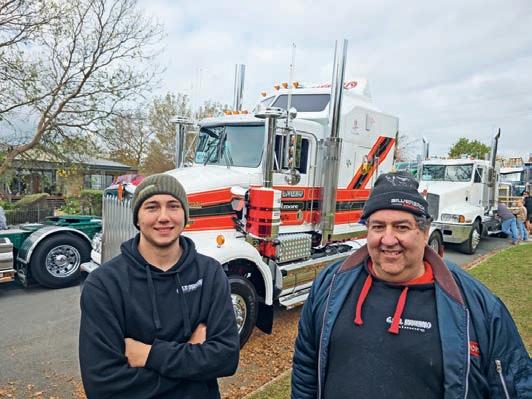
matriarch down the end there being the Mack Super-Liner which was a finalist at Brisbane’s Best of the Best last year,” said Josh, describing the company’s attendees.
“There’s a few more at home – a couple of working trucks and a couple of show trucks and some in the build stage which will be coming on the truck show circuit soon.
When asked why they came, Josh said, “Chris, as you’ll have gathered, is a truck guy, he’s heard about Alexandra for a long time and that it was a really good show, so why not. It’s been good.”
Gold medal for young Sammy Last year we met Rick Batten who works for Lorenzs Pastoral at Numurkah. The company again turned up with a bunch of brand new T909s
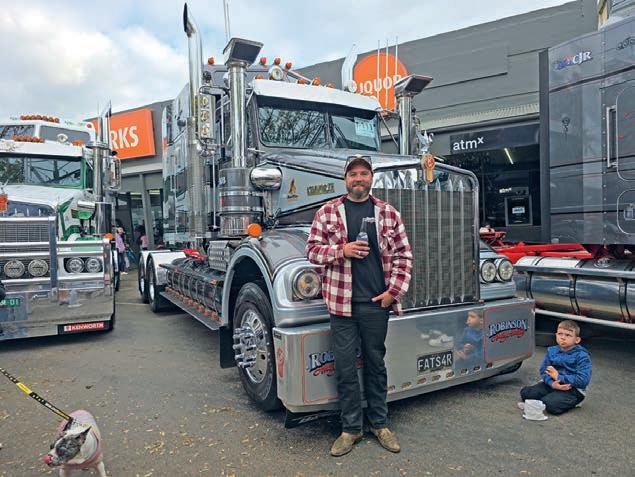
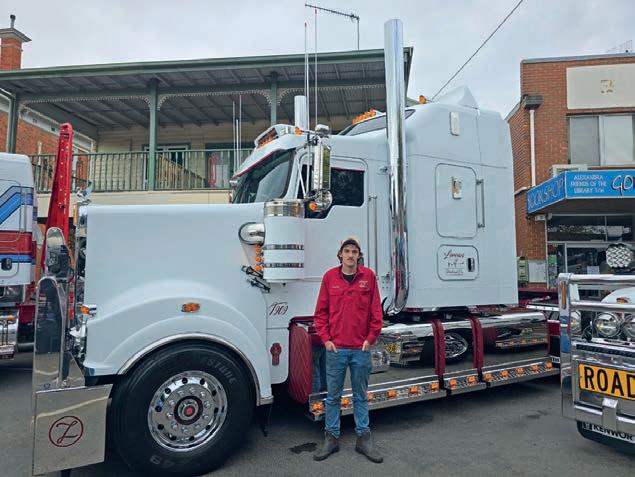
and again I was astound ed how good a white truck can look with lots of chrome (courtesy of Rollin’ Stainless of Shepparton), and a classy, understated logo. Even the ‘T909’ has been beautifully hand-scrolled, re placing the original badging. Also of note are the tanks with their quilted ends. Just superb! And keeping these trucks looking as good as they do is 17-year-old Sammy O’Brien who got the job two years ago. His plan (of course) is to get behind the wheel as soon as able. In the meantime he should have been awarded a gold medal for the way these trucks looked. Good one, Sammy!
Invernos make it a double Truck of the Show went to Peppi and Danielle Inverno with their Legend SAR. The
Legend SAR. With the show’s 30th year coming up next year, we don’t doubt that it will be even bigger, so put the coldest truck show in the country in your calendar and come join some 14,000 other hardy Victorians (and ring-ins) at Alexan-
in 2027. of category winners. On page 44, you can read an edited extract from the speech Victorian Transport Association CEO Peter Andrerson gave at the V ictorian Truck Drivers Memorial in Alexandra held the day before the show.


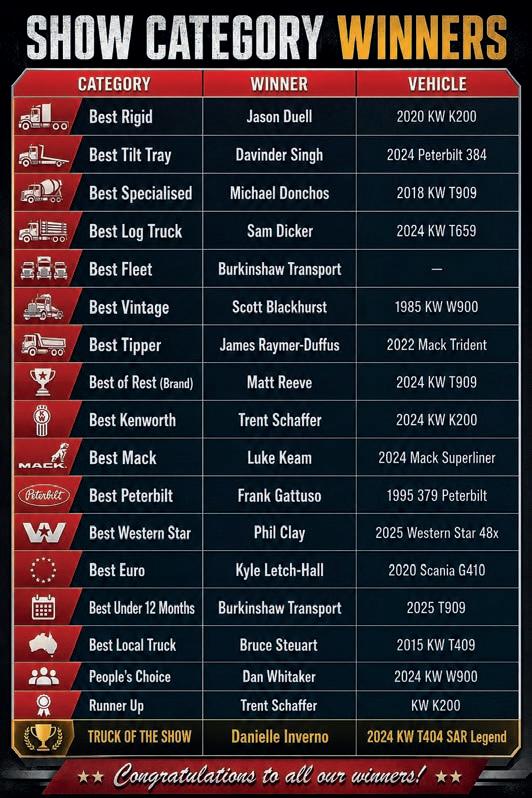
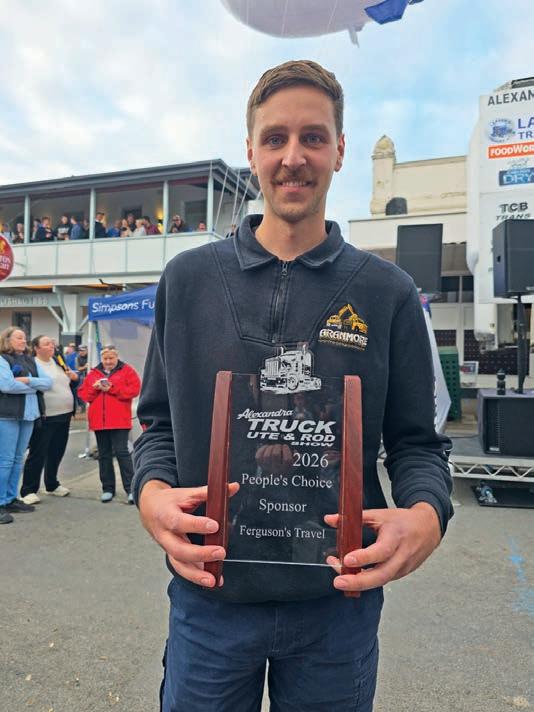
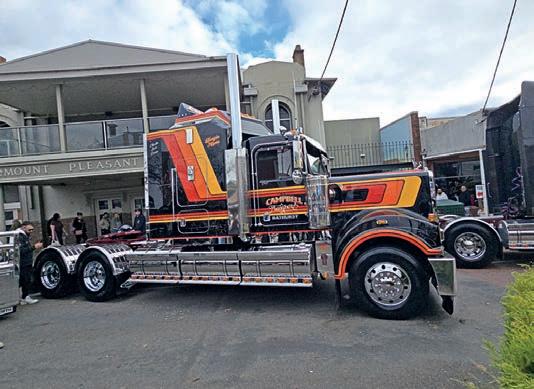
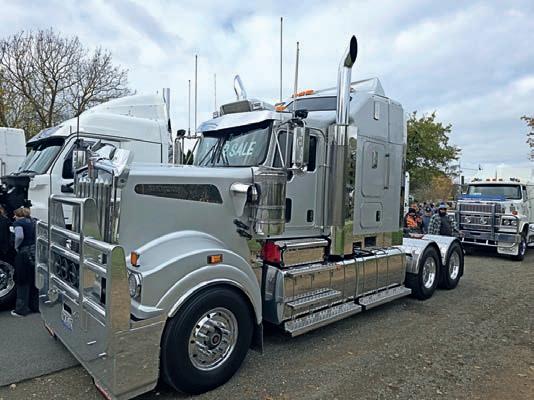
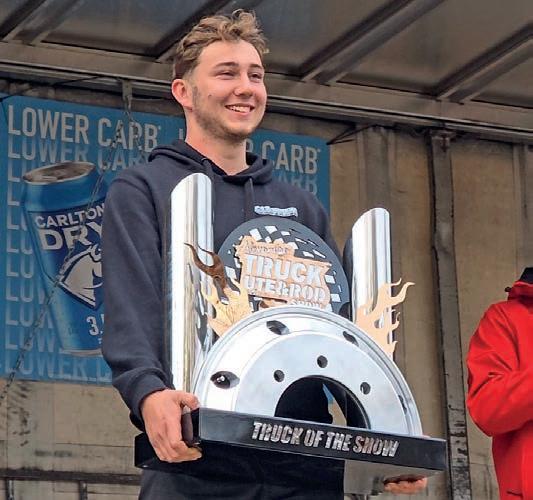
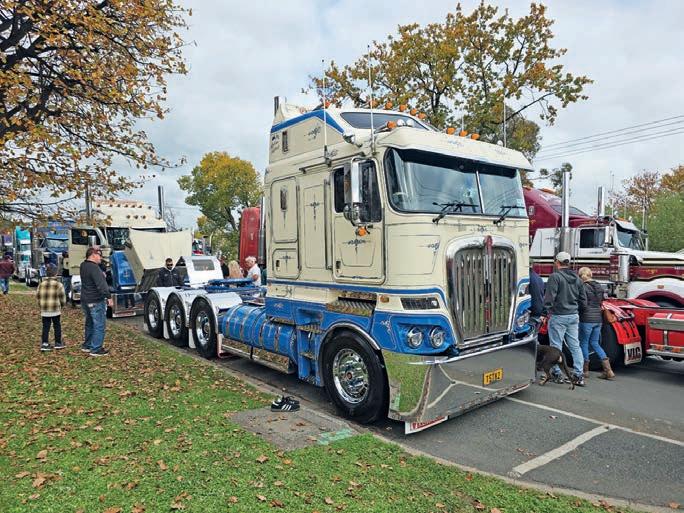
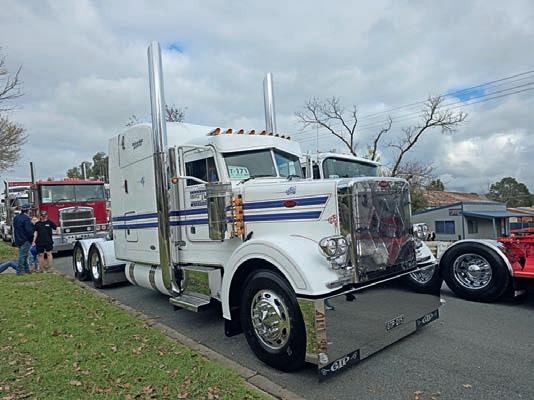
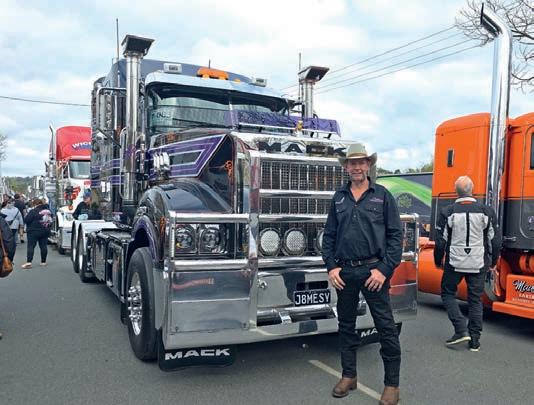
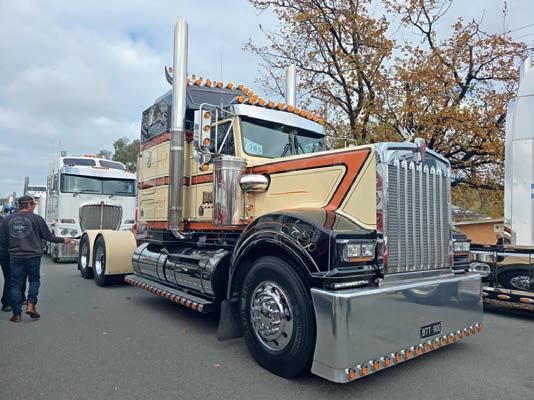
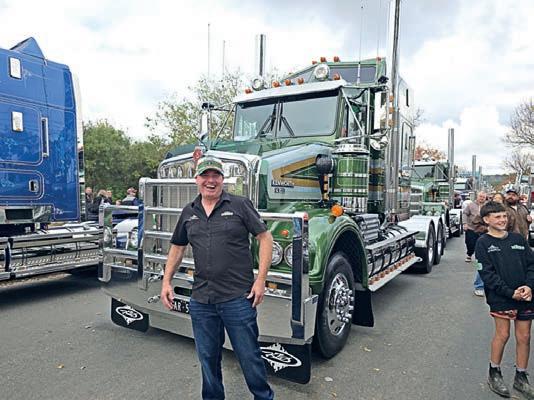
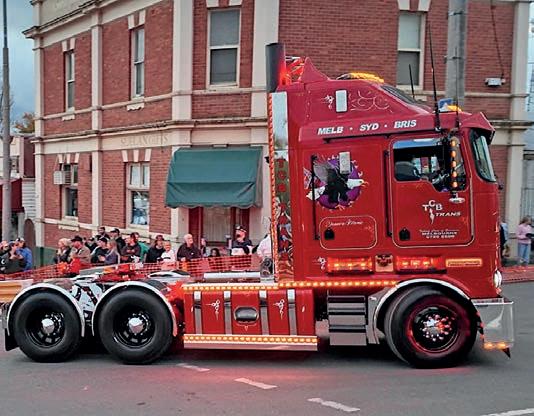
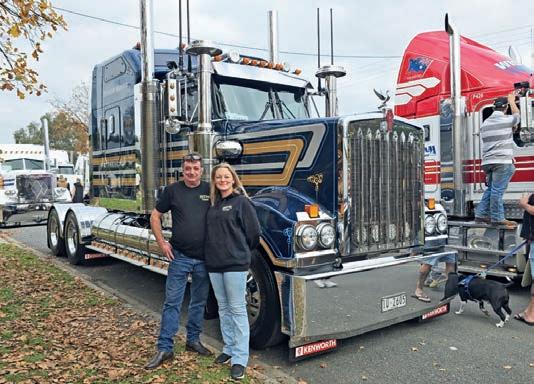
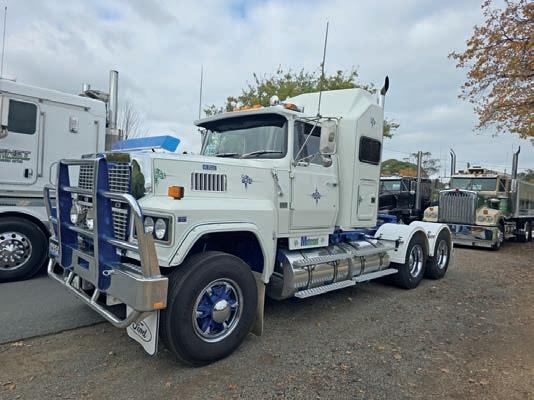
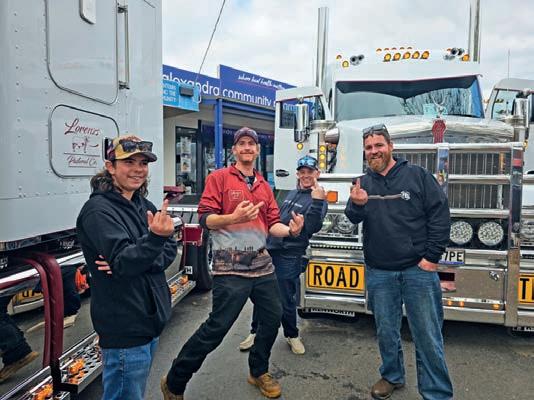

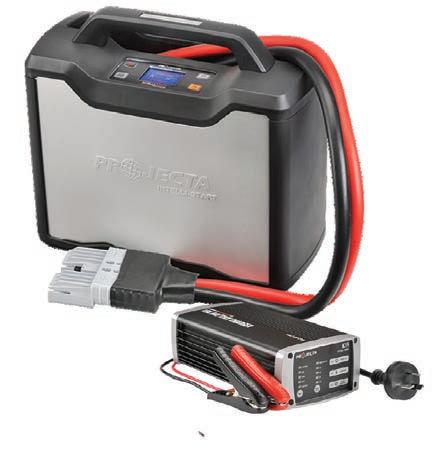




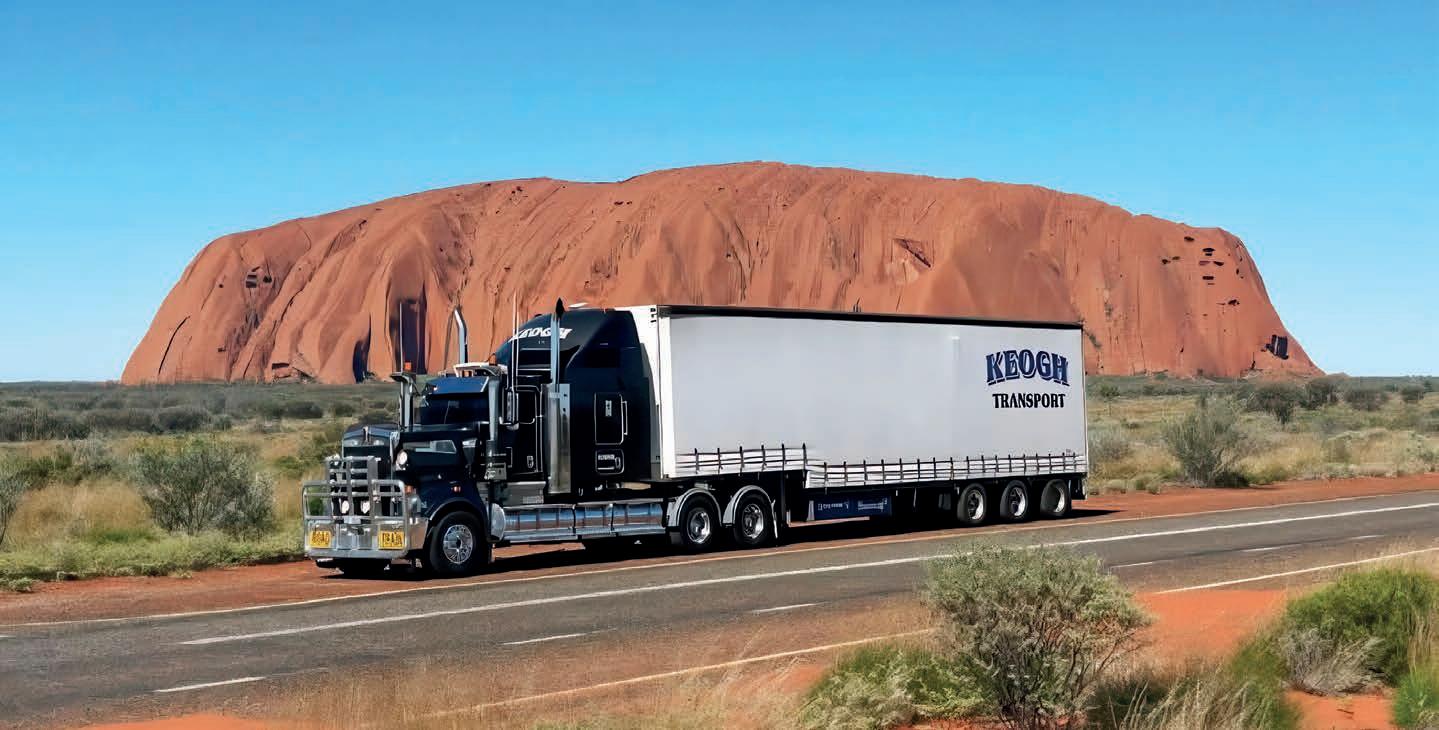
SHELL Rimula has partnered with Big Rigs in a big way – so there are even more reasons to send in your best truck shots.
Each month, the Big Rigs team will choose a #PicOfTheMonth, with the lucky winner receiving a $500 Shell Coles Express Gift Card.
Keep an eye out for our regular posts on the Big Rigs Facebook page, calling for your best truck photos and add yours in
the comments, or email them direct to danielle.gullaci@ primecreative.com.au for your chance to win the main prize.
Don’t forget to include a brief note about the truck and where the photo was taken. We’ll feature some of the best photos in each print edition of Big Rigs, with one winner announced each month.
Keep those amazing truck pics coming!
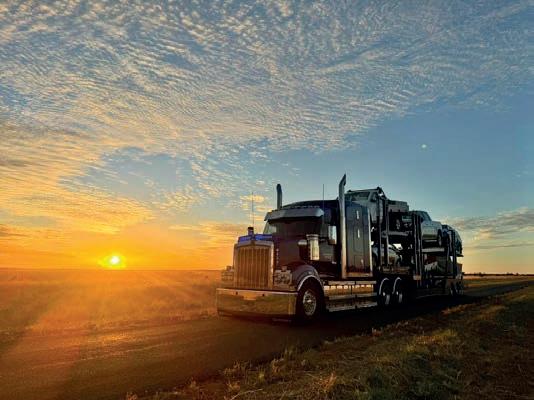
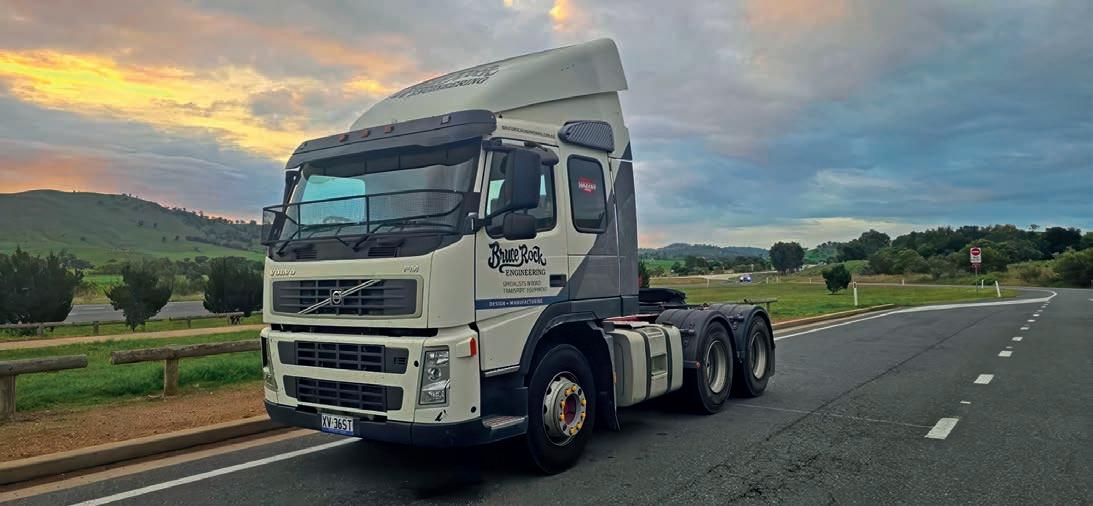
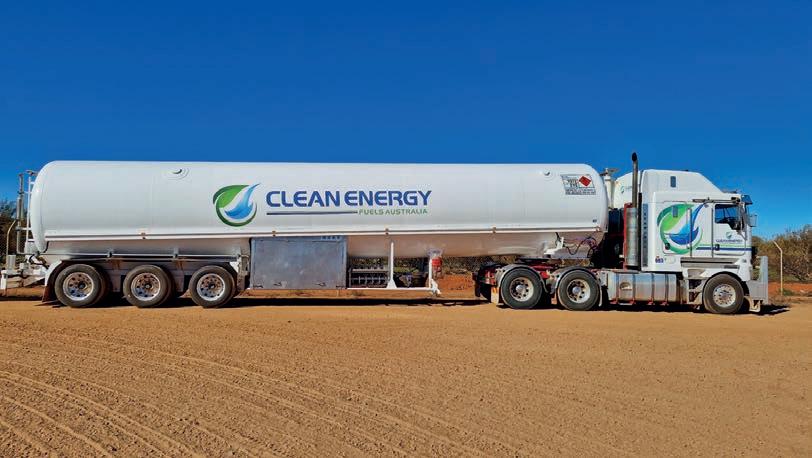
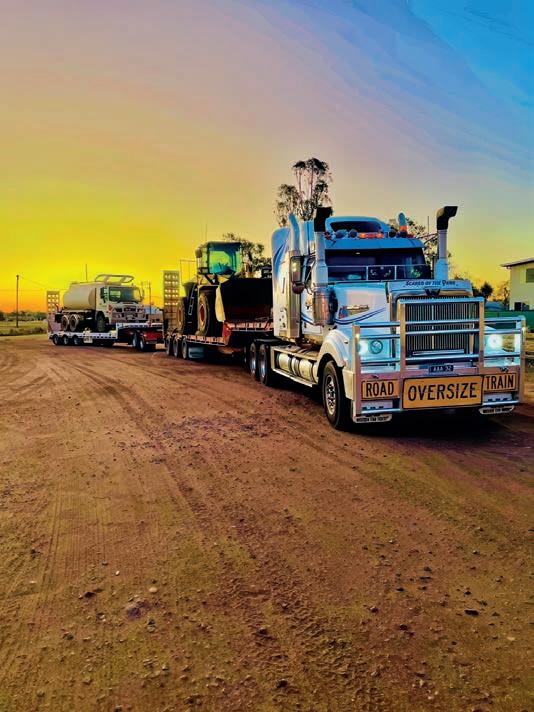
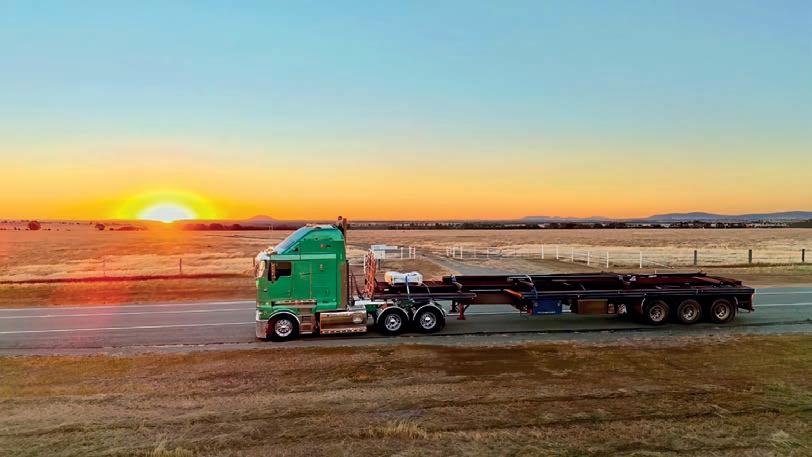
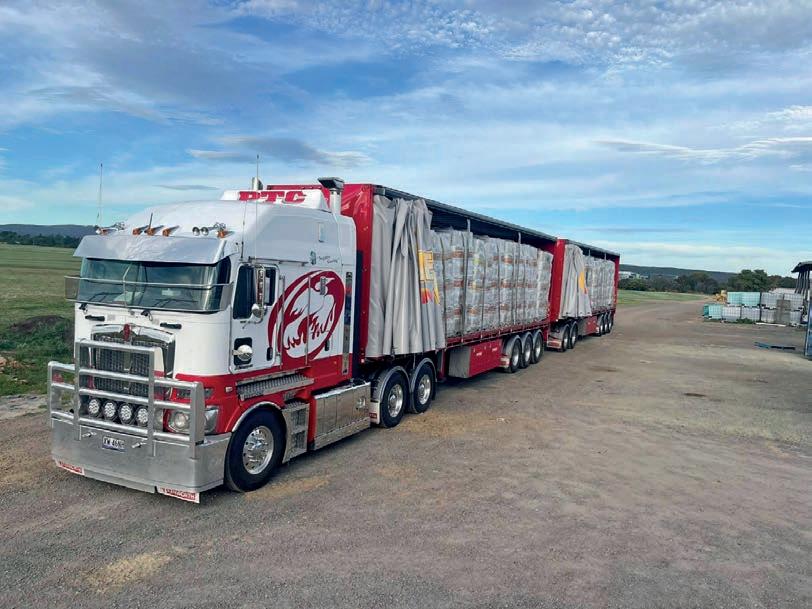
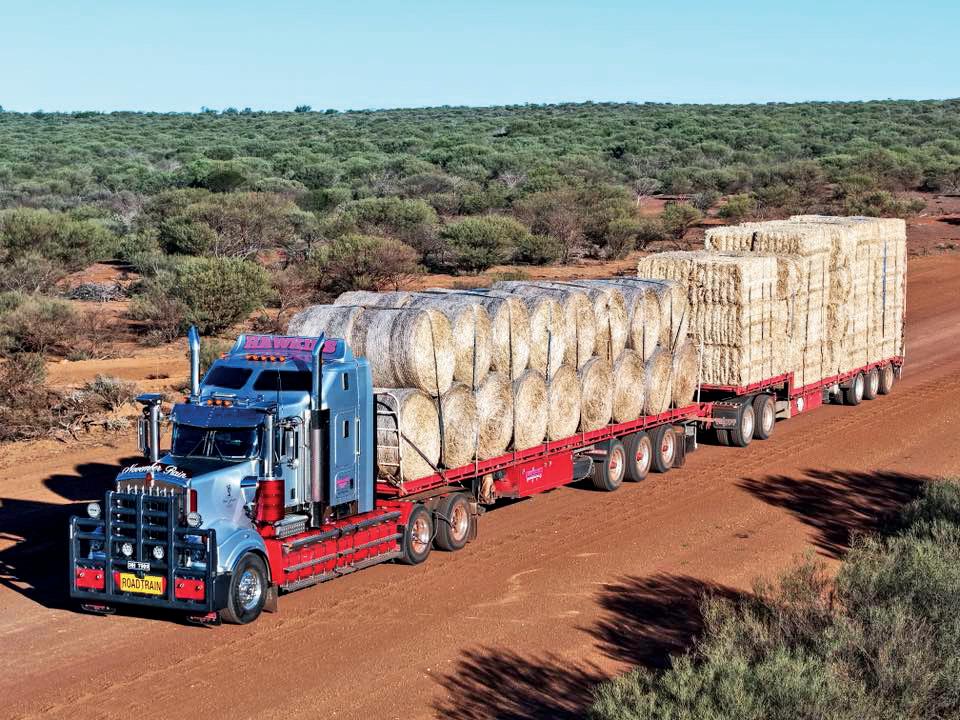
BY ALF WILSON
MORE than 300 trucks and 100 bikes took part in Townsville’s NSS Northern Stevedoring Services, Power100 Convoy For The Cure on Sunday May 31, which was a record number.
It was the 11th year for the event, which raises money for research into brain cancer in children, and by comparison in 2025, a total of 287 trucks were in the convoy.
In the auction, NSS (Northern Stevedoring Services) bid $22,000 to have the lead convoy truck, a Mercedes.
Largest fleet winners were DF & DL Drain Transport Pty Ltd with $12,000.
Nortrans had bid in both and came close with extremely healthy amounts.
Smallest fleet winner was Ellsley Metal Recycling with $3212.90 via fundraising.
It was a massive logistics operation when trucks started gathering at Webb Drive in the Bohle suburb at 7.30am.
Big Rigs was there and saw numerous drivers putting the final touches on their rigs as they polished the exteriors.
Many had worked hard the day before to get their trucks spick and span for the important event.
Big Rigs spoke to Darrin “Skinny” Thomas who was driving the lead Mercedes and he was near it with NSS Transport Manager Kelly Norris and Justin Miller.
“It is really great to be part of such a worthy cause and I have been in these convoys before,” Darrin said.
Nor far away was Brett Scarori who had his truck enthusiast son Frankie with him.
For some drivers including Jason Gribbin and Michael
Henshall it was their first convoy.
Jason was behind the wheel of a G&K Freight truck and was looking forward to the drive.
Aged 34, Michael was driving an Isuzu for Freightrite which is a division of Land Transport and said it was a pleasure to be involved.
Busy at the marshalling area co-orinating the order that trucks would leave in was convoy organiser Eleni Millios-Hullick. She was speaking with a Nortans driver who was sitting in his truck.
The route was a total of 20.3km and bikes left Webb Drive marshalling area at 8.55am and trucks followed 10 minutes later.
After leaving Webb Drive they travelled left onto Ingham Road across Blakey’s Crossing, right into Duckworth Street, right into Dalrymple Road, left onto Thuringowa Drive then continued a long Riverway Drive to the Ross River Dam area.
The length of the convoy was more than 9km, with an estimated turnout of 20,000 fans watching the action all along the route.
Some sat in the back of 4WD vehicles or utes and many even watched from under tents on footpaths.
At the park area near the dam there was a family fun day enjoyed by many.
Eleni Millios is the CEO of The Cure Starts Now Australia, a Not-For-Profit Foundation that funds and advocates for research into childhood brain cancer.
“This has been a great success and shows just how much the road transport industry supports it,” she said.
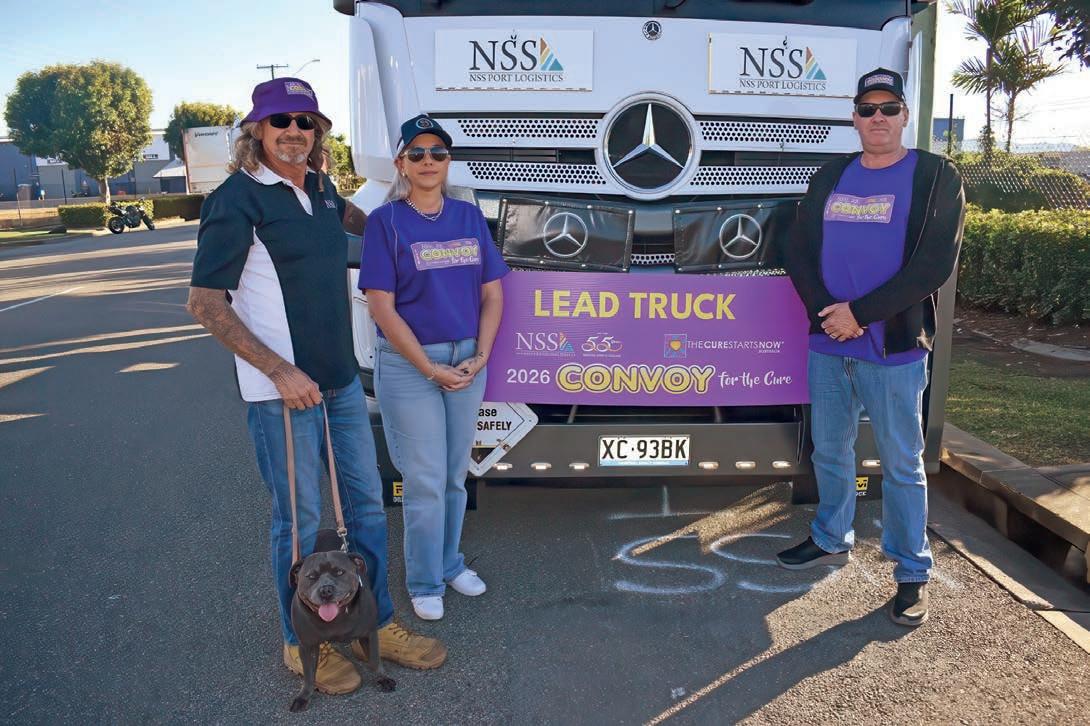


WITH its proven position in the Australian heavy vehicle market as a manufacturer of high quality, innovative, safe and reliable trucks, Mercedes-Benz can take no risks with the suppliers it partners with, which is why its relationship with Schaeffler is vital.
LuK clutches by Schaeffler are engineered and developed for demanding high torque applications such as those in which heavy vehicles operate, and are OE matched for superior performance and high durability.
Among the Mercedes-Benz trucks that leave the factory equipped with LuK clutches as OE fitment is the Actros. Available in a range of drive configurations and outputting up to 580hp and 2800Nm, the LuK clutches serve an important job in the Actros, smoothly and quietly transferring engine power through the PowerShift automated manual transmission to the drive axles.
Schaeffler’s LuK clutches are also fitted to Mercedes-Benz Arocs, Atego and Econic models, as well as selected Freightliner heavy duty models which fall under the Daimler Truck banner.
Additionally, Schaeffler supplies its LuK clutches as an a ftermarket solution for other prominent heavy vehicle brands, including Volvo, IVECO and DAF, with the range continuously expanding to
meet the needs of a fast-evolving market.
On offer from Schaeffler are options including conventional single plate clutches, double-plate clutches and self-adjusting clutches.
Most heavy vehicles working on Australia roads – particularly in intra and interstate applications – accumulate thousands of kilometres of travel per week, so properly supporting these fleets at the time of servicing, through preventative maintenance schedules or in the unlikely event of a breakdown, is crucially important to minimise costly downtime for operators.
With its large Australian distribution footprint, replacement LuK clutches are easily accessible to workshops and fleets. For added convenience and ease of repair, replacement kits include all the components needed to undertake a complete clutch system overhaul in one package.
Schaeffler expands OE footprint with Vitesco Technologies In a show of further commitment to the automotive and commercial vehicle industries, in late 2024, Schaeffler acquired Vitesco Technologies, increasing Schaeffler’s focus and capabilities in electrification technology, electronic controls, sensing and actuating systems and more – all critical components of future mobility.
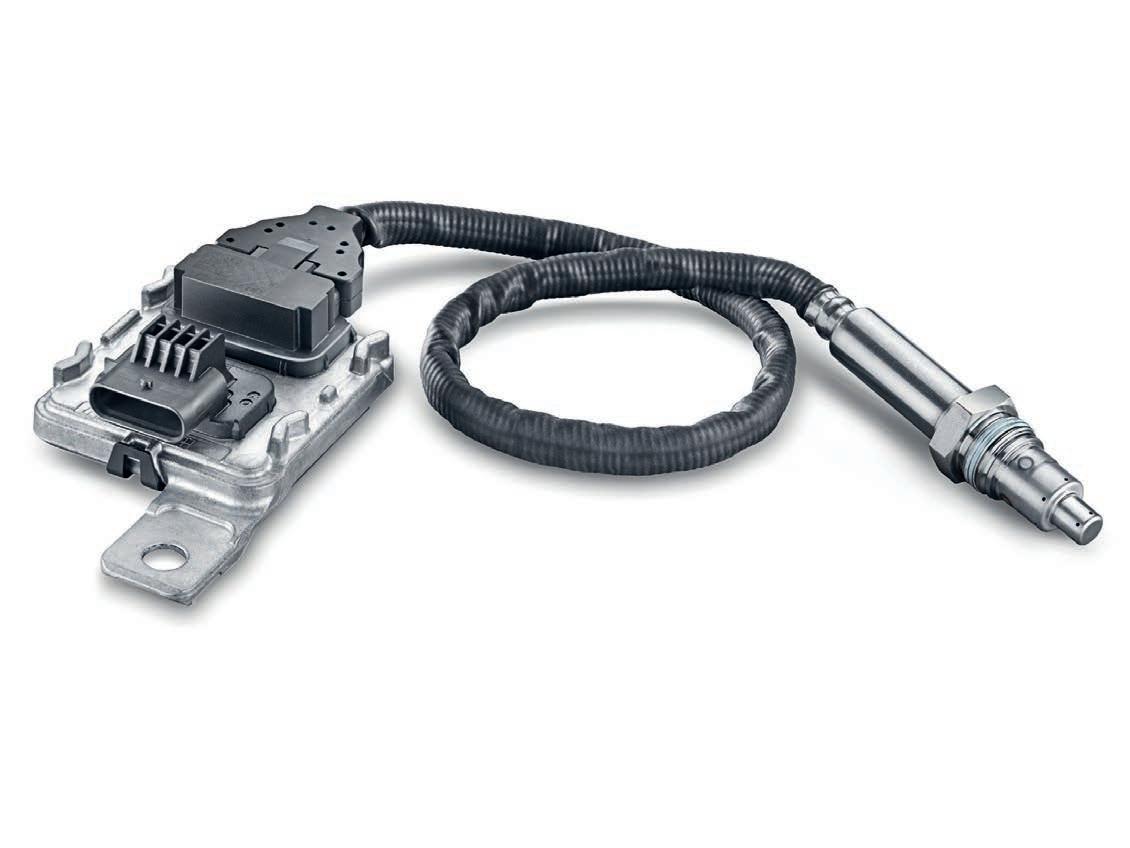
nto its expansive portfolio.
Vitesco Technologies has a long and successful history as a premium component supplier to the industry. Originally k nown as Siemens VDO, it was acquired by the Continental Corporation – best known as a top-tier tyre manufacturer – and integrated into the company’s automotive electronics and sensors business. Later, it was divested by Continental and renamed Vitesco Technologies in the process.
range of products and support services, with the convenience and efficiency of a single point of contact. Customers also know that they’re partnering with a company that’s a trusted OE supplier to leading manufacturers.
For more information, please contact Schaeffler Australia on 02 8977 1068, email aftermarket.service. au@schaeffler.com or visit repxpert.com.au.

Schaeffler offers a vast collection of heavy commercial vehicle clutch repair solutions under their LuK brand including RepSet, Repset Pro and RepSet SmarTAC. Schaeffler prioritises durability and high performance, providing OE products that ensure longevity. The comprehensive portfolio of repair solutions is designed to meet all your needs and keep trucks on the road for longer.
vehiclelifetimesolutions.schaeffler.com.au/en-gb/catalog


LAST month, Knorr-Bremse Australia held its Drive Days at the Australian Automotive Research Centre (AARC) in Wensleydale, Victoria. Presenting industry with the opportunity to unite and experience the latest Knorr-Bremse braking and safety technology firsthand, the event was a massive success.
“The overall reaction from participants has been incredibly positive,” Knorr-Bremse General Manager – Commercial Vehicle Systems (CVS) Australia, Gareth Lawless, said at the event. “We host these Drive Days to promote an educational experience, and based on the feedback we’ve gained, everyone has a lot of key takeaways.”
The Drive Days featured electronic braking boards on display as well as KnorrBremse Diagnostics and iTEBS demonstrations which also had the chance to see the OceaniaX range of brake actuators and slack adjusters up close – the latest addition to Knorr-Bremse’s Australian product line which expands
“OceaniaX is our regionally focused range designed to meet the needs of the Australian and New Zealand commercial vehicle markets,” Knorr-Bremse Australia Product and Marketing Manager, Andrea Limmer, explained on the day. “Each component is carefully selected and quality controlled, with pricing aligned to today’s demands to help operators stay competitive without compromising needs.”
One of the biggest highlights of Knorr-Bremse’s 2026 Drive Days was the opportunity to experience the Bendix Fusion 3.0 system in person with live Autonomous Emergency Braking (AEB) demon-
Smart Choice. Local Focus. Trusted Performance.
Designed for the Australian and New Zealand commercial vehicle markets, OceaniaX is a regionally focused range that complements our core portfolio – offering customers greater choice, flexibility and value without compromise. Each component is carefully selected and quality‑controlled, and fully backed by the Knorr‑Bremse brand, giving you confidence you can rely on.
With a smart price point and a two‑year war‑ ranty, OceaniaX helps you stay competitive without compromise.
Current range includes:
Brake Actuators
Slack Adjusters
For more information, contact us at cvs.aus@knorr‑bremse.com or call 1300 309 991. | truck.knorr bremse.com/en/au/ |
By identifying critical scenarios and intervening to help reduce collision risk, Bendix Fusion reacted exactly as it was designed to.
The drivability of Fusion 3.0 compared to previous iterations was one of the key points fleets were observing on the day. Knorr-Bremse Australia Engineering Manager, Brett Nicoll, said the system was very well received in his demonstrations.
fits of its braking technology by allowing the transport industry to experience them personally.
“We’re ensuring that we do our part in the industry by representing brake safety technology appropriately,” Gareth said.
strations. Three prime mover and trailer combinations were used to demonstrate a range of real-world scenarios on the AARC highway circuit by following a lead vehicle which simulated different driver behaviours such as cutting in, coming to a stop, slowing down or braking suddenly in front of the prime mover.
These exercises clearly highlighted the technological capabilities and safety benefits of Bendix Fusion. The system seamlessly detected each scenario in advance and reacted in a way that felt extremely smooth, efficient and comforting. The operator was also able to manually override the intervention in certain situations if needed, ensuring a seamless driving experience.
“I was getting some really positive reactions and a bit of surprise,” he said. “I had a mixture of people who were familiar with trucks and who had never been in one before, and they were mostly commenting on how smooth the brake applications were and how well the vehicle stopped.”
For Knorr-Bremse, the main objective of this year’s
“Our goal is to build understanding of these braking systems, help everyone feel confident in their performance and benefits, and support informed decision-making.
“This is an opportunity for us to have an open conversation with people. We want those who work on trucks to feel confident and comfortable with our systems, so we’re providing a forum for them to engage with us, provide feedback and ask questions.”

A truck only earns revenue when it is moving. With fuel prices remaining unstable and the operation costs under pressure, unplanned downtime continues to place additional strain on Australian fleets.
The cost of downtime extends well beyond repair bills.
Industry research identifies mechanical failures, parts delays, maintenance scheduling and compliance issues as key contributors, with estimated impacts ranging from AUD $650 to $1100 per day for heavy duty operations, while unscheduled breakdowns can exceed $5000 per incident once towing, repairs, and associated delays are factored in.
The National Heavy Vehicle Regulator (NHVR) conducted its largest-ever National Roadworthiness Survey (NRS) in 2024, examining more than 9000 heavy vehicles around Australia. The survey found that over one third of the vehicles had multiple defects, with brakes, engine driveline, steering and suspension among the most common issue areas identified across both metropolitan and regional operations.
As freight operators continue to balance safety, compliance, and profitability, preventative maintenance and vehicle setup remain important considerations for keeping trucks on the road.
Ben Clamp, Managing Director of Airbag Man, says decades of experience in heavy transport have directly shaped the company’s product development.
“Over the last 30 years, a
lot of product development has come directly from real-world transport experience and dealing with customers in that area,” he said. In practical fleet operations, these factors often become more noticeable under heavier loads or during long-haul regional work, where road conditions can vary significantly. For operators, maintaining consistent vehicle behaviour across different load scenarios is increasingly seen as part of broader safety and efficiency management. Air suspension helper systems are designed to support load stability across a wide range of vehicle types, including light, medium and heavy-duty applications. These systems assist in maintaining ride height under load, improving stability while under load, and reducing uneven wear across suspension and tyre components.
Ben said the benefits extend beyond load support alone.
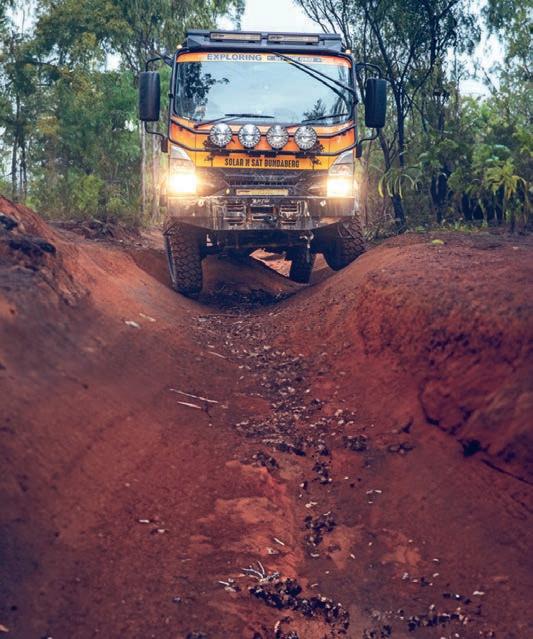
“They reduce suspension wear, which delivers cost savings. They also reduce uneven t yre wear and driver fatigue. Most importantly, you’re not having vehicles off the road due to downtime, which can be very costly for heavy vehicle operators.”
With rising pressure on freight margins and tighter delivery schedules, even small improvements in vehicle stability and maintenance efficiency can have a big impact across a fleet. This is particularly relevant for operators managing varying loads or travelling across Australia’s diverse road conditions.
Ben added that a good benefit of maintaining the correct ride height is that it can also improve ride quality as it reduces “bottoming out”. Maintaining correct ride height also contributes to overall vehicle efficiency.
“Maintaining correct ride height and managing uneven loads all adds up to improved fuel efficiency as well, so saving fuel and costs in that area is a really strong benefit.”
Since 1995, Airbag Man has been an Australian manufacturer of air suspension systems. The company designs and produces high-quality solutions for a wide range of applications, including light vehicles (4x4 and 4x2), heavy vehicles, trailers, caravans, and motorhomes, providing safe and effective load management.
By using Airbag Man prod-
IN transport, the cheapest line on the invoice is not always the lowest cost decision. Most operators know that instinctively, but in a market shaped by rising operating costs, tighter delivery windows and constant pressure on margins, it is worth stating clearly: tyre selection should be judged on total cost of ownership (TCO), not simply purchase price. For fleets and owner-drivers alike, the more useful question is not “What does this t yre cost today?” but “What is this tyre likely to cost my operation over time?”
That distinction matters because tyre performance influences far more than replacement timing. It can affect fuel consumption, vehicle availability, maintenance planning, casing value and the likelihood of unplanned disruption. A lower upfront price can look attractive in isolation, but if that tyre wears faster, uses more fuel, delivers less casing value or increases the risk of downtime, the apparent saving can disappear quickly. In heavy transport, costs rarely arrive one at a time. They compound through lost hours, rescheduled work, delayed freight and added pressure on drivers and fleet managers.
That distinction matters because tyre choice is really a cost management strategy, not a simple procurement exercise. The strongest operators measure impact across f uel use, uptime, maintenance planning, casing value and service continuity, k nowing each factor shapes the real return on every tyre dollar spent. A lower upfront price can still become the more expensive option if it brings faster wear, weaker casing performance or greater exposure to unplanned disruption. In heavy transport, cost does not sit neatly in one column. It moves through the operation, affecting schedules, workshop planning, customer commitments and overall fleet
are designed for the practical demands of Australian commercial transport, with patterns suited to long-haul, regional and mixed-use applications. The value case is not built on hype. It reflects a more disciplined way of thinking about fleet performance: selecting tyres that a lign with duty cycle, protect casing value, support fuel efficiency in the right application and help reduce avoidable operating cost over time. For operators focused on outcomes, those are not secondary considerations. They are central to a smarter TCO strategy.
Downtime is another critical part of the TCO equation. A roadside tyre issue can trigger costs that quickly outweigh the price difference between products, especially in line-haul and time-sensitive freight. That is why support infrastructure matters.
In Australia, approved Giti truck and bus tyres on vehicles registered with TEN-24 are backed by a 24/7 emergency truck tyre support network with more than 200 service providers positioned across key freight routes. When operators are running after hours, through regional corridors or far from base, access to qualified heavy-vehicle tyre assistance can help reduce disruption and improve recovery time when issues occur.
The takeaway is straightfor-
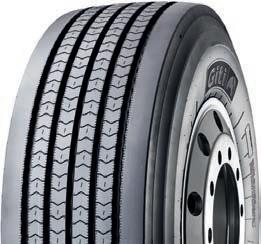

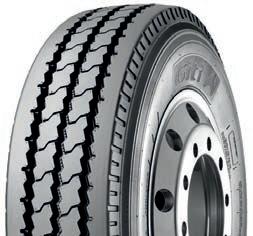
ward: in a tough operating environment, smarter tyre decisions come from having a clear total cost ownership strategy, not simply chasing a lower invoice. TCO is not a theory for procurement teams; it is a practical framework for improving uptime, controlling fuel and maintenance costs, protecting productivity and supporting service reliability across the life of the vehicle. When a product is matched to the task and backed by the right support network, it can deliver stronger value across the full operating cycle. That is the opportunity with Giti: not simply to buy a tyre, but to make a more informed commercial decision about performance on the road and cost control over time.
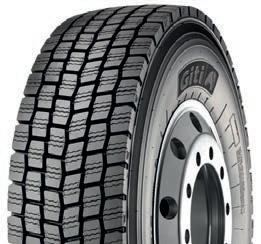


WHEN the sun goes down, visibility is everything. For overnight or long distance truckies, lamps and lighting form a critical part of a truck. It can be the difference between life and death or running early or late.
That’s where Lazer Lamps comes in. Since its founding in 2010, the UK-based manufacturer has led the way in LED technology, building some of the most advanced and durable lighting systems available on the market. Every Lazer product is designed, engineered and manufactured in-house at its UK headquarters, giving it full control over the entire build process, ensuring its lights have the highest levels of quality, performance and reliability.
After establishing itself as the number one premium choice for fleets across Europe, Lazer officially launched in Australia and New Zealand in 2020. It’s now backed by a national

dealer network, local sales office in Adelaide, warehousing in Canberra and an on-the-ground sales support team.
At the core of that success and expansion is the Sentinel range – a premium series of round high-performance LED spotlights, available in 7” and 9” sizes, with black, white or chrome finishes and a choice between Standard and Elite models. A pair of Sentinel 9” Standard lights emit 19,058 raw lumens and deliver one lux of light to one kilometre away.
Not only do operators get incredible distance, what really takes these lamps’ performance to the next level is their left-to-right spread of light, with an expansive 52-degree horizontal beam spread to fully light up the sides of the road.
The colour temperature of the lights has also been precision engineered to sit at 5000K, which is as close to natural daylight as possible, helping reduce eye fatigue during long overnight stateto-state hauls, while also minimising harsh reflections from road signs.
The real proof comes from those who’ve put Sentinels to the test on the open road.
“As an ex-driver with over 20 years of full-time driving under my belt, I can easily say that the Sentinel range from Lazer are the best driving lights I’ve ever sat behind,” Johnstons Truck Mildura sales manager Matthew Manning said.
As a former truckie with two decades on the road,
Matthew knows what matters for truck lights to succeed. “Simply brilliant lights! Great wide spread of light and extremely powerful. For us they tick all the boxes.”
While lighting performance is key, the other crucial consideration for truckies is durability.
The Australian outback is notorious for its relentless heat, dust, salt and water, offering no second chances to trucks running sub-par gear. With this in mind, the Sentinel range is engineered with durability at its core. Each light features an ‘unbreakable’ polycarbonate lens with a lifetime guarantee, a corrosion-resistant anodised and automotive grade powder-coated housing, and sealed electronics protected by a robust thermal management system. Furthermore, each product is put through rigorous testing, from thermal cycling and salt spray to vibration and solar load.
This level of build quality ensures Sentinel products perform in even the harshest conditions, lighting the way for drivers traversing the freezing thaw and ice of the arctic circle, all the way to the relentless heat and dust of the Australian outback. With this level of engineering expertise in mind, Lazer’s products do sit at the higher end of the market in terms of price. However, Lazer Lamps Australia has now announced the new and reduced RRP of its Sentinel 9” Standard model – from
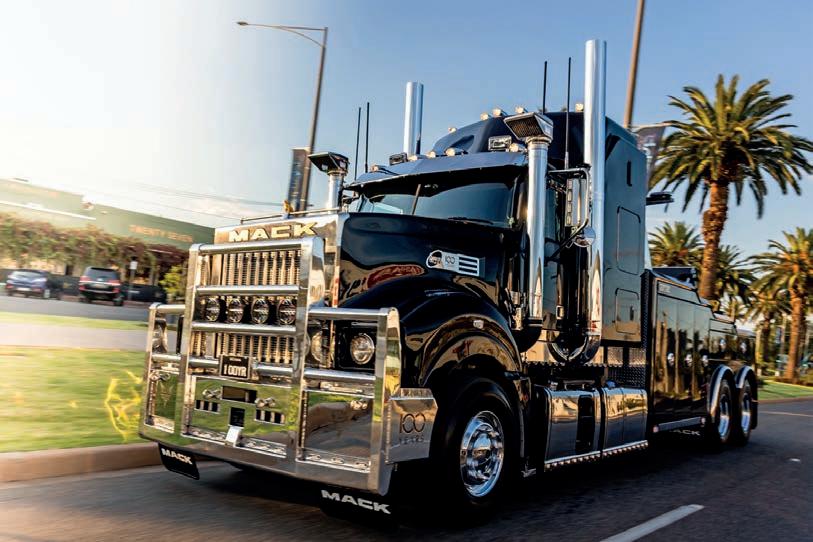
$645 down to just $495.
The Sentinel standard 9” product offers a high level of lighting performance and the exact same level of build quality and durability of the elite products, but at a much more accessible price point. What does this mean for drivers? In practical terms, the significant price cut opens the door to premium lighting for a broader range of users, particularly fleets outfitting several vehicles or owner-drivers with multilight set ups on their rig.
The new RRP of the Sentinel 9” puts the light in a lane of its own as a true high-performance upgrade over entry-level alternatives, and is now accessible to buyers who may have previously viewed both the standard and elite models as out of reach.
Thanks to their quality, Lazer Lamps also hold their value incredibly well over time.
When it comes time to upgrade or sell a truck, customers can take the lamps with them or easily resell them to fund their next lighting setup, making them not only a high-performance upgrade, but also a smart investment.
“After 25 years in the lighting game, I’ve seen a lot of change, from Halogen to HID, and now the latest generation of high-output LEDs paired with precision reflector technology,” said Lazer National Sales Manager for Australia and New Zealand Jason Pridham.
“The Lazer Lamps Sentinel range stands out as the best wide-angle light output
I’ve ever used in a 9” round light. The 5000K colour temperature, combined with a wide-form reflector, delivers massive spread and clarity, without the harsh reflections from road signs that you often get with cheaper brands. After all, it’s not what’s one kilometre down the road that catches you out, it’s what’s coming from the side!
“When your truck is your livelihood, and it represents you and your business, it deserves the best. Time and time again I hear from new Lazer Lamps owners: “Wow, your lights are amazing!”
“If you rely on your truck, trust lighting that’s built for professionals, made to perform when it matters most, night after night, job after job, year after year.”
THE events in the Middle East over the last months have changed the way we think about fuel security in Australia. Suddenly we’ve come to realise that our fearless leaders have done nothing about re-establishing refineries in Australia and building fuel security based on our own great resources.
Even mothers going shopping in the supermarkets for essential food lines have come to realise that without the transport industry, and their trucks and truckies, we would all be in serious trouble.
The population in general has woken up to the need for and importance of the fuel industry. These are the people who keep service stations fuelled and supermarket shelves
full to maintain all these essentials being delivered to regional Australia.
Keeping rigs clean
It’s no secret that the transport industry likes to keep their big rigs clean and tidy. When you see a big Kenworth with a B-double, even a water or fuel tanker, you see that there’s been work put into keeping the rig looking clean and smart.
One company, Australia Pump Industries (Aussie Pumps), knows that a big part of that presentation is the efficiency and performance of the pressure cleaner being used to keep the trucks looking schmick. Aussie Pumps has now become the leader in supporting the transport
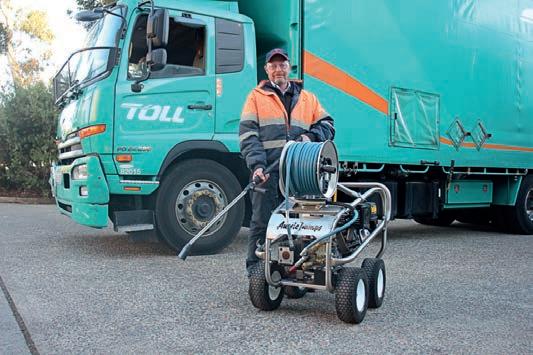
industry for high pressure cleaners and steam cleaners.
Their high-pressure cleaner range, starting with a 21-litre 3000 psi machine, is perfect for cleaning big rigs in record time. The 21-litre pressure provides enough flow to move mud and built-up grime.
Aussie’s unique detergent foaming kit, matched to the Aussie AB 351, uses the power of the Big Berty Bertolini Triplex Pump, to get the pressure cleaning done promptly.
“Once the rough stuff’s been knocked off, the operator can move to a 3200 psi foamer that sprays foam, through the gun, leaving the truck with what looks like shaving cream all over the machine. After that, just a quick wash off with the pressure cleaner again brings the machine back looking super smart and shiny,” said Aussie Pumps Chief Engineer, John Hales.
Play safe
Aussie Pumps believe in informing truckies on how to get the very best out of a cleaning process with the minimum amount of time.
“We’ve seen operators with what we call tool shop pressure cleaners made in third world countries trying to keep their rigs clean and tak-
ing literally hours (up to 8 hours) just to do a standard wash. Smart operators buy the best equipment like the Aussie Scud machines and get it done in a fraction of that time. Yes, that’s more recreation time and isn’t that a bonus!” added John.
Aussie Pumps are dead serious about pressure cleaner safety. Their FREE Safety Training Certificate Course is available to all truck operators, anywhere in Australia. The training course takes between 20 and 30 minutes to do and is available online.
“We have seen operators injured by taking the safety issues of a 4000 or 5000 psi pressure cleaner for granted. The training course not only explains how the machine works, but it also covers the safety precautions that need to be taken when operating big machines,” said John.
“We found that the bigger the job, the more possibility there is of fatigue and boredom, leading to shortcuts that can be dangerous. Our safety program points out the potential danger of using high pressure water blasters. It explains safe procedures to make sure operators are kept safe whilst getting the best result in terms of time saving.”
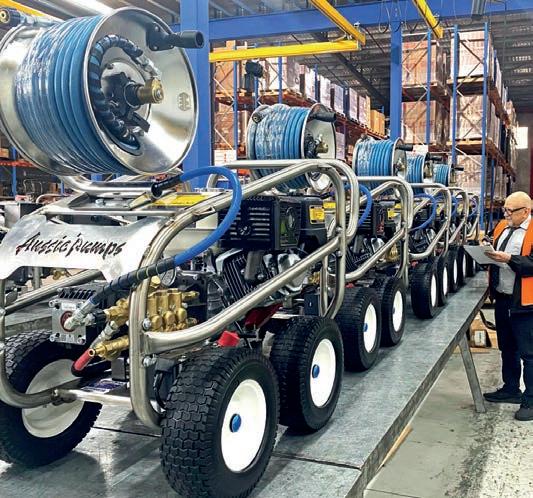
Triplex pump technology – The secret is out
Aussie Pumps has recently published a Pressure Cleaner Service Fundamentals Handbook. The document explains how Triplex pumps work, what they like and what they hate (for example dry running) and how to get the best out of your machines.
This information doesn’t just apply to Aussie Pumps great range of pressure
ers. It also covers the whole principles that can enable operators to be more confident in getting the best out of their machines, while at the same time staying safe as well. Both the Aussie Safety Training Program and the Aussie Blaster Service Fundamentals for triplex pumps are readily available – FREE from aussiepumps.com.au or your local Aussie Pumps dealer.
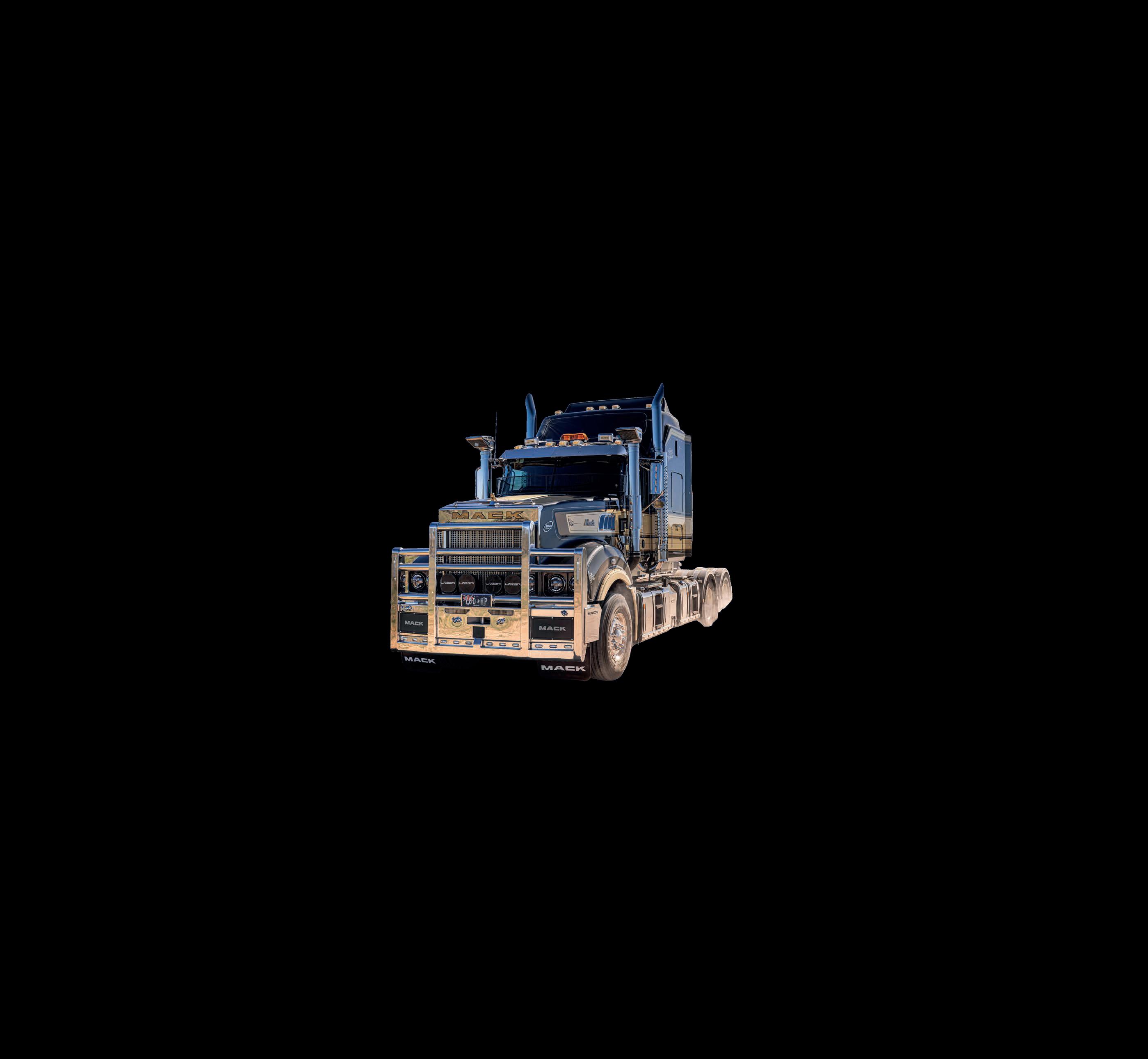



AS recent events have highlighted to transport operators, ensuring your fleet’s fuel supply and taking measures to help keep fuel costs down have never been more important.
Diesel is quite literally the lifeblood of the Australian trucking industry. Without it, the wheels don’t turn and supply chains grind to a halt.
Having fuel stored onsite and in bulk quantities not only helps to drive down operating costs but it also ensures your trucks never run dry.
Efficiencies in bulk storage and handling can help you offset the supply fluctuations of fuel prices and deliver a better return on investment for your business.
As Robert Salerno, Managing Director at F.E.S. TANKS (Fuel Equipment Specialists Tanks) explained, “In this current climate, where fuel
supply is in the spotlight –particularly over the last few months – it’s highlighted why having your fuel supply onsite and in volume is key.
“There were many cases where people weren’t able to purchase fuel, particularly in remote locations. Buying fuel in volume at wholesale prices and storing it at the depot can help operators keep their costs down.
“When you’re buying diesel in bulk, it lowers the cost per litre, which in turn reduces your operating costs.”
Adding to that, having fuel onsite means less time and effort is wasted by having to stop to fill up. Instead, drivers can fuel up at their company depot and away they go.
“Having your own fuel storage on site at the depot means your drivers arrive at work, pick up their truck and have a fuel tank there, so they aren’t
THIS CURRENT CLIMATE, WHERE FUEL SUPPLY IS IN THE SPOTLIGHT – IT’S HIGHLIGHTED WHY
ROBERT
wasting time having to head to a service station to fill up –so it makes sense from a wages and operating perspective too,” Robert added.
Started in Cairns, Queensland, in 2013, F.E.S. TANKS is a leading producer of precision engineered self-bunded fuel storage tanks and mobile re-fuelling solutions. It has options ranging from 1000 litres through to 110,000 litres for industries including transport and farming, and up to 200,000 litres for mining applications.
We manufacture and install precision engineered self-bunded fuel storage tanks and refuelling solutions for mining, heavy industry, construction, freight and logistics, agriculture, aviation and fuel retailing to name a few.
Built for the harshest Australian conditions and operating environments, F.E.S. TANKS are engineered and constructed to strict Australian and international stan
straightforward and simple solution to meet the changing needs of your business, even in the toughest and most remote locations, without expensive site preparation work.
F.E.S. TANKS offers fuel storage tanks, AdBlue tanks, standalone waste oil tanks, aviation tanks, and has the ability to offer storage solutions for various other fluids too. In addition, there are
F.E.S. TANKS





IN heavy transport, mining, construction and off-road industries, choosing the correct lubricant is not a small detail. It can be the difference between a vehicle staying productive and a machine being taken out of service. For fleets, workshops and equipment operators, incorrect oil, grease or fluid recommendations can increase the risk of component wear, performance issues, warranty disputes and costly downtime.
Modern commercial and heavy-duty vehicles are built with increasingly specific lu
bricant requirements across every application. Engines, transmissions, differentials, axles, hydraulic systems, cooling systems, brake systems, power steering systems and greasing points can all require precise products that meet the correct specification, viscosity and approval.
With larger vehicles and offroad machinery, the cost of getting it wrong can be significant. Time off road means lost productivity, delayed jobs and added pressure on mainte-
OATS helps reduce that risk by providing accurate, structured lubricant and fluid data for a wide range of vehicles and equipment. Designed to support lubricant manufacturers, distributors, retailers, workshops and fleet operators, OATS makes it easier to identify the right product for the right application, helping users make confident decisions and avoid issues linked to incorrect lubricant selection.
The OATS product suite
al ways. The OATS Lubricant Data API enables businesses to integrate trusted lubricant recommendations directly into their own websites, catalogues, ordering platforms or workshop systems. OATS Oil Finder gives users a clear, practical way to search for the correct oils, lubricants and fluids by vehicle or equipment type. OATS Cross Reference supports product comparison, helping identify suitable a lternatives where required.
OATS Library provides access to structured technical
lubricant information, while OATS Fusion Analytics helps businesses understand market, product and application data to support better commercial decisions. For fleet operators, OATS Fleet Surveys can help review lubricant requirements across mixed fleets, supporting consistency, compliance and better maintenance planning.
For the Big Rigs audience, the value is practical. Correct lubricant specifications help protect assets, support warranty confidence and reduce unnecessary downtime. Whether maintaining highway trucks, trailers, buses, agricultural machinery, mining
equipment or other heavy-duty assets, having dependable data across all lubrication points helps keep vehicles and equipment operating as intended.
As the industry continues to focus on efficiency, reliability and the future of transport maintenance, OATS gives businesses the lubricant data they need to make informed decisions, reduce risk and keep heavy vehicles moving.
Contact us now to learn how our data can help your business. Email apac@infopro-digital.com or learn more at infopro-digital-automotive.com.

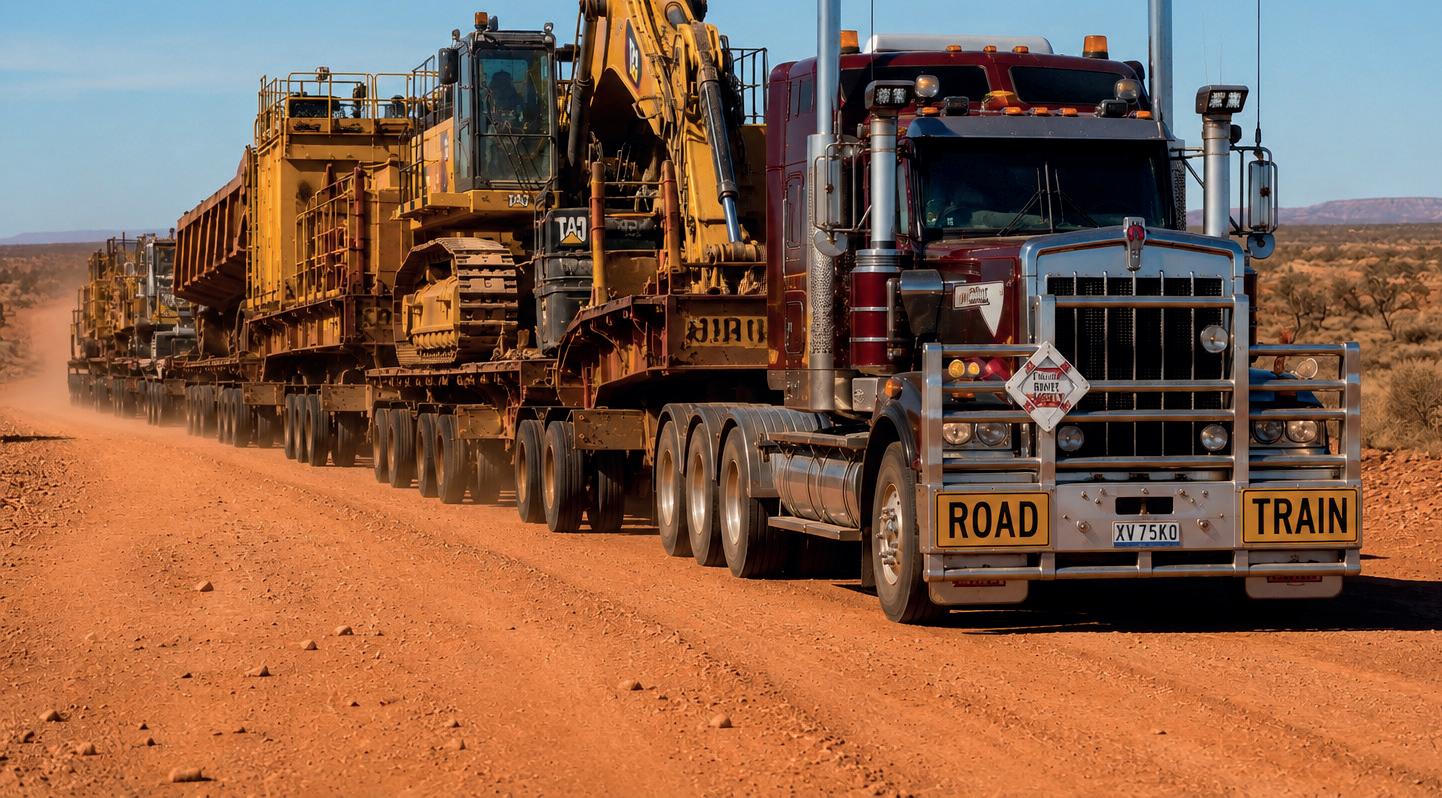


FOR transport operators, fuel is one of the biggest expenses – and the recent fuel crisis has only served to further highlight this. Increasing diesel costs have placed added pressure on businesses that rely on the product to keep their fleet moving.
Thanks to Fuellox, businesses can have greater control over fuel usage through smart tracking, real-time data, and wireless access tools.
An intuitive and easy to use system, Fuellox provides complete control and transparency of fuel use.
Fuellox was developed by IOTIQ Pty Ltd and is an innovative IoT-based solution designed to simplify and secure fuel management. Track, manage and control your fuel use with ease, while also helping to prevent fuel theft.
“The Fuellox system provides users with greater visibility,” said Fuellox founder
is being taken and where it’s going.
“Unfortunately, there is a lot of fuel theft that goes on. It’s the people who aren’t watching who are often the victims. The data Fuellox produces is the first step to identifying if something is going on that shouldn’t be.”
Fuellox can be used on tanks of any size, big or small.
“Currently, there are hundreds of Australian businesses using the Fuellox platform. The beauty of Fuellox is that it doesn’t matter how big your fleet is,” added David.
“We’ve designed our product to be mobile first, to work on fuel trailers, fuel pods and small tanks, because that’s where there aren’t really any other viable solutions for the vast majority of fuel tank owners.”
For a trucking fleet, the system is installed onto the tank/s, then the business owner can invite their staff and operators to access the
access to that particular tank,” said David.
While businesses can’t control the cost of fuel, they can control how they manage their fuel – putting the power back in their hands.
“For a typical civil construction business, when you look at fuel and labour, it might be 80-90 per cent of costs. For labour, they have time in attendance, sick leave, superannuation. They know to the dollar and minute what their labour costs are. But they don’t have those insights for fuel use. Fuellox turns it all into useable information.”
The Fuellox app remains quick and responsive, even in the toughest environments. It’s optimised to run smoothly across a wide range of smartphones – including lower-spec models – so your entire workforce can stay connected without lag or frustration.
The system takes away the time-consuming burden of managing fuel, assists in the fight against stolen fuel and ensures businesses are correctly claiming their Fuel Tax
“Through Fuellox, whatnesses as much power as we an for their fuel data. Fuellox tracks fuel for the businesses that build and feed Australia -
“Our customers are largely involved in civil construction and agriculture, businesses that have huge fuel bills and often many fuel tanks across diverse property portfolios, making it very hard to keep track of where their fuel is
“The FTC is a big number -


nesses are facing tighter and tougher requirements when it comes to claiming it back.
“I’ve run into businesses spending a couple of days a month calculating and allocating fuel usage across their business. The worst I’ve come across is one business
that was spending 30 hours a week on this.
“Fuellox eliminates any of the guesswork and automates the process. Operators can see where their fuel is going, in terms of assets, teams and activity. It also automates the collection of data for FTC.”
With the current climate around fuel prices, Fuellox is offering a special promotion to Big Rigs readers. Simply mention this story and ad for a buy one, get one free discount offer. Visit the website at fuellox.com.au or call 1300 557 356.
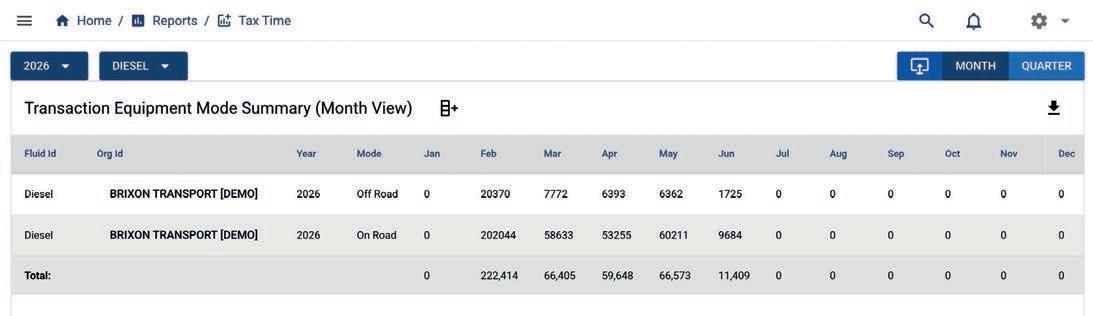
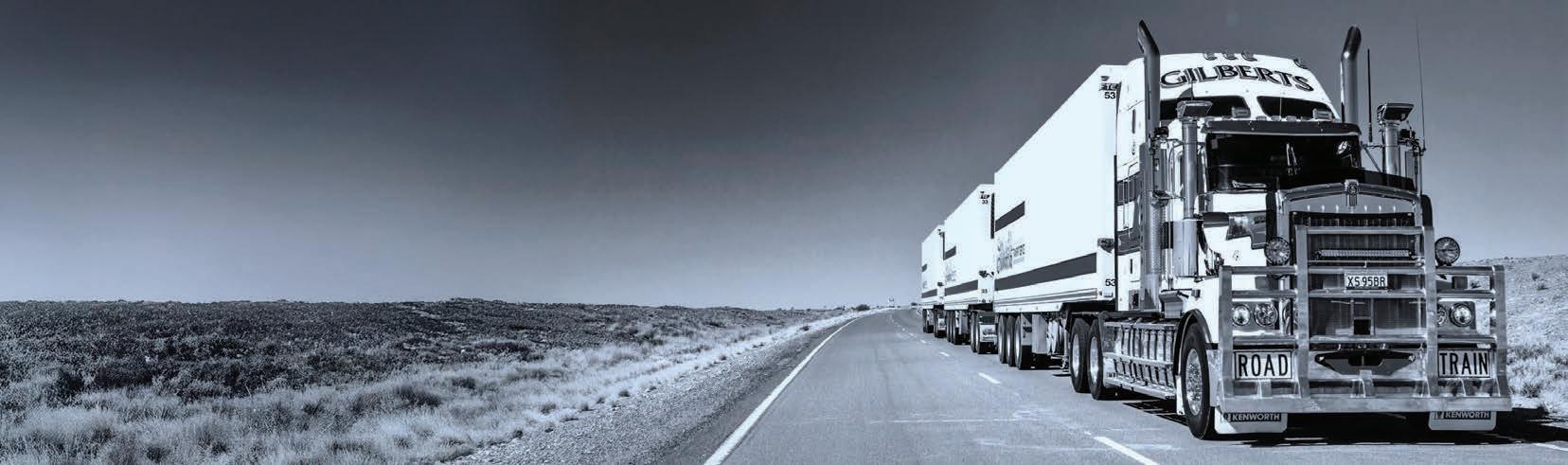
BY ANN-MARIE HICKS
IT might have been overcast and wet, but at the third annual Camp Quality Convoy Adelaide on May 24, enthusiasm was high.
There was a later start to the day than in previous years due to the convoy component of the day being put on temporary hold because of the current diesel fuel shortage, but the trucks and rigs rolled in to Victoria Park to support this worthy cause.
This amazing organisation supports children and their families fighting cancer. They provide free support to bring positivity, laughter and fun to these children through recreational activities, puppet and hospital programs.
The trucking community raised thousands of dollars to help the charity.
Organisers said they set out with a fundraising goal of $150,000 and participants “smashed” passed that goal two days before the event.
“We then set a new target of $180,000, and once again, you went above and beyond, surpassing it before the event even started,” said a post on
the official Facebook page.
“Together, we’ve now raised more than $186,000… with donations STILL being counted!”
Garden Grove was the highest fundraising team raising $40,315.
Highest individual fundraiser was Craig Arthur with $28,344, second was Ryan Collins with $24,281 and Daniel Quaini in third spot with $3672. A massive total of over $186,000 was raised at the weekend, with donations still being counted.
A fantastic effort not only from these blokes, but to everyone who contributed.
Free rides were enjoyed by the children who attended as well as a remote-controlled model truck display, emergency vehicle displays, and racing car display.
The Camp Quality puppet was seen mingling with the children in the crowd and there was bubble making with a clown, just to name some of the things to see and do.
One of the biggest crowd-drawing activities was the inaugural truck pulling competition, where teams went up against each
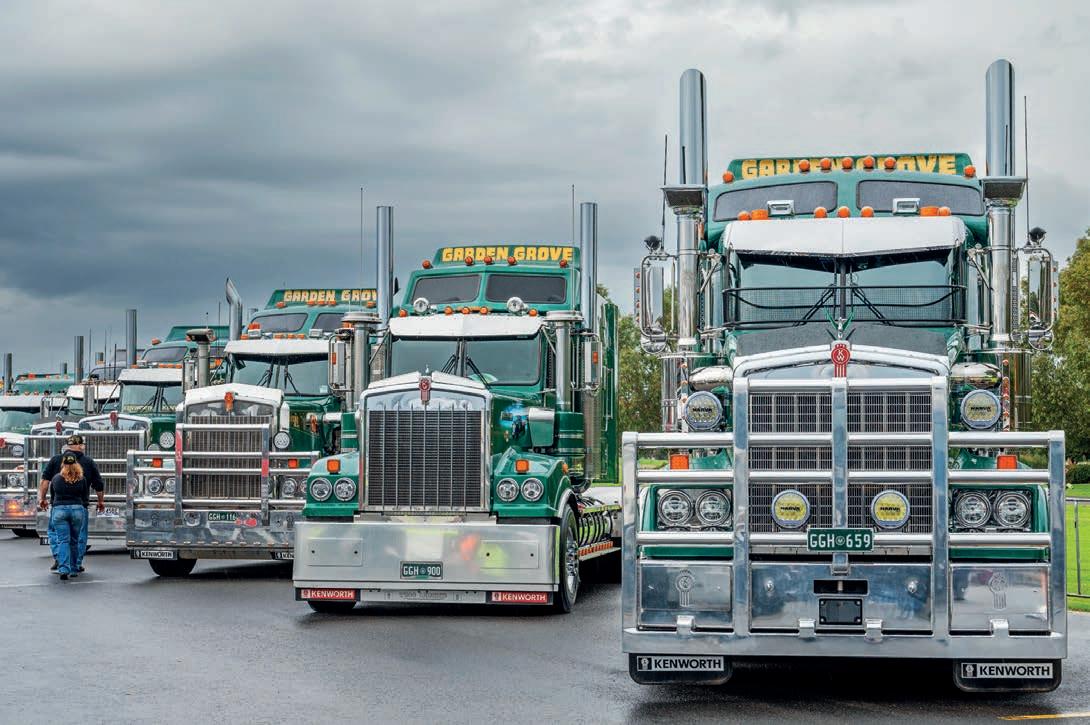
other to see who could pull a prime mover the quickest over the course. It provided onlookers with some laughs and was well received.
Over 150 trucks were
parked and are always popular, as the drivers and t heir families mingled with the public to show off their trucks. This gives the children a chance to get up close
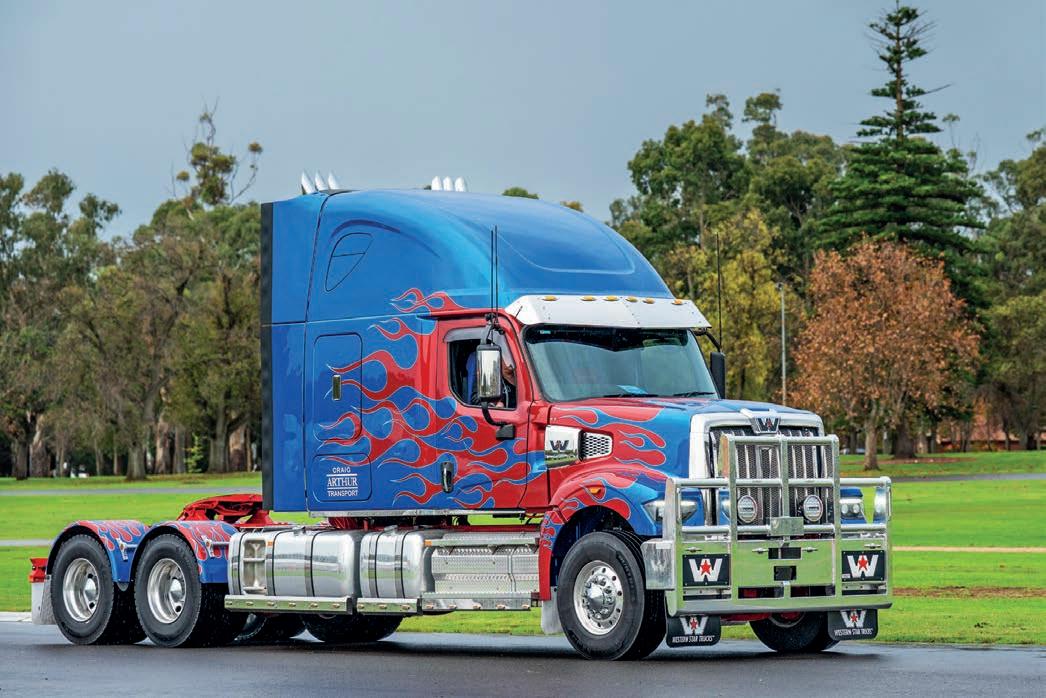
a nd have a look and these shiny machines. Any day when a community comes together to support those in need is a good day for everyone and
• Turn to page
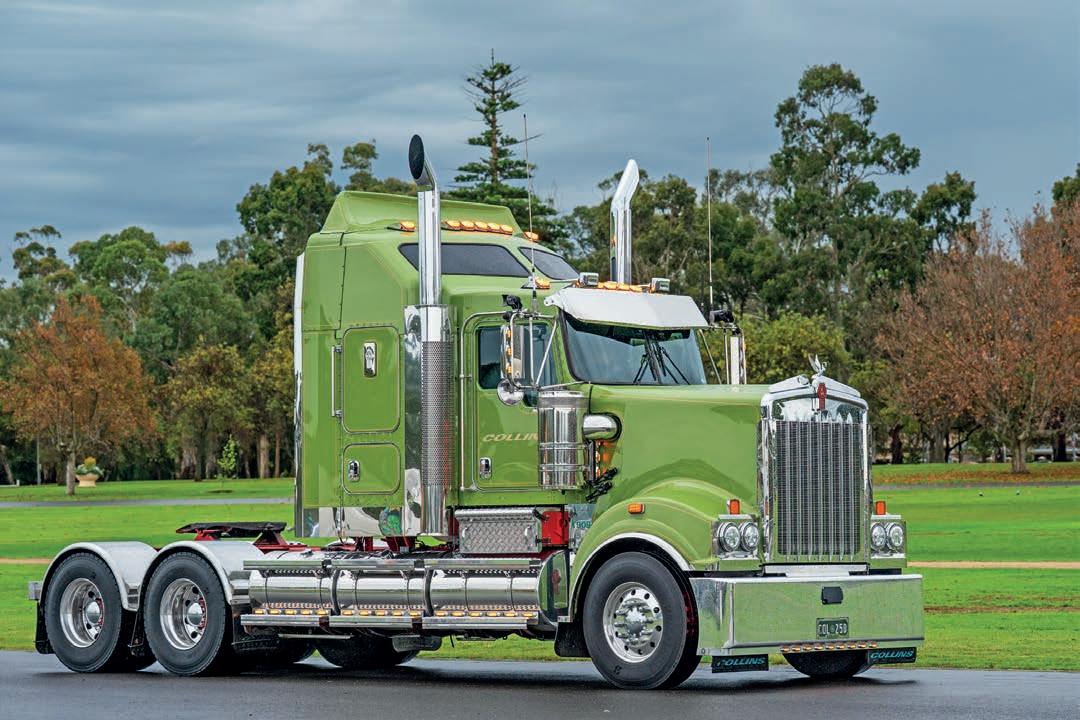




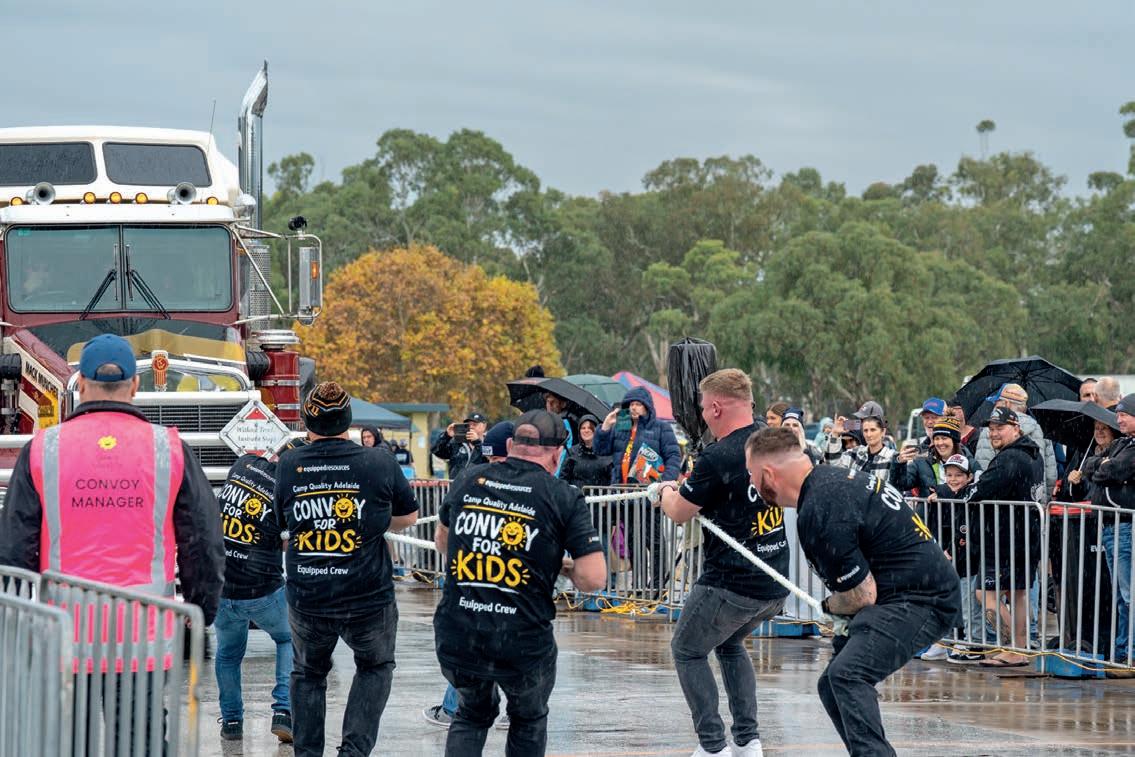
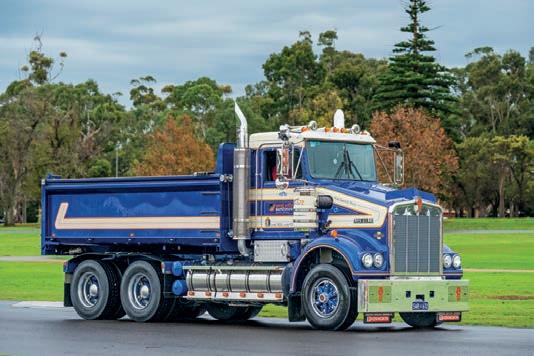
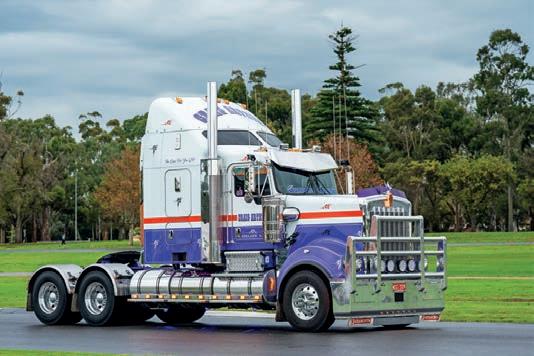
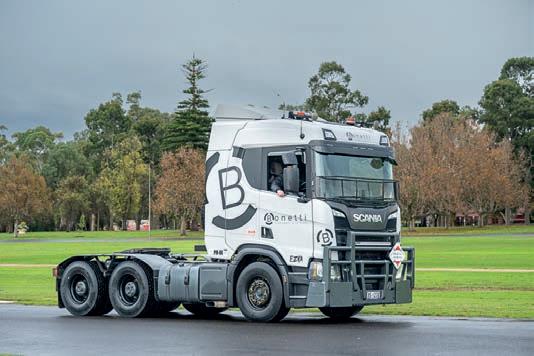
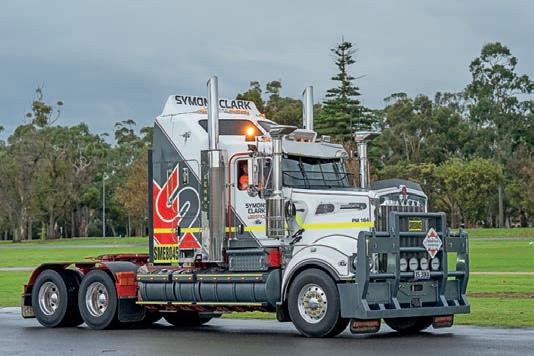
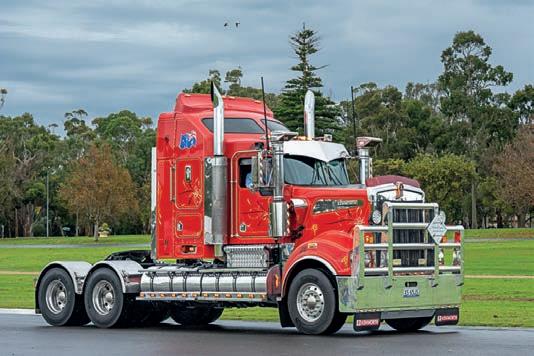
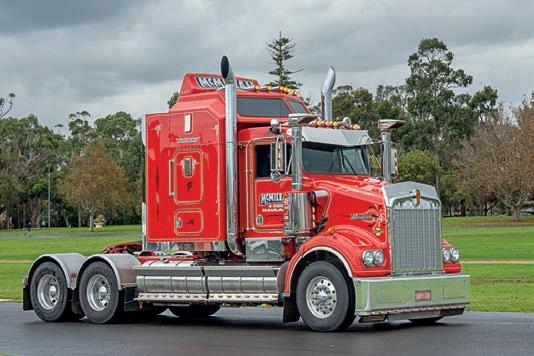
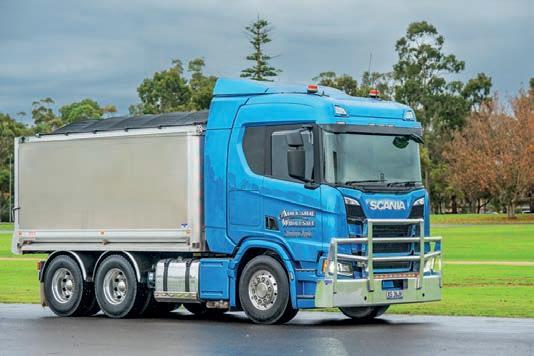
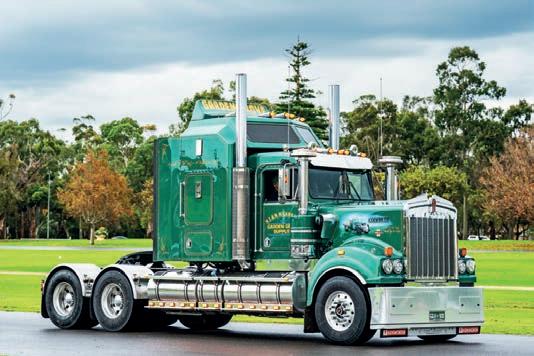



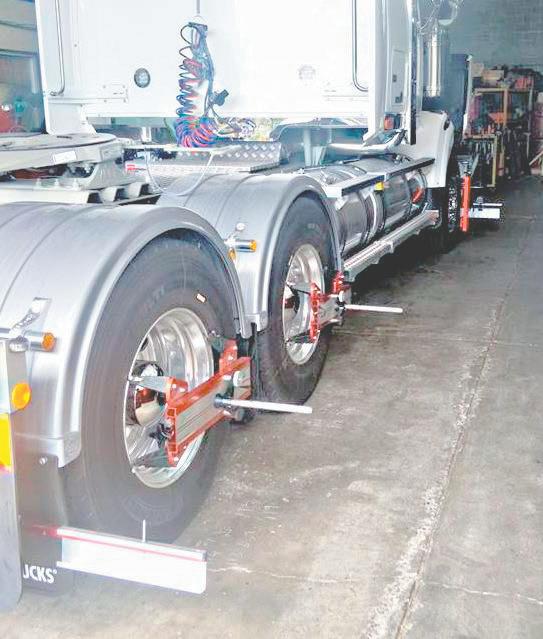


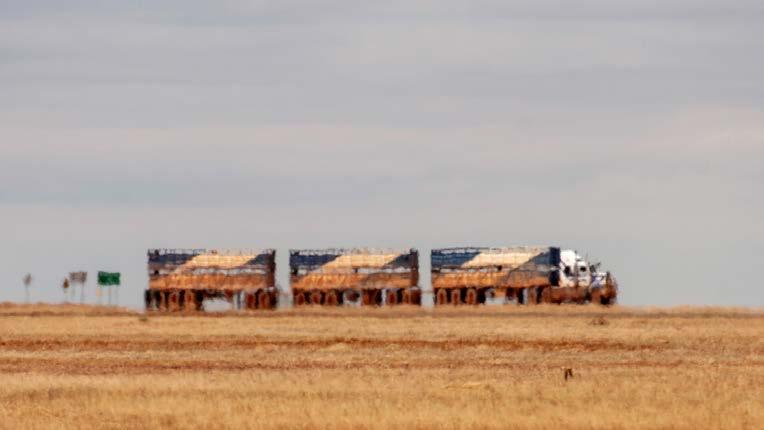

TOBEY Wright is a young owner-operator from Castlereagh, NSW, who is proving that age is no barrier when it comes to building a successful career in transport.
At just 21 years old, Tobey is already running his own truck and has been involved in the industry since he was 17. But trucking wasn’t something he stumbled into, it runs deep in the family.
“Trucking has been in my family for four generations. The old boy has always been a truckie, same with his dad and grandpa.”
Growing up surrounded by trucks made it an easy choice when it came time to decide on a career path, and the passion for the industry is something that’s clearly been passed down through the generations.
These days, Tobey operates an Isuzu FRR500 rigid, carrying a wide variety of freight across New South Wales and beyond.
“At the moment I cart a mix of freight from construction materials through to furniture,” he said. It’s the variety that keeps
the job interesting, and it’s one of the things he enjoys most about life on the road.
“I love the change of scenery, the people you meet out on the road and all the beautiful destinations I get to travel to.”
Of course, trucking isn’t always sunshine and smooth roads. Like many drivers, Tobey says the hardest part of the job is the time spent away from the people who matter most.
“The long days and nights, being away from family, my partner and my two little sausage dogs.”
When it comes to favourite roads, Tobey doesn’t hesitate.
“The Castlereagh Highway between Mudgee and Lithgow.”
A route well known for its scenic views and enjoyable driving, it’s easy to see why it sits at the top of his list.
As for favourite truck stops, Tobey says it’s a servo near the Victorian border that has become a regular stopover.
“It’s got a massive balloon on top, does great homecooked meals and it’s always been a cosy place to pull up.”


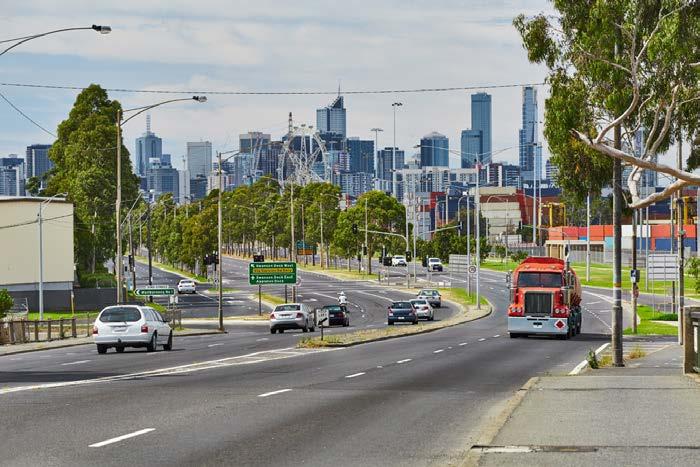
When asked what got him into trucking, the answer was simple.
“Just the passion for the industry, mate. There’s nothing better for the head than a sunny day on the highway.”
Looking towards the future, Tobey has big ambitions.
“Hopefully expanding my fleet and my knowledge of the game. I’d love to become a household name one day,” he revealed.
Like many owner-drivers, he’s passionate about protecting the industry and believes one of the biggest challenges facing transport today is the race to the bottom on rates.
“The biggest issue is people undercutting and taking genuine true-blue Aussie truckers out of the game,” he said. “It’s hurting the trust and companionship between drivers.”
For those looking to get started in transport, Tobey offers some advice that was passed down from his father.
“Don’t give up. Get through the hard days, keep an open mind and always listen to criticism. My old
boy always says, you’re only as good as your last minute in trucking.”
Away from work, Tobey enjoys spending time with mates, following his beloved Penrith Panthers, and admits to having a cheeky fondness for the blackjack tables.
With four generations of trucking behind him and plenty of ambition ahead, it’s clear Tobey is determined to make his mark on the transport industry.
Thanks for sharing your story, mate, and we wish you all the best as you continue building your business a nd carrying on the family trucking tradition.




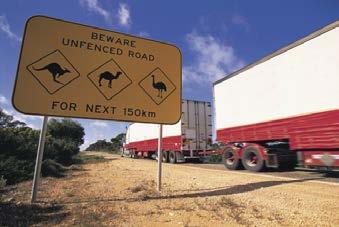
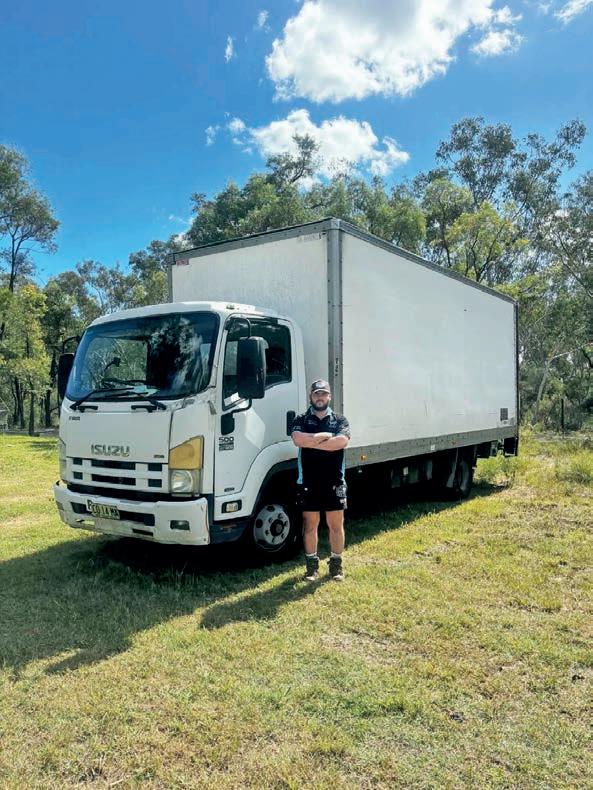




WHEN I saw driver Rick
‘Fishbone’ Obst pushing a shopping trolley as he was walking to his parked truck I knew he would make for an interesting conversation.
A ged 53, Fishbone was driving a Western Star 4900 for South Australian company Martinella Contracting and was parked at the BP Cluden Roadhouse in Townsville.
“Everybody knows me by my nickname of Fishbone which I have had since swallowing a bone from a jewfish I caught, which made my very sick,” he said.
“I was born in Murray Bridge in South Australia and my wife Kylie travels everywhere with me. We have just been over to the nearby supermarket. We buy lots of food as we just about live in the truck. I do have a gas cooker and microwave and usually stop at a roadhouse once a week for a meal. I enjoy T-bone steak,” he said.
Fishbone added that is favourite three roadhouses are at arwin City and Stuart’s Well
Fishbone was going to pick up dirt from Silkwood about 240km north for delivery to a station in the Northern Territory.
in the NT and the BP Cluden in Queensland.
His nightmare highway is along the Flinders between Hughenden and Richmond, a notorious 116km stretch.
“It has up and down gutters and lots of tabletop humps when you drive it,” he said.
Although he lives in South Australia, Fishbone barracks for the Hawthorn Hawks in the AFL.
Fishbone bears a striking resemblance to well known Australian character Dirty Pierre who for decades travelled around the country selling captioned t-shirts.
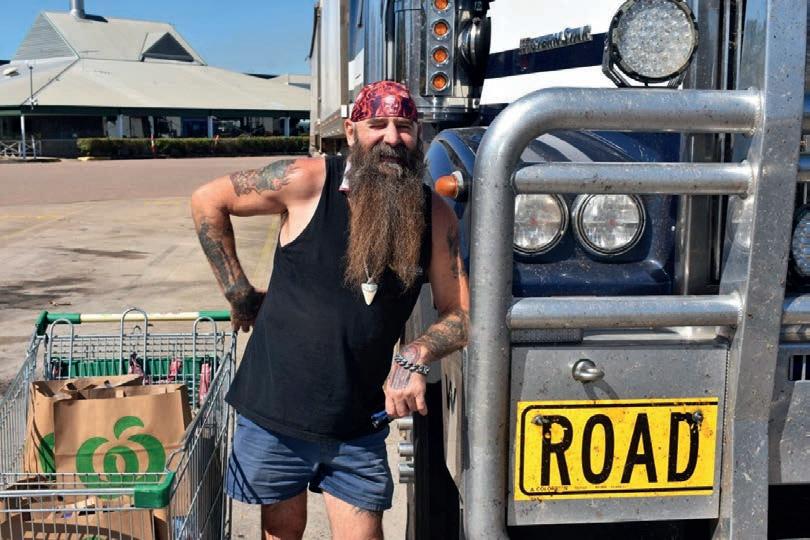
FORMER farmer and shearer
Ewan Turner became a truckie four years ago and is now destined for a long career as a driver.
Aged 33, Ewan has been with Port Lincoln based Harder Transport for 18 months and was parked up in Townsville with his Kenworth T909 when he chatted with Big Rigs
“I came up empty and will pick up sand at Cairns and then head off to a mine near Daly Waters in the Northern Territory,” Ewan said.
Growing up on a farm, Ewan spent years as a shearer but has fallen in love with driving trucks.
“I just enjoy trucks and reck on I’ll be doing this all my working life. But I still like shearing,” he said.
The worst road he gets on is out of Border Town in South Australia.
“It is bad heading towards Victoria,” he said.
Ewan’s favourite roadhouse is the Barkly Homestead in the Northern Terriotry for several reasons.
“The food is good and the at mosphere there is great. I like rump steak,” he said.
While Ewan would like to see more rest areas for drivers he did nominate one as being good.
“It is just out from the Nullarbor Roadhouse near the coast,” he said.
He also supports Port Adelaide Power in the AFL.
W hen I asked to snap a pic, Ewan did mention that his
truck was a bit dirty for a photo. However, considering he had travelled all that distance from South Australia to North Queensland, he had a good excuse.
I told Ewan if I had a dollar for every driver I spoke to who said that, I would be a rich man.
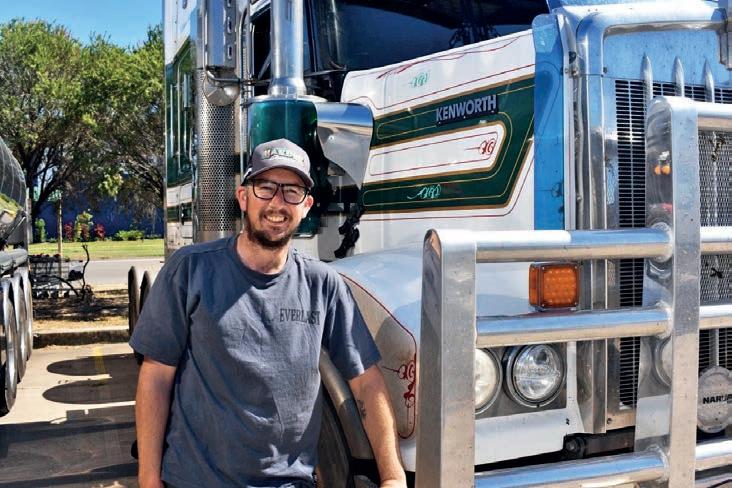


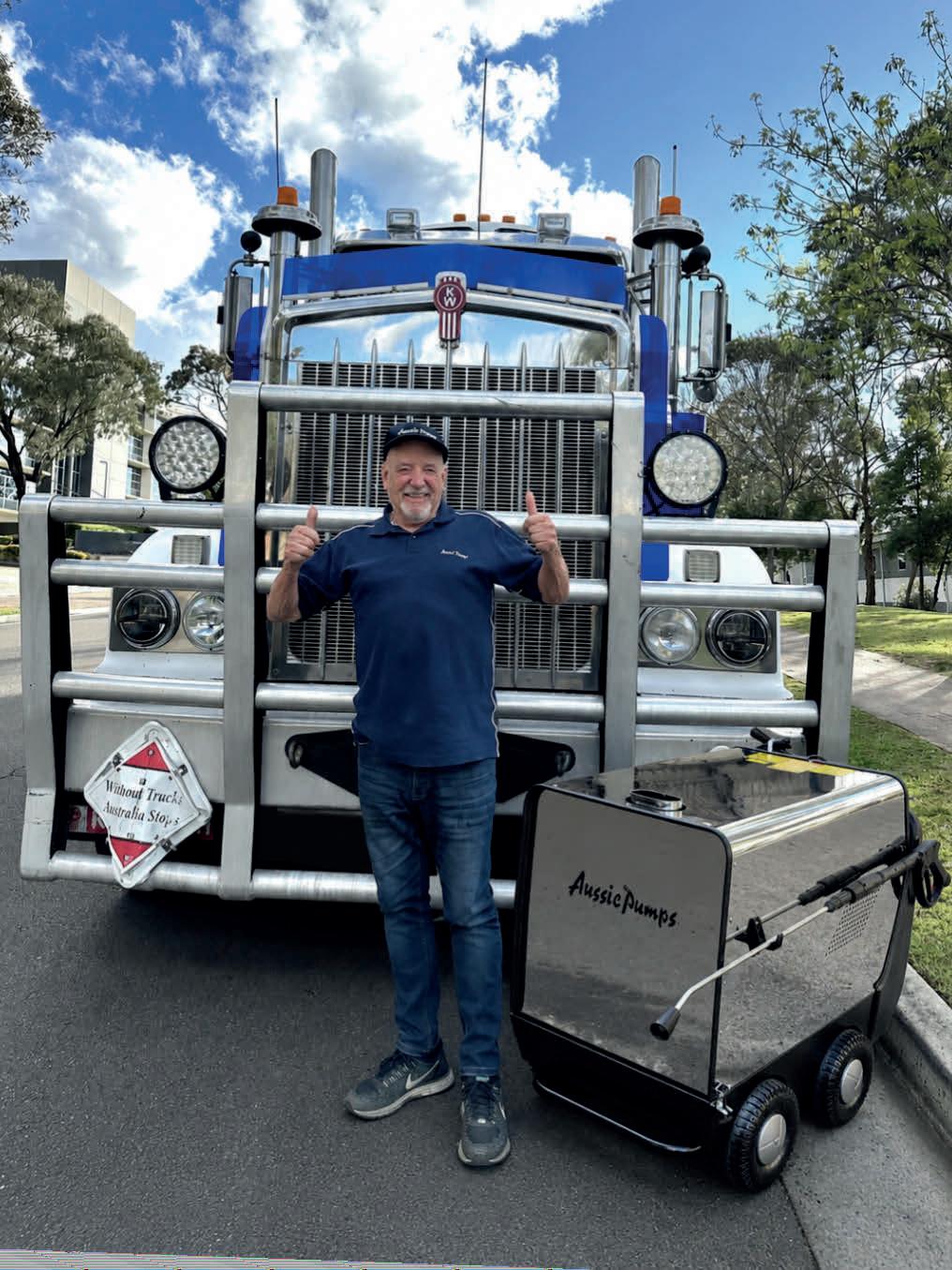
















GOOD news for truck drivers and other travellers is that the Mingela Hotel in north Queensland will reopen in July.
The popular watering hole is just off the Flinders Highway and 43km from Charters Towers and closed last year when long time publican Ivan passed away.
Spy hears that a family with road transport industry connections have bought the pub and are working on it to open again soon.
Mingela has a permanent population of about 10 and once used to have shops, a school, post office, a police station and other buildings.
The historical hotel had been visited by many travellers including truck drivers.
On weekends it usually was a busy hub of activity and was a genuine friendly place with a country atmosphere.
Publican Ivan had been there for 30 years and was a wealth of knowledge and a friendly fellow.
I can recall decades ago being in the wooden public bar
Many truckies will remember a former publican there named Bill Archer who used to play a practical joke on patrons.
On the wall in the public bar was a wolf whistle which customers were invited to blow to hear the sound.
However when they did they were sprayed with talcum powder and victims included many truckies… and Spy.
Just on the western side of Mingela along the Flinders Highway is a rest area with toilets and shaded areas where many truckies stop.
Truckies praise rest area
One of the major gripes amongst drivers is the shortage of rest areas around Australia which have facilities for truckies.
So when some of our champion drivers praise a rest area, it is good to give it some recognition.
One which fits into that category is the Olary rest area in South Australia, located across the road from the pub there.
Located between Broken Hill and Yunta on the Barrier Highway, it is 65km southwest of Cockburn.
Facilities include toilets, bins, and shaded picnic areas to have a meal and cold drink.
Half a dozen drivers from several states have told Spy about it and one even snapped some pics for which I thank him.
Pie paradise for truckies
Many of our truckie mates enjoy the traditional meat pie with tomato sauce when they find a good bakery on their travels.
Nothing like a tasty meat pie smothered with sauce, which is an Aussie tradition.
The Waikerie Bakery in South Australia is one that has been mentioned to Spy by drivers I yarn to at random.
Located along Peake Terrace in the country town of Waikerie it serves up a variety of meat pies and has parking nearby for trucks.
It has been there for 110 years – and, in addition to many different flavoured
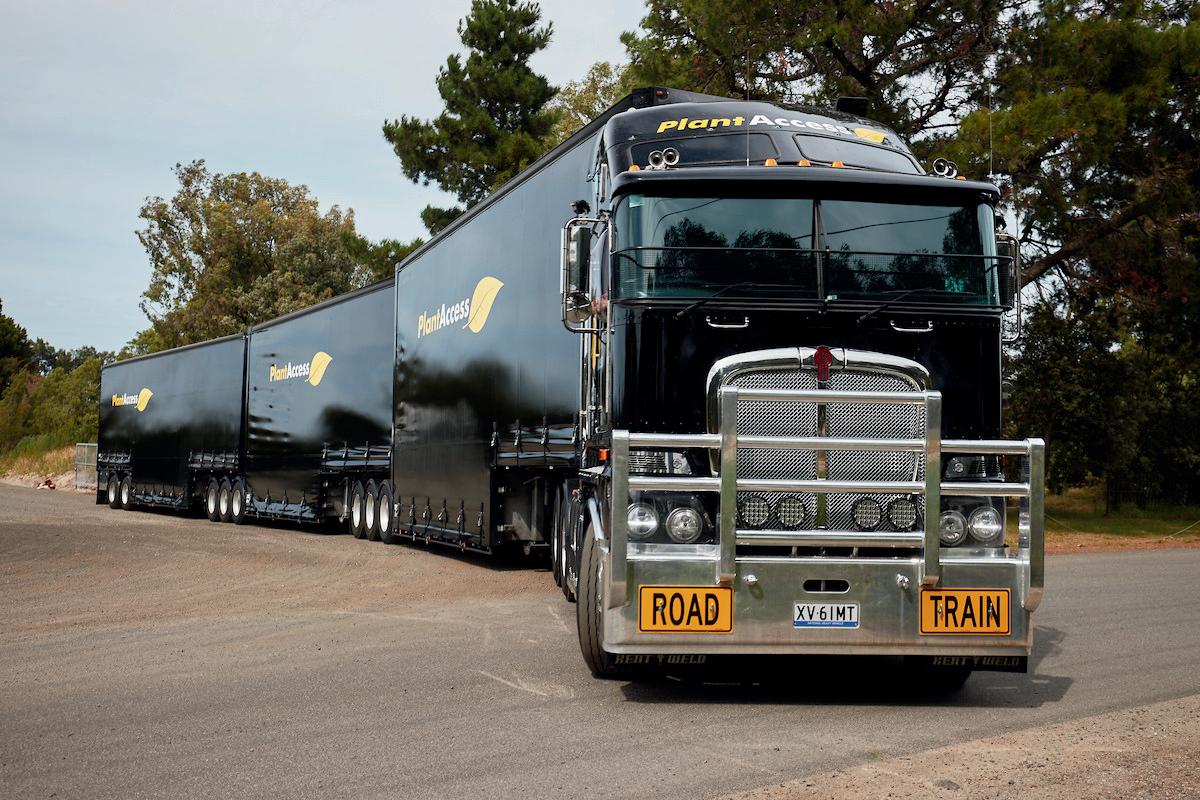

flaky pastries, cakes and cookies.
I spoke to owner/baker Scott Jones who said that lots of drivers stop in which includes about 10 regulars when they are in the area.
“The local council has been good and there is an area across the road where trucks can pull up. This is a busy horticultural region and we are on the banks of the Murray River,” Scott said.

e added, “Customers can buy a selection of flavoured or regular pies from a heated section and for those who want to take some with them and heat them in their microwaves, we cater for that as well.”
Describing it as a “typical country bakery”, Scott said 12 staff were employed there. It is open from 8.30am to 5.30pm on weekdays, between 8.30am and 1.30pm n Saturdays and is closed on
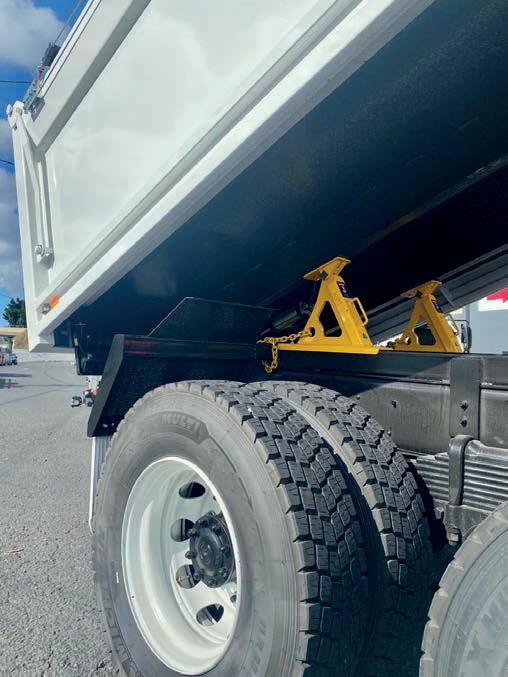
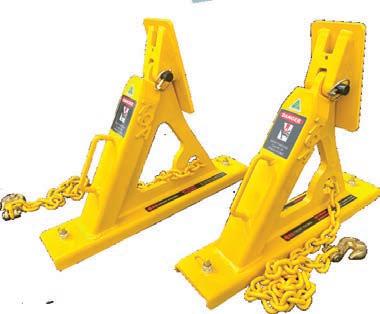


crash claimed the lives of three people.
Sleeper box smashed by irrigation system
It was a horrible experience for a NSW truckie as he was driving a Kenworth around 10pm, when irrigation sprinkling equipment suddenly appeared on the highway in front of him and collided with his sleeper box.
This is on a 2.3km section between Geilston Bay and Risdon.
The highway is a trunk road that carries heavy commuter traffic, much like the Brooker Highway, on the eastern side of the River Derwent.
The highway starts at the roundabout with Midland Highway at Bridgewater and heads south as a dual-lane, single carriageway road, connecting with the Bowen Bridge over the River Derwent.
It widens to a four-lane, dual-carriageway road through Risdon, narrowing again to a dual-lane, single-carriageway road through Geilston Bay, and then widening to a fourlane, single-carriageway road to eventually terminate at the Lindisfarne Interchange at Rose Bay, near the eastern side of the Tasman Bridge leading into central Hobart.
This change was approved following a review by the Department of State Growth’s Transport Group, which acted on community concerns.
State Growth pointed to rising traffic from Risdon Vale and nearby housing developments, along with a higher crash rate at the Sugarloaf Road intersection.
“The safer speed limit will reduce the likelihood and
severity of crashes by giving drivers more time to react to turning vehicles at the Sugarloaf Road and East Derwent Highway intersection,” the department said.
New signs have been installed and truckies who negotiate the stretch will need to be wary of the change.
A speed limit reduction along the Flinders Highway through the hamlet of Torrens Creek resulted in hundreds of truckies being nabbed by a hidden camera.
Some copped a $1200 fine and loss of three demerit points.
Fatal crashes spark call for road upgrade
For many years truckies Spy has spoken to have rated the Bruce Highway between Bowen and Home Hill as one of the most dangerous to travel along.
It is a 100km stretch of road and after two bus crashes in which four people died, that reinforces what they have spoken about.
Some of the sections have been upgraded but more needs work to improve safety.
In particular the section near the small town of Gumlu has come into question.
On May 14, a 26-year-old woman died and two people
This occurred around Premer which is a small town in north-western NSW and was on what he said was a back road.
“It was part of one of those irrigation systems which are around 200 metres long and was for watering a nearby property crop. My truck hit it on an angle and it smashed into the sleeper box and left a hole in it. Paint was also damaged and there were some dints. I have no idea how it managed to get onto the road,” he told Spy.
The driver said a road train had been coming in the opposite direction and managed to stop just before it.
Luckily the driver was not hurt, however the damage to his truck was more than $10,000. It’s now been booked into a panel beater for repairs. It is one of the most unusual incidents I have heard about
dark along the Bruce Highway between Ingham and Townsville.
A big spray of water hit my windscreen and I had no idea where it had come from.
The next morning I discovered the timing on the equipment activated at the wrong time sending a massive flow of water across the road.
A normally quiet and happy duty manager at a big roadhouse became quite angry when she saw a customer smoking near a set of fuel bowsers.
Spy was sitting in the roadhouse eatery as the lady was delivering meals to hungry patrons.
She looked through the interior glass window to see a man who was with a group of people outside near the bowsers and parked trucks.
“This idiot is smoking in a place where it is not allowed,” she said in earshot of customers who mostly agreed with her.
An order was issued for another staff member to go outside and ask the culprit to stop smoking there.
Before that could be done a bus pulled up to pick up the group who Spy gleaned were going to a popular country
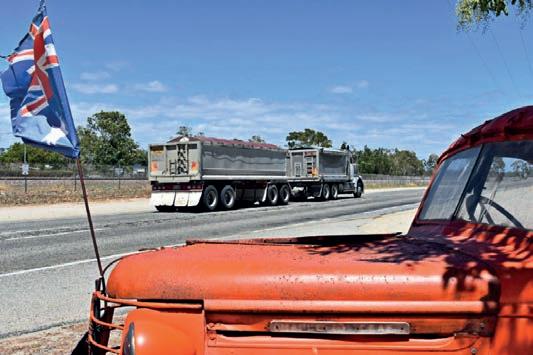
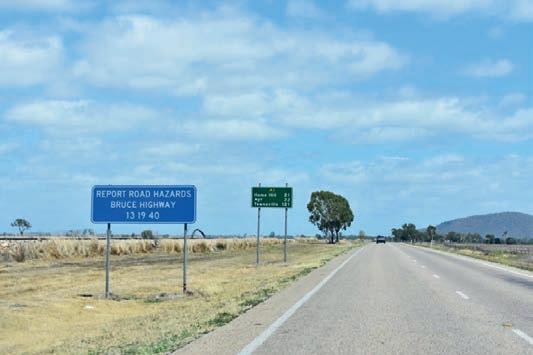
race meeting at a city 100km up the highway.
Hitch-hiker praises drivers
Spy received a surprise contact from a gent who was without a vehicle and resorted to hitch-hiking to work.
What was a shock to hear was that this fellow worked night shift, and thumbed a lift to and from his job after dark.
“I was picked up fairly often and most of my lifts were from truckies,” he said.
He added that these drivers just wanted to have a chat and were always friendly.
Many drivers who are employees are banned by their companies from offering hitch-hikers a lift.
Whilst owner and small fleet operators can do so at their discretion, there can be risks.
Not only from possible danger but insurance companies will often refuse to pay claims if any incident occurs with a hitch-hiker in the cabin.
Some years ago Spy covered a nasty incident which occurred after a driver gave one a lift who had been a convicted criminal.
The driver was the victim of a siege after the fellow pulled a weapon. The situation was only defused when he managed to alert people at Bowen.
It was with some curiosity that Spy looked on as visitors to a country roadhouse were seen
snapping pics of a driver who used a platform with steps to clean the windscreen of his truck.
This is a regular occurrence at this establishment after the trucks take on fuel and may seem to many to be a menial situation.
So Spy asked one of the snappers what was the reason for the photos.
“It is because of the boots on the ground,” he replied.
Another quipped that the driver had left his heavy-duty boots on the ground at the bottom of the platform.
Sometimes an incident which is of no interest to some is the opposite for others.
No diagnosis from this doc
There is a retired 88-yearold truck driver who lives in country South Australia who during his long career has always been willing to play the odd joke on mates.
Still very lucid and switched on, this lad is now happily enjoying his twilight years and keeps in contact with former truckies he knew.
But now this jovial gent is the subject of some phoning him and asking could he provide them with a prescription for medication.
“My nickname has been Doc for 50 years and they ring pretending they want me to provide a script for conditions such as high blood pressure,” he said.


THE start of a new financial year always brings change for road freight operators, but this year, many businesses are facing several significant changes at once.
The expected return of the Road User Charge (RUC), the introduction of Payday Super, increases to labour costs, and ongoing cost pressures across fuel, maintenance and insurance are all arriving against the backdrop of what remains a challenging operating environment for many transport businesses.
NatRoad’s recent Fuel Crisis Survey highlighted just how close to the line many operators are running.
Prior to March this year, 54 per cent of operators surveyed described business conditions as “strong” or “very strong”. Today, 69 per cent describe conditions as “weak” or “very weak”.
More than two-thirds of respondents (67 per cent) said they could not sustain their business for more than six months if current fuel crisis conditions persist.
One of the most immediate concerns for operators re-
mains the return of the Road User Charge.
While the temporary reduction provided welcome relief during the fuel crisis, NatRoad continues to advocate for an extension of that support.
For operators, the challenge is not simply the additional cost itself. It is the timing. Fuel, wages, maintenance, tyres and suppliers all need to be paid today, while revenue may not arrive for 30, 60 or even 90 days. That cash flow gap remains one of the greatest threats to business viability across the industry.
W hile NatRoad continues to push for practical government support, there are also steps operators can take now to strengthen their position. First, ensure your fuel levy arrangements accurately reflect current operating costs. The fuel crisis has demonstrated how important it is to have clear mechanisms in place to allow fuel costs to be passed on.
NatRoad’s online Fuel Levy
Calculator and other costing resources can help operators review whether their current arrangements remain fit for purpose.
Second, review your fuel tax credit arrangements. Operators should ensure they are claiming all eligible fuel tax credits and consider lodging their BAS monthly, where appropriate, to improve cash flow by accessing credits sooner.
Third, make sure you understand your obligations and are prepared for Payday Super, which commences on July 1, 2026. Under the new arrange-

ments, superannuation contributions will need to be paid at the same time as wages rather than quarterly.
W hile the change is intended to improve outcomes for workers, NatRoad has consistently highlighted the cash flow challenges it may create for small transport businesses.
Operators who have not yet reviewed their payroll systems must do so now and seek advice if required. NatRoad members can access support from our HR Advisor for general guidance on the changes and preparing their business.
Operators should also be aware of other changes occurring from 1 July, including award wage increases and changes to personal income tax rates. While many payroll and accounting software providers will automatically update these settings, it is worth checking that systems are correctly configured to avoid unnecessary headaches.
The road freight industry has faced no shortage of challenges over the past few years. What the fuel crisis has shown is that cash flow resilience matters just as much as profitability.
Businesses that understand
their costs, review contracts regularly, claim available credits promptly and prepare early for regulatory change will be better placed to navigate whatever comes next. NatRoad will continue advocating for practical reforms that improve business viability, including action on the Road User Charge, payment terms and unfair practices that undermine responsible operators.
As we head into the new financial year, now is the time to review your business settings, understand the changes ahead and make sure you
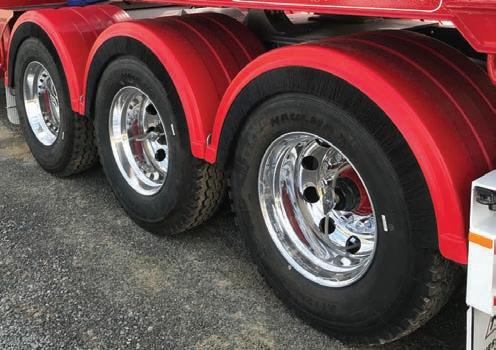

NEARLY a third of young survey respondents admitted to having a close call with a heavy vehicle… proving yes, there’s still a truck tonne of education needed for driving around tonnes of truck.
As a new driver, much of the learning experience focuses on cars – how to start them, park them, and interact with others on the road.
At the National Heavy Vehicle Regulator (NHVR), we must continually interrogate whether Learner (L) and Provisional (P) license holders k now enough about what it means to share the road with heavy vehicles.
Unfortunately, our latest pre-campaign research tells us more education is still necessary.
More than 50 per cent of young people reported having experienced nervousness when sharing the road with trucks, with lack of experience playing a role.

MORE THAN 50 PER CENT OF YOUNG PEOPLE REPORTED HAVING EXPERIENCED NERVOUSNESS WHEN SHARING THE ROAD WITH TRUCKS, WITH LACK OF EXPERIENCE PLAYING A ROLE.”
spected on the road.
Our campaigns, events, social media and other avenues to speak to young drivers and the community are essential to creating safer road networks.
Every heavy vehicle incident is avoidable, and improving how motorists interact with trucks is one of the most powerful ways we can enhance safety outcomes.
The NHVR has an important role to play in educating young motorists and helping to develop long-term and robust driving behaviours.
A significant part of this work comes from our ongoing safety campaign, Don’t #uck With A Truck.
Since its initial launch in 2022, the campaign has helped young drivers understand how trucks differ to cars and what they must do
Every truck driver is acutely aware of how much space, patience and respect is needed from light vehicle drivers. For L and P platers, there is no ‘copy and paste’ or the exact same skillset that applies to driving around other cars.
to share the road with them safely.
Importantly, the campaign continues to be delivered in a way that captures a younger audience’s attention and resonates with them.
The newest phase of Don’t #uck With A Truck is set to launch in late June, with education focused on two key areas.
Part of the campaign will target nervous drivers, with the content designed to empower audiences with a greater understanding and
confidence of what to do on the road.
Additionally, there is an education piece aimed at overconfident drivers; with videos relaying important driving tips to young motorists who may overestimate their knowledge and competency.
With an upcoming campaign launch on the Gold Coast and partnerships with influential content creators, the new phase of Don’t #uck With A Truck will endeavour to equip young drivers
with safer skills on the road.
This is critical, given our pre-campaign research revealed some of the driving behaviours with the biggest needs for improvement.
Of the drivers aged 16 to 24 who were surveyed, far too many admitted to sitting in a truck’s blind spot (51 per cent) for too long, following a truck too closely (51 per cent) or overtaking a turning truck (36 per cent).
Australia’s heavy vehicle industry is critical, and truck drivers deserve to feel re-
Don’t #uck With A Truck reflects the NHVR’s commitment to developing education for young drivers and placing the knowledge and tools in their hands to help them make smarter decisions behind the wheel.
By helping young drivers understand the realities of heavy vehicles, we can close the knowledge gap that exists today and build safer behaviours for tomorrow.
Because when new drivers understand how to share the road with trucks, everyone is safer.

mands dedication, commitment and sacrifice. Among the names added today are people who spent decades behind the wheel – some for 40 years or more – while others were at the beginning of their journey in the industry.
WE gather in a place that holds deep meaning for many. The Victorian Truck Drivers’ Memorial stands as a place of reflection, remembrance and recognition – a place where we honour those who have given so much to the transport industry and to the broader Victorian community.
Today, 24 new names are added to this wall. Some represent lives lost recently, while others reflect long careers that have now come to an end. Every one of those names represents a person, a
They represent the full breadth of the transport sector: livestock carriers, container operators, heavy haulage specialists, tanker drivers and logging operators. Their work may have differed, their loads and routes varied, but they shared a common commitment – to get the job done, safely and professionally.
For many, that meant long hours, time away from family, and travelling across state borders in often challenging conditions. It is a profession that asks a great deal of those who choose it. Yet these individuals gave that commitment willingly, day after day,
tend far beyond their work.
And behind every name is a circle of family and friends whose lives have been changed forever.
For many in the industry, these realities are not abstract. They are deeply personal. Experiences of loss remind us that behind every incident is not just a statistic, but a life –and a network of people who
carry that impact forward.
The effect of loss in this industry runs deep. It is not just an event or a moment in time. It stays with families, with communities, and with all of us connected to the transport sector.
That understanding reinforces something fundamental: what we do matters. The way we approach safety,
training and support has real consequences. Every decision carries weight, because every decision ultimately affects people.
The Victorian Truck Drivers’ Memorial exists to ensure those people are never forgotten. It provides a place for families to reflect and remember, and for the industry to come together in quiet rec-
ognition of those who have gone before us. It also serves as a reminder of the responsibility we carry forward. As an industry, we must continue striving to do better – to improve safety, strengthen training, and support drivers at every stage of their careers.
But today is also about recognition.
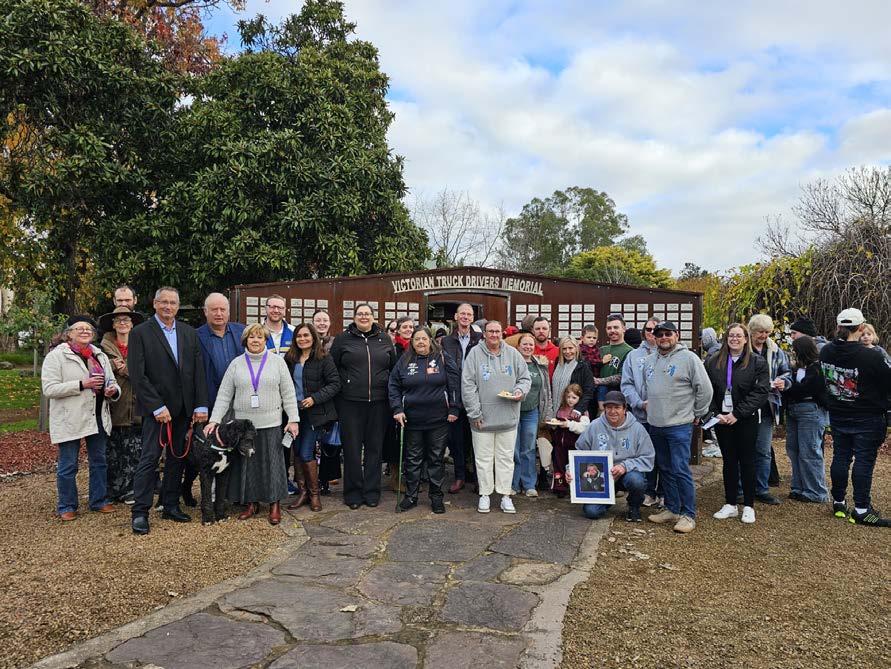
Recognition of the vital contribution truck drivers make every day. Recognition that the transport industry is built not just on infrastructure and equipment, but on people – people who show up, take pride in their work, and get the job done.
As we reflect, we remember the 24 individuals whose ames are added today, and the many others already honoured at this site. We recognise heir service, their dedication and their contribution.
And to the families here to
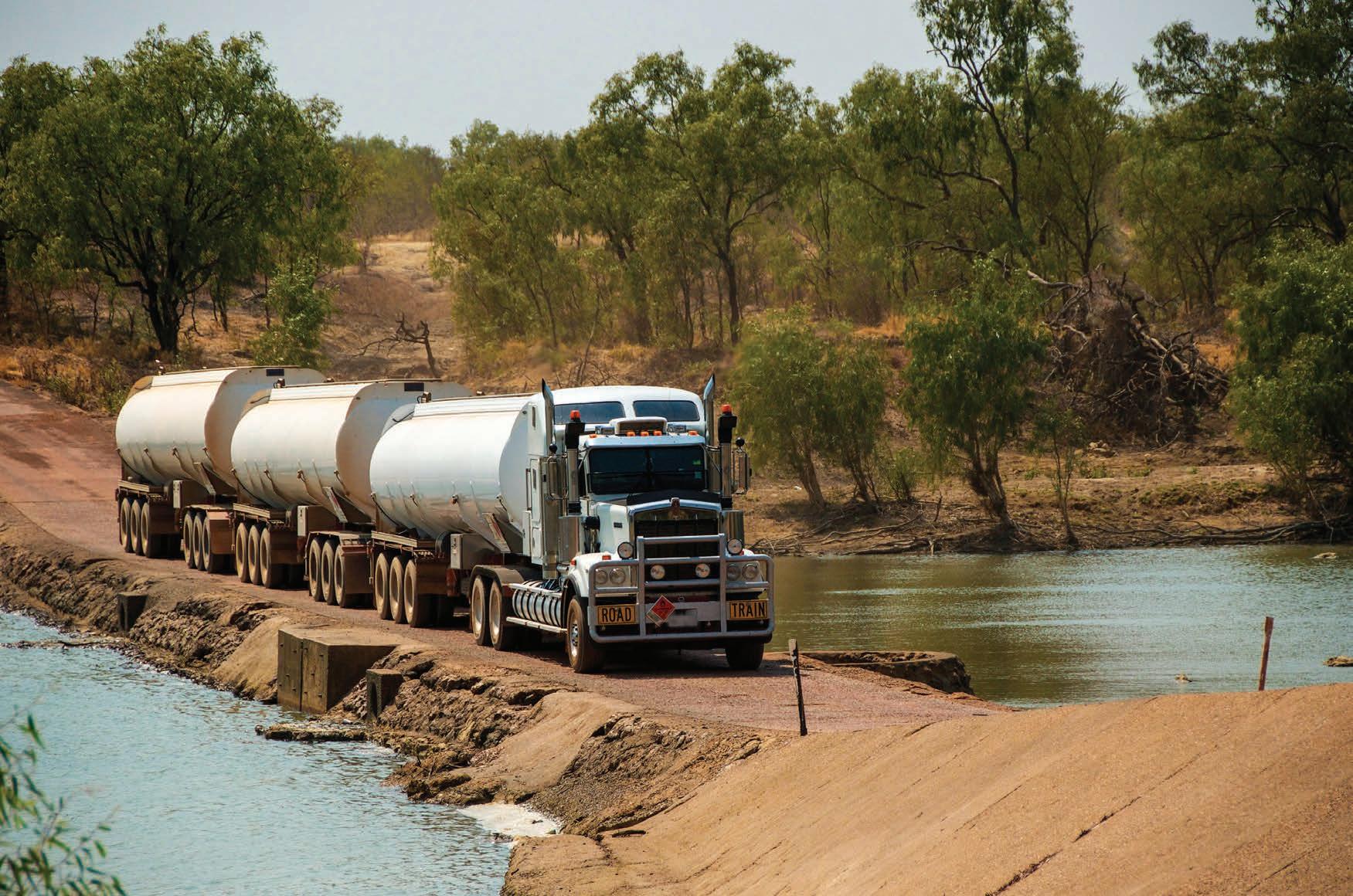





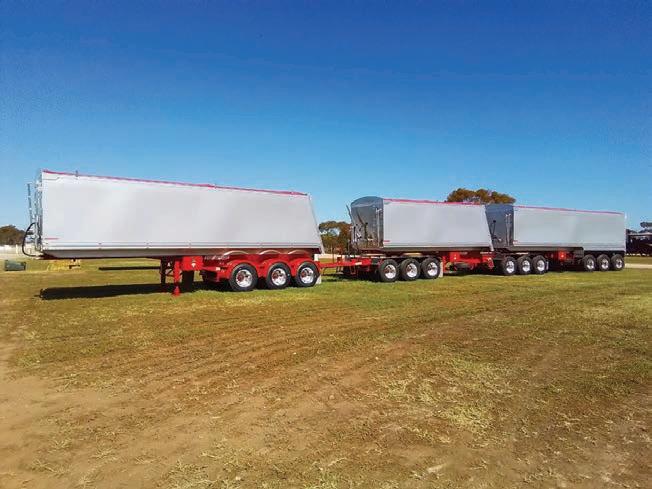

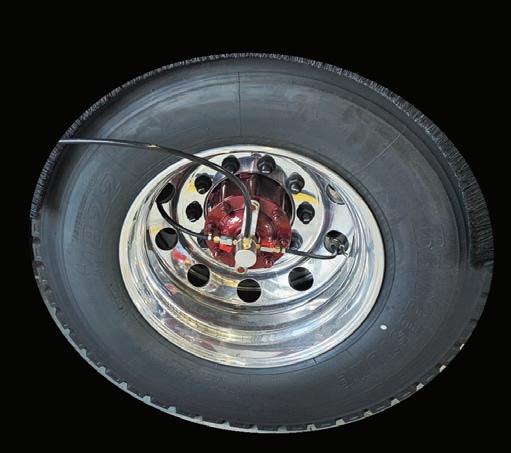
A new Transport Innovation Hub has been opened in Melbourne by Geotab and Swinburne University, aimed at helping to accelerate collaboration on connected mobility, safety, sustainability and future transport technologies.
The Geotab-Swinburne Transport Innovation Hub is located at Swinburne University of Technology’s Hawthorn campus in Melbourne.
Officially opened on Wednesday June 3, it bolsters the partnership between Geotab – a connected operations, video telematics and AI-powered insights business – and the university.

challenges and opportunities, including electric vehicle adoption, road safety, transport emissions reduction, and mobility policy development. These initiatives will leverage real-world telematics data and advanced analytics to support evidence-based research and innovation.
bility can be shaped collaboratively. Australia has a significant opportunity to lead in A I-powered transport innovation, and this Hub is designed to help accelerate that future.”
The Transport Innovation Hub will support applied research, student engagement, industry collaboration and policy discussions, creating opportunities for hands-on learning and cross-sector partnerships that address real-world transport challenges.
“The Hub creates new opportunities for our researchers and students to work directly with industry-leading technology and data, helping to advance research outcomes in sustainability, safety and connected mobility while developing the future workforce needed for Australia’s evolving transport ecosystem.”
The Geotab-Swinburne Transport Innovation Hub has been designed as a collaborative environment that brings together students, researchers, industry partners and technology leaders to explore the future of connected mobility and transport intelligence.
The Hub includes an interactive showroom that will showcase Geotab’s connected vehicle technologies and A I-powered insights, an operations centre for applied trans-
port research and data analysis, and a co-working space that will support collaboration between academia, startups, industry and government stakeholders.
The opening also marks the launch of several strategic programs focused on key industry
“The opening of the Geotab-Swinburne Transport Innovation Hub represents an exciting step forward in our vision for smarter, safer and more sustainable mobility,” said Alkan Ciftci, Business Development Manager, Geotab.
“By combining Swinburne’s research expertise with Geotab’s AI and connected vehicle intelligence, we are creating an environment where new ideas can be tested, insights can be scaled, and the future of mo-
“Swinburne is proud to officially open the Geotab-Swinburne Innovation Hub and deepen our collaboration on research and innovation that delivers real-world impact,” said Professor Hadi Ghaderi, Professor of Supply Chain Innovation & Decarbonisation, Swinburne University of Technology.
The Geotab-Swinburne Transport reinforces Geotab’s ongoing investment in Australia and its commitment to supporting local innovation ecosystems and future talent pathways.
The opening of the Transport Innovation Hub builds on the partnership announced in 2025 and marks the next phase of collaboration between Geotab and Swinburne to help shape the future of connected transportation in Australia.
THE Australian Trucking Association (ATA) has announced the relaunch of its Future Leaders’ Forum (FLF) program, with nominations for 2026/2027 to open in July 2026.
The Future Leaders’ Forum is a professional development program targeted at future leaders of the trucking indus try aged between 21 to 40. N nually from the ATA’s mem ber associations and its safety
management arm, TruckSafe. The program aims to equip participants with the skills and knowledge to strengthen their leadership, media engagement and advocacy capabilities. Its overarching aim is to support graduates to become effective advocates for key industry pri-
Now entering its eighth year, the program has built an alumni network of almost 80 industry leaders who have progressed into executive and non-executive leadership roles across ATA member associations, regulatory agencies and transport-related businesses.
ATA Director of Marketing and Partnerships Bianca D’Rosario said, “Given the dynamic and lean nature of the industry, a number of standalone components of the program were reviewed, refreshed and moved online to enable less time away from
sor Geotab, an ATA council member and supporter.

Commenting on the sponsorship, Associate Vice President of Heavy Transport, Geotab APAC, Andrew Hintz said, “Geotab is proud to support the refreshed ATA Future Leaders’ Forum and help invest and programs like this play an important role in building the leadership, advocacy and innovation needed to help drive the industry forward.
“We are excited to continue working with the ATA to support the long-term success and resilience of the transport

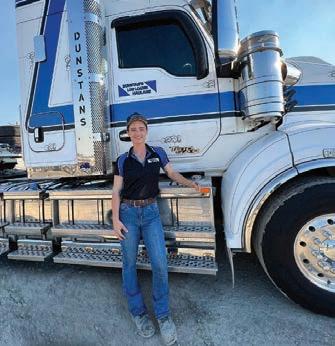
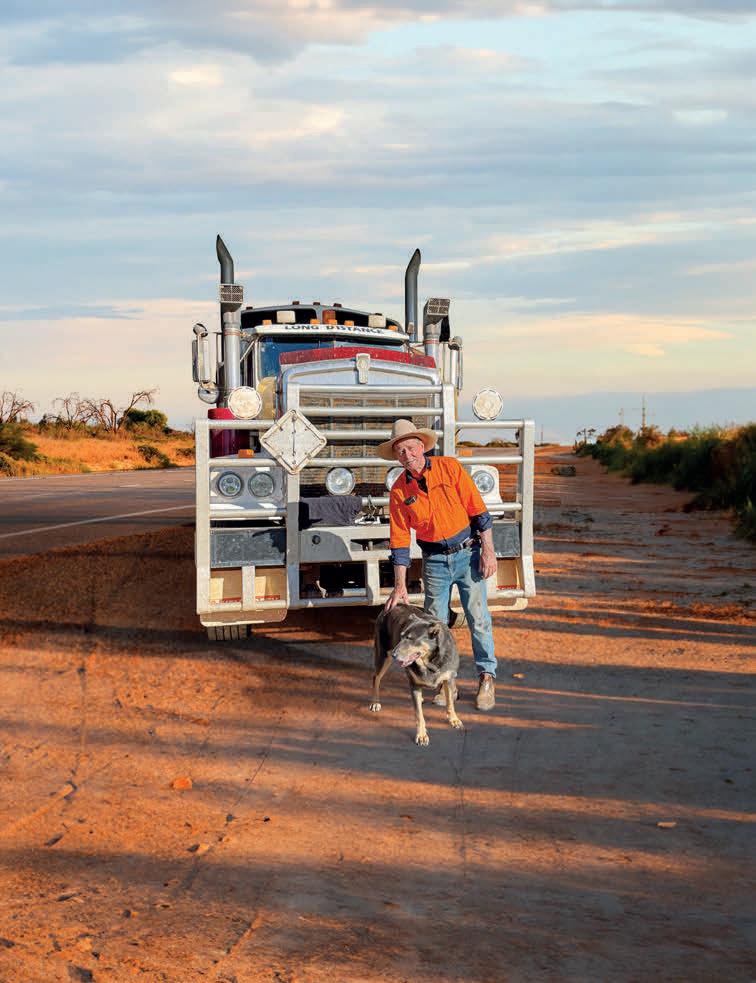







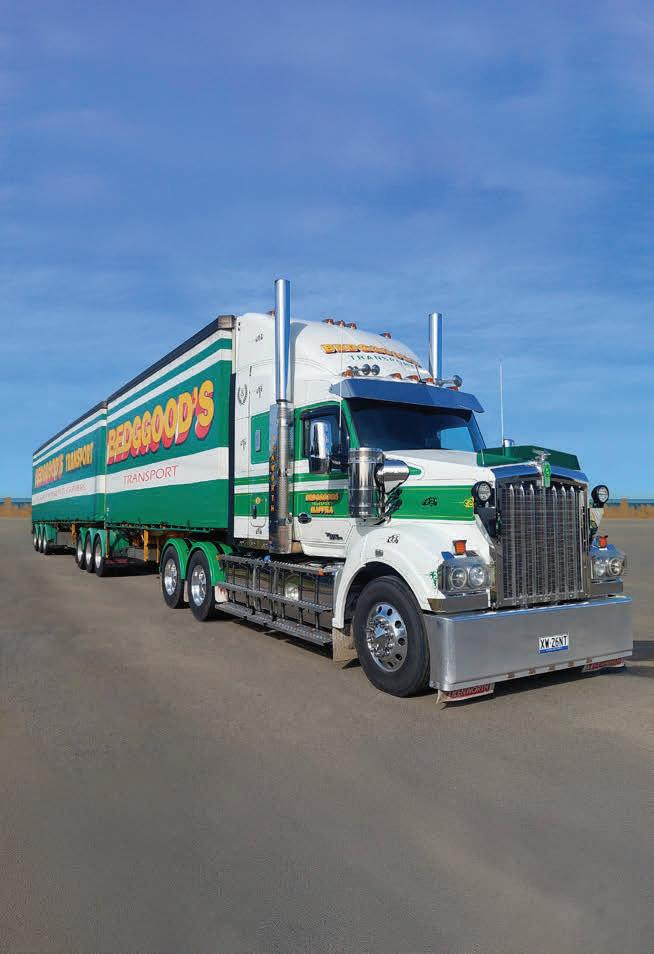


A highly successful Western Australian truck driver train ing program was recognised last month for its success in opening doors for over 1700 new drivers.
The Heavy Vehicle Driv ing Operations (HVDO) Skill Set was developed in a joint effort between industry and Central Regional TAFE (CRTAFE).
CRTAFE partnered with the Western Roads Federa tion (WRF) and the Western Australian Transport Work ers Union (TWU) to design a program that reflected re al-world requirements, not just the licensing system –in a bid to help tackle WA’s growing shortage of trained, job-ready truck drivers.
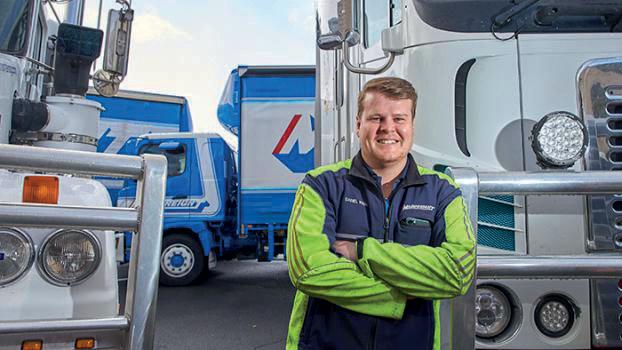
From day one, industry sat at the table. CRTAFE, WRF and TWU co-designed a program that was fast-tracked, practical, safety-focused and aligned with employer expectations. Government support through Lower Fees, Local Skills ensured the program was accessible to new entrants, career changers and regional jobseekers, the people the industry needed to help fill driver shortage gaps.
The program’s early days were spent at the Driver Risk Management facility at Perth Airport, and a smaller contingency at Tech Park in Geraldton, where students learned from trainers with a vast and diverse range of industry experienced, before
hitting the road to put their developing driving skills into practice.
Demand grew quickly and CRTAFE responded. The program expanded across regional WA, where delivery hubs were expanded into K algoorlie, Northam, Carnarvon, Moora, and Merredin. And new programs have been scheduled in for Mt Magnet and Meekatharra. This expansion was part of a deliberate strategy to bring training to where the people and jobs were. By reducing travel barriers and delivering training locally, CRTAFE and its partners strengthened
regional workforces and are creating genuine pathways into the transport sector.
The HVDO Skill Set consistently delivers outcomes that match the award’s criteria:
Innovation and Shared Problem-Solving: Co-designed with industry, continuously refined through consultation.
Increased Access: Fee-free pathways, regional delivery, flexible formats.
Industry Impact: Graduates who are licensed, confident and workplace-ready.
Shared Success: A partnership built on aligned vision,
utual benefit and measurable results – from licensing utcomes to employment
As industry needs changed, the program has adapted. The latest evolution is the de velopment of a short-course extension pathway, allowing graduates to continue their skills development beyond the initial predominantly ocused program.
This new HC/MC short course gives students a clear, supported pathway to prog ress into higher licence class es – something industry has een asking for. It builds on the foundation of the HVDO Skill Set and keeps the original goal alive: creat ing a pipeline of skilled, safe, job-ready drivers who can grow with the industry.
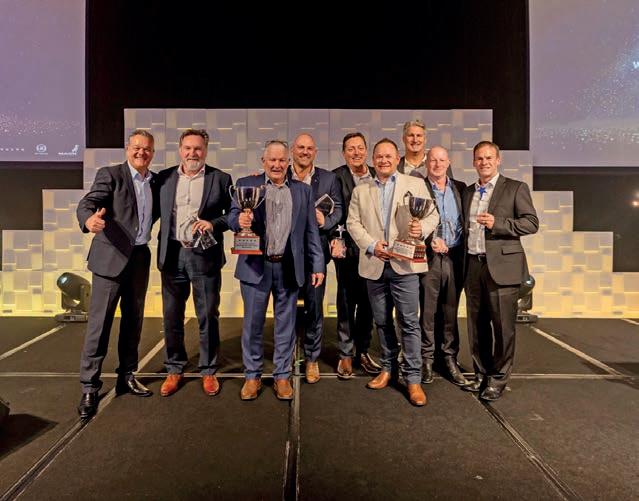
Students graduate with HR, HC or MC licences, WorkSafe high risk forklift accreditation, and essential safety training in workplace health and safety, fatigue management, load restraint and Chain of Responsibility.
The course was also formally recognised on May 6, when Central Regional TAFE (CRTAFE) took home the Power of TAFE Partnerships Award at the TAFE Directors Australia Convention. The award celebrates partnerships that genuinely shift outcomes, improving access, solving real industry problems, and delivering results that matter.
VOLVO Group Australia has celebrated dealer excellence at its recent dealer awards.
Volvo Commercial Vehicles (VCV) and CMV Truck and Bus were big winners on the night, with VCV Brisbane South taking away the award for Metro Dealer of the Year, while the award for Regional Dealer of the Year went to CMV Trucks and Bus Albury Wodonga.
“Regardless of how good our product is, at the end of every transaction is a customer,” said Martin Jerresand, Vice President, Service Market and Retail, Volvo Group Australia. “And that customer relies on our dealers and their workshops to keep their
businesses moving.
“I’m very proud of the work that our people do right across our dealer network day in and day out.”
Jerresand congratulated all those that were recognised at the awards event, for their well-deserved awards.
“Thanks to them and their teams for their hard work and dedication,” he said.
Also receiving awards on the night were, TCWA Forrestfield for Customer Satisfaction Metro, Webster Trucks for Customer Satisfaction Regional, VCV Sydney took out the Volvo Financial Services award while CMV Group took out the award for Health, Safety and Wellbeing.
•
•
•
•
•
• 12-hour shifts
• Roster is either 2/2 or 2/1 weeks (depending on the operation)
• Meals and accom provided
•
•
• Heavy vehicle licence required
• Min 2 years (recent) heavy vehicle driving experience
• Competently drive an 18-speed road ranger transmission
• Mandatory medical assessment and traffic history checks
• Commitment to health, safety and environmental practices and standards
• Knowledge and understanding of heavy vehicle maintenance
Due to company expansion, we have multiple positions available providing heavy vehicle support to CSG field operations in South West QLD. Please direct all applications and enquiries to: careers@coho-resources.com Craig Davis: 0455 538 253