




Address: 379 Docklands Drive, Docklands VIC 3008
Phone: 03 9690 8766
Email: editor@bigrigs.com.au
Web: bigrigs.com.au
Accounts: 03 9690 8766
Subscriptions: 03 9690 8766
Classifieds: 0403 626 353
Circulation and distribution
queries: 03 9690 8766 info@bigrigs.com.au
EDITOR James Graham: 0478 546 462
james.graham@primecreative.com.au
SENIOR REPORTER
Danielle Gullaci 0478 844 797
danielle.gullaci@primecreative.com.au
DESIGN Alejandro Molano – Art Director Daz Woolley – Art Director
GENERAL MANAGER
Peter Hockings: 0410 334 371 peter.hockings@primecreative.com.au
BUSINESS DEVELOPMENT
MANAGER
Treena Heit: 0403 626 353 treena.heit@primecreative.com.au
CLIENT SUCCESS MANAGER
Katharine Causer: 0423 055 787 katharine.causer@primecreative.com.au
CONTRIBUTORS
Truckin in the Topics/Spy on the Road: Alf Wilson, 0408 009 301
David Vile, Graham Harsant, Geoff Middleton, Jonathan Wallis, Tim Oakes.
Big Rigs National Road Transport Newspaper is published by Prime Creative Media. It is the largest circulated fortnightly truck publication in Australia with 22,248* copies per fortnight.
*Average circulation per issue in 2025
THE National Heavy Vehicle Regulator (NHVR) is urging all operators to review their safety practices following the prosecution of a Sydney-based earthmoving company over a fatal collision in November 2021.
The incident involved a heavy vehicle driver employed by Pincott Holdings Pty Ltd who collided with a light vehicle, tragically resulting in the death of the light vehicle driver and serious injuries to the passenger.
An investigation into the company revealed the heavy vehicle driver had suffered significant health issues for several years, requiring 24-hour oxygen support and a family member to accompany them on work trips.
On June 10 this year, after an appeals process, the finding of guilty of a Category 2 offence, and a fine of $1.2 million and $75,000 in prosecution costs,
A transport company has been convicted and fined $330,000 after a driver died following a fall from a truck’s elevated tailgate at a commercial laundry in Dandenong South in 2023.
Rodrigues Transport Pty Ltd, now in liquidation, was sentenced in the Melbourne County Court today after earlier pleading guilty to a single charge of failing to provide
was confirmed by the NSW Supreme Court. A Category 2 offence is one of the most serious under the Heavy Vehicle National Law (HVNL).
A Supervisory Intervention Order (SIO) was also imposed on the company for 12 months, with one of the requirements being that all staff and contractors employed by the company must have medical clearance or a fitness to drive assessment before operating a heavy vehicle.
NHVR Executive Director of Statutory Compliance Paul Alsbury said the company had admitted to backdating the commencement dates of its safety manuals during the investigation and had insufficient policies and procedures in place to ensure their drivers were fit for duty.
“This tragic incident is a sad reminder of what can occur when an operator does not prioritise the safety of its em-
and maintain a safe workplace.
The court heard the company was engaged to support laundry collection and delivery operations by providing vehicles and approved truck drivers.
On arrival at the Dandenong South laundry, drivers would reverse into a dock and lower the truck’s tailgate to form a bridge which was then used to

ployees, other road users and the community,” Alsbury said.
Operators must ensure their transport activities and conduct do not cause or encourage a driver of a heavy vehicle to breach the law.
“Put simply, it’s an operator’s responsibility to do everything they can to make transport actions safe, which is why it’s called the primary duty,” Als bury explained.
“In this instance, the compa ny failed to implement and en force systems and procedures to effectively manage the driv ers’ fitness for duty.
“Drivers need to be in a suit ably fit state to perform their driving tasks so that they don’t compromise or threaten their own safety and the safety of others.”
Changes to the HVNL on August 1, 2026 expand ex isting duties around fitness to drive relating to fatigue to include factors such as physi-
cal illness, injuries, stress and mental illness and apply to all drivers of heavy vehicles over 4.5 tonnes.
The new unfit to drive duty gives drivers the legal authority to stop driving if they are unfit to continue, while re-
quiring parties in the Chain of Responsibility to ensure their business practices do not cause or encourage a person to drive while unfit, and take reasonable steps to ensure drivers are fit to drive before they get behind the wheel.

load or unload linen trolleys.
In June 2023, two drivers were working in neighbouring docks when one heard a loud noise and realised the other driver had fallen approximately 1.2 metres from an elevated tailgate onto the concrete floor.
The 60-year-old man was taken to hospital but later died from his injuries.
A WorkSafe Victoria inves-
tigation found the truck involved in the incident did not have fall protection safety rails installed on the tailgate at the time.
It was reasonably practicable for Rodrigues Transport to reduce the risk of serious injury or death by installing safety rails on the truck’s tailgate and implementing a standard operating procedure that required their use and identified
the procedure for doing so, said WorkSafe Victoria.
WorkSafe Chief Health and Safety Officer Sam Jenkin said a relatively simple measure could have saved the worker’s life.
“This incident is another tragic example of workplace harm that could have been avoided with appropriate fall prevention controls in place,” Jenkin said.
PEAK industry bodies have welcomed recent multi-agency crackdowns on sham contracting, but say a legal defence is still allowing too many operators to avoid penalties.
At the centre of their concerns is the current defence provision under Section 357 of the Fair Work Act.
The legislation gives an employer the chance to avoid a penalty if they can convince a court they had objectively reasonable grounds for believing the worker was a contractor rather than an employee.
The Queensland Trucking Association is one of the peak bodies now lobbying to have the federal government erase that wriggle room still left in the law.
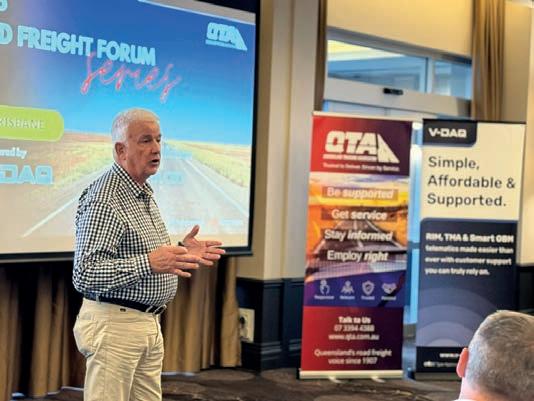
“In road transport, where drivers operate company vehicles, work under direct supervision, and follow fixed schedules, there is nothing reasonable about claiming the arrangement is anything other than employment,” said QTA CEO Gary Mahon.
“The government must go further, tightening or remov-
ing this defence where the facts clearly point to employment, and send an unambiguous message that misrepresenting employees as contractors is wage theft and will be treated accordingly.”
NatRoad, the Victorian Transport Association and the Australian Trucking Association (ATA) also joined the QTA in making submissions to the Closing the Loopholes Review along the same lines.
Both NatRoad and ATA said the amended ‘reasonably believed’ defence had done little to address sham contracting in the road freight sector. The QTA and ATA said they’d like to see a legislated, road transport-specific multi-factorial test introduced when assessing the nature of the relationship between the employer and driver. They suggested the elements of the test for a contractor could be that the driver:
• is paid for results to be achieved
• provides all or most of the equipment and materials
• is free to delegate work to other entities
• has freedom in the way the work is done
• provides services to the general public and other businesses
• is free to accept or refuse work, and
• is in a position to make a profit or loss.
The ATA also wants employers and head contractors to have a positive legal duty to actively assess and document these factors when engaging contractors, rather than only defending their decision if challenged later.
It says this assessment should be ongoing throughout the relationship and could either stand alone as a legal obligation or form part of the new “reasonable belief” defence against sham contracting penalties.
In practice, the proposal would require operators to work through and document a checklist before engaging a contractor. The industry bodies argue that would provide greater certainty, reduce accidental non-compliance and make sham contracting harder to disguise. Former Fair Work
however, did not recommend legislating the industry’s proposed road transport-specific test in her Closing the Loopholes Review.
Instead, Booth recommended the Fair Work Ombudsman develop industry-specific guidance and checklists, including for the road transport sector, to help businesses apply the existing multi-factor test and support the new “reasonable belief” defence.
Although acknowledging the sustained advocacy of Senator Glenn Sterle who has helped keep this issue on the national agenda, Mahon said more
eeds to be done before it’s too late for many businesses.
Mahon said compliant businesses are being forced to compete against operators who can cut labour costs by more than 21 per cent through unlawful ABN arrangements – a gap many say is impossible to absorb.
“This isn’t just a freight issue. It is about capability, misplaced employment and tax policy and is of national interest to the resilience of the Australian economy.”
Among the other actions he’d like to see introduced are:
• Targeted compliance cam-
THE GOVERNMENT MUST GO FURTHER, TIGHTENING OR REMOVING THIS DEFENCE WHERE THE FACTS CLEARLY POINT TO EMPLOYMENT, AND SEND AN UNAMBIGUOUS MESSAGE THAT MISREPRESENTING EMPLOYEES AS CONTRACTORS IS WAGE THEFT AND WILL BE TREATED ACCORDINGLY.”
paigns by the Australian Taxation Office
• Stronger enforcement of employee classification under the Fair Work Act
• Cross-agency data sharing between ATO, Fair Work, ACCC, ASIC, State Revenue & WorkCover authorities
• Clear, nationally publicised reporting pathways for drivers
• A coordinated national awareness campaign educating workers about unlawful A BN requirements.
POLICE say it is “nothing short of a miracle” that no one was killed after six trucks erupted into flames following a devastating crash at the Windmills Rest Area on the Hume Highway near Goulburn, NSW.
Emergency services were called to the rest area on the outskirts of Breadalbane at about 5am on Tuesday, June 30 following the multi-truck crash, which left six prime movers engulfed in fire and closed the highway for hours. Around 40 firefighters spent five hours extinguishing the flames, fuelled by the trucks’ loads, which included eight tonnes of butane cans; alcohol; and flammable resin.
FRNSW HAZMAT crews brought in a specialist drone from Sydney to analyse the
plume of smoke over the crash scene.
Acting Inspector Vladimir Mijok said police were initially confronted by a chaotic and dangerous scene. Initial reports suggested seven trucks had been involved in the incident, prompting concern that another driver may have been unaccounted for.
But Fire and Rescue NSW (FRNSW) said that early assessment was due to one of the semi-trailers being cut in half.
Police said preliminary investigations indicate one truck was entering the northbound rest area when it was struck from behind by another truck.
“Our investigation so far indicate that one truck was entering the rest area and another truck has collided with the rear of that truck, shunting it into

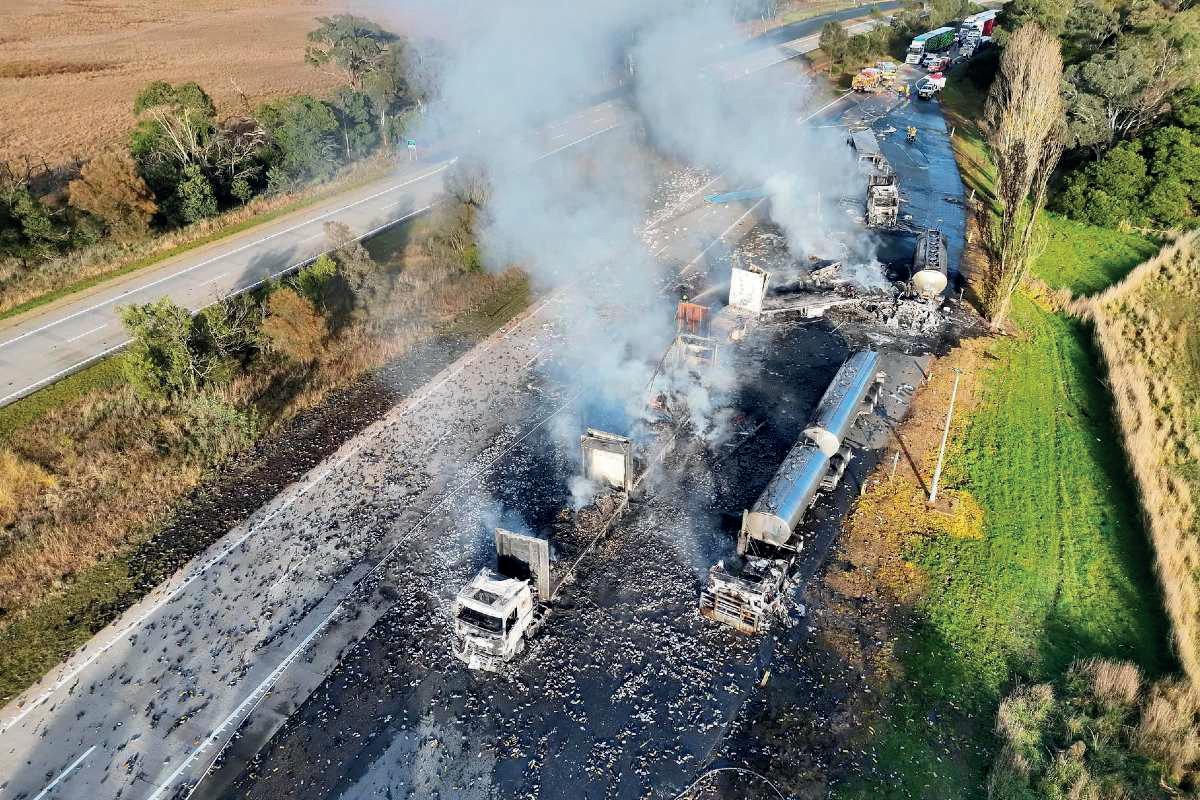
the rest area and then collid ing with the other trucks that were already in there,” Acting Inspector Vladimir Mijok told media.
Despite some media reports
Big Rigs charges had been laid at issue deadline.
Two of the drivers were taken to hospital for mandatory
testing, while police will also examine work diaries and other evidence as part of the investigation.
The National Heavy Vehicle Regulator said it is thankful
there were no reports of serious injuries and their thoughts are with everyone involved and impacted.
“New South Wales Police are the lead investigating authority, and the NHVR will provide support and advice as requested,” said a spokesperson.
“The Heavy Vehicle National Law recognises safety outcomes are influenced by a range of factors beyond individual driver behaviour, including broader supply chain practices.
“The NHVR has the power to investigate parties in the chain of responsibility, including consignors, consignees, loading managers, loaders and unloaders, as well as others who enter into contracts with drivers or parties in the chain.”


BY JAMES GRAHAM
THE National Heavy Vehicle Regulator (NHVR) has sought to reassure truck drivers worried about the new Unfit to Drive duty that comes into effect from August 1.
The regulator is adamant that it will not become a roadside medical test or be used to pull drivers off the road for minor health issues.
The guarantee comes in response to the hundreds of comments and questions Big Rigs received from readers following our previous coverage of the contentious new section of the revamped Heavy Vehi cle National Law. sues including what evidence
officers would need before taking enforcement action, whether yawning or appearing tired could be enough to be deemed unfit, how officers would distinguish between temporary illness and longterm medical conditions, what training compliance officers receive, and what appeal rights drivers would have if they believed a decision was wrong.
We grilled the NHVR further in a bid to allay your biggest concerns, but rather than answering each question individually, the NHVR provided a broader statement explaining how it expects the newances was that Authorised
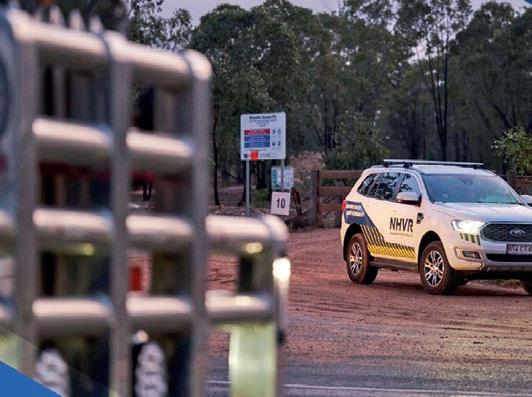

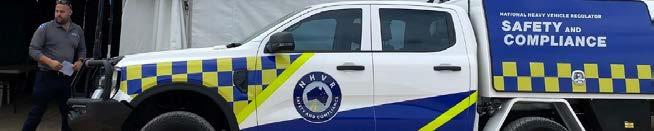
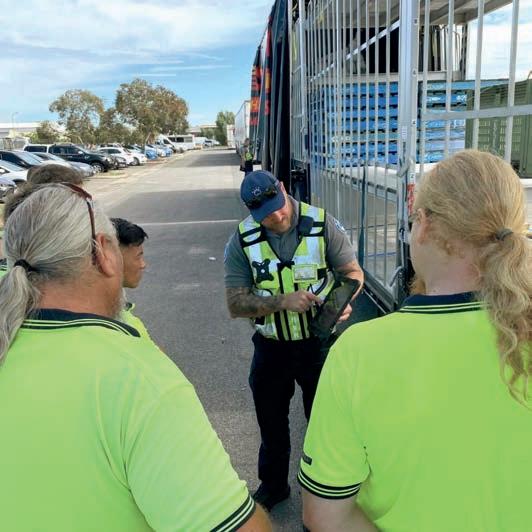
Officers will not be conducting roadside medical examinations.
“Authorised Officers will not conduct ‘medical or fitness assessments’, nor will they attempt to diagnose medical conditions, illnesses or injuries,” said an NHVR spokesperson.
They also addressed another concern repeatedly raised by drivers on social media –whether becoming frustrated during an inspection could be interpreted as being mentally unfit to drive.
The regulator said that would not be the case.
“Similarly, a driver’s disagreement, frustration or attitude during an interaction with an Authorised Officer will not indicate that they are unfit to drive or reflect their ability to safely drive a heavy vehicle.”
The NHVR also stressed that simply having a medical condition does not automatically make someone unfit to drive.
“Many drivers effectively manage medical conditions while complying with any licensing requirements administered by state and territory licensing authorities.”
The regulator said the new
duty is intended to operate as a preventative safety measure rather than an enforcement tool.
It compared the approach to the existing Impaired by fatigue duty, saying the emphasis is on helping drivers identify when they should not continue driving before a serious safety risk develops.
“The new duty empowers drivers to recognise when their health or fitness may affect their ability to drive safely and to take appropriate action, including not commencing a journey or ceasing driving if it is unsafe to continue.”
According to the NHVR, its primary focus will be education rather than enforcement.
“The NHVR’s primary focus remains on educating drivers about how their health and fitness can affect their ability to safely operate a heavy vehicle and supporting them to make informed safety decisions about whether they are fit to drive.”
However, the regulator confirmed officers will still have powers to intervene when they believe a driver presents a serious and imminent risk to public safety.
It said those situations are expected to be uncommon.
“Authorised Officers retain the ability to intervene where a driver appears to present a serious and imminent risk to public safety.
“However, this power is intended for rare and exceptional situations where the observable behaviours and surrounding circumstances indicate that allowing the driver to continue operating a heavy vehicle could pose such a risk.”
In those circumstances, an officer may direct a driver not to continue driving for a specified period under powers already available in the Heavy Vehicle National Law.
The NHVR said this should be viewed as a “final layer of safety defence” rather than the primary purpose of the new duty.
Despite the reassurances, several of the questions submitted by Big Rigs remain unanswered.
The regulator did not directly explain what observable signs officers will rely on, whether simply appearing fatigued could trigger enforcement action, what consistency safeguards exist between officers, what training officers receive specifically for the new duty, or what review process
drivers can access if they believe they have been wrongly deemed unfit to drive.
Instead, it encouraged drivers to familiarise themselves with its recently released Unfit to Drive Guidance, which outlines common signs that may indicate someone is unfit to drive, practical examples of different scenarios and advice on managing fitness to drive under the Chain of Responsibility.
The NHVR also highlighted what it sees as an important protection for drivers under the new laws.
“Importantly, the duty legally empowers drivers to refuse work where they consider themselves unfit to drive, regardless of the reason.”
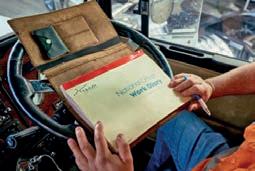
One of the other major changes for truckies in the overhauled HVNL, is the updated Written Work Diary ( WWD) requirements.
While many fines and penalties may be increasing from August 1, the National Road Freighters Association (NRFA) said the diary modifications are a big practical win for drivers. The peak body for truckies said the changes remove some of the “paperwork traps” that have caught drivers out for years.
Key changes include removing the requirement to mark the day of the week, standard hours, and recording of daily work and rest totals. They a ll now become optional, among other HVNL overhauls to the diary.
“For years, drivers have been exposed to fines for missing a tick box, not adding up totals, or making minor admin slips that had little to do with actual road safety,” the NRFA said in a social media post about the new WWD rules.
“These changes mean fines should no longer be dished out simply because a driver forgot to tick the day, forgot to tick standard hours, or did not add up daily work and rest totals once those requirements are removed.
“That is a win for drivers and it did not happen by accident. Industry fought hard during the HVNL review to make fatigue penalties more proportionate and to separate genuine safety risks from paperwork for paperwork’s sake.”
The NRFA stresses that drivers still need to record their work and rest properly.
“False diary entries, altered records, missing pages, or dishonest paperwork are still serious and the penalties for that conduct are going up.
“But there is a big difference between a driver making a minor admin mistake and someone falsifying a record. That is the point.
“The amended HVNL is finally recognising that difference.”
To further assist truckies in
coming to grips with the law changes, the NHVR has released new WWD guidance materials.
An updated WWD information sheet steps drivers, operators, schedulers and record keepers through the key changes to the work diary requirements.
The NHVR said the changes simplify the daily sheet by removing some mandatory entries that are no longer essential for demonstrating compliance, helping reduce administrative burden.
WITH changes to the Heavy Vehicle National Law (HVNL) fast approaching, the National Heavy Vehicle Regulator (NHVR) is urging industry to prepare using the extensive guidance, tools and resources available ahead of the August 1 start date.
NHVR Director of Strategic Policy Paul Daly said the final weeks before commencement was a critical opportunity for all industry stakeholders to ensure they understand the changes and remain compliant with the amended law.
“The amended HVNL represents the most significant reform to heavy vehicle regulation in over a decade, and
the NHVR has been working closely with governments and industry to ensure a smooth transition ahead of commencement,” Daly said.
“Whether you’re an operator, a driver or another party in the supply chain, there are resources available to help you understand what’s changing and what actions you may need to take before August 1.”
Daly said the priority is ensuring industry is ready for the key reforms, including the introduction of the new Heavy Vehicle Accreditation (HVA) scheme, which will progressively replace the existing National Heavy Vehicle Accreditation Scheme (NHVAS).
“Under the amended HVNL, operators participating in the HVA scheme are required to have an effective Safety Management System that meets the SMS Standard,” Daly said.
The NHVR has recently released a suite of new guidance material to support operators in developing, implementing and maintaining an SMS that meets the requirements for General Safety Accreditation (GSA) and Alternative Compliance Accreditation (ACA) under the new scheme.
The NHVR has also been hosting a series of webinars focused on SMS, supporting small operators preparing to
transition into the new accreditation scheme as well as those looking to strengthen their understanding of safety management.
A HVA Scheme Operator Guideline will also be released soon.
“The guideline explains how the HVA scheme works, the benefits of becoming accredited, and the requirements operators must meet to apply for and maintain accreditation,” Daly said.
“It’s a practical, step-by-step guide that brings together key tools and resources to support
SYDNEY
510 Victoria Street, Wetherill Park NSW 2164
Ph. 02 9756 6199, email: isri@isri.com.au, www.isri.com.au
BRISBANE
3/120 Gardens Drive, Willawong QLD 4110
continue releasing additional resources throughout July to support industry ahead of commencement.
“Our website continues to be updated with guidance, fact sheets, templates, videos and practical tools to help industry understand and implement the changes,” he said.
“For example, an updated Written Work Diary informa tion sheet and accompanying video are now available, pro viding drivers and operators with a practical walkthrough of the changes.
heavy vehicle industry to help explain what’s changing, why it matters and where to go for support.
“If you haven’t started preparing yet, now is the time.”

“The NHVR also launched


Ph. 07 3275 2044, email: sales@isribrisbane.com.au, www.isribrisbane.com.au
BRISBANE NORTH
1/259 Cullen Av, East Eagle Farm QLD 4009 Ph 1300 11 4774, email: seats@isrinb.com.au, www.isrinb.com.au
MELBOURNE
Unit 1/569 Somerville Rd, Sunshine West VIC, 3020 Ph. 03 9311 5544, email: sales@isrisunshine.com.au, www.isri.com.au
MACKAY
110 – 120 Maggiolo Drive, Paget QLD 4740 Ph. 07 4952 1844, email: admin@isrimky.com.au, www.isriseatsmackay.com.au
PERTH
408 Welshpool Rd, Welshpool WA 6106 Ph. 08 9362 6800, email: info@mmtisri.com.au, www.mmtisri.com.au
DARWIN
Mobile Sales and Service
Ph. 08 8927 0986, email: info@isridarwin.com.au, www.isridarwin.com.au
NEWCASTLE/HUNTER VALLEY
Ph 02 4932 0600,
Unit 2/13 Hinkler Ave, Rutherford NSW 2320 email: sales@hvss.com.au www.isri.com.au


THE Great Western Highway at Victoria Pass is expected to reopen by the middle of next year after the NSW Government announced a contractor to build a new bridge at Mitchell’s Causeway.
The vital freight route between Sydney and the state’s Central West has been closed since March after engineers found instability and cracking in the near 200-year-old causeway, forcing operators to make lengthy and costly detours.
Seymour-White has been selected to build the new crossing which is expected to get underway this month.
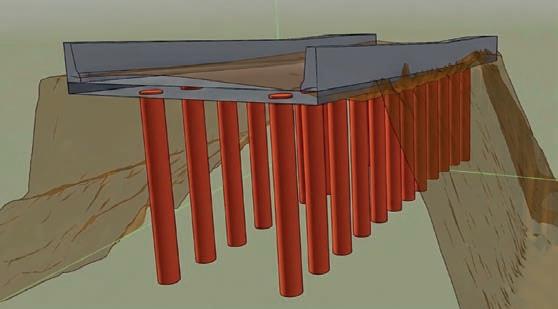
The new crossing will see a bridge structure built over the existing Mitchell’s
Causeway, supported by deep piles anchored into the stable bedrock below.
The new structure will sit above, but independently of, the convict-built causeway which will be stabilised as part of the work.
The investigations confirmed the bedrock beneath Mitchell’s Causeway remains stable, enabling a design that builds on the existing crossing, rather than replacing it entirely.
The state government said it will be capable of accommodating an additional lane in the future, something that was never possible with the existing roadway.
The initial work will see specialist engineering and construction teams on site
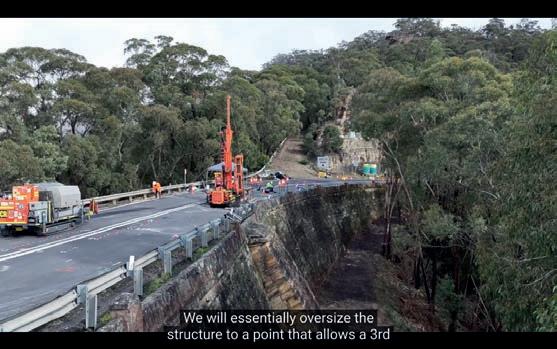
undertaking drilling, grouting and heavy piling activities to establish the deep foundations.
The NSW Government has also announced a further $20 million support package for businesses impacted by the closure.
The assistance will increase hardship grants for the worst-affected businesses in Mount Victoria, Hartley, Little Hartley and Hartley Vale from $10,000 to $25,000, while extending grants of up to $10,000 to eligible businesses in Lithgow, Oberon and Blackheath.
“I want to acknowledge how difficult the past few months have been for families, businesses, freight operators and everyone who relies on this road every day,” said NSW Minister for Roads Jenny Aitchison.
“In 109 days, we have completed thorough geotechnical testing, convened a global industry roundtable, run an accelerated procurement process with leading Australian and international engineering experts, and finalised both the contract and the solution to reopen this road.
“Today’s news (about opening mid-2027) will not be easy to hear.
“I know it will mean sitting down at the kitchen table, working out how your family moves around and what the next year looks like in practice.”
Last month CEO and Managing Director of Vellex Group of Companies Austin Vella said the major highway closure was adding a minimum of $120 to every oneway semi-trailer trip.
“This is at a minimum, and if you include the additional wear and tear on the vehicle and the driver, everything comes at a cost,” said Vella, who is also the Chairman of Road Freight New South Wales (RFNSW).
RFNSW CEO Simon O’Hara said the construction milestone was an important step forward, but freight operators travelling this detour continued to face significant financial impacts, as they are not located within postcodes eligible for a grant.
“After months of uncertainty, having a contractor appointed and a clear pathway to reopening is welcome news for everyone who relies on this vital freight corridor,” O’Hara said.
“Importantly, we want this road to reopen as soon as possible, so it’s imperative that
AN investigation into a passenger train collision with a B-double at Runcorn in Brisbane’s south last year found that not a single bystander or motorist called emergency services in the near five minutes the truck was stranded on the tracks.
The collision occurred on August 14, 2025, when Queensland Rail passenger service DB09, carrying about 300 passengers, struck the rear trailer of a stationary B-double at the Bonemill Road level crossing just before 7am. Six passengers suffered minor injuries, while the truck, train and rail infrastructure sustained substantial damage.
According to the Australian Transport Safety Bureau’s
(ATSB) final report, released late last month, CCTV analysis showed that eight motor vehicles overtook the B-double to turn right onto Beenleigh Road.
A nother seven motor vehicles passed the truck to turn left into Bonemill Road, with three pedestrians also observed in the vicinity.
The ATSB report said the truck became immobilised due to a sudden air line failure between the A-trailer and B -trailer.
The truck had earlier delivered a load of cardboard to a nearby recycling facility and was departing the site when the incident occurred.
The ATSB said the driver remained focused on try-
the contractor delivers the work to the proposed timeline - it’s extremely important that freight operators aren’t forced to withstand the detour even longer.
“Since the closure, freight operators have been forced onto lengthy detours, increasing fuel costs, driver hours, vehicle wear and tear and delivery times, with many transport businesses absorbing those costs to maintain essential supply chains.”
While the association welcomed the government’s expanded support for local businesses, he said freight operators are still carrying the financial burden of this closure every day without equivalent assistance.
R FNSW has consistently advocated for targeted support for transport operators a ffected by the prolonged closure, including raising the issue directly with the NSW Government and through recent media and stakeholder advocacy.
O’Hara said the freight industry had continued to deliver essential goods to regional communities despite the disruption and should not be overlooked as construction continues.
“Freight operators have kept regional NSW supplied throughout this closure and deserve to be recognised in the government’s support measures until this critical route reopens,” O’Hara said.
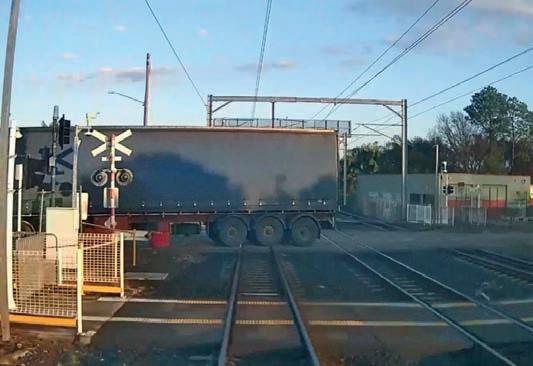
ing to move the immobilised B-double and clear the crossing. The ATSB found the truck obstructed the rail lines for four minutes and 24 seconds before the crossing
warning equipment activated. The report also found that the actions of the train driver likely reduced the severity of the collision and reinforced
the importance of motorists and witnesses knowing what action to take.
Queensland Rail’s Head of SEQ Neil Backer echoed the ATSB’s findings about the critical need to immediately report any obstruction on railway tracks, either through the signposted incident reporting number or triple zero.
“The incident reporting signage at the Runcorn level crossing includes a 24-hour emergency phone number directly connected to our Rail Management Centre, which has the ability to immediately stop rail traffic,” Backer said.
“That number is 1800 079 303. If you see an emergency on our railway, please use this number immediately to let us
know or you can call triple zero.
“This is a timely reminder of the importance of staying safe around level crossings. Please pay attention to your surroundings and follow the road rules because trains are heavy, fast, can’t stop quickly and they can’t swerve to avoid a collision.”
Queensland Rail is updating its level crossing strategy, including an independent review of its current level crossing management methodology benchmarked against other rail operators. It is also working with the National Heavy Vehicle Regulator on heavy vehicle compliance activities and communication campaigns.
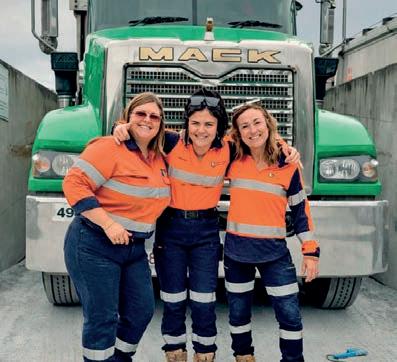
WOMEN in Trucking Australia (WiTA) has unveiled what it describes as the most comprehensive study yet into Australia’s female heavy vehicle workforce.
The 64-page WiT Report –A National Workforce Intervention Strategy 2026-2028
– released on National Female Truckies Day (July 5) – calls for sweeping reforms to recruitment, workplace culture and training as the industry grapples with chronic driver shortages.
The report is built on six years of research and the outcomes of WiTA’s three-year Foot in the Door (FitD) pilot program, which was funded by the Commonwealth and administered by the National Heavy Vehicle Regulator through its Heavy Vehicle Safety Initiative.
WiTA CEO and report au-
thor Lyndal Denny says the detailed study is a practical blueprint for reform that can help reshape recruitment practices, improve workplace culture and strengthen the long-term sustainability of Australia’s road freight workforce.
“Through targeted training programs and stakeholder support, WiTA will ensure newly licensed female drivers are equipped with the skills and qualifications necessary to succeed, ultimately strengthening the workforce and enhancing long-term industry resilience,” Denny said.
The report notes that women still make up only about two per cent of Australia’s heavy vehicle driver workforce, despite ongoing labour shortages and what it says is strong evidence that women perform well in safety, compliance and retention measures.
Among its key recommendations is the creation of structured, nationally coordinated recruitment pathways that bridge the gap between obtaining a heavy vehicle licence and securing a first driving job.
WiTA argues too many women invest in obtaining licences only to find employers reluctant to offer them their first opportunity behind the wheel.
The report also recommends greater accountability from employers through measurable diversity targets rather than relying on public statements supporting inclusion.
It says gender diversity should become part of business planning, procurement processes and leadership performance indicators instead of remaining largely symbolic.
Workplace culture also features prominently throughout
the report. WiTA calls for stronger action to eliminate bullying, harassment and discriminatory behaviour, alongside practical improvements including better personal protective equipment, amenities designed for female drivers and more inclusive workplace policies.
It points to research suggesting women generally record strong safety outcomes, lower workplace injury rates and high compliance with company procedures. Building on the success of the Foot in the Door pilot is another priority.
The national program supported 52 graduates across Australia, delivered an 80 per cent recruitment rate and helped women gain HR, HC and MC licences along with other industry qualifications. The average investment per graduate was about $4600.
WiTA is also proposing the launch of Australia’s first female heavy vehicle driver recruitment agency, DriveHer Recruitment Agency.
The report says the agency would help overcome one of the industry’s biggest problems by giving employers access to work-ready candidates while ensuring newly licensed wom en are not left trying to enter the industry alone.
“DriveHer Recruitment will coordinate end-to-end appli cant preparation, delivering targeted training, pre-employ ment readiness, licensing path ways and structured onboard ing – while actively tracking retention and providing mentoring and ongoing support throughout each driver’s early career.”
The report was released on the same day as WiTA announced its annual TOOTS


EDITOR JAMES GRAHAM
will have a legal obligation not only to avoid driving while fatigued, but also when they are unfit to drive for any reason that could affect their ability to operate a truck safely.
Across social media and through the countless emails and phone calls we’ve received, many drivers fear the new laws will be used to pull them off the road for minor ailments or subjective assessments. Some worry a bad night’s sleep, a sore back or simply looking tired could suddenly become grounds for enforcement. The NHVR has repeatedly stressed that this is not the case. That reassurance is welcome, but confidence won’t be restored overnight. Truckies deserve clarity, consistency and the confidence that sensible safety decisions won’t be punished.
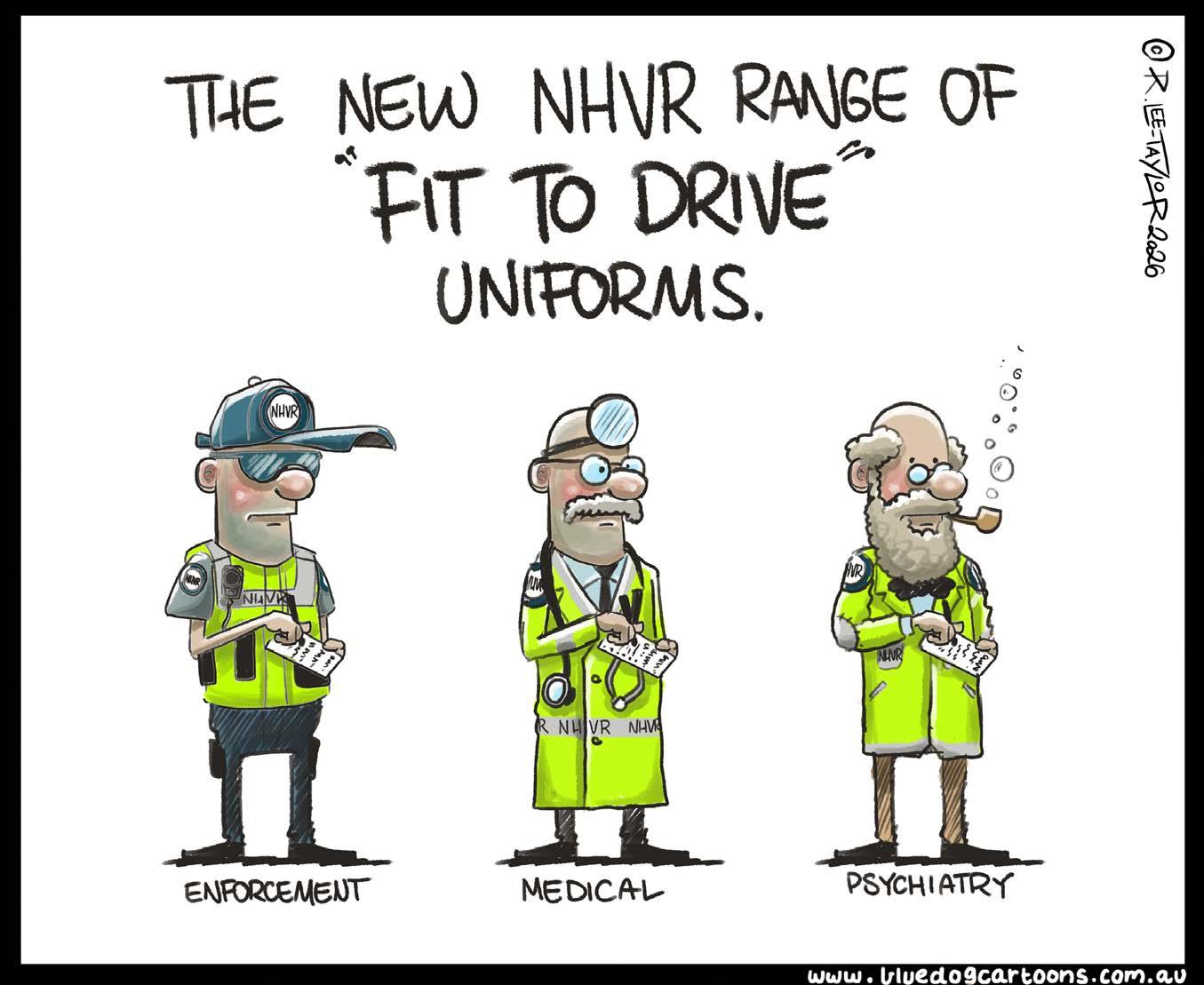
THE National Heavy Vehicle Regulator’s explainer about the new unfit to drive duty triggered a barrage of questions from concerned readers.
“So, it’s open to the interpretation of the officers then?” wondered Marion Sawyers.
“How could anyone dispute it if they do get fined? Geez nothing could go wrong there.”
Tony Bulstrode asked if the regulator was now employing doctors.
“Qualified mechanic. Structural engineer, mechanical engineer and now a qualified medical practitioner.”
Added Blake Milford: “So, if a driver yawns, just because, does this put him in the unfit for duty category.
“Because I mean I’ve been at my GP at 10am at the start of their shift, and they showed signs of fatigue by looking a little glassy-eyed and yawning.
“Were they fit to give me a diagnosis and antibiotics?”
Rod Guest reckons it’s not worth driving trucks any more.
“The good old days on the road are well and truly gone,” he wrote.
“There were no logbooks in W.A. If you gave them any arguments, or they didn’t like you they’d say, ‘You look very tired, we think you’re fatigued, so we ground you for 7 hours.”
OUR story about the Ross Transport driver being fined a total of $1300 for minor work diary errors also sparked a lively online response.
“But yet when the authorities make a mistake on their aperwork and you bring it to their attention they just rip it up and write you out a new one with the correct information,” said Niell Graham
Bert Winterswijk said the WA cops on the Nullarbor “used that rubbish” in the 1960s.
READERS were also quick to share Rod Hannifey’s concerns about the impact raising fines under the new Heavy Vehicle National Law would have on the industry.
Simon Davies concedes the raft of fine increases from August 1 has him rethinking his future behind the wheel.
“These fines are far from acceptable as a driver,” he wrote.
“Considering the wages we get paid. How about helping us instead of punishing us.
“More amenities more training and more assistance.
“These regulations have been pushed onto us with no consultation or training. We are
expected to be doctors, mental health professionals, math experts, mechanical engineers and many other professionals, as required on the road. All for maybe a piddly $35 per hour.”
Truckie Trevor Warner said the fines are only half the is sue.
“The second is the attitude of the prosecutors who think these safety rules are extreme, therefore anyone breaching the rules is grossly negligent –when, in fact, they simply have no idea that much of the time, it’s normal human behaviour.
“If that’s not the definition of double standards I don’t know what is.”
Dero Diesel said he keeps saying there’s not one person who can tell someone when they’re tired or not.
“I’ve been through times where I’ve sat on the side of the road for hours, not tired,
Added Brett Hollyman: “Doing an honest day’s work driving a truck could get you fined more than actual criminals get for burglaries, home invasions and car theft.”
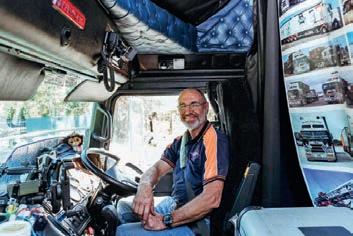
“Thankfully some magistrates are starting to understand this.”
then when my book lets me drive, I’m tired.
“Or being one hour from home where my bed, a shower and my family awaits could have easily have driven there but no, my book tells me I’m tired and need a 7-hour break.”
Stuart Howes felt that the real issue is that the inspectors have the power to caution someone for a simple mistake, but don’t.
“Why not issue a formal caution that goes online and next time you get a fine. We are not all perfect all the time. The inspectors can tell when someone is deliberately doctoring their time sheets so fine them but not the simple mistakes.
“Management can see the inspectors are working even if giving cautions but are teaching the driver at the same time so the mistake doesn’t occur next time.
“Cautions have the same effect as a fine but doesn’t raise the revenue, that’s the issue.”
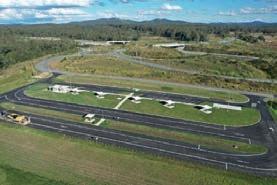
NEWS of a new 16-truck rest area opening just off the Bruce Highway near Gympie drew a mixed response from readers.
“Will be great for interstate truck drivers needing to find somewhere to park up for a break, but unfortunately like everywhere the local trucks will use it as a depot and park up,” said David Bowden.
Many others were concerned about the likely influx of caravanners and how their presence at the site would be policed.
“Enough parking for about 100 caravans that believe
they’re entitled to park in designated truck parking bays,” said Ash Barber.
Stuart Chapman also questioned the design.
“Time and time again they keep building these facilities without any knowledge of what trucks NEED. Talk to some fu&@ing truck drivers for god’s sake, before you waste money on another one.”
Others, however, gave authorities the thumbs up.
“Well done finally something constructive for us drivers,” wrote Mark Freer.
“Now hopefully the rest
of the country follows their lead. Good news story.” Derek Rose also gave it the tick of approval but reckons there needs to be another 100 built just like it throughout the state.

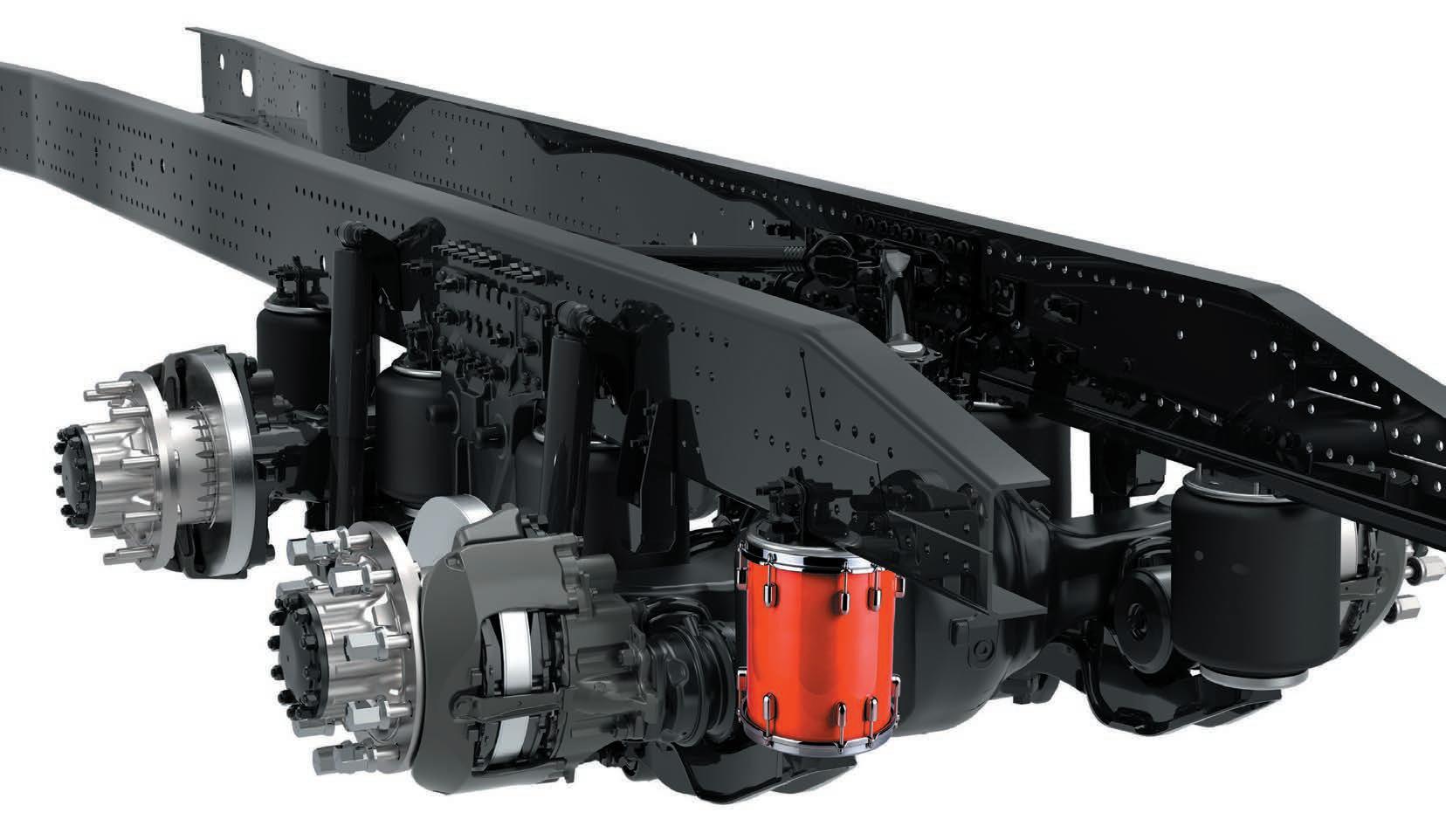
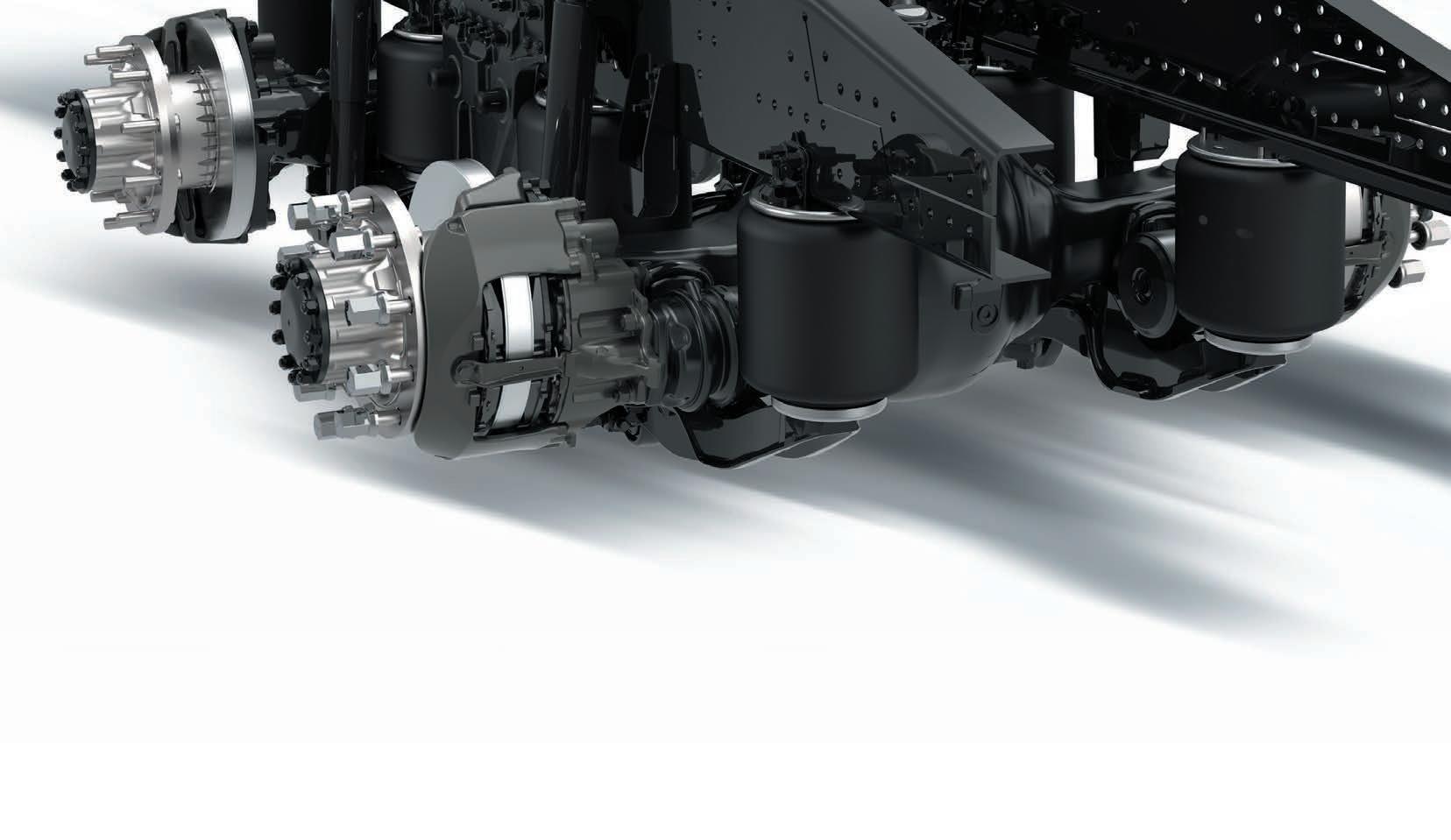
When uptime matters, every part plays an important role in your truck’s performance.
Volvo Genuine Parts are designed specifically for Volvo Trucks to support the performance, durability, and reliability your truck is engineered to deliver. With precise fitment and testing to Volvo standards, each component is developed to integrate seamlessly with your truck and help maintain consistent performance across a range of demanding applications and conditions.
When every part is in tune, your truck can keep doing its job.
Volvo Trucks. Driving Progress.

Electric truck milestone
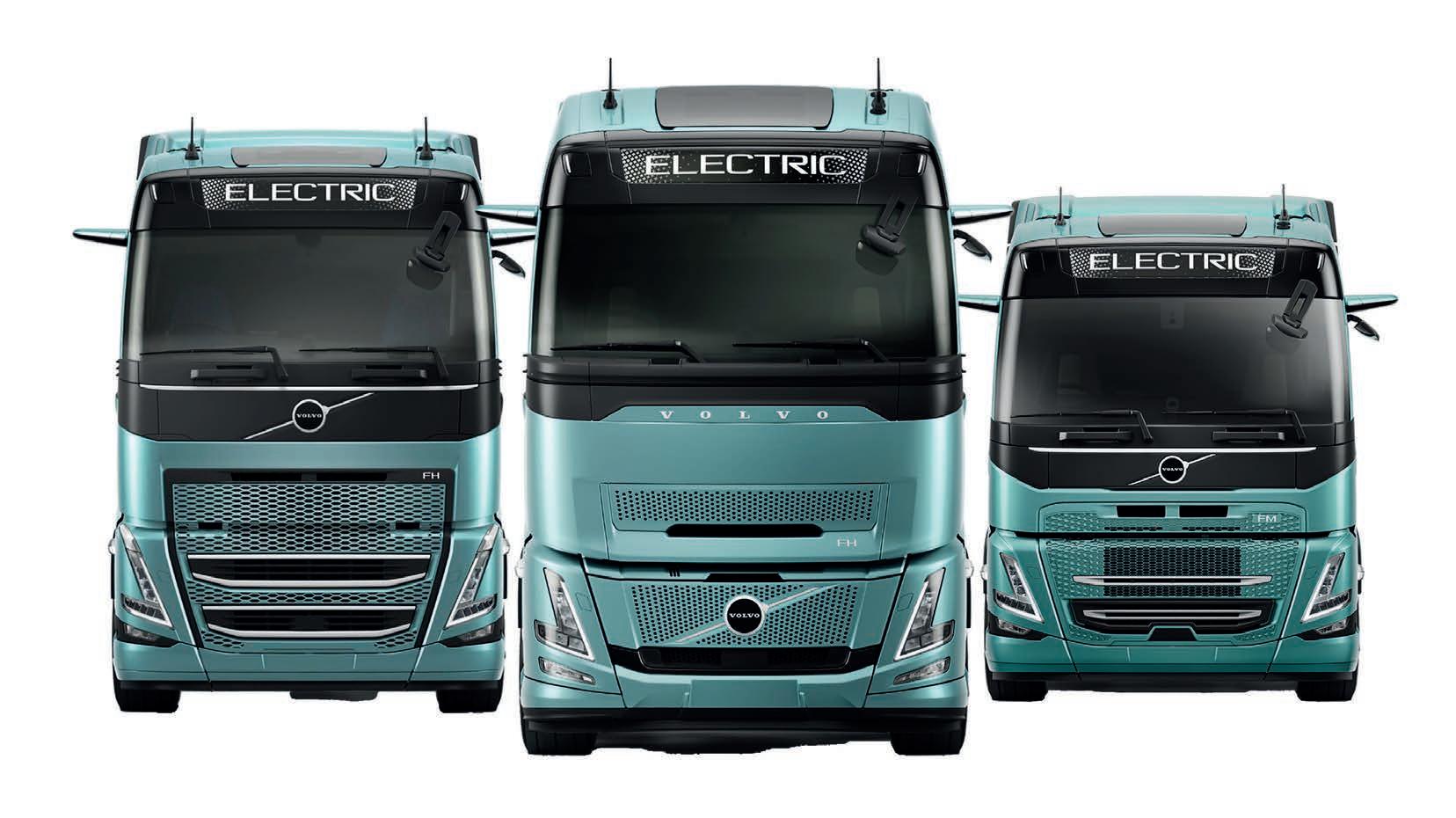
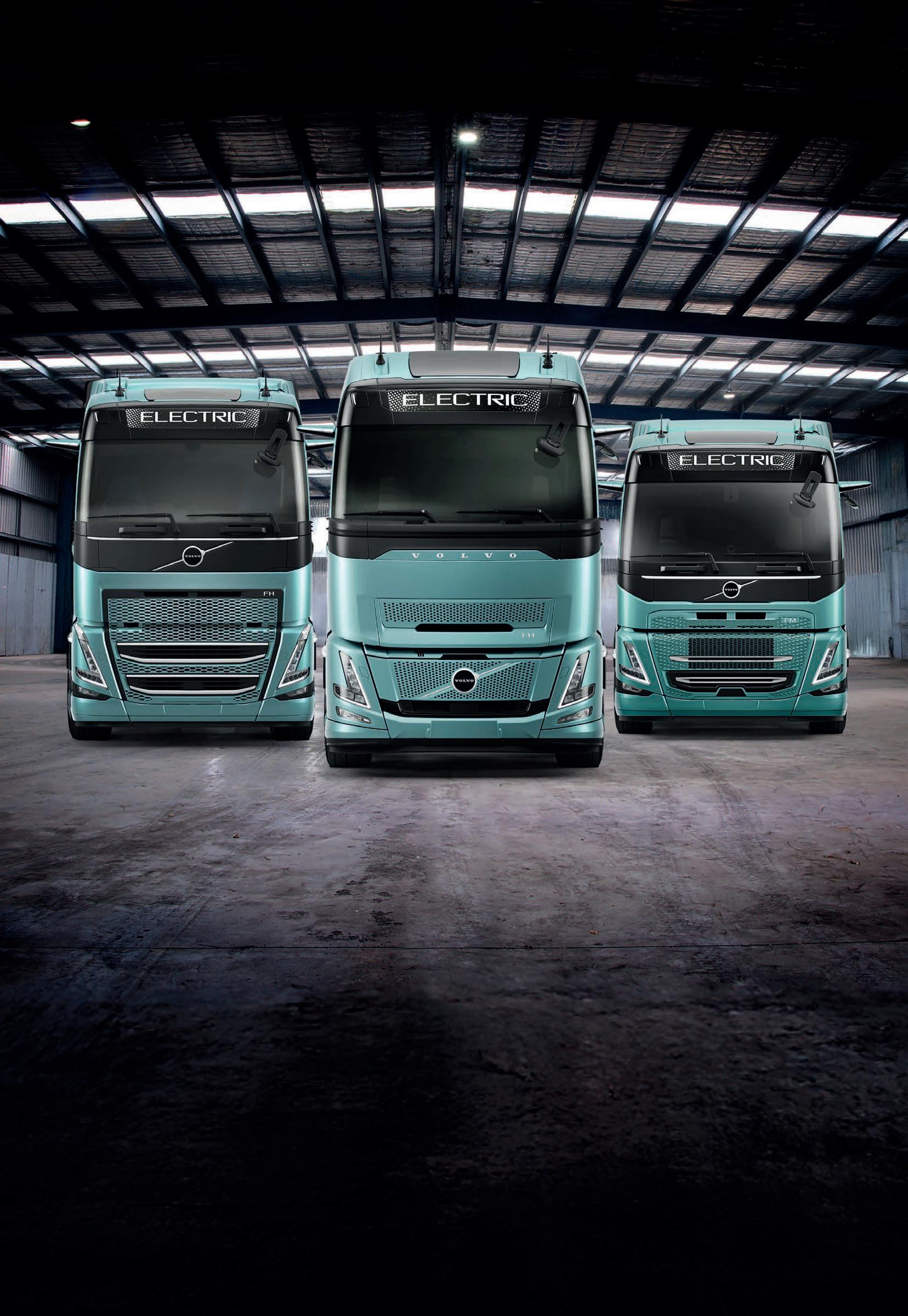
Prime Minister Prime Minister Anthony Albanese was guest of honour at Volvo HQ in Brisbane to watch the first Australian-made electric trucks roll off the Wacol production line.
Volvo Group Australia said the trucks, destined for the Linfox yard, are the first electrics manufactured in Australia by an OEM, and a milestone for the nation’s manufacturing capability, workforce and the future of zero-tailpipe emissions transport.
“This is a proud day for Volvo Trucks and for Australian manufacturing,” said Martin Merrick, President and CEO, Volvo Group Australia (VGA).
“For more than 50 years we have built Volvo trucks for Australian conditions here in Wacol, and today we have built the first electric truck ever manufactured by an OEM in this country.”
Centurion boss resigns
Centurion CEO Justin Cardaci has announced that he is to step down from his role and begin a “leadership transition” over the coming months.
Cardaci said Michael West from Centurion’s parent entity, CFC Group, will step into the role of Interim CEO, as part of that transition.
“It has been a privilege to lead the business through a period of significant growth,” said Cardaci, who was CEO of the family-owned transport empire for the last 12 years. Together, we have expanded our national footprint, strengthened our position as one of Australia’s leading transport and logistics providers, and built a business that is well positioned for the future.”
new ATA members
The Australian Trucking Association has welcomed two new association members: the National Road Freighters Association (NRFA) and the Livestock, Bulk and Rural Carriers Association (LBRCA).
The NRFA represents professional drivers, owner-drivers, independent contractors and small fleet operators across Australia.
The LBRCA represents transport operators supporting Australia’s agricultural, livestock and regional supply chains.
ATA Chair Mark Parry said the new members would enhance the ATA’s ability to represent every facet of the trucking industry.
Tougher new Qld laws
Queensland’s Crisafulli government has introduced sweeping road safety reforms that will significantly increase penalties for dangerous driving, drink and drug driving, and extreme speeding.
The proposed laws include longer licence disqualifications, tougher jail terms, doubled drug-driving penalties and immediate six-month licence suspensions for drivers caught more than 40km/h over the speed limit.
BY ALF WILSON
FOR many years truckies I have spoken to have criticised the shortage of genuine rest areas with suitable facilities between Cairns and Townsville.
The total distance between north Queensland’s two big cities is 350km and the stretch which has been the main focus of the rest area subject, is the 90km part of the Bruce Highway between Cairns and Innisfail.
Owner-operator Gary Evans, who is aged in his sixties, drives a 2003 Mack Super-Liner and regularly does the run between Cairns and Townsville.
“We definitely need more rest areas and they must have toilets, shaded area, lot of parking and bins. Also, some which have a place where we can cook would be good,” Gary said.
Gary said he had no problem with drop hole toilets saying they were better than none.
“The option without them is go into the bush for a call of nature,” he said.
Asked how many suitable new rest areas would help solve the problem, Gary answered “two”.
“The only decent ones on that route are at Babinda and another south of Tully,” he said.
Trevor Southern has driven along the Townsville to Cairns route for 40 years said more rest areas are needed.
“Really needed are some where drivers who are fatigued can have a good night’s sleep in peace. If you happen to blow a tyre it can be hard to find a suitable place to pull up at,” Trevor said.
The veteran driver said a couple of truckies stopped at the Fishery Falls rest area last week.
“They were tired and headed over the pub for a meal, but it was closed,” he said.
Trevor said that one of the two rest areas between Cardwell and Ingham had been closed due to roadworks near it.
“Another one is required on that section,” Trevor said.
For such an important and busy road transport route, the truckies claim that section of road accounts for a low percentage of the 450 rest areas in Queensland.
I travelled the route in June to check it out and saw a pull off area just south of Cairns but it only had space for one heavy vehicle.
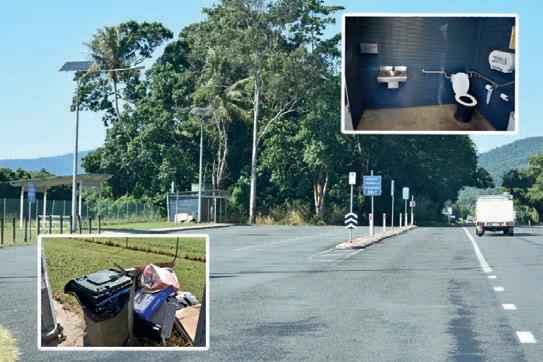
At Fishery Falls 40kms south of Cairns is the first available rest area for truckies.
It is beside the highway, has drop-hole toilets, a shaded area and limited parking for a few trucks.
However, inside the toilets was not clean when I visited and it was inhabited by mosquitoes and flies and had graffiti.
A nearby wheelie bin was overflowing with rubbish and was smelly.
One positive is that the Fishery Falls Hotel in just across the road and anybody
who purchases a drink or food there gets to use the clean toilet.
If it is during opening hours.
Just south at Deeral across from the roadhouse is a pull off area which has space for just one truck.
The Babinda Rest Area is 50km south of Cairns just off the highway and has clean facilities, including a unisex shower block. A good place to stop for truckies for a short stay.
Mirriwinni is eight kilome tres south of Babinda and has a roadhouse.
There are a couple of nar row pull off areas along the route for trucks but hardly safe for other than a short stay.
Just before Innisfail at the intersection of the Bruce and Palmerston Highways is a rest area which has toilets and shaded areas.
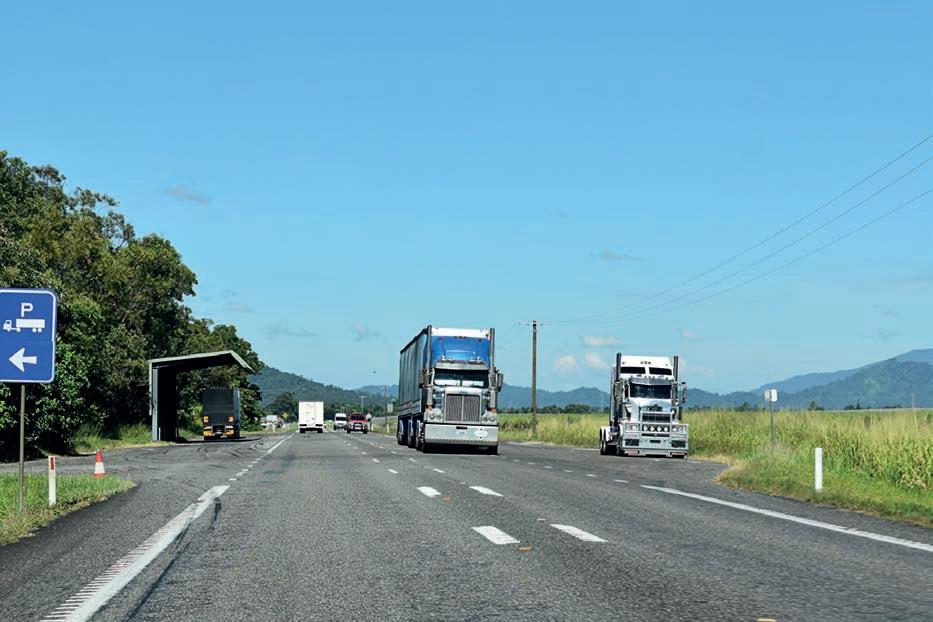
The day I was there the public toilets were closed for renovations, and four mobile dunnies were in place.
Only decent parking for rigs is behind the rest area next to a cane field.
There used to be a driver reviver there in peak times but that has long gone.
Innisfail to Cardwell
The distance from Innisfail to Tully is 50km and there is a small rest area near Liverpool Creek just off the road.
At Silkwood there is a roadhouse beside the highway and a pull off area for one truck over the road.
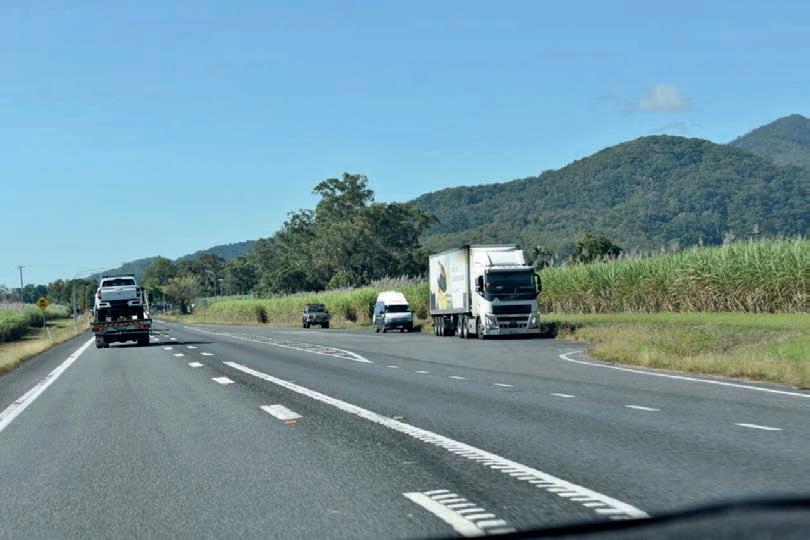
Between Silkwood and El Arish is a pull off area on both sides of the Bruce Highway.
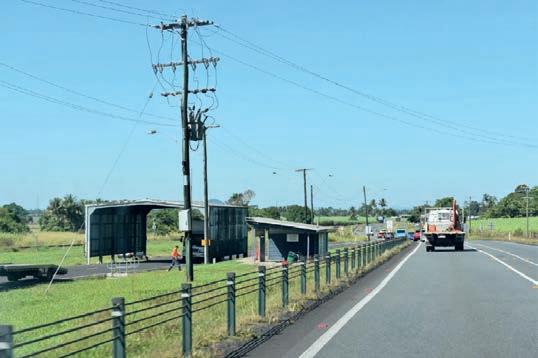
On the southbound side there is a covered area for trucks which used to be used as a Papaya fruit fly inspection station some years ago.
Lots of drivers stop there.
There is another small rest area with an old public toilet at Digger Creek but with limited parking.
Between Tully and Cardwell which is a distance of 40km the Bilyana rest area is a good place for drivers.
It has lots of parking, shaded areas, a barbecue and even a coffee van in day hours.
Cardwell to Ingham
This is a distance of 50km and there is a good rest area just south of Cardwell which has toilets and a shaded area.
The toilets were not clean the day I stopped and lots of car and van travellers use it.
Another rest area is 20km south towards the Cardwell Range but was closed when I was there because roadworks were in progress.
Some of the roadworks’ machinery was parked there.
Ingham to Townsville
This is the longest stretch with a distance of 110km, and in the main street of Ingham are public toilets and many truckies park nearby and use them.
Just south of Ingham is the Frances Creek rest area which has clean toilets, a shaded area included seats and tables.
Heading south there is rest
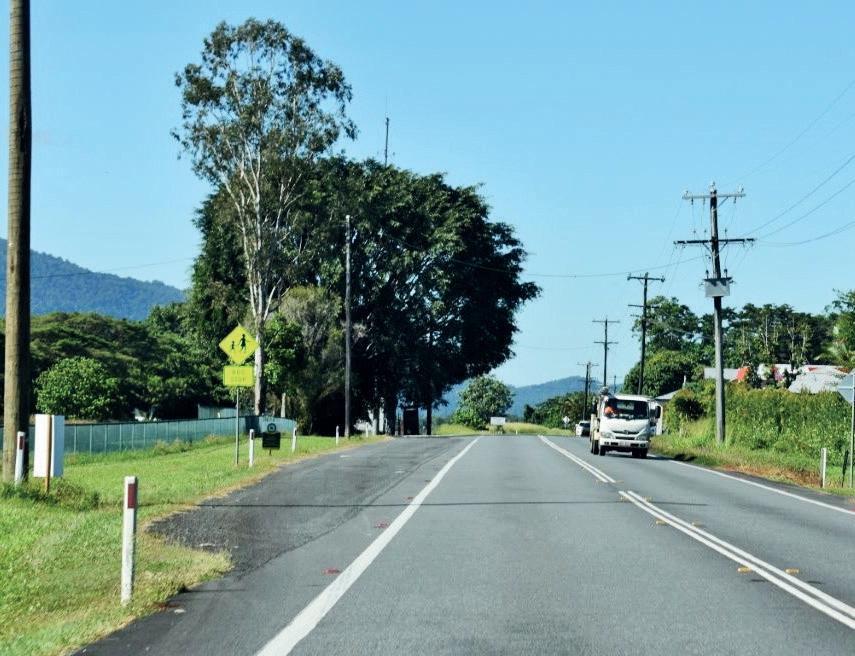
35km north of Townsville.
Known as the Christmas Creek rest area by truckies, it is relatively new and has parking, toilets and shaded areas.
Along the route there are four roadhouses – Andy’s close to Ingham, at Crystal Creek, Rollingstone and Yabulu.
The Queensland Department of Transport and Main Roads (TMR) said it is delivering priority upgrades to new and existing rest areas and stopping places as part of the Bruce Highway Targeted Safety Program.
A TMR spokesperson told Big Rigs those upgrades are being developed in consultation with key stakeholders, including the Bruce Highway Advisory Council and the heavy vehicle industry, as well as other road users, and is on track to be completed in the coming months.
The existing facilities are either managed and mantained by TMR or via agreements with local councils.



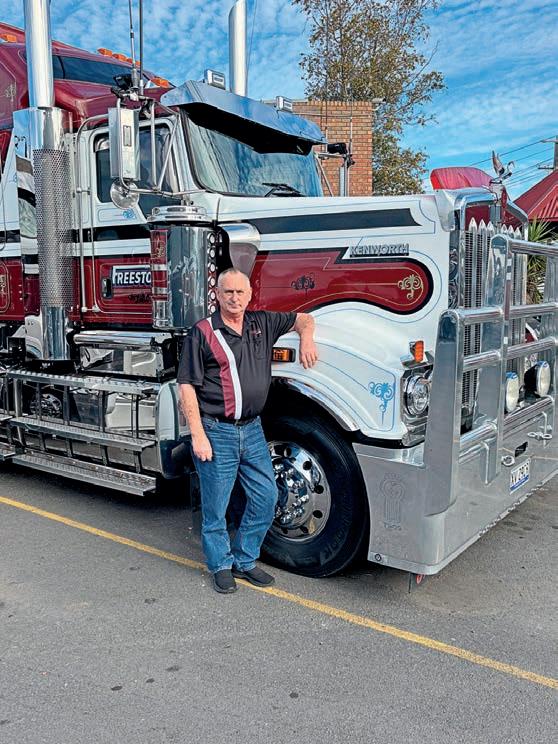
After over 45 years in the industry – first as a driver and then in management roles – Robert Watts reflects on an incredible journey.
BY DANIELLE GULLACI
ROBERT Watts, 69, admits he hadn’t planned on a career in trucking. But his introduction to the industry ignited a lifelong passion.
As he prepares to bid farewell to his 45-plus year career in trucking and looks forward to retirement, he says it’s the people he’s met along the way that he’ll miss the most.
Based in Melbourne, Robert has served as National Operations Manager at Freestone’s Transport for close to 20 years.
Asked what got him into trucking, his introduction wasn’t the usual story.
“I was an apprentice electro-plater. I got injured and while I spent time recovering in hospital, I was thinking of what to do next,” said Robert.
“Someone I knew was involved with trucks, Ian Duffield. He took me on a trip from Melbourne to Adelaide in a slimline cabover with no power steering, then got me to drive from Ballarat to Murray Bridge. We did six legs that week from Melbourne to Adelaide return. That’s what got me interested.”
Robert decided to finish his apprenticeship and then at around 22, he got his first truck driving job, running Melbourne to Brisbane and Sydney.
Two years later, at 24, he started driving for Eastoe’s Transport. “The old rule was that you had to be 25 or over to do linehaul, so I did a year on local before moving to interstate.”
Robert moved to Albury for a while and drove for companies there.
After returning from the border he drove for Glovers and then onto John Connell’s at Koo Wee Rup, Victoria, along with a few years spent at ReCar, before eventually moving to Adelaide for two years and
working as State Operations manager for Konway Express.
Moving back to Melbourne, Robert served as Konway’s National Operations Manager, then moved onto Bunker Freightlines in an operations role.
Wanting to get back on the road, Robert went to Freestone’s to work as an interstate driver – and within eight months moved into an office role.
From there it was back to Bunker Freightlines for another four years, before returning again to Freestone’s and taking on the National Operations role – a title he’s held for the past 18.5 years.
“I spent about 10 years on

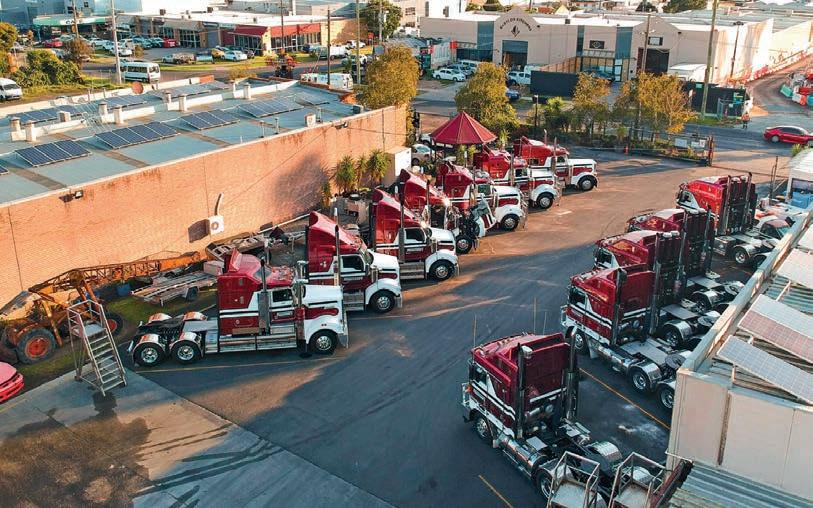
day, whatever you did, your pay was your pay, it didn’t matter if you got held up or had to divert, you still got paid the same. That’s not the case anymore, so that’s changed for the better. The driver base we have Freestone’s is second to none, they know we want safety and work with us on that. We have a one truck, one driver system.”
Asked about his decision to retire, Robert said he’s been lucky to work for a great company for all these years.
the highway and that cost me a marriage. Then I met my wife Angela and wondered if I should keep doing it – that’s when I decided I’d move into the operations side of it, and I’ve done that for about 38 years,” explained Robert.
Despite moving away from driving, Robert still made the most of opportunities to get back in the driver’s seat on occasion. “I was one of those guys who’d come home from a day in the office and if a driver hadn’t turned up, I’d jump in the truck and go to Sydney,” he said.
It has however been a short while between highway runs.
“My last trip in the truck was about a year ago. We have our own tow truck at Freestone’s, so I jumped in that and drove it from Melbourne to Brisbane to pick up a truck that had a blown motor.”
In a career that’s spanned as long as Robert’s, he’s seen a great amount of change – one of the biggest areas he mentions is compliance.
“I think it has been for the better. The industry overall has managed to make many changes with regards to compliance. Everyone talks about compliance being about safety, but in my opinion the industry is still a fair way off. Most of my team are ex-drivers, so they’ve all done the hard yards,” he said.
“I’ve embraced the telematics and electronic work diaries. To run a handwritten logbook you have to be able to count backwards, an electronic work diary takes that away so you can’t muck it up. That technology has come a long way and we’ve embraced that.
“I think the way drivers are treated has changed too. In my
“Paul and Christine Freestone are just great people to work for. They’re generous and will always reward for effort. We have a driver who has been here for over 30 years on overnight express, so that says a lot.”
Though Robert admitted the passion isn’t quite what it used to be. “I’ve just turned 69 and though I could probably keep going, it’s nice coming home after a hard day’s slog,” he said.
“My passion for the industry was the reward at the end of a hard day. When the freight was moved, you felt like you’d achieved something. There was a time when people were willing to pay for good service, but I think now there are too many businesses that are willing to undercut.”
Robert pointed to sham contracting as being one of the biggest issues the industry is currently facing. “When businesses undercut, they have to reduce their own costs to do that, and what suffers is safety. So, what happens? They stop maintaining their equipment as they should.
a journey and the industry has been good to me over the years – and that’s why I’ve stayed in it. But the industry is changing, and in my opinion with so much sham contracting, it’s not changing for the better.
“I’m at an age where I can retire, so that’s what I’ve decided to do,” added Robert, whose last day was June 24.
He’s left the industry with a lifetime of memories, and a few funny stories along the way too. As for what stands out as a highlight, he said that happened a few years ago at the Victorian Transport Association’s Australian Freight Industry Awards gala at the Palladium at Crown, Melbourne.
“I got to ride my Harley through the Palladium with Livinia Nixon on the back. We had lined up a guy who was supposed to do it, but he bailed with a few weeks to spare – so I dusted off my Harley and got to do it.
“It’s a large industry, but you’ll always bump into someone you know. What I’ll miss
is working with good people –it takes a lot of special people to keep this industry moving. I’ve met so many drivers and worked with all these great people over the years. You get around and talk about old stuff and can still have a chuckle.”
Looking ahead, Robert’s planning to set off soon on a cross-country trip with wife Angela.
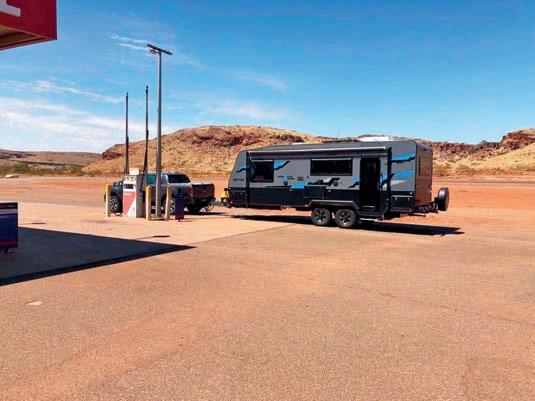
“I’ve got a 22.5ft caravan sitting in the backyard and that’s we’re going to do, travel around Australia,” he said.
“It’s funny that people think as an interstate driver you see a lot of the country, but when you drive at night, all you see are white lines, black tarmac and some trees.
“Angela and I have been around Australia once before, when I took 14 weeks of long service leave. We want to go back this time and see all the things we drove past because of time restrictions. I’m looking forward to doing it all again.”

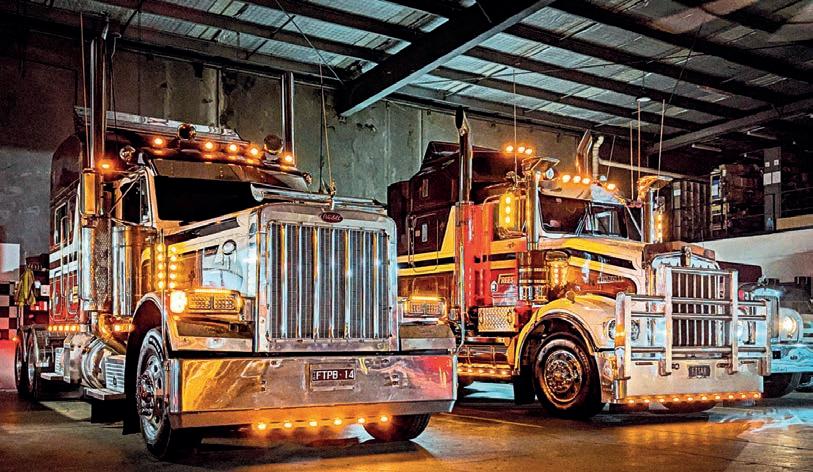






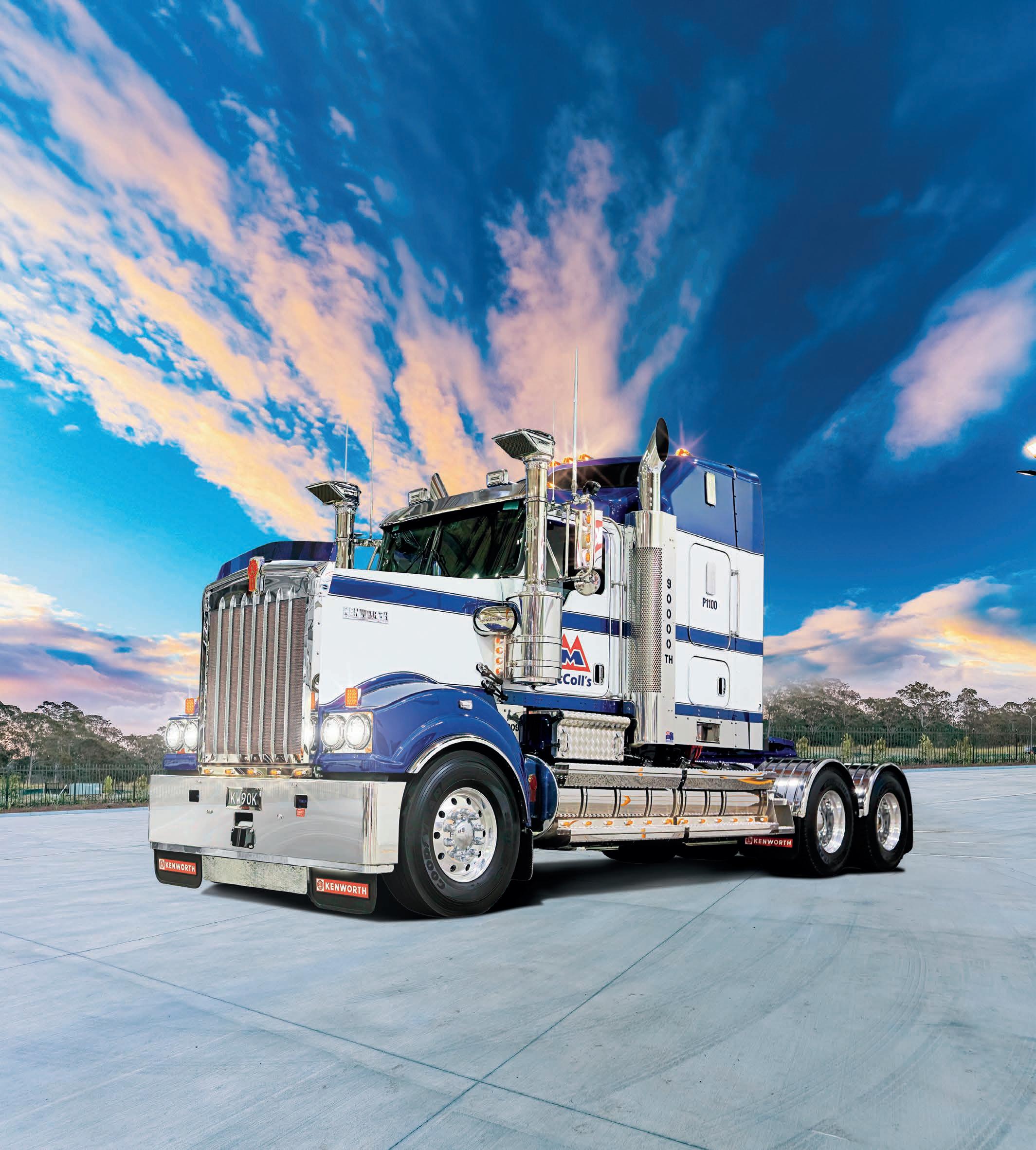
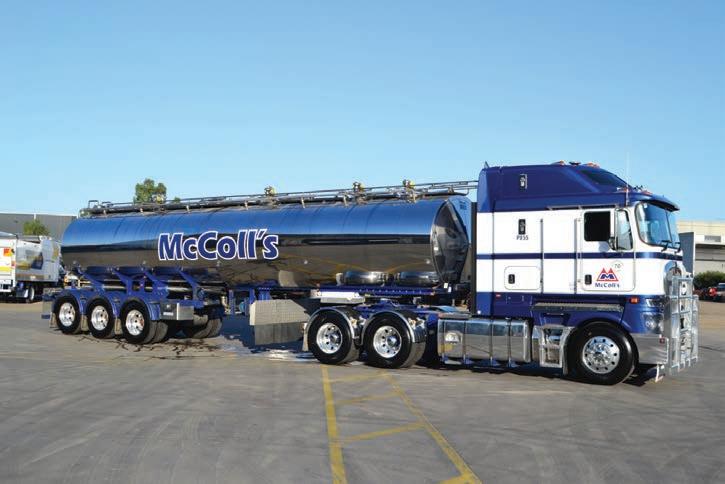
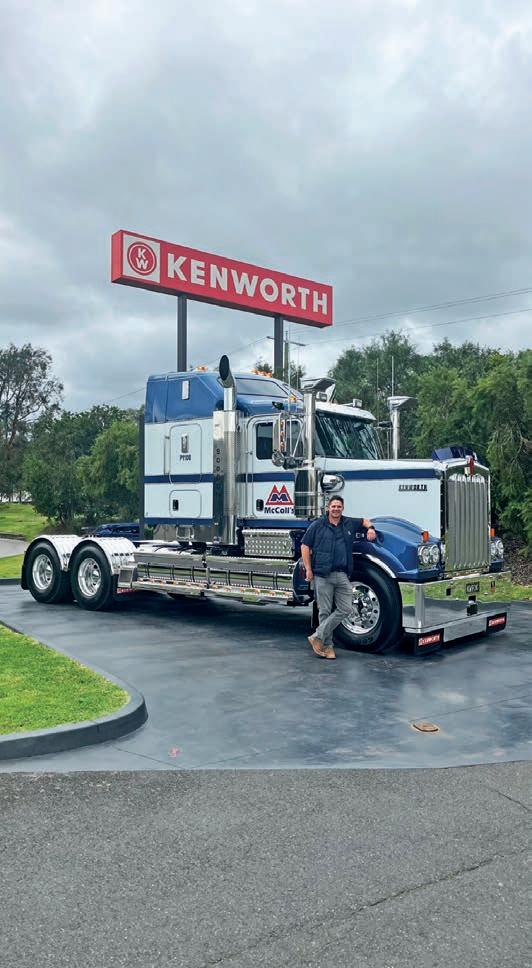
Kenworth’s 90,000th Australian-built truck has joined the McColl’s fleet, celebrating local manufacturing, enduring partnerships and the people driving both businesses forward.
BY GEOFF CROCKETT
“KW90K” and “P1100”.
Behind these two groups of letters and numbers is an Australian transport tale that captures the resilience and importance of road transport operations in this country.
It’s a story that stretches back more than 70 years to the creation of a trucking company born out of the need to transport milk in Victoria.
As that company grew and evolved into the 70s, a truck manufacturer decided it was only right that trucks be built in Australia, for Australian conditions, and set up shop in Bayswater.
Fast forward to 2026 and that truck manufacturer, Kenworth, handed over its 90,000th truck to Geelong-based bulk liquid transport specialist McColl’s Transport on an overcast Melbourne winter’s day in June.
The truck became the 1,100th to enter service for the McColl’s fleet, the 91st Kenworth in the current fleet of more than 250 prime movers, and the 398th Kenworth the company has purchased over the years.
McColl’s milestone 400th Kenworth purchase has already happened and is expected to be delivered by the end of this quarter.
For McColl’s Transport Head of Fleet Cameron Kos, the milestones represent a story about people, as much as trucks.
“Operating across regional and metropolitan areas requires more than equipment. It requires experienced people, strong standards, disciplined maintenance, and a culture built around safety, reliability and care,” Kos said.
“Every kilometre travelled reflects the commitment of our drivers, workshops, operations teams and support staff who keep our fleet moving each day.
“For this reason, McColl’s Transport is proud to have recently taken delivery of a new Kenworth T909, fleet number P1100, which also happens to be the 90,000th Kenworth truck built in Australia.
“While the milestone is significant in Australian manufacturing, for McColl’s this story is about more than a truck. It is about our people, our standards, and the values that have shaped our business since the beginning”.
Kos said the new truck was already at work on the east coast of Australia with the keys having landed in the hands of driver Chris Bouwmeester – who has spent the past decade driving for the company’s bulk chemicals division.
“Chris is the type of professional who epitomises what
THERE’S A SENSE OF PRIDE. IT’S TAKEN MCCOLL’S A LONG TIME TO GET THE 909 IN THE FLEET, WE’VE GOT A LOT OF 609S AND K200S, NEVER HAD SOMETHING AS GLORIOUS AS THIS.”
JOHN HOVEY
McColl’s values in its people: reliability, consistency, pride in the job and a genuine re spect for the equipment he operates,” Kos said.
He said Chris, who was away in North Queensland at the time this article came together, had a long con nection with the transport industry having grown up in the passenger seat of his father’s truck, a T950 Leg end that was used for heavy haulage.
“Chris looks after his truck with the kind of attention and discipline that comes from a long career,” Kos said.
“He goes about his work without fuss, delivers consis tently, and sets an example for younger drivers entering the industry.”
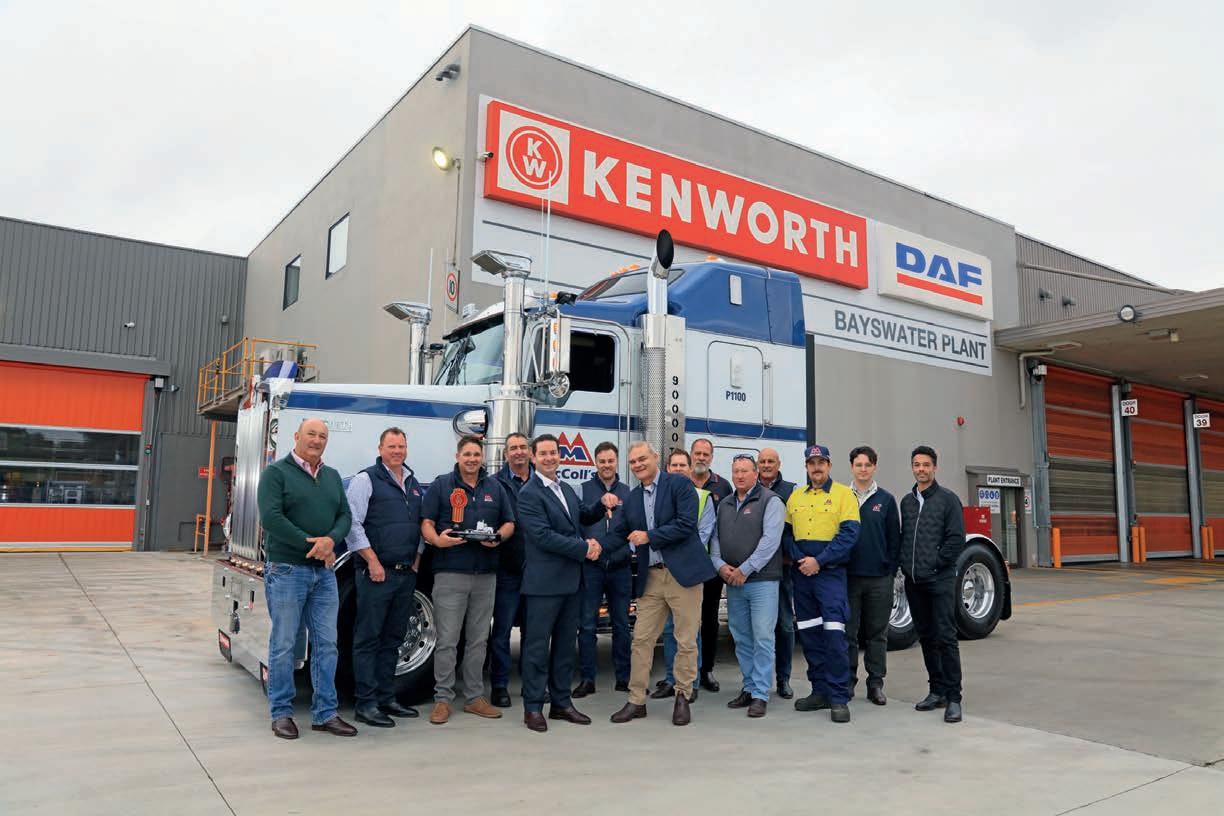
McColl’s CEO Simon Thornton and National Fleet Manager John Hovey joined PACCAR Australia Managing Director Damian Smethurst at the delivery cel ebration at Bayswater, which was also attended by the en tire staff of Kenworth avail able on the day.
Smethurst said the occa sion came more than 50 years after the delivery of the 1,000th truck to roll off the assembly line back in 1974.
“This marks a significant achievement for PACCAR in Australia, and reflects the longstanding dedication of its employees, dealers, suppliers and customers,”
Smethurst said.
“The production of the 90,000th truck is a source of immense pride for PACCAR and represents a strong commitment to the Australian transport industry.
“While this milestone underscores PACCAR’s manufacturing legacy, the company remains focused on delivering quality and value with every Australian-built Kenworth.
“Each truck is purpose-built to suit its specific application and operating environment, with meticulous attention to detail that ensures the durability, performance, and reliability expected by our customers.”
He said customers such as McColl’s Transport play an integral role in Kenworth’s success.
In a statement released on the day, PACCAR acknowledged the “critical contribution of its Australian supply partners, many of whom have supported the Bayswa-
ter facility since the plant commenced production in 1971”.
“Their ongoing commitment to quality and innovation is fundamental to Kenworth’s manufacturing operations,” the statement said.
“Together, PACCAR and its partners continue to deliver industry-leading products that support customers across Australia, New Zealand and Papua New Guinea”.
Both Thornton and Hovey also appeared in the Kenworth 90,000th Australia Made Kenworth video released to celebrate the occasion. Thornton said the fact that Kenworth had managed to keep its trucks being built here in Australia was something we should all be “very proud of”.
“Everything you’re wearing, came in a truck, everything you’ve just eaten, everything you’ve ever eaten, has been in
a truck,” he said.
He said McColl’s had been buying Kenworths since the 1990s and it was an honour to be able to purchase the 90,000th truck to come off the line.
For Hovey, the extra kicker for the 90,000th joining the fleet is the step up to the T909 model, the first of its kind to has already joined the McCo
Kenworth production milestones:
1974 – 1,000th – K125CR – Switzers Transport Services
1988 – 10,000th – T600 – Cleveland Freightlines
2001 – 20,000th – T604 - K & P Douglas Transport
2005 – 30,000th – T650 - C.M Fraser & Sons
2009 – 40,000th - T608 - Kalari
2013 – 50,000th - K200 – Rodney’s Transport Service
2018 – 60,000th - T610SAR - Wickham Freight Lines
2021 – 70,000th - T659 – Brown and Hurley
2023 – 80,000th - T610SAR - Booth Transport
2026 – 90,000th - T909 - McColl’s Transport
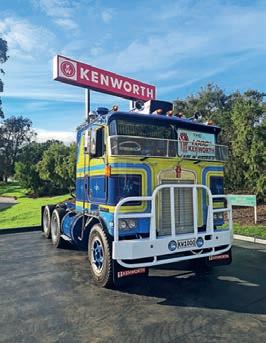
ll’s fleet and is doing exactlying freight across Australia’s In many ways, that is the most fitting outcome of all: a truck built by Australians, for Australian conditions, put straight to work by the people who keep the country moving
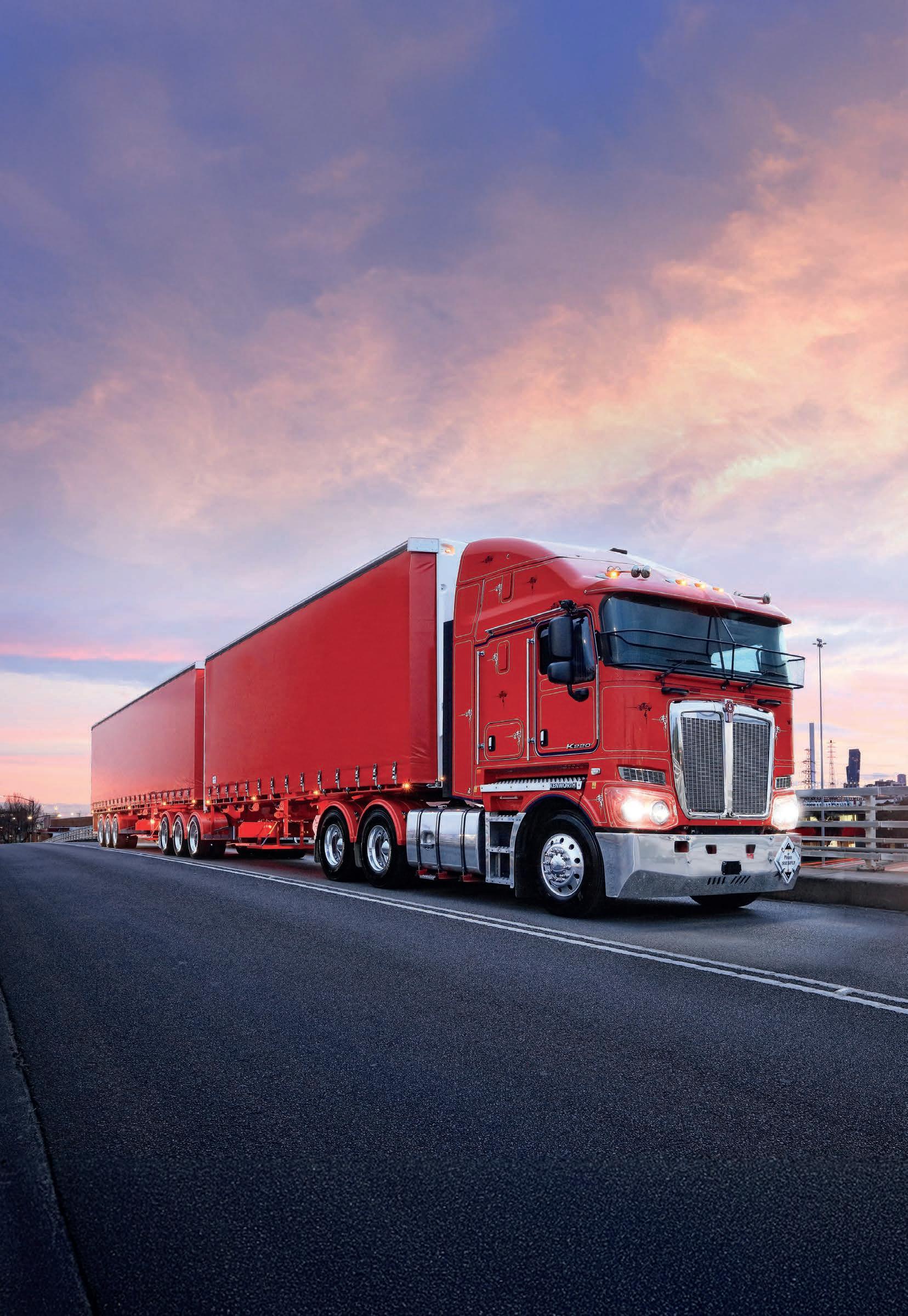

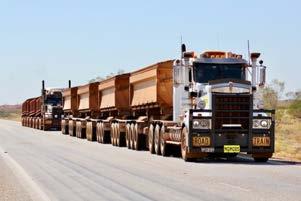



amount of diesel every day.
Just out of Midland where the old Roe Highway and Great Eastern Highway met before the overpass went in, a loaded road train heading north had a beautiful downhill run toward the lights, then – if the timing was wrong – a complete stop before dragging itself back uphill again.
Catch the red light and you’d pay for it. Literally. A fully loaded combination could easily use another five litres of fuel just getting moving again and rebuilding speed up the rise. Multiply that by the number of trucks crossing there every day and the waste becomes enormous.
When Main Roads built the overpass, they didn’t just improve traffic flow, they preserved the holy grail of fuel-efficient driving – Momentum.
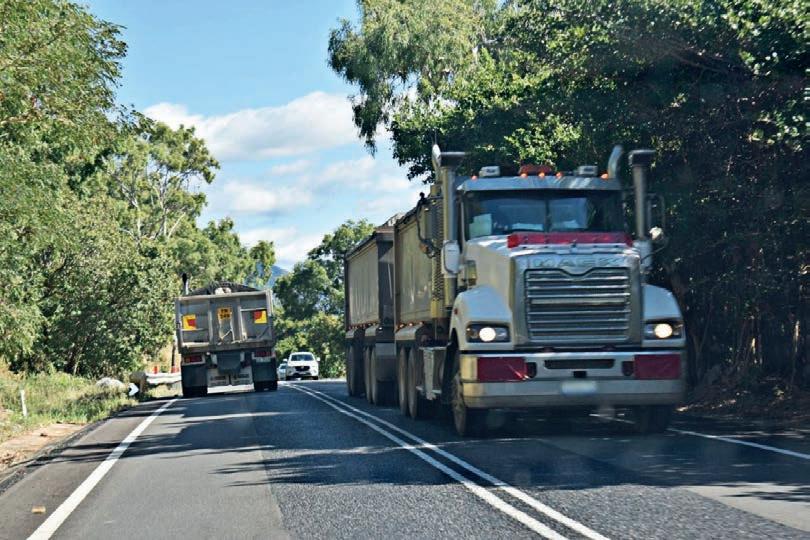
That’s fairly normal. But the really good operators – the ones who consistently deliver strong fuel numbers and low component wear rates – are often looking 12 to 15 seconds ahead.
That changes everything. Instead of reacting to traffic lights, roundabouts and slowing vehicles, they predict them. They ease off early. They slow down slower. They leave themselves options. Looking further down the road means fewer harsh brake applications, fewer aggressive throttle inputs and fewer complete stops.
Pick a route you drive regularly and count the number of times you stop. Next trip, see if your anticipation can reduce that number. Keep working at it! No matter what happens in front and around you, read the road further ahead, slow down sooner and keep rolling.
Most drivers think fuel economy is mainly about engines, gearboxes or aerodynamics. Those things matter, absolutely.
SMOOTH DRIVING REDUCES STRESS. THE TRUCK SETTLES DOWN. THE CABIN SETTLES DOWN. THE DRIVER SETTLES DOWN. AND INTERESTINGLY, AVERAGE TRIP TIMES OFTEN BARELY CHANGE.
But the biggest fuel user in any truck is acceleration. Every time you stop a loaded truck, all the energy used to get that mass rolling disappears into heat through the brakes.
Think of this: a 20-tonne truck travelling at 60km/h contains about the same energy as dropping it off a five-storey building. That’s the kind of energy you throw away every time you brake harder than necessary. So . . .
Momentum Tip #1 – Anticipation
Don’t let traffic decide when you use the brakes. You decide. Braking is almost 100

per cent driver controlled. You can see further, broader and more clearly than cameras and radar. Your route k nowledge understands traffic light sequences, bus stops and roundabouts.
The biggest influence on momentum is anticipation, and you are better at that than your truck, no matter what tech it has on board.
The best fuel-efficient drivers are not the slowest drivers. They’re usually the smoothest. They preserve momentum wherever they safely can.
Momentum Tip #2 –
Never accelerate uphill
Of course, there are times when you must but keep this tip as an (almost) unbreakable rule and you’ll save dozens of litres of wasted fuel.
Forget about showing the truck behind you how much more power you have! Years ago, Volvo’s driver trainer Paul Munro and I left Eastern Creek for a fuel economy drive to Kempsey and return. I drove north – “normally,” and Paul drove south – fuel efficiently. He used 13 per cent less fuel and took 20 minutes longer for the trip. It was all anticipation and hill management.
Knowing the road and what was on the other side of the hill allowed him to be patient, to let speed bleed away near the top of a rise and allow gravity to regain that speed on the downhill run. Blindly trying to keep up speed going uphill is for mugs and drivers who don’t have to personally pay the fuel bill.
And every stop you avoid saves fuel twice — once because you didn’t waste energy braking, and again because you didn’t have to spend fuel accelerating back to cruising speed.
Paul Munro gave me a Momentum challenge in Sydney once. We drove a 60-tonne Volvo B-double rig from Homebush toward the beginning of the M1 near Hornsby in peak-hour traffic.
We didn’t quite meet the challenge. We stopped twice when traffic completely gridlocked. But everywhere else –traffic lights, congestion, bus stops and merging traffic – we kept rolling. Slowly sometimes – but rolling.
That preserved momentum, reduced fuel burn and minimised clutch work at the same time. So . . .
A driver interrupted me during a seminar once and said, “Saving the clutch doesn’t matter for us anymore. All our trucks are automatic.” I knew his truck wasn’t auto, it had an automated manual. So, I explained it to him.
“Your truck actually has a constant mesh manual gearbox with a clutch. But it’s also got an electronic clutch control mechanism that handles the gear changes for you, plus a bundle of software that makes decisions about the best gear to be in for the torque you require.”
He didn’t realise that there was still clutch wear going on in the driveline and he could reduce that wear with careful management.
That’s why when you’re stopped in traffic or at an intersection, it’s always best to flick an AMT into neutral rather than just leaving it in
higher than it is at idle.
That’s something many operators now understand very clearly.
Momentum-focused driving also reduces fatigue. Drivers who constantly accelerate hard, brake hard and react late work much harder menoften barely change. Driving efficiently does not necessarily mean driving slowly. It means avoiding waste. The road gives drivers free energy all the time –downhill runs, rolling terrain, gaps in traffic flow and natural vehicle inertia.
speed adaptation and throttle control – including why dropping cruising speed by just 5km/h can save thousands of litres of diesel a year while barely affecting trip times at all.
Stay safe.


Big Rigs is invited to the Australian Automotive Research Centre at Anglesea to put the new 4x4 range through its paces.
BY GRAHAM HARSANT
WHEN our Nick turned 18 Rita and I bought him a car, a little old Toyota Starlet. Not the most masculine vehicle it nevertheless came at the right price and was reliable. Nick wanted something more though.
The logging tracks around Healesville and his mates’ ownership of various 4WD’s was too much to resist.
So, he went out and bought a Holden Jackaroo – petrol powered, so it drank like a fish, followed in quick succession by a Patrol and a couple of Pajeros.
I do remember him coming home one day and proudly showing us the damage where he’d laid one of them into the side of an embankment.
Champagne taste and a beer budget meant all these cars were dirt cheap with mechanicals that matched their price. Reliability was not a thing.
Which is a nice segue into this story. I’ve been invited to the Australian Automotive Research Centre (AARC) at Anglesea to play with a bunch of 4WDs where reliability is the mantra for this company’s success.
Yes, it’s Isuzu. For the first time I’m about to experience what Nick fell in love with ten years earlier.
Over the past 14 months I’ve been on numerous Isuzu drives as they rolled out their new from-top-to-bottom MY25 range of trucks and the 4WD segment, recognisable by the ‘S’ in the various nameplates completes the line-up.
Isuzu has been in the 4WD market since 1982, some 15 years before our Nick was born. That truck was the JCS 420 which quickly became accepted in fire and emergency service applications (there is in fact one in Tasmania which has only just been decommissioned).
The JCS was replaced by the FTS in 1987, followed by the narrower cabin FSS in 1989. The NPS was actually developed in Australia.
In Japan the typical 4x4 platform was used for slippery roads, not necessarily going off road as such it didn’t have mas-
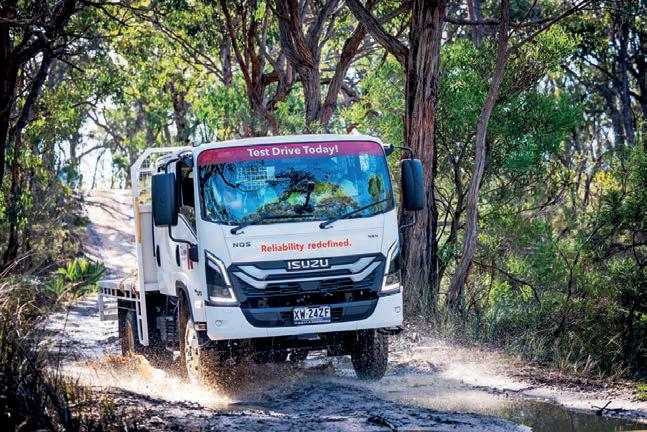
sive ground clearance or a low range transfer case.
Isuzu Aust wanted something that was more off-road focused with those features and larger wheels and higher ride. And so the NPS was developed for the Australian market.
In 2010, the NLS - now morphed into the NMS - was released and gained a good following by councils and the like. In 2012 the demand for ease of driving the bigger 4x4s saw the introduction of the Alison auto ‘box
In 2018 a 5-speed AMT became available in the NPS alongside the 5-speed manual. Today that has been replaced by Isuzu’s 9-speed dual clutch transmission which is an absolute game-changer on road – and as I was soon to discover, off-road as well. For those who want to cog change themselves, the 5-speed is now a six.
A s with the rest of the company’s products, Isuzu’s 4x4s have new cab and interior design and importantly picked up many of the safety features from the road going range. EBS has been introduced as has ESC which switches off in low-range where you neither want nor need it.
As mentioned, Fire and Emergency Services along with mining are a focal point for many of these trucks and Isuzu has, for example, increased the GVM of the NQS from 7.5 to 8 tonnes - the bottom line here being the ability to carry an extra 400kg of water. Similarly, the FTS’s GVM has increased to 15 tonnes with a 5.5 tonne steer axle.
There are new, more pow-
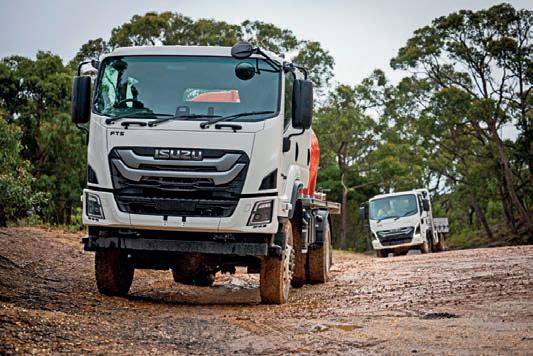
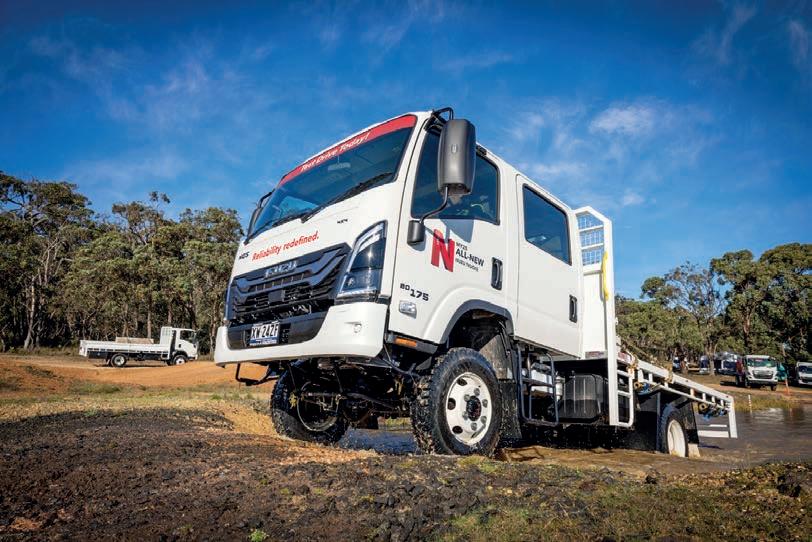
erful and frugal engines, and an engine compression brake which allows the tucks to crawl downhill. The chassis are slightly wider with no rivets on top of the phalange; stronger and easier for the bodybuilders.
On this day we have five trucks available to play with. There’s a 6-speed manual NPS, an NMS Traypack and Crew Cab with the 9-speed auto, an NQS – also 9-speed auto – and the big boy of this bunch, an FTS replete with water tank and the Allison auto (which the emergency services love).
While aimed primarily at the emergency services, Isuzu discovered during Covid that the recreational area took an interest in some of their products and trucks such as the NPS and NMS are now tapping into that market as well.
Simon Humphries is the Head of Product Management and Commercial Services Chief Engineer at Isuzu. He pointed out that many Emergency Services volunteers are not trained in 4x4 driving techniques.
“Our aim with this range is to have a truck beneath you that just gets on with the job,” he said. “If the truck ‘sits in the background’ and allows the driver to concentrate on his surroundings, be it fire or flood then we’ve done our job.”
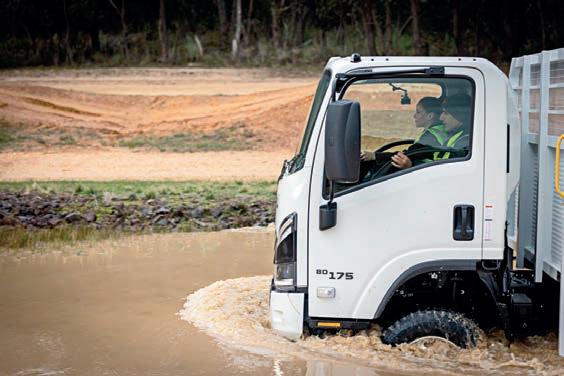
The AARC track offers three distinct drives, all heavily rutted: the first has lots of grass, lumps, bumps moguls and a water bath, together with short inclines and declines.
The second area is proba-
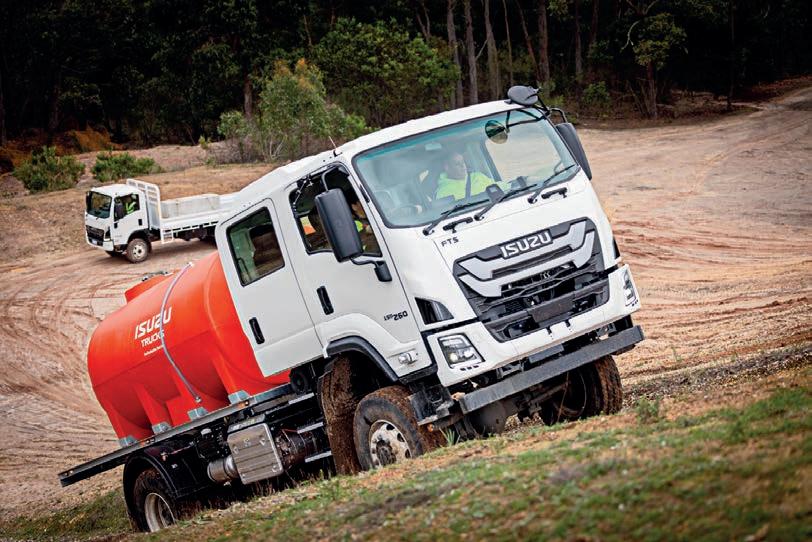
emergency services would go with bush tracks, potholes, water, sand and rocks.
The third area is the gradients where there are half a dozen different level inclines and declines of up to 60 per cent so we can experience the capability going up these hills and the exhaust brake working as we go down.
Although this day is fine it had belted down a couple of days before so there was mud and ruts aplenty. I’m in the NMS Traypack, 9-speed auto first up. Over the moguls, decent sized boulders, down a steep, deeply rutted and muddy decline and then up a matching incline.
Simon’s words spring to mind. I’m so busy concentrating on traversing this terrain that I don’t want to worry about the truck. And I don’t have to. In low range and a low gear, I try to change up manually and the gearbox won’t let me
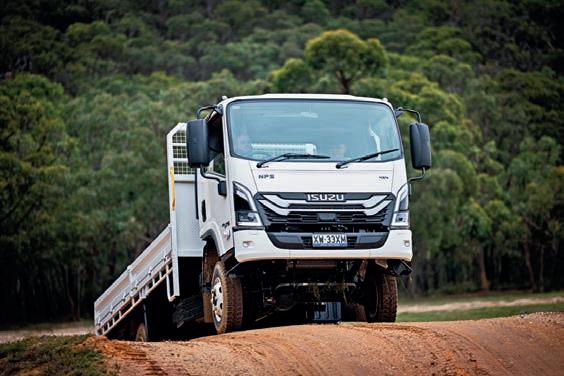
tions are not suited to change so it doesn’t. I did that section again in a higher gear and the ‘box was right. It’s a lot smarter than me!
This 9-speed gearbox – as I’ve experienced in the on-road versions – is a game changer with a gear to suit power vs. torque right through the rev band. Simply brilliant!
Around the same section in the much bigger and heavier FTS with its Alison auto and it’s more of the same, the truck just gets on with the job of moving you from A to B, letting you concentrate on the surrounding terrain.
And so, it continues throughout the day. In the manual NPS, first and second would get you up a cliff face. You recreational 4WD drivers would love this.
We finish up at Area 3 with its various gradients. By this stage I’m not sure which model I’m in to be honest; we’ve
40 per cent gradient and shift into second. Up and over easypeasy. Could’ve done it in third I reckon, so I give it a go and the truck makes light work of the job.
We spend the rest of our time playing in different trucks on different grades as happy as kids in a sandpit, with our hosts eventually having to drag us away.
The bottom line is that all these Isuzu 4x4s are superbly capable off-road and under any conditions. It’s little wonder that they are so popular with the emergency services, mining and construction and more latterly with the recreational 4WD set.
As always when I test drive Isuzu product there is no reason to doubt their ‘Reliability is Everything’ tag. Every model on this day did everything ultra-reliably, allowing me to concentrate on the job at hand. Now I know why Nick loved






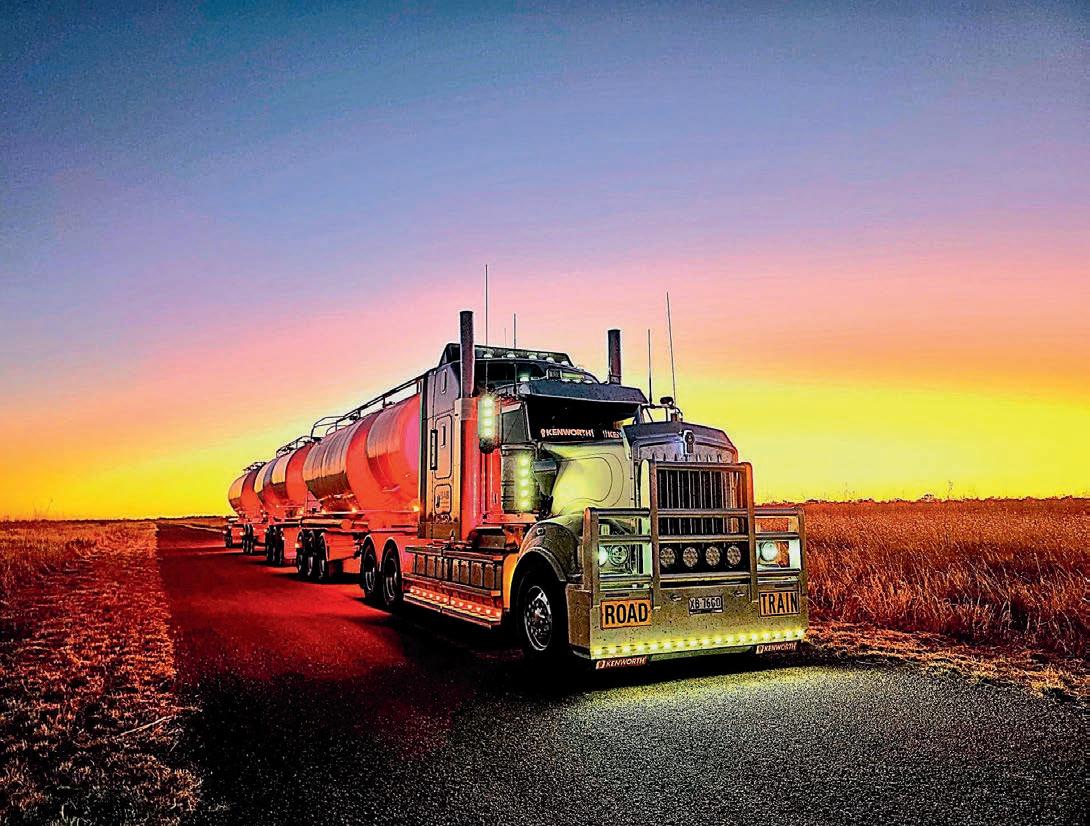
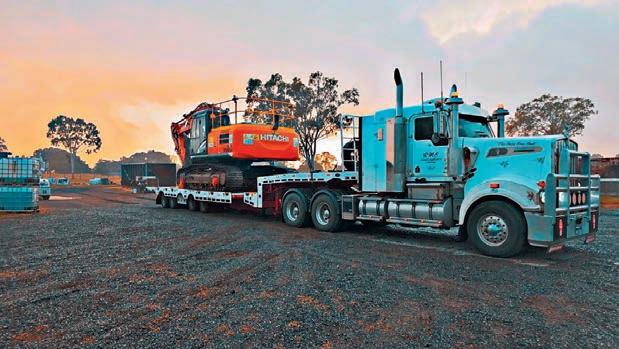
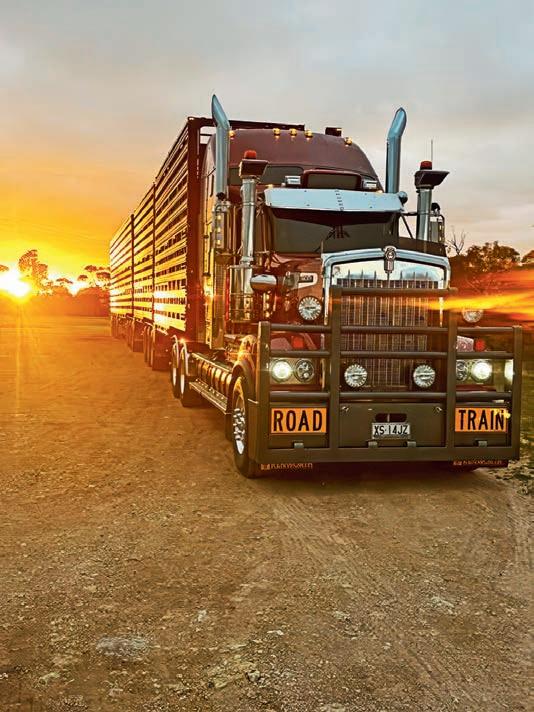
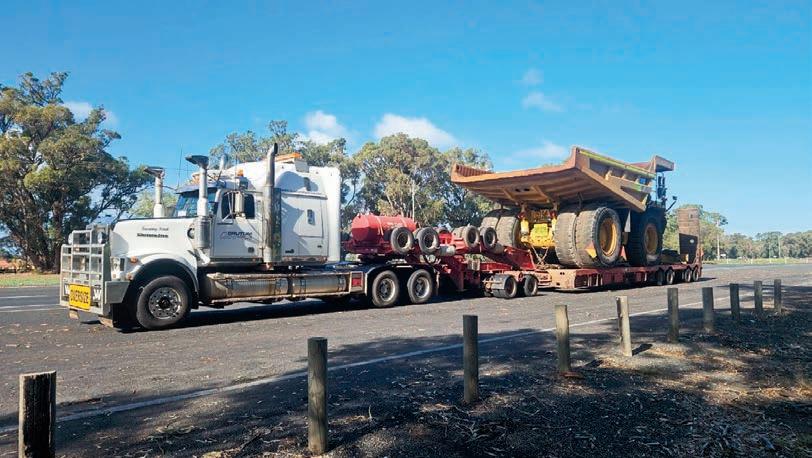
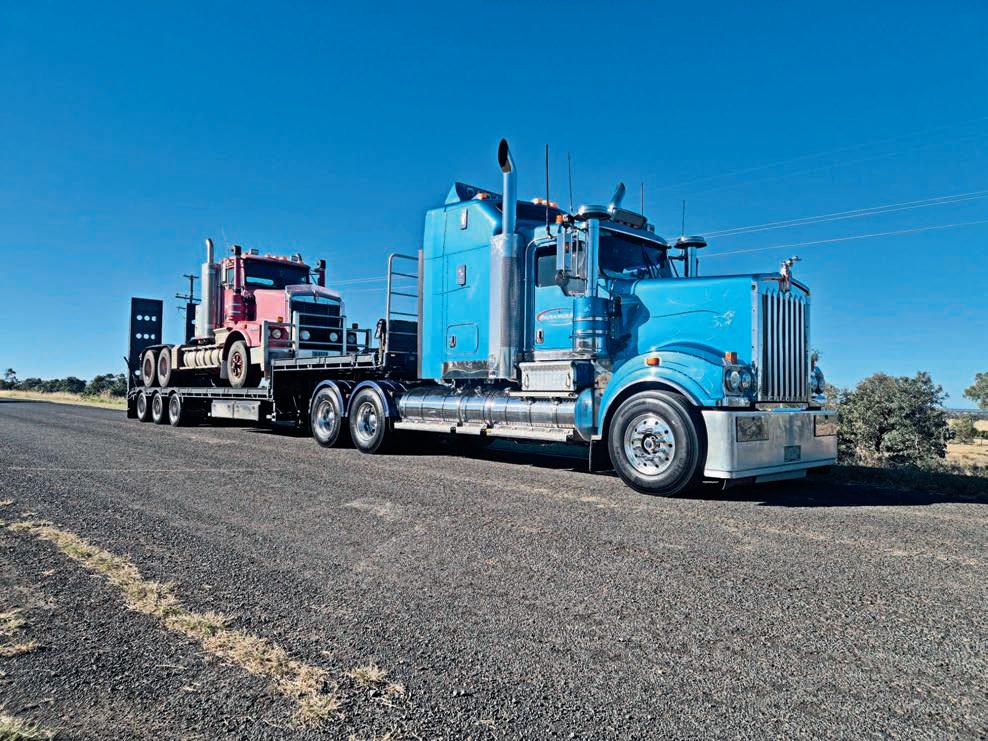
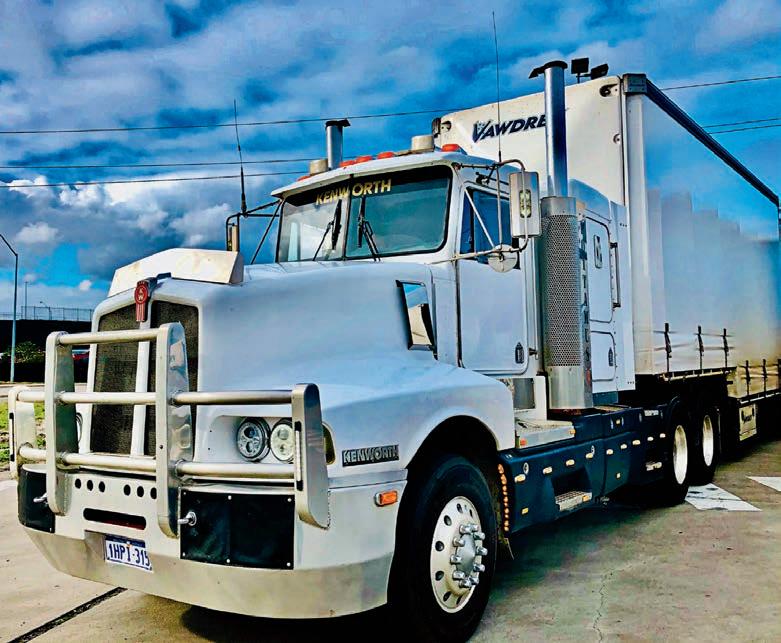
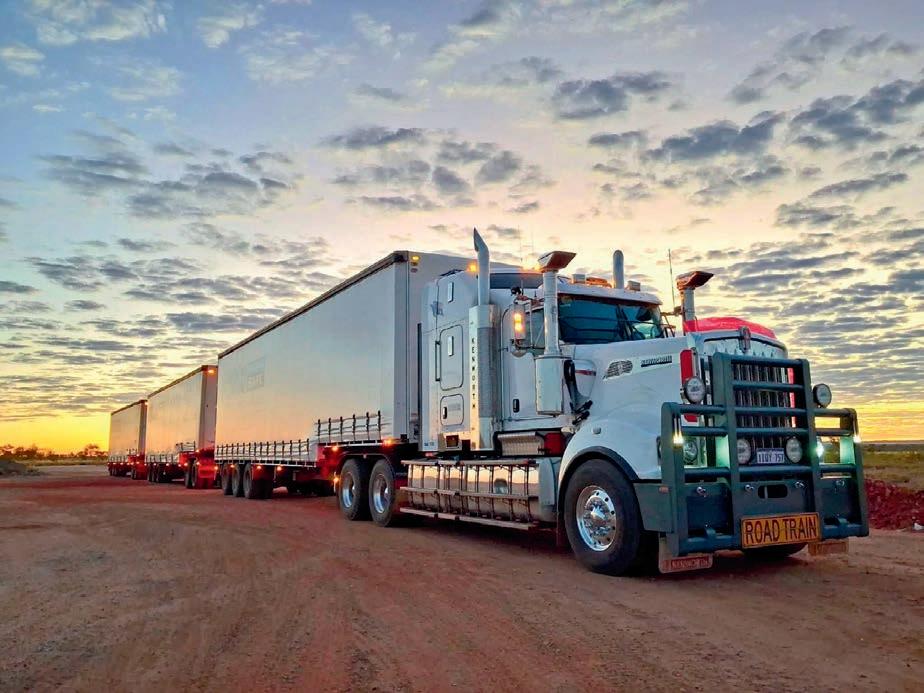
SHELL Rimula has partnered with Big Rigs in a big way – so there are even more reasons to send in your best truck shots.
Each month, the Big Rigs team will choose a #PicOfTheMonth, with the lucky winner receiving a $500 Shell Coles Express Gift Card.
Keep an eye out for our regular posts on the Big Rigs Facebook page, calling for your best truck photos and add yours in
the comments, or email them direct to danielle.gullaci@ primecreative.com.au for your chance to win the main prize.
Don’t forget to include a brief note about the truck and where the photo was taken. We’ll feature some of the best photos in each print edition of Big Rigs, with one winner announced each month.
Keep those amazing truck pics coming!
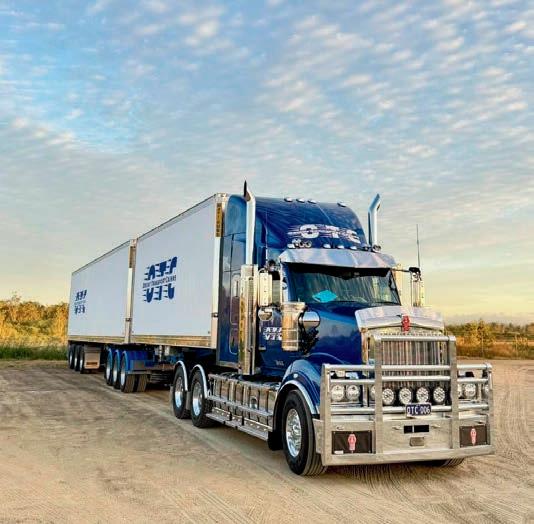
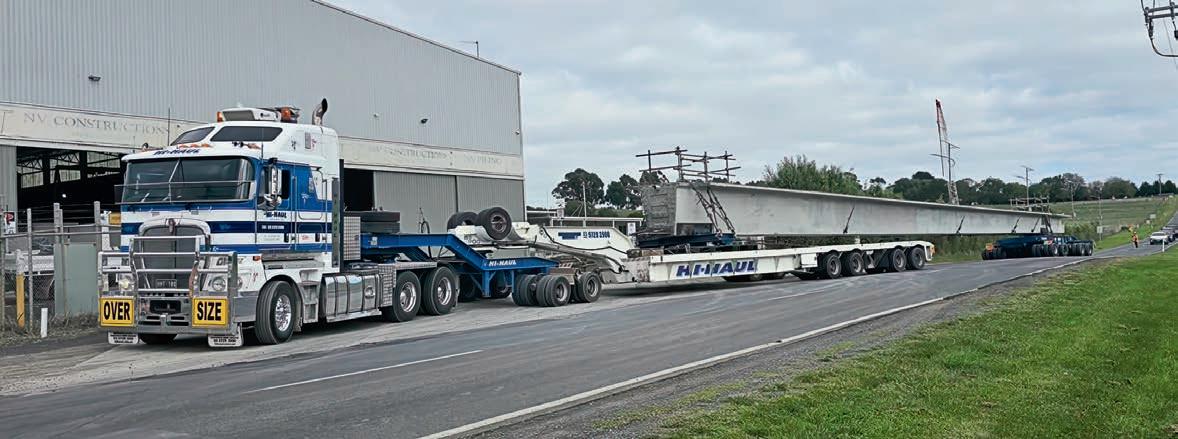
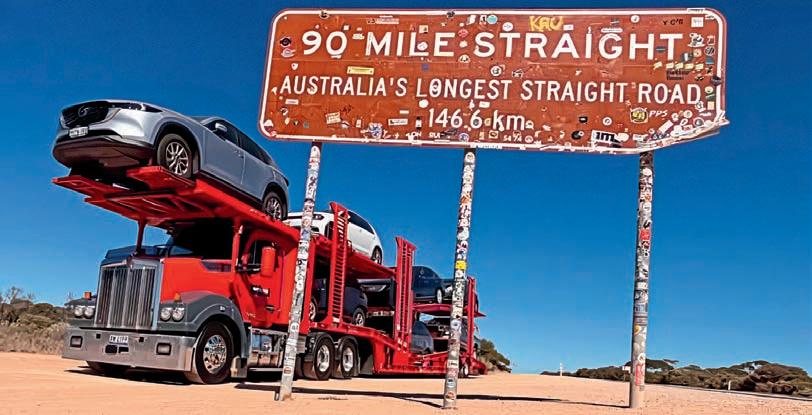
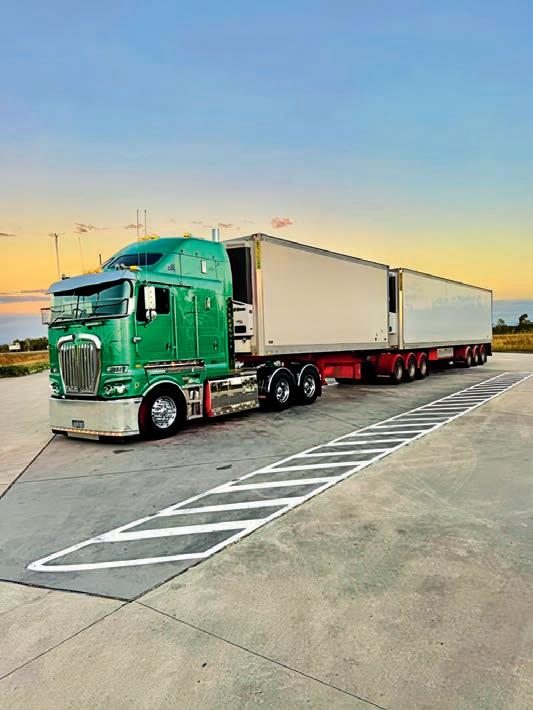



family-run transport company reveals the story behind its drive to help develop Australia’s brightest motorsport talent.
BY GLENN WATERREUS
I have been driving a race trailer around now for some months for a small but well-established racing team from Redland Bay in Queensland.
JND Racing is in the Toyota GR Cup and the Scholarship series, or like everyone in the racing community call them Toyota 86’s.
JND knows the game inside and out because one of the co-owners and mentors to the young drivers is Nick Percat from Supercars fame.
Since I’ve been towing this trailer around, I have been asked this question many times: Why is a Wickham Freight Lines’ 909 towing a JND racing trailer and what’s in it?
So, to put the Q & A to bed, I finally got the chance to catch up with Thomasin (Tommy) Roberts from Wickham Freight Lines.
I was told it was her pet project for the company, so Tommy is the person I needed to talk to.
JND Racing had a practice session at Morgan Park Raceway, Warwick, for a couple of days, so it gave me a chance to finally meet Tommy in person.
I headed into the depot to drop my 9-0 (Wickhams) in for some service work and catch up with Tommy at the same time.
I was heading for the office when I bumped into an old mate of mine, Richard Fleming (yard boss) who said that Tommy was unavailable for about 20 minutes, so would I like a tour of the depot.
It’s always great to catch up with an old mate. So, I jumped at the offer to take a look at how Wickham Freight Lines do business.
Checking out this busy depot
dry storage facility that can house over 700 pallets at a time. Then to their cold stores which can house over 450 pallets at a time. They also have three bays for internal sanitation of fridge vans.
R ichard was telling me they have no less than 16 tugs working at this depot 24/7 moving freight. We went and took a look at their full tyre service shop, named after Des Collins who had worked there for 30plus years and is now retired. Wickhams employ over 500 people throughout Australia. They have a full panel and paint shop and also a spray booth on site for truck and trailer repairs and truck washing bays for five to six prime movers at a time.
Also, an automated fridge van washing facility, full truck service department which they can service up to six prime movers at a time and a bay that fits two trailers in to do brakes and bearings, also one bay for quick service (lights and brake check) also a full fabrication shop. They have an onsite weigh bridge and fuelling station.
For a family-owned and run Australian company they surely know how to run a company in this tough economic climate in Australia.
One very professional transport outfit. I also got the chance to have a peek at Graham Keogh’s project, “The Grey Ghost”.
She looks like it just came off the show room floor. Absolutely immaculate and when he started the 8V92 GM it sounded unbelievable.
Then it was time to head to the office which looks curiously like a cabover Kenworth to see Tommy.
Tommy met us at the front door and introduced herself and asked me into their con-
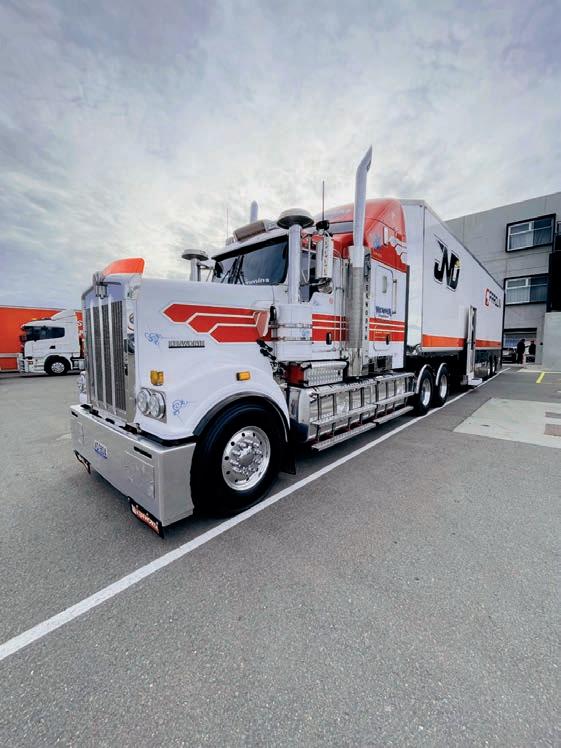
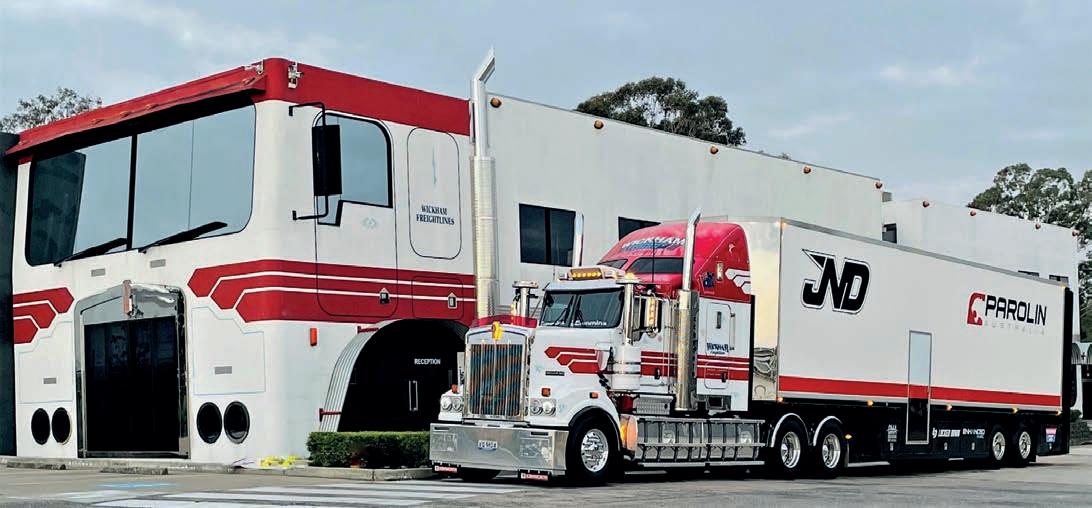
Wickhams giving back to the community I asked Tommy about her job and why Wickhams are sponsoring a race team. Tommy started off telling me that she had been at Wickhams full time now for 10 years working in Human Resources.
She has been around transport all her life in one way or another.
Her position held with the company is Head of People and Culture, which entails compliance, legal, recruitment, training all rolled into one which keeps her extremely busy as well as bringing up a family of two kids along with her husband Shane who also works at Wickhams as an Asset Manager.
She said the reason behind Wickhams sponsoring a race team stems from two years earlier where her husband Shane came home and said to Tommy that he would like to go car racing.
Tommy said it was the right time as the kids were young enough for him to do racing, a dream he’s always wanted to achieve.
“So, we decided to support him in his dream of racing.”
Tommy and Shane bought their own race car for the Toyota GR Cup and of course Wickham Freight Lines supported them getting his car from the track and back.
Shane drove two years in the Toyota GR Cup in the Toyota 86’s: “We loved the category. Our family loved every minute of racing with Shane. We met new people at the track along with drivers, officials, team crews and spectators. I must admit we were the only competitors with children in pit lane, a story I’m sure our kids will appreciate later.”
It was a steep learning curve for both of them and as Tommy explained the competitors in the field were impressive, some the age of 15 years and upwards, which is a credit to these kids because these cars are not toys, they are the real deal when it comes to racing.
“Seeing these kids race so well and be so professional was just a joy to witness.
“That’s the main reason we went with sponsoring and
giving back to the industry, these kids were on the prec ipice of building their com mercial and professional ca reer.
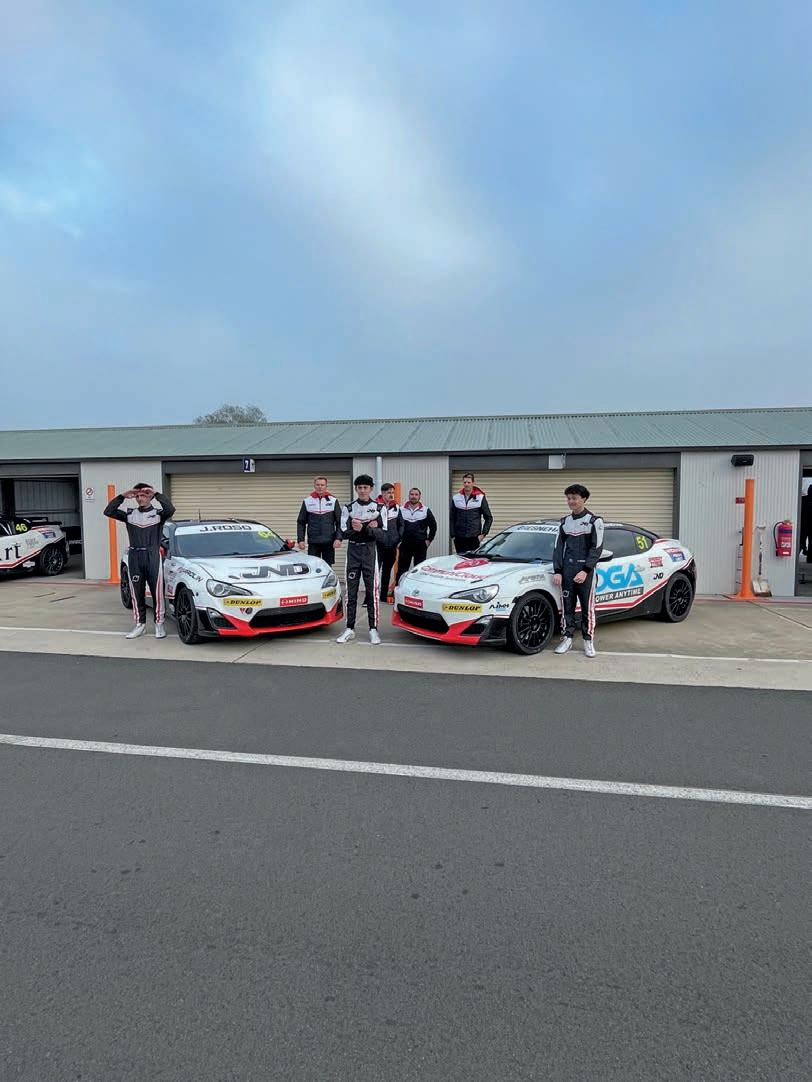
parents were putting everything they have into that success, it was remarkable.
“Amongst the pit lane we could see the challenge the industry is facing, which is trying to funnel young talent into the main game of Australian motorsport. After meeting the owners of JND Racing we could see what they were trying to achieve as a team. Create and develop a pipeline for talent in Australian motorsport. That resonated with us and we were more than happy to help.”
It’s great to see companies like Wickham Freight Lines and JND Racing coming together that do programs like this, pathways for kids to move onward and upwards.
“Who knows what the next step is for the kids; that’s up to them but they need the space to grow and learn and JND Racing do this professionally.”
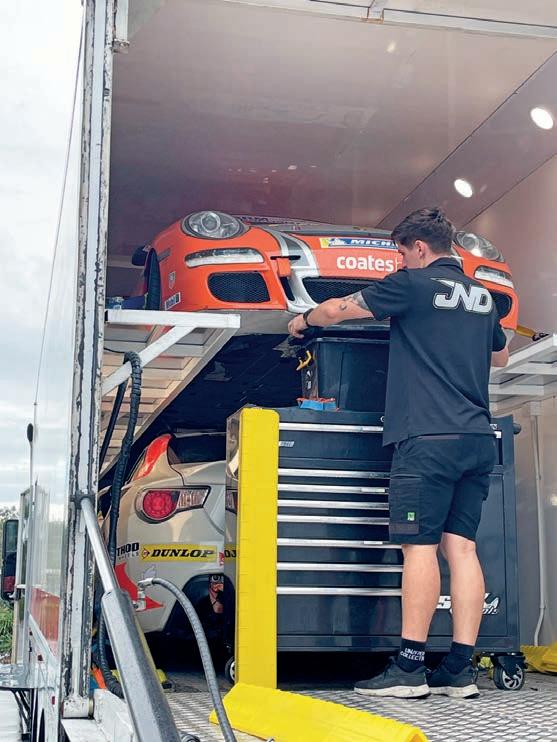
ECS Project Logistics has reinforced its commitment to delivering reliable heavy transport solutions across Australia with the addition of six brandnew Mack Superliner prime movers, representing another significant investment in the company’s expanding national fleet.
The new Superliners have been acquired to support a growing pipeline of mining, construction, energy and infrastructure projects, providing ECS with additional capacity and flexibility as demand for specialised heavy haulage continues to increase across the country.
Powered by Mack’s impressive 780-horsepower engine and rated to a Gross Combination Mass (GCM) of 130 tonnes, the new trucks have been specified to handle a broad range of transport applications. Their versatility allows them to operate across a variety of heavy haulage tasks while maintaining the performance, durability and reliability that ECS clients have come to expect.
For ECS Project Logistics Founder and Chief Executive Officer Alan Leslie, the decision to expand the Mack fleet was based on proven performance.
“After running a 600hp 2024 Superliner for 12 months in Western Australia, we were impressed by the feedback we received,” Alan said.
“That truck was put into demanding conditions from day one and consistently delivered excellent results. Just as importantly, the drivers were extremely positive about the truck’s comfort, drivability and overall performance, which gave us the confidence to significantly expand our Mack fleet.”
While outright performance was an important consideration, ECS placed equal emphasis on driver safety, comfort and operational efficiency when specifying the new fleet. With drivers often cover-
ing thousands of kilometres each week across some of Australia’s harshest operating environments, providing a comfortable, well-equipped workplace not only improves wellbeing but also contributes to safer and more productive operations.
The new Superliners feature specifications designed to maximise driver comfort while maintaining the durability required for demanding heavy haulage applications.
Combined with their substantial horsepower and strong torque characteristics, the trucks are expected to become valuable assets across ECS’ diverse project portfolio.
The purchase also reflects the strong working relationship that has developed between ECS Project Logistics and South Central Truck & Bus in Adelaide.
Working closely throughout the specification and procurement process, the dealership helped ensure each vehicle was configured to meet the company’s operational requirements and future workload.
A lan said another factor that reinforced ECS’ decision was Mack’s manufacturing facility in Brisbane.
“After visiting the factory in Brisbane and seeing the manufacturing process, we felt confident the trucks would be up to the task,” he said.
“It’s good to support an Australian-made product.
“Seeing the attention to detail and the pride that goes into building these trucks gave us confidence that they would perform in the demanding environments we work in.”
For many years, ECS has relied heavily on Kenworth prime movers powered by Cummins engines, a combination that has built an outstanding reputation throughout Australia’s heavy transport industry.
However, the arrival of the new Mack Superliners has introduced healthy competition within the company’s fleet.
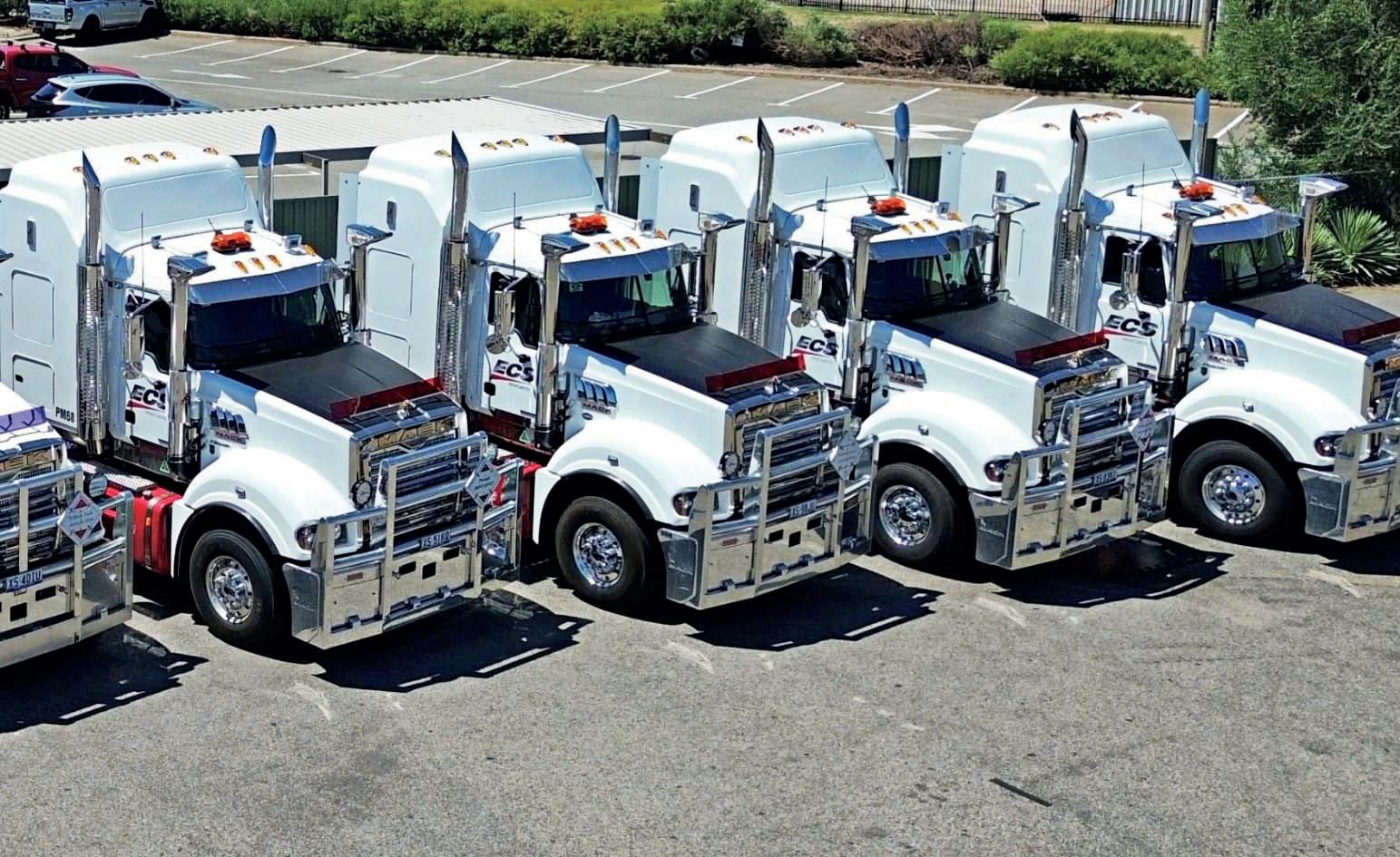
complement ECS’ established fleet by providing another high-performance platform.
The new trucks have already generated considerable interest among ECS drivers, many of whom have quickly embraced the combination of powerful performance, smooth driveability and refined cabin environment.
While horsepower figures naturally attract attention, it is the overall driving experience that has created the strongest impression, with drivers praising the Superliners for their comfort during long-distance operations and their confidence-inspiring performance under heavy loads.
As Australia’s resource, construction and renewable energy sectors continue to ex-
in equipment that delivers value for both clients and employees.
The arrival of six new Mack Superliners represents more than simply adding trucks to the fleet. It demonstrates the company’s ongoing commitment to providing safe, efficient and dependable transport solutions while embracing innovation and supporting Australian manufacturing.
For the company, the latest investment reinforces a philosophy that has underpinned its growth for decades – combining proven equipment, strong industry partnerships and experienced people to deliver reliable outcomes for clients, no matter how challenging the task.
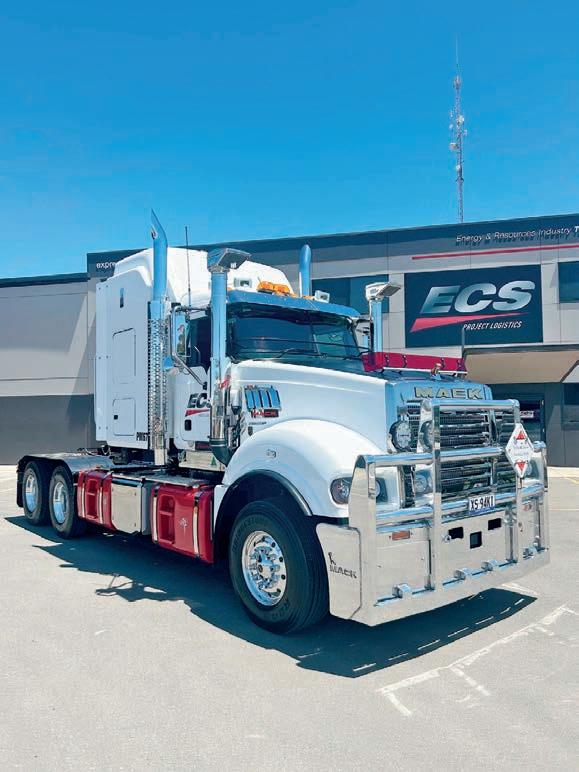
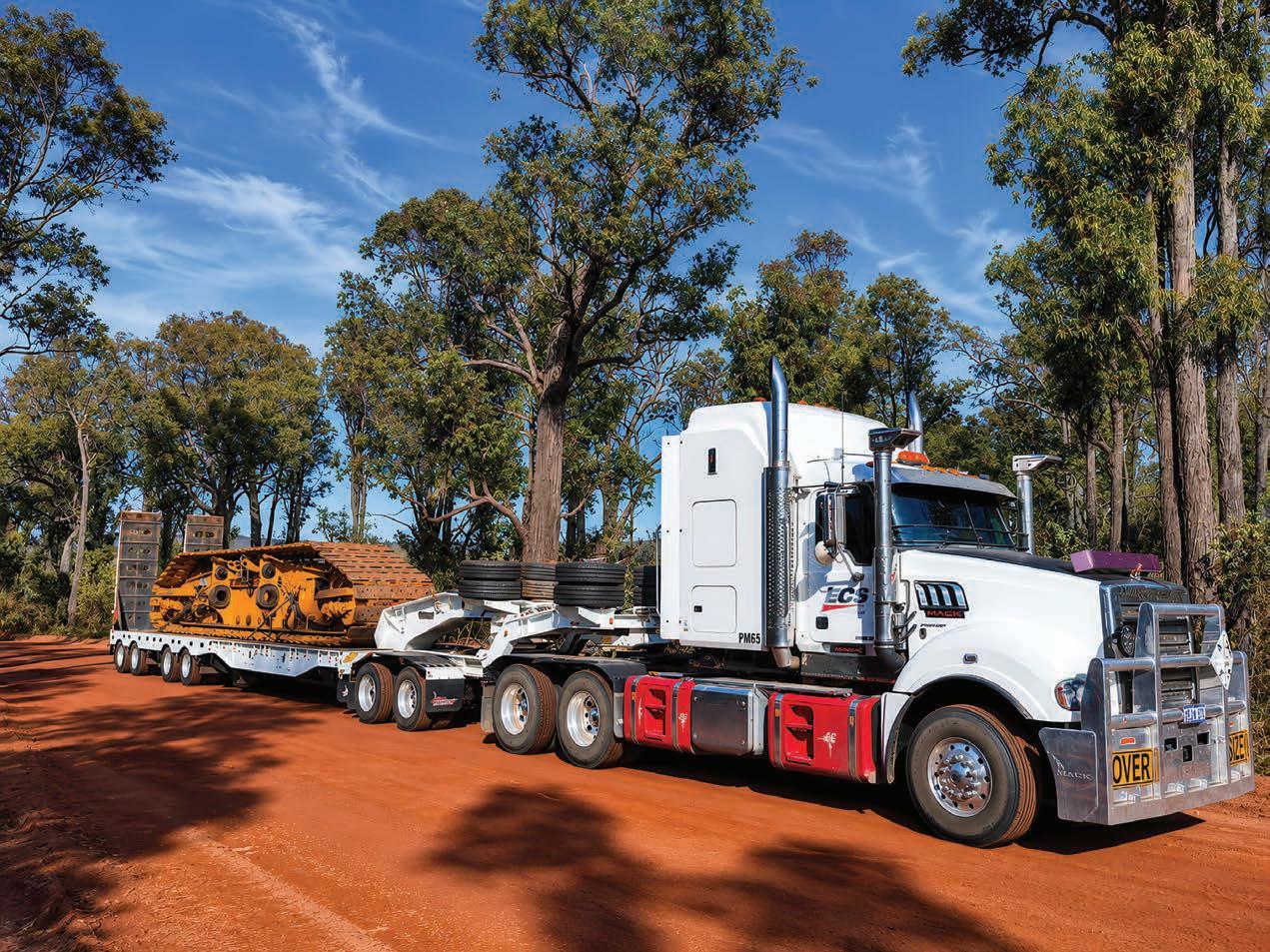

AT ACM Bullbars, partnerships are truly valued – such as the strong partnership we have Geoff Bishop and his team to thank for.
Bishop’s Transport has built a strong reputation as a premium, reliable road transport provider, delivering essential freight solutions across Western Australia and the Northern Territory.
Known for their straightforward approach and commitment to getting the job done right, the business has become a trusted name throughout some of the toughest and most demanding transport routes in the country.
Since expanding operations in 2011, Bishop’s has continued to strengthen its presence across the region, growing its capabilities while staying true to the values it was built on.
Here at ACM Bullbars, it’s fair to say we are more than proud to be their chosen bullbar supplier.
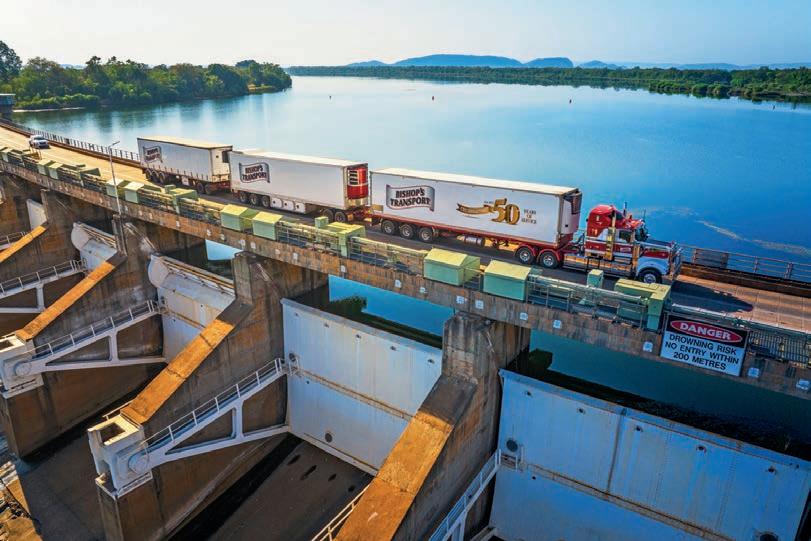
PARTNERSHIPS LIKE THIS DON’T HAPPEN OVERNIGHT, THEY ARE BUILT ON TRUST, CONSISTENCY, AND A SHARED UNDERSTANDING OF WHAT QUALITY LOOKS LIKE IN THE REAL WORLD.
has in our product.
It’s this kind of loyalty that reinforces why we do what we do, and why we continue to push for the highest standards in both performance and durability.
Travis himself has been part of the Bishop’s team for over 10 years and, like his father before him, sees a long future with the company.
That kind of generational loyalty says a lot about the culture within the business.
Leading a team of 16, Travis is responsible for overseeing a busy workshop environment where time is always at a premium.
Despite the constant demands, the focus on quality workmanship and efficiency never wavers.
The Bishop’s fleet is made up predominantly of Kenworth trucks, supported by a small number of Mack units. It is a lineup well suited to the harsh Australian conditions they operate in.
During a recent visit to Perth earlier this year, the ACM Bullbars team had the opportunity to spend time with Travis Ferraro, Workshop Manager at Bishop’s Transport.
Partnerships like this don’t happen overnight, they are built on trust, consistency, and a shared understanding of what quality looks like in the real world.
It was a great chance to see first-hand the level of care and attention that goes into maintaining such a hardworking fleet, as well as gaining insight into the day-to-day operations that keep everything running smoothly.
One thing that stood out
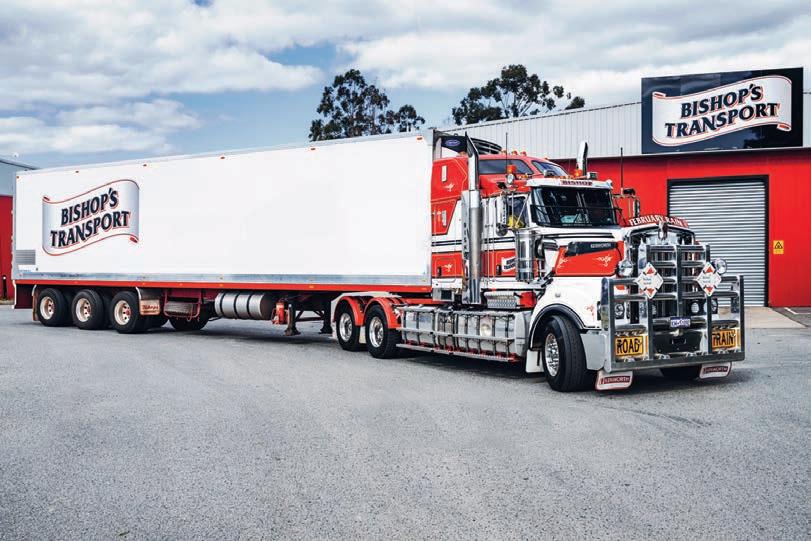
immediately was the strength of the relationship between our businesses.
Without any prompting, Travis made it clear that Geoff won’t allow any other bullbar on his trucks but ACM, a statement that speaks volumes about the confidence Bishop’s
Of course, strong partnerships are also supported by strong people.
We’d like to acknowledge the ongoing efforts of ACM Sales Manager Robert Scott, whose dedication and commitment have played a keytaining this relationship over
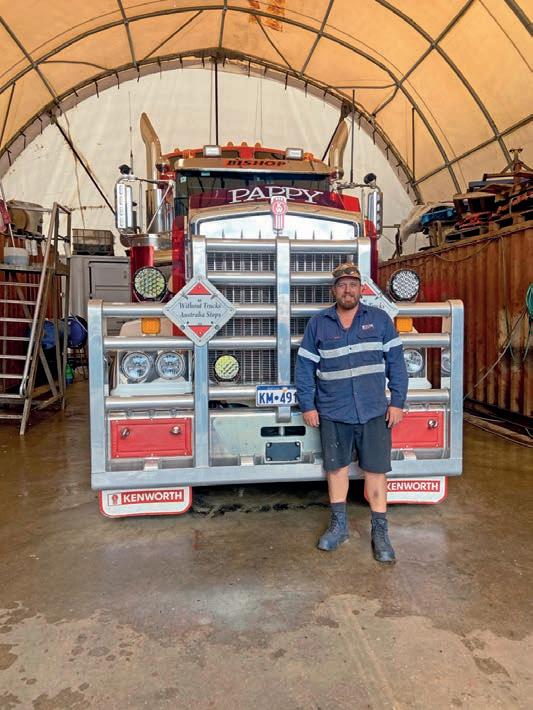
What sets Bishop’s apart is their ability to keep everything in-house.
From fabrication and fitouts through to ongoing servicing and maintenance, every aspect of their fleet is carefully managed within their own workshops.
With workshop operations spanning across Western Australia and the Northern Territory, Bishop’s ensures their trucks are always prepared for the road ahead.
It’s this level of control and attention to detail that allows them to maintain reliability across vast distances and challenging terrain.
At the end of the day, partnerships like this are built on trust, loyalty, and shared values that drive both businesses forward.
We’re proud to stand alongside Bishop’s Transport and look forward to continuing this journey together well into the future.
For more information, visit acmbullbars.com.au or contact the ACM sales team on 1800 226 000.
AUSTRALIAN Pump In-
dustries is famous for its top-quality range of cold and hot water, high pressure cleaning equipment.
The company continues to grow, as its reputation spreads distribution throughout the Pacific Basin.
Aussie has a desire to keep producing products that are
road transport friendly. These includes new range of cast 316 stainless steel self-priming pumps designed specifically for water cart applications.
“We’ve seen lots of rusted out cast iron water cart pumps over the years. We felt that it was time we introduced a product that was
at the same level of quality as our high-pressure water blasters”, said Aussie’s Chief Engineer John Hales.
“We chose 316 stainless because we saw from the results of testing, that those pumps will never rust out!”
The pumps are assembled in Sydney from castings produced in Northern Italy’s finest foundry.
The 18/8 designation is an indicator of quality. The 18 per cent is chromium and the 8 per cent is nickel.
They provide the austenitic base for the 316 alloy. Molybdenum is also added to the mix to lift corrosion resistance against chlorides.
This is where the 316 outperforms the more common 304 grade used in light duty applications.
The new 316 stainless steel pumps are already becoming popular with water cart operators.
W hether it’s handling dust suppression jobs or, the highly corrosive liquids involved
in the mining industry it’s also great for clean drinking water tasks.
The idea of going 316 started with Aussie’s familiarity with the many water cart applications involving corrosive liquids like fertilisers, or even exploration drillers mud.
Hales is candid that the development cycle has not been cheap and points to close work with the foundry on grade selection, melt chemistry and casting quality.
Pouring the mix and getting it right has been an expensive job, he said. It’s worth every minute we have put into this project for water carters of all types across Australia.
The best news is the more we build, the cheaper they get and the more and our plan is to revolutionise water carting with pumps that drive hydraulic, petrol or diesel
gine.
For further information, contact Aussie Pumps at aussiepumps.com.au.
IMAGINE a world where you were able to make your own DEF / AdBlue® on site to service your fleet as needed. It’s a concept people have tried to master and failed. Until now.
Multichem, a fully Australian-owned and operated company, had that vision for its clients and developed the MC20-1000 system to turn that vision into reality.
The MC20-1000 is a containerised turnkey manufacturing system requiring only a clean water supply and threephase power.
Designed for simplicity and reliability, it produces ultrafiltered DEF / AdBlue® that meets demanding fleet requirements while giving operators complete control over their supply chain.
In addition to the DEF / AdBlue® production, the MC201000 can manufacture coolant, truck wash, windscreen washer fluid and a range of other transport and industrial chemicals, providing fleet operators with the flexibility to produce multiple essential products on-site from a single system.
Multichem Group director Steve Kitching said a recent installation at the headquarters of Exodas Transport in Queensland was a great ex-
with purchased product.
While a few minor commissioning issues arose, including loose fittings and PLC navigation adjustments, these were quickly resolved, highlighting both the robustness of the system and the hands-on capability of the team.
The Multichem system includes ultrafiltration technology, delivering superior fluid quality and consistency.
“This has reduced driver
frustration often caused by inconsistent DEF while also lowering maintenance costs through cleaner, more reliable dosing system performance,”
“For Exodas, the move to self-blended DEF represents more than just savings. It provides control over quality, supply, and operational efficiency, reducing reliance on external providers while improving fleet reliability.
“This project demonstrates Multichem’s ability to turn a complex challenge into a proven solution.
“In technical terms, the MC20-1000 is capable of producing approximately 2,800 litres of DEF every 90 minutes through a large-
FOR EXODAS, THE MOVE TO SELF-BLENDED DEF REPRESENTS MORE THAN JUST SAVINGS. IT PROVIDES CONTROL OVER QUALITY, SUPPLY, AND OPERATIONAL EFFICIENCY, REDUCING RELIANCE ON EXTERNAL PROVIDERS WHILE IMPROVING FLEET RELIABILITY.”
STEVE KITCHING
ly automated manufacturing process.”
The system incorporates advanced monitoring and control technology to ensure consistent product quality, operational efficiency, and re liable output.
For more on Multichem’s MC20-1000 system phone
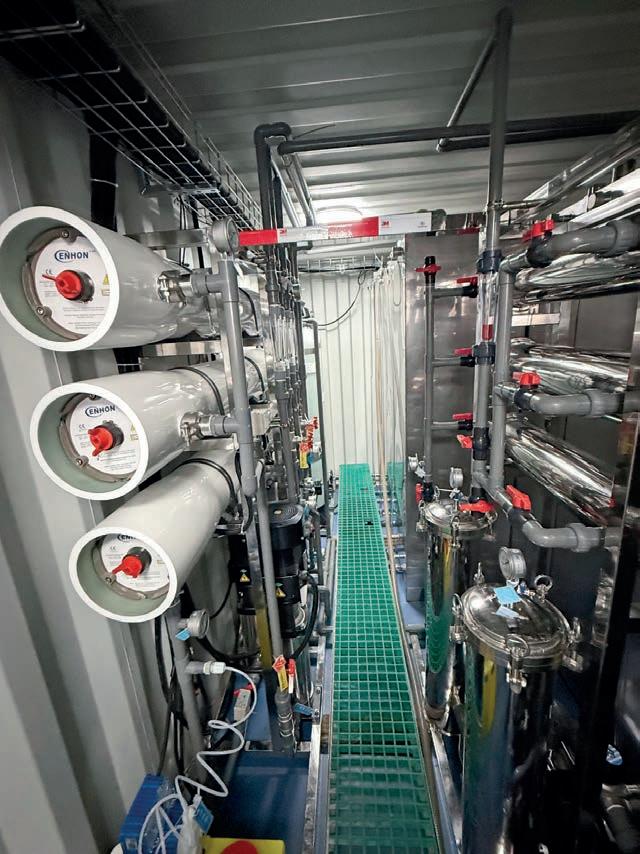
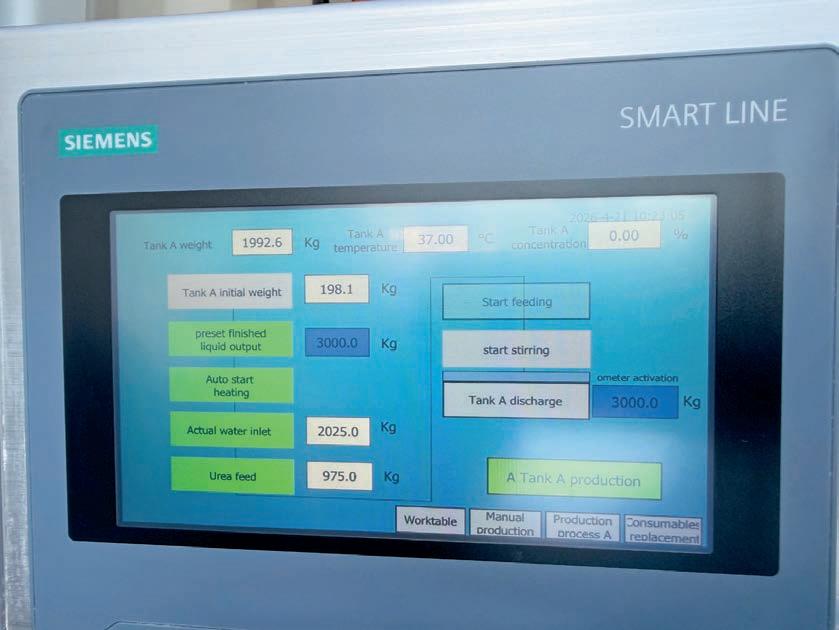

FINANCIAL worries affect most Australians at some point and with the increasing cost of living, many people are feeling the pinch.
According to research, many retirees and pre-retirees worry about outliving their retirement savings*.
And for young Australians, the cost of living is the single biggest concern, with the affordability of housing also a significant stress factor^.
So, if you’re feeling the pressure of your financial responsibilities, you’re definitely not alone. But it’s not just your bank balance that
feels the strain, as financial stress can affect your mental and physical health too. The good news is that there are plenty of support services to help you through.
WHAT CAUSES FINANCIAL STRESS?
You’re probably well aware of what causes you financial stress in your own life, whether it’s mortgage repayments, rent, being unable to set aside money for a rainy day or juggling monthly bills.
Other more serious triggers include losing your job, be-
ing unemployed, unable to pay off debts or having gambling problems.
WHAT ARE THE EFFECTS OF FINANCIAL STRESS?
Common effects of financial stress include:
• arguing with the people closest to you about money;
• having trouble sleeping;
• feeling angry or fearful;
• mood swings;
• feeling tired; and
• loss of appetite.
If you relate to anything on this list, it’s important you know that there are things you can do. And remem-
ber, anyone can experience problems with money, no matter your background. It’s important to not try to deal with it alone, but to seek support from family and friends. It’s also important to look after your physical and mental health by eating a healthy, balanced diet and getting regular exercise.
HOW CAN YOU REDUCE FINANCIAL STRESS?
There are things you can start immediately to help you deal with financial stress. A good starting point is to identify the issues that cause you the

most financial stress – whether that’s your mortgage, other debts or retirement planning.
Financial management resources
• The Moneysmart website, an Australian Government service, provides tips and advice on managing your finances. Go to moneysmart. gov.au.
• If you have debts and don’t know where to start, the National Debt Helpline is a not-for-profit service that can help you with managing your debts, negotiating payment plans and getting you back on track. Call them for free on 1800 007 007 or go to ndh.org.au.
Are you a member of Team Super?
Advisers from Team Super Financial Advice can help you plan and manage bigger financial decisions and help put the right strategies in place to achieve your goals. See teamsuper.com/advice to find out more.
Mental health resources
Financial stress can also cause existing mental health problems to worsen. If you are feeling depressed or anxious about your situation, it’s important to seek support. Talk to your doctor or a trusted friend or family member to discuss your situation, and how you are feeling.
There are also several organisations you can contact for help, including:
• Beyond Blue – if you’re feeling depressed or anxious, call 1300 224 636 or go to beyondblue.org.au to chat to a counsellor online. This is a free service available all day, every day.
• Lifeline – if you need support through a personal crisis, call 13 11 14 or go to lifeline.org.au to chat online. This is also a free service, available all day, every day.
Sources:
* Independent Financial Adviser, Cost of living fostering fear of running out in retirement: Report, 16 April 2025. ^ Headspace, Cost of living, housing affordability biggest concerns among young people, 3 April 2023.
Team Super is Team Super Pty Ltd AFS licence 246864, the trustee for the Team Superannuation Fund. Refer to the PDS and TMDs on Team Super’s website at teamsuper.com when considering if their financial products are right for you. Any financial advice in this article does not take into account your financial situation, needs or objectives, and you should consider these factors before taking any action. Financial planning services are provided by Team Super Financial Advice a trading name of Team Super Services Pty Ltd AFS licence 502700.

STORAGE provider TAXIBOX has added six new Fuso Shoguns to its national fleet.
TAXIBOX delivers storage containers to customers and then returns to take and store them at one of their multiple storage facilities located across Melbourne, Sydney, Brisbane, Adelaide and Perth.
The company chose the Shogun 360 model, the 10.7-litre six-cylinder turbo diesel that is linked to a
12-speed Automated Manual Transmission (AMT).
“We’ve been happy with the Shoguns so far. The extra grunt means making the job easier for our drivers, particularly in the more complex and steep delivery network of Sydney and Melbourne’s inner-city suburbs,” said Ben Cohn, TAXIBOX’s CEO.
Delivered through Daimler Trucks Dandenong by salesperson Brett Munro, the TAXIBOX Shoguns came
standard with a full-suite of active safety features.
As with all customers who purchase Shoguns, TAXIBOX benefitted from a free Truck Training service, in which a Fuso representative takes customers through a full product training session to point out all the benefits of the truck and how to get the most out of it.
Shogun models feature 50,000km or 12 monthly service intervals, whichev-
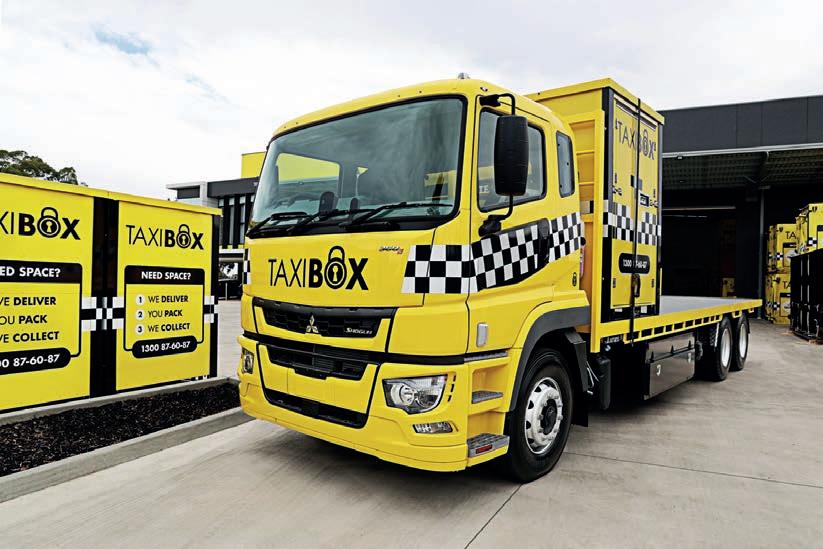
er comes first, with a fiveyear/500,000km warranty covering the truck and powertrain.
“It is great to see the Shogun hit the road in the iconic TAXIBOX colours,” said Andrew Assimo, Vice President of Daimler Truck Australia Pacific Sales Marketing and Operations.
“We are thrilled that TAXIBOX is using our trucks for its customer-driven business. We’re happy to hear the driv-
ers love them and appreciate the comfort and the quality.”
In the 16 years it has been around, TAXIBOX has made close to 80,000 deliveries.
TA XIBOX drops containers (2.4m x 2.2m) to customers. They can be filled by the customer or with assistance before they are delivered to the nearest TAXIBOX location for storage.
It allows customers to access their storage boxes
whilst being stored. TAXIBOX has recently expanded its service offering to include interstate moving, international moving a variety of new commercial storage solutions.
The company also offers customer-friendly features including an app that helps them estimate what will be able to fit in the box before it arrives and allows them to track their TAXIBOX delivery in real time.
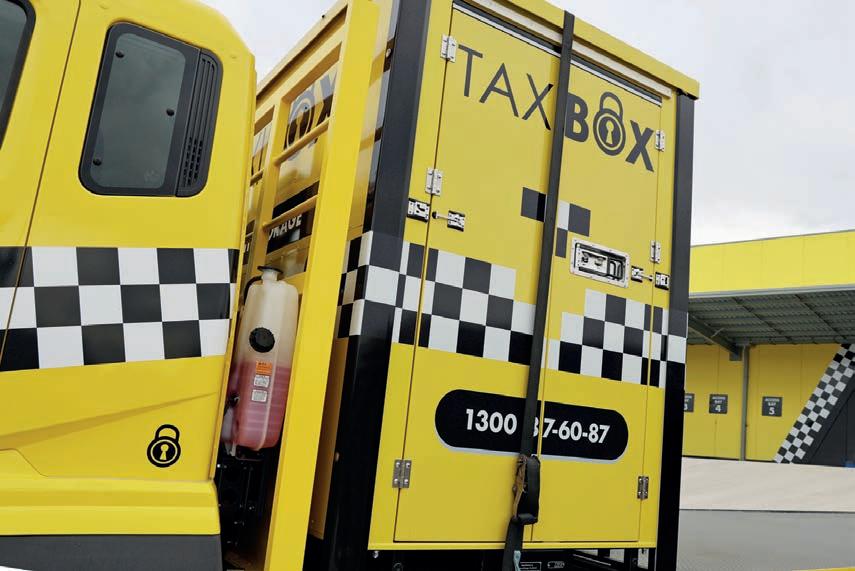
FOLLOWING the recent appointment of Michael Temminghoff as Chief Executive Officer, Freighter Group has announced two key additions to its senior leadership team.
Rick Halliwell joins the business as the new National Sales Manager as Brad Lane transitions from his role as SA Dealer Manager into the newly created position of General Manager – Sales Excellence and Marketing.
Freighter Group said both appointments reflect its ongoing commitment to building a customer-first culture and delivering high-quality transport solutions across Australia during a period of significant growth and transformation.
In his new role as General Manager – Sales Excellence and Marketing, Lane will fo-
cus on aligning the customer experience and sales processes across Freighter Group’s national footprint.
Bringing more than 18 years of experience across the transport, manufacturing, and industrial sectors, Freighter Group said Lane is well placed to connect product innovation with practical customer delivery.
“My vision is to help continue positioning Freighter Group as Australia’s leading transport solutions provider by strengthening the connection between our customers, products and people,” Lane said.
“My focus is on building a customer-first culture, driving innovation and enhancing collaboration across the business, ensuring we continue
to deliver quality products and exceptional service as we grow.”
As National Sales Manager, Rick Halliwell will lead the national sales team with a core focus on building lasting relationships and ensuring Australian transport operators receive unparalleled service.
Halliwell joins Freighter Group following a successful seven-year tenure as National Sales Manager at TR Group, where he developed a deep understanding of the diverse needs of transport fleets.
Both leaders emphasised that achieving the best outcomes for customers starts with a supportive, collaborative, and highly accountable internal culture.
“For me, leadership is about


creating an environment where people feel supported, challenged and empowered to succeed,” said Lane.
“I believe the best results come from strong relation ships, open communication and a shared commitment to continuous improvement.”
Halliwell echoed these sen timents, adding: “Leadership is about supporting people and helping them do their best work.
“It’s about listening, being approachable, and creating a team environment where everyone feels respected and valued. I believe good re sults come from good people working together.”
Freighter is celebrating its 80th year as Australia’s lon gest standing trailer brand in 2026.
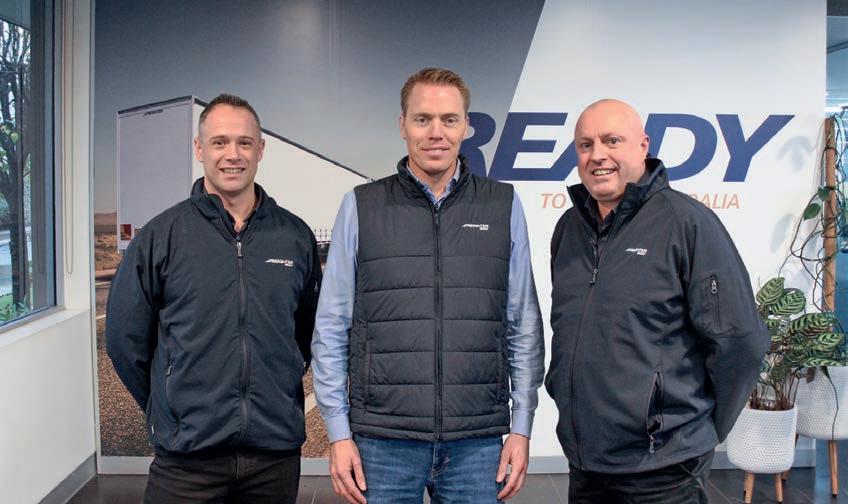


IN an industry facing rising scrutiny, tighter rules and increasing operational pressure, many operators are finding that traditional support models simply aren’t keeping pace.
For Greg Williams – Principal of Brindabella Legal & A ssurance – that gap wasn’t just obvious, it was impossible to ignore.
A fter more than two decades working as a lawyer across compliance, enforcement, investigations and regulatory advisory roles, Greg decided to build a practice designed specifically for the realities of transport and other high-risk industries.
“I started Brindabella Legal & Assurance because I kept seeing the same pattern across transport and other high risk sectors,” Greg explains.
“Operators are facing more rules, more expectations and more scrutiny than ever yet the support they receive often doesn’t match the pressure they’re under. Budgets are tight, time is short and they’re trying to keep a business running.”
For Greg, the gap wasn’t theoretical. It was something he saw repeatedly while working as a lawyer, national manager and senior leader in regulatory environments.
Operators needed someone who understood the law, understood how regulators think and understood the day to day realities of running trucks, managing people and keeping the wheels moving.
A career built on real world
experience Greg’s background is unusually broad and unusually practical.
He has spent many years in transport safety, compliance, enforcement and investigations, appearing as counsel in courts and tribunals across Australia, leading complex investigations, auditing regulatory and operational systems, prosecuting breaches and training inspectors and investigators nationally and internationally.
But despite the legal credentials, Greg is most at home on the ground.
“I’m happiest out on site with a client in a yard, a workshop, or a hangar, helping solve real problems,” he says.
“Yes, I’m a lawyer by trade, but what I genuinely enjoy is the transport industry itself: supporting everyone from owner drivers to major fleets to stay safe and stay on the right side of the regulator.”
What Brindabella Legal & Assurance does
“We help operators navigate the messy, practical side of compliance, safety and regulatory obligations,” Greg says.
“We’re not a traditional law firm that hands over advice and disappears as we stay with you through the whole lifecycle.”
That includes designing and implementing safety systems, testing whether they actually work in the real world and stepping in when something goes wrong – whether it’s a legal problem, an audit, an in-
vestigation, or an operational problem that needs fixing.
Because the practice works across regulated transport and high risk industries, Greg is quick to point out that generic templates and “best practice” buzzwords don’t cut it.
“Regulators see through them instantly. Every operation is different, so our advice is tailored to how your business actually runs and to the people who keep it moving.”
Brindabella Legal positions itself as a practical partner and not just an adviser.
Why compliance matters more in 2026
With the NHVR’s mandatory Safety Management System requirements coming into force on August 1, Greg says the compliance landscape is shifting significantly and will continue to do so.
“Every accredited operator will need to show that their systems are not only documented, but actually operating and effective in day to day work,” he explains. “Outdated or ‘set and forget’ documents simply won’t cut it.”
The NHVR will assess operators against five core outcomes: leadership, risk management, people, assurance and safety systems. The biggest shift mirrors what aviation and rail have already experienced being a move toward evidence ready compliance.
“Regulators want to see how risks are identified, controlled, monitored and improved — not just what’s written in a pol-
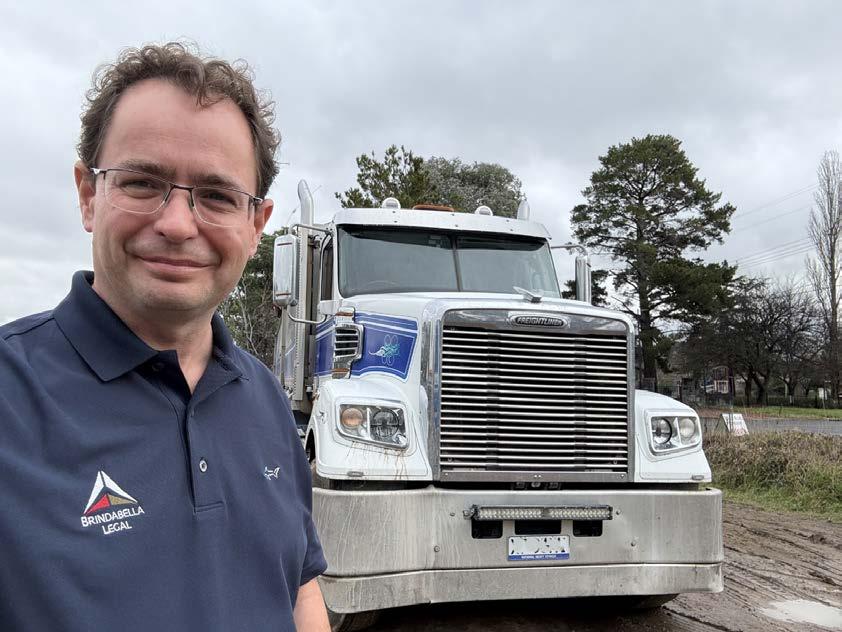
icy. That means complete and reliable training records, incident investigations, corrective actions and regular reviews and internal audits.”
Accreditation renewal will only be granted when an operator’s SMS is “present, suitable, operating and effective,” raising the bar for everyone.
One thing to do today Greg’s advice is simple: get your records in order.
“Most operators are already doing the right things – pre starts, toolbox talks, fatigue checks, maintenance, supervi-
sion – but when the regulator turns up, the question isn’t just what you did, it’s whether you can prove it.”
Clean, accurate, accessible records are the quickest, cheapest, most effective improvement any operator can make.
“It doesn’t need to be fancy. It just needs to be accurate, consistent and accessible.”
What sets Brindabella Legal apart?
“We bring safety management, quality auditing and legal expertise together in one place — a combination I’m not aware of
any other business genuinely offering,” Greg says. “That integration means operators get solutions that work operationally and hold up under legal scrutiny.”
Operators can contact Brindabella Legal & Assurance on 1300 737 011, email at contact@brindabellalegal. com.au, or via brindabellalegal.com.au. Greg welcomes Big Rigs readers to reach out for an initial discussion at no cost as “sometimes that’s all it takes to point you in the right direction.”
ARMOURY Stainless has built its name on high-quality stainless steel accessories to suit Kenworth trucks.
From sunvisors and headlight surrounds through to complete stainless fit-outs, the range has become part of many standout Kenworth builds across Australia.
Now, Armoury Stainless is bringing that same focus to Mack.
The new range marks Armoury’s first complete stainless accessories range to suit Mack trucks, with a strong focus on the Mack Superliner. For Armoury, the move
into Mack is a natural next step. The business has grown by paying attention to what the industry is asking for and developing products that suit real trucks, real operators and real working conditions.
That approach has shaped Armoury Stainless from the start. The focus has always been on tough, well-made accessories that fit properly, look good, and hold up in real working conditions.
By keeping design and manufacturing in-house, Armoury has been able to control the details more closely, reduce lead times and respond faster
when customers and dealers need new or custom products.
Mack trucks are known for strength, reliability and hard work. They already have a strong presence on the road, so the aim of the new stainless range is simple: add detail and shine without taking away from the tough character Mack is known for.
A rmoury has already completed full stainless fit-outs on two Mack trucks, with another build set to be finished shortly.
These builds have helped finalise fitment, refine product
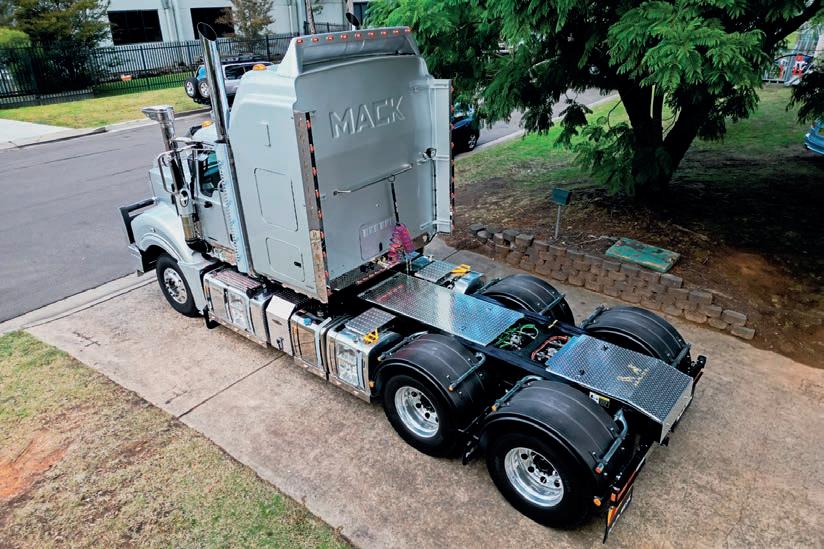
details and prepare the range for release.
The new range includes stainless accessories such as pre-cleaner panels, bunk skirts, mirror backs, bunk wing decals, under-door pan els, tail light bar dress strips, a lloy deck plates, tank skirts and DPF skirts, with more product details to be released as the range continues to roll out.
The Mack range follows the release of Armoury’s Volvo stainless accessories range at last year’s Brisbane Truck Show, where the business in troduced stainless accessories to suit Volvo trucks.
Together, the Volvo and Mack ranges show how Ar moury Stainless is expanding beyond its traditional Kenworth focus while keeping the same in-house process behind every product.
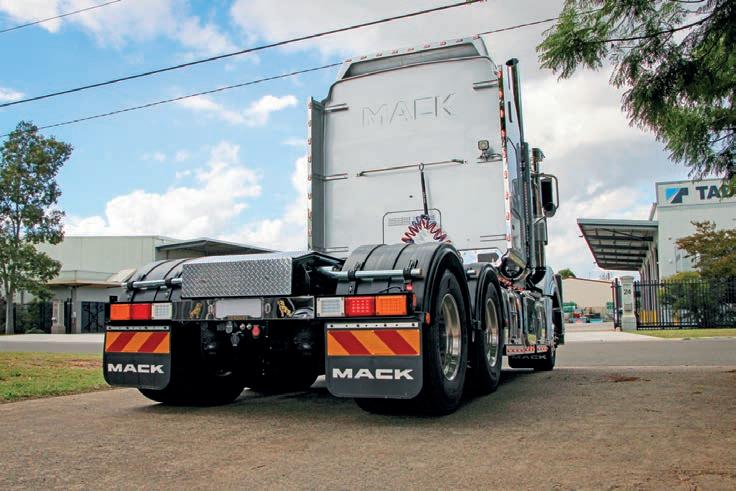
Kenworth accessories remain a major part of Armoury Stainless and continue to be one of the business’s strongest product areas.
The new Mack range builds from that experience, giving dealers, operators and customers more choice across more truck makes.
The new Mack stainless accessories range is now being released, with more product details and completed builds to follow.
For more information, please call 1300 005 576 or visit armourygroup.com.au.
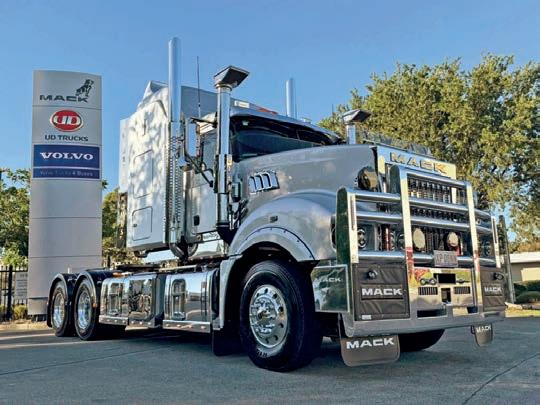
BLOCKED filters, diesel bug, poor fuel flow and dirty fuel will not simply disappear by themselves.
If contamination is already in a bulk diesel tank, the problem can keep coming back every time new fuel is added.
Operators may keep changing filters, dealing with slow flow rates and losing time, but unless the tank itself is treated, the same problem can return again and again.
PMX 145 from Cost Effective Maintenance is designed to help fix the problem at the source.
It is a proven and independently tested fuel biocide made for contaminated diesel and biodiesel storage tanks. Added directly to the tank, PMX 145 kills and controls microbial contamination, helping clean up the fuel system and reduce the blocked filters, sludge and poor fuel flow commonly caused by diesel bug.
“Demand for good fuel additives has soared recently,” said Jimmy Dever from Cost Effective Maintenance.
“The combination of wet weather, changing fuel quality and disrupted supply has caused serious problems in some areas, especially around sediment in tanks, blocked filters and reduced fuel flow rates.”
Fuel’s not flowing like it used to?
Dirty fuel creates headaches for transport operators. It can block filters, slow refuelling, stop equipment and lead to more workshop time while operators try to work out what’s going wrong.
Jimmy said it was important for any operator looking to clean, condition or stabilise fuel to make sure the product they add to the tank does not create another problem.
“The last thing a bulk fuel user needs is an additive that’s supposed to help but ends up causing other issues,” Jimmy said.
“If a product hasn’t been tested to show the treated fuel can still pass Australian fuel standards, you’re asking for trouble.”
For operators concerned about warranty, PMX 145
has been independently tested against key ASTM fuel testing standards, with treated fuel receiving a full pass. That gives bulk fuel users confidence that they can treat diesel bug and fuel contamination without compromising fuel quality.
Jimmy said PMX 145 had been designed with bulk tanks in mind, providing fuel biocide protection that helps control microbial contamination and reduce the risk of the same problem returning.
He said while microbial contamination is commonly called diesel bug, similar fuel contamination problems can affect diesel, biodiesel and petrol storage systems.
Once water is present in a tank, bacteria, yeast and mould can grow at the fuel-water interface. This can contribute to sludge, biofilm, acids, corrosion, blocked filters and poor fuel flow.
“There’s nothing worse than dealing with fuel bug tank after tank and feeling like the problem just won’t go away,” Jimmy said.
“If water and microbial contamination are still present in the system, the same blocked filters, poor flow and contamination problems can keep coming back.”
Your fuel filters are telling you something PMX 145 is especially relevant where operators are dealing with:
• Blocked or frequently blocking filters
• Poor fuel flow rates
• Sludge or sediment in tanks
• Water contamination
• Fuel that smells abnormal or appears discoloured
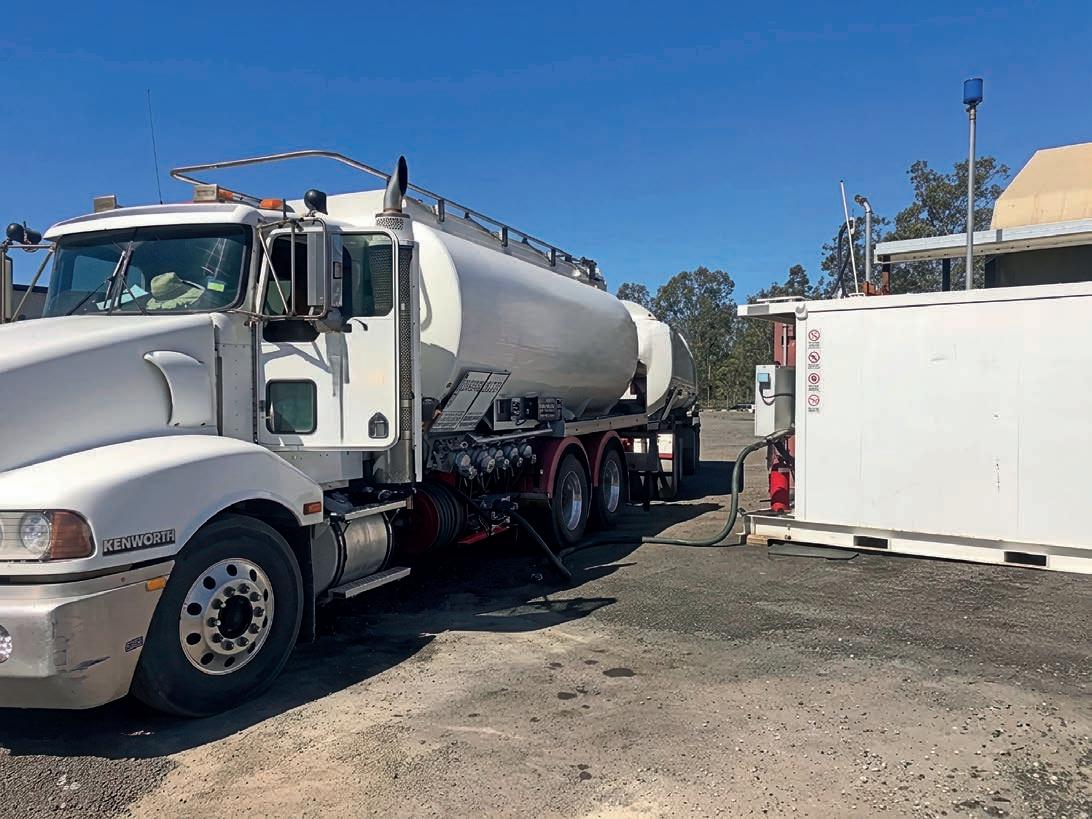
• Long-term fuel storage
• Repeated tank contamination issues
• Equipment downtime caused by poor fuel quality
Clean tanks and happy drivers
PMX 145 is designed to be added directly to the tank, making it practical for bulk fuel users who need to treat storage systems without com plicated handling or unneces sary downtime.
Once added, PMX 145 works through the fuel to control microbial contamination and help protect fuel quality.
In heavily contaminated tanks, dead microbial matter, sludge and debris may settle to the bottom of the tank, where it can be drained, filtered or removed.
Jimmy said while PMX 145 is very effective, good tank management is still important.

“PMX 145 is designed to kill and control the bug, but if a tank is badly contaminated, you may still need to remove water, change filters, inspect the tank or have it profession-
practices still matter.”
The final word
When thousands of litres of fuel are sitting in a tank, choosing the wrong additive can become an expensive mistake.
The right product should
PMX 145 is built around that principle. It is a tested fuel biocide designed to kill and control microbial contamination, reduce the risk of contaminated fuel, poor fuel flow and blocked filters, and help keep bulk fuel systems operating.
“If your fuel is sitting longer, stop treating the symptoms and address the tank,” Jimmy said.
To treat a contaminated bulk fuel tank, give the team at Cost Effective Maintenance a call on 07 3376 6188 or visit costeffective.com.au.
IN the Aussie transport game, a truck is never just a tool for shifting freight from A to B.
It’s your moving billboard, a reflection of how you run your business, and the daily office for the bloke or lady behind the wheel.
Out on the highway, presentation matters. Hard-working Australian truck drivers take a massive amount of pride in their rigs—and they should. Investing in topnotch, Australian-made gear isn’t about vanity; it’s about respect for the job, boosting driver morale, and showing premium clients that you don’t cut corners.
When a driver climbs into a rig that looks sharp, they treat it with a different level of respect. Pride in the fleet translates directly to pride on the road.
At Lelox, we’ve spent decades manufacturing the armour that keeps Aussie trucks looking immaculate and running safely.
We engineer three distinct
IT GIVES FLEET MANAGERS THE ULTIMATE BALANCE: A RUGGED, PREMIUM AESTHETIC THAT TAKES A BEATING FROM ROAD DEBRIS, BUILT AT A SCALE THAT MAKES SENSE FOR THE WHOLE YARD.
tiers of metal mudguards right here in Australia, en suring every operator can put their best foot forward without compromising on toughness.
For the blokes focused on maximum utility and keep ing a sharp eye on the bud get, our aluminium range delivers a cracking, light weight solution. They provide a clean, pro fessional look that stands up to the elements without stretching the bottom line, proving you can look the business on the asphalt with out breaking the bank.
Step up to the backbone of our factory floor – the Lelox Legacy Fleet Series. Crafted specifically for the punishing conditions of local highways, this gear is built from 1.2mm and 1.6mm heavy-duty, 430-grade stainless steel.
Boasting a brilliant, shiny finish, the Fleet Series de livers that classic, gleaming look that defines a proud Australian transport opera tion.
It gives fleet managers the ultimate balance: a rugged, premium aesthetic that takes a beating from road debris, built at a scale that makes sense for the whole yard.
But for the owner-operators and fleet leaders who want to go the whole hog, there is the Lelox Signature Series.
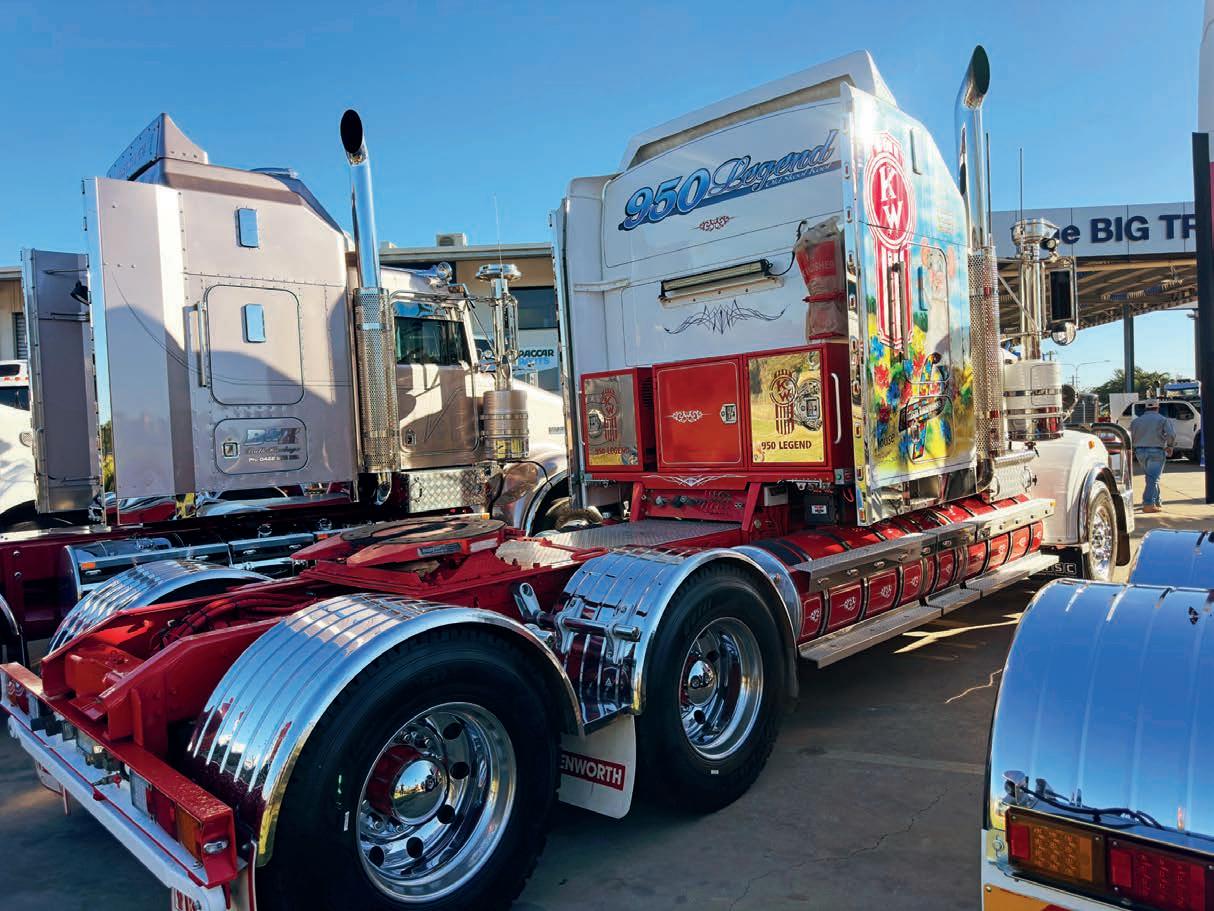
This is the absolute pinnacle of highway presentation. Built tough at 1.6mm thick and forged from premium 304-grade stainless steel, the Signature Series features a
true Number 8 mirror finish. It doesn’t just shine; it reflects a deep commitment to quality.
W hen a rig rolls down the road with Signature Series mudguards, it commands respect, elevates your brand, and rewards drivers with a truck they are genuinely proud to pilot.
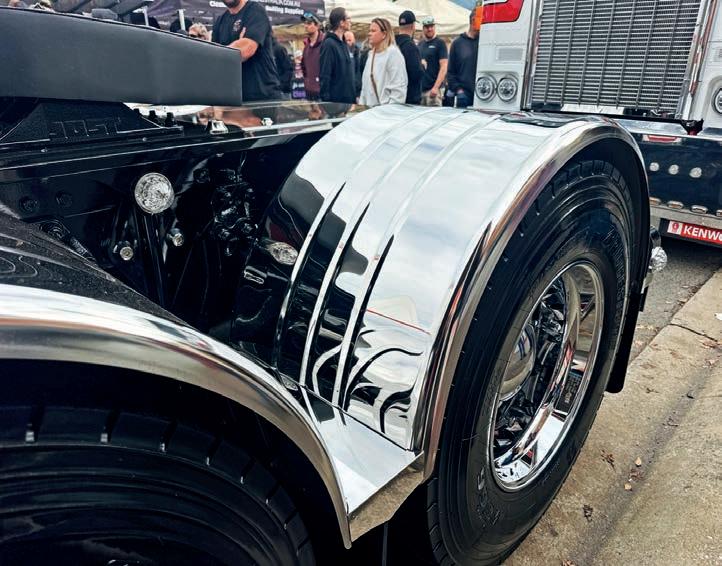
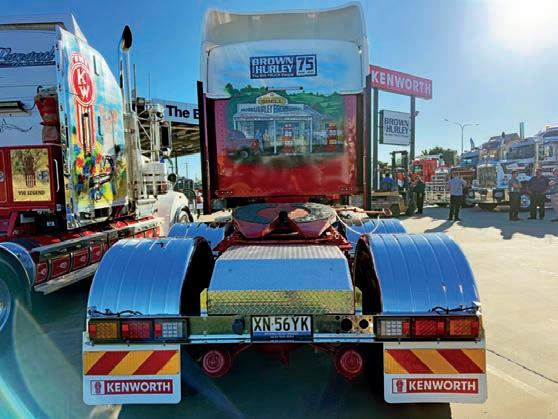
Yet, beyond the brilliant shine and the roadside appeal, choosing metal guards cross any of these three tiers comes down to hard-nosed safety and asset protection.
The Australian road network is bloody unforgiving. f you ever face the nightmare of a roadside tyre fire, heap plastic guards will simply melt away, fuelling the flames and leaving the trailer and cargo completely exposed to catastrophic amage.
Lelox metal mudguards – whether aluminium, standard stainless, or mirror-finish 304 – act as a rugged hermal shield. They help contain the heat, smother the initial breach, and buy precious minutes to protect your driver, your machinery, and your load.
Ultimately, how your rig looks tells the industry exactly how it’s run. By matching the right tier of Lelox metal mudguards to your budget, you aren’t just buying a component.
You’re protecting your investment, backing your drivers, and making sure that every single kilometre travelled builds your reputation as a premier operator. For more information, call Lelox on 02 4577 2390 or email sales@lelox.com.

There’s just two weeks to go until the trucks roll in for the opening night of the Casino Truck Show
CASINO Truck Show is back for 2026, bigger and better than ever.
To be held over two days, July 31 and August 1, in the country town of Casino in New South Wales’ Northern Rivers region, the annual event has become a must-do on the truck show scene.
Last year, more than 40,000
There are 77 such trophies on offer in 2026, across pretty much all makes of truck, style of truck, age of truck, and level of polish.
What started in 2012 with just 83 trucks has now become an international drawcard, bringing trucks and visitors from all over the world. There are at least two stunning
Camping at the showgrounds was booked out by the end of June, with organisers flagging the potential to release just a few more sites closer to the big days, if the weather looks dry. Keep an eye on their Facebook page @casinotruckshow for that.
Truck registrations opened on July 13 and were expected
31, with the Friday Night Lights show starting at 6pm.
A relatively new addition to the Casino Truck Show line up – Friday Night Lights –sees a large selection of trucks rolling into town with their lights shining bright to take their places parked up on the city streets. The town opens its doors to guests with live music on two stages, and plenty of night life to get the party atmosphere moving.

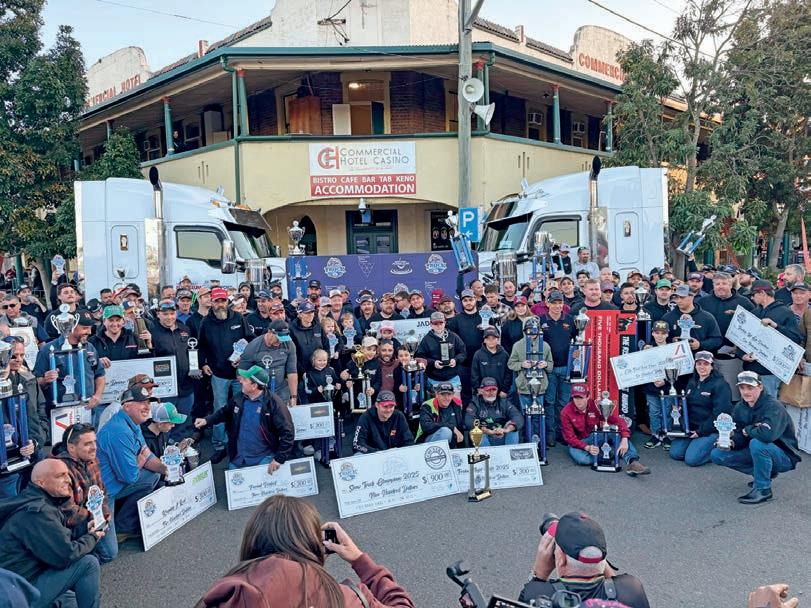
aturday, August 1, kicks off with The Dawson’s Haulage Truck Parade rolling from the Casino Industrial Estate to the
Showgoers line the streets along the route to cheer on the 200 trucks as they roll through and disappear into the city’s streets to be parked up and polished for judging time.
The city’s heart becomes a pedestrian zone from 10am to 4pm with trucks for as far as the eye can see in all directions.
The afternoon’s celebrations kick off with a charity auction at 2.30pm, followed by trophy presentations around 3pm. Worth noting that this year, the auction and presentations will take place at the northern stage, rather than the main
The charity auction is always
Last year Get Yourself Checked was the main beneficiary, picking up $12k, while

Westpac Rescue Helicopter and Flanno for a Farmer received $4k each. Casino Youth Hub, CFD Foundation and St Mary’s Primary School Laundry trailer, all received $2k each.
This year’s prizes on offer include:
• A custom-built Cummins engine boardroom table by Alltruck Diesel Repairs
• 2 custom-built trailer bars (think mancave to serve beer style) fabricated by Moore Trailers
• A set of traditional styled air cleaner barrels supplied by Air-Cans Australia
• A Casino Truck Show painted on Kenworth door by Loaded Threads
The Casino Truck Show has amassed a following of 30,000 on its Facebook page where regular show updates are released.
“As we edge closer to one
of Australia’s biggest truck shows, we want to take a moment to recognise and thank the incredible businesses and organisations that have come on board to support this year’s event,” the organisers say.
“Their commitment helps make the Casino Truck Show bigger and better each year, delivering an unforgettable experience for exhibitors, truck enthusiasts, families, and visitors from across the country.
“A huge thank you to all of our 2026 sponsors for backing this iconic community event.
“Your support plays a vital role in bringing the show to life and showcasing the very best of the trucking industry.”
For more on the show go to www.casinotruckshow.com. au or follow the Facebook feed at facebook.com/casinotruckshow.
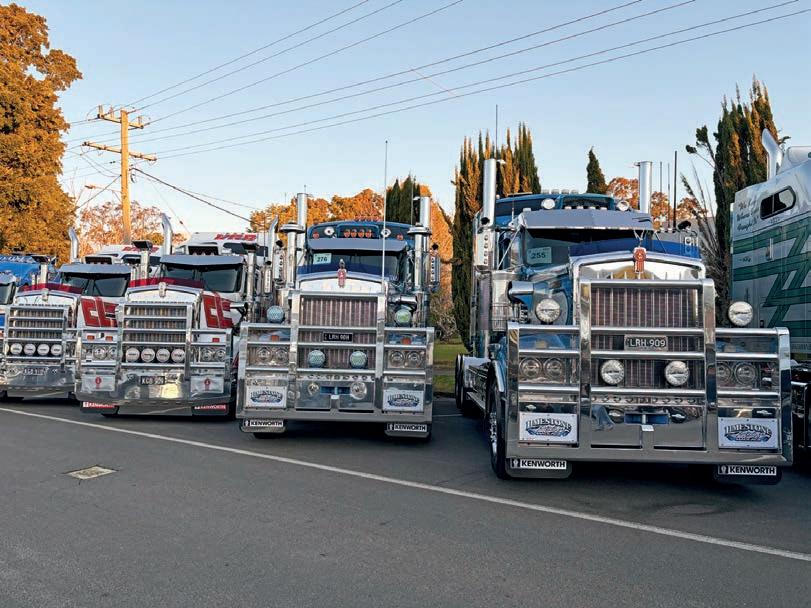
Charity partner and exhibitors announced for
IT’S full steam ahead for the organisers of MegaTrans 2026 which will take over the halls of the Melbourne Convention and Exhibition Centre on September 16-17.
The Royal Flying Doctor Service (RFDS) Victoria has been named as the event’s charity partner, and the exhibitor directory is now live on the megatrans.com.au website so visitors are able to start planning their days.
MegaTrans 2026, organised by Prime Creative Media (publisher of Big Rigs) will bring together hundreds of leading organisations from across the entire supply chain, giving attendees direct ac-
cess to the latest technology, equipment, vehicles and services shaping the future of the industry.
The exhibitor directory features industry leaders, including Amazon, DP World, Maersk, UPS, WiseTech Global, Team Global Express, Aramex Australia, Centurion, Visy Logistics, Geek+, HERE Technologies, Geotab, Jungheinrich Australia, Microlise, Powerfleet and Viva Energy Australia.
PCM Head of Marketing
Molly Hancock said the exhibitor directory provided a real sense of the scale of the show.
“From global logistics leaders
and major transport operators through to the companies developing the next generation of automation, AI and fleet technology, MegaTrans will truly showcase the end-to-end supply chain,” Hancock said. “Whether you’re responsible for transport, warehousing, procurement or supply chain strategy, you’ll find ideas and connections that can make an immediate impact.”
Hancock said the RFDS partnership reflected an understanding that the industries involved in MegaTrans had operations extending deep into regional and rural areas.
She said throughout the
lead-up to and during MegaTrans 2026, attendees and industry partners will have opportunities to engage with fundraising and awareness initiatives supporting R FDS Victoria’s work.
Marie Quirke, Chief Fundraising and Partnerships Officer at RFDS Victoria said the organisation is proud to work alongside the transport, logistics and supply chain industries to help deliver meaningful impact for remote, rural and regional communities.
Registrations to attend MegaTrans 2026 are free. Go to megatrans.com.au/ attend/.
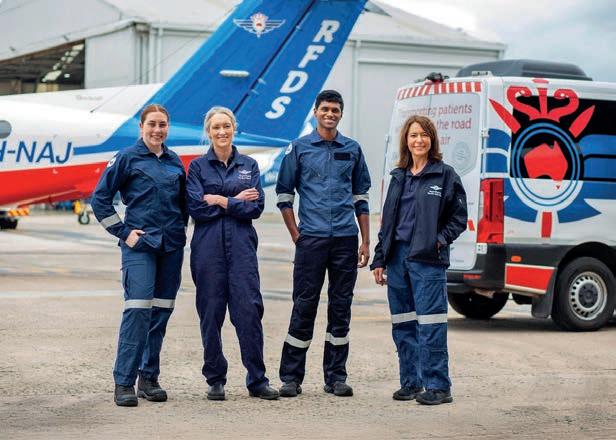










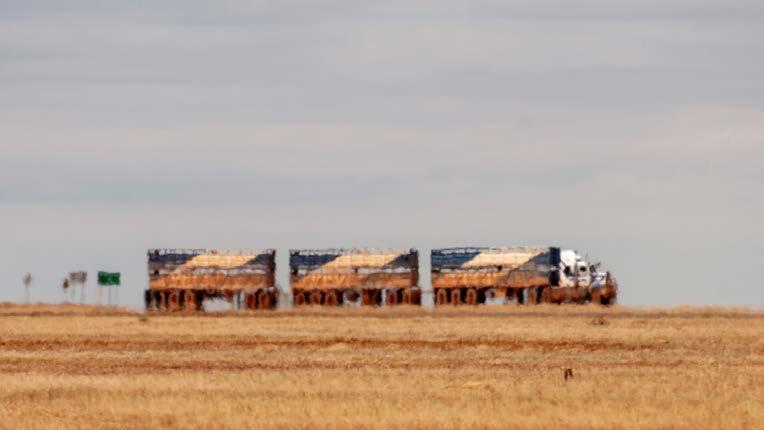

FOR this edition of Truckin’ in the South, I caught up with Darcy Smith from Brunswick, Western Australia, a young driver who’s proving that passion, hard work and determination are what really matter in the transport industry.
Darcy has been driving trucks for the past four years with Carbone Bros, where no two days are the same.
Her work includes supporting civil projects around Bunbury, carting materials in and out of sites, and shifting heavy machinery between jobs, all from behind t he wheel of a 2004 Kenworth T950 day cab.
Her love of trucks started well before she ever climbed into the driver’s seat.
“My dad drove trucks and I used to love going on jobs with him,” she said.
Those early memories turned into a career, and today she says the variety of the job is what keeps her coming back.
“Every day is a challenge and there’s always something different to do or learn. I’ve just always had a love for the big rigs.”
While Darcy enjoys the work, she admits there have been challenges that many of her male counterparts don’t experience.
“Being a female in a male-dominated industry can be tough. I’ve had my share of harassment and even been turned down for jobs because of my gender.”
She also hopes more attention is given to the lack of suitable facilities for women on the road.
“Sometimes there are no facilities for women. At places like the Picton assembly a rea there’s no female toilet or anywhere to dispose of sanitary products. There are only unisex and male toilets.”
Despite those challenges, Darcy says the support she’s received from those around her has kept her motivated.
“My boss, my coworkers and the mates I’ve met on the road have all been really encouraging.”
And there’s one part of the job that never gets old.
“I love seeing the smiles on kids’ faces when I pull the air horn.”
Her favourite stretch of
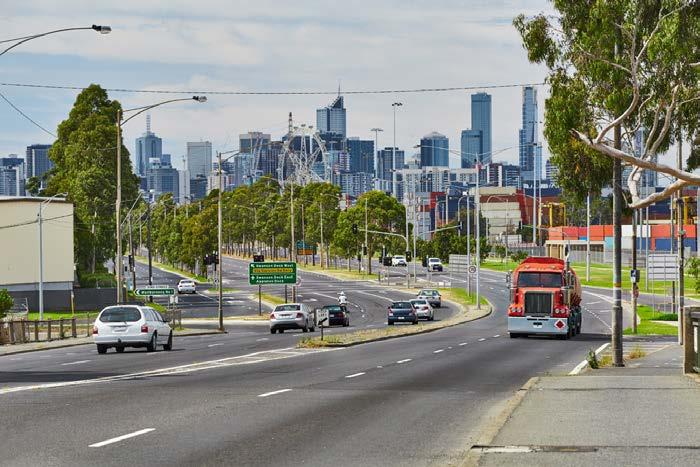
road is the South Western Highway south of Donnybrook, while the Ballingup Caltex is her preferred place to stop.
“It’s nothing fancy, but it’s always clean and there’s plenty of room to park.”
Looking ahead, Darcy already has a clear goal in mind.
“I’d love to own my own truck and trailers one day and head back home to the Wheatbelt to cart grain for my family.”
She believes the transport industry is facing some significant challenges, with rising fuel prices and the live export ban having a major impact.
“We all know about the fuel crisis, and with the live export ban a lot of drivers have had to park up because there’s just not enough support from the government.”
For anyone looking to get into trucking, Darcy has some advice that’s helped her along the way.
“Don’t be scared to ask for help or advice. There are still so many experienced people who genuinely want to help the next generation.”
EVERY DAY IS A CHALLENGE AND THERE’S ALWAYS SOMETHING DIFFERENT TO DO OR LEARN. I’VE JUST ALWAYS HAD A LOVE FOR THE BIG RIGS.”
When she’s not behind the wheel, Darcy enjoys getting away in her four-wheel drive and finding a quiet place to camp. She also has an in terest that surprises a lot of people.
“I actually love entomolo gy, especially butterflies and moths.”
It’s a hobby that’s a long way from the transport yard, but it shows there’s al ways more to truckies than what people see behind the wheel.
With a genuine passion for the industry, a willingness to keep learning and big plans for the future, Darcy Smith is helping pave the way for more women to step into trucking and proving that the next generation of drivers is in good hands.



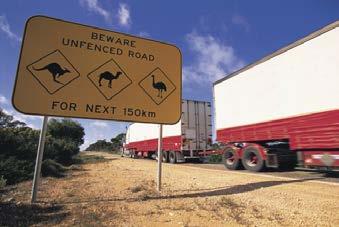

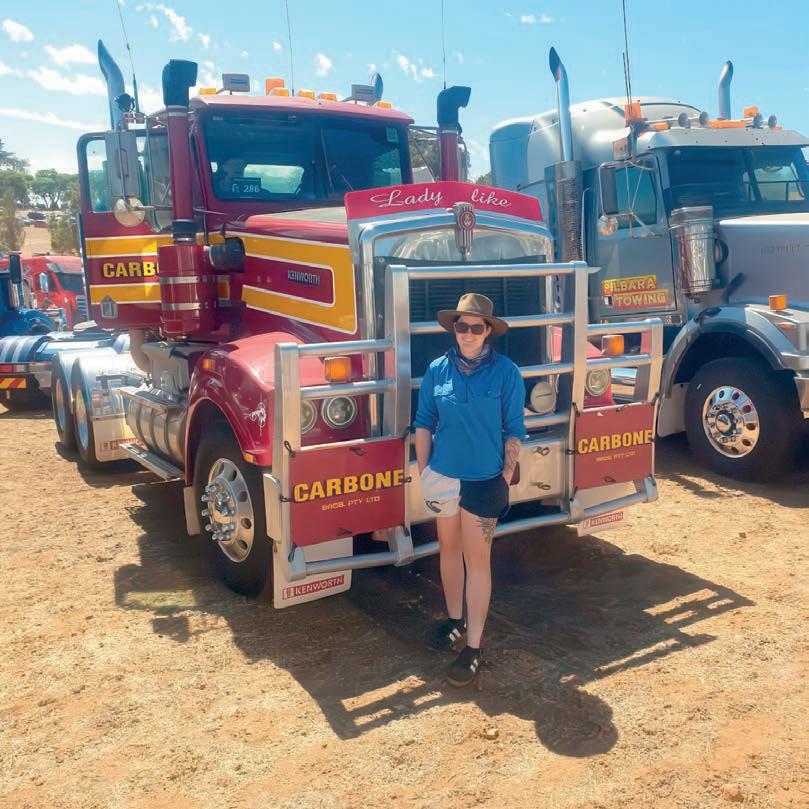


YOU can tell by the smile on his face when I snapped his pic at the Ampol Roadhouse just south of Bowen t hat Michael Bellchambers is a happy truckie.
Aged 59, Michael had parked his Volvo FH16 which he drives for PTH Low Loaders and was hauling a giant shovel buggy. It stood out on the trailer and numerous people who had pulled up in a bus nearby were taking photos of it.
“The Volvo is fantastic.”
Regarding rest areas, Michael said more are required in Queensland especially with decent facilities for truckies.
“There are not many good ones in Queensland and the NT but in NSW there are lots,” he said.
Michael said the Bruce Highway between Rockhampton and Mackay needs attention.
A connoisseur of fine food,
“I was given a giant rib fillet on my recent birthday at t he Moo Moo Wine Bar and Grill in Brisbane,” he said.
“It was huge and expensive and was called a birthday steak on the menu.”
A tasty meat pie is another treat that Michael enjoys a nd he lives at Yatala where there is an Australian renowned bakery.
“I go there when I can,” he said.

A trusty NPR 300 Isuzu driven by owner-operator Harry Roberts has more than 400,000km on the clock and is still going strong.
Harry has owned the 1996 Isuzu for about a year and said to the best of his knowledge it had never had a replacement motor during its long life.
“I do my own maintenance and changed the oil the other day and it runs like a dream,” he said.
ing to be converted into a tilt truck,” he said.
The worst road Harry has been on is around Georgetown on the way to Normanton.
“It is very bad at places,” he said.
Living in an area where skin cancer is prevalent, Harry al-
ways
“I
Outside work Michael bar-
bane Lions in the AFL and
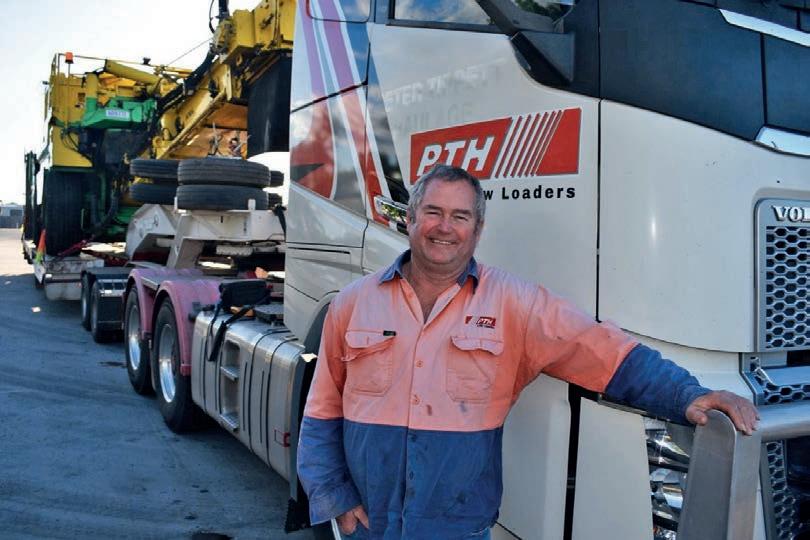
I saw Harry pull up the Bily ana Rest Area beside the Bruce Highway between Cardwell and Tully.
“I tow a trailer and carry cars around and other gear,” he said.
Harry is based at Mossman which is 70km past Cairns along the Captain Cook Highway.
“This Isuzu has been from Cairns and Brisbane and is go
I DO MY OWN MAINTENANCE AND CHANGED THE OIL THE OTHER DAY AND IT RUNS LIKE A DREAM”
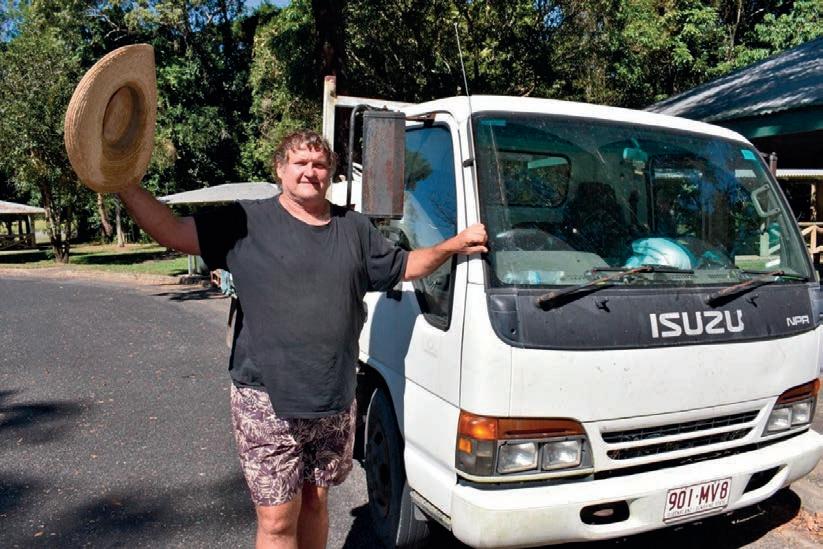
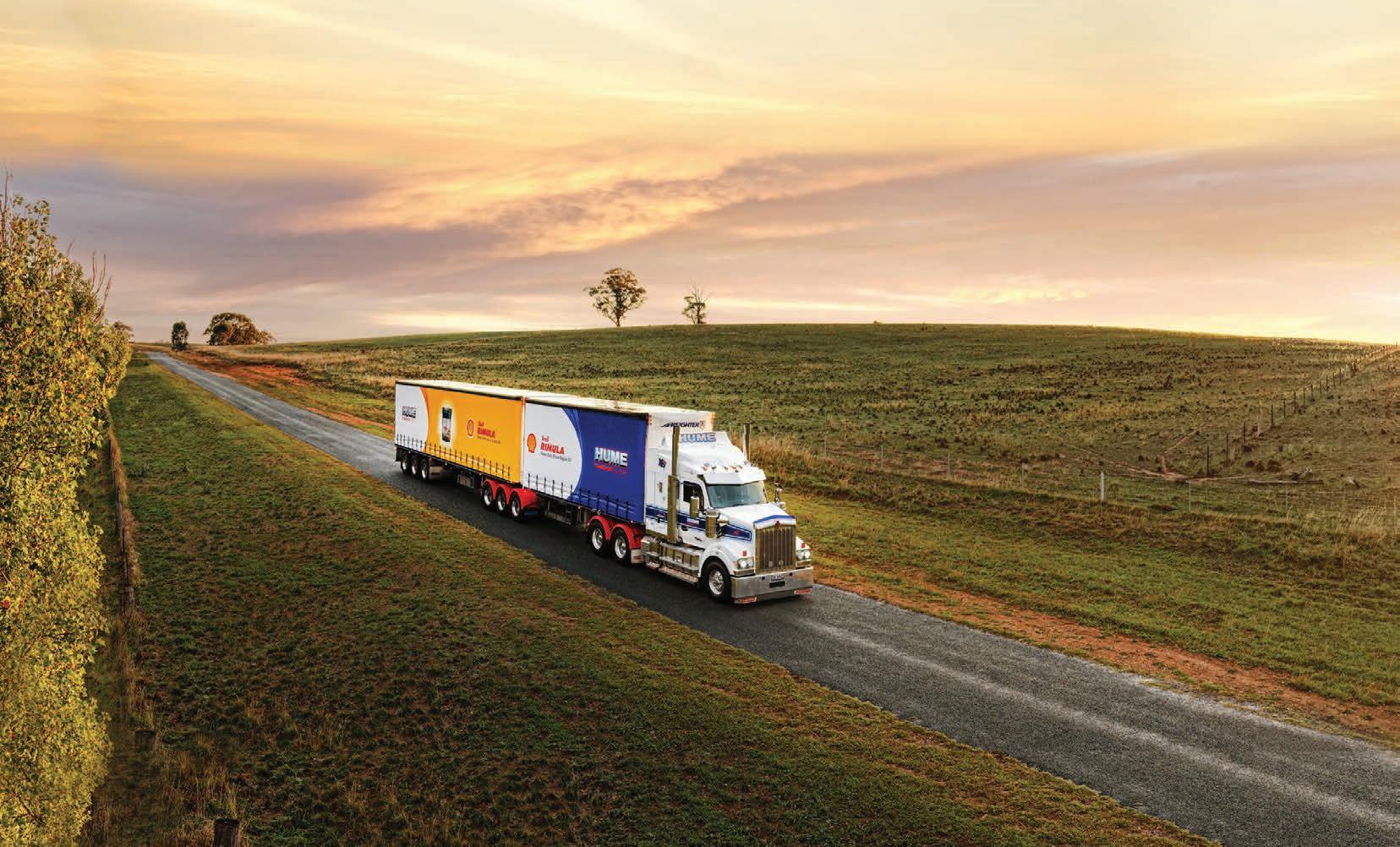




GLOWING reports have found their way to Spy about a new rest area on the northern Bass Highway between Deloraine and Westbury in Tasmania.
Some drivers have described it to Spy as a “super rest” area which should be a model for many more around the country.
One small fleet operator said it had been welcomed by drivers since opening in June.
“It has parking space for 15 or 16 trucks and the facilities are great. I am based in southern Tasmania but do a lot of my work up there and it is ideal,” he said.
The rest area includes seating, lighting, and toilet facilities, and is the first of two new
rest areas on the Bass Highway between Deloraine and Westbury. This has been designed to support the efficiency and fatigue management of heavy vehicle operators on the key freight route between Devonport, Launceston, and Hobart.
The Bass Highway, between Westbury and Deloraine, was identified as a high priority site to improve driver safety for all road users. Another Tassie driver said work is due to start in coming months on a similar rest area virtually opposite (about 400m east of the westbound one) for Westbound traffic.
Log trucks logging in for bakery visits
While on the subject of
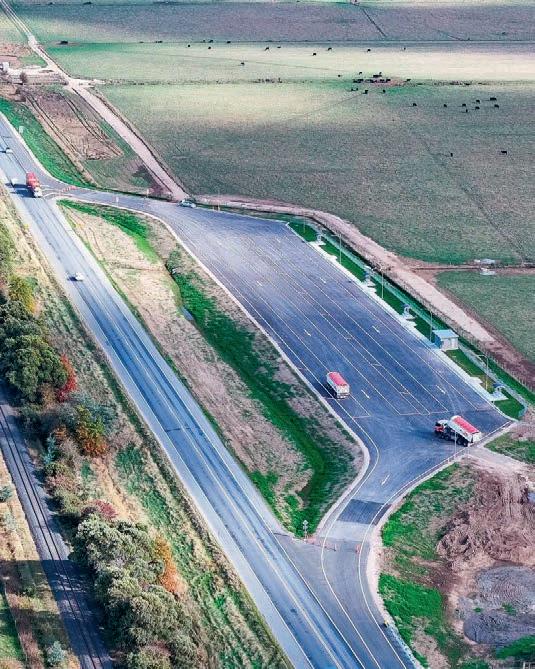
Tasmania, I hear that truck drivers who travel between Hobart, Port Arthur and Nubeena have been patronising the bakery at Dunalley.
I a m told that 11 log truck drivers stop there most mornings.
“The egg and bacon sandwiches, rolls and pies are delicious, and they just started doing toasties. Coffee there is also awesome,” one told me.
Getting there so early is the go as in the following hours many travelers heading to Port Arthur Historical site stop there.
Dunalley is a small fishing village located about 57km east of Hobart and 21km from Sorell.
It is situated on the narrow isthmus that separates the Forestier and Tasman Peninsulas from the rest of Tasmania. Dunalley is known for its Denison Canal, which was hand-dug in 1905 to facilitate boat traffic between Dunalley Bay and Blackman Bay it is a small hamlet.
Outrage over rate cut
An extremely angry veteran owner-operator spoke to Spy about being undercut on a load rate for a regular trip between Brisbane and Melbourne.
“I was getting $4800 for the run with a single trailer, and I was furious when a company offered it for a lot less,” he said.
The 65-year-old said that discount rate was for $3600.
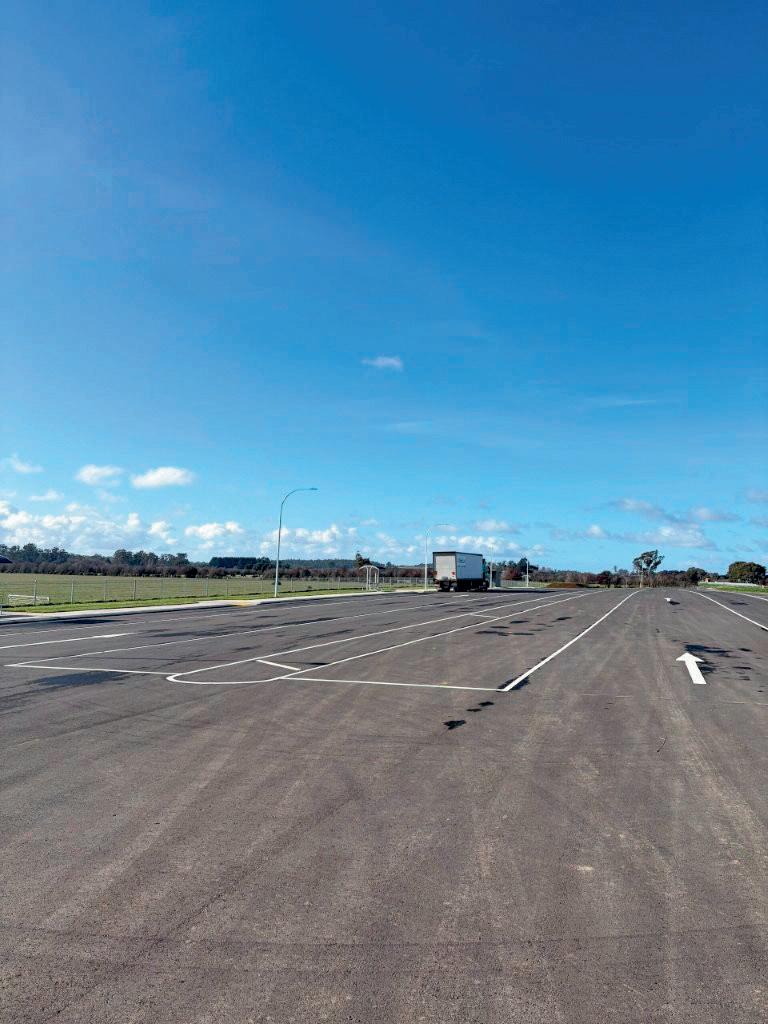
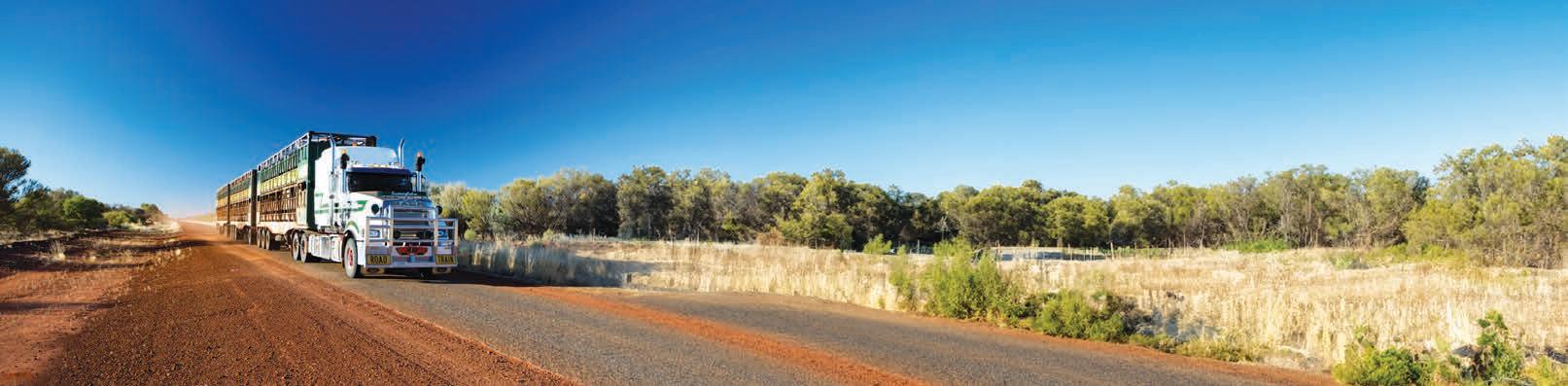
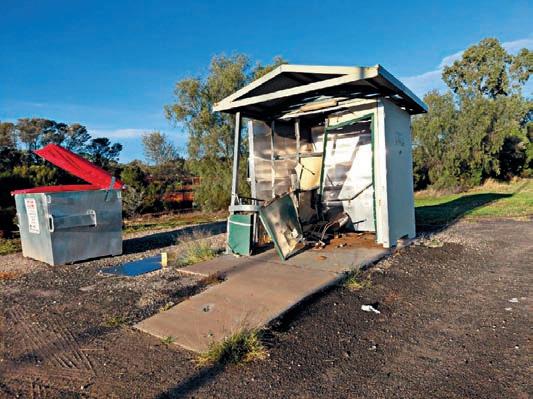
“To make matters worse that was for a B-double trip,” he said.
He said this was happening all over Australia and had many small operators ready to pull the pin and retire.
“Or to work for a company on wages. This type of cutting is like getting away with murder.
“Our costs are going up and many will not survive,” he said.
NT skin cancer alert
Skin cancer affects many Australians including truck drivers who are often exposed to the sun.
These cancers are usually found on parts of the skin which are not covered by clothes.
However, that is not always the case as one driver who had done regular runs throughout the NT discovered to his chagrin.
“I had a sore on my shoulder blade which is always covered by a shirt and kept rubbing it and decided to get it checked out by a doctor.
“It was a skin cancer which was surgically removed and required 10 stitches,” he said.
The removal of the cancer was done by a doctor in Mount Isa across the border in Queensland,” he said. It was sent to pathology and was found to be a squamous cell carcinoma which is an aggressive cancer.
“I just want other truckies to be aware that if they have a sore that won’t heal get it checked out.
“Even if it is covered most of the time by clothes.”
Wrecked toilet block snap
In Big Rigs’ June 5 edition, Spy reported on a wrecked dunny building located west of Cobar on the Barrier Highway which had been used by truckies. However, a vehicle hit it back in May of 2024 and it still hadn’t been repaired. A local man was charged with negligent driving over the collision.
Drivers said it was a shell of a toilet block and should have been demolished or replaced

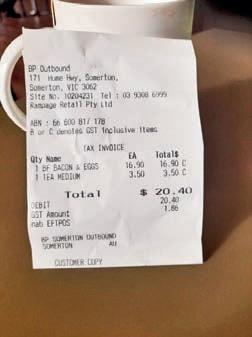

by now. Spy received numerous contacts from drivers on the subject, and one interstate driver Martyn Dijkxhoorn snapped a pic of it when he was passing by.
Truckies are always on the lookout for a value-priced meal which is tasty in their travels around Australia.
On the odd occasion a driver will snap a pic of his meal and receipt to send it to Spy.
A veteran NSW owner-operator did that after having a bacon and eggs breakfast at BP Somerton outbound along the Hume Highway in Victoria.
Price was $16.90 and he also had a cup of medium-sized tea
During the past month Spy has stopped off at many roadhouses to check out in person what facilities and services they provide for truckies.
In late June I ventured into the Giru United Roadhouse which is beside the Bruce Highway between Townsville and Ayr.
It is also known as Greenacres and Spy found the food was fine with a full section of hot food ready to eat in house or to takeaway.
There was a comfortable sitting area inside and the toilets (male, female and disabled) were very clean as were the two showers.
A steady flow of trucks pulled
building which is an upgrade of the former establishment which nevertheless had character.
On the doors of the toilets were signs “Mangoes’’ for men and “No mangoes” for women.
Fuel price difference
While in Bowen, recently Spy got to check out the fuel prices and discovered a huge difference between some outlets.
The Metro Roadhouse was selling unleaded for $159.9 cents per litre.
By comparison it was between 10 and 14 cents a litre more expensive at some places.
Metro was selling premium diesel for $201.9 and I asked the attendant how come it could sell fuel generally cheaper.
“We have been here about four years and try and keep the prices as low as possible and get a lot of people here because of that,” he said.
However, he did say that whilst the diesel price there was competitive, sometimes another outlet had it slightly cheaper.
mobile phone when on the job.
The footage from inside his truck was linked to the NHVR which passed it on to his boss.
After being stood down for some weeks he was dismissed.
Three weeks later Spy can report that the middle-aged long-time driver has snared a job with another company on comparable wages.
The other good news is that his permanent run is a round trip of about 300km along a sealed road.
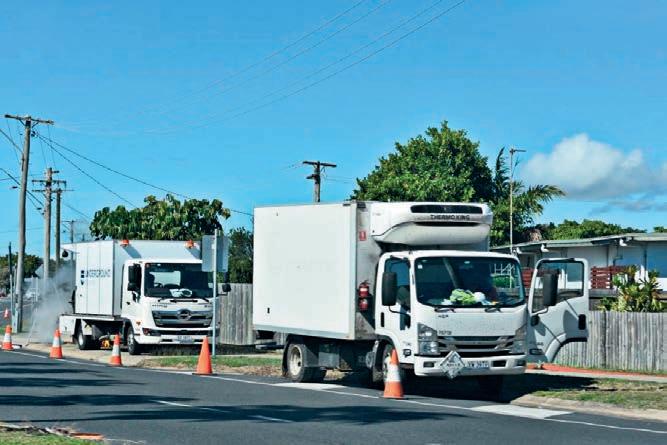
That compares to thousands of k’s he used to do travelling on often unsealed roads to remote places.
Underground trucks query
A small fleet of trucks parked beside a busy road at Bowen in north Queensland sparked plenty of interest.
On the side was written “underground” and in smaller letters below was the word experts.
“That is at the Don River -
ecently Spy reported on an
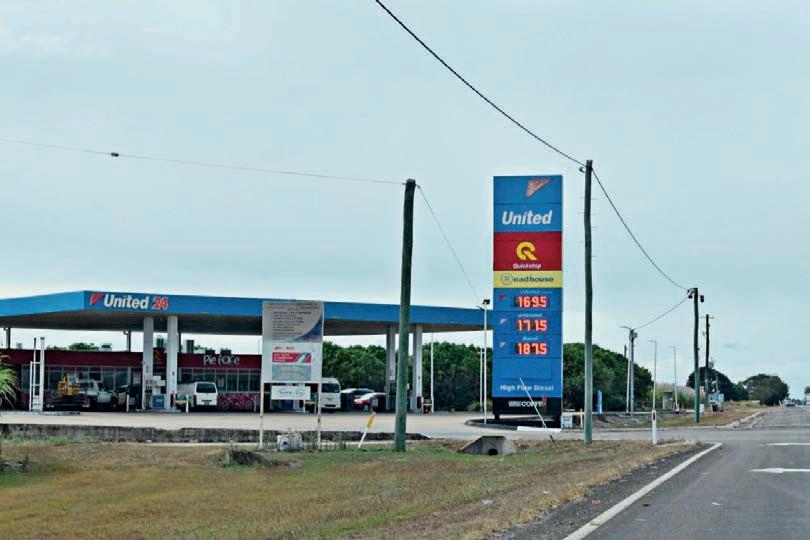
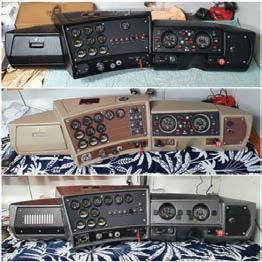
Spy did a bit of “digging” –pardon the pun - and discovered they were from a company which has equipment and material which rehabilitate old pipes eliminating the need for replacing the damaged ones.
At one site I saw steam blowing out of an underground area across from a busy shopping centre.
People were stopping and taking photos.
Vivid memories of transport legend
A Pioneers’ Weekend at the Historic Herberton Village on May 30 and 31 ignited wonderful memories for Spy of the late and great legendary local truckie and war hero Darby Camp.
It was the 17th anniversary of the event which included a celebration of local musical talent and Australia’s rich heritage including the road
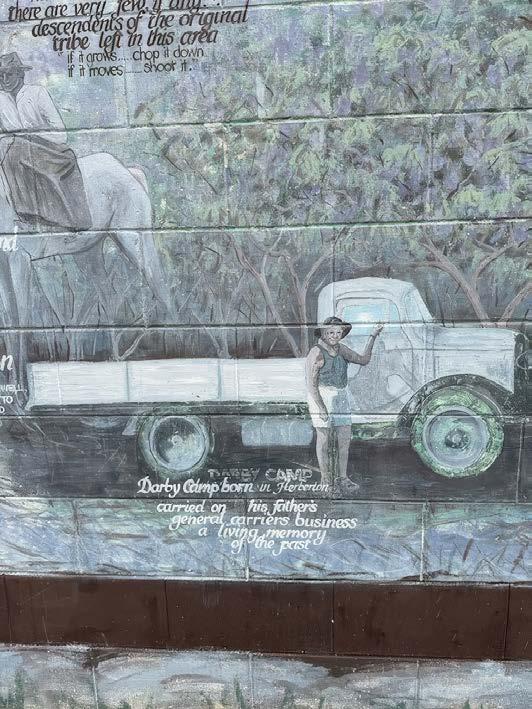
down memory lane about the road transport industry pioneering Camp family at Herberton.
A local park there is named after the late Darby Camp, and his former 1948 Morris Commercial truck has been restored and is now on display.
An image of them is included in a mural on the side of a
Quietly spoken Darby bought the truck, affectionately known as the ‘Old Girl’, from a Malanda farmer in 1956 and used it for general cartage around town.

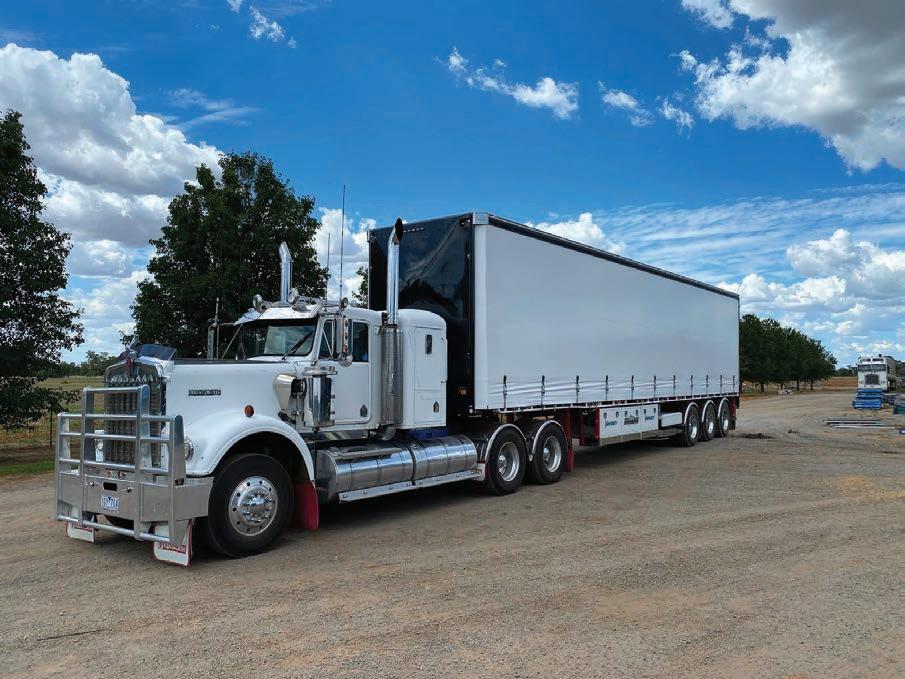

ELECTRONIC work diaries (EWDs) continue to play an important role in supporting safe and efficient fatigue management across the heavy vehicle industry.
They provide a trusted digital alternative to paper-based work diaries and help drivers and operators meet their obligations under the Heavy Vehicle National Law (HVNL).
With the amended HVNL due to commence on August 1, 2026, the National Heavy Vehicle Regulator (NHVR),
in partnership with Transport Certification Australia (TCA), is strengthening the EWD Framework to ensure it remains practical, consistent and fit for modern freight operations. Importantly, there is no immediate change for drivers or operators. Approved EWD systems remain valid, and drivers should continue recording their work and rest hours as they do today. Existing fatigue accreditation arrangements also remain in place.
Why the framework is being strengthened
Over recent years, industry feedback has suggested areas where EWDs can be improved in day-to-day use.
W hile EWDs have delivered clear safety and productivity benefits, industry has highlighted the importance
of ensuring greater consistency and improved user experience across systems as the technology continues to evolve.
In response, independent assurance testing was undertaken last year across approved systems to better understand how the framework is performing in practice. Alongside broader review work, the outcomes of the testing identified system-wide opportunities for improvements to EWD Standards, testing, and assurance arrangements.
Building Generation 2.0
The EWD Reform Program aims to strengthen the existing framework by focusing on practical improvements that make systems more consistent, reliable and easier to use for drivers and operators. This includes the develop-
ment of a Generation 2.0 (Gen 2.0) EWD Specification, supported by a central data repository and central Driver ID registry.
These enhancements are designed to simplify and improve the driver onboarding process and ensure that fatigue records are managed consistently regardless of which provider’s system is being used.
Gen 2.0 is expected to be released on August 31, 2026, with refinements underway following industry consultation. A staged transition approach will be implemented this year to support gradual adoption and minimise any disruption.
The goal is to ensure more consistent system behaviour, clearer expectations across providers, and greater confidence that EWDs are performing as intended.
The NHVR’s partnership with TCA supports a more nationally consistent approach to EWD oversight. TCA brings specialist expertise in telematics, certification and assurance, helping ensure the framework remains robust and fit for purpose.
The NHVR has also been working closely with approved and prospective EWD providers throughout the process, recognising that meaningful improvements depend on collaboration.
These changes will also support future fatigue management arrangements, including Alternative Compliance Accreditation – Fatigue (ACA-Fatigue) under the new Heavy Vehicle Accreditation (HVA) scheme, ensuring EWDs remain fit for purpose as the industry evolves.
Some operators using EWD systems may have Basic Fa-
tigue Management (BFM) or Advanced Fatigue Management (AFM) accreditations approaching expiry in the period between August 1, 2026 and the wider availability of Gen 2.0 EWD systems supporting ACA-Fatigue.
To support continuity for operators with fatigue accreditation, the NHVR has already contacted operators directly about available options. You can read more about the HVA transition on the NHVR website. Visit nhvr. gov.au and search ‘HVA scheme’.
For more information on EWDs and the development of Gen 2.0, contact fatigue. management@nhvr.gov.au, or visit the NHVR website: https://www.nhvr.gov.au/ safety-accreditation-compliance/fatigue-management/electronic-work-dia ry.
sustainability and leadership, the awards recognise those businesses and individuals who are setting new benchmarks and driving positive change.
THE Australian freight and logistics industry plays a vital role in keeping our economy moving. Every day, businesses across the sector work to deliver goods safely, efficiently and reliably, often overcoming significant operational challenges along the way.
While much of this work happens behind the scenes, it is important that we take time to recognise the individuals and organisations whose achievements are helping make our industry safer, more productive and more effective.
That is why the Australian Freight Industry Awards (AFIAs) continue to be such an important and respected industry initiative.
The AFIAs celebrate excellence across a range of areas that are critical to the future success of freight and logistics.
From safety and technology to workforce development,
Recognition is about more than winning a trophy. It provides an opportunity to showcase innovative ideas, share best practice and promote continuous improvement across the industry.
When a business develops a safer operating procedure, introduces new technology, invests in its people or implements a successful sustainability initiative, there is value in sharing that success with others.
Safety remains one of the most important priorities for every freight operator. The industry continues to invest in initiatives that improve workplace safety, reduce risk and protect both employees and the broader community.
By acknowledging organisations that deliver measurable safety improvements, the AFIAs help reinforce the importance of strong safety cultures and practical innovation.
Technology is another area where Australian freight businesses are making significant advances.
New systems, automation, data analytics and vehicle technologies are helping im prove productivity and oper ational performance. Recog nising successful applications of technology encourages fur ther innovation and demon strates what can be achieved when businesses embrace change.
Equally important is the investment being made in people. Our industry’s future depends on attracting, devel oping and retaining talented individuals.
Organisations that support training, leadership develop ment and career progression are not only strengthening their own businesses but helping build a more capable and sustainable industry workforce.
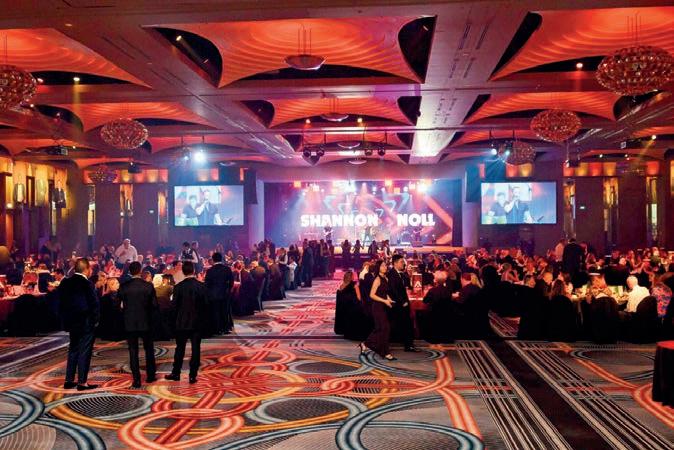
The awards also recognise emerging leaders, women in leadership and organisations delivering meaningful sustainability outcomes.
These categories highlight the breadth of talent and innovation that exists throughout the transport and logistics sector and celebrate those helping shape a stronger future for our industry.
Importantly, the AFIAs are open to businesses of all sizes. Many outstanding initiatives
come from small and medium-sized operators that identify a challenge and develop practical solutions that deliver real results.
Whether it is a safety improvement, a technology project, a people-focused initiative or an environmental achievement, every organisation has a story that may inspire others.
I encourage all industry participants to consider nominating a deserving colleague, team or business.
Recognition not only celebrates success but acknowl-
edges the dedication, effort and commitment of the people who make those achievements possible. I also encourage operators, logistics providers, suppliers and industry stakeholders to take the opportunity to showcase their achievements and contribute to a culture of excellence across the freight sector.

The Australian freight industry has every reason to be proud of its accomplishments.
The AFIAs provide a valuable platform to recognise ex-
RECOGNITION NOT ONLY CELEBRATES SUCCESS BUT ACKNOWLEDGES THE DEDICATION, EFFORT AND COMMITMENT OF THE PEOPLE WHO MAKE THOSE ACHIEVEMENTS POSSIBLE.
cellence, share success stories and inspire the next generation of industry leaders. I look forward to seeing a strong field of nominations and celebrating the achievements of our industry’s best at the Australian Freight Industry Awards Gala Dinner in Melbourne on September 5. After all, recognising excellence is not simply about celebrating success, it is about encouraging the innovations, leadership and best practices that will continue to make our industry safer, more productive and more effective in the years ahead.
Nominations for the 2026 Australian Freight Industry Awards are now open and can be submitted online at www.afiawards.com.au.








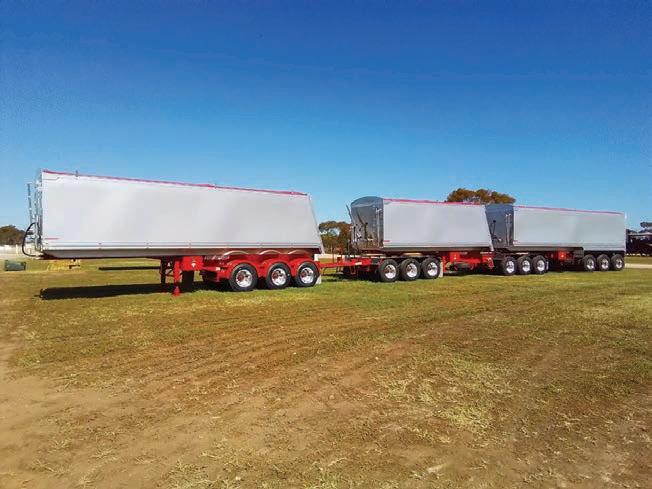
WHEN Sugan Balusamy arrived in Australia in 2013 after being displaced from Sri Lanka, he was focused on rebuilding his life and finding work.
After arriving by boat, he spent time in detention centres on Christmas Island and in Weipa before beginning a new life in Australia.
Like many new arrivals, he took whatever work he could find, including farm work, tiling and rendering, before eventually moving into transport.
A n opportunity through community food network Box Divvy would ultimately help reshape his future.
Central to the organisation’s approach is a belief that business can be a force for good, creating opportunities for the people and communities around it.
After saving enough money to purchase his first truck, Sugan approached Box Divvy founder Anton van den Berg looking for regular work.
Within months, he had secured consistent delivery work. More importantly, he found someone willing to encourage him to invest in himself and build a business of his own.
“Anton always encouraged me to build something of my own. He would talk to me about when it made sense to buy another truck, how to set things up properly and what
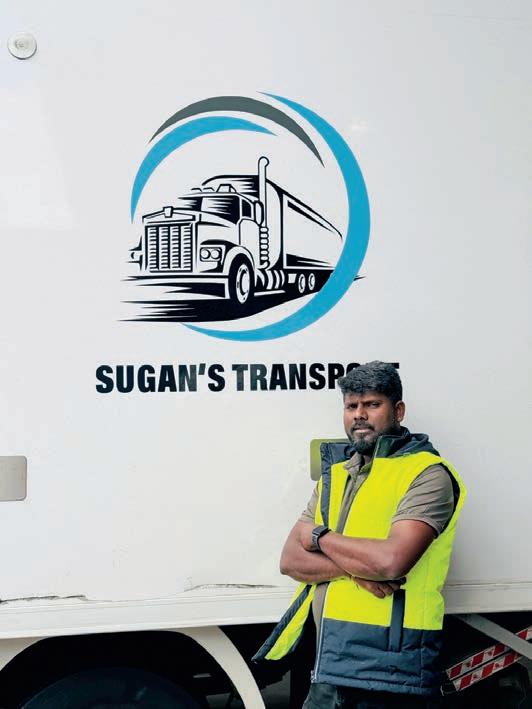
I needed to do if I wanted to grow,” Sugan said. Today, Sugan owns two trucks, works with three drivers and contractors, and undertakes additional transport work on weekends.
The support extended beyond business. When Sugan applied for Australian citizenship, 11 local Box Divvy Hub members provided character references in support of his application.
“It meant a lot because those people knew me through my work and through the community. It made me re-
alise how much my life had changed since arriving in Australia,” he said.
A similar story has unfolded for Auburn resident Sahil Chaudhary.
After arriving in Australia on a student visa in 2014 to study information technology, Sahil worked a range of jobs, including food delivery, trolley collection and transport work.
He joined Box Divvy in 2017 after responding to an advertisement on Gumtree and spent several years learning the industry while saving
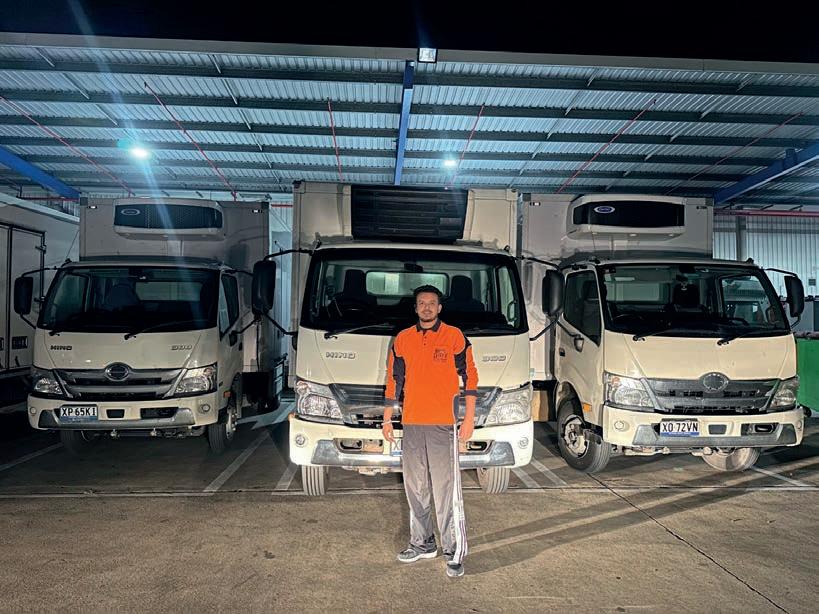
money. After encouragement from van den Berg, he purchased his first truck and established his own business.
Today, Sahil’s company, Ivaan Transport, operates five trucks and employs six drivers.
“I knew how to drive, but I didn’t know how to run a business. Having someone willing to share their knowledge and give practical advice made a huge difference,” Sahil said.
Van den Berg said helping people grow alongside the business has always been central to Box Divvy’s approach.
“We’ve always believed business success should create opportunities for the people around us as well. If someone wants to build something of their own, we’d rather support that than keep them in the same role forever,” he said.
“Over the years we’ve seen drivers purchase trucks, build businesses and create employment opportunities for others. That’s something we’re incredibly proud of.”
As Box Divvy has expanded, several drivers have gone on to purchase trucks, establish transport businesses
and employ others, creating opportunities that extend beyond the company’s own workforce.
The community food network operates more than 360 neighbourhood Hubs across NSW, the ACT and Victoria, supporting more than 14,000 households with access to fresh produce and groceries through local community networks.
“Success isn’t just about growing the network. It’s about creating opportunities for other people to succeed as well,” van den Berg said.
About the position:
• Semi, road train and truck & dog combinations
• Water and vac tanker operations e.g., dust suppression/road watering, transporting drilling fluids, water etc
• Specialised landspray operations
• Managing fluid transfer operations on the lease
• On the job training provided
• 12-hour shifts
• Roster is either 2/2 or 2/1 weeks (depending on the operation)
• Meals and accom provided
• This role can be labour intense which requires applicants to be physically fit and have a sound knowledge of positive manual handling techniques
• Above award wages, with the potential to earn up to $52/hr plus super
Requirements of the positions:
• Heavy vehicle licence required
• Min 2 years (recent) heavy vehicle driving experience
• Competently drive an 18-speed road ranger transmission
• Mandatory medical assessment and traffic history checks
• Commitment to health, safety and environmental practices and standards
• Knowledge and understanding of heavy vehicle maintenance
Due to company expansion, we have multiple positions available providing heavy vehicle support to CSG field operations in South West QLD. Please direct all applications and enquiries to: careers@coho-resources.com Craig Davis: 0455 538 253 / (07) 3870 0849
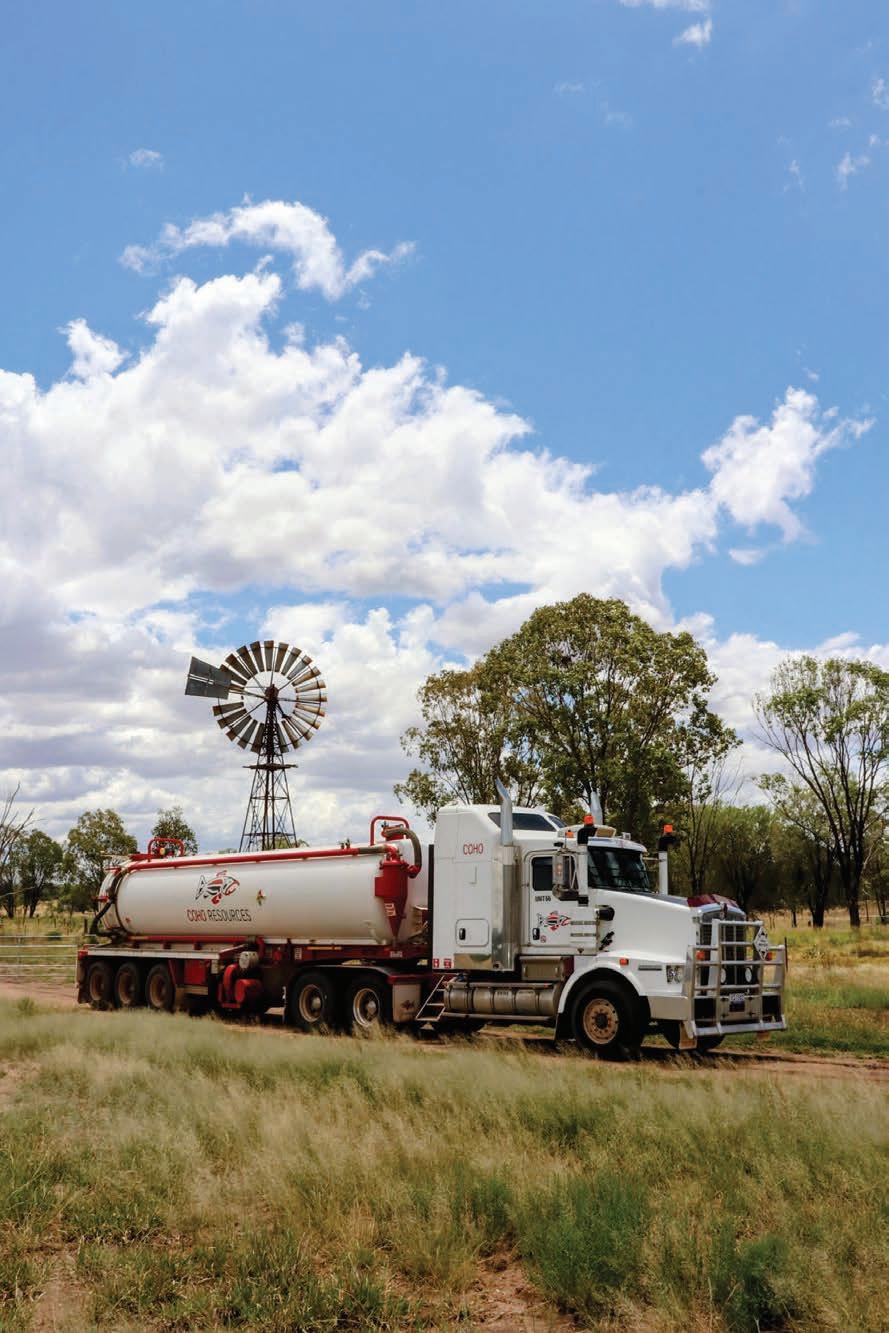
SEVEN women have become the first graduates of the revamped Volvo Iron Women program, an initiative designed to help more women launch careers in Australia’s road transport industry.
The inaugural graduates were recognised at a ceremony held at the Museum of Vehicle Evolution (MOVE) in Shepparton after completing the enhanced 12-week program.
The refreshed initiative is delivered through a partnership between WomenCAN Australia, Volvo Trucks Australia, Wodonga TAFE and Transport Women Australia Limited (TWAL).
The first graduating class is: Kellie Crosier, Furaha Biringanine, Regina Biringanine, Emma Dryden, Liz Fell, Sarah Pearson and Tiva Tuaopepe.
BLACKLOCKS Isuzu’s Richard Pineros has been crowned Isuzu Australia’s National Champion Sales Consultant of the year.
Designed to foster continuous improvement and industry-leading customer care, the sales component of Isuzu’s Team Elite program sees three finalists tested across a broad range of disciplines including product knowledge, sales capability, customer service
Along with heavy vehicle licence training, participants receive industry education, up to 12 hours of heavy rigid driver training, mentoring, workplace exposure through the Placement Circle program and introductions to prospective employers.
Graduates also receive a complimentary one-year membership with TWAL to help them continue building industry connections.
“It’s a great achievement and honour to participate in this course,” Liz Fell told Big Rigs
“Also, when you let companies know you are “green” to the industry it’s been greeted with a positive response even over the phone – you need to start somewhere.”
TWAL chair Coralie Chapman congratulated the
and business support.
Alongside Pineros, this year’s finalists also included Ben Deane from Dwyers Truck Centre in Wollongong and Jacque Semerjian from Patterson Cheney Isuzu in Melbourne.
For Pineros, winning the prestigious national Isuzu title marks the culmination of close to a decade of dedication, steady progression and development through the competi-
graduates in a message read during the event.
“A massive congratulations to all of you, and a warm welcome to the transport industry,” Chapman said.
“It is absolutely fantastic to see more women taking the wheel, obtaining their licences and driving the industry forward.
“I would also like to extend a huge thank you to Volvo, Wodonga TAFE and WomenCAN Australia for collaborating on this amazing initiative. Programs like this are changing the game, and I can’t wait to see even more women take the leap in the future.”
According to the organisers, many participants began the course unsure whether they could gain a heavy vehicle licence or pursue a career in
tion ranks each year.
“It’s amazing,” said the Wodonga-based Pineros.
“To be honest with you, it’s something I’ve been working hard for over the past 10 years.
“Winning this award is not just a feeling of achievement and pride, but also a feeling of relief in a sense.
“I work hard to provide solutions for my customers, and I’ve really focused on delivering the best customer service
transport. After 12 weeks, they graduated with heavy rigid licences, practical skills, increased confidence and industry contacts.
The program also received support from employer partners FOOTT Waste Solutions, Gouge Linen and Garment Services, Leocata’s Transport and Dysons, which provided workplace exposure and engagement opportunities throughout the course.
T WAL said initiatives such as Volvo Iron Women help create practical pathways into the transport industry while addressing workforce shortages and encouraging greater diversity across the sector.
The seven graduates are now preparing to begin careers behind the wheel.
“These women are more than graduates – they are
possible – this is paramount to me.”
IAL Head of Sales, Craig White, said the Team Elite program continued to play a critical role in developing high-performing dealership professionals across the Isuzu network.
“The Team Elite program reflects Isuzu’s ongoing commitment to excellence across every aspect of the customer experience,” said White.
changemakers showing what’s possible when women back themselves and each other,” added WomenCAN Australia in a congratulatory social media post.
WomenCAN Australia said
pants in the program begin their industry education this month.
To register your interest in taking part in the driver training program in the future, visit volvotrucks.com.
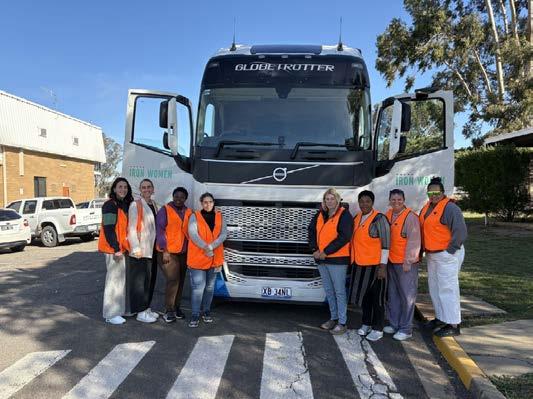
“Our dealer network is one of the great strengths of the Isuzu brand and people like Richard embody the professionalism, product knowledge and customer-first attitude that Australian truck buyers value so highly.
“Richard has consistently featured amongst our top three salespeople for several years now and has demonstrated exceptional consistency throughout the competition process.”