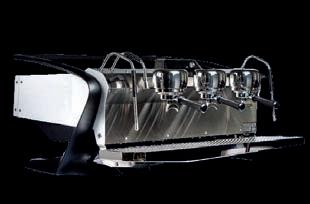
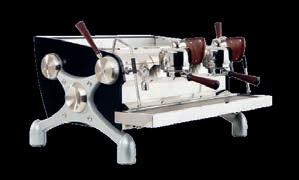
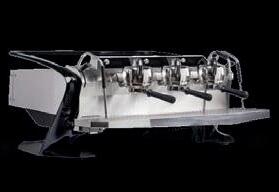
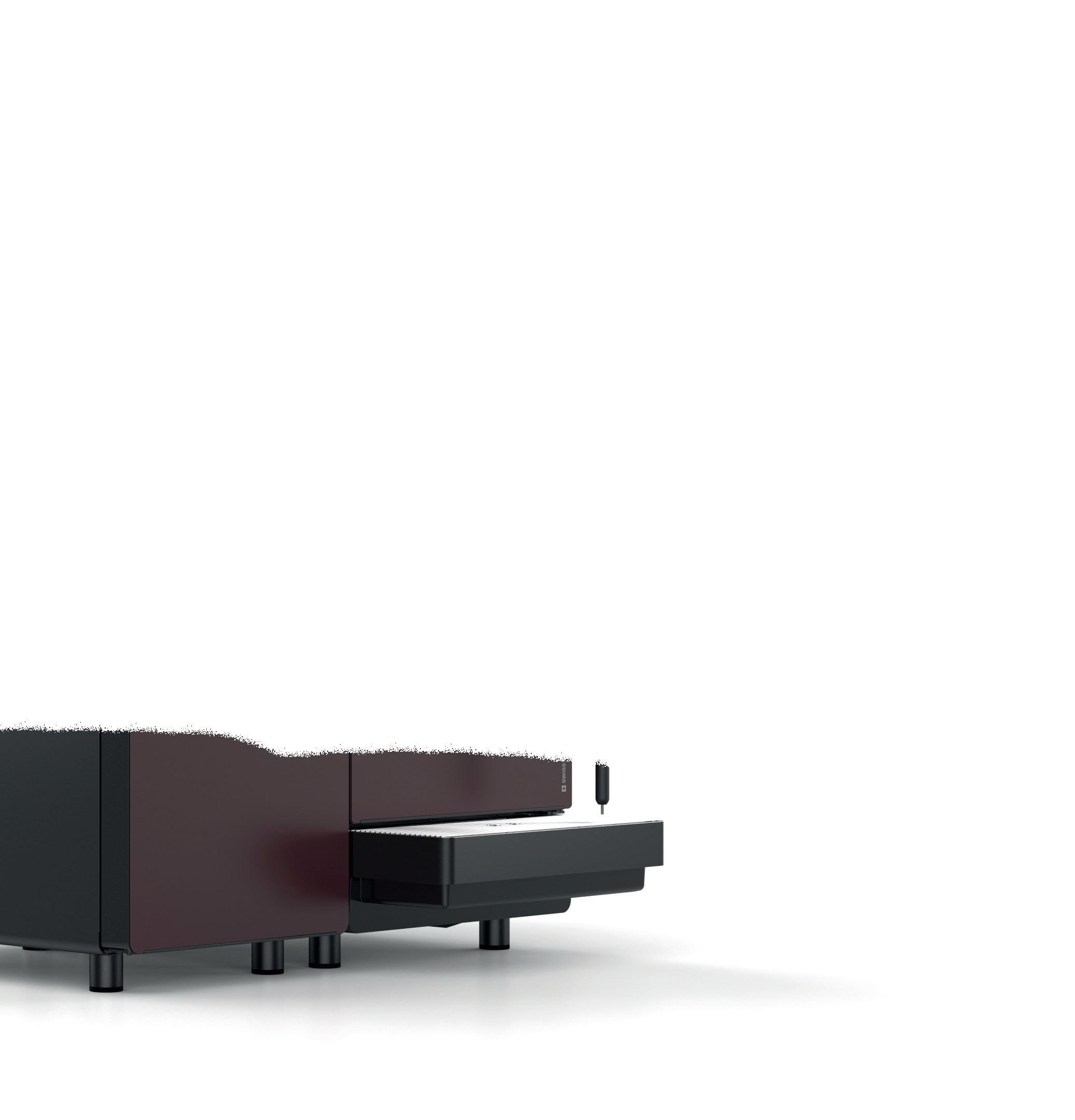
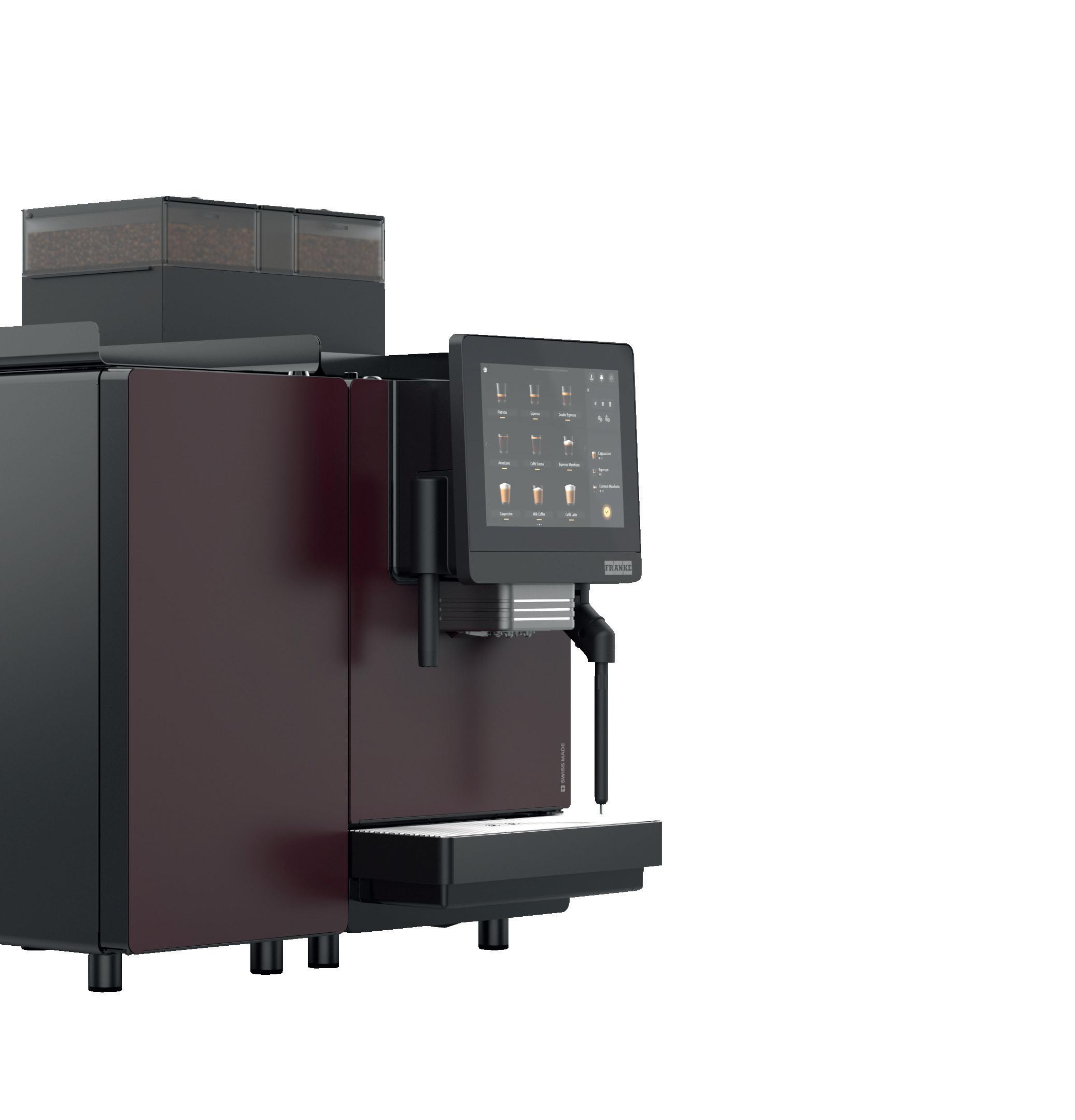
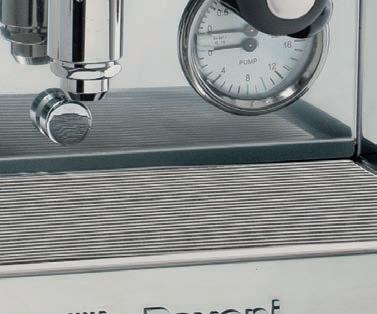
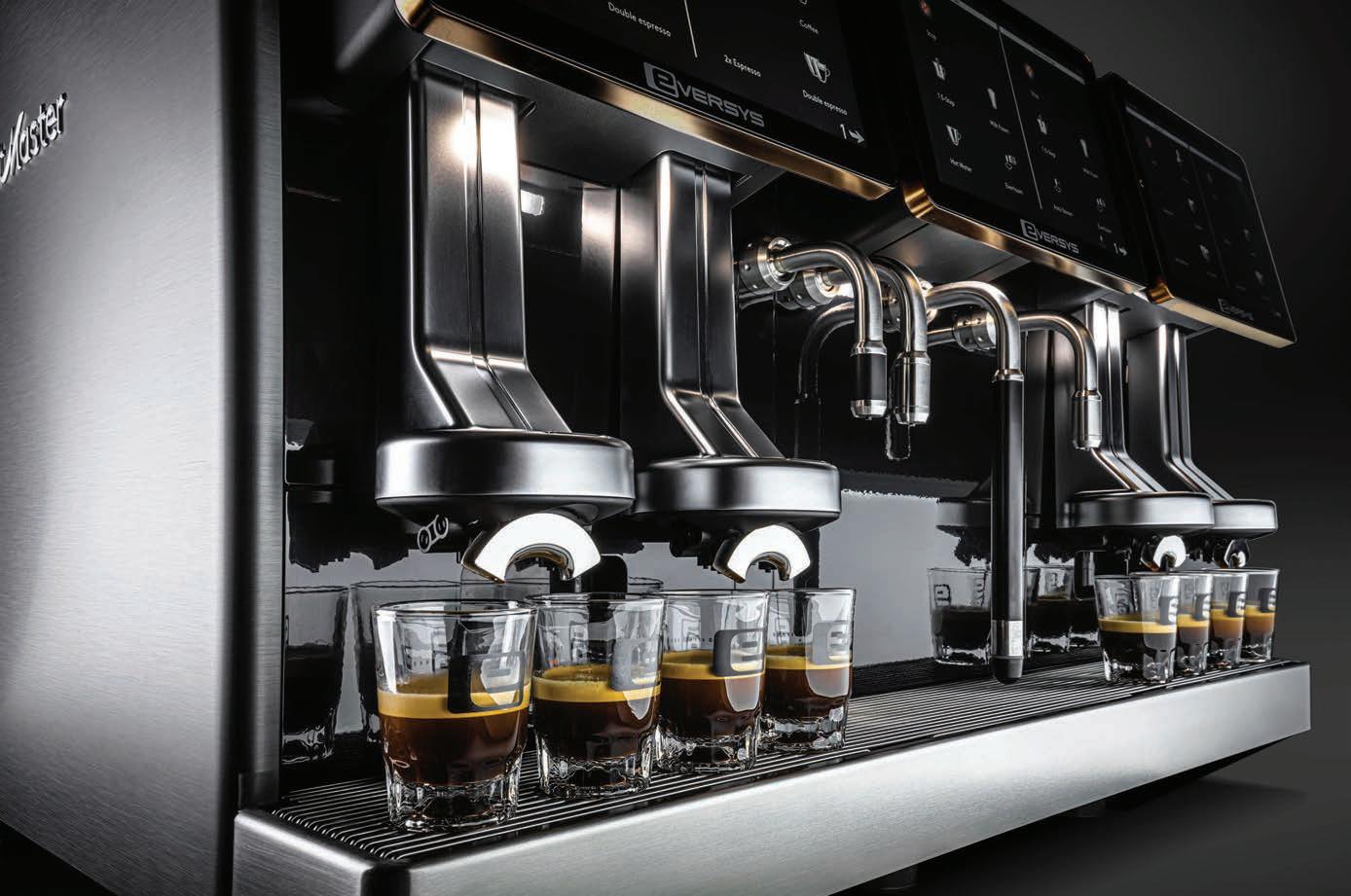
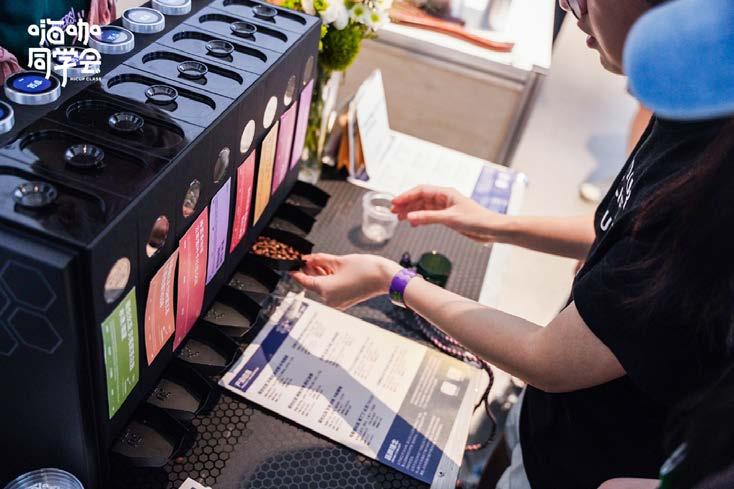
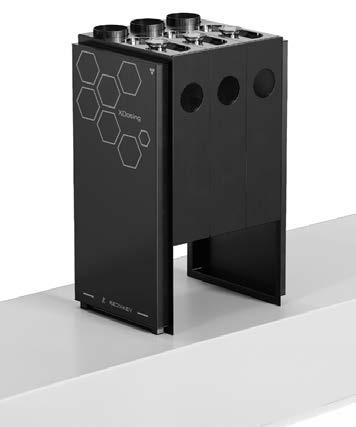
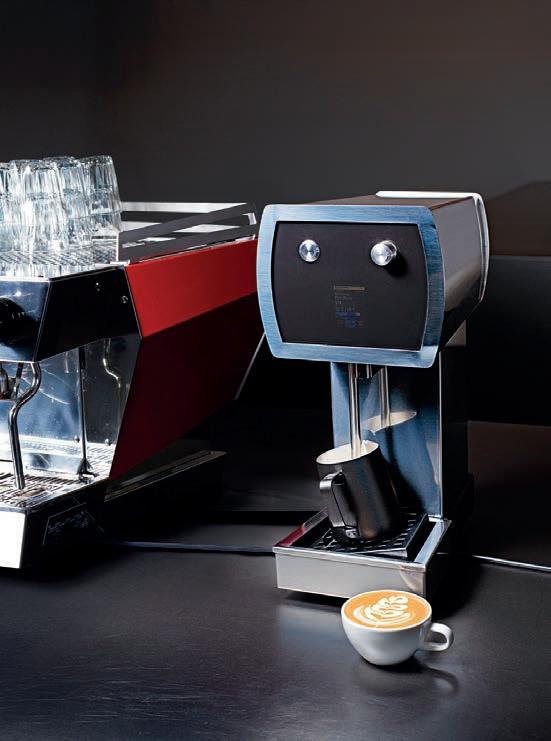
A modular dispensing system designed for modern cafés embracing cold drinks, plant milks, and high-margin menu innovation.
Übermilk PLUS is more than a milk system — it’s a future-ready solution for cafés looking to streamline workflows while expanding into cold, specialty, and plantbased beverages.
Designed as a modular, automated dispensing platform, Übermilk PLUS delivers precise temperatures, textures, and dosing at the touch of a screen. From silky microfoam to chilled milk, cold brew, matcha bases, syrups, and house-made concentrates, up to seven liquids can be programmed and served from one system — consistently, every time.
An integrated automated cleaning system ensures exceptional hygiene and seamless transitions between liquids, while reducing waste, training time, and labour pressure. During peak service, Übermilk PLUS removes guesswork and manual handling, allowing baristas to focus on espresso quality and customer experience.
Why Übermilk PLUS?
▪ Unlock cold and specialty drink menus without added complexity
▪ Features fully independent milk lines to prevent cross-contamination
▪ Consistent results across every shift and every staff member
▪ Reduced labour and prep time during peak periods
▪ Cleaner benches, fewer bottles, less waste
▪ Engineered and built in Germany for reliability in high-volume environments
With Übermilk PLUS, cafés gain the flexibility to follow trends, improve margins, and deliver repeatable quality — whether serving a flat white or a layered iced matcha.
sales@baristagroup.com.au www.baristagroup.com.au
12 NEWS
16 THE PRICE OF TRANSPARENCY
How Australian cafés can tackle the incoming card surcharge ban.
18 MORNING, NOON, AND NIGHT
Why these venues are tapping into dayparts outside the 7am-3pm service window.
22 FROM CART TO COFFEE KINGDOM
Lessons Michael Rababi – aka Mik Di Pacci – has learned scaling Di Pacci Co ee Company.
26 THE RETURN TO RITUAL
A shi to slowing down and brewing with intention amid the rise of speed and automation.
31 RIDING THE NEW WAVE
Could the at white’s status as Australia’s go-to drink be changing?
72 ESPRESSO YOURSELF
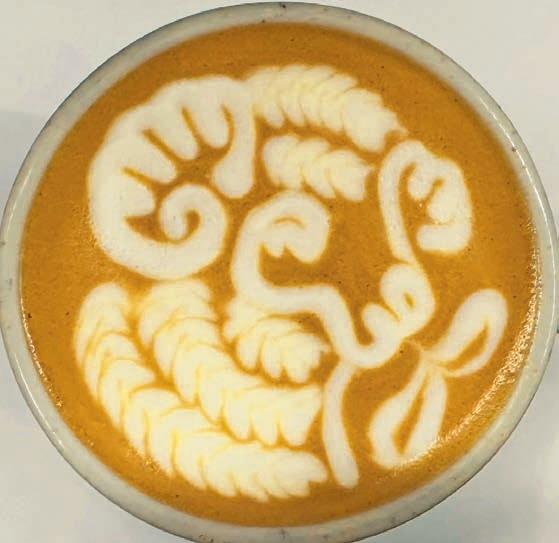
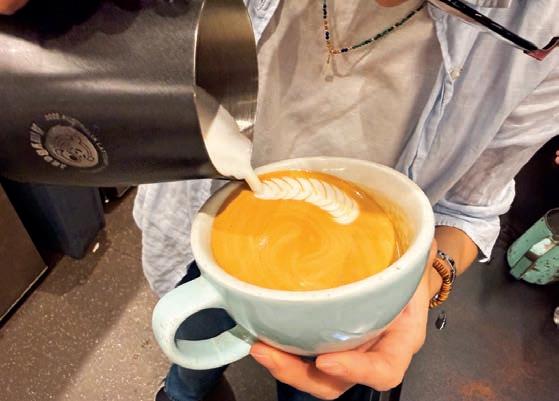
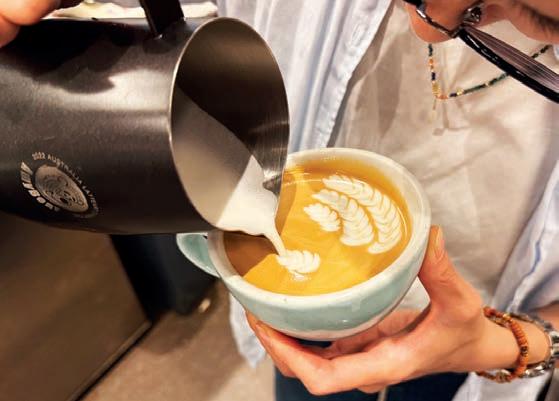
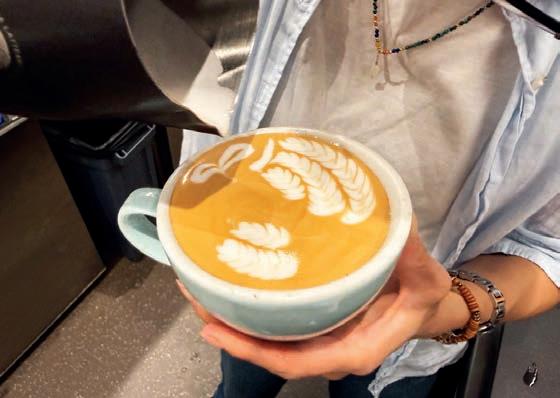
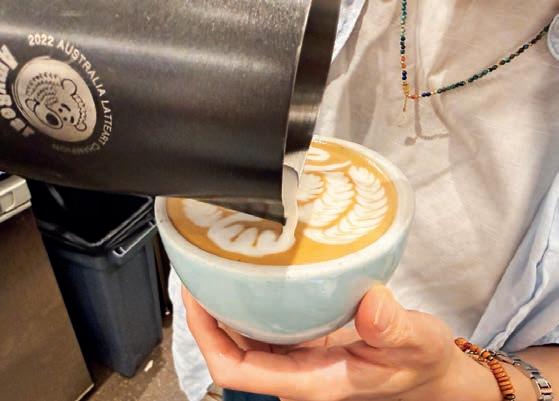
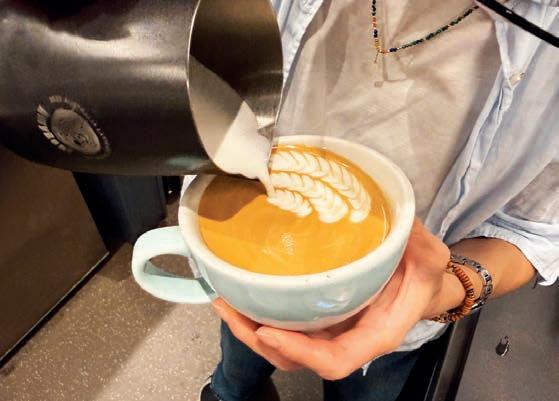
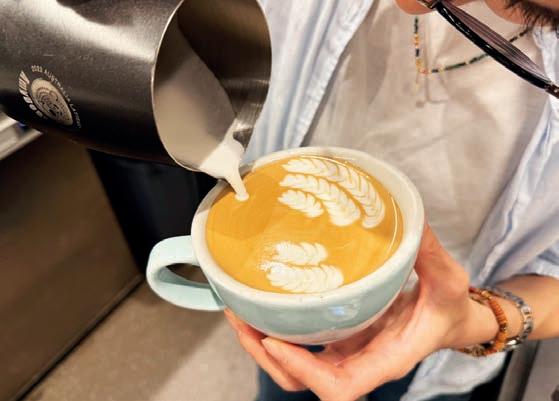
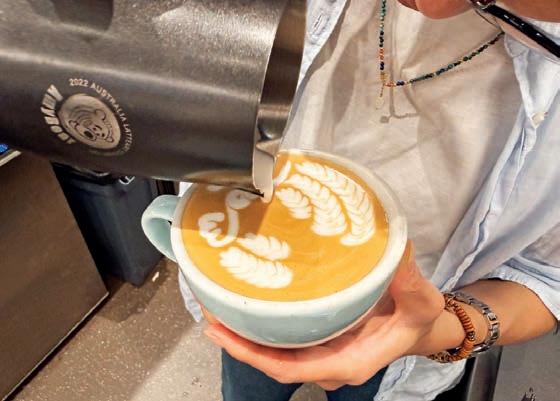
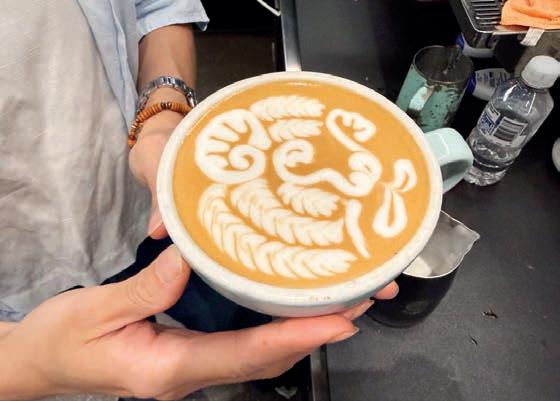
Amy Zhang recreates one of the designs she poured on the 2026 World Latte Championships stage.
75 CAFÉ SCENE
Discover venues doing amazing work across Australasia.
78 GET TO KNOW
Sustainable co ee advocate Dr Nicole Motteux shares co ee’s positive power at origin.
Coffee Community
34 A NEW SUBER POWER
How purpose-built, plant-based milks are supporting café operators with creativity and high performance.
37 SCALING THE DREAM
How Old Quarter Co ee Merchants is boosting its wholesale business with an equipment upgrade.
40 MICE WRAP
What the industry learned from the 13th edition of the Melbourne International Co ee Expo.
47 REVIVING THE BREWERS CUP
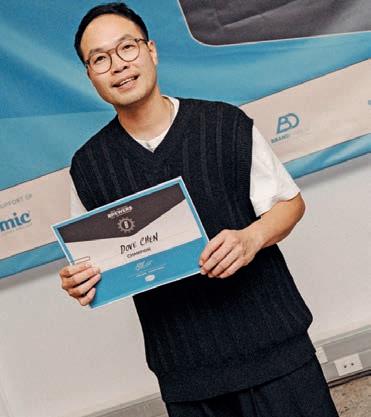
Introducing the new Aotearoa Brewers Cup and Cup Tasters champions.
48 HOME AWAY FROM HOME
Co ee’s role in making travellers feel welcome.
50 JACK OF ALL TRADES
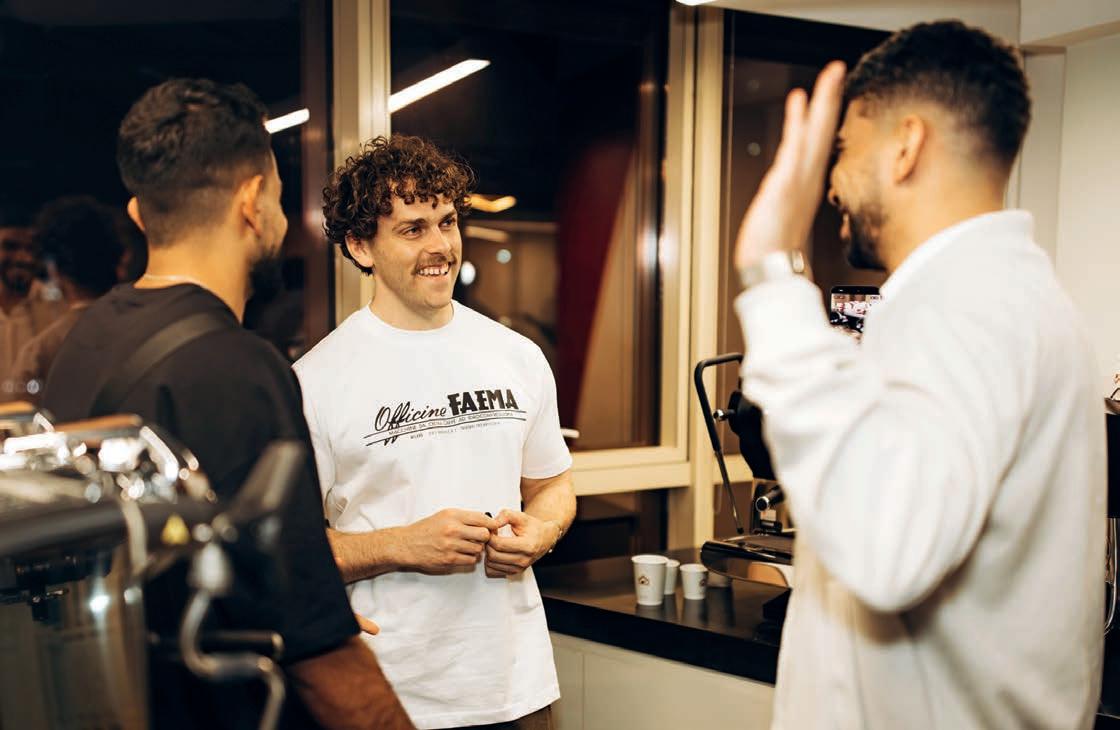
World Barista Champion Jack Simpson o ers a peek behind the curtain into his Global Brand Ambassador partnership with Faema.
Industry Insights
52 WHO YOU GONNA CALL?
What actually goes into training the co ee industry’s unsung heroes?
54 MEETING MATCHA’S MATCH
Hojicha’s popularity is gaining traction, but what actually is the roasted Japanese tea, and what’s the best way to serve it?
56 A CHAIOCTANE PARTNERSHIP
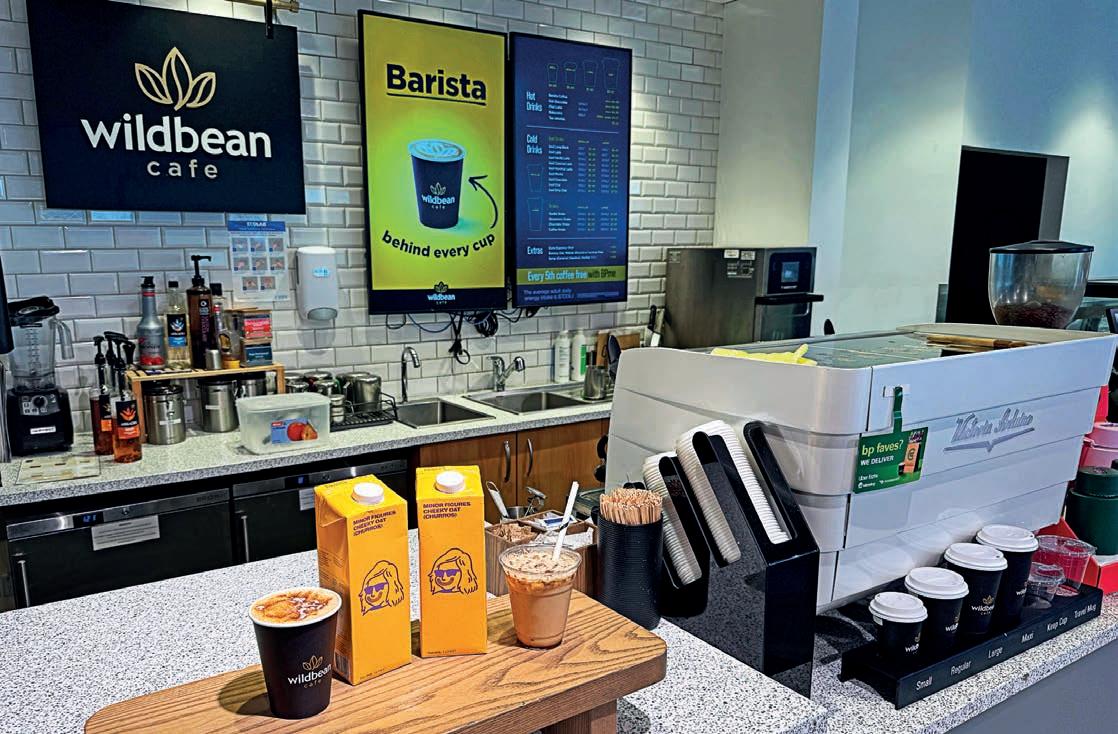
A “cult favourite” alternative milk is being used in a limited-time beverage across the bp wildbean network.
58 SERVICE OVER SALES
Ways venues can maximise their investment in advanced super-automatic machines.
60 A SUSTAINABLE SWITCHUP
Future-proo ng operations in the face of single-use plastic bans.
Equipment and Technology
63 INTRODUCING THE XDOSING G1
e latest piece of equipment Barista Group believes will solve a signi cnat operational gap in modern co ee service.
64 FORM AND FUNCTION
How equipment has become key in establishing a café’s visual identity.
66 POWERING SUSTAINABLE COFFEE
Why sustainability is becoming a competitive advantage in roasting.
68 BETTER COFFEE, BY DESIGN
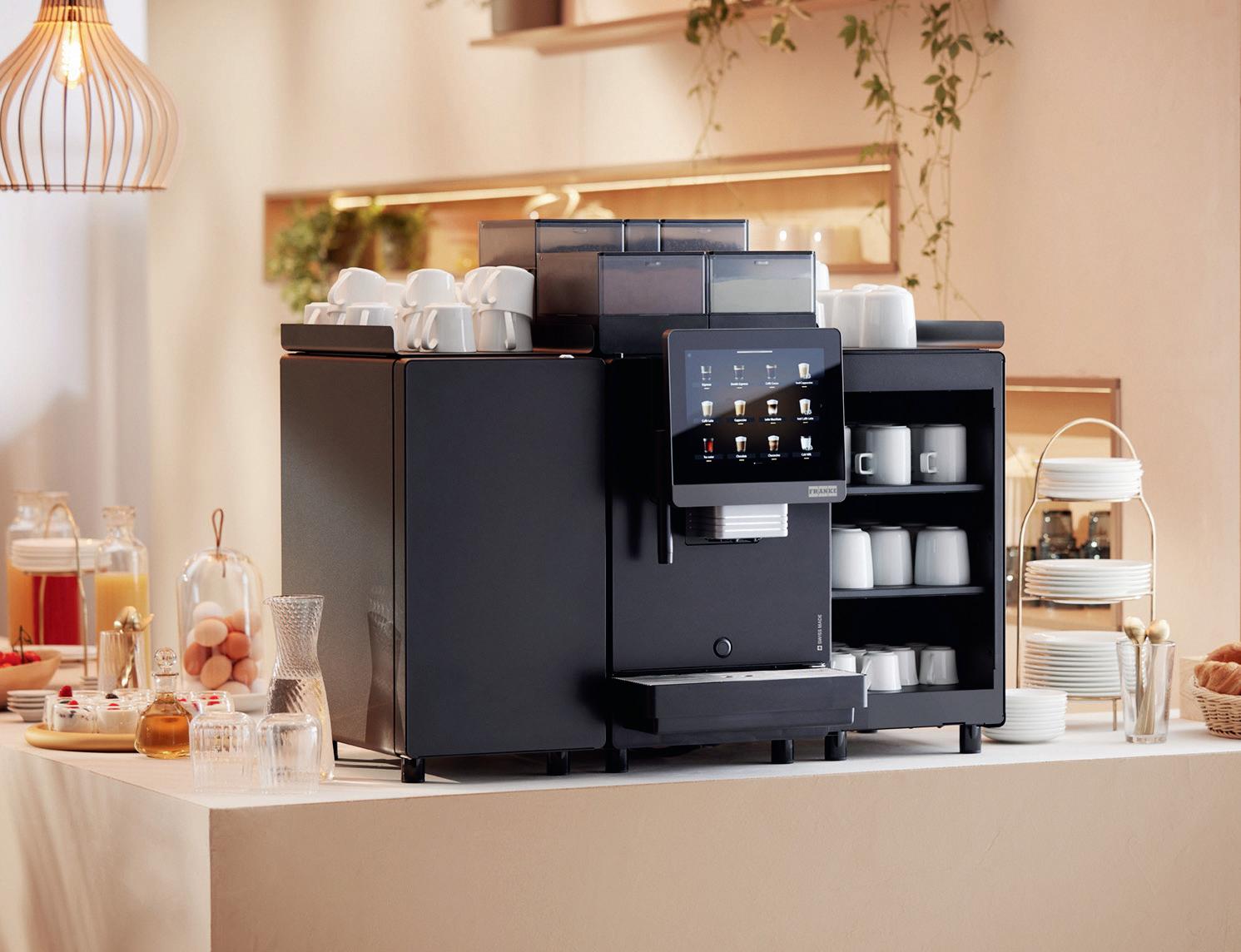
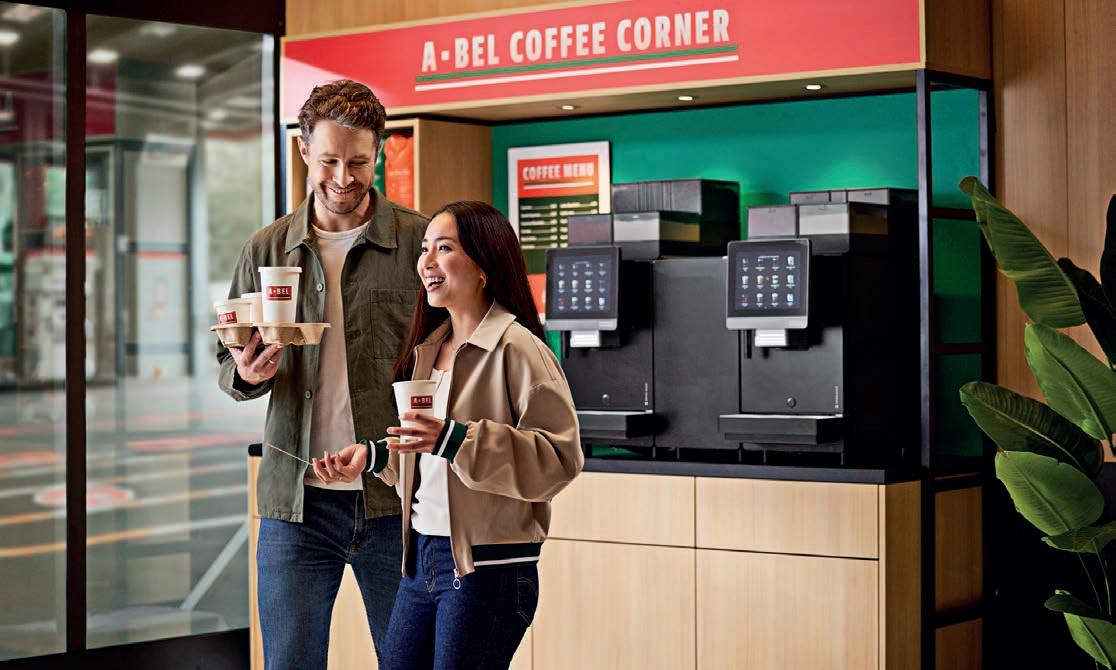
How the look of Franke’s New A Line contributes to its performance.
70 SMARTLY CHOSEN
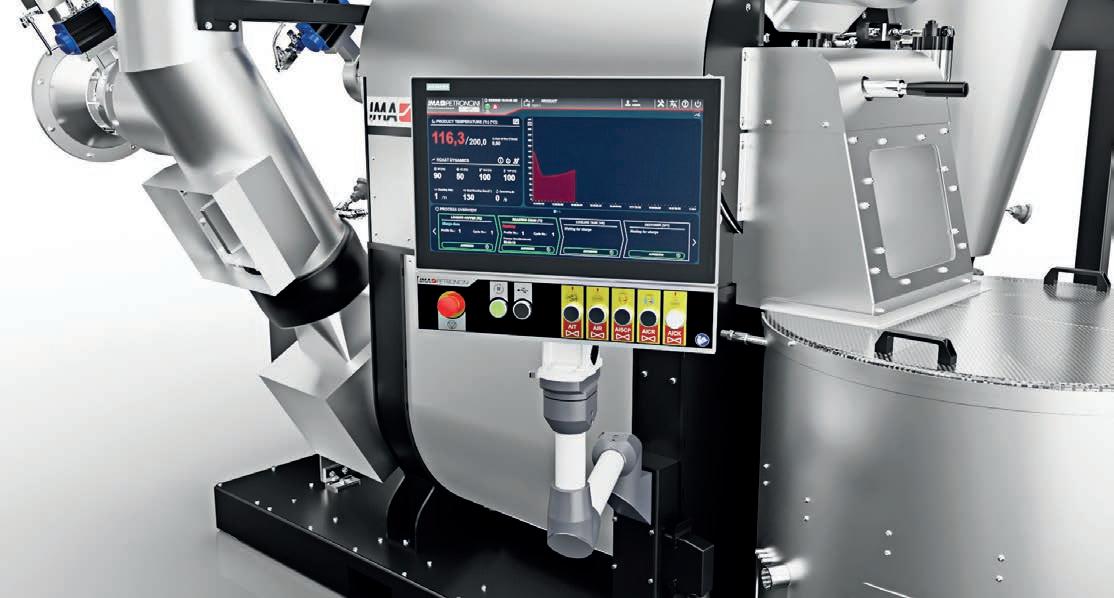
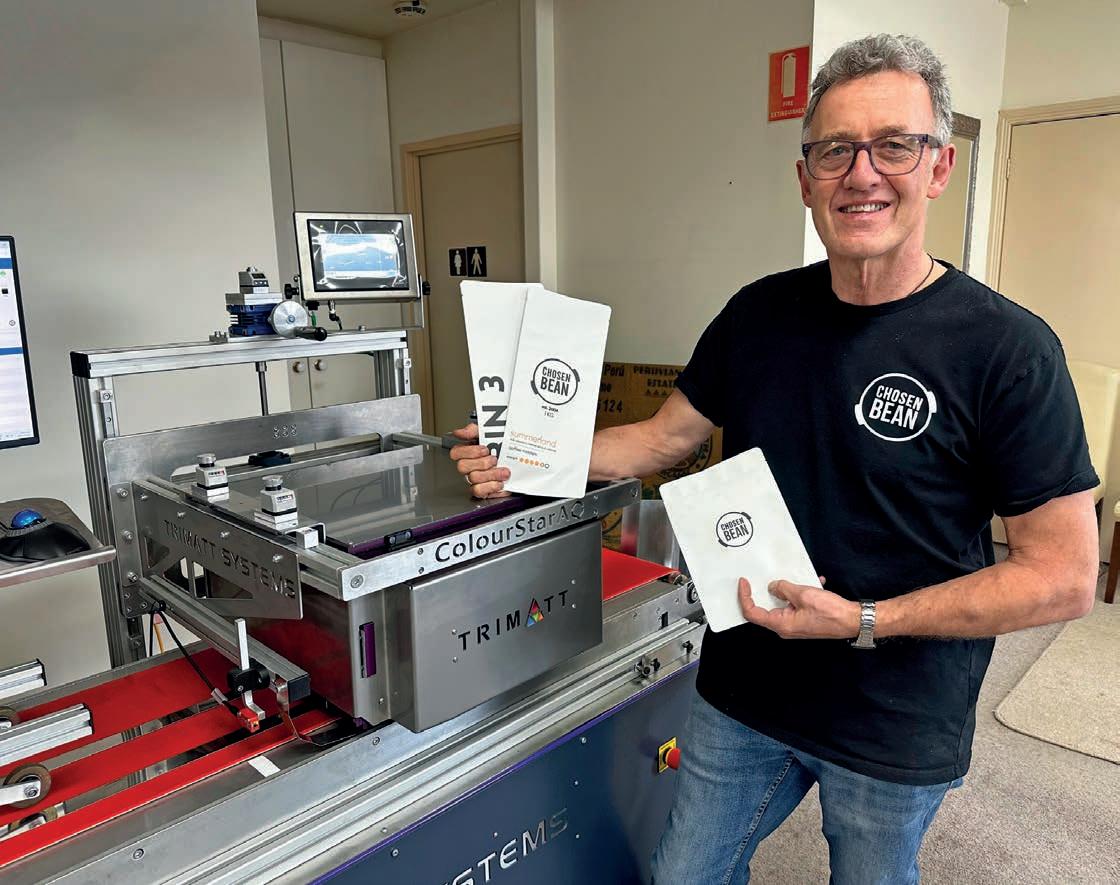
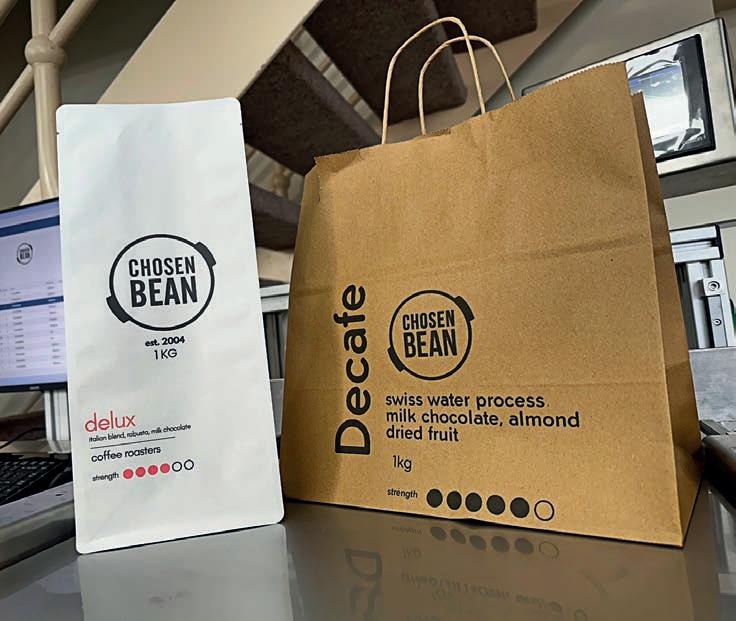
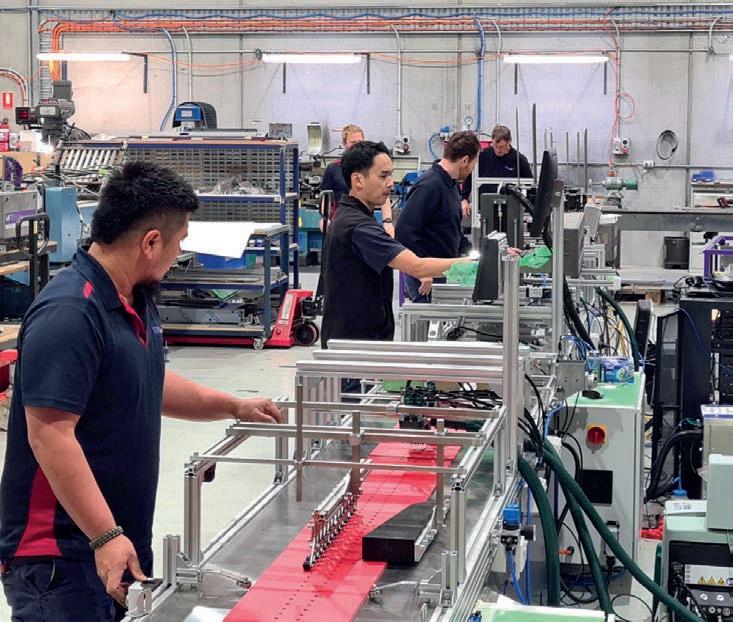
With a new investment in Australian-made technology, Melbourne roaster Chosen Bean is hoping to take its business to the next level.
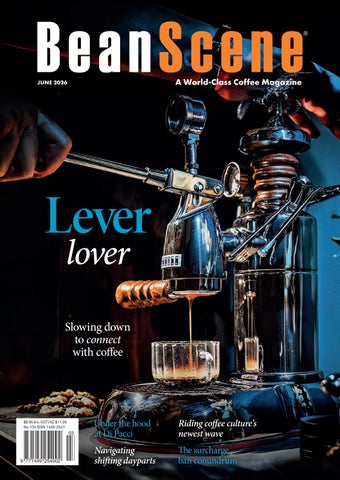
BeanScene covershoot
Smeg Sydney showroom 1/4D Huntly Street
Alexandria New South Wales 2015
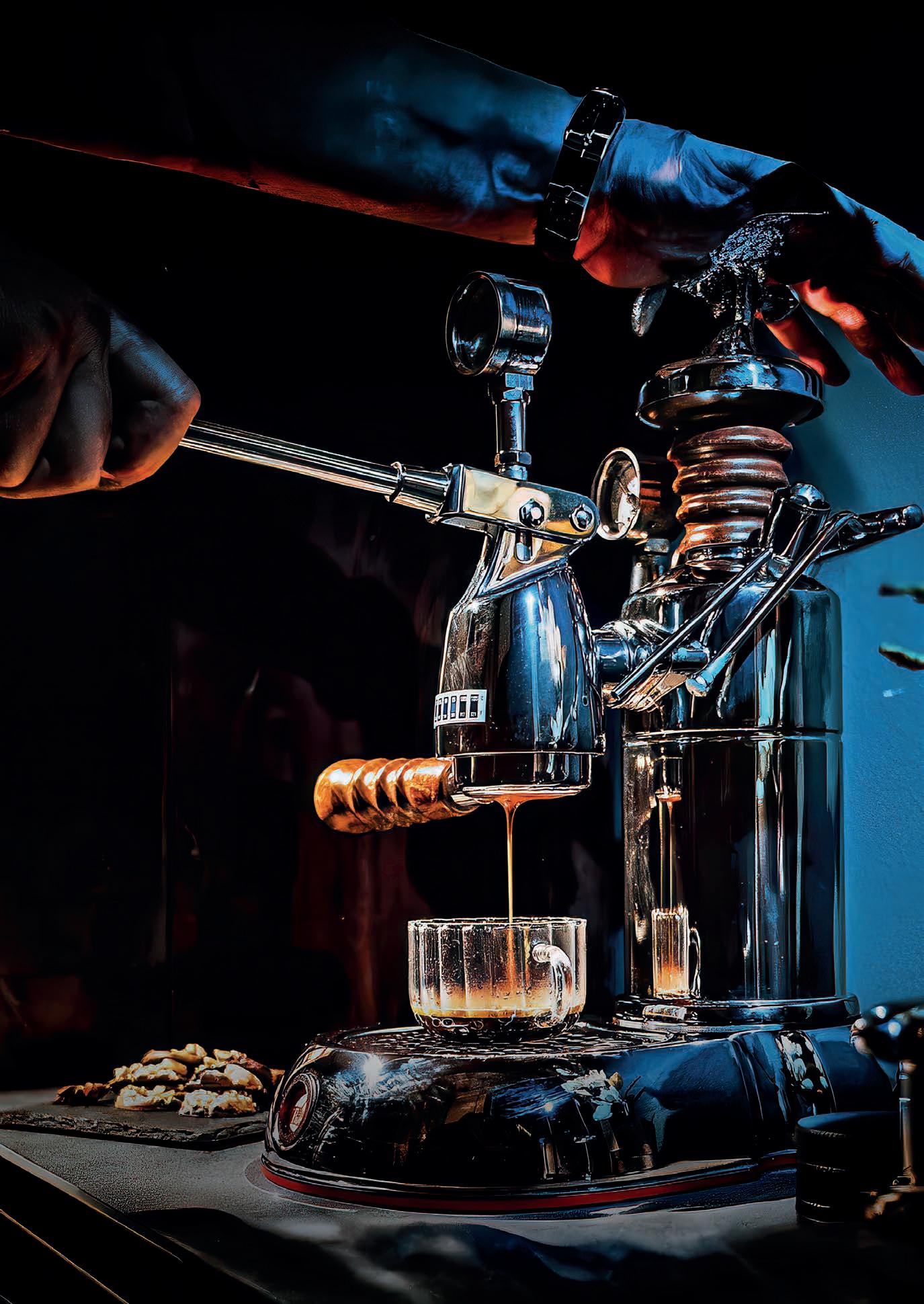
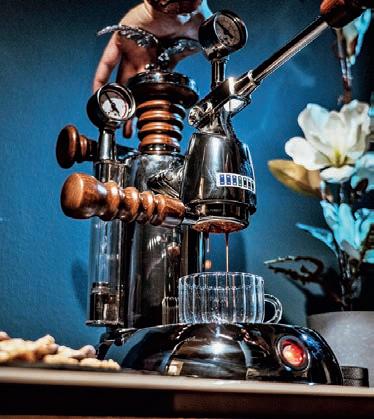
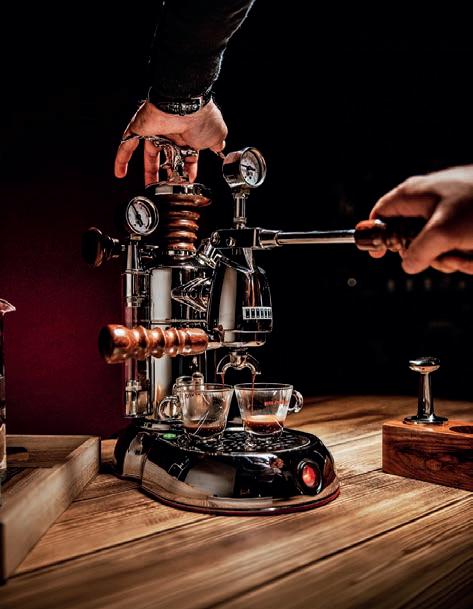
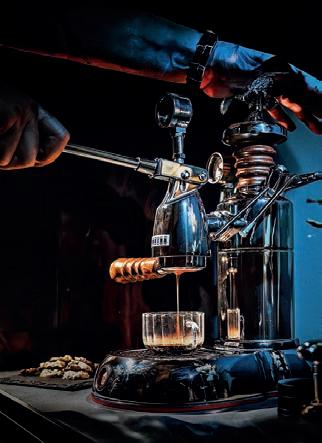
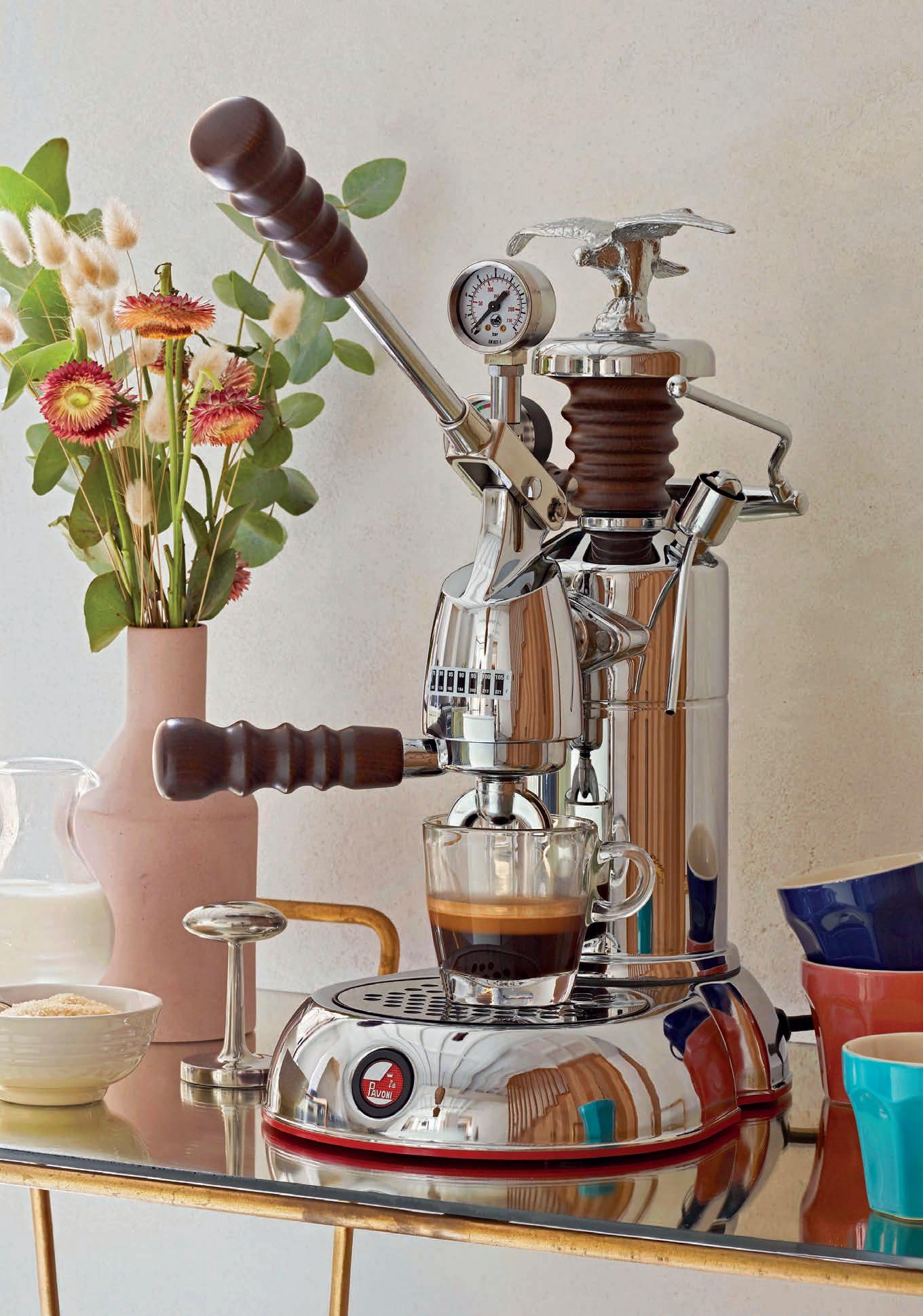
La Pavoni’s lever machines hold an important place within the evolution of Italian co ee, and within Australian co ee heritage. e iconic eagle, polished chrome and stunning wood ttings embody the theatre, cra smanship and emotional allure of specialty co ee – and the enduring ritual of brewing. ese machines embody the aspiration of co ee, and presents co ee as both an experience and as a passion that can be elevated by the equipment used to make it. While automation and the speeding up of processes is one of the main talking points of the modern industry, this slowed down ritual has become, perhaps, more important than ever.
For the June cover, the BeanScene team aimed to capture a still image that conveys the enduring importance of the ritual behind lever machines.
Turn inside for the full cover story which reveals why this machine, years later, still resonates with co ee lovers around the world today.
“A story I hear so o en is people want to buy a lever machine because their parents or grandparents had one and used it every day, and they want to learn how to use one,” says Head of La Pavoni Australia, Leon Wolf.
“It’s a very common thread with lever machines and shows the power of emotional connection to the brewing method.
“ ere’s so much reward to be found in the experience of creating the cup and engaging in this disciplined ritual.”
BeanScene magazine is available by subscription from the publisher. e rights of refusal are reserved by the publisher.
ARTICLES
All articles submitted for publication become the property of the publisher. e Editor reserves the right to adjust any article to conform with the magazine format.
COPYRIGHT
BeanScene magazine is owned by Prime Creative Media and published by Christine Clancy. All material in BeanScene magazine is copyright and no part may be reproduced or copied in any form or by any means (graphic, electronic or mechanical including information and retrieval systems) without written permission of the publisher. e Editor welcomes contributions but reserves the right to accept or reject any material. While every e ort has been made to ensure the accuracy of information Prime Creative Media will not accept responsibility for errors or omissions or for any consequences arising from reliance on information published. e opinions expressed in BeanScene magazine are not necessarily the opinions of, or endorsed by, the publisher unless otherwise stated.
Contributors
Amy Zhang is the 2026 ASCA Australian Latte Art Champion. Born in China, Amy is a Coffee Quality Institute-certifi ed Q Grader and Barista Trainer, basing many of her latte art patterns off her favourite Disney films. Amy also won the 2022 ASCA Northern Region Latte Art Championship, and the 2022 National title. She currently works at The Maillard Project in Brisbane, Queensland.
Jessica MacDonald is the General Manager for the NZSCA. Her career has taken her to Auckland, Melbourne, Sydney, and London. She’s worn many hats but remains a roaster at heart. Jessica has volunteered on the Rules and Regulations Committee for World Coffee events and judges in barista competitions and Cup of Excellence programs. Her favourite thing about the industry is the passionate people who care deeply about coffee and the growth of its community.
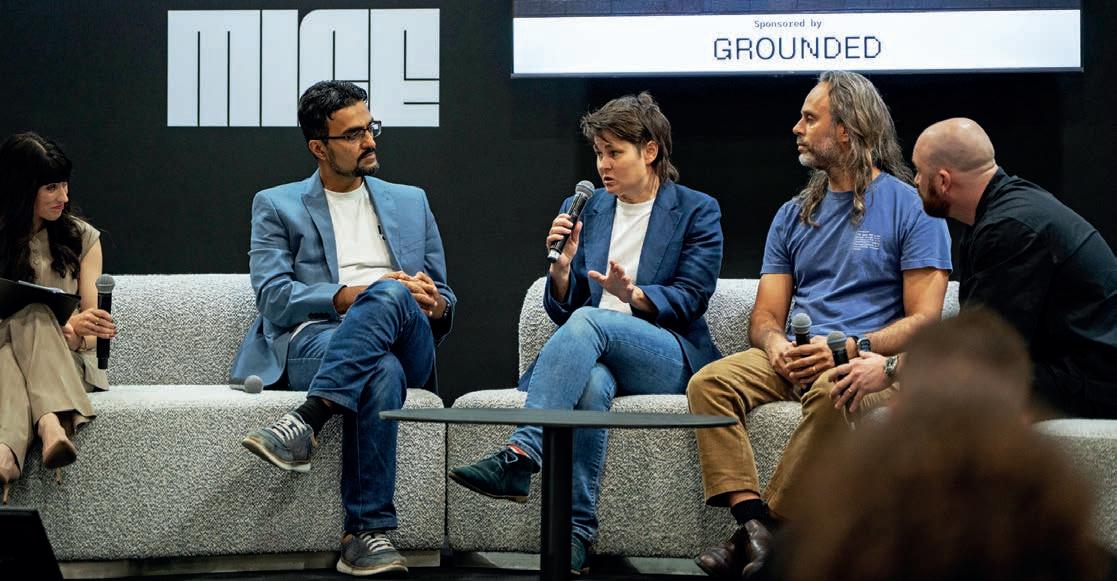
Between the chaos of service, there are eeting moments where café owners can step back, reassess, and question: how can we elevate our operation? What dials can we tweak to not only improve e ciency or margin, but in the way the team functions? ose types of question sat at the heart of the Café Education Stage at the 2026 Melbourne International Co ee Expo (MICE26) – and over three days of moderating the program, it became clear just how hungry this industry is for answers.
What continues to stand out to me is the willingness of operators to share. In a competitive industry, café owners and leaders took to the stage with an openness you don’t o en see in other sectors. e result was an education series that felt less like a conference, and more like a collective problemsolving session.
We covered a lot of ground – from pro tability and pricing to leadership, leases, automation, and customer experience – but a few themes kept rising to the surface.
One of the most consistent was the shi in mindset from working in the business to working on it. Amelia Hicks of Old Quarter Co ee Merchants captured it perfectly when she asked: “Am I doing the $50-an-hour job or the $1000-an-hour job?” It’s a simple question, but one that forces café owners to scrutinise every task before they dive in.
Nathan Toleman, of e Mulberry Group, took it a step further: “If you want to grow, you’ve got to let go.” For many café owners, that’s the hardest part. Letting go of control, trusting others, and accepting that there’s more than one way to deliver a great outcome. But time and again, we heard it was the secret to growth.
Like us on Facebook
en there was the conversation around leases – an area o en underestimated, yet critical to long-term success. Negotiate early, understand the terms, and recognise your value in the relationship – these were some important pearls. As one panellist put it, landlords need good operators just as much as operators need good sites.
The secret sauce
Overlaying all of this is the reality of rising costs. Wages and cost of goods sold (COGS) continue to put pressure on every café’s bottom line, but unlike wages, we heard how COGS remains one of the few levers operators can actively control.
Of course, no topic sparked more discussion than co ee pricing.
e $6 cup is no longer hypothetical, and in some cases, $7 is already here. It was interesting to hear from operators who had taken the leap. ey spoke about the initial fear followed by the realisation customers were more understanding than expected.
Beyond the numbers, though, one session that stayed with me centred on customer service, or perhaps more accurately, the “guest” experience.
“It’s not hard to be nice,” was a line repeated more than once, but it carried weight. In a world of increasing automation and streamlined work ows, the human element remains the de ning factor. Whether it’s acknowledging a regular, engaging with children, or how you address someone, those small moments shape how people feel, and what they remember. at balance – between e ciency and hospitality, cost control and experience – feels like the de ning challenge of the modern café. And yet, if the Café Education Stage proved anything, it’s that this industry is more than capable of meeting it. e calibre of discussion, the generosity of insight, and the engagement from the audience was exceptional. At times, we had people sitting on the oor just to be part of the conversation.
As I re ect on this year’s program, I’m incredibly proud of what was achieved. More importantly, I’m optimistic. Because when café owners come together to share knowledge, challenge ideas, and push each other forward, the entire industry bene ts.
at’s the power of MICE.
I look forward to continuing the conversation in 2027.
SARAH BAKER PUBLISHER
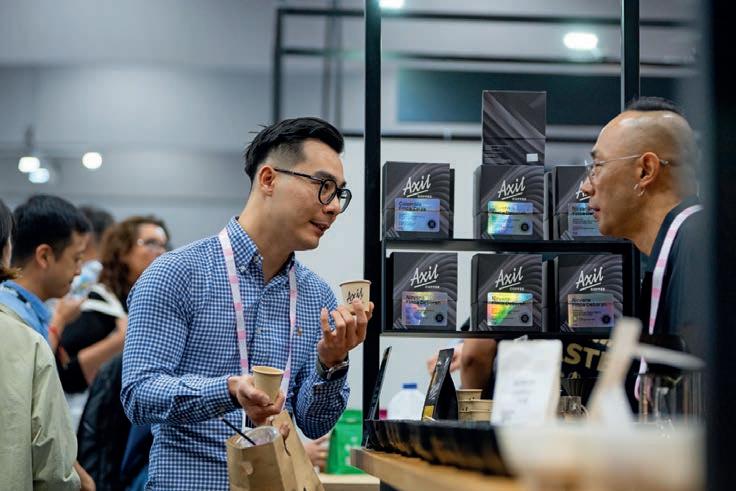
Axil crowned Australia’s favourite coffee
It’s o cial, Axil Co ee Roasters produces Australia’s favourite co ee – a title it’ll hold for the next 12 months at least.
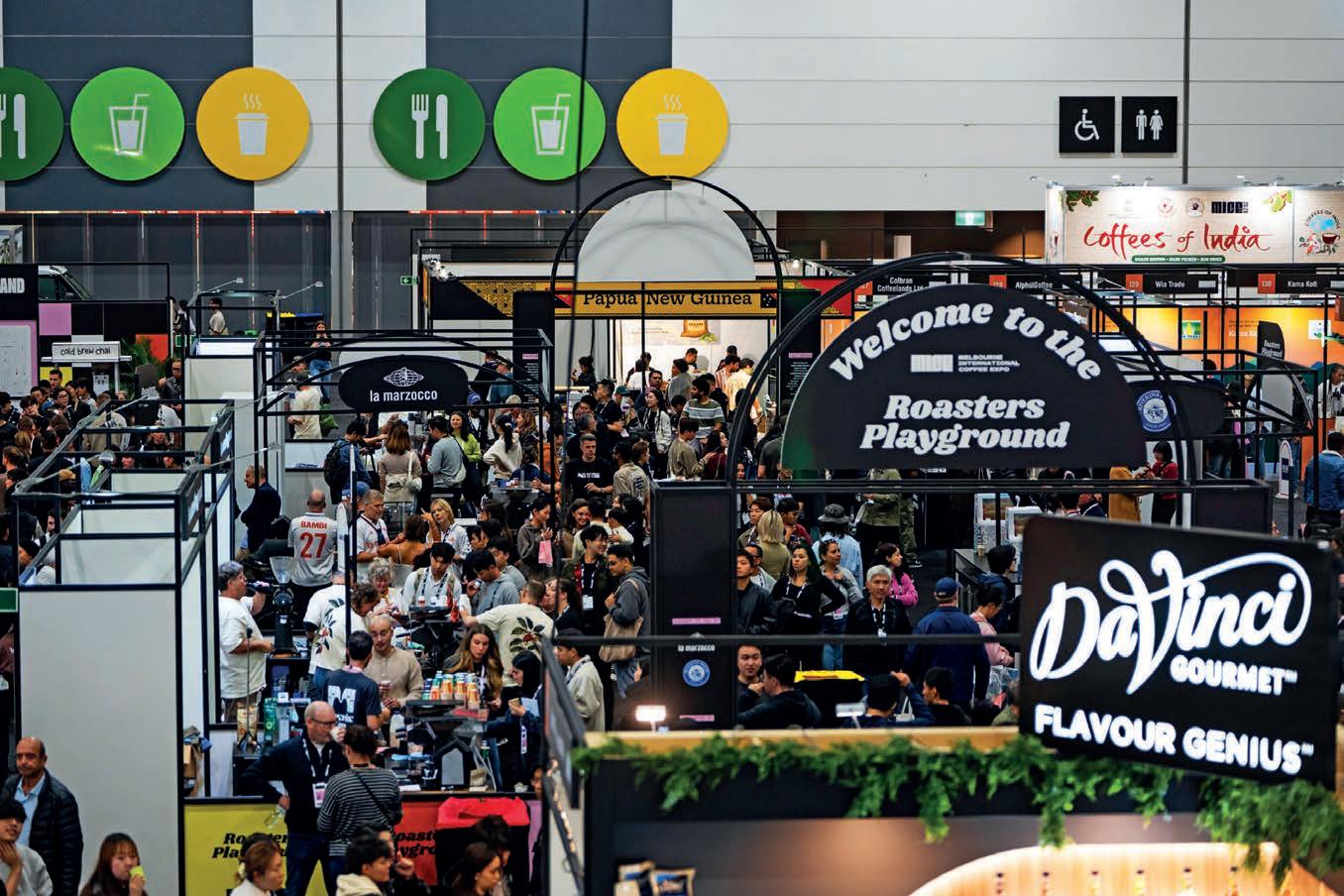
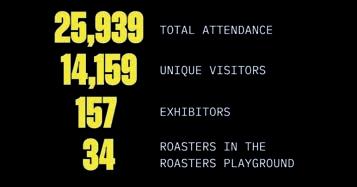
e regarded Melbourne roaster claimed title of Australia’s Favourite Co ee at the recent 2026 Melbourne International Co ee Expo that welcomed more than 14,000 unique visitors. ere, attendees could vote on their preferred co ee across the three days.
Axil came out on top, voted by the people as the best co ee of the 36 roasters who showcased their wares at the expo.
Axil Co ee Roasters Founder Dave Makin says winning the award was on Axil’s radar heading into the show.
“We had talked about the award leading into MICE and about how it worked, and we really wanted to put our best foot
Australian results at World Coffee Championships
Amy Zhang and Victor Vu are celebrating strong performances at the World Latte Art Championships in San Diego, while Karl Lee took his talents to Bangkok to compete in the World Cup Tasters Championship.
Amy nished ninth in the qualifying round with a score of 348 points, while Victor nished in 13th with a score of 329.
Karl recorded seven out of eight correct triangulations in 5:32 in the preliminary round of the Cup Tasters Championships to nish 34th in a very talented eld.
New Zealand’s competitors also did well at the pair of events, Hsueh nishing 11th in the opening round of the Latte Art Championships with a score of 343.
August Hislop nished 22nd in the Cup Tasters Championship with seven correct triangulations in 3:25.
Taiwan’s Bala was crowned 2026 World Latte Art Champion, while Vietnam’s Le Quang Cuong (Nicky) won the World Cup Tasters Championship.
forward and win it,” says Dave.
“It’s nice to be respected by our industry peers, and at the same time we have some loyal customers who have been coming to Axil for 15 years or more and are a big part of our success today.
“Both things matter, so it’s really pleasing that people voted for us and we came out with a win.”
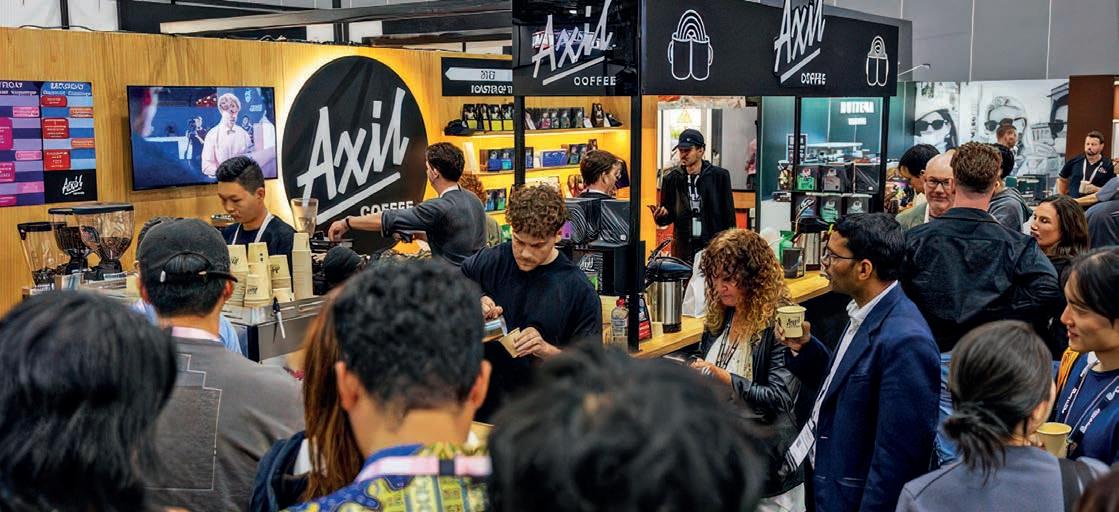
Axil’s stand was a hive of activity during the show, with attendees waiting patiently to get their x of the roaster’s range
With the likes of World Barista Champion Jack Simpson and Australian Cup Tasting Champion Karl Lee on hand to guide attendees through Axil’s co ees, Dave says even he was surprised at how many people showed so much interest in the stand.
“ e foot tra c was quite intense across
all the days, and our stand was busier that we projected it to be, so we actually had to increase our sta ng,” he says.
Dave praised the work of Axil’s Director of Co ee, Matthew Crowley, for his work in bringing together a stand that appealed to so many people at MICE26.
e accolade of Australia’s Favourite Co ee is another in a line of industry appreciation for Axil which, over the past 16 years, has gained a reputation as one of the country’s premier independent roasters.
“One of our main internal targets at Axil comes back to that word, ‘consistent’,” says Dave.
“It’s always so nice when someone says Axil is one of the most consistent co ees they have. It’s what we’re looking for, and it’s what we strive for.”
Image: Axil Coffee Roasters.
Image: Heart Media.
Café owners need ‘37 licenses and approvals’
A group of almost 30 organisations that represent small, medium, and large businesses, as well as universities around Australia have put out a call to all Australian governments to slash regulatory costs by 25 per cent to help consumers and businesses.
e call comes following a surge in costs of goods cause by the con ict in the Middle East.
A recent AICD Mandala report showed federal regulatory compliance now costs the Australian economy around $160 billion per year, almost six per cent of GDP.
“In Victoria, a café owner needs 37 separate licenses and approvals before they can pour their rst co ee,” says Chief Executive of the Business Council of Australia, Bran Black.
“ at kind of red tape adds costs, slows things down, and makes it harder to get goods moving and shelves stocked.
“With global volatility already pushing up prices, cutting that duplication would help bring down costs for Australian households and businesses.”
e group, called e Alliance of Industry Associations, is calling on governments to commit to a 25 per cent reduction in regulatory burden by 2030, starting with immediate steps to reduce costs, undertake an economy-wide regulatory stocktake, and improve coordination across jurisdictions to
remove duplication and inconsistency.
It says United Kingdom has implemented reforms to reduce regulatory costs and complexity, while the European Union has
adopted a 25 per cent red tape reduction target, rising to 35 per cent for small businesses, as part of broader pro-growth reform agendas.
Reground celebrates million-puck milestone
Reground is celebrating more than 100 Sydney cafés and restaurants signing up for its Giving a Puck campaign, where spent co ee grounds are collected by Reground for delivery to local community gardeners and projects.
e Reground scheme was delivered to Sydney in partnership with local roaster Single O, a er it initially launched in Melbourne in 2014 with a single café.
Reground says, as a result of the signi cant number of Sydney venues signing up for the service, more than one million co ee pucks in the city have been diverted from land ll, where they release methane – a greenhouse gas 30-times more harmful than CO2 – into the atmosphere.
Single O CEO Mike Brabant says milestones like this are worth celebrating in the pursuit of a more sustainable local co ee industry.
“Reaching 100 cafés across Sydney is an incredible milestone for Reground and the Giving a Puck movement,” says Mike.
“It’s a clear signal that our industry is taking waste seriously and this result shows what’s possible when cafés come on the journey together. It’s a strong step forward for co ee in Australia, and we’re proud to be part of it.”
Major changes coming to junior pay rates
e Fair Work Commission (FWC) has ruled workers aged between 18 and 20 in retail, fast food, and pharmacy will no longer be paid discounted junior rates, and will instead be paid full adult wages.
Junior pay rates are wages paid to younger workers, usually under 21, where they are paid a set percentage of the minimum award.
Eighteen-year-olds are paid 70 per cent of the award, which rises to 80 per cent for 19-year-olds and 90 per cent for 20-yearolds respectively.
National Secretary of the Shop, Distributive, and Allied Employees Association (SDA), Gerard Dwyer, told ABC the decision to scrap junior pay rates is a landmark decision “up there with the introduction of equal pay for women in the 1970s”.
e FWC’s provisional ruling for the timing and implementation of the reform is that the rst variation will take e ect from 1 December, with the full variation to be phased in for all Australians between 18 and 20 years old by July 1, 2029.
Federal Treasurer Jim Chalmers says the government welcomes the ruling.
“ is decision recognises that there was an unfairness when it came to younger workers who are over 18 in those sectors, while also ensuring a practical transition for employers as the new arrangements are introduced,” he says.
More than 80 witnesses across three industries were consulted, with advocates for the change arguing adult wages should be paid to younger sta due to the legal ability
ST. ALi’s latest collabs here and abroad
Melbourne roaster ST. ALi will establish a café in the forecourt of AUS HQ – Australia’s home for the Commonwealth Games – and y in three baristas to brew more than 700 cups per day.
e 2026 Games in Glasgow will be held from 23 July to 2 August, with the Australian
team likely to eld about 300 athletes with 150 support personnel.
Australia’s Chef de Mission, Petria omas OAM OLY, says home comforts like co ee can be critical to helping deliver team success.
“ e athletes have time and time again told us the di erence barista-made co ee has
made to their Games experience in recent years, so locking in ST. ALi will be music to the ears of many,” says Petria.
“We’re forecasting more than 700 cups will be served each day, with family and friends of athletes to be catered for, too. It’s a little taste of home, a long way from home.”
ST. ALi CEO Lachlan Ward is proud the roaster can do its part to support the Australian athletes in their pursuit of gold.
“Great co ee brings people together and we’re excited to play a small part in helping athletes feel at home and ready to perform at their best,” he says.
“We’re passionate about seeing Aussies succeed and can’t wait to help keep the team fuelled throughout the Games.”
In other news, ST. ALi has partnered with smoothie chain Boost Juice to release a range of drinks that incorporate its cold brew.
e new partnership with Boost includes ST. ALi’s cold brew in Salted Honey and Peanut Butter Protein smoothies, and Maple Pink Salt and Strawberry iced lattes.
Boost says the ST. ALi collaboration products will be available every day at its stores.
to enlist in the armed forces at 17, and vote, drive, smoke, and drink alcohol from 18.
Data from the Australian Bureau of
Statistics indicates around 500,000 workers will be eligible for raised wages as a result of the change.
Image: ST. ALi.
MICE27 dates confirmed
e dates for the 2027 Melbourne International Co ee Expo (MICE) are o cially here, with next year’s edition of the Southern Hemisphere’s premier co ee event set to take place from 4 to 6 March at the Melbourne Convention and Exhibition Centre (MCEC).
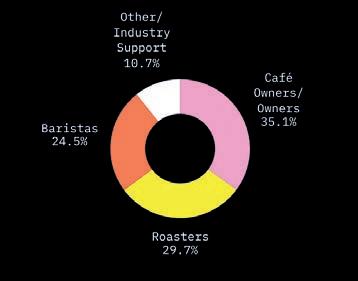
e announcement of next year’s show comes o the back of another successful edition in 2026, where more than 14,000 unique visitors – 35.1 per cent of which were café owners, attended three actionpacked days.
Trip to Origin will continue to spotlight producing countries and green bean suppliers, bring origin stories, cupping experiences,
and supply chain insight to the forefront, while the ever-popular Café Owners Education Series will return with an expanded program.
e Roasters Playground will also be back in 2027, providing roasters with a dedicated platform to showcase their co ees, connect with buyers, and build brand recognition.
A er debuting at MICE26, MICE at Night will also return in 2027, with the Friday night of the show to feature extended hours designed to help café owners and operators attend the show a er trade hours.
Aussie roaster a founding member of global sustainability group
Nomad Co ee Group has been unveiled as a founding member of the B Corp Co ee Coalition, a group of Certi ed B Corporations working to improve the sustainability of the co ee value chain.
e Melbourne-born roaster is one of seven bodies to make up the initial group, joining Brazilian co-operative Sanco ee, Swiss specialty co ee brand ViCAFE, Singapore’s Bettr Co ee, Danish roastery Clever Co ee, Kenyan specialty roaster Spring Valley Co ee, and US-based bean importer Cafe Imports.
“ e co ee sector is facing increasing climate pressure, structural inequalities, and rising expectations around transparency with responsible sourcing,” a B Lab Switzerland statement reads.
“ e B Corp Co ee Coalition was created by seven B Corps to address an issue they all identi ed: duplication of e orts and lack of actionable best practice sharing.
“[ ey] felt the need to create a structured
space for collaboration in which members will be able to align on shared priorities, exchange best practices, and develop practical approaches to strengthen long-term sustainability, resilience, and equity across the co ee sector.”
Nomad Co ee Group Sustainability Manager Nick Percy says almost a year of e ort has gone into the creation of the coalition, and he’s excited to see it expand in the future.
“ is has been about nine months in the works, getting everything set up with the right governance and protections to make sure that not only this coalition creates value for all those involved, but also protects everyone’s privacy,” he says.
“We joined a little down the track of getting it set up, but the coalition identi ed that it needed someone to represent the Australian and New Zealand markets, which gave us the opportunity to join as the
seventh founding member.
“It’s silly to think that any one business has the answers, and we are no di erent. What’s really great about being able to work together in this fashion is that not only is it a global movement, but more importantly, we have a good mix of everyone along the value circle, including producers, retail, roasters and green buyers.”
As it stands, there are two working group topics set up in the coalition, and Nick says these will continue to be shaped and re ned as more businesses and organisations join.
“ ese rst working group is titled ‘From Poverty to Prosperity’, focusing on understanding what this can mean across the value circle, and looking beyond income alone to support strong livelihoods,” he says.
“ e second is titled ‘Purpose-Led Co ee Workforce’ – the focus here is on employment attraction, retention and engagement all across the co ee sector.”
Image:
Nomad Coffee Group.
Image: Prime Creative Media.
The Reserve Bank of Australia will outlaw card surcharges by October 2026. Image: SAT65/stock.adobe.com
e price of transparency
The banning of retail card surcharges has been framed as a win for consumers, but there are concerns cafés and other retailers will need to up their prices to cover it.
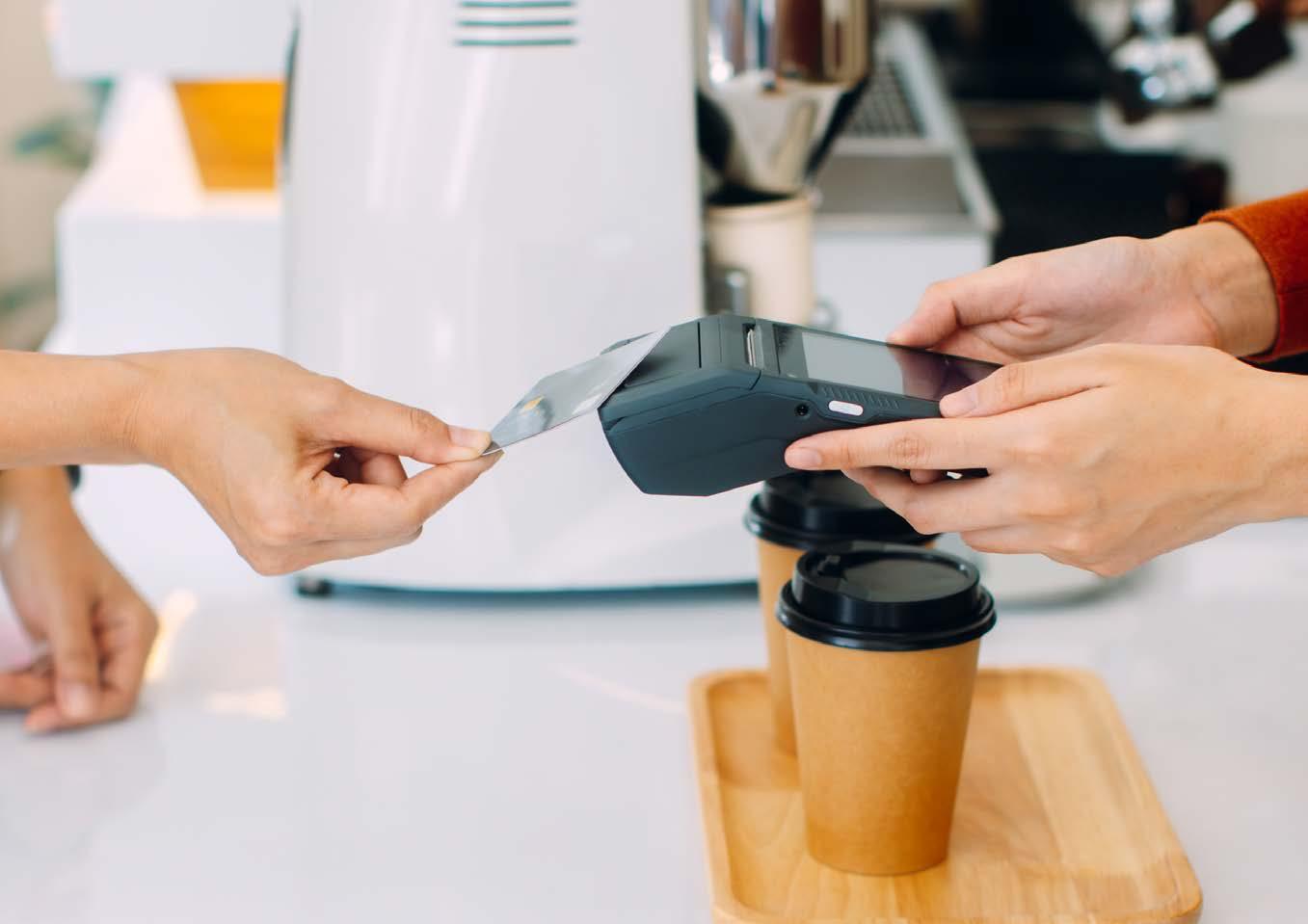
In late March, the Reserve Bank of Australia (RBA) handed down a decision to remove all surcharges on debit, credit, and prepaid cards on all major card networks. In short, surcharges will be outlawed by October 2026. e RBA stated the ban is expected to save consumers about $1.6 billion per year, and businesses $200 million per year, in surcharge fees, however these incremental fees – which commonly sit at around 0.5 to 1.5 per cent of the bill – will not simply be absorbed. Instead, the onus has been placed on businesses on how they are going to cover the removal of these fees themselves.
For Matt Gellert, it’s another test for his café business. As Owner of Black and White Espresso, which operates three locations in Sydney, along with three more in the works this year, and a café business broker, he’s acutely aware of how another cost pressure could push café prices higher in an already strained market.
“In reality, customers are likely to see higher upfront prices,” he says.
“For example, a at white might move from $5.20, not to $5.21, but more likely to $5.50, as businesses take the opportunity to round pricing. Given how cash usage has
declined, especially coins like 20-cent pieces, pricing has already been moving toward cleaner gures.
“Customers may no longer see surcharges at the point of payment, but they will notice higher listed prices.”
Matt says, at the time of writing, there has been little additional information provided by the RBA to businesses about the removal of surcharging beyond what has been made available to the wider public.
“As an industry, we’ll need customers to understand these costs have effectively been socialised, and we’re reacting to that shift.”
Matt Gellert OWNER, BLACK AND WHITE ESPRESSO
at $1.6 billion gure the RBA has cited has been front and centre of most communications by the governing body, mapping the change as a win for consumers. However, Matt believes people aren’t being given the full picture of the impact.
“When the surcharge changes were rst announced my initial reaction, like many people, was removing surcharges sounded great. It seemed like a win for consumers. But when you look more closely, the cost doesn’t disappear; it’s still borne by the business,” says Matt.
“ e RBA did a great job marketing the idea that they were saving consumers a signi cant amount of money, and it’s positive to see a focus on transparency. However, the real cost of that transparency is di erent from what customers might expect. Even within my own household, I had to explain that these costs don’t go away for businesses, they’ll simply be incorporated into pricing.”
Matt says his own cafés – like most others around Australia – are consistently wrangling with when and how to raise prices, and the removal of card surcharging has added yet another element to this.
“When I rst heard the news, I hoped the
fees might disappear entirely, but that hasn’t been the case. With changes expected in October, we’re trying to decide the best timing for any price adjustments,” he says.
“Acting too early could mean multiple increases in a short period, especially with end of nancial year supplier price rises coming as well. Having too many staggered increases risks frustrating the customer.
“For now, we’re waiting until more information becomes available and supplier pricing stabilises. We’ll likely look at implementing changes around September, incorporating the costs into our overall pricing. It will e ectively amount to around a one per cent increase across the venue.”
ere’s also the competitive aspect, he notes, watching what others do and deciding whether to act now or later.
“My instinct was to move early, but it makes more sense to take a measured, holistic approach rather than just knee jerk reactions every once in a while.”
While factoring the card surcharge ban into the balance sheet creates another potential headache – especially in a typically tightmargin industry – Matt believes it will, ultimately, be for the greater good.
He’s been a long-time supporter of increasing transparency in pricing, and says the RBA’s move will help achieve this.
“Ideally, I’ve always wanted an all-inclusive pricing model for the industry, one that is
clearer, fairer, and more professional. As we move toward that, it’s important the conversation remains informed and balanced.
e RBA isn’t the enemy, and cafés aren’t the villains,” says Matt.
“ e RBA is one of the few bodies capable of regulating this space. e challenge is that cafés will be the ones having to explain these changes to customers, who may perceive price increases as gouging.
“Ultimately, transparency comes with a
price tag. What used to be a $25 lunch with a small surcharge might now simply be priced at $26. As an industry, we’ll need customers to understand these costs have e ectively been socialised, and we’re reacting to that shi .”
Hospitality is an industry that actions this di erently than most other retail services, but Matt says it’s up to the RBA and other governing bodies to help communicate the true impact of the card surcharge ban.
“For years, we’ve communicated price increases carefully by posting notices, explaining rising costs, and even showing graphs to justify changes. at comes from a place of hospitality and respect for our customers, but there’s only so much apologising we can do,” says Matt.
“Other industries don’t operate this way. For example, when the price of an iPhone increases, companies like Apple don’t issue apology letters or detailed explanations. But cafés o en feel obligated to justify every change, and that’s because we’re a hospitable group of people who cares about our customers.
“Part of the issue lies in how these surcharge changes have been communicated. ey’ve been framed as a clear win for consumers, without enough emphasis on the fact that business costs remain unchanged. Customers would likely understand this if it were explained more clearly, but that nuance hasn’t yet come through.”
Black and White Espresso Owner Matt Gellert wants to avoid framing the RBA as the “enemy” in the scrapping of card surcharges. Image: Matt Gellert.
Morning, noon, and night
As more cafés break away from conventional operating hours, venues are tapping into dayparts outside the 7am–3pm service window. What opportunities and challenges do they face?
shifting dayparts
The modern café landscape has largely been built around the hours of 7am to 3pm. First comes the morning rush, before brunch, late lunch, and nal co ees –then rinse and repeat.
at’s changing though. Whether it’s run clubs and morning exercise classes creating demand to open earlier, combo café/ restaurants closing for a few hours before reopening with a di erent menu proposition – or any other number of reasons – venues are responding to new expectations.
Tightening cost of living and the advent of work from home have also made the competition for the co ee dollar tighter, but cafés and other venues are getting inventive with how they can best take advantage – and that starts with hours.
To the extreme
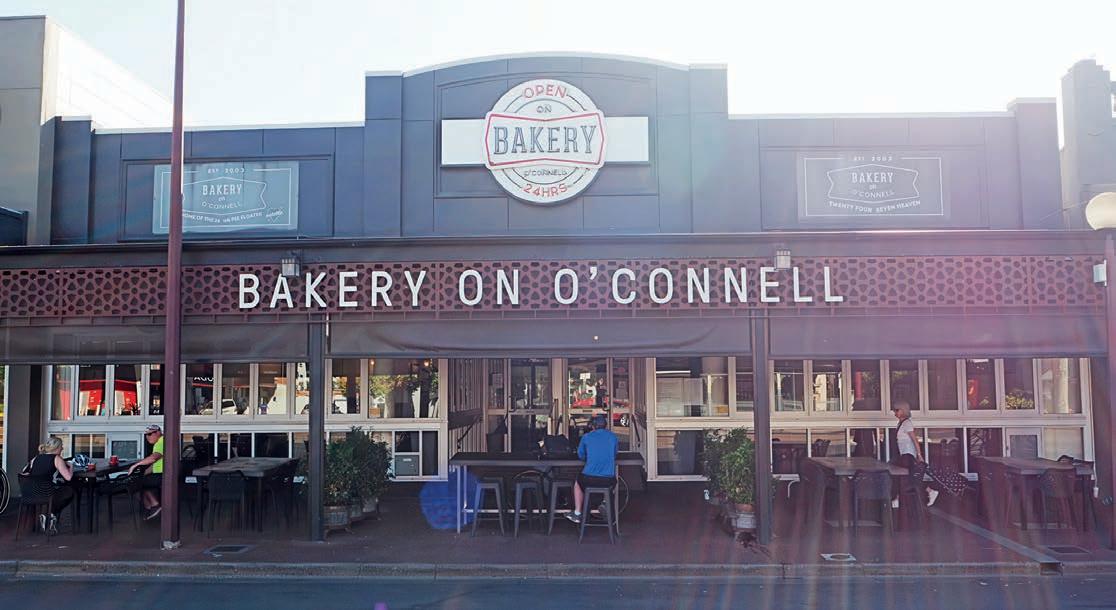
Bakery on O’Connell is one of Adelaide’s most famous bakeries. Located on one of the main thoroughfares of the vibrant North Adelaide precinct, it’s on the doorstep of some of the city’s premier evening destinations and along the routes of many early morning commuters.
It identi ed these late-night and early morning opportunities not long a er it opened in 2003. Now, more than two decades later, its 80-seat café has become just as popular for its state-heritage pie oaters – an upside-down meat pie in a bowl of pea soup –
as it has for being open 24 hours a day, seven days a week.
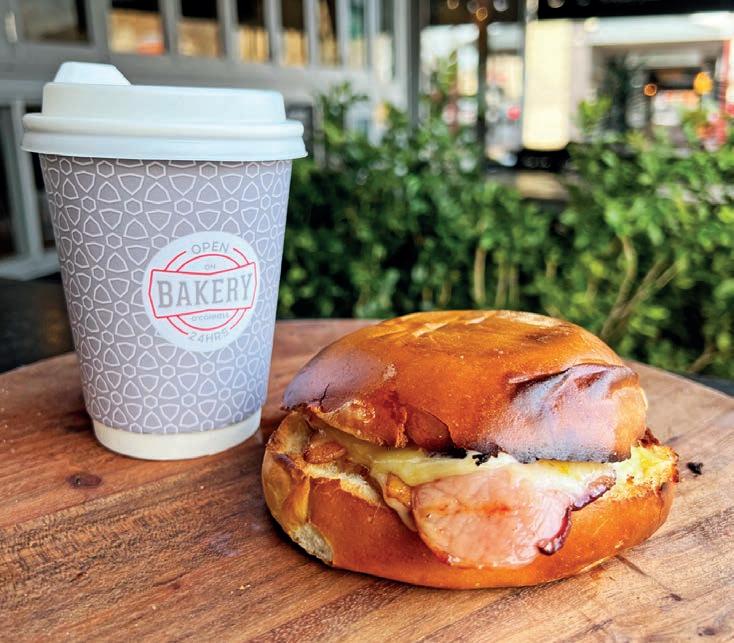
Co ee is critical to the business, with CoOwner James Kent stating that Bakery on O’Connell goes through between 100 and 120 kilograms per week – much of which is sold in the early hours of the morning.
James began as a baker’s apprentice at Bakery on O’Connell, which was rst opened by his aunt and uncle – Jane and Tony – who are now his business partners.
He says while the shi in hours was brought about by hungry late-night partygoers, Bakery on O’Connell now does a roaring early morning trade.
“We started out on St Patrick’s Day in 2003, but we didn’t start out trading 24/7 like we are today, we traded normal bakery hours,” he says.
“We transitioned to 24/7 because a lot of college students could smell the food we were baking in the early morning and evenings and knocked on the door because they wanted to have some.
“It was a bit of chance that we became 24 hours, but it turned out for the best because we quickly had to hire more sta in the mornings because the bakers were getting overrun with early morning customers.”
e thought of late night and early morning customers being guided to the bakery through smell alone stirs imagery of Mickey Mouse
oating through the air to a baked pie on a windowsill, but it’s a novel concept that has altered the trajectory of Bakery on O’Connell.
“People smelling the food came with the demand, and the demand has only grown. In the summer months, when the nights are longer and warmer, we’re o en busier overnight than we are during the day,” says James.
“ en, in winter, when the nights are colder our day trade carries the night a bit, but it’s just continued to grow.”
Combining cultures
While suggesting every café and bakery in Australia should immediately transition to operating 24/7 hours is borders on insane, Bakery on O’Connell’s success shows the potential of shi ing dayparts.
James notes that Adelaide may be behind other metropolitan hubs like Sydney and Melbourne – where some cafés open as early as 4:30am – but there’s plenty of room for earlier opening around Australia.
What about the other end of the day, though? e traditional a ernoon slump in cafés is slowly being replaced, with tea-based signature drinks and other low-ca eine options signi cantly rising in popularity in recent years.
With many of these drinks originating in Asia, it makes sense for Asian-inspired venues
Bakery on O’Connell takes
to the extreme, operating on a 24/7 model. Image: Bakery on O’Connell.
FEATURE
to lean into the later opening – much like how Melbourne’s Hikari has done.
Damien Xiao, Director of Hikari, says the venue was created from a desire to combine Melbourne’s café culture with Japanese tea traditions, one of which is opening later in the day.
“I noticed that in Japan, both cafés and teafocused venues o en stay open much later into the day, and there is a very natural rhythm in how people consume drinks: typically, a co ee in the morning, and then something like matcha in the a ernoon,” says Damien.
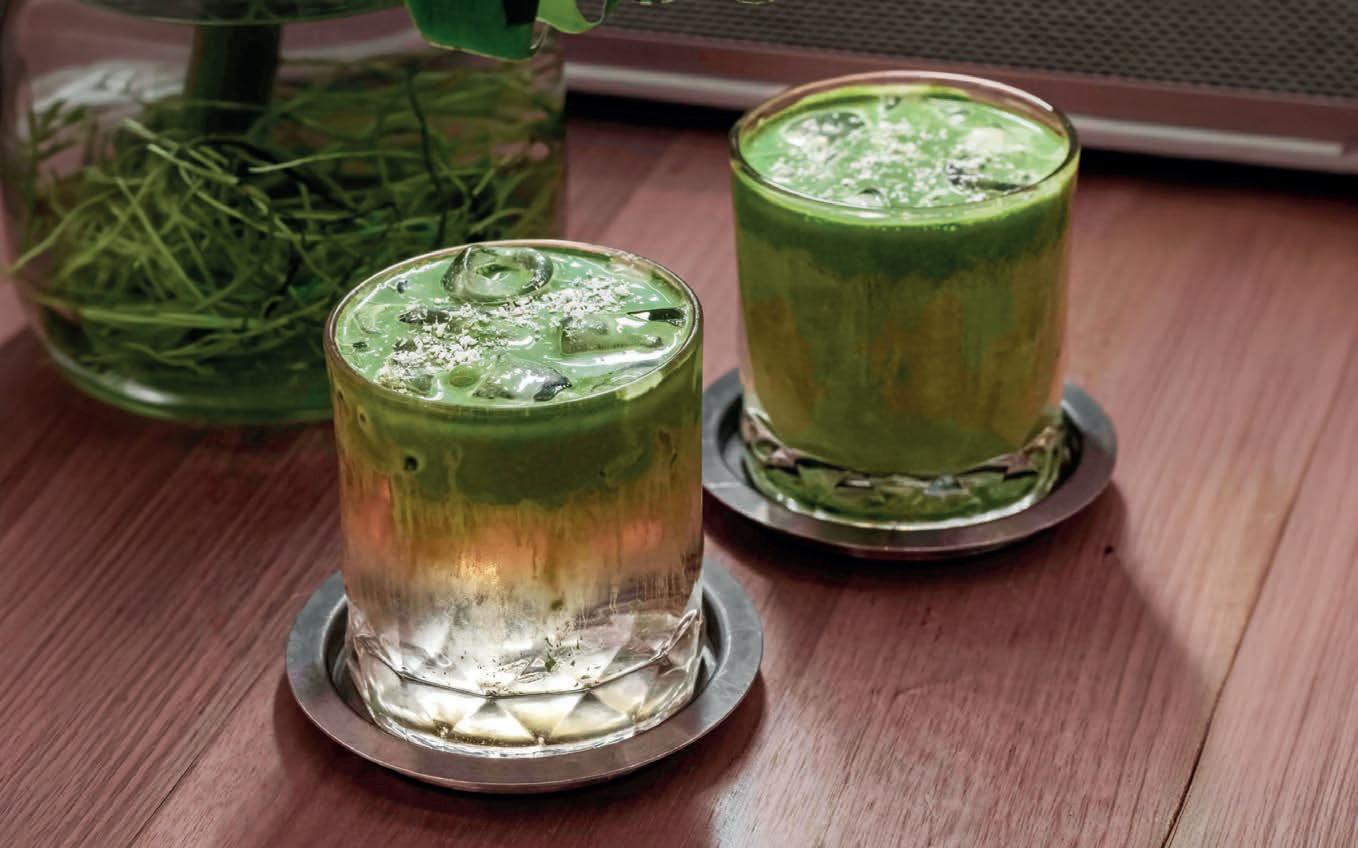
“At Hikari, a large part of our menu is built around matcha-based drinks and other tea-focused options, which are actually very well suited for a er 3pm. Because of that, it felt quite natural for us to extend beyond the traditional Melbourne café hours.
“We wanted to create a space where customers could still enjoy high-quality drinks later in the day, not just in the morning rush.”
While opening slightly later than many cafés – 8am on weekdays and 9am on weekends – the minimalist café and homewares store o en extends hours late into the evening, pending demand.
“We’ve found a balance that works both for customer demand and operations,” says Damien.
“We typically open until 6pm during winter
“We wanted to create a space where customers could still enjoy high-quality drinks later in the day, not just in the morning rush.”
Damien Xiao DIRECTOR, HIKARI
and extend to around 7pm during daylight saving in summer. is allows us to capture that a ernoon and early evening crowd while maintaining consistency in quality and service.”
Although these non-co ee drinks, like Damien’s aforementioned variations on matcha, along with other staples like hojicha, are o en more heroed later in the day, Damien says co ee trade also continues later into the a ernoon and evening.
“It became clear through daily trade that there was demand to be open later,” he says.
“We kept seeing people come in during the late a ernoon asking if co ee and matcha was still available. ere were customers who genuinely wanted quality co ee later in the day, not just convenience. at was the moment we felt the demand was bigger than we initially expected.”
Opportunities and challenges
Jack says one of the biggest challenges with operating for 24 hours a day – and a challenge he envisions for any venue with extended hours – is the same as one of the main issues currently facing the entire industry.
Sta ng.
“At our last look we employed 92 sta here. We’re a small business at heart, but that’s a big business level of sta ng,” says James.
“Since we’re 24 hours, we need to have a lot of people to call on to sta those hours, and that comes with its own set of challenges. When you start employing more people, especially in those tough overnight shi s, it’s di cult to ensure everyone who works there shares the same values of the business.”
But he believes the opportunities of opening earlier or later than the competition outweighs the challenges – especially for bakeries, which will already have some sta attending early in the day.
“You’re paying the same rent whether you open at 4am or 6am. As long as you can
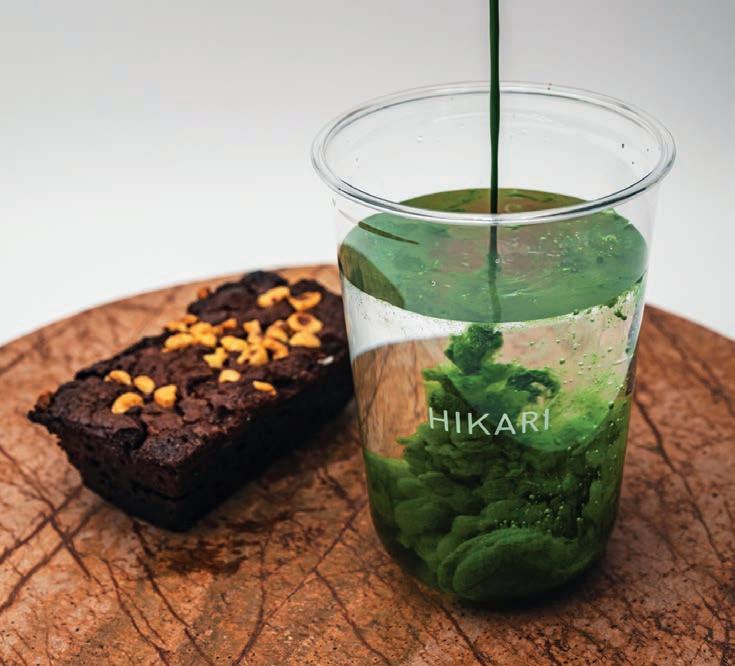
Hikari was created to blend the coffee culture of Melbourne with coffee and tea traditions of Asia. Image: Hikari.
nd people to sta it, and as long as you can get some sales in that time, it’s a great opportunity to grow – especially in places where the early morning cafés might not be as common,” he says.
“For bakeries, there’s another element of you already have sta there in the early morning actually baking, you’re already using electricity and most of the equipment is already up and running.
“Opening earlier could be a great opportunity for bakeries that are on busier roads because there will be that demand from people heading to work early to want to drop in and have a co ee.”
at demand for quick co ee in the morning is only being exacerbated by the growing popularity of convenience around the country.
“Drive-thru co ee places seem to be opening up everywhere. ere are so many people that are time poor in the mornings – especially tradies really early – that being able to get a co ee and not leave your car is attractive,” he says.
“If you’re opening earlier, you have to prioritise di erent things than, say, a normal brunch rush where people have more time to sit down and wait.
“We aim to be really fast with the co ee as we’re aware these customers are on their way to work and may not have a lot of time to wait, they’ve got somewhere to be, so we want to get co ees up as quickly as we can to keep them moving.”
He adds it’s important to have supportive partners and suppliers, just in case anything goes wrong.
“We’ve had the same co ee supplier for the past 20 years; it’s a South Australian roaster
called Aroma Fresh Co ee. ey’re great,” says James.
“ at early morning daypart is where a lot of our co ee business is. If you’re going to be operating earlier or longer hours, you de nitely need support from your suppliers.
“We’ve had times where the co ee machine has basically blown up in the middle of the night, but we’ve been able to get a technician out in 20 minutes – it actually happened only last year.”
For Damien at Hikari, the opportunities of later trade revealed themselves when he and the other business owners dialled in to exactly what their vision for the venue was, and listening to the needs of customers.
“What sets Hikari apart is that we’re not built around the traditional co ee- rst, morning-focused model that many CBD cafés follow. From the beginning, we’ve taken a slightly di erent approach, shaped by both Melbourne café culture and Japanese tea traditions,” says Damien.
“Our customer base is largely younger and more experience-driven, so instead of focusing purely on standard co ee o erings, we’ve developed a menu that leans heavily into matcha and more creative, specialty drinks.”
He says there’s also a strong emphasis on sourcing and product quality behind the scenes.
“A lot of what we o er, especially our matcha, is carefully selected from Japan, which allows us to deliver a avour pro le and experience that feels quite distinct,” he says.
Hikari’s target demographic steers slightly away from the typical o ce worker. With the venue situated on Swanston Street across from the State Library of Victoria and next to the shopping hub of Melbourne Central, it means there’s plenty of people around to make the later hours advantageous.
“Our customer pro le doesn’t change too much throughout the day. We’re located on one of the busiest streets in Melbourne, so there’s a constant ow of customers,” he says.
“Since our customer pro le stays quite consistent throughout the day, the way we engage with customers doesn’t change dramatically between morning and later hours.”
Matcha and other tea-based drinks prove popular in the afternoon for Hikari customers. Image: Hikari.
Bakery on O’Connell does a roaring early morning coffee trade, according to Co-Owner James Kent. Image: Bakery on O’Connell.
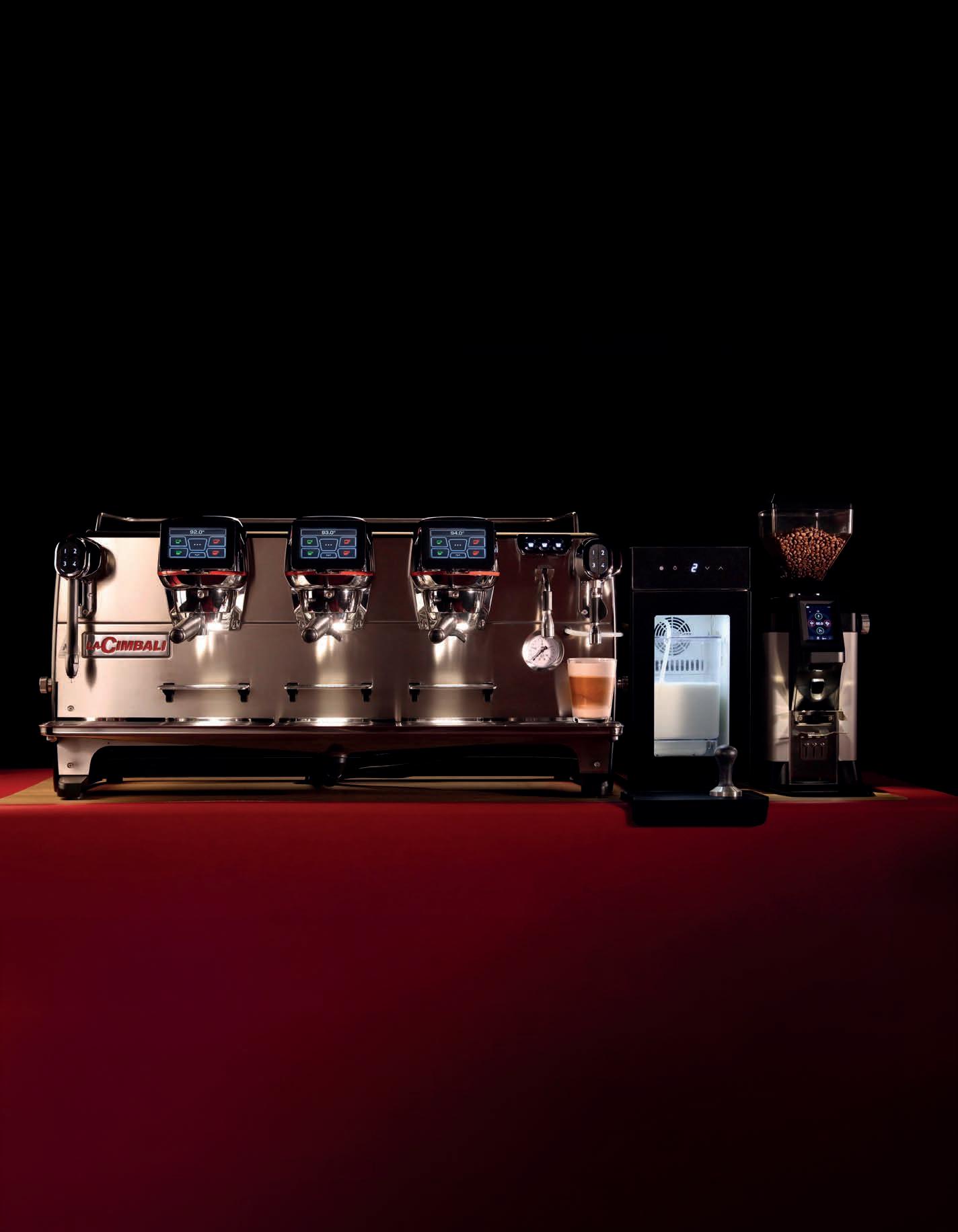
La Cimbali M200 High Quality Milk is designed to support baristas with intelligent automation that enhances skill, not replaces it. At its core is HQM — High Quality Milk — a built-in feature of the Automated Perfection system, delivering elevated milk performance with speed and precision for both hot and cold milk beverages.
The integrated milk management system produces perfectly textured milk in seconds, ensuring consistent temperature — hot or cold depending on the recipe — silky microfoam and exceptional in-cup quality with minimal effort. The result? Signature beverages with flawless taste, cup after cup — because when performance is constant, creativity can truly shine.
For further information or business requests, contact stefano.giannini@cimbaligroup.com
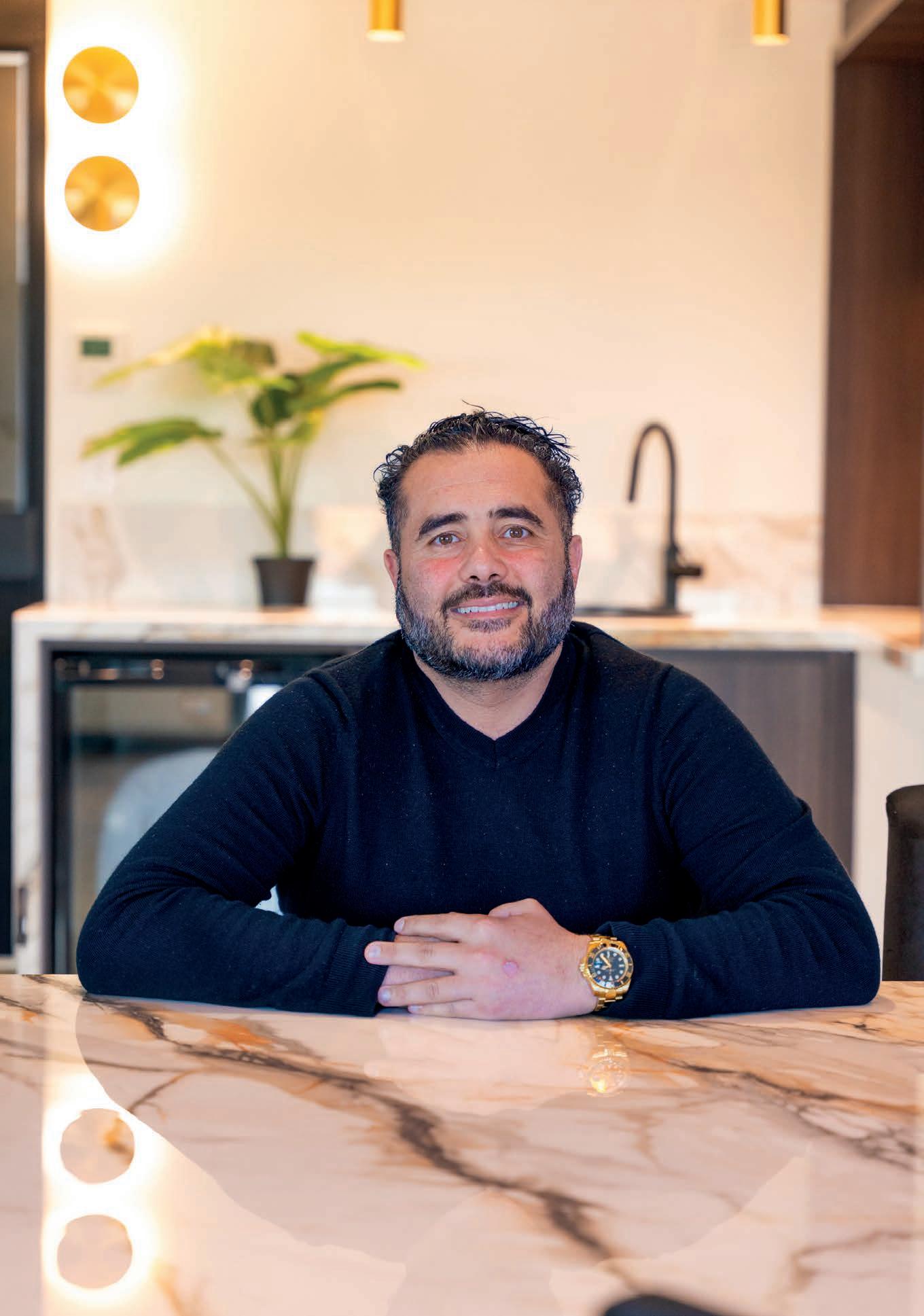
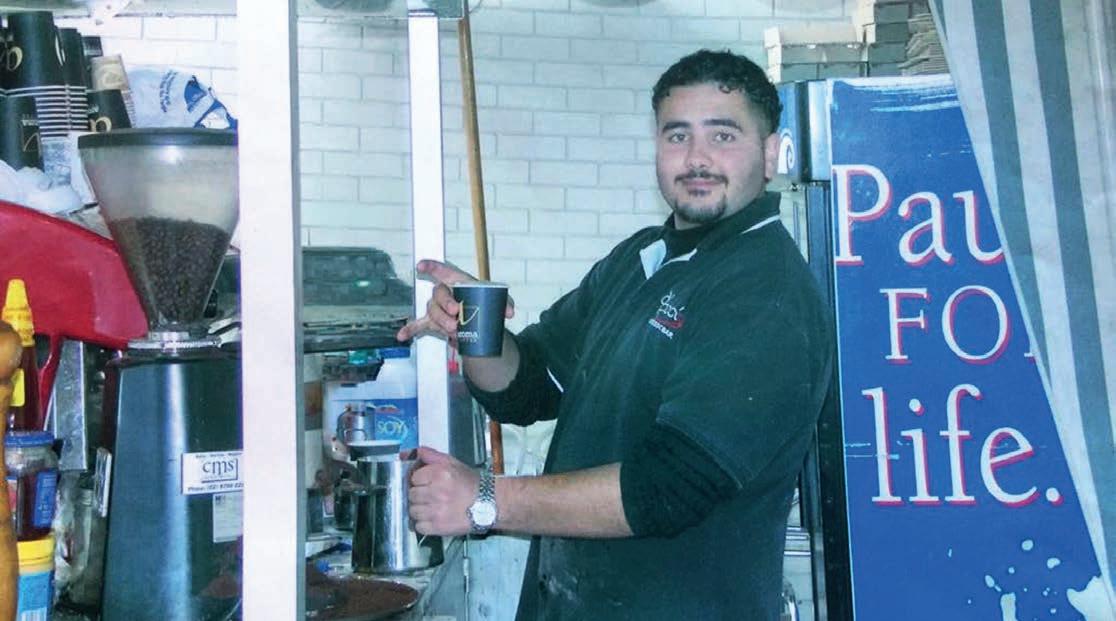
Mik Di Pacci has built an Australian coffee empire over the past 20 years.
Images: Di Pacci Coffee Company.
From cart to co ee kingdom
From opening his famous coffee cart to running one of Australia’s largest coffee companies, Michael Rababi reveals the credos that helped him unlock success.
Michael Rababi’s journey in co ee started with a simple premise – he didn’t want to have a boss.
Since then, the Founder of Di Pacci Co ee Company has built one of Australia’s largest co ee equipment providers and has become so synonymous with his business that ‘Mik Di Pacci’ has become his well-earned nickname.
His more than two decades in co ee have taken him from manning a co ee cart outside a bank in Marrickville, to owning ve cafés, to building an Australian-based global co ee empire, with operations also in four other countries.
It’s a journey de ned by grit, tenacity, and, by Mik’s own admission, more than a pinch of luck. But underneath it all there is a sound strategy, held up by the key pillars of customer service, good relationships, and hard work that have helped guide him to this point.
Taking the leap
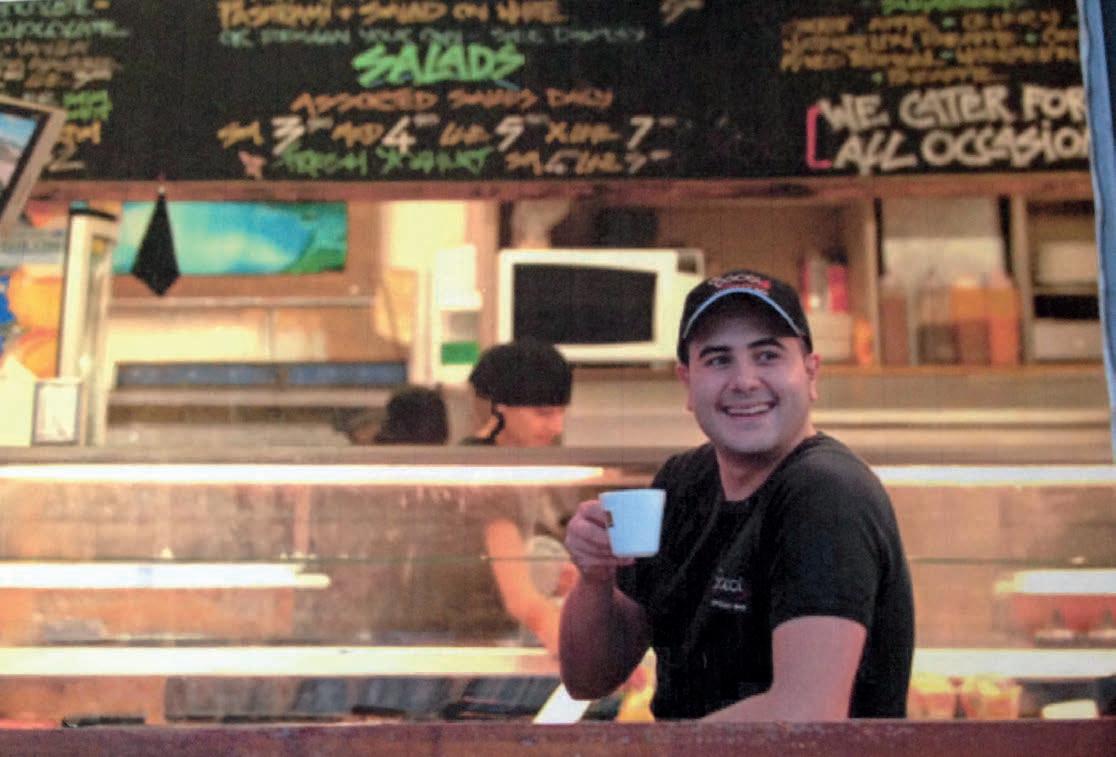
A er initially planning to go into business in the early 2000s with his brother-in-law – who instead decided to pursue a supermarket job –Mik got his hands on a co ee cart and laid the foundations for what would one day become Di Pacci Co ee Company.
“It all started when I was about 18 years old, and I didn’t really want to work for anyone,” says Mik.
“I bought a stainless-steel co ee cart and found out from my brother-in-law’s mum that a new National Bank building had been opened in Marrickville, but there wasn’t anywhere close to it to get co ee.
“I walked in, found the owner, knocked on his door, and told him I wanted to open a little co ee cart downstairs – there was a perfect spot literally right in front of the building.
“He just said that was ok – we didn’t speak about rent or anything. So, I went and packed my car, loaded the trailer, and set up.”
Within six months of setting up his cart on Marrickville Road back in 2003, Mik was selling 80 kilograms of co ee per week. He quickly outgrew the cart, so he set up a café, then another, then another.
“I ended up running ve cafés –Marrickville, Parramatta, Ryde, Leichardt, Greenacre, and Hurstville,” he says.
“ ere’s not an exact formula to it; it’s just hard work and continuing to keep going. When I had the rst café, I wasn’t even thinking about supplying co ee, but I kept getting asked by people – I ended up doing about 500 kilos per week wholesale.
en people started asking me to help them get machines.
“I saw someone in Melbourne selling a bunch of machines, so I bought a one-way ticket there and bought 20 of them, he thought I was joking. I had nowhere to put them but I just made it work. From there, we just organically grew.”
Once his roasting and equipment supply business started to pick up, Mik sold o four of his ve cafés, but held onto Marrickville for a while. A er all, it was his home.
When Mik speaks, he references “being lucky” more than once – whether it be with a helpful bank owner allowing him to set up his cart or nding the right people to help him take his cart, then cafés, then Di Pacci Co ee Company to the next level.
While everyone needs some luck, it’s clear that Mik has typically been the type of person who has helped luck come to him through sheer hard work – rain, hail, or shine.
“ ere was a point I was managing the café from 4am until 5pm, then I’d go next door to Di Pacci Co ee Company and I’d make our chocolate sauce, I’d do deliveries, I’d roast the co ee, pack the van, service the machines out the back, and do installations,” he says.
“ ere were two occasions where I worked
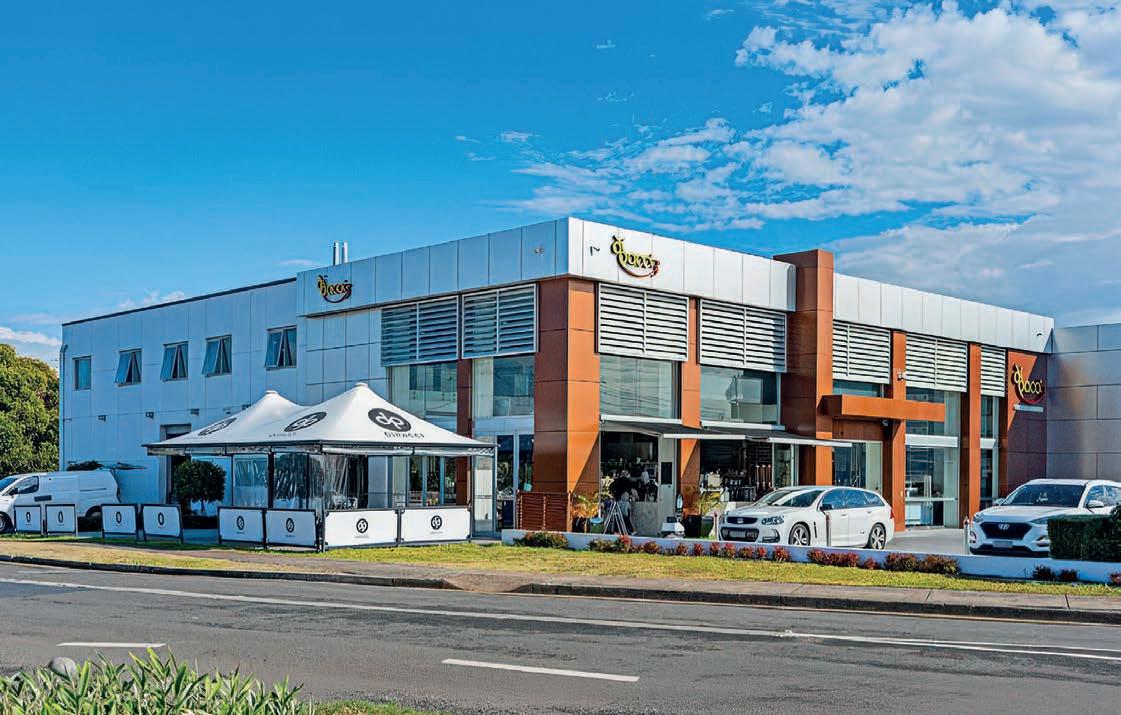
Di Pacci Coffee Company has showrooms around Australia, as well as the US, UK, Singapore, and New Zealand.
for two days straight with no break, and once I did it for three days. I never had a day o or missed a day in 15 years. I was even in hospital once and was told I needed kidney stone surgery.
“I ripped out the canula and legged it to the shop to open up and serve my customers. I forgot I was even sick by 11am, I was that focused on making the co ees, and I never ended up getting the surgery.”
Other anecdotes, while less dramatic than Mik’s daring escape from hospital, were no less important to keeping his customers happy.
“ ere were times when I’d be all packed up. ere was a massage parlour across the road that was one of my best customers, there were 30 employees who would order co ees and sandwiches every morning,” he recalls.
“Every now and then I’d be halfway home and they’d ring me and ask for 20 co ees, so I’d do a u-turn and go back and make them their co ees. Not for the $60 or whatever it cost at the time, but so they didn’t go anywhere else.”
Because, whether it be a small business across the road with 30 sta , or a customer that comes in and orders a co ee once a day, every relationship matters, according to Mik.
“Keeping customers is so important. Many people don’t realise that someone who comes in and orders a $5 co ee every day is close to $2000 a year,” says Mik.
“If that turns into two large co ees and a mu n, that could be close to $10,000 a year. If you let yourself have a mentality that a single
“Treat everyone, from the cleaner to the CEO, with the same level of respect ... and go out of your way to be genuine and honest.”
Michael Rababi FOUNDER, DI PACCI COFFEE COMPANY
customer doesn’t matter, then you’re not going to survive in this industry which has as much competition as it does.
“It’s not about one sale, then see you later, it’s about building relationships. ey tell their friends, who tell their friends. at’s how I’ve run every business I’ve had up until now.”
Built on trust
At the time of writing, Di Pacci Co ee Company spans almost the entirety of Australia, with operations in Sydney, Melbourne, Perth, Port Macquarie, and the Gold Coast, as well international presences in New Zealand, Singapore, the United States (US), and United Kingdom (UK). at organic growth has been elevated through Mik knowing the right people for the right job, with many of those closely held relationships starting as business contacts.
“I had a really good supplier in Melbourne
who was leaving the business he was working for, so I opened up in Melbourne and hired him to run the showroom there,” says Mik.
“In Perth, I had someone ordering co ee o me who asked if I could hire him. I told him if he could build up the volume to a couple of hundred kilos per week, I’d hire him. In the end, he built up to almost 400 kilograms.
“We opened in Port Macquarie because my graphic designer, who was from there, wanted to move back home with his wife. Now, we have a team of four people there who do about 400 to 500 kilos per week and sell 50 kilos a week from a little co ee cart, and we’ve been set up there for about ve years.”
It’s the same story with Di Pacci’s international operations.
“New York happened by accident, I was at the New York Co ee Expo and I happened to meet someone from Slayer. We had a chat and I told him I was going to visit my dad’s friend in Brooklyn, who owned a store called Little Tripoli,” continues Mik.
“Unfortunately, my dad’s friend had passed away, but I met his nephew who was running the store. We hit it o , he came to Milan with me, and we set up Di Pacci USA so he could run it for me.
“I had someone from Singapore annoying me for a $1 part, so I ordered it and shipped it to him. He kept buying parts o me a er that, and then co ee machines.
“He eventually moved to the UK and told me he wanted to start selling co ee, so he started running Di Pacci UK – and it all started from a $1 spare part.”
Di Pacci now covers almost the entire coffee ecosystem, from roasting, to retail, and equipment supply.
It’s maintaining those relationships with good, hardworking people aligned on the Di Pacci vision that Mik says has been critical not only to him, but to the entire business.
“Without the right people, you’re not going anywhere no matter what you do. I’ve been blessed to have great managers in all these locations, as well as in Queensland,” he says.
“Even Domenic Carnavale, my GM, he’s the only person I ever worked for other than my uncle, when I was working in an ice cream shop for about six months making juices and co ees before I opened my cart.”
Whether it be to a café owner, roaster, or anyone else in the co ee industry, Mik’s advice is simple.
“Just work hard,” he says.
“A spare part can turn into lifetime friendships or business partnerships. Treat every customer, whether it’s a $1 co ee or a million-dollar deal well.
“Treat everyone, from the cleaner to the CEO, with the same level of respect. Pay your bills on time, don’t burn bridges, and go out of your way to be genuine and honest.”
Owning the coffee ecosystem
From private-label and wholesale roasting, through to cafés and retail, all the way to equipment hire and maintenance, Di Pacci Co ee Company has its nger on the pulse of all things co ee.
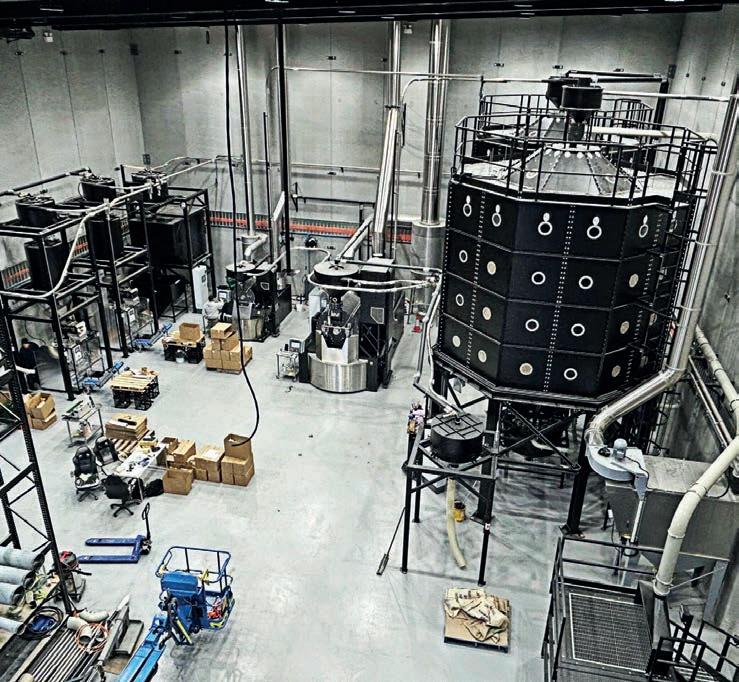
e latest development of this was the opening of e Roasting Club in Roselands, Sydney, that Mik revealed in 2025 as a $25 million facility, o ering all things roasting and training.
“We do contract roasting, private label roasting, equipment hire, Q Grader courses and green bean grading at the Roasting Club,” says Mik.
“It’s been a great success since it opened last
year. A lot of large roasters utilise it, probably ve of Australia’s top 10, plus a lot of smaller roasters who do a few hundred kilos a week.
“To the best of my knowledge, we’re also the only practising registered training organisation (RTO) co ee company in Australia. We do food safety courses, supervisor courses, barista training, and now we’re adding a few more modules into our scope.
“It’s so good to be in the community helping people with their co ee businesses, whether that’s roasting, training, or equipment.”
Despite all his success, Mik is like a shark – in the best kind of way. Always moving
forward and sni ng out the next opportunity.
“I think I’ve done almost everything I can, I don’t really sleep and my phone doesn’t stop,” Mik says with a smile.
“ e only thing I can really do now is look at maybe buying a farm somewhere like PNG or South America and get closer to the process of actually growing the co ee.
“Buying a co ee machine manufacturing facility overseas, somewhere like Spain, Portugal, or Romania could also be on the cards. We import equipment from the UK, Portugal, Spain, Italy, China, and Romania, so it could be nice to have our own line of machines in the future.”
Mik was a driving force behind The Roasting Club, which opened its doors in 2025.
Mik first went into the coffee business in 2003, starting out with a single coffee cart.
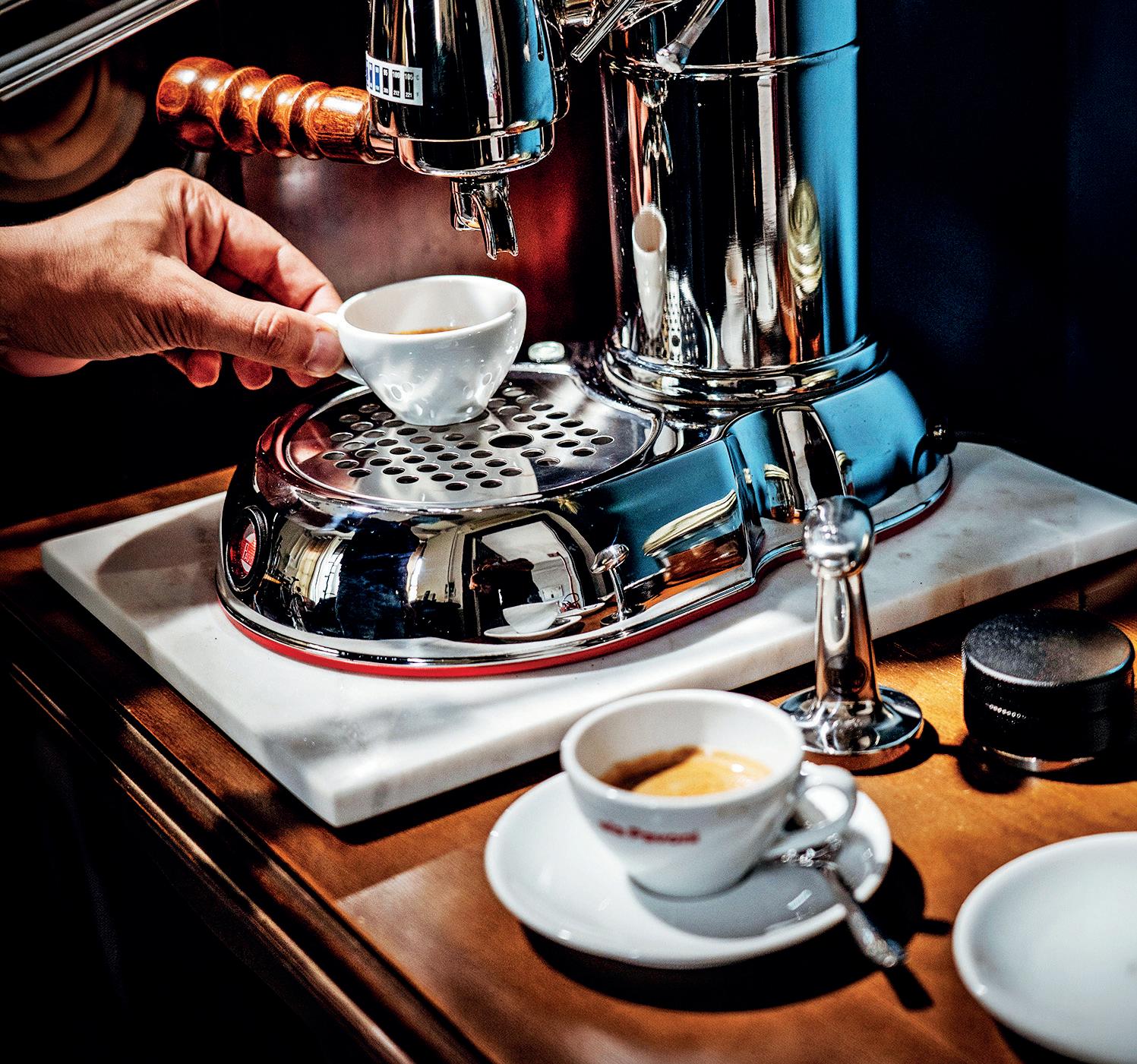
La Pavoni’s lever machines have been an icon of Italian coffee heritage for more than 60 years.
Images: La Pavoni
e return to ritual
With speed and automation in coffee technology often taking centre stage, are we also seeing a shift back toward slowing down and brewing with intention and purpose?
For many, the speed of modern life feels ever-increasing, as smartphones, social media, and digitalisation accelerate the pace of everyday living.
In this world of precision, where new-age technology is rede ning convenience, there is a quiet shi happening in some corners, away from buttons and automation, and back towards heritage manual methods.
For many, espresso is steeped in routine and tradition. For co ee enthusiasts and professionals who choose lever machines, like those constructed by Italian manufacturer La Pavoni since 1961, that routine translates into something more.
“It’s an escape from the daily speed of life,” says Head of La Pavoni Australia, Leon Wolf.
“It’s about slowing down to enjoy the moments in life. It’s turning o your phone, switching o the TV, and just being in the moment. ere’s still a massive part of co ee culture that embraces that every morning, because that’s their daily ritual.”
Why lever? Why now?
As co ee culture continues to mature, the swing towards convenience and speed is being countered by a move back to tradition in many circles.
While avour-driven, signature drinkloving Generation Z consumers have captured the hearts and minds of the industry, Leon says it’s important to continue to engage with the lovers of traditional brews.
“ ere are two sides of co ee culture emerging,” he says. “One is the authentic espresso culture with the traditional barista and the enjoyment of milk-based espresso beverages.
“But there’s a whole new audience we have to talk to today, and that’s young people that prefer energy drinks over co ee.
“What’s missing today is everything is so quick, it’s so fast, and so focused on turnover and volume. Nothing ever slows down, but cafés are more than a place to get a quick co ee and get ca einated.
“ ere’s still room for the theatre of co ee.”
Lever machines, particularly those manufactured by a business with the legacy of La Pavoni, o er something uniquely relevant in this space with a return to cra smanship in an increasingly digital world.
“It’s about being dialled in and zoned in on that moment of making co ee. You’re not thinking about anything around you other that getting the grind right, getting the dose right, getting the temperature right, pulling the lever at the right time, and trying to make the best co ee of your life,” says Leon.
“It’s a process we need to slow things down – but outside of that it may be the best co ee you’ve ever experienced. at’s the beauty of it.”
It is La Pavoni’s domestic lever machine models that o en take centre stage in this discussion, with the likes of the Esperto Abile representing the Italian manufacturer’s most re ned expression of this philosophy.
Designed for those who seek complete
Italian espresso culture has informed much of what creates the modern Australian coffee experience.
control, it elevates the ritual of co ee through precision and tactility, o ering pressure pro ling by hand, visual feedback through an integrated gauge, and a deeper connection to every stage of extraction.
Leon says while the silhouette of La Pavoni lever machines and their iconic eagle remain instantly recognisable, there has been a deliberate evolution in the construction of the lever machines in the past 60-plus years to make them accessible to the modern co ee connoisseur.
“La Pavoni hasn’t abandoned the tradition of these machines, it’s just been re ned,” he says.
“Modern iterations include improved internal components, enhanced thermal stability, and subtle usability upgrades that have been made to support consistency without removing the hands-on nature that de nes the experience.
“It’s still a fundamentally manual, tactile, and human machine that is rooted in mid-century Italian design, but it’s been engineered for today’s expectations of performance.”
La Pavoni also o ers a professional lever
machine range, which are constructed slightly di erently to the domestic range to better perform in a higher-paced, commercial environment.
Leon believes there is potential for Australia to follow the European shi back towards
“You see more and more lever machines in exhibition settings in Australia, however in Europe you see them in cafés –especially in grander, sit-down of venues.”
Leon Wolf HEAD OF LA PAVONI AUSTRALIA
ritual and away from speed for speed’s sake in high-end venues.
“You see more and more lever machines in exhibition settings in Australia, however in Europe you see them in cafés – especially in grander, sit-down of venues. ey’re not about takeaway, they’re about theatre and what it brings the whole co ee experience,” he says.
“La Pavoni’s professional lever machines are from the Diamante range. We make twogroup professional lever machines that have spring-loaded levers, which is di erent to our domestic lever machines.”
e domestic machines contain pistondriven levers. From an extraction perspective, the result is the same as the Diamante’s spring-loaded levers.
“ e spring in the Diamante regulates pressure, whereas in a domestic machine it’s the user’s arm, which creates a more personalised pressure,” says Leon.
“You pull the lever down which loads the spring up, that means water is allowed into the chamber. Once the correct volume of water is in you let the lever up slowly. Once the pressure is taken o the water, the spring is used to push the water through the co ee.”
The Esperto Abile relies on the operator to create the pressure that extracts the espresso.
The future of the ritual is ‘shi to analogue’ is also happening outside co ee through the renewing popularity of things like vinyl records and DVDs, and a way to engage with the world in ways generations before did. It’s simultaneously capturing nostalgia and creating a grounding change of pace in day-to-day life.
Lever machines sit within this overall shi , with their longer process of getting from grind to cup.
Leon says it’s a method people engage with them to help them return to the heart of co ee.
“A story I hear so o en is people want to buy a lever machine because their parents or grandparents had one and used it every day, and they want to learn how to use one. It’s a very common thread with lever machines and shows the power of emotional connection to the brewing method,” says Leon.
“Lever machines like the Esperto Abile and the rest of the La Pavoni range are both functional and expressive, and they become far more than part of the kitchen – they become part of a broader identity.”
Because, for Leon and La Pavoni, that’s the crux of it. Co ee is a critical part of identity for so many people not just in Australia, but around the world – and there are more ways than speed and technology to explore how much there is to love about the brew.
“Precision doesn’t always require
automation. at quality can come from feel and preserving a way of making co ee that still holds meaning,” says Leon.
“It’s about understanding the variables and giving a sense of ownership over the nal result. It’s a return to cra smanship and intention in an increasingly fast-paced, digital world.
“ ere’s so much reward to be found in the experience of creating the cup and engaging in this disciplined ritual that goes beyond the co ee itself.”
TTR EVO ROASTERS
Leon Wolf, Head of La Pavoni Australia, believes precision, manual extraction remains crucially relevant in today’s world of automation.
Asian-inspired flavours, such as matcha and ube, now sit alongside classic specialty coffee. Image: Anne DEL SOCORRO/ stock.adobe.com
ARiding the new wave
Could Asian cuisine-inspired drink traditions and innovative textures become as essential to the Australian café scene as the flat white?
ustralia has long been a prime example of a thriving café scene – from the espresso bars of the post-World War II immigration boom, to the country’s own unique identity in the global scene today.
But walk into a café in any metropolitan area and the landscape is beginning to shi . Classic specialty co ee now sits alongside the colourful powders of matcha and ube, or the toasted nuttiness of black sesame.
A “new wave” of Asian-inspired in uence is driving specialty drinks in Australian cafés, particularly among younger customers.
But is this a short-term trend, or evidence of a permanent change in café beverage menus?
New flavours, new inspiration
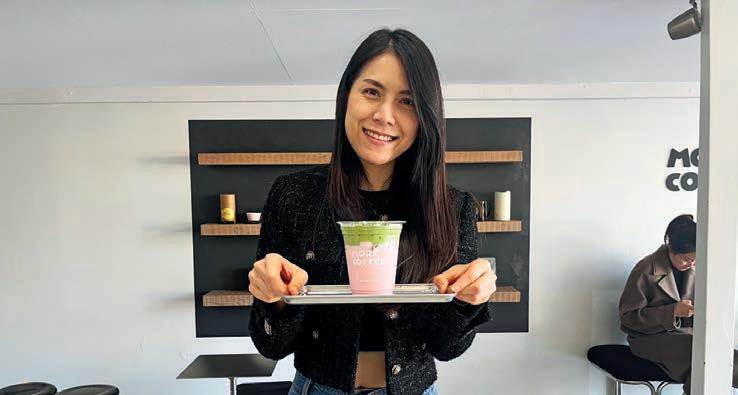
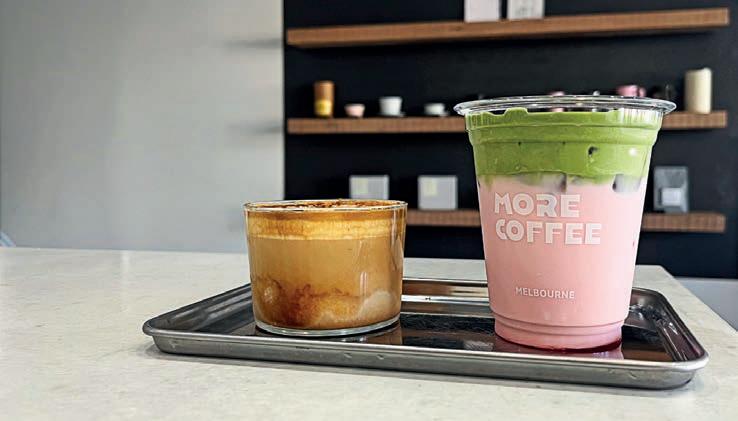
Melbourne-based Co ee Instructor and Café Owner Junnie Phyu says Asian-inspired signature drinks have become a drawcard for visitors to her café, More Co ee, which recently opened in Hawthorn.
Junnie says demand is growing for speciality drinks at her café – making up around 40 per cent of sales (the strawberry matcha is one of the most popular on the menu), compared to 60 per cent classic beverages. She notes factors such as business models and shop location also in uencing the popularity of drinks.
“As my location is close to Swinburne University, there are more international students, and we create some signature drink avours to suit their taste,” she says.
“Really in the last year it has exploded – for some cafés; they might have had just one, maximum two, trendy drinks. But now cafés are creating a lot more [signature drinks] and putting them on their menus, for sure.”
Adelaide Co ee Educator and Barista Zone Lee sees this growing in uence as a
“very natural development” in Australian co ee culture.
“Australian co ee culture has always been diverse and open, and over the past few decades it has continued to evolve through the in uence of di erent immigrant cultures,” he says.
Zone notes that Asian avours, such as pandan or ube, already have distinctive aromatic and avour pro les – and with
“In the last year it has exploded ... now cafés are creating a lot more [signature drinks].”
Junnie Phyu
CAFÉ OWNER AND COFFEE INSTRUCTOR
Melbourne Café Owner and Coffee Instructor Junnie Phyu says there’s significant demand for speciality drinks at her café. Image: Prime Creative Media.
Australian cafés always valuing creativity and drink design, these provide baristas with a new avour language and fresh source of inspiration.
“Pandan, for example, carries notes similar to vanilla and nuts, while ube o ers a gentle sweetness with a creamy, nutty character. Structurally, these avours actually work very well with co ee and milk-based drinks,” says Zone.
Digital direction
Social media buzz – particularly on TikTok and Instagram – has played a big part of the increasing popularity of Asianinspired avours.
“I would say social media now is really important. You can nd a food in uencer, and ask them to do some great co ee content,” says Junnie.
“People can see [the post] straight away and get more exposure, rather than just putting it on a website.”
Zone says that while social media is helpful, he thinks it’s important to keep some perspective.
“It allows new drink ideas to gain visibility very quickly. However, cafés also need to consider whether those trends genuinely suit their own customer base,” he says.
“In some ways, social media is a doubleedged sword. If the avour and structure of a drink aren’t solid, social media can amplify negative feedback just as quickly as positive attention.
“For me, social media is best used as a source of inspiration rather than the sole basis for decision-making.”
Zone says that ultimately, the success of any drink always comes back to avour.
“Drinks shouldn’t be designed purely for visual appeal or by simply layering ingredients together,” he says.
“Matcha, for example, carries deep cultural meaning in Japan, with its own preparation methods, tools, and avour expectations. In the Australian café environment, however, many customers are encountering this avour for the rst time.”
Because of that, Zone says cafés can make thoughtful adjustments – such as sweetness levels, milk pairings, or presentation – while still respecting the original avour and spirit.
“As long as the core identity of the drink is respected, innovation can be a very healthy and positive thing.”
Junnie says that although she’s unsure of what the future trends will look like, she points to the continuing popularity of bubble (boba) tea.
She says there could be a switch to healthier options within that Asian-inspired avour inspiration, with less sugar.
“Personally, I wouldn’t be able to drink signature drinks every day – it’s more a onceor-twice-a-week drink.”
Back to basics
As co ee educators, Junnie and Zone are at the forefront of seeing what future baristas and café owners are wanting to learn.
Both say they’ve noticed a growing interest in students wanting to learn more about di erent speciality drinks – including Asian-
Junnie notes a growing interest in students wanting to learn speciality drinks, including Asian-inspired beverages. Image: Prime Creative Media.
Coffee Educator and Barista Zone Lee says Asian-inspired flavours can provide baristas with a fresh source of inspiration. Image: Zone Lee.
“Australia is a highly multicultural society, and café culture often reflects those broader cultural shifts.”
Zone Lee
COFFEE EDUCATOR AND BARISTA
inspired beverages – outside of general co ee.
“Lately, there are a lot of people reaching out to me to just simply to teach them all signature drinks,” says Junnie, noting the interest is signi cant enough that she’s considering creating a new course speci cally for learning signature drinks.
It’s a similar experience for Zone, although his teaching still focuses heavily on the fundamentals rst – co ee extraction, milk texture, and avour evaluation – as they are “the foundations of any welldesigned drink”.
“Once those skills are developed, students can then begin exploring how di erent cultural avours can be thoughtfully integrated into beverages,” he says.
Looking ahead
Zone believes this trend will continue to grow in the Australian café world, noting these avours could move above novelty and become menu staples – following in the footsteps of the matcha latte.
“Australia is a highly multicultural society, and café culture o en re ects those broader cultural shi s,” he says.
He’d like to see more integration of co ee avour into these drinks, rather than them simply becoming another type of milk-teastyle beverage.
Based on current trends, Zone thinks avours like black sesame or hojicha – warm, roasted aromas that pair well with milk –could gain traction.
“Hojicha’s avour is generally so er and more approachable than matcha for many customers, while black sesame, on the other hand, has deep nutty and roasted notes. When combined with milk or co ee, it can create drinks with very interesting avour layers,” he says.
“Co ee itself contains incredibly complex avour compounds. Because of that, I would love to see more baristas exploring oral and fruit elements within co ee beverages – using them to highlight and enhance the natural aromatic qualities of co ee.
“Flavours like lychee, rose, or osmanthus, which are common in many Asian desserts, can pair beautifully with co ee and bring a lighter, more aromatic dimension to café drinks.”
Zone says that Asian-inspired drinks shouldn’t simply be treated as “a shortterm trend”, noting that if cafés truly want to integrate these avours, it’s worth “taking the time to understand the cultural background and avour characteristics behind them”.
“When creativity is combined with genuine understanding [of background and characteristics], drinks can become more than just visually appealing or trendy,” he says. “ ey can be a meaningful part of café culture.”
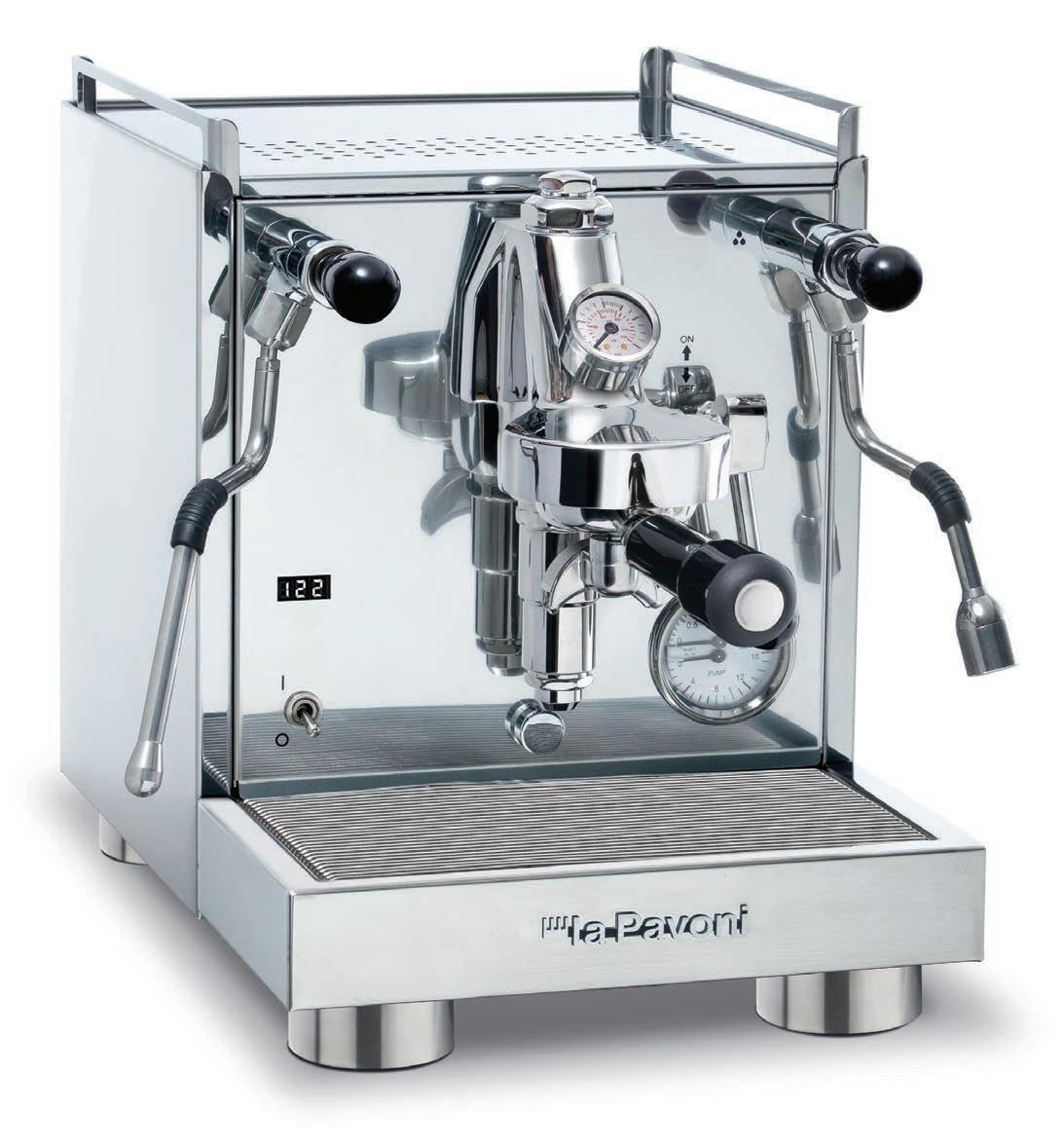
The new Cellini EVO PID brings modern precision to the art of espresso. Featuring advanced PID temperature control, an integrated shot timer, standby mode for energy efficiency, and a built-in water filter, it delivers exceptional consistency with every extraction. au.lapavoni.com # lapavoni_au
SECRET OF REAL ITALIAN COFFEE. SINCE 1905
A new suber power
The Alternative Dairy Co. is showcasing how purpose-built, plant-based milks are supporting café operators with creativity and high-performance.
Although the familiar hues of brown, caramel, and even green-coloured drinks were in the hands of attendees at the 2026 Melbourne International Co ee Expo, there was one colour that stood out from the rest: purple.
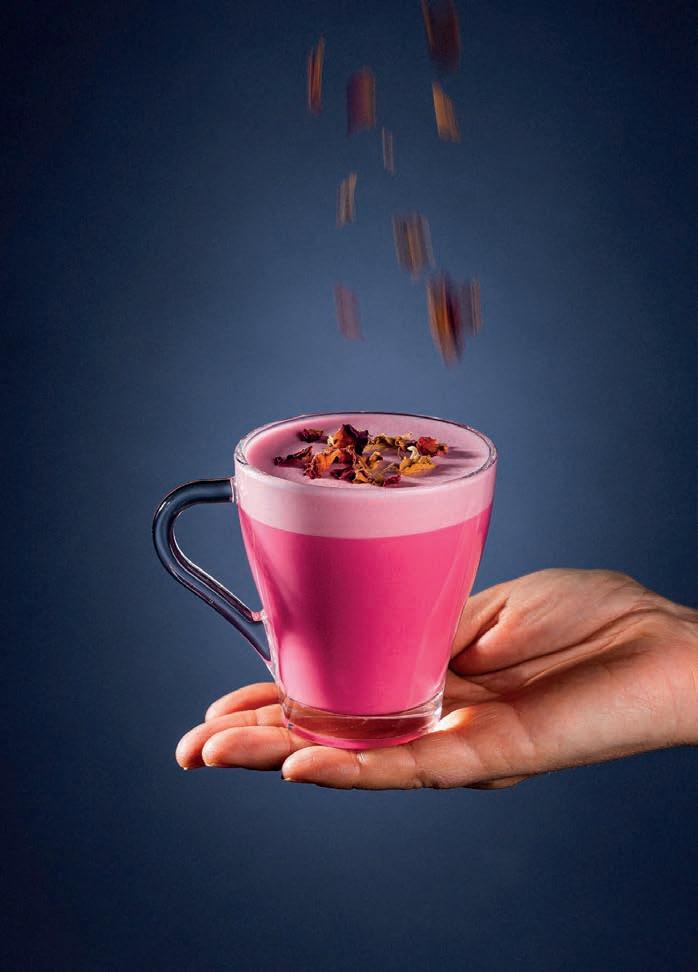
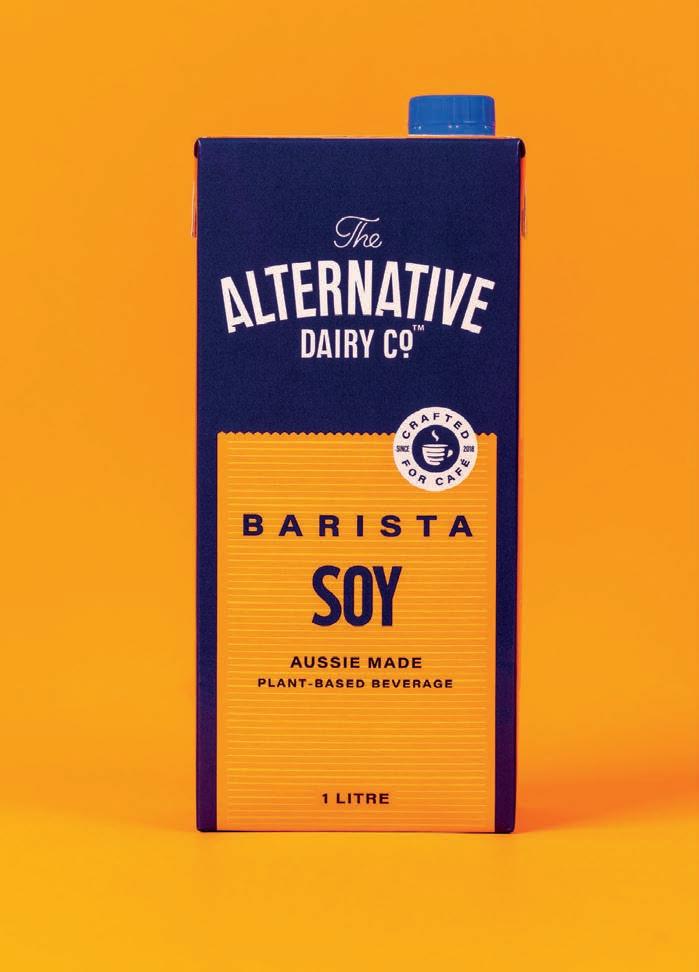
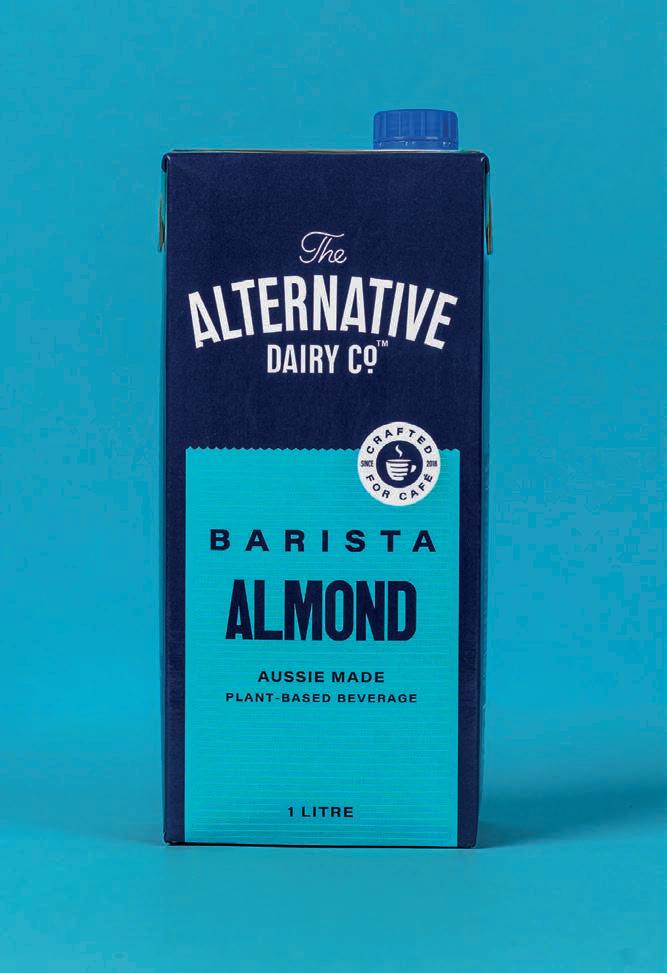
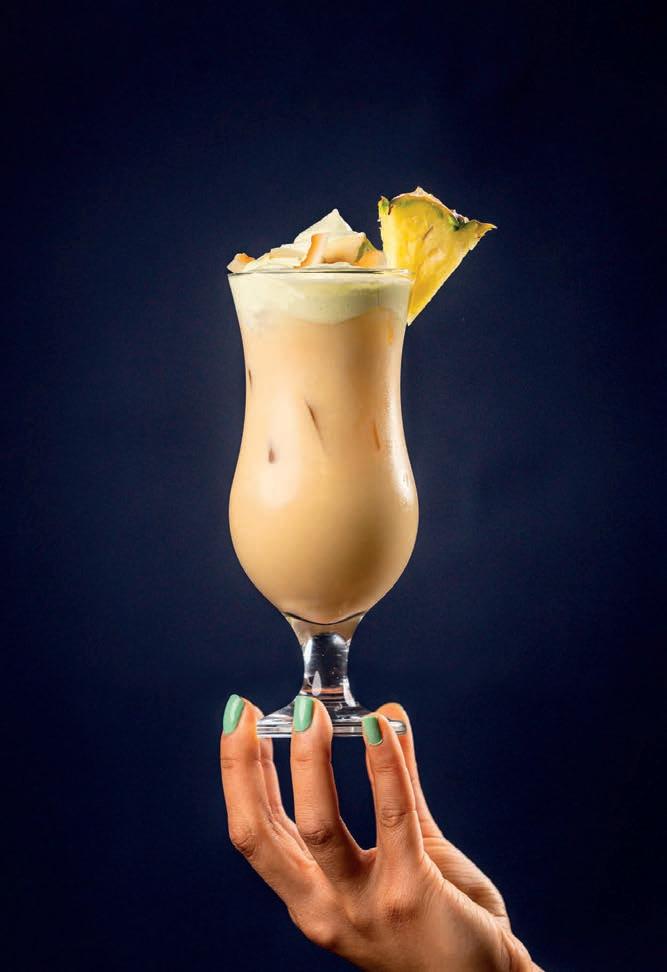
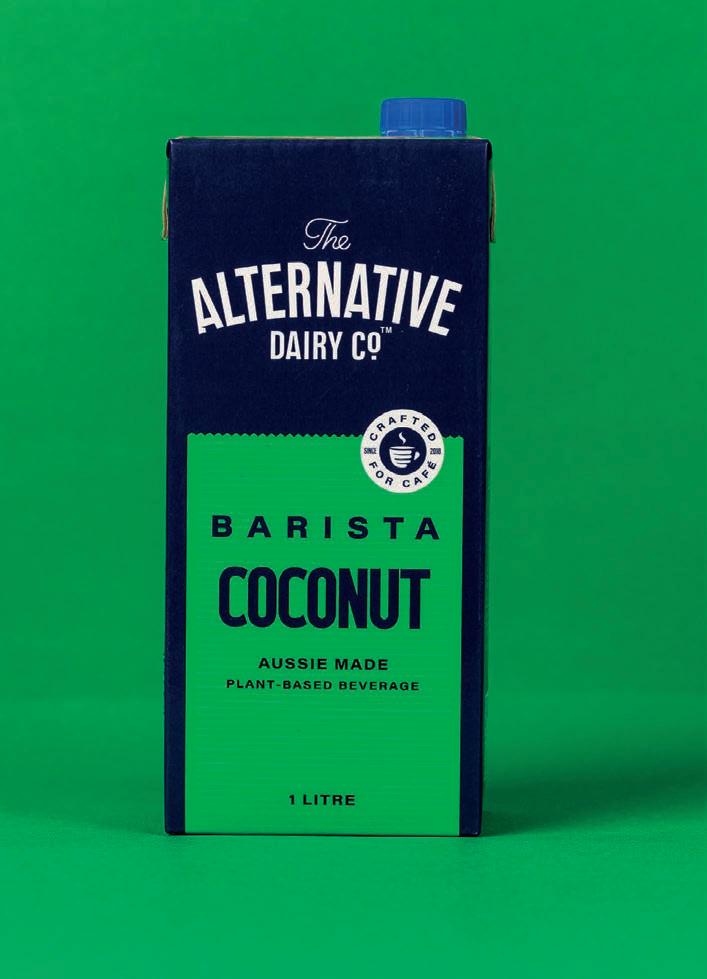
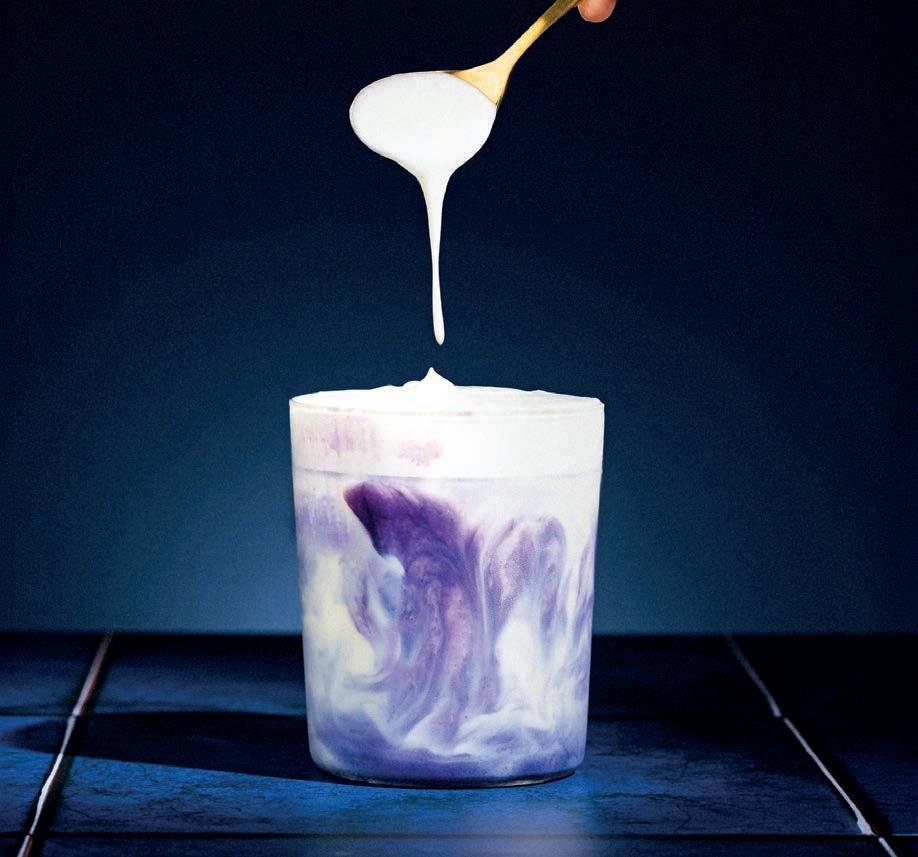
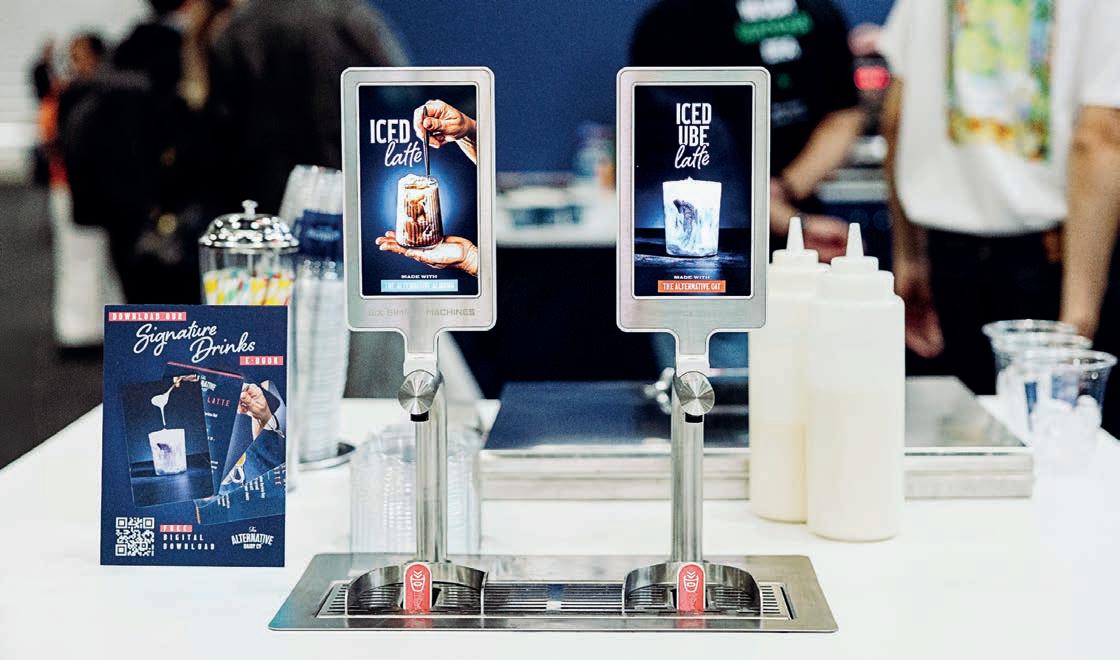
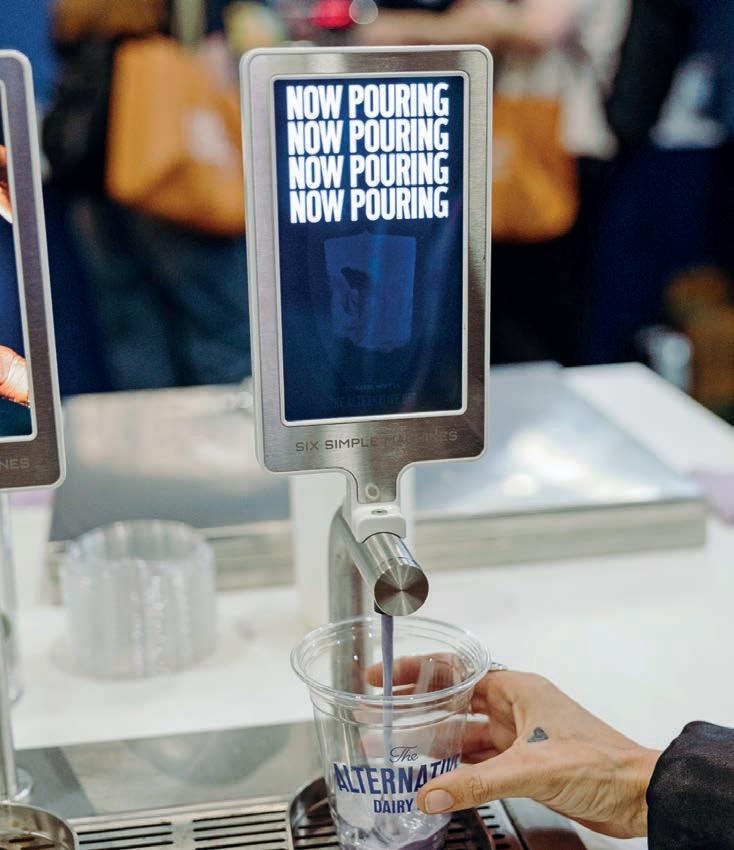
Made with ube, a purple yam native to the Philippines, e Alternative Dairy Co.’s special Iced Ube Latte on Oat demonstrated how its high-performance alternative milk range – which includes the Barista Oat, Barista Almond, Barista Soy, and Barista Coconut – can elevate a drink and encourage creativity.
As well as a dairy replacement, today’s plant-based milks have become an ingredient for multi-layered, visually striking beverages – especially in cold applications, where preventing splitting or separation are paramount.
In many ways, the expo served as a litmus test, showing that plant-based options could hold their own under the scrutiny of Australia’s co ee experts and enthusiasts.
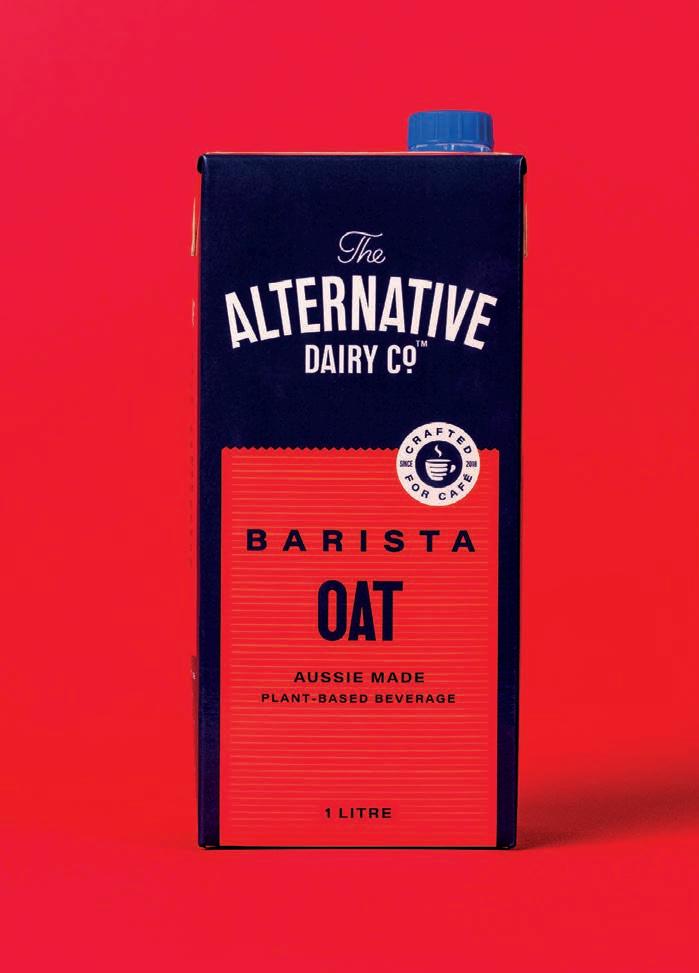
Beyond the drink’s striking purple aesthetic, Kirk Jones, Senior Business Manager – Café, says ADC’s Barista Oat was the ideal base for the drink because it was designed to be “smooth, creamy, and balanced”, providing a consistently stable foundation for layered, avourforward beverages.
“Its clean, neutral pro le lets the ube shine, while its performance helps maintain a cohesive texture and an impressive presentation from the rst pour to the nal sip,” says Kirk.
But does this popularity set the tone for the future?
Kirk says plant-based barista milks have become a staple, with consumers no longer having to compromise on taste and performance when making the switch from dairy.
“It’s all about mindset and ensuring that we are focused on continuously improving the experience in a cup for our customers and consumers,” says Kirk.
With Australia’s co ee market considered one of the world’s most discerning, high standards for espresso extraction and milk texturing mean products that fail to perform risk being quickly discarded by the community.
Kirk says partnering with baristas, roasters, and those passionate about the industry has always been part of ADC’s development process.
“We listen and continuously learn from these industry experts dedicated to their cra , and we understand the importance to have
he says.
Plant-based milks can also be precarious when it comes to the performance of its structural integrity – particularly when it comes to avour, texture, and mouthfeel –something ADC is hyperaware of.
Unlike traditional dairy, plant milks are composed of di erent protein and fat structures that react uniquely to the acidity of co ee and the temperature shi s of steaming or icing.
ADC’s testing involves rigorous trials against various espresso roast pro les – from light, acidic single origins to bold, chocolatey blends – to ensure the milk remains stable regardless of the environment.
Kirk notes that more recently, with the rise of cold and signature drinks, the company is ensuring its process incorporates this into all sensory testing.
“Taste and performance go hand-in-hand when delivering the best experience for the consumer across both hot and cold drinks,” he says.
is critical, how e ciently the milk holds and resists splitting or separating over time makes a noticeable di erence to both the taste and the visual presentation of the beverage.”
Collaboration is key
ADC is also supporting baristas by sharing practical inspiration they can con dently execute in-store. is includes collaborating with baristas and cafés to develop signature drinks and menu concepts, before making those ideas accessible for others to use as a starting point.
is transparency helps level the playing eld, allowing smaller independent cafés to compete with larger chains by o ering sophisticated, high-concept menus.
e brand also uses its social media channels to showcase techniques and recipes that balance visual impact with great avour and performance.
“Our Alternative Barista Championship further fuels creativity, with a signature-drink component that challenges competitors to
Today’s plant-based milks have become an ingredient for visually striking beverages, such as ADC’s Iced Ube Latte on Oat.
Images: The Alternative Dairy Co.
build unique, high-performing beverages o en providing fresh ideas that cafés can adapt for their own menus,” says Kirk. ese competitions act as an incubator for the next big trend, pushing the boundaries of what is possible with alternative milks.
“Signature drinks are set to remain a key menu driver, with cafés and baristas continuing to innovate through new avour pairings, multi-layered builds, and limited-edition releases that keep consumers engaged,” says Kirk.
From a business perspective, signature drinks help venues di erentiate in a crowded market.
“ ese drinks are also commercially compelling for operators, supporting premium pricing and repeat visitation, so we expect the category to keep accelerating.”
Kirk adds that while oat, almond, and soy will continue to lead, ADC anticipates innovation in plant-based options that deliver consistent results across both hot and cold applications. e goal is to create a seamless work ow for baristas, without requiring specialised techniques for di erent temperatures.
“At e Alternative Dairy Co. we’ll keep tracking local and international trends closely to ensure we’re bringing forward products and support that re ect what baristas and consumers want next,” he says.
A big part of that is using high-quality local ingredients and long-standing manufacturing expertise as an Australia-owned and made company.
And in a time of global supply chain uncertainty, staying local is a logistical advantage.
“Producing locally means greater consistency of supply, and more reliable availability for cafés, without the volatility that can come with international shipping and import delays,” says Kirk.
If a new co ee trend emerges in Melbourne or Sydney, ADC can pivot its support and training programs almost instantly to help its partners capitalise on it.
“It also allows us to maintain strong quality control to Australian standards and respond
quickly to feedback from the local co ee community, so café owners can con dently serve a product that delivers excellent value and dependable performance in cup.”
For cafés thinking about expanding into a plant-based signature menu, or even a new café looking to evaluate what milk brand they want to serve, Kirk says that ADC will always seek to deliver consistent taste and performance across.
“Teams can execute [their drinks] con dently, they look as good as they taste,
MICE26 served as a litmus test for plant-based options that could hold their own under the scrutiny of the Australia’s coffee experts and enthusiasts.
and customers come back for the same experience every time,” he says.
“At e Alternative Dairy Co. we bring more than just the product through – we work alongside cafés to ensure the café and their team have the know-how through training and can provide support to develop the signature drinks with them.”
For more information, visit altdairyco.com/au
Plant-based milks can be precarious when it comes to flavour, texture, and mouthfeel – something ADC is hyperaware of.
YScaling the dream
A major roasting equipment upgrade is helping Old Quarter Coffee Merchants grow its wholesale business while strengthening returns for Asian coffee producers.
osir Le Cerf feels the weight of responsibility running Old Quarter Co ee Merchants.
Since 2017, the business he co-founded with partner Amelia Hicks has expanded into a fully- edged green bean importer and roaster, supplying roughly 50 wholesale partners across Australia’s eastern seaboard.
eir vertically integrated business also operates four of its own co ee shops and employs 35 people. But for Yosir, the responsibility is felt beyond Australian shores into the communities in Vietnam, Sumatra, Laos, ailand, Myanmar, and more, where he sources green beans from.
Of the 60 or so co ees he imports from seven Asian origins, there are farmers he knows personally with livelihoods that partially depend on Old Quarter’s success.
“Given we’ve developed such a niche focusing only on Southeast Asian co ees, I have a deep sense of duty to showcase them in the best possible way. A lot of that comes down to my raw product knowledge and the roasting technology we have,” he says.
“Old Quarter’s strongest driver has always been to build a business bigger than ourselves that creates a win-win outcome for the whole supply chain, simply by its operational structure.”
It’s a philosophy that guided Yosir in the early days, even before Old Quarter Co ee Merchants came to be. Back then, he and his partner rented a shed in Ballina, in the Northern Rivers region of New South Wales, where he practised on a 5kg roaster for months before opening for business.
Once ready, he served co ee by day and roasted by night. ey were simpler times, fuelled by the love he held – and still has – for Southeast Asian co ee.
By 2017, Old Quarter became o cial, with its rst co ee import arriving via a single pallet of 700kg from a K’Ho family in Vietnam’s Lâm Đồng province – one of the key regions for Vietnamese Arabica.
“ at little shed turned into a full blown café, and it became so popular that we expanded out of there into a second warehouse in Ballina. From there, we purchased a 15kg drum roaster that we worked hard and helped us achieve some amazing growth.”
at 15kg roaster was the workhorse for around six years as Old Quarter’s wholesale business grew and he began opening shops in Ballina, Coolangatta, Southport, and Murwillumbah – but Yosir realised an upgrade was necessary to keep up with orders and future-proof the business.
In mid-2025, the business installed a new
30kg roaster from Italian manufacturer IMF, which Roastquip, operated by Will Notaras, exclusively distributes in Australia.
“Our business was at a scale where we needed it – and it has levelled things up considerably,” Yosir says.
“Our model isn’t easy from a cash ow perspective – we’re investing in green co ee well before we can use it – so we had to really max out our existing setup before we were more than ready for the IMF 30kg upgrade.
“ e IMF stood out for many reasons – e ciency, a compact footprint, and, importantly, more tools than you need as a roaster. You can be hands-o when needed, or really hands-on when working through a new co ee. at exibility has been awesome.”
Giving
back
e IMF 30kg roaster has enabled Yosir to stay close to his passion while delivering on the commercial realities of running Old Quarter.
It’s a virtuous cycle: by adopting roasting technology that brings out the best of the beans, he’s helping build a stronger market for Asian co ees. With higher throughput, he can accelerate and expand the wholesale business. e cycle continues, with Old Quarter’s success felt directly by farmers through community projects it funds in Asia. With Yosir visiting Southeast Asia four times a year, those projects vary.
In Vietnam and Laos, Old Quarter has been hands-on, investing in wet mills, drying infrastructure and farming practices.
Images: Old Quarter Coffee Merchants.
Yosir Le Cerf and Amelia Hicks founded Old Quarter Coffee Merchants in 2017.
It has also paved roads in Sumatra to help farmers carry their cherries down steep terrain during wetter months, and installed drinking water lters in schools across southern Laos.
“It creates a genuine win-win. We get improved quality through investing in their businesses and infrastructure, while becoming a reliable, long-term customer,” Yosir says.
“Because of our model, we’re able to invest more in the producers we work with and make sure every cent of the cost of that co ee goes to them. at’s how we wanted to do co ee trades since day one.”
ere were several formative experiences that prompted Yosir down this path.
e rst was as a 16-year-old when he travelled to Vietnam with his family. From there, his connection with Southeast Asia grew, getting to understand the plight of co ee farmers as he travelled mountainous areas by motorbike.
e second was soon a er he le school to study and eventually work in agriculture and environmental science in the Northern Rivers, where his farm had a few co ee trees he would pick, process and roast. It was during this time he got to know Amelia – meeting her at Southern Cross University in Lismore.
“Southeast Asia has helped shape who I am,” he says.
“I wanted to connect my love of Southeast Asia with a business in Australia and give back through it. Co ee is an amazing vehicle for that because it’s all about relationships – and doing it well brings a real sense of purpose, which is what drives and sustains us.”
‘Unlimited power’
Now, with Old Quarter’s new 30kg IMF roaster, that dream can be delivered at a larger scale.
“Having roasted on various machines, we wanted a system that produces amazing avour clarity, which happens to be one of the things the IMF machines excel at … having the ability to highlight the avour attributes of these unique co ees in a clean way aligns perfectly with our mission,” says Yosir.
A bigger and better system can be daunting at rst, but that subsided once he started putting the roaster to work.
“With the previous 15kg roaster, had to be top of all the variables throughout the day and carefully managing our batch sizes. We gained intimate knowledge on how to roast each co ee, but the IMF has brought a lot more consistency and simpli ed the way we were thinking,” he says.
“It’s made us think di erently about how much time is needed in certain phases to achieve the same results. We’re achieving much faster roasts of around 150kg per hour on a 30kg machine – and I still think we can get more out of it.”
Will, whose Roastquip business became the agent for IMF Roasters in Australia and New Zealand in 2012, says the 15kg, 30kg, and 60kg models are the most popular among local roasters, many of whom are small- to medium-sized and based in capital cities and regional areas.
Roastquip also supplies roasting plants to larger roasters with IMF’s 120kg, 240kg,
and 480kg industrial roasters, as well as its integrated silos, blenders and packaging equipment. ere are now more than 90 IMF roasters in Australia and New Zealand.
“As Old Quarter Co ee Merchants volume increases, the IMF 30kg ensures consistency is maintained as they continue to grow their business,” Will says.
“With the ability to control bean and air temperatures to one degree accuracy, as well as drum speed and air ow at each step of the 12-step pro les, they can consistently extract the maximum avour from the beans regardless of whether it’s the rst or last roast of the day.”
Other key features of IMF roasters, he says, include the ability to adjust 50 parameters per pro le with 1000 pro les of storage, and connectivity to Cropster and Artisan dataloggers.
“IMF Industrial roasters include, as standard, the a erburner, destoner, loader, and continuous cha extractor in one compact unit, so there is minimal assembly work and therefore lower costs to install the roaster,” Will says.
“Plus, IMF Roasters have a small footprint, saving roaster operators space and therefore rental or interest costs on their premises.”
ose are stand-out features to Yosir too. But ultimately, it’s given him the breathing space to focus on what’s important.
“We are now able to roast what took ve days inside two days, and they’re not even big days. Over two days, one of us can roast up to 1500kg and it’s just a breeze. We could probably roast one tonne in a day if we had two people working it – no dramas,” he says.
“It now feels like we have got unlimited power – and it’s there to be utilised, which is a great luxury to have.”
For more information, visit www.roastquip.com.au
Yosir says after investing in a new 30kg IMF roaster, the business can roast what previously took five days now within two days.
By importing and roasting beans only from Asia, Old Quarter is carving out a niche in the Australian coffee scene.
MINOR FIGURES BARISTA ALMOND
INTRODUCING BARISTA ALMOND. OUR BARISTA ALMOND IS DESIGNED TO CREATE PERFECTLY BALANCED, SILKY-SMOOTH COFFEES EVERY TIME. WE USE AUSTRALIAN ALMONDS & OLIVE OIL TO ENHANCE THE FLAVOUR PROFILE OF ANY ROAST FOR A DELICOUS FINAL CUP.
TRY THE ALL-NEW BARISTA ALMOND NOW! FOR A FREE SAMPLE EMAIL: HEY@MINORFIGURES.COM
e magic of MICE
As conversations turned into handshakes on the trade floor, MICE26 also dug into the dynamics cafés are balancing to succeed in today’s market – profitability versus purpose, efficiency versus hospitality, and price versus value.
As the dust settles from the 13th edition of the Melbourne International Co ee Expo (MICE) – what did the industry learn?
Despite some hesitancy, co ee pricing is on the move. e $6 cup is no longer a talking point, with some agships pushing through the $7 barrier.
Some café owners are obsessing over cost of goods sold (COGS) as a way to control their balance sheets and o set rising wage costs.
As evidenced across three days on the Café Education Stage, the co ee industry is home to some of the most capable small business owners in any eld, navigating labour, logistics, competition, and rising costs all at once.
And automation is no longer a novelty, with technology helping cafés overcome real operational challenges. But the question begs – is it helping or hindering their ability to create an exceptional experience for their customers? And should we be referring to them as ‘customers’ anyway?
Few, if any, platforms push the Australian co ee industry forward each year like MICE. It’s a sanctuary for café owners to test ideas with peers, while discovering new tools, insights, and connections that make their businesses more pro table.
e expo on 26 to 28 March, held at the Melbourne Convention and Exhibition Centre, welcomed 14,159 unique visitors through the doors, with an overall attendance of 25,939.
“We’re extremely happy with the results: bumper crowds, quality leads and genuine business was conducted on the show oor in the most positive environment we’ve had to date. e vibes were extremely high,” says MICE Education Moderator and BeanScene Publisher Sarah Baker.
“We’re really pleased that 35.1 per cent of our trade attendees were café owners and operators, and 29.7 per cent were roasters, indicating that the right audience of decision makers was present.”
at sentiment was felt among the 157 exhibitors too, who displayed the latest in co ee machine and roasting equipment, co ee tools and ancillary equipment, packaging, POS so ware, dairy and dairy alternatives, bakery items, matcha, and of course, lots of co ee.
For Somage, which produces tea, chai, matcha and other plant-based products, the numbers speak for themselves. e company signed 22 new accounts across three days, with conversations continuing with prospective customers post-show.
“We got a further 57 quali ed leads, of which 17 have signed on post-MICE. We’ve also onboarded six more cafés that we didn’t meet at MICE who reached out on their own,” Director of Partnerships Ben Kelly says.
“ e café space feels open and evolving, with more focus on the full beverage o er, not just co ee, as well as traditional tea and co ee drinks served di erently,” he says.
e team at Co ee Works Express (CWE), an independent equipment importer and distributor, appreciated the ease at which they were able to have intimate, genuine, and quality conversations.
“Having current World Barista Champion Jack Simpson and past champion Pete Licata on the stand was a real highlight,” says
Marketing and Brand Manager Natalie Kollar.
“With other former competitors dropping by, it naturally evolved into a space for knowledge-sharing and connection.
Moments like that really highlight how much the industry has matured – there’s a strong sense of community now, with leading gures openly engaging, exchanging ideas, and contributing to the next wave of talent.
“It captured the spirit of this year’s show perfectly.”
Vince Monardo, Sales Manager at Naked Syrups, says each year MICE brings something new.
“ e excitement and vibe this time were next level – it felt like the industry was moving with real purpose,” he says.
“ e moment that really hit me was watching people lean in to learn about our new sticky chai, then light up when they tried the Dubai hot choc – that mix of curiosity, surprise, and pure excitement around the stand summed up the whole vibe of this year’s MICE. I can’t wait for 2027.”
The expo had an overall attendance of 25,939.
One of the most popular attractions was the Roasters Playground, sponsored by La Marzocco and Riverina Fresh. irty-four roasters from across the country took half-day residencies to showcase and celebrate their co ee selections.
MICE26 also marked several rsts, as organisers continue to evolve the expo.
e MICE at Night debut was well received, extending hours until 7.30pm on Friday to accommodate café operators a er work. e Trip to Origin feature connected attendees with global producers from 13 countries through cuppings and education sessions spanning regions from Brazil to Vanuatu.
Axil Co ee Roasters won Australia’s Favourite Co ee, while the expanded Co ee Industry Heroes and Product Innovation Awards recognised leading contributors across the sector.
But it was the Café Education Stage, sponsored by Grounded Packaging and powered by BeanScene, that again emerged as a big crowd favourite. Twenty-three session topics and 78 panellists converged across the three days to deliver essential information that café owners can rarely access with such ease.
“ e program was designed to be an engaging platform to educate, inspire and motivate café owners with insights that can help grow their business and see it thrive, not just survive, in today’s current climate,” says Sarah, who served as Moderator of the education program.
“We covered everything from pro tability and management to matcha madness, the cold beverage revolution, automation, sustainability, and so much more. I loved seeing the crowd taking every seat possible –just to hear from some of the industry’s best business operators.”
Café ownership crash course
Some sessions were so popular on the Café Education Stage that the only seating room le was on the oor, such was the extent of the opportunity to hear from some of Australian co ee’s best and brightest.
Café Management 101, the rst session of the expo, was one of those. With four panellists, Sarah drilled into the decisions, systems, and blind spots café owners should consider if they’re already in – or heading into – business.
For Amelia Hicks, CEO and Co-founder of Old Quarter Co ee Merchants, a co ee importer and roaster in Ballina, New South Wales, with four venues, one of the early realisations was understanding the di erence between working in the business and working on it. Like many operators, she started out doing everything, but soon realised that approach had limits.
“I had to ask myself, am I doing the $50-an-
hour job or the $1,000-an-hour job?” she said. “Working on the business is what gets you the results.”
Nathan Toleman, Founder of e Mulberry Group and who has created a portfolio of much-loved venues such as Higher Ground and Top Paddock, put it more bluntly.
“If you want to grow, you’ve got to let go,” he said.
at’s easier said than done, though. For many owners, the instinct to control every detail can be hard to shake, particularly when expanding into multiple sites. But Nathan argued the real step-change comes from hiring people better than yourself.
“Going from one café to two was a big jump – I kept thinking, how can I manage both, and I’d be walking into the second venue feeling like it wasn’t being done ‘the right way’,” he said. “But the reality is, there’s more than one way to do things. As long as it’s
Hany Ezzat created a buzz on the MILKLAB stand, which hosted Roaster Royale and Barista Battle competitions across three days.
Lucy Ward, from ST. ALi, on a panel discussing the nuanced issue of coffee pricing.
Images: Prime Creative Media .
done with purpose, conviction, and from the heart. You’ve got to trust people, give them the opportunity, then get out of their way.”
Finding that sense of purpose was key to building culture, but also sustaining the business through a downturn.
“When things get hard, if you’ve got a strong ‘why’, the ‘how’ becomes easier,” Nathan said. “If you don’t, that’s when people fold.”
Alongside leadership, few topics drew as much attention as leases – o en one of the most misunderstood and high-risk aspects of café ownership.
Amelia encouraged new owners to negotiate early, and not be intimidated, noting the rental amount is set in stone once the deal is signed.
Nathan echoed that sentiment, re ecting on how his own approach has evolved.
“My rst lease was basically, ‘yep, I’ll take it’ – no contribution, no rent-free period from the landlord. Now I realise landlords need me just as much as I need them,” he said.
“You reach a point where you can say to the landlord, ‘this is what we need to make
the relationship work. We can’t have rent exceeding ve per cent of revenue, and this is realistically what we’ll take in each week. If you’re not willing to come to the table, then that’s OK. We’re also investing in your property, so there needs to be some contribution from your side too’.”
It’s a lesson Mike Ico learned the hard way too. Despite having no prior experience when he opened his rst cafe in 2011 at the age of 23, he has built a portfolio of standout venues, including e Baron and Good Fella.
He has signed leases for each of those six venues and reviewed more than 100 in his time. But that painful lesson came when a turnover rent clause for a shopping centre location was overlooked.
“Our rent started at $30,000 a year and ended up at $140,000 by the seventh year,” he said.
Mike recommends a ve-plus- ve-plus- ve lease, while Nathan a 10-plus- ve-plus- ve. Either way, both wanted café owners to know they are never completely beholden to the agreement.
“ e reality is, leases can be broken –
And the winner is …
MICE26 recognised the people and the products making the biggest di erence in the co ee industry this year, through the Co ee
Coffee Industry Heroes winners
Lifetime Achievement Award
Community Champion
Sustainability Champion
Best New Café
Next-Gen Talent
Home Grown Hero
Coffee Educator
Product
Industry Heroes Awards and Product Innovation Awards, announced on 26 March 2026:
Lucy Ward, ST. ALi Coffee
Nicole Motteux, Sustainable Coffee Advocate
Pablo & Rusty’s Coffee Roasters
Sidecar Roasters
Hany Ezzat, Ona Coffee/Ni Wares
Rebecca Zentveld, Zentveld‘s Coffee Farm and Roastery
Ian Abadiano, Coffee Mentality
Innovation Award winners
Coffee Preparation Equipment
Ancillary Electrical Equipment
Coffee Accessories
Packaging Excellence
Mahlkönig E64 WS Espresso Home Grinder, Brewtech
Ubermilk PLUS, Barista Group Co
Scentible Professional Kit, Barista Supplies
Coffee Supreme Drip Bags, Coffee Supreme
you can sell the business and transfer it, or surrender the lease and pay rent until someone else takes it over,” Nathan said. “So don’t think you’re locked in for 10 years if you’re no longer there.”
“I agree with Nathan,” said Mike adding, “when signing a lease you should want and feel con dent that you’re in it for the long run, that your idea and business plan will last, hence the bene ts of a long-term lease – i.e. more contributions from the landlord.”
Dave Chauhan, Leadership Strategist and Founder of Nautical Leadership, encouraged operators to rethink how they approach both location and negotiation.
“Most people look at foot tra c and data, but that’s a snapshot of the past,” he said. “What you need to understand is what’s about to happen in that area over the next few years.”
When it comes to negotiating with landlords, he encouraged café owners to sit beside, not opposite, them.
“Understand what they want and how you can help them achieve their incentives, rather than treating it like a tug of war,” he said.
“And don’t try to save $2000 by not seeking a lawyer’s advice on the contract, because the beauty of the game is when you know the rules of the game.”
Overlaying all of this is constant cost pressures.
Wages and COGS are the biggest costs in any business, Amelia said, noting operators typically aim for 25-30 per cent of revenue. Unlike wages, however, COGS is one of the few levers operators can actively control.
She had four key tips. e rst was for cafés to know their COGS goal. Secondly, track it constantly – daily or weekly – but don’t wait until the end of the month to reveal performance.
“ e third tip is menu design. I’ve been in a position where my COGS hit 50 per cent because I was selling items that cost almost as much to make as I was charging. e key is making sure your best-sellers are the cheapest to make,” she said.
“And nally, it’s the one-percenters – things like portion creep. If you’re putting 10-20 per cent extra on every plate, that can be $10,000 a year multiplied across multiple items.”
Mike agreed that wages remain the biggest pressure point. He found if a café removed table service, it could reduce wages by about seven per cent.
“Retention also plays a role. High sta turnover drives up training and onboarding costs, making stability just as important as e ciency,” he said.
Coffee cup pricing
How much should cafés charge for a co ee?
It’s a simple question on the surface, but in reality remains one of the industry’s thorniest issues as cafés balance the sustainability of their business, and the broader co ee industry, against customer expectations.
Abdullah Ramay, CEO of Pablo & Rusty’s Co ee Roasters and a thought-leader on the subject, said cafés are generally charging $5.50
for a small, but the $6 mark isn’t far away.
“ ere’s a lot of agships already sitting above that,” he says.
He pointed to his company’s own research showing that if a co ee is priced under $4.50, customers begin to question its quality.
“Once you start going over $6, people start to pay attention. And over $7, you’re potentially going to start losing a lot of people,” he said.
Still, he expects a steady upward movement of around 50 cents to a dollar each year.
While there were questions about how much consumers are engaged with what’s occurring at the farm-level, Abdullah says they do care if their local café disappears.
“We conducted a national survey and found a few things. One is, most Australians think co ee around the world costs about $5.50 – the same as in Australia. When we told them what the price was, willingness to pay increased by 30 per cent because co ee is a core part of people’s daily life,” he said.
Matt Gellert, Founder of Black & White Espresso, a hospitality group with three cafés, overcame the fear factor and raised his prices. His cafés are now “headed close to that $6 mark” – a gure that would have seemed unthinkable not long ago.
“It’s scary and even heartbreaking when you see a valued customer go somewhere cheaper but it’s a lot better to remain pro table and
An official breakdown of MICE26 attendees, indicating a strong showing from people making purchasing decisions in cafés and other venues.
sustainable than it is to keep everybody happy,” he said.
“We didn’t really lose any business, and I think we’re more pro table than we were before.”
Ultimately, Matt said it’s about cafés recognising their self-worth.
“ is doesn’t have to be a labour of love. is doesn’t have to be a vocation. is can be a real business, and you can make a life out of this,” he said.
“If you haven’t ever spoken to your biggest competitor… now’s the time. It’s not a race to the bottom. If everyone does it, it’ll be better for everyone.”
Lucy Ward, Green Buyer at ST.ALi Co ee Roasters, said the company’s own co ee shops were already pricing around the $7 mark with con dence.
She said addressing the value gap required “a collective e ort from all actors” across the value chain. And while customers may not fully understand what goes into pricing structures, she believed there was room to better communicate the fundamentals – particularly the labour and input costs at farm level.
Has the art of customer service disappeared?
It’s an excellent question, and one that Sarah sought to answer with a panel focused on the so skills that give cafés their edge.
George Skell, Café Manager at Kuranga Native Nursery’s Paperbark Café, said the answer is less about reinvention and more about returning to fundamentals.
“It’s not hard to be nice,” he reiterated several times.
Incredible Coffee Roasting Equipment
• Consistent roasting to one degree accuracy (auto or manual control)
• 50 adjustable parameters per profile.
• 1000 profile storage.
• Recirculating heat technology saves up to 47% gas consumption.
• Cropster/Artisan datalog integration.
• Over 80 plants in Australia & NZ since 2012 installed by Roastquip.
BLENDERS SHOP ROASTERS
Under his watch, the venue has recorded a 25 per cent increase in pro ts while reducing labour costs, a result he attributes to culture and leadership rather than sweeping operational change.
“If you set the example, your sta will follow your lead,” he said. “I can teach skills – I can’t teach personality and attitude. Your sta are your biggest investment. If you nd the right ones, hold on to them because they are rare.”
From there, it’s about embedding small, human moments into the rhythm of service. Awareness of families, regulars, and the tone a venue sets from the moment a “guest” walks in.
Many exhibitors gained quality leads and conducted genuine business on the tradefloor.
“I never use the term ‘customer’ – I hate it. A customer goes to the supermarket. You’re a guest and welcome to my home. at shi in terminology I think is really important.
“It’s about creating those authentic experiences. It’s not just about looking a er the adults who have the money; take a bit of time with the kids as well. When you make that e ort, families return time and again because of the experience.
“And if I see three elderly ladies walk in and one of my sta says, ‘how are you going, guys?’ – I struggle with that. It’s ‘ladies’, ‘folks’, ‘madam’, ‘sir’.” e venue he manages can reach full
Speaking volumes
The Global Coffee Report Leaders Symposium explored how coffee is being delivered at scale in Australia, and in settings beyond the café.
Navigating awkward growth phases. e challenges of establishing a co ee chain in one of the world’s most discernible markets. Investing in the right talent at the right time. ese were common threads woven throughout the Global Co ee Report (GCR) Leaders Symposium that took place on Friday 27 March, held alongside the Melbourne
International Co ee Expo (MICE).
One of the most insightful panels – How to Scale Smart – featured respected names in Australian roasting: ST. ALi Co ee Roasters, Co ee Supreme, Nomad Co ee Group, and Di Pacci Co ee Company – where leaders discussed the secrets to sustained growth.
“I would say, have your cash sorted, and
capacity 15 minutes a er opening. Even during these times, he encourages sta to resist the instinct to rush.
Chris Tate, Operations Manager at Pablo & Rusty’s and Co-Owner of its Sydney CBD store, said automation and more streamlined work ows were reshaping how interactions happen. Rather than eroding service, he sees it as creating space for it.
But that potential is constrained by economics. Years of under-pricing, he noted, have le many venues with reduced margins.
“ at margin allows you to invest in your team and deliver exceptional customer experience,” he said. “We’re in a state of ux –but it’s also an exciting in ection point.”
When faced with a customer complaint, Chris pushed back on one of hospitality’s most ingrained ideas – that the customer is always right.
“I think that isn’t always the case,” he said. “And the idea that you look a er customers rst is also wrong – you need to look a er your sta , and they’ll look a er your guests (a term he also prefers).”
“In practice, that means equipping teams with both the con dence and agency to respond in the moment, while also recognising when to escalate. It’s also about identifying those tricky “black hole customers”.
“ ey’re the guests where, if anything can go wrong, it will, and it all seems to land with them,” he said.
His venues attempt to “overwhelm those customers with kindness”, helping turn a problematic experience into an opportunity to reinforce trust.
Left: Discussing the scaling of roasting operations, with Nomad Coffee Group CEO Craig Dickson (second from left), Di Pacci Coffee Company Founder and Director Michael Rababi, Coffee Supreme CEO Andrew Low, and ST. ALi Coffee Roasters CEO Lachlan Ward. Image: Prime Creative Media.
have a mix of people who have been on the journey for phase one,” Co ee Supreme CEO Andrew Low said. “And bring a couple of select people in who’ve seen the other side and can help connect the dots.
“My experience would suggest that getting to a couple of tonnes [per week] is a bit of a grind, but you can get there with some momentum. e hardest gap to transcend is probably two to 10 tonnes, because everything at that point triples in cost, but pro t doesn’t come with it for some period of time.”
Nomad Co ee Group CEO Craig Dickson reinforced the importance of disciplined longterm planning.
“When you start projecting ve to 10 years ahead, you can see where capacity constraints may emerge. If 2029 is going to look very di erent to today, that might mean placing an order for a new roaster in 2027,” he said.
“We’ve learned that robust forecasting
“We focus on hospitality and the importance of how we make guests feel. is is what people remember,” Chris said.
Adam Bortz, Owner of Little Italy Co ee Roasters was also on the panel. To this day he still marvels at the customer experience he had at Eleven Madison Park, a worldrenowned New York City dining destination that achieved the top spot on the World’s 50 Best Restaurants list in 2017.
“At the end of the meal, they took myself and my two sisters-in-law on a tour and into the kitchen where they made a lollipop in front of us with a ame gun. My mind was blown – I’ve told that story 150 times,” he said.
Chris also visited that venue and the experience stayed with him too.
“My wife and I were out the front taking the
and forward planning are critical. It’s about building infrastructure that doesn’t just meet today’s needs, but gives you the con dence and exibility to scale sustainably over the long-term.”
Non-café coffee
e symposium’s Beyond the Café session explored how co ee standards are li ing in airports, service stations, and live events.
“Service stations are either becoming fully automated fuel sites, or hospitality destinations seeking to hold customers at the site, rather than just push them through the network. We’re in the latter,” said Mark McKenzie, CEO of Freedom Fuels, which operates 40 branded retail outlets.
e network is moving from the ‘grab-andgo’ approach, to creating places where people “dwell”. It has leaned into partnerships, including with Merlo Co ee, to build a more compelling o er.
At one site, fuel volumes have e ectively doubled – with the main di erence being the convenience o ering in that time.
“We’ve also seen one in ve customers visiting speci cally for co ee. We’re e ectively being treated as a café. People are using our forecourt for meetings – which tells me the co ee’s OK,” Mark said.
e perception of airport co ee is shi ing too. SSP Australia & New Zealand operates more than 100 hospitality outlets across 12 Australian airports, one New Zealand airport, as well as Sydney Central train station.
National Head of Co ee Operations Martin Nguyen said passengers were increasingly encountering café-quality o erings in terminals designed to feel more like retail and lifestyle destinations than transit hubs. In these settings, a six-ounce co ee costs around $6.50 – sometimes $7.
“Delivering quality co ee in high-tra c environments requires a combination of training, work ow e ciency, and smart equipment investment, particularly as operators contend with labour shortages and rising costs,” he said.
Bringing a chain to Australia
Braeden Lord, CEO of Starbucks Australia, delivered the symposium’s keynote address. From its Australian debut more than 25 years ago, Starbucks has grown to 94 locations nationwide.
at theme carried into the nal panel: Global In uence in the Australian Co ee Market.
One brand to recently enter Australia is Kopi Kenangan. Founded in 2017 in Indonesia, it now has more than 1,400 stores globally.
obligatory sel e when one of the sta came out and said, ‘Christopher, Tracy, can I take the photo?’ We hadn’t even entered the venue and they already knew who we were,” he said.
“From there it just rolled on.”
What’s
next?
MICE organisers have con rmed dates for the 2027 show, taking place from 4 to 6 March.
“We’re excited about the future of MICE. Most importantly, we’re happy that this year’s show has really helped to unite, motivate and celebrate our industry.
“ ere’s nothing more rewarding than seeing our exhibitors and the wider co ee community grow from such an important annual event,” Sarah says.
“ at’s the power of MICE. Magic happens when we all come together.”
Winnie Nawei, Managing Director of Kenangan Co ee Australia, said the move Down Under “challenged us to elevate our standards”.
“In Southeast Asia, we don’t typically o er as many customisation options, but here customers expect it. Our signature Kenangan Latte is quite sweet for the Australian palate, and we received a lot of feedback on that. Now, we o er more exibility – customers can choose sweetness levels, dairy options, and co ee intensity.”
Sasa Sestic, CEO of Australian roaster ONA Co ee, which he founded in 2008 in Canberra, discussed the brand’s international expansion, starting with Dubai.
“ is has been a strategic move. It feels comfortable and small enough, but it’s also big enough to in uence what happens in other countries,” he said.
“ e attention to detail in café design is next level [in Dubai]. I’ve always focused more on co ee and experience rather than aesthetics, so I’m learning a lot.”
Compared to Australia, co ee can be priced at almost double the rate.
“ at allows you to employ more sta and deliver a higher-end experience, without running as lean as you might have to in Australia,” Sasa said.
Cuppings were a major highlight of the new Trip to Origin section of the expo.
Leading roasters showcased their brands to both wholesale and retail customers.
what’s in the cup that counts.
COFFEE � Use your own favourite coffee blend or our own contract roasting offer.
COFFEE � Use your own favourite coffee blend or our own contract roasting offer.
MILK � Tiger Coffee offers multiple refrigeration solutions including the patent pending 20 or 30 litre bladder fridges for dairy and /or plant-based milk.
MILK � Tiger Coffee offers multiple refrigeration solutions including the patent pending 20 or 30 litre bladder fridges for dairy and /or plant-based milk.
WATER � Tiger Coffee tested water filtration systems also approved by Eversys SA.
WATER � Tiger Coffee tested water filtration systems also approved by Eversys SA.
SUPPORT � Tiger Coffee provides dedicated Nationwide On-Site Service by Tiger Techs, plus a live Telemetry Remote Service Desk.
SUPPORT � Tiger Coffee provides dedicated Nationwide On-Site Service by Tiger Techs, plus a live Telemetry Remote Service Desk.
The Aotearoa Brewers Cup and Cup Tasters Championships were held Auckland’s The Tuesday Club, in front of an excitable crowd of the country’s specialty coffee experts.
For many years, the NZSCA has delivered the Championships at an exceptional standard under the detailed and watchful eye of Emma Markland Webster. Many of us in the industry – from competitors to judges – owe Emma a huge debt of gratitude. e competitions and competitors have seen multiple evolutions, and it is important to the NZSCA that we keep striving to improve our o erings to the community.
e Aotearoa New Zealand Specialty Co ee Association (NZSCA) marked a signi cant moment for the industry with the return of the New Zealand Brewers Cup, held for the rst time in nine years.
Staged alongside the New Zealand Cup Tasters Championship over the rst weekend in May, it represented one of the two cornerstone competition events in Aotearoa’s specialty co ee calendar for this year.
Sixteen competitors took to the Brewers Cup stage, marking not just a strong showing in participation but a clear success in the diversity of the eld. e lineup spanned seasoned competitors, baristas new to the competition circuit, and home brewing enthusiasts who do not work directly within the co ee industry.
Veteran competitor, Dove Chen of Grey Street Roasting Co., Hamilton, took out First Place, scoring a combined score of 509 points across both Open and Compulsory Service. e New Zealand Cup Tasters
Championship, held on Sunday, delivered its own standout performances. With 32 competitors slurping for glory, YJ Huang of Eternal Co ee, Auckland, demonstrated exceptional precision and speed, correctly identifying seven out of eight cups in 2 minutes and 53 seconds to claim the Aotearoa Cup Tasters title.
Dove will go on to represent New Zealand at the World Brewers Cup in Bogotá in 2027, and YJ at the World Cup Tasters event, the location of which is yet to be announced. e weekend stands as a testament to what can be achieved when a community rallies
behind a shared vision. e Association extends its sincere thanks to the more than 80 individuals who contributed to bringing this event to life, including all competitors, volunteers, and judges.
We also extend our sincere gratitude to our sponsors. Without their support, this weekend would not have been possible.
Brewers Cup Sponsors: Atomic Co ee Roasters, Suca na Asia Paci c, AMC Roastery Supply, Acme Cup Co, Arepa, Machine Limited, Brand Display NZ, Meadow Fresh NZ, First Cup.
Cup Tasters Sponsors: John Burton Limited, AMC Roastery Supply, eighthirty, Acme Cup Co, Cafetto Global, La Marzocco NZ, Arepa, Meadow Fresh NZ, Brand Display NZ, First Cup.
We thank the wider community and all those who attended. e weekend was one with an exceptional atmosphere and played a key role in making the return of the Brewers Cup and the Cup Tasters Championship such a resounding success.
We wish Dove and YJ all the success at their respective World events.
For more information on the New Zealand Specialty Co ee Association, or to join, visit nzsca.org
Jessica MacDonald is the General Manager of the New Zealand Specialty Co ee Association.
Dove Chen and YJ Huang were crowned Brewers Cup and Cup Tasters champions in an action-packed weekend of competition.
The 2026 Aotearoa Brewers Cup was the first national Brewers Cup event held in New Zealand since 2017. Images: NZSCA.
YJ Huang in action during the Cup Tasters Championship.
Images: NZSCA.
Building home away from home
Why hotel brand Citadines treats coffee as a vehicle for creating positive guest experiences.
James Grege is passionate about how critical co ee is to community. A er all, it motivated him to pursue hospitality 16 years ago a er a career as a jeweller and then a real estate developer.
e Manager of Urban Deli in Melbourne’s CBD caters to what he calls his “vertical village” of more than 5000 people living and working in the high-rise buildings in and around Exhibition and Collins streets, feeding them good food, and serving great co ee.
“Co ee is the icebreaker in any conversation or social setting. When you’re meeting someone, it’s catching up for a co ee – even if you don’t drink co ee,” says James.
“It’s a personal experience, and it’s so Melbourne. Having a co ee, hearing the noises of the city, the buzzing of the trams, and the people walking by, there’s a uniquely European feel about it. It just binds us together.”
But there’s one thing Urban Deli has that many other Melbourne CBD venues don’t.
In addition to being a haven for city-worker regulars, it’s a hive of activity for hotel guests staying metres up the road at Citadines on Bourke Melbourne.
e café and hotel have been collaborating since 2010, with the partnership key to Citadines’ desire to create a home away from home for its guests.
Michelle Finney, General Manager of Citadines on Bourke Melbourne, says it is through collaborating with venues like Urban Deli that the hotel brand is looking to deepen the connection between its guests and where they are staying.
“James has been on this journey with us from the beginning,” says Michelle. “He makes our customers feel like this is their home as well.
“We get great feedback from our guests. It’s not just about the food or the co ee, it’s about the experience and what James and the team can create for them.
“Being able to recommend places like Urban Deli is honestly a dream for our guests, because they want to experience the real Melbourne. Melbourne has a huge connection to co ee as part of its culture, and Urban Deli is our little secret delight, and it’s lovely to share that secret.”
For the Love of Coffee
Citadines on Bourke Melbourne and Urban Deli are just one example of café-hotel collaborations across the Citadines portfolio.
e global hotel brand’s tagline is ‘For the Love of Cities, which is used as the basis for an annual co ee campaign.
“For the Love of Cities is such a great slogan to be able to have,” says Michelle. “It comes back to our desire to empower our guests
with personalised exploring. We’re constantly looking at what we can do better and always thinking about the little touches that can make a stay feel more memorable.”
Leveraging this, Citadines’ own ‘For the Love of Co ee’ campaign goes all out for one month of the year, all over the world.
“In Australia, we have what we call ‘co ee month’ every October. Each of our properties around Australia will choose a special celebration, something they can include for guests and sta to join together,” says Michelle.
“ at can be something like a complimentary co ee from our favourite partners like Urban Deli for each of our guests across the month, or it could be giving away espresso martinis in the lobby in the evening.
“Each venue has a fun twist on what we do. Citadines’ in warmer climates can experiment with o ering things like cold co ee or cold brew, something that’s tailored to them.
“ rough Ascott Star Rewards, our loyalty program, guests can enjoy little extras like a complimentary co ee when they join. It’s an easy way for us to deliver a more personalised experience that feels thoughtful.”
Outside of her role with Citadines, Michelle is aware of the impact co ee and good service can have on people, having previously been a part-time barista before getting into hotel management.
Urban Deli in Melbourne’s CBD has partnered with Citadines since 2010. Image: Urban Deli.
“It’s a non-negotiable to have great co ee and great food,” says Michelle.
“What sets us apart and why we choose the partners we do is the culture in the store and the support and services they provide the guests, in addition to the great food and great co ee.”
Back to community
Michelle and James agree the relationship between Urban Deli and Citadines is symbiotic, which, they believe, enables the best experience for guests visiting Melbourne.
It’s the type of relationship Citadines has with its partners around the world, with the customer service from venues like Urban Deli helping embed travellers into their new environments.
“When guests come from the hotel, they’re only here for a couple of nights to a week. ey o en arrive like a sh out of water – they don’t quite know where things are or how things work,” says James.
“Most of my regular customers are people from the surrounding buildings, I see them every day getting o the trams. With the hotel guests, I take it as a personal responsibility to make them feel welcome. Co ee helps that happen.
Even if there’s a language barrier, they can still communicate through co ee.
“Co ee is the grounding point that starts a conversation and lets us break the ice, so they feel comfortable,” James says.
Even the co ee Urban Deli serves – illyca é – ties into the overarching desire to make anyone and everyone feel welcome.
“illy, as a brand, is exceptional. ey’re the Giorgio Armani of co ee – people know what to expect when they have an illy co ee,” he says.
“People see it when they are travelling from overseas. Most of illy’s customers are from Europe and Southeast Asian countries, and many of the people from those regions recognise what it stands for.”
Because, from a Citadines perspective, everything comes down to making guests feel welcomed and comfortable in a new city.
“With hotels, the aspect of having luxury and feeling like you’re in a special place when you’re away from home is important,” says Michelle.
“I believe luxury is all about personalisation. Coming anywhere in Australia, but especially Melbourne, there’s an abundance of options for co ee, and everyone has their own personal favourites. Being able to accommodate that adds to the luxurious element of the stay.
“We really advocate for local suppliers and venues to enable people to really enjoy the city as a whole. Being able to recommend and partner with places like Urban Deli is honesty a dream for guests because they want to come here and experience the true side of what Melbourne is as a city, and what its co ee means to the culture.”
For more information, visit discoverasr.com/citadines
Citadines runs a ‘coffee month’ as part of its ‘For the Love of Coffee’ campaign. Image: Urban Deli.
James Grege and Michelle Finney behind the bar at Urban Deli. Image: Prime Creative Media.
Jack of all trades
World Barista Champion Jack Simpson is bringing his competition-honed edge to one of espresso’s most established names.
Since winning the World Barista Championship (WBC) back in October 2025, Jack Simpson has become one of the hottest commodities in the world of co ee.
Since that dazzling night in Milan, he has been travelling and bringing his renowned expertise to all corners of the globe.
Now, he collaborates with Faema, part of Cimbali Group, to enhance its heritage and project it toward the new generation of baristas, contributing to product development and strengthening connections with co ee communities.
A key part of his role as Global Brand Ambassador for the Italian machine manufacturer has been connecting it with the already world-class – yet rapidly developing –co ee cultures of the Asia-Paci c region.
Fresh o a leg of a global tour that has taken him all over Asia, Jack sat down with BeanScene to discuss how this collaboration came to life, what de nes great equipment, and why empowering baristas remains the most important part of co ee.
Q: What initially drew you to work with Faema and the wider Cimbali Group?
At rst, it was the name. Faema is a brand with a real legacy, one that’s been shaping the co ee industry for decades.
But it wasn’t until I visited their headquarters a er the 2025 World Barista Championship that it truly clicked. Seeing rsthand the role they’ve played in the evolution of modern espresso, their
commitment to innovation, and the fact they’re still family-operated gave me a deep appreciation for the culture of the brand and the cra smanship behind the machines.
Q: How did the partnership come about?
e team saw my presentation at Host Milano during the WBC, and they told me they really connected with the message I shared on stage.
A few days later, they reached out while I was still in Milan with an invitation to visit their production facility.
at really solidi ed things. It was clear our values aligned, and from there the idea of representing Faema naturally took shape.
Q: What responsibilities come with being an ambassador for a brand like Faema?
It’s a very multifaceted role. I’m involved in everything from attending international expos to contributing to R&D and consulting on the current machine range.
I also work closely with distributors around the world.
Beyond that, there’s an unspoken responsibility to represent the brand authentically and uphold its reputation within the industry, giving it the spotlight it deserves.
Jack Simpson says his partnership with Faema has helped him connect with baristas around the world.
Jack is a key part of connecting Faema to a new generation of baristas.
Images: Cimbali Group.
Q: How hands-on are you in shaping how the brand connects with baristas and cafés?
Very hands-on. A big part of my role is working directly with distributors and visiting cafés all over the world. I was recently in Asia connecting with baristas using Faema machines.
Initiatives like the ‘I Am a Barista’ campaign are also key to this, as it symbolises and reinforces the importance of the barista, ensuring they’re supported by equipment that enables them to perform at their best.
Q: You mentioned the ‘I’m a Barista’ campaign. What is the most powerful aspect of it?
At its core, it celebrates the identity of the barista. It recognises the cra , the skill, and the individuality behind every cup.
at’s something that the industry connects with deeply. Rather than just focusing on the machine, it’s about empowering the person using it.
Q: What are your favourite features of Faema machines, and what do you love about working with the brand?
Faema has a broad range, so it depends on the model, but temperature stability is a standout across the board. It’s critical to great espresso, and Faema’s thermal systems are incredibly re ned.
Personally, I love the President and the E71 models, as they o er everything a barista needs, with aesthetics to match.
What I enjoy most, though, is the relationship I have with the brand. ere’s a strong alignment to where we want to take things, not to mention it has opened up a lot of opportunities to connect with baristas from all over the world.
It’s an exciting time to be involved.
Q: Faema is clearly looking to connect with a new generation of baristas. Where do you fit within that strategy?
For me, that was a major part of the appeal of working with Faema. Innovation is one of Faema’s core pillars, and the brand’s refreshed vision really re ects that.
It’s not just about keeping up, it’s all about moving forward. I’m honoured to be part of those conversations and contribute ideas as we explore new projects.
Q: What are Faema’s plans for the Australian market, and what influence do you have?
Australia is such an important and mature co ee market, and it is also a real trendsetter globally.
What happens in Australia o en in uences the direction of specialty co ee around the world, and because of that there is a strong focus on deepening engagement with cafés and baristas across the country.
My role is to support that engagement by building relationships, sharing knowledge, and helping communicate what makes the equipment stand out in a competitive landscape.
Q: How has the global brand tour with Faema been so far?
It’s been an incredible experience. In many regions, Faema already has a strong presence,
so it’s been less about introduction and more about going deeper, exploring the technology, the history, and how baristas can get the most out of the machines.
e response to what we have brought to the table has been really positive.
Q: How excited are you to watch some of Australia’s best baristas compete on Faema machines?
Will it feel strange to not be competing yourself?
I’m really looking forward to it. If anything, I’m a bit jealous of the judges getting to taste all those amazing co ees. I’ve spent a lot of time working with the Faemina, so it’ll be great to see what the competitors can do with it.
Of course, it will feel a little strange to not be competing, but I’ve had my time on that stage. Now it’s exciting to watch the next wave of baristas step up and push things forward.
For more information, visit faema.com
Jack was first announced as Global Brand Ambassador in early 2026.
The President (left) and Faemina (right) are two of Jack’s favourite Faema machines.
Who you gonna call?
For most people looking to get involved in the co ee industry, there is some kind of formal training option that can help them get their feet wet.
ere are barista training programs, business certi cates, foodservice quali cations, and all manner of other things that help someone learn to manage or contribute to a café or roastery, but there’s one critical cog of the industry that’s not well represented in this formal space. e training of co ee machine technicians.
Co ee Machine Technologies (CMT) Founder John Colangeli has previously labelled the cra as “the industry’s unsung heroes” with the equipment provider’s team of 12 technicians o en receiving up to 80 calls per week at peak times.
With no piece of equipment unbreakable, and no machine ever immune from faults, o en a skilled technician is the only thing standing in the way of a great day behind the bar, or extended downtime and the loss of potential revenue.
Sidestepping professions
Many skills in the co ee industry transition well into di erent roles. Being an accomplished barista is a great skill to have as a venue manager. Understanding
avour pro les is critical to becoming an accomplished roaster. ey’re o en skills that beget skills.
Technicians though, according to CMT General Manager Gianluca Colangeli, sit outside this Venn diagram.
He says while he’s seen former baristas reskill themselves to become technicians, people with more speci c technical backgrounds – who may already have forged a di erent career path – tend to fare best.
“To become a technician, it’s not just about simply jumping in, getting your feet wet, and then being good to go,” says Gianluca. “It really helps to have some sort of mechanical or engineering background. We know a lot of baristas who try to make the step to become technicians, and it is possible, but it can be tough.
“In any machine you have plumbing, hydraulics, electrical, and mechanical parts – there’s a massive spread of knowledge that you need to have. You’re obviously not going to come here with all of that, but if you have some experience in one or two of those areas then you can learn the other parts along with the components of the machine.
“We’ve had technicians come from the electrical industry, we’ve had di erent types of engineers, mechanics, and other trades – we
had a motorbike mechanic start recently and he’s going really well.”
One positive about training new technicians, Gianluca believes, is the passion they have to make a career out of co ee.
“It’s something very di erent that you might not see too o en. Obviously, in our industry we’re saturated with it, but for someone that’s outside, they might not realise it’s a proper career path,” says Gianluca.
“ en they jump into it and they fall in love with it. O en it starts with someone who loves co ee and has a passion for it, and then they take that step further and learn all the inner workings of the machines. It’s usually a very natural step.”
Becoming a master
How, then, does CMT nd people with the potential to learn the cra ? A er all, as Gianluca says, “you can’t learn co ee machines from a book”. Budding technicians need to get their hands dirty while upholding the level of service customers expect from CMT.
“When we employ or start to train a technician, we begin the training process in the warehouse before they go on the road,” he says.
“It’s a case of throwing them in the deep end with a machine with a fault, with another
CMT’s Gianluca Colangeli discusses what goes into training the unsung heroes who keep the coffee industry moving.
CMT’s Tullamarine facility is the central nervous system for its technicians. Images: CMT.
technician next to them to guide them, one machine at a time until they build up the necessary experience.”
He says having John, who founded CMT back in 2004, to help teach is a luxury that isn’t lost on the more experienced team members.
“It’s extremely di cult to nd a new technician if you’re looking to hire someone with experience, but John is probably one of the best technicians in Australia and has trained up a lot of our sta .
“ at lters through to everyone. Even if John doesn’t have the time, or another technician is unavailable to train someone new, everyone trained here is capable of teaching. e power of sta behind our techs is also great, and that gives us an extra edge.”
The CMT difference
Of those total 12 technicians, Gianluca says four are full-time in the workshop, with two working on domestic machines, and another two performing full in-house servicing and overhauling.
e other eight are out on the road full time.
CMT, however, also holds a distribution presence in Sydney, and o ers its services to the whole of Australia.
Gianluca says CMT’s network of technicians spans the country, and many who operate outside of Victoria were even trained by John and the team.
at ability to nd help Australia-wide, no matter the time or place, is an advantage almost unique to CMT.
“What we see as our major di erence is we’re what we like to call a ‘centralised hub’.
Any Melbourne-based or interstate roaster or café can come to us, and we have a network of
people around Australia who we can organise to go to jobs,” says Gianluca.
“Even if it’s a Melbourne roaster who has a
problem at a café interstate, we can organise the repair, service, and new parts if needed for them. It saves a big headache for the customer.
“We have two people in our operations team, Anthony, who runs Victoria, and Jackie, who runs interstate. ere’s always someone who is going to answer the phone if you have a problem, 24 hours a day, seven days a week.”
Gianluca himself has an engineering background and o en nds himself either out on the road getting stuck into repair and servicing jobs or tinkering with co ee machines in the workshop.
With so many of CMT’s sta possessing a similar, high-level technical skillset, Gianluca says there’s o en a friendly competitive edge in the workshop when a particularly di cult challenge arrives.
“Seeing a job nished to a good standard is the greatest joy,” he says. “Alongside being able to x something that someone else can’t.
“I love coming into the warehouse and seeing eight or nine technicians crowding around a machine working out what the problem is and how to solve it.
“Figuring out that challenge is the biggest satisfaction, especially when you’re the one who comes up with the x.”
CMT’s coffee technicians come from different skill backgrounds, including electricians, mechanics, and engineers.
Gianluca Colangeli is involved in the training of CMT’s technicians.
Meeting matcha’s match
With matcha making the transition from potential fad to menu staple, one of its lesser-known cousins is now quietly taking café menus by storm. A new T2 product is set to help venues ride the wave.
Matcha has become a near-constant alongside espresso in Australian cafés in the past few years. Whether it’s served hot or cold, or as part of a complex signature creation, it’s rise to prominence in western markets has led people to search for new ingredients that are going to become the next must-have experience.
While other products such as pistachio or Dubai chocolate have experienced cult rises and quick virality, it’s a close cousin of matcha that is impressing café customers and consumers around the world thanks to its warm, nutty, and low-bitterness avour pro le.
Hojicha.
T2, as one of Australia’s premier tea brands, is helping accelerate this trend with the launch of its own powdered hojicha in August 2026. With loose leaf hojicha already available to its wholesale partners and through its retail presence, T2 was one of the early movers in Australia’s hojicha boom and is positioning itself to help take the tea to new heights.
What is hojicha?
Hojicha traces its origins to Kyoto in the early 20th century. As the story goes, a local tea merchant in 1920 wanted to make use of lower grade or unsold green tea leaves, along with stems and twigs, bancha and sencha.
By roasting these components over charcoal, the merchant created a new style of tea with a radically di erent avour pro le to other green teas.
All commercially grown tea in Japan today is green tea, from which varietals like matcha, or sencha are produced. Hojicha is unique among Japanese teas in that it is roasted rather than steamed, however some Korean variants of green teas are roasted.
To prevent oxidation and produce a lighter golden colour, hojicha is traditionally roasted in a porcelain pot over charcoal at 150 degrees Celsius, with the base of a hojicha tea usually consisting of leaves collected in the second harvest of the season – or later.
It is most o en made by roasting bancha, also known as common tea, collected in the
last harvest of the season, however other varieties can be made from sencha or kukicha, which includes the twigs and stems of the tea plant.
Due to being roasted instead of steamed, hojicha has toasty, caramel-like notes and turns a reddish-brown hue, as opposed to the traditional vegetal, grassy qualities of teas like matcha.
e roasting process also signi cantly lowers the ca eine content which, coupled with its greater a ordability compared to matcha, has positioned it as an a ordable and practical a ernoon drink in Japan, and now the wider world.
e de ning characteristic of hojicha is its roasted and nutty avour, which has many consumers comparing it more to co ee in its pro le than green tea.
is avour transformation is entirely a result of the roasting, which reduces the prevalence of catechins that are responsible for the bitterness of green tea, helping position it as a more approachable entry point into the
Hojicha is rising in popularity among Australian coffee and tea-drinkers.
wide world of Japanese tea for new consumers.
T2 Head of Tea, Sally Morris, says with both the lower ca eine content and preparation method it holds signi cant potential to be a leading menu item for a ernoon dayparts.
“Hojicha is what I call an ‘any hour’ tea. Because it’s roasted rather than steamed, much of the ca eine is reduced, which makes it incredibly versatile,” says Sally.
“You get all the ritual and satisfaction of a beautiful brew without the li , so it works just as well in the evening as it does rst thing in the morning.”
Rising popularity
Over the past decade, hojicha has experienced a steady boost in its presence around the world, with Australia a leader in its rise. e ongoing supply constraints for matcha have led to some cafés and consumers to look for alternatives to the famous green powder, with hojicha o en o ering a more stable and cost-e ective option due to its more abundant and less delicate materials.
At the same time, shi ing consumer preferences towards lower-ca eine beverages and comfort-driven avour pro les has positioned hojicha as a strong alternative to other teas.
“Hojicha has had a real moment over the last few years, and I think it comes down to the fact that people are seeking out more interesting, considered choices,” says Sally.
“It has depth and character, but it’s also incredibly approachable. Once someone tries it, they tend to come back to it.”
It is in the café setting where hojicha’s most signi cant transformation is happening.
Sally says the tea’s versatility means it can be incorporated into beverages like lattes or iced drinks, while its avour is also very compatible with dairy, chocolate, and fruits, making it perfect for desserts.
“One of the things that makes hojicha so exciting to work with is how adaptable it is. It’s wonderful [when] brewed traditionally, but it also lends itself beautifully to lattes, cold brews and even cooking,” she says.
“It has a avour that plays well with others, which is a big part of why we’re seeing it show up everywhere right now.”
Sally says Hojicha has a avour “that’s immediately comforting”. e roasting process providing “a lovely toasty, caramel quality” that sets it apart from other green teas.
“It’s warm and smooth, with none of the grassy bitterness people sometimes expect. It really does speak for itself in the cup,” she says.
The T2 take
e versatility of both T2’s loose leaf hojicha, and soon-to-be-launched powder, lend themselves to a range of di erent drinks.
Hojicha’s compatibility with milk, and familiar yet di erent avour pro le to co ee, is a signi cant advantage for those incorporating the tea into their menus. e roasted notes cut through dairy to
“It’s wonderful brewed traditionally, but it also lends itself beautifully to lattes, cold brews and even cooking.”
Sally Morris HEAD OF TEA, T2
create a balanced beverage that appeals to co ee drinkers seeking an alternative, particularly in markets where espresso culture dominates.
It presents a potential opportunity for cafés to expand their tea o erings without straying too far away from the avour expectations of the core co ee audience.
Hojicha is also more forgiving to prepare consistently compared to matcha, which can be more sensitive to water temperature and technique.
While traditionally prepared using loose leaf tea, hojicha has become far more
accessible in the café setting with the advent of powdered hojicha.
Much like other tea powders, it enables the brewer to have more control over avour intensity, while o ering a faster and more convenient way to brew.
For example, to create a modern take on the heritage brew, like a hojicha latte, brewers need to simply combine the tea or powder with a double-strength co ee concentrate and steamed milk to add a deeper, nutty avour pro le to a typical co ee.
Or, for a cold brew hojicha, use one teaspoon of the powdered tea per 250 ml of water, and leave in the fridge for four to six hours.
But sometimes tradition stands true. To cra a traditional hojicha, simply brew the tea leaves in a teapot at 85 to 90 degrees Celsius for 30 to 45 seconds, and serve.
By utilising a hojicha powder, like the one set to be o ered by T2 from August, cafés can place themselves in a position where their creativity and imagination are the only limitations for what they can create with this popular ingredient.
For more information, visit t2tea.com/pages/wholesale
Images: T2
T2 is set to release hojicha powder alongside its already-popular loose leaf Hojicha Bancha.
Churros Chai Latte has been born out of a bp wildbean cafe-Minor Figures collaboration. Image: bp.
A chai-octane partnership
Alternative milk brand Minor Figures and bp’s wildbean cafe are joining forces to deliver a churro-infused latte for consumers across Australia.
Afan favourite milk is about to enter a bold new chapter.
Minor Figures’ Cheeky Oat Churros – a crowd-pleaser since its debut on the market in May 2025 – is now featuring in an exclusive Churros Chai Latte beverage at bp’s wildbean cafes for a limited time.
Henry Catts, Minor Figures’ APAC General Manager, says unique avour o erings, like Churros, creates a new way for people to enjoy Minor Figures and open the brand to new audiences.
“A Churros-focused collaboration with bp had been in the pipeline for a while. We wanted a platform for a broader market to try Churros, so partnering with bp’s wildbean cafe, which has over 350 locations, was the perfect platform to achieve this.
“Our churros- avoured oat milk has been a cult favourite out in the market. Whenever we turn up to a trade show or event, the word spreads about Churros and we’re quickly overrun by people coming to try it,” he says.
“ is groundswell of interest made it the perfect product for bp to add their creative
air to bring the Churros Chai Latte to life.”
Henry says when developing Cheeky Oat Churros, the brand was keen to avoid it being lumped into a category with the usual avour suspects, like chocolate or strawberry milk. Instead, the team were aiming for a avour pro le that has roots in the café scene, pairing well with chai and co ee.
For wildbean cafe, this collaboration brings exciting new options to its customer base.
“[A] groundswell of interest made it the perfect product for bp to add their creative flair to bring the Churros Chai Latte to life.”
Henry Catts
APAC GENERAL MANAGER, MINOR FIGURES
bp wildbean cafe Food Manager Louise Houghton says wildbean’s strong growth across the hot and cold drinks category shows customers love being able to easily stop by a wildbean cafe and pick up their favourite drinks and barista-made co ee.
And, when embarking on this collaboration with Minor Figures, bp had a particular customer in mind.
“We’re working to make sure bp wildbean cafe has lots of options and variety for our customers. Whether they are a commuter picking up a barista-made co ee and breaky wrap to fuel their morning, or a Gen Z customer looking for something a little more innovative,” she says.
“With Minor Figures’ unique design and marketing, our brand has a strong following with Gen Z consumers,” adds Henry.
“It’s amazing how o en we receive social media messages with photos of people who have our mascot ‘Penny’ tattooed on themselves. Our brand loyalists go beyond brand support, to brand participation”.
bp and Minor Figures took time to ensure
they landed on the best possible recipe that works for hot and iced drinks – and ultimately came up with Churros Chai Latte. Louise says Minor Figures’ churros- avoured product o ers a fresh take on oat milk, re ecting the brand’s ability to support avour innovation.
By the same token, Henry says wildbean cafe is known for innovative collaborations with brands that bring fun and excitement to their customers.
Louise says that when Henry and the Minor Figures team presented options to create drinks with its Cheeky Oat Churros milk, bp saw the opportunity to collaborate, innovate, and create a unique product for customers.
“It was quite organic,” she says. “We bounced around a few ideas and jumped behind a co ee machine, testing di erent avour combinations and formats – hot and cold – before eventually landing on the Churros Chai Latte.
“We wanted to create a hot and cold drink range for our customers, no matter where they are. For instance, our customers in Melbourne might be looking for the warm, comforting avours of a Churros Chai Latte, whereas up in sunny Brisbane, an iced avour might be more suitable.”
Henry says the churros avour on its own in co ee is fantastic, and as an iced latte, it gets a smooth cinnamon donut avour that complements the co ee.
“It works so well, that over summer you would o en see me bringing my own stash of Minor Figures Cheeky Oat Churros to cafés to ensure I could get a Churros Chai Latte. Now, all I have to do is head to one of over 350 wildbean cafe locations to get my x.”
“When our Churros oat milk is steamed, it really dials up the cinnamon avour without being sickly sweet – the uniqueness of this
avour pro le was worked with by bp’s food team and they found that it was a great play on a dirty chai, both hot and iced,” he says.
Having worked with bp multiple times before, Henry says he’s always been impressed by the company’s execution and ability to deliver quality products and o erings to the market.
“ is collaboration has rea rmed for us that there is a strong desire for unique
drink recipes in the market,” he says.
With Minor Figures starting out as a cold brew co ee company – before transitioning into oat milk – Henry says co ee “has always been at the heart of what we do”.
At the same time, it “likes to do things di erently” – a tenet for the brand.
And with its products locally produced in Victoria, Henry says Minor Figures is excited to be investing in the co ee community here in Australia.
e rollout of Churros Chai Latte across bp’s wildbean café network is a case in point – with Minor Figures supporting the entire café industry, from specialty cafés through to chain stores.
“Minor Figures is here to help the café industry bring their menus to life by bringing an easy-to-use base for their specialty drinks menu.”
Looking ahead, Henry says collaborations with brands such as bp’s wildbean cafe are vital as Minor Figures cements its place as a leader in the competitive alternative dairy space.
“It allows us to showcase just how we can innovate and create opportunities for cafes to show up with a point of di erence to others in the market,” he says.
“We will continue to look to partner with brands and avours where we see an opportunity to provide cafes and customers with something delicious and exciting.
“While I can’t give away too much yet, we are working on something very exciting here in Australia which involves Churros, and will be a global rst for the Minor Figures brand. Watch this space.”
For more information, visit au.minorfigures.com
Minor Figures’ Cheeky Oat Churros was launched in May 2025. Image: Minor Figures.
Hot and cold versions of the Churros Chai Latte will be available for a limited time at more than 350 wildbean cafe locations. Image: Minor Figures.
Service over sales
Tiger Coffee is helping café owners maximise their investment in advanced super-automatic machines through proactive maintenance and telemetry-informed insights.
In many respects, Tiger Co ee represents the benchmark of what cafés now expect from a modern co ee machine supplier. Rather than simply selling equipment, the priority is ensuring machines perform at their peak long a er installation. at takes a signi cant investment in a ersales service.
As a result, Tiger Co ee has designed a 360-degree service model starting well before a machine is sold, and lasting potentially many years post-purchase.
Some hallmarks of its service include the ability to respond to non-operational machines within four hours.* e company also prides itself on precise and timely maintenance program thanks to insights gleaned from telemetry. And all of this is achieved through a technician network reaching all corners of Australia.
But it doesn’t stop there for the company –known as the largest Australian distributor of Eversys super-automatics, including the Enigma, Shotmaster, and Cameo ranges. Cafés, roasters and other venues who purchase a machine from Tiger Co ee can protect their investment with comprehensive parts and labour warranty for up to ve years with a service agreement in place.
“ at’s almost unheard of in superautomatics,” says Tiger Co ee Managing Director Stephen Donnelly.
“People o en think they already have a two-year factory warranty, but that only covers parts. It doesn’t cover consumables or ongoing servicing – which is important in super-automatic machines that require more upkeep.
“With the faith in the quality of Eversys machines, and our service model, we’re con dent to extend that to ve years when the service agreement is in place from day one. With regular ongoing maintenance, customers can expect to get more life out of their machines.”
Stephen says it’s this mindset that sets Tiger Co ee apart.
Since originating in 2008, it has expanded nationwide to distribute and service more than 1500 machines across Australia, from smaller-format venues through to high-volume operations. Each installation is carried out by Tiger’s team of factorytrained, in-house technicians, reinforcing the company’s standing as a provider of end-toend co ee solutions.
“We’re a business that considers itself a service company rst and a sales company second,” Stephen says.
“We have just one salesperson based in Victoria, and while we are looking to expand our sales team into New South Wales and Queensland, the priority is heavily weighted towards the 23 technicians we have across Australia. We can provide parts and service support in every state. Not many can say that.”
Stephen says cafés are increasingly turning to super-automatic machines as perceptions shi around the quality they can deliver. With ongoing maintenance, he says these systems are now capable of producing consistently high, barista-standard co ee, making them a more viable option across a wider range of venues.
At the same time, the operational bene ts are becoming harder to ignore.
According to Stephen, the e ciency gains can translate into rapid returns on investment – in some cases within six months in highvolume environments – while also reducing reliance on dedicated barista sta ng and other labour requirements.
Mechanics of the model
Tiger Co ee’s service model begins before a machine is even sold.
It starts with a consultative approach, advising the most suitable machine for the venue.
Post-installation and with a maintenance agreement, Tiger Co ee’s technicians train venue sta on the machines to help implement the co ee program.
“We calibrate and set up machines to match the venue’s style and requirements, and work closely with their roaster to achieve the ideal shot by adjusting the grind settings and extraction times,” Stephen says.
“For instance, by extending extraction and using slightly less co ee per dose, venues can create bean savings – these variables can be automated to carefully o set one another, which is one of the advantages of superautomatic machines.”
Another advantage is telemetry. Because Eversys is one of the most established high-end, super-automatic manufacturers, Stephen says the so ware underpinning its machines is well-developed, o ering accurate, detailed and comprehensive insights for the technicians to work from.
“Telemetry enables precise monitoring of machine usage, including the total number of shots produced,” he says. “For instance,
Tiger Coffee’s technician network reaches all corners of Australia.
at approximately 50,000 shots, grinder replacement can be anticipated, while other components such as lters or speci c modules can be serviced or replaced at de ned usage intervals.”
When maintenance is scheduled –rather than reactive – Tiger Co ee can plan it around a café’s quieter periods to minimise disruption.
“Each month, we run telemetry reports that identify what maintenance is due. is is based on usage – the number of shots – rather than time,” Stephen says.
“It also helps when a machine becomes nonoperational. If we get a call about a fault, we can check telemetry beforehand and bring the right parts with us, completing multiple tasks in one visit and minimising disruption.”
When machinery is non-operational, around 20 per cent of the time a Tiger Co ee technician can resolve the issue remotely by working with someone on site to troubleshoot the issue.
If a technician is required to visit, metrobased customers can expect same-day service (within four hours). For regional areas, response times are within 48 hours, and remote areas up to a week.
“If a machine is down, they’re not selling anything. at’s the bottom line and why fast turnaround is so critical,” Stephen says.
“One of the major bene ts of Eversys machines is their modular design. If there’s an issue with a particular module and it can’t be xed on site, you can swap it out immediately, get the machine running again, and then refurbish the module back at the warehouse.”
Maximised for performance
For cafés considering the leap into superautomatic technology, Stephen says they can expect labour e ciencies that can result in payback periods of well under 12 months, depending on trading hours and sta ng structure.
The modular design of Eversys machines means technicians can swap in parts efficiently, while conducting repairs in the factory, helping customers avoid downtime.
*When the customer is based in a metropolitan location.
Regardless of the venue, Tiger Co ee imports a broad portfolio of Eversys superautomatic to suit.
Among cafés and roasters, Stephen says the Shotmaster and Enigma ranges are creating the most value. Models like the E’4ms X-wide (Enigma) are sought-a er because of its wider chassis and dual work zones that enable two operators to work simultaneously during peak periods, while the narrower Shotmaster machines are better for smaller footprints.
But venues will struggle to maximise their investment without ongoing maintenance, typically spaced every two to three months apart.
Stephen says Tiger Co ee doesn’t just calculate success on how long the machine is in operation. Instead, it’s about the consistency of the co ee produced over that time.
“Super-automatic machines do require more upkeep. A traditional machine is essentially a big kettle, whereas these are computerised, electronic machines that need to be properly calibrated at all times,” he says.
“ is means that if critical components such as grinder burrs are not replaced at the appropriate intervals, optimal extraction cannot be achieved.
“ e life of the machine is important, but it’s really about maintaining the quality of the co ee throughout that life. In turn, preserving that co ee quality and consistency is the key to ensuring customers come back to your venue, and ultimately helping your business recoup the return on your investment.”
For more information, visit tigercoffee.com.au
Models like the E’4ms X-wide (Enigma) are sought-after in high-volume venues.
Images: Tiger Coffee.
A strategic shift to compostable packaging can offer a way for venue operators to reduce their environmental impact.
A sustainable switch-up
Global fuel shortages and economic uncertainty can lead to rising costs for the Australian café industry. But could making the switch from oil-based packaging help ease the burden on business owners?
Australia’s hospitality sector is navigating global fuel instability and local cost-of-living pressures. For café owners, this can translate into a squeeze on margins, as freight, utilities, and supplier rates continue to climb, and consumers become more intentional with their discretionary spend.
In this climate, a strategic shi to compostable packaging can o er a way for venue operators to reduce their environmental impact while potentially lowering costs over time.
Guy Brent, CEO of BioPak – one of Australia’s compostable packaging leaders – says packaging choices now matter more than ever.
“Oil-based, conventional plastics are directly tied to fossil fuel markets, meaning when fuel and energy prices rise, the cost of producing and transporting conventional
plastic packaging o en rises with them,” he says, noting this “knock-on e ect” creates greater price volatility and less certainty for café owners.
While some logistical and transport costs may still be a ected by rising fuel prices, Guy says plant-based packaging o ers a di erent, more resilient model than conventional plastics.
“By using rapidly renewable materials like plant bre, cafés can reduce their exposure to oil-linked price volatility that drives traditional plastics,” he says. “It’s a more resilient long-term investment – one that prioritises stability, reduced switching risk, and alignment with future regulation and waste systems.”
Compostable alternatives – like BioPak’s Single Wall Hot Cups, BioCup Cold Cups, and BioCane containers – can help futureproof operations as single-use plastic bans
continue to rollout across Australian states, and customer expectations shi toward more sustainable choices, says Guy.
“From BioPak’s perspective, the conversation is no longer just about unit price. It is about long-term value, supply resilience, and choosing packaging that is better aligned to where the market is heading,” he says.
In turn, plant-based packaging could lead to a smarter strategic investment for owners over staying dependent on traditional plastics, viewing compostable materials as a ‘green premium’ cost.
While this might be a perceived challenge for cafés navigating rising operational costs, Guy says continuing to rely on conventional plastics can create greater long-term risk through ongoing price volatility, future compliance costs, and supply disruption.
“ e plastics industry is grappling with a convergence of challenges in 2026, including
rising oil prices, labour shortages, and tari uncertainty, with fuel prices increasing in ways that will continue to impact resin prices and shipping costs,” he says.
“Industry reporting suggests this is already changing how packaging markets behave, pointing to a broader packaging sector cost reset, rather than a passing spike – with the strongest pressure in plastics, where higher crude, naphtha, and energy costs move quickly into resin prices.”
Evolving legislation
International supply chain pressure on conventional packing is also being met with legislative change in Australia. Rapidly changing single-use plastics bans are sweeping the nation, with cafés having to act quickly to ensure compliance.
Almost all Australian states and territories now have some form of ban on single-use plastics, and the Australian Packaging Covenant Organisation (APCO) is rolling out new framework for businesses with an annual turnover above AU$5 million to meet packaging reporting requirements.
BioPak’s Head of Sustainability Lea Maguero says the company closely tracks regulatory trends across Australia, preparing before new requirements come into force, where it can.
Where rules di er between states, BioPak designs its products “to meet the strictest regulations and apply that standard across [its] entire range”.
“By doing this early and consistently, cafés don’t have to keep updating their packaging or operations every time a new ban is introduced. Instead, compliance is e ectively built in. And, as regulations tighten, our customers are already aligned,” says Lea.
“ is approach turns what could be a series of costly, reactive changes into a single, futureproof shi that gives cafés con dence they’ll remain compliant as laws continue to evolve.”
Intentional investment
e current cost-of-living crisis could also lead to more ‘intentional dining’ across Australian cafés – a consumer trend focused on selective, mindful hospitality purchases –for a more budget-conscious experience.
Lea says this shi means customers are expecting each touchpoint to have increased value.
“As a result, packaging becomes part of the overall brand and product experience, not simply a line-item cost,” she says.
“When a customer is paying a premium for a co ee, any misalignment in quality, including packaging, can undermine that perception of value. So, a well-designed compostable cup helps create a coherent, high-quality experience that justi es the price point.”
Guy concurs, stating that as customers become more selective about where they spend, packaging that is outdated and inconsistent with sustainability expectations
can decrease its perceived value.
“ e real hidden cost is not just the cents per item; it’s the long-term risk exposure and missed brand value that comes with staying dependent on conventional based packaging,” he says.
“Operators who stick with traditional plastics aren’t just managing a unit cost; they’re taking on ongoing volatility, regulatory risk, and repeated switching costs as bans expand – along with rising environmental costs and impacts on community wellbeing that shape customer choice and brand trust.”
Lea says it is less about sustainability as a standalone selling point, and more about using it to strengthen credibility and brand integrity at a time when customers are increasingly selective about where they spend.
Counting on community
To help promote a circular economy amidst rising costs, Lea says cafés can turn their waste stream into a community asset by closing the loop locally.
ese actions include composting organic waste and working with initiatives like Compost Connect, BioPak’s composting platform that matches foodservice businesses to commercial organic waste pick-up services. So, cafés can divert organic waste from land ll and transform it into a valuable resource.
“If composting partners are not available, cafés could go a step further by partnering with neighbours, community gardens, or local councils to help create shared composting
hubs that bene t the wider community,” says Lea.
Choosing home-compostable packaging makes this process even more accessible, she adds, enabling food scraps and packaging to be composted together in a simple composting bin and returned safely to soil.
e resulting compost can nourish local gardens and green spaces, turning everyday waste into “something that supports community growing, soil health and local food systems”.
“ is way, cafés become active contributors to a circular economy,” Lea says.
As cafés consider the opportunities and challenges of more sustainable packaging products, Guy is keen to remind venue operators of the hidden costs of staying with traditional plastic products.
“As the sector reassesses packaging choices, the issue is increasingly a system one rather than just about the product. Foodservice packaging is o en contaminated and hard to recover, limiting recycling outcomes.
e value of compostables is really about alignment with real-world outcomes, not just material inputs,” he says.
“Overall, what looks cheaper or most cost e ective today can become more expensive over time through repeated price rises, supply disruption, and the need to switch products as single-use plastic bans expand.”
Introducing the XDosing G1
Barista Group is always on the lookout for the next piece of technology that could redefine the Australian café scene – and the team think they’ve found the latest game-changer.
The mission has always been clear at Barista Group: to eliminate unnecessary steps and elevate work ow e ciency without compromising quality.
Achieving that tough balancing act has been the goal since the Australian co ee equipment supplier’s inception. It’s a raison d’être for introducing automated technology like the Übermilk range of milk and liquid dispensers, the Markibar Izaga W grinder, and, most recently, COSTREE by Batch Flow to the Australian industry.
Now, the addition of the XDosing G1 to its equipment stable is a natural extension of that philosophy.
Barista Group National Support Manager, Tosh Zhou, encountered the XDosing system while travelling through China, where its practical application in busy café environments immediately stood out to him.
Although the concept of the G1 caught Tosh’s eye, it was the e ectiveness in how it addressed a real operational gap in modern co ee service that placed it rmly on Barista Group’s radar.
“ ere’s been a noticeable shi among agship roasters toward o ering multiple single origin co ees, particularly in lter applications,” says Tosh.
“At the same time, equipment like the xBloom brewer is gaining strong traction in specialty cafés, o en resulting in two or even three brewers operating simultaneously on the bar.
“Traditionally, baristas must open individual bags, weigh doses manually, and prepare each brew separately. is process is not only time consuming, but it can introduce inconsistency and interrupt service ow –especially during peak periods.
“ is progression in specialty co ee is very exciting, but it introduces a new bottleneck: how do cafés e ciently serve multiple single origin lter co ees without disrupting work ow?”
It’s this sticking point that Tosh believes the G1 can overcome, helping venues rede ne their work ow.
Developed by REDXKEY, the XDosing G1 is a smart, modular co ee bean dosing system designed speci cally for single-dose preparation and on-the-spot blending.
It’s a technique that is widely used in high-end alcohol, tea, and rice applications –among others. However, in co ee, blending has traditionally been restricted to lower-end espresso blends, meaning the top levels of specialty co ee are typically dominated by single origins.
“ e X-Dosing G1 enables baristas to pre-load multiple co ees and dispense exact
gram-level doses instantly, eliminating manual weighing and reducing work ow friction,” says Tosh.
It’s already used in other markets including China, the United States, Saudi Arabia, Kuwait, South Korea, ailand, and Malaysia. It has also passed several rigorous safety and quality certi cations in these regions.
Manufacturer REDXKEY has also initiated the creation of the World Co ee Blending Championships (WCBC) to create a platform for ‘blendistas’ across the globe to connect, compete, and create.
XDosing serves as the designated equipment provider for the competition.
e modular design of the system, according to Tosh, is the main strength of the G1, which can be con gured in multiple ways to accommodate di erent needs.
“ e system’s modular architecture is one
of its de ning strengths. Cafés can con gure the G1 with single, three, or ve-module setups, connected via the BeanSlide system, allowing seamless scalability depending on menu complexity and volume requirements,” says Tosh.
“Each module is engineered for fast and consistent bean delivery, precise dosing accuracy, easy cleaning and maintenance, clear visibility of beans in use, and exible con guration for blending or single origin service.
“For cafés running multiple brewers or o ering diverse lter menus, this translates into a streamlined work ow where baristas can move from selection to brewing instantly with no weighing, no interruptions, and no compromise.”
Beyond e ciency, the introduction of the XDosing G1 to the Australian market introduces a new level of control to co ee preparation, according to Barista Group.
“By enabling precise ratios, it enables cafés to explore blending in real-time or maintain absolute consistency across single origin o erings – e ectively bridging the gap between creativity and repeatability,” says Tosh.
“From Barista Group’s perspective, the alignment is clear. XDosing G1 is more than another piece of equipment, it’s a work ow solution that directly addresses one of the most pressing challenges in modern café operations.”
Barista Group launched the XDosing G1 in Australia in late-May 2026.
For more information, visit baristagroup.com.au
Barista Group believes the XDosing G1 helps solve a coffee blending issue experienced by cafés across Australia.
The modular XDosing G1 is already popular in established coffee markets around the world.
Images: REDXKEY.
Form and function
As café owners seek to make an impression through the aesthetics of their venues, equipment is becoming key for storytelling and creating an identity.
Drip House has adopted a minimalist approach in the four venues it operates across Perth, stripping each venue back to what Co-Founder Sam Ghaissi describes as “small, e cient, and focused on output”.
“You won’t nd over-decorated walls or heavy styling. Everything feels reduced to what matters to us, which is co ee, work ow, and speed,” he says.
Drip House’s vibe is more espresso bar than lounge café, de ned by a pared-back aesthetic that places greater emphasis on the barista theatre. At Drip House, eight Slayer Espresso machines are positioned in full view across its venues to promote its co ee- rst philosophy and open service style.
“Slayer machines are designed to be seen, not hidden, which aligns with our minimalistic design,” he says, noting the machines come with functional bene ts that give baristas better control over their cra too.
“While there are di erent versions of Slayer machines, we have invested in machines from the Slayer Espresso line. We love that everything is manual, which challenges our baristas by allowing them more control.”
As more venues adopt open layouts they’re discovering how equipment can move from a mere operational tool into a talking point that helps shape brand identity.
Espresso machine manufacturer Slayer –owned by Cimbali Group and distributed in Australia by Co ee Works Express – factors in aesthetic appeal when developing its range.
Stefano Giannini, Cimbali Group Area
Manager for the Oceania region, says that visually, the brand is designed to be an iconic presence – its silhouette is described as unmistakable, with strong, yet clean lines, a bold visual identity, and details that attempt to capture attention without being excessive.
“Slayer machines are essentially designed by co ee lovers for co ee lovers, and this is re ected not only in their technology, but in how they function as design and relationship objects,” he says.
One of the most interesting aspects, Stefano says, is how the design breaks down the barrier between barista and guest.
“ e lower pro le of Slayer Espresso, for example, allows for immediate eye-level interaction, making conversation more natural and uid,” he says, noting the café counter is no longer a physical separation, but a shared space of hospitality – where co ee preparation is experienced with the customer.
“ e aesthetic is not separate from performance; instead, it helps rede ne both the café space and the customer experience.”
Firing on all cylinders
In Australia and New Zealand, there are cafés designed almost like concept stores, where every detail – from materials, colours, and nishes – is intentional and cohesive.
While it’s important to have equipment that aligns with the venue’s aesthetics, it also needs to perform. In a busy environment, such as specialty cafés in Sydney or Melbourne at breakfast time, Stefano says the key to the
Slayer’s design is about maintaining stability and control under constant operational stress – as well as making a good espresso.
“Our machines’ distinctive aesthetic holds a design that eases the work ow for both baristas and technicians. While the Espresso is fully manual – hands on the deck – the Steam EP and LP lines are absolute workhorses built for volume without compromising avour,” he says.
e Steam EP utilises Slayer’s precise programmable phases, with the ability to choose from zero up to four seconds for the pre-wet and saturation phases before moving into full extraction.
e machines give baristas plenty of room to learn and improve, because they can start adjusting and re ning the shot from the very rst moments of extraction.
Slayer machines also has the ability to handle 18-gram baskets, to the traditional 22-gram baskets seen in the most fast-paced cafés of Australia.
With Slayer’s Steam LP, Stefano says baristas can utilise the water line pressure pre-infusion phase for around 11 seconds at a lower pressure, then fully extract, with the ability to return to low pressure to nish the shot. e LP can also jump instantly from automatic to fully manual modes, enabling the barista to run special batches, unique single origins, and guest roasts.
“ ese are the absolute endgame tools for avour pro ling,” he says.
Another key aspect of the shi ing café
The Slayer Steam EP offers both high productivity and elegance. Image: Slayer.
identity is the evolution of the customer experience. Stefano says co ee consumption is becoming increasingly conscious and “storydriven”, with baristas explaining origin, avour pro le, and extraction method.
“In this environment, the Slayer – thanks to its advanced control over extraction – not only supports technical precision, but also makes the process visible and understandable, reinforcing perceptions of cra smanship and expertise,” says Stefano.
“In the Steam line, for instance, the distinctive ‘wings’ give the machine a sense of lightness, almost as if it is oating above the counter, contrasting with its technical power and precision.
“In this context, a Slayer is not chosen only for what it does, but also for what it represents.”
Another key element is customisation, says Stefano.
“Slayer creates standardised machines that are tailored tools. Café owners can imagine a machine that fully integrates with their interior design and brand identity, and that vision can be brought to life without compromising what truly matters: awless extraction and exceptional cup quality.
“In this sense, the aesthetic is not just design – it becomes a language. It helps de ne the café’s identity, communicate its philosophy, and turn the espresso machine into a central element of both experience and branding.”
As venues move to open layouts, equipment can help shape brand identity. Image:
Designed to be seen
While Drip House had brand and aesthetics in mind when investing in Slayer machines, there are functional upsides too.
Sam says a signature feature is manual ow control, which gives his baristas the tools to achieve optimal best espresso.
He notes three key performance aspects that make the Slayer an ideal t: the look and feel of the machines matches the Drip House design, serving as a centrepiece on its custom benches; Slayer’s high-quality manufacturing means better tools and fewer breakdowns to disrupt busy services; and quality control, enabling more precision in espresso shots, consistency under high volume, and an overall better barista experience.
As Drip House looks to expand further – both nationally and globally – Sam is con dent in working with Slayer machines for all venues and says he “would never look elsewhere”.
“As we move into more innovation and technology upgrades, some cafés can become like everyone else and lose their identity, whereas the Slayer Espresso machine allows us to stand out – we are among the very few that opt to run everything manually,” he says.
It’s the kind of feedback that keeps Slayer motivated. Although exact speci cations can’t be shared just yet, Stefano teases the manufacturer is developing next generation of Slayer machines.
As the Oceania market remains among the most mature and competitive in the global specialty co ee scene, he says every detail of a machine helps communicate quality and identity.
“A Slayer becomes a signal,” Stefano says. “It re ects a certain level of investment, attention, and ambition, both as a functional choice and statement of intent.”
For more information, visit cwe.com.au
Drip House has invested in eight Slayer machines across its four locations. Image: Drip House.
Slayer.
Powering sustainable co ee
Sustainability has quickly become a competitive advantage in roasting. To achieve this, IMA Coffee Hub is putting innovation and digitalisation at the heart of its product offerings.
As energy e ciency, environmental responsibility, and product quality converge, roasting technology is emerging as one of the most powerful levers for creating long-term value across the co ee industry.
From independent specialty roasters to multinational producers, forward-looking companies are rethinking how technology can support both performance and sustainability.
In this evolving landscape, IMA Co ee Hub says it is rede ning what responsible co ee processing looks like, by placing innovation and digitalisation at the heart of roasting and packaging solutions.
By integrating advanced technology with intelligent process control, IMA says this enables producers to reduce energy consumption, limit waste, and enhance operational e ciency – all while delivering consistent, high-quality results.
According to Nicola Panzani, CEO of IMA Petroncini and Commercial Director of IMA Co ee Hub, sustainability has become a shared objective across the entire co ee value chain, even though its application varies by scale and business model.
“Today, quality, sustainability, and traceability are inseparable,” says Nicola.
“Producers are increasingly focused on reducing energy waste, selecting environmentally responsible materials, and ensuring transparency at every stage of production. Technology plays a critical role in making this possible.”
For specialty and mid-sized roasters, IMA says its Petroncini TTR EVO roasters demonstrate how sustainability and performance can go hand-in-hand.
Engineered with advanced thermodynamic optimisation, the TTR EVO is designed to maximise heat recovery and reuse, delivering signi cant energy savings even at lower production volumes, Nicola says.
Designed with durability and environmental responsibility in mind, the TTR EVO series uses “low-impact technology” and a speci c structure that simpli es maintenance and extends machine lifespan – reducing resource consumption over time.
A local lens
As to how this translates to the Australian co ee industry, Nicola says the TTR EVO is particularly well suited due to its combination of exibility, energy e ciency, and consistency – key requirements for a highly quality-driven and increasingly sustainabilityfocused industry.
“Australian roasters o en operate in a
context where energy costs and environmental regulations are critical factors. e TTR EVO addresses these needs through reduced fuel consumption and optimised thermal e ciency,” says Nicola.
“At the same time, the machine o ers a high level of process control and repeatability, with roasters able to maintain consistent quality across di erent batches and pro les – an essential aspect in a market that values specialty co ee and product di erentiation.”
e manufacturer says the TTR’s modern and sustainable design approach, along with its adaptability, makes it suitable for both medium and large-scale operations –supporting business growth and evolving production needs.
Digitally forward
In this context, IMA is prioritising digitalisation, seeing this as a cornerstone of the sustainability transformation.
Real-time data, advanced monitoring, and
intelligent control systems are in uencing how roasting operations are managed, unlocking new advantages in e ciency and repeatability.
“With data-driven solutions, producers gain full visibility across their processes and can make smarter, faster decisions,” says Nicola.
“No longer just an option, digital transformation is the backbone of modern, competitive co ee production.”
While the industry continues to progress, scaling sustainability can be a complex challenge, particularly for larger industrial operations.
Integrating new technologies, optimising resource use, and responding to rising consumer expectations must all be achieved without compromising economic performance.
“ is is where a strategic, long-term approach becomes essential,” says Nicola.
“Alongside individual investments, sustainability is all about building resilient
Images: IMA Coffee Hub.
IMA says its Petroncini TTR EVO roasters demonstrate how sustainability and performance can go hand-in-hand for specialty and mid-size roasters.
systems that balance pro tability with environmental responsibility.”
And with roasting being one of the most energy-intensive stages of co ee processing, this o ers signi cant opportunities for e ciency gains.
As energy costs uctuate and regulations tighten, IMA is seeing roasters – both local and internationally –increasingly seek solutions that reduce consumption and emissions while preserving avour integrity. e company works to address these needs with a portfolio of technologies designed to deliver measurable results at every production scale.
Real-world development
e development of the TTR EVO was the result of a structured in-house R&D process combining engineering expertise, simulation tools, and extensive eld testing.
IMA Co ee Hub says the team focused on optimising thermal dynamics within the roasting chamber, using advanced modelling to reduce heat dispersion and improve insulation performance.
Particular attention was given to air ow management and heating chamber design, ensuring more e cient heat transfer and precise temperature control throughout the roasting cycle.
Combustion e ciency was also enhanced through the re nement of the hot-air recycling system and the integration of intelligent control algorithms capable of adapting to di erent roasting pro les.
Prototypes were tested under real production conditions, allowing continuous validation and ne-tuning of performance in terms of energy consumption, consistency, and product quality.
“Energy e ciency is built into every detail,” says Nicola. “Optimised thermal
ows, enhanced insulation, and improved combustion e ciency signi cantly reduce energy demand and carbon dioxide emissions, without sacri cing cup quality.”
Digital control further elevates performance, the company says, with integrated sensors and intelligent monitoring systems creating precise, data-driven management of roasting parameters.
Paired with VIRTUO supervision so ware, the TTR EVO o ers “intuitive control, realtime visibility, and full traceability”.
“VIRTUO transforms data into actionable insight,” says Nicola.
“It allows roasters to store, compare, and replicate pro les with con dence, ensuring consistency, transparency, and operational excellence.”
With the TTR EVO now available, the manufacturer says initial feedback from customers and industry professionals has been positive.
“[Customers] have particularly appreciated the reduction in energy consumption compared to previous models, as well as the improved stability and control of the roasting process,” says IMA.
“ e ability to achieve consistent results across di erent pro les has also been highlighted as a key advantage.”
From an operational perspective, IMA says customers have noted the user-friendly interface and the integration with digital monitoring tools, which simplify machine management and enhance overall e ciency.
Innovating for the future
Looking ahead, IMA is planning to invest in research, development, and digital innovation to support a more sustainable and resilient co ee industry.
It is investing in advanced technologies and digital solutions aimed at improving
e ciency, traceability, and sustainability across the entire co ee value chain.
“For example, the development of energye cient roasting systems, such as the TTR EVO, re ects a strong focus on reducing fuel consumption and emissions for mid-size productions,” Nicola says.
For industrial environments instead, IMA has developed a modular hybrid roasting system that combines traditional gas burners with an auxiliary electric heating source. is dual-energy approach is said to provide “exceptional exibility”, enabling producers to optimise energy use, lower operating costs, and reduce carbon dioxide emissions.
“By intelligently combining energy sources, we give customers greater control over their roasting processes,” says Nicola.
“ e result is improved e ciency, lower environmental impact, and uncompromised product quality.”
Additionally, ongoing research explores alternative energy sources to further minimise environmental impact.
In parallel, the company is expanding its digital ecosystem with smart monitoring and control platforms that enable real-time data analysis, predictive maintenance, and process optimisation.
It is also working on integrated solutions that connect di erent stages of production, from roasting to grinding and packaging, ensuring greater consistency, reduced waste, and improved resource management.
“Our vision is clear,” says Nicola. “Innovation, digitalisation, and sustainability are inseparable. Together, they empower producers to optimise performance, reduce waste, and build a future-ready co ee business.”
For more information, visit imagroup.com/coffee
Better co ee, by design
The New A Line has been recognised with the Red Dot and iF Design Awards, reflecting both its visual appeal and its ability to perform under the pressures of daily service.
Franke’s New A Line has been recognised with a 2026 Red Dot Design Award in the Product Design category, following its recent success at the iF Design Awards 2026. Together, the awards highlight a design approach from the Swiss manufacturer that is grounded in usability, visual clarity, and realworld application.
e Red Dot Design Award is widely considered to be a benchmark for design quality, with products assessed by an independent panel of experts against criteria including innovation, functionality, usability, and aesthetic execution.
Franke Co ee Systems Senior Product Marketing and Marketing Insights Manager, Mirza Bilalic, says the way the New A Line’s design in uences the machine’s performance is one of its major strengths.
“We believe the strength of the New A Line lies in the way its design brings together visual clarity, professional performance, and modular exibility. Its clean, modern appearance, re ned matte colour worlds and high-quality materials create a premium look that feels both contemporary and timeless,” he says.
“At the same time, the design is not purely aesthetic. Every detail has been developed to support professional co ee environments, from intuitive operation to visual clarity and seamless integration into di erent hospitality concepts.
“ is balance between premium appearance and practical functionality is what makes the New A Line design particularly strong.”
Putting users first
When releasing the New A Line to the world at Host Milano 2025, Franke Co ee Systems says this product evolution came with a clear design priority – to deliver consistently high in-cup quality while simplifying the process required to achieve it.
Designed for a wide range of settings, from cafés and hotels to high-tra c retail and quick-service environments, Mirza says the New A Line prioritises speed, customisation, and repeatability.
ese priorities are supported by FrankeOS, the machine’s operating platform, together with an image-led user interface.
Mirza says the interface is a central element of the New A Line’s user experience, helping
reduce cognitive load for operators by guiding them visually through work ows, supporting faster onboarding and more e cient order execution.
“ e user interface was designed as an integral part of the machine’s overall appearance,” he says.
“From a distance, the dark background, clear structure and high-resolution beverage imagery create a calm and premium visual impression that supports the machine’s design rather than competing with it.
“As users approach the machine, the screen becomes more functional. It guides beverage selection clearly, supports intuitive operation and helps create a con dent, high-quality interaction. In this way, the digital screen enhances both the visual appeal and the usability of the New A Line.
“ e Dynamic Spout Light is another central design element, enhancing the experience for operators and customers alike. Intelligent light and colour cues visually indicate machine status and support intuitive interaction.”
Consistency remains a de ning factor.
e New A Line is engineered to safeguard beverage quality through controlled processes
The Franke New A Line has received international recognition for its user-focused design.
that reduce variability between drinks.
For cafés, particularly those operating at scale, Franke says this consistency is essential for maintaining customer expectations and brand standards. By embedding these controls into the system itself, the machine reduces the need for constant manual adjustment.
Colour me impressed
Material selection was another factor contributing to the product’s recognition. Rooted in Swiss engineering principles, the New A Line uses high-grade metal for its core structural components, supporting durability and long-term performance.
At the same time, selected elements incorporate predominantly recycled plastics, re ecting a considered approach to environmental responsibility.
Available in colour options such as Onyx, Granite, and Mahogany, it can be adapted to suit a range of interior styles.
“ e colour worlds were developed with a clear focus on professional interior environments. During the development process, Franke exchanged ideas with architects and designers to better understand how co ee machines can integrate into di erent hospitality concepts rather than simply stand as technical equipment,” says Mirza.
“Onyx continues the strong visual identity traditionally associated with the Franke Classic A Line. It is elegant, versatile and easy to combine with a wide range of interiors. Granite o ers a lighter, fresher expression that can work well in modern, bright and designled café spaces.
“Mahogany adds warmth and a
more premium character, making it suitable for environments where the co ee area is intended to feel re ned and distinctive.
“For the Australian market, where cafés o en place strong emphasis on atmosphere, materials and customer experience, this choice of colour worlds gives operators more freedom to align the machine with their own brand and interior concept.”
While aesthetic exibility may appear secondary to function, it plays a meaningful role in customer-facing spaces. Co ee machines are o en positioned prominently, and their visual integration contributes to the overall atmosphere of a venue.
Keep it simple
By aligning its hardware, so ware, and brewing processes into a cohesive system, the platform is engineered to reduce the number of steps required to produce each beverage. is simpli cation has direct implications for e ciency, particularly during peak trading periods when speed is critical.
Fewer steps can equate to shorter wait times, improved throughput, and a lower likelihood of user error.
Together, these recognitions reinforce the New A Line’s performance-driven design concept, and they perhaps point to a broader industry trend in which design is increasingly evaluated not just on appearance, but on how e ectively it supports real-world use.
Marco Zancolò, CEO of Franke Co ee Systems, says receiving the Red Dot Design Award showcases the importance of design in the grand scheme of overall machine performance.
“ is recognition con rms our belief that
design must actively support performance in day-to-day operations,” he says.
“With the New A Line, we created a platform where intuitive interaction, visual clarity, and premium materials work together to help our customers deliver consistent quality in demanding professional environments. e Red Dot Award highlights the role design plays in making that possible.”
Mirza believes the award-winning design choices factored into the New A Line will give the platform a strong foundation for long term relevance in the fully automatic category.
“ e long-term relevance of the New A Line comes from the combination of a timeless physical design and a digital user interface that supports operational exibility. e machine itself has a clean, reduced design language, premium materials and carefully selected colour worlds that are not tied to short-term trends. is gives is a strong foundation for lasting signi cance for professional environments,” says Mirza.
“At the same time, the image-led interface helps operators present beverage choices clearly and manage menus in line with changing o ers, dayparts, and customer preferences.
“For a dynamic café market such as Australia, this combination of timeless aesthetics and practical digital exibility is especially important. It allows the New A Line to remain visually contemporary while supporting evolving business needs.”
For more information, visit aline.franke.coffee
The New A Line has been recognised with the iF and Red Dot Design Awards 2026.
The New A Line is suitable for a wide range of hospitality and service environments.
Images: Franke.
Smartly Chosen
In a matter of days, a Melbourne roaster went from dismissing an industrial printer as “too expensive” to realising how it could transform his business.
At rst glance, Stephen Coster thought he couldn’t a ord it.
From a distance on the show oor at Melbourne International Co ee Expo (MICE) in March 2026, the Trimatt ColourStar AQ looked like a serious investment – the kind he thought would be di cult for his small Melbourne roasting business, Chosen Bean, to recoup.
But the idea lingered. Later that evening, while reading BeanScene, Stephen began to connect what he’d seen on the show oor with the case studies he’d been following in the magazine.
What initially felt out of reach eventually felt like a chance to take control of his branded packaging once and for all. ere was also a clear opportunity to create a new revenue stream for a business that currently roasts for six wholesale partners and Chosen Bean’s own café in Ferntree Gully.
“One of the biggest challenges as a small roaster has always been packaging,” he says. “I try to use Australian-made wherever possible, which o en means you’re paying more. But these days, it’s also harder to even source locally made options.”
Before investing in a ColourStar AQ, he was locked into minimum orders of 25,000-30,000 stickers that would be placed on plain co ee bags by hand. en he moved to short-run printed bags, with minimum orders of 500 units at a time.
“But when you’re paying around 95 cents a bag that can ads up quickly, plus you’re dealing with reorder delays and lead times. Sometimes it’d be three to four weeks, depending on how busy the supplier was,” he says.
Before long, Stephen was typing up an email to Matt Johnson, who founded Trimatt Systems in 2005 in Melbourne, and has grown it to become a leader in advanced automation and print solutions for numerous industries.
In co ee, it’s the company’s ColourStar AQ making the biggest inroads. It’s described as an all-in-one, customisable, industrial digital colour printing solution making inhouse package printing “fast, economic, and pro table” for businesses like Chosen Bean.
“When we got into the numbers, I worked out that based on my current printing costs the machine could support itself,” Stephen says.
“Matt talked about ink costs per page [of
bag] being around three-and-a-half to four cents. I went away, crunched my numbers… but it’s not only about break-even – it’s also about time savings and exibility we will create by being able to print on demand.”
By adopting the ColourStar AQ, Stephen can source his own plain paper bags at competitive rates and print on them as needed. Designs can easily be adapted via PDF, meaning he can immediately co-brand with the cafés he roasts for, or create limited time promotions without being locked into minimum order quantities.
“On the roasting side, it gives me freedom with private labelling. For the website, I can adapt and change what I put on the bag as I please. Even in-store, we stamp a lot of things just to get the brand out there, but now I can run all of that through the machine,” he says.
“Even the smaller 250-gram bags, which I’ve been sticking labels on, I can now print on the ColourStar AQ. We’re going to be handling them in a much more e cient way, with a better nal outcome.”
He will also begin upgrading the look and feel of his secondary packaging, with the ColourStar AQ capable of printing on boxes.
Chosen Bean Managing Director Stephen Coster is the latest roaster to invest in the ColourStar AQ. Image: Prime Creative Media.
“At the moment we reuse cartons [without branding], but now I’ll be investing in plain boxes to present things more professionally for delivery,” Stephen says.
“I was talking to a mate who is a similarsized roaster to me. He’s seen another business grow just by improving the nish of their packaging, so it makes a di erence.”
Stephen knows many roasters facing similar packaging challenges, while navigating higher green bean costs. He’s now in discussions to conduct printing on their behalf, creating a win-win scenario that helps fellow roasters claw back some margin on their co ee sales.
“So, there’s potential to generate additional income for my business… and at that point, it became pretty clear that I’ve got to invest in this system,” he says.
BeanScene was there for the Chosen Bean installation of the ColourStar AQ. Stephen’s initial impressions of the machine only solidi ed his con dence in the investment.
“I expected a high quality machine when I rst saw it, due to the fact that Australianmade equipment usually is,” he says.
“But seeing it up close, I was impressed. I really like the quality of the nish, the precision of it, the fact it’s a complete unit. But there’s also the exibility in terms of how it moves across to print any sort of media – just as long as it’s paper-based.”
Interest from ‘well-known names’
Matt, Founder of Trimatt, says Chosen Bean is the latest in a wave of co ee roasters increasingly recognising the value of his Trimatt ColourStar AQ printer.
at interest has accelerated in the rst quarter of 2026 as operators seek to bring packaging production in-house and cut costs,
particularly with the economics of smallbatch production.
Matt says the company’s presence at MICE26 has helped reset conversations with both existing and prospective customers.
“Stephen’s story is a familiar one we see among Australian roasters who are frustrated with the cost of buying packaging externally, the delays, and the need to constantly check quality when it arrives. It just doesn’t sit right with a lot of people,” he says.
“When Trimatt introduced itself to the co ee market in 2023, most people didn’t really understand what we did. ey thought we were just a provider of printed bags.
“By staying in front of the market through trade media and direct B2B engagement, people are starting to understand the value
better. We’ve now got interest from at least three more roasters as well – some of them well-known names.”
Matt says some small roasters o en think they can’t a ord to invest in the ColourStar AQ until they run the numbers.
“We see cases of roasters paying $1.70 per bag with pre-printed artwork. Now, they’re purchasing bags for around 44 cents and adding roughly ve cents of ink. e other advantage is they can conduct this on demand, in-house, in the volumes they actually need,” he says.
e ColourStar AQ has applications regardless of the size of the operation, Matt says. e system is in use with large operators like Espressology, a contract roaster in New South Wales, and Jasper Co ee in Melbourne, through to smaller roasters like Chosen Bean and Ranges Co ee in Victoria.
Interest is high among businesses moving toward sustainability using paper-based co ee bags.
“We’re also seeing interest from businesses looking at white labelling, especially those supplying smaller roasters who don’t have production capacity,” Matt says.
“ ere are also larger businesses that don’t necessarily want to print directly on bags but want exibility for secondary packaging – boxes, café materials, paper bags, napkins, coasters, menus, and so on.”
As Stephen puts his new ColourStar AQ to work at Chosen Bean, he’s looking forward to seeing the returns compound over time.
But in the short-term, there’s a mixture of relief and excitement as he removes bottlenecks, reduces costs, and opens new avenues for growth.
“I’m just excited to begin using it,” he says. “ e exibility to print on demand across di erent materials is going to open up a lot of possibilities for our business.”
For more information, visit trimatt.com.au
Chosen Bean will print on coffee bags for both private label and wholesale partners, along with other packaging such as takeaway bags. Image: Prime Creative Media.
Trimatt’s technologies are Australian designed and manufactured at the company’s site in Boronia, Melbourne. Image: Trimatt.
Sheep
Fresh off competing at this year’s World Latte Art Championship, 2026 Australian Latte Art Champion Amy Zhang shares a step-by-step guide to creating her sheep design.
Amy wanted to play with the idea of inviting the World Latte Art Championship judges into her classroom for this year’s designs.
“Rather than just presenting a routine, I wanted it to feel like a real teaching session – sharing how I approach design and detail in a practical, handson way,” she says.
As part of that, Amy introduced a feature technique she often uses called ‘spin and drag’, applying it across her three original designs to highlight how small movements can shape the final result.
“The sheep was the first design I chose to present, because it naturally lends itself to both texture and structure,” she says.
“The wool is perfect for a stacked, wheat-like pattern, which allows me to build up that soft, fluffy texture through controlled layering and flow. It’s a great way to demonstrate how repetition and rhythm can create depth without losing clarity.
“From the softness of the wool to the precision of the lines and the expression in the face, the sheep reflects how I like to balance control, detail, and personality in my work.”
Amy Zhang of e Maillard Project is the 2026 ASCA Australian Latte Art Champion.
Continue pouring two more
Start with the feature technique ‘spin and drag’ to refine the horn, then use a continuous movement to create the sheep’s face with a smiling eye.
Pour another curved, six-leaf rosetta above the short three-leaf rosetta to create the sheep’s head and hair.
curved rosettas alongside the first – one with six leaves and the other with four – to create the sheep’s neck hair.
Now use a slow wiggle technique to draw a leaf, then finish with a line to form the neck.
Pour a short, three-leaf rosetta above these three rosettas.
Create a clean canvas and start the first rosetta with nine leaves.
Images: Prime Creative Media.
Alright, let’s take a look at this happy little sheep enjoying its leaf.
Lastly, use the feature technique again to refine the curved elements of the sheep’s horn.
Subscribe
SAVOUR CAFÉ
Shop 1/83 Merthyr Road, New Farm, Queensland, 4005
Open Monday to Friday 7.30am to 3pm, Saturday and Sunday 8.30am to 3.30pm.
If there’s one common thread through Savour’s journey, it’s an ability to adapt and evolve.
Located in the competitive hospitality zone of Merthyr Village Shopping Centre in New Farm, a stone’s throw from Brisbane’s iconic Story Bridge, the café has occupied this location in some shape or form since 2004 when twin brothers Matt and Daniel Jefferis started the business with two other partners.
Back then it was called Vue Lounge. Over time, the ownership changed, and a patisserie called Savour was opened at Chermside. But by 2020, there was a willingness to combine everything under one roof and unify the best parts of Vue Lounge and Savour together.
At that point, the site became Savour – a venue that today employs around 22 staff and can seat around 100 people.
“We did a big renovation and changed the whole look of the café at that time, completely changing the layout and feel,” says Matt.
“We went much lighter – light timbers, whites, lots of plants – aiming for more of a Scandinavian feel. We also relocated the coffee bar, which used to be in the middle of the café, to one side so we could create takeaway window. That was just before COVID, so it really helped when we couldn’t open for dining in during that period.”
Today, Savour runs on a loyal base of regulars who, Matt says, appreciate the quality and consistency of their coffee. It’s the same story at another venue they opened 20 metres up the street, Franc.
The Jefferis brothers say they can maintain high standards with their coffee offering at both venues by embracing super-automatic technology through Eversys machines, supplied by Tiger Coffee. Savour is equipped with a machine from the Shotmaster range, while Franc has a machine from the Enigma line.
“In Savour, we can run up to eight shots at a time with four group heads, there’s two automatic milk systems, and a manual steam arm as well,” Matt says.
“Our philosophy has always been consistency and speed, and making sure
customers get the same thing every time. The machine adjusts the grind automatically if the extraction is off, and it steams milk to a set temperature of 65 degrees for us every time. Because everything can run your milk and coffee at the same time, we can get coffees out quickly and consistently.”
The customer experience at Savour is rounded out with an all-day menu of modern Australian breakfast and lunch, largely cooked to order, alongside whole cakes and a few patisserie items.
“For breakfast, I’m definitely partial to the crumbed mushrooms with scrambled eggs, or the chilli scrambled eggs. On the lunch menu, the fish tacos are really good as well,” says Matt.
Sandwiches, baguettes, pies, sausage rolls, and other pastries are also created onsite, with many transported down to Franc.
“Franc is more grab-and-go, but still offers dine-in,” Matt says. “The coffee trade there is very strong as well and almost competes with Savour.
“Overall, the two venues complement each other nicely because they offer slightly different experiences, but everything comes out of the same kitchen.”
Savour Café is located in a competitive hospitality zone in New Farm, Brisbane.
Both Savour Café and its sister location, Franc, are equipped with super-automatic coffee machines.
A renovation in 2020 altered the layout of Savour Café, including a window takeaway service.
Images: Savour Café.
DANCING DUCK & CO
2/69 Lincoln Rd, Morley, Western Australia, 6062
Open Monday to Friday, 5.30am to 2pm, Saturday and Sunday 6am to 2pm.
What began as a small coffee van at a little park in Morley almost fi ve years ago has now grown into a much-loved community hub on the outskirts of Perth, Western Australia.
Owner Deeahn Mercer, who made the career switch from working in health and fitness on cruise ships, said a COVID break sparked the idea to return to her earlier work in hospitality.
Almost two years later to the day of opening, Deeahn got the keys to her very own bricks-andmortar store: a stone’s throw away from the van’s original location.
“Our goal was always to be a place that everyone can afford a coffee,” she says.
A unique aspect of Dancing Duck & Co is its collection of duck paraphernalia – including a King Charles duck, which a customer brought back from the United Kingdom. Deeahn jokes the theme is “not how [she] planned it” but loves that the community has gotten around the idea.
“It’s probably overflowing with little rubber ducks the children now play with,” she says.
“We’ve got a few music legends that are ducks, and ones that people have brought back from their travels and thought of us, which is pretty special.”
A partner of The Alternative Dairy Co. since the café’s inception, Deeahn says the long-term relationship began when she was working at another café and the local representative used to visit.
“When I took the leap into running my own café, it was a no-brainer to reach out to them,” she says. “James Cockroft has been my go-to in so many ways since we started.”
Deeahn says a rewarding part of opening Dancing Duck & Co is working with her staff, which all are part of the community.
“They started off as customers; they’re kids that have now progressed into loyal staff that I have – most of them have been with me from the time we transitioned to the café, and even
THE COFFEE DOJO
1 Umbers Street, Wānaka, 9305, New Zealand
Open Monday to Friday, 7:30am to 2pm.
Bonnie Lam has built The Coffee Dojo from a base of love. Love for Wānaka, love for her staff, and love for hospitality.
After opening a hole in the wall called The Coffee Shack from a converted garage in 2017, the former Aotearoa Barista Championship runner-up brought her newest venture to the stunning resort town on New Zealand’s South Island back in 2020.
“The big thing that differentiates us from other cafés is we are ‘us’ first. We really look after our staff,” says Bonnie.
“It’s like when you’re a kid and your mum tells you that she will always have your back. It’s the same here, because when you know your boss 100 per cent has your back, it’s incredibly empowering.
“That is something that is felt by our customers. People walk up and can’t figure out why they feel so included here. There are some things you can train, but you can’t teach someone to be genuine. You have to support them. Customers will often say they just feel like the place is so happy and lively.”
With coffee from Wellington specialty roaster
one that’s been with me since the van days,” she says.
And with majority of Dancing Duck & Co’s customers being regulars – arriving “almost to the minute”, Deeahn says, “we would be questioning where they are, or worried about them” if they didn’t arrive.
“We’ve watched many marriages, pregnancies, births, and first days of school – all of which become part of a beautiful conversation continued each day,” she says.
Flight Coffee, Bonnie and The Coffee Dojo have access to some of the best coffees in the country.
The relationship with Flight Coffee extends beyond serving customers at the café, and into her history as one of New Zealand’s premier coffee competitors.
“Richard Corney from Flight Coffee has been behind us from day one. From a competition sense, it hasn’t mattered wherever I’ve finished, he’s believed in me as a human,” says Bonnie.
“The Coffee Dojo is often a point of entry for people discovering specialty coffee, we serve a lot of people who will usually drink a long black or a flat white with a sugar.
“I’ll often bring my competition coffees in, and they just don’t know what to do with it. They’re like ‘what is happening here’, and it’s great to see their responses to these coffees.”
Alongside its coffee, The Coffee Dojo serves what Bonnie calls “low fuss” counter food, focusing on keeping customers satisfied through doing the foundational aspects of creating a great café as well as possible.
“You can’t satisfy everyone, so just do the best version of what you offer, and you’ll attract the right customers,” says Bonnie.
“You need to be true to yourself and believe in what you’re doing, and that’s what we try to do at The Coffee Dojo.”
Bonnie Lam operates The Coffee Dojo in the South Island resort town of Wānaka. Image: The Coffee Dojo.
Dancing Duck & Co’s collection of duck ornaments includes souvenirs customers have brought back from their travels. Image: Dancing Duck & Co.
VIA PORTA EATERYDELI
677 Whitehorse Road, Mont Albert, Victoria, 3127
Open Monday to Wednesday 7am to 3pm, Thursday to Friday, 7am to 3pm, 5:30pm to 10pm, Saturday 8am to 3pm, 5:30pm to 10pm, Sunday 8am to 3pm.
Via Porta prides itself on doing the simple things well: good coffee, good food, good service.
It’s a goal present in everything that happens at the venue, both as a daytime café and deli, and then at night when it transforms into an Italian pasta bar.
Run by sibling quartet Jonathan, Sarah, Simon, and Ryan Cosentino – who also operate Lucci Eatery in Ivanhoe and are preparing to open Via Porta Bakehouse in Northcote – it’s become a staple of the inner-east Melbourne café scene, known for its warm and natural-light fi lled interior, and relaxed, comfortable vibe.
Jonathan, who leads Via Porta’s front-ofhouse team, says the attractiveness of Via Porta is that it’s a venue – and a team – that prides itself on doing the basics well.
“It’s funny, I wouldn’t say there’s much particularly unique about Via Porta,” he says. “We offer coffee and tea, and similar food to a lot of other cafés.
“I think what makes us different is we look at the experience overall, people come to us because they want to be served, and they want a product – we focus on not isolating either of those aspects. We’re trying to make sure that people are coming in because they want to come here specifi cally, and they’re leaving and wanting to come back.”
Via Porta’s model of customer service is a throwback to what was once common practice in Melbourne but is now rarely seen around the city. It doesn’t take bookings for its day service.
Jonathan says it’s a decision that has stemmed from wanting to make Via Porta the
most welcoming environment possible for all types of customers.
“It’s a model that means we’re not needing to hold tables for long periods of time to wait for bookings,” he says.
“Our tables turn over pretty quickly, the average is about 43 minutes, so if you multiply that with the number of tables we have in our venue – people don’t actually have to wait very long if we’re at capacity.
“It allows for a seamless experience for everybody when they come in for day service.”
Via Porta does take bookings for dinner, but Jonathan says the no-booking system works for the eastern Melbourne crowd that frequents the venue during the day.
“You can come here for a quick coffee, or
for a three-course meal at any time. We don’t want people feeling like they can’t come here for a fi ve-minute sit-down coffee to read the paper, and we also don’t want people to feel like they can’t stay for as long as they want,” he says.
“It’s worked well for us, and I think it’s the easiest way to keep it fair and consistent.”
Via Porta Deli and Eatery is one of two Via Porta venues in eastern Melbourne – the other of which is the VP Bakehouse on Glenferrie Road in Hawthorn – operated by the Cosentino clan, all of which stemmed from their first experience running a café, Balwyn’s Mr Hendricks.
Jonathan says some of the “can’t-miss” items on the menu hark back to the Mr Hendricks days, while others have been a staple of Via Porta since day dot.
“Our crispy eggs were part of the Mr Hendricks menu, and they’re still a favourite, and we have our French toast on the menu since day one,” says Jonathan. “That’s like a hybrid of a croissant brioche loaf that is made at our Hawthorn facility and fi nished here.
“The eggs in arrabiata has also been on the menu since we fi rst opened.
“Our philosophy is classics with maybe a little bit of a twist, and those three dishes haven’t come off the menu because they’ve either meant something to us as a business, or they’re just a staple.”
Those staple menu items have been followed by a group of rusted on regulars, who Jonathan says he has been able to watch grow up in front of his very eyes.
“A lot of our regular customers have followed us from Mr Hendricks to here – you see them bring babies in prams, and now those babies are going into high school, or even working here,” he says. “That’s something that has been very special to see; I don’t think I can really put it into words.”
The Mont Albert venue is a café by day, and a restaurant by night.
Jonathan Cosentino’s sister, Sarah, took the lead in designing Via Porta’s interior.
The Cosentino siblings opened Via Porta after operating Mr Hendricks in Balwyn.
Images: Via Porta Eatery-Deli.
Dr Nicole Motteux
Adelaide-based sustainable coffee advocate Dr Nicole Motteux has a lifetime’s-worth of industry knowledge and is passionate about coffee’s positive impact in communities.
Name: Dr Nicole Motteux
Role: Sustainable Coffee Advocate and Coffee Development Specialist
LinkedIn: www.linkedin.com/in/ nicolemotteux/
You recently won the Community Champion Award at the 2026 Coffee Industry Heroes Awards. What did it mean to you to have your work recognised in this way?
When my name was called, I thought about the people behind it – farmers, women at sorting tables, cooperatives, and small businesses. We are all part of one extended chain – from farm through exporters and importers to roasters, baristas, and consumers – each linked to the next.
Growing up on a co ee farm showed me how closely production and markets are linked. My work now sits at that intersection: evidence, livelihoods, and decisionmaking across Africa, Madagascar, Asia, and the Paci c.
I focus on what works in practice – helping small- and medium-sized enterprises (SMEs) build simple systems to engage directly with markets.
Co ee sits within water, soil, farming, communities, and markets. When these come together, things work well. When they do not, quality slips, access narrows, and income drops.
What is the biggest lesson from your 20-plus years working with smallholder farmers and in the coffee industry, given your background growing up on an Arabica plantation in Zimbabwe?
at co ee carries people’s lives.
I learnt this growing up, and I see it in every country I work in. A harvest – its quality and access to markets –determines key outcomes: school fees, food, and whether a household continues.
Co ee supports more than 25 million households, most on small, family-run farms. Yet farmers o en receive only a small share of the nal value – typically between 5 and 15 per cent, even though most co ee is grown on just a few hectares.
For many families, co ee is their only income. It can be stored, moved, and sold, unlike crops that perish quickly. It brings cash into the household and, in some cases, helps people rebuild.
It sits within a wider system: water, land, and farming shape how it grows and how it tastes, and it o en sits alongside forests, wildlife, and fragile landscapes. at bigger picture matters.
I have seen co ee carried for days across di cult terrain to reach collection points. at shows its value.
Co ee o en supports a whole family. When it works well, it brings real stability.
at is where I focus my work – in practice, for people, and the environment.
You have extensive knowledge of the global coffee industry, but what do you enjoy most about the local industry in Australia?
What I value in Australia is the focus on quality. ere are skilled roasters, experienced cuppers, and professionals who understand avour and process. Australia has produced world champions – a result of years of hard work, passion, and commitment. Standards are clear. e system is consistent and works well.
e next step is to establish a stronger link between the cup here and the work at the origin. Too o en, co ees are blended or labelled only by country –Ethiopian or Indonesian – and lose their identity. You could be drinking co ee from Laos, or Myanmar, and not know it.
In wine, we would not accept that – co ee should be no di erent.
What more would you like to see more of in the Australian coffee industry, through a sustainability lens?
I would like to see the narrative shi – to stand behind farmers, SMEs, and cooperatives, and recognise how they operate in practice.
It is easy to view these systems through our own context and assume solutions, such as building a school or clinic. e starting point is to understand how they operate – how decisions are made day-today. Farmers, SMEs, and cooperatives make those decisions on land, water, labour, quality, and markets. ey know what works locally, and what does not, and have priorities from improving the environment to strengthening livelihoods. People want to be heard. ey do not want to be told what they need.
It starts with listening, then working with what is already there – understanding how people farm, process, and sell, and the environment in which they operate. Bringing this together helps ensure the work is relevant and holds over time.
Image:
Dr Nicole Motteux.
THE ORIGINAL AND THE BEST
Traditional milk: prepare for udder defeat. Made with organic whole soybeans, Bonsoy is naturally smooth, creamy and built to perform. Great taste, perfect frothability and a flavour that holds strong when heated. No oils. No fillers. Just quality we’ve stood by since 1983.