First-in-Australia
First-in-Australia
Footprint. Same compact footprint as Übermilk One.
Uncompromised. Consistent microfoam for oat, soy, almond, more.
Trusted. Over 100 trusted venues in Australia & NZ.
Unifying Workflow. Streamlined workflow reduce steps, speed up service.
Reliable. Proven technology, trusted by cafés worldwide.
Evolved. Purpose, built for plant-based milk service.
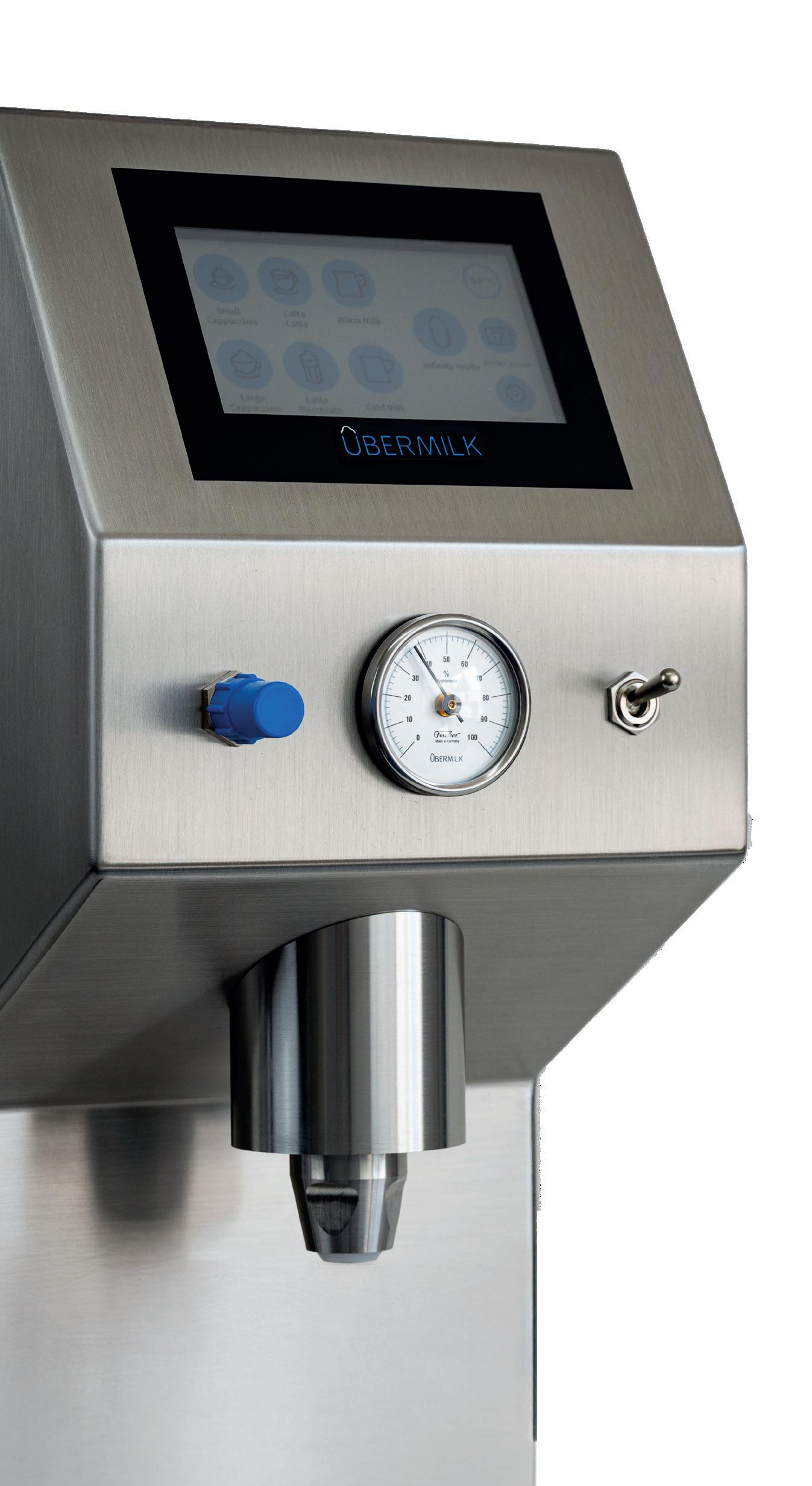
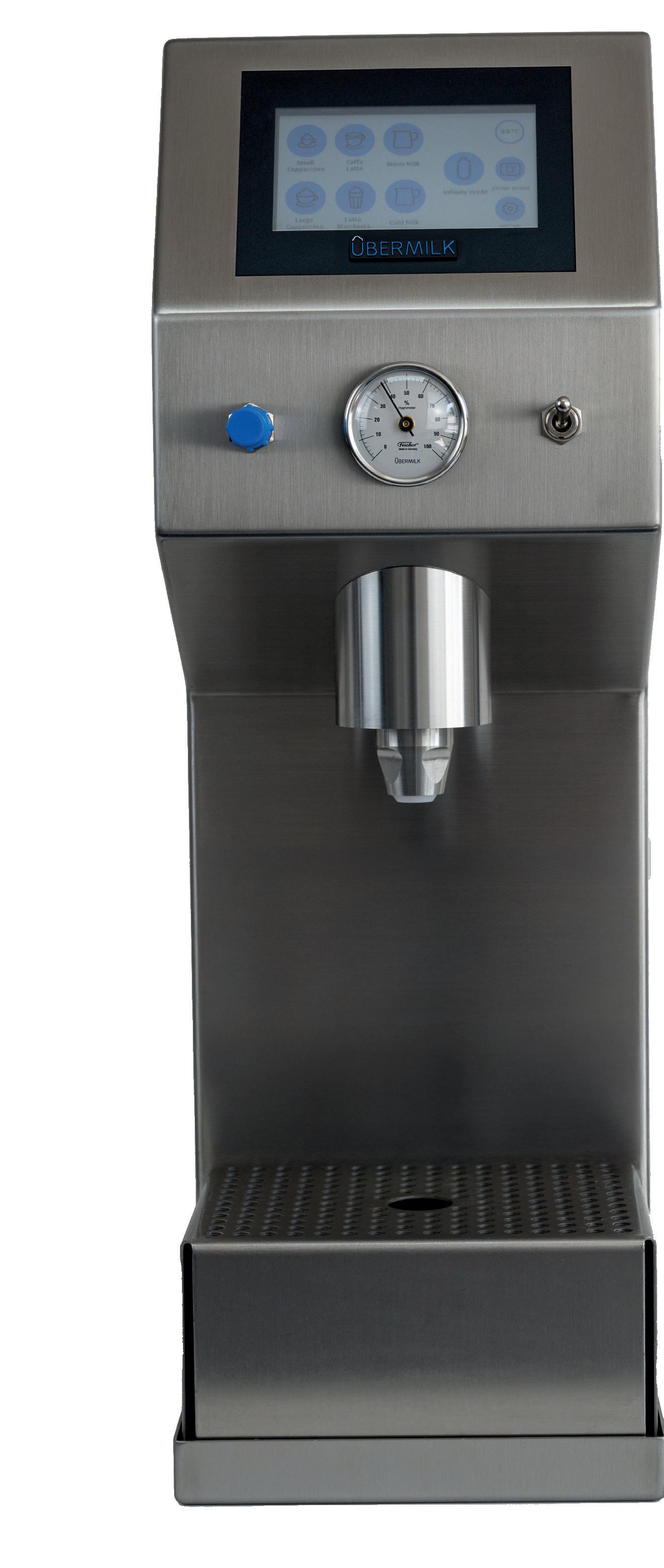
The all-new Übermilk PB: Barista-trusted engineering, now made for plant-based milk.
With a single touch, Übermilk PB delivers flawless microfoam from oat, soy, almond, and more no workflow disruption, no compromise on quality.
Engineered for reliability and simplicity, Ubermilk PB streamlines your plant-based service so your team can focus on serving, not steaming.
Hundreds of Australia’s best venues trust Übermilk’s technology. Now it‘s ready for your plant-based menu.
Designed for the next generation of café

Book your demo: www.baristagroup.com.au sales@baristagroup.com.au
16 MELBOURNE’S COFFEE CHRONICLER
Dominic Pellegrino uncovers the unique history of Australia’s co ee industry.
21 AESTHETIC AWAKENING
How café design is playing an increasingly important role in the customer experience.
24 ADAPTATION, EVOLVED
Everything you need to know about the Fiorenzato Adapt.
29 PERCOLATING PERKS
With the rise of working from home, where does o ce co ee stand?
72 ESPRESSO YOURSELF
Amy Zhang shares her sh blowing bubbles design.
74 CAFÉ SCENE
Co ee venues across Australasia for your hit list.
78 GET TO KNOW
Christos Panas on three decades of servicing the ca eine needs of the Top End.
32 KICKING GOALS
e low-down on Minor Figures’ sporting partnership.
34 TIME TO PLAY
Roasters are set to return to MICE27.
37 NARROWING THE GAP
Tanguy Charbonnet explores the crossover between barista cra and mixology.
38 PLANTBASED PIONEERS
Bonsoy on extending its reach beyond the cup.
40 STRONG FOUNDATIONS
NZ’s Foundation Co ee is taking its o ce solutions next level.
43 OPENING THE DOOR
e Barista Open reinvigorating NZ’s competition scene.
44 BUILDING LOYALTY BEYOND REWARDS
Why keeping customers can be the competitive edge.
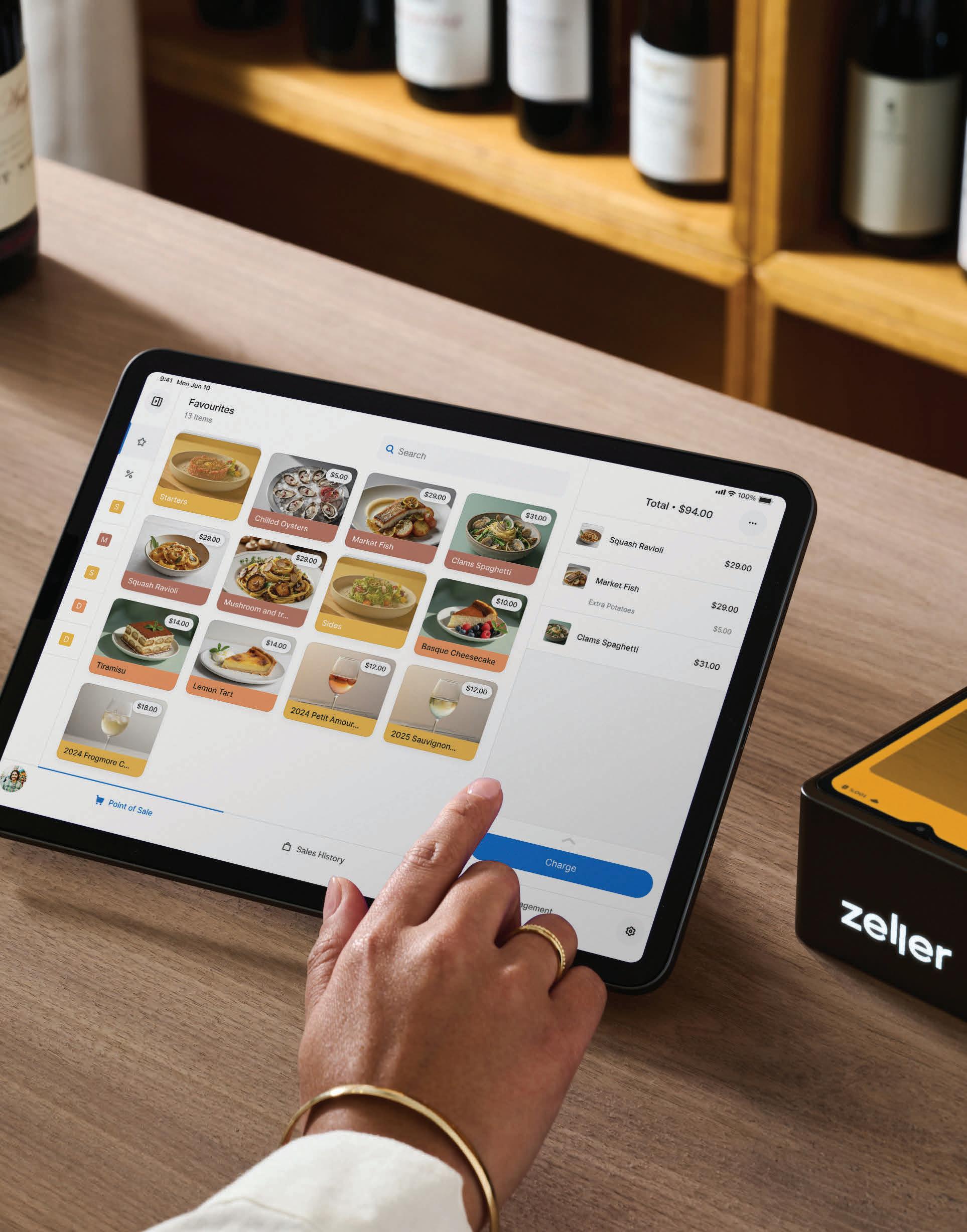
46 MEET THE NEW PLAYER IN CAFÉ POS
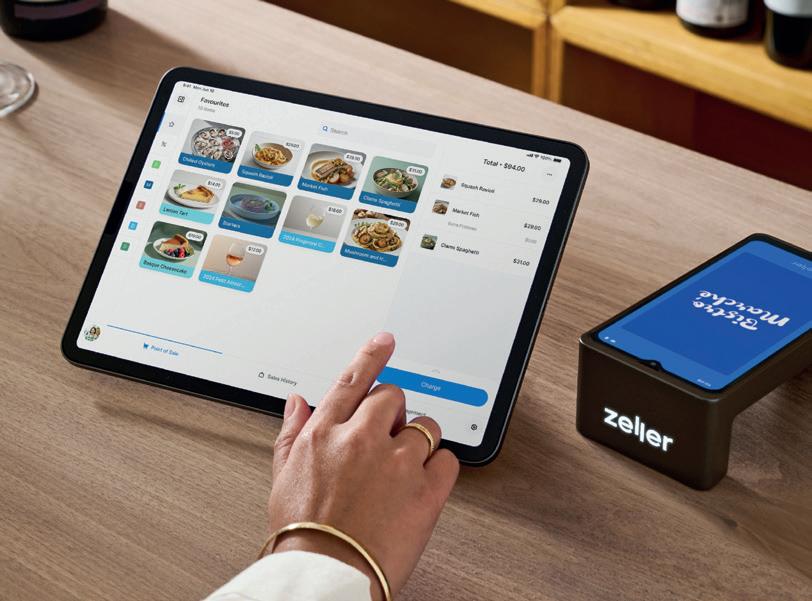
Melbourne-based Zeller details its new point-of-sales system.
48 WHICH BIN WINS?
Demystifying con icting recycling and composting regulations.
50 HIGHCONCEPT ROASTING
How contract roaster Concept Roasting scaled up with IMF and Roastquip.
52 PRINT, PACK, PROFIT
Can in-house printing help roasters take control of their packaging woes?
55 INNOVATION IN FOCUS
A snapshot of the products helping baristas and brewers push new boundaries.
58 THE ITALIAN ESPRESSO REVIVAL
As home co ee culture matures, consumers are embracing espresso’s heritage.
60 STREAMLINING SERVICE
Mazzer’s Super Jolly g grinder is tackling work ow ine ciencies.
62 EVOLVING AN ICON
One of Australia’s most iconic espresso machines gets an upgrade.
65 CREATIVITY MEETS PRECISION
With menus expanding, could precision dispensing ease work ow?
66 HEY, PRESTINA!
First look at Wacaco’s latest on-the-go brewer to arrive in Australia.
69 FELLOW TAKES ON ESPRESSO
A deep-dive into the new home espresso machine on the block.
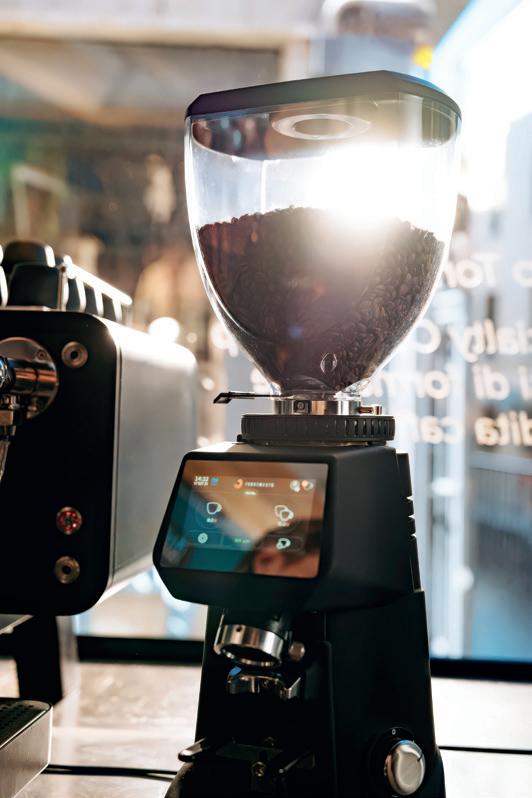
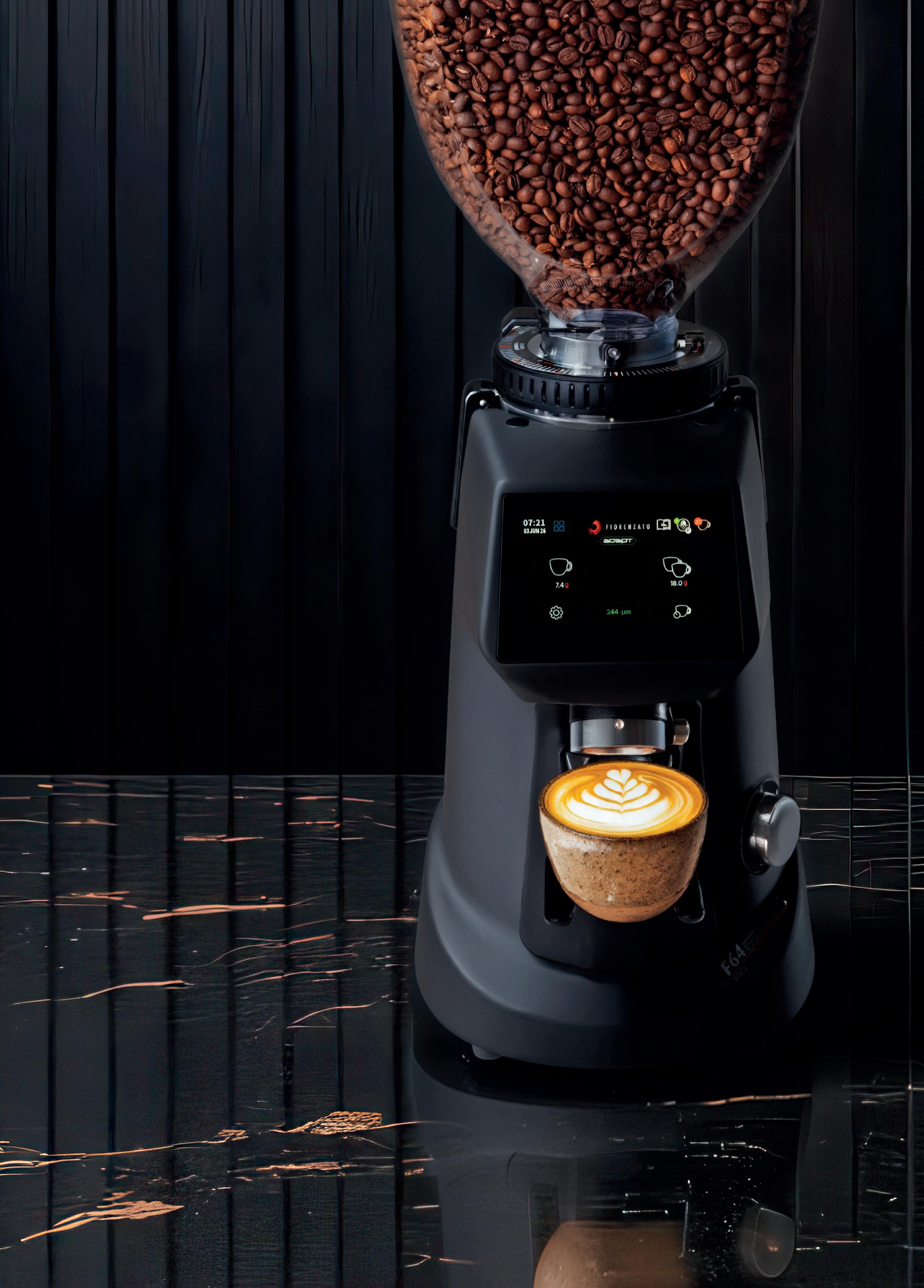
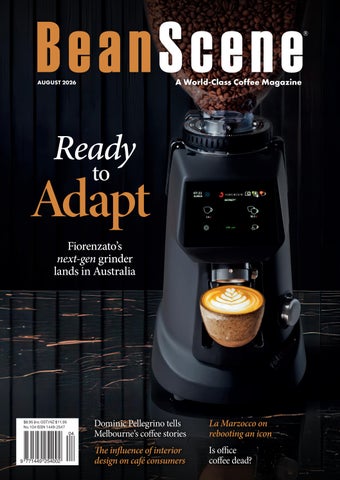
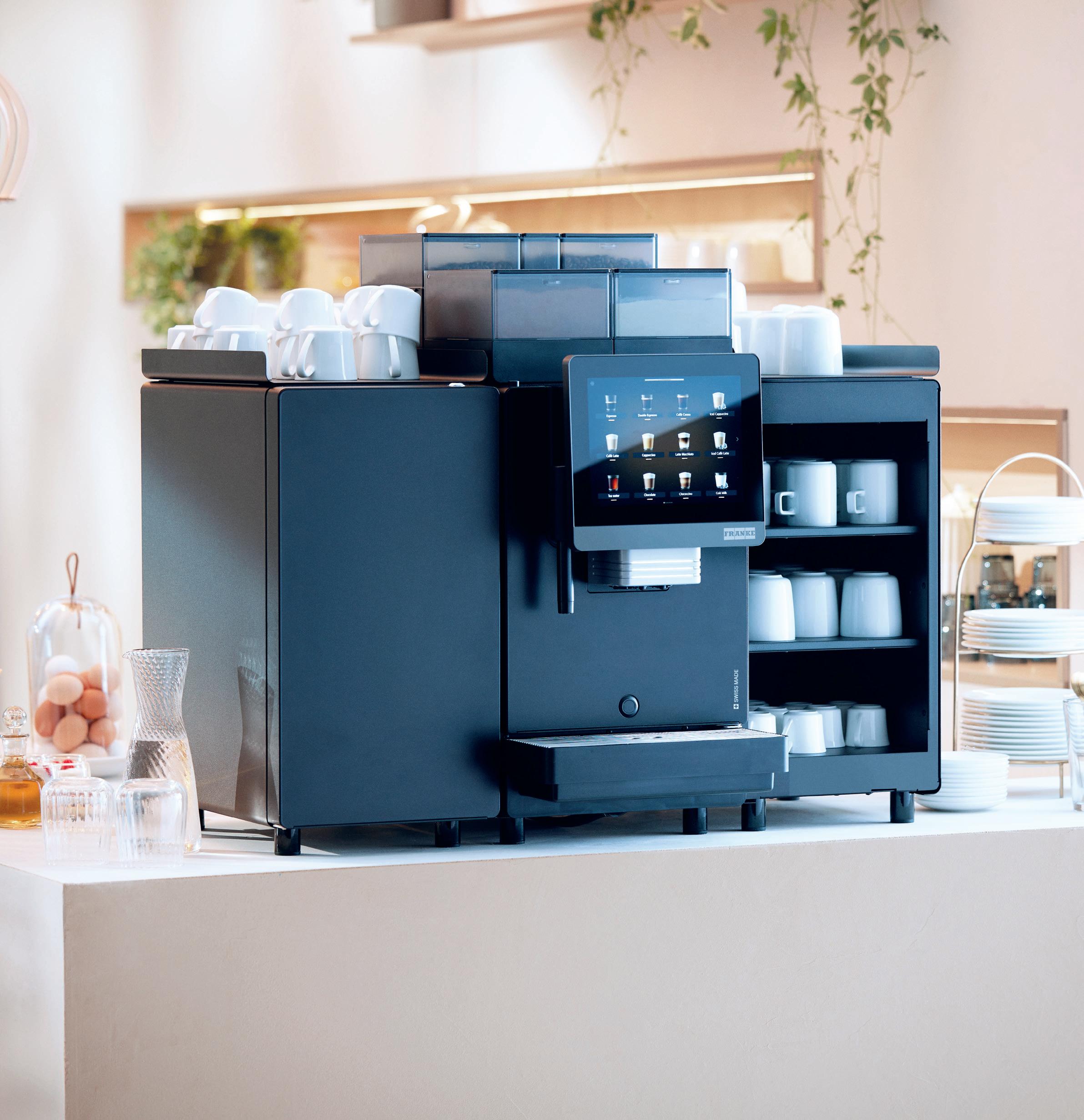
e team at Co ee Machine Technologies (CMT) in Melbourne were incredibly excited to feature the Fiorenzato Adapt on the cover of this issue.
e new grinder has hit Australian shores, and it’s been a long time coming – both in the context of its initial launch in 2025 and CMT’s longstanding relationship with the Italian manufacturer.
e Adapt arrives at a time when co ee businesses are seeking greater consistency, e ciency, and precision, while still preserving the skill and cra that sit at the heart of the café sector.
For the cover, the team wanted to capture not only the machine itself but what it represents: a new evolution of precision, professionalism, and innovation, designed to help Australian cafés.
“Fiorenzato has laid out a map of which way the industry is going, and that’s assisting the barista,” says Gianluca Colangeli, CMT General Manager.
“You’ll always need a barista, people will always want a barista, now it’s about assisting them as much as we can.
“In what I’d call a perfect café; you de nitely need one of these grinders.”
Turn to page 24 for the full cover story, where CMT explores how the Adapt was developed, the technology behind its intelligent features, and why this next-generation grinder could help shape the future of co ee service in Australia.
For more information, visit beanscenemag.com.au
CHIEF EXECUTIVE OFFICER
Christine Clancy christine.clancy@primecreative.com.au
PUBLISHER
Sarah Baker sarah.baker@primecreative.com.au
GROUP MANAGING EDITOR
Myles Hume myles.hume@primecreative.com.au
EDITOR
Kathryn Lewis kathryn.lewis@primecreative.com.au
ASSISTANT EDITOR
Daniel Woods daniel.woods@primecreative.com.au
JOURNALIST
Meg Kennedy meg.kennedy@primecreative.com.au
ART DIRECTOR/DESIGN
Daz Woolley
BUSINESS DEVELOPMENT MANAGER
Charlotte Murphy charlotte.murphy@primecreative.com.au
CLIENT SUCCESS OFFICER
Caitlin Pillay caitlin.pillay@primecreative.com.au
CONTRIBUTORS
Jessica MacDonald, Amy Zhang
HEAD OFFICE
PRIME CREATIVE PTY LTD
379 Docklands Drive, Docklands, Victoria 3008 03 9690 8766 info@primecreative.com.au beanscenemagazine.com.au
SUBSCRIPTIONS 03 9690 8766 subscriptions@primecreative.com.au
BeanScene magazine is available by subscription from the publisher. e rights of refusal are reserved by the publisher.
ARTICLES
All articles submitted for publication become the property of the publisher. e Editor reserves the right to adjust any article to conform with the magazine format.
COPYRIGHT
BeanScene magazine is owned by Prime Creative Media and published by Christine Clancy. All material in BeanScene magazine is copyright and no part may be reproduced or copied in any form or by any means (graphic, electronic or mechanical including information and retrieval systems) without written permission of the publisher. e Editor welcomes contributions but reserves the right to accept or reject any material. While every e ort has been made to ensure the accuracy of information Prime Creative Media will not accept responsibility for errors or omissions or for any consequences arising from reliance on information published. e opinions expressed in BeanScene magazine are not necessarily the opinions of, or endorsed by, the publisher unless otherwise stated.


Amy Zhang is the 2026 ASCA Australian Latte Art Champion. Born in China, Amy is a Coffee Quality Institute-certifi ed Q Grader and Barista Trainer, basing many of her latte art patterns on her favourite Disney films. Amy also won the 2022 ASCA Northern Region Latte Art Championship and the 2022 National title. She currently works at The Maillard Project in Brisbane, Queensland.

Jessica MacDonald is the General Manager of the NZSCA. Her career has taken her to Auckland, Melbourne, Sydney, and London. She’s worn many hats but remains a roaster at heart. Jessica has volunteered on the Rules and Regulations Committee for World Coffee events and judges in barista competitions and Cup of Excellence programs. Her favourite thing about the industry is the passionate people who care deeply about coffee and the growth of its community.


Like us on Facebook @BeanSceneCo eeMag
Follow us on Instagram @beanscenemag
Follow us on LinkedIn @BeanSceneMag
There’s something special about the stories that sit behind a cup of co ee. Every venue, roaster, and innovation is connected to a much bigger picture: a history shaped by people, culture, cra , and a constant drive to evolve.
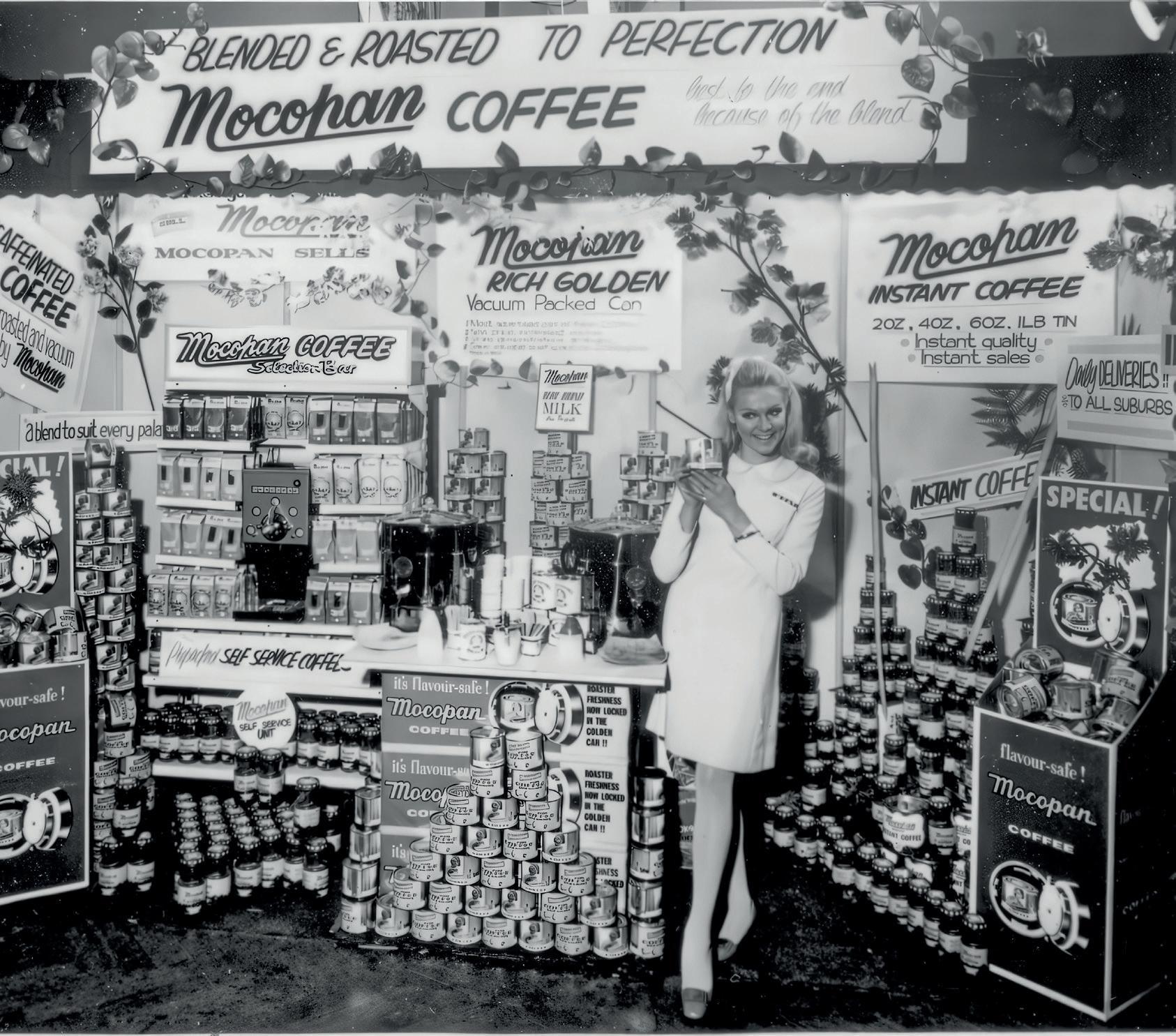
In this edition of BeanScene, we look at some of the foundations that have helped shape Australia’s co ee industry. We sit down with Dominic Pellegrino, author of Melbourne Co ee Roasters: A History, to explore the story of Melbourne-institution Mocopan, the growth of the country’s co ee scene, and how today’s roasters have been in uenced by the traditions and café culture established in the 1950s and 60s. It’s a reminder that while the industry continues to advance, many of its strongest ideas are rooted in the communities and businesses that came before us.
We also dive into the role of design in the modern café experience. As Australia’s co ee scene continues to mature, interiors are becoming more than just a backdrop: they’re an expression of identity, a re ection of brand values, and an important part of how customers connect with a venue. From layout and materials to atmosphere and functionality, café design is increasingly shaping the way people experience co ee.
Innovation remains at the heart of the industry, and this month we look at exciting new research from the University of New South Wales that’s investigating the use of ultrasound technology to brew espresso. e team of researchers are exploring how novel approaches to extraction could help improve e ciency and reduce energy consumption, opening up conversations about the future of sustainable co ee prep.
From heritage and hospitality to design and technology, this issue celebrates the many forces driving co ee forward. e strength of this industry has always come from its ability to honour its past while embracing new possibilities, and that balance continues to de ne Australia’s unique co ee landscape.
Enjoy the issue.

KATHRYN LEWIS EDITOR BeanScene Magazine
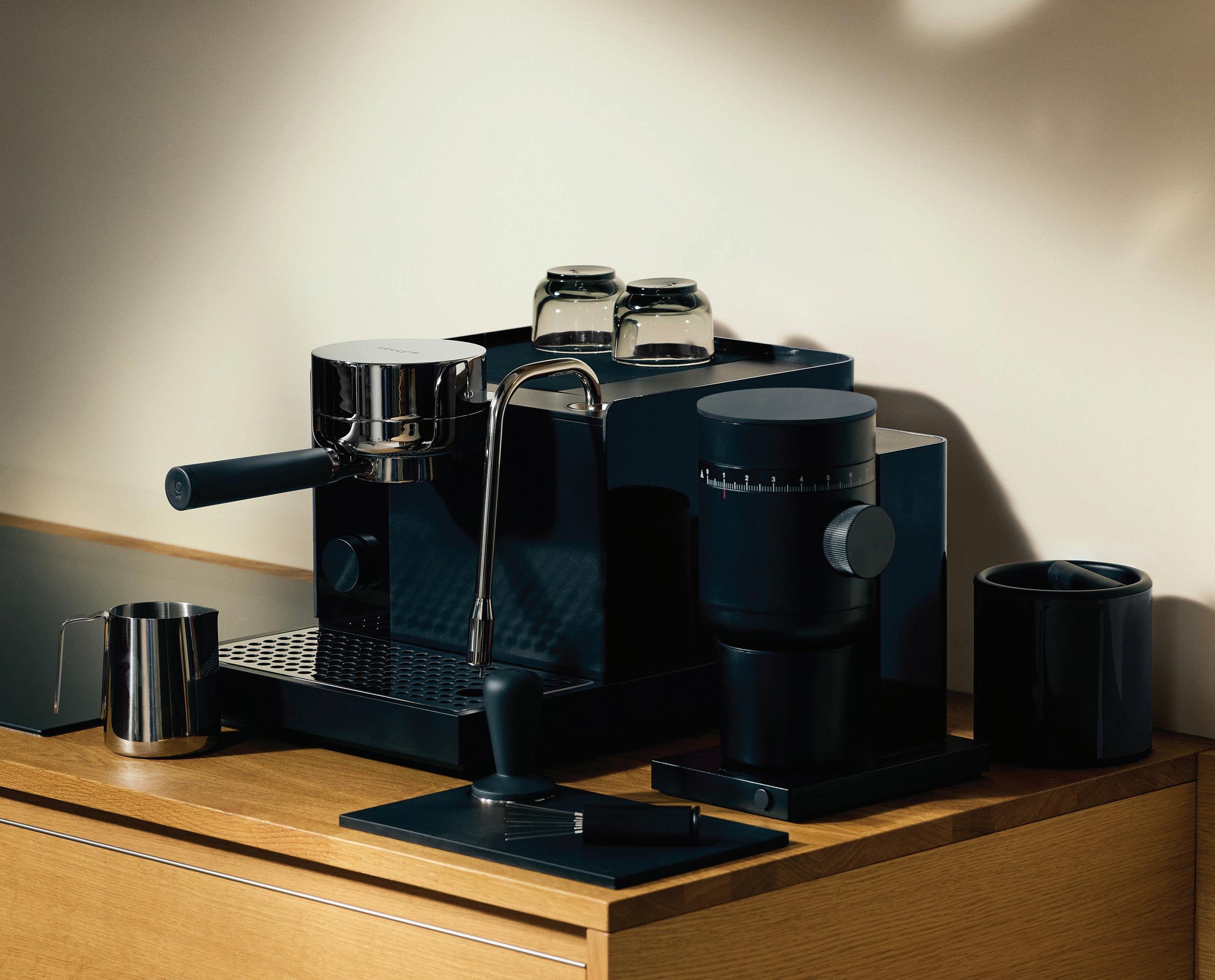
The future of home espresso
Assisted milk steaming
Temperature-sensing steam wand for silky microfoam without the guesswork.
Boosted Boiler™ architecture
To-the-degree temperature stability and a warm-up time of two minutes or less.
Precise pressure profiling
Built-in shot profiles with precise pressure control to improve extraction, sweetness, and clarity.
Guided recipes +manual mode
Thoughtfully designed for both beginners and experts.
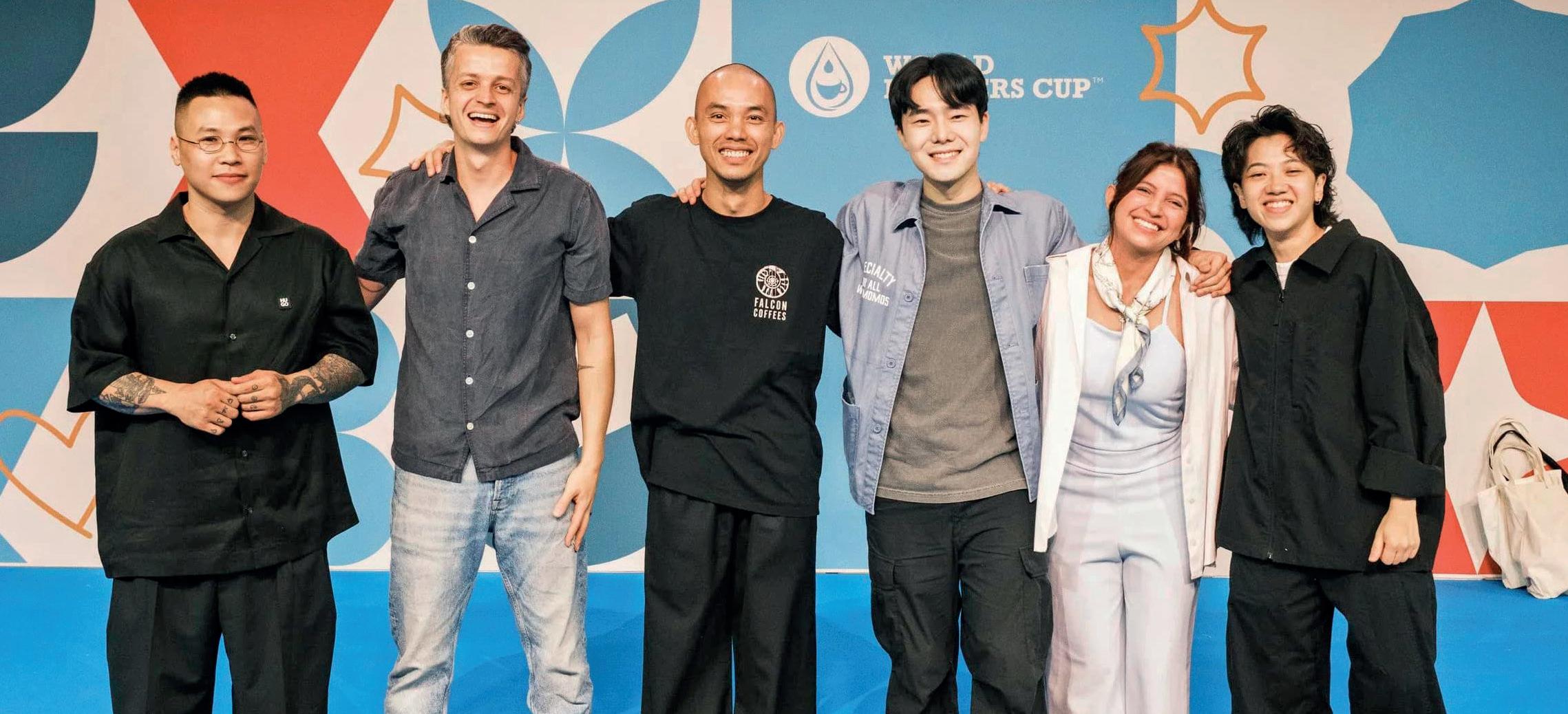
Australian competitors have delivered another strong showing at the World Co ee Championships, led by Simon Gautherin’s runner-up nish in the World Brewers Cup. Representing APAX LAB, Simon placed second a er scoring 461 points in the nal, just eight points behind Malaysia’s Nas Jaafar. His open service score of 346 was the secondhighest of the six nalists.
Following a successful debut at MICE2026, Trip to Origin will return for Melbourne International Co ee Expo’s 2027 edition with a program celebrating co ee-producing countries and their connection to the Australian market.
e expo feature will once again showcase producing nations and organisations, building on this year’s representation from Uganda, Brazil, Fiji, Kenya, Papua New Guinea, Indonesia, Vanuatu, and Samoa.
At MICE2027, exhibitors will have the opportunity to host cupping sessions and educational presentations, while an expanded three-day stage program will cover topics including co ee production, sourcing, sustainability, and regional insights for both trade and consumer audiences.
Participating exhibitors will also bene t from a dedicated stand, pre-show marketing opportunities, and a listing on the Trip to Origin web page, designed to increase visibility and encourage meaningful commercial connections.
e initiative reinforces MICE’s commitment to strengthening relationships between producing countries and the specialty co ee industry through education, collaboration, and direct engagement.
Serene Yu of Smay Co ee also impressed, nishing fourth in the World Co ee in Good Spirits Championship. Serene entered the nal a er recording the third-highest preliminary score before nishing with 320 points, while China’s Andy Philein (Liu Zhan Hong) claimed the title.
In the World Co ee Roasting Championship, Blackboard Co ee Roasters’
Danny Andrade nished on 547 points in a tightly contested eld, just eight points behind h place.
e results continue Australia’s strong history at the World Co ee Championships, with previous titles in Brewers Cup and Co ee in Good Spirits, while a World Co ee Roasting Championship victory remains elusive.
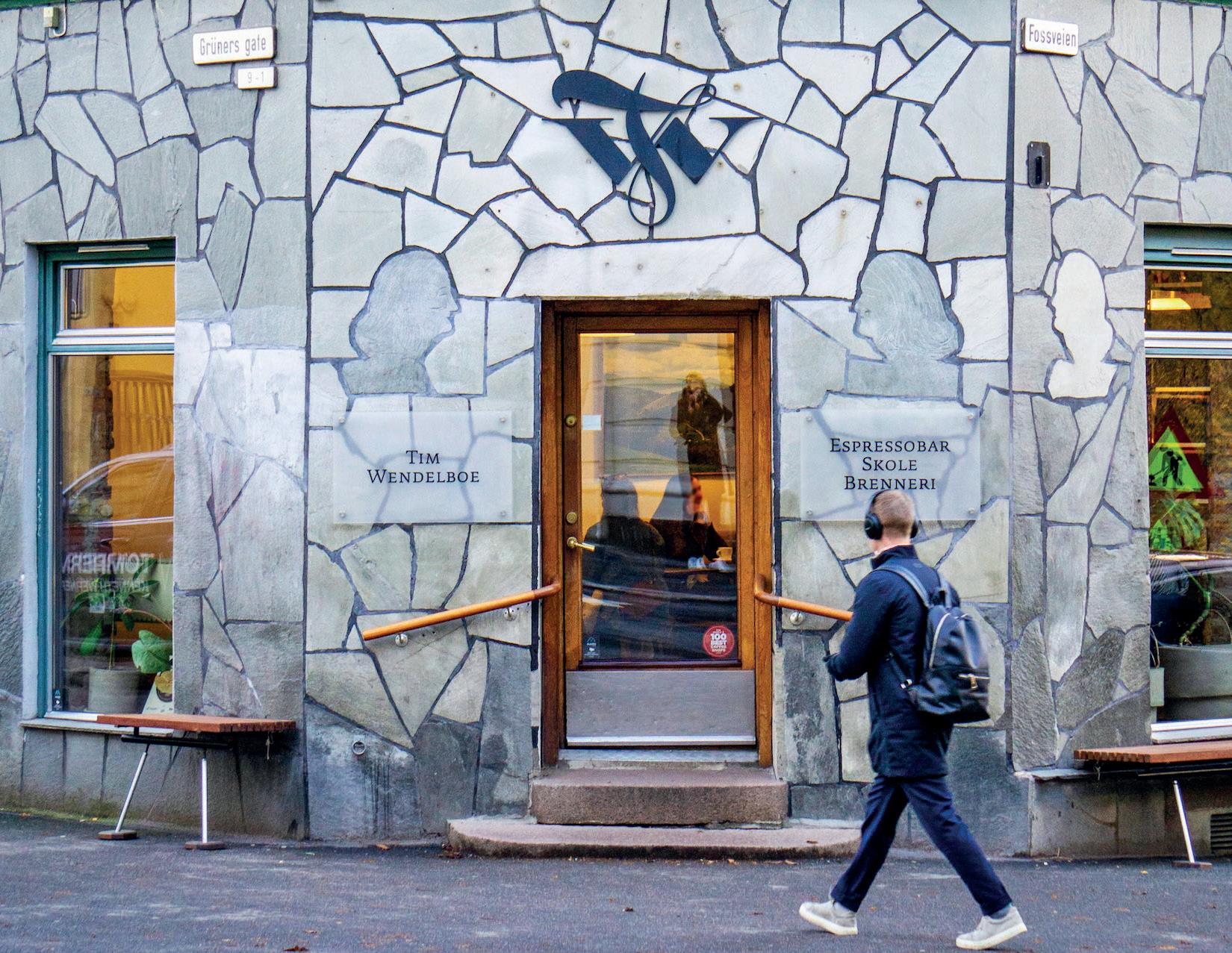
Oslo espresso bar Tim Wendelboe has scooped the top spot in the inaugural Europe’s 100 Best Co ee Shops rankings, announced on 25 June at World of Co ee Brussels in Belgium.
Austria’s Gota Co ee Experts claimed the runner-up spot, followed by Nomad Frutas Selectas in Spain, France’s Tanat, and Co eewerk + Press in Ireland which
rounded out the top ve venues.
e recognition follows another strong result for the Norwegian café earlier this year, when it placed second in the second edition of the World’s 100 Best Co ee Shops list. More than 15,000 venues were assessed through a judging process comprising 70 per cent expert evaluation and 30 per cent public voting.
Launched in 2025, the 100 Best Co ee
Award-winning eco packaging company
BioPak has appointed Pablo & Rusty’s Co ee Roasters and Huskee Founder Saxon Wright as its inaugural Chief Sustainability O cer, a new role designed to strengthen the company’s sustainability strategy.
Saxon will work closely with BioPak customers to develop tailored sustainability solutions while also overseeing the continued integration of Huskee, alongside decent packaging and Bygreen, within the BioPak Group.
BioPak CEO Guy Brent says the appointment re ects the company’s ambition to accelerate its leadership in sustainable packaging, building on the

Shops competition assess co ee quality, barista expertise, customer service, innovation, ambience, sustainability, food o ering, and consistency. Since opening in 2007, Tim Wendelboe has become a destination for specialty co ee enthusiasts, recognised for its minimalist approach, single-origin co ees, and direct-trade relationships with producers.
shared values established since Huskee joined the business in 2024.
Saxon says collaboration will be central to driving meaningful industry change, with sustainability solutions needing to align with each customer’s unique goals and approach. He believes BioPak’s continued growth presents an opportunity to support more businesses in transitioning to better packaging solutions and creating greater environmental impact.
He adds the company will continue building on its 20-year legacy by delivering practical, transparent and accountable sustainability outcomes, while continuing to “challenge the status quo”.
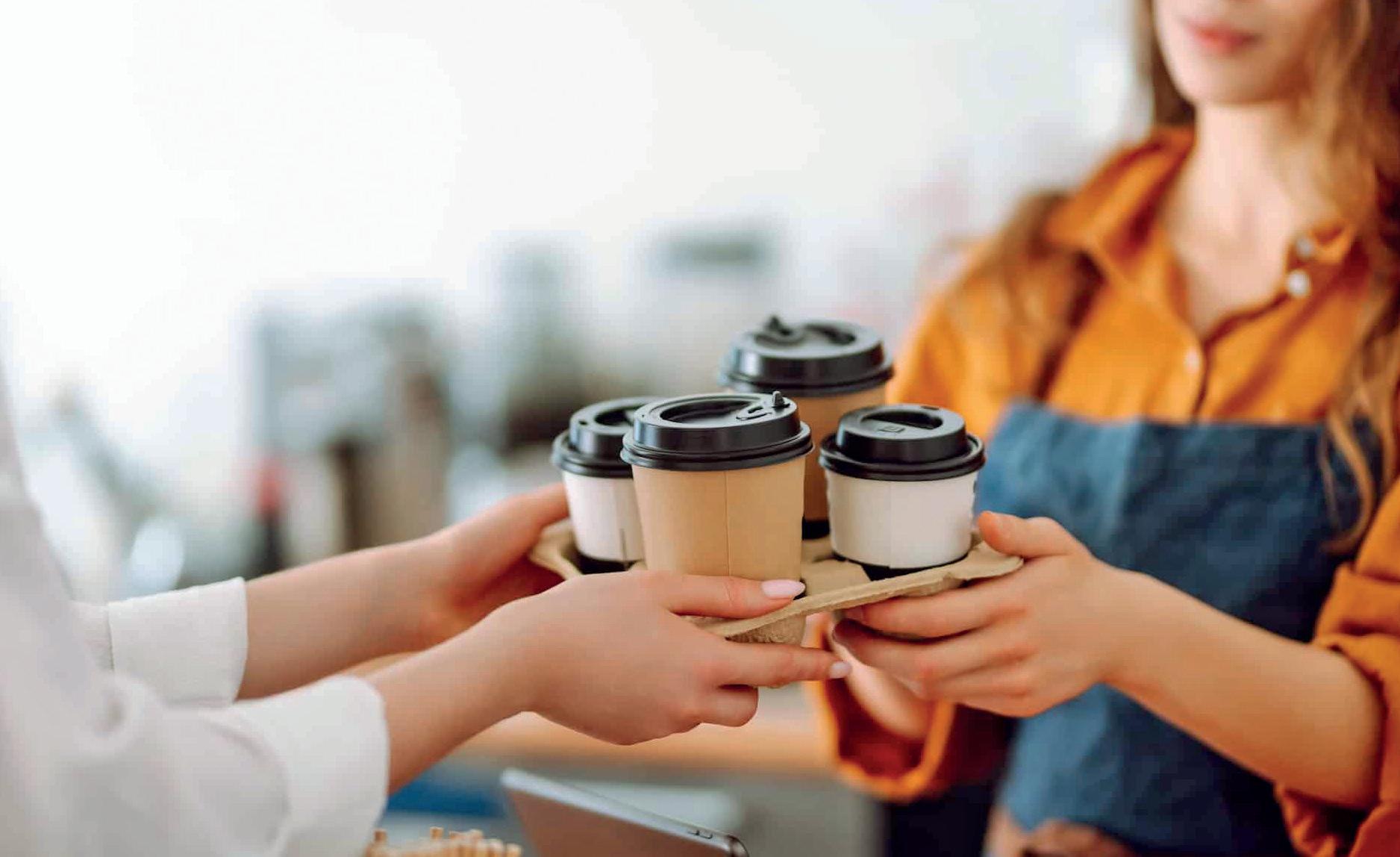
According to NAB’s May Consumer Spend Trend Report, spending at cafés, restaurants, and pubs has increased 7.6 per cent over the past year, highlighting the resilience of Australia’s hospitality sector despite continued cost-of-living pressures.
e report found overall consumer spending rose 1.1 per cent, while discretionary spending increased 2.4 per cent, supported by stronger hospitality performance. Growth was recorded across every hospitality sub-category.
Axil Co ee Roasters Founder Dave Makin says the gures show consumers are still willing to spend on quality café experiences.
“People still want a small treat, even in tougher times,” says Dave. “ at means nailing the essentials: good co ee and quick service from the moment someone sits down.”
He adds the growth of signature drinks has also created opportunity.
“Mont Blancs are the biggest thing we’ve seen since smashed avocado,” says Dave.
e new course is designed for industry professionals with extensive experience across the specialty co ee sector. To be eligible, applicants must hold all four SCA diplomas,
“It taps into the idea of a ordable luxury. Customers understand what they are paying for, and they keep coming back.”
Western Australia recorded the strongest annual growth in hospitality spending at 8.5 per cent, ahead of the Northern Territory, New South Wales, and the ACT.
NAB says consumers are becoming more selective with their spending, creating opportunities for businesses that continue to deliver value and quality.
maintain a current Q Grader licence, demonstrate relevant industry experience, and provide professional recommendations.
Candidates who meet the eligibility requirements must then complete a 100-point knowledge check before progressing to an interview stage.
e quali cation culminates in a veday program featuring four assessments, including three case study-based exams and one communication exam, designed to evaluate both technical expertise and professional capability.
According to the SCA, the Master of Specialty Co ee credential recognises professionals who have built careers across multiple areas of the industry and represents the association’s new benchmark for advanced specialty co ee education and leadership.
A new Consumer Horizon Report from product development and consumer insights platform Vypr has revealed instant co ee remains the dominant brewing method among Australian consumers, despite growing interest in premium formats.
Surveying more than 3600 Australians, the report found seven in 10 drink co ee daily, while a further 16 per cent consume co ee two to three times per week.
Instant co ee continues to grow in popularity with age, with 69 per cent of those aged 65 and over identifying it as their primary brewing method. Meanwhile, younger consumers are driving demand for premium options including ground co ee, pods, and cold brew.
Vypr Chief Revenue O cer Sam Gilding says convenience and a ordability continue to underpin instant co ee’s popularity.
“People still absolutely value barista-made co ee and quality experiences,” he says, “but when you’re juggling easing household costs and busy routines, instant co ee remains the format that ts most easily into everyday life.”
Pods ranked as the second most popular brewing method, peaking among consumers aged 45 to 54.
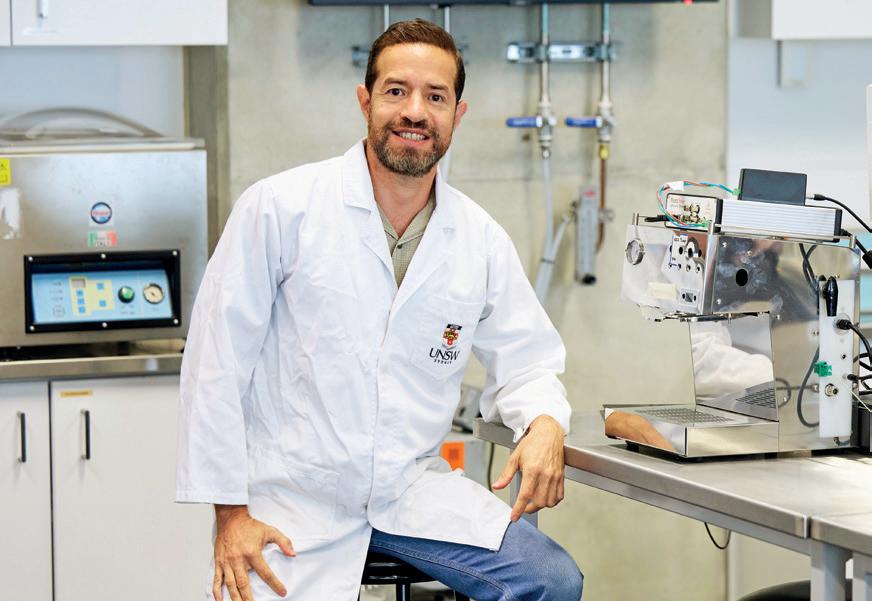
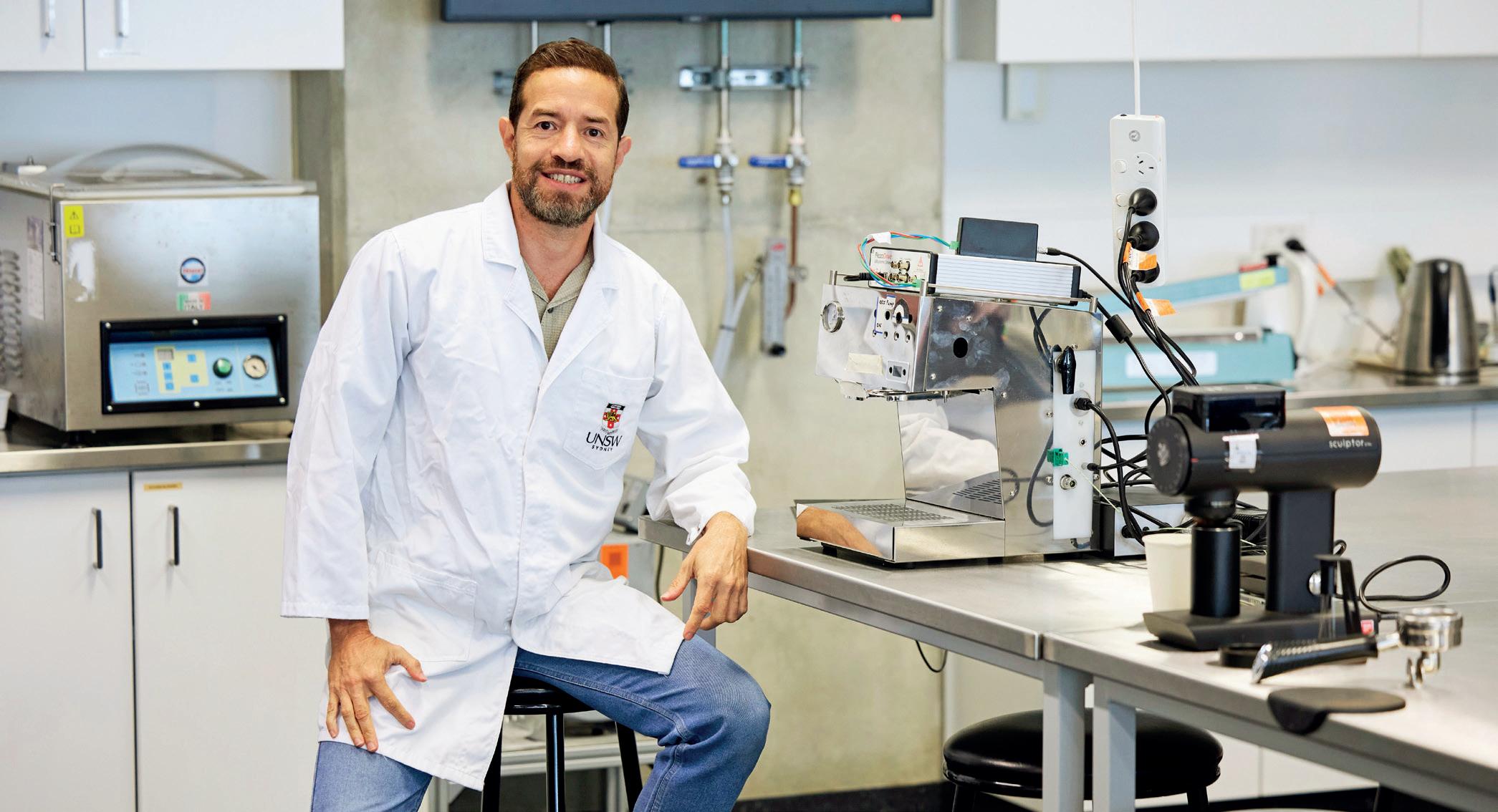
A research team led by Dr Francisco Trujillo has created a new method of brewing espresso. Image: UNSW.
Australian researchers have developed a new way of brewing coffee that could transform large-scale production and RTD manufacturing.
Dr Francisco Trujillo remembers a childhood in regional Colombia, where his grandfather bought and sold co ee.
Now, the Senior Researcher at Sydney’s University of New South Wales is rede ning how co ee can be brewed e ciently. His research team have developed a new method, which they call ‘ultrasonic espresso’, that o ers up to 75 per cent energy savings compared to traditional espresso production. e ultrasonic journey started with using similar methods to create cold brew, the result of which dropped the standard 12- to 24-hour process to just a few minutes. en, they turned their attention to replicating and re ning the process for espresso.
“ e rst work we did was trying to replicate cold brew, we published those results in 2024,” says Francisco.
“ en we said, ‘this is an espresso machine – can we do something as concentrated as an espresso?’ at was the important question.
“We started to manipulate variables and realised, yes, we could – which was how the idea started.”
is co ee research is a full circle moment for Francisco, a chemical engineer with a PhD and post doctorate focused on food processing, which he believes is a “beautiful part” of the story.
“I grew up in my grandfather’s house. We lived in a small Colombian town close to the mountains where they grow co ee, and one of my grandfather’s businesses was buying
wet co ee beans,” says Francisco.
“He would put them out to dry in the sun on these long sheets made from natural bres. e smell of wet co ee beans was very strong, I still remember it now. I have it recorded in my brain from when I was a kid. We used to play among the co ee beans.”
Traditionally, espresso relies on hot water pushed through nely ground co ee under pressure. e heating of the water is one of the most energy-intensive parts of the brewing process.
Instead of relying on heat, Francisco’s method uses ultrasonic soundwaves to vibrate the water and co ee at a high frequency, creating acoustic cavitation.
is cavitation creates and collapses tiny bubbles in the water, which act like microscopic agitators that help break open the co ee grounds and extract the desirable compounds.
“Ultrasound has been widely used for extraction; it’s a very well-known technique in food processing,” says Francisco.
“If you have a vegetable tissue that you want to extract something from, the acoustic cavitation produces tiny holes in the membranes and that allows the solutes to be extracted more easily. at’s been reported for several decades.”
He applied the same method to co ee. “We did a study to nd out if ultrasound could
extract more of co ee’s antioxidants. We found it extracted about the same as a normal extraction or brewing, but there were a lot of other di erences,” says Francisco.
“We saw it was emulsifying the oils, so when we applied ultrasound, the co ee wasn’t as dark. It was a bit creamier and it lost some transparency.
“ en we measured some volatile components and saw the emulsion – basically tiny droplets of co ee oil – was carrying certain aroma compounds.”
e initial study used huge lab machines with large beakers of co ee, which Francisco labelled “impractical” for real-world use. As a result, his team adjusted an espresso machine to vibrate the porta lter basket to extract and brew the co ee.
“We were essentially transforming the basket inside the porta lter into a resonator,” Francisco continues.
“We designed a system that touches the co ee basket on the side, then it starts resonating. By doing that, it produces waves from the outside of the basket towards the inside.”
e size, shape, and structure of the porta lter proved perfect for creating acoustic cavitation.
“ e sound isn’t just passing through the point of contact; it’s passing from all the walls around, inwards,” says Francisco.
“We know acoustic cavitation is very strong when you’re close to the source that produces

the sound, but it diminishes very quickly with distance.
“In a small co ee basket, where the source is now all the walls of the basket and the co ee surrounds it, you have the perfect geometry to create a lot of acoustic cavitation and enhance the extraction.”
It’s the power required to vibrate the porta lter, compared to heating water to pass through, where the major energy savings come into play.
“We recorded that from zero to about 60 watts there was a large increase in extraction yield. From 60 to 100 watts, extraction still increased, but not as much,” says Francisco.
“We can operate the system at about 60 watts, which is where we get the best energy savings while still achieving strong extraction.
“We believe that, if you greatly increase the power, you might be able to extract faster, but 60 watts is a very critical point where you get most of the bene t.”
As part of the evaluation process, Francisco and his team recruited 100 regular co ee consumers to taste test the ultrasonic espresso alongside traditionally brewed espresso.
e statistical results of these consumers indicate little to no di erence assessed between the brewing methods. A number of co ee experts were also recruited to taste test the nal product.
Francisco was
the

“ e expert tasting results are anecdotal because we don’t have statistical data, but most of them report slightly less bitterness and a cleaner a ertaste,” says Francisco.
“An expert might detect speci c avour notes that are more associated with cold extraction or hot extraction, but we’re not claiming there is ‘no di erence’ at all.
“Co ee extraction is extremely complex, and with espresso, if you change something just a little, you change the espresso. We are changing things by brewing with sound waves at room temperature with roomtemperature water.”
Now, the work will continue re ning the process to drop the brew time from about two minutes to something closer to the 30 seconds associated with traditional espresso.
“We want to follow two main pathways. One
is to work with a company that’s interested in bringing this to market in the form of co ee machines,” says Francisco.
“ e second pathway, which we see as having the biggest potential, is partnering with companies interested in large-scale production of ready-to-drink co ee beverages and cold brew.
“In large-scale production you’re already working on longer times, and ultrasound can dramatically speed up extraction even under cold or lower-temperature conditions. You can also model the process and decide, for example, that you don’t need such high temperatures or high pressures.
“All of those elements together could make the process highly e cient: reduced time, reduced energy, and maintained or even improved quality.”
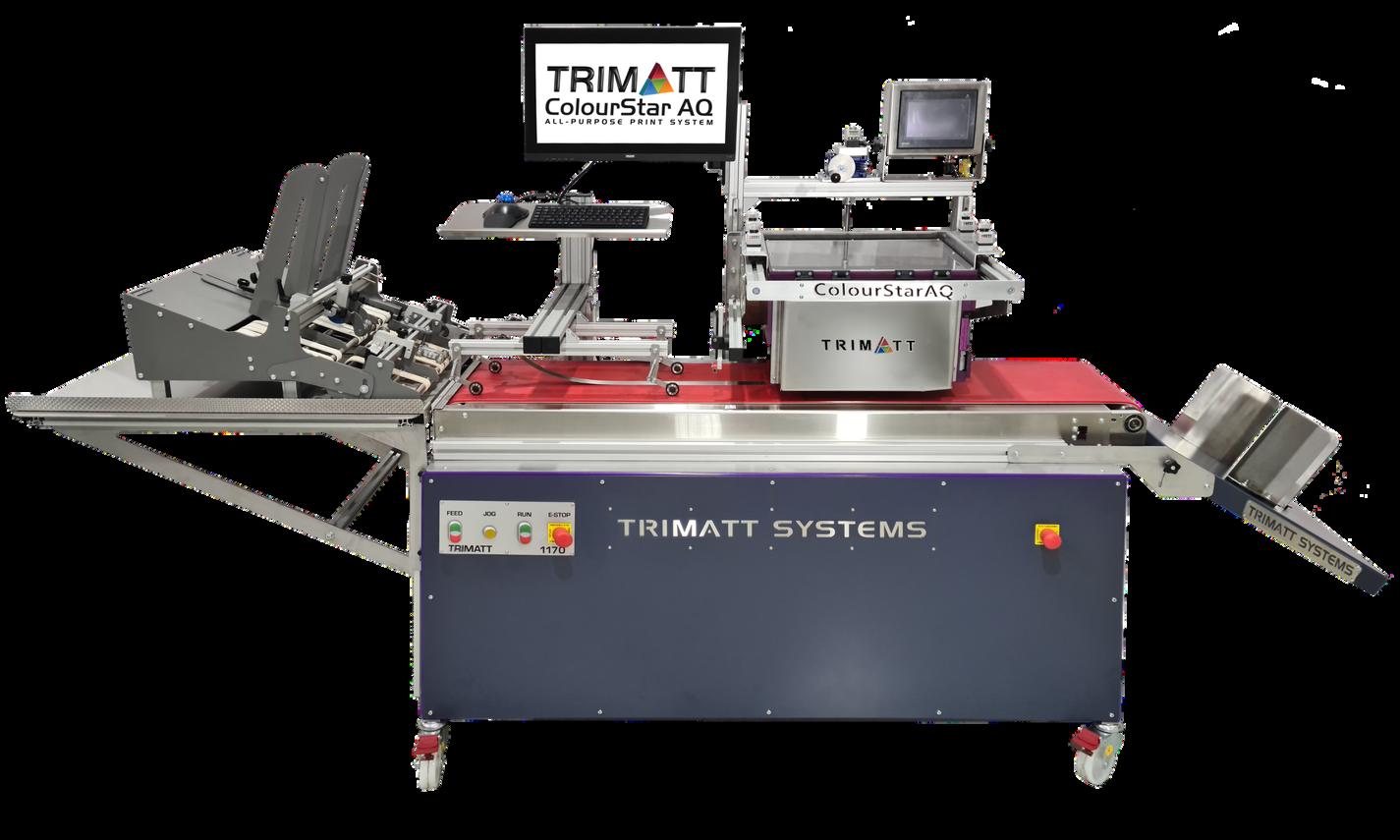
I N - H O U S E D I G I TA L P R I N T I N G

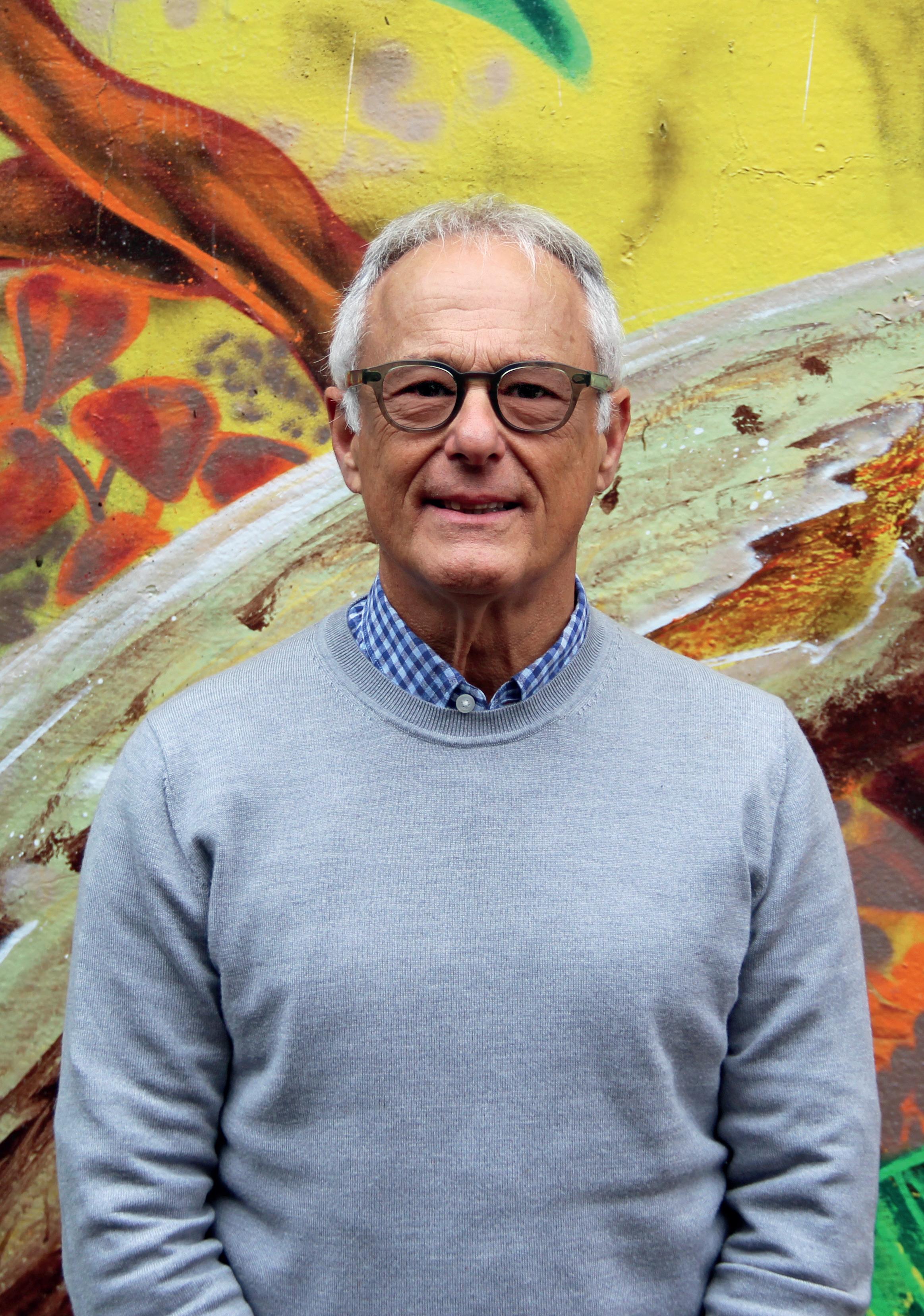
The unique history of Australia’s coffee culture has been uncovered by former Mocopan Coffee Director Dominic Pellegrino, and he’s determined to tell its story.
By Daniel Woods
The title of ‘Knowledge Leader’ is something that doesn’t necessarily sit comfortably with Dominic Pellegrino. e son of Mocopan Co ee Co-owner Carmelo Pellegrino and a Director of the company between 1982 and 1995, Dominic is an engineer by profession. By his own admission, he has had little to do with co ee since his time with the iconic Melbourne roastery ended with the sale of the business in the mid-90s.
However, he has literally written the book on the history of Australia’s co ee roasters. With a focus on Melbourne, he’s brought together some of the industry’s historic voices to tell its story.
Spanning from the early 19th century up until the espresso explosion of the 2000s, the new book, Melbourne Co ee Roasters: A History, seeks to tell the world how the city’s famous co ee culture came to be.
I met Dominic at a small café in Hawthorn. Even before the interview o cially started, the conversation immediately turned to co ee.
“I don’t drink co ee with milk,” he says with a smile, a er ordering a double ristretto.
“It makes meetings like this hard because you can sip on a at white, but my co ee is gone in a few seconds.”
en, conversation turned to Italian co ee and the presence of Robusta in some of the more well-known and historic Italian blends in Melbourne.
“ ere are some roasters that won’t touch the stu , but then there are some amazing, heritage roasters that will insist on having between nine and 17 per cent Robusta,” says Dominic.
“Vittoria’s Les Schirato spruiks the fact none of his co ees have ever had Robusta, but then roasters like Genovese and Co ee Mio insist on having it.”
On the shoulders of giants e folklore that Melbourne’s – and the country’s – co ee heritage began in the 1950s and 1960s, largely thanks to post-war migration from Europe, is well established.
To see that signi cant in uence, you only need to look at some of the names Dominic says are the most important in the history.
“Richard Cottle and George eophanis were two of the only non-Italians I spoke to for the book,” he says.
“One of the interesting things, which I hadn’t realised until I started preparing for this, was where the Italians from the early roasters come from. We have Agostino Monici (Mocopan) from Parma in the north, Mario Berra (Co ee Mio) is from Piedmont, Giancarlo Giusti (Grinders) comes from Verona, Paul Beraldo (Beraldo Co ee) from Treviso, north of Venice, and Dominic Crivelli (Co ex) from Abruzzo – in the middle of Italy.
“Mocopan was a mix of Sicilians (Dimattina family) and Calabresi – that’s us, the Pellegrinos. e Cantarella brothers – Orazio and Carmelo – who founded Vittoria come from Sicily. Al o Genovese comes from Sicily, and Tony Conversano (Co Co) comes from near Naples.”
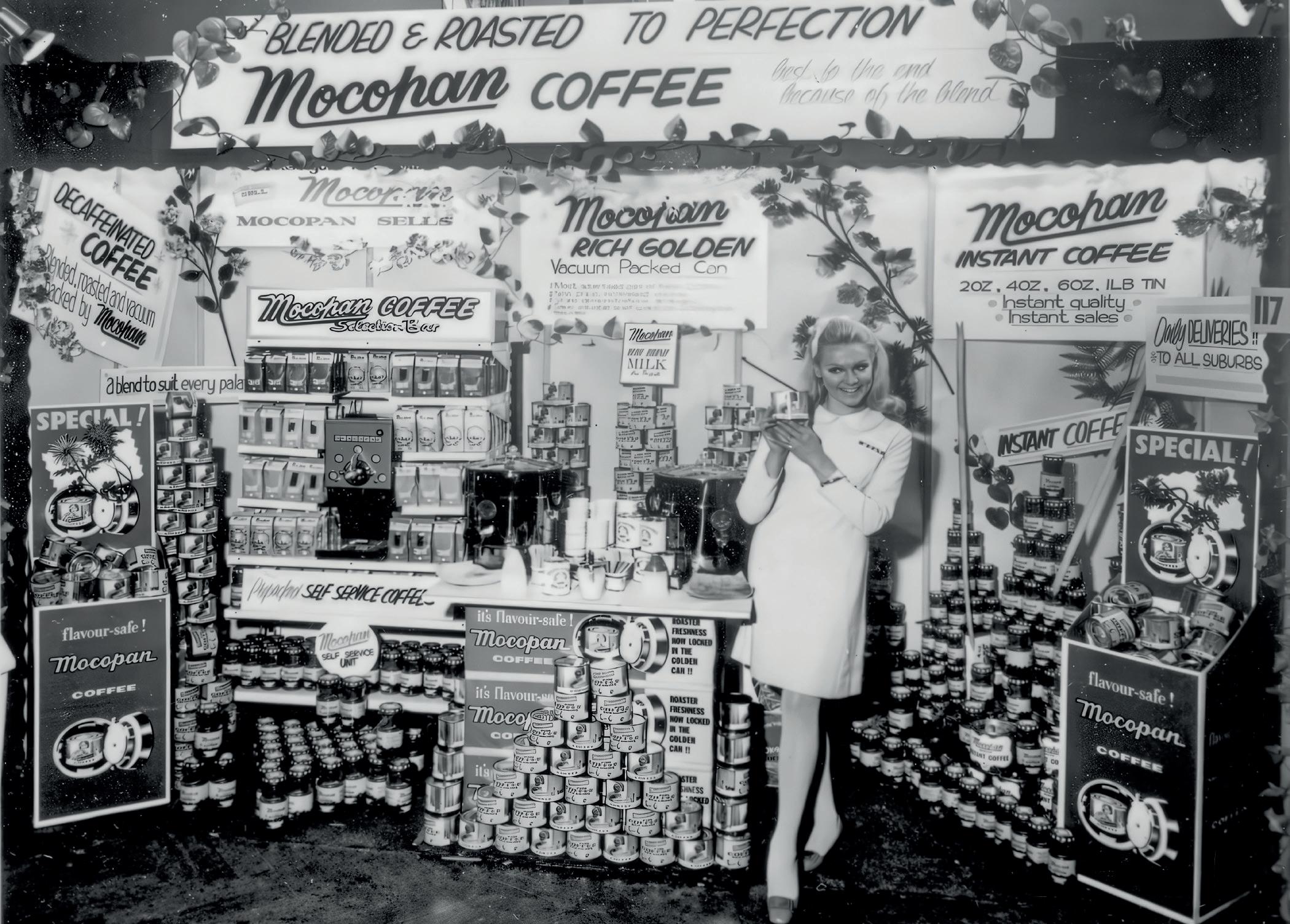
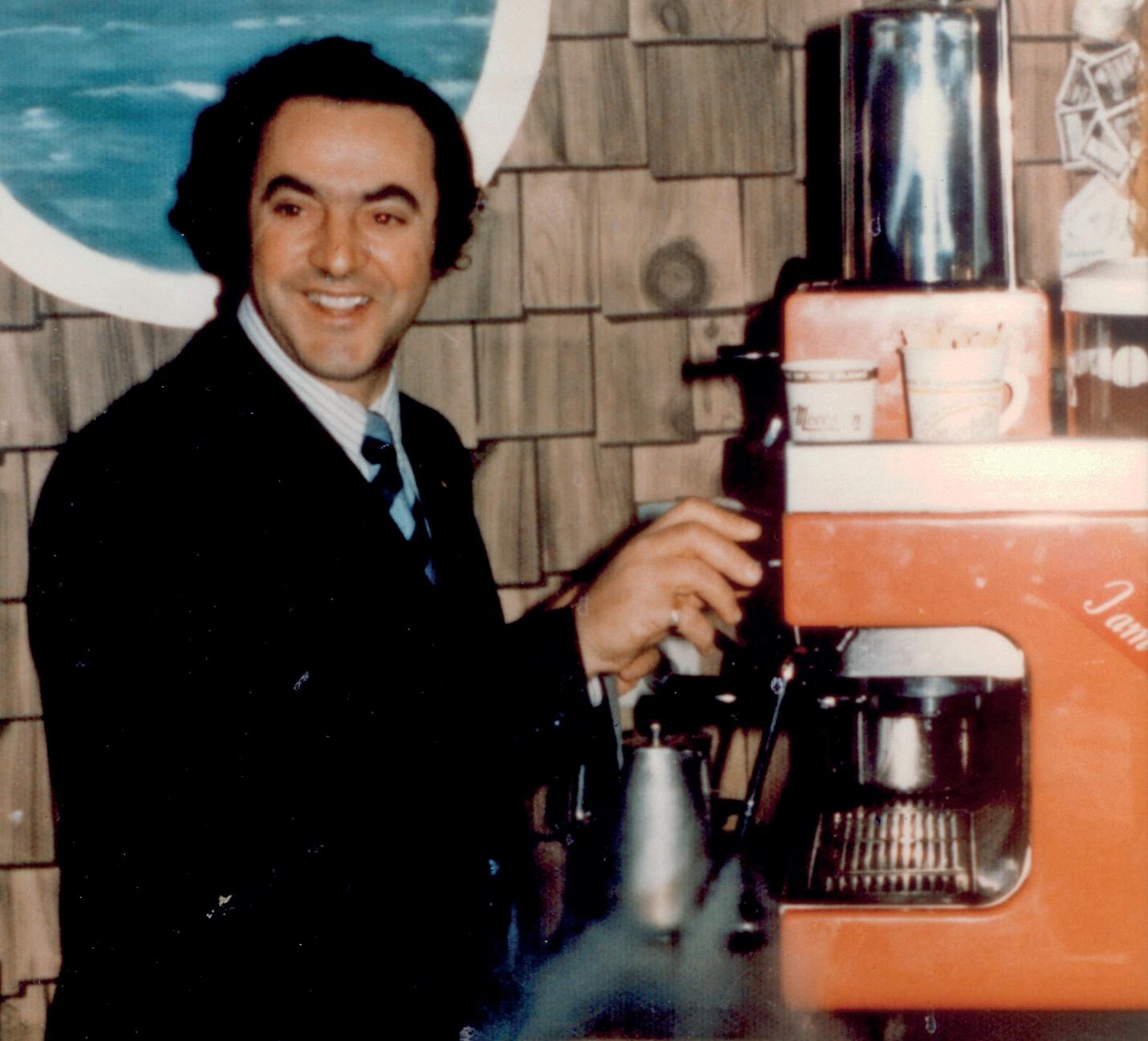
It’s some of these names, among others, that kickstarted the rst espresso revolution in places such as Melbourne and Sydney. But why did Victoria’s capital city become the global hub of modern co ee?
“Because we started roasting as early as we did in the 1950s, Melbourne gained a competitive advantage. It was happening elsewhere in the world, but it turned out to be a fad and petered out. In Melbourne it continued,” says Dominic.
“Australia has a large population of European migrants, with the largest group being in Victoria, primarily Italians, and most of them were in Melbourne. at’s what fed it – the city had a base of people who wanted co ee.
“We accumulated knowledge over 50 years, and when espresso really exploded from the 2000s onwards, we already had decades of experience. at gave us the con dence to move into di erent areas, di erent blends, and explore co ee in ways that wouldn’t have been possible without that roasting history.
“Ultimately, I think Melbourne has become a co ee Mecca because it embraced things like di erent cultural habits and practices in ways other cities didn’t. We’re blessed to live in a city like that.”
is post-war migration was not the start of co ee in Melbourne, but it did “change the goalposts”, according to Dominic. It was a critical shi in formulating how Melbourne, and wider Australia, viewed and drank co ee.
“ e roasters of yesteryear were all learning through trial and error, and by the end they were producing fantastic co ees – co ees that still exist today. All the major signature blends of those roasters are still there,” he continues. “ ere have been a few tweaks, particularly
in terms of temperature – they’ve moved down a little – even Genovese and Co ee Mio, who insist on traditional Italian co ees, have moved down the temperature scale.
“I praise this new generation of roasters. Where we are now is unbelievable compared to when we were roasting with Mocopan, but I also say the new-age roasters didn’t start with a metaphorical blank page.
“ ey’re standing on the shoulders of those who preceded them, and in turn, due deference must be paid to those roasting in 19th-century Melbourne, and to those roasting prior to and during the world wars.”
While Melbourne is undoubtedly the hero of Dominic’s book, it also goes into detail about Sydney and Perth. To omit them would be to omit a chunk of history.
“Vittoria and Andronicus are Sydney based, among others. I also included a small roastery that began in 1937 in Perth. Anyone roasting pre World War II deserves to be mentioned as part of the legacy we all inherit,” says Dominic.
With all this information in mind, on hand, and on the page, Dominic believes the true hero of Mocopan was Joe Dimattina who became an in uential player in Melbourne’s co ee scene.
“I interviewed a lot of people, and all of them spoke highly of Joe as a gentleman and as someone very generous with their time and e ort. Joe had a vision for co ee in Melbourne. Giancarlo Giusti and Dominic Crivelli speak highly of Joe. Paul Beraldo said the only reason he le Mocopan was because Joe died in 1983.”
Joe’s co ee story starts with a history of
Mocopan, which in turn commences with a partnership between Agostino Monici, Sergio Coperchini, and Vic Panettieri. e name ‘Mocopan’ comes from a combination of all their surnames.
e departures of Panettieri, then Coperchini, and then late investor Frank Agostino, saw Monici embark on a search for new investors, aided by Father Nazario of the Capuchin Order, who together with Carmelo Pellegrino were waiting at Station Pier to welcome their fellow Italians, which is where they probably met.
With Father Nazario acting as business broker, Dominic’s father, Carmelo, alongside Frank and Joe Dimattina, bought into Mocopan in June 1955. Dominic was only young in the roastery’s early years but says he knew Joe well, and while writing the book got to know many of the people it features.
“Joe was working for his uncle Frank in Queen Victoria Market,” says Dominic. “Part of our assessment of whether we would invest was whether someone would be involved in running the company, and Joe said he would be more than happy to.
“It’s only because Joe agreed to do it that we invested. Although Monici was still there and running the company; he was the only one who knew anything about co ee.
“Joe had to learn about co ee like everyone else. By the time Monici le in December 1958, Joe was 27 – he’d been 24 when he started – so he was very young and had to learn his cra .”
With their heritage in co ee and Australian Rules Football (Frank Jr played in 56 VFL games for Richmond and North Melbourne, while his son Paul played 131 games for the Western Bulldogs) there are likely few families more ‘Melbourne’ than the Dimattinas.
Dominic believes it was Joe’s wider goal for Mocopan, and co ee, that formed the bedrock of passion for the brew in a city gripped by youth counterculture, huge infrastructure changes, and signi cant social shi .
“We were roasting co ee for Italians and Europeans who wanted a European style co ee, but he had a greater vision for Mocopan,” says Dominic.
“He wanted espresso – but really, he initially wanted co ee, full stop – to become mainstream. We were a tea-drinking nation. In those days we were happy if people just drank co ee at all, even if it was instant. Obviously, our preference was that they drank fresh co ee, and ultimately espresso.”
Over Dominic’s years writing the book, he spoke to some of the most prominent gures of Melbourne’s co ee scene, some of whom have since passed prior to publication.
He says a key component of telling so many stories was not only contending with di ering views and experiences but also dealing with some of his own prior conceptions.
“One of the lovely surprises I had towards the end of the process was discovering that Leo Pellegrini was still alive. He has since
passed,” says Dominic. “When I saw him, he was in his 90s and was amazing – he spoke like an Oxford don. He told me about Melbourne in those really early days and made me rethink my views.
“I had argued espresso – and fresh co ee generally – was a hard sell during most of that time. But Leo says he couldn’t keep up with demand. I had to reassess my thinking.
“At the same time, Gianni Milani from University Café was quoted as saying it was hard; no Australians came into the café aside from a few university lecturers. ey were two contrasting views. I think Milani’s view is broadly correct and that Pellegrini’s experience was quite special.”
Dominic also believes it is important to emphasise the role of other migrants, not just Italians, in those heady days of the 1950s and ‘60s.
“It’s not just about the Italians or Europeans generally. I talk about the Jewish diaspora as well, and Pellegrini’s is a case in point,” he says.
“Because Leo was at the top of Bourke Street, he relied on Jewish patrons who would go into his café on the way to the theatre and again on the way home. Varrenti’s Nando Espresso Bar was the same – it relied on a Jewish clientele in the early days.”
Dominic also discovered inaccuracies in many of the foundational stories regarding co ee around Australia – with one about Vittoria particularly standing out.
“ e myth goes – and it is a myth –that the Cantarella brothers, who started their business in 1947, decided to start roasting their own co ee. ey came to the International Trade Fair in Melbourne in 1958 to learn how to roast co ee,” says Dominic.
“While they were there, there was a 60-kilogram Vittoria co ee roaster on display that the manufacturers didn’t want to send back to Italy. Vittoria supposedly bought it, thought ‘that’s a good name for a company’, and named themselves Vittoria as a result. en, they went back to Sydney and started roasting because they’d learned everything in Melbourne.
“ at’s false. ey were already roasting in 1958 and were the o cial agents for Vittoria at the trade fair. ey had intended to buy that
roaster for Melbourne from the outset because they started Cantarella & Co (Vic) in 1959.
Dominic was one of the Directors overseeing Mocopan when it was sold to Cerebos in 1995. At the time of writing, Mocopan is owned by UCC (Ueshima Co ee Company), which also owns renowned Sydney roaster Toby’s Estate, among others.
While Mocopan may have changed signi cantly in the past 30-plus years since that initial sale, it was pride in the business, plus some light indignation at an article published in e Age in 2010, that stoked the res for Dominic to tell Melbourne’s story.
“I was involved at Mocopan until the sale. en, 15 years later, there was an article in e Age that was a very abridged version of the story of co ee in Melbourne,” says Dominic. “Like most articles and stories, some of the details were wrong.
“As part of this journey I decided to write an email to the journalist with a metaphorical wagging nger, ‘do you realise...?’ In the process I mulled it over for a while and felt I needed to do something about it.
“I contacted my fellow directors and got their blessing to write about Mocopan. I soon realised this was bigger than one company. It’s about all those who started in the early years, but it’s also about Melbourne. Underpinning the story line of co ee is the generational story of migration.”
One true Sliding-Doors moment for the business, Dominic believes, was the early passing of Joe Dimattina in 1983, aged just 51.
“We’re very proud of Mocopan and our role, and I’m very proud of Joe Dimattina,” he says. “I think if Joe had lived, he would have been the face of Mocopan, just as Giancarlo Giusti was the face of Grinders.
“But Joe died so young that he didn’t live to see his vision come to fruition. I genuinely believe that if Joe had lived, we probably never would have sold the business.
“When I was there, ready to sign the contract to sell, I had a moment’s pause and thought, ‘What would my father want to do?’. My father loved Mocopan, and I’m pretty sure he wouldn’t have wanted to sell. But I’m also sure he would have gone with the majority.”
Although the torch has now largely passed to many new storied Melbourne-built roasters, many of the heritage brands Mocopan was in direct competition with still stand strong as signi cant players in the market.
“Our main competitor was Co ex –everything we did we would ask, ‘What would Co ex do?’ and they did the same with us.
Co ee Mio and Genovese, who have endured, were still young players then and not really on our radar as competitors but look at them now.
“I sing their praises and admire their endurance and ability to pass the mantle from generation to generation.
“ is new generation of roasters absolutely deserve the accolades they receive, but I want them not to look back on the earlier period as being less deserving, somehow.
“ at’s what the book is about. Yes, we were all learning, and not many people knew about co ee, but we learned and produced some very good co ees that still exist today.”
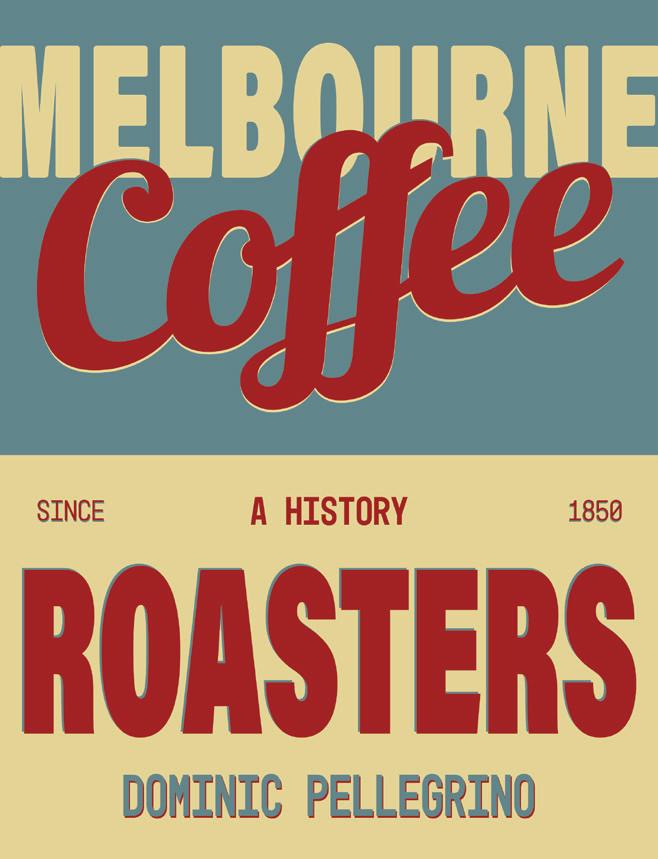
Melbourne Co ee Roasters: A History, published by Melbourne Books, can be purchased from Melbourne Books or bookstores.
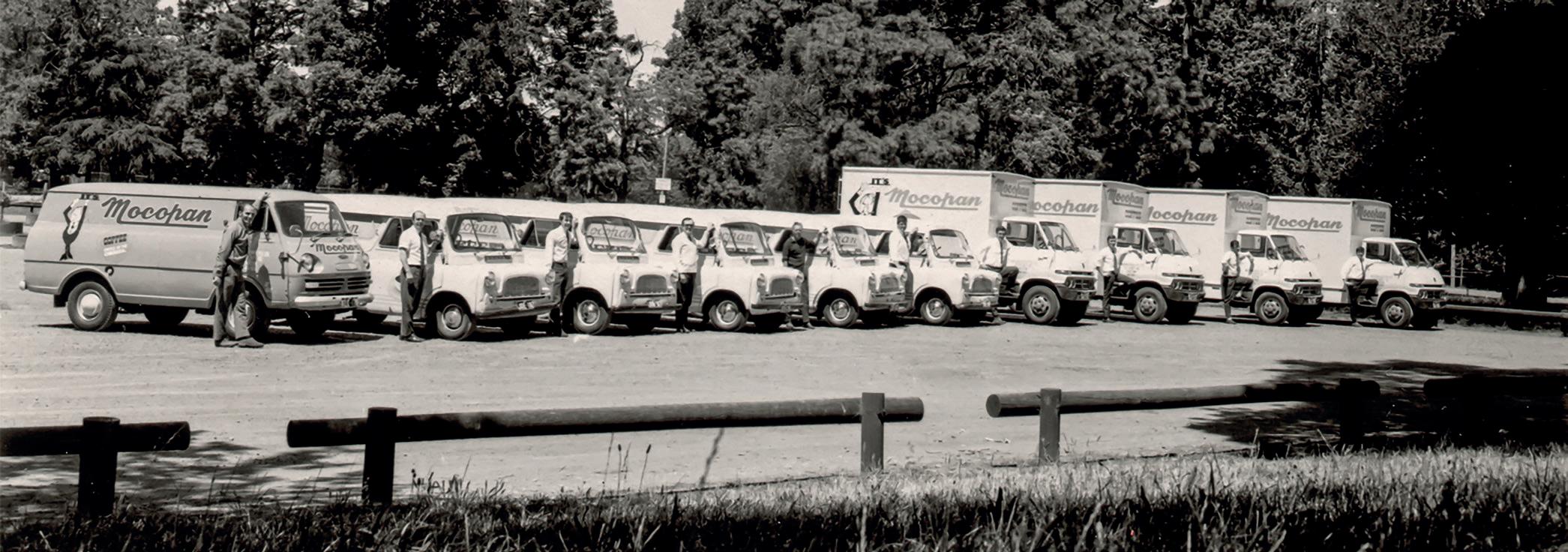
A fleet of Mocopan vans and trucks ready to hit the Melbourne streets. Image: Melbourne Books.

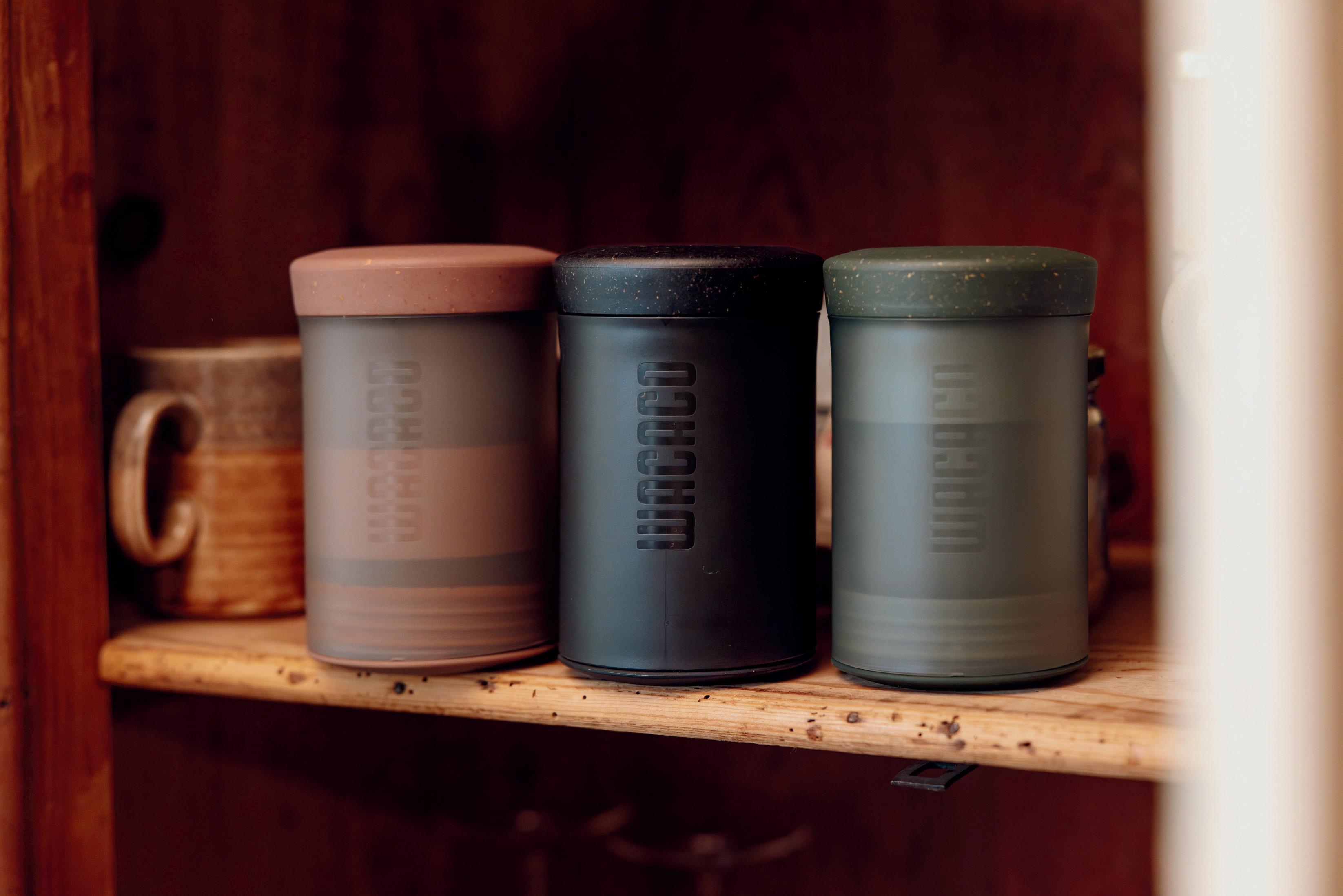
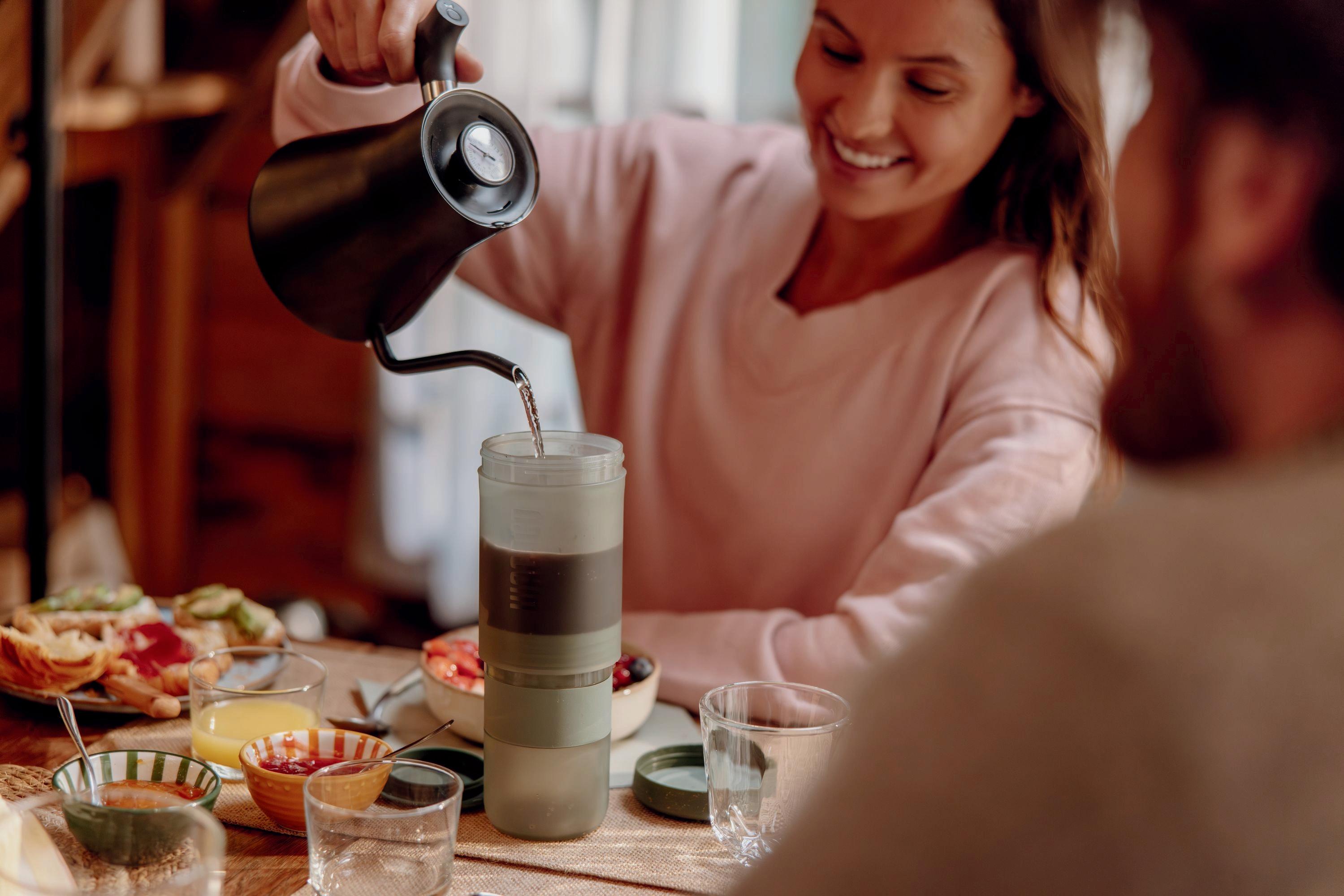
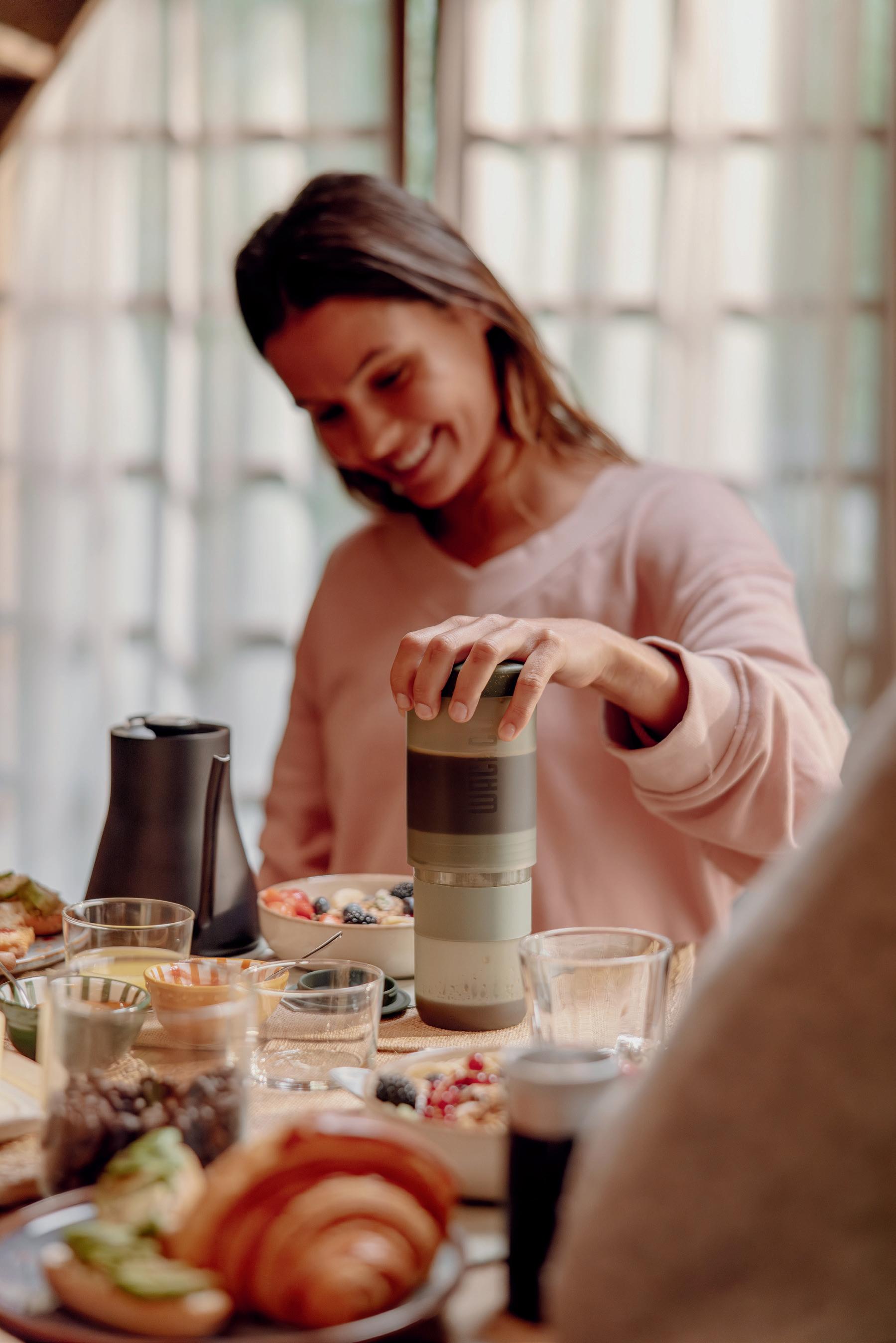
ADD COFFEE. ADD HOT WATER. WAIT A MOMENT. PRESS.

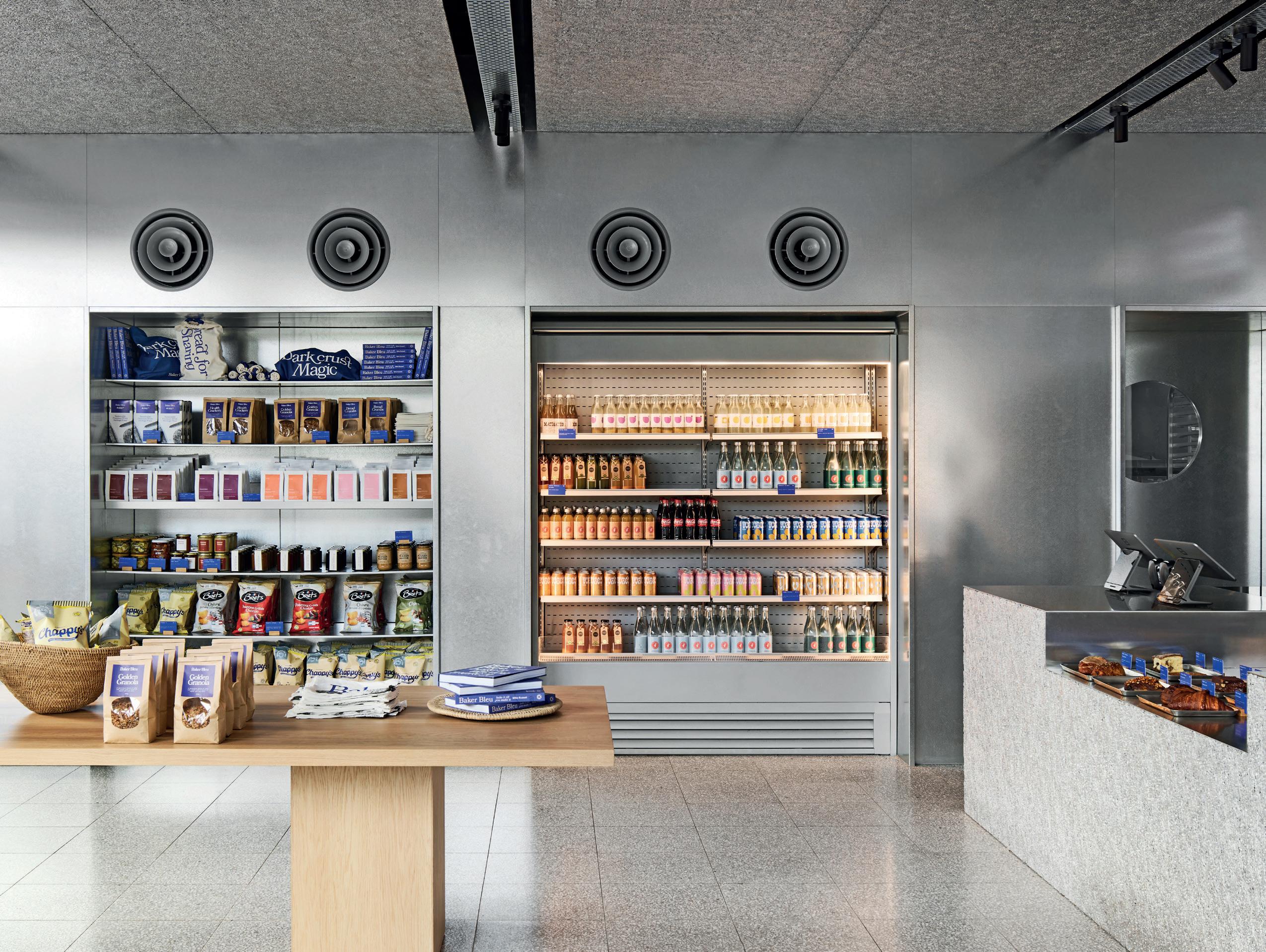
From workflow efficiency to brand storytelling, architectural design is playing an increasingly important role in how cafés operate and engage customers.
eyond the menu, the look and feel of Australia’s café scene is becoming key to how customers experience a venue, and how cafés express their identity.
From creating functional, exible spaces that cater to modern consumer needs to re ecting the evolving in uences of new cultures and ideas, intentionality is becoming a key ingredient for cafés.
For two leading voices in Australian hospitality design, considered interiors are helping cafés tell their stories and stand out in a competitive market.
Iva Foschia is the Founder of IF Architecture, the design studio behind popular Melbourne hotspots such as Standing Room Co ee in Fitzroy North and famed restaurant Attica. e studio recently received a commendation at the Australian Interior Design Awards 2026 for sourdough bakery chain Baker Bleu’s Cremorne location.
Iva tells BeanScene that Australians are
known across the world for their breakfast and co ee culture, something that naturally gets translated into the design of venues.
“It’s a very approachable, casual aesthetic that you don’t realise is there until you go and see other places, and then realise how special it is,” she says.
“Young and fresh voices are bringing new ideas and cultures to cafés – such as the di erent types of savoury breakfasts. ings like this are really exciting and another way for our café culture to evolve.”
She also notes the cyclical nature of design, echoing changing trends in other creative practices.
“ ings like fashion and interior design trends keep coming back around. It’s maybe even a re ection of what’s going on around us in the world, but for designers this is leading to current trends we’re seeing such as metal nishes, technological aspects, and even sustainability,” she says.
e process of working with hospitality venues is always case by case. Iva’s conceptual process includes a detailed brie ng, then a
concept phase in which notes are distilled into a plan and 3D views.
She says the perspective of a designer can be valuable for a new café owner, especially compared to a business with multiple venues and an established business model.
“We don’t just talk about the operational, we also talk about the big picture – conceptual ideas to give the venue integrity and ensure it’s representative of the owner and their vision for the brand.”
Within these considerations is also the rise of the ‘third space’. Cafés are becoming increasingly multipurpose as gathering places and workspaces, with design leaning even further into functionality.
“Elements such as electrical sockets in banquette seating make a space more exible and easier to use, and that’s becoming the norm,” says Iva.
She also notes patrons are seeking warmth, comfort, and a sense of home. In the world of interiors, this translates to so er materials,
varied seating arrangements, and a greater diversity of spaces, rather than a “very regimented” table-and-chairs layout.
“I think designers understand it’s more approachable and friendly and feels like you can dwell in a space for longer because you can move around. Each time you go there you can have a di erent experience,” she says.
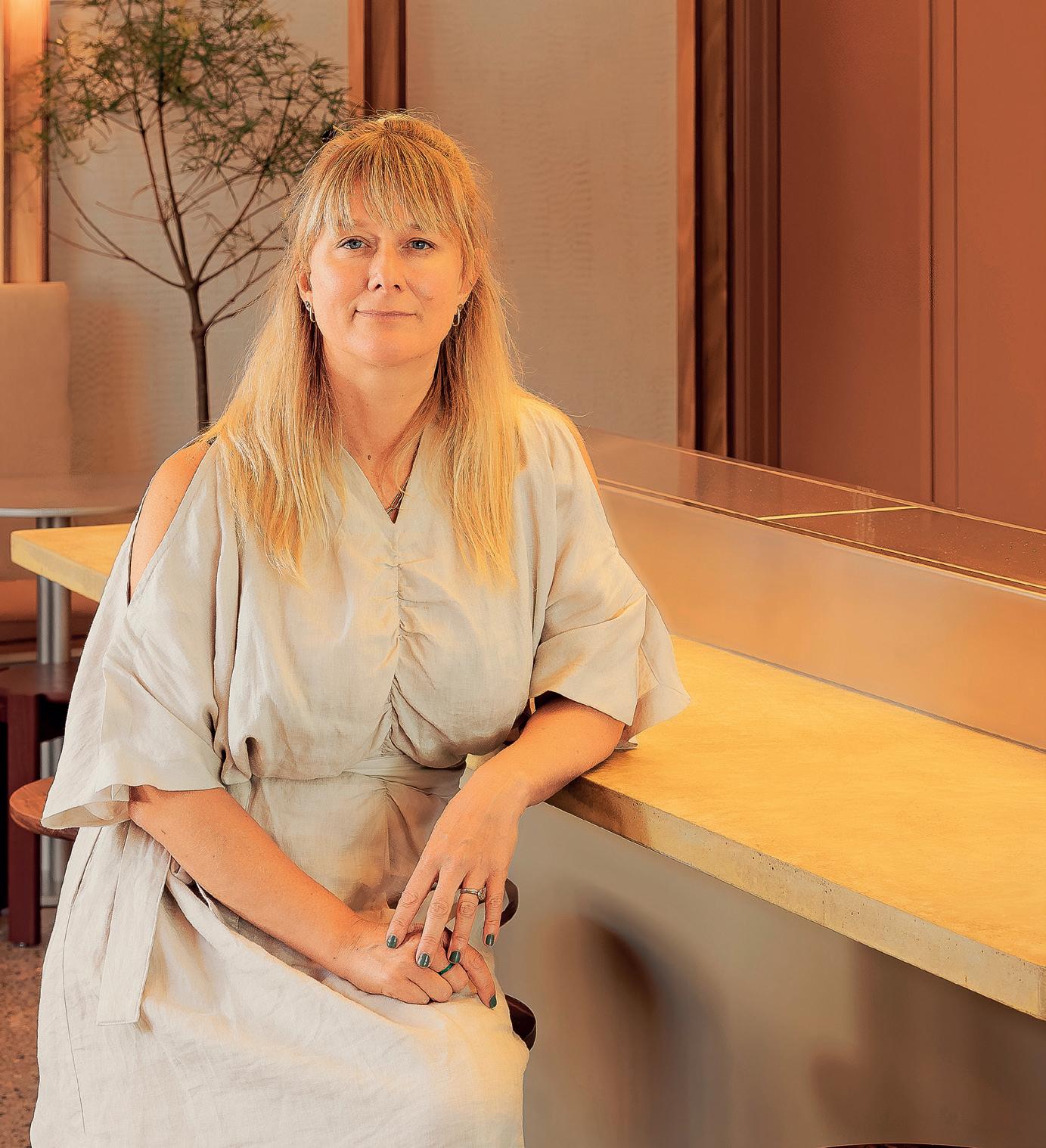
For Foolscap Founder and Principal Adèle Winteridge, in 17 years of practice she’s observed more people spending time in cafés as a space to socialise.
“I think they’ve almost taken over pubs as a place to socialise and commute. Pubs are places of release, and they’ve been nighttime places connected to alcohol. Co ee is more connected to the daytime, productivity, and wellness,” she says.
“I do see more of these third spaces connected to coworking or wellness spaces, or mixed-use precincts. I think co ee is the ultimate convener – it brings people together, people of di erent demographics, religions, and ages.”
Alongside changing design, a singular identity takes shape. To describe the current Australian café scene, Iva uses two key words: “sophisticated and intelligent”.
“I think Australians are very savvy, particularly those who follow certain operators. ey are very aware, so in that way, it’s a very sophisticated landscape and patrons expect a high standard,” she says. “ at aspect has evolved the look and feel,
the menus, and even the food and co ee o ering to a really high level.”
While Adèle is not convinced there’s a universal Australian café aesthetic, she notes a growing interest in features such as brew taps at point-of-sale stations and carefully considered customer and sta ow.
Global in uences are also shaping Australian design elements, with Adèle pointing to Japanese-style bars inspiring popular pourover stations.
“I think we associate co ee with provenance, with where it comes from, where it’s grown, how it’s grown – it’s a natural product. We do try to relate it to more natural materials, but I don’t think there’s a dominant approach,” she says.
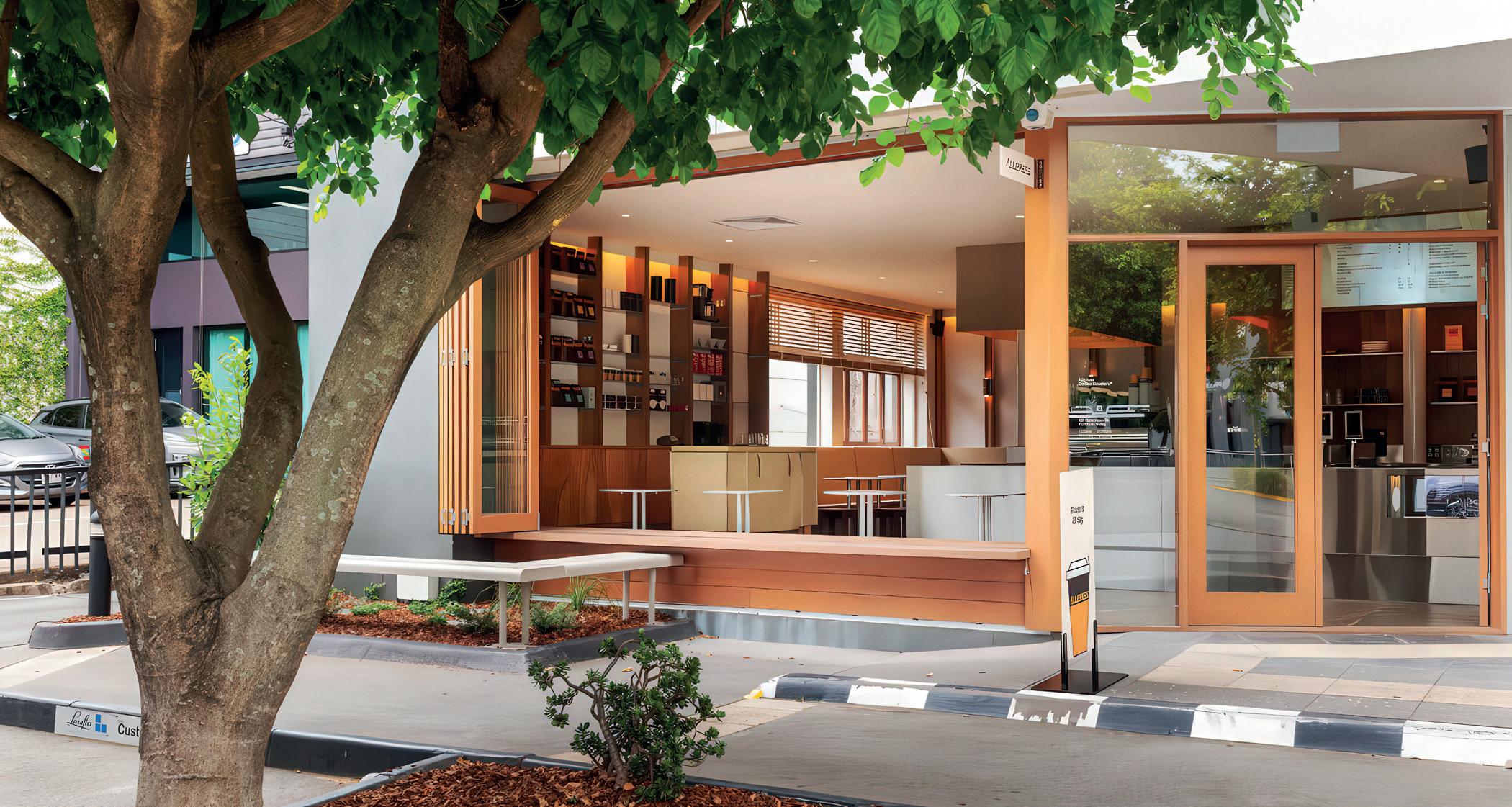
Foolscap already had a close relationship with Allpress Espresso before designing its new Fortitude Valley café.
Adèle says Foolscap undertook extensive research and development with the company – which was also rebranding at the time –
“It’s a very sophisticated landscape and patrons expect a high standard.”
Iva
Foschia FOUNDER, IF ARCHITECTURE
with a focus on interweaving a new brand identity into the physical embodiment of the space.
“Understanding who Allpress is was one of the departure points for the design – it was very much about nding the site and connecting with the neighbourhood,” she says. is process also included ‘neighbourhood mapping’ – also known as ‘Country mapping’ – to understand the Indigenous Country on which the café sits. e nal design draws from the classic Queenslander architectural style, embracing the indoor-outdoor living that de nes the state.
“We wanted visibility as much as possible from James Street, but it is a very pedestrianised precinct, so there needed to be options for standing to allow for faster service, as well as space to display the retail elements as much as possible,” says Adèle.
“How do we display the co ee bags in a way that you might come in and buy some co ee for home? ose are the pieces that made their way into the functional layout.”
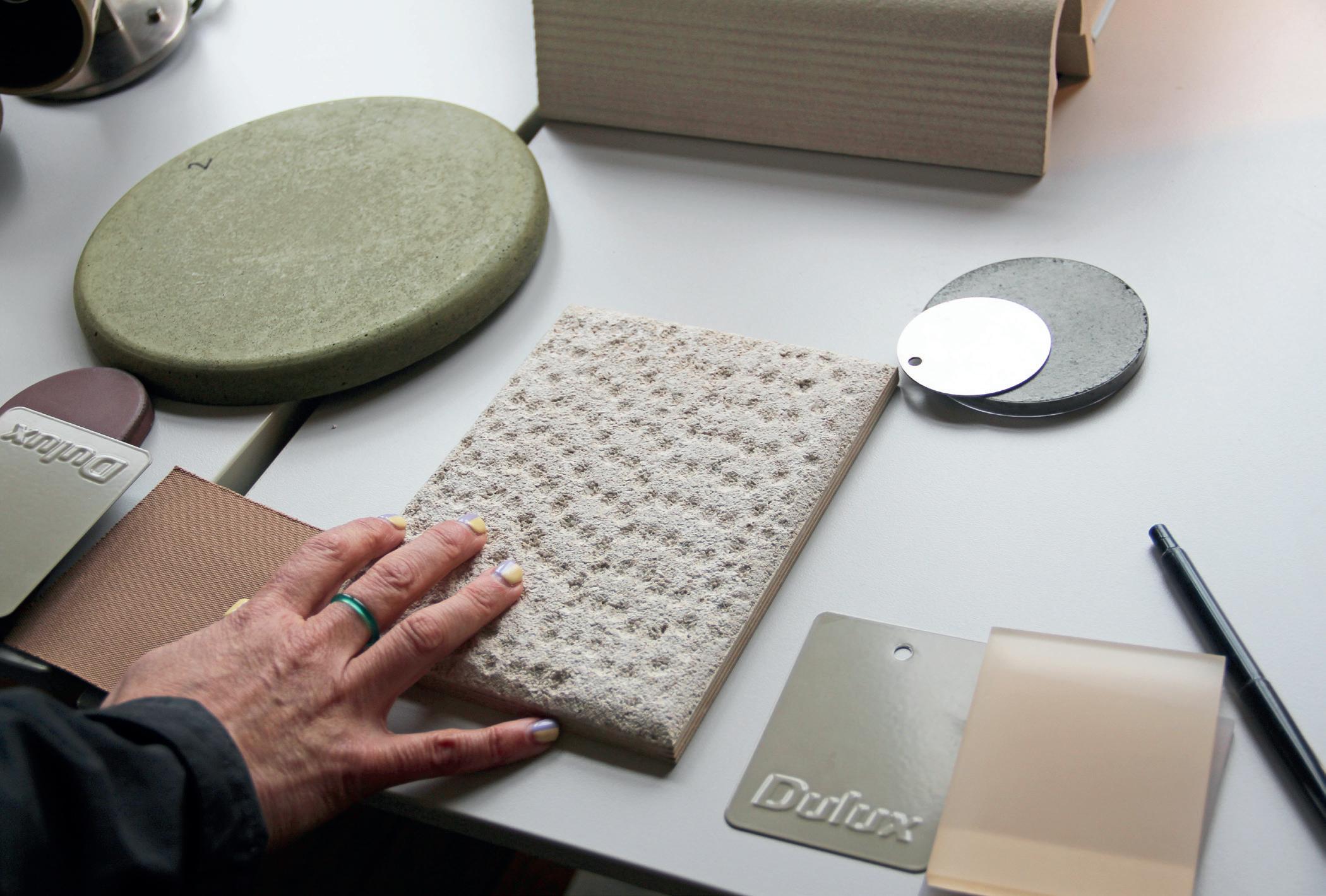
Adèle says the way Foolscap approaches design is “very much about the local”, with the Fortitude Valley site using materials such as stainless steel and canvas, which have strong connections to Australian utility and industry.
One of those materials is recycled co ee cha . e studio worked with renderer Mineral Fox to create a “ rst of its kind” application, collecting Allpress’ used co ee cha and incorporating it into wall rendering,
highlighting both the lifecycle of the building and a commitment to sustainability.
“It’s connected to the Allpress brand, but also asks ‘how can we start to work with local people who might be drinking their co ee every day in that neighbourhood and create stories that connect back?’,” says Adèle.
For café owners considering the design aspects of their venue, Iva emphasises trends can come and go, making a clear point-ofview a valuable asset.
“ e Australian café customer is very sophisticated and literate, so if you’re looking for longevity in your business – which I think everyone is – a designer can add a lot of value, so keep that in mind,” she says.
“Don’t be afraid of having your own point of view, because trends only go so far and they peter out … you don’t want to be stuck with something in a t-out, you want it to last. You don’t want to say, ‘Oh, that was so 2010’.
“Some of those amazing venues in Melbourne, like the City Wine Shop or Marion, have a sense of self. ey know who they are and I think that makes it last.”
On the nancial side, Adèle highlights the importance of budgets, which can get chewed up if you select the wrong location.
“It’s the things you don’t know until you get to them – for instance, accessibility, which is part of the National Construction Code (NCC). It all has to be considered, because yes, something looks gorgeous, but it’s also about functionality,” she says.
“You need three-phase power to run a co ee machine, and if you can’t run a co ee machine that can cost $15,000. at could be your t out budget gone.”
Adèle emphasises a holistic view, focusing on the importance of ow to front and back of
house, while keeping sta experience in mind.
“I know that’s counterintuitive, but it’s got to ow. Is it a fast-pace location, and how do we design for that?” she says.
“I also think about the senses, and the emphasis on smell, touch, sound, and taste.”
As the role of cafés continues to expand
beyond the cup, design is helping de ne how venues operate, communicate their brand, and engage with their communities. For owners, thoughtful design can bring together functionality, identity, and customer experience in a way that supports longterm success.
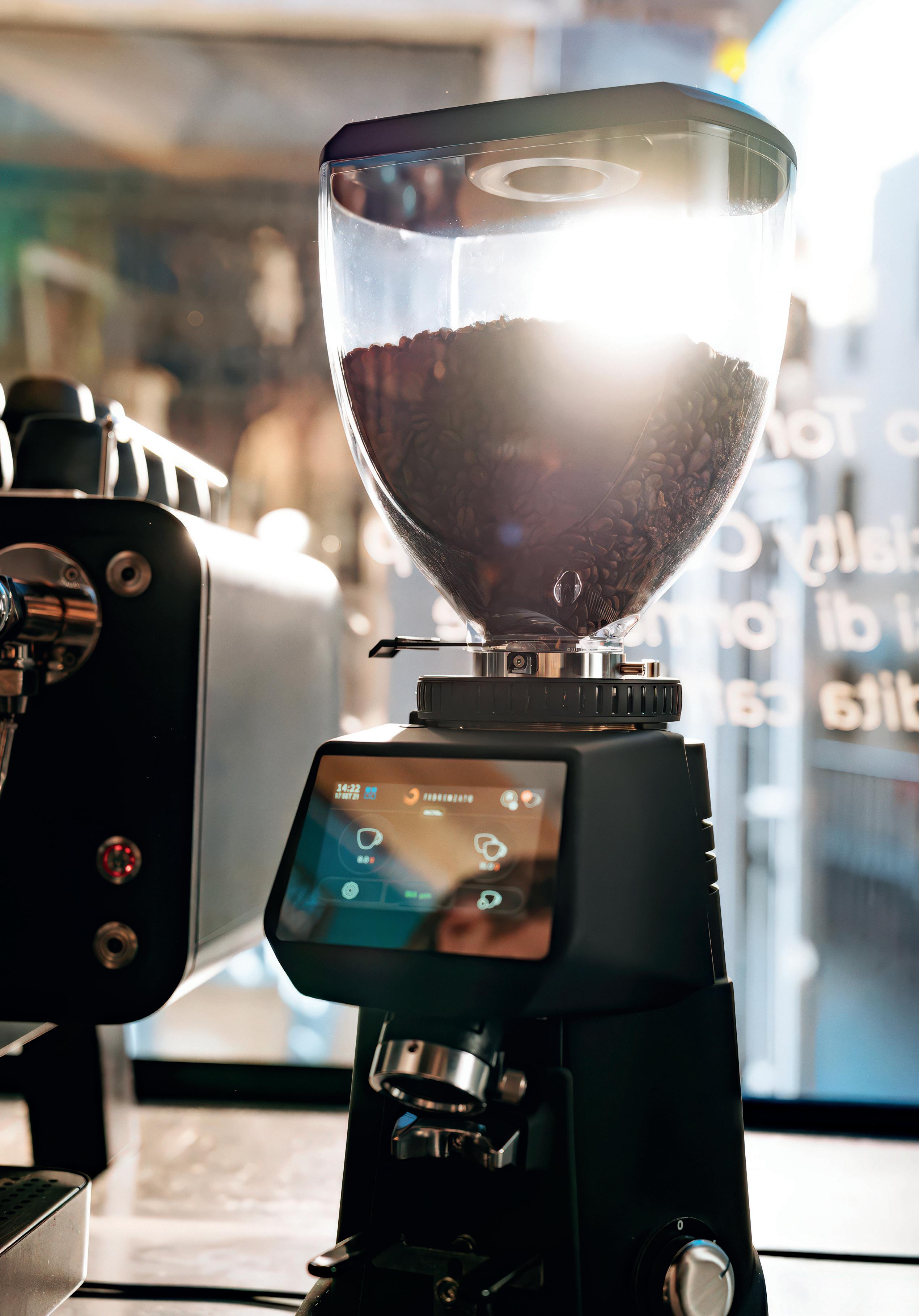
The Fiorenzato Adapt has arrived in Australia, and Coffee Machine Technologies believes it has the potential to make lives easier for café owners and roasters around the country.
It takes a lot for a piece of equipment to pique the interest of the team at Co ee Machine Technologies (CMT). As one of Australia’s leading suppliers and importers of co ee machines and equipment, the company sees just about every major launch, innovation, and trend emerging from the global co ee industry.
So, when CMT describes the Fiorenzato Adapt grinder as a standout product, it’s worth paying attention.
“It feels like the future,” says CMT General Manager Gianluca Colangeli. “ ere hasn’t been a product launched in Australia – or even globally – where you can genuinely say that until now.
“ ere’s a real gravitational pull to it. People already want it in their cafés, roasters already want it in their accounts, because they know once it’s there, their co ee is going to be perfect every day.”
A natural evolution
To learn what’s so special about the Adapt, you need to rst go back to the launch of the Fiorenzato All Ground Sense grinder in 2021.
“ at was an overnight success,” says Gianluca. “It was Fiorenzato’s new highperformance grinder and it was the start of that kind of technology in the home market, or in the smaller grinder market.
“We couldn’t keep up with stock levels – no matter how many we ordered in; they just kept selling. Still, to this day, four years later, we’ve got the same problem, which has been excellent and demonstrates its quality.”
e success of the All Ground Sense led Fiorenzato to then unveil the commercial Sense range – which included an integrated scale built into the fork to enable grind-byweight grinding – in 2023.
Two years a er the All Ground Sense was launched, it launched the same technology in its commercial grinder, which came with either 64- or 83-millimetre burrs.
“Again, same thing: overnight success, super accurate, super reliable, and just bulletproof. Same problem: we can’t keep up with the stock levels because it’s so popular, so we keep ordering and we just keep selling,” says Gianluca.
e Adapt is the natural evolution of the commercial Sense range , with the same reliability as its predecessor but with several critical adaptations to the modern co ee landscape.
“Stripped back, the Fiorenzato Adapt is now essentially a Sense grinder, but with connectivity to any co ee machine in the world,” says Gianluca.
It’s that connectivity, named Ada – a
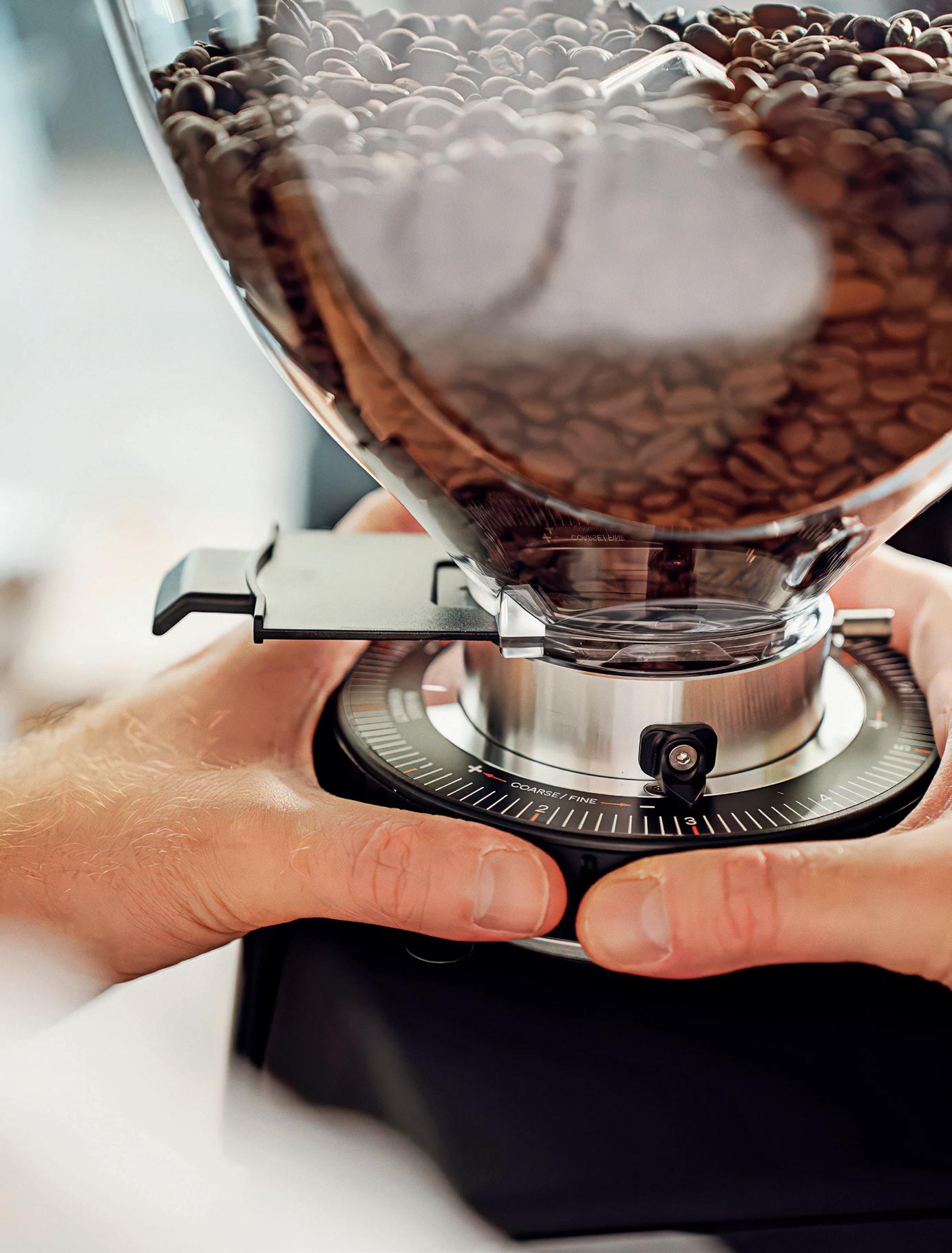
Fiorenzato’s new collar will come as standard on all Adapt grinders.
homage to 19th-century mathematician
Ada Lovelace – that is the Adapt’s key di erentiator.
e grinder is machine-agnostic thanks to its ow meter connection. is wired
“In what I’d call a perfect café; you definitely need one of these grinders.”
Gianluca Colangeli GENERAL MANAGER, COFFEE MACHINE TECHNOLOGIES
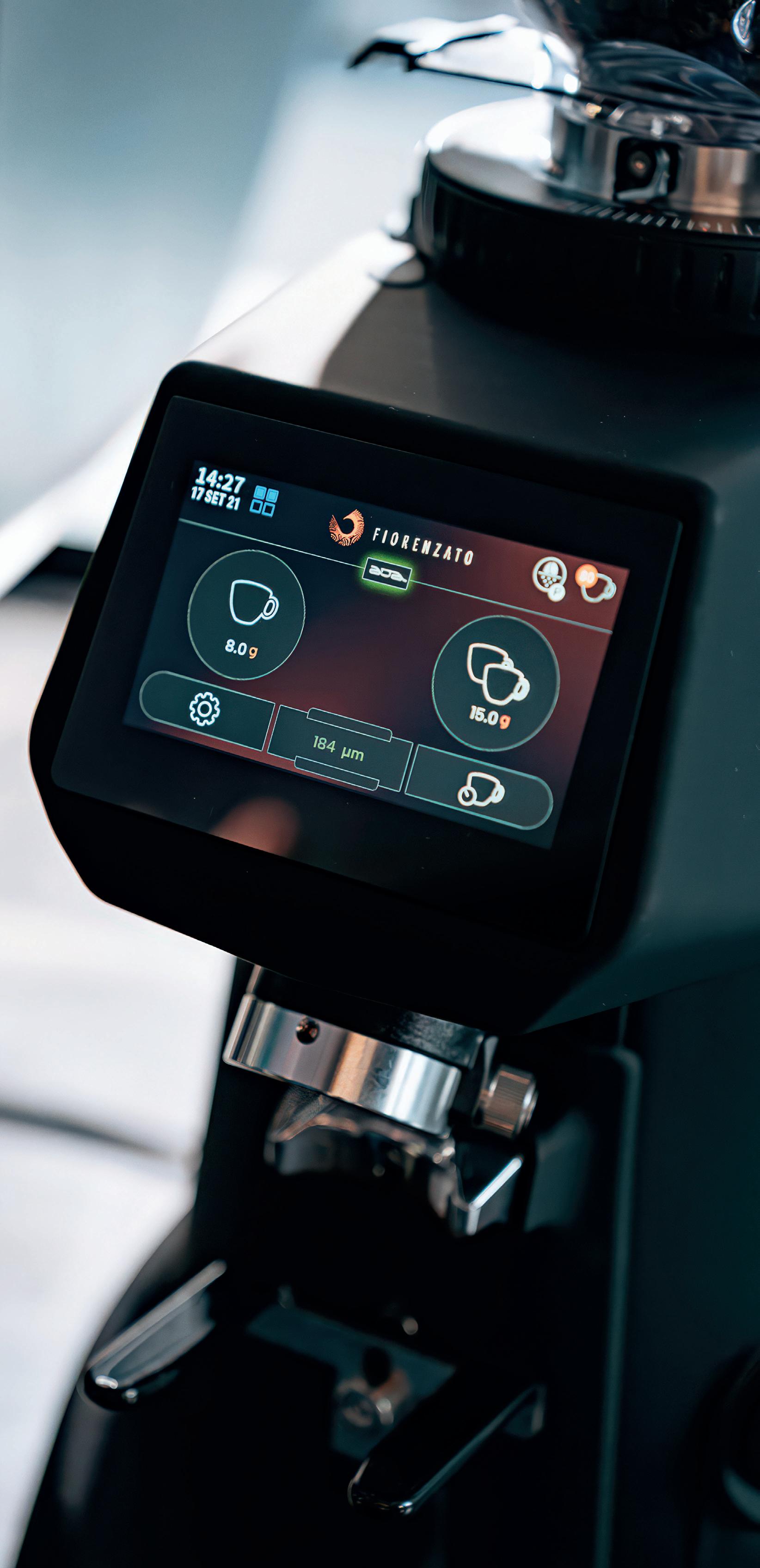
connection enables users to save recipes through guided procedures and then o ers intelligent feedback if the machine falls out of recipe.
is feedback mechanism comes into play a er three extractions. If there are three that don’t exactly match the recipe, a pop-up appears on the screen prompting the barista to alter the grind. It does this by tracking ambient temperature, humidity, and burr distance, covering three critical variables that can impact extraction.
“ is assists any barista or café owner in making sure they’re always in recipe with their co ee,” says Gianluca.
“Essentially, the co ee machine and grinder are set up like any normal grinder, and then the user presses ‘save recipe’. at helps the
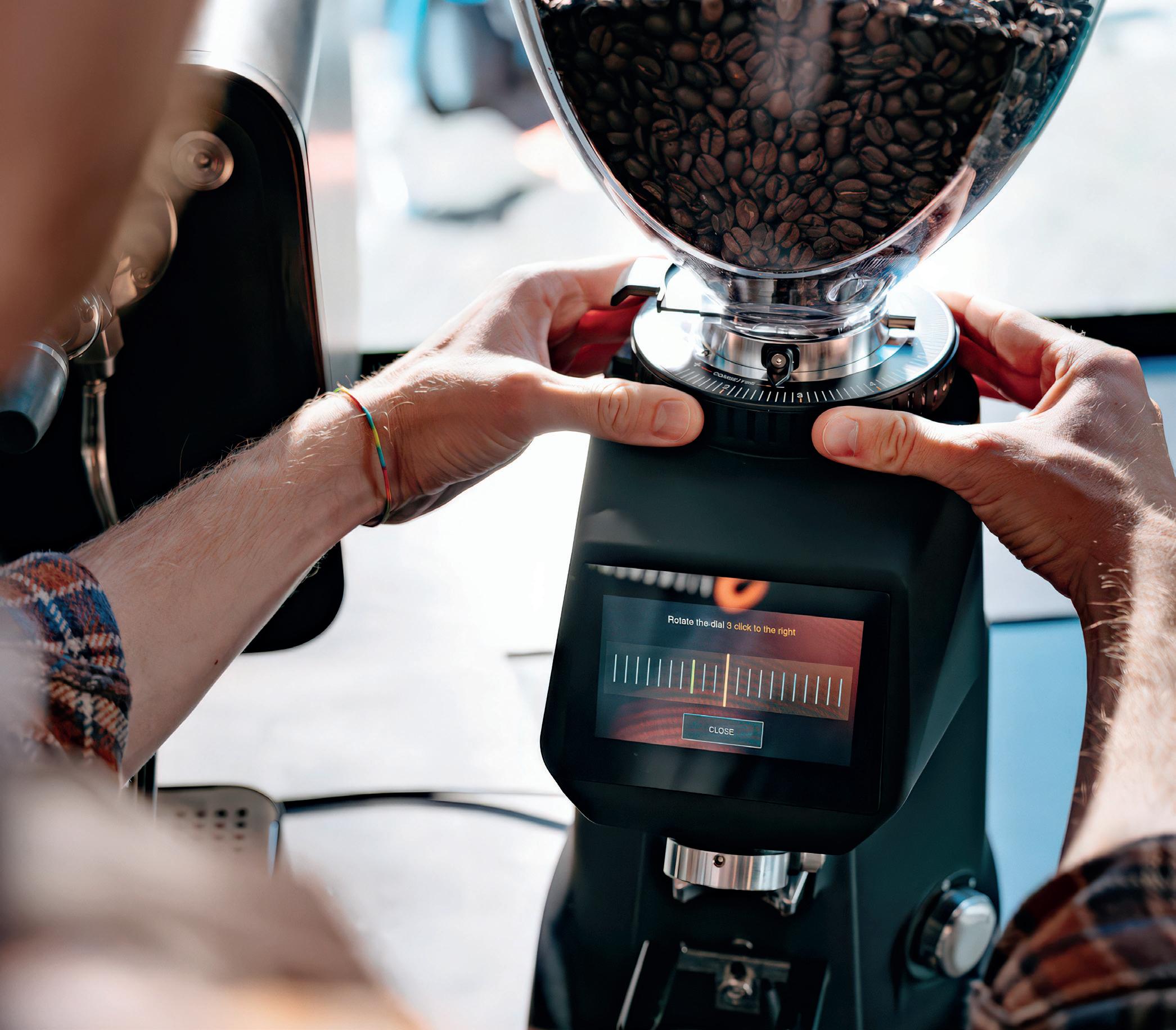
barista through the day to maintain good co ee being extracted from the machine.”
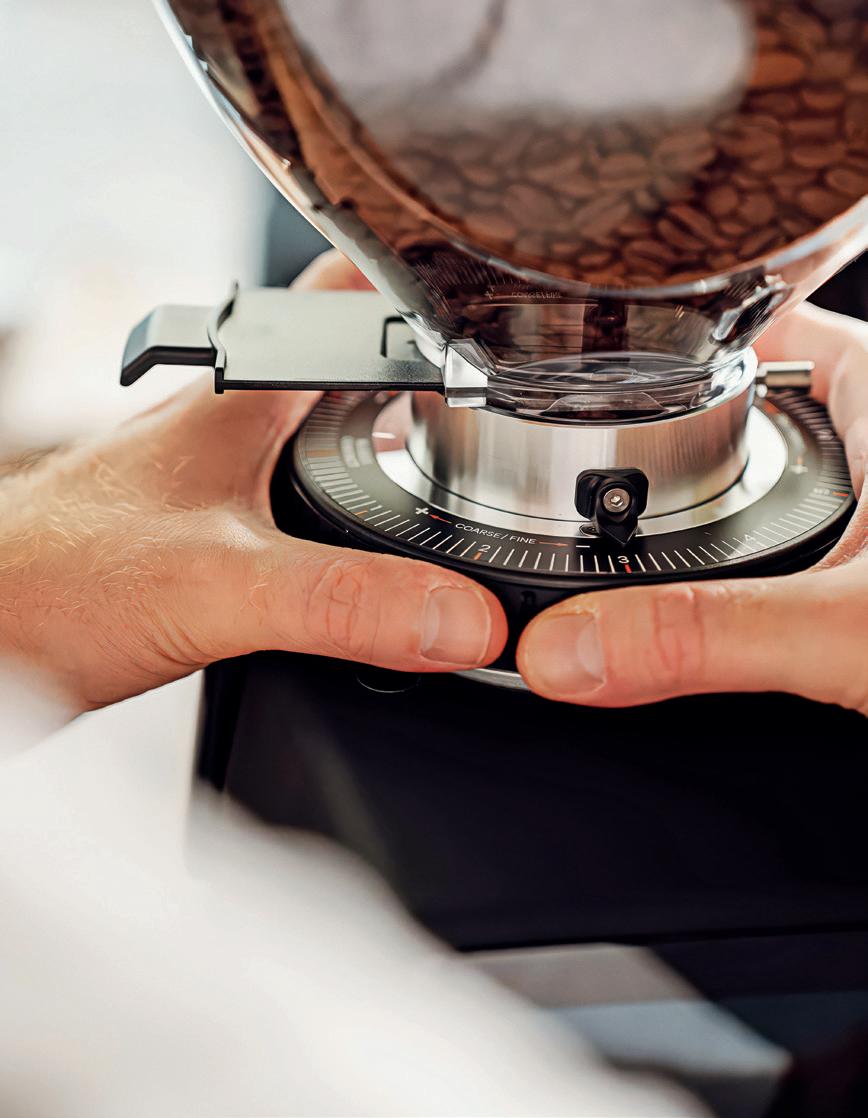
In addition to the new connectivity, Gianluca says the updated collar with the Adapt is a signi cant evolution from Fiorenzatio, tactilely helping baristas reset the recipe when needed.
“It’s a stepped collar, like the All Ground, with notches in between, and then a locking release pin, which is like a pen when you click it on and o ,” says Gianluca.
“When the Adapt tells you to adjust your grind, an equilibrium comes up on screen to let you know where you are, so when you’re adjusting it’s really easy to look and tell when you’re perfectly back in recipe. at’s coming standard on every grinder now.
“Even though it’s stepped, it allows a ner adjustment between notches, so you can really dial in your espresso to the second. It’s natural because it just pops up on the screen and prompts the user to adjust it then and there, rather than the barista having to think about making an adjustment.”
e burrs are also the same sizes as the Sense, coming in 64- and 83-millimetre options, but only coming in the Dark-T variant, which is the evolution of the Fiorenzato’s classic M340 burrs.
Dark-T burrs are covered in a “diamondlike” coating of titanium, aluminium, carbon, and nitrogen, and are designed to last up to ve times longer than standard burrs – up to two-and-a-half tonnes, or 2500 kilograms, according to Gianluca.
The future is now
ere are, largely, two main schools of thought when assessing where co ee is going into the future. On one hand there’s full and total automation. Push a button, pour a co ee, job done.
“Fiorenzato have laid out a map of which way the industry is going, and that’s assisting the barista.”
Gianluca Colangeli GENERAL MANAGER, COFFEE MACHINE TECHNOLOGIES
The collar’s tactile function is designed to help baristas more precisely bring the grind back in recipe.
On the other there’s the streamlining of café culture and the implementation of tools to help baristas do their jobs and make the best co ee possible.
With the Adapt, Fiorenzato is rmly in the latter camp, according to Gianluca.
“Fiorenzato has laid out a map of which way the industry is going, and that’s assisting the barista. You’ll always need a barista, people will always want a barista, now it’s about assisting them as much as we can,” he says.
“Co ee machines have been the same concept for years and years and years. Yes, they’re adding on things like telemetry to help assist the barista or the roaster, but the grinder is really where all the importance lies in making co ee.”
e stepped collar and ow meter connection are critical to this, as they still enable on-the- y adjustment of the grind to stay in recipe, but with the support of modern technology and the ability to connect to any co ee machine make or model.
“Other grinder manufacturers have tried to do this, but made their grinder only connect to one brand of machine. at’s obviously not what people want, because most people have many di erent machines. is one does it all,” says Gianluca.
“ is type of feedback mechanism has also been tried before with electronic motors which can’t be adjusted, meaning the barista can’t make the changes. at’s almost replacing the barista, in a sense, which isn’t what Fiorenzato is trying to do. So, they’ve le the collar manual.”
At the time of publishing, the Adapt has only been available in Australia for a matter of weeks, but Gianluca doesn’t think it will take much time for it to become the talk of the industry.
“In what I’d call a perfect café you de nitely need one of these grinders. e café industry has lived without them forever, but now that it’s got it, I feel like it will grasp it with both hands,” he says.
“It will be used alongside milk dispensers, steamers, and things like that – equipment that takes the pressure o the barista a little bit more – which is where the market is going.”
CMT got its hands on the rst Adapt grinders through a long-held relationship with Fiorenzato – one that’s spanned almost 15 years – and its status as the sole importer of the brand into Australia.
As two family-owned businesses linked through multiple generations of ownership, the alignment in values between the two companies is clear.
is early, hands-on experience has given CMT plenty of time to put the Adapt through its paces and test it against what’s already in market, and Gianluca says customers are already lining up to get their hands on it.
“ e feedback has been excellent,” says Gianluca.
“We had it at a couple of tradeshows, a couple of di erent customers tested it, and it does its job. It keeps the co ee running well all day without the barista having to invest signi cant time making grinder adjustments throughout, which is no small achievement.
“Most of a roaster’s time is spent running around to their cafés making sure the co ee is being poured correctly, and this has put the biggest smile on their faces because they don’t have to do that anymore.
“ ey’re super happy. Now they’ve got more time to focus on winning new customers, managing their old customers, and re ning their co ee.”
As for that long-held ‘problem’ of keeping Fiorenzato equipment in stock due to its popularity, Gianluca says CMT is preparing to wrestle with it once more – such is the hype of this new release.
“We were already feeling the impact before we even had any in the country to sell, and we’ve got them now,” says Gianluca.
“We de nitely foresee having the same problem with stock as with the All Ground Sense and Sense commercial range. It’s a good problem to have. Actually, it’s a great problem to have – we love it.”

With the rise of work from home and continuing cost-of-living constraints, where does office coffee stand today?
Everyone has heard of the o ce ‘water cooler conversation’. It’s become so entrenched in corporate lingo that it has a well-known de nition, yet in most o ces today the old water cooler has been replaced by a co ee machine.
However, while o ces were once a thriving hub of activity with employees in ve days a week, in recent years the nature of o ce work has changed signi cantly. Advances in technology, changes in practices and policy, and, of course, the lingering e ects of the pandemic have le it almost unrecognisable from the turn of the decade.
As a result, is this area in which roasters were once battling for supremacy lagging behind the rest of the co ee world? Or is the model changing to become more specialised?
A roaster’s perspective
ere are few roasters in Australia that align more with modern co ee consumption trends than Inglewood Co ee Roasters. It has one of
the country’s largest home co ee subscription networks and an intense e-commerce focus, with a strong wholesale network to boot.
Founded in 2017 by Julien Moussi and Cory Slater, Inglewood has travelled a path where o ces have become less of a focus for the brand. However, according to Cory, this is not the case for everyone.
“We have our wholesale space, which is incredibly important, but a lot of our business comes from home users,” he says.
“I’ve spoken to people in the industry who say their biggest growth market is o ces, though, but I think most roasters are treating o ces like small wholesale accounts and likely not doing equipment for a lot of them.” is rise of co ee at home and the shi in the way people are consuming co ee is something Inglewood has capitalised on.
e roastery maintains strong relationships with di erent o ces and businesses, these partnerships simply look di erent to how they might have even a few years ago.
“A lot of people are working from home, and it’s a perfect storm for a culture shi . I don’t think anyone came in with a crystal ball. We thought COVID would come and go, and everything would go back to normal. It just didn’t,” says Cory.
“We know a lot of o ces are either hybrid or fully working from home, so we’re doing a lot with employee bene t schemes. is means we can leverage our relationships with the o ces and o er their employees the same discount at home.
“ at’s our version of o ce subscriptions. We don’t have to deal with orders or chasing up bills. If employees are ordering co ee for their house, we can have our own thing going on with them.”
is altered approach leans into where Inglewood has found so much of its success in the past decade.
“We really went hard at online retail in 2021. It’s extremely di cult to break into, because if you go on sale and you’re not used
to sending out 500 packages a week, your shipping times will be seven or eight days,” says Cory.
It’s this subscription model Inglewood is applying to the o ce clients it still services.
“At this stage, we essentially treat o ce co ee like it’s a subscription. If you’re not o ering equipment, it’s basically a group home subscription – similar, but more manageable,” says Cory.
“For roasteries that aren’t doing e-commerce, or aren’t all-in on e-commerce, they’re nding growth within the o ce space. For us, the growth has been about embracing that home consumption shi and adapting to where people drink their co ee now.
“When Inglewood was smaller, we took those full-service o ce opportunities all day, every day. We wouldn’t make a lot of money through them, but it gave us brand exposure. It has a lot to do with where you’re at with your business and what you consider to be worth the squeeze.”
While Cory says Inglewood elected to shi away from the equipment supplying and servicing part of o ce co ee, on the other side of the coin are businesses that have fully leaned into a ‘co ee as a service’ model. Businesses like Sprout Co ee.
Melbourne-based Sprout specialises in providing o ce co ee solutions and has grown to supply about 450 clients around Australia with more than 1000 machines. It also supplies things like co ee, tea, hot chocolate, and more recently, vending solutions.
“It might be an o ce of 1000 people over 10 oors, and we’ll put 10 machines across those oors. It might be an o ce of 50 people just looking for a basic solution. It might be a big warehouse that needs multiple vending machines. Our model is to source the products that best t our clients’ needs,” says Co-Founder Ed Sladen.
“We’re not a machine manufacturer and we’re not a distributor for any single overseas product. We work with distributors around Australia. We look at our clients’ needs, what they want, and who has the product that ts, then we purchase for them. We’re also not a roaster.
As part of its proposition, Sprout provides the equipment to customers through a rent or lease arrangement, which then also purchase the consumables from Sprout.
“We’re a service business. We provide a service to o ces and we leverage the expertise of co ee roasters and machine distributors to bring the solution together for o ces – and to do it in a sustainable way.”
Ed says that’s where the key to o ce co ee lies, not necessarily viewing yourself as a co ee business but as a service business.
“Service, quality, and sustainability are what bring clients in. In the o ce market, the rst thing people do when they walk into the o ce is put their computer down – and then they go to the co ee machine,” he says.
“If that machine’s not working or there’s an issue, our phones start ringing, o en as early as 7am. Our guys are on the road early so they can pick up if something’s going on and rectify it before sta arrive.
“ ey can communicate with their sta ‘it’s being xed, they’ll be here soon’. at provides comfort and ease for the people managing o ces, knowing their supplier and partner is giving really good service.”
Like many businesses around the country, especially in Victoria, Sprout had to navigate the pandemic and its immediate a ere ects, with Ed saying the winning of several hospital and other essential services contracts helped keep Sprout moving.
Now, with the Victorian government legislating the right to work from home from 1 September 2026, the o ce co ee environment has changed again.
Ed believes the market will adapt again in due time.
“For business culture, it’s important people
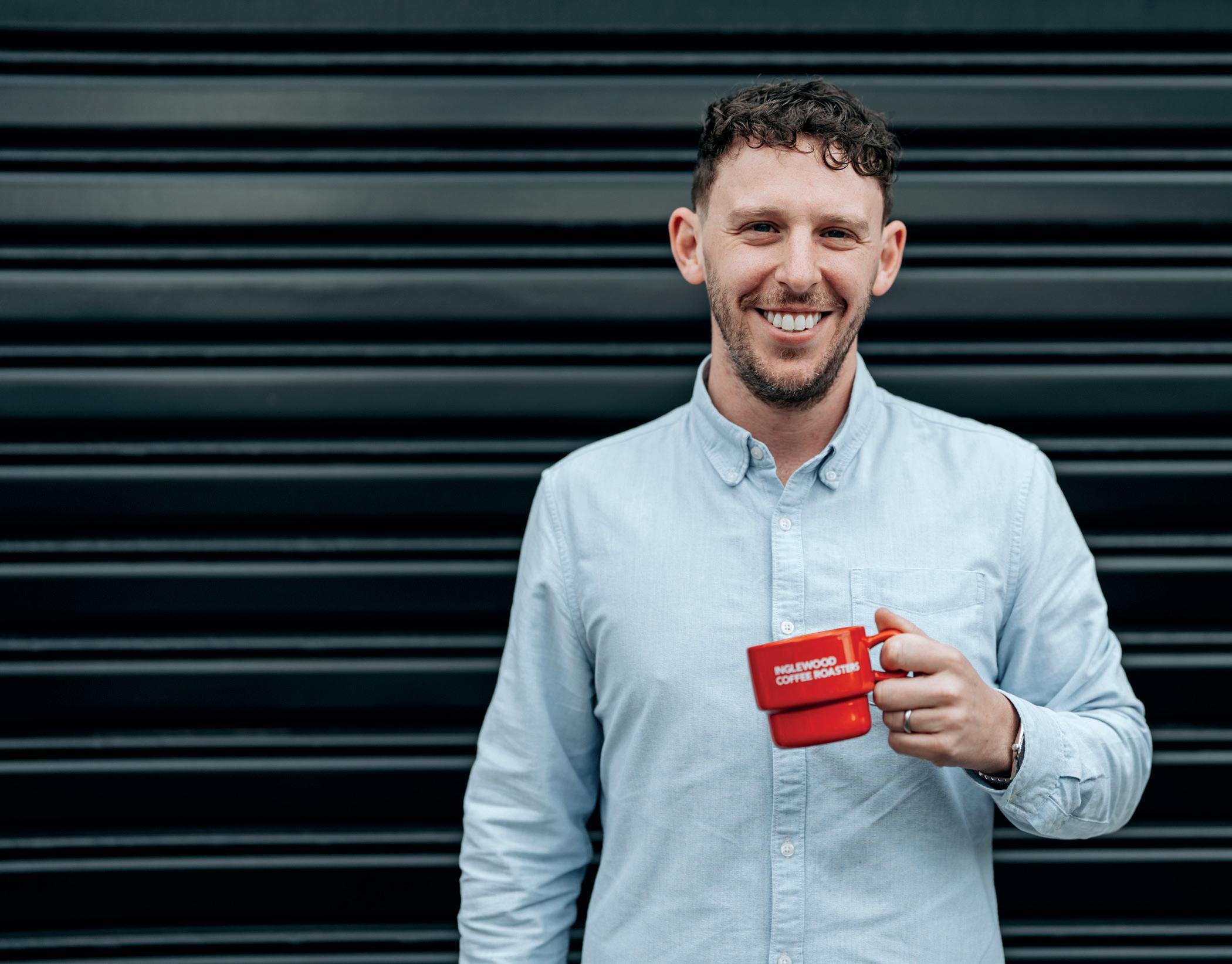
“A lot of people are working from home, and it’s a perfect storm for a culture shift.”
Cory Slater COFOUNDER, INGLEWOOD COFFEE ROASTERS
still come into the o ce,” he says. “Coming out of COVID, we were asking: what happens now, what does it look like? We’ve noticed a gradual increase, and my personal view is that we’ve now reached the new norm.
“It’s not 100 per cent, ve days a week like it was, but there’s still volume. If you’ve got quality service and product, people will consume it in the o ce. Whether it’s 70 or 80 per cent, I don’t know. But you can see it on the roads: Mondays and Fridays are quieter; Tuesdays, Wednesdays, and ursdays are busier. O ces o en have more people in on those midweek days.
“Some o ces mandate sta must come in two or three days a week. at gives us consistency in ordering. We know ‘client A’ will have a full o ce on ursday and roughly 80 per cent occupancy on Tuesday, and volumes will be there on those days.”
Much like the rest of the co ee industry though, there are other changing demands within what Ed and Sprout are seeing in o ces.
“One big recent shi has been the increase in demand for alternative milks. O ces want machines with dual milk – so you can press a button and get a latte with soy, almond, oat, or full cream. Clients also want things such as chai,” he says.
“In the past six months or so, we’ve seen demand for dual grinders and two di erent co ee options for sta to choose from. at
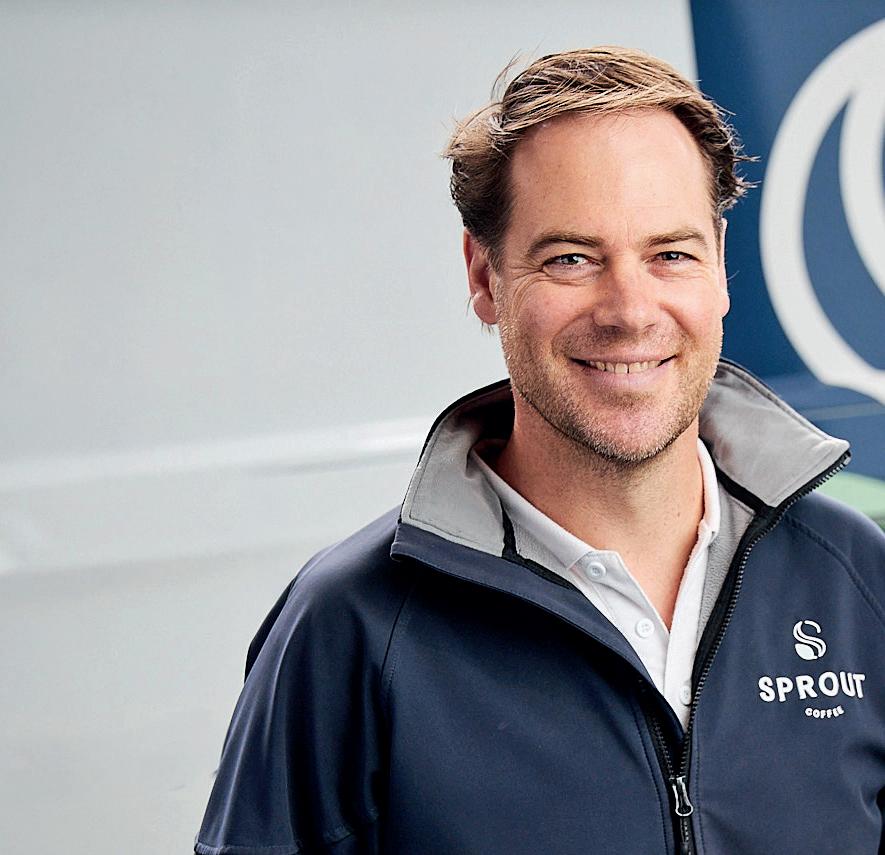
“In the office market, the first thing people do when they walk into the office is put their computer down – and then they go to the coffee machine.”
Ed Sladen COFOUNDER, SPROUT COFFEE
allows us to rotate blends, giving variety and a bit of excitement in the o ce.
“Co ee is something people like to talk about: which café they go to, which beans they buy, how they brew at home. So, when you
bring that into the o ce, people are interested.
“It is not something an o ce can easily add and then take away. Once sta have it, you can’t just remove it without a revolt. We like that model: we invest in service.”






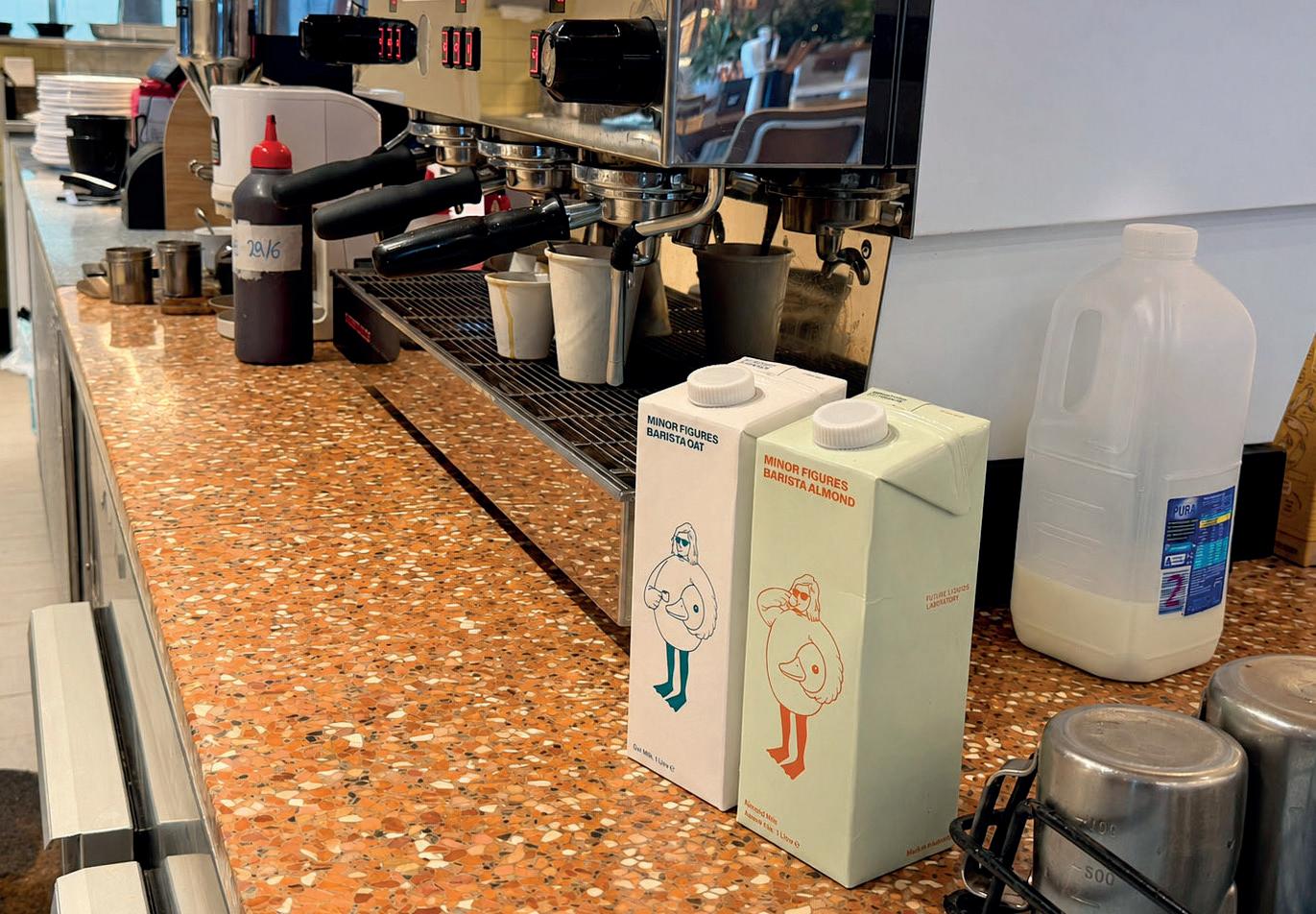
Alternative milk brand Minor Figures has announced a major partnership coup.
It is a truth universally acknowledged that Australians love their sport and love their co ee.
Now, alternative milk brand Minor Figures has announced a partnership with one of the most famous modern coliseums – the Melbourne Cricket Ground (MCG) –becoming its preferred oat and almond milk supplier.
For Henry Catts, Minor Figures’ General Manager APAC, being available at the MCG is one of the best platforms in Australia for a brand to showcase its products.
“ e MCG is one of the greatest sporting venues in the world. People ock from all corners of the globe to attend the range of events held at the venue. ere aren’t too many locations attended by literally millions of people every year,” he says.
“Iconically Australian but world renowned, this correlates well with what we are building with Minor Figures. We are a brand made in regional Victoria, but with global recognition existing in more than 35 countries.”
Lewis O’Flynn, Executive Manager Sponsorship and Sales at the MCC, says the partnership kicked o when Minor Figures reached out in 2025.
“ e MCG is one of the most iconic
stadiums in the world, and we are proud to use our platform to showcase Australianmade products to our visitors,” he says.
“ is type of partnership o ers brands genuine visibility to a diverse, engaged audience spanning Australia and beyond.”
Lewis notes that when selecting the MCG’s food and beverage suppliers, the venue is obliged to provide a product range that appeals to all attendees, whether they are local, interstate, or international.
“ at means considering variety, quality, and the familiarity of trusted brands,” he says.
“Where possible, we prefer to showcase Victorian suppliers that meet these requirements, giving visitors an authentic local experience. We’re pleased Minor Figures ts that brief.”
With alternative milk once largely associated with specialty co ee shops, its appearance in one of the country’s busiest large-volume venues signals changing consumer habits and expectations around beverage choice.
“ e demand for quality continues to grow. We’re all paying more for everything these days, and when what we pay for something increases, so do our expectations,” says Henry.
“At Minor Figures we don’t settle for ‘good’. We are constantly benchmarking and looking for improvements to ensure the products we put into the market deliver on quality.”
Henry notes that oat and almond milks are “as popular as ever” in Australia. Until 2026, Minor Figures only sold oat milk: the company debuted its Barista Almond in March 2026 a er seeing exponential demand for almond milks in the local market.
“Since launching our Barista Almond product at Melbourne International Co ee Expo (MICE) this year, the demand for the product has been overwhelming. We couldn’t be happier with the product, and it appears cafés and co ee lovers agree,” he says.
By nature, those Australian consumers might also have a day out at the footy or cricket – something the MCG is keenly aware of when it comes to its food and beverage o erings.
“We have a reputation as a world-class venue and we are committed to being at the forefront of the food and beverage industry. We are continuously reviewing and evolving our o ering to re ect the changing expectations of our visitors, whether that’s around quality, variety, dietary needs, or sustainability,” says Lewis.
“We regularly introduce new products, trial new service formats, and listen to feedback to ensure our o ering stays relevant.”
Lewis notes that demand for quality alternative milks has grown signi cantly for the venue, and that providing a “tasty, healthy oat and almond milk option” was important to meet the demand of its visitors.
“Partnering with Minor Figures allows us to meet that demand, without compromising on quality,” he says.
A key tenet for Minor Figures is sustainability, something also shared by the MCG.
“ e MCG prides itself on sustainability and supporting local providers – this shared belief was the base point for our discussions,” says Henry.
“Quality is also very important to both of us. Nothing improves a viewing experience at the footy or any event on a cold day like a quality co ee.”
Henry says that once connected, a rigorous testing process was undertaken to ensure Minor Figures was the right product to deliver for the MCG.
“It’s really pleasing that the hard work our
team has done on improving product avour and quality is being recognised and people are enjoying it.”
Lewis says the MCG is “committed to reducing its environmental footprint across all operations, including procurement, and we actively seek suppliers who share that commitment”.
“In addition to the quality of its product, Minor Figures’ focus on sustainable production practices, combined with local manufacturing in Victoria, directly supports our sustainability objectives by reducing food miles and keeping supply chains closer to home,” he says.
“ at alignment, alongside the quality of the product itself, made Minor Figures a compelling choice as our preferred supplier.”
Henry says that as sustainability has always been a cornerstone of the Minor Figures brand, it has continued to make improvements in this space, particularly in relation to localised production.
“Looking to source, process, and produce using local ingredients right here in regional Victoria has been a driving force behind our business,” he says.
“ is partnership with the MCG showcases Minor Figures as a sustainably minded brand with quality products. is should give businesses of all sizes within Australia the con dence to turn to Minor Figures to see how we can help improve their customer o er.”
With Victoria long regarded as a leading food and beverage destination – both for high-end dining and its renowned co ee culture – Lewis says the MCG mirrors that special identity through its food and beverage o erings.
“More than four million people visit the MCG each year, many of whom are Victorians with high expectations around quality food and beverage,” he says.
“Partnering with Minor Figures – a brand that has genuine credibility in Melbourne’s café culture – allows us to bring that quality to the sports and entertainment sector.
“It’s a natural t. Great sport deserves great co ee, and Victoria and the MCG o er both.”
For more information, visit au.minorfigures.com
Minor Figures debuted its Barista Almond in March 2026 after seeing exponential demand in the Australian market. Image: Minor Figures.
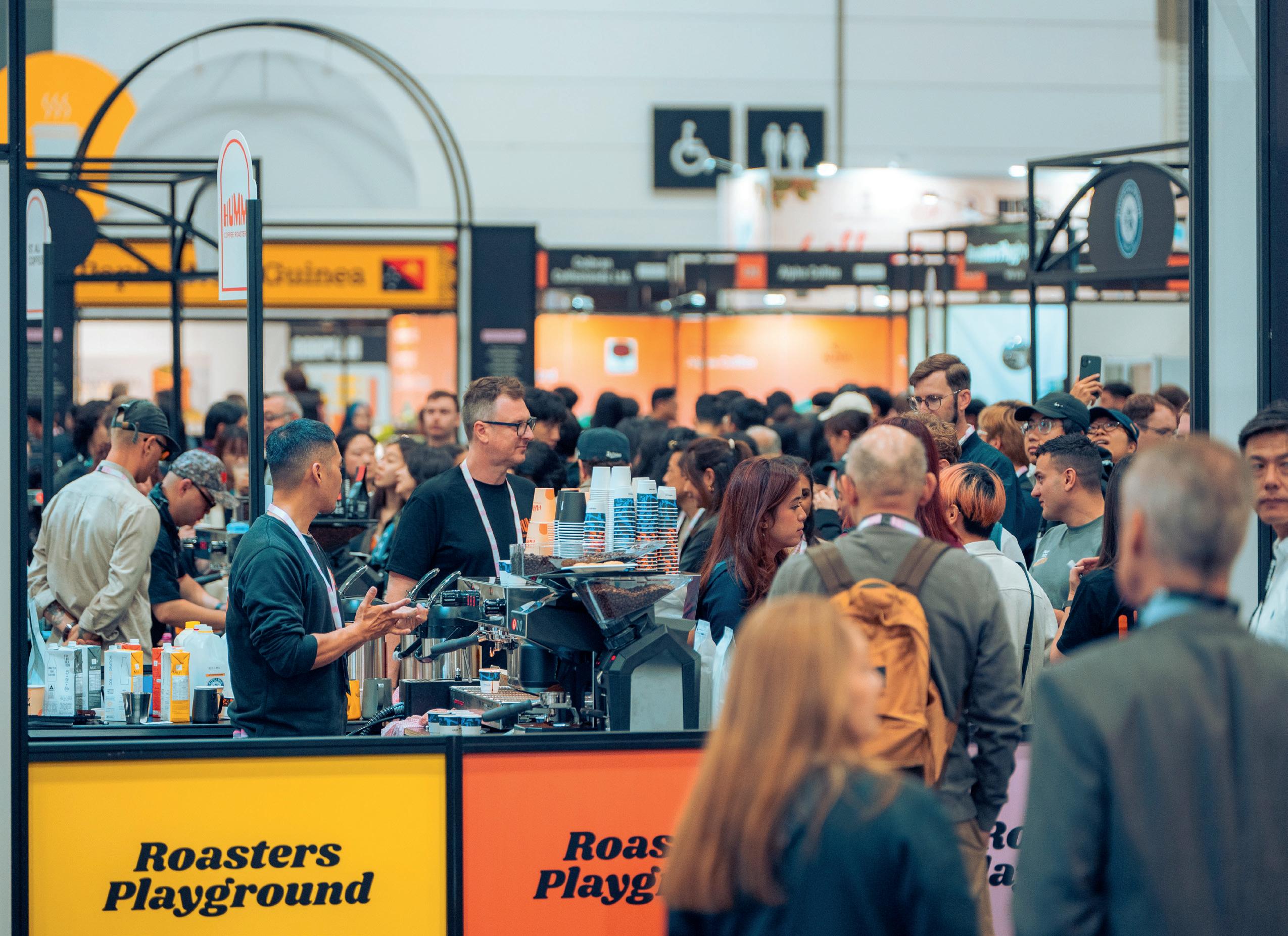
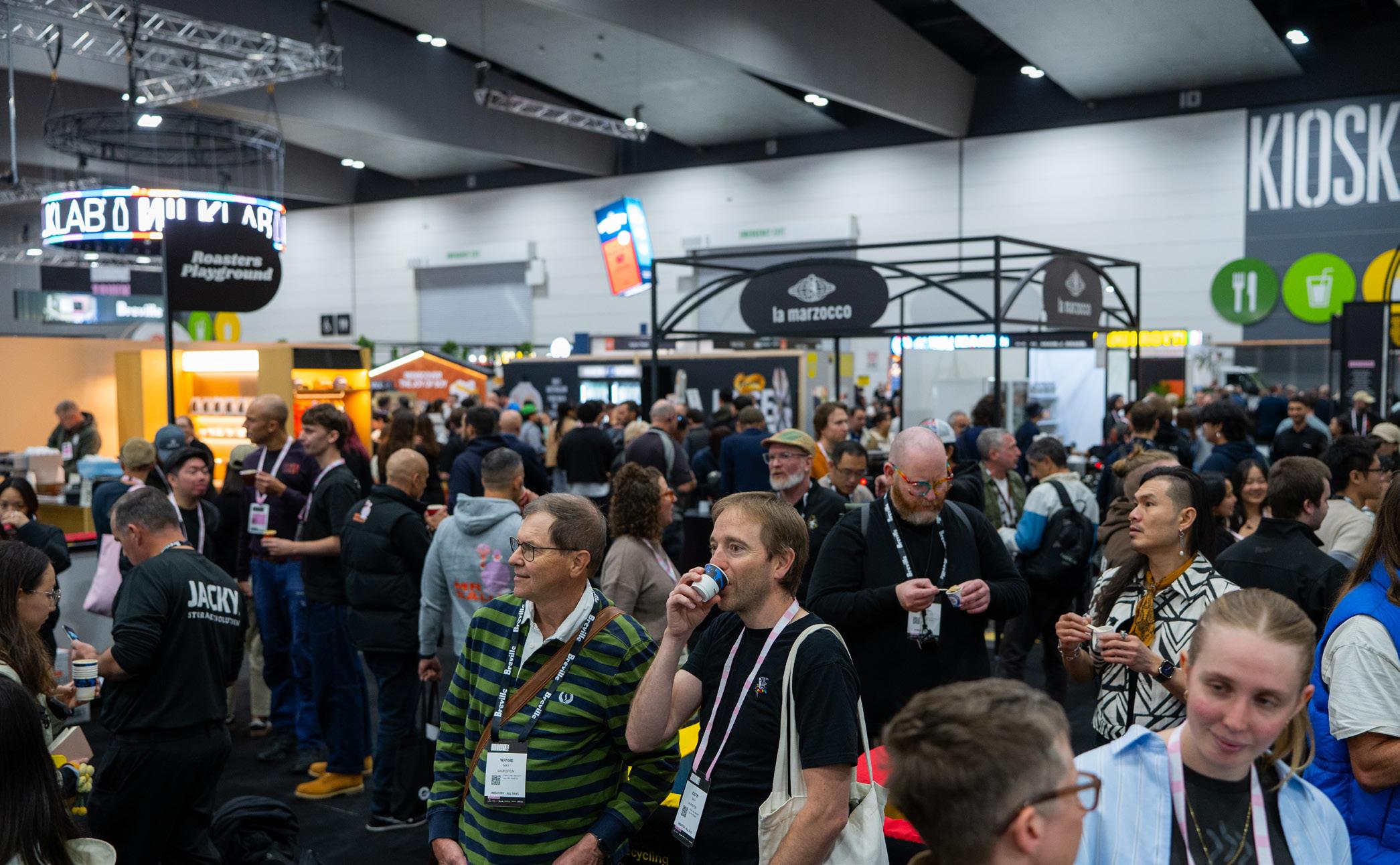
MICE2026, 34 brands took part in the Roasters Playground over the three-day event.
to play
The Roasters Playground at MICE has rapidly emerged as the must-visit destination for coffee professionals looking to uncover new ideas and opportunities.
Since its debut in 2025, the Roasters Playground has become one of the most engaging features of the annual Melbourne International Co ee Expo (MICE).
What began as a platform to give smaller and emerging roasters a presence at Australia’s largest dedicated co ee tradeshow has evolved into a destination that re ects the diversity and vibrancy of the roasting sector.
“Roaster’s Playground is a celebration of the breadth of Australian roasters in one concentrated location,” says Sarah Baker, MICE Education Moderator and Show Lead.
“It’s a buzzing and vibrant space you want to be part of. It invites roasters to put their own stamp on their stand and proudly present the co ees that make them unique.”
In 2026, the dynamic activation – which was sponsored by La Marzocco and Riverina Fresh – welcomed 34 roasting companies from across Australia. From big-name brands to upand-coming indies, the lineup showcased the huge diversity of the country’s co ee industry and gave visitors a unique opportunity to sample a sprawling range of co ees.
As well as some of Victoria’s most well-loved roasters, café owners, baristas, and enthusiasts in attendance got to mingle and sip with representatives from brands such as Brisbane’s Kindred Co ee, Sydney’s Daily Drop Co ee, and Adelaide’s Haven Co ee.
e roasters took over stands for half-day sessions, with each business devising its own stand schedule. Some simply served the best brews in their current roster while others ran competitions and other activations to engage with the Playground’s constant stream of visitors.
For Mike Brabant, Single O CEO and Roasters Playground 2026 participant, the collaborative nature of the space was a highlight at this year’s event.
“ ere was a great energy around MICE this year and the Roasters Playground felt bigger than ever,” says Mike.
“More roasters, more people, and a real sense that everyone had turned up with intent,
“What stood out most was the camaraderie. Roasters tasting each other’s coffees, sharing ideas, and supporting each other.”
Mike Brabant CEO, SINGLE O
showcasing thoughtful co ees and what makes their approach unique.”
While the exposure to potential customers was signi cant, Mike believes the value of bringing his brand to the Roasters Playground extended beyond commercial outcomes.
“What stood out most was the camaraderie. Roasters tasting each other’s co ees, sharing ideas, and supporting each other created a really positive atmosphere,” he says.
“For us, the biggest bene t was the conversations. We loved showcasing some exciting co ees, including a West Java Frinsa natural that we served both black and with milk. It sparked plenty of conversations, particularly around how good it tasted with milk.”
Day to day, amid busy service and juggling all the factors involved in running a hospitality venue, it’s incredibly hard for café owners and managers to carve out time to re ect on their co ee o ering and sample other options. For businesses navigating a competitive retail environment and roasters seeking meaningful industry connections, the value of the Roasters Playground lies in its accessibility.
“Visitors to MICE have direct access to the brands they want to partner with. We want café owners, prospective wholesale partners, and consumers to taste, compare, and learn more about the co ee and people behind
the brands. Be inquisitive. Ask questions. And most importantly, make meaningful connections,” Sarah says.
Gippsland’s Fat Cat Co ee Roasters pounced at the opportunity to spotlight the brand among its industry peers at the Roasters Playground this year. Co-Owner Amy Cooper says being in the heart of the action on the busy Saturday slot meant her team were able to engage with a range of industry co ee folk.
“We found the Roasters Playground to be perfectly situated at MICE this year. It enabled us to get great exposure for our business while building greater relationships with our retail customers,” she says.
“It also helped reignite our passion for

this industry, its people, and why we love it so much.”
With the scale of roasters featuring at MICE representative across industry, the Roasters Playground has been set up to make exhibiting straightforward for brands new to tradeshows.
e benches, co ee machines, equipment, dairy, and signage are all provided, taking operational stress away from roasters and allowing them to bump in swi ly and focus on co ee and audience connection. Richard Bettles, Café Network Manager of Pablo & Rusty’s, believes this is one of the strongest calling-cards for businesses interested in taking part.
“With its set up and ready-to-go format, the Roasters Playground is a great way for roasters to showcase their o erings, reach new audiences, and connect with the community,” he says.
MICE2027 will be held at the Melbourne Convention and Exhibition Centre from 4 to 6 March 2027, with the Roasters Playground set to return for another bumper edition.
For more information, visit internationalcoffeeexpo.com For Roasters Playground participation, contact Terry Wogan at terry.wogan@primecreative.com.au
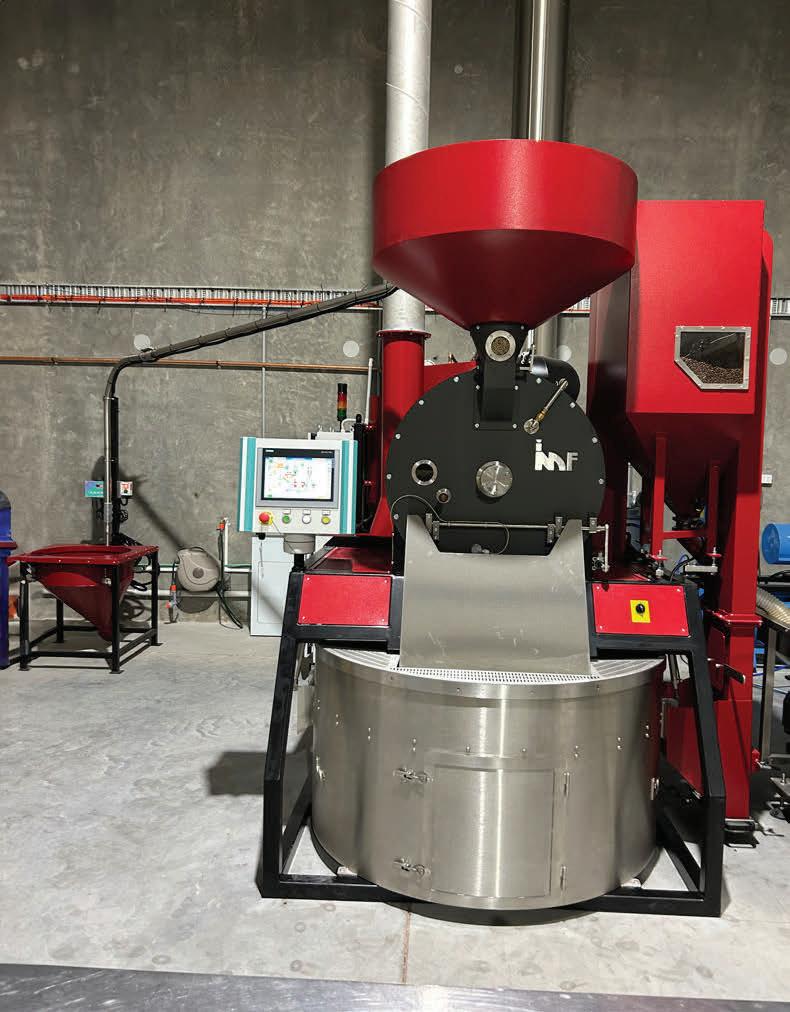
• Consistent roasting to one degree accuracy (auto or manual control)
• 50 adjustable parameters per profile.
• 1000 profile storage.
• Recirculating heat technology saves up to 47% gas consumption.
• Cropster/Artisan datalog integration.
• Over 80 plants in Australia & NZ since 2012 installed by Roastquip.
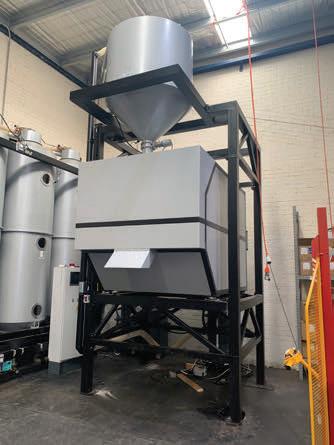
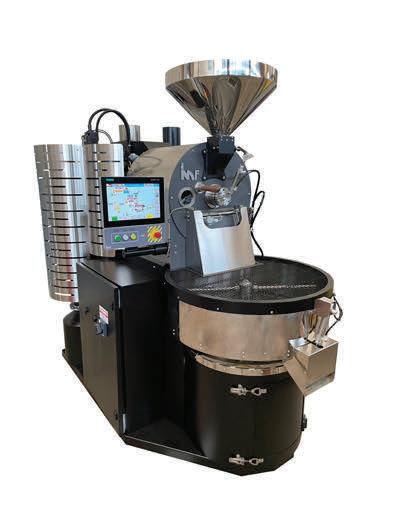
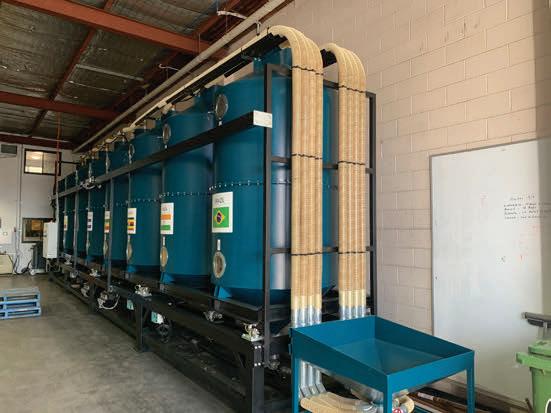
Precision under pressure. for more information scan the qr code:
@lamarzoccoau
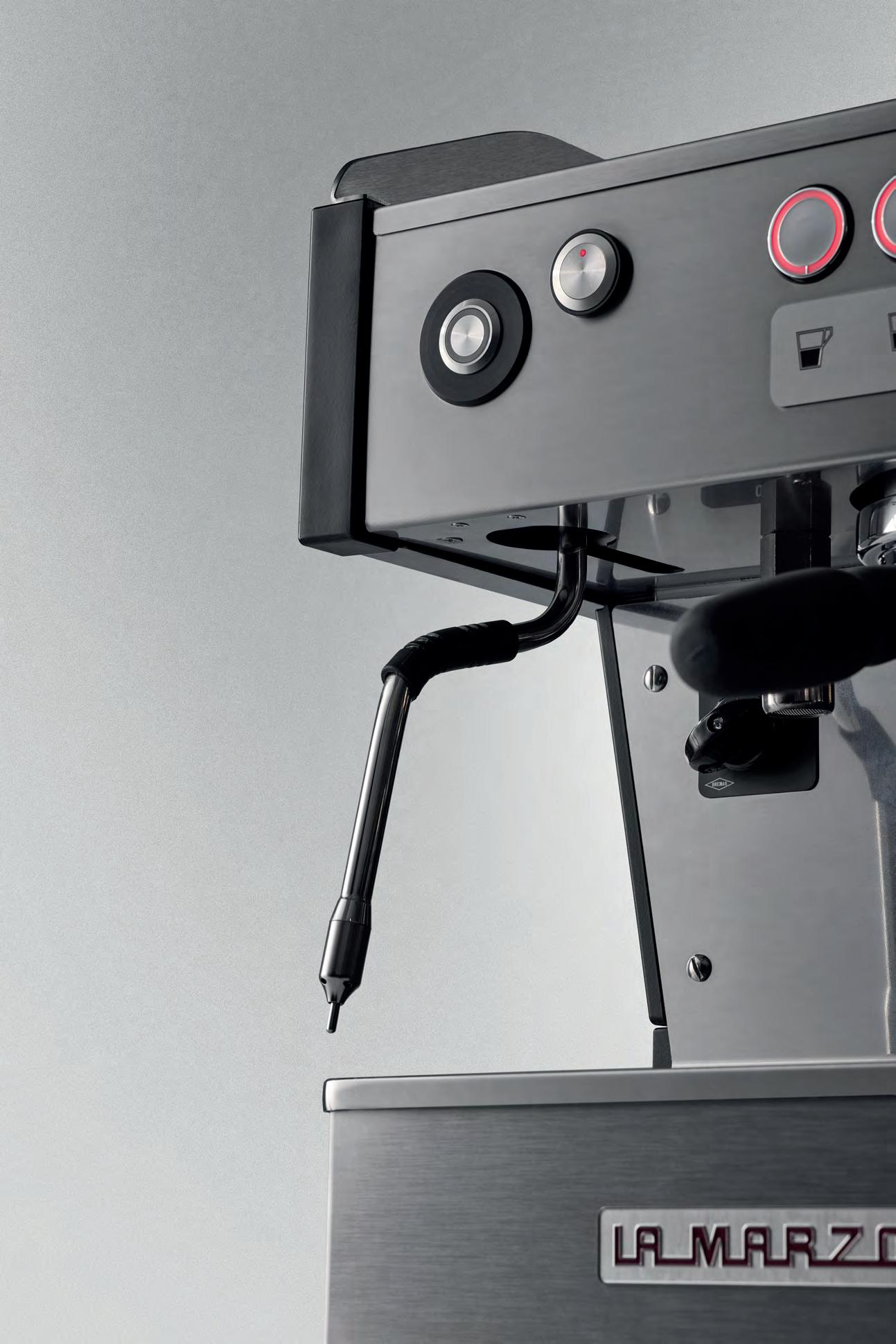

Award-winning bartender Tanguy Charbonnet explores the growing crossover between barista craft and mixology, and what’s driving new café drinks trends.
For Tanguy Charbonnet, curiosity is more than a simple instinct. It’s a thread that ties together two hospitality worlds that are becoming increasingly close: co ee and barista cra smanship.
As the 2025 Australian Bartending Champion, there are few people better placed to speak on the next wave of cocktails and mocktails that could next sweep the café scene.
He sees co ee, tea, and cocktails as overlapping expressions of avour and cra – built on a foundation of human connection –as opposed to being distinct categories.
“I think co ee and tea have always been a part of bartending,” he says. “We see that growing more and more through the creativity of some bartenders.
“ is is what we share in common … we’re sharing the passion of barista co ee and tea, also through bartending.”
ere aren’t many drinks that merge bartending and barista cra like the iconic Espresso Martini. A long-held mainstay of the late-night hospitality world, many cafés now o er the cocktail as part of an a ernoon or evening menu.
Now, however, there are other options such as the Carajillo – combining espresso with Licor 43 and ice – which Tanguy says is gaining popularity.
“Co ee in drinks brings a bit of bitterness.
ere’s a great cocktail by Felix Woods called Black Ca e Frappe, which features cold brew co ee with a bit of amaro and malt mint as well. It’s a beautiful drink. It’s along the lines of an Espresso Martini, but it’s a bit more refreshing, a bit more developed, and way more interesting. I always recommend it to my guests as an alternative.”
It’s through processes like exploring avour combinations – such as pairing the base of an Espresso Martini with mint, which is how Felix came up with the Black Ca e Frappe – that continues to push the boundaries of cocktails and signature drinks.
Tanguy is a fan of using jasmine tea in a range of his concoctions. He presented a range of mocktails and tea-based signature drinks at MICE2026.
“In bartending we’ve used tea for quite a long time … cold-brewed tea brings some tenacity, structure, and a bit of depth to a
cold drink that doesn’t have to be a cocktail,” he says.
“It’s a great opportunity to develop drinks with a fruit juice, by adding some cold brew and sweet syrups, but you can carbonate it as well to make it a bit zzy and transform it.
“One of the cocktails I like is a mocktail with apple-infused jasmine tea and a bit of lime cordial. It’s quite fresh and a bit tart –it’s splendid.”
e award-winning mixologist says curiosity must persist if people are to continue to push the boundaries with signature drinks.
“Don’t be scared to try, just jump in and try your own recipe … it’s not that complicated to make drinks,” he says.
“With social media now, there’s a lot of people who share ideas and content, so you can nd recipes and try to recreate them di erently.”
This interview originally appeared in episode two of The BeanScene Podcast. For more information, visit beanscene.com.au/podcasts
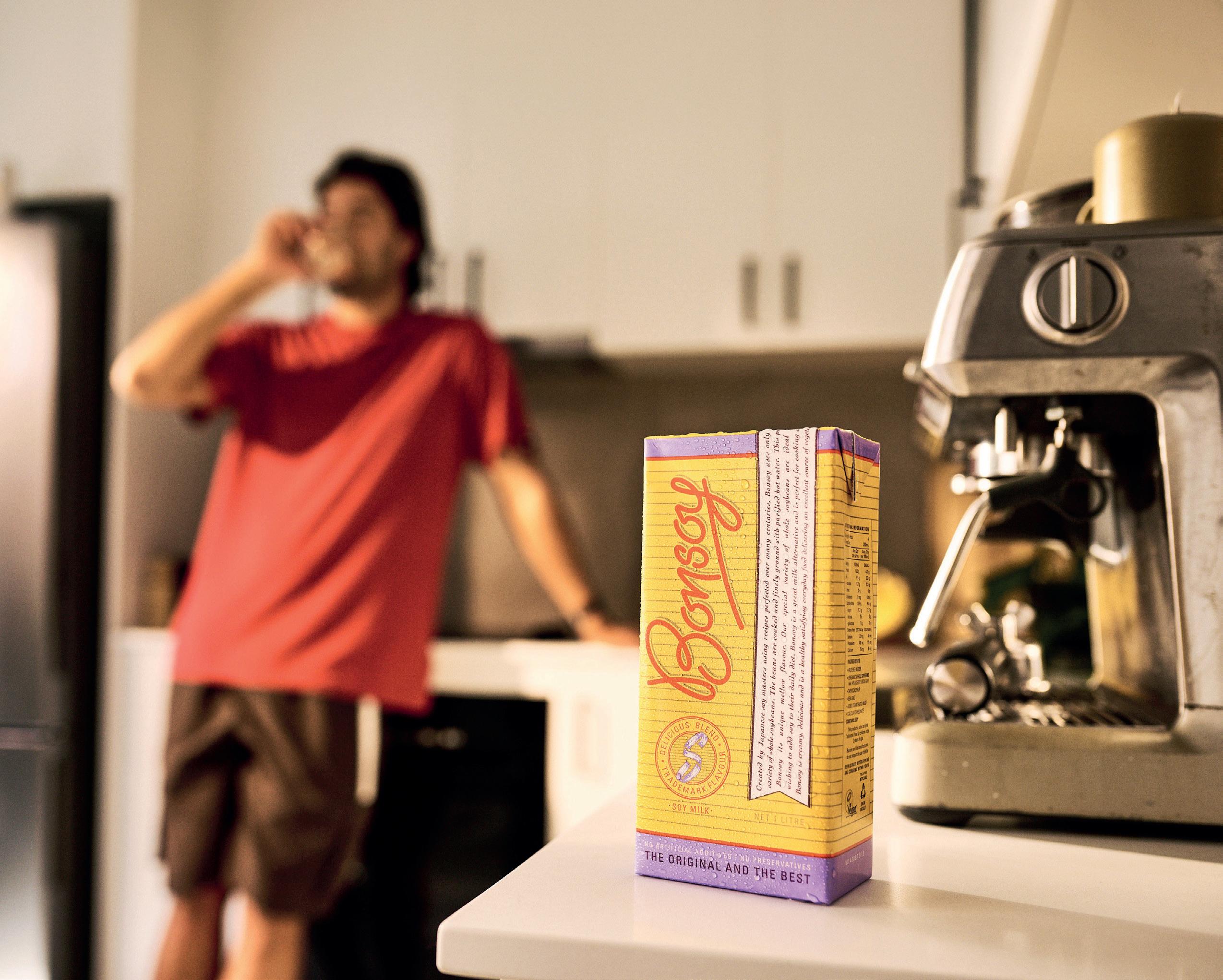
Four decades after helping innovate alternative milk in Australia, Bonsoy is extending its reach beyond the coffee cup.
Introduced to Australia in 1983 as the rst modern Japanese soy milk available locally, the Bonsoy brand arrived at a time when alternative milks were far from mainstream.
More than 40 years on and Bonsoy still remains a familiar sight on café counters across the country. What began as a niche product associated with macrobiotic diets has become a major beverage segment spanning soy, almond, oat, coconut, and other plantbased options.
“Soy has earned its place in human history as one of nature’s most complete sources of plant protein. For centuries, it has been at the heart of nourishing diets across Asia, forming the foundation of staple foods such as miso, tofu, and soy sauce,” says Raphaelle Wilson, Marketing Director at parent company Spiral Foods.
“At Bonsoy, we honour this heritage while reimagining what soy can be today. Cra ed from carefully selected organic soybeans,
our unique extraction process preserves the natural goodness and exceptional protein content of the bean, creating more than just a milk alternative.”
e company continues to highlight its heritage as a product created around quality ingredients – a focus that remains central to its identity.
“Bonsoy has never chased trends. While consumer preferences have evolved, our commitment to quality and consistency has remained constant,” says Raphaelle.
“As more people have embraced plant-based choices for health, sustainability, or lifestyle reasons, we’ve continued to innovate while staying authentic to the values that made Bonsoy trusted in the rst place.”
at philosophy has helped the brand navigate multiple waves of consumer change. From the early interest in natural and macrobiotic foods during the 1980s to today’s broader wellness and sustainability
conversations, Bonsoy has positioned itself as a steady presence, rather than a reactive one.
“Bonsoy is a complete liquid food – equally at home in co ee, blended into smoothies, poured over cereal, or simply enjoyed on its own. It delivers rich avour, premium texture and genuine nourishment in every serve,” she says.
“As the original agship of the plant-based category, soy continues to set the benchmark for nutrition. Drawing on decades of expertise from Japan’s master soy cra smen, we have re ned every detail to create what many consider the gold standard of plantbased milks.”
Trust built cup by cup
For café owners, consistency is o en valued as highly as innovation. Beverage suppliers must deliver reliable performance day a er day while helping operators meet customer expectations.
Raphaelle says that understanding has shaped Bonsoy’s relationship with cafés from the beginning.
“Trust is built through consistency. Baristas rely on products that perform the same way every day, and café owners need con dence that their customers will have a great experience every cup,” she says.
“We’ve always listened closely to our café partners, invested in long-term relationships rather than short-term wins, and remained focused on delivering a product that performs exceptionally well in co ee. ose partnerships have been fundamental to our growth.”
With today’s local specialty co ee sector almost unrecognisable from the world Bonsoy entered more than four decades ago, Raphaelle says the relationship between the brand and specialty co ee has evolved alongside the industry itself.
“ e specialty co ee community has been part of Bonsoy’s journey from the beginning. As Australia’s café culture has grown, so too has our partnerships with baristas, roasters, and café owners,” she says.
“Today, it’s a genuine collaboration: we listen to feedback, support the industry through events and partnerships, and continue developing products that meet the evolving needs of both cafés and consumers. It’s a relationship built on mutual respect and shared passion for quality.” at connection has helped Bonsoy maintain visibility, even as new alternative milk brands continue to enter the market.
“Our heritage certainly sets us apart, not only for longevity but also consistently delivering a premium product,” says Raphaelle.
“We’re trusted by cafés because we steam beautifully, complement co ee rather than overpower it, and deliver a consistently great experience. Beyond the product itself, our authenticity and genuine connection to the industry continue to di erentiate us.”
Today, the brand is expanding beyond plantbased milk with the launch of a new isotonic hydration range.
Raphaelle says consumers are increasingly looking for products that support their lifestyle, without compromising on taste – a consumer shi that helped inform Bonsoy’s entry into the hydration category.
e launch adds another dimension to a portfolio that has progressively expanded over time, including the introduction of Bonsoy Almond Milk in 2019, and sparkling coconutwater products from 2020 onwards.
“We saw increasing demand for cleaner hydration options as consumers became more mindful of ingredients and everyday wellness. Rather than entering the category with just another sports drink, we wanted to develop a premium hydration product that re ected Bonsoy’s philosophy of quality, simplicity, and great taste,
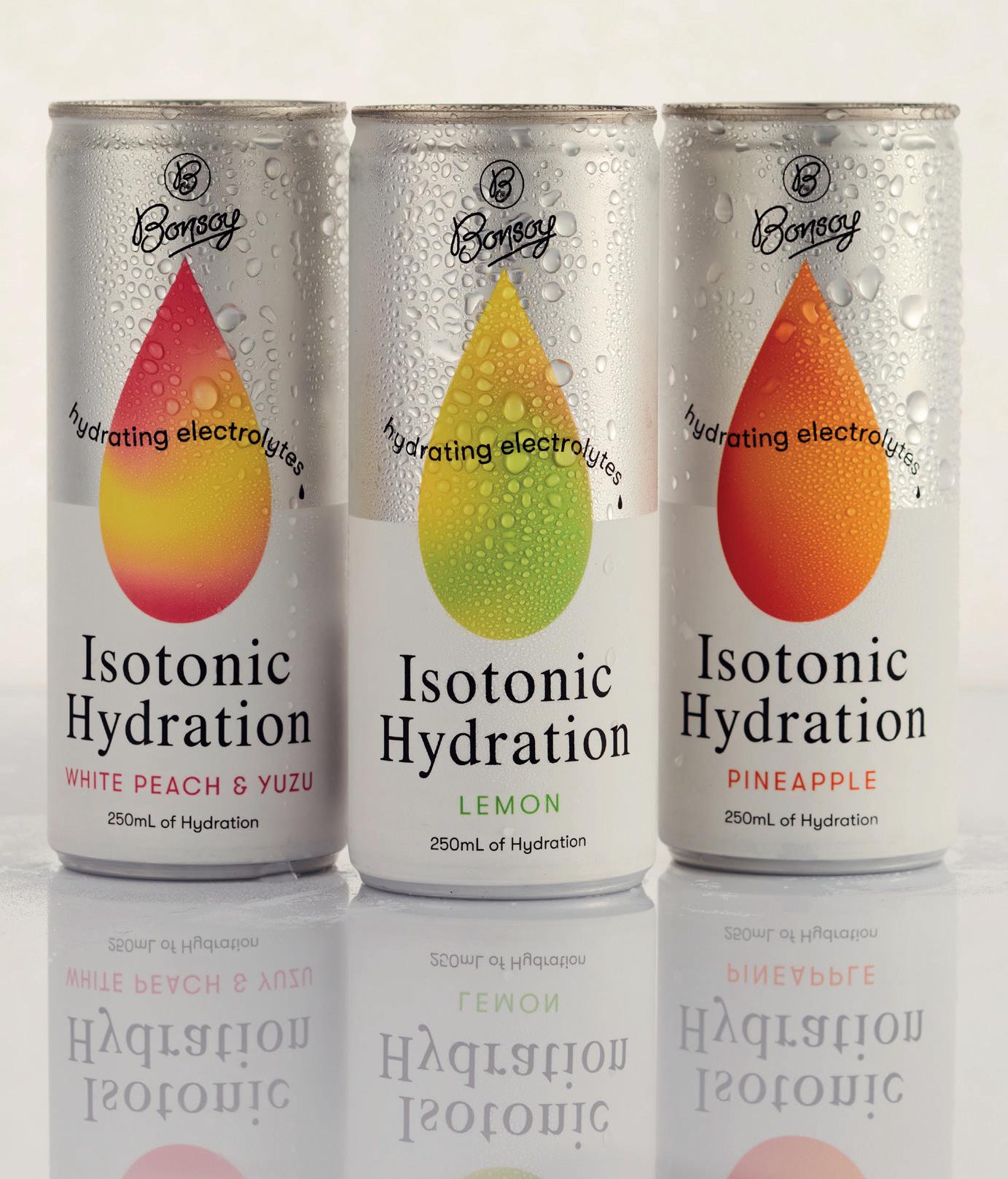
while also supporting active lifestyles,” explains Raphaelle.
e resulting product has been developed with a focus on simplicity and functionality.
“Our isotonic hydration drink has been developed to provide e ective hydration while aligning with the expectations of today’s health-conscious consumers. It focuses on delivering electrolytes in a clean, refreshing format without the unnecessary additives
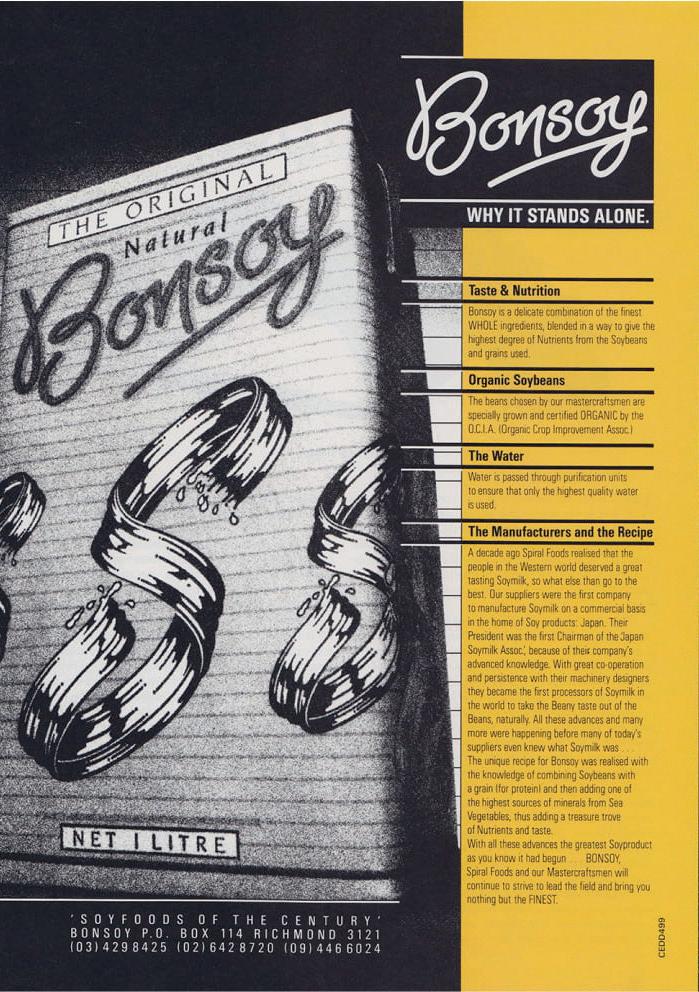
has been on the Australian market for more than 40 years.
Bonsoy is expanding with its new isotonic hydration rage.
o en associated with traditional sports drinks,” says Raphaelle.
For cafés, the launch re ects the ongoing diversi cation of customer demand.
“Cafés have evolved well beyond co ee –they’re increasingly becoming destinations for all-day food and beverage occasions.
Functional drinks provide operators with an opportunity to meet changing consumer needs, whether that’s post-workout hydration, an a ernoon refreshment, or a healthier graband-go option.”
As Bonsoy enters new categories, the opportunity remains to balance innovation with the qualities that made it successful all those years ago.
“Our heritage gives us credibility, but it doesn’t de ne our limits. We remain committed to the values that built Bonsoy – quality, authenticity, and innovation –while continuing to evolve alongside our customers,” says Raphaelle.
“Expanding into new categories is a natural extension of that philosophy … the goal isn’t to be everything to everyone; it’s to thoughtfully grow the brand in ways that remain true to who we are while continuing to inspire the next generation of consumers.”
For more information, visit bonsoy.com
After 30 years of investing in New Zealand’s coffee industry, Foundation Coffee has taken its office coffee solutions to the next level with the help of Franke Coffee Systems.
When Foundation Co ee rst started roasting, o ce co ee largely consisted of instant granules and a kettle. Most informal discussions happened around the water cooler and specialty co ee’s third wave was just gaining momentum.
Today, o ces with professional-grade setups, specialty beans, and discerning employees are another competitor to the café. Co ee, in some form, is seen as a must-have addition for many businesses.
Helping companies navigate this transition has required not just quality co ee but also co ee systems capable of delivering caféquality experiences at scale – a challenge Foundation addresses through its partnership with Franke Co ee Systems.
“At our core – and this o en gets forgotten – we’re a co ee roaster. A lot of people in the industry run around trying to be everything, and there’s an interesting delineation between roasters and machine manufacturers,” says Foundation Co ee Managing Director Jamie Galloway.
“We roast co ee, and we keep reminding ourselves that our job is to deliver end-to-end quality service, then integrate that through our premium co ee machines.”
Jamie sees Foundation Co ee’s role as removing everyday friction points, not simply supplying beans to o ces, cafés, and other co ee environments.
In shared o ce kitchens, where unstacked dishwashers and messy sinks can wreak havoc on relationships, a streamlined, professional co ee system can go a long way to improving life at work.
“In our model, we work alongside clients and ask: what else is a real friction point? We’re very conscious of the passive-aggressive Post-It notes that get slapped up in o ces: ‘do your dishes,’ ‘reload the dishwasher’, that sort of thing,” says Jamie.
“ e root issue usually isn’t the dishes themselves but an ine cient wider system built around break times.”
e mess associated with co ee setups featuring grinders and manual machines only adds to this.
“It has the potential to get worse if you add in a grinder, and the mess from ground co ee,” adds Jamie.
“In a café, sweeping up co ee grounds and cleaning is a day job. In an o ce, it’s another layer of tension with where the responsibility lies.”
One of the main beverage machine suppliers
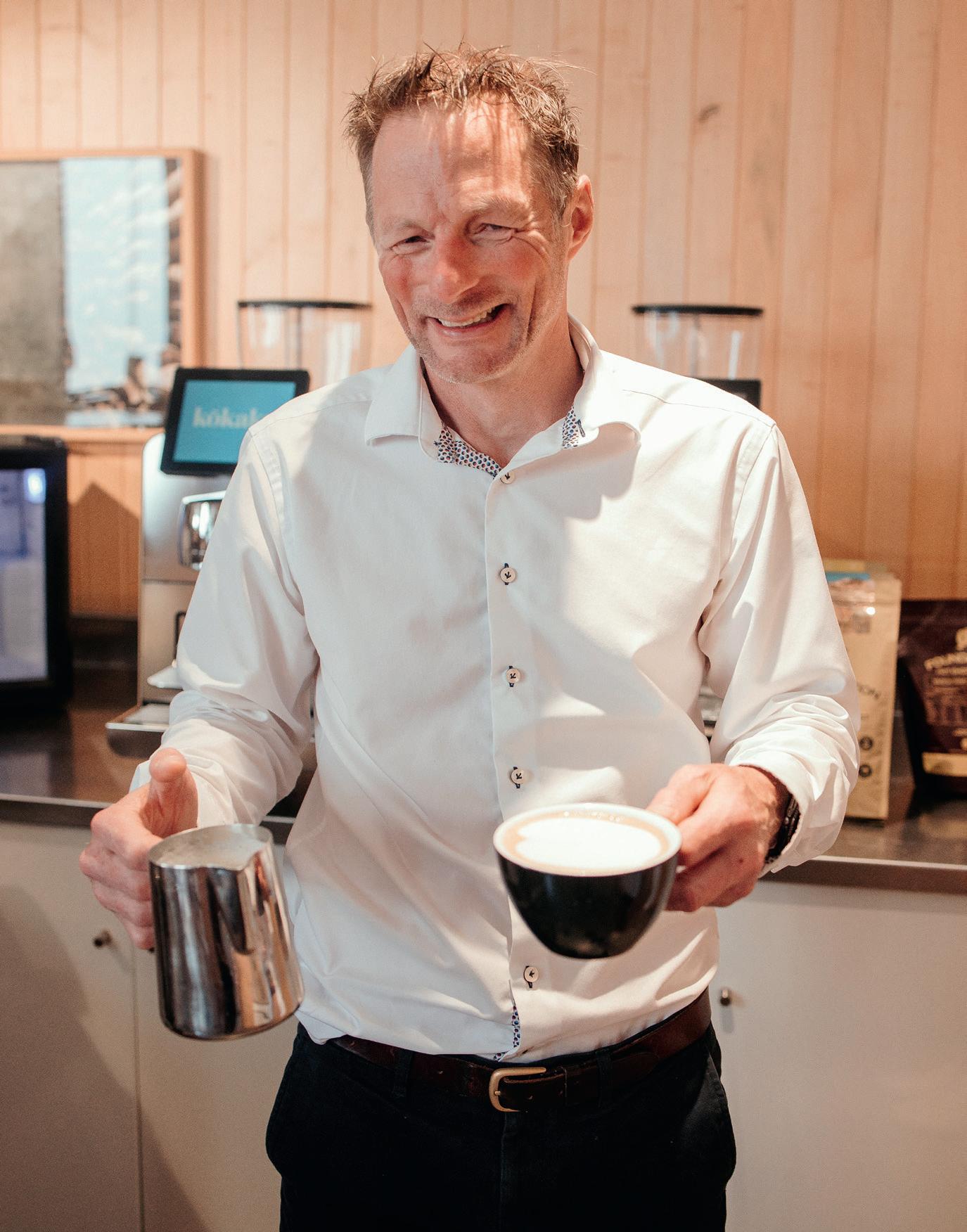
Foundation works with is Franke Co ee Systems. e Swiss-engineered manufacturer is one of the world’s leading suppliers of fully automatic co ee machines and recently introduced the New A Line globally at Host Milano.
“Franke is continually innovating to make every customer experience simpler, better, and more enjoyable.”
Jamie Galloway DIRECTOR, FOUNDATION COFFEE
Jamie says, in addition to making a consistent co ee, Franke machines help remove common friction points around the co ee-making ritual in the o ce and beyond.
“Franke is continually innovating to make every customer experience simpler, better, and more enjoyable,” he says.
“Franke machines are self-contained: grinding, puck management, and waste handling are all integrated. A lot of premium corporates have beautiful kitchen t outs and we partner very closely with clients’ architects, builders and plumbers to ensure installation is of a very high standard.
“ e partnership with Franke came from a need to provide a high-end solution for our clients. Franke pairs world-class design with exceptional functionality to bring café-quality co ee into the modern premium workspace.
“One of our company taglines is ‘bring the café into the o ce’ – our o ering and partnership are well aligned.”
Ease of use is a key focus across Franke’s fully automatic co ee machine portfolio, from the Classic A Line and Mytico to the New A Line.
Jamie says, while the touchscreen navigation is a leading feature of Franke machines, the real gamechanger is how potential machine problems are communicated.
“Franke’s machines are intuitive. e touchscreen navigation guides users through fault nding and helps isolate exactly what’s wrong. ey also have a clever visual colour coding system on their warnings: if it’s orange, it’s generally xable on site; if it turns red, it’s leading towards a technical visit,” he says.
“Working with clients, we’ve learned if you see orange, the issue can likely be resolved on site. If it’s red, let’s have a quick phone call and see if we can x it remotely, otherwise, we can go on-site to problem solve.
“ at kind of swi , precise, logical approach sits well with New Zealand and Australian corporates. ey want to be e cient, they don’t want delays, and they don’t want the noise or disruption to drag on.”
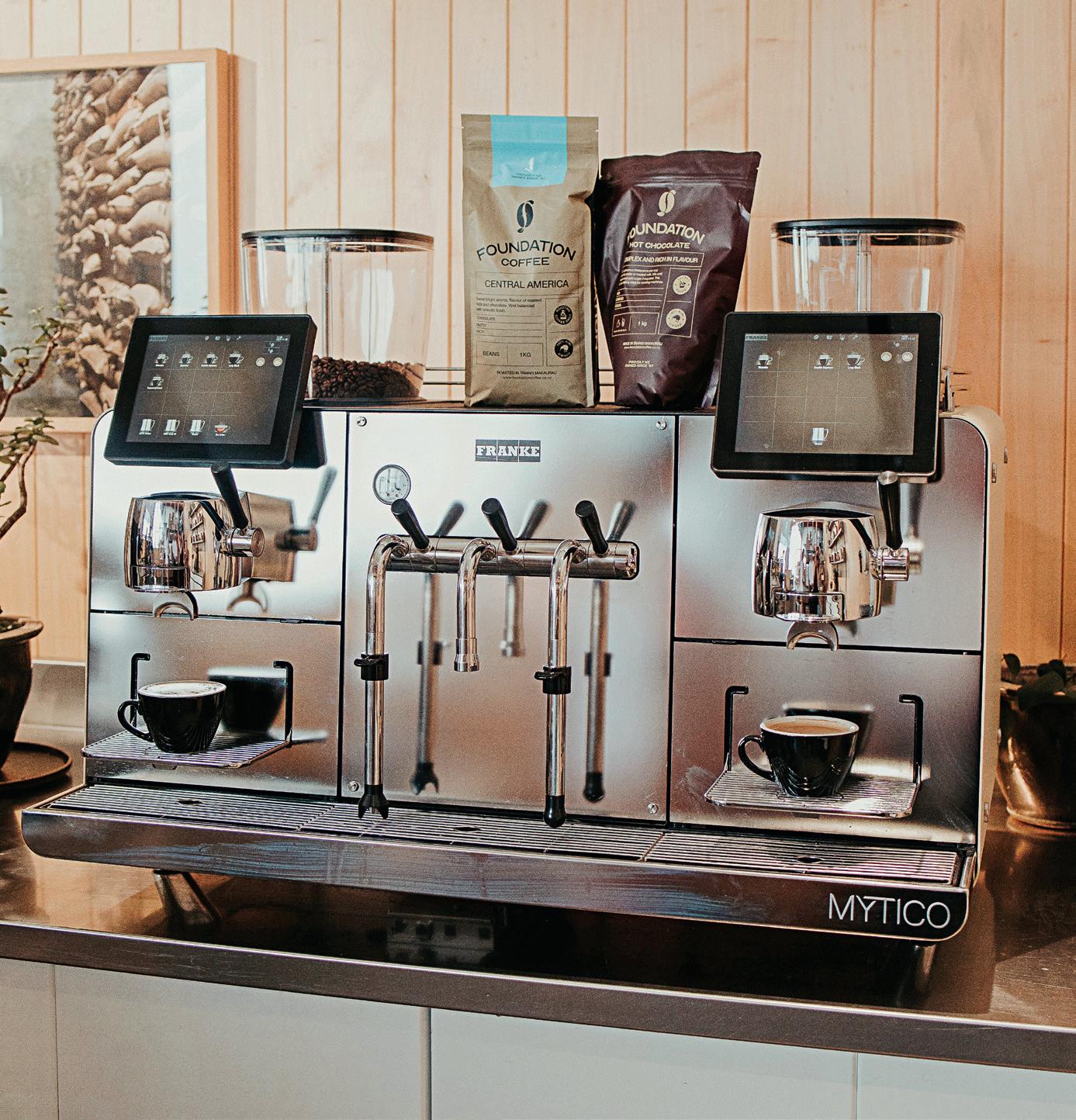
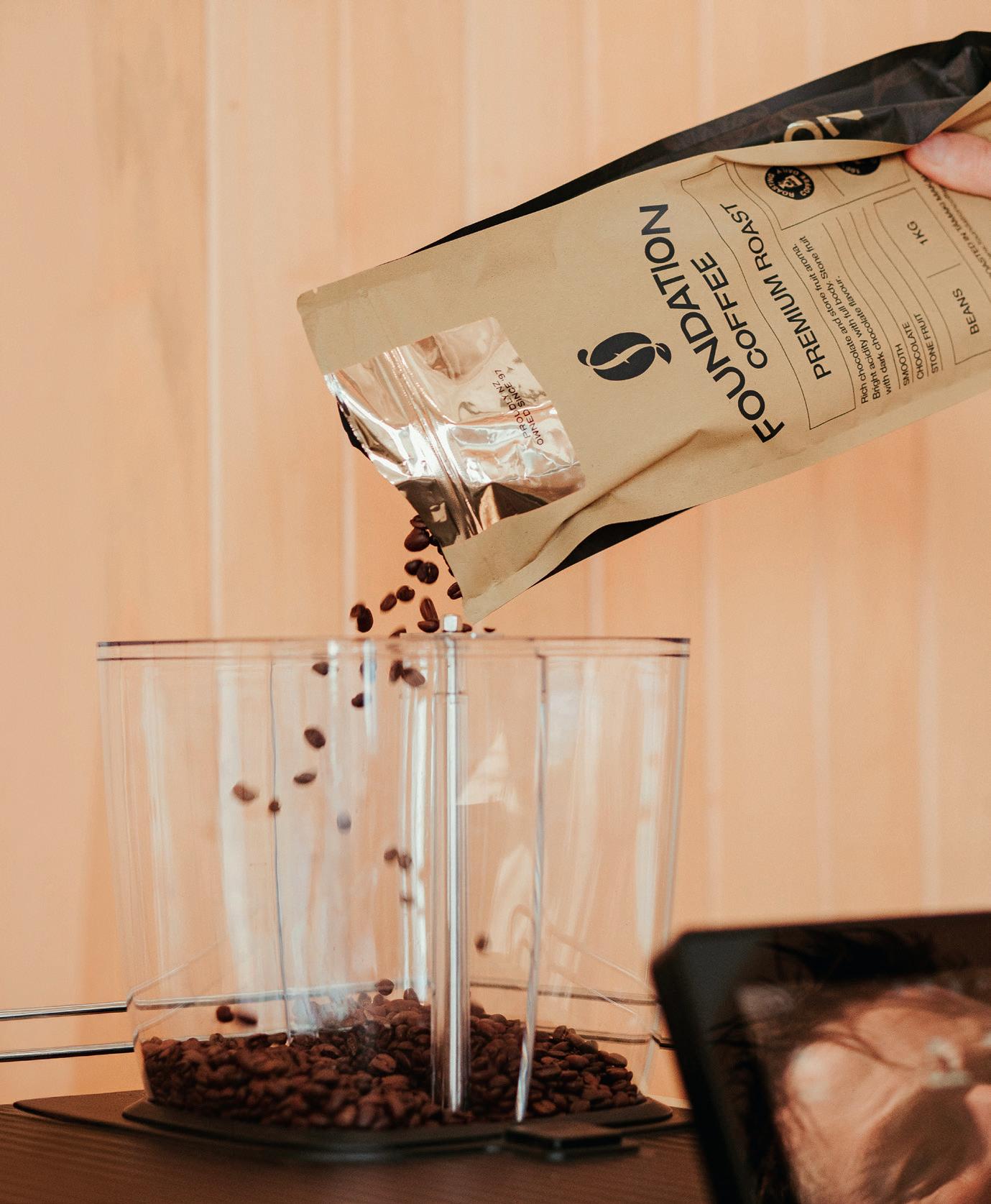
e wider co ee industry is markedly di erent than it was 30 years ago, and Foundation Co ee is no di erent. While technology is central to the company’s o ering, Jamie says the roastery’s evolution has been equally important.
Acquired by New Zealand-based roaster Mojo in 2025, its expertise in the o ce and machine supply space has been combined with its new parent company’s own co ee history.
“ e reason for the acquisition was that my business cut its teeth in business to business, getting a deep understanding of client work ows, o ce break-time tensions, and even down to dialling in the machine cup lling so there’s no spillage and frustration,” says Jamie.
“Mojo, on the other hand, is steeped in a rich understanding of cafés – they’re epic at hospitality. ey brought us in so that, together, we round out both ends of the market.
“We are part of a larger group, but we’re still very clearly and proudly New Zealand owned.”
at pride in New Zealand, and pride in service, makes Foundation Co ee and Franke perfect partners.
“We’re deeply invested in New Zealand business, while drawing on Franke’s global expertise from Switzerland as our machine partner,” says Jamie.
“Together, we can cra solutions that are speci c to Kiwi businesses.”
For more information, visit coffee.franke.com

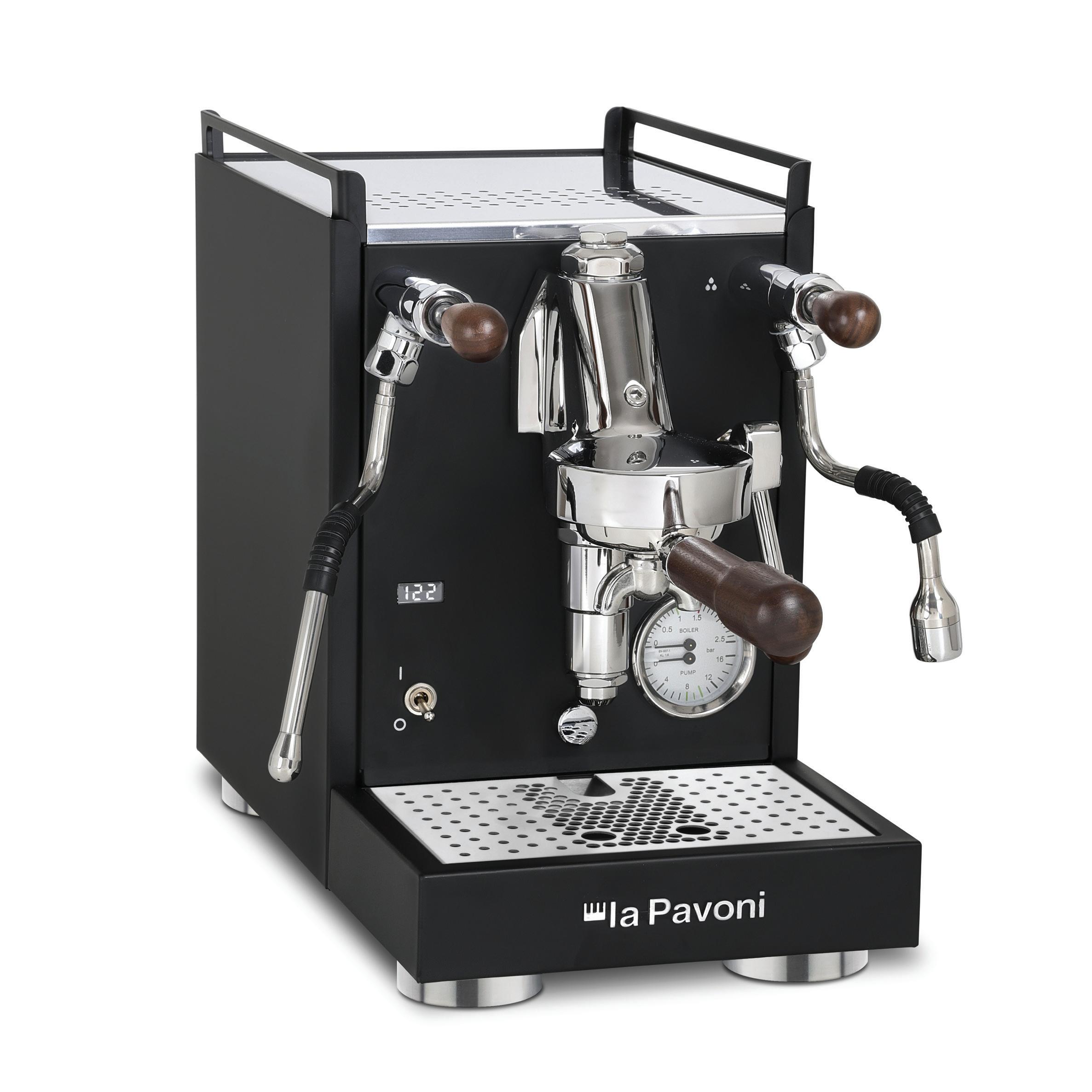
The stylish, black Cellini Mini X is a premium, compact espresso machine hand-assembled in Italy.. Featuring advanced PID temperature control, an integrated shot timer, standby mode for energy efficiency, and a builtin water filter, it delivers exceptional consistency with every extraction. au.lapavoni.com # lapavoni_au


The NZSCA has introduced The Barista Open to reinvigorate its competition scene, and the response has been nothing short of amazing.
For years, regional barista competitions have taken place across New Zealand in the main regions of Auckland, Christchurch, and Wellington. ey have always been run to the same incredibly high standard as the National Championships, allowing many competitors to get a taste of the ‘big stage’ before stepping on to it. ese competitions were operated to the exact WCC rules and format, which can ask a lot of competitors, not only from a time perspective but also in terms of nancial outlay.
A er years of dwindling competitor numbers, the New Zealand Specialty Co ee Association (NZSCA) wanted to nd a way to reinvigorate these competitions and solve issues we’ve so o en been told about: baristas want a space where they can make co ee in front of a crowd to practice the presenting aspect of the competition, which is o en the part that holds people back from entering. is year, the NZSCA decided to try something new. e result was e Barista Open: a fast, head-to-head, throwdown style format built to lower the barrier to entry without lowering the bar on skill. It’s designed to help new and emerging competitors step forward, build con dence, and access the support our community can o er as they begin their competition journey.
e new format strips competition back to the barista essentials. Each knockout round consists of ve minutes to dial-in, a oneminute introduction to showcase personality, then seven minutes to serve three courses of drinks: espresso, dairy milk, and oat milk.
Once nished and as they wait for the judges’ verdict, baristas clean their stations just like they would behind the bar in their own cafés. Judges make quick paddle-up decisions live, based on some key aspects considering taste and visual presentation, and
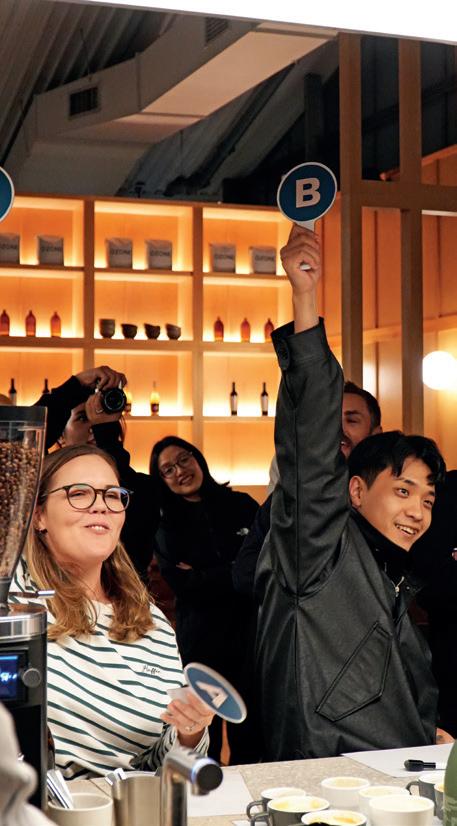
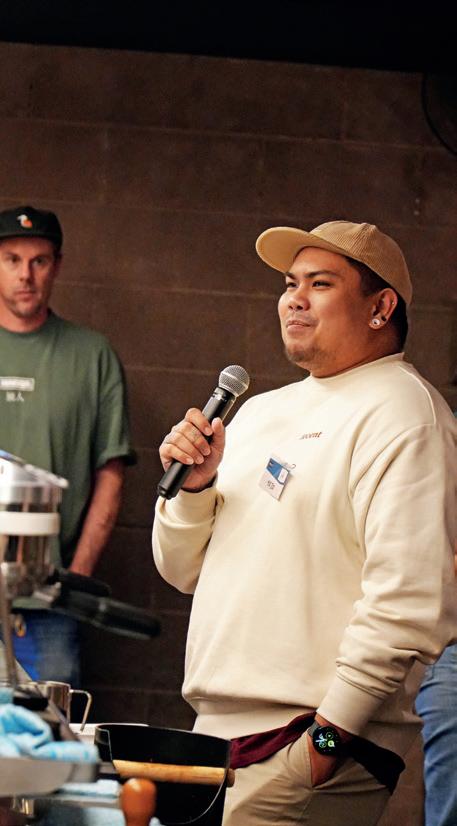
the winning competitor moves through to the next round.
e simpli ed format invites the audience to be involved – supporting and cheering on their friends and peers as they share their speech or serve up their co ees. It’s also a great way for people to step into judging without the pressure of a full score sheet.
e result has been enthusiastic and encouraging. e events have been packed out across the regions and have enabled people to get involved and enjoy the experience.
Five regions hosted the new format: Arrowtown, Whangarei, Auckland, Wellington, and Christchurch. More than 70 competitors took the stage, most of them stepping behind the machine in a competitive format for the rst time.
e winning position of each Barista Open is reserved for competitors who haven’t placed in the top three at Nationals in the past ve years, keeping the pathway focused on emerging talent while still welcoming
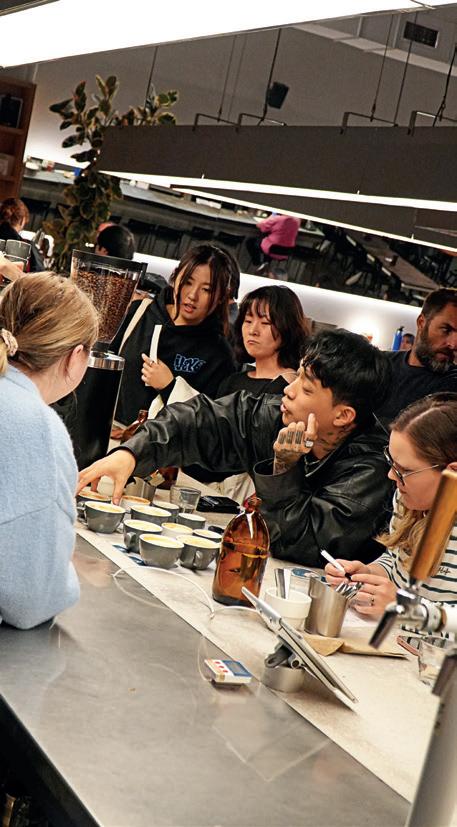
experienced baristas to compete and be part of the atmosphere.
Five winners now carry their regions through to the Aotearoa Barista Champs, each backed by NZSCA support: a new buddy program to help them prepare for the national stage.
e buddy program acknowledges the huge step from e Barista Open to the national format, and pairs the winners with industry professionals who have experience as coaches, barista competitors, and judges to act as a sounding board and help them prepare for Nationals.
If the turnout is any indication, the format has done exactly what it set out to do: create an opportunity for more people from more regions to step up to the competition stage and get involved. We can’t wait to see which regions step up to host next year.
anks to our Barista Champs 2026 and Barista Open sponsors: Principal sponsor Meadow Fresh, La Marzocco NZ, Cafetto, Acme Cup Co, Boring, Machine Limited, MONIN, Decent Packaging, and Ārepa.
Auckland

For more information on the New Zealand Specialty Co ee Association, or to join, visit nzsca.org

Me says personalisation is becoming an even more important consideration for loyalty.
The founders of Stamp Me, Australia’s original digital loyalty platform, explain why meaningful customer engagement is the key to building lasting loyalty.
Australian café operators know all too well that loyal customers are valuable. But most overlook that customer loyalty could be the biggest untapped pro t lever in the business.
With rising operating costs, increasing competition, and changing consumer behaviour putting pressure on independent operators, attracting new customers is only one part of the equation.
According to data from digital loyalty platform Stamp Me, businesses report a 15 to 30 per cent increase in customer retention a er successfully implementing a digital punch-card program. e company says the cafés that continue to thrive are those that give customers a reason to come back – and this can translate to a signi cant impact on pro tability.
Used by cafés and retailers worldwide, Stamp Me says retaining existing customers costs far less than acquiring new ones, and every extra visit increases their lifetime value. If regulars buy just one additional co ee a month because of a good loyalty program, that small change could add thousands of dollars in annual revenue.
According to Stamp Me, it’s no longer enough to make great co ee: today’s successful cafés build smarter customer relationships to gain a competitive advantage.
More than a decade ago, Stamp Me CoFounders Alan Donaldson and Shannon Magowan set out to understand what
made a great loyalty program.
Speaking to cafés across Australia, they quickly realised they weren’t looking for a more complex loyalty program, but rather, a more e ective one.
“Cafés loved the simplicity of paper stamp cards, but were frustrated that customers regularly lost or forgot them. Plus, they had no easy way to measure retention or even stay connected between visits,” says Shannon.
“ ose conversations reinforced our belief that loyalty should be simple for sta , convenient for customers, and focused on helping cafés turn rst-time visitors into loyal regulars.”
Founded in Melbourne in 2011, the Stamp Me app was built around a “deceptively simple” idea: combining the familiarity of traditional punch cards with the convenience and engagement opportunities of mobile technology.
What started as a solution to the lost paper card problem has since evolved into a broader customer retention platform, now used by cafés, roasters, and hospitality businesses around the world.
Where larger chains have the resources to build complex, integrated loyalty systems that give them deep insight into customer behaviour, smaller businesses have long been le to make do with expensive tools that weren’t designed with them in mind.
“We saw an opportunity to give café owners a simple, a ordable way to build customer
loyalty, increase repeat visits, and stay connected with their customers in the digital world,” says Alan.
Shannon believes independent cafés already possess something the major chains struggle to replicate: “genuine relationships with their customers and a strong sense of community”.
“Stamp Me helps operators build on that advantage – making it easier to reward loyal customers, stay front-of-mind between visits, and encourage repeat business.”
Stamp Me says giving independents better tools addressed the original problem of paper loyalty cards. But as customer expectations evolved, loyalty programs needed to evolve with them.
Australia’s café scene – one of the most competitive and sophisticated in the world – has shaped that evolution. Operating in this market, Alan says, has been fundamental to how Stamp Me approaches product development.
“With so many great cafés to choose from, customer expectations are high and café owners are always looking for ways to stand out,” he says.
“ at pushes us to keep improving –making it easy for customers to engage while giving café owners practical tools to build loyalty and better understand their customers.”
Personalisation is becoming an even more important consideration.
“Customers still appreciate traditional
rewards, but they increasingly expect businesses to recognise them, understand their preferences, and provide relevant and personalised experiences,” says Shannon.
While the classic ‘buy nine, get one free’ model still resonates, Shannon says it’s just one part of a broader loyalty strategy.
“We’re seeing a move away from simple reward mechanics and towards loyalty experiences that incorporate targeted o ers, personalised communication, gami cation, and ongoing engagement,” he notes.
One example is the birthday reward. Rather than collecting stamps, customers can automatically receive a personalised message and o er on their birthday, creating a memorable, feel-good experience on a day that holds personal meaning, while also giving them another reason to visit.
“For cafés and co ee brands, loyalty is becoming less about transactions and more about building meaningful experiences,” he says.
The future of customer retention e founders believe the next stage of loyalty will be increasingly personalised and data driven.
Like many businesses, Stamp Me is investing in AI-powered capabilities designed to make it easier for busy café operators to understand their customers, deliver more relevant communications, and create meaningful engagement – while staying true to the platform’s core philosophy of simplicity.
“From a platform and technology perspective, we’re continually looking to improve our product and service,” says Alan.
“We’re introducing new AI-driven product features that will create more value for café owners and a better experience for customers
– but always with our mantra of simplicity.”
For Shannon, however, the future isn’t purely about technology or digital connections: “Great loyalty programs are ultimately about great experiences, not stamps”.
“Technology plays an important role, but it should always be there to enable, support and enhance the relationship between a business and its customers – not replace it.”
According to the company, in today’s market the cafés that succeed won’t simply be the ones attracting the newest customers, but the ones giving customers the best reason to come back.
For cafés looking to maximise a loyalty system, Alan says there are three key points owners need to focus on getting right: “your product, your service, and
connection with your customers”.
“Of course, there have always been great operators, but what has changed is these operators now recognise they need to create not just human but digital connections for their customers,” he says.
Shannon adds that “great co ee, quality products, and exceptional service” will always be the foundation of a successful café, but notes long-term success comes from turning rst-time visitors into regulars.
“We believe the future belongs to co ee businesses that are able to combine exceptional customer experiences with meaningful and ongoing customer engagement.”
For more information, visit stampme.com
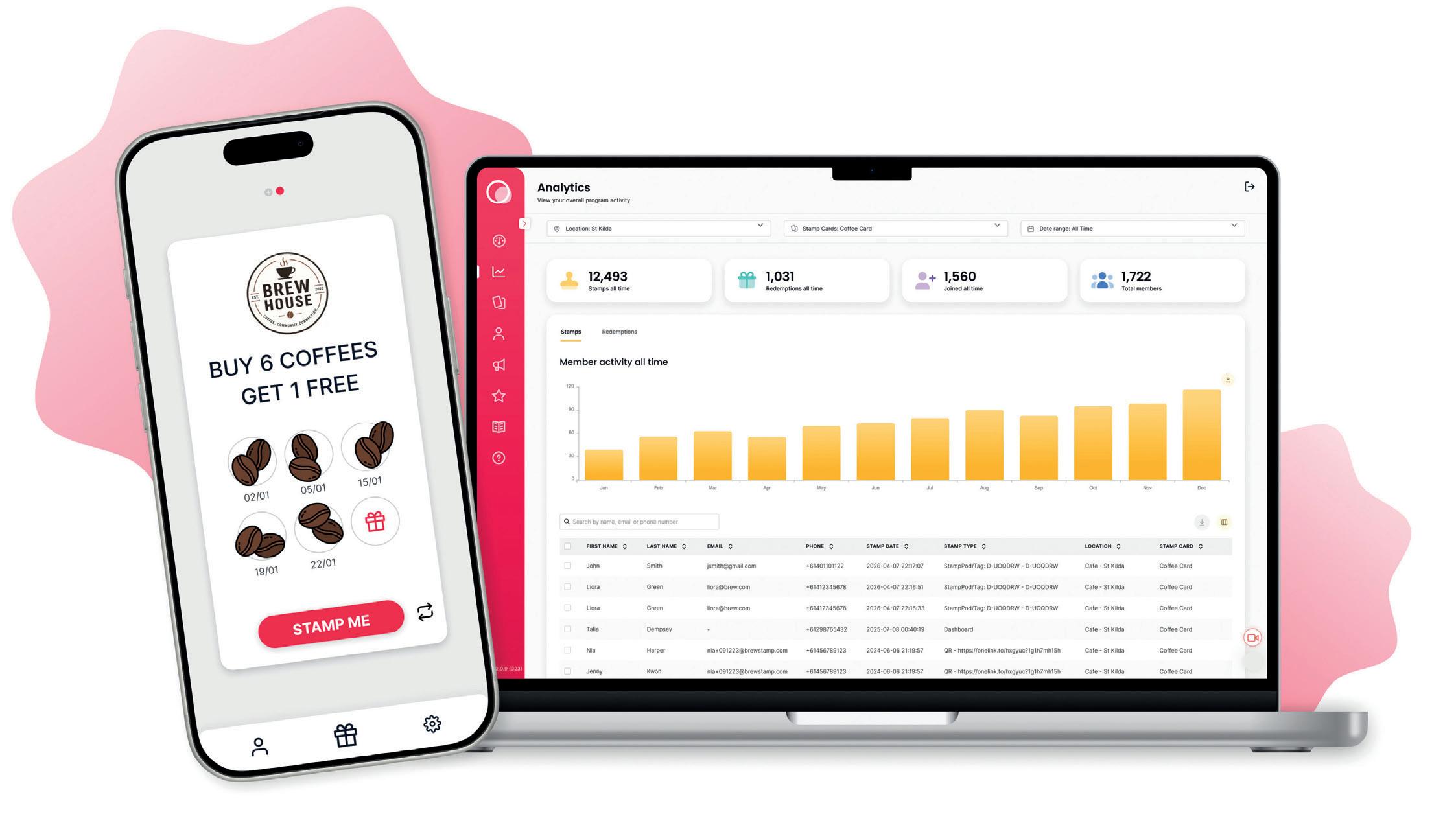
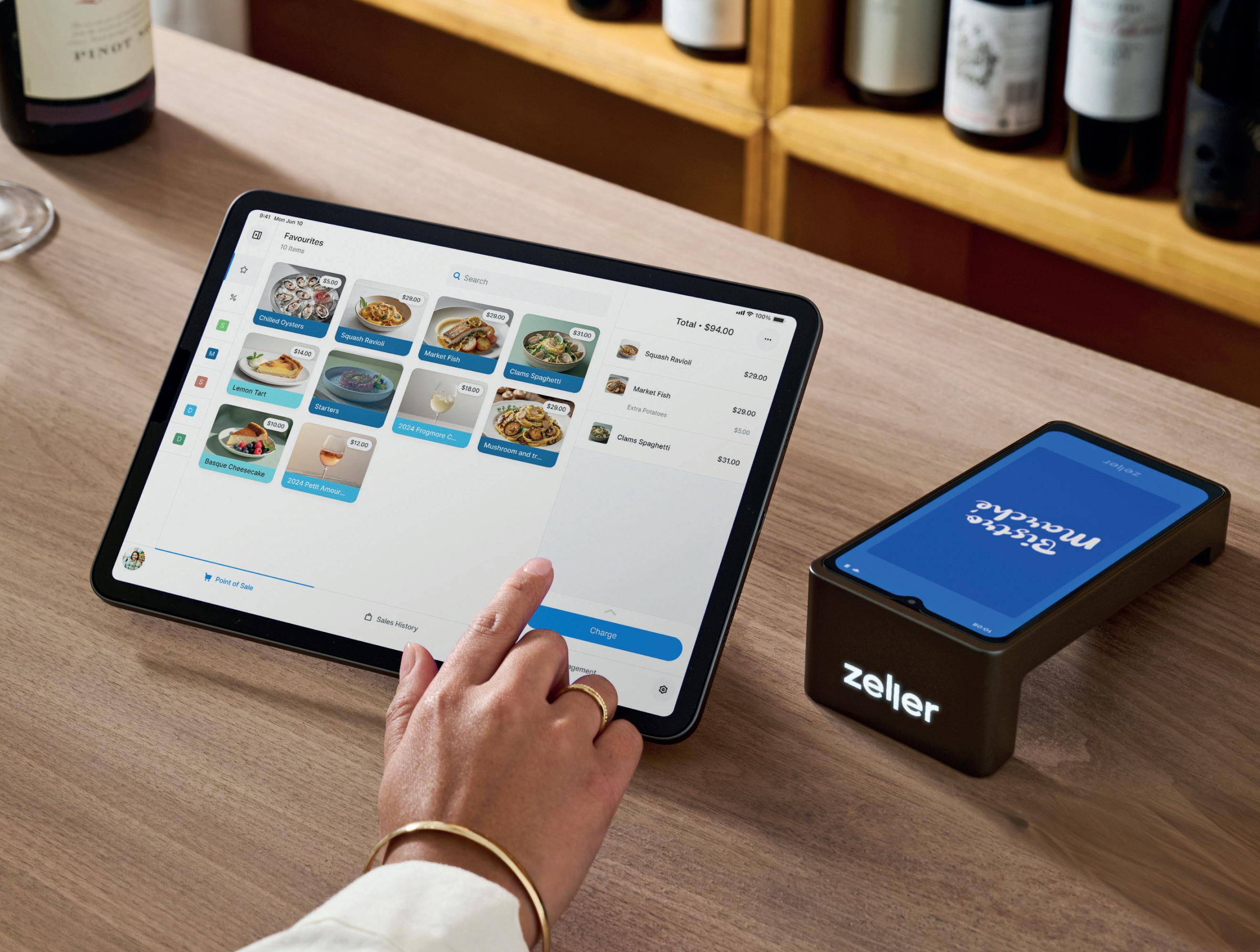
Believing the Australian point-of-sale market to be underappreciated by international players, a Melbourne-based business has released its own solution.
With the world continuing to shi to digital payment methods, the point-of-sale (POS) system in a café has only become more critical. It’s essential to the overall service of the venue but it can, at times, become a source of friction.
Between managing multiple providers, navigating subscription fees, and reconciling data across payments, accounting, and sales platforms, the technology stack behind the counter can quickly become more complex than the service itself.
It is within this environment that Zeller, and Australian-founded nancial technology ( ntech) company, has entered the POS universe with Zeller POS –a cloud-based application designed to bring payments, nancial management, and front-of-house operations into a single platform.
Available on iOS and Android devices –including tablets and smartphones – it also integrates with existing hardware such as receipt printers and cash drawers. e move has seen Zeller extend beyond
its core o erings in payments and business banking to position itself more within the day-to-day running of venues.
Ahead of its release, Zeller POS was trialled in a number of Australian businesses, including Cofezo in the busy innerMelbourne suburb of Balaclava. Located near the train station, Cofezo Owner Alvin Teh says the fast-paced environment in which the venue operates means e ciency during peak periods is critical to success.
“Since upgrading to Zeller POS, we’ve been able to serve customers, process orders, and accept payment faster than ever before,” says Alvin.
“Operating alongside a very busy train station in the inner suburbs, speed is critical.
He says the improvements provided by the new POS has enabled his sta to shi their focus back to providing the core components of a good café experience to customers.
“It reduces pressure on my team, ensuring they can focus on delivering great co ee and service to customers,” he says.
Founded in Melbourne in 2020 by former Square executives Ben P sterer and Dominic Yap, Zeller has grown quickly by bundling payments, accounts, and expense tools into a single platform now used by more than 110,000 businesses.
e move into POS marks a further step in that strategy, extending its reach from nancial management into front-ofhouse operations.
e Zeller POS platform includes a range of functionalities common to modern POS systems, including menu and item management, order routing, customisable displays, and real-time sales reporting.
Data is synchronised across the Zeller ecosystem, enabling businesses to view orders, transactions, payments, and nancial performance from a central dashboard.
Zeller Co-Founder and CEO Ben says the usability of the new POS, alongside its creation, has come as a result of direct feedback from Australian businesses.
“Merchants have struggled for too long
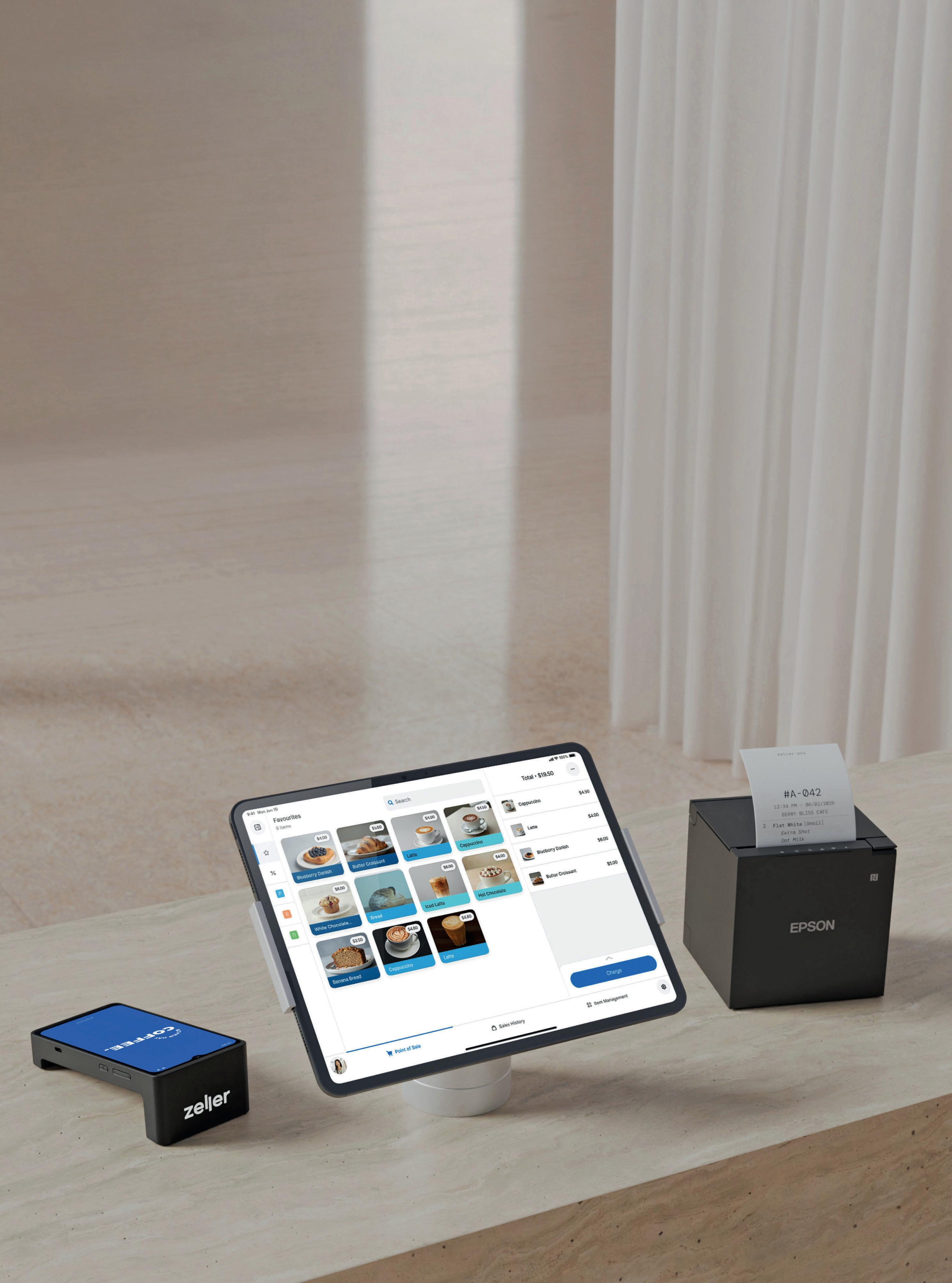
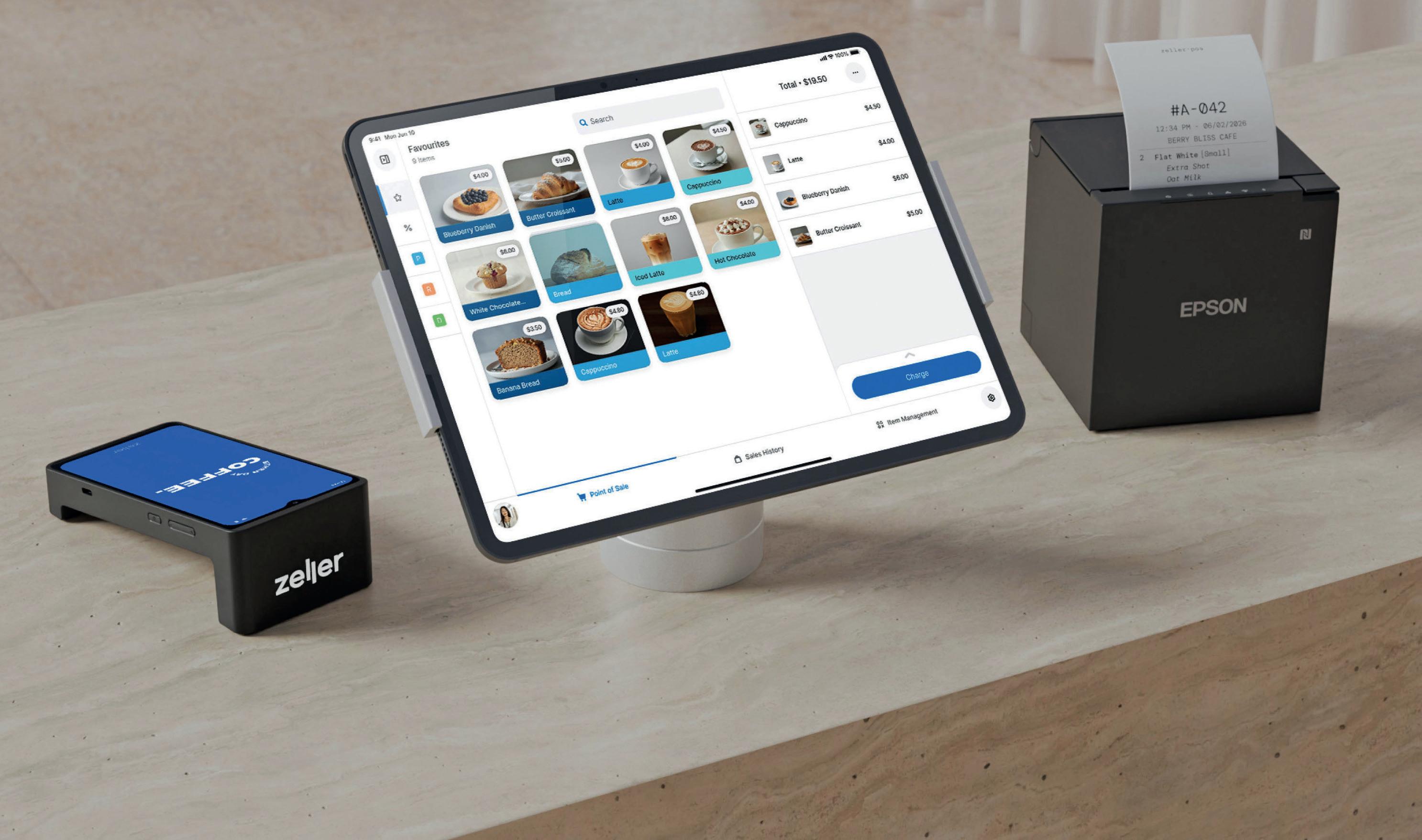
with expensive pricing, outdated so ware, restrictive contracts, and limited support o ered by foreign providers who have neglected the Australian POS market,” he says.
“We knew it was time to bring local POS innovation into the Zeller ecosystem, to complement our growing list of POS partners and provide more choice for Aussie businesses.”
Zeller also continues to support integration with existing systems. Zeller Terminal is compatible with platforms such as Tevalis, Triniteq, Impos, Redcat, Costar, Zii, e Edge POS, and Oracle Simphony.
is enables venues to either adopt Zeller POS as an all-in-one solution or continue using their current POS while leveraging Zeller’s payment infrastructure.
For cafés and hospitality businesses, where operational setups can vary widely, the ability to choose between consolidation and integration remains an important factor according to Ben.
e goal is to simplify how businesses understand and manage performance.
“Merchants using Zeller bene t from a consolidated view of their payments, accounts, and spending,” he says.
“Real-time data about where their business is selling from Zeller POS, and how they can use this 360-degree view of their performance,
“Since upgrading to Zeller POS, we’ve been able to serve customers, process orders, and accept payment faster than ever before.”
Alvin Teh OWNER, COFEZO
will enable them to optimise their nances and grow their business faster.”
Cost remains a key consideration for many hospitality businesses, particularly as operational expenses continue to rise.
Zeller estimates that POS-related so ware, hardware, and infrastructure can cost Australian hospitality and retail businesses up to $17,000 annually, depending on their setup.
Zeller POS removes ongoing so ware subscription fees, instead using a transactionbased pricing model when paired with Zeller Terminal. Businesses are charged a at rate on card and mobile wallet payments, with no separate so ware costs.
Zeller says the product is aimed at businesses looking to reduce xed so ware costs and consolidate payments and nancial operations into a single system.
Ben also says Zeller applies AI across its development process – from design and coding through to testing and deployment –enabling ongoing updates and feature releases. An automatic item import tool has also been designed to dramatically reduce setup time.
Within the platform itself, Zeller AI Assist will be embedded in the merchant dashboard. Currently designed to help users navigate features and functionality, the tool is expected to expand to include analysis of sales performance and nancial activity.
Because Zeller combines payments, accounts, and POS within a single system, the platform is structured to work from a uni ed data set. For operators, this can reduce the need to manually compile information across di erent tools.
As operators continue to navigate cost pressures and evolving customer expectations, the demand for systems that simplify rather than add complexity remains high.
Zeller POS is now available to the company’s existing customers in Australia, as well as to new merchants.
For more information, visit myzeller.com/au
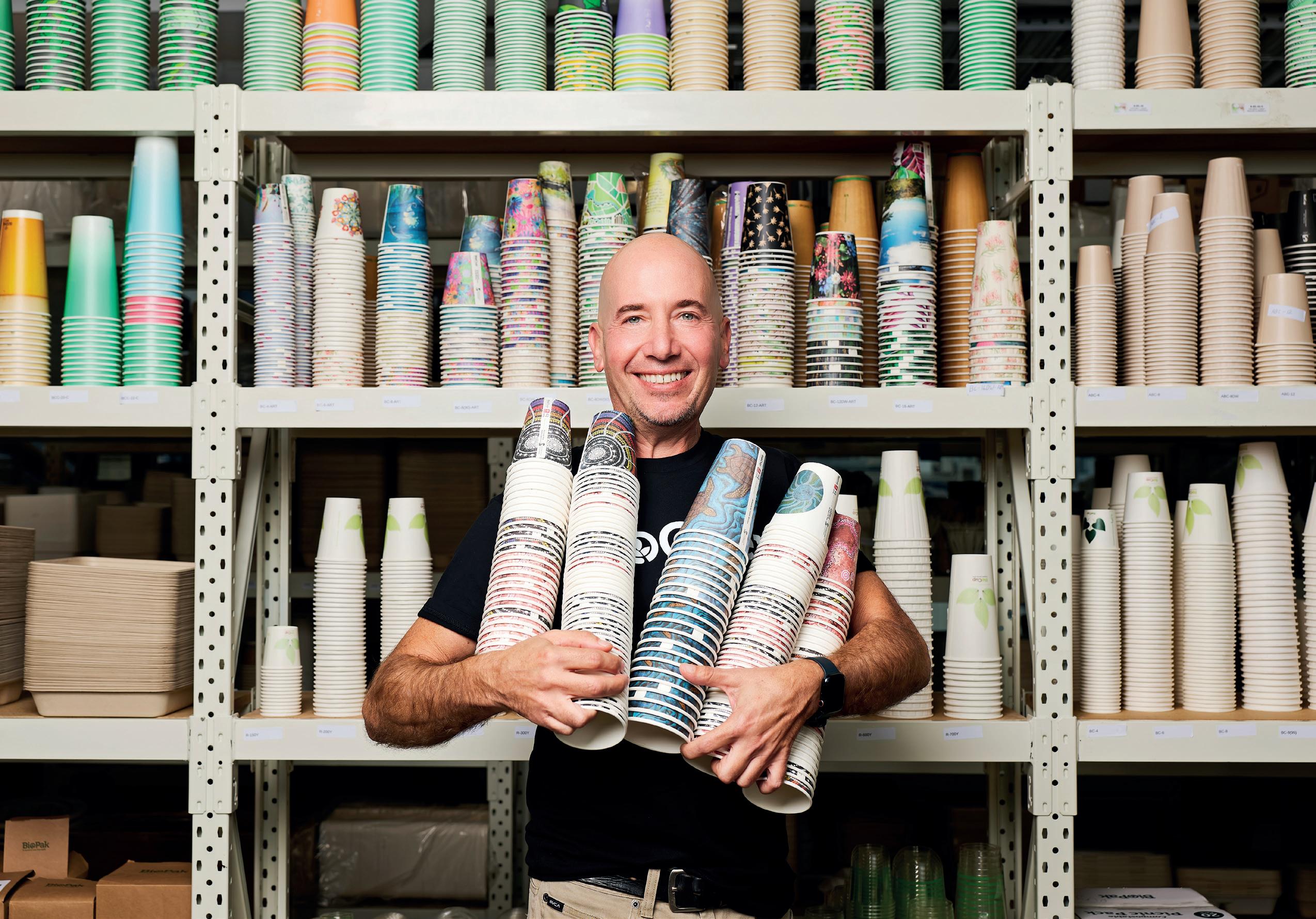
From compostable cups to recyclable lids, conflicting regulations are making responsible disposal increasingly confusing for cafés and their customers.
Standing in front of three di erent bins, scratching your head to decipher the correct option to dispose of a co ee cup or container has almost become a universal shared experience.
With legislation rapidly evolving across all levels of government, it can be overwhelming for businesses and patrons alike to know the correct end-of-life pathway for food and beverage packaging.
Richard Fine, Founder of sustainable packaging supplier BioPak, believes the market has become confused as “packaging has evolved faster than the recovery systems around it”.
“A café, brand owner, or consumer might navigate products described as recyclable, compostable, plastic-free, plant-based, paper-based, reusable, or bre-based. e challenge is that these terms are o en used interchangeably, but they do not mean the same thing,” explains Richard.
“What actually happens to a product a er use depends on collection, sorting, contamination, regulation, processing infrastructure, and end markets. at is far too much complexity to leave to a consumer standing in front of a bin, or to
a café owner trying to make a responsible purchasing decision.”
Richard says the confusion is not simply a lack of education; it re ects a system that asks people to make decisions without giving them clear, reliable pathways. e real issue, he says, is that end-of-life attributes such as recyclable or compostable are o en presented as guaranteed outcomes, when in reality they depend on the right collection, processing, and market conditions being in place.
“If something is certi ed as compostable, it tells you it’s been designed and tested to break down under de ned composting conditions. But it doesn’t guarantee there’s a collection pathway available, or that a local facility is permitted to, or willing to, accept it,” he says.
In some contexts, this means products that can be composted end up in land ll.
“In New South Wales, for example, the Environmental Protection Authority (EPA) position e ectively excludes most compostable packaging from food and garden organics (FOGO) bins, other than permitted caddy liners. at’s a regulatory barrier, not a failure of certi cation. e same applies to recyclable packaging.”
Foodservice packaging creates additional
challenges because it is o en used away from home and contaminated with food or liquid. at means its recovery depends less on what the product is called and more on where it is used, how it is collected, and whether suitable processing pathways exist. Clean Up Australia’s FY25 Litter Report reinforces the visibility of the issue, with packaging representing 59.5 per cent of reported litter and takeaway co ee cups accounting for 4.3 per cent of total reported litter, up from 2.8 per cent in FY24.
“ at doesn’t mean co ee cups are the whole problem, but it does show that away from home food-service packaging remains a highly visible litter stream,” Richard says.
“Composting is nature’s way of recycling, recovering organic matter and nutrients back into the soil. So, the right pathway depends on the material, the contamination pro le, and the infrastructure available, along with the regulatory settings.”
According to BioPak’s Chief Sustainability O cer Saxon Wright, there is currently a lot of discussion around end-of-life measures. However, he believes these all need to come together to work in tandem.
“What we have is a disjointed puzzle of
labelling, requirements, states, and future mandates and changes – there’s just a lot of uncertainty,” he says.
For café owners, navigating regulations and messaging can be a recurring challenge in an already busy environment.
“A lot of businesses are really trying to understand: ‘what do I have to do and what’s voluntary?’,” says Saxon.
He believes change must happen at a national level, citing a need for national harmonisation.
“We need policy alignment across the states,” he says. “Australia has made progress on harmonised labelling, but labelling alone is not enough. We also need consistent rules around which materials are accepted in recycling and composting streams, and how those decisions connect to APCO, state regulations, and any future extended producer responsibility scheme.”
e No Time to Waste Bill aims to make producers, importers, and distributors legally responsible for the packaging they place on the Australian market, including what happens to it at end of life. It would also make Australia’s National Packaging Targets mandatory and enforceable, shi ing them from voluntary commitments to legal obligations.
Saxon points to Italy as an example of a more joined-up approach to compostable packaging. e country has sought to preserve the role of certi ed compostable formats within the European Union’s changing packaging framework, supported by established organics collection and dedicated producer responsibility systems.
“Italy shows what is possible when the product, the collection system, and the processing infrastructure are aligned,” he says. “Compostable packaging works
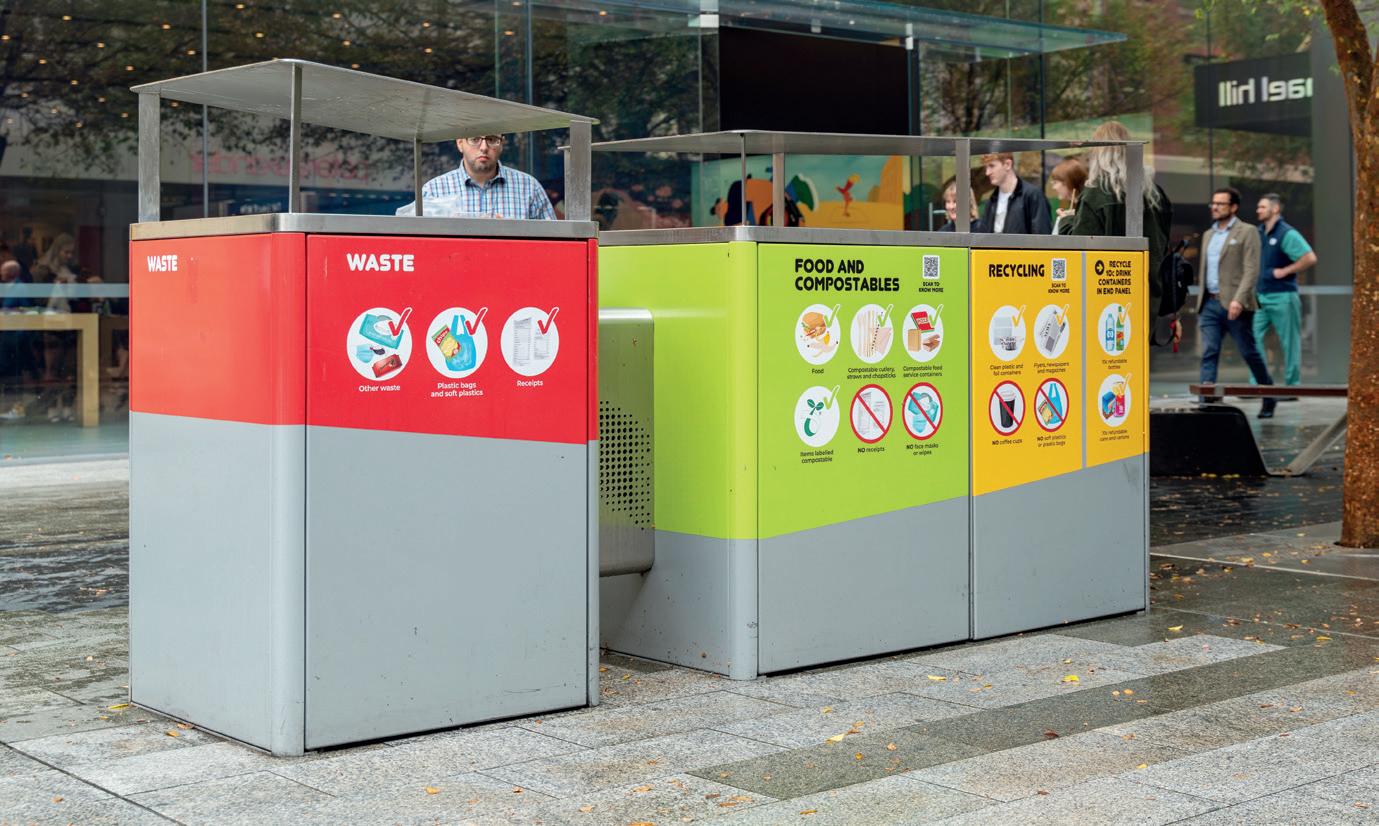
best when it is not treated as a standalone claim, but as part of a managed organics recovery system.”
Richard says end of life matters, but it should not be the only measure of sustainability.
“A café is not just buying a disposal claim. It is choosing which materials and supply chains it wants to support,” he says.
“Certi ed bio-based and responsibly sourced packaging can help shi demand away from fossil-based single-use plastics, while also supporting better sourcing, credible certi cations, chemical safety, and more transparent supply chains. Recovery still matters, but it should not erase the importance of what a product is made from in the rst place.”
Saxon says cafés can still make meaningful sustainability improvements alongside their packaging choices. ese might include reducing unnecessary packaging, encouraging reuse where practical, improving bin signage, separating food waste where services exist, and working with suppliers that can provide clear guidance.
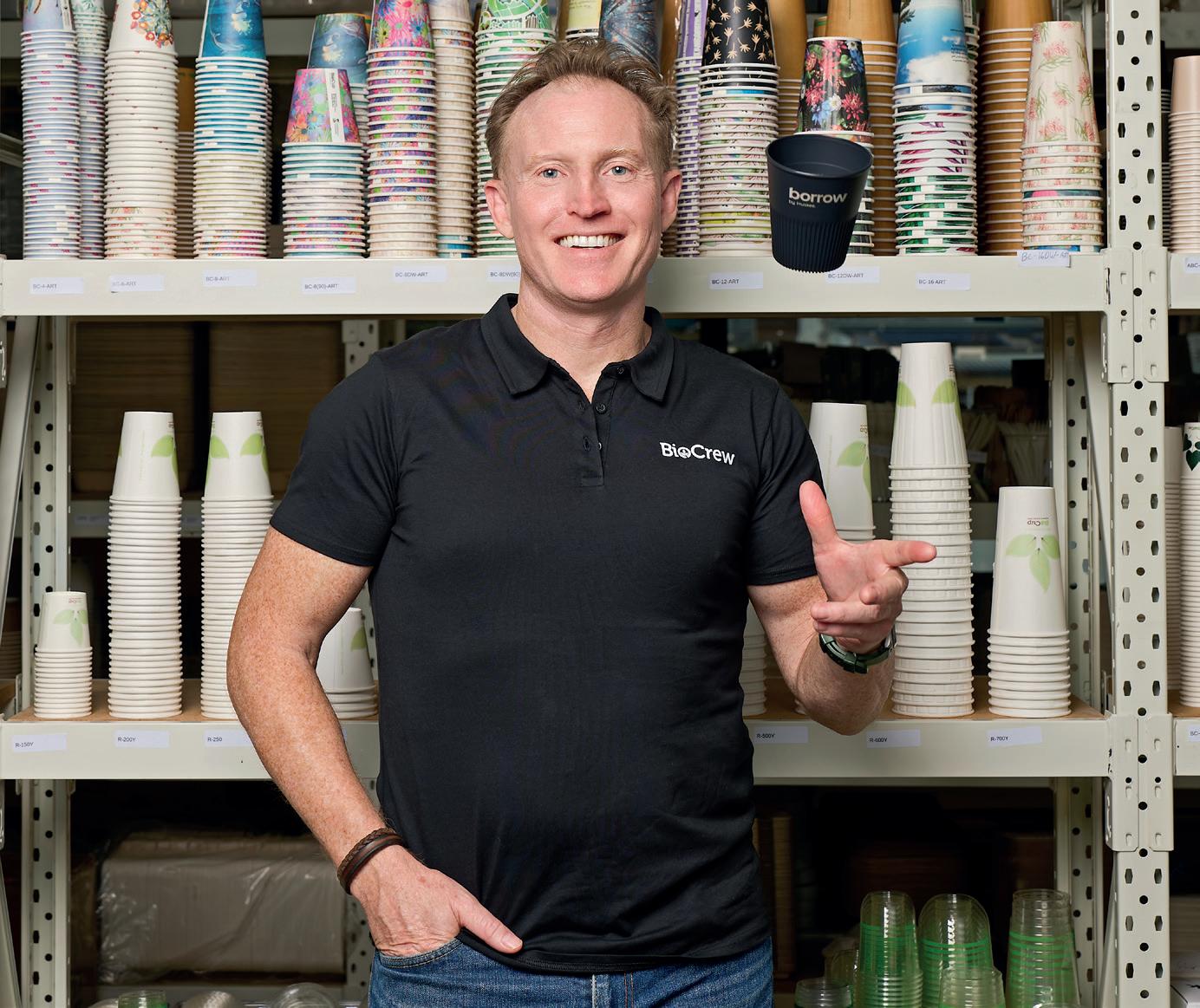
“ ere are always improvements a café can make, but they need to be realistic for the site,” he says. “It depends on the space available, the waste services in the area, the customer ow and the systems the café can actually manage day to day.”
Richard says responsibility needs to be shared, but it also needs to be practical.
“Consumers, cafés, suppliers, waste collectors, processors, and governments all have a role to play,” he says. “But we should not expect cafés or customers to solve a system’s problem on their own.”
He says food contamination is one of the biggest reasons foodservice packaging needs a more nuanced approach.
“A clean bre tray used for dry food may have a very di erent recovery pathway to the same tray used for saucy or greasy food,” he says. “ at’s why it is too simplistic to say the answer is just recyclable, compostable, or reusable packaging. Each pathway has a role, but only when the right collection, processing, and market conditions are in place.”
Richard believes better data is needed to understand how much and where foodservice packaging is actually used, how contaminated it becomes, where it is collected, and what happens to it a er use.
“We are still trying to solve a systems problem through individual product claims,” he says. “What we need is better data on material volumes and ows, so policy, labelling, infrastructure, and packaging design can be aligned around what is actually happening in the real world.”
To progress sustainability outcomes with small steps, café owners can start with knowing the rules in their local area and considering purchase decisions that align with their local infrastructure. Richard says re-use should be considered in every situation as part of a café’s o ering, as well as using packaging suppliers that o er certi cations to back up claims.
“Consumers have a role, but they should not be expected to solve the problem at the bin,” he says. “Cafés and venues also have a role, because they in uence what is purchased, how it is presented to customers, and what recovery systems are available on site.”
For more information, visit biopak.com
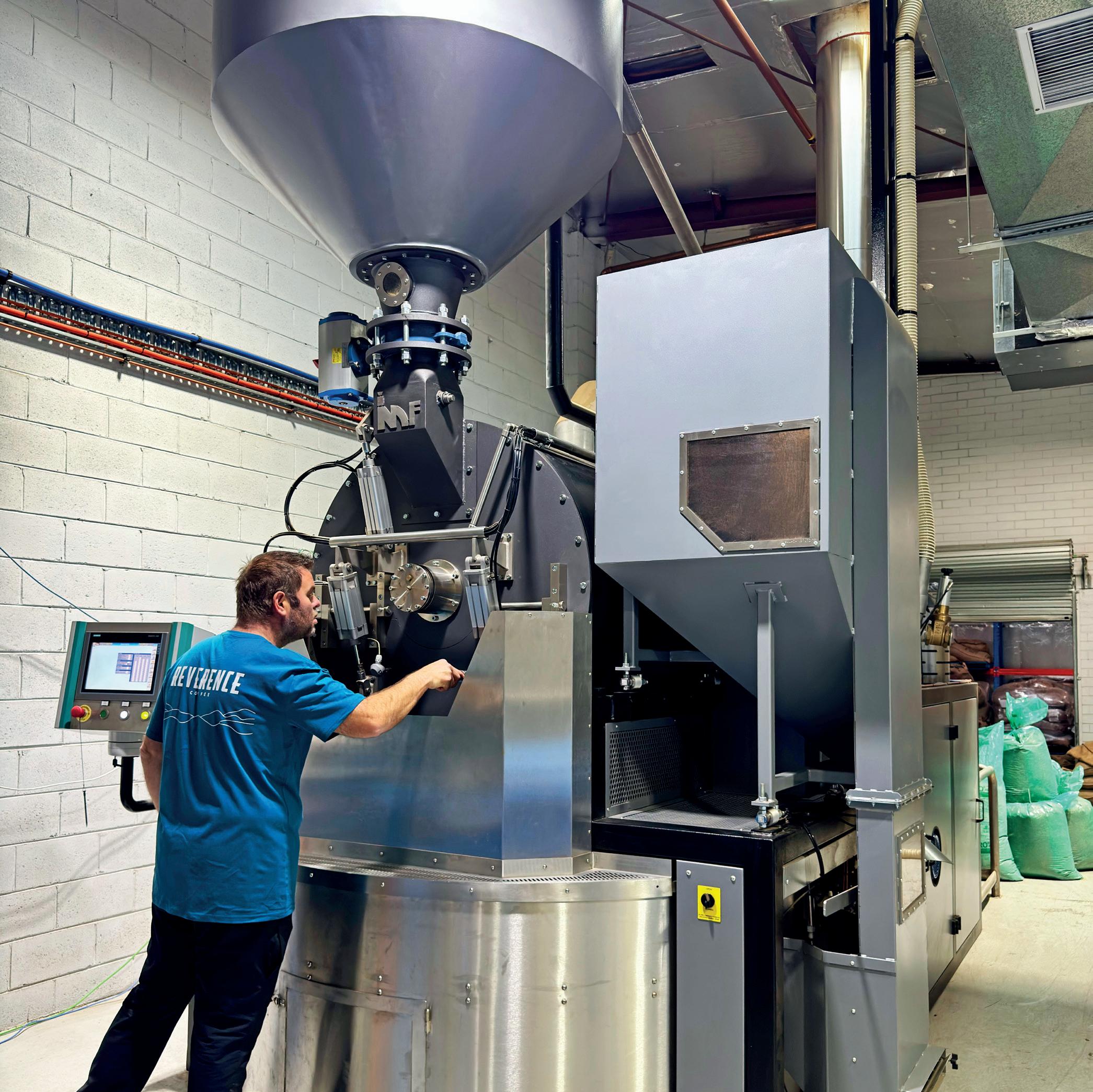
IMF’s recirculating heat technology has helped Concept Roasting reduce its energy use.
Growing volumes and multiple customer channels led contract roaster Concept Roasting to scale with the IMF RM120 roaster and 300-kilogram blender.
Balancing the needs of its Reverence Co ee brand alongside a growing roster of contract-roasting clients, Concept Roasting sought a solution that could support higher throughput while also easing the operational pressures of a highly manual roasting environment.
“Reverence Co ee is our brand into cafés, retail, and B2B, whereas Concept Roasting is our contract roast company,” explains Managing Director Andreas Martinu, noting the switch from a 60-kilogram “old school” roaster in 2022 was driven by growing contract volumes and the need to scale more comfortably.
e move to an IMF 120-kilogram roaster manufactured in Italy for the Melbournebased contract roaster proved a turning point.
“ e volume and scalability, both in terms of labour and energy consumption, was a big factor,” says Andreas.
And with gas costs rapidly increasing in the past ve years, IMF’s recirculating heat technology has also helped reduce energy use, delivering up to 30 per cent savings on gas consumption compared with other roasters tted with a separate a erburner.
“If I need to make changes it gives me full control to adjust and ensure the quality of the coffee we roast.”
Andreas Martinu MANAGING DIRECTOR, CONCEPT ROASTING
Andreas says he considered a range of alternative roasting machines brands, yet many required a larger premises, costly re ts, and overseas technicians being own out to Melbourne at the business’ expense.
“We had the IMF up and running within a week in our existing warehouse using local technicians,” he says.
According to Andreas, the IMF stood out not only for its automation capabilities but also its compact footprint and exible con guration options.
“ e IMF 120-kilogram roaster has a very small footprint, and we managed to get a lot more bang for our buck in terms of being able to also t in a 300-kilogram blender, which would have been challenging to t in with other brand equipment manufacturers,” he says.
e blender communicates with the roaster to automatically load and blend the co ee
from the roaster according to the recipe.
Alongside pro le consistency and production capacity, integrated controls have streamlined work ow. e IMF enables roaster and blender management from a single control panel, automating the movement of co ee through the production process – reducing the need for constant operator input.
“O en, I can just let it run on autopilot – I’ll check in, be watching it, or I can be on a call or sending an email next to the roaster, and it’s doing its thing,” says Andreas.
“It’s got a 12-step roast pro le that controls bean and air temperature to one degree accuracy, as well as drum speed and air ow at every step. It’s hitting every target; I don’t have to touch it.”
Safety was also front of mind.
“On my previous roaster, cha res could happen anytime. With the IMF, cha is continuously removed by the cha extractor which minimises re risk. It also has a built-in water suppression system that can be activated in the unlikely event of a re, which is reassuring.”
ese concerns, combined with the need for greater capacity and e ciency, led Andreas to IMF’s 120-kilogram roaster and 300-kilogram blender. Beyond the hardware itself, local support also played a critical role in the decision.
“Will Notaras from Roastquip (Australia’s exclusive IMF agent) has been fantastic with assisting us with installation and ongoing support, as has the Italian IMF support o ce,” he says.
e IMF support o ce can log in remotely to update the so ware, or deal with any general teething issues and work through them over WhatsApp while remotely logging into the control panel.
“ at setup saved so much time with roasting. We craned it in, lowered it into position, and within a week – even less – we were roasting. And the user-friendly so ware enabled us to replicate pro les and move across to the IMF in a short timeframe”. at exibility, combined with automated roasting so ware, has helped the business maintain consistency as volumes have grown.
“ e so ware and automation have made it much easier to scale, because of the repeatability of the pro les throughout the day. From rst roast to last, it’s very consistent,” he says.
Importantly, the system can still switch to hands-on control when needed.
“If I need to make changes in the pro le, I can override the automated process at any time and run it as a semi-automatic, or even fully manual machine … it gives me the full control to adjust and ensure the quality of the co ee we roast,” says Andreas.
“ is especially helps when you’re doing contract roasting, because you’re responsible for someone else’s product.”
e IMF also features plug and play connection to Cropster and Artisan dataloggers.
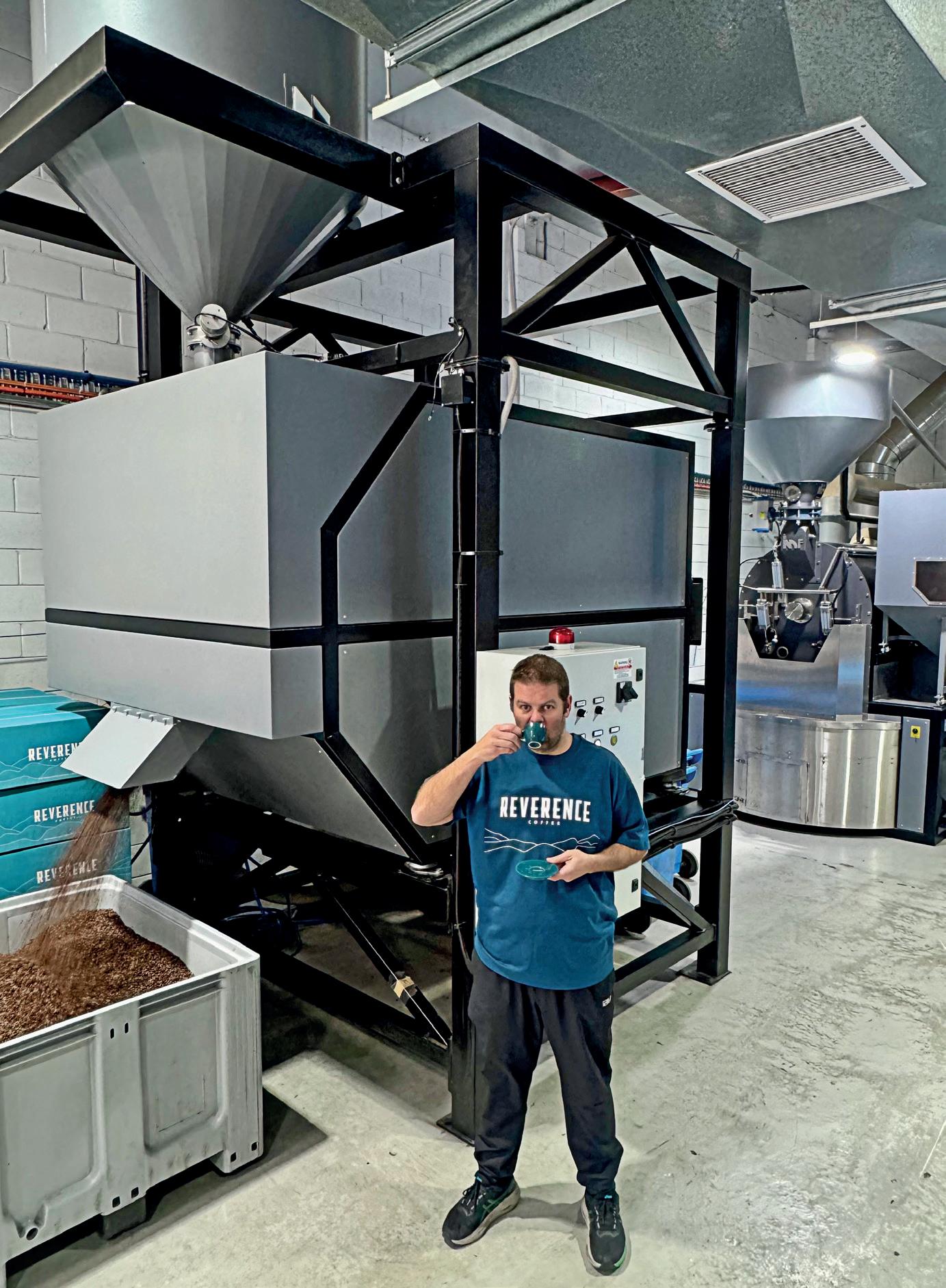
For a business roasting both for itself and customers, that combination of automation and operator control has proved valuable.
Andreas says the IMF allows Concept Roasting to comfortably handle large-volume production runs while continuing to support smaller, bespoke customers.
When working with someone else’s product, Andreas says he can roast a full 120-kilogram batch with a customer. For example, if they request four tonnes to be roasted on the same day, Concept Roasting can do that comfortably.
“It also opens it up to our private-label customers that might be an online-only business,” says Andreas.
“We’re not just looking for the biggest business – we’re large enough to do the large volumes, but we can o er a more tailored o ering.”
As the machine was purchased during the heightened uncertainty of COVID, Andreas says the investment required con dence. Looking back, he has no doubt it was the right decision.
“It was a big commitment at the time. Nobody knew what the world was going to look like, but I wouldn’t have it any other way,” he says.
IMF’s 300-kilogram drum blender automatically blends coffee from the 120-kilogram roaster.
“We’re now approaching two million kilograms roasted since 2022.”
Andreas says the Concept Roasting team work hard with their customers to ne-tune their pro les.
“Whether the clients are small, medium, or large, we can give that more personalised service and o er a range of options. We can roast down to 40 kilograms on the 120-kilogram roaster for smaller clients,” he says.
“ is means we don’t only cater to larger clientele. We o er bespoke, private-label service for multi-site cafes, or high volume single-site cafes.”
With the IMF being a drum roaster, Andreas says the business can also service some more traditional, espresso-focused roasters with heavier pro les that require more conductive heat from the drum.
“Alternatively, we can roast with more convective heat for those wanting brighter acidic co ees, and everything in between,” he says.
With an increased capacity, Concept Roasting remains focused on service.
For more information, visit roastquip.com.au
Stephen Coster says the ColourStar AQ enables him to respond quickly to customer requests.
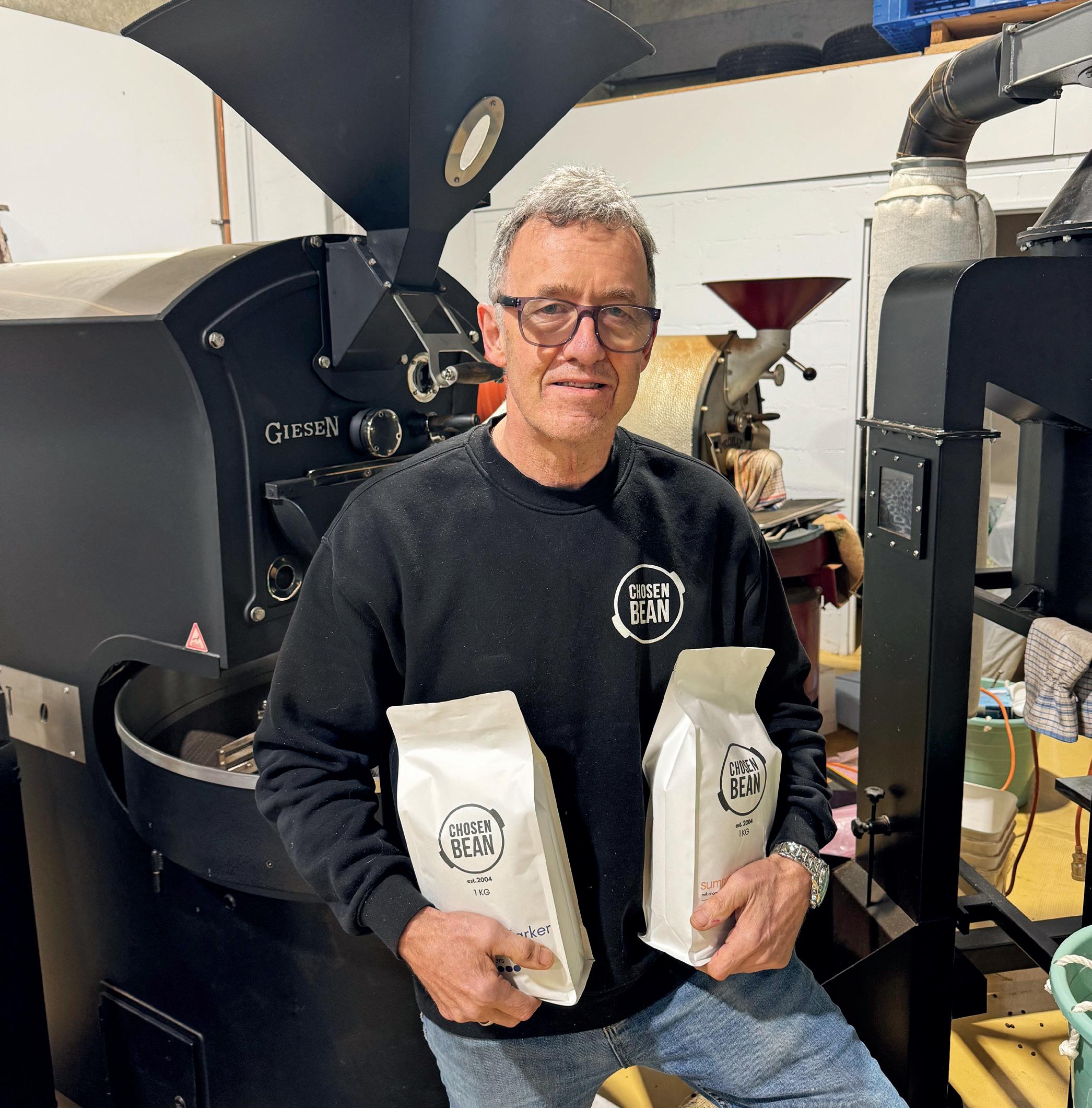
Print, pack, pro t
In-house printing is helping roasters take control of packaging and unlock new business opportunities.
Stephen Coster has spent decades building his co ee knowledge, but he believes it’s his recent investment in in-house printing that’s helping Chosen Bean operate with greater exibility, e ciency, and professionalism.
Based in Ferntree Gully with a 5-kilogram Probat and 15-kilogram Giesen roaster, Stephen supplies both Chosen Bean co ee and private-label products for café customers.
As the private-label side of the business grew, packaging became an increasing challenge. Stephen initially relied on stickers and external printing companies to customise bags for café customers, but small print runs o en made the process expensive and in exible.
“Because we’re only talking small runs for each café, the cost of printing is quite a bit,” he says.
e turning point came when he discovered
Australian printing company Trimatt’s ColourStar AQ digital printer at this year’s Melbourne International Co ee Expo (MICE). Now having the printer up and running for the past few months, Stephen couldn’t be happier with the results.
“ e Trimatt ColourStar AQ has given me a more professional and quality-control aspect to print on demand,” he says. “We can turn around within ve days, or even quicker.”
Within weeks, the machine was installed and producing packaging. Putting on his graphic design hat to create artwork with Canva, Stephen now designs and prints customised co ee bags in-house, giving Chosen Bean far greater control over its packaging.
“It just allows me to do so much,” he says. “My customers are now getting a bag that, within the same price, I’m saving money on
printing costs – anything from 80 cents up to $1. I’m now just doing it with my own labour in my roastery.”
e bene ts extend beyond cost savings.
Stephen says the ColourStar AQ enables him to respond quickly to customer requests and produce short-run packaging without the delays typically associated with external print providers.
“Flexibility wise, if a customer wants to do a promotion, I can just change the bag and they’ve got a new promo co ee,” he says.
For Chosen Bean’s café clients, the ability to create fully branded packaging has proven particularly valuable.
“ e cafés themselves are quite appreciative,” Stephen says. “Previously, the bags were not really fully branded with their logos. Now I’m able to pull their logos and give them a bag that totally identi es with their marketing pro le.”
e addition of the printer has also removed the need for labour-intensive stickering.
“I can do a small run of a particular co ee with all the description and details on the bag,” he says, “with less labour and time involved in stickering front and back.”
Beyond co ee bags, Stephen has found multiple uses for the printer across his broader business operations, including Uber Eats bags, takeaway cup trays, serviettes, and promotional materials.
“ ere’s nothing I can’t print on, really,” he says.
ose capabilities have opened new marketing opportunities as well, helping generate customer engagement without signi cant advertising costs.
“It’s really subtle marketing that’s not costing me a lot of money in terms of advertising,” Stephen says.
e printer is also creating opportunities beyond Chosen Bean’s existing operations. Stephen has already begun exploring smallrun printing services for other roasters that need professional packaging without committing to large order quantities.
“I’m working with one roaster at the moment who has been stamping his co ee bags,” he says. “I could print small runs for him – that’s where I see another part of the business.”
For Stephen, one of the most signi cant advantages is the freedom to make changes without relying on external suppliers.
“ e biggest issue with my packaging was delays,” he says. “A local printer order was still four to six weeks away. If you wanted to get your bag printed overseas, then you’re talking a lead time of three to four months, as well as huge quantities and large outlay, so there was no exibility.”
He adds that costs associated with outsourced artwork and design changes could also slow momentum.
“ e ColourStar AQ has given me the exibility where I can adjust my own designs, as well as for other people,” he says.
e ColourStar AQ printer, launched by Trimatt at MICE in 2023, was developed in response to a growing need for on-demand, in-house packaging printing.
“We recognised the long delivery times and high costs associated with short-run packaging. An on-demand, in-house printing solution was needed,” says Trimatt Founder Matt Johnson.
As specialty roasters continue to expand their o erings with seasonal co ees, subscription programs, and private-label products, packaging requirements have become increasingly complex.
“Branding is a crucial part of any product. Co ee packaging has such a broad variety of blends and names unique to the brand owners,” says Matt. “ e ColourStar AQ delivers this need with vibrant colour print and capability to print short run at a low cost, and short delivery times.”
“In-house printing is simple, reliable, and provides a huge amount of flexibility when it comes to branding a roaster’s packaging.”
Matt Johnson FOUNDER, TRIMATT
For roasters accustomed to forecasting packaging requirements months in advance, the ability to print only what is needed can signi cantly change day-to-day operations. Matt says the ColourStar AQ gives roasters the ability to print a production run of 2000 bags in 30 minutes – with alternatives sometimes taking up to 13 weeks. at speed can be particularly valuable as private-label programs grow and co ee o erings become more diverse.
“ e ColourStar AQ is extremely easy to use. Printing from a PDF, a job can be loaded and ready to print within minutes,” he says. “It can also print on other café packaging items such as napkins, bags, and boxes.”
e ability to make artwork changes quickly is also helping roasters respond to new co ee releases and customer opportunities.
“Users of the Trimatt ColourStar AQ boast the capabilities of the system for private labelling,” says Matt. “Artwork changes are a breeze, so when a new batch, blend, or brand is ready, fast to market is achievable through fast packaging printing readiness.”
For businesses managing a growing number of packaging variants, on-demand production can also reduce warehousing requirements, with Matt noting there’s no need to store various SKUs because the ColourStar AQ is able to print exactly what is required for production.
Matt says roasters across Australia are already bringing packaging production inhouse to gain greater exibility over branding and packaging supply.
“In-house printing is simple, reliable, and provides a huge amount of exibility when it comes to branding a roaster’s packaging,” he says.
“In the end, users are saving money with reduced packaging costs, and selling more co ee.”
For more information, visit trimatt.com
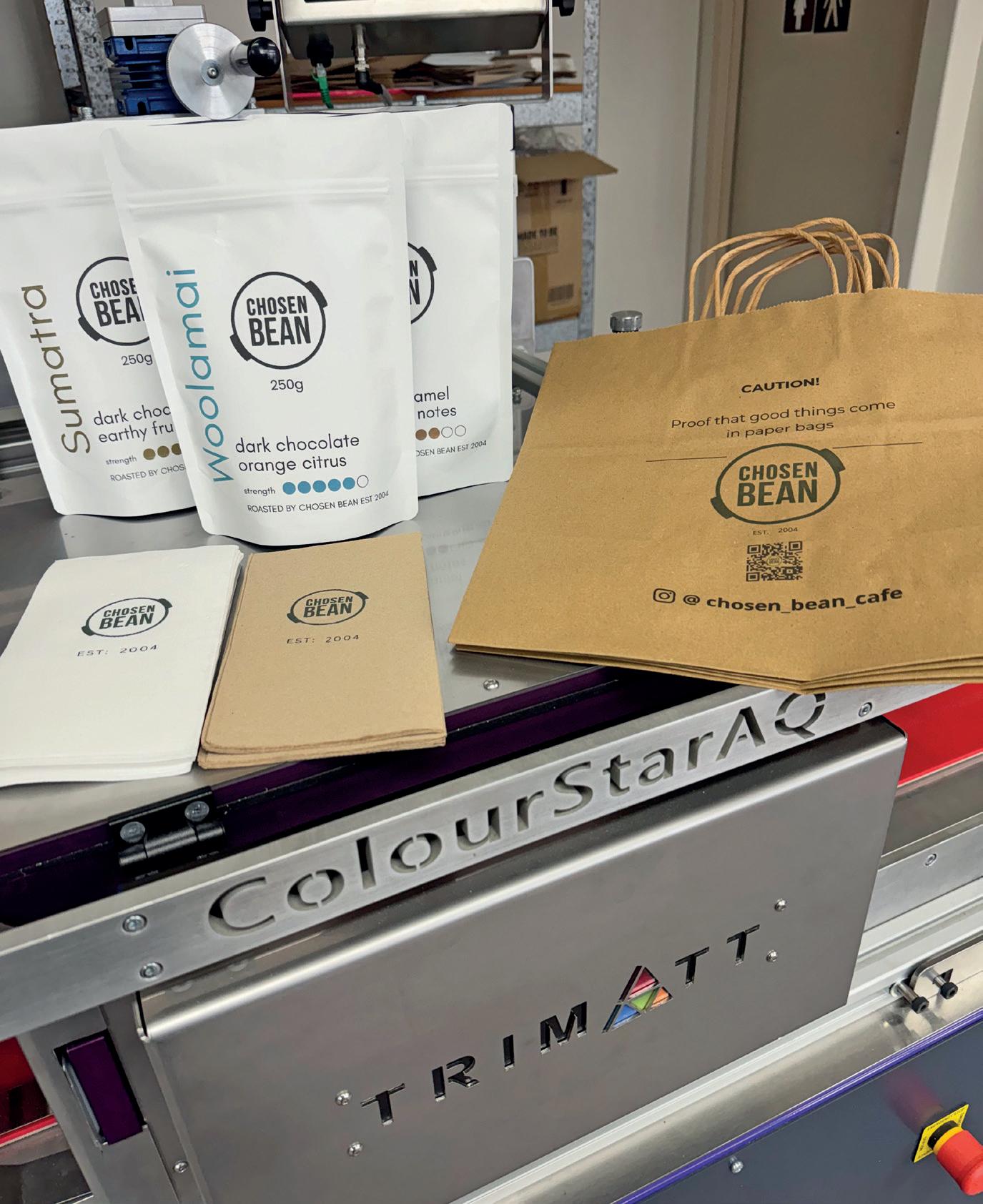
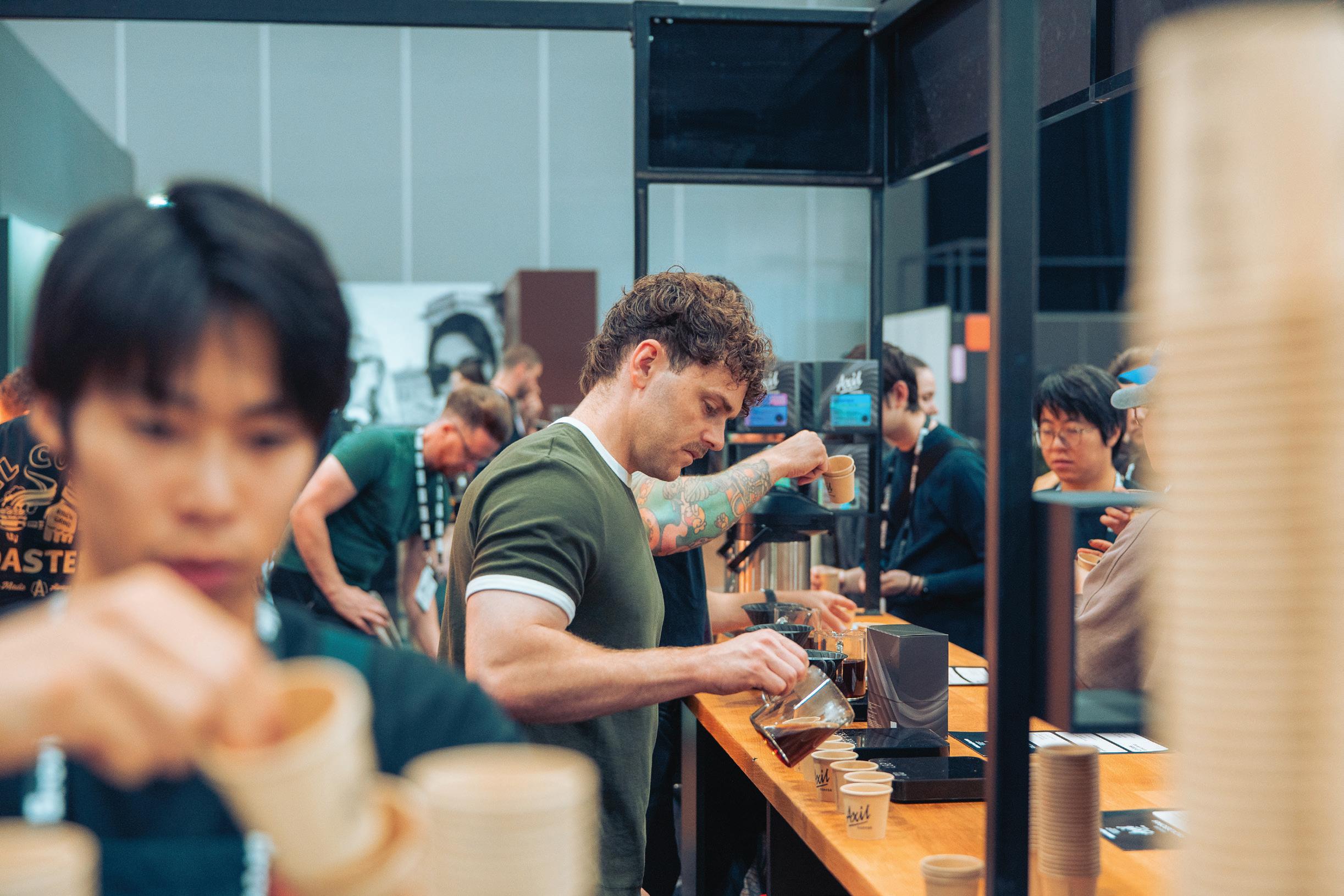
A snapshot of some of the products helping baristas and brewers push the boundaries of the Australian coffee industry.
Innovation in co ee rarely stands still. e Australian co ee industry continues to embrace new ideas, technologies, and products designed to improve quality, consistency, e ciency, and customer experience at every stage of the co ee journey.
What’s particularly notable about the latest wave of innovation taking the industry by storm is its breadth. It extends far beyond traditional espresso equipment to encompass water chemistry, milk automation, cold co ee production, home espresso, grinding technology, and plant-based beverages.
Collectively, these developments re ect an industry responding to changing consumer expectations while helping operators navigate rising costs, labour pressures, and increasing demands for product quality.
Precision has emerged as a de ning
theme. Whether through advanced espresso machines that provide greater control over brewing variables, purpose-built grinders engineered for exceptional avour clarity, or mineral formulations designed to optimise water, manufacturers are focusing on reducing variables and improving repeatability.
As co ee professionals and enthusiasts become increasingly knowledgeable, the demand for tools that deliver reliable and measurable results continues to grow.
Automation is another major driver. Labour shortages and rising operating costs remain signi cant challenges for hospitality businesses, prompting strong interest in equipment that can streamline work ow without sacri cing drink quality.
New technologies are enabling venues to produce milk-based beverages, batch
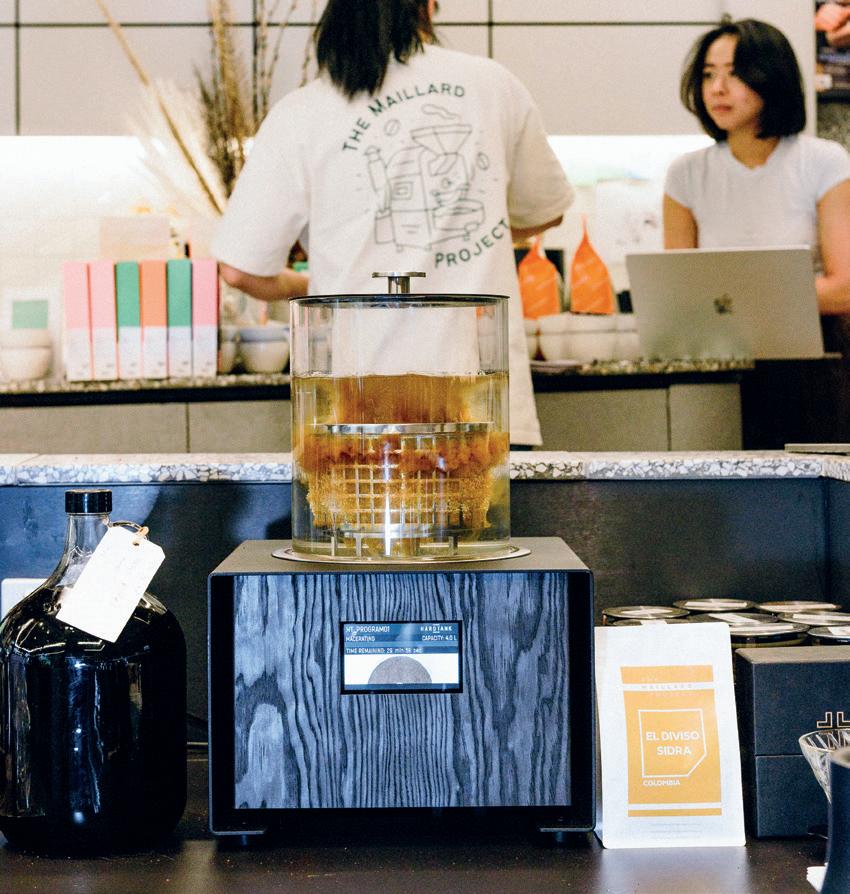
Cold brew has evolved from a seasonal offering into a year-round menu staple.
To help businesses capitalise on this trend, Barista Equip Australia has introduced the Baby Hardtank – a compact rapid cold brew system that produces smooth, low-acidity cold brew in around 45 minutes.
The technology enables cafés to move beyond traditional recipes by creating house-made infusions, giving operators complete control over flavour profiles and menu innovation.
cold co ee, and other specialty drinks with unprecedented consistency while freeing sta to focus on customer service and other aspects of the café experience.
At the same time, innovation is being shaped by evolving consumer tastes. e growing popularity of cold co ee, specialty milk beverages, and alternative milks has encouraged manufacturers to develop products that cater to a broader range of preferences.
Sustainability, ease of use, and premium presentation have also become increasingly important purchasing considerations for both businesses and consumers.
While each innovation serves a di erent purpose, all share a common objective: helping create better co ee experiences, more e ciently and consistently than ever before.
The rise of cold foams has further accelerated demand for premium cold beverages, creating opportunities to combine infused cold brew with textured foams and premium syrups, delivering high-value drinks that stand out.
Designed for cafés, roasters, and hospitality venues, the Baby Hardtank combines a small footprint with automated operation and recipe consistency, enabling businesses to expand their cold beverage program without adding significant labour.
more information, visit baristaequip.com.au
Mini Cellini X and Cellini EVO PID
The Mini Cellini X and Cellini EVO PID are the evolution of La Pavoni’s semiprofessional espresso machine range. At the heart of the machines is an integrated PID temperature control system, which enables precise and stable brewing temperatures for greater consistency and control. A built-in shot timer further supports accurate espresso preparation.
They also introduce a range of practical upgrades, including standby and ECO modes, faster heat-up times, and an upgraded 1.7-litre water tank
fitted with an integrated water filter as standard. La Pavoni has improved the efficiency of its heat-exchanger boiler system, with the Mini Cellini X capable of reaching operating temperature in as little as six to eight minutes.
Available in traditional stainless steel, as well as contemporary matte black and matte white finishes with timber accents, the machines combine Italian craftsmanship, premium materials, and modern aesthetics to meet the expectations of today’s coffee enthusiasts.
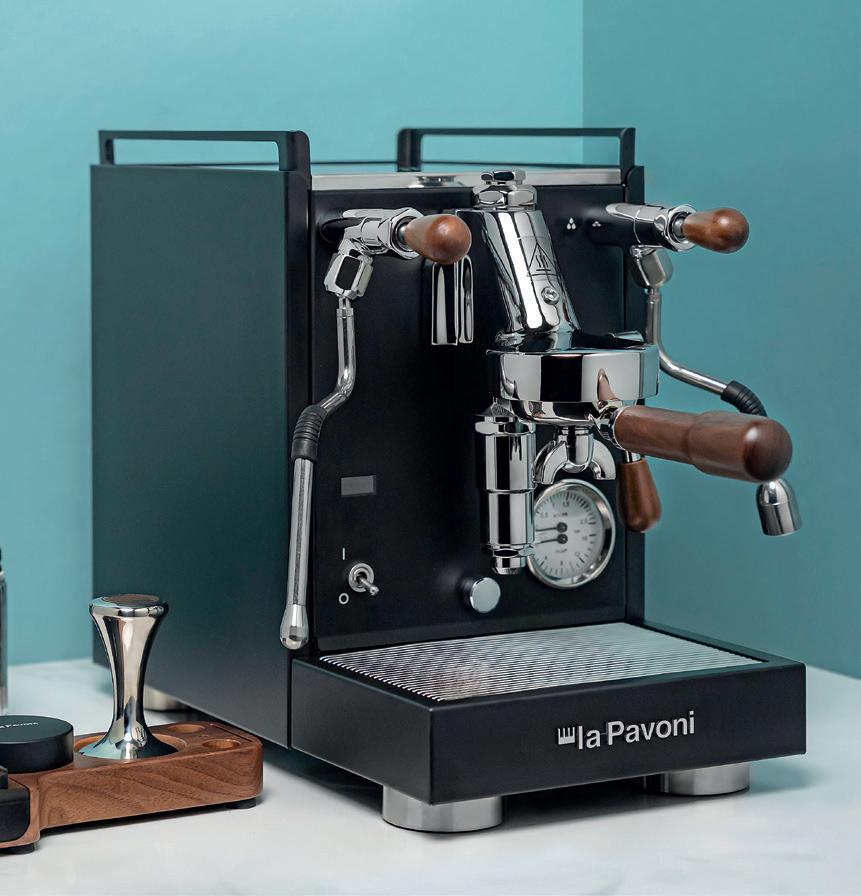
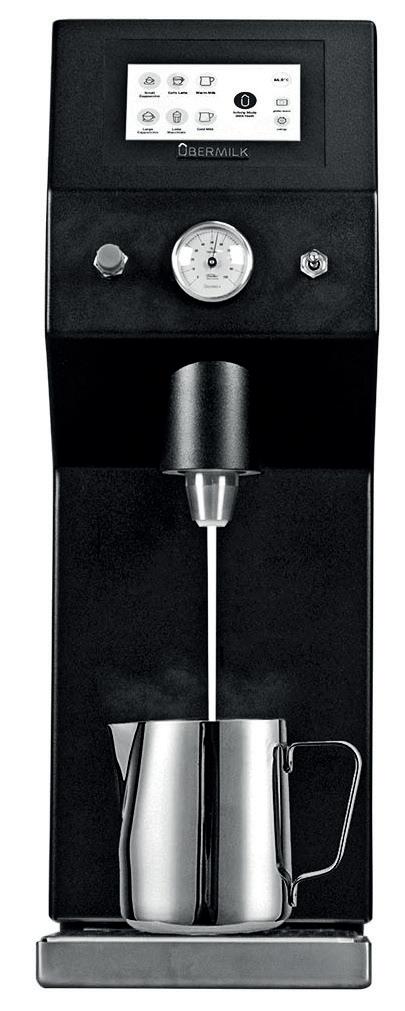
As consumer demand for plant-based beverages continues to accelerate, cafés are under increasing pressure to deliver the same quality, consistency, and speed customers expect from traditional dairy milk. The Übermilk PB has been developed to meet this challenge.
Built on the proven platform of the Übermilk One, the PB has been engineered to texture oat, soy, almond, and other alternative milks with exceptional consistency. Using advanced automation, it produces smooth, barista-quality microfoam at the touch of a button, eliminating the inconsistencies associated with manual steaming while significantly improving workflow efficiency.
Designed with the modern café in mind, the Übermilk PB retains the same compact footprint as the original Übermilk One, enabling seamless integration into existing coffee bars without requiring additional bench space. Already trusted by more than 100 venues across Australia and New Zealand, the Übermilk PB combines proven reliability with technology designed specifically for plant-based milk, providing cafés with a dedicated solution to confidently meet the growing demand for alternative milk beverages. For more information, visit baristagroup.com.au
Minor Figures is on a mission to redefine plant-based milk with the launch of Barista Almond, a premium almond milk crafted for exceptional coffee performance without compromising on ingredient quality.
Made with 100 per cent Australian almonds, the new recipe is seed oil-free, using olive oil to create a smooth, creamy texture and outstanding steaming performance.
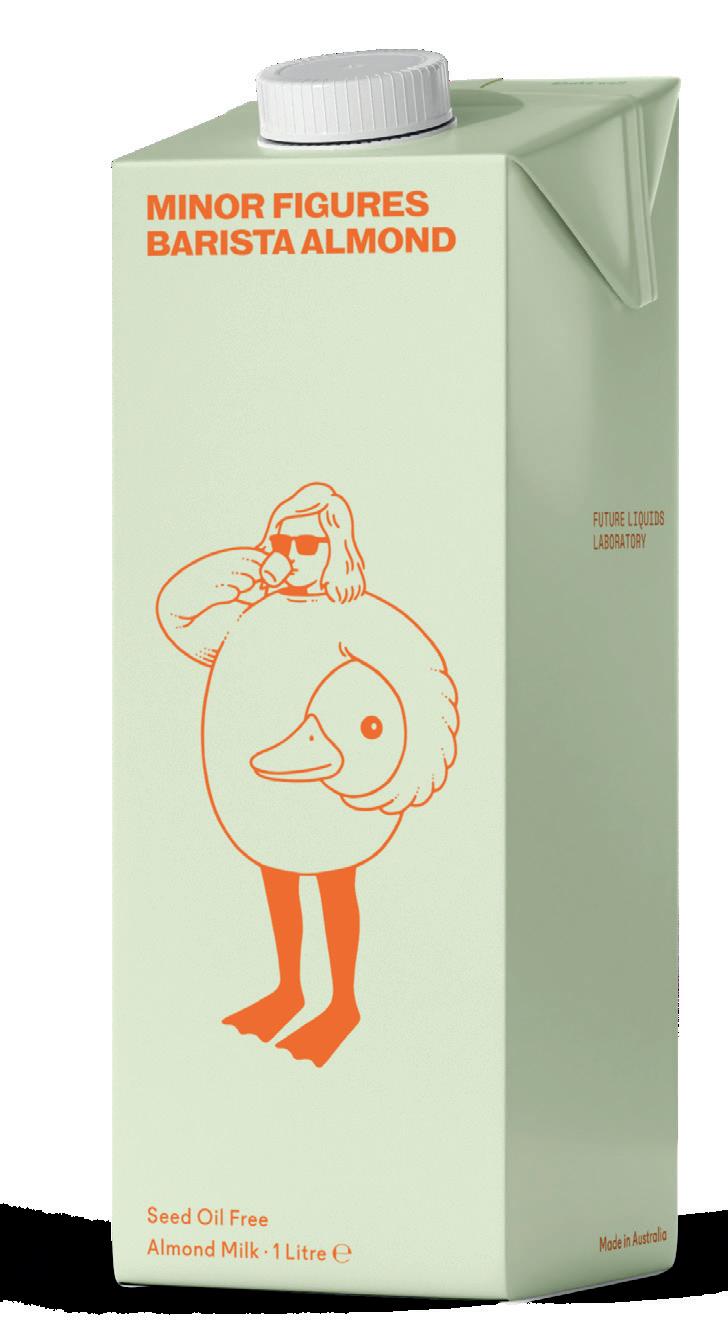
Developed specifically for baristas and coffee lovers, Barista Almond has been formulated to deliver silky microfoam, a rich mouthfeel, and reliable performance in espresso-based drinks, making it a key choice for cafés and home coffee setups. The carefully selected ingredients are designed to complement the flavour of coffee rather than overpower it.
Responding to growing consumer demand for cleaner, more mindful ingredients, Minor Figures Barista Almond also offers a nutritional advantage: containing less sugar, less fat, and fewer carbohydrates than some leading almond milks.
For more information, visit au.minorfigures.com
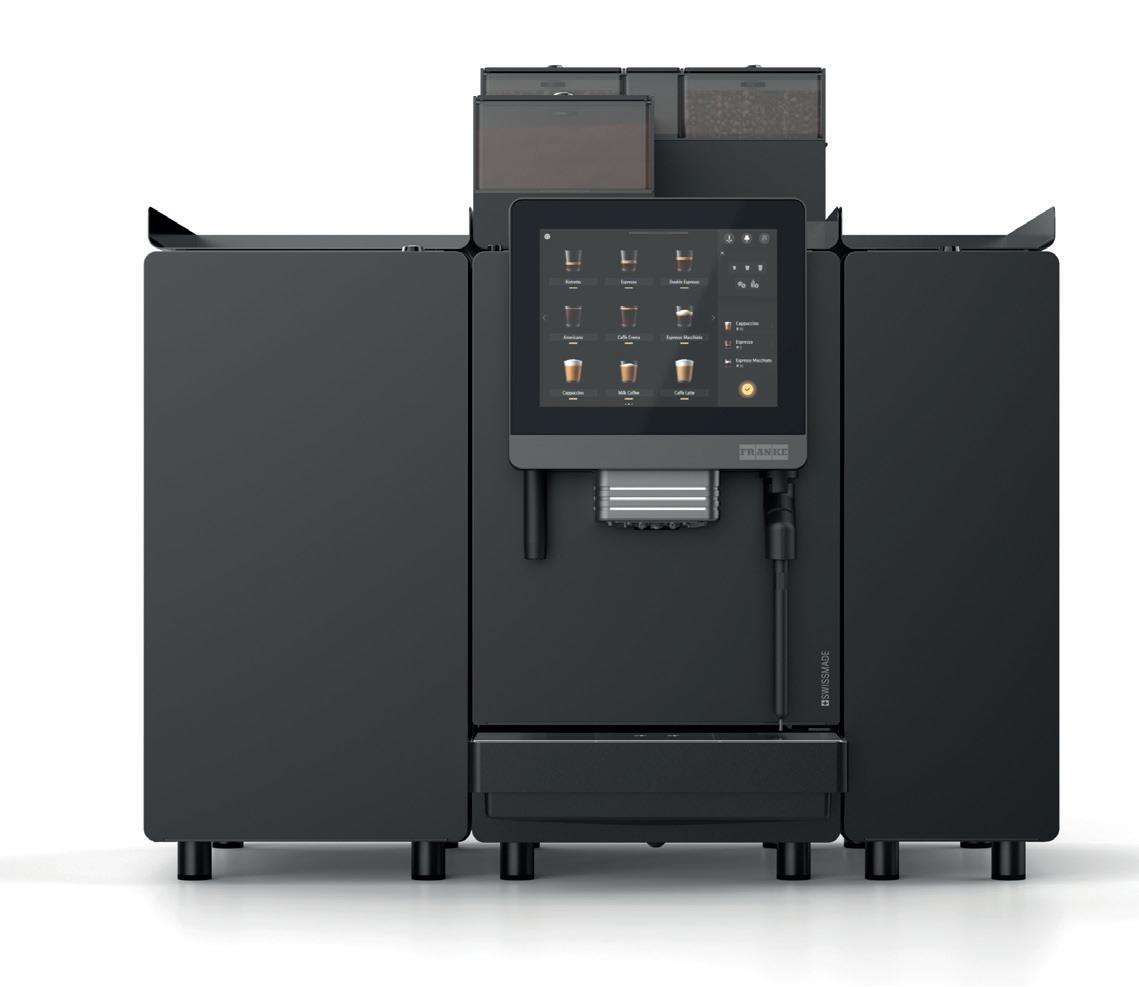
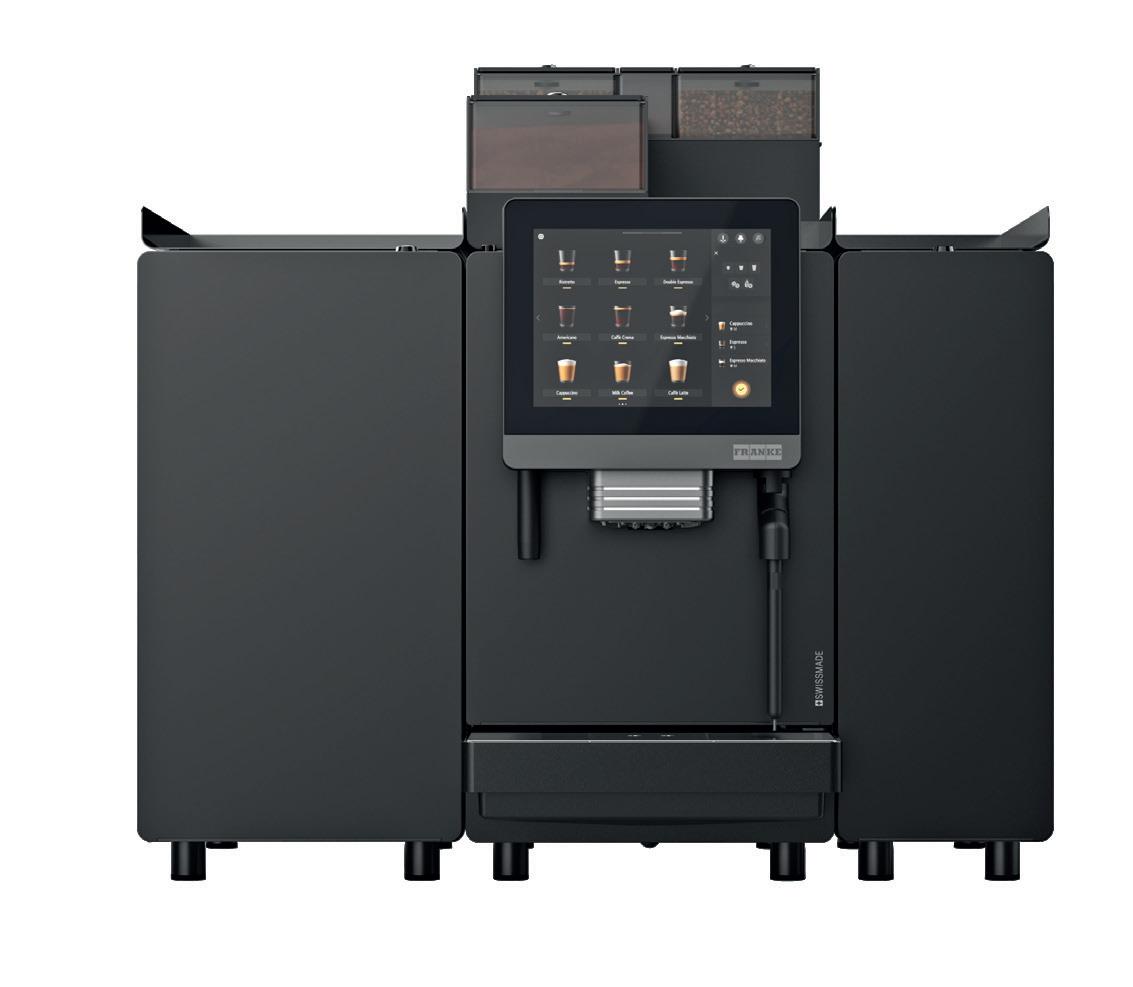
The Franke New A Line is a fully automatic coffee machine range designed to bring premium coffee quality, operational efficiency, and user-friendly technology to a variety of hospitality and foodservice environments. The range combines advanced brewing technology with an intuitive operating system, enabling operators to produce espresso, milk-based beverages, and speciality coffee drinks with minimal training. High levels of automation are designed to ensure
consistency from cup to cup, while also simplifying workflow for staff.
Designed with reliability and efficiency in mind, the New A Line aims to reduce operational complexity while maintaining the coffee quality consumers increasingly expect. Its combination of Swiss engineering, automated beverage preparation, and adaptable configurations makes it suitable for cafés, convenience outlets, hotels, workplaces, and other hospitality venues looking to deliver a premium coffee experience at scale.
For more information, visit aline.franke.coffee
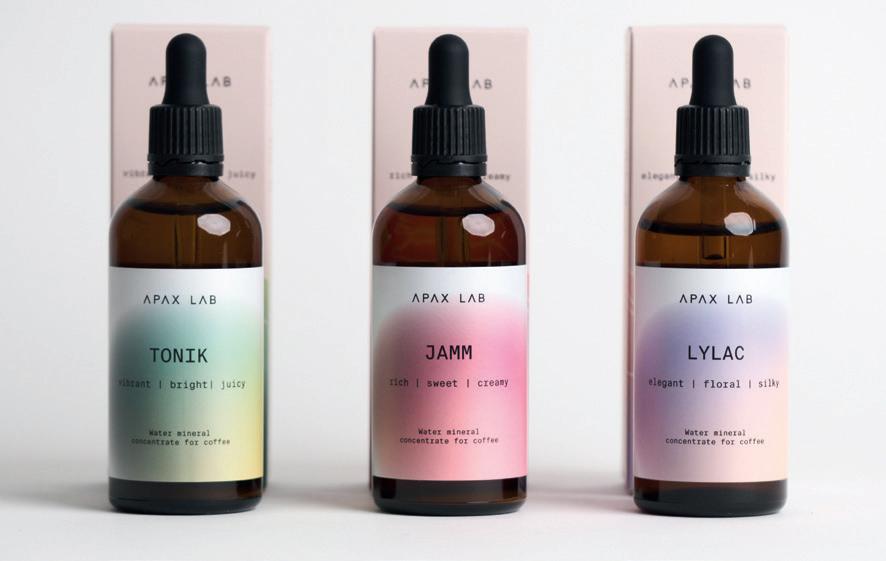
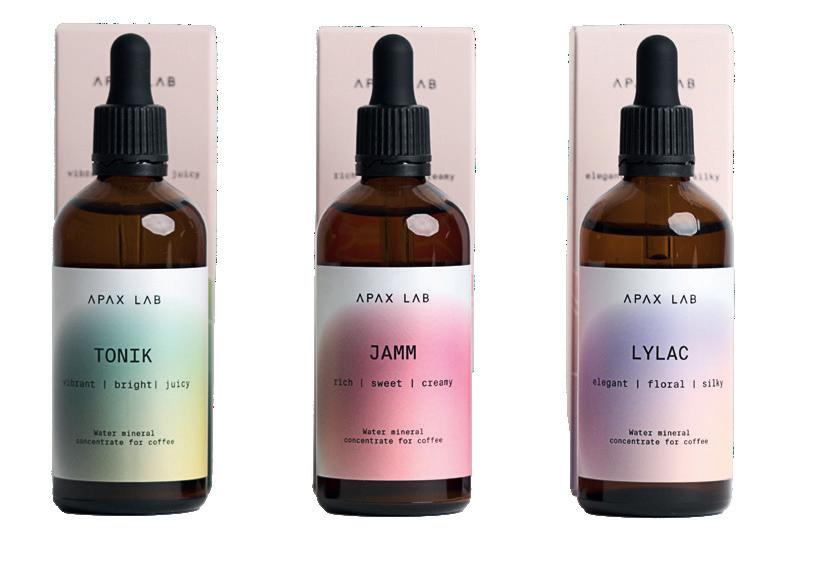
Water is the main ingredient in coffee, but getting the chemistry correct can be challenging. APAX LAB Co-Founder Simon Gautherin has looked to change that by taking complex science and turning it into an easy-to-use flavour toolkit.
After years of research, his company has created a range of liquid mineral drops that is designed to enable the easy composition of brewing water, based on the flavours the barista wants to bring out.
The core range consists of three options: TONIK, for a bright, juicy, and crisp taste; JAMM, for rich, sweet, and creamy mouthfeel; and LYLAC, for delicate, smooth, and floral notes.
To use, simply add a few drops to distilled water before brewing, or directly into the cup post-brew to ‘season’ the coffee to taste.
APAX LAB drops are now also becoming a mainstay on the competition stage. At the 2026 World Brewers Cup, five of the six finalists – including Simon, who finished second – used them in their routines.
For more information, visit coffeetools.au
Mazzer has expanded the Philos grinder ecosystem with a range of thoughtfully engineered accessories designed to enhance workflow, maintenance, and brewing precision.
The collection includes a magnetic Flanged Cup for improved alignment with 58-millimetre portafilters, a stainlesssteel Hopper Cover, ergonomic Wing Screws for easier access to the grinding chamber, and a Burr Centring Jig for accurate burr concentricity.
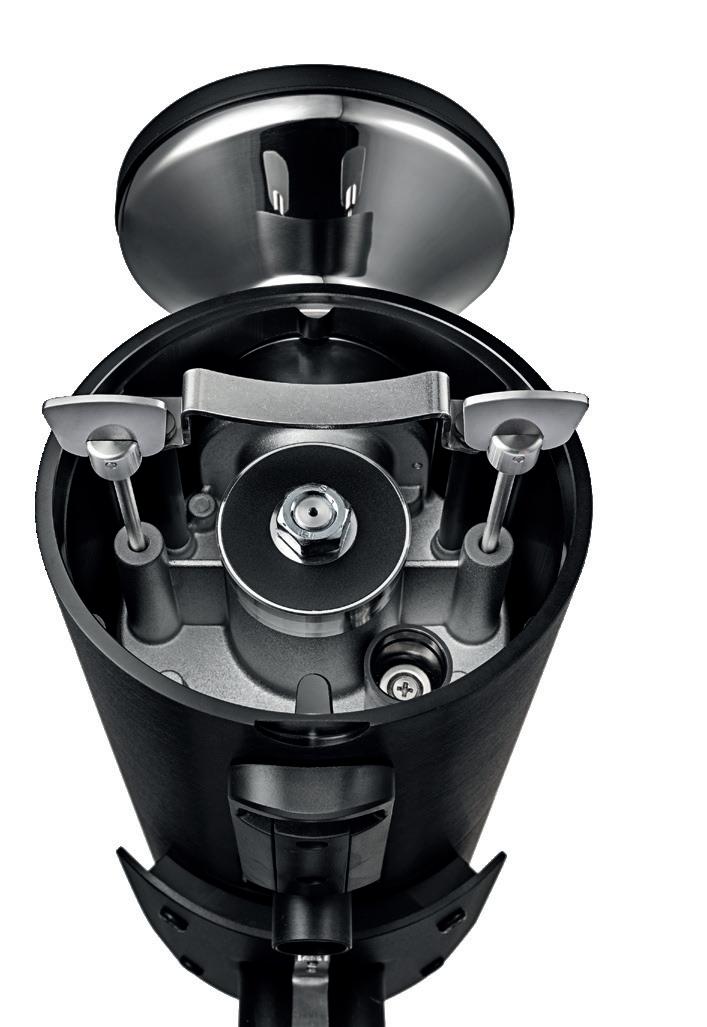
Manufactured from premium materials and designed specifically for the Philos single-dose grinder, each accessory integrates seamlessly with the machine while maintaining its minimalist aesthetic.
Mazzer says that, together, they provide baristas and home coffee enthusiasts with greater control over dosing, cleaning, and maintenance, making it easier to achieve consistent results across espresso and filter brewing.
For more information, visit shop-au.mazzer.com
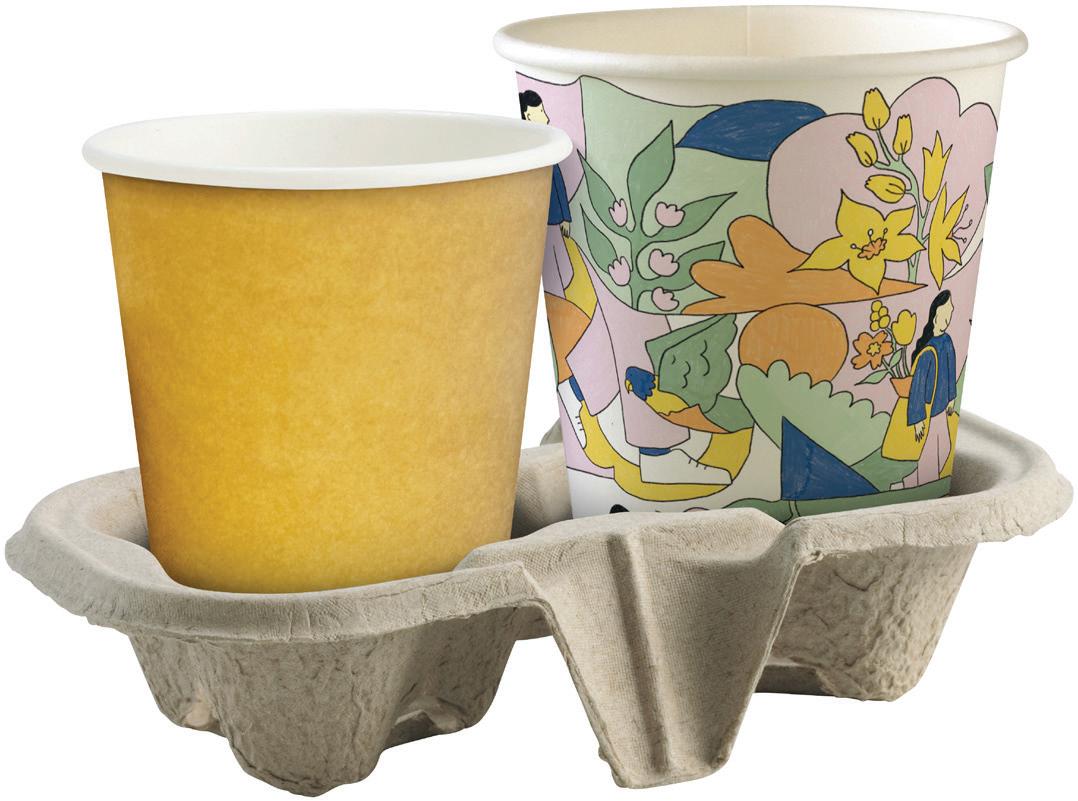
For many home baristas, the espresso machine has become the centrepiece of their daily coffee ritual.
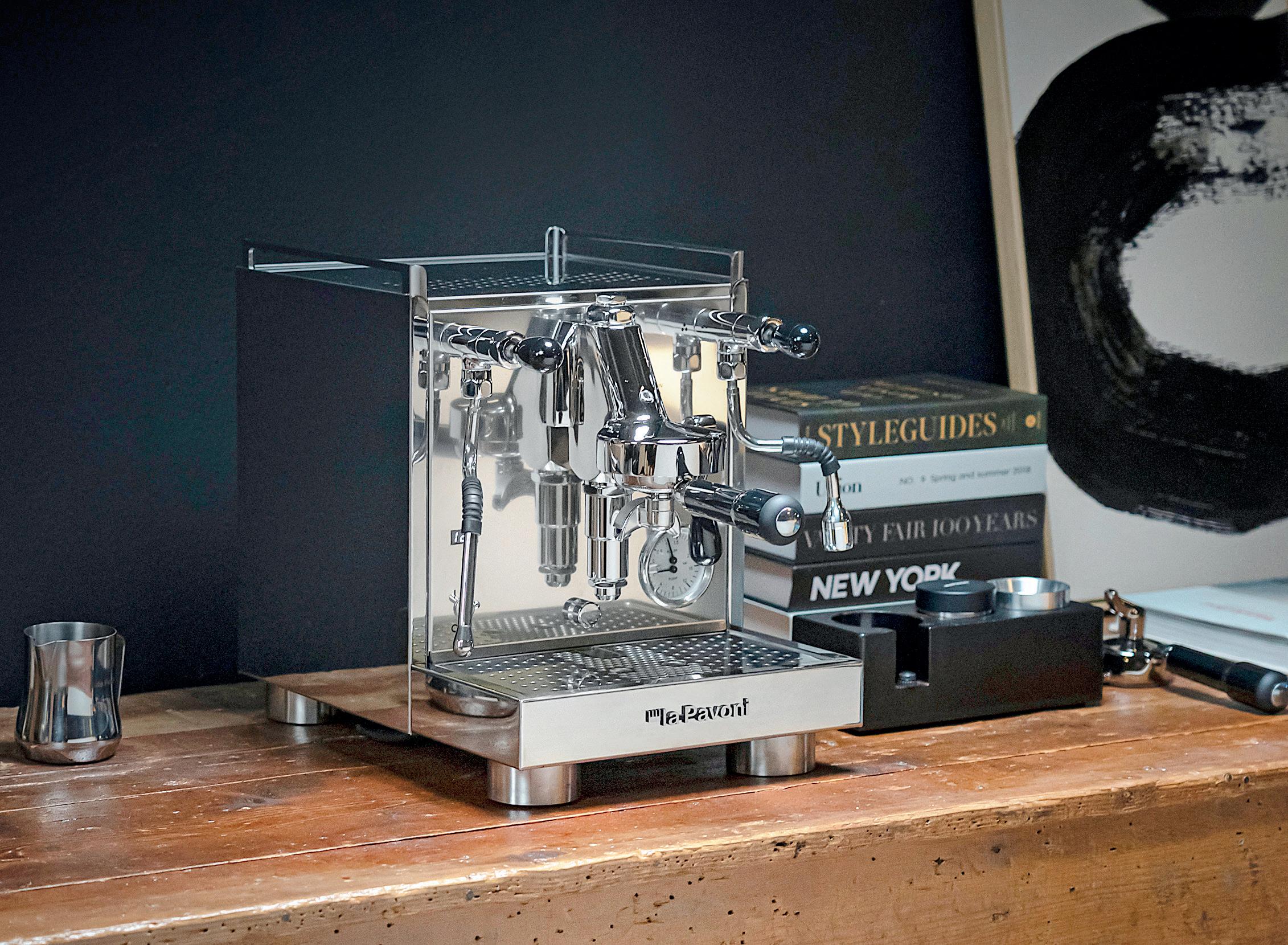
As home coffee culture matures, Australian consumers are embracing espresso’s heritage, seeking education and craftsmanship beyond convenience alone.
The Australian home co ee market has changed dramatically over the past decade.
What began as a pursuit of café-quality co ee at home has matured into something far deeper. Today’s home baristas are no longer simply chasing the perfect extraction. Instead, many are embracing the ritual, cra smanship, and heritage that have de ned espresso culture for generations.
Co ee is no longer purely viewed as a product of convenience: it has become a skill, hobby, and daily ritual worth investing time and energy into.
For years, convenience was the primary driver of the domestic co ee market. Capsule systems, bean-to-cup machines, and fully automatic espresso equipment introduced millions of Australians to espresso-style co ee at home.
ese machines played an important role in making quality co ee more accessible, particularly during the pandemic years when home consumption surged and café visits became limited.
However, as consumers became more knowledgeable, many began looking for something automation alone could not provide: engagement with the process.
ey wanted to understand how grind size in uences extraction, why dose matters, how milk texture changes a beverage, and what di erentiates one co ee origin from another.
Many home users started viewing the process itself as part of the reward.
According to Head of La Pavoni Australia Leon Wolf, consumers are becoming more sophisticated while simultaneously gravitating back towards traditional expressions of espresso.
“Customership is changing. People are creating their own co ees, they understand co ee more, but what I’m also seeing is a shi back to more traditional espresso and milkbased espresso drinks,” says Leon.
“ e over-complexity of light and medium roast avour pro les means people are getting lost in that specialty world. I feel like they’re coming back to something more standardised when it comes to espresso consumption.
“Customers want consistency. ey want quality. ey want to know they can create an espresso or a latte o the same bean and still have an amazing experience.”
As home co ee culture has matured, so too has consumer appreciation for the tools used to make co ee.
Across Australia, there is growing interest in traditional Italian espresso machines, particularly models that emphasise workmanship, longevity, and mechanical engagement.
For many consumers, the attraction lies not only in the quality of the co ee produced but also in the experience of making it.
e growing popularity of high quality, handcra ed espresso machines has, in part, led to the recent release of the new La Pavoni Cellini Mini X and Evo PID semiprofessional machines.
La Pavoni has long been associated with the origins and changing face of Italian espresso culture, rst through the creation of the original Ideale espresso machine in 1905, through to its iconic lever machines in 1961, and this new era of domestic co ee culture.
Leon believes interest in La Pavoni’s domestic and semi-professional machines has grown signi cantly as consumers seek a deeper understanding of co ee preparation.
“We’re telling a story; we’re talking about slowing things down and going back to cra ,” he says.
“What people are looking for now, when they talk about their ‘home café’, is longevity.
“ ey want a machine they know can be serviced like a car, something that doesn’t just last the warranty period but can last decades.”
One of most signi cant developments in the home co ee market is the ever increasing importance of education.
Today’s consumers are watching tutorials, attending workshops, participating in online communities, and investing in quality equipment alongside espresso machines.
Features once reserved for experienced baristas, such as pressure monitoring, temperature stability, and advanced steam performance, are now regularly discussed among home users.
More importantly, consumers are showing a willingness to learn.
Leon believes industry conversations have become overly focused on equipment speci cations at the expense of practical co ee knowledge.
“ e challenge today is to tell a story that people connect with,” he says.
“For La Pavoni, we want to bring it back to education. Education is part of the experience: learning to use your new machine, learning to grind properly, still engaging with your local café, your barista, your co ee roaster about what a good grind setting is for a certain extraction.”
He argues that many fundamental skills risk being overlooked.
“A lot of people have stopped talking about recipes. ey’ve stopped talking about texturing milk in di erent ways,” he says.
“At the end of the day, it’s not so much the machine as how to use it and how to understand the co ee so they can create the best beverage possible.”
As the number of home baristas continues to grow, questions remain about where consumers can access practical training.
Historically, many roasters o ered public co ee courses and introductory workshops.
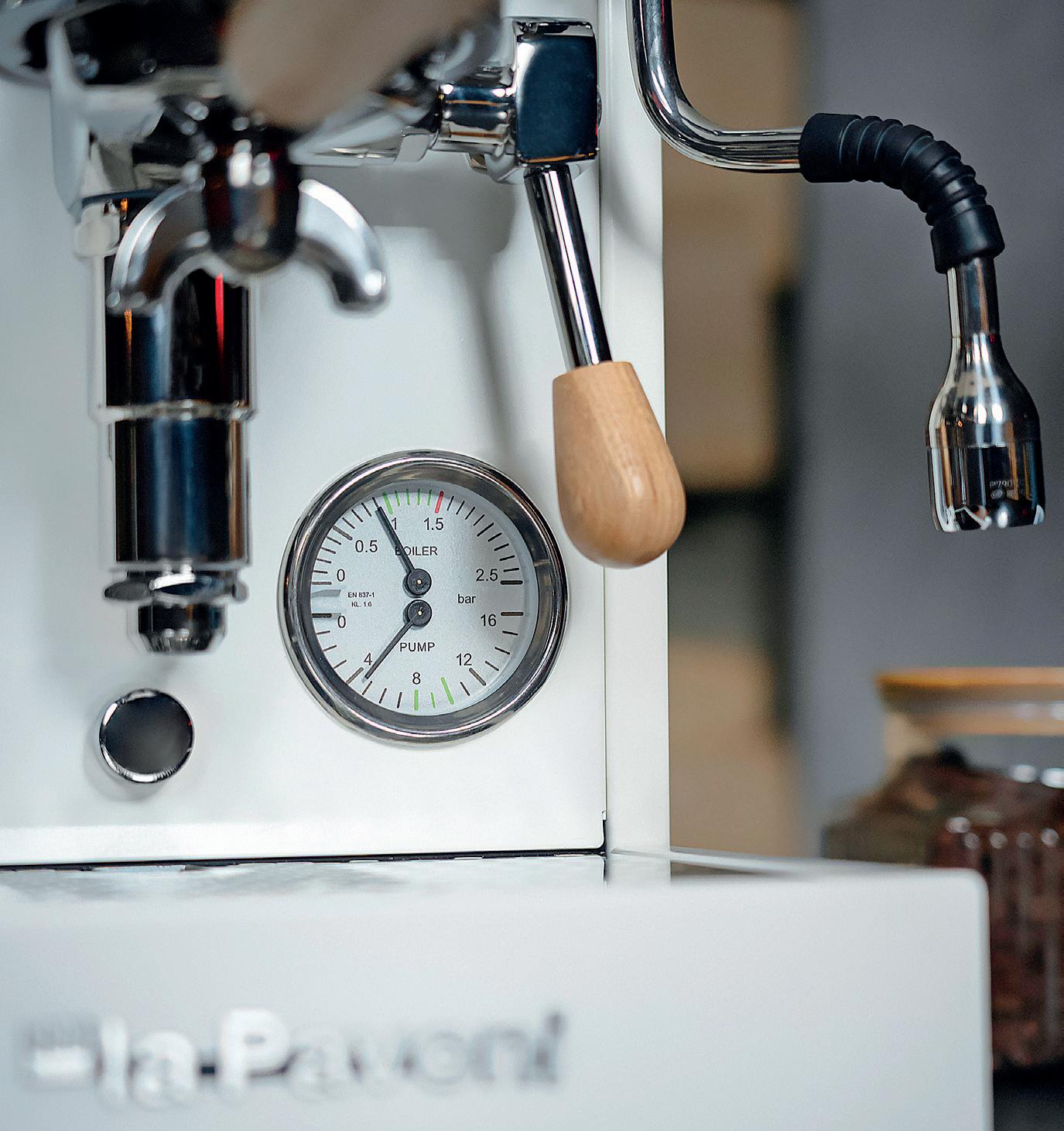
Today, those opportunities can be harder to nd, with most education focused on training café sta rather than home enthusiasts.
Leon believes this represents one of the industry’s biggest gaps.
“You’ve got this massive rise in home café, but they’ve got nowhere to learn,” he says.
“Everyone can bene t from educating people on home co ee. It elevates the whole home café experience.”
e challenge is not necessarily convincing consumers to learn but providing education in a format that suits modern lifestyles.
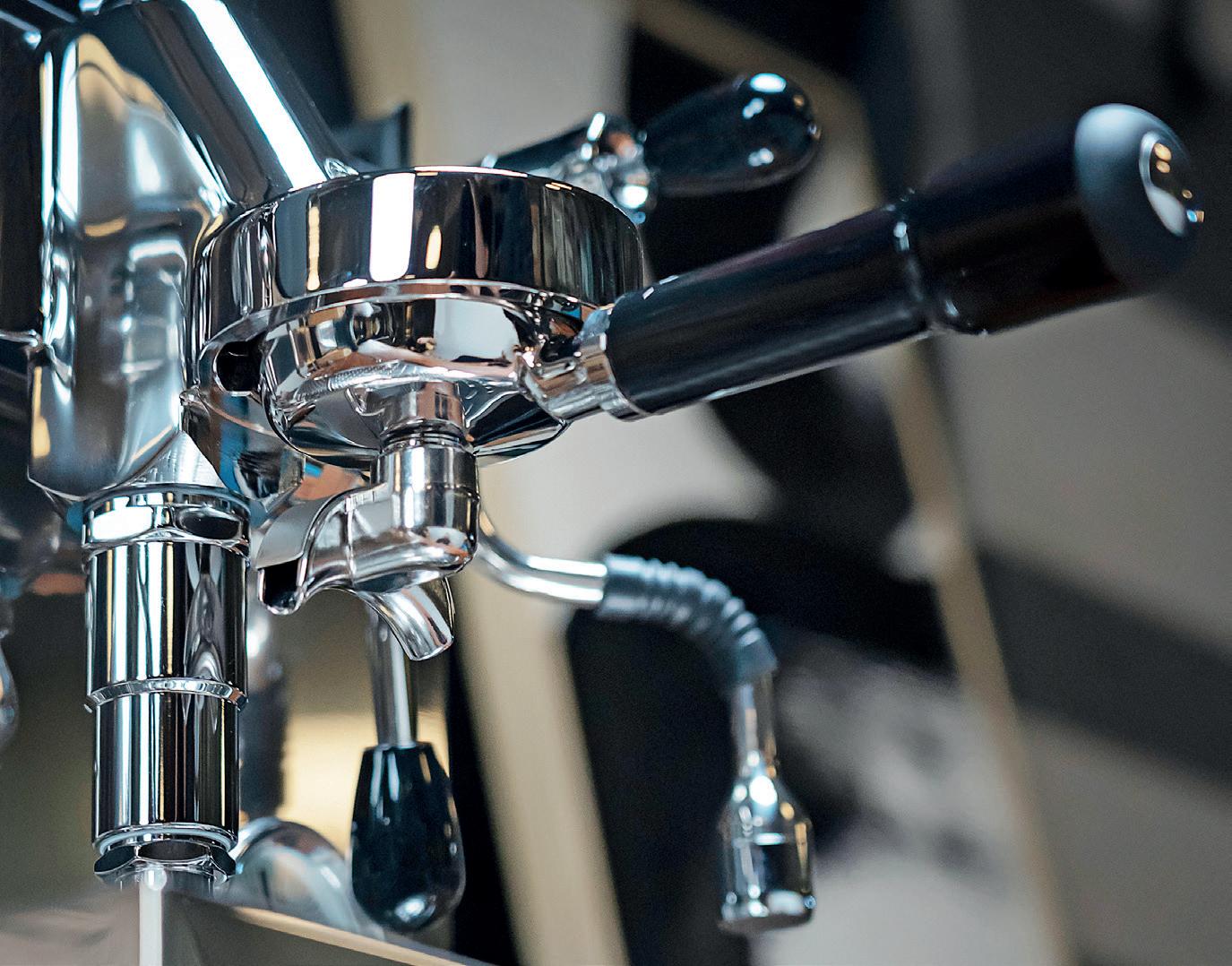
Short, practical courses focused on maintenance, grinding, extraction, and milk preparation may prove more e ective than lengthy training programs.
For retailers and manufacturers, this presents an opportunity to move beyond product sales and become trusted sources of co ee knowledge.
As Australia’s home co ee market enters its next phase, success will likely be measured by more than convenience or technological innovation alone.
Consumers are increasingly seeking products and experiences that encourage them to slow down, develop skills and engage more deeply with co ee.
ey want equipment that lasts, knowledge that improves their results, and rituals that add meaning to everyday routines.
In many respects, the resurgence of Italian espresso culture re ects those values.
It represents a renewed appreciation for cra smanship, education and tradition at a time when consumers are looking for authenticity and connection.
e future of home co ee may include sophisticated technology and modern innovation, but its foundations increasingly lie in understanding the fundamentals: good co ee, well-made equipment, and the skills required to bring them together.
For the co ee industry, the true opportunity lies in helping build a culture of learning that connects consumers with the traditions, techniques, and cra smanship that have shaped espresso for generations.
For more information, visit au.lapavoni.com
Mazzer’s Super Jolly g grinder aims to answer the call for simplifying workflows.
For café owners, balancing speed, consistency, and pro tability has become an important part of daily operations.
Mazzer’s Super Jolly g – distributed in Australia by Co ee Works Express – has been developed with these considerations in mind.
Designed for medium-volume cafés, the grind-by-weight commercial grinder aims to help operators reduce work ow pressures, maintain consistency throughout service, and make better use of co ee as a valuable resource.
One of the key bene ts for café owners is the grinder’s ability to support a faster and more streamlined work ow behind the bar.
According to Mazzer, the Super Jolly g is twice as fast as its predecessor, the Super Jolly V Pro, with a productivity range between 4 and 5.2 grams per second.
“ e new three-segment grinding chamber accelerates the exit of the ground co ee while keeping a constant ow and uniform grind particles, making the process more e cient,” says Mazzer.
Furthermore, the grinder has been developed to support baristas throughout busy service periods. It achieves this by reducing the need for ongoing intervention once the grinder has been calibrated.
“To help reduce work ow pressure, the Super Jolly g o ers excellent dose consistency and, once calibrated, does not require any
adjustments,” says the company, adding the ability to work ‘hands-free’, with automatic activation through the porta lter or dosing cup, helps baristas work faster and more e ciently.
For café owners managing labour costs, work ow improvements are o en measured by both speed and how consistently equipment performs throughout the day.
Mazzer says the Super Jolly g delivers repeatable results without the constant attention that can slow down service or create inconsistencies between operators.
At the centre is the Super Jolly g’s grind-byweight technology.
Unlike traditional grinding systems, where changes to grind settings can require corresponding dose adjustments, the Super Jolly g automatically delivers the target weight regardless of grind changes.
Mazzer believes this technology o ers several practical bene ts for cafés seeking to improve consistency while reducing waste.
“In grind-by-weight mode, adjusting the dose when changing the grind setting is not required, which reduces the amount of co ee used for the setting and ensures perfect consistency,” the company says.
“ e grinder automatically stops at the target weight, and the scale inside the
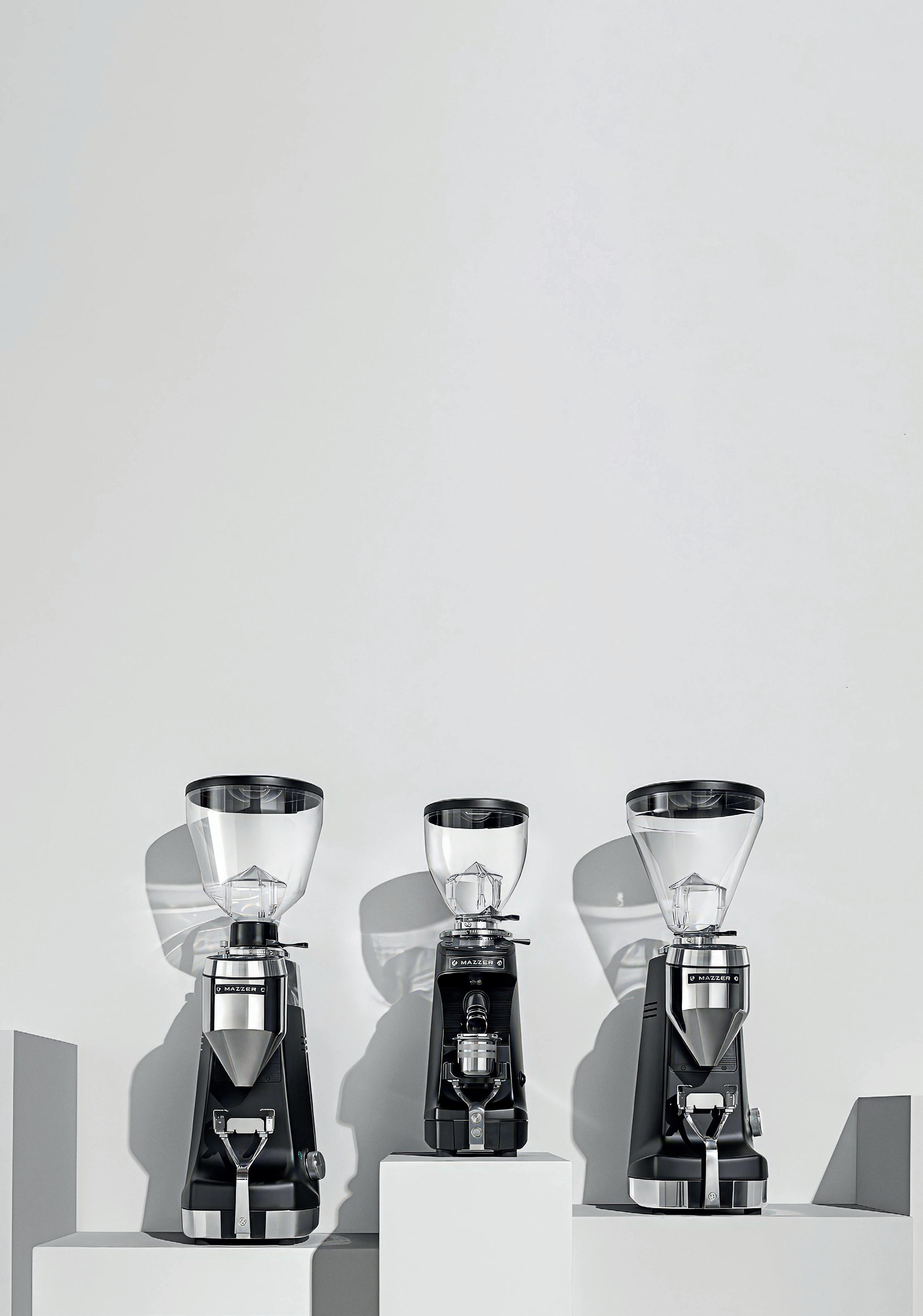
machine is extremely accurate, resulting in lower waste of co ee.
“ e grinding chamber is easy to access and clean without losing the grind settings. is means you don’t have to waste any more co ee to nd the desired grind setting and also ensures perfect consistency across all doses.”
Other design features have been developed with the same objective in mind.
“ e optimal thermal stability prevents overheating and allows consistent dosing, even as volume uctuates,” says Mazzer. “ e adjustable porta lter holder prevents co ee from spilling and being wasted.”
Taken together, these features are designed to help cafés extract greater value from every kilogram of co ee purchased.
Maintaining consistency during busy trading periods is another area of focus, with Mazzer redesigning the grinding chamber and incorporated a double-fan cooling system into the new model.
“With the redesigned grinding chamber and the addition of the double-fan cooling system, Super Jolly g delivers a constant ow while protecting your co ee’s avours.”
e cooling system helps maintain thermal stability during prolonged use, reducing the risk of overheating and supporting consistent performance throughout service.
e grinder also incorporates Mazzer’s Vibration Filtering Algorithm, a technology
developed to address the realities of busy hospitality environments rather than ideal laboratory conditions.
“ e Vibration Filtering Algorithm maintains stable, accurate dosing,” says Mazzer. “ e algorithm built into the grinder is designed and developed for real-world use, including knocks on the counter, vibrations, and porta lter tapping during grinding.”
e system works alongside the grinder’s professional built-in scale, which measures the actual weight of the ground co ee with a precision of 0.01 grams.
For cafés, this level of precision can translate into greater recipe consistency, more predictable extraction, and improved control over co ee costs.
When considering return on investment, Mazzer points not only to operational e ciencies but also to the long-term durability for which the company’s grinders are known.
“ e Super Jolly g, like all Mazzer grinders, o ers a high return on investment because they are renowned and famous for their exceptional durability and longevity,” says Maria Vittoria Mazzer, Marketing Specialist at Mazzer.
“All grinders that leave the factory are designed and built to last a very long time. e quality and durability of the product are the greatest return on investment.”
Maria Vittoria says customer feedback o en reinforces the company’s focus on longevity. is philosophy extends to sustainability, an area becoming increasingly important for hospitality operators seeking to reduce waste and make more responsible purchasing decisions.
“ e sustainability of the products is certainly an area where the company puts a lot of e ort,” says Maria Vittoria. “Mazzer designs and manufactures all its products with one goal in mind: to ensure they last as long as possible.
“Sometimes this might seem counterintuitive in terms of sales – if a product lasts 20 years, you don’t need to buy a new one. However, this is the company’s philosophy: it prioritises quality over quantity.”
Sustainability is also re ected in the grinder’s focus on minimising co ee waste through dosing accuracy.
“Co ee is an important resource that must be protected; having a machine that prevents waste is essential,” says Maria Vittoria.
“ e precision of the Super Jolly g, like the rest of the Mazzer g line, is speci cally designed to conserve the product – meaning ‘no waste’.”
Beyond product design, the company has invested in cleaner energy production in recent years.
“ e company is increasingly committed to using clean energy: we have installed 2,724 photovoltaic panels, with a capacity of nearly one megawatt,” she says.
e Super Jolly g is supplied with Mazzer’s
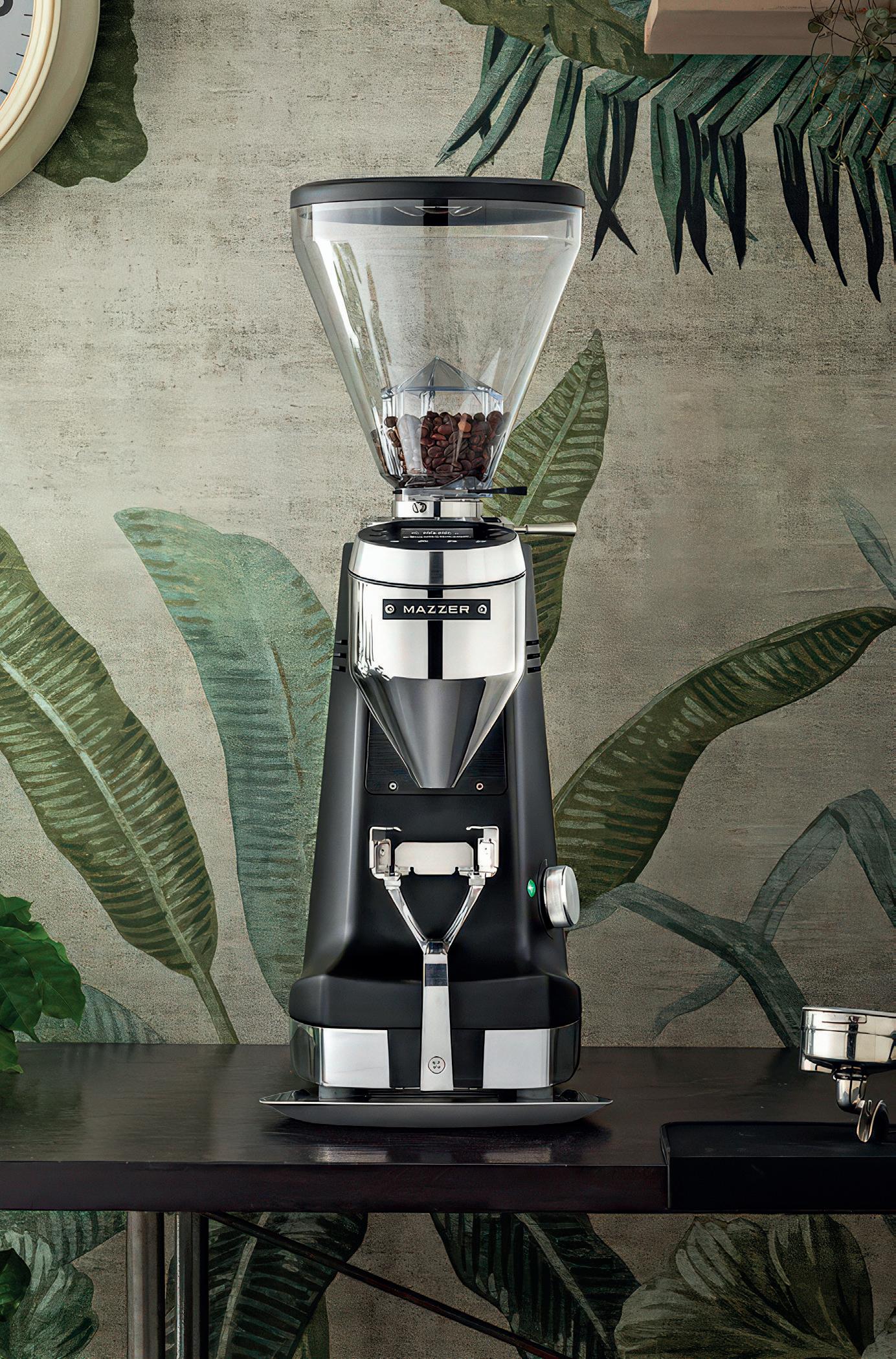
205D 64-millimetre at burrs, which are designed to produce co ees with chocolate notes, substantial body, and a long nish, making it suited to milk-based beverages and medium-dark roast pro les.
“The Super Jolly g, like the rest of the Mazzer g line, is specifically designed to conserve the product –meaning ‘no waste’.”
Maria Vittoria Mazzer, MARKETING SPECIALIST, MAZZER
e grinder manufacturer says operators can also choose the ZZ | k206P burrs, designed for light- to medium-roast co ees and engineered to deliver a more complex avour structure with fruit notes, acidity, and a so er texture.
Manufactured from specialised tooling steel, Mazzer says the burrs o er twice the lifespan of standard burrs while supporting highly consistent grinding performance. rough its grind-by-weight technology, thermal stability, vibration-resistant dosing, and long-term durability, Super Jolly g aims to address many of the operational challenges facing modern cafés, while helping operators make the most of both their co ee and their investment.
For more information, visit cwe.com.au
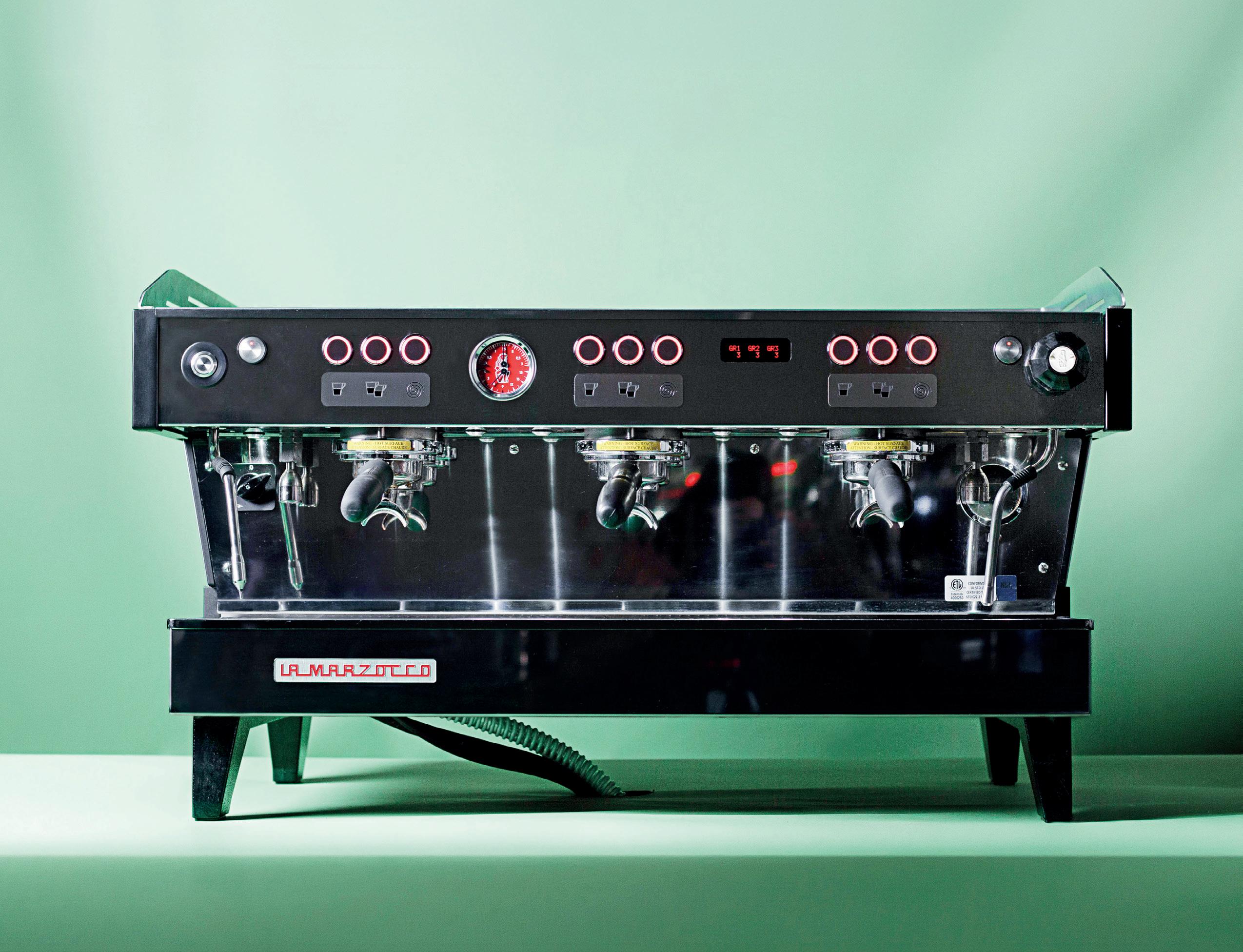
IFew professional espresso machines are as ubiquitous as the La Marzocco Linea PB. So, when one of Australia’s most recognisable pieces of coffee kit is updated, the industry takes notice.
f you walk into any café in Australia, there’s a high chance it’s running a La Marzocco Linea PB on the bench. In fact, Victorian Sales Manager at La Marzocco, Anthony Burke, estimates the number of machines in the wild to be into the thousands.
How, then, does the Italian machine manufacturer go about upgrading such an icon of the country’s café scene? e answer lies in the steam wand and what La Marzocco has dubbed ‘SmartSteam’.
“We’re forever grateful for the reception our machines have had in Australia, especially the Linea PB. It’s a proven workhorse and has stood the test of time, which is why you see them on so many benches – they last a long time,” says Anthony.
“SmartSteam has been developed to add a level of automation to milk steaming – speci cally to milk temperature. As baristas, for so long we’ve been judging milk temperature by feel alone. is new technology introduces an easy route to achieve consistent milk temperatures and e ciencies, time and time again.”
Not retro ttable to existing Linea PB machines, SmartSteam is integrated with a probe in the steam wand and is operated using the existing buttons and menu of the machine. It enables two pre-selected milk temperatures to be set, alongside a Kid’s Milk setting.
“Cafés are using it in a couple of ways,” says Anthony. “Some baristas are setting one temperature for dairy and another for non
dairy. Others are setting a standard milk temperature and then an extra-hot option, which takes the guess-work out of ensuring the liquid is a safe temperature.”
If you place a traditional Linea PB alongside one equipped with SmartSteam, very little appears di erent to the naked eye. It still has all the features that have made it so popular among Australia’s café owners and baristas – the only (key) di erence is a short probe poking out from the steam wand.
“ e probe measures the milk temperature 20 times per second,” says Anthony. “Because it’s submerged in the milk while it’s being heated, the probe feeds back real-time data to the board to provide immediate, advanced temperature judgment.”
e SmartSteam tip also aids in the texturing of the milk, with La Marzocco’s innovation team taking inspiration from the technology within the brand’s popular Wally Milk automatic steamer.
“We’ve learned quite a bit from the Wally. e jet of air from the steam tip creates a natural whirlpool in the jug due to a slightly di erent positioning and pitch of the steam,” he says.
“ is is our second generation of SmartSteam. e rst had a very di erent system that added air into the milk constantly as it was steaming, which o en resulted in over-stretched milk.
“We’ve learned a lot from developing the Wally in between those generations. Now, with this generation of SmartSteam, the engineering challenges were largely mitigated by those prior learnings.”
Any Linea PB equipped with the new steaming technology includes a manually adjustable jug platform, which Anthony says will also be available for purchase without the SmartSteam machine.
“For years we’ve seen baristas use all sorts of contraptions to rest a jug on the side of the machine to save them standing there the whole time the jug is spinning,” he says.
“So we’ve created a platform where users are able to adjust the height and tilt to save time and assist with whirlpooling. is new setup can add a level of automation, or enable the barista to stretch the milk as normal and then, once the recipe is right, rest it on the platform and let it nish.”
e new system has been created to be as intuitive as possible for baristas, while online users will nd simple-to-follow tutorials on how to set up and use SmartSteam, Although it has only just become commercially available in Australia, it has already been put through its paces in the market through the manufacturer’s La Marzocco Local events and a well-received debut at the 2026 Melbourne International Co ee Expo (MICE26).
“It’s an intuitive system that baristas will nd easy to use. I’ve seen this myself, because La Marzocco Local travels the country. ere’s a barista competition attached to the event, which now use Linea PBs with integrated SmartSteam,” says Anthony.
“I’ve seen rsthand how baristas jump straight on and start using them seamlessly. at’s lled us with a huge amount of pride in the product.
“At MICE2026, we utilised the tech in the Roasters Playground and it was the most talked about thing on our stand. at’s what everybody was gravitating towards and talking to us about.”
Alongside helping the barista create the most consistent cup possible, according to Anthony many of SmartSteam’s bene ts lie in reducing milk wastage in day-today operations.
However, does the process of learning how to use SmartSteam result in jugs and jugs of wasted milk? Anthony says absolutely not.
“ e rst jug I tried using SmartSteam, I learned a few lessons. By the second, it was happy days, just perfect,” says Anthony.
“It requires a slightly di erent movement because the wand is locked into position. It doesn’t move freely in every direction like a normal steam wand and that’s because it has a lot of cables inside. If you allowed a full range of motion, they’d end up getting twisted.
“So, when steaming you might need to work more towards the side of the machine rather than in front of it. What’s more, with a traditional steam valve you’re modulating
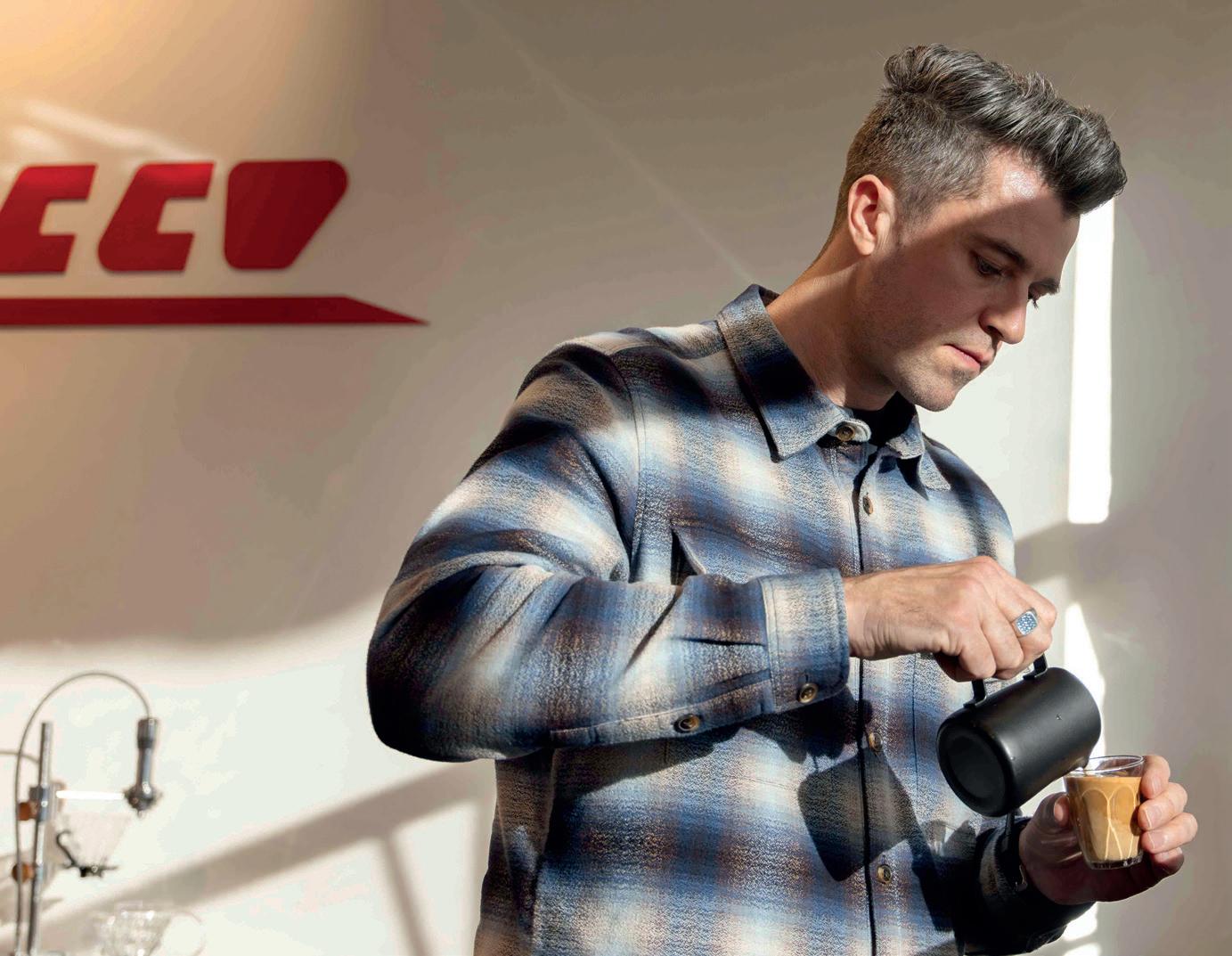
the pressure as you turn it – it slowly comes on. With this valve, which is called a solenoid valve you’re getting all the steam pressure immediately because it just opens and closes.”
When developing new technology, La Marzocco prioritises the ease of maintenance as much as ease of use for baristas. As a former employee and co ee technician for the likes of Allpress and Brewtech, Anthony has been around co ee machines for much of his career, knowing the importance of equipment that’s easy to maintain.
“It’s important to leave the tip and the probe clean so they can do their job e ectively, so we recommend soaking it in a milk cleaning
solution once a day when you nish your shi ,” he says.
“Apart from that, maintenance will be much easier than a traditional wand because they don’t need to be rebuilt every time you get a service – it’s just open and close, that’s it.
“People o en assume that advanced technologies require more maintenance, but solenoids are very simple. It’s just a valve – you hit the button and it opens and lets water or steam through, and then it closes again.”
For more information, visit au.lamarzocco.com
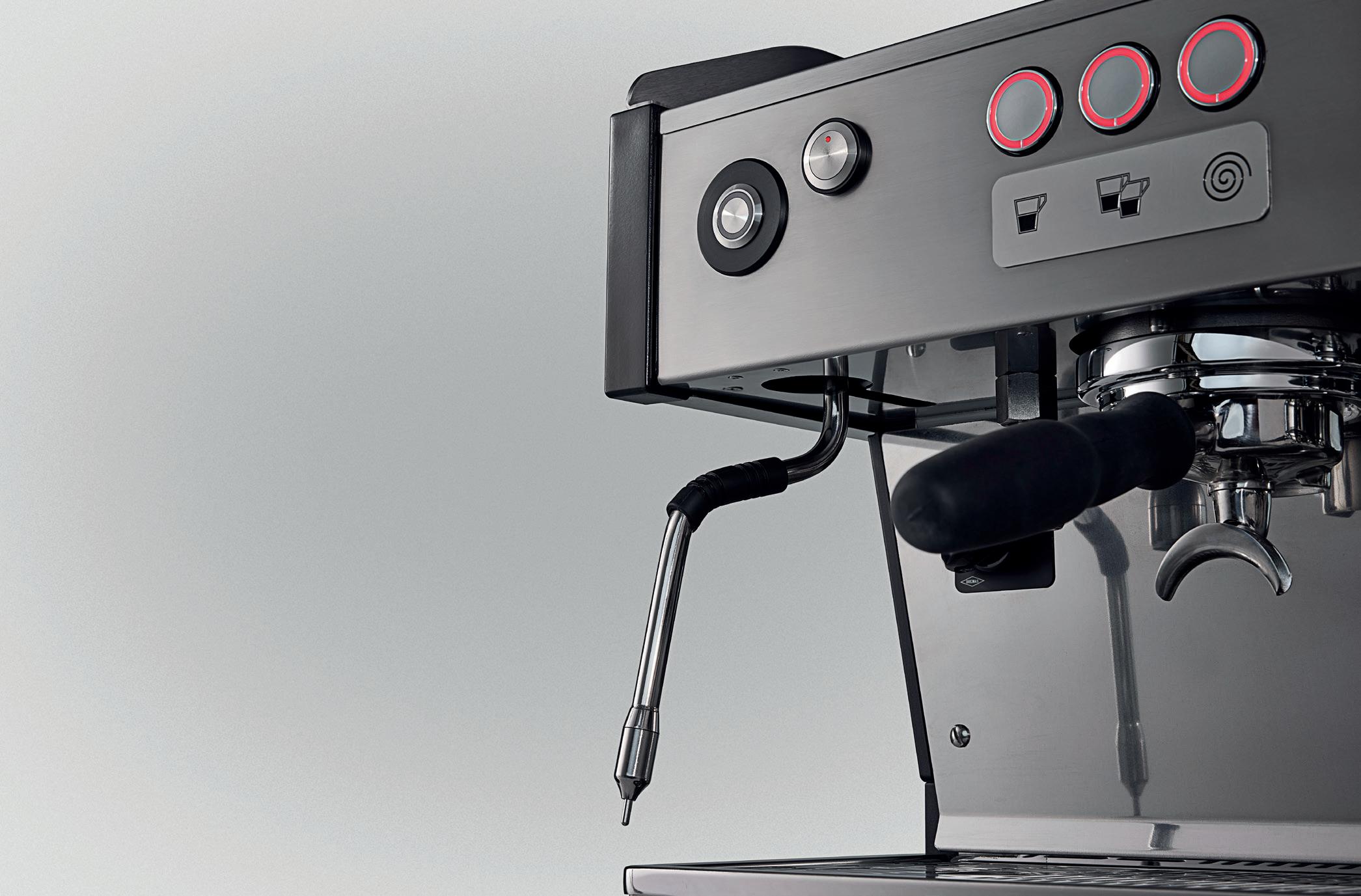
“I’ve seen firsthand how baristas jump straight on and start using it seamlessly. That’s filled us with a huge amount of pride in the product.”
Anthony Burke VICTORIAN SALES MANAGER, LA MARZOCCO

From batch brew to signature drinks, precision dispensing technology is helping cafés reduce variability, improve workflow, and maintain quality as beverage offerings expand.
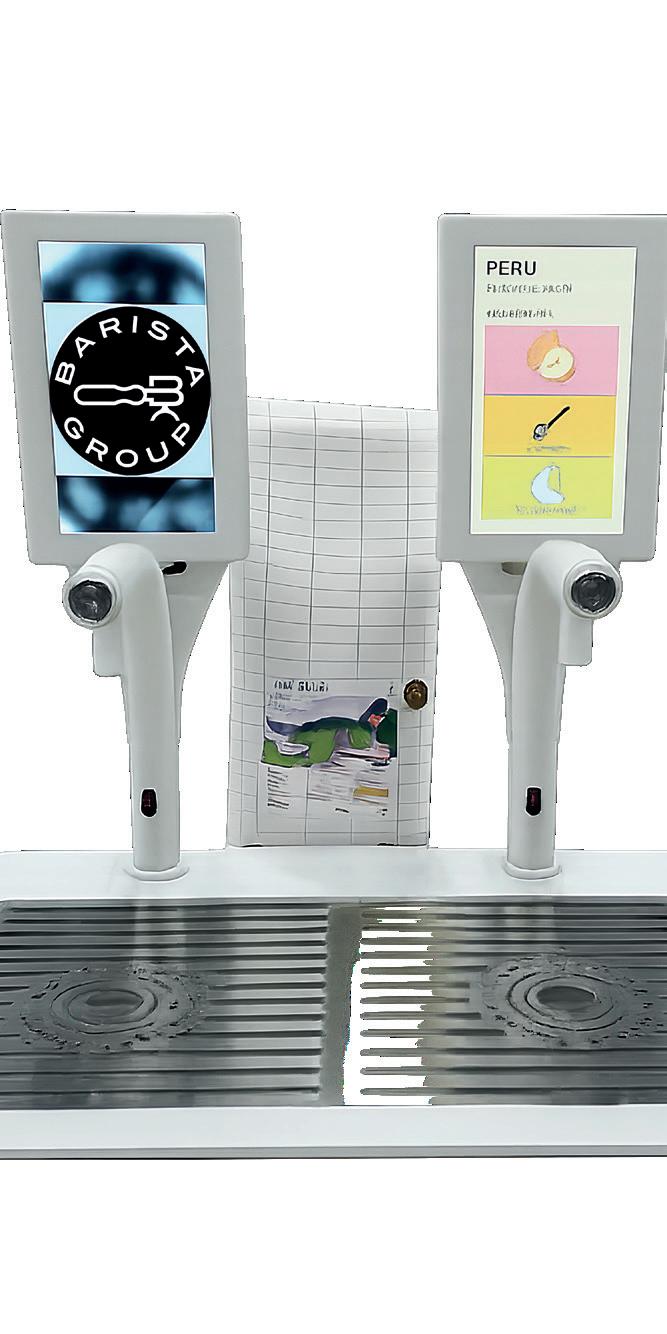
component of the system is its motor pump, which is designed to accommodate liquids with higher viscosity than traditional beverage dispensing systems.
“For best performance and longevity, COSTREE is recommended for clean liquid formulations without solid particles, pulp, or undissolved powders,” Joe says.
“ is makes it particularly well suited to batch brew service stations, cold brew taps, signature beverage bases and syrup-driven menu extensions.”
For café owners, exibility is also becoming increasingly important as beverage menus continue to evolve. Whether a venue is introducing house-made syrups, creating large-scale cold brew programs, or expanding into seasonal beverages, dispensing systems need to adapt to di erent recipes and service requirements.
To support this, COSTREE features Adjustable Flow Control, enabling operators to customise dispensing speed and volume according to their menu and cup sizes.
Ease of use was also a major consideration during the product’s development. One feature designed speci cally for busy café environments is Infrared Cup Detection technology, which automatically activates
dispensing when a cup is placed beneath the outlet.
e hands-free functionality removes an additional step from the work ow and enables sta to continue preparing beverages while the system completes the dosing process.
“During peak service periods, every movement matters,” Joe says. “Automating repetitive tasks allows baristas to focus on other elements of beverage preparation while maintaining accuracy.”
e unit’s integrated display further enhances usability while complementing modern café aesthetics. As equipment progressively becomes part of the customerfacing experience, Joe says functionality and presentation must work together.
“Equipment needs to perform well, but it also needs to t naturally within contemporary café environments,” he says. Alongside performance and design, hygiene remains an essential consideration for any dispensing solution. Regular cleaning plays a signi cant role in maintaining beverage quality, operational reliability, and foodsafety standards.
To simplify maintenance, COSTREE incorporates a one-touch cleaning cycle based on a soak-and- ush process. Cleaning liquid is dispensed through the system before a pause period allows residue to break down within the internal lines. e cycle then repeats multiple times to ensure thorough cleaning.
“ e system supports high-temperature cleaning and uses food-grade materials including Stainless Steel 316 and silicone components,” Joe says.
“As with any dispensing system, adherence to proper cleaning protocol is essential for long-term reliability.”
While automation continues to become more common across hospitality, Joe emphasises that tools such as COSTREE are not intended to replace baristas. Instead, they are designed to support café teams by removing repetitive tasks that contribute little to the cra aspect of beverage preparation.
“ e role of automation is to assist operators in maintaining standards while improving work ow e ciency,” he says.
“As cafés continue to expand their beverage o erings, automation is becoming a strategic tool.
“COSTREE by BatchFlow delivers clean dispensing, repeatable results, and work ow optimisation, helping specialty venues increase e ciency while maintaining the quality customers expect.”
For more information, visit baristagroup.com.au
After a decade distributing Wacaco in Australia, CoffeeTools introduces the brand’s latest brewer.
Wacaco has built its reputation around making good co ee accessible in places where traditional equipment struggles. Whether it’s a mountain trail or campsite, a tiny o ce kitchen, an apartment, or a hotel room, the brand’s compact brewers have helped co ee drinkers prepare quality brews beyond the con nes of a café or well-equipped kitchen.
Co eeTools has distributed Wacaco products in Australia for about a decade, with the addition of the Minipresso in 2015. Now, it’s brought the latest brewer from the Hong Kong-based manufacturer to Australian shores.
Co eeTools Director Curtis Arnold says Wacaco has built a loyal following here over the years by consistently producing highquality, innovative co ee equipment.
“ ey’ve been doing this for a while now, and they’ve really got it down in terms of
their manufacturing, quality, and support,” says Curtis.
“ ey’re a great company to deal with and they produce really good quality products that do what they say they’re going to do. Whether it’s making great co ee, weighing co ee, or grinding co ee, their products are well thought out. e Prestina is no di erent.”
footprint, big flavour
e Prestina is the latest in a line of brewing equipment produced by Wacaco, but it has one key di erence from its predecessors: just how compact it is.
Designed so the cup, brewer, and lter can all be packed in together into a tiny, handheld package, it occupies little room in a bag or on a bench and avoids many of the complications of carrying other brewers on the road.
Wacaco products are o en associated with the great outdoors, but Curtis believes the
appeal extends beyond travellers and campers.
“I received a prototype just before MICE26 in early March and I’ve used it a lot,” says Curtis.
“I’ve been making co ee with it most days since then because I want to be super familiar with the product. When I started using it and tasted the co ee, I was impressed. It’s good.
“You can play with all the variables – water temperature, grind size, steep time, whatever – and can experiment. You’re not just locked into one recipe.”
Unlike many portable brewers, the Prestina combines immersion brewing with a gentle pressure-assisted extraction process. Users simply add ground co ee and hot water, allow the co ee to steep, then press the brewing chamber into a cup below.
e result is a brew that sits somewhere between a traditional french press and a pourover in character.
e brewer’s reusable stainless-steel lter is designed to retain the co ee’s natural oils while removing much of the sediment associated with immersion brewing. at not only reduces waste but also eliminates the need to carry paper lters when travelling.
Coupled with Wacaco’s Octaroma Lungo, which Curtis says is an excellent option to use alongside the Prestina, it creates a very compact brewing setup, enabling users to brew co ee almost anywhere.
e Octaroma is not a necessity, however, as the Prestina comes with its own cup as part of the brewing system.
“ e really cool thing about the Prestina is, of course, that it presses on top of their travel mug,” says Curtis.
“If you have an Octaroma Lungo – or even the Grande, which is bigger – you can take your hot water with you and brew your co ee wherever you end up.
“ e Octaroma is a great travel mug for keeping things hot or cold, so when you add that alongside what’s included with the Prestina, it makes for a really good experience.”
While Curtis expects the Prestina to be popular with Wacaco’s typical outdoorsorientated audience, he doesn’t want to limit its potential in the more discerning co ee market.
As a paperless lter brewer, it o ers an
environmentally conscious alternative to single-use lter papers while also reducing the ongoing cost of brewing co ee on the go.
“I expect it to be very popular in outdoor stores such as Anaconda, Kathmandu, and BCF, but I also think all co ee retailers –
especially in tourist regions – will do well with it,” says Curtis.
“People are always looking for a way to make good co ee on the go, and this is about as simple as it gets. e quality is there too and the price point is so good that it’s almost an impulse buy.”
While the compact design and approachable price point are likely to attract rst-time users, Curtis sees the Prestina addressing a broader need: giving co ee drinkers control of their daily routine, no matter where they are.
“More people are experiencing good co ee and like to have good co ee, so they like to have control over it,” Curtis continues.
“ ere’s nothing worse than going somewhere and paying six or seven dollars for a co ee and being disappointed. You can also control where and when you drink it — you’re not waiting for the café to be open, or nding out they’ve closed early on a Sunday.
“Especially in rural Australia, if you’re camping in some of these beautiful spots, quite o en you excitedly go to the local café and nd the doors are locked and the lights out. at’s happened to me more than once. It can be quite frustrating, but if you can make good co ee yourself, then you’re in control.”
Despite its compact footprint and brewing capabilities, Curtis says the Prestina’s standout feature might actually be its a ordability.
“ e shocking thing about it is it’s only 45 bucks,” he says.
“I was surprised they were able to come in at that price. I think – like they’ve done with all their products – you’ll see some accessories for this coming out too, and maybe a variation or two. We’ll see what that brings.”
For more information, visit coffeetools.au

INTRODUCING BARISTA ALMOND. OUR BARISTA ALMOND IS DESIGNED TO CREATE PERFECTLY BALANCED, SILKY-SMOOTH COFFEES EVERY TIME. WE USE AUSTRALIAN ALMONDS & OLIVE OIL TO ENHANCE THE FLAVOUR PROFILE OF ANY ROAST FOR A DELICOUS FINAL CUP. TRY THE ALL-NEW BARISTA ALMOND NOW! FOR A FREE SAMPLE EMAIL: HEY@MINORFIGURES.COM
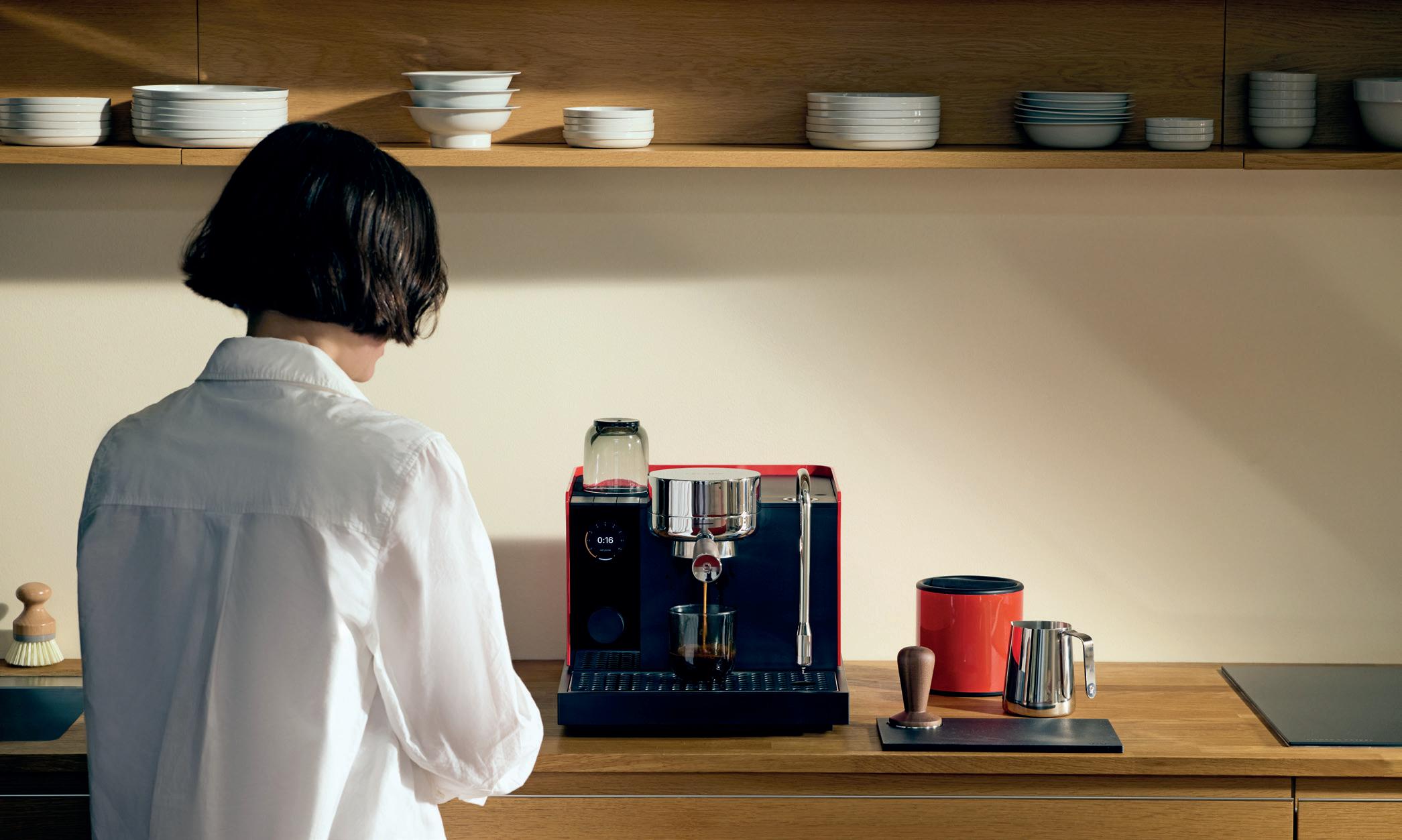
After more than three years of development and millions of dollars of investment, a new home espresso machine has been introduced to the Australian market.
Fellow’s journey into espresso machines has been a long time coming – more than a decade, in fact.
e United States (US)-based equipment manufacturer, known for products including the Stagg EKG kettle and Opus grinder, has now nally taken the leap with the creation of its Espresso Series 1. And it’s bringing it to Australia.
Just months a er launching the product in the US – where it was named Best Espresso Machine by Bon Appétit magazine – and Europe, one of the world’s most discerning co ee communities is now getting access to this new player in the market.
It’s a launch that, according to Fellow Founder Jake Miller, represents the culmination of more than three years of development, more than US$6 million in investment, and a decade of dreaming.
“Our big goal with this machine was to create a prosumer-level experience at a consumer-accessible price point,” says Jake.
“We wanted to make true, high-quality espresso with real functionality – things like pressure pro ling and precise temperature control – available to a much broader audience. Internally, we o en asked, ‘What if every barista in the world could a ord a Series 1?’ It’s not a cheap machine, but it’s an accessible machine.”
Jake founded Fellow in 2013 in San Francisco, a er cutting his teeth in specialty co ee with one of the country’s most well-known roasters and co eehouse chains, Caribou Co ee. e entrepreneur says he recognised early that specialty co ee quality was advancing faster than the equipment available to home consumers, creating an opportunity for Fellow to bridge the gap with designled products.

“I saw an opportunity to design beautifully functional products that matched the level of the co ee itself,” he says.
“Fast forward to today and we’re really focused on growing Fellow around the world. We’ve built a great team and it’s been a lot of fun taking the brand global.”
Accessibility has been central to the development of the Espresso Series 1.
Fellow has been balancing the tightrope of building a machine that’s competitive in a space where they can exceed ve gures, while also enabling everyone from co ee hobbyists to serious baristas to use it how they want.
“ e way we approached that was to start with the things we absolutely refused to compromise on,” says Jake.
“Number one was the heating architecture. We invented what we call the Boosted Boiler – a boiler system that heats up in about two minutes. By the time you’ve prepped your puck, the machine is ready to pull a shot. ere are three unique control points in that heating system that let us manage temperature precisely. at was completely non-negotiable.”
en, the focus shi ed to what the users most frequently touch, hold, and interact with.
“ e machine has a large stainless steel group head with brass internals. at’s a requirement for great espresso; we
weren’t going to compromise there either,” continues Jake.
“ en we looked at where we could responsibly take cost out without sacri cing performance. e outer wrap of the machine is plastic. It’s primed and painted three times – similar to the nish on a car door– so it still feels premium,” says Jake.
“It’s not a primary touch point, and it doesn’t impact extraction quality, so we believe that trade-o was worth it for the user.”
e result? A machine Fellow backs so strongly that a bottomless (naked) porta lter comes as standard.
“ at’s one detail I’m particularly proud of,” says Jake.
“It would have been easier to ‘cheat’ and include a spouted porta lter that hides aws, but a bottomless porta lter exposes everything – any mistakes in design or puck prep are immediately obvious.
“It signals how con dent we are in the machine’s ability to produce a clean, wellextracted shot.”
Home espresso machines are typically purchased by one of three groups: newcomers looking to make café-style co ee at home, enthusiasts interested in variables such as extraction and pressure pro ling, and experienced users seeking maximum control.
Jake says all three groups were considered throughout development, with particularly strong interest coming from enthusiasts and rst-time espresso machine owners.
“We’re seeing a lot of adoption among prosumer ‘co ee nerds’ who can talk endlessly about pressure pro ling and replicating levermachine shots,” says Jake.
“At the same time, roughly a third of our customers are people who have never owned an espresso machine before. ey’re turning to Fellow and to this machine for their rst espresso experience, which is really meaningful to us.”
e machine comes with built-in recipes suited to light, medium, and dark roasted co ees, but users can also create their own pro les and tinker with recipes.
Jake says it’s this function that is not only exciting owners but also creating a whole community around the Espresso Series 1.
“Users are adjusting parameters, saving those as recipes, and then sharing them –sometimes with a single push on the machine, sometimes through a shared brew link,” says Jake.
“You’ll see long Reddit chains where people are o ering advice. It’s been incredibly fun for us, both as designers and as co ee nerds, to watch that community grow around the machine.
“ e concept is easy to understand, but like anything in co ee, it’s hard to truly master because you’re always tweaking and evolving.
e barrier to entry is low, but the ceiling for experimentation is high.”
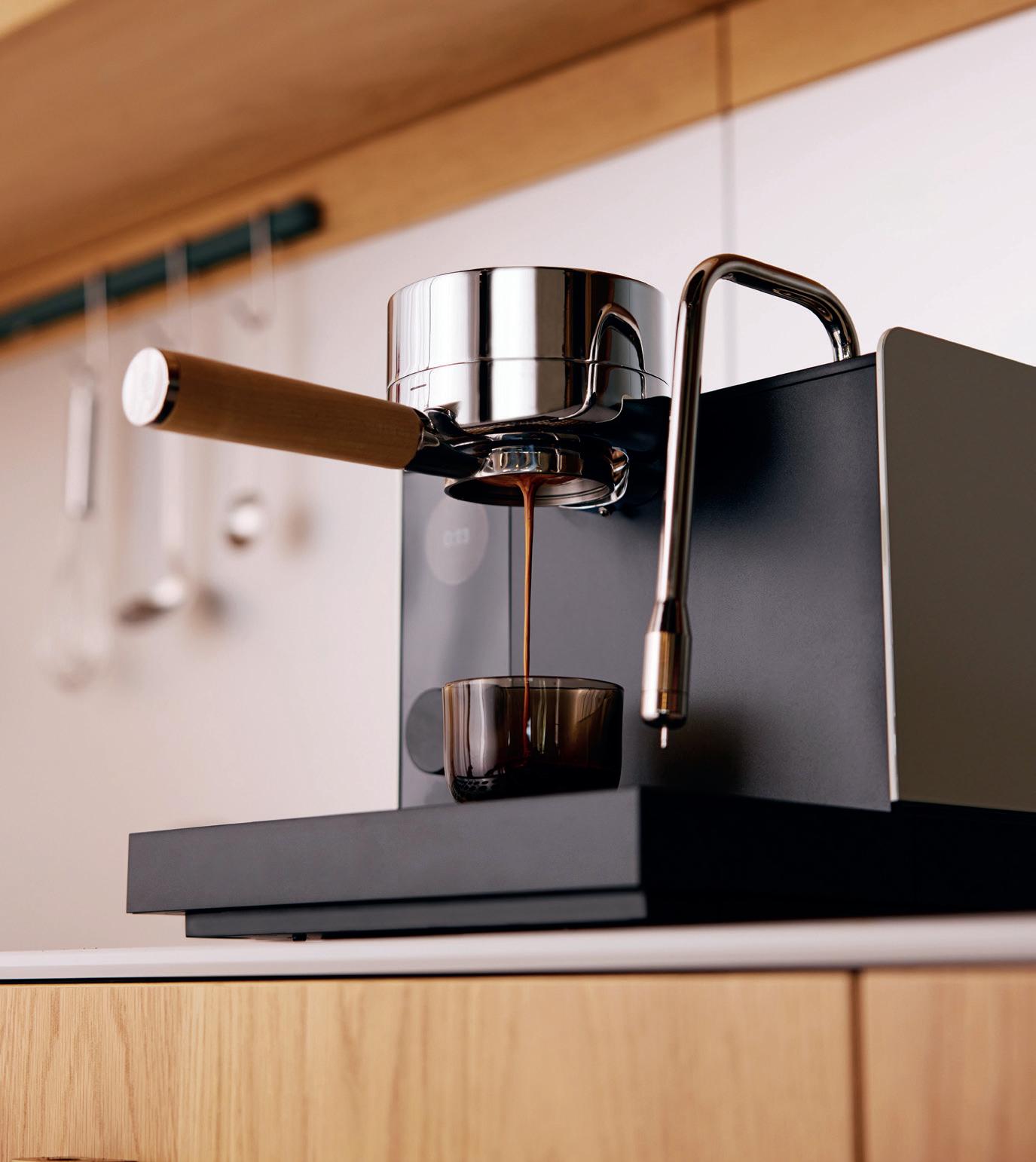
Following what Jake describes as a “very positive” response in the US and Europe, Fellow has dropped the Espresso Series 1 into one of the world’s most discerning co ee cultures, where he thinks it will thrive.
“Australia is a particularly important and exciting market for us. It made espresso culture mass market earlier than most other English-speaking countries. Australian consumers know what they’re talking about when it comes to co ee,” he says.
“I expect Australian users to dive deeper into the machine’s functionality, creating custom pro les, tweaking variables, and sharing their recipes. I think they’re going to have a lot of fun with it.”
is rapid- re global rollout has come following about two years of planning, with Fellow keen to capitalise on any momentum the machine gains anywhere in the world.
To support the Australian rollout, Fellow has partnered with distributor Sheldon & Hammond, whose portfolio spans a range of co ee and hospitality brands.
With an established specialty co ee network and national reach, Jake says the company was a natural t to introduce the Espresso Series 1 to local consumers.
“We’re genuinely excited about launching in Australia and about our partnership with Sheldon & Hammond. ey’re exactly the kind of partner we were looking for, a
company that can bring this machine to the masses and give it the attention it deserves,” says Jake.
“ e Espresso Series 1 isn’t just a niche product for a few specialty shops, In the US, we’re seeing success in places like Target and Best Buy, alongside specialty channels.
“We expect Sheldon & Hammond to identify similar opportunities across Australia, including partnerships with cafés and other key retailers, and to represent Fellow in a way that’s consistent with how we see ourselves in the US.”
ey’re not stopping at the Espresso Series 1 though. Fellow’s new grinder is set to hit Australian shores in the immediate future, creating a colourful one-two punch on kitchen benches around the country.
“Shortly a er Series 1, we’ll be launching Opus 2, our redesigned all-purpose grinder that’s especially calibrated for espresso,” says Jake.
“ is grinder is going to be a major unlock – not just for Series 1 owners, but for any home consumer looking for a more a ordable, capable espresso grinder. It performs incredibly well, and we’re really excited to have it coming to Australia not too far behind the Series 1.”





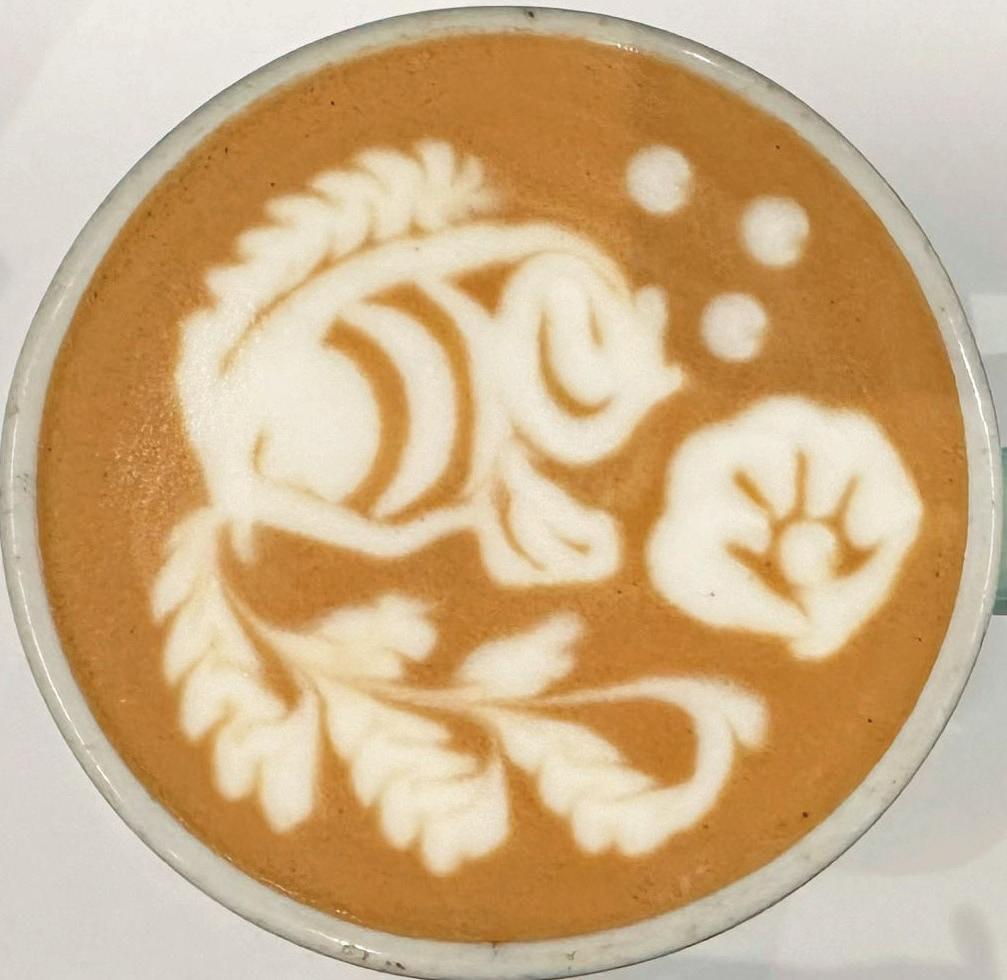
2026 Australian Latte Art Champion Amy Zhang shares a step-by-step guide to creating her fish blowing bubbles design.
Amy says throughout her latte art journey, she’s often admired the beauty and technical precision of designs, but that many can remain visually static.
“This inspired me to challenge myself to create something that was not only aesthetically pleasing but also rich in atmosphere, movement, and a genuine sense of life,” she says.
The inspiration for Amy’s latest design comes from her pet fish. Watching how it moves effortlessly through the water sparked the idea of capturing a dynamic moment within the confines of the coffee cup.
“Rather than simply creating a fish-shaped pattern, I wanted to tell a story and evoke a feeling of motion,” she says.
To achieve this, Amy says that instead of using a conventional tail shape, she incorporated three wheat-ear elements and combined them with a rotational etching technique to create a flowing, layered structure that mimics the graceful movement of a fish swimming through water.
The bubbles also play an important role in the composition to help bring the fish to life, suggesting movement, breathing, and interaction with its environment.
“Through this design, I wanted to push beyond the boundaries of static patterns and explore how latte art can communicate emotion, storytelling, and vitality.”

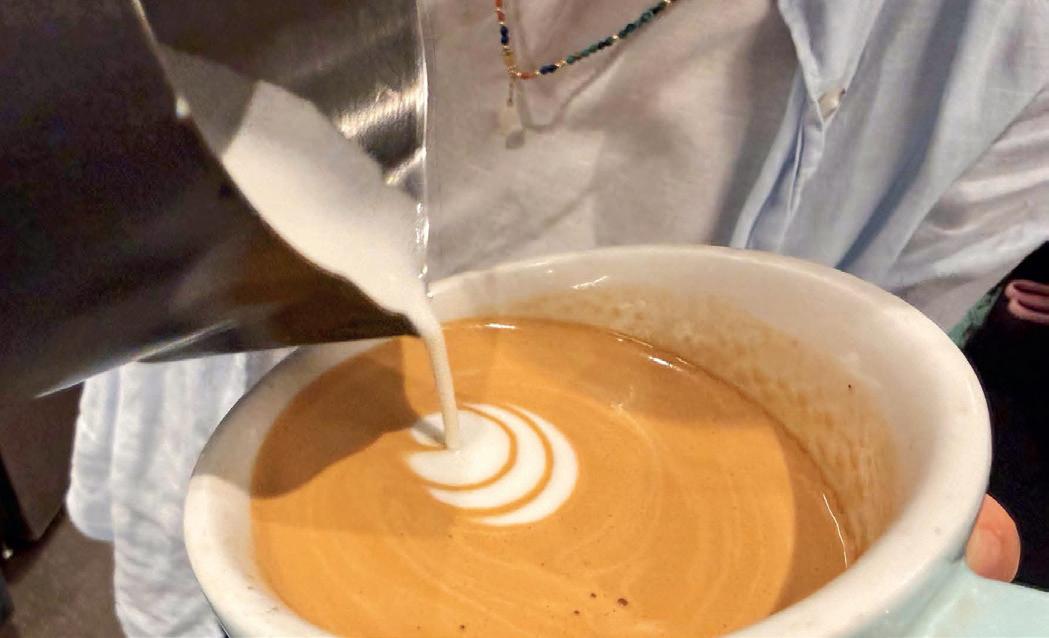
Turn the cup handle to nine o’clock and create a clean canvas, then start the three stacking for the fish body.
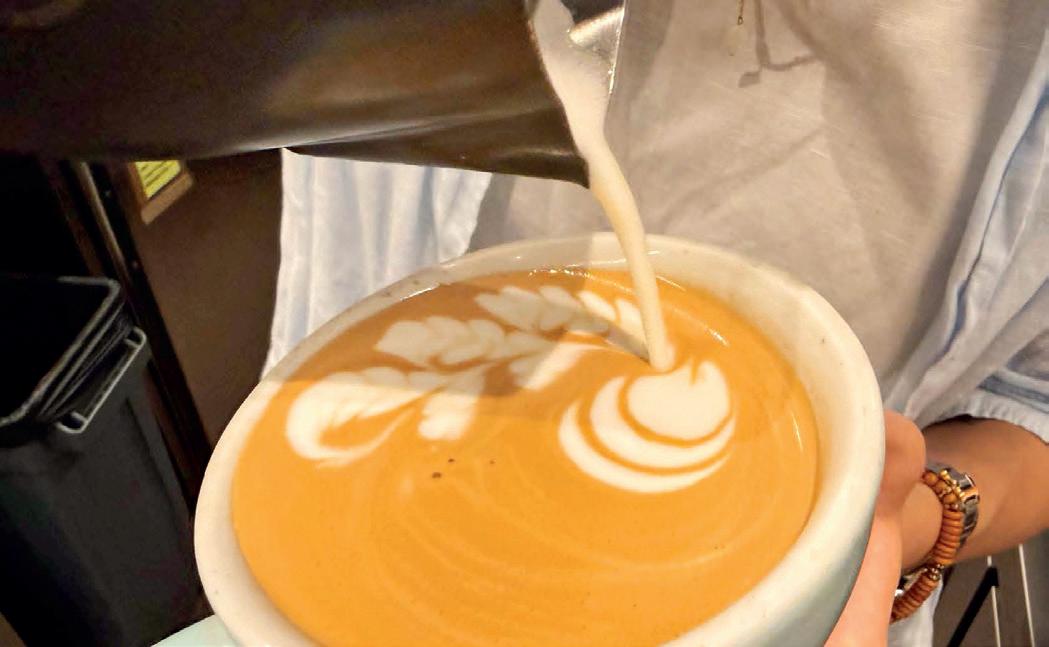
Keep the pouring movement to cut the rosettas’ line in the middle. At the same time, do a quick spin in the cup from three o’clock back to 12 o’clock. This movement must be smooth and accurate.
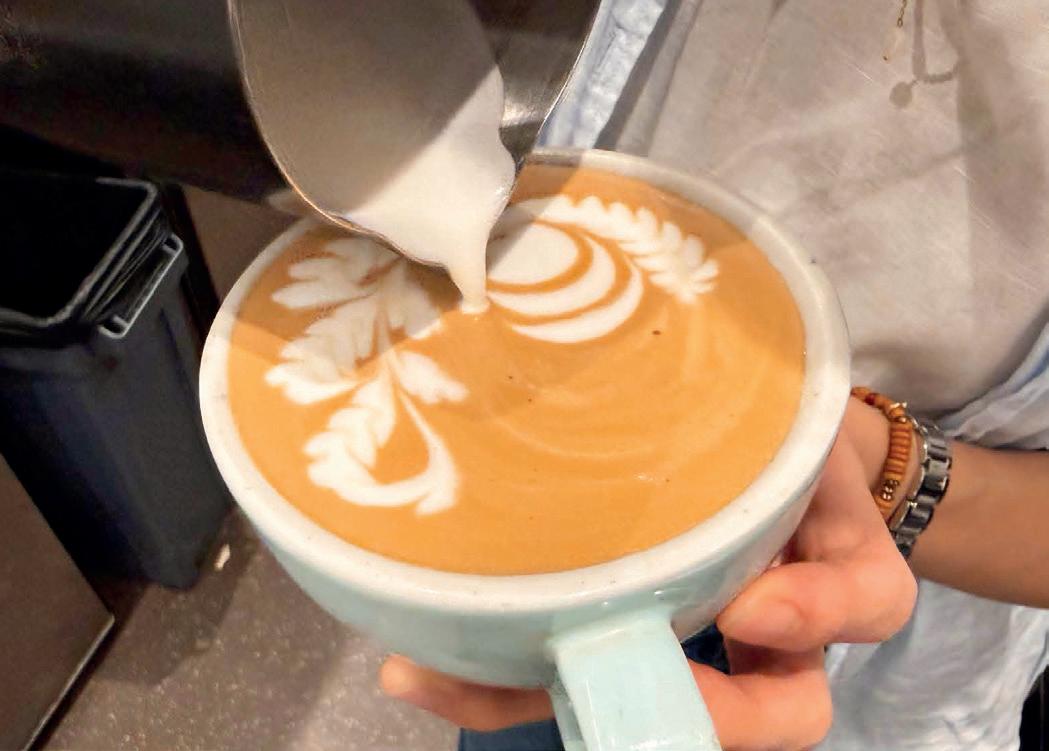
Continue the movement to draw a curved line forward and connect the fish’s body.
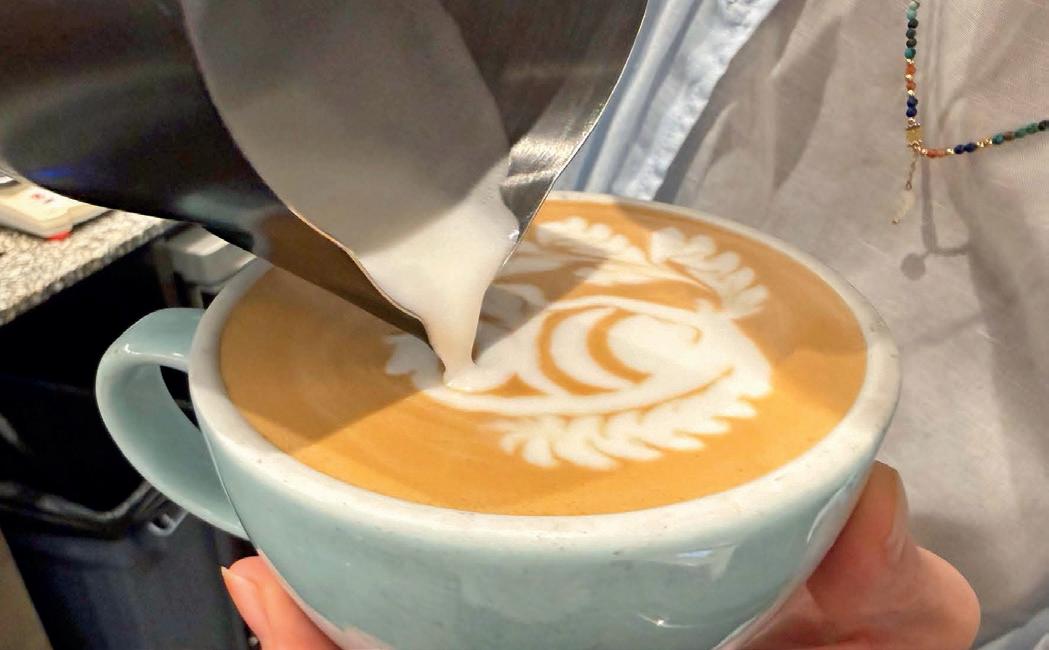
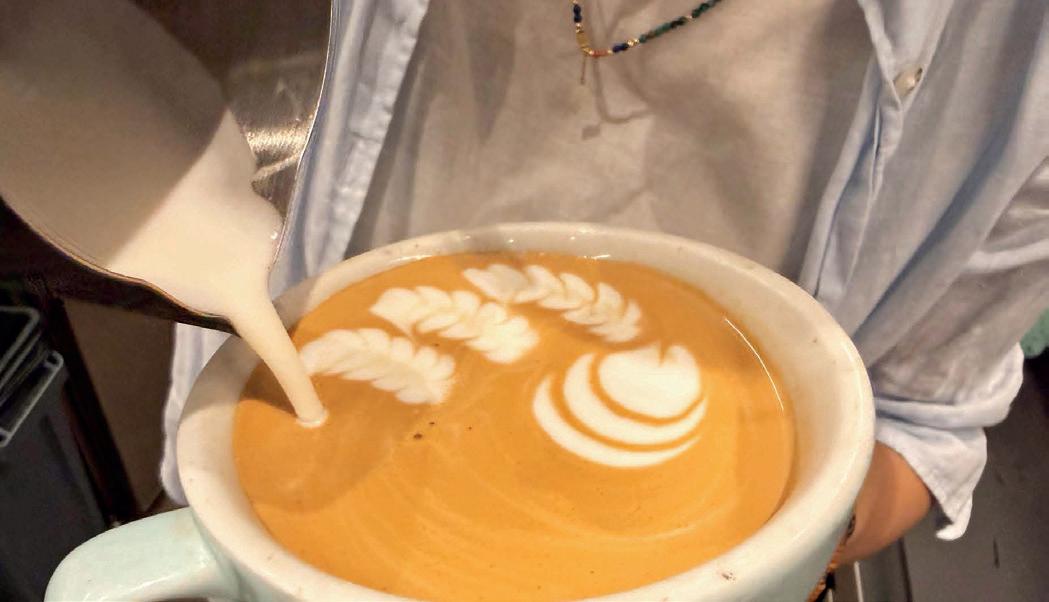
For the tail, start with the cup handle at 12 o’clock and pour three curved four-leaf rosettas. At the same time, spin the cup from 12 o’clock to three o’clock during the pour of each rosetta.
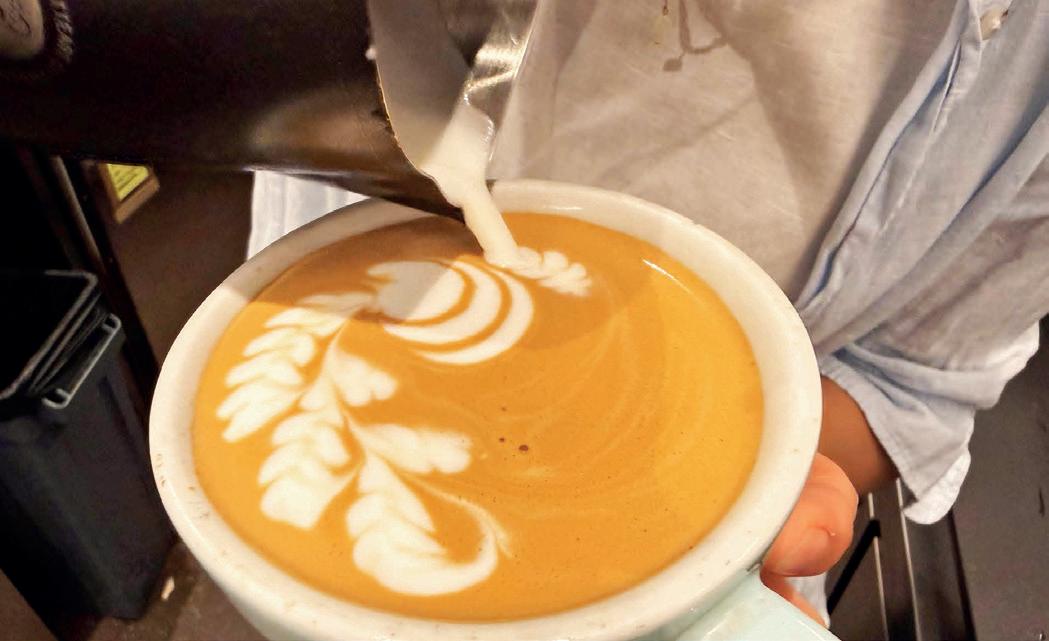
Turn the cup handle to nine o’clock and pour a top-curved seven-leaf rosetta to make the top fin and connect the tail.
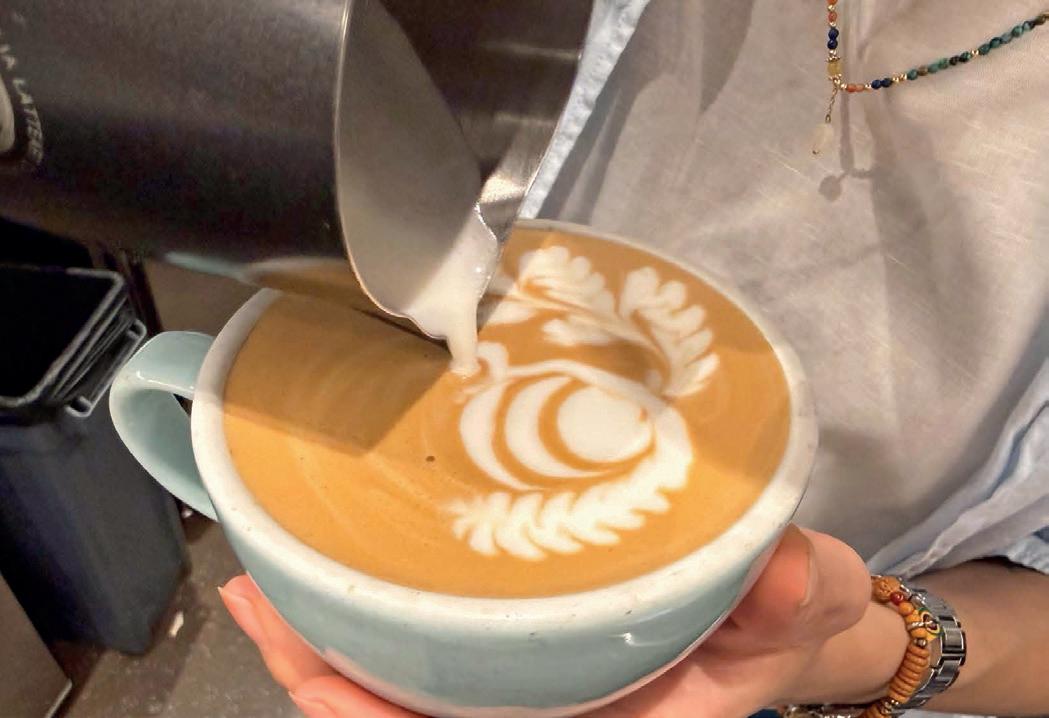
Use Amy’s core ‘spin and drag’ skill to create a little fin at the bottom.
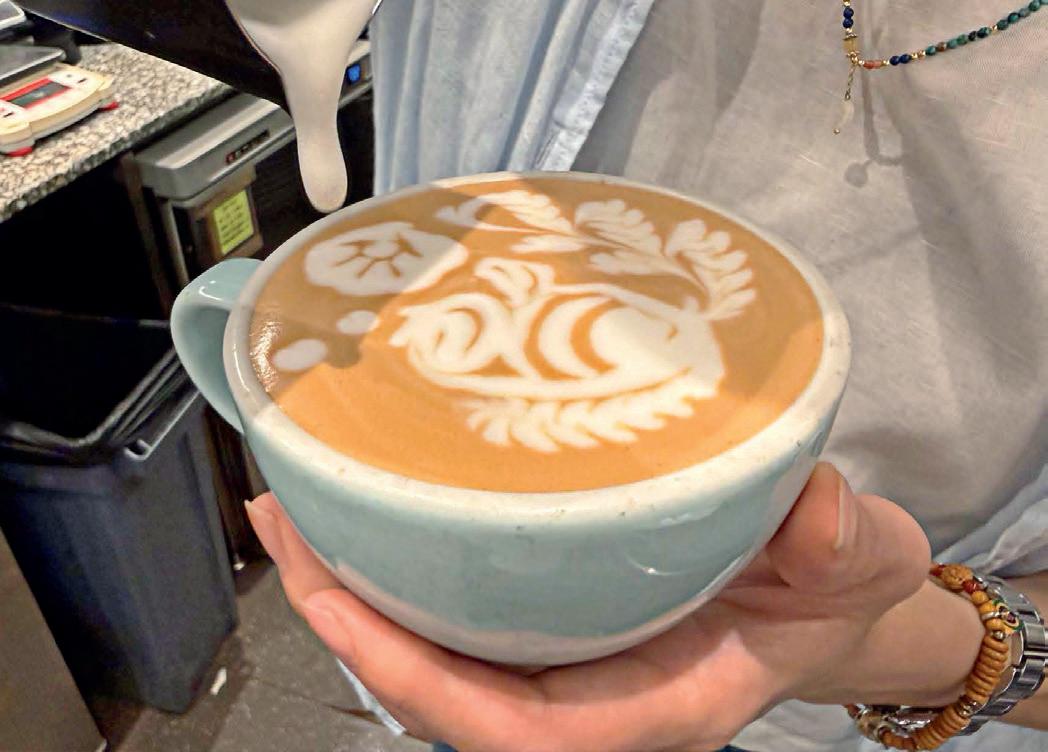
Use the
to
LILI J CAFÉ
1/156 Corrimal Street, Wollongong, New South Wales 2500
Open Monday, Wednesday and Friday 6am to 2.30pm, Tuesday 6am to 12pm, Saturday to Sunday 7am to 12.30pm
To see how metropolitan coffee culture has spread into Australia’s regional hubs, you need look no further than Lili J Café in Wollongong.
The eclectic venue – operated by sister duo Raquel and Meni Jaque – first flung open its doors to the public as an espresso bar in 2016. A few years later, it expanded into a full-service café when it acquired the space next door.
“We decided to open Lili as more of a coffee bar,” says Raquel. “The idea was a small space with maybe some croissants, nothing major, and a focus on featuring different coffees every week.
“At the time, Wollongong wasn’t quite ready for that specific niche. People weren’t really coming in just for coffee; they wanted food with their drink. So we had to pivot and ask, ‘What are people actually looking for?’.”
The result? One of the town’s most popular venues, defined not only by the evolving habits of the Wollongong coffee-loving collective but also the lessons learned from Meni’s first venue.
“We’ve been doing this for a long time. My sister opened our first café, Meni, across the road from the hospital in 2012. From the beginning, her philosophy was simple: make people feel comfortable and at home,” says Raquel.
“We ended up closing Meni in 2020 after a fire, so we put everything into Lili J. We had to figure out how to shift the business and energy of Meni into this smaller space, and from there we grew.
“People realised we do great coffee, we have a good vibe, and we’re generally nice people to interact with. When we properly reopened, we had an influx we honestly weren’t ready for, because so many people had discovered us from those walk-in coffee days.”
Now, Lili J is entering a new phase of life with the recent launch of a new menu which takes inspiration from the sisters’ heritage.
“Our background is South American and Spanish,” says Raquel. “For a long time, we tried to integrate our heritage into the café, but it was
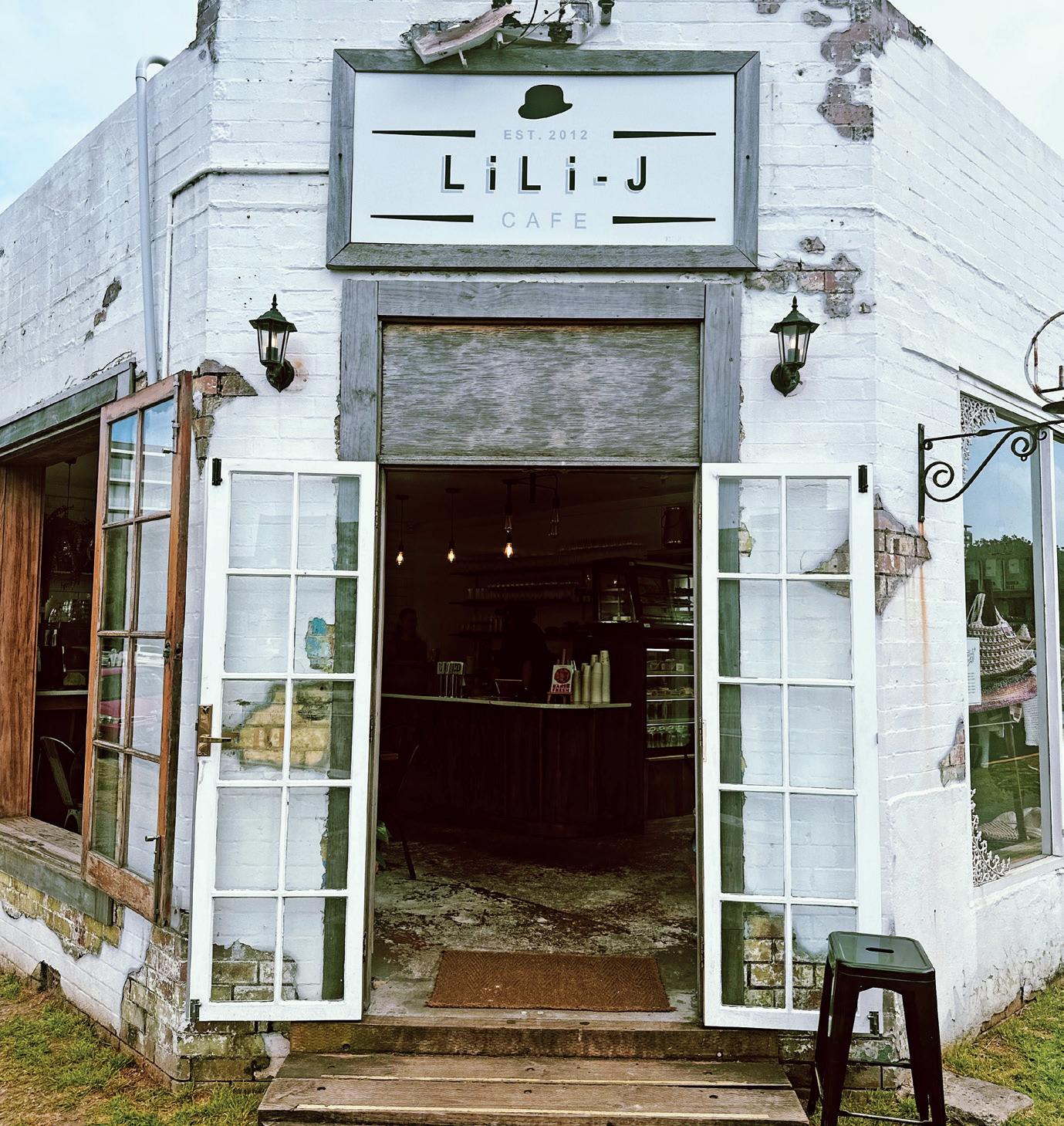
hard to get it out there in a consistent way. We’d do a few things here and there, but nothing that really anchored the menu.
“Now, most of our menu is Chilean inspired. The feedback has been positive. Four or fi ve years ago, there was no way we could have put a menu like this forward and had people be so willing to try it.”
Raquel says there is one particular highlight guests must try when they visit that reflects her own food experiences growing up.
“The whole menu is good. One dish people might overlook, but that really represents our childhood, is the pumpkin fritter pancakes.
“They’re a riff on a Chilean treat called sopaipilla – a pumpkin bread that’s deep
fried and then soaked in a sweet syrup. We’ve reinterpreted that as a kind of pancake or sweet fritter.
“For us, it’s like that scene in Ratatouille when the critic eats the ratatouille and is transported back to his childhood. That’s exactly what this dish is for us. When we try it, we’re taken straight back to growing up.”
As part of the celebration of South American culture, Lili J also hosts monthly themed food nights, with a ‘hotdog war’ between its chefs taking centre stage at the end of July.
“Hot dogs are huge across South America and Central America, and every country does them differently,” says Raquel.
“My partner is from El Salvador and they do theirs with chicken, almost like a South American take on a banh mi.”
The friendly rivalry heated up in the months following the announcement, with the winner yet to be declared at the time of writing. The battle will take place between Lili J’s two chefs – one of whom is representing Brazil, and the other, Raquel’s cousin, representing Chile.
“I thought it’d be a lot of fun to pit my two chefs against each other and turn it into a ‘war’,” she says.
“Beyond the fun, it also highlights the diversity in our community. I think we sometimes forget how many different cultures are represented here in Australia.
“We’re incredibly lucky to live in a country that my parents were able to migrate to, where we can hold onto our heritage and still benefit from everything this place offers.”
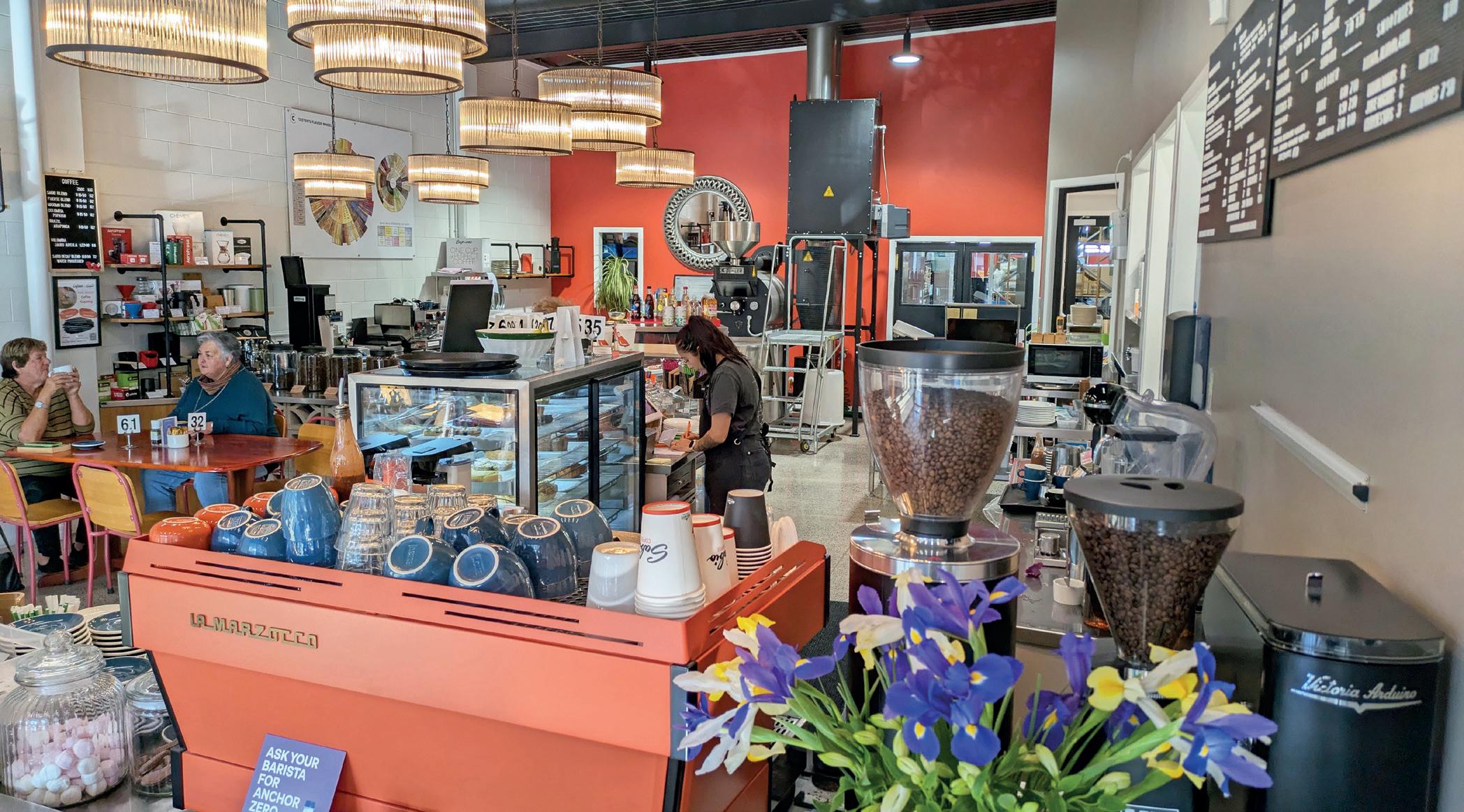
148 Lower Dent Street, Whangārei, New Zealand 0110
Open Monday to Saturday 7.30am to 2pm
Whangārei is slightly off the beaten track when taking in the landscape of New Zealand.
Nestled towards the northern tip of the North Island, about a two-hour drive north of Auckland, it’s not necessarily a place where you would expect to find a café that’s run by one of the country’s most knowledgeable coffee minds.
Operated by brother and sister duo Craig and Penny Campbell, Sabio Coffee is unique to the Northland region in that it is a café, with a roastery attached, where Craig serves as the Master Roaster.
“I’ll toot my brother’s horn, because he’s quite modest about it,” says Penny. “Craig and I both started working for Allpress Espresso in 1990, when Michael first started it. During Craig’s studies he started roasting coffee. He completed his degree, got a master’s in economics, and kept roasting coffee.
“In his time with Allpress he’d done everything, basically, from roasting coffee to going on trips to countries of origin, helping with the setup of multiple new venues and roasteries: Dunedin, Melbourne, Sydney, Tokyo, London, and Christchurch.
“In the time we’ve been working together on this business, it’s astounding to me that he doesn’t realise how much he knows about coffee. Every time he talks to people, I’m learning more and more. It’s just amazing.”
Penny and Craig’s connection to Whangārei stems from their parents moving to the region more than three decades ago. The pair decided to launch into business in 2019, right before the world closed due to the pandemic.
Penny believes the fact Sabio Coffee has
continued to grow is a testament not only to its offering but also the fact it is a venue that’s a little different from others in the region.
“Being in a light commercial area, slightly off the beaten track, we’re not reliant on the tourist trade, which has actually been our saving grace through a lot of patches,” she says.
“We’ve built a really strong, loyal local base of customers, and that’s been to our benefit with different things that have happened – weather events, COVID, road closures, and other stuff going on.”
Sabio Coffee was one of the first venues in New Zealand to host the New Zealand Specialty Coffee Association’s new competition format, The Barista Open.
The competition is designed to make
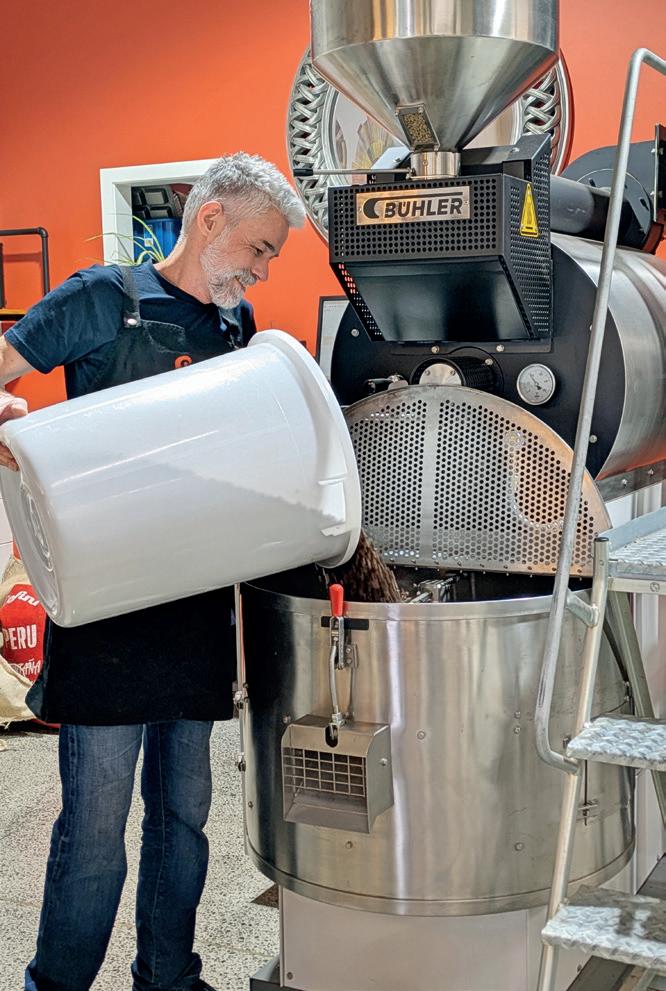
competitions more accessible to those wanting to give them a go, and Penny and Craig say the response to the day was amazing.
“We had such a broad spectrum of people competing, from experienced baristas who have been making coffee for years, to one of the entrants who has been making coffee for two months and is self-taught.
“It’s awe inspiring. If I had been that confident when I was their age, my goodness.”
Craig says his journey in coffee, from Allpress to Sabio and everything in between, shows just how many opportunities there are to form a career in the industry, no matter where you are.
“One of the things we wanted to achieve up here is to create an environment where we can start to share some of that knowledge and understanding, and get some education happening,” he says.
“We want to get the message out to baristas and people starting out that it is possible to build a career in coffee if you’re interested in it. A lot of people don’t realise how big the coffee industry is and how many different roles there are within it.
“That’s what happened to me. I started as a barista and I’ve known lots of young people who ended up in hospitality making coffee, then got a job working for a coffee roaster, and then managed to develop whole careers. A lot of people in a café never get to see that.”
Penny says that’s part of what they want to share with their community: “we want to let them know that, yes, there is a world of possibilities within coffee.
“We’ve got two of our baristas training to roast now. One is a very experienced barista. She’s been in hospitality since she left school, but it had never really dawned on her that roasting coffee could be a possibility for her, and now it is.”
147 St Vincent Street, Port Adelaide, South Australia 5015
Open Monday to Sunday 8am to 3pm
South Australia is one of the world’s premier agricultural regions – whether it be wine, wheat, or just about anything in between. Having this world-leading industry right on their doorstep means cafés around the state could almost be seen as having an unfair advantage.
The Banksia Tree in Port Adelaide has fully leaned into the quality of South Australian produce, sourcing everything it can from the state and cooking over an open red-gum fire in its kitchen.
Fabian Folghera, who co-founded the venue with his wife, Halie, in 2019, says the decision to prioritise local, high-quality ingredients was a simple one.
“If you start any kind of venue in South Australia and you’re not leaning into local produce, you’re going to get crucified,” he says.
“We’ve got everything on our doorstep: great fruit and vegetables in the Riverland, access to great pastures for beef and chicken, and some of the best waters for fishing. If you can’t get it here, it’s quite rare. Nuts, grains – almost everything grows somewhere in South Australia.
“I think it’s world-class. I don’t mean our produce is better than anyone else’s by any means, but it doesn’t make sense to buy something from somewhere else when what we’ve got nearby is excellent.”
It’s this valuing of local ingredients –including some, perhaps, non-traditional elements – that Fabian believes truly sets The Banksia Tree apart and makes it unique from other venues.
“It’s something that really sets us apart. I’m going to throw smoke and fire in there as ingredients too. That’s probably our big point of difference,” he says.
“When we decided we were going to open a venue, we wanted to have our own very special touch on it. We didn’t want it to be run-of-the mill.
“I’ve always cooked with fire, even before I was a chef, so it was almost a no-brainer. It’s part of our DNA that the café had to have that.
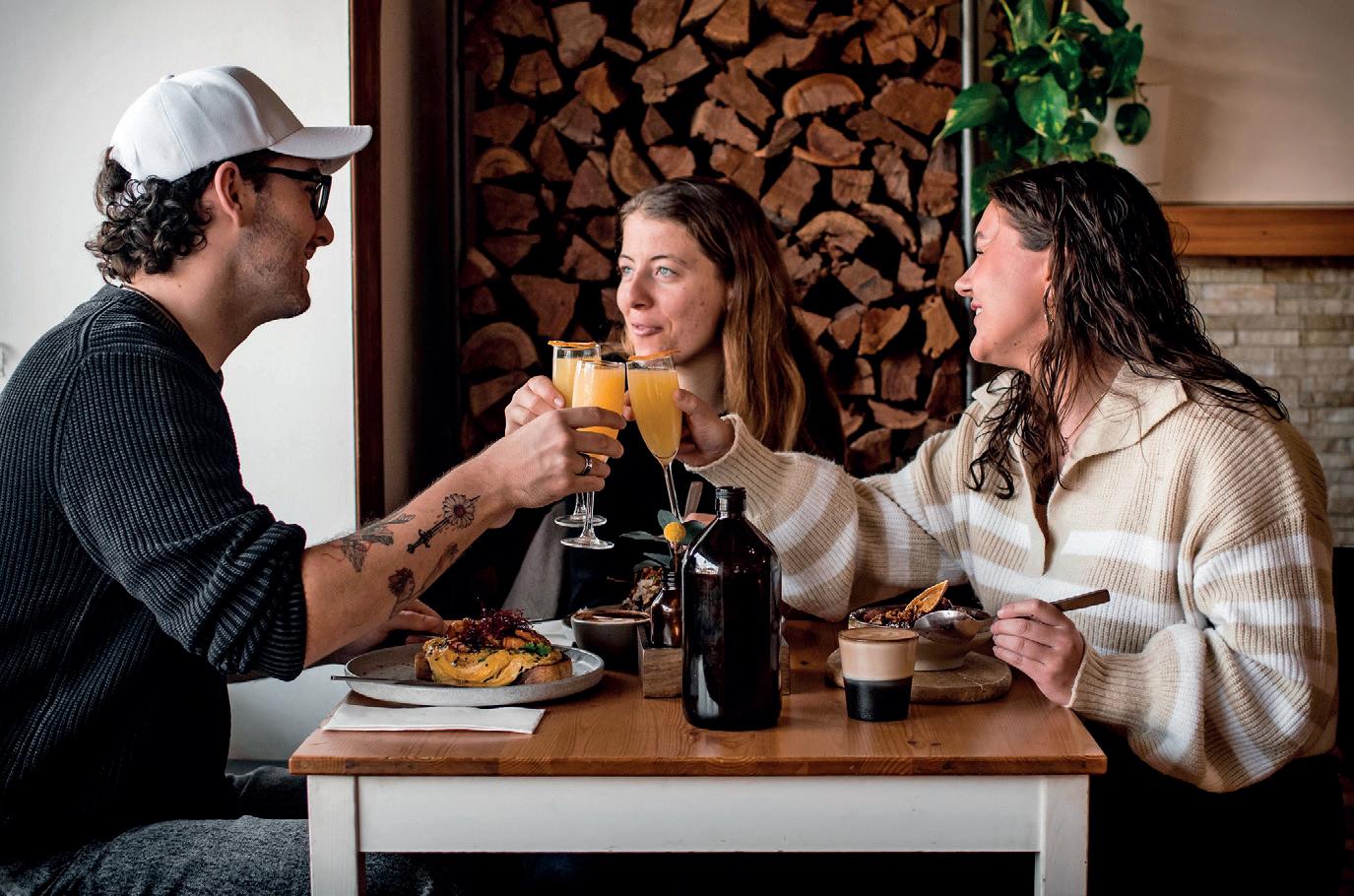
“If we didn’t have wood burning that we could cook over, then it just wasn’t going to be our place.”
Fabian highlights the XO prawn scramble and French toast – both, of course, touched by fire and smokiness – as two particular highlights of the menu, but each for very different reasons.
“Our XO prawn scramble has been on our menu in some form since day one. We make the XO sauce in-house and ferment it for about 45 days. We use South Australian prawns with scrambled egg on organic sourdough. It’s a very Asian-inspired dish, but it’s still light and really meaty at the same time.
“It’s warming. It’s great in summer because you’ve got seafood, but it’s also great in winter because you’ve got the warming elements of the XO sauce.
“Currently, we have a tiramisu-themed French toast. I’m fairly certain we’re still the only café in the world that roasts its French toast over an open fire.
“It’s done like a traditional French toast, custard, egg and so on, but then it goes over the red gum fire, so you get a bit of smokiness and char as well as the sweetness from the chocolate and mascarpone.”
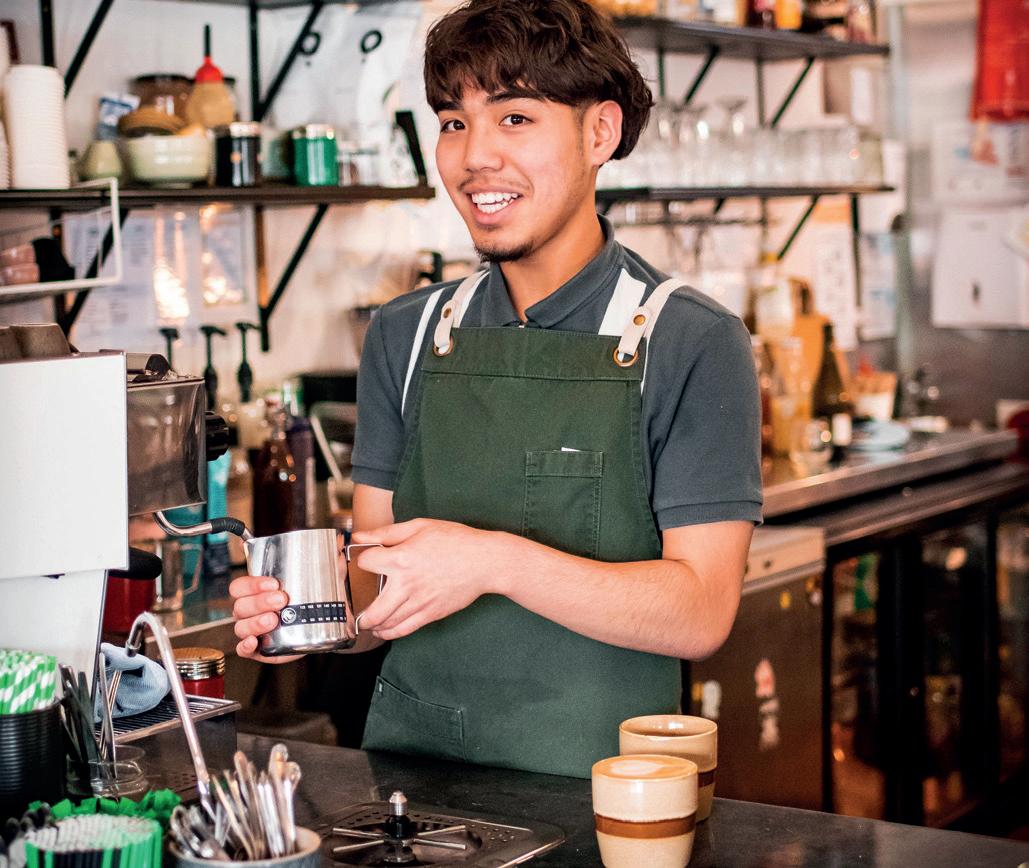
Fabian and Halie’s decision to open The Banksia Tree came off the back of more than a decade working in hospitality around the world. They returned to Australia in 2016 and launched the venue just months after the birth of their first child in 2019.
Despite hospitality seeing many ups and downs in those years, Fabian says he finds the most reward in operating The Banksia Tree in the simplest places.
“Being able to continue to operate the café through any kind of economic upturn, downturn, pandemic, or fuel crisis has been incredible,” he says.
“Just being able to come in, open the doors every morning, and still see beautiful smiling faces and happy people in the café enjoying what our team does is the absolute highlight of my day.
“I always say this to my team: if we’re having a bad day, I just jump on Google and look at our reviews, and it always makes me smile.
“So many people recognise not just the building and the food, but the team themselves – that forward-facing, customer-facing, real people connecting with real people. Being able to have that every day is an absolute blessing.”
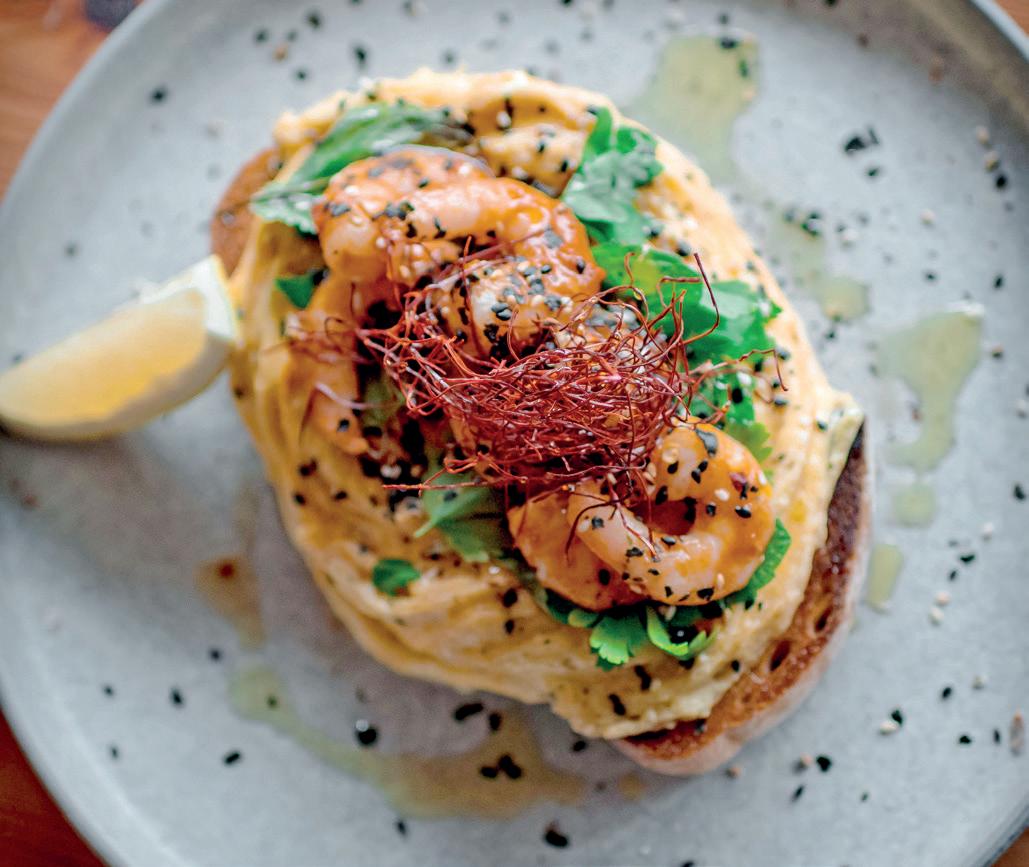
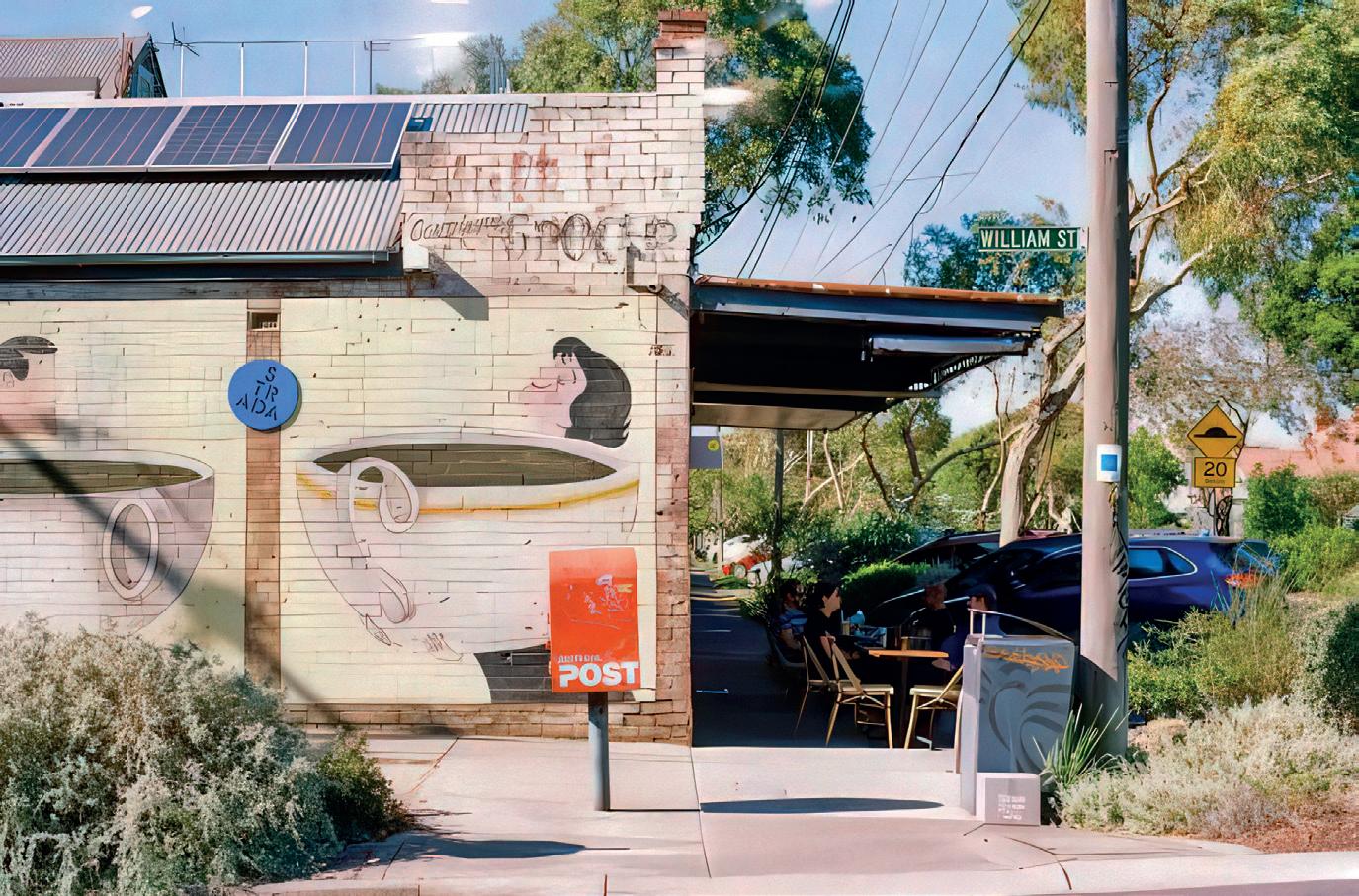
81 Thomson Street, Northcote, Victoria 3070
Open Monday to Thursday 7am to 2.30pm, Friday 7am to 3pm, Saturday to Sunday 8am to 3pm
After two decades in hospitality, Kelly Kirkby never imagined owning a venue of her own.
“I had worked in hospo for so long I got to a point where if you’d asked me if I wanted to own my own café, I would say no, it’s too much work,” she says.
“I was just happy to work in these beautiful little places but didn’t want to ever buy anything.”
Yet, after working under two different owners at her neighbourhood café, stepping away for about 14 months, and then returning under its former owner, the opportunity proved too good to pass up.
“I realised I actually really loved it,” says Kelly. “When I came back to work under the old owner, he offered me the place.”
The café offi cially changed hands in March 2024, and, more than two years later, the business is thriving.
“We got a really good price for it, so we just did it, and it’s on the up and up, which is great,” she says.
Set within the quintessentially Melbourne location of an old milk bar, Thomson Street has built a loyal following thanks to its distinctive aesthetic. Kelly describes it as “like walking into a grandma’s kitchen”.
When Kelly and her partner Boris took over, they drew inspiration from their own home which is fi lled with mid-century furnishings and 1970s design touches.
“I’m an avid op shopper and we just went for the ’70s style,” says Kelly. The couple scoured Facebook Marketplace for vintage furniture, fi lling the café with veneer-topped tables and retro swivel chairs.
One of the duo’s vintage fi nds is a large, communal table in in the centre of the café, which Kelly says brings strangers together.
“It’s amazing how so many customers actually bond on that table, because we put
them in a shared space,” she says. “There’s six spots, and they’ll all end up chatting, so it’s got a good vibe to it.”
Thomson Street’s food offerings also refl ect the café’s community-focused ethos. Head Chef Warren has been with the business for more than a decade, with Kelly noting generous portions and home-style recipes.
“His style is very home-cooked meals and hearty burgers,” she says. “He’s a bit of a feeder as well, so you get quite a bang for your buck.”
Coffee remains central to the business and one of the café’s key partnerships is with alternative-milk brand Minor Figures. Kelly fi rst encountered the product while working at the Royce Hotel in South Yarra.
“They were using Minor Figures, and I was like, this is actually a really good milk,” she says. “I found it so easy to use on the La Marzocco machines.”
Thomson Street itself resides in a leafy residential pocket, tucked away from Melbourne’s bustling café strips.
Hidden from the main road, it has
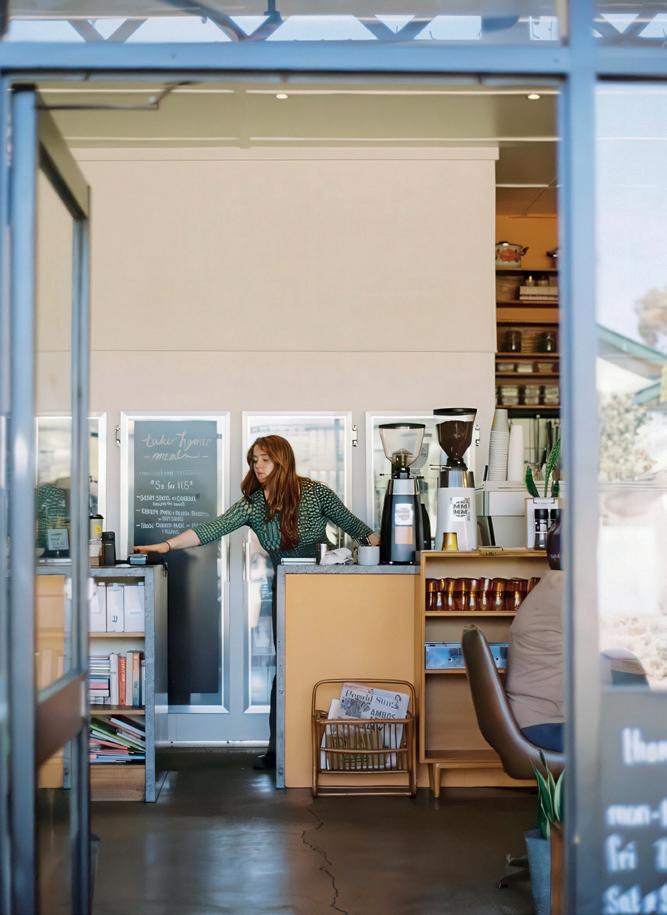
become a mainstay for locals.
“We’re defi nitely located in the backstreets,” says Kelly. “But the good thing about the café is it hasn’t really got any other cafés around it to compete.”
While the customer base has traditionally skewed older, the demographic has begun to shift as younger residents move into the area.
“I feel of late – maybe in the past year –there’s been an influx of young people that are probably fi nding that Fitzroy and Collingwood, and all these cool suburbs, are getting a bit expensive,” says Kelly.
“I’m 36, and now I’ve got these cool 25-year-olds from Fitzroy coming in and I’m like, ‘oh my god, am I cool now?’”
But even with a changing demographic, Kelly emphasises the connections the café has created.
“It’s a lovely little community … I’ve got a lady that’s 74 who lives across the road from the café, and she just comes over and does all my gardens for me,” says Kelly.
“It’s a lovely little place to own, I’m glad that I bought it.”
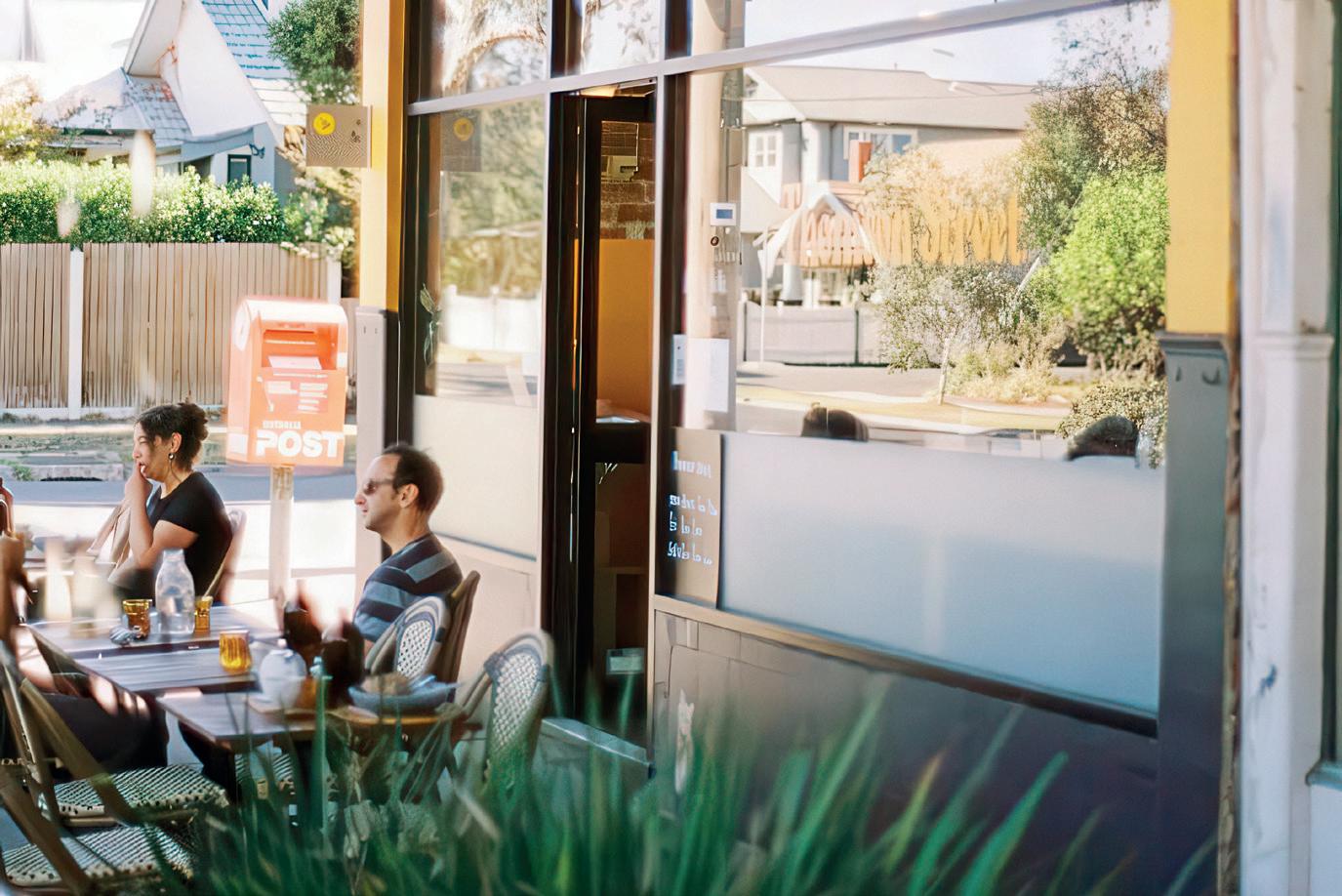
The Dtown Coffee Roasters Founder on spending almost 30 years servicing the caffeine needs of the Top End.
Name: Christos Panas
Venue: Dtown Coffee Roasters
Instagram: @dtowncoffee
How did your coffee journey begin?
I started at a Greek restaurant that had an old pull-down handle machine and I really enjoyed making co ee. I moved onto a few cafés and worked my way up to starting a stall in the Rapid Creek Markets, which is the oldest market in Darwin.
I bought the business o some friends and had a very basic table with a one-group Faema machine and an old grinder. When I saved enough money I bought a café, then sold my stake in the business. A year later, in 2016, I decided to go into co ee roasting. I still had the market stall, so the business model was that I had the stall ready to sell the beans.
I went straight for a bigger roaster and spent about a year trying to get my head around it, then I slowly started getting customers. I was working at e Foreshore Café at the time and they decided they wanted to use my co ee.
It was a big account, one of the largest in Darwin. is year we have our 10-year anniversary and supply more than 30 cafés around the Northern Territory.
Was it important to start a roastery Darwin could call its own?
It was a dream of mine when I was a young barista, it was something I really wanted to do and I thought it would be great to have a local brand here.
I had to come up with a cool name and that took me a while, and then one day it just came to me – Dtown, which is a nickname for Darwin.
How did your direct-trade partnership with Casimiro Estate in Timor-Leste come to be?
I’m a member of the Northern Territory Chamber of Commerce and in September 2022 was invited on a trade mission to Timor-Leste.
When I was in the processing facility, I bumped into Nelson Casimiro, who was a friend from high school. He was processing as he wanted to start bringing co ee over to Australia.
I said ‘Look, I’m a er a supplier’, and it was only natural that I tried to support someone who I knew and trusted. Now we receive about three to four tonnes of co ee from Timor-Leste each year.
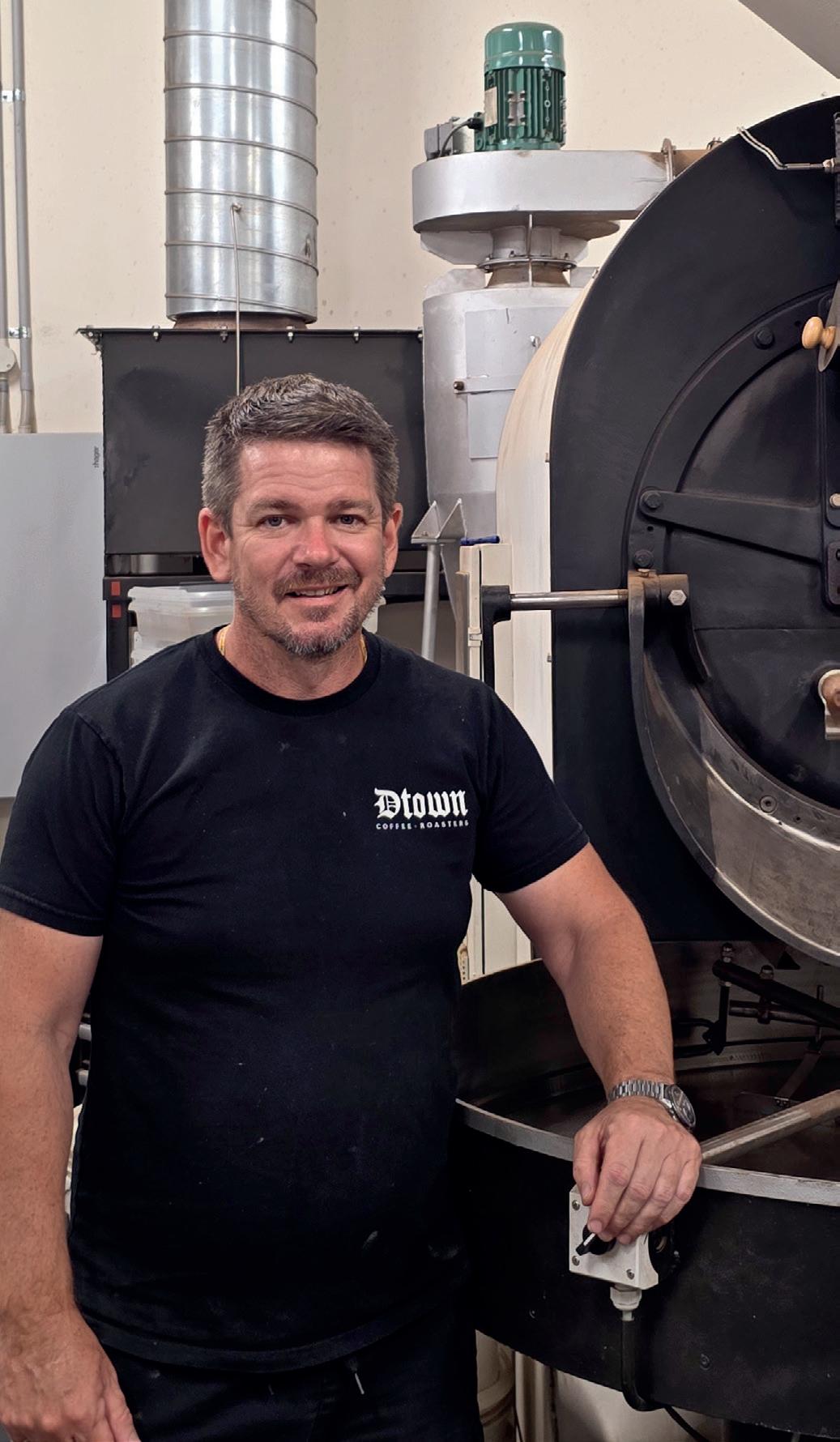
Tell us about Darwin’s coffee culture. It has de nitely come a long way – there are a lot of awesome cafés serving top brands. e passion and quality of the co ee here is just the same as anywhere else in Australia.
The professional highlight you’re most proud?
We’ve won a lot of bronze medals in the Australasian Golden Bean Awards, which we’re proud of.
I’m also very proud of my sta – I’m lucky to have a really good team who are very passionate about their co ee.
Traditional milk: prepare for udder defeat. Made with organic whole soybeans, Bonsoy is naturally smooth, creamy and built to perform. Great taste, perfect frothability and a flavour that holds strong when heated. No oils. No fillers. Just quality we’ve stood by since 1983.
• High in Protein
• Organic Whole Soybeans
• All Natural
• No Oils or Fillers